

Monitoring Your Blood Pressure
I recently stopped taking beta blockers after a consultation with my Doctor. Seven weeks on and I feel substantially better without them. I strongly advocate prescription reviews, as often the medication you’re taking does not necessarily need to be taken indefinitely. That was certainly the case with me and beta blockers. At the end of my last consultation, my GP asked me to keep a daily record of my blood pressure for a month. I could either do this at home or come into the surgery where there is a suitable device that is free to use. Fortunately I inherited an old but functional OMRON blood pressure monitor from my parents, so I was able to take readings each morning myself. It was while doing this for a month that it struck me; what exactly does all the data that I’m making note of mean exactly? What do systolic and diastolic mean and what is the difference between them? Also, where my readings good or bad?
I recently stopped taking beta blockers after a consultation with my Doctor. Seven weeks on and I feel substantially better without them. I strongly advocate prescription reviews, as often the medication you’re taking does not necessarily need to be taken indefinitely. That was certainly the case with me and beta blockers. At the end of my last consultation, my GP asked me to keep a daily record of my blood pressure for a month. I could either do this at home or come into the surgery where there is a suitable device that is free to use. Fortunately I inherited an old but functional OMRON blood pressure monitor from my parents, so I was able to take readings each morning myself. It was while doing this for a month that it struck me; what exactly does all the data that I’m making note of mean exactly? What do systolic and diastolic mean and what is the difference between them? Also, where my readings good or bad?
Blood pressure readings consist of two numbers. The top number is conventionally denoted as the systolic pressure. This is the peak pressure exerted during a single cardiac contraction. The second number, the diastolic pressure, is the minimal pressure occurring between successive heartbeats throughout the cardiac cycle. This measurement is quantified in millimetres of mercury (mmHg) relative to ambient atmospheric pressure, or alternatively expressed in kilopascals (kPa). The numerical difference separating systolic and diastolic pressures is termed pulse pressure, whereas the average pressure maintained throughout the cardiac cycle is referred to as mean arterial pressure. To put this more simply, systolic measures the force when your heart beats and pushes blood out to your body. Diastolic measures the force in your arteries when your heart rests between beats. The numbers are usually present as systolic over diastolic.
Now to the tricky part. What are considered good and bad readings. This is tempered by a lot of factors. For example, your diet, lifestyle and weight along with your medical history are all factors that have an impact upon the readings. If you’re on specific medication that too can skew the numbers somewhat. Then there are things specific to when and where you have your blood pressure readings taken. If you’ve been active or are under stress, or your busting to go to the toilet, then these can have an affect. However, with all that in mind, an ideal and optimal reading would be less than 120/80 mmHg. In reality the average and therefore considered normal figures are 120–129/80–84 mmHg. If your readings are around 130–139/85–89 mmHg, then that is deemed to be high. Readings over 140/90 mmHg are considered an indicator of hypertension. This happens when blood pushes too hard against your artery walls as your heart pumps and is bad.
My own readings for the month began high but quickly became average. There were a few days when it was high but these occurred when I returned after an early morning walk. Now that I have a broader understanding of this data it has put my mind at rest. Often the medical community will ask for information without qualifying why they need it and what the information tells them. I find it does no harm to politely ask for an explanation. It is your health after all. More often than not, my GP or the nurse at the surgery will happily tell me an answer in layman’s terms. I returned my blood pressure reading sheet to the local surgery today. I have already been notified via the NHS app on my phone that there is nothing anomalous thus nothing to worry about. This is good news but I’m glad I took time out to learn what the data all means. Always ask questions when it comes to your health. Consulting a doctor is a joint process and shouldn’t be a one sided conversation.

When I last wrote about the thorny subject of weight loss, I weighed 188 lbs (13 stone 6 lbs or 85.3 kg). That was in Spring 2022. Let it suffice to say the the optimistic health plan I subsequently embarked upon fell apart like a cheap suit, solely due to me not committing to it in any meaningful way. Since then my weight has slowly and steadily increased. I will avoid any long and tortuous explanations and quasi-justifications. I like my food and lots of it. The fact that my lifestyle has contributed to my ill health, is something that I have willingly tolerated. The pleasure outweighed the consequences. However, in early August a tipping point was finally reached. It wasn’t a theatrical epiphany or anything that can be framed dramatically. I simply woke up one morning and said to myself, “I am tired of constantly feeling like shit”.

Being a 58 year old man, I welcome any undertaking which can potentially improve my health. One such thing is proactive screening and testing. The UK National Health Service has started doing a lot more of this in recent years, mainly because diagnosing a problem and treating it early is far more efficient and cost effective than retroactive action. Hence this policy and my age is why I was recently sent a NHS Bowel Cancer Test Kit via the post. This screening service takes place every two years for people aged 50 to 74 in the UK. The kit is very quick and simple to use. A sample of your stool is sent via a prepaid return envelope for testing and the entire process is free of charge. Upon receipt, the laboratory test determines whether there is any blood present in your stool, which is a potential indicator of bowel cancer. If detected, an early diagnosis greatly improves any subsequent treatment outcomes.

Last Wednesday, I woke up with what I thought to be a crick in my neck on the left hand side. I assumed this was simply due to sleeping awkwardly and so I self medicated with some non-prescription pain relief and judicious use of a heat pad. Unfortunately, the problem has persisted and in the last 24 hours it has become much worse. I awoke this morning at about 5:00 AM and as I sat up in bed, an intense pain ran up the left side of my neck and behind my ear. It took several attempts for me to get out of bed because if I turned my head in either direction or inclined my chin, the pain would again run up the side of my neck. Sitting down, getting up and raising my arms caused similar results. While dressing, I attempted to pull a t-shirt over my head. The pain in my neck on this occasion was so severe that I yelled out loud and nearly blacked out.

This morning I had an appointment at the Cardiology Outpatients clinic at St. Thomas’ Hospital, in Southwark, London. The hospital, located across the Thames from the Houses of Parliament, is easily accessible from three nearby tube stations (subway), one major train station and numerous buses. As well as having an extensive A&E department, St. Thomas’ also provides a broad range of healthcare services such as maternal medicine, gastrointestinal surgery, ophthalmology, pain medicine and plastic surgery. The hospital specialises in cardiovascular care and was the first to perform a mitral valve replacement on a beating heart. It is also home to nursing and surgical colleges. The current site has served community needs since 1871. The hospital has existed in some shape or form since the 12th century. There is a pleasant ornamental garden outside the main entrance that overlooks the river and Lambeth bridge.

Accidents will happen, as Elvis Costello astutely pointed out. Furthermore they often occur in the most innocuous of fashions, as I shall now tell. Myself and Mrs P were over our local park today with our two and a half year old grandson Oscar. It is located directly behind our home and has a small children’s play area as well as various adult exercise equipment. One of these items is a low, wooden ramp whose highest end is no more than eighteen inches off the ground. Oscar likes to climb on this, run to the end and jump. Naturally, he did this today when we visited. Mrs P then followed suit (at his request) and stepped off onto the soft, child safe surface. Her right knee gave way and she fell over. Despite the short distance and the soft surface, the fall was sufficient to injure her knee, as there was an audible crack. She subsequently could not get up on her own and I had to assist her so she could sit on the aforementioned ramp.

I weighed myself this morning before writing this post. As of 6:05 AM today I weigh 188 lbs (13 stone 6 lbs or 85.3 kg). To give this data some sort of context I am 5’11 tall and 54 years old. Prior to my more recent weight gain, I have had an athletic build for most of my life. During my twenties and thirties, while I was still a smoker, my weight stayed around 133 lbs. When I quit my 30 a day cigarette habit I gained about 14 lbs or so over the following months and then stayed at that weight for a further decade. Even with the onset of middle age my weight has not been excessive and my build has accommodated any gain quite well. It has only been over the last 5 years that it has increased to a level that I consider to be neither flattering or healthy. This was brought home to me a few days ago when I saw my reflection in a mirror while on holiday. The incident has given me pause for thought and galvanised me to take action.

Very few people had a “good” 2020. I won’t bore you with a list of my personal woes as I’m sure you have plenty of your own. Plus everything is relative. We shouldn’t compare apples with oranges. Like many people, I now find myself fatigued by the ongoing global events and the conspicuous absence of normality. I like to consider myself quite a robust person. I have endured difficult times in the past and have come through them by remaining calm and focused. However, the nebulous and seemingly never ending nature of the global pandemic is extremely wearing. Let it suffice to say that I feel singularly unmotivated at present. Writing, which is usually a great pleasure, is currently a chore. I am also troubled by something that I personally find most unusual. A sense of sadness. And it doesn’t seem to want to go away.
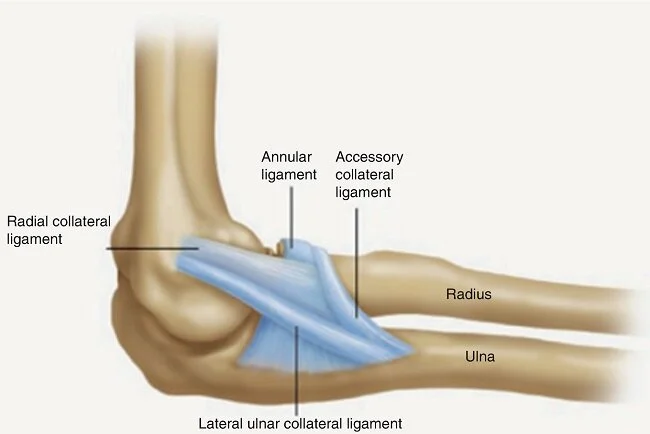
To begin with, I am not claiming to be living with “chronic” pain in this blog post. I am fully aware of the definition of the term and am fortunate that my current injury does not force me to endure such levels of discomfort. However, my recent experience has provided me with a new insight into something that most of us only notionally know about and have little or no true understanding. I believe I appreciate my Mother’s daily circumstances a lot better now (as well as several friends and colleagues who also live with chronic pain) and finally understand how debilitating both physically and mentally living in constant and acute pain can be. Hence I decided to write this piece. To share my experience with an injury that continuously hurts and to help inform others about the realities of living with chronic pain. Sometimes you need to experience something first hand to fully get the measure of it.

It’s hard to write about ones own personal health issues and how one addresses them without coming across as smug, sanctimonious or oblivious to the fact that it’s all relative. I wrote back in early March about how I was going to try and get my “house in order” by losing weight and also undertaking the NHS Health Check. A six weeks on and progress is being made. However, I would just like to re-iterate that what has proven to work for me, may not do so for others. We all have our own unique relationship with our own health and therefore there is a need to find ways that work for us as individuals. Therefore my dietary regime which seems some what easy to me, may prove to be far too draconian for others. Similarly my exercise targets are also suited to my temperament and limitations. But I hope that by sharing my progress I can at least provide some encouragement to others.

Personal health as a concept, refers to your overall well-being both physically and mentally. It is about taking charge of your health by making a conscious decision to improve and maintain it. It not only refers to your physical state but the respective wellness of the emotional, intellectual and even spiritual aspects of your life. Sadly it is something that many of us are not very good at dealing with or choose to ignore. All too often good intentions get sidelined by the realities of life. Sadly, physical and mental issues are usually only addressed after something bad has occurred. Furthermore, much of the most basic and practical information needed to improve our personal health is drowned out by the white noise of fads, quackery and those seeking to sell you a “solution”.

Today I visited Emmetts Garden in Sevenoaks. The Edwardian estate located at Ide Hill and is now owned by the National Trust for Places of Historic Interest or Natural Beauty. The garden, which covers an area of about six acres, is situated on a 600-foot sandstone ridge, overlooking the Weald. It is one of the highest points in Kent, offering an expansive view of the North Downs. The garden was laid out in the late 19th century and was influenced by William Robinson. It contains many exotic rare trees and shrubs from across the world. You can explore the rose and rock gardens, take in the views as well as enjoy flowers and shrubs in spring. In autumn visitors can enjoy the vibrant colours brought about by the changing of the season. The main attraction at this time of year are the Bluebells.

Gaming and personal health at first glance appear to be mutually exclusive subjects. News coverage about these issues more often than not implies that gaming is detrimental to both ones physical and mental well-being. Apart from titles that utilise motion sensing devices such as the Kinnect and require the player to physically move, gaming is a sedentary pastime. Combine that with a society that has an already broken relationship with food and their own personal health in general and there is scope for a wealth of medical problems.
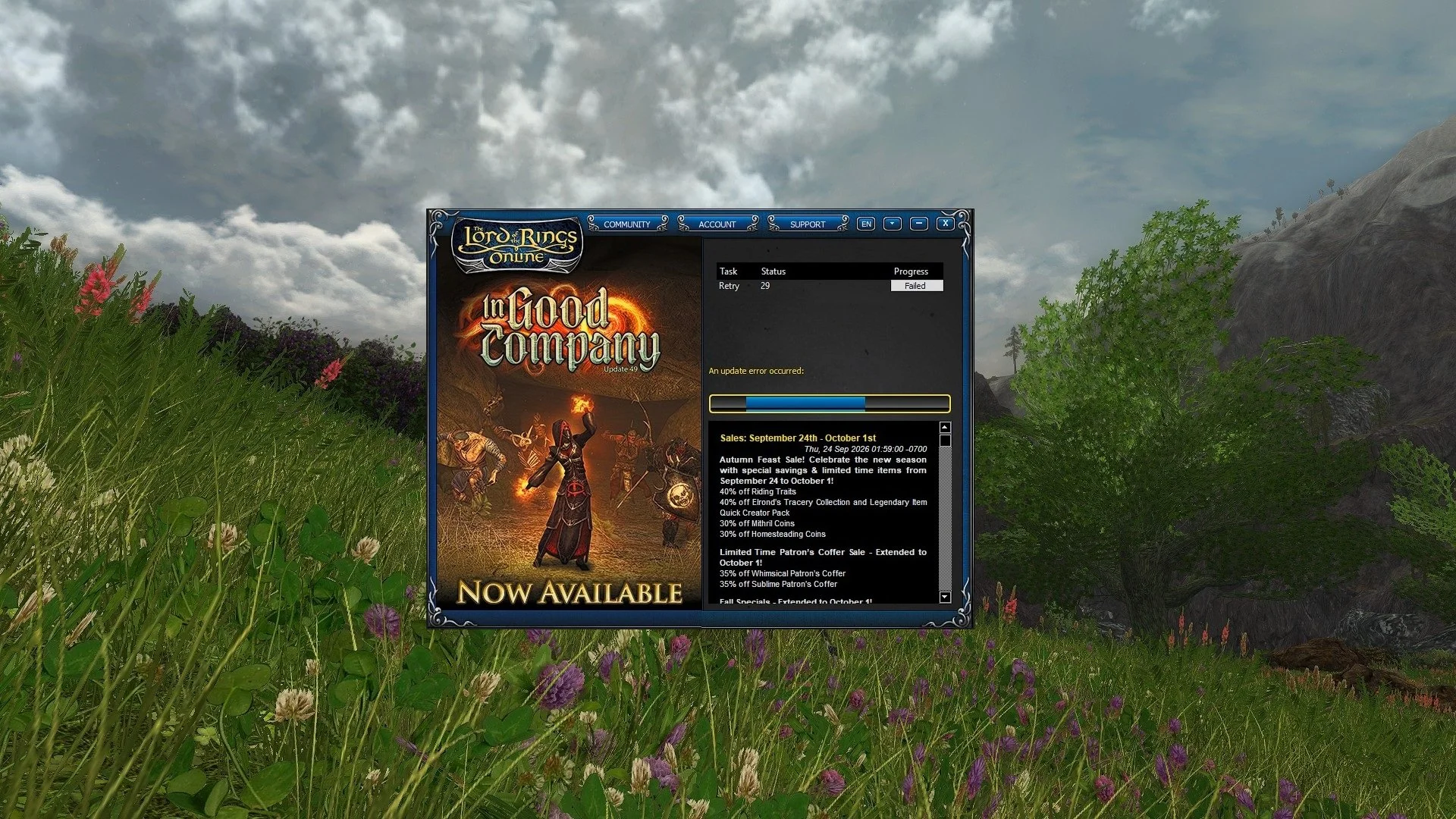
LOTRO: How to Resolve the Patch Server Bug
Throughout yesterday and early today, there was an issue logging in to the MMORPG, The Lord of the Rings Online. Upon starting the game launcher, it would attempt to connect to the patch server to download the latest game update. This process would start but then subsequently stall at 33%. The launcher would then attempt to reconnect to the patch server every 60 seconds but could not make any further progress. Some players found that if they left it long enough, it would eventually complete the download and the launcher then progress to the next screen where they could input their username and password. However, for the majority of LOTRO players the problem would simply persists and the launcher would be stuck in a loop. Some players attempted to reinstall the game or use the repair data facility in the launcher but neither of these proved to be successful workarounds. The patch sever needed to be bypassed to resolve the issue.
Throughout yesterday and early today, there was an issue logging in to the MMORPG, The Lord of the Rings Online. Upon starting the game launcher, it would attempt to connect to the patch server to download the latest game update. This process would start but then subsequently stall at 33%. The launcher would then attempt to reconnect to the patch server every 60 seconds but could not make any further progress. Some players found that if they left it long enough, it would eventually complete the download and the launcher then progress to the next screen where they could input their username and password. However, for the majority of LOTRO players the problem would simply persists and the launcher would be stuck in a loop. Some players attempted to reinstall the game or use the repair data facility in the launcher but neither of these proved to be successful workarounds. The patch sever needed to be bypassed to resolve the issue.
Fortunately, the issues now appears to have been resolved by Standing Stone Games. However, should this problem happen again, there is a simple workaround that players can use to skip the patch servers and go straight to the game’s logon screen.
If you used the official game installer for LOTRO and the game is installed on your PC in the default location, then follow these instructions.
Press the Windows Key = R.
Type CMD in the text box of the window that has opened and click on OK.
A new black window will have open with a flashing cursor.
Copy and paste the following:
cd /d "C:\Program Files (x86)\StandingStoneGames\The Lord of the Rings Online"
LotroLauncher.exe -nosplash -skiprawdownload -disablepatch
NB You may get a warning message about the text containing multiple lines.
Choose “Paste Anyway” and then press enter.
The LOTRO launcher will appear at the logon screen and has bypassed the patch server.
If you have installed LOTRO via Steam, then follow these instructions.
Launch Steam and go to your library.
Right click on LOTRO.
Select Properties, then General and finally Initialisation Options.
Copy and paste the following: nosplash -skiprawdownload -disablepatch
Then launch the game from Steam.
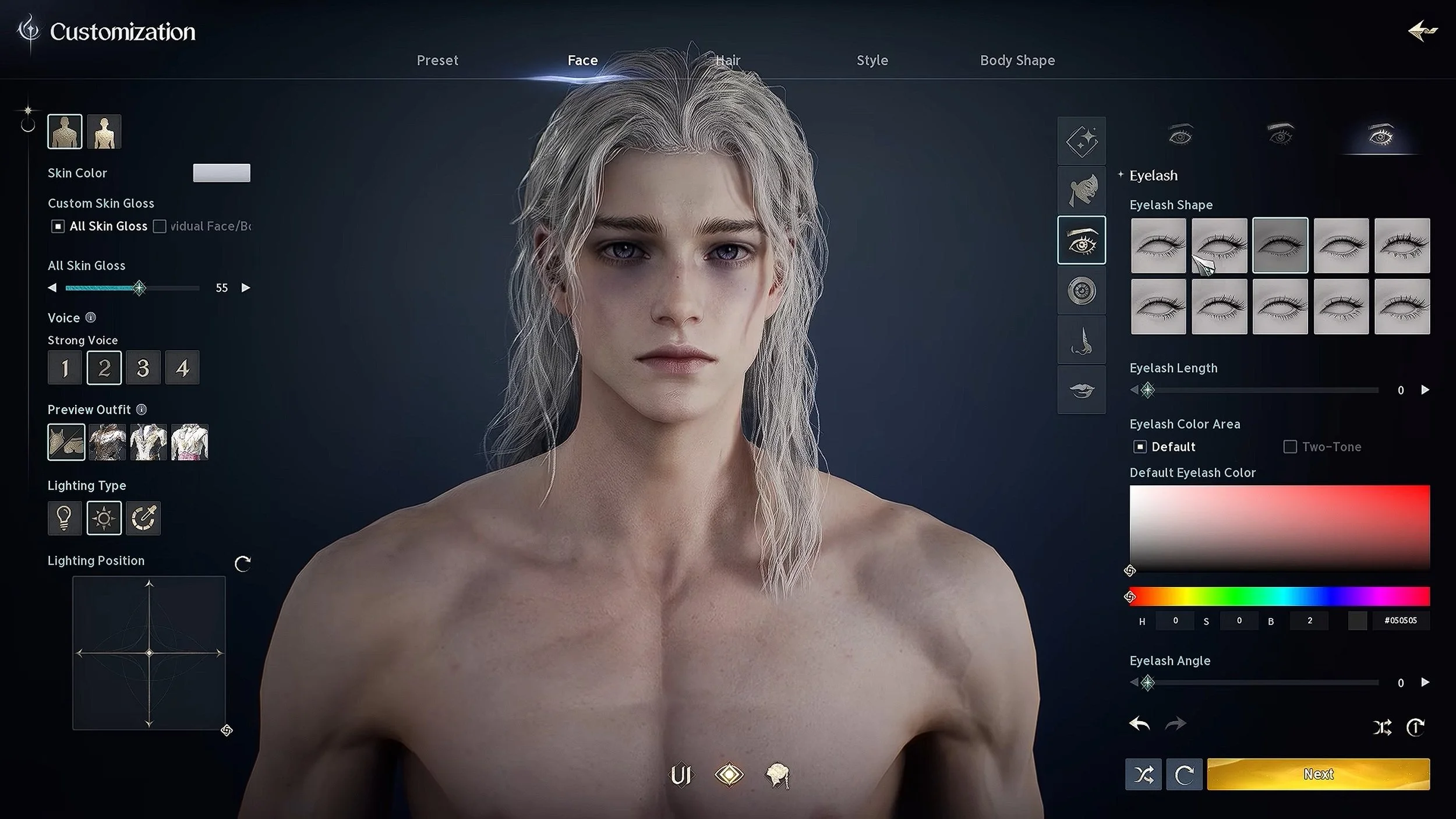
One of the things that I enjoy when playing a new video game is character customisation or character creation. I will spend hours trawling through settings, changing the most minute and consequential aspects of my avatars appearance. I am certain that there is a psychological aspect to this particular game mechanic and that it says something about you as a person. Are your creations shaped just by a need to look good in-game or is there more to it? Are they external manifestations of your sexual preferences or thoughts on body image. Do you treat them as characters from a book that exists in your mind. Do you aspire to recreate the likeness of people you know or admire? Do you strive to make your avatar look like you? Whatever the reasons, it would seem that character creation is something that a lot of gamers enjoy. Hence I am not alone in my borderline obsession. What you look like in-game is equally as important as your character’s name.
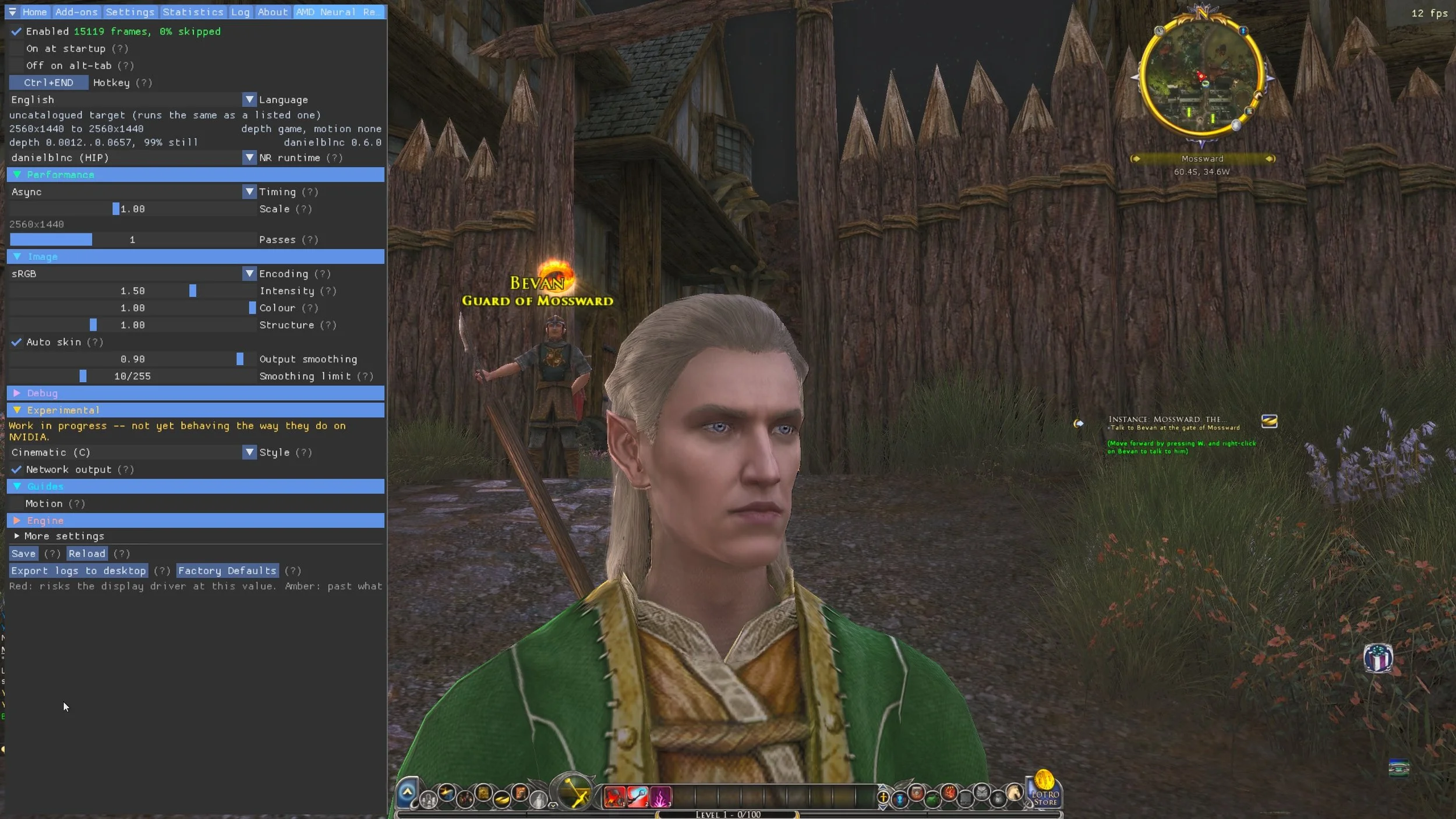
I recently tried to use DLSS 5 Manager with the MMORPG, The Lord of the Rings Online. Unfortunately, things didn’t work out. Today I undertook a similar experiment with AMD Neural Rendering, which is a broadly comparable product. Both utilities use 3D-Guided Neural Rendering, an AI technology that alters how lighting, reflections, and textures look in a game. Instead of just upscaling the image like older versions, DLSS 5 uses an AI network to instantly "re-render" lighting and material responses over the game's layout, achieving photorealistic details that would normally negatively impact a graphics card's performance. Or to put it in less fancy terms, the game graphics are enhanced and modified, although it is highly subjective as to whether the end results are an improvement. However, as a game such as LOTRO is unlikely to ever receive a major graphical overhaul, tools such as these are the nearest players will get to revised graphics.
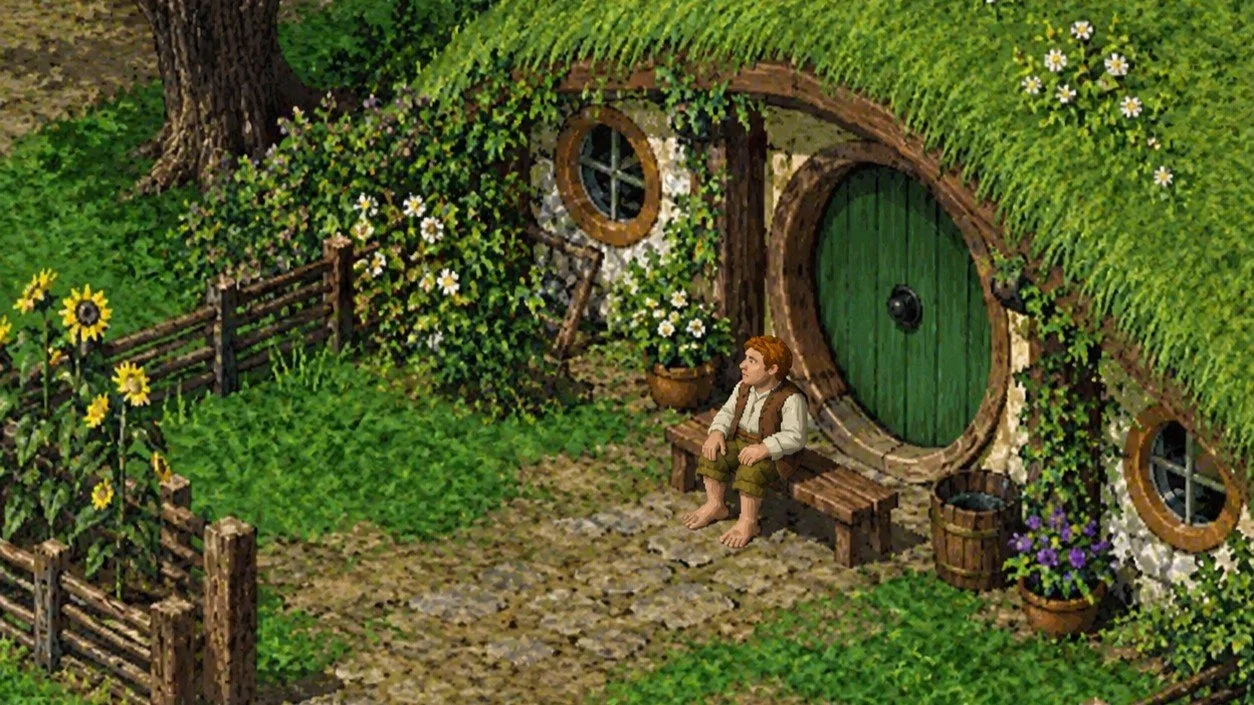
The core game code and engine for the MMORPG, The Lord of the Rings Online, is about 24 years old. LOTRO began originally as Middle-earth Online, developed by Sierra On-Line in 1998. Turbine took over full development of the project in 2003/2004 when their parent company, Vivendi Universal Games, acquired Sierra. The content that had already been developed by Sierra was abandoned and Turbine created a new game using structural elements such as the UI and game engine from their previous release Asheron’s Call 2 from 2002. The Lord of the Rings Online: Shadows of Angmar was officially released in April 2007. Hence, the active public release code is 19 years old. Despite continuous expansion and updates, along with a recent migration to 64-bit architecture, the foundations of LOTRO retains a nearly twenty year old legacy framework. This frequently contributes to modern technical hurdles and engine constraints.
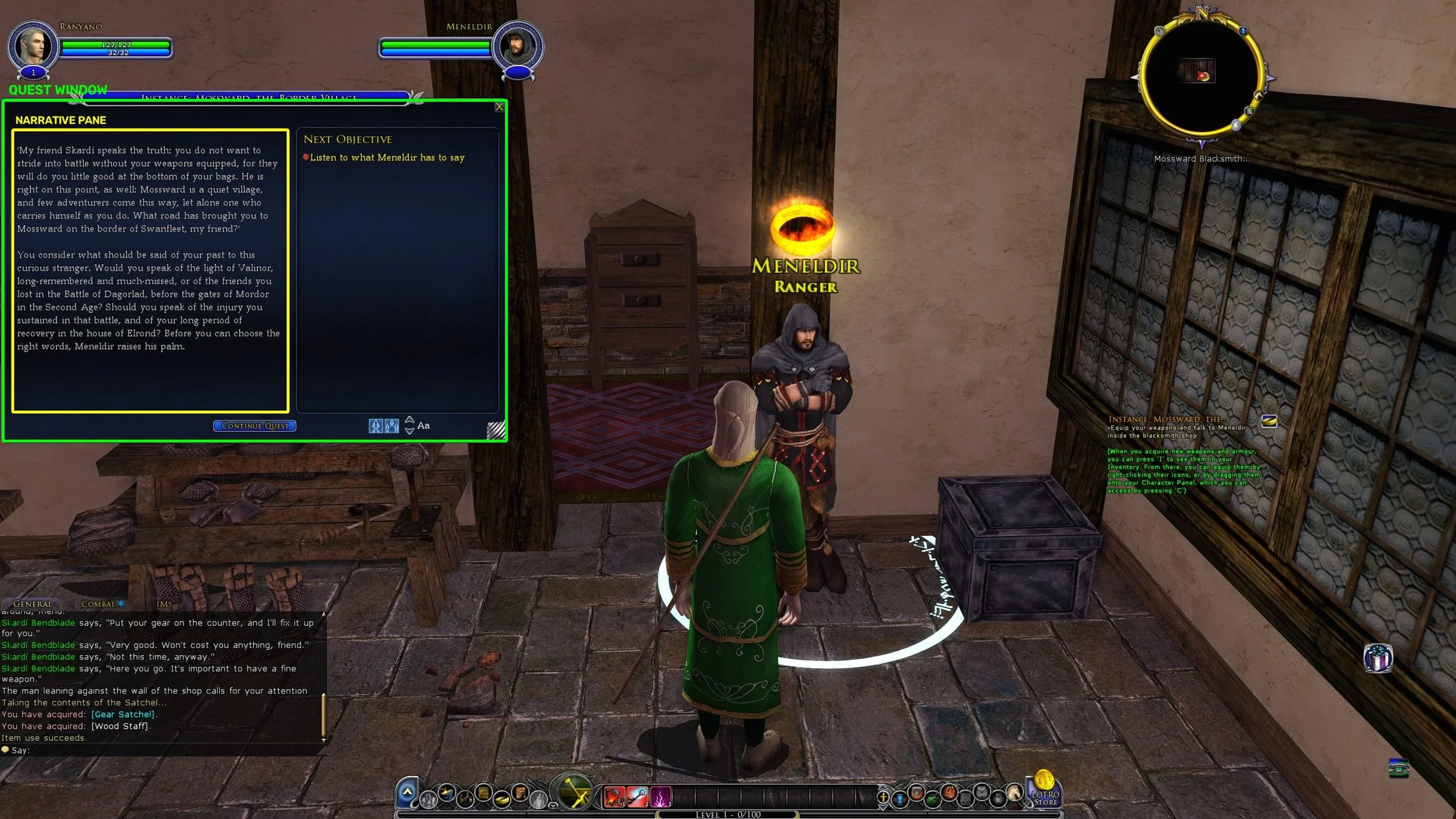
A few years ago, there was a fan created project to provide voice narration of NPC dialogue in the MMORPG, The Lord of the Rings Online. This mainly involved capturing the text in the quest dialogue windows and then sending it to OCR software, before using a text-to-speech program to read it. LOTROVoice as it was known, broadly worked but the creator stopped developing it as it proved troublesome to maintain. However, I recently discovered Khazad Voice TTS which is a separate project that does pretty much the same. I went so far as to install this “immersive AI narrator for LOTRO” after seeing a YouTube video of it being used successfully. Sadly I ran into issues configuring Khazad Voice TTS, because I have two monitors and LOTRO runs on the secondary (by my choice) and not the primary. I couldn’t “lasso” the dialogue windows in LOTRO during the calibration set up, which effectively prevented me from completing the process.
Throughout yesterday and early today, there was an issue logging in to the MMORPG, The Lord of the Rings Online. Upon starting the game launcher, it would attempt to connect to the patch server to download the latest game update. This process would start but then subsequently stall at 33%. The launcher would then attempt to reconnect to the patch server every 60 seconds but could not make any further progress. Some players found that if they left it long enough, it would eventually complete the download and the launcher then progress to the next screen where they could input their username and password. However, for the majority of LOTRO players the problem would simply persists and the launcher would be stuck in a loop. Some players attempted to reinstall the game or use the repair data facility in the launcher but neither of these proved to be successful workarounds. The patch sever needed to be bypassed to resolve the issue.

Two years ago I wrote a post about fine tuning your graphics in the MMORPG The Lord of the Rings Online. Apart from installing ReShade and using AMD Adrenalin, the options were somewhat limited, due to the game’s age and multiplayer status. Since then, I’ve been playing LOTRO with the game settings maxed out, a custom ReShade profile to make the colour palette more vivid and Radeon Image Sharpening enabled within the AMD software. The game looks clear, crisp and the draw distance is pretty good for an ageing game but I still wish the graphics could be tweaked further. Hence, I’ve been trawling the internet in a vain attempt to see if I can find any third party utilities that could be used to enhance LOTRO further. During the course of my search I stumbled across DLSS 5 Manager. This is an open-source, intelligent utility and one-click mod installer designed to inject and manage Nvidia's DLSS 5 neural rendering features, ReShade, and OptiScaler into PC games.
Are video games becoming easier? It’s a perennial subject that is frequently discussed by those who play them. Often the question of whether they have actually become easier is not the focus of the debate, as it seems to be broadly recognised that it is the case. Instead, discussion of this matter tend to drift into the rectitude of this change. Debate’s of this nature are usually awash with subjective opinions and personal preferences which are then put forward as objective facts. It’s not just a question of video games becoming easier, it’s the fact that making them easier is “wrong” and those who want them as such are “not proper gamers” etc. The hours that have been lost to this pointless, tedious debate are uncountable. However, I digress. Let us return to the matter of video games becoming easier, because although fans discuss this a lot and have plenty to say, you don’t often hear from the developers on this subject.
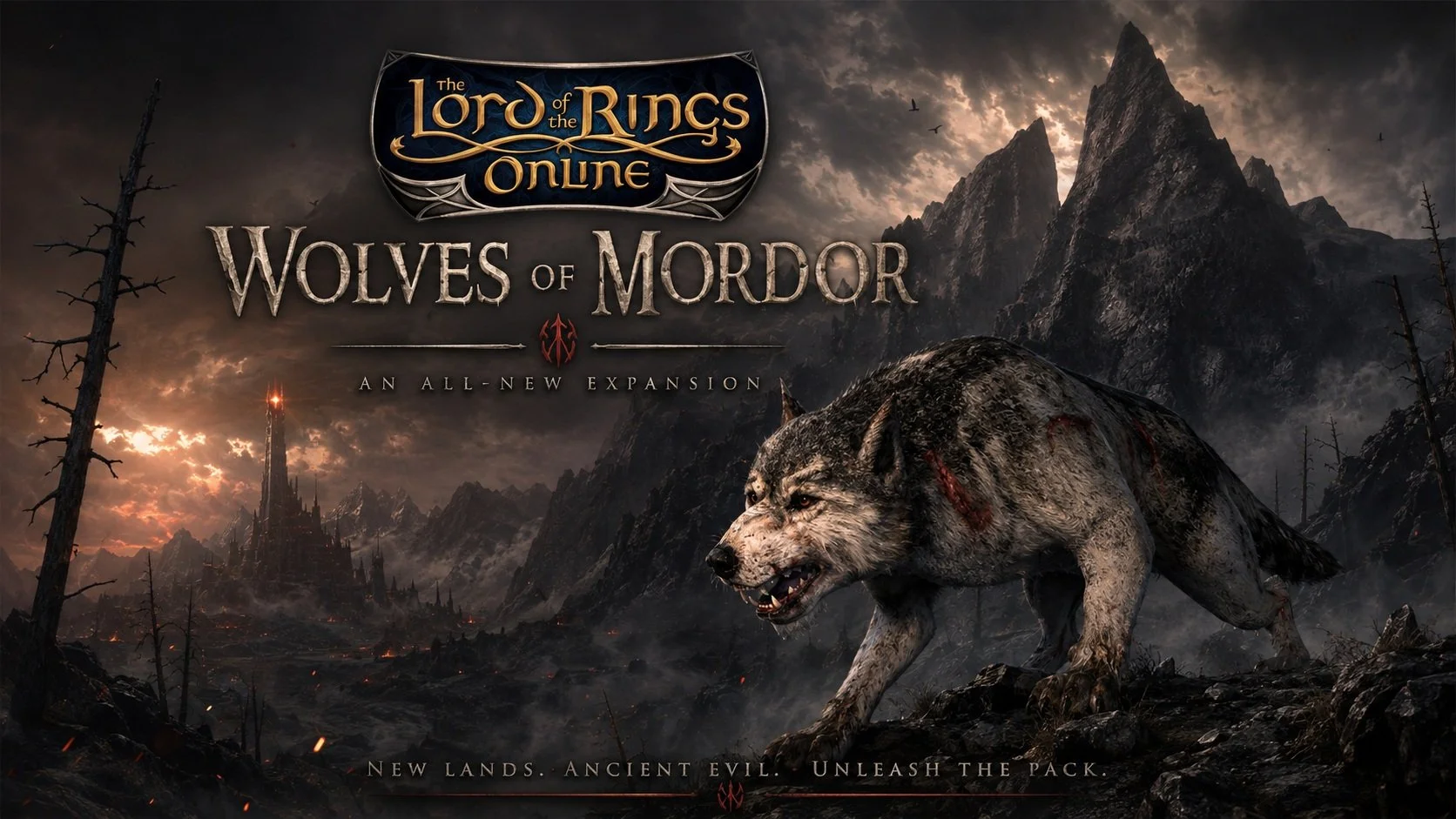
The next expansion for the MMORG, The Lord of the Rings Online, was announced on the 1st August, via the gaming website MMORPG.The Wolves of Mordor, which will launch later in the year, appears ambitious in scope as it will include two new game systems as well as the obligatory story update. This expansion takes place in Draugardh located in the North East of Mordor, beyond the Plateau of Gorgoroth. It includes the new zones of Heledhris, Parth Rhavas and Nan Ogol. These vary environmentally ranging from the arid, volcanic and semi-tropical. Players will encounter the Daugrim in these regions, Werewolves but not in the modern sense. This is not the lycanthropy of Eastern European legends but in the established Tolkien idiom of fell spirits inhabiting the bodies of Wolves. The region also sees the return of the Woses and players can expect to encounter Elves and scouts from Gondor. As ever with LOTRO expansions, there will be new instances as well as a raid.
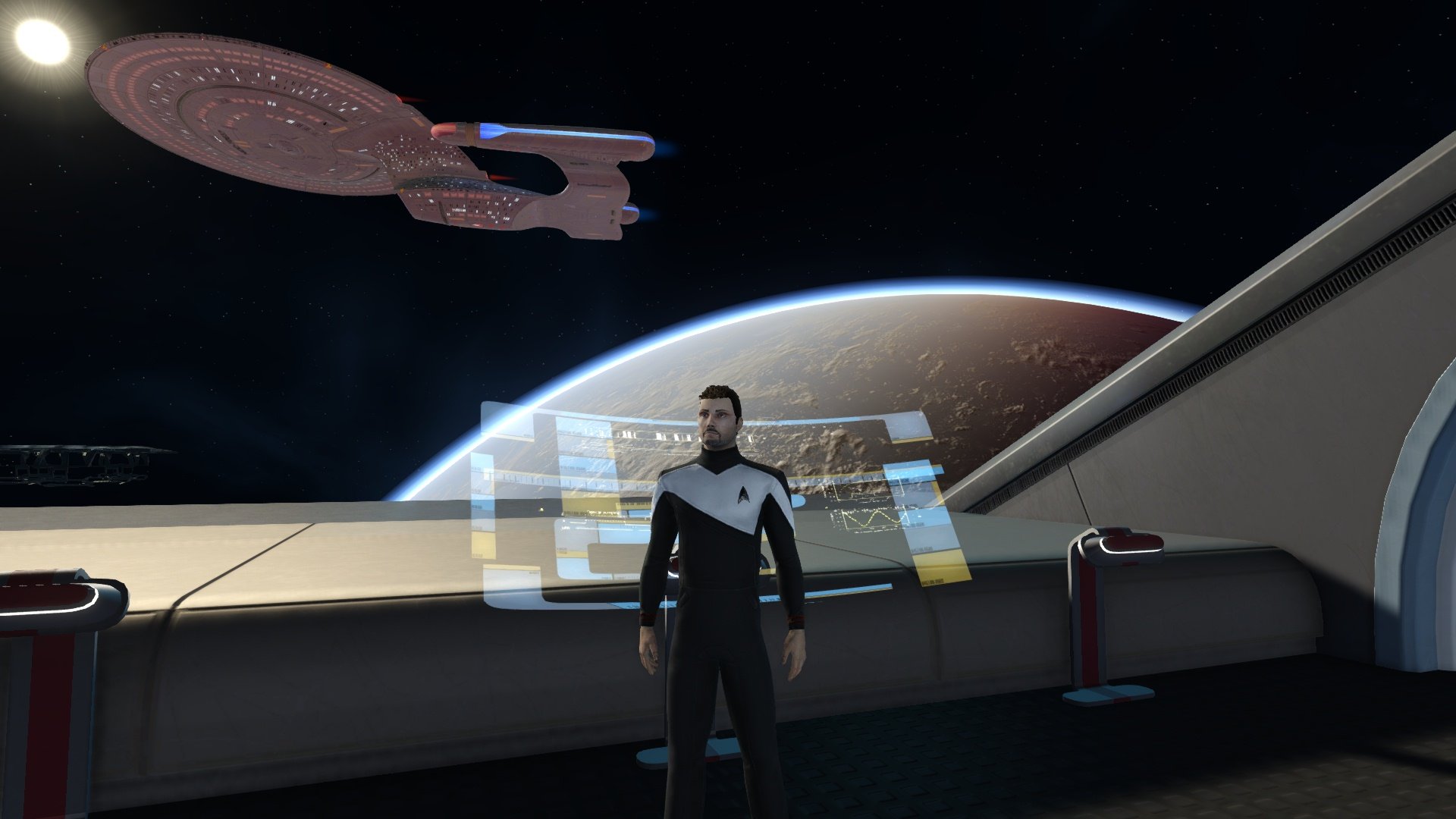
I was recently perusing my archive of old blog posts, when it struck me how much I’ve written about the MMORPG genre over the years. Naturally, there was far more material from between 2008 and 2012 as that was period when I immersed myself in the genre and was very enthusiastic about it. I was at a point in my life when I had the time to dedicate to such games and I was happy to participate in the social aspect of they offered. I would regularly play through group content and spend time socialising online with fellow guild members. My experience remains a textbook example of how online games can be more than the sum of their parts and that where you are at in your life has a major impact upon your overall enjoyment. As I read though various old posts it became clear that my experiences where specific to this particular part of my life and that they cannot be repeated. My relationship with the genre is very different now and that’s fine.
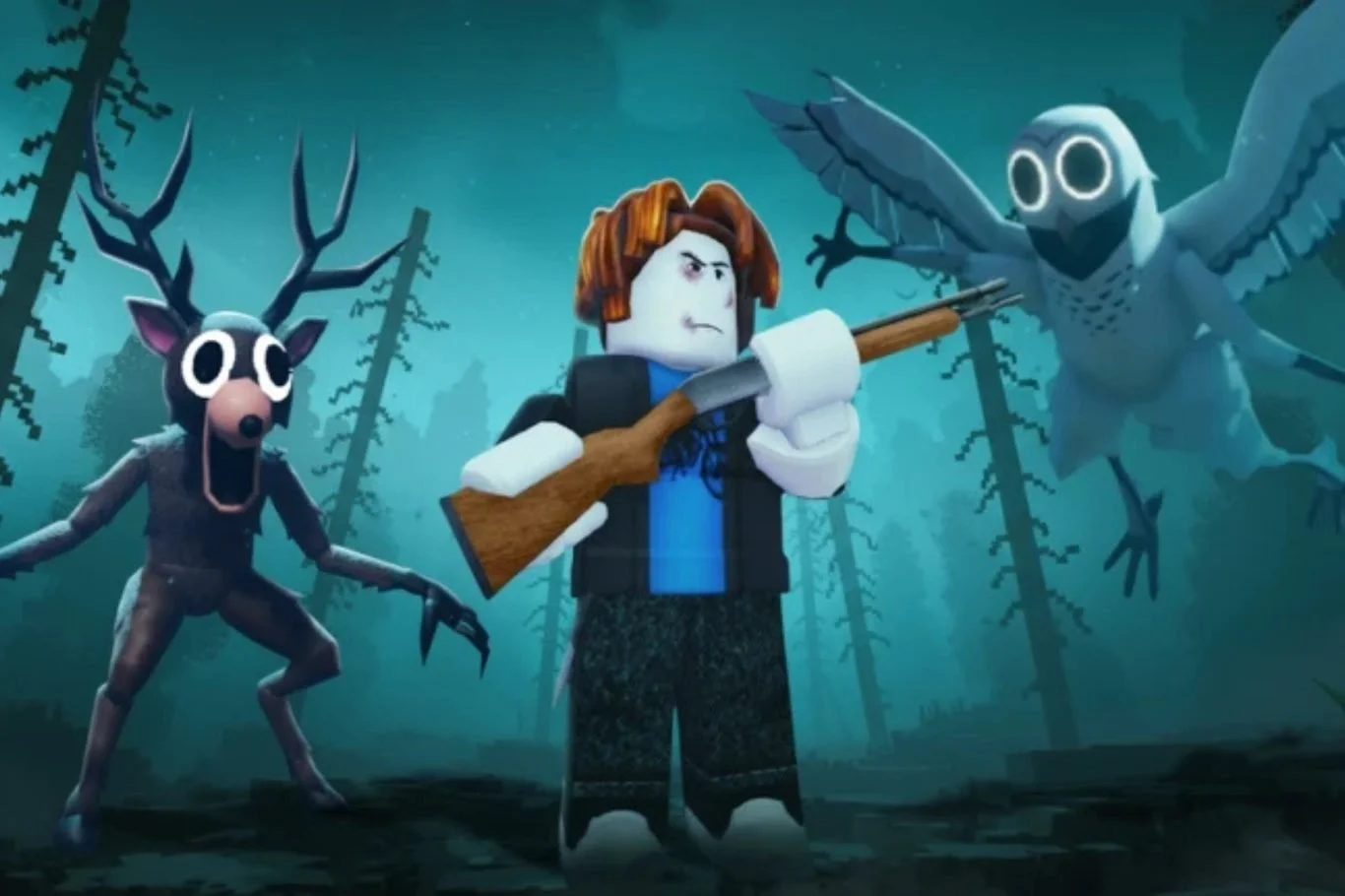
Video games as a genre are extremely poor at explaining themselves. When you buy a new game you’ll often find little or no information regarding the basic systems and mechanics. The industry assumes that their customers are by default familiar with the fundamentals of playing a modern video game. Hence if a game has a tutorial, it is often based around videos rather than detailed verbal instructions. You are are briefly shown a clip of a specific move being successfully undertaken but it is seldom shown in a wider context. The industry also expects the fan community to take on the role of curating and disseminating information about its games. The move away from forums and bespoke websites to Discord highlights this. Discord is a primarily a real time communication tool and not good at maintaining a historical data archive. If you want an answer to a specific gaming question, you’ll more than likely find it on YouTube in a video made by a fellow gamer.
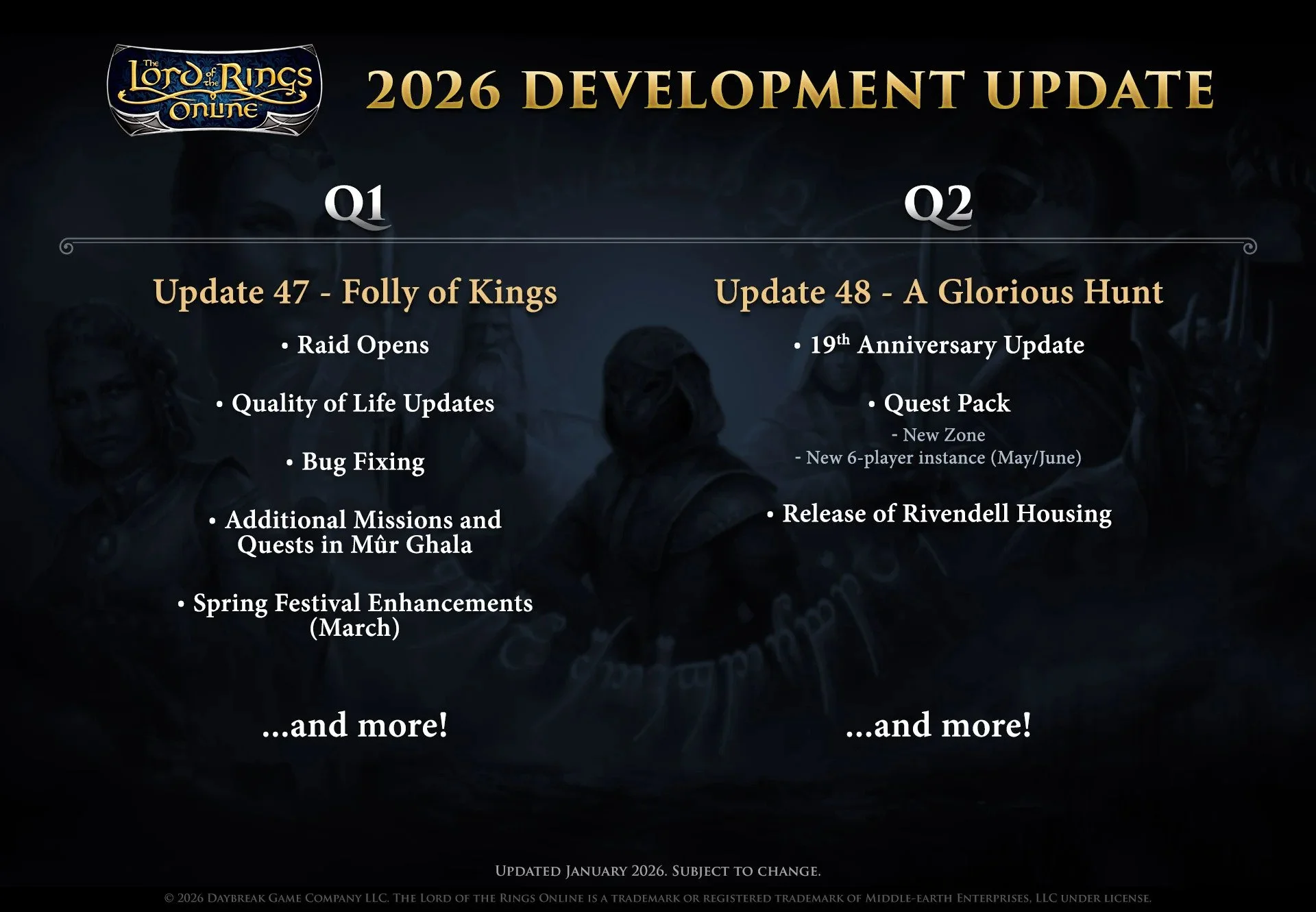
According to the recent “letter to the players”, Standing Stone Games will be adding a new zone to the MMORPG The Lord of the Rings Online in the second quarter of this year. Possibly around May or June. Having spent the last three expansions in the South of Middle-earth exploring the tropical Umbar and the deserts of Harad, I would certainly welcome a change of location. I have gradually warmed to these zones over the last eighteen months but I do find them so incongruous. They are so radically different to the European style content that has been the mainstay of the game for so long. Tolkien’s source text has plenty of detail regarding Eriador and Rhovanion. Information regarding Harad is scarce, hence it has afforded the developers a great deal of artistic freedom. Although exceedingly well realised these tropical zones have taken a while for me to get used to.
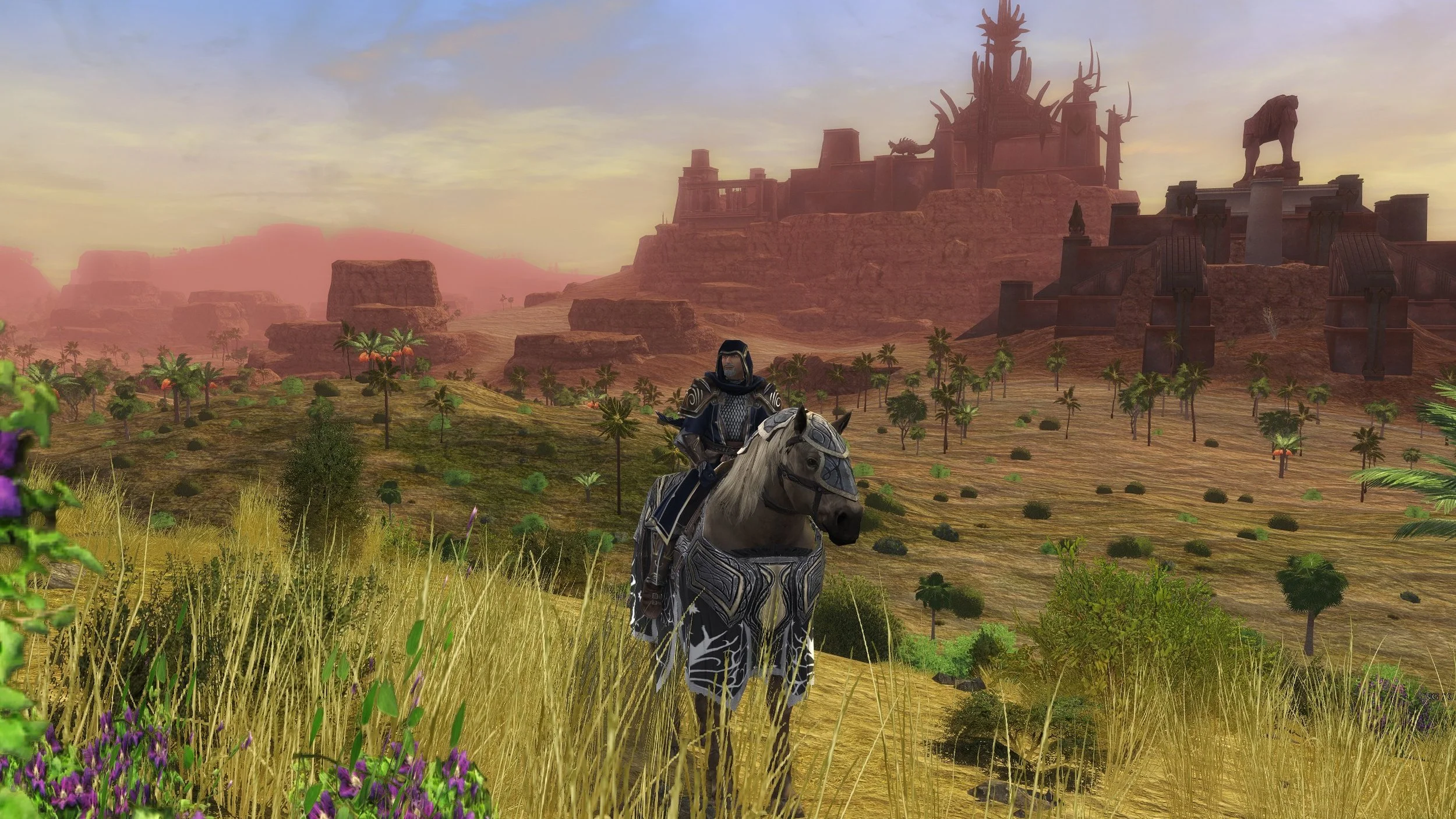
I’m not sure exactly when it started but I’ve recently noticed a graphical bug within the MMORPG The Lord of the Rings Online. This problem often occurs within caves or in areas where there are a lot of rocky surfaces. Hence it has become very apparent in the latest two expansions, set in Umbar and Harad. This graphical glitch causes some surface textures to appear to flash from light to dark intermittently. The resulting strobe effect is hard to ignore and very distracting. Fortunately, a quick online search showed that this is not a problem unique to my installation of LOTRO and is a known problem. Furthermore, there is a very simple workaround, which is to go into the Advanced Graphics setting and uncheck “Per Pixel Lighting”, which immediately remedies the problem. I have no idea why this has recently started to happen but at least it can be resolved.
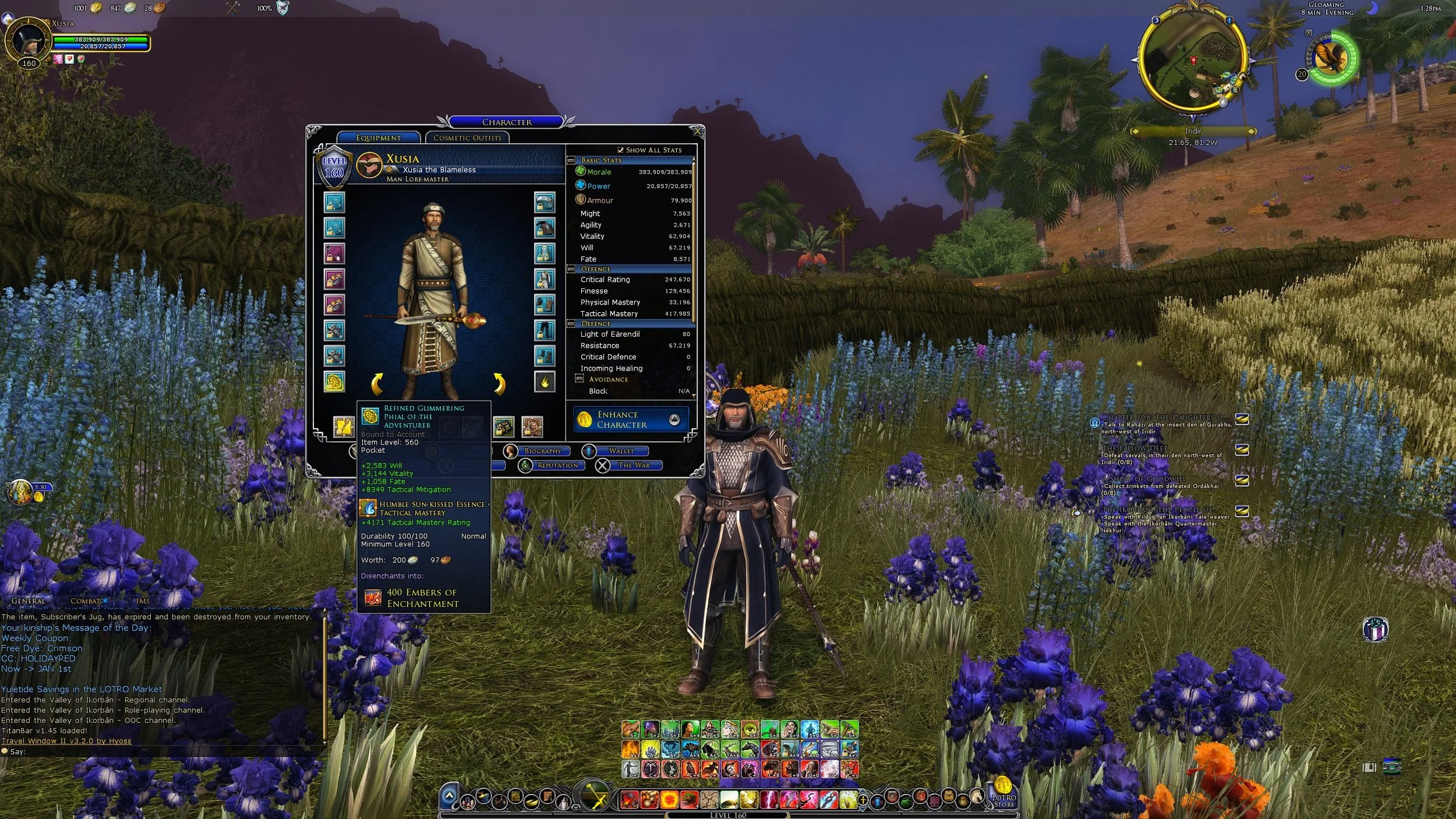
The latest expansion for the MMORPG The Lord of the Rings Online, Kingdoms of Harad, launched on December 3rd. With this release the level cap was raised from 150 to 160. It should also be noted that the cap for virtue traits was also raised from 96 to 100. Naturally these changes meant that there is a requirement to replace all armour and jewellery once the new cap is reached. Similarly Legendary Items have to be reforged and any traceries upgraded or replaced. If you follow the Epic Story it will lead you from quest hub to quest hub. The main quest rewards, along with those from side quests will provide adequate gear as you slowly progress towards the new level cap. The new raids, instances and missions/delvings then provide a means to acquire higher quality level 160 gear. LOTRO and indeed, many other MMOs are consistent in this methodology.
It is customary in a post such as this to list the various games that I’ve played over the last twelve months and share my thoughts on them. Wider analysis of the video game industry is also de rigeur. Unfortunately, I don’t really feel disposed to do either of those two things. My thoughts on the games I’ve played have already been published and can easily be accessed via the links at the bottom of this post. As for the video game industry, it suffers the same flaws as music, TV and cinema. There is creativity and innovation out there but it is often drowned out by mainstream products which are demonstrably inferior due to their inherent mediocrity. As for the business side of things, we once again clearly see the failings of the corporate management class. Sadly, they do not face the consequences of the mistakes that they make.
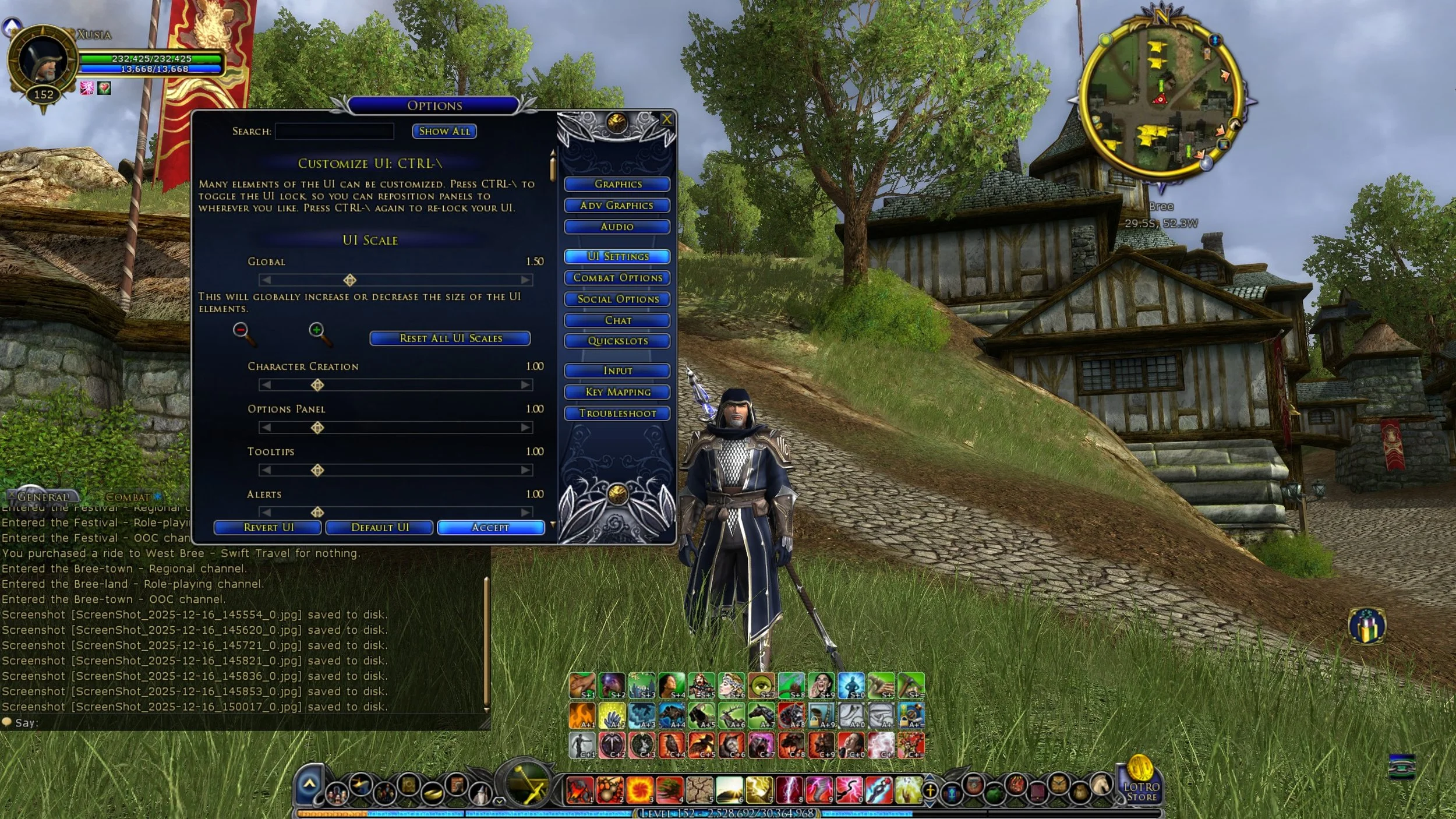
Today Standing Stone Games began beta testing Update 46.1 for the MMORPG The Lord of the Rings Online. The current preview on the Bullroarer test server is mainly for the new instance cluster that comes with the Kingdoms of Harad expansion which launched a few weeks ago. However, it would appear that this latest preview has another feature or note. One that should please LOTRO players. Contrary to what a lot of people thought, myself included, SSG have been working on a scaling UI for 2K and 4K monitors and the results are now available for testing from today Monday 15th through to Friday 19th December. Until now the main workaround to the lack of UI scaling has been to use either Nvidia or AMD graphics software to upscale the game from 1920 x 1080, or a third party app such as LosslessScaling. Having an official solution is a far better option.
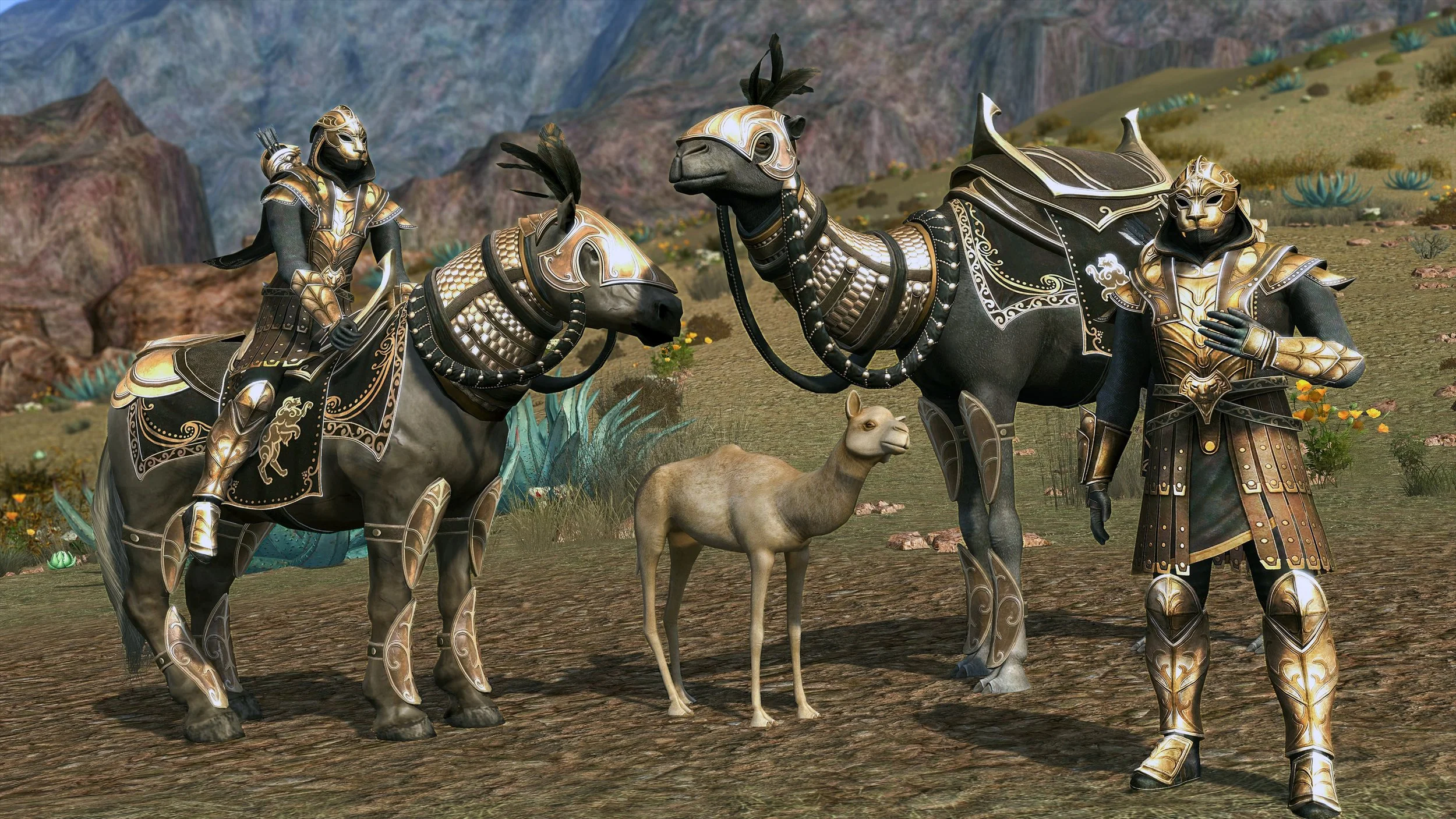
Kingdoms of Harad, the 13th expansion for the MMORPG The Lord of the Rings Online, was released today. Highlighting developer’s Standing Stone Games continuing commitment to this eighteen year old game. As 2025 draws to a close, I thought it would be prudent to reflect upon the current state of LOTRO and to consider what may come next year. Two words that I associated with this MMO are stable and consistent. The playerbase is loyal and dependable. Player numbers never greatly decline nor do they notably expand. LOTRO fills a very specific gaming niche and one of the reasons it retains its players is that there is no suitable alternative game. Although there is not a great deal of data in the public domain, it is generally accepted that LOTRO has an older player demographic and that many are consummate Tolkien fans.
The MMORPG The Lord of the Rings Online runs on a broad spectrum of PCs. From archaic laptops to high end gaming rigs, although it may require a bit of tweaking. At present, the optimal way to play the MMO is at a resolution of 1920x1080 (FHD) with the graphics setting maxed out. The graphics are sharp and the UI is readable. However, a growing number of gamers are now using 2K and 4K monitors. You can play LOTRO at higher resolutions such as 2560×1440 (QHD) and 3840x2160 (UHD) and the game looks great. However, the UI does not scale and so is very small on 2K and 4K monitors. The skill icons on the quickslots (shortcut bars) and the in-game text become difficult to see at these resolutions, which deters some players from using them. It is a known issue that Standing Stone Games are attempting to address but it is unlikely to be resolved any time soon.
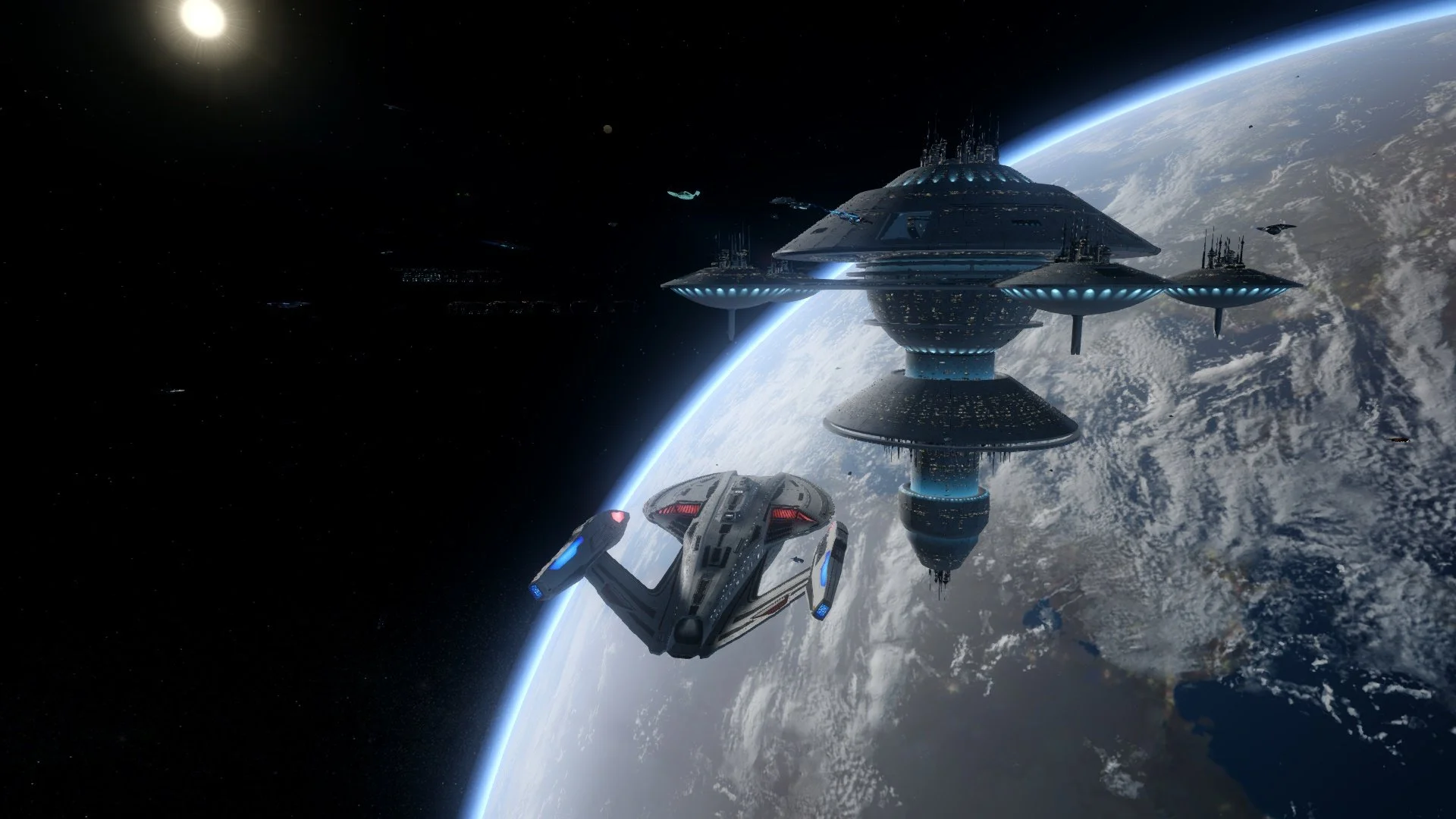
I recently read a post on Massively Overpowered about skills rotation in the MMORPG genre. I found the subsequent discussion in the comments fascinating. Mainly because I have never used a fixed rotation of skills in any of the MMORPGs that I play. I understand the reasoning behind such things and why some players want to optimise their combat performance. Using one’s skills in a specific order to maximise damage and manage their subsequent cooldown has a logical appeal. In Star Trek Online, some players go so far as to create keybinds for their rotations and assign it to a specific hotkey, which is then continuously pressed throughout combat. However, rotations are a blunt tool that lack flexibility, often being geared towards dealing with a single target or using an area of effect skill against a larger group. They may not be the optimal approach to combat when things do not go to plan.
Tolkien enthusiasts may recollect Athlon Games, a subsidiary of Leyou Technologies, announcing that it was developing a new MMORPG, based upon The Lord of the Rings, back in September 2018. The following summer, it was revealed that Amazon Game Studios was the partner developer for the project. In late 2020, Leyou Technologies (a Hong Kong-based company), was acquired by the Chinese conglomerate Tencent. This triggered a contract clause with the license holder, Middle-earth Enterprises, allowing them to terminate the existing arrangement if a new deal could not be met. Amazon and Tencent were unable to agree upon how to proceed with the project, leading Amazon to withdraw from negotiations. The project was subsequently scrapped. No details or images of the MMO have been released.
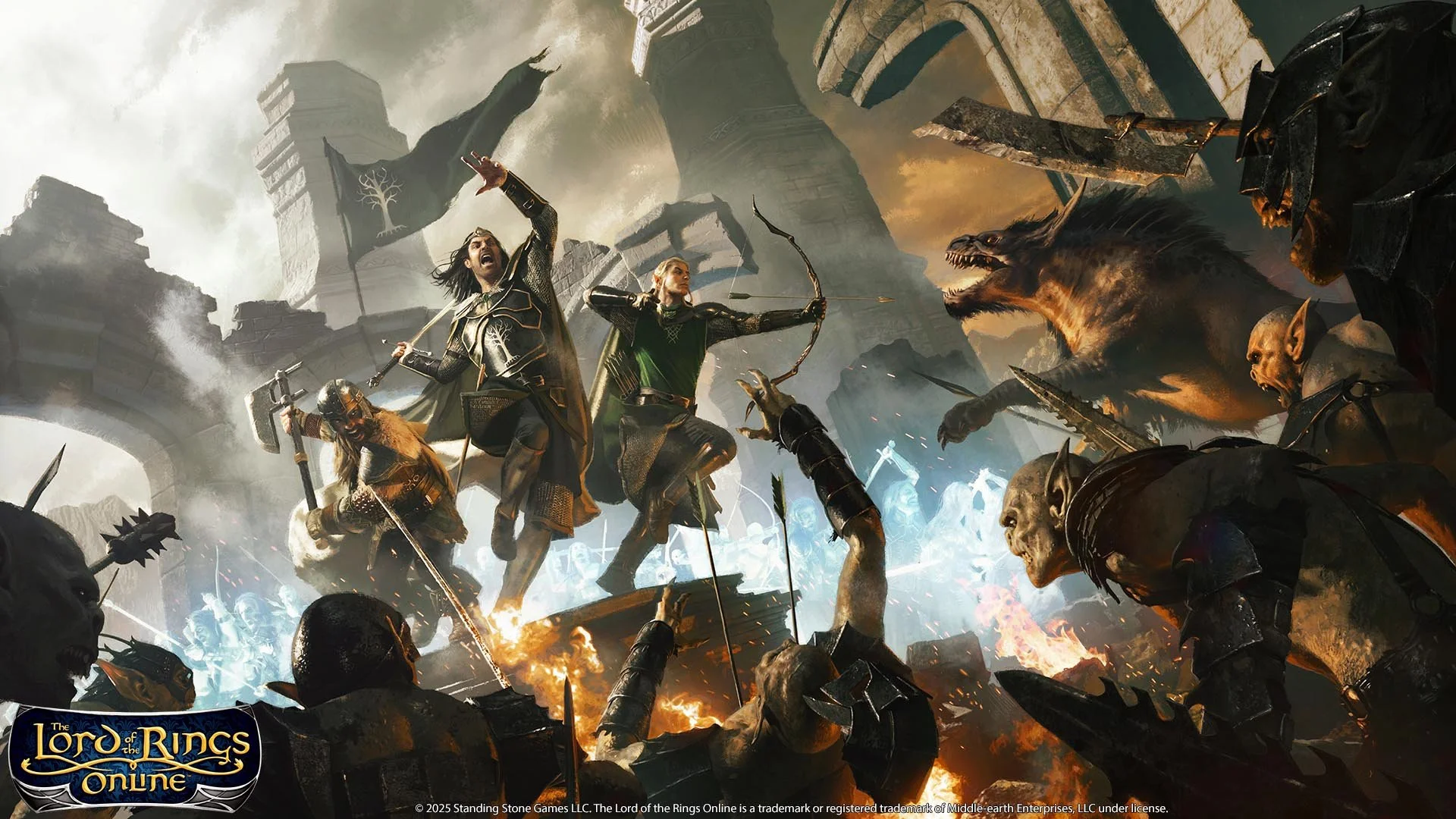
After a six month migration period, Standing Stone Games formally closed all their legacy 32-bit game servers for the MMORPG, The Lord of the Rings Online, on the 31st August 2025. Despite this planned closure being widely discussed via the game’s official forums, professional video game websites and fan blogs, many LOTRO players were unaware of this deadline. Hence many were unable to migrate their respective alts to the new 64-bit servers. Naturally those affected by these closures were upset, especially those with longstanding characters who didn’t relish the prospect of starting from scratch with a new alt. Thankfully, SSG have been true to their word and as of today, have re-opened these “dark worlds” to character transfers. If you have an alt trapped on one of the older game worlds, then now is the time to use the transfer wizard and move them to a new active game world.
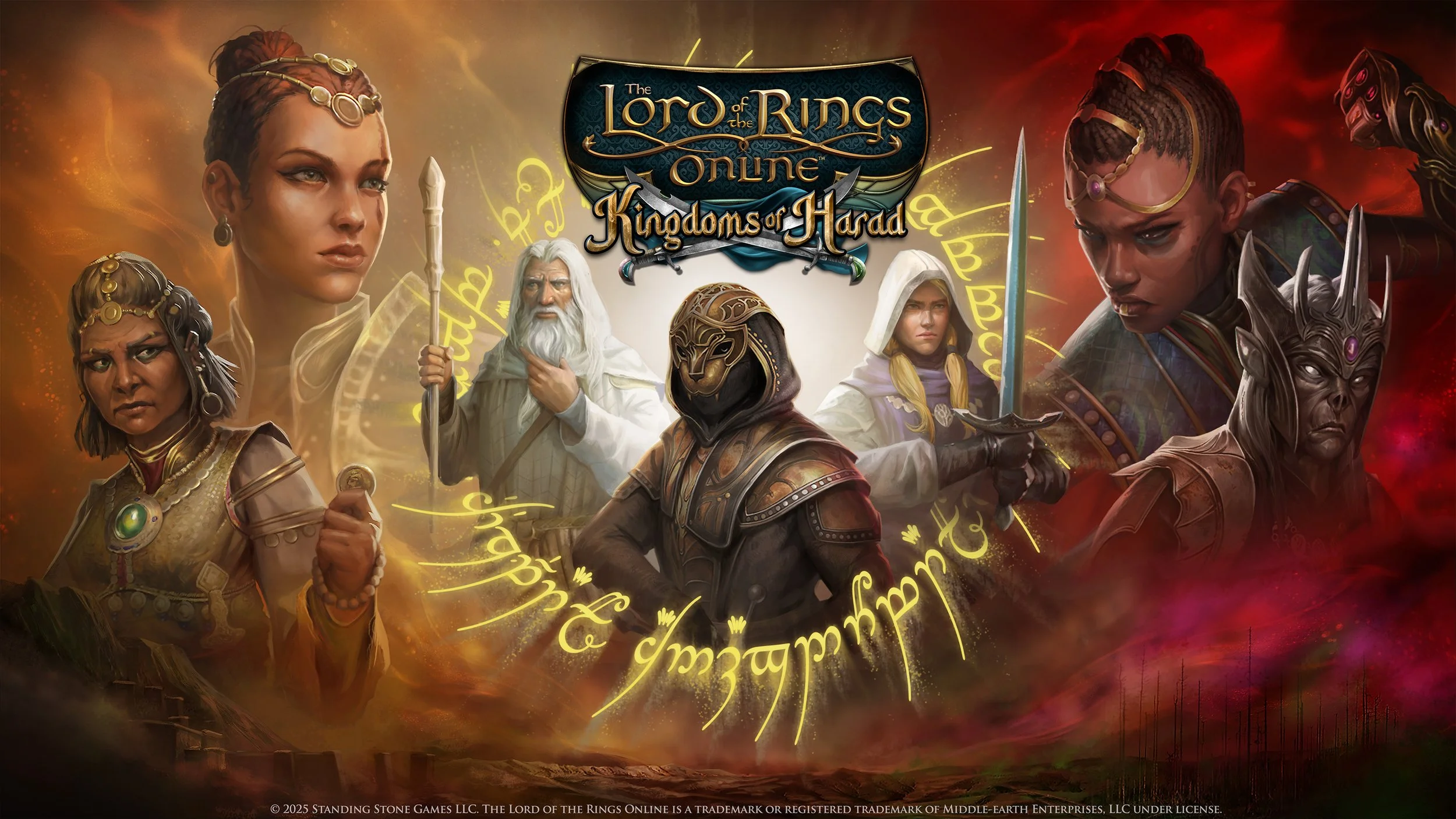
MMORPG announced earlier today and it was subsequently confirmed by Standing Stone games, that the new expansion for The Lord of the Rings Online will be Kingdoms of Harad and that it will launch later in the year. The expansion will see the conclusion of the epic Song of Waves and Wind storyline and the level cap raised from 150 to 160. There will be a new region to explore, Mûr Ghala, comprising four zones. Adagîm, Idagâl, An Shêru and Kighân. The latter contains the main trading hub of Zajâna. Players will travel into the region with Gandalf the White, along with allies of the Kindred of Coins and Mizadi as they seek to counter the regional power struggle brought about by the fall of Sauron. Canonically, this takes place three months after the destruction of the ring, hence King Elessar and Eomer are busy with domestic affairs in their respective kingdoms.
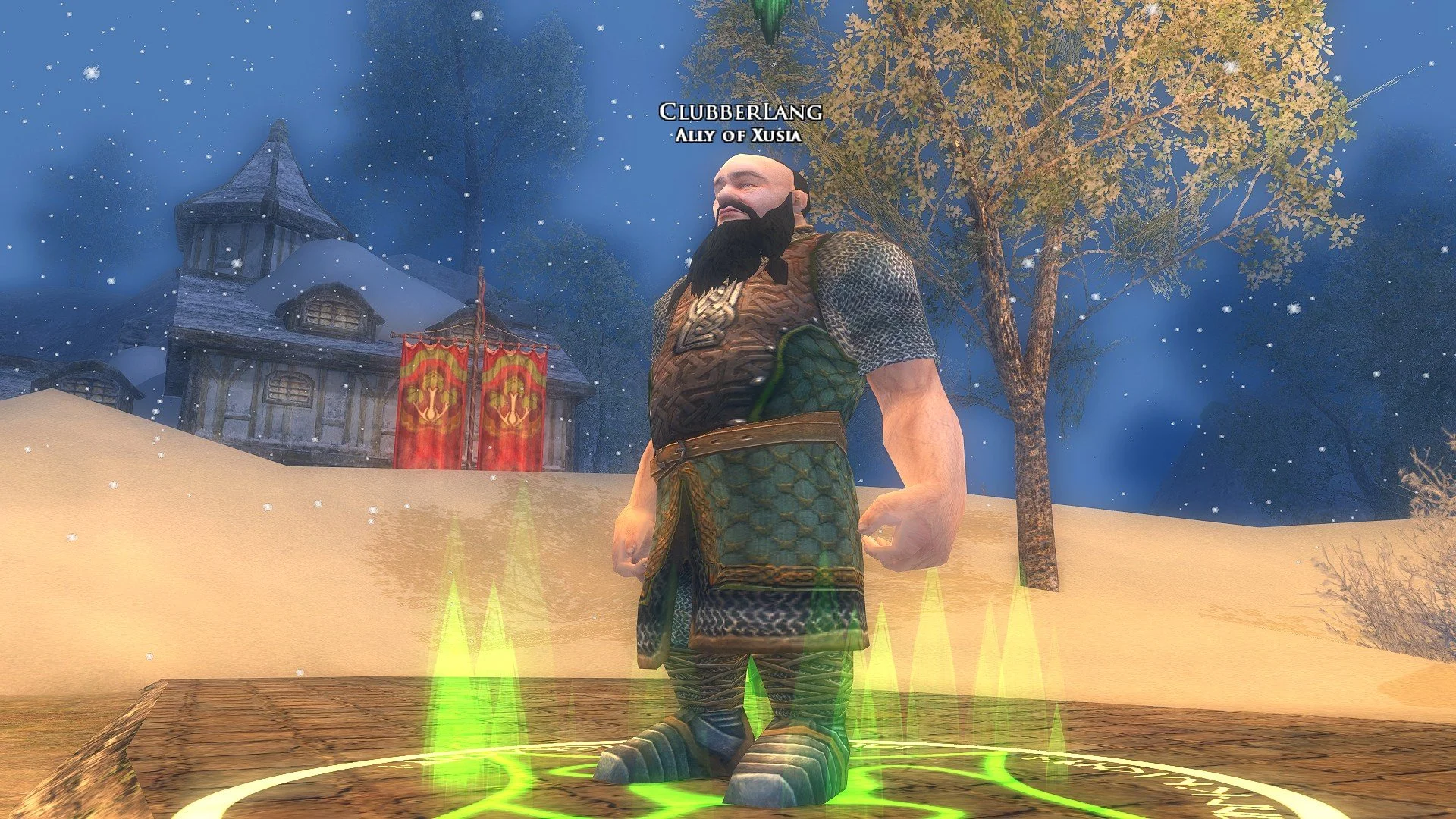
Skirmishes were added to the MMORPG The Lord of the Rings Online, in 2009 with the release of the Siege of Mirkwood expansion. Skirmishes are a repeatable and scalable combat system that allows players to access various instances for solo or group play from anywhere in the in-game world. Players can choose a Skirmish Soldier from a variety of classes to accompany them and provide healing, tank or additional DPS. On paper it’s a great system which is why many other MMOs offer something similar. I recently decided to tinker with my Skirmish Soldier build on my main character to see if I could optimise their performance. As my primary alt is a Lore-master, for the last few years I have had a Warrior as their Skirmish Soldier, to take some of the aggro from attacking mobs. I used the excellent guide by FibroJedi and swapped over a few Training and Personal Traits.

On 2nd August 2025, I was playing the MMORPG The Lord of the Rings Online, on my primary character, a level cap Lore-master. I decided to continue with one of the Allegiance Quest lines, specifically Durin’s Folk. I played through several quests and earned the appropriate tokens that advance the Allegiance system. I then handed these in to the NPC in the Hall Under the Mountain, expecting the next quest in the series “Chapter 3: Gimli’s Request” to be unlocked. An item appeared in my inventory that I then clicked on, which should have bestowed the quest. Unfortunately, nothing happened. Furthermore, the item vanished from my bag and therefore I could not attempt to click it again. I checked the LOTRO Wiki and then looked around the Hall Under the Mountain to see if any NPC had a ring icon above their head. As they did not, I surmised that this was a software glitch and logged a support ticket with Standing Stone Games.
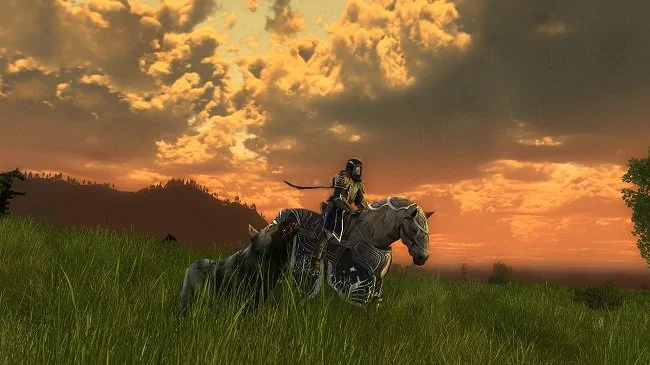
Let’s start with a quote from a classic Walter Hill film, The Warriors. “Can you count, suckers?” says Sirus. The gang leader was referring to the number of Police in New York City at the time. Whereas, for the purpose of this post, I am referencing how many Delving Writs a player needs to acquire 6 pieces of level cap armour in LOTRO. Because, next to the gear you get from endgame instances and raids, Delving gear is a good alternative.. It is marginally better than the items you can get from lootboxes. Hence, Delving armour is a good source of high end gear for the solo player. Through the miracle of mathematics, the number of Delving writs required to acquire a full set of this armour is 9,000. At first glance, that seems like a lot. If you then do some further research to put the number in context, you realise it is indeed a lot and a substantial undertaking.
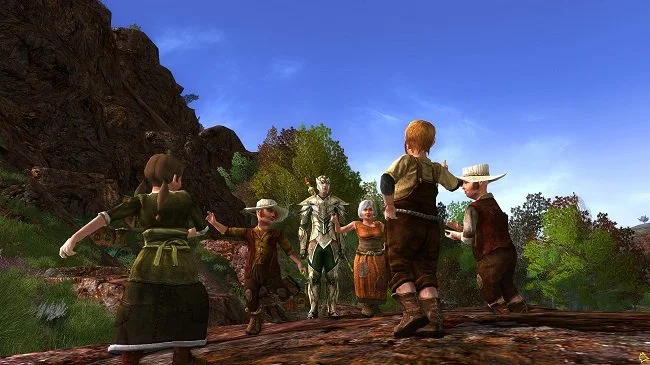
I am currently enjoying a renewed interest in the MMORPG The Lord of the Rings Online since I migrated all my characters from the old 32-bit servers to the new 64-bit replacements. I’ve created a new High Elf Lore-master on Peregrin server and am currently levelling them in a targeted play through of the Epic Story, supplemented by curated side quests. While playing recently, I realised the game UI on this alt wasn’t as I usually have it laid out. So I checked through the various documents on my PC and found a text file I had created many years ago that had a few hints and tips written down. I’ve added a few more and decided to share them as a blog post. I’m sure veteran players will be familiar with many of them but a lot of them are worth repeating. They may prove useful to those new to LOTRO or returning to the game after a long hiatus.
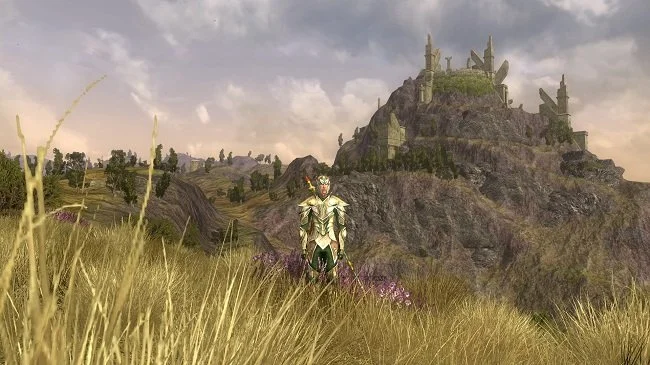
In mid-March, while the server migration debacle raged, I created a new alt for the MMORPG, The Lord of the Rings Online, on Peregrin server. The idea was to play casually through content focusing on enjoyment, rather than worrying about progression. I was to level at a pace that suited me and had no specific plans to develop my alt in any particular way. I have been playing LOTRO since 2008 and have a primary level-cap character that has been my main focus over the years. Hence I have previously experienced all story content from all the expansions and am therefore very familiar with what the game has to offer. Which is why I thought I’d do things differently this time. So I started my new Lore-master in Mossward in Swanfleet, the new starting area added to the game in 2022.
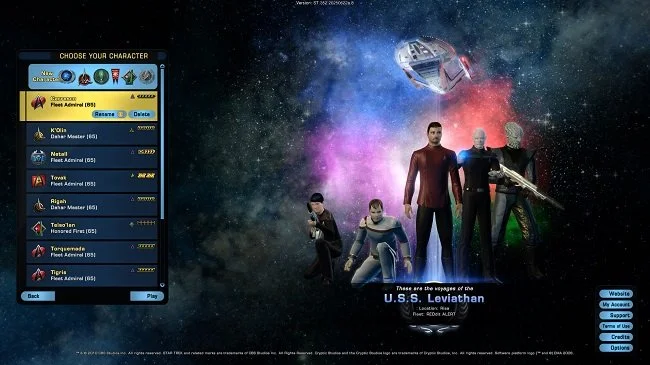
In massively multiplayer online games (MMOs), alts (short for alternate characters), are new characters created by a player in addition to their primary character (often called the “main”). Alts are often encouraged by developers as a means to keep players engaged with their game(s). Sometimes an MMO will actively reward the creation of alts either with access to exclusive content, or with additional skills or items previously unlocked by primary characters. As the myth that an MMO really begins at endgame still persists in gaming culture, some games sell boosts that will instantly raise the level of an alt to that of the current level cap. Creating alts is such a key aspect of the MMO genre, that some games will sell additional character slots, so that players can create further alts beyond the default amount allowed. There are many reasons why players create alts. Let us consider some.
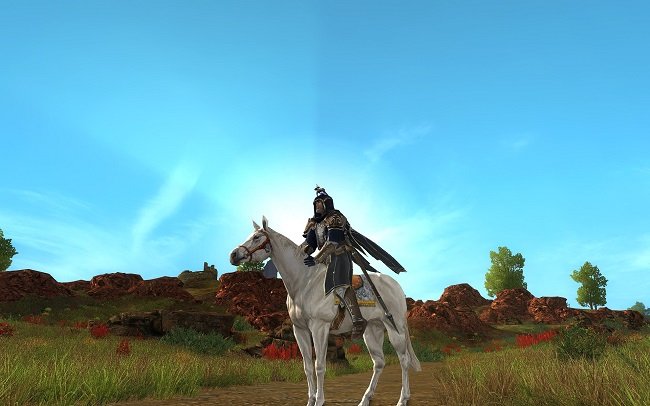
I wrote a while ago that a lot of kinships from the MMORPG, The Lord of the Rings Online, would probably not survive the recent server migration. MMOs are social endeavours by nature, often with strong emotional ties but a lot of kinships (or guilds) have already fallen into decline, simply due to gaming entropy. Hence the migration has seen players leave existing kinships to move to the superior 64-bit servers, resulting in a lot of people who may be potentially looking for a new home. This is exactly what happened to me. I opted to move to Meriadoc server promptly, at the cost of leaving a kinship I have been a member of since 2009. However, the move presented me with an opportunity to remedy this problem myself. I subsequently set up my own kinship and decided to make it available to others.

The dust appears to have settled for the MMORPG The Lord of the Rings Online, after last month’s server transfer debacle. Despite the technical issues arising and subsequent delays to the migration timetable as well as the procurement of in-game housing, LOTRO seems to be enjoying a minor resurgence. Many former players are returning to the game and moving retired alts to new servers, due to the superior performance. The migration issues have also brought a lot of attention to this 18 year old game and it would appear there are many new players trying this Tolkien themed MMO. I was pleasantly surprised to see that a further two 64-bit servers, Grond (EU) and Sting (US), are to be added to the game to meet demand. As I predicted in my previous posts, LOTRO has a habit of bouncing back due to its unique niche in the gaming ecosystem.
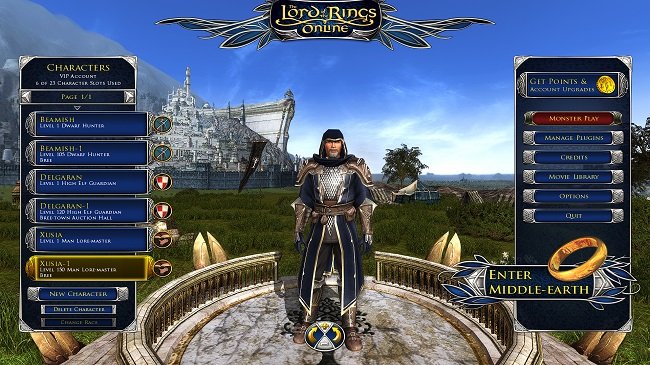
It has not been a good week for the MMORPG, The Lord of the Rings Online and its developer Standing Stone Games. The migration from legacy 32-bit servers to 64-bit servers has not gone smoothly. The transfer queue was overwhelmed by the sheer number of accounts and it has taken far longer than expected to process the backlog of requests. Today has been the fifth day of waiting to see if my 3 main characters from Laurelin server have successfully migrated to their new home on Meriadoc. When I checked this morning, the transfer wizard indicated that my characters were back where they originally came from. I therefore considered repeating the entire process. However, around midday, Community Manager Cordovan indicated that SSG had caught up with transfer requests made around 8:00 AM EST on Sunday 9th March. So I decided to be patient and wait a little longer.

Pros and Cons of Reaction Videos
I made a throwaway quip yesterday on social media about reaction videos on YouTube. I was specifically complaining about those made about music videos and how there is a growing trend among “content creators” to mute the audio and obscure the video of the very material they are reacting to. This is due to concerns over a copyright strike by the rights holders of the original content and the threat of potential demonetisation to those making the reaction video. What you are left with is 5 minutes of a rather tiresome, charisma vacuum watching a blurred video while listening to “elevator music”. What a world we live in. Why even bother posting such content? If there is any value to be found in reaction videos, then surely it lies in the shared experience of both the person in the video reacting and their viewers?
I made a throwaway quip yesterday on social media about reaction videos on YouTube. I was specifically complaining about those made about music videos and how there is a growing trend among “content creators” to mute the audio and obscure the video of the very material they are reacting to. This is due to concerns over a copyright strike by the rights holders of the original content and the threat of potential demonetisation to those making the reaction video. What you are left with is 5 minutes of a rather tiresome, charisma vacuum watching a blurred video while listening to “elevator music”. What a world we live in. Why even bother posting such content? If there is any value to be found in reaction videos, then surely it lies in the shared experience of both the person in the video reacting and their viewers?
I have often wondered about what is the official YouTube policy on reaction videos because it does seem to be a very broad category of video in my estimation. Some research has established that YouTube does explicitly allows reaction videos and even lists “reaction videos where you comment on the original video” as an example of reused material that can still qualify for monetisation. The important word is “comment”. YouTube wants the reaction itself to add substantial original value rather than simply showing someone watching somebody else’s work and interjecting “wow” or “this sucks”. Hence you can have a channel that critiques films, which shows brief scenes and then discusses direction, acting, editing, historical context and so forth. However, it can also result in music reaction videos in which the creator does the bare minimum to stay within the YouTube rules.
Despite the regulations as they currently stand, copyright strikes can still be issued by the rights holders, depending on their own policy of what they will and won’t tolerate. Hence there seems to be a random element of risk to all YouTube channels both big and small that produce this kind of content. This has led to the ludicrous situation I initially described. I watched several videos last night where people were reacting to the recent release of Armee der Tristen by Rammstein, taken from there upcoming Live in Mexico City album and Blu-ray release. Two videos in particular blurred the video and completely replaced the audio. They explicitly stated this is because they didn’t want to incur the risk of a copyright strike which would impact upon their monetisation. Yet they considered the final video in its current state to be suitable to be posted. Surely an act of staggering hubris or utterly tone deaf stupidity.
It is not just copyright holders that have a dubious view of reaction videos. There is a vocal lobby from both YouTube viewers and other creators on the platform that advocate that the majority of these videos are neither transformative, informative or adding any additional value to the source material. I have certainly seen sufficient of these to agree in part. Yet, conversely I have watched many that have been both informative and entertaining. Take for example the classically trained vocal coach who watches a variety of music videos from different genres and gives an honest analysis of the techniques and styles used therein. Then there is the bass guitar teachers who appraise songs recommended to him by his viewers, that are deemed to have interesting bass-lines. I subscribe to numerous channels that offer intelligent and well researched film criticism. Quality ultimately hinges on who is doing the “reacting”.
Overall I do not see the reaction video genre as a total lost cause. Like the explanation video (which often is simply a subjective interpretation rather than a definitive answer) I believe it is a subset of YouTube video that simply needs greater quality control. Unfortunately for quality control to work effectively it requires human intervention. Something that YouTube is using less and less. However, like social media, YouTube allows viewers to curate and control what appears in to your timeline. I would recommend installing the web browser extension, Control Panel for YouTube, as it offers even more personal control. Taking a broader perspective, the democratisation of any internet platform always means there will be poor quality content from the talentless and inherently stupid. It is simply part of the deal. It is incumbent upon us, the viewer, to be a discriminating as possible. As to the aspiration not to be exposed to anything “shit” it is simply an unrealistic goal.
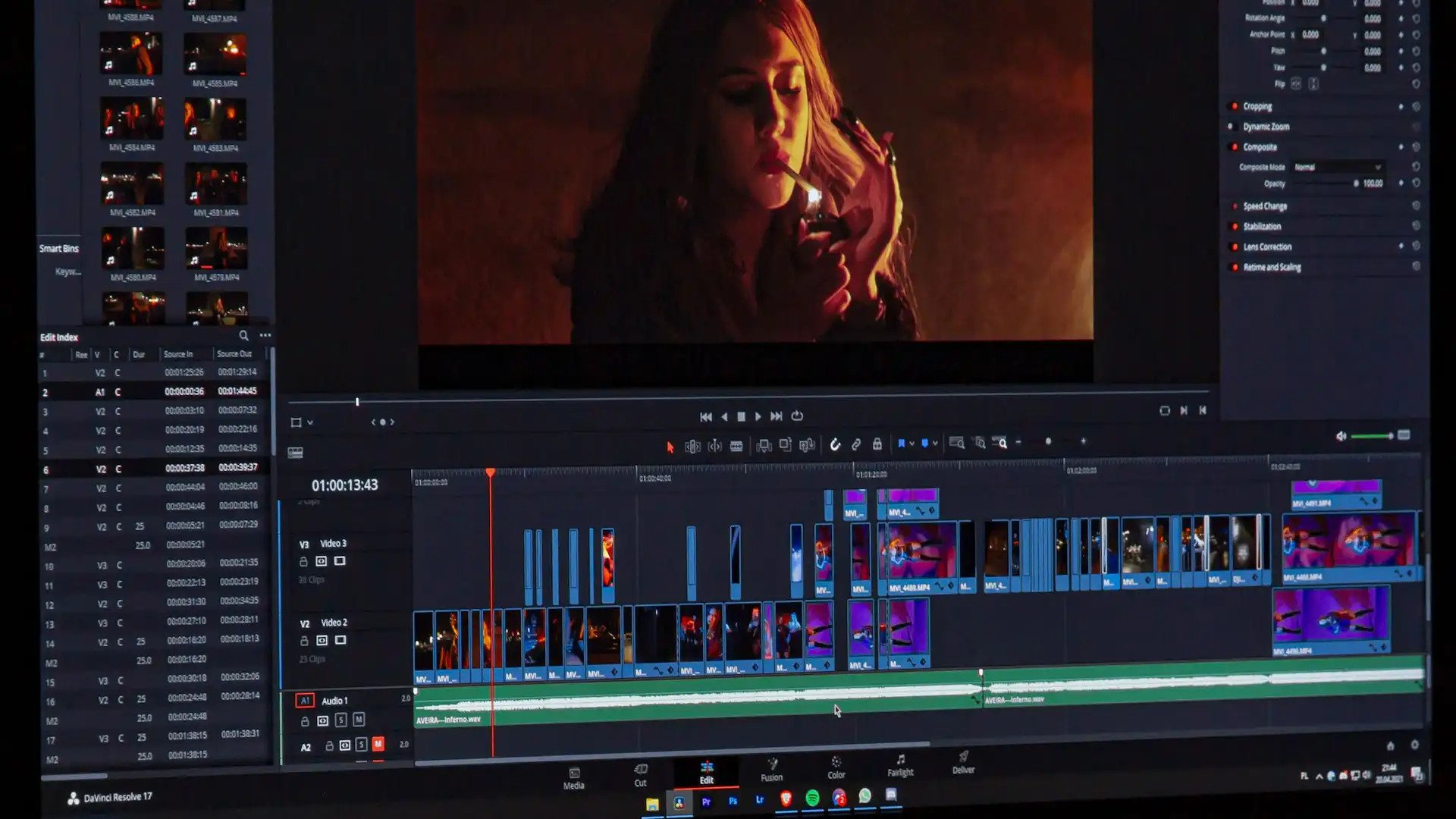
Last year, when I was looking for some suitable video editing software, I found that people would often recommended DaVinci Resolve. It is indeed an outstanding tool but totally beyond my needs. It is also a beast to run and occupies a substantial percentage of real estate on your SSD, so I dismissed this option for practical reasons. Let it suffice to say that finding a suitable product that met my requirements was quite difficult. Video editors often seem to be either quick and easy tools for clipping content on the fly, such as Bandicut (which is great for exactly that purpose) or huge, professional quality behemoths, used by people who work in the appropriate industry. DaVinci Resolve is a textbook example of this. It begs the question what products occupy the middle ground, assuming they exist.
I made a throwaway quip yesterday on social media about reaction videos on YouTube. I was specifically complaining about those made about music videos and how there is a growing trend among “content creators” to mute the audio and obscure the video of the very material they are reacting to. This is due to concerns over a copyright strike by the rights holders of the original content and the threat of potential demonetisation to those making the reaction video. What you are left with is 5 minutes of a rather tiresome, charisma vacuum watching a blurred video while listening to “elevator music”. What a world we live in. Why even bother posting such content? If there is any value to be found in reaction videos, then surely it lies in the shared experience of both the person in the video reacting and their viewers?
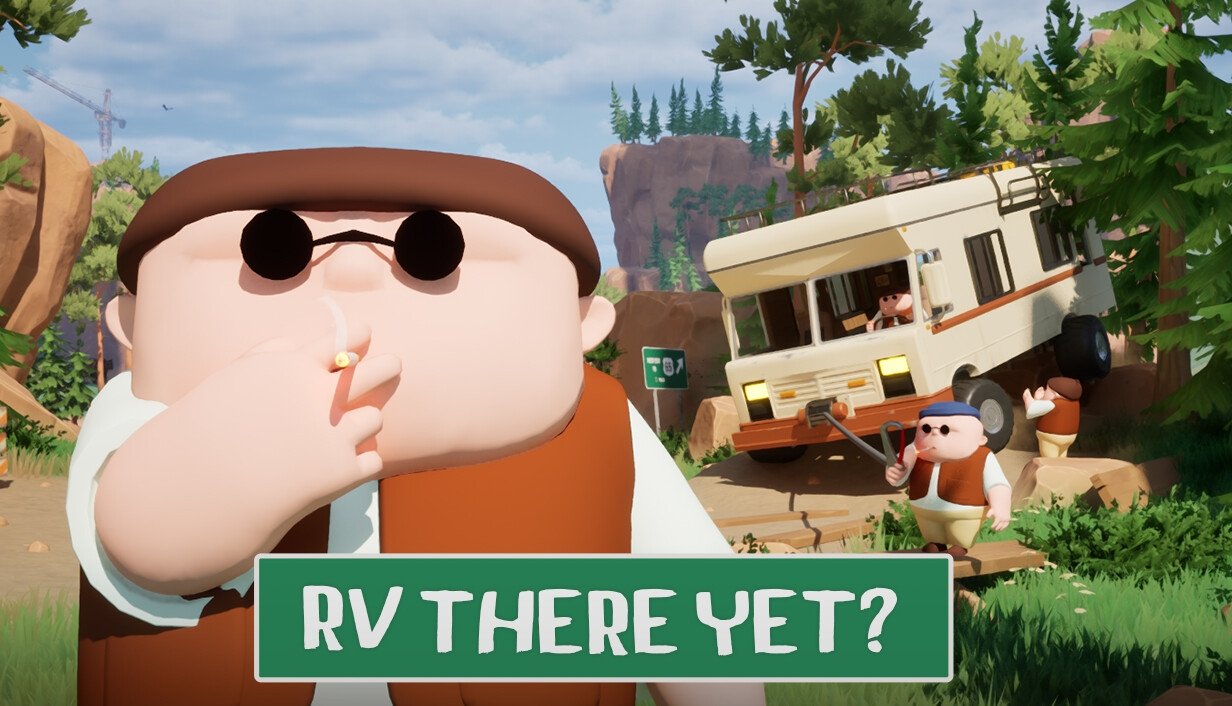
RV There Yet? is possibly the most entertaining game I’ve never played. My vicarious pleasure regarding this title has come exclusively from watching two popular YouTubers, JackFrags and WillFromWork, play through the game over a series of videos. It has been immensely amusing to watch and I have empathised a great deal as the group of four players has struggled with the game’s unpredictable mechanics and their own team’s dynamic. I could go and buy RV There Yet? myself but I doubt if I would ever have a gaming experience anywhere close to what I’ve watched online recently. So in some respects watching these videos has been an interesting alternative as I’ve been entertained, which ultimately is the point of video games. Perhaps there is a deeper philosophical point here that the game developers should reflect upon, as they’ve lost a potential sale. However, that is separate discussion for another day.

I recently watched a video on Patreon by someone who I actively support as a “content creator” and whose work I enjoy. I shall provide no more detail regarding their identity because they may not want their work referenced with regard to what I am going to say. During the course of their video they briefly referenced the work put into promoting a podcast they are currently producing and the relatively low audience that it has garnered so far. The comments were an aside and most certainly not said with any sense of self-pity. They were simply a statement of fact. Furthermore, I suspect they are far from unique and similar sentiments have been expressed in one way or another by anyone who has created something the published it online, only for it to be lost among the greater white noise” of the wider internet.
Have you noticed how politicians, pundits and media commentators will often throw around phrases and buzzwords when discussing the news and other major political talking points? “Cultural Marxism” and “Metropolitan Elite” are two examples that spring to mind. Often it is clear that the person using these phrases has no idea what they mean or what their provenance is. Perhaps you’ve thought that it would be useful to learn more about these terms or the background behind certain institutions or movements. If this is the case then I wholeheartedly recommend the Origin Story podcast. To quote from their website “What are the real stories behind the most misunderstood and abused ideas in politics? From Conspiracy Theory to Woke to Centrism and beyond, Ian Dunt and Dorian Lynskey dig into the astonishing secret histories of concepts you thought you knew”.
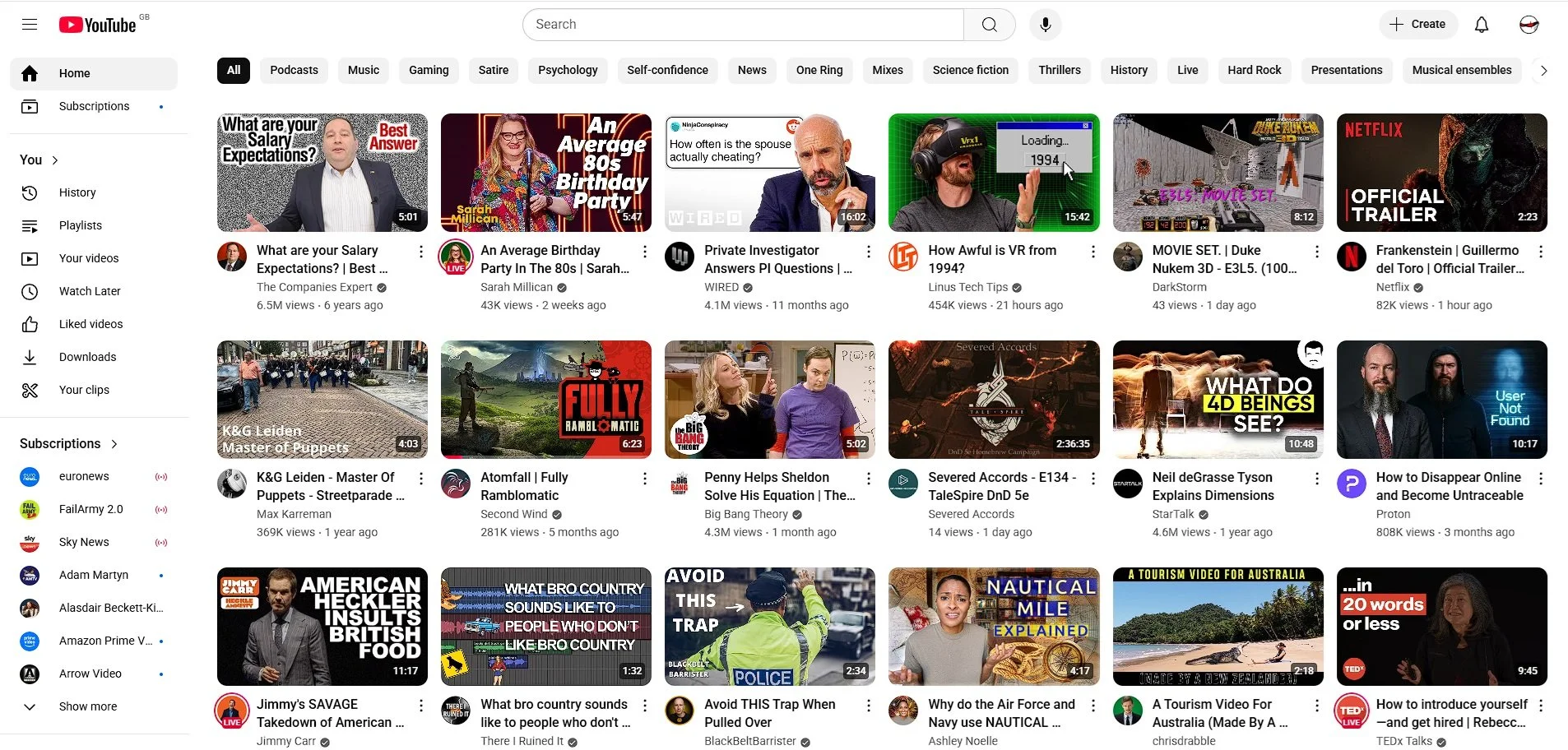
I use a browser extension called Control Panel for YouTube, which allows me to determine who many videos are displayed on my YouTube homepage and to filter the content that is shown. At present it is configured to display rows of six. Something that I have noticed of late, is the amount of videos with hyperbolic titles and thumbnail images created by AI. Both of which are design choices made to increase engagement. Clickbait titles are contrived to meet current SEO optimisation criteria and as such feature more and more in search results. The fact that they frequently have no relation to the subject I am researching, seems to be neither here nor there. The same issues arise with regard to AI generated images, which again frequently have no bearing on the matter. The fact that more and more content creators do this, infers that it works and is now an essential part of the process you must follow to be seen and featured in search results.
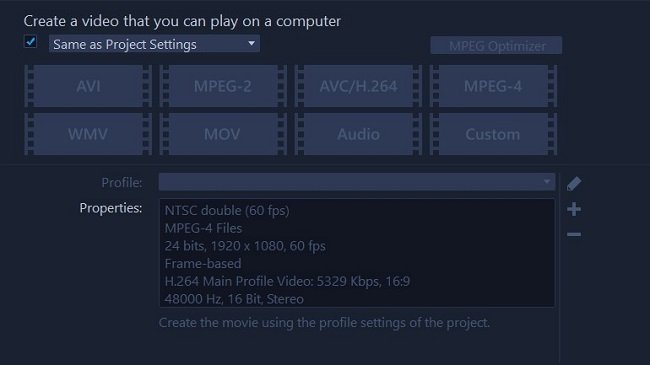
I spent most of this morning and afternoon editing video content I captured while playing Sniper Elite Resistance. I assembled 26 minutes of highlights and then recorded a narration. After adding appropriate branding for Contains Moderate Peril, I then uploaded the finished video to YouTube. Sadly, the picture quality was problematic, often becoming pixelated and blocky when there was rapid movement. The volume of my narration was also too low, so I decided to delete the video from my channel. I was somewhat disappointed by this outcome and initially thought that the day had been a waste of time. However, as I write this post, it becomes very clear that this is just part of the learning curve. I have given some thought to the problem and I believe I have determined why this video was not up to the standard of the previous one. Ultimately, this is an invaluable lesson.
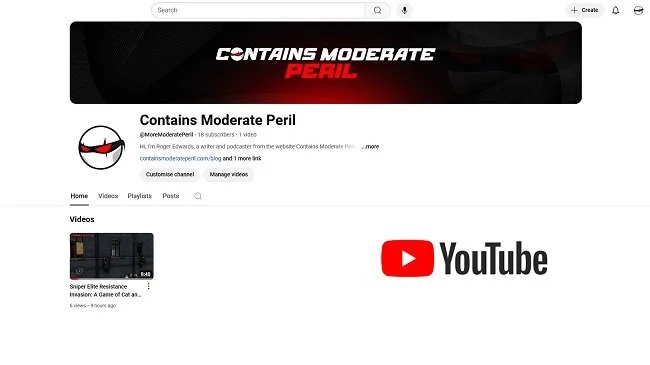
I recently wrote a post about how I wanted to have a go at producing some gaming videos for YouTube. “How hard can it be?” I asked rhetorically, knowing that there would probably be a lot more to the process than meets the eye. Two weeks on and I can report back that there is indeed a learning curve but it is not insurmountable. I managed to figure out how to record a video game, edit it and then add a narration as well as a simple animated logo. Furthermore, I succeeded in doing this without spending a lot of money. I bought some video editing software and a year’s subscription to XSplit Broadcaster but got a really good deal on both. In total I paid £41, which is very reasonable. Hence yesterday, I posted my first video on the officially relaunched Contains Moderate Peril YouTube channel.

The notion of live streaming or recording video game playthroughs is now a clearly established part of popular culture. It is something you can do while sitting on your sofa, watching TV in your lounge. A decade ago, people were far more sceptical about it and would scratch their head and ask “why would you want to watch someone else play a game”? Yet here we are in 2025 and 15% of YouTube content is about video games. Furthermore 20 out of the top 100 content creators are producing video game related material. As of last year, YouTube videos about games were generating 6 billion monthly views, on average. Where there are views, there’s advertising. Hence there’s the potential to make a lot of money, which only encourages further growth.

I am not going to discuss the history of internet advertising, or the moral or ethical concerns that go hand in hand with it. There is a basic argument that people who make content want to get paid and I suspect that most people appreciate this, at least in principle. However, there is a counter argument regarding the way advertising is managed. For example, how many adverts is acceptable during the course of say a live stream of a YouTube video. Also there is a discussion to be had about what kind of adverts are shown and whether they need to be integrated into the content in a more equitable manner. However, that is not what this post is about. I am going to start from the logical and honest position that many of us use ad blockers. We do so because we find advertising crass and invasive. I guess there is a degree of cognitive dissonance regarding their use, versus the ethics of the matter but humans are like that. We are contradictory by nature.

Another week, another internet “drama”. I don’t actively seek this shit out. It just bleeds through into my social media timeline with tedious regularity. This latest debacle is regarding the popular (by which I mean over 15 million subscribers) technology product review YouTube channel, Linus Tech Tips. There have been claims of factual inaccuracies in recent reviews and a focus in getting content produced quickly at the expense of quality. Then a former employee made allegations of a toxic work environment and sexual harassment. As a result there has been a great deal of “online outrage” from those who assumed up until now that Linus Tech Tips was a bastion of integrity. Then there was the formal reply video from Linus Tech Tips about the allegations, which made matters worse by joking about the situation and running ads. As a result the YouTube channel has suspended video production for a week. You can read more details on this situation on the Forbes website.

I was perusing the various YouTube channels that I subscribe to recently, enjoying a broad range of high quality content, when I suddenly realised that the majority of them had some sort of optional monetisation scheme associated with them. By realised I mean that it suddenly clicked with me that so many people are trying to raise funds to pay for their production costs. It’s certainly something I can identify with. I’ve been running a blog since 2007 and even that can be a money pit. There’s domain registrations, hosting costs, design work etc. It was even more expensive when I was producing a podcast. That incurred further hosting expenses and then there was the hardware to buy. So I fully appreciate the situation that many YouTubers find themselves in. They spend their own precious time and money creating quality material that many consume assuming that it is all just “free”.
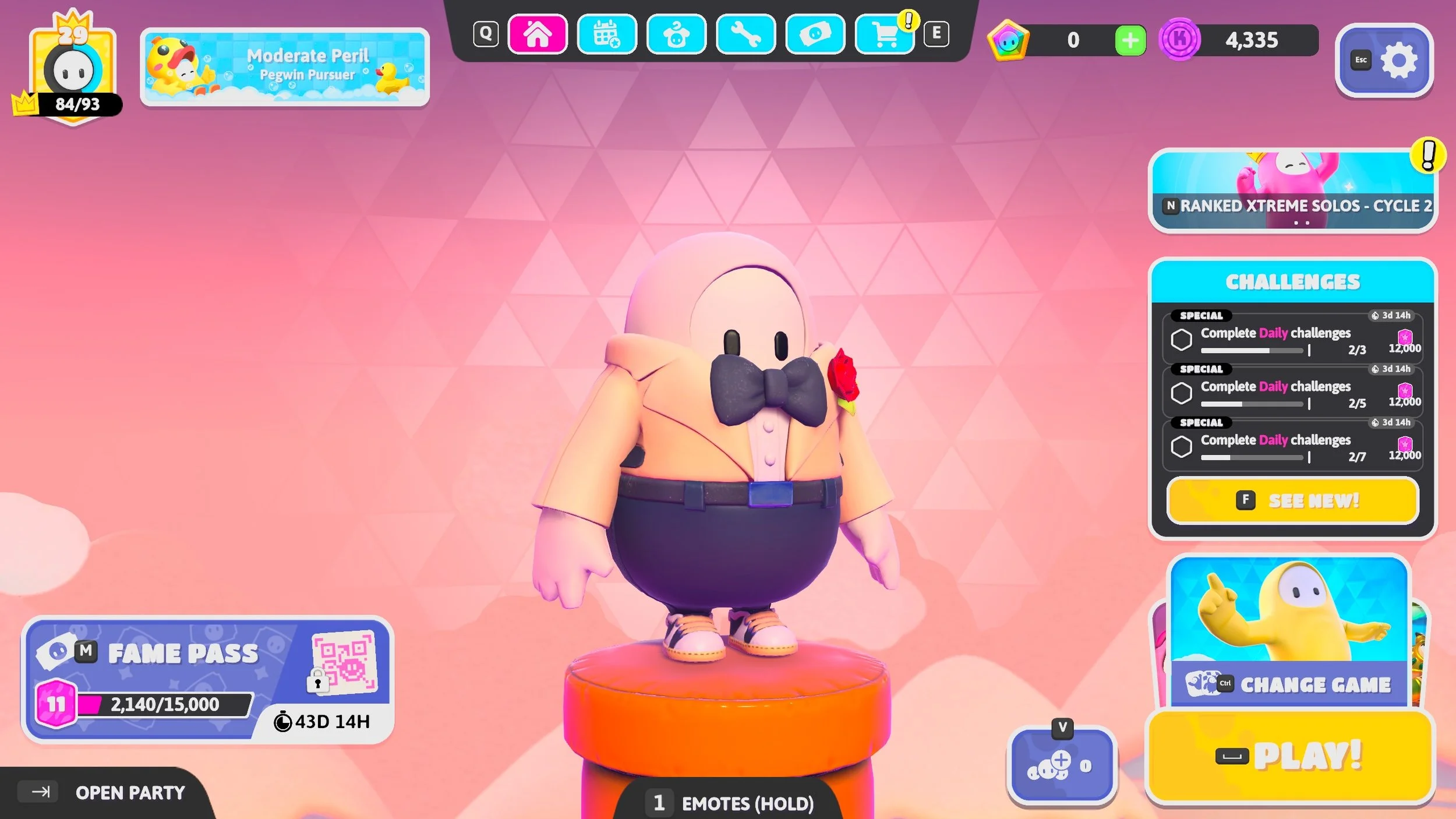
Fall Guys Matchmaking Bug
I’ve been playing Fall Guys since its launch in early 2020, during the start of the pandemic. It is a fun, family friendly multiplayer game which is has proven popular with my grandchildren. Despite the game’s acquisition by Epic, it has maintained a sufficient level of popularity that has seen it ported to all major gaming platforms. Fall Guys is free to play but like most multiplayer games, there is a season pass and an in-game store. However, these monetised aspects are not essential to enjoy the game and the overall marketing of emotes and skins is nowhere near as invasive as it is in Roblox. In fact many of the players I see while in-game have default skins, indicating a regular casual player base. However, although game seems to be maintaining its popularity, it has several bugs that appear to be be persistent. Bugs that the developers claim have been resolved. Some can be addressed by players. Other at present cannot.
I’ve been playing Fall Guys since its launch in early 2020, during the start of the pandemic. It is a fun, family friendly multiplayer game which is has proven popular with my grandchildren. Despite the game’s acquisition by Epic, it has maintained a sufficient level of popularity that has seen it ported to all major gaming platforms. Fall Guys is free to play but like most multiplayer games, there is a season pass and an in-game store. However, these monetised aspects are not essential to enjoy the game and the overall marketing of emotes and skins is nowhere near as invasive as it is in Roblox. In fact many of the players I see while in-game have default skins, indicating a regular casual player base. However, although game seems to be maintaining its popularity, it has several bugs that appear to be be persistent. Bugs that the developers claim have been resolved. Some can be addressed by players. Other at present cannot.
There is currently an ongoing issue with matchmaking in Fall Guys that seems to be specific to the UK and Europe. When you try to join a multiplayer game, matchmaking can take up to 5 minutes or more before the requisite 32 players are found. However, Epic Games do not have any ongoing network issues listed on their server status website. This bug seems to be affecting all platforms and I have experienced it both on PC and Nintendo Switch. Furthermore, it seems to be quite widespread, judging by the various forum and subreddit posts from other Fall Guys players. However, there is a solution to the problem and it is a simple one. Go into the game settings and change to another geographical region, other than Europe. I switched to US (East). Once this was done, matchmaking completed as usual in about 20 seconds or so. I have had no problems of this kind since.
Fall Guys also has an ongoing problem with emotes that occurs on all platforms. Players can assign up to 8 emotes and access them in-game via the D-pad or keyboard. However, these will often not play when selected or there is a considerable time delay before they are. Occasionally an emote will finally trigger 30 second after it has been selected and may occur once a race has begun. This is problematic for a game where avatar customisation is a key aspect of marketing. Emotes are frequently available for sale in the in-game store and are popular among players. Also, the instability of the emote system is often exploited. Emotes have been used in the past as a means to clip through or around obstacles during races. They are also a means of travelling out of bounds which can lead to a multiplayer race crashing for all players. Hence this can be done as an act of trolling.
Players on the Nintendo Switch and Switch 2 are subject to a bug specific to their platform. There is currently a problem with control lag which is happens regardless of which means of input the player uses. This affects controllers as well as keyboard and mouse, causing a delay of up to a second. It may sound negligible but in a game such a Fall Guys that is the difference between a well timed jump and losing a race. According to Reddit, players have experimented with different hardware in an attempt to bypass this bug but it seems to be an inherent software issues in this particular port of the game. Furthermore, this bug only appeared in the last twelve months, pointing to the pre Christmas 2025 update as the point of origin. Hence players on this platform will simply have to wait until developer’s Mediatonic patch the problem, as and when.
I started playing MMOs in late 2008 by which time the genre was clearly established and dominated by one particular title, World of Warcraft. I chose to play The Lord of the Rings Online, mainly because of my love for the intellectual property the game is based upon. I still play LOTRO today. However, I was very aware of popularity and significance of WoW at the time. It pretty much set the rules for how you design a MMO and it did much to move on from the previous gameplay parameters set by such titles as Ultima Online and EverQuest. It was also the MMO that every other developer was trying to beat. Another compelling factor regarding WoW is that everyone I knew at the time was either actively playing it or had done so at some point. It was for many gamers, the go-to title for socialising. Finally around early 2010, I tried a free trail of WoW to “see what all the fuss was about”. Simply put, I felt that it wasn’t for me.

Over the course of the last 16 years, the MMORPG Star Trek Online has changed greatly. What started as a disjointed, rushed game with unfinished systems and a lack of overall cohesion has now evolved into streamlined MMO with clearly defined systems and very strong narrative arcs. Let it suffice to say that STO makes very good use of its license and the intellectual property it is built upon. Although new content has been continuously added to STO over time and refinements are regularly rolled out, the developer’s have also removed content from the game in the past, that they feel is substandard or too dated in it presentation. Hence in October 2018 Cryptic took out the following eight missions from the game, with the proviso that they would be updated and replaced at a latter date. Until fairly recently, STO players had given up hope on this ever happening and the episodes being reinstated. Eight years is a long time.
One of the things that I enjoy when playing a new video game is character customisation or character creation. I will spend hours trawling through settings, changing the most minute and consequential aspects of my avatars appearance. I am certain that there is a psychological aspect to this particular game mechanic and that it says something about you as a person. Are your creations shaped just by a need to look good in-game or is there more to it? Are they external manifestations of your sexual preferences or thoughts on body image. Do you treat them as characters from a book that exists in your mind. Do you aspire to recreate the likeness of people you know or admire? Do you strive to make your avatar look like you? Whatever the reasons, it would seem that character creation is something that a lot of gamers enjoy. Hence I am not alone in my borderline obsession. What you look like in-game is equally as important as your character’s name.

I was playing Battlefield 6 recently and was experimenting with the mortar. If you stick with it and take some time to become familiar with its foibles, it can be an effective weapon. It can suppress the enemy, destroy equipment and provide useful cover for your own team. I remember thinking “I wonder if artillery could sustain a game on its own”. Artillery is an interesting feature in Hell Let Loose, although it is a little more complex in its game mechanics. I believe artillery is also available in Wardogs. I therefore spent a while looking online to see if there was a dedicated artillery simulator available or at least a game where it was a key feature. There nearest thing I found was Iron Nest, a dieselpunk heavy artillery game which looks interesting but isn’t quite what I seek. So I parked this idea and moved. Tonight, while perusing YouTube, I stumble across a teaser trailer for a game called Flak Simulator, currently under development by Horseman Interactive. It appears to be exactly what I am looking for.
I recently tried to use DLSS 5 Manager with the MMORPG, The Lord of the Rings Online. Unfortunately, things didn’t work out. Today I undertook a similar experiment with AMD Neural Rendering, which is a broadly comparable product. Both utilities use 3D-Guided Neural Rendering, an AI technology that alters how lighting, reflections, and textures look in a game. Instead of just upscaling the image like older versions, DLSS 5 uses an AI network to instantly "re-render" lighting and material responses over the game's layout, achieving photorealistic details that would normally negatively impact a graphics card's performance. Or to put it in less fancy terms, the game graphics are enhanced and modified, although it is highly subjective as to whether the end results are an improvement. However, as a game such as LOTRO is unlikely to ever receive a major graphical overhaul, tools such as these are the nearest players will get to revised graphics.
The core game code and engine for the MMORPG, The Lord of the Rings Online, is about 24 years old. LOTRO began originally as Middle-earth Online, developed by Sierra On-Line in 1998. Turbine took over full development of the project in 2003/2004 when their parent company, Vivendi Universal Games, acquired Sierra. The content that had already been developed by Sierra was abandoned and Turbine created a new game using structural elements such as the UI and game engine from their previous release Asheron’s Call 2 from 2002. The Lord of the Rings Online: Shadows of Angmar was officially released in April 2007. Hence, the active public release code is 19 years old. Despite continuous expansion and updates, along with a recent migration to 64-bit architecture, the foundations of LOTRO retains a nearly twenty year old legacy framework. This frequently contributes to modern technical hurdles and engine constraints.
A few years ago, there was a fan created project to provide voice narration of NPC dialogue in the MMORPG, The Lord of the Rings Online. This mainly involved capturing the text in the quest dialogue windows and then sending it to OCR software, before using a text-to-speech program to read it. LOTROVoice as it was known, broadly worked but the creator stopped developing it as it proved troublesome to maintain. However, I recently discovered Khazad Voice TTS which is a separate project that does pretty much the same. I went so far as to install this “immersive AI narrator for LOTRO” after seeing a YouTube video of it being used successfully. Sadly I ran into issues configuring Khazad Voice TTS, because I have two monitors and LOTRO runs on the secondary (by my choice) and not the primary. I couldn’t “lasso” the dialogue windows in LOTRO during the calibration set up, which effectively prevented me from completing the process.
Throughout yesterday and early today, there was an issue logging in to the MMORPG, The Lord of the Rings Online. Upon starting the game launcher, it would attempt to connect to the patch server to download the latest game update. This process would start but then subsequently stall at 33%. The launcher would then attempt to reconnect to the patch server every 60 seconds but could not make any further progress. Some players found that if they left it long enough, it would eventually complete the download and the launcher then progress to the next screen where they could input their username and password. However, for the majority of LOTRO players the problem would simply persists and the launcher would be stuck in a loop. Some players attempted to reinstall the game or use the repair data facility in the launcher but neither of these proved to be successful workarounds. The patch sever needed to be bypassed to resolve the issue.
I’ve been playing Fall Guys since its launch in early 2020, during the start of the pandemic. It is a fun, family friendly multiplayer game which is has proven popular with my grandchildren. Despite the game’s acquisition by Epic, it has maintained a sufficient level of popularity that has seen it ported to all major gaming platforms. Fall Guys is free to play but like most multiplayer games, there is a season pass and an in-game store. However, these monetised aspects are not essential to enjoy the game and the overall marketing of emotes and skins is nowhere near as invasive as it is in Roblox. In fact many of the players I see while in-game have default skins, indicating a regular casual player base. However, although game seems to be maintaining its popularity, it has several bugs that appear to be be persistent. Bugs that the developers claim have been resolved. Some can be addressed by players. Other at present cannot.

I find the concept of in-game radio stations fascinating. They’re an enjoyable aspect of open world video games and I have discovered several artists this way. They’re certainly a big deal as far as Rockstar Games are concerned, because the music selected for GTA VI is another important facet of the overall marketing campaign. So far, between two trailers and the sprawling extended look on Netflix, it has been determined that Tom Petty, the Pointer Sisters, Sexyy Red, Depeche Mode, Phil Collins, Birdman, Lil Wayne and the Bellamy Brothers are all part of the game soundtrack. That’s a very eclectic selection so far. Furthermore, there will be a 34 track album released on physical media (vinyl and CD) in conjunction with Atlantic Records.
Two years ago I wrote a post about fine tuning your graphics in the MMORPG The Lord of the Rings Online. Apart from installing ReShade and using AMD Adrenalin, the options were somewhat limited, due to the game’s age and multiplayer status. Since then, I’ve been playing LOTRO with the game settings maxed out, a custom ReShade profile to make the colour palette more vivid and Radeon Image Sharpening enabled within the AMD software. The game looks clear, crisp and the draw distance is pretty good for an ageing game but I still wish the graphics could be tweaked further. Hence, I’ve been trawling the internet in a vain attempt to see if I can find any third party utilities that could be used to enhance LOTRO further. During the course of my search I stumbled across DLSS 5 Manager. This is an open-source, intelligent utility and one-click mod installer designed to inject and manage Nvidia's DLSS 5 neural rendering features, ReShade, and OptiScaler into PC games.
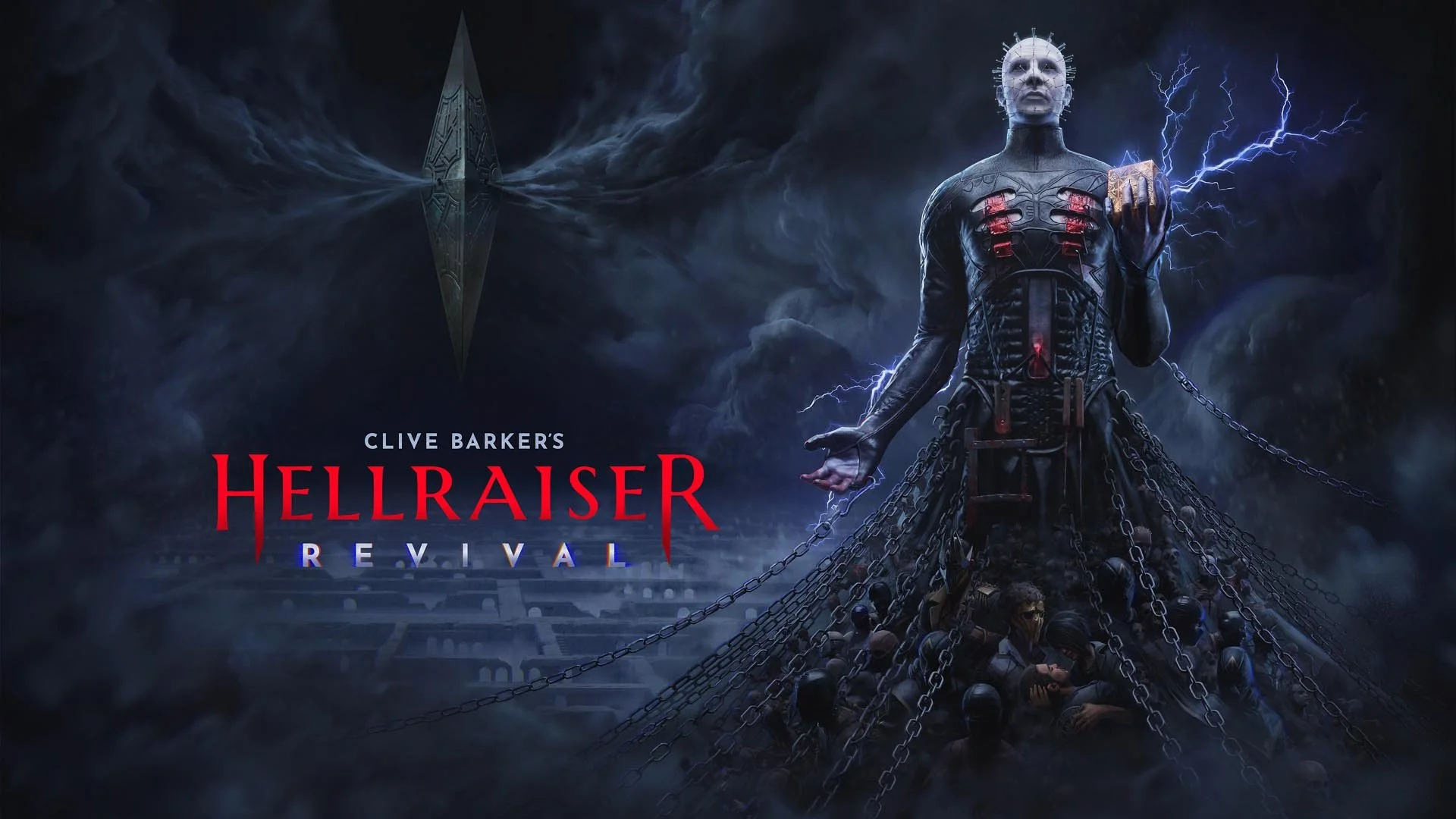
Hellraiser (1987) was one of he most innovative and intelligent horror films of the eighties, with its cerebral and sophisticated exploration of pleasure, pain and the supernatural. Sadly what was a great concept for a single film was turned into yet another horror franchise. The resulting series of increasingly inferior sequels ultimately diminished the central idea. However, in recent years several horror “brands” have found a new lease of life via the medium of video games, so the announcement of Hellraiser: Revival last summer piqued my interest. The fact that author Clive Barker was directly involved certainly raised my expectations. However, even though video games have a history of depicting sex and violence, would the medium be able to fully embrace the true nature of Barker’s original novella and original film. Having played through the newly released demo for Hellraiser: Revival, I believe the answer is a yes.
Are video games becoming easier? It’s a perennial subject that is frequently discussed by those who play them. Often the question of whether they have actually become easier is not the focus of the debate, as it seems to be broadly recognised that it is the case. Instead, discussion of this matter tend to drift into the rectitude of this change. Debate’s of this nature are usually awash with subjective opinions and personal preferences which are then put forward as objective facts. It’s not just a question of video games becoming easier, it’s the fact that making them easier is “wrong” and those who want them as such are “not proper gamers” etc. The hours that have been lost to this pointless, tedious debate are uncountable. However, I digress. Let us return to the matter of video games becoming easier, because although fans discuss this a lot and have plenty to say, you don’t often hear from the developers on this subject.
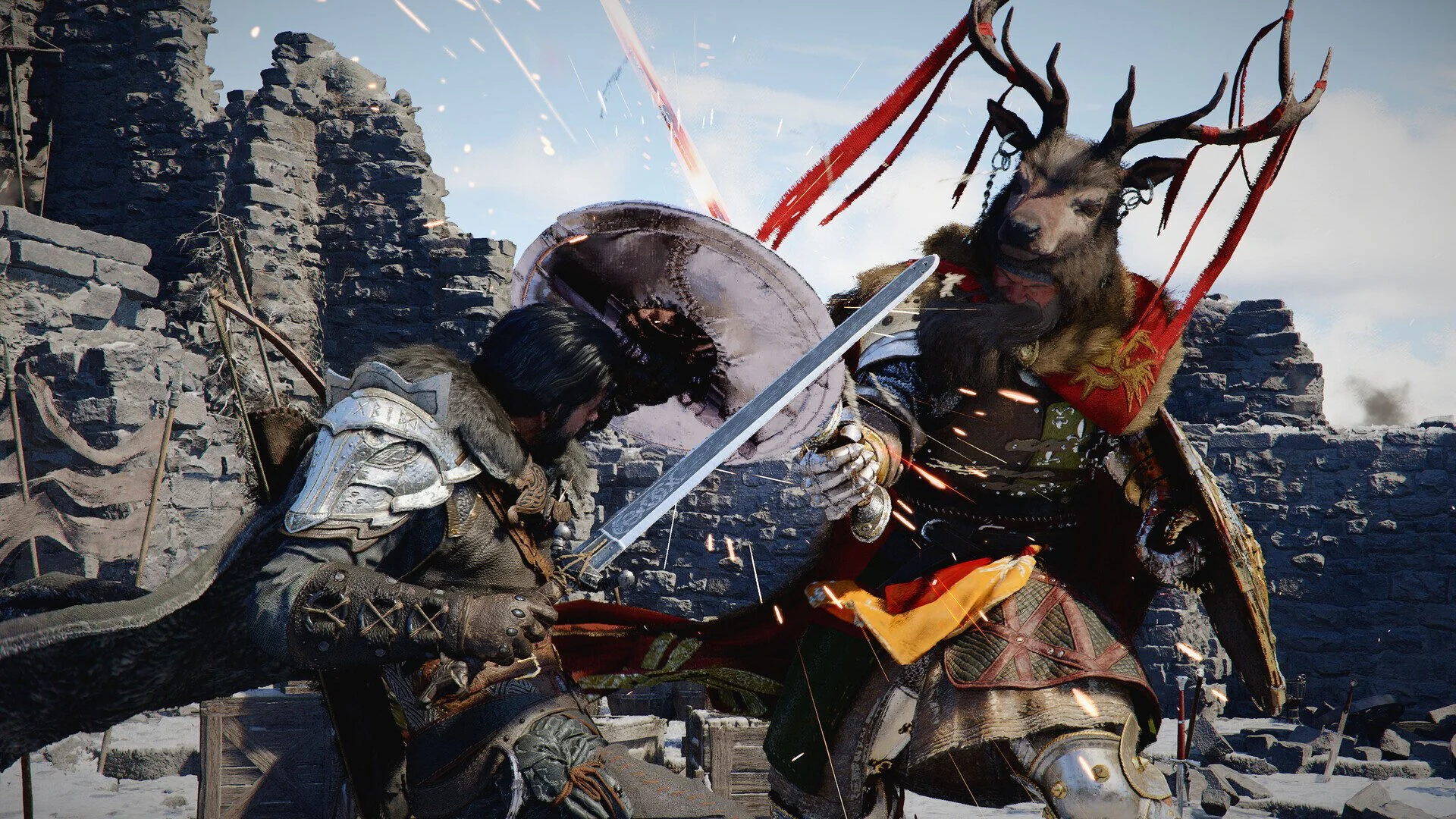
Some video games lend themselves to being set aside and resumed at a later date with zero consequences. These are often casual games with no major goals other than having fun while playing them. Fall Guys is a great example of this. You have a cartoony avatar that participates in zany group races, filled with obstacles. You run, jump, climb but the controls are far from difficult. You may well become skilled but such things are mitigated by the other players as they stumble around. You’re not at the mercy of apex players or “try hards”. It is not a game about winning and mastering techniques. The fun comes from playing it and the unique experience you have each time. I’ve been playing this game, on and off, since it’s launch in 2020 and in that time I have only ever won once (winning requires you to win a series of 4 to six individual races). However, whenever I pick up my controller and play Fall Guys, I have fun and the game lifts my spirits.
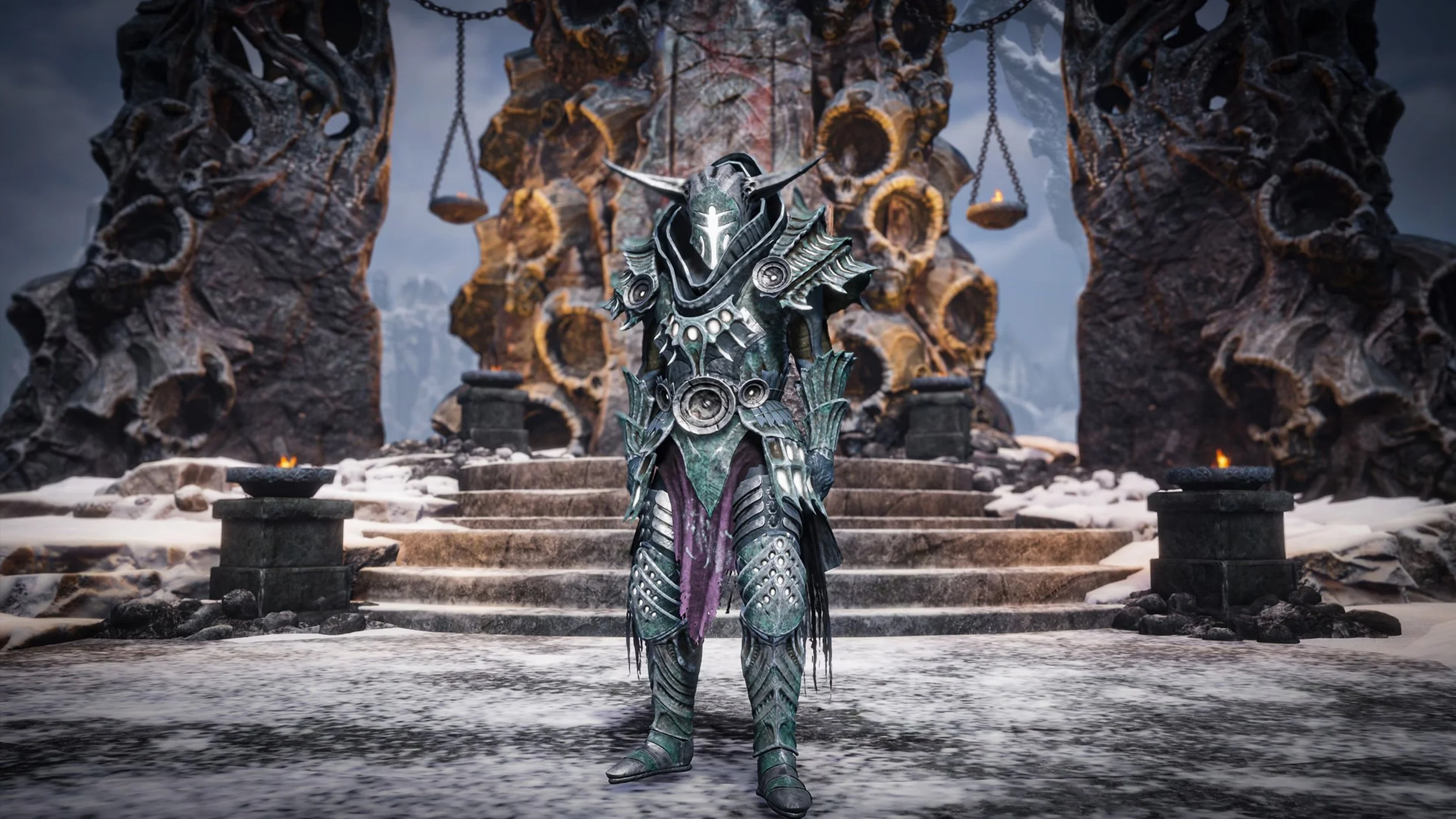
I recently completed the main story in Tainted Grail: The Fall of Avalon. In total I spent about sixty hours playing the game. I began at the start of the year, then took a break for a while but returned to it recently because I wanted to see if I could unlock a specific ending. I did manage to do this. Like so many other RPGs, Tainted Grail: the Fall of Avalon has a central storyline, along with a wealth of side quests, based around factions in specific zones. I think I possibly completed about a two thirds of these. However, once I finished the main story, my interest in the game began to wane. I finally left my character in the last major quest hub in case I wish to return at a future date. I then logged out of the game and uninstalled it from my PC to free up space for whatever I was to play next. In this case its The Sinking City 2. None of this is a negative reflection on Tainted Grail: the Fall of Avalon. I enjoyed the time I spent playing this quirky RPG. I simply had my fill and left to play something else.

On Tuesday 11th April, Aspyr Media rather surprisingly re-released The Lord of the Rings: War in the North, a co-op action-RPG from 2011. This game was delisted in late 2019, possibly due to changing rights ownership or a license expiring. Hence, I was somewhat discombobulated by the return of this title to all major gaming platforms. Mind you, the Embracer Group (through its subsidiary Middle-earth Enterprises) still controls the worldwide commercial and video game licensing rights for The Lord of the Rings and The Hobbit. Furthermore they have explicitly stated that they have plans for more games. It would appear this also means re-releasing and updating old favourites. It is also worth noting that they own Aspyr Media, which is also a bit of a giveaway. Let it suffice to say that this re-release and sparked enthusiastic online debate as to whether any other he Lord of the Rings themed games from the same era will receive a similar makeover. Judging by the internet chatter, there’s potentially a market for them.
The next expansion for the MMORG, The Lord of the Rings Online, was announced on the 1st August, via the gaming website MMORPG.The Wolves of Mordor, which will launch later in the year, appears ambitious in scope as it will include two new game systems as well as the obligatory story update. This expansion takes place in Draugardh located in the North East of Mordor, beyond the Plateau of Gorgoroth. It includes the new zones of Heledhris, Parth Rhavas and Nan Ogol. These vary environmentally ranging from the arid, volcanic and semi-tropical. Players will encounter the Daugrim in these regions, Werewolves but not in the modern sense. This is not the lycanthropy of Eastern European legends but in the established Tolkien idiom of fell spirits inhabiting the bodies of Wolves. The region also sees the return of the Woses and players can expect to encounter Elves and scouts from Gondor. As ever with LOTRO expansions, there will be new instances as well as a raid.
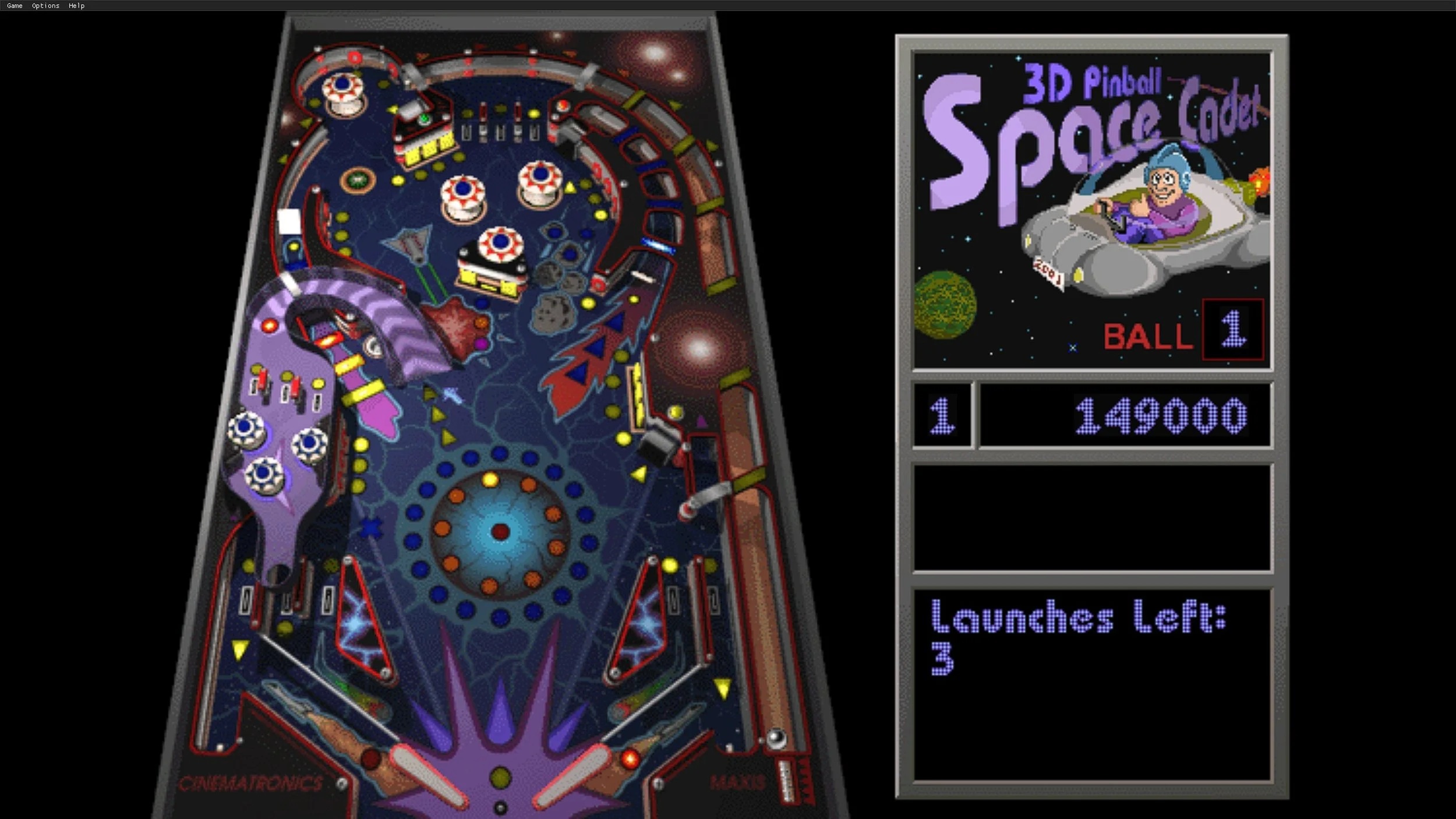
This is a post about the power of nostalgia and how sometimes, interacting with something from your past, be it physically or mentally, can produce a very strong and tangible emotional reaction. In some instances, this can be the result of something that you have specifically set out to do. On other occasions you can wander into a sense of nostalgia purely by chance. Today I experienced a very strong sense of nostalgia while watching a YouTube video and then again when I sought to replicate what I had seen. The video showed someone installing Windows 95 on to an old 486 PC from that era. The Window’s start up sound really touched a nerve (but in a good way) and then when the guy in the video launched Space Cadet 3D Pinball, a game that shipped with the operating system, I felt a strong compulsion to track down a copy and install the game myself, thus revisiting something that was an integral part of my life in 1995.
RV There Yet? is possibly the most entertaining game I’ve never played. My vicarious pleasure regarding this title has come exclusively from watching two popular YouTubers, JackFrags and WillFromWork, play through the game over a series of videos. It has been immensely amusing to watch and I have empathised a great deal as the group of four players has struggled with the game’s unpredictable mechanics and their own team’s dynamic. I could go and buy RV There Yet? myself but I doubt if I would ever have a gaming experience anywhere close to what I’ve watched online recently. So in some respects watching these videos has been an interesting alternative as I’ve been entertained, which ultimately is the point of video games. Perhaps there is a deeper philosophical point here that the game developers should reflect upon, as they’ve lost a potential sale. However, that is separate discussion for another day.
I don’t keep up with gaming news as much as I use to but several noteworthy announcement have come to my attention of late. Firstly, there’s an expansion, Songs of the Past, coming for the Witcher III: Wild Hunt in 2027. No doubt this is to pave the way for the Witcher IV. Next, I also found out about Hand of Fate: Horde. I liked this franchise and was saddened to learn that the original studio, Defiant Development, closed. Hence is was a pleasant surprise to see this new game being developed by members of the original studio. The third announcement was regarding Guild Wars 3. A new MMORPG in active development by a major studio is no small feat and is certainly good news for fans of this franchise and the genre per se. However, once you look beyond this news this announcement raises several questions and has certainly given me pause for thought. Let us take a few moments to consider them.
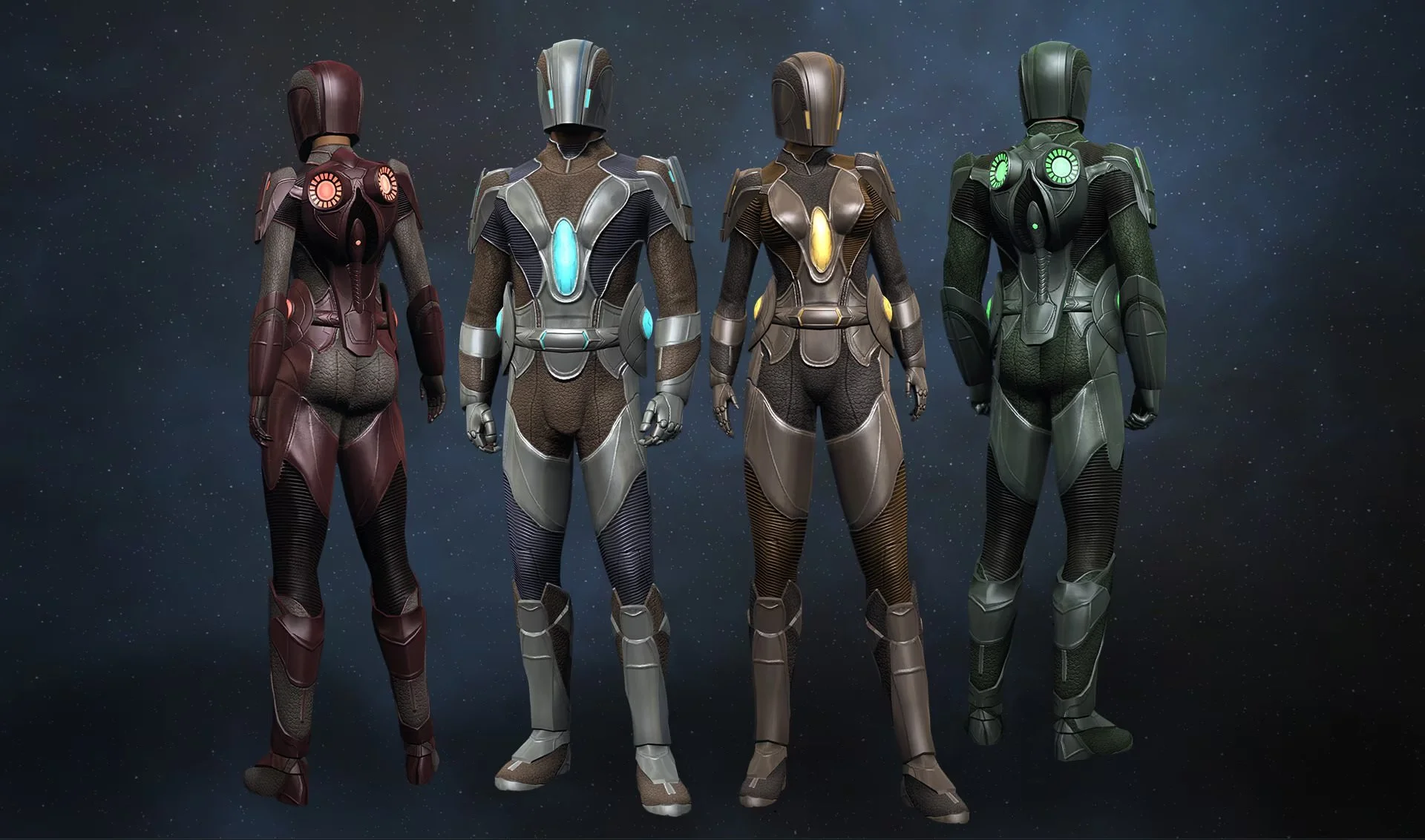
Star Trek Online has many in-game systems that are common to the MMORPG genre. The reputation system is one such example. In STO there are 13 reputation factions. Once a player has reached level 50 they may start progressing through the 6 reputation tiers of each one. Players gain progression through daily projects (20 hours in duration). Hourly projects are also available though they yield less reputation advancement and are limited to three times a day. Hence 20 hour projects are consider by default the most efficient way to gain rep. Projects require 30 Faction Specific Marks (earned via various activities in-game), 15,000 Energy Credits (standard in-game currency) and 2000 Expertise points. The most efficient way to tackle the reputation grind is to build up the necessary resources in advance and then at a designated time each day, start all 13 respective projects. Upon completion projects yield a player bound lockbox containing a random space or ground weapon, a console or Elite Marks which can be used to acquire faction gear.
I was recently perusing my archive of old blog posts, when it struck me how much I’ve written about the MMORPG genre over the years. Naturally, there was far more material from between 2008 and 2012 as that was period when I immersed myself in the genre and was very enthusiastic about it. I was at a point in my life when I had the time to dedicate to such games and I was happy to participate in the social aspect of they offered. I would regularly play through group content and spend time socialising online with fellow guild members. My experience remains a textbook example of how online games can be more than the sum of their parts and that where you are at in your life has a major impact upon your overall enjoyment. As I read though various old posts it became clear that my experiences where specific to this particular part of my life and that they cannot be repeated. My relationship with the genre is very different now and that’s fine.
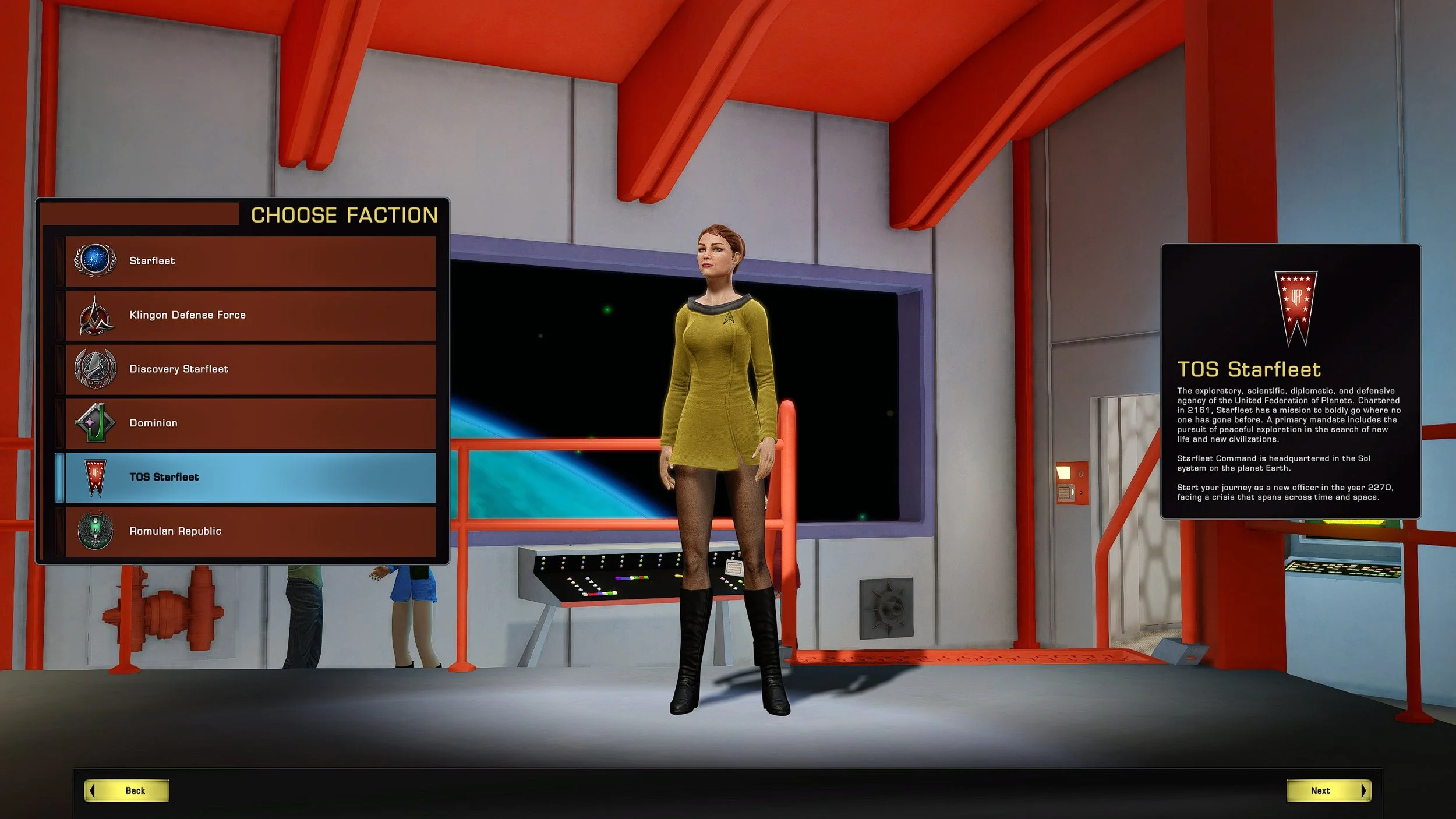
Creating alts is an integral aspect of the MMORPG genre. Many players will create a character of a specific class or faction, play it for a while, lose interest in it or they may decide that it is just not for them. Fortunately it is no effort at all to simply re-roll a new alt and set off once again. Furthermore, lots of players never reach level cap of the MMORPG that there playing. When the going get’s tough, so to speak, you can either soldier on for another 50 levels or simply create a new alt and return to the comfort of tried and tested content. Alts also give you the chance to secure an accolade or achievement that you previously missed. They are also of great benefit to the genres social aspects. Creating a new alt so you can play along with a friend who is just starting is great fun. Developer’s love them too as it means you’re still playing the game.
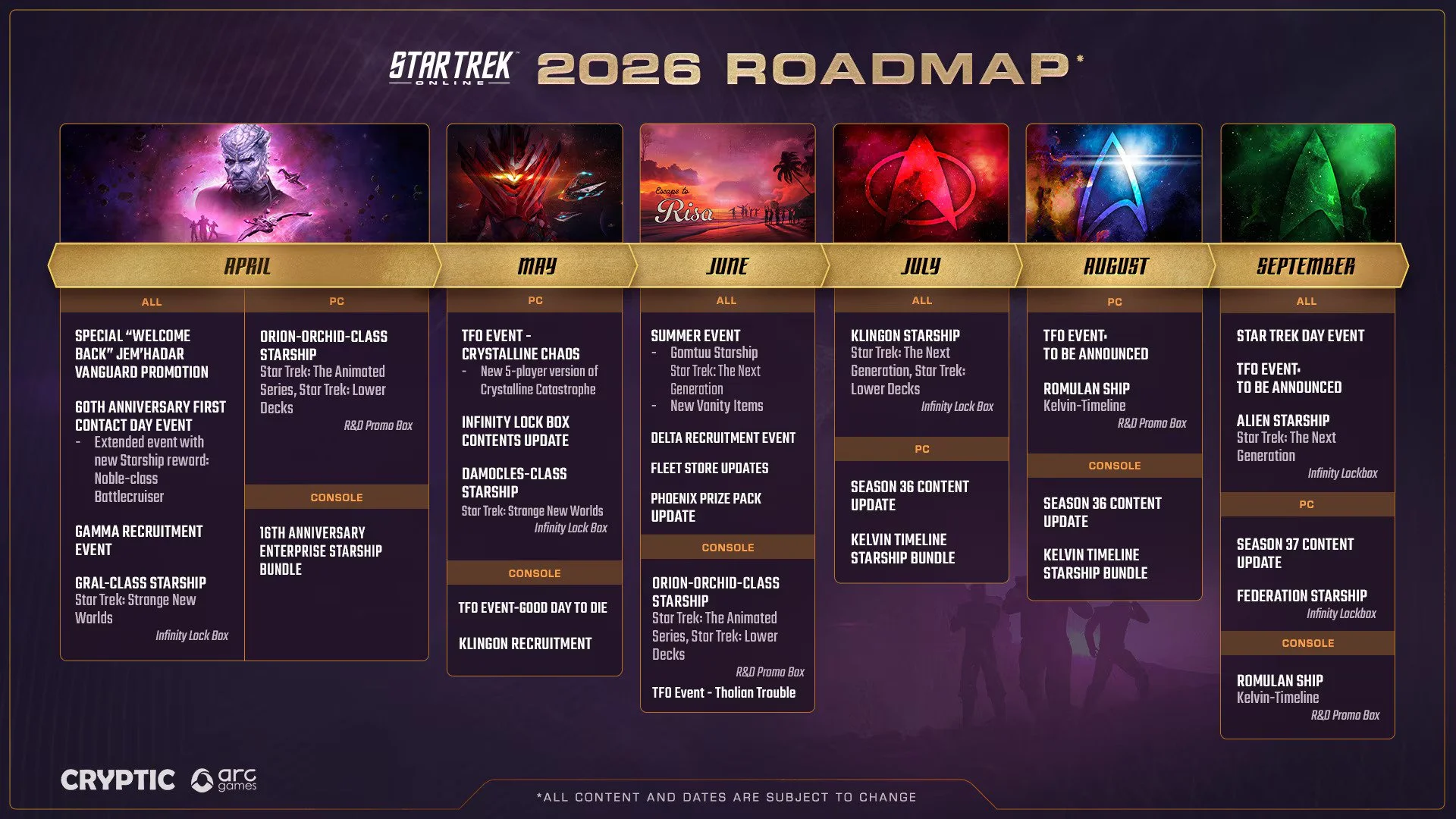
I recently took a break from Crimson Desert choosing instead to to play something familiar and easy going. As I’ve been logging into Star Trek Online daily to participate in the anniversary event, I decided to look through my various alts and see how far they had progressed through the game and what resources they had. At present I have twelve alts. My primary Captain was created in 2015 during the original Delta Recruit Event. I had previously played STO intermittently since its release in January 2010 but I never kept any of those characters. Hence this decade old Tactical Federation Captain has been my main focus when playing. The other eleven alts are the result of other recruitment events or whenever I wanted to try something different, such as playing a specific class or faction. I obviously played a lot of STO during the lockdown as several alts date from that period. Several had maximum reputation across all factions.
The action, open world RPG Crimson Desert has been patched five times since it launched on March 19th and there have also been multiple hotfixes. At first glance this isn’t anything unusual. New games have bugs and issues arise once a game is released and played across a much wider variety of hardware than in QA testing. However, if you read the patch notes that accompany these sizeable downloads it quickly becomes apparent that developer’s Pearl Abyss are not just addressing bugs and software glitches. They are actively engaging with their player base and responding to suggestions and requests from that community. Although this is not a unique approach, what is surprising is the speed and quantity in which these player driven changes are happening. There seems to be an active ongoing process to refine the game and eliminate some of its “rough edges” and the players are contributing to this process with their feedback.
According to my Steam statistics, I last played Starfield on 19th December 2023. I bought the game upon its release in September of that year and played in total for 136 hours. Starfield held my interest for three and a half month and I wrote seven blog posts about various aspects of the game. Although there were some engaging aspects to Starfield, I did feel that that the game was somewhat lacking in systems and content, at that point in its lifecycle. I also think that the marketing and player expectations associated with Starfield were overblown and unrealistic. The shadow of Skyrim looms large over all new Bethesda releases and they don’t seem able to quite recapture that magic. Hence, I inevitably drifted away from Starfield and to another game and was effectively “done” with it. I have not played the game since which seems to validate the theory that game are becoming increasingly more ephemeral.
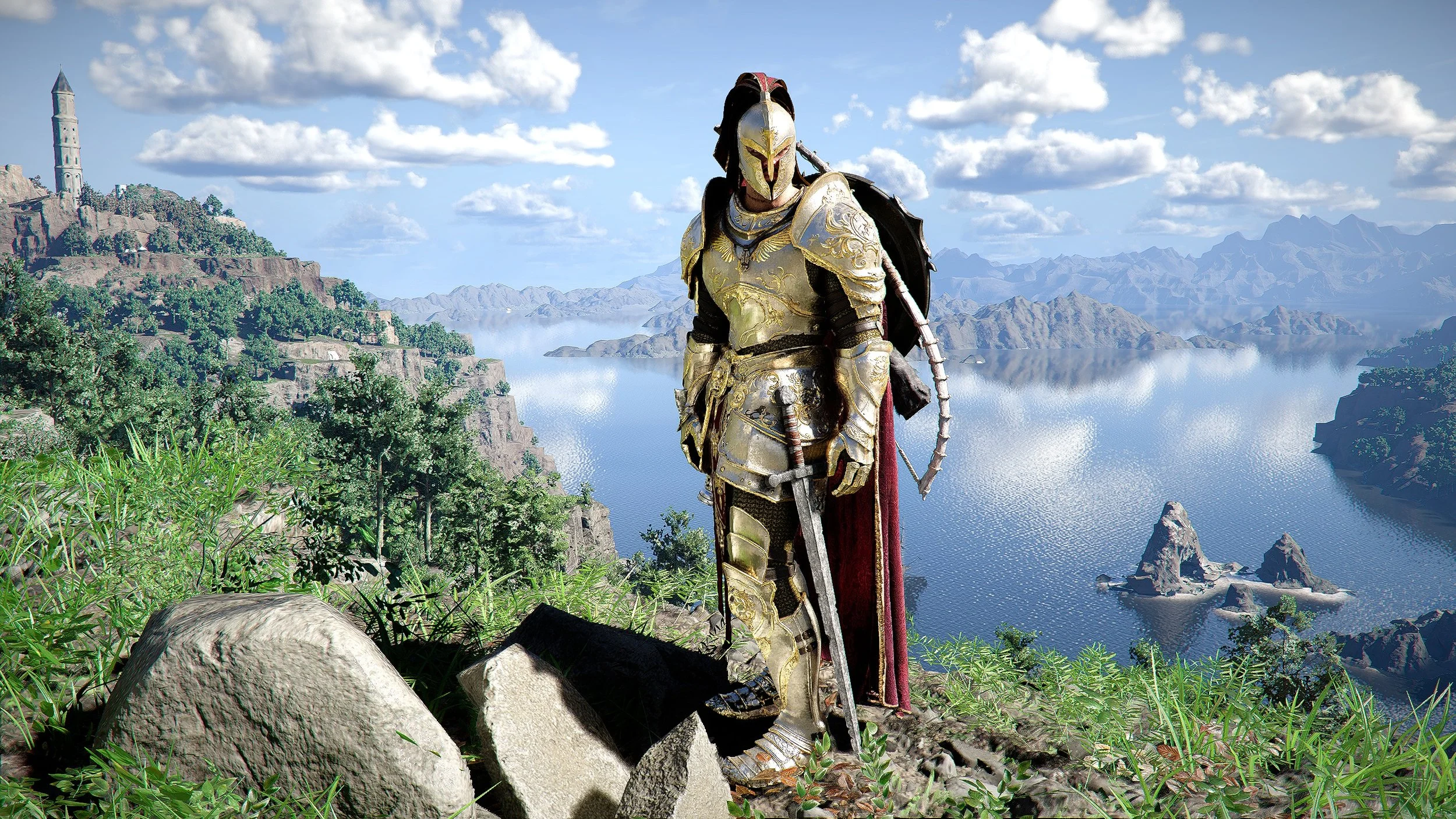
13 days after its release, market analysts estimate that Crimson Desert has already earned $200 million across the four main platforms (PC, PlayStation 5, and Xbox Series X and S). The game is certainly proving popular among gamers with the internet awash with live streams and “let’s play” videos. However, reviews are mixed both among gaming journalists and YouTube influencers. Common complaints about the game include that it is slow to start, the controls are poorly laid out on all platforms and that developer’s Pearl Abyss have done a poor job of explaining most aspects of the game to new players. Although such criticisms are true to a degree, I think these complaints highlight how many gamers are conditioned to expect new titles to follow a specific pattern with regard to pacing, narrative exposition and learning in-game systems. A pattern that Pearl Abyss has chosen to ignore, instead favouring an old school approach.
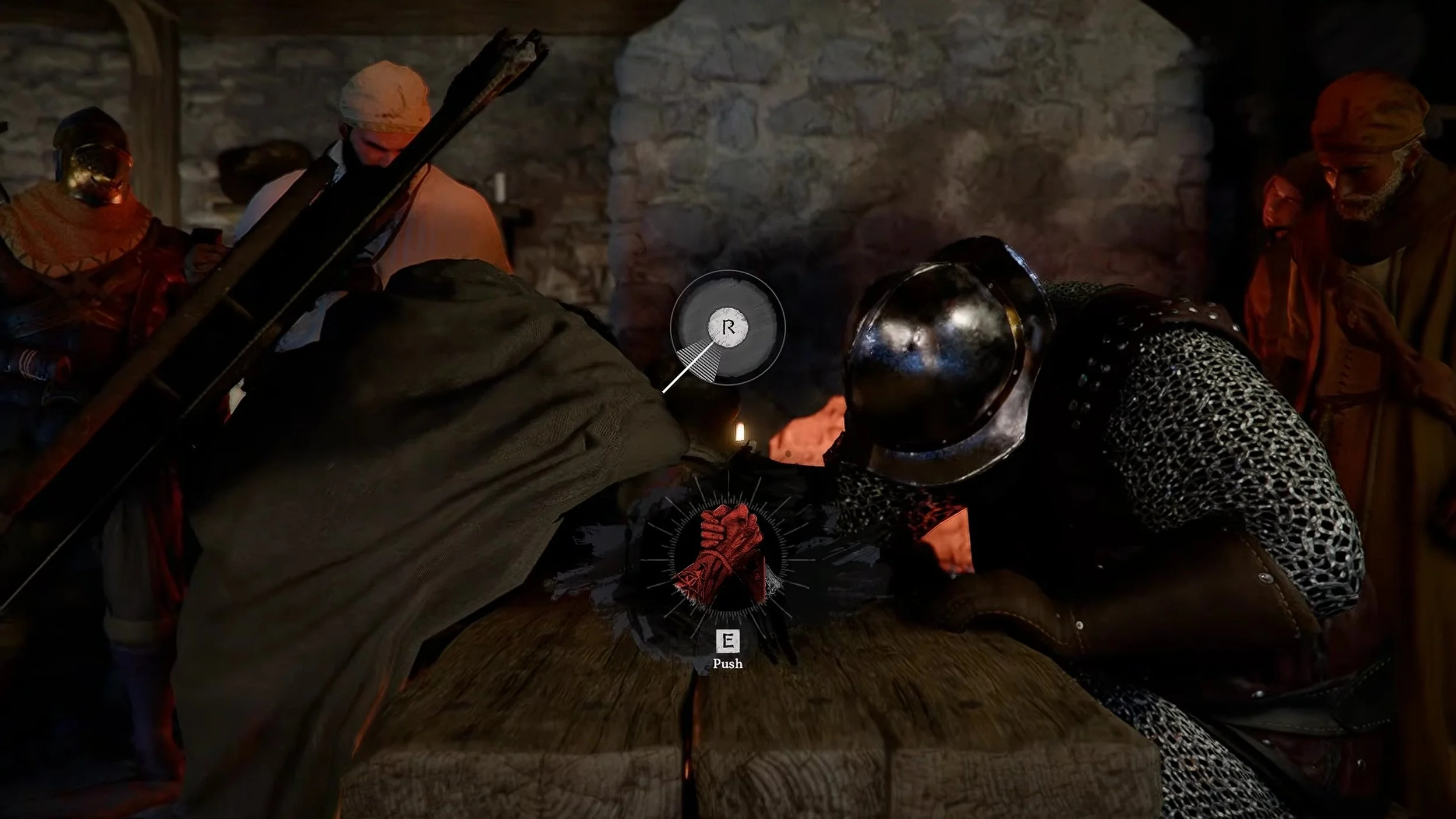
Early on Crimson Desert, the main quest requires the player to enter a tavern and arm wrestle a particularly strong guard. The arm wrestling match consists of a quick time event. If playing on PC you have to rapidly press the “E” key which turns a power meter from white to red. Then a white dial appears above the meter with a rotating hand. When the hand passes over a segment of the dial that is marked by hatching, the player must press the “R” key. The idea being the meter filling with red is you strength building (or waning) and the “R” key prompt indicates when to try and force your opponent’s arm. You will need to to continuously press the “E” key throughout the arm wrestling match and the “R” key about 4 times to win.
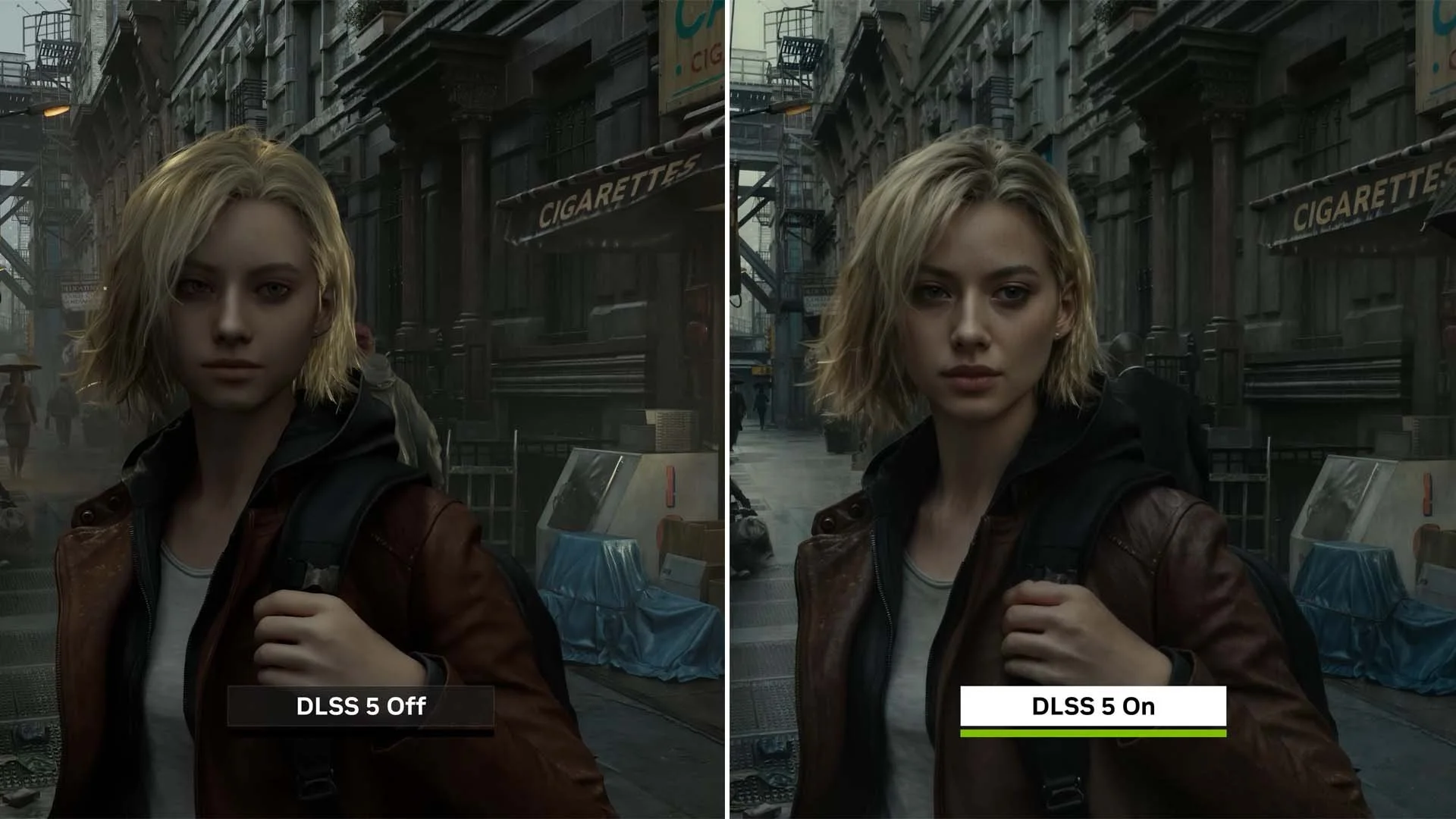
Earlier this week, Nvidia posted a video featuring their latest iteration of DLSS technology (Deep learning super sampling). DLSS 5 is an AI-powered “real-time neural rendering” process and unlike previous versions that focused on improving frame rates through upscaling or frame generation, DLSS 5 uses generative AI to “infuse” frames with photorealistic lighting and material details that the game engine never actually calculated. Let us pause for a moment and consider these words. Material detail that the game engine never actually calculated. Therein lies the rub. If you watch the aforementioned video or peruse the images posted here, it is abundantly clear what the technology does.
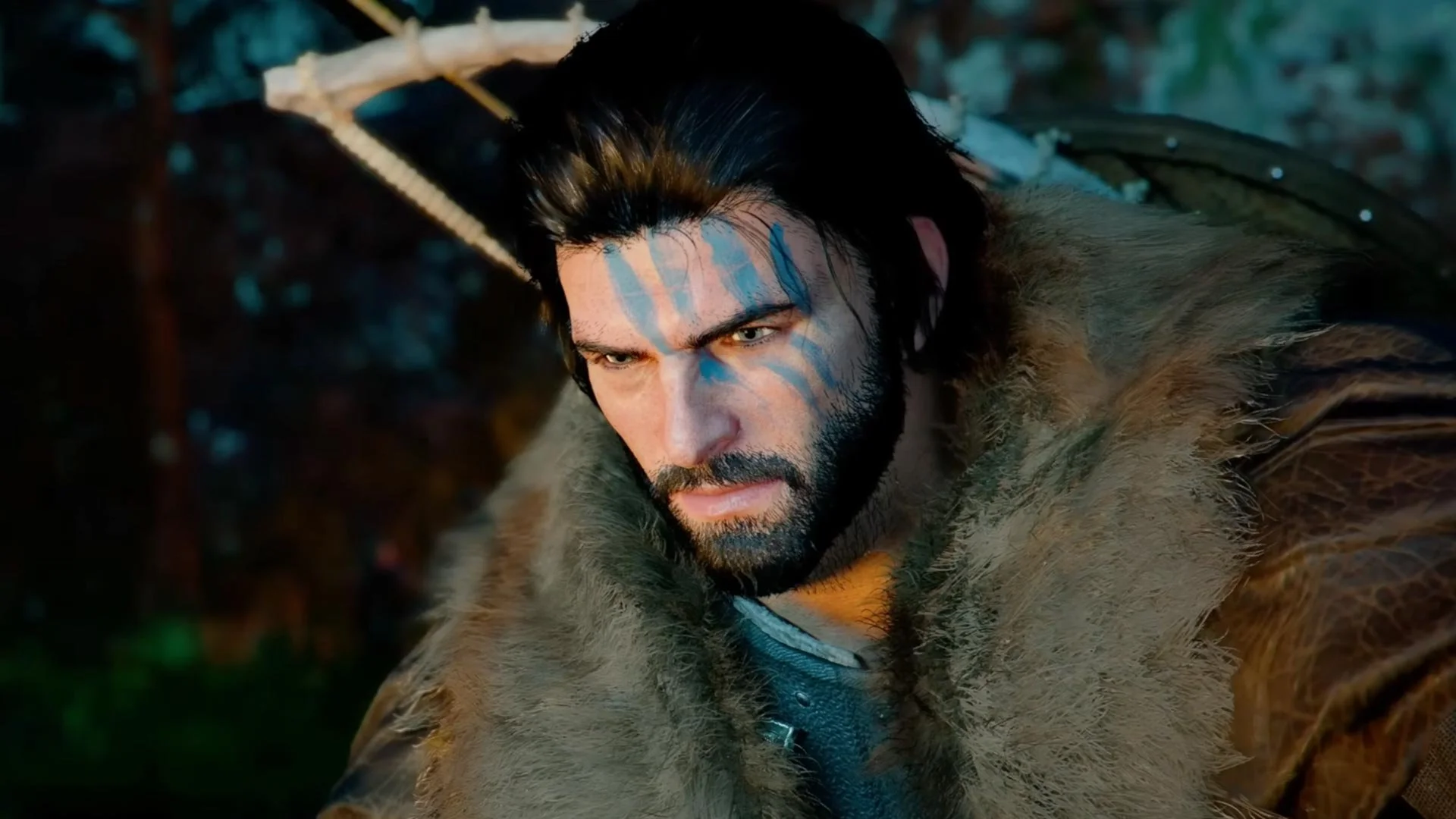
Last night, I spent the first 45 minutes after the launch of Crimson Desert, watching the 92GB pre-downloaded game files slowly decompressing and installing. I finally launched the game at about 10:50 PM GMT. I then waited a further 5 minutes while shaders were downloaded. It took me about 15 minutes or so to read through the various game settings and choose those that are optimal for my PC. I suspect even if you have a beast of a computer, you’re still going to have to spend some time tweaking settings. As for those players like myself with a gaming rig that is somewhere in the middle of the game’s specifications, be prepared to do a lot of fine tuning both within Crimson Desert itself and your Windows settings.

Even More Wise Quotes
Knowledge by definition is the collection of facts and information that you gather through learning over the course of your life time. For many people this is purely optional. That however, is a different matter entirely that I won’t address here in this blog post. Returning to the matter in hand, wisdom is the ability to use that wealth of the aforementioned acquired knowledge, to make sound judgments and actions. Wisdom is also predicated upon the ability to think critically and apply the knowledge one has acquired, logically to any problem or issue one is confronted with. Can such wisdom be conveyed in a simple statement or aphorism? I believe so. Here are a few quotations that I think make a sound point and make it well.
Knowledge by definition is the collection of facts and information that you gather through learning over the course of your life time. For many people this is purely optional. That however, is a different matter entirely that I won’t address here in this blog post. Returning to the matter in hand, wisdom is the ability to use that wealth of the aforementioned acquired knowledge, to make sound judgments and actions. Wisdom is also predicated upon the ability to think critically and apply the knowledge one has acquired, logically to any problem or issue one is confronted with. Can such wisdom be conveyed in a simple statement or aphorism? I believe so. Here are a few quotations that I think make a sound point and make it well.
“The fool doth think he is wise, but the wise man knows himself to be a fool.” William Shakespeare (As You Like It)
This sentiment has been expressed by many people over the years, mainly because it is true.
“That is the essence of science: ask an impertinent question, and you are on the way to a pertinent answer.” Jacob Bronowski
I miss the avuncular musings of the late Professor. He went too soon.
“The measure of intelligence is the ability to change.” Albert Einstein
Change can be challenging.
“Half of life is fucking up, the other half is dealing with it.” Henry Rollins
It’s the people that fuck up and don’t deal with it who are the ones you need to worry about.
“I used to think the worst thing in life is to end up all alone. It's not. The worst thing in life is to end up with people who make you feel all alone.” Robin Williams
Eschew such people.
“We live in an age when unnecessary things are our only necessities.” Oscar Wilde
This is especially true today.
“Somewhere, something incredible is waiting to be known.” Carl Sagan
I find great comfort and hope in this concept.
“He who dares not offend cannot be honest.” Thomas Paine
Most people are equipped to deal with honesty.

“Who is wise? He that learns from everyone. Who is powerful? He that governs his passions. Who is rich? He that is content. Who is that? Nobody.” Benjamin Franklin
The cult of perfection remains with us today.
“There’s no master conspiracy in anything, not even in governments. Everything is just some kind of vaguely organised chaos.” John Lydon
This has also been my experience. Things tick over because a handful of people do all of the societal heavy lifting and the rest of us follow in their wake.
Bonus quote:
“Never laugh at live dragons.” J.R.R. Tolkien
Or steal their gold.
Knowledge by definition is the collection of facts and information that you gather through learning over the course of your life time. For many people this is purely optional. That however, is a different matter entirely that I won’t address here in this blog post. Returning to the matter in hand, wisdom is the ability to use that wealth of the aforementioned acquired knowledge, to make sound judgments and actions. Wisdom is also predicated upon the ability to think critically and apply the knowledge one has acquired, logically to any problem or issue one is confronted with. Can such wisdom be conveyed in a simple statement or aphorism? I believe so. Here are a few quotations that I think make a sound point and make it well.
Is there truly any real wisdom to be found in quotes? According to Google the answer is most definitely yes. They can offer valuable insights, perspectives, and guidance on various aspects of life, often encapsulating complex ideas in concise and memorable phrases. However, quotes can equally be annoying, tedious and pompous. If used incorrectly, a pithy quote can quickly backfire making the person using it look like a smug, self-aggrandising, pseudo intellectual. However, irrespective of these two contrasting views, quotes can also provide a quick and convenient blog post that can be hastily cobbled together when you’re up against a deadline. So without any further ado, here are ten carefully curated quotes for your enjoyment and edification, that impart wisdom and provide food for thought.

The last time I wrote a post about quotes I only included one proper example. That was because it was somewhat lengthy. So I filled the remainder of the article with film quotes, which I found amusing because I do like a good pop culture reference. However, it can be argued that they weren’t really in the spirit of the original writing prompt. So this time round I have collated ten proper quotations from various intellectuals, celebrities and bon viveurs. I also made sure that they’re not all from people who are dead. Many of them do come across as somewhat smug and self satisfied. Such is the nature of quotes. I think the main reason we sometimes feel this way is because a really good one hits home with its sage wisdom. So here are a few that I find interesting. I’ve added a brief annotation as to why I particularly like each one.

Today’s scheduled Blaugust Promptaplaooza writing prompt is “what is/are your favourite quote(s)”. Now I have always had a liking for quotes and feel that a well selected one can often contribute to a good conversation. Something like “The only thing necessary for the triumph of evil is for good men to do nothing” which is attributed to Edmund Burke. Furthermore, a cunning quotation can also be used to bluff your way through a discussion, especially if it’s a subject that you have no knowledge of. The more esoteric the quote the better, I find. Something like Immanuel Kant’s “Metaphysics is a dark ocean without shores or lighthouse, strewn with many a philosophic wreck”. And I also have a tendency to append day to day statements with obscure pop culture references, mainly for my own amusement. I often shout “Bullshit, Mr Han Man!” at the TV, when politicians are interviewed on the news.
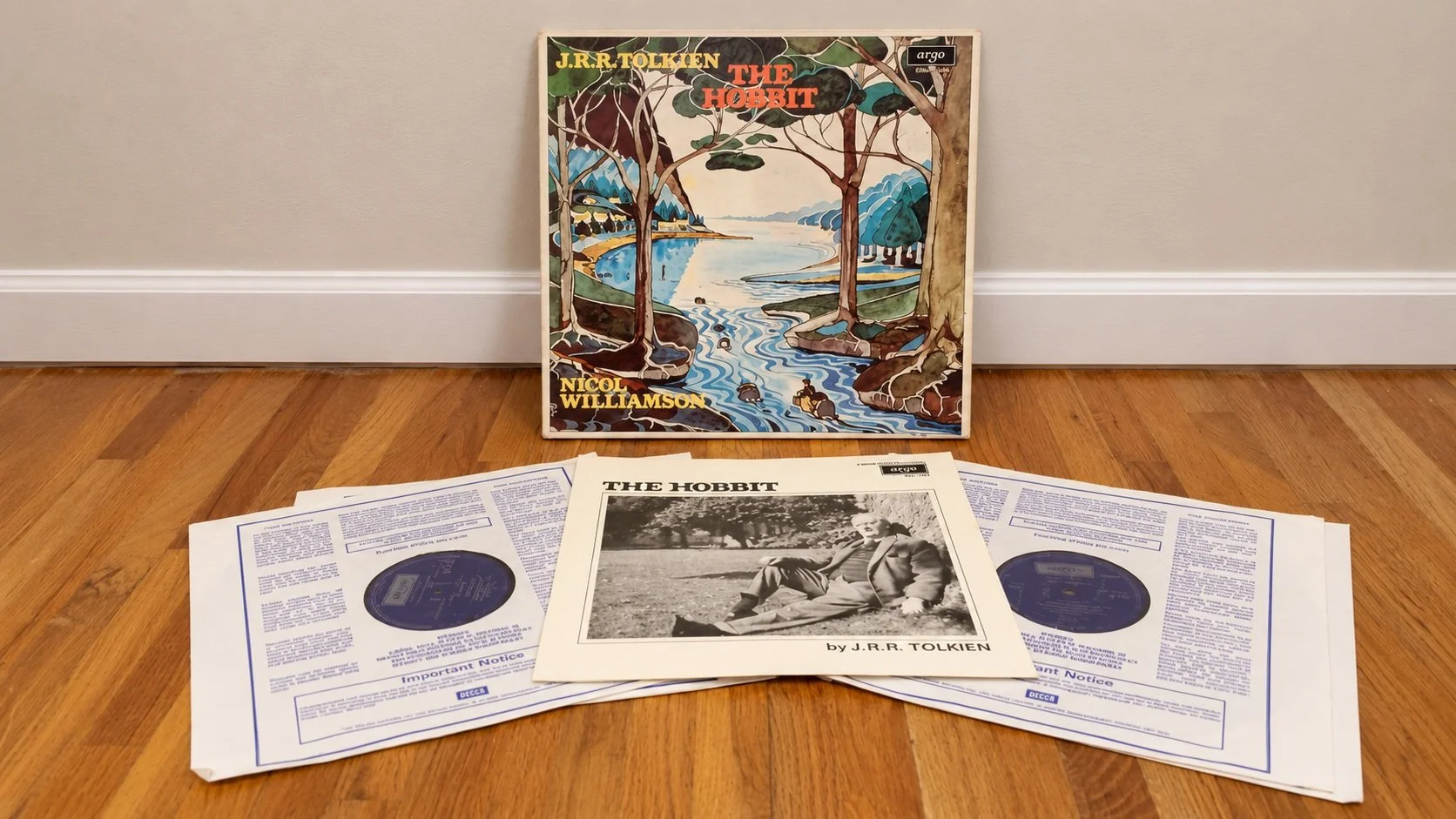
The Hobbit by J. R. R. Tolkien - Read by Nicol Williamson
There are numerous audio recordings and dramatisations of of J. R. R. Tolkien’s The Hobbit. Most recently in 2020, actor Andy Serkis, famous for his portrayal of Gollum in Peter Jackson’s films, read an unabridged version of this classic story. Both critics and fans praised Serkis for his prodigious vocal range and ability to give distinct, recognisable voices to over a hundred characters. Prior to this in 1991, actor and playwright Rob Inglis, recorded the first unabridged version. This production was notable for its more traditional approach to storytelling, where as Serkis’ recording emphasises the drama. Inglis similarly gave each character a unique voice and sang all the songs featured in the text. However, prior to these, in 1974, Argo Records released an abridged recording of The Hobbit narrated by Scottish-born actor Nicol Williamson. Upon release this 4-LP box set was positively appraised but over the years has eclipsed by the aforementioned releases.
There are numerous audio recordings and dramatisations of of J. R. R. Tolkien’s The Hobbit. Most recently in 2020, actor Andy Serkis, famous for his portrayal of Gollum in Peter Jackson’s films, read an unabridged version of this classic story. Both critics and fans praised Serkis for his prodigious vocal range and ability to give distinct, recognisable voices to over a hundred characters. Prior to this in 1991, actor and playwright Rob Inglis, recorded the first unabridged version. This production was notable for its more traditional approach to storytelling, where as Serkis’ recording emphasises the drama. Inglis similarly gave each character a unique voice and sang all the songs featured in the text. However, prior to these, in 1974, Argo Records released an abridged recording of The Hobbit narrated by Scottish-born actor Nicol Williamson. Upon release this 4-LP box set was positively appraised but over the years has eclipsed by the aforementioned releases.
Nicol Williamson was an experienced and well regarded actor on stage and screen at the time, having received critical acclaim for his RSC portrayal of Hamlet and in films such as The Bofors Gun and The Reckoning. His love of Shakespeare drew him to the linguistic style of Tolkien’s writing and his lyrical and idiosyncratic vocal technique made him ideal to narrate The Hobbit. Hence he worked closely with Harely Usill, the audio producer and managing director of Argo Records on the project. Usil had prepared an abridged script that Williamson further refined for the final recording. The intention was to find a balance between Tolkien’s descriptive narrative and the key dialogue between characters, while moving the story forward. The recording with further embellished with ambient music from Argo Records audio library. This includes material by Bob Stewart which is derived from Medieval music.
Nicol Williamson famously played Merlin in John Boorman’s 1981 film, Excalibur. Boorman previously wrote an adaptation The Lord of the Rings for United Artists that was never filmed
This adaptation of The Hobbit is very atmospheric. It uses music cues sparingly but when it does it is often at the right moment dramatically. Williamson’s mercurial performance is also compelling, especially with regard to the variety of voices he gives. The characters of Bilbo Baggins with his West Country accent and Gandalf with his portentous exclamations particularly standout. Overall the abridgement works, although there are a few omissions that leave minor plot holes, such as the Dwarves wondering into the Wood Elves camps, attracted by the fires and subsequently being captured. The recording also chooses to leave out the codicil at the end of the story when Balin and Gandalf visit Bilbo, 8 years later. As ever with productions of Tolkien’s work, there can be some minor deviations in pronunciations but there is nothing present that spoils the proceedings. This is a strong book reading due to the acting skills of the central narrator.
Sadly, the original 4-LP box set by Argo Record of The Hobbit is currently out of print, as is the audio cassette version. There has not been a more recent release on a more contemporary physical format such as CD. The recording is available on Spotify but unofficially on personally curated playlists. However, there is a chance that this recording may be made available again, as Decca Records which own Argo, revived the label in 2020 to reissue its spoken word content. Furthermore, it should also be noted that in December this year, Demon Music Group is releasing a 14-CD box set of the BBC Radio adaptation of The Lord of the Rings, in its original 30 minute, 26 episode format. If that proves to be a commercial success, then Decca may well consider a remaster of their adaptation of The Hobbit. In the meantime, collectors can find original vinyl copies on eBay and casual listeners can enjoy the recording on Spotify and YouTube.
There are numerous audio recordings and dramatisations of of J. R. R. Tolkien’s The Hobbit. Most recently in 2020, actor Andy Serkis, famous for his portrayal of Gollum in Peter Jackson’s films, read an unabridged version of this classic story. Both critics and fans praised Serkis for his prodigious vocal range and ability to give distinct, recognisable voices to over a hundred characters. Prior to this in 1991, actor and playwright Rob Inglis, recorded the first unabridged version. This production was notable for its more traditional approach to storytelling, where as Serkis’ recording emphasises the drama. Inglis similarly gave each character a unique voice and sang all the songs featured in the text. However, prior to these, in 1974, Argo Records released an abridged recording of The Hobbit narrated by Scottish-born actor Nicol Williamson. Upon release this 4-LP box set was positively appraised but over the years has eclipsed by the aforementioned releases.

Sometime in August 1979, I was travelling with my father by train to London, when I first saw posters advertising the Ralph Bakshi animated version of J. R. R. Tolkien’s The Lord of the Rings. The film had been released in the US the previous November and I aware of its existence because I had read articles about it production in Starburst magazine. Even at the age of 11 I was interested in genre films and television, having been raised on Doctor Who and Ray Harryhausen’s back catalogue of fantasy movies. Furthermore, I was familiar with Tolkien’s first novel, The Hobbit, as my father had read it to me when I was younger. I was impressed by the poster in that way that only an 11 year old can be. Why was Gandalf do gigantic? Also the A rating was enigmatic. Most animated films were usually rated U. Yet despite my interest, I didn’t see The Lord of the Rings at the cinema during the summer holidays.
This December marks the 20th anniversary of the release of The Fellowship of the Ring, the first instalment of Peter Jacksons' adaptation of J.R.R. Tolkien’s iconic novel, The Lord of the Rings. To celebrate this occasion, I shall post new reviews of the extended edition of all three films, as well as those of The Hobbit trilogy, which were made a decade later.
The Battle of the Five Armies is noticeably shorter than it's two predecessors, mainly because there is insufficient narrative to sustain the proceedings. Even the extended edition which adds a further 20 minutes to the running time, increasing it to 164 minutes, is mainly driven by one ongoing action sequence which is the titular battle. After the somewhat languid pace of the first movie and the bloated excess of the second, this further change of pace seems somewhat perplexing. Despite the more economical running time, events occur very rapidly. Perhaps a little too rapidly. It can be cogently argued that it somewhat diminishes the impact of some of them. Perhaps the biggest issue being the demise of Smaug. It comes promptly at the start of The Battle of the Five Armies and although spectacular, it quickly negates a major plot element.
This December marks the 20th anniversary of the release of The Fellowship of the Ring, the first instalment of Peter Jacksons' adaptation of J.R.R. Tolkien’s iconic novel, The Lord of the Rings. To celebrate this occasion, I shall post new reviews of the extended edition of all three films, as well as those of The Hobbit trilogy, which were made a decade later.
I love the medium of film immensely. I like a wide range of genres and will happily watch weighty human dramas as well as the worst sort of trashy exploitation fodder. The key to reconciling such widely differing types of cinema is to judge them within their own context. Therefore don't compare the respective worth of Citizen Kane with The Golden Voyage of Sinbad, or Bicycle Thieves with The Medusa Touch. So because of the nature of Peter Jackson's adaptation of The Hobbit, I am prepared to make concessions to the fact that it is a big budget fantasy blockbuster franchise. Also the source material from which the film derives is quite sparse, often being nothing more than footnotes, or summations of history. Thus there is scope for a lot of "adaptation", artistic license and creativity. Jackson got a lot of this right with The Lord of the Rings trilogy, over a decade ago. I do not believe that to be the case this time round.
This December marks the 20th anniversary of the release of The Fellowship of the Ring. The first instalment of Peter Jacksons' adaptation of J.R.R. Tolkien’s iconic novel, The Lord of the Rings. To celebrate this occasion, I shall post new reviews of the extended edition of all three films, as well as those of The Hobbit trilogy, which were made a decade later.
Firstly let me start by saying I think the word unexpected is very apt in respect of the first instalment of Peter Jackson's three part adaptation of Tolkien's prequel to The Lord of the Rings. It is genuinely surprising how well parts of the narrative had been adapted and interpreted. Similarly there are other aspects that are less successful. Overall the good outweighs the bad but only the most ardent fanboy or girl would think the movie flawless. When one considers its problematic production along with the change of directors, this is quite an achievement. I wonder how much of Guillermo del Toro’s material survived into Peter Jacksons, Fran Walsh and Philippa Boyens revised screenplay? Secondly, a decade on from The Lord of the Rings, there has been a further move away from physical visual effects and filming on photographic film. Both of these changes are noticeable in An Unexpected Journey but the presence of Peter Jackson and his very specific style of filmmaking maintains a very strong sense of continuity.
The Hobbit (1977) is a curious beast. It’s a made for television animated film, which despite its budgetary constraints, strives to comprehensively adapted one of the most beloved children’s books of the last century. I remember reading an article about this television adaptation of The Hobbit, in Starburst Magazine during the late seventies. There were rumours that this Rankin/Bass production, which had already premièred on US network television, would gain a European cinema release. This was presumably to cash in on the success of Ralph Bakshi's animated feature film adaptation of The Lord of The Rings. However, this never happened to my knowledge. In fact, The Hobbit was not commercially available in the UK until 2001, when Warner Bros. released it on DVD to capitalise on the success of Peter Jackson’s The Fellowship of the Ring.
In 1989 Eclipse Comics produced a three-part adaptation of The Hobbit by Chuck Dixon, Sean Deming and illustrated by David Wenzel. A year later, due to public demand, this was subsequently re-issued as a single graphic novel that has remained in print ever since. The writers wisely chose to sensitively abridge Tolkien’s source text, rather than adapted the story and make any major changes. Hence this graphic novel version of The Hobbit retains much of the dialogue from the original novel and subsequently maintains the book’s inherent charm. There are no major plot omissions and the narrative flows well. The panel layouts are innovative and accommodate a wealth of written material without overwhelming the artwork.
There are and always will be books that have a clear political agenda or make a very particular statement. Orwell’s 1984 springs to mind as an obvious example. Then there are also books that attract political interpretations by the nature of their plot or the subjects that they explore. Whether the author intended such a debate about the work or not, is a secondary issue. I have always taken Tolkien’s work at face value and to be what he stated they were. Epic and intricate faux histories, free from allegory. Furthermore, I appreciate that the moral position and themes of his work stem from the authors world view, personal experiences as well as the prevailing social dogma of the time. I find it interesting how his work attracts praise and adulation from a wide variety of groups. Catholics will naturally gravitate towards Tolkien’s writings due to his faith and that is the prism through which they will critically view his work. There are of course other examples about how The Hobbit and The Lord of the Rings appeals to different people in different ways. It is a common aspect of fandom.
The theatrical edition of The Hobbit: The Battle of the Five Armies was light on plot and heavy on action sequences. As a result it had many unresolved story lines. The extended editions once again attempts to address these deficiencies but sadly out of the twenty minutes of additional material that has been added, most are extended action scenes. There are moments of substance buried within this ponderous expanded edition but they are few and far between. Compared to other entries in the extended trilogy, this is the weakest as it really doesn’t add any major plot or narrative improvements. It does however add a lot more orc based violence.
“Who Ate All the Pies?”
When I last wrote about the thorny subject of weight loss, I weighed 188 lbs (13 stone 6 lbs or 85.3 kg). That was in Spring 2022. Let it suffice to say the the optimistic health plan I subsequently embarked upon fell apart like a cheap suit, solely due to me not committing to it in any meaningful way. Since then my weight has slowly and steadily increased. I will avoid any long and tortuous explanations and quasi-justifications. I like my food and lots of it. The fact that my lifestyle has contributed to my ill health, is something that I have willingly tolerated. The pleasure outweighed the consequences. However, in early August a tipping point was finally reached. It wasn’t a theatrical epiphany or anything that can be framed dramatically. I simply woke up one morning and said to myself, “I am tired of constantly feeling like shit”.
When I last wrote about the thorny subject of weight loss, I weighed 188 lbs (13 stone 6 lbs or 85.3 kg). That was in Spring 2022. Let it suffice to say the the optimistic health plan I subsequently embarked upon fell apart like a cheap suit, solely due to me not committing to it in any meaningful way. Since then my weight has slowly and steadily increased. I will avoid any long and tortuous explanations and quasi-justifications. I like my food and lots of it. The fact that my lifestyle has contributed to my ill health, is something that I have willingly tolerated. The pleasure outweighed the consequences. However, in early August a tipping point was finally reached. It wasn’t a theatrical epiphany or anything that can be framed dramatically. I simply woke up one morning and said to myself, “I am tired of constantly feeling like shit”.
To cut a long story short, I went to the Quack. That’s a Doctor, to those unfamiliar with this term. Furthermore, he’s very good and the furthest thing from a “quack”. Consider it a term of endearment. After a useful discussion, it was decided to remove Bisoprolol, which is a betablocker, from my prescription. Within ten days I started feeling a lot better. No more cramps, breathless ness, headaches or fluid retention in my feet. The other thing we talked about, was the need to lose weight. Mine, not his, obviously. So I immediately embarked on a simple weight loss plan. Nothing complex. So many diets are utter bullshit. Losing weight is essentially a question of reducing your calorific intake. Getting your head round this strategy is another matter.
5 weeks ago I weighed 206 lbs (14 stone 10 lbs or 93.44 kg). The excess weight is mainly on the front of my body, from my hips to about halfway up my rib cage. The plan is to eliminate this mainly so I just feel better physically. As the Doctor said, it feels and acts like having a rucksack of between 10-15lbs weight on the front of your body. Hence it will get in the way, make breathing harder and just generally drain your energy. I have focused on this description and the overall diagnosis as a means of motivation. I am driven by health factor primarily as these are harder to argue against when you want to lapse from diet.
Now there are arguments for weight loss couched in looking better and aesthetics but I do not want to go down that rabbit hole. Excessive self criticism of one’s physical appearance is dangerous. There are entire industries predicated upon making you feel shitty about yourself and then trying to sell you suprious products to remedy it. Plus, if you ask me, people are becoming very generic in the way they dress and look these days and it bores the hell out of me. So much for being an individual. But I degress. I am losing weight to improve my health and so my new T-shirts fit me. I don’t want to have to buy new clothes.
Now it is at this point, readers will say “Yeah, yeah, yeah. We heard this all before. You’ve written several posts on this subject and yet here we are again”. To which I say, “that’s very true”. However, there’s a difference this time. Over the last five weeks I’ve lost 9 lbs, bitches. Not quite sure why I added that epithet but nevermind. I now weigh 197 lbs (14 stone 1 lbs or 89.25 kg). Yes that is a tangible and more importantly noticeable achievement. I still broadly look like Alfred Hitchcock in profile but not as bad as I did at the start of last month. I aim is to go further, with the immediate goal of losing another 8 lbs. In the UK we use the archaic measure of a stone (14 lbs) so to lose exactly one of that unit of weight would be a significant.
So what have I done this time to make progress, that I didn’t do in the past. The answer is simple. Don’t pursue a “scorched earth” policy. By which I means don’t cut out absolutely everything and make yourself miserable in the process. You have to have keep something that you enjoy present in your meals. It’s all about portion control and writing it down. Portion control re-educates your stomach to get used to less. Writing everything that you eat down means it’s much harder to lie and bullshit yourself. I started doing this but found it unecessary. Once I started making progress, that was sufficient to keep me moving forward.
The most noticeable change in my diet is a massive reduction in my alcohol intake. I still drink but it’s mainly two nights a week and it is a modest amount. A bottle/can of beer or a glass of wine. I have tried to eliminate bread as much as I can and excessively processed food. I mainly eat fish, or pork along with vegatables and rice. I have the occasional indulgence such as ice cream or some cake. I keep the amount small. Eggs are also good and filling. As are nuts.
Now here is the really important bit. Is there a single, one size fits all approach to weight loss? Not from a dietry perspective. If following a bespoke regime works for you, then do that. However, there is one unequivocally true fact that determines the success of a diet and that is your psychological approach. You must want to lose weight and you must be prepared to accept the immediate short term inconveniences. If you are unsure, unprepared and unwilling to put up with what weight loss entails then you will not succeed.
I like food. I don’t just eat out of necessity. I enjoy, no I revel in every meal or snack I have. It is a great source of pleasure and comfort. I’m sure that’s how I got in this position of being over weight in the first place. In a tumultuous uncertain world, the pleasure of food has been a constant. That is a side issue and a subject for another blog post. I knew going into this diet that I wasn’t going to like it initially and I was going to be as grumpy as fuck. That has been the case. But I stuck with it because waking up feeling awful every day, was a worse option. Furthermore, after a fortnight, I found that I was beginning to adapt to the my new eating regime. I have also found that if I channel my energy and effort in to some other task, then that is beneficial. Writing throughout August helped me a great deal. So I guess another key aspect of finding the overall right approach to weight loss is keeping yourself busy.
So there you have it. I have lost weight and intend to continue to do so. I have considered whether this post comes across as being smug and I broadly think that isn’t the case. As ever, I believe sharing what has worked for me may be of use to someone else. Ultimately for those in a similar position, who want to lose weight for whatever reason, it all comes down to finding your own personal tipping point. Once you reach that, you are already half there because your head is in the right place. Then it’s just a question of starting, perservering and recognising that it’s going to be initally shitty at times but will get better. So if you are about to take the plunge, then good luck to you. If you need any further motivation, remember that the money you save on food or having to buy a new wardrobe, can be spent on some other indulgence. Trading cards, notebook, pens or Ketamine.
NB With regard to the meaning of this post’s title, “Who ate all the pies” is a famous British football terrace chant, used to taunt overweight players or opposing fans (Nobody said UK football was politically correct). The standard lyrics of the chant are as follows:
“Who ate all the pies? Who ate all the pies? You fat bastard, You fat bastard, You ate all the pies!”
I recently stopped taking beta blockers after a consultation with my Doctor. Seven weeks on and I feel substantially better without them. I strongly advocate prescription reviews, as often the medication you’re taking does not necessarily need to be taken indefinitely. That was certainly the case with me and beta blockers. At the end of my last consultation, my GP asked me to keep a daily record of my blood pressure for a month. I could either do this at home or come into the surgery where there is a suitable device that is free to use. Fortunately I inherited an old but functional OMRON blood pressure monitor from my parents, so I was able to take readings each morning myself. It was while doing this for a month that it struck me; what exactly does all the data that I’m making note of mean exactly? What do systolic and diastolic mean and what is the difference between them? Also, where my readings good or bad?
When I last wrote about the thorny subject of weight loss, I weighed 188 lbs (13 stone 6 lbs or 85.3 kg). That was in Spring 2022. Let it suffice to say the the optimistic health plan I subsequently embarked upon fell apart like a cheap suit, solely due to me not committing to it in any meaningful way. Since then my weight has slowly and steadily increased. I will avoid any long and tortuous explanations and quasi-justifications. I like my food and lots of it. The fact that my lifestyle has contributed to my ill health, is something that I have willingly tolerated. The pleasure outweighed the consequences. However, in early August a tipping point was finally reached. It wasn’t a theatrical epiphany or anything that can be framed dramatically. I simply woke up one morning and said to myself, “I am tired of constantly feeling like shit”.
Being a 58 year old man, I welcome any undertaking which can potentially improve my health. One such thing is proactive screening and testing. The UK National Health Service has started doing a lot more of this in recent years, mainly because diagnosing a problem and treating it early is far more efficient and cost effective than retroactive action. Hence this policy and my age is why I was recently sent a NHS Bowel Cancer Test Kit via the post. This screening service takes place every two years for people aged 50 to 74 in the UK. The kit is very quick and simple to use. A sample of your stool is sent via a prepaid return envelope for testing and the entire process is free of charge. Upon receipt, the laboratory test determines whether there is any blood present in your stool, which is a potential indicator of bowel cancer. If detected, an early diagnosis greatly improves any subsequent treatment outcomes.
Last Wednesday, I woke up with what I thought to be a crick in my neck on the left hand side. I assumed this was simply due to sleeping awkwardly and so I self medicated with some non-prescription pain relief and judicious use of a heat pad. Unfortunately, the problem has persisted and in the last 24 hours it has become much worse. I awoke this morning at about 5:00 AM and as I sat up in bed, an intense pain ran up the left side of my neck and behind my ear. It took several attempts for me to get out of bed because if I turned my head in either direction or inclined my chin, the pain would again run up the side of my neck. Sitting down, getting up and raising my arms caused similar results. While dressing, I attempted to pull a t-shirt over my head. The pain in my neck on this occasion was so severe that I yelled out loud and nearly blacked out.
This morning I had an appointment at the Cardiology Outpatients clinic at St. Thomas’ Hospital, in Southwark, London. The hospital, located across the Thames from the Houses of Parliament, is easily accessible from three nearby tube stations (subway), one major train station and numerous buses. As well as having an extensive A&E department, St. Thomas’ also provides a broad range of healthcare services such as maternal medicine, gastrointestinal surgery, ophthalmology, pain medicine and plastic surgery. The hospital specialises in cardiovascular care and was the first to perform a mitral valve replacement on a beating heart. It is also home to nursing and surgical colleges. The current site has served community needs since 1871. The hospital has existed in some shape or form since the 12th century. There is a pleasant ornamental garden outside the main entrance that overlooks the river and Lambeth bridge.
Accidents will happen, as Elvis Costello astutely pointed out. Furthermore they often occur in the most innocuous of fashions, as I shall now tell. Myself and Mrs P were over our local park today with our two and a half year old grandson Oscar. It is located directly behind our home and has a small children’s play area as well as various adult exercise equipment. One of these items is a low, wooden ramp whose highest end is no more than eighteen inches off the ground. Oscar likes to climb on this, run to the end and jump. Naturally, he did this today when we visited. Mrs P then followed suit (at his request) and stepped off onto the soft, child safe surface. Her right knee gave way and she fell over. Despite the short distance and the soft surface, the fall was sufficient to injure her knee, as there was an audible crack. She subsequently could not get up on her own and I had to assist her so she could sit on the aforementioned ramp.
I weighed myself this morning before writing this post. As of 6:05 AM today I weigh 188 lbs (13 stone 6 lbs or 85.3 kg). To give this data some sort of context I am 5’11 tall and 54 years old. Prior to my more recent weight gain, I have had an athletic build for most of my life. During my twenties and thirties, while I was still a smoker, my weight stayed around 133 lbs. When I quit my 30 a day cigarette habit I gained about 14 lbs or so over the following months and then stayed at that weight for a further decade. Even with the onset of middle age my weight has not been excessive and my build has accommodated any gain quite well. It has only been over the last 5 years that it has increased to a level that I consider to be neither flattering or healthy. This was brought home to me a few days ago when I saw my reflection in a mirror while on holiday. The incident has given me pause for thought and galvanised me to take action.
Very few people had a “good” 2020. I won’t bore you with a list of my personal woes as I’m sure you have plenty of your own. Plus everything is relative. We shouldn’t compare apples with oranges. Like many people, I now find myself fatigued by the ongoing global events and the conspicuous absence of normality. I like to consider myself quite a robust person. I have endured difficult times in the past and have come through them by remaining calm and focused. However, the nebulous and seemingly never ending nature of the global pandemic is extremely wearing. Let it suffice to say that I feel singularly unmotivated at present. Writing, which is usually a great pleasure, is currently a chore. I am also troubled by something that I personally find most unusual. A sense of sadness. And it doesn’t seem to want to go away.
To begin with, I am not claiming to be living with “chronic” pain in this blog post. I am fully aware of the definition of the term and am fortunate that my current injury does not force me to endure such levels of discomfort. However, my recent experience has provided me with a new insight into something that most of us only notionally know about and have little or no true understanding. I believe I appreciate my Mother’s daily circumstances a lot better now (as well as several friends and colleagues who also live with chronic pain) and finally understand how debilitating both physically and mentally living in constant and acute pain can be. Hence I decided to write this piece. To share my experience with an injury that continuously hurts and to help inform others about the realities of living with chronic pain. Sometimes you need to experience something first hand to fully get the measure of it.
It’s hard to write about ones own personal health issues and how one addresses them without coming across as smug, sanctimonious or oblivious to the fact that it’s all relative. I wrote back in early March about how I was going to try and get my “house in order” by losing weight and also undertaking the NHS Health Check. A six weeks on and progress is being made. However, I would just like to re-iterate that what has proven to work for me, may not do so for others. We all have our own unique relationship with our own health and therefore there is a need to find ways that work for us as individuals. Therefore my dietary regime which seems some what easy to me, may prove to be far too draconian for others. Similarly my exercise targets are also suited to my temperament and limitations. But I hope that by sharing my progress I can at least provide some encouragement to others.
Personal health as a concept, refers to your overall well-being both physically and mentally. It is about taking charge of your health by making a conscious decision to improve and maintain it. It not only refers to your physical state but the respective wellness of the emotional, intellectual and even spiritual aspects of your life. Sadly it is something that many of us are not very good at dealing with or choose to ignore. All too often good intentions get sidelined by the realities of life. Sadly, physical and mental issues are usually only addressed after something bad has occurred. Furthermore, much of the most basic and practical information needed to improve our personal health is drowned out by the white noise of fads, quackery and those seeking to sell you a “solution”.
Today I visited Emmetts Garden in Sevenoaks. The Edwardian estate located at Ide Hill and is now owned by the National Trust for Places of Historic Interest or Natural Beauty. The garden, which covers an area of about six acres, is situated on a 600-foot sandstone ridge, overlooking the Weald. It is one of the highest points in Kent, offering an expansive view of the North Downs. The garden was laid out in the late 19th century and was influenced by William Robinson. It contains many exotic rare trees and shrubs from across the world. You can explore the rose and rock gardens, take in the views as well as enjoy flowers and shrubs in spring. In autumn visitors can enjoy the vibrant colours brought about by the changing of the season. The main attraction at this time of year are the Bluebells.
Gaming and personal health at first glance appear to be mutually exclusive subjects. News coverage about these issues more often than not implies that gaming is detrimental to both ones physical and mental well-being. Apart from titles that utilise motion sensing devices such as the Kinnect and require the player to physically move, gaming is a sedentary pastime. Combine that with a society that has an already broken relationship with food and their own personal health in general and there is scope for a wealth of medical problems.
The Financial Benefits of Having a Song Featured in GTA VI
I find the concept of in-game radio stations fascinating. They’re an enjoyable aspect of open world video games and I have discovered several artists this way. They’re certainly a big deal as far as Rockstar Games are concerned, because the music selected for GTA VI is another important facet of the overall marketing campaign. So far, between two trailers and the sprawling extended look on Netflix, it has been determined that Tom Petty, the Pointer Sisters, Sexyy Red, Depeche Mode, Phil Collins, Birdman, Lil Wayne and the Bellamy Brothers are all part of the game soundtrack. That’s a very eclectic selection so far. Furthermore, there will be a 34 track album released on physical media (vinyl and CD) in conjunction with Atlantic Records.
I find the concept of in-game radio stations fascinating. They’re an enjoyable aspect of open world video games and I have discovered several artists this way. They’re certainly a big deal as far as Rockstar Games are concerned, because the music selected for GTA VI is another important facet of the overall marketing campaign. So far, between two trailers and the sprawling extended look on Netflix, it has been determined that Tom Petty, the Pointer Sisters, Sexyy Red, Depeche Mode, Phil Collins, Birdman, Lil Wayne and the Bellamy Brothers are all part of the game soundtrack. That’s a very eclectic selection so far. Furthermore, there will be a 34 track album released on physical media (vinyl and CD) in conjunction with Atlantic Records.
Potentially there are two quite substantial benefits to having a song featured in a Rockstar game such as GTA VI. The first is a direct payment which can vary in size. It can sometime be big with specific artists but more often it is relatively modest. The second is the potential for promotion, which given the scope of sales of this forthcoming game, can be enormous. For the initial direct financial payment, Rockstar needs to license both the composition and the particular recording. The money for these tends to be divided between songwriters, publishers and whoever owns the master recording, This is often a record label rather than the artist(s) themselves. Modern video game licensing is generally done as a one-off payment rather than a royalty system based on every copy of the game sold.
The details of this business practice came to public attention recently when singer/song writer Martyn Ware was offered $7,500 (as were the other three writers) for the song “Temptation” by his band Heaven 17. A total of $22,500 for the song writing payment. Industry analysts speculated that when the recording-rights owner were also compensated, the approximate total licensing cost could be around $45,000. Ware ultimately rejected the proposed deal because the contract apparently allowed Rockstar extensive additional use of the song outside of the game, without any further renumeration. So merely having a song playing on a radio station in GTA VI doesn't necessarily mean that the artist was paid a fortune by Rockstar. If they don't own their publishing or masters rights to begin with, their paycheque will not be that substantial.
However, the promotional value of having a song featured in the game is potentially much more significant. A noteworthy example is The Pointer Sisters’ 1986 track “Hot Together”, which was featured in the second trailer for the game. Prior to this, Luminate recorded roughly 3,900 global streams per week. In the week the trailer was released, the stream increased to 1.2 million. A week later it reached 2.9 million. Within eight weeks the song had accumulated almost 9.6 million streams, compared with only about 300,000 during the whole of 2024. The first GTA VI trailer produced a similar effect. Spotify reported that streams of Tom Petty's “Love Is a Long Road” increased by 36,979% after it was featured.
These streaming increases generate additional royalties completely outside the Rockstar licensing agreement. More importantly, it can create several secondary effects such as renewed and increased revenue income across the artist’s entire catalogue via Spotify/Apple Music/YouTube. Then there is increased followers across social media platforms, more internet searches and playlist appearances, as well as press coverage. One of the most notable and useful by-products of exposure in possibly the world biggest video game franchise is being discovered by a demographic who may have never previously been aware of the artist.
Another longer term aspect of this business arrangement between game publisher and artists, is that a song featured in a game can be played again and again. Gamers playing GTA VI might hear a song dozens of times while driving around the virtual world. They may even prolong “driving around” just to hear specific songs, as I have done before in similar games. Hence this is a really effective music-discovery mechanism and potentially a gift that keeps on giving. Hence, Martyn Ware’s objection regarding the licencing of his song, although understandable in the short term, does seem to overlook the long-term potential. Rockstar may well get permanent value from the song, while the artist is being asked to gamble that the indirect benefits will yield long term compensation. However, Rockstar Games have shown sound business acumen in the past, with regard to curating quality songs across multiple genres. I suspect for many artists, if they receive an offer of thing kind from Rockstar Games, most will happily embrace it.
In the meantime, here is the list of all the songs that we know so far to be featured in GTA VI.
Travis Scott — “RHYNO (prod. by Guy-Manuel de Homem-Christo)”
CA7RIEL & Paco Amoroso, PinkPantheress, Fred again.., & Etienne de Crécy — “Sexy Magic”
Morgan Wallen — “Last Thing You Need”
Rauw Alejandro — “Macacoa 2000”
Keith Richards — “Bright Lights, Big City”
Yung Lean feat. Future & Metro Boomin — “That’s It”
Birdman feat. Lil Wayne — “Pop Bottles”
Sexyy Red & Tay Keith — “Pound Town”
Kodak Black — “Skrilla”
The Bellamy Brothers — “Let Your Love Flow”
Def Leppard — “Love Bites”
Depeche Mode — “People Are People”
Captain & Tennille — “But I Think It’s a Dream”
Prefab Sprout — “Cars and Girls”
!!! feat. Meah Pace — “Off the Grid”
Cliff Richard — “Devil Woman”
Chimbala & Omega — “Se Me Nota (Agárrame)”
Phil Collins — “Against All Odds (Take a Look at Me Now)”
Aluna & Jayda G — “Mine O’ Mine”
Elderbrook & Bob Moses — “Inner Light”
Jay Ferguson — “Thunder Island”
Zenglen — “Child Support”
Wang Chung — “Everybody Have Fun Tonight”
Tammy Wynette — “Talkin’ to Myself Again”
The Pointer Sisters — “Hot Together”
Tom Petty — “Love Is a Long Road”
I find the concept of in-game radio stations fascinating. They’re an enjoyable aspect of open world video games and I have discovered several artists this way. They’re certainly a big deal as far as Rockstar Games are concerned, because the music selected for GTA VI is another important facet of the overall marketing campaign. So far, between two trailers and the sprawling extended look on Netflix, it has been determined that Tom Petty, the Pointer Sisters, Sexyy Red, Depeche Mode, Phil Collins, Birdman, Lil Wayne and the Bellamy Brothers are all part of the game soundtrack. That’s a very eclectic selection so far. Furthermore, there will be a 34 track album released on physical media (vinyl and CD) in conjunction with Atlantic Records.

Song lyrics can be powerful things. They can capture the mood and spirit of an era. They can also make powerful socio-political points. Or they can simply be pleasing to the listener by their use of language and playfulness. They can stick in your mind for both deep and trivial reasons. Mishearing them is also a common problem but that is a separate blog post. On this occasion I thought it would be worthwhile exploring the subject of song lyrics of note. Hence I have collated some that I find interesting, wise or just entertaining. These aren’t necessarily my favourite songs of all time, because I like so many. Instead these are some of the ones that sprang to mind when I was preparing this post. I have decided to have the selected lyrics first and the name of the artists afterwards, so that the emphasis is placed upon the words from the song. Although is is more than likely that you’ll be able to identify the songs from the lyrics immediately, or at least for some of them.

The transition from purchasing music on CDs, vinyl or via downloads, to on-demand streaming has fundamentally altered the music industry. Furthermore, the current dominance of on-demand streaming as a medium for providing music has actually reshaped how pop music is written, produced and released. Because streaming platforms like Spotify, Apple Music, and TikTok operate on specific payment algorithms and cater to the rapid-scrolling habits of contemporary listeners, producers and songwriters have decided to completely rewrite the rulebook of how pop music is made. These new rules are not one hundred percent ubiquitous and you’ll still find song writers and artists who do things the old way or in a manner that suits them. However, sufficient numbers of song writers have adopted the new methodology, that you can hear the change if you spend a day or so listening to a mainstream pop playlist or radio station that showcases such material.
I was recently listening to some music on Spotify when it struck me how poor the sound quality was. It lacked any depth and certain instruments seemed lost in what I can only describe as a somewhat flat and smudged soundscape. Then I remembered that I had recently reinstalled the app on my PC after the search facility "broke" on the previous install. It would seem that any prior settings and customisations that I may have made had not carried over, not that I recollect specifically making any. I consulted Google Gemini to see if this issue was a common one and low and behold it is. The latest version of Spotify, by default, has the streaming bitrate set fairly low to accommodate data capped internet services or low bandwidth connections. In audio terms the music quality sounds poor. Hence I spent sometime nosing around in the settings to see what needed to be changed to remedy this problem. Here is the breakdown of the alterations that I made.
The Guardian news website have a recurring feature in their “culture” section called Honest Playlist where they ask various celebrities about their music listening habits. There are a dozen or so stock questions that they use to grill their guest, although they don’t always use the same ones. I think it makes for interesting reading so its a column that I often visit. As I haven’t published a post based upon an internet questionnaire for a while, I thought I poach this particular line of questioning and have a crack at it myself. I have chosen the ten questions that I think are the best and by that I mean, they have the most scope for interesting answers. I didn’t include the one about karaoke because it’s not something I especially like. Each to their own. Feel free to similarly purloin this set of questions and write your own responses. I’m always fascinated by these sort of things.

I was in a pub last night, catching up with friends before Christmas, when I noticed on the wall something I haven’t seen in a pub for a very long time. A jukebox. In my experiences most of the pubs I go to take one of the following two approaches to background music. They either have a sound system and exclusively manage any music via personally curated playlists from behind the bar. Or they have no music at all. The Wetherspoons chain of pubs broadly follow the latter policy and actively use it as a marketing point. Quiet pubs for clientele that just want to talk can be popular. Hence finding an accessible jukebox was a blast from the past. During the late eighties and early nineties, I regularly visited my local pub and often used the jukebox there, which at the time, was operated by an ever changing store of CDs. The jukebox I encountered last night was digital.

I recently came up with a random writing prompt for the annual Blaugust: Festival of Blogging event. Namely, “what is your favourite bassline in a song”? For clarity, Wikipedia defines a bassline as follows: Bassline is the term used in many styles of music, such as blues, jazz, funk, dub and electronic, traditional, and classical music, for the low-pitched instrumental part or line played by a rhythm section instrument such as the electric bass, double bass, cello, tuba or keyboard. As I thought of this prompt, it only seems fair that I tackle it myself. Hence, here are five songs that I feel have notable basslines, or that have bassplayers that play in a unique style. I am not especially musically talented myself and therefore not au fait with all the correct musical terminology. However, I will strive to quantify why I think each song is a good example.

This post is not intended to be a comprehensive review of music per se in 2024. It is simply a few thoughts on what I’ve been listening to over the course of the year and my ever changing relationship with the Terpsichorean muse. As a man in his fifties who has always enjoyed multiple genres of music and it is a comforting presence in day-to-day life. Up to a year ago, I relied upon my own music collection on my PC as the source of music to which I listened. Yet, this meant that I was somewhat locked into my own existing tastes and there was limited scope for me to find new material. This changed last December when I started subscribing to Spotify and since then it has become my primary source of music. It caters to my tastes, which at times are quite niche and it gently introduces me to new material without being too invasive. This has proven most beneficial.

I currently have over 152 GB of music on my PC. Approximately 26,000 songs or pieces of music. These are in MP3, Flac and other formats. The files have been sourced from various CDs that I have owned over the years and subsequently “ripped”. Others have been bought from Amazon or other similar sources. In the past I have copied music from friends’ collections and vice versa. The files are mainly categorised by artist or name which is sufficient for me to be able to trawl through them to find what I want. I use foobar2000 as my music player of choice, mainly because it is updated by its developer, plays all major file formats and has no adverts. The interface is verging on the spartan but I prefer this minimalist approach, as I do not require an excess of features.
The following is about a cultural change. That is not to say that it’s a value judgement or one of those posts you so frequently read by bloggers of a certain age, that essentially boil down to “things were better in my day”. It is merely an observation and like all observations it is not 100% universal. There will always be exceptions to the rule. I am simply painting with broad strokes a general truism for your consideration. My point being that people listen, experience and enjoy music differently these days compared to how they did three to four decades ago. I’m not talking about the science of hearing or anything complex like that. I am merely highlighting the change in the way we choose to experience music and how that has an impact upon its creation and presentation. So like Anne Elk, presenting her theory on the Brontosaurus, here is the axiom at the heart of this post.

I was reminiscing about the music of my youth the other day which led me to listen to a track by Pro-Pain. The band formed in NYC in 1991 and their debut album Foul Taste of Freedom got some traction in the UK. I lost track of them after the next album and moved on musically. However, because of my recent fit of nostalgia, I looked the band up on Wikipedia and discovered that they were still going. Now thirty years is quite a long period of time and nothing stays the same forever but even I was surprised to see that the lineup of Pro-Pain had changed over a dozen times. The only original artist in the band today is bass player, lead vocalists and founder member, Gary Meskil. As ever this started a train of thought about the subject. How so many bands have made substantial changes in their lineup over the course of their careers and the respective pros and cons of such decisions.
In 2000, I was the proud owner of a Sega Dreamcast. I had a broad selection of games for the console from multiple genres, including Metropolis Street Racer. This was an early example of an open world driving game which is noteworthy in itself. However, what stood out for me was that this was the first game that I had played which had in-game radio stations. Although this is something that is now de rigueur within this sub-genre, back then this was a novelty. The tracks were stored on the game CD but played selectively according to which radio station you were listening to when driving. The sound even broke up if you went into a tunnel. The songs were all original creations, rather than licensed properties. Although credited to faux bands and bogus artists, composer Richard Jacques wrote and arranged them all. I was especially fond of the Oasis inspired band Salford Quays and the track Live Your Life.

I was a teenager during the eighties and the music that I listened to at the time was a major part of my overall experience. My musical taste influenced how I dressed and sometimes even determined friendships. Going to a gig and seeing music performed live was a major rite of passage. Furthermore, due to there only being a handful of TV channels in the UK at the time, meant that certain key programs were responsible for the dissemination of a broad spectrum of musical genres. Hence, while you waited for a band that you liked to come on, you’d sit and be exposed to a wealth of different artists. Something that tends not to happen nowadays as there is far more choice available. My passion for music persisted throughout the nineties and then began to wane round about the turn of the century. Work and the practicalities of daily life made it increasingly difficult to “keep up”. I used to read the music press and know about contemporary artists. I no longer do this. I often don’t even know what the current Number 1 record is.
I try and keep abreast of what's happening and going on, especially in those areas of interest to me such as movies, TV and gaming etc. Occasionally stuff passes me by that I subsequently discover at a later date, often to the refrain of WTF? A few years ago I was idly channel surfing only to discover that a seminal UK children's TV show from my youth, the Mr. Men, had been remade in a more contemporary idiom. Luckily, the source characters were still relatively unscathed, and the revamped show did a competent job in bringing Roger Hargreaves work to a new generation. Still, no one had told me and discovering this, in such a fashion was a bit of a surprise.

Blaugust 2026 Participant Survey Results
I felt that this years Blaugust: Festival of Blogging was a success and I personally enjoyed it a great deal. However, I also thought it prudent to seek the opinion of others who took part in the event, as ultimately that is what it’s all about. Hence I posted the Blaugust 2026 Participant Survey at the beginning of September and left it online for 3 weeks. The questions were straightforward and unambiguous. Did you enjoy the festival. Did you participate in the group writing prompts. Did you achieve your writing goals. Then there where questions about what additions, if any, you’d like to see added to Blaugust in the future. All pretty standard stuff for a post event questionnaire. Well the results have been analysed and here is a summary of the results. The intention is to see if there are any specific trends revealed in the feedback and to then discuss any potential course of action as a result. As ever feel free to leave comments below.
I felt that this years Blaugust: Festival of Blogging was a success and I personally enjoyed it a great deal. However, I also thought it prudent to seek the opinion of others who took part in the event, as ultimately that is what it’s all about. Hence I posted the Blaugust 2026 Participant Survey at the beginning of September and left it online for 3 weeks. The questions were straightforward and unambiguous. Did you enjoy the festival. Did you participate in the group writing prompts. Did you achieve your writing goals. Then there where questions about what additions, if any, you’d like to see added to Blaugust in the future. All pretty standard stuff for a post event questionnaire. Well the results have been analysed and here is a summary of the results. The intention is to see if there are any specific trends revealed in the feedback and to then discuss any potential course of action as a result. As ever feel free to leave comments below.
Survey base: 40 responses received.
Executive summary:
The survey presents a strongly positive picture of Blaugust 2026. Participants enjoyed the event. Most said it encouraged them to publish more and a large majority indicated that they expect to return. The strongest message is not that Blaugust needs reinvention, but that its existing identity should be preserved while participation, discovery and community access are made easier.
Stats Overview:
First-ever Blaugust 41.0%
Enjoyment rated 4 or 5 out of 5 84.6%
Blaugust encouraged more publishing 87.2%
Information clarity rated 4 or 5 84.6%
Likelihood of returning rated 4 or 5 82.1%
Read/commented on other participants’ blogs 71.8%
Key findings:
1. New participants had an especially good experience.
Sixteen of the 39 participant respondents were taking part for the first time. Every one of those first-time participants rated their enjoyment 4 or 5 out of 5. Fifteen rated the information and guidance 4 or 5, and fourteen rated their likelihood of returning 4 or 5. This suggests Blaugust remains effective at bringing new bloggers into the community.
2. Blogs and bloggers are the main attraction.
The most common motivations were discovering new blogs (53.8%), meeting or interacting with other bloggers (51.3%), supporting the Blaugust community (48.7%) and encouraging more frequent blogging (48.7%). Only 7.7% identified weekly prompts or Group Projects as a main reason for taking part. Free-text answers also repeatedly highlighted discovery, comments, interaction and the satisfaction of writing more.
3. Community is strong but Discord creates an access divide.
Overall, 69.2% rated the sense of community 4 or 5. The difference between Discord users and non-users is notable: 18 of 19 respondents who joined Discord discussions rated community 4 or 5, compared with 9 of 20 who did not. This does not prove that Discord causes the difference but it strongly suggests that the fullest community experience is easier to access there. Several respondents dislike or avoid Discord, while others value it highly.
4. A permanent Blaugust website is strongly supported.
Six respondents independently used their single requested improvement to ask for a central website, permanent home or clearer central source of information, with related comments appearing elsewhere in the survey. The common concern is that information is currently spread between organiser blogs and Discord. There was one dissenting response suggesting a website was unnecessary unless Discord became impractical but the overall signal is clear and that a permanent site addresses a need identified by participants themselves.
5. Prompts and Group Projects are useful extras, not the core event.
Almost half of respondents (46.2%) did not use the weekly prompts, and another 25.6% found them only occasionally useful. Group Projects were positively received by many of those who noticed and joined them, but 35.9% were not aware of them at all. The evidence favours keeping both as optional additions rather than expanding them at the expense of the central blogging challenge.
6. Participants want Blaugust to remain centred on blogging.
The largest group (41.0%) wanted Blaugust to remain primarily a challenge encouraging regular blogging. Another 20.5% wanted the same core challenge with greater emphasis on community activities, while 15.4% were open to other forms of online creativity provided blogging remained central. Only one respondent selected the option proposing a broader online creative/community event. The survey therefore supports experimentation around the edges but not a move away from blogging as the festival’s defining purpose.
7. More community activity is welcome, but should focus on connecting bloggers.
Responses on additional activities were balanced: 35.9% wanted definitely or probably more, while exactly 35.9% preferred roughly the same amount as in 2026. The most popular possible addition was blog-discovery or “meet another blogger” activity (46.2%), followed by commenting challenges (28.2%). Only 5.1% expressed interest in podcast or video discussions. This suggests that “more community” mainly means better ways of connecting blogs and bloggers rather than adding new media formats.
8. Keep the 31-post ideal, but continue emphasising flexibility.
Some respondents regard 31 posts in 31 days as an important part of the event’s identity, while others value the modern approach of recognising lower achievement tiers. The two positions can coexist: retain 31 posts as the iconic stretch challenge, while making it clear that useful participation does not depend on reaching that total.
9. AI policy needs clarity rather than an assumed consensus.
Six participant respondents explicitly raised AI in the “one thing to change” question. Views ran in opposing directions. Some wanted a firmer anti-AI stance, while others favoured a more permissive or nuanced approach. A useful recurring distinction was between AI used as a tool and AI used to generate the work itself. The survey does not establish a consensus on policy but it does show that ambiguity creates friction and should be resolved before Blaugust 2027.
Overall conclusion:
Participants are not asking for Blaugust to be reinvented. The clearest message is to preserve what it is at present, make it easier to find and understand and create more ways for bloggers to discover and interact with one another. Furthermore, the request for a permanent Blaugust website is currently being addressed and will be in place and active before the next festival of blogging.
LOTRO and DLSS 5
Two years ago I wrote a post about fine tuning your graphics in the MMORPG The Lord of the Rings Online. Apart from installing ReShade and using AMD Adrenalin, the options were somewhat limited, due to the game’s age and multiplayer status. Since then, I’ve been playing LOTRO with the game settings maxed out, a custom ReShade profile to make the colour palette more vivid and Radeon Image Sharpening enabled within the AMD software. The game looks clear, crisp and the draw distance is pretty good for an ageing game but I still wish the graphics could be tweaked further. Hence, I’ve been trawling the internet in a vain attempt to see if I can find any third party utilities that could be used to enhance LOTRO further. During the course of my search I stumbled across DLSS 5 Manager. This is an open-source, intelligent utility and one-click mod installer designed to inject and manage Nvidia's DLSS 5 neural rendering features, ReShade, and OptiScaler into PC games.
NB This is a mock up image of LOTRO with DLSS 5 applied.
Two years ago I wrote a post about fine tuning your graphics in the MMORPG The Lord of the Rings Online. Apart from installing ReShade and using AMD Adrenalin, the options were somewhat limited, due to the game’s age and multiplayer status. Since then, I’ve been playing LOTRO with the game settings maxed out, a custom ReShade profile to make the colour palette more vivid and Radeon Image Sharpening enabled within the AMD software. The game looks clear, crisp and the draw distance is pretty good for an ageing game but I still wish the graphics could be tweaked further. Hence, I’ve been trawling the internet in a vain attempt to see if I can find any third party utilities that could be used to enhance LOTRO further. During the course of my search I stumbled across DLSS 5 Manager. This is an open-source, intelligent utility and one-click mod installer designed to inject and manage Nvidia's DLSS 5 neural rendering features, ReShade, and OptiScaler into PC games.
For those unfamiliar with Nvidia DLSS 5 it is an AI-powered tool that acts like a live, high-end visual filter for video games, painting ultra-realistic lighting, shadows, and material details on top of the game as you play. The process uses neural rendering utilising artificial intelligence to actively rewrite and upgrade how light hits surfaces, skin, and hair in real time, making standard game graphics look closer to movie CGI. There are plenty of videos on YouTube showing DLSS 5 being applied to both old and new games. Often the results can vary and the software is not as transformative as some would have you believe, especially with older titles. That being said, I thought it would be interesting to see if this sort of technology could be applied to LOTRO, so I gave it a go.
After downloading DLSS 5 Manager from GitHub I discovered that the software, despite having a nicely designed GUI, had no “read me” file or instructions. Hence I had to watch several more YouTube videos and use ChatGPT to familiarise myself with its use. The software by default scans your PC for installed games and it picked up all those that I play via Steam, GoG and other launchers. I had to manually add LOTRO. The GUI allows you to select which API the game uses, such as DirectX 11 or Vulkan. You then choose which additional services you wish to add to the game to enhance it. Upon launch, you then press the relevant hotkeys to bring up the DLSS 5 Manager interface, which allows you to toggle on and off the features you’ve added. The software notes exactly what has been added to the game so if there are any issues you can cleanly remove everything and return to the prior build.
DLSS 5 Manager frequently uses ReShade as an interface within the selected game. It detected that I had this already installed and skipped that part of the process when I applied the software to LOTRO. Upon launch, I could bring up the ReShade console and initially everything seemed fine. However when I pressed Shift + o to bring up the DLSS 5 Manager interface, nothing happned. After some searching I discovered an error message in the ReShade Addon tab. ReShade detected LOTRO's network activity and disabled all ReShade add-ons to prevent any “exploitation”. This safety feature designed to prevent cheating disabled the DLSS 5 addons in case they were game cheats. I next uninstalled the standalone version of ReShade and installed the version with full addon support. Unfortunately the new install of ReShade and DLSS5 caused LOTRO to crash at launch. I therefore rolled back the changes, reinstalled the standalone version of ReShade and removed the DLSS 5 files from LOTRO.
Upon reflection, pursuing the use of DLSS 5 in a game such as LOTRO does seem somewhat optimistsic. However, it highlights that there is a gap in the market with regard to enhancement tools. Players such as myself are not looking for “better anti-aliasing” or “a sharper image”. Rather we would like a replacement or augmentation of the old renderer, so that ageing games get substantially better lighting, materials, shadows and textures without the developers having to rebuild it. There are tools that do this, but unfortunately they are tied to particular generations of game engines. RTX Remix is the closest thing to the sotware I have in mind. It can replace textures and materials, add path-traced lighting and DLSS and effectively remaster a game externally. The problem is that NVIDIA designed it principally for earlier versions of DirectX and single player games. LOTRO uses DirectX 11. Plus I have an AMD GPU.
At present, I believe I have reached the limit of the tweaks I can apply to LOTRO with my current AMD Radeon RX 6650 XT (8 GB) GPU. The frustrating thing is that my proposed tool is theoretically possible. Something between ReShade and RTX Remix, that is able to intercept a DX11 game’s renderer, upscale or replace the textures, reinterpret materials and improve lighting without requiring direct support from the game. So in conclusion, this DLSS 5 experiment has not been a total write off. I’ve learned that it not a question of adding modern reconstruction technology to improve LOTRO. The issue is the ageing assets and renderer. If these can be addressed at all, then improvements can be made.
Update (24.09.26)
It would appear that my AMD GPU is the point of failure with regard to using DLSS 5 Manager with LOTRO. If you have an Nvidia GPU then the above process will work. The following images are taken from a recent YouTube video where using DLSS 5 Manager with LOTRO was successfully implement.
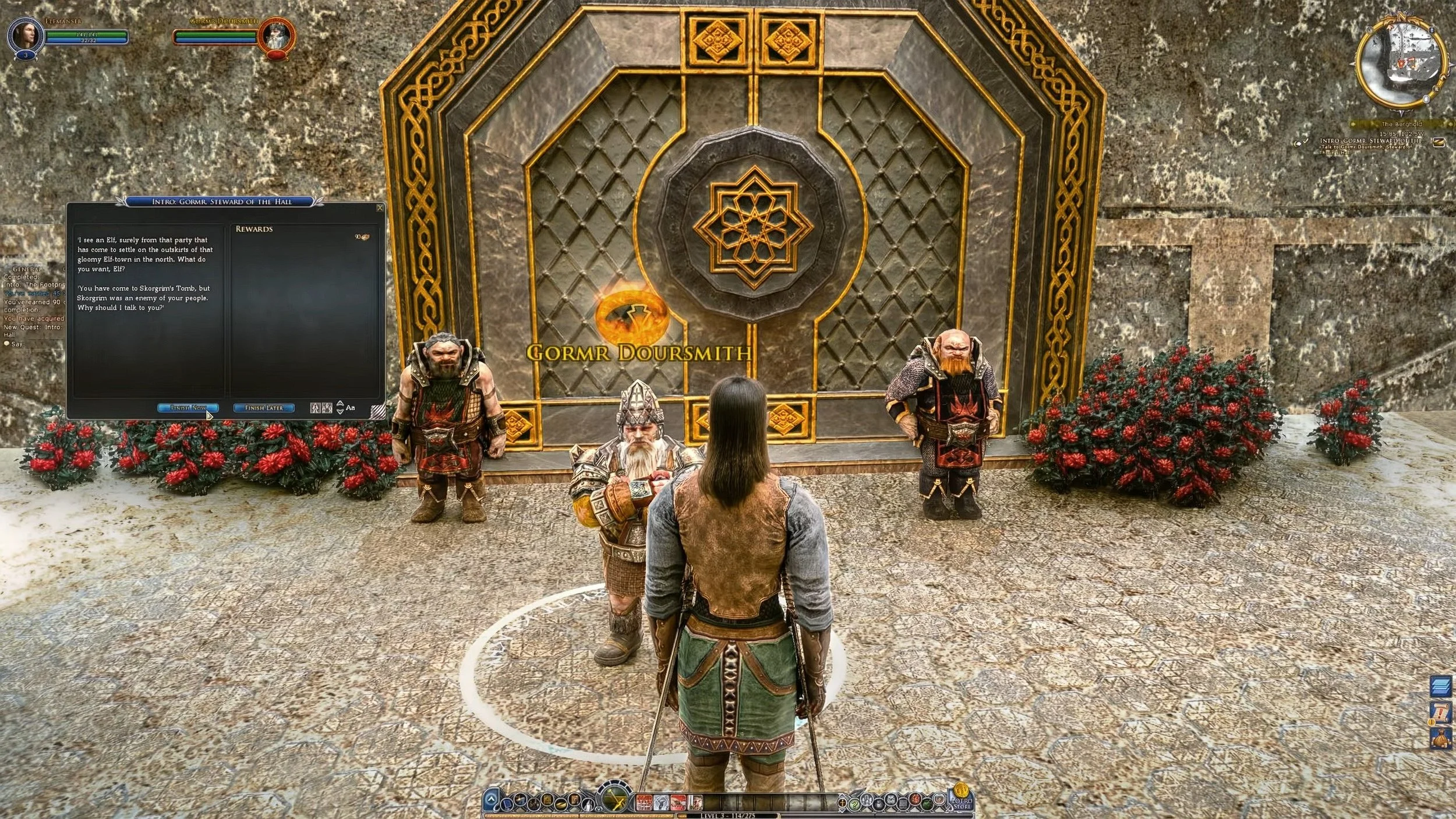
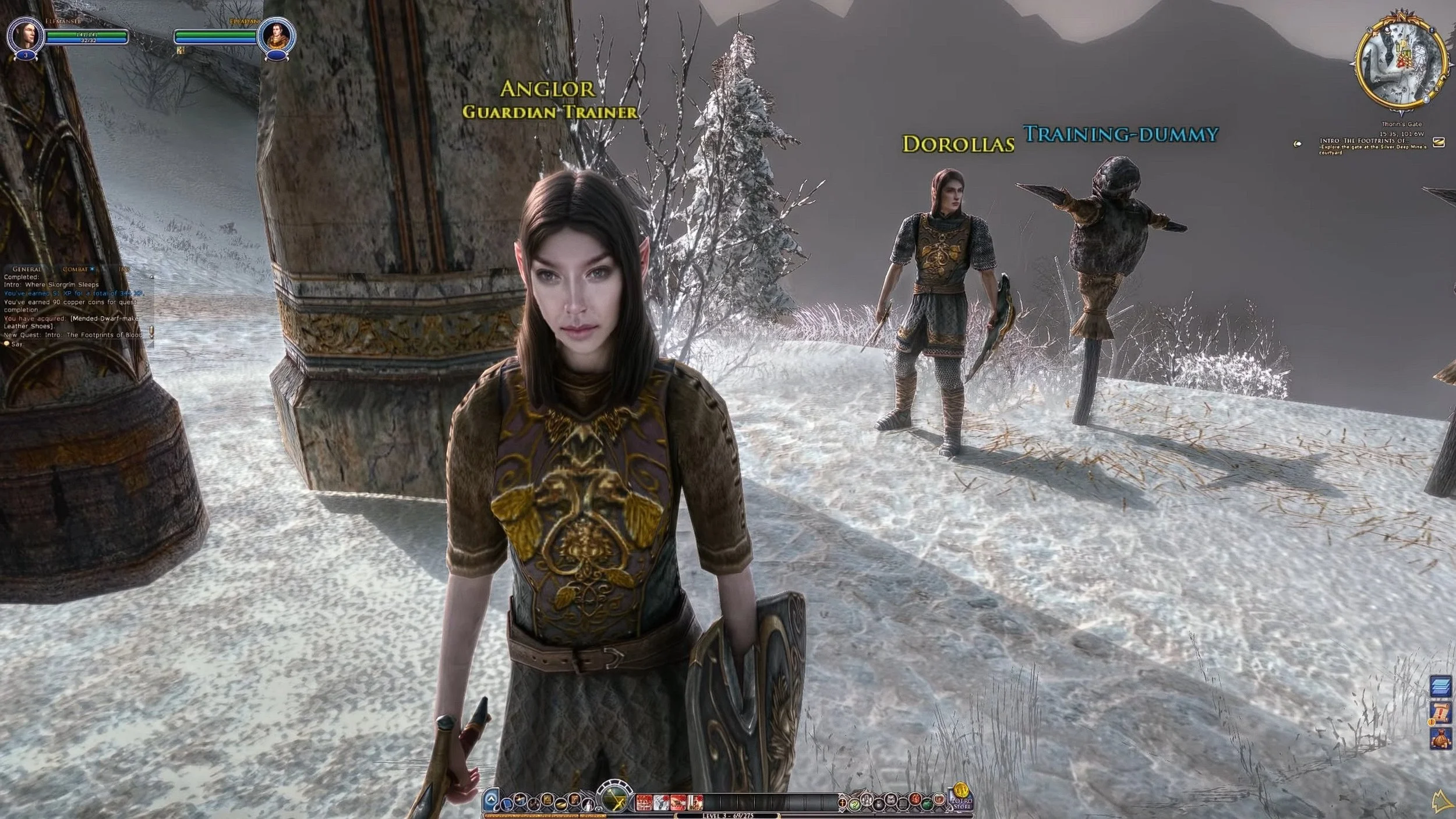
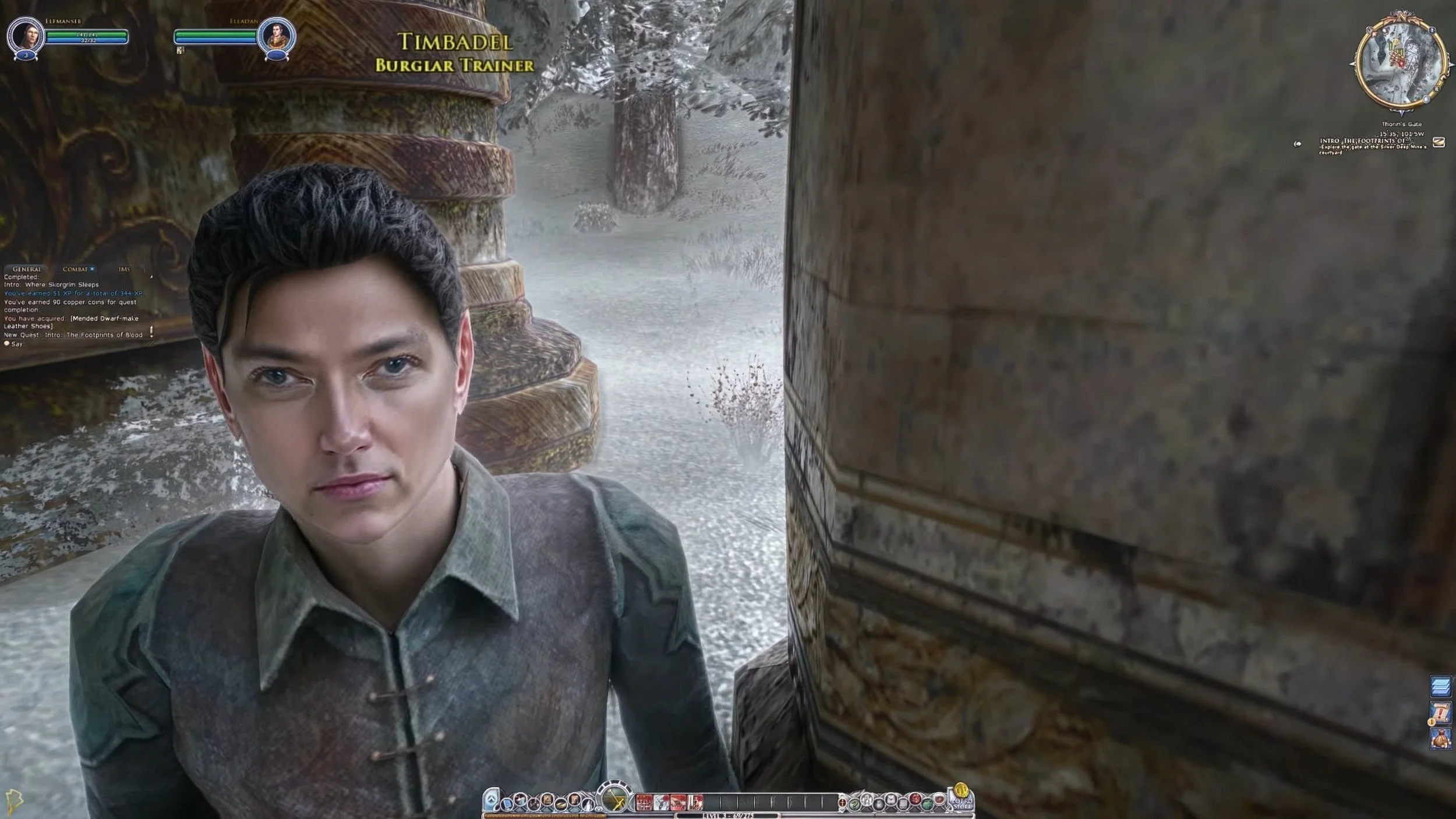
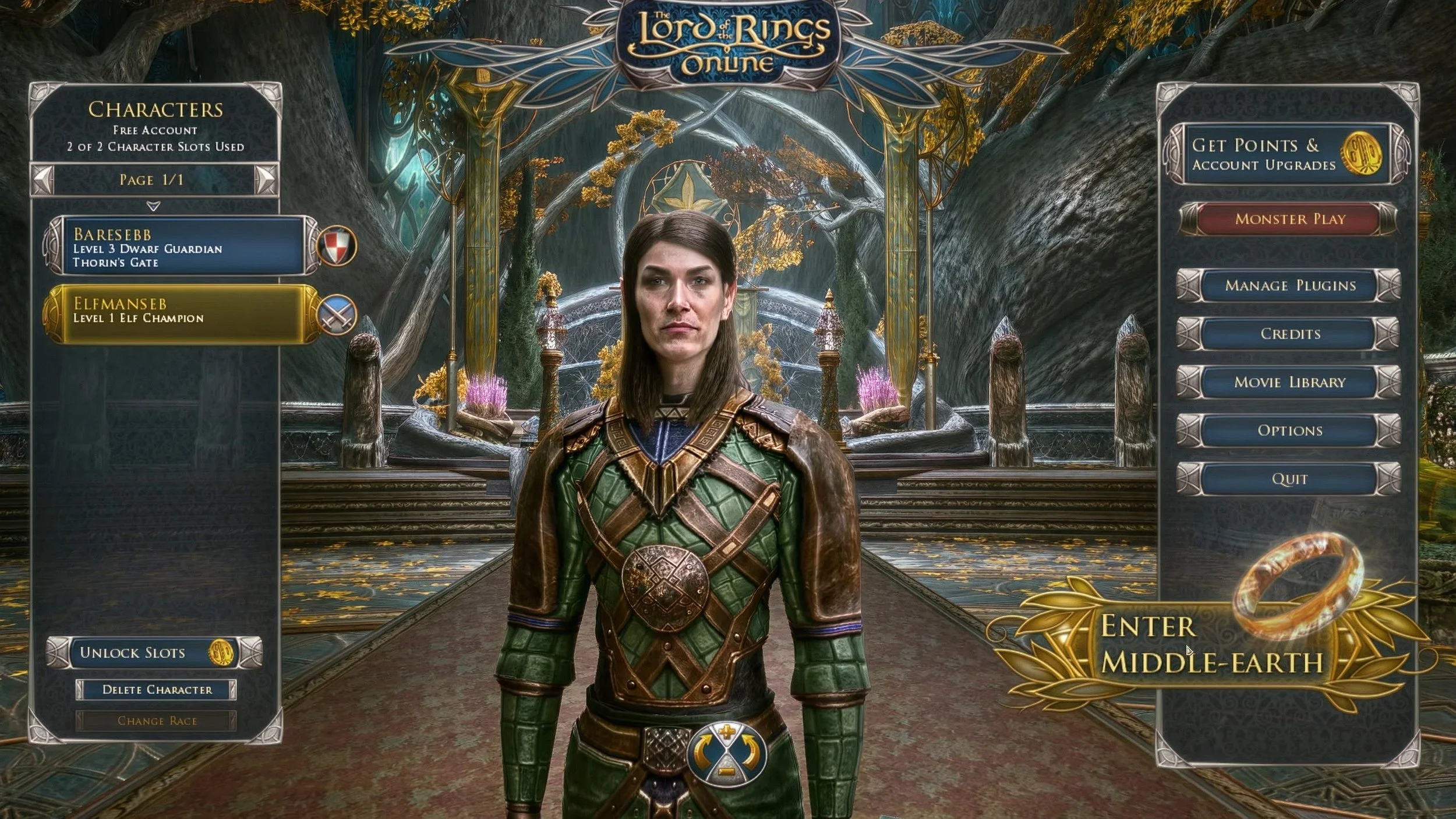
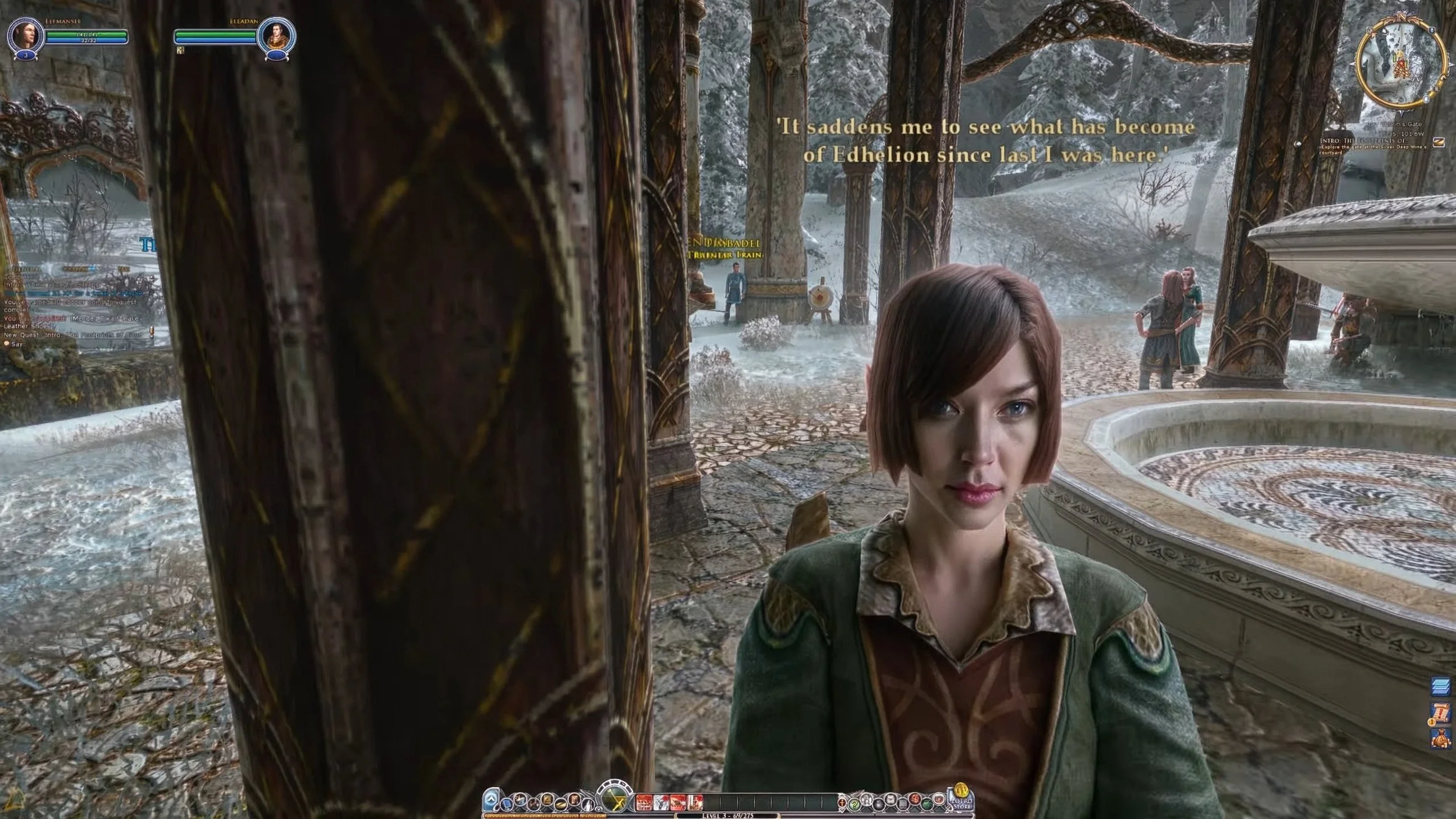
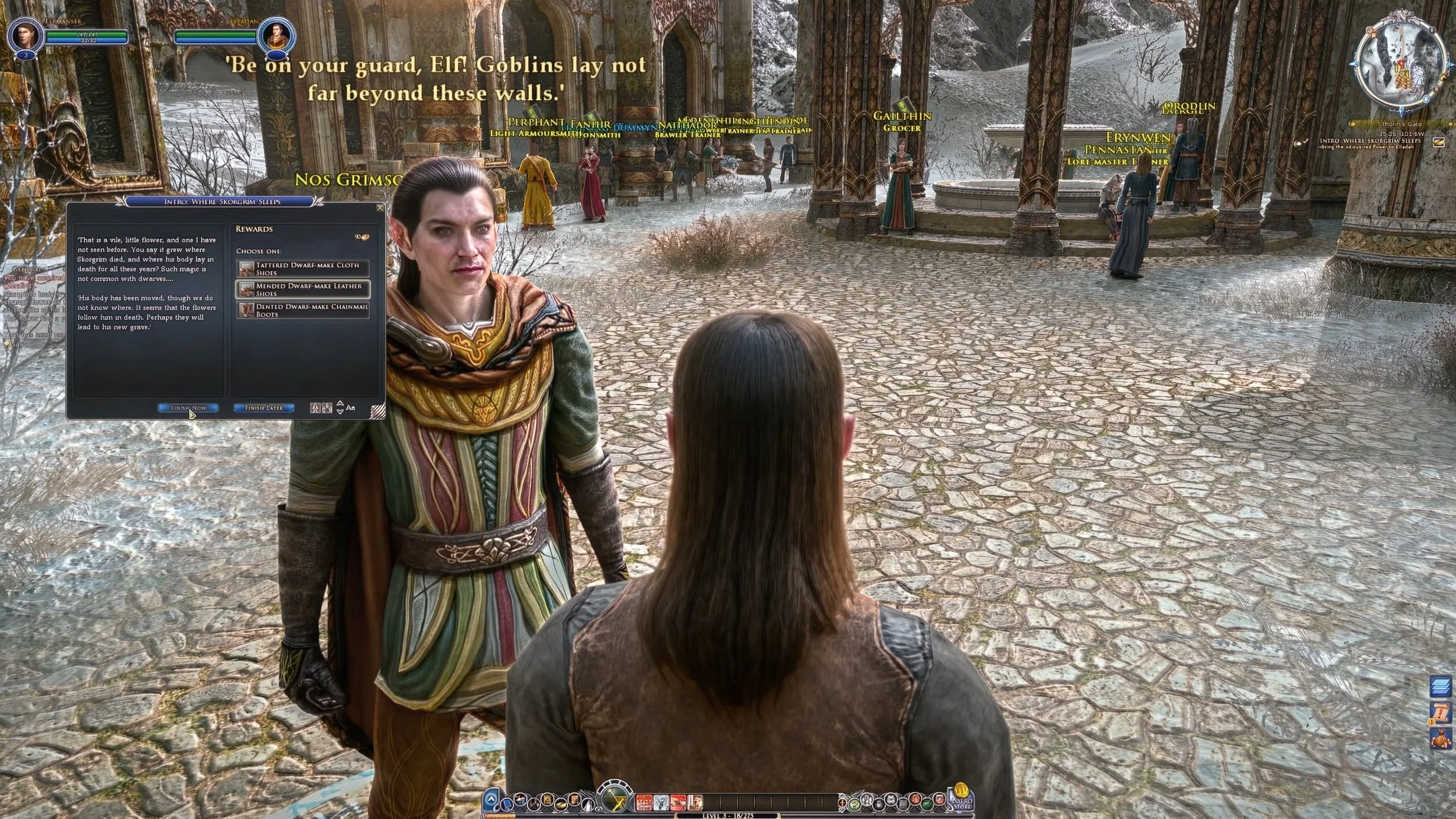
One of the things that I enjoy when playing a new video game is character customisation or character creation. I will spend hours trawling through settings, changing the most minute and consequential aspects of my avatars appearance. I am certain that there is a psychological aspect to this particular game mechanic and that it says something about you as a person. Are your creations shaped just by a need to look good in-game or is there more to it? Are they external manifestations of your sexual preferences or thoughts on body image. Do you treat them as characters from a book that exists in your mind. Do you aspire to recreate the likeness of people you know or admire? Do you strive to make your avatar look like you? Whatever the reasons, it would seem that character creation is something that a lot of gamers enjoy. Hence I am not alone in my borderline obsession. What you look like in-game is equally as important as your character’s name.
I recently tried to use DLSS 5 Manager with the MMORPG, The Lord of the Rings Online. Unfortunately, things didn’t work out. Today I undertook a similar experiment with AMD Neural Rendering, which is a broadly comparable product. Both utilities use 3D-Guided Neural Rendering, an AI technology that alters how lighting, reflections, and textures look in a game. Instead of just upscaling the image like older versions, DLSS 5 uses an AI network to instantly "re-render" lighting and material responses over the game's layout, achieving photorealistic details that would normally negatively impact a graphics card's performance. Or to put it in less fancy terms, the game graphics are enhanced and modified, although it is highly subjective as to whether the end results are an improvement. However, as a game such as LOTRO is unlikely to ever receive a major graphical overhaul, tools such as these are the nearest players will get to revised graphics.
The core game code and engine for the MMORPG, The Lord of the Rings Online, is about 24 years old. LOTRO began originally as Middle-earth Online, developed by Sierra On-Line in 1998. Turbine took over full development of the project in 2003/2004 when their parent company, Vivendi Universal Games, acquired Sierra. The content that had already been developed by Sierra was abandoned and Turbine created a new game using structural elements such as the UI and game engine from their previous release Asheron’s Call 2 from 2002. The Lord of the Rings Online: Shadows of Angmar was officially released in April 2007. Hence, the active public release code is 19 years old. Despite continuous expansion and updates, along with a recent migration to 64-bit architecture, the foundations of LOTRO retains a nearly twenty year old legacy framework. This frequently contributes to modern technical hurdles and engine constraints.
A few years ago, there was a fan created project to provide voice narration of NPC dialogue in the MMORPG, The Lord of the Rings Online. This mainly involved capturing the text in the quest dialogue windows and then sending it to OCR software, before using a text-to-speech program to read it. LOTROVoice as it was known, broadly worked but the creator stopped developing it as it proved troublesome to maintain. However, I recently discovered Khazad Voice TTS which is a separate project that does pretty much the same. I went so far as to install this “immersive AI narrator for LOTRO” after seeing a YouTube video of it being used successfully. Sadly I ran into issues configuring Khazad Voice TTS, because I have two monitors and LOTRO runs on the secondary (by my choice) and not the primary. I couldn’t “lasso” the dialogue windows in LOTRO during the calibration set up, which effectively prevented me from completing the process.
Throughout yesterday and early today, there was an issue logging in to the MMORPG, The Lord of the Rings Online. Upon starting the game launcher, it would attempt to connect to the patch server to download the latest game update. This process would start but then subsequently stall at 33%. The launcher would then attempt to reconnect to the patch server every 60 seconds but could not make any further progress. Some players found that if they left it long enough, it would eventually complete the download and the launcher then progress to the next screen where they could input their username and password. However, for the majority of LOTRO players the problem would simply persists and the launcher would be stuck in a loop. Some players attempted to reinstall the game or use the repair data facility in the launcher but neither of these proved to be successful workarounds. The patch sever needed to be bypassed to resolve the issue.
Two years ago I wrote a post about fine tuning your graphics in the MMORPG The Lord of the Rings Online. Apart from installing ReShade and using AMD Adrenalin, the options were somewhat limited, due to the game’s age and multiplayer status. Since then, I’ve been playing LOTRO with the game settings maxed out, a custom ReShade profile to make the colour palette more vivid and Radeon Image Sharpening enabled within the AMD software. The game looks clear, crisp and the draw distance is pretty good for an ageing game but I still wish the graphics could be tweaked further. Hence, I’ve been trawling the internet in a vain attempt to see if I can find any third party utilities that could be used to enhance LOTRO further. During the course of my search I stumbled across DLSS 5 Manager. This is an open-source, intelligent utility and one-click mod installer designed to inject and manage Nvidia's DLSS 5 neural rendering features, ReShade, and OptiScaler into PC games.
Are video games becoming easier? It’s a perennial subject that is frequently discussed by those who play them. Often the question of whether they have actually become easier is not the focus of the debate, as it seems to be broadly recognised that it is the case. Instead, discussion of this matter tend to drift into the rectitude of this change. Debate’s of this nature are usually awash with subjective opinions and personal preferences which are then put forward as objective facts. It’s not just a question of video games becoming easier, it’s the fact that making them easier is “wrong” and those who want them as such are “not proper gamers” etc. The hours that have been lost to this pointless, tedious debate are uncountable. However, I digress. Let us return to the matter of video games becoming easier, because although fans discuss this a lot and have plenty to say, you don’t often hear from the developers on this subject.
The next expansion for the MMORG, The Lord of the Rings Online, was announced on the 1st August, via the gaming website MMORPG.The Wolves of Mordor, which will launch later in the year, appears ambitious in scope as it will include two new game systems as well as the obligatory story update. This expansion takes place in Draugardh located in the North East of Mordor, beyond the Plateau of Gorgoroth. It includes the new zones of Heledhris, Parth Rhavas and Nan Ogol. These vary environmentally ranging from the arid, volcanic and semi-tropical. Players will encounter the Daugrim in these regions, Werewolves but not in the modern sense. This is not the lycanthropy of Eastern European legends but in the established Tolkien idiom of fell spirits inhabiting the bodies of Wolves. The region also sees the return of the Woses and players can expect to encounter Elves and scouts from Gondor. As ever with LOTRO expansions, there will be new instances as well as a raid.
I was recently perusing my archive of old blog posts, when it struck me how much I’ve written about the MMORPG genre over the years. Naturally, there was far more material from between 2008 and 2012 as that was period when I immersed myself in the genre and was very enthusiastic about it. I was at a point in my life when I had the time to dedicate to such games and I was happy to participate in the social aspect of they offered. I would regularly play through group content and spend time socialising online with fellow guild members. My experience remains a textbook example of how online games can be more than the sum of their parts and that where you are at in your life has a major impact upon your overall enjoyment. As I read though various old posts it became clear that my experiences where specific to this particular part of my life and that they cannot be repeated. My relationship with the genre is very different now and that’s fine.
Video games as a genre are extremely poor at explaining themselves. When you buy a new game you’ll often find little or no information regarding the basic systems and mechanics. The industry assumes that their customers are by default familiar with the fundamentals of playing a modern video game. Hence if a game has a tutorial, it is often based around videos rather than detailed verbal instructions. You are are briefly shown a clip of a specific move being successfully undertaken but it is seldom shown in a wider context. The industry also expects the fan community to take on the role of curating and disseminating information about its games. The move away from forums and bespoke websites to Discord highlights this. Discord is a primarily a real time communication tool and not good at maintaining a historical data archive. If you want an answer to a specific gaming question, you’ll more than likely find it on YouTube in a video made by a fellow gamer.
According to the recent “letter to the players”, Standing Stone Games will be adding a new zone to the MMORPG The Lord of the Rings Online in the second quarter of this year. Possibly around May or June. Having spent the last three expansions in the South of Middle-earth exploring the tropical Umbar and the deserts of Harad, I would certainly welcome a change of location. I have gradually warmed to these zones over the last eighteen months but I do find them so incongruous. They are so radically different to the European style content that has been the mainstay of the game for so long. Tolkien’s source text has plenty of detail regarding Eriador and Rhovanion. Information regarding Harad is scarce, hence it has afforded the developers a great deal of artistic freedom. Although exceedingly well realised these tropical zones have taken a while for me to get used to.
I’m not sure exactly when it started but I’ve recently noticed a graphical bug within the MMORPG The Lord of the Rings Online. This problem often occurs within caves or in areas where there are a lot of rocky surfaces. Hence it has become very apparent in the latest two expansions, set in Umbar and Harad. This graphical glitch causes some surface textures to appear to flash from light to dark intermittently. The resulting strobe effect is hard to ignore and very distracting. Fortunately, a quick online search showed that this is not a problem unique to my installation of LOTRO and is a known problem. Furthermore, there is a very simple workaround, which is to go into the Advanced Graphics setting and uncheck “Per Pixel Lighting”, which immediately remedies the problem. I have no idea why this has recently started to happen but at least it can be resolved.
The latest expansion for the MMORPG The Lord of the Rings Online, Kingdoms of Harad, launched on December 3rd. With this release the level cap was raised from 150 to 160. It should also be noted that the cap for virtue traits was also raised from 96 to 100. Naturally these changes meant that there is a requirement to replace all armour and jewellery once the new cap is reached. Similarly Legendary Items have to be reforged and any traceries upgraded or replaced. If you follow the Epic Story it will lead you from quest hub to quest hub. The main quest rewards, along with those from side quests will provide adequate gear as you slowly progress towards the new level cap. The new raids, instances and missions/delvings then provide a means to acquire higher quality level 160 gear. LOTRO and indeed, many other MMOs are consistent in this methodology.
It is customary in a post such as this to list the various games that I’ve played over the last twelve months and share my thoughts on them. Wider analysis of the video game industry is also de rigeur. Unfortunately, I don’t really feel disposed to do either of those two things. My thoughts on the games I’ve played have already been published and can easily be accessed via the links at the bottom of this post. As for the video game industry, it suffers the same flaws as music, TV and cinema. There is creativity and innovation out there but it is often drowned out by mainstream products which are demonstrably inferior due to their inherent mediocrity. As for the business side of things, we once again clearly see the failings of the corporate management class. Sadly, they do not face the consequences of the mistakes that they make.
Today Standing Stone Games began beta testing Update 46.1 for the MMORPG The Lord of the Rings Online. The current preview on the Bullroarer test server is mainly for the new instance cluster that comes with the Kingdoms of Harad expansion which launched a few weeks ago. However, it would appear that this latest preview has another feature or note. One that should please LOTRO players. Contrary to what a lot of people thought, myself included, SSG have been working on a scaling UI for 2K and 4K monitors and the results are now available for testing from today Monday 15th through to Friday 19th December. Until now the main workaround to the lack of UI scaling has been to use either Nvidia or AMD graphics software to upscale the game from 1920 x 1080, or a third party app such as LosslessScaling. Having an official solution is a far better option.
Kingdoms of Harad, the 13th expansion for the MMORPG The Lord of the Rings Online, was released today. Highlighting developer’s Standing Stone Games continuing commitment to this eighteen year old game. As 2025 draws to a close, I thought it would be prudent to reflect upon the current state of LOTRO and to consider what may come next year. Two words that I associated with this MMO are stable and consistent. The playerbase is loyal and dependable. Player numbers never greatly decline nor do they notably expand. LOTRO fills a very specific gaming niche and one of the reasons it retains its players is that there is no suitable alternative game. Although there is not a great deal of data in the public domain, it is generally accepted that LOTRO has an older player demographic and that many are consummate Tolkien fans.
The MMORPG The Lord of the Rings Online runs on a broad spectrum of PCs. From archaic laptops to high end gaming rigs, although it may require a bit of tweaking. At present, the optimal way to play the MMO is at a resolution of 1920x1080 (FHD) with the graphics setting maxed out. The graphics are sharp and the UI is readable. However, a growing number of gamers are now using 2K and 4K monitors. You can play LOTRO at higher resolutions such as 2560×1440 (QHD) and 3840x2160 (UHD) and the game looks great. However, the UI does not scale and so is very small on 2K and 4K monitors. The skill icons on the quickslots (shortcut bars) and the in-game text become difficult to see at these resolutions, which deters some players from using them. It is a known issue that Standing Stone Games are attempting to address but it is unlikely to be resolved any time soon.
I recently read a post on Massively Overpowered about skills rotation in the MMORPG genre. I found the subsequent discussion in the comments fascinating. Mainly because I have never used a fixed rotation of skills in any of the MMORPGs that I play. I understand the reasoning behind such things and why some players want to optimise their combat performance. Using one’s skills in a specific order to maximise damage and manage their subsequent cooldown has a logical appeal. In Star Trek Online, some players go so far as to create keybinds for their rotations and assign it to a specific hotkey, which is then continuously pressed throughout combat. However, rotations are a blunt tool that lack flexibility, often being geared towards dealing with a single target or using an area of effect skill against a larger group. They may not be the optimal approach to combat when things do not go to plan.
Tolkien enthusiasts may recollect Athlon Games, a subsidiary of Leyou Technologies, announcing that it was developing a new MMORPG, based upon The Lord of the Rings, back in September 2018. The following summer, it was revealed that Amazon Game Studios was the partner developer for the project. In late 2020, Leyou Technologies (a Hong Kong-based company), was acquired by the Chinese conglomerate Tencent. This triggered a contract clause with the license holder, Middle-earth Enterprises, allowing them to terminate the existing arrangement if a new deal could not be met. Amazon and Tencent were unable to agree upon how to proceed with the project, leading Amazon to withdraw from negotiations. The project was subsequently scrapped. No details or images of the MMO have been released.
After a six month migration period, Standing Stone Games formally closed all their legacy 32-bit game servers for the MMORPG, The Lord of the Rings Online, on the 31st August 2025. Despite this planned closure being widely discussed via the game’s official forums, professional video game websites and fan blogs, many LOTRO players were unaware of this deadline. Hence many were unable to migrate their respective alts to the new 64-bit servers. Naturally those affected by these closures were upset, especially those with longstanding characters who didn’t relish the prospect of starting from scratch with a new alt. Thankfully, SSG have been true to their word and as of today, have re-opened these “dark worlds” to character transfers. If you have an alt trapped on one of the older game worlds, then now is the time to use the transfer wizard and move them to a new active game world.
MMORPG announced earlier today and it was subsequently confirmed by Standing Stone games, that the new expansion for The Lord of the Rings Online will be Kingdoms of Harad and that it will launch later in the year. The expansion will see the conclusion of the epic Song of Waves and Wind storyline and the level cap raised from 150 to 160. There will be a new region to explore, Mûr Ghala, comprising four zones. Adagîm, Idagâl, An Shêru and Kighân. The latter contains the main trading hub of Zajâna. Players will travel into the region with Gandalf the White, along with allies of the Kindred of Coins and Mizadi as they seek to counter the regional power struggle brought about by the fall of Sauron. Canonically, this takes place three months after the destruction of the ring, hence King Elessar and Eomer are busy with domestic affairs in their respective kingdoms.
Skirmishes were added to the MMORPG The Lord of the Rings Online, in 2009 with the release of the Siege of Mirkwood expansion. Skirmishes are a repeatable and scalable combat system that allows players to access various instances for solo or group play from anywhere in the in-game world. Players can choose a Skirmish Soldier from a variety of classes to accompany them and provide healing, tank or additional DPS. On paper it’s a great system which is why many other MMOs offer something similar. I recently decided to tinker with my Skirmish Soldier build on my main character to see if I could optimise their performance. As my primary alt is a Lore-master, for the last few years I have had a Warrior as their Skirmish Soldier, to take some of the aggro from attacking mobs. I used the excellent guide by FibroJedi and swapped over a few Training and Personal Traits.
On 2nd August 2025, I was playing the MMORPG The Lord of the Rings Online, on my primary character, a level cap Lore-master. I decided to continue with one of the Allegiance Quest lines, specifically Durin’s Folk. I played through several quests and earned the appropriate tokens that advance the Allegiance system. I then handed these in to the NPC in the Hall Under the Mountain, expecting the next quest in the series “Chapter 3: Gimli’s Request” to be unlocked. An item appeared in my inventory that I then clicked on, which should have bestowed the quest. Unfortunately, nothing happened. Furthermore, the item vanished from my bag and therefore I could not attempt to click it again. I checked the LOTRO Wiki and then looked around the Hall Under the Mountain to see if any NPC had a ring icon above their head. As they did not, I surmised that this was a software glitch and logged a support ticket with Standing Stone Games.
Let’s start with a quote from a classic Walter Hill film, The Warriors. “Can you count, suckers?” says Sirus. The gang leader was referring to the number of Police in New York City at the time. Whereas, for the purpose of this post, I am referencing how many Delving Writs a player needs to acquire 6 pieces of level cap armour in LOTRO. Because, next to the gear you get from endgame instances and raids, Delving gear is a good alternative.. It is marginally better than the items you can get from lootboxes. Hence, Delving armour is a good source of high end gear for the solo player. Through the miracle of mathematics, the number of Delving writs required to acquire a full set of this armour is 9,000. At first glance, that seems like a lot. If you then do some further research to put the number in context, you realise it is indeed a lot and a substantial undertaking.
I am currently enjoying a renewed interest in the MMORPG The Lord of the Rings Online since I migrated all my characters from the old 32-bit servers to the new 64-bit replacements. I’ve created a new High Elf Lore-master on Peregrin server and am currently levelling them in a targeted play through of the Epic Story, supplemented by curated side quests. While playing recently, I realised the game UI on this alt wasn’t as I usually have it laid out. So I checked through the various documents on my PC and found a text file I had created many years ago that had a few hints and tips written down. I’ve added a few more and decided to share them as a blog post. I’m sure veteran players will be familiar with many of them but a lot of them are worth repeating. They may prove useful to those new to LOTRO or returning to the game after a long hiatus.
In mid-March, while the server migration debacle raged, I created a new alt for the MMORPG, The Lord of the Rings Online, on Peregrin server. The idea was to play casually through content focusing on enjoyment, rather than worrying about progression. I was to level at a pace that suited me and had no specific plans to develop my alt in any particular way. I have been playing LOTRO since 2008 and have a primary level-cap character that has been my main focus over the years. Hence I have previously experienced all story content from all the expansions and am therefore very familiar with what the game has to offer. Which is why I thought I’d do things differently this time. So I started my new Lore-master in Mossward in Swanfleet, the new starting area added to the game in 2022.
In massively multiplayer online games (MMOs), alts (short for alternate characters), are new characters created by a player in addition to their primary character (often called the “main”). Alts are often encouraged by developers as a means to keep players engaged with their game(s). Sometimes an MMO will actively reward the creation of alts either with access to exclusive content, or with additional skills or items previously unlocked by primary characters. As the myth that an MMO really begins at endgame still persists in gaming culture, some games sell boosts that will instantly raise the level of an alt to that of the current level cap. Creating alts is such a key aspect of the MMO genre, that some games will sell additional character slots, so that players can create further alts beyond the default amount allowed. There are many reasons why players create alts. Let us consider some.
I wrote a while ago that a lot of kinships from the MMORPG, The Lord of the Rings Online, would probably not survive the recent server migration. MMOs are social endeavours by nature, often with strong emotional ties but a lot of kinships (or guilds) have already fallen into decline, simply due to gaming entropy. Hence the migration has seen players leave existing kinships to move to the superior 64-bit servers, resulting in a lot of people who may be potentially looking for a new home. This is exactly what happened to me. I opted to move to Meriadoc server promptly, at the cost of leaving a kinship I have been a member of since 2009. However, the move presented me with an opportunity to remedy this problem myself. I subsequently set up my own kinship and decided to make it available to others.
The dust appears to have settled for the MMORPG The Lord of the Rings Online, after last month’s server transfer debacle. Despite the technical issues arising and subsequent delays to the migration timetable as well as the procurement of in-game housing, LOTRO seems to be enjoying a minor resurgence. Many former players are returning to the game and moving retired alts to new servers, due to the superior performance. The migration issues have also brought a lot of attention to this 18 year old game and it would appear there are many new players trying this Tolkien themed MMO. I was pleasantly surprised to see that a further two 64-bit servers, Grond (EU) and Sting (US), are to be added to the game to meet demand. As I predicted in my previous posts, LOTRO has a habit of bouncing back due to its unique niche in the gaming ecosystem.
It has not been a good week for the MMORPG, The Lord of the Rings Online and its developer Standing Stone Games. The migration from legacy 32-bit servers to 64-bit servers has not gone smoothly. The transfer queue was overwhelmed by the sheer number of accounts and it has taken far longer than expected to process the backlog of requests. Today has been the fifth day of waiting to see if my 3 main characters from Laurelin server have successfully migrated to their new home on Meriadoc. When I checked this morning, the transfer wizard indicated that my characters were back where they originally came from. I therefore considered repeating the entire process. However, around midday, Community Manager Cordovan indicated that SSG had caught up with transfer requests made around 8:00 AM EST on Sunday 9th March. So I decided to be patient and wait a little longer.
Hellraiser: Revival Demo
Hellraiser (1987) was one of he most innovative and intelligent horror films of the eighties, with its cerebral and sophisticated exploration of pleasure, pain and the supernatural. Sadly what was a great concept for a single film was turned into yet another horror franchise. The resulting series of increasingly inferior sequels ultimately diminished the central idea. However, in recent years several horror “brands” have found a new lease of life via the medium of video games, so the announcement of Hellraiser: Revival last summer piqued my interest. The fact that author Clive Barker was directly involved certainly raised my expectations. However, even though video games have a history of depicting sex and violence, would the medium be able to fully embrace the true nature of Barker’s original novella and original film. Having played through the newly released demo for Hellraiser: Revival, I believe the answer is a yes.
Hellraiser (1987) was one of he most innovative and intelligent horror films of the eighties, with its cerebral and sophisticated exploration of pleasure, pain and the supernatural. Sadly what was a great concept for a single film was turned into yet another horror franchise. The resulting series of increasingly inferior sequels ultimately diminished the central idea. However, in recent years several horror “brands” have found a new lease of life via the medium of video games, so the announcement of Hellraiser: Revival last summer piqued my interest. The fact that author Clive Barker was directly involved certainly raised my expectations. However, even though video games have a history of depicting sex and violence, would the medium be able to fully embrace the true nature of Barker’s original novella and original film. Having played through the newly released demo for Hellraiser: Revival, I believe the answer is a yes.
Hellraiser: Revival centres on Aidan who is in a sadomasochistic relationship with his girlfreind Sunny. Sunny has a acquired a mysterious puzzlebox called the Genesis Configuration (similar to the Lament Configurations) which intrigues her. During a sexual encounter with Aiden, Sunny cuts herself on the box, summoning the infamous Cenobites, led by Pinhead (played again by Doug Bradley). She gives herself to them in exchange for the chance to experience the pleasures of their torments. Aiden vows to rescue her but is himself captured by an arcane cult, the Scarlet Church. Their leader, Marlow, wants the Genesis Configuration back (as Sunny had stolen it) so he can use it for his own nefarious plans.
The demo starts in Aiden’s bedroom where he follows Sunny into an otherworldly, ever-shifting realm known as the Labyrinth. This zone is mainly designed to set up the story and introduce the player to the world of the Cenobites. The aesthetic is directly taken and expanded from the first two Hellraiser movies. The player uses the power of the Genesis Configuration to move objects and enable paths through the hellscape. When Aiden finally finds Sunny there is a cutscene in which she is taken by the Cenobites and he is kidnapped by the Scarlet Church. The next stage of the demo is Aiden escaping from the Scarlet Church, using resources that he finds along the way. The game is in first person perspective.
The gameplay in the Hellraiser: Revival is similar to that found in Resident Evil with respect to inventory management of bullets, medkits, bandages and weapon repair kits. You explore grim environments, hunt for keys and use passcodes to unlock doors. The lighting and camera angles, along with the environmental aesthetics are designed to build tension and psychological dread. Combat involves a mix of firearms (handguns, shotguns, SMGs) and melee weapons (sabers, machetes). The Genesis Configuration puzzlebox acts like a magical tool. You use it to manipulate the environment, rip elements out of walls and strike armored enemies. Combat is similar to that fond in BioShock. The violence and sexual content is explicit as this is a game with adult themes and is certainly not going to be to everyone’s tastes.
I played the demo at a measured pace, expecially when I was exploring the Labyrinth at the start. I was expecting to be attacked but this level is more of a narrative framing device, as well as a tutorial for the Genesis Configuratiuon. The next stage of the the demo involving your subequent escape from the Scarlet Church is also meant to orientate the player. What I’ve pleyed through so far is interesting. The game certainly captures some of the spirit of the original films. It will be interesting to see if sections of the game that take place outside of the Labyrinth can sustain as much interest. The plot does seem intriguing with the Scarlet Church using the BDSM scene and its resepctive clubs as a means for finding both victims and acolytes. The quality of the story will be an important factor in the potential success of Hellraiser: Revival.
Developer Sabre Interactive have released horror games before, including Call of Cthulhu, Evil Dead: The Game and more recently John Carpenter’s Toxic Commando. So there is clear track record of working in the genre and collaborating with established artists. The demo for Hellraiser: Revival is sufficient to arouse my interests but certainly is not a definitve means to evaluate the game. Even with some of the additonal video content that is available online, further indciating the nature of the title, there is no guarantee that it will a success. However, the current indication is that this is an interesting title and I will buy the game upon release based upon my experience so far. If it turns out that Hellraiser: Revival does not live up to expectations, I won’t shed a tear as that would be a waste of good suffering.
I started playing MMOs in late 2008 by which time the genre was clearly established and dominated by one particular title, World of Warcraft. I chose to play The Lord of the Rings Online, mainly because of my love for the intellectual property the game is based upon. I still play LOTRO today. However, I was very aware of popularity and significance of WoW at the time. It pretty much set the rules for how you design a MMO and it did much to move on from the previous gameplay parameters set by such titles as Ultima Online and EverQuest. It was also the MMO that every other developer was trying to beat. Another compelling factor regarding WoW is that everyone I knew at the time was either actively playing it or had done so at some point. It was for many gamers, the go-to title for socialising. Finally around early 2010, I tried a free trail of WoW to “see what all the fuss was about”. Simply put, I felt that it wasn’t for me.
Over the course of the last 16 years, the MMORPG Star Trek Online has changed greatly. What started as a disjointed, rushed game with unfinished systems and a lack of overall cohesion has now evolved into streamlined MMO with clearly defined systems and very strong narrative arcs. Let it suffice to say that STO makes very good use of its license and the intellectual property it is built upon. Although new content has been continuously added to STO over time and refinements are regularly rolled out, the developer’s have also removed content from the game in the past, that they feel is substandard or too dated in it presentation. Hence in October 2018 Cryptic took out the following eight missions from the game, with the proviso that they would be updated and replaced at a latter date. Until fairly recently, STO players had given up hope on this ever happening and the episodes being reinstated. Eight years is a long time.
One of the things that I enjoy when playing a new video game is character customisation or character creation. I will spend hours trawling through settings, changing the most minute and consequential aspects of my avatars appearance. I am certain that there is a psychological aspect to this particular game mechanic and that it says something about you as a person. Are your creations shaped just by a need to look good in-game or is there more to it? Are they external manifestations of your sexual preferences or thoughts on body image. Do you treat them as characters from a book that exists in your mind. Do you aspire to recreate the likeness of people you know or admire? Do you strive to make your avatar look like you? Whatever the reasons, it would seem that character creation is something that a lot of gamers enjoy. Hence I am not alone in my borderline obsession. What you look like in-game is equally as important as your character’s name.
I was playing Battlefield 6 recently and was experimenting with the mortar. If you stick with it and take some time to become familiar with its foibles, it can be an effective weapon. It can suppress the enemy, destroy equipment and provide useful cover for your own team. I remember thinking “I wonder if artillery could sustain a game on its own”. Artillery is an interesting feature in Hell Let Loose, although it is a little more complex in its game mechanics. I believe artillery is also available in Wardogs. I therefore spent a while looking online to see if there was a dedicated artillery simulator available or at least a game where it was a key feature. There nearest thing I found was Iron Nest, a dieselpunk heavy artillery game which looks interesting but isn’t quite what I seek. So I parked this idea and moved. Tonight, while perusing YouTube, I stumble across a teaser trailer for a game called Flak Simulator, currently under development by Horseman Interactive. It appears to be exactly what I am looking for.
I recently tried to use DLSS 5 Manager with the MMORPG, The Lord of the Rings Online. Unfortunately, things didn’t work out. Today I undertook a similar experiment with AMD Neural Rendering, which is a broadly comparable product. Both utilities use 3D-Guided Neural Rendering, an AI technology that alters how lighting, reflections, and textures look in a game. Instead of just upscaling the image like older versions, DLSS 5 uses an AI network to instantly "re-render" lighting and material responses over the game's layout, achieving photorealistic details that would normally negatively impact a graphics card's performance. Or to put it in less fancy terms, the game graphics are enhanced and modified, although it is highly subjective as to whether the end results are an improvement. However, as a game such as LOTRO is unlikely to ever receive a major graphical overhaul, tools such as these are the nearest players will get to revised graphics.
The core game code and engine for the MMORPG, The Lord of the Rings Online, is about 24 years old. LOTRO began originally as Middle-earth Online, developed by Sierra On-Line in 1998. Turbine took over full development of the project in 2003/2004 when their parent company, Vivendi Universal Games, acquired Sierra. The content that had already been developed by Sierra was abandoned and Turbine created a new game using structural elements such as the UI and game engine from their previous release Asheron’s Call 2 from 2002. The Lord of the Rings Online: Shadows of Angmar was officially released in April 2007. Hence, the active public release code is 19 years old. Despite continuous expansion and updates, along with a recent migration to 64-bit architecture, the foundations of LOTRO retains a nearly twenty year old legacy framework. This frequently contributes to modern technical hurdles and engine constraints.
A few years ago, there was a fan created project to provide voice narration of NPC dialogue in the MMORPG, The Lord of the Rings Online. This mainly involved capturing the text in the quest dialogue windows and then sending it to OCR software, before using a text-to-speech program to read it. LOTROVoice as it was known, broadly worked but the creator stopped developing it as it proved troublesome to maintain. However, I recently discovered Khazad Voice TTS which is a separate project that does pretty much the same. I went so far as to install this “immersive AI narrator for LOTRO” after seeing a YouTube video of it being used successfully. Sadly I ran into issues configuring Khazad Voice TTS, because I have two monitors and LOTRO runs on the secondary (by my choice) and not the primary. I couldn’t “lasso” the dialogue windows in LOTRO during the calibration set up, which effectively prevented me from completing the process.
Throughout yesterday and early today, there was an issue logging in to the MMORPG, The Lord of the Rings Online. Upon starting the game launcher, it would attempt to connect to the patch server to download the latest game update. This process would start but then subsequently stall at 33%. The launcher would then attempt to reconnect to the patch server every 60 seconds but could not make any further progress. Some players found that if they left it long enough, it would eventually complete the download and the launcher then progress to the next screen where they could input their username and password. However, for the majority of LOTRO players the problem would simply persists and the launcher would be stuck in a loop. Some players attempted to reinstall the game or use the repair data facility in the launcher but neither of these proved to be successful workarounds. The patch sever needed to be bypassed to resolve the issue.
I’ve been playing Fall Guys since its launch in early 2020, during the start of the pandemic. It is a fun, family friendly multiplayer game which is has proven popular with my grandchildren. Despite the game’s acquisition by Epic, it has maintained a sufficient level of popularity that has seen it ported to all major gaming platforms. Fall Guys is free to play but like most multiplayer games, there is a season pass and an in-game store. However, these monetised aspects are not essential to enjoy the game and the overall marketing of emotes and skins is nowhere near as invasive as it is in Roblox. In fact many of the players I see while in-game have default skins, indicating a regular casual player base. However, although game seems to be maintaining its popularity, it has several bugs that appear to be be persistent. Bugs that the developers claim have been resolved. Some can be addressed by players. Other at present cannot.
I find the concept of in-game radio stations fascinating. They’re an enjoyable aspect of open world video games and I have discovered several artists this way. They’re certainly a big deal as far as Rockstar Games are concerned, because the music selected for GTA VI is another important facet of the overall marketing campaign. So far, between two trailers and the sprawling extended look on Netflix, it has been determined that Tom Petty, the Pointer Sisters, Sexyy Red, Depeche Mode, Phil Collins, Birdman, Lil Wayne and the Bellamy Brothers are all part of the game soundtrack. That’s a very eclectic selection so far. Furthermore, there will be a 34 track album released on physical media (vinyl and CD) in conjunction with Atlantic Records.
Two years ago I wrote a post about fine tuning your graphics in the MMORPG The Lord of the Rings Online. Apart from installing ReShade and using AMD Adrenalin, the options were somewhat limited, due to the game’s age and multiplayer status. Since then, I’ve been playing LOTRO with the game settings maxed out, a custom ReShade profile to make the colour palette more vivid and Radeon Image Sharpening enabled within the AMD software. The game looks clear, crisp and the draw distance is pretty good for an ageing game but I still wish the graphics could be tweaked further. Hence, I’ve been trawling the internet in a vain attempt to see if I can find any third party utilities that could be used to enhance LOTRO further. During the course of my search I stumbled across DLSS 5 Manager. This is an open-source, intelligent utility and one-click mod installer designed to inject and manage Nvidia's DLSS 5 neural rendering features, ReShade, and OptiScaler into PC games.
Hellraiser (1987) was one of he most innovative and intelligent horror films of the eighties, with its cerebral and sophisticated exploration of pleasure, pain and the supernatural. Sadly what was a great concept for a single film was turned into yet another horror franchise. The resulting series of increasingly inferior sequels ultimately diminished the central idea. However, in recent years several horror “brands” have found a new lease of life via the medium of video games, so the announcement of Hellraiser: Revival last summer piqued my interest. The fact that author Clive Barker was directly involved certainly raised my expectations. However, even though video games have a history of depicting sex and violence, would the medium be able to fully embrace the true nature of Barker’s original novella and original film. Having played through the newly released demo for Hellraiser: Revival, I believe the answer is a yes.
Are video games becoming easier? It’s a perennial subject that is frequently discussed by those who play them. Often the question of whether they have actually become easier is not the focus of the debate, as it seems to be broadly recognised that it is the case. Instead, discussion of this matter tend to drift into the rectitude of this change. Debate’s of this nature are usually awash with subjective opinions and personal preferences which are then put forward as objective facts. It’s not just a question of video games becoming easier, it’s the fact that making them easier is “wrong” and those who want them as such are “not proper gamers” etc. The hours that have been lost to this pointless, tedious debate are uncountable. However, I digress. Let us return to the matter of video games becoming easier, because although fans discuss this a lot and have plenty to say, you don’t often hear from the developers on this subject.
Some video games lend themselves to being set aside and resumed at a later date with zero consequences. These are often casual games with no major goals other than having fun while playing them. Fall Guys is a great example of this. You have a cartoony avatar that participates in zany group races, filled with obstacles. You run, jump, climb but the controls are far from difficult. You may well become skilled but such things are mitigated by the other players as they stumble around. You’re not at the mercy of apex players or “try hards”. It is not a game about winning and mastering techniques. The fun comes from playing it and the unique experience you have each time. I’ve been playing this game, on and off, since it’s launch in 2020 and in that time I have only ever won once (winning requires you to win a series of 4 to six individual races). However, whenever I pick up my controller and play Fall Guys, I have fun and the game lifts my spirits.
I recently completed the main story in Tainted Grail: The Fall of Avalon. In total I spent about sixty hours playing the game. I began at the start of the year, then took a break for a while but returned to it recently because I wanted to see if I could unlock a specific ending. I did manage to do this. Like so many other RPGs, Tainted Grail: the Fall of Avalon has a central storyline, along with a wealth of side quests, based around factions in specific zones. I think I possibly completed about a two thirds of these. However, once I finished the main story, my interest in the game began to wane. I finally left my character in the last major quest hub in case I wish to return at a future date. I then logged out of the game and uninstalled it from my PC to free up space for whatever I was to play next. In this case its The Sinking City 2. None of this is a negative reflection on Tainted Grail: the Fall of Avalon. I enjoyed the time I spent playing this quirky RPG. I simply had my fill and left to play something else.
On Tuesday 11th April, Aspyr Media rather surprisingly re-released The Lord of the Rings: War in the North, a co-op action-RPG from 2011. This game was delisted in late 2019, possibly due to changing rights ownership or a license expiring. Hence, I was somewhat discombobulated by the return of this title to all major gaming platforms. Mind you, the Embracer Group (through its subsidiary Middle-earth Enterprises) still controls the worldwide commercial and video game licensing rights for The Lord of the Rings and The Hobbit. Furthermore they have explicitly stated that they have plans for more games. It would appear this also means re-releasing and updating old favourites. It is also worth noting that they own Aspyr Media, which is also a bit of a giveaway. Let it suffice to say that this re-release and sparked enthusiastic online debate as to whether any other he Lord of the Rings themed games from the same era will receive a similar makeover. Judging by the internet chatter, there’s potentially a market for them.
The next expansion for the MMORG, The Lord of the Rings Online, was announced on the 1st August, via the gaming website MMORPG.The Wolves of Mordor, which will launch later in the year, appears ambitious in scope as it will include two new game systems as well as the obligatory story update. This expansion takes place in Draugardh located in the North East of Mordor, beyond the Plateau of Gorgoroth. It includes the new zones of Heledhris, Parth Rhavas and Nan Ogol. These vary environmentally ranging from the arid, volcanic and semi-tropical. Players will encounter the Daugrim in these regions, Werewolves but not in the modern sense. This is not the lycanthropy of Eastern European legends but in the established Tolkien idiom of fell spirits inhabiting the bodies of Wolves. The region also sees the return of the Woses and players can expect to encounter Elves and scouts from Gondor. As ever with LOTRO expansions, there will be new instances as well as a raid.
This is a post about the power of nostalgia and how sometimes, interacting with something from your past, be it physically or mentally, can produce a very strong and tangible emotional reaction. In some instances, this can be the result of something that you have specifically set out to do. On other occasions you can wander into a sense of nostalgia purely by chance. Today I experienced a very strong sense of nostalgia while watching a YouTube video and then again when I sought to replicate what I had seen. The video showed someone installing Windows 95 on to an old 486 PC from that era. The Window’s start up sound really touched a nerve (but in a good way) and then when the guy in the video launched Space Cadet 3D Pinball, a game that shipped with the operating system, I felt a strong compulsion to track down a copy and install the game myself, thus revisiting something that was an integral part of my life in 1995.
RV There Yet? is possibly the most entertaining game I’ve never played. My vicarious pleasure regarding this title has come exclusively from watching two popular YouTubers, JackFrags and WillFromWork, play through the game over a series of videos. It has been immensely amusing to watch and I have empathised a great deal as the group of four players has struggled with the game’s unpredictable mechanics and their own team’s dynamic. I could go and buy RV There Yet? myself but I doubt if I would ever have a gaming experience anywhere close to what I’ve watched online recently. So in some respects watching these videos has been an interesting alternative as I’ve been entertained, which ultimately is the point of video games. Perhaps there is a deeper philosophical point here that the game developers should reflect upon, as they’ve lost a potential sale. However, that is separate discussion for another day.
I don’t keep up with gaming news as much as I use to but several noteworthy announcement have come to my attention of late. Firstly, there’s an expansion, Songs of the Past, coming for the Witcher III: Wild Hunt in 2027. No doubt this is to pave the way for the Witcher IV. Next, I also found out about Hand of Fate: Horde. I liked this franchise and was saddened to learn that the original studio, Defiant Development, closed. Hence is was a pleasant surprise to see this new game being developed by members of the original studio. The third announcement was regarding Guild Wars 3. A new MMORPG in active development by a major studio is no small feat and is certainly good news for fans of this franchise and the genre per se. However, once you look beyond this news this announcement raises several questions and has certainly given me pause for thought. Let us take a few moments to consider them.
Star Trek Online has many in-game systems that are common to the MMORPG genre. The reputation system is one such example. In STO there are 13 reputation factions. Once a player has reached level 50 they may start progressing through the 6 reputation tiers of each one. Players gain progression through daily projects (20 hours in duration). Hourly projects are also available though they yield less reputation advancement and are limited to three times a day. Hence 20 hour projects are consider by default the most efficient way to gain rep. Projects require 30 Faction Specific Marks (earned via various activities in-game), 15,000 Energy Credits (standard in-game currency) and 2000 Expertise points. The most efficient way to tackle the reputation grind is to build up the necessary resources in advance and then at a designated time each day, start all 13 respective projects. Upon completion projects yield a player bound lockbox containing a random space or ground weapon, a console or Elite Marks which can be used to acquire faction gear.
I was recently perusing my archive of old blog posts, when it struck me how much I’ve written about the MMORPG genre over the years. Naturally, there was far more material from between 2008 and 2012 as that was period when I immersed myself in the genre and was very enthusiastic about it. I was at a point in my life when I had the time to dedicate to such games and I was happy to participate in the social aspect of they offered. I would regularly play through group content and spend time socialising online with fellow guild members. My experience remains a textbook example of how online games can be more than the sum of their parts and that where you are at in your life has a major impact upon your overall enjoyment. As I read though various old posts it became clear that my experiences where specific to this particular part of my life and that they cannot be repeated. My relationship with the genre is very different now and that’s fine.
Creating alts is an integral aspect of the MMORPG genre. Many players will create a character of a specific class or faction, play it for a while, lose interest in it or they may decide that it is just not for them. Fortunately it is no effort at all to simply re-roll a new alt and set off once again. Furthermore, lots of players never reach level cap of the MMORPG that there playing. When the going get’s tough, so to speak, you can either soldier on for another 50 levels or simply create a new alt and return to the comfort of tried and tested content. Alts also give you the chance to secure an accolade or achievement that you previously missed. They are also of great benefit to the genres social aspects. Creating a new alt so you can play along with a friend who is just starting is great fun. Developer’s love them too as it means you’re still playing the game.
I recently took a break from Crimson Desert choosing instead to to play something familiar and easy going. As I’ve been logging into Star Trek Online daily to participate in the anniversary event, I decided to look through my various alts and see how far they had progressed through the game and what resources they had. At present I have twelve alts. My primary Captain was created in 2015 during the original Delta Recruit Event. I had previously played STO intermittently since its release in January 2010 but I never kept any of those characters. Hence this decade old Tactical Federation Captain has been my main focus when playing. The other eleven alts are the result of other recruitment events or whenever I wanted to try something different, such as playing a specific class or faction. I obviously played a lot of STO during the lockdown as several alts date from that period. Several had maximum reputation across all factions.
The action, open world RPG Crimson Desert has been patched five times since it launched on March 19th and there have also been multiple hotfixes. At first glance this isn’t anything unusual. New games have bugs and issues arise once a game is released and played across a much wider variety of hardware than in QA testing. However, if you read the patch notes that accompany these sizeable downloads it quickly becomes apparent that developer’s Pearl Abyss are not just addressing bugs and software glitches. They are actively engaging with their player base and responding to suggestions and requests from that community. Although this is not a unique approach, what is surprising is the speed and quantity in which these player driven changes are happening. There seems to be an active ongoing process to refine the game and eliminate some of its “rough edges” and the players are contributing to this process with their feedback.
According to my Steam statistics, I last played Starfield on 19th December 2023. I bought the game upon its release in September of that year and played in total for 136 hours. Starfield held my interest for three and a half month and I wrote seven blog posts about various aspects of the game. Although there were some engaging aspects to Starfield, I did feel that that the game was somewhat lacking in systems and content, at that point in its lifecycle. I also think that the marketing and player expectations associated with Starfield were overblown and unrealistic. The shadow of Skyrim looms large over all new Bethesda releases and they don’t seem able to quite recapture that magic. Hence, I inevitably drifted away from Starfield and to another game and was effectively “done” with it. I have not played the game since which seems to validate the theory that game are becoming increasingly more ephemeral.
13 days after its release, market analysts estimate that Crimson Desert has already earned $200 million across the four main platforms (PC, PlayStation 5, and Xbox Series X and S). The game is certainly proving popular among gamers with the internet awash with live streams and “let’s play” videos. However, reviews are mixed both among gaming journalists and YouTube influencers. Common complaints about the game include that it is slow to start, the controls are poorly laid out on all platforms and that developer’s Pearl Abyss have done a poor job of explaining most aspects of the game to new players. Although such criticisms are true to a degree, I think these complaints highlight how many gamers are conditioned to expect new titles to follow a specific pattern with regard to pacing, narrative exposition and learning in-game systems. A pattern that Pearl Abyss has chosen to ignore, instead favouring an old school approach.
Early on Crimson Desert, the main quest requires the player to enter a tavern and arm wrestle a particularly strong guard. The arm wrestling match consists of a quick time event. If playing on PC you have to rapidly press the “E” key which turns a power meter from white to red. Then a white dial appears above the meter with a rotating hand. When the hand passes over a segment of the dial that is marked by hatching, the player must press the “R” key. The idea being the meter filling with red is you strength building (or waning) and the “R” key prompt indicates when to try and force your opponent’s arm. You will need to to continuously press the “E” key throughout the arm wrestling match and the “R” key about 4 times to win.
Earlier this week, Nvidia posted a video featuring their latest iteration of DLSS technology (Deep learning super sampling). DLSS 5 is an AI-powered “real-time neural rendering” process and unlike previous versions that focused on improving frame rates through upscaling or frame generation, DLSS 5 uses generative AI to “infuse” frames with photorealistic lighting and material details that the game engine never actually calculated. Let us pause for a moment and consider these words. Material detail that the game engine never actually calculated. Therein lies the rub. If you watch the aforementioned video or peruse the images posted here, it is abundantly clear what the technology does.
Last night, I spent the first 45 minutes after the launch of Crimson Desert, watching the 92GB pre-downloaded game files slowly decompressing and installing. I finally launched the game at about 10:50 PM GMT. I then waited a further 5 minutes while shaders were downloaded. It took me about 15 minutes or so to read through the various game settings and choose those that are optimal for my PC. I suspect even if you have a beast of a computer, you’re still going to have to spend some time tweaking settings. As for those players like myself with a gaming rig that is somewhere in the middle of the game’s specifications, be prepared to do a lot of fine tuning both within Crimson Desert itself and your Windows settings.
Sam & Ade Go Birding
It has become a popular TV formula to find two celebrities or television personalities and put them into an informal documentary style show. While the pair nominally undertake the task at hand, the emergent banter between the two is the alleged television gold. Hence we had Mortimer and Whitehouse: Gone Fishing which became a big hit. Then there’s shows such as Extraordinary Escapes with Sandi Toksvig and Perfect Pub Walks with Bill Bailey where the presenter is joined by a different celebrity guest each episode. Again it is the off topic chats that make these shows interesting variations on pure documentaries. All of which brings me nicely to Sam & Ade Go Birding. I missed this show when it was first broadcast in the UK in April this year. I caught five minutes of a repeat recently while channel hopping and was so intrigued by the premise, I immediately went to the appropriate on demand player and watched the first episode. Over the next two evenings I watched the remaining two instalments. All of which was a wonderful change of pace from the frenetic and boisterous enthusiasm of mainstream entertainment. Two guys go bird watching. One is an expert, the other isn’t. Banter ensues along with some superb wildlife photography. This is calming, tranquil and relaxing viewing.
It has become a popular TV formula to find two celebrities or television personalities and put them into an informal documentary style show. While the pair nominally undertake the task at hand, the emergent banter between the two is the alleged television gold. Hence we had Mortimer and Whitehouse: Gone Fishing which became a big hit. Then there’s shows such as Extraordinary Escapes with Sandi Toksvig and Perfect Pub Walks with Bill Bailey where the presenter is joined by a different celebrity guest each episode. Again it is the off topic chats that make these shows interesting variations on pure documentaries.
All of which brings me nicely to Sam & Ade Go Birding. I missed this show when it was first broadcast in the UK in April this year. I caught five minutes of a repeat recently while channel hopping and was so intrigued by the premise, I immediately went to the appropriate on demand player and watched the first episode. Over the next two evenings I watched the remaining two instalments. All of which was a wonderful change of pace from the frenetic and boisterous enthusiasm of mainstream entertainment. Two guys go bird watching. One is an expert, the other isn’t. Banter ensues along with some superb wildlife photography. This is calming, tranquil and relaxing viewing.
Actor Samuel West comes from a dynasty of thespians. He has always been an avid bird watching enthusiast and has extensive knowledge on the subject, keeping journals on the subject and drawing pictures of what he’s seen. Actor and comedian Adrian Edmondson can identify a penguin but that is the extent of his knowledge of birds. The pair became friends when filming an episode of Death in Paradise several years ago. Subsequently West invited Edmondson to take part in this programme which travels between Cornwall, Norfolk and Summerset in the pursuit of “birding”.
What makes the show so entertaining is that West is a very kind, patient teacher and Edmondson is genuinely quite keen to broaden his horizons. His questions such as what’s the difference between bird watching, birding and twitching, are genuine. West is knowledgeable in a laid back way, never coming across as didactic but he certainly leans in to being a bird nerd. There is an incongruous but delightful dynamic to the pair.
The show showcases some stunning bird photography, featuring Chuffs, Spoonbills and Grebes. Edmondson is particularly captivated by a friendly Robin and discusses with West how Twitchers seek to see what doesn’t wish to be seen, when the beauty of common place birds is all around them. It’s a point that West takes to heart and it shows what a good relationship the pair have. Their travels and casual conversations with other enthusiasts along the way, do much to promote this gentle pastime and its benefits on your physical and mental wellbeing.
If you’re interested in birds or enjoy wildlife documentaries there is much to like in Sam & Ade Go Birding. However, I think that the producers are also happy to lean into the asides, banter and philosophical musing of these two. I will go so far as to say that for men of a certain age group, the personal stuff that these two discuss is CBT and I frequently found myself nodding in agreement. Show business personalities are often framed as being very superficial. These to are certainly not. They are thoughtful, introspective and like most men of their age, a little melancholic.
There are laughs along the way in Sam & Ade Go Birding but it isn’t meant to be the main theme of the show. This is about the beauty of birds, the pleasure that comes with watching them and two friends enjoying each others company and being at ease. Edmondson makes a very true and well observed comment. “I’m aware that it’s quite odd to make a new friend in later life” which certainly is my experience. It doesn’t happen often. However, I am glad he is pals with Samuel West because this unusual pair make for great television. More please.
It curious how one’s viewing habits change over time. I increasingly find myself watching and enjoying TV shows today, that I would have balked at 25 years ago. I also find that a lot of the so-called premium shows that are critically acclaimed and discussed at great length in subreddits and blog posts, hold no interest for me. This is not because they’re bad because they’re patently not. I am just overly familiar with television, the same way I am with cinema. I often spot plot devices and twists before they are revealed. I also find that many of the tropes and conceits common to TV have become boring. For example, I enjoy Reacher but the stories never place him in genuine jeopardy. It’s not as if his character is going to be killed off. So his adventures become fun but arbitrary. I also find the way stories are stretched over too many episodes and the obligatory cliffhanger ending predictable. Hence, I watch far less TV than I used to and I look for shows that engage with me in new ways.
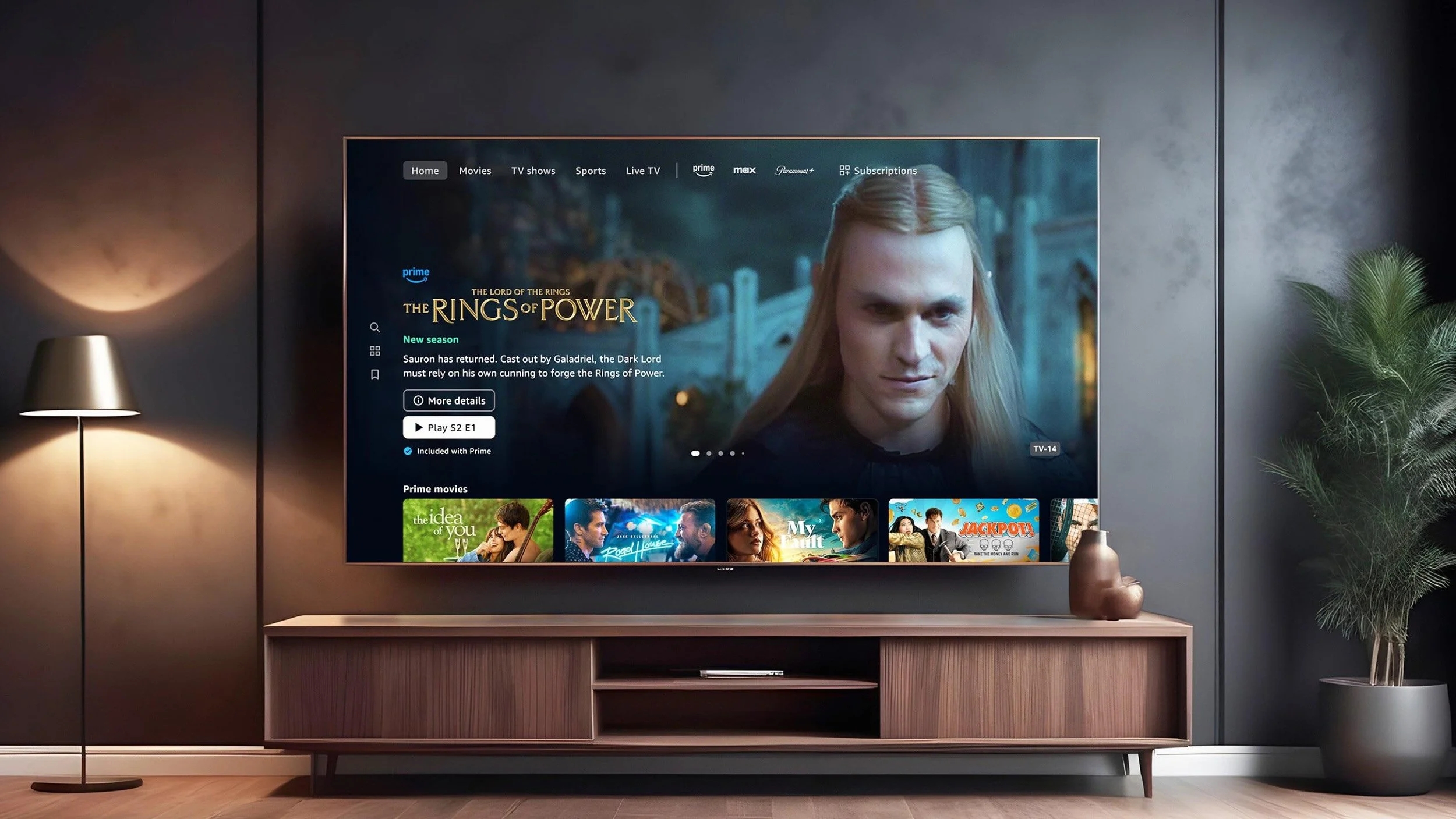
I’ve been an Amazon Prime subscriber for year. For our household the greatest value that the service offers has always been the free delivery of your orders. Every week I will buy something from Amazon which is then quickly and efficiently delivered to our door. Prime Video which is also part of the subscription, has always been an after thought. That is not to say that we don’t use the service, because we do. It is simply not a determining factor as to whether we continue to subscribe or not. Mrs P and I enjoy such shows as Reacher, Cross and The Lord of the Rings: The Rings of Power but Prime Video is not our main source of streaming entertainment. That being said, there is always something to be found on Prime. There are plenty of older shows and an adequate back catalogue of films. Then there is the fact the Prime Video as a platform can accommodate additional streaming subscriptions to services such as Shudder and Paramount +. Hence Prime Video is best described as not essential but useful.
Whenever certain TV shows gain popularity and become internet talking points, it simultaneously piques my interest while also invoking my scepticism. Popularity is not always indicative of quality. I can think of numerous UK TV shows that attract big audiences that do not appeal to me whatsoever. However, sometimes it can be enjoyable to watch something that is in the public eye and to participate in the “buzz” associated with that show. I watch Strictly Come Dancing each year for this reason and because watching people learn a skill is entertaining. However, this post is about another show. Namely The Celebrity Traitors which has just begun its second season on the BBC.
It has become a popular TV formula to find two celebrities or television personalities and put them into an informal documentary style show. While the pair nominally undertake the task at hand, the emergent banter between the two is the alleged television gold. Hence we had Mortimer and Whitehouse: Gone Fishing which became a big hit. Then there’s shows such as Extraordinary Escapes with Sandi Toksvig and Perfect Pub Walks with Bill Bailey where the presenter is joined by a different celebrity guest each episode. Again it is the off topic chats that make these shows interesting variations on pure documentaries. All of which brings me nicely to Sam & Ade Go Birding. I missed this show when it was first broadcast in the UK in April this year. I caught five minutes of a repeat recently while channel hopping and was so intrigued by the premise, I immediately went to the appropriate on demand player and watched the first episode. Over the next two evenings I watched the remaining two instalments. All of which was a wonderful change of pace from the frenetic and boisterous enthusiasm of mainstream entertainment. Two guys go bird watching. One is an expert, the other isn’t. Banter ensues along with some superb wildlife photography. This is calming, tranquil and relaxing viewing.

Star Trek is slightly older than me by 14 months. I was born on December 18th 1967. Star Trek was first broadcast in the US on 8th September 1966. Hence this show has always been part of the prevailing pop culture that surrounded me, as I grew up. I first began watching Star Trek as a young child in the early seventies. It would be repeated on the BBC in the early evening on Fridays and it became a family ritual to sit down together and watch it. As a seven or eight year old, it left a great impression upon me and was in many ways, the television highlight of the week. Star Trek along with Doctor Who certainly started my interest in science fiction. Star Trek was also one of the first shows that introduced me to tie-in marketing. I remember seeing in a toy shop, near to my school at the time, a Dinky Klingon Battle Cruiser and was flabbergasted that such a thing existed. I immediately coveted it but sadly never obtained one.
Thoughts on TV shows and my current viewing habits.
This so-called recurring post is certainly becoming quite irregular, as It’s been over a year since I wrote the last instalment of The Idiot Box. I noted back then how I was watching less television and to be frank that hasn’t really changed. Although there are plenty of well written and entertaining shows out there, too often choosing to watch one effectively places you in an opened ended social contract. For example, I watched the first season of The Agency, which is a superior espionage drama. It ended with the main story completed and a few plot lines open for another season. A second season has just been released and I have learned from a blog post by Wilhelm Arcturus, that this season ends on a cliffhanger. Oh dear. Do I really want to get on another TV show treadmill? Nope. I like TV shows that have self-contained seasons. So I guess I’ll be skipping The Agency. Shame. I liked the Jack Black cover of a U2 song that they use on the title credits.

I recently found a DVD boxset of Return to the Planet of the Apes in a charity shop which I bought for £4, which is a ridiculously cheap price. I considered it an interesting find because it was a Region 1, US copy. However, that is not so unusual these days as most DVD players are now region free and Amazon (UK) sells media from all over the world. As for the show in question, I vaguely remember Return to the Planet of the Apes being shown on UK network TV when I was a child, probably circa 1976. Back then it would usually take a year or so before US shows made it onto UK television. From a commercial perspective, the entire Planet of the Apes franchise was beginning to run out of steam. I was 8 years old at the time so had missed most of the film releases. However, I enjoyed the live action TV show hence an animated follow up had obvious appeal to a child of my age.

I have not watched as much TV as I usually do, this year. Mainly because I have become a little weary of the ways contemporary TV is produced, especially with regards to streaming shows. Due to the costs, shows such as Star Trek: Strange New Worlds only have 10 episodes per season. Simply put, the season begins to hit its stride and then is abruptly over. This problem (if you see it as such) is then further compounded by there being a significant wait between seasons. In the case of STSNW it was two years between season two and season three. Not all shows fall foul of this. Apple TV produces two seasons of the excellent espionage drama Slow Horses at a time, ensuring a prompt release schedule. However, even this has issues. Due to the complexity of the plots of many contemporary TV shows, something that is a marketing point, some viewers cannot remember the plot after a twelve month hiatus. Network TV shows seldom have these issues with each season being 20 plus episodes long and story arcs that are seldom as complex.

Strictly Come Dancing remains the BBC’s flagship light entertainment show for Autumn. Despite controversy and scandal, the show bounced back last year and firmly re-established itself as the “feel good, family show” it has always claimed to be. Blind comedian Chris McCausland becoming the 2024 champion certainly validated the show’s commitment to diversity and inclusion and helped place Strictly (as it is known to its fans) back on its cultural pedestal. I’m sure those involved in the production of the show breathed a sigh of relief when the season ended on such a positive note, eclipsing the negative press that had been ever present last summer. Second chances and opportunities for a “course correction” are few and far between these days. Especially when you have elements of the UK press waiting with bated breath and hoping that you’ll fail.
Treasure Island In Outer Space is a curious Italian television production from 1987 starring Anthony Quinn and Ernest Borgnine. It also features numerous international actors better known for their work in cult and exploitation films, such as Bobby Rhodes, David Warbeck and John Morghan. Directed by Antonio Margheriti (AKA Anthony Dawson), famous for such films as Killer Fish (a cash in on Piranha) and The Last Hunter (a Vietnam exploitation epic), Treasure Island In Outer Space is a faithful adaptation of Robert Louis Stevenson’s classic novel. The screenplay by Renato Castellani and Lucio De Caro draws heavily from the source text, maintaining character names and original dialogue. However in updating the material to a futuristic setting, the script is littered with the worst kind of eighties sci-fi clichés. We are subjected to sonic trains, anti-gravity rays and the usual buzzword driven faux science.

Thoughts on TV shows and my current viewing habits.
I last wrote a blog post in this series back in February 2022. Then for various reasons, I stopped. Possibly because my relationship with TV has changed in recent years. It’s fair to say at present that viewers are spoilt for choice. There are lots of very good shows around. Conversely, there is also a lot of bland, generic, filler as well. I appreciate that not every television series has to be an industry milestone and there are times when I’m content to watch undemanding content. However, I am very protective of how I spend my leisure time at present. I am not prepared to sink 6 or 8 hours into a show that is just “okay”. Hence I’m becoming very particular about what I watch. If something isn’t working for me in any fashion then I just abandon it and am happy to do so.
The seventies was an interesting time for UK genre television. Despite small budgets and often low key visual effects, there was no shortage of good ideas and creativity. Sapphire & Steel is a prime example of a show couched in a high concept, produced on a shoestring. It also credits its audiences with some degree of intelligence. Rather than spoon feeding the narrative in a didactic manner, it hints and implies, then leaves the rest to its viewers imagination. Created by Peter J. Hammond, a veteran TV writer, Sapphire & Steel centres on a pair of interdimensional operatives named Sapphire and Steel. They are two of a number of elements that assume human form. Over the course of three seasons little is revealed about the pair but they appear whenever there is any anomalous temporal activity. Time itself is portrayed as a sentient and malignant force that seeks to make incursions into the present reality, through weaknesses in the fabric of space.
Season 2 of Andor has received praise from both critics and fans alike. It finally seems to have put to bed the common argument that Star Wars as a franchise has traditionally been light on narrative depth, character development and the exploration of the themes that its main story is predicated upon. Andor shows the realities of opposing authoritarian regimes and exists within shades of grey, rather than purille, binary positions. Many have drawn parallels with the current state of geopolitics, especially that of the United States. I certainly found the second season of Andor to be engaging and thought provoking. I also enjoyed the performances of many of the British actors who by default are cast in all the major Empire roles. I thought Anton Lesser was especially noteworthy as a senior officer in the Imperial Security Bureau.
If you don’t want to pay for streaming services, or premium digital satellite and cable content, then your choice in the UK is somewhat limited. You can receive all “free to air channels”, IE the ones that have advertising, via the digital terrestrial platform Freeview. Most UK televisions have Freeview access built in. Alternatively, the same selection of channels are available via the digital satellite platform Freesat. You can also buy either Freeview or Freesat digital video recorders and require only a rooftop aerial or satellite dish respectively to access these platforms. Most DVRs come with additional IPTV functionality built in along with the most popular streaming apps, so additional subscription services can be added if the viewer so desires. Freeview and Freesat carry a mixture of high definition and standard definition channels. Internet based services offer 4K content.
When I started writing this post it was intended to be about changing from one UK TV provider to another. However, I became concerned that there was a need to provide some sort of historical context, because I wasn’t sure whether all readers would be familiar with how television is provided here. The next thing I know, I’ve written a potted history of public and commercial broadcasting in the UK and the resulting post has become somewhat lengthy. So I have decided to split the text into two halves. The first being a summary of how the provision of television has changed in the UK over the course of the last fifty plus years. The second focuses more upon changes to the TV industry’s business model, consumer habits and the present status quo.

It is fair to say that we live in an age where we do not lack quality TV. There are numerous shows that have garnered critical acclaim or a strong word of mouth following that are deemed “must see” viewing. No doubt you, like myself, have a long “to do” list of programs that you need to “get round to watching” on top of those shows which are staples of your viewing regime. If you didn’t have enough programmes already to catch up with, we all have friends and family telling us about a “great show” that’s on a platform we don’t subscribe to, that we really need to see. It is quite extraordinary and a far cry from my youth when the UK simply had three terrestrial channels until satellite TV became popular in the late eighties. To paraphrase the former Prime Minister Harold Macmillan “we’ve never had it so good”.

Music by John Williams is a documentary celebration of the famous composer and his illustrious body of work. It provides some interesting biographical background information as to how the man was born into a family of talented musicians. It then traces his rise from pianist for hire to the most well known film composer today. Along the way, anyone who is anyone in film and music appears to heap justifiable praise upon him and his body of work. It also features a continuous medley of John Williams’ greatest hits, as it catalogues his work in broadly chronological order. Music by John Williams is an upbeat and positive love letter to the composer and exactly what you would expect, when you consider that the documentary was produced by his friends and peers.

Tonight’s results for week 5 of Strictly Come Dancing (season 22) have once again demonstrated that this show is more than just a dancing competition to UK viewers. If it were just a case of determining who are the best dancers, then JB Gill would not have been in the dance off. The judges may well see things exclusively in such terms but the public clearly do not. I last wrote about this phenomenon in 2019 and I think it appropriate to raise the subject again as this season of Strictly seems to be bucking past trends and I suspect we may be in for further upsets in the run up to the season finale. Broadly speaking, the public usually tends to vote in a manner similar to the official leaderboard. Hence, those who score the lowest usually end up in the dance off. Occasionally an underdog will be championed and kept on the show but that trend seems to have lost its novelty in recent years. This season appears to be quite different.

I make no bones about the fact that I watch Strictly Come Dancing every year. For those who live outside of the UK, this is the original version of the dancing reality show that you probably know as Dancing With the Stars in your country. It is still a big deal in the UK as far as TV ratings go, getting audiences on average of 6.6 million viewers. There are many aspects of the show that are textbook examples of prime time, popular entertainment but I like it because the “celebrities” that take part are ultimately learning a skill that is genuinely difficult. The latest season of Strictly, as it is known to its fans, is especially interesting as the BBC had a major PR problem earlier in the year, where several previous participants made allegations of bullying and abuse about their pro-dancer partners. An investigation is still ongoing and in the meantime, the two professional dancers that were named have withdrawn from the show. Hence everyone involved with the latest season are all on message, stating that it’s “all about having fun”.
Watching TV was a far more communal activity in my youth. Families sat and watched specific shows or sports together. “Appointment TV” had its benefits not only for TV ratings but for advertising revenue. Although audiences may have grown over the years, they have also become more fragmented and compartmentalised. Smaller market shares have therefore made advertising far more pervasive. Even big streaming platforms are feeling the squeeze with declining subscribers and therefore introducing advertising on lower tier tariffs. Many catch up services also rely on advertising. However, viewers can always pay a fee if they wish to dispense with it. Another foible of modern digital television is poor picture quality Many smaller digital channels broadcast in standard definition. The source material has often been converted between different picture formats and has been cropped to suit a 16:9 screen. This results in low definition picture quality, with weak colours and a lot of digital artefacts.
I recently visited my local branch of the British Heart Foundation. This is a chain of UK charity shops that sell previously owned furniture and electrical goods, all of which are certified to be in good working order. It’s one of the few places where you’ll still find old school CRT televisions. These mainly come from house clearances. On this occasion, a particularly bulky model from the early 2000s was on display and despite its age, it still had a good, clear picture. I spoke to a member of staff and apparently these TVs are still popular with gamers who buy them for use with retro video games consoles. I felt especially nostalgic for this particular ageing Sony TV, because Mrs P and I had once owned a similar model. We bought it from a local department store (which no longer exists) and I remember it took two robust gentlemen to deliver it and install it.

We all knew it had to happen sooner or later. According to reports, Lucasfilm is planning to reduce its Star Wars related output on Disney+. Specifically, from 2025 there will be only one live-action television series per year. For comparison, Disney+ commissioned three shows in 2022 and two shows in both 2023 and 2024. It should be noted that this reduced output doesn’t include animated shows. It would appear that senior management at Disney have finally figured out something most of us have known for a while. That saturating the market with content based upon a specific intellectual property, is ultimately detrimental to its popularity and financial viability. To use an old adage “familiarity breeds contempt”. At present, hardcore fans are “unhappy” with the way the IP is being developed, while casual fans are somewhat burned out by the excess of content and its varying quality.

Two years ago, The Lord of the Rings: The Rings of Power premiered on Amazon Prime to mixed reviews and a tedious and predictable internet brouhaha. I have no interest in that debacle as I consider it spurious, to say the least. Representation is a commercial imperative for any big budget television production. As for any deviation from the established canon, that’s due to the show being an “adaptation” of Tolkien’s work. At no point were viewers promised a literal interpretation of the source text. Therefore I am only interested in legitimate critiques of the show based upon its production, writing and acting. As far as I’m concerned, the first season was broadly entertaining and had outstanding production values. Overall I enjoyed The Lord of the Rings: The Rings of Power as an exciting and inventive take on Tolkien’s legendarium. Hence, I have been looking forward to the second season, which began today.

Ghostwatch is a controversial British horror “mockumentary” produced by the BBC that was first broadcast on October 31st 1992. Written by Stephen Volk and produced by Ruth Baumgarten it is now considered a milestone in UK broadcasting. This was mainly due to the strong reaction it provoked from the public, many of whom failed to grasp that it was a drama. At the time it raised serious questions about responsible programming and caused a furore in the British press. It has curiously never been shown since by the BBC. Ghostwatch remains a talking point to this day and is a text book example of the power of television as well as the publics enduring belief in the supernatural.
Ronald Erle Grainer (11 August 1922 – 21 February 1981) was a prolific Australian composer who is best remembered for his work in the United Kingdom during the sixties and seventies. He wrote numerous notable scores and theme music for several iconic television shows such as Doctor Who, Steptoe and Son and Tales of the Unexpected. He also composed the soundtrack for several major motion pictures such as Some People (1962), The Assassination Bureau (1969) and The Omega Man (1971). Grainer relocated to London from Australia in 1952 but it was not until 1960 that he gained critical success after writing the music for the popular TV show Maigret. He subsequently received an Ivor Novello award for “Outstanding Composition for Film, TV or Radio”.

Anyone who writes regularly, sooner or later will have the following epiphany. The realisation that the post you consider your best work seldom finds an audience. Furthermore, the most inconsequential, disposable things that you have written on a whim, will often end up being the one article that gets a big response. It can be very frustrating but it is a reality of writing. It is with that idea in mind, I wish to move on to the matter of “Walter Watches”. In late March 2019, I took a picture of Walter sitting in his chair, watching a classic episode of The Twilight Zone. I subsequently Tweeted this image along with a descriptive caption. This gained a number of “likes” and retweets, so a day later I posted another. This time Walter was watching the film Krull (1983) and I added a humorous caption. Let’s just say I got more of a response for that one Tweet than I had for anything else I had posted over the previous nine years when promoting a blog post.
I was seven when The Six Million Dollar Man was first broadcast in the UK in late 1974. As a young and impressionable child, who was already fascinated by Doctor Who, Star Trek (TOS) and the films of Ray Harryhausen, this show was essential weekly viewing. I believe for the first couple of seasons, we sat and watched it as an entire family. Television was less sophisticated back then and dominated by sitcoms, police procedurals and traditional dramas. So a weekly show blending the espionage genre with science fiction themes was revolutionary. It also inspired a generation of school kids to run around the playground in “slow motion” and give themselves hernias as they attempted to lift heavy objects. And don’t get me started on the range of Steve Austin toys. One had a “bionic eye” which meant it had a lens in the front of the action figure’s face and you could look through the back of his head like a telescope. What a time to be alive!

Despite being an analysis of the past there is a portentous air about Ken Burns and Lynn Novick’s Prohibition. A fascinating five-and-a-half-hour documentary produced for PBS in 2011. The history of this disastrous experiment, the banning of alcoholic beverages, is a textbook example of how the transactional nature of US politics can be effectively used upon “wedge” issues. Prohibition follows the format and style of Burns previous documentaries such as the Civil War (1990) and The War (2007) with the wider subject broken down and analysed according to protagonists, events and the political background. Specific historical figures and key players are followed throughout the documentary’s narrative, giving viewers a sense of focus. Hence we meet the hatchet-wielding Carrie Nation, Wayne Wheeler from the Anti-Saloon League and media savvy gangsters like Al Capone. It is interesting to note that some themes continue from Burns’ previous work, such as the political and cultural conflict between native-born Americans and European immigrants. The rural heartlands versus the big cities.
Andor is not like other entries in the Star Wars canon. It explores the human, social and political consequences of rebelling against an oppressive, totalitarian regime. The writing is intelligent and well observed, choosing to focus on the average citizens of the Empire and the nature of their daily lives. Andor also explores the ineffectual politicians and the way the senate are self serving and ultimately impotent. The Emperor is remote and instead we see how Imperial colonialism works at a grassroots level. It is an all too familiar depiction, born out of historical fact, such as Vichy France during World War II. Petty thugs and aspiring psychopaths happily align themselves with their Imperial overlords and actively oppress their own people. As for the Empire, and in particular the ISB (Imperial Security Bureau) it is rife with infighting, personal fiefdoms and all the flaws of similar institutions from the real world.
Having watched the first two episodes of The Lord of the Rings: The Rings of Power, I wish to express my thoughts on what I’ve seen and my overall impressions so far. I do not think it would be fair to frame this post as a review as the two episodes only constitute 25% of the show’s total content. A formal review of the first season seems more appropriate when I have seen it in its entirety. Before I begin commenting on specific points about the two premier episodes, I wish to point out that I have no problem with “representation” and have expressed my thoughts on this matter in a previous post. It also covers the matter of “adaptation” and how complex texts can at times require augmenting to be made accessible to wider audiences. Hence those viewers who want 100% canonical purity are unrealistic in their expectations. Objections based in racism and sexism can simply be ignored. NB I shall endeavour to keep my thoughts spoiler free.
LOTRO: Game Difficulty and Market Forces
Are video games becoming easier? It’s a perennial subject that is frequently discussed by those who play them. Often the question of whether they have actually become easier is not the focus of the debate, as it seems to be broadly recognised that it is the case. Instead, discussion of this matter tend to drift into the rectitude of this change. Debate’s of this nature are usually awash with subjective opinions and personal preferences which are then put forward as objective facts. It’s not just a question of video games becoming easier, it’s the fact that making them easier is “wrong” and those who want them as such are “not proper gamers” etc. The hours that have been lost to this pointless, tedious debate are uncountable. However, I digress. Let us return to the matter of video games becoming easier, because although fans discuss this a lot and have plenty to say, you don’t often hear from the developers on this subject.
Are video games becoming easier? It’s a perennial subject that is frequently discussed by those who play them. Often the question of whether they have actually become easier is not the focus of the debate, as it seems to be broadly recognised that it is the case. Instead, discussion of this matter tend to drift into the rectitude of this change. Debate’s of this nature are usually awash with subjective opinions and personal preferences which are then put forward as objective facts. It’s not just a question of video games becoming easier, it’s the fact that making them easier is “wrong” and those who want them as such are “not proper gamers” etc. The hours that have been lost to this pointless, tedious debate are uncountable. However, I digress. Let us return to the matter of video games becoming easier, because although fans discuss this a lot and have plenty to say, you don’t often hear from the developers on this subject.
Senior World Designer Matt Elliott for the MMORPG, The Lord of the Rings Online, made a comment recently on the game’s official forums, addressing this subject from an insider’s perpsective. On a thread titled Why is LOTRO Normal Difficulty So Easy he responded “short answer, the market changed. What players of MMOs (and gaming in general) expected for average effort to defeat mobs in combat changed and as a result, by not meeting that expectation, players left. LOTRO launched in a very transitional time for the genre and in gaming. Gaming just a couple of years prior was considered a ‘hardcore’ hobby — only the nerdiest of the nerdiest would dare to tackle endgame content. During that time in gaming culture, the tolerance for a more generally challenging or time consuming experience was higher. As gaming became more mainstream, the tolerance for that kind of difficulty or time-to-defeat dropped significantly.”
The comment has been met by a variety of responses on the forum. Again, no one is really debating whether such a change has taken place, most replies simply explore the reasons for such a change and whether it has been well received or not. However, for me I find a public declaration about the nature of market forces and their impact upon game design was quite reassuring. As it is a welcome reminder that video games as well as being popular entertainment and sometimes even art, are also commercial prodcuts. They exist to meet a customer need and make money. This is something that can be conspicuously overlooked by the most ardent fans. Their emotional connection to the games that they play are framed more as a parasocial relationship with the developers, rather than that of a customer. I’ve made this point many times over the years, yet so many gamers see video games in a different light to other products that they buy.
Difficult games have their fans and there is certainly a market for them. One only has to consider Dark Souls and the sub-genre that it has spawned to see the commercial success. However, there is a distinct difference between appealing to a sepcific section of the market and the wider market per se. It is there where casual, easier games exist and thrive. MMOs in particular are a niche game genre and are not likely to gain traction with a larger audience anytime soon. It is one of the reasons why the announcement of Guild Wars 3 is so interesting. Existing players of Guild Wars 2 cannot sustain the development and marketing costs of its sequel alone. All too often this is the sort of erroneous assumption that many gamers make. That they are the sole intended market. Guild Wars 3 will need to appeal to a broader playerbase and will therefore have to make design concessions to do so. The overall status quo for this franchise will change and not everyone will like that.
With regard to Matt Elliott and LOTRO, I’m sure his wise words will fall on deaf ears in some quarters of the fan community. There will always be those who resist change. However, I can see why people may object in principle. You like a product the way it is and it is subsequently changed without your consent or consultation. Hence I would argue that you are not compelled to embrace change willingly or to extol its merits if you do not wish to. But you must acknowledge its inneveitable nature and recognise that it will happen. As for LOTRO, its finacial future is not one of growth but of maintaining the existing staus quo and maintaining its core playerbase. Hence I do not see that game becoming any easier or harder. Furthermore, the recent addition of users being able to increase the difficulty of PVE content via scaling buffs effectievly addreses the issue. Hence the difficulty debate is mainly one of nostalgia for this game
One of the things that I enjoy when playing a new video game is character customisation or character creation. I will spend hours trawling through settings, changing the most minute and consequential aspects of my avatars appearance. I am certain that there is a psychological aspect to this particular game mechanic and that it says something about you as a person. Are your creations shaped just by a need to look good in-game or is there more to it? Are they external manifestations of your sexual preferences or thoughts on body image. Do you treat them as characters from a book that exists in your mind. Do you aspire to recreate the likeness of people you know or admire? Do you strive to make your avatar look like you? Whatever the reasons, it would seem that character creation is something that a lot of gamers enjoy. Hence I am not alone in my borderline obsession. What you look like in-game is equally as important as your character’s name.
I recently tried to use DLSS 5 Manager with the MMORPG, The Lord of the Rings Online. Unfortunately, things didn’t work out. Today I undertook a similar experiment with AMD Neural Rendering, which is a broadly comparable product. Both utilities use 3D-Guided Neural Rendering, an AI technology that alters how lighting, reflections, and textures look in a game. Instead of just upscaling the image like older versions, DLSS 5 uses an AI network to instantly "re-render" lighting and material responses over the game's layout, achieving photorealistic details that would normally negatively impact a graphics card's performance. Or to put it in less fancy terms, the game graphics are enhanced and modified, although it is highly subjective as to whether the end results are an improvement. However, as a game such as LOTRO is unlikely to ever receive a major graphical overhaul, tools such as these are the nearest players will get to revised graphics.
The core game code and engine for the MMORPG, The Lord of the Rings Online, is about 24 years old. LOTRO began originally as Middle-earth Online, developed by Sierra On-Line in 1998. Turbine took over full development of the project in 2003/2004 when their parent company, Vivendi Universal Games, acquired Sierra. The content that had already been developed by Sierra was abandoned and Turbine created a new game using structural elements such as the UI and game engine from their previous release Asheron’s Call 2 from 2002. The Lord of the Rings Online: Shadows of Angmar was officially released in April 2007. Hence, the active public release code is 19 years old. Despite continuous expansion and updates, along with a recent migration to 64-bit architecture, the foundations of LOTRO retains a nearly twenty year old legacy framework. This frequently contributes to modern technical hurdles and engine constraints.
A few years ago, there was a fan created project to provide voice narration of NPC dialogue in the MMORPG, The Lord of the Rings Online. This mainly involved capturing the text in the quest dialogue windows and then sending it to OCR software, before using a text-to-speech program to read it. LOTROVoice as it was known, broadly worked but the creator stopped developing it as it proved troublesome to maintain. However, I recently discovered Khazad Voice TTS which is a separate project that does pretty much the same. I went so far as to install this “immersive AI narrator for LOTRO” after seeing a YouTube video of it being used successfully. Sadly I ran into issues configuring Khazad Voice TTS, because I have two monitors and LOTRO runs on the secondary (by my choice) and not the primary. I couldn’t “lasso” the dialogue windows in LOTRO during the calibration set up, which effectively prevented me from completing the process.
Throughout yesterday and early today, there was an issue logging in to the MMORPG, The Lord of the Rings Online. Upon starting the game launcher, it would attempt to connect to the patch server to download the latest game update. This process would start but then subsequently stall at 33%. The launcher would then attempt to reconnect to the patch server every 60 seconds but could not make any further progress. Some players found that if they left it long enough, it would eventually complete the download and the launcher then progress to the next screen where they could input their username and password. However, for the majority of LOTRO players the problem would simply persists and the launcher would be stuck in a loop. Some players attempted to reinstall the game or use the repair data facility in the launcher but neither of these proved to be successful workarounds. The patch sever needed to be bypassed to resolve the issue.
Two years ago I wrote a post about fine tuning your graphics in the MMORPG The Lord of the Rings Online. Apart from installing ReShade and using AMD Adrenalin, the options were somewhat limited, due to the game’s age and multiplayer status. Since then, I’ve been playing LOTRO with the game settings maxed out, a custom ReShade profile to make the colour palette more vivid and Radeon Image Sharpening enabled within the AMD software. The game looks clear, crisp and the draw distance is pretty good for an ageing game but I still wish the graphics could be tweaked further. Hence, I’ve been trawling the internet in a vain attempt to see if I can find any third party utilities that could be used to enhance LOTRO further. During the course of my search I stumbled across DLSS 5 Manager. This is an open-source, intelligent utility and one-click mod installer designed to inject and manage Nvidia's DLSS 5 neural rendering features, ReShade, and OptiScaler into PC games.
Are video games becoming easier? It’s a perennial subject that is frequently discussed by those who play them. Often the question of whether they have actually become easier is not the focus of the debate, as it seems to be broadly recognised that it is the case. Instead, discussion of this matter tend to drift into the rectitude of this change. Debate’s of this nature are usually awash with subjective opinions and personal preferences which are then put forward as objective facts. It’s not just a question of video games becoming easier, it’s the fact that making them easier is “wrong” and those who want them as such are “not proper gamers” etc. The hours that have been lost to this pointless, tedious debate are uncountable. However, I digress. Let us return to the matter of video games becoming easier, because although fans discuss this a lot and have plenty to say, you don’t often hear from the developers on this subject.
The next expansion for the MMORG, The Lord of the Rings Online, was announced on the 1st August, via the gaming website MMORPG.The Wolves of Mordor, which will launch later in the year, appears ambitious in scope as it will include two new game systems as well as the obligatory story update. This expansion takes place in Draugardh located in the North East of Mordor, beyond the Plateau of Gorgoroth. It includes the new zones of Heledhris, Parth Rhavas and Nan Ogol. These vary environmentally ranging from the arid, volcanic and semi-tropical. Players will encounter the Daugrim in these regions, Werewolves but not in the modern sense. This is not the lycanthropy of Eastern European legends but in the established Tolkien idiom of fell spirits inhabiting the bodies of Wolves. The region also sees the return of the Woses and players can expect to encounter Elves and scouts from Gondor. As ever with LOTRO expansions, there will be new instances as well as a raid.
I was recently perusing my archive of old blog posts, when it struck me how much I’ve written about the MMORPG genre over the years. Naturally, there was far more material from between 2008 and 2012 as that was period when I immersed myself in the genre and was very enthusiastic about it. I was at a point in my life when I had the time to dedicate to such games and I was happy to participate in the social aspect of they offered. I would regularly play through group content and spend time socialising online with fellow guild members. My experience remains a textbook example of how online games can be more than the sum of their parts and that where you are at in your life has a major impact upon your overall enjoyment. As I read though various old posts it became clear that my experiences where specific to this particular part of my life and that they cannot be repeated. My relationship with the genre is very different now and that’s fine.
Video games as a genre are extremely poor at explaining themselves. When you buy a new game you’ll often find little or no information regarding the basic systems and mechanics. The industry assumes that their customers are by default familiar with the fundamentals of playing a modern video game. Hence if a game has a tutorial, it is often based around videos rather than detailed verbal instructions. You are are briefly shown a clip of a specific move being successfully undertaken but it is seldom shown in a wider context. The industry also expects the fan community to take on the role of curating and disseminating information about its games. The move away from forums and bespoke websites to Discord highlights this. Discord is a primarily a real time communication tool and not good at maintaining a historical data archive. If you want an answer to a specific gaming question, you’ll more than likely find it on YouTube in a video made by a fellow gamer.
According to the recent “letter to the players”, Standing Stone Games will be adding a new zone to the MMORPG The Lord of the Rings Online in the second quarter of this year. Possibly around May or June. Having spent the last three expansions in the South of Middle-earth exploring the tropical Umbar and the deserts of Harad, I would certainly welcome a change of location. I have gradually warmed to these zones over the last eighteen months but I do find them so incongruous. They are so radically different to the European style content that has been the mainstay of the game for so long. Tolkien’s source text has plenty of detail regarding Eriador and Rhovanion. Information regarding Harad is scarce, hence it has afforded the developers a great deal of artistic freedom. Although exceedingly well realised these tropical zones have taken a while for me to get used to.
I’m not sure exactly when it started but I’ve recently noticed a graphical bug within the MMORPG The Lord of the Rings Online. This problem often occurs within caves or in areas where there are a lot of rocky surfaces. Hence it has become very apparent in the latest two expansions, set in Umbar and Harad. This graphical glitch causes some surface textures to appear to flash from light to dark intermittently. The resulting strobe effect is hard to ignore and very distracting. Fortunately, a quick online search showed that this is not a problem unique to my installation of LOTRO and is a known problem. Furthermore, there is a very simple workaround, which is to go into the Advanced Graphics setting and uncheck “Per Pixel Lighting”, which immediately remedies the problem. I have no idea why this has recently started to happen but at least it can be resolved.
The latest expansion for the MMORPG The Lord of the Rings Online, Kingdoms of Harad, launched on December 3rd. With this release the level cap was raised from 150 to 160. It should also be noted that the cap for virtue traits was also raised from 96 to 100. Naturally these changes meant that there is a requirement to replace all armour and jewellery once the new cap is reached. Similarly Legendary Items have to be reforged and any traceries upgraded or replaced. If you follow the Epic Story it will lead you from quest hub to quest hub. The main quest rewards, along with those from side quests will provide adequate gear as you slowly progress towards the new level cap. The new raids, instances and missions/delvings then provide a means to acquire higher quality level 160 gear. LOTRO and indeed, many other MMOs are consistent in this methodology.
It is customary in a post such as this to list the various games that I’ve played over the last twelve months and share my thoughts on them. Wider analysis of the video game industry is also de rigeur. Unfortunately, I don’t really feel disposed to do either of those two things. My thoughts on the games I’ve played have already been published and can easily be accessed via the links at the bottom of this post. As for the video game industry, it suffers the same flaws as music, TV and cinema. There is creativity and innovation out there but it is often drowned out by mainstream products which are demonstrably inferior due to their inherent mediocrity. As for the business side of things, we once again clearly see the failings of the corporate management class. Sadly, they do not face the consequences of the mistakes that they make.
Today Standing Stone Games began beta testing Update 46.1 for the MMORPG The Lord of the Rings Online. The current preview on the Bullroarer test server is mainly for the new instance cluster that comes with the Kingdoms of Harad expansion which launched a few weeks ago. However, it would appear that this latest preview has another feature or note. One that should please LOTRO players. Contrary to what a lot of people thought, myself included, SSG have been working on a scaling UI for 2K and 4K monitors and the results are now available for testing from today Monday 15th through to Friday 19th December. Until now the main workaround to the lack of UI scaling has been to use either Nvidia or AMD graphics software to upscale the game from 1920 x 1080, or a third party app such as LosslessScaling. Having an official solution is a far better option.
Kingdoms of Harad, the 13th expansion for the MMORPG The Lord of the Rings Online, was released today. Highlighting developer’s Standing Stone Games continuing commitment to this eighteen year old game. As 2025 draws to a close, I thought it would be prudent to reflect upon the current state of LOTRO and to consider what may come next year. Two words that I associated with this MMO are stable and consistent. The playerbase is loyal and dependable. Player numbers never greatly decline nor do they notably expand. LOTRO fills a very specific gaming niche and one of the reasons it retains its players is that there is no suitable alternative game. Although there is not a great deal of data in the public domain, it is generally accepted that LOTRO has an older player demographic and that many are consummate Tolkien fans.
The MMORPG The Lord of the Rings Online runs on a broad spectrum of PCs. From archaic laptops to high end gaming rigs, although it may require a bit of tweaking. At present, the optimal way to play the MMO is at a resolution of 1920x1080 (FHD) with the graphics setting maxed out. The graphics are sharp and the UI is readable. However, a growing number of gamers are now using 2K and 4K monitors. You can play LOTRO at higher resolutions such as 2560×1440 (QHD) and 3840x2160 (UHD) and the game looks great. However, the UI does not scale and so is very small on 2K and 4K monitors. The skill icons on the quickslots (shortcut bars) and the in-game text become difficult to see at these resolutions, which deters some players from using them. It is a known issue that Standing Stone Games are attempting to address but it is unlikely to be resolved any time soon.
I recently read a post on Massively Overpowered about skills rotation in the MMORPG genre. I found the subsequent discussion in the comments fascinating. Mainly because I have never used a fixed rotation of skills in any of the MMORPGs that I play. I understand the reasoning behind such things and why some players want to optimise their combat performance. Using one’s skills in a specific order to maximise damage and manage their subsequent cooldown has a logical appeal. In Star Trek Online, some players go so far as to create keybinds for their rotations and assign it to a specific hotkey, which is then continuously pressed throughout combat. However, rotations are a blunt tool that lack flexibility, often being geared towards dealing with a single target or using an area of effect skill against a larger group. They may not be the optimal approach to combat when things do not go to plan.
Tolkien enthusiasts may recollect Athlon Games, a subsidiary of Leyou Technologies, announcing that it was developing a new MMORPG, based upon The Lord of the Rings, back in September 2018. The following summer, it was revealed that Amazon Game Studios was the partner developer for the project. In late 2020, Leyou Technologies (a Hong Kong-based company), was acquired by the Chinese conglomerate Tencent. This triggered a contract clause with the license holder, Middle-earth Enterprises, allowing them to terminate the existing arrangement if a new deal could not be met. Amazon and Tencent were unable to agree upon how to proceed with the project, leading Amazon to withdraw from negotiations. The project was subsequently scrapped. No details or images of the MMO have been released.
After a six month migration period, Standing Stone Games formally closed all their legacy 32-bit game servers for the MMORPG, The Lord of the Rings Online, on the 31st August 2025. Despite this planned closure being widely discussed via the game’s official forums, professional video game websites and fan blogs, many LOTRO players were unaware of this deadline. Hence many were unable to migrate their respective alts to the new 64-bit servers. Naturally those affected by these closures were upset, especially those with longstanding characters who didn’t relish the prospect of starting from scratch with a new alt. Thankfully, SSG have been true to their word and as of today, have re-opened these “dark worlds” to character transfers. If you have an alt trapped on one of the older game worlds, then now is the time to use the transfer wizard and move them to a new active game world.
MMORPG announced earlier today and it was subsequently confirmed by Standing Stone games, that the new expansion for The Lord of the Rings Online will be Kingdoms of Harad and that it will launch later in the year. The expansion will see the conclusion of the epic Song of Waves and Wind storyline and the level cap raised from 150 to 160. There will be a new region to explore, Mûr Ghala, comprising four zones. Adagîm, Idagâl, An Shêru and Kighân. The latter contains the main trading hub of Zajâna. Players will travel into the region with Gandalf the White, along with allies of the Kindred of Coins and Mizadi as they seek to counter the regional power struggle brought about by the fall of Sauron. Canonically, this takes place three months after the destruction of the ring, hence King Elessar and Eomer are busy with domestic affairs in their respective kingdoms.
Skirmishes were added to the MMORPG The Lord of the Rings Online, in 2009 with the release of the Siege of Mirkwood expansion. Skirmishes are a repeatable and scalable combat system that allows players to access various instances for solo or group play from anywhere in the in-game world. Players can choose a Skirmish Soldier from a variety of classes to accompany them and provide healing, tank or additional DPS. On paper it’s a great system which is why many other MMOs offer something similar. I recently decided to tinker with my Skirmish Soldier build on my main character to see if I could optimise their performance. As my primary alt is a Lore-master, for the last few years I have had a Warrior as their Skirmish Soldier, to take some of the aggro from attacking mobs. I used the excellent guide by FibroJedi and swapped over a few Training and Personal Traits.
On 2nd August 2025, I was playing the MMORPG The Lord of the Rings Online, on my primary character, a level cap Lore-master. I decided to continue with one of the Allegiance Quest lines, specifically Durin’s Folk. I played through several quests and earned the appropriate tokens that advance the Allegiance system. I then handed these in to the NPC in the Hall Under the Mountain, expecting the next quest in the series “Chapter 3: Gimli’s Request” to be unlocked. An item appeared in my inventory that I then clicked on, which should have bestowed the quest. Unfortunately, nothing happened. Furthermore, the item vanished from my bag and therefore I could not attempt to click it again. I checked the LOTRO Wiki and then looked around the Hall Under the Mountain to see if any NPC had a ring icon above their head. As they did not, I surmised that this was a software glitch and logged a support ticket with Standing Stone Games.
Let’s start with a quote from a classic Walter Hill film, The Warriors. “Can you count, suckers?” says Sirus. The gang leader was referring to the number of Police in New York City at the time. Whereas, for the purpose of this post, I am referencing how many Delving Writs a player needs to acquire 6 pieces of level cap armour in LOTRO. Because, next to the gear you get from endgame instances and raids, Delving gear is a good alternative.. It is marginally better than the items you can get from lootboxes. Hence, Delving armour is a good source of high end gear for the solo player. Through the miracle of mathematics, the number of Delving writs required to acquire a full set of this armour is 9,000. At first glance, that seems like a lot. If you then do some further research to put the number in context, you realise it is indeed a lot and a substantial undertaking.
I am currently enjoying a renewed interest in the MMORPG The Lord of the Rings Online since I migrated all my characters from the old 32-bit servers to the new 64-bit replacements. I’ve created a new High Elf Lore-master on Peregrin server and am currently levelling them in a targeted play through of the Epic Story, supplemented by curated side quests. While playing recently, I realised the game UI on this alt wasn’t as I usually have it laid out. So I checked through the various documents on my PC and found a text file I had created many years ago that had a few hints and tips written down. I’ve added a few more and decided to share them as a blog post. I’m sure veteran players will be familiar with many of them but a lot of them are worth repeating. They may prove useful to those new to LOTRO or returning to the game after a long hiatus.
In mid-March, while the server migration debacle raged, I created a new alt for the MMORPG, The Lord of the Rings Online, on Peregrin server. The idea was to play casually through content focusing on enjoyment, rather than worrying about progression. I was to level at a pace that suited me and had no specific plans to develop my alt in any particular way. I have been playing LOTRO since 2008 and have a primary level-cap character that has been my main focus over the years. Hence I have previously experienced all story content from all the expansions and am therefore very familiar with what the game has to offer. Which is why I thought I’d do things differently this time. So I started my new Lore-master in Mossward in Swanfleet, the new starting area added to the game in 2022.
In massively multiplayer online games (MMOs), alts (short for alternate characters), are new characters created by a player in addition to their primary character (often called the “main”). Alts are often encouraged by developers as a means to keep players engaged with their game(s). Sometimes an MMO will actively reward the creation of alts either with access to exclusive content, or with additional skills or items previously unlocked by primary characters. As the myth that an MMO really begins at endgame still persists in gaming culture, some games sell boosts that will instantly raise the level of an alt to that of the current level cap. Creating alts is such a key aspect of the MMO genre, that some games will sell additional character slots, so that players can create further alts beyond the default amount allowed. There are many reasons why players create alts. Let us consider some.
I wrote a while ago that a lot of kinships from the MMORPG, The Lord of the Rings Online, would probably not survive the recent server migration. MMOs are social endeavours by nature, often with strong emotional ties but a lot of kinships (or guilds) have already fallen into decline, simply due to gaming entropy. Hence the migration has seen players leave existing kinships to move to the superior 64-bit servers, resulting in a lot of people who may be potentially looking for a new home. This is exactly what happened to me. I opted to move to Meriadoc server promptly, at the cost of leaving a kinship I have been a member of since 2009. However, the move presented me with an opportunity to remedy this problem myself. I subsequently set up my own kinship and decided to make it available to others.
The dust appears to have settled for the MMORPG The Lord of the Rings Online, after last month’s server transfer debacle. Despite the technical issues arising and subsequent delays to the migration timetable as well as the procurement of in-game housing, LOTRO seems to be enjoying a minor resurgence. Many former players are returning to the game and moving retired alts to new servers, due to the superior performance. The migration issues have also brought a lot of attention to this 18 year old game and it would appear there are many new players trying this Tolkien themed MMO. I was pleasantly surprised to see that a further two 64-bit servers, Grond (EU) and Sting (US), are to be added to the game to meet demand. As I predicted in my previous posts, LOTRO has a habit of bouncing back due to its unique niche in the gaming ecosystem.
It has not been a good week for the MMORPG, The Lord of the Rings Online and its developer Standing Stone Games. The migration from legacy 32-bit servers to 64-bit servers has not gone smoothly. The transfer queue was overwhelmed by the sheer number of accounts and it has taken far longer than expected to process the backlog of requests. Today has been the fifth day of waiting to see if my 3 main characters from Laurelin server have successfully migrated to their new home on Meriadoc. When I checked this morning, the transfer wizard indicated that my characters were back where they originally came from. I therefore considered repeating the entire process. However, around midday, Community Manager Cordovan indicated that SSG had caught up with transfer requests made around 8:00 AM EST on Sunday 9th March. So I decided to be patient and wait a little longer.

Thinking Out Loud: Tech Edition
Thinking Out Loud is a recurring post where I write about thoughts and ideas that have recently occurred to me. As ever the intention is not to develop these ideas into full blown blog posts, although they often the could be. Instead I just collate a few sentences to express my point and leave it at that. The idea being that if anyone else wants to pick up the conversation they can do so in the comments section below. On this occasion the various points are all technology based. I’ve been busy of late with several projects, such as building a new website and creating some widgets specifically for it. Like most technical projects things don’t often go as planned and problems occur unexpectedly. Hence, I thought why not make a themed instalment of Thinking Out Loud this time round? It’s something that I may well do this again in the future. As ever, feel free to make your thoughts known.
Thinking Out Loud is a recurring post where I write about thoughts and ideas that have recently occurred to me. As ever the intention is not to develop these ideas into full blown blog posts, although they often the could be. Instead I just collate a few sentences to express my point and leave it at that. The idea being that if anyone else wants to pick up the conversation they can do so in the comments section below. On this occasion the various points are all technology based. I’ve been busy of late with several projects, such as building a new website and creating some widgets specifically for it. Like most technical projects things don’t often go as planned and problems occur unexpectedly. Hence, I thought why not make a themed instalment of Thinking Out Loud this time round? It’s something that I may well do this again in the future. As ever, feel free to make your thoughts known.
Additional Project Costs
A few months ago I added a blogroll to this website. Since then I’ve been tinkering with it regularly to add functionality. The blogroll is now a blog directory with some simple filtering tools. 343 blogs are currently listed. There is also a widget that collates the latest twenty posts from those blogs. A few days ago, I added summary functionality to the widget. It’s a nice feature that ultimately introduced an AI into the equation. Initially I tried to use a Google Gemini API key but it had restrictions and performance issues, as I was using a free tier. I ended up using GPT-5.6 Luna API instead which is a paid service. Essentially you have to buy a pool of tokens which are used whenever the AI is used to create a summary. The cost is not prohibitive but it clearly demonstrates how every minor AI transaction is monetised. No wonder the owners are billionaires.
A New Webcam
My grandson has now started his first year of formal schooling. Some of his homework requires a video to be recorded and uploaded to his class website. Naturally the easiest solution to this is to use a phone. However, my grandson is contrary and may not immediately cooperate. Also, why pass up the opportunity to buy a new webcam? So I bought the Insta360 Link 2 which you can cogently argue is using a sledgehammer to crack a Walnut. However, I am thinking of doing some “think piece” content on video, rather than writing blog posts and thought this would be a good device for that purpose. As the webcam can track movement, it lends itself to recording more fluid video content, rather than me just sitting in a chair talking to camera. I shall experiment and see what it can do. No doubt I will blog about the results.
Open-Source Software
All too often, I look for some commercial software to do a specific task, only to find that it doesn’t exist or if it does, it is priced ridiculously. Fortunately the open-source community solve this by writing their own software, making it available for others. Advanced Renamer is a great example of this as I often have to rename large quantities of files such as photos and videos. Fire Toolbox is another app that I use to administer changes to my Amazon Tablet. Changes that Amazon wouldn’t necessarily let me make. Then there’s Windhawk, which allows Windows 11 users to change numerous elements of the UI, such as hiding email addresses or screen elements that offend you. Let’s not forget the various 3rd part YouTube players that bypass all the horrible features that are inflicted upon us by default. I greatly appreciated such software and those who write and maintain it. Which is why its always worth reiterating, that if you use open-source software and like it, then pay for it or make a donation.
The Wonders of GitHub
For those who may not know, GitHub is a cloud-based web platform where developers store, share and manage their computer code. A lot of the open-source projects I previously mentioned can be found on GitHub. It is well worth the time trawling through the site if you have a particular tech problem that you wish to solve. Because chances are someone else has already encountered it and created a solution. I have been using Microsoft Phone Link to connect my phone to my PC. Until recently, Phone Link allowed data, such as authorisation codes, to be copied from the system tray notification messages and pasted into the relevant website. Sadly this functionality stopped after a recent Android update. Which led me to discover Sefirah, software designed to seamlessly control your phone from Windows. It is a far more comprehensive app that Phone Link, affording you much more functionality without any restrictions. GitHub is filled with such projects and is therefore an invaluable online resource.
Linux and Hype
I am still testing Steam OS as a Windows alternative and it is proving very useful. It is not such a resource hog as the other OS and I like it’s lean UI. There are Linux versions of the most of the software I use and if not, lots of comparable products. Overall, I am happy with the way this test is progressing. However, it is not been devoid of issues and although many have been minor, they have proven quite irritating. Despite a primary monitor being set, apps and games launch on whatever screen they see fit. Bluetooth devices stop working after a reboot. You cannot extend your taskbar (confusing known in Linux as the taskmanger) across both screens. Command lines added to Steam games to control behaviour, work inconsistently or become forgotten. The list goes on. I don’t dispute the performance benefits of Linux or the lack of bloat. But it does not yet “work straight out of the box” as a Windows replacement. Claims that it does, are misleading. A lot of fine tuning is required.
Thinking Out Loud is a recurring post where I write about thoughts and ideas that have recently occurred to me. As ever the intention is not to develop these ideas into full blown blog posts, although they often the could be. Instead I just collate a few sentences to express my point and leave it at that. The idea being that if anyone else wants to pick up the conversation they can do so in the comments section below. On this occasion the various points are all technology based. I’ve been busy of late with several projects, such as building a new website and creating some widgets specifically for it. Like most technical projects things don’t often go as planned and problems occur unexpectedly. Hence, I thought why not make a themed instalment of Thinking Out Loud this time round? It’s something that I may well do this again in the future. As ever, feel free to make your thoughts known.

Thinking Out Loud is a blog post series where I share random ideas and thoughts that have come to mind. Some of these could could lead to a full article in themselves but that’s not really the aim. Instead I see these thoughts as just starting points for broader discussions. Some of the ideas espoused can be quite serious, while others are light-hearted and trivial. Such is the nature of random thought. As ever there is no rhyme or reason to the various ideas that I’ve chosen or any significant point or concept linking them all. They are as they claim to be, random thoughts, born from thinking out loud. I do edit myself to ensure what I post here is suitable. It can get a but dark and grim inside my head, so I try to apply some degree of quality control to Thinking Out Loud but not too much. As ever, feel free to comment below if you have anything to add. The idea with this post is to start a conversation of at least provide something to think about.
Kingdom Come: Deliverance and its subsequent sequel have been very well received, both commercially and critically. Hence the recent announcement that developer, Warhorse Studios, are currently working on an open world RPG, set in Middle-earth has caused a great deal of excitement in the gaming community. At present, details are scarce and speculation is rife with regard as to what period in the history of Middle-earth will the game be set in. As far as I’m concerned, I don’t really mind when and where it is set as there are so many potential good choices. But I would like clarification as to whether the game is being made in in first person or third person perspective. By default, I prefer the latter when it comes to this RPG genre. Naturally the best outcome would be if the game supports both. However, it should be noted that the developer’s previous games were in first person. If that is the case with this project, I will revise my expectations.

I was listening to a podcast recently in which comedian Stewart Lee talked about the comedy, music and local arts scene in London during the eighties. He highlighted how you could make a living out of music journalism at the times, albeit not an especially good one. He also talked about bands and comedians that lived from “hand to mouth” in shared properties and squats. Essentially it was still possible to pursue a career in the arts due to its standing within British culture which meant there was still some local funding as well as the revenue generated by those working in it and adjacent to it. The UK economy was such that is could “accommodate” working in the arts. Sadly, the internet and commodification culture has effectively killed such career avenues. You now need a regular job to fund your artistic ventures, which puts pay to such dreams for many people. You also have use social media to promote your work, which comes with its own set of full-time problems. The world changes but not all changes are for the better.

Our household has a newspaper delivered once a week on a Saturday. It is specifically for Mrs P who still likes to sit down at the weekend and catch up with the recent events via print media rather than the 24/7 rolling coverage on TV. There was a time, back in the seventies and eighties, when this delivery service was the province of children trying to earn some money. Nowadays it tends to be adults that undertake this work. Our local newsagents were bought out by a bigger chain a few years back. They in turn were acquired by Morrisons supermarket. A month ago they sacked 1700 “paper boys” nationwide and contracted the newspaper delivery service out to a specialist company, Newsteam. Today at 04:00 a large vehicle pulled up on our drive and noisily rammed a newspaper through the letterbox. This is apparently “progress”.

To quote Sam Gamgee “It's the job that’s never started as takes longest to finish, as my old gaffer used to say”. I recently had a timely reminder that this aphorism is 100% true. I finally got round to updating my blog, something that I had been putting off because I knew it would result in breaking the site and incurring a great deal of work. Well I did it. The process was relatively straight forward and didn’t result in anywhere near the amount of formatting issues that I had feared. Within 72 hours I had figured out how to fix most of the problems that arose and after a week I had added new pages and revised those that required a makeover. I still have to correct image sizes in many previous posts but the site has finally been dragged into the current blog era. Furthermore, addressing this issue has lifted a weight of my mind and I feel far more disposed towards writing and posting regularly. I wish I had done this sooner.

I was quite surprised by an unusually high number of participants in this year’s Blaugust: Festival of Blogging. The current count is 165. I am pleased by this because I worry about the decline in written skills that appears to be happening in western society. Yet here we have 165 individuals all writing in their own unique way. It is quite reassuring. My RSS feed currently has over 200 blogs that are still regularly updated, many of which are prior Blaugust participants. I try my best to keep up to date with posts and to leave comments, if they’re supported. A bit of blogging solidarity can go a long way and it’s important to encourage all forms of writing and keep the community strong.

Art is a big subject, so I shall keep this brief. Art has a massive impact on shaping our personalities, whether we think it does or not. Consider for a moment, any online service that requires you to write a profile about yourself. Something that is designed to provide a summary of your personality, abilities and your likes and dislikes. IE Facebook, a dating app or even your online resume. Frequently, these profiles will require us to define ourselves by what we read, watch and listen to. Yes, other information is included in such profiles but directly or indirectly, we are asked about our artistic preferences. Possibly we do not consider such a line of questioning to be about art but essentially it is. So we dutifully state which art we cleave to and then look for reciprocal taste in others. Does this not prove that art is important?

When people think about large sums of money, especially in relation to their own salary and any future expectations of wealth, the phrase “a million pounds” (feel free to substitute that with your own currency of choice) will often be bandied about. Culturally it quickly conveys the concept of a large sum of money and as such, something that would transform your life. Although I am not in any way averse to the idea of winning “a million pounds” on the lottery or by some other means, I’m afraid it is no longer the gateway to wealth that it used to be. In fact a so-called cool million may not even last you a lifetime. UK property prices are grossly over inflated, so you could easily blow 50 to 75% of your money just buying a new house. Perhaps we now need to think in tens of millions instead of just a million with regard to life changing wealth.

At present the UK is enduring some relatively harsh winter conditions. Usually November to February is continuously filled with rain and drizzle. When it is not enduring either of those things it tends to be overcast and gloomy. However, for a change the nation is currently experiencing snow, ice and heavy frosts. Even as far as the South East of England (IE where I live) the weather is cold, reaching temperatures as low as -3° celsius. Oh and before we get into the usual “You call that cold? It’s -X degrees here” argument, more fool you for living somewhere freezing. You can move, you know. Getting back on point I hate this time of year because it is so dreary. There’s nothing immediately on the horizon to look forward to and the cold weather just makes the matter worse. The UK is never equipped for snow to begin with. The idea of a fortnight somewhere warmer suddenly becomes a lot more appealing.

I appreciate that talking about illness can often make people uncomfortable. It’s not exactly my favourite thing. However, I do not subscribe to the school of thought of avoiding such matters. We all get ill from time to time to varying degrees and we’re all going to die one day. You can’t just wish problems away. My significant other, Mrs P, has a history of heart disease and her overall health has declined this year. To cut a long story short, she is having surgery on 28th November to effectively repurpose a previously bypassed artery. Throughout this month we have been going to outpatient clinics as well as meetings with consultants. We have also been busy putting practical measures in place for her recovery. As you can imagine, it is a worrying time. Hence, I have not written much in recent weeks as her well being is my current focus.

If you want to buy a grapefruit spoon with an inlaid mother of pearl handle or 25Kg of exotic aquarium gravel, then a simple Google search (other search engines are available) will yield a multitude of results. However, the search engine does not fare so well with finding online communities. Many years ago I joined The LAMB (Large Association of Movie Blogs), which at the time claimed to be the world's largest movie blog directory/community. It was a useful website. From what I can see, this site is now partially dormant. New reviews are being posted but the directory service of other movie related websites seems unavailable. Hence I am looking for a comparable online community where I can share my film reviews and read other peoples. Trying to find one is proving quite difficult.

Simply put, I got fed up with my ongoing diet last week, so I came off the wagon. There were a few glasses of wine too many and a couple of meals that were larger than the new prescribed portion size. As a result, my weight has remained the same as last week’s. On mature reflection, I am glad it didn’t gain weight as that would be very counterproductive. Weight loss and trying to change your diet are difficult tasks and somewhat joyless. Mainly because you are denying yourself pleasure. However, I don’t like what I see when I look in the mirror, so if I wish to regain my former status as a minor deity and sexual Tyrannosaurus (in my mind), then I need to get back on track.
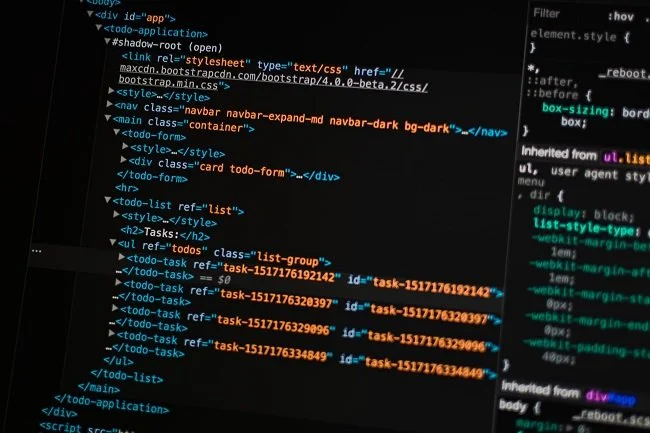
With Blaugust: Festival of Blogging fast approaching, I have decided to close several side projects I started last November (which rapidly ran out of momentum) and focus all my writing endeavours back on Contains Moderate Peril. I have taken a 9 month break which has served its purpose. I have decided to make some minor changes to the base template I am currently using for the blog, as it has remained essentially unchanged since summer 2015. I did toy with the idea of involving a third party developer to improve the site but employing such a company with specific Squarespace experience meant spending between £2000 and £3000, which is far more than my initial budget.

First of all let’s begin with an activity that I have a love hate relationship with. Namely, tinkering with your PC. I’ve been looking at the specs of my computer and it would appear that its performance Achilles heel is the graphic card. In a perfect world, I would just buy the latest top of the range model and be done with it. However, I am not sufficiently wealthy to do such things. Hence, I have to set a budget and then search for what is considered the best option within it. This is a tedious, contradictory and wearisome task. It involves trawling through reviews written by people who often do not understand the concept of a budget and figurative lines in the sand. They are infuriating, but that’s people for you.

Blazing Magnum (1976)
Mainstream films are easy to recommend to people. They’re usually formulaic, work within clear parameters and they’re not controversial. Most people, when viewing such film on someone else’s suggestion, are left with a fairly simply choice. Did they like it or not? Whatever the outcome, no feathers are ruffled. No one looks at you askance afterwards and says “why the hell did you think I’d like that piece of shit”? If something like this happens, then you have clearly not recommended a mainstream film. Perhaps you’ve suggested something that’s a little more of an acquired taste. Something niche, from a very specific sub-genre. Which brings me neatly to Blazing Magnum AKA Strange Shadows in an Empty Room (1976). The US title gives the impression that this film is a hard boiled cop thriller, like so many others that followed in the wake of Dirty Harry. But there’s a clue in the European title. Yes, this movie has more than just a whiff of a giallo about it.
Mainstream films are easy to recommend to people. They’re usually formulaic, work within clear parameters and they’re not controversial. Most people, when viewing such film on someone else’s suggestion, are left with a fairly simply choice. Did they like it or not? Whatever the outcome, no feathers are ruffled. No one looks at you askance afterwards and says “why the hell did you think I’d like that piece of shit”? If something like this happens, then you have clearly not recommended a mainstream film. Perhaps you’ve suggested something that’s a little more of an acquired taste. Something niche, from a very specific sub-genre. Which brings me neatly to Blazing Magnum AKA Strange Shadows in an Empty Room (1976). The US title gives the impression that this film is a hard boiled cop thriller, like so many others that followed in the wake of Dirty Harry. But there’s a clue in the European title. Yes, this movie has more than just a whiff of a giallo about it.
After his younger sister is poisoned while attending Montreal University, tough Ottawa cop, Captain Saitta (Stuart Whitman) embarks on a violent journey through the city to find her killer. He initially suspects that the Doctor who treated her, George Tracer (Martin Landau) may be involved in her death. However, an attack on his sister’s room mate, Julie (Tisa farrow), indicates that his sister may have been involved in something criminal. Further investigation links her to an unsolved robbery and murder. This is the most succinct summary I can give because despite positioning itself as a poliziotteschi film, the story stylistically far closer to the gaillo genre. Hence the plot is filled with red herrings, obtuse asides and a narrative resolution that is unnecessarily complex and when pondered seems somewhat illogical. Furthermore, being an Italian production from the seventies, all the dialogue is re-recorded and dubbed in post production, further adding to its European ambience.
As well as a convoluted plot, an interesting cast (which also includes John Saxon and Gayle Hunnicutt) Blazing Magnum also features the usual unpleasantness associated with seventies exploitation cinema. Captain Saitta ends up in a brutal fist fight with several drag queens (referred to here as Transvestites) resulting in one unfortunate having a hot curling iron shoved up their fundament. A baby is later held at knife point and it’s best not to even contemplate the rectitude of the Police Department’s investigative processes or their diversity training, as both are questionable. However, there is a solid car chase, staged by Rémy Julienne which is worth a watch and even some miniature work at the film climax, involving a hospital helicopter. Overall, Blazing Magnum remains the preserve of seasoned viewers of seventies exploitation cinema. Casual viewers may well be offended. If you’re an ardent Stuart Whitman fan and want an action movie from this period, try Shatter (1974) instead.
College Professor Peter Proud (Michael Sarrazin) has a recurring dream about a man swimming on a lake late at night. A woman named Marcia (Margot Kidder) paddles a small boat out to meet him. As the man tries to climb aboard, Marcia hits him with an oar and he drowns. Perplexed and disturbed, Peter approaches Doctor Sam Goodman (Paul Hecht) who is conducting research into sleep at the College. He conducts several tests which prove that Peter’s experiences are not registering as dreams. The Doctor suggests that they’re hallucinations but Peter theorises that they may be memories of a past life. A chance viewing of a TV documentary about Massachusetts, triggers further memories, so Peter decides to go an investigate. He subsequently learns that the man in his visions is a former Tennis coach, Jeff Curtis, who died in the late 1940s under mysterious circumstances. Is Peter the reincarnation of this man? If so, didn’t he have a daughter, Ann (Jennifer O’Neil). Furthermore is Marcia, Ann’s mother, still alive?
Mainstream films are easy to recommend to people. They’re usually formulaic, work within clear parameters and they’re not controversial. Most people, when viewing such film on someone else’s suggestion, are left with a fairly simply choice. Did they like it or not? Whatever the outcome, no feathers are ruffled. No one looks at you askance afterwards and says “why the hell did you think I’d like that piece of shit”? If something like this happens, then you have clearly not recommended a mainstream film. Perhaps you’ve suggested something that’s a little more of an acquired taste. Something niche, from a very specific sub-genre. Which brings me neatly to Blazing Magnum AKA Strange Shadows in an Empty Room (1976). The US title gives the impression that this film is a hard boiled cop thriller, like so many others that followed in the wake of Dirty Harry. But there’s a clue in the European title. Yes, this movie has more than just a whiff of a giallo about it.

In the year 1860, Baron Victor Frankenstein (Peter Cushing) faces execution by guillotine for the murders perpetrated by the creature he created. With the assistance of a hunchback named Karl (Oscar Quitak) he avoids death by beheading the priest who came to give him the last rites. The priest’s body is then mistakenly buried by the authorities. Three years later, Victor, now using the name Doctor Stein, has established himself as a prosperous physician in Karlsbrück, serving both affluent patients and the poor at a paupers’ hospital. Hans Kleve (Francis Matthews), a junior member of the medical council, recognises Victor and being an admirer, seeks to become his apprentice. Victor and Hans then undertake an experiment to transplant Karl’s living brain into a new, more refined body, rather than a grotesque monstrosity the Baron has previously made. Karl is eager to have a new healthy body, especially after encountering Margaret Conrad (Eunice Gayson), the charming new assistant at the hospital.

This movie questionnaire was originally created by Alexander from Cinemaniac Reviews. Sadly, I believe that website is now defunct. However, that doesn’t in anyway invalidate the questionnaire itself which has some very good questions about your relationship with cinema. Some of my answers to the questions posed are about films that I enjoy, as opposed to those that are considered cinematic classics. However, I have answered some questions more seriously than others, especially the one about undeserving recipients of the Best Film Oscar. I struggled with a couple of questions because I no longer go the cinema as frequently as I did 10 years ago. This is mainly due to the fact that a lot of the films I find interesting end up going straight to streaming after very brief theatrical releases. Some do not even get shown in cinemas. Hence I view far more at home. But I digress. On with the questions and answers. Feel free to comment below and share your views.

Exit 8 is a sophisticated and claustrophobic psychological thriller directed by Genki Kawamura, which skilfully transforms a minimalist indie walking-simulator game into a cinematic existential enigma. This overtly metaphorical film renders the repetitive nature and drudgery of modern working life into a physical environment in which the lead character is trapped and must find a way out. A random, brutal maze filled with an atmosphere of indifference to the lab rats that find themselves trapped within. Or is it their personal guilt that has put them there? Genki Kawamura’s psychological mystery draws inspiration from the Japanese video game of the same name, as well as from the cyclical nature of Groundhog Day and endless corridors of the Overlook Hotel in Kubrick’s The Shining. Although there are jump scares and some ghoulish imagery, this is not a horror vehicle. Instead this is a disquieting psychological drama with a strong sense of morality.

I wrote a post 18 month’s ago regarding whether a directors cut of a film is superior by default to the version originally shown in cinemas. Obviously the answer was no and I then went on to give three examples of films where I think the theatrical release is better to lengthier or substantially altered director’s cut that was subsequently made available at a later date. This time round in this post, I would like to do the complete opposite. I shall provide some examples of films that I think are significantly improved by a longer cut or a substantially, restructured edit. Note some of these examples are technically not a “director’s cuts” but a restoration or reconstruction of the director’s original vision. I shall endeavour to highlight what specific material or broader changes make each respective film “better”. As ever, all of these examples are a matter of subjective opinion and my views are presented as such, not “fact”.
In 1968 the dilapidated freighter Corita hastily leaves Freetown to avoid a customs inspection. Captain Lansen (Eric Porter) has a cargo of dangerous explosives which he is smuggling so he can finally retire. His ship’s passengers also have reasons for leaving in a hurry. Dr. Webster (Nigel Stock), together with his daughter Unity (Suzanna leigh), is relocating due to his indiscretions with patients and illegal operations. Alcoholic pianist Harry Tyler (Tony Beckley) is aimlessly drifting from port to port. Eva Peters (Hildegard Knef) is fleeing from her husband with stolen bearer bonds which she intend to use to buy back her son from his evil clutches Caracas. Ricaldi (Ben Carruthers), a questionable lawyer, is pursuing Eva to retrieve the stolen bonds. First officer Hemmings (Neil McCallum) suggests that the ship should return to Freetown after an imminent Hurricane warning. The Captain asks the passengers and they are unanimous that they do not wish to return. However a mutinous crew, the bad weather and the instability of the explosives force everyone to abandon ship. The survivors find themselves adrift in a lifeboat surrounded by a strange carnivorous seaweed.
Jason Statham is an exemplar of the US mantra of “staying in your lane”. He makes action movies and occasionally strays into action comedies. His formula broadly works and is sufficiently lucrative to keep Mr. Statham employed. Therefore, if you watch a film in which he stars, you have a fairly good idea of what you’ll be getting. Of late, the criteria for his action vehicles have become more succinct. Jason Statham will play an innocuous character, such as a construction foreman or a bee keeper. Something terrible will subsequently befall another character who Mr. Statham has an emotional connection with in some capacity. He will subsequently hunt down those responsible and meet out death and violence. At some point the villain of the story will enquire as to how this innocuous person is so lethal. Research will then show that our Jason is in fact an ex-police officer/special forces operative/international assassin. There’s then a showdown and the villain dies. Job done.
The Light at the Edge of the World presented itself as an action movie upon its release in 1971. Based upon a story by Jules Verne, the Spanish American co-production was driven by its star Kirk Douglas, who curiously hired British director Kevin Billington to helm the project. This tale of a lighthouse keeper fighting a war of attrition against a group of pirates that have captured his island, was market as an adventure film ostensibly in the idiom of the authors previous works and as a pirate movie. MGM bought the rights to distribute the film in the UK on the misunderstanding that it was a family friendly production. It was not and remains so. They subsequently had to cut 15 minutes of violence and torture as well as an undercurrent of sexual assault to secure a suitable rating. Conversely, the US distributors received an arbitrary PG rating, despite the fact this is one of a handful of films that honestly depicts pirates as murderers, rapists and worse.
It’s an established action film trope. The fire team comprised of ex-military personnel, move in on their target. Only to have the tables turned by someone they don’t deem a threat. What makes it different in The Last Stand of Ellen Cole is a throwaway line of dialogue. The bested operative lies bleeding on the floor and the protagonists stands over them ready to finish them off. “Don’t, I have a cat” they feebly plead. For me that was the icing on the cake. The movie had already established it was taking the “same old, same old” and doing something different. Something fun, if taken in the right spirit. This scene tipped the balance and I embraced this film because it was being honest about what it is. This is a modern B movie that decides to give a very specific sub-genre a makeover. Furthermore, its clearly done with an affectionate wink, which is very different to sly wink. This isn’t deliberate self-knowing irony. Its just a film doing something different and possibly silly but it genuinely wants to have fun with it.

David Koepp is no stranger to genre cinema, having written the screenplay for such films as Jurassic Park, Spider-man and War of the Worlds. Where these titles are big budget, major studio productions, Cold Storage is a far more modest production with a smaller scope. Adapted from his own novel, the screenplay is by David Koepp and the film is directed by British film-maker Jonny Campbell. At first glance, Cold Storage seems a somewhat derivative science fiction horror film with a relatively modest budget, financed through a convoluted US and French co-production. Lurid green and red colours feature heavily in the marketing artwork and it is easy, after a cursory look, to write the film off as cheap, generic, direct-to-streaming filler. However, Cold Storage is prime example of why you should not judge a book by it’s cover, or in this case, a film by its posters and online advertising. It is in fact an amusing and fun endeavour that can fill an evening.
Despite being considered by many as an original story, The Abominable Snowman (1957) is in fact a remake of a made for television play, The Creature, that was originally broadcast in the UK in 1955. Hammer Films would often purchase the rights of popular TV programs and subsequently re-work them for mainstream, international cinema. Larger production budgets and fewer censorship restrictions allowed them to make their cinematic interpretations more lurid, thus commercially viable. Hence The Quatermass Xperiment, Quatermass II and Quatermass and the Pit were all given a big screen makeover and were commercially successful. The Abominable Snowman was written by acclaimed writer Nigel Kneale, who also wrote the original television drama and the aforementioned Quatermass trilogy. Although ostensibly marketed as a horror film this production is actually an interesting blend of psychological thriller and science fiction.
There are certain subjects that are notoriously uncinematic. These tend to be things that exist or are undertaken mainly in the mind, rather than expressed in an overtly physical way. Computing, science and mathematics are good examples. Writing code or working out complex equations does not immediately lend themselves to a visual medium such as cinema. Therefore, any film dealing with the world of corporate finance has its work cut out. Hence writer-director J C Chandor immediately deserves praise for making Margin Call, a film about the financial crash of 2008, as gripping and compelling as any political thriller. He does this by keeping the financial elements of the story to a minimum, choosing instead to focus upon those who have become aware of the imminent crisis and their reaction to it. However, the film remains a tough watch with regard to the some of the characters and their respective personal morality or lack there of.
The 1937 Hindenburg disaster has remained an enduring mystery over the years. The physical mechanics of how this airship filled with 7,000,000 cubic feet of hydrogen gas caught fire has been fully explored over the decades and there are now several extremely plausible theories as to how it may have happened. However, there remains the possibility of sabotage. As such an idea has more dramatic potential than mechanical failure, it was used as the central theme of the 1975 disaster movie The Hindenburg. Directed by Robert Wise, the screenplay by Nelson Gidding explores a German resistance against the Nazi regime. The airship is targeted as it is a powerful propaganda symbol for Hitler’s Germany. Sadly despite some interesting ideas, a strong cast and solid, old school optical effects, The Hindenburg is a slow and somewhat ponderous production. Although the final 20 minutes of the film recreate the infamous explosion meticulously, it doesn’t quite compensate for the uneventful, dialogue driven investigation of the previous 100 minutes.

On the Eastern Front in 1943, a German Tiger tank crew led by Lieutenant Philip Gerkens (David Schütter) is sent on a mission to rescue the missing officer Paul von Hardenburg (Tilman Strauss) from a top-secret bunker that is at risk of falling into enemy hands. As they make their way through an eerie no-man’s land, they have to avoid Russian armoured vehicles that seem to be aware of their mission. They also encounter a German unit taking punitive action against a peasant village, in reprisal for partisan activity in the area. The youngest crew member, Michel (Yoran Leicher), talks of the land being home to ghosts and spirits. As the tank penetrates further into contested territory the crew become increasingly disturbed by the uncanny nature of their mission and begin to fall prey to their own inner fears.
Robert Louis Stevenson’s classic novel has been adapted for cinema and television numerous times. Perhaps the most well known is the 1950 Disney version, starring Robert Newton as Long John Silver. His eye rolling performance and exaggerated West Country accent is credited with popularising the stereotypical form of “pirate speech" that has become the pop culture default. Although an enjoyable film, it does gloss over the more sinister aspects of both the source text and history, perpetuating the myth that pirates are just loveable scoundrels. Many subsequent adaptations have fallen into the same trap to a greater or lesser degree. However, that is not the case with the 1990 version of Treasure island, which was made for the TNT cable network and released theatrically outside of the US. This darker and notably more violent adaptation closely follows the source text and is widely considered the most faithful to the book.
The Planet of the Apes movie franchise took a radical change of course with its third entry in the series. The first two films were set in the future and benefited from high production values to help realise a post apocalyptic earth. However, due to a substantial reduction of budget, Escape from the Planet of the Apes uses a time travel plot device to bring the ape protagonists to present day Los Angeles (1971 in this case). The result is a film with a much smaller narrative scope. However, although it lacks the science fiction spectacle of its predecessors, it features an interesting satirical exploration of celebrity culture and ponders what it is like to be deemed an enemy of the state. As ever, Roddy McDowell and Kim Hunter provide exceptional lead performances as the Chimpanzees Cornelius and Zira. Escape from the Planet of the Apes also captures the pop culture vibe of seventies America.
It is not unusual for Disney to change film titles when marketing them outside of the US. In 2016 they renamed the animated feature film Zootopia to Zootropolis in the UK and Europe to avoid trademark conflicts with other existing businesses. For example there is a Danish zoo which already holds the “Zootopia” name. Similarly, in Germany there is a children’s book which caused copyright conflict, which led to the film being released under the title Zoomania. Such changes, although practical for legal reasons, can sometimes cause a degree of confusion. Especially as there are numerous, low budget productions companies that go out of their way to produce similarly titled “mockbusters” whenever there are big, tentpole, releases. So for clarity, Zootopia 2 has been released in the UK as Zootropolis 2.
Stephen King’s dystopian story, The Running Man, was previously adapted very loosely in 1987, as a vehicle for Arnold Schwarzenegger. That version focused mainly on the “Battle Royale” element of the story and leaned heavily into Arnie’s personality, rather than the politics of the book. It also wasn’t well received by the author. Edgar Wright’s remake follows the source text a lot more closely and is far more interested in its political themes and wider social commentary. Furthermore, this version re-establishes the everyman quality of the hero of Ben Richards, rather than him being the muscle bound, ex-military hero as per Mr. Schwarzenegger’s prior interpretation. This time round, The Running Man uses a lot of the visual and narrative tropes of contemporary reality TV, making this forty three year old story very relevant to today’s viewers and couching the film in a style that is recognisable and accessible.
The Haunted Dolls House is a short film based on a story by M.R. James about a unique antique that is subject to supernatural phenomenon. Adapted by Stephen Gray and David Lilley, this is the third of three short films based upon James’ work that the pair have made. It stars Steven Dolton as Mr. Dillet, a collector of antique dolls houses, who acquires a bargain only to discover that it harbours a ghostly secret. Made on an extremely modest budget over the course of 2012 this clever, innovative and rather sinister adaptation is a fine example of short film creativity. It manages to offer a unique visual depiction of M.R. James’ classic story whilst capturing the unsettling quality of the author’s work. Like so many independently made short films it is clearly a labour of love, made with modest resources. It succinctly captures the spirit of the author’s work and is both innovative and rewarding.
A lot of people may know Luke Evans from the live action version of Beauty and the Beast or Peter Jackson’s The Hobbit trilogy. With his matinee idol good looks, charming Welsh demeanour and his “smoky” tenor singing voice, he projects a sense of old school stardom. Which brings us to No One Lives; a film which is a radical departure from his previous work. His performance is disconcerting to say the least and the film is somewhat unhinged. Directed by Ryuhei Kitamura, who made an interesting adaptation of Clive Barker’s The Midnight Meat Train, this cinematic outing is similarly replete with robust shocks and gore. There are some interesting ideas about the nature of violence, Stockholm Syndrome and whether one should deny or embrace one’s nature. However, these are ultimately minor asides. Philosophical musings in between bouts of surprisingly striking unpleasantness.
In the near future, Kepler 822, a research and drilling facility located at the bottom of the Mariana Trench, suffers a sudden and catastrophic structural failure. There are only six survivors. Mechanical engineer Norah Price (Kristen Stewart), Captain Lucien (Vincent Cassel), biologist Emily Haversham (Jessica Henwick), engineer Liam Smith (John Gallagher Jr.) and crew members Rodrigo (Mamoudou Athie) and Paul (T.J. Miller). As all the functional escape pods have been used and they are unable to contact the surface, the Captain suggests using pressurized suits to walk one mile across the ocean floor to the Roebuck 641 drill installation. There they will find more escape pods. However, it soon becomes apparent that the disaster was not caused by an undersea earthquake and that they are not alone as they make their journey.
One of the most common objections raised regarding the Jurassic Park/Jurassic World franchise is that the films are specifically made to obtain a PG-13 rating from the Motion Picture Association, for purely commercial reasons. Hence, in all films, there is little on screen violence and the dinosaurs are mainly portrayed as a threat and a means of providing jump scares. When a character is killed by a dinosaur it usually happens off screen, is obscured by something else in frame, or is shown in long shot with very little detail. The realities of being eaten alive by a predator are conspicuously absent. Hence, audiences looking for films featuring more graphic dinosaur attacks, have not been well catered for apart from some minor direct-to-video titles. Primitive War finally fills this gap in the market with a frenetic genre mashup that strives to punch above is budgetary weight.
During the seventies, cinema was not only a source of mass, commercial entertainment but was still perceived as a medium for intellectual and philosophical discourse. Television was a poor relation in terms of art and cultural significance. Film was where the so called auteur director could muse and ruminate upon the nature of the human condition and audiences could subsequently gush sycophantically about their work at dinner parties. Or something like that. Let it suffice to say that some film makers were still indulged by studios and financiers, who were still keen to cash in on the cultural sea change that came to Hollywood in the late sixties. It’s difficult to see how a film such as Emperor of the North (AKA Emperor of the North Pole) could have been made otherwise. A film set in the Great Depression about a hobo illegally travelling on freight trains and his feud with a ruthless conductor.
In Buenos Aires, Clara (Natalia Señorales) hears voices emanating from the plughole in her kitchen sink. The voices seem to be plotting against her. Her husband Juan (Agustín Rittano) says the sounds are coming from next door. That night, Juan finds Clara’s dead body levitating in their bathroom, slamming against the wall by an invisible force. Meanwhile their neighbour, Walter (Demián Salomón), is experiencing supernatural occurrences while he tries to sleep. An invisible force repeatedly shakes his bed. After using a video camera to film these events, he sees a tall, cadaverous figure emerging from under the bed, standing over him as he sleeps. Across the road, Alicia (Julieta Vallina) is grieving for her recently deceased son, who was run over outside Walter’s house. Alicia's ex-boyfriend, police commissioner Funes (Maximiliano Ghione) calls Jano (Norberto Gonzalo), a paranormal investigator and the pair soon discover more supernatural occurrences in the area.
Black Sabbath (AKA I tre volti della paura) is a 1963 horror anthology film directed by Mario Bava. Although an Italian production, the film was co-financed by American International Pictures and as such was conceived to appeal to US audiences. Hence, the English dialogue edit of the film which was released in America differs significantly to the original Italian version. Despite the presence of the legendary Boris Karloff and the popularity of both anthology and gothic horror at the time,the film was only a modest success at the US box office and did not do well in Italy. However, in more recent years there has been a critical reappraisal of Black Sabbath, especially the Italian dialogue version. Many aspects of the film which are standard genre tropes today, were in fact novel at the time. Also despite the production mainly being studio bound, the film oozes style and has a striking visual aesthetic.
After the success of Raiders of the Lost Ark in 1981, filmmakers scrambled to find existing intellectual properties that they could use for similar films. Hence archaic heroes such as Alan Quatermain were hastily given a modern makeover and thrust into generic movies, in a vague attempt to replicate Steven Spielberg’s successful formula. Which brings us neatly on to James Charles Bigglesworth AKA “Biggles”, a fictional pilot and adventurer from a series of books written by W. E. Johns between 1932 and 1968. Several attempts had been made in the past to bring this character to the silver screen, including one by Disney but they all failed. However, the commercial and critical success of Indiana Jones provided sufficient impetus to greenlight a new film. However, due to some curious production choices, when Biggles was finally released it was far from just a period set, action movie.
Setting aside the hubris of remaking a film such as Red Dawn, the 2012 reboot had a troubled production. Shot over the course of late 2009, on location in Michigan, MGM intended to release the film in September 2010. However, the studio’s financial problems became unsustainable over the course of that year and the film was shelved, while a financial solution was sought. Furthermore, while Red Dawn was in post production, there was a major economic shift within Hollywood due to the increasing importance of the Chinese market. This was a significant problem for MGM because the new version of Red Dawn had the Chinese invading the USA instead of Russia. Hence there were reshoots and the need for additional visual effects, so that the Chinese could be replaced with North Koreans. MGM eventually went bankrupt and the distribution rights to Red Dawn were sold off. The film was eventually released in 2012.
American music producer James William Guercio is primarily known for his work in the music industry. He was the producer of the band Chicago’s first eleven studio albums. In the mid-seventies he also managed the Beach Boys and was a member of their backing band. He was during this time, well known in his field and respected. In 1973, Guercio directed, produced and wrote the score for his first and only feature film, Electra Glide in Blue. He was 28 years old at the time. Upon release the film received mixed reviews from many traditional US newspapers, who were dismissive of its revisionist themes and poetical style. However, in Europe the film was received more favourably and was entered into the 1973 Cannes Film Festival. Fifty two years on and Electra Glide in Blue is now considered an overlooked cult classic and is analysed in a more measured fashion.
When I first saw the promotional trailer for Gangster Squad back in 2012, prior to its release, I wasn't especially impressed. I simply thought the film was another attempt to re-invent the gangster genre for a generation who were not especially familiar with it. I wasn't exactly overwhelmed with director Ruben Fleischer's resume either. I didn't particularly like Zombieland and haven't seen 30 Minutes Or Less. Then came the tragic mass shootings in Aurora, Colorado which led to the movie being delayed so that the original ending, which featured a shoot-out in a movie theatre, could be replaced. Hence when I finally watched this film recently, I wasn't expecting a movie up to the standards of say Once Upon A Time In America or Miller’s Crossing and it would seem that I was right do so. Gangster Squad is not especially noteworthy in any respect.
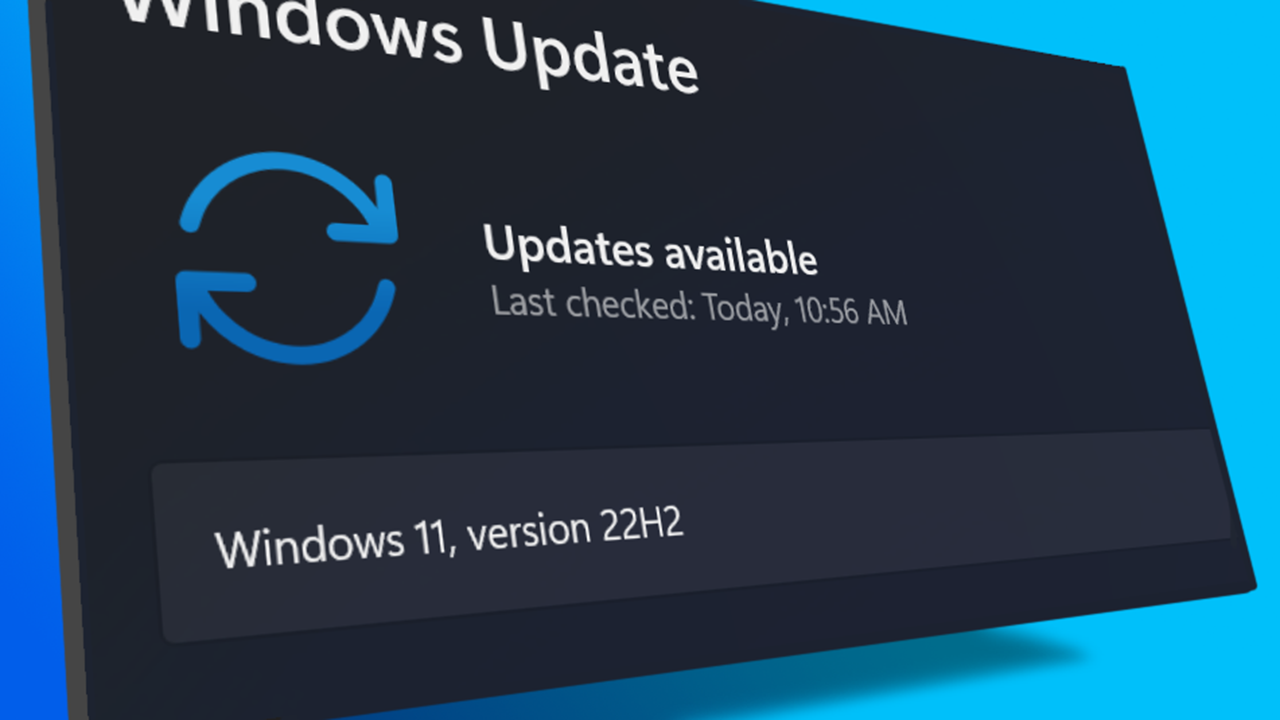
Unintuitive Software, Incessant Updates and Bloat
I turned on my laptop this morning for the first time in 4 months. I knew it was that long because I hadn’t connected the laptop to the new Netgear router that I bought at the end of April. Unsurprisingly, as I haven’t used this device for a while there were multiple Windows updates to be installed. This process took over an hour, so while the various updates were being downloaded and installed, I turned my attention to my Amazon Echo Dot which loiters in the corner of our lounge, doing very little to justify its existence. At present this device is mainly used as a glorified timer for cooking, which seems a bit of a waste given it’s alleged capabilities. Hence, I decided to see if I could increase its functionality while waiting for Windows to do its update thing. More on this later. Let us for the meantime return to the small matter of the operating system updates. Once they were completed, I immediately installed Chris Titus Tech’s Windows Utility and started removing unnecessary features and bloat, as well as disabling invasive services.
I turned on my laptop this morning for the first time in 4 months. I knew it was that long because I hadn’t connected the laptop to the new Netgear router that I bought at the end of April. Unsurprisingly, as I haven’t used this device for a while there were multiple Windows updates to be installed. This process took over an hour, so while the various updates were being downloaded and installed, I turned my attention to my Amazon Echo Dot which loiters in the corner of our lounge, doing very little to justify its existence.
At present this device is mainly used as a glorified timer for cooking, which seems a bit of a waste given it’s alleged capabilities. Hence, I decided to see if I could increase its functionality while waiting for Windows to do its update thing. More on this later. Let us for the meantime return to the small matter of the operating system updates. Once they were completed, I immediately installed Chris Titus Tech’s Windows Utility and started removing unnecessary features and bloat, as well as disabling invasive services.
Let’s just pause for a moment to consider what has happened. An operating system has been updated and among the bugs and security fixes are a multitude of mandatory additional features that I neither want or requested. These are usually sold as being “helpful” or “beneficial” but seldom are. As a result of this invasive and insulting policy by Microsoft, I then have to use a third party tool, created by someone who is equally frustrated with this bullshit, to effectively deal with it.
What an utterly risible situation this is. Imagine going to the supermarket to buy some essentials and finding that the store had also added a host of other products that you never use or even like. I’m sure there would be numerously strongly worded letters sent to the Times. Furthermore, tools like CTT’s Windows Utility, Crap Fixer and Winaero Tweaker although a great way to purge your PC of superfluous apps and service, are often only a temporary fix. I frequently find that the next update detects that something it previously installed is now missing and subsequently reinstalls it. The hubris of such actions is truly shocking. It’s like the pool cleaner you hire, defecating in your pool and when you fish the offending stool out, they simply come back and do it again.
“Alexa, why are you such an unhelpful git?”
Let us return now to the subject of adding functionality to my Amazon Echo Dot as this is an excellent segue into the next topic; unintuitive software. Administration of your Echo is carried out via a phone app. That’s fair enough. Using your phone is a convenient means to quickly set up an online enabled device without the need to use a PC or laptop (unless you don’t have a phone but that’s a subject for a different blog post).
In this instance I wanted to add access to BBC Sounds, so I can just bellow at Alexa to play the podcast version of some of my favourite radio shows. I also thought I’d added access to Global Player as well, so I can listen to LBC London (another radio station) when I’m in the lounge, rather than having the hassle of using my TV. I started looking around the Alexa app on my phone and quickly discovered it was singularly unintuitive. Rather than clearly named menu options with logical. nested sub-menus, it was just a sea of “helpful suggestions”, all of which were the exact opposite.
I have no issue in principle with the idea of collating commonly asked questions. This can be useful. However, it should be a clearly labelled menu option, not a word cloud that lives on the app landing page. To cut a long story short, I used Chat GPT to navigate through this tsunami of bullshit and eventually found the settings that I needed to access. Again let’s take a moment to reflect on what I had to do. I had to ask an AI, how to configure an app that runs a Smart speaker.
Pro tip for anyone who thinking of doing similar. Don’t waste your time asking Alexa for any guidance or advice. They are incapable of rendering any help. I have already turned my thoughts to whether it is possible to buy and configure your own Smart speaker and have it run on some other open source software in conjunction with a LLM of some kind. Because what both of these anecdotes seem to indicate is that commercial software is neither user friendly or convenient.
Now as I’ve been writing this post, I’ve considered whether my perspective or complaints are unreasonable and whether they’re driven by an underlying bias. Due to my age and the amount of time I have spent dealing with software of this ilk over the years, I recognise that I certainly have been potentially conditioned to expect things to work in a certain way. Mainly because in the old days of Windows 3.11 and 95, a great deal of effort was put into creating intuitive UIs that could easily be grasped.
Perhaps the biggest cultural shift in this area is the current mindset where things are decided for you, determined by the small group of people that developed the software. “We’ve laid out your desktop this way, because this is how we do it. You don’t need access to these services and folders. Why would you? Here’s a load of stuff we think you’ll like (and by that we mean we’ve been paid to add, whether you like it or not). I cannot adequately express how I fucking hate this philosophy.
I am a 58 year old man. Am I picky and at time difficult? Yes I bloody well am. I didn’t get where I am today by not being picky and difficult (one for C. J. fans). I was taught about PC and server deployment, network topology and administration and good working practise by too old school engineers at the beginning of my career. Both favoured, lean and uncluttered desktops and extolled the virtues of software that provided logical, intuitive and cleanly designed interfaces. I adopted their habits like the apt pupil I was.
To this day I still audibly tut when I see a poorly organised and messy patch panel. Hence I understand that my rigid world view may clash with the disorderly, slapdash, laissez faire bullshit that passes for contemporary UI design (I’m trying to be even handed here). However, think of your average user. Do they not deserve a clean and sensibly laid out interface so they have a fighting chance of using the software that comes with their devices? I bloody well think I do, because I’m a paying customer.
And as a palette cleanser, to a somewhat acerbic post, let me finish on a positive anecdote. I recently set up my Nintendo Switch again, as I didn’t sell it after all. I did this while it was connected to my lounge TV, using a game controller, the on-screen menus and nothing else. It was a proverbial walk in the park. Well done Nintendo (Jazz hands). Take note Amazon you bastards.

Recently, the remote control for my Media Player developed a fault. I was watching a film, when for no apparent reasons, the video jumped ahead about twenty minutes and then get stuck in a playback loop of a few seconds duration. At first I thought it was a glitch with the particular .mkv file I was watching but then the problem started happening on both video and YouTube content. I then noticed that when the fault occurred, the backlight on the remote came on and shimmered as it a button was being pressed continuously. Removing the batteries from the remote control for 30 seconds and the replacing them would then restore functionality. This indicated to me that the fault lay with the remote control and not the media player itself. I therefore decided to take the remote control apart to see if I could see any obvious problems. I did not, so I cleaned it and re-assembled it. Sadly the fault persisted, so I decided to replace the remote control.
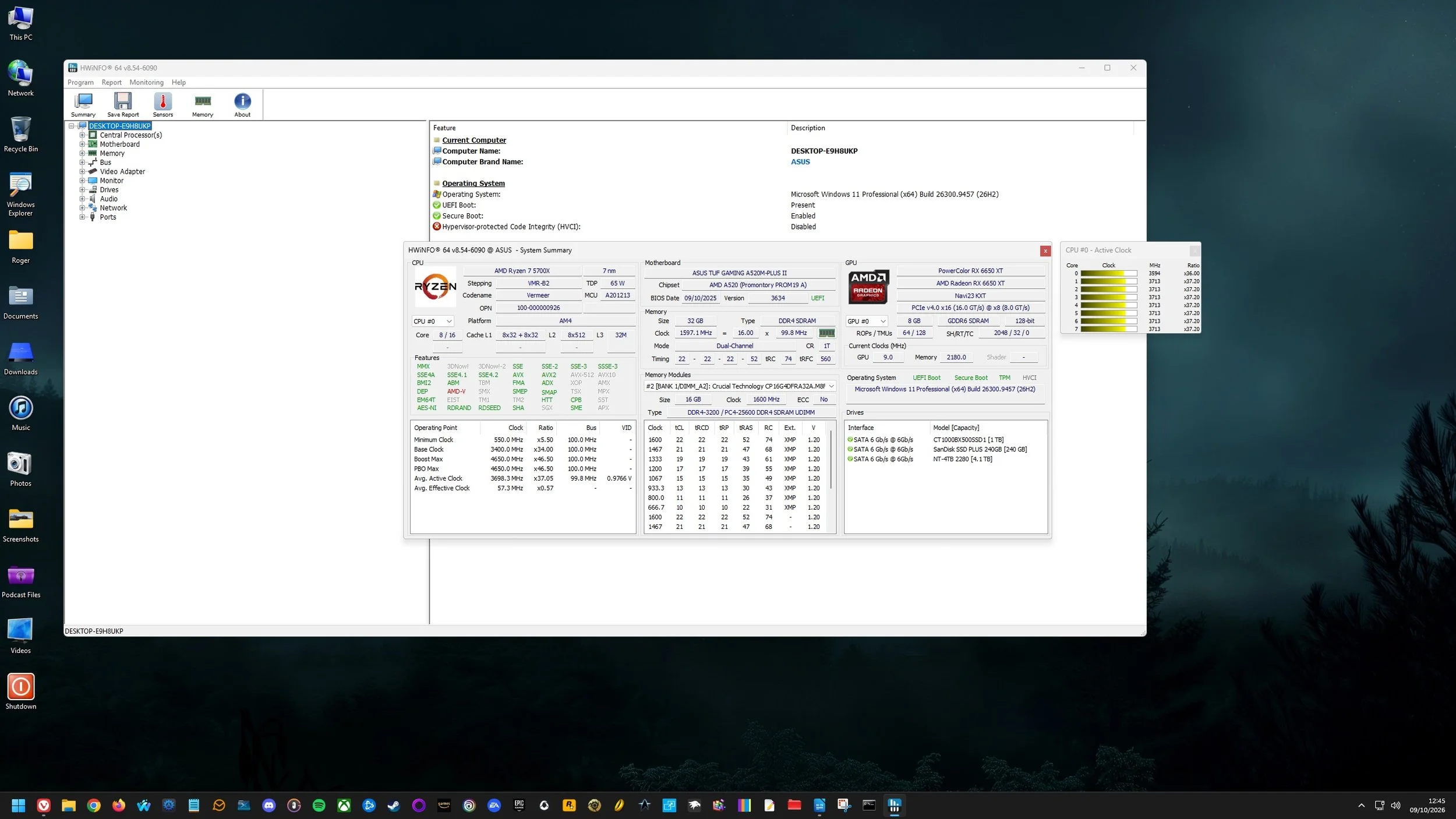
Until fairly recently, I have maintained a somewhat casual approach to the system maintenance of my PC. “Casual” in this context is a subjective term. What I consider to be “casual” others may think to be robust or even rigorous. But I digress. I regularly undertake minor housekeeping such a clearing my web browser data, removing temporary or unwanted files and updating software. I also make sure that only essential services and programs start when I turn on my PC. I keep an orderly desktop and an intuitive filing system. However, I do very little with respect to maintaining the hardware inside my PC. I clean inside the case a couple of times a year and ensure that the fans are free from dust contamination but that’s about it. I have no idea if the installed RAM is running optimally or whether the processor is operating within the appropriate heat threshold. Does the thermal paste between it and the heat sink need replacing? Are all the cores enabled?
Last year, when I was looking for some suitable video editing software, I found that people would often recommended DaVinci Resolve. It is indeed an outstanding tool but totally beyond my needs. It is also a beast to run and occupies a substantial percentage of real estate on your SSD, so I dismissed this option for practical reasons. Let it suffice to say that finding a suitable product that met my requirements was quite difficult. Video editors often seem to be either quick and easy tools for clipping content on the fly, such as Bandicut (which is great for exactly that purpose) or huge, professional quality behemoths, used by people who work in the appropriate industry. DaVinci Resolve is a textbook example of this. It begs the question what products occupy the middle ground, assuming they exist.

Going forward, if I write any more posts about my use of AI, I am not going to add the following caveat. I will do it once more here, so everyone knows where we all stand. I am fully aware that AI has already taken jobs and will continue to do so. I also know that data centres are not environmentally friendly. As for the evil corporate billionaires that get rich from the situation, that also has not come as a surprise to me. I also believe that the AI market needs regulating and there should be legislation in place to ensure that AI is never directly linked to important government and civil infrastructure. That being said, I am not going to stop using AI at a domestic level over notions of ethical purity. All of the above criticisms can broadly be applied to the industrial revolution and society came to terms with that and survived it. The same goes for the computer revolution. Things change and we adapt. Plus, if you really wanted to protest and lobby against AI, the best time to do this was two decades ago.
One of things I dislike with a passion about modern software is that you cannot cleanly uninstall it from your PC. Removing an unwanted or problematic program just leaves metaphorical muddy footprints throughout your PC. It makes my SSD feel like a crime scene with virtual brain matter spattered across the soft furnishings. Sadly, this is the price you pay for having a modern operating system with a registry, shared dependencies and a liking for temporary files and caches. It all makes me feel very nostalgic for the halcyon days of DOS, with self-contained programs sitting in a solitary folders. Often libraries and drivers lived in specific system paths or the same folder, avoiding conflicts. You could just delete stuff and it sodded off. You didn’t need two priests and holy water. Happy days.
Thinking Out Loud is a recurring post where I write about thoughts and ideas that have recently occurred to me. As ever the intention is not to develop these ideas into full blown blog posts, although they often the could be. Instead I just collate a few sentences to express my point and leave it at that. The idea being that if anyone else wants to pick up the conversation they can do so in the comments section below. On this occasion the various points are all technology based. I’ve been busy of late with several projects, such as building a new website and creating some widgets specifically for it. Like most technical projects things don’t often go as planned and problems occur unexpectedly. Hence, I thought why not make a themed instalment of Thinking Out Loud this time round? It’s something that I may well do this again in the future. As ever, feel free to make your thoughts known.
I turned on my laptop this morning for the first time in 4 months. I knew it was that long because I hadn’t connected the laptop to the new Netgear router that I bought at the end of April. Unsurprisingly, as I haven’t used this device for a while there were multiple Windows updates to be installed. This process took over an hour, so while the various updates were being downloaded and installed, I turned my attention to my Amazon Echo Dot which loiters in the corner of our lounge, doing very little to justify its existence. At present this device is mainly used as a glorified timer for cooking, which seems a bit of a waste given it’s alleged capabilities. Hence, I decided to see if I could increase its functionality while waiting for Windows to do its update thing. More on this later. Let us for the meantime return to the small matter of the operating system updates. Once they were completed, I immediately installed Chris Titus Tech’s Windows Utility and started removing unnecessary features and bloat, as well as disabling invasive services.
Before we begin, let me clearly state that this is not a comprehensive installation guide for installing Steam OS on your PC. Mainly because the variety of hardware that can be present in any PC makes each installation a somewhat bespoke affair. Hence I have decided to provide a list of bullet points of the various steps and issues I encountered during my installation, last week. Consider it advance warning of things you may encounter if you install this operating system. As ever, if this is something that you are intending to do, I would advise allowing yourself a suitable amount of time so you can accommodate any issues should they arise. It is entirely possible that this may be a two hour job for the technically literate running the most generic or commonplace hardware. However, I suspect that a lot of people undertaking this project will run into variations of the same problems that I encountered.

I am intrigued by the growth of the IndieWeb, owning your domain and static websites. I certainly agree with the notion of not relying on big corporations and I have an ongoing project to divest my dependency on software produced by major market players. However, although I own my own domain, my website is hosted by Squarespace. I’ve not really had any problems with them over the last 11 years and I would describe our business relationship as equitable. However, the monthly subscription price has increased over time and is likely to keep on doing so. It has crossed my mind as to whether there is a suitable alternative. However, if I were to migrate Contains Moderate Peril elsewhere I suspect it would be logistically complex and problematic.

I like learning new skills and starting projects. I regularly undertake such things with varying results. However, if they don’t work out that’s not a problem. You have to try something to see if you like it. I’ll add “within sensible parameters” as a caveat to the last statement. And it’s perfectly fine to discover that something isn’t for you. I like certain genres of video games, music, films and books. I am comfortable wearing certain types of clothes and not others. I’m picky about colours. I’ll even go so far as to say that I won’t drink out of any mug that’s just lying around. If I don’t like the joke, logo or overall aesthetic of it, I ain’t using it. However, I digress. Let’s get things back on track and talk about projects. This year I have wound down several websites and have decided not to move forward with making YouTube videos. I have focused my energy on improving my website and adding functionality. I am also trying to broaden the scope of my writing.
It’s funny how it is often the little things that become the proverbial straw that breaks the Camel’s back. I have been struggling for a while with the overall performance and functionality of my Windows 11 PC. The operating system is bloated, slow and buggy. It all too often commits that unpardonable sin of trying to do my thinking for me and enables some stupid feature by default. Despite having good specifications, my PC takes too long to boot up for my liking and is becoming too much of a wild card with regard to whether it will co-operate or not when I try and undertake a simple task. As someone who is very particular in their PC habits, IE I see my PC as a tool that I use on the terms that suit me. Hence, I find the faux enthusiasm that accompanies each uncalled for “improvement” that results in me losing agency, singularly antagonising. Then a minor issue arose recently that escalated into a thorn in my flesh and I decided that it was time that something must be done.
This is a post about the power of nostalgia and how sometimes, interacting with something from your past, be it physically or mentally, can produce a very strong and tangible emotional reaction. In some instances, this can be the result of something that you have specifically set out to do. On other occasions you can wander into a sense of nostalgia purely by chance. Today I experienced a very strong sense of nostalgia while watching a YouTube video and then again when I sought to replicate what I had seen. The video showed someone installing Windows 95 on to an old 486 PC from that era. The Window’s start up sound really touched a nerve (but in a good way) and then when the guy in the video launched Space Cadet 3D Pinball, a game that shipped with the operating system, I felt a strong compulsion to track down a copy and install the game myself, thus revisiting something that was an integral part of my life in 1995.

For the last few months I have being using Google Gemini. I subscribed so I could access a wider spectrum of services and evaluate it effectively. I also wanted to dispel some of the hysteria that accompanies any conversation about Large Language Models and Artificial Intelligence. The results were initially interesting and Google Gemini proved useful when researching material for blog posts. It is good at providing summaries about well documented subjects. I wrote a post about food banks recently and it distilled a lot of data into a manageable amount, which was ideal for my article. Google Gemini has also produced some visual basic scripting and simple batch files that have allowed me to automate processes on my PC. Such as changing the default monitor, or screen resolution at the click of an icon. However, I found this AI struggled with in-depth software troubleshooting and that its ability to create images varies greatly depending on the subject.

The UK Government has formerly announced its intention to ban under-16s from using social media. This is due to increasing public pressure that “something must be done” about the perceived iniquities of many online platforms. However, as with most complex social problems of this nature, no one has any clear or practical ideas as to what that “something” is. It remains a nebulous, non-specific panacea and clearly someone else’s job to identify and implement. As ever, why choose a nuanced and multifaceted solution to a complex problem, when it is far easier and politically expedient to just “ban” something. The former requires effort and a degree of thinking. If such an approach fails it also means that those who came up with it now carry the can. The latter dumps the problem in the lap of various third parties, who can then be conveniently blamed when the ill conceived policy fails.

Yesterday we changed internet service providers. We moved from EE (formerly BT) to Plusnet. The transition went surprisingly well, mainly due to the existing infrastructure remaining the same. We’ve had fibre to the premises (FTTP) since 2022 so this was essentially an administrative change. The previous ISP terminated their service at 1:30 AM in the morning, while I was playing Star Trek Online. By 6:30 AM I received a message from Plusnet that the new service was live. It took about an hour to configure the new Netgear Nighthawk RS100 router (I bought my own) and get all our household devices attached to the new network. The connection is running at exactly the same speed and stability as it had under the previous supplier. At present a 1Gbps connection is sufficient for our needs. The main factor that has driven this change is cost. We are currently paying £28 per month for internet access which is a competitive price in the UK.

In 1990 I was working at the DWP (Department for Work and Pensions). I had just taken the role of Computer Support Officer where I administered user access to the mainframe and provided first line support to staff using the terminals. That summer the office moved to a PC based network and the project was undertaken by the newly formed Siemens Nixdorf company. To cut a long story short I befriended one of the contract engineers and over the next 9 months he became an unofficial mentor to me. Technically he was only supposed to train me in the most basic of fashions but he liked the fact that I was always asking questions and effectively ended up schooling me in PC and server architecture, network administration and the associated protocols. For me this was the best way to learn. It was not a case of coming to grips with theory in a classroom environment. It was learning by doing and having direct and exclusive access to a source of knowledge and experience.

My Windows 11 PC is a cobbled together mess of upgrades, customisations and workarounds. It seems okay at first glance, mainly because my desktop is well organised and I don’t allow too many apps to start on boot up. But beneath this superficial veneer of efficiency and optimisation is a bloated mess. Every Windows update adds yet more spurious features which slows performance and tries to harvest your data. Windows is no longer a user friendly operating system that you buy and use without impediment. It is now a sprawling live service that actively gets in the way of your productivity so that it can make a buck off your inconvenience. There was a time when you could quickly learn its processes and foibles, so you could customise it into the tool you needed. Nowadays I have to continuously use third party tools to get Windows to do many of the things I want, or to access functionality that Microsoft has obtusely decided to restrict.

As the New Year is still young, I have embarked upon several new projects that I’ve been planning since Autumn last year. These undertakings have gone beyond the planning stage and are currently being implemented. The fun thing about the phrase “implemented” in this context is that it implies that it is by far the easiest and most straightforward part of the process. The initial brainstorming of ideas has been completed. A cogent and detailed plan has been written. The costing of materials and time required have been determined. These are the hard parts. All that remains is to “just do it”. It should be a piece of piss (a British phrase indicating that something is easy). It virtually “implements” itself. However, that is a load of bollocks. Because there is always scope for something to go wrong. It may well start as something minor and innocuous but it all too often ends in a “problem cascade”.

This time last year I made a decision to replace Microsoft Office or Office 365 as it is currently known. Mainly because I only use Outlook out of the entire suite of software. This project stalled because I couldn't easily import my existing email archive into Mozilla Thunderbird. Hence the status quo has been perpetuated. However, there is an ongoing cost associated with this software as well as some wider considerations about ethics and privacy which is why I have returned to this matter. Although this time I wish to replace not only Office 365 but all the other "production tools" I use to write and browse the internet. I have managed to make some progress towards this goal but it has been hard to adapt. Mainly because I had everything set up to my liking. Although alternatives are available, they're never exactly alike and require a lot of fine tuning to be deemed satisfactory.
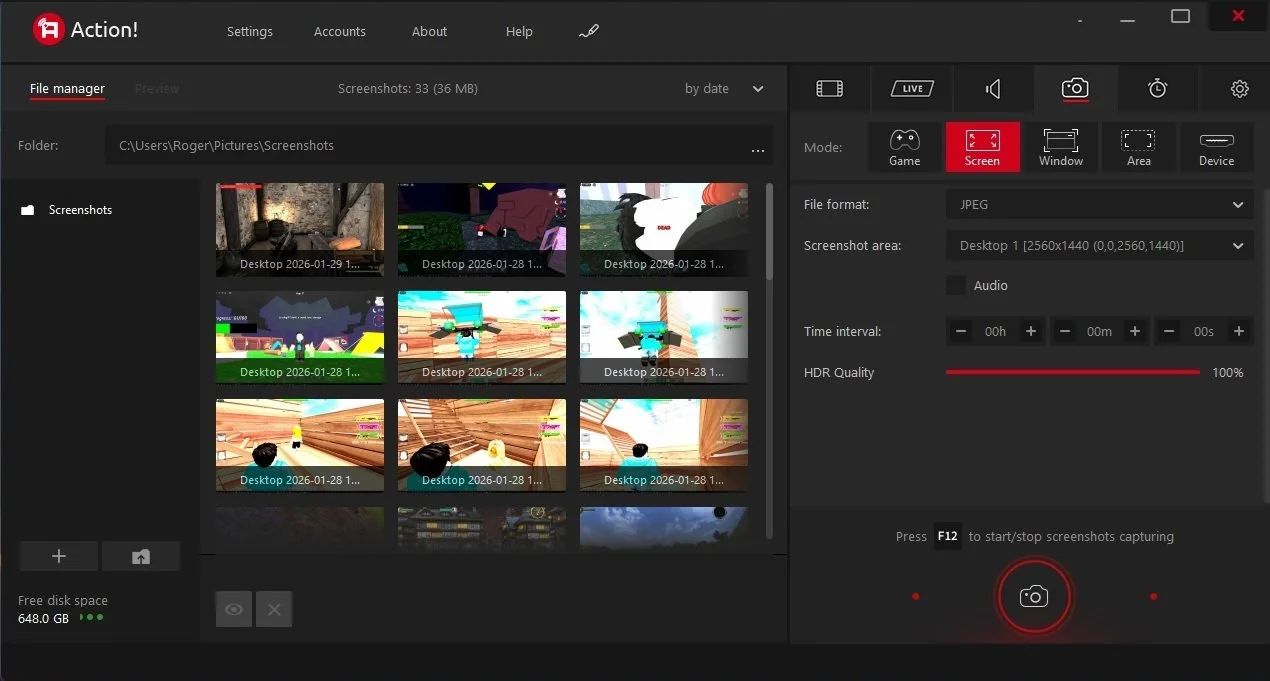
Last summer I wrote a post about my experiences using various screen capture software. At the time I was using Bandicam which suited all my needs. I had configured the software to launch at Windows start-up and had a hotkey assigned to capture images from my primary monitor. Hence I could quickly grab a screenshot from my desktop or when playing a game. However, this changed in November 2025, when I bought two new monitors. Both of which supported HDR (High Dynamic Range). Although they provide superior picture quality, HDR has a knock-on effect on Bandicam. Screen capture images and video look over exposed. Hence I had to stop using the software and find an alternative. Fortunately the same company has been developing an alternative product with HDR support; Bandi Camera. So I swapped to this software. The screenshots were far better but the functionality of the app was lacking.
Our home has a 1 Gbps “fibre to the premises” internet connection. It has proven reliable since it was installed in June 2022. Our internet service provider EE (part of the BT group) are neither the best of worst suppliers. The monthly cost is not especially competitive and so we may be looking to move providers next Easter. However, that is a matter for the future. For the present there is a more immediate issue. Starting on Friday 21st November, our internet connection has started randomly dropping. Furthermore, both the Wi-Fi extender in the lounge and the wireless printer in my office have become disconnected from the network. It was as if their details had been erased from the router. I suspected that a recent firmware upgrade may be the culprit although EE denies it. However there are posts online from other customers with similar technical issues.

A couple of times a year, Mrs P asks me to copy onto her laptop, all the pictures that I’ve taken over recent months, as well as those that have been shared with us via WhatsApp. She then diligently whittles them down into a manageable amount which we then print off and put in our photo album. Yes we’re of the generation that still likes to print off hard copies of photos and from time to time look at them nostalgically. We have several albums with photographs in chronological order and numerous frames placed around the house, filled with pictures of family. The bulk of the photos are 4x6 inches (10x15 cm). We use an online photo printing service for the majority of our pictures and visit a local store with a self-service photographic department to print off specific pictures for bespoke frames. The original photos, now neatly organised, are backed up and archived.
I take a lot of screen captures of video games and Windows apps, usually for blog posts. I use both Bandicam and Windows Snipping Tool to do this and have set up various hotkeys to make the process easy. Of late, the screen captures that I’ve taken have all suffered from washed out colours, regardless what tool I used to take them. I checked to see if both these apps needed to be updated but they are running the latest versions. Hence I was initially stumped as to why this problem had started happening. After some thought, I deduced that the only new elements in my PC hardware were my two new monitors. Both of which support HDR. Google Gemini quickly informed me that this was a known issue and taking screen captures from an HDR enabled device resulted in an excessively bright image that looked over exposed.
I recently bought two new monitors and a stand for my PC tower case. Today I thought I’d take the opportunity to disconnect every peripheral, clear my desk and then after a thorough clean, reassemble everything ensuring good cable management. I even went so far as to buy a new power extension lead so I could reorganise where everything was plugged in and therefore be able to isolate specific hardware. It seemed such a simple, straightforward task on paper. The reality was much different. It took me over three hours to sort out, mainly due to the fact that I don’t “bend” so well these days. During this Herculean task, my watch kept on notifying me that my heart rate was “high”. However, I regularly took breaks and fortified myself with gin for medicinal reasons. I am pleased with the results of this task.
I use two monitors with my PC, as I find having the additional screen “real estate” invaluable when writing or playing games. Both monitors that I’ve been using up to now are somewhat old and they are not exactly the same size or resolution, although both are FHD. I have previously written about the problems I’ve had trying to get certain games and programs to display on specific monitors and the lengths I’ve had to go to to resolve this issue. To cut a long story short, I recently decided to replace both monitors with larger models with a higher resolution. Mainly because my eyesight is not what it used to be. I see best when working with a bright screen that can produce clear text. New monitors would also address my ongoing screen output problem. Hence, I set myself a reasonable budget and began researching appropriate replacements.

In July the UK Government introduced the Online Safety Act which requires age checks for accessing sexually explicit content online. As a result of this, Pornhub, the 19th most visited site on the internet, has reported a 77% decline in UK traffic. Furthermore, according to the UK regulatory body, OFCOM (The Office of Communications), overall visits to pornographic websites from the UK have fallen by 33%. Naturally, those who championed this legislation are claiming a moral and political victory. However, once you consider what these facts actually mean, they paint a somewhat different and potentially more worrying picture. It would be staggeringly naïve to think that UK visitors to Pornhub have ceased visiting such sites due to the age verification requirements. The more likely explanation is that UK porn consumers are now using VPNs to circumnavigate these restrictions and that this traffic to Pornhub is now recorded as coming from elsewhere.

It may be a case of preaching to the Choir but dust contamination in your PC causes overheating, decreased performance, and potential hardware failure. This mainly occurs due to dust restricting airflow, impeding components such as heat sinks and creating short circuits from conductive particles. Fluff builds up and restricts cooling fans, forcing them to work harder. Heat build can lead to issues like system crashes, lagging, and even permanent damage to the motherboard and CPU. Over time, it can shorten the lifespan of the computer and in severe cases, poses a fire hazard. When I used to work in IT contracting, I used to see the effects of dust contamination all the time. PC placed on carpet tiles or on top of desks and surrounded by other objects. I remember one PC replacement project I was working on where we found an old PC with a dead mouse in it. It was desiccated by the heat.

Usually I don’t have a problem with internet access when Mrs P and I are travelling. My phone data plan is sufficient for Google Maps and social media usage. Once we reach our hotel, it’s just a question of connecting to the free Wi-Fi or if need be, buying upgraded access. It’s seldom that expensive. When I went on holiday to Croatia this summer, I bought a bespoke data plan before arriving that granted me extra internet access. Our hotel in Makarska also had very robust internet access. Hence, regardless of being out and about or by the pool, I never had any issues getting online. The ubiquity of internet access means we often take it for granted. I seldom go to places in the UK or abroad that don’t have advanced IT infrastructure. Until this week.
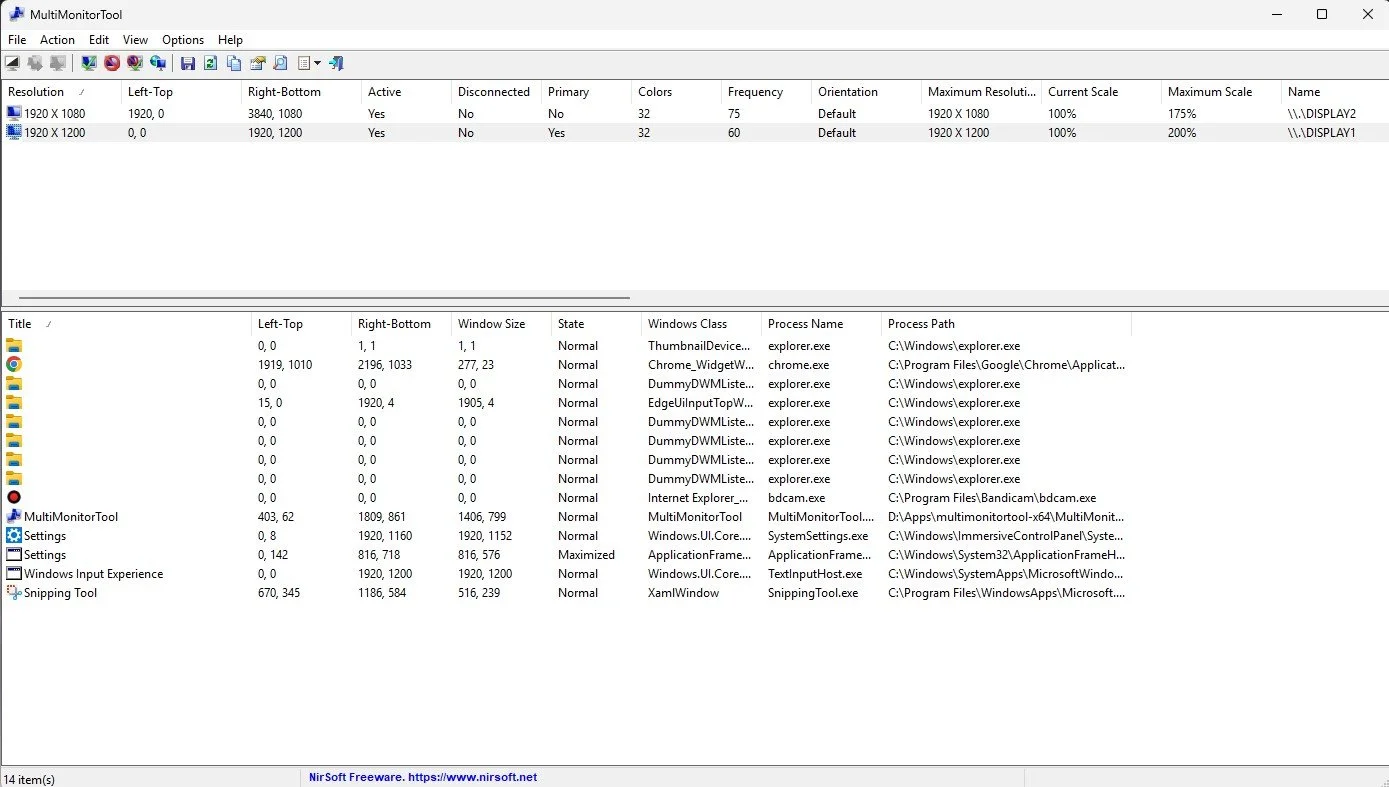
Back in January, I was very pleased because I had finally found some open source software, DisplayMagician, which allowed me to quickly and easily alter my display profile and run specific games and applications on my second monitor. Prior to this I would find that some programs just wouldn’t stay put, once they were dragged or otherwise cajoled to display on the monitor of my choice. They would continuously snap back to the primary display, regardless of my actions. DisplayMagician solved this issue and did so with aplomb. Or it did, until last weekend when I upgraded my PC from Windows 10 to 11. Then it stopped working. I therefore did some digging online and it became apparent that this is a known issue that is currently being addressed by its creator, Terry McDonald.

As part of our increasing dependency upon software, we have also grown accustomed to its associated foibles, especially the negative ones. Today, I upgraded my blog from Squarespace 7.0 to 7.1 and my PC operating system from Windows 10 to 11. I started early in the morning and ensured that all my personal data was backed up. My default expectation was that both processes would go wrong in some way, shape or form. Let’s take a moment to consider this mindset, which is born out of experience. It is now taken as read that whatever you upgrade, be it an app on your phone or a program on your PC, that it’s going to be problematic. It won’t be a seamless transition and you’ll end up having to do some sort of troubleshooting. Despite our lives becoming more dependent on such software, the quality of these products seems to be deteriorating. What a sorry state of affairs.
The Revenge of Frankenstein (1958)
In the year 1860, Baron Victor Frankenstein (Peter Cushing) faces execution by guillotine for the murders perpetrated by the creature he created. With the assistance of a hunchback named Karl (Oscar Quitak) he avoids death by beheading the priest who came to give him the last rites. The priest’s body is then mistakenly buried by the authorities. Three years later, Victor, now using the name Doctor Stein, has established himself as a prosperous physician in Karlsbrück, serving both affluent patients and the poor at a paupers’ hospital. Hans Kleve (Francis Matthews), a junior member of the medical council, recognises Victor and being an admirer, seeks to become his apprentice. Victor and Hans then undertake an experiment to transplant Karl’s living brain into a new, more refined body, rather than a grotesque monstrosity the Baron has previously made. Karl is eager to have a new healthy body, especially after encountering Margaret Conrad (Eunice Gayson), the charming new assistant at the hospital.
In the year 1860, Baron Victor Frankenstein (Peter Cushing) faces execution by guillotine for the murders perpetrated by the creature he created. With the assistance of a hunchback named Karl (Oscar Quitak) he avoids death by beheading the priest who came to give him the last rites. The priest’s body is then mistakenly buried by the authorities. Three years later, Victor, now using the name Doctor Stein, has established himself as a prosperous physician in Karlsbrück, serving both affluent patients and the poor at a paupers’ hospital. Hans Kleve (Francis Matthews), a junior member of the medical council, recognises Victor and being an admirer, seeks to become his apprentice. Victor and Hans then undertake an experiment to transplant Karl’s living brain into a new, more refined body, rather than a grotesque monstrosity the Baron has previously made. Karl is eager to have a new healthy body, especially after encountering Margaret Conrad (Eunice Gayson), the charming new assistant at the hospital.
The Revenge of Frankenstein (1958) is a direct sequel to Hammer Films highly successful The Curse of Frankenstein, made the previous year. While it was well received both critically and at the box office at the time of its release, The Revenge of Frankenstein has tended to be overlooked in subsequent retrospectives of studios work. There are more lurid and more sensational films to consider, such as Frankenstein Must be Destroyed (1969) and Frankenstein and the Monster from Hell (1974). However, this oversight has been corrected in more recent years, with many contemporary reviews praising this production for its unique subversion of the traditional Frankenstein narrative. The focus of the story in The Revenge of Frankenstein is not the Baron’s creation of yet another creature but the Baron’s obsession and desire to continue his work. Yes there are moments of horror and tragedy but the film is driven by Peter Cushing’s presence.
Critics universally lauded Peter Cushing’s performance as Baron Victor Frankenstein in The Curse of Frankenstein in which the character was aloof, purely self-absorbed and utterly amoral. In the sequel, The Revenge of Frankenstein Jimmy Sangster’s script brilliantly shifts the character of Baron Frankenstein into a charming, deeply misguided and fiercely intelligent visionary. Cushing performance balances the characters inherent sociopathic tendencies with plenty of dry wit and a degree of charm. In many ways the focus of the audiences sympathy is the Baron and not his medical subjects. The Revenge of Frankenstein is a showcase for some of Peter Cushing’s finest acting work. Not only is his performance spot on but the film also illustrates the actors willingness and great ability with working with props, such as the complex electrical generator and chemical batteries that power his laboratory.
The Revenge of Frankenstein deliberately embraces its moral ambiguity with its “heroic villain” and general lack of a traditional hero to oppose the Baron and his experiments. The Baron helps the local poor while the medical council does nothing to help them. However, his virtue comes at a cost as he harvest organs and limbs. The absence of Christopher Lee is compensated by a sensitive performance by Michael Gwynn takes who plays Karl, post operation. He keeps the new creature deeply sympathetic, even as the plot devolves into cannibalism. Rather than non-stop action and cheap jump scares The Revenge of Frankenstein prefers to explore an increasingly dark series of plot element. Directed by Hammer’s legendary Terence Fisher, the film is well paced and suitably atmospheric. His creative decision to focus more upon the mad scientist rather than the monster makes this entry in the franchise both interesting and superior to some of its successors.
In the year 1860, Baron Victor Frankenstein (Peter Cushing) faces execution by guillotine for the murders perpetrated by the creature he created. With the assistance of a hunchback named Karl (Oscar Quitak) he avoids death by beheading the priest who came to give him the last rites. The priest’s body is then mistakenly buried by the authorities. Three years later, Victor, now using the name Doctor Stein, has established himself as a prosperous physician in Karlsbrück, serving both affluent patients and the poor at a paupers’ hospital. Hans Kleve (Francis Matthews), a junior member of the medical council, recognises Victor and being an admirer, seeks to become his apprentice. Victor and Hans then undertake an experiment to transplant Karl’s living brain into a new, more refined body, rather than a grotesque monstrosity the Baron has previously made. Karl is eager to have a new healthy body, especially after encountering Margaret Conrad (Eunice Gayson), the charming new assistant at the hospital.
In 1968 the dilapidated freighter Corita hastily leaves Freetown to avoid a customs inspection. Captain Lansen (Eric Porter) has a cargo of dangerous explosives which he is smuggling so he can finally retire. His ship’s passengers also have reasons for leaving in a hurry. Dr. Webster (Nigel Stock), together with his daughter Unity (Suzanna leigh), is relocating due to his indiscretions with patients and illegal operations. Alcoholic pianist Harry Tyler (Tony Beckley) is aimlessly drifting from port to port. Eva Peters (Hildegard Knef) is fleeing from her husband with stolen bearer bonds which she intend to use to buy back her son from his evil clutches Caracas. Ricaldi (Ben Carruthers), a questionable lawyer, is pursuing Eva to retrieve the stolen bonds. First officer Hemmings (Neil McCallum) suggests that the ship should return to Freetown after an imminent Hurricane warning. The Captain asks the passengers and they are unanimous that they do not wish to return. However a mutinous crew, the bad weather and the instability of the explosives force everyone to abandon ship. The survivors find themselves adrift in a lifeboat surrounded by a strange carnivorous seaweed.
Despite being considered by many as an original story, The Abominable Snowman (1957) is in fact a remake of a made for television play, The Creature, that was originally broadcast in the UK in 1955. Hammer Films would often purchase the rights of popular TV programs and subsequently re-work them for mainstream, international cinema. Larger production budgets and fewer censorship restrictions allowed them to make their cinematic interpretations more lurid, thus commercially viable. Hence The Quatermass Xperiment, Quatermass II and Quatermass and the Pit were all given a big screen makeover and were commercially successful. The Abominable Snowman was written by acclaimed writer Nigel Kneale, who also wrote the original television drama and the aforementioned Quatermass trilogy. Although ostensibly marketed as a horror film this production is actually an interesting blend of psychological thriller and science fiction.
Sometimes when making a film, less can indeed be more. Practical things like keeping the scope of your story simple, working within your budget and not feeling obliged to justify or explain every aspect of the plot can prove invaluable. If you can do all of these things with a robust cast, intelligent direction, while maintaining your viewers attention, then you have achieved something that many studios and independent filmmakers usually cannot do. Director David Keating has managed to do this with the 2009 horror film Wake Wood. Along with Brendan McCarthy who he co-wrote the screenplay with him, Wake Wood efficiently and charismatically tells its tale. It is well paced, with relatable characters and good performances. The atmosphere builds and there are some jolting moments of horror. Furthermore, it is both unusual and rewarding to see pagan rituals portrayed as an extension of rural life, in the same way as farming and animal husbandry. It is neither malevolent or benign but just an ever present force.
The stories of Hammer films “horsetrading” with the British Board of Film Censorship (as the BBFC were called at the time) make for some interesting reading. If you're interested in the history of the studio I thoroughly recommend the book A New Heritage of Horror: The English Gothic Cinema by David Pirie. However, the BBFC felt that they’d been hoodwinked after the release of The Curse of Frankenstein in 1957, which had managed to smuggle additional unpleasantries into the final theatrical edit. Henceforth the board took a more formidable stance when dealing with Hammer and all subsequent releases. Hence The Man Who Could Cheat Death feels somewhat tame compared to earlier Hammer films. Although cuts were made to the final edit of the movie, one gets the impression that maybe the more salacious and graphic content was possibly reduced when writing the screenplay. However, with that all said, The Man Who Could Cheat Death is still a handsome, performance driven Hammer horror.
After his brother Charles dies in mysterious circumstances, Harry Spaulding (Ray Barrett) inherits his cottage in the Clagmoor Heath, Cornwall. He quickly moves in with his new bride, Valerie (Jenifer Daniel), with a view to finding out what happened. However, he is shunned by the locals apart from the village publican, Tom Bailey (Michael Ripper), who befriends him. The only other resident in the vicinity of the cottage is Dr. Franklyn (Noel Willman), the owner of the nearby Well House. He lives with his daughter Anna (Jacqueline Pearce), who is attended by a silent Malay servant (Marne Maitland). Anna is a strange girl who seems to be harbouring a secret. Her father treats her contemptuously and does his utmost to keep her confined to Well House. When the local village eccentric, Mad Peter (John Laurie), dies in a similar fashion to Charles Spaulding, both Harry and Tom decide to take matters into their own hands and to investigate further.
The horror movie genre was changing rapidly in the late sixties and seventies, with films such as the Night of the Living Dead and Rosemary’s Baby moving away from traditional gothic settings and proving to be box office successes. After the success of Count Yorga, Vampire, a movie set in 1970s Los Angeles, Warner Bros commissioned Hammer Films to make two contemporary set Dracula films. The first of these was Dracula A.D. 1972. The film was loosely inspired by the Highgate Vampire case and proved to be moderately successful at the box office. The second being The Satanic Rites of Dracula; a curious hybrid vampire movie that mixes elements of the espionage genre along with traditional Hammer horror content. Sadly, this final outing for both Peter Cushing and Christopher Lee as Van Helsing and Dracula, was not well received by the public and has subsequently been written off in the annals of Hammer Films. Yet despite it’s flaws it does have a few points of interest to the more rigorous horror fan. The recent Blu-ray release via the Warner Archive Collection presented such an opportunity for reappraisal.
James Watkins’ 2012 adaptation of The Woman in Black is quite a radical adaptation of Susan Hill’s story, yet it still manages to remain true to its central themes. Jane Goldman of Kick-Ass, X-Men: First Class fame, has crafted a screenplay which is both innovative yet strangely traditional. She boldly revises the central character from contented husband to desolate widower; a move that adds a very bleak under current to the story. The more ghoulish elements of the narrative have been greatly enhanced and the film works the best when the eponymous character makes an appearance via jump scares. Despite a modest budget of $15 million, The Woman in Black went to make over $127,730,736 worldwide making it the most financially successful British horror film in 20 years.
In 1910, Hong Kong is in the grips of the powerful Red Dragon tong, a secret society that extorts revenue from merchant seamen, deals in both opium and slave trades and savagely slaughters all those who offer opposition. A merchant sailor, Captain Jackson (Geoffrey Toone), swears revenge on the nefarious clan after they brutally murder his first officer and daughter. Hammer's The Terror of the Tongs strives to offer a lurid period drama but falls somewhat short of the mark due to a clumsy script, an indifferent hero and a conspicuous lack of authentic Asian actors. Apart from Burt Kwouk, most of the cast are Europeans sporting rather poor prosthetics. Christopher Lee manages to bluff his way through his role as Tong leader Chung King, through the force of his acting skills. French actress Yvonne Monlaur (Brides of Dracula) is not as successful as a mixed raced serving girl.

Following the 2012 restored release of The Curse of Frankenstein, Hammer, Icon Film Distribution and Lionsgate jointly produced a Blu-ray restoration of another British classic. This time it was the 1958 version of Dracula directed by Terence Fisher. This is one of Hammer's finest films and not only gets a superb High Definition transfer but also sees the restoration of two lost scenes. Dracula literally re-invented the horror genre and the depiction of vampires in film. It also established the studio as a key player within the industry and made international stars of Peter Cushing and Christopher Lee. This new restoration finally does justice to the source material presenting it as it deserves to be seen.
The 2012 Blu-ray release of Hammer Studio's The Curse of Frankenstein is a visual delight. The use of Eastman colour and the outstanding cinematography by Jack Asher are sumptuous and the new restoration does the film justice. This unique British horror movie introduced a new visceral style and brooding quality to the genre back in 1957. Despite a modest budget the creative production design evokes a truly Gothic horror atmosphere. The studio also introduced graphic violence along with a strong undercurrent of sexuality. These lurid aspects of the film proved particularly successful with the post war audience and became an integral part of the marketing campaign.
The Movie Questionnaire
This movie questionnaire was originally created by Alexander from Cinemaniac Reviews. Sadly, I believe that website is now defunct. However, that doesn’t in anyway invalidate the questionnaire itself which has some very good questions about your relationship with cinema. Some of my answers to the questions posed are about films that I enjoy, as opposed to those that are considered cinematic classics. However, I have answered some questions more seriously than others, especially the one about undeserving recipients of the Best Film Oscar. I struggled with a couple of questions because I no longer go the cinema as frequently as I did 10 years ago. This is mainly due to the fact that a lot of the films I find interesting end up going straight to streaming after very brief theatrical releases. Some do not even get shown in cinemas. Hence I view far more at home. But I digress. On with the questions and answers. Feel free to comment below and share your views.
This movie questionnaire was originally created by Alexander from Cinemaniac Reviews. Sadly, I believe that website is now defunct. However, that doesn’t in anyway invalidate the questionnaire itself which has some very good questions about your relationship with cinema. Some of my answers to the questions posed are about films that I enjoy, as opposed to those that are considered cinematic classics. However, I have answered some questions more seriously than others, especially the one about undeserving recipients of the Best Film Oscar. I struggled with a couple of questions because I no longer go the cinema as frequently as I did 10 years ago. This is mainly due to the fact that a lot of the films I find interesting end up going straight to streaming after very brief theatrical releases. Some do not even get shown in cinemas. Hence I view far more at home. But I digress. On with the questions and answers. Feel free to comment below and share your views. (Credit: Film Montage by Erik Hollander)
1. What’s your favourite movie?
Seven Samurai (1954). You can learn everything you need to know about film-making, story telling and human nature from this masterpiece.
2. Least favourite movie?
The Comic (1985). I saw this at a film festival in the year of its release and it was incredibly poorly made, tedious and mistaken about its own importance. The audience was screaming and throwing stuff at the screen towards the end. The director who was scheduled to be interviewed after the screening but chose to leave instead.
3. Name one movie you loved upon initial viewing but eventually grew to hate (or vice-versa)?
The Lion King (1994). Not because it’s a bad film but because my son watched it so many times when he was a child. It’s taken 30 plus years for me to be able to watch it again.
4. Name your biggest guilty pleasure film.
I don’t have guilty pleasures. I do watch some cheap and nasty exploitation fodder which I suppose falls into this category. I have a soft spot for vigilante movie, The Exterminator (1980). The scene were a mobster is lowered into an industrial meat grinding machine in an abattoir is fun.
5. Favourite quote from a favourite actor/actress (must be a line from a movie)?
“Fuck the bonus”. Rutger Hauer. Wanted Dead or Alive.
6. Favourite quote from a favourite actor/actress (must NOT be a line from a movie)?
Vincent Price: “Young man, I have made eighty-four films. What have you done?”
Michael Reeves: “I've made three good ones.”
7. Three favourite movie scenes?
The scene in The Monster Squad where Fat Kid says to Scary German Guy, “Man, you sure know a lot about monsters”. To which the old man replies, “Now that you mention it. I suppose I do”. As he shuts the door we see a number tattooed on his arm. He survived the Holocaust. Tonally, this scene is radically different to the comedy horror of the rest of the film but it works so well. An utterly powerful scene, when you least expected it.
The final 20 minutes of A Better Tomorrow II.
The Rock Monster scene from Galaxy Quest. “I know. You construct a weapon. Look around you, can you form some sort of rudimentary lathe…” The best Star Trek satire ever.
8. Four films that should NOT have won Best Picture?
Driving Miss Daisy (1989) (It should have been Spike Lee's Do the Right Thing)
Rocky (1976) (Won over Taxi Driver, Network, All the President's Men)
The Greatest Show on Earth (1952) (The academy chose this over High Noon)
How Green Was My Valley (1941) (Beat Citizen Kane)
9. Top five of the year (currently)?
I haven’t seen five new releases at the cinema this year. I enjoyed Cold Storage and Coyote vs. ACME
10. Bottom three of the year (currently)?
I don’t go to the cinema that much any more due to the paucity of contemporary cinema. Most of my viewing is done in the comfort of my home and I am catching up with older releases or classics. I did see Mutiny with Jason Statham recently. It was far too generic for my liking, so that is at the bottom of my list I guess.
11. What film gets your vote for the worst or most pointless remake?
Gus Van Sants 1998 remake of Hitchcock’s Psycho. Why does this exist?
12. Is there any film you think is actually desperate for a remake?
The Devil Rides Out.
13. Name your three favourite film heroes/heroines.
Ellen Ripley (Sigourney Weaver. Aliens).
Sherlock Holmes (Robert Stephens. The Private Life of Sherlock Holmes).
Professor Van Helsing (Peter Cushing. Dracula).
14. Name your three favourite film villains.
Hans Gruber (Alan Rickman. Die Hard).
Khan Noonien Singh (Ricardo Montalban. Star Trek II: The Wrath of Khan).
Xusia of Delos (Richard Moll. The Sword and the Sorcerer).
15. Best sequel?
Psycho II and Aliens. Oh and Mad Max 2. Was I supposed to pick just one?
16. Worst sequel?
Alien 3. Because the plot kills off everyone who survived Aliens, bar Ellen Ripley, just so they could make an intriguing but ultimately pointless sequel. Plus any good ideas that arose from the first few drafts of the screenplay were squandered in the resulting disastrous production that followed.
17. Best trilogy?
The Lord of the Rings. Perfect epic story telling and big screen spectacle, which doesn’t come at the expense of performances and emotional content.
18. Worst trilogy?
The Hobbit. Because it’s everything that The Lord of the Rings isn’t.
19. What’s your favourite word to use in a movie review (if your film blog does not feature reviews, substitute “review” with “-related post”?)
Eldritch. Sadly, it’s not a term that can be applied to lots of films. It tends to be genre specific. Namely, horror.
20. Anything else?
Modern, mainstream film-making is become increasing generic and standardised. Cinematography is bland, editing is becoming less adventurous and more formulaic. Writing is declining. The art of a good film score is also being lost (with the exception of Michael Giacchino). Modern film-makers need to watch more classics to acquaint themselves with such things as innovation, style and emotional impact. Hollywood needs to take more risks.

The 25 Questions Food Tag is a popular, light-hearted Q&A widely used by lifestyle and food bloggers. I discovered it while perusing the internet for a new questionnaire, as I’ve done a great deal of substantive writing of late and I wanted to tackle something a lot less involved. As ever, having read through the questions on offer, there is plenty of scope for some interesting answers and a modicum of levity. Food per se, is also a good subject to write about as eating is something we all do. This questionnaire has also made me consider whether writing about food is something I should do more often. Would there be an audience for sharing recipes, for example? I would say that’s “food for thought” but I won’t because puns are annoying. However, I digress. Here for your edifications and my blogging convenience, are my answers to “The 25 Questions Food Tag “.
This movie questionnaire was originally created by Alexander from Cinemaniac Reviews. Sadly, I believe that website is now defunct. However, that doesn’t in anyway invalidate the questionnaire itself which has some very good questions about your relationship with cinema. Some of my answers to the questions posed are about films that I enjoy, as opposed to those that are considered cinematic classics. However, I have answered some questions more seriously than others, especially the one about undeserving recipients of the Best Film Oscar. I struggled with a couple of questions because I no longer go the cinema as frequently as I did 10 years ago. This is mainly due to the fact that a lot of the films I find interesting end up going straight to streaming after very brief theatrical releases. Some do not even get shown in cinemas. Hence I view far more at home. But I digress. On with the questions and answers. Feel free to comment below and share your views.

Usually, during the Blaugust Festival of Blogging event, I like to tackle an internet questionnaire. I do these because they’re fun and they’re a break from standard blog posts. The only problem is that I’ve completed a lot of the more popular ones over the years. You’ll find my previous answers for these below, in the “Related Posts” section. I was certain there still had to be some questionnaires available that I haven’t completed and after searching online, I discovered the Bernard Pivot Questionnaire. It is a set of ten quick questions which French TV host Bernard Pivot would asked his guests at the end of his cultural show Bouillon de culture. He based his list of questions on the older Proust Questionnaire, which itself is derived from Victorian parlour games. Later, TV host James Lipton made a version of the Bernard Pivot Questionnaire famous, on Inside the Actors Studio. So with out further ado, here are my answers to the Bernard Pivot Questionnaire.
The Guardian news website have a recurring feature in their “culture” section called Honest Playlist where they ask various celebrities about their music listening habits. There are a dozen or so stock questions that they use to grill their guest, although they don’t always use the same ones. I think it makes for interesting reading so its a column that I often visit. As I haven’t published a post based upon an internet questionnaire for a while, I thought I poach this particular line of questioning and have a crack at it myself. I have chosen the ten questions that I think are the best and by that I mean, they have the most scope for interesting answers. I didn’t include the one about karaoke because it’s not something I especially like. Each to their own. Feel free to similarly purloin this set of questions and write your own responses. I’m always fascinated by these sort of things.

This post is inspired by Axxuy, who recently replied to an open post by Forking Mad. It’s a simple set of questions and a convenient writing prompt for those occasional slow days. Now some folk can get quite “sniffy” about these sorts of posts. Perhaps they think they’re too insubstantial or too easy or something. Irrespective of whether such assertions are true or not, I would like to point out that one of the most popular posts on Contains Moderate Peril is a similar sort of internet questionnaire, titled “Would You Rather - The Gaming Edition”. Originally posted in late August 2021, it has been read over 18,000 times. Now I’m not advocating shameless “ambulances chasing” and “jumping on bandwagons” but I am reminded of the old adage, “if the shit fits, wear it”. Hence, you’ll find no prejudice against internet questionnaires on this blog. Here are ten pointless facts about me.

If you’re familiar with this blog then you know that I like an internet questionnaire. A little bit of introspection can be quite a useful thing. This particular questionnaire, the “Blog Questions Challenge”, was originally created for users of Bear Blog. However, the questions have subsequently been adapted to make them applicable to other blogging platforms and therefore accessible to a wider audience. I recently discovered this particular questionnaire over at Alvan’s Digital Garden and thought the selection of questions to be interesting. Hence I have decided to tackle them. If you’re a blogger yourself, feel free to follow suit and use this set of questions, as I think that it’s always interesting to know what inspires people to write and what path brought them online.

I spent some time today, looking for a new internet questionnaire as they make for fun and quirky blog posts (by which I mean lazy and easy ones). Sadly, most of the search results that Google found were ones I’ve done already. So I thought why not ask the online AI, ChatGenie, to provide the questions? Surely it can’t be that difficult to come up with some interesting talking points? Well it turns out it is, because the 10 questions that the AI has provided are not especially inspired. However, I did find it amusing how ChatGenie justified itself, explaining where the mirth and hilarity lie in each of its questions. Therefore, here are my answers to what I am officially calling the ChatGenie Questionnaire. Feel free to complete it yourself.
Using his prodigious experience as a chat show host, Stephen Colbert (of the eponymous The Late Show with Stephen Colbert fame) has crafted 15 hard-hitting, probing and perceptive questions, as a means to dissect and analyse his celebrity guests. These include such insightful inquiries as “What is the scariest animal?”, “What do you think happens when we die?” and “Apples or oranges?”. So far these questions have been successfully used by Mr Colbert to interrogate the likes of Keanu Reeves, Jeff Goldblum and Sandra Bullock. Hilarity naturally ensued, or at least by the standard of US network television. I’m not really a fan of the “celebrity talk show” because it doesn’t really exist as such anymore. What we now have instead is the “celebrity with something to sell show” but that gripe is best addressed in a separate blog post.

Great, it’s internet question time once again. Regular readers will already know that I really like these sorts of things. Unlike Sparks, I do have the time to answer questionnaires. Despite the fact that such articles are often considered lightweight writing, I do believe that even the most vacuous line of enquiry can yield an interesting post. This time round I have a diverse set of questions from two very different sources. The first five are courtesy of ChatGPT, which seems just as capable of asking sublimely asinine questions as real people. The next five come from Cosmopolitan. A publication and website that you wouldn’t immediately associate with me. However, out of the various questions available on both sites, I have chosen ten that I think have scope for reasoned debate and interesting answers. Thanks very much to UltrViolet and Hamatti for providing the aforementioned lines of enquiry.

I’m not sure where it came from but I have a page of allegedly philosophical questions bookmarked in Google Chrome. As it’s filed under “blogging” I suspect that these may have been saved as an emergency source of inspiration if I were in need of a writing prompt. Well I’m not exactly brimming with ideas today, so I’ve decided to avail myself of this list. I selected 10 questions randomly and shall now proceed to answer them. I am not claiming that my answers are as philosophical as the questions. I shall no doubt be flippant, sarcastic and possibly a little scathing, but I’ll endeavour to answer the questions properly (if they merit it). As I’ve said before about previous internet questionnaires that I’ve completed, sometimes what at first glance looks like lightweight material can inadvertently lead to some interesting discussions.

I’ve said it before and I’ll say it again, I’m a sucker for an internet questionnaire. Yes, I know such things are considered in some quarters as somewhat lightweight content. But not every blog post needs to be an insightful analysis of crop rotation in the 14th century or a searing indictment of the latest internet outrage. Sometimes answering a few simple questions in a light hearted fashion can be quite illuminating. Plus readers like to get to know something about the bloggers that they follow and internet questionnaires are a means to that. So without further ado, here is a set of questions known as “The Blogger Tag”. I first encountered this over at A Geek Girl's Guide care of Michelle. Do go and check out her take on these. Also feel free to use them yourself, as that is the idea behind answering them.

Ah, there’s nothing like an internet questionnaire to help you out when you’re scratching your head, desperately trying to think of something to write about. I don’t consider Blaugust to be complete unless there’s at least one of these “question and answer” style blog posts doing the rounds. This one is courtesy of Krikket over at Nerd Girl Thoughts. Do go and have a look at their unique take on the various questions. Naithin has also tackled this line of enquiry and you can find his answers at Time to Loot. As ever I tend to deviate from the somewhat binary nature of the questions but that’s the whole point, isn’t it? To open up the scope of the discussion and potentially encourage others to join in. This is why I like these sorts of internet questionnaires and think they contribute much to Blaugust.
Oh look, another internet questionnaire blog post. By now you must be aware of my weakness for these sorts of things (if not then take a look at the links to related posts at the bottom of this article). It would appear that the “never have I ever” format has been adapted and we now have a “have you ever” set of questions specifically aimed at gamers. As usual some of the questions are trivial but others offer scope for quite interesting responses. Etiquette dictates that I credit those who have already participated and answered these questions. They are as follows. Michelle over at A Geek Girl’s Guide. Pix1001 from Shoot The Rookie. Joseph Skyrim’s post can be found at JVT Workshop and pkudude99 share their thoughts at Nomadic Gamers. Do check out their take on the questions as there are some interesting replies. On to the questions and answers.
“The Mystery Blogger Award is an award for amazing bloggers with ingenious posts. Their blog not only captivates; it inspires and motivates. They are one of the best out there, and they deserve every recognition they get. This award is also for bloggers who find fun and inspiration in blogging, and they do it with so much love and passion”. Okoto Enigma
The Rules:
Ensure the award logo is used in your post.
List the rules.
Thank whoever nominated you and provide a link to their blog.
Mention the original creator of the award and provide a link to their site.
Tell your readers 3 things about yourself.
You have to nominate 10 – 20 people.
Notify your nominees by commenting on their blog.
Ask your nominees any 5 questions of your choice.
Share a link to your best post(s).
“The Mystery Blogger Award is an award for amazing bloggers with ingenious posts. Their blog not only captivates; it inspires and motivates. They are one of the best out there, and they deserve every recognition they get. This award is also for bloggers who find fun and inspiration in blogging, and they do it with so much love and passion”. Okoto Enigma
The Rules:
Ensure the award logo is used in your post.
List the rules.
Thank whoever nominated you and provide a link to their blog.
Mention the original creator of the award and provide a link to their site.
Tell your readers 3 things about yourself.
You have to nominate 10 – 20 people.
Notify your nominees by commenting on their blog.
Ask your nominees any 5 questions of your choice.
Share a link to your best post(s).

As some of you may know, I have a weakness for internet questionnaires. Yes, they can be looked upon as self indulgent filler that you post on a day when you’re strapped for inspiration, if you want to be snippy about them. But I find them quite insightful as I like to know about the people whose blogs I read. Sometimes it’s just as much about the person as it is about the blog post. “You are your own brand” and all that. But I digress. I saw this particular questionnaire over at Ace Asunder. Solarayo borrowed it from Quietschisto of RNG, who in turn purloined it from Chrisse of Vamp It Up Manchester who created the questions. There’s a broad spectrum of enquiries and scope for some informative and entertaining answers. So let us begin.

I got tagged by fellow blogger, Magimos, as part of the Real Neat Blogger Awards. Now I’m not entirely sure what that is. It’s one of those things where you get asked a bunch of questions, then get to set some yourself and then tag other people to answer them. I certainly don’t mind answering questions. I’ve already written in previous posts how I’m a sucker for internet surveys. But I’m not keen on tagging people. It’s a little invasive for my liking and I’m a stickler for etiquette. By all means ask people if they’d like to participate but never inflict things on people without consent. To me it’s the same as random people cold calling and trying to sell you stuff. Or religious types, knocking on your front door and asking if you’d like to join a Cthulhu cult. So I’ll just write my responses to Magimos questions and then write a few questions of my own, which I’ll leave for other to reflect upon and answer if they see fit.

Naithin over at Time to Loot has compiled a Blaugust related internet questionnaire. As I’ve made clear in the past, I have a weakness for these sorts of things and will happily indulge the most peculiar enquiries. I’m not really sure why I like to do questionnaires. Perhaps I feel at some level that even the crassest or vacuous of questions can yield a good or at least entertaining answer. Not that I’m saying that Naithin’s questions are any of those things. In fact I think they are quite engaging. The other thing about questionnaires is that I can make a really obscure and impenetrable pop culture reference about the band Sparks. So here are my responses to the all of them in full. An unedited stream of consciousness or load of bollocks, depending upon your perspective. I hope some of the other Blaugust participants also take part. It will be interesting to compare notes, so to speak.
At the beginning of November, I started to answer the various questions set out in The Proust Questionnaire, mainly because at some level I do like the occasional insight that “internet questions” can provide. Although most of my answers are frequently tinged with a degree of levity and at times even scorn, every now and then the right question can provoke a sincere response. So here are my measured replies to the remaining interrogative enquiries, for your consideration and edification. If you do not agree with them or find yourself at odds with my mindset, please address any complaints care of the late Marcel Proust (10th July 1871 - 18th November 1922).
The Proust Questionnaire was popularized by Marcel Proust, the French essayist and novelist, who believed that, in answering the questions, an individual provides an insight into his or her true nature. Whether that is true is debatable, but I do find the internets fondness for Q&A sessions, curiously fascinating. And as this very questionnaire has been recently resurrected by Vanity Fair magazine and has also been utilised on the Ricky Gervais is Deadly Sirius podcast, I though I’d jump on the same bandwagon, as I’m behind in my writing and this is an easy post. As there are thirty-five questions, I thought I’d tackle them over two days. So, without further ado, here are my considered and measured thought on the first seventeen.

Despite having written a blog posts claiming that there’s always something to write about, even I have days when I’m lacking inspiration. Or more to the point lacking in motivation to write. And today is a prime example. I’d much rather be doing something else, but I made a promise to myself to keep the blog content flowing. However, I discovered a selection of questions that have been doing the rounds, via Marathal over at Deez Words and decided to answer them. I’m sure you know the form. They’re a selection of “touchy-feely”, non-threatening questions designed to give the reader a simple thumbnail sketch of your “personality”. So, I thought to myself, “there’s today’s blog post”. I will try my best to answer sensibly and give as relevant answers as I can, but you know me.

Many of my fellow bloggers regularly posts details of what they’ve been reading of late. I must admit that although I received several books and graphic novels as Christmas presents, I’ve yet to start any of them. The bulk of my reading is done via my PC or Tablet and usually tends to be news articles, blog posts and research for my writing. The last book that I physically read was Titus Crow, Volume 3: In the Moons of Borea & Elysia by Brian Lumley and that was last November. So, I’ve decided to get back into reading in the traditional sense and as ever have allotted time in my schedule and set myself goals. As a carer I have numerous appointments to attend throughout the week with my parents. Rather than waste time on my phone perusing twitter and gawping at the internet, I shall use these periods to read.
60 Years of Star Trek
Star Trek is slightly older than me by 14 months. I was born on December 18th 1967. Star Trek was first broadcast in the US on 8th September 1966. Hence this show has always been part of the prevailing pop culture that surrounded me, as I grew up. I first began watching Star Trek as a young child in the early seventies. It would be repeated on the BBC in the early evening on Fridays and it became a family ritual to sit down together and watch it. As a seven or eight year old, it left a great impression upon me and was in many ways, the television highlight of the week. Star Trek along with Doctor Who certainly started my interest in science fiction. Star Trek was also one of the first shows that introduced me to tie-in marketing. I remember seeing in a toy shop, near to my school at the time, a Dinky Klingon Battle Cruiser and was flabbergasted that such a thing existed. I immediately coveted it but sadly never obtained one.
Star Trek is slightly older than me by 14 months. I was born on December 18th 1967. Star Trek was first broadcast in the US on 8th September 1966. Hence this show has always been part of the prevailing pop culture that surrounded me, as I grew up. I first began watching Star Trek as a young child in the early seventies. It would be repeated on the BBC in the early evening on Fridays and it became a family ritual to sit down together and watch it. As a seven or eight year old, it left a great impression upon me and was in many ways, the television highlight of the week. Star Trek along with Doctor Who certainly started my interest in science fiction. Star Trek was also one of the first shows that introduced me to tie-in marketing. I remember seeing in a toy shop, near to my school at the time, a Dinky Klingon Battle Cruiser and was flabbergasted that such a thing existed. I immediately coveted it but sadly never obtained one.
When Star Wars proved a box office success, the major Hollywood studios rushed to produce films that could satisfy the public’s need for more science fiction. I can remember getting very excited when Star Trek: The Motion Picture was announced and the classic cast reassembled. Yet the film’s hard science fiction story which focused on ideas rather than action, left me somewhat underwhelmed when I finally saw it. I have subsequently revised my opinion of it as an adult but it is a somewhat incongruous entry into the Trek canon, being far more cerebral than the show it proceeded. I enjoyed immensely, it’s sequel, Star Trek II: the Wrath of Khan, although Spock’s death at the time, broke me. It is curious the parasocial attachments you can form with fictional characters.
When Star Trek: the Next Generation was announced, I can remember my Mother adopting a very scorched earth policy towards it, before she had even seen the show. She just thought the idea was heretical. I remember that the UK papers gave a lot of coverage to this story, mainly due to a British actor being cast in the lead role. Like most TV shows in the seventies and eighties, it took a while for TNG to be shown in the UK. Released in the US in the autumn of 1987, it was show on the BBC in 1990. However, the first season or two had been released on VHS tape which had two episodes. We rented these from Blockbuster and was disappointed by the extremely poor picture quality. TNG was shot on 35m film but then transferred to NTSC video format for editing. This when combined with a further transfer to PAL video format resulted in a terrible fluorescent picture with a soft image quality. This combined with the overall weak scripts of the first few season left me somewhat indifferent to TNG. However, the subsequent feature films rekindled my interest and I have revisited the show since and now think far better of it.
By the time Star Trek: Deep Space Nine was shown, I was an adult of 23. This was for me the era of peak Trek and this show epitomised why I liked the franchise. In many ways it was the first show to stray furthest from Gene Roddenberry’s original formula with a stand alone episode of the day and the unequivocal optimism about the rectitude of Starfleet and the future overall. DS9 dealt in ambiguity, politics versus ethics and the human cost of war. It had some great characters and it clealry define the franchise as being for grown ups in so far as what it was exploring. Due to adult life and real world commitments, I caught up with Star Trek: Voyager and Star Trek: Enterprise after their initial broadcasts. I liked them both and thought they did a good job or expanding the lore yet remaining true to the central themes of Trek.
Which brings me to what we shall call modern Trek which I think has been a varied endeavour. I actually didn’t have a problem with the new feature films from this era. The Kelvin Timeline by its very nature is a separate entity and as such can be totally ignored if its not found to your liking. I quite liked it and found it sufficiently entertaining in a big spectacle sort of way. Star Trek: Discovery was a much harder experience to adjust to. Characters like Saru were and remain great but lots of other elements of the show were wanting. I felt that DISCO leaned too far into modern sensibilities and rather than casually referencing them focused too muc upon them in a performative fashion. Hence I christened the show “Hug Trek”. However by season 3 the show got more interesting once it went into the 32nd century. Star Trek: Picard was a very enjoyable fan service that tied up some interesting loose ends. Star Trek: Strange New Worlds started with a lot of promise but for me, peaked in the third season and has dropped in quality recently. The writers seem to be a little too experimental and some of the idea are too off the wall and there’s not enough respect for cannon.
I have always enjoyed Star Trek as a franchise and like its themes of a collaborative exploration with Starfleet striving to be a benign quasi-military body. When compared to another popular sci-fi franchise (you can guess which one), I consider this far more cerebral. It deals with all the problems we have faced with modernity and real life from the sixties to the present, via the medium of genre fiction and it has consistently done it well. Trek has also done much to make pop culture and fandom mainstream. There was a time in the seventies where Trek was very much the face of fandom. As for what it has done for pop culture, well pretty much everyone knows who Captain Kirk is. I also consider Spock to be one of the finest fictional characters ever created, especially in his later years. You can write another blog post about how Trek has impacted upon technology. So many people who now work in such industries grew up watching the show.
Let us take a moment to be realistic. If history teaches us anything, it is that the future that we see in Star Trek is not going to happen, anytime soon. However, that does not mitigate the shows central themes. The merit of Star Trek resides in its message and how that message impacts upon people. Because Trek inspires hope and considers the possibility of humans at their best. When we watch the show in all its incarnations, we briefly feel positive about ourselves as a species. That makes viewers feel good about themselves at time when the wider world is the absolute opposite of Gene Roddenberry’s vision. I think that is important and something we should reflect upon now that the franchise is entering yet another new era now that its corporate ownership has changed. I sincerely hope that people will be celebrating Star Trek in another sixty years. Assuming we’re still here. Human, I mean. In the meantime, we will always have Galaxy Quest. “Never give up, never surrender”.
Star Trek is slightly older than me by 14 months. I was born on December 18th 1967. Star Trek was first broadcast in the US on 8th September 1966. Hence this show has always been part of the prevailing pop culture that surrounded me, as I grew up. I first began watching Star Trek as a young child in the early seventies. It would be repeated on the BBC in the early evening on Fridays and it became a family ritual to sit down together and watch it. As a seven or eight year old, it left a great impression upon me and was in many ways, the television highlight of the week. Star Trek along with Doctor Who certainly started my interest in science fiction. Star Trek was also one of the first shows that introduced me to tie-in marketing. I remember seeing in a toy shop, near to my school at the time, a Dinky Klingon Battle Cruiser and was flabbergasted that such a thing existed. I immediately coveted it but sadly never obtained one.
Star Trek Axanar is back in the news, twelve years on from the last controversy. For those unfamiliar with the original debacle, in 2014 Prelude to Axanar was released via YouTube. This Star Trek “fan-film” presented as a faux 21-minute, Starfleet documentary was very well received by fans and was intended by its makers as a proof of concept for a feature-length film. Set in the year 2245, during the final year of the Four Years War against the Klingons, Prelude to Axanar pushed the boundaries of what a fan film could be. The subsequent Kickstarter and Indiegogo campaigns raised more than $1.1 million. Prelude to Axanar was promoted as a professional-quality, “independent” Star Trek production, employing experienced actors and filmmakers and even established its own studio facilities. The presence of such actors as Richard Hatch, J. G. Hertzler, Kate Vernon, Tony Todd and Gary Graham (resuming his role as Vulcan Ambassador Soval) certainly made Prelude to Axanar distinct from other fan-films.
Thoughts on TV shows and my current viewing habits.
I last wrote a blog post in this series back in February 2022. Then for various reasons, I stopped. Possibly because my relationship with TV has changed in recent years. It’s fair to say at present that viewers are spoilt for choice. There are lots of very good shows around. Conversely, there is also a lot of bland, generic, filler as well. I appreciate that not every television series has to be an industry milestone and there are times when I’m content to watch undemanding content. However, I am very protective of how I spend my leisure time at present. I am not prepared to sink 6 or 8 hours into a show that is just “okay”. Hence I’m becoming very particular about what I watch. If something isn’t working for me in any fashion then I just abandon it and am happy to do so.
Jerry Goldsmith’s contribution to Star Trek is immense. Yet simply listing the films and TV episodes he wrote music for does not adequately encapsulate the significance of his contribution to the franchise. His majestic, thoughtful and uplifting musical scores provide an emotional foundation that reflects the core ethos of Star Trek. They also create an invaluable sense of continuity that spans multiple shows and movies. Perhaps the most obvious example of this is his iconic title music for Star Trek: The Motion Picture (1979) that was subsequently adopted as the theme tune for Star Trek: The Next Generation. His work was held in such high regard, when Star Trek V: The Final Frontier (1989) ran into production issues, it was thought that a Jerry Goldsmith soundtrack may well elevate the film. Sadly it didn’t but his work on that instalment was outstanding and among his best.
Star Trek documentaries are very much like Bruce Lee documentaries, in so far as they’re both a saturated market and more often than not, new content frequently ends up covering the same ground. However, fans tend to watch anything new in the hope that they will find a few new nuggets of information. Brian Volk-Weiss’ new 11 part series, The Center Seat: 55 years of Star Trek, not only covers established facts about the iconic show but also expands upon them as well as providing a wealth of new information. Volk-Weiss has previously explored popular culture with documentaries such as The Toys That Made Us and The Movies That Made Us. The Center Seat: 55 years of Star Trek is an in-depth chronological study of the Star Trek franchise, from its creation at Desilu Productions in 1965 all the way through to the latest iterations, Star Trek: Picard and Star Trek: Discovery.
I recently watched the first trailer for the new Obi-Wan Kenobi television show that is premiering on Disney + in May. I am interested in this latest instalment in the Star Wars franchise and curious as to whether Liam Neeson will make an appearance. I also watched a 20 minute fan video in which they “analysed” the entire trailer. They discussed the content of this 2 minute preview and then did a great deal of speculating about potential themes and characters that may feature in the show. They were clearly enthusiastic about what they had seen and were very knowledgeable about the subject. This resonated with me, as I like to be well versed about the things I enjoy. However, it is worth remembering that fandom can tip into obsession and gatekeeping. Hence I feel there is a subject to explore here.

Before we start, no I am not writing about Alexander Courage’s classic main theme for the original Star Trek show. I can add nothing further to that particular discussion and it remains iconic and inspiring, even when distilled down to just the initial fanfare. In this post I want to draw your attention to another piece of music from Star Trek that has permeated its way into popular culture. A cue that when heard, if the listener is familiar with its provenance, will instantly conjure up images of flying drop kicks, ear claps and judo chops. A piece of music that can be added to pretty much any video footage and instantly make it more heroic. Yes, I am talking about what has become generically known as Star Trek “fight music”. Or more specifically, the "The Ancient Battle/2nd Kroykah" cue from Amok Time (S02E01) composed by Gerald Fried. The scene during the koon-ut-kal-if-fee ritual in which Spock fights Kirk on the planet Vulcan for complicated “reasons”.
Star Trek: The Motion Picture is a wonderful paradox in the Star Trek cinematic pantheon. It is possibly the most hardcore science fiction story that the franchise has explored and is both simultaneously Trek-like and un-Trek-like. Director Robert Wise and the production team worked hard to deliver a completed film for the scheduled December 1979 release date. However, he felt that the theatrical version was only a “rough cut”. Hence in late 2001 he supervised a Director’s Edition of the film which runs 136 minutes (4 minutes longer than the theatrical release)and reinstates some additional scenes and replaces some of the optical effects with new CGI creations. Critics were divided as to whether the Director’s Edition improved the film overall but Wise felt that this version was much closer to his original vision. The Director’s Edition was released exclusively on DVD in standard definition.

Fan Edits are a curious film sub genre. Some simply reinstate deleted scenes to maximise the running time of a movie. Others will remove footage and seek to reorder events in the name of coherency. But a few are far more ambitious. Rather than just reshape what is there, they will shoot new footage to replace material deemed substandard and seek to totally reimagine a movie. On even rarer occasions a few manage to actually improve upon the original, rather than just offering an augmented version. Which leads me onto Star Trek: beyond the Barrier, an interesting and very enjoyable fan edit of Star Trek V: The Final Frontier by Anti-Matter from deLimited Productions. It attempts to repair many of the problems found in the theatrical release of the movie. Some would argue that such a task is a Kobayashi Maru test in itself. However, the results are surprisingly good and some tongue in cheek humour shows that the creator understands the nature of their task.
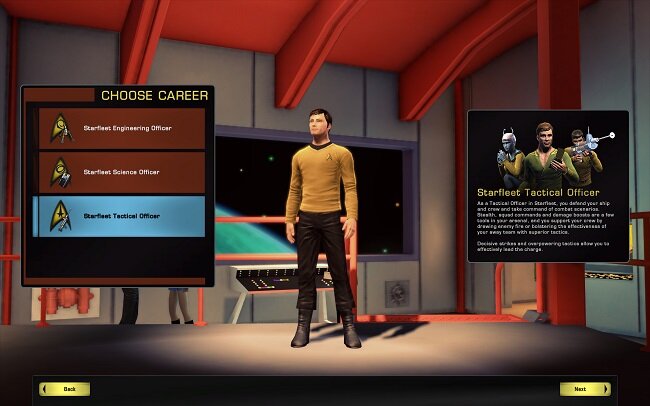
Welcome to the second part of my Star Trek Online: Beginners Guide. I thought it may be useful to write a series of posts, offering practical information for those who are just starting out in STO. Nothing fancy or in any way definitive. Just a few basic tips that may help orientate the new player. I’ve been playing STO since its launch in 2010 and this MMO has seen a lot of changes. The game features a lot of systems and mechanics that are not always immediately intuitive to grasp. So I’ll be doing my best to cover a selection of these in each post and try to provide a broad overview. Like a lot of advice, it can be subjective. Ultimately it comes down to each player how they wish to play. In this instalment, I shall be writing about career paths, factions and races.
Today is Star Trek Day. An officially sanctioned celebration of all things Star Trek. The date reflects the launch of the original television show, back in the sixties. Naturally, there are a multitude of events going on over at the official Star Trek website. And as ever, the MMORPG Star Trek Online is taking part in the celebrations. “On September 8th, 1966, the world first met a group of people, and a ship, that would change our lives forever. Pitched as “wagon train to the stars,” and brought to TV by the force of Lucille Ball’s will, Gene Roddenberry’s Star Trek hit tiny television screens around the world and immediately captured hearts and minds. Through three seasons, and decades in syndication, The Original Series started a movement that still lasts today, more than half a century later. We live in a time where there’s more new Star Trek than ever before, and we’re joining with the rest of our Star Trek Family to celebrate the franchise’s birthday”.

I’ve mentioned in the past that a lot of important information regarding the MMORPG Star Trek Online is centralised within the official subreddit. That’s fine if you enjoy using this platform but it’s not for everyone. I’ve always found Reddit somewhat esoteric and I don’t really like the way it visually displays information. I have to use a browser addon to make it more user friendly. Unlike other communities, STO does not seem to have that many fan produced blogs. However, I may be wrong regarding this, so feel free to correct me (and provide URLs). In the meantime, I thought it may be useful to write a series of simple guides, offering practical information for those who are new to STO. Nothing fancy or in any way definitive. Just a few basic tips that may help orientate the new player. This time we’re going to look at the business model for STO and the cost of playing the game.
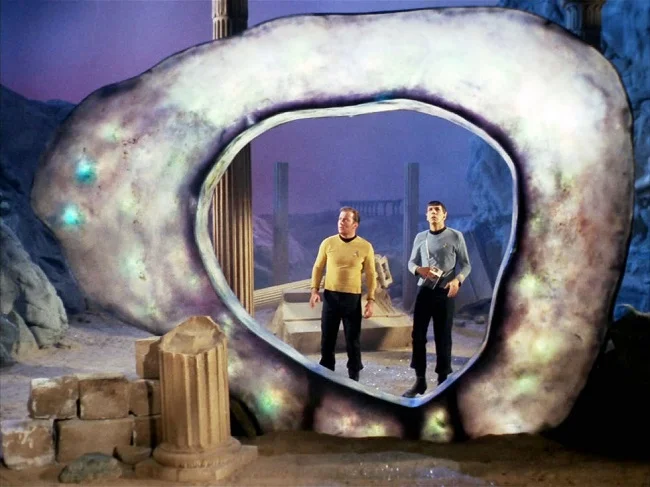
Out of the original seventy-nine episodes of Star Trek, one of the most respected and beloved is The City of the Edge of Forever. Written by Harlan Ellison the story is one of the more thoughtful and tragic in Trek Canon. It was also the first episode to feature a temporal plotline. Doctor Leonard McCoy (DeForest Kelley) accidently receives an overdose of medication and flees the Enterprise while in a delusional state. Beaming down to an alien planet he uses a temporal gateway (The Guardian of Forever) to travels back in time to earth during the Great Depression. By doing so he accidentally changes history. Captain Kirk (William Shatner) and Spock (Leonard Nimoy) follow him through the gateway to New York in hope of correcting the timeline. While awaiting the arrival of McCoy, Kirk falls in love with Edith Keeler (Joan Collins) who runs the 21st Street Mission. However he and Spock soon determine that to restore the timeline they must allow her to die.
There has been a degree of controversy over the Discovery Operation Pack that has recently been made available for purchase in Star Trek Online. The bundle featuring ships, bridge officers, cosmetic items and more is displeasing some core players who feel that it is over priced and lacks anything relevant for Romulan and Klingon races. Personally, I’m only interested in two specific items from the pack, such as the Tier 6 Gagarin Miracle Worker Battlecruiser and the combat pet Tardigrade but at present they cannot be purchased separately. So, I shall not be parting with any money at present. The Gagarin Miracle Worker Battlecruiser is relatively similar to the Tucker Tactical Miracle Worker Cruiser, which I already own. However, it is an improvement aesthetically speaking (a subjective point, admittedly), so for me the obvious compromise is to purchase the fleet version and forgo the unique space trait and settle for an additional console slot. As I’m not a high-end player, the look and feel of a ship has as much appeal to me as its stats.
I have suffixed the title of this post “and stuff” so I can address several Star Trek Online related thoughts in a single blog post. Despite the fact that I frequently play STO it is does oddly get neglected in my writing. So, let us start with the issue of the ninth anniversary. As ever Q is back with the anniversary event and once again, we are stabilising Omega Molecules. This year’s reward is a Tier 6 Vulcan T’Pau Scout Ship. There are also emotes and sundry other items to earn during the duration of the festivities, but I more interested in the anniversary itself. Not many MMOs make it to nine years and if they do, they aren’t necessarily in as good shape as STO. The game has a stable and loyal playerbase and is currently tied-in to Star Trek: Discovery. Further established Trek actors are supplying voice acting and the game seems to be doing well across both PC and consoles. Like LOTRO, STO uses the IP well and seems to “fill in the gaps” in the existing lore as well as expand and extrapolate established canon. One of the best things about STO is that there’s always something to do in-game as well as new content in the pipeline. Perhaps this along with the handling of the IP is why the game endures.
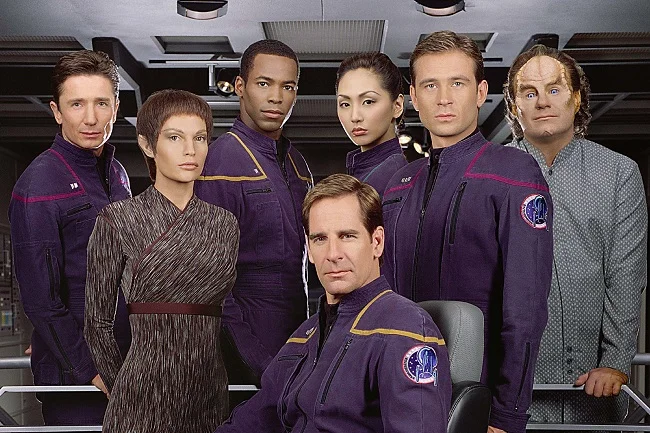
Star Trek: Enterprise was the first show in the Star Trek pantheon to have a song performed by an established artist play over the opening credits, rather than a traditional theme tune. Up until 2001, the franchise had maintained a more formal approach, established with the iconic introduction to the original series composed by Alexander Courage. Needless to say, such a radical departure from established practise brought about consternation and debate among fans. In some respects, you can argue that point about the entire show itself, but that as they say, is an entirely different blog post. Needless to say, the dislike and hatred that the song Where My Heart Will Take Me engendered in certain quarters, lead to a petition to have it removed. Needless to say, this movement failed, and the show continued using it for four seasons. Seventeen years on this particular debacle has now died down and the song is often just referenced ironically by fans as an amusing anecdote and piece of Trek trivia.

I’ve written in the past about the problems that can arise from untempered fandom. If enthusiasm and inspired love are not balanced by contextual reason and a healthy dose of reality, then it can get a little bit over zealous. Need I cite Star Wars fans and The Last Jedi as an example of unchecked fandom. However, I am now going to stray a little into the “Twilight Zone” of fandom myself, although I shall attempt to apply a healthy dose of realism into the proceedings. Because I want to discuss the fact that Ethan Peck has been cast to play one of the most iconic characters in popular culture. Yes, Gregory Peck’s grandson (and there’s plenty of “baggage” there) has been cast to play Spock in season two of Star Trek: Discovery. Furthermore, rather than be concerned, I am very excited by this development and I really look forward to seeing how this pans out.

After a prodigious marketing campaign and a great deal of internet speculation about one specific character, Star Trek Into Darkness was released to broadly strong reviews and solid box office returns in early May 2013. Finally, all the questions that had kept fans and website pundits endlessly theorising, were answered. For a second time running, Paramount Pictures managed to produce an action-filled blockbuster which still offered a strong plot, with complex and adult themes, explored by well-rounded characters. Batman Begins seems to have set a trend of framing material from a traditional pulp background, within broader intellectual parameters. Star Trek: Into Darkness managed to do this while cleverly re-imagining iconic material from its own lore. However, as with any substantial franchise movies, not everyone was satisfied or pleased. Many fans railed against the new Kelvin Timeline and continue to do so.

The reinvention of any popular franchise certainly comes with many risks. Twelve years ago, Casino Royale was hailed as a triumph in rebooting the 007 brand. It was hard edged, back to basics movie that made the spy genre relevant to a contemporary audience, without diluting its source material excessively. Yet this process went a step too far with Quantum of Solace, with a film that simply didn't feel Bond enough. Needless to say, the rights holders corrected this error. The success of the BBC's relaunch of Doctor Who hinged on making the formula accessible to modern viewers. Yet the new format of standalone episodes, celebrity guest stars and an emphasis on action over story, can be difficult to maintain and requires the involvement of top writers to keep the momentum going. Then of course there are the fans.

Finally, it’s arrived. The first new Star Trek TV show for twelve years. Star Trek: Discovery became available for Netflix UK customers to watch at 8:00 AM this morning. Needless to say, I cleared my schedule in advance so I could sit down and watch this much-anticipated show. Furthermore, I made it my business to avoid Twitter and the internet until I had finished viewing the first two episodes because I knew in advance that Star Trek: Discovery was going to be controversial and divide fans. Having now seen The Vulcan Hello and Battle at the Binary Stars and taken time to reflect upon both episodes, I have reached the following conclusion. From what we’ve seen so far, the spirit and emotional heart of Star Trek, is reflected in the new show. I found the characters to be interesting and well defined. Lead performances by Michelle Yeoh, Sonequa Martin-Green and Doug Jones were good and there’s an intriguing crew dynamic. The story has already touched upon numerous canonical themes and I am eager to learn more about the main characters and the universe they inhabit. I therefore shall continue to watch Star Trek: Discovery. However, not everyone feels the same, as my subsequent forays online have shown. Much has changed in this new iteration of Star Trek and as we know, some fans do not like change in any way, shape, or form.

Over the years I have been a participant in several fan based communities. These have ranged from running film clubs, to creating and publishing fanzines in the pre-internet days. More recently this has included running websites, blogging and creating podcasts. It’s a curious thing the way fandom is cyclical and one’s involvement with such communities seems to ebb and flow. It’s something I’ve been thinking about a lot of late. Several of the You Tube channels I enjoy have reduced their output or stopped due, to changes in advertising policy and monetisation. The Newbie Blogger Initiative failed to manifest itself this year and many of my immediate colleagues in blogging and podcasting have also begun to fade away or moved on to pastures new. The sad thing is, the true value of many community contributors is never really realised until after they’ve gone.

Fans are often a very creative and resourceful bunch. Star Trek fans especially so. At present, there’s a lack of new officially endorsed canonical content being produced. The movies set in the Kelvin Timeline are not universally embraced by Trekkies and usually take three years to produce. The new TV show Star Trek: Discovery has been subject to several production delays and still seems a long way off. So, the fans solution in recent years, has been to make their own original content. Hence there is a wealth of unofficial, independently made shows available online, set in various incarnations of the Star Trek universe. Although many of these productions are lovingly crafted and driven by passion, often they lack the professional polish of the genuine article. Frequently their weakness lies in the quality of the acting and writing. Then there is Star Trek Continues.
Adam Nimoy doesn’t paint a rosy picture of family life in his documentary about his father. The novelty of fame and popular acclaim soon wore off with it’s never ending photoshoots and long working hours that kept his father from ever being home. Yet among the anecdotes in this greatly condensed biopic there evidence of a lot of love and professional respect. Far from being comprehensive For the Love of Spock focuses on the matters that interest fans the most. So the documentary explores Nimoy’s relationship with Gene Roddenberry, his subsequent casting in Star Trek, his post Trek stage career and his return to the fold with the big screen movies.
The Captains is a curious beast. If you’re expecting a traditional documentary where Bill Shatner simply indulges in a standard Q & A with other actors that have portrayed captains within the Star Trek franchise, then you will be disappointed. The Captains is a horse of a different colour entirely. Throughout its ninety minute duration, this documentary veers from personal reflections on acting, muses upon the nature of fame and even touches upon contemplating one’s own mortality. It certainly wasn’t what I was expecting and was subsequently a far more rewarding experience.
I am not a dogmatic fan. In fact as I get older, I become far more flexible and forgiving in my outlook. I certainly don’t buy into the concept that your “childhood can be ruined”. The only way something new can spoil the memories of something old that you hold dear, is if you allow it to. If you wish to explore this concept further, I’d suggest reading Marcus Aurelius. Back to the matter in hand. When I found out that Star Trek was to be rebooted via an alternative timeline plot device, I was content with this. I decided to ditch my personal baggage and try and be objective about the now named “Kelvin Timeline”. I make no bones about the fact I have liked the previous two Star Trek movies. Are they masterpieces? No. Are they entertaining? Yes. That is far more than some reboots have achieved.

The announcement that CBS has commissioned a new series of Star Trek is both a blessing and a curse. It’s a blessing in the sense that I have genuine affection for this franchise and therefore I welcome the prospect of a new incarnation of the show returning to TV. However I also consider this situation an absolute curse because well now have to endure at least eighteen months of idle speculation and an ongoing dissection of the entire production of a show before it is even released.
Trek Nation is a relatively straight forward documentary with a clear premise. It follows Eugene Roddenberry’s search to find out more about his father Gene and to understand the cultural phenomenon of Star Trek. Directed by Scott Colthorp the film endeavours to explore the enduring appeal of the franchise as Eugene discovers more about the father he didn't know and the show that passed him by. Through interviews with cast and crew members from all five Star Trek shows, as well as fans and celebrities who were influenced by the show while growing up, Trek Nation methodically follows a linear path. Yet this uncomplicated approach proves to very effective and surprising candid.

The Consequences of Increased Web Traffic
It is obligatory to start these sorts of posts by reiterating the standard mantra that you should not be driven by your websites stats and that the data they contain can be unreliable. Although a sound philosophy in principle, it is actually more nuanced than that. Such data can be useful for growth if used wisely. I have never been coy about trying to increase my readership. For me it seems an integral aspect of blogging. Over the course of 2026, the traffic to Contains Moderate Peril has doubled. A lot of that is down to curious spikes in visits which seems to be AI scraping the entire site. Setting aside these anomalies, more people are reading posts and a lot are doing so via the site’s RSS feed. All of which is fine by me as growing the audience for this blog was a goal for this year, I am quite pleased by this development and the ongoing progress. I hope it continues.
It is obligatory to start these sorts of posts by reiterating the standard mantra that you should not be driven by your websites stats and that the data they contain can be unreliable. Although a sound philosophy in principle, it is actually more nuanced than that. Such data can be useful for growth if used wisely. I have never been coy about trying to increase my readership. For me it seems an integral aspect of blogging. Over the course of 2026, the traffic to Contains Moderate Peril has doubled. A lot of that is down to curious spikes in visits which seems to be AI scraping the entire site. Setting aside these anomalies, more people are reading posts and a lot are doing so via the site’s RSS feed. All of which is fine by me as growing the audience for this blog was a goal for this year, I am quite pleased by this development and the ongoing progress. I hope it continues.
However (and there is always a “however”), the moment your blog starts doing well, it seems that other people start to notice. There are plenty of online services that can help you determine which sites are growing and could provided useful “leads”. If you’re one of them, that’s when the emails begin. By which I mean requests from interested third parties that would like to “collaborate” with you. Or online specialist who want to help with your SEO optimisation or register keywords for you. I’ve had several emails already this week asking how much I charge for a link or a “paid post”. I even had a friendly email that asked if I could add them and several of their colleagues to my blog directory. When I checked they were all commercial blogging evangelists who extol all the sorts of practises that I abhor. None were writers in any creative sense. Just exponents of “how to get traffic and get rich on the internet”.
What antagonises me the most about all these emails and offers, is that not one of them has bothered to address me by my name. It’s not as if it’s hidden on my blog. I’m pretty much a textbook definition of a one man band. Hence, such emails have all the sincerity of a cold call or a marketing letter. Also, if anyone had bothered to read the about page on Contains Moderate Peril, it is pretty clear I don’t allow guest posts and I don’t accept paid links. I am particular about what get’s posted on my blog. It certainly doesn’t need adverts of links to online casinos. There’s enough bullshit online. I see no reason to add to it. And then there’s the idiots who think they can leave a comment on a blog post and leave a link in it back to something questionable. Like I won’t notice. I don’t know if it’s hubris or stupidity but it is certainly not well received by me.
All of these thing stem from a wider malady that blights the modern internet. The notion that every online activity has to be monetised and that you need to refine all your processes to optimise this endeavour. Doing things like blogging for pleasure or some sense of community is met with bemusement or even outright skepticism. If you’re not trying to earn a buck, then you’re an idealist, a fool or both. Furthermore, this philosophy that everything must be financially focused is what makes everything generic and standardised. As everyone desperately tries to streamline their writing or website to facilitate this quest for cash, the resulting content is bland. However, what can’t be cured must be endured. Instead of seeing such things as a problem, one can view them as a validation of a pro growth policy. I shall continue to write and try to reach a wider audience. I will also keep encouraging others to do the same. Communities, not snake oil.
I felt that this years Blaugust: Festival of Blogging was a success and I personally enjoyed it a great deal. However, I also thought it prudent to seek the opinion of others who took part in the event, as ultimately that is what it’s all about. Hence I posted the Blaugust 2026 Participant Survey at the beginning of September and left it online for 3 weeks. The questions were straightforward and unambiguous. Did you enjoy the festival. Did you participate in the group writing prompts. Did you achieve your writing goals. Then there where questions about what additions, if any, you’d like to see added to Blaugust in the future. All pretty standard stuff for a post event questionnaire. Well the results have been analysed and here is a summary of the results. The intention is to see if there are any specific trends revealed in the feedback and to then discuss any potential course of action as a result. As ever feel free to leave comments below.
It is obligatory to start these sorts of posts by reiterating the standard mantra that you should not be driven by your websites stats and that the data they contain can be unreliable. Although a sound philosophy in principle, it is actually more nuanced than that. Such data can be useful for growth if used wisely. I have never been coy about trying to increase my readership. For me it seems an integral aspect of blogging. Over the course of 2026, the traffic to Contains Moderate Peril has doubled. A lot of that is down to curious spikes in visits which seems to be AI scraping the entire site. Setting aside these anomalies, more people are reading posts and a lot are doing so via the site’s RSS feed. All of which is fine by me as growing the audience for this blog was a goal for this year, I am quite pleased by this development and the ongoing progress. I hope it continues.
Judging by the posts I’ve read, it would appear that Blaugust 2026: Festival of Blogging has been well received by those who participated in it. That is most satisfying to know, especially in light of the fact that this is the first year the event has been run without our founder who sadly past away in July. It has also become clear that Blaugust is reaching a far wider and diverse audience and most definitely is no longer the exclusive province of bloggers from one particular community. There has been healthy discussions on our Discord server about whether this year event needs to adapt to accommodate the modern blogosphere. Questions such as whether or not there needs to be a dedicated Blaugust website have been raised and explored. Should every site participating have an RSS feed? How, if required, should comments be handled. Inevitably, the subject of the use of AI in blogging still remains a controversial issue.
After a very productive month of writing, we come to the final Blaugust 2026 Group Project writing prompt. It is titled lessons learned and is usually a chance to reflect on the festival and whether or not it has been to one’s satisfaction. Have you achieved your goals? What have you gained from the experience? Those sorts of things. It also poses two further questions; “What is the best piece of advice you’ve ever been given?” and “what’s the best advice you’ve ever given to someone else?” for your consideration. I’ll address the questions shortly. Firstly let’s mull over this years event and assess how it’s gone.
I am intrigued by the growth of the IndieWeb, owning your domain and static websites. I certainly agree with the notion of not relying on big corporations and I have an ongoing project to divest my dependency on software produced by major market players. However, although I own my own domain, my website is hosted by Squarespace. I’ve not really had any problems with them over the last 11 years and I would describe our business relationship as equitable. However, the monthly subscription price has increased over time and is likely to keep on doing so. It has crossed my mind as to whether there is a suitable alternative. However, if I were to migrate Contains Moderate Peril elsewhere I suspect it would be logistically complex and problematic.
It was my blogging anniversary on the 16th August. I’ve been writing and sharing my post online for 19 years, via various different websites and blogs. This current iteration of Contains Moderate Peril has been around since August 2015. To date it has 2,171 posts including this one. Quantity does not necessarily equate to quality but there are some articles I am proud of and feel that they make their point effectively.
This week’s Blaugust 2026 Group Project writing prompt is an important topic. Namely, staying motivated. I prepared a fairly lengthy post with some advice and ideas to keep people focused and writing. Then I checked it against the post I wrote last year and the year before that, going back to blogging events from 2012. All of these posts broadly said the same thing, so I decided to scrap what I had composed for today and to go with a simpler approach. I shall answer the questions Krikket posed for this writing prompt. Fellow blogger Bhagpuss has also done so and as ever, his thoughts are interesting and well expressed. Here are my answers.

Once again, I have stumbled across an interesting debate that has provided me with an opportunity to write a blog post. Over on the Blaugust Discord Server, I read a comment from AgingGamer regarding RSS feeds and their significance with regard to blogging. This in turn referred me to a post by fyr (don’t you love all these nom de plumes) who wrote at depth about the ongoing community debate about the use of RSS/Atom feeds. The article explored the importance of such feeds with regard to reaching readers and providing accessibility to the disabled. All of which provided me with a great deal of food for thought. Mainly because I use a mainstream website service provider for my online endeavours, so RSS is by default built. I’ve never really considered not having such a facility at my disposal. But the rise in the IndieWeb scene challenges this assumption.

I have written two blog posts today that I have subsequently abandoned. The first was gaming related but when I was about halfway through writing it, I felt like I was covering old ground and just repeating myself. It was also regarding an issue that can’t really be fixed. Namely, how do you ensure that matchmaking in PVP games is done equitably. As there is no solution to this issue at present, or at least not one that all parties can agree on, I decided to ditch it. Similarly a post I was working on about what becomes of my blog if anything happens to me was curtailed. In light of recent events in our community it seemed inappropriate. However, as a result of binning two blog posts, I new idea occurred to me. Do my fellow bloggers self-edit and curtail what they write about? Is your blog totally unfiltered or do you apply a set of rules that determine what content is deemed acceptable?
It is time for the next Blaugust 2026 Group Project writing prompt. This one comes with two lines of enquiry. The first is an opportunity to “introduce yourself”. Over the years, I have written several introductory posts for previous Blaugust events. Rather than repeat myself I’ll just link to the last one, which was posted in August 2023. I haven’t radically charged since then apart from my hair going whiter. The next part of the prompt poses a far more intriguing question. “If you could have one magical power or super power, what would you choose and what would you use it for?”, which offers much for consideration. Having given this proposition much thought here is my response.

A decade ago I wrote a post about blogrolls and the practical and social issues surrounding them. At the time, the version of Squarespace I was using didn’t easily support such things or at least wasn’t able to do so in a manner I liked, so I didn’t have one. Ten years later Squarespace as a hosting platform has far greater functionality, hence I recently decided to add a blogroll. That was in March this year. However it just wasn’t really fit for purpose. So I decided to revise it a few days ago and rather than just have a traditional list of blogs in a side column, I ended up producing a more comprehensive blog directory, which list two hundred plus sites alpha-numerically. I’ve been tinkering with it on and off and I am now finally happy with it. The latest update reflects the international nature of the Blaugust: Festival of Blogging and the fact that we have many blogs written in their native language. Translating text is now an integral function of web browsers, so I see no reason why these blogs should be excluded.

Today’s post is part of the Blaugust 2026 Group project, which features a series of writing prompts set for specific dates throughout the month. The idea being that everyone who wishes to participate can write about the same subject, riff off each other’s posts and enjoy a shared experience. In many respect having a common writing prompt levels the playing field and provides a sense of common purpose among those who take part. Today’s group project prompt asks the question “tell us all about your very first blog”. An unambiguous and interesting question that will hopefully prove enjoyable to write about and informative to others.

I have been writing online for nearly two decades. I don’t claim to be good or accomplished but what I can say with certainty is that the more often you write, the easier it becomes. For those who are new to writing a blog and the Blaugust Festival of Blogging, possibly the biggest hurdle that you now have to get over, is writing your first post of the month. You spent the lead up to this event sorting out your blog templates, fine tuning the backend and possibly banking some ideas. Or you may have decided to just wing it and make it all up as you go along. Both are perfectly valid approaches. However, there is one thing left to do that cannot be put off, avoided or danced around. Writing. At some point you’ve got to do it. Or bail on the event. The proverbial “shit or get off the pot”.

If you take a cursory look at a calendar you will see that the month of July is fast coming to an end. That means that Blaugust 2026 Festival of Blogging starts in a few days time! If you’re participating, or thinking of doing so, the next few days present a golden opportunity to do some practical organising and basic preparation. You don’t have to if you don’t want to. Feel free to just do things as they come, so to speak, if that’s your approach. However, for most of us, it helps if we have some kind of plan in place and make some arrangements in advance. I personally prefer this approach and like to have some ideas for blog posts in the bank. It is also useful to have “options” if something doesn’t go to plan. For those who are new to Blaugust, here are a few ideas regarding preparation that may be of use to you. As ever, your personal mileage may vary and ultimately you are best off adopting a strategy that suits your writing style and personal schedule.

Prior to last year’s Blaugust: Festival of Blogging, I upgraded Contains Moderate Peril to the latest version of Squarespace. There are still some aspects of the site that need fine tuning but overall, I am happy with the appearance of my blog and its respective functionality. With this year’s writing event fast approach, I decided to tackle over the last few days, some of those finer points that need tweaking. I have wanted a post counter on the site for a long time but unfortunately there is no native Squarespace widget for this basic function. I also felt the need to upgrade the blogroll, as the current one didn’t support RSS feeds from certain sites (e.g. Google Blogger) and was dependent upon a third party service, Elfsight, which wasn’t ideal. Both of these issues have now been addressed and I am pleased with the results. There is now a post counter on the Blog Archive page, which seems a logical place to have it and the Blogroll is now far more comprehensive.

Next month the annual Blaugust: Festival of Blogging begins. Roundabout this time each year, I try to write a promotional post to raise awareness of the event and encourage potential participants. However, as I’ve done this quite a few times before, each year it is becomes increasingly difficult to present the essential facts about Blaugust: Festival of Blogging in an interesting fashion. There’s nothing worse than writing a post and feeling that you’re just covering old ground. So, this year, I thought I’d try something different and present the most important information about this annual event, as if it were a conversation between myself and an interested passer by. Feel free to attribute novelty voices for each party in your own head, while you read this. If it helps, try imagining that this discussion is happening between two celebrities or such like. Both may be wearing exotic hats but I digress. On with the scenario.

I read a blog post by Void recently, about finding a new internet home. He wrote about how he and many others have had to pick up their “digital roots” and migrate multiple times over the years, from one platform to another. It is a position I can sympathise with as I have done likewise. Hence I like the idea of having a place online where I hangout by default. My own blog is an anchor for me but it is not quite the same thing as a platform or online portal where I can find all my friends and colleagues, share content and shoot the breeze. It’s a curious thing, because as I typed that last sentence it struck how such a sentiment may seem alien to others. There may well be people who like to have a finger in multiple pies and who are happy to frequent and flit between various social media apps, Discord servers and subreddits. I prefer to focus my efforts on a single instance. A place that suits my requirements, allows me to put down roots and become part of the furniture. Like a virtual Diogenes Club.
Everyday, once I’m up, I sit at my desk in my office, fire up my PC and log into Feedly. I have various RSS feeds grouped by category, which I slowly trawl through and read anything that catches my eye. I have one curated feed named “Blaugust” named after the yearly festival of blogging event. It has over 250 blogs listed, many of which are former participants. Most of these regularly post. Hence there’s a lot to get through and so I don’t read all of them. However there are a few that I always checkout. Mainly because they’re the personal musings of some of our writing community’s oldest and most prodigious members. The sorts of guys and gals who are part of the furniture. They’ve always been there and it feels like they always will. Posting their thoughts, sharing their enthusiasm and spreading the love, so to speak. One of these blogs, is Tales of the Aggronaut. written by Belghast.
For the last few months I have being using Google Gemini. I subscribed so I could access a wider spectrum of services and evaluate it effectively. I also wanted to dispel some of the hysteria that accompanies any conversation about Large Language Models and Artificial Intelligence. The results were initially interesting and Google Gemini proved useful when researching material for blog posts. It is good at providing summaries about well documented subjects. I wrote a post about food banks recently and it distilled a lot of data into a manageable amount, which was ideal for my article. Google Gemini has also produced some visual basic scripting and simple batch files that have allowed me to automate processes on my PC. Such as changing the default monitor, or screen resolution at the click of an icon. However, I found this AI struggled with in-depth software troubleshooting and that its ability to create images varies greatly depending on the subject.

On Friday 26th June, I had another random spike in internet traffic to Contains Moderate Peril. The statistical package that comes with my Squarespace account recorded over 13k visits in less than 24 hours, which is not typical (although I wish it was). However, all of these visits to my blog arrived via the default homepage and spent between 1 and 2 minutes there. Hence, it was obvious that this was not human traffic, as there was no evidence of any searches being made of content that is available on my site, nor of the “visitors” clicking on any of the links on the top menu and viewing other posts. This was undoubtedly AI traffic arriving at the designated homepage and simply parsing the site. I had a similar spate of this sort of web traffic last November. The only difference on that occasion is that the traffic all came from China. This time round it hailed from the US. I suspect that this is something that will happen more often as companies set their AI loose on the net for what is effectively training.
I recently watched a video on Patreon by someone who I actively support as a “content creator” and whose work I enjoy. I shall provide no more detail regarding their identity because they may not want their work referenced with regard to what I am going to say. During the course of their video they briefly referenced the work put into promoting a podcast they are currently producing and the relatively low audience that it has garnered so far. The comments were an aside and most certainly not said with any sense of self-pity. They were simply a statement of fact. Furthermore, I suspect they are far from unique and similar sentiments have been expressed in one way or another by anyone who has created something the published it online, only for it to be lost among the greater white noise” of the wider internet.

When I first started blogging way back in 2007, I maintained a blogroll of all my colleagues and peers’ websites. At the time this was a common practice and a way to support an expanding community. I considered this such an important aspect of the blogging scene at the time, I created a website to aggregate posts from video game blogs, called The Gaming Blog Nexus. It ran for two years and proved quite useful. However, it was tricky to administer and would frequently break as a lot of the back end widgets and plugins were created and maintained by “gifted amateurs”. I eventually shut it down due to the operating costs. When I moved my own website, Contains Moderate Peril, to Squarespace in 2015 I intended to start maintaining a blogroll once again. However, at that time there was no native support for such a thing on the platform. Hence for the last ten years, I have not had a blogroll on my website, which hasn’t sat well with me.

I was speaking to someone recently about hobbies (fortunately it wasn’t Simon Quinlank) and I mentioned that I have maintained a blog for over a 19 years. When I talked about the ongoing cost they were most surprised, as they had assumed that blogging was something that could be done for free. I guess we’ve become so accustomed to the provision of free online services such as email, that this a reasonable assumption. I pointed out that although it is indeed possible to blog for free using Blogger, it was not the optimal approach, especially if you want to maintain some degree of control over your writing. Naturally, the next question they asked was how much do I spend and I gave them a ballpark figure. All of which reminded me that I wrote a post on this very subject a few years ago. So I’ve decided to revisit the subject and see how much it currently costs to maintain Contains Moderate Peril.

Today I started the slow process of auditing every post that has been published on Contains Moderate Peril since 1st August 2016. The goal is to correct any obvious typos and replace all existing images with larger ones. The Squarespace software upgrade I applied to the website at the end of last year has finally allowed me to establish a standard format that I am happy with. Hence the ongoing audit is the perfect opportunity to apply these style rules to all posts. There are also some technical issues and matters regarding functionality that need to be addressed. I need to determine how to embed YouTube videos in such a way that they automatically scale to fit whatever device is viewing them. Another area which needs improving is the website search facility. This needs refinement so that enquiries can be more specific. Older posts also need to be more accessible, although I am still researching how best to achieve this.

It’s nearly two and half months since the Blaugust: Festival of Blogging event ended. During that time I’ve maintained a fairly regular writing schedule and I post every two days or so. Furthermore, I finally dragged my blog template, kicking and screaming, into the modern era. I tweaked a few pages and updated the content of the “about” page. The next task is to start going through all previous posts and replacing older, low resolution images with larger, more appropriate ones. This process also presents an opportunity to ensure that all posts follow a uniform style. IE Are appropriately categorised, have links to related posts at the bottom and are SEO optimised. This will be a lengthy task so I think the best approach will be to tackle two or three posts a day. Hopefully this will raise the profile of older content, which generates the lion’s hare of traffic to this site.
I use a browser extension called Control Panel for YouTube, which allows me to determine who many videos are displayed on my YouTube homepage and to filter the content that is shown. At present it is configured to display rows of six. Something that I have noticed of late, is the amount of videos with hyperbolic titles and thumbnail images created by AI. Both of which are design choices made to increase engagement. Clickbait titles are contrived to meet current SEO optimisation criteria and as such feature more and more in search results. The fact that they frequently have no relation to the subject I am researching, seems to be neither here nor there. The same issues arise with regard to AI generated images, which again frequently have no bearing on the matter. The fact that more and more content creators do this, infers that it works and is now an essential part of the process you must follow to be seen and featured in search results.

In the last post in this series, I specified the need for a plan with regard to upgrading my blog. Well a plan has emerged, been refined and has now been formally adopted. Rather than migrate Contains Moderate Peril to a new platform and effectively have to rebuild all the content, I am going to upgrade my existing presence on Squarespace. This decision was made for two reasons. Time and money. Migrating to a new platform will take a lot of time and incur additional costs. Upgrading the existing website will take less time and has no cost implications. That is not to say that it will be easy. It has become abundantly clear that the upgrade process will break stuff and that all published posts will have to be manually repaired. Hence my choice boils down to the lesser of two evils.

This year’s Blaugust: Festival of Blogging has reached an end and it would appear that this event has been well received by those who have participated in it. I believe that there were 168 bloggers taking part this year, many of whom have not participated before. Some were new to blogging, where others simply wished to see if they could increase their writing output. As ever there was a wide variety of blog styles and subject matters and it has been most interesting to read new posts every day. I have attempted to leave comments and positive feedback where I can and I hope that some of these new blogs that I’ve discovered continue to write. Well done to everyone who took part. I hope it has been an enjoyable and informative process and that you have learned from it. I know that at least one blogger has determined that writing online is not for them, which is a valuable lesson.
There is currently a group writing prompt available as part of this year’s Blaugust: Festival of Blogging which has piqued my interest. It asks the question “what is the oldest draft post you have” and suggests that it is revived in some manner. I have dozens of draft posts in a folder in my Google Drive. Many are film reviews or film related. The oldest of which dates back to summer 2010. Rather than write a straight forward review of Blake Edwards 1968 comedy The Party, I rather foolishly thought at the time that I’d tackle the issue of whether the film is sufficiently racist to make it beyond the pale. Let it suffice to say that I quickly found myself bogged down in the complexities of the subject and thus never completed the blog post.
I’ve participated in every previous Blaugust: Festival of Blogging event. Prior to that I was involved in the Newbie Blogger Initiative or NBI as it was affectionately known. I have therefore written quite a lot of blogging advice and suggestions over the years. If anyone feels disposed to do so, you can access them all by clicking on the “blogging” option on the top menu of this blog. However, it is important to remember that a lot of the ideas I have advocated and written about over the years are purely subjective. Not all advice or guidance works for everyone. People have different ideas about blogging, different approaches to it and different aspirations. This year has highlighted some quite distinct differences among bloggers which has been most illuminating.

Today is my blogging anniversary. I have been writing online consistently for 18 years. My earliest blogs no longer exist, although they can be found via the Internet Archive Wayback Machine. My first blog was a Lord of the Rings Online fansite called Misadventures in LOTRO. After a while this morphed into a wider gaming website; Misadventures in Gaming. However, I soon discovered that I wanted to write about more than just video games, so I decided to start from scratch and created Contains Moderate Peril in February 2010. This blog endured and has been my main online presence ever since. It has moved several times for various reasons. For a while I had a sponsor, as well as a reasonably sized audience and had dreams of making money from my writing and podcast. But it wasn’t to be and now I just write primarily for my own peace of mind and amusement.
I recently stopped taking beta blockers after a consultation with my Doctor. Seven weeks on and I feel substantially better without them. I strongly advocate prescription reviews, as often the medication you’re taking does not necessarily need to be taken indefinitely. That was certainly the case with me and beta blockers. At the end of my last consultation, my GP asked me to keep a daily record of my blood pressure for a month. I could either do this at home or come into the surgery where there is a suitable device that is free to use. Fortunately I inherited an old but functional OMRON blood pressure monitor from my parents, so I was able to take readings each morning myself. It was while doing this for a month that it struck me; what exactly does all the data that I’m making note of mean exactly? What do systolic and diastolic mean and what is the difference between them? Also, where my readings good or bad?