
The Philosophy of Crimson Desert
13 days after its release, market analysts estimate that Crimson Desert has already earned $200 million across the four main platforms (PC, PlayStation 5, and Xbox Series X and S). The game is certainly proving popular among gamers with the internet awash with live streams and “let’s play” videos. However, reviews are mixed both among gaming journalists and YouTube influencers. Common complaints about the game include that it is slow to start, the controls are poorly laid out on all platforms and that developer’s Pearl Abyss have done a poor job of explaining most aspects of the game to new players. Although such criticisms are true to a degree, I think these complaints highlight how many gamers are conditioned to expect new titles to follow a specific pattern with regard to pacing, narrative exposition and learning in-game systems. A pattern that Pearl Abyss has chosen to ignore, instead favouring an old school approach.
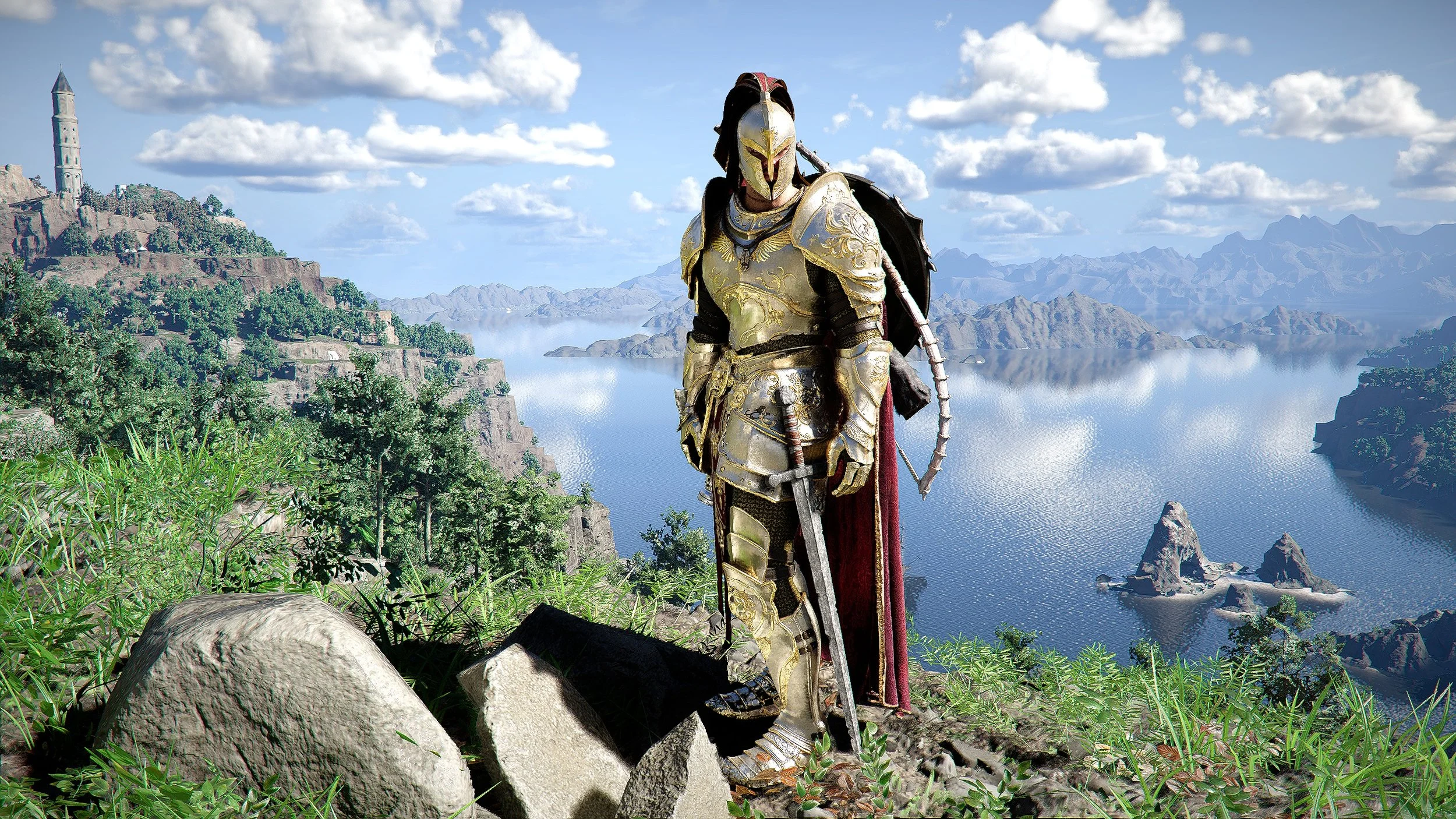
Today I resumed playing Crimson Desert after a week long break (I was on holiday). I decided to explore the world rather than resume any specific quests, so I just took off in a random direction from the Greymanes camp in the Howling Hills. My avatar travelled on foot as it allows you to go “off-piste” and traverse difficult terrain more efficiently than on horseback. I climbed a small plateau that was nearby for no other reason than to see if there was anything of note at the top. Due to stamina limitations, I had to climb up in stages, pausing on ledges as I went. When I reached the top, I was rewarded with a staggering view across Pywel. It was then I noticed that the regionally specific ambient music that plays intermittently had stopped. The only sounds that were audible were the environmental sound effects. There was no dialogue or prompts to do anything. Just stillness and an opportunity for me, the player, to reflect upon the game and how it makes me feel.
Contemporary RPGs eschew such moments. Instead of organic personal reveries, players are funnelled in contrived set pieces. Instead of genuine stillness, we’re presented with confected vignettes that telegraph their unsubtle emotional intent. Characters inner monologues become a verbally incontinent means to steer the player in the “right direction”. You want to think? You haven’t got time to think as there’s a game to play. Gaming is a process nowadays and no longer a medium for introspection. Video games are also becoming increasingly driven to meet the needs of those that play them for a living and not so much for pleasure. Hence the languid pace and player driven play style of Crimson Desert has bamboozled those gamers who want a quick and efficient play through before the next big title is released. As for silence in a game, it is a quality that frightens some players and is not welcome.
Crimson Desert, although filled with many modern game systems and mechanics from other big titles, has also thrown in a suspiring amount of “old school” concepts. Many of which hail from the halcyon days of the MMORPG genre. The first 30 hours or so of the game are still essentially part of an overall tutorial. The player is encouraged to peruse the various in-game menus to glean the information they need to play. They are free to do this at their own pace. As to what quests one does, it again comes down to choice. The game won’t nag you if you go off exploring doing side quests rather than the main story. From time to time, you’ll realise that you’re struggling with content due to gear or a skill being missing. You then have to correct this yourself. Again the game will not pester you. In fact the prompts that are available can be disabled. You the player are in charge, or adrift at sea, depending on your perspective.
Perhaps the most noticeable thing that Crimson Desert does is that it give the player time and space to stop and just be present in the world. You are encouraged to consider a vista or visit a settlement and pet a cat or goat for the fun of it. Such things are not treated as frivolous indulgences but essential to the enjoyment of the game. Developers Pearl Abyss do not feel that the key to happy gaming is being micromanaged and kept busy. Something that I feel is a very North American mindset. Instead they provide the player with such a dynamic and immersive world, that they cannot help but take time out to come to terms with it. Hence gamers who expect a process driven, conveyor belt approach to both story and “learning the game” struggle to come to terms with the philosophy of Crimson Desert. They have either forgotten or never known the non-didactic nature of older video games. For those who do it’s a breath of fresh air.

Some video games lend themselves to being set aside and resumed at a later date with zero consequences. These are often casual games with no major goals other than having fun while playing them. Fall Guys is a great example of this. You have a cartoony avatar that participates in zany group races, filled with obstacles. You run, jump, climb but the controls are far from difficult. You may well become skilled but such things are mitigated by the other players as they stumble around. You’re not at the mercy of apex players or “try hards”. It is not a game about winning and mastering techniques. The fun comes from playing it and the unique experience you have each time. I’ve been playing this game, on and off, since it’s launch in 2020 and in that time I have only ever won once (winning requires you to win a series of 4 to six individual races). However, whenever I pick up my controller and play Fall Guys, I have fun and the game lifts my spirits.