
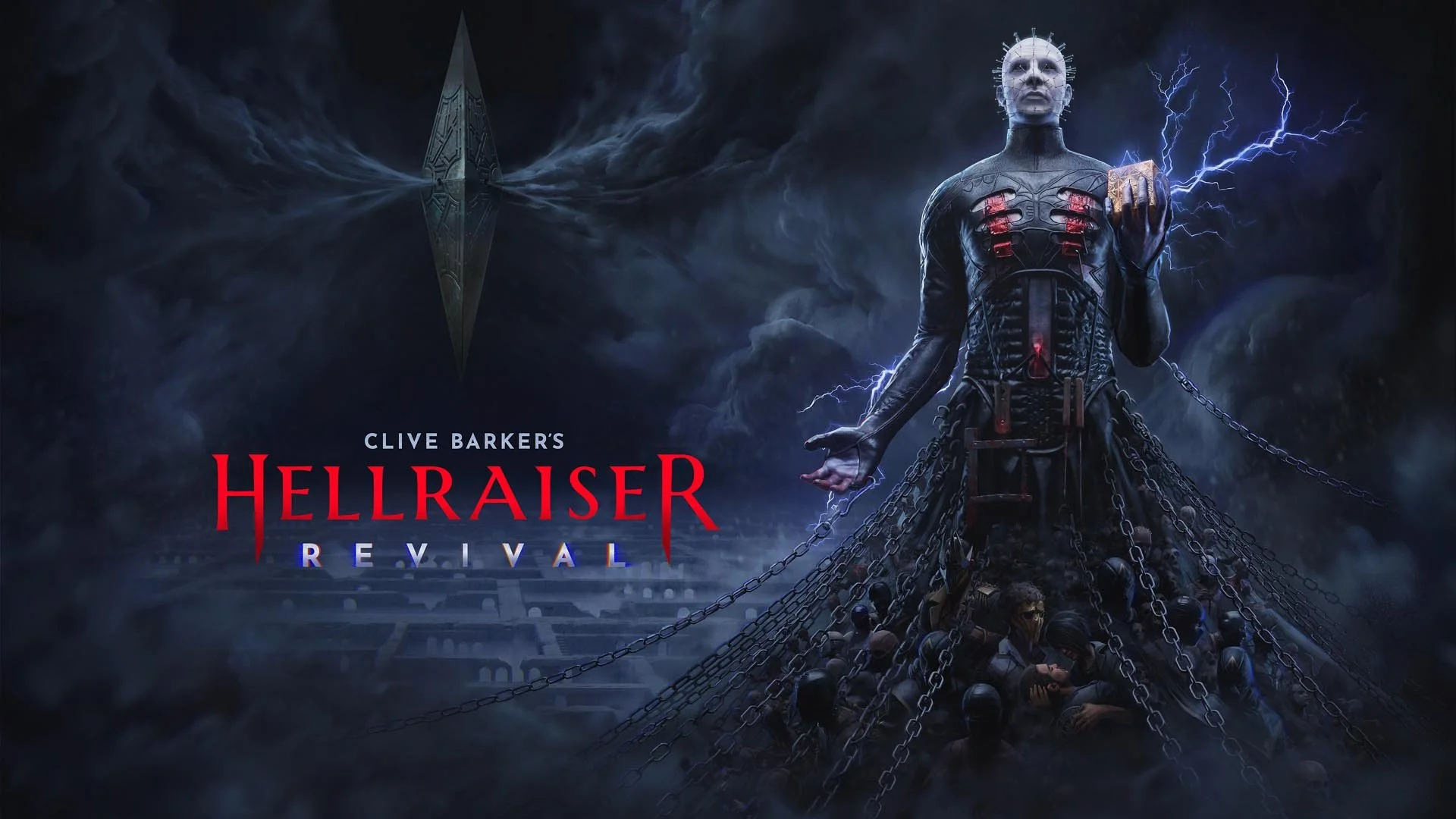
Hellraiser: Revival Demo
Hellraiser (1987) was one of he most innovative and intelligent horror films of the eighties, with its cerebral and sophisticated exploration of pleasure, pain and the supernatural. Sadly what was a great concept for a single film was turned into yet another horror franchise. The resulting series of increasingly inferior sequels ultimately diminished the central idea. However, in recent years several horror “brands” have found a new lease of life via the medium of video games, so the announcement of Hellraiser: Revival last summer piqued my interest. The fact that author Clive Barker was directly involved certainly raised my expectations. However, even though video games have a history of depicting sex and violence, would the medium be able to fully embrace the true nature of Barker’s original novella and original film. Having played through the newly released demo for Hellraiser: Revival, I believe the answer is a yes.
Hellraiser (1987) was one of he most innovative and intelligent horror films of the eighties, with its cerebral and sophisticated exploration of pleasure, pain and the supernatural. Sadly what was a great concept for a single film was turned into yet another horror franchise. The resulting series of increasingly inferior sequels ultimately diminished the central idea. However, in recent years several horror “brands” have found a new lease of life via the medium of video games, so the announcement of Hellraiser: Revival last summer piqued my interest. The fact that author Clive Barker was directly involved certainly raised my expectations. However, even though video games have a history of depicting sex and violence, would the medium be able to fully embrace the true nature of Barker’s original novella and original film. Having played through the newly released demo for Hellraiser: Revival, I believe the answer is a yes.
Hellraiser: Revival centres on Aidan who is in a sadomasochistic relationship with his girlfreind Sunny. Sunny has a acquired a mysterious puzzlebox called the Genesis Configuration (similar to the Lament Configurations) which intrigues her. During a sexual encounter with Aiden, Sunny cuts herself on the box, summoning the infamous Cenobites, led by Pinhead (played again by Doug Bradley). She gives herself to them in exchange for the chance to experience the pleasures of their torments. Aiden vows to rescue her but is himself captured by an arcane cult, the Scarlet Church. Their leader, Marlow, wants the Genesis Configuration back (as Sunny had stolen it) so he can use it for his own nefarious plans.
The demo starts in Aiden’s bedroom where he follows Sunny into an otherworldly, ever-shifting realm known as the Labyrinth. This zone is mainly designed to set up the story and introduce the player to the world of the Cenobites. The aesthetic is directly taken and expanded from the first two Hellraiser movies. The player uses the power of the Genesis Configuration to move objects and enable paths through the hellscape. When Aiden finally finds Sunny there is a cutscene in which she is taken by the Cenobites and he is kidnapped by the Scarlet Church. The next stage of the demo is Aiden escaping from the Scarlet Church, using resources that he finds along the way. The game is in first person perspective.
The gameplay in the Hellraiser: Revival is similar to that found in Resident Evil with respect to inventory management of bullets, medkits, bandages and weapon repair kits. You explore grim environments, hunt for keys and use passcodes to unlock doors. The lighting and camera angles, along with the environmental aesthetics are designed to build tension and psychological dread. Combat involves a mix of firearms (handguns, shotguns, SMGs) and melee weapons (sabers, machetes). The Genesis Configuration puzzlebox acts like a magical tool. You use it to manipulate the environment, rip elements out of walls and strike armored enemies. Combat is similar to that fond in BioShock. The violence and sexual content is explicit as this is a game with adult themes and is certainly not going to be to everyone’s tastes.
I played the demo at a measured pace, expecially when I was exploring the Labyrinth at the start. I was expecting to be attacked but this level is more of a narrative framing device, as well as a tutorial for the Genesis Configuratiuon. The next stage of the the demo involving your subequent escape from the Scarlet Church is also meant to orientate the player. What I’ve pleyed through so far is interesting. The game certainly captures some of the spirit of the original films. It will be interesting to see if sections of the game that take place outside of the Labyrinth can sustain as much interest. The plot does seem intriguing with the Scarlet Church using the BDSM scene and its resepctive clubs as a means for finding both victims and acolytes. The quality of the story will be an important factor in the potential success of Hellraiser: Revival.
Developer Sabre Interactive have released horror games before, including Call of Cthulhu, Evil Dead: The Game and more recently John Carpenter’s Toxic Commando. So there is clear track record of working in the genre and collaborating with established artists. The demo for Hellraiser: Revival is sufficient to arouse my interests but certainly is not a definitve means to evaluate the game. Even with some of the additonal video content that is available online, further indciating the nature of the title, there is no guarantee that it will a success. However, the current indication is that this is an interesting title and I will buy the game upon release based upon my experience so far. If it turns out that Hellraiser: Revival does not live up to expectations, I won’t shed a tear as that would be a waste of good suffering.





Nightbreed: The Cabal Cut (2012)
I originally saw Nightbreed upon its UK cinema release in 1990 and like so many others, was disappointed by the inconsistencies of the theatrical version. Over the next twenty-two years, the movie evolved its own mythos regarding the infamous studio interference that left Clive Barker's original vision undermined and neutered. However, in early 2012, Russell Cherrington, a senior lecturer in film and video production at the University of Derby, created a composite cut of the film using two workprints of the original movie that were sourced from VHS tapes, as well the DVD of the standard theatrical release. This version offered the most complete version of Barker's film available. It ran for 155 minutes and was been dubbed Nightbreed: The Cabal Cut. It was never intended as the director’s definitive version of the film and was primarily created to “encourage” the rights holders to allow Clive Barker to produce a director’s cut of his magnum opus.
I originally saw Nightbreed upon its UK cinema release in 1990 and like so many others, was disappointed by the inconsistencies of the theatrical version. Over the next twenty-two years, the movie evolved its own mythos regarding the infamous studio interference that left Clive Barker's original vision undermined and neutered. However, in early 2012, Russell Cherrington, a senior lecturer in film and video production at the University of Derby, created a composite cut of the film using two workprints of the original movie that were sourced from VHS tapes, as well the DVD of the standard theatrical release. This version offered the most complete version of Barker's film available. It ran for 155 minutes and was been dubbed Nightbreed: The Cabal Cut. It was never intended as the director’s definitive version of the film and was primarily created to “encourage” the rights holders to allow Clive Barker to produce a director’s cut of his magnum opus.
Nightbreed: The Cabal Cut was subsequently shown at various film festival around the world in 2012 and I saw it at a screening at FrightFest in August 2012. Despite issues with the picture quality of most of the new material, horror fans were more than happy to view this new version of the movie. There were high expectations that this cut would be a major milestone in horror cinema and that Nightbreed: The Cabal Cut would finally present Clive Barkers vision as he intended. However, that was not the case. Upon viewing the expanded version of Nightbreed, it became very clear that a lot of the flaws of the theatrical version were still present because they were inherent to performances and the screenplay. Although it was clearly a superior cut of the film, Nightbreed: The Cabal Cut was not the Citizen Kane of horror that so many fans had dreamed of.
The additional footage featured in Nightbreed: The Cabal Cut expands upon the relationship between Boone (Craig Scheffer) and his girlfriend Lori (Anne Bobby). There is more footage off Midian and a wider exploration of its various inhabitants. Then there is the extended finale and the original ending as opposed to the resurrection of “Buttonface”. These extra scenes are interesting and really helps clarify the story and further develop the characters. It certainly feels far more like a literal adaptation of Clive Barker's original novella Cabal. Some scenes in particular standout such as "Buttonface" calling to Dr Decker (David Cronenberg) to be "let out". Another change is that Detective Joyce (Hugh Quarshie) survives in this version, receiving only an injury rather than dying. His character shows a little more depth, as he objects to the Midian genocide. Overall Nightbreed: The Cabal Cut has more substance and there is a specific tonal shift that makes for a more thoughtful movie, whereas the theatrical print is mainly weighted toward spectacle.
Expanding the running time from 109 minutes to 155 minutes for Nightbreed: The Cabal Cut results in a movie that is too long. The expanded action driven third act seems to be the main culprit. It actually drags after a while. Also, despite more content, the central character of Boone is still somewhat thin. His initial dreams of Midian are somewhat glossed over and there is still a lack of gravitas in Craig Scheffer’s performance. The black humour and quips of Narcisse (Hugh Ross) are still divisive, either delighting or annoying the audience. However, the character does dies in this cut of the film. The rather poor song and the nightclub scene at the start of the movie really don’t help much either. Film makers seldom seem to be able to successfully capture the atmosphere of music venues or portray their audiences credibly.
It should also be noted that the Nightbreed: The Cabal Cut is certainly not a gorefest and does not appear to include any major increase in violence. The film is relatively understated in that respect, electing to focus on the grotesque rather than explicit. The most notable change in terms of violent material occurs during the flashback montage depicting the persecution of the “Nightbreed”. It is longer in this edit of the film and slightly more graphic in nature. There are more decapitations and a greater focus on trial by ordeal. The most unsettling scene in the movie still remains the forcible removal of a nipple ring, but that was also present in the theatrical cut. It can be argued that irrespective of depictions of physical violence, Nightbreed: The Cabal Cut is darker in tone and more unsettling, due to the expanded narrative.
Overall Nightbreed: The Cabal Cut is an interesting curio, but it is not the horror masterpiece that it could have been, because there are still fundamental problems with both the old and new material. However, it still has much to recommend it. The creature designs are outstanding and there is a sense of history and community among the denizens of Midian. The story does not quite have the same impact as it did two decades ago, because society has become more familiar with the notion of tolerance, which is one of the core themes. However, with its religious imagery, sexual undertones and inversion of good and evil, you can understand why this film bothered the conservative studio executives at the time of release. Nightbreed: The Cabal Cut puts meat on the bones of narrative and removes some of its major shortcomings. Although the shamelessly commercial original ending with the resurrection of Decker remains, it has been tempered with a message of hope as Boone seeks a new home for the “Nightbreed”.
Due to the success of Nightbreed: The Cabal Cut in 2012 as it was showcased around the world, a deal was struck between the rights holders Morgan Creek and Clive Barker. After finally gaining access to all material that was originally shot, Barker subsequently produced Nightbreed: The Director’s Cut in 2014. This is a third iteration of the film. This includes some additional expositionary scenes at the beginning of the movie, which have never featured in any other version. Barker’s aim was to further focus more on the occupants of Midian and reduce the slasher element involving Dr Decker as well as the action driven finale. Nightbreed: The Director’s Cut is the Barker’s preferred version of the movie and nearest to his original vision. It should be noted that in this 120-minute edit, Narcisse lives and Detective Joyce dies. It certainly removes some of the narrative bloat found in the third act of Nightbreed: The Cabal Cut.
Although much is further put right in Nightbreed: The Director’s Cut, the movie remains a flawed but intelligent experiment in cross genre film making. Ultimately the only real way for Clive Barker to overcome the shortcoming of the original troubled production would be to effectively remake the entire movie from scratch, but of course that will not happen. As a matter of personal choice, I prefer Nightbreed: The Cabal Cut out of all three versions of the movie. Mainly because I prefer the way the story pans out in this edit and the more substantial role played by Detective Joyce. All versions remain an interesting case study in the perils of studio-based film making. The only similar case of a movie that has been retooled to such an extent, is the Paul Schrader movie Dominion. Curiously enough this was yet another troubled Morgan Creek production. Need I say more?
Director Clive Barker has always been appreciative of the support that fans have shown over the years for this movie. Although Nightbreed: The Director’s Cut is his preferred version of the movie, he was aware that some fans had a fondness for Nightbreed: The Cabal Cut, with its everything but the kitchen sink, approach. After some negotiations with Morgan Creek, he was able to recreate Nightbreed: The Cabal Cut after producing Nightbreed: The Director’s Cut. This time round, it has less material sourced from VHS tape but still has some scenes of low visual and audio quality. So, there are at present, effectively three version of the film in circulation, although some are limited editions. The theatrical release of Nightbreed is still available on DVD and is shown on such platforms as Netflix. Nightbreed: The Cabal Cut and Nightbreed: The Director’s Cut have both been released on Blu-ray in the US. The former is an extremely limited pressing purely because Morgan Creek did not wish this version to impact upon sales of the director's cut. For those seeking a far more comprehensive breakdown of the difference between all versions of Nightbreed, there’s an exhaustive analysis over at Movie-Censorship.com









The Great and Secret Show by Clive Barker (1989)
During the eighties, I was an avid fan of the novelist Clive Barker. I consumed all his work voraciously and sought out magazine and television interviews with him whenever I could, finding the man equally as fascinating as his work. Oh, to be a twenty something horror fan during the genre renaissance of that decade. Despite the yolk of the Video Recordings Acts and the scaremongering of the tabloid press over “Video nasties”, horror fiction both in print and on the big screen was elevated to new levels due to the creativity of one British author and director. These were halcyon days for fan boys and girls.
During the eighties, I was an avid fan of the novelist Clive Barker. I consumed all his work voraciously and sought out magazine and television interviews with him whenever I could, finding the man equally as fascinating as his work. Oh, to be a twenty something horror fan during the genre renaissance of that decade. Despite the yolk of the Video Recordings Acts and the scaremongering of the tabloid press over “Video nasties”, horror fiction both in print and on the big screen was elevated to new levels due to the creativity of one British author and director. These were halcyon days for fan boys and girls.
In August 1989 Clive Barker released his fifth major novel, The Great and Secret Show. Expectations among fans were high as they prepared themselves for another cerebral, densely plotted and philosophical tale. Barker has always had a gift for characters and is an author that doesn’t give his readers everything on a plate. You have to bring your imagination and intellect with you when you read his work. Let other’s sit around and debate Proust or Kafka. We had Clive Barker who provided not only comparable brain food but did so via the medium of the horror genre. Such work provided a great opportunity for fans to pose, get their fix and stroke their beards.
Naturally there was a various book signings across the UK to promote the new book. My memory is a little vague here but I believe an autumn appearance at The Forbidden Planet in London offered me the best opportunity to meet Clive Barker. However, something came up unexpectedly and I was unable to attend the signing, so my friend Paul went alone, entrusted with a vital message like R2-D2. I awaited eagerly at home pondering how my thoughtful and penetrating question would be greeted by the great author. What words of wisdom would I be given in return? How the hubris of my youth still haunts me to this day.
When I next met with Paul, I was presented with a first edition copy of The Great and Secret Show. To my surprise, Paul did not convey to me verbally, the reply Clive Barker had made to my probing enquiry or regale me with a lengthy anecdote about his experience. He simply opened the book, presenting me with a hand-written inscription from the author himself. I remember being utterly stunned that Clive Barker himself had not only written a personal message but had addressed my point head on, in a succinct and candid fashion. To this very day, I’m still impressed that he took the time to do this. I think it speaks volumes about the man and his approach to fans and life.
Today as I was going through some storage crates, searching for a specific book, I found my copy of The Great and Secret Show. Naturally this whole story came flooding back and I found myself reminiscing about not only these specific events but the entire horror scene at the time. They were happy days. But I digress. Here finally is a picture of the very inscription that Clive Barker wrote. It just remains for me to tell you exactly what it was that I had asked by proxy. My question was simply this. “Why was Hellbound: Hellraiser II so shit?” Clive’s answer, as you can see, is magnificent.
Twenty-seven years on I find myself both older and little wiser. I still consider Clive Barker to be one of the best writers of those times. I also have enormous respect for the way he treats his readers and audience. I know he’s had some bad experiences in the past and I’m amazed he found the good humour to deal with such a crass and puerile enquiry such as mine. If I were ever to meet him in the future I like to think I’d ask him something a little more respectful and interesting this time round. They say that fans shouldn’t meet their heroes. However, I believe there’s something to be said about the reverse. I’ll let you ponder that while I re-read The Great and Secret Show.
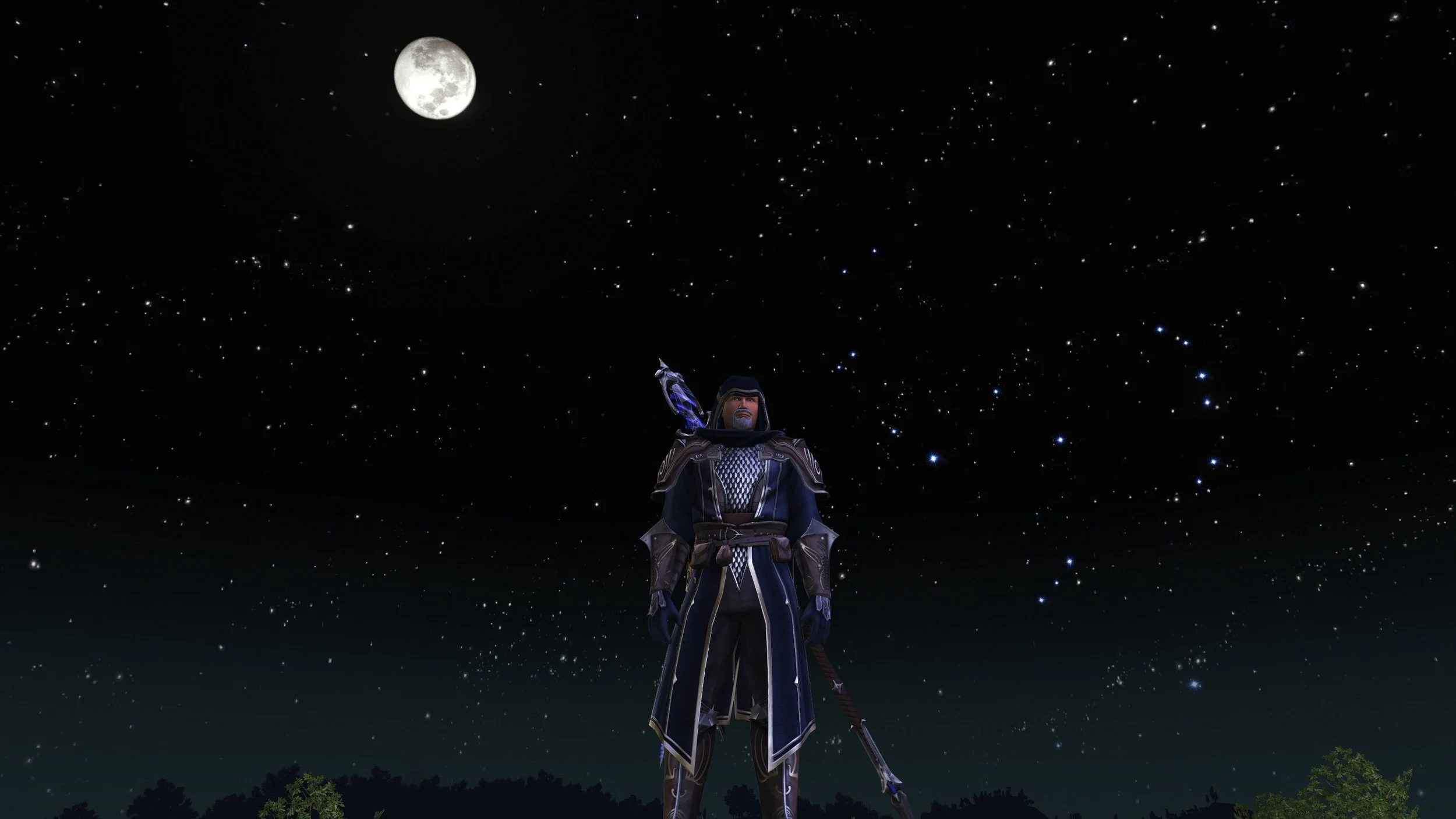
One of the things that I enjoy when playing a new video game is character customisation or character creation. I will spend hours trawling through settings, changing the most minute and consequential aspects of my avatars appearance. I am certain that there is a psychological aspect to this particular game mechanic and that it says something about you as a person. Are your creations shaped just by a need to look good in-game or is there more to it? Are they external manifestations of your sexual preferences or thoughts on body image. Do you treat them as characters from a book that exists in your mind. Do you aspire to recreate the likeness of people you know or admire? Do you strive to make your avatar look like you? Whatever the reasons, it would seem that character creation is something that a lot of gamers enjoy. Hence I am not alone in my borderline obsession. What you look like in-game is equally as important as your character’s name.