
Song Lyrics of Note
Song lyrics can be powerful things. They can capture the mood and spirit of an era. They can also make powerful socio-political points. Or they can simply be pleasing to the listener by their use of language and playfulness. They can stick in your mind for both deep and trivial reasons. Mishearing them is also a common problem but that is a separate blog post. On this occasion I thought it would be worthwhile exploring the subject of song lyrics of note. Hence I have collated some that I find interesting, wise or just entertaining. These aren’t necessarily my favourite songs of all time, because I like so many. Instead these are some of the ones that sprang to mind when I was preparing this post. I have decided to have the selected lyrics first and the name of the artists afterwards, so that the emphasis is placed upon the words from the song. Although is is more than likely that you’ll be able to identify the songs from the lyrics immediately, or at least for some of them.
Song lyrics can be powerful things. They can capture the mood and spirit of an era. They can also make powerful socio-political points. Or they can simply be pleasing to the listener by their use of language and playfulness. They can stick in your mind for both deep and trivial reasons. Mishearing them is also a common problem but that is a separate blog post. On this occasion I thought it would be worthwhile exploring the subject of song lyrics of note. Hence I have collated some that I find interesting, wise or just entertaining. These aren’t necessarily my favourite songs of all time, because I like so many. Instead these are some of the ones that sprang to mind when I was preparing this post. I have decided to have the selected lyrics first and the name of the artists afterwards, so that the emphasis is placed upon the words from the song. Although is is more than likely that you’ll be able to identify the songs from the lyrics immediately, or at least for some of them.
Time it was and what a time it was, it was
A time of innocence, a time of confidences
Long ago, it must be, I have a photograph
Preserve your memories, they're all that's left you
Bookends. Simon & Garfunkel
The track Old Friends seamlessly segues in to the reprise of Bookends theme. Both tracks are quite profound in there consideration of old age. However, I find the final line to be quite heart wrenching. Time diminishes us both bodily and mentally Advance age also changes the way society perceives us and treats us. Our autumn years can take everything from us. Especially in light of the possibility of cognitive decline.
I got you in the camera
And I got you in my camera
A second of your life
Ruined for life
You wanna ruin me in your magazine
You wanna cover us in margarine
[Chorus]
And now is the time
You got the time
To realise
To have real eyes
I Wanna be Me. Sex Pistols
The intelligence of their lyrics was lost among the outrage and bluster of the times, when the Sex Pistols achieved fame or notoriety, depending on your perspective. They were utterly right in their assessment of the UK tabloid press and the lyrics featured still ring true today. Sadly too many readers of such so-called newspapers lack the ability to “have real eyes”.
You could have your choice of men
But I could never love again
He's the only one for me, Jolene
I had to have this talk with you
My happiness depends on you
And whatever you decide to do, Jolene
Jolene. Dolly Parton
This song is a masterpiece of economy. There is no villainous or vitriol. Just the singer the admitting that another woman possesses everything she fears she lacks. The vulnerability makes it unusually powerful. I have always found this song fascinating because it is very credible in its depiction of female hierarchy and the associated power dynamic of beauty. I have often pondered why the character singing cleaves to such an unworthy man but the country genre is filled with laments for male wastrels.
If you like to gamble, I tell you I'm your man
You win some, lose some, it's all the same to me
The pleasure is to play, it makes no difference what you say
I don't share your greed, the only card I need is
[Chorus]
The Ace of Spades
The Ace of Spades
Ace of Spades. Motörhead
Fans and aficionados often see the lyrics of Ace of Spades to be a metaphor and validation of living a fast, high-risk, and unapologetic life. However, Lemmy told the BBC that people often tried to read deep, clever metaphors into the song, stating bluntly: “which it isn't”. He insisted it was just about playing cards. For me it doesn’t matter either way. The lyrics work perfectly with the song and express a mood, rather than a philosophy.
Deutschland
Mein Herz in Flammen
Will dich lieben und verdammen
Deutschland
Dein Atem kalt
So jung
Und doch so alt
Deutschland
Deutschland. Rammstein
Song lyrics in another language are fascinating. Literal translations often fail to convey the complexities of the original lyrics. Often a deeper understanding of a nations semantic culture is required. However, not knowing the language in question doesn’t have to be an issue. The listener can take pleasure in the cadence, pronunciation and tone of the words that are being sung, irrespective of whether they understand them. Rammstein’s lyrics often paint complex and evocative mental pictures in their native German. However, not being a native speaker, when I hear a new song by them, I often find the sound of the words and lead singer Til Linderman’s inflexion, is what makes them compelling.
I love you much
It's not enough
You love blow and I love puff
And life
Is like a pipe
And I'm a tiny penny rollin' up the walls inside
[Chorus]
We only said goodbye with words
I died a hundred times
You go back to her
And I go back to
We only said goodbye with words
I died a hundred times
You go back to her
And I go back to black
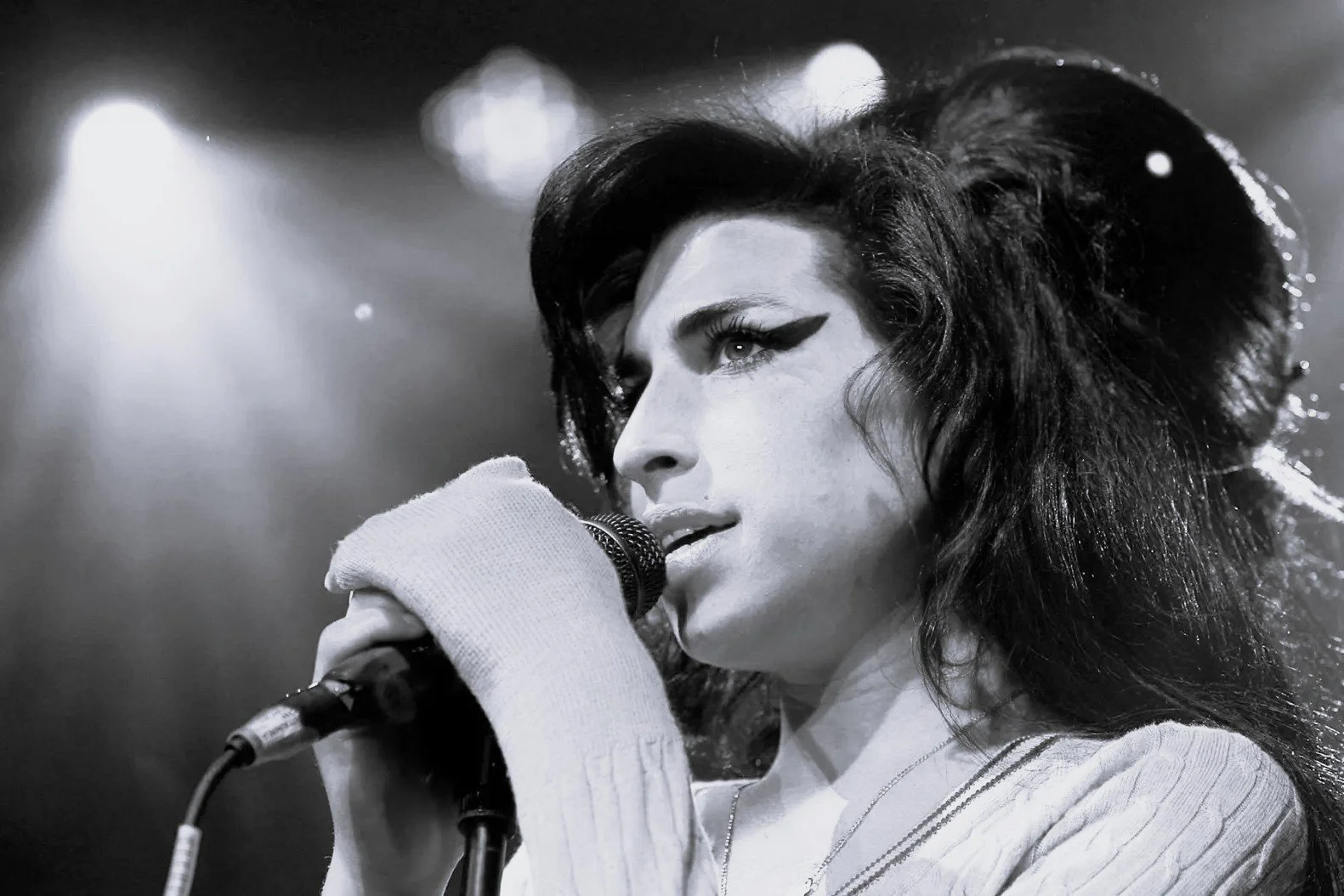
Back to Black. Amy Winehouse
This is a brutally concise breakup song. Winehouse’s lyrics rarely hide behind abstraction. The humiliation, desire, self-destructive behaviour and resentment present in the song (which is often drawn from her own experiences) have an almost uncomfortable frankness. All of which makes it so credible and emotionally honest.
Now your dancing child with his Chinese suit
He spoke to me, I took his flute
No, I wasn't very cute to him, was I?
But I did it, because he lied and
Because he took you for a ride
And because time was on his side and
Because I…
[Chorus]
Want you
I want you
Yes I want you, so bad
I Want You. Bob Dylan
Dylan is often thought to be referring to Brian Jones, the guitarist and multi-instrumentalist of The Rolling Stones. The pair shared a complex, volatile relationship that included moments of genuine artistic kinship. They also had periods of friction and public disputes. The lyrics here are suitably condescending and withering. They are all the more powerful when heard delivered in Dylan’s unique vocal style.

How Streaming Has Changed Pop Music
The transition from purchasing music on CDs, vinyl or via downloads, to on-demand streaming has fundamentally altered the music industry. Furthermore, the current dominance of on-demand streaming as a medium for providing music has actually reshaped how pop music is written, produced and released. Because streaming platforms like Spotify, Apple Music, and TikTok operate on specific payment algorithms and cater to the rapid-scrolling habits of contemporary listeners, producers and songwriters have decided to completely rewrite the rulebook of how pop music is made. These new rules are not one hundred percent ubiquitous and you’ll still find song writers and artists who do things the old way or in a manner that suits them. However, sufficient numbers of song writers have adopted the new methodology, that you can hear the change if you spend a day or so listening to a mainstream pop playlist or radio station that showcases such material.
The transition from purchasing music on CDs, vinyl or via downloads, to on-demand streaming has fundamentally altered the music industry. Furthermore, the current dominance of on-demand streaming as a medium for providing music has actually reshaped how pop music is written, produced and released. Because streaming platforms like Spotify, Apple Music, and TikTok operate on specific payment algorithms and cater to the rapid-scrolling habits of contemporary listeners, producers and songwriters have decided to completely rewrite the rulebook of how pop music is made. These new rules are not one hundred percent ubiquitous and you’ll still find song writers and artists who do things the old way or in a manner that suits them. However, sufficient numbers of song writers have adopted the new methodology, that you can hear the change if you spend a day or so listening to a mainstream pop playlist or radio station that showcases such material.
The following list highlights five aspects associated with pop songs that have changed since approximately 1990 to the present. Some are specific to the song writing process itself where others are to do with the culture and the environment that pop music exists within. For the sake of clarity regarding the points that I’m making, I shall reference two distinct eras. Radio and streaming. Radio effectively means the period from 1920 to the early 2000s. Streaming I broadly set as the industry norm from 2010. These are broad brush strokes but the point still stand.
The 30 Second Rule and the Death of the Long Intro
On most streaming services, a track is only counted and thus qualifies for revenue, if the listener continues to play the song for at least 30 seconds. If they skip the track prior to this, the artist earns nothing. During the radio era songs could afford to have a 20 to 30-second instrumental build-up to set a mood before the vocal began. Today in the streaming era, long intros are effectively a financial liability because listeners are incredibly quick to skip. To address this dilemma, songs often feature no intro at all. If there is one, it is now much shorter. No more than 3 to 5-second in length. As an additional technique to ensure the listeners attention doesn’t wander, producers now provide “The Immediate Hook”. The catchy chorus or heavily modified vocal hook is placed right at the beginning of the song to grab the listener immediately.
The Shrinking Pop Song
Pop songs are getting significantly shorter in duration. In the late nineties, the average duration of a UK or US number-one single was well over 4 minutes. Today, the average pop song is closer to 2 minutes and 30 seconds, with some massive hits clocking in at under 2 minutes. As to why this is so, it is sadly pure economics. Streaming platforms pay the exact same royalties per song, regardless of its duration. From a business perspective, a fan is less likely to abandon a 2 minute song when listening and its shorter length makes it more suitable for repeat listening. Hence an artist can potentially earn twice the revenue in the same amount of time that an older song ran for.
The Death of the Middle-Eight (Bridge) and Fade-Out
To keep songs short and suitably high-energy, many producers are trimming the "fat" from the traditional song structure. The most noticeable victim of this cull is the so-called bridge. The traditional pop structure of Verse → Chorus → Verse → Chorus → Bridge → Chorus has broadly been abandoned. The bridge was meant to offer an emotional or musical departure within the song. A moment of reflection and pause before renewed musical intensity. Producers now view the bridge as a possible moment where the listener's attention might wander and potentially skip to another track. The same has happened to instrumental solos, which have almost entirely disappeared from mainstream pop music, because they slow down the perceived momentum. The fade out has similarly faced the axe. These were convenient for radio DJs who could talk over the track without ruining the song. Today, songs end abruptly. A hard, unresolved ending often triggers a psychological desire for closure, encouraging the listener to hit "repeat."
The Rise of "Spotify-Core" and Mood Playlists
Instead of browsing by genre or spending time listening to an entire album in chronological order, many modern listeners choose curated playlists based on their personal mood or the activity they are undertaking. Hence many people have playlists labelled as “Chill Pop”, “Lo-Fi Beats to Study To” or “Workout Power Tracks”. It is highly desirable to be placed on these highly lucrative, algorithmic playlists, hence producers have adapted their production styles accordingly. We now see a lot of sanitised, mid-tempo productions. Songs with compressed dynamics and a mellow, inoffensive mid-tempo beat. This “wallpaper music” is designed to blend perfectly in the background of the task at hand, without causing the listener to skip any track as none are jarring. There has also been an increase in vocal-forward mixing, in which dry vocals are mixed in a tight and loud style. It creates an immediate, intimate connection especially if a listener is wearing AirPods or headphones.
The Influence of Short-Form Video (TikTok etc.)
You cannot talk about streaming music without acknowledging the interrelationship with TikTok and YouTube Shorts. Because these video platforms use 15 to 30 second audio clips, pop music is often produced specifically to create a “TikTok moment”. A so-called “Memeable Hook”. Producers build distinct, highly energetic 15-second segments into the track specifically tailored for dance trends, lip-syncs, or transitions. Producers are now officially releasing “Sped Up” and “Slowed + Reverb” versions of their own tracks alongside the original release. Since content creators were doing this on social media anyway, labels realised they could capture those additional streaming royalties, if they provided the augmented tracks themselves.
As I stated at the beginning of this post, this is a substantive trend but not an absolute rule. Many artists do not follow this formula. Some simply tinker with aspects of their music but not in its entirety. However, because music as a whole is so compartmentalised these days, many people listening to genres other than pop music will not have necessarily encountered this phenomenon. All the above will more than likely seem meaningless to someone listening to Phantom of the Opera by Iron Maiden. Conversely, those familiar with Old Town Road by Lil Nas X will be acquainted with its brevity. However, conformity and standardisation under the guise of optimisation can negatively affect a product. Perhaps the very changes that have occurred will eventually start to bore target audiences. One thing is certain, pop music adapts and aims to give people what they want. Modern audiences eventually discover old tunes. So watch this space.
Spotify and Sound Quality
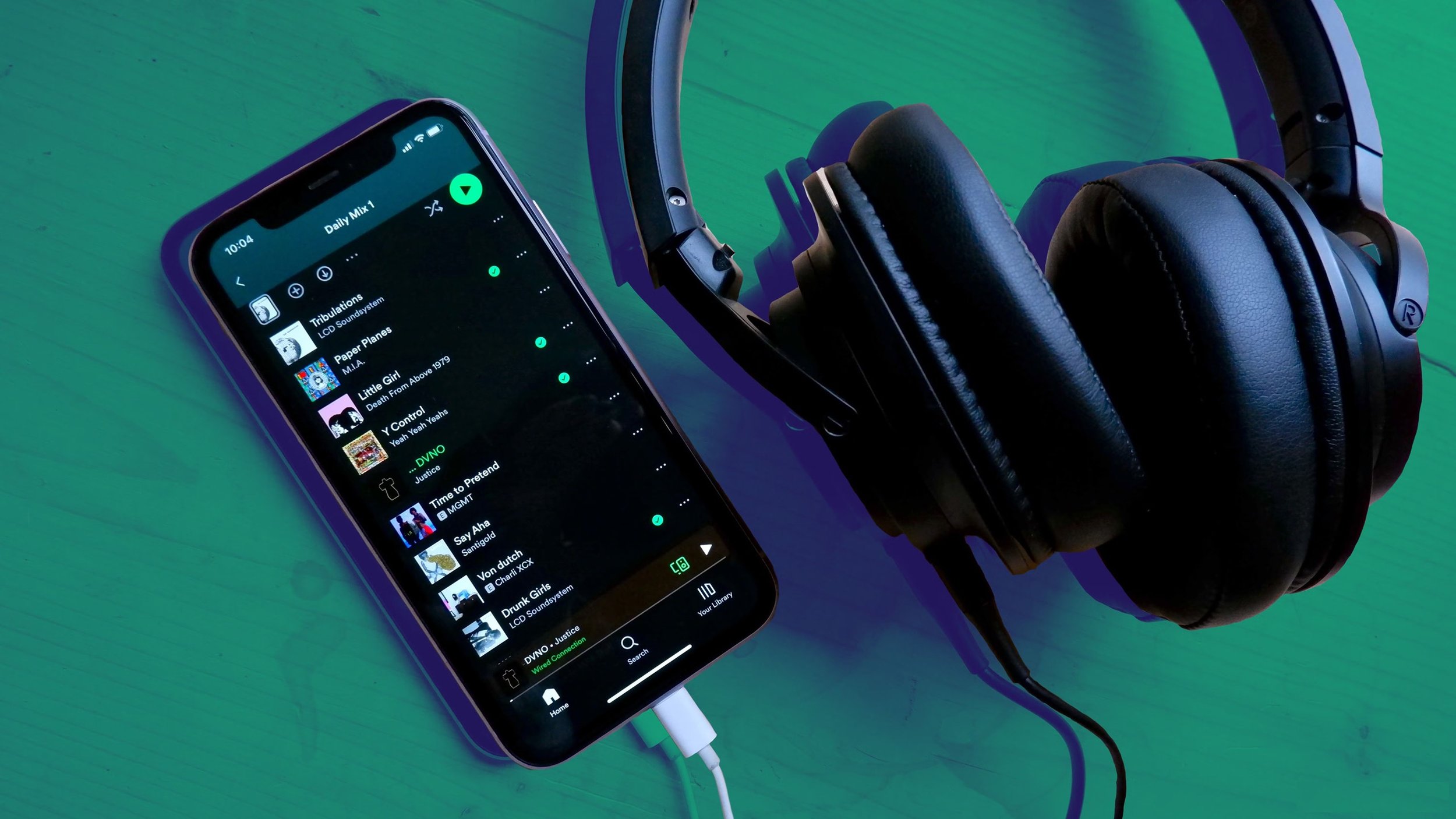
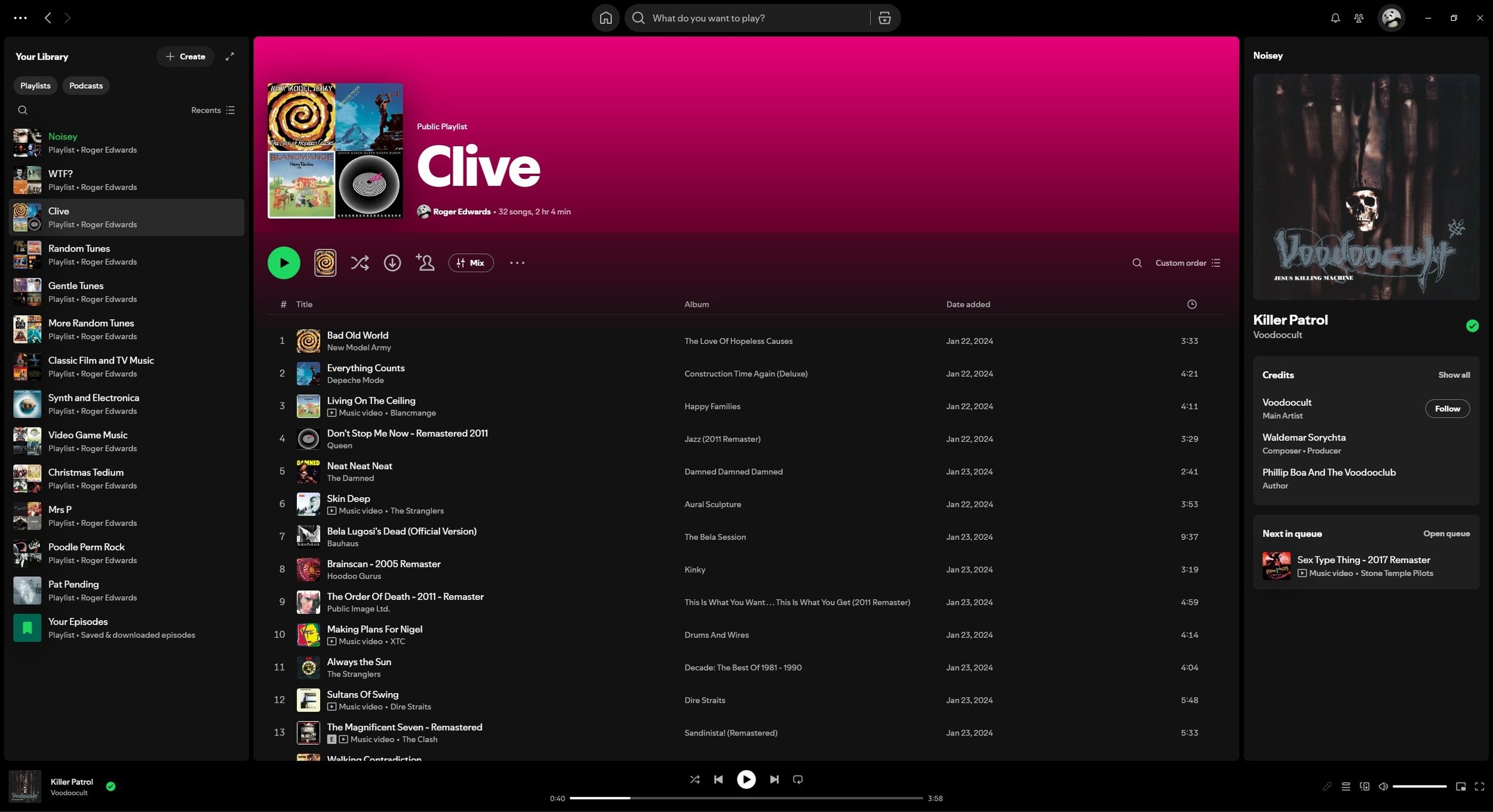
I was recently listening to some music on Spotify when it struck me how poor the sound quality was. It lacked any depth and certain instruments seemed lost in what I can only describe as a somewhat flat and smudged soundscape. Then I remembered that I had recently reinstalled the app on my PC after the search facility "broke" on the previous install. It would seem that any prior settings and customisations that I may have made had not carried over, not that I recollect specifically making any. I consulted Google Gemini to see if this issue was a common one and low and behold it is. The latest version of Spotify, by default, has the streaming bitrate set fairly low to accommodate data capped internet services or low bandwidth connections. In audio terms the music quality sounds poor. Hence I spent sometime nosing around in the settings to see what needed to be changed to remedy this problem. Here is the breakdown of the alterations that I made.
I was recently listening to some music on Spotify when it struck me how poor the sound quality was. It lacked any depth and certain instruments seemed lost in what I can only describe as a somewhat flat and smudged soundscape. Then I remembered that I had recently reinstalled the app on my PC after the search facility "broke" on the previous install. It would seem that any prior settings and customisations that I may have made had not carried over, not that I recollect specifically making any. I consulted Google Gemini to see if this issue was a common one and low and behold it is. The latest version of Spotify, by default, has the streaming bitrate set fairly low to accommodate data capped internet services or low bandwidth connections. In audio terms the music quality sounds poor. Hence I spent sometime nosing around in the settings to see what needed to be changed to remedy this problem. Here is the breakdown of the alterations that I made.
Audio Quality:
By default, the audio quality is set to “Automatic” which can drop your bitrate as low as 24 kbps or 96 kbps depending on available bandwidth. I changed this to “Very High” (320 kbps). If you have the Premium subscription tier, then this can be set to “Lossless” (FLAC). Note that lossless uses significantly more data (up to 1GB per hour), so keep that in mind if you have a data cap.
Normalise Volume:
This setting can be found under Playback. Normalisation tries to keep every song at the same volume so you don't have to keep making manual adjustments yourself but it does this by applying digital compression. This naturally impacts upon audio quality, so I turned it off as well.
Use the Equalizer:
There are over twenty presets for the Equalizer that adjusts the treble and bass accordingly. They make a noticeable difference so it is worth experimenting to find one that you find satisfactory. Or you can tinker with the settings yourself to suit your own tastes and preferences. There a “Reset” button if you are not happy with the results and with to return to the default settings.
Hardware:
If you’re listening via wireless headphones, it is worth remembering that Standard Bluetooth (SBC) compresses audio. If you're using high-end wireless headphones when listening on a phone, ensure they are using LDAC or aptX Adaptive if your handsets supports it. Interestingly, the Spotify Web Player is capped at a lower bitrate (AAC 128-256 kbps) than the dedicated Desktop or Mobile apps. Hence it is advisable to always use the PC or phone app for the best sound quality. Obviously the quality of your speakers is a major factor and if they are poor then it really doesn’t matter how much you tinker with the settings within Spotify. I have a Majority Snowden Soundbar connected to my PC via an optical connection. The sound quality is very good and there is none of the cabling issues you get with individual speakers.
I use Spotify mainly for convenience. You can curate your own playlists and access those made by others. It is accessible and fairly comprehensive. I am often surprised by what I can find available via the app. However, there are negative aspects associated with the service. The level of financial remuneration the artists receive being the main one. Another issue is the way we consume music nowadays has actually led to tangible changes in the way that music is now created and produced. However, such a subject is best dealt with a separate blog post. In the meantime, if you’re having issues with the sound quality of Spotify, hopefully the practical steps listed above will help you make changes for the better. If you have any tips yourself, feel free to share them in the comments below.
Honest Playlist
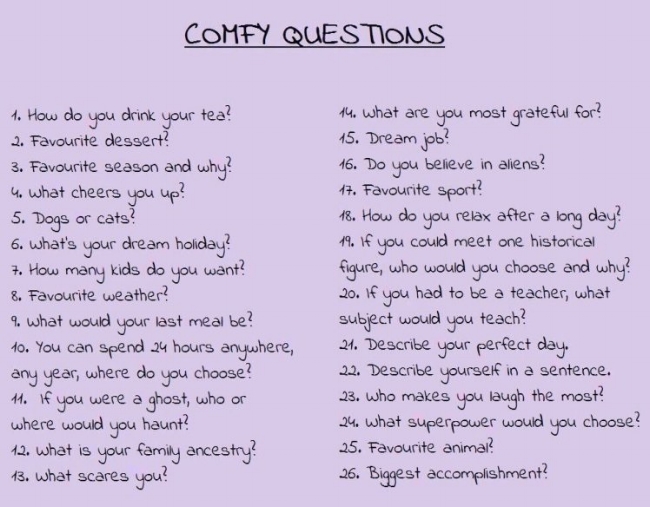
The Guardian news website have a recurring feature in their “culture” section called Honest Playlist where they ask various celebrities about their music listening habits. There are a dozen or so stock questions that they use to grill their guest, although they don’t always use the same ones. I think it makes for interesting reading so its a column that I often visit. As I haven’t published a post based upon an internet questionnaire for a while, I thought I poach this particular line of questioning and have a crack at it myself. I have chosen the ten questions that I think are the best and by that I mean, they have the most scope for interesting answers. I didn’t include the one about karaoke because it’s not something I especially like. Each to their own. Feel free to similarly purloin this set of questions and write your own responses. I’m always fascinated by these sort of things.
The Guardian news website have a recurring feature in their “culture” section called Honest Playlist where they ask various celebrities about their music listening habits. There are a dozen or so stock questions that they use to grill their guest, although they don’t always use the same ones. I think it makes for interesting reading so its a column that I often visit. As I haven’t published a post based upon an internet questionnaire for a while, I thought I poach this particular line of questioning and have a crack at it myself. I have chosen the ten questions that I think are the best and by that I mean, they have the most scope for interesting answers. I didn’t include the one about karaoke because it’s not something I especially like. Each to their own. Feel free to similarly purloin this set of questions and write your own responses. I’m always fascinated by these sort of things.
The first song I remember hearing
My mother had a record collection that she regularly played when I was growing up. A lot of the music was from her youth, so it was predominantly artists from the fifties. Hence, I have distinct memories of listening to Connie Francis, Michael Holiday and Nina & Frederik. However, during the early seventies she took a liking to Abba, so I became aware of their work. My sister used to watch Top of the Pops, the weekly UK music chart show, so I have some distinct memories of bands from the Glam Rock era. I specifically remember I'm the Leader of the Gang (I Am) by Gary Glitter, as it incurred outrage from my father. That particular song got a lot of traction in the school playground which made it stand out. It’s a banging tune but sadly tarnished by the crimes associated with its singer.
The first single I bought
I never really bought singles during my teenage years. By the time I started being interested in music I owned a stereo radio/cassette player or “boombox” as they’re know in common parlance. Hence I tended to buy albums on tape. If I wanted a copy of songs currently in the chart, I would record them from the radio on a Sunday afternoon when the Top 40 records were broadcast on BBC Radio 1. My sister bought a lot of singles. Our tastes were not identical but there were bands and artists we both liked. I remember she bought a copy of Can’t Stand Losing You by The Police and it had a very striking sleeve. It featured a guy hanging himself by standing on a block of ice in front of a heater. It was also a white vinyl version which probably makes it quite a rarity these days.
The first song I fell in love with
This is a difficult question to answer because I was enamoured with various bands and artists while a teenager. It comes with the territory, or least it did back then. Music being a key influence and social marker. I would go through cycles of becoming obsessed with a song and then playing it to death and then moving on to another. That being said, there is one particular song like this that I never quite became bored with and fell out of love with. When I first heard The Stranglers’ cover version of Walk on By I was greatly surprised how a piece of soulful, easy listening could be re-imagined in such a radically different way. The emotional theme of a lost love were still there but it was underpinned by a heavy, brooding bass line that makes it something far more imposing. Even sinister. One music journalist described it as a “psycho singing karaoke”. The album version with the 3 minute plus musical break is my preferred version.
The song I inexplicably know every lyric to
This one is easy. Seven Nation Army by White Stripes. My son played this song a lot. When he decided to learn to play the violin, this is the song he chose to perform. So I learned the lyrics through “musical osmosis”. It’s a good song, although at the time my son’s repeated playing of it really got on my nerves.
The best song to play at a party
The best song to play at a party is highly subjective and also extremely contextual. It depends on the party and who is there etc. I’d prefer to turn this question around. What are the worst songs to play at a party. Songs that as soon as you hear them you know that the party has taken a turn for the worse. With that in mind I would place Sweat Caroline by Neil Diamond at the top of this list. I fucking hate it. When I think of this song I immediately think of Dad dancing at weddings and drunken karaoke. If it ever gets played at a social event it is an immediate cue for me to withdraw.
The song that changed my life
I won’t go so far as to say a song changed my life but I can certainly name one that made me think very seriously. The song in question being Low Self Opinion by the Rollins Band, from the 1992 album The End of Silence. Henry Rollins is an interesting character and has a knack of articulating feelings that many of us have over the course of our lives. The words are honest and certainly gave me pause for thought at a time in my life when I was uncertain of where I was going. The song contributed to a degree of self reflection, that then lead to decisions that took life in a more positive direction. Who ever said that songs were trivial?
The song that make me cry
I Remember You, specifically the Slim Whitman version, as it reminds me of my late Mother. It brings back fond memories but there’s always a tinge of sadness when being reminded of a parent who is no longer with us.
The song I can no longer listen to
Until recently I’d have said all of the songs associated with the animated film The Lion King. Mainly because when my son was growing up, this film was watched virtually every day for a year so it all got somewhat wearing. However, I recently went to see the stage production and found that the songs were still very good and that the intervening years had been kind.
The song I secretly like, but tell everybody I hate
I can’t really answer this one as I don’t see the point in lying about something like this. You either like a song or not. Why the deception? Is it all about looking cool or something? The thing is I’m 58 and not 18, so I such things aren’t really a factor any more. By default I am uncool.
The song I want played at my funeral
So What by the Anti-Nowhere League. It is concise and offensive. Its point is to highlight the utter irrelevance, pomposity and futility of bragging rights and its associated culture. Apparently this song is popular among UK Special Forces. Ignore the Metallica cover version as they chickened out and have sanitised the lyrics.












Digital Jukeboxes
I was in a pub last night, catching up with friends before Christmas, when I noticed on the wall something I haven’t seen in a pub for a very long time. A jukebox. In my experiences most of the pubs I go to take one of the following two approaches to background music. They either have a sound system and exclusively manage any music via personally curated playlists from behind the bar. Or they have no music at all. The Wetherspoons chain of pubs broadly follow the latter policy and actively use it as a marketing point. Quiet pubs for clientele that just want to talk can be popular. Hence finding an accessible jukebox was a blast from the past. During the late eighties and early nineties, I regularly visited my local pub and often used the jukebox there, which at the time, was operated by an ever changing store of CDs. The jukebox I encountered last night was digital.
I was in a pub last night, catching up with friends before Christmas, when I noticed on the wall something I haven’t seen in a pub for a very long time. A jukebox. In my experiences most of the pubs I go to take one of the following two approaches to background music. They either have a sound system and exclusively manage any music via personally curated playlists from behind the bar. Or they have no music at all. The Wetherspoons chain of pubs broadly follow the latter policy and actively use it as a marketing point. Quiet pubs for clientele that just want to talk can be popular. Hence finding an accessible jukebox was a blast from the past. During the late eighties and early nineties, I regularly visited my local pub and often used the jukebox there, which at the time, was operated by an ever changing store of CDs. The jukebox I encountered last night was digital.
Naturally I was curious about this device so I went and investigated. The first thing I noticed on the LED screen was that the jukebox had an app associated with it, from which I could select and pay for songs if I wanted. I was surprised to see that this jukebox still had the option to pay by coin. I have subsequently learned that some have contactless card readers as another means of paying. I also noted that it cost £1 to play one song. Being a digital device, the jukebox offered thousands of songs from multiple artists and I was quite surprised at the range of material that was available. Searching via the touchscreen was easy. You can also see the current song queue, so you know when your choice will be played. Overall the device was intuitive to use. As for the cost, a pound is not going to break the bank and simply comes out of the change after buying a round of drinks.
Because I was quite intrigued as to how such an old school institution as jukeboxes still exists in today’s world, I did a little further research today and was quite surprised by the results. Digital jukebox suppliers offer a profit sharing business model where venues get a free machine with no upfront cost. Sharing the revenue with the supplier, typically on a 50/50 split, with the venue keeping half of the earnings after music charges are deducted. This allows pubs, bars, and clubs to offer modern music without investment, generate extra income and improve customer experience (allegedly, depending upon your stance on music in pubs). The suppliers handle installation, maintenance and music updates. I couldn’t find any data on what percentage of revenues reaches the artists but I suspect it is comparable to services such as Spotify.
There are times when I go to the pub and I want some peace and quiet so I can concentrate on conversation with my friends. There are other times when I am happy to have some background music and to be able to choose something to listen to myself. It’s nice to be able to sing along with a familiar song that catches the mood. It can also be fun to put on a “crowd pleaser” and watch others get into it. I’m not averse to playing something that is annoying from time to time, just for the hell of it. Hence, I was pleased to see that jukeboxes have survived the various cultural changes of the current century and still exist in pubs and clubs. The modern iterations may not be as stylish and iconic as their fifties and sixties predecessors but they still serve the same basic purpose. I think there is comfort to be had in having access to music in pubs that isn’t exclusively controlled by the landlord.
What Is Your Favourite Bassline In A Song?
I recently came up with a random writing prompt for the annual Blaugust: Festival of Blogging event. Namely, “what is your favourite bassline in a song”? For clarity, Wikipedia defines a bassline as follows: Bassline is the term used in many styles of music, such as blues, jazz, funk, dub and electronic, traditional, and classical music, for the low-pitched instrumental part or line played by a rhythm section instrument such as the electric bass, double bass, cello, tuba or keyboard. As I thought of this prompt, it only seems fair that I tackle it myself. Hence, here are five songs that I feel have notable basslines, or that have bassplayers that play in a unique style. I am not especially musically talented myself and therefore not au fait with all the correct musical terminology. However, I will strive to quantify why I think each song is a good example.
I recently came up with a random writing prompt for the annual Blaugust: Festival of Blogging event. Namely, “what is your favourite bassline in a song”? For clarity, Wikipedia defines a bassline as follows: Bassline is the term used in many styles of music, such as blues, jazz, funk, dub and electronic, traditional, and classical music, for the low-pitched instrumental part or line played by a rhythm section instrument such as the electric bass, double bass, cello, tuba or keyboard. As I thought of this prompt, it only seems fair that I tackle it myself. Hence, here are five songs that I feel have notable basslines, or that have bassplayers that play in a unique style. I am not especially musically talented myself and therefore not au fait with all the correct musical terminology. However, I will strive to quantify why I think each song is a good example.
My Country - New Model Army. New Model Army are an English rock band from West Yorkshire. They were founded by lead vocalist, guitarist, and primary songwriter Justin Sullivan, along with bassist Stuart Morrow and drummer Phil Tompkins in 1980. Their musical style incorporates punk, folk, soul, metal, and classical genres. Their lyrics encompass themes ranging from overtly political to the spiritual. Bassist Stuart Morrow who played with the band for their first three albums has a notable bass style which is clear in My Country. The complex basslines has a distinct sound, allegedly due to Morrow using a 50 pence coin as a plectrum (although this may be apochryphal).
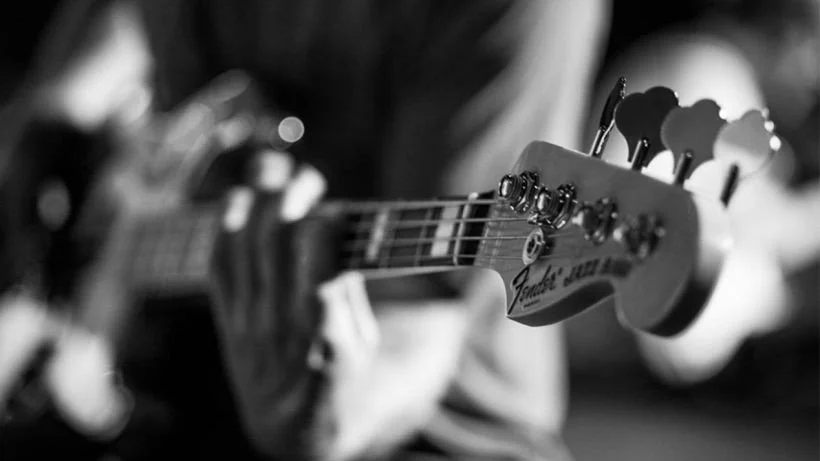
Winnebago Warrior - Dead Kennedys. Formed in San Francisco in 1978, Dead Kennedys greatly benefited from theatrical vocals of lead singer Jello Biafra and the robust bassplaying of Klaus Flouride (Geoffrey Lyall). Klaus Flouride played a Lake Placid Blue Fender Jazz Bass from 1966 that he purchased for $200 and this was his main bass guitar during his years with the band. His rapid basslines underpin many of the band’s best songs, such as Winnebago Warrior. A song about contemporary Americans trying to connect to their frontier roots through the medium of conspicuous consumption.
Hit Me With Your Rhythm Stick - Ian Dury and the Blockheads. Explaining the subtleties of Ian Dury and the Blockheads is a blog post in itself. One for another day. Hit Me With Your Rhythm Stick is one of the band’s greatest hits and was a number one hit in the UK in late 1978. Bass player Norman Watt-Roy famously created an exquisitely complicated, and fast-paced bassline consisting of sixteenth notes. At the time, many artists were amazed that he had devised such an intricate bassline for a song with such a simple overall structure. Many YouTube channels teaching or analysing bassplaying frequently cite this song as a benchmark and will wax lyrical about its musicality.
Mann gegen Mann - Rammstein. Oliver Riedel has been the bass player with Rammstein since the band’s formation in 1994. The line up has never changed. Rammstein’s songs are a blend of simplicity and variation, often featuring a main riff, verse-chorus structure, and strategic use of bridges. But this invokes the wider philosophy of less being more. Riedel’s basslines are catchy and drive the songs forward along with the percussion. Industrial metal as a genre, at first glance may not appear to require complexity in its rhythm section, just strength but Riedel is competent and can be varied in style. Mann gegen Mann features a strong bassline that reflects the emotional turmoil of the song’s themes.
Nice ‘n’ Sleazy - The Stranglers. One of the UK’s most underrated bands, The Stranglers have always been more than the sum of their parts. Emerging from the pub rock scene in the mid seventies, their aggressive play style had them pigeon holed by the media as a punk band. But their idiosyncratic style meant that they were never a slave to a specific genre, preferring to take influences from many. The Stranglers music is often driven by the bass and keyboards, provided respectively in their halcyon days by Jean-Jacques Burnel's melodic but brutal approach and Dave Greenfield’s sophisticated arpeggios. Nice ‘n’ Sleazy is the epitome of this formula. J. J. Burnel’s bassline announces itself immediately and remains a constant throughout the song.
A Year in Music
This post is not intended to be a comprehensive review of music per se in 2024. It is simply a few thoughts on what I’ve been listening to over the course of the year and my ever changing relationship with the Terpsichorean muse. As a man in his fifties who has always enjoyed multiple genres of music and it is a comforting presence in day-to-day life. Up to a year ago, I relied upon my own music collection on my PC as the source of music to which I listened. Yet, this meant that I was somewhat locked into my own existing tastes and there was limited scope for me to find new material. This changed last December when I started subscribing to Spotify and since then it has become my primary source of music. It caters to my tastes, which at times are quite niche and it gently introduces me to new material without being too invasive. This has proven most beneficial.
This post is not intended to be a comprehensive review of music per se in 2024. It is simply a few thoughts on what I’ve been listening to over the course of the year and my ever changing relationship with the Terpsichorean muse. As a man in his fifties who has always enjoyed multiple genres of music and it is a comforting presence in day-to-day life. Up to a year ago, I relied upon my own music collection on my PC as the source of music to which I listened. Yet, this meant that I was somewhat locked into my own existing tastes and there was limited scope for me to find new material. This changed last December when I started subscribing to Spotify and since then it has become my primary source of music. It caters to my tastes, which at times are quite niche and it gently introduces me to new material without being too invasive. This has proven most beneficial.
In a world of “big data”, naturally Spotify has crunched the numbers relating to my usage over the last 12 months and has collated a presentation about my listening habits. My top five artists are a strange mix. I was not surprised to see Rammstein at the top of the list as I find their pounding songs to be an excellent form of stress release. Seeing the late, great Slim Whitman so high in the list was unexpected. I “inherited” my love of this man’s yodelling abilities and his three octave range falsetto from my mother. She adored him and hence I became very familiar with his back catalogue. As for Howard Shore and John Barry, their respective presence is due to my love of sumptuous movie soundtracks. With respect to The Stranglers, I consider them an underrated UK band. A band where there’s more than meets the eye.
Slim Whitman
I apparently listened to 10,558 minutes of music this year. If you assume an average running time of 3.5 minutes for a song, that’s a little over 3000. Like most data presented out of any sort of context, I have no idea if that is a lot or a little compared to other users. It averages out at about 8 songs a day which doesn’t seem a lot. Maybe 30 minutes of music each time. I suppose it all depends on your circumstances. I spend a lot of time at my desk using my PC, so I’ll often listen to something while writing or gaming. Plus I did some travelling at the start of the year, which provided additional time to listen to Spotify via headphones. Overall, enjoying music is certainly part of my daily routine. Just like listening to podcasts and watching YouTube channels that I subscribe to. Having what I want, when I want, without any hassle certainly makes things a lot easier.
Rammstein
Perhaps the biggest change I can see with regard to listening to music, is that I don’t take it quite so seriously anymore. I remember my teenage years and being very proud and protective of the bands and artists I liked. Music being such an integral part of youth culture. I no longer see music in terms of being cool or uncool, mainstream or indie. It simply comes down to whether a tune gets a positive reaction or not. If it does, then I’ll add it to a playlist. As to my wider musical aspirations, it has been a long time since I’ve seen any live music. Perhaps the biggest reason for this is that being a gentleman of a certain age, I like to sit down. Something that is not always viable at a concert. But I feel it is time to see a big, stadium band next year. Mainly because if I don’t go and see anything in 2025, I’ll probably never do such a thing again.
Spotify
I currently have over 152 GB of music on my PC. Approximately 26,000 songs or pieces of music. These are in MP3, Flac and other formats. The files have been sourced from various CDs that I have owned over the years and subsequently “ripped”. Others have been bought from Amazon or other similar sources. In the past I have copied music from friends’ collections and vice versa. The files are mainly categorised by artist or name which is sufficient for me to be able to trawl through them to find what I want. I use foobar2000 as my music player of choice, mainly because it is updated by its developer, plays all major file formats and has no adverts. The interface is verging on the spartan but I prefer this minimalist approach, as I do not require an excess of features.
I currently have over 152 GB of music on my PC. Approximately 26,000 songs or pieces of music. These are in MP3, Flac and other formats. The files have been sourced from various CDs that I have owned over the years and subsequently “ripped”. Others have been bought from Amazon or other similar sources. In the past I have copied music from friends’ collections and vice versa. The files are mainly categorised by artist or name which is sufficient for me to be able to trawl through them to find what I want. I use foobar2000 as my music player of choice, mainly because it is updated by its developer, plays all major file formats and has no adverts. The interface is verging on the spartan but I prefer this minimalist approach, as I do not require an excess of features.
For the last decade or so, this has been my default music set up. As I spend a lot of time in my office, at my desk, this is how I’ve mainly listened to music. A few years ago I ditched the ageing desktop speakers that were attached to my PC and bought a good quality soundbar. It has been a great improvement. I also have a pair of Sony WH-CH520 Wireless Bluetooth Headphones for those occasions when I need to keep the noise down, or for when I’m travelling. However, several things happened in the last year or so which made me question the status quo. The first was Mrs P buying a new car. It didn’t come with a CD player. The second occurred at one of my son’s barbecues. A playlist was collated within minutes with many guests contributing via their existing streaming music accounts. This ensured that there was an equitable representation of all kinds of music, negating any arguments.
Hence, when I received an email offering a 3 month free trial of Spotify last Christmas, I jumped at the chance. Needless to say the flexibility of the platform, along with its substantive music catalogue made it pretty much a no brainer. I lived through the album era and although I like sleeve art, I’ve always found records an inconvenience and never bought into the culture of reverence for them. Similarly, I feel the same way about CDs. So when the MP3 format started to gain traction in the earlier 2000s I quickly adopted it as it had the advantages of superior storage and easy access. Hence, streaming music services are a logical progression. Spotify is convenient and offers easy access. It’s on my PC, phone, smartspeaker. We can also access it when out or in the car.
Setting aside the practical benefits of its accessibility, the other major appeal of Spotify is collating and sharing playlists. Playlists are an excellent means of curating music for specific moods and occasions. As I have an organisational streak to begin with, creating bespoke lists of songs is something I can happily do for hours. I also find sharing other peoples playlists a very useful means of discovering new songs and artists. I can do this with friends and celebrities alike. I recently accessed a list of songs curated by film director Edgar Wright and it was very much to my tastes. However, if you still like to listen to a specific album in order the tracks appear, you can still do this. Spotify will also try and recommend comparable artists based upon your listening history. It’s not a perfect system but it can be quite creative in its choices at times.
The obvious downside to using a streaming service, as opposed to playing the music I already have stored, is the cost. However, I can justify that by the increased accessibility I now enjoy. Another issue that happens from time to time, is not being able to find a specific track. Spotify doesn’t claim to be a definitive music source but it does allow you to add files locally. I have also experienced a few glitches from time to time. Specific songs added to a playlist will sometimes default to alternative versions or mixes for no discernable reason. Material will sometimes be greyed out and unplayable. Presumably due to copyright issues. However, these are minor complaints. So far Spotify justifies its cost by its convenience and so I am happy to endure the expenditure. There are wider issues to consider such as the cultural shift away from “owning” music, to just “renting” it but that is a discussion for another blog post.

Listening to Music
The following is about a cultural change. That is not to say that it’s a value judgement or one of those posts you so frequently read by bloggers of a certain age, that essentially boil down to “things were better in my day”. It is merely an observation and like all observations it is not 100% universal. There will always be exceptions to the rule. I am simply painting with broad strokes a general truism for your consideration. My point being that people listen, experience and enjoy music differently these days compared to how they did three to four decades ago. I’m not talking about the science of hearing or anything complex like that. I am merely highlighting the change in the way we choose to experience music and how that has an impact upon its creation and presentation. So like Anne Elk, presenting her theory on the Brontosaurus, here is the axiom at the heart of this post.
The following is about a cultural change. That is not to say that it’s a value judgement or one of those posts you so frequently read by bloggers of a certain age, that essentially boil down to “things were better in my day”. It is merely an observation and like all observations it is not 100% universal. There will always be exceptions to the rule. I am simply painting with broad strokes a general truism for your consideration. My point being that people listen, experience and enjoy music differently these days compared to how they did three to four decades ago. I’m not talking about the science of hearing or anything complex like that. I am merely highlighting the change in the way we choose to experience music and how that has an impact upon its creation and presentation. So like Anne Elk, presenting her theory on the Brontosaurus, here is the axiom at the heart of this post.
Most people no longer listen to an album by a band or artist, in its designated order. Assuming that they listen to an album in its entirety at all. Most people curate their own playlists nowadays, drawing from multiple sources. They cherry pick the music they like and ignore those tracks they deem just average or worse. Hence the idea of listening to an album from start to finish is to a degree, obsolete. Perhaps the idea of the album itself is equally anachronistic. All of which pretty much negates the existence of the concept album. These changes in the way we listen to (or should I say consume) music has also had an impact upon radio stations and especially upon the relevance of the traditional notion of the DJ. All of which was brought home to me today, when I decided to listen to the 1976 synth-based ambient album Oxygène by Jean Michel Jarre. Something I last listened to about forty years ago.
Originally created as a concept album (“an album whose tracks hold a larger purpose or meaning collectively than they do individually” according to Wikipedia), Oxygène was intended to be listened to continuously for 40 minutes, playing the tracks in chronological order. Naturally, the nature of vinyl recordings and playback greatly governed this habit. The idea was to not only enjoy each specific piece of music but to see them as an interconnected whole that conveyed a wider message. The concept album was a means of bridging the gap between popular music genres and more formal musical compositions, by applying concepts used by the classics. This could be a common or recurring motif, an operatic structure or just a semblance of a narrative structure in the various lyrics. The definition of the concept album is purposely vague, yet you’ll know one if you hear one.
Based upon my own experience, I started my love affair with popular music in the early eighties and on into the late nineties. Like so many others, my teenage years were defined by a need to find some sort of identity and that was often linked to the music you liked and its associated culture. Fortunately, although there were specific genres that I liked, I was happy to explore others and have maintained this philosophy all my life. However, back then in the eighties, there were less distractions and demands upon our leisure time.Therefore, when I listened to music, I was not doing anything else at the time. I was focused upon listening and digesting what I heard. It required a degree of application that rewarded you in a different way to casual listening.
It is also worth noting that some albums were created to be listened to in a specific way. There is a clear arc to the track listing on The Beatles Sgt. Pepper's Lonely Hearts Club Band and Pink Floyd’s The Wall. Naturally, the listener is not bound by such notions and is free to ignore such things if they wish. But it does raise the question, that by listening to the songs out of order and context, do you diminish the musician's artistic vision? However, if you have grown up in a world where such habits as just listening to music and doing so in a linear fashion aren’t the norm, it probably seems all rather alien. Amazon Music has embraced the random playlist concept to such a degree, it won’t play an album in order, even if you own it. For many people, the old fashioned notion of an album has been replaced by exchanging or downloading carefully curated playlists. It could be argued that such things are conceptual in principle themselves.
We all have our own unique relationship with music, especially that we enjoy in our most formative years. For some, it is an integral aspect of their life, identity and the way in which they process the world. For others, to paraphrase Karl Pilkington “music is just something to sing along to” while you do something else. It is disposable and no more than the sum of its parts. Whatever your perspective, we all “do” music differently these days. The fact that the very term “listening” seems to have been replaced with “consume” implies a radical change in perception. As does the way so many of us experience the music we like. In our own, niche online communities, oblivious and indifferent to anything that is not within the confines of our taste. Whether any of these points mean anything or not, you’ll have to decide for yourself. Maybe we’ve become liberated, as opposed to having lost something. Perhaps nothing has changed at all. Regardless, I still enjoyed spending 40 minutes listening to Oxygène today.
The Problem With Ever Changing Band Lineups
I was reminiscing about the music of my youth the other day which led me to listen to a track by Pro-Pain. The band formed in NYC in 1991 and their debut album Foul Taste of Freedom got some traction in the UK. I lost track of them after the next album and moved on musically. However, because of my recent fit of nostalgia, I looked the band up on Wikipedia and discovered that they were still going. Now thirty years is quite a long period of time and nothing stays the same forever but even I was surprised to see that the lineup of Pro-Pain had changed over a dozen times. The only original artist in the band today is bass player, lead vocalists and founder member, Gary Meskil. As ever this started a train of thought about the subject. How so many bands have made substantial changes in their lineup over the course of their careers and the respective pros and cons of such decisions.
Pro-Pain Gary Meskil
I was reminiscing about the music of my youth the other day which led me to listen to a track by Pro-Pain. The band formed in NYC in 1991 and their debut album Foul Taste of Freedom got some traction in the UK. I lost track of them after the next album and moved on musically. However, because of my recent fit of nostalgia, I looked the band up on Wikipedia and discovered that they were still going. Now thirty years is quite a long period of time and nothing stays the same forever but even I was surprised to see that the lineup of Pro-Pain had changed over a dozen times. The only original artist in the band today is bass player, lead vocalists and founder member, Gary Meskil. As ever this started a train of thought about the subject. How so many bands have made substantial changes in their lineup over the course of their careers and the respective pros and cons of such decisions.
Being in a band is a stressful work environment. Creative differences, the amount of time you spend in each other's company and the constant travelling take their toll. Change is an inevitability. But when you change the line up of a band, how much of an impact does it have? Well that depends upon who is leaving and what contribution they made overall. If the outgoing member defined the band’s sound, wrote most of their material or had the biggest personality, then their absence is significant. Think Michael Jackson and The Jackson 5. If their contribution was more arbitrary, then replacing them may not be such an issue. Pete Best “leaving” The Beatles springs to mind. Sometimes the departure of a band member creates an opportunity for a band to reinvent themselves. In the case of Adam and the Ants, the entire band bar Adam left to form Bow Wow Wow. Adam then found new Ants and moved from Punk to New Wave.
Adam and the Ants “Ridicule is nothing to be scared of”
Another problem that arises from bands that have enjoyed great longevity and numerous changes in their line up, is that they will end up with a canon of work that is rich and varied. Fans therefore may not necessarily share the same point of entry into this oeuvre, or enjoy the same material. In such a case, do fans even like the same band? Is there an unbridgeable gulf between Dexy’s Midnight Runner fans who favour the 1980 album Searching for the Young Soul Rebels and those who preferred Too-Rye-Ay, two years later? And to complicate matters further, sometimes a successful band will not just see multiple lineup changes but will split into multiple iterations of the same band, due to legal and financial wranglings. At one point there were two versions of the popular English Reggae band UB40. One using the original name and the other being known as UB40 featuring Ali Campbell and Astro. That’s just weird.
The music industry has always been a battleground between art and business. Bands can be a collective of evolving musical artists, trying to produce art, as well as an established commercial product providing an ongoing service. Sometimes one trumps the other but it more often than not seems to be the latter. But music provides many things beyond artistic appreciation. Music nostalgia is a major psychological comfort blanket. If you see an iconic band like The Rolling Stones, do you really want to listen to their latest musings or just their greatest hits? It does seem like the provision of a service. However, due to the line up changes over the years, how authentic is that experience? Following a similar train of thought, can you really ever truly experience Queen any more, since the death of Freddie Mercury? However, Judging by ticket sales, this may not be an issue.
The Stranglers
The Stranglers are down to their last original member, Jean-Jacques Burnel. Whether the band will produce any more albums or tour remains to be seen but it does seriously raise the question: are The Stranglers really The Stranglers any more? You can argue from a logical, semantical or emotional perspective and I’m not entirely sure if there is a right or wrong answer. You can have a band where all the original members are dead or retired, so what do people do? They form a bloody tribute act. Again, we return to the power of nostalgia and the money that it can generate. Regarding the original point of the post about the ever changing lineups that some bands have, I suppose you decide for yourself what, if any, lines in the sand you personally draw. I guess music has become like the film and TV industry. When talking to someone, if you state that you like such and such a band, you then have to clarify which version, or which period of their work you enjoy. That’s “fun”.
Video Game Radio Stations
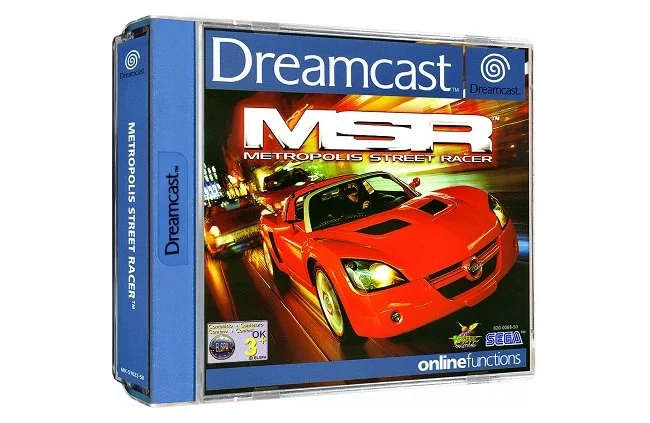
In 2000, I was the proud owner of a Sega Dreamcast. I had a broad selection of games for the console from multiple genres, including Metropolis Street Racer. This was an early example of an open world driving game which is noteworthy in itself. However, what stood out for me was that this was the first game that I had played which had in-game radio stations. Although this is something that is now de rigueur within this sub-genre, back then this was a novelty. The tracks were stored on the game CD but played selectively according to which radio station you were listening to when driving. The sound even broke up if you went into a tunnel. The songs were all original creations, rather than licensed properties. Although credited to faux bands and bogus artists, composer Richard Jacques wrote and arranged them all. I was especially fond of the Oasis inspired band Salford Quays and the track Live Your Life.
In 2000, I was the proud owner of a Sega Dreamcast. I had a broad selection of games for the console from multiple genres, including Metropolis Street Racer. This was an early example of an open world driving game which is noteworthy in itself. However, what stood out for me was that this was the first game that I had played which had in-game radio stations. Although this is something that is now de rigueur within this sub-genre, back then this was a novelty. The tracks were stored on the game CD but played selectively according to which radio station you were listening to when driving. The sound even broke up if you went into a tunnel. The songs were all original creations, rather than licensed properties. Although credited to faux bands and bogus artists, composer Richard Jacques wrote and arranged them all. I was especially fond of the Oasis inspired band Salford Quays and the track Live Your Life.
Since then I have played numerous games that make use of in-game radio stations and I’m always interested as to what material is included. Big triple A titles tend to use licensed music from established artists. The most obvious example being the Grand Theft Auto Franchise. A lot of time and thought is spent on curating playlists by the developers. Furthermore, a great deal of money is spent in securing the rights. When this process is done well, having the right song play while undertaking a complex mission or while cruising around an open world can make all the difference between an adequate gaming experience and a notable one. I still have clear memories of driving around Steelport in Saints Row: The Third in 2015 (when I bought the game as part of a bundle) and one particular track just being synonymous with mayhem and shenanigans. More on that later.
Grand Theft Auto V features an interesting selection of in-game radio stations. The game was released originally in 2013 but has been re-released on multiple generations of consoles over the course of its lifespan. During this time it has been continuously updated, to include additional music. Having sold 160 million units as of this year, many players have been introduced to classic tunes from the eighties and nineties through playing this game. On several occasions, I’ve been listening to a song on YouTube that has featured in this franchise, only to find a comment that reads along the lines of “I’m here because of GTA V”. This has included songs such as Small Town Boy by Bronski Beat, Baker Street by Gerry Rafferty and Rain by The Cult. Also more niche market tracks like John Wayne was a Nazi by MDC. Again I come back to my point that a good selection of music not only caters to a broad spectrum of musical tastes but adds a very atmospheric quality to the gameplay.
Naturally, I thought it would be fun to provide some examples of music that I’ve discovered via in-game radio stations. Rather than pick well known tracks, I have instead opted for earworms that are associated with playing a particular game. First off is Live Your Life by Salford Quays that I mentioned earlier from Metropolis Street Racer. It is a clever pastiche of Oasis, who themselves are a very derivative band. It may be bogus but it sticks with you.
Next we have Chow Mein by The Gaylords. Yes, I know, but this is from 1954. The song is featured in Mafia 2 and it is just so ridiculously archaic that it really can’t be taken seriously. I used to drive around the block if this track came on the in-game radio, just so I could listen to it all the way through.
Finally, indulge me with Save Me From Myself by Unknown Hinson. This psychobilly tune has worryingly plausible lyrics and a chorus that is insanely catchy. Sadly Mr Hinson said some off-colour comments about Dolly Parton and got himself cancelled but the track remains an integral part of Saints Row: The Third as far as I’m concerned. Feel free to mention songs you may have discovered via in-game radio stations.






Keeping Up
I was a teenager during the eighties and the music that I listened to at the time was a major part of my overall experience. My musical taste influenced how I dressed and sometimes even determined friendships. Going to a gig and seeing music performed live was a major rite of passage. Furthermore, due to there only being a handful of TV channels in the UK at the time, meant that certain key programs were responsible for the dissemination of a broad spectrum of musical genres. Hence, while you waited for a band that you liked to come on, you’d sit and be exposed to a wealth of different artists. Something that tends not to happen nowadays as there is far more choice available. My passion for music persisted throughout the nineties and then began to wane round about the turn of the century. Work and the practicalities of daily life made it increasingly difficult to “keep up”. I used to read the music press and know about contemporary artists. I no longer do this. I often don’t even know what the current Number 1 record is.
I was a teenager during the eighties and the music that I listened to at the time was a major part of my overall experience. My musical taste influenced how I dressed and sometimes even determined friendships. Going to a gig and seeing music performed live was a major rite of passage. Furthermore, due to there only being a handful of TV channels in the UK at the time, meant that certain key programs were responsible for the dissemination of a broad spectrum of musical genres. Hence, while you waited for a band that you liked to come on, you’d sit and be exposed to a wealth of different artists. Something that tends not to happen nowadays as there is far more choice available. My passion for music persisted throughout the nineties and then began to wane round about the turn of the century. Work and the practicalities of daily life made it increasingly difficult to “keep up”. I used to read the music press and know about contemporary artists. I no longer do this. I often don’t even know what the current Number 1 record is.
The last twenty years has seen a major shift in focus of youth culture. The sales of physical media such as CDs have declined and music is now consumed via streaming services or even YouTube. The concept of the album is waning. Consumers favour selected tracks and personally curated playlists, rather than sitting down and studiously listening to all the tracks from a classic album in order. Traditional terrestrial TV no longer commands the audiences that it used to. Streaming TV means we can watch what we want, when we want. Subsequently, younger people no longer make TV such a focal point of their leisure activities. Twitch, YouTube are often their first ports of call for information, news and finding out about the things they enjoy. And then there are video games. A medium that for many is now the major social hub of their online activities. For many, games are where you find out about music and pop culture by the references that exist within them. Traditional mediums are no longer a core facet of their culture. Therefore the following article on the Guardian website came as no surprise. If you’re sceptical, ask any parent who has a child old enough to be enamoured with Fortnite.
I see no point in lamenting these social changes, nor passing judgement upon them. As Spock said “change is the essential process of all existence” and who am I to contradict such wisdom? Being au fait with a particular subject can at times feel like a job in itself. Certainly, keeping abreast of the music I liked felt that way during my teen years. It took time and effort to read the music press and then listen to everything. Plus this interest would then compete with my love of cinema, as both would monopolise large swathes of time. Frankly, reaching an age when I could let some of these things slide was a major relief. Between 2006 and 2011 I worked as an IT contractor and would often find myself in an environment in which a radio would be on all day, often tuned to a generic commercial channel. It is interesting how exposure to such a thing, even if you are not consciously paying attention to it, suddenly increases your familiarity. For a short period I became aware of the UK charts once again.
For over a decade, I have been writing to varying degrees about the video games industry and that has become a focal point of interest and fandom for me. Like music in my youth, this has dictated what I read, what media I consume online and has even had an impact upon the social circles in which I move. Sadly, I find that my excitement for this genre is waning, as it has exactly the same failings as other entertainment industries. And so I find myself once again at a point where I feel it is time to simply stop immersing myself in this particular interest. That not to say that I shall ignore it outright. I shall simply start to slow down my consumption of industry news and stop trying to be aware of all major new releases and industry trends. I shall swap being proactive with reactive. If an interesting nugget of gaming news crosses my path or I encounter a new game that has become a talking point, I shall no doubt write about such things. But I no longer feel the need to spend the first 90 minutes of my day, trying to read dozens of gaming news articles via Feedly.
One of the best lessons anyone can learn in life is that you cannot do everything. Once I made peace with this concept I felt a lot better in myself. Therefore it is not so difficult nowadays to let a hobby or pastime go. I miss podcasting but I cannot see myself fitting all the work it entails into my schedule. At present I have sufficient time to play games, watch movies and read. Those activities provide me with sufficient material to write about. But I no longer feel a compulsion to totally immerse myself into my leisure activities, nor do I seek to be an “armchair expert”. It no longer bothers me if someone mentions an artist that I’m not immediately familiar with. If I’m sufficiently interested then Google will yield an answer. Therefore, I am content to embrace the cyclical nature of fandom, hobbies and interests. I prefer now to savour a bottle of fine wine rather than strive to consume the entire vintage.














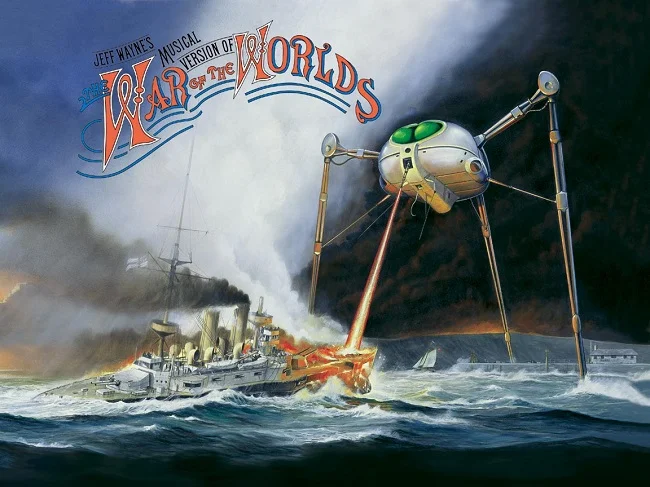
Jeff Wayne's Musical Version of The War of the Worlds
I try and keep abreast of what's happening and going on, especially in those areas of interest to me such as movies, TV and gaming etc. Occasionally stuff passes me by that I subsequently discover at a later date, often to the refrain of WTF? A few years ago I was idly channel surfing only to discover that a seminal UK children's TV show from my youth, the Mr. Men, had been remade in a more contemporary idiom. Luckily, the source characters were still relatively unscathed, and the revamped show did a competent job in bringing Roger Hargreaves work to a new generation. Still, no one had told me and discovering this, in such a fashion was a bit of a surprise.
I try and keep abreast of what's happening and going on, especially in those areas of interest to me such as movies, TV and gaming etc. Occasionally stuff passes me by that I subsequently discover at a later date, often to the refrain of WTF? A few years ago I was idly channel surfing only to discover that a seminal UK children's TV show from my youth, the Mr. Men, had been remade in a more contemporary idiom. Luckily, the source characters were still relatively unscathed, and the revamped show did a competent job in bringing Roger Hargreaves work to a new generation. Still, no one had told me and discovering this, in such a fashion was a bit of a surprise.
Now I'm sure this is something we've all experienced at various points in our life. Often, we are more bemused by the fact that such a thing has happened without our being aware of it, rather than the specifics of the change. Frequently the matter is compounded by the fact that we have a strong sentimental attachment to that which has been altered, rebooted, re-imagined or generally messed with. Furthermore, surprise discoveries of this nature cause short periods of discombobulation. This phenomenon happened to me again quite recently. An innocuous chain of events, led to a surprise discover followed by a sense of shock, then incredulity and a lenghty string of profanities.
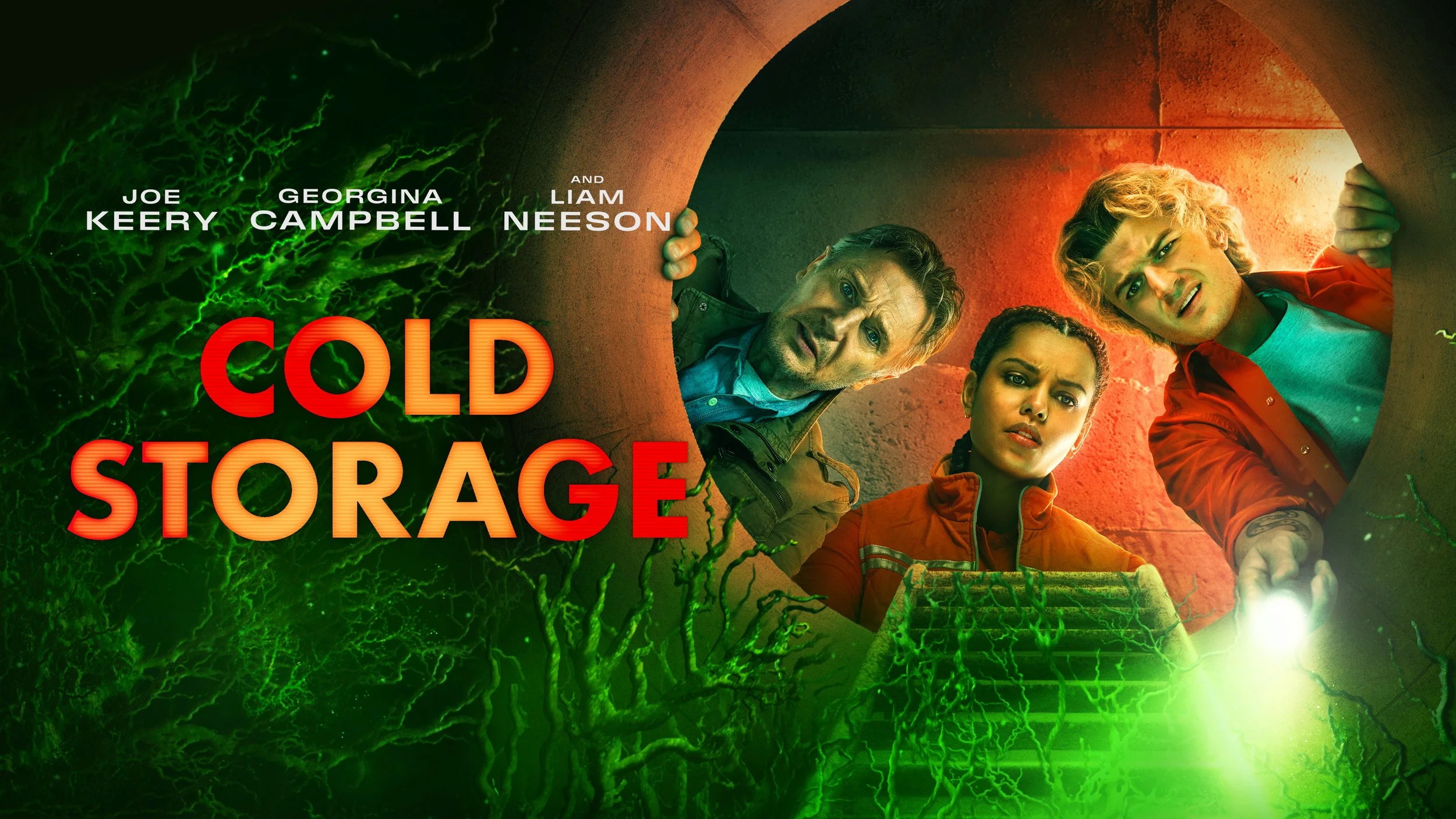
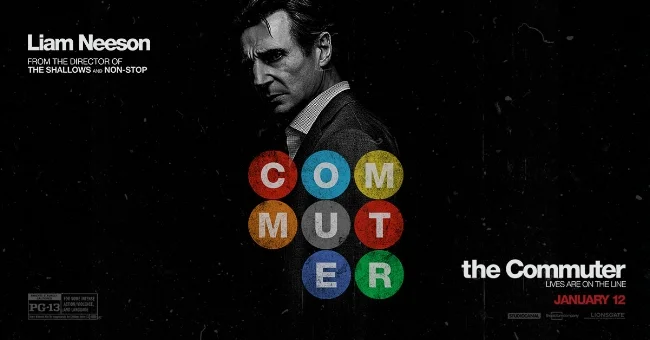
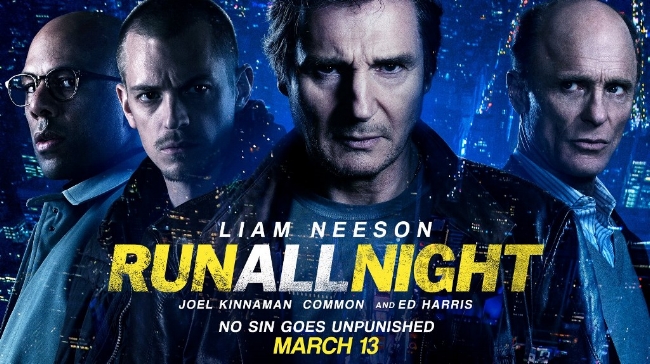
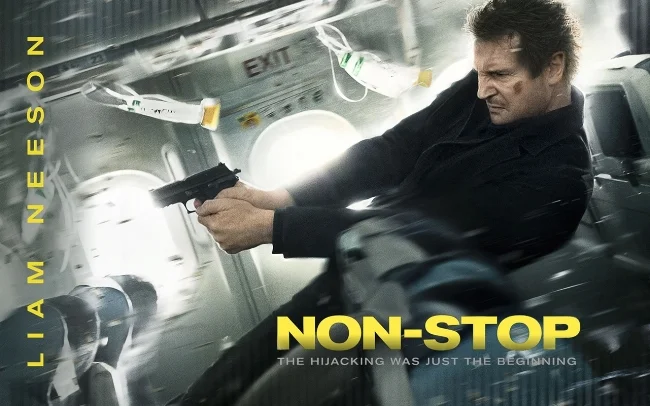
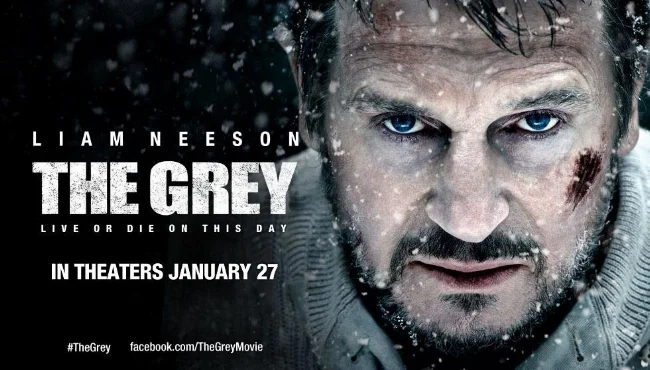
So what happened exactly? Well I had just downloaded a free Kindle version of H.G Wells science fiction novel, War of the Worlds. It is a literary classic and a good read after all. Because I am a man of a certain age, I have fond memories of Jeff Waynes' progressive rock, musical concept album from 1978. The mixture of spoken world, music and song left a big impression on me at the age of eleven. So, naturally my train of thought led me over to You Tube to quickly listen to a track or two from the aforementioned seminal recording. I idly clicked on The Eve of the War, expecting to hear the smooth baritone voice of Richard Burton as he narrated the introduction. Instead I suddenly became aware that I was listening to a completely different but not unfamiliar actor. The soft melodic Irish tones were unmistakable. It was Liam Bloody Neeson!
After my initial shock, I did some research to determine what was exactly going on. I discovered that the entire album had been re-recorded in 2012 under the revised title, Jeff Wayne's Musical Version of The War of the Worlds – The New Generation. This new album features more contemporary artists. Gary Barlow has replaced Justin Heyword, Joss Stone is covering Julie Covington and Ricky Wilson has usurped David Essex. All of this has come as something as a shock. However, on mature reflection I am not especially aggrieved by this change. It’s the same as when a new production of a famous stage musical is undertaken on Broadway or in the West End of London. A new cast brings a fesh perspective to the material and scope for alternative interpretations. I guess I was mainly flummoxed because I just didn't expect it and to find out in such a fashion.
Well it would appear that after the release of The War of the Worlds - The New Generation in 2012, a sumptuous stage show toured round most of the UK's major arenas, just as the original production did in 2006. This featured a performance of the entire album with a full orchestra conducted by Jeff Wayne himself. The holographic projection of Richard Burton's head has now been replaced by a twenty-foot image of Liam Neeson. The live pyrotechnics have been ramped up, as have the back projected visual effects. The live tour features a slightly different cast compared to the studio recording, with Marti Pellow and Jason Donovan taking major roles.
I managed to track down a Blu-ray release of the stage show that was recorded at the London 02 Arena and I must admit that the whole spectacle works very well. The music itself is still as powerful and compelling as it was back in 1978. Just bear in mind when it was written and the fashionable musical idioms of the time. The laser lighting combined with the CGI effects work and faux Victorian news footage does much to enhance the performance, as does the forty-foot Martian fighting machine. The cast are universally good, especially Jason Donovan who really throws himself in to the role of crazed cleric Nathaniel. The orchestra is also outstanding, as are guitarist Chris Spedding and the legendary Herbie Flowers on bass, who both appeared on the original recording.
Inadvertently stumbling across The War of the Worlds - The New Generation was both a shock and a surprise, but it has also provided a fresh perspective on something I’ve always enjoyed. If I have any complaint, then perhaps it's the fact that Mr. Nesson didn't point out to the Martians that he has a very particular set of skills and then proceed to punch them senseless. But I guess that would be too much of a deviation from the source text. NB After digging around online further, it would appear that on 29th November 2018, a brand-new production entitled Jeff Wayne's The War of The Worlds: The Musical Drama was rleased on Audible.com. This is a brand new five hour Audible Original Production based upon Jeff’s Musical Version and HG Wells’ source text, featuring new story and musical content. The all-star cast includes Michael Sheen as The Journalist, Taron Egerton as The Artilleryman, Ade Edmondson as Ogilvy, Theo James as Parson Nathaniel, with Anna Maie Wayne as Carrie, The Journalist’s Wife. I suspect I shall be listening to this over the Holiday period.


Song lyrics can be powerful things. They can capture the mood and spirit of an era. They can also make powerful socio-political points. Or they can simply be pleasing to the listener by their use of language and playfulness. They can stick in your mind for both deep and trivial reasons. Mishearing them is also a common problem but that is a separate blog post. On this occasion I thought it would be worthwhile exploring the subject of song lyrics of note. Hence I have collated some that I find interesting, wise or just entertaining. These aren’t necessarily my favourite songs of all time, because I like so many. Instead these are some of the ones that sprang to mind when I was preparing this post. I have decided to have the selected lyrics first and the name of the artists afterwards, so that the emphasis is placed upon the words from the song. Although is is more than likely that you’ll be able to identify the songs from the lyrics immediately, or at least for some of them.