

Boredom
When I was a child, I quickly learned never to say within earshot of my parents that I was bored. It was quickly met with a response along the lines of “an intelligent mind is never bored” or more worryingly “if you’ve got nothing to do, I’ll find you something” which meant a chore or Herculean task. Being a child of the seventies and due to my parents fundamentalist approach to declarations of boredom, I quickly discovered numerous ways to occupy myself. The default solution was a book or comic. I always liked reading as a child and had plenty of books to choose from. I also had numerous of comics as an alternative to a hefty tome. I would also draw and paint. My father use to work during the summer holidays as a design draftsman and as a result, we always had plenty of paper in our house. Then of course there were toys and such like. Hence I learned the art of keeping myself busy.
When I was a child, I quickly learned never to say within earshot of my parents that I was bored. It was quickly met with a response along the lines of “an intelligent mind is never bored” or more worryingly “if you’ve got nothing to do, I’ll find you something” which meant a chore or Herculean task. Being a child of the seventies and due to my parents fundamentalist approach to declarations of boredom, I quickly discovered numerous ways to occupy myself. The default solution was a book or comic. I always liked reading as a child and had plenty of books to choose from. I also had numerous of comics as an alternative to a hefty tome. I would also draw and paint. My father use to work during the summer holidays as a design draftsman and as a result, we always had plenty of paper in our house. Then of course there were toys and such like. Hence I learned the art of keeping myself busy.
Throughout my life I cannot remember any lengthy period in which I was bored. As a teenager I had a great circle of friends and we were always out and about. As an adult full-time employment, marriage and a child meant boredom was a luxury. In more recent years I have always used my leisure time to pursue some sort of creative endeavour or learn a new skill. Although I like to loaf, lost in idle thoughts, I don’t do such things excessively. I think I rather resent too much wasted time. Especially at the age I’m at now. I am more aware that time is a finite commodity. Hence, I don’t suffer from boredom that often. I do from time to time get a bit weary with some of life’s routines. However, when I become aware of monotony or crave something new to do, I will address the situation.
Boredom is an interesting concept. While researching this post I saw it described as “the unpleasant, aversive state of desiring but being unable to engage in a satisfying activity. It is characterized by a mismatch between the mental engagement we desire and the stimulation we are actually experiencing”. This can certainly happen when our tasks are too repetitive, too easy, or not meaningful enough. It leaves us feeling restless, apathetic, or unfulfilled (or if you’re a child, whiny). The experience of boredom varies in intensity and duration. Usually it manifests itself as a temporary feeling in a specific situation, like being stuck in traffic or waiting to be seen at the Doctors Surgery. Boredom is also very subjective and varies in intensity between individuals. Some people actually have a personality trait indicating a susceptibility to boredom. It can be associated with attention problems, anxiety, and depression.
Boredom is not simply a lack of things to do but an internal sign that something is wrong with our current engagement. According to psychologists, boredom is a problem of attention, where we are unable to direct our focus to a satisfying activity. Our mind is numbed by a monotonous task or overwhelmed by a distracting environment. A core component of boredom is the failure to find meaning or fulfillment in one's current situation or activities. Some people, are more prone to boredom because they have a higher-than-average need for excitement. According to the “Goldilocks framework” (sadly no bears or porridge is involved) boredom occurs when the challenge of a task is mismatched with our skills. Furthermore, feeling stuck in a situation where you have no control over your activities is another trigger for boredom, which is why it is common in childhood and adolescence.
Is boredom a lack of intelligence, as my parents so often claimed? No, studies show otherwise. Boredom is a complex emotion caused by a mismatch between our mental stimulation and our immediate environment. While people with higher intelligence may need more stimulation and become bored if left unchallenged, anyone can experience boredom. It’s often a sign of under-stimulation, over-stimulation, or a deeper need for meaning and fulfillment. However, people of all intellects can find ways to alleviate boredom. Physical activity is one method. Go for a walk or exercise for example. Another is to undertake chores around the home or office. Tidy, clean, cook, do some research, sort out some admin. All can break the monotony. Then there’s mental engagement. Read, listen to music, watch TV or play a game. Some people even advocate using a period of boredom to meditate or reflect upon something you need to address. Potentially boredom can be channeled into well being.
The opposite of boredom is continuous engagement and stimulation. You can probably guess where I’m going with this. Yes, modern culture and social media actually make boredom worse. Paradoxically, having unlimited entertainment at our fingertips has caused self-reported boredom levels to rise significantly over the last 15 years. Hence younger generations have been born into a world where they’re conditioned to crave stimulation continuously, thus leading to more frequent lows when boredom kicks in. The traditional antidotes I mentioned previously are declining among the same generation, so they have a harder time addressing boredom. There is clearly a problem here but breaking an addiction to social media and other aspects of modernity is far from easy.
Boredom is a natural part of existence because day-to-day life itself is not a never ending cavalcade of fun and larks. Our daily experience involves a lot of repetitive tasks. In fact I would go so far as to define one’s life as predominantly mundane with occasional moments of joy and pleasure, as well as sadness, fear and unpleasantness. The contrast is needed to make the good parts special. Boredom is therefore a requirement, as one cannot know excitement without boredom to compare it with. However, I recognise that my musings on this particular subject may be very much at odds with other peoples. Some people greatly fear boredom, especially the neurodiverse. Boredom is something that has to be countered the moment there’s a possibility of it occurring. In such circumstance, I can see why boredom is such an unwelcome guest.
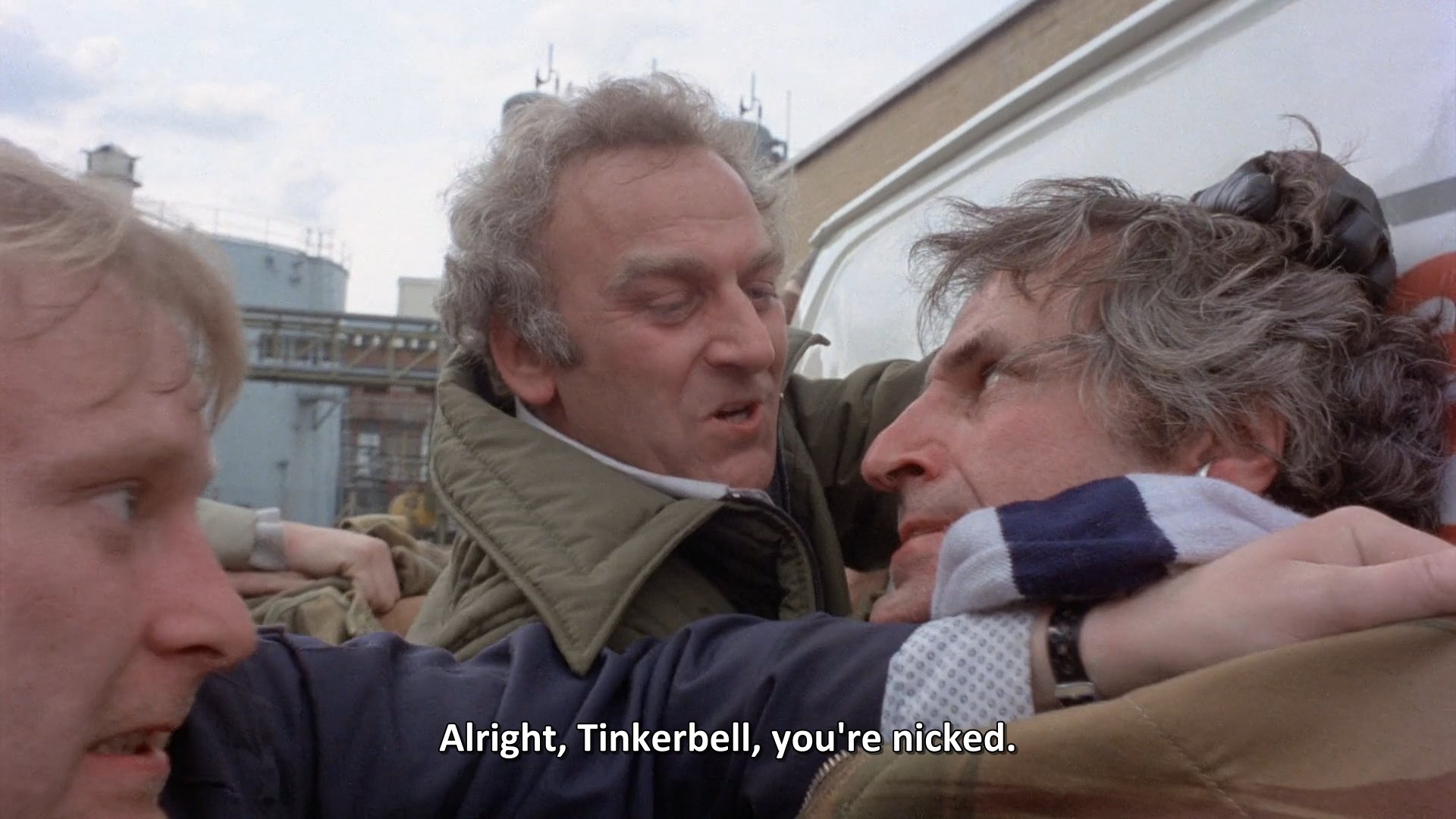
When I first started this series of posts back in 2023, they were originally intended to provide a useful overview into UK (mainly British) slang. US slang is ubiquitous globally due to the pervasive nature of American culture. Hence most people have a good grasp of its nuances. However, the proverbial door does not swing both ways. Hence most people will watch British TV dramas or read popular novels and can be quite bamboozled by some of the phrases that are used. That is what I was trying to address. However, over time this entire enterprise now reads like a some sort of Guy Ritchie film with Colin as the anti-hero. That notwithstanding, hopefully the list of slang phrases below will prove useful to know, if you ever visit the UK or tour around London. As ever I have given an example of their respective use. Feel free to ask questions if anything needs clarifying, or you wish to leave a comment with examples of you’re own national and regional slang.
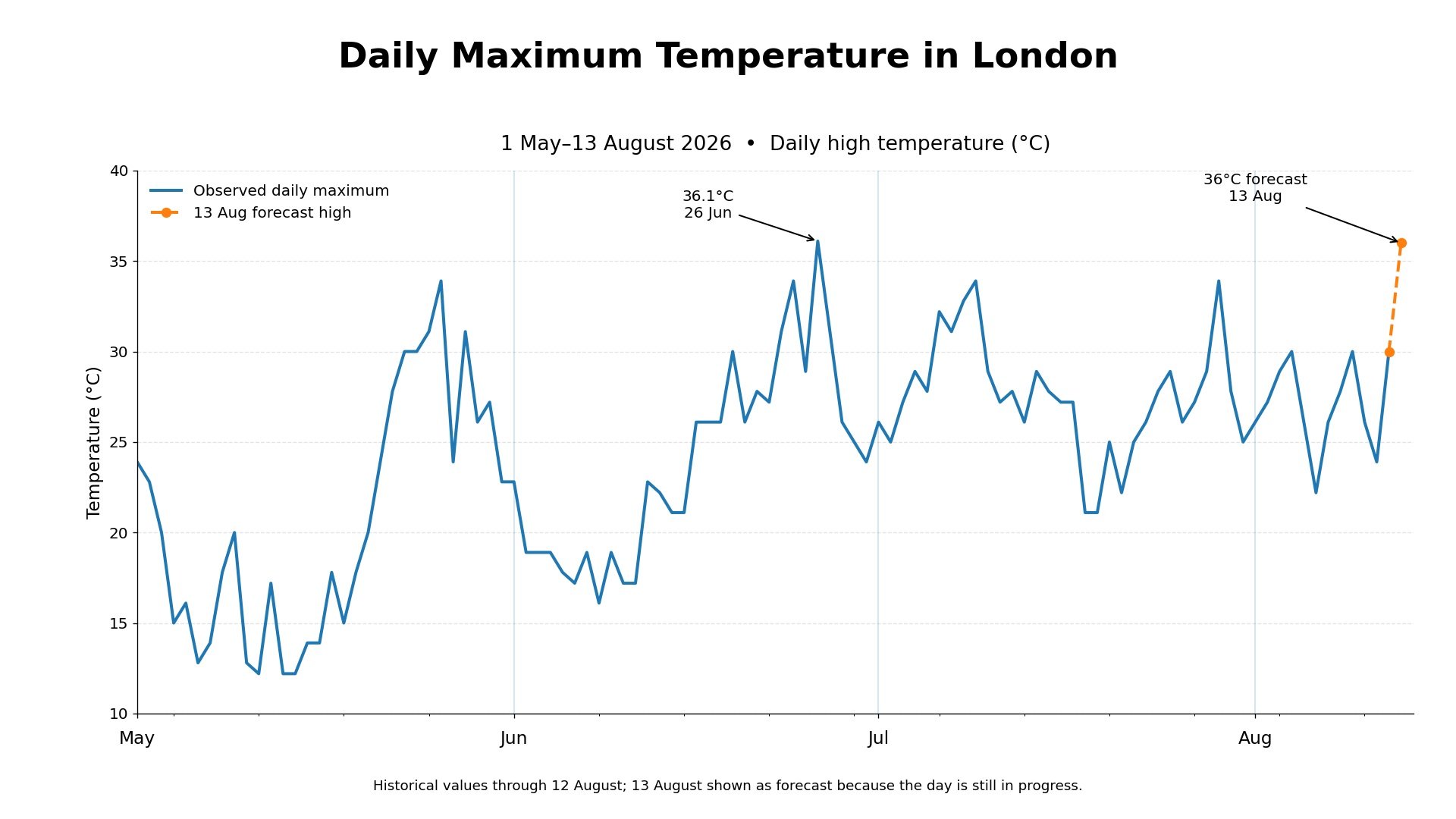
As I write this post, the temperature in Greater London is 33°C (91.4°F). This has become a regular occurrence since the middle of May onwards. High temperatures are fine when you’re on holiday mainly because you’re off work and at your leisure. You don’t have to perform the usual daily task that life requires of you such as work, shop, cook, clean etc. Furthermore, if you’re on vacation you’ll probably be staying at a resort or hotel that is fully air conditioned and you’re dressed accordingly. However, if you’re still performing you’re daily routine such as commuting to work and spending time in an office that wasn’t built with such external temperatures in mind, then 33°C is frankly a pain in the ass. Oh and if you’re one of those people who always respond to discussions such as this with “well I live in Riyadh and it’s 40°C here”, please sod off. You live in a desert which is dumb to begin with. Plus this is not a commensurate comparison. Temperatures are rising in the UK. It’s always hot in Saudi Arabia.

If you visit the websites for such UK tabloid newspapers as the Daily Express or the Daily Mail you will no doubt encounter prominent stories about Megan Markle, Nigel Farage and “immigrants”. If these two august institutions are short of column inches, they’ll run a piece about how some former celebrity has had the unmitigated gall and temerity to get old. I mean WTF? How dare they do what human beings are genetically disposed to do. It’s outrageous. Similarly, head over to the Unherd website and you’ll find foam flecked tirades regarding spurious points of contention over dubious subjects. Often the topic being harangued is incredibly niche and I’ve never heard of it before or even considered it being a thing. These sort of talking points are not about informing, debating and most certainly aren’t about thinking. They exist to provoke reactions.

Before we start, let me explain to those readers outside of the UK, the significance of a Dairy Milk Freddo chocolate bar and its relevance to this post. The “Freddo” is an 18g (0.63 oz) chocolate bar, in the shape of an anthropomorphic frog. When it was re-launched by Cadbury in 1990 (it had previously been manufactured by an Australian confectionery company in the seventies), it was priced at 10p (£0.10). It remained at that price until 2005 when a 1p to 2p increase began to occur each year. By 2016 Freddos were retailing at 25p. However, the following year the price “lept” to 30p with an increase that was double its usual yearly rise. This led to public outrage across social media. Since then the price of a Freddo has waxed and waned. Tesco supermarket reduced the price back to 10p as part of their centenary celebrations. The post COVID price in 2022 hit 49p. At present, the average price of a Freddo in the UK is somewhere around 35p.
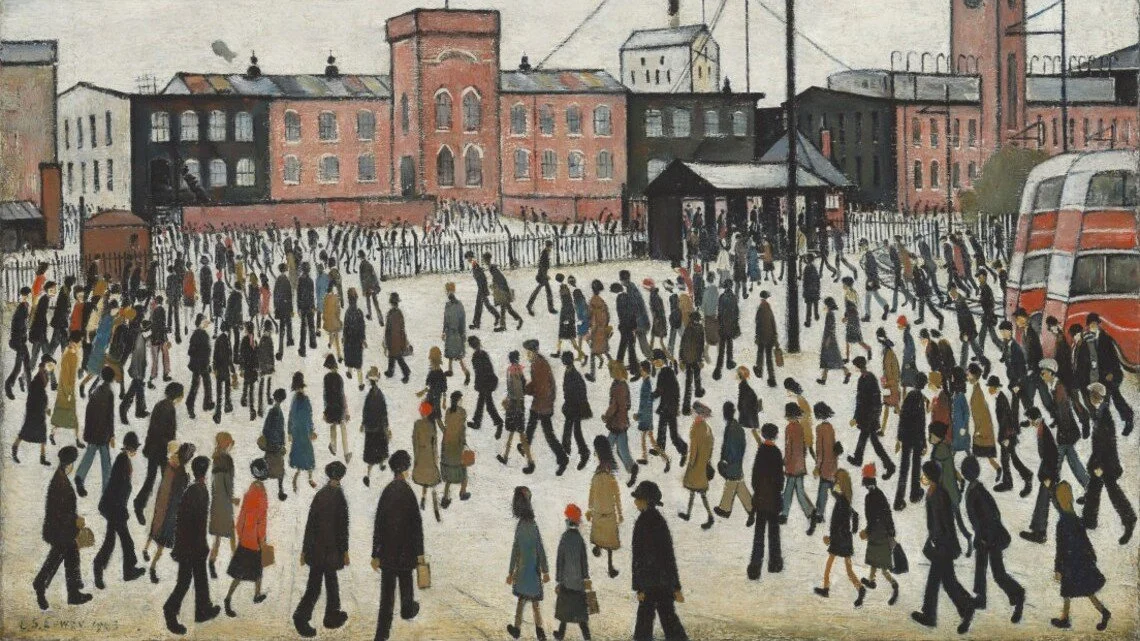
Over the last 10 years, I’ve written several blog posts about my personal working experiences and my career, such as it was. I touched upon working specifically in IT and how that industry changed over time, both technically and in the way that other people perceived it. I have also given my thoughts on the social dynamics of the modern work environment and the way we interact with our colleagues and employers. That is another area that has changed dramatically. Naturally my retirement from full time work has been written about, as it is such a radical change in one’s life. Especially if you’re the sort of person who is clearly defined by their job, which I personally was not. This time, I want to share a few thoughts I have about what I miss about “going to work” and “having a job”. I’m not sure if “miss” is the right word. Perhaps it is more a question of things being absent. Either way, there are some aspects of being employed that I use to enjoy or at least found beneficial that I now no longer experience.

UK Prime Minister, Sir Keir Starmer has resigned and intends to leave office before the parliamentary summer recess. By then Andy Burnham will more than likely be voted leader of the Labour Party and by default will become the new Prime Minister. Due to the current size of the incumbent Government’s majority, there is no pressing reason for a General Election that the UK’s right wing tabloid press is currently calling for. Whether this provides the Government with the reset they’re hoping for when Parliament reconvenes in autumn remains to be seen. With seven Prime Ministers coming and going in a decade, there are some serious questions to be asked about the current state of UK politics. However, the mechanics of contemporary politics, the decline of clearly defined ideologies and the people that seek elected office to be our leaders are only half of the problem. The other major impediment to the UK’s democracy functioning properly is the electorate.

The UK Government has formerly announced its intention to ban under-16s from using social media. This is due to increasing public pressure that “something must be done” about the perceived iniquities of many online platforms. However, as with most complex social problems of this nature, no one has any clear or practical ideas as to what that “something” is. It remains a nebulous, non-specific panacea and clearly someone else’s job to identify and implement. As ever, why choose a nuanced and multifaceted solution to a complex problem, when it is far easier and politically expedient to just “ban” something. The former requires effort and a degree of thinking. If such an approach fails it also means that those who came up with it now carry the can. The latter dumps the problem in the lap of various third parties, who can then be conveniently blamed when the ill conceived policy fails.
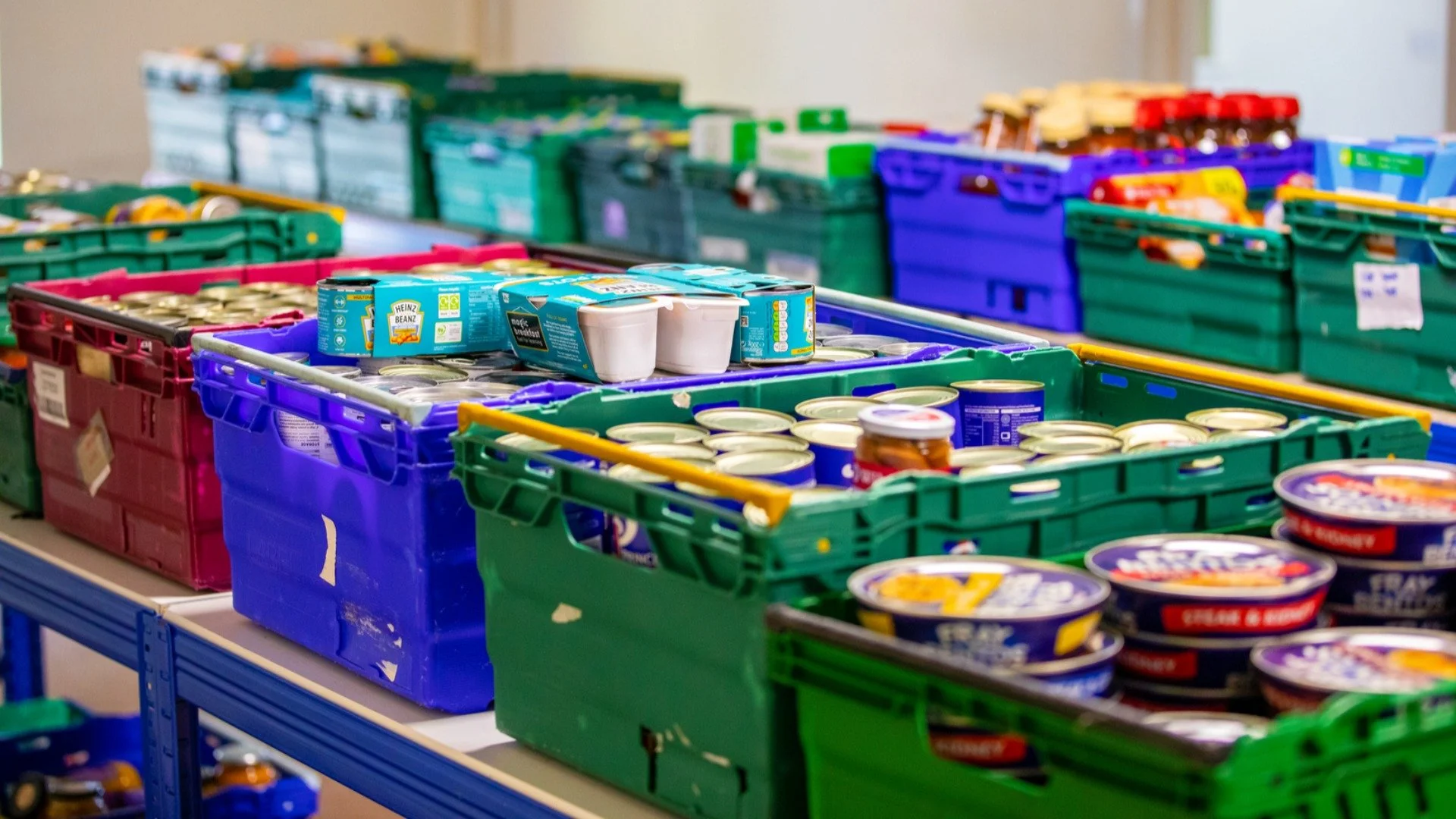
Every Thursday, Mrs P volunteers at a food bank that is run from a local church; Avery Hill Christian Fellowship. Today there was a shortage of staff so I agreed to help out. It proved to be an equitable arrangement as she collated the various orders and I packed the bags and took them to the respective clients. The food bank itself is organised and administered by the Trussell Trust, a UK based NGO and charity providing emergency food and support to people locked in poverty. It is open for 2 to 3 hours a week depending upon demand. During today’s session we served just six people. Some weeks its can be triple that amount. Upon closure, a member of staff from the Trussel Trust did a stock take and collated a list of what was needed. This is provided by various local church communities via parishioners donations, as well as local supermarkets who have an arrangement with the trust to provide surplus stock or good approaching the end of their sales window.
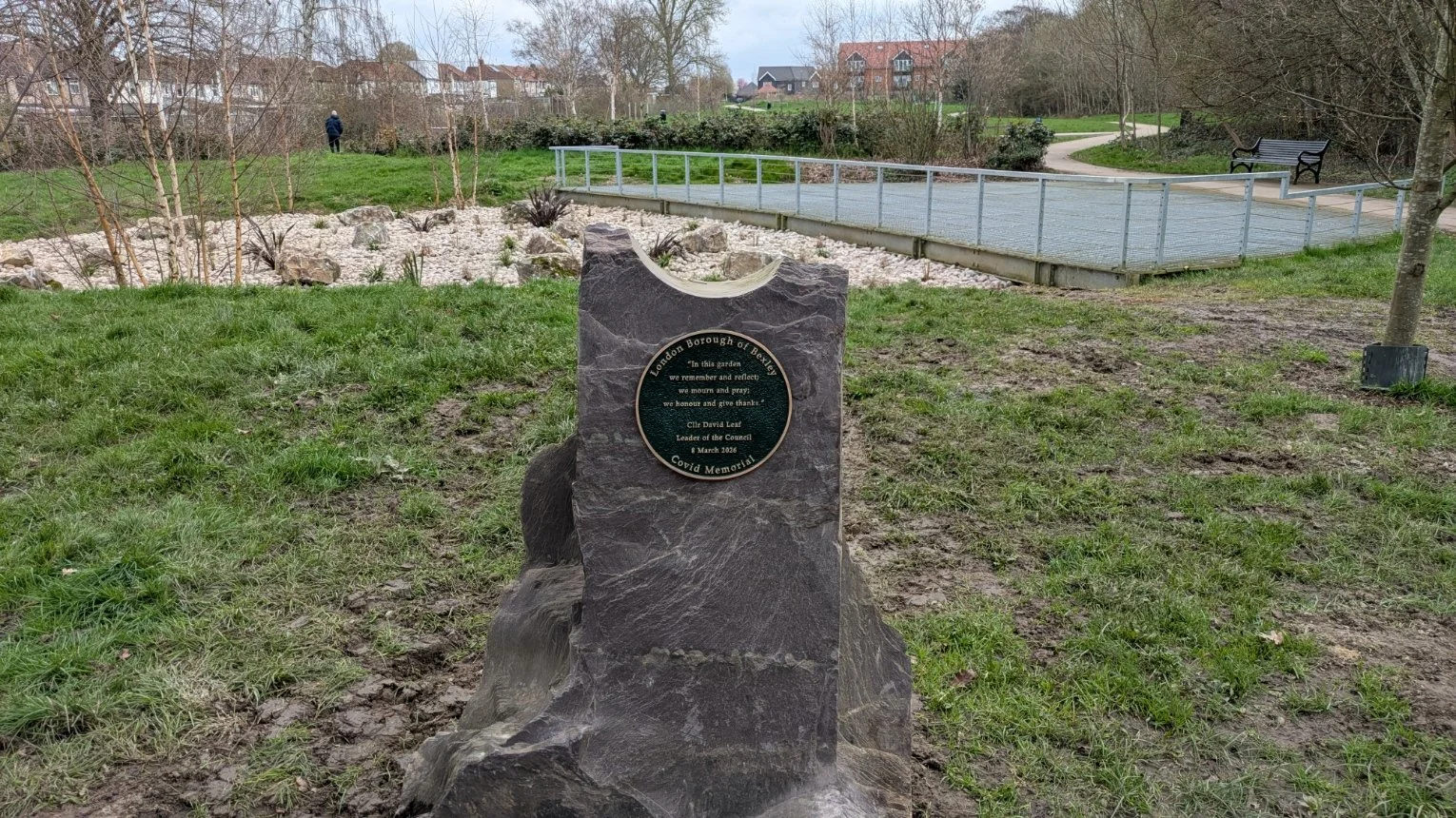
There are approximately 4000 parks and green spaces in Greater London. Bexley Borough alone has over 100. Public parks and green spaces are vital to modern cities, providing essential health, environmental and social benefits. They boost physical and mental wellbeing by reducing stress and providing a place for exercise. Furthermore they enhance urban sustainability, mitigate heat, and provide a sustainable environment for a wildlife. Parks are often a venue for social activities and events and as such are an important part of the local community. Going to the park has always been a part of my life. I live next to Old Farm Park in Sidcup and have made use of this recreational space throughout my life. I used visit with my parents in the seventies, when I was a child. Thirty years later my son, father in-law and I would fly kites there. Now I take my grandchildren to Old Farm Park as it now has a playground.
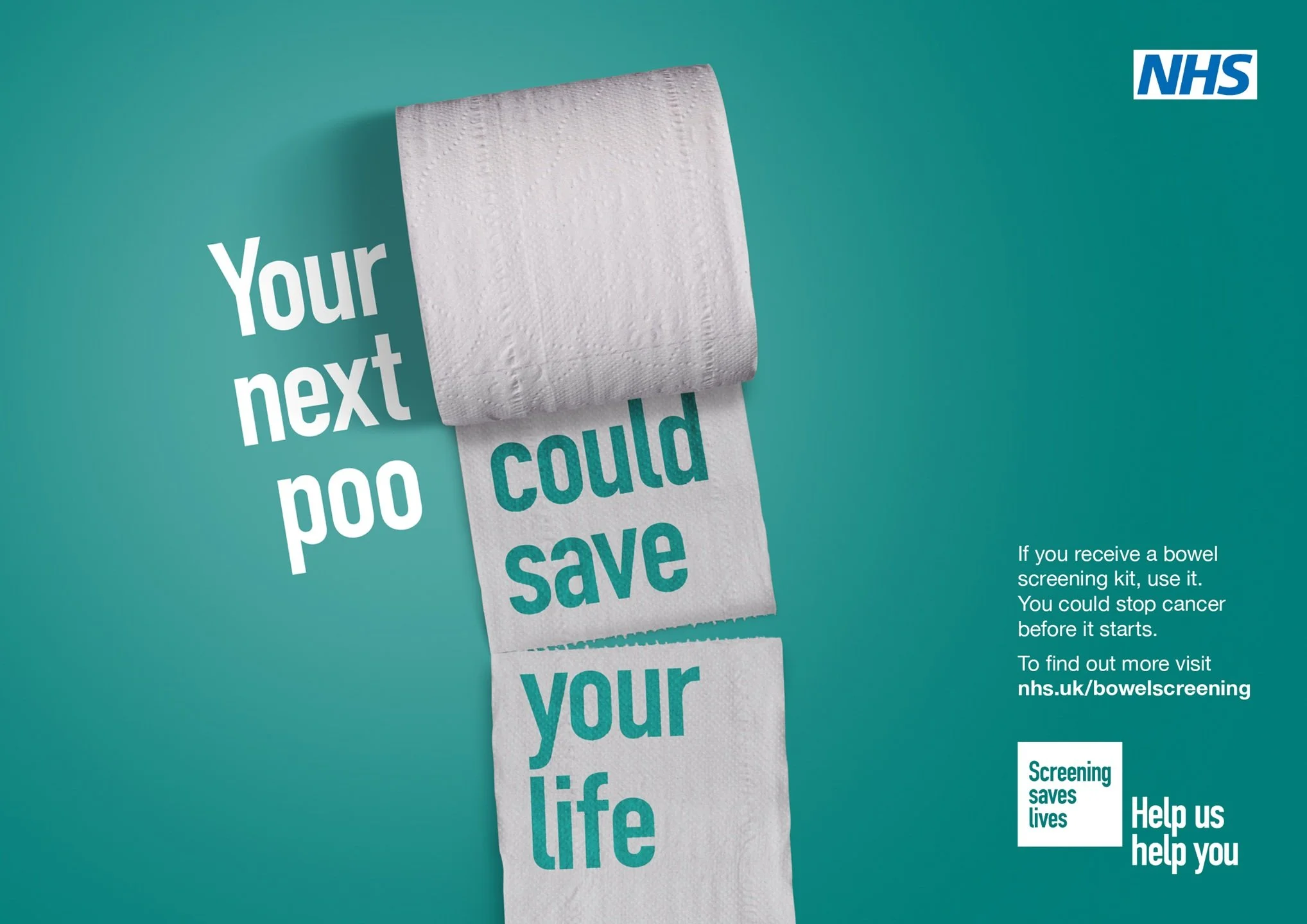
Being a 58 year old man, I welcome any undertaking which can potentially improve my health. One such thing is proactive screening and testing. The UK National Health Service has started doing a lot more of this in recent years, mainly because diagnosing a problem and treating it early is far more efficient and cost effective than retroactive action. Hence this policy and my age is why I was recently sent a NHS Bowel Cancer Test Kit via the post. This screening service takes place every two years for people aged 50 to 74 in the UK. The kit is very quick and simple to use. A sample of your stool is sent via a prepaid return envelope for testing and the entire process is free of charge. Upon receipt, the laboratory test determines whether there is any blood present in your stool, which is a potential indicator of bowel cancer. If detected, an early diagnosis greatly improves any subsequent treatment outcomes.

I like learning things. I always have. During my middle school years I thought I was a mediocre student and often I wouldn’t apply myself. According to an old school report this was because I was “too busy indulging in Tomfoolery”. Then I had the positive experience of meeting an exceptional teacher. Their lessons were the highlight of the week as they had an ability to make the subject matter, Classical History, utterly compelling and relevant. The teacher in question also treated us like adults and the class benefitted from only having five pupils. This really brought home to me that a lot of disinterest and underachievement in education is linked to the paucity of some teachers. One bad teacher can undermine the good work that all the others can do. Perhaps it has improved nowadays?

I’ve had an interest in the paranormal since I was a child. My mother always got books out of the library about ghosts and UFO phenomenon, so in some respects I was influenced by her reading habits. As a child such tales were by default interesting and any potentially scary element naturally made them more enjoyable. However, my father being an academic had taught me to question everything, so I felt fairly evenly equipped when exploring these subjects. Further to this point, over the years I have learned that humans have a very unique perspective on the world. We are hard wired to see patterns, regardless of whether they’re there or not. Our senses can also be fooled and often are. Perhaps the most important aspect of our nature that impacts upon any analysis we make into the paranormal is our penchant for creating stories. Hence unusual experiences can be subconsciously misremembered and “retconned” to form more precise narratives.
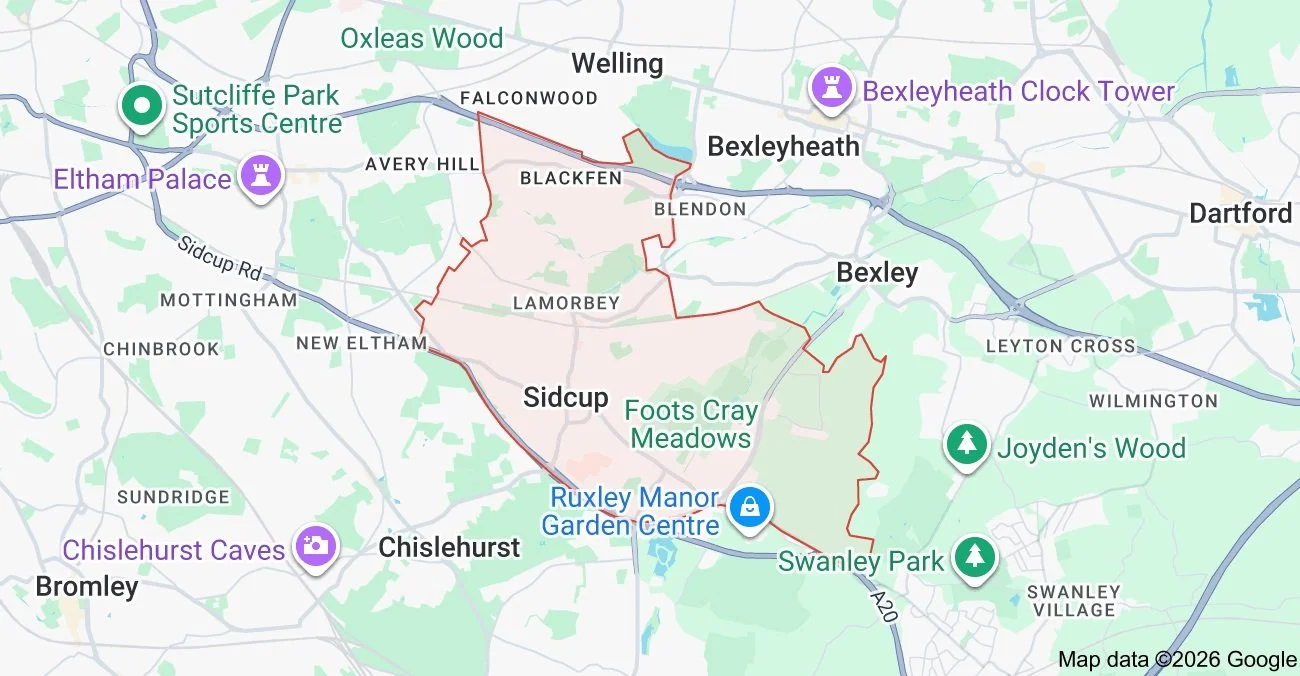
I have lived in Sidcup, in South East London, for most of my life. The first two schools that I went to were local and within 15 minutes walking distance. My Doctor’s Surgery and Dentist are only a few streets away, as is the barbershop that I’ve frequented since 1970. I now have my haircut by the son of the original barber. My point being that Sidcup has everything that residents immediately need. There’s a local hospital, good public transport networks and a broad range of shopping and restaurant facilities. It also has several parks with lakes, sport facilities and children’s play areas. It is a microcosm of the concept of suburbia with its residents commuting into Central London or out into Kent for work. People move here to raise families and end up staying. My parents lived here for 62 years.
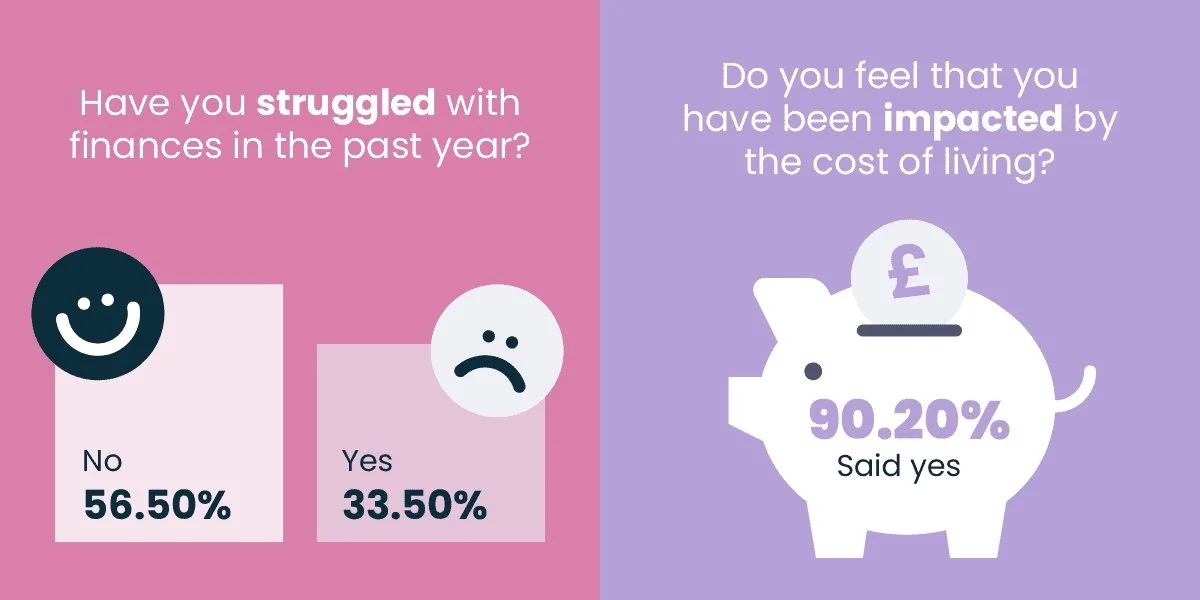
Our household is currently trying to reduce our monthly overheads in response to the ever increasing cost of living. April is not that far away and a great many service providers will increase their rates and tariff as the new financial year begins. Then there is the ongoing effects, both direct and indirect, of inflation to consider. Although the UK inflation rate is dropping, currently sitting at 3.4% in December 2025, food inflation remains higher at 4.5%. Being based in the UK, salaries and billed services tend to be administered monthly. You get paid usually at the end of the months and bills can turn up at any point, depending upon when you started a service. Any payments coming from central government, such as state pension or other benefits, are paid every 4 weeks. This means that there are 13 payments in a year. I thought it pertinent to clarify this point as other countries, such as the USA, favour a fortnightly financial cycle. Hence as a household we work around a monthly budget.

I try not to let the failings of contemporary capitalism get to me but such a mindset is very hard to maintain. From time to time it does just piss you off and you know damn well that there’s nothing you can do about it. So to begin this tale, at the end of November, our Indesit washer/dryer gave up the ghost after a valiant twelve year lifespan. As a result of this household appliance’s stirling work, it was decided to buy another from the same manufacturer. Their website informed me that the model that had just broken was no longer being produced. However, it recommended two newer appliances that had comparable specifications and more importantly the same size. This washer/dryer had to fit into a fitted kitchen unit. To cut a long story short, a model was chosen, purchased, delivered within 48 hours and installed. The broken predecessor was subsequently taken away. The wonders of modern consumer culture!

I was in a pub last night, catching up with friends before Christmas, when I noticed on the wall something I haven’t seen in a pub for a very long time. A jukebox. In my experiences most of the pubs I go to take one of the following two approaches to background music. They either have a sound system and exclusively manage any music via personally curated playlists from behind the bar. Or they have no music at all. The Wetherspoons chain of pubs broadly follow the latter policy and actively use it as a marketing point. Quiet pubs for clientele that just want to talk can be popular. Hence finding an accessible jukebox was a blast from the past. During the late eighties and early nineties, I regularly visited my local pub and often used the jukebox there, which at the time, was operated by an ever changing store of CDs. The jukebox I encountered last night was digital.

Today is my 58th birthday. It would appear that I have existed for nearly six decades. Put another way, I am over half a century old. All of which has given me pause for thought with regard to the passage of time. A phrase that is often bandied about, but what exactly does it mean? As I understand it, the “passage of time” refers to our perception of the flow of time and how we experience its movement. This is something distinct and different from objective time as measured by clocks. Our subjective experience of time can vary due to multiple factors. Two common examples are how time can feel like it's flying by when we're having fun and enjoying something or dragging its feet when you’re enduring something dull. Other factors are whether we are applying ourselves to a task, concentrating and general activity. Such focus can make time pass quickly.

When Mrs P and I moved into our current home, over twenty years ago, we were both working full time. As the garden was poorly maintained and neither of us had any horticultural skills, we decided to employ a gardener. At the time it was a practical solution to the issue of garden maintenance and remains so today. Hence it is a service we continue to use, although our personal health is now the main reason we pay a gardener.

In July the UK Government introduced the Online Safety Act which requires age checks for accessing sexually explicit content online. As a result of this, Pornhub, the 19th most visited site on the internet, has reported a 77% decline in UK traffic. Furthermore, according to the UK regulatory body, OFCOM (The Office of Communications), overall visits to pornographic websites from the UK have fallen by 33%. Naturally, those who championed this legislation are claiming a moral and political victory. However, once you consider what these facts actually mean, they paint a somewhat different and potentially more worrying picture. It would be staggeringly naïve to think that UK visitors to Pornhub have ceased visiting such sites due to the age verification requirements. The more likely explanation is that UK porn consumers are now using VPNs to circumnavigate these restrictions and that this traffic to Pornhub is now recorded as coming from elsewhere.

Formal education in the UK is a structured process, starting at early years learning and continuing through to higher education at university. Some aspects of the educational system are mandatory, whereas others are optional. At present, children in the UK must start full-time education from the age of 5 and remain until the age of 16. After this age, they are no longer required to attend school per se but must remain in some other form of education or training, such as a vocational college or an apprenticeship. Many students remain at school until 18, as there are specific exams to be obtained that are required for a subsequent university placement. Here is a breakdown of the current process as it exists in the UK.

I don’t know if you have noticed that there are quite a lot of companies that have names taken from Tolkien’s Legendarium. At first glance, this seems innocuous enough. Tolkien’s writings grew in popularity over the seventies and eighties but since the release of the film trilogy at the start of the twenty-first century, his work has become more well known and been assimilated into our wider pop culture. Hence, it seems quite logical that a startup tech company, for example, would choose a name from his writings. No doubt the founders grew up reading The Lord of the Rings and are fans. That all seems plausible. However if you take a further look, it gets somewhat more complex. Here are four companies that have Tolkien based names.

Last Wednesday, I woke up with what I thought to be a crick in my neck on the left hand side. I assumed this was simply due to sleeping awkwardly and so I self medicated with some non-prescription pain relief and judicious use of a heat pad. Unfortunately, the problem has persisted and in the last 24 hours it has become much worse. I awoke this morning at about 5:00 AM and as I sat up in bed, an intense pain ran up the left side of my neck and behind my ear. It took several attempts for me to get out of bed because if I turned my head in either direction or inclined my chin, the pain would again run up the side of my neck. Sitting down, getting up and raising my arms caused similar results. While dressing, I attempted to pull a t-shirt over my head. The pain in my neck on this occasion was so severe that I yelled out loud and nearly blacked out.

I am a non-driver. If you wish to know the specifics of how this situation came about, feel free to read the post I wrote about it back in early 2018. To be succinct, I don’t drive, I’ve never learned how and have never owned a car. I don’t feel that I’ve missed out. In fact I feel quite the opposite. I think I’ve dodged a major hassle and expense in life. Mrs P, my significant other, is the designated driver of our household. She owns a car, insures it and maintains it. She also mainly pays for the petrol, whereas I pick up the tab for other things such as lunch or hotels when we travel. All I have to do is make like Iggy Pop if we go anywhere. The most I am ever called upon to do is navigate using Google maps and Android Auto. Fortunately, Mrs P enjoys driving. Always has done. Hence I look upon this situation as an extremely fortunate and equitable arrangement.
I am getting old. I shall be 58 in December. Now, as soon as you say something like that these days, some folk will get uncomfortable and say things like “age is relative” or “you’re as old as you feel”. Well I don’t measure my age in geological terms, so it’s not relative and I’m not feeling anyone especially young at the moment, so both schools or thoughts can sod off. I am getting old by the yardstick we measure human life by, namely years. I have specific, age related health issues and I just don’t feel as energised as I did a decade ago. There are minor signs, such as deciding to go to bed earlier and taking longer to get dressed after taking a shower. I’m not at death’s door but I am slowing up physically. It would also appear that my reactions are also slowing down as I tend to get massacred in any FPS I play these days. So far, my mental faculties seem to be holding up. However, that is the one thing I worry about the most. The potential loss of cognitive abilities scares the shit out of me.
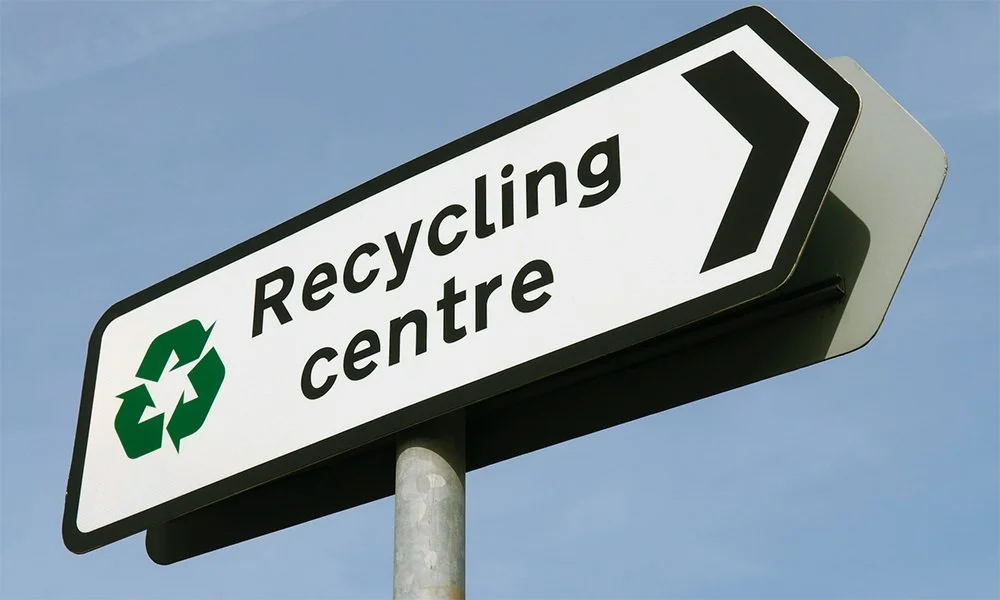
Foots Cray Reuse and Recycling Centre is the fancy name of our local dump. A few decades ago, this was no more than a scrap yard. The rubbish and bric-a-brac left by the public was sorted and scavenged for resaleable scrap. Everything that was left was subsequently sent to landfill or incineration. Much has changed. Today it is the embodiment of the modern recycling ethos. The recycling centre is a well managed, carefully segregated site providing safe disposal of a wide variety of household and garden waste. Wood, metal and hardcore are recycled and there is similar provision for a multitude of electrical goods. Plastics, oils, paint, batteries can be safely disposed of. I have yet to find a home item that they do not have provision to dispose of. The Foots Cray Reuse and Recycling Centre has won awards for the service it provides and is considered one of the best facilities of its kind in the South East of the country.
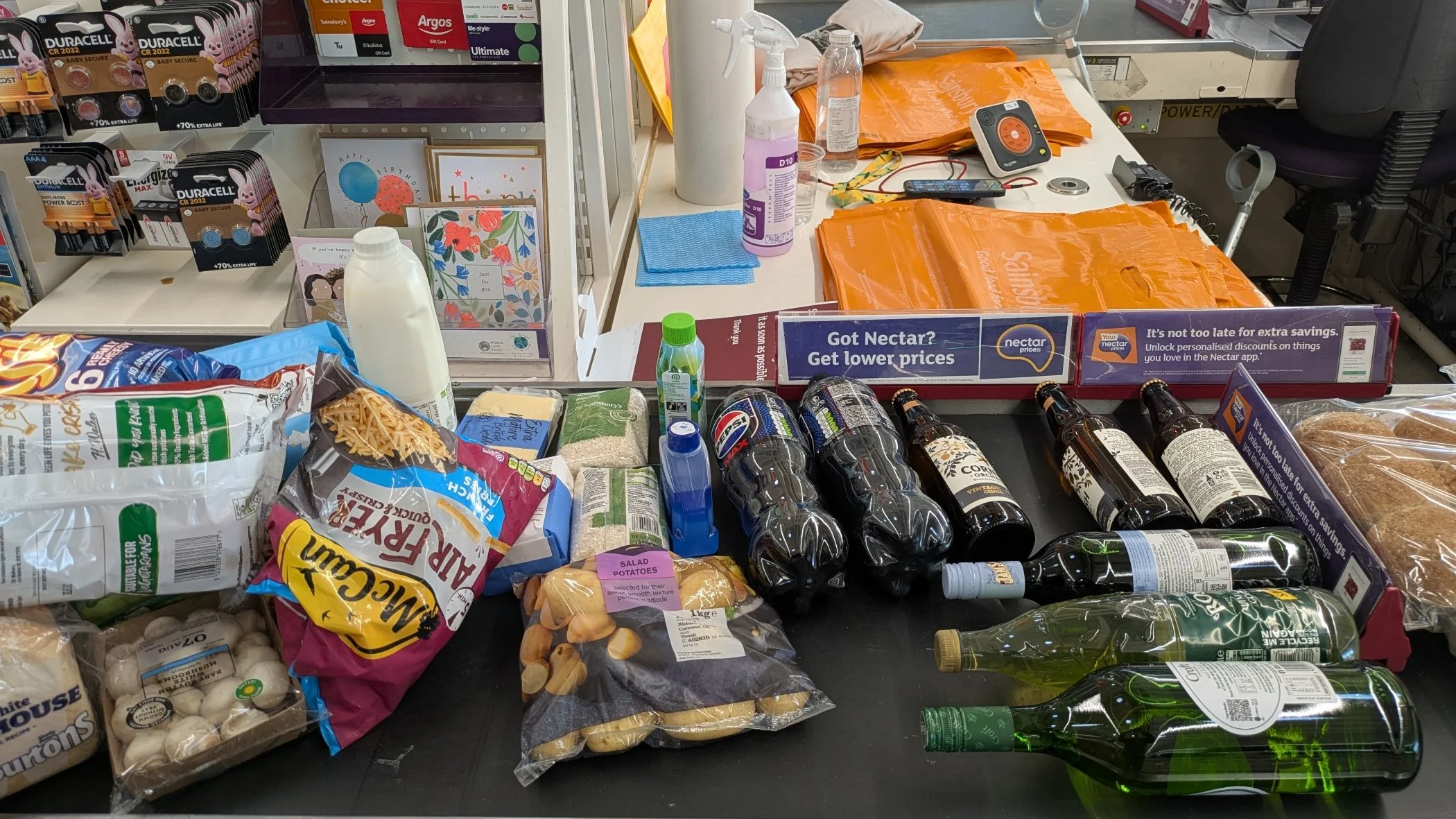
One of the things I enjoy most about having my own blog is the fact I can write about the mundane and the trivial. Mainly because so much of life falls into this category. Life defining events are all fine and dandy and certainly lend themselves to philosophical musings that make fine blog posts. However, you can get just as much mileage out of those everyday things in life with less gravitas, that we all do. Such as buying new clothes, taking out the recycling and going to buy groceries. I have written about all of these in the past. However, today I wish to broach a subject that both fascinates me but also raises my blood pressure. I believe it to be a social marker and a clear indication of an individual’s personal psychology. Yes, I’m talking about packing your groceries at the supermarket and the various rituals and social etiquette associated with it.
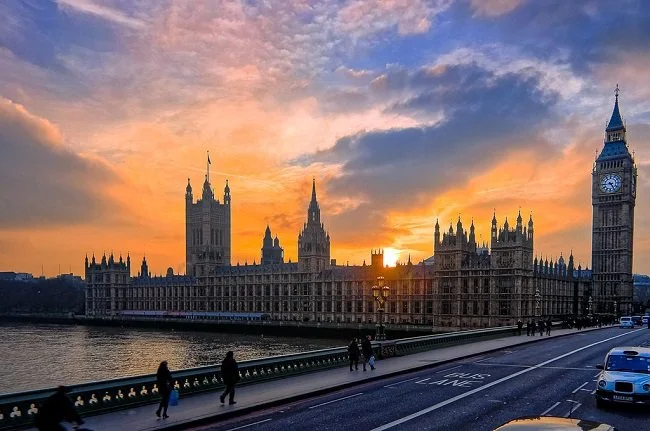
“Managed decline” is a phrase that refers to the processes associated with the end of a specific lifecycle, with the goal of minimizing costs or other forms of loss. The concept originated in business where it referred to the management of companies and industries. More recently it is used in wider contexts. The concept gained prominence with regard to urban policy, particularly in the UK during the eighties when several major cities suffered economic and political collapse. Of late, the term has been applied to the UK, encompassing a systematic weakening of the economy, social structures, and cultural values, as well as its global political and diplomatic force. In each case, managed decline involves making strategic choices about resource allocation and accepting the consequences of those decisions. It is a complex issue with ethical and practical considerations, often sparking debate about the best way to address decline and reverse the process.
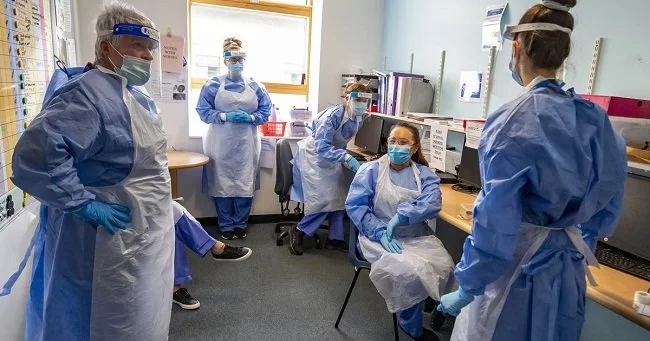
It’s been five years since the COVID-19 global pandemic. At the time it was an utterly alien and tumultuous experience. However, due to the way numerous institutions responded (but not the government), many people thought there would be a great deal of social and political change in the UK afterwards. The pandemic highlighted the impotence of the NHS, as well as those who work in jobs designated as essential. It also shone a spotlight on many of the country’s inequalities. Due to our national character, a real sense of community emerged. Something that had been absent for a very long time. Briefly, we got a glimpse of what the UK could be when we all broadly worked together. There was a sense that now was the time to change the status quo. Sadly, nothing changed. As soon as the vaccination program was launched, the UK quickly slipped back into the mire it’s been wallowing in since the end of WWII.

Prior to writing this post, I clocked a picture on a news website of the now disgraced TV presenter (and nonce) Gregg Wallace. I noticed that he doesn’t smile as such but tends to “gurn” instead. So does UK politician (and cunt) Nigel Farage. He always has his mouth open and his face contorted in some curious rictus, in most of the pictures you see of him. Mind you, I also don’t photograph especially well and any pictures of me smiling tend to look sinister or with a heavy hint of irony. The bottom line is not everyone is good at smiling. It doesn’t come naturally to all of us. This can be a problem at times or in social situations, because smiling is an integral part of our culture. On many occasions, I’ve been walking along, my face in a state of natural repose, only to be harangued by some twat shouting “cheer up, it may never happen”. A phrase I haven’t quite fathomed out, even to this day.
Even More British Slang Words and Phrases
When I first started this series of posts back in 2023, they were originally intended to provide a useful overview into UK (mainly British) slang. US slang is ubiquitous globally due to the pervasive nature of American culture. Hence most people have a good grasp of its nuances. However, the proverbial door does not swing both ways. Hence most people will watch British TV dramas or read popular novels and can be quite bamboozled by some of the phrases that are used. That is what I was trying to address. However, over time this entire enterprise now reads like a some sort of Guy Ritchie film with Colin as the anti-hero. That notwithstanding, hopefully the list of slang phrases below will prove useful to know, if you ever visit the UK or tour around London. As ever I have given an example of their respective use. Feel free to ask questions if anything needs clarifying, or you wish to leave a comment with examples of you’re own national and regional slang.
When I first started this series of posts back in 2023, they were originally intended to provide a useful overview into UK (mainly British) slang. US slang is ubiquitous globally due to the pervasive nature of American culture. Hence most people have a good grasp of its nuances. However, the proverbial door does not swing both ways. Hence most people will watch British TV dramas or read popular novels and can be quite bamboozled by some of the phrases that are used. That is what I was trying to address. However, over time this entire enterprise now reads like a some sort of Guy Ritchie film with Colin as the anti-hero. That notwithstanding, hopefully the list of slang phrases below will prove useful to know, if you ever visit the UK or tour around London. As ever I have given an example of their respective use. Feel free to ask questions if anything needs clarifying, or you wish to leave a comment with examples of you’re own national and regional slang.
Arse Over Tit: To fall over, head over heals, in a dramatic manner. “Colin so was Leo Sayer’d (see previous post for definition) last night, he went arse over tit at the Penge Spudulike”.
Bloke: A generic term for a man, usually someone you do not know or someone random. “Who’s that bloke with Colin? He seems a bit suspect”.
Charlie Potato: Very similar to the term Jake the Peanut, in so far that it refers to someone who is over dressed, over confident and trying to project a brash persona. Very common trait found in those who work in the property and used car sales. Can also mean to live large when out on the town. “Me and Colin were out clubbing last night. We were giving it Charlie Potato”.
Dog’s Bollocks: If something is “the dog’s bollocks” then that is actually an endorsement that the said things is good. Clothes, consumer goods, a meal can all be labelled as such. As can musical artists, TV shows and films etc. The phrase derives from small dogs who have large testicles that are prominently and proudly displayed. “Have you seen Colin’s new Tamagotchi? He thinks it’s the dog’s bollocks”.
Greasy Spoon: A cafe or cheap restaurant that provides enjoyable but inherently unhealthy cuisine. Usually variations of the Full English Breakfast. “Oi Colin, on the way back to the office let’s grab a cheeky pint and hit that Greasy Spoon on the corner of Frederick Street”.
Jammy: To be lucky, fortunate, or even charmed. “Blimey, Colin just won a score on the ponies. The jammy sod”.
Khazi: An old-fashioned, informal term for a toilet or outhouse. It originated in 19th-century and is Cockney and Scouse slang, derived from the Italian word casa (house). “I’d give it 10 minutes before you use the khazi. Colin’s just had a clear out”.
Knackered: To be excessively tired and exhausted. It can also means that something is broken or no longer working correctly. The phrase originally applied to the euthanisation of work animals such as horses, when they were old or ill. “I’m knackered after last night’s session at the glee club”. Alternatively, “Colin is well annoyed. He knackered his Tamagotchi when he went arse over tit at the Penge Spudulike”.
Mug: A gullible person. Someone who has been swindled, taken advantage of and is generally naive. “Colin paid £50 for those Pogs. What a mug”.
Munter: A derogatory term for an unattractive person, or someone who is heavily under the influence of alcohol or recreational drugs. Hence via substance abuse, one can get “munted”. “Have you clocked Colin’s new squeeze. They’re a total munter”.
Nonce: A sex offender, paedophile, pervert. Is nowadays used as a general insult for anyone who looks “questionable”. “Oi Colin, stop leering at that Doris behind the counter in Greggs. She’s half your age, you nonce”.NB “Doris” is a Cockney term for a woman, sometimes one’s partner.
Off His/Her Tits: To be intoxicated by alcohol or drugs. “That Doris from Greggs went out with Colin last night. She was well off her tits”.
Porkies: Lies. An abridged form of the Cockney rhyming slang phrase, Pork Pies. “Colin’s been telling porkies again. Reckons he’s got the highest score on Space Invaders, down the greasy spoon”.
Rinsed: To be cheated, over charged or otherwise financially exploited. Can also refer to a battle, fight or stand off that ended quickly and definitively. “I see that Doris from Greggs got Colin to take her to Sorrento for a fortnight. He’s getting’ well rinsed”.
Slag: Originally a pejorative term for a sexually active woman, similar to slut. However, in the late seventies, due to the popular UK TV show The Sweeney (a drama about the “Flying Squad” of London’s Metropolitan Police) the term became a broader insult applied to both men and women. Its meaning evolving to mean a worthless or contemptible individual. “Colin, you slag. You knicked the last Kit-Kat from the fridge”.
Slaphead: Someone who is bald or going bald. The term derives from the act of “playfully” slapping someone on their bald spot. “I see Colin is losing his barnet. He’ll be a slaphead by the time he’s 40”.
Slash: To urinate. “Oi Colin, keep an eye on my pint. I’m going for a slash”.
Stitched Up: To be cheated, swindle, set up, framed, left holding the bag and well and truly dobbed in it. “Have you seen the latest pay offer, Colin? We been well stitched up”.
Classic English banter. Allegedly
NB Colin is a completely fictional character and is not real person. Hence he is not being bullied, gaslit or victimised. Sadly, much of so-called UK banter, as show above, is based upon someone being the butt of the joke. In fact some academics have argued that humour is both hierarchical and hectoring in its nature and not necessarily a force for good after all. That however is a blog post for another day. In the meantime, let me re-iterate for those who may be concerned for his mental well being, Colin is not real. Clive on the other hand is.
When I first started this series of posts back in 2023, they were originally intended to provide a useful overview into UK (mainly British) slang. US slang is ubiquitous globally due to the pervasive nature of American culture. Hence most people have a good grasp of its nuances. However, the proverbial door does not swing both ways. Hence most people will watch British TV dramas or read popular novels and can be quite bamboozled by some of the phrases that are used. That is what I was trying to address. However, over time this entire enterprise now reads like a some sort of Guy Ritchie film with Colin as the anti-hero. That notwithstanding, hopefully the list of slang phrases below will prove useful to know, if you ever visit the UK or tour around London. As ever I have given an example of their respective use. Feel free to ask questions if anything needs clarifying, or you wish to leave a comment with examples of you’re own national and regional slang.
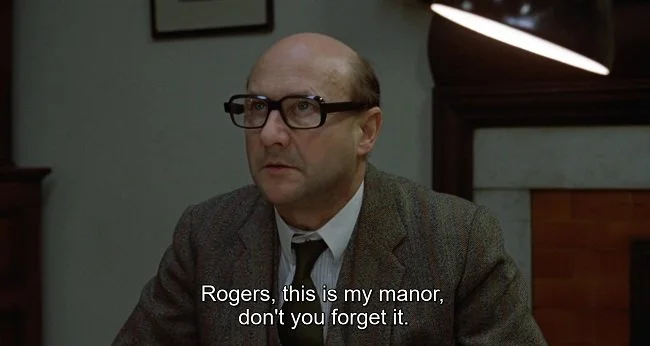
About a year ago, I wrote a post about British slang words and phrases. Using fifteen examples, I endeavoured to explain their definition, provenance and the context in which they are commonly used. I then provided an example sentence of each word or phrase for reference. This proved such a popular post (it didn’t), that I thought it would be beneficial if I gave some further examples (Again I didn’t. I just needed to write a quick blog post, with minimal effort). So here is another selection of slang words and phrases that are used in common parlance in the UK, for your amusement, edification and consideration. Some are relatively self explanatory. Others are somewhat tenuous and arcane in their origins.

After receiving critical acclaim in the UK, the 1980 gangster film The Long Good Friday was revised to make the dialogue more accessible to American audiences. A few lines of dialogue were re-recorded to tone down the East End slang. A glossary of terms was also added at the start of the film, including such phrases as “manor” (precinct, area, patch, turf) and “ponce” (pimp or fool). Conversely, this has seldom happened with regard to American TV shows and films exported around the world, due to the ubiquitous nature of US pop culture. Nowadays, you would think the internet would have bridged this linguistic divide but it would appear not. I still see a lot of YouTube videos explaining British slang and traditional phrases. Never being one to pass up the opportunity to jump on a passing bandwagon, I thought I’d tackle 15 British slang words and phrases for your edification and the sake of an easy blog post.

This post is about humour. A subject that is very dependent on one’s personal tastes. I consider humour to be an extremely important facet of the human condition. I personally use humour as both a sword and a shield in my day to day life. I find such an approach invaluable to maintaining my sanity and a positive disposition. It is also a means of circumnavigating obvious disparities in power, be it social, economic or political. I also consider humour to be an important measure of a person. All the people that I’ve encountered in my life who have been bullies, intransigent, obtuse, cruel, bigoted and superior have lacked a sense of humour. If they ever claimed to have one, it has always been very much a one way street. Hence, humour is an important social tool. Something that I keep an eye out for during the course of my social interactions.
Heatwaves and Drought
As I write this post, the temperature in Greater London is 33°C (91.4°F). This has become a regular occurrence since the middle of May onwards. High temperatures are fine when you’re on holiday mainly because you’re off work and at your leisure. You don’t have to perform the usual daily task that life requires of you such as work, shop, cook, clean etc. Furthermore, if you’re on vacation you’ll probably be staying at a resort or hotel that is fully air conditioned and you’re dressed accordingly. However, if you’re still performing you’re daily routine such as commuting to work and spending time in an office that wasn’t built with such external temperatures in mind, then 33°C is frankly a pain in the ass. Oh and if you’re one of those people who always respond to discussions such as this with “well I live in Riyadh and it’s 40°C here”, please sod off. You live in a desert which is dumb to begin with. Plus this is not a commensurate comparison. Temperatures are rising in the UK. It’s always hot in Saudi Arabia.
As I write this post, the temperature in Greater London is 33°C (91.4°F). This has become a regular occurrence since the middle of May onwards. High temperatures are fine when you’re on holiday mainly because you’re off work and at your leisure. You don’t have to perform the usual daily task that life requires of you such as work, shop, cook, clean etc. Furthermore, if you’re on vacation you’ll probably be staying at a resort or hotel that is fully air conditioned and you’re dressed accordingly. However, if you’re still performing you’re daily routine such as commuting to work and spending time in an office that wasn’t built with such external temperatures in mind, then 33°C is frankly a pain in the ass. Oh and if you’re one of those people who always respond to discussions such as this with “well I live in Riyadh and it’s 40°C here”, please sod off. You live in a desert which is dumb to begin with. Plus this is not a commensurate comparison. Temperatures are rising in the UK. It’s always hot in Saudi Arabia.
Back the matter in hand, almost three-quarters of England is now officially in drought. Reservoir levels have fallen to 69%. That is 11.6% lower than expected for this time of year. There are already restrictions in place with regard to the use of water such as a hosepipe ban. The immediate prospects of a respite from such high temperatures is not likely at present and so the UK and Europe braces for its fifth climate heatwave this summer. As a result of the hot weather, UK farmers have reported their earliest harvests in 20 years, with reduced yields. Reduced domestic yields in core staples like wheat (down roughly 14%) and oats (down at least 9%) are driving fears of climbing food inflation later in the year. From a wider perspective the heatwaves and associated drought also have serious consequences for the UK economy. It is estimated that £3 billion to £4.4 billion has been lost as the result of lower or lost economic output.
Heathland Fire, Ringwood, New Forest
On a personal note, because the last few summers in the UK have been getting hotter, we’ve bought several fans. Four to be precise. These are quiet, pedestal models that keep the air circulating in the main rooms of our home. We keep the curtains and blinds closed all day to stop the sun heating the rooms directly. However, we keep a few windows open to draw air in at the back of the bungalow and vent air out of the front. At present it is 27°C indoors but the flow of air makes it feel more tolerable. Due to the heat outside we tend not to go out unless we have too. Chores such as going to the supermarket are conducted early in the morning. Despite being an Englishman I won’t go out in the midday sun. So for the immediate future, all social arrangements are on hold and me and Mrs P are just staying indoors and trying to stay cool. Fortunately we are both able to occupy ourselves, so boredom is not yet an issue for the present.
Old Farm Park showing signs of drought
The fact that the UK is currently enduring a continued period of record breaking temperatures, along with Europe, clearly indicates to me the validity of climate change. The data has been there for years, so I will have no truck with those who choose to refute it for political and financial reasons. However, although I eschew such people I can see why they act thus. They are motivated by financial and political gain. What annoys me more are those who try and argue against the data, despite having no fact based counter argument. Those who deny the reality of the situation because “their team” has encouraged them to do so. Wilful ignorance is a blight than runs through all western societies. However, I rather not end on a negative note, so let’s look to a positive. One individual who is having a great summer is our local ice cream man. He plies his trade down our street daily and is doing great business. So at least some good is coming from this unusual weather.
When I was a child, I quickly learned never to say within earshot of my parents that I was bored. It was quickly met with a response along the lines of “an intelligent mind is never bored” or more worryingly “if you’ve got nothing to do, I’ll find you something” which meant a chore or Herculean task. Being a child of the seventies and due to my parents fundamentalist approach to declarations of boredom, I quickly discovered numerous ways to occupy myself. The default solution was a book or comic. I always liked reading as a child and had plenty of books to choose from. I also had numerous of comics as an alternative to a hefty tome. I would also draw and paint. My father use to work during the summer holidays as a design draftsman and as a result, we always had plenty of paper in our house. Then of course there were toys and such like. Hence I learned the art of keeping myself busy.
When I first started this series of posts back in 2023, they were originally intended to provide a useful overview into UK (mainly British) slang. US slang is ubiquitous globally due to the pervasive nature of American culture. Hence most people have a good grasp of its nuances. However, the proverbial door does not swing both ways. Hence most people will watch British TV dramas or read popular novels and can be quite bamboozled by some of the phrases that are used. That is what I was trying to address. However, over time this entire enterprise now reads like a some sort of Guy Ritchie film with Colin as the anti-hero. That notwithstanding, hopefully the list of slang phrases below will prove useful to know, if you ever visit the UK or tour around London. As ever I have given an example of their respective use. Feel free to ask questions if anything needs clarifying, or you wish to leave a comment with examples of you’re own national and regional slang.
As I write this post, the temperature in Greater London is 33°C (91.4°F). This has become a regular occurrence since the middle of May onwards. High temperatures are fine when you’re on holiday mainly because you’re off work and at your leisure. You don’t have to perform the usual daily task that life requires of you such as work, shop, cook, clean etc. Furthermore, if you’re on vacation you’ll probably be staying at a resort or hotel that is fully air conditioned and you’re dressed accordingly. However, if you’re still performing you’re daily routine such as commuting to work and spending time in an office that wasn’t built with such external temperatures in mind, then 33°C is frankly a pain in the ass. Oh and if you’re one of those people who always respond to discussions such as this with “well I live in Riyadh and it’s 40°C here”, please sod off. You live in a desert which is dumb to begin with. Plus this is not a commensurate comparison. Temperatures are rising in the UK. It’s always hot in Saudi Arabia.
If you visit the websites for such UK tabloid newspapers as the Daily Express or the Daily Mail you will no doubt encounter prominent stories about Megan Markle, Nigel Farage and “immigrants”. If these two august institutions are short of column inches, they’ll run a piece about how some former celebrity has had the unmitigated gall and temerity to get old. I mean WTF? How dare they do what human beings are genetically disposed to do. It’s outrageous. Similarly, head over to the Unherd website and you’ll find foam flecked tirades regarding spurious points of contention over dubious subjects. Often the topic being harangued is incredibly niche and I’ve never heard of it before or even considered it being a thing. These sort of talking points are not about informing, debating and most certainly aren’t about thinking. They exist to provoke reactions.
Before we start, let me explain to those readers outside of the UK, the significance of a Dairy Milk Freddo chocolate bar and its relevance to this post. The “Freddo” is an 18g (0.63 oz) chocolate bar, in the shape of an anthropomorphic frog. When it was re-launched by Cadbury in 1990 (it had previously been manufactured by an Australian confectionery company in the seventies), it was priced at 10p (£0.10). It remained at that price until 2005 when a 1p to 2p increase began to occur each year. By 2016 Freddos were retailing at 25p. However, the following year the price “lept” to 30p with an increase that was double its usual yearly rise. This led to public outrage across social media. Since then the price of a Freddo has waxed and waned. Tesco supermarket reduced the price back to 10p as part of their centenary celebrations. The post COVID price in 2022 hit 49p. At present, the average price of a Freddo in the UK is somewhere around 35p.
Over the last 10 years, I’ve written several blog posts about my personal working experiences and my career, such as it was. I touched upon working specifically in IT and how that industry changed over time, both technically and in the way that other people perceived it. I have also given my thoughts on the social dynamics of the modern work environment and the way we interact with our colleagues and employers. That is another area that has changed dramatically. Naturally my retirement from full time work has been written about, as it is such a radical change in one’s life. Especially if you’re the sort of person who is clearly defined by their job, which I personally was not. This time, I want to share a few thoughts I have about what I miss about “going to work” and “having a job”. I’m not sure if “miss” is the right word. Perhaps it is more a question of things being absent. Either way, there are some aspects of being employed that I use to enjoy or at least found beneficial that I now no longer experience.
UK Prime Minister, Sir Keir Starmer has resigned and intends to leave office before the parliamentary summer recess. By then Andy Burnham will more than likely be voted leader of the Labour Party and by default will become the new Prime Minister. Due to the current size of the incumbent Government’s majority, there is no pressing reason for a General Election that the UK’s right wing tabloid press is currently calling for. Whether this provides the Government with the reset they’re hoping for when Parliament reconvenes in autumn remains to be seen. With seven Prime Ministers coming and going in a decade, there are some serious questions to be asked about the current state of UK politics. However, the mechanics of contemporary politics, the decline of clearly defined ideologies and the people that seek elected office to be our leaders are only half of the problem. The other major impediment to the UK’s democracy functioning properly is the electorate.
The UK Government has formerly announced its intention to ban under-16s from using social media. This is due to increasing public pressure that “something must be done” about the perceived iniquities of many online platforms. However, as with most complex social problems of this nature, no one has any clear or practical ideas as to what that “something” is. It remains a nebulous, non-specific panacea and clearly someone else’s job to identify and implement. As ever, why choose a nuanced and multifaceted solution to a complex problem, when it is far easier and politically expedient to just “ban” something. The former requires effort and a degree of thinking. If such an approach fails it also means that those who came up with it now carry the can. The latter dumps the problem in the lap of various third parties, who can then be conveniently blamed when the ill conceived policy fails.
Every Thursday, Mrs P volunteers at a food bank that is run from a local church; Avery Hill Christian Fellowship. Today there was a shortage of staff so I agreed to help out. It proved to be an equitable arrangement as she collated the various orders and I packed the bags and took them to the respective clients. The food bank itself is organised and administered by the Trussell Trust, a UK based NGO and charity providing emergency food and support to people locked in poverty. It is open for 2 to 3 hours a week depending upon demand. During today’s session we served just six people. Some weeks its can be triple that amount. Upon closure, a member of staff from the Trussel Trust did a stock take and collated a list of what was needed. This is provided by various local church communities via parishioners donations, as well as local supermarkets who have an arrangement with the trust to provide surplus stock or good approaching the end of their sales window.
There are approximately 4000 parks and green spaces in Greater London. Bexley Borough alone has over 100. Public parks and green spaces are vital to modern cities, providing essential health, environmental and social benefits. They boost physical and mental wellbeing by reducing stress and providing a place for exercise. Furthermore they enhance urban sustainability, mitigate heat, and provide a sustainable environment for a wildlife. Parks are often a venue for social activities and events and as such are an important part of the local community. Going to the park has always been a part of my life. I live next to Old Farm Park in Sidcup and have made use of this recreational space throughout my life. I used visit with my parents in the seventies, when I was a child. Thirty years later my son, father in-law and I would fly kites there. Now I take my grandchildren to Old Farm Park as it now has a playground.
Being a 58 year old man, I welcome any undertaking which can potentially improve my health. One such thing is proactive screening and testing. The UK National Health Service has started doing a lot more of this in recent years, mainly because diagnosing a problem and treating it early is far more efficient and cost effective than retroactive action. Hence this policy and my age is why I was recently sent a NHS Bowel Cancer Test Kit via the post. This screening service takes place every two years for people aged 50 to 74 in the UK. The kit is very quick and simple to use. A sample of your stool is sent via a prepaid return envelope for testing and the entire process is free of charge. Upon receipt, the laboratory test determines whether there is any blood present in your stool, which is a potential indicator of bowel cancer. If detected, an early diagnosis greatly improves any subsequent treatment outcomes.
I like learning things. I always have. During my middle school years I thought I was a mediocre student and often I wouldn’t apply myself. According to an old school report this was because I was “too busy indulging in Tomfoolery”. Then I had the positive experience of meeting an exceptional teacher. Their lessons were the highlight of the week as they had an ability to make the subject matter, Classical History, utterly compelling and relevant. The teacher in question also treated us like adults and the class benefitted from only having five pupils. This really brought home to me that a lot of disinterest and underachievement in education is linked to the paucity of some teachers. One bad teacher can undermine the good work that all the others can do. Perhaps it has improved nowadays?
I’ve had an interest in the paranormal since I was a child. My mother always got books out of the library about ghosts and UFO phenomenon, so in some respects I was influenced by her reading habits. As a child such tales were by default interesting and any potentially scary element naturally made them more enjoyable. However, my father being an academic had taught me to question everything, so I felt fairly evenly equipped when exploring these subjects. Further to this point, over the years I have learned that humans have a very unique perspective on the world. We are hard wired to see patterns, regardless of whether they’re there or not. Our senses can also be fooled and often are. Perhaps the most important aspect of our nature that impacts upon any analysis we make into the paranormal is our penchant for creating stories. Hence unusual experiences can be subconsciously misremembered and “retconned” to form more precise narratives.
I have lived in Sidcup, in South East London, for most of my life. The first two schools that I went to were local and within 15 minutes walking distance. My Doctor’s Surgery and Dentist are only a few streets away, as is the barbershop that I’ve frequented since 1970. I now have my haircut by the son of the original barber. My point being that Sidcup has everything that residents immediately need. There’s a local hospital, good public transport networks and a broad range of shopping and restaurant facilities. It also has several parks with lakes, sport facilities and children’s play areas. It is a microcosm of the concept of suburbia with its residents commuting into Central London or out into Kent for work. People move here to raise families and end up staying. My parents lived here for 62 years.
Our household is currently trying to reduce our monthly overheads in response to the ever increasing cost of living. April is not that far away and a great many service providers will increase their rates and tariff as the new financial year begins. Then there is the ongoing effects, both direct and indirect, of inflation to consider. Although the UK inflation rate is dropping, currently sitting at 3.4% in December 2025, food inflation remains higher at 4.5%. Being based in the UK, salaries and billed services tend to be administered monthly. You get paid usually at the end of the months and bills can turn up at any point, depending upon when you started a service. Any payments coming from central government, such as state pension or other benefits, are paid every 4 weeks. This means that there are 13 payments in a year. I thought it pertinent to clarify this point as other countries, such as the USA, favour a fortnightly financial cycle. Hence as a household we work around a monthly budget.
I try not to let the failings of contemporary capitalism get to me but such a mindset is very hard to maintain. From time to time it does just piss you off and you know damn well that there’s nothing you can do about it. So to begin this tale, at the end of November, our Indesit washer/dryer gave up the ghost after a valiant twelve year lifespan. As a result of this household appliance’s stirling work, it was decided to buy another from the same manufacturer. Their website informed me that the model that had just broken was no longer being produced. However, it recommended two newer appliances that had comparable specifications and more importantly the same size. This washer/dryer had to fit into a fitted kitchen unit. To cut a long story short, a model was chosen, purchased, delivered within 48 hours and installed. The broken predecessor was subsequently taken away. The wonders of modern consumer culture!
I was in a pub last night, catching up with friends before Christmas, when I noticed on the wall something I haven’t seen in a pub for a very long time. A jukebox. In my experiences most of the pubs I go to take one of the following two approaches to background music. They either have a sound system and exclusively manage any music via personally curated playlists from behind the bar. Or they have no music at all. The Wetherspoons chain of pubs broadly follow the latter policy and actively use it as a marketing point. Quiet pubs for clientele that just want to talk can be popular. Hence finding an accessible jukebox was a blast from the past. During the late eighties and early nineties, I regularly visited my local pub and often used the jukebox there, which at the time, was operated by an ever changing store of CDs. The jukebox I encountered last night was digital.
Today is my 58th birthday. It would appear that I have existed for nearly six decades. Put another way, I am over half a century old. All of which has given me pause for thought with regard to the passage of time. A phrase that is often bandied about, but what exactly does it mean? As I understand it, the “passage of time” refers to our perception of the flow of time and how we experience its movement. This is something distinct and different from objective time as measured by clocks. Our subjective experience of time can vary due to multiple factors. Two common examples are how time can feel like it's flying by when we're having fun and enjoying something or dragging its feet when you’re enduring something dull. Other factors are whether we are applying ourselves to a task, concentrating and general activity. Such focus can make time pass quickly.
When Mrs P and I moved into our current home, over twenty years ago, we were both working full time. As the garden was poorly maintained and neither of us had any horticultural skills, we decided to employ a gardener. At the time it was a practical solution to the issue of garden maintenance and remains so today. Hence it is a service we continue to use, although our personal health is now the main reason we pay a gardener.
In July the UK Government introduced the Online Safety Act which requires age checks for accessing sexually explicit content online. As a result of this, Pornhub, the 19th most visited site on the internet, has reported a 77% decline in UK traffic. Furthermore, according to the UK regulatory body, OFCOM (The Office of Communications), overall visits to pornographic websites from the UK have fallen by 33%. Naturally, those who championed this legislation are claiming a moral and political victory. However, once you consider what these facts actually mean, they paint a somewhat different and potentially more worrying picture. It would be staggeringly naïve to think that UK visitors to Pornhub have ceased visiting such sites due to the age verification requirements. The more likely explanation is that UK porn consumers are now using VPNs to circumnavigate these restrictions and that this traffic to Pornhub is now recorded as coming from elsewhere.
Formal education in the UK is a structured process, starting at early years learning and continuing through to higher education at university. Some aspects of the educational system are mandatory, whereas others are optional. At present, children in the UK must start full-time education from the age of 5 and remain until the age of 16. After this age, they are no longer required to attend school per se but must remain in some other form of education or training, such as a vocational college or an apprenticeship. Many students remain at school until 18, as there are specific exams to be obtained that are required for a subsequent university placement. Here is a breakdown of the current process as it exists in the UK.
I don’t know if you have noticed that there are quite a lot of companies that have names taken from Tolkien’s Legendarium. At first glance, this seems innocuous enough. Tolkien’s writings grew in popularity over the seventies and eighties but since the release of the film trilogy at the start of the twenty-first century, his work has become more well known and been assimilated into our wider pop culture. Hence, it seems quite logical that a startup tech company, for example, would choose a name from his writings. No doubt the founders grew up reading The Lord of the Rings and are fans. That all seems plausible. However if you take a further look, it gets somewhat more complex. Here are four companies that have Tolkien based names.
Last Wednesday, I woke up with what I thought to be a crick in my neck on the left hand side. I assumed this was simply due to sleeping awkwardly and so I self medicated with some non-prescription pain relief and judicious use of a heat pad. Unfortunately, the problem has persisted and in the last 24 hours it has become much worse. I awoke this morning at about 5:00 AM and as I sat up in bed, an intense pain ran up the left side of my neck and behind my ear. It took several attempts for me to get out of bed because if I turned my head in either direction or inclined my chin, the pain would again run up the side of my neck. Sitting down, getting up and raising my arms caused similar results. While dressing, I attempted to pull a t-shirt over my head. The pain in my neck on this occasion was so severe that I yelled out loud and nearly blacked out.
I am a non-driver. If you wish to know the specifics of how this situation came about, feel free to read the post I wrote about it back in early 2018. To be succinct, I don’t drive, I’ve never learned how and have never owned a car. I don’t feel that I’ve missed out. In fact I feel quite the opposite. I think I’ve dodged a major hassle and expense in life. Mrs P, my significant other, is the designated driver of our household. She owns a car, insures it and maintains it. She also mainly pays for the petrol, whereas I pick up the tab for other things such as lunch or hotels when we travel. All I have to do is make like Iggy Pop if we go anywhere. The most I am ever called upon to do is navigate using Google maps and Android Auto. Fortunately, Mrs P enjoys driving. Always has done. Hence I look upon this situation as an extremely fortunate and equitable arrangement.
I am getting old. I shall be 58 in December. Now, as soon as you say something like that these days, some folk will get uncomfortable and say things like “age is relative” or “you’re as old as you feel”. Well I don’t measure my age in geological terms, so it’s not relative and I’m not feeling anyone especially young at the moment, so both schools or thoughts can sod off. I am getting old by the yardstick we measure human life by, namely years. I have specific, age related health issues and I just don’t feel as energised as I did a decade ago. There are minor signs, such as deciding to go to bed earlier and taking longer to get dressed after taking a shower. I’m not at death’s door but I am slowing up physically. It would also appear that my reactions are also slowing down as I tend to get massacred in any FPS I play these days. So far, my mental faculties seem to be holding up. However, that is the one thing I worry about the most. The potential loss of cognitive abilities scares the shit out of me.
Foots Cray Reuse and Recycling Centre is the fancy name of our local dump. A few decades ago, this was no more than a scrap yard. The rubbish and bric-a-brac left by the public was sorted and scavenged for resaleable scrap. Everything that was left was subsequently sent to landfill or incineration. Much has changed. Today it is the embodiment of the modern recycling ethos. The recycling centre is a well managed, carefully segregated site providing safe disposal of a wide variety of household and garden waste. Wood, metal and hardcore are recycled and there is similar provision for a multitude of electrical goods. Plastics, oils, paint, batteries can be safely disposed of. I have yet to find a home item that they do not have provision to dispose of. The Foots Cray Reuse and Recycling Centre has won awards for the service it provides and is considered one of the best facilities of its kind in the South East of the country.
One of the things I enjoy most about having my own blog is the fact I can write about the mundane and the trivial. Mainly because so much of life falls into this category. Life defining events are all fine and dandy and certainly lend themselves to philosophical musings that make fine blog posts. However, you can get just as much mileage out of those everyday things in life with less gravitas, that we all do. Such as buying new clothes, taking out the recycling and going to buy groceries. I have written about all of these in the past. However, today I wish to broach a subject that both fascinates me but also raises my blood pressure. I believe it to be a social marker and a clear indication of an individual’s personal psychology. Yes, I’m talking about packing your groceries at the supermarket and the various rituals and social etiquette associated with it.
“Managed decline” is a phrase that refers to the processes associated with the end of a specific lifecycle, with the goal of minimizing costs or other forms of loss. The concept originated in business where it referred to the management of companies and industries. More recently it is used in wider contexts. The concept gained prominence with regard to urban policy, particularly in the UK during the eighties when several major cities suffered economic and political collapse. Of late, the term has been applied to the UK, encompassing a systematic weakening of the economy, social structures, and cultural values, as well as its global political and diplomatic force. In each case, managed decline involves making strategic choices about resource allocation and accepting the consequences of those decisions. It is a complex issue with ethical and practical considerations, often sparking debate about the best way to address decline and reverse the process.
It’s been five years since the COVID-19 global pandemic. At the time it was an utterly alien and tumultuous experience. However, due to the way numerous institutions responded (but not the government), many people thought there would be a great deal of social and political change in the UK afterwards. The pandemic highlighted the impotence of the NHS, as well as those who work in jobs designated as essential. It also shone a spotlight on many of the country’s inequalities. Due to our national character, a real sense of community emerged. Something that had been absent for a very long time. Briefly, we got a glimpse of what the UK could be when we all broadly worked together. There was a sense that now was the time to change the status quo. Sadly, nothing changed. As soon as the vaccination program was launched, the UK quickly slipped back into the mire it’s been wallowing in since the end of WWII.
Prior to writing this post, I clocked a picture on a news website of the now disgraced TV presenter (and nonce) Gregg Wallace. I noticed that he doesn’t smile as such but tends to “gurn” instead. So does UK politician (and cunt) Nigel Farage. He always has his mouth open and his face contorted in some curious rictus, in most of the pictures you see of him. Mind you, I also don’t photograph especially well and any pictures of me smiling tend to look sinister or with a heavy hint of irony. The bottom line is not everyone is good at smiling. It doesn’t come naturally to all of us. This can be a problem at times or in social situations, because smiling is an integral part of our culture. On many occasions, I’ve been walking along, my face in a state of natural repose, only to be harangued by some twat shouting “cheer up, it may never happen”. A phrase I haven’t quite fathomed out, even to this day.
Not Having an Opinion
If you visit the websites for such UK tabloid newspapers as the Daily Express or the Daily Mail you will no doubt encounter prominent stories about Megan Markle, Nigel Farage and “immigrants”. If these two august institutions are short of column inches, they’ll run a piece about how some former celebrity has had the unmitigated gall and temerity to get old. I mean WTF? How dare they do what human beings are genetically disposed to do. It’s outrageous. Similarly, head over to the Unherd website and you’ll find foam flecked tirades regarding spurious points of contention over dubious subjects. Often the topic being harangued is incredibly niche and I’ve never heard of it before or even considered it being a thing. These sort of talking points are not about informing, debating and most certainly aren’t about thinking. They exist to provoke reactions.
If you visit the websites for such UK tabloid newspapers as the Daily Express or the Daily Mail you will no doubt encounter prominent stories about Megan Markle, Nigel Farage and “immigrants”. If these two august institutions are short of column inches, they’ll run a piece about how some former celebrity has had the unmitigated gall and temerity to get old. I mean WTF? How dare they do what human beings are genetically disposed to do. It’s outrageous. Similarly, head over to the Unherd website and you’ll find foam flecked tirades regarding spurious points of contention over dubious subjects. Often the topic being harangued is incredibly niche and I’ve never heard of it before or even considered it being a thing. These sort of talking points are not about informing, debating and most certainly aren’t about thinking. They exist to provoke reactions.
Much of today’s press driven public discourse is contrived and designed to yield specific results. It’s about clicks, tribalism and inviting people to get scared, angry or whatever. It’s also about showboating performative moral probity. All of which is highly addictive and commercially viable. It seems to have become a national pastime in many countries, irrespective its negative consequence, of which there are many. However, I want to focus on one particular key aspect of this culture. Something that you can choose not to do and if you make such a decision, this entire ecosystems of fear and hate fails. That is the need to have an opinion on absolutely fucking everything these days. It is an utterly exhausting proposition and a fundamentally pointless endeavour.
I have opinions about things that directly affect me, my family and my local community as well as things that impact upon the country I live in and the nation's well being. Things that I feel that a reasonable and measured citizen should have views on. These range from such things as the economy, jobs, law and order, the NHS and schools. Then there’s foreign policy and the defense of the realm. All of which are things I would label “bread and butter politics”. Beyond these it all becomes far more vague, abstract or even unnecessary. Hence I think there is a need for me to research and hold informed opinions about those aforementioned subjects, as they tangibly impact upon my life. Beyond that, it is not required for me to have an opinion on everything else. I am not equipped to do so anyway. Furthermore, I don’t want to either. The immediate needs of my life are concern enough and occupy me continuously.
Now here is an important point of clarification. Not having an opinion does not mean indifference. Nor does it mean that by not openly holding a view, I am tacitly endorsing the worst one available for that issue. That is a classic false dichotomy and bullshit. It is a puerile attempt to eliminate the middle ground by assertion rather than argument. This is a lazy and contrived rhetorical device, rather than a well considered, logical argument. If your stance requires everyone who disagrees with you to be classified as an enemy, that tells me more about the framing of the argument than about the people who disagree with you. It also provides me with a good insight into the person who is trying to debate or brow beat me.
Now my opening paragraph was clearly aimed at the UK right-wing press. However, this belligerent binary approach to social issues, politics and public discourse is not unique just to them. The left similarly seeks to “debate” within parameters that they wish to set and control. They often fallback in to moral absolutism and seek to neuter any contrary view by labelling it immoral or unethical. Naturally they occupy the moral high-ground and can deflect any argument made by simply deeming it evil. The need for performative moral purity often leaves them floundering in a pool of hypocrisy of their own making but who doesn’t like being shrill and hectoring just for the fun of it? Constructing a solid argument is hard. Emotive, hyperbolic self-serving rhetoric is so much easier. Plus you get to wag your finger.
Therefore I would argue that by default it is logical to have no opinion on a large swathe of complex subjects and matters. When confronted with a social or political issue that you are not immediately familiar with, a positions of sober agnosticism is by far the most sensible stance. Matters of lifestyle choice are in my opinion often bound within concepts of privacy. Hence many contentious talking points are simply “none of my business”. Also if something doesn’t directly impact upon me, why should I belligerently shout about it and potentially oppress someone else with my uniformed and redundant view? I don’t know or fully understand many subjects that are used as fuel for the culture wars, so again, why express an opinion that is born of ignorance. Then there are things I cannot control which are many. So why worry about them?
Too much of what we’re invited to argue over these days are unmitigated bullshit. Confected outrages of no real value. Celebrity tittle tattle, pointless value judgments and again, performative outrage to try and paint those who participate as morally superior. The sad reality is that it is all just a ploy designed to divide and distract the public from the real issues that are happening. That is not a conspiracy theory but a long established fact. Bad news days are a great opportunity to bury problematic information. Why wait for bad news when you can create it yourself? However, we all have a choice as to whether we wish to take part in this process. Sadly, too many people find it highly addictive. Life feels better and easier to understand when it’s all Colin’s fault.
Not having and opinion and not being coerced into having one has major health benefits. There is no pressure to pick a side, no obligation to defend it and no anger addiction to feed. There is peace in acknowledging your own ignorance on a subject and comfort in a policy of default agnosticism. If anyone accuses you of sitting on fence sitting. Laugh at them and tell them to fuck off. You don’t have to choose, you don’t have to play by their rules. I will express an opinion when there is a cogent need for me to do so and not before. I don’t owe anyone an explanation and I am not contractually obliged to partake in anyone’s contrived and loaded debate. Once you break free of the need to have a view on everything, then life becomes far more tolerable. It’s a shame that so many people only realize this later in life.
When I was a child, I quickly learned never to say within earshot of my parents that I was bored. It was quickly met with a response along the lines of “an intelligent mind is never bored” or more worryingly “if you’ve got nothing to do, I’ll find you something” which meant a chore or Herculean task. Being a child of the seventies and due to my parents fundamentalist approach to declarations of boredom, I quickly discovered numerous ways to occupy myself. The default solution was a book or comic. I always liked reading as a child and had plenty of books to choose from. I also had numerous of comics as an alternative to a hefty tome. I would also draw and paint. My father use to work during the summer holidays as a design draftsman and as a result, we always had plenty of paper in our house. Then of course there were toys and such like. Hence I learned the art of keeping myself busy.
When I first started this series of posts back in 2023, they were originally intended to provide a useful overview into UK (mainly British) slang. US slang is ubiquitous globally due to the pervasive nature of American culture. Hence most people have a good grasp of its nuances. However, the proverbial door does not swing both ways. Hence most people will watch British TV dramas or read popular novels and can be quite bamboozled by some of the phrases that are used. That is what I was trying to address. However, over time this entire enterprise now reads like a some sort of Guy Ritchie film with Colin as the anti-hero. That notwithstanding, hopefully the list of slang phrases below will prove useful to know, if you ever visit the UK or tour around London. As ever I have given an example of their respective use. Feel free to ask questions if anything needs clarifying, or you wish to leave a comment with examples of you’re own national and regional slang.
As I write this post, the temperature in Greater London is 33°C (91.4°F). This has become a regular occurrence since the middle of May onwards. High temperatures are fine when you’re on holiday mainly because you’re off work and at your leisure. You don’t have to perform the usual daily task that life requires of you such as work, shop, cook, clean etc. Furthermore, if you’re on vacation you’ll probably be staying at a resort or hotel that is fully air conditioned and you’re dressed accordingly. However, if you’re still performing you’re daily routine such as commuting to work and spending time in an office that wasn’t built with such external temperatures in mind, then 33°C is frankly a pain in the ass. Oh and if you’re one of those people who always respond to discussions such as this with “well I live in Riyadh and it’s 40°C here”, please sod off. You live in a desert which is dumb to begin with. Plus this is not a commensurate comparison. Temperatures are rising in the UK. It’s always hot in Saudi Arabia.
If you visit the websites for such UK tabloid newspapers as the Daily Express or the Daily Mail you will no doubt encounter prominent stories about Megan Markle, Nigel Farage and “immigrants”. If these two august institutions are short of column inches, they’ll run a piece about how some former celebrity has had the unmitigated gall and temerity to get old. I mean WTF? How dare they do what human beings are genetically disposed to do. It’s outrageous. Similarly, head over to the Unherd website and you’ll find foam flecked tirades regarding spurious points of contention over dubious subjects. Often the topic being harangued is incredibly niche and I’ve never heard of it before or even considered it being a thing. These sort of talking points are not about informing, debating and most certainly aren’t about thinking. They exist to provoke reactions.
Before we start, let me explain to those readers outside of the UK, the significance of a Dairy Milk Freddo chocolate bar and its relevance to this post. The “Freddo” is an 18g (0.63 oz) chocolate bar, in the shape of an anthropomorphic frog. When it was re-launched by Cadbury in 1990 (it had previously been manufactured by an Australian confectionery company in the seventies), it was priced at 10p (£0.10). It remained at that price until 2005 when a 1p to 2p increase began to occur each year. By 2016 Freddos were retailing at 25p. However, the following year the price “lept” to 30p with an increase that was double its usual yearly rise. This led to public outrage across social media. Since then the price of a Freddo has waxed and waned. Tesco supermarket reduced the price back to 10p as part of their centenary celebrations. The post COVID price in 2022 hit 49p. At present, the average price of a Freddo in the UK is somewhere around 35p.
Over the last 10 years, I’ve written several blog posts about my personal working experiences and my career, such as it was. I touched upon working specifically in IT and how that industry changed over time, both technically and in the way that other people perceived it. I have also given my thoughts on the social dynamics of the modern work environment and the way we interact with our colleagues and employers. That is another area that has changed dramatically. Naturally my retirement from full time work has been written about, as it is such a radical change in one’s life. Especially if you’re the sort of person who is clearly defined by their job, which I personally was not. This time, I want to share a few thoughts I have about what I miss about “going to work” and “having a job”. I’m not sure if “miss” is the right word. Perhaps it is more a question of things being absent. Either way, there are some aspects of being employed that I use to enjoy or at least found beneficial that I now no longer experience.
UK Prime Minister, Sir Keir Starmer has resigned and intends to leave office before the parliamentary summer recess. By then Andy Burnham will more than likely be voted leader of the Labour Party and by default will become the new Prime Minister. Due to the current size of the incumbent Government’s majority, there is no pressing reason for a General Election that the UK’s right wing tabloid press is currently calling for. Whether this provides the Government with the reset they’re hoping for when Parliament reconvenes in autumn remains to be seen. With seven Prime Ministers coming and going in a decade, there are some serious questions to be asked about the current state of UK politics. However, the mechanics of contemporary politics, the decline of clearly defined ideologies and the people that seek elected office to be our leaders are only half of the problem. The other major impediment to the UK’s democracy functioning properly is the electorate.
The UK Government has formerly announced its intention to ban under-16s from using social media. This is due to increasing public pressure that “something must be done” about the perceived iniquities of many online platforms. However, as with most complex social problems of this nature, no one has any clear or practical ideas as to what that “something” is. It remains a nebulous, non-specific panacea and clearly someone else’s job to identify and implement. As ever, why choose a nuanced and multifaceted solution to a complex problem, when it is far easier and politically expedient to just “ban” something. The former requires effort and a degree of thinking. If such an approach fails it also means that those who came up with it now carry the can. The latter dumps the problem in the lap of various third parties, who can then be conveniently blamed when the ill conceived policy fails.
Every Thursday, Mrs P volunteers at a food bank that is run from a local church; Avery Hill Christian Fellowship. Today there was a shortage of staff so I agreed to help out. It proved to be an equitable arrangement as she collated the various orders and I packed the bags and took them to the respective clients. The food bank itself is organised and administered by the Trussell Trust, a UK based NGO and charity providing emergency food and support to people locked in poverty. It is open for 2 to 3 hours a week depending upon demand. During today’s session we served just six people. Some weeks its can be triple that amount. Upon closure, a member of staff from the Trussel Trust did a stock take and collated a list of what was needed. This is provided by various local church communities via parishioners donations, as well as local supermarkets who have an arrangement with the trust to provide surplus stock or good approaching the end of their sales window.
There are approximately 4000 parks and green spaces in Greater London. Bexley Borough alone has over 100. Public parks and green spaces are vital to modern cities, providing essential health, environmental and social benefits. They boost physical and mental wellbeing by reducing stress and providing a place for exercise. Furthermore they enhance urban sustainability, mitigate heat, and provide a sustainable environment for a wildlife. Parks are often a venue for social activities and events and as such are an important part of the local community. Going to the park has always been a part of my life. I live next to Old Farm Park in Sidcup and have made use of this recreational space throughout my life. I used visit with my parents in the seventies, when I was a child. Thirty years later my son, father in-law and I would fly kites there. Now I take my grandchildren to Old Farm Park as it now has a playground.
Being a 58 year old man, I welcome any undertaking which can potentially improve my health. One such thing is proactive screening and testing. The UK National Health Service has started doing a lot more of this in recent years, mainly because diagnosing a problem and treating it early is far more efficient and cost effective than retroactive action. Hence this policy and my age is why I was recently sent a NHS Bowel Cancer Test Kit via the post. This screening service takes place every two years for people aged 50 to 74 in the UK. The kit is very quick and simple to use. A sample of your stool is sent via a prepaid return envelope for testing and the entire process is free of charge. Upon receipt, the laboratory test determines whether there is any blood present in your stool, which is a potential indicator of bowel cancer. If detected, an early diagnosis greatly improves any subsequent treatment outcomes.
I like learning things. I always have. During my middle school years I thought I was a mediocre student and often I wouldn’t apply myself. According to an old school report this was because I was “too busy indulging in Tomfoolery”. Then I had the positive experience of meeting an exceptional teacher. Their lessons were the highlight of the week as they had an ability to make the subject matter, Classical History, utterly compelling and relevant. The teacher in question also treated us like adults and the class benefitted from only having five pupils. This really brought home to me that a lot of disinterest and underachievement in education is linked to the paucity of some teachers. One bad teacher can undermine the good work that all the others can do. Perhaps it has improved nowadays?
I’ve had an interest in the paranormal since I was a child. My mother always got books out of the library about ghosts and UFO phenomenon, so in some respects I was influenced by her reading habits. As a child such tales were by default interesting and any potentially scary element naturally made them more enjoyable. However, my father being an academic had taught me to question everything, so I felt fairly evenly equipped when exploring these subjects. Further to this point, over the years I have learned that humans have a very unique perspective on the world. We are hard wired to see patterns, regardless of whether they’re there or not. Our senses can also be fooled and often are. Perhaps the most important aspect of our nature that impacts upon any analysis we make into the paranormal is our penchant for creating stories. Hence unusual experiences can be subconsciously misremembered and “retconned” to form more precise narratives.
I have lived in Sidcup, in South East London, for most of my life. The first two schools that I went to were local and within 15 minutes walking distance. My Doctor’s Surgery and Dentist are only a few streets away, as is the barbershop that I’ve frequented since 1970. I now have my haircut by the son of the original barber. My point being that Sidcup has everything that residents immediately need. There’s a local hospital, good public transport networks and a broad range of shopping and restaurant facilities. It also has several parks with lakes, sport facilities and children’s play areas. It is a microcosm of the concept of suburbia with its residents commuting into Central London or out into Kent for work. People move here to raise families and end up staying. My parents lived here for 62 years.
Our household is currently trying to reduce our monthly overheads in response to the ever increasing cost of living. April is not that far away and a great many service providers will increase their rates and tariff as the new financial year begins. Then there is the ongoing effects, both direct and indirect, of inflation to consider. Although the UK inflation rate is dropping, currently sitting at 3.4% in December 2025, food inflation remains higher at 4.5%. Being based in the UK, salaries and billed services tend to be administered monthly. You get paid usually at the end of the months and bills can turn up at any point, depending upon when you started a service. Any payments coming from central government, such as state pension or other benefits, are paid every 4 weeks. This means that there are 13 payments in a year. I thought it pertinent to clarify this point as other countries, such as the USA, favour a fortnightly financial cycle. Hence as a household we work around a monthly budget.
I try not to let the failings of contemporary capitalism get to me but such a mindset is very hard to maintain. From time to time it does just piss you off and you know damn well that there’s nothing you can do about it. So to begin this tale, at the end of November, our Indesit washer/dryer gave up the ghost after a valiant twelve year lifespan. As a result of this household appliance’s stirling work, it was decided to buy another from the same manufacturer. Their website informed me that the model that had just broken was no longer being produced. However, it recommended two newer appliances that had comparable specifications and more importantly the same size. This washer/dryer had to fit into a fitted kitchen unit. To cut a long story short, a model was chosen, purchased, delivered within 48 hours and installed. The broken predecessor was subsequently taken away. The wonders of modern consumer culture!
I was in a pub last night, catching up with friends before Christmas, when I noticed on the wall something I haven’t seen in a pub for a very long time. A jukebox. In my experiences most of the pubs I go to take one of the following two approaches to background music. They either have a sound system and exclusively manage any music via personally curated playlists from behind the bar. Or they have no music at all. The Wetherspoons chain of pubs broadly follow the latter policy and actively use it as a marketing point. Quiet pubs for clientele that just want to talk can be popular. Hence finding an accessible jukebox was a blast from the past. During the late eighties and early nineties, I regularly visited my local pub and often used the jukebox there, which at the time, was operated by an ever changing store of CDs. The jukebox I encountered last night was digital.
Today is my 58th birthday. It would appear that I have existed for nearly six decades. Put another way, I am over half a century old. All of which has given me pause for thought with regard to the passage of time. A phrase that is often bandied about, but what exactly does it mean? As I understand it, the “passage of time” refers to our perception of the flow of time and how we experience its movement. This is something distinct and different from objective time as measured by clocks. Our subjective experience of time can vary due to multiple factors. Two common examples are how time can feel like it's flying by when we're having fun and enjoying something or dragging its feet when you’re enduring something dull. Other factors are whether we are applying ourselves to a task, concentrating and general activity. Such focus can make time pass quickly.
When Mrs P and I moved into our current home, over twenty years ago, we were both working full time. As the garden was poorly maintained and neither of us had any horticultural skills, we decided to employ a gardener. At the time it was a practical solution to the issue of garden maintenance and remains so today. Hence it is a service we continue to use, although our personal health is now the main reason we pay a gardener.
In July the UK Government introduced the Online Safety Act which requires age checks for accessing sexually explicit content online. As a result of this, Pornhub, the 19th most visited site on the internet, has reported a 77% decline in UK traffic. Furthermore, according to the UK regulatory body, OFCOM (The Office of Communications), overall visits to pornographic websites from the UK have fallen by 33%. Naturally, those who championed this legislation are claiming a moral and political victory. However, once you consider what these facts actually mean, they paint a somewhat different and potentially more worrying picture. It would be staggeringly naïve to think that UK visitors to Pornhub have ceased visiting such sites due to the age verification requirements. The more likely explanation is that UK porn consumers are now using VPNs to circumnavigate these restrictions and that this traffic to Pornhub is now recorded as coming from elsewhere.
Formal education in the UK is a structured process, starting at early years learning and continuing through to higher education at university. Some aspects of the educational system are mandatory, whereas others are optional. At present, children in the UK must start full-time education from the age of 5 and remain until the age of 16. After this age, they are no longer required to attend school per se but must remain in some other form of education or training, such as a vocational college or an apprenticeship. Many students remain at school until 18, as there are specific exams to be obtained that are required for a subsequent university placement. Here is a breakdown of the current process as it exists in the UK.
I don’t know if you have noticed that there are quite a lot of companies that have names taken from Tolkien’s Legendarium. At first glance, this seems innocuous enough. Tolkien’s writings grew in popularity over the seventies and eighties but since the release of the film trilogy at the start of the twenty-first century, his work has become more well known and been assimilated into our wider pop culture. Hence, it seems quite logical that a startup tech company, for example, would choose a name from his writings. No doubt the founders grew up reading The Lord of the Rings and are fans. That all seems plausible. However if you take a further look, it gets somewhat more complex. Here are four companies that have Tolkien based names.
Last Wednesday, I woke up with what I thought to be a crick in my neck on the left hand side. I assumed this was simply due to sleeping awkwardly and so I self medicated with some non-prescription pain relief and judicious use of a heat pad. Unfortunately, the problem has persisted and in the last 24 hours it has become much worse. I awoke this morning at about 5:00 AM and as I sat up in bed, an intense pain ran up the left side of my neck and behind my ear. It took several attempts for me to get out of bed because if I turned my head in either direction or inclined my chin, the pain would again run up the side of my neck. Sitting down, getting up and raising my arms caused similar results. While dressing, I attempted to pull a t-shirt over my head. The pain in my neck on this occasion was so severe that I yelled out loud and nearly blacked out.
I am a non-driver. If you wish to know the specifics of how this situation came about, feel free to read the post I wrote about it back in early 2018. To be succinct, I don’t drive, I’ve never learned how and have never owned a car. I don’t feel that I’ve missed out. In fact I feel quite the opposite. I think I’ve dodged a major hassle and expense in life. Mrs P, my significant other, is the designated driver of our household. She owns a car, insures it and maintains it. She also mainly pays for the petrol, whereas I pick up the tab for other things such as lunch or hotels when we travel. All I have to do is make like Iggy Pop if we go anywhere. The most I am ever called upon to do is navigate using Google maps and Android Auto. Fortunately, Mrs P enjoys driving. Always has done. Hence I look upon this situation as an extremely fortunate and equitable arrangement.
I am getting old. I shall be 58 in December. Now, as soon as you say something like that these days, some folk will get uncomfortable and say things like “age is relative” or “you’re as old as you feel”. Well I don’t measure my age in geological terms, so it’s not relative and I’m not feeling anyone especially young at the moment, so both schools or thoughts can sod off. I am getting old by the yardstick we measure human life by, namely years. I have specific, age related health issues and I just don’t feel as energised as I did a decade ago. There are minor signs, such as deciding to go to bed earlier and taking longer to get dressed after taking a shower. I’m not at death’s door but I am slowing up physically. It would also appear that my reactions are also slowing down as I tend to get massacred in any FPS I play these days. So far, my mental faculties seem to be holding up. However, that is the one thing I worry about the most. The potential loss of cognitive abilities scares the shit out of me.
Foots Cray Reuse and Recycling Centre is the fancy name of our local dump. A few decades ago, this was no more than a scrap yard. The rubbish and bric-a-brac left by the public was sorted and scavenged for resaleable scrap. Everything that was left was subsequently sent to landfill or incineration. Much has changed. Today it is the embodiment of the modern recycling ethos. The recycling centre is a well managed, carefully segregated site providing safe disposal of a wide variety of household and garden waste. Wood, metal and hardcore are recycled and there is similar provision for a multitude of electrical goods. Plastics, oils, paint, batteries can be safely disposed of. I have yet to find a home item that they do not have provision to dispose of. The Foots Cray Reuse and Recycling Centre has won awards for the service it provides and is considered one of the best facilities of its kind in the South East of the country.
One of the things I enjoy most about having my own blog is the fact I can write about the mundane and the trivial. Mainly because so much of life falls into this category. Life defining events are all fine and dandy and certainly lend themselves to philosophical musings that make fine blog posts. However, you can get just as much mileage out of those everyday things in life with less gravitas, that we all do. Such as buying new clothes, taking out the recycling and going to buy groceries. I have written about all of these in the past. However, today I wish to broach a subject that both fascinates me but also raises my blood pressure. I believe it to be a social marker and a clear indication of an individual’s personal psychology. Yes, I’m talking about packing your groceries at the supermarket and the various rituals and social etiquette associated with it.
“Managed decline” is a phrase that refers to the processes associated with the end of a specific lifecycle, with the goal of minimizing costs or other forms of loss. The concept originated in business where it referred to the management of companies and industries. More recently it is used in wider contexts. The concept gained prominence with regard to urban policy, particularly in the UK during the eighties when several major cities suffered economic and political collapse. Of late, the term has been applied to the UK, encompassing a systematic weakening of the economy, social structures, and cultural values, as well as its global political and diplomatic force. In each case, managed decline involves making strategic choices about resource allocation and accepting the consequences of those decisions. It is a complex issue with ethical and practical considerations, often sparking debate about the best way to address decline and reverse the process.
It’s been five years since the COVID-19 global pandemic. At the time it was an utterly alien and tumultuous experience. However, due to the way numerous institutions responded (but not the government), many people thought there would be a great deal of social and political change in the UK afterwards. The pandemic highlighted the impotence of the NHS, as well as those who work in jobs designated as essential. It also shone a spotlight on many of the country’s inequalities. Due to our national character, a real sense of community emerged. Something that had been absent for a very long time. Briefly, we got a glimpse of what the UK could be when we all broadly worked together. There was a sense that now was the time to change the status quo. Sadly, nothing changed. As soon as the vaccination program was launched, the UK quickly slipped back into the mire it’s been wallowing in since the end of WWII.
Prior to writing this post, I clocked a picture on a news website of the now disgraced TV presenter (and nonce) Gregg Wallace. I noticed that he doesn’t smile as such but tends to “gurn” instead. So does UK politician (and cunt) Nigel Farage. He always has his mouth open and his face contorted in some curious rictus, in most of the pictures you see of him. Mind you, I also don’t photograph especially well and any pictures of me smiling tend to look sinister or with a heavy hint of irony. The bottom line is not everyone is good at smiling. It doesn’t come naturally to all of us. This can be a problem at times or in social situations, because smiling is an integral part of our culture. On many occasions, I’ve been walking along, my face in a state of natural repose, only to be harangued by some twat shouting “cheer up, it may never happen”. A phrase I haven’t quite fathomed out, even to this day.
The Price of a Freddo as an Economic Indicator
Before we start, let me explain to those readers outside of the UK, the significance of a Dairy Milk Freddo chocolate bar and its relevance to this post. The “Freddo” is an 18g (0.63 oz) chocolate bar, in the shape of an anthropomorphic frog. When it was re-launched by Cadbury in 1990 (it had previously been manufactured by an Australian confectionery company in the seventies), it was priced at 10p (£0.10). It remained at that price until 2005 when a 1p to 2p increase began to occur each year. By 2016 Freddos were retailing at 25p. However, the following year the price “lept” to 30p with an increase that was double its usual yearly rise. This led to public outrage across social media. Since then the price of a Freddo has waxed and waned. Tesco supermarket reduced the price back to 10p as part of their centenary celebrations. The post COVID price in 2022 hit 49p. At present, the average price of a Freddo in the UK is somewhere around 35p.
Before we start, let me explain to those readers outside of the UK, the significance of a Dairy Milk Freddo chocolate bar and its relevance to this post. The “Freddo” is an 18g (0.63 oz) chocolate bar, in the shape of an anthropomorphic frog. When it was re-launched by Cadbury in 1990 (it had previously been manufactured by an Australian confectionery company in the seventies), it was priced at 10p (£0.10). It remained at that price until 2005 when a 1p to 2p increase began to occur each year. By 2016 Freddos were retailing at 25p. However, the following year the price “lept” to 30p with an increase that was double its usual yearly rise. This led to public outrage across social media. Since then the price of a Freddo has waxed and waned. Tesco supermarket reduced the price back to 10p as part of their centenary celebrations. The post COVID price in 2022 hit 49p. At present, the average price of a Freddo in the UK is somewhere around 35p.
Although to the layman the price of a Dairy Milk Freddo chocolate bar may seem somewhat trivial, it has started to appear as some sort of economic indicator in the tabloid press and in mainstream political discourse. This was further compounded in October 2024, Labour MP Patrick Hurley launched a campaign to reduce the price of the Freddo as a way to engage young people in politics and discussions about the cost of living crisis. Although it was as somewhat light-hearted statement, the use of a Freddo as an accessible frame of reference, does have some merit. It is easily defined and quantified, as well as being very easily recognised. However, does such a consumer item serve any real use in economic discourse? Funnily enough, the answer is actually, “yes”, although it is mainly as an illustration of inflation, rather than a genuine economic indicator.
The Freddo works unusually well in public discussion because it is familiar, inexpensive and easily remembered. Many people recall it costing about 10p during the 1990s and early 2000s, whereas it now commonly costs roughly 30–35p, although individual retailers may charge considerably more. That makes the cumulative effect of rising prices immediately comprehensible in a way that an abstract index number often is not. A Freddo can be used as a small case study for the following:
Price inflation: How the nominal price of a fixed product rises over time.
Shrinkflation: Whether the weight or quantity changes as well as the price.
Price stickiness: Inexpensive products often remain at one conspicuous price for years, then rise in relatively large steps rather than moving smoothly.
Supply chains and costs: Chocolate involves cocoa, milk, sugar, energy, packaging, transport, labour and retail margins.
Consumer psychology: People notice frequent and familiar purchases more than many larger but less frequent expenses.
That last point is economically important. Bank of England research has found that food prices have a disproportionately strong influence on British households’ perceptions and expectations of inflation. Other research similarly indicates that consumers tend to form their inflation expectations partly from the grocery prices they personally encounter. A memorable item such as a Freddo can therefore tell us something about how inflation is perceived and discussed, even when it tells us little about the true overall inflation rate.
However, the Freddo is just one branded product, made by one company and sold by retailers with different pricing strategies. Its price may change because of promotions, profit margins, packaging decisions, brand positioning or a manufacturer’s desire to maintain a convenient price point. Indeed, analysis of its production costs suggests that fluctuations in the cocoa price alone account for only a limited portion of what shoppers pay. The Freddo also represents a negligible portion of normal household expenditure. Official inflation figures instead track a large, weighted collection of representative goods and services. The Office for National Statistic’s 2026 CPI basket contains 760 representative items, with their influence determined by how much households collectively spend on each of the relevant categories. Housing, transport, energy and services consequently matter far more than a small chocolate bar.
Overall, the Freddo is best regarded as a cultural cost-of-living index, rather than a more significant economic indicator. It is a good indicator of how inflation feels, a useful teaching device for explaining cumulative price rises and an interesting microeconomic example. That being said, it is not a sufficient instrument for measuring the overall state of the British economy and its complexities, which is why the Chancellor of the Exchequer does not feature them in their fiscal policies or end of year budget analysis. Used light-heartedly, it makes economic discussion more accessible. Used as evidence that official inflation is inaccurate, or as a substitute for CPI, wage growth, household costs or purchasing power, it becomes misleading. The distinction is essentially one between economic storytelling and economic measurement. But it does makes for a fun blog post. What is the equivalent of a Freddo in your country?
Before we start, let me explain to those readers outside of the UK, the significance of a Dairy Milk Freddo chocolate bar and its relevance to this post. The “Freddo” is an 18g (0.63 oz) chocolate bar, in the shape of an anthropomorphic frog. When it was re-launched by Cadbury in 1990 (it had previously been manufactured by an Australian confectionery company in the seventies), it was priced at 10p (£0.10). It remained at that price until 2005 when a 1p to 2p increase began to occur each year. By 2016 Freddos were retailing at 25p. However, the following year the price “lept” to 30p with an increase that was double its usual yearly rise. This led to public outrage across social media. Since then the price of a Freddo has waxed and waned. Tesco supermarket reduced the price back to 10p as part of their centenary celebrations. The post COVID price in 2022 hit 49p. At present, the average price of a Freddo in the UK is somewhere around 35p.
Every Thursday, Mrs P volunteers at a food bank that is run from a local church; Avery Hill Christian Fellowship. Today there was a shortage of staff so I agreed to help out. It proved to be an equitable arrangement as she collated the various orders and I packed the bags and took them to the respective clients. The food bank itself is organised and administered by the Trussell Trust, a UK based NGO and charity providing emergency food and support to people locked in poverty. It is open for 2 to 3 hours a week depending upon demand. During today’s session we served just six people. Some weeks its can be triple that amount. Upon closure, a member of staff from the Trussel Trust did a stock take and collated a list of what was needed. This is provided by various local church communities via parishioners donations, as well as local supermarkets who have an arrangement with the trust to provide surplus stock or good approaching the end of their sales window.
Our household is currently trying to reduce our monthly overheads in response to the ever increasing cost of living. April is not that far away and a great many service providers will increase their rates and tariff as the new financial year begins. Then there is the ongoing effects, both direct and indirect, of inflation to consider. Although the UK inflation rate is dropping, currently sitting at 3.4% in December 2025, food inflation remains higher at 4.5%. Being based in the UK, salaries and billed services tend to be administered monthly. You get paid usually at the end of the months and bills can turn up at any point, depending upon when you started a service. Any payments coming from central government, such as state pension or other benefits, are paid every 4 weeks. This means that there are 13 payments in a year. I thought it pertinent to clarify this point as other countries, such as the USA, favour a fortnightly financial cycle. Hence as a household we work around a monthly budget.
One of the things I enjoy most about having my own blog is the fact I can write about the mundane and the trivial. Mainly because so much of life falls into this category. Life defining events are all fine and dandy and certainly lend themselves to philosophical musings that make fine blog posts. However, you can get just as much mileage out of those everyday things in life with less gravitas, that we all do. Such as buying new clothes, taking out the recycling and going to buy groceries. I have written about all of these in the past. However, today I wish to broach a subject that both fascinates me but also raises my blood pressure. I believe it to be a social marker and a clear indication of an individual’s personal psychology. Yes, I’m talking about packing your groceries at the supermarket and the various rituals and social etiquette associated with it.

Sunday 6th April is the start of a new financial year, here in the UK. According to data from numerous financial and economic institutions, an estimated million plus households will be facing annual increases of £400 to £500 as the proverbial “cost of living” goes up. Everything from Council Tax to Mobile and Broadband costs are being increased. Future cost hikes are expected in our energy and water utilities. As bills start going up across the country today, average wages remain stagnant. Middle-income and poorer households have been worst hit by this wage related issue. Hence the tabloid press have labelled the start of the new financial year as “Awful April”. Hyperbole aside, this is a very real issue which due to its complex, global causes, doesn’t have a quick fix solution.

In the dim and distant past, UK supermarket loyalty cards used to be about earning points that could be traded for luxury items. This would be merchandise or services. Air Miles being a prime example. This changed over time and supermarkets moved to a system where you earned points via purchases that had a nominal financial value. The customer could then offset these accumulated points against their grocery bill. A couple of years ago, around the time the “cost of living crisis” began, some UK loyalty cards added an additional system and started offering discounted prices on specific products. For example a pack of 9 Andrex Complete Clean toilet rolls retails at the standard price of £5.95 but if you have a loyalty card, you can purchase it at the lower price of £4.65 instead.

When I was a child growing up in the seventies, my parents used local shops such as the grocers, butchers and bakers for their regular shopping needs. All were small, independent, family run businesses. Sadly, those days are long gone. Nowadays, most of us go to a supermarket or local store of some kind, for our respective shopping requirements. The frequency of such visits may depend on your pay cycle and whether you prefer to shop daily, weekly or monthly. In the UK, store loyalty has been an important factor for many years. More recently, because of the cost of living crisis, many shoppers are now going to stores where it is more economical. Store and brand loyalty are being tested and not necessarily winning. The march of online shopping has also stalled, as convenience is no longer trumping cost. Things are changing and changing fast. Who said retail was dull?
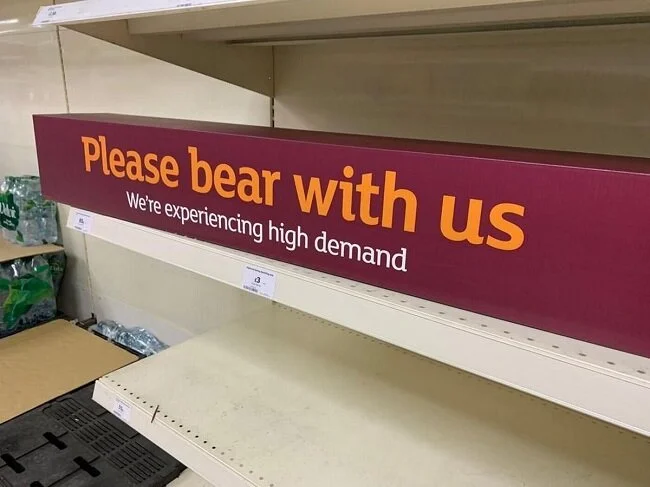
In early June I was visiting Sainsbury’s supermarket in Crayford, apparently their biggest site in the UK, when I noticed that several shelves had the following sign. “Please bear with us. We’re experiencing high demand”. At the time I thought nothing of it but then I started seeing similar notices in other stores. I then began seeing stories on some news websites about supply chain problems. This point was then reiterated on the news radio station LBC. Two month on and this issue is now finding its way into the mainstream press. McDonald’s currently cannot supply milkshakes or bottle drinks and Nando has had to close 45 branches around the UK as it has no chicken wings to serve. It is now becoming very clear that there is a big problem on the horizon, due to several complex factors. If it is not addressed this matter will only get worse with shortages directly impacting upon Christmas sales.

Pound shops, Dollar Stores, call them what you will, have become ubiquitous in recent years. Furthermore the public’s attitude towards them has radically changed. Where in the past snobbery may well have kept certain socio-economic groups away, it now seems that everyone is happy to use such outlets in search of a bargain. I frequent them regularly for toiletries, kitchen and bathroom cleaning products as well as tinned foods. Most products are well known named brands and the prices just cannot be ignored. Pound shops can also be a fascinating source of curious and esoteric items. I discovered such a product today.
Thoughts on Work Part 4
Over the last 10 years, I’ve written several blog posts about my personal working experiences and my career, such as it was. I touched upon working specifically in IT and how that industry changed over time, both technically and in the way that other people perceived it. I have also given my thoughts on the social dynamics of the modern work environment and the way we interact with our colleagues and employers. That is another area that has changed dramatically. Naturally my retirement from full time work has been written about, as it is such a radical change in one’s life. Especially if you’re the sort of person who is clearly defined by their job, which I personally was not. This time, I want to share a few thoughts I have about what I miss about “going to work” and “having a job”. I’m not sure if “miss” is the right word. Perhaps it is more a question of things being absent. Either way, there are some aspects of being employed that I use to enjoy or at least found beneficial that I now no longer experience.
Over the last 10 years, I’ve written several blog posts about my personal working experiences and my career, such as it was. I touched upon working specifically in IT and how that industry changed over time, both technically and in the way that other people perceived it. I have also given my thoughts on the social dynamics of the modern work environment and the way we interact with our colleagues and employers. That is another area that has changed dramatically. Naturally my retirement from full time work has been written about, as it is such a radical change in one’s life. Especially if you’re the sort of person who is clearly defined by their job, which I personally was not. This time, I want to share a few thoughts I have about what I miss about “going to work” and “having a job”. I’m not sure if “miss” is the right word. Perhaps it is more a question of things being absent. Either way, there are some aspects of being employed that I use to enjoy or at least found beneficial that I now no longer experience.
Friends and colleagues
I read a recent poll about employment in the UK that showed that for a lot of people, the thing that makes a lot of jobs bearable, are the people we work with. That was totally the case for me. There were a few problematic managers during the course of my career and I have worked with my share of idiots but for most of the time, I was fortunate to spend 9 to 5 with a good bunch of people from all walks of life. There were a lot of laughs and often a lot of drinking. I remember the time we... Nope, upon reflection its best not to recount such anecdotes. Some of those friendships have endured. Others were of the time. However, I look back fondly on all of them. Friends and colleagues often made going to work fun, when the job itself had no other intrinsic value other than providing a pay cheque.
Sharing knowledge
During my working life, each job provided a network of professional colleagues, most of whom were more than happy to share knowledge and help each other out. All it took was a phone call and advice was freely given. No one asked for anything in return, although the implicit social contract was that this unofficial service was a quid pro quo. If you could return the favour at sometime in the future, then you did so. It was a very equitable and useful gentleman’s agreement to have. It’s something I miss greatly today and AI is not a perfect substitute.
Access to resources
When you work for a big company you often get direct and indirect access to resources. Or you did in my day. My IT qualifications such as MCSEs, CCNA, PRINCE2 accreditation and others were all paid for by my employers. Phones, laptops, software and sundry IT peripherals were also provided as part of the job. Then there was the stationery, the lunches and “expenses”. Old kit that was scheduled for disposal could also be “acquired”. The moment I went self-employed all these benefits stopped. Every new skill or project that I undertake nowadays comes with a cost that falls directly to me. Such is life.
A sense of achievement and pride in one’s work
I was at the dentist recently and there on the wall, in a corner, was a half sized patch panel cabinet. It was a total dog’s dinner and it took my mind completely off whatever the hygienists was doing (which was painful). All I could think of was that I’d have never have left a panel in such a state because all you’re doing is deferring a problem that you’ll eventually have to address. Also because personal pride would not allow me to do leave such a thing. A far as I’m concerned stuff like that reflects directly on the IT department. It doesn’t matter if other people don’t notice it, if that were my responsibility, I’d know it was still there and it would keep me awake. Yes. I curiously miss this aspect of work. I guess that’s why I’m currently fine tuning this blog. It’s my current equivalent of a messy patch panel.
For the sake of balance and to offset any sense of regret, which I unequivocally do not have, here are a few things about having a full time job that I don’t miss.
Commuting
I am not a good traveller. The idea of getting up at “stupid o’clock” and getting on a cramped commuter train in this current heat just fills me with dread. I always disliked commuting as I saw it as unpleasant, uncomfortable, dead time. I guess I still do. Hence I always tried to fill these journeys by doing something constructive, such as reading or watching a documentary on my laptop. I also remember having to get out of London by any means available during the 7th July 2005 terrorists attacks. That was a grim day that still crosses my mind whenever I go to London.
Idiots, bullies and lazy employees
Although I’ve often worked with nice, decent and regular people I have also encountered some unpleasant individuals during my career. No matter how thorough people think the interview process is with regard to finding new employees, idiots always seem to beat the system. There is nothing worse than the fool who has an unworkable plan and the ear of senior management. Unless it is the person who is quite capable of doing their job but for whatever reasons chooses not to. Someone you have to carry because they never answer emails or do their part of the project. Then there are those broken human beings who see work a means to persecute others. Who revel in humiliating subordinates and making them unhappy. The one’s that hated lockdown because there was no one to bully, apart from their own family. Those pitiful bastards are out of my life forever now.
The Treadmill effect
One of the reasons I moved from a permanent position to short term IT contracting and then to self-employment, was because of the treadmill effect. A short term IT project has a start and an end date. Once it’s done you move on. Some of the permanent jobs I’ve had at the start of my career have felt like an endless slog to nowhere. Especially when I worked for the DWP processing benefit claims. The process naturally never ended and it came with a substantial portion of human misery. An average jobs can’t all be perfect and is unlikely to be totally spiritually fulfilling but feeling that you’re making no progress what so ever is utterly demoralising.
Since leaving a work environment, a decade ago, I have kept in touch with various recruitment executives and naturally still have friends who are still working. I suspect that I experienced a vastly different work culture during the late eighties, nineties and the early two thousands, compared to what exists today. I suspect I wouldn’t thrive in the modern office environment, as I speak my mind too freely and have far too many rough edges for the likes of a modern HR department. I could go back to contracting if necessary but I suspect it just wouldn’t be as fun as it used to be and fun was a very important element in my working life. However, overall I count myself fortunate that my career followed the course that it did and took place at the time that it did. I have a lot of happy memories which I reflect upon whenever I miss the aspects of work that I’ve listed above.
Over the last 10 years, I’ve written several blog posts about my personal working experiences and my career, such as it was. I touched upon working specifically in IT and how that industry changed over time, both technically and in the way that other people perceived it. I have also given my thoughts on the social dynamics of the modern work environment and the way we interact with our colleagues and employers. That is another area that has changed dramatically. Naturally my retirement from full time work has been written about, as it is such a radical change in one’s life. Especially if you’re the sort of person who is clearly defined by their job, which I personally was not. This time, I want to share a few thoughts I have about what I miss about “going to work” and “having a job”. I’m not sure if “miss” is the right word. Perhaps it is more a question of things being absent. Either way, there are some aspects of being employed that I use to enjoy or at least found beneficial that I now no longer experience.

My carer’s duties ended on April 7th 2022 when my Mother moved into a care home. I stopped claiming Carer’s Allowance (£69.70) from the Department of Work and Pensions and decided to take a few weeks to rest and consider what I was going to do next. Naturally, being 54 years of age, the most immediate consideration has been one of employment. We all need an income to survive. At present the State Pension Age in the UK for men is 67. This is when you will receive your State Pension, which is based upon your National Insurance Contributions that you have paid throughout your working life. That is 13 years away, hence why I’ve been considering returning to work. However, Mrs P took early retirement from the Civil Service seven years ago and raised the point that if I returned to full time work, we would no longer have so much time together. Although caring for my parents has been tough, it revolved around a schedule thus affording Mrs P and I windows of opportunity to do things.
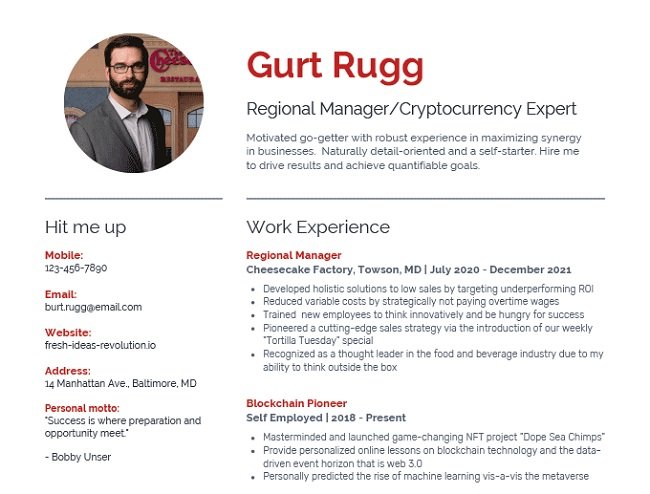
As my caring commitments are now over, I find myself in the “interesting” position of being 54 years old and potentially returning to the job market. I use the phrase “potentially” because I am fortunate enough to have a financial safety net in place, so it is not as if I have to find gainful employment immediately. So there is no pressing requirement for me to claim Universal Credit and find work via the UK social security system, which is most fortunate. The DWP has a policy of actively pressuring benefit claimants into accepting any kind of work, irrespective of skills, after a few weeks as part of a policy of trying to keep the employment number low. I have no intention of going down that route and so will look for work in my own way and on my own terms.
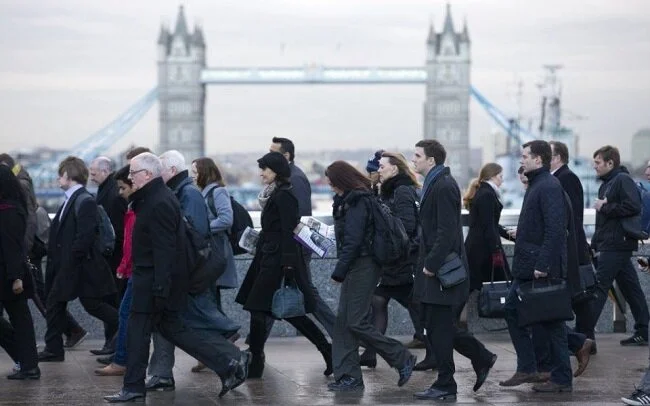
I appreciate that this is a somewhat ponderous blog title but I’m trying to consolidate several ideas and streams of thoughts into one post. So to begin with it is the third week of the Blaugust 2021 Festival of Blogging event. Specifically it’s “Developer Appreciation Week”. At first glance a laudable undertaking. An opportunity to praise the developers of a game that’s close to your heart. However, given the current debacle with Blizzard Entertainment, I think there’s a conversation to be had about how fans virtual deification of specific developers of World of Warcraft and how treating them like rock stars, may well have had some bearing on their subsequent misdemeanours. I would in fact go further and say that the video game industry is another sector of work, like film, TV, music and sport that is perceived to be glamorous, aspirational and generally put on a pedestal. Fans lose sight of the fact that these companies have a lot of staff who don’t get any kudos and endure tough working conditions. Just like more conventional jobs.
In a previous post I wrote about my own personal employment history and the various ups and downs of my working life (so far). In this post I want to reflect upon the broader concept of work, because it has radically changed since I entered the job market in the late eighties. Contracts, job descriptions, the working environment and even the way in which we find work have evolved rapidly due to the internet and the advent of social media. Some of these changes have been good, but others I feel have been detrimental for job seekers. The job market is always subject to a lot of ebb and flow and depending on the state of the economy, it can either favour of the employer or employee. At present in the UK, it strikes me as being very much the former.
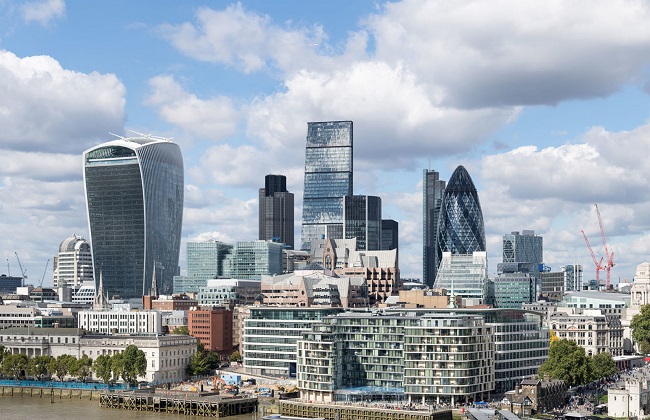
During the course of my career (1986 – 2016) I have worked in numerous complex social environments. I worked for the UK civil Service and saw the final days of very traditional, formal employment hierarchy. There were people with academic titles such as Doctor or Professor and there were also those with honorary monikers such as Sir. I even met an ex-army officer who clung to the old school etiquette of still being referred to by his former military rank (which was Captain). I was later employed at the London corporate headquarters of a global Indian company. It was fascinating to see the cultural differences along with the class structure and prevailing social dynamics. Over 30 years, I’ve worked for numerous high-profile organisations such as HP, Fujitsu Siemens and Symbian as well as other smaller businesses. All provided gainful employment, acceptable financial remuneration and an opportunity to learn more. However, all of them suffered from two of the most common faults found in contemporary employment; namely office politics and problematic members of staff.

Working in IT is an extremely broad job description that encompasses multiple subsets and disciplines. Each specific field has its own skills and academic hierarchies. You may well be an experienced Network Administrator but that doesn’t make you equally as knowledgeable with regard to Database Development and vice versa. Saying that you work in IT is pretty much the same as saying that you work in healthcare. You could be working in procurement or be a Cardiothoracic Surgeon. However none of this is of any concern to those who work outside of IT. If you get collared by someone at a social event and tell them you work in IT, it’s only a matter of time before you get asked “I’m thinking of buying a new laptop, which one is best?” or something similar. I always tell them that Purple ones have the most RAM.
The UK Electorate
UK Prime Minister, Sir Keir Starmer has resigned and intends to leave office before the parliamentary summer recess. By then Andy Burnham will more than likely be voted leader of the Labour Party and by default will become the new Prime Minister. Due to the current size of the incumbent Government’s majority, there is no pressing reason for a General Election that the UK’s right wing tabloid press is currently calling for. Whether this provides the Government with the reset they’re hoping for when Parliament reconvenes in autumn remains to be seen. With seven Prime Ministers coming and going in a decade, there are some serious questions to be asked about the current state of UK politics. However, the mechanics of contemporary politics, the decline of clearly defined ideologies and the people that seek elected office to be our leaders are only half of the problem. The other major impediment to the UK’s democracy functioning properly is the electorate.
UK Prime Minister, Sir Keir Starmer has resigned and intends to leave office before the parliamentary summer recess. By then Andy Burnham will more than likely be voted leader of the Labour Party and by default will become the new Prime Minister. Due to the current size of the incumbent Government’s majority, there is no pressing reason for a General Election that the UK’s right wing tabloid press is currently calling for. Whether this provides the Government with the reset they’re hoping for when Parliament reconvenes in autumn remains to be seen. With seven Prime Ministers coming and going in a decade, there are some serious questions to be asked about the current state of UK politics. However, the mechanics of contemporary politics, the decline of clearly defined ideologies and the people that seek elected office to be our leaders are only half of the problem. The other major impediment to the UK’s democracy functioning properly is the electorate.
Let us consider the reasons why Keir Starmer has resigned. Although the appointment of Peter Mandelson was a major political misjudgement, this is not the main reason for him being ousted by his own party. It is primarily due to his catastrophic decline in the opinion polls. Starmer won a substantial majority in the 2024 General Election predicated on prosed economic change and his party not being the Tories. Sadly, bold decisions were constantly rollbacked if they were seen to be poorly received by the general public. Hence his administration was seen to be constantly dithering and his policies were too vague to be clearly defined. Thus a substantial percentage of the public quickly became unhappy that “change” was not being delivered and this was reflected in Starmer’s approval rating. The Labour Party, like so many contemporary political organisations, became overly concerned about “optics” and decided to go down the road that leads to regicide.
The UK economy, along with many of its major public institutions are in a bad way. This is mainly due to decades of austerity following the 2008 financial crash and wider global factors such as COVID, regional wars and the current US administration. Infrastructure has been starved or finances, numerous services have been outsourced and asset stripped by those companies running them and the cost of living has just kept steadily increasing. The young have been poorly served by consecutive Governments and the old have unsustainable expectations with regard to public services, pensions and political representation. All of these are problems that require well considered and potentially radical solutions that will take time and effort to resolve. Any party seeking election eventually has to put their proposals to the electorate and it is at this point the problems start.
Ask anyone in the street about the aforementioned issues and they’ll confidently assert that “something must be done”. Some who are politically engaged may even share potential solutions. However a substantial amount of registered voters are not well versed in politics per se. They struggle to name significant individuals from politics, are not well informed about policies or ideologies and often form opinions based upon factually incorrect “news” on social media. Brexit was a textbook example of this. We also have to consider the erosion of communities and notions of civic duty. Politics is increasingly seen as a transactional process by people that have no concept of patience. The electorate’s expectations, combined with an absolute aversion to having to face any personal cost, thus becomes a major part of the UK's structural political paralysis. Voting ceases to be an administrative process with responsibilities and consequences. Instead it becomes like a reality show were you simply vote off those that “annoy” you.
There used to be an implicit social contract associated with UK democracy. After a General Election, the party with the most seats in parliament formed the next Government. You may not have liked the results but you recognised the legitimacy of the them and endured the new incumbent administration, if you were not a supporter. This mindset seems to have gone and there is a petulant element of the electorate who take the somewhat puerile attitude that “I didn’t vote for this so why do I have to put up with it”. Such a world view has consequences. No one wants to pay any more taxes, nor wants new housing built near them. Migrant labour that addresses the skills gap is reviled, yet no one seems to be opting for careers where such skills gaps exist. Democracy grinds to a halt because instead of a cohesive population with a sense of nationality and common purpose, you have 70 million individuals that want politics to personally serve their needs.
Political parties that have always been in thrall to opinion polls, are now increasingly more cognisant of “emerging trends” on social media. As a result the tail wags the dog these days which is why Keir Starmer has been effectively ousted by his own party. Although more media savvy and experienced in “doing” politics, I suspect that Andy Burnham is destined to run into exactly the same issues and criticism if he becomes PM. The chickens may well come home to roost by next spring when he has failed to grow the UK economy, increase wages and lower taxes and make the wind smell of wild flowers for the UK electorate. He has already indicated that he is not disposed towards addressing the realities of the UK economy and that to resolve the current situation requires the public enduring a period of hardship. Thus both groups inhabit their own personally chosen, alternative reality, while the those who recognise the situation for what it really is, watch on as Rome burns.
If you visit the websites for such UK tabloid newspapers as the Daily Express or the Daily Mail you will no doubt encounter prominent stories about Megan Markle, Nigel Farage and “immigrants”. If these two august institutions are short of column inches, they’ll run a piece about how some former celebrity has had the unmitigated gall and temerity to get old. I mean WTF? How dare they do what human beings are genetically disposed to do. It’s outrageous. Similarly, head over to the Unherd website and you’ll find foam flecked tirades regarding spurious points of contention over dubious subjects. Often the topic being harangued is incredibly niche and I’ve never heard of it before or even considered it being a thing. These sort of talking points are not about informing, debating and most certainly aren’t about thinking. They exist to provoke reactions.

Yesterday afternoon, Nigel Farage the Member of Parliament for Clacton and leader of the Reform Party, held a press conference in which he declared that he would be resigning his seat and thus triggering a by-election. He cited the following list of grievances that have led to him making this decision. That the Parliamentary standards investigations were being politicised, the media and other parties were conducting a coordinated campaign against him and that he had endured years of threats and physical attacks. He further asserted that his family’s privacy and safety had been breached as well. He finished by alleging that the political system was repeatedly changing rules to obstruct Reform and that he was the most attacked politician in the UK. Rather than be judged by the legacy media and the “establishment”, he would rather put the issue of his political integrity to the electorate of Clacton. He even offered to pay for the cost of the by-election.
UK Prime Minister, Sir Keir Starmer has resigned and intends to leave office before the parliamentary summer recess. By then Andy Burnham will more than likely be voted leader of the Labour Party and by default will become the new Prime Minister. Due to the current size of the incumbent Government’s majority, there is no pressing reason for a General Election that the UK’s right wing tabloid press is currently calling for. Whether this provides the Government with the reset they’re hoping for when Parliament reconvenes in autumn remains to be seen. With seven Prime Ministers coming and going in a decade, there are some serious questions to be asked about the current state of UK politics. However, the mechanics of contemporary politics, the decline of clearly defined ideologies and the people that seek elected office to be our leaders are only half of the problem. The other major impediment to the UK’s democracy functioning properly is the electorate.
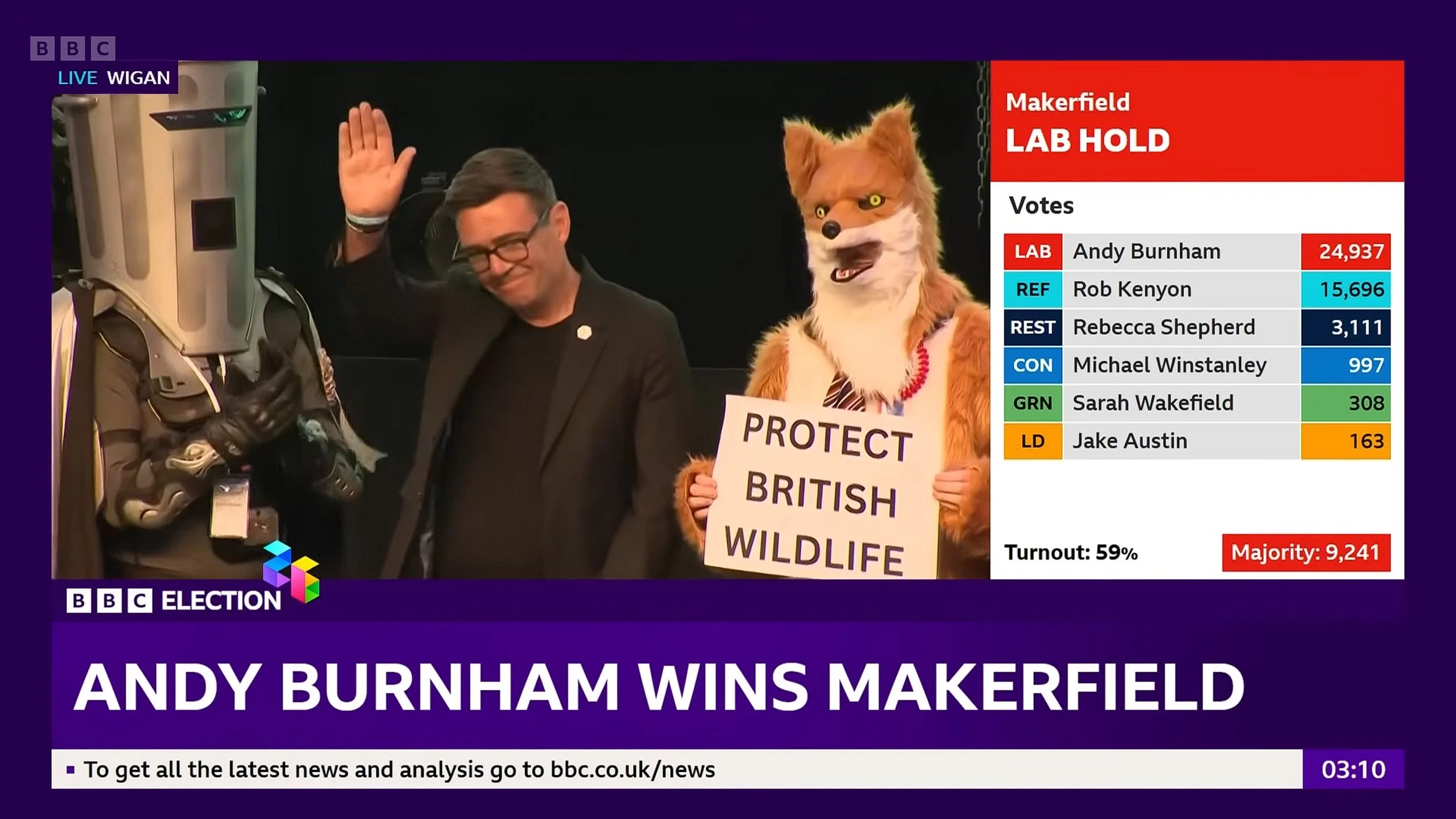
Andy Burnham successfully won the Makerfield by-election yesterday, returning him to the House of Commons as a member of Parliament after holding the position of Mayor of Manchester for the past nine years. Prior to this, Burnham was Labour MP for Leigh from 2001 and 2017. He served in both the Tony Blair and Gordon Brown administrations and has held such senior governmental posts as Chief Secretary to the Treasury, Secretary of State for Culture, Media and Sport and Secretary of State for Health. His return to Parliamentary politics is likely to result in a leadership challenge to incumbent Prime Minister Keir Starmer. When speaking after winning yesterday’s by-election Burnham spoke of “a final chance for change” the current trajectory of the present Labour Government. However, I don’t wish to focus on any of this at present. I am far more interested in the above picture, taken as the results were announced and what it says about UK politics.
The UK Government has formerly announced its intention to ban under-16s from using social media. This is due to increasing public pressure that “something must be done” about the perceived iniquities of many online platforms. However, as with most complex social problems of this nature, no one has any clear or practical ideas as to what that “something” is. It remains a nebulous, non-specific panacea and clearly someone else’s job to identify and implement. As ever, why choose a nuanced and multifaceted solution to a complex problem, when it is far easier and politically expedient to just “ban” something. The former requires effort and a degree of thinking. If such an approach fails it also means that those who came up with it now carry the can. The latter dumps the problem in the lap of various third parties, who can then be conveniently blamed when the ill conceived policy fails.
Every Thursday, Mrs P volunteers at a food bank that is run from a local church; Avery Hill Christian Fellowship. Today there was a shortage of staff so I agreed to help out. It proved to be an equitable arrangement as she collated the various orders and I packed the bags and took them to the respective clients. The food bank itself is organised and administered by the Trussell Trust, a UK based NGO and charity providing emergency food and support to people locked in poverty. It is open for 2 to 3 hours a week depending upon demand. During today’s session we served just six people. Some weeks its can be triple that amount. Upon closure, a member of staff from the Trussel Trust did a stock take and collated a list of what was needed. This is provided by various local church communities via parishioners donations, as well as local supermarkets who have an arrangement with the trust to provide surplus stock or good approaching the end of their sales window.
Under the First Past the Post electoral system, the candidate(s) receiving the highest number of votes in each constituency are elected. This system is used in the UK during general elections and in some local elections, such as those recently conducted in England. An alternative approach is the system of proportional representation, which aims to allocate seats in a manner that reflects the popularity of various parties. Both the Scottish Parliament and the Senedd in Wales employ systems of Proportional Representation. Historically, first-past-the-post has been seen as advantageous for the Conservative and Labour parties. It poses challenges for smaller parties whose votes are distributed evenly across different regions, making it difficult for them to secure seats. This dynamic effectively prevents potential competitors to the Conservatives and Labour from succeeding electorally. Consequently, due to this situation, voters may hesitate to support these smaller parties from the outset.
There are local elections being held across the UK today. Voters in Scotland and Wales will elect representatives to their respective national parliaments, while in England the voting is for local councils and regional mayors. These are the first major elections to be held in the UK since the 2024 General Election which saw the Conservative government of fourteen years, fall to the Labour Party. Midterm elections are often a litmus test for how the electorate think the national government are performing although local issues are also a major factor. The consensus among political journalists and commentators is that the incumbent government is polling extremely poorly and will subsequently face a backlash. In recent years the UK has seen a decline in traditional two party voting with Reform UK and the Greens gaining significant traction among the electorate. Hence today’s elections may well see both these parties make significant gains.
Our household is currently trying to reduce our monthly overheads in response to the ever increasing cost of living. April is not that far away and a great many service providers will increase their rates and tariff as the new financial year begins. Then there is the ongoing effects, both direct and indirect, of inflation to consider. Although the UK inflation rate is dropping, currently sitting at 3.4% in December 2025, food inflation remains higher at 4.5%. Being based in the UK, salaries and billed services tend to be administered monthly. You get paid usually at the end of the months and bills can turn up at any point, depending upon when you started a service. Any payments coming from central government, such as state pension or other benefits, are paid every 4 weeks. This means that there are 13 payments in a year. I thought it pertinent to clarify this point as other countries, such as the USA, favour a fortnightly financial cycle. Hence as a household we work around a monthly budget.
I don’t know if you have noticed that there are quite a lot of companies that have names taken from Tolkien’s Legendarium. At first glance, this seems innocuous enough. Tolkien’s writings grew in popularity over the seventies and eighties but since the release of the film trilogy at the start of the twenty-first century, his work has become more well known and been assimilated into our wider pop culture. Hence, it seems quite logical that a startup tech company, for example, would choose a name from his writings. No doubt the founders grew up reading The Lord of the Rings and are fans. That all seems plausible. However if you take a further look, it gets somewhat more complex. Here are four companies that have Tolkien based names.
“Managed decline” is a phrase that refers to the processes associated with the end of a specific lifecycle, with the goal of minimizing costs or other forms of loss. The concept originated in business where it referred to the management of companies and industries. More recently it is used in wider contexts. The concept gained prominence with regard to urban policy, particularly in the UK during the eighties when several major cities suffered economic and political collapse. Of late, the term has been applied to the UK, encompassing a systematic weakening of the economy, social structures, and cultural values, as well as its global political and diplomatic force. In each case, managed decline involves making strategic choices about resource allocation and accepting the consequences of those decisions. It is a complex issue with ethical and practical considerations, often sparking debate about the best way to address decline and reverse the process.
I still maintain a legacy presence on Twitter/X and I follow my local MP (member of Parliament) Louie French. It’s not something I especially relish as I am not a supporter of the Conservative party (or any other) and I did not vote for him in the last election. I just like to know what he is up to as he is the political representative for our constituency. As the Conservatives are out of power at present, to all intent and purposes, Mr French is a backbench MP although he has a minor position as Shadow Parliamentary Undersecretary (Culture, Media and Sport). However, with that being said he is hardly a key member of the shadow cabinet. Hence he focuses on constituency work and that which is generated by his shadow posting. He will also lend his voice, when required, to any major policy decision or statement made by his party.
Sunday 6th April is the start of a new financial year, here in the UK. According to data from numerous financial and economic institutions, an estimated million plus households will be facing annual increases of £400 to £500 as the proverbial “cost of living” goes up. Everything from Council Tax to Mobile and Broadband costs are being increased. Future cost hikes are expected in our energy and water utilities. As bills start going up across the country today, average wages remain stagnant. Middle-income and poorer households have been worst hit by this wage related issue. Hence the tabloid press have labelled the start of the new financial year as “Awful April”. Hyperbole aside, this is a very real issue which due to its complex, global causes, doesn’t have a quick fix solution.
I consider myself to be a grounded, rational individual. I am not excessively emotional. I like facts, data and reason as opposed to hyperbole, rhetoric and bluster. That being said, I am aware that the world is an imperfect place. Opinions are often not based upon empirical fact but personal perspective. Hence many people experience reality differently to me. They are driven by their feelings and other factors. However, despite these differences in philosophy, for most of my life the world has remained functional and over time slowly improved in subtle ways. Deference to expertise, a sense of community and basic pragmatism meant that people broadly pulled in the same direction. Of course there has always been dissent but it has been within a stable system. However, of late I feel that this era is now finally over. Things are no longer stable. We live in an uncertain world.
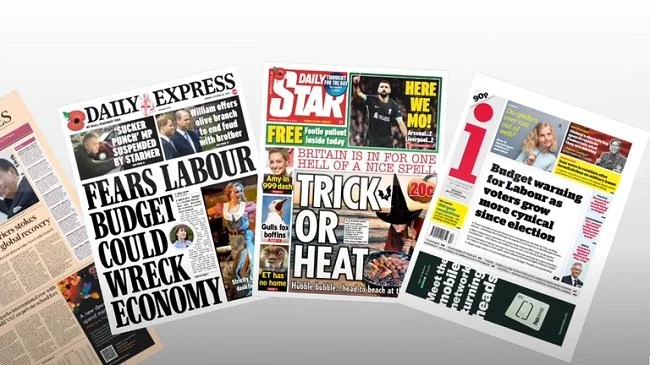
Newspapers were an integral part of UK culture in the seventies. During the week, they were delivered prior to going to work, so you would peruse them over breakfast. Alternatively you would buy one en route to your place of employment and read it on the bus or train. In a world before 24 hour, rolling news, they were the primary means of keeping the public abreast of events and as such, enjoyed a substantial audience. On occasions a newspaper story could make or break a political career or launch a crusading campaign to address a social ill. Newspapers were a force to be reckoned with and therefore a significant part of the socio-political landscape. However, due to a strong union presence within the workforce, the UKs newspapers often lagged behind other industries with regard to the technology.
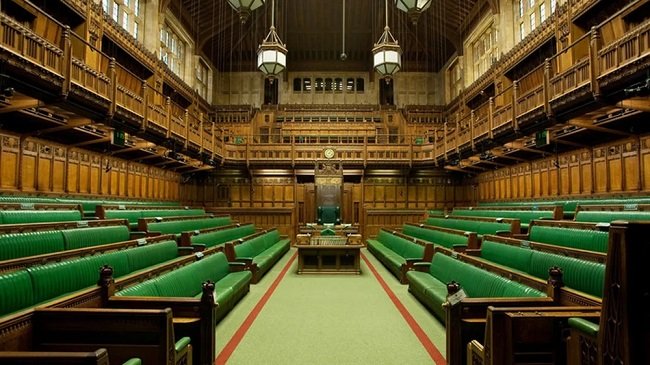
The First Past the Post (FPTP) electoral system used in the United Kingdom, as well as in several other countries such as the US and India, has both advantages and disadvantages. However, despite being a simple and straightforward system it has been abandoned by many democracies in favour of more proportional and equitable methods. The primary criticism against FPTP is that it allows a minority of the electorate to return a majority government. Since 1935, there have been majority governments 90% of the time, but not one of them had the support of a majority of voters. At present, the current UK government has a majority of seats with just 43.6% of the votes. In the 2019 election they gained an extra 48 seats despite an increase of only 1.2% of the vote share.

Politicians have a distinct way of talking when being interviewed or giving a press conference. It is often characterised by a strategic use of language, centred around rhetorical devices, persuasion techniques and a careful framing of messages. Direct answers to questions are usually avoided, with tangential responses being preferred. Opinions and specific perspectives are frequently presented as facts. There is also a propensity to focus on “problems” and apportioning blame, rather than “solutions”. It’s important to note that the use of language in politics is a complex and dynamic process influenced by various factors, including cultural context, media dynamics, and the evolving political landscape. Different politicians may employ different communication strategies based on their individual styles and objectives. Here are some key aspects of how politicians use language:
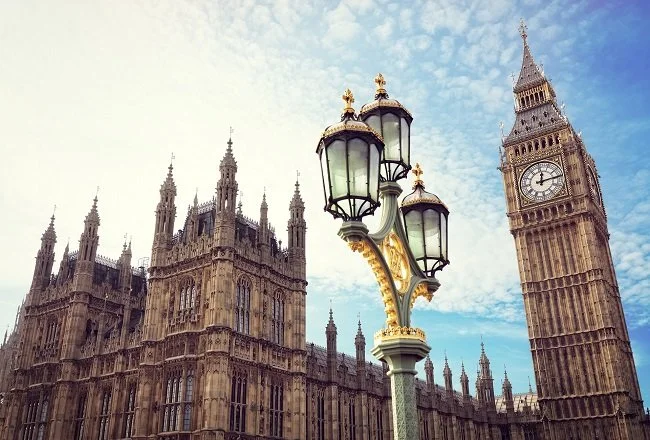
The United Kingdom is one of the few democratic countries in the world that does not have a single, written constitution. Others include Canada, New Zealand and Israel. To date, its constitution is a combination of written and unwritten sources, including statutes, common law, conventions and somewhat esoterically, royal prerogatives. The reason for this is predominantly historical. Since 1688, Britain has not experienced a revolution or regime change, which often leads to a constitutional initiative, such as the American or the French Revolution. Britain’s constitution has evolved slowly over time under relative stability and as such, it has never been deemed necessary to list the fundamental laws and principles of the country's political system.

On Friday 15th September the former actor and comedian turned internet social commentator, Russell Brand, released a video on his YouTube channel addressing allegations about his personal life, ahead of a forthcoming UK current affairs documentary. Brand vehemently denied what he described as “very serious criminal allegations”. The following day Channel Four broadcast “Russell Brand: In Plain Sight”. During the course of the program Brand was accused by one woman of rape and by three others of sexual assaults, and emotional abuse between 2006 and 2013. During the course of the week, further claims have been made against him and that his “predatory” behaviour was an open secret within the TV industry. Furthermore, women would warn each other in advance if they had any dealing with him. All of which has played out against a mixture of broadsheet analysis, tabloid hyperbole, performative politics and internet bluster.
For those who live outside of the UK, let me categorically state that Brexit has broken British politics. Prior to 2016, national politics still broadly functioned along traditional party political lines, with income and class substantially determining voter allegiance. The big three cities (London, Birmingham and Liverpool) maintained their liberal dispositions and Scotland, Northern Ireland and Wales were dominated by their regional politics. Brexit changed all this creating fault lines that fell outside of the existing political status quo. Opinions differed based upon where you lived, how politically literate you were and even education. Your party political allegiance no longer indicated what stance you took on this matter. Furthermore, the discourse around this complex subject was quickly debased into a bipartisan culture war that was toxic and dangerous.

Okay, keep up as there’s a lot of ground to cover. The UK government is currently suffering in the opinion polls and after 13 years in office, is facing potential oblivion at the next general election. In an attempt to shore up support among the party faithful, the Prime Minister, Rishi Sunak, is currently pursuing a hardline with regard to immigration. According to Ipsos, as a political issue about 29% of the electorate consider immigration to be a major problem. The remainder either think current levels are manageable or have no substantive view on the matter. However, as a “culture war” issue that can be weaponized by the tabloid press, which often has direct links to the Conservative Party in the UK, immigration is a hill to die upon. Hence you will find a lot of rhetoric that is anti-immigration and any contrary view is tarred with trite pejorative terms such as “lefty”, “liberal” and “woke”.
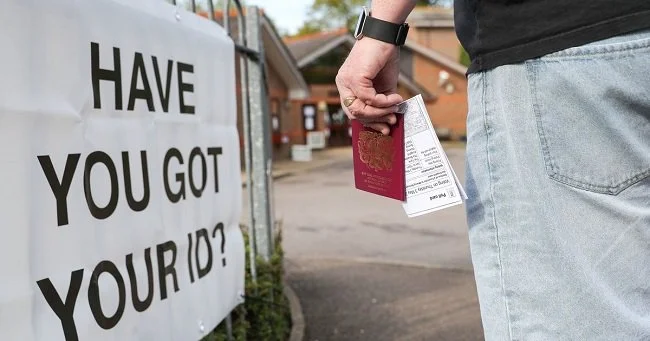
Last April, the Election Act 2022 became law within the UK. The Act introduced a requirement for all those voting in-person to produce photo identification when attending a polling station. This is the first time that such an ID has been required. Prior to this, voters could either bring their polling card to verify their identity at the polling station, or confirm their registered address from the electoral roll with staff. Now a UK driving licence or passport are considered the primary means of identity. A list of additional photo identification that has been deemed acceptable, is available on the UK government website. For those members of the electorate who do not have any of the qualifying ID, there is a Voter Authority Certificate available, which can be applied for online. This photo ID is linked to the applicants National Insurance Number. For further impartial information on photo ID and registering to vote, visit the The Electoral Commission website.

I am writing this post from the perspective of a UK citizen, but the sentiments expressed are applicable to anyone who lives in a country where you have democratically elected local political representation. IE someone who is supposed to advocate on behalf of your community or for you personally as the duly elected political representative. Here in the UK, the country is divided into 650 constituencies, each returning one Member of Parliament. Irrespective of whether you voted for your MP or whether you support the political party that they belong to, they are obliged to represent you and advocate on your behalf, if you request it. Such is the relationship in principle between constituents and MPs in the UK. It is important to be aware that your local MP is not a delegate whose sole purpose is to represent majority constituency views. Under the UK political system, an MP makes decisions on behalf of constituents and can take a position counter to local opinion, if they feel that is in the best interest of the constituency.

It is difficult to write about the state of UK politics with any degree of intellectual rigour when the entire situation has become so utterly farcical. My initial reaction to the recent departure of Liz Truss after just 45 days in office, was to laugh with abject scorn and derision. She was destined to fail due to utter lack of ability. However, there is still the outstanding matter of the country lacking a credible and functional government to address inflation, the cost of living crisis and resolve all the issues stemming from Brexit. There are problematic national and international events taking place that need addressing. A united, pragmatic and empathetic government is required to solve both these short term and long term needs. Sadly, the governing party is riven with opposing factions and there is no commonly held policy or underlying ideology. The PM may well have changed but the underlying flaws remain.

Conservative Party has been in government in the UK since 2010. During that time there have been three Prime Ministers. Today we moved onto the fourth. After Boris Johnson resigned on 7th July, the nation has had to endure a tedious two month process in which the Conservative Party elects a new leader. That person then becomes the PM by default. Many readers unfamiliar with the UK political system may be surprised that a change of leader has not led to a General Election. That is because the Conservative Party still holds a parliamentary majority of 71 elected Members of Parliament. Hence it is still constitutionally quite able to govern, despite Boris Johnson being forced from office. Therefore party members vote for a new party leader who gets the top job by default. Remember that in the UK, the Prime Minister is not the head of state and does not have the executive powers of a President.

I try to keep my thoughts on political matters to a minimum here at Contains Moderate Peril, mainly because UK politics and the current state of discourse associated with it has become an absolute shit show in recent years. Brexit broke traditional politics and has made matters far more tribal and partisan. The two main parties have declined from having clear ideologies, identities and manifestos, to becoming either a lobby group for the specific demographic group that supports them, or a conflicted, divided and schizoid shadow of its former self. I’ll let you work out which is which. Politics is no longer about governing a nation for the benefit of all its citizens. Now you simply pick a side and join the ongoing culture war against everyone and everything else. This rotten system produces rotten leaders. Hence, when Alexander Boris de Pfeffel Johnson became Prime Minister in December 2019, it was clear that the nation was taking a major risk on such a man. His failings as a politician and a person are a matter of public record for anyone who has the eyes to see them.

The title for this post is a quote from The Hobbit by J.R.R. Tolkien. I’ve used it as a verbal cue to try and give readers an overview of the point I’m striving to convey. Because I want to talk about modern life in western civilization, specifically its complexity and increasing uncertainty. If you’re extremely wealthy you can mitigate these two points but I’m working on the premise that most of the people who read Contains Moderate Peril are not. The blogging community, of which I am a participant, is a diverse group but from what I’ve observed it’s not populated by millionaires. In fact most of the people I know, both online and in person, are just holding down a job, trying to keep a roof over their head and pay the bills. Often they’re doing the job they do in default of anything else and they’re at the very least ambivalent towards it. The pandemic has also brought home how fragile so-called “normality” is. Modern politics are also volatile and life in general just doesn’t seem as certain as it was twenty years ago.

The Conservative Party successfully held onto their “safe seat” of Old Bexley and Sidcup in yesterday’s closely watched by-election. However their overall majority was reduced by more than half amid a very low voter turnout. Conservative councillor Louie French becomes the country’s newest MP after winning 11,189 votes, more than 50 per cent of those cast, in the seat previously held by the former cabinet minister James Brokenshire. Mr Brokenshire died in October from lung cancer aged 53. The closest challenger was Labour’s Daniel Francis, who secured 6,711 as the Tory majority fell from nearly 19,000 to 4,478, the equivalent of a vote share swing of 10 per cent to Labour. Turnout in the constituency was just 34%, down from the almost 70% who voted in the 2019 general election.
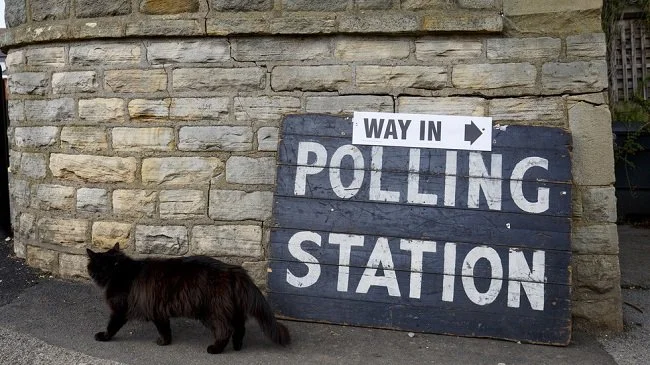
Political events in the constituency of Old Bexley and Sidcup have moved forward in the last few weeks, following on from the death of incumbent MP James Brokenshire on 8th of October. Although no formal announcement has yet been made regarding the date of the forthcoming by-election, the major political parties have started announcing the names of their respective candidates. There were initial concerns among some constituents that this safe Conservative Party seat may have been used as a means of parachuting in a candidate favoured by central office, rather than one determined by the local Conservative Association. Fortunately, that has not been the case. The UK Government currently enjoys a parliamentary majority of 79 seats and is therefore not in any urgent need of fast pathing further political allies.
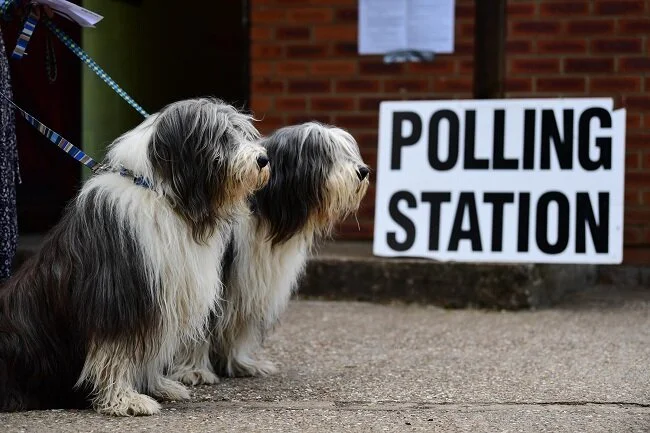
Last week James Brokenshire, MP for the constituency of Old Bexley and Sidcup, died of lung cancer at the age of 53. He had held this parliamentary seat since 2010 and maintained a strong majority throughout the 2015, 2017 and 2019 general elections. Hence the constituency of Old Bexley and Sidcup is considered a “safe seat” for the Conservative Party. In fact it has only ever returned MPs from that party since its creation in 1983. As a result of Mr Brokenshire’s death, there will now be a by-election held in the constituency of Old Bexley and Sidcup to return a new MP to parliament. What makes this local election a little more interesting than usual, is that it will not be taking place against a wider ongoing national election. Therefore, there is scope that local issues may well play a greater part in the electioneering of all participating parties.
UK to Ban Social Media for Under-16s
The UK Government has formerly announced its intention to ban under-16s from using social media. This is due to increasing public pressure that “something must be done” about the perceived iniquities of many online platforms. However, as with most complex social problems of this nature, no one has any clear or practical ideas as to what that “something” is. It remains a nebulous, non-specific panacea and clearly someone else’s job to identify and implement. As ever, why choose a nuanced and multifaceted solution to a complex problem, when it is far easier and politically expedient to just “ban” something. The former requires effort and a degree of thinking. If such an approach fails it also means that those who came up with it now carry the can. The latter dumps the problem in the lap of various third parties, who can then be conveniently blamed when the ill conceived policy fails.
The UK Government has formerly announced its intention to ban under-16s from using social media. This is due to increasing public pressure that “something must be done” about the perceived iniquities of many online platforms. However, as with most complex social problems of this nature, no one has any clear or practical ideas as to what that “something” is. It remains a nebulous, non-specific panacea and clearly someone else’s job to identify and implement. As ever, why choose a nuanced and multifaceted solution to a complex problem, when it is far easier and politically expedient to just “ban” something. The former requires effort and a degree of thinking. If such an approach fails it also means that those who came up with it now carry the can. The latter dumps the problem in the lap of various third parties, who can then be conveniently blamed when the ill conceived policy fails.
The UK will follow Australia in banning teenagers under the age of 16 from accessing some of the world’s biggest social media platforms. These will include TikTok, Instagram, Snapchat. Facebook, YouTube and Reddit. However the proposed ban will not be tied to a specific set of sites and platforms, so as to remain flexible and able to accommodate any new platform that proves problematic at a later date. The messaging platform WhatsApp is not expected to be included in the ban. It would appear there is also a proposed usage of social media curfew for 16 and 17year-olds. Late-night “doom scrolling” is often cited by parents and teachers as detrimental to young people’s mental health. The Government will also introduce restrictions on access to chatbots and children will be blocked from having conversations with strangers on gaming platforms. Again, rather than naming specific services and games, the proposal seeks to be broad in nature, so it can adapt to future issues as they occur.
In the Government’s recent consultation on a proposed social media ban, nine in ten parents said they supported a minimum age of 16 before children can use such online services. 83% said that social media risks outweigh the benefits for children. However, concerns were raised as to whether such blanket proposals would inadvertently remove children’s access to platforms that provide useful and beneficial content. Those polled indicated that some sort of distinction between the potentially harmful and the benign needs to be made. However, the consultation gave no information as to how this would be achieved beyond it being the responsibility of owners of each online service. Today’s announcement has been met with mixed reactions with some groups welcoming the proposals and other seeing it as rash act of political desperation from an unpopular Government and Prime Minister who may shortly be facing a leadership challenge.
It is not yet clear when the ban will come into effect and how it will be implemented and policed. However, the Children’s Wellbeing and Schools Act passed earlier this year gives ministers the ability to introduce new measures to restrict harmful features on online services without needing to pass new laws. This means there is potential for the ban to be introduced quickly. At present the target date is early 2027. As to the actual mechanics of the ban, it will no doubt be “enforced” in a similar fashion to the Online Safety Act that came into force in the UK in July 2025. IE It will be down platforms such as Instagram to verify the age of all UK account holders and block and restrict accordingly. Failure to do so will result in fines issued by regulatory body OFCOM. So far, with regard to enforcing legislation for age verification, OFCOM has issued only a handful of fines and has struggled to flex its regulatory muscles. Astute opinion conjectures that the enforcement of today’s proposed ban will similarly be difficult to police and enforce.
Addressing the problems that arise from social media is a complex task. If it is to be done properly it requires the involvement of numerous stakeholders. A solution would require a lot of human intervention on different levels. It would need administration, oversight and staff. Hence there would be a material cost. The Government would naturally balk at such an approach because it would require a budget and have to yield measurable results. The public/electorate would similarly eschew such a plan, as it would take time, require compromise and most importantly of all parental involvement and responsibility. Something that is in short supply these days. Many parents are happy to use technology as a catch all babysitter, yet whine when the babysitter is potentially problematic. Perish the thought that parents should actually police their own children. As for the tech companies who are going to have to deal with this problem, I suspect they’ll be far from happy and co-operative.
My five year-old Grandson likes to watch Milo and Chip on YouTube. This is a child friendly, Minecraft themed channel. At present, he watches this on the TV in his household lounge via a YouTube guest account. At some point in 2027, the YouTube app will cease allowing guest users and require an account login. Oscar will no doubt ask one of his two parents to address the matter and I think rather than tell him it is now illegal for him to watch via this platform, they will simply create an adult account and login, so he can continue viewing his favourite channel. More canny older children will do this for themselves. They’ll circumnavigate the age verification requirements as they’re doing already. It doesn’t take much imagination to predict a cottage industry of young people sharing information as to how to bypass this proposed ban. It’s not as if making something “off limits” ever made it more alluring, is it?
When I was a child, I quickly learned never to say within earshot of my parents that I was bored. It was quickly met with a response along the lines of “an intelligent mind is never bored” or more worryingly “if you’ve got nothing to do, I’ll find you something” which meant a chore or Herculean task. Being a child of the seventies and due to my parents fundamentalist approach to declarations of boredom, I quickly discovered numerous ways to occupy myself. The default solution was a book or comic. I always liked reading as a child and had plenty of books to choose from. I also had numerous of comics as an alternative to a hefty tome. I would also draw and paint. My father use to work during the summer holidays as a design draftsman and as a result, we always had plenty of paper in our house. Then of course there were toys and such like. Hence I learned the art of keeping myself busy.
When I first started this series of posts back in 2023, they were originally intended to provide a useful overview into UK (mainly British) slang. US slang is ubiquitous globally due to the pervasive nature of American culture. Hence most people have a good grasp of its nuances. However, the proverbial door does not swing both ways. Hence most people will watch British TV dramas or read popular novels and can be quite bamboozled by some of the phrases that are used. That is what I was trying to address. However, over time this entire enterprise now reads like a some sort of Guy Ritchie film with Colin as the anti-hero. That notwithstanding, hopefully the list of slang phrases below will prove useful to know, if you ever visit the UK or tour around London. As ever I have given an example of their respective use. Feel free to ask questions if anything needs clarifying, or you wish to leave a comment with examples of you’re own national and regional slang.
As I write this post, the temperature in Greater London is 33°C (91.4°F). This has become a regular occurrence since the middle of May onwards. High temperatures are fine when you’re on holiday mainly because you’re off work and at your leisure. You don’t have to perform the usual daily task that life requires of you such as work, shop, cook, clean etc. Furthermore, if you’re on vacation you’ll probably be staying at a resort or hotel that is fully air conditioned and you’re dressed accordingly. However, if you’re still performing you’re daily routine such as commuting to work and spending time in an office that wasn’t built with such external temperatures in mind, then 33°C is frankly a pain in the ass. Oh and if you’re one of those people who always respond to discussions such as this with “well I live in Riyadh and it’s 40°C here”, please sod off. You live in a desert which is dumb to begin with. Plus this is not a commensurate comparison. Temperatures are rising in the UK. It’s always hot in Saudi Arabia.
If you visit the websites for such UK tabloid newspapers as the Daily Express or the Daily Mail you will no doubt encounter prominent stories about Megan Markle, Nigel Farage and “immigrants”. If these two august institutions are short of column inches, they’ll run a piece about how some former celebrity has had the unmitigated gall and temerity to get old. I mean WTF? How dare they do what human beings are genetically disposed to do. It’s outrageous. Similarly, head over to the Unherd website and you’ll find foam flecked tirades regarding spurious points of contention over dubious subjects. Often the topic being harangued is incredibly niche and I’ve never heard of it before or even considered it being a thing. These sort of talking points are not about informing, debating and most certainly aren’t about thinking. They exist to provoke reactions.
Before we start, let me explain to those readers outside of the UK, the significance of a Dairy Milk Freddo chocolate bar and its relevance to this post. The “Freddo” is an 18g (0.63 oz) chocolate bar, in the shape of an anthropomorphic frog. When it was re-launched by Cadbury in 1990 (it had previously been manufactured by an Australian confectionery company in the seventies), it was priced at 10p (£0.10). It remained at that price until 2005 when a 1p to 2p increase began to occur each year. By 2016 Freddos were retailing at 25p. However, the following year the price “lept” to 30p with an increase that was double its usual yearly rise. This led to public outrage across social media. Since then the price of a Freddo has waxed and waned. Tesco supermarket reduced the price back to 10p as part of their centenary celebrations. The post COVID price in 2022 hit 49p. At present, the average price of a Freddo in the UK is somewhere around 35p.
Over the last 10 years, I’ve written several blog posts about my personal working experiences and my career, such as it was. I touched upon working specifically in IT and how that industry changed over time, both technically and in the way that other people perceived it. I have also given my thoughts on the social dynamics of the modern work environment and the way we interact with our colleagues and employers. That is another area that has changed dramatically. Naturally my retirement from full time work has been written about, as it is such a radical change in one’s life. Especially if you’re the sort of person who is clearly defined by their job, which I personally was not. This time, I want to share a few thoughts I have about what I miss about “going to work” and “having a job”. I’m not sure if “miss” is the right word. Perhaps it is more a question of things being absent. Either way, there are some aspects of being employed that I use to enjoy or at least found beneficial that I now no longer experience.
UK Prime Minister, Sir Keir Starmer has resigned and intends to leave office before the parliamentary summer recess. By then Andy Burnham will more than likely be voted leader of the Labour Party and by default will become the new Prime Minister. Due to the current size of the incumbent Government’s majority, there is no pressing reason for a General Election that the UK’s right wing tabloid press is currently calling for. Whether this provides the Government with the reset they’re hoping for when Parliament reconvenes in autumn remains to be seen. With seven Prime Ministers coming and going in a decade, there are some serious questions to be asked about the current state of UK politics. However, the mechanics of contemporary politics, the decline of clearly defined ideologies and the people that seek elected office to be our leaders are only half of the problem. The other major impediment to the UK’s democracy functioning properly is the electorate.
The UK Government has formerly announced its intention to ban under-16s from using social media. This is due to increasing public pressure that “something must be done” about the perceived iniquities of many online platforms. However, as with most complex social problems of this nature, no one has any clear or practical ideas as to what that “something” is. It remains a nebulous, non-specific panacea and clearly someone else’s job to identify and implement. As ever, why choose a nuanced and multifaceted solution to a complex problem, when it is far easier and politically expedient to just “ban” something. The former requires effort and a degree of thinking. If such an approach fails it also means that those who came up with it now carry the can. The latter dumps the problem in the lap of various third parties, who can then be conveniently blamed when the ill conceived policy fails.
Every Thursday, Mrs P volunteers at a food bank that is run from a local church; Avery Hill Christian Fellowship. Today there was a shortage of staff so I agreed to help out. It proved to be an equitable arrangement as she collated the various orders and I packed the bags and took them to the respective clients. The food bank itself is organised and administered by the Trussell Trust, a UK based NGO and charity providing emergency food and support to people locked in poverty. It is open for 2 to 3 hours a week depending upon demand. During today’s session we served just six people. Some weeks its can be triple that amount. Upon closure, a member of staff from the Trussel Trust did a stock take and collated a list of what was needed. This is provided by various local church communities via parishioners donations, as well as local supermarkets who have an arrangement with the trust to provide surplus stock or good approaching the end of their sales window.
There are approximately 4000 parks and green spaces in Greater London. Bexley Borough alone has over 100. Public parks and green spaces are vital to modern cities, providing essential health, environmental and social benefits. They boost physical and mental wellbeing by reducing stress and providing a place for exercise. Furthermore they enhance urban sustainability, mitigate heat, and provide a sustainable environment for a wildlife. Parks are often a venue for social activities and events and as such are an important part of the local community. Going to the park has always been a part of my life. I live next to Old Farm Park in Sidcup and have made use of this recreational space throughout my life. I used visit with my parents in the seventies, when I was a child. Thirty years later my son, father in-law and I would fly kites there. Now I take my grandchildren to Old Farm Park as it now has a playground.
Being a 58 year old man, I welcome any undertaking which can potentially improve my health. One such thing is proactive screening and testing. The UK National Health Service has started doing a lot more of this in recent years, mainly because diagnosing a problem and treating it early is far more efficient and cost effective than retroactive action. Hence this policy and my age is why I was recently sent a NHS Bowel Cancer Test Kit via the post. This screening service takes place every two years for people aged 50 to 74 in the UK. The kit is very quick and simple to use. A sample of your stool is sent via a prepaid return envelope for testing and the entire process is free of charge. Upon receipt, the laboratory test determines whether there is any blood present in your stool, which is a potential indicator of bowel cancer. If detected, an early diagnosis greatly improves any subsequent treatment outcomes.
I like learning things. I always have. During my middle school years I thought I was a mediocre student and often I wouldn’t apply myself. According to an old school report this was because I was “too busy indulging in Tomfoolery”. Then I had the positive experience of meeting an exceptional teacher. Their lessons were the highlight of the week as they had an ability to make the subject matter, Classical History, utterly compelling and relevant. The teacher in question also treated us like adults and the class benefitted from only having five pupils. This really brought home to me that a lot of disinterest and underachievement in education is linked to the paucity of some teachers. One bad teacher can undermine the good work that all the others can do. Perhaps it has improved nowadays?
I’ve had an interest in the paranormal since I was a child. My mother always got books out of the library about ghosts and UFO phenomenon, so in some respects I was influenced by her reading habits. As a child such tales were by default interesting and any potentially scary element naturally made them more enjoyable. However, my father being an academic had taught me to question everything, so I felt fairly evenly equipped when exploring these subjects. Further to this point, over the years I have learned that humans have a very unique perspective on the world. We are hard wired to see patterns, regardless of whether they’re there or not. Our senses can also be fooled and often are. Perhaps the most important aspect of our nature that impacts upon any analysis we make into the paranormal is our penchant for creating stories. Hence unusual experiences can be subconsciously misremembered and “retconned” to form more precise narratives.
I have lived in Sidcup, in South East London, for most of my life. The first two schools that I went to were local and within 15 minutes walking distance. My Doctor’s Surgery and Dentist are only a few streets away, as is the barbershop that I’ve frequented since 1970. I now have my haircut by the son of the original barber. My point being that Sidcup has everything that residents immediately need. There’s a local hospital, good public transport networks and a broad range of shopping and restaurant facilities. It also has several parks with lakes, sport facilities and children’s play areas. It is a microcosm of the concept of suburbia with its residents commuting into Central London or out into Kent for work. People move here to raise families and end up staying. My parents lived here for 62 years.
Our household is currently trying to reduce our monthly overheads in response to the ever increasing cost of living. April is not that far away and a great many service providers will increase their rates and tariff as the new financial year begins. Then there is the ongoing effects, both direct and indirect, of inflation to consider. Although the UK inflation rate is dropping, currently sitting at 3.4% in December 2025, food inflation remains higher at 4.5%. Being based in the UK, salaries and billed services tend to be administered monthly. You get paid usually at the end of the months and bills can turn up at any point, depending upon when you started a service. Any payments coming from central government, such as state pension or other benefits, are paid every 4 weeks. This means that there are 13 payments in a year. I thought it pertinent to clarify this point as other countries, such as the USA, favour a fortnightly financial cycle. Hence as a household we work around a monthly budget.
I try not to let the failings of contemporary capitalism get to me but such a mindset is very hard to maintain. From time to time it does just piss you off and you know damn well that there’s nothing you can do about it. So to begin this tale, at the end of November, our Indesit washer/dryer gave up the ghost after a valiant twelve year lifespan. As a result of this household appliance’s stirling work, it was decided to buy another from the same manufacturer. Their website informed me that the model that had just broken was no longer being produced. However, it recommended two newer appliances that had comparable specifications and more importantly the same size. This washer/dryer had to fit into a fitted kitchen unit. To cut a long story short, a model was chosen, purchased, delivered within 48 hours and installed. The broken predecessor was subsequently taken away. The wonders of modern consumer culture!
I was in a pub last night, catching up with friends before Christmas, when I noticed on the wall something I haven’t seen in a pub for a very long time. A jukebox. In my experiences most of the pubs I go to take one of the following two approaches to background music. They either have a sound system and exclusively manage any music via personally curated playlists from behind the bar. Or they have no music at all. The Wetherspoons chain of pubs broadly follow the latter policy and actively use it as a marketing point. Quiet pubs for clientele that just want to talk can be popular. Hence finding an accessible jukebox was a blast from the past. During the late eighties and early nineties, I regularly visited my local pub and often used the jukebox there, which at the time, was operated by an ever changing store of CDs. The jukebox I encountered last night was digital.
Today is my 58th birthday. It would appear that I have existed for nearly six decades. Put another way, I am over half a century old. All of which has given me pause for thought with regard to the passage of time. A phrase that is often bandied about, but what exactly does it mean? As I understand it, the “passage of time” refers to our perception of the flow of time and how we experience its movement. This is something distinct and different from objective time as measured by clocks. Our subjective experience of time can vary due to multiple factors. Two common examples are how time can feel like it's flying by when we're having fun and enjoying something or dragging its feet when you’re enduring something dull. Other factors are whether we are applying ourselves to a task, concentrating and general activity. Such focus can make time pass quickly.
When Mrs P and I moved into our current home, over twenty years ago, we were both working full time. As the garden was poorly maintained and neither of us had any horticultural skills, we decided to employ a gardener. At the time it was a practical solution to the issue of garden maintenance and remains so today. Hence it is a service we continue to use, although our personal health is now the main reason we pay a gardener.
In July the UK Government introduced the Online Safety Act which requires age checks for accessing sexually explicit content online. As a result of this, Pornhub, the 19th most visited site on the internet, has reported a 77% decline in UK traffic. Furthermore, according to the UK regulatory body, OFCOM (The Office of Communications), overall visits to pornographic websites from the UK have fallen by 33%. Naturally, those who championed this legislation are claiming a moral and political victory. However, once you consider what these facts actually mean, they paint a somewhat different and potentially more worrying picture. It would be staggeringly naïve to think that UK visitors to Pornhub have ceased visiting such sites due to the age verification requirements. The more likely explanation is that UK porn consumers are now using VPNs to circumnavigate these restrictions and that this traffic to Pornhub is now recorded as coming from elsewhere.
Formal education in the UK is a structured process, starting at early years learning and continuing through to higher education at university. Some aspects of the educational system are mandatory, whereas others are optional. At present, children in the UK must start full-time education from the age of 5 and remain until the age of 16. After this age, they are no longer required to attend school per se but must remain in some other form of education or training, such as a vocational college or an apprenticeship. Many students remain at school until 18, as there are specific exams to be obtained that are required for a subsequent university placement. Here is a breakdown of the current process as it exists in the UK.
I don’t know if you have noticed that there are quite a lot of companies that have names taken from Tolkien’s Legendarium. At first glance, this seems innocuous enough. Tolkien’s writings grew in popularity over the seventies and eighties but since the release of the film trilogy at the start of the twenty-first century, his work has become more well known and been assimilated into our wider pop culture. Hence, it seems quite logical that a startup tech company, for example, would choose a name from his writings. No doubt the founders grew up reading The Lord of the Rings and are fans. That all seems plausible. However if you take a further look, it gets somewhat more complex. Here are four companies that have Tolkien based names.
Last Wednesday, I woke up with what I thought to be a crick in my neck on the left hand side. I assumed this was simply due to sleeping awkwardly and so I self medicated with some non-prescription pain relief and judicious use of a heat pad. Unfortunately, the problem has persisted and in the last 24 hours it has become much worse. I awoke this morning at about 5:00 AM and as I sat up in bed, an intense pain ran up the left side of my neck and behind my ear. It took several attempts for me to get out of bed because if I turned my head in either direction or inclined my chin, the pain would again run up the side of my neck. Sitting down, getting up and raising my arms caused similar results. While dressing, I attempted to pull a t-shirt over my head. The pain in my neck on this occasion was so severe that I yelled out loud and nearly blacked out.
I am a non-driver. If you wish to know the specifics of how this situation came about, feel free to read the post I wrote about it back in early 2018. To be succinct, I don’t drive, I’ve never learned how and have never owned a car. I don’t feel that I’ve missed out. In fact I feel quite the opposite. I think I’ve dodged a major hassle and expense in life. Mrs P, my significant other, is the designated driver of our household. She owns a car, insures it and maintains it. She also mainly pays for the petrol, whereas I pick up the tab for other things such as lunch or hotels when we travel. All I have to do is make like Iggy Pop if we go anywhere. The most I am ever called upon to do is navigate using Google maps and Android Auto. Fortunately, Mrs P enjoys driving. Always has done. Hence I look upon this situation as an extremely fortunate and equitable arrangement.
I am getting old. I shall be 58 in December. Now, as soon as you say something like that these days, some folk will get uncomfortable and say things like “age is relative” or “you’re as old as you feel”. Well I don’t measure my age in geological terms, so it’s not relative and I’m not feeling anyone especially young at the moment, so both schools or thoughts can sod off. I am getting old by the yardstick we measure human life by, namely years. I have specific, age related health issues and I just don’t feel as energised as I did a decade ago. There are minor signs, such as deciding to go to bed earlier and taking longer to get dressed after taking a shower. I’m not at death’s door but I am slowing up physically. It would also appear that my reactions are also slowing down as I tend to get massacred in any FPS I play these days. So far, my mental faculties seem to be holding up. However, that is the one thing I worry about the most. The potential loss of cognitive abilities scares the shit out of me.
Foots Cray Reuse and Recycling Centre is the fancy name of our local dump. A few decades ago, this was no more than a scrap yard. The rubbish and bric-a-brac left by the public was sorted and scavenged for resaleable scrap. Everything that was left was subsequently sent to landfill or incineration. Much has changed. Today it is the embodiment of the modern recycling ethos. The recycling centre is a well managed, carefully segregated site providing safe disposal of a wide variety of household and garden waste. Wood, metal and hardcore are recycled and there is similar provision for a multitude of electrical goods. Plastics, oils, paint, batteries can be safely disposed of. I have yet to find a home item that they do not have provision to dispose of. The Foots Cray Reuse and Recycling Centre has won awards for the service it provides and is considered one of the best facilities of its kind in the South East of the country.
One of the things I enjoy most about having my own blog is the fact I can write about the mundane and the trivial. Mainly because so much of life falls into this category. Life defining events are all fine and dandy and certainly lend themselves to philosophical musings that make fine blog posts. However, you can get just as much mileage out of those everyday things in life with less gravitas, that we all do. Such as buying new clothes, taking out the recycling and going to buy groceries. I have written about all of these in the past. However, today I wish to broach a subject that both fascinates me but also raises my blood pressure. I believe it to be a social marker and a clear indication of an individual’s personal psychology. Yes, I’m talking about packing your groceries at the supermarket and the various rituals and social etiquette associated with it.
“Managed decline” is a phrase that refers to the processes associated with the end of a specific lifecycle, with the goal of minimizing costs or other forms of loss. The concept originated in business where it referred to the management of companies and industries. More recently it is used in wider contexts. The concept gained prominence with regard to urban policy, particularly in the UK during the eighties when several major cities suffered economic and political collapse. Of late, the term has been applied to the UK, encompassing a systematic weakening of the economy, social structures, and cultural values, as well as its global political and diplomatic force. In each case, managed decline involves making strategic choices about resource allocation and accepting the consequences of those decisions. It is a complex issue with ethical and practical considerations, often sparking debate about the best way to address decline and reverse the process.
It’s been five years since the COVID-19 global pandemic. At the time it was an utterly alien and tumultuous experience. However, due to the way numerous institutions responded (but not the government), many people thought there would be a great deal of social and political change in the UK afterwards. The pandemic highlighted the impotence of the NHS, as well as those who work in jobs designated as essential. It also shone a spotlight on many of the country’s inequalities. Due to our national character, a real sense of community emerged. Something that had been absent for a very long time. Briefly, we got a glimpse of what the UK could be when we all broadly worked together. There was a sense that now was the time to change the status quo. Sadly, nothing changed. As soon as the vaccination program was launched, the UK quickly slipped back into the mire it’s been wallowing in since the end of WWII.
Prior to writing this post, I clocked a picture on a news website of the now disgraced TV presenter (and nonce) Gregg Wallace. I noticed that he doesn’t smile as such but tends to “gurn” instead. So does UK politician (and cunt) Nigel Farage. He always has his mouth open and his face contorted in some curious rictus, in most of the pictures you see of him. Mind you, I also don’t photograph especially well and any pictures of me smiling tend to look sinister or with a heavy hint of irony. The bottom line is not everyone is good at smiling. It doesn’t come naturally to all of us. This can be a problem at times or in social situations, because smiling is an integral part of our culture. On many occasions, I’ve been walking along, my face in a state of natural repose, only to be harangued by some twat shouting “cheer up, it may never happen”. A phrase I haven’t quite fathomed out, even to this day.
Food Banks
Every Thursday, Mrs P volunteers at a food bank that is run from a local church; Avery Hill Christian Fellowship. Today there was a shortage of staff so I agreed to help out. It proved to be an equitable arrangement as she collated the various orders and I packed the bags and took them to the respective clients. The food bank itself is organised and administered by the Trussell Trust, a UK based NGO and charity providing emergency food and support to people locked in poverty. It is open for 2 to 3 hours a week depending upon demand. During today’s session we served just six people. Some weeks its can be triple that amount. Upon closure, a member of staff from the Trussel Trust did a stock take and collated a list of what was needed. This is provided by various local church communities via parishioners donations, as well as local supermarkets who have an arrangement with the trust to provide surplus stock or good approaching the end of their sales window.
Every Thursday, Mrs P volunteers at a food bank that is run from a local church; Avery Hill Christian Fellowship. Today there was a shortage of staff so I agreed to help out. It proved to be an equitable arrangement as she collated the various orders and I packed the bags and took them to the respective clients. The food bank itself is organised and administered by the Trussell Trust, a UK based NGO and charity providing emergency food and support to people locked in poverty. It is open for 2 to 3 hours a week depending upon demand. During today’s session we served just six people. Some weeks its can be triple that amount. Upon closure, a member of staff from the Trussel Trust did a stock take and collated a list of what was needed. This is provided by various local church communities via parishioners donations, as well as local supermarkets who have an arrangement with the trust to provide surplus stock or good approaching the end of their sales window.
Every now and then it can be beneficial to step outside of the immediate confines of your own life and spend sometime observing the lives of others. It is a good way of dispelling a lot of the deliberate misinformation that surrounds certain socioeconomic issues. Simply put food banks do not exist exclusively to cosset the idle and malingerers. The vast majority of people who use them are in work. The most commonest reason cited for using a food bank is that an individuals income does not cover essential costs. Furthermore, food banks are not open to all. Referrals from the local authority, citizens advice bureau, healthcare professionals and charities are required. An assessment is then made and vouchers allocated accordingly. Vouchers entitle you to a parcel which usually contains at least three to seven days of nutritionally balanced, non-perishable food. The size of the parcel varies depending on whether it is intended for an individual or family.
The food bank at Avery Hill Christian Fellowship has a surprisingly comprehensive stock. Essentials such as bread, pasta, milk, sugar, tea and coffee are well represented. There are tinned goods, breakfast cereals, soft drinks and even frozen or refrigerated ready meals. However, it is not just a question of providing food. food banks also help with personal toiletries, toilet paper, sanitary products and nappies. Razors are also available. Then there are household cleaning products such as laundry pods and detergent. Simply put, most items that make up a weekly household shop are available. The Trussell Trust also has a policy of making minor indulgences such as sweets and snacks available, as they see it important that those who use their services maintain some level of comfort and dignity. It should also be noted that provision is made for those with dogs and cat, hence pet food and treats are included in vouchers if required.
I passed pleasantries with those I served today and contrary to the UK tabloids, all were decent folk. When one stops and considers the wider issues that are being addressed by UK food banks, they are all economic and sadly political. There is something fundamentally wrong when wages from full time work cannot cover the costs of living. It can also be argued that the government having to supplement people’s income with benefits and subsidising employers, is also a fundamental problem. The Trussell Trust does a great deal of research into the wider issues of their respective field of work. They have determined that a single adult in the UK in 2023 needs at least £29,500 a year to have an acceptable standard of living. Two adults with two children would need £50,000 to meet comparable criteria. Currently 19.2 million people in the UK out of a population of 69.9 million, live in households with incomes below those figures.
The UK economy is struggling at present. There is no growth, wages are stagnating and as a result of these and other factors, unemployment is going up, especially among the young. The Trussell Trust runs approximately 1,700 food banks across the UK, guided by “Christian principles”. There are a further 1,200 additional food banks run by other organisations and charities. While the Trussell Trust provides over 2.6 million parcels annually, the true figure for the entire UK, inclusive of the independent sector, is not known. In the current economic climate it has been conjectured that it may reach 5 million by the end of the year. Hence food banks are addressing a very real need. For those who are sceptical of “Christian principles” and altruism, consider the work that food banks do in purely pragmatic terms. If they did not exist, what would be the consequences of having 27% of the UK population living in food poverty and receiving no help whatsoever?
When I was a child, I quickly learned never to say within earshot of my parents that I was bored. It was quickly met with a response along the lines of “an intelligent mind is never bored” or more worryingly “if you’ve got nothing to do, I’ll find you something” which meant a chore or Herculean task. Being a child of the seventies and due to my parents fundamentalist approach to declarations of boredom, I quickly discovered numerous ways to occupy myself. The default solution was a book or comic. I always liked reading as a child and had plenty of books to choose from. I also had numerous of comics as an alternative to a hefty tome. I would also draw and paint. My father use to work during the summer holidays as a design draftsman and as a result, we always had plenty of paper in our house. Then of course there were toys and such like. Hence I learned the art of keeping myself busy.
When I first started this series of posts back in 2023, they were originally intended to provide a useful overview into UK (mainly British) slang. US slang is ubiquitous globally due to the pervasive nature of American culture. Hence most people have a good grasp of its nuances. However, the proverbial door does not swing both ways. Hence most people will watch British TV dramas or read popular novels and can be quite bamboozled by some of the phrases that are used. That is what I was trying to address. However, over time this entire enterprise now reads like a some sort of Guy Ritchie film with Colin as the anti-hero. That notwithstanding, hopefully the list of slang phrases below will prove useful to know, if you ever visit the UK or tour around London. As ever I have given an example of their respective use. Feel free to ask questions if anything needs clarifying, or you wish to leave a comment with examples of you’re own national and regional slang.
As I write this post, the temperature in Greater London is 33°C (91.4°F). This has become a regular occurrence since the middle of May onwards. High temperatures are fine when you’re on holiday mainly because you’re off work and at your leisure. You don’t have to perform the usual daily task that life requires of you such as work, shop, cook, clean etc. Furthermore, if you’re on vacation you’ll probably be staying at a resort or hotel that is fully air conditioned and you’re dressed accordingly. However, if you’re still performing you’re daily routine such as commuting to work and spending time in an office that wasn’t built with such external temperatures in mind, then 33°C is frankly a pain in the ass. Oh and if you’re one of those people who always respond to discussions such as this with “well I live in Riyadh and it’s 40°C here”, please sod off. You live in a desert which is dumb to begin with. Plus this is not a commensurate comparison. Temperatures are rising in the UK. It’s always hot in Saudi Arabia.
If you visit the websites for such UK tabloid newspapers as the Daily Express or the Daily Mail you will no doubt encounter prominent stories about Megan Markle, Nigel Farage and “immigrants”. If these two august institutions are short of column inches, they’ll run a piece about how some former celebrity has had the unmitigated gall and temerity to get old. I mean WTF? How dare they do what human beings are genetically disposed to do. It’s outrageous. Similarly, head over to the Unherd website and you’ll find foam flecked tirades regarding spurious points of contention over dubious subjects. Often the topic being harangued is incredibly niche and I’ve never heard of it before or even considered it being a thing. These sort of talking points are not about informing, debating and most certainly aren’t about thinking. They exist to provoke reactions.
Before we start, let me explain to those readers outside of the UK, the significance of a Dairy Milk Freddo chocolate bar and its relevance to this post. The “Freddo” is an 18g (0.63 oz) chocolate bar, in the shape of an anthropomorphic frog. When it was re-launched by Cadbury in 1990 (it had previously been manufactured by an Australian confectionery company in the seventies), it was priced at 10p (£0.10). It remained at that price until 2005 when a 1p to 2p increase began to occur each year. By 2016 Freddos were retailing at 25p. However, the following year the price “lept” to 30p with an increase that was double its usual yearly rise. This led to public outrage across social media. Since then the price of a Freddo has waxed and waned. Tesco supermarket reduced the price back to 10p as part of their centenary celebrations. The post COVID price in 2022 hit 49p. At present, the average price of a Freddo in the UK is somewhere around 35p.
Over the last 10 years, I’ve written several blog posts about my personal working experiences and my career, such as it was. I touched upon working specifically in IT and how that industry changed over time, both technically and in the way that other people perceived it. I have also given my thoughts on the social dynamics of the modern work environment and the way we interact with our colleagues and employers. That is another area that has changed dramatically. Naturally my retirement from full time work has been written about, as it is such a radical change in one’s life. Especially if you’re the sort of person who is clearly defined by their job, which I personally was not. This time, I want to share a few thoughts I have about what I miss about “going to work” and “having a job”. I’m not sure if “miss” is the right word. Perhaps it is more a question of things being absent. Either way, there are some aspects of being employed that I use to enjoy or at least found beneficial that I now no longer experience.
UK Prime Minister, Sir Keir Starmer has resigned and intends to leave office before the parliamentary summer recess. By then Andy Burnham will more than likely be voted leader of the Labour Party and by default will become the new Prime Minister. Due to the current size of the incumbent Government’s majority, there is no pressing reason for a General Election that the UK’s right wing tabloid press is currently calling for. Whether this provides the Government with the reset they’re hoping for when Parliament reconvenes in autumn remains to be seen. With seven Prime Ministers coming and going in a decade, there are some serious questions to be asked about the current state of UK politics. However, the mechanics of contemporary politics, the decline of clearly defined ideologies and the people that seek elected office to be our leaders are only half of the problem. The other major impediment to the UK’s democracy functioning properly is the electorate.
The UK Government has formerly announced its intention to ban under-16s from using social media. This is due to increasing public pressure that “something must be done” about the perceived iniquities of many online platforms. However, as with most complex social problems of this nature, no one has any clear or practical ideas as to what that “something” is. It remains a nebulous, non-specific panacea and clearly someone else’s job to identify and implement. As ever, why choose a nuanced and multifaceted solution to a complex problem, when it is far easier and politically expedient to just “ban” something. The former requires effort and a degree of thinking. If such an approach fails it also means that those who came up with it now carry the can. The latter dumps the problem in the lap of various third parties, who can then be conveniently blamed when the ill conceived policy fails.
Every Thursday, Mrs P volunteers at a food bank that is run from a local church; Avery Hill Christian Fellowship. Today there was a shortage of staff so I agreed to help out. It proved to be an equitable arrangement as she collated the various orders and I packed the bags and took them to the respective clients. The food bank itself is organised and administered by the Trussell Trust, a UK based NGO and charity providing emergency food and support to people locked in poverty. It is open for 2 to 3 hours a week depending upon demand. During today’s session we served just six people. Some weeks its can be triple that amount. Upon closure, a member of staff from the Trussel Trust did a stock take and collated a list of what was needed. This is provided by various local church communities via parishioners donations, as well as local supermarkets who have an arrangement with the trust to provide surplus stock or good approaching the end of their sales window.
There are approximately 4000 parks and green spaces in Greater London. Bexley Borough alone has over 100. Public parks and green spaces are vital to modern cities, providing essential health, environmental and social benefits. They boost physical and mental wellbeing by reducing stress and providing a place for exercise. Furthermore they enhance urban sustainability, mitigate heat, and provide a sustainable environment for a wildlife. Parks are often a venue for social activities and events and as such are an important part of the local community. Going to the park has always been a part of my life. I live next to Old Farm Park in Sidcup and have made use of this recreational space throughout my life. I used visit with my parents in the seventies, when I was a child. Thirty years later my son, father in-law and I would fly kites there. Now I take my grandchildren to Old Farm Park as it now has a playground.
Being a 58 year old man, I welcome any undertaking which can potentially improve my health. One such thing is proactive screening and testing. The UK National Health Service has started doing a lot more of this in recent years, mainly because diagnosing a problem and treating it early is far more efficient and cost effective than retroactive action. Hence this policy and my age is why I was recently sent a NHS Bowel Cancer Test Kit via the post. This screening service takes place every two years for people aged 50 to 74 in the UK. The kit is very quick and simple to use. A sample of your stool is sent via a prepaid return envelope for testing and the entire process is free of charge. Upon receipt, the laboratory test determines whether there is any blood present in your stool, which is a potential indicator of bowel cancer. If detected, an early diagnosis greatly improves any subsequent treatment outcomes.
I like learning things. I always have. During my middle school years I thought I was a mediocre student and often I wouldn’t apply myself. According to an old school report this was because I was “too busy indulging in Tomfoolery”. Then I had the positive experience of meeting an exceptional teacher. Their lessons were the highlight of the week as they had an ability to make the subject matter, Classical History, utterly compelling and relevant. The teacher in question also treated us like adults and the class benefitted from only having five pupils. This really brought home to me that a lot of disinterest and underachievement in education is linked to the paucity of some teachers. One bad teacher can undermine the good work that all the others can do. Perhaps it has improved nowadays?
I’ve had an interest in the paranormal since I was a child. My mother always got books out of the library about ghosts and UFO phenomenon, so in some respects I was influenced by her reading habits. As a child such tales were by default interesting and any potentially scary element naturally made them more enjoyable. However, my father being an academic had taught me to question everything, so I felt fairly evenly equipped when exploring these subjects. Further to this point, over the years I have learned that humans have a very unique perspective on the world. We are hard wired to see patterns, regardless of whether they’re there or not. Our senses can also be fooled and often are. Perhaps the most important aspect of our nature that impacts upon any analysis we make into the paranormal is our penchant for creating stories. Hence unusual experiences can be subconsciously misremembered and “retconned” to form more precise narratives.
I have lived in Sidcup, in South East London, for most of my life. The first two schools that I went to were local and within 15 minutes walking distance. My Doctor’s Surgery and Dentist are only a few streets away, as is the barbershop that I’ve frequented since 1970. I now have my haircut by the son of the original barber. My point being that Sidcup has everything that residents immediately need. There’s a local hospital, good public transport networks and a broad range of shopping and restaurant facilities. It also has several parks with lakes, sport facilities and children’s play areas. It is a microcosm of the concept of suburbia with its residents commuting into Central London or out into Kent for work. People move here to raise families and end up staying. My parents lived here for 62 years.
Our household is currently trying to reduce our monthly overheads in response to the ever increasing cost of living. April is not that far away and a great many service providers will increase their rates and tariff as the new financial year begins. Then there is the ongoing effects, both direct and indirect, of inflation to consider. Although the UK inflation rate is dropping, currently sitting at 3.4% in December 2025, food inflation remains higher at 4.5%. Being based in the UK, salaries and billed services tend to be administered monthly. You get paid usually at the end of the months and bills can turn up at any point, depending upon when you started a service. Any payments coming from central government, such as state pension or other benefits, are paid every 4 weeks. This means that there are 13 payments in a year. I thought it pertinent to clarify this point as other countries, such as the USA, favour a fortnightly financial cycle. Hence as a household we work around a monthly budget.
I try not to let the failings of contemporary capitalism get to me but such a mindset is very hard to maintain. From time to time it does just piss you off and you know damn well that there’s nothing you can do about it. So to begin this tale, at the end of November, our Indesit washer/dryer gave up the ghost after a valiant twelve year lifespan. As a result of this household appliance’s stirling work, it was decided to buy another from the same manufacturer. Their website informed me that the model that had just broken was no longer being produced. However, it recommended two newer appliances that had comparable specifications and more importantly the same size. This washer/dryer had to fit into a fitted kitchen unit. To cut a long story short, a model was chosen, purchased, delivered within 48 hours and installed. The broken predecessor was subsequently taken away. The wonders of modern consumer culture!
I was in a pub last night, catching up with friends before Christmas, when I noticed on the wall something I haven’t seen in a pub for a very long time. A jukebox. In my experiences most of the pubs I go to take one of the following two approaches to background music. They either have a sound system and exclusively manage any music via personally curated playlists from behind the bar. Or they have no music at all. The Wetherspoons chain of pubs broadly follow the latter policy and actively use it as a marketing point. Quiet pubs for clientele that just want to talk can be popular. Hence finding an accessible jukebox was a blast from the past. During the late eighties and early nineties, I regularly visited my local pub and often used the jukebox there, which at the time, was operated by an ever changing store of CDs. The jukebox I encountered last night was digital.
Today is my 58th birthday. It would appear that I have existed for nearly six decades. Put another way, I am over half a century old. All of which has given me pause for thought with regard to the passage of time. A phrase that is often bandied about, but what exactly does it mean? As I understand it, the “passage of time” refers to our perception of the flow of time and how we experience its movement. This is something distinct and different from objective time as measured by clocks. Our subjective experience of time can vary due to multiple factors. Two common examples are how time can feel like it's flying by when we're having fun and enjoying something or dragging its feet when you’re enduring something dull. Other factors are whether we are applying ourselves to a task, concentrating and general activity. Such focus can make time pass quickly.
When Mrs P and I moved into our current home, over twenty years ago, we were both working full time. As the garden was poorly maintained and neither of us had any horticultural skills, we decided to employ a gardener. At the time it was a practical solution to the issue of garden maintenance and remains so today. Hence it is a service we continue to use, although our personal health is now the main reason we pay a gardener.
In July the UK Government introduced the Online Safety Act which requires age checks for accessing sexually explicit content online. As a result of this, Pornhub, the 19th most visited site on the internet, has reported a 77% decline in UK traffic. Furthermore, according to the UK regulatory body, OFCOM (The Office of Communications), overall visits to pornographic websites from the UK have fallen by 33%. Naturally, those who championed this legislation are claiming a moral and political victory. However, once you consider what these facts actually mean, they paint a somewhat different and potentially more worrying picture. It would be staggeringly naïve to think that UK visitors to Pornhub have ceased visiting such sites due to the age verification requirements. The more likely explanation is that UK porn consumers are now using VPNs to circumnavigate these restrictions and that this traffic to Pornhub is now recorded as coming from elsewhere.
Formal education in the UK is a structured process, starting at early years learning and continuing through to higher education at university. Some aspects of the educational system are mandatory, whereas others are optional. At present, children in the UK must start full-time education from the age of 5 and remain until the age of 16. After this age, they are no longer required to attend school per se but must remain in some other form of education or training, such as a vocational college or an apprenticeship. Many students remain at school until 18, as there are specific exams to be obtained that are required for a subsequent university placement. Here is a breakdown of the current process as it exists in the UK.
I don’t know if you have noticed that there are quite a lot of companies that have names taken from Tolkien’s Legendarium. At first glance, this seems innocuous enough. Tolkien’s writings grew in popularity over the seventies and eighties but since the release of the film trilogy at the start of the twenty-first century, his work has become more well known and been assimilated into our wider pop culture. Hence, it seems quite logical that a startup tech company, for example, would choose a name from his writings. No doubt the founders grew up reading The Lord of the Rings and are fans. That all seems plausible. However if you take a further look, it gets somewhat more complex. Here are four companies that have Tolkien based names.
Last Wednesday, I woke up with what I thought to be a crick in my neck on the left hand side. I assumed this was simply due to sleeping awkwardly and so I self medicated with some non-prescription pain relief and judicious use of a heat pad. Unfortunately, the problem has persisted and in the last 24 hours it has become much worse. I awoke this morning at about 5:00 AM and as I sat up in bed, an intense pain ran up the left side of my neck and behind my ear. It took several attempts for me to get out of bed because if I turned my head in either direction or inclined my chin, the pain would again run up the side of my neck. Sitting down, getting up and raising my arms caused similar results. While dressing, I attempted to pull a t-shirt over my head. The pain in my neck on this occasion was so severe that I yelled out loud and nearly blacked out.
I am a non-driver. If you wish to know the specifics of how this situation came about, feel free to read the post I wrote about it back in early 2018. To be succinct, I don’t drive, I’ve never learned how and have never owned a car. I don’t feel that I’ve missed out. In fact I feel quite the opposite. I think I’ve dodged a major hassle and expense in life. Mrs P, my significant other, is the designated driver of our household. She owns a car, insures it and maintains it. She also mainly pays for the petrol, whereas I pick up the tab for other things such as lunch or hotels when we travel. All I have to do is make like Iggy Pop if we go anywhere. The most I am ever called upon to do is navigate using Google maps and Android Auto. Fortunately, Mrs P enjoys driving. Always has done. Hence I look upon this situation as an extremely fortunate and equitable arrangement.
I am getting old. I shall be 58 in December. Now, as soon as you say something like that these days, some folk will get uncomfortable and say things like “age is relative” or “you’re as old as you feel”. Well I don’t measure my age in geological terms, so it’s not relative and I’m not feeling anyone especially young at the moment, so both schools or thoughts can sod off. I am getting old by the yardstick we measure human life by, namely years. I have specific, age related health issues and I just don’t feel as energised as I did a decade ago. There are minor signs, such as deciding to go to bed earlier and taking longer to get dressed after taking a shower. I’m not at death’s door but I am slowing up physically. It would also appear that my reactions are also slowing down as I tend to get massacred in any FPS I play these days. So far, my mental faculties seem to be holding up. However, that is the one thing I worry about the most. The potential loss of cognitive abilities scares the shit out of me.
Foots Cray Reuse and Recycling Centre is the fancy name of our local dump. A few decades ago, this was no more than a scrap yard. The rubbish and bric-a-brac left by the public was sorted and scavenged for resaleable scrap. Everything that was left was subsequently sent to landfill or incineration. Much has changed. Today it is the embodiment of the modern recycling ethos. The recycling centre is a well managed, carefully segregated site providing safe disposal of a wide variety of household and garden waste. Wood, metal and hardcore are recycled and there is similar provision for a multitude of electrical goods. Plastics, oils, paint, batteries can be safely disposed of. I have yet to find a home item that they do not have provision to dispose of. The Foots Cray Reuse and Recycling Centre has won awards for the service it provides and is considered one of the best facilities of its kind in the South East of the country.
One of the things I enjoy most about having my own blog is the fact I can write about the mundane and the trivial. Mainly because so much of life falls into this category. Life defining events are all fine and dandy and certainly lend themselves to philosophical musings that make fine blog posts. However, you can get just as much mileage out of those everyday things in life with less gravitas, that we all do. Such as buying new clothes, taking out the recycling and going to buy groceries. I have written about all of these in the past. However, today I wish to broach a subject that both fascinates me but also raises my blood pressure. I believe it to be a social marker and a clear indication of an individual’s personal psychology. Yes, I’m talking about packing your groceries at the supermarket and the various rituals and social etiquette associated with it.
“Managed decline” is a phrase that refers to the processes associated with the end of a specific lifecycle, with the goal of minimizing costs or other forms of loss. The concept originated in business where it referred to the management of companies and industries. More recently it is used in wider contexts. The concept gained prominence with regard to urban policy, particularly in the UK during the eighties when several major cities suffered economic and political collapse. Of late, the term has been applied to the UK, encompassing a systematic weakening of the economy, social structures, and cultural values, as well as its global political and diplomatic force. In each case, managed decline involves making strategic choices about resource allocation and accepting the consequences of those decisions. It is a complex issue with ethical and practical considerations, often sparking debate about the best way to address decline and reverse the process.
It’s been five years since the COVID-19 global pandemic. At the time it was an utterly alien and tumultuous experience. However, due to the way numerous institutions responded (but not the government), many people thought there would be a great deal of social and political change in the UK afterwards. The pandemic highlighted the impotence of the NHS, as well as those who work in jobs designated as essential. It also shone a spotlight on many of the country’s inequalities. Due to our national character, a real sense of community emerged. Something that had been absent for a very long time. Briefly, we got a glimpse of what the UK could be when we all broadly worked together. There was a sense that now was the time to change the status quo. Sadly, nothing changed. As soon as the vaccination program was launched, the UK quickly slipped back into the mire it’s been wallowing in since the end of WWII.
Prior to writing this post, I clocked a picture on a news website of the now disgraced TV presenter (and nonce) Gregg Wallace. I noticed that he doesn’t smile as such but tends to “gurn” instead. So does UK politician (and cunt) Nigel Farage. He always has his mouth open and his face contorted in some curious rictus, in most of the pictures you see of him. Mind you, I also don’t photograph especially well and any pictures of me smiling tend to look sinister or with a heavy hint of irony. The bottom line is not everyone is good at smiling. It doesn’t come naturally to all of us. This can be a problem at times or in social situations, because smiling is an integral part of our culture. On many occasions, I’ve been walking along, my face in a state of natural repose, only to be harangued by some twat shouting “cheer up, it may never happen”. A phrase I haven’t quite fathomed out, even to this day.
Old Farm Park COVID Memorial
There are approximately 4000 parks and green spaces in Greater London. Bexley Borough alone has over 100. Public parks and green spaces are vital to modern cities, providing essential health, environmental and social benefits. They boost physical and mental wellbeing by reducing stress and providing a place for exercise. Furthermore they enhance urban sustainability, mitigate heat, and provide a sustainable environment for a wildlife. Parks are often a venue for social activities and events and as such are an important part of the local community. Going to the park has always been a part of my life. I live next to Old Farm Park in Sidcup and have made use of this recreational space throughout my life. I used visit with my parents in the seventies, when I was a child. Thirty years later my son, father in-law and I would fly kites there. Now I take my grandchildren to Old Farm Park as it now has a playground.
There are approximately 4000 parks and green spaces in Greater London. Bexley Borough alone has over 100. Public parks and green spaces are vital to modern cities, providing essential health, environmental and social benefits. They boost physical and mental wellbeing by reducing stress and providing a place for exercise. Furthermore they enhance urban sustainability, mitigate heat, and provide a sustainable environment for a wildlife. Parks are often a venue for social activities and events and as such are an important part of the local community. Going to the park has always been a part of my life. I live next to Old Farm Park in Sidcup and have made use of this recreational space throughout my life. I used visit with my parents in the seventies, when I was a child. Thirty years later my son, father in-law and I would fly kites there. Now I take my grandchildren to Old Farm Park as it now has a playground.
Because there is an abundance of parks in the UK, they can sometimes be taken for granted. They’re often seen as local resources that you use and you don’t really think about beyond the fact that it is there. However, as these green spaces are frequently in prime locations in urban areas they are often targetted by property developers. In 2019 Bexley Council decided to resolve its financial issues by selling off one of its parks. It was a controversial decision and it was strongly reisted by residents of the borough. Even the local MP at the time, thought it unwise policy. Despite concerns, the council decision was final and Old Farm Park was selected to be sold. Fortunately, due to an access road running behind some of the houses that back onto the park, only half of the land was bought by property developers. Hence in early 2020 Old Farm Park was partitioned and building began on sixty homes in the eastern half.
Up until 2020, Old Farm Park was effectively just a field with trees around the edges Some areas were specifically left unmaintained to accommodate “rewilding”. When the park was partitioned it was decided to landscape the remaining area and build a path to circumnavigate it. Exercise areas and a children’s playground were also added. Areas of rewilding were kept and a pond was built with decking looking out over it. No doubt this redevelopment of the park was undertaken to increase the desirability and marketability of the new housing estate. Residents opinions on this makeover were mixed. The quality of some of the work was questionable and as a result, the paths have been repaired several times already. The pond was not correctly constructed and as such, has never maintained a body of water for more than a few day. Yet despite these short comings, Old Farm Park is a pleasant and safe environment.
The pandemic and the accompanying lockdown was certainly made more manageable by numerous parks in this borough. The provided a degree of freedom from the confines of our own homes and a means to meet family and friends in a safe fashion. Therefore I was both surprised and pleased to see that a decision was made by the council to redevelop the failed pond in Old Farm Park and repurpose it into a rock garden and COVID memorial. The work was carried out towards the end of February and the memorial was officially opened on Sunday 8th March. During 2020-21 over 720 people died COVID-19 in Bexley Borough. My father passed away in hospital in September 2020, although not from COVID. However, due to the lockdown, I only visited him once. Hence this is a matter close to my heart and I am pleased that there is now a place of remembrance locally. It is important that the pandemic is not quickly forgotten, so this is a welcome addition to Old Farm Park, which is itself an invaluable community asset.

Today I visited the Inside Aardman: Wallace & Gromit and Friends exhibition at the Young V&A Museum at Bethnal Green. The exhibition which celebrates 50 years of Aardman Animations, provides visitors with a unique, behind the scenes view of the art of stop-motion animation. It also explores how Aardman’s iconic characters and worlds are designed, crafted and brought to life. From the initial concept artwork to the final visual effects, this event demonstrates the methods and techniques employed by Aardman. The exhibition features early scripts, sketch artists initial concept art, models, sets and numerous famous puppets. Furthermore this event is firmly pitched at children and families, with a wealth of interactive activities demonstrating the various techniques on display. The curators of the exhibition have also made it clear that they wish to encourage future generation to consider a career in the creative arts.
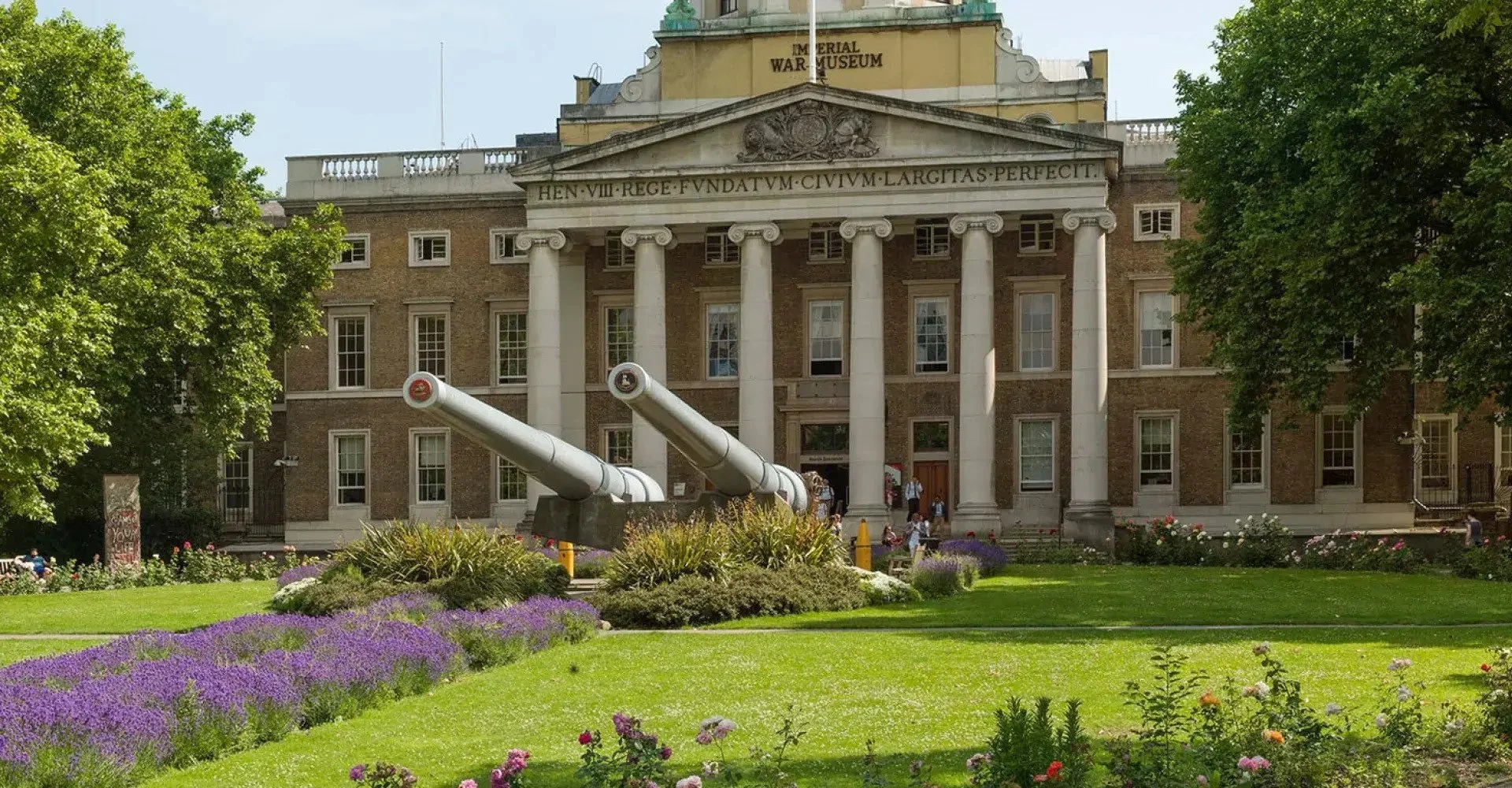
The Imperial War Museum serves as a national museum for Britain. Its main location is in London, complemented by five additional branches across England. Established in 1917 as the Imperial War Museum, its original purpose was to document the civil and military efforts and sacrifices made by the United Kingdom and its Empire during the First World War. Over time, the museum’s scope has broadened to encompass all conflicts involving British or Commonwealth forces since 1914. As of 2012, the museum’s mission is to provide and encourage the study and understanding of the history of modern warfare as well as the “wartime experience”. The IWM as it is now known has its headquarters and primary site is located at Southwark in Central London. The museum is funded by government grants, charitable donations and revenue generated through commercial activity such as retailing, licensing and publishing. General admission is free to IWM London.

Castle Farm is a family business located near the village of Shoreham in West Kent. The Alexander Family have been farming in the Darenth Valley since 1892 when James Alexander transported 17 milking cows from Ayrshire in Scotland and took up residence in this south-eastern part of England. Castle Farm is a busy, working farm comprising of 1,100 acres. It produces such crops as wheat, barley, rapeseed, hops, apples, pumpkins and lavender. It is also home to a grass-fed herd of beef cattle. However, in recent years it has become well know internationally for its lavender crop. Castle Farm began its lavender enterprise in 1998, producing the essential oils associated with the flower. It is now the largest lavender farm in the UK, growing over 110 acres of the flower. Furthermore, it has become quite a tourist attraction with the farm staff running tours during Summer and the height of lavender season.

Riverhill Himalayan Gardens are set in the grounds of Riverhill House, a Grade II listed Queen Anne manor house located on the southern edge of Sevenoaks in Kent, England. Riverhill is well known for its stunning and historic gardens as well as its sweeping vistas over the Weald of Kent. The estate has been the residence of the Rogers family since 1840 who currently operate the gardens as a tourist attraction, along with the house and associated facilities as a wedding venue. Visitors can enjoy a walled garden, rose walk and maze as well as other attractions. There is also an excellent trail around the grounds culminating in a view from the top of the hill over the estate. Riverhill Himalayan Gardens, as a supporter of the Surrey Sculpture Society, regularly showcases a selection of sculptures and art pieces throughout its grounds. All are available for purchase if you have deep pockets.
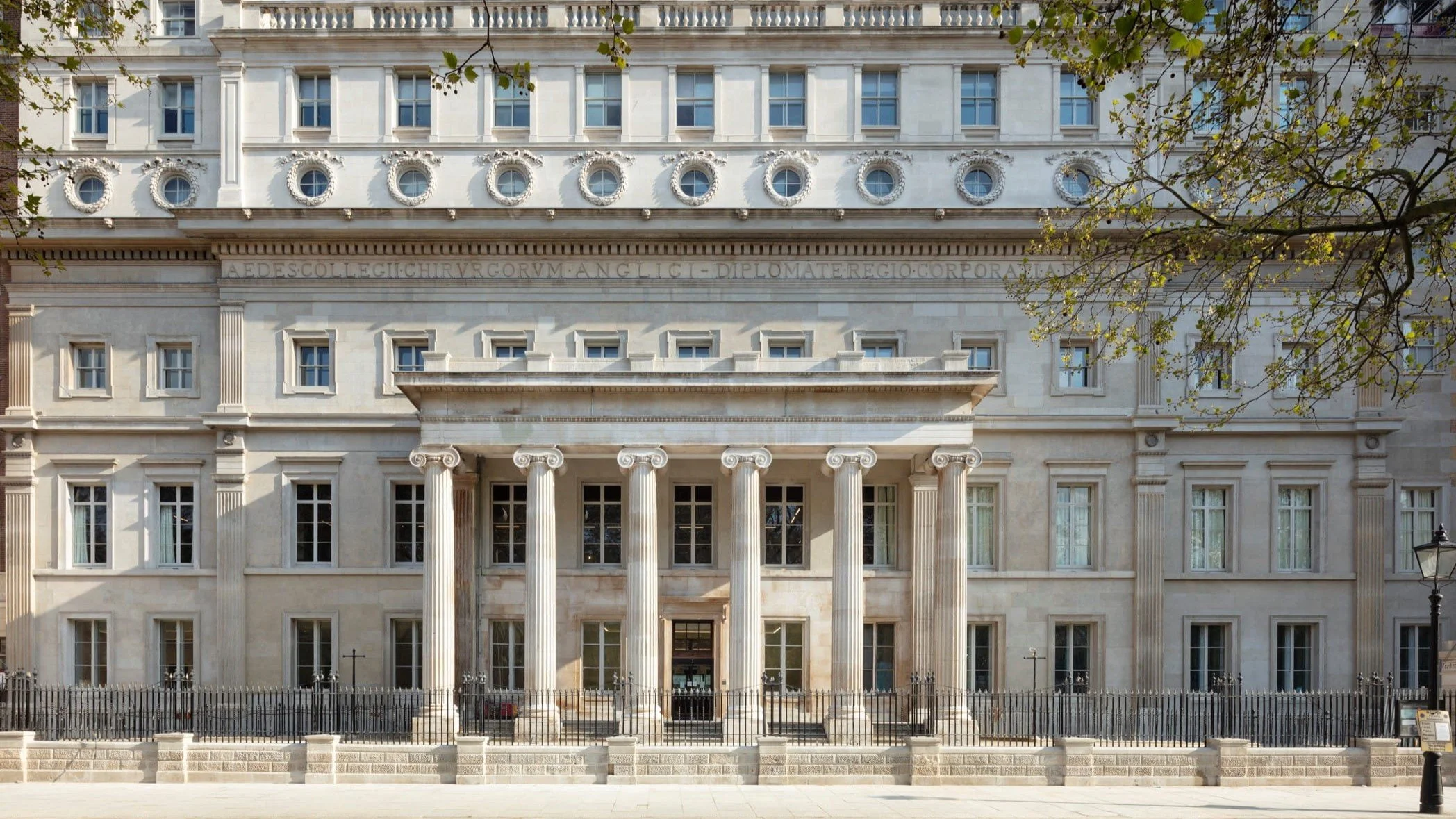
The Hunterian Museum is a museum of anatomical specimens in London, located in the prestigious building of the Royal College of Surgeons of England. The museum is made up primarily of a collection from the 18th century Scottish surgeon John Hunter. Over the years it has since been subsequently supplemented by Odontological material curated by A. E. W. Miles and various natural history exhibits from Richard Owen. In May 2023, the Hunterian Museum reopened following a five-year redevelopment of the Royal College of Surgeons of England’s headquarters at Lincoln’s Inn Fields. The £4.6 million museum project features the exhibition of more than 2,000 anatomical specimens from Hunter’s original collection. In addition to these there are instruments, equipment, models, paintings, and archival materials that document the evolution of surgery from ancient eras to contemporary robot-assisted procedures. The Museum boasts the largest public display of human anatomy in England.

The Crystal Palace Dinosaurs are a collection of sculptures depicting dinosaurs and other extinct species located in Crystal Palace Park, in the London borough of Bromley. These sculptures were originally commissioned in 1852 for display at the Crystal Palace following its relocation from the Great Exhibition held in Hyde Park. They were revealed to the public in 1854 and are the first speculative dinosaur sculptures ever created. Although the models are now considered inaccurate by contemporary standards, they were designed and crafted by Benjamin Waterhouse Hawkins under the scientific guidance of Sir Richard Owen, reflecting the prevailing scientific understanding of the time. The sculptures were designated as Grade II listed buildings in 1973 and underwent extensive restoration in 2002. In 2007 they were elevated to Grade I listed status. As of spring 2026 the dinosaurs are again being renovated as part of a £5 million regeneration of the park.

The benefits of international travel are numerous. These include stress relief, mental health benefits and a chance to escape the drudgery of work. Then there are the cultural aspects that you can immerse yourself in. Going abroad also allows you to learn new language skills as you awkwardly ask for directions. International travel is a chance to make lasting memories and it often gives the traveller a greater appreciation of their own home. At the very least the beer is always better abroad and that is the very definition of “broadening your horizons”. Yet despite all these positive points, there is one unavoidable hassle when comes with travelling abroad. The fact that the country or countries that you’re visiting will invariably use a different electrical plug and socket standard. In an age where a lot of the stuff you bring along with you on holiday needs charging, this can be a very stressful problem to solve.

I thoroughly enjoyed our holiday in Croatia last year and it did much to restore my confidence in travelling. Previously my views on visiting other countries had been greatly influenced by the films Raid on Entebbe and Midnight Express. As January was such a bleak month here in the UK, Mrs P and I decided we couldn’t wait until summer for another holiday and so decided to book something for the end of March. So we visited our local Travel Agents and decided upon a river cruise. We’ve been interested in these since we saw a travel show with Susan Calman. River cruises are a horse of a different colour, compared to sea cruises. They’re a great way to visit cities of note, often bringing you right into the heart of them. River cruise ships are a lot smaller with less passengers than ocean faring vessels. They also attract quite different travellers. Let it suffice to say that a sea cruise doesn’t offer the cultural experience that I am looking for.
There are approximately 4000 parks and green spaces in Greater London. Bexley Borough alone has over 100. Public parks and green spaces are vital to modern cities, providing essential health, environmental and social benefits. They boost physical and mental wellbeing by reducing stress and providing a place for exercise. Furthermore they enhance urban sustainability, mitigate heat, and provide a sustainable environment for a wildlife. Parks are often a venue for social activities and events and as such are an important part of the local community. Going to the park has always been a part of my life. I live next to Old Farm Park in Sidcup and have made use of this recreational space throughout my life. I used visit with my parents in the seventies, when I was a child. Thirty years later my son, father in-law and I would fly kites there. Now I take my grandchildren to Old Farm Park as it now has a playground.
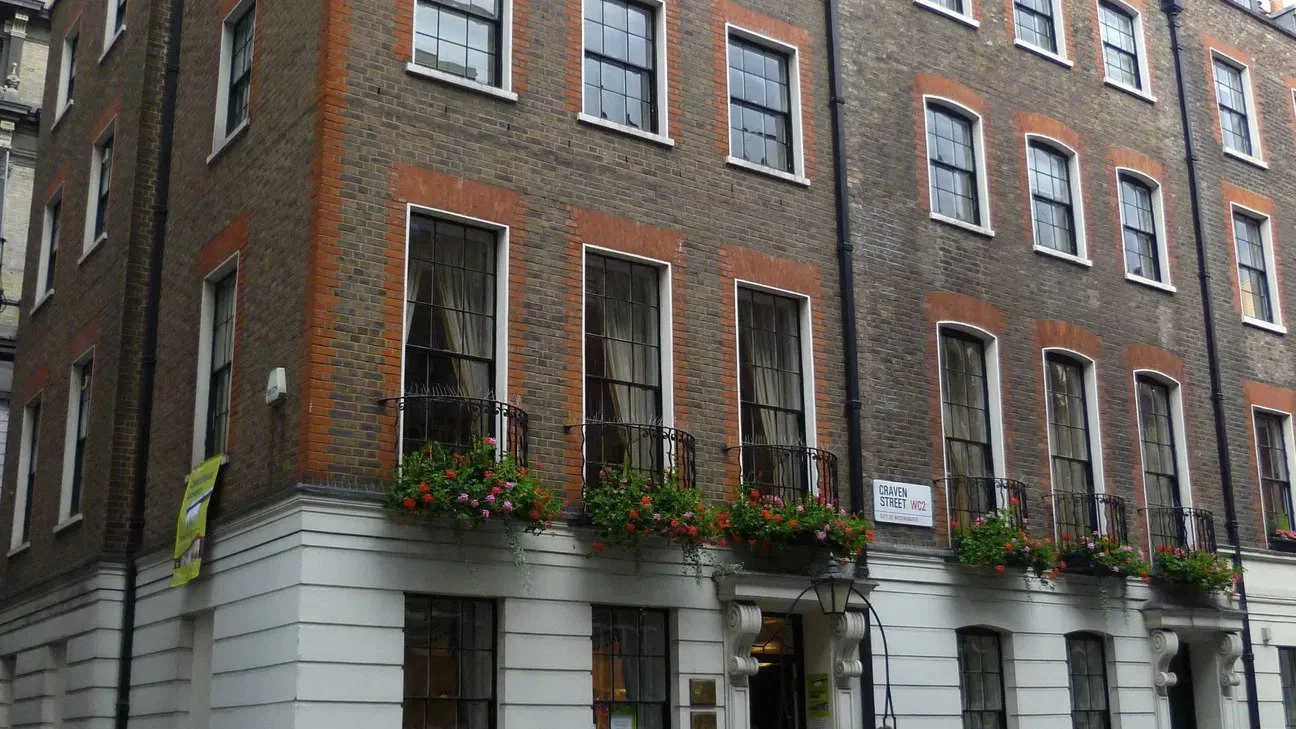
There is no shortage of interesting and good quality museums in London. In many respects tourists and visitors are spoilt for choice. More often than not, it is the most well known institutions such as the British Museum or Victoria and Albert Museum that gain the most attention. However, there are many hidden gems to discover if you take the time to look further. A prime example being The British Optical Association Museum which I had the pleasure of visiting today. The museum’s function is to promote the optometry profession and raise public awareness of its past and ongoing role within society. The museum has a well conserved collection of exhibits and provides a venue for presentations, learning and research services. There is also an excellent tour hosted by museum curator Neil Handley (PhD, AMA, FRSA) in which he gives a concise, interesting and at times a witty overview of the history of optometry in the UK and its current role.

The artillery battery at Capel-le-Ferne was built between 1941 and 1942, following the fall of France, on the orders of Winston Churchill. Located between Dover and Folkestone, the battery consisted of three 8-inch high-performance guns, provided by the Royal Navy. The battery was intended to provide anti-shipping defence in the English Channel. The site was manned by men of the 520 Coast Regiment Royal Artillery. Over the course of World War II, the battery expanded in size, eventually encompassing multiple Nissen huts, several roads and 19 military buildings. Anti aircraft defence was provided by two 40mm Bofors guns. Over the course of the war, the Capel Battery engaged enemy shipping on four separate occasions and also took part in fifteen practice shoots. In 1944, due to the decreased threat, the battery was placed in “care and maintenance”. The guns were removed in 1952 and the building demolished in the early 1980s

There are an estimated 2,500 museums in the UK. This number has grown significantly over time, more than tripling between 1960 and 2017. While it is laudable that so many of these institutions exist, they do not all receive equal interest or publicity. Some museums dominate in their respective fields and drown out others that have a similar theme. With this in mind, I was unaware of the Kent Battle of Britain Museum until a friend recently brought it to my attention. After yesterday’s visit my initial thoughts are what a treasure trove it is. According to the museum’s website it is the world’s largest Battle of Britain collection of memorabilia. This includes planes, uniforms, weapons and related artefacts from over 700 crashed aircraft. Furthermore, the museum tells the story of this battle without bias, choosing to highlight both the historical and the human aspects of the conflict. It is often very poignant.

Stonehenge is so much more than just a neolithic, historical structure of note. It is of great spiritual importance to many, representing ceremonial practices and ancient worship. It is also seen as a conduit to a wider connection to the cosmos. It is after all a celestial calendar, according to one of the theories regarding its purpose. It also has a strong significance in pop culture. Hence, due to its history, symbolism, religious connotations and overall sense of mystery it is a UNESCO World Heritage Site and a globally recognised symbol of ancient Britain. As such, it has always been somewhere that I have wished to visit. Today, as we were relatively nearby in Ringwood and the weather was pleasant, Mrs P and I decided to go to Salisbury and see this iconic structure for ourselves.
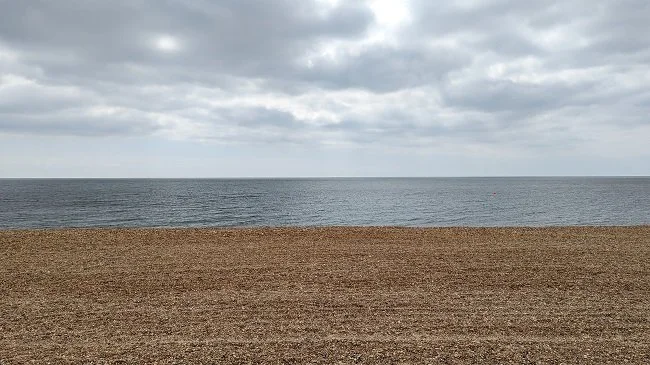
I enjoy visiting the coast. I always have. I find the sight and sounds of the sea very calming and thought provoking. There is something about seeing the ocean stretch out to the horizon and its implied enormity, that gives you a sense of perspective. The UK is a seafaring nation and therefore it is an integral part of our history and national identity. Hence a strong nautical theme and a sense of its importance has bled through into our popular culture. It is therefore quite common for people to have a positive attitude towards the sea and its associated leisure activities. I like to visit the coast at various times of the year and walk along the beach, just listening to the waves, lost in my own thoughts. This is not a hard thing to do in the UK, as no one lives further than 70 miles (113 kilometers) from the coast.
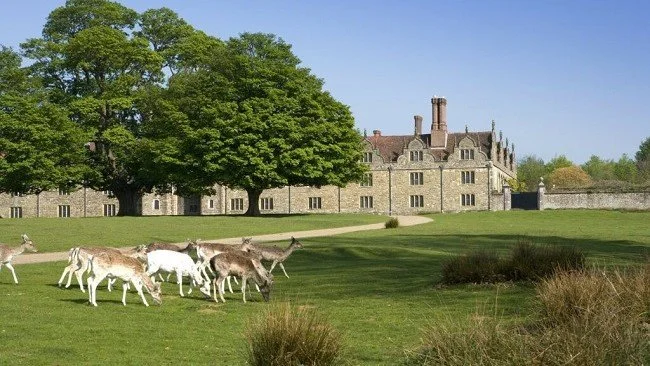
Knole is a country house in England and a former archbishop’s palace that is currently owned by the National Trust. It is located within Knole Park, a 1,000-acre (400-hectare) estate that lies to the south-east of Sevenoaks in west Kent. The existing structure of the house dates back to the mid-15th century, although there were significant expansions in the 16th and particularly in the early 17th centuries. Its Grade I listing signifies its combination of late-medieval to Stuart architectural styles. This is especially evident in its central façade and state rooms. In 2019, a comprehensive conservation initiative titled “Inspired by Knole” was completed to restore and enhance the buildings’ structures. This was beneficial to the preservation of its significant collections. The adjacent deer park has also endured since 1600.

Mrs P and I travelled to Croatia on Friday 13th June for our summer holiday. We spent one week in Makarska, which is located on the Dalmatian coast. My last international holiday was to Malta in 2004. Since then we have done a lot of travelling in the UK and Mrs P has vacationed abroad with other family members. However, she stated last September that she wanted to go “somewhere warm” for our next holiday. So this trip was booked and has been “something to look forward to”, or a source of stress slowly inching closer, depending upon your perspective. In many respects this holiday has been a big deal for me. I don’t enjoy travelling at all with all its accompanying logistical, bureaucratic and “people” issues. However, I have no problem with being elsewhere. I eagerly await teleportation technology to become commonplace. Once I arrived at our hotel, I quickly switched to holiday mode and I am happy to confirm that I thoroughly enjoyed myself.

Emmetts Garden is an Edwardian estate situated on Ide Hill, close to Sevenoaks in Kent, UK. After a long and interesting history it is currently under the stewardship of the National Trust. Originally open farmland, the existing house was constructed in1860. The term “emmett” is a local dialect for ant, referencing the large anthills that populated the area until the 1950s. In 1890, the estate was acquired by Frederic Lubbock, a banker with a keen interest in horticulture. His elder brother, John Lubbock, 1st Baron Avebury, was a renowned authority on ants, which may have influenced Frederic's decision to purchase the estate. Today Emmetts Garden is open to the public and features several “hortus conclusus” (walled gardens) and a hillside trail that is famous for its Bluebells in the spring.

Damerham is a quaint rural village and civil parish located in the New Forest district of Hampshire, England. It is close to the market town of Fordingbridge. Damerham is distinguished by significant Neolithic and Bronze Age burial mounds. Historically, it was home to an Anglo-Saxon religious community and was referenced in the will of Alfred the Great, as it was at that time part of the royal estate. At the time of the Domesday Book in 1086, Damerham was recognized as a prominent settlement under the ownership of Glastonbury Abbey. It was mainly farms and agrarian small holdings. Today, the village still features a riverside mill and the church of Saint George date’s back to the Norman period. There is a church hall that hosts numerous local, seasonal events.

Bodiam Castle is a 14th-century moated castle located near Robertsbridge in East Sussex, England. It was built in 1385 by Sir Edward Dalyngrigge, a former knight of King Edward III. The castle’s primary purpose was to defend the local area against possible French invasion during the Hundred Years' War. Bodiam Castle has a quadrangular design and does not have a keep. All the various chambers and rooms were built adjacent to the outer defensive walls. The four corners and main entrance have towers, all of which feature crenellations. A substantial moat surrounds the castle, which served as a home for the Dalyngrigge family, as well as a seat of power to the manor of Bodiam. The castle remained within the Dalyngrigge family until the line became extinct. It remained a place of strategic importance during the War of the Roses and the English Civil War. It is currently owned and maintained by The National Trust.

Today I went on an impromptu visit to Brompton Cemetery in West London. Established in 1837, the West of London and Westminster Cemetery (as it was originally known) is a private cemetery initially created as a business venture to capitalise upon the shortage of cemeteries within London. It also sought to cater to the prevailing culture of opulent Victorian funeral rites. However, after proving non profitable, the cemetery was bought by the UK government. It was subsequently incorporated into Crown Property and managed by The Royal Parks. It is one of Britain’s oldest and most distinguished garden cemeteries. There are currently 35,000 monuments, ranging from simple headstones to impressive mausolea. It is home to more than 205,000 resting places. The cemetery is also a haven for flora and fauna, providing a substantial semi rural environment amid urban central London.

Christmas Tree Farm is a petting zoo, outside the village of Downe in the county of Kent. Despite its rural setting, it is actually only 15 miles from London, making it an ideal visit, as part of a day. The farm is home to a wide selection of domestic farm animals (and a few more exotic ones), all of which can be fed, stroked and lavished with attention by visitors. During the winter months, Christmas Tree Farm hosts Santa’s Grotto and as the name suggests is the place to find the perfect Christmas tree for your home. Entry prices are very reasonable, costing £6 per adult and £4 for children aged between 2 and 16 years old. Buckets of animal feed of varying size are also available for a small fee. There is a leisurely trail around the farm where the various animals are housed in pens and out buildings. There is also a Tea Garden where refreshments are available.
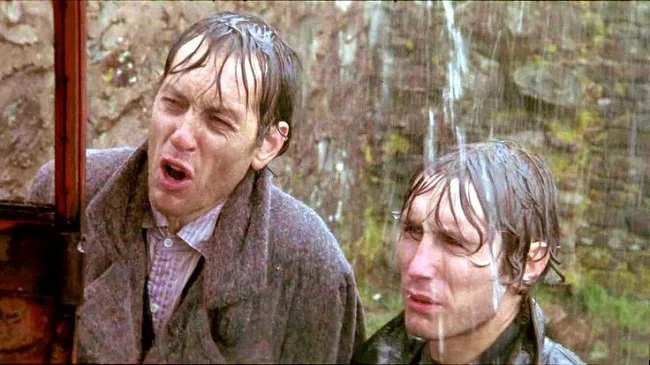
In 1939 legislation was passed in the UK so that all employees had one week’s annual paid holiday per year. By the 1950s this had become two weeks and by the 1980s most people had at least 4 weeks of annual holiday. On top of this paid leave allocation, the UK currently has 8 bank holidays which provides further time off for employees. This culture of increasing amounts of annual leave also broadly coincided with air travel becoming more accessible. The first UK passenger jet service began in 1952. However, its cost excluded most people. However, as larger airliners with increased range became available, cheaper foreign holidays became more and more economically viable. European holidays became a reality in the 1960s and 1970s. By the 1980s long-distance holidays to other continents became ubiquitous and the package holiday became king. It is also worth noting that the Channel Tunnel opened in 1994, making car travel from Britain to Europe easier and more popular.

Today I had the pleasure of visiting the Whitstable Museum (or to give its full name Whitstable Community Museum and Gallery). This is a fine example of a local heritage centre that curates and displays artefacts and records that reflect the history and culture of the surrounding area. The museum located in Whitstable, Kent, is home to one of the world's oldest steam engines, as well as historical diving equipment that was developed locally. The history of the local oyster trade which has been an integral part of the community for centuries is also a key feature. Established in 1985, the museum was reopened in 2015 following a major refurbishment. There is also an art gallery featuring the paintings by local artists and artworks on loan from an international network of galleries.

Eltham Palace, located in South East London, was the childhood home of King Henry VIII in 1499. It was later used as a royal nursery for the infant Princess Elizabeth, born on 7th September 1533. It sports sumptuous grounds and ornamental gardens and was famous for its game hunting during the Tudor and Elizabethan periods. In the 1930s’ the property was owned by the Courtauld family, who built a sumptuous Art Deco style mansion and redeveloped the grounds. Today the entire property is owned and managed by English Heritage who have extensively restored much of the estate. It is therefore very fitting that this illustrious venue annually plays host to the Legendary Medieval Joust, during the summer months. Two days of historical pageantry, re-enactments and events for the entire family to enjoy. I last attended in 2015, so it was a welcome pleasure to return again yesterday.

Morph’s Epic Art Adventure in London is a step-free art trail and tourist attraction featuring the iconic animated character Morph. It is hosted by charitable organisation Whizz-Kidz, global event producers Wild in Art and Aardman. The trail features 56 super-sized sculptures of the much-loved children’s TV character, which are set among various iconic London landmarks including St Pauls, Tate Modern, Tower of London, Shakespeare’s Globe and Borough Market. It is a free public art trail and tourist attraction, designed by a variety of artists to excite and inspire people of all ages, whilst increasing public awareness about the need for young wheelchair users to be mobile, enabled and included in society. Morph’s Epic Art Adventure in London runs from June 19th until August 20th 2023.

Regardless of whether you deem the IFS Cloud Cable Car a white elephant, a political folly or just a mistake in terms of tourism, it cannot be denied that the view it provides over South East London is impressive. At a height of 90 metres (300 feet), on a bright and sunny day you can see from City Airport to Canary Wharf. Located at Greenwich Peninsula, the IFS Cloud Cable Car (as it is now called) opened in June 2012. It was initially promoted as a viable form of public transport across the Thames, linking North Greenwich and Royal Victoria stations. In October 2012, nearly 100,000 journeys were made. However, after the London Olympics, passenger rates fell and since then IFS Cloud Cable Car has become more of a tourist attraction, rather than an integral means of commuting.
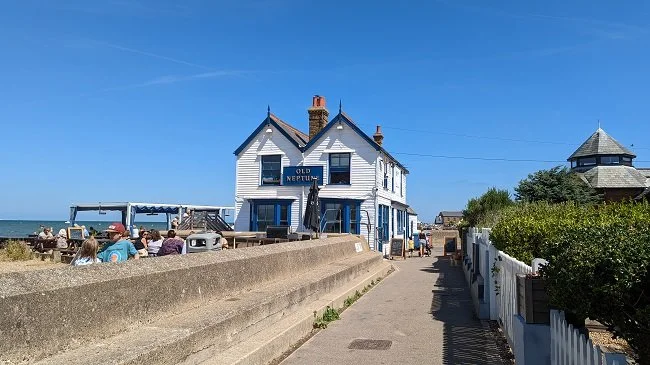
To my surprise I found myself out and about today undertaking another day trip. This time we headed back to the sea and visited Whitstable, a town on the north coast of Kent adjoining the Greater Thames Estuary. It’s 5 miles (8 kilometres) north of Canterbury and 2 miles (3 kilometres) west of Herne Bay. The town was originally recorded in the Domesday Book of 1086, under the name Witenestaple, meaning "the meeting place of the white post", a reference to a local landmark. By the late middle ages Whitstable had become a centre of Thames Estuary fishing, specifically for oysters. Today, the main activities at the harbour are fishing and processing, cargo handling and boat maintenance. The town has shingle/sandy beaches adjacent to the harbour, where swimming and water sports are popular. Whitstable Castle is situated on the border of Whitstable and off the coast is Kentish Flats offshore wind farm, consisting of 30 wind turbines.
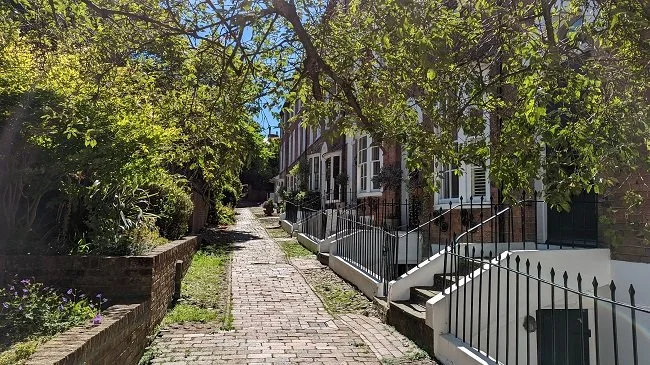
Royal Tunbridge Wells is a town in the county of Kent, 30 miles (50 kilometres) southeast of central London. It is situated on the border with East Sussex on the northern edge of the High Weald. The local sandstone geology is synonymous with a rugged landscape due to erosion and weathering. The town itself was a spa during the Restoration and became a very fashionable resort in the middle of the 18th century. Socialites such as Beau Nash helped make the resort popular when the Pantiles and its chalybeate spring, began attracting visitors who came to “take the waters”. Despite the decline in spa towns after sea bathing grew in popularity, Royal Tunbridge Wells has remained a tourist resort. Today, much of the area's income is generated by tourism. The town has an equitable temperate maritime climate.
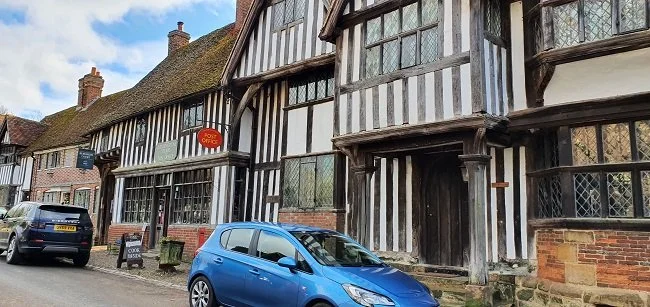
With January already behind us, Mrs P and I decided it was high time we took our first day trip of 2022. So yesterday I spent some time looking online at details of various National Trust sites within an hour or so drive from our home. I also looked at similar places of historical note that are run by other bodies. Sadly, many are either partially or totally closed for the present. It would appear that from January to March many of these sorts of tourist attractions spend time repairing, refurbishing and preparing for forthcoming events. Grounds also have to be maintained. Hence, we were somewhat lacking in choice for suitable destinations. However, as the weather forecast was mild, today we opted to visit the village of Chiddingstone so we could walk in the grounds of the local castle and along the various footpaths in the area.
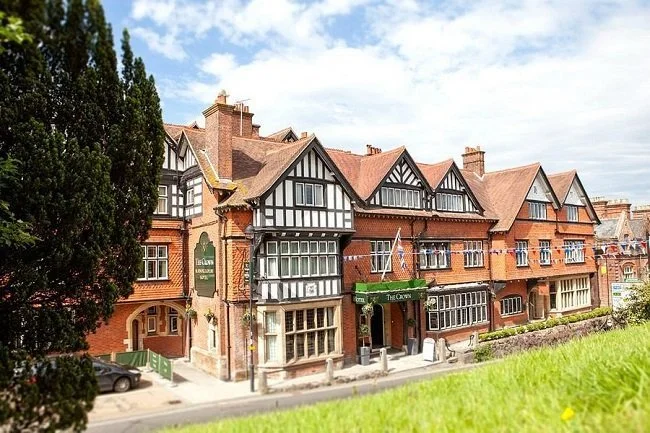
For me, staying in a hotel is always an adventure, as it mainly happens when I’m taking a holiday or a short weekend break. I suspect that travelling habitually for business reasons probably puts a different complexion on the process. It may well dictate what sort of hotels you stay in. More than likely functionality, location and cost trump other more self indulgent factors such as aesthetic and ambience. Mercifully, travel has never been a major part of my working life and so hotels are still a source of excitement as they’re associated with fine meals, interesting scenery and good company. However, such hotels tend to come at a price as they’re catering more for tourism rather than business travel and therefore stays are not a regular occurrence. However, I had the pleasure of a short visit this weekend.
NHS Bowel Cancer Test Kit
Being a 58 year old man, I welcome any undertaking which can potentially improve my health. One such thing is proactive screening and testing. The UK National Health Service has started doing a lot more of this in recent years, mainly because diagnosing a problem and treating it early is far more efficient and cost effective than retroactive action. Hence this policy and my age is why I was recently sent a NHS Bowel Cancer Test Kit via the post. This screening service takes place every two years for people aged 50 to 74 in the UK. The kit is very quick and simple to use. A sample of your stool is sent via a prepaid return envelope for testing and the entire process is free of charge. Upon receipt, the laboratory test determines whether there is any blood present in your stool, which is a potential indicator of bowel cancer. If detected, an early diagnosis greatly improves any subsequent treatment outcomes.
Being a 58 year old man, I welcome any undertaking which can potentially improve my health. One such thing is proactive screening and testing. The UK National Health Service has started doing a lot more of this in recent years, mainly because diagnosing a problem and treating it early is far more efficient and cost effective than retroactive action. Hence this policy and my age is why I was recently sent a NHS Bowel Cancer Test Kit via the post. This screening service takes place every two years for people aged 50 to 74 in the UK. The kit is very quick and simple to use. A sample of your stool is sent via a prepaid return envelope for testing and the entire process is free of charge. Upon receipt, the laboratory test determines whether there is any blood present in your stool, which is a potential indicator of bowel cancer. If detected, an early diagnosis greatly improves any subsequent treatment outcomes.
Bowel cancer is the fourth most common cancer in the UK. Almost 44,000 people are diagnosed with bowel cancer every year in the UK. More than nine out of ten new cases (94%) are diagnosed in people over the age of 50. But bowel cancer can affect anyone of any age. More than 2,600 new cases are diagnosed in people under the age of 50 every year. However, bowel cancer is treatable and curable especially if diagnosed early. Nearly everyone survives bowel cancer if diagnosed at the earliest stage. However this drops significantly as the disease develops. Early diagnosis saves lives. More than 16,800 people die from bowel cancer in the UK every year. But the number of people dying of bowel cancer has been falling since the 1970s. This is due to earlier diagnosis, better treatment options and the start of the National Bowel Cancer Screening Programme. Hence my willingness to take part in this screening.
The NHS Bowel Cancer Test Kit consists of a sample bottle which has an integral stick built into the lid. You collect a small amount of your stool on the stick and securely seal it in the bottle. A diagram shows you exactly how much you need to collect. The sample bottle is then placed in a robust return envelope and posted back to your local screening centre. The results are sent back to participants usually within two weeks. Most people return negative test results and are invited to be screened again in two years time. If blood is detected in the stool sample, this does not necessarily indicate cancer. However, further tests are usually carried out, such as a colonoscopy to investigate the cause of its presence. Overall, the NHS Bowel Cancer Test Kit is a discreet and efficient means of testing for bowel cancer. It proactively save lives which is a good thing. Hence if you live in the UK and are eligible for such a test, don’t pass up on the opportunity
Being a 58 year old man, I welcome any undertaking which can potentially improve my health. One such thing is proactive screening and testing. The UK National Health Service has started doing a lot more of this in recent years, mainly because diagnosing a problem and treating it early is far more efficient and cost effective than retroactive action. Hence this policy and my age is why I was recently sent a NHS Bowel Cancer Test Kit via the post. This screening service takes place every two years for people aged 50 to 74 in the UK. The kit is very quick and simple to use. A sample of your stool is sent via a prepaid return envelope for testing and the entire process is free of charge. Upon receipt, the laboratory test determines whether there is any blood present in your stool, which is a potential indicator of bowel cancer. If detected, an early diagnosis greatly improves any subsequent treatment outcomes.
Last Wednesday, I woke up with what I thought to be a crick in my neck on the left hand side. I assumed this was simply due to sleeping awkwardly and so I self medicated with some non-prescription pain relief and judicious use of a heat pad. Unfortunately, the problem has persisted and in the last 24 hours it has become much worse. I awoke this morning at about 5:00 AM and as I sat up in bed, an intense pain ran up the left side of my neck and behind my ear. It took several attempts for me to get out of bed because if I turned my head in either direction or inclined my chin, the pain would again run up the side of my neck. Sitting down, getting up and raising my arms caused similar results. While dressing, I attempted to pull a t-shirt over my head. The pain in my neck on this occasion was so severe that I yelled out loud and nearly blacked out.
This morning I had an appointment at the Cardiology Outpatients clinic at St. Thomas’ Hospital, in Southwark, London. The hospital, located across the Thames from the Houses of Parliament, is easily accessible from three nearby tube stations (subway), one major train station and numerous buses. As well as having an extensive A&E department, St. Thomas’ also provides a broad range of healthcare services such as maternal medicine, gastrointestinal surgery, ophthalmology, pain medicine and plastic surgery. The hospital specialises in cardiovascular care and was the first to perform a mitral valve replacement on a beating heart. It is also home to nursing and surgical colleges. The current site has served community needs since 1871. The hospital has existed in some shape or form since the 12th century. There is a pleasant ornamental garden outside the main entrance that overlooks the river and Lambeth bridge.

Accidents will happen, as Elvis Costello astutely pointed out. Furthermore they often occur in the most innocuous of fashions, as I shall now tell. Myself and Mrs P were over our local park today with our two and a half year old grandson Oscar. It is located directly behind our home and has a small children’s play area as well as various adult exercise equipment. One of these items is a low, wooden ramp whose highest end is no more than eighteen inches off the ground. Oscar likes to climb on this, run to the end and jump. Naturally, he did this today when we visited. Mrs P then followed suit (at his request) and stepped off onto the soft, child safe surface. Her right knee gave way and she fell over. Despite the short distance and the soft surface, the fall was sufficient to injure her knee, as there was an audible crack. She subsequently could not get up on her own and I had to assist her so she could sit on the aforementioned ramp.

I weighed myself this morning before writing this post. As of 6:05 AM today I weigh 188 lbs (13 stone 6 lbs or 85.3 kg). To give this data some sort of context I am 5’11 tall and 54 years old. Prior to my more recent weight gain, I have had an athletic build for most of my life. During my twenties and thirties, while I was still a smoker, my weight stayed around 133 lbs. When I quit my 30 a day cigarette habit I gained about 14 lbs or so over the following months and then stayed at that weight for a further decade. Even with the onset of middle age my weight has not been excessive and my build has accommodated any gain quite well. It has only been over the last 5 years that it has increased to a level that I consider to be neither flattering or healthy. This was brought home to me a few days ago when I saw my reflection in a mirror while on holiday. The incident has given me pause for thought and galvanised me to take action.

Very few people had a “good” 2020. I won’t bore you with a list of my personal woes as I’m sure you have plenty of your own. Plus everything is relative. We shouldn’t compare apples with oranges. Like many people, I now find myself fatigued by the ongoing global events and the conspicuous absence of normality. I like to consider myself quite a robust person. I have endured difficult times in the past and have come through them by remaining calm and focused. However, the nebulous and seemingly never ending nature of the global pandemic is extremely wearing. Let it suffice to say that I feel singularly unmotivated at present. Writing, which is usually a great pleasure, is currently a chore. I am also troubled by something that I personally find most unusual. A sense of sadness. And it doesn’t seem to want to go away.
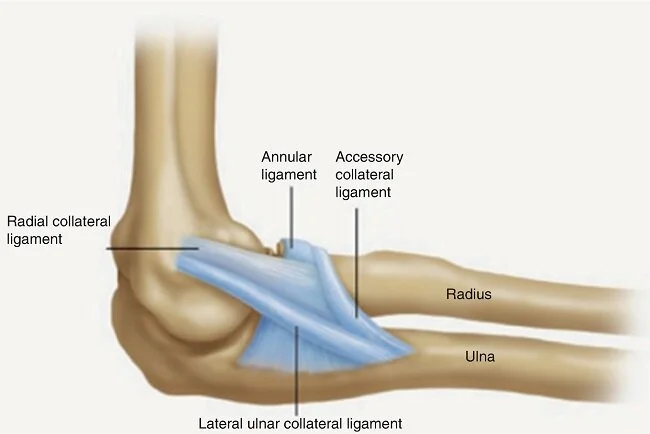
To begin with, I am not claiming to be living with “chronic” pain in this blog post. I am fully aware of the definition of the term and am fortunate that my current injury does not force me to endure such levels of discomfort. However, my recent experience has provided me with a new insight into something that most of us only notionally know about and have little or no true understanding. I believe I appreciate my Mother’s daily circumstances a lot better now (as well as several friends and colleagues who also live with chronic pain) and finally understand how debilitating both physically and mentally living in constant and acute pain can be. Hence I decided to write this piece. To share my experience with an injury that continuously hurts and to help inform others about the realities of living with chronic pain. Sometimes you need to experience something first hand to fully get the measure of it.

It’s hard to write about ones own personal health issues and how one addresses them without coming across as smug, sanctimonious or oblivious to the fact that it’s all relative. I wrote back in early March about how I was going to try and get my “house in order” by losing weight and also undertaking the NHS Health Check. A six weeks on and progress is being made. However, I would just like to re-iterate that what has proven to work for me, may not do so for others. We all have our own unique relationship with our own health and therefore there is a need to find ways that work for us as individuals. Therefore my dietary regime which seems some what easy to me, may prove to be far too draconian for others. Similarly my exercise targets are also suited to my temperament and limitations. But I hope that by sharing my progress I can at least provide some encouragement to others.

Personal health as a concept, refers to your overall well-being both physically and mentally. It is about taking charge of your health by making a conscious decision to improve and maintain it. It not only refers to your physical state but the respective wellness of the emotional, intellectual and even spiritual aspects of your life. Sadly it is something that many of us are not very good at dealing with or choose to ignore. All too often good intentions get sidelined by the realities of life. Sadly, physical and mental issues are usually only addressed after something bad has occurred. Furthermore, much of the most basic and practical information needed to improve our personal health is drowned out by the white noise of fads, quackery and those seeking to sell you a “solution”.

Today I visited Emmetts Garden in Sevenoaks. The Edwardian estate located at Ide Hill and is now owned by the National Trust for Places of Historic Interest or Natural Beauty. The garden, which covers an area of about six acres, is situated on a 600-foot sandstone ridge, overlooking the Weald. It is one of the highest points in Kent, offering an expansive view of the North Downs. The garden was laid out in the late 19th century and was influenced by William Robinson. It contains many exotic rare trees and shrubs from across the world. You can explore the rose and rock gardens, take in the views as well as enjoy flowers and shrubs in spring. In autumn visitors can enjoy the vibrant colours brought about by the changing of the season. The main attraction at this time of year are the Bluebells.

Gaming and personal health at first glance appear to be mutually exclusive subjects. News coverage about these issues more often than not implies that gaming is detrimental to both ones physical and mental well-being. Apart from titles that utilise motion sensing devices such as the Kinnect and require the player to physically move, gaming is a sedentary pastime. Combine that with a society that has an already broken relationship with food and their own personal health in general and there is scope for a wealth of medical problems.
A Lifetime of Learning
I like learning things. I always have. During my middle school years I thought I was a mediocre student and often I wouldn’t apply myself. According to an old school report this was because I was “too busy indulging in Tomfoolery”. Then I had the positive experience of meeting an exceptional teacher. Their lessons were the highlight of the week as they had an ability to make the subject matter, Classical History, utterly compelling and relevant. The teacher in question also treated us like adults and the class benefitted from only having five pupils. This really brought home to me that a lot of disinterest and underachievement in education is linked to the paucity of some teachers. One bad teacher can undermine the good work that all the others can do. Perhaps it has improved nowadays?
I like learning things. I always have. During my middle school years I thought I was a mediocre student and often I wouldn’t apply myself. According to an old school report this was because I was “too busy indulging in Tomfoolery”. Then I had the positive experience of meeting an exceptional teacher. Their lessons were the highlight of the week as they had an ability to make the subject matter, Classical History, utterly compelling and relevant. The teacher in question also treated us like adults and the class benefitted from only having five pupils. This really brought home to me that a lot of disinterest and underachievement in education is linked to the paucity of some teachers. One bad teacher can undermine the good work that all the others can do. Perhaps it has improved nowadays?
Since leaving school, over forty years ago, I have adopted the philosophy that you are presented with opportunities to learn continuously throughout life and it is incumbent upon you to make a conscious choice whether you choose to do so or not. For me, there is no shame in not knowing something. We all have gaps in our knowledge by default. Hence there is nothing wrong with saying “I don’t know” and asking for an explanation. In fact I think it should be encouraged more. However, I consider wilful ignorance to be an egregious act of self sabotage. Especially in an age where information is so freely available. I also eschew the cultural pushback of recent years against “knowledge” and “expertise” and the resentment that accompanies it. Ignorance and indifference are exalted and seen as a badge of honour.
So what do I like to know, learn about and understand? Pretty much anything. Naturally I have specific subjects and fields that hold more interest to me than others but overall I admire skills and those who have taken the time to acquire expertise in a discipline. Be it a plumber, a telecoms engineer or a heart surgeon. Furthermore, all people know things. Skills, hacks and information that they have acquired during the course of their lives. Knowledge can come from some interesting quarters sometimes. All of which raises a question that I’m frequently asked. “Why do you want to know”? Because I find a lot of things interesting. There is also a value in knowledge. It helps with practical problem solving, it makes you more employable and it offers a degree of protection from the iniquities of life. Knowledge is power, to a degree.
I read a lot. Books, magazines and online content. If I find myself waiting at a bus stop or travelling, I will fill that time by reading. If I’m listening to a podcast or perusing a website and a phrase or subject comes up that I’m not familiar with, then I’ll look it up. As well as learning in the traditional sense, I like to keep up with popular culture. Which artists are currently in vogue, what TV shows are being talked about and what are the latest internet memes. I find my granddaughters are an invaluable window into this world. Being generation alpha, they are immersed in internet culture. I have learned from them that a lot of what gains traction online has no real meaning. It is often about the fun of someone creating something and participating in it as it spreads. It’s often more about belonging rather than “we do this because [insert reason here]”. I find that a fascinating concept.
Something that comes apparent with age is that learning takes longer. Especially with complex subjects. I listen to a lot of non-fiction audiobooks because the slower pace of narrated content allows me time to absorb information. I can also rewind and listen again to difficult concepts. Philosophical subjects are becoming a struggle of late as I find some too abstract. Similarly I find a lot of theoretical physics very hard to conceptualise. I find that these subjects often take me to the limits of my understanding. I am aware that Carl Sagan argued that all ideas and concepts should be able to be explained to the wider public but I think that some subjects that exist primarily as abstractions are too hard to simplify and convey as a simple metaphor. Fortunately, I am not alone in struggling with certain fields of knowledge.
I also have an intellectual blind spot when it comes to subjects and concepts that are driven by feelings and other subjective, less tangible factors. Religion, faith and spirituality are immediate examples. I understand the principles but as I’ve never had that personal connection or anything remotely close to what can be described as a religious experience, I find these matters to be nebulous and mainly “thought experiments”. I feel similarly ambivalent towards politics that are founded on feelings rather than specific ideology or policy. I’ll even go so far as to admit to being a little sceptical about professional formal criticism, especially of the arts. Yes there is logical scope to critique such things as technique and presentation. However, aesthetics and how something makes you feel is highly subjective. Are such things knowledge?
Finally, let us address one of the biggest problems that blights our current political and social discourse. Something that learning, knowledge and intellectual rigour has difficulty addressing. The conflation of opinion with fact and personal perspective being seen as universal. There was a time when quashing a factually incorrect or spurious narrative with factually correct information would definitively draw a line under it. Sadly due to cultural change and the internet, we now find ourselves in a position where lies, factual inaccuracies and abject stupidity simply won’t back down. Criticism is seen as a personal attack. Facts and data are oppression and elitism. The reality is that you can’t reason someone out of a position that they haven’t reasoned themselves into. In such times, learning is something that should be embraced, not just out of curiosity but necessity. As Sam Kinison wisely stated “stupid never sleeps”.
When I was a child, I quickly learned never to say within earshot of my parents that I was bored. It was quickly met with a response along the lines of “an intelligent mind is never bored” or more worryingly “if you’ve got nothing to do, I’ll find you something” which meant a chore or Herculean task. Being a child of the seventies and due to my parents fundamentalist approach to declarations of boredom, I quickly discovered numerous ways to occupy myself. The default solution was a book or comic. I always liked reading as a child and had plenty of books to choose from. I also had numerous of comics as an alternative to a hefty tome. I would also draw and paint. My father use to work during the summer holidays as a design draftsman and as a result, we always had plenty of paper in our house. Then of course there were toys and such like. Hence I learned the art of keeping myself busy.
When I first started this series of posts back in 2023, they were originally intended to provide a useful overview into UK (mainly British) slang. US slang is ubiquitous globally due to the pervasive nature of American culture. Hence most people have a good grasp of its nuances. However, the proverbial door does not swing both ways. Hence most people will watch British TV dramas or read popular novels and can be quite bamboozled by some of the phrases that are used. That is what I was trying to address. However, over time this entire enterprise now reads like a some sort of Guy Ritchie film with Colin as the anti-hero. That notwithstanding, hopefully the list of slang phrases below will prove useful to know, if you ever visit the UK or tour around London. As ever I have given an example of their respective use. Feel free to ask questions if anything needs clarifying, or you wish to leave a comment with examples of you’re own national and regional slang.
As I write this post, the temperature in Greater London is 33°C (91.4°F). This has become a regular occurrence since the middle of May onwards. High temperatures are fine when you’re on holiday mainly because you’re off work and at your leisure. You don’t have to perform the usual daily task that life requires of you such as work, shop, cook, clean etc. Furthermore, if you’re on vacation you’ll probably be staying at a resort or hotel that is fully air conditioned and you’re dressed accordingly. However, if you’re still performing you’re daily routine such as commuting to work and spending time in an office that wasn’t built with such external temperatures in mind, then 33°C is frankly a pain in the ass. Oh and if you’re one of those people who always respond to discussions such as this with “well I live in Riyadh and it’s 40°C here”, please sod off. You live in a desert which is dumb to begin with. Plus this is not a commensurate comparison. Temperatures are rising in the UK. It’s always hot in Saudi Arabia.
If you visit the websites for such UK tabloid newspapers as the Daily Express or the Daily Mail you will no doubt encounter prominent stories about Megan Markle, Nigel Farage and “immigrants”. If these two august institutions are short of column inches, they’ll run a piece about how some former celebrity has had the unmitigated gall and temerity to get old. I mean WTF? How dare they do what human beings are genetically disposed to do. It’s outrageous. Similarly, head over to the Unherd website and you’ll find foam flecked tirades regarding spurious points of contention over dubious subjects. Often the topic being harangued is incredibly niche and I’ve never heard of it before or even considered it being a thing. These sort of talking points are not about informing, debating and most certainly aren’t about thinking. They exist to provoke reactions.
Before we start, let me explain to those readers outside of the UK, the significance of a Dairy Milk Freddo chocolate bar and its relevance to this post. The “Freddo” is an 18g (0.63 oz) chocolate bar, in the shape of an anthropomorphic frog. When it was re-launched by Cadbury in 1990 (it had previously been manufactured by an Australian confectionery company in the seventies), it was priced at 10p (£0.10). It remained at that price until 2005 when a 1p to 2p increase began to occur each year. By 2016 Freddos were retailing at 25p. However, the following year the price “lept” to 30p with an increase that was double its usual yearly rise. This led to public outrage across social media. Since then the price of a Freddo has waxed and waned. Tesco supermarket reduced the price back to 10p as part of their centenary celebrations. The post COVID price in 2022 hit 49p. At present, the average price of a Freddo in the UK is somewhere around 35p.
Over the last 10 years, I’ve written several blog posts about my personal working experiences and my career, such as it was. I touched upon working specifically in IT and how that industry changed over time, both technically and in the way that other people perceived it. I have also given my thoughts on the social dynamics of the modern work environment and the way we interact with our colleagues and employers. That is another area that has changed dramatically. Naturally my retirement from full time work has been written about, as it is such a radical change in one’s life. Especially if you’re the sort of person who is clearly defined by their job, which I personally was not. This time, I want to share a few thoughts I have about what I miss about “going to work” and “having a job”. I’m not sure if “miss” is the right word. Perhaps it is more a question of things being absent. Either way, there are some aspects of being employed that I use to enjoy or at least found beneficial that I now no longer experience.
UK Prime Minister, Sir Keir Starmer has resigned and intends to leave office before the parliamentary summer recess. By then Andy Burnham will more than likely be voted leader of the Labour Party and by default will become the new Prime Minister. Due to the current size of the incumbent Government’s majority, there is no pressing reason for a General Election that the UK’s right wing tabloid press is currently calling for. Whether this provides the Government with the reset they’re hoping for when Parliament reconvenes in autumn remains to be seen. With seven Prime Ministers coming and going in a decade, there are some serious questions to be asked about the current state of UK politics. However, the mechanics of contemporary politics, the decline of clearly defined ideologies and the people that seek elected office to be our leaders are only half of the problem. The other major impediment to the UK’s democracy functioning properly is the electorate.
The UK Government has formerly announced its intention to ban under-16s from using social media. This is due to increasing public pressure that “something must be done” about the perceived iniquities of many online platforms. However, as with most complex social problems of this nature, no one has any clear or practical ideas as to what that “something” is. It remains a nebulous, non-specific panacea and clearly someone else’s job to identify and implement. As ever, why choose a nuanced and multifaceted solution to a complex problem, when it is far easier and politically expedient to just “ban” something. The former requires effort and a degree of thinking. If such an approach fails it also means that those who came up with it now carry the can. The latter dumps the problem in the lap of various third parties, who can then be conveniently blamed when the ill conceived policy fails.
Every Thursday, Mrs P volunteers at a food bank that is run from a local church; Avery Hill Christian Fellowship. Today there was a shortage of staff so I agreed to help out. It proved to be an equitable arrangement as she collated the various orders and I packed the bags and took them to the respective clients. The food bank itself is organised and administered by the Trussell Trust, a UK based NGO and charity providing emergency food and support to people locked in poverty. It is open for 2 to 3 hours a week depending upon demand. During today’s session we served just six people. Some weeks its can be triple that amount. Upon closure, a member of staff from the Trussel Trust did a stock take and collated a list of what was needed. This is provided by various local church communities via parishioners donations, as well as local supermarkets who have an arrangement with the trust to provide surplus stock or good approaching the end of their sales window.
There are approximately 4000 parks and green spaces in Greater London. Bexley Borough alone has over 100. Public parks and green spaces are vital to modern cities, providing essential health, environmental and social benefits. They boost physical and mental wellbeing by reducing stress and providing a place for exercise. Furthermore they enhance urban sustainability, mitigate heat, and provide a sustainable environment for a wildlife. Parks are often a venue for social activities and events and as such are an important part of the local community. Going to the park has always been a part of my life. I live next to Old Farm Park in Sidcup and have made use of this recreational space throughout my life. I used visit with my parents in the seventies, when I was a child. Thirty years later my son, father in-law and I would fly kites there. Now I take my grandchildren to Old Farm Park as it now has a playground.
Being a 58 year old man, I welcome any undertaking which can potentially improve my health. One such thing is proactive screening and testing. The UK National Health Service has started doing a lot more of this in recent years, mainly because diagnosing a problem and treating it early is far more efficient and cost effective than retroactive action. Hence this policy and my age is why I was recently sent a NHS Bowel Cancer Test Kit via the post. This screening service takes place every two years for people aged 50 to 74 in the UK. The kit is very quick and simple to use. A sample of your stool is sent via a prepaid return envelope for testing and the entire process is free of charge. Upon receipt, the laboratory test determines whether there is any blood present in your stool, which is a potential indicator of bowel cancer. If detected, an early diagnosis greatly improves any subsequent treatment outcomes.
I like learning things. I always have. During my middle school years I thought I was a mediocre student and often I wouldn’t apply myself. According to an old school report this was because I was “too busy indulging in Tomfoolery”. Then I had the positive experience of meeting an exceptional teacher. Their lessons were the highlight of the week as they had an ability to make the subject matter, Classical History, utterly compelling and relevant. The teacher in question also treated us like adults and the class benefitted from only having five pupils. This really brought home to me that a lot of disinterest and underachievement in education is linked to the paucity of some teachers. One bad teacher can undermine the good work that all the others can do. Perhaps it has improved nowadays?
I’ve had an interest in the paranormal since I was a child. My mother always got books out of the library about ghosts and UFO phenomenon, so in some respects I was influenced by her reading habits. As a child such tales were by default interesting and any potentially scary element naturally made them more enjoyable. However, my father being an academic had taught me to question everything, so I felt fairly evenly equipped when exploring these subjects. Further to this point, over the years I have learned that humans have a very unique perspective on the world. We are hard wired to see patterns, regardless of whether they’re there or not. Our senses can also be fooled and often are. Perhaps the most important aspect of our nature that impacts upon any analysis we make into the paranormal is our penchant for creating stories. Hence unusual experiences can be subconsciously misremembered and “retconned” to form more precise narratives.
I have lived in Sidcup, in South East London, for most of my life. The first two schools that I went to were local and within 15 minutes walking distance. My Doctor’s Surgery and Dentist are only a few streets away, as is the barbershop that I’ve frequented since 1970. I now have my haircut by the son of the original barber. My point being that Sidcup has everything that residents immediately need. There’s a local hospital, good public transport networks and a broad range of shopping and restaurant facilities. It also has several parks with lakes, sport facilities and children’s play areas. It is a microcosm of the concept of suburbia with its residents commuting into Central London or out into Kent for work. People move here to raise families and end up staying. My parents lived here for 62 years.
Our household is currently trying to reduce our monthly overheads in response to the ever increasing cost of living. April is not that far away and a great many service providers will increase their rates and tariff as the new financial year begins. Then there is the ongoing effects, both direct and indirect, of inflation to consider. Although the UK inflation rate is dropping, currently sitting at 3.4% in December 2025, food inflation remains higher at 4.5%. Being based in the UK, salaries and billed services tend to be administered monthly. You get paid usually at the end of the months and bills can turn up at any point, depending upon when you started a service. Any payments coming from central government, such as state pension or other benefits, are paid every 4 weeks. This means that there are 13 payments in a year. I thought it pertinent to clarify this point as other countries, such as the USA, favour a fortnightly financial cycle. Hence as a household we work around a monthly budget.
I try not to let the failings of contemporary capitalism get to me but such a mindset is very hard to maintain. From time to time it does just piss you off and you know damn well that there’s nothing you can do about it. So to begin this tale, at the end of November, our Indesit washer/dryer gave up the ghost after a valiant twelve year lifespan. As a result of this household appliance’s stirling work, it was decided to buy another from the same manufacturer. Their website informed me that the model that had just broken was no longer being produced. However, it recommended two newer appliances that had comparable specifications and more importantly the same size. This washer/dryer had to fit into a fitted kitchen unit. To cut a long story short, a model was chosen, purchased, delivered within 48 hours and installed. The broken predecessor was subsequently taken away. The wonders of modern consumer culture!
I was in a pub last night, catching up with friends before Christmas, when I noticed on the wall something I haven’t seen in a pub for a very long time. A jukebox. In my experiences most of the pubs I go to take one of the following two approaches to background music. They either have a sound system and exclusively manage any music via personally curated playlists from behind the bar. Or they have no music at all. The Wetherspoons chain of pubs broadly follow the latter policy and actively use it as a marketing point. Quiet pubs for clientele that just want to talk can be popular. Hence finding an accessible jukebox was a blast from the past. During the late eighties and early nineties, I regularly visited my local pub and often used the jukebox there, which at the time, was operated by an ever changing store of CDs. The jukebox I encountered last night was digital.
Today is my 58th birthday. It would appear that I have existed for nearly six decades. Put another way, I am over half a century old. All of which has given me pause for thought with regard to the passage of time. A phrase that is often bandied about, but what exactly does it mean? As I understand it, the “passage of time” refers to our perception of the flow of time and how we experience its movement. This is something distinct and different from objective time as measured by clocks. Our subjective experience of time can vary due to multiple factors. Two common examples are how time can feel like it's flying by when we're having fun and enjoying something or dragging its feet when you’re enduring something dull. Other factors are whether we are applying ourselves to a task, concentrating and general activity. Such focus can make time pass quickly.
When Mrs P and I moved into our current home, over twenty years ago, we were both working full time. As the garden was poorly maintained and neither of us had any horticultural skills, we decided to employ a gardener. At the time it was a practical solution to the issue of garden maintenance and remains so today. Hence it is a service we continue to use, although our personal health is now the main reason we pay a gardener.
In July the UK Government introduced the Online Safety Act which requires age checks for accessing sexually explicit content online. As a result of this, Pornhub, the 19th most visited site on the internet, has reported a 77% decline in UK traffic. Furthermore, according to the UK regulatory body, OFCOM (The Office of Communications), overall visits to pornographic websites from the UK have fallen by 33%. Naturally, those who championed this legislation are claiming a moral and political victory. However, once you consider what these facts actually mean, they paint a somewhat different and potentially more worrying picture. It would be staggeringly naïve to think that UK visitors to Pornhub have ceased visiting such sites due to the age verification requirements. The more likely explanation is that UK porn consumers are now using VPNs to circumnavigate these restrictions and that this traffic to Pornhub is now recorded as coming from elsewhere.
Formal education in the UK is a structured process, starting at early years learning and continuing through to higher education at university. Some aspects of the educational system are mandatory, whereas others are optional. At present, children in the UK must start full-time education from the age of 5 and remain until the age of 16. After this age, they are no longer required to attend school per se but must remain in some other form of education or training, such as a vocational college or an apprenticeship. Many students remain at school until 18, as there are specific exams to be obtained that are required for a subsequent university placement. Here is a breakdown of the current process as it exists in the UK.
I don’t know if you have noticed that there are quite a lot of companies that have names taken from Tolkien’s Legendarium. At first glance, this seems innocuous enough. Tolkien’s writings grew in popularity over the seventies and eighties but since the release of the film trilogy at the start of the twenty-first century, his work has become more well known and been assimilated into our wider pop culture. Hence, it seems quite logical that a startup tech company, for example, would choose a name from his writings. No doubt the founders grew up reading The Lord of the Rings and are fans. That all seems plausible. However if you take a further look, it gets somewhat more complex. Here are four companies that have Tolkien based names.
Last Wednesday, I woke up with what I thought to be a crick in my neck on the left hand side. I assumed this was simply due to sleeping awkwardly and so I self medicated with some non-prescription pain relief and judicious use of a heat pad. Unfortunately, the problem has persisted and in the last 24 hours it has become much worse. I awoke this morning at about 5:00 AM and as I sat up in bed, an intense pain ran up the left side of my neck and behind my ear. It took several attempts for me to get out of bed because if I turned my head in either direction or inclined my chin, the pain would again run up the side of my neck. Sitting down, getting up and raising my arms caused similar results. While dressing, I attempted to pull a t-shirt over my head. The pain in my neck on this occasion was so severe that I yelled out loud and nearly blacked out.
I am a non-driver. If you wish to know the specifics of how this situation came about, feel free to read the post I wrote about it back in early 2018. To be succinct, I don’t drive, I’ve never learned how and have never owned a car. I don’t feel that I’ve missed out. In fact I feel quite the opposite. I think I’ve dodged a major hassle and expense in life. Mrs P, my significant other, is the designated driver of our household. She owns a car, insures it and maintains it. She also mainly pays for the petrol, whereas I pick up the tab for other things such as lunch or hotels when we travel. All I have to do is make like Iggy Pop if we go anywhere. The most I am ever called upon to do is navigate using Google maps and Android Auto. Fortunately, Mrs P enjoys driving. Always has done. Hence I look upon this situation as an extremely fortunate and equitable arrangement.
I am getting old. I shall be 58 in December. Now, as soon as you say something like that these days, some folk will get uncomfortable and say things like “age is relative” or “you’re as old as you feel”. Well I don’t measure my age in geological terms, so it’s not relative and I’m not feeling anyone especially young at the moment, so both schools or thoughts can sod off. I am getting old by the yardstick we measure human life by, namely years. I have specific, age related health issues and I just don’t feel as energised as I did a decade ago. There are minor signs, such as deciding to go to bed earlier and taking longer to get dressed after taking a shower. I’m not at death’s door but I am slowing up physically. It would also appear that my reactions are also slowing down as I tend to get massacred in any FPS I play these days. So far, my mental faculties seem to be holding up. However, that is the one thing I worry about the most. The potential loss of cognitive abilities scares the shit out of me.
Foots Cray Reuse and Recycling Centre is the fancy name of our local dump. A few decades ago, this was no more than a scrap yard. The rubbish and bric-a-brac left by the public was sorted and scavenged for resaleable scrap. Everything that was left was subsequently sent to landfill or incineration. Much has changed. Today it is the embodiment of the modern recycling ethos. The recycling centre is a well managed, carefully segregated site providing safe disposal of a wide variety of household and garden waste. Wood, metal and hardcore are recycled and there is similar provision for a multitude of electrical goods. Plastics, oils, paint, batteries can be safely disposed of. I have yet to find a home item that they do not have provision to dispose of. The Foots Cray Reuse and Recycling Centre has won awards for the service it provides and is considered one of the best facilities of its kind in the South East of the country.
One of the things I enjoy most about having my own blog is the fact I can write about the mundane and the trivial. Mainly because so much of life falls into this category. Life defining events are all fine and dandy and certainly lend themselves to philosophical musings that make fine blog posts. However, you can get just as much mileage out of those everyday things in life with less gravitas, that we all do. Such as buying new clothes, taking out the recycling and going to buy groceries. I have written about all of these in the past. However, today I wish to broach a subject that both fascinates me but also raises my blood pressure. I believe it to be a social marker and a clear indication of an individual’s personal psychology. Yes, I’m talking about packing your groceries at the supermarket and the various rituals and social etiquette associated with it.
“Managed decline” is a phrase that refers to the processes associated with the end of a specific lifecycle, with the goal of minimizing costs or other forms of loss. The concept originated in business where it referred to the management of companies and industries. More recently it is used in wider contexts. The concept gained prominence with regard to urban policy, particularly in the UK during the eighties when several major cities suffered economic and political collapse. Of late, the term has been applied to the UK, encompassing a systematic weakening of the economy, social structures, and cultural values, as well as its global political and diplomatic force. In each case, managed decline involves making strategic choices about resource allocation and accepting the consequences of those decisions. It is a complex issue with ethical and practical considerations, often sparking debate about the best way to address decline and reverse the process.
It’s been five years since the COVID-19 global pandemic. At the time it was an utterly alien and tumultuous experience. However, due to the way numerous institutions responded (but not the government), many people thought there would be a great deal of social and political change in the UK afterwards. The pandemic highlighted the impotence of the NHS, as well as those who work in jobs designated as essential. It also shone a spotlight on many of the country’s inequalities. Due to our national character, a real sense of community emerged. Something that had been absent for a very long time. Briefly, we got a glimpse of what the UK could be when we all broadly worked together. There was a sense that now was the time to change the status quo. Sadly, nothing changed. As soon as the vaccination program was launched, the UK quickly slipped back into the mire it’s been wallowing in since the end of WWII.
Prior to writing this post, I clocked a picture on a news website of the now disgraced TV presenter (and nonce) Gregg Wallace. I noticed that he doesn’t smile as such but tends to “gurn” instead. So does UK politician (and cunt) Nigel Farage. He always has his mouth open and his face contorted in some curious rictus, in most of the pictures you see of him. Mind you, I also don’t photograph especially well and any pictures of me smiling tend to look sinister or with a heavy hint of irony. The bottom line is not everyone is good at smiling. It doesn’t come naturally to all of us. This can be a problem at times or in social situations, because smiling is an integral part of our culture. On many occasions, I’ve been walking along, my face in a state of natural repose, only to be harangued by some twat shouting “cheer up, it may never happen”. A phrase I haven’t quite fathomed out, even to this day.
The Paranormal
I’ve had an interest in the paranormal since I was a child. My mother always got books out of the library about ghosts and UFO phenomenon, so in some respects I was influenced by her reading habits. As a child such tales were by default interesting and any potentially scary element naturally made them more enjoyable. However, my father being an academic had taught me to question everything, so I felt fairly evenly equipped when exploring these subjects. Further to this point, over the years I have learned that humans have a very unique perspective on the world. We are hard wired to see patterns, regardless of whether they’re there or not. Our senses can also be fooled and often are. Perhaps the most important aspect of our nature that impacts upon any analysis we make into the paranormal is our penchant for creating stories. Hence unusual experiences can be subconsciously misremembered and “retconned” to form more precise narratives.
I’ve had an interest in the paranormal since I was a child. My mother always got books out of the library about ghosts and UFO phenomenon, so in some respects I was influenced by her reading habits. As a child such tales were by default interesting and any potentially scary element naturally made them more enjoyable. However, my father being an academic had taught me to question everything, so I felt fairly evenly equipped when exploring these subjects. Further to this point, over the years I have learned that humans have a very unique perspective on the world. We are hard wired to see patterns, regardless of whether they’re there or not. Our senses can also be fooled and often are. Perhaps the most important aspect of our nature that impacts upon any analysis we make into the paranormal is our penchant for creating stories. Hence unusual experiences can be subconsciously misremembered and “retconned” to form more precise narratives.
My interest in the paranormal is mainly to do with people who have such experiences, rather than the specifics of the experience themselves, which are frequently generic. A lot of people who experience events that they cannot explain are sceptical of such things to begin with and profoundly affected by them afterwards. Humans like the illusion of certainty and can be severely traumatised when something shakes their existing world view. Hence, when listening to tales of the paranormal, I do not immediately distrust what I am told, in so far that I believe that the subjects of such things genuinely feel their experiences are real. More often than not, admitting publicly that you’ve had a paranormal experience is positively detrimental to your life, so fabricating a story is a potential risk. Yes there are individuals who will lie for profit or some other underlying psychological need but I do not assume this to be the case in all instances.
Ghost Hunters US TV Show
However, the field of paranormal study is fraught with problems. Much of the discourse surrounding the subject is hyperbolic and intentionally designed to be sensational. Books, TV shows and online discourse about the supernatural is intended to grab your attention and first and foremost, driven by the need for ratings and clicks. The paranormal also intersects regularly with religion which is contentious and highly subjective. Sadly at the fringes of the paranormal there are conspiracy theories, “woo” science and those with mental health issues which muddies the waters. The field also attracts a lot of charlatans. Furthermore, the paranormal has had such an influence upon the zeitgeist, that often the existing pop culture tropes born of film, TV and literature impact upon our understanding of the subject and prejudice our opinions. Which is why there was a marked increase in reported UFO siting after the release of Close Encounters of the Third Kind in 1978.
Now that I’ve stated my interest in the paranormal, I guess the most obvious question to ask is do I believe in ghosts. However, before we can even discuss a subject such as “ghosts”, we require a commonly agreed and recognised definition. Unfortunately, there doesn’t appear to be one and so any in-depth discussion can potentially fall at the first hurdle. Which leads me to my wider thoughts on the paranormal. Although I find it a fascinating subject, I feel that it is not really being researched in an appropriate manner. Possibly because research funding is mainly allocated to things that have a commercial application. Hence, those who are active in the field of research are not necessarily the best fit, academically or ethically. Consider Harry Price, Uri Geller and Derek Acorah. Let us also reflect upon the plethora of questionable supernatural TV shows with boisterous Americans incorrectly using scientific equipment and bellowing at alleged ghosts.
Alleged Spiritual Medium Derek Acorah
I was asked once, because I lean towards scepticism why do I find the paranormal so compelling. To which I replied “because of the human element”. I also went on to add, that it is possible that what is broadly labelled as the paranormal is actually something else that has been incorrectly observed and documented. It is not unreasonable to consider that as human knowledge advances, we may eventually be able to validate these things but within a scientific framework, establishing them as part of the universe. What I don’t care for is the deliberate setting of alleged paranormal activity into some separate and distinct category. It smacks of trying to appropriate something, take ownership of it and keep it free of any scrutiny. Something that exists but only on the terms that you dictate. That is a little too similar to the culture of conspiracy theories for my liking.
As you can see, I don’t see the paranormal is simple terms. I think there is a lot to unpack and it is a subject that has numerous layers to it. These can be scientific, spiritual, psychological, sociological and cultural. Due to the sprawling nature and complexity of many of these elements it makes it exceedingly hard to determine the facts of a case and process them. Which is why I often choose not to. I am a fan of the Uncanny podcast with Danny Robins and am going to see the live version of the show at the Churchill Theatre in March. For me the biggest appeal of Uncanny are the stories and the people telling them. I don’t expect a definitive answer to be given at the end of each episode and often all I can do in response to such stories is recognise that I cannot explain them. Once again, I would like to see a third option added to standard binary stance on the paranormal. I think that “there is insufficient data to draw any definitive conclusion” is a perfectly valid position and should be encouraged more.
When I was a child, I quickly learned never to say within earshot of my parents that I was bored. It was quickly met with a response along the lines of “an intelligent mind is never bored” or more worryingly “if you’ve got nothing to do, I’ll find you something” which meant a chore or Herculean task. Being a child of the seventies and due to my parents fundamentalist approach to declarations of boredom, I quickly discovered numerous ways to occupy myself. The default solution was a book or comic. I always liked reading as a child and had plenty of books to choose from. I also had numerous of comics as an alternative to a hefty tome. I would also draw and paint. My father use to work during the summer holidays as a design draftsman and as a result, we always had plenty of paper in our house. Then of course there were toys and such like. Hence I learned the art of keeping myself busy.
When I first started this series of posts back in 2023, they were originally intended to provide a useful overview into UK (mainly British) slang. US slang is ubiquitous globally due to the pervasive nature of American culture. Hence most people have a good grasp of its nuances. However, the proverbial door does not swing both ways. Hence most people will watch British TV dramas or read popular novels and can be quite bamboozled by some of the phrases that are used. That is what I was trying to address. However, over time this entire enterprise now reads like a some sort of Guy Ritchie film with Colin as the anti-hero. That notwithstanding, hopefully the list of slang phrases below will prove useful to know, if you ever visit the UK or tour around London. As ever I have given an example of their respective use. Feel free to ask questions if anything needs clarifying, or you wish to leave a comment with examples of you’re own national and regional slang.
As I write this post, the temperature in Greater London is 33°C (91.4°F). This has become a regular occurrence since the middle of May onwards. High temperatures are fine when you’re on holiday mainly because you’re off work and at your leisure. You don’t have to perform the usual daily task that life requires of you such as work, shop, cook, clean etc. Furthermore, if you’re on vacation you’ll probably be staying at a resort or hotel that is fully air conditioned and you’re dressed accordingly. However, if you’re still performing you’re daily routine such as commuting to work and spending time in an office that wasn’t built with such external temperatures in mind, then 33°C is frankly a pain in the ass. Oh and if you’re one of those people who always respond to discussions such as this with “well I live in Riyadh and it’s 40°C here”, please sod off. You live in a desert which is dumb to begin with. Plus this is not a commensurate comparison. Temperatures are rising in the UK. It’s always hot in Saudi Arabia.
If you visit the websites for such UK tabloid newspapers as the Daily Express or the Daily Mail you will no doubt encounter prominent stories about Megan Markle, Nigel Farage and “immigrants”. If these two august institutions are short of column inches, they’ll run a piece about how some former celebrity has had the unmitigated gall and temerity to get old. I mean WTF? How dare they do what human beings are genetically disposed to do. It’s outrageous. Similarly, head over to the Unherd website and you’ll find foam flecked tirades regarding spurious points of contention over dubious subjects. Often the topic being harangued is incredibly niche and I’ve never heard of it before or even considered it being a thing. These sort of talking points are not about informing, debating and most certainly aren’t about thinking. They exist to provoke reactions.
Before we start, let me explain to those readers outside of the UK, the significance of a Dairy Milk Freddo chocolate bar and its relevance to this post. The “Freddo” is an 18g (0.63 oz) chocolate bar, in the shape of an anthropomorphic frog. When it was re-launched by Cadbury in 1990 (it had previously been manufactured by an Australian confectionery company in the seventies), it was priced at 10p (£0.10). It remained at that price until 2005 when a 1p to 2p increase began to occur each year. By 2016 Freddos were retailing at 25p. However, the following year the price “lept” to 30p with an increase that was double its usual yearly rise. This led to public outrage across social media. Since then the price of a Freddo has waxed and waned. Tesco supermarket reduced the price back to 10p as part of their centenary celebrations. The post COVID price in 2022 hit 49p. At present, the average price of a Freddo in the UK is somewhere around 35p.
Over the last 10 years, I’ve written several blog posts about my personal working experiences and my career, such as it was. I touched upon working specifically in IT and how that industry changed over time, both technically and in the way that other people perceived it. I have also given my thoughts on the social dynamics of the modern work environment and the way we interact with our colleagues and employers. That is another area that has changed dramatically. Naturally my retirement from full time work has been written about, as it is such a radical change in one’s life. Especially if you’re the sort of person who is clearly defined by their job, which I personally was not. This time, I want to share a few thoughts I have about what I miss about “going to work” and “having a job”. I’m not sure if “miss” is the right word. Perhaps it is more a question of things being absent. Either way, there are some aspects of being employed that I use to enjoy or at least found beneficial that I now no longer experience.
UK Prime Minister, Sir Keir Starmer has resigned and intends to leave office before the parliamentary summer recess. By then Andy Burnham will more than likely be voted leader of the Labour Party and by default will become the new Prime Minister. Due to the current size of the incumbent Government’s majority, there is no pressing reason for a General Election that the UK’s right wing tabloid press is currently calling for. Whether this provides the Government with the reset they’re hoping for when Parliament reconvenes in autumn remains to be seen. With seven Prime Ministers coming and going in a decade, there are some serious questions to be asked about the current state of UK politics. However, the mechanics of contemporary politics, the decline of clearly defined ideologies and the people that seek elected office to be our leaders are only half of the problem. The other major impediment to the UK’s democracy functioning properly is the electorate.
The UK Government has formerly announced its intention to ban under-16s from using social media. This is due to increasing public pressure that “something must be done” about the perceived iniquities of many online platforms. However, as with most complex social problems of this nature, no one has any clear or practical ideas as to what that “something” is. It remains a nebulous, non-specific panacea and clearly someone else’s job to identify and implement. As ever, why choose a nuanced and multifaceted solution to a complex problem, when it is far easier and politically expedient to just “ban” something. The former requires effort and a degree of thinking. If such an approach fails it also means that those who came up with it now carry the can. The latter dumps the problem in the lap of various third parties, who can then be conveniently blamed when the ill conceived policy fails.
Every Thursday, Mrs P volunteers at a food bank that is run from a local church; Avery Hill Christian Fellowship. Today there was a shortage of staff so I agreed to help out. It proved to be an equitable arrangement as she collated the various orders and I packed the bags and took them to the respective clients. The food bank itself is organised and administered by the Trussell Trust, a UK based NGO and charity providing emergency food and support to people locked in poverty. It is open for 2 to 3 hours a week depending upon demand. During today’s session we served just six people. Some weeks its can be triple that amount. Upon closure, a member of staff from the Trussel Trust did a stock take and collated a list of what was needed. This is provided by various local church communities via parishioners donations, as well as local supermarkets who have an arrangement with the trust to provide surplus stock or good approaching the end of their sales window.
There are approximately 4000 parks and green spaces in Greater London. Bexley Borough alone has over 100. Public parks and green spaces are vital to modern cities, providing essential health, environmental and social benefits. They boost physical and mental wellbeing by reducing stress and providing a place for exercise. Furthermore they enhance urban sustainability, mitigate heat, and provide a sustainable environment for a wildlife. Parks are often a venue for social activities and events and as such are an important part of the local community. Going to the park has always been a part of my life. I live next to Old Farm Park in Sidcup and have made use of this recreational space throughout my life. I used visit with my parents in the seventies, when I was a child. Thirty years later my son, father in-law and I would fly kites there. Now I take my grandchildren to Old Farm Park as it now has a playground.
Being a 58 year old man, I welcome any undertaking which can potentially improve my health. One such thing is proactive screening and testing. The UK National Health Service has started doing a lot more of this in recent years, mainly because diagnosing a problem and treating it early is far more efficient and cost effective than retroactive action. Hence this policy and my age is why I was recently sent a NHS Bowel Cancer Test Kit via the post. This screening service takes place every two years for people aged 50 to 74 in the UK. The kit is very quick and simple to use. A sample of your stool is sent via a prepaid return envelope for testing and the entire process is free of charge. Upon receipt, the laboratory test determines whether there is any blood present in your stool, which is a potential indicator of bowel cancer. If detected, an early diagnosis greatly improves any subsequent treatment outcomes.
I like learning things. I always have. During my middle school years I thought I was a mediocre student and often I wouldn’t apply myself. According to an old school report this was because I was “too busy indulging in Tomfoolery”. Then I had the positive experience of meeting an exceptional teacher. Their lessons were the highlight of the week as they had an ability to make the subject matter, Classical History, utterly compelling and relevant. The teacher in question also treated us like adults and the class benefitted from only having five pupils. This really brought home to me that a lot of disinterest and underachievement in education is linked to the paucity of some teachers. One bad teacher can undermine the good work that all the others can do. Perhaps it has improved nowadays?
I’ve had an interest in the paranormal since I was a child. My mother always got books out of the library about ghosts and UFO phenomenon, so in some respects I was influenced by her reading habits. As a child such tales were by default interesting and any potentially scary element naturally made them more enjoyable. However, my father being an academic had taught me to question everything, so I felt fairly evenly equipped when exploring these subjects. Further to this point, over the years I have learned that humans have a very unique perspective on the world. We are hard wired to see patterns, regardless of whether they’re there or not. Our senses can also be fooled and often are. Perhaps the most important aspect of our nature that impacts upon any analysis we make into the paranormal is our penchant for creating stories. Hence unusual experiences can be subconsciously misremembered and “retconned” to form more precise narratives.
I have lived in Sidcup, in South East London, for most of my life. The first two schools that I went to were local and within 15 minutes walking distance. My Doctor’s Surgery and Dentist are only a few streets away, as is the barbershop that I’ve frequented since 1970. I now have my haircut by the son of the original barber. My point being that Sidcup has everything that residents immediately need. There’s a local hospital, good public transport networks and a broad range of shopping and restaurant facilities. It also has several parks with lakes, sport facilities and children’s play areas. It is a microcosm of the concept of suburbia with its residents commuting into Central London or out into Kent for work. People move here to raise families and end up staying. My parents lived here for 62 years.
Our household is currently trying to reduce our monthly overheads in response to the ever increasing cost of living. April is not that far away and a great many service providers will increase their rates and tariff as the new financial year begins. Then there is the ongoing effects, both direct and indirect, of inflation to consider. Although the UK inflation rate is dropping, currently sitting at 3.4% in December 2025, food inflation remains higher at 4.5%. Being based in the UK, salaries and billed services tend to be administered monthly. You get paid usually at the end of the months and bills can turn up at any point, depending upon when you started a service. Any payments coming from central government, such as state pension or other benefits, are paid every 4 weeks. This means that there are 13 payments in a year. I thought it pertinent to clarify this point as other countries, such as the USA, favour a fortnightly financial cycle. Hence as a household we work around a monthly budget.
I try not to let the failings of contemporary capitalism get to me but such a mindset is very hard to maintain. From time to time it does just piss you off and you know damn well that there’s nothing you can do about it. So to begin this tale, at the end of November, our Indesit washer/dryer gave up the ghost after a valiant twelve year lifespan. As a result of this household appliance’s stirling work, it was decided to buy another from the same manufacturer. Their website informed me that the model that had just broken was no longer being produced. However, it recommended two newer appliances that had comparable specifications and more importantly the same size. This washer/dryer had to fit into a fitted kitchen unit. To cut a long story short, a model was chosen, purchased, delivered within 48 hours and installed. The broken predecessor was subsequently taken away. The wonders of modern consumer culture!
I was in a pub last night, catching up with friends before Christmas, when I noticed on the wall something I haven’t seen in a pub for a very long time. A jukebox. In my experiences most of the pubs I go to take one of the following two approaches to background music. They either have a sound system and exclusively manage any music via personally curated playlists from behind the bar. Or they have no music at all. The Wetherspoons chain of pubs broadly follow the latter policy and actively use it as a marketing point. Quiet pubs for clientele that just want to talk can be popular. Hence finding an accessible jukebox was a blast from the past. During the late eighties and early nineties, I regularly visited my local pub and often used the jukebox there, which at the time, was operated by an ever changing store of CDs. The jukebox I encountered last night was digital.
Today is my 58th birthday. It would appear that I have existed for nearly six decades. Put another way, I am over half a century old. All of which has given me pause for thought with regard to the passage of time. A phrase that is often bandied about, but what exactly does it mean? As I understand it, the “passage of time” refers to our perception of the flow of time and how we experience its movement. This is something distinct and different from objective time as measured by clocks. Our subjective experience of time can vary due to multiple factors. Two common examples are how time can feel like it's flying by when we're having fun and enjoying something or dragging its feet when you’re enduring something dull. Other factors are whether we are applying ourselves to a task, concentrating and general activity. Such focus can make time pass quickly.
When Mrs P and I moved into our current home, over twenty years ago, we were both working full time. As the garden was poorly maintained and neither of us had any horticultural skills, we decided to employ a gardener. At the time it was a practical solution to the issue of garden maintenance and remains so today. Hence it is a service we continue to use, although our personal health is now the main reason we pay a gardener.
In July the UK Government introduced the Online Safety Act which requires age checks for accessing sexually explicit content online. As a result of this, Pornhub, the 19th most visited site on the internet, has reported a 77% decline in UK traffic. Furthermore, according to the UK regulatory body, OFCOM (The Office of Communications), overall visits to pornographic websites from the UK have fallen by 33%. Naturally, those who championed this legislation are claiming a moral and political victory. However, once you consider what these facts actually mean, they paint a somewhat different and potentially more worrying picture. It would be staggeringly naïve to think that UK visitors to Pornhub have ceased visiting such sites due to the age verification requirements. The more likely explanation is that UK porn consumers are now using VPNs to circumnavigate these restrictions and that this traffic to Pornhub is now recorded as coming from elsewhere.
Formal education in the UK is a structured process, starting at early years learning and continuing through to higher education at university. Some aspects of the educational system are mandatory, whereas others are optional. At present, children in the UK must start full-time education from the age of 5 and remain until the age of 16. After this age, they are no longer required to attend school per se but must remain in some other form of education or training, such as a vocational college or an apprenticeship. Many students remain at school until 18, as there are specific exams to be obtained that are required for a subsequent university placement. Here is a breakdown of the current process as it exists in the UK.
I don’t know if you have noticed that there are quite a lot of companies that have names taken from Tolkien’s Legendarium. At first glance, this seems innocuous enough. Tolkien’s writings grew in popularity over the seventies and eighties but since the release of the film trilogy at the start of the twenty-first century, his work has become more well known and been assimilated into our wider pop culture. Hence, it seems quite logical that a startup tech company, for example, would choose a name from his writings. No doubt the founders grew up reading The Lord of the Rings and are fans. That all seems plausible. However if you take a further look, it gets somewhat more complex. Here are four companies that have Tolkien based names.
Last Wednesday, I woke up with what I thought to be a crick in my neck on the left hand side. I assumed this was simply due to sleeping awkwardly and so I self medicated with some non-prescription pain relief and judicious use of a heat pad. Unfortunately, the problem has persisted and in the last 24 hours it has become much worse. I awoke this morning at about 5:00 AM and as I sat up in bed, an intense pain ran up the left side of my neck and behind my ear. It took several attempts for me to get out of bed because if I turned my head in either direction or inclined my chin, the pain would again run up the side of my neck. Sitting down, getting up and raising my arms caused similar results. While dressing, I attempted to pull a t-shirt over my head. The pain in my neck on this occasion was so severe that I yelled out loud and nearly blacked out.
I am a non-driver. If you wish to know the specifics of how this situation came about, feel free to read the post I wrote about it back in early 2018. To be succinct, I don’t drive, I’ve never learned how and have never owned a car. I don’t feel that I’ve missed out. In fact I feel quite the opposite. I think I’ve dodged a major hassle and expense in life. Mrs P, my significant other, is the designated driver of our household. She owns a car, insures it and maintains it. She also mainly pays for the petrol, whereas I pick up the tab for other things such as lunch or hotels when we travel. All I have to do is make like Iggy Pop if we go anywhere. The most I am ever called upon to do is navigate using Google maps and Android Auto. Fortunately, Mrs P enjoys driving. Always has done. Hence I look upon this situation as an extremely fortunate and equitable arrangement.
I am getting old. I shall be 58 in December. Now, as soon as you say something like that these days, some folk will get uncomfortable and say things like “age is relative” or “you’re as old as you feel”. Well I don’t measure my age in geological terms, so it’s not relative and I’m not feeling anyone especially young at the moment, so both schools or thoughts can sod off. I am getting old by the yardstick we measure human life by, namely years. I have specific, age related health issues and I just don’t feel as energised as I did a decade ago. There are minor signs, such as deciding to go to bed earlier and taking longer to get dressed after taking a shower. I’m not at death’s door but I am slowing up physically. It would also appear that my reactions are also slowing down as I tend to get massacred in any FPS I play these days. So far, my mental faculties seem to be holding up. However, that is the one thing I worry about the most. The potential loss of cognitive abilities scares the shit out of me.
Foots Cray Reuse and Recycling Centre is the fancy name of our local dump. A few decades ago, this was no more than a scrap yard. The rubbish and bric-a-brac left by the public was sorted and scavenged for resaleable scrap. Everything that was left was subsequently sent to landfill or incineration. Much has changed. Today it is the embodiment of the modern recycling ethos. The recycling centre is a well managed, carefully segregated site providing safe disposal of a wide variety of household and garden waste. Wood, metal and hardcore are recycled and there is similar provision for a multitude of electrical goods. Plastics, oils, paint, batteries can be safely disposed of. I have yet to find a home item that they do not have provision to dispose of. The Foots Cray Reuse and Recycling Centre has won awards for the service it provides and is considered one of the best facilities of its kind in the South East of the country.
One of the things I enjoy most about having my own blog is the fact I can write about the mundane and the trivial. Mainly because so much of life falls into this category. Life defining events are all fine and dandy and certainly lend themselves to philosophical musings that make fine blog posts. However, you can get just as much mileage out of those everyday things in life with less gravitas, that we all do. Such as buying new clothes, taking out the recycling and going to buy groceries. I have written about all of these in the past. However, today I wish to broach a subject that both fascinates me but also raises my blood pressure. I believe it to be a social marker and a clear indication of an individual’s personal psychology. Yes, I’m talking about packing your groceries at the supermarket and the various rituals and social etiquette associated with it.
“Managed decline” is a phrase that refers to the processes associated with the end of a specific lifecycle, with the goal of minimizing costs or other forms of loss. The concept originated in business where it referred to the management of companies and industries. More recently it is used in wider contexts. The concept gained prominence with regard to urban policy, particularly in the UK during the eighties when several major cities suffered economic and political collapse. Of late, the term has been applied to the UK, encompassing a systematic weakening of the economy, social structures, and cultural values, as well as its global political and diplomatic force. In each case, managed decline involves making strategic choices about resource allocation and accepting the consequences of those decisions. It is a complex issue with ethical and practical considerations, often sparking debate about the best way to address decline and reverse the process.
It’s been five years since the COVID-19 global pandemic. At the time it was an utterly alien and tumultuous experience. However, due to the way numerous institutions responded (but not the government), many people thought there would be a great deal of social and political change in the UK afterwards. The pandemic highlighted the impotence of the NHS, as well as those who work in jobs designated as essential. It also shone a spotlight on many of the country’s inequalities. Due to our national character, a real sense of community emerged. Something that had been absent for a very long time. Briefly, we got a glimpse of what the UK could be when we all broadly worked together. There was a sense that now was the time to change the status quo. Sadly, nothing changed. As soon as the vaccination program was launched, the UK quickly slipped back into the mire it’s been wallowing in since the end of WWII.
Prior to writing this post, I clocked a picture on a news website of the now disgraced TV presenter (and nonce) Gregg Wallace. I noticed that he doesn’t smile as such but tends to “gurn” instead. So does UK politician (and cunt) Nigel Farage. He always has his mouth open and his face contorted in some curious rictus, in most of the pictures you see of him. Mind you, I also don’t photograph especially well and any pictures of me smiling tend to look sinister or with a heavy hint of irony. The bottom line is not everyone is good at smiling. It doesn’t come naturally to all of us. This can be a problem at times or in social situations, because smiling is an integral part of our culture. On many occasions, I’ve been walking along, my face in a state of natural repose, only to be harangued by some twat shouting “cheer up, it may never happen”. A phrase I haven’t quite fathomed out, even to this day.
Where I Live
I have lived in Sidcup, in South East London, for most of my life. The first two schools that I went to were local and within 15 minutes walking distance. My Doctor’s Surgery and Dentist are only a few streets away, as is the barbershop that I’ve frequented since 1970. I now have my haircut by the son of the original barber. My point being that Sidcup has everything that residents immediately need. There’s a local hospital, good public transport networks and a broad range of shopping and restaurant facilities. It also has several parks with lakes, sport facilities and children’s play areas. It is a microcosm of the concept of suburbia with its residents commuting into Central London or out into Kent for work. People move here to raise families and end up staying. My parents lived here for 62 years.
I have lived in Sidcup, in South East London, for most of my life. The first two schools that I went to were local and within 15 minutes walking distance. My Doctor’s Surgery and Dentist are only a few streets away, as is the barbershop that I’ve frequented since 1970. I now have my haircut by the son of the original barber. My point being that Sidcup has everything that residents immediately need. There’s a local hospital, good public transport networks and a broad range of shopping and restaurant facilities. It also has several parks with lakes, sport facilities and children’s play areas. It is a microcosm of the concept of suburbia with its residents commuting into Central London or out into Kent for work. People move here to raise families and end up staying. My parents lived here for 62 years.
Because Sidcup is a relatively affluent area, it enjoys the associated benefits. It has a low crime rate and is considered safe by its residents. The schools are well rated and an important factor in people moving here. Healthcare provision, especially in light of an ageing population, is good. Public services such as policing, local government and sanitation are broadly well run. Council tax (IE local taxation) is not excessively high by national standards and competently managed. Politically Sidcup is right leaning, as is the Borough that it is part of. The local MP is a member of the Conservative party. No surprises there. Politics is often linked to the socioeconomic nature of an area. Setting aside the political landscape of the area, Sidcup is considered a desirable area to live. I make no bones about the fact that I like living here and think myself fortunate to do so.
Sidcup originated as a tiny hamlet on the road from Maidstone to London. The name is thought to be derived from Cetecopp meaning “seat-shaped or flat-topped hill”. The name first appears in records around 1254. According to the antiquarian Edward Hasted, “Thomas de Sedcopp was owner of this estate in the 35th year of king Henry VI. (circa 1450s). Today Sidcup has a population of 15,500 and has become part of the wider urban sprawl of Greater London. However, it hasn’t lost its character. Many of the public buildings date back to the 18th century. My local pub, Ye Olde Black Horse, has been at its present location in one form or another since 1692. Moving on to more recent times, there are several blocks of flats in the area that were built in the 1920s in an Art Deco style. Sidcup can also claim to have some notable residents. Musicians John Paul Jones and Kate Bush both were born and raised locally. The author Neville Shute also resided here for many years.
Although I am broadly content to live here, Sidcup does suffer from a growing issue that impacts upon all parts of London. During the course of my lifetime things have become increasingly more busy. The population has grown steadily, yet the resources and facilities to accommodate such change have not kept pace. Many homes in the area have replaced their front gardens with drives for off street parking, as most households now own at least two vehicles. Road repair is poor, with the local Council struggling to deal with potholes and maintain trees and grass verges. Street lighting is another issue, with the illuminations being notably dimmer due to cost. These are minor things but they’re all symptomatic of London’s journey to becoming a megacity. As a result the streets are continuously busy late into the night and there is little respite from the ambient noise.
With this in mind, I am once again thinking about whether it is time to move out of the capital and relocate to somewhere more sedate. Noise and nuisance are things that distress me, however I have to temper such feelings against the benefits of living somewhere like Sidcup, which I enjoy. Can a comparable location be found elsewhere? Plus the fact that my immediate family lives here is also a major factor in any decision. So moving is not something we would do rashly. Yet the New Year seems to be a time when this subject rears its head, so I will ponder such things over the next few weeks. It remains to be seen if anything tangible will come of such musings. There is often a marked difference between where you would like to live and where they can afford to so. Also there is that old adage to consider, “better the devil you know”.
When I was a child, I quickly learned never to say within earshot of my parents that I was bored. It was quickly met with a response along the lines of “an intelligent mind is never bored” or more worryingly “if you’ve got nothing to do, I’ll find you something” which meant a chore or Herculean task. Being a child of the seventies and due to my parents fundamentalist approach to declarations of boredom, I quickly discovered numerous ways to occupy myself. The default solution was a book or comic. I always liked reading as a child and had plenty of books to choose from. I also had numerous of comics as an alternative to a hefty tome. I would also draw and paint. My father use to work during the summer holidays as a design draftsman and as a result, we always had plenty of paper in our house. Then of course there were toys and such like. Hence I learned the art of keeping myself busy.
When I first started this series of posts back in 2023, they were originally intended to provide a useful overview into UK (mainly British) slang. US slang is ubiquitous globally due to the pervasive nature of American culture. Hence most people have a good grasp of its nuances. However, the proverbial door does not swing both ways. Hence most people will watch British TV dramas or read popular novels and can be quite bamboozled by some of the phrases that are used. That is what I was trying to address. However, over time this entire enterprise now reads like a some sort of Guy Ritchie film with Colin as the anti-hero. That notwithstanding, hopefully the list of slang phrases below will prove useful to know, if you ever visit the UK or tour around London. As ever I have given an example of their respective use. Feel free to ask questions if anything needs clarifying, or you wish to leave a comment with examples of you’re own national and regional slang.
As I write this post, the temperature in Greater London is 33°C (91.4°F). This has become a regular occurrence since the middle of May onwards. High temperatures are fine when you’re on holiday mainly because you’re off work and at your leisure. You don’t have to perform the usual daily task that life requires of you such as work, shop, cook, clean etc. Furthermore, if you’re on vacation you’ll probably be staying at a resort or hotel that is fully air conditioned and you’re dressed accordingly. However, if you’re still performing you’re daily routine such as commuting to work and spending time in an office that wasn’t built with such external temperatures in mind, then 33°C is frankly a pain in the ass. Oh and if you’re one of those people who always respond to discussions such as this with “well I live in Riyadh and it’s 40°C here”, please sod off. You live in a desert which is dumb to begin with. Plus this is not a commensurate comparison. Temperatures are rising in the UK. It’s always hot in Saudi Arabia.
If you visit the websites for such UK tabloid newspapers as the Daily Express or the Daily Mail you will no doubt encounter prominent stories about Megan Markle, Nigel Farage and “immigrants”. If these two august institutions are short of column inches, they’ll run a piece about how some former celebrity has had the unmitigated gall and temerity to get old. I mean WTF? How dare they do what human beings are genetically disposed to do. It’s outrageous. Similarly, head over to the Unherd website and you’ll find foam flecked tirades regarding spurious points of contention over dubious subjects. Often the topic being harangued is incredibly niche and I’ve never heard of it before or even considered it being a thing. These sort of talking points are not about informing, debating and most certainly aren’t about thinking. They exist to provoke reactions.
Before we start, let me explain to those readers outside of the UK, the significance of a Dairy Milk Freddo chocolate bar and its relevance to this post. The “Freddo” is an 18g (0.63 oz) chocolate bar, in the shape of an anthropomorphic frog. When it was re-launched by Cadbury in 1990 (it had previously been manufactured by an Australian confectionery company in the seventies), it was priced at 10p (£0.10). It remained at that price until 2005 when a 1p to 2p increase began to occur each year. By 2016 Freddos were retailing at 25p. However, the following year the price “lept” to 30p with an increase that was double its usual yearly rise. This led to public outrage across social media. Since then the price of a Freddo has waxed and waned. Tesco supermarket reduced the price back to 10p as part of their centenary celebrations. The post COVID price in 2022 hit 49p. At present, the average price of a Freddo in the UK is somewhere around 35p.
Over the last 10 years, I’ve written several blog posts about my personal working experiences and my career, such as it was. I touched upon working specifically in IT and how that industry changed over time, both technically and in the way that other people perceived it. I have also given my thoughts on the social dynamics of the modern work environment and the way we interact with our colleagues and employers. That is another area that has changed dramatically. Naturally my retirement from full time work has been written about, as it is such a radical change in one’s life. Especially if you’re the sort of person who is clearly defined by their job, which I personally was not. This time, I want to share a few thoughts I have about what I miss about “going to work” and “having a job”. I’m not sure if “miss” is the right word. Perhaps it is more a question of things being absent. Either way, there are some aspects of being employed that I use to enjoy or at least found beneficial that I now no longer experience.
UK Prime Minister, Sir Keir Starmer has resigned and intends to leave office before the parliamentary summer recess. By then Andy Burnham will more than likely be voted leader of the Labour Party and by default will become the new Prime Minister. Due to the current size of the incumbent Government’s majority, there is no pressing reason for a General Election that the UK’s right wing tabloid press is currently calling for. Whether this provides the Government with the reset they’re hoping for when Parliament reconvenes in autumn remains to be seen. With seven Prime Ministers coming and going in a decade, there are some serious questions to be asked about the current state of UK politics. However, the mechanics of contemporary politics, the decline of clearly defined ideologies and the people that seek elected office to be our leaders are only half of the problem. The other major impediment to the UK’s democracy functioning properly is the electorate.
The UK Government has formerly announced its intention to ban under-16s from using social media. This is due to increasing public pressure that “something must be done” about the perceived iniquities of many online platforms. However, as with most complex social problems of this nature, no one has any clear or practical ideas as to what that “something” is. It remains a nebulous, non-specific panacea and clearly someone else’s job to identify and implement. As ever, why choose a nuanced and multifaceted solution to a complex problem, when it is far easier and politically expedient to just “ban” something. The former requires effort and a degree of thinking. If such an approach fails it also means that those who came up with it now carry the can. The latter dumps the problem in the lap of various third parties, who can then be conveniently blamed when the ill conceived policy fails.
Every Thursday, Mrs P volunteers at a food bank that is run from a local church; Avery Hill Christian Fellowship. Today there was a shortage of staff so I agreed to help out. It proved to be an equitable arrangement as she collated the various orders and I packed the bags and took them to the respective clients. The food bank itself is organised and administered by the Trussell Trust, a UK based NGO and charity providing emergency food and support to people locked in poverty. It is open for 2 to 3 hours a week depending upon demand. During today’s session we served just six people. Some weeks its can be triple that amount. Upon closure, a member of staff from the Trussel Trust did a stock take and collated a list of what was needed. This is provided by various local church communities via parishioners donations, as well as local supermarkets who have an arrangement with the trust to provide surplus stock or good approaching the end of their sales window.
There are approximately 4000 parks and green spaces in Greater London. Bexley Borough alone has over 100. Public parks and green spaces are vital to modern cities, providing essential health, environmental and social benefits. They boost physical and mental wellbeing by reducing stress and providing a place for exercise. Furthermore they enhance urban sustainability, mitigate heat, and provide a sustainable environment for a wildlife. Parks are often a venue for social activities and events and as such are an important part of the local community. Going to the park has always been a part of my life. I live next to Old Farm Park in Sidcup and have made use of this recreational space throughout my life. I used visit with my parents in the seventies, when I was a child. Thirty years later my son, father in-law and I would fly kites there. Now I take my grandchildren to Old Farm Park as it now has a playground.
Being a 58 year old man, I welcome any undertaking which can potentially improve my health. One such thing is proactive screening and testing. The UK National Health Service has started doing a lot more of this in recent years, mainly because diagnosing a problem and treating it early is far more efficient and cost effective than retroactive action. Hence this policy and my age is why I was recently sent a NHS Bowel Cancer Test Kit via the post. This screening service takes place every two years for people aged 50 to 74 in the UK. The kit is very quick and simple to use. A sample of your stool is sent via a prepaid return envelope for testing and the entire process is free of charge. Upon receipt, the laboratory test determines whether there is any blood present in your stool, which is a potential indicator of bowel cancer. If detected, an early diagnosis greatly improves any subsequent treatment outcomes.
I like learning things. I always have. During my middle school years I thought I was a mediocre student and often I wouldn’t apply myself. According to an old school report this was because I was “too busy indulging in Tomfoolery”. Then I had the positive experience of meeting an exceptional teacher. Their lessons were the highlight of the week as they had an ability to make the subject matter, Classical History, utterly compelling and relevant. The teacher in question also treated us like adults and the class benefitted from only having five pupils. This really brought home to me that a lot of disinterest and underachievement in education is linked to the paucity of some teachers. One bad teacher can undermine the good work that all the others can do. Perhaps it has improved nowadays?
I’ve had an interest in the paranormal since I was a child. My mother always got books out of the library about ghosts and UFO phenomenon, so in some respects I was influenced by her reading habits. As a child such tales were by default interesting and any potentially scary element naturally made them more enjoyable. However, my father being an academic had taught me to question everything, so I felt fairly evenly equipped when exploring these subjects. Further to this point, over the years I have learned that humans have a very unique perspective on the world. We are hard wired to see patterns, regardless of whether they’re there or not. Our senses can also be fooled and often are. Perhaps the most important aspect of our nature that impacts upon any analysis we make into the paranormal is our penchant for creating stories. Hence unusual experiences can be subconsciously misremembered and “retconned” to form more precise narratives.
I have lived in Sidcup, in South East London, for most of my life. The first two schools that I went to were local and within 15 minutes walking distance. My Doctor’s Surgery and Dentist are only a few streets away, as is the barbershop that I’ve frequented since 1970. I now have my haircut by the son of the original barber. My point being that Sidcup has everything that residents immediately need. There’s a local hospital, good public transport networks and a broad range of shopping and restaurant facilities. It also has several parks with lakes, sport facilities and children’s play areas. It is a microcosm of the concept of suburbia with its residents commuting into Central London or out into Kent for work. People move here to raise families and end up staying. My parents lived here for 62 years.
Our household is currently trying to reduce our monthly overheads in response to the ever increasing cost of living. April is not that far away and a great many service providers will increase their rates and tariff as the new financial year begins. Then there is the ongoing effects, both direct and indirect, of inflation to consider. Although the UK inflation rate is dropping, currently sitting at 3.4% in December 2025, food inflation remains higher at 4.5%. Being based in the UK, salaries and billed services tend to be administered monthly. You get paid usually at the end of the months and bills can turn up at any point, depending upon when you started a service. Any payments coming from central government, such as state pension or other benefits, are paid every 4 weeks. This means that there are 13 payments in a year. I thought it pertinent to clarify this point as other countries, such as the USA, favour a fortnightly financial cycle. Hence as a household we work around a monthly budget.
I try not to let the failings of contemporary capitalism get to me but such a mindset is very hard to maintain. From time to time it does just piss you off and you know damn well that there’s nothing you can do about it. So to begin this tale, at the end of November, our Indesit washer/dryer gave up the ghost after a valiant twelve year lifespan. As a result of this household appliance’s stirling work, it was decided to buy another from the same manufacturer. Their website informed me that the model that had just broken was no longer being produced. However, it recommended two newer appliances that had comparable specifications and more importantly the same size. This washer/dryer had to fit into a fitted kitchen unit. To cut a long story short, a model was chosen, purchased, delivered within 48 hours and installed. The broken predecessor was subsequently taken away. The wonders of modern consumer culture!
I was in a pub last night, catching up with friends before Christmas, when I noticed on the wall something I haven’t seen in a pub for a very long time. A jukebox. In my experiences most of the pubs I go to take one of the following two approaches to background music. They either have a sound system and exclusively manage any music via personally curated playlists from behind the bar. Or they have no music at all. The Wetherspoons chain of pubs broadly follow the latter policy and actively use it as a marketing point. Quiet pubs for clientele that just want to talk can be popular. Hence finding an accessible jukebox was a blast from the past. During the late eighties and early nineties, I regularly visited my local pub and often used the jukebox there, which at the time, was operated by an ever changing store of CDs. The jukebox I encountered last night was digital.
Today is my 58th birthday. It would appear that I have existed for nearly six decades. Put another way, I am over half a century old. All of which has given me pause for thought with regard to the passage of time. A phrase that is often bandied about, but what exactly does it mean? As I understand it, the “passage of time” refers to our perception of the flow of time and how we experience its movement. This is something distinct and different from objective time as measured by clocks. Our subjective experience of time can vary due to multiple factors. Two common examples are how time can feel like it's flying by when we're having fun and enjoying something or dragging its feet when you’re enduring something dull. Other factors are whether we are applying ourselves to a task, concentrating and general activity. Such focus can make time pass quickly.
When Mrs P and I moved into our current home, over twenty years ago, we were both working full time. As the garden was poorly maintained and neither of us had any horticultural skills, we decided to employ a gardener. At the time it was a practical solution to the issue of garden maintenance and remains so today. Hence it is a service we continue to use, although our personal health is now the main reason we pay a gardener.
In July the UK Government introduced the Online Safety Act which requires age checks for accessing sexually explicit content online. As a result of this, Pornhub, the 19th most visited site on the internet, has reported a 77% decline in UK traffic. Furthermore, according to the UK regulatory body, OFCOM (The Office of Communications), overall visits to pornographic websites from the UK have fallen by 33%. Naturally, those who championed this legislation are claiming a moral and political victory. However, once you consider what these facts actually mean, they paint a somewhat different and potentially more worrying picture. It would be staggeringly naïve to think that UK visitors to Pornhub have ceased visiting such sites due to the age verification requirements. The more likely explanation is that UK porn consumers are now using VPNs to circumnavigate these restrictions and that this traffic to Pornhub is now recorded as coming from elsewhere.
Formal education in the UK is a structured process, starting at early years learning and continuing through to higher education at university. Some aspects of the educational system are mandatory, whereas others are optional. At present, children in the UK must start full-time education from the age of 5 and remain until the age of 16. After this age, they are no longer required to attend school per se but must remain in some other form of education or training, such as a vocational college or an apprenticeship. Many students remain at school until 18, as there are specific exams to be obtained that are required for a subsequent university placement. Here is a breakdown of the current process as it exists in the UK.
I don’t know if you have noticed that there are quite a lot of companies that have names taken from Tolkien’s Legendarium. At first glance, this seems innocuous enough. Tolkien’s writings grew in popularity over the seventies and eighties but since the release of the film trilogy at the start of the twenty-first century, his work has become more well known and been assimilated into our wider pop culture. Hence, it seems quite logical that a startup tech company, for example, would choose a name from his writings. No doubt the founders grew up reading The Lord of the Rings and are fans. That all seems plausible. However if you take a further look, it gets somewhat more complex. Here are four companies that have Tolkien based names.
Last Wednesday, I woke up with what I thought to be a crick in my neck on the left hand side. I assumed this was simply due to sleeping awkwardly and so I self medicated with some non-prescription pain relief and judicious use of a heat pad. Unfortunately, the problem has persisted and in the last 24 hours it has become much worse. I awoke this morning at about 5:00 AM and as I sat up in bed, an intense pain ran up the left side of my neck and behind my ear. It took several attempts for me to get out of bed because if I turned my head in either direction or inclined my chin, the pain would again run up the side of my neck. Sitting down, getting up and raising my arms caused similar results. While dressing, I attempted to pull a t-shirt over my head. The pain in my neck on this occasion was so severe that I yelled out loud and nearly blacked out.
I am a non-driver. If you wish to know the specifics of how this situation came about, feel free to read the post I wrote about it back in early 2018. To be succinct, I don’t drive, I’ve never learned how and have never owned a car. I don’t feel that I’ve missed out. In fact I feel quite the opposite. I think I’ve dodged a major hassle and expense in life. Mrs P, my significant other, is the designated driver of our household. She owns a car, insures it and maintains it. She also mainly pays for the petrol, whereas I pick up the tab for other things such as lunch or hotels when we travel. All I have to do is make like Iggy Pop if we go anywhere. The most I am ever called upon to do is navigate using Google maps and Android Auto. Fortunately, Mrs P enjoys driving. Always has done. Hence I look upon this situation as an extremely fortunate and equitable arrangement.
I am getting old. I shall be 58 in December. Now, as soon as you say something like that these days, some folk will get uncomfortable and say things like “age is relative” or “you’re as old as you feel”. Well I don’t measure my age in geological terms, so it’s not relative and I’m not feeling anyone especially young at the moment, so both schools or thoughts can sod off. I am getting old by the yardstick we measure human life by, namely years. I have specific, age related health issues and I just don’t feel as energised as I did a decade ago. There are minor signs, such as deciding to go to bed earlier and taking longer to get dressed after taking a shower. I’m not at death’s door but I am slowing up physically. It would also appear that my reactions are also slowing down as I tend to get massacred in any FPS I play these days. So far, my mental faculties seem to be holding up. However, that is the one thing I worry about the most. The potential loss of cognitive abilities scares the shit out of me.
Foots Cray Reuse and Recycling Centre is the fancy name of our local dump. A few decades ago, this was no more than a scrap yard. The rubbish and bric-a-brac left by the public was sorted and scavenged for resaleable scrap. Everything that was left was subsequently sent to landfill or incineration. Much has changed. Today it is the embodiment of the modern recycling ethos. The recycling centre is a well managed, carefully segregated site providing safe disposal of a wide variety of household and garden waste. Wood, metal and hardcore are recycled and there is similar provision for a multitude of electrical goods. Plastics, oils, paint, batteries can be safely disposed of. I have yet to find a home item that they do not have provision to dispose of. The Foots Cray Reuse and Recycling Centre has won awards for the service it provides and is considered one of the best facilities of its kind in the South East of the country.
One of the things I enjoy most about having my own blog is the fact I can write about the mundane and the trivial. Mainly because so much of life falls into this category. Life defining events are all fine and dandy and certainly lend themselves to philosophical musings that make fine blog posts. However, you can get just as much mileage out of those everyday things in life with less gravitas, that we all do. Such as buying new clothes, taking out the recycling and going to buy groceries. I have written about all of these in the past. However, today I wish to broach a subject that both fascinates me but also raises my blood pressure. I believe it to be a social marker and a clear indication of an individual’s personal psychology. Yes, I’m talking about packing your groceries at the supermarket and the various rituals and social etiquette associated with it.
“Managed decline” is a phrase that refers to the processes associated with the end of a specific lifecycle, with the goal of minimizing costs or other forms of loss. The concept originated in business where it referred to the management of companies and industries. More recently it is used in wider contexts. The concept gained prominence with regard to urban policy, particularly in the UK during the eighties when several major cities suffered economic and political collapse. Of late, the term has been applied to the UK, encompassing a systematic weakening of the economy, social structures, and cultural values, as well as its global political and diplomatic force. In each case, managed decline involves making strategic choices about resource allocation and accepting the consequences of those decisions. It is a complex issue with ethical and practical considerations, often sparking debate about the best way to address decline and reverse the process.
It’s been five years since the COVID-19 global pandemic. At the time it was an utterly alien and tumultuous experience. However, due to the way numerous institutions responded (but not the government), many people thought there would be a great deal of social and political change in the UK afterwards. The pandemic highlighted the impotence of the NHS, as well as those who work in jobs designated as essential. It also shone a spotlight on many of the country’s inequalities. Due to our national character, a real sense of community emerged. Something that had been absent for a very long time. Briefly, we got a glimpse of what the UK could be when we all broadly worked together. There was a sense that now was the time to change the status quo. Sadly, nothing changed. As soon as the vaccination program was launched, the UK quickly slipped back into the mire it’s been wallowing in since the end of WWII.
Prior to writing this post, I clocked a picture on a news website of the now disgraced TV presenter (and nonce) Gregg Wallace. I noticed that he doesn’t smile as such but tends to “gurn” instead. So does UK politician (and cunt) Nigel Farage. He always has his mouth open and his face contorted in some curious rictus, in most of the pictures you see of him. Mind you, I also don’t photograph especially well and any pictures of me smiling tend to look sinister or with a heavy hint of irony. The bottom line is not everyone is good at smiling. It doesn’t come naturally to all of us. This can be a problem at times or in social situations, because smiling is an integral part of our culture. On many occasions, I’ve been walking along, my face in a state of natural repose, only to be harangued by some twat shouting “cheer up, it may never happen”. A phrase I haven’t quite fathomed out, even to this day.
Fighting the Cost of Living
Our household is currently trying to reduce our monthly overheads in response to the ever increasing cost of living. April is not that far away and a great many service providers will increase their rates and tariff as the new financial year begins. Then there is the ongoing effects, both direct and indirect, of inflation to consider. Although the UK inflation rate is dropping, currently sitting at 3.4% in December 2025, food inflation remains higher at 4.5%. Being based in the UK, salaries and billed services tend to be administered monthly. You get paid usually at the end of the months and bills can turn up at any point, depending upon when you started a service. Any payments coming from central government, such as state pension or other benefits, are paid every 4 weeks. This means that there are 13 payments in a year. I thought it pertinent to clarify this point as other countries, such as the USA, favour a fortnightly financial cycle. Hence as a household we work around a monthly budget.
Our household is currently trying to reduce our monthly overheads in response to the ever increasing cost of living. April is not that far away and a great many service providers will increase their rates and tariff as the new financial year begins. Then there is the ongoing effects, both direct and indirect, of inflation to consider. Although the UK inflation rate is dropping, currently sitting at 3.4% in December 2025, food inflation remains higher at 4.5%. Being based in the UK, salaries and billed services tend to be administered monthly. You get paid usually at the end of the months and bills can turn up at any point, depending upon when you started a service. Any payments coming from central government, such as state pension or other benefits, are paid every 4 weeks. This means that there are 13 payments in a year. I thought it pertinent to clarify this point as other countries, such as the USA, favour a fortnightly financial cycle. Hence as a household we work around a monthly budget.
Broadly speaking, our monthly outgoings breakdown as follows. I would assume that this is fairly universal. Council tax which funds the local authority and the services they provide. Then there are utilities such as gas, electric, water, mobile phone and internet. Most people have travel expenditure or the cost of running a car. Then there are groceries. Perhaps the biggest monthly expenditure for most people these days is paying for housing. Be it a mortgage or rent. Some of these things have very little scope to be reduced as customers have very little agency in the markets that govern them. Hence mortgages, rent and local taxation tend to increase steadily and can only be addressed by an increase in income or by moving. Travel, car and utility costs do have scope to be reduced. There are alternative vendors and a culture of changing service providers and securing the best deal. However, that only works if the vendors operate in your area.
At the end of last summer, we signed up to a fixed cost tariff from our energy provider. This is the second year that we have done this and it has proven financially prudent. It was unusually hot in the UK throughout June, July and August in 2025, hence we used a lot more power than usual trying to keep the temperature in the house equitable. The tariff meant that we weren’t hit by excessive costs for our three months of increased power usage. Other providers increased their base costs to capitalise on the heatwave. We have also given thought to having solar panels installed on the roof. We’re fortunately based in a warmer part of the UK and there are several schemes available at present that have favourable terms. However, our heating systems is still gas based and therefore wouldn’t benefit from such an undertaking. We could replace the heating system but that is sizeable capital investment. However, there are grants to help make such transitions.
Perhaps the areas with the greatest scope for financial savings are from services such as internet provisions, mobile phone tariffs and streaming platforms. We’re shortly moving to a new ISP and maintaining an identical service for half of our current cost. Both Mrs P and I have moved to SIM only phone contracts, electing to get off the expensive, yet pointless upgrade treadmill. We have also cancelled or replaced some streaming services. I am also trying to eliminate the costs associated with certain software services like Office 365. All of these sorts of saving can initially appear quite small and possibly inconsequential. However, once you add them to a spreadsheet and see the accumulative savings, they prove their worth. Exactly the same can be said with regard to supermarket loyalty cards and their respective members discounts. We no longer shop exclusively at just one supermarket but will go to specific stores to get deals on frequently used products.
There is one other area of potential financial savings that can be addressed but is often neglected due to customer apathy and fear that it may all go wrong. That is changing bank accounts, credit cards or moving your savings. It never ceases to amaze me how some folk will chase a deal online or in the actual stores but are quite content to let their wages stagnate in a current account with little or no benefits, or who miss out on higher interest rates by not moving their savings around. Legacy banks are no longer the best default options and there are now plenty of new online only institutions that are trying to increase their market share. The incentives on offer are not just purely money based. Many banks offer “freebies” such as subscriptions to services such as Netflix and Spotify. Plus transferring an outstanding credit card balance to a new providers can still yield substantial benefit. I guess people treat their banking differently from other services, when it really isn’t.
However, I don’t advocate turning cost savings into an all consuming ideology. For example, I will from time to time buy “reduced” label items in the supermarket but I have no intention of living exclusively that way. Some brands have a cost that simply doesn’t fluctuate and don’t have an immediate lower cost equivalent. For example, I won’t eat cheap biscuits from pound stores just to save a few pennies. I’d rather have some good quality indulgences from certain stores, than a larger quantity of inferior products, from a discount outlets. Like many things in life, looking for a deal needs to be tempered with common sense. Another essential tip is to visit websites that collate information on the best deals available, such as Uswitch in the UK. Or to follow people like Martin Lewis on social media, who have made consumer advice their career. Making savings to your monthly expenditure is no longer an optional extra but an imperative. Good luck in your pursuit of a good deal.
When I was a child, I quickly learned never to say within earshot of my parents that I was bored. It was quickly met with a response along the lines of “an intelligent mind is never bored” or more worryingly “if you’ve got nothing to do, I’ll find you something” which meant a chore or Herculean task. Being a child of the seventies and due to my parents fundamentalist approach to declarations of boredom, I quickly discovered numerous ways to occupy myself. The default solution was a book or comic. I always liked reading as a child and had plenty of books to choose from. I also had numerous of comics as an alternative to a hefty tome. I would also draw and paint. My father use to work during the summer holidays as a design draftsman and as a result, we always had plenty of paper in our house. Then of course there were toys and such like. Hence I learned the art of keeping myself busy.
When I first started this series of posts back in 2023, they were originally intended to provide a useful overview into UK (mainly British) slang. US slang is ubiquitous globally due to the pervasive nature of American culture. Hence most people have a good grasp of its nuances. However, the proverbial door does not swing both ways. Hence most people will watch British TV dramas or read popular novels and can be quite bamboozled by some of the phrases that are used. That is what I was trying to address. However, over time this entire enterprise now reads like a some sort of Guy Ritchie film with Colin as the anti-hero. That notwithstanding, hopefully the list of slang phrases below will prove useful to know, if you ever visit the UK or tour around London. As ever I have given an example of their respective use. Feel free to ask questions if anything needs clarifying, or you wish to leave a comment with examples of you’re own national and regional slang.
As I write this post, the temperature in Greater London is 33°C (91.4°F). This has become a regular occurrence since the middle of May onwards. High temperatures are fine when you’re on holiday mainly because you’re off work and at your leisure. You don’t have to perform the usual daily task that life requires of you such as work, shop, cook, clean etc. Furthermore, if you’re on vacation you’ll probably be staying at a resort or hotel that is fully air conditioned and you’re dressed accordingly. However, if you’re still performing you’re daily routine such as commuting to work and spending time in an office that wasn’t built with such external temperatures in mind, then 33°C is frankly a pain in the ass. Oh and if you’re one of those people who always respond to discussions such as this with “well I live in Riyadh and it’s 40°C here”, please sod off. You live in a desert which is dumb to begin with. Plus this is not a commensurate comparison. Temperatures are rising in the UK. It’s always hot in Saudi Arabia.
If you visit the websites for such UK tabloid newspapers as the Daily Express or the Daily Mail you will no doubt encounter prominent stories about Megan Markle, Nigel Farage and “immigrants”. If these two august institutions are short of column inches, they’ll run a piece about how some former celebrity has had the unmitigated gall and temerity to get old. I mean WTF? How dare they do what human beings are genetically disposed to do. It’s outrageous. Similarly, head over to the Unherd website and you’ll find foam flecked tirades regarding spurious points of contention over dubious subjects. Often the topic being harangued is incredibly niche and I’ve never heard of it before or even considered it being a thing. These sort of talking points are not about informing, debating and most certainly aren’t about thinking. They exist to provoke reactions.
Before we start, let me explain to those readers outside of the UK, the significance of a Dairy Milk Freddo chocolate bar and its relevance to this post. The “Freddo” is an 18g (0.63 oz) chocolate bar, in the shape of an anthropomorphic frog. When it was re-launched by Cadbury in 1990 (it had previously been manufactured by an Australian confectionery company in the seventies), it was priced at 10p (£0.10). It remained at that price until 2005 when a 1p to 2p increase began to occur each year. By 2016 Freddos were retailing at 25p. However, the following year the price “lept” to 30p with an increase that was double its usual yearly rise. This led to public outrage across social media. Since then the price of a Freddo has waxed and waned. Tesco supermarket reduced the price back to 10p as part of their centenary celebrations. The post COVID price in 2022 hit 49p. At present, the average price of a Freddo in the UK is somewhere around 35p.
Over the last 10 years, I’ve written several blog posts about my personal working experiences and my career, such as it was. I touched upon working specifically in IT and how that industry changed over time, both technically and in the way that other people perceived it. I have also given my thoughts on the social dynamics of the modern work environment and the way we interact with our colleagues and employers. That is another area that has changed dramatically. Naturally my retirement from full time work has been written about, as it is such a radical change in one’s life. Especially if you’re the sort of person who is clearly defined by their job, which I personally was not. This time, I want to share a few thoughts I have about what I miss about “going to work” and “having a job”. I’m not sure if “miss” is the right word. Perhaps it is more a question of things being absent. Either way, there are some aspects of being employed that I use to enjoy or at least found beneficial that I now no longer experience.
UK Prime Minister, Sir Keir Starmer has resigned and intends to leave office before the parliamentary summer recess. By then Andy Burnham will more than likely be voted leader of the Labour Party and by default will become the new Prime Minister. Due to the current size of the incumbent Government’s majority, there is no pressing reason for a General Election that the UK’s right wing tabloid press is currently calling for. Whether this provides the Government with the reset they’re hoping for when Parliament reconvenes in autumn remains to be seen. With seven Prime Ministers coming and going in a decade, there are some serious questions to be asked about the current state of UK politics. However, the mechanics of contemporary politics, the decline of clearly defined ideologies and the people that seek elected office to be our leaders are only half of the problem. The other major impediment to the UK’s democracy functioning properly is the electorate.
The UK Government has formerly announced its intention to ban under-16s from using social media. This is due to increasing public pressure that “something must be done” about the perceived iniquities of many online platforms. However, as with most complex social problems of this nature, no one has any clear or practical ideas as to what that “something” is. It remains a nebulous, non-specific panacea and clearly someone else’s job to identify and implement. As ever, why choose a nuanced and multifaceted solution to a complex problem, when it is far easier and politically expedient to just “ban” something. The former requires effort and a degree of thinking. If such an approach fails it also means that those who came up with it now carry the can. The latter dumps the problem in the lap of various third parties, who can then be conveniently blamed when the ill conceived policy fails.
Every Thursday, Mrs P volunteers at a food bank that is run from a local church; Avery Hill Christian Fellowship. Today there was a shortage of staff so I agreed to help out. It proved to be an equitable arrangement as she collated the various orders and I packed the bags and took them to the respective clients. The food bank itself is organised and administered by the Trussell Trust, a UK based NGO and charity providing emergency food and support to people locked in poverty. It is open for 2 to 3 hours a week depending upon demand. During today’s session we served just six people. Some weeks its can be triple that amount. Upon closure, a member of staff from the Trussel Trust did a stock take and collated a list of what was needed. This is provided by various local church communities via parishioners donations, as well as local supermarkets who have an arrangement with the trust to provide surplus stock or good approaching the end of their sales window.
There are approximately 4000 parks and green spaces in Greater London. Bexley Borough alone has over 100. Public parks and green spaces are vital to modern cities, providing essential health, environmental and social benefits. They boost physical and mental wellbeing by reducing stress and providing a place for exercise. Furthermore they enhance urban sustainability, mitigate heat, and provide a sustainable environment for a wildlife. Parks are often a venue for social activities and events and as such are an important part of the local community. Going to the park has always been a part of my life. I live next to Old Farm Park in Sidcup and have made use of this recreational space throughout my life. I used visit with my parents in the seventies, when I was a child. Thirty years later my son, father in-law and I would fly kites there. Now I take my grandchildren to Old Farm Park as it now has a playground.
Being a 58 year old man, I welcome any undertaking which can potentially improve my health. One such thing is proactive screening and testing. The UK National Health Service has started doing a lot more of this in recent years, mainly because diagnosing a problem and treating it early is far more efficient and cost effective than retroactive action. Hence this policy and my age is why I was recently sent a NHS Bowel Cancer Test Kit via the post. This screening service takes place every two years for people aged 50 to 74 in the UK. The kit is very quick and simple to use. A sample of your stool is sent via a prepaid return envelope for testing and the entire process is free of charge. Upon receipt, the laboratory test determines whether there is any blood present in your stool, which is a potential indicator of bowel cancer. If detected, an early diagnosis greatly improves any subsequent treatment outcomes.
I like learning things. I always have. During my middle school years I thought I was a mediocre student and often I wouldn’t apply myself. According to an old school report this was because I was “too busy indulging in Tomfoolery”. Then I had the positive experience of meeting an exceptional teacher. Their lessons were the highlight of the week as they had an ability to make the subject matter, Classical History, utterly compelling and relevant. The teacher in question also treated us like adults and the class benefitted from only having five pupils. This really brought home to me that a lot of disinterest and underachievement in education is linked to the paucity of some teachers. One bad teacher can undermine the good work that all the others can do. Perhaps it has improved nowadays?
I’ve had an interest in the paranormal since I was a child. My mother always got books out of the library about ghosts and UFO phenomenon, so in some respects I was influenced by her reading habits. As a child such tales were by default interesting and any potentially scary element naturally made them more enjoyable. However, my father being an academic had taught me to question everything, so I felt fairly evenly equipped when exploring these subjects. Further to this point, over the years I have learned that humans have a very unique perspective on the world. We are hard wired to see patterns, regardless of whether they’re there or not. Our senses can also be fooled and often are. Perhaps the most important aspect of our nature that impacts upon any analysis we make into the paranormal is our penchant for creating stories. Hence unusual experiences can be subconsciously misremembered and “retconned” to form more precise narratives.
I have lived in Sidcup, in South East London, for most of my life. The first two schools that I went to were local and within 15 minutes walking distance. My Doctor’s Surgery and Dentist are only a few streets away, as is the barbershop that I’ve frequented since 1970. I now have my haircut by the son of the original barber. My point being that Sidcup has everything that residents immediately need. There’s a local hospital, good public transport networks and a broad range of shopping and restaurant facilities. It also has several parks with lakes, sport facilities and children’s play areas. It is a microcosm of the concept of suburbia with its residents commuting into Central London or out into Kent for work. People move here to raise families and end up staying. My parents lived here for 62 years.
Our household is currently trying to reduce our monthly overheads in response to the ever increasing cost of living. April is not that far away and a great many service providers will increase their rates and tariff as the new financial year begins. Then there is the ongoing effects, both direct and indirect, of inflation to consider. Although the UK inflation rate is dropping, currently sitting at 3.4% in December 2025, food inflation remains higher at 4.5%. Being based in the UK, salaries and billed services tend to be administered monthly. You get paid usually at the end of the months and bills can turn up at any point, depending upon when you started a service. Any payments coming from central government, such as state pension or other benefits, are paid every 4 weeks. This means that there are 13 payments in a year. I thought it pertinent to clarify this point as other countries, such as the USA, favour a fortnightly financial cycle. Hence as a household we work around a monthly budget.
I try not to let the failings of contemporary capitalism get to me but such a mindset is very hard to maintain. From time to time it does just piss you off and you know damn well that there’s nothing you can do about it. So to begin this tale, at the end of November, our Indesit washer/dryer gave up the ghost after a valiant twelve year lifespan. As a result of this household appliance’s stirling work, it was decided to buy another from the same manufacturer. Their website informed me that the model that had just broken was no longer being produced. However, it recommended two newer appliances that had comparable specifications and more importantly the same size. This washer/dryer had to fit into a fitted kitchen unit. To cut a long story short, a model was chosen, purchased, delivered within 48 hours and installed. The broken predecessor was subsequently taken away. The wonders of modern consumer culture!
I was in a pub last night, catching up with friends before Christmas, when I noticed on the wall something I haven’t seen in a pub for a very long time. A jukebox. In my experiences most of the pubs I go to take one of the following two approaches to background music. They either have a sound system and exclusively manage any music via personally curated playlists from behind the bar. Or they have no music at all. The Wetherspoons chain of pubs broadly follow the latter policy and actively use it as a marketing point. Quiet pubs for clientele that just want to talk can be popular. Hence finding an accessible jukebox was a blast from the past. During the late eighties and early nineties, I regularly visited my local pub and often used the jukebox there, which at the time, was operated by an ever changing store of CDs. The jukebox I encountered last night was digital.
Today is my 58th birthday. It would appear that I have existed for nearly six decades. Put another way, I am over half a century old. All of which has given me pause for thought with regard to the passage of time. A phrase that is often bandied about, but what exactly does it mean? As I understand it, the “passage of time” refers to our perception of the flow of time and how we experience its movement. This is something distinct and different from objective time as measured by clocks. Our subjective experience of time can vary due to multiple factors. Two common examples are how time can feel like it's flying by when we're having fun and enjoying something or dragging its feet when you’re enduring something dull. Other factors are whether we are applying ourselves to a task, concentrating and general activity. Such focus can make time pass quickly.
When Mrs P and I moved into our current home, over twenty years ago, we were both working full time. As the garden was poorly maintained and neither of us had any horticultural skills, we decided to employ a gardener. At the time it was a practical solution to the issue of garden maintenance and remains so today. Hence it is a service we continue to use, although our personal health is now the main reason we pay a gardener.
In July the UK Government introduced the Online Safety Act which requires age checks for accessing sexually explicit content online. As a result of this, Pornhub, the 19th most visited site on the internet, has reported a 77% decline in UK traffic. Furthermore, according to the UK regulatory body, OFCOM (The Office of Communications), overall visits to pornographic websites from the UK have fallen by 33%. Naturally, those who championed this legislation are claiming a moral and political victory. However, once you consider what these facts actually mean, they paint a somewhat different and potentially more worrying picture. It would be staggeringly naïve to think that UK visitors to Pornhub have ceased visiting such sites due to the age verification requirements. The more likely explanation is that UK porn consumers are now using VPNs to circumnavigate these restrictions and that this traffic to Pornhub is now recorded as coming from elsewhere.
Formal education in the UK is a structured process, starting at early years learning and continuing through to higher education at university. Some aspects of the educational system are mandatory, whereas others are optional. At present, children in the UK must start full-time education from the age of 5 and remain until the age of 16. After this age, they are no longer required to attend school per se but must remain in some other form of education or training, such as a vocational college or an apprenticeship. Many students remain at school until 18, as there are specific exams to be obtained that are required for a subsequent university placement. Here is a breakdown of the current process as it exists in the UK.
I don’t know if you have noticed that there are quite a lot of companies that have names taken from Tolkien’s Legendarium. At first glance, this seems innocuous enough. Tolkien’s writings grew in popularity over the seventies and eighties but since the release of the film trilogy at the start of the twenty-first century, his work has become more well known and been assimilated into our wider pop culture. Hence, it seems quite logical that a startup tech company, for example, would choose a name from his writings. No doubt the founders grew up reading The Lord of the Rings and are fans. That all seems plausible. However if you take a further look, it gets somewhat more complex. Here are four companies that have Tolkien based names.
Last Wednesday, I woke up with what I thought to be a crick in my neck on the left hand side. I assumed this was simply due to sleeping awkwardly and so I self medicated with some non-prescription pain relief and judicious use of a heat pad. Unfortunately, the problem has persisted and in the last 24 hours it has become much worse. I awoke this morning at about 5:00 AM and as I sat up in bed, an intense pain ran up the left side of my neck and behind my ear. It took several attempts for me to get out of bed because if I turned my head in either direction or inclined my chin, the pain would again run up the side of my neck. Sitting down, getting up and raising my arms caused similar results. While dressing, I attempted to pull a t-shirt over my head. The pain in my neck on this occasion was so severe that I yelled out loud and nearly blacked out.
I am a non-driver. If you wish to know the specifics of how this situation came about, feel free to read the post I wrote about it back in early 2018. To be succinct, I don’t drive, I’ve never learned how and have never owned a car. I don’t feel that I’ve missed out. In fact I feel quite the opposite. I think I’ve dodged a major hassle and expense in life. Mrs P, my significant other, is the designated driver of our household. She owns a car, insures it and maintains it. She also mainly pays for the petrol, whereas I pick up the tab for other things such as lunch or hotels when we travel. All I have to do is make like Iggy Pop if we go anywhere. The most I am ever called upon to do is navigate using Google maps and Android Auto. Fortunately, Mrs P enjoys driving. Always has done. Hence I look upon this situation as an extremely fortunate and equitable arrangement.
I am getting old. I shall be 58 in December. Now, as soon as you say something like that these days, some folk will get uncomfortable and say things like “age is relative” or “you’re as old as you feel”. Well I don’t measure my age in geological terms, so it’s not relative and I’m not feeling anyone especially young at the moment, so both schools or thoughts can sod off. I am getting old by the yardstick we measure human life by, namely years. I have specific, age related health issues and I just don’t feel as energised as I did a decade ago. There are minor signs, such as deciding to go to bed earlier and taking longer to get dressed after taking a shower. I’m not at death’s door but I am slowing up physically. It would also appear that my reactions are also slowing down as I tend to get massacred in any FPS I play these days. So far, my mental faculties seem to be holding up. However, that is the one thing I worry about the most. The potential loss of cognitive abilities scares the shit out of me.
Foots Cray Reuse and Recycling Centre is the fancy name of our local dump. A few decades ago, this was no more than a scrap yard. The rubbish and bric-a-brac left by the public was sorted and scavenged for resaleable scrap. Everything that was left was subsequently sent to landfill or incineration. Much has changed. Today it is the embodiment of the modern recycling ethos. The recycling centre is a well managed, carefully segregated site providing safe disposal of a wide variety of household and garden waste. Wood, metal and hardcore are recycled and there is similar provision for a multitude of electrical goods. Plastics, oils, paint, batteries can be safely disposed of. I have yet to find a home item that they do not have provision to dispose of. The Foots Cray Reuse and Recycling Centre has won awards for the service it provides and is considered one of the best facilities of its kind in the South East of the country.
One of the things I enjoy most about having my own blog is the fact I can write about the mundane and the trivial. Mainly because so much of life falls into this category. Life defining events are all fine and dandy and certainly lend themselves to philosophical musings that make fine blog posts. However, you can get just as much mileage out of those everyday things in life with less gravitas, that we all do. Such as buying new clothes, taking out the recycling and going to buy groceries. I have written about all of these in the past. However, today I wish to broach a subject that both fascinates me but also raises my blood pressure. I believe it to be a social marker and a clear indication of an individual’s personal psychology. Yes, I’m talking about packing your groceries at the supermarket and the various rituals and social etiquette associated with it.
“Managed decline” is a phrase that refers to the processes associated with the end of a specific lifecycle, with the goal of minimizing costs or other forms of loss. The concept originated in business where it referred to the management of companies and industries. More recently it is used in wider contexts. The concept gained prominence with regard to urban policy, particularly in the UK during the eighties when several major cities suffered economic and political collapse. Of late, the term has been applied to the UK, encompassing a systematic weakening of the economy, social structures, and cultural values, as well as its global political and diplomatic force. In each case, managed decline involves making strategic choices about resource allocation and accepting the consequences of those decisions. It is a complex issue with ethical and practical considerations, often sparking debate about the best way to address decline and reverse the process.
It’s been five years since the COVID-19 global pandemic. At the time it was an utterly alien and tumultuous experience. However, due to the way numerous institutions responded (but not the government), many people thought there would be a great deal of social and political change in the UK afterwards. The pandemic highlighted the impotence of the NHS, as well as those who work in jobs designated as essential. It also shone a spotlight on many of the country’s inequalities. Due to our national character, a real sense of community emerged. Something that had been absent for a very long time. Briefly, we got a glimpse of what the UK could be when we all broadly worked together. There was a sense that now was the time to change the status quo. Sadly, nothing changed. As soon as the vaccination program was launched, the UK quickly slipped back into the mire it’s been wallowing in since the end of WWII.
Prior to writing this post, I clocked a picture on a news website of the now disgraced TV presenter (and nonce) Gregg Wallace. I noticed that he doesn’t smile as such but tends to “gurn” instead. So does UK politician (and cunt) Nigel Farage. He always has his mouth open and his face contorted in some curious rictus, in most of the pictures you see of him. Mind you, I also don’t photograph especially well and any pictures of me smiling tend to look sinister or with a heavy hint of irony. The bottom line is not everyone is good at smiling. It doesn’t come naturally to all of us. This can be a problem at times or in social situations, because smiling is an integral part of our culture. On many occasions, I’ve been walking along, my face in a state of natural repose, only to be harangued by some twat shouting “cheer up, it may never happen”. A phrase I haven’t quite fathomed out, even to this day.
Instruction Manuals
I try not to let the failings of contemporary capitalism get to me but such a mindset is very hard to maintain. From time to time it does just piss you off and you know damn well that there’s nothing you can do about it. So to begin this tale, at the end of November, our Indesit washer/dryer gave up the ghost after a valiant twelve year lifespan. As a result of this household appliance’s stirling work, it was decided to buy another from the same manufacturer. Their website informed me that the model that had just broken was no longer being produced. However, it recommended two newer appliances that had comparable specifications and more importantly the same size. This washer/dryer had to fit into a fitted kitchen unit. To cut a long story short, a model was chosen, purchased, delivered within 48 hours and installed. The broken predecessor was subsequently taken away. The wonders of modern consumer culture!
I try not to let the failings of contemporary capitalism get to me but such a mindset is very hard to maintain. From time to time it does just piss you off and you know damn well that there’s nothing you can do about it. So to begin this tale, at the end of November, our Indesit washer/dryer gave up the ghost after a valiant twelve year lifespan. As a result of this household appliance’s stirling work, it was decided to buy another from the same manufacturer. Their website informed me that the model that had just broken was no longer being produced. However, it recommended two newer appliances that had comparable specifications and more importantly the same size. This washer/dryer had to fit into a fitted kitchen unit. To cut a long story short, a model was chosen, purchased, delivered within 48 hours and installed. The broken predecessor was subsequently taken away. The wonders of modern consumer culture!
The aforementioned process all sounds very good, doesn’t it? Broadly speaking it is. All that there was left to do was to come to grips with the operation of the new washer/dryer. However, there was one small thing that proved to be a major impediment to this process. We didn’t get a physical manual with the appliance. It would appear that getting any printed instructions with white goods nowadays is a thing of the past. To put this succinctly, that is a fucking nuisance. A manual is immediate, by which I mean it is close to hand and can be quickly perused. It is also wholly independent of any other requirement. You just need hands and the ability to read and think, to use it. Sadly, the time, effort and cost it takes to produce a printed manual has been deemed far too excessive and the ruination of the bottom line according to big corporations. So they have been dispensed with.
If you find yourself sans manual for the device you’ve just purchased, fear not. You can always go to the manufacturers website and download a PDF version. All you require is a phone or PC with internet access along with some PDF reading software. You also need to know what the fuck you’re doing. Because all the aforementioned steps come with an assumption of knowledge, experience and a willingness to use technology. Something that a substantial number of customers may not wish to do, or be able to do. Now in my case, I sought out an appropriate PDF version of the instruction manual which I then printed out. Mrs P who is the primary user of the household washer/dryer for “reasons”, doesn’t warm to technology based solutions. Hence presenting here with a printed (and stapled) manual was a step forward in addressing this problem.
Most modern washer/dryers come with a wealth of bespoke washing cycles for all sorts of situations and scenarios. Have you spilt sancerre on your cravat? Do you need to get blood out of your chinos after dismembering a corpse? Are you having to do an emergency wash of whatever your grandson was wearing to get god knows what off his clothes? That sort of thing. However, most households tend to use two or so washes at most, for their daily requirements. The thing is this becomes quite difficult to determine, if the PDF instructions are poorly written/translated and also have graphics missing from the PDF. Graphics that represent the appropriate buttons on the sodding washer/dryer. Oh how we laughed (we fucking didn’t). We managed to guess some functionality but ended up having to watch a YouTube video by a helpful engineer. He had a regional accent.
Let it suffice to say that after an online search, it would seem that a lot of other people who bought the same make and model of washer/dryer, were equally pissed off by the lack of a manual and the utterly shit quality of the PDF instructions. One person was attempting to rewrite and share them online but had been told to “cease and desist” by the manufacturers. The mind boggles. Having online resources is fine in principle, as there are always people who are happy to use their phones. However, online resources should not be the only means of providing instructions for a product. Not everyone uses their phone in such a fashion. Not everyone is familiar with PDF files. Not everyone wants to search for the answers via YouTube. But untrammelled capitalism is self-serving and cuntish by nature. Unless legally compelled to do something it seldom does so by default. Hence my and others desire for printed manuals is ultimately irrelevant. “Grr”. Shakes fist at clouds etc.
I try not to let the failings of contemporary capitalism get to me but such a mindset is very hard to maintain. From time to time it does just piss you off and you know damn well that there’s nothing you can do about it. So to begin this tale, at the end of November, our Indesit washer/dryer gave up the ghost after a valiant twelve year lifespan. As a result of this household appliance’s stirling work, it was decided to buy another from the same manufacturer. Their website informed me that the model that had just broken was no longer being produced. However, it recommended two newer appliances that had comparable specifications and more importantly the same size. This washer/dryer had to fit into a fitted kitchen unit. To cut a long story short, a model was chosen, purchased, delivered within 48 hours and installed. The broken predecessor was subsequently taken away. The wonders of modern consumer culture!
I am getting old. I shall be 58 in December. Now, as soon as you say something like that these days, some folk will get uncomfortable and say things like “age is relative” or “you’re as old as you feel”. Well I don’t measure my age in geological terms, so it’s not relative and I’m not feeling anyone especially young at the moment, so both schools or thoughts can sod off. I am getting old by the yardstick we measure human life by, namely years. I have specific, age related health issues and I just don’t feel as energised as I did a decade ago. There are minor signs, such as deciding to go to bed earlier and taking longer to get dressed after taking a shower. I’m not at death’s door but I am slowing up physically. It would also appear that my reactions are also slowing down as I tend to get massacred in any FPS I play these days. So far, my mental faculties seem to be holding up. However, that is the one thing I worry about the most. The potential loss of cognitive abilities scares the shit out of me.
Prior to writing this post, I clocked a picture on a news website of the now disgraced TV presenter (and nonce) Gregg Wallace. I noticed that he doesn’t smile as such but tends to “gurn” instead. So does UK politician (and cunt) Nigel Farage. He always has his mouth open and his face contorted in some curious rictus, in most of the pictures you see of him. Mind you, I also don’t photograph especially well and any pictures of me smiling tend to look sinister or with a heavy hint of irony. The bottom line is not everyone is good at smiling. It doesn’t come naturally to all of us. This can be a problem at times or in social situations, because smiling is an integral part of our culture. On many occasions, I’ve been walking along, my face in a state of natural repose, only to be harangued by some twat shouting “cheer up, it may never happen”. A phrase I haven’t quite fathomed out, even to this day.
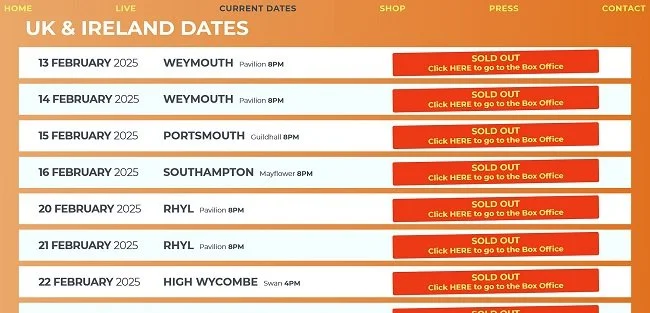
Last night Mrs P said apropos of nothing, “shall we go and see John Bishop”? For those who don’t know, John Bishop is an established UK comedian who is currently touring the country. So I went online and checked the details of his tour. We were quite happy to travel to see his show as it would provide an opportunity for a weekend away. Sadly, to cut a long story short we were unable to secure any tickets that suited our needs. From January to April, the tour is mainly using smaller venues such as local theatres and art centres. Later in the year during October and November, the tour moves to arenas, conference centres and stadiums. I find these very impersonal and don’t see any merit in sitting far away from the stage, watching an artist on a giant video screen. We had hoped we could get tickets at one of the smaller theatres but sadly we couldn’t find two seats together.

I recently “tooted” on Mastodon “sometimes it’s a real drag to be the person who always has their shit together”. Although meant humorously, there was an element of truth to the remark. Allow me to explain. I always have a shopping bag in my coat pocket. Our household always has a supply of those things that you often run out of or need occasionally. Such as AA batteries, stamps and envelopes. If Mrs P and I are going out for the day, we’ll check the weather and traffic before we set off. There’s always a spare toner and drum unit for the printer, as well as paper. We’ll book a table at our favourite restaurant in advance of going to the West End show. Why do we do these things? Because we’re organised. I’m not trying to be smug about it, that’s just our default position and how we were raised. Perhaps it’s a generational thing?
Digital Jukeboxes
I was in a pub last night, catching up with friends before Christmas, when I noticed on the wall something I haven’t seen in a pub for a very long time. A jukebox. In my experiences most of the pubs I go to take one of the following two approaches to background music. They either have a sound system and exclusively manage any music via personally curated playlists from behind the bar. Or they have no music at all. The Wetherspoons chain of pubs broadly follow the latter policy and actively use it as a marketing point. Quiet pubs for clientele that just want to talk can be popular. Hence finding an accessible jukebox was a blast from the past. During the late eighties and early nineties, I regularly visited my local pub and often used the jukebox there, which at the time, was operated by an ever changing store of CDs. The jukebox I encountered last night was digital.
I was in a pub last night, catching up with friends before Christmas, when I noticed on the wall something I haven’t seen in a pub for a very long time. A jukebox. In my experiences most of the pubs I go to take one of the following two approaches to background music. They either have a sound system and exclusively manage any music via personally curated playlists from behind the bar. Or they have no music at all. The Wetherspoons chain of pubs broadly follow the latter policy and actively use it as a marketing point. Quiet pubs for clientele that just want to talk can be popular. Hence finding an accessible jukebox was a blast from the past. During the late eighties and early nineties, I regularly visited my local pub and often used the jukebox there, which at the time, was operated by an ever changing store of CDs. The jukebox I encountered last night was digital.
Naturally I was curious about this device so I went and investigated. The first thing I noticed on the LED screen was that the jukebox had an app associated with it, from which I could select and pay for songs if I wanted. I was surprised to see that this jukebox still had the option to pay by coin. I have subsequently learned that some have contactless card readers as another means of paying. I also noted that it cost £1 to play one song. Being a digital device, the jukebox offered thousands of songs from multiple artists and I was quite surprised at the range of material that was available. Searching via the touchscreen was easy. You can also see the current song queue, so you know when your choice will be played. Overall the device was intuitive to use. As for the cost, a pound is not going to break the bank and simply comes out of the change after buying a round of drinks.
Because I was quite intrigued as to how such an old school institution as jukeboxes still exists in today’s world, I did a little further research today and was quite surprised by the results. Digital jukebox suppliers offer a profit sharing business model where venues get a free machine with no upfront cost. Sharing the revenue with the supplier, typically on a 50/50 split, with the venue keeping half of the earnings after music charges are deducted. This allows pubs, bars, and clubs to offer modern music without investment, generate extra income and improve customer experience (allegedly, depending upon your stance on music in pubs). The suppliers handle installation, maintenance and music updates. I couldn’t find any data on what percentage of revenues reaches the artists but I suspect it is comparable to services such as Spotify.
There are times when I go to the pub and I want some peace and quiet so I can concentrate on conversation with my friends. There are other times when I am happy to have some background music and to be able to choose something to listen to myself. It’s nice to be able to sing along with a familiar song that catches the mood. It can also be fun to put on a “crowd pleaser” and watch others get into it. I’m not averse to playing something that is annoying from time to time, just for the hell of it. Hence, I was pleased to see that jukeboxes have survived the various cultural changes of the current century and still exist in pubs and clubs. The modern iterations may not be as stylish and iconic as their fifties and sixties predecessors but they still serve the same basic purpose. I think there is comfort to be had in having access to music in pubs that isn’t exclusively controlled by the landlord.

Song lyrics can be powerful things. They can capture the mood and spirit of an era. They can also make powerful socio-political points. Or they can simply be pleasing to the listener by their use of language and playfulness. They can stick in your mind for both deep and trivial reasons. Mishearing them is also a common problem but that is a separate blog post. On this occasion I thought it would be worthwhile exploring the subject of song lyrics of note. Hence I have collated some that I find interesting, wise or just entertaining. These aren’t necessarily my favourite songs of all time, because I like so many. Instead these are some of the ones that sprang to mind when I was preparing this post. I have decided to have the selected lyrics first and the name of the artists afterwards, so that the emphasis is placed upon the words from the song. Although is is more than likely that you’ll be able to identify the songs from the lyrics immediately, or at least for some of them.

The transition from purchasing music on CDs, vinyl or via downloads, to on-demand streaming has fundamentally altered the music industry. Furthermore, the current dominance of on-demand streaming as a medium for providing music has actually reshaped how pop music is written, produced and released. Because streaming platforms like Spotify, Apple Music, and TikTok operate on specific payment algorithms and cater to the rapid-scrolling habits of contemporary listeners, producers and songwriters have decided to completely rewrite the rulebook of how pop music is made. These new rules are not one hundred percent ubiquitous and you’ll still find song writers and artists who do things the old way or in a manner that suits them. However, sufficient numbers of song writers have adopted the new methodology, that you can hear the change if you spend a day or so listening to a mainstream pop playlist or radio station that showcases such material.

I was recently listening to some music on Spotify when it struck me how poor the sound quality was. It lacked any depth and certain instruments seemed lost in what I can only describe as a somewhat flat and smudged soundscape. Then I remembered that I had recently reinstalled the app on my PC after the search facility "broke" on the previous install. It would seem that any prior settings and customisations that I may have made had not carried over, not that I recollect specifically making any. I consulted Google Gemini to see if this issue was a common one and low and behold it is. The latest version of Spotify, by default, has the streaming bitrate set fairly low to accommodate data capped internet services or low bandwidth connections. In audio terms the music quality sounds poor. Hence I spent sometime nosing around in the settings to see what needed to be changed to remedy this problem. Here is the breakdown of the alterations that I made.
The Guardian news website have a recurring feature in their “culture” section called Honest Playlist where they ask various celebrities about their music listening habits. There are a dozen or so stock questions that they use to grill their guest, although they don’t always use the same ones. I think it makes for interesting reading so its a column that I often visit. As I haven’t published a post based upon an internet questionnaire for a while, I thought I poach this particular line of questioning and have a crack at it myself. I have chosen the ten questions that I think are the best and by that I mean, they have the most scope for interesting answers. I didn’t include the one about karaoke because it’s not something I especially like. Each to their own. Feel free to similarly purloin this set of questions and write your own responses. I’m always fascinated by these sort of things.
I was in a pub last night, catching up with friends before Christmas, when I noticed on the wall something I haven’t seen in a pub for a very long time. A jukebox. In my experiences most of the pubs I go to take one of the following two approaches to background music. They either have a sound system and exclusively manage any music via personally curated playlists from behind the bar. Or they have no music at all. The Wetherspoons chain of pubs broadly follow the latter policy and actively use it as a marketing point. Quiet pubs for clientele that just want to talk can be popular. Hence finding an accessible jukebox was a blast from the past. During the late eighties and early nineties, I regularly visited my local pub and often used the jukebox there, which at the time, was operated by an ever changing store of CDs. The jukebox I encountered last night was digital.

I recently came up with a random writing prompt for the annual Blaugust: Festival of Blogging event. Namely, “what is your favourite bassline in a song”? For clarity, Wikipedia defines a bassline as follows: Bassline is the term used in many styles of music, such as blues, jazz, funk, dub and electronic, traditional, and classical music, for the low-pitched instrumental part or line played by a rhythm section instrument such as the electric bass, double bass, cello, tuba or keyboard. As I thought of this prompt, it only seems fair that I tackle it myself. Hence, here are five songs that I feel have notable basslines, or that have bassplayers that play in a unique style. I am not especially musically talented myself and therefore not au fait with all the correct musical terminology. However, I will strive to quantify why I think each song is a good example.

This post is not intended to be a comprehensive review of music per se in 2024. It is simply a few thoughts on what I’ve been listening to over the course of the year and my ever changing relationship with the Terpsichorean muse. As a man in his fifties who has always enjoyed multiple genres of music and it is a comforting presence in day-to-day life. Up to a year ago, I relied upon my own music collection on my PC as the source of music to which I listened. Yet, this meant that I was somewhat locked into my own existing tastes and there was limited scope for me to find new material. This changed last December when I started subscribing to Spotify and since then it has become my primary source of music. It caters to my tastes, which at times are quite niche and it gently introduces me to new material without being too invasive. This has proven most beneficial.

I currently have over 152 GB of music on my PC. Approximately 26,000 songs or pieces of music. These are in MP3, Flac and other formats. The files have been sourced from various CDs that I have owned over the years and subsequently “ripped”. Others have been bought from Amazon or other similar sources. In the past I have copied music from friends’ collections and vice versa. The files are mainly categorised by artist or name which is sufficient for me to be able to trawl through them to find what I want. I use foobar2000 as my music player of choice, mainly because it is updated by its developer, plays all major file formats and has no adverts. The interface is verging on the spartan but I prefer this minimalist approach, as I do not require an excess of features.

The following is about a cultural change. That is not to say that it’s a value judgement or one of those posts you so frequently read by bloggers of a certain age, that essentially boil down to “things were better in my day”. It is merely an observation and like all observations it is not 100% universal. There will always be exceptions to the rule. I am simply painting with broad strokes a general truism for your consideration. My point being that people listen, experience and enjoy music differently these days compared to how they did three to four decades ago. I’m not talking about the science of hearing or anything complex like that. I am merely highlighting the change in the way we choose to experience music and how that has an impact upon its creation and presentation. So like Anne Elk, presenting her theory on the Brontosaurus, here is the axiom at the heart of this post.

I was reminiscing about the music of my youth the other day which led me to listen to a track by Pro-Pain. The band formed in NYC in 1991 and their debut album Foul Taste of Freedom got some traction in the UK. I lost track of them after the next album and moved on musically. However, because of my recent fit of nostalgia, I looked the band up on Wikipedia and discovered that they were still going. Now thirty years is quite a long period of time and nothing stays the same forever but even I was surprised to see that the lineup of Pro-Pain had changed over a dozen times. The only original artist in the band today is bass player, lead vocalists and founder member, Gary Meskil. As ever this started a train of thought about the subject. How so many bands have made substantial changes in their lineup over the course of their careers and the respective pros and cons of such decisions.

In 2000, I was the proud owner of a Sega Dreamcast. I had a broad selection of games for the console from multiple genres, including Metropolis Street Racer. This was an early example of an open world driving game which is noteworthy in itself. However, what stood out for me was that this was the first game that I had played which had in-game radio stations. Although this is something that is now de rigueur within this sub-genre, back then this was a novelty. The tracks were stored on the game CD but played selectively according to which radio station you were listening to when driving. The sound even broke up if you went into a tunnel. The songs were all original creations, rather than licensed properties. Although credited to faux bands and bogus artists, composer Richard Jacques wrote and arranged them all. I was especially fond of the Oasis inspired band Salford Quays and the track Live Your Life.

I was a teenager during the eighties and the music that I listened to at the time was a major part of my overall experience. My musical taste influenced how I dressed and sometimes even determined friendships. Going to a gig and seeing music performed live was a major rite of passage. Furthermore, due to there only being a handful of TV channels in the UK at the time, meant that certain key programs were responsible for the dissemination of a broad spectrum of musical genres. Hence, while you waited for a band that you liked to come on, you’d sit and be exposed to a wealth of different artists. Something that tends not to happen nowadays as there is far more choice available. My passion for music persisted throughout the nineties and then began to wane round about the turn of the century. Work and the practicalities of daily life made it increasingly difficult to “keep up”. I used to read the music press and know about contemporary artists. I no longer do this. I often don’t even know what the current Number 1 record is.
I try and keep abreast of what's happening and going on, especially in those areas of interest to me such as movies, TV and gaming etc. Occasionally stuff passes me by that I subsequently discover at a later date, often to the refrain of WTF? A few years ago I was idly channel surfing only to discover that a seminal UK children's TV show from my youth, the Mr. Men, had been remade in a more contemporary idiom. Luckily, the source characters were still relatively unscathed, and the revamped show did a competent job in bringing Roger Hargreaves work to a new generation. Still, no one had told me and discovering this, in such a fashion was a bit of a surprise.
The Passage of Time
Today is my 58th birthday. It would appear that I have existed for nearly six decades. Put another way, I am over half a century old. All of which has given me pause for thought with regard to the passage of time. A phrase that is often bandied about, but what exactly does it mean? As I understand it, the “passage of time” refers to our perception of the flow of time and how we experience its movement. This is something distinct and different from objective time as measured by clocks. Our subjective experience of time can vary due to multiple factors. Two common examples are how time can feel like it's flying by when we're having fun and enjoying something or dragging its feet when you’re enduring something dull. Other factors are whether we are applying ourselves to a task, concentrating and general activity. Such focus can make time pass quickly.
Today is my 58th birthday. It would appear that I have existed for nearly six decades. Put another way, I am over half a century old. All of which has given me pause for thought with regard to the passage of time. A phrase that is often bandied about, but what exactly does it mean? As I understand it, the “passage of time” refers to our perception of the flow of time and how we experience its movement. This is something distinct and different from objective time as measured by clocks. Our subjective experience of time can vary due to multiple factors. Two common examples are how time can feel like it's flying by when we're having fun and enjoying something or dragging its feet when you’re enduring something dull. Other factors are whether we are applying ourselves to a task, concentrating and general activity. Such focus can make time pass quickly.
Perhaps the most important consideration regarding the passage of time is our age. Current research suggests that as we age, our perception of time passing can change. Older adults often feel like time is accelerating and the passage of days, weeks and months is quick. Some argue it is because we become aware of the wealth of years that are behind us and the finite amount of time ahead of us. Conversely, young children feel that the passage of time is slow. School days drag and the Summer holidays seem infinite This time the theory is reversed. Children have only experienced a short passage of time,over their lives. They still have a substantial amount of years ahead of them and that impacts on their perception. I suspect these ideas to be true, as I certainly feel that time goes faster for me. Even though I am now retired, my week has a schedule and regular events. All of which seem to fly past.
As for my actual age, I am beginning to think that it can no longer be conveniently crowbarred into that catch all phrase, “Middle-age”. I have even given some thought as to how much time I have left. My parents both lived into their early nineties which is a very good “innings” to coin a very British phrase. However, before I consider this longevity to be an immutable family trait, I should take into consideration several Uncles and Aunts that died early, mainly through heart disease which is conspicuously inheritable. Some people consider it morbid to dwell on one’s mortality. I think it should be given some thought from time to time. Due to medical advances, I may have more time left than I think but how much of that will be of an acceptable quality? Sadly, there’s no way at present of knowing, so I simply consider myself fortunate to still be here and enjoying a good standard of life.
Does the passage of time confer wisdom by default? I think not. I know people who journey through life with their eyes figuratively closed. Something I try not to do. I think mistakes have to be made to teach some lessons, which is why I find any philosophies that eschew failure or seek to avoid it are problematic. Time is also not necessarily a healer, although it can provide a sense of perspective and allow one to grow tolerant of our hurts. The passage of time is a fundamental aspect of human experience, influencing our memories, expectations and sense of self. Philosophers have long debated the nature of time and its relationship to consciousness. Overall, I think the passage of time is an interplay between objective time and our subjective experiences. It may just be a confidence trick, created by the Swiss and the Royal Observatory at Greenwich.
Today is my 58th birthday. It would appear that I have existed for nearly six decades. Put another way, I am over half a century old. All of which has given me pause for thought with regard to the passage of time. A phrase that is often bandied about, but what exactly does it mean? As I understand it, the “passage of time” refers to our perception of the flow of time and how we experience its movement. This is something distinct and different from objective time as measured by clocks. Our subjective experience of time can vary due to multiple factors. Two common examples are how time can feel like it's flying by when we're having fun and enjoying something or dragging its feet when you’re enduring something dull. Other factors are whether we are applying ourselves to a task, concentrating and general activity. Such focus can make time pass quickly.
I am getting old. I shall be 58 in December. Now, as soon as you say something like that these days, some folk will get uncomfortable and say things like “age is relative” or “you’re as old as you feel”. Well I don’t measure my age in geological terms, so it’s not relative and I’m not feeling anyone especially young at the moment, so both schools or thoughts can sod off. I am getting old by the yardstick we measure human life by, namely years. I have specific, age related health issues and I just don’t feel as energised as I did a decade ago. There are minor signs, such as deciding to go to bed earlier and taking longer to get dressed after taking a shower. I’m not at death’s door but I am slowing up physically. It would also appear that my reactions are also slowing down as I tend to get massacred in any FPS I play these days. So far, my mental faculties seem to be holding up. However, that is the one thing I worry about the most. The potential loss of cognitive abilities scares the shit out of me.
Prior to writing this post, I clocked a picture on a news website of the now disgraced TV presenter (and nonce) Gregg Wallace. I noticed that he doesn’t smile as such but tends to “gurn” instead. So does UK politician (and cunt) Nigel Farage. He always has his mouth open and his face contorted in some curious rictus, in most of the pictures you see of him. Mind you, I also don’t photograph especially well and any pictures of me smiling tend to look sinister or with a heavy hint of irony. The bottom line is not everyone is good at smiling. It doesn’t come naturally to all of us. This can be a problem at times or in social situations, because smiling is an integral part of our culture. On many occasions, I’ve been walking along, my face in a state of natural repose, only to be harangued by some twat shouting “cheer up, it may never happen”. A phrase I haven’t quite fathomed out, even to this day.

I was consulting my list of blog topics, when I spotted the subject of loneliness among the various talking points I’ve collated. “Hah”, I thought. “That will do”, hoping to quickly write four or more paragraphs off the top of my head. However, during the course of some lightning research I discovered the following website, Campaign to End Loneliness and realised that this may not be a subject one can easily extemporise about without being too general or indeed, insensitive. Loneliness exists on a spectrum and is highly subjective. Some of the examples cited by Campaign to End Loneliness, may well sound quite trivial while others are truly heart breaking. All of which highlights, like so many things in life, that the subject is nuanced, subjective and one needs to avoid generalisation. Which raises the point, what can I contribute to such a discussion? My own experiences.
Paying For Domestic Services
When Mrs P and I moved into our current home, over twenty years ago, we were both working full time. As the garden was poorly maintained and neither of us had any horticultural skills, we decided to employ a gardener. At the time it was a practical solution to the issue of garden maintenance and remains so today. Hence it is a service we continue to use, although our personal health is now the main reason we pay a gardener.
When Mrs P and I moved into our current home, over twenty years ago, we were both working full time. As the garden was poorly maintained and neither of us had any horticultural skills, we decided to employ a gardener. At the time it was a practical solution to the issue of garden maintenance and remains so today. Hence it is a service we continue to use, although our personal health is now the main reason we pay a gardener.
More recently, we paid to have our oven cleaned. Again, this was a decision that was mainly made because we find the logistics of the task difficult. The results were better than anything we could have done ourselves. We are now giving serious consideration to having a cleaning company visit once a month to carry out a substantive household clean. This will then be supplemented with basic cleaning on a weekly basis, carried out by ourselves. Again the main reasons for using such services is time, our ability to do such things ourselves and the fact that the work is often done to a higher standard.
I personally have no problem with the idea of paying for domestic services. They are in principle equitable business transactions, carried out by people who have superior skills in the requisite field. Furthermore, the benefits of such arrangements go beyond the customer and vendor dynamic. Those supplying such services as gardening, car valeting or household cleaning are running businesses which are good for the wider economy. Yet despite all this, I occasionally encounter people who “frown upon” such business arrangements. Their opprobrium is not aimed so much at the providers of these services but more specifically at me for using them.
I am curious to try and understand where this mindset comes from. Is it born of a sense of middle-class guilt, perceptions of laziness, concerns about socio-economic inequality and the exploitation of workers? Perhaps it is a hangover from seventies socioeconomic politics? Or is it more entrenched in the UK’s neverending relationship with class? Do people still see such transactional services as reinforcing some archaic “upstairs, downstairs” social divide? Or is it as simple as the general lack of respect and dignity afforded to "unskilled" labour in society. Let us not forget the social dimension to this conundrum. Is hiring a cleaner an acceptable way to achieve a work/life balance, or is it merely outsourcing inequality. Maybe it’s simply a case that I encounter too many unreconstructed Marxists?
The philosophical arguments against such services notwithstanding, the demand for cleaning and other similar services, is at an all-time high in the UK, with 17% of households now hiring a cleaner. Many people see it as a practical and efficient way to free up leisure time, which is a premium and finite commodity. As for the social dynamic between customer and vendor, in my experience it is far from “feudal”. I treat those providing a service in my home with the same courtesy as I would outside of it.
Perhaps this is a uniquely British quirk? Does the same criticism of using domestic services arise in the US, which to my mind is a far more transactional society. Surely the growth of the gig economy must be putting pay to this somewhat archaic perspective? There are many more practical services available for hire than ever before. From bespoke cake making to jetwashing your drive. In the meantime, I am certainly going to continue to pay for whatever domestic services our household requires. Furthermore, the older I get, the more I shall use them, for obvious reasons.
When I was a child, I quickly learned never to say within earshot of my parents that I was bored. It was quickly met with a response along the lines of “an intelligent mind is never bored” or more worryingly “if you’ve got nothing to do, I’ll find you something” which meant a chore or Herculean task. Being a child of the seventies and due to my parents fundamentalist approach to declarations of boredom, I quickly discovered numerous ways to occupy myself. The default solution was a book or comic. I always liked reading as a child and had plenty of books to choose from. I also had numerous of comics as an alternative to a hefty tome. I would also draw and paint. My father use to work during the summer holidays as a design draftsman and as a result, we always had plenty of paper in our house. Then of course there were toys and such like. Hence I learned the art of keeping myself busy.
When I first started this series of posts back in 2023, they were originally intended to provide a useful overview into UK (mainly British) slang. US slang is ubiquitous globally due to the pervasive nature of American culture. Hence most people have a good grasp of its nuances. However, the proverbial door does not swing both ways. Hence most people will watch British TV dramas or read popular novels and can be quite bamboozled by some of the phrases that are used. That is what I was trying to address. However, over time this entire enterprise now reads like a some sort of Guy Ritchie film with Colin as the anti-hero. That notwithstanding, hopefully the list of slang phrases below will prove useful to know, if you ever visit the UK or tour around London. As ever I have given an example of their respective use. Feel free to ask questions if anything needs clarifying, or you wish to leave a comment with examples of you’re own national and regional slang.
As I write this post, the temperature in Greater London is 33°C (91.4°F). This has become a regular occurrence since the middle of May onwards. High temperatures are fine when you’re on holiday mainly because you’re off work and at your leisure. You don’t have to perform the usual daily task that life requires of you such as work, shop, cook, clean etc. Furthermore, if you’re on vacation you’ll probably be staying at a resort or hotel that is fully air conditioned and you’re dressed accordingly. However, if you’re still performing you’re daily routine such as commuting to work and spending time in an office that wasn’t built with such external temperatures in mind, then 33°C is frankly a pain in the ass. Oh and if you’re one of those people who always respond to discussions such as this with “well I live in Riyadh and it’s 40°C here”, please sod off. You live in a desert which is dumb to begin with. Plus this is not a commensurate comparison. Temperatures are rising in the UK. It’s always hot in Saudi Arabia.
If you visit the websites for such UK tabloid newspapers as the Daily Express or the Daily Mail you will no doubt encounter prominent stories about Megan Markle, Nigel Farage and “immigrants”. If these two august institutions are short of column inches, they’ll run a piece about how some former celebrity has had the unmitigated gall and temerity to get old. I mean WTF? How dare they do what human beings are genetically disposed to do. It’s outrageous. Similarly, head over to the Unherd website and you’ll find foam flecked tirades regarding spurious points of contention over dubious subjects. Often the topic being harangued is incredibly niche and I’ve never heard of it before or even considered it being a thing. These sort of talking points are not about informing, debating and most certainly aren’t about thinking. They exist to provoke reactions.
Before we start, let me explain to those readers outside of the UK, the significance of a Dairy Milk Freddo chocolate bar and its relevance to this post. The “Freddo” is an 18g (0.63 oz) chocolate bar, in the shape of an anthropomorphic frog. When it was re-launched by Cadbury in 1990 (it had previously been manufactured by an Australian confectionery company in the seventies), it was priced at 10p (£0.10). It remained at that price until 2005 when a 1p to 2p increase began to occur each year. By 2016 Freddos were retailing at 25p. However, the following year the price “lept” to 30p with an increase that was double its usual yearly rise. This led to public outrage across social media. Since then the price of a Freddo has waxed and waned. Tesco supermarket reduced the price back to 10p as part of their centenary celebrations. The post COVID price in 2022 hit 49p. At present, the average price of a Freddo in the UK is somewhere around 35p.
Over the last 10 years, I’ve written several blog posts about my personal working experiences and my career, such as it was. I touched upon working specifically in IT and how that industry changed over time, both technically and in the way that other people perceived it. I have also given my thoughts on the social dynamics of the modern work environment and the way we interact with our colleagues and employers. That is another area that has changed dramatically. Naturally my retirement from full time work has been written about, as it is such a radical change in one’s life. Especially if you’re the sort of person who is clearly defined by their job, which I personally was not. This time, I want to share a few thoughts I have about what I miss about “going to work” and “having a job”. I’m not sure if “miss” is the right word. Perhaps it is more a question of things being absent. Either way, there are some aspects of being employed that I use to enjoy or at least found beneficial that I now no longer experience.
UK Prime Minister, Sir Keir Starmer has resigned and intends to leave office before the parliamentary summer recess. By then Andy Burnham will more than likely be voted leader of the Labour Party and by default will become the new Prime Minister. Due to the current size of the incumbent Government’s majority, there is no pressing reason for a General Election that the UK’s right wing tabloid press is currently calling for. Whether this provides the Government with the reset they’re hoping for when Parliament reconvenes in autumn remains to be seen. With seven Prime Ministers coming and going in a decade, there are some serious questions to be asked about the current state of UK politics. However, the mechanics of contemporary politics, the decline of clearly defined ideologies and the people that seek elected office to be our leaders are only half of the problem. The other major impediment to the UK’s democracy functioning properly is the electorate.
The UK Government has formerly announced its intention to ban under-16s from using social media. This is due to increasing public pressure that “something must be done” about the perceived iniquities of many online platforms. However, as with most complex social problems of this nature, no one has any clear or practical ideas as to what that “something” is. It remains a nebulous, non-specific panacea and clearly someone else’s job to identify and implement. As ever, why choose a nuanced and multifaceted solution to a complex problem, when it is far easier and politically expedient to just “ban” something. The former requires effort and a degree of thinking. If such an approach fails it also means that those who came up with it now carry the can. The latter dumps the problem in the lap of various third parties, who can then be conveniently blamed when the ill conceived policy fails.
Every Thursday, Mrs P volunteers at a food bank that is run from a local church; Avery Hill Christian Fellowship. Today there was a shortage of staff so I agreed to help out. It proved to be an equitable arrangement as she collated the various orders and I packed the bags and took them to the respective clients. The food bank itself is organised and administered by the Trussell Trust, a UK based NGO and charity providing emergency food and support to people locked in poverty. It is open for 2 to 3 hours a week depending upon demand. During today’s session we served just six people. Some weeks its can be triple that amount. Upon closure, a member of staff from the Trussel Trust did a stock take and collated a list of what was needed. This is provided by various local church communities via parishioners donations, as well as local supermarkets who have an arrangement with the trust to provide surplus stock or good approaching the end of their sales window.
There are approximately 4000 parks and green spaces in Greater London. Bexley Borough alone has over 100. Public parks and green spaces are vital to modern cities, providing essential health, environmental and social benefits. They boost physical and mental wellbeing by reducing stress and providing a place for exercise. Furthermore they enhance urban sustainability, mitigate heat, and provide a sustainable environment for a wildlife. Parks are often a venue for social activities and events and as such are an important part of the local community. Going to the park has always been a part of my life. I live next to Old Farm Park in Sidcup and have made use of this recreational space throughout my life. I used visit with my parents in the seventies, when I was a child. Thirty years later my son, father in-law and I would fly kites there. Now I take my grandchildren to Old Farm Park as it now has a playground.
Being a 58 year old man, I welcome any undertaking which can potentially improve my health. One such thing is proactive screening and testing. The UK National Health Service has started doing a lot more of this in recent years, mainly because diagnosing a problem and treating it early is far more efficient and cost effective than retroactive action. Hence this policy and my age is why I was recently sent a NHS Bowel Cancer Test Kit via the post. This screening service takes place every two years for people aged 50 to 74 in the UK. The kit is very quick and simple to use. A sample of your stool is sent via a prepaid return envelope for testing and the entire process is free of charge. Upon receipt, the laboratory test determines whether there is any blood present in your stool, which is a potential indicator of bowel cancer. If detected, an early diagnosis greatly improves any subsequent treatment outcomes.
I like learning things. I always have. During my middle school years I thought I was a mediocre student and often I wouldn’t apply myself. According to an old school report this was because I was “too busy indulging in Tomfoolery”. Then I had the positive experience of meeting an exceptional teacher. Their lessons were the highlight of the week as they had an ability to make the subject matter, Classical History, utterly compelling and relevant. The teacher in question also treated us like adults and the class benefitted from only having five pupils. This really brought home to me that a lot of disinterest and underachievement in education is linked to the paucity of some teachers. One bad teacher can undermine the good work that all the others can do. Perhaps it has improved nowadays?
I’ve had an interest in the paranormal since I was a child. My mother always got books out of the library about ghosts and UFO phenomenon, so in some respects I was influenced by her reading habits. As a child such tales were by default interesting and any potentially scary element naturally made them more enjoyable. However, my father being an academic had taught me to question everything, so I felt fairly evenly equipped when exploring these subjects. Further to this point, over the years I have learned that humans have a very unique perspective on the world. We are hard wired to see patterns, regardless of whether they’re there or not. Our senses can also be fooled and often are. Perhaps the most important aspect of our nature that impacts upon any analysis we make into the paranormal is our penchant for creating stories. Hence unusual experiences can be subconsciously misremembered and “retconned” to form more precise narratives.
I have lived in Sidcup, in South East London, for most of my life. The first two schools that I went to were local and within 15 minutes walking distance. My Doctor’s Surgery and Dentist are only a few streets away, as is the barbershop that I’ve frequented since 1970. I now have my haircut by the son of the original barber. My point being that Sidcup has everything that residents immediately need. There’s a local hospital, good public transport networks and a broad range of shopping and restaurant facilities. It also has several parks with lakes, sport facilities and children’s play areas. It is a microcosm of the concept of suburbia with its residents commuting into Central London or out into Kent for work. People move here to raise families and end up staying. My parents lived here for 62 years.
Our household is currently trying to reduce our monthly overheads in response to the ever increasing cost of living. April is not that far away and a great many service providers will increase their rates and tariff as the new financial year begins. Then there is the ongoing effects, both direct and indirect, of inflation to consider. Although the UK inflation rate is dropping, currently sitting at 3.4% in December 2025, food inflation remains higher at 4.5%. Being based in the UK, salaries and billed services tend to be administered monthly. You get paid usually at the end of the months and bills can turn up at any point, depending upon when you started a service. Any payments coming from central government, such as state pension or other benefits, are paid every 4 weeks. This means that there are 13 payments in a year. I thought it pertinent to clarify this point as other countries, such as the USA, favour a fortnightly financial cycle. Hence as a household we work around a monthly budget.
I try not to let the failings of contemporary capitalism get to me but such a mindset is very hard to maintain. From time to time it does just piss you off and you know damn well that there’s nothing you can do about it. So to begin this tale, at the end of November, our Indesit washer/dryer gave up the ghost after a valiant twelve year lifespan. As a result of this household appliance’s stirling work, it was decided to buy another from the same manufacturer. Their website informed me that the model that had just broken was no longer being produced. However, it recommended two newer appliances that had comparable specifications and more importantly the same size. This washer/dryer had to fit into a fitted kitchen unit. To cut a long story short, a model was chosen, purchased, delivered within 48 hours and installed. The broken predecessor was subsequently taken away. The wonders of modern consumer culture!
I was in a pub last night, catching up with friends before Christmas, when I noticed on the wall something I haven’t seen in a pub for a very long time. A jukebox. In my experiences most of the pubs I go to take one of the following two approaches to background music. They either have a sound system and exclusively manage any music via personally curated playlists from behind the bar. Or they have no music at all. The Wetherspoons chain of pubs broadly follow the latter policy and actively use it as a marketing point. Quiet pubs for clientele that just want to talk can be popular. Hence finding an accessible jukebox was a blast from the past. During the late eighties and early nineties, I regularly visited my local pub and often used the jukebox there, which at the time, was operated by an ever changing store of CDs. The jukebox I encountered last night was digital.
Today is my 58th birthday. It would appear that I have existed for nearly six decades. Put another way, I am over half a century old. All of which has given me pause for thought with regard to the passage of time. A phrase that is often bandied about, but what exactly does it mean? As I understand it, the “passage of time” refers to our perception of the flow of time and how we experience its movement. This is something distinct and different from objective time as measured by clocks. Our subjective experience of time can vary due to multiple factors. Two common examples are how time can feel like it's flying by when we're having fun and enjoying something or dragging its feet when you’re enduring something dull. Other factors are whether we are applying ourselves to a task, concentrating and general activity. Such focus can make time pass quickly.
When Mrs P and I moved into our current home, over twenty years ago, we were both working full time. As the garden was poorly maintained and neither of us had any horticultural skills, we decided to employ a gardener. At the time it was a practical solution to the issue of garden maintenance and remains so today. Hence it is a service we continue to use, although our personal health is now the main reason we pay a gardener.
In July the UK Government introduced the Online Safety Act which requires age checks for accessing sexually explicit content online. As a result of this, Pornhub, the 19th most visited site on the internet, has reported a 77% decline in UK traffic. Furthermore, according to the UK regulatory body, OFCOM (The Office of Communications), overall visits to pornographic websites from the UK have fallen by 33%. Naturally, those who championed this legislation are claiming a moral and political victory. However, once you consider what these facts actually mean, they paint a somewhat different and potentially more worrying picture. It would be staggeringly naïve to think that UK visitors to Pornhub have ceased visiting such sites due to the age verification requirements. The more likely explanation is that UK porn consumers are now using VPNs to circumnavigate these restrictions and that this traffic to Pornhub is now recorded as coming from elsewhere.
Formal education in the UK is a structured process, starting at early years learning and continuing through to higher education at university. Some aspects of the educational system are mandatory, whereas others are optional. At present, children in the UK must start full-time education from the age of 5 and remain until the age of 16. After this age, they are no longer required to attend school per se but must remain in some other form of education or training, such as a vocational college or an apprenticeship. Many students remain at school until 18, as there are specific exams to be obtained that are required for a subsequent university placement. Here is a breakdown of the current process as it exists in the UK.
I don’t know if you have noticed that there are quite a lot of companies that have names taken from Tolkien’s Legendarium. At first glance, this seems innocuous enough. Tolkien’s writings grew in popularity over the seventies and eighties but since the release of the film trilogy at the start of the twenty-first century, his work has become more well known and been assimilated into our wider pop culture. Hence, it seems quite logical that a startup tech company, for example, would choose a name from his writings. No doubt the founders grew up reading The Lord of the Rings and are fans. That all seems plausible. However if you take a further look, it gets somewhat more complex. Here are four companies that have Tolkien based names.
Last Wednesday, I woke up with what I thought to be a crick in my neck on the left hand side. I assumed this was simply due to sleeping awkwardly and so I self medicated with some non-prescription pain relief and judicious use of a heat pad. Unfortunately, the problem has persisted and in the last 24 hours it has become much worse. I awoke this morning at about 5:00 AM and as I sat up in bed, an intense pain ran up the left side of my neck and behind my ear. It took several attempts for me to get out of bed because if I turned my head in either direction or inclined my chin, the pain would again run up the side of my neck. Sitting down, getting up and raising my arms caused similar results. While dressing, I attempted to pull a t-shirt over my head. The pain in my neck on this occasion was so severe that I yelled out loud and nearly blacked out.
I am a non-driver. If you wish to know the specifics of how this situation came about, feel free to read the post I wrote about it back in early 2018. To be succinct, I don’t drive, I’ve never learned how and have never owned a car. I don’t feel that I’ve missed out. In fact I feel quite the opposite. I think I’ve dodged a major hassle and expense in life. Mrs P, my significant other, is the designated driver of our household. She owns a car, insures it and maintains it. She also mainly pays for the petrol, whereas I pick up the tab for other things such as lunch or hotels when we travel. All I have to do is make like Iggy Pop if we go anywhere. The most I am ever called upon to do is navigate using Google maps and Android Auto. Fortunately, Mrs P enjoys driving. Always has done. Hence I look upon this situation as an extremely fortunate and equitable arrangement.
I am getting old. I shall be 58 in December. Now, as soon as you say something like that these days, some folk will get uncomfortable and say things like “age is relative” or “you’re as old as you feel”. Well I don’t measure my age in geological terms, so it’s not relative and I’m not feeling anyone especially young at the moment, so both schools or thoughts can sod off. I am getting old by the yardstick we measure human life by, namely years. I have specific, age related health issues and I just don’t feel as energised as I did a decade ago. There are minor signs, such as deciding to go to bed earlier and taking longer to get dressed after taking a shower. I’m not at death’s door but I am slowing up physically. It would also appear that my reactions are also slowing down as I tend to get massacred in any FPS I play these days. So far, my mental faculties seem to be holding up. However, that is the one thing I worry about the most. The potential loss of cognitive abilities scares the shit out of me.
Foots Cray Reuse and Recycling Centre is the fancy name of our local dump. A few decades ago, this was no more than a scrap yard. The rubbish and bric-a-brac left by the public was sorted and scavenged for resaleable scrap. Everything that was left was subsequently sent to landfill or incineration. Much has changed. Today it is the embodiment of the modern recycling ethos. The recycling centre is a well managed, carefully segregated site providing safe disposal of a wide variety of household and garden waste. Wood, metal and hardcore are recycled and there is similar provision for a multitude of electrical goods. Plastics, oils, paint, batteries can be safely disposed of. I have yet to find a home item that they do not have provision to dispose of. The Foots Cray Reuse and Recycling Centre has won awards for the service it provides and is considered one of the best facilities of its kind in the South East of the country.
One of the things I enjoy most about having my own blog is the fact I can write about the mundane and the trivial. Mainly because so much of life falls into this category. Life defining events are all fine and dandy and certainly lend themselves to philosophical musings that make fine blog posts. However, you can get just as much mileage out of those everyday things in life with less gravitas, that we all do. Such as buying new clothes, taking out the recycling and going to buy groceries. I have written about all of these in the past. However, today I wish to broach a subject that both fascinates me but also raises my blood pressure. I believe it to be a social marker and a clear indication of an individual’s personal psychology. Yes, I’m talking about packing your groceries at the supermarket and the various rituals and social etiquette associated with it.
“Managed decline” is a phrase that refers to the processes associated with the end of a specific lifecycle, with the goal of minimizing costs or other forms of loss. The concept originated in business where it referred to the management of companies and industries. More recently it is used in wider contexts. The concept gained prominence with regard to urban policy, particularly in the UK during the eighties when several major cities suffered economic and political collapse. Of late, the term has been applied to the UK, encompassing a systematic weakening of the economy, social structures, and cultural values, as well as its global political and diplomatic force. In each case, managed decline involves making strategic choices about resource allocation and accepting the consequences of those decisions. It is a complex issue with ethical and practical considerations, often sparking debate about the best way to address decline and reverse the process.
It’s been five years since the COVID-19 global pandemic. At the time it was an utterly alien and tumultuous experience. However, due to the way numerous institutions responded (but not the government), many people thought there would be a great deal of social and political change in the UK afterwards. The pandemic highlighted the impotence of the NHS, as well as those who work in jobs designated as essential. It also shone a spotlight on many of the country’s inequalities. Due to our national character, a real sense of community emerged. Something that had been absent for a very long time. Briefly, we got a glimpse of what the UK could be when we all broadly worked together. There was a sense that now was the time to change the status quo. Sadly, nothing changed. As soon as the vaccination program was launched, the UK quickly slipped back into the mire it’s been wallowing in since the end of WWII.
Prior to writing this post, I clocked a picture on a news website of the now disgraced TV presenter (and nonce) Gregg Wallace. I noticed that he doesn’t smile as such but tends to “gurn” instead. So does UK politician (and cunt) Nigel Farage. He always has his mouth open and his face contorted in some curious rictus, in most of the pictures you see of him. Mind you, I also don’t photograph especially well and any pictures of me smiling tend to look sinister or with a heavy hint of irony. The bottom line is not everyone is good at smiling. It doesn’t come naturally to all of us. This can be a problem at times or in social situations, because smiling is an integral part of our culture. On many occasions, I’ve been walking along, my face in a state of natural repose, only to be harangued by some twat shouting “cheer up, it may never happen”. A phrase I haven’t quite fathomed out, even to this day.
The UK Online Safety Act: 3 Months On
In July the UK Government introduced the Online Safety Act which requires age checks for accessing sexually explicit content online. As a result of this, Pornhub, the 19th most visited site on the internet, has reported a 77% decline in UK traffic. Furthermore, according to the UK regulatory body, OFCOM (The Office of Communications), overall visits to pornographic websites from the UK have fallen by 33%. Naturally, those who championed this legislation are claiming a moral and political victory. However, once you consider what these facts actually mean, they paint a somewhat different and potentially more worrying picture. It would be staggeringly naïve to think that UK visitors to Pornhub have ceased visiting such sites due to the age verification requirements. The more likely explanation is that UK porn consumers are now using VPNs to circumnavigate these restrictions and that this traffic to Pornhub is now recorded as coming from elsewhere.
In July the UK Government introduced the Online Safety Act which requires age checks for accessing sexually explicit content online. As a result of this, Pornhub, the 19th most visited site on the internet, has reported a 77% decline in UK traffic. Furthermore, according to the UK regulatory body, OFCOM (The Office of Communications), overall visits to pornographic websites from the UK have fallen by 33%. Naturally, those who championed this legislation are claiming a moral and political victory. However, once you consider what these facts actually mean, they paint a somewhat different and potentially more worrying picture. It would be staggeringly naïve to think that UK visitors to Pornhub have ceased visiting such sites due to the age verification requirements. The more likely explanation is that UK porn consumers are now using VPNs to circumnavigate these restrictions and that this traffic to Pornhub is now recorded as coming from elsewhere.
According to independent research by Cybernews, the UK has become one of the world’s fastest-growing VPN markets. The UK ranks eighth worldwide for VPN adoption at the time of writing and is now the leading G7 nation in terms of VPN use and one of only three European countries included in the top 10 list. Data shows the UK logged over 10.7 million VPN app downloads in the first half of 2025, surpassing countries such as the US, France, and Germany. One vendor of VPN services for smartphones saw an increase in downloads of 1,800%. All of which indicates the inherent flaw in the OSA, that it can be easily bypassed by using a VPN. Clearly this law is not supported by a substantial number of UK citizens. According to Google, prior to the OSA, eight million users from the UK visited a quarter of a million pornographic websites each month. Such a market doesn’t just vanish overnight.
The Online Safety Act is a typical piece of UK Government legislation, insofar as it is well intentioned in seeking to protect children from harmful content online. However, the parameters of this act and the manner in which it strives to enforce its mandate are ill considered. Clearly those involved have little or no understanding of contemporary information technology and infrastructure. It can also be argued that they have underestimated human nature. The result is legislation that can only deal with the symptoms of a problem and furthermore, only in a binary fashion. Any site that is deemed problematic has to implement age verification. If it will not or cannot, it is blocked by UK ISPs. At best it is a rather blunt tool. At worst, it has provided the current and all future UK Governments with the means to censor content with impunity.
I am not an absolutist libertarian but I do prefer the state to minimise its involvement in social issues. I believe that there is a duty of care to protect children from specific online content but I do not think that is the sole job of the UK Government. Parents, guardians and carers should be the first and foremost group involved in such an undertaking. Those who are legally responsible for a child’s welfare should know exactly what a child is doing online and police it accordingly. Sadly, we have a generation of parents who are just as enamoured with social media and online culture as their children and therefore are hardly best equipped to deal with this matter. Levels of IT literacy are also quite low in many adults. Despite a superficial “monkey see, monkey do” ability to use technology, there is seldom any functional understanding of how such things actually work.
Three months on from the launch of the OSA in the UK, I personally have not been greatly inconvenienced by this legislation so far. I’ve had to verify my age once for Instagram. This used an AI to look at an image of my face and determine if I am over 18. It was hardly a chore and I didn’t expect my age to be disputed. Beyond this one time, I have bypassed any issues as I have a VPN extension installed in all my web browsers and a year’s subscription to Surfshark. Outside of my personal experience, numerous websites that deal with sexual health and wellbeing have been blocked. Even Wikipedia has had to age gate certain content. All of which is troubling. Unfortunately, I can only see this matter getting worse over time and becoming more of a political football, driven by hot takes and showboating. Poorly conceived legislation often fails and brings the law into disrepute. In the meantime are children any safer? I doubt it.
When I was a child, I quickly learned never to say within earshot of my parents that I was bored. It was quickly met with a response along the lines of “an intelligent mind is never bored” or more worryingly “if you’ve got nothing to do, I’ll find you something” which meant a chore or Herculean task. Being a child of the seventies and due to my parents fundamentalist approach to declarations of boredom, I quickly discovered numerous ways to occupy myself. The default solution was a book or comic. I always liked reading as a child and had plenty of books to choose from. I also had numerous of comics as an alternative to a hefty tome. I would also draw and paint. My father use to work during the summer holidays as a design draftsman and as a result, we always had plenty of paper in our house. Then of course there were toys and such like. Hence I learned the art of keeping myself busy.
When I first started this series of posts back in 2023, they were originally intended to provide a useful overview into UK (mainly British) slang. US slang is ubiquitous globally due to the pervasive nature of American culture. Hence most people have a good grasp of its nuances. However, the proverbial door does not swing both ways. Hence most people will watch British TV dramas or read popular novels and can be quite bamboozled by some of the phrases that are used. That is what I was trying to address. However, over time this entire enterprise now reads like a some sort of Guy Ritchie film with Colin as the anti-hero. That notwithstanding, hopefully the list of slang phrases below will prove useful to know, if you ever visit the UK or tour around London. As ever I have given an example of their respective use. Feel free to ask questions if anything needs clarifying, or you wish to leave a comment with examples of you’re own national and regional slang.
As I write this post, the temperature in Greater London is 33°C (91.4°F). This has become a regular occurrence since the middle of May onwards. High temperatures are fine when you’re on holiday mainly because you’re off work and at your leisure. You don’t have to perform the usual daily task that life requires of you such as work, shop, cook, clean etc. Furthermore, if you’re on vacation you’ll probably be staying at a resort or hotel that is fully air conditioned and you’re dressed accordingly. However, if you’re still performing you’re daily routine such as commuting to work and spending time in an office that wasn’t built with such external temperatures in mind, then 33°C is frankly a pain in the ass. Oh and if you’re one of those people who always respond to discussions such as this with “well I live in Riyadh and it’s 40°C here”, please sod off. You live in a desert which is dumb to begin with. Plus this is not a commensurate comparison. Temperatures are rising in the UK. It’s always hot in Saudi Arabia.
If you visit the websites for such UK tabloid newspapers as the Daily Express or the Daily Mail you will no doubt encounter prominent stories about Megan Markle, Nigel Farage and “immigrants”. If these two august institutions are short of column inches, they’ll run a piece about how some former celebrity has had the unmitigated gall and temerity to get old. I mean WTF? How dare they do what human beings are genetically disposed to do. It’s outrageous. Similarly, head over to the Unherd website and you’ll find foam flecked tirades regarding spurious points of contention over dubious subjects. Often the topic being harangued is incredibly niche and I’ve never heard of it before or even considered it being a thing. These sort of talking points are not about informing, debating and most certainly aren’t about thinking. They exist to provoke reactions.
Before we start, let me explain to those readers outside of the UK, the significance of a Dairy Milk Freddo chocolate bar and its relevance to this post. The “Freddo” is an 18g (0.63 oz) chocolate bar, in the shape of an anthropomorphic frog. When it was re-launched by Cadbury in 1990 (it had previously been manufactured by an Australian confectionery company in the seventies), it was priced at 10p (£0.10). It remained at that price until 2005 when a 1p to 2p increase began to occur each year. By 2016 Freddos were retailing at 25p. However, the following year the price “lept” to 30p with an increase that was double its usual yearly rise. This led to public outrage across social media. Since then the price of a Freddo has waxed and waned. Tesco supermarket reduced the price back to 10p as part of their centenary celebrations. The post COVID price in 2022 hit 49p. At present, the average price of a Freddo in the UK is somewhere around 35p.
Over the last 10 years, I’ve written several blog posts about my personal working experiences and my career, such as it was. I touched upon working specifically in IT and how that industry changed over time, both technically and in the way that other people perceived it. I have also given my thoughts on the social dynamics of the modern work environment and the way we interact with our colleagues and employers. That is another area that has changed dramatically. Naturally my retirement from full time work has been written about, as it is such a radical change in one’s life. Especially if you’re the sort of person who is clearly defined by their job, which I personally was not. This time, I want to share a few thoughts I have about what I miss about “going to work” and “having a job”. I’m not sure if “miss” is the right word. Perhaps it is more a question of things being absent. Either way, there are some aspects of being employed that I use to enjoy or at least found beneficial that I now no longer experience.
UK Prime Minister, Sir Keir Starmer has resigned and intends to leave office before the parliamentary summer recess. By then Andy Burnham will more than likely be voted leader of the Labour Party and by default will become the new Prime Minister. Due to the current size of the incumbent Government’s majority, there is no pressing reason for a General Election that the UK’s right wing tabloid press is currently calling for. Whether this provides the Government with the reset they’re hoping for when Parliament reconvenes in autumn remains to be seen. With seven Prime Ministers coming and going in a decade, there are some serious questions to be asked about the current state of UK politics. However, the mechanics of contemporary politics, the decline of clearly defined ideologies and the people that seek elected office to be our leaders are only half of the problem. The other major impediment to the UK’s democracy functioning properly is the electorate.
The UK Government has formerly announced its intention to ban under-16s from using social media. This is due to increasing public pressure that “something must be done” about the perceived iniquities of many online platforms. However, as with most complex social problems of this nature, no one has any clear or practical ideas as to what that “something” is. It remains a nebulous, non-specific panacea and clearly someone else’s job to identify and implement. As ever, why choose a nuanced and multifaceted solution to a complex problem, when it is far easier and politically expedient to just “ban” something. The former requires effort and a degree of thinking. If such an approach fails it also means that those who came up with it now carry the can. The latter dumps the problem in the lap of various third parties, who can then be conveniently blamed when the ill conceived policy fails.
Every Thursday, Mrs P volunteers at a food bank that is run from a local church; Avery Hill Christian Fellowship. Today there was a shortage of staff so I agreed to help out. It proved to be an equitable arrangement as she collated the various orders and I packed the bags and took them to the respective clients. The food bank itself is organised and administered by the Trussell Trust, a UK based NGO and charity providing emergency food and support to people locked in poverty. It is open for 2 to 3 hours a week depending upon demand. During today’s session we served just six people. Some weeks its can be triple that amount. Upon closure, a member of staff from the Trussel Trust did a stock take and collated a list of what was needed. This is provided by various local church communities via parishioners donations, as well as local supermarkets who have an arrangement with the trust to provide surplus stock or good approaching the end of their sales window.
There are approximately 4000 parks and green spaces in Greater London. Bexley Borough alone has over 100. Public parks and green spaces are vital to modern cities, providing essential health, environmental and social benefits. They boost physical and mental wellbeing by reducing stress and providing a place for exercise. Furthermore they enhance urban sustainability, mitigate heat, and provide a sustainable environment for a wildlife. Parks are often a venue for social activities and events and as such are an important part of the local community. Going to the park has always been a part of my life. I live next to Old Farm Park in Sidcup and have made use of this recreational space throughout my life. I used visit with my parents in the seventies, when I was a child. Thirty years later my son, father in-law and I would fly kites there. Now I take my grandchildren to Old Farm Park as it now has a playground.
Being a 58 year old man, I welcome any undertaking which can potentially improve my health. One such thing is proactive screening and testing. The UK National Health Service has started doing a lot more of this in recent years, mainly because diagnosing a problem and treating it early is far more efficient and cost effective than retroactive action. Hence this policy and my age is why I was recently sent a NHS Bowel Cancer Test Kit via the post. This screening service takes place every two years for people aged 50 to 74 in the UK. The kit is very quick and simple to use. A sample of your stool is sent via a prepaid return envelope for testing and the entire process is free of charge. Upon receipt, the laboratory test determines whether there is any blood present in your stool, which is a potential indicator of bowel cancer. If detected, an early diagnosis greatly improves any subsequent treatment outcomes.
I like learning things. I always have. During my middle school years I thought I was a mediocre student and often I wouldn’t apply myself. According to an old school report this was because I was “too busy indulging in Tomfoolery”. Then I had the positive experience of meeting an exceptional teacher. Their lessons were the highlight of the week as they had an ability to make the subject matter, Classical History, utterly compelling and relevant. The teacher in question also treated us like adults and the class benefitted from only having five pupils. This really brought home to me that a lot of disinterest and underachievement in education is linked to the paucity of some teachers. One bad teacher can undermine the good work that all the others can do. Perhaps it has improved nowadays?
I’ve had an interest in the paranormal since I was a child. My mother always got books out of the library about ghosts and UFO phenomenon, so in some respects I was influenced by her reading habits. As a child such tales were by default interesting and any potentially scary element naturally made them more enjoyable. However, my father being an academic had taught me to question everything, so I felt fairly evenly equipped when exploring these subjects. Further to this point, over the years I have learned that humans have a very unique perspective on the world. We are hard wired to see patterns, regardless of whether they’re there or not. Our senses can also be fooled and often are. Perhaps the most important aspect of our nature that impacts upon any analysis we make into the paranormal is our penchant for creating stories. Hence unusual experiences can be subconsciously misremembered and “retconned” to form more precise narratives.
I have lived in Sidcup, in South East London, for most of my life. The first two schools that I went to were local and within 15 minutes walking distance. My Doctor’s Surgery and Dentist are only a few streets away, as is the barbershop that I’ve frequented since 1970. I now have my haircut by the son of the original barber. My point being that Sidcup has everything that residents immediately need. There’s a local hospital, good public transport networks and a broad range of shopping and restaurant facilities. It also has several parks with lakes, sport facilities and children’s play areas. It is a microcosm of the concept of suburbia with its residents commuting into Central London or out into Kent for work. People move here to raise families and end up staying. My parents lived here for 62 years.
Our household is currently trying to reduce our monthly overheads in response to the ever increasing cost of living. April is not that far away and a great many service providers will increase their rates and tariff as the new financial year begins. Then there is the ongoing effects, both direct and indirect, of inflation to consider. Although the UK inflation rate is dropping, currently sitting at 3.4% in December 2025, food inflation remains higher at 4.5%. Being based in the UK, salaries and billed services tend to be administered monthly. You get paid usually at the end of the months and bills can turn up at any point, depending upon when you started a service. Any payments coming from central government, such as state pension or other benefits, are paid every 4 weeks. This means that there are 13 payments in a year. I thought it pertinent to clarify this point as other countries, such as the USA, favour a fortnightly financial cycle. Hence as a household we work around a monthly budget.
I try not to let the failings of contemporary capitalism get to me but such a mindset is very hard to maintain. From time to time it does just piss you off and you know damn well that there’s nothing you can do about it. So to begin this tale, at the end of November, our Indesit washer/dryer gave up the ghost after a valiant twelve year lifespan. As a result of this household appliance’s stirling work, it was decided to buy another from the same manufacturer. Their website informed me that the model that had just broken was no longer being produced. However, it recommended two newer appliances that had comparable specifications and more importantly the same size. This washer/dryer had to fit into a fitted kitchen unit. To cut a long story short, a model was chosen, purchased, delivered within 48 hours and installed. The broken predecessor was subsequently taken away. The wonders of modern consumer culture!
I was in a pub last night, catching up with friends before Christmas, when I noticed on the wall something I haven’t seen in a pub for a very long time. A jukebox. In my experiences most of the pubs I go to take one of the following two approaches to background music. They either have a sound system and exclusively manage any music via personally curated playlists from behind the bar. Or they have no music at all. The Wetherspoons chain of pubs broadly follow the latter policy and actively use it as a marketing point. Quiet pubs for clientele that just want to talk can be popular. Hence finding an accessible jukebox was a blast from the past. During the late eighties and early nineties, I regularly visited my local pub and often used the jukebox there, which at the time, was operated by an ever changing store of CDs. The jukebox I encountered last night was digital.
Today is my 58th birthday. It would appear that I have existed for nearly six decades. Put another way, I am over half a century old. All of which has given me pause for thought with regard to the passage of time. A phrase that is often bandied about, but what exactly does it mean? As I understand it, the “passage of time” refers to our perception of the flow of time and how we experience its movement. This is something distinct and different from objective time as measured by clocks. Our subjective experience of time can vary due to multiple factors. Two common examples are how time can feel like it's flying by when we're having fun and enjoying something or dragging its feet when you’re enduring something dull. Other factors are whether we are applying ourselves to a task, concentrating and general activity. Such focus can make time pass quickly.
When Mrs P and I moved into our current home, over twenty years ago, we were both working full time. As the garden was poorly maintained and neither of us had any horticultural skills, we decided to employ a gardener. At the time it was a practical solution to the issue of garden maintenance and remains so today. Hence it is a service we continue to use, although our personal health is now the main reason we pay a gardener.
In July the UK Government introduced the Online Safety Act which requires age checks for accessing sexually explicit content online. As a result of this, Pornhub, the 19th most visited site on the internet, has reported a 77% decline in UK traffic. Furthermore, according to the UK regulatory body, OFCOM (The Office of Communications), overall visits to pornographic websites from the UK have fallen by 33%. Naturally, those who championed this legislation are claiming a moral and political victory. However, once you consider what these facts actually mean, they paint a somewhat different and potentially more worrying picture. It would be staggeringly naïve to think that UK visitors to Pornhub have ceased visiting such sites due to the age verification requirements. The more likely explanation is that UK porn consumers are now using VPNs to circumnavigate these restrictions and that this traffic to Pornhub is now recorded as coming from elsewhere.
Formal education in the UK is a structured process, starting at early years learning and continuing through to higher education at university. Some aspects of the educational system are mandatory, whereas others are optional. At present, children in the UK must start full-time education from the age of 5 and remain until the age of 16. After this age, they are no longer required to attend school per se but must remain in some other form of education or training, such as a vocational college or an apprenticeship. Many students remain at school until 18, as there are specific exams to be obtained that are required for a subsequent university placement. Here is a breakdown of the current process as it exists in the UK.
I don’t know if you have noticed that there are quite a lot of companies that have names taken from Tolkien’s Legendarium. At first glance, this seems innocuous enough. Tolkien’s writings grew in popularity over the seventies and eighties but since the release of the film trilogy at the start of the twenty-first century, his work has become more well known and been assimilated into our wider pop culture. Hence, it seems quite logical that a startup tech company, for example, would choose a name from his writings. No doubt the founders grew up reading The Lord of the Rings and are fans. That all seems plausible. However if you take a further look, it gets somewhat more complex. Here are four companies that have Tolkien based names.
Last Wednesday, I woke up with what I thought to be a crick in my neck on the left hand side. I assumed this was simply due to sleeping awkwardly and so I self medicated with some non-prescription pain relief and judicious use of a heat pad. Unfortunately, the problem has persisted and in the last 24 hours it has become much worse. I awoke this morning at about 5:00 AM and as I sat up in bed, an intense pain ran up the left side of my neck and behind my ear. It took several attempts for me to get out of bed because if I turned my head in either direction or inclined my chin, the pain would again run up the side of my neck. Sitting down, getting up and raising my arms caused similar results. While dressing, I attempted to pull a t-shirt over my head. The pain in my neck on this occasion was so severe that I yelled out loud and nearly blacked out.
I am a non-driver. If you wish to know the specifics of how this situation came about, feel free to read the post I wrote about it back in early 2018. To be succinct, I don’t drive, I’ve never learned how and have never owned a car. I don’t feel that I’ve missed out. In fact I feel quite the opposite. I think I’ve dodged a major hassle and expense in life. Mrs P, my significant other, is the designated driver of our household. She owns a car, insures it and maintains it. She also mainly pays for the petrol, whereas I pick up the tab for other things such as lunch or hotels when we travel. All I have to do is make like Iggy Pop if we go anywhere. The most I am ever called upon to do is navigate using Google maps and Android Auto. Fortunately, Mrs P enjoys driving. Always has done. Hence I look upon this situation as an extremely fortunate and equitable arrangement.
I am getting old. I shall be 58 in December. Now, as soon as you say something like that these days, some folk will get uncomfortable and say things like “age is relative” or “you’re as old as you feel”. Well I don’t measure my age in geological terms, so it’s not relative and I’m not feeling anyone especially young at the moment, so both schools or thoughts can sod off. I am getting old by the yardstick we measure human life by, namely years. I have specific, age related health issues and I just don’t feel as energised as I did a decade ago. There are minor signs, such as deciding to go to bed earlier and taking longer to get dressed after taking a shower. I’m not at death’s door but I am slowing up physically. It would also appear that my reactions are also slowing down as I tend to get massacred in any FPS I play these days. So far, my mental faculties seem to be holding up. However, that is the one thing I worry about the most. The potential loss of cognitive abilities scares the shit out of me.
Foots Cray Reuse and Recycling Centre is the fancy name of our local dump. A few decades ago, this was no more than a scrap yard. The rubbish and bric-a-brac left by the public was sorted and scavenged for resaleable scrap. Everything that was left was subsequently sent to landfill or incineration. Much has changed. Today it is the embodiment of the modern recycling ethos. The recycling centre is a well managed, carefully segregated site providing safe disposal of a wide variety of household and garden waste. Wood, metal and hardcore are recycled and there is similar provision for a multitude of electrical goods. Plastics, oils, paint, batteries can be safely disposed of. I have yet to find a home item that they do not have provision to dispose of. The Foots Cray Reuse and Recycling Centre has won awards for the service it provides and is considered one of the best facilities of its kind in the South East of the country.
One of the things I enjoy most about having my own blog is the fact I can write about the mundane and the trivial. Mainly because so much of life falls into this category. Life defining events are all fine and dandy and certainly lend themselves to philosophical musings that make fine blog posts. However, you can get just as much mileage out of those everyday things in life with less gravitas, that we all do. Such as buying new clothes, taking out the recycling and going to buy groceries. I have written about all of these in the past. However, today I wish to broach a subject that both fascinates me but also raises my blood pressure. I believe it to be a social marker and a clear indication of an individual’s personal psychology. Yes, I’m talking about packing your groceries at the supermarket and the various rituals and social etiquette associated with it.
“Managed decline” is a phrase that refers to the processes associated with the end of a specific lifecycle, with the goal of minimizing costs or other forms of loss. The concept originated in business where it referred to the management of companies and industries. More recently it is used in wider contexts. The concept gained prominence with regard to urban policy, particularly in the UK during the eighties when several major cities suffered economic and political collapse. Of late, the term has been applied to the UK, encompassing a systematic weakening of the economy, social structures, and cultural values, as well as its global political and diplomatic force. In each case, managed decline involves making strategic choices about resource allocation and accepting the consequences of those decisions. It is a complex issue with ethical and practical considerations, often sparking debate about the best way to address decline and reverse the process.
It’s been five years since the COVID-19 global pandemic. At the time it was an utterly alien and tumultuous experience. However, due to the way numerous institutions responded (but not the government), many people thought there would be a great deal of social and political change in the UK afterwards. The pandemic highlighted the impotence of the NHS, as well as those who work in jobs designated as essential. It also shone a spotlight on many of the country’s inequalities. Due to our national character, a real sense of community emerged. Something that had been absent for a very long time. Briefly, we got a glimpse of what the UK could be when we all broadly worked together. There was a sense that now was the time to change the status quo. Sadly, nothing changed. As soon as the vaccination program was launched, the UK quickly slipped back into the mire it’s been wallowing in since the end of WWII.
Prior to writing this post, I clocked a picture on a news website of the now disgraced TV presenter (and nonce) Gregg Wallace. I noticed that he doesn’t smile as such but tends to “gurn” instead. So does UK politician (and cunt) Nigel Farage. He always has his mouth open and his face contorted in some curious rictus, in most of the pictures you see of him. Mind you, I also don’t photograph especially well and any pictures of me smiling tend to look sinister or with a heavy hint of irony. The bottom line is not everyone is good at smiling. It doesn’t come naturally to all of us. This can be a problem at times or in social situations, because smiling is an integral part of our culture. On many occasions, I’ve been walking along, my face in a state of natural repose, only to be harangued by some twat shouting “cheer up, it may never happen”. A phrase I haven’t quite fathomed out, even to this day.
When I was a child, I quickly learned never to say within earshot of my parents that I was bored. It was quickly met with a response along the lines of “an intelligent mind is never bored” or more worryingly “if you’ve got nothing to do, I’ll find you something” which meant a chore or Herculean task. Being a child of the seventies and due to my parents fundamentalist approach to declarations of boredom, I quickly discovered numerous ways to occupy myself. The default solution was a book or comic. I always liked reading as a child and had plenty of books to choose from. I also had numerous of comics as an alternative to a hefty tome. I would also draw and paint. My father use to work during the summer holidays as a design draftsman and as a result, we always had plenty of paper in our house. Then of course there were toys and such like. Hence I learned the art of keeping myself busy.