
Thinking Out Loud
If you want to buy a grapefruit spoon with an inlaid mother of pearl handle or 25Kg of exotic aquarium gravel, then a simple Google search (other search engines are available) will yield a multitude of results. However, the search engine does not fare so well with finding online communities. Many years ago I joined The LAMB (Large Association of Movie Blogs), which at the time claimed to be the world's largest movie blog directory/community. It was a useful website. From what I can see, this site is now partially dormant. New reviews are being posted but the directory service of other movie related websites seems unavailable. Hence I am looking for a comparable online community where I can share my film reviews and read other peoples. Trying to find one is proving quite difficult.
Once again, I have collated a series of random thoughts on “stuff and things”, as the expression goes. All of which is published under the title “Thinking Out Loud”, which is a recurring blog post.
Finding Online Communities
If you want to buy a grapefruit spoon with an inlaid mother of pearl handle or 25Kg of exotic aquarium gravel, then a simple Google search (other search engines are available) will yield a multitude of results. However, the search engine does not fare so well with finding online communities. Many years ago I joined The LAMB (Large Association of Movie Blogs), which at the time claimed to be the world's largest movie blog directory/community. It was a useful website. From what I can see, this site is now partially dormant. New reviews are being posted but the directory service of other movie related websites seems unavailable. Hence I am looking for a comparable online community where I can share my film reviews and read other peoples. Trying to find one is proving quite difficult.
I find that a lot of online communities have migrated to Discord for obvious reasons. Subreddits are also still an important focal point for shared interests. However, Discords by their nature do not lend themselves to creating easily navigable and searchable archives. They are more about informal discussions. Subreddits have their respective gatekeepers who often prefer to keep user debate confined within their own managed environment. Third party links and external sources are not always welcome. Hence I prefer conventional websites that collate and aggregate content. The only problem with this is that it’s becoming increasingly rare due to the associated work and cost. In the meantime, I shall continue searching as I’m sure a suitable community is out there.
Gaming Homework and Fear of Getting Things Wrong
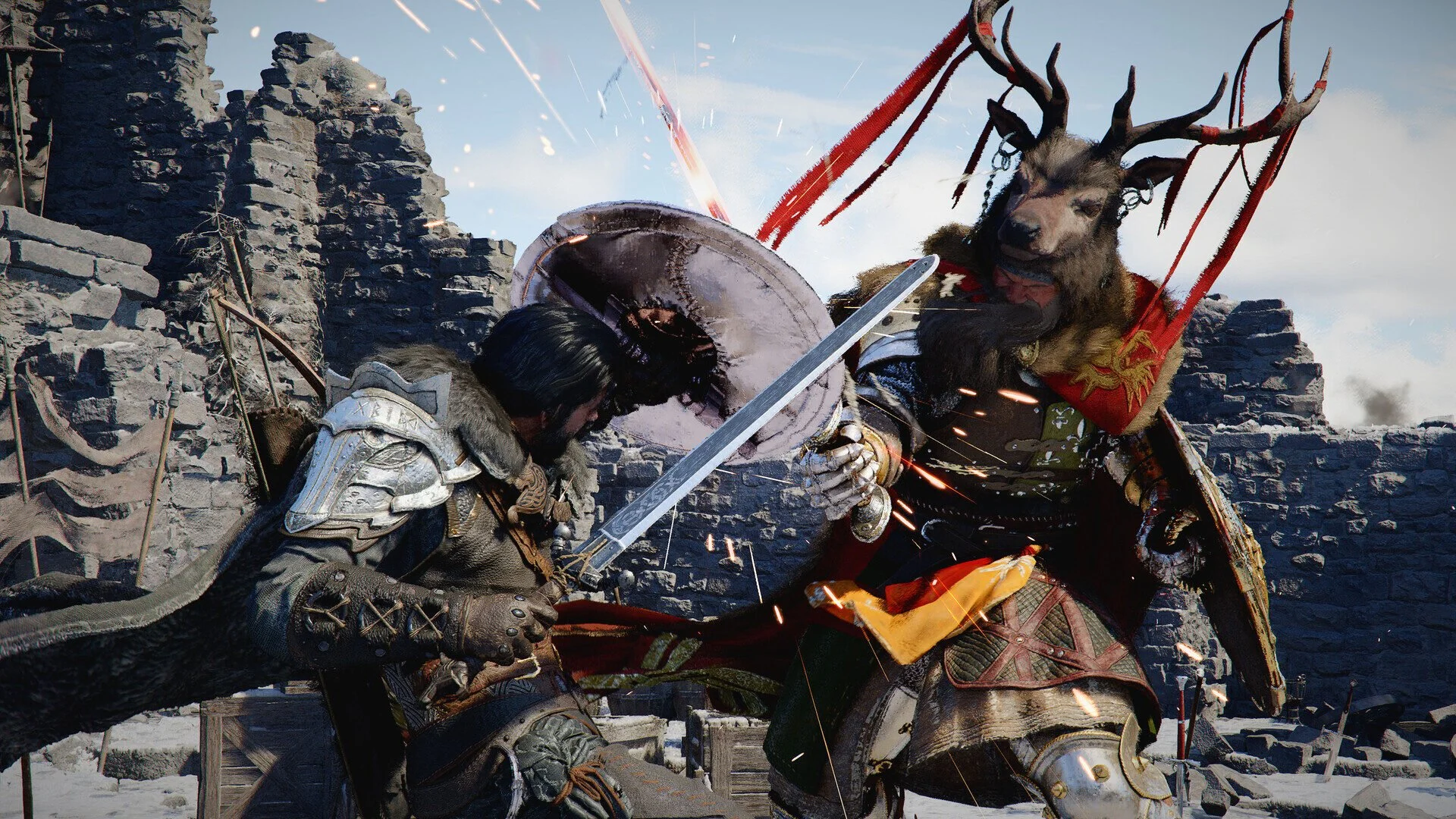
Something that came up while I was struggling to familiarise myself with Dragon’s Dogma 2. A matter that is now a major aspect of gaming culture. Specifically, the requirement to have to research gameplay mechanics, classes and builds prior to actually playing a game. YouTube is the dominant medium for this requirement. I found myself watching various videos with titles such as “10 mistakes you don’t want to make” and “the best classes and vocations” before I even created a character in Dragon’s Dogma 2. Do you remember a time when games had tutorials that explained their own mechanics. You may be old enough to recall when media shipped with a physical manual. Such days have long gone.
However, not only is it expected these days that you have to do research via third parties to be able to work out how to play a game, there is now a considerable “risk” if you don’t. If you just pick a class and gear based purely upon “that looks cool”, then you will damn yourself to the seventh circle of gaming hell and have a chronic case of buyer’s remorse. How the hell did we get to this place? A place where there isn’t scope to just have fun partially on your own terms. If certain builds and combinations of in-game gear lead to poor experience, why put them in the game? Everything seems so formalised these days with regard to gaming. Hence we get prevailing metas and if you choose to ignore them you’re effectively gimping yourself. This “process driven” ideology seems to be bleeding through into everything nowadays. It ruined TED Talks and is ruining YouTube. Where will it end?
Continuously Outraged Fans are Wearisome
The second season of The Lord of the Rings: The Rings of Power begins on 29th August on Prime Video. Captain America: Brave New World is released theatrically on 14th February 2025. What do these both have in common? The criticism and anger of outraged fans. Yes the vocal minority are at it again, shouting at clouds because a film or TV show has dared to do something that they don’t care for. Be it a question of representation or a matter of “creative adaptation”. It is an especially tedious foible of fandom and is often not just about likes and dislikes, but driven by other cultural and political movements. The matter came up recently in the documentary A Disturbance in the Force about the infamous Star Wars Holiday Special. Writer, actor and director Kevin Smith had wise words to say on this matter. “When you have a bunch of people that love something and take it into their hearts, they claim it. And when these things don't behave the way we want them to, well, it seems like we've become a culture that doesn't know how to handle that”.













Adaptation, Representation and Those Who Don’t Like Either
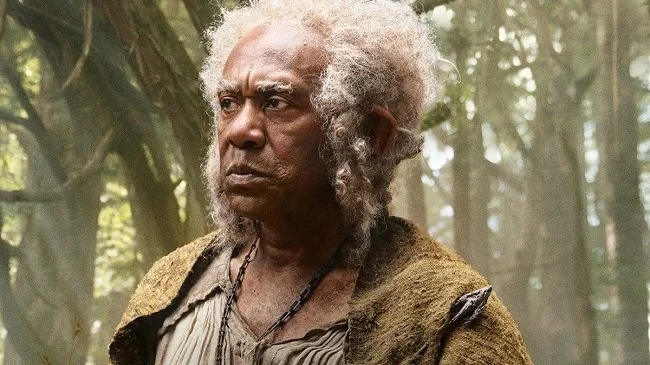
I was perusing my Twitter timeline last night and a tweet appeared from someone who doesn’t seem to care for the casting of Lenny Henry as a hobbit in the upcoming Amazon Prime TV show The Lord of the Rings: The Rings of Power. If you’re not familiar with Lenny Henry he’s a British comedian and actor of Jamaican heritage, who was one of first people of colour to establish himself as part of the cultural mainstream in the UK. He’s funny, smart and well respected. However, this particular individual on social media (we will not dignify them with a name check) was not happy about canonical authenticity being subject to the whims of representation. They tried to portray their objections as legitimate criticism based on a good faith argument, but some of the terminology they used clearly showed their true intent was passive aggressive dog whistle racism.
Lenny Henry as Sadoc Burrows
I was perusing my Twitter timeline last night and a tweet appeared from someone who doesn’t seem to care for the casting of Lenny Henry as a hobbit in the upcoming Amazon Prime TV show The Lord of the Rings: The Rings of Power. If you’re not familiar with Lenny Henry he’s a British comedian and actor of Jamaican heritage, who was one of first people of colour to establish himself as part of the cultural mainstream in the UK. He’s funny, smart and well respected. However, this particular individual on social media (we will not dignify them with a name check) was not happy about canonical authenticity being subject to the whims of representation. They tried to portray their objections as legitimate criticism based on a good faith argument, but some of the terminology they used clearly showed their true intent was passive aggressive dog whistle racism.
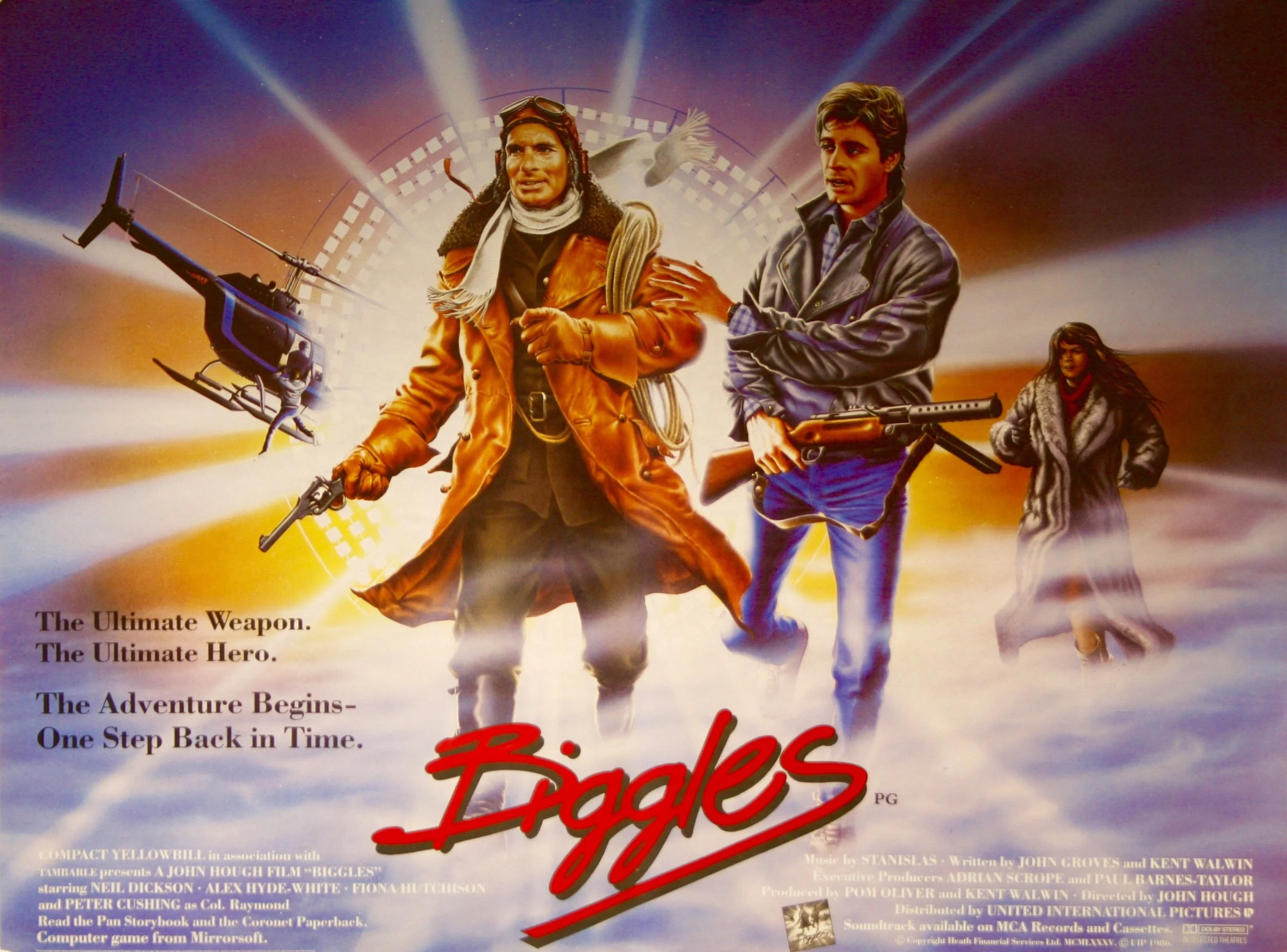
Setting aside twitter trolls, I’d like to briefly discuss the matter of representation, especially with regard to film and television. Simply put, representation is important. First off there are the moral and ethical reasons. Contemporary films and TV should accurately portray the world in which we live. Hence the diverse nature of society should be reflected both on the small and big screen. Furthermore, such depictions should be credible and fair. Secondly, representation is commercially viable. Paying audiences like to see people like themselves in the films and TV shows that they watch. Hence the success of the Blaxploitation genre during the seventies. Bruce Lee’s rise to fame also did much to make Asian actors and culture more accessible during the same decade. And if representation doesn’t matter, why does Hollywood continuously remake international films for its home market? Shall I also mention the commercial and critical success of Black Panther?
Films are commercial ventures. Directors and writers may well wish to talk about “art” but most major studios are in the movie business to make money. Films and TV shows are products. Representation increases financial viability. It’s as simple as that. So with this in mind, let us consider what happens when the rights to a major intellectual property, such as a beloved series of books, are sold to be adapted into a series of films or a lengthy TV show. The said IP will be repurposed to ensure that it meets certain criteria. These may include a specific rating, the inclusion of specific actors who have box office appeal, irrespective as to whether they are a good match for the part. And obviously representation is a factor. How exactly can a major production justify such potential changes from the source text? The key is the word “adaptation”. The bottom line is once the rights to an IP have been sold, all bets are off unless the original writer has some sort of creative control.
Hollywood has been altering plays, novels and other popular franchises since the film business started. Therefore, it is unrealistic to expect any adaptation of an IP that you enjoy to remain 100% authentic to the source text by default. You can make all sorts of arguments about why this shouldn’t be the case. For example, an author’s work should be respected and their artistic vision maintained and such like. However, such arguments seldom survive long outside of the rarified atmosphere of the classroom and tend to disappear upon contact with capitalism. The movie business is about making a return upon an investment and is not interested in philosophical arguments and ethical abstractions. If there reaches a point when the idea of a black actor portraying James Bond is deemed to be commercially viable, it will happen. Regardless of what the purists and the racists think or want.
Richard Roundtree as John Shaft
Returning to the matter of last night’s Twitter troll, what was noticeable was not so much their racist position which is tediously commonplace in fandom these days, but the way they lacked the courage of their convictions. They tried to represent their position as something it wasn’t. It wasn’t a good faith appeal regarding the sanctity of an author’s work, but just a cheap exercise in unsubtle bigotry. If you’re going to be racist, be upfront about it. As for all the other objections you hear when so-called fans aren’t happy about something, they’re equally as bogus. Despite claims to the contrary, no one can get into your head and retrospectively ruin your childhood. If you don’t like something, ignore it. Be an adult and rise above it. As for The Lord of the Rings: The Rings of Power, I hope it proves a success both critically and commercially. Especially if that pisses off all the bigots.






Fandom or Obsession?
In my youth, I took my fandom very seriously. I would brook no criticism of the various objects of my affection. I would robustly defend them in lengthy forum comments, filled with the sort of detail and lack of self awareness that only an ardent fan can bring to bear. Nowadays, it’s a different story altogether (insert Airplane gag here). I still enjoy Thunderbirds, Star Trek, The Lord of the Rings but I do not consider them unassailable, sacred cows. If other’s scorn them, that is their prerogative. Age not only brings you more keys and things that require charging, it also grants the realisation that it doesn’t matter what others think. Furthermore, reboots, reimaginings and revivals cannot harm your memories or “ruin your childhood”. Has Gus Van Sant’s ill conceived 1998 remake of Psycho harmed in any way Hitchcock’s classic original. Any answer other than “no” is at the least spurious and at worst naval gazing bullshit, served on a platter of hyperbole and attention seeking.
In my youth, I took my fandom very seriously. I would brook no criticism of the various objects of my affection. I would robustly defend them in lengthy forum comments, filled with the sort of detail and lack of self awareness that only an ardent fan can bring to bear. Nowadays, it’s a different story altogether (insert Airplane gag here). I still enjoy Thunderbirds, Star Trek, The Lord of the Rings but I do not consider them unassailable, sacred cows. If other’s scorn them, that is their prerogative. Age not only brings you more keys and things that require charging, it also grants the realisation that it doesn’t matter what others think. Furthermore, reboots, reimaginings and revivals cannot harm your memories or “ruin your childhood”. Has Gus Van Sant’s ill conceived 1998 remake of Psycho harmed in any way Hitchcock’s classic original. Any answer other than “no” is at the least spurious and at worst naval gazing bullshit, served on a platter of hyperbole and attention seeking.
For me fandom is a benign activity which I share with others via this blog or twitter and occasionally takes me to the BFI Southbank in London, where I spend several hours enjoying the company of like minded individuals. However, and this is a big “however”, there appear to be an ever growing group of fans at the extreme end of the spectrum. Fandom turned up to 11 to use a Spinal Tap analogy. When these folk latch onto something that they like they go all in. The thing that they love preoccupies them constantly and they analyse and dissect every conceivable aspect of that which they love. It is easy and possibly a little condescending to invoke an analogy of the conspiracy theorist that has a “wall” with all their data on it but there is a grain of truth in the imagery. YouTube is filled with videos where fans discuss the most extravagant theories and hypothesise about meaning, subtext and future developments of the things they like.
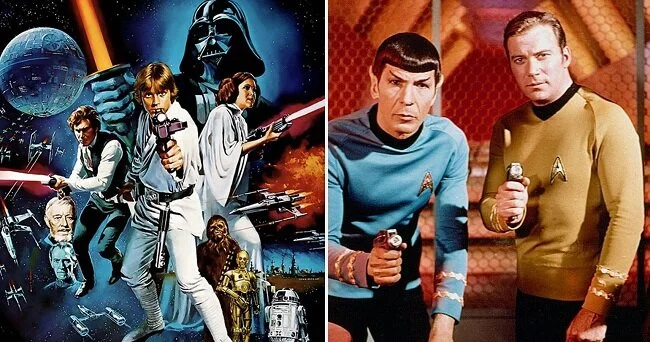
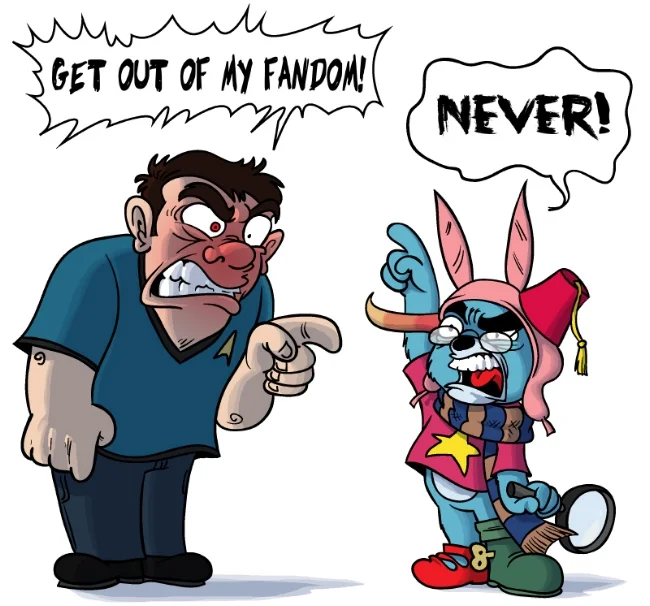
Films and especially television shows are naturally a focal point for fandom. They also provide the perfect environment for the über fan. Now if folk wish to dedicate themselves to such levels of devotion, so be it. Sadly, this position is often just one step away from crossing the line and becoming the toxic, fundamentalist fandom we’ve all seen in recent years. Consider the associated gatekeeping, zealotry and non-inclusional bullshit that has emerged around the Star Wars franchise in recent years. Not every über fan is guilty of such behaviour but if you draw a venn diagram you’ll find that many toxic fans are those who have become wedded to their “cause”. But if we set aside for a moment the matter of toxic fandom and simply concentrate on borderline obsessive fandom, it seems to come at a rather big price. Because there is a fundamental flaw inherent in investing really heavily in a TV show, book or film. You may well have placed it upon a pedestal for your personal adulation but you have no control over it and are ultimately dependent upon its creator to determine its course of direction.
All of which brings me on to Line of Duty, known jokingly by those “without a dog in the fight” as Lionel Duty, courtesy of UK comedian Gary Delaney. For those who may not know, Line of Duty is a British police procedural television series created by Jed Mercurio. It has run for six seasons and has gained enormous popularity due to its densely plotted storyline and robust performances by its cast of character actors. Audience figures have grown from 3.8 million viewers to 12.85 million over the last nine years. The latest season has turned analysis of the show into a national pastime, which has then been splashed across most of the national tabloids, throwing further fuel onto the fire. Naturally Line of Duty has its devoted über fans and they have devoted a lot of time and energy into hypothesising about the season conclusion. Last night, the final episode was broadcast and the relevant storylines neatly tied up. And within minutes the internet was filled with the bitter tears of fundamentalist fans who were “disappointed”, like the children of Thulsa Doom at the end of Conan the Barbarian.
Which one is Lionel?
It is not my intention to mock, judge or indulge in schadenfreude. Okay it is just a little bit. But I think there is one observation worth making about this situation. It was both predictable and inevitable. Lionel Duty fans are pissed at Jed Mercurio because he ultimately wrote what was in his own head, rather than what was in theirs. Damn these authors with their creative control over their intellectual property. I think when fans go all in and stray from affection into obsession, then they ultimately separate themselves from the source of their fandom. The continuous analysis, discussion and conjecture becomes more important than the source material. Sadly, fans disappointed with the conclusion of Line of Duty have made the same mistake as gamers who have pre-ordered games only to find them underwhelming upon release. Both groups filled the gaps in their knowledge with their own aspirations, only for reality to teach them otherwise. My advice is to temper your fandom and not to lose sight of its context. Because it would appear that über fans are perpetually dissatisfied and this entire scenario will happen again when the next “big thing” arrives.



Fandom: Experiencing the Same Thing Differently
I like films. I have done so since I was a young child, mainly because we watched them as a family. Furthermore, both my parents weren’t just casual viewers. They were fans who were knowledgeable about their hobby. Plus they came from a generation where going to the cinema was a major part of their life and a very accessible pastime. Hence my love of film, filmmaking and analysis. But like any form of fandom, it can often be a very broad church. For example, I may be at a social gathering such as a dinner party or a fundraising event for the Humber and District Catholic River-Wideners Club and I strike up a conversation with a stranger. The stilted conversation turns to film (or more informally “movies) and for a brief moment, there is the possibility of a shared interest. However, if the other party then indicates that they are a committed advocate of the works of Ben Stiller, then that common ground evaporates like a politician's promises after election day.
I like films. I have done so since I was a young child, mainly because we watched them as a family. Furthermore, both my parents weren’t just casual viewers. They were fans who were knowledgeable about their hobby. Plus they came from a generation where going to the cinema was a major part of their life and a very accessible pastime. Hence my love of film, filmmaking and analysis. But like any form of fandom, it can often be a very broad church. For example, I may be at a social gathering such as a dinner party or a fundraising event for the Humber and District Catholic River-Wideners Club and I strike up a conversation with a stranger. The stilted conversation turns to film (or more informally “movies) and for a brief moment, there is the possibility of a shared interest. However, if the other party then indicates that they are a committed advocate of the works of Ben Stiller, then that common ground evaporates like a politician's promises after election day.
Belghast wrote a very interesting blog post today about “subculture and gatekeeping” and how fandom is often very personal as we seek to define ourselves during our teenage years. Hence it can lead to a sense of ownership and even gatekeeping. Tangentially, one sentence in the post stood out for me and is relevant to the theme of this post. "RHCP (Red Hot Chilli Peppers) had sorta been one of those arcane signals of belonging that helped us find more members of our tribe. Even though that “tribe” was contorted as fuck because none of us actually had the exact same ideals or beliefs or even hobbies". That is a succinct description of the point I was making earlier. E.g. “I like movies. You like movies as well? Oh, you like those movies”. Again we return to the concept that fandom as a broad church and that a shared interest does not guarantee that you and the other party will have lots of other things in common. Something I discussed at length in a post about a shared love of Tolkien and how I was surprised when I found out that his work found traction with politicians I’m “at odds” with.
However, differing opinions can be a good thing and provide an alternative perspective upon a shared interest. They can also provide an opportunity to reappraise something. Film criticism is not pure science. One can make comments made upon objective facts, such as how well a film is edited, the quality of the cinematography and other technical aspects of the production. But whether a joke is funny, a character is likeable or a story arc is engaging or not is ultimately very personal and subjective. It comes down to taste and one’s own expectations. Which brings me to the point that sparked this post in the first place. The 1978 conspiracy thriller, Capricorn One. Blogger and writer Syp shared his thoughts on the film over at Mutant Reviewers. They differ from mine and it would appear that the aspects of the film that I specifically like, Syp does not. I like the seventies hard boiled dialogue and focus on verbal exposition. I also didn’t have an issue with the pace of the film.
I briefly spoke to Syp via Twitter regarding this, not to instigate a fanboy bunfight but to determine his perspective and it highlighted some very interesting points for me. Contemporary film and TV has a particular idiom and certainly a very fast pace, compared to material from the eighties and older. Hence if you are watching a TV show from the seventies or a movie from the forties, then it requires a form of mental recalibration so that you’re prepared for the obvious stylistic and technical differences. That is fine if you are approaching the content in a scholarly fashion or for an in depth critical analysis. If you’re simply watching for entertainment, then having to make that shift in perspective is quite a big ask and not necessarily one that is conducive to having fun. It is important to remember that we don’t all have the same relationship with a shared fandom and that we don’t all approach it with the same intent.
Every form of fandom has its own set of self appointed gatekeepers. They’re often also responsible for perpetuating an apocryphal dogma and trying to convince us it’s somehow legitimate. For example, in film fandom there is the cult of Stanley Kubrick in which any deviation from the consensus of his genius is deemed as heresy. Although I will strongly argue positively regarding the technical and thematic talent of the filmmaker, I would not say that all his work is accessible to everyone. The “detonator” for this particular debate being 2001: A Space Odyssey. As far as I’m concerned it is perfectly acceptable not to like a so-called “cinematic great”. I don’t care for Ridley Scott’s Blade Runner. I recognise the skill inherent in its making and I understand it’s cultural significance (like certain literary classics) but I don’t warm to the film.
So today was a timely reminder that the only universal constant in fandom is the inherent difference between fans themselves. I shall continue visiting Mutant Reviewers specifically because they will continue to offer an alternate view to my own, on many films that I love. Furthermore, those views are backed up with valid arguments, which is good because reviews that aren’t are ultimately just a series of unqualified statements. I will also continue to gently encourage people to step outside of their personal boundaries and to give wider material a try. However, I won’t give them a hard time if they do so and subsequently don’t enjoy the experience. Fandom is about shared enjoyment and enthusiasm, although paradoxically, that itself can be used to reinforce hierarchies and can lead to preposterous gatekeeping and the nonsensical “true fan” fallacy. Stay clear of all that. You do you. And if you really like the work of Ben Stiller, then so be it.











Keeping Up
I was a teenager during the eighties and the music that I listened to at the time was a major part of my overall experience. My musical taste influenced how I dressed and sometimes even determined friendships. Going to a gig and seeing music performed live was a major rite of passage. Furthermore, due to there only being a handful of TV channels in the UK at the time, meant that certain key programs were responsible for the dissemination of a broad spectrum of musical genres. Hence, while you waited for a band that you liked to come on, you’d sit and be exposed to a wealth of different artists. Something that tends not to happen nowadays as there is far more choice available. My passion for music persisted throughout the nineties and then began to wane round about the turn of the century. Work and the practicalities of daily life made it increasingly difficult to “keep up”. I used to read the music press and know about contemporary artists. I no longer do this. I often don’t even know what the current Number 1 record is.
I was a teenager during the eighties and the music that I listened to at the time was a major part of my overall experience. My musical taste influenced how I dressed and sometimes even determined friendships. Going to a gig and seeing music performed live was a major rite of passage. Furthermore, due to there only being a handful of TV channels in the UK at the time, meant that certain key programs were responsible for the dissemination of a broad spectrum of musical genres. Hence, while you waited for a band that you liked to come on, you’d sit and be exposed to a wealth of different artists. Something that tends not to happen nowadays as there is far more choice available. My passion for music persisted throughout the nineties and then began to wane round about the turn of the century. Work and the practicalities of daily life made it increasingly difficult to “keep up”. I used to read the music press and know about contemporary artists. I no longer do this. I often don’t even know what the current Number 1 record is.
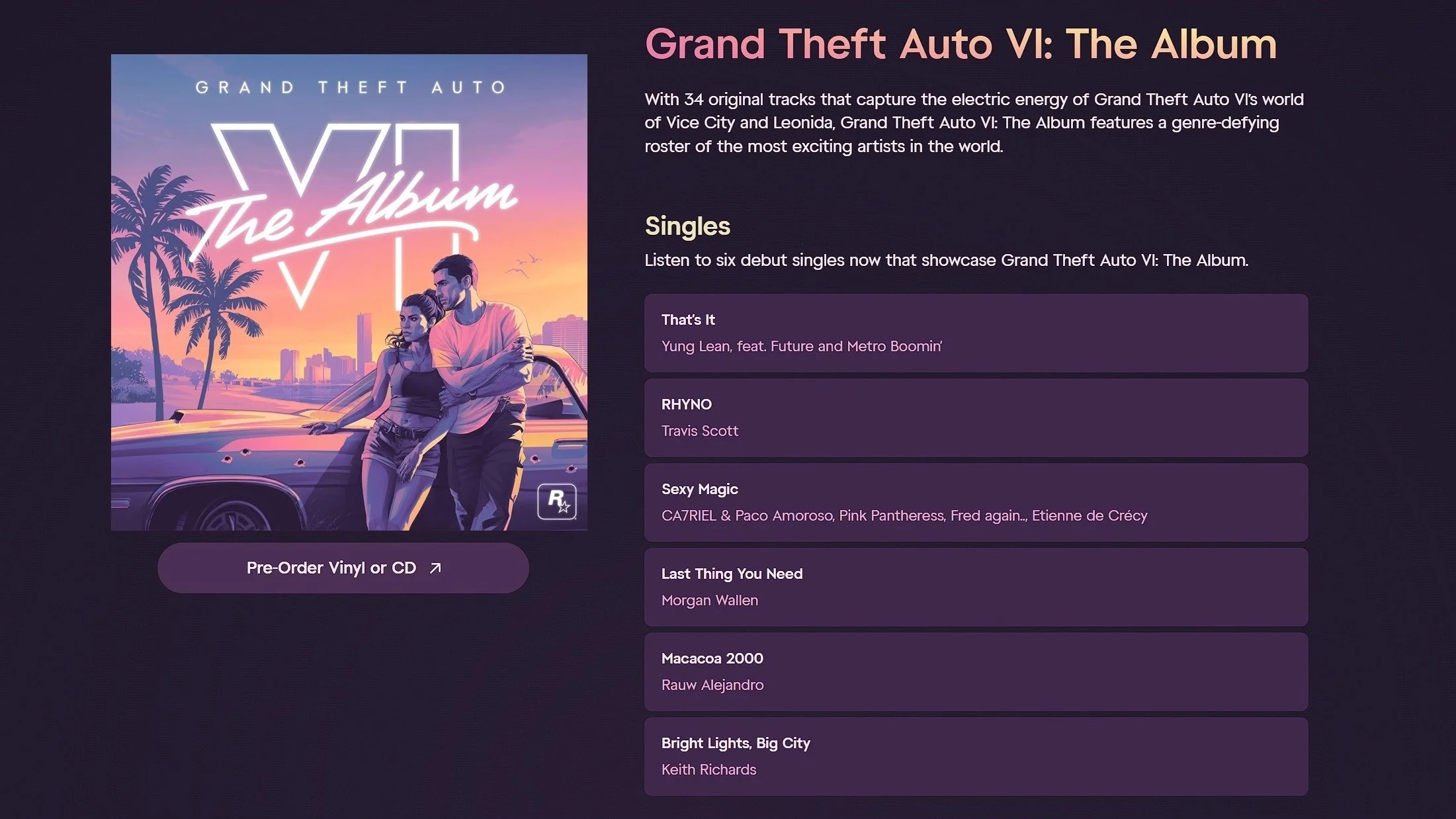
The last twenty years has seen a major shift in focus of youth culture. The sales of physical media such as CDs have declined and music is now consumed via streaming services or even YouTube. The concept of the album is waning. Consumers favour selected tracks and personally curated playlists, rather than sitting down and studiously listening to all the tracks from a classic album in order. Traditional terrestrial TV no longer commands the audiences that it used to. Streaming TV means we can watch what we want, when we want. Subsequently, younger people no longer make TV such a focal point of their leisure activities. Twitch, YouTube are often their first ports of call for information, news and finding out about the things they enjoy. And then there are video games. A medium that for many is now the major social hub of their online activities. For many, games are where you find out about music and pop culture by the references that exist within them. Traditional mediums are no longer a core facet of their culture. Therefore the following article on the Guardian website came as no surprise. If you’re sceptical, ask any parent who has a child old enough to be enamoured with Fortnite.
I see no point in lamenting these social changes, nor passing judgement upon them. As Spock said “change is the essential process of all existence” and who am I to contradict such wisdom? Being au fait with a particular subject can at times feel like a job in itself. Certainly, keeping abreast of the music I liked felt that way during my teen years. It took time and effort to read the music press and then listen to everything. Plus this interest would then compete with my love of cinema, as both would monopolise large swathes of time. Frankly, reaching an age when I could let some of these things slide was a major relief. Between 2006 and 2011 I worked as an IT contractor and would often find myself in an environment in which a radio would be on all day, often tuned to a generic commercial channel. It is interesting how exposure to such a thing, even if you are not consciously paying attention to it, suddenly increases your familiarity. For a short period I became aware of the UK charts once again.
For over a decade, I have been writing to varying degrees about the video games industry and that has become a focal point of interest and fandom for me. Like music in my youth, this has dictated what I read, what media I consume online and has even had an impact upon the social circles in which I move. Sadly, I find that my excitement for this genre is waning, as it has exactly the same failings as other entertainment industries. And so I find myself once again at a point where I feel it is time to simply stop immersing myself in this particular interest. That not to say that I shall ignore it outright. I shall simply start to slow down my consumption of industry news and stop trying to be aware of all major new releases and industry trends. I shall swap being proactive with reactive. If an interesting nugget of gaming news crosses my path or I encounter a new game that has become a talking point, I shall no doubt write about such things. But I no longer feel the need to spend the first 90 minutes of my day, trying to read dozens of gaming news articles via Feedly.
One of the best lessons anyone can learn in life is that you cannot do everything. Once I made peace with this concept I felt a lot better in myself. Therefore it is not so difficult nowadays to let a hobby or pastime go. I miss podcasting but I cannot see myself fitting all the work it entails into my schedule. At present I have sufficient time to play games, watch movies and read. Those activities provide me with sufficient material to write about. But I no longer feel a compulsion to totally immerse myself into my leisure activities, nor do I seek to be an “armchair expert”. It no longer bothers me if someone mentions an artist that I’m not immediately familiar with. If I’m sufficiently interested then Google will yield an answer. Therefore, I am content to embrace the cyclical nature of fandom, hobbies and interests. I prefer now to savour a bottle of fine wine rather than strive to consume the entire vintage.




















San Diego Comic-Con 2018: Geek Mecca or Marketing Sodom and Gomorrah?
In the past decade geek culture has been become increasingly lucrative, as major corporations find new ways to further monetise what was formerly a niche market. Multi-million-dollar movies are tailor made to the caprices of their audiences. Limited edition action figures and other memorabilia are now designed, created and sold not as toys for enthusiastic children but as collectible investments to the middle-aged. Cosplay is no longer the exclusive preserve of fans sporting homemade outfits, but photo opportunities for professional artists with portfolios, looking for sponsorship. Conventions have moved from the church halls and community centres into cutting edge conference facilities and awkwardly rub shoulders with corporate trade shows. Money changes everything and not always for the better.
In the past decade geek culture has been become increasingly lucrative, as major corporations find new ways to further monetise what was formerly a niche market. Multi-million-dollar movies are tailor made to the caprices of their audiences. Limited edition action figures and other memorabilia are now designed, created and sold not as toys for enthusiastic children but as collectible investments to the middle-aged. Cosplay is no longer the exclusive preserve of fans sporting homemade outfits, but photo opportunities for professional artists with portfolios, looking for sponsorship. Conventions have moved from the church halls and community centres into cutting edge conference facilities and awkwardly rub shoulders with corporate trade shows. Money changes everything and not always for the better.
San Diego Comic-Con is in some ways the jewel in the crown of geek culture. Certainly, from a sales perspective. If you have a new product to sell, be it a book, movie TV show, graphic novel or such like, you’ll be there hawking your wares and working the crowd. Each year there is a never-ending litany of panels and previews, designed to test the water regarding a new product. And the interesting thing is that for every geek that laps up this kind of promotion, you can find another who is unhappy about the way “the man” has taken over proceedings. It’s an analogy that I’ve referred to in previous posts but there is a definite sense from some quarters that people have been thrown out of their own party. The massive promotional campaigns seen as Comic-Con are a far cry from seventies where people sold silk screen printed T-shirts and traded VHS copies of cult TV shows.
One of the curious by products of the commodification of fandom, is that where some members of the target audience feel uncomfortable with the rampant commercialisation of their culture, there are others that feel emboldened by the proceedings. It’s not a stretch to consider the increase in toxic fandom as being a by-product of some fans learning that their spending power equates to a very strong lobby. A big marketing push for a new film or TV show at San Diego Comic-Con, gives the impression that these products have been exclusively tailor made for the audience. However, it should also be noted that a favourable response at Comic-Con has subsequently proven not to be a box office guarantee. Sin City II and Blade Runner 2049 stand as testaments to this. But the attention that big studios, publishing house and games developers have shown to fans (or at least their wallets) in recent year, certainly accounts for the shift in perception that sees some fans considering themselves as equal partners and stakeholders, rather than just consumers.
Reading between the lines, although San Diego Comic-Con is still big by industry standards, there has been an element of business dialling back their expenditure. It will be interesting to see if the “disappointing” box office returns of Solo: A Star Wars Story, is indicative of an eventual geek market crash. We’ve seen it before during the eighties in the video game industry. The horror movie genre is also no stranger to regular boom and bust economics. Commodifying fandom and commercially usurping the community will inevitably have consequences. If one looks at the contemporary “pop” music industry, it has fragmented the market, CD sales have imploded, and it has effectively stifled any major innovation or creativity. Everything is based upon formulas, algorithms and focus groups. I believe such a fate awaits Super Hero movies, science fiction and fantasy TV shows and every other flavour of the month. The downside of commodification is disposability. And while the marketing Sodom and Gomorrah consumes itself (or is destroyed by external forces), I wouldn’t be surprised if small communities and events spring up, back at those community centres and town halls where they originally started.
Fundamentalist Fandom
Naïve (adjective): (of a person or action) showing a lack of experience, wisdom, or judgement. I have chosen this word over delusional, foolish or puerile in an attempt to keep this post measured and level headed. Because this is a discussion about fandom and it’s a subject that is seldom driven by cool, even handed, mature reflection. Fandom is about passion, strong emotional connections and a sense of community. These can be and often are positive things. Yet fandom can also be about myopia, zealotry and gate-keeping. Something that that is supposed to bring people together can degenerate into a “them and us” scenario. Just another binary, tribal, world view that screams at anyone or anything that is not “the same”. And in recent years, due to the internet and social media, fandom has now developed an erroneous sense of ownership. By loving something and venerating it, you (allegedly) have an inherent stake in it and a right to say how it evolves. Which leads me neatly on to “Remake the Last Jedi” movement and the staggering naivety that underpins it.
Naïve (adjective): (of a person or action) showing a lack of experience, wisdom, or judgement. I have chosen this word over delusional, foolish or puerile in an attempt to keep this post measured and level headed. Because this is a discussion about fandom and it’s a subject that is seldom driven by cool, even handed, mature reflection. Fandom is about passion, strong emotional connections and a sense of community. These can be and often are positive things. Yet fandom can also be about myopia, zealotry and gate-keeping. Something that that is supposed to bring people together can degenerate into a “them and us” scenario. Just another binary, tribal, world view that screams at anyone or anything that is not “the same”. And in recent years, due to the internet and social media, fandom has now developed an erroneous sense of ownership. By loving something and venerating it, you (allegedly) have an inherent stake in it and a right to say how it evolves. Which leads me neatly on to “Remake the Last Jedi” movement and the staggering naivety that underpins it.
For those who may not be aware (and in some ways I envy you) a group of “devoted” Star Wars fans are currently lobbying, campaigning and generally advocating that the recent instalment in the franchise, Star Wars: The Last Jedi, is remade because it wasn’t to fans liking. Take a moment to read the official statement from their website. “Welcome to the Rebellion. This is a campaign to provide Disney an opportunity to course correct with the Star Wars franchise. The fans are completely divided, and the core goal of Star Wars has been abandoned. The goal is to not make one half of the fandom happy over the other, it is to make a film that the fandom in general as a whole enjoys. The hero archetypes of the original films are what made these so great, it made characters that everyone could relate to regardless of their background and beliefs. No longer having this core element along with poor storytelling, has made the franchise divisive and in disarray”.
"I felt a grave disturbance in the force. As though thousands of voices cried out because they were incapable of acting like fucking adults..."
It’s difficult to know exactly where so start with such spurious reasoning as this. The above statement seems to be predicated on numerous false axioms and driven by a quite frankly staggering degree of hubris. Yet these seem to be common facets of fandom these days. However, let’s try and remain rational and the unpick Gordian knot that is zealous, fundamentalist fandom. First off, Star Wars: The Last Jedi grossed $1,332,539,889 internationally, which is broadly five times it’s budget. Star Wars: The Force Awakens made $2,068,223,624 at the global box office, which is about eight times its production costs. So, although there was a drop-in revenue with regard to Star Wars: The Last Jedi, the movie can hardly be described as a financial flop. It can be cogently argued that the high gross of the first Star Wars sequel was primarily driven by curiosity in the franchises re-launch. The bottom line is that Star Wars: The Last Jedi was broadly a financial and critical success. The fact that it was not well received by some fans is simply a foot note to this. A tangential incident and an event of no more significance than a reflection of the capricious nature of fandom.
So, I think we can safely say that from Disney’s perspective there is no pressing need to “course correct” the Star Wars franchise. Certainly not from a financial perspective. But that’s not what is meant is it. The course correction referred to by “Remake the Last Jedi” is the narrative and specifically, its racial and gender diversity. Because apparently anything that isn’t a white hero, a white secondary hero, and venerable old sage like white hero and a solitary sassy girl who needs to be rescued, isn’t living up to “hero archetypes of the original films”. Archetypes that were steeped in the prevailing socio-political-economic attitude of the times (IE the seventies), which as we know from history where a veritable golden age of equality and moral rectitude. Make no mistake, these trite excuses trotted out with tedious predictability are just the usual smokescreen for a section of society who don’t like the slow and gradual diminishment of their demographic privilege. Once again, we see a percentage of fans that are angry because they didn’t get a movie made exclusively on their terms, servicing their questionable needs.
"Well if I can't have it my way, I'd sooner see the whole thing burn..."
Another myth that is being perpetuated here is that Star Wars movies and indeed any franchise movies per se, are made exclusively to cater to the needs of core fans. They are not. I’ll say that again in case the sound of certain parties’ jaws dropping and hitting the ground drowned me out. Just because you like something and you’re vocal about your appreciation of it, it doesn’t make you the exclusive customer. It’s a simple question of numbers and economics. The box office returns from fans alone are not going to make a healthy profit for the studio. This matter came up recently with the Warcraft movie, which I happened to think was a above average genre outing. Many of those who have avid played the game over the years felt that the movie was too broad and covered to much familiar territory. Why didn’t the film concentrate on more specific aspects of the lore? Well the answer boils down to accessibility. To ensure adequate box office returns, the movie had to provide an overview of the established lore and a means for the casual viewer to get up to speed. This is something that Peter Jackson wrestled with when he adapted (and that is the key word) The Lord of the Rings. If a studio focuses solely upon fans, then they are effectively setting boundaries on a movies appeal. Steven Spielberg struggled with this issue more recently with Ready Player One. As a result, the films narrative suffered. Movies are made for profit first, art second. More bums on seats means more money.
Furthermore, irrespective of the credibility of the arguments put forward by “Remake the Last Jedi”, there is another major pachyderm on the mezzanine to consider. Namely the legal possibility of remaking such a film is negligible. Putting aside the immense loss of face a studio would suffer in conceding that one of its products is so bad, that they felt compelled to let “joe public” remake it, the legal logistics of such an undertaking would be prodigious, requiring support and sign off from multiple parties. Although it’s far from a like-for-like comparison, look at the fate of Star Trek Axanar when it attempted to “rub” another studio’s “rhubarb”. That project has ended exactly everyone thought it would. So, because there is no conceivable situation where such a project could be facilitated, this entire “Remake the Last Jedi” endeavour is nothing more than a public act of showing one’s displeasure. Now in principle, I have no problem with that as I support the right for peaceful protest. However, those protesting do not have the right to avoid scrutiny of their cause and subsequent judgements of its righteousness. For me and many others, it is absent in this case.
"Excuse me, I'd like to borrow your franchise please..."
Steeping asides from the specifics of this incident, there is much to reflect upon in a wider context. The growth of this more zealous form of fandom is extremely counterproductive. It perpetuates a stereotype or fans being dysfunctional social misfits, drives away moderate and even-handed supporters and validates the notion held by some, that pop culture having an infantilising effect upon society. Certainly, there are elements here of “me, me” culture present in the “Remake the Last Jedi” movement. This ties in with the wider growth of “faith and feeling over facts” and the compulsion to make every nuanced discussion into a trite binary argument that demands you to pick a side. In many ways this is just another aspect of growing cultural decline that accounts for so many of the political “upsets” we’ve seen of late. Now, I’m sure some readers may be inclined towards dismissing “Remake the Last Jedi” out of hand as just being the an excessively vocal minority taking advantage of social media and it’s reach. But I think it is symptomatic of a more comprehensive shift in the western zeitgeist and that it’s not a change for the better. I fully expect something similar and more incredible to occur soon. Also, it’s only a matter of time before something tragic happens.
Is Shared Fandom a Bridge to Reconciliation?
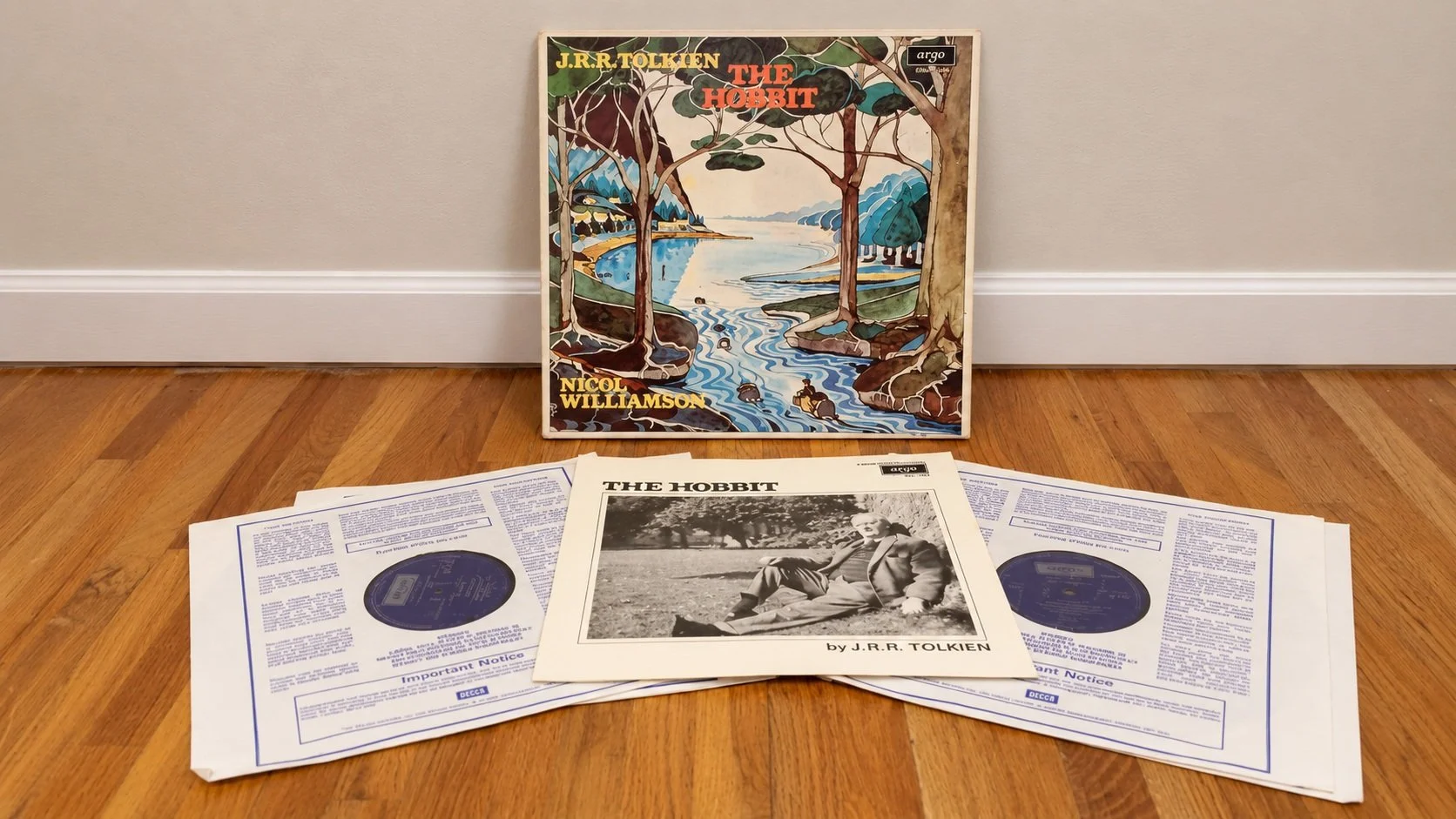
There are and always will be books that have a clear political agenda or make a very particular statement. Orwell’s 1984 springs to mind as an obvious example. Then there are also books that attract political interpretations by the nature of their plot or the subjects that they explore. Whether the author intended such a debate about the work or not, is a secondary issue. I have always taken Tolkien’s work at face value and to be what he stated they were. Epic and intricate faux histories, free from allegory. Furthermore, I appreciate that the moral position and themes of his work stem from the authors world view, personal experiences as well as the prevailing social dogma of the time. I find it interesting how his work attracts praise and adulation from a wide variety of groups. Catholics will naturally gravitate towards Tolkien’s writings due to his faith and that is the prism through which they will critically view his work. There are of course other examples about how The Hobbit and The Lord of the Rings appeals to different people in different ways. It is a common aspect of fandom.
Fandom by Tom Preston
There are and always will be books that have a clear political agenda or make a very particular statement. Orwell’s 1984 springs to mind as an obvious example. Then there are also books that attract political interpretations by the nature of their plot or the subjects that they explore. Whether the author intended such a debate about the work or not, is a secondary issue. I have always taken Tolkien’s work at face value and to be what he stated they were. Epic and intricate faux histories, free from allegory. Furthermore, I appreciate that the moral position and themes of his work stem from the authors world view, personal experiences as well as the prevailing social dogma of the time. I find it interesting how his work attracts praise and adulation from a wide variety of groups. Catholics will naturally gravitate towards Tolkien’s writings due to his faith and that is the prism through which they will critically view his work. There are of course other examples about how The Hobbit and The Lord of the Rings appeals to different people in different ways. This is a common aspect of fandom.
Bearing this in mind, it should not come as surprise to learn that Tolkien’s writing also has fans among the political class. The UK Conservative Party MEP Daniel Hannan is one who has written essays on his love of the Professor’s work and its literary merits. For example, Mr Hannan says “Here is a book that, as much as any I can think of, needs to be read aloud. Tolkien, like many Catholics of his generation, understood the power of incantation. He knew that—as, funnily enough, Pullman once put it—a fine poem fills your mouth with magic, as if you were chanting a spell”. Upon reading more of his analysis of Tolkien’s work, it becomes apparent that several of his political colleagues share his passion. It would seem many Conservative MPs find that Tolkien’s writing contains themes and concepts that they equate with their political ideology. Curiously enough what they see in the Professor’s work, I have never experienced. Again, they view it and quantify it in a different way to myself. This raises some interesting points about when you discover that you share a liking for something with a group you didn’t expect.
I suppose the optimistic way to interpret this situation is to focus on how fandom can build bridges and that there is now theoretically common ground between both parties concerned, despite their obvious differences. However, I feel that it’s a more complex situation than that. In this instance, I do not hold with a lot of the opinions and world view of this particular group of people. I think that many of the policies that the Conservative party have implemented since they came to power in 2010, have been harmful to both individuals and to society. Therefore, does simply having a shared passion for one specific thing bridge an otherwise, vast cultural, philosophical, political divide? I do not think that it does. If I were to meet Mr Hannan in a social situation, I would endeavour to be civil to him and focus on our common ground but ultimately our shared love for Tolkien is not a path to reconciliation. He would still remain at odds with my political sensibilities and continue to be a Conservative party member.
Reflecting upon this example and other comparable ones, certainly raises some interesting questions. It is a timely reminder that fandom does not give you any sense of ownership towards the object of your affection. Nor do you get to decide who can like or not like the thing in question, or who are “true fans”. The reality is that what appeals to you about the thing you love, is not necessarily the same for everyone and that we all interpret and respond to art as well as literature in a different way. Furthermore, when you do find out that you share a common love for something with those who are radically different to yourself, their presence should not spoil that very thing for you. Irrespective of the fans and their differences, the object of affection (in this case Tolkien’s writing), remains untouched. Overall, I guess this matter is a timely reminder about tolerance and sharing.
The analogy that springs to mind is one regarding religion, specifically Christianity. It is a faith that is rife with different denominations. All allegedly cleave to the same fundamental principles, yet interpret the scriptures differently. Is this situation about the differences between fan bases not dissimilar to the divide between Anglicans and fundamentalist Evangelicals? Also, history shows that many fine things have been liked, embraced or advocated by the morally questionable. So, it would appear that a shared love is not an assured ticket to harmony and reconciliation. The divided nature of the gaming community is an ongoing testament to that. The fallout over the recent casting of a female actor as Doctor Who is further proof that fandom is a broad but far from united church. As for Tolkien, I shall simply content myself with my own personal enjoyment of his work and leave others to do so in their own way. However, what I will not allow unchecked is for others to usurp his writing and claim it justifies something that it empirically does not.




Collecting
Once again Syp over at Bio-Break has written a post that provides a talking point for other bloggers. This time it’s about collecting which is a very broad church indeed. When I was a child it was a common mantra of adults at the time to “get a hobby”. I suppose from their perspective a busy and engaged child is one that is likely to stay out of trouble and frankly it’s still sound advice. Many hobbies involve collecting and this can tangentially teach positive lessons such as fiscal prudence, patience and learning about that which you enjoy. In his post Syp raises the point as to whether he’s missed out by never having been bitten by the collecting bug but he also reflects on some practical problems associated with such pastimes. I was going to leave a comment on the post but it soon became apparent that it would be a little too long, so this blog post is my response.
Once again Syp over at Bio-Break has written a post that provides a talking point for other bloggers. This time it’s about collecting which is a very broad church indeed. When I was a child it was a common mantra of adults at the time to “get a hobby”. I suppose from their perspective a busy and engaged child is one that is likely to stay out of trouble and frankly it’s still sound advice. Many hobbies involve collecting and this can tangentially teach positive lessons such as fiscal prudence, patience and learning about that which you enjoy. In his post Syp raises the point as to whether he’s missed out by never having been bitten by the collecting bug but he also reflects on some practical problems associated with such pastimes. I was going to leave a comment on the post but it soon became apparent that it would be a little too long, so this blog post is my response.
When I was young, I dabbled with collecting. Comics, trading cards, action figures are some of the things I doggedly pursued. But often I found that time, money and the practicalities of being a child, IE being busy playing, meant that such enterprises were doomed. It was not until the early nineties, when I had a job and a sizeable disposable income, that I was able to sustain the practical realities of collecting. I think this is an important factor to mention. Collecting requires passion which is something available to all age groups. Money is something that we don’t have continuous access to all our lives and it subtly alters the dynamic of collecting. It is far easier to start your collection while you still live at home and have “spare cash”. Marriage, family and mortgages can radically alter this equation.
Being a consummate film fan and an ardent completist, I started collecting films on what was the best physical medium of the time; LaserDiscs. In the early nineties, VHS sell-through tapes where king. However, if you were a serious movie aficionado, who wanted superior picture and sound quality as well as alternative cuts of a film, then LaserDiscs was where it was at (Daddy-o). At the time, a VHS tape of a popular film such as Terminator 2 would cost about £10. If you wanted the Director’s Cut of the same movie, in the correct aspect ratio with optional commentary by the cast, then it would cost between £30 to £40 on LaserDisc. It was a superior viewing experience all round. Although there were UK releases on this format, they were somewhat limited. A far greater choice was available if you bought US and European imports. Buying internationally also added to the allure of collecting.
Because of my passion for film, I bought circa 1991 a LaserDisc player that was dual standard (NTSC/PAL) and a new TV that could handles both UK and US picture standards. I think I spent near £750 on both. Over the next few years, I spent a great deal of time and money building up a collection of classic and cult films. Due to prohibitive censorship laws that prevailed in the UK at the time, a lot of the material I bought was technically illegal to import. There was a network of small companies at the time that worked within various legal loopholes to offer a specialist purchasing service. Thus, I owned the Director’s Cut of George A. Romero’s Dawn of the Dead at a time when it was only available in the UK in a pre-cut version. I also had the Criterion version of RoboCop in all its bloody glory. But the jewel in the crown of my collection was the Star Wars Trilogy in their original theatrical versions. LaserDiscs satisfied my needs as a fan as well as a film purist. For about seven or so years, I spent thousands of pounds on my collection. Being twelve-inch discs, they took up comparable space to a vinyl music collection.
However, time and tide waits for no man and it also doesn’t give a shit about collectors. Towards the end of the nineties, DVD became the de facto medium of choice and so I changed the focus of my collecting activities. Due to regional variations, multiple versions and good old-fashioned censorship, DVD proved to be an even more collectable format than LaserDisc. It was round about this time, when my personal collection of movies was over five hundred that I realised there had been a shift in the pleasure I got from collecting. It was no longer just about seeing the best and most complete version of a much-loved movie. I was in the thrall of the “thrill of the hunt”. A fact borne out by the number of discs I had that remained unwatched, still in their shrink wrap. I was also using up considerable storage space to accommodate my collection and it was proving to be somewhat of a drain on my finances. And then Blu-ray appeared on the market and opened up not only a new avenue of potential collecting but a can of worms. Did I really want to replace so much of my precious hoard?
It’s a curious thing how something that has taken years to amass, can be dispensed with and disposed of in a far quicker time. My Father-in-law was a prodigious collector of coins and medals. He was very proud of his collection and guest were frequently regaled with it. Yet collecting is often very personal and means little to those who do not share similar passions. When my Father-in-law died in 2012, his collection was sold quickly and efficiently to several professional collectors. It was just another asset to be disposed of, once his estate had been settled. And so it was with my film collection. Once I had determined that it was no longer the collection that mattered to me but just the act of acquisition, I felt no reason to continue doing either. The very rare and signed LaserDiscs where sold to a specialist film and memorabilia store. The rest of the DVDs where then sold online, or traded in at game stores. What was left was given away to charity shops.
I’m not sure if I have a major philosophical point to make about collecting, beyond the fact that many people that I’ve spoken to on the subject have had a similar journey. What starts off as a fun undertaking eventually becomes a millstone and possibly a minor addiction. It certainly can become a massive financial drain. I also think that collecting is a very solitary pastime and is not accommodating of relationships and other situations that compete for your time, attention and money. I am now at a point in my life where I have embraced downsizing and decluttering. Technology has also made so much previously rare material readily available. As a film fan, I now live in an age where tracking down high-quality copies of most movies is quite easy. I doubt if I’ll ever collect anything in my life again, yet I cannot totally write off the period of my life in which I did. It was fun initially regardless of where it led and I think it ended up teaching me a lot about myself.
Here's an episode of the Burton & Scrooge Podcast from September 2015. Brian and I have a fairly lengthy conversation about collecting, drawing upon our own personal experiences. The discussion begins at 27:12 into the show.
Room 237 (2012)
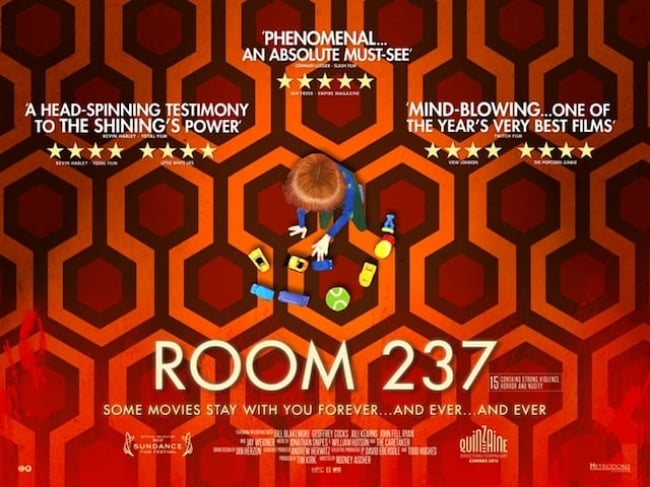
I knew very little about Room 237 prior to viewing, other than the fact it was a documentary about Stanley Kubrick's The Shining and that it explored the movies potential meaning. What is actually on offer is a movie about Kubrick fans and their personal interpretations. For those of a more charitable disposition director Rodney Ascher has created an ode to cinematic love. For those with a more sceptical demeanour, this is vehicle for exploring obsession and possibly an invitation to mock. Either way, it is very compelling viewing, despite being a little too long and a little too clever for its own good.
I knew very little about Room 237 prior to viewing, other than the fact it was a documentary about Stanley Kubrick's The Shining and that it explored the movies potential meaning. What is actually on offer is a movie about Kubrick fans and their personal interpretations. For those of a more charitable disposition director Rodney Ascher has created an ode to cinematic love. For those with a more sceptical demeanour, this is vehicle for exploring obsession and possibly an invitation to mock. Either way, it is very compelling viewing, despite being a little too long and a little too clever for its own good.
Room 237 caught me a little off guard, as it started with a selection of voice overs from fans, talking about their initial exposure to The Shining and reflecting upon how they each discovered the works of Stanley Kubrick. Then one individual said that the sixties were a "rather pathetic time...for film" and I sat up and took noticed, because that's not a position that you'll hear advocated very often. From then onwards the documentary continued to catalogue further "unconventional" views, all backed up with the most complex of reasons. The Shining became an allegory of the genocide of the Native Americans or alternatively the Holocaust, also a coded confession that Kubrick had faked the moon landings.
"Kubrick likes to make you think" it was claimed. I do not dispute this but there's thinking and then there's over-thinking. People often misconstrue applicability with allegory and I think what we have here are individuals that have simply seen what they want to see in The Shining, to validate their own pet theories and monomanias. Kubrick was indeed a highly skilled film maker but the likelihood that he could or would contrive to make a movie so heavily coded in subtext as these individual claim is frankly implausible. The cult of Kubrick plays a major part in this situation. I doubt if you'd find this level of dissection over the work of his contemporaries.
However I played along for the duration and did enjoy some of the lesser ideas banded about. I especially liked the concept of the move being played forward and backward, over each other, simultaneously. At the end of Room 237, I found myself pondering the same question that many viewers have raised already. Not whether the theories are true but does the documentary have a point? I believe that it does; that the obsessive and complex personality of director Stanley Kubrick is mirrored not only in his work but also in some of his fans. All three have a common connection based on intricacy. Ultimately one good thing did occur as a result of me watching Room 237; I immediately watched The Shining again.
When Fandom Fades
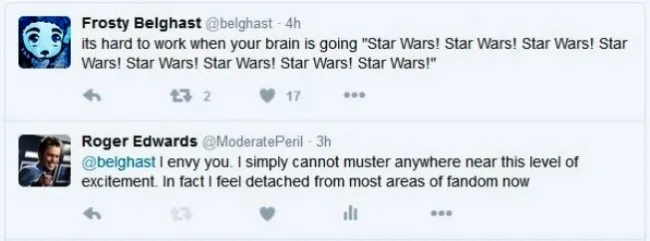
I read the above Tweet today and it got me thinking. I’m seeing Star Wars: The Force Awakens tomorrow morning and I can’t muster up anything like the enthusiasm shown by Belghast. Furthermore I find this waning of passion is not exclusive to Star Wars but pertinent to other subjects I consider myself to be a fan of. In fact I have begun to come to terms with the fact that I’ve possibly stepped away from the entire fan concept per se. That’s not to say that I don’t enjoy the things that I’ve always enjoyed anymore, because I still do. I just don’t feel so enamoured with them. More to the point, the way I relate to them has fundamentally changed which beggars the question why exactly?
I read the above Tweet today and it got me thinking. I’m seeing Star Wars: The Force Awakens tomorrow morning and I can’t muster up anything like the enthusiasm shown by Belghast. Furthermore I find this waning of passion is not exclusive to Star Wars but pertinent to other subjects I consider myself to be a fan of. In fact I have begun to come to terms with the fact that I’ve possibly stepped away from the entire fan concept per se. That’s not to say that I don’t enjoy the things that I’ve always enjoyed anymore, because I still do. I just don’t feel so enamoured with them. More to the point, the way I relate to them has fundamentally changed which beggars the question why exactly?
Fandom has always struck me as being a very passionate love of something. A love that is not always tempered or rational. It can offer boundless support but lacks objectivity. It also personalises your relationship with that which you adore. Fans will frequently ascribe a strong significance to their fandom and as a result feel they have a two way relationship with the object of their affection. All these factors have both good and bad connotations. Fandom builds communities, brings people together and can help people through difficult times and with personal problems. It can also distract an individual from other aspects of their life and foster a sense of entitlement. Fandom seldom deals with dissent or debate well.
Like music, fashion, literature as well as politics and religion fandom is often about finding an identity and a sense of belonging. All of which can change over time. Both good and bad experiences help us make sense of the world and we slowly learn the things we really cherish and consider important in our lives. In my case I have discovered that reboots, remakes and new interpretations don’t ruin our youth. I also genuinely worry about pop culture being used as a diversion from more important matters that the authorities don’t want you thinking about. Sadly fandom has become synonymous with toxic communities and death threats in recent years; things I do not wish to be associated with.
Nowadays I find that my love of specific things is far more honed. For example my affection for the movies of Ray Harryhausen is now driven by their significance in cinematic history, rather than purely wide eyed joy. I recognise that although the effects work was seminal, some of the movies did have weaknesses in other areas and I see no reason to get defensive about such criticisms. Again age seems to be a major factor. So much of fandom is transient or time and context specific. What is more important, seeing a rare cut of Game of Death with Bruce Lee or spending time with a family member who may not be around for much longer? Fandom in some ways is an indulgence and even a conceit. I’m at a stage in my life where I’ve realised that it doesn’t have to be about me all the time.
So returning to Star Wars: The Force Awakens, I have relatively modest expectations regarding the movie. Although initial reviews are very positive, I do not expect to have the exact I had in 1977. Both the world and I have changed greatly since then. Furthermore I am fully aware that this is only a movie and as such, it can only satisfy and entertain to a certain level. Even if it is exceptionally good, I cannot see myself leaving the cinema claiming it to be the best experience of my life. But you know what? I’m okay with that. Life goes on and things move forward. Change is fundamental to life. If I remained static in my views, opinions and personal tastes I think I’d be far more worried.
Thinking Out Loud is a recurring post where I write about thoughts and ideas that have recently occurred to me. As ever the intention is not to develop these ideas into full blown blog posts, although they often the could be. Instead I just collate a few sentences to express my point and leave it at that. The idea being that if anyone else wants to pick up the conversation they can do so in the comments section below. On this occasion the various points are all technology based. I’ve been busy of late with several projects, such as building a new website and creating some widgets specifically for it. Like most technical projects things don’t often go as planned and problems occur unexpectedly. Hence, I thought why not make a themed instalment of Thinking Out Loud this time round? It’s something that I may well do this again in the future. As ever, feel free to make your thoughts known.