

Discovering Tolkien
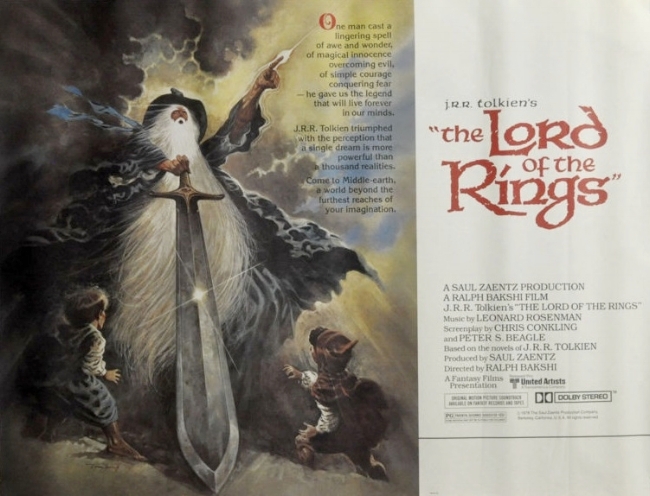
Sometime in August 1979, I was travelling with my father by train to London, when I first saw posters advertising the Ralph Bakshi animated version of J. R. R. Tolkien’s The Lord of the Rings. The film had been released in the US the previous November and I aware of its existence because I had read articles about it production in Starburst magazine. Even at the age of 11 I was interested in genre films and television, having been raised on Doctor Who and Ray Harryhausen’s back catalogue of fantasy movies. Furthermore, I was familiar with Tolkien’s first novel, The Hobbit, as my father had read it to me when I was younger. I was impressed by the poster in that way that only an 11 year old can be. Why was Gandalf do gigantic? Also the A rating was enigmatic. Most animated films were usually rated U. Yet despite my interest, I didn’t see The Lord of the Rings at the cinema during the summer holidays.
Sometime in August 1979, I was travelling with my father by train to London, when I first saw posters advertising the Ralph Bakshi animated version of J. R. R. Tolkien’s The Lord of the Rings. The film had been released in the US the previous November and I aware of its existence because I had read articles about it production in Starburst magazine. Even at the age of 11 I was interested in genre films and television, having been raised on Doctor Who and Ray Harryhausen’s back catalogue of fantasy movies. Furthermore, I was familiar with Tolkien’s first novel, The Hobbit, as my father had read it to me when I was younger. I was impressed by the poster in that way that only an 11 year old can be. Why was Gandalf do gigantic? Also the A rating was enigmatic. Most animated films were usually rated U. Yet despite my interest, I didn’t see The Lord of the Rings at the cinema during the summer holidays.
Later that year, I was at my local library, when I came across The film book of J. R. R. Tolkien’s The Lord of the Rings. A landscape picture book filled with stills from the Bakshi film and with a very condensed version of the plot. Like the movie, the book ended with the Battle of Helm’s Deep. Needless to say, I was very interested by the book, because not only did it show me details of the film that I had missed at the cinema but it also gave me an overview of the plot of The Lord of the Rings. After speaking to one of the librarians, I discovered that The Lord of the Rings was actually made up of three books and that the first was The Fellowship of the Ring. Sadly, the book had been checkout by another library member, so I had to “reserve it”. Apparently there were a number of people ahead of me in the queue for this book, so I had to wait several months before I finally got my hands on a copy. If memory serves, that was in spring 1980.
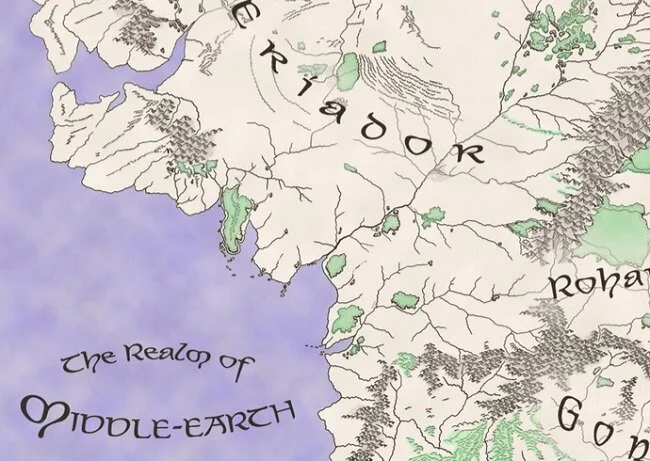
I was 12 years old when I started reading The Fellowship of the Ring and despite being a competent reader, I struggled initially to get to grips with the book. I found the verse and songs particularly difficult. Yet I doggedly pressed on and soon found myself lost in the tale. I think that most engaging aspect of the book was the sense that this was a living world with an immense sense of history. Each chapter would allude to people and events from the past that were of note and significance. I was already interested in history at school and this enthralled me in the same way. I was also immediately drawn to the map of Middle-earth in the Third Age that was included with the book. It further reinforced the credibility of Tolkien’s world as well as giving it a sense of scope. During the course of summer and autumn I subsequently read The Two Towers and The Return of the King. I ended the year an avid Tolkien fan.
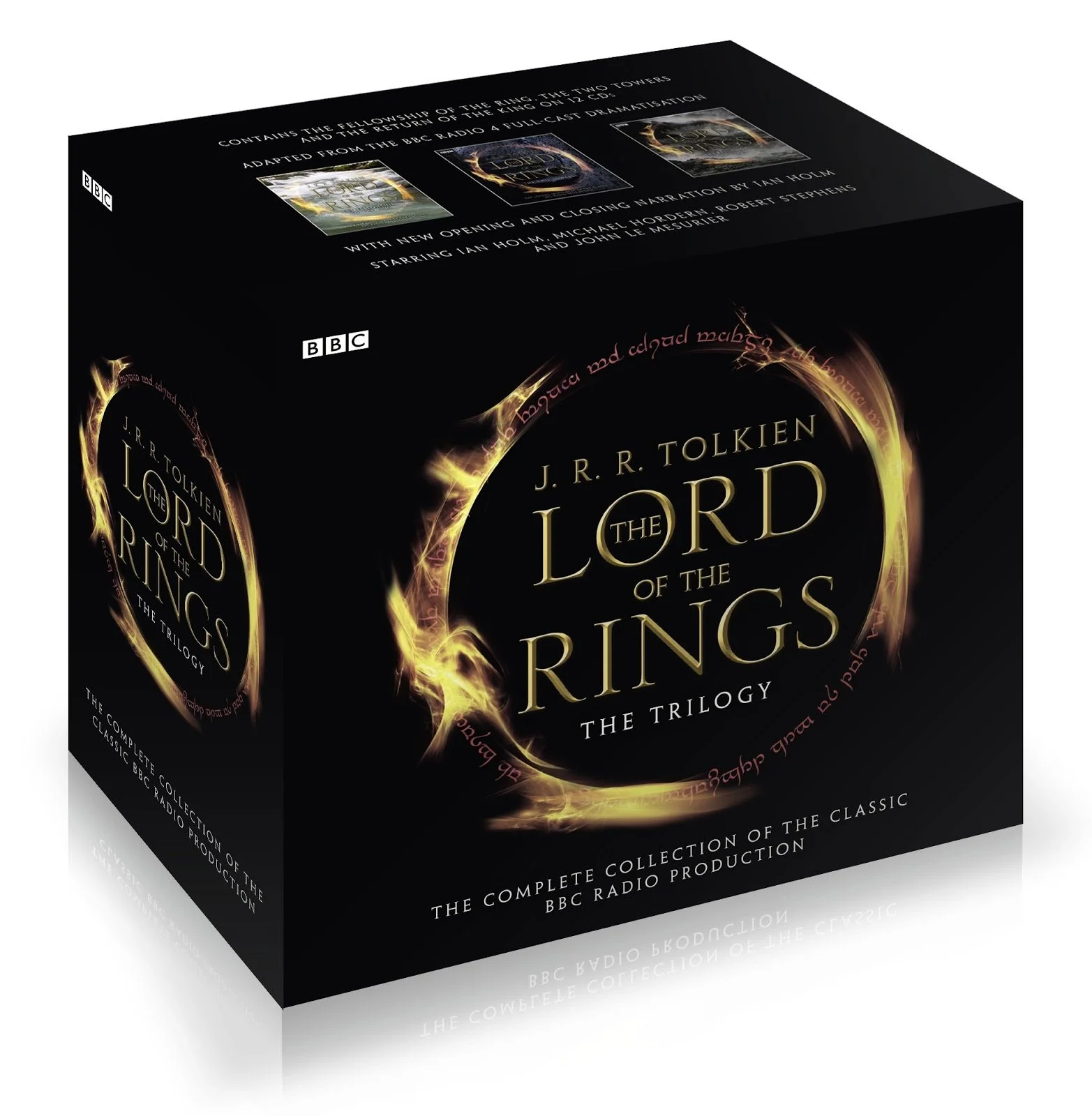
Then in March 1981, BBC Radio 4 began broadcasting its famous 26 part radio adaptation of The Lord of the Rings. I actually missed the first episode, which was initially broadcast at 12 noon on a Sunday. It was repeated at 10:30 PM on the following Wednesday but that was too late for me, being a school day. Fortunately a friend had recorded the episode on cassette and lent it too me. From then onwards, I ensured that I was available to listen to all subsequent episodes. As to the adaptation itself, it was outstanding and is considered to this day to be a genre milestone. The cast was incredible and so apt; with the great Sir Michael Hordern as Gandalf and Ian Holm as Frodo Baggins. Tolkien’s text suits radio well, providing much for the listeners to imagine. Furthermore, this adaptation improved my understanding of the books immensely, as they depict events in chronological order and used correct pronunciation of names and places.
It is curious to reflect upon this particular path to fandom, mainly because it required a degree of effort upon my behalf to discover the source material, which I then had to read it and understand. A process that took about 9 months. Hence the fandom associated with books is different to that which stems from a film franchise or a TV show. I was an avid Star Wars fans for decades having watched the original film in the cinema upon its initial UK release. However, my relationship with that franchise has changed over the years and even waned. That is not the case with my love of Tolkien. As I’ve become older and more cognisant of the multiple layers that are present in his writings, I appreciate them even more. Their scope and complexity are still integral to their appeal but so are their philosophical and ethical musings. The use of language and verse now make far more sense to me and I appreciate their beauty. I suspect that in the years ahead, my interest in some types of fandom will inevitably end. But I suspect that will never be the case with Tolkien.







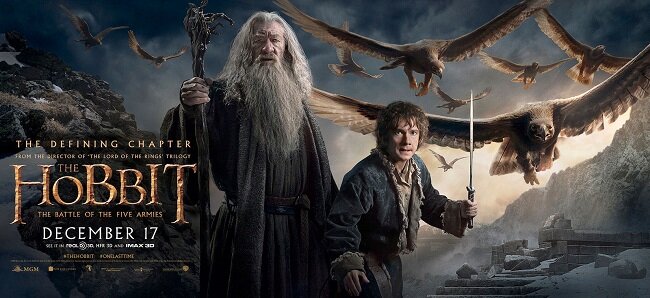
The Hobbit: The Battle of the Five Armies Extended Edition (2014)
This December marks the 20th anniversary of the release of The Fellowship of the Ring, the first instalment of Peter Jacksons' adaptation of J.R.R. Tolkien’s iconic novel, The Lord of the Rings. To celebrate this occasion, I shall post new reviews of the extended edition of all three films, as well as those of The Hobbit trilogy, which were made a decade later.
The Battle of the Five Armies is noticeably shorter than it's two predecessors, mainly because there is insufficient narrative to sustain the proceedings. Even the extended edition which adds a further 20 minutes to the running time, increasing it to 164 minutes, is mainly driven by one ongoing action sequence which is the titular battle. After the somewhat languid pace of the first movie and the bloated excess of the second, this further change of pace seems somewhat perplexing. Despite the more economical running time, events occur very rapidly. Perhaps a little too rapidly. It can be cogently argued that it somewhat diminishes the impact of some of them. Perhaps the biggest issue being the demise of Smaug. It comes promptly at the start of The Battle of the Five Armies and although spectacular, it quickly negates a major plot element.
This December marks the 20th anniversary of the release of The Fellowship of the Ring, the first instalment of Peter Jacksons' adaptation of J.R.R. Tolkien’s iconic novel, The Lord of the Rings. To celebrate this occasion, I shall post new reviews of the extended edition of all three films, as well as those of The Hobbit trilogy, which were made a decade later.
The Battle of the Five Armies is noticeably shorter than it's two predecessors, mainly because there is insufficient narrative to sustain the proceedings. Even the extended edition which adds a further 20 minutes to the running time, increasing it to 164 minutes, is mainly driven by one ongoing action sequence which is the titular battle. After the somewhat languid pace of the first movie and the bloated excess of the second, this further change of pace seems somewhat perplexing. Despite the more economical running time, events occur very rapidly. Perhaps a little too rapidly. It can be cogently argued that it somewhat diminishes the impact of some of them. Perhaps the biggest issue being the demise of Smaug. It comes promptly at the start of The Battle of the Five Armies and although spectacular, it quickly negates a major plot element.
Smaug is killed by Bard but his body falls on Lake Town leaving it in utter ruin. The survivors of Esgaroth are aided by the Wood Elves and both parties subsequently seek restitution from the Dwarves. The men of Lake Town hold the Dwarves accountable for their current situation and the Elves who harbour a longstanding grudge regarding outstanding debts that the Dwarves have not paid. However, Thorin refuses to help which leads to a diplomatic impasse. He summons his cousin Dain from the Iron Hills to provide reinforcements. In the meantime Azog then springs his trap and lays siege to Erebor and all camped outside, resulting in the battle between Dwarves, Elves, Men and Orcs. The film does resolve the major storylines, yet it does feel both a little rushed and contrived. Again the screenplay feels the need to reference and link to future events featured in The Lord of the Rings.
Lore purists will find The Battle of the Five Armies the hardest to stomach because Peter Jackson really does indulge his penchant for narrative simplification, restructuring events and the fetishization of weapons, armour and fantasy combat. The Fili, Tauriel, Legolas love triangle and associated fallout is simply too contrived and unengaging. The White Council's assault on Dol Guldur featuring a 92 year old Christopher Lee beating seven bells out of the Ringwraiths, although thoroughly amusing, does raise an eyebrow. The fact that you can conveniently ride from Lake Town to Mount Gundabad in a day and that Middle-earth is populated with Frank Herbert style giant worms, may also come as a surprise to the faithful. The less said about Beorn free falling from an eagle and turning into a Werebear on the way down, the better.
As I have mentioned in my previous reviews, the depiction of Thorin in these movies is woefully lacking, turning him into a broody, pouting, inaccessible caricature. This time round for want of a better description, Thorin goes a bit "Macbeth". I'll give credit where credit is due and state that Richard Armitage does provide a good performance. But the screenplay doesn't really do the character justice and the plot device about the "Dragon's sickness" is arbitrary to say the least. Yet every now and then, there are sequences and passages of dialogue that come directly from the book. Once again, for everything that Peter Jackson gets right, there's also something that is way off the mark. The pivotal point of the movie should have been Thorin's death but it lacks any emotional impact and is only saved by the presence of Martin Freeman.
Dain Ironfoot (Billy Connolly) makes an impressive entrance riding a War Boar and has an expanded role in the extended version. Beorn and Radagast appear briefly but serve no major purpose than to provide reinforcements to the climactic battle. And what on earth possessed Peter Jackson to kill off Stephen Fry so quickly in the story and yet keep Alfrid Lickspittle as some crass source of so-called comic relief? Mercifully, we still have stalwart performances from Martin Freeman and Sir Ian McKellen who do much of the heavy lifting. Lee Pace proves to be a more interesting character this time round, as Thranduil's motives prove to be less binary than those of Thorin Oakenshield. He tempers his desires for restitution when he sees the extent of the Elven dead and sees the folly of his actions.
As ever the set pieces are immaculately produced and push the violence levels for this kind of movie to the limit. They stay on the right side of the ratings board mainly because the bulk of the decapitations, impalements and bludgeonings happen to non-humans. The death of more central characters tend to be more discrete. The main problem with the frenetic action is that it strives to continuously outdo itself, resulting in scenes that tax the audience's credibility even for this genre of movie. For example Legolas climbs a flight of stone steps leading to a crumbling tower, literally as they fall away beneath him, proving that Elves are indifferent to the laws of physics. A better director would restrain themselves, rather than allow such self indulgence and excess. Also some of the mutilated Orcs and Trolls seem more at home in Clive Barker’s Hellraiser than in Tolkien’s The Hobbit.
If you like the aesthetic that Peter Jackson has created over the years, as well as grandiose spectacle, then The Battle of the Five Armies will prove to be an entertaining diversion. If you want anything more, then prepare to be disappointed. I find it ironic that a trilogy of movies about the adventures of Bilbo Baggins, seems so content to include so little of him on screen. By changing the shift of the story from his perspective, to that of the wider events in Middle-earth, something very important has been lost from these sprawling adaptations. Peter Jackson and his team may well be very knowledgeable in the works of Professor Tolkien but I do wonder if he has fully understood them. As I've said before, these movies are very much Jacksons’ interpretation of The Hobbit. I wonder if there would have been a greater emotional depth and perception of the source text, if these films had been directed by Guillermo del Toro as they were originally intended?


The Hobbit: The Desolation of Smaug Extended Edition (2013)
This December marks the 20th anniversary of the release of The Fellowship of the Ring, the first instalment of Peter Jacksons' adaptation of J.R.R. Tolkien’s iconic novel, The Lord of the Rings. To celebrate this occasion, I shall post new reviews of the extended edition of all three films, as well as those of The Hobbit trilogy, which were made a decade later.
I love the medium of film immensely. I like a wide range of genres and will happily watch weighty human dramas as well as the worst sort of trashy exploitation fodder. The key to reconciling such widely differing types of cinema is to judge them within their own context. Therefore don't compare the respective worth of Citizen Kane with The Golden Voyage of Sinbad, or Bicycle Thieves with The Medusa Touch. So because of the nature of Peter Jackson's adaptation of The Hobbit, I am prepared to make concessions to the fact that it is a big budget fantasy blockbuster franchise. Also the source material from which the film derives is quite sparse, often being nothing more than footnotes, or summations of history. Thus there is scope for a lot of "adaptation", artistic license and creativity. Jackson got a lot of this right with The Lord of the Rings trilogy, over a decade ago. I do not believe that to be the case this time round.
This December marks the 20th anniversary of the release of The Fellowship of the Ring, the first instalment of Peter Jacksons' adaptation of J.R.R. Tolkien’s iconic novel, The Lord of the Rings. To celebrate this occasion, I shall post new reviews of the extended edition of all three films, as well as those of The Hobbit trilogy, which were made a decade later.
I love the medium of film immensely. I like a wide range of genres and will happily watch weighty human dramas as well as the worst sort of trashy exploitation fodder. The key to reconciling such widely differing types of cinema is to judge them within their own context. Therefore don't compare the respective worth of Citizen Kane with The Golden Voyage of Sinbad, or Bicycle Thieves with The Medusa Touch. So because of the nature of Peter Jackson's adaptation of The Hobbit, I am prepared to make concessions to the fact that it is a big budget fantasy blockbuster franchise. Also the source material from which the film derives is quite sparse, often being nothing more than footnotes, or summations of history. Thus there is scope for a lot of "adaptation", artistic license and creativity. Jackson got a lot of this right with The Lord of the Rings trilogy, over a decade ago. I do not believe that to be the case this time round.
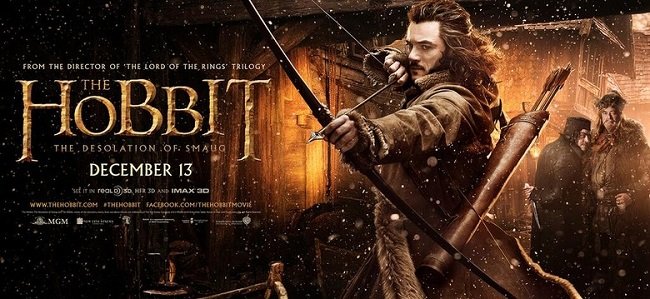
The Desolation of Smaug sets off at breakneck pace and continues at that speed throughout it's 186 minute running time. The extended edition is 25 minutes longer than the theatrical version. Again most of the new material is embellishments and does not significantly alter the storyline. Many of the new characters that are introduced are quite intriguing because the screenwriters have been effectively handed a blank canvas, due to the original text being so vague or simplistic (remember that Tolkien's book is a children's story). Thus we meet Beorn (Mikael Persbrandt) the skin-changer along with his Bear alter ego. This bold interpretation has him the last of his race, after being hunted for sport by the Orcs. The Elven King Thranduil, played by Lee Pace, is a greatly expanded role. He is shown as a ruler keen to secure his kingdom’s borders from the ills of the world and possibly someone who blames the Dwarves of Erebor indirectly for a family death. His riding an Elk is a wonderful visual embellishment and conceit. However, not all of the new ideas work. I found the concept of “the tombs of the ringwraiths” to be fundamentally lore breaking and foolish.
Modern film making, especially with regard to digital effects and editing afford directors far more visual freedom. As a result, the cinematography of Andrew Lesnie never remains still. He is unquestionably the master of crane and tracking shot, but it beggars the question are they always required? Would the story arc really suffer that much, if the pace slowed just for a while, to allow the viewer to digest the events that have happened so far? Tolkien certainly understood this issue of pace in his writing. Blame can also be laid at the door of editor Jabez Olssen, who constructs action scenes that are so fluid and rapidly cut together they are difficult to follow at times. And there are many such scenes in The Desolation of Smaug and they divert the story progression significantly.
After escaping the Orc, the Dwarves journey through Mirkwood only to be captured by the Elven King Thranduil (Lee Pace). Bilbo's battle with the spiders is concisely distilled. I loved the way he could understand their language when he put on the ring. Jackson excels at little embellishments like this. However, conversely his efforts to bolster the continuity with the previous trilogy can also be somewhat heavy handed. Bilbo's struggle with the allure of his newly found "precious" are far from subtle. The Dwarves' captivity and escape is deftly handled and I was even happy to go along with the introduction of Tauriel (Evangeline Lilly). I gritted my teeth and rolled with the return of Legolas (Orlando Bloom) and the contrived interaction he had with Gimli's Father, Gloin. The introduction of the Bard (Luke Evans) and the expanded role he plays within the story is quite inventive. I think it helps having him as a quasi Robin Hood figure with the Lake Town community makes him more plausible as a future leader. Stephen Fry’s cameo as the Master was indulgent but droll. The addition of Alfrid Lickspittle (Ryan Gage) as a comic foil is not so successful.
It was about two thirds into the movie that I began to feel that the narrative was becoming too ponderous and drawn out. It began to sag under the weight of its self satisfied approach. This was no longer Peter Jackson's adaptation of Tolkien’s The Hobbit, but simply Peter Jackson's The Hobbit. A lot of the “creative ideas” were not working and by the time the plot reached Smaug, I was fast losing interest. Tauriel “spiritual romance” with injured Kili (Aidan Turner) was stilted and frankly poorly written. Gandalf's excursion into Dol Guldur was melodramatic and contrived, especially the unnecessary manner that Sauron reveals himself to be the Necromancer. The idea of introducing Bolg, son of Azog as a second tier bad guy, to me just showed that the screenwriters (Peter Jackson, Fran Walsh and Philippa Boyens) are tying themselves in knots with their desire to dovetail in everything and anything from a lore perspective.
Now on the subject of Smaug “the chiefest and greatest of all calamities”, I must praise all at Weta Digital for creating the most awesome and truly terrifying dragon since Vermithrax Pejorative from Dragonslayer. Benedict Cumberbatch is perfect voice casting and I was initially impressed with the scenes between him and Bilbo. They captured the spirit of the book superbly. Sadly the director’s need for yet another inexorably long action scene that wasn't in the least required, soon killed my interest. Hence we had the preposterous attempts by Thorin and company to try and kill Smaug by smothering him in molten gold. The very climax of The Desolation of Smaug, that should have been the film’s crowning glory, was for me quite the opposite. I actually found myself wishing for the final thirty minutes of the movie to end as soon as possible.
The second movie in any trilogy is always a very difficult beast to master. There is a requirement for characters to grow and evolve. In box office terms there is a need to provide not just more of the same but increase the sense of spectacle. If done well you will potentially have a movie that is better than the first. Consider The Empire Strikes Back, Spiderman 2 or Aliens. Unfortunately this cannot be said of The Desolation of Smaug. New characters are lost in a cacophony of action scenes and mayhem. Be warned this movie pushes what you can get away within the PG-13 rating. And there are too many clumsy nods to The Lord of the Rings. It seems at times like a list of essential similarities, tropes and idioms is being ticked off. With regard to Jackson’s blank cheque to expand on story points and fill in the so-called blanks, there reached a point where I thought that he had simply strayed too far from what was canonically acceptable.
Like the previous film, one of my main criticisms is based upon the portrayal of certain characters. Bilbo has precious little to do in this instalment. Furthermore the significance of actions and his personal growth is not explored sufficiently. In the book it is this part of the story where the Dwarves begin to deem him a hobbit of merit and value his contributions to their quest. This theme is conspicuously lacking in The Desolation of Smaug. Also again I protest at Jackson's interpretation of Thorin Oakenshiled. In this film he becomes borderline unlikeable. The entire approach is just too binary and formulaic. This is a character that I am supposed to revere, admire and feel for. Again, as with the previous film, those feelings are reserved for Balin instead, played by the superb Ken Stott.
Raiders of the Lost Ark and movies like it have proven that blockbusters can be populist, stylish and entertaining as well as commercially successful. The Desolation of Smaug did indeed clean up at the box office. However it is a very self indulgent piece of cinema and sadly the embodiment of style over substance. Yes, I enjoyed facets of the production and found elements to praise. However, I will not allow my affection for the original book or for Peter Jackson's previous trilogy to colour my judgement. I have to call a spade a spade and say that The Desolation of Smaug is too focused on being a spectacle, at the expense of the story and cast. The extended edition does precious little to remedy this. It is too loud and sprawling and certainly will test the casual viewer’s patience.
The Hobbit: An Unexpected Journey Extended Edition (2012)
This December marks the 20th anniversary of the release of The Fellowship of the Ring. The first instalment of Peter Jacksons' adaptation of J.R.R. Tolkien’s iconic novel, The Lord of the Rings. To celebrate this occasion, I shall post new reviews of the extended edition of all three films, as well as those of The Hobbit trilogy, which were made a decade later.
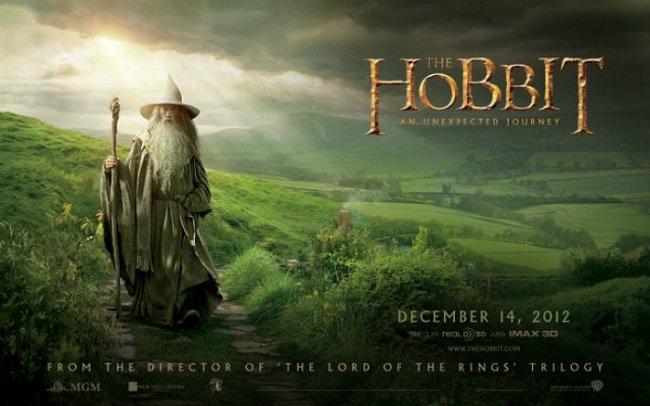
Firstly let me start by saying I think the word unexpected is very apt in respect of the first instalment of Peter Jackson's three part adaptation of Tolkien's prequel to The Lord of the Rings. It is genuinely surprising how well parts of the narrative had been adapted and interpreted. Similarly there are other aspects that are less successful. Overall the good outweighs the bad but only the most ardent fanboy or girl would think the movie flawless. When one considers its problematic production along with the change of directors, this is quite an achievement. I wonder how much of Guillermo del Toro’s material survived into Peter Jacksons, Fran Walsh and Philippa Boyens revised screenplay? Secondly, a decade on from The Lord of the Rings, there has been a further move away from physical visual effects and filming on photographic film. Both of these changes are noticeable in An Unexpected Journey but the presence of Peter Jackson and his very specific style of filmmaking maintains a very strong sense of continuity.
This December marks the 20th anniversary of the release of The Fellowship of the Ring. The first instalment of Peter Jacksons' adaptation of J.R.R. Tolkien’s iconic novel, The Lord of the Rings. To celebrate this occasion, I shall post new reviews of the extended edition of all three films, as well as those of The Hobbit trilogy, which were made a decade later.
Firstly let me start by saying I think the word unexpected is very apt in respect of the first instalment of Peter Jackson's three part adaptation of Tolkien's prequel to The Lord of the Rings. It is genuinely surprising how well parts of the narrative had been adapted and interpreted. Similarly there are other aspects that are less successful. Overall the good outweighs the bad but only the most ardent fanboy or girl would think the movie flawless. When one considers its problematic production along with the change of directors, this is quite an achievement. I wonder how much of Guillermo del Toro’s material survived into Peter Jacksons, Fran Walsh and Philippa Boyens revised screenplay? Secondly, a decade on from The Lord of the Rings, there has been a further move away from physical visual effects and filming on photographic film. Both of these changes are noticeable in An Unexpected Journey but the presence of Peter Jackson and his very specific style of filmmaking maintains a very strong sense of continuity.
Many of the production staff who worked on the original trilogy are present again for The Hobbit. Artists John Howe and Alan Lee as well as cinematography by Andrew Lesnie ensure that there’s a seamless continuation of the established aesthetic of Middle-earth. Howard Shore's magnificent score utilises leitmotifs we have previously heard in The Lord of the Rings trilogy. Furthermore, his new material is very strong and introduces some very portentous themes for the new characters. The film is technically superb but one expects nothing less from this film maker. Therefore I would like to focus more upon the narrative than the production design, because The Hobbit has been greatly expanded to accommodate its trilogy format. Is the story treated appropriately and presented in a way that will please both consummate fans and newcomers alike?
Broadly speaking I’d say yes. At least in this first instalment, An Unexpected Journey. If you are a Tolkien purist then you may be disappointed or upset by some of the changes that have been made. I sympathise with this perspective but understand the fact that Peter Jackson has to make the story accessible to a wider audience and that cinema is a very different medium to the written page. The key word is “adaptation” and the fact that film requires archetypes who have clear and traditional story arcs. Therefore characters and lore are altered to provide us with a definite hero and villain. That is not to say that the script deviates radically from the book, as it does not. The nuts and bolts of the story are there. But as with The Lord of the Rings, characters have to be refined and events compressed or augmented to satisfy the required tropes of cinematic “high adventure”.
Hence we just get a far more heroic Thorin Oakenshield played by an exuberant and somewhat bombastic Richard Armitage. The character is simplified and presented as someone to root for. He is an exiled King whose family has suffered death and ruin. We also get a specific enemy to boo and hiss in the form of albino orc Azog. The role of Radagast the Brown (Sylvester McCoy) is expanded upon and acts as a conduit between the central plot and the backstory of the rise of the Necromancer in Dol Guldur. McCoy’s performance is mercurial and quite engaging. Once again Ian McKellen dominates the screen as Gandalf, a role he seems sublimely suited for. The casting of Martin Freeman as the young Bilbo Baggins is similarly perfectly conceived. He plays the hobbit with an air of curiosity and confusion, as he strays from his comfortable home in The Shire, out into the wider and more dangerous world.
However I do think that An Unexpected Journey has a pacing issue. We start with a rather traditional framing device in which old Bilbo (Ian Holm) is writing his memoirs on the eve of his going away birthday as depicted in The Fellowship of the Ring. The story then shows the fall of Dale and Erebor to the Dragon Smaug (who is teased and not fully seen). Finally after establishing the entire point of Bilbo’s forthcoming adventure to retake Erebor, events turn to a younger Bilbo (Martin Freeman) and his subsequent meeting with Gandalf. Introducing the twelve dwarves is another problematic aspect of the film. Some are granted a fair amount of screen time where others are hastily added to the narrative. The use of songs directly from the text is another embellishment that although is laudable from a lore standpoint, is questionable from a cinematic perspective. It takes a while for the movie to get under way from Bag End. It's curious because Peter Jackson has managed to take lengthy passages of text in the past and condense them quickly and efficiently without any dramatic loss. Consider the Council of Elrond in The Fellowship of the Ring.
With regard to the expansion of text, some of it works very well. I found myself pleasantly surprised by Sylvester McCoy's portrayal of Radagast (although I still think the Bunny Sled is a bridge too far) as well as the depiction of the White Council. I loved the way Gandalf rolled his eyes at the arrival of Saruman (Christopher Lee) and the way that Galadriel (Cate Blanchett) clearly holds Mithrandir in high regard. The film also greatly benefits from its mainly British and Antipodean cast. The commonalities between cultures, idioms and dialect aids the realisation of Tolkien's written work. The humour present in the film is not out of place, especially in the way that Elves and Dwarves do not get along. However, where An Unexpected Journey succeeds the best is in the way it handles the most iconic scenes from the book. Bilbo's encounter with Gollum (Andy Serkis) is truly menacing and a highlight of the film. The exchange of riddles is superbly realised and the chemistry between the two performers is palpable.
Peter Jackson has gained a reputation over the years for being able to craft complex and frenetic action scenes. It has become a selling point. Sadly my biggest criticism about An Unexpected Journey, is that there are possibly too many action scenes, with some too close together. The escape from the Great Goblin (Barry Humphries) is a very complex and extravagant set piece. Blink and you’ll miss what’s happening as Goblin limbs and heads fly left, right and centre. As soon as Bilbo and the Dwarves escape the Misty Mountains there is immediately another fiery denouement, as Thorin and company climb a copse of fir trees to avoid a Azog and a pack of wargs. Although technically well implemented it is somewhat taxing to the senses and after a while actually becomes quite dull. I appreciate the need to end the film on a high point and dramatic climax but again there persists this sense of uneven pacing. I must add that the ending is tempered by a wonderful codicil involving Smaug that is certainly a wonderful taster of things to come.
I am a Tolkien fan and also someone who enjoys quality film making. Sometimes you have to curb your enthusiasm for much beloved source material, as the requirements of film as a medium are specific and different. “Show don’t tell” is the defining mantra of cinema which can be difficult when adapting lore heavy, narrative books. There are flaws in An Unexpected Journey but they do not derail the entire story. The film is still very creative and can be exciting. It is also quite strong in content with quite hard edged action sequences. At its heart still lies director Peter Jackson's love for the Professor's work and despite moments of indulgence, this still comes across. Compromise is not always a dirty word and in this case is possibly a necessary tool in bringing this story to as wide an audience as possible. However, Jackson still makes the mistake of reducing complex and venerable characters to somewhat binary representations. Thorin is not easy to warm too and it is Balin (Ken Stott) who comes across as far more sympathetic, likeable and wise.
The extended edition of An Unexpected Journey includes 13 minutes of additional material to the theatrical release, which brings the running time to 182 minutes. The extra scenes are mainly embellishments and I would argue that they do not dramatically alter the tone and feel of the film. My thoughts are mostly the same for both the theatrical and extended edition. I suspect the uneven pacing that I’ve referenced stems from Peter Jacksons’ extrapolation of the story. The White Council scenes are a great idea but they also smack of a need to “join the dots” between this trilogy and the former. The flashback to the Battle of Azanulbizar is also well conceived as a means to give weight to the recurring theme of the misfortunes of Durin’s folk and to bolster the kingly nature of Thorin. However, the fact that Thorin is subsequently somewhat bellicose undermines this. However, Martin Freeman stands out and often compensates for the excessive action scenes. Existing Tolkien fans are probably better disposed to this new trilogy by default. However, although entertaining, there is a somewhat forced quality to this adaptation of The Hobbit. Casual viewers may well find it a little too self serving.
The Hobbit (1977)
The Hobbit (1977) is a curious beast. It’s a made for television animated film, which despite its budgetary constraints, strives to comprehensively adapted one of the most beloved children’s books of the last century. I remember reading an article about this television adaptation of The Hobbit, in Starburst Magazine during the late seventies. There were rumours that this Rankin/Bass production, which had already premièred on US network television, would gain a European cinema release. This was presumably to cash in on the success of Ralph Bakshi's animated feature film adaptation of The Lord of The Rings. However, this never happened to my knowledge. In fact, The Hobbit was not commercially available in the UK until 2001, when Warner Bros. released it on DVD to capitalise on the success of Peter Jackson’s The Fellowship of the Ring.
The Hobbit (1977) is a curious beast. It’s a made for television animated film, which despite its budgetary constraints, strives to comprehensively adapted one of the most beloved children’s books of the last century. I remember reading an article about this television adaptation of The Hobbit, in Starburst Magazine during the late seventies. There were rumours that this Rankin/Bass production, which had already premièred on US network television, would gain a European cinema release. This was presumably to cash in on the success of Ralph Bakshi's animated feature film adaptation of The Lord of The Rings. However, this never happened to my knowledge. In fact, The Hobbit was not commercially available in the UK until 2001, when Warner Bros. released it on DVD to capitalise on the success of Peter Jackson’s The Fellowship of the Ring.
Rankin/Bass productions had a pedigree in bringing traditional and familiar children's material to the small screen, with such titles as Frosty the Snowman and Rudolph the Red-Nosed Reindeer, so it was not unusual for them to take on such a project. However, a lot of the animation was sub contracted to Japanese studios, which was a standard practise at the time. This subsequently had a major impact on the production design and the aesthetics of the film. Rankin/Bass productions often included songs in their commercial output as it had proven to be a major selling point in the past. Naturally, original Tolkien's work with its abundance of songs and verse, lent itself to this very well. As a result, The Hobbit has a wealth of vocal tracks sung by popular folk singer, Glenn Yarbrough. They’re not to everyone’s taste but they do work, and some do stick quite faithfully to the source text.
The adaptation of the story is very simple. Some of the more complex plot details have been lost, such as the Arkenstone of Thrain, the skin-changer Beorn and the scheming master of Lake Town. Tolkien wrote this story for children and that is the way the film’s screenplay is pitched. The character designs range from the adequate to the bizarre. Gandalf is represented pretty much as you would expect, sticking to the usual old man with a pointy hat trope. Bilbo and the Dwarves reflect a more juvenile friendly interpretation. However, the Trolls and Goblins are not especially scary and lack any real sense of threat. It is in the design of the Elves that this production really fumbles the ball. This race of near perfect creatures with their angelic qualities, are simply ugly and emaciated. Someone definitely failed to understand the source text in this respect. Gollum is also poorly conceived and looks a little like a large Bullfrog. And all I'll say about the dragon Smaug, is that his feline quality is "unusual".
With these shortcomings, are there any positive attributes regarding this production? Well the minimalist water colour backgrounds work well, often drawing on Tolkien’s illustrations themselves. The voice casting has some strong performers, such as John Huston as Gandalf. However, some of the minor characters are played by well-known voice artists Don Messick and John Stephenson. As a result, you do feel that you’re watching an episode of Scooby Doo or The Arabian Nights at times. So where does this leave us? Well it's difficult to be objective, as any adaptation of Professor Tolkien's work tends to be over shadowed by the success of Peter Jackson's two trilogies, which have established an aesthetic standard. Therefore, this older version of The Hobbit suffers as a result, as it flies in the face of this. Overall, it’s a low budget, basic adaptation, with a variety of good and bad animation. It will probably find its most appreciative audience, among children, for whom it was intended.

The Hobbit by J.R.R. Tolkien (1990)
In 1989 Eclipse Comics produced a three-part adaptation of The Hobbit by Chuck Dixon, Sean Deming and illustrated by David Wenzel. A year later, due to public demand, this was subsequently re-issued as a single graphic novel that has remained in print ever since. The writers wisely chose to sensitively abridge Tolkien’s source text, rather than adapted the story and make any major changes. Hence this graphic novel version of The Hobbit retains much of the dialogue from the original novel and subsequently maintains the book’s inherent charm. There are no major plot omissions and the narrative flows well. The panel layouts are innovative and accommodate a wealth of written material without overwhelming the artwork.
In 1989 Eclipse Comics produced a three-part adaptation of The Hobbit by Chuck Dixon, Sean Deming and illustrated by David Wenzel. A year later, due to public demand, this was subsequently re-issued as a single graphic novel that has remained in print ever since. The writers wisely chose to sensitively abridge Tolkien’s source text, rather than adapted the story and make any major changes. Hence this graphic novel version of The Hobbit retains much of the dialogue from the original novel and subsequently maintains the book’s inherent charm. There are no major plot omissions and the narrative flows well. The panel layouts are innovative and accommodate a wealth of written material without overwhelming the artwork.
Tolkien's The Hobbit is a substantially different book to in comparison to The Lord of The Rings both in narrative style and tone. It was squarely aimed as children and takes a much lighter tone than its sequel. Artist David Wenzel captures this aspect superbly with rich, colourful illustrations. His visualisation of Middle-earth is lush and very European. His depiction of Bilbo Baggins, is suitably ruddy cheeked and rustic. He also distils the characters age and placid demeanour very well. His Goblins are scary but not the feral, demonic entities we see in Peter Jackson’s movies. His Dwarves are regal and less military than other depictions. Gandalf is especially understated, looking more like a village elder than a wizard. Overall the artwork is vivid, and all the characters are clearly defined, which significantly contributes to the readers emotional investment.
Part of the great appeal of Tolkien's work is the mental imagery that it inspires among readers. Tolkien often gave detailed description of people and places but always provided scope for those reading his books to conjure up their own unique interpretations. However, over the years a strong consensus on visual interpretations has developed, due to the popularity of Alan Lee's and John Howe's body of work. Their influence is such that both worked as creative consultants on both of Peter Jackson’s movie trilogies. David Wenzel's graphics are very different from this perceived status quo, yet clearly captures the essence of the story and offers strong characterisations. The Hobbit graphic novel also provides a great alternative introduction to Tolkien's work, without compromising the Professors narrative skills. This version of The Hobbit is therefore a welcome addition to anyone's bookshelf.
Is Shared Fandom a Bridge to Reconciliation?
There are and always will be books that have a clear political agenda or make a very particular statement. Orwell’s 1984 springs to mind as an obvious example. Then there are also books that attract political interpretations by the nature of their plot or the subjects that they explore. Whether the author intended such a debate about the work or not, is a secondary issue. I have always taken Tolkien’s work at face value and to be what he stated they were. Epic and intricate faux histories, free from allegory. Furthermore, I appreciate that the moral position and themes of his work stem from the authors world view, personal experiences as well as the prevailing social dogma of the time. I find it interesting how his work attracts praise and adulation from a wide variety of groups. Catholics will naturally gravitate towards Tolkien’s writings due to his faith and that is the prism through which they will critically view his work. There are of course other examples about how The Hobbit and The Lord of the Rings appeals to different people in different ways. It is a common aspect of fandom.
Fandom by Tom Preston
There are and always will be books that have a clear political agenda or make a very particular statement. Orwell’s 1984 springs to mind as an obvious example. Then there are also books that attract political interpretations by the nature of their plot or the subjects that they explore. Whether the author intended such a debate about the work or not, is a secondary issue. I have always taken Tolkien’s work at face value and to be what he stated they were. Epic and intricate faux histories, free from allegory. Furthermore, I appreciate that the moral position and themes of his work stem from the authors world view, personal experiences as well as the prevailing social dogma of the time. I find it interesting how his work attracts praise and adulation from a wide variety of groups. Catholics will naturally gravitate towards Tolkien’s writings due to his faith and that is the prism through which they will critically view his work. There are of course other examples about how The Hobbit and The Lord of the Rings appeals to different people in different ways. This is a common aspect of fandom.
Bearing this in mind, it should not come as surprise to learn that Tolkien’s writing also has fans among the political class. The UK Conservative Party MEP Daniel Hannan is one who has written essays on his love of the Professor’s work and its literary merits. For example, Mr Hannan says “Here is a book that, as much as any I can think of, needs to be read aloud. Tolkien, like many Catholics of his generation, understood the power of incantation. He knew that—as, funnily enough, Pullman once put it—a fine poem fills your mouth with magic, as if you were chanting a spell”. Upon reading more of his analysis of Tolkien’s work, it becomes apparent that several of his political colleagues share his passion. It would seem many Conservative MPs find that Tolkien’s writing contains themes and concepts that they equate with their political ideology. Curiously enough what they see in the Professor’s work, I have never experienced. Again, they view it and quantify it in a different way to myself. This raises some interesting points about when you discover that you share a liking for something with a group you didn’t expect.
I suppose the optimistic way to interpret this situation is to focus on how fandom can build bridges and that there is now theoretically common ground between both parties concerned, despite their obvious differences. However, I feel that it’s a more complex situation than that. In this instance, I do not hold with a lot of the opinions and world view of this particular group of people. I think that many of the policies that the Conservative party have implemented since they came to power in 2010, have been harmful to both individuals and to society. Therefore, does simply having a shared passion for one specific thing bridge an otherwise, vast cultural, philosophical, political divide? I do not think that it does. If I were to meet Mr Hannan in a social situation, I would endeavour to be civil to him and focus on our common ground but ultimately our shared love for Tolkien is not a path to reconciliation. He would still remain at odds with my political sensibilities and continue to be a Conservative party member.
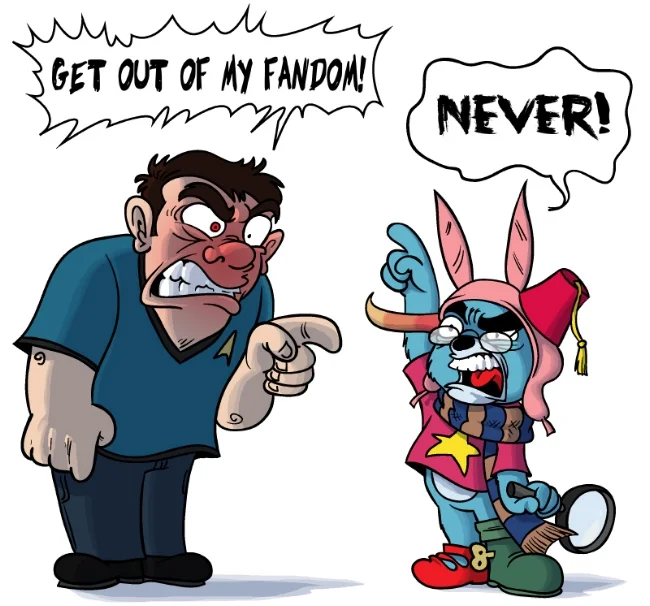
Reflecting upon this example and other comparable ones, certainly raises some interesting questions. It is a timely reminder that fandom does not give you any sense of ownership towards the object of your affection. Nor do you get to decide who can like or not like the thing in question, or who are “true fans”. The reality is that what appeals to you about the thing you love, is not necessarily the same for everyone and that we all interpret and respond to art as well as literature in a different way. Furthermore, when you do find out that you share a common love for something with those who are radically different to yourself, their presence should not spoil that very thing for you. Irrespective of the fans and their differences, the object of affection (in this case Tolkien’s writing), remains untouched. Overall, I guess this matter is a timely reminder about tolerance and sharing.
The analogy that springs to mind is one regarding religion, specifically Christianity. It is a faith that is rife with different denominations. All allegedly cleave to the same fundamental principles, yet interpret the scriptures differently. Is this situation about the differences between fan bases not dissimilar to the divide between Anglicans and fundamentalist Evangelicals? Also, history shows that many fine things have been liked, embraced or advocated by the morally questionable. So, it would appear that a shared love is not an assured ticket to harmony and reconciliation. The divided nature of the gaming community is an ongoing testament to that. The fallout over the recent casting of a female actor as Doctor Who is further proof that fandom is a broad but far from united church. As for Tolkien, I shall simply content myself with my own personal enjoyment of his work and leave others to do so in their own way. However, what I will not allow unchecked is for others to usurp his writing and claim it justifies something that it empirically does not.












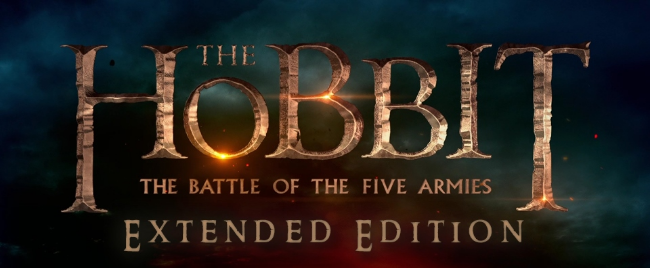
The Hobbit: The Battle of the Five Armies Extended Edition (2014)
The theatrical edition of The Hobbit: The Battle of the Five Armies was light on plot and heavy on action sequences. As a result it had many unresolved story lines. The extended editions once again attempts to address these deficiencies but sadly out of the twenty minutes of additional material that has been added, most are extended action scenes. There are moments of substance buried within this ponderous expanded edition but they are few and far between. Compared to other entries in the extended trilogy, this is the weakest as it really doesn’t add any major plot or narrative improvements. It does however add a lot more orc based violence.
The theatrical edition of The Hobbit: The Battle of the Five Armies was light on plot and heavy on action sequences. As a result it had many unresolved story lines. The extended editions once again attempts to address these deficiencies but sadly out of the twenty minutes of additional material that has been added, most are extended action scenes. There are moments of substance buried within this ponderous expanded edition but they are few and far between. Compared to other entries in the extended trilogy, this is the weakest as it really doesn’t add any major plot or narrative improvements. It does however add a lot more orc based violence.
If you are familiar with Peter Jackson’s earlier work such as Bad Taste and Braindead, then the splatter and CGI gore that has been added to The Hobbit: The Battle of the Five Armies will come as no surprise. As ever with his treatment of violence, Mr. Jackson tries to mitigate it’s over the top nature with a little slapstick humour. It may well me cunningly contrived and well-staged but it seems tonally out of place. Is this really Tolkien’s work? It’s a shame really because Peter Jackson is a very good film maker but he needs someone to curb his excesses and pull his focus back to the narrative when he becomes too enamoured with spectacle.
The new scenes added to The Hobbit: The Battle of the Five Armies are as follows.
Gandalf and Narya, The Ring of Fire.
The first new scene starts during Gandalf’s captivity in Dol Guldur. A large Uruk interrogates him regarding Narya the ring of fire. After brutally flinging him to the ground (shades of Pontius Pilate in The Life of Brian), the torturer attempts to sever the wizard’s hand.
Galadriel arrives and subsequently causes the Uruk to explode when revealing her power. Apparently this nameless Uruk, created via the use of an actor wearing prosthetics, was the original design for Azog.
Fighting the Ringwraiths and Radagast’s staff.
There are additional shots of Saruman and Elrond fighting the Ringwraith, which remains an entertaining but incredibly lore breaking sequence.
A more important scene is added after the expulsion of Sauron from Dol Guldur by the White Council. Radagast gives Gandalf his staff, as Mithrandir had lost his when confronting the Necromancer. Bunny Sled fans will enjoy its brief return during this expanded section.
Bilbo and Bofur.
One of the few strong points of this trilogy is the interaction between Bilbo and Bofur. During the night Bilbo decides to leave Erebor and go the Dale and give the Arkenstone to Bard and Thranduil to stop the ongoing conflict. Bofur mistakenly thinks that Bilbo is leaving for home again, as he did in the first movie. It’s a nice character driven vignette, that highlights the quality of the performances of both Martin Freeman and James Nesbitt.
Thorin considers Bard and Thranduil’s terms.
In this expanded scene Thorin ponders Bard and Thranduil’s terms, with regard to ransoming of the Arkenstone. This is a nice embellishment that showsThorin’s resolve wavering. There’s a nice lore based quip when Thranduil says to Bard “Ecthelion of Gondor will give you a good price for it”. However the arrival of a Raven on the wall informs Thorin that his Cousin Dáin Ironfoot has come and the negotiations swiftly end.
Send in the Goats.
In this considerably expanded section of the movie Dáin Ironfoot arrives with a sizeable army of Dwarves armed with Ballistas and Battle Rams in armour. After a pithy exchange with Thranduil, he decides to “send in the Goats” against the Elven Archers. It all ends in a scene very reminiscent of Braveheart with the Goats being skewered by a sheltron.
The Dwarves also deploy a Ballista based weapon that deals with the Elven arrow barrage very effectively. This new content adds gravitas to the decision by all parties to cease fighting when the Orc army arrives.
Bofur and the Troll.
After Thorin and company join the battle, there is new material involving the Dwarves. One such scene features a reoccurring joke involving a hand axe being thrown between Dwarves. This is the sort of embellishment that works very well and adds character to the proceedings.
Sadly shortly after this fun new addition, we get a completely over the top action sequence in which Bofur rides a Blind Troll and causes havoc among the Uruks.
The Dwarven War Chariot.
This next action scene is quite lengthy and is possibly the most controversial addition to the extended edition of the film. When Thorin decides to attack Azog at Ravenshill , he rides on a Battle Ram, with Kili Fili, Dwalin and Balin providing support in a Dwarven war Chariot. A hectic pursuit ensues as they are attacked by Wargs, Orcs and an armoured Troll.
This scene contains a lot of CGI splatter violence that may well have pushed the US rating from PG-13 to R. There is a short pause for a dialogue exchange between Dwalin and Balin which again shows that there is some depth to the little narrative there is.
The Death of Alfrid.
Alfrid (Ryan Gage) is an utterly contrived character and frankly serves no real purpose in this movie, beyond the functional. Did the story really need a comic foil? However in the extended edition at least we get to see his demise, which is equally phony and laboured. The scene benefits from some light relief as Gandalf tries to get the staff that Radagast gave him to work.
Bifur and the Axe in his Head.
I’ve always found the concept of Bifur having an axe embedded in his head a step too far. However this new scene does at least make use of this particular “MacGuffin”. After headbutting an Orc Bifur finds himself stuck. Both Bofur and Bombur wrestle to free him resulting in the axe head finally being removed from his skull. A zinger line follows, which I believe is the only piece of dialogue Bifur (William Kircher) has in all three films.
Legolas and the Gratuitous Action Scene.
If you are a fan of the scene in the theatrical version of the movie in which Legolas hung from a Gaint Vampire Bat, then you’ll love this expanded scene in which he dangles upside down and attacks an entire column of Uruks singlehandedly. It is staggeringly crass and frankly embarrassing to watch.
The Funeral.
Finally and perhaps in some ways the most important addition to the movie, we have the funeral for Thorin Oakenshield. This short and sombre scene does see the Arkenstone restored to Thorin as he as well as Kili and Fili lie in state on top of their stone tombs. The montage then cuts to Dáin Ironfoot being crowned king under the mountain.
Fans of this trilogy will no doubt enjoy this latest extended edition, as will those viewers who are not Tolkien aficionados and are just looking for come casual fantasy entertainment. However there are many who still feel that this adaptation of The Hobbit is deeply flawed and is very much a case of style over substance. This is very much Peter Jackson's interpretation of Middle-earth, rather than an authentic depiction of Tolkien's. However irrespective of your point of view this extended edition is ultimately superior to the theatrical release and remains the recommended version of the film.
Sometime in August 1979, I was travelling with my father by train to London, when I first saw posters advertising the Ralph Bakshi animated version of J. R. R. Tolkien’s The Lord of the Rings. The film had been released in the US the previous November and I aware of its existence because I had read articles about it production in Starburst magazine. Even at the age of 11 I was interested in genre films and television, having been raised on Doctor Who and Ray Harryhausen’s back catalogue of fantasy movies. Furthermore, I was familiar with Tolkien’s first novel, The Hobbit, as my father had read it to me when I was younger. I was impressed by the poster in that way that only an 11 year old can be. Why was Gandalf do gigantic? Also the A rating was enigmatic. Most animated films were usually rated U. Yet despite my interest, I didn’t see The Lord of the Rings at the cinema during the summer holidays.