
Orcs! (2011)
As a fan of the horror genre I’ve sat through numerous low budget films in my time. This has usually been at festivals or conventions. Sometimes watching something as part of a group, with likeminded individuals, makes a difference. You find yourself groaning in unison and the shared experience helps compensate for potential deficiencies. Watching questionable material in the comfort of your own home, purely on your own can be a lot tougher. However, due to my abiding love of the genre, I am prepared to cut a lot of cheap ass indie flicks considerably more slack than I would others. So, I'll endeavour to review Orcs! with as much impartiality as possible. Oh, and before we start, let us clarify the term Orcs. Although Middle-earth is not referenced in any way, this film is definitely about Tolkien's creations. Or at least their depiction in another well-known series of films.
Orcs! is a modestly budgeted, independent comedy horror film, set in the fictitious Balancing Rock National Park. Ranger Cal (Adam Johnson) along with Cadet Ranger Hobart (the well-cast Maclain Nelson), discover that the parks visitors and staff are being brutally slain by an unseen force. Aided by Cal's ex-girlfriend and militant environmentalist, Katie (Renny Grames), the trio incompetently investigate the situation. It soon becomes apparent that the spate of deaths is not the work of rogue bears or bigfoot but a band marauding of Orcs (who have arrived and started killing folk for “some particular reason”). Cut off and enable to escape the park, our heroes make a last stand, vowing to make the Orcs sorry they messed with the US Parks Service. Low budget mayhem ensues.
Orcs! is very much a mixed bag. It starts with some fairly broad humour, setting up the central characters. I did find myself warming to the two leads. The action scenes and violence is not to strong and is often mitigated with a wry joke or quip. The Orcs themselves are fairly well realised. Considering the budget, the costumes and armour are well designed. The films greatest assets are several rather clever homages to Peter Jackson's trilogy. Hobart lampoon's Aragorn's tracking skills in a clever pastiche. There are also parallels with the battle of Helm's Deep. The use of drums to denote the massing of the orcs is another clever cinematic homage. Director James MacPherson, even manages to include nods to John Carpenter's Assault on Precinct 13 and James Cameron's Aliens. As is so common in indie flicks of this nature, the film makers do like to heap praise upon their cinematic idols.
But despite these endearing qualities, there are major plot holes and a lack of quality material to adequately fill the eighty-minute running time. Now, with this genre of film, it is not wise to de-construct the plot too much. Genre movies often run on their own unique internal logic. Yet a glaring mistake is made and perpetuated throughout the film. Towards the end, as the Orcs lay siege to the Rangers Headquarters, our heroes discover that the enemy hates the light. Yet for the previous thirty-five minutes, the Orcs have happily been running about in broad daylight. The final battle is also far too long and insufficiently action packed to merit its ponderous running time. I appreciate that financial constraints may well have been an impediment to the director’s vision, yet a more adept production would have been a little more innovative with the resources they had.
By and large I did enjoy Orcs! as I’ve always had a supportive streak towards this sort of production. Irrespective of the film deficiencies, I applaud all involved for at least attempting to do something different. It could be argued that with a larger budget and more involved script, the film would have been superior. Ten minutes of the running time could have been taken from the ending and used earlier on in the film to the productions overall advantage. It certainly would have helped to have explored the Orcs back story some more. As it stands, Orcs! is a flawed but creative low budget genre movie. If you have a broad liking for such movies and enquiring nature, then give it a go. If you like mainstream material and have a low threshold of tolerance for anything that isn’t slick, polished and “Hollywood” then you’d best give it a miss.
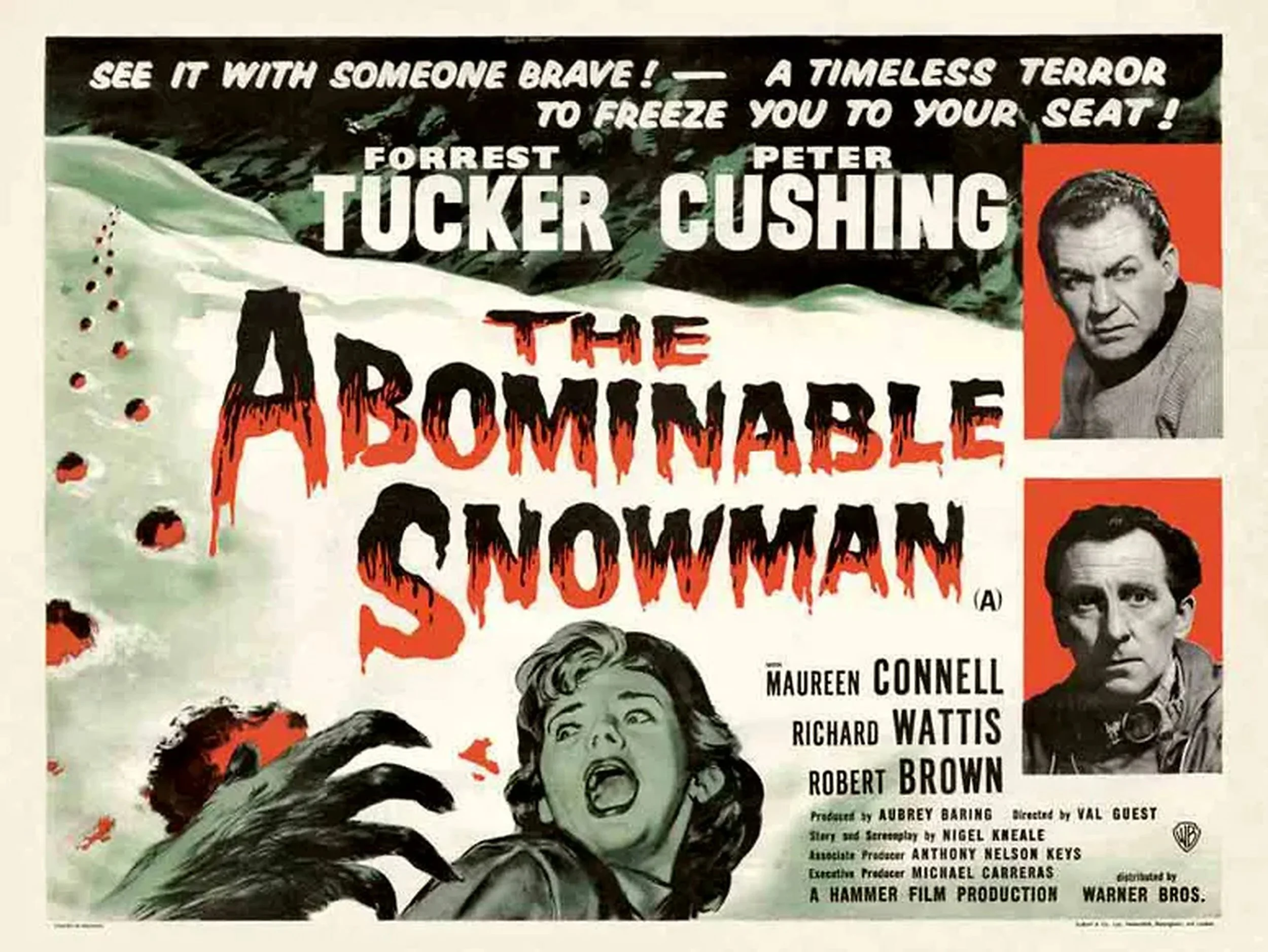
Despite being considered by many as an original story, The Abominable Snowman (1957) is in fact a remake of a made for television play, The Creature, that was originally broadcast in the UK in 1955. Hammer Films would often purchase the rights of popular TV programs and subsequently re-work them for mainstream, international cinema. Larger production budgets and fewer censorship restrictions allowed them to make their cinematic interpretations more lurid, thus commercially viable. Hence The Quatermass Xperiment, Quatermass II and Quatermass and the Pit were all given a big screen makeover and were commercially successful. The Abominable Snowman was written by acclaimed writer Nigel Kneale, who also wrote the original television drama and the aforementioned Quatermass trilogy. Although ostensibly marketed as a horror film this production is actually an interesting blend of psychological thriller and science fiction.
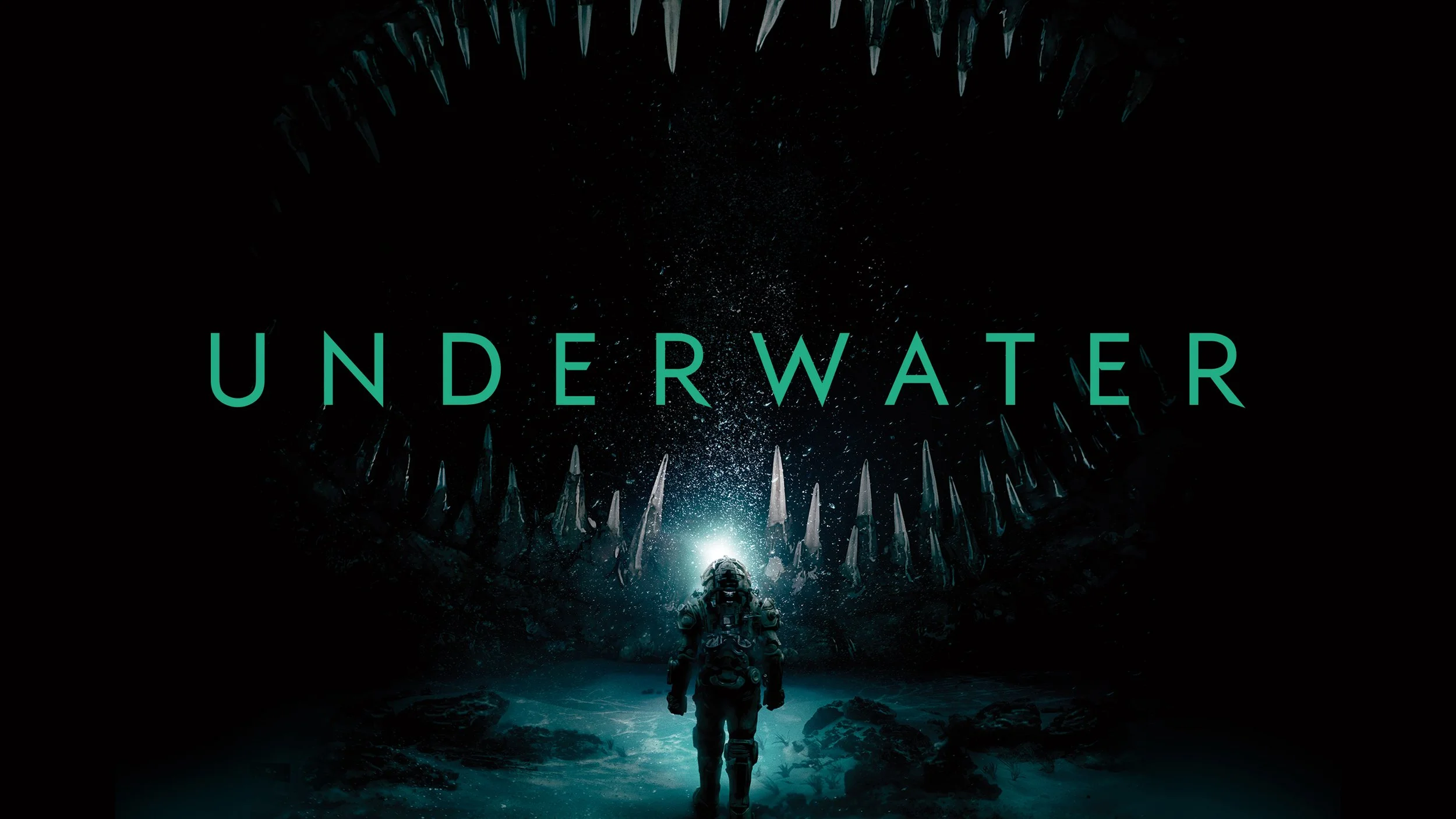
In the near future, Kepler 822, a research and drilling facility located at the bottom of the Mariana Trench, suffers a sudden and catastrophic structural failure. There are only six survivors. Mechanical engineer Norah Price (Kristen Stewart), Captain Lucien (Vincent Cassel), biologist Emily Haversham (Jessica Henwick), engineer Liam Smith (John Gallagher Jr.) and crew members Rodrigo (Mamoudou Athie) and Paul (T.J. Miller). As all the functional escape pods have been used and they are unable to contact the surface, the Captain suggests using pressurized suits to walk one mile across the ocean floor to the Roebuck 641 drill installation. There they will find more escape pods. However, it soon becomes apparent that the disaster was not caused by an undersea earthquake and that they are not alone as they make their journey.
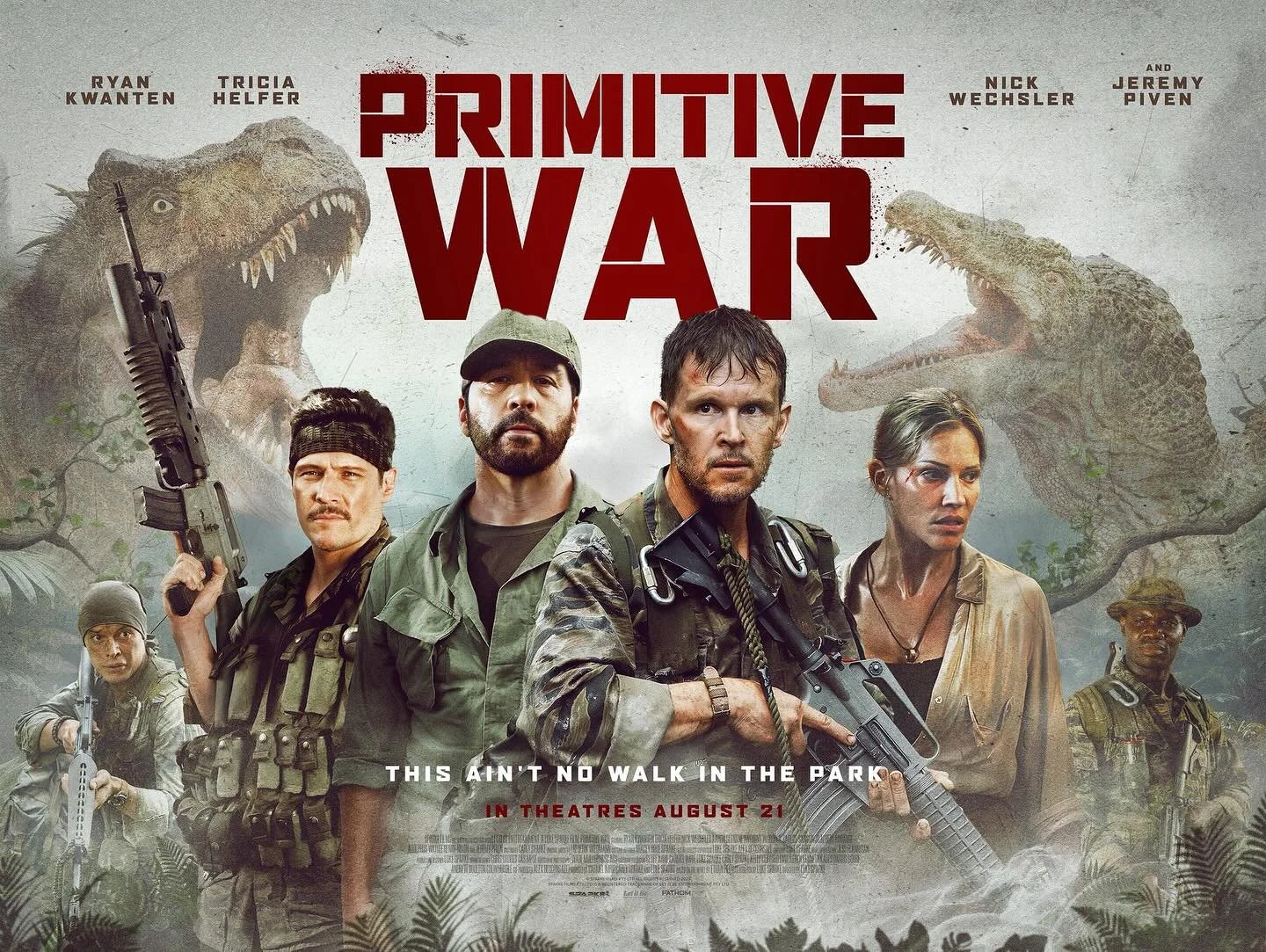
One of the most common objections raised regarding the Jurassic Park/Jurassic World franchise is that the films are specifically made to obtain a PG-13 rating from the Motion Picture Association, for purely commercial reasons. Hence, in all films, there is little on screen violence and the dinosaurs are mainly portrayed as a threat and a means of providing jump scares. When a character is killed by a dinosaur it usually happens off screen, is obscured by something else in frame, or is shown in long shot with very little detail. The realities of being eaten alive by a predator are conspicuously absent. Hence, audiences looking for films featuring more graphic dinosaur attacks, have not been well catered for apart from some minor direct-to-video titles. Primitive War finally fills this gap in the market with a frenetic genre mashup that strives to punch above is budgetary weight.
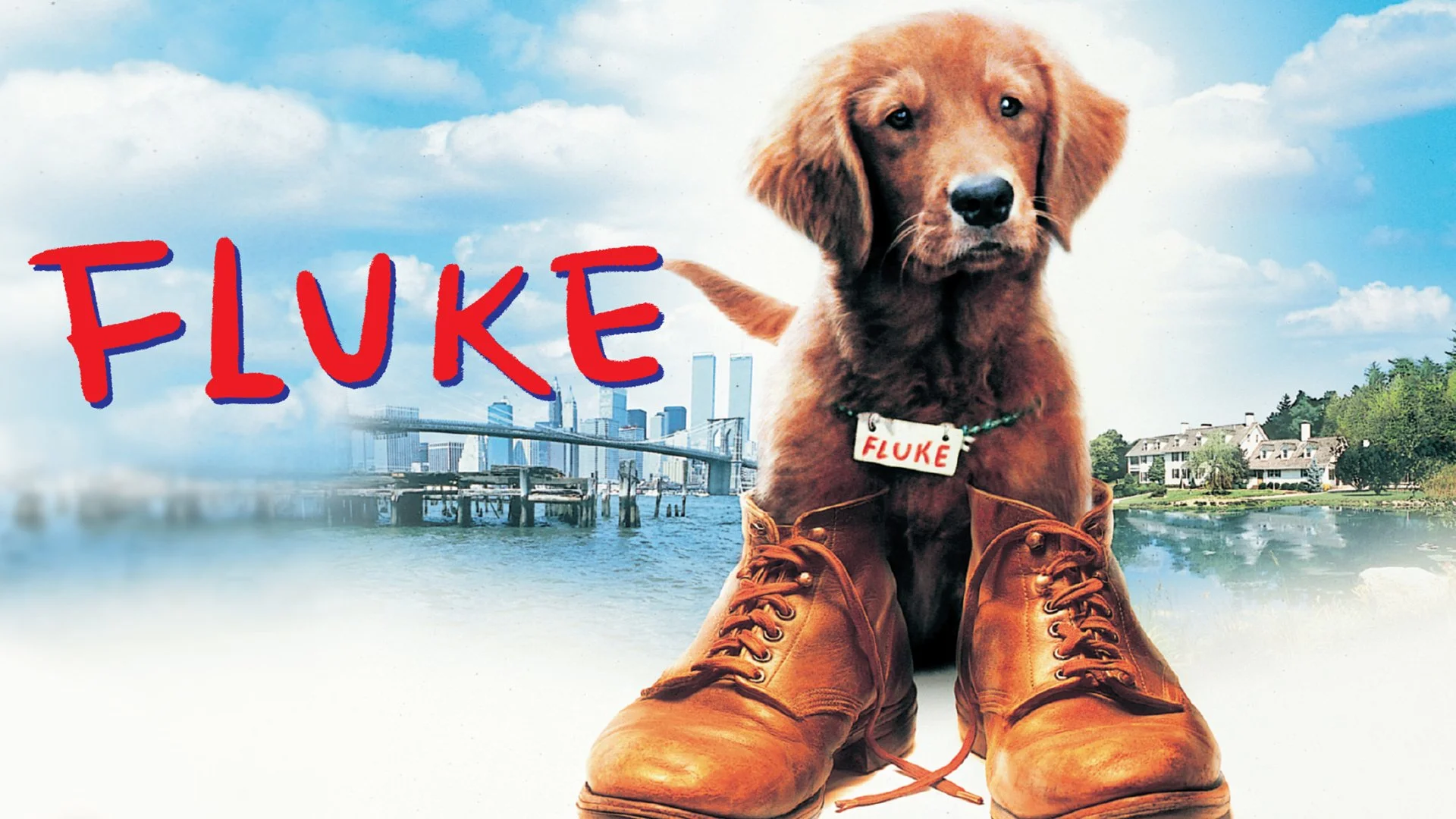
Fluke is a curious film about a man who is reincarnated as a dog and his subsequent realisation that he may have been murdered. It takes an adult novel by British author James Herbert, which is filled with philosophical musing and strives to adapt it in a far more family friendly fashion. The result is a somewhat bipolar production which thematically alternates between existential introspection and Buddhism. It then strives to deliver its message in a Disneyesque idiom. Children will potentially be confused and upset by what they see and adults will be wrongfooted by the continual shift in tone. Fluke was not a critical or commercial success upon release and the flaws that were identified by critics at the time still ring true today. That being said, Fluke is still an interesting and entertaining film, despite its faults.

When reviewing Sting, one critic stated that the small scale setting and thus, low stakes (IE only a few peoples lives are at risk), made the film not especially memorable. I consider this to be a somewhat spurious criticism. It is the very fact that Sting takes place in such a commonplace environment, with the main characters being everyday people that makes it different. There is a clear focus on well defined characters and their backstory. Unlike so many contemporary films, I actually gave a damn about the protagonists in Sting. An integral aspect of the horror genre is the ability to take a well known and familiar trope and provide a different and absorbing spin on it .It would appear that some audiences have been belaboured over the head by so many overblown and bombastic blockbusters, that the very notion of depicting small, localised and intimate events in a film, seems to bamboozle them.
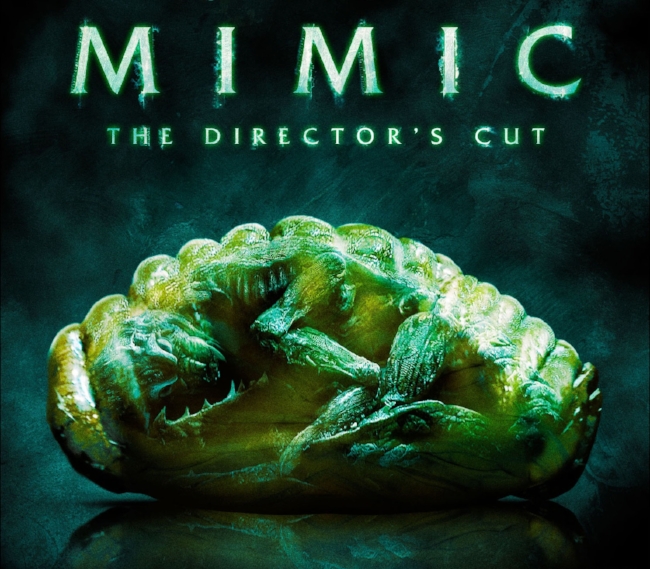
When I first saw Mimic in 1997, I was impressed by the fact that it offered a different perspective on the monster movie genre and that it seemed to have moments of greater depth than you'd expect from such material. Later on when I became more aware of the works of writer, director Guillermo del Toro, I learned that this movie had had a troubled production and that Miramx had imposed specific requirements upon the final cut of the film. This explained some of the movies inconsistencies and hinted at a far more ambitious artistic endeavour by del Toro. Initially Mimic was conceived as a thirty minute short and part of a three part anthology movie. However it along with the sci-fi film Imposter were both deemed to be of sufficient merit to be developed into feature length productions.
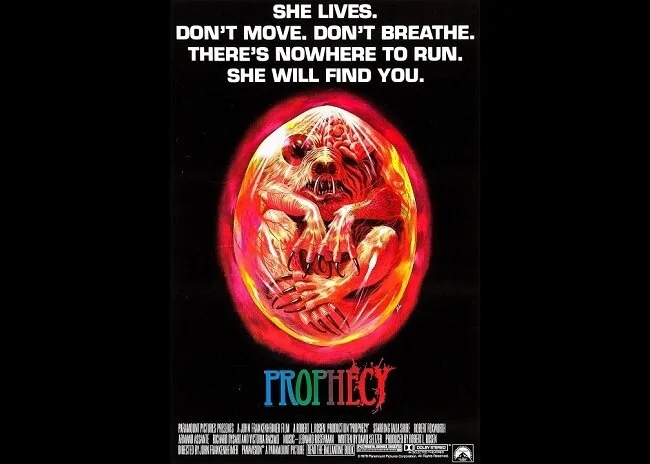
During the seventies, Hollywood started looking to ongoing societal and political concerns as a source of material for movies. Hence, the energy crisis, terrorism and global pollution quickly found themselves being subsumed into hastily written screenplays, in attempt to be topical, commercially successful and relevant. Prophecy based upon a novel by David Seltzer tackled not only the issue of pollution but also the ongoing disenfranchisement of Native Americans. Paramount studios went so far as hiring an established director of note, John Frankenheimer. In many respects this movie should have been a bigger success with a reasonable budget, robust cast and studio support. Sadly it did not fare well, either critically or at the box office due to obvious flaws in the production. Despite his outstanding body work, (Birdman of Alcatraz, The Manchurian Candidate) Frankenheimer was not the best choice of director for a genre movie such as this and he was also going through a period of alcoholism.
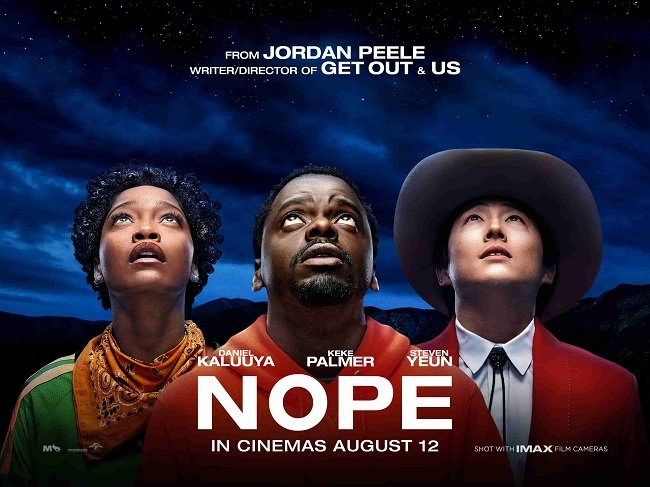
In Agua Dulce, California, the Haywood family trains horses for film and TV productions. One day at the Haywood ranch, small metal objects unaccountably fall from the sky. One of which, a nickel, kills Otis Haywood Sr (Keith David). His children, Emerald “Em” Haywood (Keke Palmer) and Otis “OJ” Haywood Jr. (Daniel Kaluuya), continue to run the business. However, due to the loss of a contract, they have to sell some of the horses to Ricky “Jupe” Park (Steven Yeun), who operates a Western theme park called Jupiter's Claim. One night, the Haywood’s notice the electricity supply fluctuating and their horses violently reacting to an unknown presence. They discover that something has been taking their horses and regurgitating inorganic matter, which OJ believes caused their father's death. The Haywood’s decide to obtain proof and subsequently ask electronics store employee and UFO enthusiast, Angel Torres (Brandon Perea) to set up surveillance cameras.
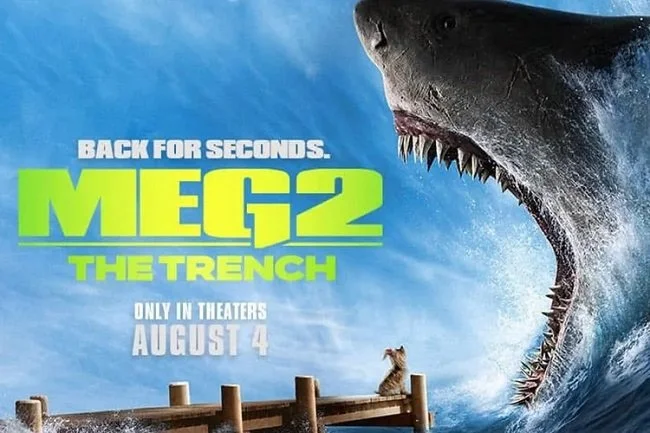
Back in 2018 I wrote the following about The Meg in my review. “My interest doesn’t go so far as a sequel. This sort of movie is the equivalent of a greasy burger you buy at the funfair. It’s fine once in a while as an indulgence, despite the fact that you know it’s bad, but you would soon tire of them being a regular part of my diet”. Five years later, I foolishly thought it may be “fun” to give the sequel, Meg 2: The Trench (2023), a go. Especially in light of the fact that it’s directed by Ben Wheatley. Surely such a filmmaker would bring some creativity and a fresh perspective to this franchise? Nope. Turns out he didn’t. Meg 2: The Trench lacks everything that made its predecessor tolerable. This superfluous sequel is an uninspired, poorly written mess which confuses turning everything up to eleven with entertainment. It gets nowhere near “it’s so bad, it’s good” territory. Instead it makes the biggest mistake a film of this nature can do. It’s dull.
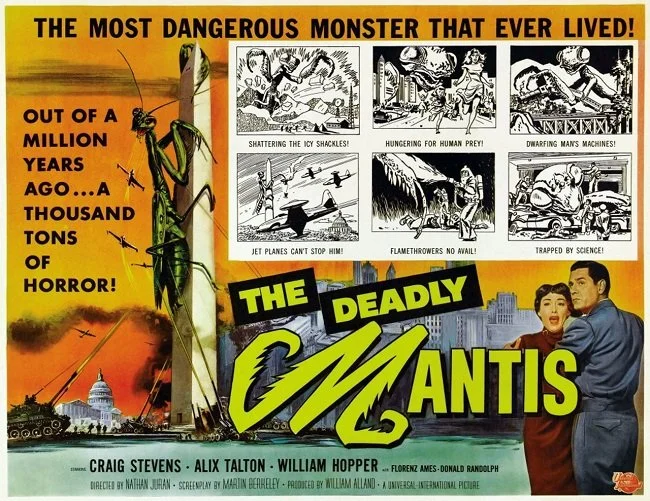
Not to be confused with the Shaw Brothers martial arts film of the same name from 1978, The Deadly Mantis (1957) is a creature feature in the idiom of Them! (1954). Unlike that film’s mutant ants, the monster on this occasion is not the product of the atomic age but a giant prehistoric praying mantis that has been released from the polar ice caps. Exactly how a creature associated with more tropical regions came to be at the North Pole is never explained. In fact precious little is in The Deadly Mantis. The film’s overall scope is somewhat limited with a basic story, limited action scenes and a rather dull cast of generic characters. There is an over reliance upon stock footage from period military documentaries and previous Universal Studio feature films. The film’s biggest failing is the giant praying mantis which does most of its rampaging conveniently off camera. It’s all rather disappointing.
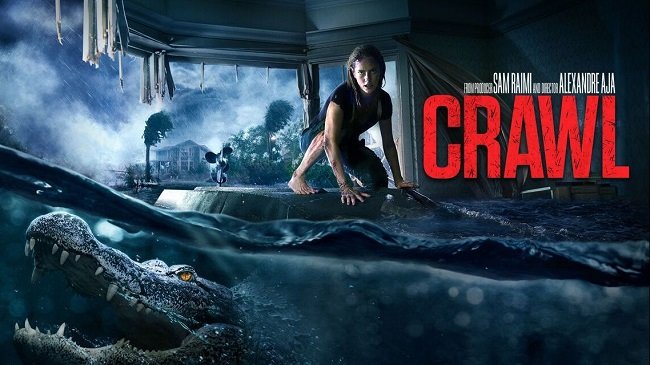
It is no secret that the film industry relies on a handful of common tropes as the mainstay of their cinematic output. It uses timeless themes, storylines and archetypes that have featured in folk tales, plays and literature throughout history. Hence their familiarity with audiences around the world. Where the skill in filmmaking lies is to take a common, well known idea and interpret it in a new and innovative fashion. Akira Kurosawa took Shakespeare’s MacBeth and retold the tale through the prism of Japanese feudalistic culture. The result, Throne of Blood, is considered a masterpiece. Similarly, The Lion King retells the same story through the medium of animation and anthropomorphic wildlife. All of which proves that the key to successfully retelling a familiar tale is to be creative with regard to setting, presentation and perspective.
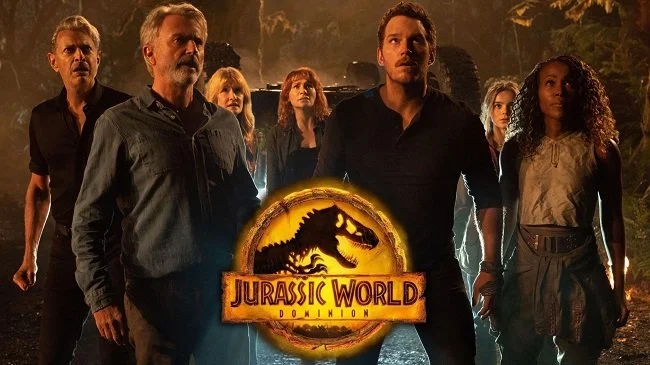
Jurassic World Dominion is a textbook example of a franchise that has run out of steam. Despite the enormous budget, the top notch production values and the presence of three members of the original cast, this is a long, tedious and curiously uneventful film. It has nothing new to say about environmental matters or unfettered science; themes that were front and centre in previous instalments. Nor does it do anything interesting with the main plot device of dinosaurs trying to integrate into our current ecosystems. But perhaps its biggest failing is the conspicuous lack of tension. The denizens of Jurassic World are simply not a threat and fail to have any emotional impact. The film doesn’t even placate viewers with superfluous cast members being eaten. The onscreen deaths by dinosaurs are rather tame.
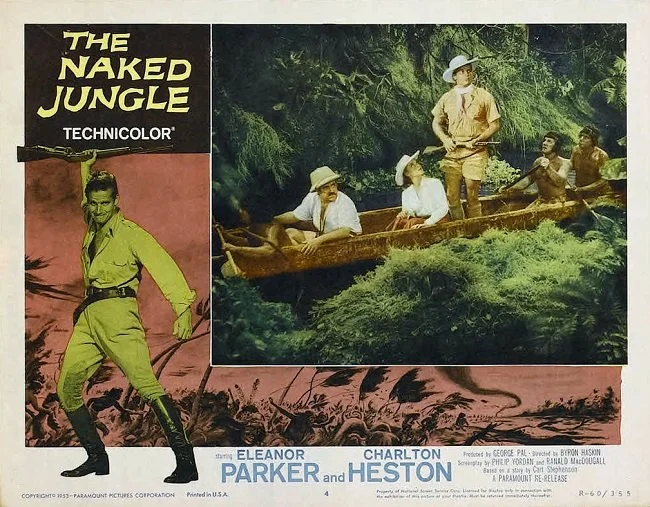
Set in Brazil in 1901, plantation owner Christopher Leiningen (Charlton Heston) makes arrangements to get married. He has spent his entire life building his estate and reclaiming land from the jungle. He is fiercely independent but he is also alone and isolated. Joanna Selby (Eleanor Parker) from New Orleans agrees to marry him but their first meeting does not go well. Leiningen is unhappy to discover that Joanna is a widow and hence has a past, so he tells her to return to America on the next available boat. However, local commissioner (William Conrad) informs Leiningen that swarming soldier ants, or Marabunta, are moving towards his plantation destroying everything in their path. Leiningen refuses to abandon his life’s work and is surprised when Joanna decides to stay with him. Can they convince their native workers to stay too and can they defend the estate from the Marabunta, described as “forty square miles of agonising death”.
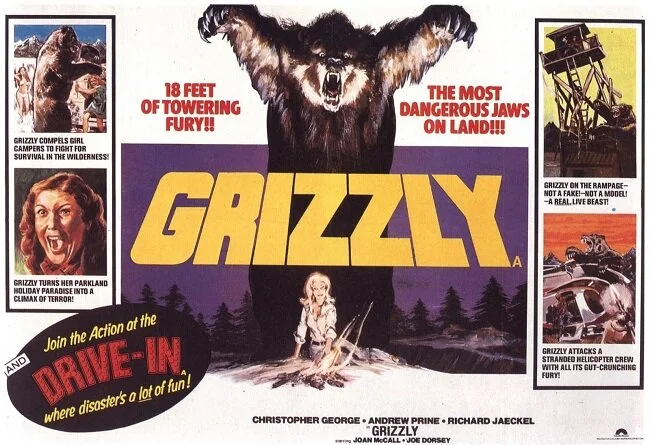
After the critical and commercial success of Jaws in 1975, a veritable tsunami of “creature feature” movies followed in its wake. A few titles, such as Alligator (1980) and Piranha (1978) managed to do something different with the rogue animal trope, both providing a quirky and satirical look at the genre along with plenty of exploitation mayhem. However, most of the rest were low budget productions of negligible quality. However, such qualities are not always an impediment at the box office. Grizzly (1976) was hastily made on a budget of $750,000 yet earned an impressive $39,000,000 at the box office. The critics hated it but the public loved it and it went on to be the second most financially successful independent feature film in the US that year (the first being Monty Python and the Holy Grail). Grizzly is in many ways a microcosm of the exploitation genre from the seventies and needs to be viewed through that prism if it is to be enjoyed.
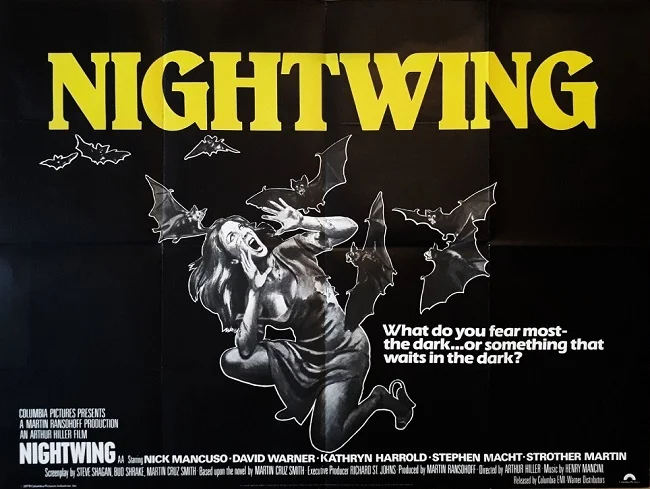
The seventies saw a minor boom in creature feature films after the box office success of Jaws. Hence, we had movies such as Orca (1977), Tentacles (1977), The Pack (1977) and Piranha (1978). If an animal could eat you or potentially pose any threat to people, someone somewhere would make a movie about it. Usually a bad one. A few of these even dared to stray into other hot topics of the time such as pollution and protecting the environment. Some would even invoke mysticism and folk lore to facilitate their protagonists. Nightwing is one such curious genre hybrid which combines vampire bats, shale oil mining and Native American culture in its clumsy and unsubtle plot. It’s a somewhat odd undertaking, directed by Arthur Hiller. His previous work included Love Story (1970) and Silver Streak (1976), so he was not the first person you’d expect to see associated with such material. The film doesn’t work well as either a horror movie or an exploration of social issues, but like so many movies from this era, it is of interest mainly due to its sheer incongruity.
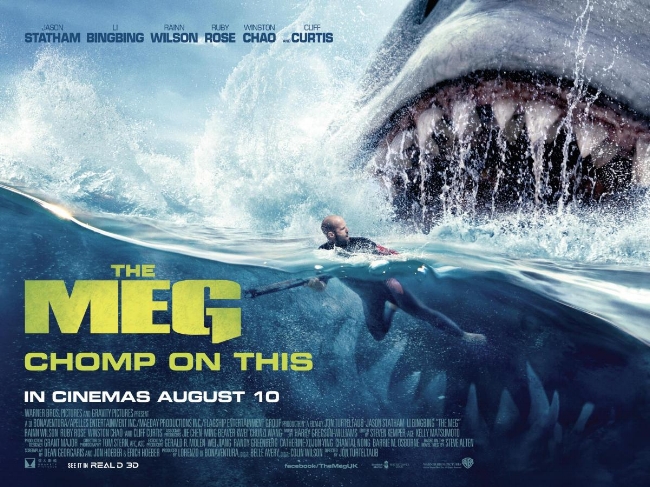
If you have seen any of the marketing material or trailers for The Meg, then you know exactly what you’re getting right from the get-go. All movies inherently require the viewer to suspend their sense of disbelief to various degrees. Naturally, the “creature feature” genre asks audience to go the extra mile with this concept. The Meg takes a major gamble by insisting that everyone goes further still, not by believing in a giant prehistoric shark (Megalodon) but that Jason Statham is a ex-navy, deep sea rescue diver. However, it pays off and the resulting movie is staggeringly stupid, but mercifully entertaining in an undemanding way. Recent movies such as Into the Storm and Geostorm are crass and made worse by their implicit assumption that their viewers are stupid. The Meg is far from cerebral but has an upbeat tone and a sense of playfulness that knowingly invites the audience to come aboard with the silliness. It’s a big distinction and the reason why I smiled a lot and frequently rolled my eyes while watching The Meg, but never with derision.
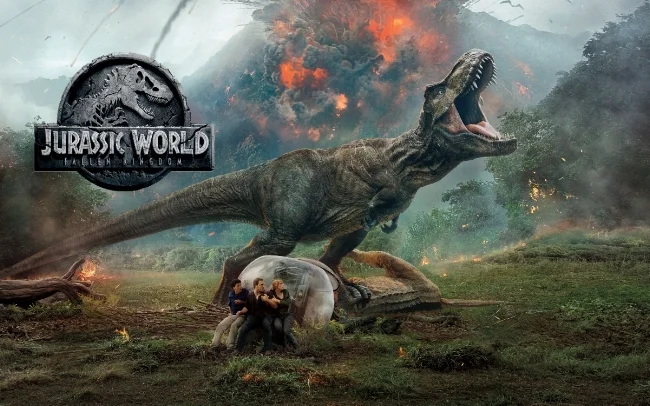
Critical opinion was very much split this summer when Jurassic World: Fallen Kingdom was released. However, the viewers were somewhat indifferent to the opinions of the professional critics and the movie made a healthy $1,303,476,615 globally, proving once again that the public’s’ continuing love affair with “all things dinosaur” shows no sign of abating. When you factor in the home media market into overall profits, the entire Jurassic Park franchise will have made $5 billion worldwide. So, bearing in mind the old adage that “money talks and bullshit walks”, I think it’s safe to say there’ll be more instalments in the years to come. When faced with such overwhelming box office popularity it seems somewhat pointless to dissect the latest movie, because the film seems to be bullet proof regardless of narrative flaws or ill-conceived plot devices. However, film criticism isn’t about box office popularity but about analysing the relative quality of a movie’s construction and its subsequent standing.
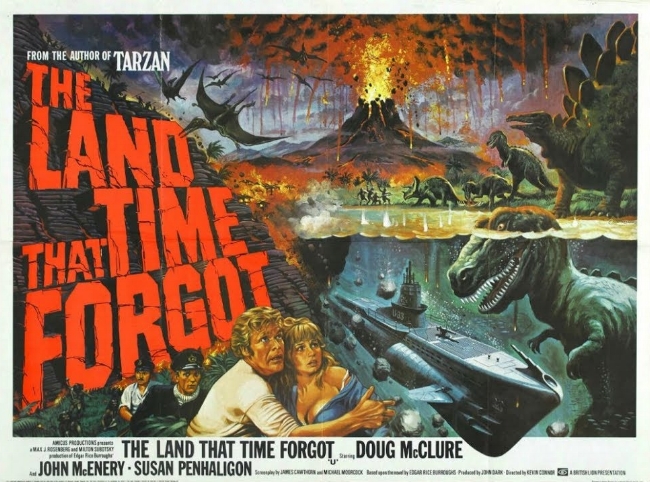
I first saw The Land That Time Forgot way back in 1975 at the Odeon Isle of Wight, when it was first released. We were on holiday at the time, which was cause for celebration in itself, as these were few and far between during my youth, due to the state of the UK economy at the time. But to then go to the cinema and see a fantasy film, filled with action, adventure and monsters, was the icing on the cake for an over excited eight-year-old. Adapted by Michael Moorcock and James Cawthorn from the 1924 the novel by Edgar Rice Burroughs, The Land That Time Forgot is a classic example of high adventure on a low budget. Its technical shortcomings were even apparent to me as a child, yet there was a charm and honesty to this curious British production, that had the audacity to try and compete with the likes of more expensive US productions such as The Golden Voyage of Sinbad and Island at the Top of the World.
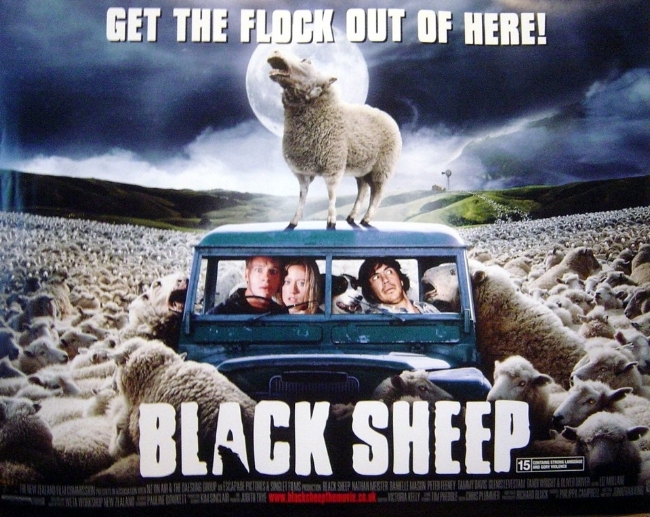
Black Sheep is a high concept horror comedy from New Zealand. Featuring creative physical effects by Weta Workshop, this tale of genetically modified killer sheep, animal husbandry and environmentalism requires a very broad sense of humour and an abiding love for the “creature feature” sub-genre. It should be noted that the copy I watched was the unrated R1 DVD. This version is stronger in content than the R rated US theatrical release and yet was released at the UK cinemas with only a 15 rating from the BBFC. I suspect that the similarities in humour between the UK and New Zealand contributed to this somewhat low rating. That and the fact that horror comedy often gets a free pass because the humour always tends to mitigate the violence.
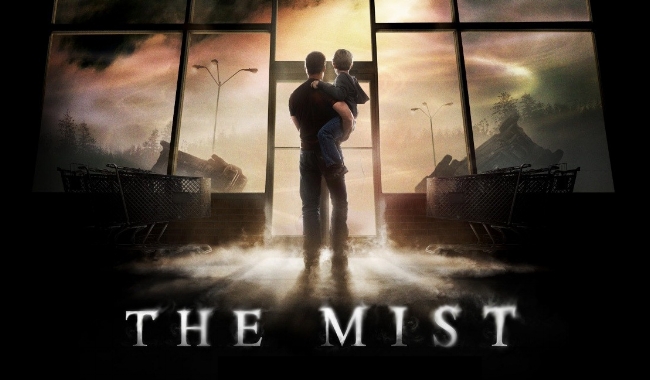
Frank Darabont achieved both critical acclaim and mass appeal with his adaptations of The Shawshank Redemption and The Green Mile. In 2007 he returned once again to the work of Stephen King with his film version of The Mist. It’s a sideways step away from human drama into a more genre piece, yet it still retains a very traditional story at its heart. Once you look beyond the superficial elements of "creature feature" plot, you get yet another well written character study by an ensemble cast, again focusing on how the human condition deals with extreme situations. The particular route it takes and some of the themes it explores may not be to everyone's taste. However, it still focuses on characters and performances. It is also a movie that ends with a somewhat unexpected plot development, that some viewers may find a little extreme. It is one of those film related twists that if known in advance, greatly diminishes once enjoyment of the film.
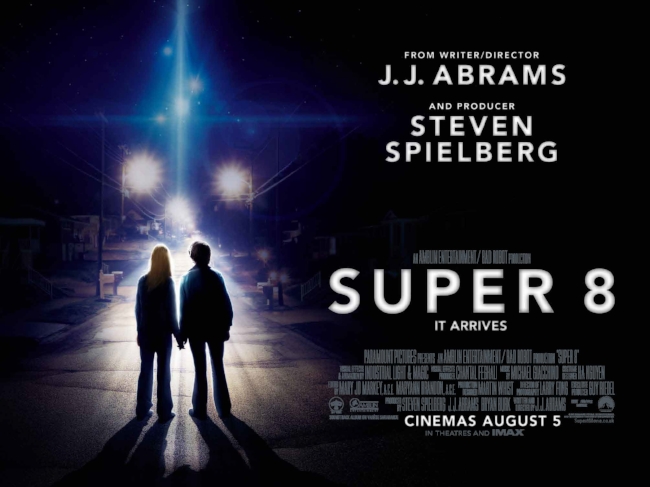
When you see the names of such cinematic luminaries as Steven Spielberg and J.J. Abrams together on the same movie poster, naturally your expectations are going to be high. Yet when watching the various trailers for Super 8, just prior to its release in 2011, I was somewhat cautious. I have discussed in the past at some length the ambiguous nature of trailers and that they can misrepresent a film. Yet even bearing this in mind at the time, I couldn’t help but feel that Super 8 seemed like a somewhat self-indulgent homage to Spielberg's earlier work. I subsequently saw the movie at the cinema in August that year and my suspicions were validated. However, over time I have spoken to several friends who are advocates of the movie, so I thought I’d watch it a second time. Sadly, I still find myself unable to label Super 8 as anything else other than adequate. Now I would hasten to add, that I use adequate within the context of both director’s body of work. An adequate film from either Mr Spielberg or Abrams is still superior to many of their competitors. But that's not the point. I simply expected better from such a project.
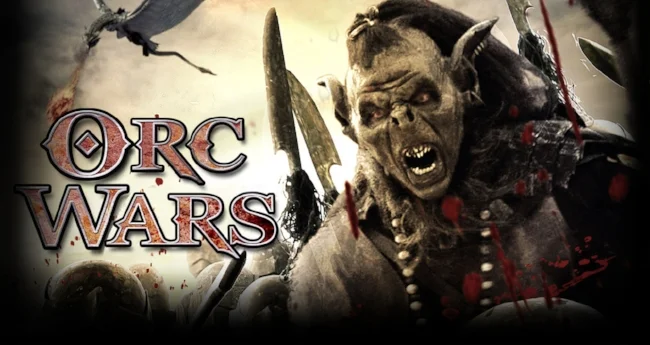
Having recently sat through Orcs! I decided to take a further chance and watch Orc Wars. It too is a very low budget film, although this time the finances were raised through crowdfunding. Sadly, it is not the fun, tongue in cheek, independent adventure movie the trailer and associated marketing implies. There is very little merit in this production. It's cheap, cheerful and although harmless, it clearly demonstrates that not all fan funded projects are good cinema. Some are just indulgences. The problem is in the title itself, which tries to sell an idea that the movie production is incapable of delivering. Instead of the spectacle of an army of a thousand Orcs pitted against the technological might of the US war machine, we get a few extras in ill-fitting costumes, running skirmishes against no-name actors on quad bikes and a few old Army Surplus vehicles. It's all rather lacklustre and underwhelming.
As a fan of the horror genre I’ve sat through numerous low budget films in my time. This has usually been at festivals or conventions. Sometimes watching something as part of a group, with likeminded individuals, makes a difference. You find yourself groaning in unison and the shared experience helps compensate for potential deficiencies. Watching questionable material in the comfort of your own home, purely on your own can be a lot tougher. However, due to my abiding love of the genre, I am prepared to cut a lot of cheap ass indie flicks considerably more slack than I would others. So, I'll endeavour to review Orcs! with as much impartiality as possible. Oh, and before we start, let us clarify the term Orcs. Although Middle-earth is not referenced in any way, this film is definitely about Tolkien's creations. Or at least their depiction in another well-known series of films.
10 Cloverfield Lane blends several cinematic genres producing an interesting premise. Once it has established its narrative arc, it then dives head long into an exciting and tense one hundred and four minutes. The movie is not a direct sequel to Cloverfield (2008) but does touch upon some of the same themes and ideas. Made on a modest budget of $15 million, the claustrophobic setting of a nuclear bunker accommodates strong performances from the lead actors. It is not until the third act when the story movies back to the outside world, do we see any major visual effects. Overall, this is a very compelling film due to the strong screenplay and well defined central characters.
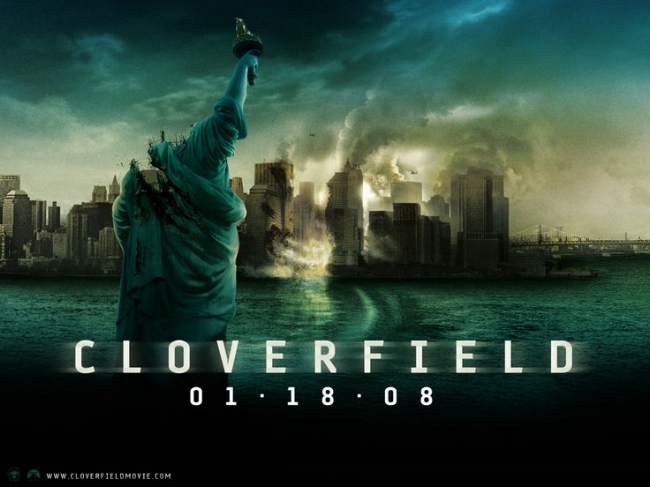
I did my best to avoid the hype surrounding the initial release of Cloverfield. Such media saturation and public interest can often cloud the issue of whether the actual film is any good. Five years later and having watched the movie twice, once in the theatre and once at home, I am still somewhat conflicted about this movie. The use of hand held video cameras is both a boon and a bane. The constant movement of the image has proven to cause motion sickness for some viewers, although this is not so overwhelming when viewed on a smaller screen at home. Yet the medium of news footage mixed with handheld cameras does create a palpable sense of immediacy. This helps immensely when trying to sell a fantastic concept, such as the one that Cloverfield features.
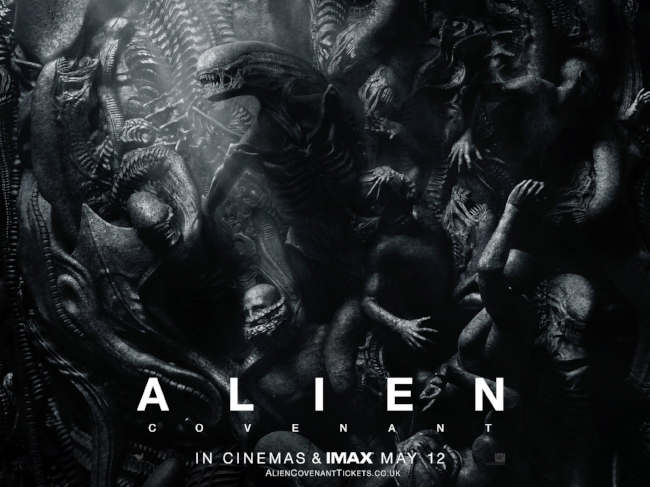
The enigma of the Xenomorph in the Alien franchise is diminished once you start to rationalise its heritage. Sadly, that’s exactly what Alien: Covenant has chosen to do. It jettisons the mystery of the original 1979 movie and pulls back the curtain, so wisely put in place thirty-eight years ago, to reveal a rather lacklustre explanation to the Xenomorph’s origin. Having spent nearly $100 million and employed a production team of some of the finest talent that money can buy, the resulting movie is not bad per se, just crushingly superfluous. After watching Alien: Covenant this week, my overall reaction can be distilled down to a deep sigh of indifference and a shrug of the shoulders.
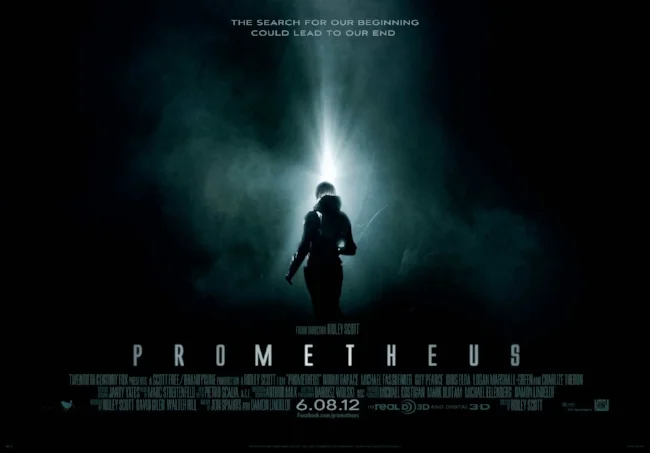
I have written many times in recent years about how big titles get announced by the gaming industry, of the ensuing hype up that leads up to launch day and then the subsequent disappointment on purchase. It is a malady that has afflicted the movie industry for decades and has become increasingly more common in the last decade. Hype has a curious link with reputation. There are a handful of directors in contemporary Hollywood who when they add their name to a production, people take notice. Ridley Scott is one of these. His body of work pretty much guarantees he can make whatever he wants, be it a commercial undertaking or a ludicrous vanity project. However, the downside to being a film maker of this stature is that you are not so easily exposed to proper scrutiny by your peers. No one stops you from making a mistake because you are supposed to know what you are doing. They let you do what you want. Which is bad.
 Roger Edwards
In 1968 the dilapidated freighter Corita hastily leaves Freetown to avoid a customs inspection. Captain Lansen (Eric Porter) has a cargo of dangerous explosives which he is smuggling so he can finally retire. His ship’s passengers also have reasons for leaving in a hurry. Dr. Webster (Nigel Stock), together with his daughter Unity (Suzanna leigh), is relocating due to his indiscretions with patients and illegal operations. Alcoholic pianist Harry Tyler (Tony Beckley) is aimlessly drifting from port to port. Eva Peters (Hildegard Knef) is fleeing from her husband with stolen bearer bonds which she intend to use to buy back her son from his evil clutches Caracas. Ricaldi (Ben Carruthers), a questionable lawyer, is pursuing Eva to retrieve the stolen bonds. First officer Hemmings (Neil McCallum) suggests that the ship should return to Freetown after an imminent Hurricane warning. The Captain asks the passengers and they are unanimous that they do not wish to return. However a mutinous crew, the bad weather and the instability of the explosives force everyone to abandon ship. The survivors find themselves adrift in a lifeboat surrounded by a strange carnivorous seaweed.