
The Abominable Snowman (1957)
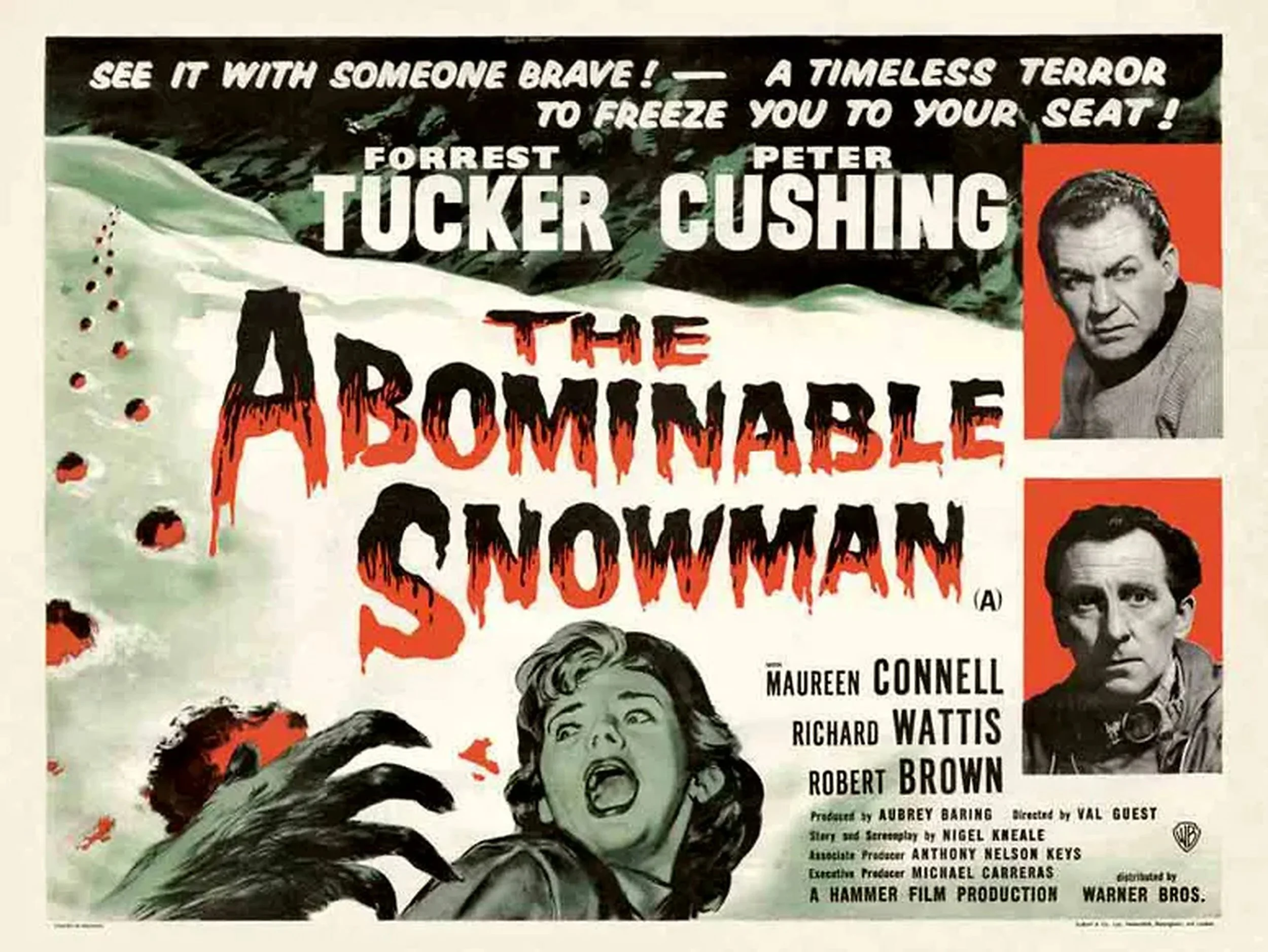
Despite being considered by many as an original story, The Abominable Snowman (1957) is in fact a remake of a made for television play, The Creature, that was originally broadcast in the UK in 1955.Hammer Films would often purchase the rights of popular TV programs and subsequently re-work them for mainstream, international cinema. Larger production budgets and fewer censorship restrictions allowed them to make their cinematic interpretations more lurid, thus commercially viable. Hence The Quatermass Xperiment,Quatermass II and Quatermass and the Pit were all given a big screen makeover and were commercially successful.The Abominable Snowman was written by acclaimed writer Nigel Kneale, who also wrote the original television drama and the aforementioned Quatermass trilogy. Although ostensibly marketed as a horror film this production is actually an interesting blend of psychological thriller and science fiction.
Dr. John Rollason (Peter Cushing), along with his wife Helen (Maureen Connell) and their assistant Peter Fox (Richard Wattis), are visiting the Lhama (Arnold Marlé) of the Rong-ruk monastery during a botanical expedition in the Himalayas. A second group of explorers, led by Tom Friend (Forrest Tucker) and including trapper Ed Shelley (Robert Brown), photographer Andrew McNee (Michael Brill), and Sherpa guide Kusang (Wolfe Morris), arrives at the monastery on a clandestine mission to discover the legendary Yeti, also known as the Abominable Snowman. Despite his wife’s concerns over his safety and the Lama’s objections, Rollason chooses to join Friend's expedition. While Rollason is driven by a scientific desire to discover more about the creature, Friend is motivated by the pursuit of fame and wealth, aiming to capture a live Yeti to showcase to the global media. As expedition progresses, it soon become apparent that they’re not alone.
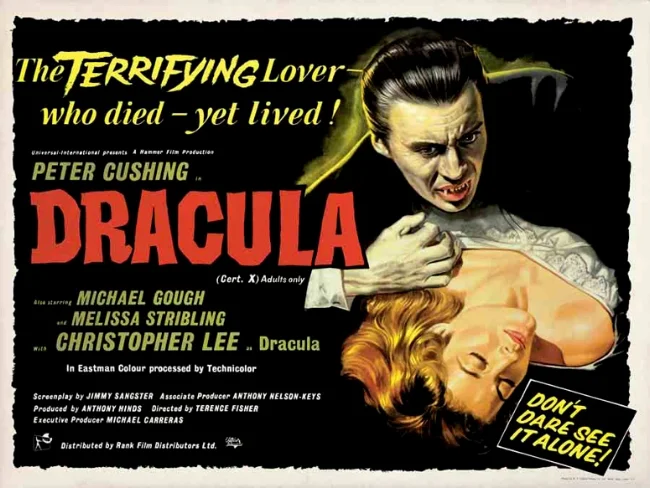
Due to this bait and switch sales approach, especially in the US where the film was re-titled The Abominable Snowman of the Himalayas, the box office returns were disappointing. However, in recent years this film has been critically re-appraised. The dialogue driven screenplay is thought provoking, the black and white, anamorphic widescreen photography by Arthur Grant makes the production look far more expensive than it actually is and as ever, Peter Cushing’s performance does much of the heavy lifting. Yes, the story unfolds at a leisurely pace and despite being transplanted to the big screen, it is clear that this was originally a play. Yet viewers wanting a more thoughtful and atmospheric story, as opposed to the more graphic approach (for the times) that Hammer Films adopted the following years for The Curse of Frankenstein and Dracula, this production has such things in spades.
Clearly not a horror film in the traditional sense, is it appropriate to label The Abominable Snowman a creature feature? Possibly but not like Jaws or Grizzly. The Yetis in this film are peaceful, sentient creatures who live in parallel with humans. It is hinted that they have evolved mental faculties such as telepathy and are simply biding their time till humanity destroys itself. Each member of the exploration team ends up facing what they carry in their heart. Director Val Guest suspected that the cerebral plot was just too ahead of its time and not suitable for the cinematic market of the time. However, he Abominable Snowman has a far better chance of finding a welcoming audience these days, where its high concept plot will not be considered alien to viewers. Hammer Films forthcoming 4K restoration will no doubt prove a hit among film collectors who still favour physical media.


In the year 1860, Baron Victor Frankenstein (Peter Cushing) faces execution by guillotine for the murders perpetrated by the creature he created. With the assistance of a hunchback named Karl (Oscar Quitak) he avoids death by beheading the priest who came to give him the last rites. The priest’s body is then mistakenly buried by the authorities. Three years later, Victor, now using the name Doctor Stein, has established himself as a prosperous physician in Karlsbrück, serving both affluent patients and the poor at a paupers’ hospital. Hans Kleve (Francis Matthews), a junior member of the medical council, recognises Victor and being an admirer, seeks to become his apprentice. Victor and Hans then undertake an experiment to transplant Karl’s living brain into a new, more refined body, rather than a grotesque monstrosity the Baron has previously made. Karl is eager to have a new healthy body, especially after encountering Margaret Conrad (Eunice Gayson), the charming new assistant at the hospital.