
Immortals (2011)
Tarsem Singh's Immortals follows in the wake of Zac Snyder’s 300 with a similar aesthetic and editing style. Despite an interesting cast, featuring the talents of John Hurt, Mickey Rourke and Henry Cavill, it’s a singularly uninspired film, devoid of any story telling of any substance. Immortals main selling points are glossy, stylised visuals and a striking production design which is very derivative of Italian cinema from the sixties. There are also liberal doses of violence and heaving oiled flesh to enliven the proceedings, but it is all feels somewhat arbitrary and a bit of a box ticking exercise. Overall what surprises me the most is how a film maker with all of the drama and excitement of Greek mythology at his disposal, can still make such a turgid and dull movie as this?
Years after the Gods defeated the Titans, a new evil threatens. King Hyperion (Mickey Rourke) scours Greece in search of the legendary Epirus Bow, a weapon of unimaginable power forged in the heavens by Ares. Once he possesses this bow he can unleash the Titans, who have been imprisoned deep within the bowels of Mount Tartaros. In Hyperion’s hands, the bow can also annihilate the Gods. But ancient law dictates the Gods must not intervene in man's conflict. Yet they can work through a proxy, so a peasant named Theseus (Henry Cavill) is chosen by Zeus, to save his people from Hyperion and his armies. Rallying a band of fellow outsiders, including visionary priestess Phaedra (Freida Pinto) and cunning slave Stavros (Stephen Dorff), Theseus must lead an uprising, or watch his homeland fall into ruin and the Gods vanish from the world.
Director Tarsem Singh has a noticeable visual style, developed during his earlier career where he made several very high-profile music videos. As a result, one cannot deny that Immortals looks impressive. The colour palette is vivid in it’s use of contrasting colours, especially in the end battle between Gods and Titans. Gold, red and black feature in a very striking fashion. There is also an ethereal quality to some of the supernatural elements of the story. I certainly felt that there was an element of Mario Bava and even Michael Powell and Emeric Pressburger in the proceedings. The action scenes are stylised and brutal yet lack any dramatic power due to their heavily orchestrated presentation. At times they seem like they’d be more at home in a Giallo, rather than a tale of Ancient Greece.
However, despite all the positive aspects of the production design, my biggest criticism of Immortals is that it wilfully neglects any attempt at true story telling and character development. Viewers are presented with the most arbitrary depictions of both heroes and villains and given no specific reason to care about them, apart from the fact that they’re merely archetypes. It feels like the main focus of this movie is the presentation, rather than the story. It seems to be an all too familiar complaint these days. Compared to thirty years ago, film makers nowadays have access to an array of tools that allow them to make the most visually impressive and technically accomplished productions. But there is a noticeable lack of humanity in this process and it becomes a very apparent when you finally watch the finished product. Immortals suffers in this way, saying precious little in the most lurid and bombastic fashion.

I had the pleasure of seeing Solomon Kane at the Empire Leicester Square upon its initial release. I remember at the time how I found it very refreshing to see an independent horror film that treated its underlying material with the respect it deserved. The genre was somewhat in the doldrums at the time, awash with soulless remakes and endless franchise sequels, produced by cynical studios that were ultimately contemptuous of the material they utilised and the fans that watched it. Although not a literal adaptation of the series of short stories by Robert E. Howard, Solomon Kane successfully captured their spirit and broadened their scope to accommodate both the horror and fantasy genres.
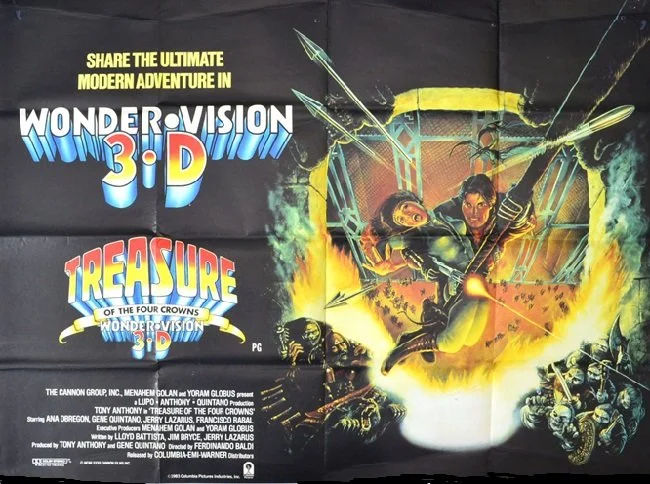
“In the universe there are things man cannot hope to understand. Powers he cannot hope to possess. Forces he cannot hope to control. The Four Crowns are such things. Yet the search has begun. A soldier of fortune takes the first step. He seeks a key that will unlock the power of the Four Crowns and unleash a world where good and evil collide”. So reads the Star Wars-esque opening crawl for the 1983 3D action movie, Treasure of the Four Crowns. It’s worth noting that when it appears on screen, this text is written in capitals and devoid of any punctuation. The movie is also a Cannon Films production. These facts may give viewers an inkling of what is to come over the next 100 minutes. It is certainly best to abandon expectations of linear, narrative filmmaking. Treasure of the Four Crowns is unique, batshit crazy and yet curiously entertaining.
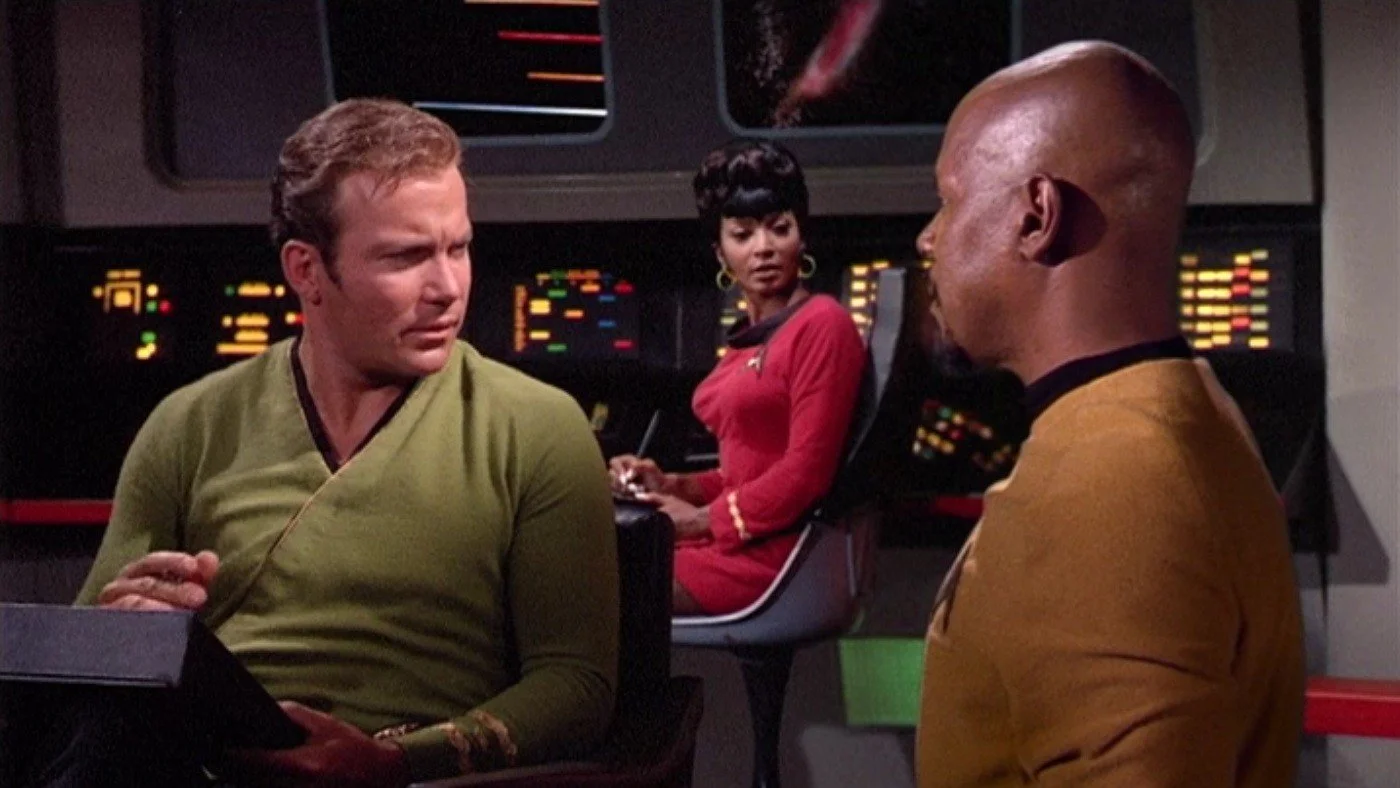
I recently watched the first trailer for the new Obi-Wan Kenobi television show that is premiering on Disney + in May. I am interested in this latest instalment in the Star Wars franchise and curious as to whether Liam Neeson will make an appearance. I also watched a 20 minute fan video in which they “analysed” the entire trailer. They discussed the content of this 2 minute preview and then did a great deal of speculating about potential themes and characters that may feature in the show. They were clearly enthusiastic about what they had seen and were very knowledgeable about the subject. This resonated with me, as I like to be well versed about the things I enjoy. However, it is worth remembering that fandom can tip into obsession and gatekeeping. Hence I feel there is a subject to explore here.
This December marks the 20th anniversary of the release of The Fellowship of the Ring, the first instalment of Peter Jacksons' adaptation of J.R.R. Tolkien’s iconic novel, The Lord of the Rings. To celebrate this occasion, I shall post new reviews of the extended edition of all three films, as well as those of The Hobbit trilogy, which were made a decade later.
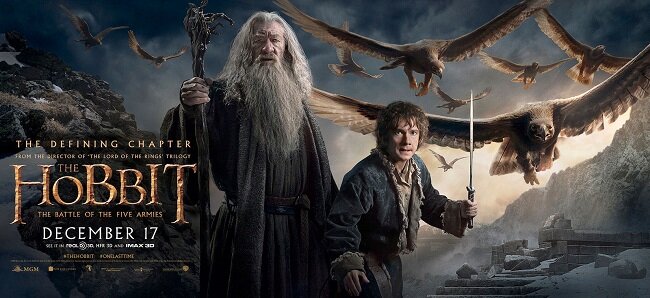
The Battle of the Five Armies is noticeably shorter than it's two predecessors, mainly because there is insufficient narrative to sustain the proceedings. Even the extended edition which adds a further 20 minutes to the running time, increasing it to 164 minutes, is mainly driven by one ongoing action sequence which is the titular battle. After the somewhat languid pace of the first movie and the bloated excess of the second, this further change of pace seems somewhat perplexing. Despite the more economical running time, events occur very rapidly. Perhaps a little too rapidly. It can be cogently argued that it somewhat diminishes the impact of some of them. Perhaps the biggest issue being the demise of Smaug. It comes promptly at the start of The Battle of the Five Armies and although spectacular, it quickly negates a major plot element.
This December marks the 20th anniversary of the release of The Fellowship of the Ring, the first instalment of Peter Jacksons' adaptation of J.R.R. Tolkien’s iconic novel, The Lord of the Rings. To celebrate this occasion, I shall post new reviews of the extended edition of all three films, as well as those of The Hobbit trilogy, which were made a decade later.
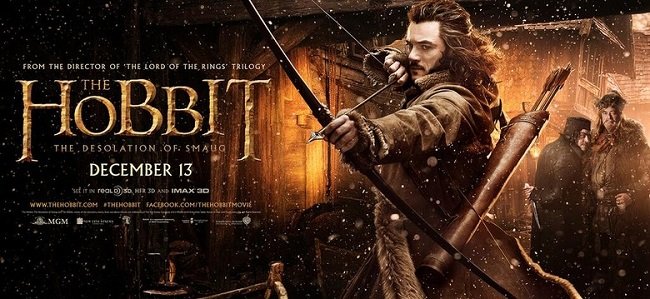
I love the medium of film immensely. I like a wide range of genres and will happily watch weighty human dramas as well as the worst sort of trashy exploitation fodder. The key to reconciling such widely differing types of cinema is to judge them within their own context. Therefore don't compare the respective worth of Citizen Kane with The Golden Voyage of Sinbad, or Bicycle Thieves with The Medusa Touch. So because of the nature of Peter Jackson's adaptation of The Hobbit, I am prepared to make concessions to the fact that it is a big budget fantasy blockbuster franchise. Also the source material from which the film derives is quite sparse, often being nothing more than footnotes, or summations of history. Thus there is scope for a lot of "adaptation", artistic license and creativity. Jackson got a lot of this right with The Lord of the Rings trilogy, over a decade ago. I do not believe that to be the case this time round.
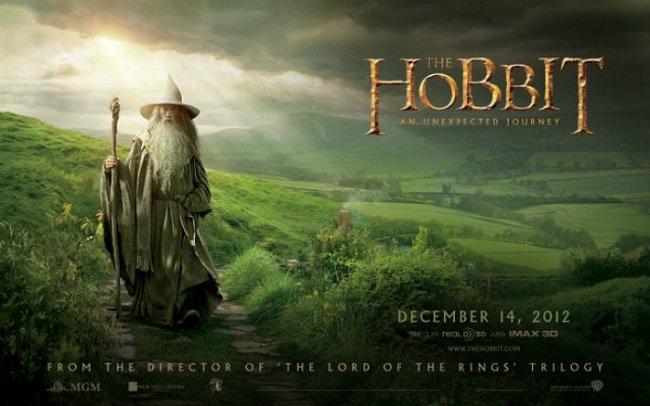
This December marks the 20th anniversary of the release of The Fellowship of the Ring. The first instalment of Peter Jacksons' adaptation of J.R.R. Tolkien’s iconic novel, The Lord of the Rings. To celebrate this occasion, I shall post new reviews of the extended edition of all three films, as well as those of The Hobbit trilogy, which were made a decade later.
Firstly let me start by saying I think the word unexpected is very apt in respect of the first instalment of Peter Jackson's three part adaptation of Tolkien's prequel to The Lord of the Rings. It is genuinely surprising how well parts of the narrative had been adapted and interpreted. Similarly there are other aspects that are less successful. Overall the good outweighs the bad but only the most ardent fanboy or girl would think the movie flawless. When one considers its problematic production along with the change of directors, this is quite an achievement. I wonder how much of Guillermo del Toro’s material survived into Peter Jacksons, Fran Walsh and Philippa Boyens revised screenplay? Secondly, a decade on from The Lord of the Rings, there has been a further move away from physical visual effects and filming on photographic film. Both of these changes are noticeable in An Unexpected Journey but the presence of Peter Jackson and his very specific style of filmmaking maintains a very strong sense of continuity.
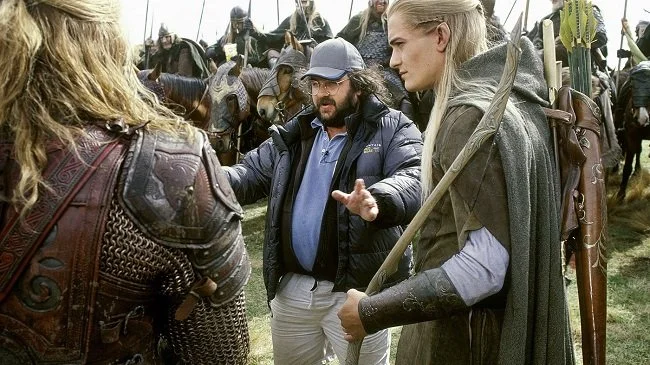
In December it will be the twenty year anniversary of the release of The Fellowship of the Ring. The first entry in Peter Jackson’s trilogy of film adaptations of Professor Tolkien’s iconic novel, The Lord of the Rings. I was utterly swept up in the hype and media frenzy that persisted for three years around these movies between 2001 and 2003. I certainly have fond memories of seeing each film on the first day of its release at the prestigious Leicester Square Odeon in London. Broadly speaking I was very impressed with all three films at the time of their release. However, over the years excitement and fandom has been tempered with a greater degree of critical analysis and appraisal. Having recently watched the Extended Editions of all three films, remastered in 4K, I now think it would be pertinent to revise my thoughts on them and repost them here on Contains Moderate Peril. This initial post is intended more as an overview on the trilogy. I shall write three new in depth reviews in due course.
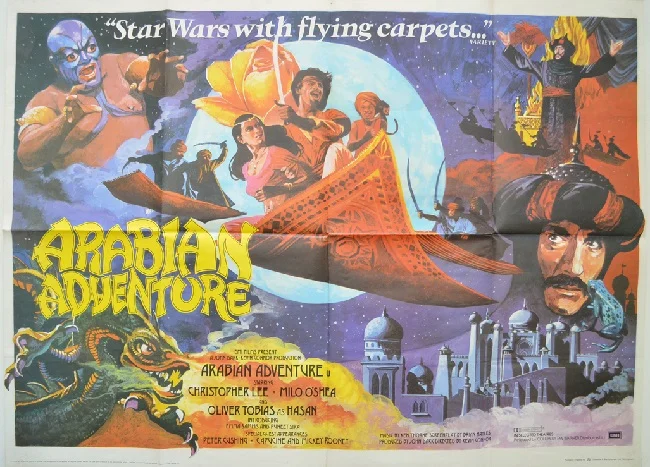
Before I begin, let’s just take a moment to remind ourselves about the notion of historical context. Movies, like so many other aspects of popular culture, reflect the prevailing attitudes of the time they were created. The reason I mention this is because within a few minutes of watching Arabian Adventure, viewers will become abundantly aware that the movie is very much product of British film making from the late seventies. If you are particularly sensitive on such issues as identity and gender politics, as well as historically accurate depictions of cultures and societies then watching this movie may prove jarring. If however, you view it through the prism of historical context and do not try to judge it against contemporary standards, then it may be an easier experience.
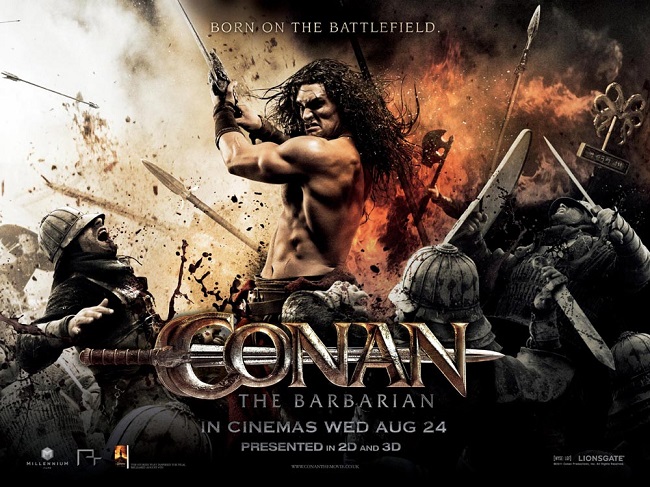
On a superficial level the 2011 Conan reboot provides two hours of blood and thunder. For those who are seeking a quick fix of such material and are not burdened by a strong affiliation to Robert E. Howard’s source material, this will prove adequate. I suspect that Marcus Nispel’s offering will find a home with a younger audience. For purists or those who have fond memories of John Milius’ 1982 version, then this is not the film you are looking for. Move along. But to be honest after watching the various trailers that preceded this release and considering the directors track record, does this really come as any surprise? For those with a longer memory, cast you mind back to Nispel’s Viking versus Indian outing from 2007. Pathfinder was a high concept movie that was chronically mishandled.

Twenty-five years ago, Super Mario Bros. was released upon an unsuspecting public and subsequently met with universal critical derision and box office failure. With the benefit of 20/20 hindsight is seems incredible that this project ever got given a green light. Yet at the time, not only was it granted a generous $48 million budget, but it boasted a cast and production team of the highest pedigree. Produced by Oscar nominated director Roland Joffé, the cinematography was by Dean Semmler and the editing was by Mark Goldblatt. The central characters of Mario and Luigi where played by Bob Hoskins and John Leguizamo and the icing on the cake was Dennis Hopper as King Koopa. You simply couldn't make it up.
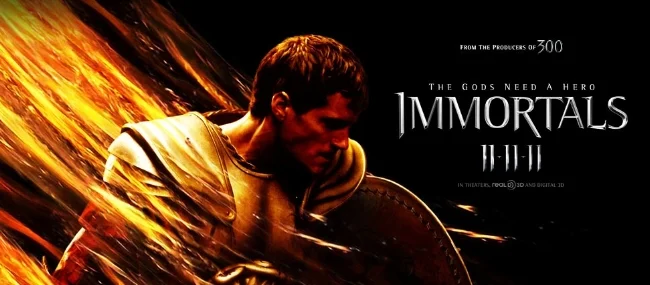
Tarsem Singh's Immortals follows in the wake of Zac Snyder’s 300 with a similar aesthetic and editing style. Despite an interesting cast, featuring the talents of John Hurt, Mickey Rourke and Henry Cavill, it’s a singularly uninspired film, devoid of any story telling of any substance. Immortals main selling points are glossy, stylised visuals and a striking production design which is very derivative of Italian cinema from the sixties. There are also liberal doses of violence and heaving oiled flesh to enliven the proceedings, but it is all feels somewhat arbitrary and a bit of a box ticking exercise. Overall what surprises me the most is how a film maker with all of the drama and excitement of Greek mythology at his disposal, can still make such a turgid and dull movie as this?
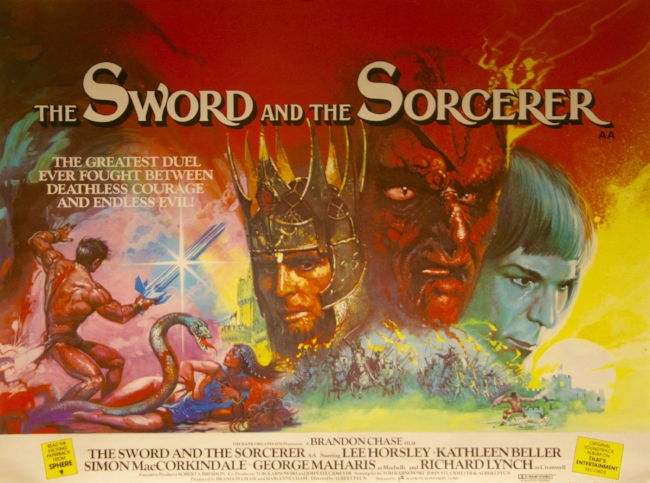
The early eighties saw an interesting mini boom in the sword and sorcery films. Studios have always been quick to jump on any bandwagon and the growing popularity of the Dungeons and Dragons role playing games showed a potential market. Subsequently, there was a glut of material from the fantasy genre. John Milius’ Conan the Barbarian (1982) remains the benchmark for such movies with its blend of high adventure and philosophical musing. Other films of note include John Boorman’s Excalibur (1981), Dragonslayer (1981), Legend (1985), Krull (1983) and The Beastmaster (1982) to name but a few. All of them have an interesting pedigree with regard to their respective cast and directors. As always there were numerous poor and substandard entries, but we will not catalogue them here.
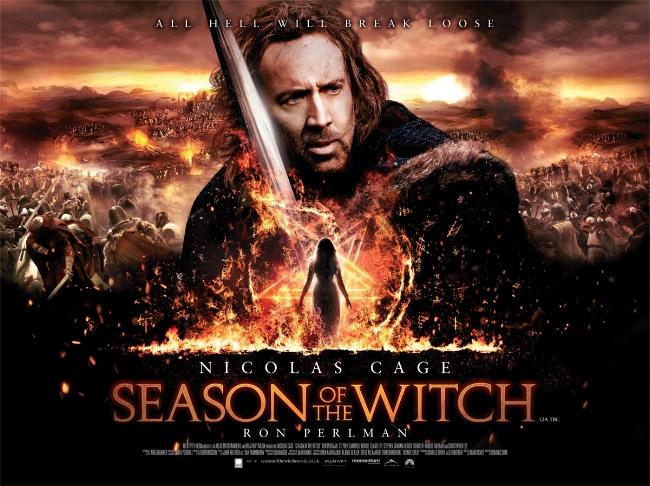
After years of war, two 14th century Crusaders (Nicholas Cage and Ron Perlman) returns to a homeland devastated by the Black Plague. The church, deeming sorcery to be the source of the outbreak, tasks the knights to transport an accused witch (Claire Foy) to a remote abbey, where monks will perform a ritual in hopes of ending the pestilence. A priest, a grieving knight, a disgraced trader and an altar boy who dreams of becoming a knight, join the mission across a hostile wilderness. The group soon finds itself at odds with each other over the fate of the girl. When the embattled party finally arrives at the abbey, a horrific discovery jeopardises the knight's pledge to ensure the girl fair treatment, pitting them against an inexplicably powerful and destructive force. Will good or evil triumph?
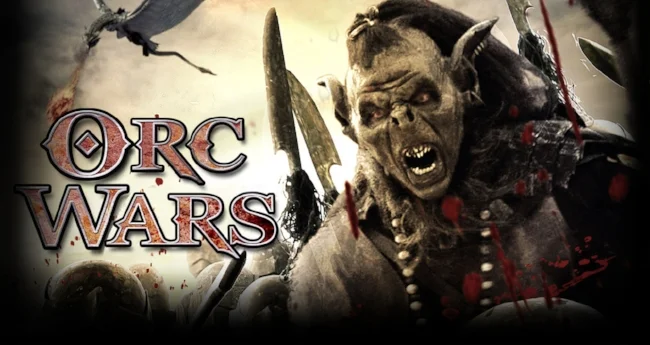
Having recently sat through Orcs! I decided to take a further chance and watch Orc Wars. It too is a very low budget film, although this time the finances were raised through crowdfunding. Sadly, it is not the fun, tongue in cheek, independent adventure movie the trailer and associated marketing implies. There is very little merit in this production. It's cheap, cheerful and although harmless, it clearly demonstrates that not all fan funded projects are good cinema. Some are just indulgences. The problem is in the title itself, which tries to sell an idea that the movie production is incapable of delivering. Instead of the spectacle of an army of a thousand Orcs pitted against the technological might of the US war machine, we get a few extras in ill-fitting costumes, running skirmishes against no-name actors on quad bikes and a few old Army Surplus vehicles. It's all rather lacklustre and underwhelming.
As a fan of the horror genre I’ve sat through numerous low budget films in my time. This has usually been at festivals or conventions. Sometimes watching something as part of a group, with likeminded individuals, makes a difference. You find yourself groaning in unison and the shared experience helps compensate for potential deficiencies. Watching questionable material in the comfort of your own home, purely on your own can be a lot tougher. However, due to my abiding love of the genre, I am prepared to cut a lot of cheap ass indie flicks considerably more slack than I would others. So, I'll endeavour to review Orcs! with as much impartiality as possible. Oh, and before we start, let us clarify the term Orcs. Although Middle-earth is not referenced in any way, this film is definitely about Tolkien's creations. Or at least their depiction in another well-known series of films.
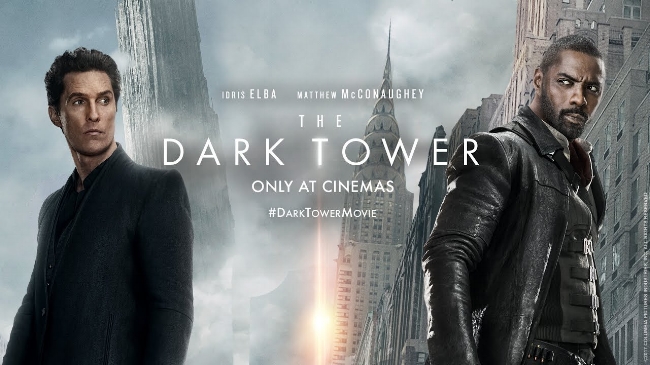
Stephen King’s body of work has proven to be an invaluable source of material for film and television over the last forty years. The results have often been as varied as the books themselves. Because of the inherent differences between the respective mediums, sometimes the complexity and sheer scope of King’s work can be lost in translation from one to the other. It’s happened before with several high-profile adaptations and it will no doubt happen again. The Dark Tower is a classic example failing to capture the essence of King’s work. Trying to distil and convey a mythos that is spread over eight volumes, into a single movie is a tall order for any director and screen writer. It can be cogently argued that material of this sort is better suited to television where lengthy, complex story arcs can be indulged and characters can be explored at leisure. In fact, during it’s time in development hell, The Dark Tower was at one point destined to be adapted for the small screen. However, the desire to create a lucrative film franchise ultimately prevailed.
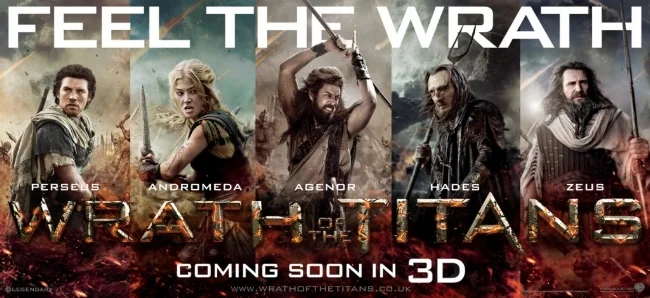
A decade after his heroic defeat of the monstrous Kraken, Perseus-the demigod, son of Zeus, is attempting to live a quieter life. Meanwhile, a struggle for supremacy rages between the gods and the Titans. Dangerously weakened by humanity's lack of devotion, the gods are losing control of the imprisoned Titans and their ferocious leader, Kronos. Enlisting the help of the warrior Queen Andromeda, Poseidon's demigod son Argenor and fallen god Hephaestus, Perseus bravely embarks on a treacherous quest into the underworld to overthrow the Titans and save mankind. Or so Warner Bros. Pictures say in their 2012 press release for Wrath of the Titans.
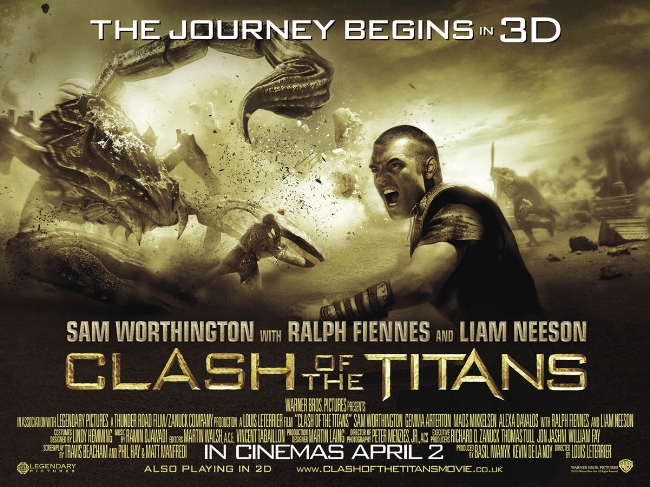
When I initially heard that Clash of the Titans was to be remade, I had mixed feelings. I grew up watch Ray Harryhausen movies and have a great affection for them. However, it can be argued that the 1981 original movie has hardly Harryhausens finest work. It was saddled with an uninspired script, a wooden lead and seemed very dated compared to comparable fantasy movies at the time, such as Dragonslayer. So, I chose to give the 2010 remake the benefit of the doubt. I was even prepared to overlook the fact that the movie had been retrofitted in to 3D during post-production. A pointless embellishment. Upon my first viewing, which I saw on a big screen West End theatre, I was left with mixed feelings. I recently decided to watch Clash of the Titans again to see if there were any aspects of the film that I had overlooked. Sadly, my conclusions remained the same.
 Roger Edwards
I recently considered whether or not I should find a new MMORPG to play. A cursory Google search showed that there were plenty of titles that I have not tried. Unfortunately, they are predominantly fantasy based games drawing upon the established tropes and themes of the dungeons and dragons genre and the wider sword and sorcery literature. This begs the question “why aren’t there more science fiction or non-fantasy based MMOs?” apart from the handful that currently exist? After a little research and a degree of thinking it becomes very apparent that the answer to this question is mainly a business decision made by publishers. Furthermore, that business decision is based upon several specific factors. All of which cumulatively tip the scales towards fantasy, rather than science fiction or some other complex but non fantasy based franchise.