
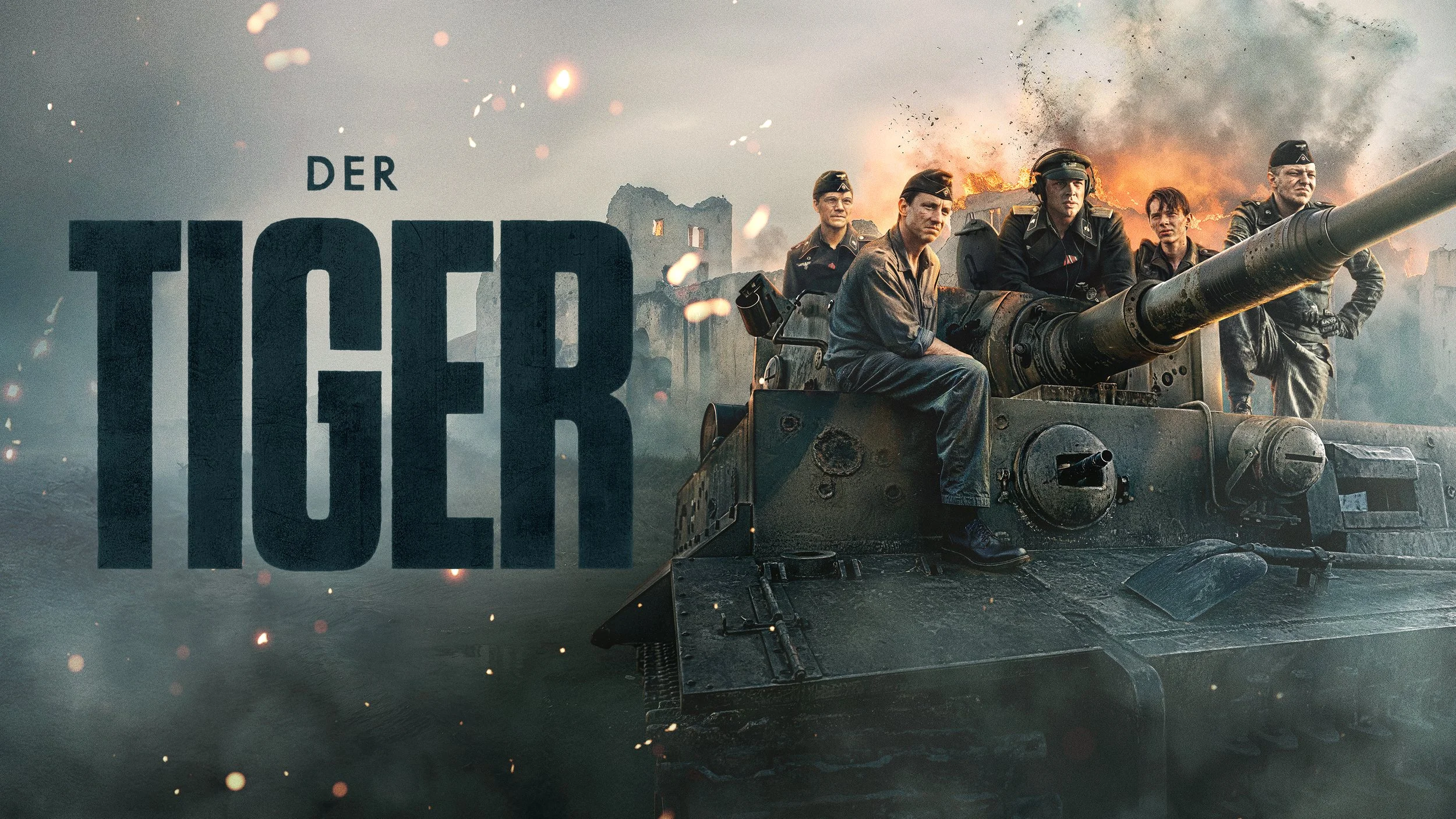
Der Tiger AKA The Tank (2025)
On the Eastern Front in 1943, a German Tiger tank crew led by Lieutenant Philip Gerkens (David Schütter) is sent on a mission to rescue the missing officer Paul von Hardenburg (Tilman Strauss) from a top-secret bunker that is at risk of falling into enemy hands. As they make their way through an eerie no-man’s land, they have to avoid Russian armoured vehicles that seem to be aware of their mission. They also encounter a German unit taking punitive action against a peasant village, in reprisal for partisan activity in the area. The youngest crew member, Michel (Yoran Leicher), talks of the land being home to ghosts and spirits. As the tank penetrates further into contested territory the crew become increasingly disturbed by the uncanny nature of their mission and begin to fall prey to their own inner fears.
On the Eastern Front in 1943, a German Tiger tank crew led by Lieutenant Philip Gerkens (David Schütter) is sent on a mission to rescue the missing officer Paul von Hardenburg (Tilman Strauss) from a top-secret bunker that is at risk of falling into enemy hands. As they make their way through an eerie no-man’s land, they have to avoid Russian armoured vehicles that seem to be aware of their mission. They also encounter a German unit taking punitive action against a peasant village, in reprisal for partisan activity in the area. The youngest crew member, Michel (Yoran Leicher), talks of the land being home to ghosts and spirits. As the tank penetrates further into contested territory the crew become increasingly disturbed by the uncanny nature of their mission and begin to fall prey to their own inner fears.
If you watch Der Tiger AKA The Tank expecting to see a film similar to Fury, then you’ll possibly be disappointed. This is not a traditional war film and it doesn’t take long for the story to stray out of one genre and into another. Perhaps the marketing for this film should have been more specific and indicated that it wasn’t just the wartime story of a Tiger tank crew but something a little more “horror adjacent”. That being said, there is much to like about the film and its production. It is beautifully shot by cinematographer, Carlo Jelavic, who imbues a great deal of atmosphere with evocative lighting. The visual effects both physical and CGI are well realised with the Tiger tank being very plausible. The central performances by the actors portraying the five man crew members are strong. Plus, it is always interesting to see WWII from a perspective other than the Allies.
Yet despite so many good elements, director Dennis Gansel, plays his hand too early in the proceedings tipping off astute viewers as to where the film is really heading. To discuss this in-depth would be a spoiler so I shall not go into further detail. As for those who miss this clue, they run the risk of being disappointed in the climax of the third act when the plot takes a radical change. It’s odd that such a clumsy clue was given and I wonder if it was something imposed upon the production by Amazon Studios. Some streaming companies have a policy to accommodate viewers whose attention is divided between watching TV and their smartphone. Whether that is the case here, remains to be seen. However if it is, then it is a sad indictment of contemporary audiences.
As it stands, Der Tiger is a well made exploration not only of the horrors of war but of being lost in grief. The action scenes are tense and well handled, including an interesting encounter with a Soviet SU-100 tank destroyer. The replica Tiger I is in fact a modified T-55 chassis with an aluminium shell built over it. Overall it is very convincing. The story follows a three act arc, starting as a WWII drama, then transitioning into a homage to Joseph Conrad’s Heart of Darkness. The third act is bold and its credibility ultimately comes down to whether the viewer wishes to maintain their suspension of disbelief and go with the story or not. Some critics have compared Der Tiger with the 2012 Russian film, White Tiger. I would argue that is not a fair comparison because the latter makes it clear that it is a parable right from the start. I enjoyed Der Tiger but recognise that it may not be for everyone.
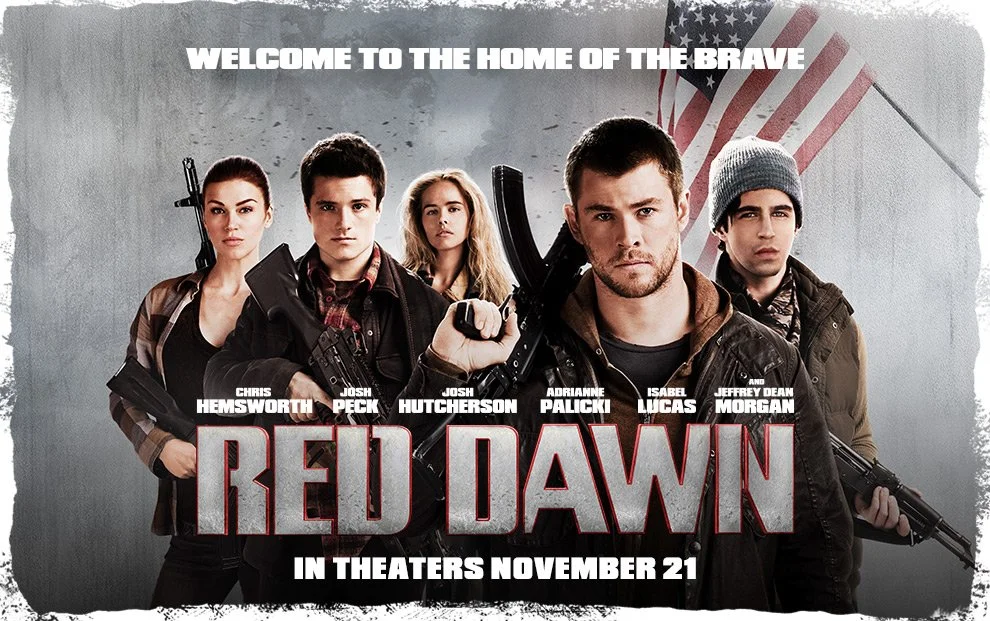
Setting aside the hubris of remaking a film such as Red Dawn, the 2012 reboot had a troubled production. Shot over the course of late 2009, on location in Michigan, MGM intended to release the film in September 2010. However, the studio’s financial problems became unsustainable over the course of that year and the film was shelved, while a financial solution was sought. Furthermore, while Red Dawn was in post production, there was a major economic shift within Hollywood due to the increasing importance of the Chinese market. This was a significant problem for MGM because the new version of Red Dawn had the Chinese invading the USA instead of Russia. Hence there were reshoots and the need for additional visual effects, so that the Chinese could be replaced with North Koreans. MGM eventually went bankrupt and the distribution rights to Red Dawn were sold off. The film was eventually released in 2012.
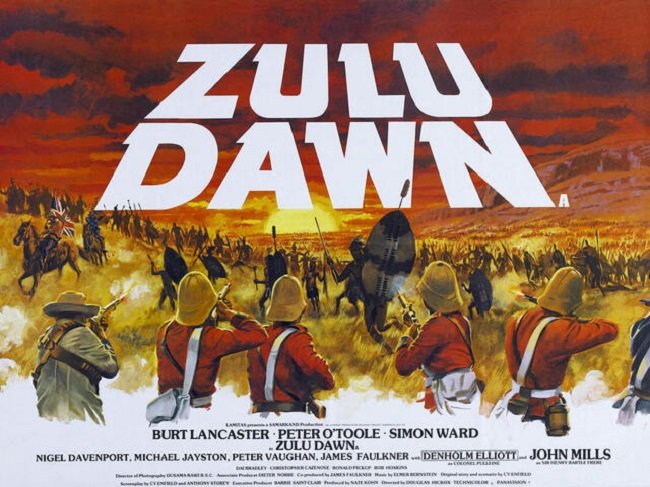
Zulu (1964) recounts the Battle of Rorke’s Drift between the British Army and the Zulus in January 1879. Directed, produced and co-written by Cy Endfield the film presents an action filled account of how 150 British soldiers, 30 of whom were sick and wounded, successfully held off a force of 4,000 Zulu warriors. Although well made and rousing, it is very much a film from the British perspective. Despite depicting the Zulu nation fairly, the film makes no attempt to put the clash between two empires in any sort of wider context. Zulu Dawn is a direct prequel which shows the events that directly lead up to the Battle of Rorke’s Drift. Much more time is dedicated to exploring the Zulu’s position as their leader King Cetshwayo attempts to avoid the political fait accompli he has been presented with. Furthermore, Zulu Dawn does not in any way try to avoid the failure of the British chain of command that resulted in the defeat of 1,300 British soldiers at the Battle of Isandlwana.
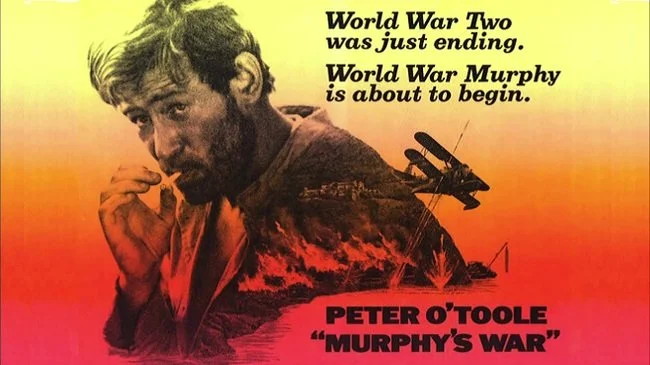
During the last days of World War II, the British Merchant Navy ship Mount Kyle is torpedoed by a German U-Boat off the coast of Venezuela. The crew are subsequently massacred as they abandon ship, leaving one survivor, an Irish engineer named Murphy (Peter O’Toole). After being rescued by Louis Brezon (Philippe Noiret), a caretaker for an oil company which has a pipeline in the area, he is taken to a local missionary medical facility run by Dr. Hayden (Siân Phillips). Upon recovering, Murphy becomes determined to find the U-Boat that sank his ship and seeks revenge. However, as the war is clearly drawing to a close Dr. Hayden is reluctant to help him and tries to dissuade him from his plan as it may endanger the local community. In the meantime, Murphy finds a damaged Grumman J2F Duck floatplane from his ship and salvages it. With the assistance of Louis, he makes some improvised munitions and draws his plans against the Germans.
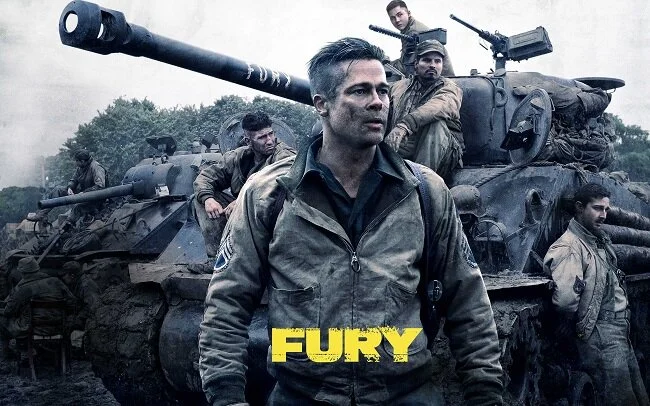
One of the things that immediately strikes you when watching Fury is its credibility and realism. The film reeks of authenticity. Every aspect of the production has been meticulously researched, from uniform and equipment, to ordnance and tactics. The M4A3E8 Sherman tank was not only the workhorse of the US Army but also a home for its five man crew. Director David Ayer makes this idea the foundation of his movie and then proceeds to explore those two perennial themes, the horrors of war and the loss of innocence. The film focuses on the experiences of the crew consisting of Don "Wardaddy" Collier (Brad Pitt), gunner Boyd "Bible" Swan (Shia LeBeouf), loader Grady "Coon-Ass" Travis (Jon Bernthal), and driver Trini "Gordo" Garcia (Michael Peña). They’re a tight knit family, relying on each other to stay alive and keep their mental stability.
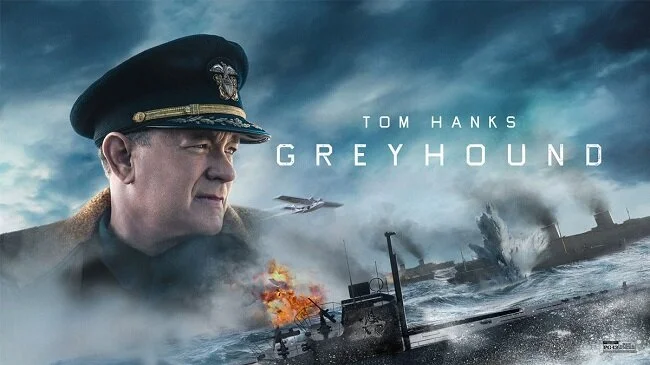
Greyhound is a curious film in that it flies in the face of one’s expectations. When I (and possibly others) see an advertisement or trailer for a World War II movie starring Tom Hanks, I naturally assume that the lead actor has been hired for his prodigious acting talent and that he’ll be providing an in depth character study. I was expecting Greyhound to be the story of an untested US Naval Commander enduring an ordeal by fire on his first escort mission. And that is to a degree what director Aaron Schneider provides but instead of the narrative arc focusing on Ernest Krause’s emotional struggles with his duties, we instead get a docudrama focusing on the technicalities of naval warfare. The latter approach is certainly engaging and at times tense and exciting but this decision narrows the appeal of the film. I personally would have preferred the former.
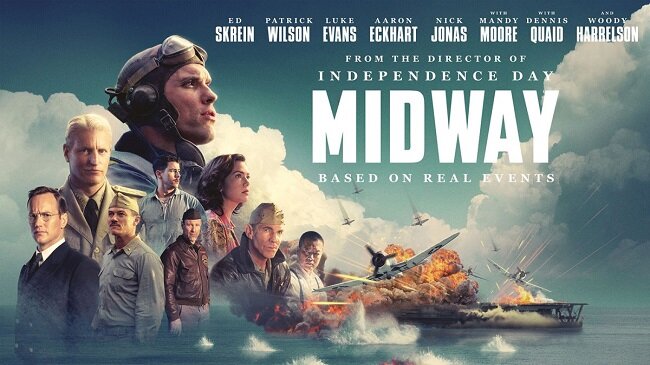
Big budget, historically driven movies that set out to recount key events of World War II are a rarity these days. If you ignore the bombastic inanities of Michael Bay’s Pearl Harbor (2001), then you have to go back to the late seventies to films such as A Bridge Too Far to find a suitable example. This is why Roland Emmerich’s Midway came as a genuine surprise. When I saw a trailer for the film last October, I was flummoxed that such a production had been made. My initial concerns were that it would focus on spectacle rather than historical fact and trivialise events of great military and historical importance. After having watched Midway, I am pleased to report that this is a surprising throwback in many ways. The film covers the events of the Japanese attack on Pearl Harbor, the subsequent Doolittle Raids on Tokyo by the US and the Battle of Midway, both succinctly and accurately. Furthermore, much of the cast play real veterans who participated in these events. Overall this is an entertaining and informative movie that feels like a relic from fifty years ago. However, its docudrama aspirations also make for somewhat generic character development.

It was hardly surprising that the movie adaptation of Chris Kyle's autobiography American Sniper, would cause controversy. The Iraq war, US Foreign Policy and national pride are seldom subjects that are discussed in a calm and measured fashion. And then there are the personal politics of director Clint Eastwood to consider. Hence there were claims from some quarters upon the movie’s release, that it was Islamophobic and counter claims that criticisms of the late Chris Kyle were unpatriotic. There still remain issues regarding the authenticity of events depicted in the source text and subsequently the movies screenplay by Jason Hall. Yet none of these factors have in anyway impacted upon the film's box office returns which currently stands at $247,900,417 worldwide.
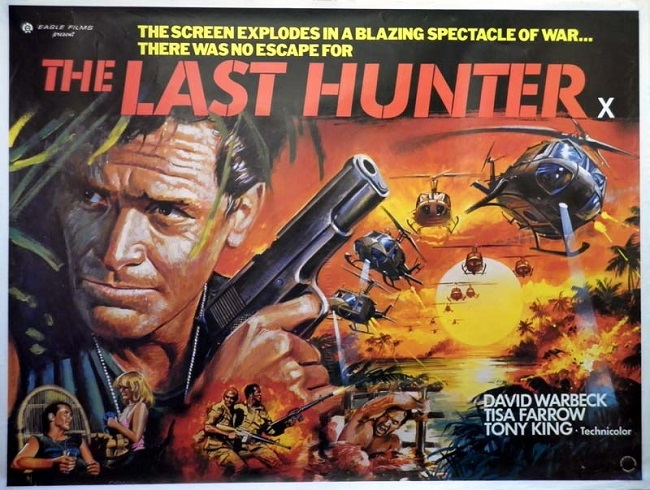
There are many films about war. There are many films about the Vietnam war. A few have transcended mere historical depiction and managed to capture the utter horror and political insanity of the situation, along with the tragic human cost. And then there are those which simply seek to use the setting as a vehicle for an exploitation movie, in the hope of making a fast buck. The Last Hunter (L'ultimo cacciatore) falls firmly into the second camp. This Italian "macaroni combat" movie (yes, I didn’t know that’s a thing either) offers a straight forward tale of an incursion behind enemy lines by an officer charged with destroying a radio transmitter, broadcasting anti-US propaganda. It is violent, action packed and surprisingly honest about what sort of film it is. You’ll find no pretentious philosophical musings here. Just explosions, rotting corpses and Viet Cong booby traps.
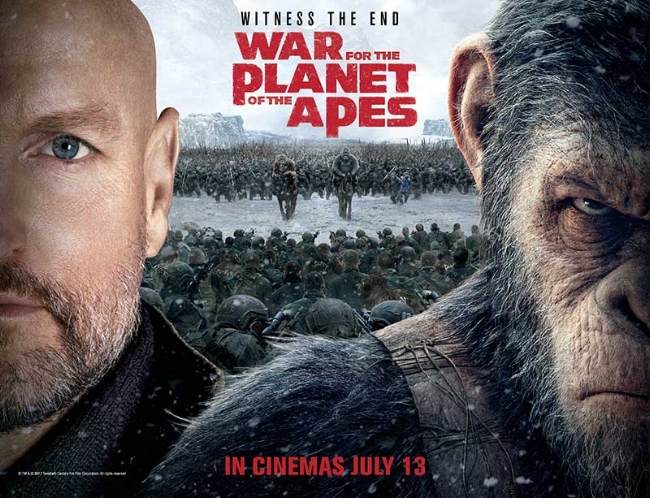
There are times when watching the third instalment of the contemporary Planet of the Apes franchise that you feel like your experiencing something akin to Terrence Malick's The Thin Red Line. There is a narrative depth and an intelligence to the screenplay that you seldom see these days coming from a major studio production. As with the original movies, the story makes multiple subtle points about the nature of humanity and our self-destructive tendencies. Yet it’s all done in a thought full and measured fashion. If you wish to treat War for the Planet of the Apes as simply a science fiction action movie then you will certainly be provided with such a film. However, if you choose to engage your intellect and ponder some of the deeper aspects of the story you’ll be rewarded with much more.
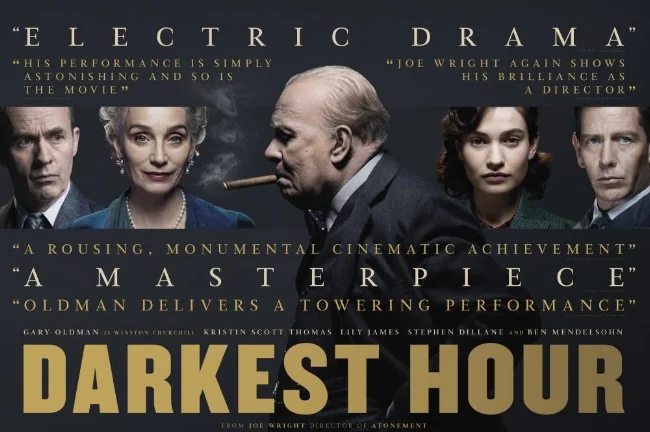
Darkest Hour, unlike many other biopics, focuses specifically on the initial weeks of Winston Churchill’s first term of office as Prime Minister, in May 1940. It paints a picture of an unwanted leader who inherits the role due to political expediency, rather than through universal support. Considered by the King as a dangerous adventurer and overshadowed by previous policy failures such as the Gallipoli landings and the Indian famine, Churchill is without allies and under pressure to appease the Germans. Director Joe Wright, sets the pieces on the chess board succinctly and within a few minutes audiences are brought up to speed with the prevailing historical situation. It is against this setting that that Darkest Hour then explores Churchills uphill struggle to rally a nation that appears to have no appetite for war and fend off political assassination. With the imminent defeat of the British Army in France and the prospect of a humiliating surrender at Dunkirk, should he seek a negotiated settlement with Germany, via Italian diplomatic sources?
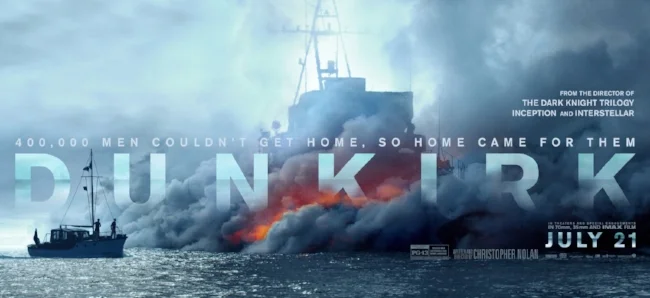
Dunkirk is an extraordinary war movie, that eschews the traditional sprawling format of its predecessors, filled with celebrity cameos and contrived expositionary dialogue. Instead Christopher Nolan manages to embrace the concept of “show, don’t tell”, yet uses what little dialogue he has to succinctly punctuate the unfolding story with emotion and gravitas. There is a sense of spectacle, yet it is far from the stark and dispassionate CGI we usually see. Through creative and focused editing Nolan generates a palpable sense of tension, be it in the air with extraordinary aerial dogfights or on the ground as men flee sinking ships and dodge artillery fire. Dunkirk facilitates an intense and emotional journey during its lean 106 minute running time. It is altogether a remarkable piece of cinema.
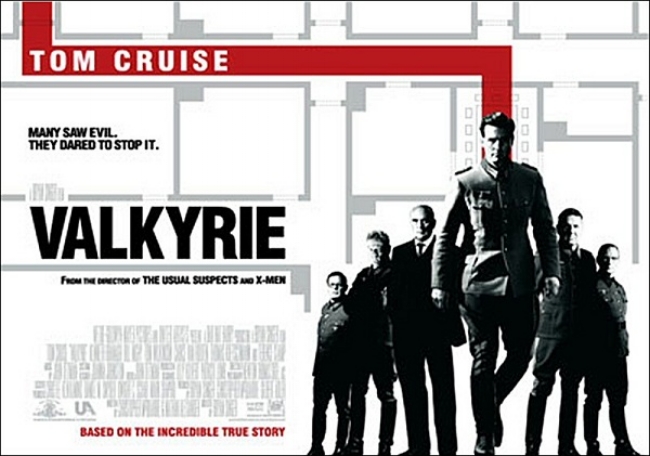
In terms of its production values, Valkyrie is a throwback to the big budget war films of the sixties and seventies. However, that is where the similarities end. This is not a stylised action movie with the Nazis simply as a dramatic foil. Valkyrie focuses on facts, narrative and performances. Director Bryan Singer ensures that the true story that the film depicts is driven by the central characters. Overall Valkyrie is a very laudable production and although not an outstanding feature film, it is competently made, broadly historically accurate whilst and entertaining.
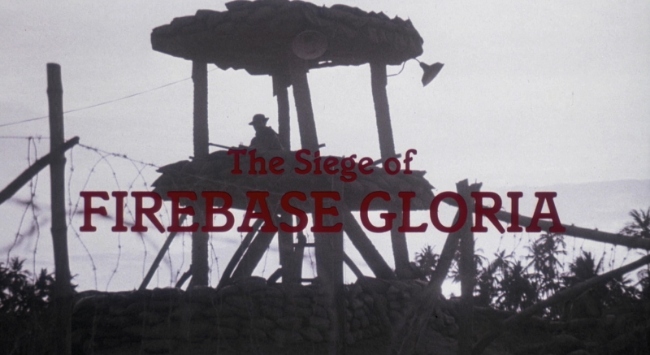
There was a wealth of revisionist Vietnam War films released in the wake of Oliver Stones’ Oscar winning Platoon. Not all were of equal merit or technical competence but occasionally a low budget B movie can surpass the big studio competition. The Siege of Firebase Gloria is one such example, being a minimalist, straightforward film about US Marines defending an isolated outpost in Vietnam, during the Tet offensive. Directed by British expatriate Brain Trenchard-Smith and starring R. Lee Ermey, Wings Hauser and Albert Popwell ("Hey, I've gots to know!"), it’s often been overlooked. However it’s low key plot which seeks no more than to show a small facet of the war, sheds more light upon the overall war and a soldier’s life than one would expect from such a modest production.
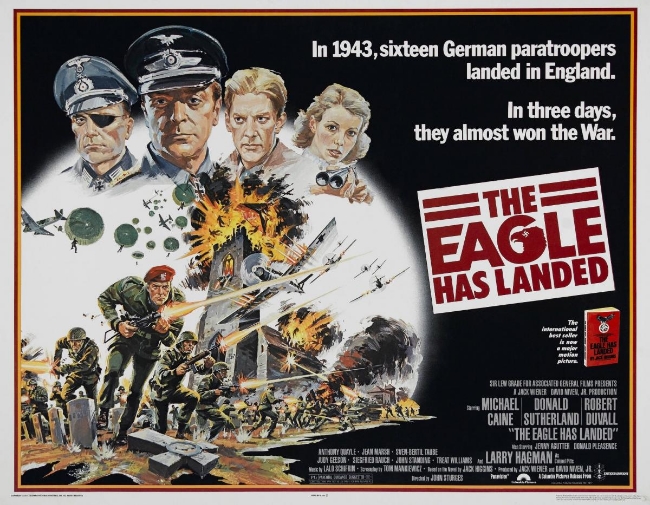
The Eagle Has Landed was veteran director John Sturges' final movie, whose body of work includes such classics as Bad Day at Black Rock, The Magnificent Seven and The Great Escape. Based on the bestselling book by Jack Higgins and adapted by Tom Mankiewicz, the film is a curious beast. It’s an in-depth character driven drama you would expect from such a veteran director, with the succinct and violent action scenes that were prevalent during the seventies. Although the phrase “they don’t make them like that anymore” is somewhat of a cliché, it is quite apt in the case of The Eagle Has Landed. Many of the crew as well as the producers hailed from the golden age of Hollywood.
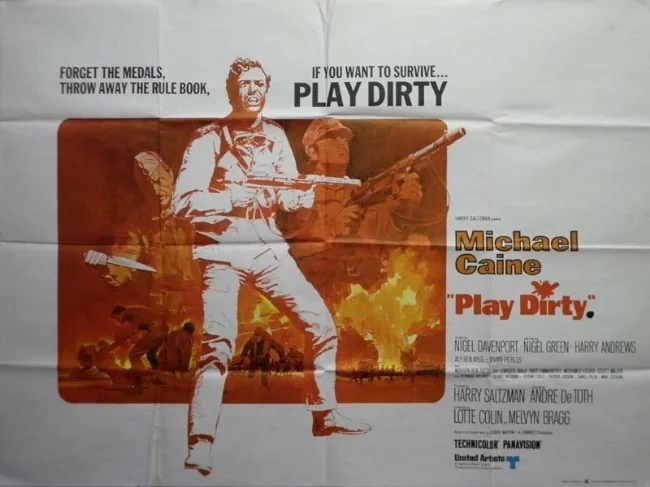
Gritty, grim and fatalistic are just a few of the ways I would describe Play Dirty. Made at a time when cinema was becoming more realistic and cynical, it eschews the traditional depiction of World War II heroism and paints a singularly unglamorous picture. Due to some minor plot similarities, it is frequently compared to The Dirty Dozen but they are far from identical movies. Robert Aldrich’s film despite having an offbeat plot and a cast of quality characters actors still followed a traditional action based formula and had a relatively upbeat ending. Play Dirty is content to pursue its dour storyline to its inevitable conclusion.
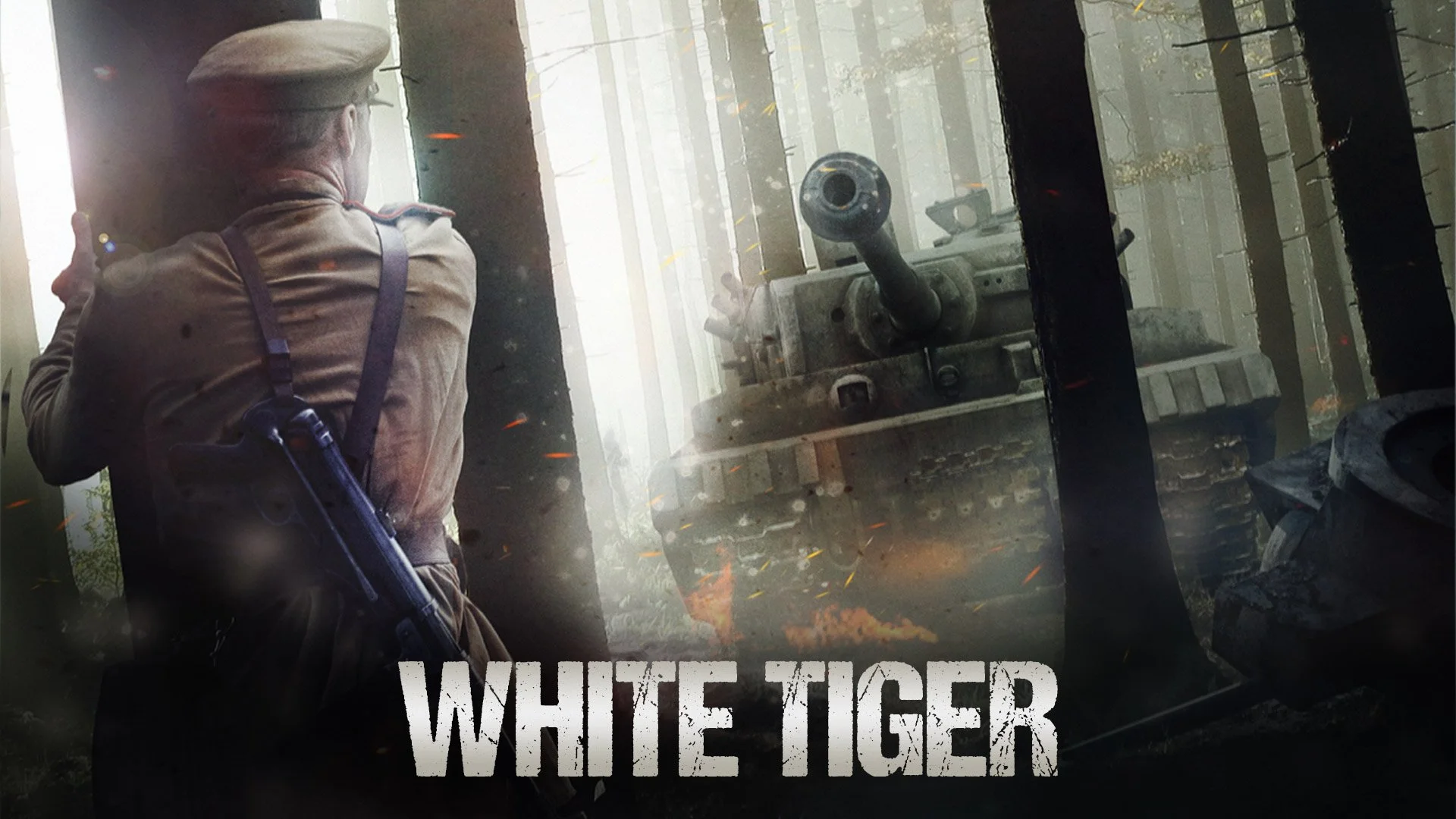
It is rewarding to find a movie that wrong-foots you and challenges your perceptions on certain subjects. White Tiger is exactly such a film. Starting of as a traditional war movie, the story quickly evolves into a supernatural revenge story with shades of Moby Dick. The final act and subsequent sting in the tail ending provides immense food for thought. It proposes an idea that many will find particularly challenging. However the film succeeds in making such a bold pitch because of its inherent Russian earnestness and the fact that that nation’s war experience is so subtly different from others.
Red Dawn (2012)
Setting aside the hubris of remaking a film such as Red Dawn, the 2012 reboot had a troubled production. Shot over the course of late 2009, on location in Michigan, MGM intended to release the film in September 2010. However, the studio’s financial problems became unsustainable over the course of that year and the film was shelved, while a financial solution was sought. Furthermore, while Red Dawn was in post production, there was a major economic shift within Hollywood due to the increasing importance of the Chinese market. This was a significant problem for MGM because the new version of Red Dawn had the Chinese invading the USA instead of Russia. Hence there were reshoots and the need for additional visual effects, so that the Chinese could be replaced with North Koreans. MGM eventually went bankrupt and the distribution rights to Red Dawn were sold off. The film was eventually released in 2012.
Setting aside the hubris of remaking a film such as Red Dawn, the 2012 reboot had a troubled production. Shot over the course of late 2009, on location in Michigan, MGM intended to release the film in September 2010. However, the studio’s financial problems became unsustainable over the course of that year and the film was shelved, while a financial solution was sought. Furthermore, while Red Dawn was in post production, there was a major economic shift within Hollywood due to the increasing importance of the Chinese market. This was a significant problem for MGM because the new version of Red Dawn had the Chinese invading the USA instead of Russia. Hence there were reshoots and the need for additional visual effects, so that the Chinese could be replaced with North Koreans. MGM eventually went bankrupt and the distribution rights to Red Dawn were sold off. The film was eventually released in 2012.
Directed by stunt coordinator and second unit director Dan Bradley, Red Dawn offers nothing more than a formulaic narrative and a simplistic plot, supplemented by some distinctly PG-13 rated action scenes. Unlike the original film, written and directed by legendary filmmaker John Milius, there is little character development, a conspicuous lack of political commentary and nothing of note to say on the nature of war. Furthermore there is no credible attempt to explain how the US was invaded by North Korea. It is casually brushed aside after a vague opening montage and then conspicuously ignored for the remainder of the story. It is possible that such material may well have existed in the original cut of the film, when the enemy was China and there was no time or resources to replace it. Or it could just be poor writing.
Upon its release in 1984, the original version of Red Dawn was denounced as Reaganite propaganda by some critics. However, irrespective of director John Milius’ politics, the film had quite a powerful anti-war commentary. It also had characters you cared about with a credible story arc. You got to watch them grow up and make hard decisions. There was some depth to the proceedings, as well as things going “boom”. Dan Bradley’s remake has nothing other than things going “boom” and even that is not especially well done. The teenage cast lack a credible journey, simply morphing from green kids to crack troops, courtesy of a training montage. The main antagonist, Captain Cho (Will Yun Lee) lacks any backstory and is simply flagged as “bad” when he executes a lead character’s father. Calling Red Dawn perfunctory is generous.
Even the presence of Chris Hemsworth fails to improve the situation. Furthermore, this time round his character has prior military experience which mitigates the main theme of the story that wars are often fought by the young, who have to learn on their feet. The much revised script by Carl Ellsworth and Jeremy Passmore makes a few vague attempts to try and say something meaningful but these fail. Hence one character espouses “I miss Call of Duty” only for his colleague to admonish him with the philosophical retort “Dude, we're living Call of Duty... It sucks”. Viewers can’t even take solace in a gritty action scene, as the film is meticulously edited to meet the criteria of its chosen rating. The fire-fights are bloodless and there’s a single and rather obvious use of the word “Fuck” in a contrived kiss off line. Even the film’s title no longer makes any sense due to the plot changes.
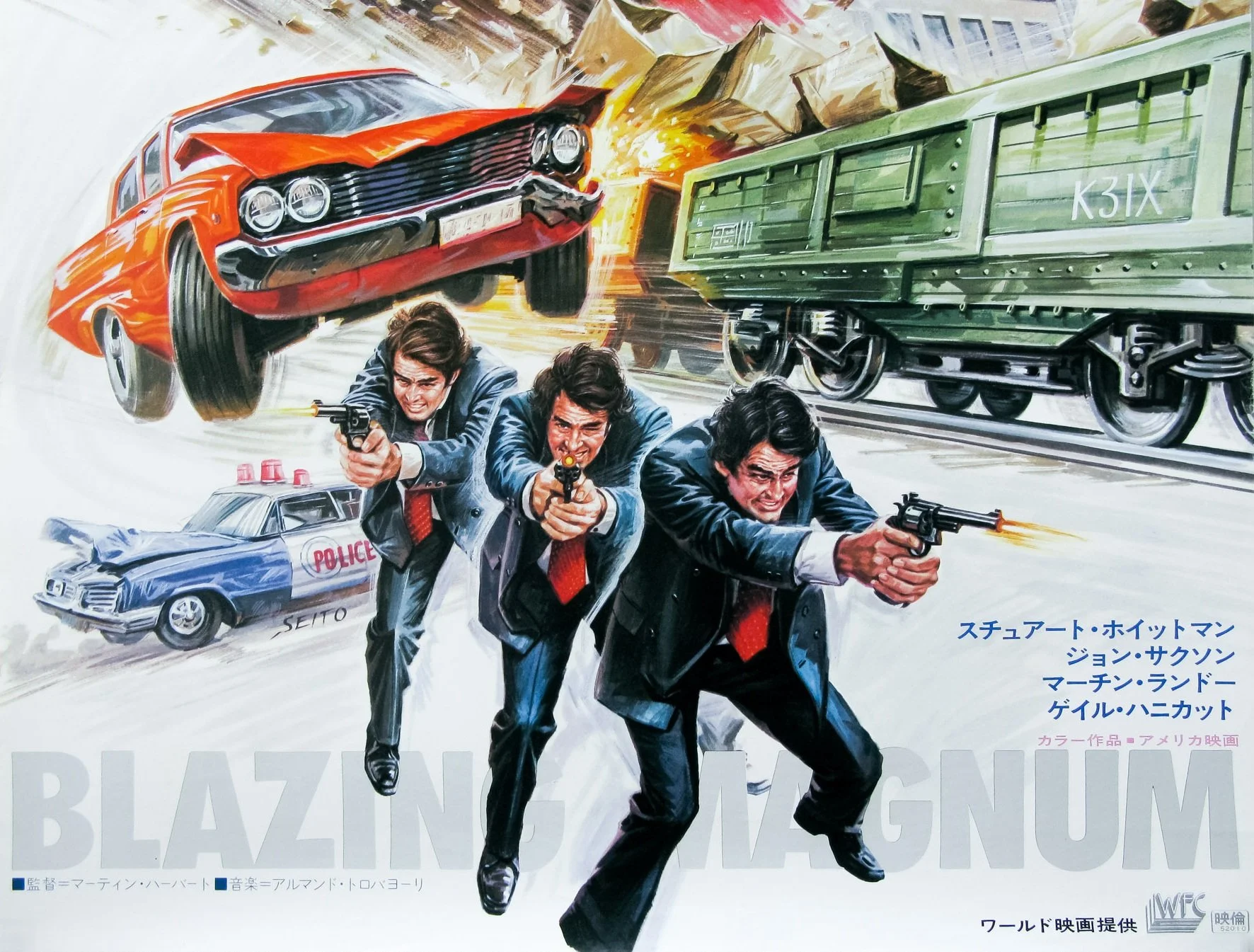
Mainstream films are easy to recommend to people. They’re usually formulaic, work within clear parameters and they’re not controversial. Most people, when viewing such film on someone else’s suggestion, are left with a fairly simply choice. Did they like it or not? Whatever the outcome, no feathers are ruffled. No one looks at you askance afterwards and says “why the hell did you think I’d like that piece of shit”? If something like this happens, then you have clearly not recommended a mainstream film. Perhaps you’ve suggested something that’s a little more of an acquired taste. Something niche, from a very specific sub-genre. Which brings me neatly to Blazing Magnum AKA Strange Shadows in an Empty Room (1976). The US title gives the impression that this film is a hard boiled cop thriller, like so many others that followed in the wake of Dirty Harry. But there’s a clue in the European title. Yes, this movie has more than just a whiff of a giallo about it.
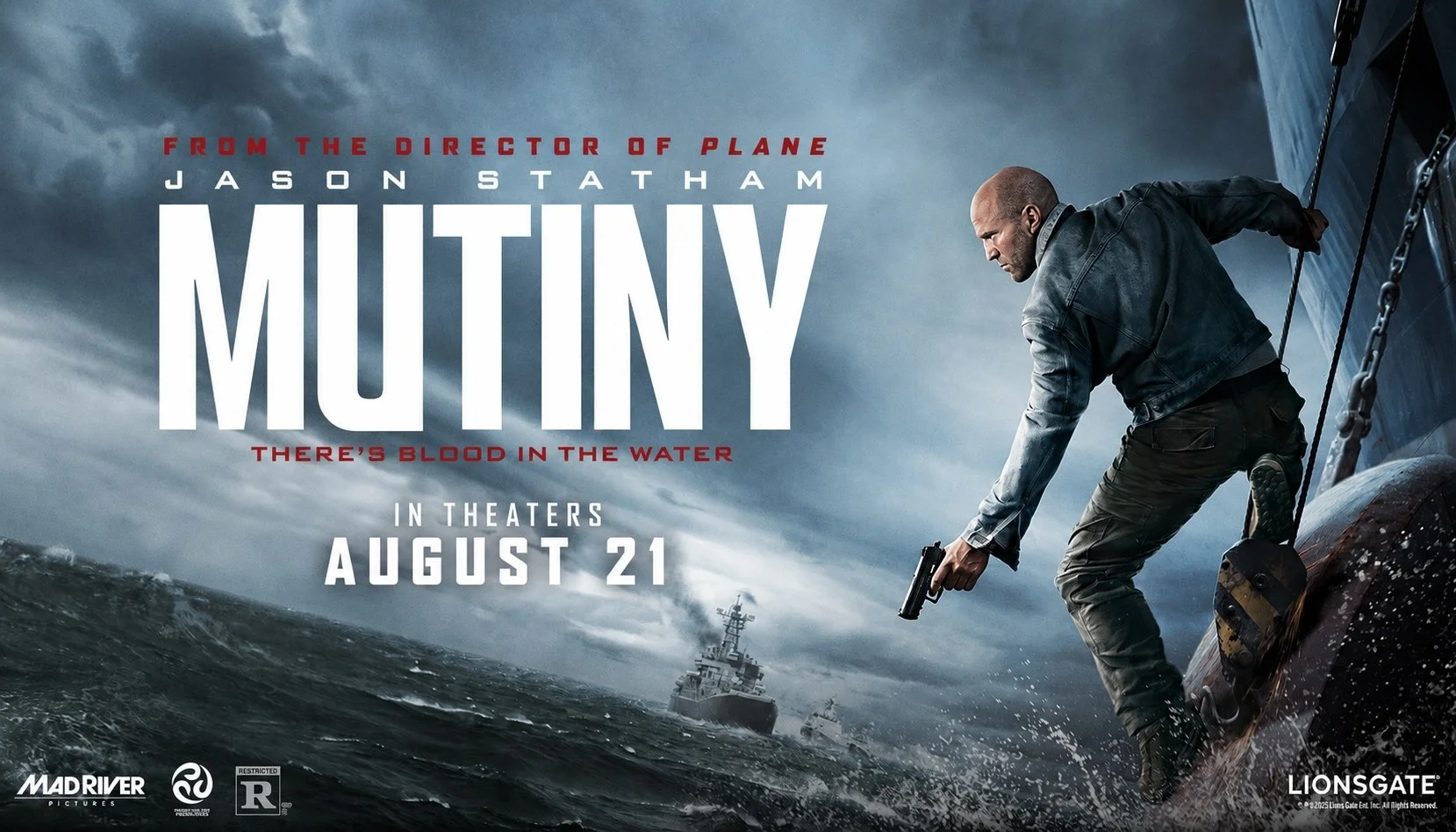
Jason Statham is an exemplar of the US mantra of “staying in your lane”. He makes action movies and occasionally strays into action comedies. His formula broadly works and is sufficiently lucrative to keep Mr. Statham employed. Therefore, if you watch a film in which he stars, you have a fairly good idea of what you’ll be getting. Of late, the criteria for his action vehicles have become more succinct. Jason Statham will play an innocuous character, such as a construction foreman or a bee keeper. Something terrible will subsequently befall another character who Mr. Statham has an emotional connection with in some capacity. He will subsequently hunt down those responsible and meet out death and violence. At some point the villain of the story will enquire as to how this innocuous person is so lethal. Research will then show that our Jason is in fact an ex-police officer/special forces operative/international assassin. There’s then a showdown and the villain dies. Job done.
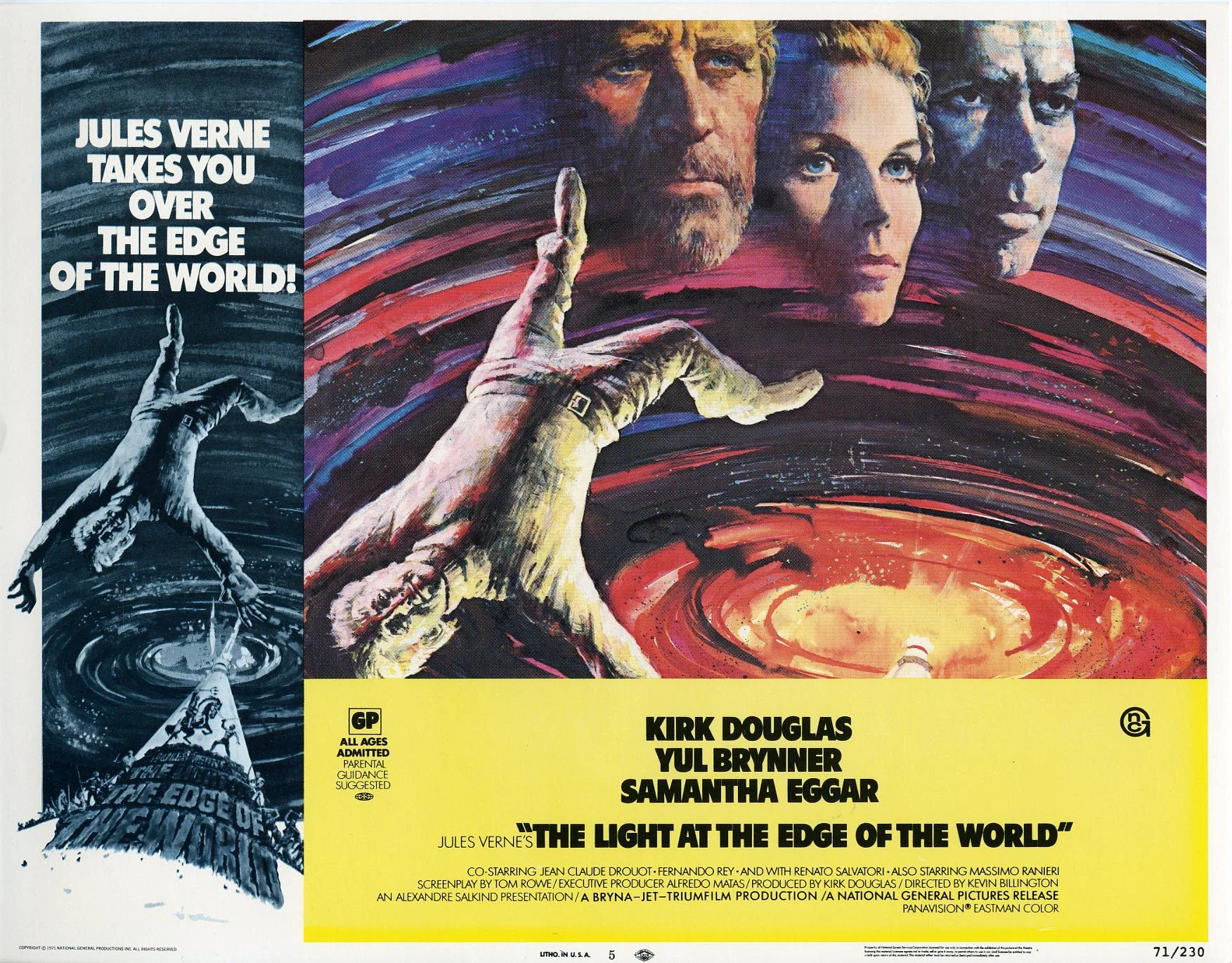
The Light at the Edge of the World presented itself as an action movie upon its release in 1971. Based upon a story by Jules Verne, the Spanish American co-production was driven by its star Kirk Douglas, who curiously hired British director Kevin Billington to helm the project. This tale of a lighthouse keeper fighting a war of attrition against a group of pirates that have captured his island, was market as an adventure film ostensibly in the idiom of the authors previous works and as a pirate movie. MGM bought the rights to distribute the film in the UK on the misunderstanding that it was a family friendly production. It was not and remains so. They subsequently had to cut 15 minutes of violence and torture as well as an undercurrent of sexual assault to secure a suitable rating. Conversely, the US distributors received an arbitrary PG rating, despite the fact this is one of a handful of films that honestly depicts pirates as murderers, rapists and worse.
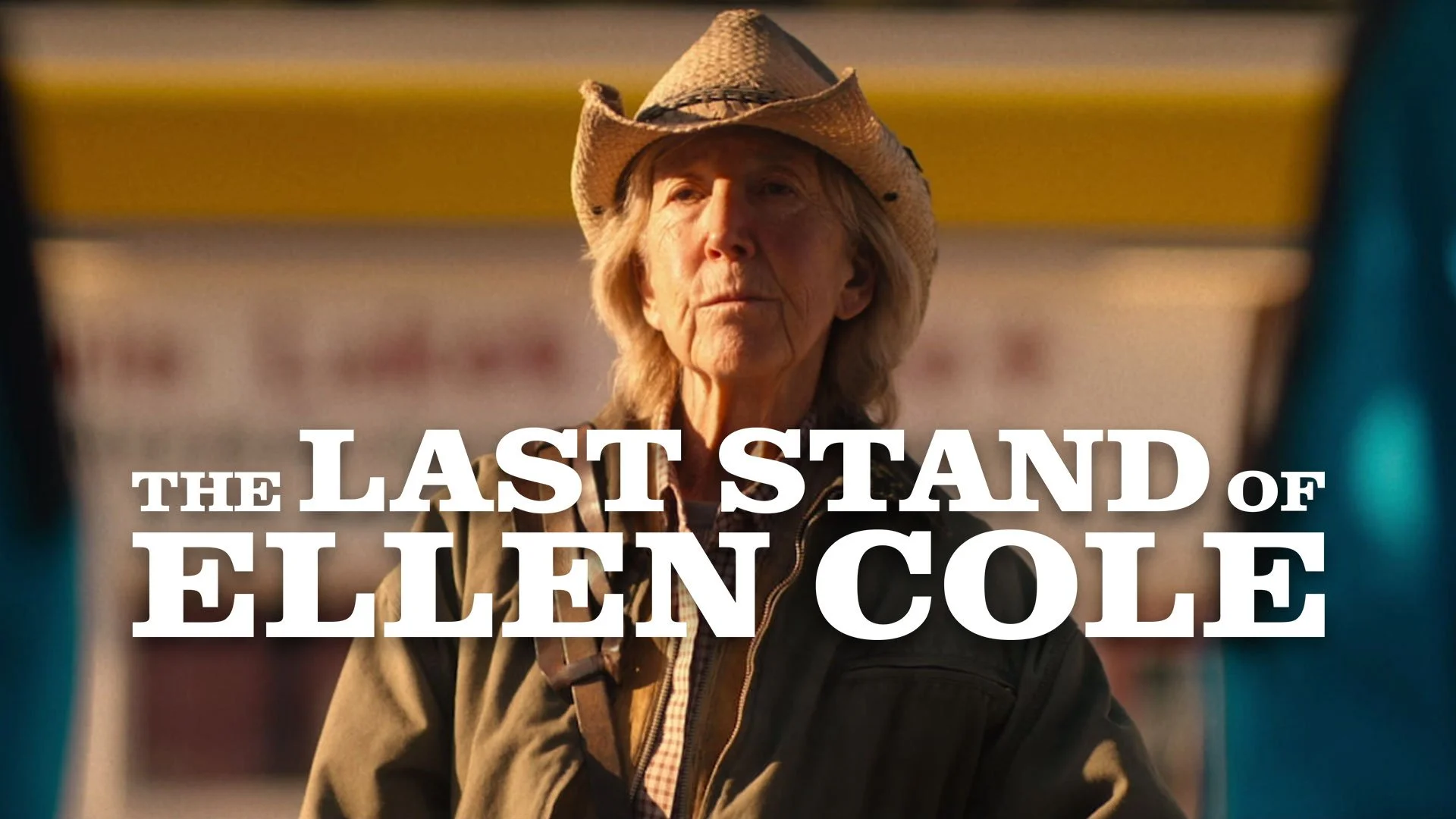
It’s an established action film trope. The fire team comprised of ex-military personnel, move in on their target. Only to have the tables turned by someone they don’t deem a threat. What makes it different in The Last Stand of Ellen Cole is a throwaway line of dialogue. The bested operative lies bleeding on the floor and the protagonists stands over them ready to finish them off. “Don’t, I have a cat” they feebly plead. For me that was the icing on the cake. The movie had already established it was taking the “same old, same old” and doing something different. Something fun, if taken in the right spirit. This scene tipped the balance and I embraced this film because it was being honest about what it is. This is a modern B movie that decides to give a very specific sub-genre a makeover. Furthermore, its clearly done with an affectionate wink, which is very different to sly wink. This isn’t deliberate self-knowing irony. Its just a film doing something different and possibly silly but it genuinely wants to have fun with it.
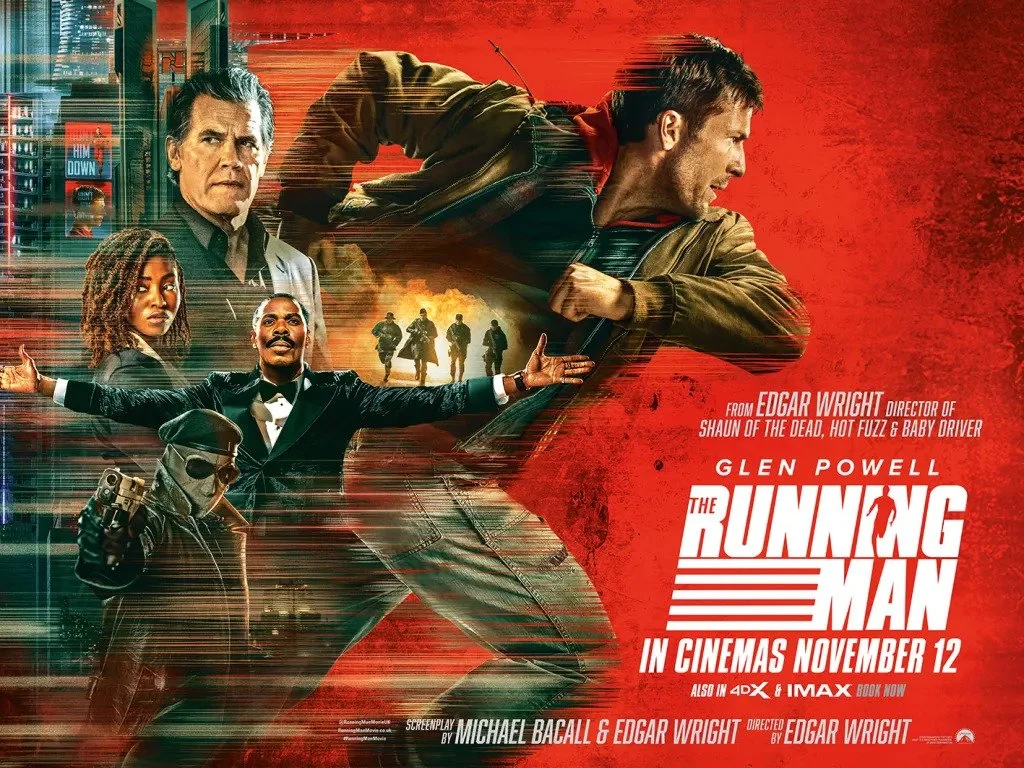
Stephen King’s dystopian story, The Running Man, was previously adapted very loosely in 1987, as a vehicle for Arnold Schwarzenegger. That version focused mainly on the “Battle Royale” element of the story and leaned heavily into Arnie’s personality, rather than the politics of the book. It also wasn’t well received by the author. Edgar Wright’s remake follows the source text a lot more closely and is far more interested in its political themes and wider social commentary. Furthermore, this version re-establishes the everyman quality of the hero of Ben Richards, rather than him being the muscle bound, ex-military hero as per Mr. Schwarzenegger’s prior interpretation. This time round, The Running Man uses a lot of the visual and narrative tropes of contemporary reality TV, making this forty three year old story very relevant to today’s viewers and couching the film in a style that is recognisable and accessible.
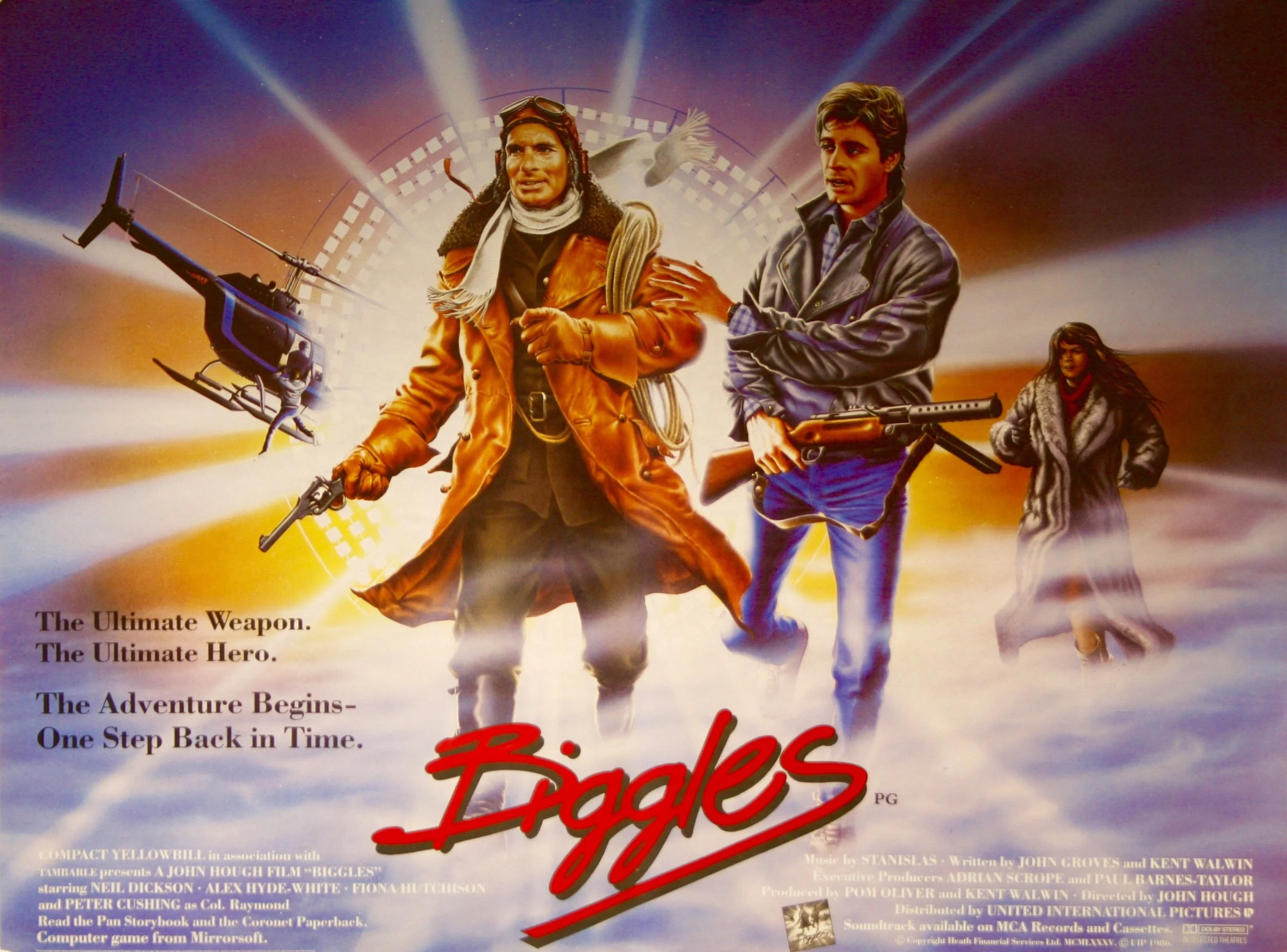
After the success of Raiders of the Lost Ark in 1981, filmmakers scrambled to find existing intellectual properties that they could use for similar films. Hence archaic heroes such as Alan Quatermain were hastily given a modern makeover and thrust into generic movies, in a vague attempt to replicate Steven Spielberg’s successful formula. Which brings us neatly on to James Charles Bigglesworth AKA “Biggles”, a fictional pilot and adventurer from a series of books written by W. E. Johns between 1932 and 1968. Several attempts had been made in the past to bring this character to the silver screen, including one by Disney but they all failed. However, the commercial and critical success of Indiana Jones provided sufficient impetus to greenlight a new film. However, due to some curious production choices, when Biggles was finally released it was far from just a period set, action movie.
Setting aside the hubris of remaking a film such as Red Dawn, the 2012 reboot had a troubled production. Shot over the course of late 2009, on location in Michigan, MGM intended to release the film in September 2010. However, the studio’s financial problems became unsustainable over the course of that year and the film was shelved, while a financial solution was sought. Furthermore, while Red Dawn was in post production, there was a major economic shift within Hollywood due to the increasing importance of the Chinese market. This was a significant problem for MGM because the new version of Red Dawn had the Chinese invading the USA instead of Russia. Hence there were reshoots and the need for additional visual effects, so that the Chinese could be replaced with North Koreans. MGM eventually went bankrupt and the distribution rights to Red Dawn were sold off. The film was eventually released in 2012.
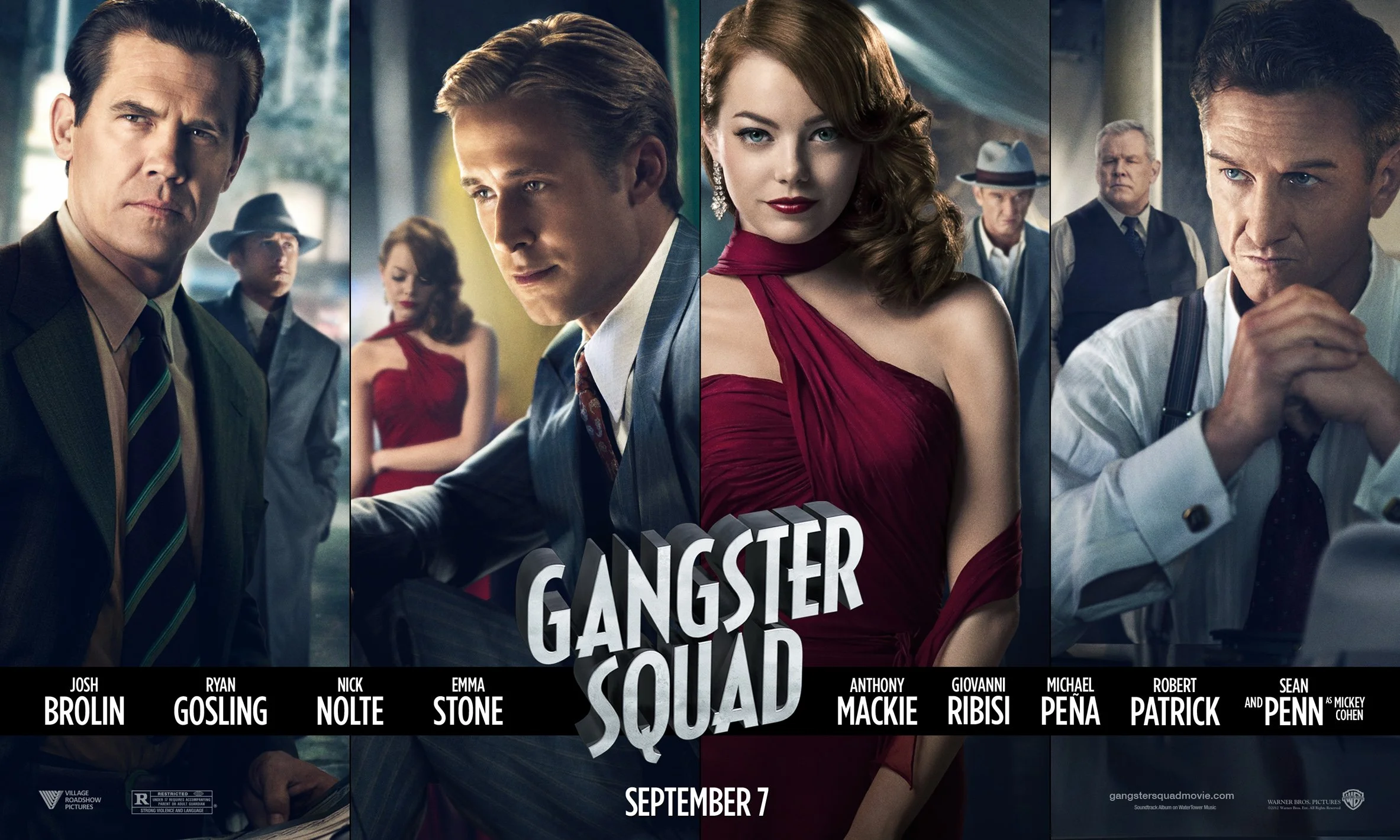
When I first saw the promotional trailer for Gangster Squad back in 2012, prior to its release, I wasn't especially impressed. I simply thought the film was another attempt to re-invent the gangster genre for a generation who were not especially familiar with it. I wasn't exactly overwhelmed with director Ruben Fleischer's resume either. I didn't particularly like Zombieland and haven't seen 30 Minutes Or Less. Then came the tragic mass shootings in Aurora, Colorado which led to the movie being delayed so that the original ending, which featured a shoot-out in a movie theatre, could be replaced. Hence when I finally watched this film recently, I wasn't expecting a movie up to the standards of say Once Upon A Time In America or Miller’s Crossing and it would seem that I was right do so. Gangster Squad is not especially noteworthy in any respect.

Levon Cade (Jason Staham) is a former Royal Marine Commando who has retired from military service and now works as the leader of a construction team in Chicago. He has a close relationship with Joe and Carla Garcia (Michael Peña and Noemi Gonzalez ) who run the company and considers them as family. Outside of work, Levon is involved in a bitter custody battle for his daughter, against her maternal grandfather, who blames Levon for his daughter’s suicide. When Garcia's teenage daughter Jenny (Arianna Rivas) goes missing, Levon reluctantly agrees to help her parents and get her back. Beginning his search at the nightclub where Jenny was last seen, he soon discovers that she was abducted by Russian traffickers. Furthermore, the culprit is Dimi Kolisnyk (Maximilian Osinski), the wayward son of a senior ranking gangster.
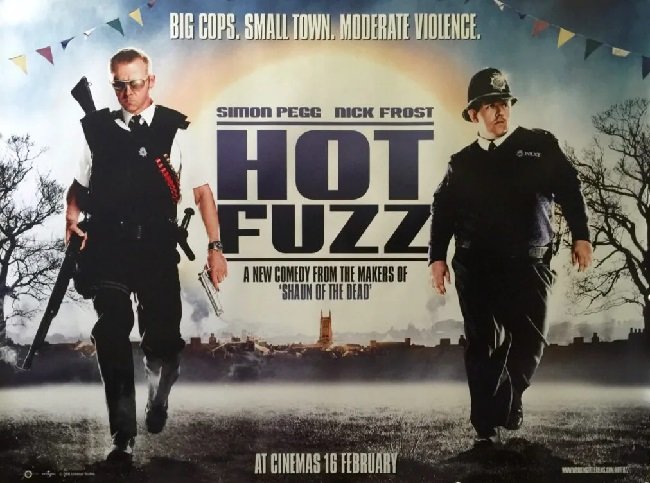
PC Nicholas Angel (Simon Pegg) is an exemplary Police Officer, with a strict adherence to the letter of the law. As a result of making the rest of the London Metropolitan Police look bad, he is transferred to the rural town of Sandford, Gloucestershire. On arrival, Angel finds that the local Inspector, Frank Butterman (Jim Broadbent), takes a far more laissez-faire approach to policing. His colleagues are incompetent and he is further hampered by the Neighbourhood Watch Alliance (NWA), who prioritise low crime statistics over law enforcement due to their desire to win the title of “Village of the Year”. Furthermore, Angel is partnered with the Inspector’s son, Constable Danny Butterman (Nick Frost), who is infatuated with “buddy cop” movies and is in awe of Angel’s London experience. “Have you ever fired two guns while jumping through the air?” However, a sudden spate of grisly accidents lead Angel to believe that there's more to the seemingly tranquil and picture-perfect community than meets the eye.
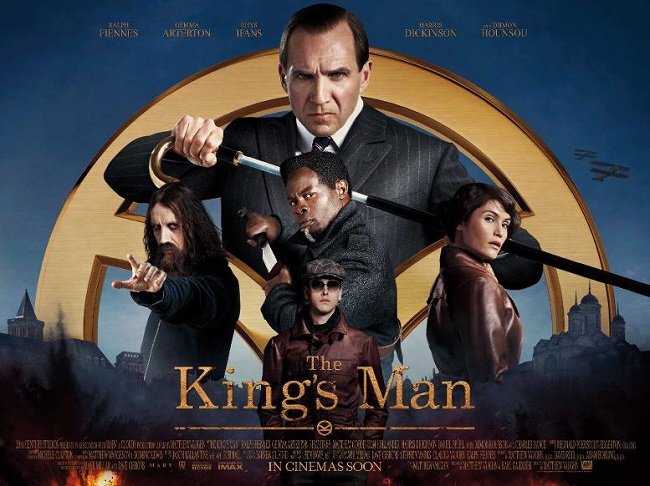
As a collection of history's worst tyrants and criminal masterminds gather to plot a war to wipe out millions, one man must race against time to stop them. Discover the origins of the very first independent intelligence agency in The King's Man. Based on the Comic Book “The Secret Service” by Mark Millar and Dave Gibbons. 20th Century Studios
Matthew Vaughn’s The King’s Man is an inconsistent film, both narratively and tonally. It veers between serious themes and stylised, hyperbolic action. At times it does quite a good job of exploring such complex subjects as global politics, mechanised warfare and colonialism. Sadly it then wrenches the viewer out of these cerebral reveries as it lapses into the sort of over the top action sequences that were notable in the two earlier films. It’s a shame because The King’s Man gets so many other aspects of the production right. The casting is very interesting, especially Ralph Fiennes as the “pacifist” Duke of Oxford. He is actually a very good fit for the action genre. Djimon Hounsou and Gemma Arterton are given little backstory beyond being respectively the faithful manservant and the family nanny but both are notable due to their own inherent acting chops and personal charisma. Rhys Ifans obviously has a great time as Grigori Rasputin, ensuring all the man’s vices are robustly depicted.
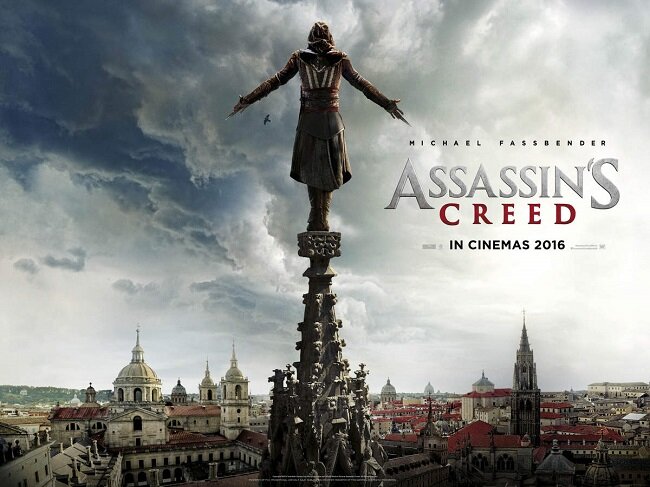
On paper, a video games franchise such as Assassin’s Creed lends itself perfectly to a cinematic adaptation. The parkour action scenes, the historical settings and the contemporary conspiracy theory themes are all elements that should play well with a modern youth audience. Hence with the backing of a major studio such as Twentieth Century Fox and a budget of $125 million, the 2016 movie should have been a guaranteed box office hit. The casting of Michael Fassbender, an actor who is comfortable with serious roles and big Hollywood franchises, should have carried this film comfortably over the finishing line. Director Justin Kurzel, who had found critical success with his adaptation of MacBeth a year previously, must have looked like a safe pair of hands to handle such a project. Sadly, that was not the case. Assassin’s Creed is not the sum of its parts, in fact many elements appear to be pulling in opposite directions. The resulting feature film is staggeringly dull, soulless and a chore to watch. A testament to how modern big budget franchise movies have become a production line, with all the art stripped from them.

300: Rise of an Empire is a curious beast, being neither a sequel nor a prequel. It is infact a tale that takes place simultaneously with those of the original movie. While Gerard Butler is busy making a last stand at the Battle of Thermopylae, fellow warrior and politician Themistokles, played by the singularly uncharismatic Sullivan Stapleton, leads a similar army of buffed Greeks against the Persian fleet. Once again we have a movie that is the epitome of style over substance, complete with a sound design that challenges what can physically be endured by human hearing. They say the first casualty of war is innocence but in this type of movie it's closely followed by historical accuracy and authentic depictions of ethnicity. 300: Rise of an Empire is a cinematic assault upon the senses but not in a good way like Mad Max: Fury Road.
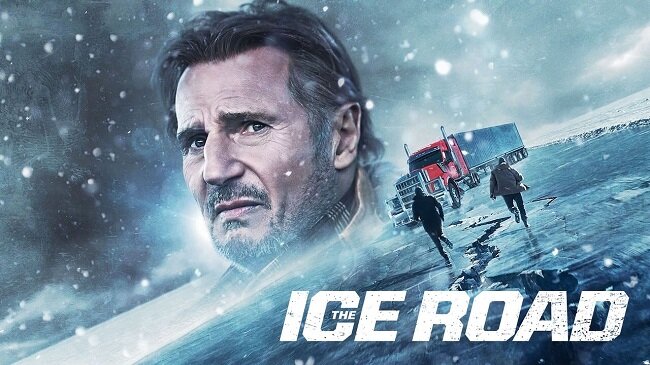
Back in September 2017, Liam Neeson stated in an interview with Sky News that he was retiring from the action genre, due to his age. He felt that audiences would question his credibility in such roles. After the release of The Commuter (2018) and Cold Pursuit (2019) Mr Neeson appeared to return to human dramas and films that focus on performance rather than punching man and beast. Ordinary Love and Made in Italy, both released in 2019, demonstrate the actor’s versatility and skill. People seem to forget that he is a thespian who was initially known for his character driven roles in films such as The Mission (1986), Rob Roy (1995 and Michael Collins (1996). It was only in 2008 that he reinvented himself as an action hero. It’s all a far cry from Schindler’s List and his performance that earned him an academy award nomination. The reason I mention all of this is because The Ice Road is the third action movie I’ve seen in 2021 that stars Liam Neeson.
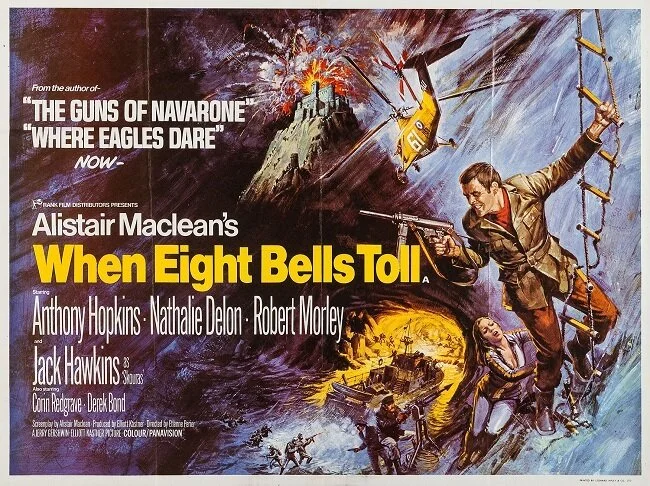
One of the stand out tropes of the modern action film is that the stakes are always cranked right up to 11. Terrorists, biological weapons and nuclear bombs are common threats in such movies with a hero or heroes trying to save the world from death and destruction or worse. However, back in the sixties and seventies, things were a little more straight forward and in some respects more credible. Take When Eight Bells Toll, released in 1971, for example. British Treasury secret agent Phillip Calvert investigates the theft of £8,000,000 in gold bullion by a gang of international smugglers. In the context of the times this was no small beer however it’s somewhat mundane compared to fighting super villains and their space lasers. Frankly I prefer these low key plot devices as they can make a film a little more plausible within the confines of the genre. A concept that is often forgotten today.
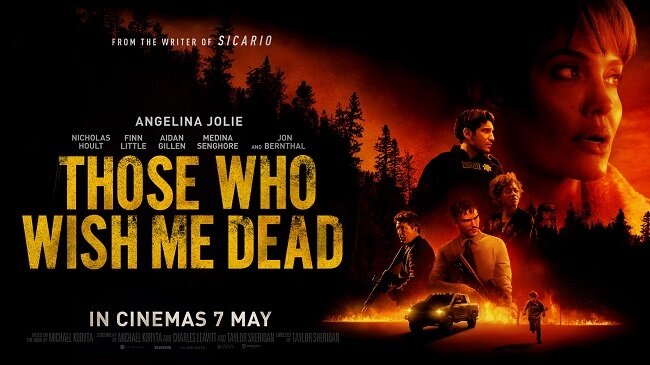
Forensic accountant Owen Casserly (Jake Weber) flees his home with his teenage son Connor (Finn Little) when he discovers he has been targeted by a pair of assassins (Nicholas Hoult and Aidan Gillen) who have been hired to stop him giving evidence in a major corruption case. Connor witnesses the murder of his father after their car is run off the road. Entrusted with important written evidence, he escapes into the dense forests of the Montana wilderness pursued by the killers. Seeking help he runs into smokejumper Hannah Faber (Angelina Jolie) who is stationed at a remote fire lookout tower. Hannah suffers from PTSD from a previous forest fire in which she was unable to save three young boys. Hannah attempts to lead Connor through the forest to safety. Meanwhile the assassins set fire to the forest to divert the attention of the authorities and cover their tracks.

I must admit that I did not have particularly high hopes for Paul W S Anderson's remake of the 1975 Roger Corman produced cult classic. Anderson’s work varies greatly. Event Horizon and Soldier are solid genre films but I still have not fully come to terms with Alien vs. Predator. Jason Statham is also a name that divides the public, with solid material such as The Transporter and unfathomable tosh like Revolver. But despite these considerations, Death Race is in fact quite a surprise and does not follow the path that so many remakes do. It takes the basic themes and concept associated with the original and tries to do something different with them. It doesn’t reinvent the wheel nor is it a genre milestone. But it does offer a different spin on things, have some engaging action scenes and provide some dumb but enjoyable entertainment. When combined with snacks and some beer this is a passable way to kill 111 minutes.
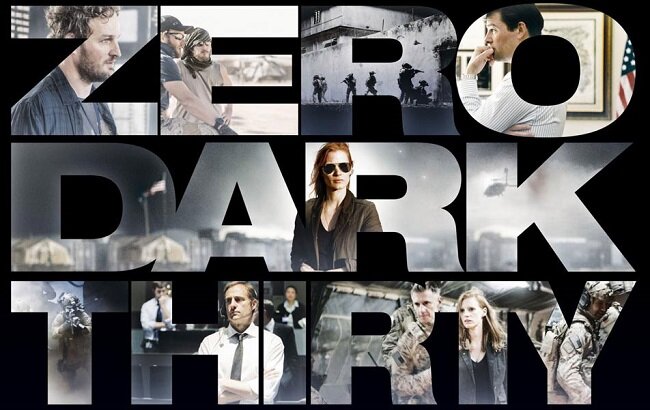
I did not watch Zero Dark Thirty upon its initial release, due to the politics surrounding it. I wanted to be able to view it free from bipartisan debate. Eight years on I believe this now achievable and although debate still exists it is now more measured and less strident. Zero Dark Thirty is certainly a compelling movie. It plays as a docudrama, providing an in-depth study of the US intelligence services hunt for Osama Bin Laden. It cannot be faulted on a technical level and the performances are very strong. It does not adopt a celebratory or triumphalist tone in its approach to the story. Director Kathryn Bigelow endeavours to keep the proceedings focused upon the intricacies of an intelligence driven manhunt. There is little or no tubthumping, jingoism. The decision to find Bin Laden is shown as a political and military exercise of foreign policy. The film solely focuses on the story from a US perspective but that is perfectly acceptable as it is not intended to be an exploration of geo-politics.
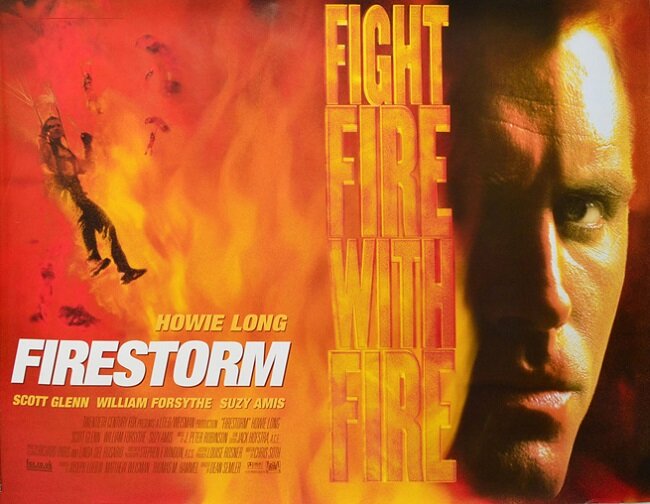
Firestorm was originally written as a vehicle for Sylvester Stallone, however when the production company Savoy Pictures went bankrupt the screenplay was bought by Twentieth Fox and the scope of the movie reduced to suit a lower budget. It’s broadly similar to Cliffhanger in so far as the lead character is a specialist in a certain field who runs afoul of criminals in a perilous environment. Whereas Cliffhanger is set in the Rocky Mountains, Firestorm takes place in the forests of Northern Wyoming. After the script was revised four times, the finished screenplay was given a final “polish” by Graham Yost who has considerable experience with the action movie genre. As stallone was no longer associated with the project and the production had been repurposed to be less extravagant, the movie was assigned to former NFL star Howie Long. Long had already appeared in the John Woo movie Broken Arrow (1996) and the Firestorm was seen as a means to give him a star vehicle.

The original French movies District 13 and its sequel District 13: Ultimatum, conceived and produced by Luc Besson, were enjoyable variations of the Escape from New York theme. Their charm lay in their European pedigree and the skilful use of parkour. The two leads, David Belle and Cyril Raffaelli, were eminently suited to the minimalist roles and the screenplays were fun. Half of these movies appeal was the fact that they were not mainstream US products. Brick Mansions is the Hollywood remake of District 13, as well as being Paul Walkers’ final movie. Sadly, this film is far from a fitting epitaph, being devoid of any charisma or innovations. It is blandly shot , poorly edited and has been stripped of everything that made the original entertaining.
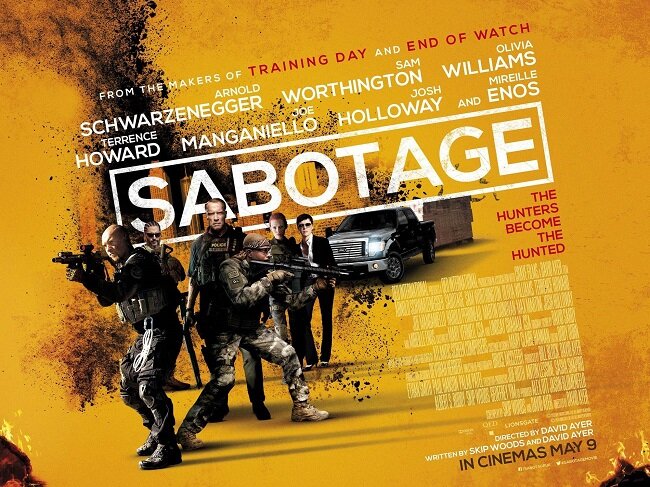
Arnold Schwarzenegger's return to the big screen after his political career has been uneven to say the least. His cameos in The Expendables and The Expendables 2 were well received, with their self referential charm and age related irony. Yet his first major movie The Last Stand, although competent, failed to find an audience. Escape Plan fared better at the box office but did not put Arnie back on the A list. Effectively there's a large percentage of the contemporary cinematic audience who were born after his heyday and are simply not overt fans of his work. His core audience is more than likely of the age group that consume most of their film entertainment at home. Which may explain why Sabotage tanked in the US upon release on March 28th 2014. It was the worst opening box office of Arnie's career. He used to break first day opening records.
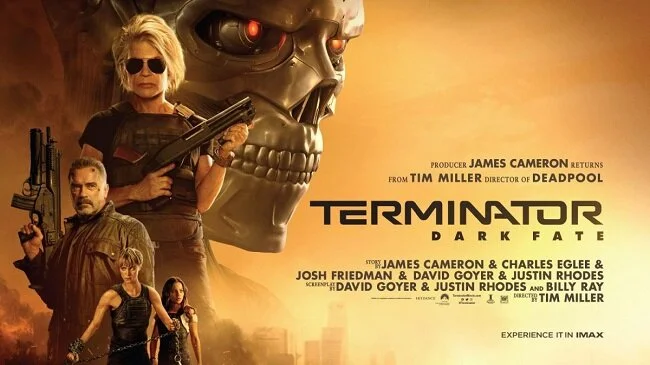
Sequels and reboots are hardly a new concept and have been a part of Hollywood culture since the 1930s. The success of the Universal Horror movies from that era being a prime example of direct follow ups and retconned movies. However, there is one fundamental rule that distinguishes a good sequel from a bad one. You should never mitigate, undermine or make irrelevant the events of the previous movie, just to provide your new film with a raison d'être. For example, the events of Aliens do not contradict or trivialise those that happened in Alien. In fact with that franchise there is a very clear logical progression between the two movies. The same is true for Mad Max and Mad Max 2 or Star Wars and The Empire Strikes Back. The key is to progress a story, enhance it or explore things from an alternative angle and bring something new to the cinematic table. Sadly this philosophy is all too often lost on corporate film making. Which means that many sequels are just tedious replays of prior films. Terminator: Dark Fate falls squarely into this category.

The enduring appeal of the character John Rambo in First Blood comes from the fact that he is a traumatised ex- service man who keeps himself to himself as he drifts from job to job, trying to come to terms with his wartime experiences. His poor treatment at the hands of a small-town Sheriff is a succinct metaphor for the social and political indifference that Vietnam veterans were shown upon their return to the US. He’s a man with a code in a world that no longer has any use for him. His simple and honest patriotism is not returned and he is in fact viewed with shame by many from the nation he loves. Furthermore, the first movie does not paint him as a cold-blooded killer. Despite provocation he is not the first person to shoot to kill. Rambo is in many ways a victim. A broken man, who society has asked to do unspeakable things. Now society wants nothing to do with him and fears the “monster” they created. Although clearly an action movie, First Blood had narrative depth and a flawed but sympathetic protagonist. 37 years and four movies later, such dramatic themes have long left the franchise. The central character is indeed a caricature of its former self.
It was hardly surprising that the movie adaptation of Chris Kyle's autobiography American Sniper, would cause controversy. The Iraq war, US Foreign Policy and national pride are seldom subjects that are discussed in a calm and measured fashion. And then there are the personal politics of director Clint Eastwood to consider. Hence there were claims from some quarters upon the movie’s release, that it was Islamophobic and counter claims that criticisms of the late Chris Kyle were unpatriotic. There still remain issues regarding the authenticity of events depicted in the source text and subsequently the movies screenplay by Jason Hall. Yet none of these factors have in anyway impacted upon the film's box office returns which currently stands at $247,900,417 worldwide.
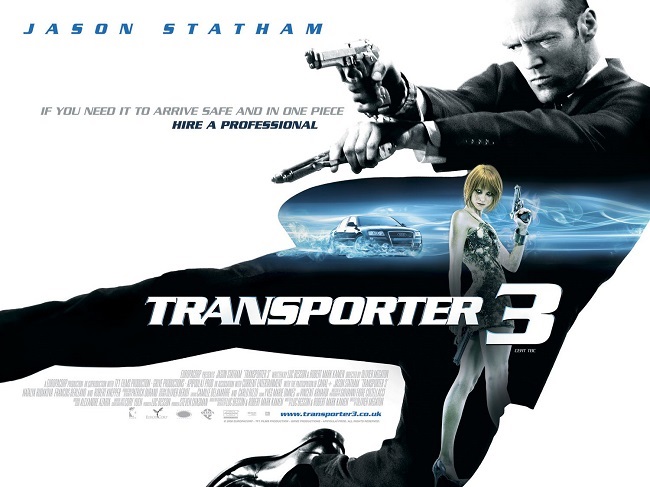
Do I really need to present you with some sort of plot synopsis for Transporter 3? No, I didn’t think so. More of the same as Frank Martin (Jason Statham) and his police chum, Inspector Tarconi (Francois Berleand) become embroiled in yet another high-octane escapade. There's fights, car stunts, exotic international locations and a strong sense of humour. This time, the disposable love interest is a Ukrainian girl named Valentina (Natalya Rudakova) who fulfils her role succinctly. The film benefits by being set back in Europe, after the mistake of basing Transporter 2 in the US. This time, the story takes us to such locations as Budapest and Odessa. The international film crew once again bring a veneer of panache to the production that is conspicuously absent in US action movies. For a modest budget fil, Transporter 3 it looks very good. Again the proceedings are given a boost by a pertinent soundtrack by Alexandre Azaria and a selection of European “tunes”.

Jason Bourne originally graced our screens for the first time seventeen years ago. The Bourne Identity was a gritty, minimalist take on the espionage genre and a welcome change from the excesses of the Pierce Brosnan Bond era. The story arc was sustained over three movies and ended efficiently and succinctly. After which Matt Damon moved on, as did the director of two of the movies, Paul Greengrass. Which leaves us with The Bourne Legacy; the tangential sequel that arrived in 2012. A film that exists because the money men and bean counters hate to pass up on a franchise until it has been squeezed utterly dry. Hence, they commissioned the writer of the series, Tony Gilroy, to come up with a screenplay and direct a spinoff movie. Jeremy Renner was cast in the lead role. Yet despite narrative and production continuity, The Bourne Legacy was not a Jason Bourne movie with the star appeal of Matt Damon. Although the film turned a profit, it had the lowest box office returns out of the entire franchise.
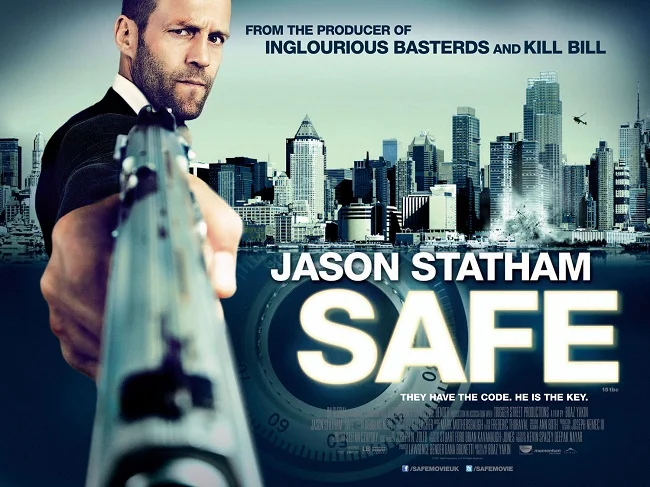
During the eighties there was a clear league table of action movie stars. By the mid-nineties this system fell into decline and the Hollywood lacked any clearly defined exponents of the genre. A decade later, due to the success of Luc Besson’s Transporter films, Jason Statham became a bankable box office star in this field. When you look at Statham's early work in Lock, Stock and Two Smoking Barrels it is hard to envisage the "mockney geezer" as an international action star. Yet he has successfully stepped into the role and enjoys a large following. I enjoy his work as he has a likeable on-screen persona. My 88-year-old Mum likes him to because "he wears nice suits". The action genre seldom reaches such a diverse demographic.
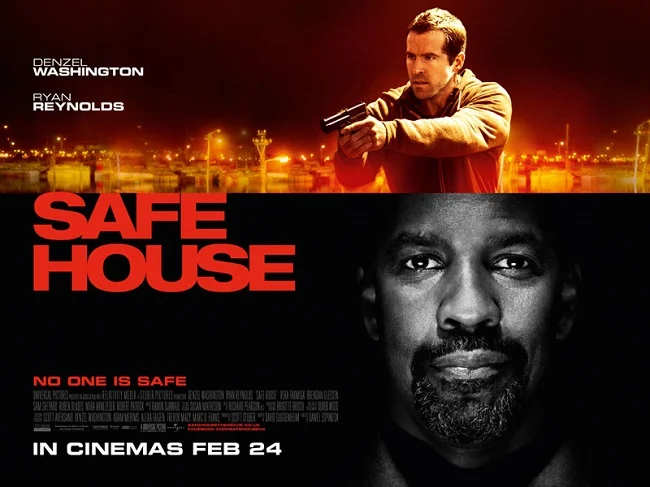
Before we start, I recollect that one well known UK critic described Safe House as sub-Tony Scott, upon its release. Now I’ve always been conflicted over Scott’s back catalogue, as I’ve always found his movies to be hampered by their own unique style. The subtleties of his characters and depth of his themes are all too often drowned out by his frenetic style and fast paced editing. Therefore a comment such as this really sets off alarm bells for me. Having recently watched The Equalizer 2, I wanted a further fix of Denzel Washington in a similar action vehicle. As Safe House was available on Netflix UK, I decided to kill a couple of hours and see what actually constitutes as “sub-Tony Scott”.
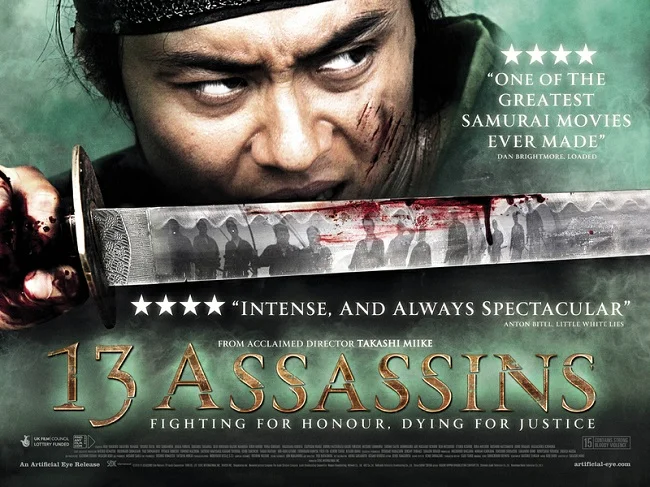
13 Assassins is one of Takashi Miike's most restrained and mature movies. Set in Feudal Japan and based on true events, a venerable clan suffers under the reign of the cruel young Lord Naritsugu (Goro Inagaki), who commits atrocities at will. Unable to break their oaths, the samurai are torn between duty and shame. Some of the masters in the clan even go so far as to commit Seppuku in protest. Unable to endure the status quo, a plan is formed to gather a small team of the deadliest samurai and assassinate Lord Naritsugu while he is travelling between clan territories. The responsibility falls upon Shinzaemon Shimada (Koji Yakusho) to take on this potentially fatal task. The matter is further complicated by Lord Naritsugu’s personal bodyguard (and Shimada’s former rival) master samurai Hanbei (Masachika Ichimura), who is a force to be reckoned with.
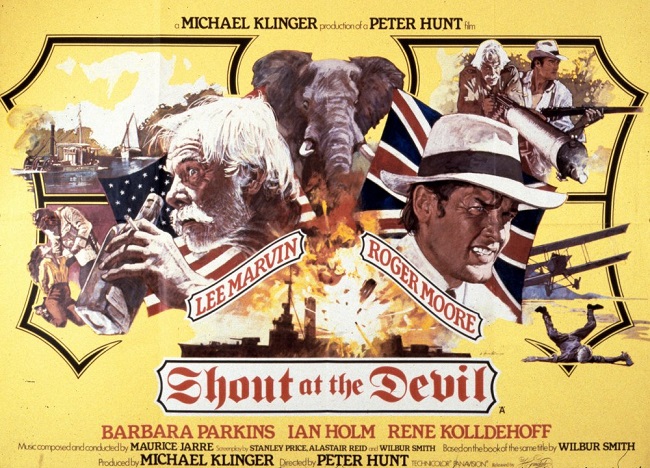
Adapted from the novel by Wilbur Smith, Shout at the Devil is the sort of big budget, sprawling, period set high adventure movie that has fallen out of vogue in recent decades. Its main attraction are its stars, location and robust action scenes. Crafted by former Bond director and long-time editor Peter Hunt, this is a full on, no nonsense character driven drama of the kind that were common place during the seventies. Sometimes the enormity of these sorts of productions meant that something suffered by omission. Be it a weak script, excessive set pieces or too many cameos by an all-star cast. Shout at the Devil broadly manages to avoid such pitfalls. There is however a notable tonal shift in the story about halfway through the film, which does take events in a different direction.
Zulu Dawn (1979)
Zulu (1964) recounts the Battle of Rorke’s Drift between the British Army and the Zulus in January 1879. Directed, produced and co-written by Cy Endfield the film presents an action filled account of how 150 British soldiers, 30 of whom were sick and wounded, successfully held off a force of 4,000 Zulu warriors. Although well made and rousing, it is very much a film from the British perspective. Despite depicting the Zulu nation fairly, the film makes no attempt to put the clash between two empires in any sort of wider context. Zulu Dawn is a direct prequel which shows the events that directly lead up to the Battle of Rorke’s Drift. Much more time is dedicated to exploring the Zulu’s position as their leader King Cetshwayo attempts to avoid the political fait accompli he has been presented with. Furthermore, Zulu Dawn does not in any way try to avoid the failure of the British chain of command that resulted in the defeat of 1,300 British soldiers at the Battle of Isandlwana.
Zulu (1964) recounts the Battle of Rorke’s Drift between the British Army and the Zulus in January 1879. Directed, produced and co-written by Cy Endfield the film presents an action filled account of how 150 British soldiers, 30 of whom were sick and wounded, successfully held off a force of 4,000 Zulu warriors. Although well made and rousing, it is very much a film from the British perspective. Despite depicting the Zulu nation fairly, the film makes no attempt to put the clash between two empires in any sort of wider context. Zulu Dawn is a direct prequel which shows the events that directly lead up to the Battle of Rorke’s Drift. Much more time is dedicated to exploring the Zulu’s position as their leader King Cetshwayo attempts to avoid the political fait accompli he has been presented with. Furthermore, Zulu Dawn does not in any way try to avoid the failure of the British chain of command that resulted in the defeat of 1,300 British soldiers at the Battle of Isandlwana.
Fearing that the Zulus are becoming too powerful in the region, Lord Chelmsford (Peter O'Toole) plots with diplomat Sir Henry Bartle Frere (John Mills) to annex the neighbouring Zulu Empire, despite there being an existing treaty in place. Subsequent demands to demilitarise are rejected by King Cetshwayo (Simon Sabela) giving Lord Chelmsford casus belli to invade. Prior to embarking into Zulu territory the British forces are reinforced with native troops and the Natal Mounted Police. However, the Zulus refuse to directly engage the British forces and pursue guerilla attacks. The British expeditionary force subsequently makes camp at Mount Isandlwana but rejects the advice from the Boer contingents to fortify the camp around the ammunition wagons. Lord Chelmsford divides his forces and heads a column to pursue bogus sightings of Zulu forces. Meanwhile the Zulu army masses near Isandlwana, preparing to engage the British camp.
Zulu Dawn takes time in setting the scene and explaining the historical situation. The first act cuts between a garden party being held by Sir Henry Bartle Frere, High Commissioner for Southern Africa and celebrations at Zulu capital, Ulundi. Both events provide a backdrop to ongoing political machinations. The screenplay by Cy Endfield cleverly uses the casual conversations between the officers wives and regional Missionaries to summarise the hubris and condescension of the British in Natal at the time. The disposition of the troops is also explored through the relationships between Colour Sergeant Williams (Bob Hoskins) and raw recruit Private Williams (Dai Bradley). Quartermaster Sergeant Bloomfield (Peter Vaughan) is shown to be a “jobsworth” and instrumental in contributing to the deteriorating situation at the film’s climax. Col. Durnford (Burt Lancaster) is shown to be savvy and well versed in fighting the Zulus. Hence his advice is scorned by his British superiors due to his Irish heritage.
The second act of Zulu Dawn follows the British as they make a series of ill conceived decisions after crossing into Zulu territory. Cinematographer Ousama Rawi makes effective use of the rugged South African terrain. The climax of the film follows in detail the attack upon the British lines by the Zulu and how they overwhelmed them. The subsequent retreat became a rout and one of the most serious defeats for British forces in their military history. Although not excessively explicit in its depiction of violence, director Douglas Hickox does well in depicting the growing sense of fear and disbelief among the British troops as they realise that the tide of the battle is rapidly turning against them. The failure to get ammunition from the wagons to the troops is a major factor. I suspect that the film’s depiction of a major defeat, rather than the usual narrative of the plucky underdog who wins despite the odds may discourage some viewers. Zulu Dawn is more likely to engage those seeking historical authenticity rather than pure action.
On the Eastern Front in 1943, a German Tiger tank crew led by Lieutenant Philip Gerkens (David Schütter) is sent on a mission to rescue the missing officer Paul von Hardenburg (Tilman Strauss) from a top-secret bunker that is at risk of falling into enemy hands. As they make their way through an eerie no-man’s land, they have to avoid Russian armoured vehicles that seem to be aware of their mission. They also encounter a German unit taking punitive action against a peasant village, in reprisal for partisan activity in the area. The youngest crew member, Michel (Yoran Leicher), talks of the land being home to ghosts and spirits. As the tank penetrates further into contested territory the crew become increasingly disturbed by the uncanny nature of their mission and begin to fall prey to their own inner fears.
Setting aside the hubris of remaking a film such as Red Dawn, the 2012 reboot had a troubled production. Shot over the course of late 2009, on location in Michigan, MGM intended to release the film in September 2010. However, the studio’s financial problems became unsustainable over the course of that year and the film was shelved, while a financial solution was sought. Furthermore, while Red Dawn was in post production, there was a major economic shift within Hollywood due to the increasing importance of the Chinese market. This was a significant problem for MGM because the new version of Red Dawn had the Chinese invading the USA instead of Russia. Hence there were reshoots and the need for additional visual effects, so that the Chinese could be replaced with North Koreans. MGM eventually went bankrupt and the distribution rights to Red Dawn were sold off. The film was eventually released in 2012.
Zulu (1964) recounts the Battle of Rorke’s Drift between the British Army and the Zulus in January 1879. Directed, produced and co-written by Cy Endfield the film presents an action filled account of how 150 British soldiers, 30 of whom were sick and wounded, successfully held off a force of 4,000 Zulu warriors. Although well made and rousing, it is very much a film from the British perspective. Despite depicting the Zulu nation fairly, the film makes no attempt to put the clash between two empires in any sort of wider context. Zulu Dawn is a direct prequel which shows the events that directly lead up to the Battle of Rorke’s Drift. Much more time is dedicated to exploring the Zulu’s position as their leader King Cetshwayo attempts to avoid the political fait accompli he has been presented with. Furthermore, Zulu Dawn does not in any way try to avoid the failure of the British chain of command that resulted in the defeat of 1,300 British soldiers at the Battle of Isandlwana.
During the last days of World War II, the British Merchant Navy ship Mount Kyle is torpedoed by a German U-Boat off the coast of Venezuela. The crew are subsequently massacred as they abandon ship, leaving one survivor, an Irish engineer named Murphy (Peter O’Toole). After being rescued by Louis Brezon (Philippe Noiret), a caretaker for an oil company which has a pipeline in the area, he is taken to a local missionary medical facility run by Dr. Hayden (Siân Phillips). Upon recovering, Murphy becomes determined to find the U-Boat that sank his ship and seeks revenge. However, as the war is clearly drawing to a close Dr. Hayden is reluctant to help him and tries to dissuade him from his plan as it may endanger the local community. In the meantime, Murphy finds a damaged Grumman J2F Duck floatplane from his ship and salvages it. With the assistance of Louis, he makes some improvised munitions and draws his plans against the Germans.
One of the things that immediately strikes you when watching Fury is its credibility and realism. The film reeks of authenticity. Every aspect of the production has been meticulously researched, from uniform and equipment, to ordnance and tactics. The M4A3E8 Sherman tank was not only the workhorse of the US Army but also a home for its five man crew. Director David Ayer makes this idea the foundation of his movie and then proceeds to explore those two perennial themes, the horrors of war and the loss of innocence. The film focuses on the experiences of the crew consisting of Don "Wardaddy" Collier (Brad Pitt), gunner Boyd "Bible" Swan (Shia LeBeouf), loader Grady "Coon-Ass" Travis (Jon Bernthal), and driver Trini "Gordo" Garcia (Michael Peña). They’re a tight knit family, relying on each other to stay alive and keep their mental stability.
Greyhound is a curious film in that it flies in the face of one’s expectations. When I (and possibly others) see an advertisement or trailer for a World War II movie starring Tom Hanks, I naturally assume that the lead actor has been hired for his prodigious acting talent and that he’ll be providing an in depth character study. I was expecting Greyhound to be the story of an untested US Naval Commander enduring an ordeal by fire on his first escort mission. And that is to a degree what director Aaron Schneider provides but instead of the narrative arc focusing on Ernest Krause’s emotional struggles with his duties, we instead get a docudrama focusing on the technicalities of naval warfare. The latter approach is certainly engaging and at times tense and exciting but this decision narrows the appeal of the film. I personally would have preferred the former.
Big budget, historically driven movies that set out to recount key events of World War II are a rarity these days. If you ignore the bombastic inanities of Michael Bay’s Pearl Harbor (2001), then you have to go back to the late seventies to films such as A Bridge Too Far to find a suitable example. This is why Roland Emmerich’s Midway came as a genuine surprise. When I saw a trailer for the film last October, I was flummoxed that such a production had been made. My initial concerns were that it would focus on spectacle rather than historical fact and trivialise events of great military and historical importance. After having watched Midway, I am pleased to report that this is a surprising throwback in many ways. The film covers the events of the Japanese attack on Pearl Harbor, the subsequent Doolittle Raids on Tokyo by the US and the Battle of Midway, both succinctly and accurately. Furthermore, much of the cast play real veterans who participated in these events. Overall this is an entertaining and informative movie that feels like a relic from fifty years ago. However, its docudrama aspirations also make for somewhat generic character development.
It was hardly surprising that the movie adaptation of Chris Kyle's autobiography American Sniper, would cause controversy. The Iraq war, US Foreign Policy and national pride are seldom subjects that are discussed in a calm and measured fashion. And then there are the personal politics of director Clint Eastwood to consider. Hence there were claims from some quarters upon the movie’s release, that it was Islamophobic and counter claims that criticisms of the late Chris Kyle were unpatriotic. There still remain issues regarding the authenticity of events depicted in the source text and subsequently the movies screenplay by Jason Hall. Yet none of these factors have in anyway impacted upon the film's box office returns which currently stands at $247,900,417 worldwide.
There are many films about war. There are many films about the Vietnam war. A few have transcended mere historical depiction and managed to capture the utter horror and political insanity of the situation, along with the tragic human cost. And then there are those which simply seek to use the setting as a vehicle for an exploitation movie, in the hope of making a fast buck. The Last Hunter (L'ultimo cacciatore) falls firmly into the second camp. This Italian "macaroni combat" movie (yes, I didn’t know that’s a thing either) offers a straight forward tale of an incursion behind enemy lines by an officer charged with destroying a radio transmitter, broadcasting anti-US propaganda. It is violent, action packed and surprisingly honest about what sort of film it is. You’ll find no pretentious philosophical musings here. Just explosions, rotting corpses and Viet Cong booby traps.
There are times when watching the third instalment of the contemporary Planet of the Apes franchise that you feel like your experiencing something akin to Terrence Malick's The Thin Red Line. There is a narrative depth and an intelligence to the screenplay that you seldom see these days coming from a major studio production. As with the original movies, the story makes multiple subtle points about the nature of humanity and our self-destructive tendencies. Yet it’s all done in a thought full and measured fashion. If you wish to treat War for the Planet of the Apes as simply a science fiction action movie then you will certainly be provided with such a film. However, if you choose to engage your intellect and ponder some of the deeper aspects of the story you’ll be rewarded with much more.
Darkest Hour, unlike many other biopics, focuses specifically on the initial weeks of Winston Churchill’s first term of office as Prime Minister, in May 1940. It paints a picture of an unwanted leader who inherits the role due to political expediency, rather than through universal support. Considered by the King as a dangerous adventurer and overshadowed by previous policy failures such as the Gallipoli landings and the Indian famine, Churchill is without allies and under pressure to appease the Germans. Director Joe Wright, sets the pieces on the chess board succinctly and within a few minutes audiences are brought up to speed with the prevailing historical situation. It is against this setting that that Darkest Hour then explores Churchills uphill struggle to rally a nation that appears to have no appetite for war and fend off political assassination. With the imminent defeat of the British Army in France and the prospect of a humiliating surrender at Dunkirk, should he seek a negotiated settlement with Germany, via Italian diplomatic sources?
Dunkirk is an extraordinary war movie, that eschews the traditional sprawling format of its predecessors, filled with celebrity cameos and contrived expositionary dialogue. Instead Christopher Nolan manages to embrace the concept of “show, don’t tell”, yet uses what little dialogue he has to succinctly punctuate the unfolding story with emotion and gravitas. There is a sense of spectacle, yet it is far from the stark and dispassionate CGI we usually see. Through creative and focused editing Nolan generates a palpable sense of tension, be it in the air with extraordinary aerial dogfights or on the ground as men flee sinking ships and dodge artillery fire. Dunkirk facilitates an intense and emotional journey during its lean 106 minute running time. It is altogether a remarkable piece of cinema.
In terms of its production values, Valkyrie is a throwback to the big budget war films of the sixties and seventies. However, that is where the similarities end. This is not a stylised action movie with the Nazis simply as a dramatic foil. Valkyrie focuses on facts, narrative and performances. Director Bryan Singer ensures that the true story that the film depicts is driven by the central characters. Overall Valkyrie is a very laudable production and although not an outstanding feature film, it is competently made, broadly historically accurate whilst and entertaining.
There was a wealth of revisionist Vietnam War films released in the wake of Oliver Stones’ Oscar winning Platoon. Not all were of equal merit or technical competence but occasionally a low budget B movie can surpass the big studio competition. The Siege of Firebase Gloria is one such example, being a minimalist, straightforward film about US Marines defending an isolated outpost in Vietnam, during the Tet offensive. Directed by British expatriate Brain Trenchard-Smith and starring R. Lee Ermey, Wings Hauser and Albert Popwell ("Hey, I've gots to know!"), it’s often been overlooked. However it’s low key plot which seeks no more than to show a small facet of the war, sheds more light upon the overall war and a soldier’s life than one would expect from such a modest production.
The Eagle Has Landed was veteran director John Sturges' final movie, whose body of work includes such classics as Bad Day at Black Rock, The Magnificent Seven and The Great Escape. Based on the bestselling book by Jack Higgins and adapted by Tom Mankiewicz, the film is a curious beast. It’s an in-depth character driven drama you would expect from such a veteran director, with the succinct and violent action scenes that were prevalent during the seventies. Although the phrase “they don’t make them like that anymore” is somewhat of a cliché, it is quite apt in the case of The Eagle Has Landed. Many of the crew as well as the producers hailed from the golden age of Hollywood.
Gritty, grim and fatalistic are just a few of the ways I would describe Play Dirty. Made at a time when cinema was becoming more realistic and cynical, it eschews the traditional depiction of World War II heroism and paints a singularly unglamorous picture. Due to some minor plot similarities, it is frequently compared to The Dirty Dozen but they are far from identical movies. Robert Aldrich’s film despite having an offbeat plot and a cast of quality characters actors still followed a traditional action based formula and had a relatively upbeat ending. Play Dirty is content to pursue its dour storyline to its inevitable conclusion.
It is rewarding to find a movie that wrong-foots you and challenges your perceptions on certain subjects. White Tiger is exactly such a film. Starting of as a traditional war movie, the story quickly evolves into a supernatural revenge story with shades of Moby Dick. The final act and subsequent sting in the tail ending provides immense food for thought. It proposes an idea that many will find particularly challenging. However the film succeeds in making such a bold pitch because of its inherent Russian earnestness and the fact that that nation’s war experience is so subtly different from others.
Murphy's War (1971)
During the last days of World War II, the British Merchant Navy ship Mount Kyle is torpedoed by a German U-Boat off the coast of Venezuela. The crew are subsequently massacred as they abandon ship, leaving one survivor, an Irish engineer named Murphy (Peter O’Toole). After being rescued by Louis Brezon (Philippe Noiret), a caretaker for an oil company which has a pipeline in the area, he is taken to a local missionary medical facility run by Dr. Hayden (Siân Phillips). Upon recovering, Murphy becomes determined to find the U-Boat that sank his ship and seeks revenge. However, as the war is clearly drawing to a close Dr. Hayden is reluctant to help him and tries to dissuade him from his plan as it may endanger the local community. In the meantime, Murphy finds a damaged Grumman J2F Duck floatplane from his ship and salvages it. With the assistance of Louis, he makes some improvised munitions and draws his plans against the Germans.
During the last days of World War II, the British Merchant Navy ship Mount Kyle is torpedoed by a German U-Boat off the coast of Venezuela. The crew are subsequently massacred as they abandon ship, leaving one survivor, an Irish engineer named Murphy (Peter O’Toole). After being rescued by Louis Brezon (Philippe Noiret), a caretaker for an oil company which has a pipeline in the area, he is taken to a local missionary medical facility run by Dr. Hayden (Siân Phillips). Upon recovering, Murphy becomes determined to find the U-Boat that sank his ship and seeks revenge. However, as the war is clearly drawing to a close Dr. Hayden is reluctant to help him and tries to dissuade him from his plan as it may endanger the local community. In the meantime, Murphy finds a damaged Grumman J2F Duck floatplane from his ship and salvages it. With the assistance of Louis, he makes some improvised munitions and draws his plans against the Germans.
I suspect that Murphy’s War was intended to be a minimalist exploration of the old adage “if you devote your life to seeking revenge, first dig two graves”. Written by Stirling Silliphant (The Enforcer, Towering Inferno) and directed by Peter Yates (Bullitt, The Deep and Krull), Murphy’s War teases the audience with several instances of potential narrative depths. What motivates U-Boat Commander Lauchs (Horst Janson) to shoot the crew of the Mount Kyle, as they pose no threat to him or his vessel? Is there a love triangle between Murphy, Dr. Hayden and Louis? Why is Murphy so motivated to destroy the U-Boat, considering he initially comes across as a reluctant seaman with little love for English Officers. There’s even a tenuous reference to the IRA. Is he deranged or honourable? These questions raise some interesting opportunities for the film to explore some timeless cinematic themes.
Sadly, even within the deliberately understated framework of seventies cinema, these elements are woefully neglected, leaving us with a matter of fact story that struggles to fill its 106 minutes running time. It’s all somewhat ponderous and very frustrating when considering the quality of the cast and production. Hence we have lengthy scenes in which Murphy struggles to fly the salvaged seaplane and then later, flying around the Orinoco River searching for his quarry. It’s all beautifully shot by veteran cinematographer, Douglas Slocombe, but it often feels like padding to bolster a story that isn’t anywhere near as deep as it likes to think. The climax of the film and Murphy’s subsequent Pyrrhic victory lacks any dramatic impact because there’s no explanation for his descent into a latter day Captain Ahab. The audience is left to ponder whether it was all worthwhile and I for one, broadly feel that it wasn’t. Considering the pedigree of this production, Murphy’s War should be much better.
On the Eastern Front in 1943, a German Tiger tank crew led by Lieutenant Philip Gerkens (David Schütter) is sent on a mission to rescue the missing officer Paul von Hardenburg (Tilman Strauss) from a top-secret bunker that is at risk of falling into enemy hands. As they make their way through an eerie no-man’s land, they have to avoid Russian armoured vehicles that seem to be aware of their mission. They also encounter a German unit taking punitive action against a peasant village, in reprisal for partisan activity in the area. The youngest crew member, Michel (Yoran Leicher), talks of the land being home to ghosts and spirits. As the tank penetrates further into contested territory the crew become increasingly disturbed by the uncanny nature of their mission and begin to fall prey to their own inner fears.
Setting aside the hubris of remaking a film such as Red Dawn, the 2012 reboot had a troubled production. Shot over the course of late 2009, on location in Michigan, MGM intended to release the film in September 2010. However, the studio’s financial problems became unsustainable over the course of that year and the film was shelved, while a financial solution was sought. Furthermore, while Red Dawn was in post production, there was a major economic shift within Hollywood due to the increasing importance of the Chinese market. This was a significant problem for MGM because the new version of Red Dawn had the Chinese invading the USA instead of Russia. Hence there were reshoots and the need for additional visual effects, so that the Chinese could be replaced with North Koreans. MGM eventually went bankrupt and the distribution rights to Red Dawn were sold off. The film was eventually released in 2012.
Zulu (1964) recounts the Battle of Rorke’s Drift between the British Army and the Zulus in January 1879. Directed, produced and co-written by Cy Endfield the film presents an action filled account of how 150 British soldiers, 30 of whom were sick and wounded, successfully held off a force of 4,000 Zulu warriors. Although well made and rousing, it is very much a film from the British perspective. Despite depicting the Zulu nation fairly, the film makes no attempt to put the clash between two empires in any sort of wider context. Zulu Dawn is a direct prequel which shows the events that directly lead up to the Battle of Rorke’s Drift. Much more time is dedicated to exploring the Zulu’s position as their leader King Cetshwayo attempts to avoid the political fait accompli he has been presented with. Furthermore, Zulu Dawn does not in any way try to avoid the failure of the British chain of command that resulted in the defeat of 1,300 British soldiers at the Battle of Isandlwana.
During the last days of World War II, the British Merchant Navy ship Mount Kyle is torpedoed by a German U-Boat off the coast of Venezuela. The crew are subsequently massacred as they abandon ship, leaving one survivor, an Irish engineer named Murphy (Peter O’Toole). After being rescued by Louis Brezon (Philippe Noiret), a caretaker for an oil company which has a pipeline in the area, he is taken to a local missionary medical facility run by Dr. Hayden (Siân Phillips). Upon recovering, Murphy becomes determined to find the U-Boat that sank his ship and seeks revenge. However, as the war is clearly drawing to a close Dr. Hayden is reluctant to help him and tries to dissuade him from his plan as it may endanger the local community. In the meantime, Murphy finds a damaged Grumman J2F Duck floatplane from his ship and salvages it. With the assistance of Louis, he makes some improvised munitions and draws his plans against the Germans.
One of the things that immediately strikes you when watching Fury is its credibility and realism. The film reeks of authenticity. Every aspect of the production has been meticulously researched, from uniform and equipment, to ordnance and tactics. The M4A3E8 Sherman tank was not only the workhorse of the US Army but also a home for its five man crew. Director David Ayer makes this idea the foundation of his movie and then proceeds to explore those two perennial themes, the horrors of war and the loss of innocence. The film focuses on the experiences of the crew consisting of Don "Wardaddy" Collier (Brad Pitt), gunner Boyd "Bible" Swan (Shia LeBeouf), loader Grady "Coon-Ass" Travis (Jon Bernthal), and driver Trini "Gordo" Garcia (Michael Peña). They’re a tight knit family, relying on each other to stay alive and keep their mental stability.
Greyhound is a curious film in that it flies in the face of one’s expectations. When I (and possibly others) see an advertisement or trailer for a World War II movie starring Tom Hanks, I naturally assume that the lead actor has been hired for his prodigious acting talent and that he’ll be providing an in depth character study. I was expecting Greyhound to be the story of an untested US Naval Commander enduring an ordeal by fire on his first escort mission. And that is to a degree what director Aaron Schneider provides but instead of the narrative arc focusing on Ernest Krause’s emotional struggles with his duties, we instead get a docudrama focusing on the technicalities of naval warfare. The latter approach is certainly engaging and at times tense and exciting but this decision narrows the appeal of the film. I personally would have preferred the former.
Big budget, historically driven movies that set out to recount key events of World War II are a rarity these days. If you ignore the bombastic inanities of Michael Bay’s Pearl Harbor (2001), then you have to go back to the late seventies to films such as A Bridge Too Far to find a suitable example. This is why Roland Emmerich’s Midway came as a genuine surprise. When I saw a trailer for the film last October, I was flummoxed that such a production had been made. My initial concerns were that it would focus on spectacle rather than historical fact and trivialise events of great military and historical importance. After having watched Midway, I am pleased to report that this is a surprising throwback in many ways. The film covers the events of the Japanese attack on Pearl Harbor, the subsequent Doolittle Raids on Tokyo by the US and the Battle of Midway, both succinctly and accurately. Furthermore, much of the cast play real veterans who participated in these events. Overall this is an entertaining and informative movie that feels like a relic from fifty years ago. However, its docudrama aspirations also make for somewhat generic character development.
It was hardly surprising that the movie adaptation of Chris Kyle's autobiography American Sniper, would cause controversy. The Iraq war, US Foreign Policy and national pride are seldom subjects that are discussed in a calm and measured fashion. And then there are the personal politics of director Clint Eastwood to consider. Hence there were claims from some quarters upon the movie’s release, that it was Islamophobic and counter claims that criticisms of the late Chris Kyle were unpatriotic. There still remain issues regarding the authenticity of events depicted in the source text and subsequently the movies screenplay by Jason Hall. Yet none of these factors have in anyway impacted upon the film's box office returns which currently stands at $247,900,417 worldwide.
There are many films about war. There are many films about the Vietnam war. A few have transcended mere historical depiction and managed to capture the utter horror and political insanity of the situation, along with the tragic human cost. And then there are those which simply seek to use the setting as a vehicle for an exploitation movie, in the hope of making a fast buck. The Last Hunter (L'ultimo cacciatore) falls firmly into the second camp. This Italian "macaroni combat" movie (yes, I didn’t know that’s a thing either) offers a straight forward tale of an incursion behind enemy lines by an officer charged with destroying a radio transmitter, broadcasting anti-US propaganda. It is violent, action packed and surprisingly honest about what sort of film it is. You’ll find no pretentious philosophical musings here. Just explosions, rotting corpses and Viet Cong booby traps.
There are times when watching the third instalment of the contemporary Planet of the Apes franchise that you feel like your experiencing something akin to Terrence Malick's The Thin Red Line. There is a narrative depth and an intelligence to the screenplay that you seldom see these days coming from a major studio production. As with the original movies, the story makes multiple subtle points about the nature of humanity and our self-destructive tendencies. Yet it’s all done in a thought full and measured fashion. If you wish to treat War for the Planet of the Apes as simply a science fiction action movie then you will certainly be provided with such a film. However, if you choose to engage your intellect and ponder some of the deeper aspects of the story you’ll be rewarded with much more.
Darkest Hour, unlike many other biopics, focuses specifically on the initial weeks of Winston Churchill’s first term of office as Prime Minister, in May 1940. It paints a picture of an unwanted leader who inherits the role due to political expediency, rather than through universal support. Considered by the King as a dangerous adventurer and overshadowed by previous policy failures such as the Gallipoli landings and the Indian famine, Churchill is without allies and under pressure to appease the Germans. Director Joe Wright, sets the pieces on the chess board succinctly and within a few minutes audiences are brought up to speed with the prevailing historical situation. It is against this setting that that Darkest Hour then explores Churchills uphill struggle to rally a nation that appears to have no appetite for war and fend off political assassination. With the imminent defeat of the British Army in France and the prospect of a humiliating surrender at Dunkirk, should he seek a negotiated settlement with Germany, via Italian diplomatic sources?
Dunkirk is an extraordinary war movie, that eschews the traditional sprawling format of its predecessors, filled with celebrity cameos and contrived expositionary dialogue. Instead Christopher Nolan manages to embrace the concept of “show, don’t tell”, yet uses what little dialogue he has to succinctly punctuate the unfolding story with emotion and gravitas. There is a sense of spectacle, yet it is far from the stark and dispassionate CGI we usually see. Through creative and focused editing Nolan generates a palpable sense of tension, be it in the air with extraordinary aerial dogfights or on the ground as men flee sinking ships and dodge artillery fire. Dunkirk facilitates an intense and emotional journey during its lean 106 minute running time. It is altogether a remarkable piece of cinema.
In terms of its production values, Valkyrie is a throwback to the big budget war films of the sixties and seventies. However, that is where the similarities end. This is not a stylised action movie with the Nazis simply as a dramatic foil. Valkyrie focuses on facts, narrative and performances. Director Bryan Singer ensures that the true story that the film depicts is driven by the central characters. Overall Valkyrie is a very laudable production and although not an outstanding feature film, it is competently made, broadly historically accurate whilst and entertaining.
There was a wealth of revisionist Vietnam War films released in the wake of Oliver Stones’ Oscar winning Platoon. Not all were of equal merit or technical competence but occasionally a low budget B movie can surpass the big studio competition. The Siege of Firebase Gloria is one such example, being a minimalist, straightforward film about US Marines defending an isolated outpost in Vietnam, during the Tet offensive. Directed by British expatriate Brain Trenchard-Smith and starring R. Lee Ermey, Wings Hauser and Albert Popwell ("Hey, I've gots to know!"), it’s often been overlooked. However it’s low key plot which seeks no more than to show a small facet of the war, sheds more light upon the overall war and a soldier’s life than one would expect from such a modest production.
The Eagle Has Landed was veteran director John Sturges' final movie, whose body of work includes such classics as Bad Day at Black Rock, The Magnificent Seven and The Great Escape. Based on the bestselling book by Jack Higgins and adapted by Tom Mankiewicz, the film is a curious beast. It’s an in-depth character driven drama you would expect from such a veteran director, with the succinct and violent action scenes that were prevalent during the seventies. Although the phrase “they don’t make them like that anymore” is somewhat of a cliché, it is quite apt in the case of The Eagle Has Landed. Many of the crew as well as the producers hailed from the golden age of Hollywood.
Gritty, grim and fatalistic are just a few of the ways I would describe Play Dirty. Made at a time when cinema was becoming more realistic and cynical, it eschews the traditional depiction of World War II heroism and paints a singularly unglamorous picture. Due to some minor plot similarities, it is frequently compared to The Dirty Dozen but they are far from identical movies. Robert Aldrich’s film despite having an offbeat plot and a cast of quality characters actors still followed a traditional action based formula and had a relatively upbeat ending. Play Dirty is content to pursue its dour storyline to its inevitable conclusion.
It is rewarding to find a movie that wrong-foots you and challenges your perceptions on certain subjects. White Tiger is exactly such a film. Starting of as a traditional war movie, the story quickly evolves into a supernatural revenge story with shades of Moby Dick. The final act and subsequent sting in the tail ending provides immense food for thought. It proposes an idea that many will find particularly challenging. However the film succeeds in making such a bold pitch because of its inherent Russian earnestness and the fact that that nation’s war experience is so subtly different from others.
Fury (2014)
One of the things that immediately strikes you when watching Fury is its credibility and realism. The film reeks of authenticity. Every aspect of the production has been meticulously researched, from uniform and equipment, to ordnance and tactics. The M4A3E8 Sherman tank was not only the workhorse of the US Army but also a home for its five man crew. Director David Ayer makes this idea the foundation of his movie and then proceeds to explore those two perennial themes, the horrors of war and the loss of innocence. The film focuses on the experiences of the crew consisting of Don "Wardaddy" Collier (Brad Pitt), gunner Boyd "Bible" Swan (Shia LeBeouf), loader Grady "Coon-Ass" Travis (Jon Bernthal), and driver Trini "Gordo" Garcia (Michael Peña). They’re a tight knit family, relying on each other to stay alive and keep their mental stability.
One of the things that immediately strikes you when watching Fury is its credibility and realism. The film reeks of authenticity. Every aspect of the production has been meticulously researched, from uniform and equipment, to ordnance and tactics. The M4A3E8 Sherman tank was not only the workhorse of the US Army but also a home for its five man crew. Director David Ayer makes this idea the foundation of his movie and then proceeds to explore those two perennial themes, the horrors of war and the loss of innocence. The film focuses on the experiences of the crew consisting of Don "Wardaddy" Collier (Brad Pitt), gunner Boyd "Bible" Swan (Shia LeBeouf), loader Grady "Coon-Ass" Travis (Jon Bernthal), and driver Trini "Gordo" Garcia (Michael Peña). They’re a tight knit family, relying on each other to stay alive and keep their mental stability.
In many respects Fury tells a very traditional story, as a new crew member Norman Ellison (Logan Lerman) joins the team and the movie is told from his perspective. What makes the proceedings different is the setting (with its tangible sense of claustrophobia) and the reluctance by the director to place the protagonists on a pedestal. These soldiers have a job to do and they deal with it by stripping away the moral ambiguity and psychological ramifications associated with warfare. They undertake their duties in a clinical and functional manner out of necessity and it's not pretty. In some respects Fury has many similarities with Sam Peckinpah’s Cross of Iron (1977) and Samuel Fuller’s The Big Red One (1980). It certainly doesn't have the rose tinted, moral perspective of Spielberg's Saving Private Ryan (1998) which was undermined by its bookend scenes.
With a movie such as this where the plot hinges on the tight knit social dynamics of the tank crew, you need a strong cast and Fury has this in spades. All actors put in strong performances, especially Shia LeBeouf who plays a lay preacher struggling to reconcile his faith with the carnage around him. Director Ayer also cranks up the tension outside of the battle scenes. After capturing a German town the tank crew enters a house to find two terrified women who naturally expect the worst. In a desperate attempt for normality and for a brief respite from the war, Sergeant Collier tries to impose some order on their lives by having a meal around a dinner table. Sadly, it does not go well and highlights the mental strain that all are under.
There are two stand out battle scenes in Fury that really leave their mark on the viewer. One involves a formation of four Sherman tanks taking on a German Tiger I, which was a technically superior vehicle. The tactics are credible and realistic, as is the depiction of the damage armour piercing ordnance can do. Then there is the climactic battle in which the crew of Fury expend all the ammunition they have in an attempt to fend off a column of three hundred Waffen-SS infantry. Both these scenes are compelling and tense. We see the realities of being on the receiving end of a .50 calibre Browning or a shell loaded with white phosphorus. However, director David Ayer finds the right balance with these scenes of violence and injury and does not teeter into excess.
The ending of Fury may not come as any surprise and it makes perfect sense within the context of the story. Anything else would harm the credibility of the movie and possibly be disrespectful to those who did serve under such conditions. There is a nod to traditional war movie symbolism as the film starts and ends with a white horse. As World War II recedes further into the past and the public’s connection to it becomes less and less each year, it is important that the subject is still explored by cinema. Fury offers a fresh perspective on the conventional trope that "war is hell". It is a theme that remains relevant and still provides quality film makers with a rich vein of material to mine. It is technically accurate and certainly flies in the face of standard Hollywood depictions of military engagements.
On the Eastern Front in 1943, a German Tiger tank crew led by Lieutenant Philip Gerkens (David Schütter) is sent on a mission to rescue the missing officer Paul von Hardenburg (Tilman Strauss) from a top-secret bunker that is at risk of falling into enemy hands. As they make their way through an eerie no-man’s land, they have to avoid Russian armoured vehicles that seem to be aware of their mission. They also encounter a German unit taking punitive action against a peasant village, in reprisal for partisan activity in the area. The youngest crew member, Michel (Yoran Leicher), talks of the land being home to ghosts and spirits. As the tank penetrates further into contested territory the crew become increasingly disturbed by the uncanny nature of their mission and begin to fall prey to their own inner fears.
Setting aside the hubris of remaking a film such as Red Dawn, the 2012 reboot had a troubled production. Shot over the course of late 2009, on location in Michigan, MGM intended to release the film in September 2010. However, the studio’s financial problems became unsustainable over the course of that year and the film was shelved, while a financial solution was sought. Furthermore, while Red Dawn was in post production, there was a major economic shift within Hollywood due to the increasing importance of the Chinese market. This was a significant problem for MGM because the new version of Red Dawn had the Chinese invading the USA instead of Russia. Hence there were reshoots and the need for additional visual effects, so that the Chinese could be replaced with North Koreans. MGM eventually went bankrupt and the distribution rights to Red Dawn were sold off. The film was eventually released in 2012.
Zulu (1964) recounts the Battle of Rorke’s Drift between the British Army and the Zulus in January 1879. Directed, produced and co-written by Cy Endfield the film presents an action filled account of how 150 British soldiers, 30 of whom were sick and wounded, successfully held off a force of 4,000 Zulu warriors. Although well made and rousing, it is very much a film from the British perspective. Despite depicting the Zulu nation fairly, the film makes no attempt to put the clash between two empires in any sort of wider context. Zulu Dawn is a direct prequel which shows the events that directly lead up to the Battle of Rorke’s Drift. Much more time is dedicated to exploring the Zulu’s position as their leader King Cetshwayo attempts to avoid the political fait accompli he has been presented with. Furthermore, Zulu Dawn does not in any way try to avoid the failure of the British chain of command that resulted in the defeat of 1,300 British soldiers at the Battle of Isandlwana.
During the last days of World War II, the British Merchant Navy ship Mount Kyle is torpedoed by a German U-Boat off the coast of Venezuela. The crew are subsequently massacred as they abandon ship, leaving one survivor, an Irish engineer named Murphy (Peter O’Toole). After being rescued by Louis Brezon (Philippe Noiret), a caretaker for an oil company which has a pipeline in the area, he is taken to a local missionary medical facility run by Dr. Hayden (Siân Phillips). Upon recovering, Murphy becomes determined to find the U-Boat that sank his ship and seeks revenge. However, as the war is clearly drawing to a close Dr. Hayden is reluctant to help him and tries to dissuade him from his plan as it may endanger the local community. In the meantime, Murphy finds a damaged Grumman J2F Duck floatplane from his ship and salvages it. With the assistance of Louis, he makes some improvised munitions and draws his plans against the Germans.
One of the things that immediately strikes you when watching Fury is its credibility and realism. The film reeks of authenticity. Every aspect of the production has been meticulously researched, from uniform and equipment, to ordnance and tactics. The M4A3E8 Sherman tank was not only the workhorse of the US Army but also a home for its five man crew. Director David Ayer makes this idea the foundation of his movie and then proceeds to explore those two perennial themes, the horrors of war and the loss of innocence. The film focuses on the experiences of the crew consisting of Don "Wardaddy" Collier (Brad Pitt), gunner Boyd "Bible" Swan (Shia LeBeouf), loader Grady "Coon-Ass" Travis (Jon Bernthal), and driver Trini "Gordo" Garcia (Michael Peña). They’re a tight knit family, relying on each other to stay alive and keep their mental stability.
Greyhound is a curious film in that it flies in the face of one’s expectations. When I (and possibly others) see an advertisement or trailer for a World War II movie starring Tom Hanks, I naturally assume that the lead actor has been hired for his prodigious acting talent and that he’ll be providing an in depth character study. I was expecting Greyhound to be the story of an untested US Naval Commander enduring an ordeal by fire on his first escort mission. And that is to a degree what director Aaron Schneider provides but instead of the narrative arc focusing on Ernest Krause’s emotional struggles with his duties, we instead get a docudrama focusing on the technicalities of naval warfare. The latter approach is certainly engaging and at times tense and exciting but this decision narrows the appeal of the film. I personally would have preferred the former.
Big budget, historically driven movies that set out to recount key events of World War II are a rarity these days. If you ignore the bombastic inanities of Michael Bay’s Pearl Harbor (2001), then you have to go back to the late seventies to films such as A Bridge Too Far to find a suitable example. This is why Roland Emmerich’s Midway came as a genuine surprise. When I saw a trailer for the film last October, I was flummoxed that such a production had been made. My initial concerns were that it would focus on spectacle rather than historical fact and trivialise events of great military and historical importance. After having watched Midway, I am pleased to report that this is a surprising throwback in many ways. The film covers the events of the Japanese attack on Pearl Harbor, the subsequent Doolittle Raids on Tokyo by the US and the Battle of Midway, both succinctly and accurately. Furthermore, much of the cast play real veterans who participated in these events. Overall this is an entertaining and informative movie that feels like a relic from fifty years ago. However, its docudrama aspirations also make for somewhat generic character development.
It was hardly surprising that the movie adaptation of Chris Kyle's autobiography American Sniper, would cause controversy. The Iraq war, US Foreign Policy and national pride are seldom subjects that are discussed in a calm and measured fashion. And then there are the personal politics of director Clint Eastwood to consider. Hence there were claims from some quarters upon the movie’s release, that it was Islamophobic and counter claims that criticisms of the late Chris Kyle were unpatriotic. There still remain issues regarding the authenticity of events depicted in the source text and subsequently the movies screenplay by Jason Hall. Yet none of these factors have in anyway impacted upon the film's box office returns which currently stands at $247,900,417 worldwide.
There are many films about war. There are many films about the Vietnam war. A few have transcended mere historical depiction and managed to capture the utter horror and political insanity of the situation, along with the tragic human cost. And then there are those which simply seek to use the setting as a vehicle for an exploitation movie, in the hope of making a fast buck. The Last Hunter (L'ultimo cacciatore) falls firmly into the second camp. This Italian "macaroni combat" movie (yes, I didn’t know that’s a thing either) offers a straight forward tale of an incursion behind enemy lines by an officer charged with destroying a radio transmitter, broadcasting anti-US propaganda. It is violent, action packed and surprisingly honest about what sort of film it is. You’ll find no pretentious philosophical musings here. Just explosions, rotting corpses and Viet Cong booby traps.
There are times when watching the third instalment of the contemporary Planet of the Apes franchise that you feel like your experiencing something akin to Terrence Malick's The Thin Red Line. There is a narrative depth and an intelligence to the screenplay that you seldom see these days coming from a major studio production. As with the original movies, the story makes multiple subtle points about the nature of humanity and our self-destructive tendencies. Yet it’s all done in a thought full and measured fashion. If you wish to treat War for the Planet of the Apes as simply a science fiction action movie then you will certainly be provided with such a film. However, if you choose to engage your intellect and ponder some of the deeper aspects of the story you’ll be rewarded with much more.
Darkest Hour, unlike many other biopics, focuses specifically on the initial weeks of Winston Churchill’s first term of office as Prime Minister, in May 1940. It paints a picture of an unwanted leader who inherits the role due to political expediency, rather than through universal support. Considered by the King as a dangerous adventurer and overshadowed by previous policy failures such as the Gallipoli landings and the Indian famine, Churchill is without allies and under pressure to appease the Germans. Director Joe Wright, sets the pieces on the chess board succinctly and within a few minutes audiences are brought up to speed with the prevailing historical situation. It is against this setting that that Darkest Hour then explores Churchills uphill struggle to rally a nation that appears to have no appetite for war and fend off political assassination. With the imminent defeat of the British Army in France and the prospect of a humiliating surrender at Dunkirk, should he seek a negotiated settlement with Germany, via Italian diplomatic sources?
Dunkirk is an extraordinary war movie, that eschews the traditional sprawling format of its predecessors, filled with celebrity cameos and contrived expositionary dialogue. Instead Christopher Nolan manages to embrace the concept of “show, don’t tell”, yet uses what little dialogue he has to succinctly punctuate the unfolding story with emotion and gravitas. There is a sense of spectacle, yet it is far from the stark and dispassionate CGI we usually see. Through creative and focused editing Nolan generates a palpable sense of tension, be it in the air with extraordinary aerial dogfights or on the ground as men flee sinking ships and dodge artillery fire. Dunkirk facilitates an intense and emotional journey during its lean 106 minute running time. It is altogether a remarkable piece of cinema.
In terms of its production values, Valkyrie is a throwback to the big budget war films of the sixties and seventies. However, that is where the similarities end. This is not a stylised action movie with the Nazis simply as a dramatic foil. Valkyrie focuses on facts, narrative and performances. Director Bryan Singer ensures that the true story that the film depicts is driven by the central characters. Overall Valkyrie is a very laudable production and although not an outstanding feature film, it is competently made, broadly historically accurate whilst and entertaining.
There was a wealth of revisionist Vietnam War films released in the wake of Oliver Stones’ Oscar winning Platoon. Not all were of equal merit or technical competence but occasionally a low budget B movie can surpass the big studio competition. The Siege of Firebase Gloria is one such example, being a minimalist, straightforward film about US Marines defending an isolated outpost in Vietnam, during the Tet offensive. Directed by British expatriate Brain Trenchard-Smith and starring R. Lee Ermey, Wings Hauser and Albert Popwell ("Hey, I've gots to know!"), it’s often been overlooked. However it’s low key plot which seeks no more than to show a small facet of the war, sheds more light upon the overall war and a soldier’s life than one would expect from such a modest production.
The Eagle Has Landed was veteran director John Sturges' final movie, whose body of work includes such classics as Bad Day at Black Rock, The Magnificent Seven and The Great Escape. Based on the bestselling book by Jack Higgins and adapted by Tom Mankiewicz, the film is a curious beast. It’s an in-depth character driven drama you would expect from such a veteran director, with the succinct and violent action scenes that were prevalent during the seventies. Although the phrase “they don’t make them like that anymore” is somewhat of a cliché, it is quite apt in the case of The Eagle Has Landed. Many of the crew as well as the producers hailed from the golden age of Hollywood.
Gritty, grim and fatalistic are just a few of the ways I would describe Play Dirty. Made at a time when cinema was becoming more realistic and cynical, it eschews the traditional depiction of World War II heroism and paints a singularly unglamorous picture. Due to some minor plot similarities, it is frequently compared to The Dirty Dozen but they are far from identical movies. Robert Aldrich’s film despite having an offbeat plot and a cast of quality characters actors still followed a traditional action based formula and had a relatively upbeat ending. Play Dirty is content to pursue its dour storyline to its inevitable conclusion.
It is rewarding to find a movie that wrong-foots you and challenges your perceptions on certain subjects. White Tiger is exactly such a film. Starting of as a traditional war movie, the story quickly evolves into a supernatural revenge story with shades of Moby Dick. The final act and subsequent sting in the tail ending provides immense food for thought. It proposes an idea that many will find particularly challenging. However the film succeeds in making such a bold pitch because of its inherent Russian earnestness and the fact that that nation’s war experience is so subtly different from others.
Greyhound (2020)
Greyhound is a curious film in that it flies in the face of one’s expectations. When I (and possibly others) see an advertisement or trailer for a World War II movie starring Tom Hanks, I naturally assume that the lead actor has been hired for his prodigious acting talent and that he’ll be providing an in depth character study. I was expecting Greyhound to be the story of an untested US Naval Commander enduring an ordeal by fire on his first escort mission. And that is to a degree what director Aaron Schneider provides but instead of the narrative arc focusing on Ernest Krause’s emotional struggles with his duties, we instead get a docudrama focusing on the technicalities of naval warfare. The latter approach is certainly engaging and at times tense and exciting but this decision narrows the appeal of the film. I personally would have preferred the former.
Greyhound is a curious film in that it flies in the face of one’s expectations. When I (and possibly others) see an advertisement or trailer for a World War II movie starring Tom Hanks, I naturally assume that the lead actor has been hired for his prodigious acting talent and that he’ll be providing an in depth character study. I was expecting Greyhound to be the story of an untested US Naval Commander enduring an ordeal by fire on his first escort mission. And that is to a degree what director Aaron Schneider provides but instead of the narrative arc focusing on Ernest Krause’s emotional struggles with his duties, we instead get a docudrama focusing on the technicalities of naval warfare. The latter approach is certainly engaging and at times tense and exciting but this decision narrows the appeal of the film. I personally would have preferred the former.
Based on the 1955 novel The Good Shepherd by C. S. Forester and adapted for the screen by Tom Hanks himself, Greyhound is the story of Commander Ernest Krause during his first war-time assignment. The USS Keeling, codenamed Greyhound, is the lead ship in a multi-national escort group defending a merchant ship convoy. As the allied vessels enter the aptly named "Black Pit"; the Mid-Atlantic gap where they are out of range of air support, a five day game of cat and mouse begins with a German U-boat Wolfpack. Will Commander Krause’s “by the book” approach be sufficient in countering the German threat? Can an unproven Commander deal with the pressure of naval warfare during the Battle of the Atlantic, only months after the U.S. officially entered World War II?
Several critics have raised the question as to whether Greyhound went through a major re-edit just prior to its release. As I have not read about anything to this effect I must conclude that this is not the case. Therefore it must be assumed that the brevity of this film and its focus on naval procedure and tactics was intended. As Tom Hanks is an actor often associated with in-depth character studies, many people (myself included) expected a movie which not only explored the Battle of the Atlantic but also dealt with the burden of command. The film gives us hints regarding Commander Krause. We see his fiancée give him a Christmas gift of monogram slippers. There are several scenes where he prays, implying that faith is a key facet of his personality. There is also a recurring joke in which he misses all the meals his steward prepares for him. All of these could have been expanded into broader vignettes and indeed I was hoping they were. However, they remain as simple asides.
From a technical perspective, Greyhound is both compelling and accurate. The naval tactics depicted are factually correct and well realised. The visual effects by DNEG (formerly Double Negative) are of a high standard. The ocean is a difficult medium to represent digitally but the action sequences focus upon technique rather than spectacle, so they offer a higher degree of realism than those in similar movies such as U-571. However, therein lies the main criticism of Greyhound. It is very much a facts driven WWII naval docudrama, as opposed to a character study about the men taking part. We see several members of the ship’s crew but beyond their duties we know little about them. I suspect there was more of a human element in C. S. Forester book. As it stands, Greyhound is a good film with niche market appeal. An extra 30 minutes of expanded character development may have turned a good film into a great one.
On the Eastern Front in 1943, a German Tiger tank crew led by Lieutenant Philip Gerkens (David Schütter) is sent on a mission to rescue the missing officer Paul von Hardenburg (Tilman Strauss) from a top-secret bunker that is at risk of falling into enemy hands. As they make their way through an eerie no-man’s land, they have to avoid Russian armoured vehicles that seem to be aware of their mission. They also encounter a German unit taking punitive action against a peasant village, in reprisal for partisan activity in the area. The youngest crew member, Michel (Yoran Leicher), talks of the land being home to ghosts and spirits. As the tank penetrates further into contested territory the crew become increasingly disturbed by the uncanny nature of their mission and begin to fall prey to their own inner fears.
Setting aside the hubris of remaking a film such as Red Dawn, the 2012 reboot had a troubled production. Shot over the course of late 2009, on location in Michigan, MGM intended to release the film in September 2010. However, the studio’s financial problems became unsustainable over the course of that year and the film was shelved, while a financial solution was sought. Furthermore, while Red Dawn was in post production, there was a major economic shift within Hollywood due to the increasing importance of the Chinese market. This was a significant problem for MGM because the new version of Red Dawn had the Chinese invading the USA instead of Russia. Hence there were reshoots and the need for additional visual effects, so that the Chinese could be replaced with North Koreans. MGM eventually went bankrupt and the distribution rights to Red Dawn were sold off. The film was eventually released in 2012.
Zulu (1964) recounts the Battle of Rorke’s Drift between the British Army and the Zulus in January 1879. Directed, produced and co-written by Cy Endfield the film presents an action filled account of how 150 British soldiers, 30 of whom were sick and wounded, successfully held off a force of 4,000 Zulu warriors. Although well made and rousing, it is very much a film from the British perspective. Despite depicting the Zulu nation fairly, the film makes no attempt to put the clash between two empires in any sort of wider context. Zulu Dawn is a direct prequel which shows the events that directly lead up to the Battle of Rorke’s Drift. Much more time is dedicated to exploring the Zulu’s position as their leader King Cetshwayo attempts to avoid the political fait accompli he has been presented with. Furthermore, Zulu Dawn does not in any way try to avoid the failure of the British chain of command that resulted in the defeat of 1,300 British soldiers at the Battle of Isandlwana.
During the last days of World War II, the British Merchant Navy ship Mount Kyle is torpedoed by a German U-Boat off the coast of Venezuela. The crew are subsequently massacred as they abandon ship, leaving one survivor, an Irish engineer named Murphy (Peter O’Toole). After being rescued by Louis Brezon (Philippe Noiret), a caretaker for an oil company which has a pipeline in the area, he is taken to a local missionary medical facility run by Dr. Hayden (Siân Phillips). Upon recovering, Murphy becomes determined to find the U-Boat that sank his ship and seeks revenge. However, as the war is clearly drawing to a close Dr. Hayden is reluctant to help him and tries to dissuade him from his plan as it may endanger the local community. In the meantime, Murphy finds a damaged Grumman J2F Duck floatplane from his ship and salvages it. With the assistance of Louis, he makes some improvised munitions and draws his plans against the Germans.
One of the things that immediately strikes you when watching Fury is its credibility and realism. The film reeks of authenticity. Every aspect of the production has been meticulously researched, from uniform and equipment, to ordnance and tactics. The M4A3E8 Sherman tank was not only the workhorse of the US Army but also a home for its five man crew. Director David Ayer makes this idea the foundation of his movie and then proceeds to explore those two perennial themes, the horrors of war and the loss of innocence. The film focuses on the experiences of the crew consisting of Don "Wardaddy" Collier (Brad Pitt), gunner Boyd "Bible" Swan (Shia LeBeouf), loader Grady "Coon-Ass" Travis (Jon Bernthal), and driver Trini "Gordo" Garcia (Michael Peña). They’re a tight knit family, relying on each other to stay alive and keep their mental stability.
Greyhound is a curious film in that it flies in the face of one’s expectations. When I (and possibly others) see an advertisement or trailer for a World War II movie starring Tom Hanks, I naturally assume that the lead actor has been hired for his prodigious acting talent and that he’ll be providing an in depth character study. I was expecting Greyhound to be the story of an untested US Naval Commander enduring an ordeal by fire on his first escort mission. And that is to a degree what director Aaron Schneider provides but instead of the narrative arc focusing on Ernest Krause’s emotional struggles with his duties, we instead get a docudrama focusing on the technicalities of naval warfare. The latter approach is certainly engaging and at times tense and exciting but this decision narrows the appeal of the film. I personally would have preferred the former.
Big budget, historically driven movies that set out to recount key events of World War II are a rarity these days. If you ignore the bombastic inanities of Michael Bay’s Pearl Harbor (2001), then you have to go back to the late seventies to films such as A Bridge Too Far to find a suitable example. This is why Roland Emmerich’s Midway came as a genuine surprise. When I saw a trailer for the film last October, I was flummoxed that such a production had been made. My initial concerns were that it would focus on spectacle rather than historical fact and trivialise events of great military and historical importance. After having watched Midway, I am pleased to report that this is a surprising throwback in many ways. The film covers the events of the Japanese attack on Pearl Harbor, the subsequent Doolittle Raids on Tokyo by the US and the Battle of Midway, both succinctly and accurately. Furthermore, much of the cast play real veterans who participated in these events. Overall this is an entertaining and informative movie that feels like a relic from fifty years ago. However, its docudrama aspirations also make for somewhat generic character development.
It was hardly surprising that the movie adaptation of Chris Kyle's autobiography American Sniper, would cause controversy. The Iraq war, US Foreign Policy and national pride are seldom subjects that are discussed in a calm and measured fashion. And then there are the personal politics of director Clint Eastwood to consider. Hence there were claims from some quarters upon the movie’s release, that it was Islamophobic and counter claims that criticisms of the late Chris Kyle were unpatriotic. There still remain issues regarding the authenticity of events depicted in the source text and subsequently the movies screenplay by Jason Hall. Yet none of these factors have in anyway impacted upon the film's box office returns which currently stands at $247,900,417 worldwide.
There are many films about war. There are many films about the Vietnam war. A few have transcended mere historical depiction and managed to capture the utter horror and political insanity of the situation, along with the tragic human cost. And then there are those which simply seek to use the setting as a vehicle for an exploitation movie, in the hope of making a fast buck. The Last Hunter (L'ultimo cacciatore) falls firmly into the second camp. This Italian "macaroni combat" movie (yes, I didn’t know that’s a thing either) offers a straight forward tale of an incursion behind enemy lines by an officer charged with destroying a radio transmitter, broadcasting anti-US propaganda. It is violent, action packed and surprisingly honest about what sort of film it is. You’ll find no pretentious philosophical musings here. Just explosions, rotting corpses and Viet Cong booby traps.
There are times when watching the third instalment of the contemporary Planet of the Apes franchise that you feel like your experiencing something akin to Terrence Malick's The Thin Red Line. There is a narrative depth and an intelligence to the screenplay that you seldom see these days coming from a major studio production. As with the original movies, the story makes multiple subtle points about the nature of humanity and our self-destructive tendencies. Yet it’s all done in a thought full and measured fashion. If you wish to treat War for the Planet of the Apes as simply a science fiction action movie then you will certainly be provided with such a film. However, if you choose to engage your intellect and ponder some of the deeper aspects of the story you’ll be rewarded with much more.
Darkest Hour, unlike many other biopics, focuses specifically on the initial weeks of Winston Churchill’s first term of office as Prime Minister, in May 1940. It paints a picture of an unwanted leader who inherits the role due to political expediency, rather than through universal support. Considered by the King as a dangerous adventurer and overshadowed by previous policy failures such as the Gallipoli landings and the Indian famine, Churchill is without allies and under pressure to appease the Germans. Director Joe Wright, sets the pieces on the chess board succinctly and within a few minutes audiences are brought up to speed with the prevailing historical situation. It is against this setting that that Darkest Hour then explores Churchills uphill struggle to rally a nation that appears to have no appetite for war and fend off political assassination. With the imminent defeat of the British Army in France and the prospect of a humiliating surrender at Dunkirk, should he seek a negotiated settlement with Germany, via Italian diplomatic sources?
Dunkirk is an extraordinary war movie, that eschews the traditional sprawling format of its predecessors, filled with celebrity cameos and contrived expositionary dialogue. Instead Christopher Nolan manages to embrace the concept of “show, don’t tell”, yet uses what little dialogue he has to succinctly punctuate the unfolding story with emotion and gravitas. There is a sense of spectacle, yet it is far from the stark and dispassionate CGI we usually see. Through creative and focused editing Nolan generates a palpable sense of tension, be it in the air with extraordinary aerial dogfights or on the ground as men flee sinking ships and dodge artillery fire. Dunkirk facilitates an intense and emotional journey during its lean 106 minute running time. It is altogether a remarkable piece of cinema.
In terms of its production values, Valkyrie is a throwback to the big budget war films of the sixties and seventies. However, that is where the similarities end. This is not a stylised action movie with the Nazis simply as a dramatic foil. Valkyrie focuses on facts, narrative and performances. Director Bryan Singer ensures that the true story that the film depicts is driven by the central characters. Overall Valkyrie is a very laudable production and although not an outstanding feature film, it is competently made, broadly historically accurate whilst and entertaining.
There was a wealth of revisionist Vietnam War films released in the wake of Oliver Stones’ Oscar winning Platoon. Not all were of equal merit or technical competence but occasionally a low budget B movie can surpass the big studio competition. The Siege of Firebase Gloria is one such example, being a minimalist, straightforward film about US Marines defending an isolated outpost in Vietnam, during the Tet offensive. Directed by British expatriate Brain Trenchard-Smith and starring R. Lee Ermey, Wings Hauser and Albert Popwell ("Hey, I've gots to know!"), it’s often been overlooked. However it’s low key plot which seeks no more than to show a small facet of the war, sheds more light upon the overall war and a soldier’s life than one would expect from such a modest production.
The Eagle Has Landed was veteran director John Sturges' final movie, whose body of work includes such classics as Bad Day at Black Rock, The Magnificent Seven and The Great Escape. Based on the bestselling book by Jack Higgins and adapted by Tom Mankiewicz, the film is a curious beast. It’s an in-depth character driven drama you would expect from such a veteran director, with the succinct and violent action scenes that were prevalent during the seventies. Although the phrase “they don’t make them like that anymore” is somewhat of a cliché, it is quite apt in the case of The Eagle Has Landed. Many of the crew as well as the producers hailed from the golden age of Hollywood.
Gritty, grim and fatalistic are just a few of the ways I would describe Play Dirty. Made at a time when cinema was becoming more realistic and cynical, it eschews the traditional depiction of World War II heroism and paints a singularly unglamorous picture. Due to some minor plot similarities, it is frequently compared to The Dirty Dozen but they are far from identical movies. Robert Aldrich’s film despite having an offbeat plot and a cast of quality characters actors still followed a traditional action based formula and had a relatively upbeat ending. Play Dirty is content to pursue its dour storyline to its inevitable conclusion.
It is rewarding to find a movie that wrong-foots you and challenges your perceptions on certain subjects. White Tiger is exactly such a film. Starting of as a traditional war movie, the story quickly evolves into a supernatural revenge story with shades of Moby Dick. The final act and subsequent sting in the tail ending provides immense food for thought. It proposes an idea that many will find particularly challenging. However the film succeeds in making such a bold pitch because of its inherent Russian earnestness and the fact that that nation’s war experience is so subtly different from others.
Midway (2019)
Big budget, historically driven movies that set out to recount key events of World War II are a rarity these days. If you ignore the bombastic inanities of Michael Bay’s Pearl Harbor (2001), then you have to go back to the late seventies to films such as A Bridge Too Far to find a suitable example. This is why Roland Emmerich’s Midway came as a genuine surprise. When I saw a trailer for the film last October, I was flummoxed that such a production had been made. My initial concerns were that it would focus on spectacle rather than historical fact and trivialise events of great military and historical importance. After having watched Midway, I am pleased to report that this is a surprising throwback in many ways. The film covers the events of the Japanese attack on Pearl Harbor, the subsequent Doolittle Raids on Tokyo by the US and the Battle of Midway, both succinctly and accurately. Furthermore, much of the cast play real veterans who participated in these events. Overall this is an entertaining and informative movie that feels like a relic from fifty years ago. However, its docudrama aspirations also make for somewhat generic character development.
Big budget, historically driven movies that set out to recount key events of World War II are a rarity these days. If you ignore the bombastic inanities of Michael Bay’s Pearl Harbor (2001), then you have to go back to the late seventies to films such as A Bridge Too Far to find a suitable example. This is why Roland Emmerich’s Midway came as a genuine surprise. When I saw a trailer for the film last October, I was flummoxed that such a production had been made. My initial concerns were that it would focus on spectacle rather than historical fact and trivialise events of great military and historical importance. After having watched Midway, I am pleased to report that this is a surprising throwback in many ways. The film covers the events of the Japanese attack on Pearl Harbor, the subsequent Doolittle Raids on Tokyo by the US and the Battle of Midway, both succinctly and accurately. Furthermore, much of the cast play real veterans who participated in these events. Overall this is an entertaining and informative movie that feels like a relic from fifty years ago. However, its docudrama aspirations also make for somewhat generic character development.
Midway faces the dilemma that historical movies of this kind often encounter. How to balance the exposition of factual events along with a plethora of real life characters and weave both elements into a narrative arc. All too often characters have little scope for development and end up being simple archetypes. Ed Skrein as Lieutenant Richard Dick Best, typifies this. He tries to bring a sense of urgency to the proceedings as he journeys from strong headed risk taker to a seasoned officer, responsible for the men in his command. Sadly the screenplay presents this in a very formulaic way. Patrick Wilson has perhaps the greatest dramatic scope as Lieutenant Commander Edwin T. Layton, who is driven to ensure that Naval Intelligence gets things right at Midway after the disaster at Pearl Harbor. Overall, the strong cast of character actors does not get in the way of the proceedings but you do feel that you’d like to know more about them all, other than just a basic text book summary.
It is obvious that a great deal of research has gone into the visual effects in Midway. Broadly, the depiction of both Naval and air battles ring true. But at times there is an element of digital “showboating” when the onscreen action slips into spectacle, possibly at the expense of technical accuracy. Dive bombing is by its very nature a high risk undertaking but is there really a need to embellish the drama with last minute escapes from explosive fireballs and planes skimming the wave as they desperately attempt to climb? CGI also lacks the sense of mass and physical presence that filming with real ships and aircraft offers. But as such relic of World War II are in short supply, one cannot be too critical of the films production design. Midway tries to present the scale of the loss of life on both sides without getting bogged down in too much graphic violence. Broadly in works well within the confines of the PG-13 rating.
Unlike older war movies, Midway is not driven by a gung-ho imperative and does not arbitrarily paint the Japanese as two dimensional caricatures. There are brief nods to Japanese geo-political expansion at the beginning of the film and Japanese Naval tactics and motivations are shown to balance those of the US. Midway does go on to show the consequences of the Doolittle Raid and how the Chinese Nationalists faced reprisals for helping American pilots. There is no mention of Japanese-American internment. Overall, if you are interested in military dramas or are looking for an action driven war movie, then Midway can provide both. The character development and screenplay are somewhat basic but they successfully underpin the action sequences and move the story from A to B. Despite the very modern approach to direction, editing and aesthetics, there is a retro quality to the film. It is interesting to see a modern production whose primary remit is to educate, rather than just to provide disposable entertainment.
On the Eastern Front in 1943, a German Tiger tank crew led by Lieutenant Philip Gerkens (David Schütter) is sent on a mission to rescue the missing officer Paul von Hardenburg (Tilman Strauss) from a top-secret bunker that is at risk of falling into enemy hands. As they make their way through an eerie no-man’s land, they have to avoid Russian armoured vehicles that seem to be aware of their mission. They also encounter a German unit taking punitive action against a peasant village, in reprisal for partisan activity in the area. The youngest crew member, Michel (Yoran Leicher), talks of the land being home to ghosts and spirits. As the tank penetrates further into contested territory the crew become increasingly disturbed by the uncanny nature of their mission and begin to fall prey to their own inner fears.
Setting aside the hubris of remaking a film such as Red Dawn, the 2012 reboot had a troubled production. Shot over the course of late 2009, on location in Michigan, MGM intended to release the film in September 2010. However, the studio’s financial problems became unsustainable over the course of that year and the film was shelved, while a financial solution was sought. Furthermore, while Red Dawn was in post production, there was a major economic shift within Hollywood due to the increasing importance of the Chinese market. This was a significant problem for MGM because the new version of Red Dawn had the Chinese invading the USA instead of Russia. Hence there were reshoots and the need for additional visual effects, so that the Chinese could be replaced with North Koreans. MGM eventually went bankrupt and the distribution rights to Red Dawn were sold off. The film was eventually released in 2012.
Zulu (1964) recounts the Battle of Rorke’s Drift between the British Army and the Zulus in January 1879. Directed, produced and co-written by Cy Endfield the film presents an action filled account of how 150 British soldiers, 30 of whom were sick and wounded, successfully held off a force of 4,000 Zulu warriors. Although well made and rousing, it is very much a film from the British perspective. Despite depicting the Zulu nation fairly, the film makes no attempt to put the clash between two empires in any sort of wider context. Zulu Dawn is a direct prequel which shows the events that directly lead up to the Battle of Rorke’s Drift. Much more time is dedicated to exploring the Zulu’s position as their leader King Cetshwayo attempts to avoid the political fait accompli he has been presented with. Furthermore, Zulu Dawn does not in any way try to avoid the failure of the British chain of command that resulted in the defeat of 1,300 British soldiers at the Battle of Isandlwana.
During the last days of World War II, the British Merchant Navy ship Mount Kyle is torpedoed by a German U-Boat off the coast of Venezuela. The crew are subsequently massacred as they abandon ship, leaving one survivor, an Irish engineer named Murphy (Peter O’Toole). After being rescued by Louis Brezon (Philippe Noiret), a caretaker for an oil company which has a pipeline in the area, he is taken to a local missionary medical facility run by Dr. Hayden (Siân Phillips). Upon recovering, Murphy becomes determined to find the U-Boat that sank his ship and seeks revenge. However, as the war is clearly drawing to a close Dr. Hayden is reluctant to help him and tries to dissuade him from his plan as it may endanger the local community. In the meantime, Murphy finds a damaged Grumman J2F Duck floatplane from his ship and salvages it. With the assistance of Louis, he makes some improvised munitions and draws his plans against the Germans.
One of the things that immediately strikes you when watching Fury is its credibility and realism. The film reeks of authenticity. Every aspect of the production has been meticulously researched, from uniform and equipment, to ordnance and tactics. The M4A3E8 Sherman tank was not only the workhorse of the US Army but also a home for its five man crew. Director David Ayer makes this idea the foundation of his movie and then proceeds to explore those two perennial themes, the horrors of war and the loss of innocence. The film focuses on the experiences of the crew consisting of Don "Wardaddy" Collier (Brad Pitt), gunner Boyd "Bible" Swan (Shia LeBeouf), loader Grady "Coon-Ass" Travis (Jon Bernthal), and driver Trini "Gordo" Garcia (Michael Peña). They’re a tight knit family, relying on each other to stay alive and keep their mental stability.
Greyhound is a curious film in that it flies in the face of one’s expectations. When I (and possibly others) see an advertisement or trailer for a World War II movie starring Tom Hanks, I naturally assume that the lead actor has been hired for his prodigious acting talent and that he’ll be providing an in depth character study. I was expecting Greyhound to be the story of an untested US Naval Commander enduring an ordeal by fire on his first escort mission. And that is to a degree what director Aaron Schneider provides but instead of the narrative arc focusing on Ernest Krause’s emotional struggles with his duties, we instead get a docudrama focusing on the technicalities of naval warfare. The latter approach is certainly engaging and at times tense and exciting but this decision narrows the appeal of the film. I personally would have preferred the former.
Big budget, historically driven movies that set out to recount key events of World War II are a rarity these days. If you ignore the bombastic inanities of Michael Bay’s Pearl Harbor (2001), then you have to go back to the late seventies to films such as A Bridge Too Far to find a suitable example. This is why Roland Emmerich’s Midway came as a genuine surprise. When I saw a trailer for the film last October, I was flummoxed that such a production had been made. My initial concerns were that it would focus on spectacle rather than historical fact and trivialise events of great military and historical importance. After having watched Midway, I am pleased to report that this is a surprising throwback in many ways. The film covers the events of the Japanese attack on Pearl Harbor, the subsequent Doolittle Raids on Tokyo by the US and the Battle of Midway, both succinctly and accurately. Furthermore, much of the cast play real veterans who participated in these events. Overall this is an entertaining and informative movie that feels like a relic from fifty years ago. However, its docudrama aspirations also make for somewhat generic character development.
It was hardly surprising that the movie adaptation of Chris Kyle's autobiography American Sniper, would cause controversy. The Iraq war, US Foreign Policy and national pride are seldom subjects that are discussed in a calm and measured fashion. And then there are the personal politics of director Clint Eastwood to consider. Hence there were claims from some quarters upon the movie’s release, that it was Islamophobic and counter claims that criticisms of the late Chris Kyle were unpatriotic. There still remain issues regarding the authenticity of events depicted in the source text and subsequently the movies screenplay by Jason Hall. Yet none of these factors have in anyway impacted upon the film's box office returns which currently stands at $247,900,417 worldwide.
There are many films about war. There are many films about the Vietnam war. A few have transcended mere historical depiction and managed to capture the utter horror and political insanity of the situation, along with the tragic human cost. And then there are those which simply seek to use the setting as a vehicle for an exploitation movie, in the hope of making a fast buck. The Last Hunter (L'ultimo cacciatore) falls firmly into the second camp. This Italian "macaroni combat" movie (yes, I didn’t know that’s a thing either) offers a straight forward tale of an incursion behind enemy lines by an officer charged with destroying a radio transmitter, broadcasting anti-US propaganda. It is violent, action packed and surprisingly honest about what sort of film it is. You’ll find no pretentious philosophical musings here. Just explosions, rotting corpses and Viet Cong booby traps.
There are times when watching the third instalment of the contemporary Planet of the Apes franchise that you feel like your experiencing something akin to Terrence Malick's The Thin Red Line. There is a narrative depth and an intelligence to the screenplay that you seldom see these days coming from a major studio production. As with the original movies, the story makes multiple subtle points about the nature of humanity and our self-destructive tendencies. Yet it’s all done in a thought full and measured fashion. If you wish to treat War for the Planet of the Apes as simply a science fiction action movie then you will certainly be provided with such a film. However, if you choose to engage your intellect and ponder some of the deeper aspects of the story you’ll be rewarded with much more.
Darkest Hour, unlike many other biopics, focuses specifically on the initial weeks of Winston Churchill’s first term of office as Prime Minister, in May 1940. It paints a picture of an unwanted leader who inherits the role due to political expediency, rather than through universal support. Considered by the King as a dangerous adventurer and overshadowed by previous policy failures such as the Gallipoli landings and the Indian famine, Churchill is without allies and under pressure to appease the Germans. Director Joe Wright, sets the pieces on the chess board succinctly and within a few minutes audiences are brought up to speed with the prevailing historical situation. It is against this setting that that Darkest Hour then explores Churchills uphill struggle to rally a nation that appears to have no appetite for war and fend off political assassination. With the imminent defeat of the British Army in France and the prospect of a humiliating surrender at Dunkirk, should he seek a negotiated settlement with Germany, via Italian diplomatic sources?
Dunkirk is an extraordinary war movie, that eschews the traditional sprawling format of its predecessors, filled with celebrity cameos and contrived expositionary dialogue. Instead Christopher Nolan manages to embrace the concept of “show, don’t tell”, yet uses what little dialogue he has to succinctly punctuate the unfolding story with emotion and gravitas. There is a sense of spectacle, yet it is far from the stark and dispassionate CGI we usually see. Through creative and focused editing Nolan generates a palpable sense of tension, be it in the air with extraordinary aerial dogfights or on the ground as men flee sinking ships and dodge artillery fire. Dunkirk facilitates an intense and emotional journey during its lean 106 minute running time. It is altogether a remarkable piece of cinema.
In terms of its production values, Valkyrie is a throwback to the big budget war films of the sixties and seventies. However, that is where the similarities end. This is not a stylised action movie with the Nazis simply as a dramatic foil. Valkyrie focuses on facts, narrative and performances. Director Bryan Singer ensures that the true story that the film depicts is driven by the central characters. Overall Valkyrie is a very laudable production and although not an outstanding feature film, it is competently made, broadly historically accurate whilst and entertaining.
There was a wealth of revisionist Vietnam War films released in the wake of Oliver Stones’ Oscar winning Platoon. Not all were of equal merit or technical competence but occasionally a low budget B movie can surpass the big studio competition. The Siege of Firebase Gloria is one such example, being a minimalist, straightforward film about US Marines defending an isolated outpost in Vietnam, during the Tet offensive. Directed by British expatriate Brain Trenchard-Smith and starring R. Lee Ermey, Wings Hauser and Albert Popwell ("Hey, I've gots to know!"), it’s often been overlooked. However it’s low key plot which seeks no more than to show a small facet of the war, sheds more light upon the overall war and a soldier’s life than one would expect from such a modest production.
The Eagle Has Landed was veteran director John Sturges' final movie, whose body of work includes such classics as Bad Day at Black Rock, The Magnificent Seven and The Great Escape. Based on the bestselling book by Jack Higgins and adapted by Tom Mankiewicz, the film is a curious beast. It’s an in-depth character driven drama you would expect from such a veteran director, with the succinct and violent action scenes that were prevalent during the seventies. Although the phrase “they don’t make them like that anymore” is somewhat of a cliché, it is quite apt in the case of The Eagle Has Landed. Many of the crew as well as the producers hailed from the golden age of Hollywood.
Gritty, grim and fatalistic are just a few of the ways I would describe Play Dirty. Made at a time when cinema was becoming more realistic and cynical, it eschews the traditional depiction of World War II heroism and paints a singularly unglamorous picture. Due to some minor plot similarities, it is frequently compared to The Dirty Dozen but they are far from identical movies. Robert Aldrich’s film despite having an offbeat plot and a cast of quality characters actors still followed a traditional action based formula and had a relatively upbeat ending. Play Dirty is content to pursue its dour storyline to its inevitable conclusion.
It is rewarding to find a movie that wrong-foots you and challenges your perceptions on certain subjects. White Tiger is exactly such a film. Starting of as a traditional war movie, the story quickly evolves into a supernatural revenge story with shades of Moby Dick. The final act and subsequent sting in the tail ending provides immense food for thought. It proposes an idea that many will find particularly challenging. However the film succeeds in making such a bold pitch because of its inherent Russian earnestness and the fact that that nation’s war experience is so subtly different from others.
American Sniper (2014)
It was hardly surprising that the movie adaptation of Chris Kyle's autobiography American Sniper, would cause controversy. The Iraq war, US Foreign Policy and national pride are seldom subjects that are discussed in a calm and measured fashion. And then there are the personal politics of director Clint Eastwood to consider. Hence there were claims from some quarters upon the movie’s release, that it was Islamophobic and counter claims that criticisms of the late Chris Kyle were unpatriotic. There still remain issues regarding the authenticity of events depicted in the source text and subsequently the movies screenplay by Jason Hall. Yet none of these factors have in anyway impacted upon the film's box office returns which currently stands at $247,900,417 worldwide.
It was hardly surprising that the movie adaptation of Chris Kyle's autobiography American Sniper, would cause controversy. The Iraq war, US Foreign Policy and national pride are seldom subjects that are discussed in a calm and measured fashion. And then there are the personal politics of director Clint Eastwood to consider. Hence there were claims from some quarters upon the movie’s release, that it was Islamophobic and counter claims that criticisms of the late Chris Kyle were unpatriotic. There still remain issues regarding the authenticity of events depicted in the source text and subsequently the movies screenplay by Jason Hall. Yet none of these factors have in anyway impacted upon the film's box office returns which currently stands at $247,900,417 worldwide.
American Sniper is directed by Clint Eastwood in his customary minimalist and no-nonsense fashion, allowing us to focus on the subject matter without any unnecessary embellishment. Tom Stern's cinematography is far from flamboyant and appropriately stark. The central performances by Bradley Cooper as Chris Kyle and Sienna Miller as his wife Taya Renae Kyle are both strong and clearly defined. Criticisms about a lack of depth and balance are misplaced as far as I'm concerned. If real people have strong views or convictions should that reality not be reflected in the script? Furthermore this is not a movie about the Iraq War itself and an exploration of the geo-political ramifications. It is simply a soldier’s story, told from his perspective. It is also a drama and not a documentary.
Eastwood has often explored within his movies the theme of violence and the impact it has upon all involved. In this instance he has chosen to focus upon one particular individual. Steven Spielberg, who was at one point associated with adapting this work, has indicated that he would have approached the subject differently. He intended to explore the curious duality between Chris Kyle and "Mustafa", his Iraqi rival and ex-Olympic marksman. Eastwood takes a different path depicting the emotional toll four tours of duty has upon Kyle and his family. Contrary to some opinions there is no triumphalist tone to the proceedings, nor are the action sequences overblown spectacles. They are straight forward and functional, very much in accord with the director’s approach to film making. The Iraqi's that are depicted in the movie are combatants and are treated as such. Beyond that there is no overt agenda against Islam nor does the film adopt any major political stance. The characters on screen certainly have their own views but American Sniper simply depicts them, rather than endorses them.
There are some flaws in the narrative but they are mainly procedural, rather than ideological. I would have liked to have seen more of Kyles home life between tours, as well as some exploration of the controversies surrounding his book. As for the codicil at the movies end regarding the news coverage of his subsequent death and funeral, again I see this as just a reflection of events rather than a specific commentary upon them. Overall these criticisms do not undermine the movie nor detract from the strong performances. However due to the emotive nature of US politics and even the reputation of its director, perceptions and opinions may well possibly have been skewed regarding the movie’s merits and its perspective.
A notable aspect regarding American Sniper is its soundtrack or virtual lack of one. Beyond three credited pieces of music used at strategic points in the story the movie has no overall score. However many viewers have drawn attention to the montage of news footage regarding Chris Kyles funeral shown at the end of the film. It plays out to a track called "The Funeral", composed by the great Ennio Morricone. The piece is a subtle variation of Taps, a tune played at dusk by the US military. The cue called Il Funerale was first used in the spaghetti Western “Il Ritorno di Ringo” AKA The Return of Ringo in 1965. Like so much of the composer’s work, its inherent beauty lends itself to intelligent use in other movies, thus it greatly compliments the final scenes of American Sniper.
Mainstream films are easy to recommend to people. They’re usually formulaic, work within clear parameters and they’re not controversial. Most people, when viewing such film on someone else’s suggestion, are left with a fairly simply choice. Did they like it or not? Whatever the outcome, no feathers are ruffled. No one looks at you askance afterwards and says “why the hell did you think I’d like that piece of shit”? If something like this happens, then you have clearly not recommended a mainstream film. Perhaps you’ve suggested something that’s a little more of an acquired taste. Something niche, from a very specific sub-genre. Which brings me neatly to Blazing Magnum AKA Strange Shadows in an Empty Room (1976). The US title gives the impression that this film is a hard boiled cop thriller, like so many others that followed in the wake of Dirty Harry. But there’s a clue in the European title. Yes, this movie has more than just a whiff of a giallo about it.

In the year 1860, Baron Victor Frankenstein (Peter Cushing) faces execution by guillotine for the murders perpetrated by the creature he created. With the assistance of a hunchback named Karl (Oscar Quitak) he avoids death by beheading the priest who came to give him the last rites. The priest’s body is then mistakenly buried by the authorities. Three years later, Victor, now using the name Doctor Stein, has established himself as a prosperous physician in Karlsbrück, serving both affluent patients and the poor at a paupers’ hospital. Hans Kleve (Francis Matthews), a junior member of the medical council, recognises Victor and being an admirer, seeks to become his apprentice. Victor and Hans then undertake an experiment to transplant Karl’s living brain into a new, more refined body, rather than a grotesque monstrosity the Baron has previously made. Karl is eager to have a new healthy body, especially after encountering Margaret Conrad (Eunice Gayson), the charming new assistant at the hospital.
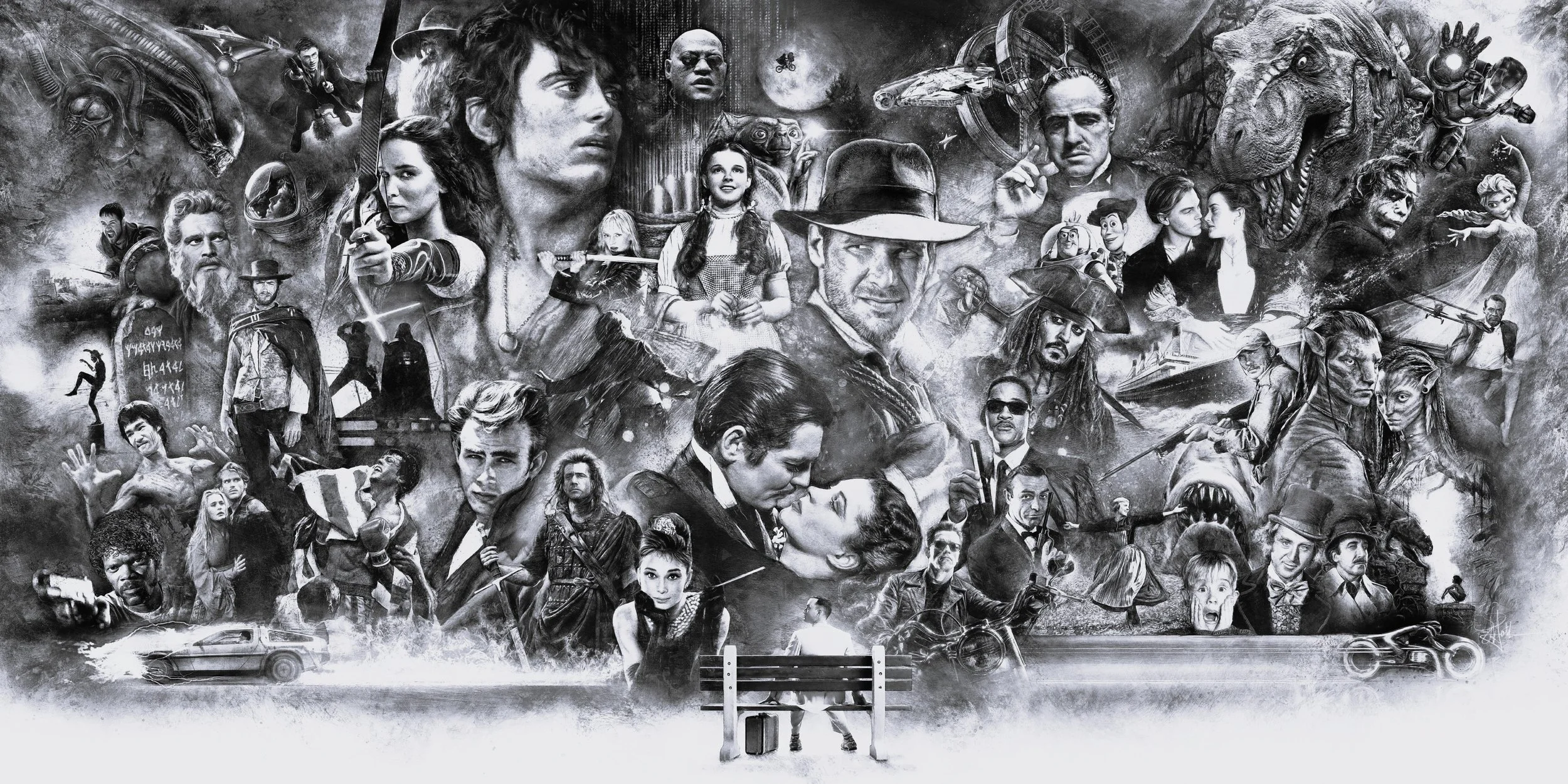
This movie questionnaire was originally created by Alexander from Cinemaniac Reviews. Sadly, I believe that website is now defunct. However, that doesn’t in anyway invalidate the questionnaire itself which has some very good questions about your relationship with cinema. Some of my answers to the questions posed are about films that I enjoy, as opposed to those that are considered cinematic classics. However, I have answered some questions more seriously than others, especially the one about undeserving recipients of the Best Film Oscar. I struggled with a couple of questions because I no longer go the cinema as frequently as I did 10 years ago. This is mainly due to the fact that a lot of the films I find interesting end up going straight to streaming after very brief theatrical releases. Some do not even get shown in cinemas. Hence I view far more at home. But I digress. On with the questions and answers. Feel free to comment below and share your views.

Exit 8 is a sophisticated and claustrophobic psychological thriller directed by Genki Kawamura, which skilfully transforms a minimalist indie walking-simulator game into a cinematic existential enigma. This overtly metaphorical film renders the repetitive nature and drudgery of modern working life into a physical environment in which the lead character is trapped and must find a way out. A random, brutal maze filled with an atmosphere of indifference to the lab rats that find themselves trapped within. Or is it their personal guilt that has put them there? Genki Kawamura’s psychological mystery draws inspiration from the Japanese video game of the same name, as well as from the cyclical nature of Groundhog Day and endless corridors of the Overlook Hotel in Kubrick’s The Shining. Although there are jump scares and some ghoulish imagery, this is not a horror vehicle. Instead this is a disquieting psychological drama with a strong sense of morality.
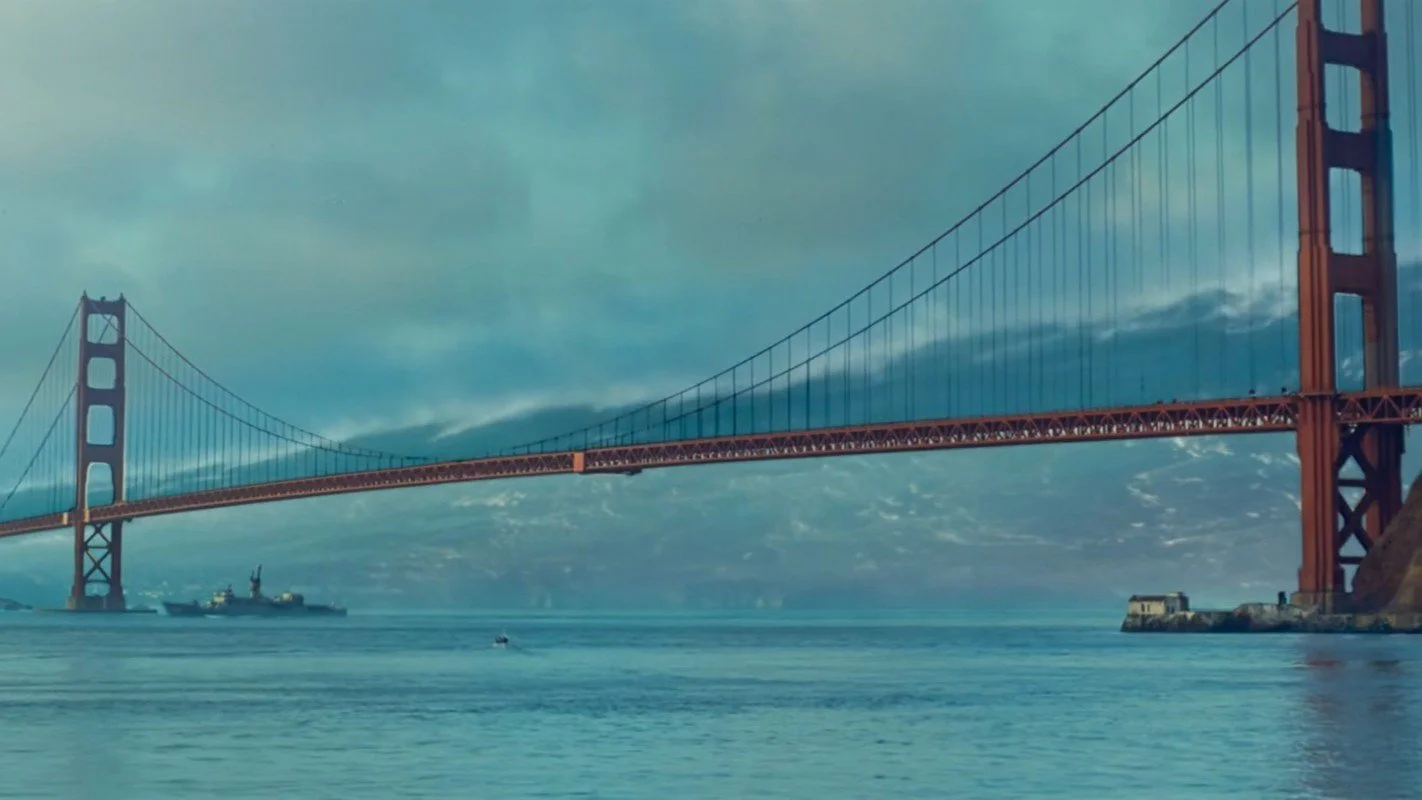
I wrote a post 18 month’s ago regarding whether a directors cut of a film is superior by default to the version originally shown in cinemas. Obviously the answer was no and I then went on to give three examples of films where I think the theatrical release is better to lengthier or substantially altered director’s cut that was subsequently made available at a later date. This time round in this post, I would like to do the complete opposite. I shall provide some examples of films that I think are significantly improved by a longer cut or a substantially, restructured edit. Note some of these examples are technically not a “director’s cuts” but a restoration or reconstruction of the director’s original vision. I shall endeavour to highlight what specific material or broader changes make each respective film “better”. As ever, all of these examples are a matter of subjective opinion and my views are presented as such, not “fact”.
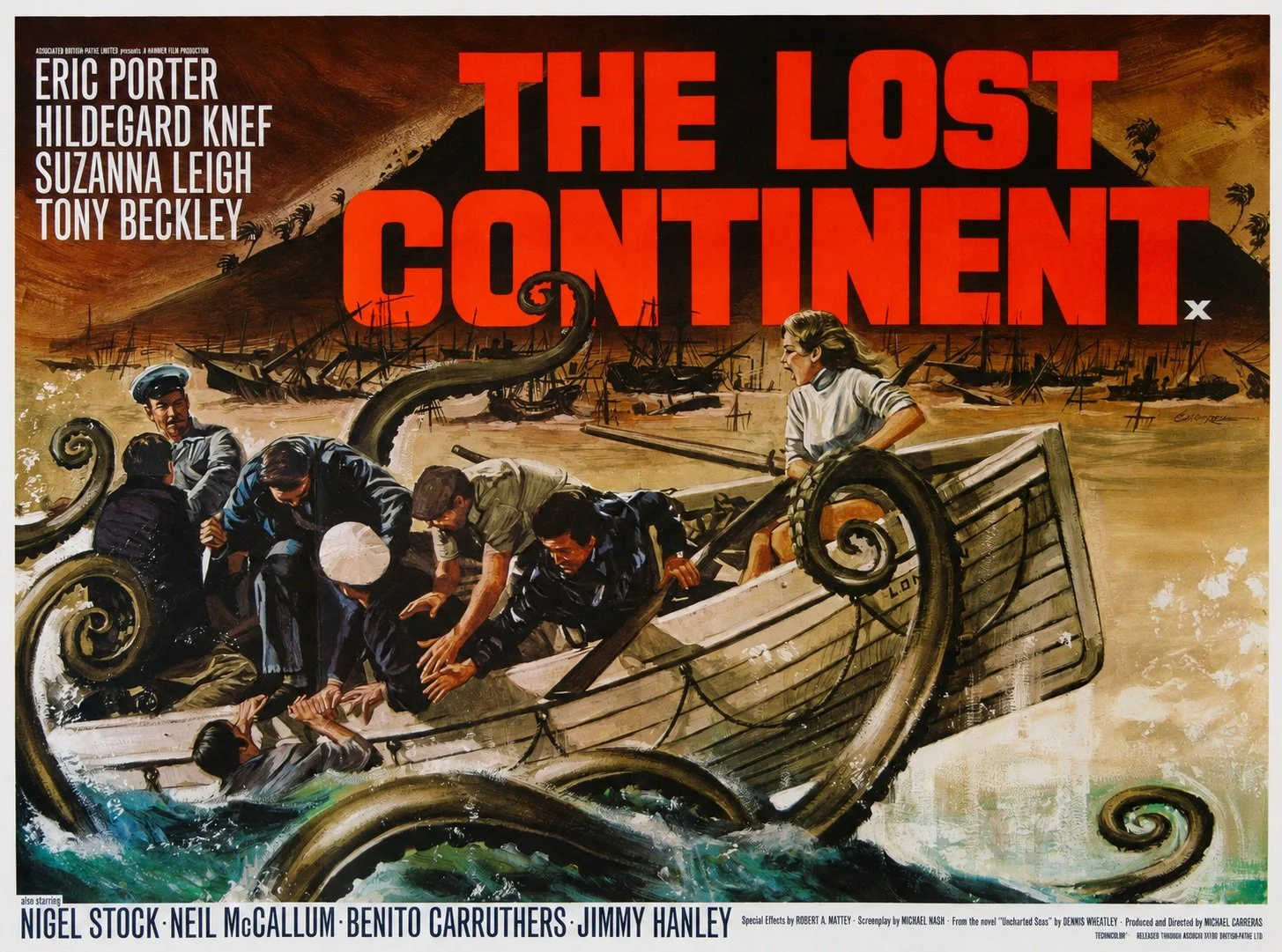
In 1968 the dilapidated freighter Corita hastily leaves Freetown to avoid a customs inspection. Captain Lansen (Eric Porter) has a cargo of dangerous explosives which he is smuggling so he can finally retire. His ship’s passengers also have reasons for leaving in a hurry. Dr. Webster (Nigel Stock), together with his daughter Unity (Suzanna leigh), is relocating due to his indiscretions with patients and illegal operations. Alcoholic pianist Harry Tyler (Tony Beckley) is aimlessly drifting from port to port. Eva Peters (Hildegard Knef) is fleeing from her husband with stolen bearer bonds which she intend to use to buy back her son from his evil clutches Caracas. Ricaldi (Ben Carruthers), a questionable lawyer, is pursuing Eva to retrieve the stolen bonds. First officer Hemmings (Neil McCallum) suggests that the ship should return to Freetown after an imminent Hurricane warning. The Captain asks the passengers and they are unanimous that they do not wish to return. However a mutinous crew, the bad weather and the instability of the explosives force everyone to abandon ship. The survivors find themselves adrift in a lifeboat surrounded by a strange carnivorous seaweed.
Jason Statham is an exemplar of the US mantra of “staying in your lane”. He makes action movies and occasionally strays into action comedies. His formula broadly works and is sufficiently lucrative to keep Mr. Statham employed. Therefore, if you watch a film in which he stars, you have a fairly good idea of what you’ll be getting. Of late, the criteria for his action vehicles have become more succinct. Jason Statham will play an innocuous character, such as a construction foreman or a bee keeper. Something terrible will subsequently befall another character who Mr. Statham has an emotional connection with in some capacity. He will subsequently hunt down those responsible and meet out death and violence. At some point the villain of the story will enquire as to how this innocuous person is so lethal. Research will then show that our Jason is in fact an ex-police officer/special forces operative/international assassin. There’s then a showdown and the villain dies. Job done.
The Light at the Edge of the World presented itself as an action movie upon its release in 1971. Based upon a story by Jules Verne, the Spanish American co-production was driven by its star Kirk Douglas, who curiously hired British director Kevin Billington to helm the project. This tale of a lighthouse keeper fighting a war of attrition against a group of pirates that have captured his island, was market as an adventure film ostensibly in the idiom of the authors previous works and as a pirate movie. MGM bought the rights to distribute the film in the UK on the misunderstanding that it was a family friendly production. It was not and remains so. They subsequently had to cut 15 minutes of violence and torture as well as an undercurrent of sexual assault to secure a suitable rating. Conversely, the US distributors received an arbitrary PG rating, despite the fact this is one of a handful of films that honestly depicts pirates as murderers, rapists and worse.
It’s an established action film trope. The fire team comprised of ex-military personnel, move in on their target. Only to have the tables turned by someone they don’t deem a threat. What makes it different in The Last Stand of Ellen Cole is a throwaway line of dialogue. The bested operative lies bleeding on the floor and the protagonists stands over them ready to finish them off. “Don’t, I have a cat” they feebly plead. For me that was the icing on the cake. The movie had already established it was taking the “same old, same old” and doing something different. Something fun, if taken in the right spirit. This scene tipped the balance and I embraced this film because it was being honest about what it is. This is a modern B movie that decides to give a very specific sub-genre a makeover. Furthermore, its clearly done with an affectionate wink, which is very different to sly wink. This isn’t deliberate self-knowing irony. Its just a film doing something different and possibly silly but it genuinely wants to have fun with it.
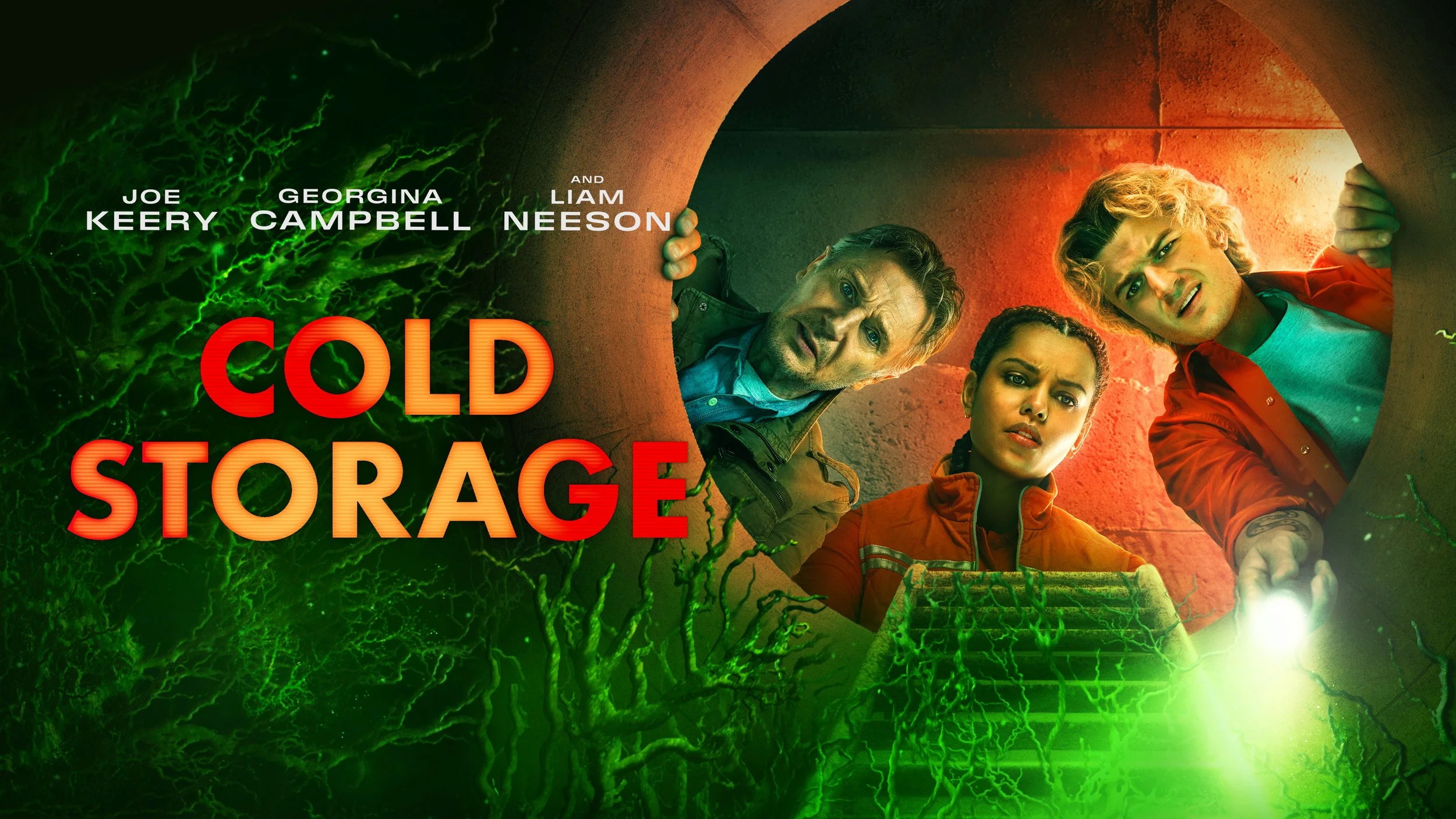
David Koepp is no stranger to genre cinema, having written the screenplay for such films as Jurassic Park, Spider-man and War of the Worlds. Where these titles are big budget, major studio productions, Cold Storage is a far more modest production with a smaller scope. Adapted from his own novel, the screenplay is by David Koepp and the film is directed by British film-maker Jonny Campbell. At first glance, Cold Storage seems a somewhat derivative science fiction horror film with a relatively modest budget, financed through a convoluted US and French co-production. Lurid green and red colours feature heavily in the marketing artwork and it is easy, after a cursory look, to write the film off as cheap, generic, direct-to-streaming filler. However, Cold Storage is prime example of why you should not judge a book by it’s cover, or in this case, a film by its posters and online advertising. It is in fact an amusing and fun endeavour that can fill an evening.
The Last Hunter (1980)
There are many films about war. There are many films about the Vietnam war. A few have transcended mere historical depiction and managed to capture the utter horror and political insanity of the situation, along with the tragic human cost. And then there are those which simply seek to use the setting as a vehicle for an exploitation movie, in the hope of making a fast buck. The Last Hunter (L'ultimo cacciatore) falls firmly into the second camp. This Italian "macaroni combat" movie (yes, I didn’t know that’s a thing either) offers a straight forward tale of an incursion behind enemy lines by an officer charged with destroying a radio transmitter, broadcasting anti-US propaganda. It is violent, action packed and surprisingly honest about what sort of film it is. You’ll find no pretentious philosophical musings here. Just explosions, rotting corpses and Viet Cong booby traps.
There are many films about war. There are many films about the Vietnam war. A few have transcended mere historical depiction and managed to capture the utter horror and political insanity of the situation, along with the tragic human cost. And then there are those which simply seek to use the setting as a vehicle for an exploitation movie, in the hope of making a fast buck. The Last Hunter (L'ultimo cacciatore) falls firmly into the second camp. This Italian "macaroni combat" movie (yes, I didn’t know that’s a thing either) offers a straight forward tale of an incursion behind enemy lines by an officer charged with destroying a radio transmitter, broadcasting anti-US propaganda. It is violent, action packed and surprisingly honest about what sort of film it is. You’ll find no pretentious philosophical musings here. Just explosions, rotting corpses and Viet Cong booby traps.
Directed by veteran Italian film maker Antonio Margheriti (and billed as Anthony Dawson on English language prints), The Last Hunter is a well-made (by Italian cash-in genre standards) exploitation war movie, with a solid international cast and good action set pieces. Margheriti had a background in miniature effects and the film features several scenes of this kind, such as the rail yard bombing at the start and the jungle cave demolition in the films second act. The dialogue is functional (and all dubbed in post-production like so many Italian movies of this kind) and the story efficiently moves the actors from set piece to set piece. There’s even the bonus of a minor twist in the movies climax. David Warbeck is suitably grizzled and burnt out as Captain Morris and Tisa Farrow fills the roll of the “plucky news reporter” embedded with the unit. There’s also wise cracking banter between Tony King and Bobby Rhodes as the units African-American representation. Connoisseurs of eighties Italian genre movies will delight at the cast and the additional inclusion of John Steiner as a suitably deranged Major.
Being an Italian movie of the times, there are copious acts of violence including a graphic gunshot to the eye, a partial decapitation and a leg amputation. There’s also a lot of crude barrack room humour and an attempted rape, but hey that’s how these movies roll. It almost as if there’s a check list being followed. The location cinematography in the Philippines gives the proceedings an authentic feel and like so many Italian movies from this decade, the soundtrack by Franco Micalizzi is contemporary, funky and far more interesting than some traditional orchestral scores. As this movie is not designed to be a cerebral undertaking it has to be judged on what it has to offer. And on that basis, then The Last Hunter is a better than average ninety plus minutes of Italian exploitation cinema. It is also a good steeping stone into the wider works of director Antonio Margheriti. If you enjoy this movie you may wish to try, Codename: Wild Geese (three guesses which movie this rips off), Command Leopard and Killer Fish. All have an interesting international cast, miniatures effects work along with either gore or action.
The Last Hunter Bonus Track: Music from the opening night club scene.
Mainstream films are easy to recommend to people. They’re usually formulaic, work within clear parameters and they’re not controversial. Most people, when viewing such film on someone else’s suggestion, are left with a fairly simply choice. Did they like it or not? Whatever the outcome, no feathers are ruffled. No one looks at you askance afterwards and says “why the hell did you think I’d like that piece of shit”? If something like this happens, then you have clearly not recommended a mainstream film. Perhaps you’ve suggested something that’s a little more of an acquired taste. Something niche, from a very specific sub-genre. Which brings me neatly to Blazing Magnum AKA Strange Shadows in an Empty Room (1976). The US title gives the impression that this film is a hard boiled cop thriller, like so many others that followed in the wake of Dirty Harry. But there’s a clue in the European title. Yes, this movie has more than just a whiff of a giallo about it.
Jason Statham is an exemplar of the US mantra of “staying in your lane”. He makes action movies and occasionally strays into action comedies. His formula broadly works and is sufficiently lucrative to keep Mr. Statham employed. Therefore, if you watch a film in which he stars, you have a fairly good idea of what you’ll be getting. Of late, the criteria for his action vehicles have become more succinct. Jason Statham will play an innocuous character, such as a construction foreman or a bee keeper. Something terrible will subsequently befall another character who Mr. Statham has an emotional connection with in some capacity. He will subsequently hunt down those responsible and meet out death and violence. At some point the villain of the story will enquire as to how this innocuous person is so lethal. Research will then show that our Jason is in fact an ex-police officer/special forces operative/international assassin. There’s then a showdown and the villain dies. Job done.
The Light at the Edge of the World presented itself as an action movie upon its release in 1971. Based upon a story by Jules Verne, the Spanish American co-production was driven by its star Kirk Douglas, who curiously hired British director Kevin Billington to helm the project. This tale of a lighthouse keeper fighting a war of attrition against a group of pirates that have captured his island, was market as an adventure film ostensibly in the idiom of the authors previous works and as a pirate movie. MGM bought the rights to distribute the film in the UK on the misunderstanding that it was a family friendly production. It was not and remains so. They subsequently had to cut 15 minutes of violence and torture as well as an undercurrent of sexual assault to secure a suitable rating. Conversely, the US distributors received an arbitrary PG rating, despite the fact this is one of a handful of films that honestly depicts pirates as murderers, rapists and worse.
It’s an established action film trope. The fire team comprised of ex-military personnel, move in on their target. Only to have the tables turned by someone they don’t deem a threat. What makes it different in The Last Stand of Ellen Cole is a throwaway line of dialogue. The bested operative lies bleeding on the floor and the protagonists stands over them ready to finish them off. “Don’t, I have a cat” they feebly plead. For me that was the icing on the cake. The movie had already established it was taking the “same old, same old” and doing something different. Something fun, if taken in the right spirit. This scene tipped the balance and I embraced this film because it was being honest about what it is. This is a modern B movie that decides to give a very specific sub-genre a makeover. Furthermore, its clearly done with an affectionate wink, which is very different to sly wink. This isn’t deliberate self-knowing irony. Its just a film doing something different and possibly silly but it genuinely wants to have fun with it.
Stephen King’s dystopian story, The Running Man, was previously adapted very loosely in 1987, as a vehicle for Arnold Schwarzenegger. That version focused mainly on the “Battle Royale” element of the story and leaned heavily into Arnie’s personality, rather than the politics of the book. It also wasn’t well received by the author. Edgar Wright’s remake follows the source text a lot more closely and is far more interested in its political themes and wider social commentary. Furthermore, this version re-establishes the everyman quality of the hero of Ben Richards, rather than him being the muscle bound, ex-military hero as per Mr. Schwarzenegger’s prior interpretation. This time round, The Running Man uses a lot of the visual and narrative tropes of contemporary reality TV, making this forty three year old story very relevant to today’s viewers and couching the film in a style that is recognisable and accessible.
After the success of Raiders of the Lost Ark in 1981, filmmakers scrambled to find existing intellectual properties that they could use for similar films. Hence archaic heroes such as Alan Quatermain were hastily given a modern makeover and thrust into generic movies, in a vague attempt to replicate Steven Spielberg’s successful formula. Which brings us neatly on to James Charles Bigglesworth AKA “Biggles”, a fictional pilot and adventurer from a series of books written by W. E. Johns between 1932 and 1968. Several attempts had been made in the past to bring this character to the silver screen, including one by Disney but they all failed. However, the commercial and critical success of Indiana Jones provided sufficient impetus to greenlight a new film. However, due to some curious production choices, when Biggles was finally released it was far from just a period set, action movie.
Setting aside the hubris of remaking a film such as Red Dawn, the 2012 reboot had a troubled production. Shot over the course of late 2009, on location in Michigan, MGM intended to release the film in September 2010. However, the studio’s financial problems became unsustainable over the course of that year and the film was shelved, while a financial solution was sought. Furthermore, while Red Dawn was in post production, there was a major economic shift within Hollywood due to the increasing importance of the Chinese market. This was a significant problem for MGM because the new version of Red Dawn had the Chinese invading the USA instead of Russia. Hence there were reshoots and the need for additional visual effects, so that the Chinese could be replaced with North Koreans. MGM eventually went bankrupt and the distribution rights to Red Dawn were sold off. The film was eventually released in 2012.
When I first saw the promotional trailer for Gangster Squad back in 2012, prior to its release, I wasn't especially impressed. I simply thought the film was another attempt to re-invent the gangster genre for a generation who were not especially familiar with it. I wasn't exactly overwhelmed with director Ruben Fleischer's resume either. I didn't particularly like Zombieland and haven't seen 30 Minutes Or Less. Then came the tragic mass shootings in Aurora, Colorado which led to the movie being delayed so that the original ending, which featured a shoot-out in a movie theatre, could be replaced. Hence when I finally watched this film recently, I wasn't expecting a movie up to the standards of say Once Upon A Time In America or Miller’s Crossing and it would seem that I was right do so. Gangster Squad is not especially noteworthy in any respect.
Levon Cade (Jason Staham) is a former Royal Marine Commando who has retired from military service and now works as the leader of a construction team in Chicago. He has a close relationship with Joe and Carla Garcia (Michael Peña and Noemi Gonzalez ) who run the company and considers them as family. Outside of work, Levon is involved in a bitter custody battle for his daughter, against her maternal grandfather, who blames Levon for his daughter’s suicide. When Garcia's teenage daughter Jenny (Arianna Rivas) goes missing, Levon reluctantly agrees to help her parents and get her back. Beginning his search at the nightclub where Jenny was last seen, he soon discovers that she was abducted by Russian traffickers. Furthermore, the culprit is Dimi Kolisnyk (Maximilian Osinski), the wayward son of a senior ranking gangster.
PC Nicholas Angel (Simon Pegg) is an exemplary Police Officer, with a strict adherence to the letter of the law. As a result of making the rest of the London Metropolitan Police look bad, he is transferred to the rural town of Sandford, Gloucestershire. On arrival, Angel finds that the local Inspector, Frank Butterman (Jim Broadbent), takes a far more laissez-faire approach to policing. His colleagues are incompetent and he is further hampered by the Neighbourhood Watch Alliance (NWA), who prioritise low crime statistics over law enforcement due to their desire to win the title of “Village of the Year”. Furthermore, Angel is partnered with the Inspector’s son, Constable Danny Butterman (Nick Frost), who is infatuated with “buddy cop” movies and is in awe of Angel’s London experience. “Have you ever fired two guns while jumping through the air?” However, a sudden spate of grisly accidents lead Angel to believe that there's more to the seemingly tranquil and picture-perfect community than meets the eye.
As a collection of history's worst tyrants and criminal masterminds gather to plot a war to wipe out millions, one man must race against time to stop them. Discover the origins of the very first independent intelligence agency in The King's Man. Based on the Comic Book “The Secret Service” by Mark Millar and Dave Gibbons. 20th Century Studios
Matthew Vaughn’s The King’s Man is an inconsistent film, both narratively and tonally. It veers between serious themes and stylised, hyperbolic action. At times it does quite a good job of exploring such complex subjects as global politics, mechanised warfare and colonialism. Sadly it then wrenches the viewer out of these cerebral reveries as it lapses into the sort of over the top action sequences that were notable in the two earlier films. It’s a shame because The King’s Man gets so many other aspects of the production right. The casting is very interesting, especially Ralph Fiennes as the “pacifist” Duke of Oxford. He is actually a very good fit for the action genre. Djimon Hounsou and Gemma Arterton are given little backstory beyond being respectively the faithful manservant and the family nanny but both are notable due to their own inherent acting chops and personal charisma. Rhys Ifans obviously has a great time as Grigori Rasputin, ensuring all the man’s vices are robustly depicted.
On paper, a video games franchise such as Assassin’s Creed lends itself perfectly to a cinematic adaptation. The parkour action scenes, the historical settings and the contemporary conspiracy theory themes are all elements that should play well with a modern youth audience. Hence with the backing of a major studio such as Twentieth Century Fox and a budget of $125 million, the 2016 movie should have been a guaranteed box office hit. The casting of Michael Fassbender, an actor who is comfortable with serious roles and big Hollywood franchises, should have carried this film comfortably over the finishing line. Director Justin Kurzel, who had found critical success with his adaptation of MacBeth a year previously, must have looked like a safe pair of hands to handle such a project. Sadly, that was not the case. Assassin’s Creed is not the sum of its parts, in fact many elements appear to be pulling in opposite directions. The resulting feature film is staggeringly dull, soulless and a chore to watch. A testament to how modern big budget franchise movies have become a production line, with all the art stripped from them.
300: Rise of an Empire is a curious beast, being neither a sequel nor a prequel. It is infact a tale that takes place simultaneously with those of the original movie. While Gerard Butler is busy making a last stand at the Battle of Thermopylae, fellow warrior and politician Themistokles, played by the singularly uncharismatic Sullivan Stapleton, leads a similar army of buffed Greeks against the Persian fleet. Once again we have a movie that is the epitome of style over substance, complete with a sound design that challenges what can physically be endured by human hearing. They say the first casualty of war is innocence but in this type of movie it's closely followed by historical accuracy and authentic depictions of ethnicity. 300: Rise of an Empire is a cinematic assault upon the senses but not in a good way like Mad Max: Fury Road.
Back in September 2017, Liam Neeson stated in an interview with Sky News that he was retiring from the action genre, due to his age. He felt that audiences would question his credibility in such roles. After the release of The Commuter (2018) and Cold Pursuit (2019) Mr Neeson appeared to return to human dramas and films that focus on performance rather than punching man and beast. Ordinary Love and Made in Italy, both released in 2019, demonstrate the actor’s versatility and skill. People seem to forget that he is a thespian who was initially known for his character driven roles in films such as The Mission (1986), Rob Roy (1995 and Michael Collins (1996). It was only in 2008 that he reinvented himself as an action hero. It’s all a far cry from Schindler’s List and his performance that earned him an academy award nomination. The reason I mention all of this is because The Ice Road is the third action movie I’ve seen in 2021 that stars Liam Neeson.
One of the stand out tropes of the modern action film is that the stakes are always cranked right up to 11. Terrorists, biological weapons and nuclear bombs are common threats in such movies with a hero or heroes trying to save the world from death and destruction or worse. However, back in the sixties and seventies, things were a little more straight forward and in some respects more credible. Take When Eight Bells Toll, released in 1971, for example. British Treasury secret agent Phillip Calvert investigates the theft of £8,000,000 in gold bullion by a gang of international smugglers. In the context of the times this was no small beer however it’s somewhat mundane compared to fighting super villains and their space lasers. Frankly I prefer these low key plot devices as they can make a film a little more plausible within the confines of the genre. A concept that is often forgotten today.
Forensic accountant Owen Casserly (Jake Weber) flees his home with his teenage son Connor (Finn Little) when he discovers he has been targeted by a pair of assassins (Nicholas Hoult and Aidan Gillen) who have been hired to stop him giving evidence in a major corruption case. Connor witnesses the murder of his father after their car is run off the road. Entrusted with important written evidence, he escapes into the dense forests of the Montana wilderness pursued by the killers. Seeking help he runs into smokejumper Hannah Faber (Angelina Jolie) who is stationed at a remote fire lookout tower. Hannah suffers from PTSD from a previous forest fire in which she was unable to save three young boys. Hannah attempts to lead Connor through the forest to safety. Meanwhile the assassins set fire to the forest to divert the attention of the authorities and cover their tracks.
I must admit that I did not have particularly high hopes for Paul W S Anderson's remake of the 1975 Roger Corman produced cult classic. Anderson’s work varies greatly. Event Horizon and Soldier are solid genre films but I still have not fully come to terms with Alien vs. Predator. Jason Statham is also a name that divides the public, with solid material such as The Transporter and unfathomable tosh like Revolver. But despite these considerations, Death Race is in fact quite a surprise and does not follow the path that so many remakes do. It takes the basic themes and concept associated with the original and tries to do something different with them. It doesn’t reinvent the wheel nor is it a genre milestone. But it does offer a different spin on things, have some engaging action scenes and provide some dumb but enjoyable entertainment. When combined with snacks and some beer this is a passable way to kill 111 minutes.
I did not watch Zero Dark Thirty upon its initial release, due to the politics surrounding it. I wanted to be able to view it free from bipartisan debate. Eight years on I believe this now achievable and although debate still exists it is now more measured and less strident. Zero Dark Thirty is certainly a compelling movie. It plays as a docudrama, providing an in-depth study of the US intelligence services hunt for Osama Bin Laden. It cannot be faulted on a technical level and the performances are very strong. It does not adopt a celebratory or triumphalist tone in its approach to the story. Director Kathryn Bigelow endeavours to keep the proceedings focused upon the intricacies of an intelligence driven manhunt. There is little or no tubthumping, jingoism. The decision to find Bin Laden is shown as a political and military exercise of foreign policy. The film solely focuses on the story from a US perspective but that is perfectly acceptable as it is not intended to be an exploration of geo-politics.
Firestorm was originally written as a vehicle for Sylvester Stallone, however when the production company Savoy Pictures went bankrupt the screenplay was bought by Twentieth Fox and the scope of the movie reduced to suit a lower budget. It’s broadly similar to Cliffhanger in so far as the lead character is a specialist in a certain field who runs afoul of criminals in a perilous environment. Whereas Cliffhanger is set in the Rocky Mountains, Firestorm takes place in the forests of Northern Wyoming. After the script was revised four times, the finished screenplay was given a final “polish” by Graham Yost who has considerable experience with the action movie genre. As stallone was no longer associated with the project and the production had been repurposed to be less extravagant, the movie was assigned to former NFL star Howie Long. Long had already appeared in the John Woo movie Broken Arrow (1996) and the Firestorm was seen as a means to give him a star vehicle.
The original French movies District 13 and its sequel District 13: Ultimatum, conceived and produced by Luc Besson, were enjoyable variations of the Escape from New York theme. Their charm lay in their European pedigree and the skilful use of parkour. The two leads, David Belle and Cyril Raffaelli, were eminently suited to the minimalist roles and the screenplays were fun. Half of these movies appeal was the fact that they were not mainstream US products. Brick Mansions is the Hollywood remake of District 13, as well as being Paul Walkers’ final movie. Sadly, this film is far from a fitting epitaph, being devoid of any charisma or innovations. It is blandly shot , poorly edited and has been stripped of everything that made the original entertaining.
Arnold Schwarzenegger's return to the big screen after his political career has been uneven to say the least. His cameos in The Expendables and The Expendables 2 were well received, with their self referential charm and age related irony. Yet his first major movie The Last Stand, although competent, failed to find an audience. Escape Plan fared better at the box office but did not put Arnie back on the A list. Effectively there's a large percentage of the contemporary cinematic audience who were born after his heyday and are simply not overt fans of his work. His core audience is more than likely of the age group that consume most of their film entertainment at home. Which may explain why Sabotage tanked in the US upon release on March 28th 2014. It was the worst opening box office of Arnie's career. He used to break first day opening records.
Sequels and reboots are hardly a new concept and have been a part of Hollywood culture since the 1930s. The success of the Universal Horror movies from that era being a prime example of direct follow ups and retconned movies. However, there is one fundamental rule that distinguishes a good sequel from a bad one. You should never mitigate, undermine or make irrelevant the events of the previous movie, just to provide your new film with a raison d'être. For example, the events of Aliens do not contradict or trivialise those that happened in Alien. In fact with that franchise there is a very clear logical progression between the two movies. The same is true for Mad Max and Mad Max 2 or Star Wars and The Empire Strikes Back. The key is to progress a story, enhance it or explore things from an alternative angle and bring something new to the cinematic table. Sadly this philosophy is all too often lost on corporate film making. Which means that many sequels are just tedious replays of prior films. Terminator: Dark Fate falls squarely into this category.
The enduring appeal of the character John Rambo in First Blood comes from the fact that he is a traumatised ex- service man who keeps himself to himself as he drifts from job to job, trying to come to terms with his wartime experiences. His poor treatment at the hands of a small-town Sheriff is a succinct metaphor for the social and political indifference that Vietnam veterans were shown upon their return to the US. He’s a man with a code in a world that no longer has any use for him. His simple and honest patriotism is not returned and he is in fact viewed with shame by many from the nation he loves. Furthermore, the first movie does not paint him as a cold-blooded killer. Despite provocation he is not the first person to shoot to kill. Rambo is in many ways a victim. A broken man, who society has asked to do unspeakable things. Now society wants nothing to do with him and fears the “monster” they created. Although clearly an action movie, First Blood had narrative depth and a flawed but sympathetic protagonist. 37 years and four movies later, such dramatic themes have long left the franchise. The central character is indeed a caricature of its former self.
It was hardly surprising that the movie adaptation of Chris Kyle's autobiography American Sniper, would cause controversy. The Iraq war, US Foreign Policy and national pride are seldom subjects that are discussed in a calm and measured fashion. And then there are the personal politics of director Clint Eastwood to consider. Hence there were claims from some quarters upon the movie’s release, that it was Islamophobic and counter claims that criticisms of the late Chris Kyle were unpatriotic. There still remain issues regarding the authenticity of events depicted in the source text and subsequently the movies screenplay by Jason Hall. Yet none of these factors have in anyway impacted upon the film's box office returns which currently stands at $247,900,417 worldwide.
Do I really need to present you with some sort of plot synopsis for Transporter 3? No, I didn’t think so. More of the same as Frank Martin (Jason Statham) and his police chum, Inspector Tarconi (Francois Berleand) become embroiled in yet another high-octane escapade. There's fights, car stunts, exotic international locations and a strong sense of humour. This time, the disposable love interest is a Ukrainian girl named Valentina (Natalya Rudakova) who fulfils her role succinctly. The film benefits by being set back in Europe, after the mistake of basing Transporter 2 in the US. This time, the story takes us to such locations as Budapest and Odessa. The international film crew once again bring a veneer of panache to the production that is conspicuously absent in US action movies. For a modest budget fil, Transporter 3 it looks very good. Again the proceedings are given a boost by a pertinent soundtrack by Alexandre Azaria and a selection of European “tunes”.
Jason Bourne originally graced our screens for the first time seventeen years ago. The Bourne Identity was a gritty, minimalist take on the espionage genre and a welcome change from the excesses of the Pierce Brosnan Bond era. The story arc was sustained over three movies and ended efficiently and succinctly. After which Matt Damon moved on, as did the director of two of the movies, Paul Greengrass. Which leaves us with The Bourne Legacy; the tangential sequel that arrived in 2012. A film that exists because the money men and bean counters hate to pass up on a franchise until it has been squeezed utterly dry. Hence, they commissioned the writer of the series, Tony Gilroy, to come up with a screenplay and direct a spinoff movie. Jeremy Renner was cast in the lead role. Yet despite narrative and production continuity, The Bourne Legacy was not a Jason Bourne movie with the star appeal of Matt Damon. Although the film turned a profit, it had the lowest box office returns out of the entire franchise.
During the eighties there was a clear league table of action movie stars. By the mid-nineties this system fell into decline and the Hollywood lacked any clearly defined exponents of the genre. A decade later, due to the success of Luc Besson’s Transporter films, Jason Statham became a bankable box office star in this field. When you look at Statham's early work in Lock, Stock and Two Smoking Barrels it is hard to envisage the "mockney geezer" as an international action star. Yet he has successfully stepped into the role and enjoys a large following. I enjoy his work as he has a likeable on-screen persona. My 88-year-old Mum likes him to because "he wears nice suits". The action genre seldom reaches such a diverse demographic.
Before we start, I recollect that one well known UK critic described Safe House as sub-Tony Scott, upon its release. Now I’ve always been conflicted over Scott’s back catalogue, as I’ve always found his movies to be hampered by their own unique style. The subtleties of his characters and depth of his themes are all too often drowned out by his frenetic style and fast paced editing. Therefore a comment such as this really sets off alarm bells for me. Having recently watched The Equalizer 2, I wanted a further fix of Denzel Washington in a similar action vehicle. As Safe House was available on Netflix UK, I decided to kill a couple of hours and see what actually constitutes as “sub-Tony Scott”.
War for the Planet of the Apes (2017)
There are times when watching the third instalment of the contemporary Planet of the Apes franchise that you feel like your experiencing something akin to Terrence Malick's The Thin Red Line. There is a narrative depth and an intelligence to the screenplay that you seldom see these days coming from a major studio production. As with the original movies, the story makes multiple subtle points about the nature of humanity and our self-destructive tendencies. Yet it’s all done in a thought full and measured fashion. If you wish to treat War for the Planet of the Apes as simply a science fiction action movie then you will certainly be provided with such a film. However, if you choose to engage your intellect and ponder some of the deeper aspects of the story you’ll be rewarded with much more.
There are times when watching the third instalment of the contemporary Planet of the Apes franchise that you feel like your experiencing something akin to Terrence Malick's The Thin Red Line. There is a narrative depth and an intelligence to the screenplay that you seldom see these days coming from a major studio production. As with the original movies, the story makes multiple subtle points about the nature of humanity and our self-destructive tendencies. Yet it’s all done in a thought full and measured fashion. If you wish to treat War for the Planet of the Apes as simply a science fiction action movie then you will certainly be provided with such a film. However, if you choose to engage your intellect and ponder some of the deeper aspects of the story you’ll be rewarded with much more.
Set two years on from events of the previous film the battle between humans and apes, instigated by the traitorous Koba (Toby Kebbell), has rendered the world a wasteland. Primate protagonist Caesar (once again an extraordinary Andy Serkis) is intent on protecting his species with as little further bloodshed possible. "I didn't start this war," he rhetorically states, while reflecting on the immense loss of ape life. Yet fate leads him to an inevitable encounter with Woody Harrelson's Colonel McCullough when his wife and child are killed, sending him on a potentially self-destructive journey. Director Matt Reeves steers the proceedings at a steady pace, focusing on character over action and spectacle. Sharing a writing credit with Mark Bomback, Reeves does not stray from the central story. Unlike other big budget movies, despite the underlying technology that dominates such productions, there is little self-indulgence and excess. This is a story driven by characters and their choices and struggles.
Once again, creativity is the key to exploring the boundaries of the PG-13 rating. The scenes in the prison camp are grim and worryingly plausible. There are nods to both past and contemporary despotism. The action scenes are large in scope but lack the modern trend for frenetic editing. There is violence, but it’s shot in such a way where it is powerful, yet not inherently graphic. Tonally, the movie has a very dour and prophetic ambience. It is also clear exactly which side the audience should be rooting for. There are again further nods to other classic war movies. Anti-ape rhetoric adorns soldiers’ helmets with phrase such as "Monkey killer" and "Ape-ocalypse Now". It’s not too difficult to see hints of Colonel Kilgore in Woody Harrelson's despotic military leader.
There is also a subtle expansion of the world that makes War for the Planet of the Apes feel wider in scope than its predecessor. Overgrown decaying cities, disused railway tracks and abandoned Coca-Cola lorries hammer home the point that this is the near future and not the ancient wasteland that Charlton Heston endured in the original. Yet despite the broad canvas in which events take place, the plot rarely stray from Caesar, orangutan Maurice (Karin Konoval) and Bad Ape (Steve Zahn), who provides a reprieve from the otherwise sombre events. As for the ending of War for the Planet of the Apes, it is the only credible outcome, establishing the narrative that Caesar is the messianic saviour of his people. The audience is left to reflect upon the future of both human and ape society and whether they can coexist or not. However, that is a story for another day but considering the ground that has already been covered by the Planet of the Apes trilogy, possibly a superfluous one.

Star Trek is slightly older than me by 14 months. I was born on December 18th 1967. Star Trek was first broadcast in the US on 8th September 1966. Hence this show has always been part of the prevailing pop culture that surrounded me, as I grew up. I first began watching Star Trek as a young child in the early seventies. It would be repeated on the BBC in the early evening on Fridays and it became a family ritual to sit down together and watch it. As a seven or eight year old, it left a great impression upon me and was in many ways, the television highlight of the week. Star Trek along with Doctor Who certainly started my interest in science fiction. Star Trek was also one of the first shows that introduced me to tie-in marketing. I remember seeing in a toy shop, near to my school at the time, a Dinky Klingon Battle Cruiser and was flabbergasted that such a thing existed. I immediately coveted it but sadly never obtained one.
David Koepp is no stranger to genre cinema, having written the screenplay for such films as Jurassic Park, Spider-man and War of the Worlds. Where these titles are big budget, major studio productions, Cold Storage is a far more modest production with a smaller scope. Adapted from his own novel, the screenplay is by David Koepp and the film is directed by British film-maker Jonny Campbell. At first glance, Cold Storage seems a somewhat derivative science fiction horror film with a relatively modest budget, financed through a convoluted US and French co-production. Lurid green and red colours feature heavily in the marketing artwork and it is easy, after a cursory look, to write the film off as cheap, generic, direct-to-streaming filler. However, Cold Storage is prime example of why you should not judge a book by it’s cover, or in this case, a film by its posters and online advertising. It is in fact an amusing and fun endeavour that can fill an evening.
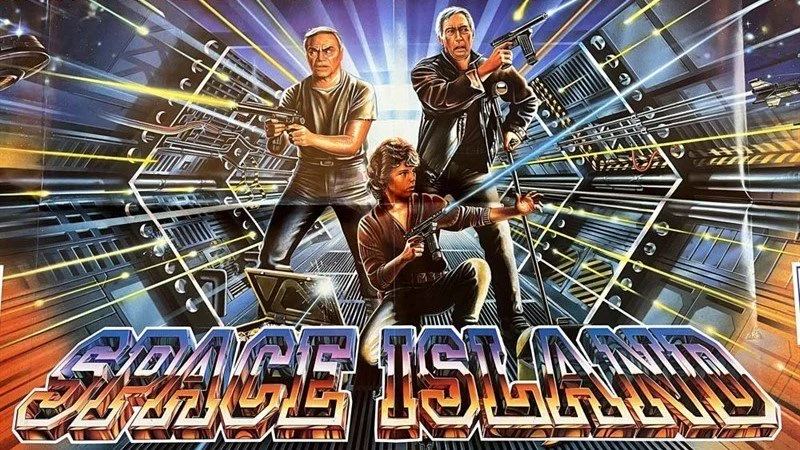
Treasure Island In Outer Space is a curious Italian television production from 1987 starring Anthony Quinn and Ernest Borgnine. It also features numerous international actors better known for their work in cult and exploitation films, such as Bobby Rhodes, David Warbeck and John Morghan. Directed by Antonio Margheriti (AKA Anthony Dawson), famous for such films as Killer Fish (a cash in on Piranha) and The Last Hunter (a Vietnam exploitation epic), Treasure Island In Outer Space is a faithful adaptation of Robert Louis Stevenson’s classic novel. The screenplay by Renato Castellani and Lucio De Caro draws heavily from the source text, maintaining character names and original dialogue. However in updating the material to a futuristic setting, the script is littered with the worst kind of eighties sci-fi clichés. We are subjected to sonic trains, anti-gravity rays and the usual buzzword driven faux science.
After the success of Raiders of the Lost Ark in 1981, filmmakers scrambled to find existing intellectual properties that they could use for similar films. Hence archaic heroes such as Alan Quatermain were hastily given a modern makeover and thrust into generic movies, in a vague attempt to replicate Steven Spielberg’s successful formula. Which brings us neatly on to James Charles Bigglesworth AKA “Biggles”, a fictional pilot and adventurer from a series of books written by W. E. Johns between 1932 and 1968. Several attempts had been made in the past to bring this character to the silver screen, including one by Disney but they all failed. However, the commercial and critical success of Indiana Jones provided sufficient impetus to greenlight a new film. However, due to some curious production choices, when Biggles was finally released it was far from just a period set, action movie.
The seventies was an interesting time for UK genre television. Despite small budgets and often low key visual effects, there was no shortage of good ideas and creativity. Sapphire & Steel is a prime example of a show couched in a high concept, produced on a shoestring. It also credits its audiences with some degree of intelligence. Rather than spoon feeding the narrative in a didactic manner, it hints and implies, then leaves the rest to its viewers imagination. Created by Peter J. Hammond, a veteran TV writer, Sapphire & Steel centres on a pair of interdimensional operatives named Sapphire and Steel. They are two of a number of elements that assume human form. Over the course of three seasons little is revealed about the pair but they appear whenever there is any anomalous temporal activity. Time itself is portrayed as a sentient and malignant force that seeks to make incursions into the present reality, through weaknesses in the fabric of space.
The Humanoid is one of many international Star Wars knock-offs that flooded cinemas in the late seventies and early eighties. Like so many others, it is derivative (even to the extent of replicating specific scenes from George Lucas’ movie), replete with awful dialogue and has somewhat basic production values. However, it does have an interesting cast including Richard Kiel, Barbara Bach, Arthur Kennedy and Corinne Cléry. Kiel gained a lot of media attention after his appearance as the steel-toothed villain Jaws in the 1977 Bond film, The Spy Who Loved Me. His stature made him the perfect fit for the titular character in this Italian science fiction production. Sadly, beyond a curious lineup of actors, The Humanoid has little to distinguish it from so many similar movies. For example, if you’ve seen Starcrash then you’ll be adequately prepared for this film.

Some films are made with the intention of starting a franchise, others evolve into one after a surprise box office success and lucrative sequels. Alien (1979) falls into the latter category. A mid-budget science fiction horror film that was well crafted and then benefited immensely by being released at just the right time. Sadly, many franchises become derailed and enter into a death spiral due to competing artistic visions, cynical studio politics and cinematic ignorance. This has certainly afflicted all subsequent Alien films after James Cameron’s magnificent Aliens (1986). Sometimes, a franchise can correct its course and do something fresh with the source material. Prey (2022) is a fine example of this with director Dan Trachtenberg bringing fresh vigour and intelligence back to the Predator movies. I believe that was the intention with Alien Romulus (2024). Sadly, the road to hell is paved with good intentions.

Event Horizon is a curious movie hybrid, mixing plot elements from classic sci-fi and horror genres. It has been labelled “Hellraiser in Space” by some lazy critics, although I think there's far more to it than that. Perhaps a more apt description would be a Gothic horror story set in space. The movie has garnered a cult reputation since its release in 1997, mainly due to its graphic imagery and troubled production history. It does indeed have some quite shocking sequences but the lightning editing does not show as much as some would think. Paramount forced director Paul W S Anderson to reduce the original one hundred and thirty minute running time down to a more manageable ninety, after unfavourable test screenings. Much of the violence was allegedly removed as a result of that process. Sadly nothing survives of the removed material other than a VHS workprint. Hence a restored director’s cut is therefore unlikely.
I recently watched the first trailer for the new Obi-Wan Kenobi television show that is premiering on Disney + in May. I am interested in this latest instalment in the Star Wars franchise and curious as to whether Liam Neeson will make an appearance. I also watched a 20 minute fan video in which they “analysed” the entire trailer. They discussed the content of this 2 minute preview and then did a great deal of speculating about potential themes and characters that may feature in the show. They were clearly enthusiastic about what they had seen and were very knowledgeable about the subject. This resonated with me, as I like to be well versed about the things I enjoy. However, it is worth remembering that fandom can tip into obsession and gatekeeping. Hence I feel there is a subject to explore here.
On paper Finch has little originality. The moment I read the plot synopsis and saw the first trailer I instantly thought of other such films as Silent Running, Short Circuit and Chappie. However, irrespective of its derivative concept and the fact it channels many of the major tropes of the genre, it does have three cards to play. Namely strong performances by Tom Hanks, Caleb Landry Jones and canine actor Seamus. Although not a genre milestone, Finch is a curiously pleasant post apocalyptic road movie. Despite travelling through the sun bleached vistas of a ravaged America, the story focuses on the three protagonists and their relationship. It is no small feat to find genuine sentiment in such a harsh environment and indeed in such a genre but Finch proves to be an engaging emotional journey. Once again the most effective explorations of the human condition are often through characters who are conspicuously not.
I wanted to watch Source Code for a second time before I wrote about it. This is because numerous internet debates have arisen regarding the plausibility of the film’s ending. I find this a somewhat curious stance considering that the story, written by Ben Ripley, deals with temporal travel and multiple timelines. All of which are purely theoretical and not currently subject to singular, definitive interpretations. I would further add that the science of the film is simply a plot device and is not its raison d'être. But that’s movies for you. People love to discuss them and more recently we have seen the rise of “explanation” videos on YouTube. However, the latter is a separate debate and something I may write about in the future. As for Source Code, I enjoyed it even more the second time round, as I had the time to focus on the minor details rather than trying to stay abreast with the main plot, as I did on my first viewing.
I revisited M Night Shyamalan's The Happening recently to try and determine whether he is indeed suffering from Orson Welles syndrome. IE that he has made all his best work at the beginning of his career. Because he’s never quite recaptured the critical or artistic success of The Sixth Sense, Unbreakable and Signs. I was one of the few that actually liked The Lady in The water but I could see why viewers would assume that he had become a victim of his own style and technique with that particular movie. Casting yourself as an author whose work will reshape society and change the course of history is at the very least, a little egotistical and at worst an act of immense hubris. Then in recent years we have had The Last Airbender and After Earth, both of which have performed poorly. However I thought I'd give The Happening another chance as it remains the directors only R rated movie to date.

I wrote an article back in 2009 as to why I felt a remake of The Thing was a bad idea. At that time, the project was in development hell and didn’t look like getting off the ground. Subsequently, the production evolved into a prequel and managed to find financial support, culminating in a theatrical release in late 2011. Like many interested parties, I watched the initial teaser trailer with a mixture of curiosity and trepidation. Then when the red band trailer arrived I felt that the shark was well and truly jumped. Too much was shown (a common problem with modern trailers) and there the internet was awash with discontented mutterings from John Carpenter purists. Hence I refrained from watching this movie for several years. When I finally got round to doing so, I was not well disposed towards it. However, over the Christmas holidays, I decide to give this prequel a second viewing and see if I could approach it with a less partisan mindset.
Cloverfield (2008) was a surprise hit, earning $172 million worldwide at the box office against a $25 million budget. Paramount Pictures naturally wanted a sequel but director Matt Reeves and writer Drew Goddard struggled to find a suitable narrative means to progress the original story. Both eventually left the project and the production descended into development hell. The subsequent success of Godzilla and Pacific Rim saw the Kaiju genre becoming oversaturated and so the decision to make a direct sequel was re-evaluated. Eventually a “speculative screenplay” called The Cellar was purchased and repurposed to include some additional science fiction elements and became 10 Cloverfield Lane. Despite being a curious genre hybrid which only tenuously links to the original movie, this too fared well at the box office. Therefore it was inevitable that a third movie in the so-called “Cloververse” would follow.
In many ways the story behind The McPherson Tape is a lot more interesting than the film itself. This early found footage movie from 1989, was shot on home video on a virtually non-existent budget. The director Dean Alioto eventually found a distributor but on the eve of the movie’s home video release, the warehouse burned down and allegedly destroyed the master tape and all the promotional artwork. Yet this was not the end of the story. It was common practice in the eighties for small distributors to send advance copies to local independent video stores. Hence The McPherson Tape found its way into the pirate video ecosystem. It then migrated to the UFO community where it was circulated as being a video of a legitimate alien abduction. Dean found himself in the unusual position of having to debunk his own work. Three decades later due to the intriguing tale associated with The McPherson Tape, it has been remastered from the newly rediscovered 3/4" tape and re-released.
Last month, I tried a 30 day free trial of the streaming service BritBox. One of the main selling points was that the platform has an extensive back catalogue of Classic Doctor Who. Although I initially tried to keep up with the reboot of the franchise in 2005 my interest waned after several seasons. I am not opposed to any of the changes made and I am very pleased that the show has found a new audience. However, it doesn’t resonate with me so much anymore and I find that there is too much human drama for my liking. So I decided to revisit my youth and watch some classic Doctor Who; episodes that I haven’t seen in over forty years (yes, I’m that old). Now I’m fully aware of the potential issues that can come from returning to things that you enjoyed in one’s youth, so I believe I did my best in managing my expectations. However, the results of my nostalgia trip were interesting. The things I thought would be a problem nowadays weren’t so and the things I expected to hold up well despite the passage of time, didn’t always succeed. It’s been a curious experience.
I was 12 years old when I first saw Battle Beyond the Stars during its UK theatrical release. I remember that I enjoyed it and thought it was an action packed movie. Being young, lacking the critical faculties that come with age and exposure to a wider variety of cinematic material, a lot of the films plus points were lost on me. I recollect that I did pick up on the fact that this film was more ghoulish than the other “Space Operas” that flooded theatres at the time. But beyond that, all I saw was a fun and enjoyable science fiction movie. I cheered when the Malmori were defeated and was saddened when Space Cowboy died. It is only after subsequent viewing over the years, that I’ve realised that this film is a microcosm of all the things that made Roger Corman productions so successful and unique. Despite its low budget, the visual effects were good and innovative for the times. There was more sex and violence present, than in comparable productions. And the crew is a veritable who’s who of talent that went on to wider success.
Contrary to the endorsement on the above poster, Riddick was not "the most entertaining action movie of the year" in 2013. It was just an adequate third instalment in a rather ambitious franchise, that has failed to grab the wider public's attention. That’s not to say that they didn’t make money. This is after all the third movie. Writer and Director David Twohy has done his best to try and make the character of Riddick (Vin Diesel) more than the sum of his parts and I admire both of them for their persistence. Unfortunately, Riddick just isn't engaging or complicated enough a protagonist to sustain a franchise of this nature. The anti-hero was sufficient to drive the original Pitch Black back in 2000 which had some good ideas but just couldn't sustain the overarching and overblown Chronicles of Riddick in 2004. This instalment is competently made but ultimately superfluous.
Sequels and reboots are hardly a new concept and have been a part of Hollywood culture since the 1930s. The success of the Universal Horror movies from that era being a prime example of direct follow ups and retconned movies. However, there is one fundamental rule that distinguishes a good sequel from a bad one. You should never mitigate, undermine or make irrelevant the events of the previous movie, just to provide your new film with a raison d'être. For example, the events of Aliens do not contradict or trivialise those that happened in Alien. In fact with that franchise there is a very clear logical progression between the two movies. The same is true for Mad Max and Mad Max 2 or Star Wars and The Empire Strikes Back. The key is to progress a story, enhance it or explore things from an alternative angle and bring something new to the cinematic table. Sadly this philosophy is all too often lost on corporate film making. Which means that many sequels are just tedious replays of prior films. Terminator: Dark Fate falls squarely into this category.

In the near future, a series of mysterious power surges strike the Solar System, endangering all human life. Astronaut Major Roy McBride, is selected by U.S. Space Command (SpaceCom) to investigate their source near Neptune. The surges are linked to the "Lima Project", a failed experiment from 26 years earlier, that was intended to search for intelligent life outside of our solar system. The ship’s antimatter drive is potentially malfunctioning and responsible for the energy surges. Roy’s investigation is further complicated by the fact his Father H. Clifford McBride (Tommy Lee Jones), led the "Lima Project" and has not been heard from for 16 years after reaching Neptune. Having been told that Clifford may still be alive, Roy is joined by his father's old associate Colonel Pruitt (Donald Sutherland) whose loyalties remain ambiguous. Roy, who is noted for remaining calm under pressure, shows little emotional reaction to the news about his Father. As he and Pruitt travel covertly from Earth, to the moon and then onto Mars, it becomes clear that there is more to the mission than meets the eye. Will Roy remain emotionally detached or will old wounds impair his judgement?

I was very surprised when I saw a trailer for a fourth instalment on the MiB franchise, based on Lowell Cunningham’s 1990 comic book series about secret government agents battling alien infiltration of earth. The third movie from 2012 managed to keep its head above water despite a very troubled production. At the time of its release, I like everyone else, pretty much thought that the series had run its course. Yet we live in the age of belated sequels as well as hard and soft reboots. And although Will Smith’s star may well be waning, Chris Hemsworth is still box office gold. Hence, we saw the release of Men in Black: International this summer. The basic concept of the franchise remains the same but this time the action begins in the London Office and then takes a more international journey with such locations as Marrakesh and Naples. Emma Thompson returns as Agent O and Liam Neeson joins the cast as agent High T.
The original Men in Black movie hit our screens back in 1997. It was a box office success and was therefore followed by a mediocre sequel in 2002. It took a decade before we got a third instalment in the franchise. However, the popularity of the two lead actors contributed greatly to the success of this series and so despite well documented production problems Men in Black III was released in 2012. However, the delay between movies did have consequences. Will Smith, despite being an Oscar winner and box office star, had lost his way during this time and was not as popular with audiences. Men in Black III was a timely opportunity to reconnect with his core fans. So to ensure that the film hit all the required beats and stand a better chance of being a success, the Columbia Pictures brought back previous director Barry Sonnenfeld, in hopes of warding off the Hollywood curse of third movie instalments.
Fellow blogger and all round good guy Murf, posted an ode to Bill & Ted’s Excellent Adventure today. It is clearly a movie that he enjoys (Go read his review). He references how due to this movie (along with others), as well as being a decent person in real life, that actor Keanu Reeves enjoys a great deal of goodwill from fans and pop culture cognoscenti. Which is a good thing for Mr Reeves, because goodwill often means that folk are prepared to overlook past transgressions and misdemeanours. And in cinematic terms, Keanu has had a few. The Day the Earth Stood Still is definitely one of them. Now I’ve questioned before the wisdom and merits of writing a predominantly negative film review and believe me my thoughts on The Day the Earth Stood Still are most definitely so. However, I think that something positive can still be gained from scrutinising this film. It can be held up as a textbook example of how not to remake a classic.
Every now and then, a mainstream film studio employs an artisan director to helm some sort of experimental or vanity project. The studio executives often have very little understanding of the film maker or their body of work, beyond that their artistically respected by their peers. Hence there is the corporate hope that the resulting production will be both critically acclaimed and financially successful. However, what all too often happens is that the said director goes off and indulges themselves, or simply does what they’re hired to do and delivers a finished picture that is beyond the intellectual horizons of the studio. Sphincter’s subsequently tighten among executives; the director is denied final cut and the film is taken a way and re-edited in the hope of rendering it more commercially viable. In the worse cases, a second director is brought onboard and new material shot in the hope of “saving” the picture. The net result is usually acrimony among all involved parties and a film that fails to make its money back at the box office.

For anyone with a passing interest in literary science fiction, Arthur C. Clarke’s Childhood’s End is a seminal novel and considered an essential read. The story of humanity being shepherded into a utopian golden age by allegedly benevolent alien Overlords and the consequences it has upon society, was a radical departure from prevailing science fiction norms of the time. Over the years several film makers have expressed interest in adapting the story, but it has proven difficult to come to grips with. Stanley Kubrick initially wished to develop the novel but his subsequent collaboration with the author eventually lead to the making of 2001: A Space Odyssey. Since then there have been radio adaptations and audiobook versions, all of which seem to be a better medium for this episodic and contemplative tale. In late 2015 US cable and satellite channel Syfy broadcast a three-part miniseries based upon the 1953 story; something that past me by at the time. I recently caught up with this adaptation which seems to have provoked very mixed reactions among viewers. As ever, the controversy seems to stem from purists who favour a more slavish interpretation of the book.

I always cringe when I hear the phrase re-imagining. It's yet another contrived expression created by marketing bodies to justify the somewhat arbitrary process of remaking an established title. Often the re-imagined product has little to do with the source material and was chosen simply because of brand awareness. If you want a textbook example of a recent example of this somewhat cynical process then look no further than last year’s Death Wish reboot. It had nothing new to say on the subject and simply trotted out a generic and bland revenge thriller. So, when I discovered that Robert Wise's classic science fiction film, The Andromeda Strain had been remade as a TV miniseries (that had completely passed me by), I had great reservations as to whether this would be worth watching. However, the involvement of Tony and Ridley Scott piqued my interest, so I decided to take a calculated risk and give this 2008 A&E Network production a go.
Time is quite literally money in the movie In Time, starring Amanda Seyfried and Justin Timberlake. Written and directed by Andrew Niccol, who previously wrote Gattaca and S1m0ne which both had similar dystopian themes, we are presented with a chilling scenario. What if you had to spend minutes or hours or perhaps days of your life in the same way you spend money? The movie offers a future where the population is genetically programmed to stop aging at twenty-five. If you're rich enough, you can purchase and trade this commodity, adding time to your life, making you effectively immortal. For the poor, the future is a far bleaker with most dying within a year of this hardcoded end date. Every transaction comes with a price in minutes and seconds.
Many years ago, I use to rush home from school to watch Project UFO. Based loosely on the real-life Project Blue Book, this show from 1978 featured two U.S. Air Force investigators, Maj. Jake Gatlin (William Jordan) and Staff Sgt. Harry Fitz (Caskey Swaim) and their subsequent investigation into alleged UFO sightings. Sometimes there would be rational explanations and on other occasions, there was clearly extraterrestrial involvement. By the second season out protagonists experienced a close encounter of their own. It wasn’t the most densely plotted of dramas and was produced and presented in the idiom of mainstream television of the time. However, for a ten-year-old boy it had some excellent miniature work (Brick Price Movie Miniatures) and anything about UFOs was always a source of interest. There was also a great and very seventies theme tune by Nelson Riddle. So when I discovered that History (formerly The History Channel) had produced a science fiction drama series called Project Blue Book, I became somewhat nostalgic and equally intrigued.
Darkest Hour (2017)
Darkest Hour, unlike many other biopics, focuses specifically on the initial weeks of Winston Churchill’s first term of office as Prime Minister, in May 1940. It paints a picture of an unwanted leader who inherits the role due to political expediency, rather than through universal support. Considered by the King as a dangerous adventurer and overshadowed by previous policy failures such as the Gallipoli landings and the Indian famine, Churchill is without allies and under pressure to appease the Germans. Director Joe Wright, sets the pieces on the chess board succinctly and within a few minutes audiences are brought up to speed with the prevailing historical situation. It is against this setting that that Darkest Hour then explores Churchills uphill struggle to rally a nation that appears to have no appetite for war and fend off political assassination. With the imminent defeat of the British Army in France and the prospect of a humiliating surrender at Dunkirk, should he seek a negotiated settlement with Germany, via Italian diplomatic sources?
Darkest Hour, unlike many other biopics, focuses specifically on the initial weeks of Winston Churchill’s first term of office as Prime Minister, in May 1940. It paints a picture of an unwanted leader who inherits the role due to political expediency, rather than through universal support. Considered by the King as a dangerous adventurer and overshadowed by previous policy failures such as the Gallipoli landings and the Indian famine, Churchill is without allies and under pressure to appease the Germans. Director Joe Wright, sets the pieces on the chess board succinctly and within a few minutes audiences are brought up to speed with the prevailing historical situation. It is against this setting that that Darkest Hour then explores Churchills uphill struggle to rally a nation that appears to have no appetite for war and fend off political assassination. With the imminent defeat of the British Army in France and the prospect of a humiliating surrender at Dunkirk, should he seek a negotiated settlement with Germany, via Italian diplomatic sources?
It becomes apparent quite quickly that Darkest Hour is not your typical historical drama nor a traditional exploration of Churchill. Although the screenplay references the political machinations of the time, it also delves into the Prime Minister’s personal life and the importance of his wife, Clementine (Kristin Scott Thomas) in tempering the more bombastic aspects of his personality. His new secretary Elizabeth Layton (Lily James) also provides a window into the world of the general public and offers him an invaluable reality check. However, at the heart of Darkest Hour is a sublime performance by Gary Oldman. Some actors may well lapse into a parody of Churchill, especially when working under so much prosthetics makeup effects. Oldman does not do this and projects a nuanced and very convincing interpretation of the man. It certainly is the very definition of an Oscar winning performance but is Darkest Hour itself, a movie of a comparable high standard?
There has been criticism that Darkest Hour at times makes the classic mistake of telling rather than showing. The screenplay by Anthony McCarten, has a lot of dialogue that serves as expositionary cues, providing nuggets of information for the viewers edification. For example, Churchill admits to Anthony Eden that King George VI has never forgiven him for supporting Edward VIII during the abdication. However, I consider this and other scenes to be a matter of accessibility. Not all viewers will be familiar with the historical and socio-economic outlook of the times. What some see as clumsy narrative exposition, I consider to be potentially useful facts designed to accommodate a global audience. I do agree that the so called “referendum on the underground” scene is somewhat contrived and possibly could have been handled in a less melodramatic fashion. Perhaps through correspondence that Churchill had received. Yet again, this plot device serves a purpose in distilling the mood of the British public into a quantifiable scene.
If you step back and judge Darkest Hour as a whole, it is a tremendously rousing film and an enthralling depiction of a key period of UK history. Gary Oldman offers us a flawed but likeable Winston Churchill that encapsulates many of the man’s foibles. Certainly, the screenplay references many of his infamous quips such as referring as to Clement Attlee as a “sheep in sheep’s clothing”. Then there is and the notorious jibe he made when he was interrupted while on the toilet, and informed that the Lord Privy Seal was waiting to see him. “I'm sealed on The Privy and can only deal with one shit at a time” was his response. However, where both Darkest Hour and Gary Oldman excel is during the final part of the film, when Churchill addresses Parliament and delivers his famous “fight them on the beaches” speech. It’s a superbly staged scene with the House of Commons swathed in symbolic shadows, punctuated with shafts of light. Churchill’s words win the day and so begins the slow turning of the tide in World War II. “What just happened?” asks a confused MP. “He just mobilised the English, language and sent it into battle” replies Lord Halifax.
Mainstream films are easy to recommend to people. They’re usually formulaic, work within clear parameters and they’re not controversial. Most people, when viewing such film on someone else’s suggestion, are left with a fairly simply choice. Did they like it or not? Whatever the outcome, no feathers are ruffled. No one looks at you askance afterwards and says “why the hell did you think I’d like that piece of shit”? If something like this happens, then you have clearly not recommended a mainstream film. Perhaps you’ve suggested something that’s a little more of an acquired taste. Something niche, from a very specific sub-genre. Which brings me neatly to Blazing Magnum AKA Strange Shadows in an Empty Room (1976). The US title gives the impression that this film is a hard boiled cop thriller, like so many others that followed in the wake of Dirty Harry. But there’s a clue in the European title. Yes, this movie has more than just a whiff of a giallo about it.
In the year 1860, Baron Victor Frankenstein (Peter Cushing) faces execution by guillotine for the murders perpetrated by the creature he created. With the assistance of a hunchback named Karl (Oscar Quitak) he avoids death by beheading the priest who came to give him the last rites. The priest’s body is then mistakenly buried by the authorities. Three years later, Victor, now using the name Doctor Stein, has established himself as a prosperous physician in Karlsbrück, serving both affluent patients and the poor at a paupers’ hospital. Hans Kleve (Francis Matthews), a junior member of the medical council, recognises Victor and being an admirer, seeks to become his apprentice. Victor and Hans then undertake an experiment to transplant Karl’s living brain into a new, more refined body, rather than a grotesque monstrosity the Baron has previously made. Karl is eager to have a new healthy body, especially after encountering Margaret Conrad (Eunice Gayson), the charming new assistant at the hospital.
This movie questionnaire was originally created by Alexander from Cinemaniac Reviews. Sadly, I believe that website is now defunct. However, that doesn’t in anyway invalidate the questionnaire itself which has some very good questions about your relationship with cinema. Some of my answers to the questions posed are about films that I enjoy, as opposed to those that are considered cinematic classics. However, I have answered some questions more seriously than others, especially the one about undeserving recipients of the Best Film Oscar. I struggled with a couple of questions because I no longer go the cinema as frequently as I did 10 years ago. This is mainly due to the fact that a lot of the films I find interesting end up going straight to streaming after very brief theatrical releases. Some do not even get shown in cinemas. Hence I view far more at home. But I digress. On with the questions and answers. Feel free to comment below and share your views.
Exit 8 is a sophisticated and claustrophobic psychological thriller directed by Genki Kawamura, which skilfully transforms a minimalist indie walking-simulator game into a cinematic existential enigma. This overtly metaphorical film renders the repetitive nature and drudgery of modern working life into a physical environment in which the lead character is trapped and must find a way out. A random, brutal maze filled with an atmosphere of indifference to the lab rats that find themselves trapped within. Or is it their personal guilt that has put them there? Genki Kawamura’s psychological mystery draws inspiration from the Japanese video game of the same name, as well as from the cyclical nature of Groundhog Day and endless corridors of the Overlook Hotel in Kubrick’s The Shining. Although there are jump scares and some ghoulish imagery, this is not a horror vehicle. Instead this is a disquieting psychological drama with a strong sense of morality.
I wrote a post 18 month’s ago regarding whether a directors cut of a film is superior by default to the version originally shown in cinemas. Obviously the answer was no and I then went on to give three examples of films where I think the theatrical release is better to lengthier or substantially altered director’s cut that was subsequently made available at a later date. This time round in this post, I would like to do the complete opposite. I shall provide some examples of films that I think are significantly improved by a longer cut or a substantially, restructured edit. Note some of these examples are technically not a “director’s cuts” but a restoration or reconstruction of the director’s original vision. I shall endeavour to highlight what specific material or broader changes make each respective film “better”. As ever, all of these examples are a matter of subjective opinion and my views are presented as such, not “fact”.
In 1968 the dilapidated freighter Corita hastily leaves Freetown to avoid a customs inspection. Captain Lansen (Eric Porter) has a cargo of dangerous explosives which he is smuggling so he can finally retire. His ship’s passengers also have reasons for leaving in a hurry. Dr. Webster (Nigel Stock), together with his daughter Unity (Suzanna leigh), is relocating due to his indiscretions with patients and illegal operations. Alcoholic pianist Harry Tyler (Tony Beckley) is aimlessly drifting from port to port. Eva Peters (Hildegard Knef) is fleeing from her husband with stolen bearer bonds which she intend to use to buy back her son from his evil clutches Caracas. Ricaldi (Ben Carruthers), a questionable lawyer, is pursuing Eva to retrieve the stolen bonds. First officer Hemmings (Neil McCallum) suggests that the ship should return to Freetown after an imminent Hurricane warning. The Captain asks the passengers and they are unanimous that they do not wish to return. However a mutinous crew, the bad weather and the instability of the explosives force everyone to abandon ship. The survivors find themselves adrift in a lifeboat surrounded by a strange carnivorous seaweed.
Jason Statham is an exemplar of the US mantra of “staying in your lane”. He makes action movies and occasionally strays into action comedies. His formula broadly works and is sufficiently lucrative to keep Mr. Statham employed. Therefore, if you watch a film in which he stars, you have a fairly good idea of what you’ll be getting. Of late, the criteria for his action vehicles have become more succinct. Jason Statham will play an innocuous character, such as a construction foreman or a bee keeper. Something terrible will subsequently befall another character who Mr. Statham has an emotional connection with in some capacity. He will subsequently hunt down those responsible and meet out death and violence. At some point the villain of the story will enquire as to how this innocuous person is so lethal. Research will then show that our Jason is in fact an ex-police officer/special forces operative/international assassin. There’s then a showdown and the villain dies. Job done.
The Light at the Edge of the World presented itself as an action movie upon its release in 1971. Based upon a story by Jules Verne, the Spanish American co-production was driven by its star Kirk Douglas, who curiously hired British director Kevin Billington to helm the project. This tale of a lighthouse keeper fighting a war of attrition against a group of pirates that have captured his island, was market as an adventure film ostensibly in the idiom of the authors previous works and as a pirate movie. MGM bought the rights to distribute the film in the UK on the misunderstanding that it was a family friendly production. It was not and remains so. They subsequently had to cut 15 minutes of violence and torture as well as an undercurrent of sexual assault to secure a suitable rating. Conversely, the US distributors received an arbitrary PG rating, despite the fact this is one of a handful of films that honestly depicts pirates as murderers, rapists and worse.
It’s an established action film trope. The fire team comprised of ex-military personnel, move in on their target. Only to have the tables turned by someone they don’t deem a threat. What makes it different in The Last Stand of Ellen Cole is a throwaway line of dialogue. The bested operative lies bleeding on the floor and the protagonists stands over them ready to finish them off. “Don’t, I have a cat” they feebly plead. For me that was the icing on the cake. The movie had already established it was taking the “same old, same old” and doing something different. Something fun, if taken in the right spirit. This scene tipped the balance and I embraced this film because it was being honest about what it is. This is a modern B movie that decides to give a very specific sub-genre a makeover. Furthermore, its clearly done with an affectionate wink, which is very different to sly wink. This isn’t deliberate self-knowing irony. Its just a film doing something different and possibly silly but it genuinely wants to have fun with it.
David Koepp is no stranger to genre cinema, having written the screenplay for such films as Jurassic Park, Spider-man and War of the Worlds. Where these titles are big budget, major studio productions, Cold Storage is a far more modest production with a smaller scope. Adapted from his own novel, the screenplay is by David Koepp and the film is directed by British film-maker Jonny Campbell. At first glance, Cold Storage seems a somewhat derivative science fiction horror film with a relatively modest budget, financed through a convoluted US and French co-production. Lurid green and red colours feature heavily in the marketing artwork and it is easy, after a cursory look, to write the film off as cheap, generic, direct-to-streaming filler. However, Cold Storage is prime example of why you should not judge a book by it’s cover, or in this case, a film by its posters and online advertising. It is in fact an amusing and fun endeavour that can fill an evening.
Despite being considered by many as an original story, The Abominable Snowman (1957) is in fact a remake of a made for television play, The Creature, that was originally broadcast in the UK in 1955. Hammer Films would often purchase the rights of popular TV programs and subsequently re-work them for mainstream, international cinema. Larger production budgets and fewer censorship restrictions allowed them to make their cinematic interpretations more lurid, thus commercially viable. Hence The Quatermass Xperiment, Quatermass II and Quatermass and the Pit were all given a big screen makeover and were commercially successful. The Abominable Snowman was written by acclaimed writer Nigel Kneale, who also wrote the original television drama and the aforementioned Quatermass trilogy. Although ostensibly marketed as a horror film this production is actually an interesting blend of psychological thriller and science fiction.
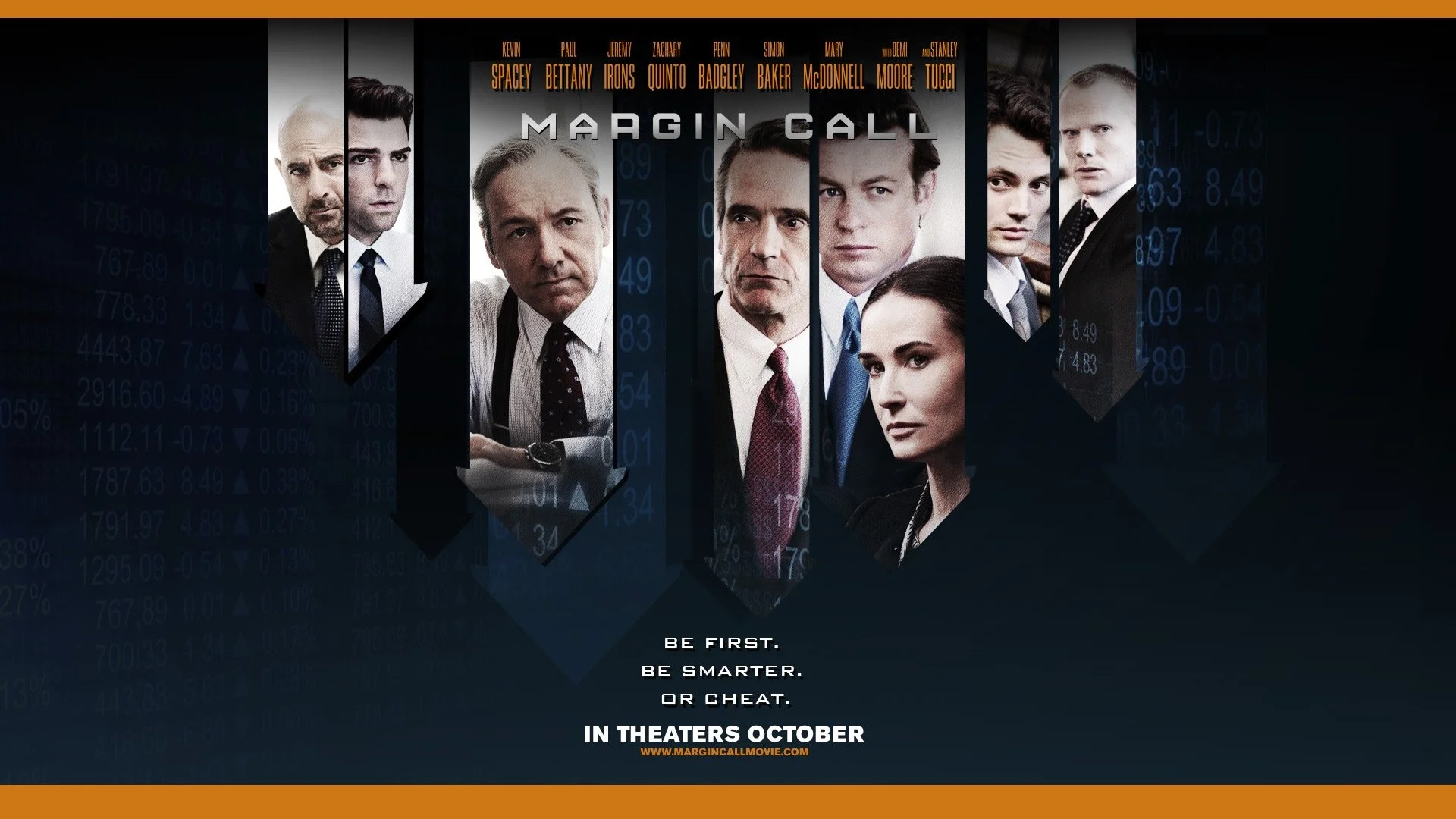
There are certain subjects that are notoriously uncinematic. These tend to be things that exist or are undertaken mainly in the mind, rather than expressed in an overtly physical way. Computing, science and mathematics are good examples. Writing code or working out complex equations does not immediately lend themselves to a visual medium such as cinema. Therefore, any film dealing with the world of corporate finance has its work cut out. Hence writer-director J C Chandor immediately deserves praise for making Margin Call, a film about the financial crash of 2008, as gripping and compelling as any political thriller. He does this by keeping the financial elements of the story to a minimum, choosing instead to focus upon those who have become aware of the imminent crisis and their reaction to it. However, the film remains a tough watch with regard to the some of the characters and their respective personal morality or lack there of.
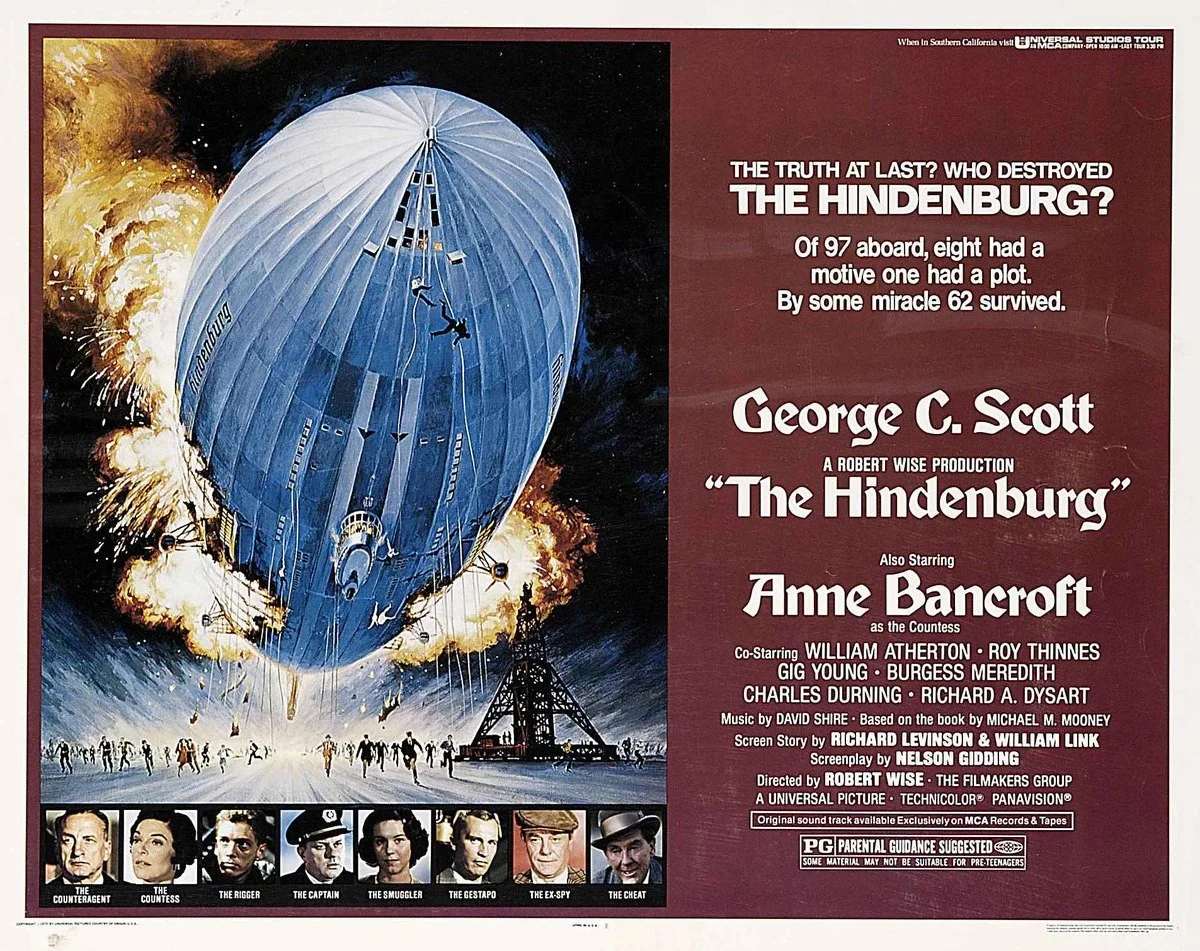
The 1937 Hindenburg disaster has remained an enduring mystery over the years. The physical mechanics of how this airship filled with 7,000,000 cubic feet of hydrogen gas caught fire has been fully explored over the decades and there are now several extremely plausible theories as to how it may have happened. However, there remains the possibility of sabotage. As such an idea has more dramatic potential than mechanical failure, it was used as the central theme of the 1975 disaster movie The Hindenburg. Directed by Robert Wise, the screenplay by Nelson Gidding explores a German resistance against the Nazi regime. The airship is targeted as it is a powerful propaganda symbol for Hitler’s Germany. Sadly despite some interesting ideas, a strong cast and solid, old school optical effects, The Hindenburg is a slow and somewhat ponderous production. Although the final 20 minutes of the film recreate the infamous explosion meticulously, it doesn’t quite compensate for the uneventful, dialogue driven investigation of the previous 100 minutes.
On the Eastern Front in 1943, a German Tiger tank crew led by Lieutenant Philip Gerkens (David Schütter) is sent on a mission to rescue the missing officer Paul von Hardenburg (Tilman Strauss) from a top-secret bunker that is at risk of falling into enemy hands. As they make their way through an eerie no-man’s land, they have to avoid Russian armoured vehicles that seem to be aware of their mission. They also encounter a German unit taking punitive action against a peasant village, in reprisal for partisan activity in the area. The youngest crew member, Michel (Yoran Leicher), talks of the land being home to ghosts and spirits. As the tank penetrates further into contested territory the crew become increasingly disturbed by the uncanny nature of their mission and begin to fall prey to their own inner fears.
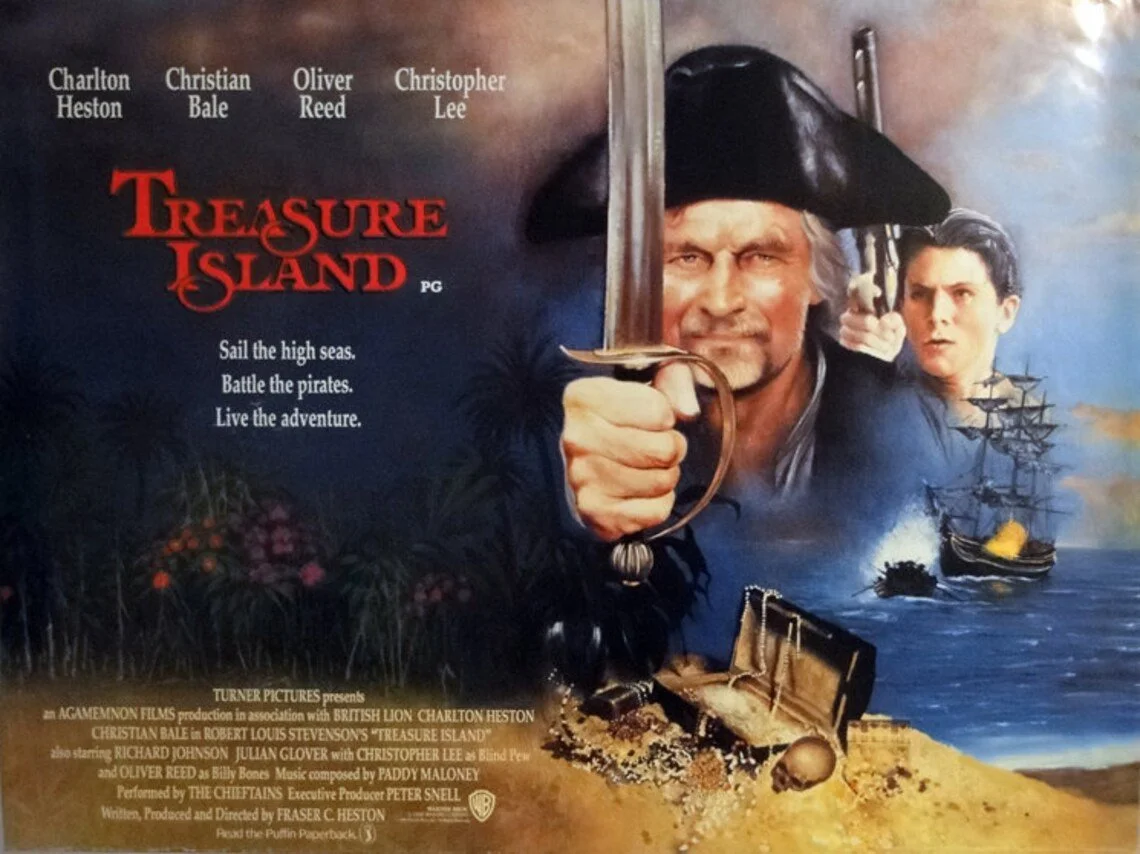
Robert Louis Stevenson’s classic novel has been adapted for cinema and television numerous times. Perhaps the most well known is the 1950 Disney version, starring Robert Newton as Long John Silver. His eye rolling performance and exaggerated West Country accent is credited with popularising the stereotypical form of “pirate speech" that has become the pop culture default. Although an enjoyable film, it does gloss over the more sinister aspects of both the source text and history, perpetuating the myth that pirates are just loveable scoundrels. Many subsequent adaptations have fallen into the same trap to a greater or lesser degree. However, that is not the case with the 1990 version of Treasure island, which was made for the TNT cable network and released theatrically outside of the US. This darker and notably more violent adaptation closely follows the source text and is widely considered the most faithful to the book.
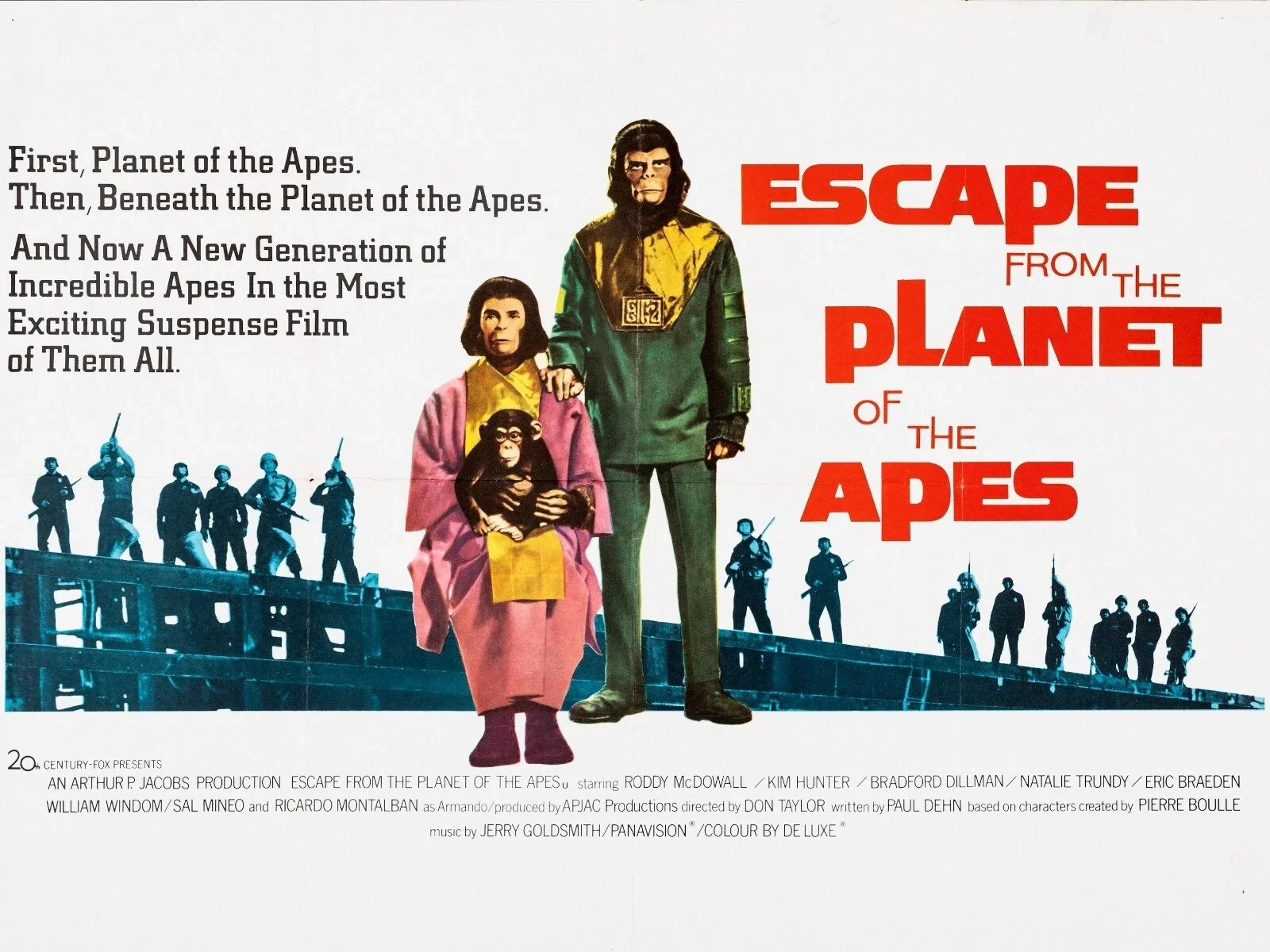
The Planet of the Apes movie franchise took a radical change of course with its third entry in the series. The first two films were set in the future and benefited from high production values to help realise a post apocalyptic earth. However, due to a substantial reduction of budget, Escape from the Planet of the Apes uses a time travel plot device to bring the ape protagonists to present day Los Angeles (1971 in this case). The result is a film with a much smaller narrative scope. However, although it lacks the science fiction spectacle of its predecessors, it features an interesting satirical exploration of celebrity culture and ponders what it is like to be deemed an enemy of the state. As ever, Roddy McDowell and Kim Hunter provide exceptional lead performances as the Chimpanzees Cornelius and Zira. Escape from the Planet of the Apes also captures the pop culture vibe of seventies America.
It is not unusual for Disney to change film titles when marketing them outside of the US. In 2016 they renamed the animated feature film Zootopia to Zootropolis in the UK and Europe to avoid trademark conflicts with other existing businesses. For example there is a Danish zoo which already holds the “Zootopia” name. Similarly, in Germany there is a children’s book which caused copyright conflict, which led to the film being released under the title Zoomania. Such changes, although practical for legal reasons, can sometimes cause a degree of confusion. Especially as there are numerous, low budget productions companies that go out of their way to produce similarly titled “mockbusters” whenever there are big, tentpole, releases. So for clarity, Zootopia 2 has been released in the UK as Zootropolis 2.
Stephen King’s dystopian story, The Running Man, was previously adapted very loosely in 1987, as a vehicle for Arnold Schwarzenegger. That version focused mainly on the “Battle Royale” element of the story and leaned heavily into Arnie’s personality, rather than the politics of the book. It also wasn’t well received by the author. Edgar Wright’s remake follows the source text a lot more closely and is far more interested in its political themes and wider social commentary. Furthermore, this version re-establishes the everyman quality of the hero of Ben Richards, rather than him being the muscle bound, ex-military hero as per Mr. Schwarzenegger’s prior interpretation. This time round, The Running Man uses a lot of the visual and narrative tropes of contemporary reality TV, making this forty three year old story very relevant to today’s viewers and couching the film in a style that is recognisable and accessible.
The Haunted Dolls House is a short film based on a story by M.R. James about a unique antique that is subject to supernatural phenomenon. Adapted by Stephen Gray and David Lilley, this is the third of three short films based upon James’ work that the pair have made. It stars Steven Dolton as Mr. Dillet, a collector of antique dolls houses, who acquires a bargain only to discover that it harbours a ghostly secret. Made on an extremely modest budget over the course of 2012 this clever, innovative and rather sinister adaptation is a fine example of short film creativity. It manages to offer a unique visual depiction of M.R. James’ classic story whilst capturing the unsettling quality of the author’s work. Like so many independently made short films it is clearly a labour of love, made with modest resources. It succinctly captures the spirit of the author’s work and is both innovative and rewarding.
A lot of people may know Luke Evans from the live action version of Beauty and the Beast or Peter Jackson’s The Hobbit trilogy. With his matinee idol good looks, charming Welsh demeanour and his “smoky” tenor singing voice, he projects a sense of old school stardom. Which brings us to No One Lives; a film which is a radical departure from his previous work. His performance is disconcerting to say the least and the film is somewhat unhinged. Directed by Ryuhei Kitamura, who made an interesting adaptation of Clive Barker’s The Midnight Meat Train, this cinematic outing is similarly replete with robust shocks and gore. There are some interesting ideas about the nature of violence, Stockholm Syndrome and whether one should deny or embrace one’s nature. However, these are ultimately minor asides. Philosophical musings in between bouts of surprisingly striking unpleasantness.
In the near future, Kepler 822, a research and drilling facility located at the bottom of the Mariana Trench, suffers a sudden and catastrophic structural failure. There are only six survivors. Mechanical engineer Norah Price (Kristen Stewart), Captain Lucien (Vincent Cassel), biologist Emily Haversham (Jessica Henwick), engineer Liam Smith (John Gallagher Jr.) and crew members Rodrigo (Mamoudou Athie) and Paul (T.J. Miller). As all the functional escape pods have been used and they are unable to contact the surface, the Captain suggests using pressurized suits to walk one mile across the ocean floor to the Roebuck 641 drill installation. There they will find more escape pods. However, it soon becomes apparent that the disaster was not caused by an undersea earthquake and that they are not alone as they make their journey.
One of the most common objections raised regarding the Jurassic Park/Jurassic World franchise is that the films are specifically made to obtain a PG-13 rating from the Motion Picture Association, for purely commercial reasons. Hence, in all films, there is little on screen violence and the dinosaurs are mainly portrayed as a threat and a means of providing jump scares. When a character is killed by a dinosaur it usually happens off screen, is obscured by something else in frame, or is shown in long shot with very little detail. The realities of being eaten alive by a predator are conspicuously absent. Hence, audiences looking for films featuring more graphic dinosaur attacks, have not been well catered for apart from some minor direct-to-video titles. Primitive War finally fills this gap in the market with a frenetic genre mashup that strives to punch above is budgetary weight.
During the seventies, cinema was not only a source of mass, commercial entertainment but was still perceived as a medium for intellectual and philosophical discourse. Television was a poor relation in terms of art and cultural significance. Film was where the so called auteur director could muse and ruminate upon the nature of the human condition and audiences could subsequently gush sycophantically about their work at dinner parties. Or something like that. Let it suffice to say that some film makers were still indulged by studios and financiers, who were still keen to cash in on the cultural sea change that came to Hollywood in the late sixties. It’s difficult to see how a film such as Emperor of the North (AKA Emperor of the North Pole) could have been made otherwise. A film set in the Great Depression about a hobo illegally travelling on freight trains and his feud with a ruthless conductor.
In Buenos Aires, Clara (Natalia Señorales) hears voices emanating from the plughole in her kitchen sink. The voices seem to be plotting against her. Her husband Juan (Agustín Rittano) says the sounds are coming from next door. That night, Juan finds Clara’s dead body levitating in their bathroom, slamming against the wall by an invisible force. Meanwhile their neighbour, Walter (Demián Salomón), is experiencing supernatural occurrences while he tries to sleep. An invisible force repeatedly shakes his bed. After using a video camera to film these events, he sees a tall, cadaverous figure emerging from under the bed, standing over him as he sleeps. Across the road, Alicia (Julieta Vallina) is grieving for her recently deceased son, who was run over outside Walter’s house. Alicia's ex-boyfriend, police commissioner Funes (Maximiliano Ghione) calls Jano (Norberto Gonzalo), a paranormal investigator and the pair soon discover more supernatural occurrences in the area.

Black Sabbath (AKA I tre volti della paura) is a 1963 horror anthology film directed by Mario Bava. Although an Italian production, the film was co-financed by American International Pictures and as such was conceived to appeal to US audiences. Hence, the English dialogue edit of the film which was released in America differs significantly to the original Italian version. Despite the presence of the legendary Boris Karloff and the popularity of both anthology and gothic horror at the time,the film was only a modest success at the US box office and did not do well in Italy. However, in more recent years there has been a critical reappraisal of Black Sabbath, especially the Italian dialogue version. Many aspects of the film which are standard genre tropes today, were in fact novel at the time. Also despite the production mainly being studio bound, the film oozes style and has a striking visual aesthetic.
After the success of Raiders of the Lost Ark in 1981, filmmakers scrambled to find existing intellectual properties that they could use for similar films. Hence archaic heroes such as Alan Quatermain were hastily given a modern makeover and thrust into generic movies, in a vague attempt to replicate Steven Spielberg’s successful formula. Which brings us neatly on to James Charles Bigglesworth AKA “Biggles”, a fictional pilot and adventurer from a series of books written by W. E. Johns between 1932 and 1968. Several attempts had been made in the past to bring this character to the silver screen, including one by Disney but they all failed. However, the commercial and critical success of Indiana Jones provided sufficient impetus to greenlight a new film. However, due to some curious production choices, when Biggles was finally released it was far from just a period set, action movie.
Setting aside the hubris of remaking a film such as Red Dawn, the 2012 reboot had a troubled production. Shot over the course of late 2009, on location in Michigan, MGM intended to release the film in September 2010. However, the studio’s financial problems became unsustainable over the course of that year and the film was shelved, while a financial solution was sought. Furthermore, while Red Dawn was in post production, there was a major economic shift within Hollywood due to the increasing importance of the Chinese market. This was a significant problem for MGM because the new version of Red Dawn had the Chinese invading the USA instead of Russia. Hence there were reshoots and the need for additional visual effects, so that the Chinese could be replaced with North Koreans. MGM eventually went bankrupt and the distribution rights to Red Dawn were sold off. The film was eventually released in 2012.
American music producer James William Guercio is primarily known for his work in the music industry. He was the producer of the band Chicago’s first eleven studio albums. In the mid-seventies he also managed the Beach Boys and was a member of their backing band. He was during this time, well known in his field and respected. In 1973, Guercio directed, produced and wrote the score for his first and only feature film, Electra Glide in Blue. He was 28 years old at the time. Upon release the film received mixed reviews from many traditional US newspapers, who were dismissive of its revisionist themes and poetical style. However, in Europe the film was received more favourably and was entered into the 1973 Cannes Film Festival. Fifty two years on and Electra Glide in Blue is now considered an overlooked cult classic and is analysed in a more measured fashion.
Dunkirk (2017)
Dunkirk is an extraordinary war movie, that eschews the traditional sprawling format of its predecessors, filled with celebrity cameos and contrived expositionary dialogue. Instead Christopher Nolan manages to embrace the concept of “show, don’t tell”, yet uses what little dialogue he has to succinctly punctuate the unfolding story with emotion and gravitas. There is a sense of spectacle, yet it is far from the stark and dispassionate CGI we usually see. Through creative and focused editing Nolan generates a palpable sense of tension, be it in the air with extraordinary aerial dogfights or on the ground as men flee sinking ships and dodge artillery fire. Dunkirk facilitates an intense and emotional journey during its lean 106 minute running time. It is altogether a remarkable piece of cinema.
Dunkirk is an extraordinary war movie, that eschews the traditional sprawling format of its predecessors, filled with celebrity cameos and contrived expositionary dialogue. Instead Christopher Nolan manages to embrace the concept of “show, don’t tell”, yet uses what little dialogue he has to succinctly punctuate the unfolding story with emotion and gravitas. There is a sense of spectacle, yet it is far from the stark and dispassionate CGI we usually see. Through creative and focused editing Nolan generates a palpable sense of tension, be it in the air with extraordinary aerial dogfights or on the ground as men flee sinking ships and dodge artillery fire. Dunkirk facilitates an intense and emotional journey during its lean 106 minute running time. It is altogether a remarkable piece of cinema.
Dunkirk features a non-linear narrative with three separate stories that overlap, often providing a different perspective upon the other. The Mole follows three infantrymen as they try to jump the queue and find an alternative means off the beach. The Sea is the story of a Father and son who take their family boat to Dunkirk to rescue survivors and how they pick up a “shell shocked” soldier along the way. The Air focuses on three Spitfire pilots as they try to provide cover for the retreating ships. What Dunkirk doesn’t do is wallow in an excess of historical background detail, contrived patriotism or emotional manipulation. There is no Winston Churchill and more importantly no evil Nazis. The enemy remains conspicuously distant either sniping, shelling or dive bombing. Nolan places the audience in the centre of a military disaster, stripped of most of its subjective context. The tension and sense of threat is constant and authentic.
Hans Zimmer scores Dunkirk with discordant ambient tones. It is far from a traditional soundtrack but as stated, Dunkirk is not a traditional war movie. This is not just a movie about a major military defeat but a tale of those souls caught in the middle of it all. They do not have the benefit of historical hindsight and the film is effectively an exploration of men enduring catastrophic events happening around them. However, Dunkirk is not bereft of character development and there are strong performances by Mark Rylance, Cillian Murphy and Tom Hardy. Rather than building complex backstories and playing with our feelings towards the cast, Christopher Nolan creates genuine jeopardy and is not averse to delivering tragedy without the ubiquitous clichéd Hollywood trappings.
A few critics have already accused Dunkirk as being a soulless representation of combat, citing similarities with the set pieces in the Call of Duty video game franchise. Yet this is not the case. Yes, the physical effects are staggering and the films technical excellence is beyond reproach. But there are touches of humanity conveyed through the subtlest use of dialogue or nuanced acting throughout the film. It is there when Mark Rylance tells Cillian Murphy “there’s no hiding from this son, there’s a job do”, and when Tom Hardy perceptibly winces as he realises that despite being low on fuel he cannot leave an allied ship exposed to a German bomber. It is in these honest scenes that Dunkirk finds its greatness. And when the armada of “little ships” finally arrives to strains of Hans Zimmer’s evocative variation of Nimrod, it is profoundly moving.
I suspect that in the same way Saving Private Ryan significantly altered the depiction of war in film back in 1998, Dunkirk may well have a similar effect henceforward. I’m sure some audiences may view the film through the prism of Brexit and vicariously try and champion it as a metaphor for their cause. However, I think that Christopher Nolan’s delineation of this military disaster that was spun in to a political triumph, elevates it above such partisan perspectives. Dunkirk is an intense, gripping and credible view of the nature of war and its impact upon those caught in it. It strength lies in vignettes of human drama set amid an epic and destructive canvas. It is also a compelling drama imbued with a tangible sense of suspense. Cinema seldom gets this good. Go see it on the biggest screen you can find.
Mainstream films are easy to recommend to people. They’re usually formulaic, work within clear parameters and they’re not controversial. Most people, when viewing such film on someone else’s suggestion, are left with a fairly simply choice. Did they like it or not? Whatever the outcome, no feathers are ruffled. No one looks at you askance afterwards and says “why the hell did you think I’d like that piece of shit”? If something like this happens, then you have clearly not recommended a mainstream film. Perhaps you’ve suggested something that’s a little more of an acquired taste. Something niche, from a very specific sub-genre. Which brings me neatly to Blazing Magnum AKA Strange Shadows in an Empty Room (1976). The US title gives the impression that this film is a hard boiled cop thriller, like so many others that followed in the wake of Dirty Harry. But there’s a clue in the European title. Yes, this movie has more than just a whiff of a giallo about it.
In the year 1860, Baron Victor Frankenstein (Peter Cushing) faces execution by guillotine for the murders perpetrated by the creature he created. With the assistance of a hunchback named Karl (Oscar Quitak) he avoids death by beheading the priest who came to give him the last rites. The priest’s body is then mistakenly buried by the authorities. Three years later, Victor, now using the name Doctor Stein, has established himself as a prosperous physician in Karlsbrück, serving both affluent patients and the poor at a paupers’ hospital. Hans Kleve (Francis Matthews), a junior member of the medical council, recognises Victor and being an admirer, seeks to become his apprentice. Victor and Hans then undertake an experiment to transplant Karl’s living brain into a new, more refined body, rather than a grotesque monstrosity the Baron has previously made. Karl is eager to have a new healthy body, especially after encountering Margaret Conrad (Eunice Gayson), the charming new assistant at the hospital.
This movie questionnaire was originally created by Alexander from Cinemaniac Reviews. Sadly, I believe that website is now defunct. However, that doesn’t in anyway invalidate the questionnaire itself which has some very good questions about your relationship with cinema. Some of my answers to the questions posed are about films that I enjoy, as opposed to those that are considered cinematic classics. However, I have answered some questions more seriously than others, especially the one about undeserving recipients of the Best Film Oscar. I struggled with a couple of questions because I no longer go the cinema as frequently as I did 10 years ago. This is mainly due to the fact that a lot of the films I find interesting end up going straight to streaming after very brief theatrical releases. Some do not even get shown in cinemas. Hence I view far more at home. But I digress. On with the questions and answers. Feel free to comment below and share your views.
Exit 8 is a sophisticated and claustrophobic psychological thriller directed by Genki Kawamura, which skilfully transforms a minimalist indie walking-simulator game into a cinematic existential enigma. This overtly metaphorical film renders the repetitive nature and drudgery of modern working life into a physical environment in which the lead character is trapped and must find a way out. A random, brutal maze filled with an atmosphere of indifference to the lab rats that find themselves trapped within. Or is it their personal guilt that has put them there? Genki Kawamura’s psychological mystery draws inspiration from the Japanese video game of the same name, as well as from the cyclical nature of Groundhog Day and endless corridors of the Overlook Hotel in Kubrick’s The Shining. Although there are jump scares and some ghoulish imagery, this is not a horror vehicle. Instead this is a disquieting psychological drama with a strong sense of morality.
I wrote a post 18 month’s ago regarding whether a directors cut of a film is superior by default to the version originally shown in cinemas. Obviously the answer was no and I then went on to give three examples of films where I think the theatrical release is better to lengthier or substantially altered director’s cut that was subsequently made available at a later date. This time round in this post, I would like to do the complete opposite. I shall provide some examples of films that I think are significantly improved by a longer cut or a substantially, restructured edit. Note some of these examples are technically not a “director’s cuts” but a restoration or reconstruction of the director’s original vision. I shall endeavour to highlight what specific material or broader changes make each respective film “better”. As ever, all of these examples are a matter of subjective opinion and my views are presented as such, not “fact”.
In 1968 the dilapidated freighter Corita hastily leaves Freetown to avoid a customs inspection. Captain Lansen (Eric Porter) has a cargo of dangerous explosives which he is smuggling so he can finally retire. His ship’s passengers also have reasons for leaving in a hurry. Dr. Webster (Nigel Stock), together with his daughter Unity (Suzanna leigh), is relocating due to his indiscretions with patients and illegal operations. Alcoholic pianist Harry Tyler (Tony Beckley) is aimlessly drifting from port to port. Eva Peters (Hildegard Knef) is fleeing from her husband with stolen bearer bonds which she intend to use to buy back her son from his evil clutches Caracas. Ricaldi (Ben Carruthers), a questionable lawyer, is pursuing Eva to retrieve the stolen bonds. First officer Hemmings (Neil McCallum) suggests that the ship should return to Freetown after an imminent Hurricane warning. The Captain asks the passengers and they are unanimous that they do not wish to return. However a mutinous crew, the bad weather and the instability of the explosives force everyone to abandon ship. The survivors find themselves adrift in a lifeboat surrounded by a strange carnivorous seaweed.
Jason Statham is an exemplar of the US mantra of “staying in your lane”. He makes action movies and occasionally strays into action comedies. His formula broadly works and is sufficiently lucrative to keep Mr. Statham employed. Therefore, if you watch a film in which he stars, you have a fairly good idea of what you’ll be getting. Of late, the criteria for his action vehicles have become more succinct. Jason Statham will play an innocuous character, such as a construction foreman or a bee keeper. Something terrible will subsequently befall another character who Mr. Statham has an emotional connection with in some capacity. He will subsequently hunt down those responsible and meet out death and violence. At some point the villain of the story will enquire as to how this innocuous person is so lethal. Research will then show that our Jason is in fact an ex-police officer/special forces operative/international assassin. There’s then a showdown and the villain dies. Job done.
The Light at the Edge of the World presented itself as an action movie upon its release in 1971. Based upon a story by Jules Verne, the Spanish American co-production was driven by its star Kirk Douglas, who curiously hired British director Kevin Billington to helm the project. This tale of a lighthouse keeper fighting a war of attrition against a group of pirates that have captured his island, was market as an adventure film ostensibly in the idiom of the authors previous works and as a pirate movie. MGM bought the rights to distribute the film in the UK on the misunderstanding that it was a family friendly production. It was not and remains so. They subsequently had to cut 15 minutes of violence and torture as well as an undercurrent of sexual assault to secure a suitable rating. Conversely, the US distributors received an arbitrary PG rating, despite the fact this is one of a handful of films that honestly depicts pirates as murderers, rapists and worse.
It’s an established action film trope. The fire team comprised of ex-military personnel, move in on their target. Only to have the tables turned by someone they don’t deem a threat. What makes it different in The Last Stand of Ellen Cole is a throwaway line of dialogue. The bested operative lies bleeding on the floor and the protagonists stands over them ready to finish them off. “Don’t, I have a cat” they feebly plead. For me that was the icing on the cake. The movie had already established it was taking the “same old, same old” and doing something different. Something fun, if taken in the right spirit. This scene tipped the balance and I embraced this film because it was being honest about what it is. This is a modern B movie that decides to give a very specific sub-genre a makeover. Furthermore, its clearly done with an affectionate wink, which is very different to sly wink. This isn’t deliberate self-knowing irony. Its just a film doing something different and possibly silly but it genuinely wants to have fun with it.
David Koepp is no stranger to genre cinema, having written the screenplay for such films as Jurassic Park, Spider-man and War of the Worlds. Where these titles are big budget, major studio productions, Cold Storage is a far more modest production with a smaller scope. Adapted from his own novel, the screenplay is by David Koepp and the film is directed by British film-maker Jonny Campbell. At first glance, Cold Storage seems a somewhat derivative science fiction horror film with a relatively modest budget, financed through a convoluted US and French co-production. Lurid green and red colours feature heavily in the marketing artwork and it is easy, after a cursory look, to write the film off as cheap, generic, direct-to-streaming filler. However, Cold Storage is prime example of why you should not judge a book by it’s cover, or in this case, a film by its posters and online advertising. It is in fact an amusing and fun endeavour that can fill an evening.
Despite being considered by many as an original story, The Abominable Snowman (1957) is in fact a remake of a made for television play, The Creature, that was originally broadcast in the UK in 1955. Hammer Films would often purchase the rights of popular TV programs and subsequently re-work them for mainstream, international cinema. Larger production budgets and fewer censorship restrictions allowed them to make their cinematic interpretations more lurid, thus commercially viable. Hence The Quatermass Xperiment, Quatermass II and Quatermass and the Pit were all given a big screen makeover and were commercially successful. The Abominable Snowman was written by acclaimed writer Nigel Kneale, who also wrote the original television drama and the aforementioned Quatermass trilogy. Although ostensibly marketed as a horror film this production is actually an interesting blend of psychological thriller and science fiction.
There are certain subjects that are notoriously uncinematic. These tend to be things that exist or are undertaken mainly in the mind, rather than expressed in an overtly physical way. Computing, science and mathematics are good examples. Writing code or working out complex equations does not immediately lend themselves to a visual medium such as cinema. Therefore, any film dealing with the world of corporate finance has its work cut out. Hence writer-director J C Chandor immediately deserves praise for making Margin Call, a film about the financial crash of 2008, as gripping and compelling as any political thriller. He does this by keeping the financial elements of the story to a minimum, choosing instead to focus upon those who have become aware of the imminent crisis and their reaction to it. However, the film remains a tough watch with regard to the some of the characters and their respective personal morality or lack there of.
The 1937 Hindenburg disaster has remained an enduring mystery over the years. The physical mechanics of how this airship filled with 7,000,000 cubic feet of hydrogen gas caught fire has been fully explored over the decades and there are now several extremely plausible theories as to how it may have happened. However, there remains the possibility of sabotage. As such an idea has more dramatic potential than mechanical failure, it was used as the central theme of the 1975 disaster movie The Hindenburg. Directed by Robert Wise, the screenplay by Nelson Gidding explores a German resistance against the Nazi regime. The airship is targeted as it is a powerful propaganda symbol for Hitler’s Germany. Sadly despite some interesting ideas, a strong cast and solid, old school optical effects, The Hindenburg is a slow and somewhat ponderous production. Although the final 20 minutes of the film recreate the infamous explosion meticulously, it doesn’t quite compensate for the uneventful, dialogue driven investigation of the previous 100 minutes.
On the Eastern Front in 1943, a German Tiger tank crew led by Lieutenant Philip Gerkens (David Schütter) is sent on a mission to rescue the missing officer Paul von Hardenburg (Tilman Strauss) from a top-secret bunker that is at risk of falling into enemy hands. As they make their way through an eerie no-man’s land, they have to avoid Russian armoured vehicles that seem to be aware of their mission. They also encounter a German unit taking punitive action against a peasant village, in reprisal for partisan activity in the area. The youngest crew member, Michel (Yoran Leicher), talks of the land being home to ghosts and spirits. As the tank penetrates further into contested territory the crew become increasingly disturbed by the uncanny nature of their mission and begin to fall prey to their own inner fears.
Robert Louis Stevenson’s classic novel has been adapted for cinema and television numerous times. Perhaps the most well known is the 1950 Disney version, starring Robert Newton as Long John Silver. His eye rolling performance and exaggerated West Country accent is credited with popularising the stereotypical form of “pirate speech" that has become the pop culture default. Although an enjoyable film, it does gloss over the more sinister aspects of both the source text and history, perpetuating the myth that pirates are just loveable scoundrels. Many subsequent adaptations have fallen into the same trap to a greater or lesser degree. However, that is not the case with the 1990 version of Treasure island, which was made for the TNT cable network and released theatrically outside of the US. This darker and notably more violent adaptation closely follows the source text and is widely considered the most faithful to the book.
The Planet of the Apes movie franchise took a radical change of course with its third entry in the series. The first two films were set in the future and benefited from high production values to help realise a post apocalyptic earth. However, due to a substantial reduction of budget, Escape from the Planet of the Apes uses a time travel plot device to bring the ape protagonists to present day Los Angeles (1971 in this case). The result is a film with a much smaller narrative scope. However, although it lacks the science fiction spectacle of its predecessors, it features an interesting satirical exploration of celebrity culture and ponders what it is like to be deemed an enemy of the state. As ever, Roddy McDowell and Kim Hunter provide exceptional lead performances as the Chimpanzees Cornelius and Zira. Escape from the Planet of the Apes also captures the pop culture vibe of seventies America.
It is not unusual for Disney to change film titles when marketing them outside of the US. In 2016 they renamed the animated feature film Zootopia to Zootropolis in the UK and Europe to avoid trademark conflicts with other existing businesses. For example there is a Danish zoo which already holds the “Zootopia” name. Similarly, in Germany there is a children’s book which caused copyright conflict, which led to the film being released under the title Zoomania. Such changes, although practical for legal reasons, can sometimes cause a degree of confusion. Especially as there are numerous, low budget productions companies that go out of their way to produce similarly titled “mockbusters” whenever there are big, tentpole, releases. So for clarity, Zootopia 2 has been released in the UK as Zootropolis 2.
Stephen King’s dystopian story, The Running Man, was previously adapted very loosely in 1987, as a vehicle for Arnold Schwarzenegger. That version focused mainly on the “Battle Royale” element of the story and leaned heavily into Arnie’s personality, rather than the politics of the book. It also wasn’t well received by the author. Edgar Wright’s remake follows the source text a lot more closely and is far more interested in its political themes and wider social commentary. Furthermore, this version re-establishes the everyman quality of the hero of Ben Richards, rather than him being the muscle bound, ex-military hero as per Mr. Schwarzenegger’s prior interpretation. This time round, The Running Man uses a lot of the visual and narrative tropes of contemporary reality TV, making this forty three year old story very relevant to today’s viewers and couching the film in a style that is recognisable and accessible.
The Haunted Dolls House is a short film based on a story by M.R. James about a unique antique that is subject to supernatural phenomenon. Adapted by Stephen Gray and David Lilley, this is the third of three short films based upon James’ work that the pair have made. It stars Steven Dolton as Mr. Dillet, a collector of antique dolls houses, who acquires a bargain only to discover that it harbours a ghostly secret. Made on an extremely modest budget over the course of 2012 this clever, innovative and rather sinister adaptation is a fine example of short film creativity. It manages to offer a unique visual depiction of M.R. James’ classic story whilst capturing the unsettling quality of the author’s work. Like so many independently made short films it is clearly a labour of love, made with modest resources. It succinctly captures the spirit of the author’s work and is both innovative and rewarding.
A lot of people may know Luke Evans from the live action version of Beauty and the Beast or Peter Jackson’s The Hobbit trilogy. With his matinee idol good looks, charming Welsh demeanour and his “smoky” tenor singing voice, he projects a sense of old school stardom. Which brings us to No One Lives; a film which is a radical departure from his previous work. His performance is disconcerting to say the least and the film is somewhat unhinged. Directed by Ryuhei Kitamura, who made an interesting adaptation of Clive Barker’s The Midnight Meat Train, this cinematic outing is similarly replete with robust shocks and gore. There are some interesting ideas about the nature of violence, Stockholm Syndrome and whether one should deny or embrace one’s nature. However, these are ultimately minor asides. Philosophical musings in between bouts of surprisingly striking unpleasantness.
In the near future, Kepler 822, a research and drilling facility located at the bottom of the Mariana Trench, suffers a sudden and catastrophic structural failure. There are only six survivors. Mechanical engineer Norah Price (Kristen Stewart), Captain Lucien (Vincent Cassel), biologist Emily Haversham (Jessica Henwick), engineer Liam Smith (John Gallagher Jr.) and crew members Rodrigo (Mamoudou Athie) and Paul (T.J. Miller). As all the functional escape pods have been used and they are unable to contact the surface, the Captain suggests using pressurized suits to walk one mile across the ocean floor to the Roebuck 641 drill installation. There they will find more escape pods. However, it soon becomes apparent that the disaster was not caused by an undersea earthquake and that they are not alone as they make their journey.
One of the most common objections raised regarding the Jurassic Park/Jurassic World franchise is that the films are specifically made to obtain a PG-13 rating from the Motion Picture Association, for purely commercial reasons. Hence, in all films, there is little on screen violence and the dinosaurs are mainly portrayed as a threat and a means of providing jump scares. When a character is killed by a dinosaur it usually happens off screen, is obscured by something else in frame, or is shown in long shot with very little detail. The realities of being eaten alive by a predator are conspicuously absent. Hence, audiences looking for films featuring more graphic dinosaur attacks, have not been well catered for apart from some minor direct-to-video titles. Primitive War finally fills this gap in the market with a frenetic genre mashup that strives to punch above is budgetary weight.
During the seventies, cinema was not only a source of mass, commercial entertainment but was still perceived as a medium for intellectual and philosophical discourse. Television was a poor relation in terms of art and cultural significance. Film was where the so called auteur director could muse and ruminate upon the nature of the human condition and audiences could subsequently gush sycophantically about their work at dinner parties. Or something like that. Let it suffice to say that some film makers were still indulged by studios and financiers, who were still keen to cash in on the cultural sea change that came to Hollywood in the late sixties. It’s difficult to see how a film such as Emperor of the North (AKA Emperor of the North Pole) could have been made otherwise. A film set in the Great Depression about a hobo illegally travelling on freight trains and his feud with a ruthless conductor.
In Buenos Aires, Clara (Natalia Señorales) hears voices emanating from the plughole in her kitchen sink. The voices seem to be plotting against her. Her husband Juan (Agustín Rittano) says the sounds are coming from next door. That night, Juan finds Clara’s dead body levitating in their bathroom, slamming against the wall by an invisible force. Meanwhile their neighbour, Walter (Demián Salomón), is experiencing supernatural occurrences while he tries to sleep. An invisible force repeatedly shakes his bed. After using a video camera to film these events, he sees a tall, cadaverous figure emerging from under the bed, standing over him as he sleeps. Across the road, Alicia (Julieta Vallina) is grieving for her recently deceased son, who was run over outside Walter’s house. Alicia's ex-boyfriend, police commissioner Funes (Maximiliano Ghione) calls Jano (Norberto Gonzalo), a paranormal investigator and the pair soon discover more supernatural occurrences in the area.
Black Sabbath (AKA I tre volti della paura) is a 1963 horror anthology film directed by Mario Bava. Although an Italian production, the film was co-financed by American International Pictures and as such was conceived to appeal to US audiences. Hence, the English dialogue edit of the film which was released in America differs significantly to the original Italian version. Despite the presence of the legendary Boris Karloff and the popularity of both anthology and gothic horror at the time,the film was only a modest success at the US box office and did not do well in Italy. However, in more recent years there has been a critical reappraisal of Black Sabbath, especially the Italian dialogue version. Many aspects of the film which are standard genre tropes today, were in fact novel at the time. Also despite the production mainly being studio bound, the film oozes style and has a striking visual aesthetic.
After the success of Raiders of the Lost Ark in 1981, filmmakers scrambled to find existing intellectual properties that they could use for similar films. Hence archaic heroes such as Alan Quatermain were hastily given a modern makeover and thrust into generic movies, in a vague attempt to replicate Steven Spielberg’s successful formula. Which brings us neatly on to James Charles Bigglesworth AKA “Biggles”, a fictional pilot and adventurer from a series of books written by W. E. Johns between 1932 and 1968. Several attempts had been made in the past to bring this character to the silver screen, including one by Disney but they all failed. However, the commercial and critical success of Indiana Jones provided sufficient impetus to greenlight a new film. However, due to some curious production choices, when Biggles was finally released it was far from just a period set, action movie.
Setting aside the hubris of remaking a film such as Red Dawn, the 2012 reboot had a troubled production. Shot over the course of late 2009, on location in Michigan, MGM intended to release the film in September 2010. However, the studio’s financial problems became unsustainable over the course of that year and the film was shelved, while a financial solution was sought. Furthermore, while Red Dawn was in post production, there was a major economic shift within Hollywood due to the increasing importance of the Chinese market. This was a significant problem for MGM because the new version of Red Dawn had the Chinese invading the USA instead of Russia. Hence there were reshoots and the need for additional visual effects, so that the Chinese could be replaced with North Koreans. MGM eventually went bankrupt and the distribution rights to Red Dawn were sold off. The film was eventually released in 2012.
American music producer James William Guercio is primarily known for his work in the music industry. He was the producer of the band Chicago’s first eleven studio albums. In the mid-seventies he also managed the Beach Boys and was a member of their backing band. He was during this time, well known in his field and respected. In 1973, Guercio directed, produced and wrote the score for his first and only feature film, Electra Glide in Blue. He was 28 years old at the time. Upon release the film received mixed reviews from many traditional US newspapers, who were dismissive of its revisionist themes and poetical style. However, in Europe the film was received more favourably and was entered into the 1973 Cannes Film Festival. Fifty two years on and Electra Glide in Blue is now considered an overlooked cult classic and is analysed in a more measured fashion.
Valkyrie (2008)
In terms of its production values, Valkyrie is a throwback to the big budget war films of the sixties and seventies. However, that is where the similarities end. This is not a stylised action movie with the Nazis simply as a dramatic foil. Valkyrie focuses on facts, narrative and performances. Director Bryan Singer ensures that the true story that the film depicts is driven by the central characters. Overall Valkyrie is a very laudable production and although not an outstanding feature film, it is competently made, broadly historically accurate whilst and entertaining.
In terms of its production values, Valkyrie is a throwback to the big budget war films of the sixties and seventies. However, that is where the similarities end. This is not a stylised action movie with the Nazis simply as a dramatic foil. Valkyrie focuses on facts, narrative and performances. Director Bryan Singer ensures that the true story that the film depicts is driven by the central characters. Overall Valkyrie is a very laudable production and although not an outstanding feature film, it is competently made, broadly historically accurate whilst and entertaining.
The story manages to be genuinely suspenseful and conveys the magnitude of the plotter’s intentions. It efficiently follows the facts and is not side-tracked by superfluous sub plots or needless human drama. It clearly shows the real threat to families of the protagonists and conveys the paranoia of the German High command. Valkyrie assumes that the audience has an adequate knowledge of wartime events and does not make the mistake of trying to show why Hitler should be killed. Nor does it make the traditional Hollywood mistake of trying to render the complexities of wartime politics, down to “good Germans versus Bad Nazi”.
With regard to Tom Cruise, I’m not at all interested in his star status, his personal life or his religious beliefs. I have enjoyed his performances in several films in the past and he does not disappoint as Klaus von Stauffenberg. The rest of the ensemble cast works very well. Bill Nighy, Tom Wilkinson and the dignified Terence Stamp are all on top form, although a little underused. Eddie Izzard further demonstrates his acting talents. It should be noted that the mainly British cast do not attempt any stereotypical German accent but rather opt for neutral dialogue delivery.
Technically, the production design is accurate and authentic. The film manages to convey an atmosphere of a nation losing a war and an “ideology” that has become tarnished. The dilemma of whether to hedge your bets or endeavour to change an impossible situation, is explored efficiently and in a thought provoking way. Valkyrie remains as politically neutral as it can and strives to show career soldiers unhappy with the regime they see as betraying their country. They wish to prove that Germany and Hitler are not the same thing.
It is interesting to see a studio tackle a story that, despite its inherent drama, has an outcome that is a forgone conclusion. Like Ron Howard’s Apollo 13, the need to engage the audience with the fate of the characters is the key to the film’s success. I must admit that I was engrossed in Valkyrie and managed to disconnect my mind from the inevitable ending. However, due to the lack of historical knowledge among so many of today’s viewing public, perhaps this isn’t such an issue. May due to the march of time, the events depicted in Valkyrie may well have less impact. None the less Valkyrie is a competent and polished movie as well as a welcome change from standard multiplex fodder.
Mainstream films are easy to recommend to people. They’re usually formulaic, work within clear parameters and they’re not controversial. Most people, when viewing such film on someone else’s suggestion, are left with a fairly simply choice. Did they like it or not? Whatever the outcome, no feathers are ruffled. No one looks at you askance afterwards and says “why the hell did you think I’d like that piece of shit”? If something like this happens, then you have clearly not recommended a mainstream film. Perhaps you’ve suggested something that’s a little more of an acquired taste. Something niche, from a very specific sub-genre. Which brings me neatly to Blazing Magnum AKA Strange Shadows in an Empty Room (1976). The US title gives the impression that this film is a hard boiled cop thriller, like so many others that followed in the wake of Dirty Harry. But there’s a clue in the European title. Yes, this movie has more than just a whiff of a giallo about it.
In the year 1860, Baron Victor Frankenstein (Peter Cushing) faces execution by guillotine for the murders perpetrated by the creature he created. With the assistance of a hunchback named Karl (Oscar Quitak) he avoids death by beheading the priest who came to give him the last rites. The priest’s body is then mistakenly buried by the authorities. Three years later, Victor, now using the name Doctor Stein, has established himself as a prosperous physician in Karlsbrück, serving both affluent patients and the poor at a paupers’ hospital. Hans Kleve (Francis Matthews), a junior member of the medical council, recognises Victor and being an admirer, seeks to become his apprentice. Victor and Hans then undertake an experiment to transplant Karl’s living brain into a new, more refined body, rather than a grotesque monstrosity the Baron has previously made. Karl is eager to have a new healthy body, especially after encountering Margaret Conrad (Eunice Gayson), the charming new assistant at the hospital.
This movie questionnaire was originally created by Alexander from Cinemaniac Reviews. Sadly, I believe that website is now defunct. However, that doesn’t in anyway invalidate the questionnaire itself which has some very good questions about your relationship with cinema. Some of my answers to the questions posed are about films that I enjoy, as opposed to those that are considered cinematic classics. However, I have answered some questions more seriously than others, especially the one about undeserving recipients of the Best Film Oscar. I struggled with a couple of questions because I no longer go the cinema as frequently as I did 10 years ago. This is mainly due to the fact that a lot of the films I find interesting end up going straight to streaming after very brief theatrical releases. Some do not even get shown in cinemas. Hence I view far more at home. But I digress. On with the questions and answers. Feel free to comment below and share your views.
Exit 8 is a sophisticated and claustrophobic psychological thriller directed by Genki Kawamura, which skilfully transforms a minimalist indie walking-simulator game into a cinematic existential enigma. This overtly metaphorical film renders the repetitive nature and drudgery of modern working life into a physical environment in which the lead character is trapped and must find a way out. A random, brutal maze filled with an atmosphere of indifference to the lab rats that find themselves trapped within. Or is it their personal guilt that has put them there? Genki Kawamura’s psychological mystery draws inspiration from the Japanese video game of the same name, as well as from the cyclical nature of Groundhog Day and endless corridors of the Overlook Hotel in Kubrick’s The Shining. Although there are jump scares and some ghoulish imagery, this is not a horror vehicle. Instead this is a disquieting psychological drama with a strong sense of morality.
I wrote a post 18 month’s ago regarding whether a directors cut of a film is superior by default to the version originally shown in cinemas. Obviously the answer was no and I then went on to give three examples of films where I think the theatrical release is better to lengthier or substantially altered director’s cut that was subsequently made available at a later date. This time round in this post, I would like to do the complete opposite. I shall provide some examples of films that I think are significantly improved by a longer cut or a substantially, restructured edit. Note some of these examples are technically not a “director’s cuts” but a restoration or reconstruction of the director’s original vision. I shall endeavour to highlight what specific material or broader changes make each respective film “better”. As ever, all of these examples are a matter of subjective opinion and my views are presented as such, not “fact”.
In 1968 the dilapidated freighter Corita hastily leaves Freetown to avoid a customs inspection. Captain Lansen (Eric Porter) has a cargo of dangerous explosives which he is smuggling so he can finally retire. His ship’s passengers also have reasons for leaving in a hurry. Dr. Webster (Nigel Stock), together with his daughter Unity (Suzanna leigh), is relocating due to his indiscretions with patients and illegal operations. Alcoholic pianist Harry Tyler (Tony Beckley) is aimlessly drifting from port to port. Eva Peters (Hildegard Knef) is fleeing from her husband with stolen bearer bonds which she intend to use to buy back her son from his evil clutches Caracas. Ricaldi (Ben Carruthers), a questionable lawyer, is pursuing Eva to retrieve the stolen bonds. First officer Hemmings (Neil McCallum) suggests that the ship should return to Freetown after an imminent Hurricane warning. The Captain asks the passengers and they are unanimous that they do not wish to return. However a mutinous crew, the bad weather and the instability of the explosives force everyone to abandon ship. The survivors find themselves adrift in a lifeboat surrounded by a strange carnivorous seaweed.
Jason Statham is an exemplar of the US mantra of “staying in your lane”. He makes action movies and occasionally strays into action comedies. His formula broadly works and is sufficiently lucrative to keep Mr. Statham employed. Therefore, if you watch a film in which he stars, you have a fairly good idea of what you’ll be getting. Of late, the criteria for his action vehicles have become more succinct. Jason Statham will play an innocuous character, such as a construction foreman or a bee keeper. Something terrible will subsequently befall another character who Mr. Statham has an emotional connection with in some capacity. He will subsequently hunt down those responsible and meet out death and violence. At some point the villain of the story will enquire as to how this innocuous person is so lethal. Research will then show that our Jason is in fact an ex-police officer/special forces operative/international assassin. There’s then a showdown and the villain dies. Job done.
The Light at the Edge of the World presented itself as an action movie upon its release in 1971. Based upon a story by Jules Verne, the Spanish American co-production was driven by its star Kirk Douglas, who curiously hired British director Kevin Billington to helm the project. This tale of a lighthouse keeper fighting a war of attrition against a group of pirates that have captured his island, was market as an adventure film ostensibly in the idiom of the authors previous works and as a pirate movie. MGM bought the rights to distribute the film in the UK on the misunderstanding that it was a family friendly production. It was not and remains so. They subsequently had to cut 15 minutes of violence and torture as well as an undercurrent of sexual assault to secure a suitable rating. Conversely, the US distributors received an arbitrary PG rating, despite the fact this is one of a handful of films that honestly depicts pirates as murderers, rapists and worse.
It’s an established action film trope. The fire team comprised of ex-military personnel, move in on their target. Only to have the tables turned by someone they don’t deem a threat. What makes it different in The Last Stand of Ellen Cole is a throwaway line of dialogue. The bested operative lies bleeding on the floor and the protagonists stands over them ready to finish them off. “Don’t, I have a cat” they feebly plead. For me that was the icing on the cake. The movie had already established it was taking the “same old, same old” and doing something different. Something fun, if taken in the right spirit. This scene tipped the balance and I embraced this film because it was being honest about what it is. This is a modern B movie that decides to give a very specific sub-genre a makeover. Furthermore, its clearly done with an affectionate wink, which is very different to sly wink. This isn’t deliberate self-knowing irony. Its just a film doing something different and possibly silly but it genuinely wants to have fun with it.
David Koepp is no stranger to genre cinema, having written the screenplay for such films as Jurassic Park, Spider-man and War of the Worlds. Where these titles are big budget, major studio productions, Cold Storage is a far more modest production with a smaller scope. Adapted from his own novel, the screenplay is by David Koepp and the film is directed by British film-maker Jonny Campbell. At first glance, Cold Storage seems a somewhat derivative science fiction horror film with a relatively modest budget, financed through a convoluted US and French co-production. Lurid green and red colours feature heavily in the marketing artwork and it is easy, after a cursory look, to write the film off as cheap, generic, direct-to-streaming filler. However, Cold Storage is prime example of why you should not judge a book by it’s cover, or in this case, a film by its posters and online advertising. It is in fact an amusing and fun endeavour that can fill an evening.
Despite being considered by many as an original story, The Abominable Snowman (1957) is in fact a remake of a made for television play, The Creature, that was originally broadcast in the UK in 1955. Hammer Films would often purchase the rights of popular TV programs and subsequently re-work them for mainstream, international cinema. Larger production budgets and fewer censorship restrictions allowed them to make their cinematic interpretations more lurid, thus commercially viable. Hence The Quatermass Xperiment, Quatermass II and Quatermass and the Pit were all given a big screen makeover and were commercially successful. The Abominable Snowman was written by acclaimed writer Nigel Kneale, who also wrote the original television drama and the aforementioned Quatermass trilogy. Although ostensibly marketed as a horror film this production is actually an interesting blend of psychological thriller and science fiction.
There are certain subjects that are notoriously uncinematic. These tend to be things that exist or are undertaken mainly in the mind, rather than expressed in an overtly physical way. Computing, science and mathematics are good examples. Writing code or working out complex equations does not immediately lend themselves to a visual medium such as cinema. Therefore, any film dealing with the world of corporate finance has its work cut out. Hence writer-director J C Chandor immediately deserves praise for making Margin Call, a film about the financial crash of 2008, as gripping and compelling as any political thriller. He does this by keeping the financial elements of the story to a minimum, choosing instead to focus upon those who have become aware of the imminent crisis and their reaction to it. However, the film remains a tough watch with regard to the some of the characters and their respective personal morality or lack there of.
The 1937 Hindenburg disaster has remained an enduring mystery over the years. The physical mechanics of how this airship filled with 7,000,000 cubic feet of hydrogen gas caught fire has been fully explored over the decades and there are now several extremely plausible theories as to how it may have happened. However, there remains the possibility of sabotage. As such an idea has more dramatic potential than mechanical failure, it was used as the central theme of the 1975 disaster movie The Hindenburg. Directed by Robert Wise, the screenplay by Nelson Gidding explores a German resistance against the Nazi regime. The airship is targeted as it is a powerful propaganda symbol for Hitler’s Germany. Sadly despite some interesting ideas, a strong cast and solid, old school optical effects, The Hindenburg is a slow and somewhat ponderous production. Although the final 20 minutes of the film recreate the infamous explosion meticulously, it doesn’t quite compensate for the uneventful, dialogue driven investigation of the previous 100 minutes.
On the Eastern Front in 1943, a German Tiger tank crew led by Lieutenant Philip Gerkens (David Schütter) is sent on a mission to rescue the missing officer Paul von Hardenburg (Tilman Strauss) from a top-secret bunker that is at risk of falling into enemy hands. As they make their way through an eerie no-man’s land, they have to avoid Russian armoured vehicles that seem to be aware of their mission. They also encounter a German unit taking punitive action against a peasant village, in reprisal for partisan activity in the area. The youngest crew member, Michel (Yoran Leicher), talks of the land being home to ghosts and spirits. As the tank penetrates further into contested territory the crew become increasingly disturbed by the uncanny nature of their mission and begin to fall prey to their own inner fears.
Robert Louis Stevenson’s classic novel has been adapted for cinema and television numerous times. Perhaps the most well known is the 1950 Disney version, starring Robert Newton as Long John Silver. His eye rolling performance and exaggerated West Country accent is credited with popularising the stereotypical form of “pirate speech" that has become the pop culture default. Although an enjoyable film, it does gloss over the more sinister aspects of both the source text and history, perpetuating the myth that pirates are just loveable scoundrels. Many subsequent adaptations have fallen into the same trap to a greater or lesser degree. However, that is not the case with the 1990 version of Treasure island, which was made for the TNT cable network and released theatrically outside of the US. This darker and notably more violent adaptation closely follows the source text and is widely considered the most faithful to the book.
The Planet of the Apes movie franchise took a radical change of course with its third entry in the series. The first two films were set in the future and benefited from high production values to help realise a post apocalyptic earth. However, due to a substantial reduction of budget, Escape from the Planet of the Apes uses a time travel plot device to bring the ape protagonists to present day Los Angeles (1971 in this case). The result is a film with a much smaller narrative scope. However, although it lacks the science fiction spectacle of its predecessors, it features an interesting satirical exploration of celebrity culture and ponders what it is like to be deemed an enemy of the state. As ever, Roddy McDowell and Kim Hunter provide exceptional lead performances as the Chimpanzees Cornelius and Zira. Escape from the Planet of the Apes also captures the pop culture vibe of seventies America.
It is not unusual for Disney to change film titles when marketing them outside of the US. In 2016 they renamed the animated feature film Zootopia to Zootropolis in the UK and Europe to avoid trademark conflicts with other existing businesses. For example there is a Danish zoo which already holds the “Zootopia” name. Similarly, in Germany there is a children’s book which caused copyright conflict, which led to the film being released under the title Zoomania. Such changes, although practical for legal reasons, can sometimes cause a degree of confusion. Especially as there are numerous, low budget productions companies that go out of their way to produce similarly titled “mockbusters” whenever there are big, tentpole, releases. So for clarity, Zootopia 2 has been released in the UK as Zootropolis 2.
Stephen King’s dystopian story, The Running Man, was previously adapted very loosely in 1987, as a vehicle for Arnold Schwarzenegger. That version focused mainly on the “Battle Royale” element of the story and leaned heavily into Arnie’s personality, rather than the politics of the book. It also wasn’t well received by the author. Edgar Wright’s remake follows the source text a lot more closely and is far more interested in its political themes and wider social commentary. Furthermore, this version re-establishes the everyman quality of the hero of Ben Richards, rather than him being the muscle bound, ex-military hero as per Mr. Schwarzenegger’s prior interpretation. This time round, The Running Man uses a lot of the visual and narrative tropes of contemporary reality TV, making this forty three year old story very relevant to today’s viewers and couching the film in a style that is recognisable and accessible.
The Haunted Dolls House is a short film based on a story by M.R. James about a unique antique that is subject to supernatural phenomenon. Adapted by Stephen Gray and David Lilley, this is the third of three short films based upon James’ work that the pair have made. It stars Steven Dolton as Mr. Dillet, a collector of antique dolls houses, who acquires a bargain only to discover that it harbours a ghostly secret. Made on an extremely modest budget over the course of 2012 this clever, innovative and rather sinister adaptation is a fine example of short film creativity. It manages to offer a unique visual depiction of M.R. James’ classic story whilst capturing the unsettling quality of the author’s work. Like so many independently made short films it is clearly a labour of love, made with modest resources. It succinctly captures the spirit of the author’s work and is both innovative and rewarding.
A lot of people may know Luke Evans from the live action version of Beauty and the Beast or Peter Jackson’s The Hobbit trilogy. With his matinee idol good looks, charming Welsh demeanour and his “smoky” tenor singing voice, he projects a sense of old school stardom. Which brings us to No One Lives; a film which is a radical departure from his previous work. His performance is disconcerting to say the least and the film is somewhat unhinged. Directed by Ryuhei Kitamura, who made an interesting adaptation of Clive Barker’s The Midnight Meat Train, this cinematic outing is similarly replete with robust shocks and gore. There are some interesting ideas about the nature of violence, Stockholm Syndrome and whether one should deny or embrace one’s nature. However, these are ultimately minor asides. Philosophical musings in between bouts of surprisingly striking unpleasantness.
In the near future, Kepler 822, a research and drilling facility located at the bottom of the Mariana Trench, suffers a sudden and catastrophic structural failure. There are only six survivors. Mechanical engineer Norah Price (Kristen Stewart), Captain Lucien (Vincent Cassel), biologist Emily Haversham (Jessica Henwick), engineer Liam Smith (John Gallagher Jr.) and crew members Rodrigo (Mamoudou Athie) and Paul (T.J. Miller). As all the functional escape pods have been used and they are unable to contact the surface, the Captain suggests using pressurized suits to walk one mile across the ocean floor to the Roebuck 641 drill installation. There they will find more escape pods. However, it soon becomes apparent that the disaster was not caused by an undersea earthquake and that they are not alone as they make their journey.
One of the most common objections raised regarding the Jurassic Park/Jurassic World franchise is that the films are specifically made to obtain a PG-13 rating from the Motion Picture Association, for purely commercial reasons. Hence, in all films, there is little on screen violence and the dinosaurs are mainly portrayed as a threat and a means of providing jump scares. When a character is killed by a dinosaur it usually happens off screen, is obscured by something else in frame, or is shown in long shot with very little detail. The realities of being eaten alive by a predator are conspicuously absent. Hence, audiences looking for films featuring more graphic dinosaur attacks, have not been well catered for apart from some minor direct-to-video titles. Primitive War finally fills this gap in the market with a frenetic genre mashup that strives to punch above is budgetary weight.
During the seventies, cinema was not only a source of mass, commercial entertainment but was still perceived as a medium for intellectual and philosophical discourse. Television was a poor relation in terms of art and cultural significance. Film was where the so called auteur director could muse and ruminate upon the nature of the human condition and audiences could subsequently gush sycophantically about their work at dinner parties. Or something like that. Let it suffice to say that some film makers were still indulged by studios and financiers, who were still keen to cash in on the cultural sea change that came to Hollywood in the late sixties. It’s difficult to see how a film such as Emperor of the North (AKA Emperor of the North Pole) could have been made otherwise. A film set in the Great Depression about a hobo illegally travelling on freight trains and his feud with a ruthless conductor.
In Buenos Aires, Clara (Natalia Señorales) hears voices emanating from the plughole in her kitchen sink. The voices seem to be plotting against her. Her husband Juan (Agustín Rittano) says the sounds are coming from next door. That night, Juan finds Clara’s dead body levitating in their bathroom, slamming against the wall by an invisible force. Meanwhile their neighbour, Walter (Demián Salomón), is experiencing supernatural occurrences while he tries to sleep. An invisible force repeatedly shakes his bed. After using a video camera to film these events, he sees a tall, cadaverous figure emerging from under the bed, standing over him as he sleeps. Across the road, Alicia (Julieta Vallina) is grieving for her recently deceased son, who was run over outside Walter’s house. Alicia's ex-boyfriend, police commissioner Funes (Maximiliano Ghione) calls Jano (Norberto Gonzalo), a paranormal investigator and the pair soon discover more supernatural occurrences in the area.
Black Sabbath (AKA I tre volti della paura) is a 1963 horror anthology film directed by Mario Bava. Although an Italian production, the film was co-financed by American International Pictures and as such was conceived to appeal to US audiences. Hence, the English dialogue edit of the film which was released in America differs significantly to the original Italian version. Despite the presence of the legendary Boris Karloff and the popularity of both anthology and gothic horror at the time,the film was only a modest success at the US box office and did not do well in Italy. However, in more recent years there has been a critical reappraisal of Black Sabbath, especially the Italian dialogue version. Many aspects of the film which are standard genre tropes today, were in fact novel at the time. Also despite the production mainly being studio bound, the film oozes style and has a striking visual aesthetic.
After the success of Raiders of the Lost Ark in 1981, filmmakers scrambled to find existing intellectual properties that they could use for similar films. Hence archaic heroes such as Alan Quatermain were hastily given a modern makeover and thrust into generic movies, in a vague attempt to replicate Steven Spielberg’s successful formula. Which brings us neatly on to James Charles Bigglesworth AKA “Biggles”, a fictional pilot and adventurer from a series of books written by W. E. Johns between 1932 and 1968. Several attempts had been made in the past to bring this character to the silver screen, including one by Disney but they all failed. However, the commercial and critical success of Indiana Jones provided sufficient impetus to greenlight a new film. However, due to some curious production choices, when Biggles was finally released it was far from just a period set, action movie.
Setting aside the hubris of remaking a film such as Red Dawn, the 2012 reboot had a troubled production. Shot over the course of late 2009, on location in Michigan, MGM intended to release the film in September 2010. However, the studio’s financial problems became unsustainable over the course of that year and the film was shelved, while a financial solution was sought. Furthermore, while Red Dawn was in post production, there was a major economic shift within Hollywood due to the increasing importance of the Chinese market. This was a significant problem for MGM because the new version of Red Dawn had the Chinese invading the USA instead of Russia. Hence there were reshoots and the need for additional visual effects, so that the Chinese could be replaced with North Koreans. MGM eventually went bankrupt and the distribution rights to Red Dawn were sold off. The film was eventually released in 2012.
American music producer James William Guercio is primarily known for his work in the music industry. He was the producer of the band Chicago’s first eleven studio albums. In the mid-seventies he also managed the Beach Boys and was a member of their backing band. He was during this time, well known in his field and respected. In 1973, Guercio directed, produced and wrote the score for his first and only feature film, Electra Glide in Blue. He was 28 years old at the time. Upon release the film received mixed reviews from many traditional US newspapers, who were dismissive of its revisionist themes and poetical style. However, in Europe the film was received more favourably and was entered into the 1973 Cannes Film Festival. Fifty two years on and Electra Glide in Blue is now considered an overlooked cult classic and is analysed in a more measured fashion.
The Siege Of Firebase Gloria (1989)
There was a wealth of revisionist Vietnam War films released in the wake of Oliver Stones’ Oscar winning Platoon. Not all were of equal merit or technical competence but occasionally a low budget B movie can surpass the big studio competition. The Siege of Firebase Gloria is one such example, being a minimalist, straightforward film about US Marines defending an isolated outpost in Vietnam, during the Tet offensive. Directed by British expatriate Brain Trenchard-Smith and starring R. Lee Ermey, Wings Hauser and Albert Popwell ("Hey, I've gots to know!"), it’s often been overlooked. However it’s low key plot which seeks no more than to show a small facet of the war, sheds more light upon the overall war and a soldier’s life than one would expect from such a modest production.
There was a wealth of revisionist Vietnam War films released in the wake of Oliver Stones’ Oscar winning Platoon. Not all were of equal merit or technical competence but occasionally a low budget B movie can surpass the big studio competition. The Siege of Firebase Gloria is one such example, being a minimalist, straightforward film about US Marines defending an isolated outpost in Vietnam, during the Tet offensive. Directed by British expatriate Brain Trenchard-Smith and starring R. Lee Ermey, Wings Hauser and Albert Popwell ("Hey, I've gots to know!"), it’s often been overlooked. However it’s low key plot which seeks no more than to show a small facet of the war, sheds more light upon the overall war and a soldier’s life than one would expect from such a modest production.
While on reconnaissance, Sergeant-Major Hafner (R. Lee Ermey) comes across a destroyed village and surmises that "Charlie" is on the move. When the patrol arrives at Firebase Gloria, Hafner takes command from the drug crazed commanding officer and desperately tries to prepare the disorganised base for the impending assault. The chain of command refuses to acknowledge any potential danger and refuses to offer any help. Meanwhile NVA Col. Cao Van prepares his men to swarm and overrun the firebase. He realises that using such a tactic may well provide a favourable result but will inevitably result in a heavy death toll. Such a decision weighs heavily upon him.
The Siege of Firebase Gloria is not your stereotypical flag waver. With clearly drawn characters, a workman like yet amusing script and effective camerawork, the film paints a more vivid and unsettling portrait of the Vietnam War. It also makes its point more effectively than some of the other pretentious movies in the genre. Ermey gives a grounded, genuine performance and it can be argued that he carries the film from the average to the worthy. Wings Hauser is a little over taxed as the burnt out Corporal suffering with PTSD. Albert Popwell provides solid support as the career soldier trying to maintain standards in environment where the "rules" are breaking down. The action scenes are effective and the production strives beyond the confines of its modest budget.
There's nothing remarkable about the central story for The Siege of Firebase Gloria. This is a tale that has been told in various shapes and forms, many times before. However this particular movie explores a siege situation both efficiently and with a noticeable degree of honesty. There are brutalities and error of judgement committed by both sides. Neither is presented in the usual binary terms. The NVA are depicted as simply being soldiers doing a job which in many ways mirrors the Americans. This is a movie eschews the geo-political views of the time and simply focuses on the immediacy of the battle and the impact that it has upon all concerned. As a result The Siege of Firebase Gloria is more than just the sum of its parts and displays a degree of conviction seldom seen in the genre.
The Eagle Has Landed (1976)
The Eagle Has Landed was veteran director John Sturges' final movie, whose body of work includes such classics as Bad Day at Black Rock, The Magnificent Seven and The Great Escape. Based on the bestselling book by Jack Higgins and adapted by Tom Mankiewicz, the film is a curious beast. It’s an in-depth character driven drama you would expect from such a veteran director, with the succinct and violent action scenes that were prevalent during the seventies. Although the phrase “they don’t make them like that anymore” is somewhat of a cliché, it is quite apt in the case of The Eagle Has Landed. Many of the crew as well as the producers hailed from the golden age of Hollywood.
The Eagle Has Landed was veteran director John Sturges' final movie, whose body of work includes such classics as Bad Day at Black Rock, The Magnificent Seven and The Great Escape. Based on the bestselling book by Jack Higgins and adapted by Tom Mankiewicz, the film is a curious beast. It’s an in-depth character driven drama you would expect from such a veteran director, with the succinct and violent action scenes that were prevalent during the seventies. Although the phrase “they don’t make them like that anymore” is somewhat of a cliché, it is quite apt in the case of The Eagle Has Landed. Many of the crew as well as the producers hailed from the golden age of Hollywood.
The plot involving a unit of Germans infiltrating a coastal village in the guise of Polish soldiers is somewhat reminiscent of Went the Day Well? After the successful rescue of Mussolini, Col.Max Radl (Robert Duvall) is asked to prepare a feasibility study on kidnapping Winston Churchill. Chance intelligence indicates that Churchill will spend a weekend in the Norfolk village of Studley Constable, only a few miles from a deserted stretch of coastline. Suddenly a wild plan made for political reasons, becomes a viable operation. Col.Kurt Steiner (Michael Caine) and his crack unit of Paratroopers are subsequently parachuted into Norfolk to carry out the mission, aided by IRA sympathiser Liam Devlin (Donald Sutherland). They are also assisted by Joanna Grey (Jean Marsh), a German sleeper agent.
Like so many movies of the time, the emphasis is primarily on the plot and the central characters. In the international cut of the movie, we come to understand the full motives of Caine, Sutherland and Marsh. Larry Hagman provides an enjoyable cameo as Col. Pitt, a US officer desperate to see action before being side-lined by politics and the end of the war. Tom Mankiewicz’s screenplay dispenses with the framingstory set in the present featuring an aged Devlin as well as some other less pertinent characters from the original book. The action sequences featured in the second half of the movie and are efficient and credible. The production also takes full advantage of the village of Mapledurham and the surrounding estate, which doubles for the fictitious Studley Constable.
After filming finished in late summer 1976, director John Sturges effectively abdicated his responsibility for the movies post production. Editor Anne V. Coates however managed to fashion a respectable movie from the rough cut, which ran 145 minutes. However the producers wanted a leaner cut with a focus on the action, so the theatrical release was edited further to 135 minutes. This version is the most commonly available and has recently been released on Blu-ray in the US. The longer cut features some interesting additional scenes, several of which bolster the weakest element of the film, namely the romance between Molly Prior (Jenny Agutter) and Devlin.
Watching The Eagle Has Landed, highlights the difference between the depiction of violence during the seventies and how it is portrayed today. Ratings were more flexible and less delineated that they are today. The Eagle Has Landed was a movie that was intended for a wide audience. Yet in contains a fair amount of bullet hits and squib effects that would push it beyond a PG-13 rating these days. The recent Blu-ray release shows the incidental violence quite clearly. In one scene towards the end of the movie, a US Ranger is shot in the arm and the actor next to him is sprayed in the face by stage blood. Nowadays, studios are far more mindful of exactly what can and cannot be depicted for each respective rating and there is a huge amount of creative horse-trading with the MPAA and BBFC with regard to content.
As World War II becomes an increasingly remote event, I am curious as to how such movies as The Eagle Has Landed are perceived by contemporary audiences. Does this period in history have any more significance to today’s viewer, beyond being a convenient plot MacGuffin? Jack Higgins story as well as the movie adaptation hails from a time where the war was very much part of the publics memory. It provided a common experience that was frequently used to explore tales of courage and adventure. The concept of Churchill being assassinated and the impact it would have upon history would have chimed with viewers. However since the seventies, the war movie as a genre has declined. More recent explorations of the subject seem to be couched in far more political terms. If The Eagle Has Landed was made today it may be interpreted in a very different fashion.
Play Dirty (1969)
Gritty, grim and fatalistic are just a few of the ways I would describe Play Dirty. Made at a time when cinema was becoming more realistic and cynical, it eschews the traditional depiction of World War II heroism and paints a singularly unglamorous picture. Due to some minor plot similarities, it is frequently compared to The Dirty Dozen but they are far from identical movies. Robert Aldrich’s film despite having an offbeat plot and a cast of quality characters actors still followed a traditional action based formula and had a relatively upbeat ending. Play Dirty is content to pursue its dour storyline to its inevitable conclusion.
Gritty, grim and fatalistic are just a few of the ways I would describe Play Dirty. Made at a time when cinema was becoming more realistic and cynical, it eschews the traditional depiction of World War II heroism and paints a singularly unglamorous picture. Due to some minor plot similarities, it is frequently compared to The Dirty Dozen but they are far from identical movies. Robert Aldrich’s film despite having an offbeat plot and a cast of quality characters actors still followed a traditional action based formula and had a relatively upbeat ending. Play Dirty is content to pursue its dour storyline to its inevitable conclusion.
Michael Caine plays Captain Douglas of the Royal engineers, who is press-ganged from his cushy position with Anglo-Iranian Oil, into a shady squad of mercenaries who freelance for the British Military. The group is mainly made up of criminals and disgraced soldiers and over seen by Colonel Masters (Nigel Green). Due to Douglas’ lack of field experience he is heavily dependent on Captain Leech (Nigel Davenport), whose only real concern is the £2000 bonus he will be paid if he brings Douglas back alive. Disguised as Italian soldiers the group cross the desert to strike at a fuel dump, hundreds of miles behind enemy lines.
The dialogue in Play Dirty is minimal and succinct. The squad comprising of a Greek narcotics smuggler, a Tunisian terrorist, a convicted rapist, a Turkish smuggler and two homosexual Senussi tribesmen have precious little to say but this does not impede the viewer from understanding the dynamics of the group. The wry looks, sardonic smiles and derisive laughter are more than enough to demonstrate what each man is. The main tension lies between Douglas and Leech, with the former clinging to outmoded notions of gallantry and etiquette. The latter frequently undermines his superior and is sceptical of his abilities. However both become dependent on each other. Douglas uses his engineering savvy to winch their vehicles up a steep incline. Leech saves Douglas when his British dog tags blow their cover.
Veteran director Andre De Toth, who took over when René Clément left the project, does a fine job in driving the movie forward. There is a well implemented battle scene which shows a convoy of trucks and accompanying Jeeps being efficiently dispensed with by entrenched German troops. It plays out wordlessly as the main protagonists look on. The director doesn't balk either at showing the ragtag group of criminals for what they are as they loot all corpses, enemy and allies alike. The arrival of a German nurse also leads to an attempted rape. It all proves to be very challenging for Captain Douglas who still feels bound by the notion that war has rules.
Perhaps the biggest plot element that makes Play Dirty such a product of its time is its ending. The late sixties and early seventies saw a great deal of change in film making and many sacred cows were put to the sword. Play Dirty avoids schoolboy patriotism and opts for something far more bleak. The military goals of the mission prove to be fluid and the chain of command eventually deem the rogue group to be a liability. Betrayal eventually comes from unexpected quarters and hammers home the point that war frequently has little or no honour. Overall the British military of the time are shown to be governed by petty politics and class prejudice. It’s not necessarily a palatable conclusion but it most certainly is credible.
White Tiger AKA Belyy Tigr (2012)
It is rewarding to find a movie that wrong-foots you and challenges your perceptions on certain subjects. White Tiger is exactly such a film. Starting of as a traditional war movie, the story quickly evolves into a supernatural revenge story with shades of Moby Dick. The final act and subsequent sting in the tail ending provides immense food for thought. It proposes an idea that many will find particularly challenging. However the film succeeds in making such a bold pitch because of its inherent Russian earnestness and the fact that that nation’s war experience is so subtly different from others.
It is rewarding to find a movie that wrong-foots you and challenges your perceptions on certain subjects. White Tiger is exactly such a film. Starting of as a traditional war movie, the story quickly evolves into a supernatural revenge story with shades of Moby Dick. The final act and subsequent sting in the tail ending provides immense food for thought. It proposes an idea that many will find particularly challenging. However the film succeeds in making such a bold pitch because of its inherent Russian earnestness and the fact that that nation’s war experience is so subtly different from others.
White Tiger starts with Russian soldiers find a blackened tank driver in a burnt out wreck with burns to 90% of his body. He miraculously survives and recovers in just three weeks. Remembering nothing of his past life or identity he is renamed Ivan Naydenov (Aleksey Vertkov). He claims to have gained the mystical abilities and to have been charged with the mission of destroying the White Tiger that is decimating Russian tanks. Major Fedotov (Vitaly Kishchenko) reluctantly supports Ivan as he does seem to have uncanny skills in combat. He subsequently assigns to him a customised T-34 along with a sceptical crew who balk at being instructed to attack targets they cannot see. Ivan finally catches up with the allusive Tiger tank in a deserted village but is everything as it seems?
It soon becomes apparent that much of what is happening in White Tiger is not to be taken literally. Both the White Tiger and Ivan himself are symbols. Physical manifestations of war itself, locked in an unending battle; like the human body continuously fighting disease and infection. Finally when the war ends and the Russian POWs are released, Ivan declares that he cannot stop fighting as the White Tiger is still at large. The codicil at the end of the movie shows Hitler calmly discussing the policies he pursued during the war and attempting to justify them. He declares that war is a natural thing and he has simply released a force of nature. “War is fought everywhere and always; it has no beginning and no end. War is life itself”.
Director Karen Shakhnazarov has crafted a singularly enigmatic piece of cinema with White Tiger. It has an eerie quality about it which is not something expected in the war genre. Curiously enough I felt myself reminded of Duel and The Car as well as Herman Melville’s famous novel. The purposely erratic pace of the narrative may not be to everyone’s taste but the performances and prevailing atmosphere are compelling. The ending is a major talking point in itself and I envisage that there will be many discussions and possibly arguments over the many plot elements that are not resolved or explained. However I consider this to be a good thing as cinema has become too much of a passive experience of late. A subject as complex as global war should not be rendered into binary terms; thankfully White Tiger does exactly the opposite.
On the Eastern Front in 1943, a German Tiger tank crew led by Lieutenant Philip Gerkens (David Schütter) is sent on a mission to rescue the missing officer Paul von Hardenburg (Tilman Strauss) from a top-secret bunker that is at risk of falling into enemy hands. As they make their way through an eerie no-man’s land, they have to avoid Russian armoured vehicles that seem to be aware of their mission. They also encounter a German unit taking punitive action against a peasant village, in reprisal for partisan activity in the area. The youngest crew member, Michel (Yoran Leicher), talks of the land being home to ghosts and spirits. As the tank penetrates further into contested territory the crew become increasingly disturbed by the uncanny nature of their mission and begin to fall prey to their own inner fears.
Setting aside the hubris of remaking a film such as Red Dawn, the 2012 reboot had a troubled production. Shot over the course of late 2009, on location in Michigan, MGM intended to release the film in September 2010. However, the studio’s financial problems became unsustainable over the course of that year and the film was shelved, while a financial solution was sought. Furthermore, while Red Dawn was in post production, there was a major economic shift within Hollywood due to the increasing importance of the Chinese market. This was a significant problem for MGM because the new version of Red Dawn had the Chinese invading the USA instead of Russia. Hence there were reshoots and the need for additional visual effects, so that the Chinese could be replaced with North Koreans. MGM eventually went bankrupt and the distribution rights to Red Dawn were sold off. The film was eventually released in 2012.
Zulu (1964) recounts the Battle of Rorke’s Drift between the British Army and the Zulus in January 1879. Directed, produced and co-written by Cy Endfield the film presents an action filled account of how 150 British soldiers, 30 of whom were sick and wounded, successfully held off a force of 4,000 Zulu warriors. Although well made and rousing, it is very much a film from the British perspective. Despite depicting the Zulu nation fairly, the film makes no attempt to put the clash between two empires in any sort of wider context. Zulu Dawn is a direct prequel which shows the events that directly lead up to the Battle of Rorke’s Drift. Much more time is dedicated to exploring the Zulu’s position as their leader King Cetshwayo attempts to avoid the political fait accompli he has been presented with. Furthermore, Zulu Dawn does not in any way try to avoid the failure of the British chain of command that resulted in the defeat of 1,300 British soldiers at the Battle of Isandlwana.
During the last days of World War II, the British Merchant Navy ship Mount Kyle is torpedoed by a German U-Boat off the coast of Venezuela. The crew are subsequently massacred as they abandon ship, leaving one survivor, an Irish engineer named Murphy (Peter O’Toole). After being rescued by Louis Brezon (Philippe Noiret), a caretaker for an oil company which has a pipeline in the area, he is taken to a local missionary medical facility run by Dr. Hayden (Siân Phillips). Upon recovering, Murphy becomes determined to find the U-Boat that sank his ship and seeks revenge. However, as the war is clearly drawing to a close Dr. Hayden is reluctant to help him and tries to dissuade him from his plan as it may endanger the local community. In the meantime, Murphy finds a damaged Grumman J2F Duck floatplane from his ship and salvages it. With the assistance of Louis, he makes some improvised munitions and draws his plans against the Germans.
One of the things that immediately strikes you when watching Fury is its credibility and realism. The film reeks of authenticity. Every aspect of the production has been meticulously researched, from uniform and equipment, to ordnance and tactics. The M4A3E8 Sherman tank was not only the workhorse of the US Army but also a home for its five man crew. Director David Ayer makes this idea the foundation of his movie and then proceeds to explore those two perennial themes, the horrors of war and the loss of innocence. The film focuses on the experiences of the crew consisting of Don "Wardaddy" Collier (Brad Pitt), gunner Boyd "Bible" Swan (Shia LeBeouf), loader Grady "Coon-Ass" Travis (Jon Bernthal), and driver Trini "Gordo" Garcia (Michael Peña). They’re a tight knit family, relying on each other to stay alive and keep their mental stability.
Greyhound is a curious film in that it flies in the face of one’s expectations. When I (and possibly others) see an advertisement or trailer for a World War II movie starring Tom Hanks, I naturally assume that the lead actor has been hired for his prodigious acting talent and that he’ll be providing an in depth character study. I was expecting Greyhound to be the story of an untested US Naval Commander enduring an ordeal by fire on his first escort mission. And that is to a degree what director Aaron Schneider provides but instead of the narrative arc focusing on Ernest Krause’s emotional struggles with his duties, we instead get a docudrama focusing on the technicalities of naval warfare. The latter approach is certainly engaging and at times tense and exciting but this decision narrows the appeal of the film. I personally would have preferred the former.
Big budget, historically driven movies that set out to recount key events of World War II are a rarity these days. If you ignore the bombastic inanities of Michael Bay’s Pearl Harbor (2001), then you have to go back to the late seventies to films such as A Bridge Too Far to find a suitable example. This is why Roland Emmerich’s Midway came as a genuine surprise. When I saw a trailer for the film last October, I was flummoxed that such a production had been made. My initial concerns were that it would focus on spectacle rather than historical fact and trivialise events of great military and historical importance. After having watched Midway, I am pleased to report that this is a surprising throwback in many ways. The film covers the events of the Japanese attack on Pearl Harbor, the subsequent Doolittle Raids on Tokyo by the US and the Battle of Midway, both succinctly and accurately. Furthermore, much of the cast play real veterans who participated in these events. Overall this is an entertaining and informative movie that feels like a relic from fifty years ago. However, its docudrama aspirations also make for somewhat generic character development.
It was hardly surprising that the movie adaptation of Chris Kyle's autobiography American Sniper, would cause controversy. The Iraq war, US Foreign Policy and national pride are seldom subjects that are discussed in a calm and measured fashion. And then there are the personal politics of director Clint Eastwood to consider. Hence there were claims from some quarters upon the movie’s release, that it was Islamophobic and counter claims that criticisms of the late Chris Kyle were unpatriotic. There still remain issues regarding the authenticity of events depicted in the source text and subsequently the movies screenplay by Jason Hall. Yet none of these factors have in anyway impacted upon the film's box office returns which currently stands at $247,900,417 worldwide.
There are many films about war. There are many films about the Vietnam war. A few have transcended mere historical depiction and managed to capture the utter horror and political insanity of the situation, along with the tragic human cost. And then there are those which simply seek to use the setting as a vehicle for an exploitation movie, in the hope of making a fast buck. The Last Hunter (L'ultimo cacciatore) falls firmly into the second camp. This Italian "macaroni combat" movie (yes, I didn’t know that’s a thing either) offers a straight forward tale of an incursion behind enemy lines by an officer charged with destroying a radio transmitter, broadcasting anti-US propaganda. It is violent, action packed and surprisingly honest about what sort of film it is. You’ll find no pretentious philosophical musings here. Just explosions, rotting corpses and Viet Cong booby traps.
There are times when watching the third instalment of the contemporary Planet of the Apes franchise that you feel like your experiencing something akin to Terrence Malick's The Thin Red Line. There is a narrative depth and an intelligence to the screenplay that you seldom see these days coming from a major studio production. As with the original movies, the story makes multiple subtle points about the nature of humanity and our self-destructive tendencies. Yet it’s all done in a thought full and measured fashion. If you wish to treat War for the Planet of the Apes as simply a science fiction action movie then you will certainly be provided with such a film. However, if you choose to engage your intellect and ponder some of the deeper aspects of the story you’ll be rewarded with much more.
Darkest Hour, unlike many other biopics, focuses specifically on the initial weeks of Winston Churchill’s first term of office as Prime Minister, in May 1940. It paints a picture of an unwanted leader who inherits the role due to political expediency, rather than through universal support. Considered by the King as a dangerous adventurer and overshadowed by previous policy failures such as the Gallipoli landings and the Indian famine, Churchill is without allies and under pressure to appease the Germans. Director Joe Wright, sets the pieces on the chess board succinctly and within a few minutes audiences are brought up to speed with the prevailing historical situation. It is against this setting that that Darkest Hour then explores Churchills uphill struggle to rally a nation that appears to have no appetite for war and fend off political assassination. With the imminent defeat of the British Army in France and the prospect of a humiliating surrender at Dunkirk, should he seek a negotiated settlement with Germany, via Italian diplomatic sources?
Dunkirk is an extraordinary war movie, that eschews the traditional sprawling format of its predecessors, filled with celebrity cameos and contrived expositionary dialogue. Instead Christopher Nolan manages to embrace the concept of “show, don’t tell”, yet uses what little dialogue he has to succinctly punctuate the unfolding story with emotion and gravitas. There is a sense of spectacle, yet it is far from the stark and dispassionate CGI we usually see. Through creative and focused editing Nolan generates a palpable sense of tension, be it in the air with extraordinary aerial dogfights or on the ground as men flee sinking ships and dodge artillery fire. Dunkirk facilitates an intense and emotional journey during its lean 106 minute running time. It is altogether a remarkable piece of cinema.
In terms of its production values, Valkyrie is a throwback to the big budget war films of the sixties and seventies. However, that is where the similarities end. This is not a stylised action movie with the Nazis simply as a dramatic foil. Valkyrie focuses on facts, narrative and performances. Director Bryan Singer ensures that the true story that the film depicts is driven by the central characters. Overall Valkyrie is a very laudable production and although not an outstanding feature film, it is competently made, broadly historically accurate whilst and entertaining.
There was a wealth of revisionist Vietnam War films released in the wake of Oliver Stones’ Oscar winning Platoon. Not all were of equal merit or technical competence but occasionally a low budget B movie can surpass the big studio competition. The Siege of Firebase Gloria is one such example, being a minimalist, straightforward film about US Marines defending an isolated outpost in Vietnam, during the Tet offensive. Directed by British expatriate Brain Trenchard-Smith and starring R. Lee Ermey, Wings Hauser and Albert Popwell ("Hey, I've gots to know!"), it’s often been overlooked. However it’s low key plot which seeks no more than to show a small facet of the war, sheds more light upon the overall war and a soldier’s life than one would expect from such a modest production.
The Eagle Has Landed was veteran director John Sturges' final movie, whose body of work includes such classics as Bad Day at Black Rock, The Magnificent Seven and The Great Escape. Based on the bestselling book by Jack Higgins and adapted by Tom Mankiewicz, the film is a curious beast. It’s an in-depth character driven drama you would expect from such a veteran director, with the succinct and violent action scenes that were prevalent during the seventies. Although the phrase “they don’t make them like that anymore” is somewhat of a cliché, it is quite apt in the case of The Eagle Has Landed. Many of the crew as well as the producers hailed from the golden age of Hollywood.
Gritty, grim and fatalistic are just a few of the ways I would describe Play Dirty. Made at a time when cinema was becoming more realistic and cynical, it eschews the traditional depiction of World War II heroism and paints a singularly unglamorous picture. Due to some minor plot similarities, it is frequently compared to The Dirty Dozen but they are far from identical movies. Robert Aldrich’s film despite having an offbeat plot and a cast of quality characters actors still followed a traditional action based formula and had a relatively upbeat ending. Play Dirty is content to pursue its dour storyline to its inevitable conclusion.
It is rewarding to find a movie that wrong-foots you and challenges your perceptions on certain subjects. White Tiger is exactly such a film. Starting of as a traditional war movie, the story quickly evolves into a supernatural revenge story with shades of Moby Dick. The final act and subsequent sting in the tail ending provides immense food for thought. It proposes an idea that many will find particularly challenging. However the film succeeds in making such a bold pitch because of its inherent Russian earnestness and the fact that that nation’s war experience is so subtly different from others.
On the Eastern Front in 1943, a German Tiger tank crew led by Lieutenant Philip Gerkens (David Schütter) is sent on a mission to rescue the missing officer Paul von Hardenburg (Tilman Strauss) from a top-secret bunker that is at risk of falling into enemy hands. As they make their way through an eerie no-man’s land, they have to avoid Russian armoured vehicles that seem to be aware of their mission. They also encounter a German unit taking punitive action against a peasant village, in reprisal for partisan activity in the area. The youngest crew member, Michel (Yoran Leicher), talks of the land being home to ghosts and spirits. As the tank penetrates further into contested territory the crew become increasingly disturbed by the uncanny nature of their mission and begin to fall prey to their own inner fears.