
Fandom: Experiencing the Same Thing Differently
I like films. I have done so since I was a young child, mainly because we watched them as a family. Furthermore, both my parents weren’t just casual viewers. They were fans who were knowledgeable about their hobby. Plus they came from a generation where going to the cinema was a major part of their life and a very accessible pastime. Hence my love of film, filmmaking and analysis. But like any form of fandom, it can often be a very broad church. For example, I may be at a social gathering such as a dinner party or a fundraising event for the Humber and District Catholic River-Wideners Club and I strike up a conversation with a stranger. The stilted conversation turns to film (or more informally “movies) and for a brief moment, there is the possibility of a shared interest. However, if the other party then indicates that they are a committed advocate of the works of Ben Stiller, then that common ground evaporates like a politician's promises after election day.
I like films. I have done so since I was a young child, mainly because we watched them as a family. Furthermore, both my parents weren’t just casual viewers. They were fans who were knowledgeable about their hobby. Plus they came from a generation where going to the cinema was a major part of their life and a very accessible pastime. Hence my love of film, filmmaking and analysis. But like any form of fandom, it can often be a very broad church. For example, I may be at a social gathering such as a dinner party or a fundraising event for the Humber and District Catholic River-Wideners Club and I strike up a conversation with a stranger. The stilted conversation turns to film (or more informally “movies) and for a brief moment, there is the possibility of a shared interest. However, if the other party then indicates that they are a committed advocate of the works of Ben Stiller, then that common ground evaporates like a politician's promises after election day.
Belghast wrote a very interesting blog post today about “subculture and gatekeeping” and how fandom is often very personal as we seek to define ourselves during our teenage years. Hence it can lead to a sense of ownership and even gatekeeping. Tangentially, one sentence in the post stood out for me and is relevant to the theme of this post. "RHCP (Red Hot Chilli Peppers) had sorta been one of those arcane signals of belonging that helped us find more members of our tribe. Even though that “tribe” was contorted as fuck because none of us actually had the exact same ideals or beliefs or even hobbies". That is a succinct description of the point I was making earlier. E.g. “I like movies. You like movies as well? Oh, you like those movies”. Again we return to the concept that fandom as a broad church and that a shared interest does not guarantee that you and the other party will have lots of other things in common. Something I discussed at length in a post about a shared love of Tolkien and how I was surprised when I found out that his work found traction with politicians I’m “at odds” with.
However, differing opinions can be a good thing and provide an alternative perspective upon a shared interest. They can also provide an opportunity to reappraise something. Film criticism is not pure science. One can make comments made upon objective facts, such as how well a film is edited, the quality of the cinematography and other technical aspects of the production. But whether a joke is funny, a character is likeable or a story arc is engaging or not is ultimately very personal and subjective. It comes down to taste and one’s own expectations. Which brings me to the point that sparked this post in the first place. The 1978 conspiracy thriller, Capricorn One. Blogger and writer Syp shared his thoughts on the film over at Mutant Reviewers. They differ from mine and it would appear that the aspects of the film that I specifically like, Syp does not. I like the seventies hard boiled dialogue and focus on verbal exposition. I also didn’t have an issue with the pace of the film.
I briefly spoke to Syp via Twitter regarding this, not to instigate a fanboy bunfight but to determine his perspective and it highlighted some very interesting points for me. Contemporary film and TV has a particular idiom and certainly a very fast pace, compared to material from the eighties and older. Hence if you are watching a TV show from the seventies or a movie from the forties, then it requires a form of mental recalibration so that you’re prepared for the obvious stylistic and technical differences. That is fine if you are approaching the content in a scholarly fashion or for an in depth critical analysis. If you’re simply watching for entertainment, then having to make that shift in perspective is quite a big ask and not necessarily one that is conducive to having fun. It is important to remember that we don’t all have the same relationship with a shared fandom and that we don’t all approach it with the same intent.
Every form of fandom has its own set of self appointed gatekeepers. They’re often also responsible for perpetuating an apocryphal dogma and trying to convince us it’s somehow legitimate. For example, in film fandom there is the cult of Stanley Kubrick in which any deviation from the consensus of his genius is deemed as heresy. Although I will strongly argue positively regarding the technical and thematic talent of the filmmaker, I would not say that all his work is accessible to everyone. The “detonator” for this particular debate being 2001: A Space Odyssey. As far as I’m concerned it is perfectly acceptable not to like a so-called “cinematic great”. I don’t care for Ridley Scott’s Blade Runner. I recognise the skill inherent in its making and I understand it’s cultural significance (like certain literary classics) but I don’t warm to the film.
So today was a timely reminder that the only universal constant in fandom is the inherent difference between fans themselves. I shall continue visiting Mutant Reviewers specifically because they will continue to offer an alternate view to my own, on many films that I love. Furthermore, those views are backed up with valid arguments, which is good because reviews that aren’t are ultimately just a series of unqualified statements. I will also continue to gently encourage people to step outside of their personal boundaries and to give wider material a try. However, I won’t give them a hard time if they do so and subsequently don’t enjoy the experience. Fandom is about shared enjoyment and enthusiasm, although paradoxically, that itself can be used to reinforce hierarchies and can lead to preposterous gatekeeping and the nonsensical “true fan” fallacy. Stay clear of all that. You do you. And if you really like the work of Ben Stiller, then so be it.
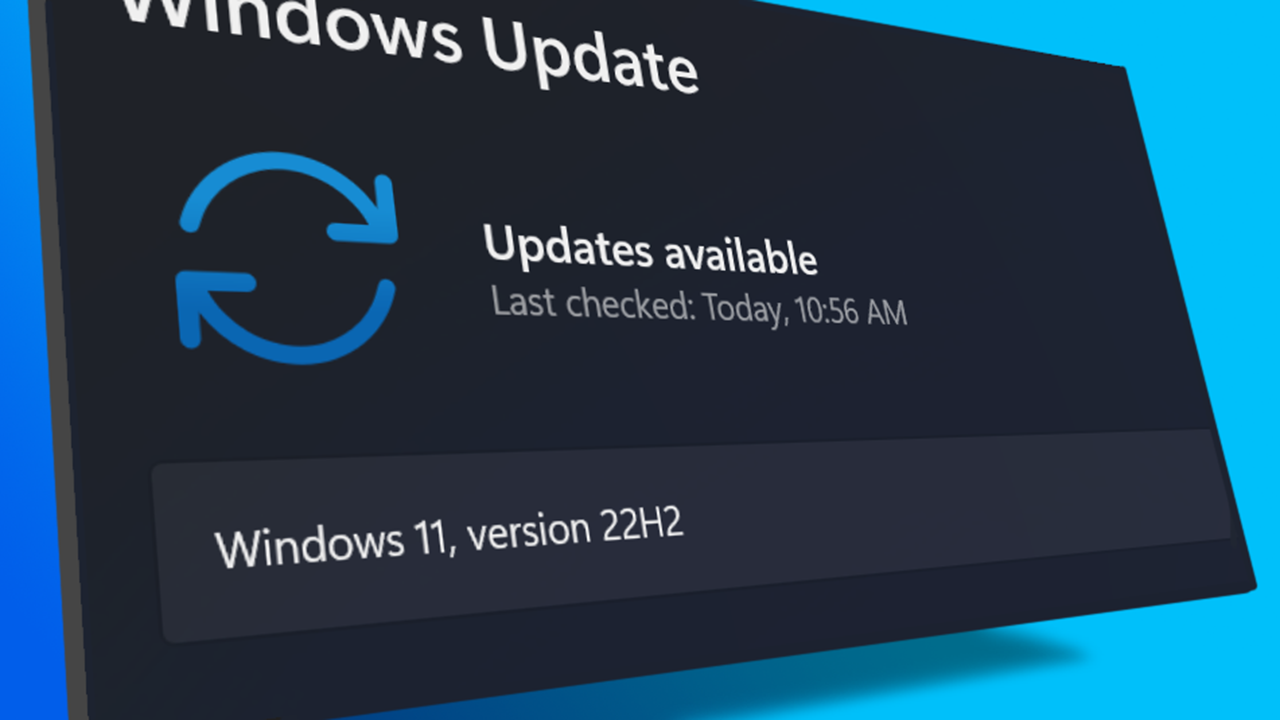
I turned on my laptop this morning for the first time in 4 months. I knew it was that long because I hadn’t connected the laptop to the new Netgear router that I bought at the end of April. Unsurprisingly, as I haven’t used this device for a while there were multiple Windows updates to be installed. This process took over an hour, so while the various updates were being downloaded and installed, I turned my attention to my Amazon Echo Dot which loiters in the corner of our lounge, doing very little to justify its existence. At present this device is mainly used as a glorified timer for cooking, which seems a bit of a waste given it’s alleged capabilities. Hence, I decided to see if I could increase its functionality while waiting for Windows to do its update thing. More on this later. Let us for the meantime return to the small matter of the operating system updates. Once they were completed, I immediately installed Chris Titus Tech’s Windows Utility and started removing unnecessary features and bloat, as well as disabling invasive services.

In the year 1860, Baron Victor Frankenstein (Peter Cushing) faces execution by guillotine for the murders perpetrated by the creature he created. With the assistance of a hunchback named Karl (Oscar Quitak) he avoids death by beheading the priest who came to give him the last rites. The priest’s body is then mistakenly buried by the authorities. Three years later, Victor, now using the name Doctor Stein, has established himself as a prosperous physician in Karlsbrück, serving both affluent patients and the poor at a paupers’ hospital. Hans Kleve (Francis Matthews), a junior member of the medical council, recognises Victor and being an admirer, seeks to become his apprentice. Victor and Hans then undertake an experiment to transplant Karl’s living brain into a new, more refined body, rather than a grotesque monstrosity the Baron has previously made. Karl is eager to have a new healthy body, especially after encountering Margaret Conrad (Eunice Gayson), the charming new assistant at the hospital.

This movie questionnaire was originally created by Alexander from Cinemaniac Reviews. Sadly, I believe that website is now defunct. However, that doesn’t in anyway invalidate the questionnaire itself which has some very good questions about your relationship with cinema. Some of my answers to the questions posed are about films that I enjoy, as opposed to those that are considered cinematic classics. However, I have answered some questions more seriously than others, especially the one about undeserving recipients of the Best Film Oscar. I struggled with a couple of questions because I no longer go the cinema as frequently as I did 10 years ago. This is mainly due to the fact that a lot of the films I find interesting end up going straight to streaming after very brief theatrical releases. Some do not even get shown in cinemas. Hence I view far more at home. But I digress. On with the questions and answers. Feel free to comment below and share your views.

Star Trek is slightly older than me by 14 months. I was born on December 18th 1967. Star Trek was first broadcast in the US on 8th September 1966. Hence this show has always been part of the prevailing pop culture that surrounded me, as I grew up. I first began watching Star Trek as a young child in the early seventies. It would be repeated on the BBC in the early evening on Fridays and it became a family ritual to sit down together and watch it. As a seven or eight year old, it left a great impression upon me and was in many ways, the television highlight of the week. Star Trek along with Doctor Who certainly started my interest in science fiction. Star Trek was also one of the first shows that introduced me to tie-in marketing. I remember seeing in a toy shop, near to my school at the time, a Dinky Klingon Battle Cruiser and was flabbergasted that such a thing existed. I immediately coveted it but sadly never obtained one.

It is obligatory to start these sorts of posts by reiterating the standard mantra that you should not be driven by your websites stats and that the data they contain can be unreliable. Although a sound philosophy in principle, it is actually more nuanced than that. Such data can be useful for growth if used wisely. I have never been coy about trying to increase my readership. For me it seems an integral aspect of blogging. Over the course of 2026, the traffic to Contains Moderate Peril has doubled. A lot of that is down to curious spikes in visits which seems to be AI scraping the entire site. Setting aside these anomalies, more people are reading posts and a lot are doing so via the site’s RSS feed. All of which is fine by me as growing the audience for this blog was a goal for this year, I am quite pleased by this development and the ongoing progress. I hope it continues.

There is a subtle difference between being rash and being proactive. Being rash means acting too fast without thinking about the results, while being proactive is a question of acting early with careful planning. Why have I mentioned this? Well prima facie information indicates that recent Blaugust participants are interested in an “official” online presence for the annual festival of blogging, other than that existing Discord server. That seems perfectly reasonable to me. Not everyone likes using Discord and I do worry that they may reduce its free functionality at some point in the future. With regard to there being a Blaugust platform of some kind, there is a consensus that it doesn’t need to be some sort of sprawling commercially hosted website running on Wix or such like. Those sorts of site require funding, a degree of admin and possibly private data management. It also a bit too “corporate” if you like. Hence the logical compromise is to have a static site. Let it suffice to say, that has been done.
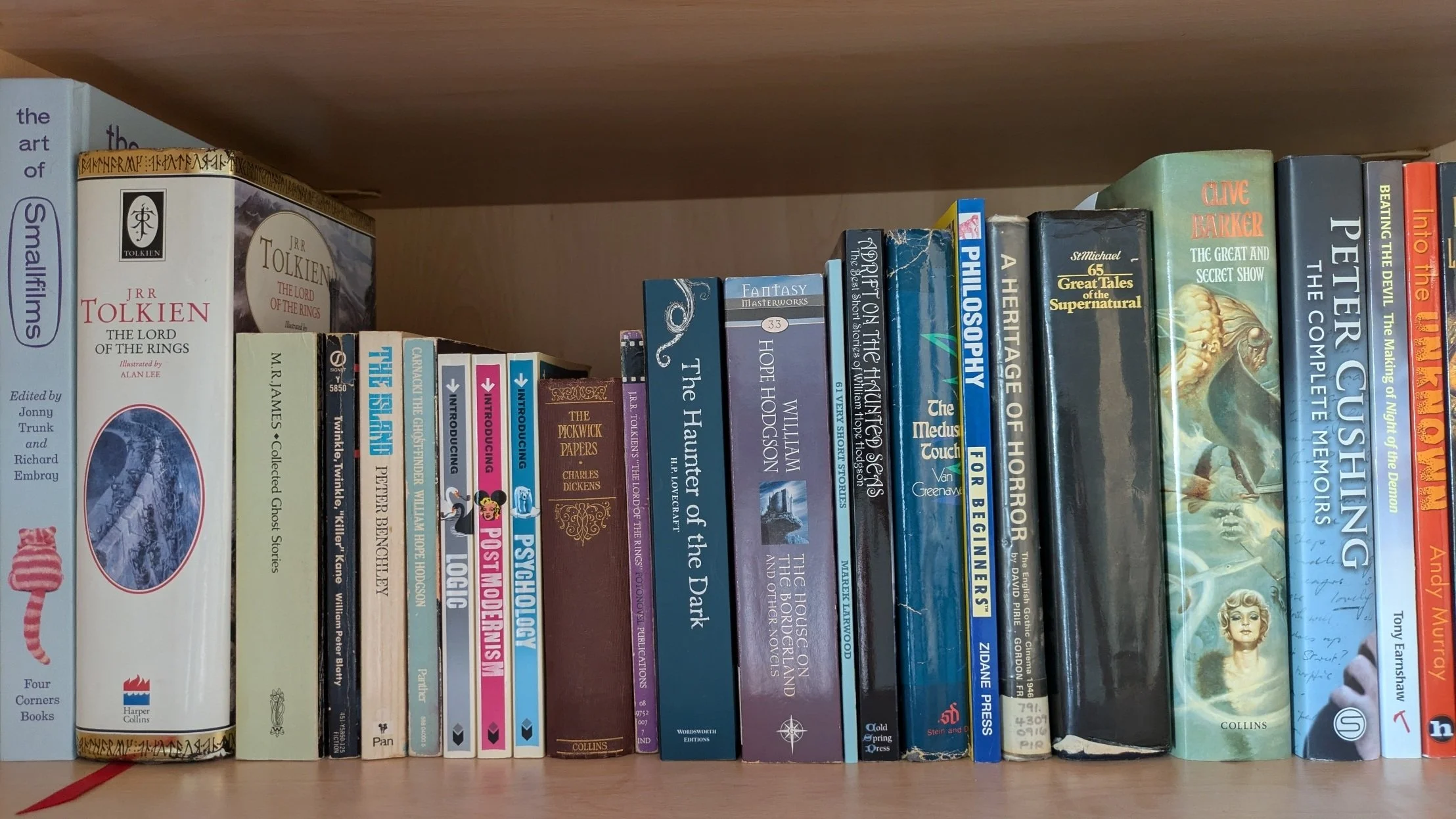
First off, credit where credit is due. I pilfered the idea for this post from Mark Rogers who writes the Newsonaut blog. Apparently it’s a questionnaire that has been doing the rounds across various indie blogs for a while. However, it happens to ask some interesting questions about one’s reading habits. I read a book every month or so and I supplement this by listening to a lot of audiobooks. Yes, I’m aware they’re not the same thing entirely but both offer a means to consume and digest a book. Hence I am not interested in this “popular” internet debate and won’t waste my time on it here. I advocate reading in all its variant forms. Be it sitting in an armchair and perusing a grimoire while smoking a Meerschaum, to reading an article online on your phone or PC. I’d rather that people read in some shape or form, than not at all. As Mark Twain wisely said, “The man who does not read has no advantage over the man who cannot read”. So without further ado, here are my answers to the “five Ws of Reading”.

When I was a child, I quickly learned never to say within earshot of my parents that I was bored. It was quickly met with a response along the lines of “an intelligent mind is never bored” or more worryingly “if you’ve got nothing to do, I’ll find you something” which meant a chore or Herculean task. Being a child of the seventies and due to my parents fundamentalist approach to declarations of boredom, I quickly discovered numerous ways to occupy myself. The default solution was a book or comic. I always liked reading as a child and had plenty of books to choose from. I also had numerous of comics as an alternative to a hefty tome. I would also draw and paint. My father use to work during the summer holidays as a design draftsman and as a result, we always had plenty of paper in our house. Then of course there were toys and such like. Hence I learned the art of keeping myself busy.

Judging by the posts I’ve read, it would appear that Blaugust 2026: Festival of Blogging has been well received by those who participated in it. That is most satisfying to know, especially in light of the fact that this is the first year the event has been run without our founder who sadly past away in July. It has also become clear that Blaugust is reaching a far wider and diverse audience and most definitely is no longer the exclusive province of bloggers from one particular community. There has been healthy discussions on our Discord server about whether this year event needs to adapt to accommodate the modern blogosphere. Questions such as whether or not there needs to be a dedicated Blaugust website have been raised and explored. Should every site participating have an RSS feed? How, if required, should comments be handled. Inevitably, the subject of the use of AI in blogging still remains a controversial issue.

Before we begin, let me clearly state that this is not a comprehensive installation guide for installing Steam OS on your PC. Mainly because the variety of hardware that can be present in any PC makes each installation a somewhat bespoke affair. Hence I have decided to provide a list of bullet points of the various steps and issues I encountered during my installation, last week. Consider it advance warning of things you may encounter if you install this operating system. As ever, if this is something that you are intending to do, I would advise allowing yourself a suitable amount of time so you can accommodate any issues should they arise. It is entirely possible that this may be a two hour job for the technically literate running the most generic or commonplace hardware. However, I suspect that a lot of people undertaking this project will run into variations of the same problems that I encountered.
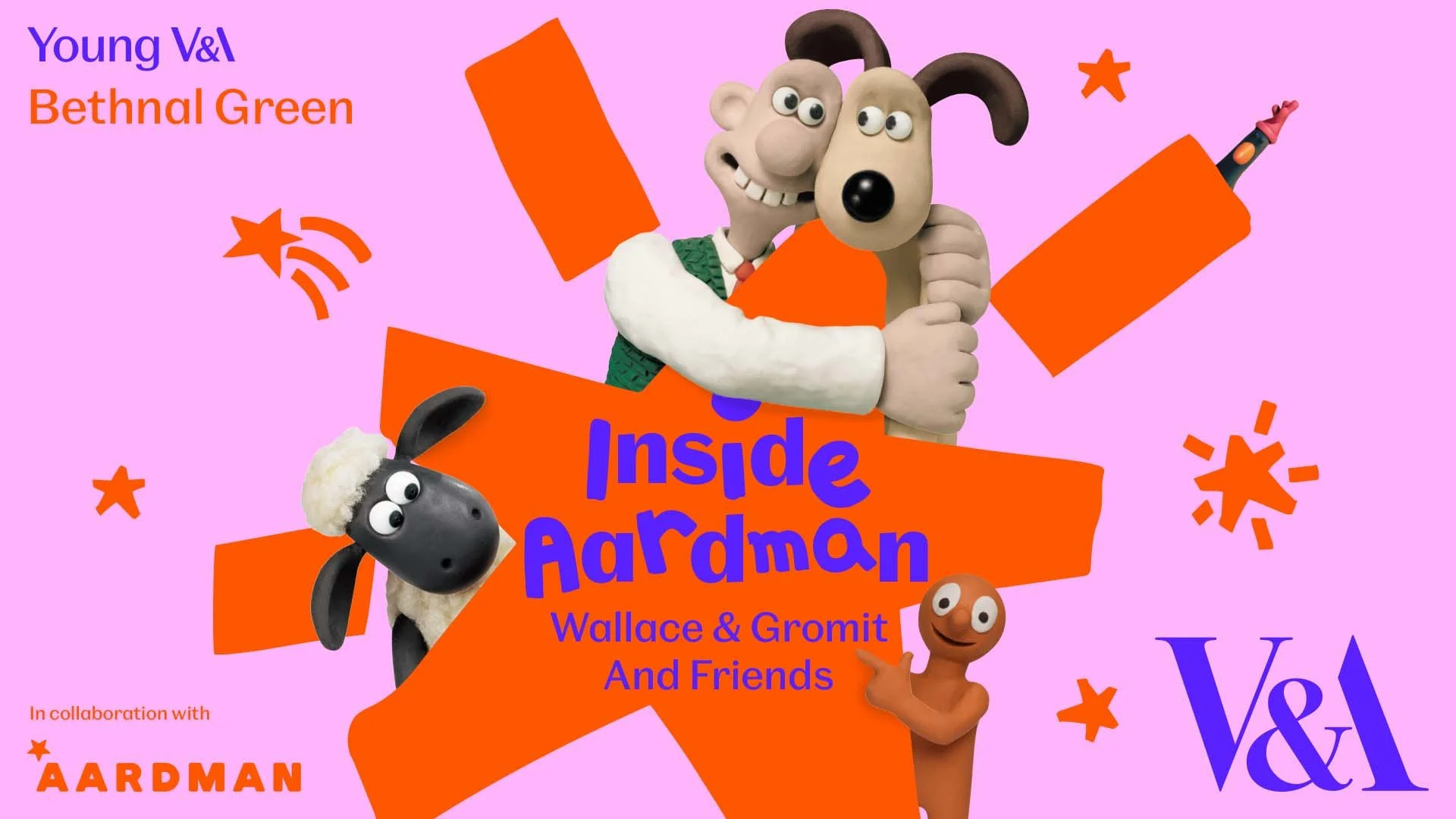
Today I visited the Inside Aardman: Wallace & Gromit and Friends exhibition at the Young V&A Museum at Bethnal Green. The exhibition which celebrates 50 years of Aardman Animations, provides visitors with a unique, behind the scenes view of the art of stop-motion animation. It also explores how Aardman’s iconic characters and worlds are designed, crafted and brought to life. From the initial concept artwork to the final visual effects, this event demonstrates the methods and techniques employed by Aardman. The exhibition features early scripts, sketch artists initial concept art, models, sets and numerous famous puppets. Furthermore this event is firmly pitched at children and families, with a wealth of interactive activities demonstrating the various techniques on display. The curators of the exhibition have also made it clear that they wish to encourage future generation to consider a career in the creative arts.

Exit 8 is a sophisticated and claustrophobic psychological thriller directed by Genki Kawamura, which skilfully transforms a minimalist indie walking-simulator game into a cinematic existential enigma. This overtly metaphorical film renders the repetitive nature and drudgery of modern working life into a physical environment in which the lead character is trapped and must find a way out. A random, brutal maze filled with an atmosphere of indifference to the lab rats that find themselves trapped within. Or is it their personal guilt that has put them there? Genki Kawamura’s psychological mystery draws inspiration from the Japanese video game of the same name, as well as from the cyclical nature of Groundhog Day and endless corridors of the Overlook Hotel in Kubrick’s The Shining. Although there are jump scares and some ghoulish imagery, this is not a horror vehicle. Instead this is a disquieting psychological drama with a strong sense of morality.
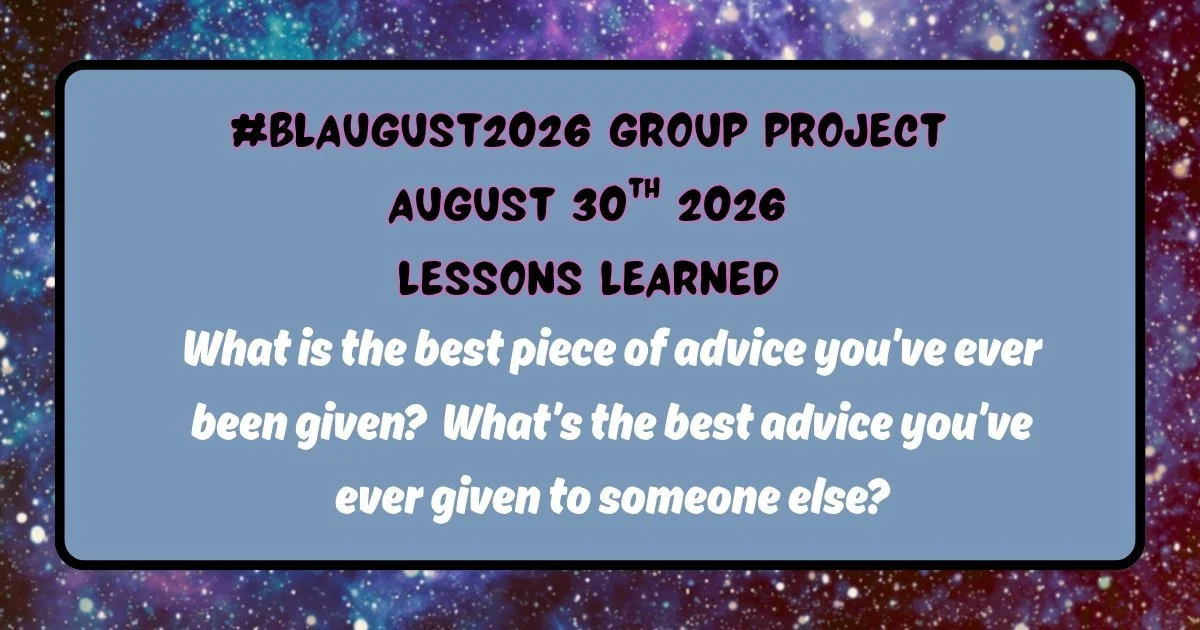
After a very productive month of writing, we come to the final Blaugust 2026 Group Project writing prompt. It is titled lessons learned and is usually a chance to reflect on the festival and whether or not it has been to one’s satisfaction. Have you achieved your goals? What have you gained from the experience? Those sorts of things. It also poses two further questions; “What is the best piece of advice you’ve ever been given?” and “what’s the best advice you’ve ever given to someone else?” for your consideration. I’ll address the questions shortly. Firstly let’s mull over this years event and assess how it’s gone.

Some video games lend themselves to being set aside and resumed at a later date with zero consequences. These are often casual games with no major goals other than having fun while playing them. Fall Guys is a great example of this. You have a cartoony avatar that participates in zany group races, filled with obstacles. You run, jump, climb but the controls are far from difficult. You may well become skilled but such things are mitigated by the other players as they stumble around. You’re not at the mercy of apex players or “try hards”. It is not a game about winning and mastering techniques. The fun comes from playing it and the unique experience you have each time. I’ve been playing this game, on and off, since it’s launch in 2020 and in that time I have only ever won once (winning requires you to win a series of 4 to six individual races). However, whenever I pick up my controller and play Fall Guys, I have fun and the game lifts my spirits.

I am intrigued by the growth of the IndieWeb, owning your domain and static websites. I certainly agree with the notion of not relying on big corporations and I have an ongoing project to divest my dependency on software produced by major market players. However, although I own my own domain, my website is hosted by Squarespace. I’ve not really had any problems with them over the last 11 years and I would describe our business relationship as equitable. However, the monthly subscription price has increased over time and is likely to keep on doing so. It has crossed my mind as to whether there is a suitable alternative. However, if I were to migrate Contains Moderate Peril elsewhere I suspect it would be logistically complex and problematic.

I wrote a post 18 month’s ago regarding whether a directors cut of a film is superior by default to the version originally shown in cinemas. Obviously the answer was no and I then went on to give three examples of films where I think the theatrical release is better to lengthier or substantially altered director’s cut that was subsequently made available at a later date. This time round in this post, I would like to do the complete opposite. I shall provide some examples of films that I think are significantly improved by a longer cut or a substantially, restructured edit. Note some of these examples are technically not a “director’s cuts” but a restoration or reconstruction of the director’s original vision. I shall endeavour to highlight what specific material or broader changes make each respective film “better”. As ever, all of these examples are a matter of subjective opinion and my views are presented as such, not “fact”.

I like learning new skills and starting projects. I regularly undertake such things with varying results. However, if they don’t work out that’s not a problem. You have to try something to see if you like it. I’ll add “within sensible parameters” as a caveat to the last statement. And it’s perfectly fine to discover that something isn’t for you. I like certain genres of video games, music, films and books. I am comfortable wearing certain types of clothes and not others. I’m picky about colours. I’ll even go so far as to say that I won’t drink out of any mug that’s just lying around. If I don’t like the joke, logo or overall aesthetic of it, I ain’t using it. However, I digress. Let’s get things back on track and talk about projects. This year I have wound down several websites and have decided not to move forward with making YouTube videos. I have focused my energy on improving my website and adding functionality. I am also trying to broaden the scope of my writing.

Song lyrics can be powerful things. They can capture the mood and spirit of an era. They can also make powerful socio-political points. Or they can simply be pleasing to the listener by their use of language and playfulness. They can stick in your mind for both deep and trivial reasons. Mishearing them is also a common problem but that is a separate blog post. On this occasion I thought it would be worthwhile exploring the subject of song lyrics of note. Hence I have collated some that I find interesting, wise or just entertaining. These aren’t necessarily my favourite songs of all time, because I like so many. Instead these are some of the ones that sprang to mind when I was preparing this post. I have decided to have the selected lyrics first and the name of the artists afterwards, so that the emphasis is placed upon the words from the song. Although is is more than likely that you’ll be able to identify the songs from the lyrics immediately, or at least for some of them.
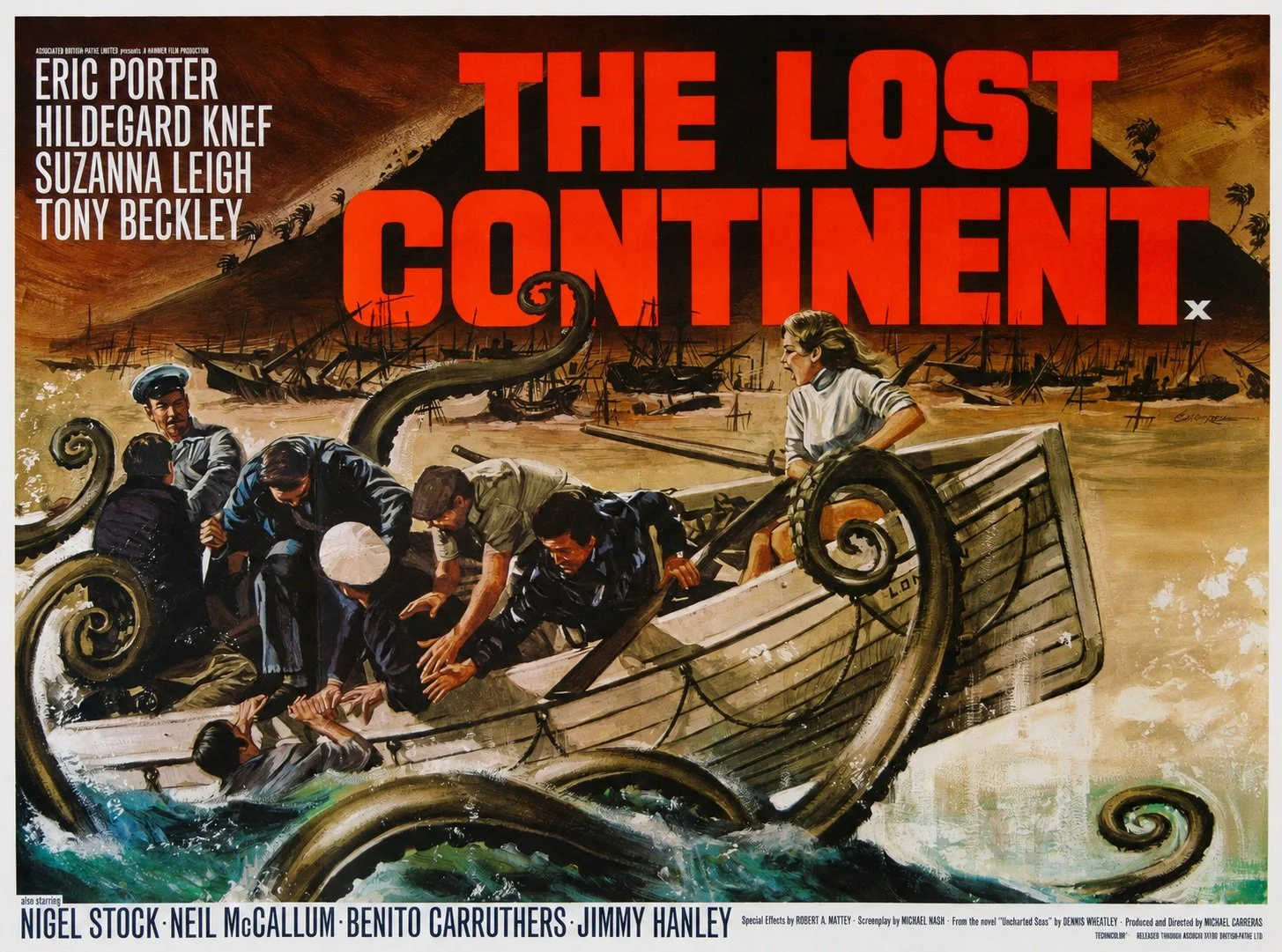
In 1968 the dilapidated freighter Corita hastily leaves Freetown to avoid a customs inspection. Captain Lansen (Eric Porter) has a cargo of dangerous explosives which he is smuggling so he can finally retire. His ship’s passengers also have reasons for leaving in a hurry. Dr. Webster (Nigel Stock), together with his daughter Unity (Suzanna leigh), is relocating due to his indiscretions with patients and illegal operations. Alcoholic pianist Harry Tyler (Tony Beckley) is aimlessly drifting from port to port. Eva Peters (Hildegard Knef) is fleeing from her husband with stolen bearer bonds which she intend to use to buy back her son from his evil clutches Caracas. Ricaldi (Ben Carruthers), a questionable lawyer, is pursuing Eva to retrieve the stolen bonds. First officer Hemmings (Neil McCallum) suggests that the ship should return to Freetown after an imminent Hurricane warning. The Captain asks the passengers and they are unanimous that they do not wish to return. However a mutinous crew, the bad weather and the instability of the explosives force everyone to abandon ship. The survivors find themselves adrift in a lifeboat surrounded by a strange carnivorous seaweed.
It was my blogging anniversary on the 16th August. I’ve been writing and sharing my post online for 19 years, via various different websites and blogs. This current iteration of Contains Moderate Peril has been around since August 2015. To date it has 2,171 posts including this one. Quantity does not necessarily equate to quality but there are some articles I am proud of and feel that they make their point effectively.
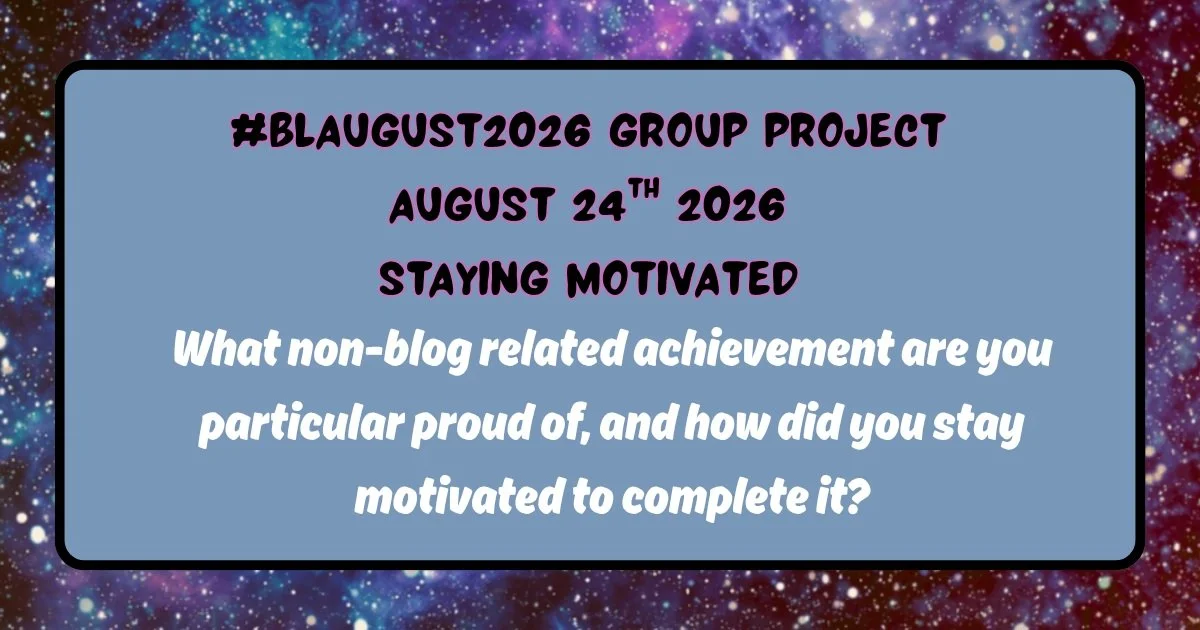
This week’s Blaugust 2026 Group Project writing prompt is an important topic. Namely, staying motivated. I prepared a fairly lengthy post with some advice and ideas to keep people focused and writing. Then I checked it against the post I wrote last year and the year before that, going back to blogging events from 2012. All of these posts broadly said the same thing, so I decided to scrap what I had composed for today and to go with a simpler approach. I shall answer the questions Krikket posed for this writing prompt. Fellow blogger Bhagpuss has also done so and as ever, his thoughts are interesting and well expressed. Here are my answers.

Thoughts on TV shows and my current viewing habits.
This so-called recurring post is certainly becoming quite irregular, as It’s been over a year since I wrote the last instalment of The Idiot Box. I noted back then how I was watching less television and to be frank that hasn’t really changed. Although there are plenty of well written and entertaining shows out there, too often choosing to watch one effectively places you in an opened ended social contract. For example, I watched the first season of The Agency, which is a superior espionage drama. It ended with the main story completed and a few plot lines open for another season. A second season has just been released and I have learned from a blog post by Wilhelm Arcturus, that this season ends on a cliffhanger. Oh dear. Do I really want to get on another TV show treadmill? Nope. I like TV shows that have self-contained seasons. So I guess I’ll be skipping The Agency. Shame. I liked the Jack Black cover of a U2 song that they use on the title credits.

Sometime in August 1979, I was travelling with my father by train to London, when I first saw posters advertising the Ralph Bakshi animated version of J. R. R. Tolkien’s The Lord of the Rings. The film had been released in the US the previous November and I aware of its existence because I had read articles about it production in Starburst magazine. Even at the age of 11 I was interested in genre films and television, having been raised on Doctor Who and Ray Harryhausen’s back catalogue of fantasy movies. Furthermore, I was familiar with Tolkien’s first novel, The Hobbit, as my father had read it to me when I was younger. I was impressed by the poster in that way that only an 11 year old can be. Why was Gandalf do gigantic? Also the A rating was enigmatic. Most animated films were usually rated U. Yet despite my interest, I didn’t see The Lord of the Rings at the cinema during the summer holidays.
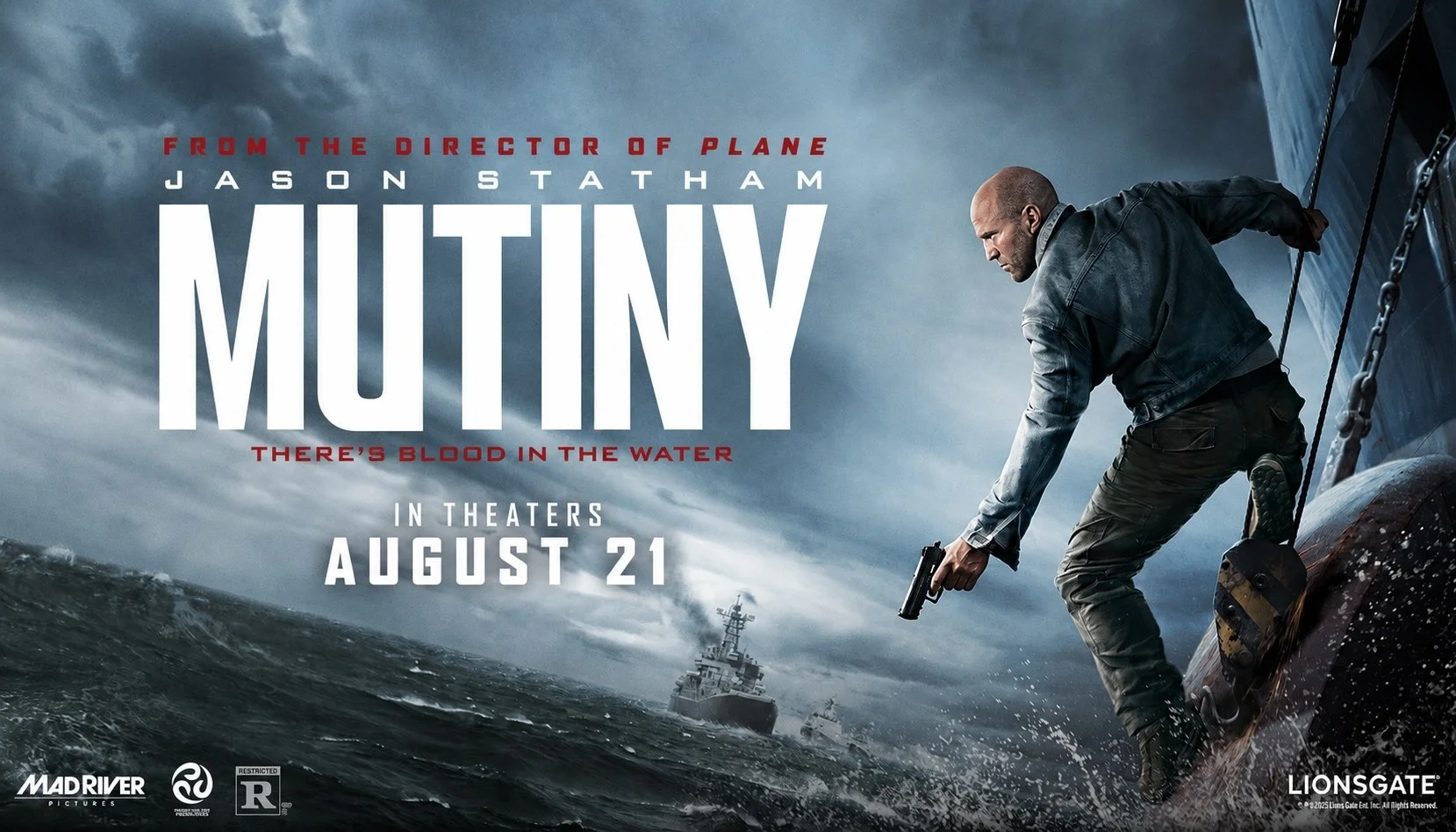
Jason Statham is an exemplar of the US mantra of “staying in your lane”. He makes action movies and occasionally strays into action comedies. His formula broadly works and is sufficiently lucrative to keep Mr. Statham employed. Therefore, if you watch a film in which he stars, you have a fairly good idea of what you’ll be getting. Of late, the criteria for his action vehicles have become more succinct. Jason Statham will play an innocuous character, such as a construction foreman or a bee keeper. Something terrible will subsequently befall another character who Mr. Statham has an emotional connection with in some capacity. He will subsequently hunt down those responsible and meet out death and violence. At some point the villain of the story will enquire as to how this innocuous person is so lethal. Research will then show that our Jason is in fact an ex-police officer/special forces operative/international assassin. There’s then a showdown and the villain dies. Job done.

The Light at the Edge of the World presented itself as an action movie upon its release in 1971. Based upon a story by Jules Verne, the Spanish American co-production was driven by its star Kirk Douglas, who curiously hired British director Kevin Billington to helm the project. This tale of a lighthouse keeper fighting a war of attrition against a group of pirates that have captured his island, was market as an adventure film ostensibly in the idiom of the authors previous works and as a pirate movie. MGM bought the rights to distribute the film in the UK on the misunderstanding that it was a family friendly production. It was not and remains so. They subsequently had to cut 15 minutes of violence and torture as well as an undercurrent of sexual assault to secure a suitable rating. Conversely, the US distributors received an arbitrary PG rating, despite the fact this is one of a handful of films that honestly depicts pirates as murderers, rapists and worse.

The initial podcast boom, which began circa 2005, started as an audio only medium. One of the reasons podcasting became so popular, especially among the fan community, was that you could get away with relatively low production standards. Anyone who had access to a basic microphone and a PC, could produce a show and upload it to iTunes, which was the primary platform at the time. Listeners were forgiving back then. Twenty years later and podcasting has been on a tempestuous journey. It started with the medium being accessible and democratised, sustaining a rich and diverse fan community via non-professional productions. However, slowly and inevitably it has been assimilated by corporate interests. Fan podcasts have given way to podcast production companies. The small, micro-budget, indie show has effectively been thrown out of their own party. Such shows still exist but they struggle to be heard.

I recently completed the main story in Tainted Grail: The Fall of Avalon. In total I spent about sixty hours playing the game. I began at the start of the year, then took a break for a while but returned to it recently because I wanted to see if I could unlock a specific ending. I did manage to do this. Like so many other RPGs, Tainted Grail: the Fall of Avalon has a central storyline, along with a wealth of side quests, based around factions in specific zones. I think I possibly completed about a two thirds of these. However, once I finished the main story, my interest in the game began to wane. I finally left my character in the last major quest hub in case I wish to return at a future date. I then logged out of the game and uninstalled it from my PC to free up space for whatever I was to play next. In this case its The Sinking City 2. None of this is a negative reflection on Tainted Grail: the Fall of Avalon. I enjoyed the time I spent playing this quirky RPG. I simply had my fill and left to play something else.
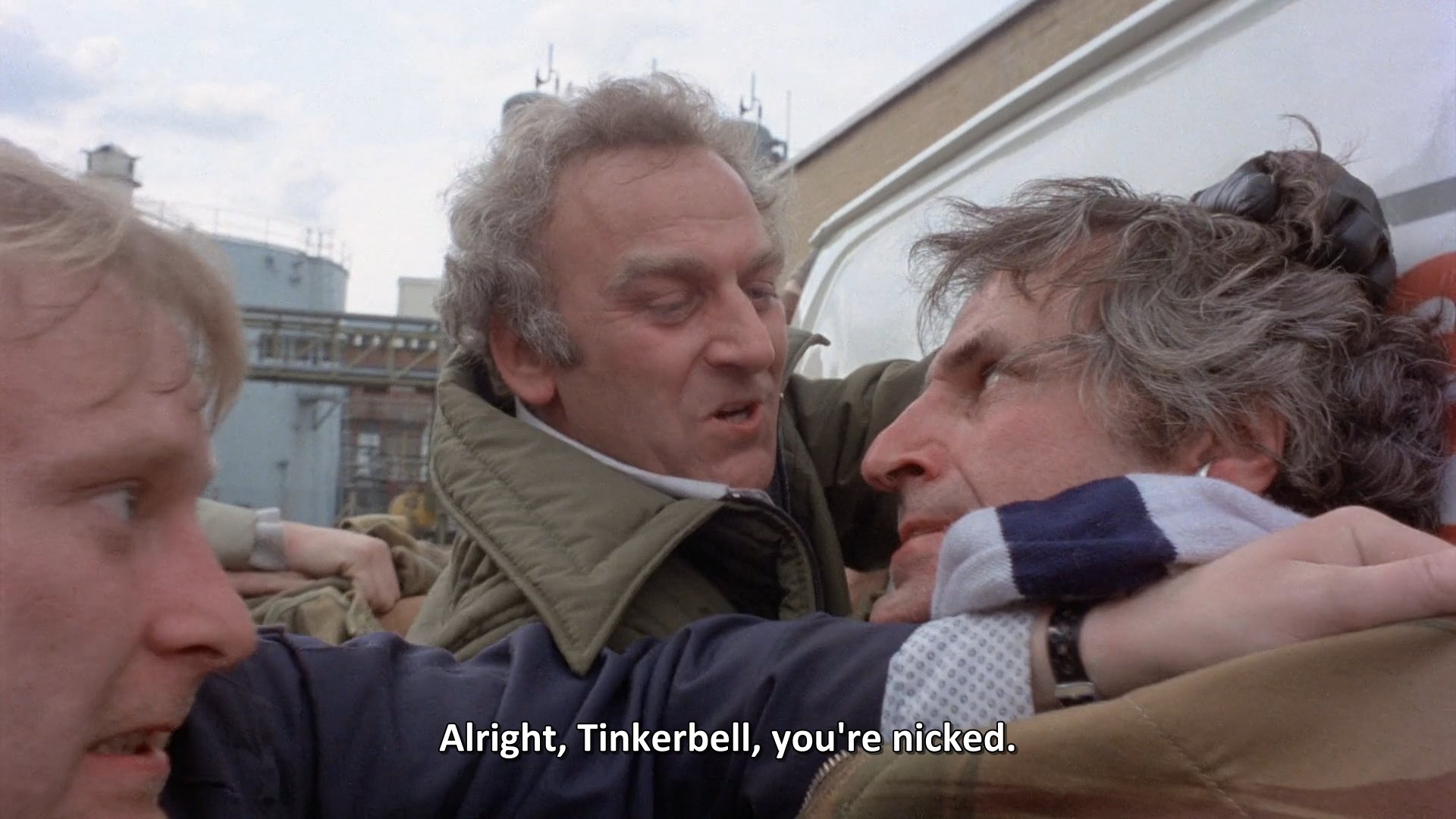
When I first started this series of posts back in 2023, they were originally intended to provide a useful overview into UK (mainly British) slang. US slang is ubiquitous globally due to the pervasive nature of American culture. Hence most people have a good grasp of its nuances. However, the proverbial door does not swing both ways. Hence most people will watch British TV dramas or read popular novels and can be quite bamboozled by some of the phrases that are used. That is what I was trying to address. However, over time this entire enterprise now reads like a some sort of Guy Ritchie film with Colin as the anti-hero. That notwithstanding, hopefully the list of slang phrases below will prove useful to know, if you ever visit the UK or tour around London. As ever I have given an example of their respective use. Feel free to ask questions if anything needs clarifying, or you wish to leave a comment with examples of you’re own national and regional slang.
Writing Film Reviews
"You’ve probably gone over it before, but I’d like a refresher for how you go about choosing the movies you watch - I’ve got Netflix and Amazon Prime, but your titles always seem to go all over the place. Did you ransack a Blockbuster Video before it went bankrupt?" Rambling Redshirt. I was asked the above question recently, via Discord chat, because I do appear to post a rather eclectic range of film reviews. So, I thought I’d clarify my respective process (or lack thereof) as to which movies I choose to write about. I’d also like to share my thoughts on what I consider constitutes a good film review and the procedure I use when writing about the films I’ve watched.
"You’ve probably gone over it before, but I’d like a refresher for how you go about choosing the movies you watch - I’ve got Netflix and Amazon Prime, but your titles always seem to go all over the place. Did you ransack a Blockbuster Video before it went bankrupt?" Rambling Redshirt. I was asked the above question recently, via Discord chat, because I do appear to post a rather eclectic range of film reviews. So, I thought I’d clarify my respective process (or lack thereof) as to which movies I choose to write about. I’d also like to share my thoughts on what I consider constitutes a good film review and the procedure I use when writing about the films I’ve watched.
First off, here’s a little background about my relationship with cinema. Both my parent grew up during the thirties and forties when the primary form of entertainment were films and radio. Hence when I was a child, watching movies together was a common family activity. Mainstream network channels showed a lot more movies during the seventies, where now they’ve been replaced with property, cooking and quiz shows. Satellite and cable options did not exist in the UK at the time and there were just three analogue terrestrial channels. Sunday afternoon was a day where there’d be a movie scheduled on BBC Two mid-afternoon. We’d have our Sunday roast and then settle down to watch the likes of The Mark of Zorro or Top Hat or The Dam Busters. As these were my most formative years, my passion for film was kindled. This was how I was introduced to the works of Ray Harryhausen, George Pal and Hammer Horror.
As a carer, I now have a fixed schedule which although busy, provides me with periods of time that I can use to pursue my interests. Thus, during a week, I will watch about three or four movies. Because I don’t go to the cinema so often these days, some of these will be recent releases, especially now that the gap between the theatrical and video-on-demand release is as little as two months. I also have a “watch list” that contains both old and new films, that regularly has new titles added to it. These will be recommendations from critics or genre classics that I want to familiarise myself with. I often re-visit films I’ve previously seen for a re-evaluation, especially if it has recently been “dissected” on any of the film related vlogs and podcasts that I subscribe to. However, there is not a great deal of rhyme or reason to the order in which these movies are watched. All can potentially be written about.
I do not consider myself a casual watcher of films. I believe film making to be an art form and I can find merit in all genres. Many people see films as disposable entertainment. Something you passively observe and then move on from. That’s fine. You do whatever is good for you. I however, watch, analyse and reflect. I like dialogue and the way it’s written. I focus and consider the composition of shots and the construction of scenes. Lighting, production design and style are all important to my enjoyment. I can also remember details and visualise how scenes played out, after I have watched a film. As I have this level of interest, I naturally read and seek out data about film stars, film makers and movie production. If you like sports you will often become knowledgeable on the subject, especially stats. I do the exactly the same with films. Why? Because they bring me pleasure, they tell stories and they entertain. And this passion drives me to write about them.
Moving on, here are the rules that I broadly try to apply when writing about a movie. Just for the record, I often sit on the sofa with a pen and notebook in hand to write my thoughts down as they occur to me. This can be a little confusing to anyone watching with me.
1). Be sure to establish the genre of the film in question. Is it a comedy, a drama, a horror? If so, judge the film within the confines of said genre. Don’t make the mistake of comparing apples to oranges. All movies require a degree of “suspension of disbelief”. You have to vary this according to what you are watching. A drama such as On the Waterfront does not need to be watched with the same objective removal from reality as Dog Soldiers.
2). Consider all aspects of filmmaking when writing your review. Reflect upon directing, writing, editing, acting and other aspects of the production. Did they contribute positively or negatively to your experience? Where they of note contextually? IE with regard to the budget of the movie. If you have points you wish to highlight, then give specific examples in your review.
3). Imagine that your readers know nothing about the film in advance. It’s your job to introduce it to them and to provide them with a succinct and salient summary. How would you describe the film to a friend in one sentence? That may not always be possible with movies like Cloud Atlas but strive to be concise. Also do your best to avoid spoilers. If there is a dramatic event that serves as a surprise, don’t reveal this in your review. Provide enough information to intrigue readers so that they can choose to watch the film if they see fit.
4). When summarising your overall experience, think about who would enjoy this film, what its appeal is and in what circumstances. It helps to contextualise this, so if possible, why not make a broadly equivalent film comparison. IE Under Siege is Die Hard on a ship. Watership Down is essentially The Wild Bunch but with Rabbits. Any movie with Ben Stiller, is like a good comedy but with all the humour, talent and enjoyment conspicuously absent.
Finally, I’d like to finish with a quote from top UK movie critic Mark Kermode. Here are his top five ingredients for a proper film review, taken from his book The Good, The Bad & The Multiplex. Needless to say, I think he’s spot on.
“Opinion, description, contextualisation, analysis and entertainment.
1. Opinion
Saw 3D is rubbish.
2. Opinion and description
Saw 3D is a horror film that is rubbish.
3. Opinion, description and contextualisation
Saw 3D is the seventh episode and the first stereoscopic instalment in a long-running horror series, and it is rubbish.
4. Opinion, description, contextualisation and analysis
Saw 3D is the first instalment in a series that began life as a tortuously inventive low-budget chiller but which has descended over the course of six sequels into gory, boring torture porn which is rubbish.
5. Opinion, description, contextualisation, analysis and entertainment
It took the once-inventive but increasingly depressing Saw series seven movies to resort to the hackneyed headache of 3-D, but despite the promise that this is ‘The Final Chapter’ (just wait till the sums say otherwise) you keep wishing those protruding spikes would leap a little further out of the screen and puncture your eyeballs to ensure that you never have to watch rubbish like this ever again”.
It is obligatory to start these sorts of posts by reiterating the standard mantra that you should not be driven by your websites stats and that the data they contain can be unreliable. Although a sound philosophy in principle, it is actually more nuanced than that. Such data can be useful for growth if used wisely. I have never been coy about trying to increase my readership. For me it seems an integral aspect of blogging. Over the course of 2026, the traffic to Contains Moderate Peril has doubled. A lot of that is down to curious spikes in visits which seems to be AI scraping the entire site. Setting aside these anomalies, more people are reading posts and a lot are doing so via the site’s RSS feed. All of which is fine by me as growing the audience for this blog was a goal for this year, I am quite pleased by this development and the ongoing progress. I hope it continues.
There is a subtle difference between being rash and being proactive. Being rash means acting too fast without thinking about the results, while being proactive is a question of acting early with careful planning. Why have I mentioned this? Well prima facie information indicates that recent Blaugust participants are interested in an “official” online presence for the annual festival of blogging, other than that existing Discord server. That seems perfectly reasonable to me. Not everyone likes using Discord and I do worry that they may reduce its free functionality at some point in the future. With regard to there being a Blaugust platform of some kind, there is a consensus that it doesn’t need to be some sort of sprawling commercially hosted website running on Wix or such like. Those sorts of site require funding, a degree of admin and possibly private data management. It also a bit too “corporate” if you like. Hence the logical compromise is to have a static site. Let it suffice to say, that has been done.
Judging by the posts I’ve read, it would appear that Blaugust 2026: Festival of Blogging has been well received by those who participated in it. That is most satisfying to know, especially in light of the fact that this is the first year the event has been run without our founder who sadly past away in July. It has also become clear that Blaugust is reaching a far wider and diverse audience and most definitely is no longer the exclusive province of bloggers from one particular community. There has been healthy discussions on our Discord server about whether this year event needs to adapt to accommodate the modern blogosphere. Questions such as whether or not there needs to be a dedicated Blaugust website have been raised and explored. Should every site participating have an RSS feed? How, if required, should comments be handled. Inevitably, the subject of the use of AI in blogging still remains a controversial issue.
After a very productive month of writing, we come to the final Blaugust 2026 Group Project writing prompt. It is titled lessons learned and is usually a chance to reflect on the festival and whether or not it has been to one’s satisfaction. Have you achieved your goals? What have you gained from the experience? Those sorts of things. It also poses two further questions; “What is the best piece of advice you’ve ever been given?” and “what’s the best advice you’ve ever given to someone else?” for your consideration. I’ll address the questions shortly. Firstly let’s mull over this years event and assess how it’s gone.
It was my blogging anniversary on the 16th August. I’ve been writing and sharing my post online for 19 years, via various different websites and blogs. This current iteration of Contains Moderate Peril has been around since August 2015. To date it has 2,171 posts including this one. Quantity does not necessarily equate to quality but there are some articles I am proud of and feel that they make their point effectively.
This week’s Blaugust 2026 Group Project writing prompt is an important topic. Namely, staying motivated. I prepared a fairly lengthy post with some advice and ideas to keep people focused and writing. Then I checked it against the post I wrote last year and the year before that, going back to blogging events from 2012. All of these posts broadly said the same thing, so I decided to scrap what I had composed for today and to go with a simpler approach. I shall answer the questions Krikket posed for this writing prompt. Fellow blogger Bhagpuss has also done so and as ever, his thoughts are interesting and well expressed. Here are my answers.

Once again, I have stumbled across an interesting debate that has provided me with an opportunity to write a blog post. Over on the Blaugust Discord Server, I read a comment from AgingGamer regarding RSS feeds and their significance with regard to blogging. This in turn referred me to a post by fyr (don’t you love all these nom de plumes) who wrote at depth about the ongoing community debate about the use of RSS/Atom feeds. The article explored the importance of such feeds with regard to reaching readers and providing accessibility to the disabled. All of which provided me with a great deal of food for thought. Mainly because I use a mainstream website service provider for my online endeavours, so RSS is by default built. I’ve never really considered not having such a facility at my disposal. But the rise in the IndieWeb scene challenges this assumption.

I have written two blog posts today that I have subsequently abandoned. The first was gaming related but when I was about halfway through writing it, I felt like I was covering old ground and just repeating myself. It was also regarding an issue that can’t really be fixed. Namely, how do you ensure that matchmaking in PVP games is done equitably. As there is no solution to this issue at present, or at least not one that all parties can agree on, I decided to ditch it. Similarly a post I was working on about what becomes of my blog if anything happens to me was curtailed. In light of recent events in our community it seemed inappropriate. However, as a result of binning two blog posts, I new idea occurred to me. Do my fellow bloggers self-edit and curtail what they write about? Is your blog totally unfiltered or do you apply a set of rules that determine what content is deemed acceptable?

It is time for the next Blaugust 2026 Group Project writing prompt. This one comes with two lines of enquiry. The first is an opportunity to “introduce yourself”. Over the years, I have written several introductory posts for previous Blaugust events. Rather than repeat myself I’ll just link to the last one, which was posted in August 2023. I haven’t radically charged since then apart from my hair going whiter. The next part of the prompt poses a far more intriguing question. “If you could have one magical power or super power, what would you choose and what would you use it for?”, which offers much for consideration. Having given this proposition much thought here is my response.

A decade ago I wrote a post about blogrolls and the practical and social issues surrounding them. At the time, the version of Squarespace I was using didn’t easily support such things or at least wasn’t able to do so in a manner I liked, so I didn’t have one. Ten years later Squarespace as a hosting platform has far greater functionality, hence I recently decided to add a blogroll. That was in March this year. However it just wasn’t really fit for purpose. So I decided to revise it a few days ago and rather than just have a traditional list of blogs in a side column, I ended up producing a more comprehensive blog directory, which list two hundred plus sites alpha-numerically. I’ve been tinkering with it on and off and I am now finally happy with it. The latest update reflects the international nature of the Blaugust: Festival of Blogging and the fact that we have many blogs written in their native language. Translating text is now an integral function of web browsers, so I see no reason why these blogs should be excluded.

Today’s post is part of the Blaugust 2026 Group project, which features a series of writing prompts set for specific dates throughout the month. The idea being that everyone who wishes to participate can write about the same subject, riff off each other’s posts and enjoy a shared experience. In many respect having a common writing prompt levels the playing field and provides a sense of common purpose among those who take part. Today’s group project prompt asks the question “tell us all about your very first blog”. An unambiguous and interesting question that will hopefully prove enjoyable to write about and informative to others.

I have been writing online for nearly two decades. I don’t claim to be good or accomplished but what I can say with certainty is that the more often you write, the easier it becomes. For those who are new to writing a blog and the Blaugust Festival of Blogging, possibly the biggest hurdle that you now have to get over, is writing your first post of the month. You spent the lead up to this event sorting out your blog templates, fine tuning the backend and possibly banking some ideas. Or you may have decided to just wing it and make it all up as you go along. Both are perfectly valid approaches. However, there is one thing left to do that cannot be put off, avoided or danced around. Writing. At some point you’ve got to do it. Or bail on the event. The proverbial “shit or get off the pot”.

If you take a cursory look at a calendar you will see that the month of July is fast coming to an end. That means that Blaugust 2026 Festival of Blogging starts in a few days time! If you’re participating, or thinking of doing so, the next few days present a golden opportunity to do some practical organising and basic preparation. You don’t have to if you don’t want to. Feel free to just do things as they come, so to speak, if that’s your approach. However, for most of us, it helps if we have some kind of plan in place and make some arrangements in advance. I personally prefer this approach and like to have some ideas for blog posts in the bank. It is also useful to have “options” if something doesn’t go to plan. For those who are new to Blaugust, here are a few ideas regarding preparation that may be of use to you. As ever, your personal mileage may vary and ultimately you are best off adopting a strategy that suits your writing style and personal schedule.

Prior to last year’s Blaugust: Festival of Blogging, I upgraded Contains Moderate Peril to the latest version of Squarespace. There are still some aspects of the site that need fine tuning but overall, I am happy with the appearance of my blog and its respective functionality. With this year’s writing event fast approach, I decided to tackle over the last few days, some of those finer points that need tweaking. I have wanted a post counter on the site for a long time but unfortunately there is no native Squarespace widget for this basic function. I also felt the need to upgrade the blogroll, as the current one didn’t support RSS feeds from certain sites (e.g. Google Blogger) and was dependent upon a third party service, Elfsight, which wasn’t ideal. Both of these issues have now been addressed and I am pleased with the results. There is now a post counter on the Blog Archive page, which seems a logical place to have it and the Blogroll is now far more comprehensive.

Next month the annual Blaugust: Festival of Blogging begins. Roundabout this time each year, I try to write a promotional post to raise awareness of the event and encourage potential participants. However, as I’ve done this quite a few times before, each year it is becomes increasingly difficult to present the essential facts about Blaugust: Festival of Blogging in an interesting fashion. There’s nothing worse than writing a post and feeling that you’re just covering old ground. So, this year, I thought I’d try something different and present the most important information about this annual event, as if it were a conversation between myself and an interested passer by. Feel free to attribute novelty voices for each party in your own head, while you read this. If it helps, try imagining that this discussion is happening between two celebrities or such like. Both may be wearing exotic hats but I digress. On with the scenario.

I read a blog post by Void recently, about finding a new internet home. He wrote about how he and many others have had to pick up their “digital roots” and migrate multiple times over the years, from one platform to another. It is a position I can sympathise with as I have done likewise. Hence I like the idea of having a place online where I hangout by default. My own blog is an anchor for me but it is not quite the same thing as a platform or online portal where I can find all my friends and colleagues, share content and shoot the breeze. It’s a curious thing, because as I typed that last sentence it struck how such a sentiment may seem alien to others. There may well be people who like to have a finger in multiple pies and who are happy to frequent and flit between various social media apps, Discord servers and subreddits. I prefer to focus my efforts on a single instance. A place that suits my requirements, allows me to put down roots and become part of the furniture. Like a virtual Diogenes Club.

Everyday, once I’m up, I sit at my desk in my office, fire up my PC and log into Feedly. I have various RSS feeds grouped by category, which I slowly trawl through and read anything that catches my eye. I have one curated feed named “Blaugust” named after the yearly festival of blogging event. It has over 250 blogs listed, many of which are former participants. Most of these regularly post. Hence there’s a lot to get through and so I don’t read all of them. However there are a few that I always checkout. Mainly because they’re the personal musings of some of our writing community’s oldest and most prodigious members. The sorts of guys and gals who are part of the furniture. They’ve always been there and it feels like they always will. Posting their thoughts, sharing their enthusiasm and spreading the love, so to speak. One of these blogs, is Tales of the Aggronaut. written by Belghast.

On Friday 26th June, I had another random spike in internet traffic to Contains Moderate Peril. The statistical package that comes with my Squarespace account recorded over 13k visits in less than 24 hours, which is not typical (although I wish it was). However, all of these visits to my blog arrived via the default homepage and spent between 1 and 2 minutes there. Hence, it was obvious that this was not human traffic, as there was no evidence of any searches being made of content that is available on my site, nor of the “visitors” clicking on any of the links on the top menu and viewing other posts. This was undoubtedly AI traffic arriving at the designated homepage and simply parsing the site. I had a similar spate of this sort of web traffic last November. The only difference on that occasion is that the traffic all came from China. This time round it hailed from the US. I suspect that this is something that will happen more often as companies set their AI loose on the net for what is effectively training.

I recently watched a video on Patreon by someone who I actively support as a “content creator” and whose work I enjoy. I shall provide no more detail regarding their identity because they may not want their work referenced with regard to what I am going to say. During the course of their video they briefly referenced the work put into promoting a podcast they are currently producing and the relatively low audience that it has garnered so far. The comments were an aside and most certainly not said with any sense of self-pity. They were simply a statement of fact. Furthermore, I suspect they are far from unique and similar sentiments have been expressed in one way or another by anyone who has created something the published it online, only for it to be lost among the greater white noise” of the wider internet.
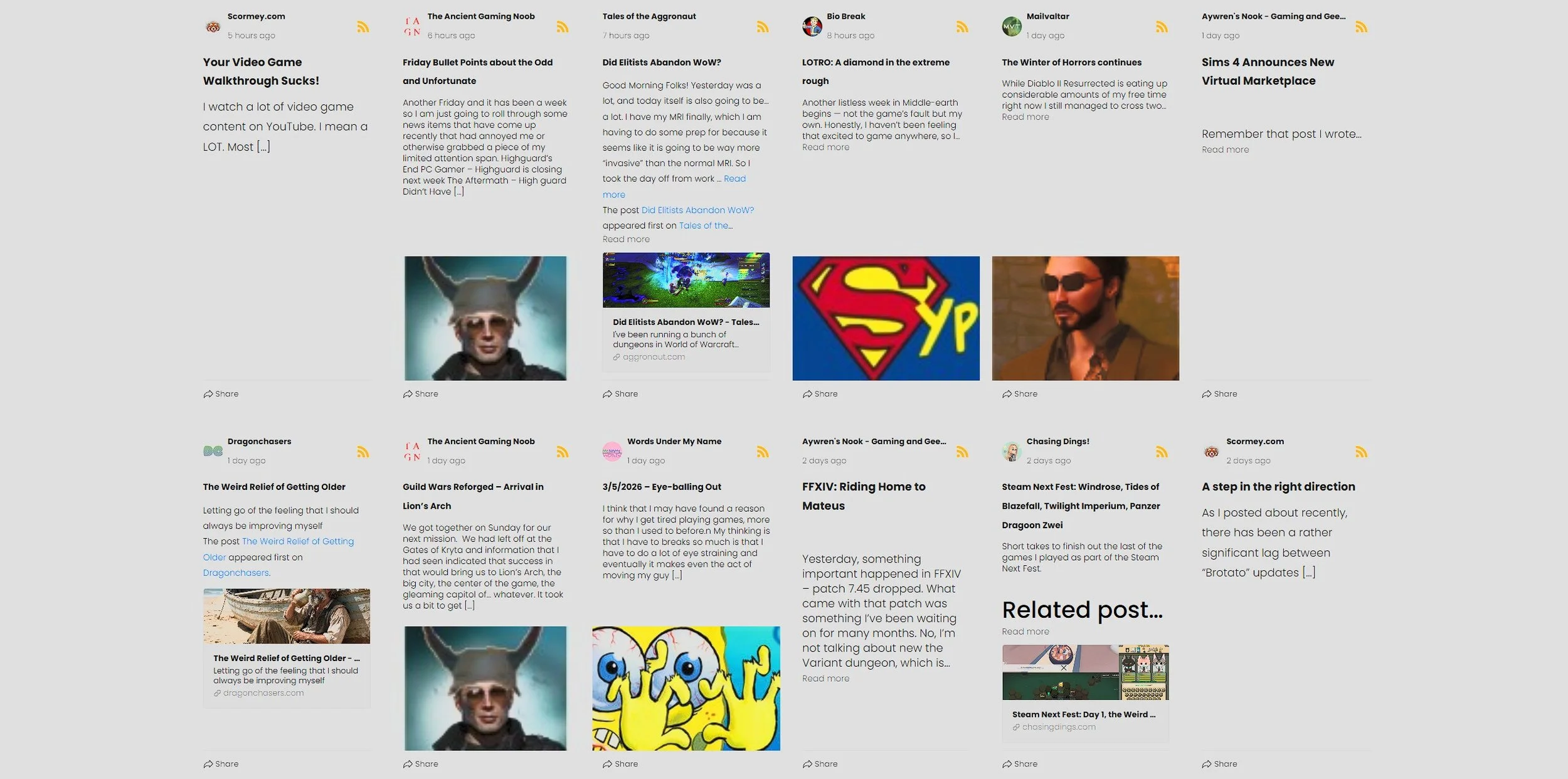
When I first started blogging way back in 2007, I maintained a blogroll of all my colleagues and peers’ websites. At the time this was a common practice and a way to support an expanding community. I considered this such an important aspect of the blogging scene at the time, I created a website to aggregate posts from video game blogs, called The Gaming Blog Nexus. It ran for two years and proved quite useful. However, it was tricky to administer and would frequently break as a lot of the back end widgets and plugins were created and maintained by “gifted amateurs”. I eventually shut it down due to the operating costs. When I moved my own website, Contains Moderate Peril, to Squarespace in 2015 I intended to start maintaining a blogroll once again. However, at that time there was no native support for such a thing on the platform. Hence for the last ten years, I have not had a blogroll on my website, which hasn’t sat well with me.

I was speaking to someone recently about hobbies (fortunately it wasn’t Simon Quinlank) and I mentioned that I have maintained a blog for over a 19 years. When I talked about the ongoing cost they were most surprised, as they had assumed that blogging was something that could be done for free. I guess we’ve become so accustomed to the provision of free online services such as email, that this a reasonable assumption. I pointed out that although it is indeed possible to blog for free using Blogger, it was not the optimal approach, especially if you want to maintain some degree of control over your writing. Naturally, the next question they asked was how much do I spend and I gave them a ballpark figure. All of which reminded me that I wrote a post on this very subject a few years ago. So I’ve decided to revisit the subject and see how much it currently costs to maintain Contains Moderate Peril.

Today I started the slow process of auditing every post that has been published on Contains Moderate Peril since 1st August 2016. The goal is to correct any obvious typos and replace all existing images with larger ones. The Squarespace software upgrade I applied to the website at the end of last year has finally allowed me to establish a standard format that I am happy with. Hence the ongoing audit is the perfect opportunity to apply these style rules to all posts. There are also some technical issues and matters regarding functionality that need to be addressed. I need to determine how to embed YouTube videos in such a way that they automatically scale to fit whatever device is viewing them. Another area which needs improving is the website search facility. This needs refinement so that enquiries can be more specific. Older posts also need to be more accessible, although I am still researching how best to achieve this.

It’s nearly two and half months since the Blaugust: Festival of Blogging event ended. During that time I’ve maintained a fairly regular writing schedule and I post every two days or so. Furthermore, I finally dragged my blog template, kicking and screaming, into the modern era. I tweaked a few pages and updated the content of the “about” page. The next task is to start going through all previous posts and replacing older, low resolution images with larger, more appropriate ones. This process also presents an opportunity to ensure that all posts follow a uniform style. IE Are appropriately categorised, have links to related posts at the bottom and are SEO optimised. This will be a lengthy task so I think the best approach will be to tackle two or three posts a day. Hopefully this will raise the profile of older content, which generates the lion’s hare of traffic to this site.
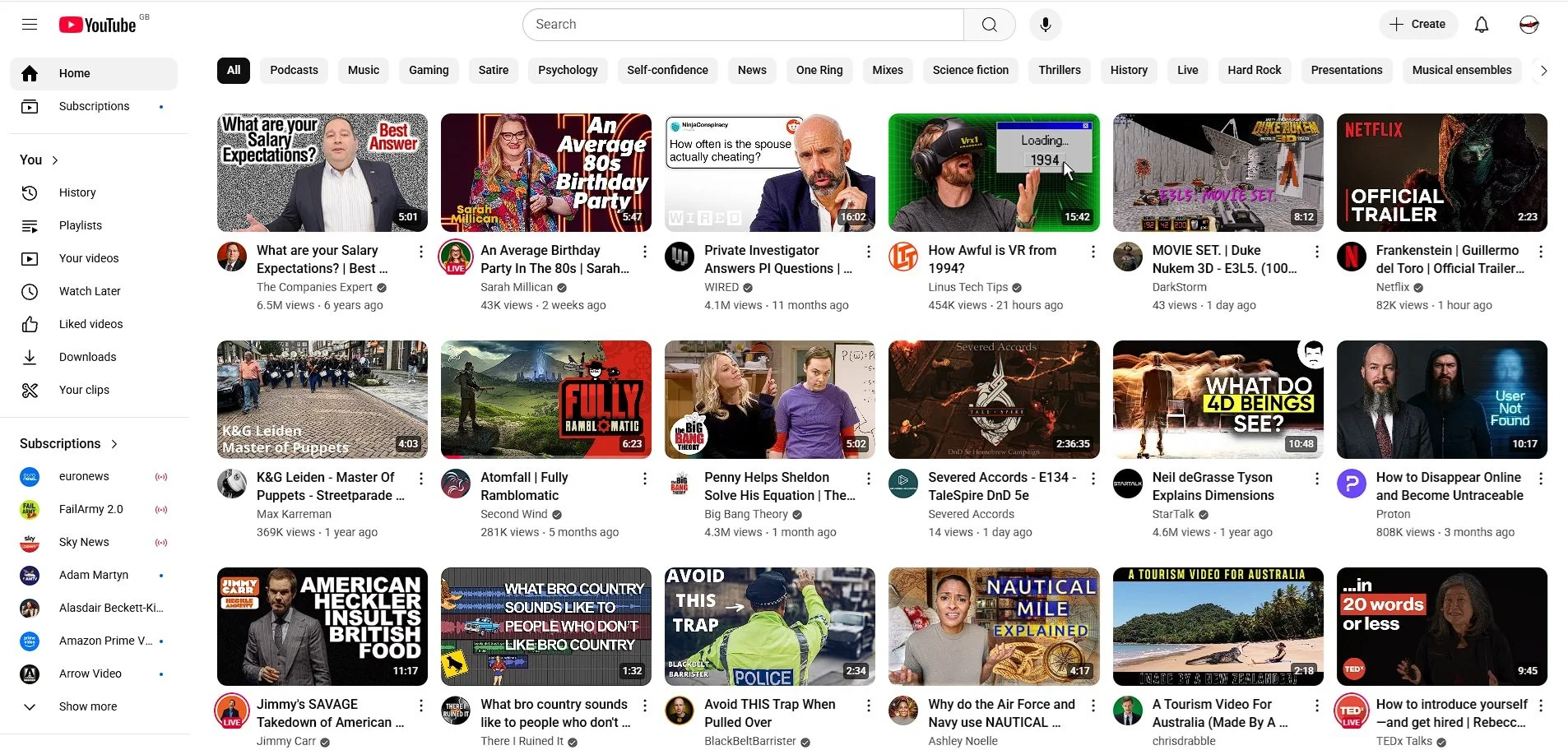
I use a browser extension called Control Panel for YouTube, which allows me to determine who many videos are displayed on my YouTube homepage and to filter the content that is shown. At present it is configured to display rows of six. Something that I have noticed of late, is the amount of videos with hyperbolic titles and thumbnail images created by AI. Both of which are design choices made to increase engagement. Clickbait titles are contrived to meet current SEO optimisation criteria and as such feature more and more in search results. The fact that they frequently have no relation to the subject I am researching, seems to be neither here nor there. The same issues arise with regard to AI generated images, which again frequently have no bearing on the matter. The fact that more and more content creators do this, infers that it works and is now an essential part of the process you must follow to be seen and featured in search results.

In the last post in this series, I specified the need for a plan with regard to upgrading my blog. Well a plan has emerged, been refined and has now been formally adopted. Rather than migrate Contains Moderate Peril to a new platform and effectively have to rebuild all the content, I am going to upgrade my existing presence on Squarespace. This decision was made for two reasons. Time and money. Migrating to a new platform will take a lot of time and incur additional costs. Upgrading the existing website will take less time and has no cost implications. That is not to say that it will be easy. It has become abundantly clear that the upgrade process will break stuff and that all published posts will have to be manually repaired. Hence my choice boils down to the lesser of two evils.
This year’s Blaugust: Festival of Blogging has reached an end and it would appear that this event has been well received by those who have participated in it. I believe that there were 168 bloggers taking part this year, many of whom have not participated before. Some were new to blogging, where others simply wished to see if they could increase their writing output. As ever there was a wide variety of blog styles and subject matters and it has been most interesting to read new posts every day. I have attempted to leave comments and positive feedback where I can and I hope that some of these new blogs that I’ve discovered continue to write. Well done to everyone who took part. I hope it has been an enjoyable and informative process and that you have learned from it. I know that at least one blogger has determined that writing online is not for them, which is a valuable lesson.
There is currently a group writing prompt available as part of this year’s Blaugust: Festival of Blogging which has piqued my interest. It asks the question “what is the oldest draft post you have” and suggests that it is revived in some manner. I have dozens of draft posts in a folder in my Google Drive. Many are film reviews or film related. The oldest of which dates back to summer 2010. Rather than write a straight forward review of Blake Edwards 1968 comedy The Party, I rather foolishly thought at the time that I’d tackle the issue of whether the film is sufficiently racist to make it beyond the pale. Let it suffice to say that I quickly found myself bogged down in the complexities of the subject and thus never completed the blog post.

I’ve participated in every previous Blaugust: Festival of Blogging event. Prior to that I was involved in the Newbie Blogger Initiative or NBI as it was affectionately known. I have therefore written quite a lot of blogging advice and suggestions over the years. If anyone feels disposed to do so, you can access them all by clicking on the “blogging” option on the top menu of this blog. However, it is important to remember that a lot of the ideas I have advocated and written about over the years are purely subjective. Not all advice or guidance works for everyone. People have different ideas about blogging, different approaches to it and different aspirations. This year has highlighted some quite distinct differences among bloggers which has been most illuminating.

Today is my blogging anniversary. I have been writing online consistently for 18 years. My earliest blogs no longer exist, although they can be found via the Internet Archive Wayback Machine. My first blog was a Lord of the Rings Online fansite called Misadventures in LOTRO. After a while this morphed into a wider gaming website; Misadventures in Gaming. However, I soon discovered that I wanted to write about more than just video games, so I decided to start from scratch and created Contains Moderate Peril in February 2010. This blog endured and has been my main online presence ever since. It has moved several times for various reasons. For a while I had a sponsor, as well as a reasonably sized audience and had dreams of making money from my writing and podcast. But it wasn’t to be and now I just write primarily for my own peace of mind and amusement.
Mainstream films are easy to recommend to people. They’re usually formulaic, work within clear parameters and they’re not controversial. Most people, when viewing such film on someone else’s suggestion, are left with a fairly simply choice. Did they like it or not? Whatever the outcome, no feathers are ruffled. No one looks at you askance afterwards and says “why the hell did you think I’d like that piece of shit”? If something like this happens, then you have clearly not recommended a mainstream film. Perhaps you’ve suggested something that’s a little more of an acquired taste. Something niche, from a very specific sub-genre. Which brings me neatly to Blazing Magnum AKA Strange Shadows in an Empty Room (1976). The US title gives the impression that this film is a hard boiled cop thriller, like so many others that followed in the wake of Dirty Harry. But there’s a clue in the European title. Yes, this movie has more than just a whiff of a giallo about it.