
Fandom: Experiencing the Same Thing Differently
I like films. I have done so since I was a young child, mainly because we watched them as a family. Furthermore, both my parents weren’t just casual viewers. They were fans who were knowledgeable about their hobby. Plus they came from a generation where going to the cinema was a major part of their life and a very accessible pastime. Hence my love of film, filmmaking and analysis. But like any form of fandom, it can often be a very broad church. For example, I may be at a social gathering such as a dinner party or a fundraising event for the Humber and District Catholic River-Wideners Club and I strike up a conversation with a stranger. The stilted conversation turns to film (or more informally “movies) and for a brief moment, there is the possibility of a shared interest. However, if the other party then indicates that they are a committed advocate of the works of Ben Stiller, then that common ground evaporates like a politician's promises after election day.
I like films. I have done so since I was a young child, mainly because we watched them as a family. Furthermore, both my parents weren’t just casual viewers. They were fans who were knowledgeable about their hobby. Plus they came from a generation where going to the cinema was a major part of their life and a very accessible pastime. Hence my love of film, filmmaking and analysis. But like any form of fandom, it can often be a very broad church. For example, I may be at a social gathering such as a dinner party or a fundraising event for the Humber and District Catholic River-Wideners Club and I strike up a conversation with a stranger. The stilted conversation turns to film (or more informally “movies) and for a brief moment, there is the possibility of a shared interest. However, if the other party then indicates that they are a committed advocate of the works of Ben Stiller, then that common ground evaporates like a politician's promises after election day.
Belghast wrote a very interesting blog post today about “subculture and gatekeeping” and how fandom is often very personal as we seek to define ourselves during our teenage years. Hence it can lead to a sense of ownership and even gatekeeping. Tangentially, one sentence in the post stood out for me and is relevant to the theme of this post. "RHCP (Red Hot Chilli Peppers) had sorta been one of those arcane signals of belonging that helped us find more members of our tribe. Even though that “tribe” was contorted as fuck because none of us actually had the exact same ideals or beliefs or even hobbies". That is a succinct description of the point I was making earlier. E.g. “I like movies. You like movies as well? Oh, you like those movies”. Again we return to the concept that fandom as a broad church and that a shared interest does not guarantee that you and the other party will have lots of other things in common. Something I discussed at length in a post about a shared love of Tolkien and how I was surprised when I found out that his work found traction with politicians I’m “at odds” with.
However, differing opinions can be a good thing and provide an alternative perspective upon a shared interest. They can also provide an opportunity to reappraise something. Film criticism is not pure science. One can make comments made upon objective facts, such as how well a film is edited, the quality of the cinematography and other technical aspects of the production. But whether a joke is funny, a character is likeable or a story arc is engaging or not is ultimately very personal and subjective. It comes down to taste and one’s own expectations. Which brings me to the point that sparked this post in the first place. The 1978 conspiracy thriller, Capricorn One. Blogger and writer Syp shared his thoughts on the film over at Mutant Reviewers. They differ from mine and it would appear that the aspects of the film that I specifically like, Syp does not. I like the seventies hard boiled dialogue and focus on verbal exposition. I also didn’t have an issue with the pace of the film.
I briefly spoke to Syp via Twitter regarding this, not to instigate a fanboy bunfight but to determine his perspective and it highlighted some very interesting points for me. Contemporary film and TV has a particular idiom and certainly a very fast pace, compared to material from the eighties and older. Hence if you are watching a TV show from the seventies or a movie from the forties, then it requires a form of mental recalibration so that you’re prepared for the obvious stylistic and technical differences. That is fine if you are approaching the content in a scholarly fashion or for an in depth critical analysis. If you’re simply watching for entertainment, then having to make that shift in perspective is quite a big ask and not necessarily one that is conducive to having fun. It is important to remember that we don’t all have the same relationship with a shared fandom and that we don’t all approach it with the same intent.
Every form of fandom has its own set of self appointed gatekeepers. They’re often also responsible for perpetuating an apocryphal dogma and trying to convince us it’s somehow legitimate. For example, in film fandom there is the cult of Stanley Kubrick in which any deviation from the consensus of his genius is deemed as heresy. Although I will strongly argue positively regarding the technical and thematic talent of the filmmaker, I would not say that all his work is accessible to everyone. The “detonator” for this particular debate being 2001: A Space Odyssey. As far as I’m concerned it is perfectly acceptable not to like a so-called “cinematic great”. I don’t care for Ridley Scott’s Blade Runner. I recognise the skill inherent in its making and I understand it’s cultural significance (like certain literary classics) but I don’t warm to the film.
So today was a timely reminder that the only universal constant in fandom is the inherent difference between fans themselves. I shall continue visiting Mutant Reviewers specifically because they will continue to offer an alternate view to my own, on many films that I love. Furthermore, those views are backed up with valid arguments, which is good because reviews that aren’t are ultimately just a series of unqualified statements. I will also continue to gently encourage people to step outside of their personal boundaries and to give wider material a try. However, I won’t give them a hard time if they do so and subsequently don’t enjoy the experience. Fandom is about shared enjoyment and enthusiasm, although paradoxically, that itself can be used to reinforce hierarchies and can lead to preposterous gatekeeping and the nonsensical “true fan” fallacy. Stay clear of all that. You do you. And if you really like the work of Ben Stiller, then so be it.

I started playing MMOs in late 2008 by which time the genre was clearly established and dominated by one particular title, World of Warcraft. I chose to play The Lord of the Rings Online, mainly because of my love for the intellectual property the game is based upon. I still play LOTRO today. However, I was very aware of popularity and significance of WoW at the time. It pretty much set the rules for how you design a MMO and it did much to move on from the previous gameplay parameters set by such titles as Ultima Online and EverQuest. It was also the MMO that every other developer was trying to beat. Another compelling factor regarding WoW is that everyone I knew at the time was either actively playing it or had done so at some point. It was for many gamers, the go-to title for socialising. Finally around early 2010, I tried a free trail of WoW to “see what all the fuss was about”. Simply put, I felt that it wasn’t for me.

College Professor Peter Proud (Michael Sarrazin) has a recurring dream about a man swimming on a lake late at night. A woman named Marcia (Margot Kidder) paddles a small boat out to meet him. As the man tries to climb aboard, Marcia hits him with an oar and he drowns. Perplexed and disturbed, Peter approaches Doctor Sam Goodman (Paul Hecht) who is conducting research into sleep at the College. He conducts several tests which prove that Peter’s experiences are not registering as dreams. The Doctor suggests that they’re hallucinations but Peter theorises that they may be memories of a past life. A chance viewing of a TV documentary about Massachusetts, triggers further memories, so Peter decides to go an investigate. He subsequently learns that the man in his visions is a former Tennis coach, Jeff Curtis, who died in the late 1940s under mysterious circumstances. Is Peter the reincarnation of this man? If so, didn’t he have a daughter, Ann (Jennifer O’Neil). Furthermore is Marcia, Ann’s mother, still alive?

Over the course of the last 16 years, the MMORPG Star Trek Online has changed greatly. What started as a disjointed, rushed game with unfinished systems and a lack of overall cohesion has now evolved into streamlined MMO with clearly defined systems and very strong narrative arcs. Let it suffice to say that STO makes very good use of its license and the intellectual property it is built upon. Although new content has been continuously added to STO over time and refinements are regularly rolled out, the developer’s have also removed content from the game in the past, that they feel is substandard or too dated in it presentation. Hence in October 2018 Cryptic took out the following eight missions from the game, with the proviso that they would be updated and replaced at a latter date. Until fairly recently, STO players had given up hope on this ever happening and the episodes being reinstated. Eight years is a long time.
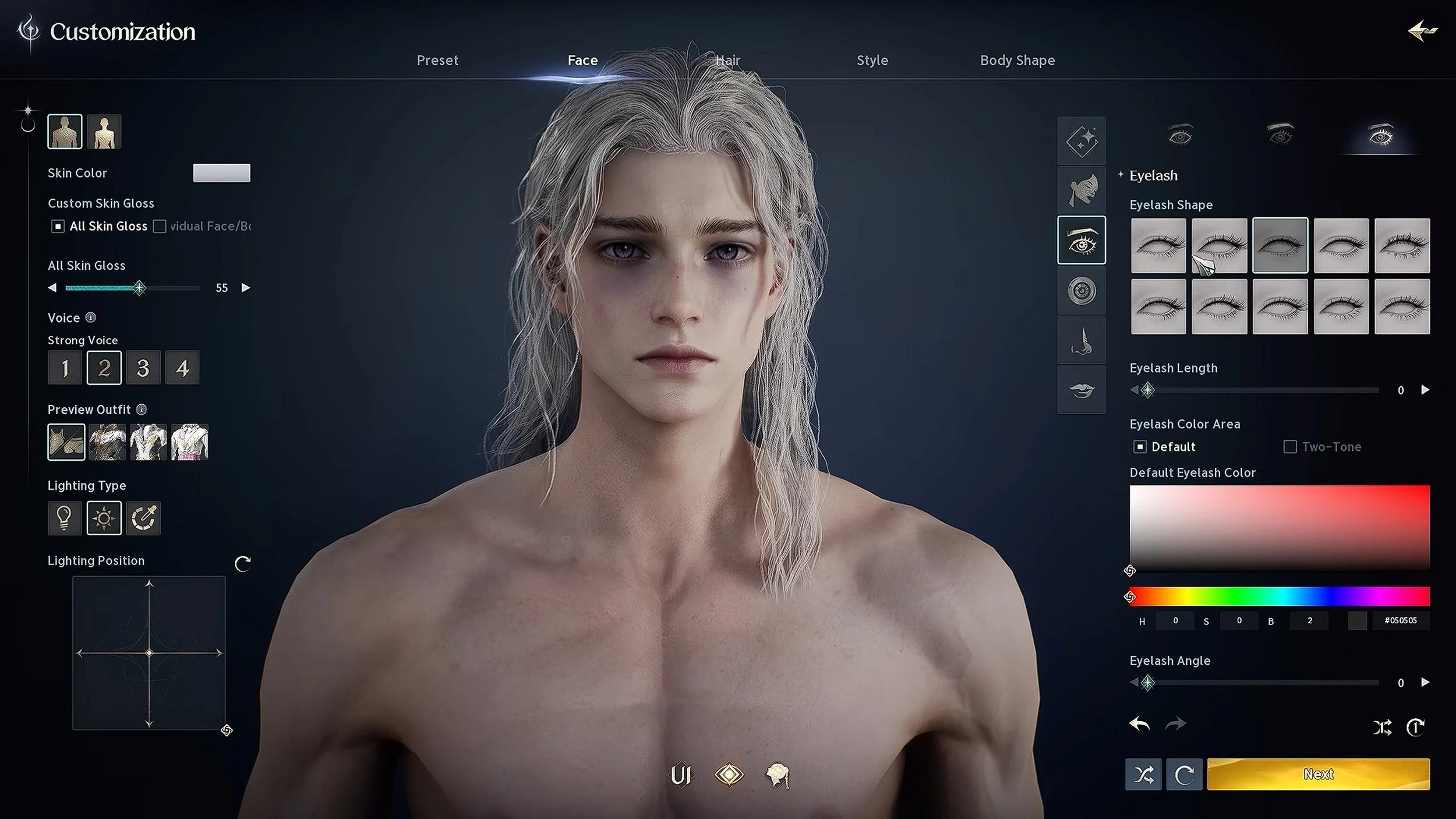
One of the things that I enjoy when playing a new video game is character customisation or character creation. I will spend hours trawling through settings, changing the most minute and consequential aspects of my avatars appearance. I am certain that there is a psychological aspect to this particular game mechanic and that it says something about you as a person. Are your creations shaped just by a need to look good in-game or is there more to it? Are they external manifestations of your sexual preferences or thoughts on body image. Do you treat them as characters from a book that exists in your mind. Do you aspire to recreate the likeness of people you know or admire? Do you strive to make your avatar look like you? Whatever the reasons, it would seem that character creation is something that a lot of gamers enjoy. Hence I am not alone in my borderline obsession. What you look like in-game is equally as important as your character’s name.

The 25 Questions Food Tag is a popular, light-hearted Q&A widely used by lifestyle and food bloggers. I discovered it while perusing the internet for a new questionnaire, as I’ve done a great deal of substantive writing of late and I wanted to tackle something a lot less involved. As ever, having read through the questions on offer, there is plenty of scope for some interesting answers and a modicum of levity. Food per se, is also a good subject to write about as eating is something we all do. This questionnaire has also made me consider whether writing about food is something I should do more often. Would there be an audience for sharing recipes, for example? I would say that’s “food for thought” but I won’t because puns are annoying. However, I digress. Here for your edifications and my blogging convenience, are my answers to “The 25 Questions Food Tag “.
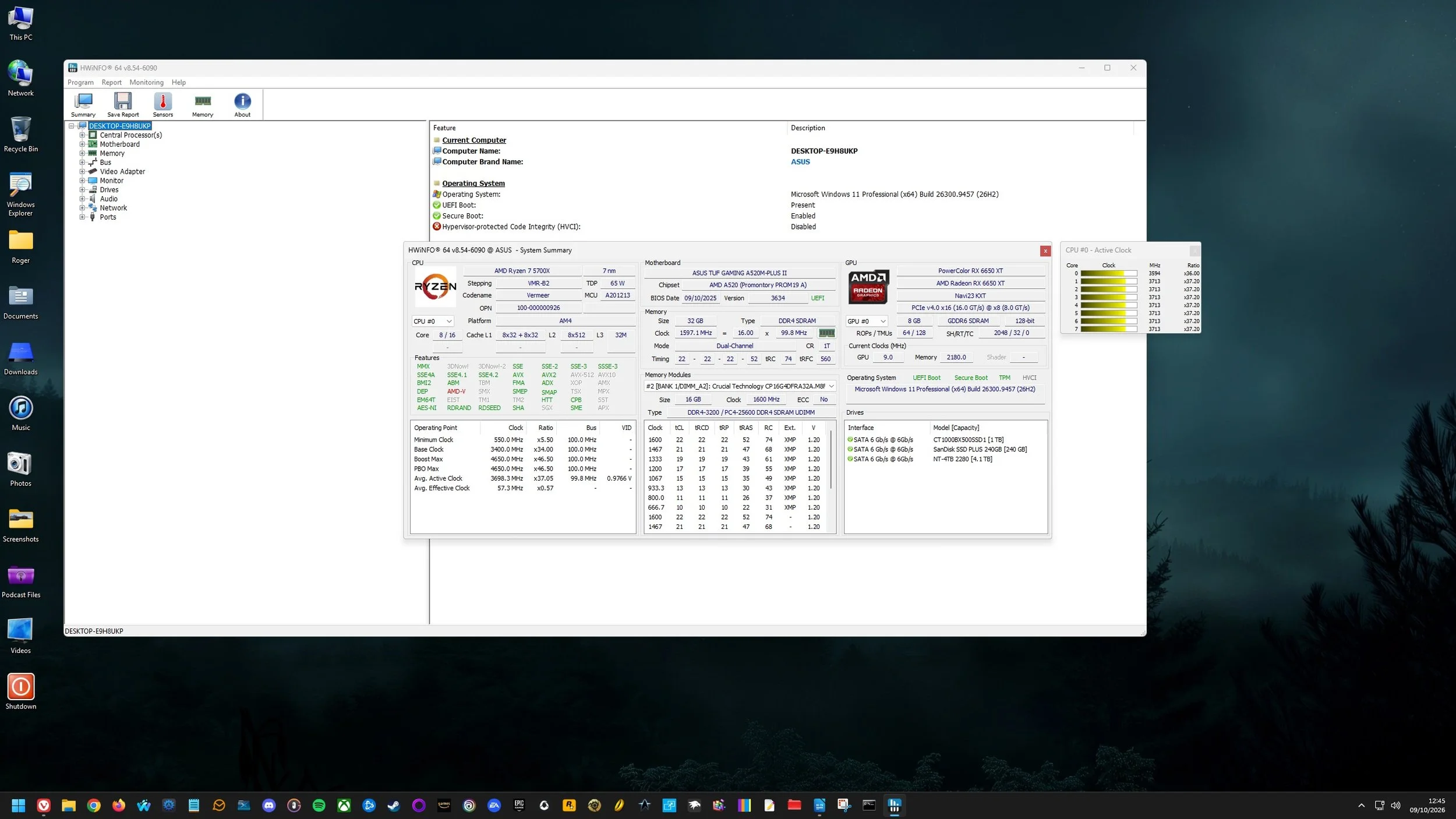
Until fairly recently, I have maintained a somewhat casual approach to the system maintenance of my PC. “Casual” in this context is a subjective term. What I consider to be “casual” others may think to be robust or even rigorous. But I digress. I regularly undertake minor housekeeping such a clearing my web browser data, removing temporary or unwanted files and updating software. I also make sure that only essential services and programs start when I turn on my PC. I keep an orderly desktop and an intuitive filing system. However, I do very little with respect to maintaining the hardware inside my PC. I clean inside the case a couple of times a year and ensure that the fans are free from dust contamination but that’s about it. I have no idea if the installed RAM is running optimally or whether the processor is operating within the appropriate heat threshold. Does the thermal paste between it and the heat sink need replacing? Are all the cores enabled?

I was playing Battlefield 6 recently and was experimenting with the mortar. If you stick with it and take some time to become familiar with its foibles, it can be an effective weapon. It can suppress the enemy, destroy equipment and provide useful cover for your own team. I remember thinking “I wonder if artillery could sustain a game on its own”. Artillery is an interesting feature in Hell Let Loose, although it is a little more complex in its game mechanics. I believe artillery is also available in Wardogs. I therefore spent a while looking online to see if there was a dedicated artillery simulator available or at least a game where it was a key feature. There nearest thing I found was Iron Nest, a dieselpunk heavy artillery game which looks interesting but isn’t quite what I seek. So I parked this idea and moved. Tonight, while perusing YouTube, I stumble across a teaser trailer for a game called Flak Simulator, currently under development by Horseman Interactive. It appears to be exactly what I am looking for.
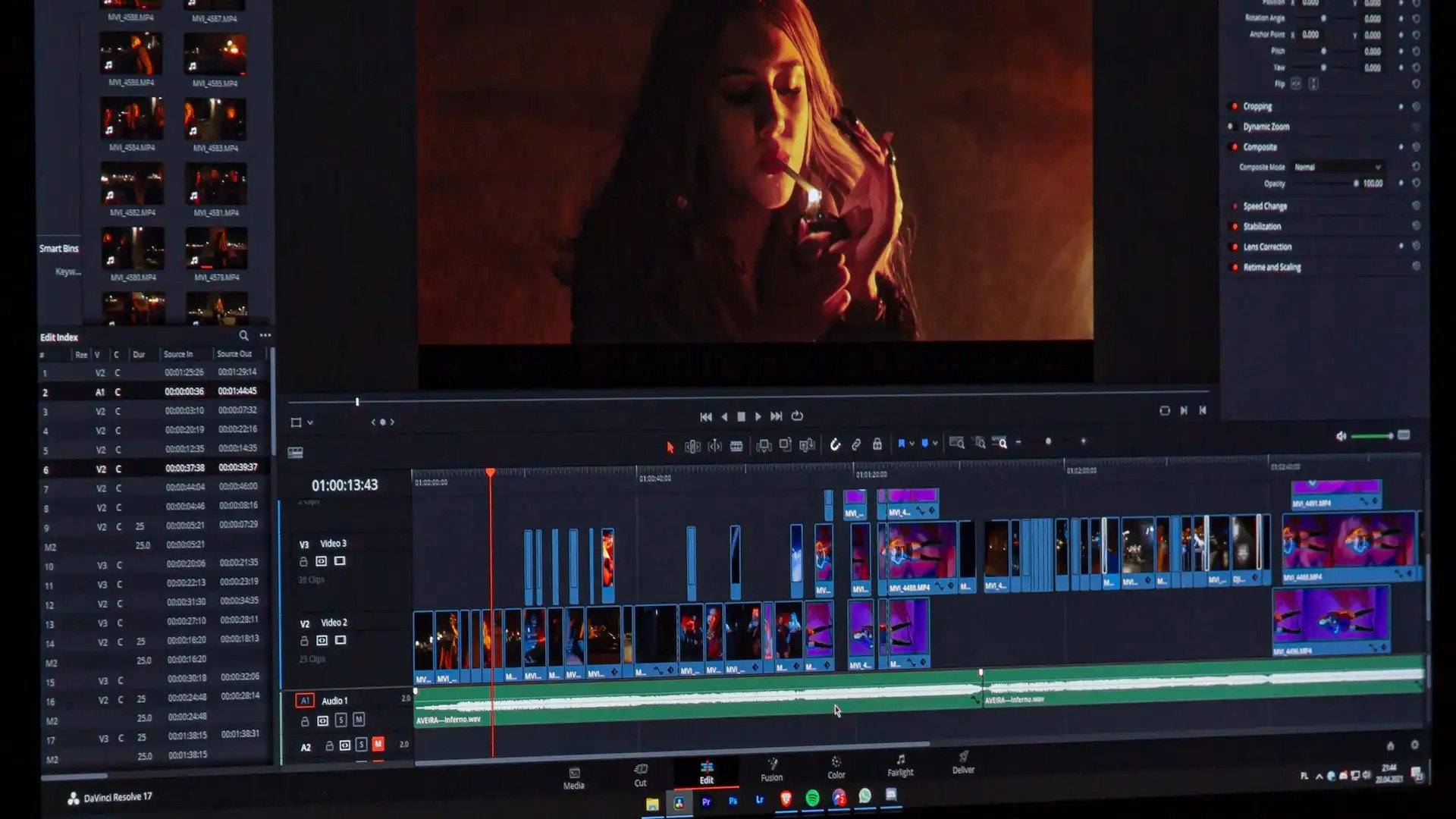
Last year, when I was looking for some suitable video editing software, I found that people would often recommended DaVinci Resolve. It is indeed an outstanding tool but totally beyond my needs. It is also a beast to run and occupies a substantial percentage of real estate on your SSD, so I dismissed this option for practical reasons. Let it suffice to say that finding a suitable product that met my requirements was quite difficult. Video editors often seem to be either quick and easy tools for clipping content on the fly, such as Bandicut (which is great for exactly that purpose) or huge, professional quality behemoths, used by people who work in the appropriate industry. DaVinci Resolve is a textbook example of this. It begs the question what products occupy the middle ground, assuming they exist.
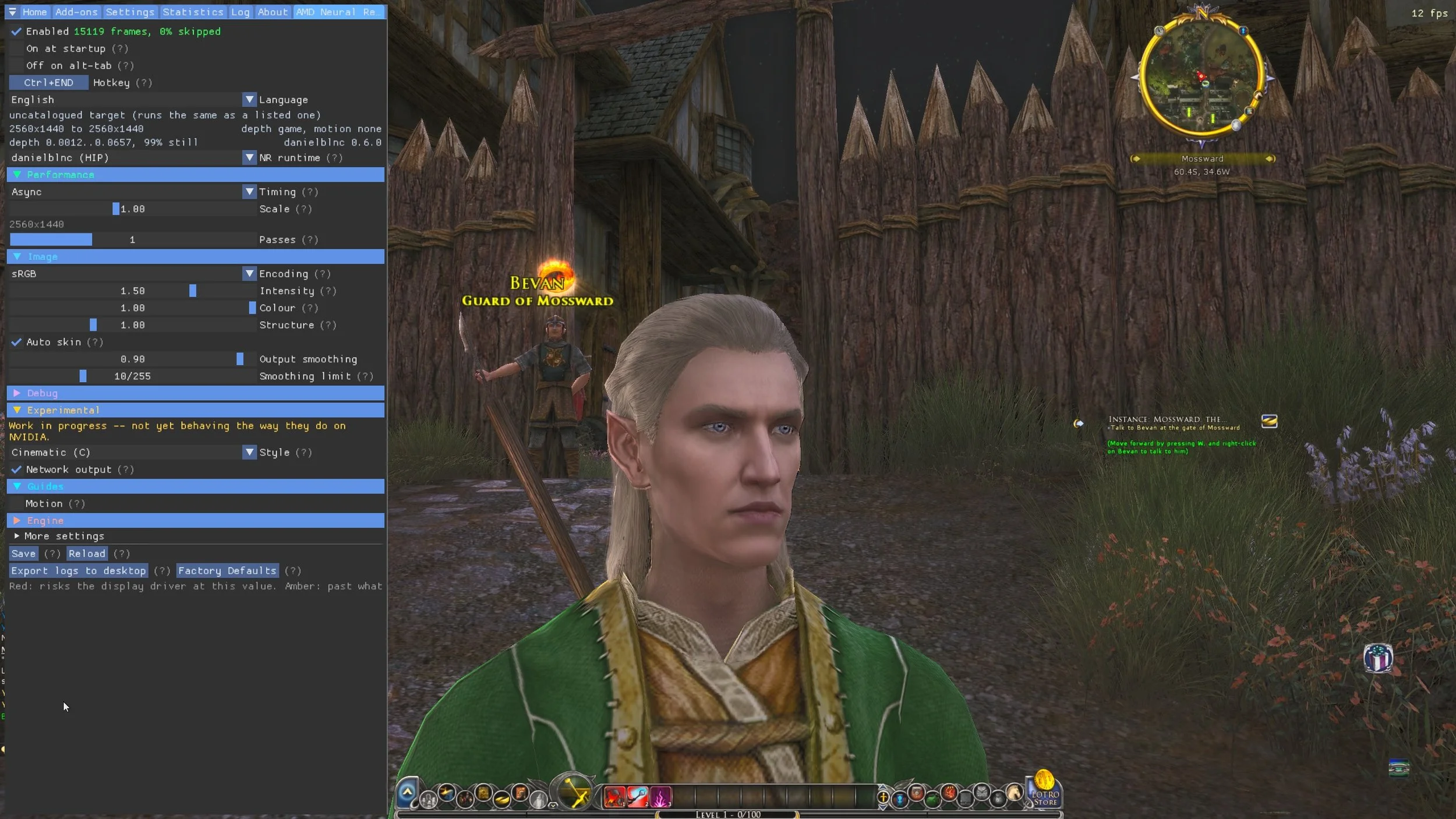
I recently tried to use DLSS 5 Manager with the MMORPG, The Lord of the Rings Online. Unfortunately, things didn’t work out. Today I undertook a similar experiment with AMD Neural Rendering, which is a broadly comparable product. Both utilities use 3D-Guided Neural Rendering, an AI technology that alters how lighting, reflections, and textures look in a game. Instead of just upscaling the image like older versions, DLSS 5 uses an AI network to instantly "re-render" lighting and material responses over the game's layout, achieving photorealistic details that would normally negatively impact a graphics card's performance. Or to put it in less fancy terms, the game graphics are enhanced and modified, although it is highly subjective as to whether the end results are an improvement. However, as a game such as LOTRO is unlikely to ever receive a major graphical overhaul, tools such as these are the nearest players will get to revised graphics.

Becky Connor (Grace Caroline Currey) and Shiloh Hunter (Virginia Gardner) undertake a mountain expedition alongside Becky's spouse, Dan (Mason Gooding). After being startled by a bat Dan falls to his death. Twelve months later, Becky has abandoned climbing, withdrawn from family and friends and is contemplating suicide. Her father, James (Jeffrey Dean Morgan), believes that Dan would not want her grieving endlessly but Becky is not willing to listen. On the first anniversary of Dan’s death, Shiloh ask Becky to climb a decommissioned 2,000-foot television transmission tower located in the Mojave desert, prior to its scheduled demolition. Shiloh suggests that Becky release Dan's ashes from the summit as means of gaining closure. Although hesitant, Becky agrees with the plan and travels with Shiloh to the desert. Following an arduous ascent, the two friends reach the tower’s summit and celebrate. However, their decent comes to a halt, when the corroded ladder breaks free from the tower, leaving them stranded and out of communication with anyone who can help.
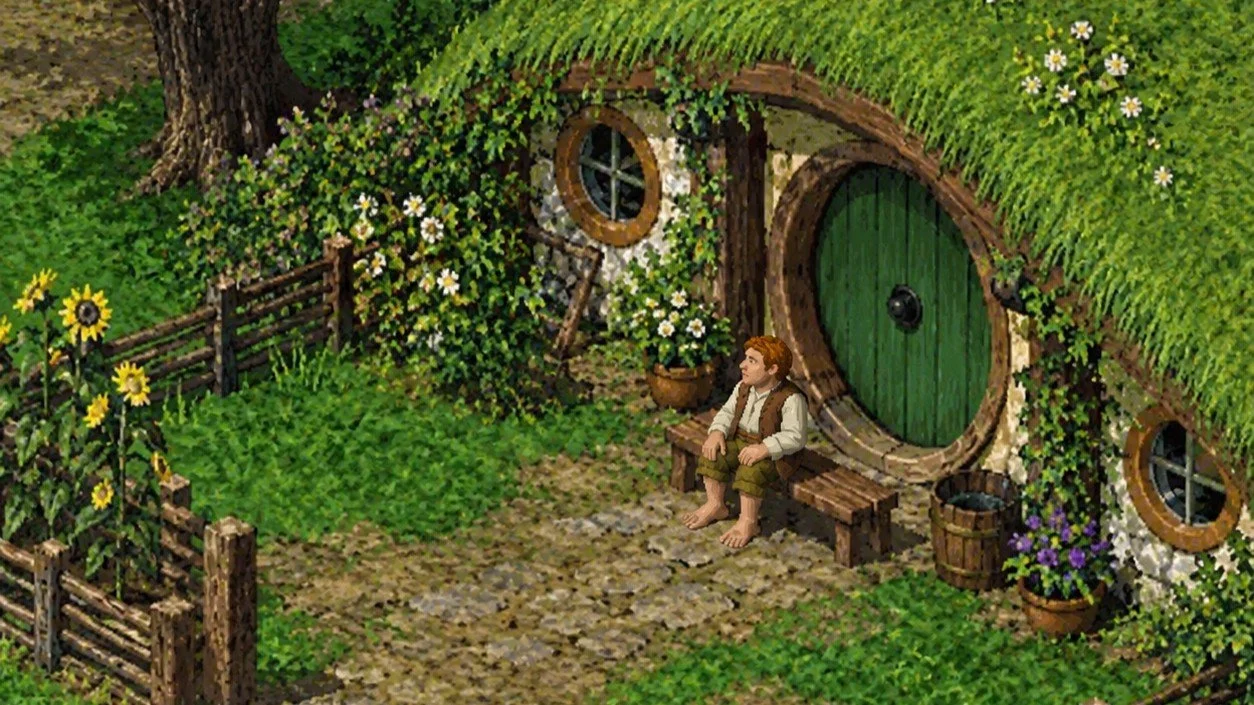
The core game code and engine for the MMORPG, The Lord of the Rings Online, is about 24 years old. LOTRO began originally as Middle-earth Online, developed by Sierra On-Line in 1998. Turbine took over full development of the project in 2003/2004 when their parent company, Vivendi Universal Games, acquired Sierra. The content that had already been developed by Sierra was abandoned and Turbine created a new game using structural elements such as the UI and game engine from their previous release Asheron’s Call 2 from 2002. The Lord of the Rings Online: Shadows of Angmar was officially released in April 2007. Hence, the active public release code is 19 years old. Despite continuous expansion and updates, along with a recent migration to 64-bit architecture, the foundations of LOTRO retains a nearly twenty year old legacy framework. This frequently contributes to modern technical hurdles and engine constraints.

Whenever certain TV shows gain popularity and become internet talking points, it simultaneously piques my interest while also invoking my scepticism. Popularity is not always indicative of quality. I can think of numerous UK TV shows that attract big audiences that do not appeal to me whatsoever. However, sometimes it can be enjoyable to watch something that is in the public eye and to participate in the “buzz” associated with that show. I watch Strictly Come Dancing each year for this reason and because watching people learn a skill is entertaining. However, this post is about another show. Namely The Celebrity Traitors which has just begun its second season on the BBC.

I come from a generation whose primary source of entertainment was not TV, video games or the internet. It was instead reading books. As a child, if I were to ever go on a lengthy car journey, the go to form of in car entertainment would be to bring a book. I don’t want to cover old ground, as I have written about this in the past but I cannot stress how important the local library was during the seventies. Not just for me but my entire family. We would all go, take out multiple books and read them over the following weeks until we had to return them. Books, were a feature of our home and those of my peers. When we finally sold my parents home a few years ago, the most notable and striking aspect of the house clearance was filling 16 substantial boxes with books and trying to find a suitable charitable outlet to take them. Both my parents collections of books, built up over a lifetime. It was a striking statement upon the significance of books in the past and how they are considered nowadays.

Going forward, if I write any more posts about my use of AI, I am not going to add the following caveat. I will do it once more here, so everyone knows where we all stand. I am fully aware that AI has already taken jobs and will continue to do so. I also know that data centres are not environmentally friendly. As for the evil corporate billionaires that get rich from the situation, that also has not come as a surprise to me. I also believe that the AI market needs regulating and there should be legislation in place to ensure that AI is never directly linked to important government and civil infrastructure. That being said, I am not going to stop using AI at a domestic level over notions of ethical purity. All of the above criticisms can broadly be applied to the industrial revolution and society came to terms with that and survived it. The same goes for the computer revolution. Things change and we adapt. Plus, if you really wanted to protest and lobby against AI, the best time to do this was two decades ago.
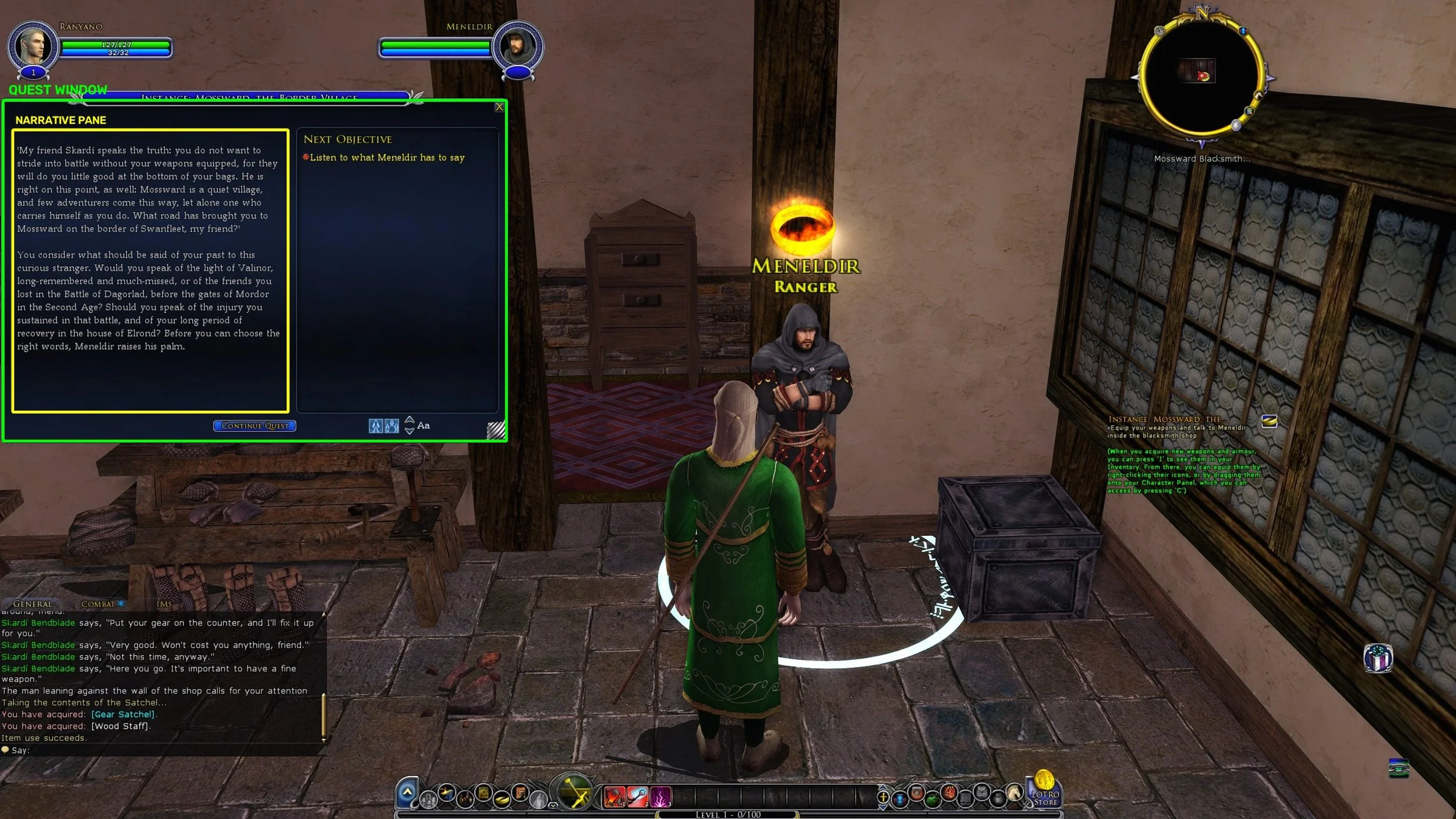
A few years ago, there was a fan created project to provide voice narration of NPC dialogue in the MMORPG, The Lord of the Rings Online. This mainly involved capturing the text in the quest dialogue windows and then sending it to OCR software, before using a text-to-speech program to read it. LOTROVoice as it was known, broadly worked but the creator stopped developing it as it proved troublesome to maintain. However, I recently discovered Khazad Voice TTS which is a separate project that does pretty much the same. I went so far as to install this “immersive AI narrator for LOTRO” after seeing a YouTube video of it being used successfully. Sadly I ran into issues configuring Khazad Voice TTS, because I have two monitors and LOTRO runs on the secondary (by my choice) and not the primary. I couldn’t “lasso” the dialogue windows in LOTRO during the calibration set up, which effectively prevented me from completing the process.
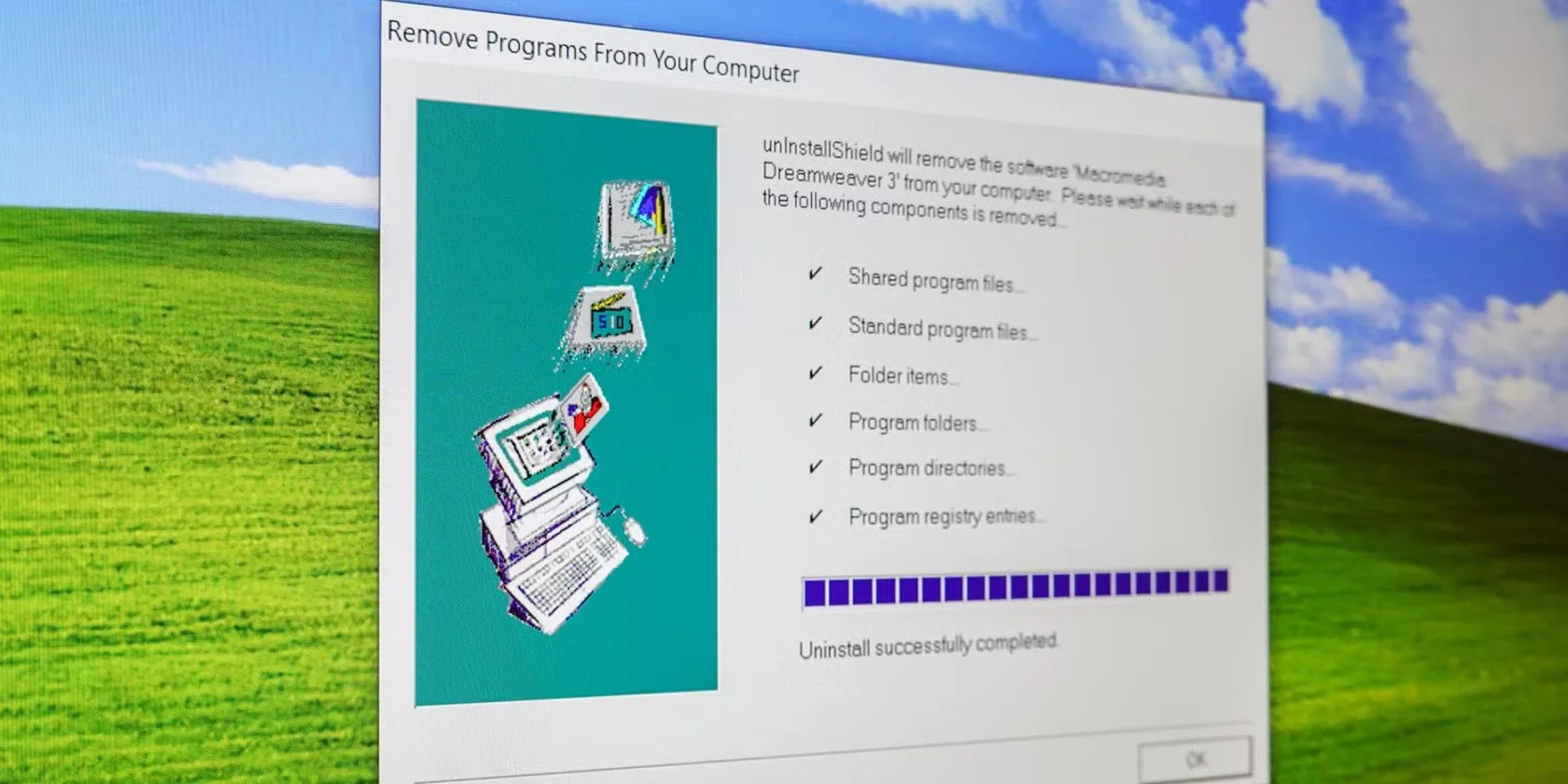
One of things I dislike with a passion about modern software is that you cannot cleanly uninstall it from your PC. Removing an unwanted or problematic program just leaves metaphorical muddy footprints throughout your PC. It makes my SSD feel like a crime scene with virtual brain matter spattered across the soft furnishings. Sadly, this is the price you pay for having a modern operating system with a registry, shared dependencies and a liking for temporary files and caches. It all makes me feel very nostalgic for the halcyon days of DOS, with self-contained programs sitting in a solitary folders. Often libraries and drivers lived in specific system paths or the same folder, avoiding conflicts. You could just delete stuff and it sodded off. You didn’t need two priests and holy water. Happy days.

I recently stopped taking beta blockers after a consultation with my Doctor. Seven weeks on and I feel substantially better without them. I strongly advocate prescription reviews, as often the medication you’re taking does not necessarily need to be taken indefinitely. That was certainly the case with me and beta blockers. At the end of my last consultation, my GP asked me to keep a daily record of my blood pressure for a month. I could either do this at home or come into the surgery where there is a suitable device that is free to use. Fortunately I inherited an old but functional OMRON blood pressure monitor from my parents, so I was able to take readings each morning myself. It was while doing this for a month that it struck me; what exactly does all the data that I’m making note of mean exactly? What do systolic and diastolic mean and what is the difference between them? Also, where my readings good or bad?
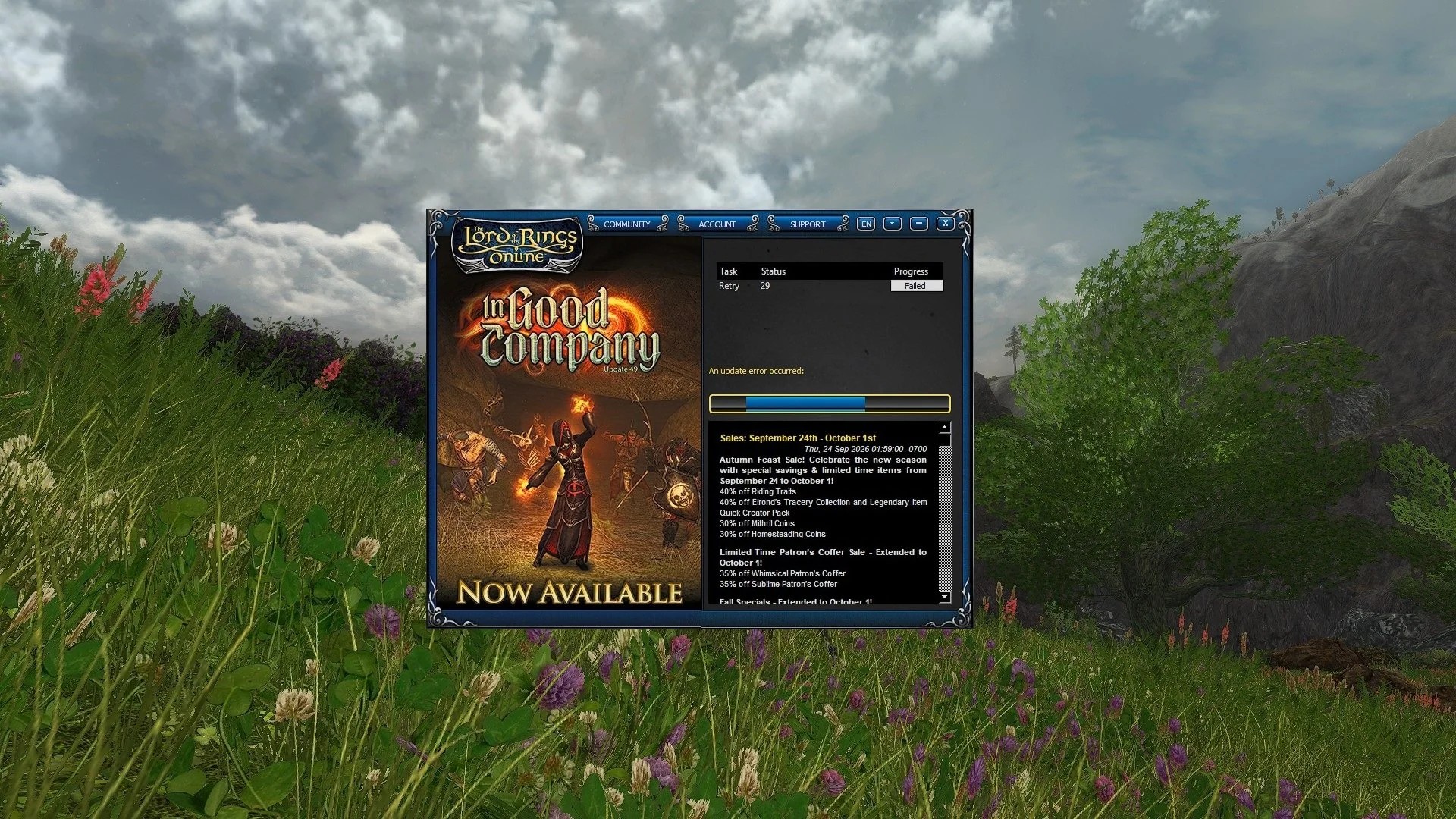
Throughout yesterday and early today, there was an issue logging in to the MMORPG, The Lord of the Rings Online. Upon starting the game launcher, it would attempt to connect to the patch server to download the latest game update. This process would start but then subsequently stall at 33%. The launcher would then attempt to reconnect to the patch server every 60 seconds but could not make any further progress. Some players found that if they left it long enough, it would eventually complete the download and the launcher then progress to the next screen where they could input their username and password. However, for the majority of LOTRO players the problem would simply persists and the launcher would be stuck in a loop. Some players attempted to reinstall the game or use the repair data facility in the launcher but neither of these proved to be successful workarounds. The patch sever needed to be bypassed to resolve the issue.

I made a throwaway quip yesterday on social media about reaction videos on YouTube. I was specifically complaining about those made about music videos and how there is a growing trend among “content creators” to mute the audio and obscure the video of the very material they are reacting to. This is due to concerns over a copyright strike by the rights holders of the original content and the threat of potential demonetisation to those making the reaction video. What you are left with is 5 minutes of a rather tiresome, charisma vacuum watching a blurred video while listening to “elevator music”. What a world we live in. Why even bother posting such content? If there is any value to be found in reaction videos, then surely it lies in the shared experience of both the person in the video reacting and their viewers?

I’ve been playing Fall Guys since its launch in early 2020, during the start of the pandemic. It is a fun, family friendly multiplayer game which is has proven popular with my grandchildren. Despite the game’s acquisition by Epic, it has maintained a sufficient level of popularity that has seen it ported to all major gaming platforms. Fall Guys is free to play but like most multiplayer games, there is a season pass and an in-game store. However, these monetised aspects are not essential to enjoy the game and the overall marketing of emotes and skins is nowhere near as invasive as it is in Roblox. In fact many of the players I see while in-game have default skins, indicating a regular casual player base. However, although game seems to be maintaining its popularity, it has several bugs that appear to be be persistent. Bugs that the developers claim have been resolved. Some can be addressed by players. Other at present cannot.

Knowledge by definition is the collection of facts and information that you gather through learning over the course of your life time. For many people this is purely optional. That however, is a different matter entirely that I won’t address here in this blog post. Returning to the matter in hand, wisdom is the ability to use that wealth of the aforementioned acquired knowledge, to make sound judgments and actions. Wisdom is also predicated upon the ability to think critically and apply the knowledge one has acquired, logically to any problem or issue one is confronted with. Can such wisdom be conveyed in a simple statement or aphorism? I believe so. Here are a few quotations that I think make a sound point and make it well.
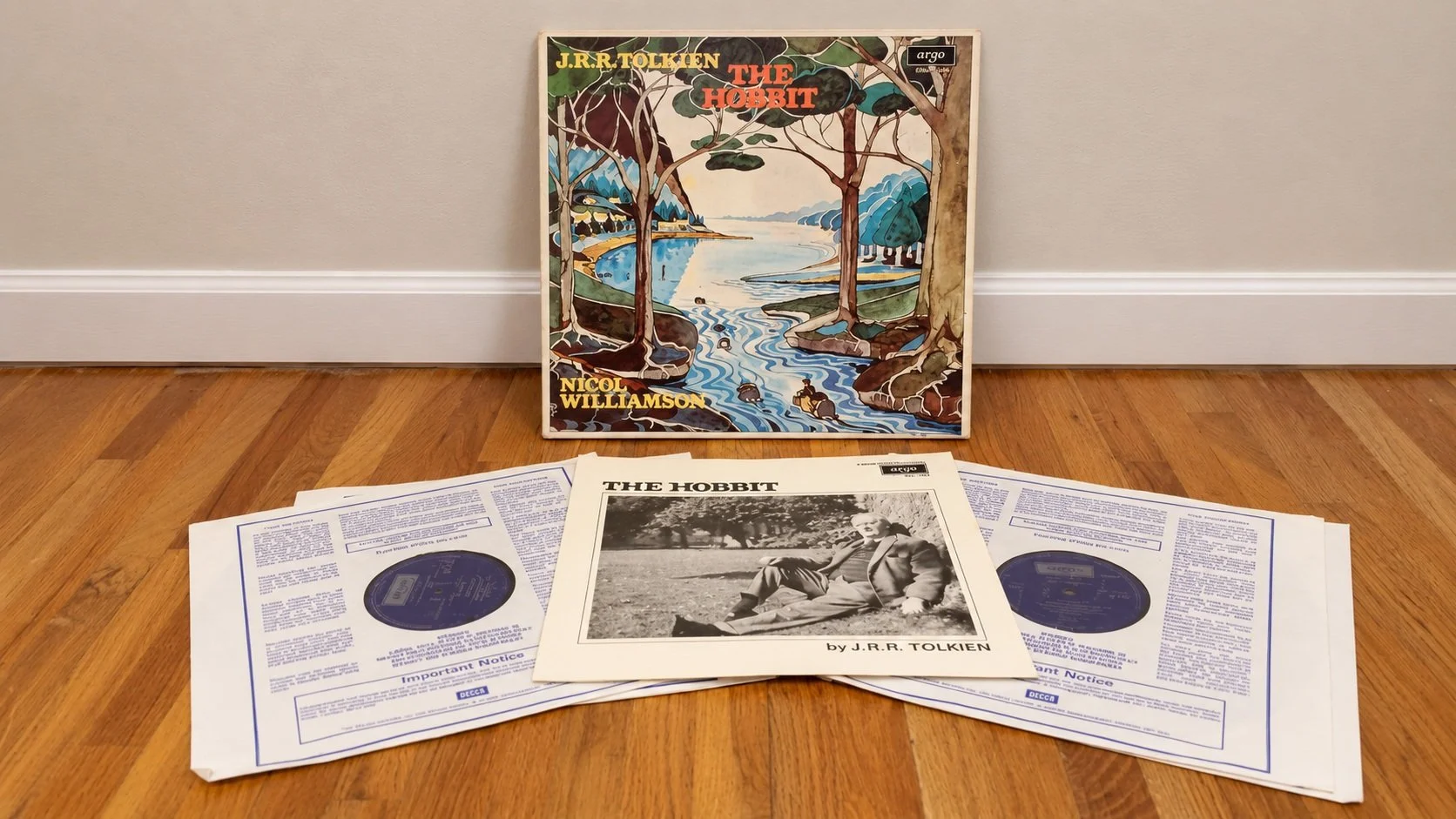
There are numerous audio recordings and dramatisations of of J. R. R. Tolkien’s The Hobbit. Most recently in 2020, actor Andy Serkis, famous for his portrayal of Gollum in Peter Jackson’s films, read an unabridged version of this classic story. Both critics and fans praised Serkis for his prodigious vocal range and ability to give distinct, recognisable voices to over a hundred characters. Prior to this in 1991, actor and playwright Rob Inglis, recorded the first unabridged version. This production was notable for its more traditional approach to storytelling, where as Serkis’ recording emphasises the drama. Inglis similarly gave each character a unique voice and sang all the songs featured in the text. However, prior to these, in 1974, Argo Records released an abridged recording of The Hobbit narrated by Scottish-born actor Nicol Williamson. Upon release this 4-LP box set was positively appraised but over the years has eclipsed by the aforementioned releases.

When I last wrote about the thorny subject of weight loss, I weighed 188 lbs (13 stone 6 lbs or 85.3 kg). That was in Spring 2022. Let it suffice to say the the optimistic health plan I subsequently embarked upon fell apart like a cheap suit, solely due to me not committing to it in any meaningful way. Since then my weight has slowly and steadily increased. I will avoid any long and tortuous explanations and quasi-justifications. I like my food and lots of it. The fact that my lifestyle has contributed to my ill health, is something that I have willingly tolerated. The pleasure outweighed the consequences. However, in early August a tipping point was finally reached. It wasn’t a theatrical epiphany or anything that can be framed dramatically. I simply woke up one morning and said to myself, “I am tired of constantly feeling like shit”.

I find the concept of in-game radio stations fascinating. They’re an enjoyable aspect of open world video games and I have discovered several artists this way. They’re certainly a big deal as far as Rockstar Games are concerned, because the music selected for GTA VI is another important facet of the overall marketing campaign. So far, between two trailers and the sprawling extended look on Netflix, it has been determined that Tom Petty, the Pointer Sisters, Sexyy Red, Depeche Mode, Phil Collins, Birdman, Lil Wayne and the Bellamy Brothers are all part of the game soundtrack. That’s a very eclectic selection so far. Furthermore, there will be a 34 track album released on physical media (vinyl and CD) in conjunction with Atlantic Records.

I felt that this years Blaugust: Festival of Blogging was a success and I personally enjoyed it a great deal. However, I also thought it prudent to seek the opinion of others who took part in the event, as ultimately that is what it’s all about. Hence I posted the Blaugust 2026 Participant Survey at the beginning of September and left it online for 3 weeks. The questions were straightforward and unambiguous. Did you enjoy the festival. Did you participate in the group writing prompts. Did you achieve your writing goals. Then there where questions about what additions, if any, you’d like to see added to Blaugust in the future. All pretty standard stuff for a post event questionnaire. Well the results have been analysed and here is a summary of the results. The intention is to see if there are any specific trends revealed in the feedback and to then discuss any potential course of action as a result. As ever feel free to leave comments below.

Two years ago I wrote a post about fine tuning your graphics in the MMORPG The Lord of the Rings Online. Apart from installing ReShade and using AMD Adrenalin, the options were somewhat limited, due to the game’s age and multiplayer status. Since then, I’ve been playing LOTRO with the game settings maxed out, a custom ReShade profile to make the colour palette more vivid and Radeon Image Sharpening enabled within the AMD software. The game looks clear, crisp and the draw distance is pretty good for an ageing game but I still wish the graphics could be tweaked further. Hence, I’ve been trawling the internet in a vain attempt to see if I can find any third party utilities that could be used to enhance LOTRO further. During the course of my search I stumbled across DLSS 5 Manager. This is an open-source, intelligent utility and one-click mod installer designed to inject and manage Nvidia's DLSS 5 neural rendering features, ReShade, and OptiScaler into PC games.
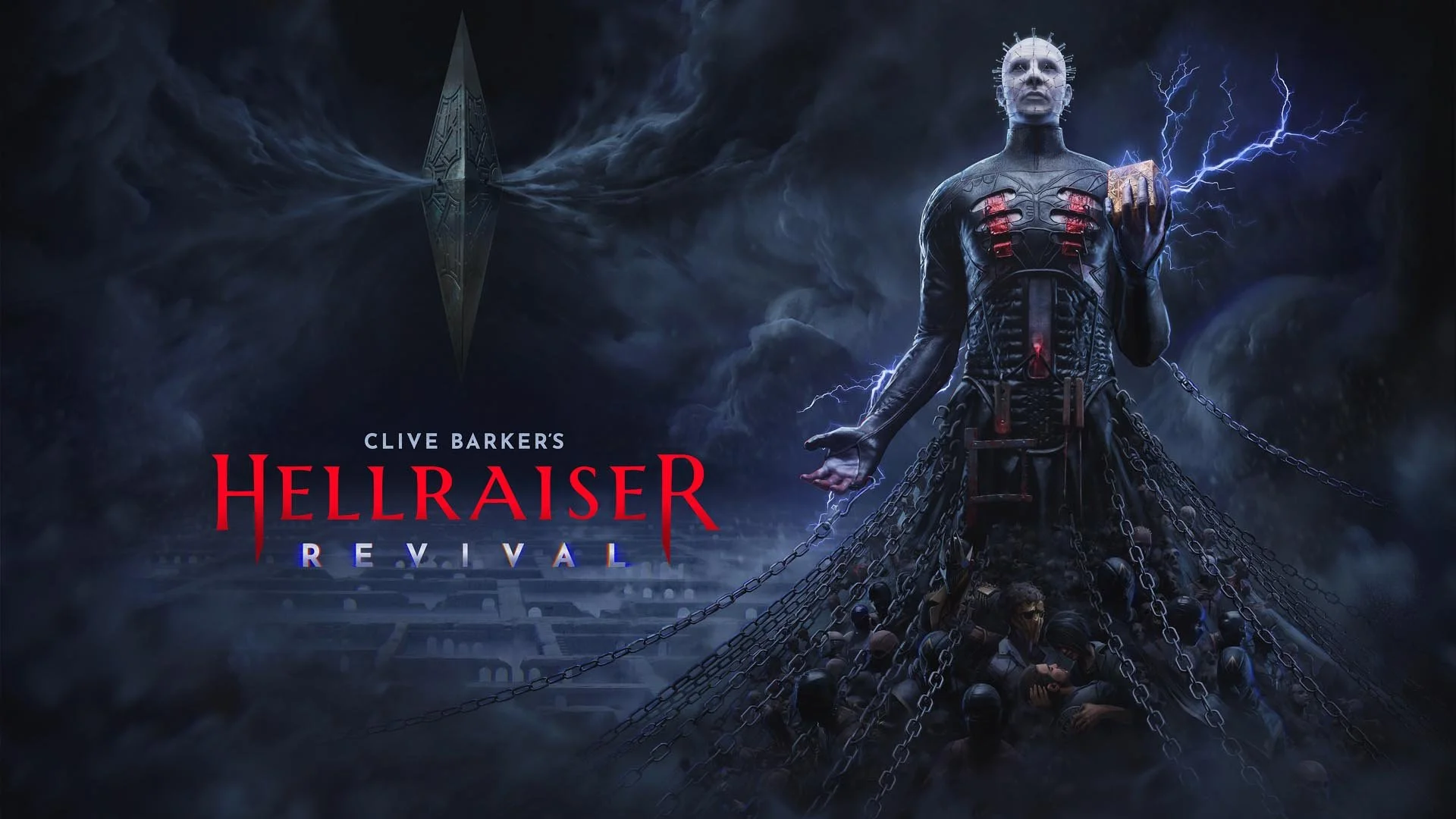
Hellraiser (1987) was one of he most innovative and intelligent horror films of the eighties, with its cerebral and sophisticated exploration of pleasure, pain and the supernatural. Sadly what was a great concept for a single film was turned into yet another horror franchise. The resulting series of increasingly inferior sequels ultimately diminished the central idea. However, in recent years several horror “brands” have found a new lease of life via the medium of video games, so the announcement of Hellraiser: Revival last summer piqued my interest. The fact that author Clive Barker was directly involved certainly raised my expectations. However, even though video games have a history of depicting sex and violence, would the medium be able to fully embrace the true nature of Barker’s original novella and original film. Having played through the newly released demo for Hellraiser: Revival, I believe the answer is a yes.
Writing Film Reviews
"You’ve probably gone over it before, but I’d like a refresher for how you go about choosing the movies you watch - I’ve got Netflix and Amazon Prime, but your titles always seem to go all over the place. Did you ransack a Blockbuster Video before it went bankrupt?" Rambling Redshirt. I was asked the above question recently, via Discord chat, because I do appear to post a rather eclectic range of film reviews. So, I thought I’d clarify my respective process (or lack thereof) as to which movies I choose to write about. I’d also like to share my thoughts on what I consider constitutes a good film review and the procedure I use when writing about the films I’ve watched.
"You’ve probably gone over it before, but I’d like a refresher for how you go about choosing the movies you watch - I’ve got Netflix and Amazon Prime, but your titles always seem to go all over the place. Did you ransack a Blockbuster Video before it went bankrupt?" Rambling Redshirt. I was asked the above question recently, via Discord chat, because I do appear to post a rather eclectic range of film reviews. So, I thought I’d clarify my respective process (or lack thereof) as to which movies I choose to write about. I’d also like to share my thoughts on what I consider constitutes a good film review and the procedure I use when writing about the films I’ve watched.
First off, here’s a little background about my relationship with cinema. Both my parent grew up during the thirties and forties when the primary form of entertainment were films and radio. Hence when I was a child, watching movies together was a common family activity. Mainstream network channels showed a lot more movies during the seventies, where now they’ve been replaced with property, cooking and quiz shows. Satellite and cable options did not exist in the UK at the time and there were just three analogue terrestrial channels. Sunday afternoon was a day where there’d be a movie scheduled on BBC Two mid-afternoon. We’d have our Sunday roast and then settle down to watch the likes of The Mark of Zorro or Top Hat or The Dam Busters. As these were my most formative years, my passion for film was kindled. This was how I was introduced to the works of Ray Harryhausen, George Pal and Hammer Horror.
As a carer, I now have a fixed schedule which although busy, provides me with periods of time that I can use to pursue my interests. Thus, during a week, I will watch about three or four movies. Because I don’t go to the cinema so often these days, some of these will be recent releases, especially now that the gap between the theatrical and video-on-demand release is as little as two months. I also have a “watch list” that contains both old and new films, that regularly has new titles added to it. These will be recommendations from critics or genre classics that I want to familiarise myself with. I often re-visit films I’ve previously seen for a re-evaluation, especially if it has recently been “dissected” on any of the film related vlogs and podcasts that I subscribe to. However, there is not a great deal of rhyme or reason to the order in which these movies are watched. All can potentially be written about.
I do not consider myself a casual watcher of films. I believe film making to be an art form and I can find merit in all genres. Many people see films as disposable entertainment. Something you passively observe and then move on from. That’s fine. You do whatever is good for you. I however, watch, analyse and reflect. I like dialogue and the way it’s written. I focus and consider the composition of shots and the construction of scenes. Lighting, production design and style are all important to my enjoyment. I can also remember details and visualise how scenes played out, after I have watched a film. As I have this level of interest, I naturally read and seek out data about film stars, film makers and movie production. If you like sports you will often become knowledgeable on the subject, especially stats. I do the exactly the same with films. Why? Because they bring me pleasure, they tell stories and they entertain. And this passion drives me to write about them.
Moving on, here are the rules that I broadly try to apply when writing about a movie. Just for the record, I often sit on the sofa with a pen and notebook in hand to write my thoughts down as they occur to me. This can be a little confusing to anyone watching with me.
1). Be sure to establish the genre of the film in question. Is it a comedy, a drama, a horror? If so, judge the film within the confines of said genre. Don’t make the mistake of comparing apples to oranges. All movies require a degree of “suspension of disbelief”. You have to vary this according to what you are watching. A drama such as On the Waterfront does not need to be watched with the same objective removal from reality as Dog Soldiers.
2). Consider all aspects of filmmaking when writing your review. Reflect upon directing, writing, editing, acting and other aspects of the production. Did they contribute positively or negatively to your experience? Where they of note contextually? IE with regard to the budget of the movie. If you have points you wish to highlight, then give specific examples in your review.
3). Imagine that your readers know nothing about the film in advance. It’s your job to introduce it to them and to provide them with a succinct and salient summary. How would you describe the film to a friend in one sentence? That may not always be possible with movies like Cloud Atlas but strive to be concise. Also do your best to avoid spoilers. If there is a dramatic event that serves as a surprise, don’t reveal this in your review. Provide enough information to intrigue readers so that they can choose to watch the film if they see fit.
4). When summarising your overall experience, think about who would enjoy this film, what its appeal is and in what circumstances. It helps to contextualise this, so if possible, why not make a broadly equivalent film comparison. IE Under Siege is Die Hard on a ship. Watership Down is essentially The Wild Bunch but with Rabbits. Any movie with Ben Stiller, is like a good comedy but with all the humour, talent and enjoyment conspicuously absent.
Finally, I’d like to finish with a quote from top UK movie critic Mark Kermode. Here are his top five ingredients for a proper film review, taken from his book The Good, The Bad & The Multiplex. Needless to say, I think he’s spot on.
“Opinion, description, contextualisation, analysis and entertainment.
1. Opinion
Saw 3D is rubbish.
2. Opinion and description
Saw 3D is a horror film that is rubbish.
3. Opinion, description and contextualisation
Saw 3D is the seventh episode and the first stereoscopic instalment in a long-running horror series, and it is rubbish.
4. Opinion, description, contextualisation and analysis
Saw 3D is the first instalment in a series that began life as a tortuously inventive low-budget chiller but which has descended over the course of six sequels into gory, boring torture porn which is rubbish.
5. Opinion, description, contextualisation, analysis and entertainment
It took the once-inventive but increasingly depressing Saw series seven movies to resort to the hackneyed headache of 3-D, but despite the promise that this is ‘The Final Chapter’ (just wait till the sums say otherwise) you keep wishing those protruding spikes would leap a little further out of the screen and puncture your eyeballs to ensure that you never have to watch rubbish like this ever again”.
I felt that this years Blaugust: Festival of Blogging was a success and I personally enjoyed it a great deal. However, I also thought it prudent to seek the opinion of others who took part in the event, as ultimately that is what it’s all about. Hence I posted the Blaugust 2026 Participant Survey at the beginning of September and left it online for 3 weeks. The questions were straightforward and unambiguous. Did you enjoy the festival. Did you participate in the group writing prompts. Did you achieve your writing goals. Then there where questions about what additions, if any, you’d like to see added to Blaugust in the future. All pretty standard stuff for a post event questionnaire. Well the results have been analysed and here is a summary of the results. The intention is to see if there are any specific trends revealed in the feedback and to then discuss any potential course of action as a result. As ever feel free to leave comments below.

It is obligatory to start these sorts of posts by reiterating the standard mantra that you should not be driven by your websites stats and that the data they contain can be unreliable. Although a sound philosophy in principle, it is actually more nuanced than that. Such data can be useful for growth if used wisely. I have never been coy about trying to increase my readership. For me it seems an integral aspect of blogging. Over the course of 2026, the traffic to Contains Moderate Peril has doubled. A lot of that is down to curious spikes in visits which seems to be AI scraping the entire site. Setting aside these anomalies, more people are reading posts and a lot are doing so via the site’s RSS feed. All of which is fine by me as growing the audience for this blog was a goal for this year, I am quite pleased by this development and the ongoing progress. I hope it continues.

There is a subtle difference between being rash and being proactive. Being rash means acting too fast without thinking about the results, while being proactive is a question of acting early with careful planning. Why have I mentioned this? Well prima facie information indicates that recent Blaugust participants are interested in an “official” online presence for the annual festival of blogging, other than that existing Discord server. That seems perfectly reasonable to me. Not everyone likes using Discord and I do worry that they may reduce its free functionality at some point in the future. With regard to there being a Blaugust platform of some kind, there is a consensus that it doesn’t need to be some sort of sprawling commercially hosted website running on Wix or such like. Those sorts of site require funding, a degree of admin and possibly private data management. It also a bit too “corporate” if you like. Hence the logical compromise is to have a static site. Let it suffice to say, that has been done.

Judging by the posts I’ve read, it would appear that Blaugust 2026: Festival of Blogging has been well received by those who participated in it. That is most satisfying to know, especially in light of the fact that this is the first year the event has been run without our founder who sadly past away in July. It has also become clear that Blaugust is reaching a far wider and diverse audience and most definitely is no longer the exclusive province of bloggers from one particular community. There has been healthy discussions on our Discord server about whether this year event needs to adapt to accommodate the modern blogosphere. Questions such as whether or not there needs to be a dedicated Blaugust website have been raised and explored. Should every site participating have an RSS feed? How, if required, should comments be handled. Inevitably, the subject of the use of AI in blogging still remains a controversial issue.
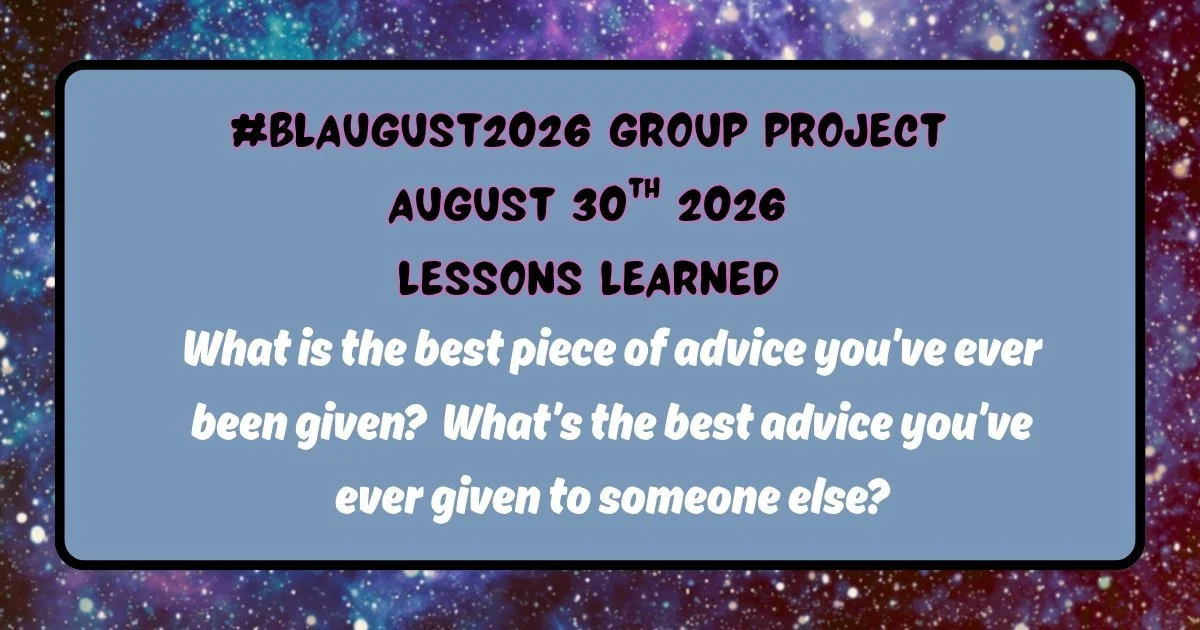
After a very productive month of writing, we come to the final Blaugust 2026 Group Project writing prompt. It is titled lessons learned and is usually a chance to reflect on the festival and whether or not it has been to one’s satisfaction. Have you achieved your goals? What have you gained from the experience? Those sorts of things. It also poses two further questions; “What is the best piece of advice you’ve ever been given?” and “what’s the best advice you’ve ever given to someone else?” for your consideration. I’ll address the questions shortly. Firstly let’s mull over this years event and assess how it’s gone.
It was my blogging anniversary on the 16th August. I’ve been writing and sharing my post online for 19 years, via various different websites and blogs. This current iteration of Contains Moderate Peril has been around since August 2015. To date it has 2,171 posts including this one. Quantity does not necessarily equate to quality but there are some articles I am proud of and feel that they make their point effectively.
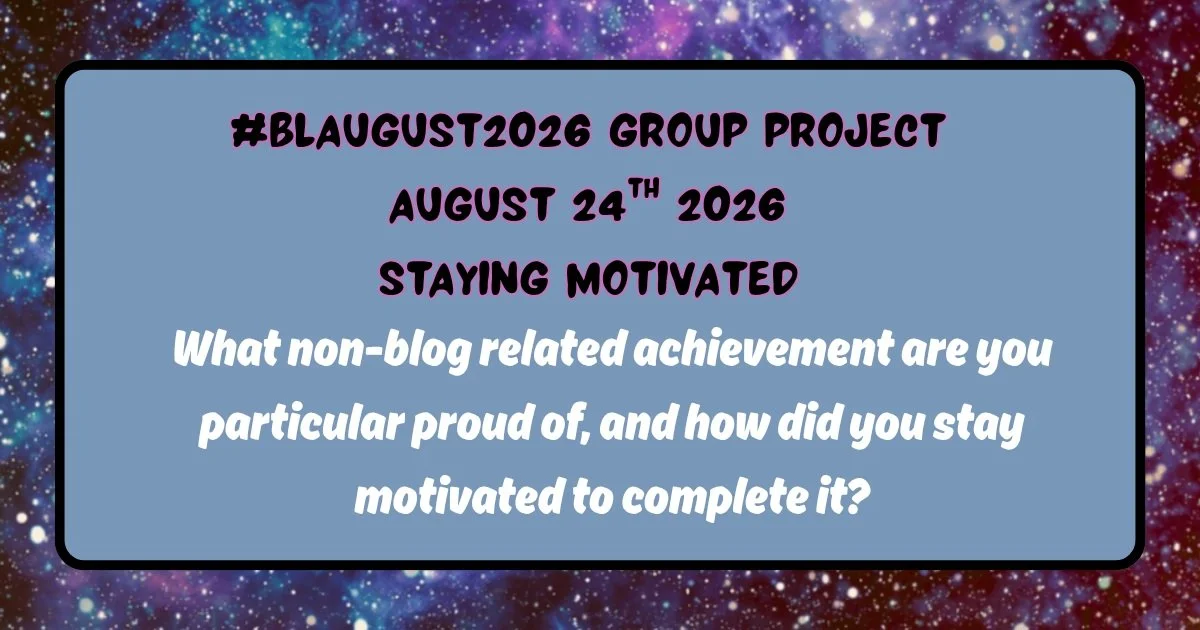
This week’s Blaugust 2026 Group Project writing prompt is an important topic. Namely, staying motivated. I prepared a fairly lengthy post with some advice and ideas to keep people focused and writing. Then I checked it against the post I wrote last year and the year before that, going back to blogging events from 2012. All of these posts broadly said the same thing, so I decided to scrap what I had composed for today and to go with a simpler approach. I shall answer the questions Krikket posed for this writing prompt. Fellow blogger Bhagpuss has also done so and as ever, his thoughts are interesting and well expressed. Here are my answers.

Once again, I have stumbled across an interesting debate that has provided me with an opportunity to write a blog post. Over on the Blaugust Discord Server, I read a comment from AgingGamer regarding RSS feeds and their significance with regard to blogging. This in turn referred me to a post by fyr (don’t you love all these nom de plumes) who wrote at depth about the ongoing community debate about the use of RSS/Atom feeds. The article explored the importance of such feeds with regard to reaching readers and providing accessibility to the disabled. All of which provided me with a great deal of food for thought. Mainly because I use a mainstream website service provider for my online endeavours, so RSS is by default built. I’ve never really considered not having such a facility at my disposal. But the rise in the IndieWeb scene challenges this assumption.

I have written two blog posts today that I have subsequently abandoned. The first was gaming related but when I was about halfway through writing it, I felt like I was covering old ground and just repeating myself. It was also regarding an issue that can’t really be fixed. Namely, how do you ensure that matchmaking in PVP games is done equitably. As there is no solution to this issue at present, or at least not one that all parties can agree on, I decided to ditch it. Similarly a post I was working on about what becomes of my blog if anything happens to me was curtailed. In light of recent events in our community it seemed inappropriate. However, as a result of binning two blog posts, I new idea occurred to me. Do my fellow bloggers self-edit and curtail what they write about? Is your blog totally unfiltered or do you apply a set of rules that determine what content is deemed acceptable?

It is time for the next Blaugust 2026 Group Project writing prompt. This one comes with two lines of enquiry. The first is an opportunity to “introduce yourself”. Over the years, I have written several introductory posts for previous Blaugust events. Rather than repeat myself I’ll just link to the last one, which was posted in August 2023. I haven’t radically charged since then apart from my hair going whiter. The next part of the prompt poses a far more intriguing question. “If you could have one magical power or super power, what would you choose and what would you use it for?”, which offers much for consideration. Having given this proposition much thought here is my response.

A decade ago I wrote a post about blogrolls and the practical and social issues surrounding them. At the time, the version of Squarespace I was using didn’t easily support such things or at least wasn’t able to do so in a manner I liked, so I didn’t have one. Ten years later Squarespace as a hosting platform has far greater functionality, hence I recently decided to add a blogroll. That was in March this year. However it just wasn’t really fit for purpose. So I decided to revise it a few days ago and rather than just have a traditional list of blogs in a side column, I ended up producing a more comprehensive blog directory, which list two hundred plus sites alpha-numerically. I’ve been tinkering with it on and off and I am now finally happy with it. The latest update reflects the international nature of the Blaugust: Festival of Blogging and the fact that we have many blogs written in their native language. Translating text is now an integral function of web browsers, so I see no reason why these blogs should be excluded.

Today’s post is part of the Blaugust 2026 Group project, which features a series of writing prompts set for specific dates throughout the month. The idea being that everyone who wishes to participate can write about the same subject, riff off each other’s posts and enjoy a shared experience. In many respect having a common writing prompt levels the playing field and provides a sense of common purpose among those who take part. Today’s group project prompt asks the question “tell us all about your very first blog”. An unambiguous and interesting question that will hopefully prove enjoyable to write about and informative to others.

I have been writing online for nearly two decades. I don’t claim to be good or accomplished but what I can say with certainty is that the more often you write, the easier it becomes. For those who are new to writing a blog and the Blaugust Festival of Blogging, possibly the biggest hurdle that you now have to get over, is writing your first post of the month. You spent the lead up to this event sorting out your blog templates, fine tuning the backend and possibly banking some ideas. Or you may have decided to just wing it and make it all up as you go along. Both are perfectly valid approaches. However, there is one thing left to do that cannot be put off, avoided or danced around. Writing. At some point you’ve got to do it. Or bail on the event. The proverbial “shit or get off the pot”.

If you take a cursory look at a calendar you will see that the month of July is fast coming to an end. That means that Blaugust 2026 Festival of Blogging starts in a few days time! If you’re participating, or thinking of doing so, the next few days present a golden opportunity to do some practical organising and basic preparation. You don’t have to if you don’t want to. Feel free to just do things as they come, so to speak, if that’s your approach. However, for most of us, it helps if we have some kind of plan in place and make some arrangements in advance. I personally prefer this approach and like to have some ideas for blog posts in the bank. It is also useful to have “options” if something doesn’t go to plan. For those who are new to Blaugust, here are a few ideas regarding preparation that may be of use to you. As ever, your personal mileage may vary and ultimately you are best off adopting a strategy that suits your writing style and personal schedule.

Prior to last year’s Blaugust: Festival of Blogging, I upgraded Contains Moderate Peril to the latest version of Squarespace. There are still some aspects of the site that need fine tuning but overall, I am happy with the appearance of my blog and its respective functionality. With this year’s writing event fast approach, I decided to tackle over the last few days, some of those finer points that need tweaking. I have wanted a post counter on the site for a long time but unfortunately there is no native Squarespace widget for this basic function. I also felt the need to upgrade the blogroll, as the current one didn’t support RSS feeds from certain sites (e.g. Google Blogger) and was dependent upon a third party service, Elfsight, which wasn’t ideal. Both of these issues have now been addressed and I am pleased with the results. There is now a post counter on the Blog Archive page, which seems a logical place to have it and the Blogroll is now far more comprehensive.

Next month the annual Blaugust: Festival of Blogging begins. Roundabout this time each year, I try to write a promotional post to raise awareness of the event and encourage potential participants. However, as I’ve done this quite a few times before, each year it is becomes increasingly difficult to present the essential facts about Blaugust: Festival of Blogging in an interesting fashion. There’s nothing worse than writing a post and feeling that you’re just covering old ground. So, this year, I thought I’d try something different and present the most important information about this annual event, as if it were a conversation between myself and an interested passer by. Feel free to attribute novelty voices for each party in your own head, while you read this. If it helps, try imagining that this discussion is happening between two celebrities or such like. Both may be wearing exotic hats but I digress. On with the scenario.

I read a blog post by Void recently, about finding a new internet home. He wrote about how he and many others have had to pick up their “digital roots” and migrate multiple times over the years, from one platform to another. It is a position I can sympathise with as I have done likewise. Hence I like the idea of having a place online where I hangout by default. My own blog is an anchor for me but it is not quite the same thing as a platform or online portal where I can find all my friends and colleagues, share content and shoot the breeze. It’s a curious thing, because as I typed that last sentence it struck how such a sentiment may seem alien to others. There may well be people who like to have a finger in multiple pies and who are happy to frequent and flit between various social media apps, Discord servers and subreddits. I prefer to focus my efforts on a single instance. A place that suits my requirements, allows me to put down roots and become part of the furniture. Like a virtual Diogenes Club.

Everyday, once I’m up, I sit at my desk in my office, fire up my PC and log into Feedly. I have various RSS feeds grouped by category, which I slowly trawl through and read anything that catches my eye. I have one curated feed named “Blaugust” named after the yearly festival of blogging event. It has over 250 blogs listed, many of which are former participants. Most of these regularly post. Hence there’s a lot to get through and so I don’t read all of them. However there are a few that I always checkout. Mainly because they’re the personal musings of some of our writing community’s oldest and most prodigious members. The sorts of guys and gals who are part of the furniture. They’ve always been there and it feels like they always will. Posting their thoughts, sharing their enthusiasm and spreading the love, so to speak. One of these blogs, is Tales of the Aggronaut. written by Belghast.

On Friday 26th June, I had another random spike in internet traffic to Contains Moderate Peril. The statistical package that comes with my Squarespace account recorded over 13k visits in less than 24 hours, which is not typical (although I wish it was). However, all of these visits to my blog arrived via the default homepage and spent between 1 and 2 minutes there. Hence, it was obvious that this was not human traffic, as there was no evidence of any searches being made of content that is available on my site, nor of the “visitors” clicking on any of the links on the top menu and viewing other posts. This was undoubtedly AI traffic arriving at the designated homepage and simply parsing the site. I had a similar spate of this sort of web traffic last November. The only difference on that occasion is that the traffic all came from China. This time round it hailed from the US. I suspect that this is something that will happen more often as companies set their AI loose on the net for what is effectively training.

I recently watched a video on Patreon by someone who I actively support as a “content creator” and whose work I enjoy. I shall provide no more detail regarding their identity because they may not want their work referenced with regard to what I am going to say. During the course of their video they briefly referenced the work put into promoting a podcast they are currently producing and the relatively low audience that it has garnered so far. The comments were an aside and most certainly not said with any sense of self-pity. They were simply a statement of fact. Furthermore, I suspect they are far from unique and similar sentiments have been expressed in one way or another by anyone who has created something the published it online, only for it to be lost among the greater white noise” of the wider internet.
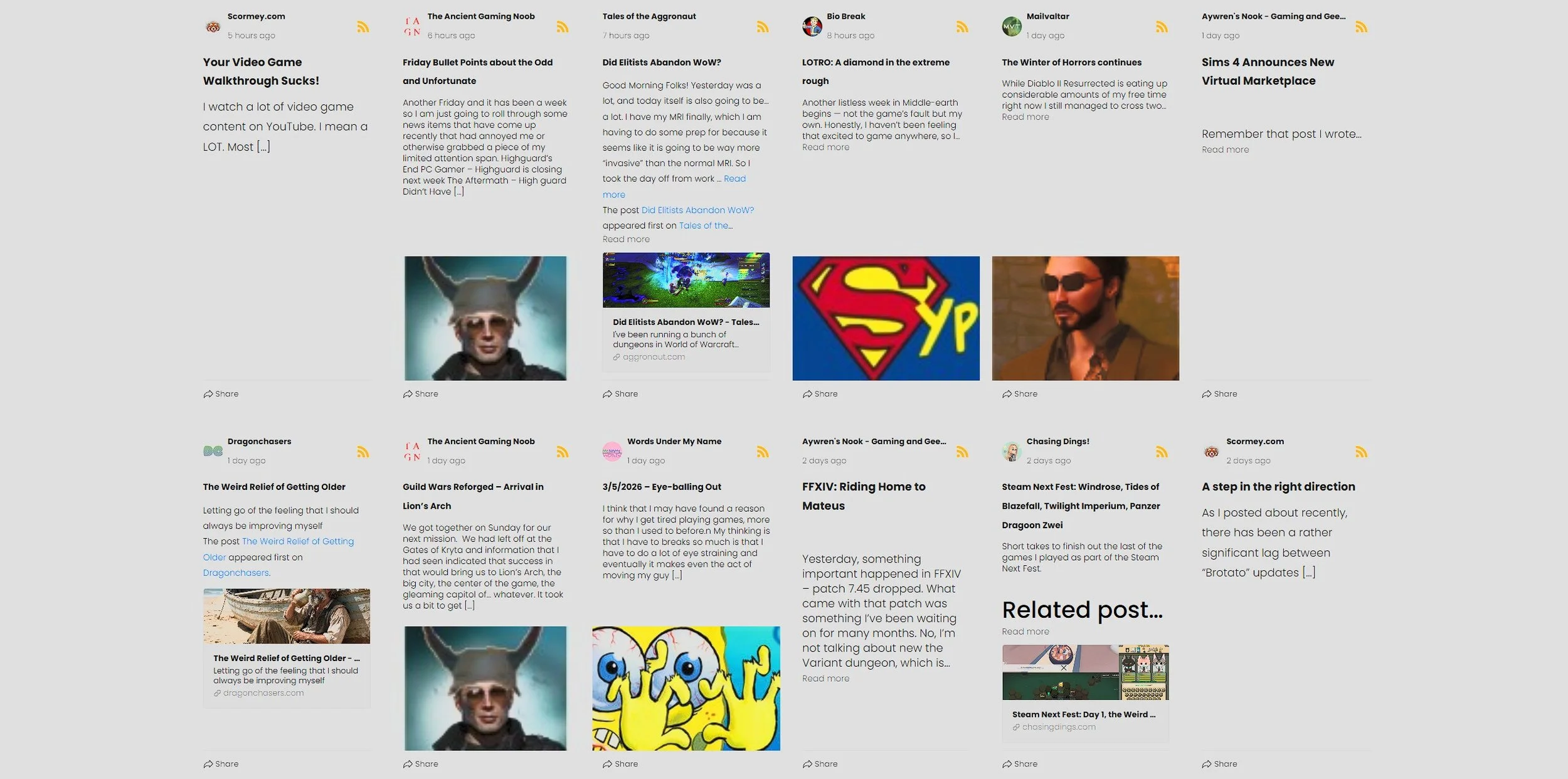
When I first started blogging way back in 2007, I maintained a blogroll of all my colleagues and peers’ websites. At the time this was a common practice and a way to support an expanding community. I considered this such an important aspect of the blogging scene at the time, I created a website to aggregate posts from video game blogs, called The Gaming Blog Nexus. It ran for two years and proved quite useful. However, it was tricky to administer and would frequently break as a lot of the back end widgets and plugins were created and maintained by “gifted amateurs”. I eventually shut it down due to the operating costs. When I moved my own website, Contains Moderate Peril, to Squarespace in 2015 I intended to start maintaining a blogroll once again. However, at that time there was no native support for such a thing on the platform. Hence for the last ten years, I have not had a blogroll on my website, which hasn’t sat well with me.

I was speaking to someone recently about hobbies (fortunately it wasn’t Simon Quinlank) and I mentioned that I have maintained a blog for over a 19 years. When I talked about the ongoing cost they were most surprised, as they had assumed that blogging was something that could be done for free. I guess we’ve become so accustomed to the provision of free online services such as email, that this a reasonable assumption. I pointed out that although it is indeed possible to blog for free using Blogger, it was not the optimal approach, especially if you want to maintain some degree of control over your writing. Naturally, the next question they asked was how much do I spend and I gave them a ballpark figure. All of which reminded me that I wrote a post on this very subject a few years ago. So I’ve decided to revisit the subject and see how much it currently costs to maintain Contains Moderate Peril.

Today I started the slow process of auditing every post that has been published on Contains Moderate Peril since 1st August 2016. The goal is to correct any obvious typos and replace all existing images with larger ones. The Squarespace software upgrade I applied to the website at the end of last year has finally allowed me to establish a standard format that I am happy with. Hence the ongoing audit is the perfect opportunity to apply these style rules to all posts. There are also some technical issues and matters regarding functionality that need to be addressed. I need to determine how to embed YouTube videos in such a way that they automatically scale to fit whatever device is viewing them. Another area which needs improving is the website search facility. This needs refinement so that enquiries can be more specific. Older posts also need to be more accessible, although I am still researching how best to achieve this.

It’s nearly two and half months since the Blaugust: Festival of Blogging event ended. During that time I’ve maintained a fairly regular writing schedule and I post every two days or so. Furthermore, I finally dragged my blog template, kicking and screaming, into the modern era. I tweaked a few pages and updated the content of the “about” page. The next task is to start going through all previous posts and replacing older, low resolution images with larger, more appropriate ones. This process also presents an opportunity to ensure that all posts follow a uniform style. IE Are appropriately categorised, have links to related posts at the bottom and are SEO optimised. This will be a lengthy task so I think the best approach will be to tackle two or three posts a day. Hopefully this will raise the profile of older content, which generates the lion’s hare of traffic to this site.
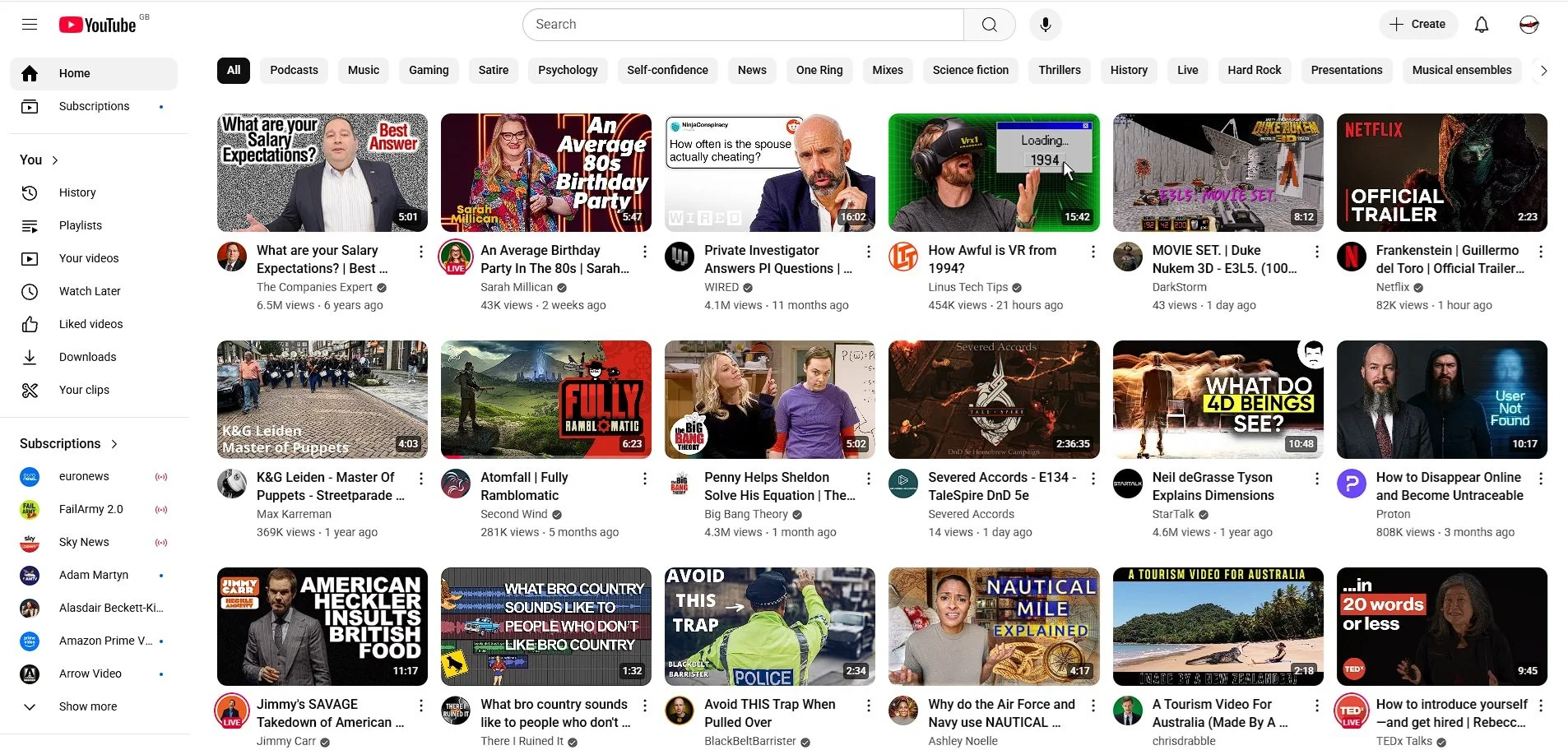
I use a browser extension called Control Panel for YouTube, which allows me to determine who many videos are displayed on my YouTube homepage and to filter the content that is shown. At present it is configured to display rows of six. Something that I have noticed of late, is the amount of videos with hyperbolic titles and thumbnail images created by AI. Both of which are design choices made to increase engagement. Clickbait titles are contrived to meet current SEO optimisation criteria and as such feature more and more in search results. The fact that they frequently have no relation to the subject I am researching, seems to be neither here nor there. The same issues arise with regard to AI generated images, which again frequently have no bearing on the matter. The fact that more and more content creators do this, infers that it works and is now an essential part of the process you must follow to be seen and featured in search results.

In the last post in this series, I specified the need for a plan with regard to upgrading my blog. Well a plan has emerged, been refined and has now been formally adopted. Rather than migrate Contains Moderate Peril to a new platform and effectively have to rebuild all the content, I am going to upgrade my existing presence on Squarespace. This decision was made for two reasons. Time and money. Migrating to a new platform will take a lot of time and incur additional costs. Upgrading the existing website will take less time and has no cost implications. That is not to say that it will be easy. It has become abundantly clear that the upgrade process will break stuff and that all published posts will have to be manually repaired. Hence my choice boils down to the lesser of two evils.
This year’s Blaugust: Festival of Blogging has reached an end and it would appear that this event has been well received by those who have participated in it. I believe that there were 168 bloggers taking part this year, many of whom have not participated before. Some were new to blogging, where others simply wished to see if they could increase their writing output. As ever there was a wide variety of blog styles and subject matters and it has been most interesting to read new posts every day. I have attempted to leave comments and positive feedback where I can and I hope that some of these new blogs that I’ve discovered continue to write. Well done to everyone who took part. I hope it has been an enjoyable and informative process and that you have learned from it. I know that at least one blogger has determined that writing online is not for them, which is a valuable lesson.
There is currently a group writing prompt available as part of this year’s Blaugust: Festival of Blogging which has piqued my interest. It asks the question “what is the oldest draft post you have” and suggests that it is revived in some manner. I have dozens of draft posts in a folder in my Google Drive. Many are film reviews or film related. The oldest of which dates back to summer 2010. Rather than write a straight forward review of Blake Edwards 1968 comedy The Party, I rather foolishly thought at the time that I’d tackle the issue of whether the film is sufficiently racist to make it beyond the pale. Let it suffice to say that I quickly found myself bogged down in the complexities of the subject and thus never completed the blog post.

I’ve participated in every previous Blaugust: Festival of Blogging event. Prior to that I was involved in the Newbie Blogger Initiative or NBI as it was affectionately known. I have therefore written quite a lot of blogging advice and suggestions over the years. If anyone feels disposed to do so, you can access them all by clicking on the “blogging” option on the top menu of this blog. However, it is important to remember that a lot of the ideas I have advocated and written about over the years are purely subjective. Not all advice or guidance works for everyone. People have different ideas about blogging, different approaches to it and different aspirations. This year has highlighted some quite distinct differences among bloggers which has been most illuminating.
I’ve been an Amazon Prime subscriber for year. For our household the greatest value that the service offers has always been the free delivery of your orders. Every week I will buy something from Amazon which is then quickly and efficiently delivered to our door. Prime Video which is also part of the subscription, has always been an after thought. That is not to say that we don’t use the service, because we do. It is simply not a determining factor as to whether we continue to subscribe or not. Mrs P and I enjoy such shows as Reacher, Cross and The Lord of the Rings: The Rings of Power but Prime Video is not our main source of streaming entertainment. That being said, there is always something to be found on Prime. There are plenty of older shows and an adequate back catalogue of films. Then there is the fact the Prime Video as a platform can accommodate additional streaming subscriptions to services such as Shudder and Paramount +. Hence Prime Video is best described as not essential but useful.