
Planning for Blaugust 2026
If you take a cursory look at a calendar you will see that the month of July is fast coming to an end. That means that Blaugust 2026 Festival of Blogging starts in a few days time! If you’re participating, or thinking of doing so, the next few days present a golden opportunity to do some practical organising and basic preparation. You don’t have to if you don’t want to. Feel free to just do things as they come, so to speak, if that’s your approach. However, for most of us, it helps if we have some kind of plan in place and make some arrangements in advance. I personally prefer this approach and like to have some ideas for blog posts in the bank. It is also useful to have “options” if something doesn’t go to plan. For those who are new to Blaugust, here are a few ideas regarding preparation that may be of use to you. As ever, your personal mileage may vary and ultimately you are best off adopting a strategy that suits your writing style and personal schedule.
If you take a cursory look at a calendar you will see that the month of July is fast coming to an end. That means that Blaugust 2026 Festival of Blogging starts in a few days time! If you’re participating, or thinking of doing so, the next few days present a golden opportunity to do some practical organising and basic preparation. You don’t have to if you don’t want to. Feel free to just do things as they come, so to speak, if that’s your approach. However, for most of us, it helps if we have some kind of plan in place and make some arrangements in advance. I personally prefer this approach and like to have some ideas for blog posts in the bank. It is also useful to have “options” if something doesn’t go to plan. For those who are new to Blaugust, here are a few ideas regarding preparation that may be of use to you. As ever, your personal mileage may vary and ultimately you are best off adopting a strategy that suits your writing style and personal schedule.
Basic planning
Blaugust is about creating content, be it written, videos or audio. Hence now is the time to start brainstorming ideas for potential material. I’m a stalwart advocate of notebooks and their electronic equivalent. If you have an idea, write it down. As for written content, establishing regular columns and recurring posts if useful. Providing a diary of your progress in a game or a project is useful and straight forward to write. Developing ideas into an actual post can be turned into a process. Start by writing down your blog title or a sentence describing it. Then add bullet points about different aspects of that subject. These can then be fleshed out into paragraphs. Impose structure via opening and closing statements and voila, you have a blog post or at least the first draft of one. If you’re out of ideas the Blaugust community has a list of prompts that may help.
Gonzo blogging
You may want to experiment with writing a stream of consciousness instead of planning a post. Some writers find this suits their temperament and will just sit and write whatever comes into their head. However, it is a very personal and exposing style of writing. When it’s good, it is a very engaging and powerful form of writing, that can be insightful and charismatic. However, it can also go the other way and come off as rambling and incoherent. There’s also a school of thought that some of the stuff that is in your head and that you don’t say out loud, is in there for a reason. Hence I wouldn’t recommend this style of writing to everyone.
Hunter S Thompson and the concept of Gonzo Journalism
Staying motivated and “doing the thing”
Let’s not kid ourselves. Writing or indeed producing any sort of creative content on a regular basis for a hobby is hard. It requires a degree of focus, time and self-discipline. Staying motivated is hard. Which is why I strongly encourage all Blaugust participants to talk with each others on the Blaugust Discord Server. It is an invaluable source of encouragement and support, irrespective of what sort of content you produce. Advice, constructive criticism and a kind word are always available. Or if you prefer, you can just shoot the breeze and unwind if it helps your creative processes (yes you do have them. We all do). And when I say talk, it’s mainly a text based discussion. Or you can just lurk if you want to. Passively observing is a useful tool in itself.
Adjust your expectations and be realistic about what you will achieve
Be realistic with your Blaugust goals. The key to building an online presence is to publish content regularly. Even a post a week can be difficult, especially if the only time you have to write is after work, when you’re tired and have other demands on your time. Remember that every post doesn’t have to be an in-depth essay or a literary milestone. A few paragraphs or even lines is sometimes all that’s needed to make your point, convey an idea or express a sentiment. Remember it is your blog and you should do things your way that you’re comfortable and content with. Don’t overreach yourself but don’t sell yourself short either. Realistically consider what you can produce over the course of a month and attempt to achieve it.
Go with the flow. What could possibly go wrong?
Go with the flow
Plans and reality make for uncomfortable bed fellows. You may plan a series of blog posts or videos and then discover that you’re no longer interested in the subjects or the content doesn’t come out as you thought it would. You favourite Aunt may splinter her pancreas and you find that the subsequent care you provide impacts upon your writing schedule. You may simply discover that writing or whatever it is that you create online is not for you or that you’re going about it the wrong way. Fear not. That is part of the point of Blaugust. The event gives you a broad overview of not only the mechanics of content creation but the “lifestyle”, so to speak. Hence adopt a go with the flow philosophy. That’s not to say you should be a lazy git. Blaugust is often a case of you get back what you put in. Just be mindful that things can change and that shit happens.
So to summarise, it never hurts to be organised and for many, imposing a degree of structure upon a month-long writing event, will make it far easier to navigate. Yet, there does come a point when you have to stop fine tuning your plan and just get on with writing, podcasting, streaming etc. It’s a bit like getting into the swimming pool when on holiday. The water looks inviting but you know it will initially feel cold. Once your in, past experience tells us it will be fine but the main obstacle is just diving or climbing in to the damn pool. Publishing your first Blaugustpost is a bit like this but once it’s done you may wonder why you worried about it so much. So take the plunge, stay in touch with other participants and see where the month ahead takes you. If you get stuck then help is at hand. Just ask on the Discord server or via a post comment. Enjoy the month ahead and Qapla’ as the Klingon’s say.


















Blaugust 2026: Q&A
Next month the annual Blaugust: Festival of Blogging begins. Roundabout this time each year, I try to write a promotional post to raise awareness of the event and encourage potential participants. However, as I’ve done this quite a few times before, each year it is becomes increasingly difficult to present the essential facts about Blaugust: Festival of Blogging in an interesting fashion. There’s nothing worse than writing a post and feeling that you’re just covering old ground. So, this year, I thought I’d try something different and present the most important information about this annual event, as if it were a conversation between myself and an interested passer by. Feel free to attribute novelty voices for each party in your own head, while you read this. If it helps, try imagining that this discussion is happening between two celebrities or such like. Both may be wearing exotic hats but I digress. On with the scenario.
Next month the annual Blaugust: Festival of Blogging begins. Roundabout this time each year, I try to write a promotional post to raise awareness of the event and encourage potential participants. However, as I’ve done this quite a few times before, each year it is becomes increasingly difficult to present the essential facts about Blaugust: Festival of Blogging in an interesting fashion. There’s nothing worse than writing a post and feeling that you’re just covering old ground. So, this year, I thought I’d try something different and present the most important information about this annual event, as if it were a conversation between myself and an interested passer by. Feel free to attribute novelty voices for each party in your own head, while you read this. If it helps, try imagining that this discussion is happening between two celebrities or such like. Both may be wearing exotic hats but I digress. On with the scenario.
Q: What is Blaugust 2026: Festival of Blogging?
A: It’s month long event to encourage new bloggers and content creators, as well as those who’ve drifted away from existing blogs who are looking for the motivation to resume writing. We can help new writer take their first steps and existing writers fine tune their craft and provide advise on how to develop your online presence. The event offers guidance via our community of established bloggers. There are writing prompts available and an opportunity to share your content. Plus, it's not just about blogging. We can offer advice on podcasting and other forms of content creation. Ultimately it is about bringing people together, sharing knowledge and experience and having fun. Hugging is available if you dig that sort of thing. Blaugust runs from 1st August to the 31st.
Q: Why Blaugust?
A: Because it’s about blogging and it happens during August. Is it a great name? No. Is it memorable? Yes. And that’s marketing for you.
Q: Who is it aimed at?
A: Anyone who wants to write or create content online. The event originally emerged from the video game fan blog community but quick evolved to be more inclusional. Previous participants have written about such diverse subjects as African music, knitting and gardening. Even Colin can take part if he wants to.
Q: What do I have to do?
A: There’s a sign up form where you can share your personal details and where you create your content, be it a blog, YouTube channel or podcast. There’s a Discord server, where you can link any material you’ve produced and talk to other participants. Some people aim to stick to a content schedule as a means of getting back into the swing of content creation but this is not mandatory. You do as much or as little as you see fit and feel comfortable doing. If you start and then feel that it’s not for you, you can drop out. No one will judge you (much).
Q: What’s in it for me?
A: Certainly not global domination. However, if you take part there’s a chance to discover a hobby and pastime that you may enjoy, as well as the opportunity to make friends and become part of a growing community. There are some accolades you can work towards, if you fancy, but these are mainly for the simple satisfaction of achieving them. Blaugust is very much about the taking part. The results are for you to define.
Blaugust 2026: Festival of Blogging does not take place in Tucamcari, New Mexico, although people who live there can participate if they want
Q: Where does this all happen?
A: Tucamcari, New Mexico. No, not really. Blaugust is an online event with everything happening via your website, blog, YouTube channel etc and the official Blaugust Discord server. The event and the content that is created by participants are shared via social media. There is also a dedicated channel on the Discord server where you can post links to your material. There is also a list of participants so you can add new blogs and sites to your RSS reader of choice if you want to track what’s happening.
Q: So this is about building a community?
A: Yes, totally this. With eggs on top. Blaugust is about encouraging people to express themselves through online content creation and interacting with others who do the same. It’s about seeing differences as a positive and not a negative. About focusing upon common interests, rather than differences. If that sounds a little too ideological for you, think in terms of just finding a cool place to hang out with friends.
Q: Are there any rules?
A: Yes, there are a few but not many. Any event of this nature has to have some boundaries set to work within. Blaugust is not a commercial event. We have no problem with people pursuing commercial undertakings with their content creation but Blaugust is not a forum for participants to try and “sell their wares” to others taking part. Also you are free to create content about whatever you want but Blaugust does not want to be associated with inflammatory material or anything that breaks US, UK and European law. We expect a similar common sense approach to behaviour on the Discord server. However, Blaugust has seldom run into such issues over the 14 years it has been running. We do not go out of our way to police this event, as it runs on trust, maturity and emotional literacy. However, robust action will be taken against transgressions.
Q: What about the use of AI in content creation?
A: Blaugust has a simple rule of thumb regarding the use of AI in content creation. AI may assist your creative work, but it should not replace your creative contribution. Using AI tools to tidy up your prose is acceptable. If you’re entire post was written with an AI using minimal human interaction, then such content is unacceptable. More detailed guidance is available here.
Q: Is it fun?
A: Yes. But don’t take my word for it. Last year, 168 people participated and the consensus was that it was an unequivocal “stone groove”.
Q: Oh and finally, who is Colin?
A: Don’t ask.

Dissatisfied With the Content Creation Status Quo
I recently watched a video on Patreon by someone who I actively support as a “content creator” and whose work I enjoy. I shall provide no more detail regarding their identity because they may not want their work referenced with regard to what I am going to say. During the course of their video they briefly referenced the work put into promoting a podcast they are currently producing and the relatively low audience that it has garnered so far. The comments were an aside and most certainly not said with any sense of self-pity. They were simply a statement of fact. Furthermore, I suspect they are far from unique and similar sentiments have been expressed in one way or another by anyone who has created something the published it online, only for it to be lost among the greater white noise” of the wider internet.
I was going to start this post by noting that it probably won’t be well received. Measured and considered criticism seldom finds an audience and the go to riposte to such writing is “you’re just whining” and other knee-jerk, stock remarks. However, upon mature reflection and sober deliberation, I came to the conclusion that it really doesn’t matter if this doesn’t go down especially well, because so few people will read this. Something that is integral to the points I shall try to convey.
I recently watched a video on Patreon by someone who I actively support as a “content creator” and whose work I enjoy. I shall provide no more detail regarding their identity because they may not want their work referenced with regard to what I am going to say. During the course of their video they briefly referenced the work put into promoting a podcast they are currently producing and the relatively low audience that it has garnered so far. The comments were an aside and most certainly not said with any sense of self-pity. They were simply a statement of fact. Furthermore, I suspect they are far from unique and similar sentiments have been expressed in one way or another by anyone who has created something the published it online, only for it to be lost among the greater white noise” of the wider internet.
I’ve been blogging since 2007 and over the years have become part of an ad-hoc community that has come together and grown through various vicarious means. It used to be predominantly about blogging about video games but through a series of year events designed to promote writing online, it has now become much broader in scope. We’re now a community of variety bloggers and niche fandom writers. There are some very good writers among us, as well as those who have engaging personalities. A decade or so ago, consistently writing in specific areas of fandom would yield results and you could find an audience. Not so much today.
But let’s not just focus on writing online. The point I want to explore is relevant to streamers, podcasters and YouTube channels just as much as bloggers. Simply put there is no meritocracy as I see it, anymore. People whose material deserves a wider audience do not find one. A lot of talent goes unnoticed and unrewarded. Furthermore, to add insult to injury, those writers, podcasters and YouTubers that have nothing to offer but “hot takes”, controversy and entry level oafish buffoonery gain an audience and often financially benefit from their material.
Now some will argue that this is simply the way of the free market and if more cerebral material doesn’t “sell” then simply start churning out what does. IE clickbait. Others will argue that anything vaguely ethical, thought provoking or that is based in facts and data is out of vogue. Both prospects are utterly demoralising. If I honestly thought that we now live in a world where the idiots have definitively won, then I would bother getting up in the morning. However, I do not believe that to be the case. Because I still regularly meet and interact with people who like and enjoy good material and who eschew the tabloid clickbait that is ubiquitous online these days. Which begs the question, why are things like they are?
The answer lies with the big corporations that own all the major platforms for sharing content online. I think most of us have determined that the major algorithms used by these platforms are skewed towards specific types of content. Multiple studies have found that the algorithms prioritise engagement metrics (clicks, comments and watch time) for “controversial” content. Such content is served by default to new accounts, regardless of the viewer preferences. I recently created a new Facebook account to keep in touch with some friends in the US. My profile contained the bare minimum of data about myself and my preferences. Yet I was immediately served “recommended videos” by political parties, news stations and influencers that I abhor and revile. At present the business model for most social media platforms gives a structural advantage to content that is provocative, controversial, or emotionally charged. In my experience, such material is seldom intellectually rigorous, honest and most importantly of all, entertaining.
It is important to be able to correctly audit your own feelings and state of mind. When I think about the fact that so many good bloggers, YouTubers and streamers are simply falling between the cracks and getting overlooked, I don’t get angry. Nor am I especially jealous of those who find success with little talent. Such revenue stream are vicarious. My main feeling is one of dissatisfaction. Because the status quo serves no one but the social media platforms. Yes, there is good content out there but it is becoming increasingly difficult to find. Furthermore, the process of attrition, a factor that all content creators face, is accelerated when one people feel that they’re making no progress. Hence the status quo actively contributes to good, creative individuals quitting the scene.
So, there you have it. I’m dissatisfied. Am I going stop blogging? Not at the moment. I don’t feel disposed to be driven off the internet, be it indirectly, by the fact that there’s a lot of shit out there that drowns out everything else. However, my present mindset does have an impact on my writing schedule. But I take comfort in the fact that it is likely that I am not the only one who feels this way and that others are not happy with either current “market forces” or the existing business model. Surely racing to the bottom and continuously serving clickbait has a finite lifespan? Will there be a reset of some kind when the public finally tire of such material? May be. But not at present. Which brings an old adage to mind. What can’t be cured, must be endured. But not necessarily with good grace. If the status quo pisses you off, say so.






Standardise and Monetise: The Decline of Online Content
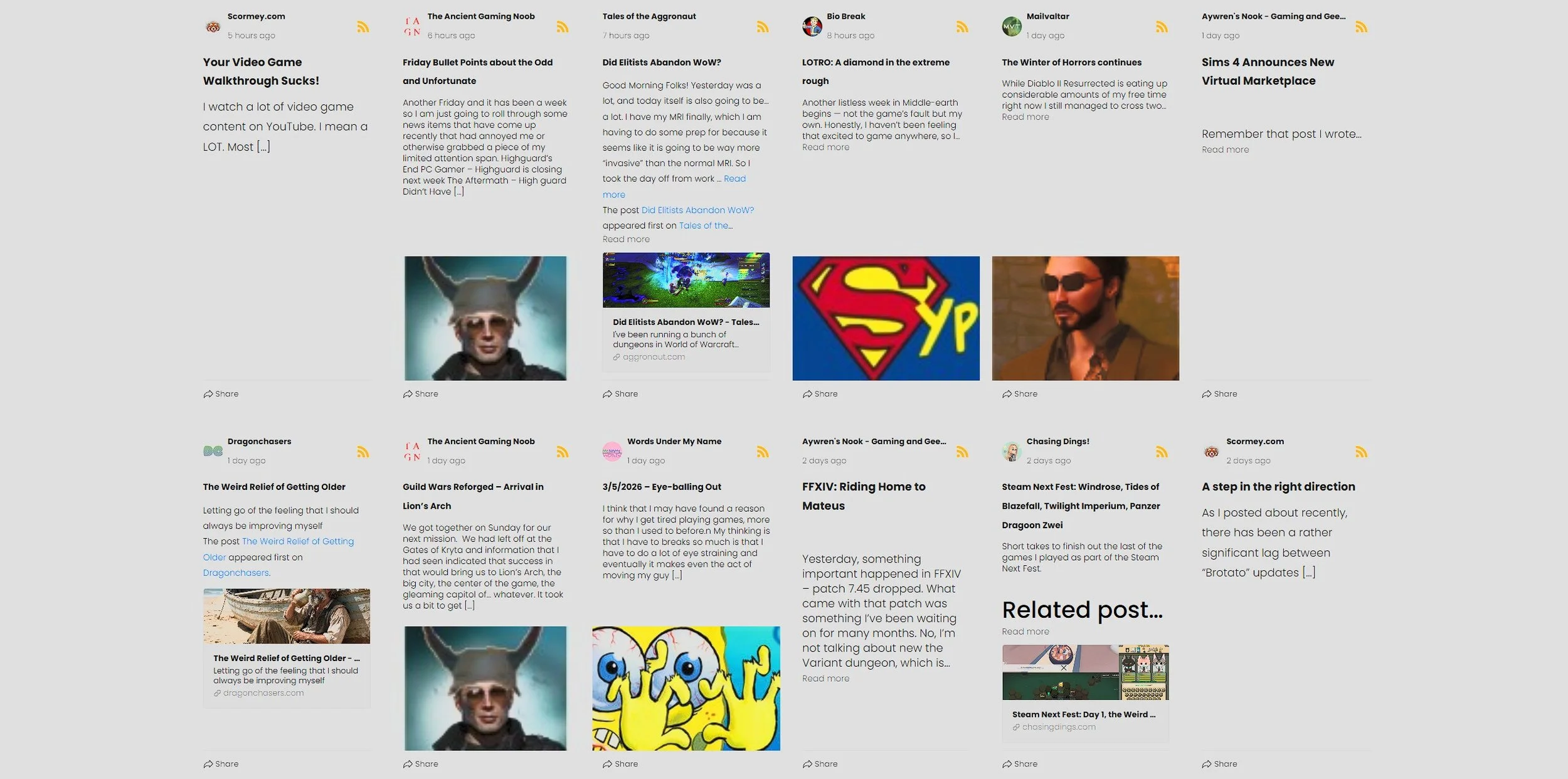
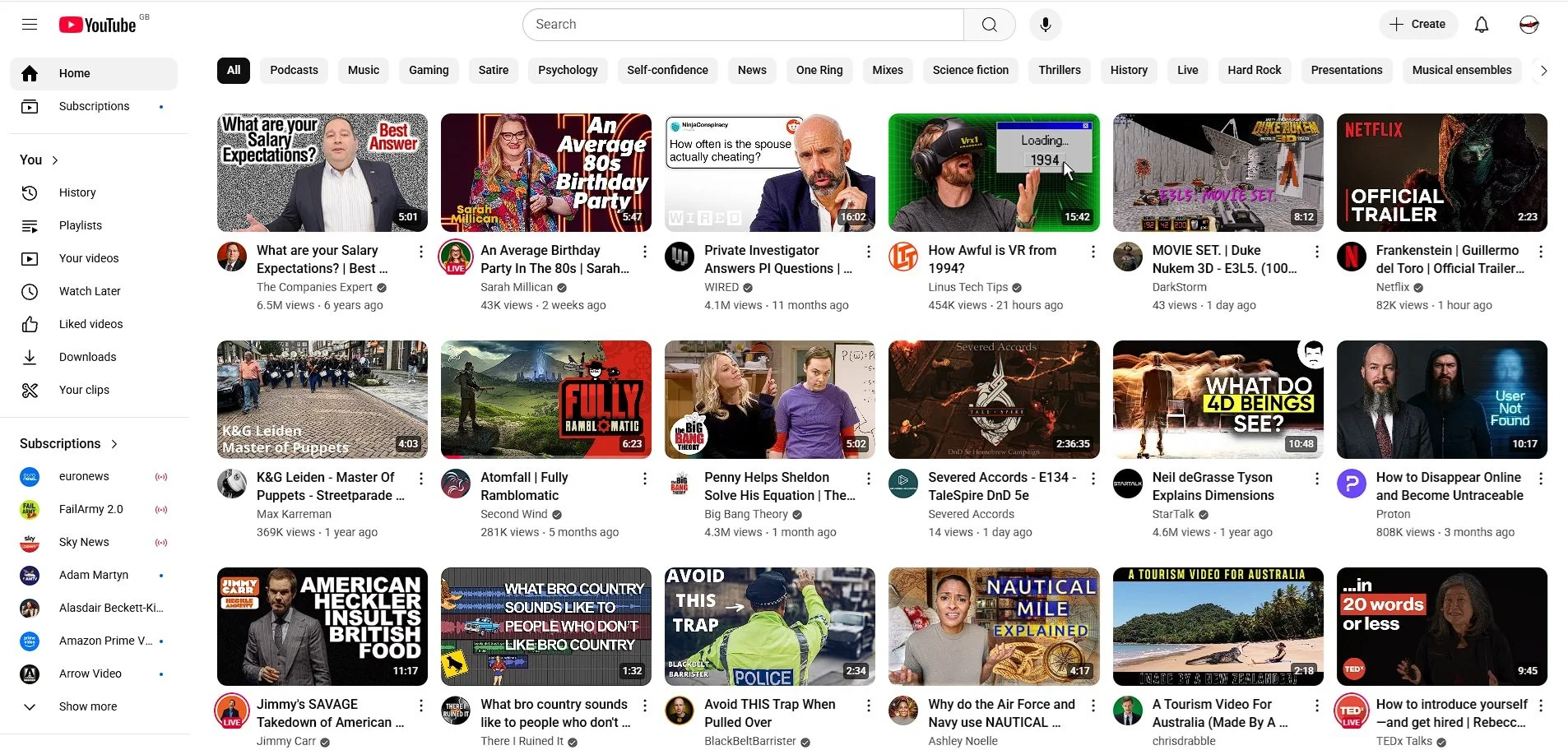
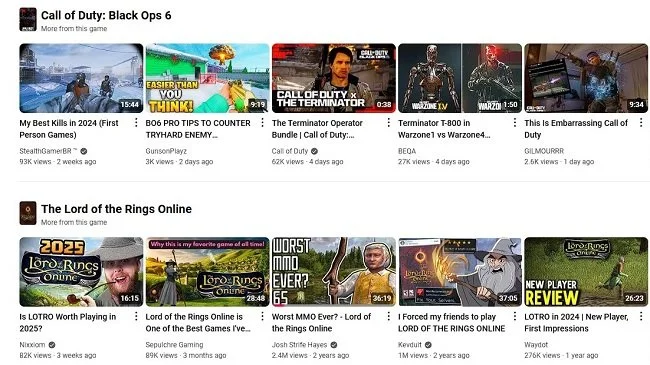
I use a browser extension called Control Panel for YouTube, which allows me to determine who many videos are displayed on my YouTube homepage and to filter the content that is shown. At present it is configured to display rows of six. Something that I have noticed of late, is the amount of videos with hyperbolic titles and thumbnail images created by AI. Both of which are design choices made to increase engagement. Clickbait titles are contrived to meet current SEO optimisation criteria and as such feature more and more in search results. The fact that they frequently have no relation to the subject I am researching, seems to be neither here nor there. The same issues arise with regard to AI generated images, which again frequently have no bearing on the matter. The fact that more and more content creators do this, infers that it works and is now an essential part of the process you must follow to be seen and featured in search results.
I use a browser extension called Control Panel for YouTube, which allows me to determine who many videos are displayed on my YouTube homepage and to filter the content that is shown. At present it is configured to display rows of six. Something that I have noticed of late, is the amount of videos with hyperbolic titles and thumbnail images created by AI. Both of which are design choices made to increase engagement. Clickbait titles are contrived to meet current SEO optimisation criteria and as such feature more and more in search results. The fact that they frequently have no relation to the subject I am researching, seems to be neither here nor there. The same issues arise with regard to AI generated images, which again frequently have no bearing on the matter. The fact that more and more content creators do this, infers that it works and is now an essential part of the process you must follow to be seen and featured in search results.
What worries me is not so much the inherent hyperbole, both written and with regard to images, but the fact that YouTube content is driven by a standardised process. A prevailing meta is often creatively stifling, generic and tedious. We have seen this time and time again online. TED Talks being a prime example. When these lectures first began to gain an audience in 2006/7, the talks had a degree of individuality about them. Over time people began to notice what worked and what didn’t work within the format and so began establishing a process. Eventually this evolved into a sort of unofficial formula that became commonly adopted. This resulted in a noticeably generic style that eventually became an impediment to the way a presentation was received by audiences.
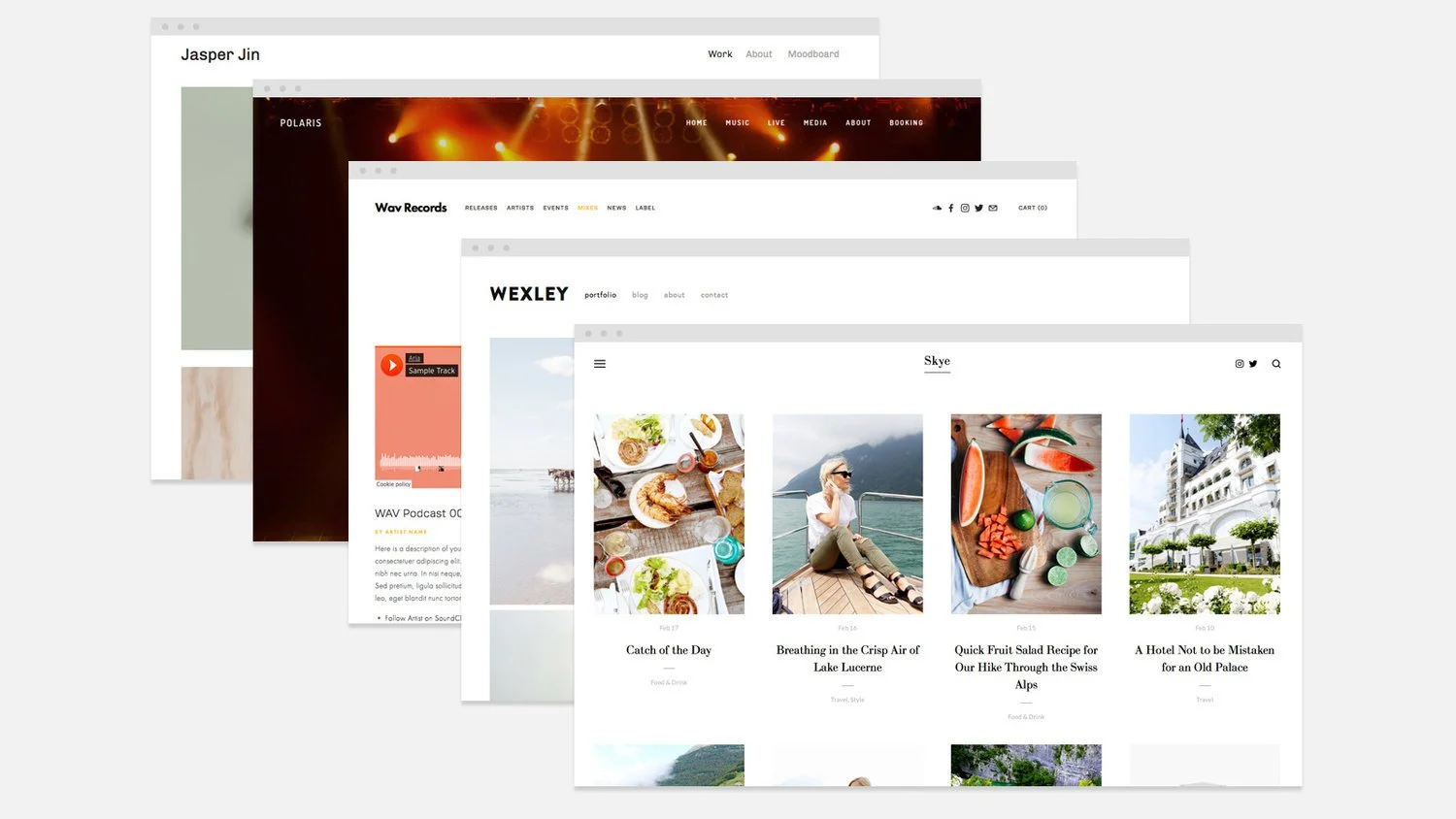
Today, the prevailing philosophy that shapes how people approach, make and present their online content seems to be “standardise and monetise”. That is not to say that there isn’t any good quality content online as there certainly is. What it means is when you search for a video, podcast or blog post related to a specific subject, it is harder to discern what meets your criteria. The algorithms return results that have met SEO standards but not necessarily the users intellectual, or presentation requirements. To put it candidly, you may type a very nuanced search request in a search engine pertaining to something niche and specific, such as Etruscan pottery. The search engine then returns a list of links allegedly relevant to that inquiry. However upon inspection you may find that links to relevant sites, such as Museums in Etruria and other historical resources, are surrounded by irrelevant results, such as local pottery suppliers and tourism in Italy.
I believe this problem goes beyond the iniquities of SEO. You only have to look at the everchanging terms and conditions for YouTube. The company seeks to monetise content but only in a manner that meets the sociopolitical foibles of its advertisers, financiers and political associates. Any material that does not meet this ever shifting set of rules or offends in some manner is effectively disenfranchised by the algorithmic gods. It won’t be seen or returned in search results. Anyone trying to produce video content within such an ecosystem has a stark choice to make. Produce videos in accordance with their own personal principles and risk being demonetised and buried. Or attempt to self-censor one’s content to satisfy YouTube’s standards. The latter results in risible bogus phrases such as “unalived” and “graped”. The notion of trying to sanitise a global platform as YouTube so that the only content that prevails is “marketable”, is ludicrous and possibly immoral.
Upon reflection, YouTube’s policy should not come as a surprise. Similar market forces have been at work in the film and music industries over the last 35 years. There was a time when a film could be made on the merits of its story alone and its subsequent rating was a secondary consideration. Nowadays, mainstream films are frequently made to achieve a specific rating and thus be accessible to a broad audience. Filmmakers of note with a history of success at the box office struggle to find financing for their new projects, if they are deemed to lack mainstream appeal or reference subjects that are at odds with the politics of the prevailing establishment. It is for the same reason that politics and expressing views on social matters have all but vanished from mainstream, popular music. Both industries are now driven by proven formulas and market requirements. This is to their artistic detriment.
Finally it is pertinent to mention blogs with respect to this conversation. Despite rumours to the contrary, they still exist and constitute a major part of online content. Blogs are still a medium for fandom but I do not think that it is considered the first choice of platform. Long form writing takes time, effort and thought. As does reading such content. Videos are immediate and potentially require less application from the viewer. Video content can also be tailor made in a specific idiom and then targeted at particular audiences. Hot takes, controversies, militant fandom, gatekeeping, nostalgia and numerous other “perspectives” can quickly find an audience and gain their creator notoriety. Blogging seems at times quaint compared to such a bellicose alternative. It is also often pilloried for not monetising by default, as if fandom for fandom’s sake is a naive or a fiscally crass decision.
Despite all this, there is still good material to be found online. There are engaging and intelligent blogs, podcasts and YouTube channels. Good quality cinema still exists as does innovative music. The problem is that it is much harder to find among all the bland, homogeneous and spurious material, due to a fundamentally dishonest search methodology. The market may well have won according to some but in doing so it has led to a universal race to the bottom. It is not just a question of inferior content being spoon-fed to the credulous. The internet is partly responsible for creating an audience that cannot consume any other form of material. This is the price we pay for clickbait, dumbed down content, diminished concentration spans, educational decline and an inability to think critically. This is the reality of “standardise and monetise”.
Experimenting With YouTube Part 1
I recently wrote a post about how I wanted to have a go at producing some gaming videos for YouTube. “How hard can it be?” I asked rhetorically, knowing that there would probably be a lot more to the process than meets the eye. Two weeks on and I can report back that there is indeed a learning curve but it is not insurmountable. I managed to figure out how to record a video game, edit it and then add a narration as well as a simple animated logo. Furthermore, I succeeded in doing this without spending a lot of money. I bought some video editing software and a year’s subscription to XSplit Broadcaster but got a really good deal on both. In total I paid £41, which is very reasonable. Hence yesterday, I posted my first video on the officially relaunched Contains Moderate Peril YouTube channel.
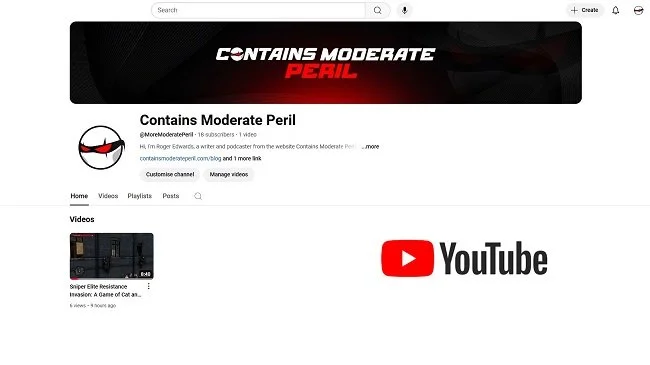
I recently wrote a post about how I wanted to have a go at producing some gaming videos for YouTube. “How hard can it be?” I asked rhetorically, knowing that there would probably be a lot more to the process than meets the eye. Two weeks on and I can report back that there is indeed a learning curve but it is not insurmountable. I managed to figure out how to record a video game, edit it and then add a narration as well as a simple animated logo. Furthermore, I succeeded in doing this without spending a lot of money. I bought some video editing software and a year’s subscription to XSplit Broadcaster but got a really good deal on both. In total I paid £41, which is very reasonable. Hence yesterday, I posted my first video on the officially relaunched Contains Moderate Peril YouTube channel.
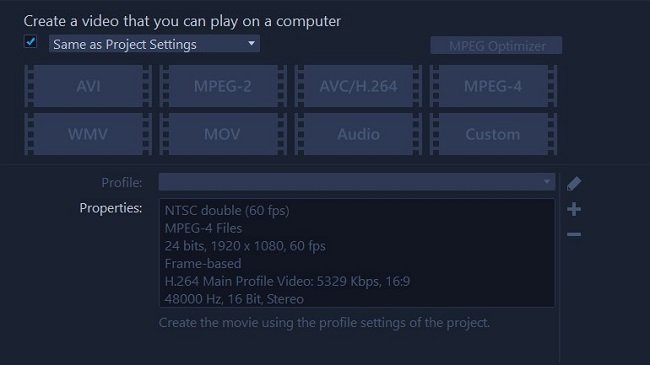
Like a lot of people, I captured my video game material using OBS Studio. This was easy to configure as there are plenty of YouTube videos on this subject. Deciding what software to use for editing was a little trickier. I didn’t want to use a beast such as DaVinci Resolve as it smacks of using a sledgehammer to crack a walnut. Eventually I read a comparison review over at TechRadar and Corel VideoStudio 2023 seemed to fit the scope of my project. It has proved easy to learn and is well supported. All went well to begin with. I edited an 18 minute video down to 8. However, when I started adding more material, I noticed that the sound started getting out of sync, leading to a crash course in the iniquities of video content recorded with a variable frame rate. Remuxing offered a solution but added an extra layer of work. So I switched from OBS Studio, to Bandicam (which stuttered) to XSplit Broadcaster.
The thing about making videos for YouTube, is that it’s only half of the work. Uploading the finished MP4 file and having to input all the metadata required for posting, is a complex task. There is an element of “voodoo” associated with choosing a title and a thumbnail image, along with selecting the right keywords and writing a description that will potentially intrigue viewers. If you’re looking to monetise your YouTube channel (which mercifully, I am not) then there is a lot of pressure to get this process right. Like writing online, I can see how easy it is to start obsessing about numbers and traffic. However, YouTube is already an oversubscribed space so it is best to put thoughts of “global domination” out of your mind. I have and I am just pleased that I managed to produce something.
I guess the question remains, am I going to post YouTube videos regularly? Not exactly. I am going to try to do a few more and see if I can learn how to refine my presentation and make the production process more efficient. If that can be done I don’t see why I can’t publish something once a month? But in true blogger style, I reserve the right to get bored and lose interest, or to have unforeseen complexities in my life which prevent me from doing anything online. It has been fun learning something new. I like to challenge myself and think it important to keep the brain ticking over, especially as you get older. This project has also been a timely reminder of how hard some YouTube content creators work. Especially those who clearly do it as a means of income. It is far more labour intensive than blogging.



The Cost of Content Creation
Back in July 2017 I wrote a blog post about how monetising your content fundamentally changes the relationship you have with your audience and how that isn’t always a good thing with regard to maintaining ones creative independence. I then went on to describe how I see both my blog and podcast as personal “indulgences” and that I had no intention of using Patreon or having a virtual tip jar. This remains the case and I’m not looking to my readership for funding of any kind. However, it is spring and for me at least, that means that a lot of yearly costs associated with my content creation are up for renewal. Therefore I thought it an appropriate opportunity to discuss the subject of the cost of blogging, podcasting, streaming and other forms of content creation.
Back in July 2017 I wrote a blog post about how monetising your content fundamentally changes the relationship you have with your audience and how that isn’t always a good thing with regard to maintaining ones creative independence. I then went on to describe how I see both my blog and podcast as personal “indulgences” and that I had no intention of using Patreon or having a virtual tip jar. This remains the case and I’m not looking to my readership for funding of any kind. However, it is spring and for me at least, that means that a lot of yearly costs associated with my content creation are up for renewal. Therefore I thought it an appropriate opportunity to discuss the subject of the cost of blogging, podcasting, streaming and other forms of content creation.
Rather than use a free service such as WordPress, I host Contains Moderate Peril via Squarespace which is a subscription service. The infrastructure is robust, secure and the service has several advantages over others that don’t charge. Squarespace has its own statistical package which affords me more than an overview of my website traffic. My current subscription also allows me to host my podcast, which saves me using another service such as Libsyn. At present I choose to pay monthly, so if my circumstances quickly change (and as a carer they certainly can) I can simply cancel the service. At present, the subscription costs £11.14 per month. I also recently renewed my domain, which I do via Go Daddy. It currently costs £23.38 per year, which is about £1.95 per month.
Although there are free alternatives, I still use Microsoft Office and subscribe to Office 365. Last year I bought year’s subscription for a little over £30 from a third-party key seller. Sadly, I couldn’t find such a deal this time, so I have opted to pay £5.99 per month. This is not the most economical option, but it suits my current needs. I have always been a strong advocate of both Microsoft Word and Outlook and rely heavily on the functionality they provide. I use Word for more than just blogging, having a great deal of administrative work to do. Similarly, I manage multiple email accounts and find that Outlook is by far the best tool for this. Email for Contains Moderate Peril, along with a second domain linked to my former business, are both handled via a hosted Microsoft Exchange service costing £17.86 per month.
Overall, it costs me £36.94 to maintain a blog and produce a monthly podcast. That may not sound like a lot of money, but how you view what is and what isn’t expensive is highly subjective. As a carer on a fixed income I’ve had to think long and hard about such expenditure and I’ve briefly considered cheaper options. However, I do not like to dependent on free services and prefer to have the safety net of customer support and legal recourse that comes with paid third-party vendors. So for the present I shall continue to pay in the manner I’ve described. I’d be interested to hear from fellow bloggers and content creators regarding their expenditure or whether they manage to get by without spending anything. Is there a price limit on your hobby or have you been tempted to look to a service such a Patreon to cover costs?
Blaugust Reborn: Event or Cause?
The Blaugust Reborn is an event, which promotes blogging and offers advice and guidance to those who have just started or who are toying with the idea of doing so. It has no agenda beyond providing encouragement and support. The advice that is offered through various veterans’ content creators collective experience, is just that, advice. It can be taken or ignored, because ultimately blogging is a very personal pastime and there really isn't a right or wrong way to do it. If doing what you do and the way that you do it brings you pleasure, then you've pretty much well nailed it. I see Blaugust Reborn as a benign undertaking. It has no agenda that I am aware of. In fact, I could argue that my involvement is a little self-serving, in so far as I hope that some great new blogs emerge from this year’s event that I can read on a regular basis. Overall, I see the Blaugust Reborn as a simple exercise in offering a helping hand. For me it's not any more complex than that.
The Blaugust Reborn is an event, which promotes blogging and offers advice and guidance to those who have just started or who are toying with the idea of doing so. It has no agenda beyond providing encouragement and support. The advice that is offered through various veterans’ content creators collective experience, is just that, advice. It can be taken or ignored, because ultimately blogging is a very personal pastime and there really isn't a right or wrong way to do it. If doing what you do and the way that you do it brings you pleasure, then you've pretty much well nailed it. I see Blaugust Reborn as a benign undertaking. It has no agenda that I am aware of. In fact, I could argue that my involvement is a little self-serving, in so far as I hope that some great new blogs emerge from this year’s event that I can read on a regular basis. Overall, I see the Blaugust Reborn as a simple exercise in offering a helping hand. For me it's not any more complex than that.
However, may not see it in such straight forward terms. A few years ago, when the equivalent event of Blaugust Reborn was the Newbie Blogger Initiative there was criticism from some quarters of the Blogosphere, who saw the it as an organised attempt to try and stamp some sort of standard identity upon new writers. It was even labelled as some sort of Orwellian Groupthink. There was a great deal of hyperbole involved and very little clear thinking. This view stemmed from the fact that a lot of those at the time participating in the NBI had written about their indifference to GamerGate and thus there was the ubiquitous binary backlash from those who equated ambivalence with holding a contrary view. However, this matter did highlight the fact that something as simple as benign as trying to offer help and support could be misconstrued.
I think what I found curious about the pushback that happened in NBI back in 2015 was the fact that someone saw fit to label the event as a "cause". This has got me thinking whether anyone thinks that Blaugust Reborn is a cause instead of an exercise in self-help? A supportive event is optional and non-threatening. A "cause" is a much more subtle beast. It has socio-political connotations. There is usually an undercurrent of moral rectitude. Causes seek to correct something. Something that is deemed to be currently wrong, hence the ethical undertone. Events simply facilitate, whereas causes will by their very nature have those that are diametrically opposed to them. Suddenly an activity goes from being functional (and fun) to something far more partisan.
Consider something like advice on weight loss and eating healthily. In essence it is a harmless stance to take and advocate. Yet if it is promoted in an overzealous and judgemental way and treated as a cause rather than optional guidance, it suddenly becomes a political football; something that is strongly resisted and reviled in some quarters as a form of social engineering. I don't want the Blaugust Reborn to fall into this trap. I don't want it to become burdened with ideologies and dogma. I want it to be perceived for what it is; an event that offers a helping hand and facilitates the participant to blog in a manner that suits them.
The thing about Blaugust Reborn is that the advice offered can be used in whatever way the author wishes. I could be argued that Blaugust Reborn could even end up facilitating writers who produce hateful content filled with bigotry and prejudice. So far from what I’ve seen of those who have signed up to participate, that seem unlikely but it’s not impossible. However, that goes with the territory and I do not fear those who have contrary views to my own. Blaugust Reborn is just a process. What people choose to do with the information they can obtain from it is their decision. It's a bit like running a woodwork class. If someone wants to use the knowledge they’ve gained to fashion a club instead of a chair, then that is their prerogative (feel free to add your own Bobby Brown gag here).
Now I realise that Blaugust Reborn is not defined by just one person's perception of it. It runs due to the involvement of multiple people, all of which probably have a unique view of exactly what the event is and what it aims to achieve. Yet I think that its inherent simplicity adds to its appeal. Therefore, I have made the assumption that other participants do not see it as a "cause". However, I may be wrong. I've been round the block several times and in my youth been involved in politics, trade union activities and various social issues. Yes, I have supported "causes". Sadly, none of them has been without problems or remained 100% true to their roots and goals. It is just the nature of ideologies and concept, that implementing them often requires compromise. But I don’t see Blaugust Reborn falling into this category though.
Age has taught me to be both mindful and sceptical of such things as "causes". Too often they can be a Trojan Horse for something more sinister. But again, I don’t see Blaugust Reborn being like that. So, I'm asking the following question out of curiosity to all who may be involved with Blaugust Reborn to a greater or lesser degree. How do you perceive this event? Or is it simply an exercise in self-help. Do you see it as part of a wider undertaking with greater meaning? Do you consider it as a cause? If so what do you want the event to achieve beyond helping content creators? Is it an open invite to all, or would you be concerned if someone with a “radical” online presence wished to get involved? It’s certainly food for thought. Feel free to comment.