
Changing Internet Service Provider
Yesterday we changed internet service providers. We moved from EE (formerly BT) to Plusnet. The transition went surprisingly well, mainly due to the existing infrastructure remaining the same. We’ve had fibre to the premises (FTTP) since 2022 so this was essentially an administrative change. The previous ISP terminated their service at 1:30 AM in the morning, while I was playing Star Trek Online. By 6:30 AM I received a message from Plusnet that the new service was live. It took about an hour to configure the new Netgear Nighthawk RS100 router (I bought my own) and get all our household devices attached to the new network. The connection is running at exactly the same speed and stability as it had under the previous supplier. At present a 1Gbps connection is sufficient for our needs. The main factor that has driven this change is cost. We are currently paying £28 per month for internet access which is a competitive price in the UK.
Yesterday we changed internet service providers. We moved from EE (formerly BT) to Plusnet. The transition went surprisingly well, mainly due to the existing infrastructure remaining the same. We’ve had fibre to the premises (FTTP) since 2022 so this was essentially an administrative change. The previous ISP terminated their service at 1:30 AM in the morning, while I was playing Star Trek Online. By 6:30 AM I received a message from Plusnet that the new service was live. It took about an hour to configure the new Netgear Nighthawk RS100 router (I bought my own) and get all our household devices attached to the new network. The connection is running at exactly the same speed and stability as it had under the previous supplier. At present a 1Gbps connection is sufficient for our needs. The main factor that has driven this change is cost. We are currently paying £28 per month for internet access which is a competitive price in the UK.
When we had FTTP set up, the Optical Network Terminal (ONT) was installed in the spare room at the front of the bungalow. I use this room as my office. Hence the router is located here and sits on the lower shelf of a table, next to my desk. I have an ethernet connection to my PC. However, the wifi in our lounge has always been quite low, due to the brick walls. Furthermore, we have our home media equipment setup in the fireplace, which compounds the problem. Previously I was using a wifi extender, which connected to a mini-hub. The TV, Media player, Blu-ray player and Satellite box all have ethernet connections. Unfortunately, this wifi extender did not perform well with the new router, mainly due to its age. However, after searching through my stash of IT related bric-a-brac, I found a pair of powerline adaptors, so I was able to replace the wifi extender. The equipment in the fireplace now has a 60Mbps connection.
As part of this change of service, we finally said goodbye to our landline. When we moved over to FTTP, the old analogue line was disconnected but we retained a VOIP landline purely for incoming calls. Mainly because several clinics and other healthcare institutions still contacted us via our old telephone number. We have addressed this issue now and made sure that all calls of this nature come purely to our mobile phones. Hence there was no longer a reason to keep the landline and it has finally been decommissioned. It is a curious milestone as we’ve had that number since 2003 and had access to a landline all our adult life. However, the culture associated with telecommunications has changed radically in the last twenty five years and by and large, landlines have become an anachronism for most people. As have the concept of voice calls. The majority of those I do receive nowadays are marketing and other spam.
Our new ISP is providing an identical service to the old one over exactly the same infrastructure. Hence this change has not been about seeking an upgrade in internet speed or superior technical support but getting a better deal. The best deals in the UK for internet and cell phones always seem to be for new customers. Brand loyalty is not especially well served. We left EE mainly because they could not or would not offer us a competitive price. So we have contributed to market churn and taken advantage of a “new customer” deal with Plusnet. We know what price we shall be paying over the next twenty four months and if a more favourable one can be found at the end of that period, we will move once again. It strikes me as a risible and unsustainable course of action but if that is the way to ensure the most economic price, then so be it.

Your Internet Router
Our home has a 1 Gbps “fibre to the premises” internet connection. It has proven reliable since it was installed in June 2022. Our internet service provider EE (part of the BT group) are neither the best of worst suppliers. The monthly cost is not especially competitive and so we may be looking to move providers next Easter. However, that is a matter for the future. For the present there is a more immediate issue. Starting on Friday 21st November, our internet connection has started randomly dropping. Furthermore, both the Wi-Fi extender in the lounge and the wireless printer in my office have become disconnected from the network. It was as if their details had been erased from the router. I suspected that a recent firmware upgrade may be the culprit although EE denies it. However there are posts online from other customers with similar technical issues.
Our home has a 1 Gbps “fibre to the premises” internet connection. It has proven reliable since it was installed in June 2022. Our internet service provider EE (part of the BT group) are neither the best of worst suppliers. The monthly cost is not especially competitive and so we may be looking to move providers next Easter. However, that is a matter for the future. For the present there is a more immediate issue. Starting on Friday 21st November, our internet connection has started randomly dropping. Furthermore, both the Wi-Fi extender in the lounge and the wireless printer in my office have become disconnected from the network. It was as if their details had been erased from the router. I suspected that a recent firmware upgrade may be the culprit although EE denies it. However there are posts online from other customers with similar technical issues.
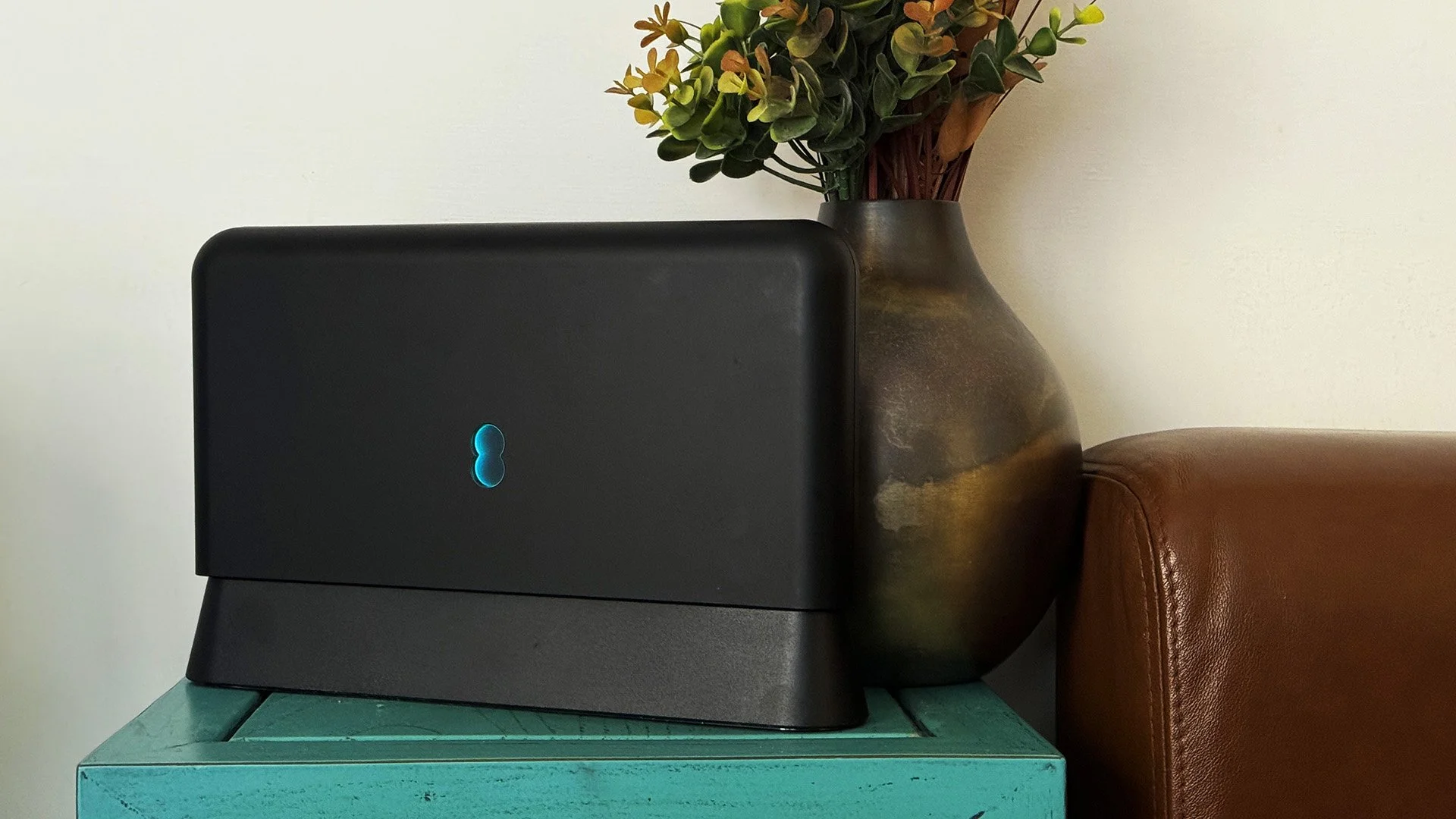
Like many people, I use the router supplied by my ISP. Such devices can be a lottery and I have had some in the past that have been poor. By which I mean they did not support the latest protocols and features, had limited functionality and unreasonably restricted user access. However, I do not think that is a fair description of my current router supplied by EE. The Smart Hub Plus (Wi-Fi 6) is their standard router for FTTP plans. It offers dual-band Wi-Fi (2.4 GHz & 5 GHz) across a reasonable range (up to up to 30 meters or 98 feet). It copes well with our brick built bungalow and I get a speed of 70 Mbps in the lounge where the media player, satellite receiver and TV are based. I can access and manage the router from my phone and it allows for a degree of customisation of DNS, VPN and Wi-Fi services. However, recent problems have mitigated these benefits.
In light of the recent problems, I reported the fault to EE and an engineer came to site and tested the fibre connection. He indicated to me that the fault lay with the router and a replacement was duly ordered. I have learned subsequently that there was also a fault at the junction box on the pole in the street but this was not made known to me at the time. While waiting for the replacement router, I did consider buying a third party router and using that instead of the one supplied by the ISP. There are numerous models that are compatible with UK fibre specifications which offer improved performance, better Wi-Fi coverage, and greater control over your network. A third-party router can provide advanced features, faster Wi-Fi speeds (like Wi-Fi 6 or 7), enhanced security options and far more user customization. It can also help you avoid monthly rental fees if that is part of your contract.
However, pursuing this option would present some additional problems. Although EE does not prohibit the use of third party routers, the moment you install one you will no longer receive technical support within the confines of your premises. They will guarantee the internet connection to the point of entry but no further. The purchase cost, security and ongoing maintenance of a private router all fall to you. Going forward, there may well be compatibility issues if your ISP makes any changes to their network or security protocols. Although there is a lot of information in the public domain regarding setting such a router up, none of it is officially sanctioned. I watched a YouTube video recently in which someone replaced their EE router with one made by TP-Link. It required firmware updates and a great deal of troubleshooting to work and when it did it offered no tangible benefit.
So I have decided to stick with the router supplied by EE. A new unit arrived today and it is a later model. I installed it and then set about reconnecting all devices. This proved problematic as the router crashed twice while I was logged in as administrator. Expecting the worst, I called EE who reset my internet connection, while I rebooted the router and Openreach modem (ONT). This resolved the problem and I was able to connect all remaining devices. The internet connection and router have remained stable since then. This issue has been a timely reminder that internet technology can develop faults like any other household device. Furthermore, although domestic technology designed for customer use is often restricted in functionality, it comes with contractually mandated support. Sometimes it is preferable that someone else does the heavy lifting with regard to trouble shooting.
Phone Internet Tethering
Usually I don’t have a problem with internet access when Mrs P and I are travelling. My phone data plan is sufficient for Google Maps and social media usage. Once we reach our hotel, it’s just a question of connecting to the free Wi-Fi or if need be, buying upgraded access. It’s seldom that expensive. When I went on holiday to Croatia this summer, I bought a bespoke data plan before arriving that granted me extra internet access. Our hotel in Makarska also had very robust internet access. Hence, regardless of being out and about or by the pool, I never had any issues getting online. The ubiquity of internet access means we often take it for granted. I seldom go to places in the UK or abroad that don’t have advanced IT infrastructure. Until this week.
Usually I don’t have a problem with internet access when Mrs P and I are travelling. My phone data plan is sufficient for Google Maps and social media usage. Once we reach our hotel, it’s just a question of connecting to the free Wi-Fi or if need be, buying upgraded access. It’s seldom that expensive. When I went on holiday to Croatia this summer, I bought a bespoke data plan before arriving that granted me extra internet access. Our hotel in Makarska also had very robust internet access. Hence, regardless of being out and about or by the pool, I never had any issues getting online. The ubiquity of internet access means we often take it for granted. I seldom go to places in the UK or abroad that don’t have advanced IT infrastructure. Until this week.
I am currently in St. Leonards-on-Sea in East Sussex on a 5 day break. We’re staying at Combe Haven Holiday Park for “reasons”. The caravan/static home/park home or whatever you want to call it is very well equipped with “all mod cons”. However, there is no internet access in the caravan itself. If you go to either the pub or the restaurant, there is complimentary wireless internet available. Sadly, such environments are not practical for me to sit down for an hour or so and write as they’re busy and somewhat loud. Thankfully, the 4G signal on my phone in this part of the UK is reasonably strong, so I decided to see if I could use this device for internet tethering. I have a Google Pixel 8a.
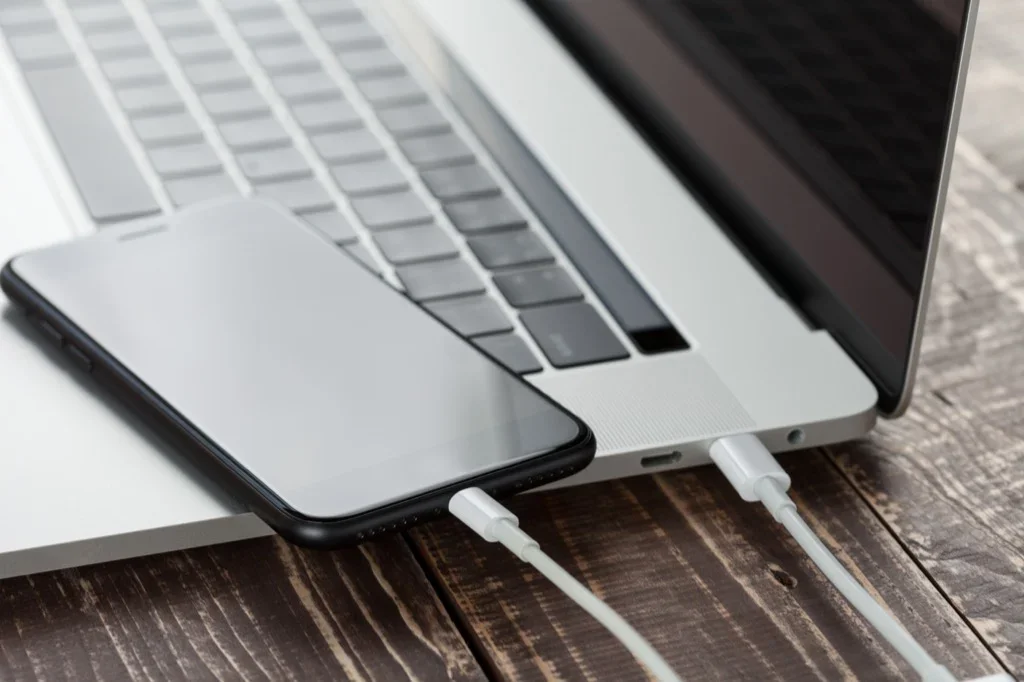
On my handset, there are specific settings for tethering that are easily accessible. There is a choice of turning the phone into an internet hotspot and connecting devices such as a laptop wirelessly. Alternatively you can attach the phone to a device via a USB cable and tether that way. I found that the wireless hotspot method was a little too unstable and the connection would intermittently drop. However, directly connecting to the phone via a USB cable has proven a far more reliable method. The internet connection is far from fast, about 3.49 Mbps, but it is sufficient for me to access my website and publish this post. Streaming media and gaming are off the table but as I’m technically on holiday, such activities weren’t part of my schedule anyway.
Although I have no immediate need at present, I have already started researching Portable Wi-Fi Routers/Mobile Hotspots. Rechargeable travel routers that can accommodate a SIM card, access the internet and act as a local hotspot for up to 10 devices. They’re ideal when travelling to locations where the only internet access available is 4G/5G via the phone network. If combined with a data only SIM package they can prove invaluable, according to consumer feedback. I read a comparison of common models on TechRadar and the reviews indicated that they can provide stable coverage within modest parameters but to to expect miracles. However, compared to Starlink they’re a far more affordable option. One I may take up in the future.














Ad Blockers
I am not going to discuss the history of internet advertising, or the moral or ethical concerns that go hand in hand with it. There is a basic argument that people who make content want to get paid and I suspect that most people appreciate this, at least in principle. However, there is a counter argument regarding the way advertising is managed. For example, how many adverts is acceptable during the course of say a live stream of a YouTube video. Also there is a discussion to be had about what kind of adverts are shown and whether they need to be integrated into the content in a more equitable manner. However, that is not what this post is about. I am going to start from the logical and honest position that many of us use ad blockers. We do so because we find advertising crass and invasive. I guess there is a degree of cognitive dissonance regarding their use, versus the ethics of the matter but humans are like that. We are contradictory by nature.
I am not going to discuss the history of internet advertising, or the moral or ethical concerns that go hand in hand with it. There is a basic argument that people who make content want to get paid and I suspect that most people appreciate this, at least in principle. However, there is a counter argument regarding the way advertising is managed. For example, how many adverts is acceptable during the course of say a live stream of a YouTube video. Also there is a discussion to be had about what kind of adverts are shown and whether they need to be integrated into the content in a more equitable manner. However, that is not what this post is about. I am going to start from the logical and honest position that many of us use ad blockers. We do so because we find advertising crass and invasive. I guess there is a degree of cognitive dissonance regarding their use, versus the ethics of the matter but humans are like that. We are contradictory by nature.
I have four different web browsers installed on my PC. I mainly use Chrome and Firefox for everyday use and they both have ad blockers installed. Specifically AdBlocker Ultimate. I use this particular extension because I found that others had an adverse effect upon Google Drives functionality, which I use a lot. I whitelist a few websites that I know need the revenue but overall, I am not concerned about the impact that ad blockers have on corporate giants. In fact I would say to anyone smitten with a fit of conscience regarding them, try using a popular website without some sort of means to stop the advertising, pop ups and auto playing videos and other intrusive content. You’ll soon change your mind. As far as I’m concerned the worst offender is YouTube. Not because of the variety of interruptions they throw at you but because of the sheer quantity of adverts they shoe horn into a video. It is frankly egregious and makes the viewing experience shit.
As of Friday 27th September YouTube obviously rolled out an upgrade to their infrastructure. One that negated a lot of existing ad blockers. I, like many others, immediately looked around for a temporary alternative until the developers of AdBlocker Ultimate can put out a patch to circumnavigate YouTube’s shenanigans. I have managed to find an extension called Adblock but it doesn’t appear to actually block advertising, so much as hide it. You still have to endure 10 to 15 seconds or so of a black screen before the video that you actually want to watch begins to play. Fortunately I have SmartTube installed on the media player in our lounge. This is an advanced player for Android TVs and TV boxes which is free and open source. You can play content from different public sources including YouTube, sans adverts, naturally. It would appear that the latest changes made by YouTube have not affected this app at present.
Ultimately, there are long term issues that need to be resolved with regard to the financing of platforms such as Twitch TV and YouTube, as well as more traditional websites. A lot of smaller content creators prefer donation and optional subscription services such as Patreon. However, the public cannot be expected to pay for everything. Hence the point of advertising in the first place. It is a question of implementing a policy that is measured as opposed to just greedy. Sadly, advertising is at most just tolerated. Many people, including myself, find advertising pervasive, trite and frankly insulting. Often the way it is clumsily integrated into content ruins it. Despite paying for both Netflix and Amazon Prime, both companies have seen fit to add advertising to their basic tariffs. Subsequently, I won’t watch content on these platforms any longer and will instead watch “copies” sourced elsewhere. In the meantime, this tit-for-tat battle between big business and ad blockers, drags on. A tiresome diversion from the real problem.
BT Full Fibre
There is still a major “digital divide” in the UK despite the issue being on the political agenda for the last decade or so. Rural areas still suffer from slow internet speeds and a lack of choice with regards to ISPs. It is the wealthy urban communities that tend to have the best internet infrastructure and thus the best services. There are many third party companies that have been proactively installing fibre and competing against former monopoly holder British Telecommunications in recent years. The borough where I live has already seen Virgin Media roll out its cable services and offer customers 1Gbps internet connections. Hence BT has expedited the implementation of its Full Fibre service over the last twelve months, in a proactive attempt to compete and win back its share of the market. They are currently offering a range of services at very favourable prices. Something I decided to avail myself of.
There is still a major “digital divide” in the UK despite the issue being on the political agenda for the last decade or so. Rural areas still suffer from slow internet speeds and a lack of choice with regards to ISPs. It is the wealthy urban communities that tend to have the best internet infrastructure and thus the best services. There are many third party companies that have been proactively installing fibre and competing against former monopoly holder British Telecommunications in recent years. The borough where I live has already seen Virgin Media roll out its cable services and offer customers 1Gbps internet connections. Hence BT has expedited the implementation of its Full Fibre service over the last twelve months, in a proactive attempt to compete and win back its share of the market. They are currently offering a range of services at very favourable prices. Something I decided to avail myself of.
As an existing BT customer, I have recently been paying for a Fibre to the Cabinet broadband service of 50Mbps. Our household’s existing package also includes BT TV; a terrestrial and IP TV package via a bespoke DVR, along with a SIM only mobile call plan and an old school analogue landline. This is hardly a bad service compared to other parts of the UK. However, having access to Fibre to the Premises and potential speeds of 900Mbps is a major selling point so I did some investigating to see what sort of upgrade I could get for a nominal price increase. I was pleasantly surprised by the results. We were offered a deal where we could keep all the extras such as the TV and SIM package exactly as it is and move on to Full Fibre 100 which is the base level FTTP service. It provides speeds of 150Mbps and for the first six month the price is discounted, meaning a saving of £10 a month. When the discount expires, the full price is still reasonable, so we accepted the offer.
Yesterday, a BT engineer came to our house and installed the new BT Full Fibre service. A new cable was connected to the property from the telephone pole outside. A small junction box was discretely installed on the side of the house and the cabling tidily hidden from view. A small hole was drilled through the outside wall into the corner of the spare room which I use as an office. The world’s smallest modem was then attached above the skirting board, next to my desk. The whole enterprise took less than an hour. I’ve kept my existing router which now connects to the new modem instead of the traditional BT master phone socket. Internet speeds were immediately at the rate specified. The disruption to internet access was minimal. Another change worth mentioning is that our previous telephone handset for the landline has been superseded by a new one which works via voice over IP.
The internet is an integral part of my day to day life. Hence, upgrading my home internet connection to FTTP is no different in my opinion to building an extension to my house or buying a bigger car to accommodate a growing family. I am simply increasing capacity to support increased usage. Nobody ever says “ I need less internet bandwidth”. The cost of this enterprise has been acceptable and within our household budget. We’ve signed another two year contract with BT but as our business relationship with them is equitable, this does not present any problems. Now that FTTP has been installed, the bandwidth can be increased at a future date if it is required. Once again, I consider myself very fortunate to live in an area where such infrastructure is in place and accessible. Should we move house in the future, I suspect that internet access will be a key factor in our search and overall choice.
Internet Service Providers and Choice
I would like to make my point by recounting a tale that hopefully demonstrates it. Are you sitting comfortably? Then let us begin. I am trying to find a new Internet Service Provider for my Mother’s home. The existing one, British Telecom, cannot meet the parameters of the service contract that’s in place. Simply put, the existing fibre to the cabinet (FTTC) connection is unstable and drops 40+ times a day. We’ve had 6 engineer visits in the last 3 months and the problem hasn’t been resolved. It probably won’t because the issue is specifically at the cabinet and I cannot see BT making major changes to such a major piece of infrastructure for the benefits of just one customer. The problem with trying to find another ISP is that they mostly provide FTTC connections, so any new internet connection will still include the “troublesome” cabinet that then links to my Mother’s house. Hence I will more than likely just be swapping one poor quality internet connection for another.
I would like to make my point by recounting a tale that hopefully demonstrates it. Are you sitting comfortably? Then let us begin. I am trying to find a new Internet Service Provider for my Mother’s home. The existing one, British Telecom, cannot meet the parameters of the service contract that’s in place. Simply put, the existing fibre to the cabinet (FTTC) connection is unstable and drops 40+ times a day. We’ve had 6 engineer visits in the last 3 months and the problem hasn’t been resolved. It probably won’t because the issue is specifically at the cabinet and I cannot see BT making major changes to such a major piece of infrastructure for the benefits of just one customer. The problem with trying to find another ISP is that they mostly provide FTTC connections, so any new internet connection will still include the “troublesome” cabinet that then links to my Mother’s house. Hence I will more than likely just be swapping one poor quality internet connection for another.
If I want to bypass this problem, I need a fibre to the premises (FTTP) connection. That means running an additional fibre optic line from the cabinet to my Mother’s home which is two streets away. No ISP in the area currently does this for home connections, due to the installation costs. They will for a new business connection and a long term contract but the price for this is prohibitive for home users. However, cable TV provider Virgin can provide a fibre connection but to do so means digging up the drive in front of the house to connect their network. This is a significant amount of work with a similar cost implication. Plus for ethical reasons I try to avoid doing business with Virgin. The only other alternative is a mobile internet solution using 5G. It has been rolled out in South East London but the coverage is “patchy”. Hence it would appear that no company can provide me with a stable 50Mbps internet connection at present.
Because I live in Greater London it can be argued that I have far more choice with regard to Internet Service Providers compared to other parts of the UK. In principle that is true. I have friends and family that live in more rural areas and they are often stuck with just one possible supplier and that is BT. Often this means that the only services available are low grade ADSL connections and nothing else. However, as my situation demonstrates, the so-called choice available in urban areas is often an illusion, amounting ultimately to nothing more than “same meat, different gravy”. Until fibre to the premises and other wireless solutions becomes commonplace, many ISPs will remain reliant upon legacy BT infrastructure and therefore at risk of being hamstrung by issues arising from it.
What makes this matter far more galling is the fact that the UK allegedly has one of the largest and competitive markets for domestic home internet services in the world. A Google search shows that hundreds of ISPs exist in this sector offering a growing number of alternative network platforms as well. However, although I do not doubt this, many of these companies seem to be concentrated in specific parts of the UK due to population density and existing infrastructure and therefore aren’t accessible to customers elsewhere. It’s the same situation we’ve endured for years with regard to rail, bus and postal services. Businesses naturally favour areas which have the most lucrative potential return on investment. Hence for me and many other UK customers seeking stable, functional internet access at acceptable speeds, choice is still a loaded term and isn’t necessarily available despite advertisements to the contrary.
Your Internet Connection
Because I live in a suburb of Greater London there are a variety of Internet Service Providers to choose from. There are multiple vendors offering fibre, cable, wireless and now even 5G solutions. I realise that not everyone is fortunate enough to have such a choice and that there is a great deal of “internet inequality” both in the UK and other countries. Big cities and centres of commerce always tend to have better investment in internet infrastructure. Hence those that live in rural areas will often have slower internet connections or little or no choice with regard to which company provides the service. Considering how essential internet access is these days, this is hardly a satisfactory or equitable state of affairs. Hence the universal provision of robust internet connections has become a regular manifesto pledge of all major UK political parties. However, in the meantime many people are still saddled with poor internet download speeds and unreliable services.
Because I live in a suburb of Greater London there are a variety of Internet Service Providers to choose from. There are multiple vendors offering fibre, cable, wireless and now even 5G solutions. I realise that not everyone is fortunate enough to have such a choice and that there is a great deal of “internet inequality” both in the UK and other countries. Big cities and centres of commerce always tend to have better investment in internet infrastructure. Hence those that live in rural areas will often have slower internet connections or little or no choice with regard to which company provides the service. Considering how essential internet access is these days, this is hardly a satisfactory or equitable state of affairs. Hence the universal provision of robust internet connections has become a regular manifesto pledge of all major UK political parties. However, in the meantime many people are still saddled with poor internet download speeds and unreliable services.
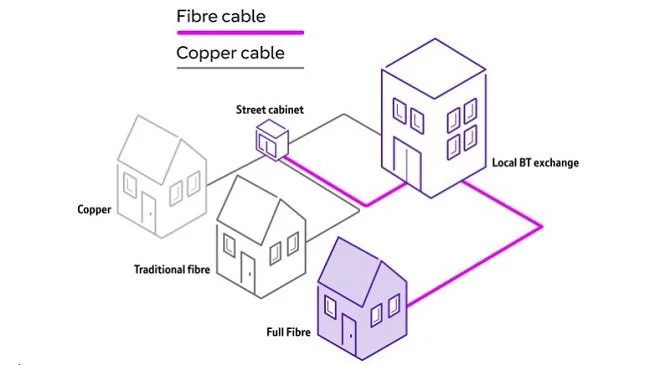
About six years ago, British Telecommunications (BT) started rolling out “Fibre to the Cabinet” (FTTC) internet connections in our area. This provides a fibre optic connection from the local telephone exchange to the local street cabinets (Outdoor Enclosures). The connection then continues to the customer address using the existing copper landline wiring. As with any vendor there were several domestic consumer tariffs available offering a range of download speeds and data packages. Our household chose a 75Mbps package with unlimited data download (subject to the usual small print). BT supplied a router (BT Home Hub 5) and a pair of Powerline Adaptors. We also signed up for the BT TV service which offers all free terrestrial digital TV channels with optional IPTV services. It runs via a bespoke DVR. At the time of purchase, these were all good quality services with a competitive price.
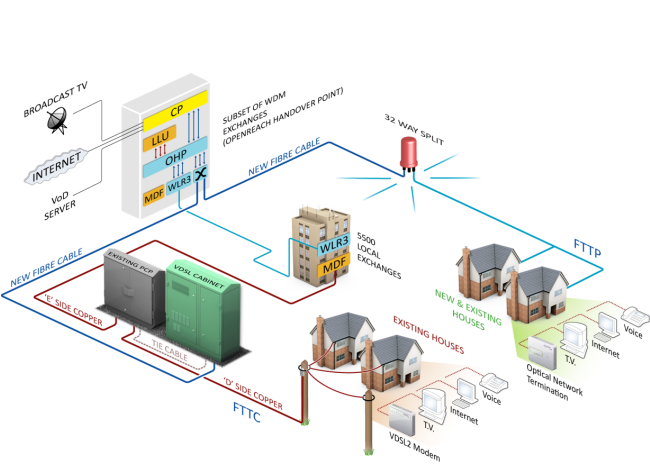
Four years on and things have changed. BT has renamed and altered their internet tariffs numerous times. There always seems to be a great offer available to new customers and yet existing account holders seldom get thrown a bone. BT TV suffers from the same problem that most other platforms that resell services do. Specifically, that channels come and go due to licencing arrangements and profitability issues. There are also a problems with channel picture quality. But for me the biggest issue is the internet connection itself. Our original tariff offered speeds up to 75Mbps, which in reality meant nearer 70Mbps. Due to substantial increases in demand our connection has now been downgraded to speeds up to 50Mbps. However at present the latest speed test I made using BT’s own diagnostic tools showed that we’re currently only getting around 43Mbps. Furthermore, the connection often goes offline around 1:00 AM; a time when I am frequently still working at my PC. Using BT’s fault diagnostic service I’ve determined that there are outstanding technical issues.
I have logged a fault with BT and they are giving it a degree of priority due to Mrs P health issues and my role as a carer for my parents. However, I do find the wider circumstances of this situation unsatisfactory. Many ISPs invest a great deal of time and money trying to attract new customers but focus far less resources on retaining them and ensuring that ongoing services are maintained in a suitable fashion. BT have lowered the criteria of some services simply because increased capacity has reduced the connection speeds. Sadly, these business issues are beyond my immediate control. I do have the option of moving to another vendor but that is not something I would do lightly. A change of ISP, done on a whim, may well lead to an excess of downtime. But there are other options that can improve the immediate situation. Obviously the engineer visit can address the line issues and I have requested the new BT Smart Hub 2 Router, along with their new Wifi Disc (extender). I’m curious to see what improvement this kit yields.
Routers supplied by the ISP often seem to be no more than adequate. A Google search provided multiple forums and subreddits about replacing BT kit with 3rd party routers and greatly improving not only wifi but the actual base internet connection speed. Some claimed it could see gains of an extra 10Mbps. Living in a solid, brick built bungalow from the 1930s certainly has an impact on wifi. I also suspect that this is the underlying reason behind a recurring problem I have with my Amazon Echo intermittently being unable to connect to Amazon Music or play internet radio channels. But replacing a router is a significant financial investment and technical undertaking. It also sticks in your throat when you consider that you already pay your ISP for this service. I think that as consumers we need to recalibrate our attitude towards internet access. Due to its inherent importance ISPs should not just forget customers once they sign a contract. Services should be continually reviewed and improved. BT has currently enjoyed over three decades of business from our household. Such patronage shouldn’t be taken for granted.
The Importance of Internet Access
There are many factors that contribute to deciding where you live. Price and location are primary considerations. If you have a family then schools are a major factor. Then there are other issues such as council tax, local facilities and transportation. If you use any of the major property listing websites, then you’ll find data on all of these points. However in recent years an additional factor has been added to this list of requirements. Internet access now plays a role in deciding whether a property is right or not. Having a fast and stable connection not only improves our leisure time but also play a part in many peoples work life. Self-employment and working from home are becoming more common, as is a culture of working outside of traditional hours. For many, internet access is now as essential as any other utility service.
There are many factors that contribute to deciding where you live. Price and location are primary considerations. If you have a family then schools are a major factor. Then there are other issues such as council tax, local facilities and transportation. If you use any of the major property listing websites, then you’ll find data on all of these points. However in recent years an additional factor has been added to this list of requirements. Internet access now plays a role in deciding whether a property is right or not. Having a fast and stable connection not only improves our leisure time but also play a part in many peoples work life. Self-employment and working from home are becoming more common, as is a culture of working outside of traditional hours. For many, internet access is now as essential as any other utility service.
Sadly, the UK still remains a country where the digital divide is clearly apparent. High speed, fibre based internet access is still only economically viable to rollout in major business and urban areas. Thus it is still only available in the major cities. 4G coverage is also patchy in rural areas, so offers no real alternative service. You may find a few wireless options here and there throughout the country along with other innovative providers. However the digital aspirations of successive UK governments have failed continuously over the last fifteen years. Trite buzzwords such as “superfast broadband” are still bandied about by politicians with no real technical background. You only have to look at the finer points of the current Digital Economies Bill, as it passes through The House of Lords, to see that it woefully misses the mark with regard to serving the needs of consumers and business alike.
I live in South East London, in a proverbial “leafy suburb”. Residents of the borough are in the core demographics for Netflix, Amazon Prime and other leisure services. Self-employment and home businesses are common too. Therefore, the major telecommunications companies see fit to provide suitable home and business internet services. For example, British Telecom (of whom I am a customer) offers fibre internet services from the local telephone exchange to cabinets in the streets. Connections to the home are then bridged by use of telephone landlines, providing speeds of 50 or 75MB. Virgin Cable is currently being rollout in my area offering 200MB connections in direct competition. Most packages have an unlimited download option. Yet the contrast with the rest of the UK is stark. Large parts of the country still have to make do with ADSL 2+ services providing connections of between 2 and 8MB. Often those living in such areas have no alternative vendors to go to.
Until last year when I became a carer, I relied upon the internet for the provision of my work. I would log into a secure site to collect my technical writing assignments and once completed, return to upload them. Prior to then, I would often store backups of client’s data on my own home servers. I’ve been working from home in some way or another since 2002 and have therefore always had a need for a robust and fast connection. Since my early retirement, I still find that the bulk of the administrative duties I do for my disabled parents need to be carried out online. In fact, given the choice I prefer to do most things that way. I can make quick purchases for my parents such as medical supplies, directly from my phone. I can do my accounts and file my tax return from my desktop PC. Pretty much all the day to day household administration that we all face, can be done via the internet at our own convenience.
Sadly, many in the UK can’t consider such a move to online services, finding themselves on the wrong side of an ever-widening digital divide. Which raises the question as to whether internet access should be seen as more than a luxury and effectively a necessity? Certainly, business has embraced the concept of free wi-fi as a means to keeping customers in certain retail industries happy. Should society and possibly government go beyond this and ensure that internet access is guaranteed in specific circumstances? For example, I frequently visit a major hospital in Kent with my Father. Because of the geography of the area, a mobile phone signal and thus internet access is unavailable within the hospital grounds. If you wish to speak to family or order a taxi, you have to walk for about five minutes or more to be able to do so. However, you can purchase internet access as a patient or a visitor for a fee. I have found myself on several occasions at this location in the early hours of the morning and have thus been forced to pay to get online, to return home. Considering that people at hospitals are frequently under pressure or in distress, should internet access be gated in such a way?
In the UK family incomes within certain demographics have fallen in recent years. In light of the forthcoming economic changes the country faces, it is likely they will continue to do so. Combined with a skills shortage and a decrease in social mobility, we are seeing a clear distinction between the haves and the have nots. The digital divide clearly reflects this. If you find yourself living in specific post codes, unless you find a means to leave, you may well find yourself excluded from adequate internet access. With further services and resources going online, there is potential to further marginalise specific groups of society. Internet access is too important to be driven by just market forces. Is it not time for this matter to be dealt with in a more socially responsible way? Because I suspect that if it is not, it may come back to haunt us in a decade’s time.
Yesterday we changed internet service providers. We moved from EE (formerly BT) to Plusnet. The transition went surprisingly well, mainly due to the existing infrastructure remaining the same. We’ve had fibre to the premises (FTTP) since 2022 so this was essentially an administrative change. The previous ISP terminated their service at 1:30 AM in the morning, while I was playing Star Trek Online. By 6:30 AM I received a message from Plusnet that the new service was live. It took about an hour to configure the new Netgear Nighthawk RS100 router (I bought my own) and get all our household devices attached to the new network. The connection is running at exactly the same speed and stability as it had under the previous supplier. At present a 1Gbps connection is sufficient for our needs. The main factor that has driven this change is cost. We are currently paying £28 per month for internet access which is a competitive price in the UK.