

Diary of a Podcaster Part 20
The initial podcast boom, which began circa 2005, started as an audio only medium. One of the reasons podcasting became so popular, especially among the fan community, was that you could get away with relatively low production standards. Anyone who had access to a basic microphone and a PC, could produce a show and upload it to iTunes, which was the primary platform at the time. Listeners were forgiving back then. Twenty years later and podcasting has been on a tempestuous journey. It started with the medium being accessible and democratised, sustaining a rich and diverse fan community via non-professional productions. However, slowly and inevitably it has been assimilated by corporate interests. Fan podcasts have given way to podcast production companies. The small, micro-budget, indie show has effectively been thrown out of their own party. Such shows still exist but they struggle to be heard.
The initial podcast boom, which began circa 2005, started as an audio only medium. One of the reasons podcasting became so popular, especially among the fan community, was that you could get away with relatively low production standards. Anyone who had access to a basic microphone and a PC, could produce a show and upload it to iTunes, which was the primary platform at the time. Listeners were forgiving back then. Twenty years later and podcasting has been on a tempestuous journey. It started with the medium being accessible and democratised, sustaining a rich and diverse fan community via non-professional productions. However, slowly and inevitably it has been assimilated by corporate interests. Fan podcasts have given way to podcast production companies. The small, micro-budget, indie show has effectively been thrown out of their own party. Such shows still exist but they struggle to be heard.
When I look around the podcast landscape today, I see little of the fan scene surviving. Too many podcasts nowadays are primarily recorded via Zoom or some other video based platform. This provides the audio for traditional podcasts and a video version that can posted on YouTube. The main advantage of such visual format is that it can produce short 30 second clips for Instagram and TikTok in hope of going viral. For those with higher budgets, there are a wealth of podcast production studios who will effectively make your show for you. All you have to do is turn up, pay and talk. Although this approach makes sound business sense, it clearly shows a prevailing mentality where most podcasts are conceived and undertaken as a business endeavour first and foremost. Fandom is a not such a common driving factor.
It’s all a far cry from a handful of fans talking about their football club or the video game they play. That’s where I started back in 2009, recording via Skype and editing with Audacity on a home PC. We talked about the MMORPG genre of video games. There were at least a dozen comparable shows at the time. We all knew each other and would often reference each others shows or even appear on them. Sadly, they've all gone now. People either stopped by choice or just slowly ran out of steam and “pod faded”. Now if you look for such content, you’ll find professionally produced shows about the wider gaming scene, made by the big video games websites that cover such content. These podcasts are slick but lack, in my opinion, character and soul. There are also lots of podcast production studios available now and the idea of editing and assembling your show yourself is far less popular.
Like non-professional blogging, the amateur podcast is a niche product nowadays and may certainly struggle to gain any traction. People often talk about blogging for yourself and not worrying about such things as an audience. Such arguments are credible and at the end of the day, although writing requires effort, it is not as labour intense as recording and editing a podcast. Which is one of the reasons why that very argument cannot be applied to podcasting. You don’t record an audio show for yourself. By nature they are designed to be shared. An unread blog post can be easily shrugged off. An hour long podcast that has been lovingly produced and then subsequently ignored is harder to dismiss. YouTube offers different opportunities to podcasting. Some would argue easier ones. Reacting to other people’s content springs to mind. Podcasting being an audio format focuses upon what is being discussed and those talking.
Upon reflection, something that was once a quasi hobbyist scene, has now evolved into a process driven, one size fits all undertaking which is often professionally adjacent. The market is saturated and it is therefore a lot harder for listeners to find new amateur podcast creators who are looking to build an audience. Shows produced by major production companies have adverting budgets and will also cross promote other shows made by the same company. Therefore the small fan podcast can be drowned out or simply overlooked as the big players take up all the oxygen in the room. However, that being said, I still think there is a lot to be be gained from experimenting in this field and giving podcasting a go. It is always good to learn new skills and do things for the pleasure of doing them. Also never under estimate word of mouth as a positive means of promotion. There is also a random element to things going viral. Just adjust your expectations if you give it a go.
I regularly receive random emails addressed to such august bodies as “the Contains Moderate Peril team”. They always raise a wry smile. Like there’s a team. That implies an organisation, structure and even a budget. As opposed to just me, screaming into the void and pouring money into a financial black hole. I don’t resent such emails. People are just trying to earn a crust, I guess. The only thing about them that frustrates me, is they never address me by name. A cursory glance at the “about” page of the website would provide them with my personal details. So I just delete them and think no more about them. Today I received one that did more than make me smile. In fact I laughed out loud and heartily. The email started with “Dear Burton”. Someone had found a few old episodes of the Burton and Scrooge podcast and had assumed this was indeed my real identity.
I recently decided I’d had enough of the endless deliberation and procrastination and so I started producing a weekly podcast again. As of today the second episode of Season 10 of the Contains Moderate Peril podcast is available on all major platforms. I must admit, although I was confident that a few people would listen to the show, I was completely taken aback by the overall reaction. The Contains Moderate Peril podcast was warmly welcomed back by previous listeners on social media and the statistics for the first show have been most positive. For myself and Brian, recording the show is like putting on a comfortable pair of shoes. Last night’s recording went okay and I think after a few more episodes, the recording and editing process will be an efficient process. Keeping each episode to an hour or under means that the conversation stays on point.
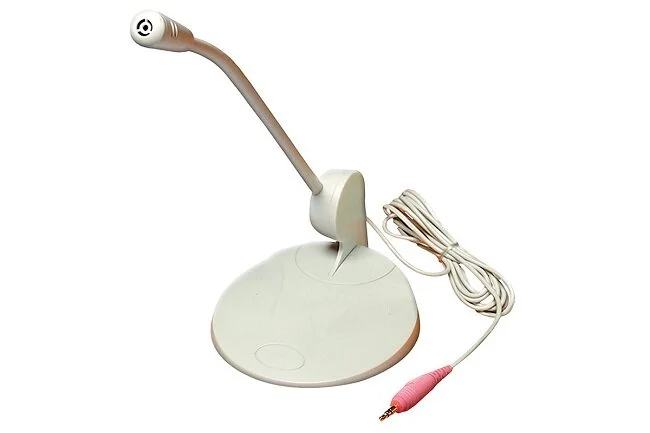
My personal podcast journey started back in 2010 when I effectively invited myself onto the Mordor or Bust podcast. The three of us who were involved in the production of that show were learning as we went along. I recently listened to an old episode and despite our enthusiasm, it is quite rough around the edges from a technical perspective. I think that the biggest mistake that I made at the time was not investing in a better quality microphone. I sound like I’m at the bottom of a well. It’s hardly surprising as I was using a very cheap analog desk microphone which I think only cost a few pounds from PC World. Roll on eleven years and I’ve been invited to be a guest on the Beyond Bossfights podcast. It’s nice to be back in the saddle again, so to speak. Up until now, I’ve been using my Razer gaming headset for any previous podcast recordings but I’ve decided to take the opportunity to overhaul my technical setup.

Life is often about the things we’d like to do or wished we had done, rather than the things we’ve actually achieved. My last post in this blog series was back in 2nd October 2018 and the last podcast that I published was in January 2019. Since then most attempts to produce more content of this kind have come to nought, as spare time for both recording and editing have been in short supply. However, I did manage to record some material on the 22nd of December with my long-time co-host Brian. The idea was to release the finished podcast as a surprise show at the end of the year. However, due to real world commitments, that deadline has not been met. Now there’s a surprise. I do intend to finish editing the show and may add some extra material to make it a little more topical. But overall, I am not too upset by this delay, because in the process of organising this podcast, I discovered a quick and convenient means of recording via Discord. Something that has been seen as Holy Grail of podcasting over the years.
I’ve been pondering a new podcast project for a while, since Contains Moderate Peril ended a year ago. As I’ve discussed in previous posts, I want to create a movie-based show and have been considering of late exactly what sort of format to adopt. I don’t go to the cinema often enough these days to produce a contemporary review orientated podcast, plus I don’t find a lot of mainstream releases to be sufficiently engaging. Despite looking and pursuing discrete enquiries, I haven’t been able to find a co-host who is sufficiently knowledgeable, motivated or available to do a regular show producing the audio equivalent of long form criticism of films and the movie industry. So, it’s been a bit of a chore to try and work out which niche to explore. However, I have now a clear idea of what I want to do.

Today I did a little blog housekeeping. I’ve reposted the last five episodes of the Contains Moderate Peril on the podcast page, now that previous hosting account has been closed and the RSS feed is defunct. The files are held locally and can either be played via the embedded player or downloaded manually. There are also two episodes of the Burton & Scrooge Podcast still available on SoundCloud for posterity. The podcast page and selection of episodes available are for reference and as an example of my podcasting back catalogue, so to speak. I may not be actively creating content of this kind at present, but I see no reason not to promote my experience in the field. If circumstances change in the future, there may be resumption of service.
I made a hard decision today. I cancelled my Podbean subscription and have effectively closed the Contains Moderate Peril podcast. Despite relaunching the show last September, I simply haven’t had the time to collate content for discussion or organise recording sessions with co-hosts. Hence, we are now two months into 2018 and a new show has not yet been produced. Furthermore, the listener numbers for the episode posted between September and December last year were disappointing. Upon mature reflection, I have reached the conclusion that the podcast peaked in 2014 when we had a strong and established audience. Rather than chase my own tail trying to recapture something that may well have been a product of circumstance, it seems prudent to finally draw a line under this show. I’m a little sad about this situation, as it does feel like the end of a personal era, but it is time to move on.
Ever had what you thought was a great idea for a podcast that looked good on paper but turned into something quite different, once you started recording? Well I had that experience on Sunday evening and today I am dealing with the results. It all started with an innocuous Twitter conversation (don’t many things I hear you say) which highlighted a minor cultural difference between the US and the UK. Having recorded with an American co-host for many years this is a common occurrence, so I decided to make it the theme of the next Contains Moderate Peril podcast. I initially thought of several fun examples that could be discussed; the British obsession with the weather, cheese-rolling and Morris dancing. However, rather than take a scattergun approach, I decided to list specific categories in the show notes. Subjects such as school, work, food, social customs and public holidays were added for discussion and I believe that is where thing started to go wrong.
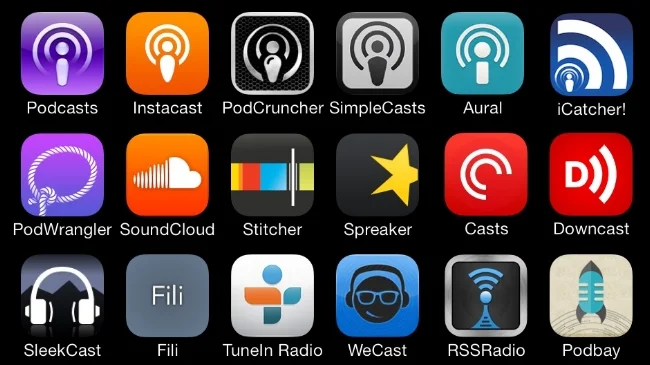
Podcasts are becoming an invaluable medium for the analysis and discussion of niche interests and bespoke subjects. Many of the shows that I regularly listen to bring professional quality documentary skills to bear on unique and varied areas of fandom. More and more podcasts are being made by informed and intelligent fans, offering in-depth material rather than just light weight banter. Simply put, I am spoilt for choice. Therefore, it is essential to have a suitable podcast management app to stay on top of such quality entertainment. Something that allows me to curate and organise those shows that I currently enjoy, as well as providing recommendations for comparable material that I may wish to subscribe to. For several years I’ve been using Podcast Addict on my Android devices, although I’ve struggled to find something comparable for my PC.

Last night, myself, Hannah and Chris (AKA Jaedia and Wolfyseyes) had an especially productive recording session. We managed to produce two hours of material in total and I’m confident that it can be whittled down into a coherent and enjoyable ninety-minute episode. What I especially enjoyed about this podcast recording was buoyant atmosphere and the flow of the conversation. I felt that we explored the various topics well and that the discussion felt natural. Ultimately, it will be the listeners who’ll determine whether this is the case or not but from my perspective the recording went well because the guests were a good choice. If you are pursuing a podcast format that has multiple hosts or regularly features guests, then it is important for there to be a rapport between all involved.
As I surmised, in its current state Squarespace has proven an inadequate host for my current podcast. After exchanging several emails with Apple support, I was informed that “the server for your episodes does not support HTTP HEAD requests. To enable streaming playback of episodes, ensure the hosting server allows HTTP HEAD requests and has byte-range requests enabled”. To cut a long story short, there is no scope for me to alter any of these things at present within the Squarespace dashboard. Nor did I want the work involved in using a third-party feed managing service such as FeedBurner. So, I decided to open up an account with a commercial hosting service. After some research, I determined that PodBean could cater for all my needs and at a competitive price. Submitting the new RSS feed was easy and Apple approved the podcast within 36 hours. As of today, the Contains Moderate Peril podcast is back on iTunes.
Whenever I encounter a word or term that I’m not familiar with, I will usually Google it. That’s the way I’m wired. I prefer to “know” rather than “not know”. However, it is not the concept of continuous self-improvement that I wish to discuss in this post but something else. Namely sociolinguistics. Earlier today I saw someone mention vocal fry on Twitter. I had no idea what that was so I checked on Wikipedia, watched some You Tube videos and finally read some newspaper articles. An hour later I was aware of not only vocal fry, but run-ons, uptalk, glottal Ts and the fact that the way we speak has a major impact upon our lives, just like education and class. According to sociolinguistics, the manner in which you speak has a major impact on the way you are perceived by others. Sadly, like so many other social markers, it can be used in a discriminatory fashion.

Back in April I decided to relaunch the Contains Moderate Peril podcast for reasons of brand continuity. At the time, I was hoping to get back in to the podcasting saddle and return to producing weekly shows. However, the recording session was fraught with technical problems with Zencastr crashing regularly. I was left with nine separate audio tracks that weren’t in sync which made editing a major problem. There then followed a wealth or real-world issues that I had to address that meant for the next three months the podcast was put on hold. Finally, at the beginning of August I managed to complete the post production work on the show and publish it via Squarespace. I was hoping that using this existing website as a host for the show would save some money and reduce the work load. However, like most plans, it didn’t exactly work out that way
Professor Beej recently tweeted about consolidating all his various blogs and online activities into a single entity. I naturally agreed with him and encouraged him to do so because I did something similar back in 2010. I had a gaming blog and a site for movies reviews plus a podcast to manage. It ultimately made sense to put all these thing in one place, despite their respective differences because the common factor in all of them was me. To coin a rather nauseating phrase “you are your own brand”. This is how Contains Moderate Peril came to be. In recent years, I’ve embraced this concept further and will now write or podcast about any subject that really takes my fancy. I try to stick to the things that I like but from time to time, I do stray in to wider real world subjects.
Although we at the Burton & Scrooge podcast are not driven by numbers, it would be nice to see the audience grow. We seem at present to have plateaued somewhat and maintain a robust but fixed listenership. Currently our back catalogue of shows is available via SoundCloud, iTunes and Stitcher. However it would appear that other directories and aggregation services are available, so it would seem prudent to ensure that we are listed with them. My colleagues tell me that the Google Play Store and iHeartRadio are beneficial to register with. I believe that there may well also be comparable services aimed specifically at the console market. However, as our show is more geared towards PC gaming, I don’t see the need to pursue these.

Over the recent weeks, it’s become increasingly apparent that the two new podcast projects that I’m currently working on are taking too much time to produce. Like many people, my leisure time is a finite commodity. At present I am writing daily, maintaining a presence in two MMOs, as well as trying to keep abreast of several TV shows and a growing list of movies. So far, despite a lot of work, the new projects have not yielded any satisfactory results. So, rather than produce nothing, I deemed it prudent to return to my previous podcast creation. Thus, the Burton and Scrooge Podcast has been reinstated and been given a production makeover. At present, both Brian and I are well disposed towards gaming and other pop culture subjects, so have plenty to discuss. We always find are recordings are more rigorous when we are enthused, as opposed to mildly interested.
Last weekend, myself, Syl, Braxwolf and Brian recorded an episode of the TGEN Tribunal. Being regular podcasters who all know each other, the conversation flowed well and overall there were no major impediments to the discussion. We used Zencastr to record the podcast which has its own inbuilt voice over IP service, so there’s no need for third party programs such as Skype. Zencastr has the added benefit of recording each participant on a separate audio track, that is then automatically uploaded to a designated Drop Box account. This makes editing in Audacity very easy, as all four audio files are perfectly synchronised. Or at least that’s the theory. The reality can be somewhat different.
A week on from my last post on this subject, I have decided to script the entire of my solo podcast. It won’t be one hundred percent verbatim but I need to get the lion share of my thoughts down prior to recording. I discovered over several recording sessions that I continuously think of additional points to add as I’m speaking. The net result is having to constantly stop and start Audacity, the program I use for recording, as well as having to research extra points on the fly. Again, I was not happy with the finished product as you could frequently hear the hesitation or more to the point, the frustration in my voice. So, I’ve returned to the idea of having well fleshed out notes with some sections such as the introduction, written out in their entirety.
I recently wrote in a blog post that I would be producing a new podcast this year and that Burton & Scrooge Uncut would be taking a break for the immediate future. Well in fact I’ve decided to record two new shows. In the meantime, Brian has already embarked upon his solo project and seems to have found his niche already. I however am currently bogged down in the pre-production process and because the format of the new podcast is different from those I’ve done before, it is proving to be a little more challenging than I initially thought. Since I find writing to be a practical way of ordering my thoughts, I thought I’d keep a podcast diary. I can therefore work through some of the issues that arise as well as produce a blog post, now that I’m back to writing daily.
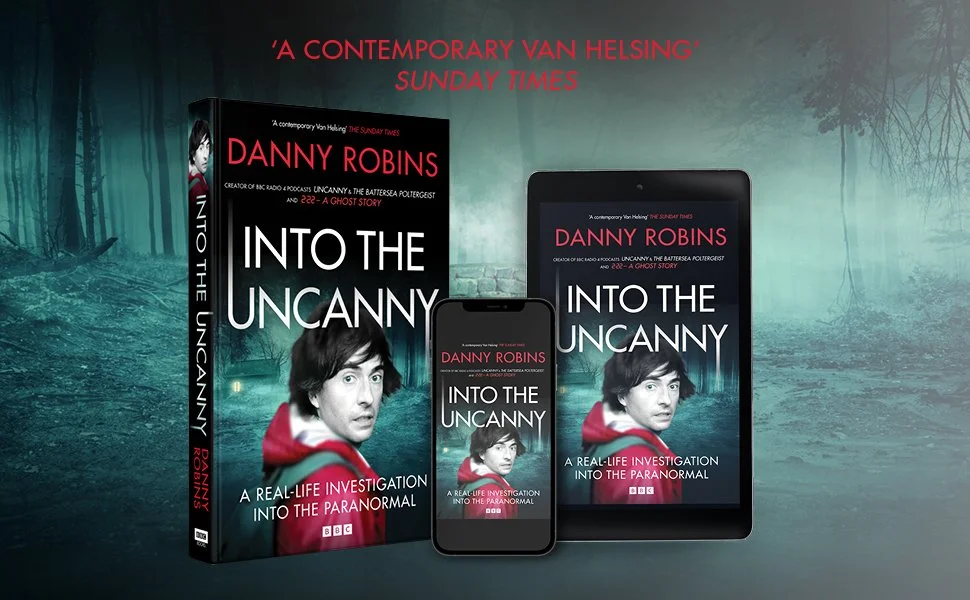
Into the Uncanny by Danny Robins (2023)
Last August I listened to The Battersea Poltergeist podcast by Danny Robins and was subsequently introduced to his other production Uncanny. Both are investigations into alleged supernatural events but unlike other shows of this kind, these are far better researched, produced and most importantly even handed. Danny makes a great deal of effort to try and keep a foot in each camp; team believer and team sceptic. Overall these podcast work as they genuinely appeal to multiple audiences and they are not excessively hyperbolic or credulous. A lot of this comes down to Danny’s personality which is upbeat and relatable. Perhaps his greatest strength is being a sympathetic ear to those recounting their experiences. He lightens the mood from time to time with humour when required. He also liberally litters the proceedings with pop culture references. However, he will probe and ask pointed questions but does so in a non-accusatory manner.
Last August I listened to The Battersea Poltergeist podcast by Danny Robins and was subsequently introduced to his other production Uncanny. Both are investigations into alleged supernatural events but unlike other shows of this kind, these are far better researched, produced and most importantly even handed. Danny makes a great deal of effort to try and keep a foot in each camp; team believer and team sceptic. Overall these podcast work as they genuinely appeal to multiple audiences and they are not excessively hyperbolic or credulous. A lot of this comes down to Danny’s personality which is upbeat and relatable. Perhaps his greatest strength is being a sympathetic ear to those recounting their experiences. He lightens the mood from time to time with humour when required. He also liberally litters the proceedings with pop culture references. However, he will probe and ask pointed questions but does so in a non-accusatory manner.
These podcasts have proven so popular, Uncanny made the transition to television. Therefore a book version does not come as a great surprise. What does though is the fact that the format of the podcast works so well in prose. Into the Uncanny takes three cases and explores them in detail, featuring all the eye witness testimony and historical facts you’d expect. Danny often cross references them with other cases as a means to explaining such phenomenon as “stone tape theory” and “poltergeist focus”. He also references his own life experiences and how they played a part in him now working in this field. The first case investigated is of such a magnitude, it is subsequently a plot thread throughout the entire book, culminating in visiting the actual site of the supernatural incidents in the final chapters. The style is designed to make the reader feel that they’re accompanying Danny Robins on his investigations and it works very well.
What stands out in Into the Uncanny is the way Danny approaches and interacts with those recounting their experiences. The majority of whom come across as regular people struggling to come to terms with what they have seen and felt. Many of which have never previously spoken to anyone about these matters out of genuine fear that they would suffer negative consequences. One such individual, a now retired Policeman, recounts how his career was blighted as a response to his very measured report of the incident he experienced. Hence Into the Uncanny does not perpetuate the stereotype that most people who have stories of the supernatural are members of the “lunatic fringe”. Most of the stories in the book are steeped in sadness and regret. There are families that have never spoken to each other for decades about a shared incident and more often than not, people have been greatly troubled by their world view being turned upside down.
Into the Uncanny is not afraid to explore multiple theories and ideas regarding the supernatural. In a bold move, one of the three main stories investigated in the book is in fact about an encounter with a UFO, rather than a ghost. Yet the parallels between these two incidents are strong. The psychological trauma being the underlying similarity. As for explanations, Into the Uncanny goes beyond the standard tropes of established supernatural lore. Magnetic fields, theoretical physics and psychological conditions are all posited and explored. Danny recounts a personal anecdote about a smoke detector that provides an object lesson in the perils of assumption and not verifying information yourself. This habit of providing both the pros and cons to being both sceptical and open to belief serve the book well. It gives the impression of a balanced investigation, rather than having a desired position and then retrofitting the data to validate it.
I listened to the audiobook version of Into the Uncanny and it is embellished with some ambient music and sound effects, making it a lot more like a podcast episode. However, I recently thumbed through a print copy of the book in a shop and the text version similarly maintains the same quality, albeit sans the sound effects. Overall, Into the Uncanny is a very engaging continuation of the Uncanny podcast and TV show format. Often explorations of the supernatural treat the subject as a sideshow attraction. The presenters are loud and confrontational. Into the Uncanny is a very British undertaking. It is calm, considered and when required, self-deprecating. Does it reach any definitive conclusions? No. Previously, when reviewing The Battersea Poltergeist, I considered this approach to be cakeism. However, here author Danny Robins muses upon this point himself and concludes that their can’t be a final answer in such a broad field. I concur but remain entertained.
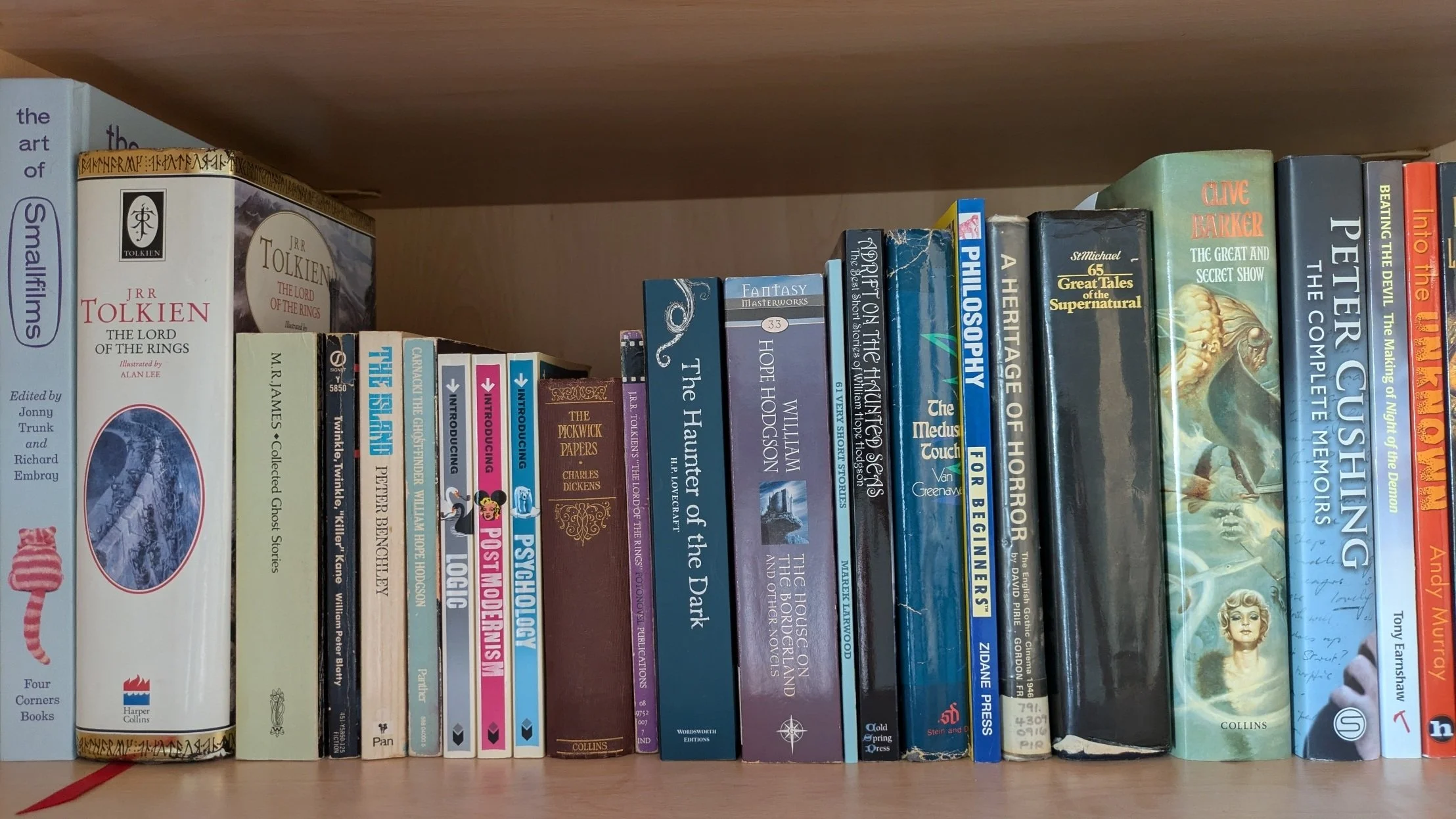
First off, credit where credit is due. I pilfered the idea for this post from Mark Rogers who writes the Newsonaut blog. Apparently it’s a questionnaire that has been doing the rounds across various indie blogs for a while. However, it happens to ask some interesting questions about one’s reading habits. I read a book every month or so and I supplement this by listening to a lot of audiobooks. Yes, I’m aware they’re not the same thing entirely but both offer a means to consume and digest a book. Hence I am not interested in this “popular” internet debate and won’t waste my time on it here. I advocate reading in all its variant forms. Be it sitting in an armchair and perusing a grimoire while smoking a Meerschaum, to reading an article online on your phone or PC. I’d rather that people read in some shape or form, than not at all. As Mark Twain wisely said, “The man who does not read has no advantage over the man who cannot read”. So without further ado, here are my answers to the “five Ws of Reading”.
Last August I listened to The Battersea Poltergeist podcast by Danny Robins and was subsequently introduced to his other production Uncanny. Both are investigations into alleged supernatural events but unlike other shows of this kind, these are far better researched, produced and most importantly even handed. Danny makes a great deal of effort to try and keep a foot in each camp; team believer and team sceptic. Overall these podcast work as they genuinely appeal to multiple audiences and they are not excessively hyperbolic or credulous. A lot of this comes down to Danny’s personality which is upbeat and relatable. Perhaps his greatest strength is being a sympathetic ear to those recounting their experiences. He lightens the mood from time to time with humour when required. He also liberally litters the proceedings with pop culture references. However, he will probe and ask pointed questions but does so in a non-accusatory manner.
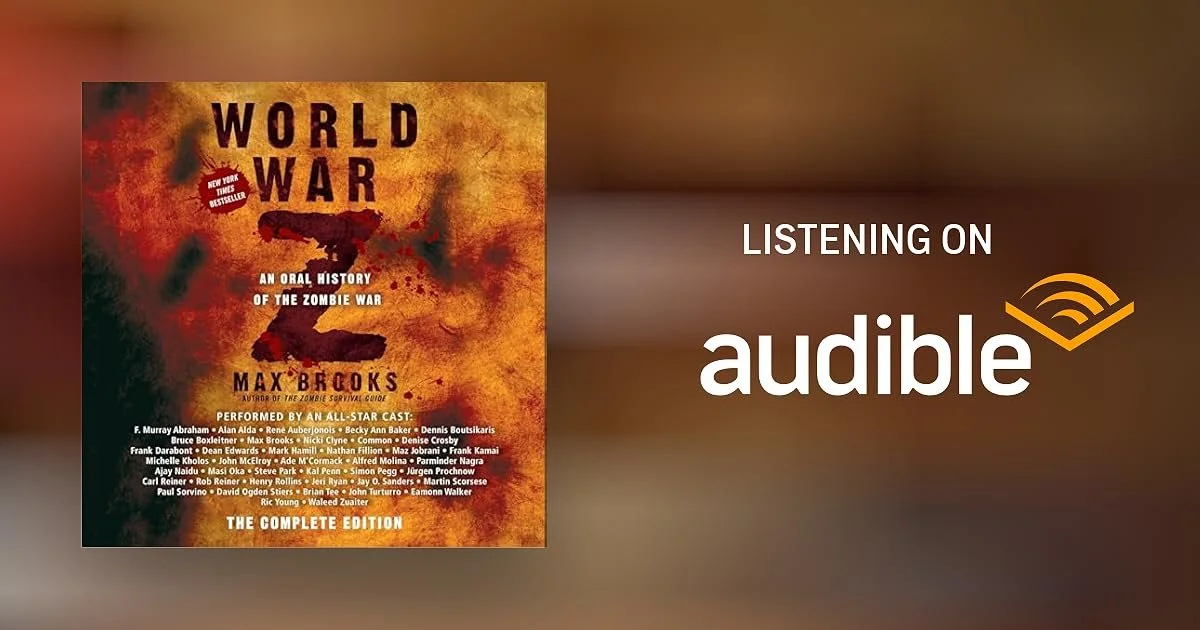
The zombie genre is a narrative seam that has been heavily mined in recent years. There seems to have been a never-ending supply of films, television shows and video games involving the undead over the last two decades. Which is why the notion of society being destroyed by its own citizens has somewhat lost its intellectual and horrific lustre. Hence I can understand people rolling their eyes at the mention of the novel World War Z by Max Brooks. The 2013 film adaptation starring Brad Pitt, which jettisoned most of the source text's innovations, isn’t the best advertisement for the book’s virtues. However, if you take the time to look beyond the hyperbolic title, you’ll find World War Z a work of singular intelligence which uses the zombie genre as a means to explore multiple socio-economic and political themes.
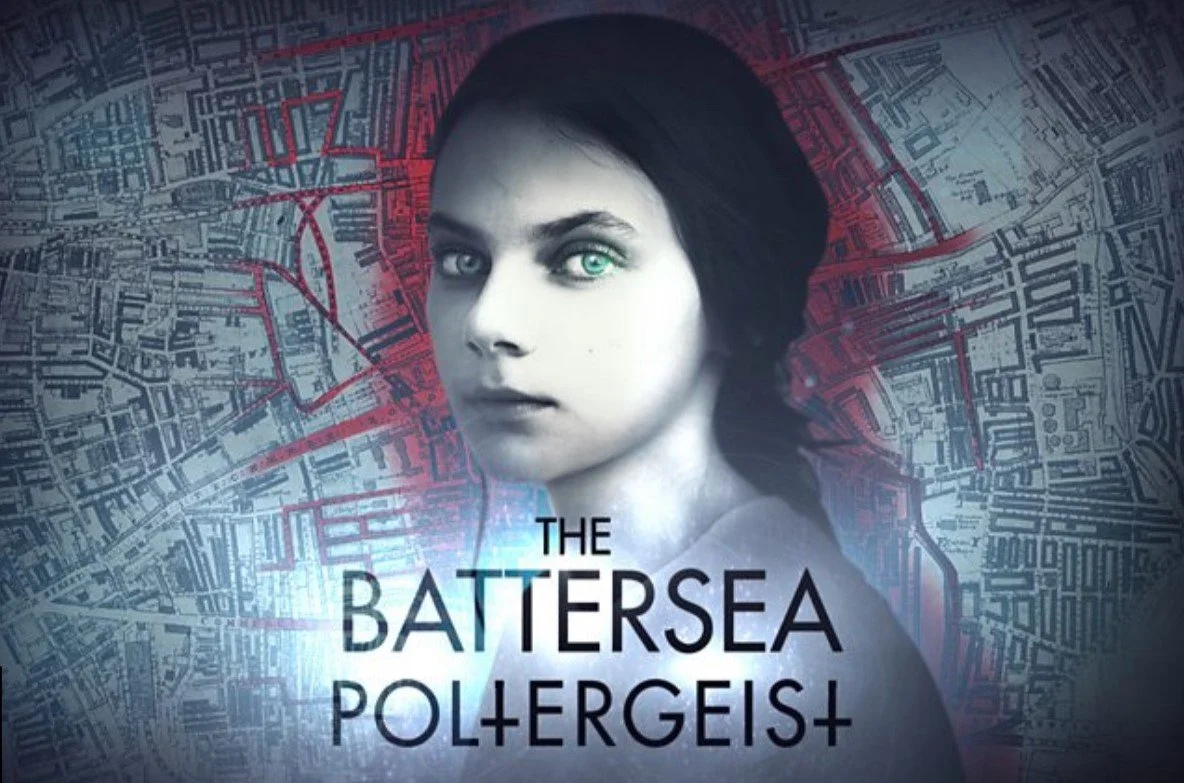
I was unaware of the The Battersea Poltergeist podcast and accompanying online interest during its initial release. Created by Bafflegab Productions and presented by Danny Robins, who is well known in this field with similar shows such as Haunted and Uncanny, it was broadcast on BBC Sounds and BBC Radio 4 between February and March 2021 during lockdown. The Battersea Poltergeist is a documentary of a true story with dramatized re-enactments. The show alternates between interviews, discussions and research into the case with short vignettes from a cast of actors recreating events for dramatic effect. It was released episodically and gained a lot of online and press interest at the time. Hence there were additional episodes interspersed throughout the initial run which provided “case updates” and listener feedback and questions.
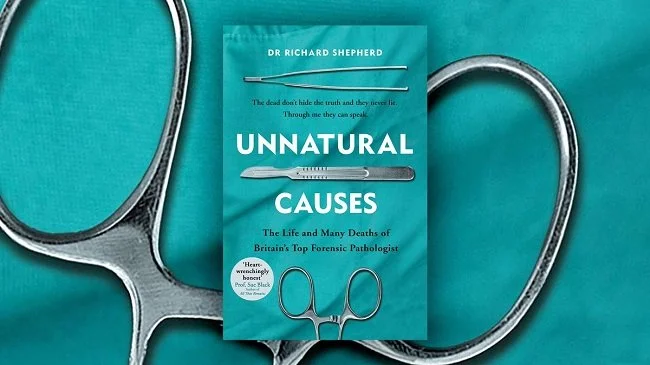
Dr Richard Shepherd is a senior forensic pathologist with over 30 years’ experience, consisting of 23,000 postmortems. His book, Unnatural Causes, explores his career and his devotion to the truth in determining how each of his cases died. Over the course of his career this includes victims of mass disasters, homicides, and those who have died in their own homes from unknown causes. Dr Shepherd’s job is to ascertain a cause of death based upon the facts and data presented. Each case is described with detail and empathy and it’s surprising how much the reader becomes immersed in the methodical approach that each postmortem entails. Furthermore, it is very satisfying to learn of Dr Shepherd’s verdict. However, far from being a technical dissertation on a succession of cases, this is a deeply personal and humane book which addresses the impact of the author’s career upon himself and his family. It is written with a surprising degree of literary flair and is profoundly thought provoking and moving.
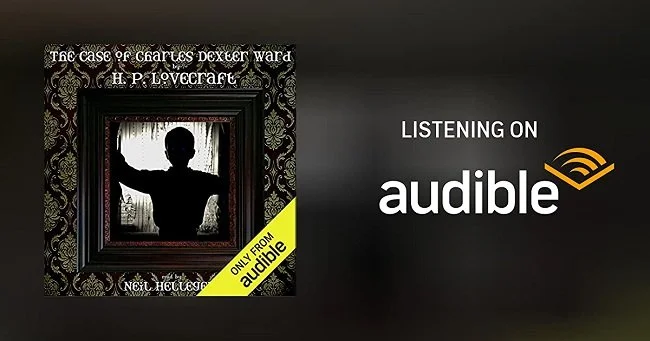
Charles Dexter Ward is a young man from a prominent Rhode Island family with a keen interest in history. He spends much of his childhood wandering the streets of ancient Providence, drawn inexorably to its architecture, as well as it’s colourful heritage. As an adult he continues his antiquarian leanings and subsequently discovers a hitherto unknown ancestor, Joseph Curwen. One with a shadowy past which hints at the pursuit of alchemy and other arcane practises. Charles decides to uncover the truth regarding Joseph Curwen and over time his interest changes into obsession. His Father begins to worry about his son’s fixation and the family Doctor, Marinus Bicknell Willett, decides to keep an eye upon the youth’s state of mind. A series of curious events hint at a growing eldritch malevolence and Doctor Willett begins to suspect that Charles is in grave danger from a menace stretching across time.
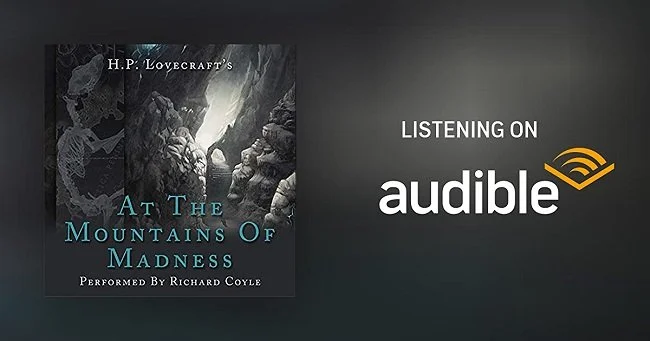
At the Mountains of Madness is a story told from a first-person perspective by geologist William Dyer, a professor from Miskatonic University in Arkham, a fictional town in Essex County, Massachusetts USA. When a new scientific expedition to Antarctica is announced, Dyer breaks his silence and discloses hitherto unknown and closely kept secrets about his own explorations of the continent and exactly what befell his own expedition. He details how his team found the preserved remains of 14 prehistoric life forms unknown to science and outside of the existing geological and evolutionary timescale. He goes on to recount how some of the men and sled dogs are killed under mysterious circumstances. Dyer and graduate student Danforth, subsequently explored a mountain range by plane and discovered a vast, abandoned stone city, which is alien to any form of human architecture. What is the secret of this ancient ruin? Can Dyer convince subsequent explorers to stay clear of “the mountains of madness”.
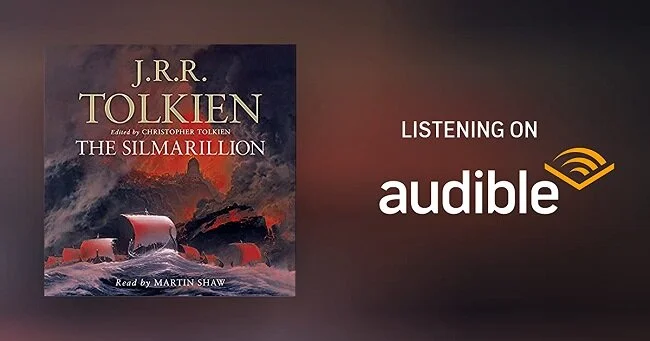
Let’s not be coy about this. J. R. R. Tolkien’s The Silmarillion is not in any way a light read. It has a complex narrative, filled with staggering amounts of lore to digest. I certainly wouldn’t recommend it to anyone as their first point of entry into the Tolkien Legendarium. I think this is a book that you tackle after The Hobbit and The Lord of the Rings, if you are sufficiently enamoured with the threads of a wider backstory that are alluded to in both those volumes. If that is the case then brace yourself. However, despite its sprawling histories and dense genealogies, The Silmarillion is an incredibly rewarding book. There is an air of majesty surrounding the epic stories it contains and its themes about the eternal struggle between the dark and the light are timeless. Due to the immense detail that Tolkien lavishes upon the text, Middle-earth feels like a genuine living, breathing world. A world of languages, culture, geography and history. To date it has never been equalled.
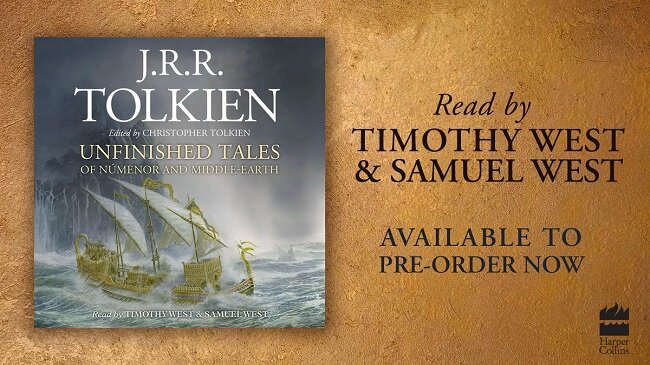
First published in 1980, Unfinished Tales is a collection of stories by J. R. R. Tolkien, that spans from the Elder Days of Middle-earth to the end of the War of the Ring. For those who have read both The Silmarillion and The Lord of the Rings, this book provides additional insights and more detailed accounts of many key events of the First, Second and Third age. Such as Gandalf’s informative tale of how he came to send the Dwarves to Bag-End in search of a burglar, the appearance of the sea deity Ulmo before Tuor on the coast of Beleriand and an in depth description of the military organization of the Riders of Rohan. This collection of stories and essays by J. R. R. Tolkien were never fully completed during the author’s lifetime but were posthumously edited by his son Christopher Tolkien and present with notes, annotations and were required a detailed commentary.
“For me, it is far better to grasp the Universe as it really is than to persist in delusion, however satisfying and reassuring.”
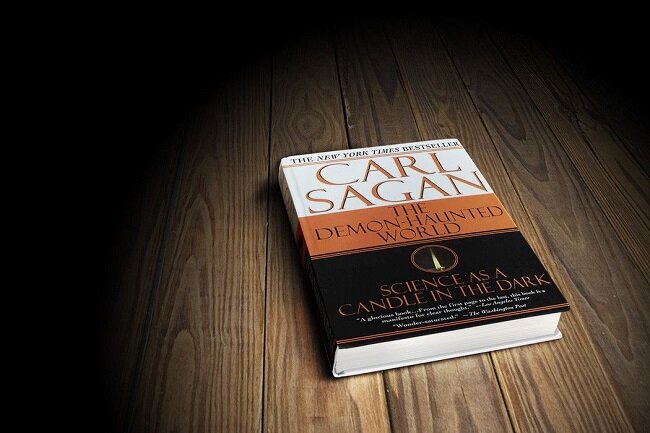
The problems that beset the modern world are complicated and nuanced. Thus any potential solutions will be equally complex and subtle. There are no quick fixes for issues such as climate change or nuclear proliferation and anyone trying to sell you one is either a charlatan or a fool. In his book, The Demon-Haunted World, Carl Sagan strongly advocates that adopting a scientific approach to thinking is essential in a modern democracy. By this he means questioning ideas critically and requiring evidence based arguments. If something cannot be effectively measured, tested or verified we should be deeply sceptical of it. He even goes so far as to argue that it is patriotic to ask questions and that any person, institution or organisation that avoids such scrutiny should be deemed suspect. Published in 1995 Sagan’s concerns regarding the coming century have proven sadly accurate. A quarter of a century ago, he predicted the rise of misinformation, fake news and alternative facts. When information is controlled and a population lacks critical thinking it becomes "unable to distinguish between what feels good and what’s true".

In my youth I was a prodigious reader. I spent many a happy weekend visiting my local library and often spent my pocket money on books as a child. Overtime, I changed from reading fiction to non-fiction. More recently, a lot of my reading has been done online, consumed either via my office PC or tablet. That’s not to say that I don’t buy paperback or hardback books anymore. I still consider this to be the preferred experience. There is something fundamentally exciting about sitting down in a comfy chair, reading at your own pace, away from distractions. However last year I injured my left arm and I have subsequently found holding a large hardback book to be a difficult experience. So for the sake of convenience I started listening to audiobooks instead. I’ve always enjoyed them considering them a great alternative to traditional print media. What my recent foray into this format has taught me is how much the medium of the audiobook has grown.

I have reviewed several audio recordings of J.R.R. Tolkien’s The Lord of the Rings over the years. My personal favourite is the BBC Radio adaptation from 1981, which has a superb cast of British character actors and does a wonderful job of adapting the text without diminishing the scope of the narrative. This is a dramatisation, rather than a straightforward reading of the book. However, if the latter is what you are looking for then the go to version is 1990 recording by Robert Inglis. He provides unique voices for all characters and even sings the songs included in the source text. And then there is the quirky Mind’s Eye Production from 1979, which is another dramatisation. This is a flawed version with a focus upon the character dialogue with much of the lore removed. Yet it has its charm and includes the often omitted Tom Bombadil. However, quite recently I accidentally stumbled upon a fourth adaptation and was surprised not only by the quality of the production but the curious history associated with it.
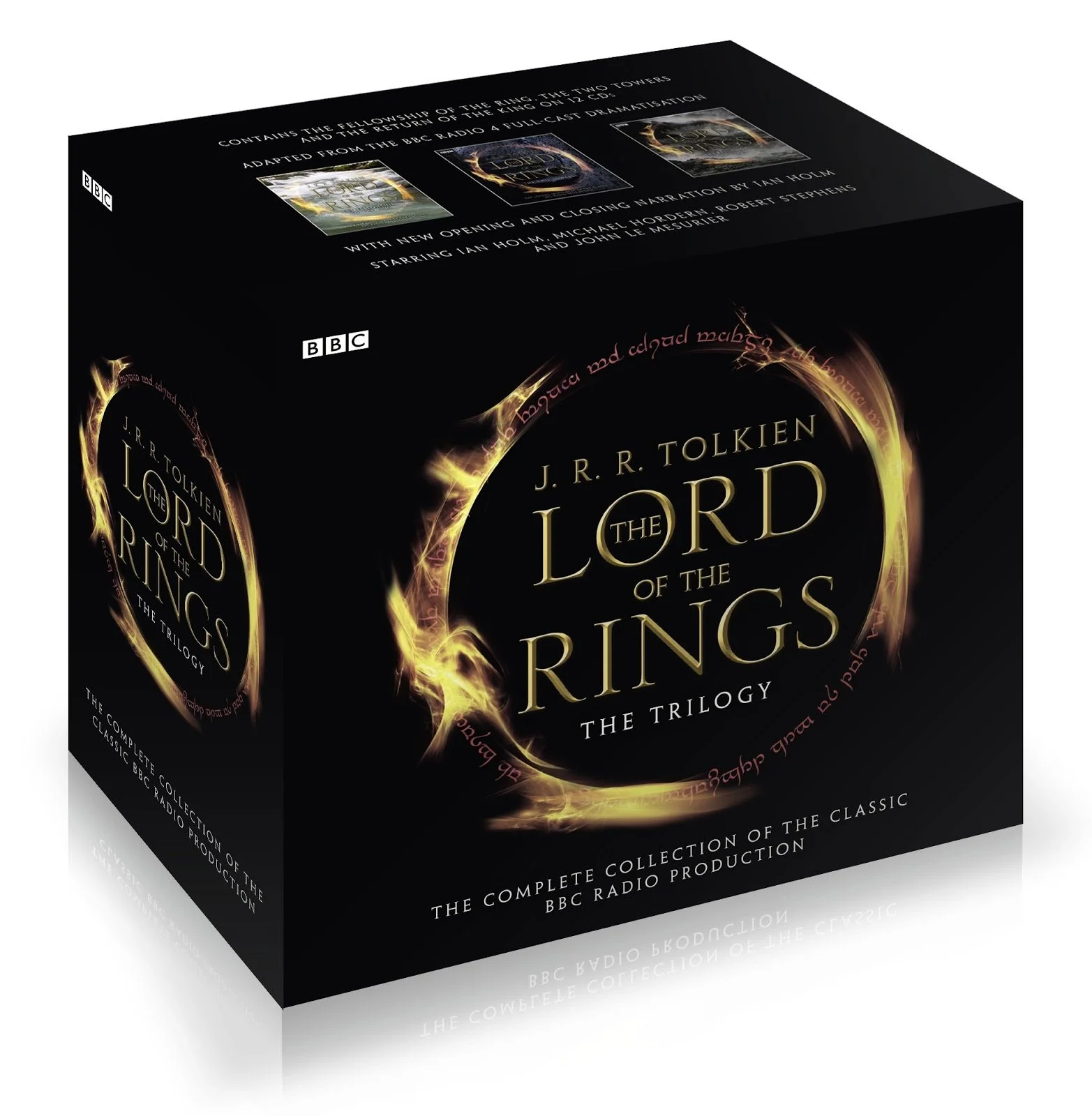
In 1981 BBC Radio 4 produced an ambitious adaptation of The Lord of the Rings, presenting Tolkien’s novel in twenty six, thirty minute episodes. As with all adaptations some material had to be removed, but overall the BBC production was not excessively abridged and followed the plot faithfully. The characterisations and dialogue were extremely well realised and music by composer Stephen Oliver was very much in the style and idiom of Tolkien. This was a production of the highest pedigree and a major event for the BBC at the time. The series was heavily promoted, receiving front page status in The Radio Times, the UK’s premier TV guide and bestselling magazine. Although initial reviews were varied, the series immediately gained a cult following with fans trading episodes recorded on cassette tape. Word of mouth and substantial listening figures soon lead to revised opinions from the press, along with the immortal slogan "Radio is Hobbit 4-ming".

When discussing the various audio dramatizations of J. R. R. Tolkien's The Lord of the Rings, people often think of the BBC Radio adaptation by default. However it should be noted that it was not the first. An earlier version was made and broadcast in 1979 on US National Public Radio and was subsequently released as an audiobook. It was produced by The Mind's Eye, a company who were responsible for numerous adaptations of classic literature for radio at the time. The script written by Bernard Mayes is a somewhat abridged version of the book. The eleven hour running time focuses significantly on the dialogue, with much of the back history, lore and expositionary narration removed.
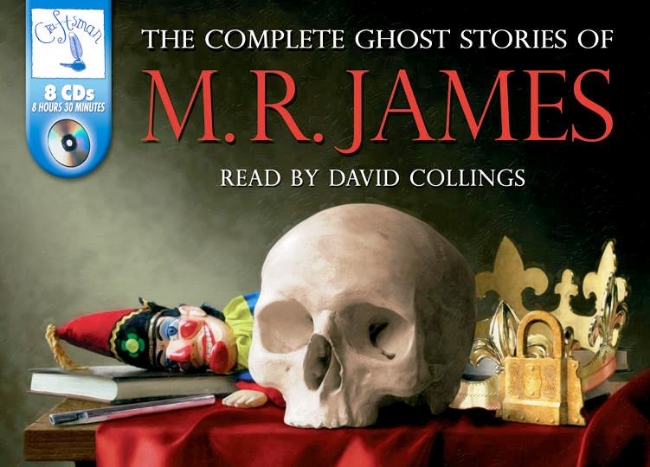
The supernatural fiction of Montague Rhodes James is a major milestone in the history of the literary ghost story. His work tangibly helped shape the genre as we know it today, focusing on classic themes such as retribution, vengeance and other aspects of traditional mythology literature. The protagonists are often socially dysfunctional intellectuals who face peril due to their excessive curiosity. The very physical nature of horror often masquerades for deeper psychological issues. They also serve as an invaluable window into the socioeconomic structure of Edwardian Britain.
Origin Story
Have you noticed how politicians, pundits and media commentators will often throw around phrases and buzzwords when discussing the news and other major political talking points? “Cultural Marxism” and “Metropolitan Elite” are two examples that spring to mind. Often it is clear that the person using these phrases has no idea what they mean or what their provenance is. Perhaps you’ve thought that it would be useful to learn more about these terms or the background behind certain institutions or movements. If this is the case then I wholeheartedly recommend the Origin Story podcast. To quote from their website “What are the real stories behind the most misunderstood and abused ideas in politics? From Conspiracy Theory to Woke to Centrism and beyond, Ian Dunt and Dorian Lynskey dig into the astonishing secret histories of concepts you thought you knew”.
Have you noticed how politicians, pundits and media commentators will often throw around phrases and buzzwords when discussing the news and other major political talking points? “Cultural Marxism” and “Metropolitan Elite” are two examples that spring to mind. Often it is clear that the person using these phrases has no idea what they mean or what their provenance is. Perhaps you’ve thought that it would be useful to learn more about these terms or the background behind certain institutions or movements. If this is the case then I wholeheartedly recommend the Origin Story podcast. To quote from their website “What are the real stories behind the most misunderstood and abused ideas in politics? From Conspiracy Theory to Woke to Centrism and beyond, Ian Dunt and Dorian Lynskey dig into the astonishing secret histories of concepts you thought you knew”.
I discovered the Origin Story podcast a few episodes into season one. I was aware of Ian Dunt as a journalist and had read his book How to be a Liberal, which is an extremely interesting history of Liberalism as a movement and how that has changed over time. I was not familiar with the writer Dorian Lynskey but subsequently read his book, 33 Revolutions a Minute, which was an excellent history of protest songs and political songwriting. What quickly caught my attention about the podcast was how both hosts make complex and sometimes rather scholarly subjects fun and engaging, while still retaining appropriate levels of intellectual rigour. All of which helps put the listeners at ease when the show tackles such complexities as The Partition of India or Stalin’s purges.
The standout feature of the Origin Story podcast is that each episode is well-researched and informative. This is because both hosts prepare for each season of the show by reading prodigiously. They also list all their information sources which is very useful. With episodes between anything from an hour to ninety minutes running time, the topic at hand is analysed to a high level and from multiple angles. If the facts run counter to established but incorrect assumptions, then both hosts will happily highlight such points. Both Churchill and Gandhi are shown to have been flawed human beings in reality, despite their saintly contemporary reputations. The show also places a great deal of significance upon historical context while not using it as an excuse. Overall Origin Story handles the issue of balance and bias well, with both hosts acknowledging their own worldviews and politics but endeavouring to keep them separate from the discussion.
Considering how potentially dry some of the subject matters can be, both Dorian and Ian are engaging and humorous hosts. They clearly get on and have the measure of each other, frequently riffing off each other’s comments and asides. Sometimes the language can be a little ripe but this fits well within the informal style of the podcast. Both have analytical minds and have clearly thought a great deal about the subjects that they explore. The tone of the show is just right, making the discussion accessible to a wide audience. However, thinking is required. The production values are professional. Like all podcasts, over time some injokes have emerged such as Dorian’s dualistic relationship with definitions found in the Oxford English dictionary. There’s also a potential drinking game stemming from how often George Orwell is referenced and maniacal figures from modern history whose nickname was “Bunny”.
Origin Story began in May 2022 and is currently in its eighth season. During this time it has covered a broad range of subjects. This includes McCarthyism, Conspiracy Theory, Centreism, Neoliberalism, Climate Denial and Eugenics. The latest season is dedicated to a History of Socialism which has episodes about Karl Marx, The UK Labour Party and the Sixties Movements and the New Left. The show has also looked at individuals of note such as Elon Musk, Ayn Rand, Benjamin Netanyahu and Martin Luther King Jnr. There have also been some interesting pop culture analyses of Superheroes, Doctor Who and the history of the British Board of Film Censors/Classification. One of the most notable and in some ways significant episodes is a dissection of Russell Brand. It’s a far from pleasant listen but incredibly informative.
Origin Story is available free of charge with adverts from all major podcast outlets. There is also a Patreon edition which features longer episodes which are released earlier. They are also sans adverts. At present the podcast market is awash with shows about politics and social issues. Many of which are extremely partisan with a clear agenda. If you want something more factual, that explains and provides relevant background information, rather than hectoring you with alarmist propaganda, then Origin Story is the podcast for you. It offers a great way to find out about the major social and political talking points of the moment and the ideas that drive them. It does so in a fun and laid back fashion. A bit like going down the pub and being schooled by your smart friends, rather than the lounge bar bore.
Have you noticed how politicians, pundits and media commentators will often throw around phrases and buzzwords when discussing the news and other major political talking points? “Cultural Marxism” and “Metropolitan Elite” are two examples that spring to mind. Often it is clear that the person using these phrases has no idea what they mean or what their provenance is. Perhaps you’ve thought that it would be useful to learn more about these terms or the background behind certain institutions or movements. If this is the case then I wholeheartedly recommend the Origin Story podcast. To quote from their website “What are the real stories behind the most misunderstood and abused ideas in politics? From Conspiracy Theory to Woke to Centrism and beyond, Ian Dunt and Dorian Lynskey dig into the astonishing secret histories of concepts you thought you knew”.

I was perusing the various YouTube channels that I subscribe to recently, enjoying a broad range of high quality content, when I suddenly realised that the majority of them had some sort of optional monetisation scheme associated with them. By realised I mean that it suddenly clicked with me that so many people are trying to raise funds to pay for their production costs. It’s certainly something I can identify with. I’ve been running a blog since 2007 and even that can be a money pit. There’s domain registrations, hosting costs, design work etc. It was even more expensive when I was producing a podcast. That incurred further hosting expenses and then there was the hardware to buy. So I fully appreciate the situation that many YouTubers find themselves in. They spend their own precious time and money creating quality material that many consume assuming that it is all just “free”.

As part of the Blaugust Festival of Blogging, I thought I’d take the time to promote some of the content creators whose work I enjoy. Despite all the white noise, click bait and snake oil salesmen, there is still a wealth of good material to be found online, be it blogs, podcasts, You Tube channels or streamers. Most of what I currently enjoy, I discovered through word of mouth. I feel more disposed towards trusting the views and opinions of friends than I do of “recommendations” made by Google and You Tube, driven by their “questionable” algorithms. These are often determined by key words and have no ability to ascertain quality. So here are a mixture of You Tube channels, podcasts and blogs that I wholeheartedly recommend. Between them they cover such subjects as movies, gaming, comedy and history. Feel free to leave comments about my choices and share your own recommendations.

I have no problems finding podcasts and You Tube channels that explore the subjects that I like. It’s determining which ones are any good that is the real trick and the only way to do this is to sit down and listen or watch them. Sometimes you need to give two or three episodes a go before you can truly determine if a show is for you. So, I thought it may be useful to share another small selection of the content that I am currently enjoying, so you don’t have to wade through quite so much “white noise” that fills the internet. I’ve made a conscious decision to select a broader spectrum of material and not to focus just on gaming. All the shows recommended are freely available although you can support the content creators if you wish to. Feel free to leave comments on the titles listed and share your own recommendations.
The Battersea Poltergeist
I was unaware of the The Battersea Poltergeist podcast and accompanying online interest during its initial release. Created by Bafflegab Productions and presented by Danny Robins, who is well known in this field with similar shows such as Haunted and Uncanny, it was broadcast on BBC Sounds and BBC Radio 4 between February and March 2021 during lockdown. The Battersea Poltergeist is a documentary of a true story with dramatized re-enactments. The show alternates between interviews, discussions and research into the case with short vignettes from a cast of actors recreating events for dramatic effect. It was released episodically and gained a lot of online and press interest at the time. Hence there were additional episodes interspersed throughout the initial run which provided “case updates” and listener feedback and questions.
I was unaware of the The Battersea Poltergeist podcast and accompanying online interest during its initial release. Created by Bafflegab Productions and presented by Danny Robins, who is well known in this field with similar shows such as Haunted and Uncanny, it was broadcast on BBC Sounds and BBC Radio 4 between February and March 2021 during lockdown. The Battersea Poltergeist is a documentary of a true story with dramatized re-enactments. The show alternates between interviews, discussions and research into the case with short vignettes from a cast of actors recreating events for dramatic effect. It was released episodically and gained a lot of online and press interest at the time. Hence there were additional episodes interspersed throughout the initial run which provided “case updates” and listener feedback and questions.
The case of The Battersea Poltergeist began in March 1956, when Wally and Kitty Hitchens reported “disturbances” in their rented terraced house on Wycliffe Road in south-west London. Crockery was thrown across the room, bedsheets pulled from the bed and banging sounds emanated from the walls and the floor. At times these were so loud, they could be heard by neighbours. Later, several fires began in the house and words were written on the walls. The police investigated, as did several reporters though none appeared to take the matter seriously. There was also a questionable séance which appeared to worsen the situation .The case came to the attention of paranormal investigator Harold Chibbett, who spent months with the family and made comprehensive notes. At the centre of these activities was 15 year old Shirley Hitchens, who named the unruly ghost Donald.
Medium Harry Hank, centre, conducts an séance with Shirley Hitchens and her father Wally (on the right)
Presenter Danny Robins begins the podcast by telling us: “I don’t believe in ghosts.” He then proceeds to go through Chibbett’s original case file, collate newspaper reports and other public records. Several people connected to the case are interviewed including Shirley Hitchens, who is now 80. The investigations are overseen by several experts including parapsychologist Evelyn Hollow and psychology professor Ciarán O’Keeffe. Bridging the investigative sections are dramatised segments, starring Toby Jones as Harold Chibbett and Dafne Keen as the young Shirley Hitchens. Although somewhat contrived they do add to the show’s atmosphere, capturing the frustration and terror experienced by the Hitchens family. They also highlight the UK class divide of the times and the way the family were perceived by the press and other institutions.
I recently binged all 9 episodes of The Battersea Poltergeist as well as the “case updates” and found the show thoroughly entertaining and interesting. Robins and producer/director Simon Barnard have gone to great lengths to make this podcast engaging and informative. I especially enjoyed the dramatic recreations mainly due to the calibre of the cast. There is also a very atmospheric soundtrack and theme song by Nadine Shah and Ben Hillier. However, I did find some of the dialogue a little too contemporary, often using phrases and idioms that were anachronistic. That aside, the show made a broad attempt to provide balance to both sides of the argument, although this does result in a degree of cakeism.
The Hitchens Family circa 1956
As I expected, the overall results of the investigation are logically inconclusive, affording both sides of the debate to be able to claim victory. The predictably ambivalent and non-commital nature of the series’ conclusion is convenient and beneficial to the production team who ultimately are providing entertainment as well as an investigation. It is an inherent failing of this particular genre, or perhaps a deliberate choice, that the audience is always presented with a binary choice. I personally would prefer a more nuanced approach and possibly a third option, namely that there is insufficient data to draw any definitive conclusion. However, such a stance lacks the passion and potential entertainment that arises from a more adversarial approach. If you listen to The Battersea Poltergeist expecting a clear conclusion then you’ll be disappointed. It’s more about the journey and because of the inherent ambivalence of this case, that journey has the ability to keep going.
First off, credit where credit is due. I pilfered the idea for this post from Mark Rogers who writes the Newsonaut blog. Apparently it’s a questionnaire that has been doing the rounds across various indie blogs for a while. However, it happens to ask some interesting questions about one’s reading habits. I read a book every month or so and I supplement this by listening to a lot of audiobooks. Yes, I’m aware they’re not the same thing entirely but both offer a means to consume and digest a book. Hence I am not interested in this “popular” internet debate and won’t waste my time on it here. I advocate reading in all its variant forms. Be it sitting in an armchair and perusing a grimoire while smoking a Meerschaum, to reading an article online on your phone or PC. I’d rather that people read in some shape or form, than not at all. As Mark Twain wisely said, “The man who does not read has no advantage over the man who cannot read”. So without further ado, here are my answers to the “five Ws of Reading”.
Last August I listened to The Battersea Poltergeist podcast by Danny Robins and was subsequently introduced to his other production Uncanny. Both are investigations into alleged supernatural events but unlike other shows of this kind, these are far better researched, produced and most importantly even handed. Danny makes a great deal of effort to try and keep a foot in each camp; team believer and team sceptic. Overall these podcast work as they genuinely appeal to multiple audiences and they are not excessively hyperbolic or credulous. A lot of this comes down to Danny’s personality which is upbeat and relatable. Perhaps his greatest strength is being a sympathetic ear to those recounting their experiences. He lightens the mood from time to time with humour when required. He also liberally litters the proceedings with pop culture references. However, he will probe and ask pointed questions but does so in a non-accusatory manner.
The zombie genre is a narrative seam that has been heavily mined in recent years. There seems to have been a never-ending supply of films, television shows and video games involving the undead over the last two decades. Which is why the notion of society being destroyed by its own citizens has somewhat lost its intellectual and horrific lustre. Hence I can understand people rolling their eyes at the mention of the novel World War Z by Max Brooks. The 2013 film adaptation starring Brad Pitt, which jettisoned most of the source text's innovations, isn’t the best advertisement for the book’s virtues. However, if you take the time to look beyond the hyperbolic title, you’ll find World War Z a work of singular intelligence which uses the zombie genre as a means to explore multiple socio-economic and political themes.
I was unaware of the The Battersea Poltergeist podcast and accompanying online interest during its initial release. Created by Bafflegab Productions and presented by Danny Robins, who is well known in this field with similar shows such as Haunted and Uncanny, it was broadcast on BBC Sounds and BBC Radio 4 between February and March 2021 during lockdown. The Battersea Poltergeist is a documentary of a true story with dramatized re-enactments. The show alternates between interviews, discussions and research into the case with short vignettes from a cast of actors recreating events for dramatic effect. It was released episodically and gained a lot of online and press interest at the time. Hence there were additional episodes interspersed throughout the initial run which provided “case updates” and listener feedback and questions.
Dr Richard Shepherd is a senior forensic pathologist with over 30 years’ experience, consisting of 23,000 postmortems. His book, Unnatural Causes, explores his career and his devotion to the truth in determining how each of his cases died. Over the course of his career this includes victims of mass disasters, homicides, and those who have died in their own homes from unknown causes. Dr Shepherd’s job is to ascertain a cause of death based upon the facts and data presented. Each case is described with detail and empathy and it’s surprising how much the reader becomes immersed in the methodical approach that each postmortem entails. Furthermore, it is very satisfying to learn of Dr Shepherd’s verdict. However, far from being a technical dissertation on a succession of cases, this is a deeply personal and humane book which addresses the impact of the author’s career upon himself and his family. It is written with a surprising degree of literary flair and is profoundly thought provoking and moving.
Charles Dexter Ward is a young man from a prominent Rhode Island family with a keen interest in history. He spends much of his childhood wandering the streets of ancient Providence, drawn inexorably to its architecture, as well as it’s colourful heritage. As an adult he continues his antiquarian leanings and subsequently discovers a hitherto unknown ancestor, Joseph Curwen. One with a shadowy past which hints at the pursuit of alchemy and other arcane practises. Charles decides to uncover the truth regarding Joseph Curwen and over time his interest changes into obsession. His Father begins to worry about his son’s fixation and the family Doctor, Marinus Bicknell Willett, decides to keep an eye upon the youth’s state of mind. A series of curious events hint at a growing eldritch malevolence and Doctor Willett begins to suspect that Charles is in grave danger from a menace stretching across time.
At the Mountains of Madness is a story told from a first-person perspective by geologist William Dyer, a professor from Miskatonic University in Arkham, a fictional town in Essex County, Massachusetts USA. When a new scientific expedition to Antarctica is announced, Dyer breaks his silence and discloses hitherto unknown and closely kept secrets about his own explorations of the continent and exactly what befell his own expedition. He details how his team found the preserved remains of 14 prehistoric life forms unknown to science and outside of the existing geological and evolutionary timescale. He goes on to recount how some of the men and sled dogs are killed under mysterious circumstances. Dyer and graduate student Danforth, subsequently explored a mountain range by plane and discovered a vast, abandoned stone city, which is alien to any form of human architecture. What is the secret of this ancient ruin? Can Dyer convince subsequent explorers to stay clear of “the mountains of madness”.
Let’s not be coy about this. J. R. R. Tolkien’s The Silmarillion is not in any way a light read. It has a complex narrative, filled with staggering amounts of lore to digest. I certainly wouldn’t recommend it to anyone as their first point of entry into the Tolkien Legendarium. I think this is a book that you tackle after The Hobbit and The Lord of the Rings, if you are sufficiently enamoured with the threads of a wider backstory that are alluded to in both those volumes. If that is the case then brace yourself. However, despite its sprawling histories and dense genealogies, The Silmarillion is an incredibly rewarding book. There is an air of majesty surrounding the epic stories it contains and its themes about the eternal struggle between the dark and the light are timeless. Due to the immense detail that Tolkien lavishes upon the text, Middle-earth feels like a genuine living, breathing world. A world of languages, culture, geography and history. To date it has never been equalled.
First published in 1980, Unfinished Tales is a collection of stories by J. R. R. Tolkien, that spans from the Elder Days of Middle-earth to the end of the War of the Ring. For those who have read both The Silmarillion and The Lord of the Rings, this book provides additional insights and more detailed accounts of many key events of the First, Second and Third age. Such as Gandalf’s informative tale of how he came to send the Dwarves to Bag-End in search of a burglar, the appearance of the sea deity Ulmo before Tuor on the coast of Beleriand and an in depth description of the military organization of the Riders of Rohan. This collection of stories and essays by J. R. R. Tolkien were never fully completed during the author’s lifetime but were posthumously edited by his son Christopher Tolkien and present with notes, annotations and were required a detailed commentary.
“For me, it is far better to grasp the Universe as it really is than to persist in delusion, however satisfying and reassuring.”
The problems that beset the modern world are complicated and nuanced. Thus any potential solutions will be equally complex and subtle. There are no quick fixes for issues such as climate change or nuclear proliferation and anyone trying to sell you one is either a charlatan or a fool. In his book, The Demon-Haunted World, Carl Sagan strongly advocates that adopting a scientific approach to thinking is essential in a modern democracy. By this he means questioning ideas critically and requiring evidence based arguments. If something cannot be effectively measured, tested or verified we should be deeply sceptical of it. He even goes so far as to argue that it is patriotic to ask questions and that any person, institution or organisation that avoids such scrutiny should be deemed suspect. Published in 1995 Sagan’s concerns regarding the coming century have proven sadly accurate. A quarter of a century ago, he predicted the rise of misinformation, fake news and alternative facts. When information is controlled and a population lacks critical thinking it becomes "unable to distinguish between what feels good and what’s true".
In my youth I was a prodigious reader. I spent many a happy weekend visiting my local library and often spent my pocket money on books as a child. Overtime, I changed from reading fiction to non-fiction. More recently, a lot of my reading has been done online, consumed either via my office PC or tablet. That’s not to say that I don’t buy paperback or hardback books anymore. I still consider this to be the preferred experience. There is something fundamentally exciting about sitting down in a comfy chair, reading at your own pace, away from distractions. However last year I injured my left arm and I have subsequently found holding a large hardback book to be a difficult experience. So for the sake of convenience I started listening to audiobooks instead. I’ve always enjoyed them considering them a great alternative to traditional print media. What my recent foray into this format has taught me is how much the medium of the audiobook has grown.
I have reviewed several audio recordings of J.R.R. Tolkien’s The Lord of the Rings over the years. My personal favourite is the BBC Radio adaptation from 1981, which has a superb cast of British character actors and does a wonderful job of adapting the text without diminishing the scope of the narrative. This is a dramatisation, rather than a straightforward reading of the book. However, if the latter is what you are looking for then the go to version is 1990 recording by Robert Inglis. He provides unique voices for all characters and even sings the songs included in the source text. And then there is the quirky Mind’s Eye Production from 1979, which is another dramatisation. This is a flawed version with a focus upon the character dialogue with much of the lore removed. Yet it has its charm and includes the often omitted Tom Bombadil. However, quite recently I accidentally stumbled upon a fourth adaptation and was surprised not only by the quality of the production but the curious history associated with it.
In 1981 BBC Radio 4 produced an ambitious adaptation of The Lord of the Rings, presenting Tolkien’s novel in twenty six, thirty minute episodes. As with all adaptations some material had to be removed, but overall the BBC production was not excessively abridged and followed the plot faithfully. The characterisations and dialogue were extremely well realised and music by composer Stephen Oliver was very much in the style and idiom of Tolkien. This was a production of the highest pedigree and a major event for the BBC at the time. The series was heavily promoted, receiving front page status in The Radio Times, the UK’s premier TV guide and bestselling magazine. Although initial reviews were varied, the series immediately gained a cult following with fans trading episodes recorded on cassette tape. Word of mouth and substantial listening figures soon lead to revised opinions from the press, along with the immortal slogan "Radio is Hobbit 4-ming".
When discussing the various audio dramatizations of J. R. R. Tolkien's The Lord of the Rings, people often think of the BBC Radio adaptation by default. However it should be noted that it was not the first. An earlier version was made and broadcast in 1979 on US National Public Radio and was subsequently released as an audiobook. It was produced by The Mind's Eye, a company who were responsible for numerous adaptations of classic literature for radio at the time. The script written by Bernard Mayes is a somewhat abridged version of the book. The eleven hour running time focuses significantly on the dialogue, with much of the back history, lore and expositionary narration removed.
The supernatural fiction of Montague Rhodes James is a major milestone in the history of the literary ghost story. His work tangibly helped shape the genre as we know it today, focusing on classic themes such as retribution, vengeance and other aspects of traditional mythology literature. The protagonists are often socially dysfunctional intellectuals who face peril due to their excessive curiosity. The very physical nature of horror often masquerades for deeper psychological issues. They also serve as an invaluable window into the socioeconomic structure of Edwardian Britain.
Experimenting With YouTube Part 2
I spent most of this morning and afternoon editing video content I captured while playing Sniper Elite Resistance. I assembled 26 minutes of highlights and then recorded a narration. After adding appropriate branding for Contains Moderate Peril, I then uploaded the finished video to YouTube. Sadly, the picture quality was problematic, often becoming pixelated and blocky when there was rapid movement. The volume of my narration was also too low, so I decided to delete the video from my channel. I was somewhat disappointed by this outcome and initially thought that the day had been a waste of time. However, as I write this post, it becomes very clear that this is just part of the learning curve. I have given some thought to the problem and I believe I have determined why this video was not up to the standard of the previous one. Ultimately, this is an invaluable lesson.
I spent most of this morning and afternoon editing video content I captured while playing Sniper Elite Resistance. I assembled 26 minutes of highlights and then recorded a narration. After adding appropriate branding for Contains Moderate Peril, I then uploaded the finished video to YouTube. Sadly, the picture quality was problematic, often becoming pixelated and blocky when there was rapid movement. The volume of my narration was also too low, so I decided to delete the video from my channel. I was somewhat disappointed by this outcome and initially thought that the day had been a waste of time. However, as I write this post, it becomes very clear that this is just part of the learning curve. I have given some thought to the problem and I believe I have determined why this video was not up to the standard of the previous one. Ultimately, this is an invaluable lesson.
In my last post on this subject, I mentioned how I was having problems with audio desync when editing video captured by OBS Studio. This was due to the video material having a variable frame rate. Hence I moved over to XSplit Broadcaster because users on Reddit stated it produced video with a continuous bit rate. Sadly, this change appears to have cured one problem and caused another. The raw video footage captured by XSplit Broadcaster plays fine when editing and there are no audio issues. However, when I encoded the final edit, the results were poor quality. I used exactly the same encoding settings as I did last time, which produced a viable video that I successfully uploaded to YouTube. That was not the case this time. The only element of my production process that changed was the video capture software. I shall therefore switch back to OBS Studio.
There is no guarantee that this is the correct solution to the problem. There are many variables involved in this process and the problem may lie elsewhere. However, swapping back to OBS Studio is a logical step. The software has been updated since I last used it and if the issue with variable frame rates returns, I can always use third party software to resolve the issue and re-encode any video to a constant frame rate of 60 FPS. In the meantime, this project remains a work in progress, so I have come to terms with the possibility that further technical issues may occur along the way. I shall do some further research online, to see if anyone has had a similar problem. Then I’ll record some more game highlights, repeat my production process and see if the video quality improves. I’ll share my results in the next post in this series, as that’s what it now appears to be.
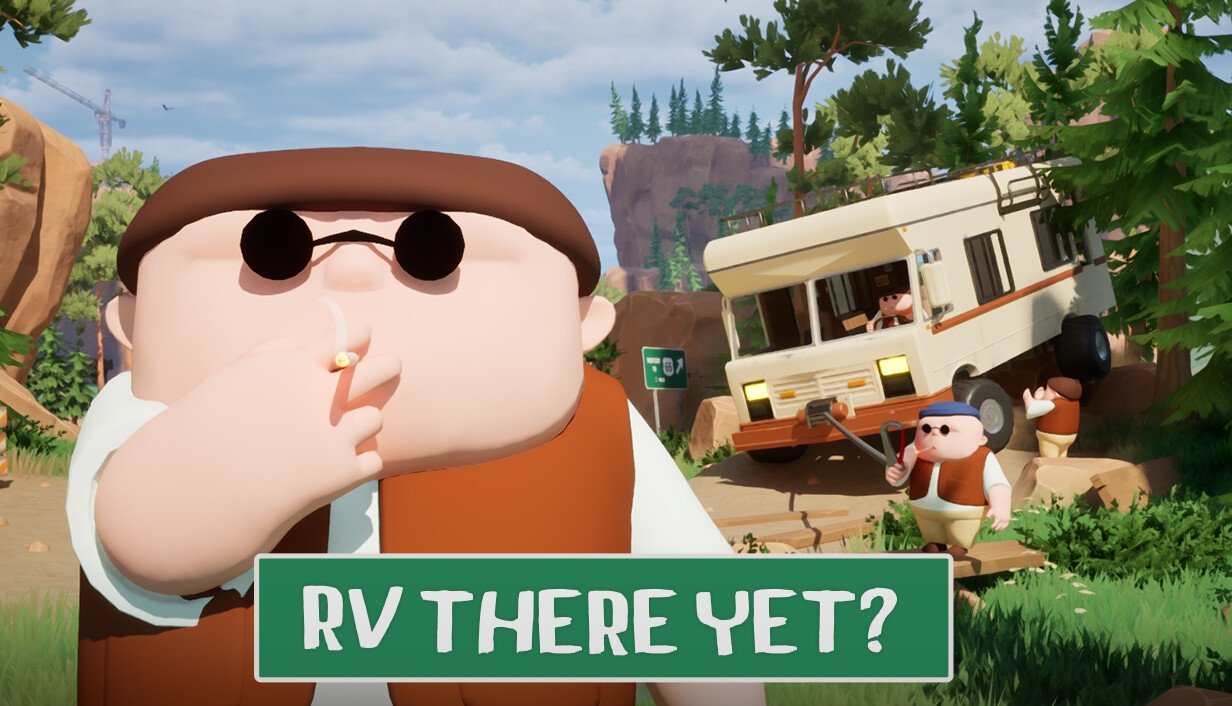
RV There Yet? is possibly the most entertaining game I’ve never played. My vicarious pleasure regarding this title has come exclusively from watching two popular YouTubers, JackFrags and WillFromWork, play through the game over a series of videos. It has been immensely amusing to watch and I have empathised a great deal as the group of four players has struggled with the game’s unpredictable mechanics and their own team’s dynamic. I could go and buy RV There Yet? myself but I doubt if I would ever have a gaming experience anywhere close to what I’ve watched online recently. So in some respects watching these videos has been an interesting alternative as I’ve been entertained, which ultimately is the point of video games. Perhaps there is a deeper philosophical point here that the game developers should reflect upon, as they’ve lost a potential sale. However, that is separate discussion for another day.

I recently watched a video on Patreon by someone who I actively support as a “content creator” and whose work I enjoy. I shall provide no more detail regarding their identity because they may not want their work referenced with regard to what I am going to say. During the course of their video they briefly referenced the work put into promoting a podcast they are currently producing and the relatively low audience that it has garnered so far. The comments were an aside and most certainly not said with any sense of self-pity. They were simply a statement of fact. Furthermore, I suspect they are far from unique and similar sentiments have been expressed in one way or another by anyone who has created something the published it online, only for it to be lost among the greater white noise” of the wider internet.
Have you noticed how politicians, pundits and media commentators will often throw around phrases and buzzwords when discussing the news and other major political talking points? “Cultural Marxism” and “Metropolitan Elite” are two examples that spring to mind. Often it is clear that the person using these phrases has no idea what they mean or what their provenance is. Perhaps you’ve thought that it would be useful to learn more about these terms or the background behind certain institutions or movements. If this is the case then I wholeheartedly recommend the Origin Story podcast. To quote from their website “What are the real stories behind the most misunderstood and abused ideas in politics? From Conspiracy Theory to Woke to Centrism and beyond, Ian Dunt and Dorian Lynskey dig into the astonishing secret histories of concepts you thought you knew”.
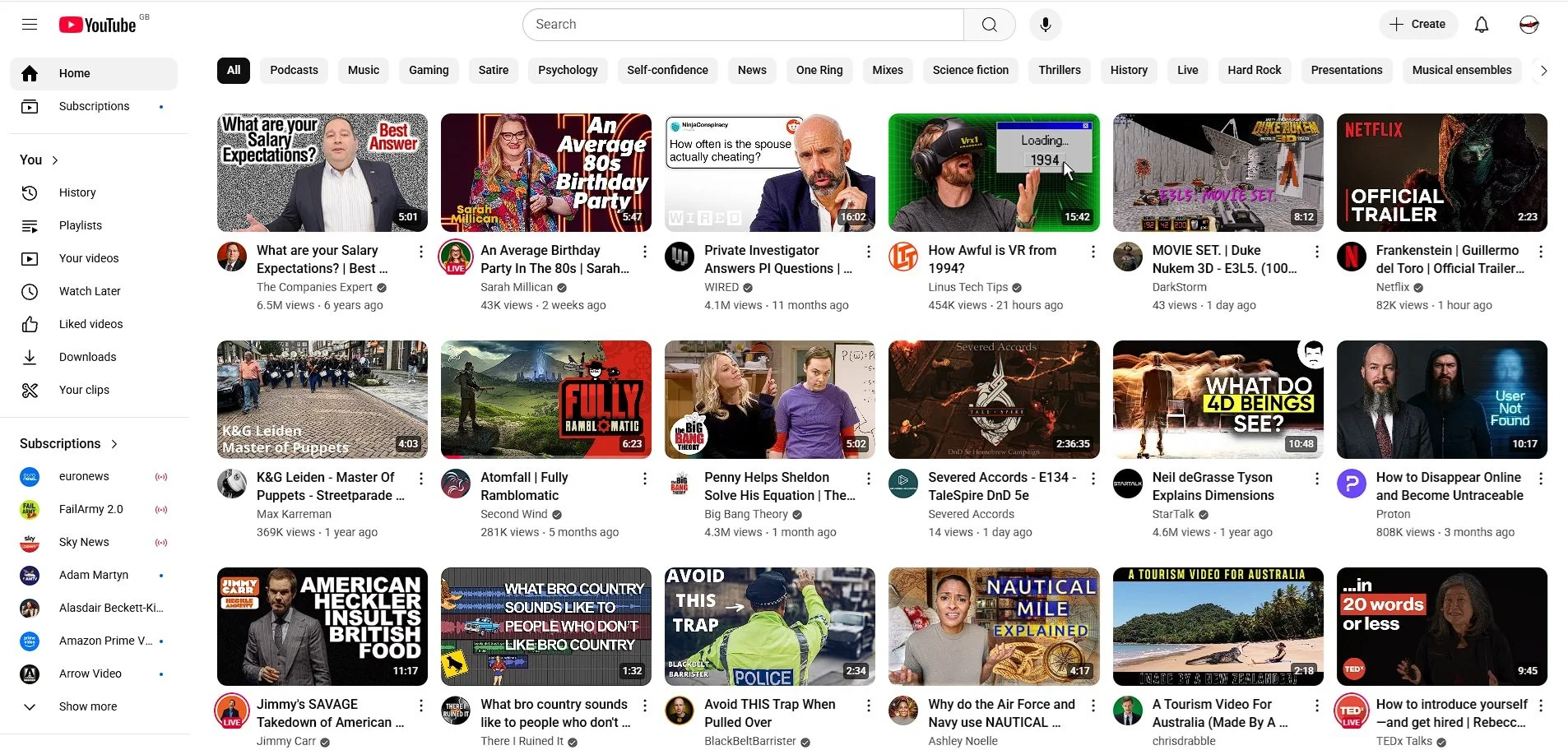
I use a browser extension called Control Panel for YouTube, which allows me to determine who many videos are displayed on my YouTube homepage and to filter the content that is shown. At present it is configured to display rows of six. Something that I have noticed of late, is the amount of videos with hyperbolic titles and thumbnail images created by AI. Both of which are design choices made to increase engagement. Clickbait titles are contrived to meet current SEO optimisation criteria and as such feature more and more in search results. The fact that they frequently have no relation to the subject I am researching, seems to be neither here nor there. The same issues arise with regard to AI generated images, which again frequently have no bearing on the matter. The fact that more and more content creators do this, infers that it works and is now an essential part of the process you must follow to be seen and featured in search results.
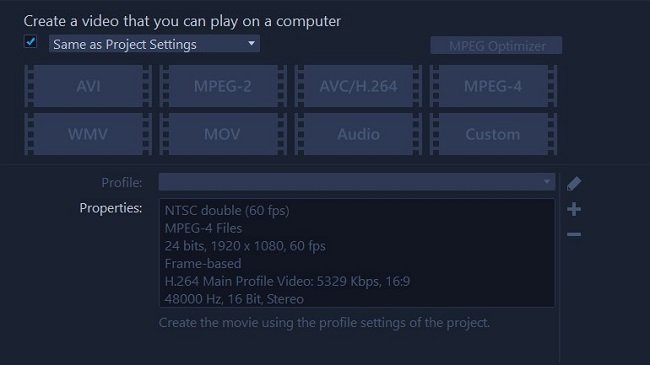
I spent most of this morning and afternoon editing video content I captured while playing Sniper Elite Resistance. I assembled 26 minutes of highlights and then recorded a narration. After adding appropriate branding for Contains Moderate Peril, I then uploaded the finished video to YouTube. Sadly, the picture quality was problematic, often becoming pixelated and blocky when there was rapid movement. The volume of my narration was also too low, so I decided to delete the video from my channel. I was somewhat disappointed by this outcome and initially thought that the day had been a waste of time. However, as I write this post, it becomes very clear that this is just part of the learning curve. I have given some thought to the problem and I believe I have determined why this video was not up to the standard of the previous one. Ultimately, this is an invaluable lesson.
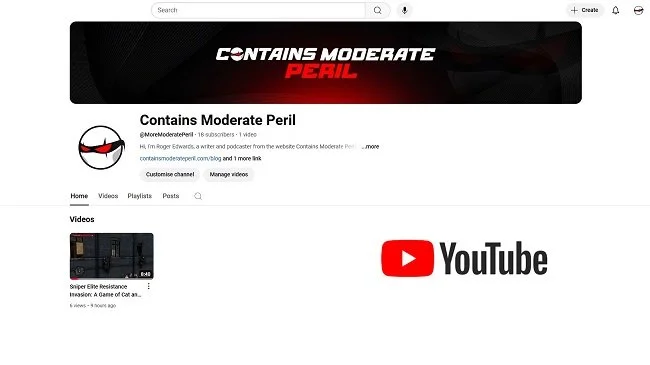
I recently wrote a post about how I wanted to have a go at producing some gaming videos for YouTube. “How hard can it be?” I asked rhetorically, knowing that there would probably be a lot more to the process than meets the eye. Two weeks on and I can report back that there is indeed a learning curve but it is not insurmountable. I managed to figure out how to record a video game, edit it and then add a narration as well as a simple animated logo. Furthermore, I succeeded in doing this without spending a lot of money. I bought some video editing software and a year’s subscription to XSplit Broadcaster but got a really good deal on both. In total I paid £41, which is very reasonable. Hence yesterday, I posted my first video on the officially relaunched Contains Moderate Peril YouTube channel.
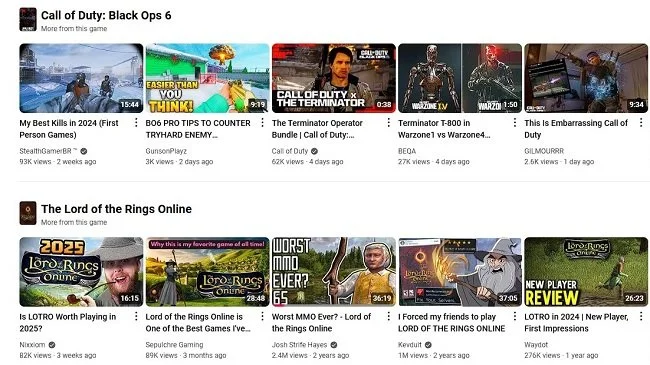
The notion of live streaming or recording video game playthroughs is now a clearly established part of popular culture. It is something you can do while sitting on your sofa, watching TV in your lounge. A decade ago, people were far more sceptical about it and would scratch their head and ask “why would you want to watch someone else play a game”? Yet here we are in 2025 and 15% of YouTube content is about video games. Furthermore 20 out of the top 100 content creators are producing video game related material. As of last year, YouTube videos about games were generating 6 billion monthly views, on average. Where there are views, there’s advertising. Hence there’s the potential to make a lot of money, which only encourages further growth.

I am not going to discuss the history of internet advertising, or the moral or ethical concerns that go hand in hand with it. There is a basic argument that people who make content want to get paid and I suspect that most people appreciate this, at least in principle. However, there is a counter argument regarding the way advertising is managed. For example, how many adverts is acceptable during the course of say a live stream of a YouTube video. Also there is a discussion to be had about what kind of adverts are shown and whether they need to be integrated into the content in a more equitable manner. However, that is not what this post is about. I am going to start from the logical and honest position that many of us use ad blockers. We do so because we find advertising crass and invasive. I guess there is a degree of cognitive dissonance regarding their use, versus the ethics of the matter but humans are like that. We are contradictory by nature.

Another week, another internet “drama”. I don’t actively seek this shit out. It just bleeds through into my social media timeline with tedious regularity. This latest debacle is regarding the popular (by which I mean over 15 million subscribers) technology product review YouTube channel, Linus Tech Tips. There have been claims of factual inaccuracies in recent reviews and a focus in getting content produced quickly at the expense of quality. Then a former employee made allegations of a toxic work environment and sexual harassment. As a result there has been a great deal of “online outrage” from those who assumed up until now that Linus Tech Tips was a bastion of integrity. Then there was the formal reply video from Linus Tech Tips about the allegations, which made matters worse by joking about the situation and running ads. As a result the YouTube channel has suspended video production for a week. You can read more details on this situation on the Forbes website.
I was perusing the various YouTube channels that I subscribe to recently, enjoying a broad range of high quality content, when I suddenly realised that the majority of them had some sort of optional monetisation scheme associated with them. By realised I mean that it suddenly clicked with me that so many people are trying to raise funds to pay for their production costs. It’s certainly something I can identify with. I’ve been running a blog since 2007 and even that can be a money pit. There’s domain registrations, hosting costs, design work etc. It was even more expensive when I was producing a podcast. That incurred further hosting expenses and then there was the hardware to buy. So I fully appreciate the situation that many YouTubers find themselves in. They spend their own precious time and money creating quality material that many consume assuming that it is all just “free”.
Experimenting With YouTube Part 1
I recently wrote a post about how I wanted to have a go at producing some gaming videos for YouTube. “How hard can it be?” I asked rhetorically, knowing that there would probably be a lot more to the process than meets the eye. Two weeks on and I can report back that there is indeed a learning curve but it is not insurmountable. I managed to figure out how to record a video game, edit it and then add a narration as well as a simple animated logo. Furthermore, I succeeded in doing this without spending a lot of money. I bought some video editing software and a year’s subscription to XSplit Broadcaster but got a really good deal on both. In total I paid £41, which is very reasonable. Hence yesterday, I posted my first video on the officially relaunched Contains Moderate Peril YouTube channel.
I recently wrote a post about how I wanted to have a go at producing some gaming videos for YouTube. “How hard can it be?” I asked rhetorically, knowing that there would probably be a lot more to the process than meets the eye. Two weeks on and I can report back that there is indeed a learning curve but it is not insurmountable. I managed to figure out how to record a video game, edit it and then add a narration as well as a simple animated logo. Furthermore, I succeeded in doing this without spending a lot of money. I bought some video editing software and a year’s subscription to XSplit Broadcaster but got a really good deal on both. In total I paid £41, which is very reasonable. Hence yesterday, I posted my first video on the officially relaunched Contains Moderate Peril YouTube channel.
Like a lot of people, I captured my video game material using OBS Studio. This was easy to configure as there are plenty of YouTube videos on this subject. Deciding what software to use for editing was a little trickier. I didn’t want to use a beast such as DaVinci Resolve as it smacks of using a sledgehammer to crack a walnut. Eventually I read a comparison review over at TechRadar and Corel VideoStudio 2023 seemed to fit the scope of my project. It has proved easy to learn and is well supported. All went well to begin with. I edited an 18 minute video down to 8. However, when I started adding more material, I noticed that the sound started getting out of sync, leading to a crash course in the iniquities of video content recorded with a variable frame rate. Remuxing offered a solution but added an extra layer of work. So I switched from OBS Studio, to Bandicam (which stuttered) to XSplit Broadcaster.
The thing about making videos for YouTube, is that it’s only half of the work. Uploading the finished MP4 file and having to input all the metadata required for posting, is a complex task. There is an element of “voodoo” associated with choosing a title and a thumbnail image, along with selecting the right keywords and writing a description that will potentially intrigue viewers. If you’re looking to monetise your YouTube channel (which mercifully, I am not) then there is a lot of pressure to get this process right. Like writing online, I can see how easy it is to start obsessing about numbers and traffic. However, YouTube is already an oversubscribed space so it is best to put thoughts of “global domination” out of your mind. I have and I am just pleased that I managed to produce something.
I guess the question remains, am I going to post YouTube videos regularly? Not exactly. I am going to try to do a few more and see if I can learn how to refine my presentation and make the production process more efficient. If that can be done I don’t see why I can’t publish something once a month? But in true blogger style, I reserve the right to get bored and lose interest, or to have unforeseen complexities in my life which prevent me from doing anything online. It has been fun learning something new. I like to challenge myself and think it important to keep the brain ticking over, especially as you get older. This project has also been a timely reminder of how hard some YouTube content creators work. Especially those who clearly do it as a means of income. It is far more labour intensive than blogging.
RV There Yet? is possibly the most entertaining game I’ve never played. My vicarious pleasure regarding this title has come exclusively from watching two popular YouTubers, JackFrags and WillFromWork, play through the game over a series of videos. It has been immensely amusing to watch and I have empathised a great deal as the group of four players has struggled with the game’s unpredictable mechanics and their own team’s dynamic. I could go and buy RV There Yet? myself but I doubt if I would ever have a gaming experience anywhere close to what I’ve watched online recently. So in some respects watching these videos has been an interesting alternative as I’ve been entertained, which ultimately is the point of video games. Perhaps there is a deeper philosophical point here that the game developers should reflect upon, as they’ve lost a potential sale. However, that is separate discussion for another day.
I recently watched a video on Patreon by someone who I actively support as a “content creator” and whose work I enjoy. I shall provide no more detail regarding their identity because they may not want their work referenced with regard to what I am going to say. During the course of their video they briefly referenced the work put into promoting a podcast they are currently producing and the relatively low audience that it has garnered so far. The comments were an aside and most certainly not said with any sense of self-pity. They were simply a statement of fact. Furthermore, I suspect they are far from unique and similar sentiments have been expressed in one way or another by anyone who has created something the published it online, only for it to be lost among the greater white noise” of the wider internet.
Have you noticed how politicians, pundits and media commentators will often throw around phrases and buzzwords when discussing the news and other major political talking points? “Cultural Marxism” and “Metropolitan Elite” are two examples that spring to mind. Often it is clear that the person using these phrases has no idea what they mean or what their provenance is. Perhaps you’ve thought that it would be useful to learn more about these terms or the background behind certain institutions or movements. If this is the case then I wholeheartedly recommend the Origin Story podcast. To quote from their website “What are the real stories behind the most misunderstood and abused ideas in politics? From Conspiracy Theory to Woke to Centrism and beyond, Ian Dunt and Dorian Lynskey dig into the astonishing secret histories of concepts you thought you knew”.
I use a browser extension called Control Panel for YouTube, which allows me to determine who many videos are displayed on my YouTube homepage and to filter the content that is shown. At present it is configured to display rows of six. Something that I have noticed of late, is the amount of videos with hyperbolic titles and thumbnail images created by AI. Both of which are design choices made to increase engagement. Clickbait titles are contrived to meet current SEO optimisation criteria and as such feature more and more in search results. The fact that they frequently have no relation to the subject I am researching, seems to be neither here nor there. The same issues arise with regard to AI generated images, which again frequently have no bearing on the matter. The fact that more and more content creators do this, infers that it works and is now an essential part of the process you must follow to be seen and featured in search results.
I spent most of this morning and afternoon editing video content I captured while playing Sniper Elite Resistance. I assembled 26 minutes of highlights and then recorded a narration. After adding appropriate branding for Contains Moderate Peril, I then uploaded the finished video to YouTube. Sadly, the picture quality was problematic, often becoming pixelated and blocky when there was rapid movement. The volume of my narration was also too low, so I decided to delete the video from my channel. I was somewhat disappointed by this outcome and initially thought that the day had been a waste of time. However, as I write this post, it becomes very clear that this is just part of the learning curve. I have given some thought to the problem and I believe I have determined why this video was not up to the standard of the previous one. Ultimately, this is an invaluable lesson.
I recently wrote a post about how I wanted to have a go at producing some gaming videos for YouTube. “How hard can it be?” I asked rhetorically, knowing that there would probably be a lot more to the process than meets the eye. Two weeks on and I can report back that there is indeed a learning curve but it is not insurmountable. I managed to figure out how to record a video game, edit it and then add a narration as well as a simple animated logo. Furthermore, I succeeded in doing this without spending a lot of money. I bought some video editing software and a year’s subscription to XSplit Broadcaster but got a really good deal on both. In total I paid £41, which is very reasonable. Hence yesterday, I posted my first video on the officially relaunched Contains Moderate Peril YouTube channel.
The notion of live streaming or recording video game playthroughs is now a clearly established part of popular culture. It is something you can do while sitting on your sofa, watching TV in your lounge. A decade ago, people were far more sceptical about it and would scratch their head and ask “why would you want to watch someone else play a game”? Yet here we are in 2025 and 15% of YouTube content is about video games. Furthermore 20 out of the top 100 content creators are producing video game related material. As of last year, YouTube videos about games were generating 6 billion monthly views, on average. Where there are views, there’s advertising. Hence there’s the potential to make a lot of money, which only encourages further growth.
I am not going to discuss the history of internet advertising, or the moral or ethical concerns that go hand in hand with it. There is a basic argument that people who make content want to get paid and I suspect that most people appreciate this, at least in principle. However, there is a counter argument regarding the way advertising is managed. For example, how many adverts is acceptable during the course of say a live stream of a YouTube video. Also there is a discussion to be had about what kind of adverts are shown and whether they need to be integrated into the content in a more equitable manner. However, that is not what this post is about. I am going to start from the logical and honest position that many of us use ad blockers. We do so because we find advertising crass and invasive. I guess there is a degree of cognitive dissonance regarding their use, versus the ethics of the matter but humans are like that. We are contradictory by nature.
Another week, another internet “drama”. I don’t actively seek this shit out. It just bleeds through into my social media timeline with tedious regularity. This latest debacle is regarding the popular (by which I mean over 15 million subscribers) technology product review YouTube channel, Linus Tech Tips. There have been claims of factual inaccuracies in recent reviews and a focus in getting content produced quickly at the expense of quality. Then a former employee made allegations of a toxic work environment and sexual harassment. As a result there has been a great deal of “online outrage” from those who assumed up until now that Linus Tech Tips was a bastion of integrity. Then there was the formal reply video from Linus Tech Tips about the allegations, which made matters worse by joking about the situation and running ads. As a result the YouTube channel has suspended video production for a week. You can read more details on this situation on the Forbes website.
I was perusing the various YouTube channels that I subscribe to recently, enjoying a broad range of high quality content, when I suddenly realised that the majority of them had some sort of optional monetisation scheme associated with them. By realised I mean that it suddenly clicked with me that so many people are trying to raise funds to pay for their production costs. It’s certainly something I can identify with. I’ve been running a blog since 2007 and even that can be a money pit. There’s domain registrations, hosting costs, design work etc. It was even more expensive when I was producing a podcast. That incurred further hosting expenses and then there was the hardware to buy. So I fully appreciate the situation that many YouTubers find themselves in. They spend their own precious time and money creating quality material that many consume assuming that it is all just “free”.
Diary of a Podcaster Part 19
I regularly receive random emails addressed to such august bodies as “the Contains Moderate Peril team”. They always raise a wry smile. Like there’s a team. That implies an organisation, structure and even a budget. As opposed to just me, screaming into the void and pouring money into a financial black hole. I don’t resent such emails. People are just trying to earn a crust, I guess. The only thing about them that frustrates me, is they never address me by name. A cursory glance at the “about” page of the website would provide them with my personal details. So I just delete them and think no more about them. Today I received one that did more than make me smile. In fact I laughed out loud and heartily. The email started with “Dear Burton”. Someone had found a few old episodes of the Burton and Scrooge podcast and had assumed this was indeed my real identity.
I regularly receive random emails addressed to such august bodies as “the Contains Moderate Peril team”. They always raise a wry smile. Like there’s a team. That implies an organisation, structure and even a budget. As opposed to just me, screaming into the void and pouring money into a financial black hole. I don’t resent such emails. People are just trying to earn a crust, I guess. The only thing about them that frustrates me, is they never address me by name. A cursory glance at the “about” page of the website would provide them with my personal details. So I just delete them and think no more about them. Today I received one that did more than make me smile. In fact I laughed out loud and heartily. The email started with “Dear Burton”. Someone had found a few old episodes of the Burton and Scrooge podcast and had assumed this was indeed my real identity.
The email itself was about outsourcing podcast post production. I broke protocol and actually replied to this one, as they had unknowingly amused me. I politely declined their services, pointing out that the Burton and Scrooge podcast had ceased production over 8 years ago. But it certainly got me thinking about how the nature of podcast production has changed over the years. When I started producing podcasts in 2010, it was very much a case of flying by the seat of your pants. I had a cheap, desktop microphone which sounded terrible. Everyone recorded their own audio which was then sent to me and I tried to cobble it together using Audacity. It was very rough around the edges but it was that lack of formality and quality which made it exciting and different. Now even a small podcast can outsource its post production, if it sees fit. The cost is that low.
That “wild west” period of small, amateur podcasts seems pretty much over. Everything is slick once again. Podcasts for a while supplanted traditional media but the corporations and professional companies simply moved into the podcast market and slowly formalised everything once again. Like the media version of the Borg. It’s a shame but unsurprising. Capitalism hates anything that it can’t control and monetise. But enough of this melancholic, introspection. It was nice to have been reminded of the Burton and Scrooge podcast. It was a fun time and both I and my co-host Brian really enjoyed having a weekly show where we could literally talk about anything. That is a rare opportunity these days, where everything is quantified and optimised to appeal to a predetermined market. As for being addressed as Burton, it just makes me want to podcast again.
The initial podcast boom, which began circa 2005, started as an audio only medium. One of the reasons podcasting became so popular, especially among the fan community, was that you could get away with relatively low production standards. Anyone who had access to a basic microphone and a PC, could produce a show and upload it to iTunes, which was the primary platform at the time. Listeners were forgiving back then. Twenty years later and podcasting has been on a tempestuous journey. It started with the medium being accessible and democratised, sustaining a rich and diverse fan community via non-professional productions. However, slowly and inevitably it has been assimilated by corporate interests. Fan podcasts have given way to podcast production companies. The small, micro-budget, indie show has effectively been thrown out of their own party. Such shows still exist but they struggle to be heard.
I regularly receive random emails addressed to such august bodies as “the Contains Moderate Peril team”. They always raise a wry smile. Like there’s a team. That implies an organisation, structure and even a budget. As opposed to just me, screaming into the void and pouring money into a financial black hole. I don’t resent such emails. People are just trying to earn a crust, I guess. The only thing about them that frustrates me, is they never address me by name. A cursory glance at the “about” page of the website would provide them with my personal details. So I just delete them and think no more about them. Today I received one that did more than make me smile. In fact I laughed out loud and heartily. The email started with “Dear Burton”. Someone had found a few old episodes of the Burton and Scrooge podcast and had assumed this was indeed my real identity.
I recently decided I’d had enough of the endless deliberation and procrastination and so I started producing a weekly podcast again. As of today the second episode of Season 10 of the Contains Moderate Peril podcast is available on all major platforms. I must admit, although I was confident that a few people would listen to the show, I was completely taken aback by the overall reaction. The Contains Moderate Peril podcast was warmly welcomed back by previous listeners on social media and the statistics for the first show have been most positive. For myself and Brian, recording the show is like putting on a comfortable pair of shoes. Last night’s recording went okay and I think after a few more episodes, the recording and editing process will be an efficient process. Keeping each episode to an hour or under means that the conversation stays on point.
My personal podcast journey started back in 2010 when I effectively invited myself onto the Mordor or Bust podcast. The three of us who were involved in the production of that show were learning as we went along. I recently listened to an old episode and despite our enthusiasm, it is quite rough around the edges from a technical perspective. I think that the biggest mistake that I made at the time was not investing in a better quality microphone. I sound like I’m at the bottom of a well. It’s hardly surprising as I was using a very cheap analog desk microphone which I think only cost a few pounds from PC World. Roll on eleven years and I’ve been invited to be a guest on the Beyond Bossfights podcast. It’s nice to be back in the saddle again, so to speak. Up until now, I’ve been using my Razer gaming headset for any previous podcast recordings but I’ve decided to take the opportunity to overhaul my technical setup.
Life is often about the things we’d like to do or wished we had done, rather than the things we’ve actually achieved. My last post in this blog series was back in 2nd October 2018 and the last podcast that I published was in January 2019. Since then most attempts to produce more content of this kind have come to nought, as spare time for both recording and editing have been in short supply. However, I did manage to record some material on the 22nd of December with my long-time co-host Brian. The idea was to release the finished podcast as a surprise show at the end of the year. However, due to real world commitments, that deadline has not been met. Now there’s a surprise. I do intend to finish editing the show and may add some extra material to make it a little more topical. But overall, I am not too upset by this delay, because in the process of organising this podcast, I discovered a quick and convenient means of recording via Discord. Something that has been seen as Holy Grail of podcasting over the years.
I’ve been pondering a new podcast project for a while, since Contains Moderate Peril ended a year ago. As I’ve discussed in previous posts, I want to create a movie-based show and have been considering of late exactly what sort of format to adopt. I don’t go to the cinema often enough these days to produce a contemporary review orientated podcast, plus I don’t find a lot of mainstream releases to be sufficiently engaging. Despite looking and pursuing discrete enquiries, I haven’t been able to find a co-host who is sufficiently knowledgeable, motivated or available to do a regular show producing the audio equivalent of long form criticism of films and the movie industry. So, it’s been a bit of a chore to try and work out which niche to explore. However, I have now a clear idea of what I want to do.
Today I did a little blog housekeeping. I’ve reposted the last five episodes of the Contains Moderate Peril on the podcast page, now that previous hosting account has been closed and the RSS feed is defunct. The files are held locally and can either be played via the embedded player or downloaded manually. There are also two episodes of the Burton & Scrooge Podcast still available on SoundCloud for posterity. The podcast page and selection of episodes available are for reference and as an example of my podcasting back catalogue, so to speak. I may not be actively creating content of this kind at present, but I see no reason not to promote my experience in the field. If circumstances change in the future, there may be resumption of service.
I made a hard decision today. I cancelled my Podbean subscription and have effectively closed the Contains Moderate Peril podcast. Despite relaunching the show last September, I simply haven’t had the time to collate content for discussion or organise recording sessions with co-hosts. Hence, we are now two months into 2018 and a new show has not yet been produced. Furthermore, the listener numbers for the episode posted between September and December last year were disappointing. Upon mature reflection, I have reached the conclusion that the podcast peaked in 2014 when we had a strong and established audience. Rather than chase my own tail trying to recapture something that may well have been a product of circumstance, it seems prudent to finally draw a line under this show. I’m a little sad about this situation, as it does feel like the end of a personal era, but it is time to move on.
Ever had what you thought was a great idea for a podcast that looked good on paper but turned into something quite different, once you started recording? Well I had that experience on Sunday evening and today I am dealing with the results. It all started with an innocuous Twitter conversation (don’t many things I hear you say) which highlighted a minor cultural difference between the US and the UK. Having recorded with an American co-host for many years this is a common occurrence, so I decided to make it the theme of the next Contains Moderate Peril podcast. I initially thought of several fun examples that could be discussed; the British obsession with the weather, cheese-rolling and Morris dancing. However, rather than take a scattergun approach, I decided to list specific categories in the show notes. Subjects such as school, work, food, social customs and public holidays were added for discussion and I believe that is where thing started to go wrong.
Podcasts are becoming an invaluable medium for the analysis and discussion of niche interests and bespoke subjects. Many of the shows that I regularly listen to bring professional quality documentary skills to bear on unique and varied areas of fandom. More and more podcasts are being made by informed and intelligent fans, offering in-depth material rather than just light weight banter. Simply put, I am spoilt for choice. Therefore, it is essential to have a suitable podcast management app to stay on top of such quality entertainment. Something that allows me to curate and organise those shows that I currently enjoy, as well as providing recommendations for comparable material that I may wish to subscribe to. For several years I’ve been using Podcast Addict on my Android devices, although I’ve struggled to find something comparable for my PC.
Last night, myself, Hannah and Chris (AKA Jaedia and Wolfyseyes) had an especially productive recording session. We managed to produce two hours of material in total and I’m confident that it can be whittled down into a coherent and enjoyable ninety-minute episode. What I especially enjoyed about this podcast recording was buoyant atmosphere and the flow of the conversation. I felt that we explored the various topics well and that the discussion felt natural. Ultimately, it will be the listeners who’ll determine whether this is the case or not but from my perspective the recording went well because the guests were a good choice. If you are pursuing a podcast format that has multiple hosts or regularly features guests, then it is important for there to be a rapport between all involved.
As I surmised, in its current state Squarespace has proven an inadequate host for my current podcast. After exchanging several emails with Apple support, I was informed that “the server for your episodes does not support HTTP HEAD requests. To enable streaming playback of episodes, ensure the hosting server allows HTTP HEAD requests and has byte-range requests enabled”. To cut a long story short, there is no scope for me to alter any of these things at present within the Squarespace dashboard. Nor did I want the work involved in using a third-party feed managing service such as FeedBurner. So, I decided to open up an account with a commercial hosting service. After some research, I determined that PodBean could cater for all my needs and at a competitive price. Submitting the new RSS feed was easy and Apple approved the podcast within 36 hours. As of today, the Contains Moderate Peril podcast is back on iTunes.
Whenever I encounter a word or term that I’m not familiar with, I will usually Google it. That’s the way I’m wired. I prefer to “know” rather than “not know”. However, it is not the concept of continuous self-improvement that I wish to discuss in this post but something else. Namely sociolinguistics. Earlier today I saw someone mention vocal fry on Twitter. I had no idea what that was so I checked on Wikipedia, watched some You Tube videos and finally read some newspaper articles. An hour later I was aware of not only vocal fry, but run-ons, uptalk, glottal Ts and the fact that the way we speak has a major impact upon our lives, just like education and class. According to sociolinguistics, the manner in which you speak has a major impact on the way you are perceived by others. Sadly, like so many other social markers, it can be used in a discriminatory fashion.
Back in April I decided to relaunch the Contains Moderate Peril podcast for reasons of brand continuity. At the time, I was hoping to get back in to the podcasting saddle and return to producing weekly shows. However, the recording session was fraught with technical problems with Zencastr crashing regularly. I was left with nine separate audio tracks that weren’t in sync which made editing a major problem. There then followed a wealth or real-world issues that I had to address that meant for the next three months the podcast was put on hold. Finally, at the beginning of August I managed to complete the post production work on the show and publish it via Squarespace. I was hoping that using this existing website as a host for the show would save some money and reduce the work load. However, like most plans, it didn’t exactly work out that way
Professor Beej recently tweeted about consolidating all his various blogs and online activities into a single entity. I naturally agreed with him and encouraged him to do so because I did something similar back in 2010. I had a gaming blog and a site for movies reviews plus a podcast to manage. It ultimately made sense to put all these thing in one place, despite their respective differences because the common factor in all of them was me. To coin a rather nauseating phrase “you are your own brand”. This is how Contains Moderate Peril came to be. In recent years, I’ve embraced this concept further and will now write or podcast about any subject that really takes my fancy. I try to stick to the things that I like but from time to time, I do stray in to wider real world subjects.
Although we at the Burton & Scrooge podcast are not driven by numbers, it would be nice to see the audience grow. We seem at present to have plateaued somewhat and maintain a robust but fixed listenership. Currently our back catalogue of shows is available via SoundCloud, iTunes and Stitcher. However it would appear that other directories and aggregation services are available, so it would seem prudent to ensure that we are listed with them. My colleagues tell me that the Google Play Store and iHeartRadio are beneficial to register with. I believe that there may well also be comparable services aimed specifically at the console market. However, as our show is more geared towards PC gaming, I don’t see the need to pursue these.
Over the recent weeks, it’s become increasingly apparent that the two new podcast projects that I’m currently working on are taking too much time to produce. Like many people, my leisure time is a finite commodity. At present I am writing daily, maintaining a presence in two MMOs, as well as trying to keep abreast of several TV shows and a growing list of movies. So far, despite a lot of work, the new projects have not yielded any satisfactory results. So, rather than produce nothing, I deemed it prudent to return to my previous podcast creation. Thus, the Burton and Scrooge Podcast has been reinstated and been given a production makeover. At present, both Brian and I are well disposed towards gaming and other pop culture subjects, so have plenty to discuss. We always find are recordings are more rigorous when we are enthused, as opposed to mildly interested.
Last weekend, myself, Syl, Braxwolf and Brian recorded an episode of the TGEN Tribunal. Being regular podcasters who all know each other, the conversation flowed well and overall there were no major impediments to the discussion. We used Zencastr to record the podcast which has its own inbuilt voice over IP service, so there’s no need for third party programs such as Skype. Zencastr has the added benefit of recording each participant on a separate audio track, that is then automatically uploaded to a designated Drop Box account. This makes editing in Audacity very easy, as all four audio files are perfectly synchronised. Or at least that’s the theory. The reality can be somewhat different.
A week on from my last post on this subject, I have decided to script the entire of my solo podcast. It won’t be one hundred percent verbatim but I need to get the lion share of my thoughts down prior to recording. I discovered over several recording sessions that I continuously think of additional points to add as I’m speaking. The net result is having to constantly stop and start Audacity, the program I use for recording, as well as having to research extra points on the fly. Again, I was not happy with the finished product as you could frequently hear the hesitation or more to the point, the frustration in my voice. So, I’ve returned to the idea of having well fleshed out notes with some sections such as the introduction, written out in their entirety.
I recently wrote in a blog post that I would be producing a new podcast this year and that Burton & Scrooge Uncut would be taking a break for the immediate future. Well in fact I’ve decided to record two new shows. In the meantime, Brian has already embarked upon his solo project and seems to have found his niche already. I however am currently bogged down in the pre-production process and because the format of the new podcast is different from those I’ve done before, it is proving to be a little more challenging than I initially thought. Since I find writing to be a practical way of ordering my thoughts, I thought I’d keep a podcast diary. I can therefore work through some of the issues that arise as well as produce a blog post, now that I’m back to writing daily.
Evolution of Horror: Podcasting Masterclass
Earlier tonight, I had the pleasure of participating in the Evolution of Horror: Podcasting Masterclass. An online seminar conducted via Zoom. For those who are not familiar with the Evolution of Horror, it is a podcast written and hosted by Mike Muncer along with regular guests. It explores horror cinema in depth, considering the technical, thematic and sociological elements of the genre. Launched in 2017 this independent production has gone from strength to strength, with Mike now producing content for Paramount + and Studio Canal. The masterclass was designed to provide podcasters both old and new with some practical advice and answer some commonly asked questions. Being a fan of Evolution of Horror as well as a former podcaster, I signed up and enjoyed a most informative and enjoyable 90 minute seminar.
Earlier tonight, I had the pleasure of participating in the Evolution of Horror: Podcasting Masterclass. An online seminar conducted via Zoom. For those who are not familiar with the Evolution of Horror, it is a podcast written and hosted by Mike Muncer along with regular guests. It explores horror cinema in depth, considering the technical, thematic and sociological elements of the genre. Launched in 2017 this independent production has gone from strength to strength, with Mike now producing content for Paramount + and Studio Canal. The masterclass was designed to provide podcasters both old and new with some practical advice and answer some commonly asked questions. Being a fan of Evolution of Horror as well as a former podcaster, I signed up and enjoyed a most informative and enjoyable 90 minute seminar.
The Zoom based masterclass was quite an intimate setting. Having all the participants on screen created a very personal atmosphere. Mike is a very confident public speaker who excels at informal but informative discussions. As you’d expect with a masterclass, Mike went through his planning and recording process. How he scripted introductions and wrote shownotes, selected guests according to expertise and the mechanics of recording the show. He also discussed the software and hardware used as well as hosting. There was a particular focus upon finding the right dynamic, tone and niche for your podcast. Mike produced some rather amusing videos about the “do’s and don’ts” of recording a conversation to highlight how you must back up your references, not talk over each other and never assume that listeners have seen the same films that you have.
The masterclass ended with a Q&A which featured a broad range of enquiries from participants. This was in many ways just as informative as the first part of the seminar. It was interesting to see people from existing podcasts still seeking out advice from their peers as well as those who were new to content creation of this kind. I found this to be especially beneficial because I have recently reflected upon the several hundred podcasts that myself and co-host Brian produced between 2010 and 2022. I have wondered whether we made any obvious mistakes in our production or with our approach to making a podcast. Mike seems to have done much that is comparable to what we did, although far more successfully. I certainly feel, on the strength of this masterclass, that I could return to podcasting and produce a new show of an acceptable standard.
Like blogging, podcasting started off as an accessible means of communicating that everyone could participate in. The barriers to entry, both technical and financial, have always been pretty low. Sadly, fan driven podcasting seems to have been overshadowed by a tsunami of corporate content. Some of it is good but not all of it is. Podcasts made by production companies have advertising budgets and hence find it easier to establish themselves. However, the Evolution of Horror has managed to find its audience and gain critical acclaim the old fashioned way. Through word of mouth, building a community and by being very good. If Mike does another masterclass I would certainly recommend it to anyone who produces a podcast or is thinking of doing so. You’ll get honest answers, practical advice and a lot of genuine encouragement. Rare commodities these days.
The initial podcast boom, which began circa 2005, started as an audio only medium. One of the reasons podcasting became so popular, especially among the fan community, was that you could get away with relatively low production standards. Anyone who had access to a basic microphone and a PC, could produce a show and upload it to iTunes, which was the primary platform at the time. Listeners were forgiving back then. Twenty years later and podcasting has been on a tempestuous journey. It started with the medium being accessible and democratised, sustaining a rich and diverse fan community via non-professional productions. However, slowly and inevitably it has been assimilated by corporate interests. Fan podcasts have given way to podcast production companies. The small, micro-budget, indie show has effectively been thrown out of their own party. Such shows still exist but they struggle to be heard.
Last August I listened to The Battersea Poltergeist podcast by Danny Robins and was subsequently introduced to his other production Uncanny. Both are investigations into alleged supernatural events but unlike other shows of this kind, these are far better researched, produced and most importantly even handed. Danny makes a great deal of effort to try and keep a foot in each camp; team believer and team sceptic. Overall these podcast work as they genuinely appeal to multiple audiences and they are not excessively hyperbolic or credulous. A lot of this comes down to Danny’s personality which is upbeat and relatable. Perhaps his greatest strength is being a sympathetic ear to those recounting their experiences. He lightens the mood from time to time with humour when required. He also liberally litters the proceedings with pop culture references. However, he will probe and ask pointed questions but does so in a non-accusatory manner.
Have you noticed how politicians, pundits and media commentators will often throw around phrases and buzzwords when discussing the news and other major political talking points? “Cultural Marxism” and “Metropolitan Elite” are two examples that spring to mind. Often it is clear that the person using these phrases has no idea what they mean or what their provenance is. Perhaps you’ve thought that it would be useful to learn more about these terms or the background behind certain institutions or movements. If this is the case then I wholeheartedly recommend the Origin Story podcast. To quote from their website “What are the real stories behind the most misunderstood and abused ideas in politics? From Conspiracy Theory to Woke to Centrism and beyond, Ian Dunt and Dorian Lynskey dig into the astonishing secret histories of concepts you thought you knew”.
I was unaware of the The Battersea Poltergeist podcast and accompanying online interest during its initial release. Created by Bafflegab Productions and presented by Danny Robins, who is well known in this field with similar shows such as Haunted and Uncanny, it was broadcast on BBC Sounds and BBC Radio 4 between February and March 2021 during lockdown. The Battersea Poltergeist is a documentary of a true story with dramatized re-enactments. The show alternates between interviews, discussions and research into the case with short vignettes from a cast of actors recreating events for dramatic effect. It was released episodically and gained a lot of online and press interest at the time. Hence there were additional episodes interspersed throughout the initial run which provided “case updates” and listener feedback and questions.
I spent most of this morning and afternoon editing video content I captured while playing Sniper Elite Resistance. I assembled 26 minutes of highlights and then recorded a narration. After adding appropriate branding for Contains Moderate Peril, I then uploaded the finished video to YouTube. Sadly, the picture quality was problematic, often becoming pixelated and blocky when there was rapid movement. The volume of my narration was also too low, so I decided to delete the video from my channel. I was somewhat disappointed by this outcome and initially thought that the day had been a waste of time. However, as I write this post, it becomes very clear that this is just part of the learning curve. I have given some thought to the problem and I believe I have determined why this video was not up to the standard of the previous one. Ultimately, this is an invaluable lesson.
I recently wrote a post about how I wanted to have a go at producing some gaming videos for YouTube. “How hard can it be?” I asked rhetorically, knowing that there would probably be a lot more to the process than meets the eye. Two weeks on and I can report back that there is indeed a learning curve but it is not insurmountable. I managed to figure out how to record a video game, edit it and then add a narration as well as a simple animated logo. Furthermore, I succeeded in doing this without spending a lot of money. I bought some video editing software and a year’s subscription to XSplit Broadcaster but got a really good deal on both. In total I paid £41, which is very reasonable. Hence yesterday, I posted my first video on the officially relaunched Contains Moderate Peril YouTube channel.
I regularly receive random emails addressed to such august bodies as “the Contains Moderate Peril team”. They always raise a wry smile. Like there’s a team. That implies an organisation, structure and even a budget. As opposed to just me, screaming into the void and pouring money into a financial black hole. I don’t resent such emails. People are just trying to earn a crust, I guess. The only thing about them that frustrates me, is they never address me by name. A cursory glance at the “about” page of the website would provide them with my personal details. So I just delete them and think no more about them. Today I received one that did more than make me smile. In fact I laughed out loud and heartily. The email started with “Dear Burton”. Someone had found a few old episodes of the Burton and Scrooge podcast and had assumed this was indeed my real identity.
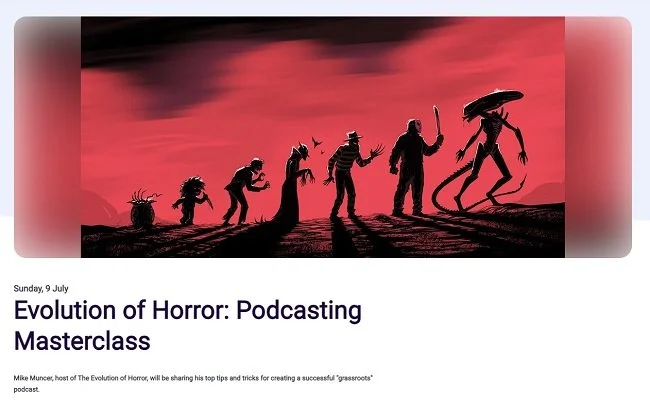
Earlier tonight, I had the pleasure of participating in the Evolution of Horror: Podcasting Masterclass. An online seminar conducted via Zoom. For those who are not familiar with the Evolution of Horror, it is a podcast written and hosted by Mike Muncer along with regular guests. It explores horror cinema in depth, considering the technical, thematic and sociological elements of the genre. Launched in 2017 this independent production has gone from strength to strength, with Mike now producing content for Paramount + and Studio Canal. The masterclass was designed to provide podcasters both old and new with some practical advice and answer some commonly asked questions. Being a fan of Evolution of Horror as well as a former podcaster, I signed up and enjoyed a most informative and enjoyable 90 minute seminar.
About three years ago, I wrote a very similar post to this one. Titled “Ride off into the sunset” it was an account of bloggers leaving or retiring from the community. Especially those who are established and part of the proverbial furniture. I referenced Zubon from Kill Ten Rats as an example and naturally invoked the mantra that nothing remains the same forever. Many of us go through periods of our life where a specific activity or pastime galvanises us into action. We focus on that activity for sometime and it becomes an integral part of our life and even identity. However, eventually we move on usually because such a hobby isn’t sustainable. Modern life makes too many demands upon our time. Plus we all change as individuals. What delights us today may well depress us in a year’s time. This was the thrust of that post and I now find myself in the sad but inevitable situation of writing it again.
I recently decided I’d had enough of the endless deliberation and procrastination and so I started producing a weekly podcast again. As of today the second episode of Season 10 of the Contains Moderate Peril podcast is available on all major platforms. I must admit, although I was confident that a few people would listen to the show, I was completely taken aback by the overall reaction. The Contains Moderate Peril podcast was warmly welcomed back by previous listeners on social media and the statistics for the first show have been most positive. For myself and Brian, recording the show is like putting on a comfortable pair of shoes. Last night’s recording went okay and I think after a few more episodes, the recording and editing process will be an efficient process. Keeping each episode to an hour or under means that the conversation stays on point.
Sometimes in life, you have to stop banging on about what you want to do and just go out and do it. I was thinking, yet again, over the Christmas holidays about how I wanted to get back into podcasting and to create a regular show. Although it is always a pleasure to be a guest on Beyond Bossfights, it is not quite the same as writing and producing your own project. So I decided not to sit around and overthink things but instead to pick a subject as a talking point, start recording and see what happened. As ever, my longstanding co-host Brian was happy to participate and so joined the session. Several hours later, I had a fully edited recording that was good to go. Hence, I am pleased to announce that after a three year hiatus, the Contains Moderate Peril podcast is back. A new episode is now available for download, either via the podcast page of this site or through iTunes and Stitcher.
My personal podcast journey started back in 2010 when I effectively invited myself onto the Mordor or Bust podcast. The three of us who were involved in the production of that show were learning as we went along. I recently listened to an old episode and despite our enthusiasm, it is quite rough around the edges from a technical perspective. I think that the biggest mistake that I made at the time was not investing in a better quality microphone. I sound like I’m at the bottom of a well. It’s hardly surprising as I was using a very cheap analog desk microphone which I think only cost a few pounds from PC World. Roll on eleven years and I’ve been invited to be a guest on the Beyond Bossfights podcast. It’s nice to be back in the saddle again, so to speak. Up until now, I’ve been using my Razer gaming headset for any previous podcast recordings but I’ve decided to take the opportunity to overhaul my technical setup.

Back in 2010 there was a video game podcast boom, especially with shows driven by MMORPG fandom. Hence, in a fit of hubris, I decided to add my voice to the growing conversation. Or alternatively jumped on the bandwagon, depending upon your point of view. The accessibility of the tools to create and distribute a podcast eliminated the traditional barriers to producing such material. Technically, the entire process of making a podcast remains quite simple. You record, edit, upload and promote. The quality of the podcast comes down to two factors. Your content and technical presentation. In this post I’d like to focus upon the latter. Podcasts are by their very nature, an audio medium, so it is important that those speaking are recorded clearly. Yes, this post is about microphones. How they can make or break a podcast (or live stream) and that they’re my new fixation.

Back in July 2014, a small group of podcasters banded together to launch The Gaming and Entertainment Network, a website which aggregated the content of eight independently produced shows. This eclectic group of podcasts covered a range of subjects such as gaming, movies, TV, hats and bacon as well as other aspects of popular culture. The project was conceived and implemented by Braxwolf from the popular blog Gaming Conversations. It was designed to raise awareness of the respective shows, as well promote group collaboration between the content creators. In addition to the website, TGEN (as it was abbreviated to) also had a presence on twitter, Facebook and Anook ensuring that the network was represented on all popular social media. Initially 8 podcasts participated in the project. Aggrochat, Battle Bards, Beyond Bossfights, Cat Context, Contains Moderate Peril, Couch Podtatoes, Massive Failure and Roleplay Domain.
Life is often about the things we’d like to do or wished we had done, rather than the things we’ve actually achieved. My last post in this blog series was back in 2nd October 2018 and the last podcast that I published was in January 2019. Since then most attempts to produce more content of this kind have come to nought, as spare time for both recording and editing have been in short supply. However, I did manage to record some material on the 22nd of December with my long-time co-host Brian. The idea was to release the finished podcast as a surprise show at the end of the year. However, due to real world commitments, that deadline has not been met. Now there’s a surprise. I do intend to finish editing the show and may add some extra material to make it a little more topical. But overall, I am not too upset by this delay, because in the process of organising this podcast, I discovered a quick and convenient means of recording via Discord. Something that has been seen as Holy Grail of podcasting over the years.
As part of the Blaugust Festival of Blogging, I thought I’d take the time to promote some of the content creators whose work I enjoy. Despite all the white noise, click bait and snake oil salesmen, there is still a wealth of good material to be found online, be it blogs, podcasts, You Tube channels or streamers. Most of what I currently enjoy, I discovered through word of mouth. I feel more disposed towards trusting the views and opinions of friends than I do of “recommendations” made by Google and You Tube, driven by their “questionable” algorithms. These are often determined by key words and have no ability to ascertain quality. So here are a mixture of You Tube channels, podcasts and blogs that I wholeheartedly recommend. Between them they cover such subjects as movies, gaming, comedy and history. Feel free to leave comments about my choices and share your own recommendations.
I’ve been pondering a new podcast project for a while, since Contains Moderate Peril ended a year ago. As I’ve discussed in previous posts, I want to create a movie-based show and have been considering of late exactly what sort of format to adopt. I don’t go to the cinema often enough these days to produce a contemporary review orientated podcast, plus I don’t find a lot of mainstream releases to be sufficiently engaging. Despite looking and pursuing discrete enquiries, I haven’t been able to find a co-host who is sufficiently knowledgeable, motivated or available to do a regular show producing the audio equivalent of long form criticism of films and the movie industry. So, it’s been a bit of a chore to try and work out which niche to explore. However, I have now a clear idea of what I want to do.
I have no problems finding podcasts and You Tube channels that explore the subjects that I like. It’s determining which ones are any good that is the real trick and the only way to do this is to sit down and listen or watch them. Sometimes you need to give two or three episodes a go before you can truly determine if a show is for you. So, I thought it may be useful to share another small selection of the content that I am currently enjoying, so you don’t have to wade through quite so much “white noise” that fills the internet. I’ve made a conscious decision to select a broader spectrum of material and not to focus just on gaming. All the shows recommended are freely available although you can support the content creators if you wish to. Feel free to leave comments on the titles listed and share your own recommendations.
Today I did a little blog housekeeping. I’ve reposted the last five episodes of the Contains Moderate Peril on the podcast page, now that previous hosting account has been closed and the RSS feed is defunct. The files are held locally and can either be played via the embedded player or downloaded manually. There are also two episodes of the Burton & Scrooge Podcast still available on SoundCloud for posterity. The podcast page and selection of episodes available are for reference and as an example of my podcasting back catalogue, so to speak. I may not be actively creating content of this kind at present, but I see no reason not to promote my experience in the field. If circumstances change in the future, there may be resumption of service.
I made a hard decision today. I cancelled my Podbean subscription and have effectively closed the Contains Moderate Peril podcast. Despite relaunching the show last September, I simply haven’t had the time to collate content for discussion or organise recording sessions with co-hosts. Hence, we are now two months into 2018 and a new show has not yet been produced. Furthermore, the listener numbers for the episode posted between September and December last year were disappointing. Upon mature reflection, I have reached the conclusion that the podcast peaked in 2014 when we had a strong and established audience. Rather than chase my own tail trying to recapture something that may well have been a product of circumstance, it seems prudent to finally draw a line under this show. I’m a little sad about this situation, as it does feel like the end of a personal era, but it is time to move on.
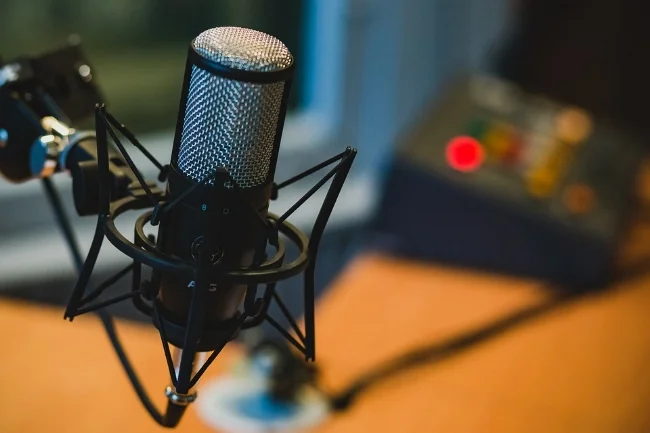
2017 didn’t quite go to plan with regard to my personal podcast output. Brian and I decided to stop producing the Burton & Scrooge Podcast and return to creating material under the Contains Moderate Peril brand. This was a good idea in so far as consolidation, but it was ill timed as both of us were somewhat fatigued with podcasting per se. Ultimately Brian decided to take a break and pursue some projects of his own. I decided to push on with podcasting in my usual idiom and I was pleased with the three new shows that were produced. Sean, Brax, Jaedia and Wolfy were extremely obliging and great guests, but ultimately my schedule just couldn’t sustain a regular show. Hence, I re-released some “classic” shows to fill the gaps in the run up to Christmas. As a result of all these changes and the delays, the overall numbers for the show have been disappointing. Although statistics are not the only reason why I podcast, they are important as I was hoping to grow the audience this year. That has patently not happened although it is nice to know there’s a loyal core group of listeners. Therefore, I now have to think long and hard about my podcasting plans for 2018.
Ever had what you thought was a great idea for a podcast that looked good on paper but turned into something quite different, once you started recording? Well I had that experience on Sunday evening and today I am dealing with the results. It all started with an innocuous Twitter conversation (don’t many things I hear you say) which highlighted a minor cultural difference between the US and the UK. Having recorded with an American co-host for many years this is a common occurrence, so I decided to make it the theme of the next Contains Moderate Peril podcast. I initially thought of several fun examples that could be discussed; the British obsession with the weather, cheese-rolling and Morris dancing. However, rather than take a scattergun approach, I decided to list specific categories in the show notes. Subjects such as school, work, food, social customs and public holidays were added for discussion and I believe that is where thing started to go wrong.
Podcasts are becoming an invaluable medium for the analysis and discussion of niche interests and bespoke subjects. Many of the shows that I regularly listen to bring professional quality documentary skills to bear on unique and varied areas of fandom. More and more podcasts are being made by informed and intelligent fans, offering in-depth material rather than just light weight banter. Simply put, I am spoilt for choice. Therefore, it is essential to have a suitable podcast management app to stay on top of such quality entertainment. Something that allows me to curate and organise those shows that I currently enjoy, as well as providing recommendations for comparable material that I may wish to subscribe to. For several years I’ve been using Podcast Addict on my Android devices, although I’ve struggled to find something comparable for my PC.
Last night, myself, Hannah and Chris (AKA Jaedia and Wolfyseyes) had an especially productive recording session. We managed to produce two hours of material in total and I’m confident that it can be whittled down into a coherent and enjoyable ninety-minute episode. What I especially enjoyed about this podcast recording was buoyant atmosphere and the flow of the conversation. I felt that we explored the various topics well and that the discussion felt natural. Ultimately, it will be the listeners who’ll determine whether this is the case or not but from my perspective the recording went well because the guests were a good choice. If you are pursuing a podcast format that has multiple hosts or regularly features guests, then it is important for there to be a rapport between all involved.
As I surmised, in its current state Squarespace has proven an inadequate host for my current podcast. After exchanging several emails with Apple support, I was informed that “the server for your episodes does not support HTTP HEAD requests. To enable streaming playback of episodes, ensure the hosting server allows HTTP HEAD requests and has byte-range requests enabled”. To cut a long story short, there is no scope for me to alter any of these things at present within the Squarespace dashboard. Nor did I want the work involved in using a third-party feed managing service such as FeedBurner. So, I decided to open up an account with a commercial hosting service. After some research, I determined that PodBean could cater for all my needs and at a competitive price. Submitting the new RSS feed was easy and Apple approved the podcast within 36 hours. As of today, the Contains Moderate Peril podcast is back on iTunes.
Whenever I encounter a word or term that I’m not familiar with, I will usually Google it. That’s the way I’m wired. I prefer to “know” rather than “not know”. However, it is not the concept of continuous self-improvement that I wish to discuss in this post but something else. Namely sociolinguistics. Earlier today I saw someone mention vocal fry on Twitter. I had no idea what that was so I checked on Wikipedia, watched some You Tube videos and finally read some newspaper articles. An hour later I was aware of not only vocal fry, but run-ons, uptalk, glottal Ts and the fact that the way we speak has a major impact upon our lives, just like education and class. According to sociolinguistics, the manner in which you speak has a major impact on the way you are perceived by others. Sadly, like so many other social markers, it can be used in a discriminatory fashion.
Back in April I decided to relaunch the Contains Moderate Peril podcast for reasons of brand continuity. At the time, I was hoping to get back in to the podcasting saddle and return to producing weekly shows. However, the recording session was fraught with technical problems with Zencastr crashing regularly. I was left with nine separate audio tracks that weren’t in sync which made editing a major problem. There then followed a wealth or real-world issues that I had to address that meant for the next three months the podcast was put on hold. Finally, at the beginning of August I managed to complete the post production work on the show and publish it via Squarespace. I was hoping that using this existing website as a host for the show would save some money and reduce the work load. However, like most plans, it didn’t exactly work out that way
Finally, after several months of diversions and distractions, I’ve managed to produce a new podcast. As I mentioned in a previous post, the Burton & Scrooge Podcast has been officially retired and for practical reasons of brand consolidation, the Contains Moderate Peril Podcast has been reinstated and will become the official show for this website. However, it should be noted that this latest episode is specifically designed to be a technical test meant to validate our RSS feed for submission to iTunes. Once this logistical issue has been dealt with and the podcast is accessible on all major platforms, then further episodes of the show will be scheduled for Autumn.
Another One Bites the Dust
About three years ago, I wrote a very similar post to this one. Titled “Ride off into the sunset” it was an account of bloggers leaving or retiring from the community. Especially those who are established and part of the proverbial furniture. I referenced Zubon from Kill Ten Rats as an example and naturally invoked the mantra that nothing remains the same forever. Many of us go through periods of our life where a specific activity or pastime galvanises us into action. We focus on that activity for sometime and it becomes an integral part of our life and even identity. However, eventually we move on usually because such a hobby isn’t sustainable. Modern life makes too many demands upon our time. Plus we all change as individuals. What delights us today may well depress us in a year’s time. This was the thrust of that post and I now find myself in the sad but inevitable situation of writing it again.
About three years ago, I wrote a very similar post to this one. Titled “Ride off into the sunset” it was an account of bloggers leaving or retiring from the community. Especially those who are established and part of the proverbial furniture. I referenced Zubon from Kill Ten Rats as an example and naturally invoked the mantra that nothing remains the same forever. Many of us go through periods of our life where a specific activity or pastime galvanises us into action. We focus on that activity for sometime and it becomes an integral part of our life and even identity. However, eventually we move on usually because such a hobby isn’t sustainable. Modern life makes too many demands upon our time. Plus we all change as individuals. What delights us today may well depress us in a year’s time. This was the thrust of that post and I now find myself in the sad but inevitable situation of writing it again.
To cut a long story short, two stalwarts of the podcasting community have decided to call it a day. Beej and Void released the final episode of the Geek to Geek Podcast on June 7th. Then Braxwolf stated in a recent blog post that he was effectively taking an indefinite break from podcasting, which means that Beyond Bossfights is coming to an end. Both were excellent shows that presented the intelligent and enthusiastic face of fandom. And for the record I appeared a few times on Beyond Bossfights so it does hit home a little more than just being a casual listener. What I think this situation highlights is the high quality of many of the podcasts that we enjoy on a regular basis. Fan based content is often well researched, written and present. Because it is not a corporate product, it frequently has a sense of sincerity and earnestness that is missing from more commercially driven products. I think as listeners, we are at times spoiled and take these sorts of shows for granted.
On occasions such as this, there is often a propensity to pause and reflect upon the state of whatever community you cleave to. Because overtime there is a natural attrition of content creators, we tend to lapse into a morose mindset and the erroneous conclusion that our community is declining. But that is not really the case. Fandom is thriving and the only thing that is changing is the platform of choice to create content. I currently follow over 60 gaming blogs and continuously discover new fan based YouTube channels. As for Twitch it is a veritable cornucopia of fan driven material. So I don’t think that everything is going to hell in a handbasket. Fandom is simply evolving as all social phenomena do. I am a little sad on a personal level about the end of two very good podcasts but “them’s the breaks” as the saying goes.

It is obligatory to start these sorts of posts by reiterating the standard mantra that you should not be driven by your websites stats and that the data they contain can be unreliable. Although a sound philosophy in principle, it is actually more nuanced than that. Such data can be useful for growth if used wisely. I have never been coy about trying to increase my readership. For me it seems an integral aspect of blogging. Over the course of 2026, the traffic to Contains Moderate Peril has doubled. A lot of that is down to curious spikes in visits which seems to be AI scraping the entire site. Setting aside these anomalies, more people are reading posts and a lot are doing so via the site’s RSS feed. All of which is fine by me as growing the audience for this blog was a goal for this year, I am quite pleased by this development and the ongoing progress. I hope it continues.
There is a subtle difference between being rash and being proactive. Being rash means acting too fast without thinking about the results, while being proactive is a question of acting early with careful planning. Why have I mentioned this? Well prima facie information indicates that recent Blaugust participants are interested in an “official” online presence for the annual festival of blogging, other than that existing Discord server. That seems perfectly reasonable to me. Not everyone likes using Discord and I do worry that they may reduce its free functionality at some point in the future. With regard to there being a Blaugust platform of some kind, there is a consensus that it doesn’t need to be some sort of sprawling commercially hosted website running on Wix or such like. Those sorts of site require funding, a degree of admin and possibly private data management. It also a bit too “corporate” if you like. Hence the logical compromise is to have a static site. Let it suffice to say, that has been done.
Judging by the posts I’ve read, it would appear that Blaugust 2026: Festival of Blogging has been well received by those who participated in it. That is most satisfying to know, especially in light of the fact that this is the first year the event has been run without our founder who sadly past away in July. It has also become clear that Blaugust is reaching a far wider and diverse audience and most definitely is no longer the exclusive province of bloggers from one particular community. There has been healthy discussions on our Discord server about whether this year event needs to adapt to accommodate the modern blogosphere. Questions such as whether or not there needs to be a dedicated Blaugust website have been raised and explored. Should every site participating have an RSS feed? How, if required, should comments be handled. Inevitably, the subject of the use of AI in blogging still remains a controversial issue.
After a very productive month of writing, we come to the final Blaugust 2026 Group Project writing prompt. It is titled lessons learned and is usually a chance to reflect on the festival and whether or not it has been to one’s satisfaction. Have you achieved your goals? What have you gained from the experience? Those sorts of things. It also poses two further questions; “What is the best piece of advice you’ve ever been given?” and “what’s the best advice you’ve ever given to someone else?” for your consideration. I’ll address the questions shortly. Firstly let’s mull over this years event and assess how it’s gone.
It was my blogging anniversary on the 16th August. I’ve been writing and sharing my post online for 19 years, via various different websites and blogs. This current iteration of Contains Moderate Peril has been around since August 2015. To date it has 2,171 posts including this one. Quantity does not necessarily equate to quality but there are some articles I am proud of and feel that they make their point effectively.
This week’s Blaugust 2026 Group Project writing prompt is an important topic. Namely, staying motivated. I prepared a fairly lengthy post with some advice and ideas to keep people focused and writing. Then I checked it against the post I wrote last year and the year before that, going back to blogging events from 2012. All of these posts broadly said the same thing, so I decided to scrap what I had composed for today and to go with a simpler approach. I shall answer the questions Krikket posed for this writing prompt. Fellow blogger Bhagpuss has also done so and as ever, his thoughts are interesting and well expressed. Here are my answers.

Once again, I have stumbled across an interesting debate that has provided me with an opportunity to write a blog post. Over on the Blaugust Discord Server, I read a comment from AgingGamer regarding RSS feeds and their significance with regard to blogging. This in turn referred me to a post by fyr (don’t you love all these nom de plumes) who wrote at depth about the ongoing community debate about the use of RSS/Atom feeds. The article explored the importance of such feeds with regard to reaching readers and providing accessibility to the disabled. All of which provided me with a great deal of food for thought. Mainly because I use a mainstream website service provider for my online endeavours, so RSS is by default built. I’ve never really considered not having such a facility at my disposal. But the rise in the IndieWeb scene challenges this assumption.

I have written two blog posts today that I have subsequently abandoned. The first was gaming related but when I was about halfway through writing it, I felt like I was covering old ground and just repeating myself. It was also regarding an issue that can’t really be fixed. Namely, how do you ensure that matchmaking in PVP games is done equitably. As there is no solution to this issue at present, or at least not one that all parties can agree on, I decided to ditch it. Similarly a post I was working on about what becomes of my blog if anything happens to me was curtailed. In light of recent events in our community it seemed inappropriate. However, as a result of binning two blog posts, I new idea occurred to me. Do my fellow bloggers self-edit and curtail what they write about? Is your blog totally unfiltered or do you apply a set of rules that determine what content is deemed acceptable?
It is time for the next Blaugust 2026 Group Project writing prompt. This one comes with two lines of enquiry. The first is an opportunity to “introduce yourself”. Over the years, I have written several introductory posts for previous Blaugust events. Rather than repeat myself I’ll just link to the last one, which was posted in August 2023. I haven’t radically charged since then apart from my hair going whiter. The next part of the prompt poses a far more intriguing question. “If you could have one magical power or super power, what would you choose and what would you use it for?”, which offers much for consideration. Having given this proposition much thought here is my response.

A decade ago I wrote a post about blogrolls and the practical and social issues surrounding them. At the time, the version of Squarespace I was using didn’t easily support such things or at least wasn’t able to do so in a manner I liked, so I didn’t have one. Ten years later Squarespace as a hosting platform has far greater functionality, hence I recently decided to add a blogroll. That was in March this year. However it just wasn’t really fit for purpose. So I decided to revise it a few days ago and rather than just have a traditional list of blogs in a side column, I ended up producing a more comprehensive blog directory, which list two hundred plus sites alpha-numerically. I’ve been tinkering with it on and off and I am now finally happy with it. The latest update reflects the international nature of the Blaugust: Festival of Blogging and the fact that we have many blogs written in their native language. Translating text is now an integral function of web browsers, so I see no reason why these blogs should be excluded.
Today’s post is part of the Blaugust 2026 Group project, which features a series of writing prompts set for specific dates throughout the month. The idea being that everyone who wishes to participate can write about the same subject, riff off each other’s posts and enjoy a shared experience. In many respect having a common writing prompt levels the playing field and provides a sense of common purpose among those who take part. Today’s group project prompt asks the question “tell us all about your very first blog”. An unambiguous and interesting question that will hopefully prove enjoyable to write about and informative to others.

I have been writing online for nearly two decades. I don’t claim to be good or accomplished but what I can say with certainty is that the more often you write, the easier it becomes. For those who are new to writing a blog and the Blaugust Festival of Blogging, possibly the biggest hurdle that you now have to get over, is writing your first post of the month. You spent the lead up to this event sorting out your blog templates, fine tuning the backend and possibly banking some ideas. Or you may have decided to just wing it and make it all up as you go along. Both are perfectly valid approaches. However, there is one thing left to do that cannot be put off, avoided or danced around. Writing. At some point you’ve got to do it. Or bail on the event. The proverbial “shit or get off the pot”.
If you take a cursory look at a calendar you will see that the month of July is fast coming to an end. That means that Blaugust 2026 Festival of Blogging starts in a few days time! If you’re participating, or thinking of doing so, the next few days present a golden opportunity to do some practical organising and basic preparation. You don’t have to if you don’t want to. Feel free to just do things as they come, so to speak, if that’s your approach. However, for most of us, it helps if we have some kind of plan in place and make some arrangements in advance. I personally prefer this approach and like to have some ideas for blog posts in the bank. It is also useful to have “options” if something doesn’t go to plan. For those who are new to Blaugust, here are a few ideas regarding preparation that may be of use to you. As ever, your personal mileage may vary and ultimately you are best off adopting a strategy that suits your writing style and personal schedule.
Prior to last year’s Blaugust: Festival of Blogging, I upgraded Contains Moderate Peril to the latest version of Squarespace. There are still some aspects of the site that need fine tuning but overall, I am happy with the appearance of my blog and its respective functionality. With this year’s writing event fast approach, I decided to tackle over the last few days, some of those finer points that need tweaking. I have wanted a post counter on the site for a long time but unfortunately there is no native Squarespace widget for this basic function. I also felt the need to upgrade the blogroll, as the current one didn’t support RSS feeds from certain sites (e.g. Google Blogger) and was dependent upon a third party service, Elfsight, which wasn’t ideal. Both of these issues have now been addressed and I am pleased with the results. There is now a post counter on the Blog Archive page, which seems a logical place to have it and the Blogroll is now far more comprehensive.
Next month the annual Blaugust: Festival of Blogging begins. Roundabout this time each year, I try to write a promotional post to raise awareness of the event and encourage potential participants. However, as I’ve done this quite a few times before, each year it is becomes increasingly difficult to present the essential facts about Blaugust: Festival of Blogging in an interesting fashion. There’s nothing worse than writing a post and feeling that you’re just covering old ground. So, this year, I thought I’d try something different and present the most important information about this annual event, as if it were a conversation between myself and an interested passer by. Feel free to attribute novelty voices for each party in your own head, while you read this. If it helps, try imagining that this discussion is happening between two celebrities or such like. Both may be wearing exotic hats but I digress. On with the scenario.

I read a blog post by Void recently, about finding a new internet home. He wrote about how he and many others have had to pick up their “digital roots” and migrate multiple times over the years, from one platform to another. It is a position I can sympathise with as I have done likewise. Hence I like the idea of having a place online where I hangout by default. My own blog is an anchor for me but it is not quite the same thing as a platform or online portal where I can find all my friends and colleagues, share content and shoot the breeze. It’s a curious thing, because as I typed that last sentence it struck how such a sentiment may seem alien to others. There may well be people who like to have a finger in multiple pies and who are happy to frequent and flit between various social media apps, Discord servers and subreddits. I prefer to focus my efforts on a single instance. A place that suits my requirements, allows me to put down roots and become part of the furniture. Like a virtual Diogenes Club.
Everyday, once I’m up, I sit at my desk in my office, fire up my PC and log into Feedly. I have various RSS feeds grouped by category, which I slowly trawl through and read anything that catches my eye. I have one curated feed named “Blaugust” named after the yearly festival of blogging event. It has over 250 blogs listed, many of which are former participants. Most of these regularly post. Hence there’s a lot to get through and so I don’t read all of them. However there are a few that I always checkout. Mainly because they’re the personal musings of some of our writing community’s oldest and most prodigious members. The sorts of guys and gals who are part of the furniture. They’ve always been there and it feels like they always will. Posting their thoughts, sharing their enthusiasm and spreading the love, so to speak. One of these blogs, is Tales of the Aggronaut. written by Belghast.

On Friday 26th June, I had another random spike in internet traffic to Contains Moderate Peril. The statistical package that comes with my Squarespace account recorded over 13k visits in less than 24 hours, which is not typical (although I wish it was). However, all of these visits to my blog arrived via the default homepage and spent between 1 and 2 minutes there. Hence, it was obvious that this was not human traffic, as there was no evidence of any searches being made of content that is available on my site, nor of the “visitors” clicking on any of the links on the top menu and viewing other posts. This was undoubtedly AI traffic arriving at the designated homepage and simply parsing the site. I had a similar spate of this sort of web traffic last November. The only difference on that occasion is that the traffic all came from China. This time round it hailed from the US. I suspect that this is something that will happen more often as companies set their AI loose on the net for what is effectively training.
I recently watched a video on Patreon by someone who I actively support as a “content creator” and whose work I enjoy. I shall provide no more detail regarding their identity because they may not want their work referenced with regard to what I am going to say. During the course of their video they briefly referenced the work put into promoting a podcast they are currently producing and the relatively low audience that it has garnered so far. The comments were an aside and most certainly not said with any sense of self-pity. They were simply a statement of fact. Furthermore, I suspect they are far from unique and similar sentiments have been expressed in one way or another by anyone who has created something the published it online, only for it to be lost among the greater white noise” of the wider internet.
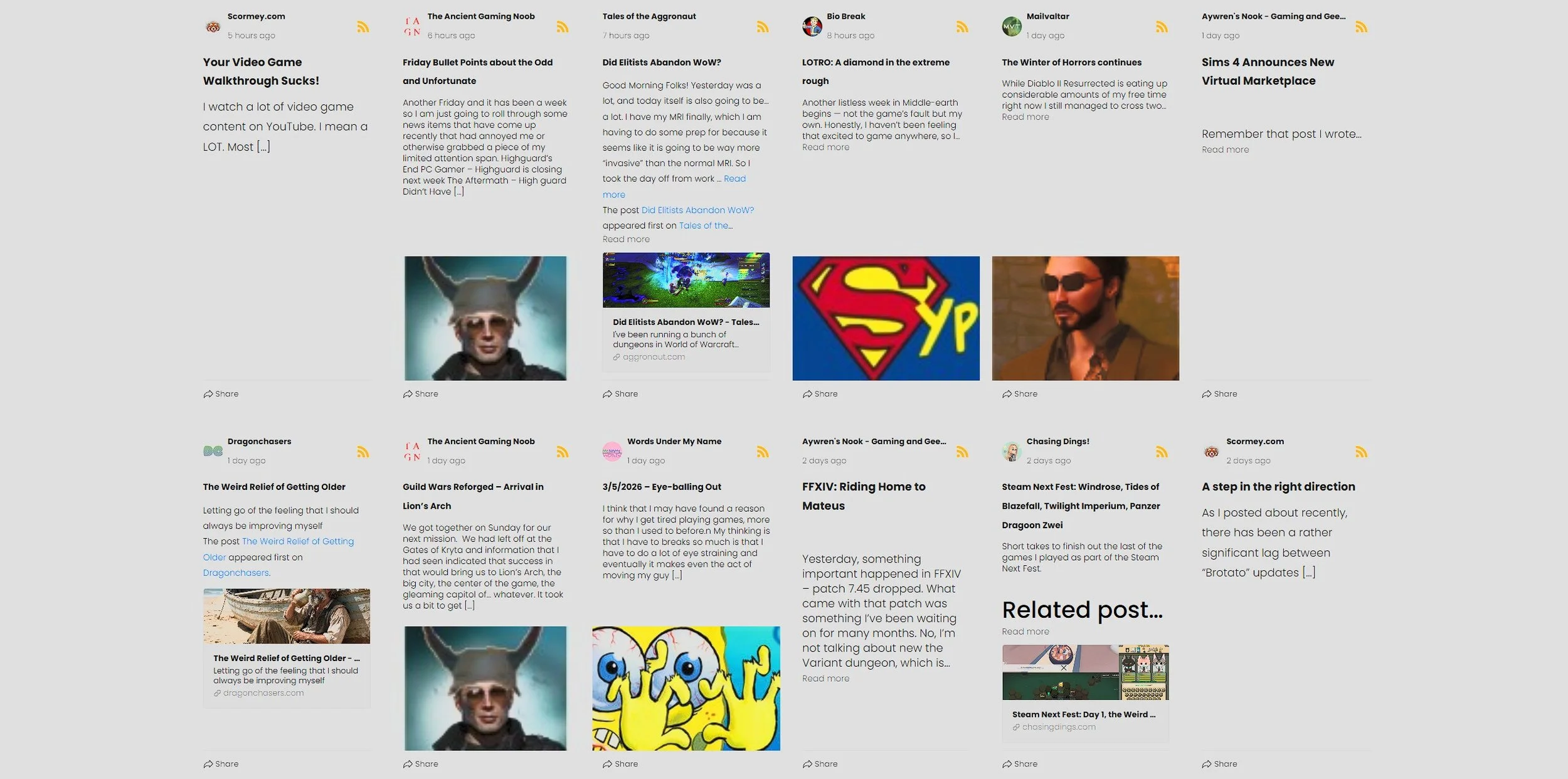
When I first started blogging way back in 2007, I maintained a blogroll of all my colleagues and peers’ websites. At the time this was a common practice and a way to support an expanding community. I considered this such an important aspect of the blogging scene at the time, I created a website to aggregate posts from video game blogs, called The Gaming Blog Nexus. It ran for two years and proved quite useful. However, it was tricky to administer and would frequently break as a lot of the back end widgets and plugins were created and maintained by “gifted amateurs”. I eventually shut it down due to the operating costs. When I moved my own website, Contains Moderate Peril, to Squarespace in 2015 I intended to start maintaining a blogroll once again. However, at that time there was no native support for such a thing on the platform. Hence for the last ten years, I have not had a blogroll on my website, which hasn’t sat well with me.
I was speaking to someone recently about hobbies (fortunately it wasn’t Simon Quinlank) and I mentioned that I have maintained a blog for over a 19 years. When I talked about the ongoing cost they were most surprised, as they had assumed that blogging was something that could be done for free. I guess we’ve become so accustomed to the provision of free online services such as email, that this a reasonable assumption. I pointed out that although it is indeed possible to blog for free using Blogger, it was not the optimal approach, especially if you want to maintain some degree of control over your writing. Naturally, the next question they asked was how much do I spend and I gave them a ballpark figure. All of which reminded me that I wrote a post on this very subject a few years ago. So I’ve decided to revisit the subject and see how much it currently costs to maintain Contains Moderate Peril.

Today I started the slow process of auditing every post that has been published on Contains Moderate Peril since 1st August 2016. The goal is to correct any obvious typos and replace all existing images with larger ones. The Squarespace software upgrade I applied to the website at the end of last year has finally allowed me to establish a standard format that I am happy with. Hence the ongoing audit is the perfect opportunity to apply these style rules to all posts. There are also some technical issues and matters regarding functionality that need to be addressed. I need to determine how to embed YouTube videos in such a way that they automatically scale to fit whatever device is viewing them. Another area which needs improving is the website search facility. This needs refinement so that enquiries can be more specific. Older posts also need to be more accessible, although I am still researching how best to achieve this.

It’s nearly two and half months since the Blaugust: Festival of Blogging event ended. During that time I’ve maintained a fairly regular writing schedule and I post every two days or so. Furthermore, I finally dragged my blog template, kicking and screaming, into the modern era. I tweaked a few pages and updated the content of the “about” page. The next task is to start going through all previous posts and replacing older, low resolution images with larger, more appropriate ones. This process also presents an opportunity to ensure that all posts follow a uniform style. IE Are appropriately categorised, have links to related posts at the bottom and are SEO optimised. This will be a lengthy task so I think the best approach will be to tackle two or three posts a day. Hopefully this will raise the profile of older content, which generates the lion’s hare of traffic to this site.
I use a browser extension called Control Panel for YouTube, which allows me to determine who many videos are displayed on my YouTube homepage and to filter the content that is shown. At present it is configured to display rows of six. Something that I have noticed of late, is the amount of videos with hyperbolic titles and thumbnail images created by AI. Both of which are design choices made to increase engagement. Clickbait titles are contrived to meet current SEO optimisation criteria and as such feature more and more in search results. The fact that they frequently have no relation to the subject I am researching, seems to be neither here nor there. The same issues arise with regard to AI generated images, which again frequently have no bearing on the matter. The fact that more and more content creators do this, infers that it works and is now an essential part of the process you must follow to be seen and featured in search results.
In the last post in this series, I specified the need for a plan with regard to upgrading my blog. Well a plan has emerged, been refined and has now been formally adopted. Rather than migrate Contains Moderate Peril to a new platform and effectively have to rebuild all the content, I am going to upgrade my existing presence on Squarespace. This decision was made for two reasons. Time and money. Migrating to a new platform will take a lot of time and incur additional costs. Upgrading the existing website will take less time and has no cost implications. That is not to say that it will be easy. It has become abundantly clear that the upgrade process will break stuff and that all published posts will have to be manually repaired. Hence my choice boils down to the lesser of two evils.
This year’s Blaugust: Festival of Blogging has reached an end and it would appear that this event has been well received by those who have participated in it. I believe that there were 168 bloggers taking part this year, many of whom have not participated before. Some were new to blogging, where others simply wished to see if they could increase their writing output. As ever there was a wide variety of blog styles and subject matters and it has been most interesting to read new posts every day. I have attempted to leave comments and positive feedback where I can and I hope that some of these new blogs that I’ve discovered continue to write. Well done to everyone who took part. I hope it has been an enjoyable and informative process and that you have learned from it. I know that at least one blogger has determined that writing online is not for them, which is a valuable lesson.
There is currently a group writing prompt available as part of this year’s Blaugust: Festival of Blogging which has piqued my interest. It asks the question “what is the oldest draft post you have” and suggests that it is revived in some manner. I have dozens of draft posts in a folder in my Google Drive. Many are film reviews or film related. The oldest of which dates back to summer 2010. Rather than write a straight forward review of Blake Edwards 1968 comedy The Party, I rather foolishly thought at the time that I’d tackle the issue of whether the film is sufficiently racist to make it beyond the pale. Let it suffice to say that I quickly found myself bogged down in the complexities of the subject and thus never completed the blog post.

I’ve participated in every previous Blaugust: Festival of Blogging event. Prior to that I was involved in the Newbie Blogger Initiative or NBI as it was affectionately known. I have therefore written quite a lot of blogging advice and suggestions over the years. If anyone feels disposed to do so, you can access them all by clicking on the “blogging” option on the top menu of this blog. However, it is important to remember that a lot of the ideas I have advocated and written about over the years are purely subjective. Not all advice or guidance works for everyone. People have different ideas about blogging, different approaches to it and different aspirations. This year has highlighted some quite distinct differences among bloggers which has been most illuminating.

Today is my blogging anniversary. I have been writing online consistently for 18 years. My earliest blogs no longer exist, although they can be found via the Internet Archive Wayback Machine. My first blog was a Lord of the Rings Online fansite called Misadventures in LOTRO. After a while this morphed into a wider gaming website; Misadventures in Gaming. However, I soon discovered that I wanted to write about more than just video games, so I decided to start from scratch and created Contains Moderate Peril in February 2010. This blog endured and has been my main online presence ever since. It has moved several times for various reasons. For a while I had a sponsor, as well as a reasonably sized audience and had dreams of making money from my writing and podcast. But it wasn’t to be and now I just write primarily for my own peace of mind and amusement.
Diary of a Podcaster Part 18
I recently decided I’d had enough of the endless deliberation and procrastination and so I started producing a weekly podcast again. As of today the second episode of Season 10 of the Contains Moderate Peril podcast is available on all major platforms. I must admit, although I was confident that a few people would listen to the show, I was completely taken aback by the overall reaction. The Contains Moderate Peril podcast was warmly welcomed back by previous listeners on social media and the statistics for the first show have been most positive. For myself and Brian, recording the show is like putting on a comfortable pair of shoes. Last night’s recording went okay and I think after a few more episodes, the recording and editing process will be an efficient process. Keeping each episode to an hour or under means that the conversation stays on point.
I recently decided I’d had enough of the endless deliberation and procrastination and so I started producing a weekly podcast again. As of today the second episode of Season 10 of the Contains Moderate Peril podcast is available on all major platforms. I must admit, although I was confident that a few people would listen to the show, I was completely taken aback by the overall reaction. The Contains Moderate Peril podcast was warmly welcomed back by previous listeners on social media and the statistics for the first show have been most positive. For myself and Brian, recording the show is like putting on a comfortable pair of shoes. Last night’s recording went okay and I think after a few more episodes, the recording and editing process will be an efficient process. Keeping each episode to an hour or under means that the conversation stays on point.
Previously, I have used third party hosting sites such as Podbean and SoundCloud to manage both the Contains Moderate Peril and the Burton and Scrooge podcasts. Although these were paid services they come with many benefits. The most beneficial is the convenient provision of an RSS feed. As I now host the podcast on Squarespace I’ve had to use a third party service to create an alternative. I managed to use Feedburner to create this a few years ago when I reposted some old episodes but as of July 2021, the service has gone into maintenance mode. Luckily, it still provides its basic functionality, so yesterday I submitted the RSS feed to several podcast aggregation sites. As of today, I am pleased to announce that Contains Moderate Peril is available on Apple Podcasts, Stitcher, Amazon Music, Google Podcasts and Spotify. If you wish to subscribe just search for “CMP Podcast” via whatever podcast client you use.
At present I am using Craig to record directly from Discord. Being a free service it has many positive attributes, the price being an important one. However, because it uses Discord as a recording source, the sound quality is subject to the whims and caprices of Discords compression software and bandwidth. I’m not sure if I am entirely happy with the sound quality of the finished podcast, at present. I may do some experimentation with other podcast recording services such as Zencastr. Perhaps using Zoom as a platform and then extracting the audio afterwards is a viable alternative? I recently bought Bandicam and Bandicut so I have the requisite tools for the job. Perhaps Zoom is the way to go as it means as well as an audio version, I can post a video edition of the show to YouTube. It’s worth consideration. I also need some sort of means to track the podcast statistics as the facilities that Squarespace offer are very basic.
Next Sunday 16th January, Brian and I will be recording the next episode of the Contains Moderate Peril podcast. We’ve decided to take a break from some of the more weighty discussions that we usually have and to do an AMA (ask me anything) themed show. So if there’s a question you’d like to ask either of us please get in touch. We’re happy to address most enquiries as long as they’re within the confines of the law and public decency. Please feel free to submit your enquiries to the show via the contact page of the Contains Moderate Peril website and make sure you write AMA or “ask me anything” in the subject field. In return we’ll happily give you a shout out. If you have a blog, live stream or such like we’ll be pleased to mention it. Thank you in advance for your support and interesting questions. The next episode of the Contains Moderate Peril podcast will be available on Monday 17th January.
The initial podcast boom, which began circa 2005, started as an audio only medium. One of the reasons podcasting became so popular, especially among the fan community, was that you could get away with relatively low production standards. Anyone who had access to a basic microphone and a PC, could produce a show and upload it to iTunes, which was the primary platform at the time. Listeners were forgiving back then. Twenty years later and podcasting has been on a tempestuous journey. It started with the medium being accessible and democratised, sustaining a rich and diverse fan community via non-professional productions. However, slowly and inevitably it has been assimilated by corporate interests. Fan podcasts have given way to podcast production companies. The small, micro-budget, indie show has effectively been thrown out of their own party. Such shows still exist but they struggle to be heard.
I regularly receive random emails addressed to such august bodies as “the Contains Moderate Peril team”. They always raise a wry smile. Like there’s a team. That implies an organisation, structure and even a budget. As opposed to just me, screaming into the void and pouring money into a financial black hole. I don’t resent such emails. People are just trying to earn a crust, I guess. The only thing about them that frustrates me, is they never address me by name. A cursory glance at the “about” page of the website would provide them with my personal details. So I just delete them and think no more about them. Today I received one that did more than make me smile. In fact I laughed out loud and heartily. The email started with “Dear Burton”. Someone had found a few old episodes of the Burton and Scrooge podcast and had assumed this was indeed my real identity.
I recently decided I’d had enough of the endless deliberation and procrastination and so I started producing a weekly podcast again. As of today the second episode of Season 10 of the Contains Moderate Peril podcast is available on all major platforms. I must admit, although I was confident that a few people would listen to the show, I was completely taken aback by the overall reaction. The Contains Moderate Peril podcast was warmly welcomed back by previous listeners on social media and the statistics for the first show have been most positive. For myself and Brian, recording the show is like putting on a comfortable pair of shoes. Last night’s recording went okay and I think after a few more episodes, the recording and editing process will be an efficient process. Keeping each episode to an hour or under means that the conversation stays on point.
My personal podcast journey started back in 2010 when I effectively invited myself onto the Mordor or Bust podcast. The three of us who were involved in the production of that show were learning as we went along. I recently listened to an old episode and despite our enthusiasm, it is quite rough around the edges from a technical perspective. I think that the biggest mistake that I made at the time was not investing in a better quality microphone. I sound like I’m at the bottom of a well. It’s hardly surprising as I was using a very cheap analog desk microphone which I think only cost a few pounds from PC World. Roll on eleven years and I’ve been invited to be a guest on the Beyond Bossfights podcast. It’s nice to be back in the saddle again, so to speak. Up until now, I’ve been using my Razer gaming headset for any previous podcast recordings but I’ve decided to take the opportunity to overhaul my technical setup.
Life is often about the things we’d like to do or wished we had done, rather than the things we’ve actually achieved. My last post in this blog series was back in 2nd October 2018 and the last podcast that I published was in January 2019. Since then most attempts to produce more content of this kind have come to nought, as spare time for both recording and editing have been in short supply. However, I did manage to record some material on the 22nd of December with my long-time co-host Brian. The idea was to release the finished podcast as a surprise show at the end of the year. However, due to real world commitments, that deadline has not been met. Now there’s a surprise. I do intend to finish editing the show and may add some extra material to make it a little more topical. But overall, I am not too upset by this delay, because in the process of organising this podcast, I discovered a quick and convenient means of recording via Discord. Something that has been seen as Holy Grail of podcasting over the years.
I’ve been pondering a new podcast project for a while, since Contains Moderate Peril ended a year ago. As I’ve discussed in previous posts, I want to create a movie-based show and have been considering of late exactly what sort of format to adopt. I don’t go to the cinema often enough these days to produce a contemporary review orientated podcast, plus I don’t find a lot of mainstream releases to be sufficiently engaging. Despite looking and pursuing discrete enquiries, I haven’t been able to find a co-host who is sufficiently knowledgeable, motivated or available to do a regular show producing the audio equivalent of long form criticism of films and the movie industry. So, it’s been a bit of a chore to try and work out which niche to explore. However, I have now a clear idea of what I want to do.
Today I did a little blog housekeeping. I’ve reposted the last five episodes of the Contains Moderate Peril on the podcast page, now that previous hosting account has been closed and the RSS feed is defunct. The files are held locally and can either be played via the embedded player or downloaded manually. There are also two episodes of the Burton & Scrooge Podcast still available on SoundCloud for posterity. The podcast page and selection of episodes available are for reference and as an example of my podcasting back catalogue, so to speak. I may not be actively creating content of this kind at present, but I see no reason not to promote my experience in the field. If circumstances change in the future, there may be resumption of service.
I made a hard decision today. I cancelled my Podbean subscription and have effectively closed the Contains Moderate Peril podcast. Despite relaunching the show last September, I simply haven’t had the time to collate content for discussion or organise recording sessions with co-hosts. Hence, we are now two months into 2018 and a new show has not yet been produced. Furthermore, the listener numbers for the episode posted between September and December last year were disappointing. Upon mature reflection, I have reached the conclusion that the podcast peaked in 2014 when we had a strong and established audience. Rather than chase my own tail trying to recapture something that may well have been a product of circumstance, it seems prudent to finally draw a line under this show. I’m a little sad about this situation, as it does feel like the end of a personal era, but it is time to move on.
Ever had what you thought was a great idea for a podcast that looked good on paper but turned into something quite different, once you started recording? Well I had that experience on Sunday evening and today I am dealing with the results. It all started with an innocuous Twitter conversation (don’t many things I hear you say) which highlighted a minor cultural difference between the US and the UK. Having recorded with an American co-host for many years this is a common occurrence, so I decided to make it the theme of the next Contains Moderate Peril podcast. I initially thought of several fun examples that could be discussed; the British obsession with the weather, cheese-rolling and Morris dancing. However, rather than take a scattergun approach, I decided to list specific categories in the show notes. Subjects such as school, work, food, social customs and public holidays were added for discussion and I believe that is where thing started to go wrong.
Podcasts are becoming an invaluable medium for the analysis and discussion of niche interests and bespoke subjects. Many of the shows that I regularly listen to bring professional quality documentary skills to bear on unique and varied areas of fandom. More and more podcasts are being made by informed and intelligent fans, offering in-depth material rather than just light weight banter. Simply put, I am spoilt for choice. Therefore, it is essential to have a suitable podcast management app to stay on top of such quality entertainment. Something that allows me to curate and organise those shows that I currently enjoy, as well as providing recommendations for comparable material that I may wish to subscribe to. For several years I’ve been using Podcast Addict on my Android devices, although I’ve struggled to find something comparable for my PC.
Last night, myself, Hannah and Chris (AKA Jaedia and Wolfyseyes) had an especially productive recording session. We managed to produce two hours of material in total and I’m confident that it can be whittled down into a coherent and enjoyable ninety-minute episode. What I especially enjoyed about this podcast recording was buoyant atmosphere and the flow of the conversation. I felt that we explored the various topics well and that the discussion felt natural. Ultimately, it will be the listeners who’ll determine whether this is the case or not but from my perspective the recording went well because the guests were a good choice. If you are pursuing a podcast format that has multiple hosts or regularly features guests, then it is important for there to be a rapport between all involved.
As I surmised, in its current state Squarespace has proven an inadequate host for my current podcast. After exchanging several emails with Apple support, I was informed that “the server for your episodes does not support HTTP HEAD requests. To enable streaming playback of episodes, ensure the hosting server allows HTTP HEAD requests and has byte-range requests enabled”. To cut a long story short, there is no scope for me to alter any of these things at present within the Squarespace dashboard. Nor did I want the work involved in using a third-party feed managing service such as FeedBurner. So, I decided to open up an account with a commercial hosting service. After some research, I determined that PodBean could cater for all my needs and at a competitive price. Submitting the new RSS feed was easy and Apple approved the podcast within 36 hours. As of today, the Contains Moderate Peril podcast is back on iTunes.
Whenever I encounter a word or term that I’m not familiar with, I will usually Google it. That’s the way I’m wired. I prefer to “know” rather than “not know”. However, it is not the concept of continuous self-improvement that I wish to discuss in this post but something else. Namely sociolinguistics. Earlier today I saw someone mention vocal fry on Twitter. I had no idea what that was so I checked on Wikipedia, watched some You Tube videos and finally read some newspaper articles. An hour later I was aware of not only vocal fry, but run-ons, uptalk, glottal Ts and the fact that the way we speak has a major impact upon our lives, just like education and class. According to sociolinguistics, the manner in which you speak has a major impact on the way you are perceived by others. Sadly, like so many other social markers, it can be used in a discriminatory fashion.
Back in April I decided to relaunch the Contains Moderate Peril podcast for reasons of brand continuity. At the time, I was hoping to get back in to the podcasting saddle and return to producing weekly shows. However, the recording session was fraught with technical problems with Zencastr crashing regularly. I was left with nine separate audio tracks that weren’t in sync which made editing a major problem. There then followed a wealth or real-world issues that I had to address that meant for the next three months the podcast was put on hold. Finally, at the beginning of August I managed to complete the post production work on the show and publish it via Squarespace. I was hoping that using this existing website as a host for the show would save some money and reduce the work load. However, like most plans, it didn’t exactly work out that way
Professor Beej recently tweeted about consolidating all his various blogs and online activities into a single entity. I naturally agreed with him and encouraged him to do so because I did something similar back in 2010. I had a gaming blog and a site for movies reviews plus a podcast to manage. It ultimately made sense to put all these thing in one place, despite their respective differences because the common factor in all of them was me. To coin a rather nauseating phrase “you are your own brand”. This is how Contains Moderate Peril came to be. In recent years, I’ve embraced this concept further and will now write or podcast about any subject that really takes my fancy. I try to stick to the things that I like but from time to time, I do stray in to wider real world subjects.
Although we at the Burton & Scrooge podcast are not driven by numbers, it would be nice to see the audience grow. We seem at present to have plateaued somewhat and maintain a robust but fixed listenership. Currently our back catalogue of shows is available via SoundCloud, iTunes and Stitcher. However it would appear that other directories and aggregation services are available, so it would seem prudent to ensure that we are listed with them. My colleagues tell me that the Google Play Store and iHeartRadio are beneficial to register with. I believe that there may well also be comparable services aimed specifically at the console market. However, as our show is more geared towards PC gaming, I don’t see the need to pursue these.
Over the recent weeks, it’s become increasingly apparent that the two new podcast projects that I’m currently working on are taking too much time to produce. Like many people, my leisure time is a finite commodity. At present I am writing daily, maintaining a presence in two MMOs, as well as trying to keep abreast of several TV shows and a growing list of movies. So far, despite a lot of work, the new projects have not yielded any satisfactory results. So, rather than produce nothing, I deemed it prudent to return to my previous podcast creation. Thus, the Burton and Scrooge Podcast has been reinstated and been given a production makeover. At present, both Brian and I are well disposed towards gaming and other pop culture subjects, so have plenty to discuss. We always find are recordings are more rigorous when we are enthused, as opposed to mildly interested.
Last weekend, myself, Syl, Braxwolf and Brian recorded an episode of the TGEN Tribunal. Being regular podcasters who all know each other, the conversation flowed well and overall there were no major impediments to the discussion. We used Zencastr to record the podcast which has its own inbuilt voice over IP service, so there’s no need for third party programs such as Skype. Zencastr has the added benefit of recording each participant on a separate audio track, that is then automatically uploaded to a designated Drop Box account. This makes editing in Audacity very easy, as all four audio files are perfectly synchronised. Or at least that’s the theory. The reality can be somewhat different.
A week on from my last post on this subject, I have decided to script the entire of my solo podcast. It won’t be one hundred percent verbatim but I need to get the lion share of my thoughts down prior to recording. I discovered over several recording sessions that I continuously think of additional points to add as I’m speaking. The net result is having to constantly stop and start Audacity, the program I use for recording, as well as having to research extra points on the fly. Again, I was not happy with the finished product as you could frequently hear the hesitation or more to the point, the frustration in my voice. So, I’ve returned to the idea of having well fleshed out notes with some sections such as the introduction, written out in their entirety.
I recently wrote in a blog post that I would be producing a new podcast this year and that Burton & Scrooge Uncut would be taking a break for the immediate future. Well in fact I’ve decided to record two new shows. In the meantime, Brian has already embarked upon his solo project and seems to have found his niche already. I however am currently bogged down in the pre-production process and because the format of the new podcast is different from those I’ve done before, it is proving to be a little more challenging than I initially thought. Since I find writing to be a practical way of ordering my thoughts, I thought I’d keep a podcast diary. I can therefore work through some of the issues that arise as well as produce a blog post, now that I’m back to writing daily.
The Return of the Contains Moderate Peril Podcast
Sometimes in life, you have to stop banging on about what you want to do and just go out and do it. I was thinking, yet again, over the Christmas holidays about how I wanted to get back into podcasting and to create a regular show. Although it is always a pleasure to be a guest on Beyond Bossfights, it is not quite the same as writing and producing your own project. So I decided not to sit around and overthink things but instead to pick a subject as a talking point, start recording and see what happened. As ever, my longstanding co-host Brian was happy to participate and so joined the session. Several hours later, I had a fully edited recording that was good to go. Hence, I am pleased to announce that after a three year hiatus, the Contains Moderate Peril podcast is back. A new episode is now available for download, either via the podcast page of this site or through iTunes and Stitcher.
Sometimes in life, you have to stop banging on about what you want to do and just go out and do it. I was thinking, yet again, over the Christmas holidays about how I wanted to get back into podcasting and to create a regular show. Although it is always a pleasure to be a guest on Beyond Bossfights, it is not quite the same as writing and producing your own project. So I decided not to sit around and overthink things but instead to pick a subject as a talking point, start recording and see what happened. As ever, my longstanding co-host Brian was happy to participate and so joined the session. Several hours later, I had a fully edited recording that was good to go. Hence, I am pleased to announce that after a three year hiatus, the Contains Moderate Peril podcast is back. A new episode is now available for download, either via the podcast page of this site or through iTunes and Stitcher.
The Contains Moderate Peril podcast is intended to be a weekly fixture. The show is currently scheduled to be recorded on a Sunday to be released on Monday. The format is a single topic discussed by either myself or with a guest(s). The show is to be approximately an hour long so there’s not an excess of post production work. Why bring the podcast back you may well ask? Mainly because it’s fun to make and Brian and I have always enjoyed talking about the video games industry, film, TV and other aspects of popular culture. The podcast is an opportunity to expand the reach of Contains Moderate Peril and offers brand continuity. Talking to guests is also a great way to support and cross promotion for fellow content creators. Another reason is because people liked the show in the past. The feedback has always been positive and so there’s a potential audience already out there.
Due to the impromptu nature of the podcast recording, the audio is a little rough around the edges. At present we are recording via Discord using the online recording service Craig. I still use Audacity to edit and mix the show. However, as long as the discussion is clear I think any minor technical failings can be overlooked for the meantime. I’ll do some further sound tests during the forthcoming week. The important fact is that a new episode of the podcast has finally been produced after all the endless talk and brainstorming. For the present, I just want to get back into the habit of producing a weekly show and I’m not going to get bogged down with any plans about its long term future. Overall, I am pleased that Contains Moderate Peril is back and both Brian I look forward to receiving any feedback that listeners wish to provide.

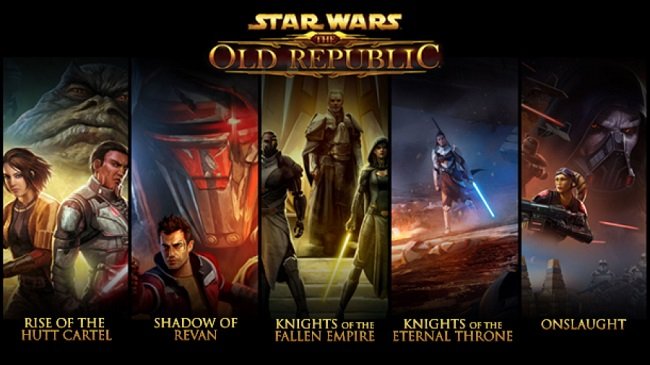
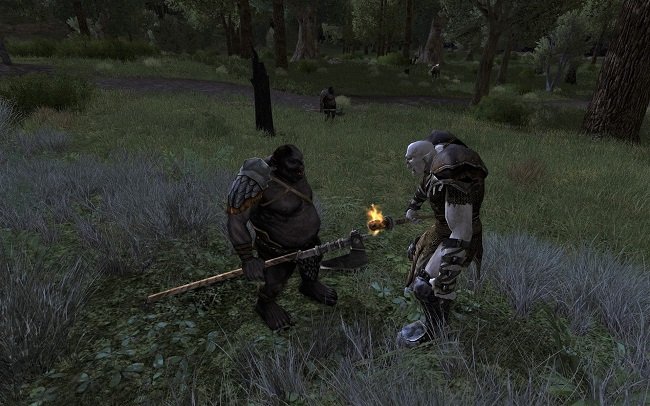
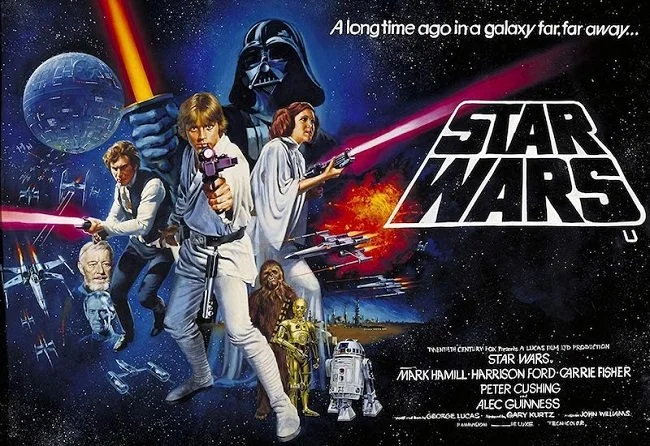


Diary of a Podcaster Part 17
My personal podcast journey started back in 2010 when I effectively invited myself onto the Mordor or Bust podcast. The three of us who were involved in the production of that show were learning as we went along. I recently listened to an old episode and despite our enthusiasm, it is quite rough around the edges from a technical perspective. I think that the biggest mistake that I made at the time was not investing in a better quality microphone. I sound like I’m at the bottom of a well. It’s hardly surprising as I was using a very cheap analog desk microphone which I think only cost a few pounds from PC World. Roll on eleven years and I’ve been invited to be a guest on the Beyond Bossfights podcast. It’s nice to be back in the saddle again, so to speak. Up until now, I’ve been using my Razer gaming headset for any previous podcast recordings but I’ve decided to take the opportunity to overhaul my technical setup.
Cheap Desktop Mic
My personal podcast journey started back in 2010 when I effectively invited myself onto the Mordor or Bust podcast. The three of us who were involved in the production of that show were learning as we went along. I recently listened to an old episode and despite our enthusiasm, it is quite rough around the edges from a technical perspective. I think that the biggest mistake that I made at the time was not investing in a better quality microphone. I sound like I’m at the bottom of a well. It’s hardly surprising as I was using a very cheap analog desk microphone which I think only cost a few pounds from PC World. Roll on eleven years and I’ve been invited to be a guest on the Beyond Bossfights podcast. It’s nice to be back in the saddle again, so to speak. Up until now, I’ve been using my Razer gaming headset for any previous podcast recordings but I’ve decided to take the opportunity to overhaul my technical setup.
Aveek Condenser USB Microphone
The last official Contains Moderate Peril podcast was recorded in January 2019. Both Brian and I used our gaming headsets and Zencastr to record the show. I did have at one point a USB microphone on a fancy armature but although it looked as cool as heck, it was totally impractical to use and got in the way when I wasn’t recording a podcast. Hence slumming it with gaming headsets was the path of least resistance. However, Braxwolf and DJ PimpDaddy (they do have normal names as well) record their show using fancy desktop microphones and also use webcams for the YouTube version of the show. This has been a bit of a culture shock for me as I tend not to post pictures of myself online. But life is predicated on change so I’ve rolled with it. I already bought an adequate webcam during the 2020 lockdown, so I only needed to upgrade my mic and find a convenient means of being able to hear the other participants.
Anker Soundcore Life A1 Bluetooth Earbuds
In July I bought an Aveek Condenser USB Microphone. It’s essentially a Chinese clone of a more expensive brand but the customer feedback was good and the price was right. I’ve done some tests and the sound quality is perfectly adequate for the job in hand. It comes with a sturdy but simple desk stand. Rather than using headphones to monitor what everyone else is saying during the recording, I have recently purchased Anker Soundcore Life A1 Bluetooth Earbuds (why do products have such complex names these days?), so I don’t have cables trailing everywhere. I had to buy a TP-Link USB Bluetooth 5.0 Adaptor as well. I think in total these three items have cost about £100 or thereabouts. Bearing in mind that the primary goal is to be able to record clear voice audio I think I should be able to get the job done and to a reasonable standard. It’s certainly a far cry from the humble (IE shit) analog desktop microphone I was using a decade ago.
The initial podcast boom, which began circa 2005, started as an audio only medium. One of the reasons podcasting became so popular, especially among the fan community, was that you could get away with relatively low production standards. Anyone who had access to a basic microphone and a PC, could produce a show and upload it to iTunes, which was the primary platform at the time. Listeners were forgiving back then. Twenty years later and podcasting has been on a tempestuous journey. It started with the medium being accessible and democratised, sustaining a rich and diverse fan community via non-professional productions. However, slowly and inevitably it has been assimilated by corporate interests. Fan podcasts have given way to podcast production companies. The small, micro-budget, indie show has effectively been thrown out of their own party. Such shows still exist but they struggle to be heard.
Last August I listened to The Battersea Poltergeist podcast by Danny Robins and was subsequently introduced to his other production Uncanny. Both are investigations into alleged supernatural events but unlike other shows of this kind, these are far better researched, produced and most importantly even handed. Danny makes a great deal of effort to try and keep a foot in each camp; team believer and team sceptic. Overall these podcast work as they genuinely appeal to multiple audiences and they are not excessively hyperbolic or credulous. A lot of this comes down to Danny’s personality which is upbeat and relatable. Perhaps his greatest strength is being a sympathetic ear to those recounting their experiences. He lightens the mood from time to time with humour when required. He also liberally litters the proceedings with pop culture references. However, he will probe and ask pointed questions but does so in a non-accusatory manner.
Have you noticed how politicians, pundits and media commentators will often throw around phrases and buzzwords when discussing the news and other major political talking points? “Cultural Marxism” and “Metropolitan Elite” are two examples that spring to mind. Often it is clear that the person using these phrases has no idea what they mean or what their provenance is. Perhaps you’ve thought that it would be useful to learn more about these terms or the background behind certain institutions or movements. If this is the case then I wholeheartedly recommend the Origin Story podcast. To quote from their website “What are the real stories behind the most misunderstood and abused ideas in politics? From Conspiracy Theory to Woke to Centrism and beyond, Ian Dunt and Dorian Lynskey dig into the astonishing secret histories of concepts you thought you knew”.
I was unaware of the The Battersea Poltergeist podcast and accompanying online interest during its initial release. Created by Bafflegab Productions and presented by Danny Robins, who is well known in this field with similar shows such as Haunted and Uncanny, it was broadcast on BBC Sounds and BBC Radio 4 between February and March 2021 during lockdown. The Battersea Poltergeist is a documentary of a true story with dramatized re-enactments. The show alternates between interviews, discussions and research into the case with short vignettes from a cast of actors recreating events for dramatic effect. It was released episodically and gained a lot of online and press interest at the time. Hence there were additional episodes interspersed throughout the initial run which provided “case updates” and listener feedback and questions.
I spent most of this morning and afternoon editing video content I captured while playing Sniper Elite Resistance. I assembled 26 minutes of highlights and then recorded a narration. After adding appropriate branding for Contains Moderate Peril, I then uploaded the finished video to YouTube. Sadly, the picture quality was problematic, often becoming pixelated and blocky when there was rapid movement. The volume of my narration was also too low, so I decided to delete the video from my channel. I was somewhat disappointed by this outcome and initially thought that the day had been a waste of time. However, as I write this post, it becomes very clear that this is just part of the learning curve. I have given some thought to the problem and I believe I have determined why this video was not up to the standard of the previous one. Ultimately, this is an invaluable lesson.
I recently wrote a post about how I wanted to have a go at producing some gaming videos for YouTube. “How hard can it be?” I asked rhetorically, knowing that there would probably be a lot more to the process than meets the eye. Two weeks on and I can report back that there is indeed a learning curve but it is not insurmountable. I managed to figure out how to record a video game, edit it and then add a narration as well as a simple animated logo. Furthermore, I succeeded in doing this without spending a lot of money. I bought some video editing software and a year’s subscription to XSplit Broadcaster but got a really good deal on both. In total I paid £41, which is very reasonable. Hence yesterday, I posted my first video on the officially relaunched Contains Moderate Peril YouTube channel.
I regularly receive random emails addressed to such august bodies as “the Contains Moderate Peril team”. They always raise a wry smile. Like there’s a team. That implies an organisation, structure and even a budget. As opposed to just me, screaming into the void and pouring money into a financial black hole. I don’t resent such emails. People are just trying to earn a crust, I guess. The only thing about them that frustrates me, is they never address me by name. A cursory glance at the “about” page of the website would provide them with my personal details. So I just delete them and think no more about them. Today I received one that did more than make me smile. In fact I laughed out loud and heartily. The email started with “Dear Burton”. Someone had found a few old episodes of the Burton and Scrooge podcast and had assumed this was indeed my real identity.
Earlier tonight, I had the pleasure of participating in the Evolution of Horror: Podcasting Masterclass. An online seminar conducted via Zoom. For those who are not familiar with the Evolution of Horror, it is a podcast written and hosted by Mike Muncer along with regular guests. It explores horror cinema in depth, considering the technical, thematic and sociological elements of the genre. Launched in 2017 this independent production has gone from strength to strength, with Mike now producing content for Paramount + and Studio Canal. The masterclass was designed to provide podcasters both old and new with some practical advice and answer some commonly asked questions. Being a fan of Evolution of Horror as well as a former podcaster, I signed up and enjoyed a most informative and enjoyable 90 minute seminar.
About three years ago, I wrote a very similar post to this one. Titled “Ride off into the sunset” it was an account of bloggers leaving or retiring from the community. Especially those who are established and part of the proverbial furniture. I referenced Zubon from Kill Ten Rats as an example and naturally invoked the mantra that nothing remains the same forever. Many of us go through periods of our life where a specific activity or pastime galvanises us into action. We focus on that activity for sometime and it becomes an integral part of our life and even identity. However, eventually we move on usually because such a hobby isn’t sustainable. Modern life makes too many demands upon our time. Plus we all change as individuals. What delights us today may well depress us in a year’s time. This was the thrust of that post and I now find myself in the sad but inevitable situation of writing it again.
I recently decided I’d had enough of the endless deliberation and procrastination and so I started producing a weekly podcast again. As of today the second episode of Season 10 of the Contains Moderate Peril podcast is available on all major platforms. I must admit, although I was confident that a few people would listen to the show, I was completely taken aback by the overall reaction. The Contains Moderate Peril podcast was warmly welcomed back by previous listeners on social media and the statistics for the first show have been most positive. For myself and Brian, recording the show is like putting on a comfortable pair of shoes. Last night’s recording went okay and I think after a few more episodes, the recording and editing process will be an efficient process. Keeping each episode to an hour or under means that the conversation stays on point.
Sometimes in life, you have to stop banging on about what you want to do and just go out and do it. I was thinking, yet again, over the Christmas holidays about how I wanted to get back into podcasting and to create a regular show. Although it is always a pleasure to be a guest on Beyond Bossfights, it is not quite the same as writing and producing your own project. So I decided not to sit around and overthink things but instead to pick a subject as a talking point, start recording and see what happened. As ever, my longstanding co-host Brian was happy to participate and so joined the session. Several hours later, I had a fully edited recording that was good to go. Hence, I am pleased to announce that after a three year hiatus, the Contains Moderate Peril podcast is back. A new episode is now available for download, either via the podcast page of this site or through iTunes and Stitcher.
My personal podcast journey started back in 2010 when I effectively invited myself onto the Mordor or Bust podcast. The three of us who were involved in the production of that show were learning as we went along. I recently listened to an old episode and despite our enthusiasm, it is quite rough around the edges from a technical perspective. I think that the biggest mistake that I made at the time was not investing in a better quality microphone. I sound like I’m at the bottom of a well. It’s hardly surprising as I was using a very cheap analog desk microphone which I think only cost a few pounds from PC World. Roll on eleven years and I’ve been invited to be a guest on the Beyond Bossfights podcast. It’s nice to be back in the saddle again, so to speak. Up until now, I’ve been using my Razer gaming headset for any previous podcast recordings but I’ve decided to take the opportunity to overhaul my technical setup.
Back in 2010 there was a video game podcast boom, especially with shows driven by MMORPG fandom. Hence, in a fit of hubris, I decided to add my voice to the growing conversation. Or alternatively jumped on the bandwagon, depending upon your point of view. The accessibility of the tools to create and distribute a podcast eliminated the traditional barriers to producing such material. Technically, the entire process of making a podcast remains quite simple. You record, edit, upload and promote. The quality of the podcast comes down to two factors. Your content and technical presentation. In this post I’d like to focus upon the latter. Podcasts are by their very nature, an audio medium, so it is important that those speaking are recorded clearly. Yes, this post is about microphones. How they can make or break a podcast (or live stream) and that they’re my new fixation.
Back in July 2014, a small group of podcasters banded together to launch The Gaming and Entertainment Network, a website which aggregated the content of eight independently produced shows. This eclectic group of podcasts covered a range of subjects such as gaming, movies, TV, hats and bacon as well as other aspects of popular culture. The project was conceived and implemented by Braxwolf from the popular blog Gaming Conversations. It was designed to raise awareness of the respective shows, as well promote group collaboration between the content creators. In addition to the website, TGEN (as it was abbreviated to) also had a presence on twitter, Facebook and Anook ensuring that the network was represented on all popular social media. Initially 8 podcasts participated in the project. Aggrochat, Battle Bards, Beyond Bossfights, Cat Context, Contains Moderate Peril, Couch Podtatoes, Massive Failure and Roleplay Domain.
Life is often about the things we’d like to do or wished we had done, rather than the things we’ve actually achieved. My last post in this blog series was back in 2nd October 2018 and the last podcast that I published was in January 2019. Since then most attempts to produce more content of this kind have come to nought, as spare time for both recording and editing have been in short supply. However, I did manage to record some material on the 22nd of December with my long-time co-host Brian. The idea was to release the finished podcast as a surprise show at the end of the year. However, due to real world commitments, that deadline has not been met. Now there’s a surprise. I do intend to finish editing the show and may add some extra material to make it a little more topical. But overall, I am not too upset by this delay, because in the process of organising this podcast, I discovered a quick and convenient means of recording via Discord. Something that has been seen as Holy Grail of podcasting over the years.
As part of the Blaugust Festival of Blogging, I thought I’d take the time to promote some of the content creators whose work I enjoy. Despite all the white noise, click bait and snake oil salesmen, there is still a wealth of good material to be found online, be it blogs, podcasts, You Tube channels or streamers. Most of what I currently enjoy, I discovered through word of mouth. I feel more disposed towards trusting the views and opinions of friends than I do of “recommendations” made by Google and You Tube, driven by their “questionable” algorithms. These are often determined by key words and have no ability to ascertain quality. So here are a mixture of You Tube channels, podcasts and blogs that I wholeheartedly recommend. Between them they cover such subjects as movies, gaming, comedy and history. Feel free to leave comments about my choices and share your own recommendations.
I’ve been pondering a new podcast project for a while, since Contains Moderate Peril ended a year ago. As I’ve discussed in previous posts, I want to create a movie-based show and have been considering of late exactly what sort of format to adopt. I don’t go to the cinema often enough these days to produce a contemporary review orientated podcast, plus I don’t find a lot of mainstream releases to be sufficiently engaging. Despite looking and pursuing discrete enquiries, I haven’t been able to find a co-host who is sufficiently knowledgeable, motivated or available to do a regular show producing the audio equivalent of long form criticism of films and the movie industry. So, it’s been a bit of a chore to try and work out which niche to explore. However, I have now a clear idea of what I want to do.
I have no problems finding podcasts and You Tube channels that explore the subjects that I like. It’s determining which ones are any good that is the real trick and the only way to do this is to sit down and listen or watch them. Sometimes you need to give two or three episodes a go before you can truly determine if a show is for you. So, I thought it may be useful to share another small selection of the content that I am currently enjoying, so you don’t have to wade through quite so much “white noise” that fills the internet. I’ve made a conscious decision to select a broader spectrum of material and not to focus just on gaming. All the shows recommended are freely available although you can support the content creators if you wish to. Feel free to leave comments on the titles listed and share your own recommendations.
Today I did a little blog housekeeping. I’ve reposted the last five episodes of the Contains Moderate Peril on the podcast page, now that previous hosting account has been closed and the RSS feed is defunct. The files are held locally and can either be played via the embedded player or downloaded manually. There are also two episodes of the Burton & Scrooge Podcast still available on SoundCloud for posterity. The podcast page and selection of episodes available are for reference and as an example of my podcasting back catalogue, so to speak. I may not be actively creating content of this kind at present, but I see no reason not to promote my experience in the field. If circumstances change in the future, there may be resumption of service.
I made a hard decision today. I cancelled my Podbean subscription and have effectively closed the Contains Moderate Peril podcast. Despite relaunching the show last September, I simply haven’t had the time to collate content for discussion or organise recording sessions with co-hosts. Hence, we are now two months into 2018 and a new show has not yet been produced. Furthermore, the listener numbers for the episode posted between September and December last year were disappointing. Upon mature reflection, I have reached the conclusion that the podcast peaked in 2014 when we had a strong and established audience. Rather than chase my own tail trying to recapture something that may well have been a product of circumstance, it seems prudent to finally draw a line under this show. I’m a little sad about this situation, as it does feel like the end of a personal era, but it is time to move on.
2017 didn’t quite go to plan with regard to my personal podcast output. Brian and I decided to stop producing the Burton & Scrooge Podcast and return to creating material under the Contains Moderate Peril brand. This was a good idea in so far as consolidation, but it was ill timed as both of us were somewhat fatigued with podcasting per se. Ultimately Brian decided to take a break and pursue some projects of his own. I decided to push on with podcasting in my usual idiom and I was pleased with the three new shows that were produced. Sean, Brax, Jaedia and Wolfy were extremely obliging and great guests, but ultimately my schedule just couldn’t sustain a regular show. Hence, I re-released some “classic” shows to fill the gaps in the run up to Christmas. As a result of all these changes and the delays, the overall numbers for the show have been disappointing. Although statistics are not the only reason why I podcast, they are important as I was hoping to grow the audience this year. That has patently not happened although it is nice to know there’s a loyal core group of listeners. Therefore, I now have to think long and hard about my podcasting plans for 2018.
Ever had what you thought was a great idea for a podcast that looked good on paper but turned into something quite different, once you started recording? Well I had that experience on Sunday evening and today I am dealing with the results. It all started with an innocuous Twitter conversation (don’t many things I hear you say) which highlighted a minor cultural difference between the US and the UK. Having recorded with an American co-host for many years this is a common occurrence, so I decided to make it the theme of the next Contains Moderate Peril podcast. I initially thought of several fun examples that could be discussed; the British obsession with the weather, cheese-rolling and Morris dancing. However, rather than take a scattergun approach, I decided to list specific categories in the show notes. Subjects such as school, work, food, social customs and public holidays were added for discussion and I believe that is where thing started to go wrong.
Podcasts are becoming an invaluable medium for the analysis and discussion of niche interests and bespoke subjects. Many of the shows that I regularly listen to bring professional quality documentary skills to bear on unique and varied areas of fandom. More and more podcasts are being made by informed and intelligent fans, offering in-depth material rather than just light weight banter. Simply put, I am spoilt for choice. Therefore, it is essential to have a suitable podcast management app to stay on top of such quality entertainment. Something that allows me to curate and organise those shows that I currently enjoy, as well as providing recommendations for comparable material that I may wish to subscribe to. For several years I’ve been using Podcast Addict on my Android devices, although I’ve struggled to find something comparable for my PC.
Last night, myself, Hannah and Chris (AKA Jaedia and Wolfyseyes) had an especially productive recording session. We managed to produce two hours of material in total and I’m confident that it can be whittled down into a coherent and enjoyable ninety-minute episode. What I especially enjoyed about this podcast recording was buoyant atmosphere and the flow of the conversation. I felt that we explored the various topics well and that the discussion felt natural. Ultimately, it will be the listeners who’ll determine whether this is the case or not but from my perspective the recording went well because the guests were a good choice. If you are pursuing a podcast format that has multiple hosts or regularly features guests, then it is important for there to be a rapport between all involved.
As I surmised, in its current state Squarespace has proven an inadequate host for my current podcast. After exchanging several emails with Apple support, I was informed that “the server for your episodes does not support HTTP HEAD requests. To enable streaming playback of episodes, ensure the hosting server allows HTTP HEAD requests and has byte-range requests enabled”. To cut a long story short, there is no scope for me to alter any of these things at present within the Squarespace dashboard. Nor did I want the work involved in using a third-party feed managing service such as FeedBurner. So, I decided to open up an account with a commercial hosting service. After some research, I determined that PodBean could cater for all my needs and at a competitive price. Submitting the new RSS feed was easy and Apple approved the podcast within 36 hours. As of today, the Contains Moderate Peril podcast is back on iTunes.
Whenever I encounter a word or term that I’m not familiar with, I will usually Google it. That’s the way I’m wired. I prefer to “know” rather than “not know”. However, it is not the concept of continuous self-improvement that I wish to discuss in this post but something else. Namely sociolinguistics. Earlier today I saw someone mention vocal fry on Twitter. I had no idea what that was so I checked on Wikipedia, watched some You Tube videos and finally read some newspaper articles. An hour later I was aware of not only vocal fry, but run-ons, uptalk, glottal Ts and the fact that the way we speak has a major impact upon our lives, just like education and class. According to sociolinguistics, the manner in which you speak has a major impact on the way you are perceived by others. Sadly, like so many other social markers, it can be used in a discriminatory fashion.
Back in April I decided to relaunch the Contains Moderate Peril podcast for reasons of brand continuity. At the time, I was hoping to get back in to the podcasting saddle and return to producing weekly shows. However, the recording session was fraught with technical problems with Zencastr crashing regularly. I was left with nine separate audio tracks that weren’t in sync which made editing a major problem. There then followed a wealth or real-world issues that I had to address that meant for the next three months the podcast was put on hold. Finally, at the beginning of August I managed to complete the post production work on the show and publish it via Squarespace. I was hoping that using this existing website as a host for the show would save some money and reduce the work load. However, like most plans, it didn’t exactly work out that way
Finally, after several months of diversions and distractions, I’ve managed to produce a new podcast. As I mentioned in a previous post, the Burton & Scrooge Podcast has been officially retired and for practical reasons of brand consolidation, the Contains Moderate Peril Podcast has been reinstated and will become the official show for this website. However, it should be noted that this latest episode is specifically designed to be a technical test meant to validate our RSS feed for submission to iTunes. Once this logistical issue has been dealt with and the podcast is accessible on all major platforms, then further episodes of the show will be scheduled for Autumn.
Damn Microphones
Back in 2010 there was a video game podcast boom, especially with shows driven by MMORPG fandom. Hence, in a fit of hubris, I decided to add my voice to the growing conversation. Or alternatively jumped on the bandwagon, depending upon your point of view. The accessibility of the tools to create and distribute a podcast eliminated the traditional barriers to producing such material. Technically, the entire process of making a podcast remains quite simple. You record, edit, upload and promote. The quality of the podcast comes down to two factors. Your content and technical presentation. In this post I’d like to focus upon the latter. Podcasts are by their very nature, an audio medium, so it is important that those speaking are recorded clearly. Yes, this post is about microphones. How they can make or break a podcast (or live stream) and that they’re my new fixation.
Back in 2010 there was a video game podcast boom, especially with shows driven by MMORPG fandom. Hence, in a fit of hubris, I decided to add my voice to the growing conversation. Or alternatively jumped on the bandwagon, depending upon your point of view. The accessibility of the tools to create and distribute a podcast eliminated the traditional barriers to producing such material. Technically, the entire process of making a podcast remains quite simple. You record, edit, upload and promote. The quality of the podcast comes down to two factors. Your content and technical presentation. In this post I’d like to focus upon the latter. Podcasts are by their very nature, an audio medium, so it is important that those speaking are recorded clearly. Yes, this post is about microphones. How they can make or break a podcast (or live stream) and that they’re my new fixation.
So let’s begin with some technobabble. Recording audio is a chain of events. You speak into a microphone that picks up the sound. The sound is pre-amplified and is then captured and converted to a digital format. The digital data is then saved, cleaned, edited and mixed into a final recording. This recording is then digitally distributed and consumed by listeners using their respective audio equipment. Like any chain, if there is a weak link then there’s a potential point of failure. Conversely, each step offers an opportunity for improvement. Good audio enhances the overall listening experience for your audience. Ultimately, if those listening are doing so with inferior audio equipment, that is a matter beyond your control. But you can ensure that your audio is the best it can be, prior to its distribution.
Mics on their own cannot produce a signal that is strong enough to just be recorded without going through a "pre-amplifier". This boosts the signal level to get the best quality audio saturation from the mic. However, this boosting affects the sound quality. As you can see, we’re only four paragraphs into this post and there are now both hardware and technical literacy requirements. However, for podcasting the practical solution is to use a USB microphone. These handle the pre-amp requirement and also convert the source audio to a digital format. But like any technology that does multiple tasks, there is a trade off. Like so many things in life you get what you pay for. A decent quality, brand name USB mic will cost between £100 and £200 or thereabouts. But you can also find some interesting “clone” products available which have similar specifications but are not manufactured by known brands.
It should be noted that simply buying the most expensive mic available is not by default going to solve your audio woes. No sir. The acoustics of the room in which you’re recording, the placement of the mic and how far you sit in front of it all have an impact. I was quite surprised how I improved the audio quality of a test recording simply by moving my chair a few inches closer to the desk on which the mic was placed. Pop filters of some kind are also essential. The simple reality is that if you’re using a USB mic on a desk stand or a boom you have to stay close to the mic and remain relatively still. This is a nuisance, if like me, you geticulate and are animated while extemporising. In the past I got away with this because I used a gaming headset to record my podcasts but this was at the expense of audio quality. The mic used to pick up the sound of the plastic creaking as my jaw moved the earphones.
Obviously there’s a lot more technical depth to microphones than I’ve covered. I’m just trying to summarise what I’ve learned of late and I’ve only scratched the surface. Furthermore, when I undertake a project I like it to be done in a professional fashion. Hence I am a hard taskmaster and will spend hours fine tuning software or hardware if I feel it will yield beneficial results. Yet no matter how much you tinker with either software or hardware, there are some things that you cannot change easily, such as how your voice sounds and your diction. I’m constantly horrified by the gulf between how I think I sound and the cold, stark reality of how I actually do. Like mirrors, microphones and not always flattering, damn them. But on the plus side, it is nice to have a requirement to use one again.
The initial podcast boom, which began circa 2005, started as an audio only medium. One of the reasons podcasting became so popular, especially among the fan community, was that you could get away with relatively low production standards. Anyone who had access to a basic microphone and a PC, could produce a show and upload it to iTunes, which was the primary platform at the time. Listeners were forgiving back then. Twenty years later and podcasting has been on a tempestuous journey. It started with the medium being accessible and democratised, sustaining a rich and diverse fan community via non-professional productions. However, slowly and inevitably it has been assimilated by corporate interests. Fan podcasts have given way to podcast production companies. The small, micro-budget, indie show has effectively been thrown out of their own party. Such shows still exist but they struggle to be heard.
I regularly receive random emails addressed to such august bodies as “the Contains Moderate Peril team”. They always raise a wry smile. Like there’s a team. That implies an organisation, structure and even a budget. As opposed to just me, screaming into the void and pouring money into a financial black hole. I don’t resent such emails. People are just trying to earn a crust, I guess. The only thing about them that frustrates me, is they never address me by name. A cursory glance at the “about” page of the website would provide them with my personal details. So I just delete them and think no more about them. Today I received one that did more than make me smile. In fact I laughed out loud and heartily. The email started with “Dear Burton”. Someone had found a few old episodes of the Burton and Scrooge podcast and had assumed this was indeed my real identity.
Earlier tonight, I had the pleasure of participating in the Evolution of Horror: Podcasting Masterclass. An online seminar conducted via Zoom. For those who are not familiar with the Evolution of Horror, it is a podcast written and hosted by Mike Muncer along with regular guests. It explores horror cinema in depth, considering the technical, thematic and sociological elements of the genre. Launched in 2017 this independent production has gone from strength to strength, with Mike now producing content for Paramount + and Studio Canal. The masterclass was designed to provide podcasters both old and new with some practical advice and answer some commonly asked questions. Being a fan of Evolution of Horror as well as a former podcaster, I signed up and enjoyed a most informative and enjoyable 90 minute seminar.
I recently decided I’d had enough of the endless deliberation and procrastination and so I started producing a weekly podcast again. As of today the second episode of Season 10 of the Contains Moderate Peril podcast is available on all major platforms. I must admit, although I was confident that a few people would listen to the show, I was completely taken aback by the overall reaction. The Contains Moderate Peril podcast was warmly welcomed back by previous listeners on social media and the statistics for the first show have been most positive. For myself and Brian, recording the show is like putting on a comfortable pair of shoes. Last night’s recording went okay and I think after a few more episodes, the recording and editing process will be an efficient process. Keeping each episode to an hour or under means that the conversation stays on point.
Sometimes in life, you have to stop banging on about what you want to do and just go out and do it. I was thinking, yet again, over the Christmas holidays about how I wanted to get back into podcasting and to create a regular show. Although it is always a pleasure to be a guest on Beyond Bossfights, it is not quite the same as writing and producing your own project. So I decided not to sit around and overthink things but instead to pick a subject as a talking point, start recording and see what happened. As ever, my longstanding co-host Brian was happy to participate and so joined the session. Several hours later, I had a fully edited recording that was good to go. Hence, I am pleased to announce that after a three year hiatus, the Contains Moderate Peril podcast is back. A new episode is now available for download, either via the podcast page of this site or through iTunes and Stitcher.
My personal podcast journey started back in 2010 when I effectively invited myself onto the Mordor or Bust podcast. The three of us who were involved in the production of that show were learning as we went along. I recently listened to an old episode and despite our enthusiasm, it is quite rough around the edges from a technical perspective. I think that the biggest mistake that I made at the time was not investing in a better quality microphone. I sound like I’m at the bottom of a well. It’s hardly surprising as I was using a very cheap analog desk microphone which I think only cost a few pounds from PC World. Roll on eleven years and I’ve been invited to be a guest on the Beyond Bossfights podcast. It’s nice to be back in the saddle again, so to speak. Up until now, I’ve been using my Razer gaming headset for any previous podcast recordings but I’ve decided to take the opportunity to overhaul my technical setup.
Back in 2010 there was a video game podcast boom, especially with shows driven by MMORPG fandom. Hence, in a fit of hubris, I decided to add my voice to the growing conversation. Or alternatively jumped on the bandwagon, depending upon your point of view. The accessibility of the tools to create and distribute a podcast eliminated the traditional barriers to producing such material. Technically, the entire process of making a podcast remains quite simple. You record, edit, upload and promote. The quality of the podcast comes down to two factors. Your content and technical presentation. In this post I’d like to focus upon the latter. Podcasts are by their very nature, an audio medium, so it is important that those speaking are recorded clearly. Yes, this post is about microphones. How they can make or break a podcast (or live stream) and that they’re my new fixation.

I joined Twitter back in 2010. Perhaps the most surprising thing I quickly discovered about the platform is the immediacy of communication that it offers. You can follow someone, reply to something they say or initiate a conversation with them in real time. Hence interacting with those who share a common interest becomes very accessible and enjoyable. It’s a far cry from going to a convention, wandering around and then plucking up the courage to speak to someone or join in a conversation that others are having. Social media removes those awkward “ice breaking” moments. Of course not every Twitter exchange is a pleasant experience but overall I’ve not encountered many problems using social media over the past decade. Twitter has broadly been a positive experience and introduced me to a wider community. It has provided me with an opportunity to meet new people and become part of something that is both social and positive.
Life is often about the things we’d like to do or wished we had done, rather than the things we’ve actually achieved. My last post in this blog series was back in 2nd October 2018 and the last podcast that I published was in January 2019. Since then most attempts to produce more content of this kind have come to nought, as spare time for both recording and editing have been in short supply. However, I did manage to record some material on the 22nd of December with my long-time co-host Brian. The idea was to release the finished podcast as a surprise show at the end of the year. However, due to real world commitments, that deadline has not been met. Now there’s a surprise. I do intend to finish editing the show and may add some extra material to make it a little more topical. But overall, I am not too upset by this delay, because in the process of organising this podcast, I discovered a quick and convenient means of recording via Discord. Something that has been seen as Holy Grail of podcasting over the years.
I’ve been pondering a new podcast project for a while, since Contains Moderate Peril ended a year ago. As I’ve discussed in previous posts, I want to create a movie-based show and have been considering of late exactly what sort of format to adopt. I don’t go to the cinema often enough these days to produce a contemporary review orientated podcast, plus I don’t find a lot of mainstream releases to be sufficiently engaging. Despite looking and pursuing discrete enquiries, I haven’t been able to find a co-host who is sufficiently knowledgeable, motivated or available to do a regular show producing the audio equivalent of long form criticism of films and the movie industry. So, it’s been a bit of a chore to try and work out which niche to explore. However, I have now a clear idea of what I want to do.
Today I did a little blog housekeeping. I’ve reposted the last five episodes of the Contains Moderate Peril on the podcast page, now that previous hosting account has been closed and the RSS feed is defunct. The files are held locally and can either be played via the embedded player or downloaded manually. There are also two episodes of the Burton & Scrooge Podcast still available on SoundCloud for posterity. The podcast page and selection of episodes available are for reference and as an example of my podcasting back catalogue, so to speak. I may not be actively creating content of this kind at present, but I see no reason not to promote my experience in the field. If circumstances change in the future, there may be resumption of service.
I made a hard decision today. I cancelled my Podbean subscription and have effectively closed the Contains Moderate Peril podcast. Despite relaunching the show last September, I simply haven’t had the time to collate content for discussion or organise recording sessions with co-hosts. Hence, we are now two months into 2018 and a new show has not yet been produced. Furthermore, the listener numbers for the episode posted between September and December last year were disappointing. Upon mature reflection, I have reached the conclusion that the podcast peaked in 2014 when we had a strong and established audience. Rather than chase my own tail trying to recapture something that may well have been a product of circumstance, it seems prudent to finally draw a line under this show. I’m a little sad about this situation, as it does feel like the end of a personal era, but it is time to move on.
2017 didn’t quite go to plan with regard to my personal podcast output. Brian and I decided to stop producing the Burton & Scrooge Podcast and return to creating material under the Contains Moderate Peril brand. This was a good idea in so far as consolidation, but it was ill timed as both of us were somewhat fatigued with podcasting per se. Ultimately Brian decided to take a break and pursue some projects of his own. I decided to push on with podcasting in my usual idiom and I was pleased with the three new shows that were produced. Sean, Brax, Jaedia and Wolfy were extremely obliging and great guests, but ultimately my schedule just couldn’t sustain a regular show. Hence, I re-released some “classic” shows to fill the gaps in the run up to Christmas. As a result of all these changes and the delays, the overall numbers for the show have been disappointing. Although statistics are not the only reason why I podcast, they are important as I was hoping to grow the audience this year. That has patently not happened although it is nice to know there’s a loyal core group of listeners. Therefore, I now have to think long and hard about my podcasting plans for 2018.
Ever had what you thought was a great idea for a podcast that looked good on paper but turned into something quite different, once you started recording? Well I had that experience on Sunday evening and today I am dealing with the results. It all started with an innocuous Twitter conversation (don’t many things I hear you say) which highlighted a minor cultural difference between the US and the UK. Having recorded with an American co-host for many years this is a common occurrence, so I decided to make it the theme of the next Contains Moderate Peril podcast. I initially thought of several fun examples that could be discussed; the British obsession with the weather, cheese-rolling and Morris dancing. However, rather than take a scattergun approach, I decided to list specific categories in the show notes. Subjects such as school, work, food, social customs and public holidays were added for discussion and I believe that is where thing started to go wrong.
Podcasts are becoming an invaluable medium for the analysis and discussion of niche interests and bespoke subjects. Many of the shows that I regularly listen to bring professional quality documentary skills to bear on unique and varied areas of fandom. More and more podcasts are being made by informed and intelligent fans, offering in-depth material rather than just light weight banter. Simply put, I am spoilt for choice. Therefore, it is essential to have a suitable podcast management app to stay on top of such quality entertainment. Something that allows me to curate and organise those shows that I currently enjoy, as well as providing recommendations for comparable material that I may wish to subscribe to. For several years I’ve been using Podcast Addict on my Android devices, although I’ve struggled to find something comparable for my PC.
Last night, myself, Hannah and Chris (AKA Jaedia and Wolfyseyes) had an especially productive recording session. We managed to produce two hours of material in total and I’m confident that it can be whittled down into a coherent and enjoyable ninety-minute episode. What I especially enjoyed about this podcast recording was buoyant atmosphere and the flow of the conversation. I felt that we explored the various topics well and that the discussion felt natural. Ultimately, it will be the listeners who’ll determine whether this is the case or not but from my perspective the recording went well because the guests were a good choice. If you are pursuing a podcast format that has multiple hosts or regularly features guests, then it is important for there to be a rapport between all involved.
As I surmised, in its current state Squarespace has proven an inadequate host for my current podcast. After exchanging several emails with Apple support, I was informed that “the server for your episodes does not support HTTP HEAD requests. To enable streaming playback of episodes, ensure the hosting server allows HTTP HEAD requests and has byte-range requests enabled”. To cut a long story short, there is no scope for me to alter any of these things at present within the Squarespace dashboard. Nor did I want the work involved in using a third-party feed managing service such as FeedBurner. So, I decided to open up an account with a commercial hosting service. After some research, I determined that PodBean could cater for all my needs and at a competitive price. Submitting the new RSS feed was easy and Apple approved the podcast within 36 hours. As of today, the Contains Moderate Peril podcast is back on iTunes.
Whenever I encounter a word or term that I’m not familiar with, I will usually Google it. That’s the way I’m wired. I prefer to “know” rather than “not know”. However, it is not the concept of continuous self-improvement that I wish to discuss in this post but something else. Namely sociolinguistics. Earlier today I saw someone mention vocal fry on Twitter. I had no idea what that was so I checked on Wikipedia, watched some You Tube videos and finally read some newspaper articles. An hour later I was aware of not only vocal fry, but run-ons, uptalk, glottal Ts and the fact that the way we speak has a major impact upon our lives, just like education and class. According to sociolinguistics, the manner in which you speak has a major impact on the way you are perceived by others. Sadly, like so many other social markers, it can be used in a discriminatory fashion.
Back in April I decided to relaunch the Contains Moderate Peril podcast for reasons of brand continuity. At the time, I was hoping to get back in to the podcasting saddle and return to producing weekly shows. However, the recording session was fraught with technical problems with Zencastr crashing regularly. I was left with nine separate audio tracks that weren’t in sync which made editing a major problem. There then followed a wealth or real-world issues that I had to address that meant for the next three months the podcast was put on hold. Finally, at the beginning of August I managed to complete the post production work on the show and publish it via Squarespace. I was hoping that using this existing website as a host for the show would save some money and reduce the work load. However, like most plans, it didn’t exactly work out that way
Professor Beej recently tweeted about consolidating all his various blogs and online activities into a single entity. I naturally agreed with him and encouraged him to do so because I did something similar back in 2010. I had a gaming blog and a site for movies reviews plus a podcast to manage. It ultimately made sense to put all these thing in one place, despite their respective differences because the common factor in all of them was me. To coin a rather nauseating phrase “you are your own brand”. This is how Contains Moderate Peril came to be. In recent years, I’ve embraced this concept further and will now write or podcast about any subject that really takes my fancy. I try to stick to the things that I like but from time to time, I do stray in to wider real world subjects.
Although we at the Burton & Scrooge podcast are not driven by numbers, it would be nice to see the audience grow. We seem at present to have plateaued somewhat and maintain a robust but fixed listenership. Currently our back catalogue of shows is available via SoundCloud, iTunes and Stitcher. However it would appear that other directories and aggregation services are available, so it would seem prudent to ensure that we are listed with them. My colleagues tell me that the Google Play Store and iHeartRadio are beneficial to register with. I believe that there may well also be comparable services aimed specifically at the console market. However, as our show is more geared towards PC gaming, I don’t see the need to pursue these.
A week on from my last post on this subject, I have decided to script the entire of my solo podcast. It won’t be one hundred percent verbatim but I need to get the lion share of my thoughts down prior to recording. I discovered over several recording sessions that I continuously think of additional points to add as I’m speaking. The net result is having to constantly stop and start Audacity, the program I use for recording, as well as having to research extra points on the fly. Again, I was not happy with the finished product as you could frequently hear the hesitation or more to the point, the frustration in my voice. So, I’ve returned to the idea of having well fleshed out notes with some sections such as the introduction, written out in their entirety.
I recently wrote in a blog post that I would be producing a new podcast this year and that Burton & Scrooge Uncut would be taking a break for the immediate future. Well in fact I’ve decided to record two new shows. In the meantime, Brian has already embarked upon his solo project and seems to have found his niche already. I however am currently bogged down in the pre-production process and because the format of the new podcast is different from those I’ve done before, it is proving to be a little more challenging than I initially thought. Since I find writing to be a practical way of ordering my thoughts, I thought I’d keep a podcast diary. I can therefore work through some of the issues that arise as well as produce a blog post, now that I’m back to writing daily.
While the Burton & Scrooge Podcast is on hiatus, Brian has decided to forge ahead with a solo show; the first episode of which is now available. Scrooge Uncut is a showcase for all the various subjects that cross Brian’s mind, so expect a very dynamic and eclectic range of material. The podcast is very much a stream of consciousness, neatly edited into bitesize segments, presented in Brian’s inimitable style. The debut episode touches upon technology and gaming and also updates several talking points previously raised on the Burton & Scrooge Podcast.

In the past, I’ve often written a summary of my experiences with gaming, movies and TV at the end of each year. Similarly, I usually reflect upon my activities in podcasting and blogging as well. However, 2016 has been unique in many respects. Political and social tides have changed in the West and there is much to reflect upon in the real world. Certainly, my appetite for creating content has taken a knock and I have at times stopped and wondered if it really is all worth the bother. But after such moments of introspection I still see the benefits of the written word or bellowing in to a microphone, so here we are once again. The only difference this time is rather than multiple posts, I can pretty much distil my thought on 2016 in one simple account.
I’m of the opinion that there’s a little too much consensus within the blogging and podcasting community that I'm part of. Don't get me wrong, it's nice to have something in common with my fellow writers and it helps when advancing ideas to have grass root support. However if everyone pretty much agrees with each other it doesn't always make for an entertaining or rigorous debate. Braxwolf recently wrote a very personal post about his faith and strayed in to territory that most bloggers consciously avoid. As a result it attracted a great deal of comments because religion is a divisive subject and candid articles of this nature are rare.
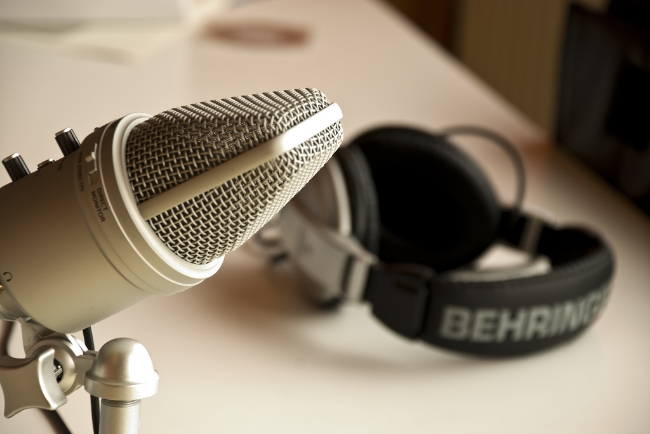
I’ve been blogging and podcasting for quite a few years now and although I enjoy both mediums, they do come with a degree of work. Also both undertakings require financing and at times can be quite costly. Yet despite these aspects of content creation, I still enjoy both mediums as a participant and as a consumer. There are still plenty of great blogs out there as well as informative and engaging podcasts. If anything 2015 was very much the year of the podcast as Serial proved. I consider reading blogs, listening to podcasts and watching quality You Tube channels to be the equal of commercial television and believe that these mediums will increasingly compete against more traditional platforms in the coming years. Here are some of the shows that I view and listen to:
Building Communities
Back in July 2014, a small group of podcasters banded together to launch The Gaming and Entertainment Network, a website which aggregated the content of eight independently produced shows. This eclectic group of podcasts covered a range of subjects such as gaming, movies, TV, hats and bacon as well as other aspects of popular culture. The project was conceived and implemented by Braxwolf from the popular blog Gaming Conversations. It was designed to raise awareness of the respective shows, as well promote group collaboration between the content creators. In addition to the website, TGEN (as it was abbreviated to) also had a presence on twitter, Facebook and Anook ensuring that the network was represented on all popular social media. Initially 8 podcasts participated in the project. Aggrochat, Battle Bards, Beyond Bossfights, Cat Context, Contains Moderate Peril, Couch Podtatoes, Massive Failure and Roleplay Domain.
Back in July 2014, a small group of podcasters banded together to launch The Gaming and Entertainment Network, a website which aggregated the content of eight independently produced shows. This eclectic group of podcasts covered a range of subjects such as gaming, movies, TV, hats and bacon as well as other aspects of popular culture. The project was conceived and implemented by Braxwolf from the popular blog Gaming Conversations. It was designed to raise awareness of the respective shows, as well promote group collaboration between the content creators. In addition to the website, TGEN (as it was abbreviated to) also had a presence on twitter, Facebook and Anook ensuring that the network was represented on all popular social media. Initially 8 podcasts participated in the project. Aggrochat, Battle Bards, Beyond Bossfights, Cat Context, Contains Moderate Peril, Couch Podtatoes, Massive Failure and Roleplay Domain.
The Gaming and Entertainment Network was intended to offer both convenience and choice to listeners. It was also supposed to foster and promote a collaborative ethos among the blogging community that had spawned it. As well as the individual shows, TGEN also produced its own quarterly round table podcast with a panel made up of members of each show. It was at times a little chaotic but the discussions were always fun due to the diverse spectrum of participants. Overall my memories of my involvement with the show are positive. Simply put they were good times. However, real life often trumps one’s aspirations. After three years, some of the podcasts started to fall into decline or stop altogether. Braxwolf, like so many of us, struggled to find the time to maintain the site while juggling work and family life. Inevitably TGEN finally closed and folk moved on. Not everyone though. Belghast and Scormus still regularly produce podcasts and Battle Bards is still a fixture of the community.
Setting aside the nostalgia, I guess what I really wanted to do was reference an example of collaboration between individuals from a shared community and highlight that such projects can be a success as well as a great deal of fun. I’ve been blogging for one and a half decades now and I was most fortunate to start at a time when blogs and podcasts were beginning to gain wider traction. From 2007 to about 2014 I was involved in such projects as The Newbie Blogger Initiative, the aforementioned The Gaming and Entertainment Network as well as the The Gaming Blog Nexus. All of which proved to be learning experiences and a great opportunity to meet and hangout with like minded people. Sadly, many have come and gone over the years but that is the nature of blogging. It has a very high rate of attrition. Some still soldier on, doggedly writing or producing shows. From time to time, someone long gone returns unexpectedly which is always a great surprise. Unfortunately, some members of the community have tragically passed away and left us too soon.
I really did enjoy the sense of belonging that came from the game blogging community back then. It’s still present today but it is a lot different because things change, especially myself. One can never recapture the events of the past but sometimes you can encourage others to try something, in the hope that they will also have a positive experience. I put a lot of stock in grass roots, community driven projects. So if you are a blogger, YouTuber or streamer and have a hankering to work collaboratively, build a community or simply just hangout with others, then don’t just think about it. Reach out to others and take the first steps. Doing is so much more rewarding than just endlessly planning. Even if things don’t work out at least you’ve tried and learned along the way. But there’s also a chance of creating something of value, finding new friends and making a lot of happy memories.
It is obligatory to start these sorts of posts by reiterating the standard mantra that you should not be driven by your websites stats and that the data they contain can be unreliable. Although a sound philosophy in principle, it is actually more nuanced than that. Such data can be useful for growth if used wisely. I have never been coy about trying to increase my readership. For me it seems an integral aspect of blogging. Over the course of 2026, the traffic to Contains Moderate Peril has doubled. A lot of that is down to curious spikes in visits which seems to be AI scraping the entire site. Setting aside these anomalies, more people are reading posts and a lot are doing so via the site’s RSS feed. All of which is fine by me as growing the audience for this blog was a goal for this year, I am quite pleased by this development and the ongoing progress. I hope it continues.
There is a subtle difference between being rash and being proactive. Being rash means acting too fast without thinking about the results, while being proactive is a question of acting early with careful planning. Why have I mentioned this? Well prima facie information indicates that recent Blaugust participants are interested in an “official” online presence for the annual festival of blogging, other than that existing Discord server. That seems perfectly reasonable to me. Not everyone likes using Discord and I do worry that they may reduce its free functionality at some point in the future. With regard to there being a Blaugust platform of some kind, there is a consensus that it doesn’t need to be some sort of sprawling commercially hosted website running on Wix or such like. Those sorts of site require funding, a degree of admin and possibly private data management. It also a bit too “corporate” if you like. Hence the logical compromise is to have a static site. Let it suffice to say, that has been done.
Judging by the posts I’ve read, it would appear that Blaugust 2026: Festival of Blogging has been well received by those who participated in it. That is most satisfying to know, especially in light of the fact that this is the first year the event has been run without our founder who sadly past away in July. It has also become clear that Blaugust is reaching a far wider and diverse audience and most definitely is no longer the exclusive province of bloggers from one particular community. There has been healthy discussions on our Discord server about whether this year event needs to adapt to accommodate the modern blogosphere. Questions such as whether or not there needs to be a dedicated Blaugust website have been raised and explored. Should every site participating have an RSS feed? How, if required, should comments be handled. Inevitably, the subject of the use of AI in blogging still remains a controversial issue.
After a very productive month of writing, we come to the final Blaugust 2026 Group Project writing prompt. It is titled lessons learned and is usually a chance to reflect on the festival and whether or not it has been to one’s satisfaction. Have you achieved your goals? What have you gained from the experience? Those sorts of things. It also poses two further questions; “What is the best piece of advice you’ve ever been given?” and “what’s the best advice you’ve ever given to someone else?” for your consideration. I’ll address the questions shortly. Firstly let’s mull over this years event and assess how it’s gone.
It was my blogging anniversary on the 16th August. I’ve been writing and sharing my post online for 19 years, via various different websites and blogs. This current iteration of Contains Moderate Peril has been around since August 2015. To date it has 2,171 posts including this one. Quantity does not necessarily equate to quality but there are some articles I am proud of and feel that they make their point effectively.
This week’s Blaugust 2026 Group Project writing prompt is an important topic. Namely, staying motivated. I prepared a fairly lengthy post with some advice and ideas to keep people focused and writing. Then I checked it against the post I wrote last year and the year before that, going back to blogging events from 2012. All of these posts broadly said the same thing, so I decided to scrap what I had composed for today and to go with a simpler approach. I shall answer the questions Krikket posed for this writing prompt. Fellow blogger Bhagpuss has also done so and as ever, his thoughts are interesting and well expressed. Here are my answers.
The initial podcast boom, which began circa 2005, started as an audio only medium. One of the reasons podcasting became so popular, especially among the fan community, was that you could get away with relatively low production standards. Anyone who had access to a basic microphone and a PC, could produce a show and upload it to iTunes, which was the primary platform at the time. Listeners were forgiving back then. Twenty years later and podcasting has been on a tempestuous journey. It started with the medium being accessible and democratised, sustaining a rich and diverse fan community via non-professional productions. However, slowly and inevitably it has been assimilated by corporate interests. Fan podcasts have given way to podcast production companies. The small, micro-budget, indie show has effectively been thrown out of their own party. Such shows still exist but they struggle to be heard.
Once again, I have stumbled across an interesting debate that has provided me with an opportunity to write a blog post. Over on the Blaugust Discord Server, I read a comment from AgingGamer regarding RSS feeds and their significance with regard to blogging. This in turn referred me to a post by fyr (don’t you love all these nom de plumes) who wrote at depth about the ongoing community debate about the use of RSS/Atom feeds. The article explored the importance of such feeds with regard to reaching readers and providing accessibility to the disabled. All of which provided me with a great deal of food for thought. Mainly because I use a mainstream website service provider for my online endeavours, so RSS is by default built. I’ve never really considered not having such a facility at my disposal. But the rise in the IndieWeb scene challenges this assumption.
I have written two blog posts today that I have subsequently abandoned. The first was gaming related but when I was about halfway through writing it, I felt like I was covering old ground and just repeating myself. It was also regarding an issue that can’t really be fixed. Namely, how do you ensure that matchmaking in PVP games is done equitably. As there is no solution to this issue at present, or at least not one that all parties can agree on, I decided to ditch it. Similarly a post I was working on about what becomes of my blog if anything happens to me was curtailed. In light of recent events in our community it seemed inappropriate. However, as a result of binning two blog posts, I new idea occurred to me. Do my fellow bloggers self-edit and curtail what they write about? Is your blog totally unfiltered or do you apply a set of rules that determine what content is deemed acceptable?
It is time for the next Blaugust 2026 Group Project writing prompt. This one comes with two lines of enquiry. The first is an opportunity to “introduce yourself”. Over the years, I have written several introductory posts for previous Blaugust events. Rather than repeat myself I’ll just link to the last one, which was posted in August 2023. I haven’t radically charged since then apart from my hair going whiter. The next part of the prompt poses a far more intriguing question. “If you could have one magical power or super power, what would you choose and what would you use it for?”, which offers much for consideration. Having given this proposition much thought here is my response.
A decade ago I wrote a post about blogrolls and the practical and social issues surrounding them. At the time, the version of Squarespace I was using didn’t easily support such things or at least wasn’t able to do so in a manner I liked, so I didn’t have one. Ten years later Squarespace as a hosting platform has far greater functionality, hence I recently decided to add a blogroll. That was in March this year. However it just wasn’t really fit for purpose. So I decided to revise it a few days ago and rather than just have a traditional list of blogs in a side column, I ended up producing a more comprehensive blog directory, which list two hundred plus sites alpha-numerically. I’ve been tinkering with it on and off and I am now finally happy with it. The latest update reflects the international nature of the Blaugust: Festival of Blogging and the fact that we have many blogs written in their native language. Translating text is now an integral function of web browsers, so I see no reason why these blogs should be excluded.
Today’s post is part of the Blaugust 2026 Group project, which features a series of writing prompts set for specific dates throughout the month. The idea being that everyone who wishes to participate can write about the same subject, riff off each other’s posts and enjoy a shared experience. In many respect having a common writing prompt levels the playing field and provides a sense of common purpose among those who take part. Today’s group project prompt asks the question “tell us all about your very first blog”. An unambiguous and interesting question that will hopefully prove enjoyable to write about and informative to others.
I have been writing online for nearly two decades. I don’t claim to be good or accomplished but what I can say with certainty is that the more often you write, the easier it becomes. For those who are new to writing a blog and the Blaugust Festival of Blogging, possibly the biggest hurdle that you now have to get over, is writing your first post of the month. You spent the lead up to this event sorting out your blog templates, fine tuning the backend and possibly banking some ideas. Or you may have decided to just wing it and make it all up as you go along. Both are perfectly valid approaches. However, there is one thing left to do that cannot be put off, avoided or danced around. Writing. At some point you’ve got to do it. Or bail on the event. The proverbial “shit or get off the pot”.
If you take a cursory look at a calendar you will see that the month of July is fast coming to an end. That means that Blaugust 2026 Festival of Blogging starts in a few days time! If you’re participating, or thinking of doing so, the next few days present a golden opportunity to do some practical organising and basic preparation. You don’t have to if you don’t want to. Feel free to just do things as they come, so to speak, if that’s your approach. However, for most of us, it helps if we have some kind of plan in place and make some arrangements in advance. I personally prefer this approach and like to have some ideas for blog posts in the bank. It is also useful to have “options” if something doesn’t go to plan. For those who are new to Blaugust, here are a few ideas regarding preparation that may be of use to you. As ever, your personal mileage may vary and ultimately you are best off adopting a strategy that suits your writing style and personal schedule.
Prior to last year’s Blaugust: Festival of Blogging, I upgraded Contains Moderate Peril to the latest version of Squarespace. There are still some aspects of the site that need fine tuning but overall, I am happy with the appearance of my blog and its respective functionality. With this year’s writing event fast approach, I decided to tackle over the last few days, some of those finer points that need tweaking. I have wanted a post counter on the site for a long time but unfortunately there is no native Squarespace widget for this basic function. I also felt the need to upgrade the blogroll, as the current one didn’t support RSS feeds from certain sites (e.g. Google Blogger) and was dependent upon a third party service, Elfsight, which wasn’t ideal. Both of these issues have now been addressed and I am pleased with the results. There is now a post counter on the Blog Archive page, which seems a logical place to have it and the Blogroll is now far more comprehensive.
Next month the annual Blaugust: Festival of Blogging begins. Roundabout this time each year, I try to write a promotional post to raise awareness of the event and encourage potential participants. However, as I’ve done this quite a few times before, each year it is becomes increasingly difficult to present the essential facts about Blaugust: Festival of Blogging in an interesting fashion. There’s nothing worse than writing a post and feeling that you’re just covering old ground. So, this year, I thought I’d try something different and present the most important information about this annual event, as if it were a conversation between myself and an interested passer by. Feel free to attribute novelty voices for each party in your own head, while you read this. If it helps, try imagining that this discussion is happening between two celebrities or such like. Both may be wearing exotic hats but I digress. On with the scenario.
I read a blog post by Void recently, about finding a new internet home. He wrote about how he and many others have had to pick up their “digital roots” and migrate multiple times over the years, from one platform to another. It is a position I can sympathise with as I have done likewise. Hence I like the idea of having a place online where I hangout by default. My own blog is an anchor for me but it is not quite the same thing as a platform or online portal where I can find all my friends and colleagues, share content and shoot the breeze. It’s a curious thing, because as I typed that last sentence it struck how such a sentiment may seem alien to others. There may well be people who like to have a finger in multiple pies and who are happy to frequent and flit between various social media apps, Discord servers and subreddits. I prefer to focus my efforts on a single instance. A place that suits my requirements, allows me to put down roots and become part of the furniture. Like a virtual Diogenes Club.
Everyday, once I’m up, I sit at my desk in my office, fire up my PC and log into Feedly. I have various RSS feeds grouped by category, which I slowly trawl through and read anything that catches my eye. I have one curated feed named “Blaugust” named after the yearly festival of blogging event. It has over 250 blogs listed, many of which are former participants. Most of these regularly post. Hence there’s a lot to get through and so I don’t read all of them. However there are a few that I always checkout. Mainly because they’re the personal musings of some of our writing community’s oldest and most prodigious members. The sorts of guys and gals who are part of the furniture. They’ve always been there and it feels like they always will. Posting their thoughts, sharing their enthusiasm and spreading the love, so to speak. One of these blogs, is Tales of the Aggronaut. written by Belghast.
On Friday 26th June, I had another random spike in internet traffic to Contains Moderate Peril. The statistical package that comes with my Squarespace account recorded over 13k visits in less than 24 hours, which is not typical (although I wish it was). However, all of these visits to my blog arrived via the default homepage and spent between 1 and 2 minutes there. Hence, it was obvious that this was not human traffic, as there was no evidence of any searches being made of content that is available on my site, nor of the “visitors” clicking on any of the links on the top menu and viewing other posts. This was undoubtedly AI traffic arriving at the designated homepage and simply parsing the site. I had a similar spate of this sort of web traffic last November. The only difference on that occasion is that the traffic all came from China. This time round it hailed from the US. I suspect that this is something that will happen more often as companies set their AI loose on the net for what is effectively training.
I recently watched a video on Patreon by someone who I actively support as a “content creator” and whose work I enjoy. I shall provide no more detail regarding their identity because they may not want their work referenced with regard to what I am going to say. During the course of their video they briefly referenced the work put into promoting a podcast they are currently producing and the relatively low audience that it has garnered so far. The comments were an aside and most certainly not said with any sense of self-pity. They were simply a statement of fact. Furthermore, I suspect they are far from unique and similar sentiments have been expressed in one way or another by anyone who has created something the published it online, only for it to be lost among the greater white noise” of the wider internet.
When I first started blogging way back in 2007, I maintained a blogroll of all my colleagues and peers’ websites. At the time this was a common practice and a way to support an expanding community. I considered this such an important aspect of the blogging scene at the time, I created a website to aggregate posts from video game blogs, called The Gaming Blog Nexus. It ran for two years and proved quite useful. However, it was tricky to administer and would frequently break as a lot of the back end widgets and plugins were created and maintained by “gifted amateurs”. I eventually shut it down due to the operating costs. When I moved my own website, Contains Moderate Peril, to Squarespace in 2015 I intended to start maintaining a blogroll once again. However, at that time there was no native support for such a thing on the platform. Hence for the last ten years, I have not had a blogroll on my website, which hasn’t sat well with me.
I was speaking to someone recently about hobbies (fortunately it wasn’t Simon Quinlank) and I mentioned that I have maintained a blog for over a 19 years. When I talked about the ongoing cost they were most surprised, as they had assumed that blogging was something that could be done for free. I guess we’ve become so accustomed to the provision of free online services such as email, that this a reasonable assumption. I pointed out that although it is indeed possible to blog for free using Blogger, it was not the optimal approach, especially if you want to maintain some degree of control over your writing. Naturally, the next question they asked was how much do I spend and I gave them a ballpark figure. All of which reminded me that I wrote a post on this very subject a few years ago. So I’ve decided to revisit the subject and see how much it currently costs to maintain Contains Moderate Peril.
Last August I listened to The Battersea Poltergeist podcast by Danny Robins and was subsequently introduced to his other production Uncanny. Both are investigations into alleged supernatural events but unlike other shows of this kind, these are far better researched, produced and most importantly even handed. Danny makes a great deal of effort to try and keep a foot in each camp; team believer and team sceptic. Overall these podcast work as they genuinely appeal to multiple audiences and they are not excessively hyperbolic or credulous. A lot of this comes down to Danny’s personality which is upbeat and relatable. Perhaps his greatest strength is being a sympathetic ear to those recounting their experiences. He lightens the mood from time to time with humour when required. He also liberally litters the proceedings with pop culture references. However, he will probe and ask pointed questions but does so in a non-accusatory manner.
Today I started the slow process of auditing every post that has been published on Contains Moderate Peril since 1st August 2016. The goal is to correct any obvious typos and replace all existing images with larger ones. The Squarespace software upgrade I applied to the website at the end of last year has finally allowed me to establish a standard format that I am happy with. Hence the ongoing audit is the perfect opportunity to apply these style rules to all posts. There are also some technical issues and matters regarding functionality that need to be addressed. I need to determine how to embed YouTube videos in such a way that they automatically scale to fit whatever device is viewing them. Another area which needs improving is the website search facility. This needs refinement so that enquiries can be more specific. Older posts also need to be more accessible, although I am still researching how best to achieve this.
Have you noticed how politicians, pundits and media commentators will often throw around phrases and buzzwords when discussing the news and other major political talking points? “Cultural Marxism” and “Metropolitan Elite” are two examples that spring to mind. Often it is clear that the person using these phrases has no idea what they mean or what their provenance is. Perhaps you’ve thought that it would be useful to learn more about these terms or the background behind certain institutions or movements. If this is the case then I wholeheartedly recommend the Origin Story podcast. To quote from their website “What are the real stories behind the most misunderstood and abused ideas in politics? From Conspiracy Theory to Woke to Centrism and beyond, Ian Dunt and Dorian Lynskey dig into the astonishing secret histories of concepts you thought you knew”.
It’s nearly two and half months since the Blaugust: Festival of Blogging event ended. During that time I’ve maintained a fairly regular writing schedule and I post every two days or so. Furthermore, I finally dragged my blog template, kicking and screaming, into the modern era. I tweaked a few pages and updated the content of the “about” page. The next task is to start going through all previous posts and replacing older, low resolution images with larger, more appropriate ones. This process also presents an opportunity to ensure that all posts follow a uniform style. IE Are appropriately categorised, have links to related posts at the bottom and are SEO optimised. This will be a lengthy task so I think the best approach will be to tackle two or three posts a day. Hopefully this will raise the profile of older content, which generates the lion’s hare of traffic to this site.
I use a browser extension called Control Panel for YouTube, which allows me to determine who many videos are displayed on my YouTube homepage and to filter the content that is shown. At present it is configured to display rows of six. Something that I have noticed of late, is the amount of videos with hyperbolic titles and thumbnail images created by AI. Both of which are design choices made to increase engagement. Clickbait titles are contrived to meet current SEO optimisation criteria and as such feature more and more in search results. The fact that they frequently have no relation to the subject I am researching, seems to be neither here nor there. The same issues arise with regard to AI generated images, which again frequently have no bearing on the matter. The fact that more and more content creators do this, infers that it works and is now an essential part of the process you must follow to be seen and featured in search results.
In the last post in this series, I specified the need for a plan with regard to upgrading my blog. Well a plan has emerged, been refined and has now been formally adopted. Rather than migrate Contains Moderate Peril to a new platform and effectively have to rebuild all the content, I am going to upgrade my existing presence on Squarespace. This decision was made for two reasons. Time and money. Migrating to a new platform will take a lot of time and incur additional costs. Upgrading the existing website will take less time and has no cost implications. That is not to say that it will be easy. It has become abundantly clear that the upgrade process will break stuff and that all published posts will have to be manually repaired. Hence my choice boils down to the lesser of two evils.
This year’s Blaugust: Festival of Blogging has reached an end and it would appear that this event has been well received by those who have participated in it. I believe that there were 168 bloggers taking part this year, many of whom have not participated before. Some were new to blogging, where others simply wished to see if they could increase their writing output. As ever there was a wide variety of blog styles and subject matters and it has been most interesting to read new posts every day. I have attempted to leave comments and positive feedback where I can and I hope that some of these new blogs that I’ve discovered continue to write. Well done to everyone who took part. I hope it has been an enjoyable and informative process and that you have learned from it. I know that at least one blogger has determined that writing online is not for them, which is a valuable lesson.
Diary of a Podcaster Part 16
Life is often about the things we’d like to do or wished we had done, rather than the things we’ve actually achieved. My last post in this blog series was back in 2nd October 2018 and the last podcast that I published was in January 2019. Since then most attempts to produce more content of this kind have come to nought, as spare time for both recording and editing have been in short supply. However, I did manage to record some material on the 22nd of December with my long-time co-host Brian. The idea was to release the finished podcast as a surprise show at the end of the year. However, due to real world commitments, that deadline has not been met. Now there’s a surprise. I do intend to finish editing the show and may add some extra material to make it a little more topical. But overall, I am not too upset by this delay, because in the process of organising this podcast, I discovered a quick and convenient means of recording via Discord. Something that has been seen as Holy Grail of podcasting over the years.
Life is often about the things we’d like to do or wished we had done, rather than the things we’ve actually achieved. My last post in this blog series was back in 2nd October 2018 and the last podcast that I published was in January 2019. Since then most attempts to produce more content of this kind have come to nought, as spare time for both recording and editing have been in short supply. However, I did manage to record some material on the 22nd of December with my long-time co-host Brian. The idea was to release the finished podcast as a surprise show at the end of the year. However, due to real world commitments, that deadline has not been met. Now there’s a surprise. I do intend to finish editing the show and may add some extra material to make it a little more topical. But overall, I am not too upset by this delay, because in the process of organising this podcast, I discovered a quick and convenient means of recording via Discord. Something that has been seen as Holy Grail of podcasting over the years.
The two of the main obstacles that face anyone hoping to produce a podcast are scheduling guests and recording. Getting your co-hosts online at a mutually convenient time has always been a complex task, akin to herding cats. And then finding a simple and reliable recording package is also a challenge. I initially started recording podcasts back in 2010 and used Skype to facilitate the conversation and numerous third-party apps to record the proceedings. These were often created by gifted amateurs and would often break once Skype was updated. Eventually I started using Zencastr which offers a bespoke VOIP service and records each track individually. As a web-based solution this proved good although there were glitches every once in a while, as well as occasional syncing issues. And then I came across Craig, just before Christmas. You simply invite Craig to your Discord server and then use simple text commands in your chat channel to start and stop recording voice chat. Upon finishing your recording Craig will send you a Direct Message with links to download your files. There is a choice of formats available and each participant is on a separate track. The icing on the cake for me is downloading the files as an Audacity project, ready for editing.
Peter Cushing recording an early podcast
However, it is worth remembering when making a podcast, that irrespective of whether you have the best recording system in the world, it cannot compensate for those participants with cheap microphones who sit at the bottom of a well or out in the middle of busy traffic, while shaking Maracas or using a Belt Sander. Plus no amount of post-production editing can improve poor material. But I guess that those sorts of problems are for another blog post. I’m hoping that the technical success of my most recent podcast recording will kick start my productivity once again. Maybe I can press gang a few of my former podcasting colleagues into appearing as guest on future episodes. Because I still think there’s a lot of life in podcasting as a medium. And having a show that goes hand in glove with the website is good for brand continuity. We shall see. The New Year is a traditionally a time for aspirations and “plans”. Sadly, reality often has other ideas.
The initial podcast boom, which began circa 2005, started as an audio only medium. One of the reasons podcasting became so popular, especially among the fan community, was that you could get away with relatively low production standards. Anyone who had access to a basic microphone and a PC, could produce a show and upload it to iTunes, which was the primary platform at the time. Listeners were forgiving back then. Twenty years later and podcasting has been on a tempestuous journey. It started with the medium being accessible and democratised, sustaining a rich and diverse fan community via non-professional productions. However, slowly and inevitably it has been assimilated by corporate interests. Fan podcasts have given way to podcast production companies. The small, micro-budget, indie show has effectively been thrown out of their own party. Such shows still exist but they struggle to be heard.
Last August I listened to The Battersea Poltergeist podcast by Danny Robins and was subsequently introduced to his other production Uncanny. Both are investigations into alleged supernatural events but unlike other shows of this kind, these are far better researched, produced and most importantly even handed. Danny makes a great deal of effort to try and keep a foot in each camp; team believer and team sceptic. Overall these podcast work as they genuinely appeal to multiple audiences and they are not excessively hyperbolic or credulous. A lot of this comes down to Danny’s personality which is upbeat and relatable. Perhaps his greatest strength is being a sympathetic ear to those recounting their experiences. He lightens the mood from time to time with humour when required. He also liberally litters the proceedings with pop culture references. However, he will probe and ask pointed questions but does so in a non-accusatory manner.
Have you noticed how politicians, pundits and media commentators will often throw around phrases and buzzwords when discussing the news and other major political talking points? “Cultural Marxism” and “Metropolitan Elite” are two examples that spring to mind. Often it is clear that the person using these phrases has no idea what they mean or what their provenance is. Perhaps you’ve thought that it would be useful to learn more about these terms or the background behind certain institutions or movements. If this is the case then I wholeheartedly recommend the Origin Story podcast. To quote from their website “What are the real stories behind the most misunderstood and abused ideas in politics? From Conspiracy Theory to Woke to Centrism and beyond, Ian Dunt and Dorian Lynskey dig into the astonishing secret histories of concepts you thought you knew”.
I was unaware of the The Battersea Poltergeist podcast and accompanying online interest during its initial release. Created by Bafflegab Productions and presented by Danny Robins, who is well known in this field with similar shows such as Haunted and Uncanny, it was broadcast on BBC Sounds and BBC Radio 4 between February and March 2021 during lockdown. The Battersea Poltergeist is a documentary of a true story with dramatized re-enactments. The show alternates between interviews, discussions and research into the case with short vignettes from a cast of actors recreating events for dramatic effect. It was released episodically and gained a lot of online and press interest at the time. Hence there were additional episodes interspersed throughout the initial run which provided “case updates” and listener feedback and questions.
I spent most of this morning and afternoon editing video content I captured while playing Sniper Elite Resistance. I assembled 26 minutes of highlights and then recorded a narration. After adding appropriate branding for Contains Moderate Peril, I then uploaded the finished video to YouTube. Sadly, the picture quality was problematic, often becoming pixelated and blocky when there was rapid movement. The volume of my narration was also too low, so I decided to delete the video from my channel. I was somewhat disappointed by this outcome and initially thought that the day had been a waste of time. However, as I write this post, it becomes very clear that this is just part of the learning curve. I have given some thought to the problem and I believe I have determined why this video was not up to the standard of the previous one. Ultimately, this is an invaluable lesson.
I recently wrote a post about how I wanted to have a go at producing some gaming videos for YouTube. “How hard can it be?” I asked rhetorically, knowing that there would probably be a lot more to the process than meets the eye. Two weeks on and I can report back that there is indeed a learning curve but it is not insurmountable. I managed to figure out how to record a video game, edit it and then add a narration as well as a simple animated logo. Furthermore, I succeeded in doing this without spending a lot of money. I bought some video editing software and a year’s subscription to XSplit Broadcaster but got a really good deal on both. In total I paid £41, which is very reasonable. Hence yesterday, I posted my first video on the officially relaunched Contains Moderate Peril YouTube channel.
I regularly receive random emails addressed to such august bodies as “the Contains Moderate Peril team”. They always raise a wry smile. Like there’s a team. That implies an organisation, structure and even a budget. As opposed to just me, screaming into the void and pouring money into a financial black hole. I don’t resent such emails. People are just trying to earn a crust, I guess. The only thing about them that frustrates me, is they never address me by name. A cursory glance at the “about” page of the website would provide them with my personal details. So I just delete them and think no more about them. Today I received one that did more than make me smile. In fact I laughed out loud and heartily. The email started with “Dear Burton”. Someone had found a few old episodes of the Burton and Scrooge podcast and had assumed this was indeed my real identity.
Earlier tonight, I had the pleasure of participating in the Evolution of Horror: Podcasting Masterclass. An online seminar conducted via Zoom. For those who are not familiar with the Evolution of Horror, it is a podcast written and hosted by Mike Muncer along with regular guests. It explores horror cinema in depth, considering the technical, thematic and sociological elements of the genre. Launched in 2017 this independent production has gone from strength to strength, with Mike now producing content for Paramount + and Studio Canal. The masterclass was designed to provide podcasters both old and new with some practical advice and answer some commonly asked questions. Being a fan of Evolution of Horror as well as a former podcaster, I signed up and enjoyed a most informative and enjoyable 90 minute seminar.
About three years ago, I wrote a very similar post to this one. Titled “Ride off into the sunset” it was an account of bloggers leaving or retiring from the community. Especially those who are established and part of the proverbial furniture. I referenced Zubon from Kill Ten Rats as an example and naturally invoked the mantra that nothing remains the same forever. Many of us go through periods of our life where a specific activity or pastime galvanises us into action. We focus on that activity for sometime and it becomes an integral part of our life and even identity. However, eventually we move on usually because such a hobby isn’t sustainable. Modern life makes too many demands upon our time. Plus we all change as individuals. What delights us today may well depress us in a year’s time. This was the thrust of that post and I now find myself in the sad but inevitable situation of writing it again.
I recently decided I’d had enough of the endless deliberation and procrastination and so I started producing a weekly podcast again. As of today the second episode of Season 10 of the Contains Moderate Peril podcast is available on all major platforms. I must admit, although I was confident that a few people would listen to the show, I was completely taken aback by the overall reaction. The Contains Moderate Peril podcast was warmly welcomed back by previous listeners on social media and the statistics for the first show have been most positive. For myself and Brian, recording the show is like putting on a comfortable pair of shoes. Last night’s recording went okay and I think after a few more episodes, the recording and editing process will be an efficient process. Keeping each episode to an hour or under means that the conversation stays on point.
Sometimes in life, you have to stop banging on about what you want to do and just go out and do it. I was thinking, yet again, over the Christmas holidays about how I wanted to get back into podcasting and to create a regular show. Although it is always a pleasure to be a guest on Beyond Bossfights, it is not quite the same as writing and producing your own project. So I decided not to sit around and overthink things but instead to pick a subject as a talking point, start recording and see what happened. As ever, my longstanding co-host Brian was happy to participate and so joined the session. Several hours later, I had a fully edited recording that was good to go. Hence, I am pleased to announce that after a three year hiatus, the Contains Moderate Peril podcast is back. A new episode is now available for download, either via the podcast page of this site or through iTunes and Stitcher.
My personal podcast journey started back in 2010 when I effectively invited myself onto the Mordor or Bust podcast. The three of us who were involved in the production of that show were learning as we went along. I recently listened to an old episode and despite our enthusiasm, it is quite rough around the edges from a technical perspective. I think that the biggest mistake that I made at the time was not investing in a better quality microphone. I sound like I’m at the bottom of a well. It’s hardly surprising as I was using a very cheap analog desk microphone which I think only cost a few pounds from PC World. Roll on eleven years and I’ve been invited to be a guest on the Beyond Bossfights podcast. It’s nice to be back in the saddle again, so to speak. Up until now, I’ve been using my Razer gaming headset for any previous podcast recordings but I’ve decided to take the opportunity to overhaul my technical setup.
Back in 2010 there was a video game podcast boom, especially with shows driven by MMORPG fandom. Hence, in a fit of hubris, I decided to add my voice to the growing conversation. Or alternatively jumped on the bandwagon, depending upon your point of view. The accessibility of the tools to create and distribute a podcast eliminated the traditional barriers to producing such material. Technically, the entire process of making a podcast remains quite simple. You record, edit, upload and promote. The quality of the podcast comes down to two factors. Your content and technical presentation. In this post I’d like to focus upon the latter. Podcasts are by their very nature, an audio medium, so it is important that those speaking are recorded clearly. Yes, this post is about microphones. How they can make or break a podcast (or live stream) and that they’re my new fixation.
Back in July 2014, a small group of podcasters banded together to launch The Gaming and Entertainment Network, a website which aggregated the content of eight independently produced shows. This eclectic group of podcasts covered a range of subjects such as gaming, movies, TV, hats and bacon as well as other aspects of popular culture. The project was conceived and implemented by Braxwolf from the popular blog Gaming Conversations. It was designed to raise awareness of the respective shows, as well promote group collaboration between the content creators. In addition to the website, TGEN (as it was abbreviated to) also had a presence on twitter, Facebook and Anook ensuring that the network was represented on all popular social media. Initially 8 podcasts participated in the project. Aggrochat, Battle Bards, Beyond Bossfights, Cat Context, Contains Moderate Peril, Couch Podtatoes, Massive Failure and Roleplay Domain.
Life is often about the things we’d like to do or wished we had done, rather than the things we’ve actually achieved. My last post in this blog series was back in 2nd October 2018 and the last podcast that I published was in January 2019. Since then most attempts to produce more content of this kind have come to nought, as spare time for both recording and editing have been in short supply. However, I did manage to record some material on the 22nd of December with my long-time co-host Brian. The idea was to release the finished podcast as a surprise show at the end of the year. However, due to real world commitments, that deadline has not been met. Now there’s a surprise. I do intend to finish editing the show and may add some extra material to make it a little more topical. But overall, I am not too upset by this delay, because in the process of organising this podcast, I discovered a quick and convenient means of recording via Discord. Something that has been seen as Holy Grail of podcasting over the years.
As part of the Blaugust Festival of Blogging, I thought I’d take the time to promote some of the content creators whose work I enjoy. Despite all the white noise, click bait and snake oil salesmen, there is still a wealth of good material to be found online, be it blogs, podcasts, You Tube channels or streamers. Most of what I currently enjoy, I discovered through word of mouth. I feel more disposed towards trusting the views and opinions of friends than I do of “recommendations” made by Google and You Tube, driven by their “questionable” algorithms. These are often determined by key words and have no ability to ascertain quality. So here are a mixture of You Tube channels, podcasts and blogs that I wholeheartedly recommend. Between them they cover such subjects as movies, gaming, comedy and history. Feel free to leave comments about my choices and share your own recommendations.
I’ve been pondering a new podcast project for a while, since Contains Moderate Peril ended a year ago. As I’ve discussed in previous posts, I want to create a movie-based show and have been considering of late exactly what sort of format to adopt. I don’t go to the cinema often enough these days to produce a contemporary review orientated podcast, plus I don’t find a lot of mainstream releases to be sufficiently engaging. Despite looking and pursuing discrete enquiries, I haven’t been able to find a co-host who is sufficiently knowledgeable, motivated or available to do a regular show producing the audio equivalent of long form criticism of films and the movie industry. So, it’s been a bit of a chore to try and work out which niche to explore. However, I have now a clear idea of what I want to do.
I have no problems finding podcasts and You Tube channels that explore the subjects that I like. It’s determining which ones are any good that is the real trick and the only way to do this is to sit down and listen or watch them. Sometimes you need to give two or three episodes a go before you can truly determine if a show is for you. So, I thought it may be useful to share another small selection of the content that I am currently enjoying, so you don’t have to wade through quite so much “white noise” that fills the internet. I’ve made a conscious decision to select a broader spectrum of material and not to focus just on gaming. All the shows recommended are freely available although you can support the content creators if you wish to. Feel free to leave comments on the titles listed and share your own recommendations.
Today I did a little blog housekeeping. I’ve reposted the last five episodes of the Contains Moderate Peril on the podcast page, now that previous hosting account has been closed and the RSS feed is defunct. The files are held locally and can either be played via the embedded player or downloaded manually. There are also two episodes of the Burton & Scrooge Podcast still available on SoundCloud for posterity. The podcast page and selection of episodes available are for reference and as an example of my podcasting back catalogue, so to speak. I may not be actively creating content of this kind at present, but I see no reason not to promote my experience in the field. If circumstances change in the future, there may be resumption of service.
I made a hard decision today. I cancelled my Podbean subscription and have effectively closed the Contains Moderate Peril podcast. Despite relaunching the show last September, I simply haven’t had the time to collate content for discussion or organise recording sessions with co-hosts. Hence, we are now two months into 2018 and a new show has not yet been produced. Furthermore, the listener numbers for the episode posted between September and December last year were disappointing. Upon mature reflection, I have reached the conclusion that the podcast peaked in 2014 when we had a strong and established audience. Rather than chase my own tail trying to recapture something that may well have been a product of circumstance, it seems prudent to finally draw a line under this show. I’m a little sad about this situation, as it does feel like the end of a personal era, but it is time to move on.
2017 didn’t quite go to plan with regard to my personal podcast output. Brian and I decided to stop producing the Burton & Scrooge Podcast and return to creating material under the Contains Moderate Peril brand. This was a good idea in so far as consolidation, but it was ill timed as both of us were somewhat fatigued with podcasting per se. Ultimately Brian decided to take a break and pursue some projects of his own. I decided to push on with podcasting in my usual idiom and I was pleased with the three new shows that were produced. Sean, Brax, Jaedia and Wolfy were extremely obliging and great guests, but ultimately my schedule just couldn’t sustain a regular show. Hence, I re-released some “classic” shows to fill the gaps in the run up to Christmas. As a result of all these changes and the delays, the overall numbers for the show have been disappointing. Although statistics are not the only reason why I podcast, they are important as I was hoping to grow the audience this year. That has patently not happened although it is nice to know there’s a loyal core group of listeners. Therefore, I now have to think long and hard about my podcasting plans for 2018.
Ever had what you thought was a great idea for a podcast that looked good on paper but turned into something quite different, once you started recording? Well I had that experience on Sunday evening and today I am dealing with the results. It all started with an innocuous Twitter conversation (don’t many things I hear you say) which highlighted a minor cultural difference between the US and the UK. Having recorded with an American co-host for many years this is a common occurrence, so I decided to make it the theme of the next Contains Moderate Peril podcast. I initially thought of several fun examples that could be discussed; the British obsession with the weather, cheese-rolling and Morris dancing. However, rather than take a scattergun approach, I decided to list specific categories in the show notes. Subjects such as school, work, food, social customs and public holidays were added for discussion and I believe that is where thing started to go wrong.
Podcasts are becoming an invaluable medium for the analysis and discussion of niche interests and bespoke subjects. Many of the shows that I regularly listen to bring professional quality documentary skills to bear on unique and varied areas of fandom. More and more podcasts are being made by informed and intelligent fans, offering in-depth material rather than just light weight banter. Simply put, I am spoilt for choice. Therefore, it is essential to have a suitable podcast management app to stay on top of such quality entertainment. Something that allows me to curate and organise those shows that I currently enjoy, as well as providing recommendations for comparable material that I may wish to subscribe to. For several years I’ve been using Podcast Addict on my Android devices, although I’ve struggled to find something comparable for my PC.
Last night, myself, Hannah and Chris (AKA Jaedia and Wolfyseyes) had an especially productive recording session. We managed to produce two hours of material in total and I’m confident that it can be whittled down into a coherent and enjoyable ninety-minute episode. What I especially enjoyed about this podcast recording was buoyant atmosphere and the flow of the conversation. I felt that we explored the various topics well and that the discussion felt natural. Ultimately, it will be the listeners who’ll determine whether this is the case or not but from my perspective the recording went well because the guests were a good choice. If you are pursuing a podcast format that has multiple hosts or regularly features guests, then it is important for there to be a rapport between all involved.
As I surmised, in its current state Squarespace has proven an inadequate host for my current podcast. After exchanging several emails with Apple support, I was informed that “the server for your episodes does not support HTTP HEAD requests. To enable streaming playback of episodes, ensure the hosting server allows HTTP HEAD requests and has byte-range requests enabled”. To cut a long story short, there is no scope for me to alter any of these things at present within the Squarespace dashboard. Nor did I want the work involved in using a third-party feed managing service such as FeedBurner. So, I decided to open up an account with a commercial hosting service. After some research, I determined that PodBean could cater for all my needs and at a competitive price. Submitting the new RSS feed was easy and Apple approved the podcast within 36 hours. As of today, the Contains Moderate Peril podcast is back on iTunes.
Whenever I encounter a word or term that I’m not familiar with, I will usually Google it. That’s the way I’m wired. I prefer to “know” rather than “not know”. However, it is not the concept of continuous self-improvement that I wish to discuss in this post but something else. Namely sociolinguistics. Earlier today I saw someone mention vocal fry on Twitter. I had no idea what that was so I checked on Wikipedia, watched some You Tube videos and finally read some newspaper articles. An hour later I was aware of not only vocal fry, but run-ons, uptalk, glottal Ts and the fact that the way we speak has a major impact upon our lives, just like education and class. According to sociolinguistics, the manner in which you speak has a major impact on the way you are perceived by others. Sadly, like so many other social markers, it can be used in a discriminatory fashion.
Back in April I decided to relaunch the Contains Moderate Peril podcast for reasons of brand continuity. At the time, I was hoping to get back in to the podcasting saddle and return to producing weekly shows. However, the recording session was fraught with technical problems with Zencastr crashing regularly. I was left with nine separate audio tracks that weren’t in sync which made editing a major problem. There then followed a wealth or real-world issues that I had to address that meant for the next three months the podcast was put on hold. Finally, at the beginning of August I managed to complete the post production work on the show and publish it via Squarespace. I was hoping that using this existing website as a host for the show would save some money and reduce the work load. However, like most plans, it didn’t exactly work out that way
Finally, after several months of diversions and distractions, I’ve managed to produce a new podcast. As I mentioned in a previous post, the Burton & Scrooge Podcast has been officially retired and for practical reasons of brand consolidation, the Contains Moderate Peril Podcast has been reinstated and will become the official show for this website. However, it should be noted that this latest episode is specifically designed to be a technical test meant to validate our RSS feed for submission to iTunes. Once this logistical issue has been dealt with and the podcast is accessible on all major platforms, then further episodes of the show will be scheduled for Autumn.
More Podcast and You Tube Recommendations
As part of the Blaugust Festival of Blogging, I thought I’d take the time to promote some of the content creators whose work I enjoy. Despite all the white noise, click bait and snake oil salesmen, there is still a wealth of good material to be found online, be it blogs, podcasts, You Tube channels or streamers. Most of what I currently enjoy, I discovered through word of mouth. I feel more disposed towards trusting the views and opinions of friends than I do of “recommendations” made by Google and You Tube, driven by their “questionable” algorithms. These are often determined by key words and have no ability to ascertain quality. So here are a mixture of You Tube channels, podcasts and blogs that I wholeheartedly recommend. Between them they cover such subjects as movies, gaming, comedy and history. Feel free to leave comments about my choices and share your own recommendations.
As part of the Blaugust Festival of Blogging, I thought I’d take the time to promote some of the content creators whose work I enjoy. Despite all the white noise, click bait and snake oil salesmen, there is still a wealth of good material to be found online, be it blogs, podcasts, You Tube channels or streamers. Most of what I currently enjoy, I discovered through word of mouth. I feel more disposed towards trusting the views and opinions of friends than I do of “recommendations” made by Google and You Tube, driven by their “questionable” algorithms. These are often determined by key words and have no ability to ascertain quality. So here are a mixture of You Tube channels, podcasts and blogs that I wholeheartedly recommend. Between them they cover such subjects as movies, gaming, comedy and history. Feel free to leave comments about my choices and share your own recommendations.
Dark Corners Reviews. If you have a liking for cult, obscure and trash cinema, then Dark Corners Reviews can provide in-depth commentary upon such content. Presented by writer Robin Bailes, films such as The Clones of Bruce Lee, Trog and Warriors of the Apocalypse are dissected in a droll and knowledgeable fashion. Robin also provides some very detailed retrospectives on classic horror movie franchises such as Universal Horror movies of the thirties and Hammer Studios Frankenstein series. These are extremely well researched and offer intelligent genre analysis along with clear love and affection. Dark Corners Reviews has been running for over five years so there is a wealth of content available on the channel. It is also interesting to see Robin refine his style and technique over time.
Extra Credits. Created by Daniel Floyd and James Portnow in 2008, Extra Credits was initially a You Tube channel about video games studies. However over the years it has broadened its scope and now offers regular content analysing Science Fiction, History and Mythology. Each subject is presented as an animated video with casual but extremely informative narration. It’s a great way to come to grips with weighty subjects such as the history of the Irish Potato Famine or Greek Myths. The games study videos are all written by those with first-hand experience and explore such subjects as common mechanics, development schedules and sales and monetisation. Furthermore, the videos are always presented in an upbeat fashion, even when tackling tough issues. The team also put out updates to previous videos and will correct or append content where appropriate. It’s all extremely professional, intelligent and yet presented in an entertaining and easily digestible format. All involved seem to be genuine and likeable. Something that’s quite rare online these days.
Rule of Three. This is a somewhat niche market podcast but is really excels at what it does. British comedy writers Joel Morris and Jason Hazeley invite other comedians, actors and writers to discuss what they find funny and provide one example for discussion. Hence you will get the likes of comedian Phil Jupitus waxing lyrical about animator Chuck Jones, comic actor Kevin Eldon heaping praise upon The Rutles and writer Charlie Brooker dissecting the comedy genius of the movie Airplane. The show is informative, extremely funny and at times an utter geekfest. These guys know about their craft (as do their guests) and among all the humour and banter, the budding writer can glean a lot of useful information via their show.
Scormus Fails. As long as I can remember, Scormus (formerly known as the MMO Troll) has been writing, podcasting, producing You Tube videos and live streaming. He is a familiar face in the MMO fan community; part of the furniture if you will. Like many of us, he has seen an ebb and flow in his content and audience. Yet he doggedly produces content, tries different mediums and talks about the things he loves. He knows he’s not to everyone liking but he is resolutely his own man. You have to admire someone who just does their own thing and keeps going. Over the years his sense of humour has grown on me and I enjoy dipping into his various content. I think he sends a very positive message to those who are just starting out on their blogging, podcasting or streaming career.
Murf Versus. I wrote a blog post a while ago about how overfamiliarity can be fandom’s Achilles Heel. In my case it’s movies. I’ve seen a lot and therefore, it takes more to impress, surprise or inspire me. However, a great tangential way to enjoy material you’re already familiar with, is through the experiences of others. And that is why I enjoy Murf’s blog. He and his partner Diane regularly sit and view classic films and do their upmost to put aside their own cultural baggage and give a fair and logical appraisal. Sometimes they find a point of entry and some common ground. Other times not so. Murf writes eloquently and thoughtfully. His musings are often astute and mature. He is also happy to eschew critical consensus. If he doesn’t like a cinematic sacred cow, he’ll happily say so and provide cogent reasons for doing so. So if you are more than just a casual movie viewer then do take a look at his blog. You may or may not agree with him on certain films but you cannot fault his honesty.
The initial podcast boom, which began circa 2005, started as an audio only medium. One of the reasons podcasting became so popular, especially among the fan community, was that you could get away with relatively low production standards. Anyone who had access to a basic microphone and a PC, could produce a show and upload it to iTunes, which was the primary platform at the time. Listeners were forgiving back then. Twenty years later and podcasting has been on a tempestuous journey. It started with the medium being accessible and democratised, sustaining a rich and diverse fan community via non-professional productions. However, slowly and inevitably it has been assimilated by corporate interests. Fan podcasts have given way to podcast production companies. The small, micro-budget, indie show has effectively been thrown out of their own party. Such shows still exist but they struggle to be heard.
Last August I listened to The Battersea Poltergeist podcast by Danny Robins and was subsequently introduced to his other production Uncanny. Both are investigations into alleged supernatural events but unlike other shows of this kind, these are far better researched, produced and most importantly even handed. Danny makes a great deal of effort to try and keep a foot in each camp; team believer and team sceptic. Overall these podcast work as they genuinely appeal to multiple audiences and they are not excessively hyperbolic or credulous. A lot of this comes down to Danny’s personality which is upbeat and relatable. Perhaps his greatest strength is being a sympathetic ear to those recounting their experiences. He lightens the mood from time to time with humour when required. He also liberally litters the proceedings with pop culture references. However, he will probe and ask pointed questions but does so in a non-accusatory manner.
Have you noticed how politicians, pundits and media commentators will often throw around phrases and buzzwords when discussing the news and other major political talking points? “Cultural Marxism” and “Metropolitan Elite” are two examples that spring to mind. Often it is clear that the person using these phrases has no idea what they mean or what their provenance is. Perhaps you’ve thought that it would be useful to learn more about these terms or the background behind certain institutions or movements. If this is the case then I wholeheartedly recommend the Origin Story podcast. To quote from their website “What are the real stories behind the most misunderstood and abused ideas in politics? From Conspiracy Theory to Woke to Centrism and beyond, Ian Dunt and Dorian Lynskey dig into the astonishing secret histories of concepts you thought you knew”.
I was unaware of the The Battersea Poltergeist podcast and accompanying online interest during its initial release. Created by Bafflegab Productions and presented by Danny Robins, who is well known in this field with similar shows such as Haunted and Uncanny, it was broadcast on BBC Sounds and BBC Radio 4 between February and March 2021 during lockdown. The Battersea Poltergeist is a documentary of a true story with dramatized re-enactments. The show alternates between interviews, discussions and research into the case with short vignettes from a cast of actors recreating events for dramatic effect. It was released episodically and gained a lot of online and press interest at the time. Hence there were additional episodes interspersed throughout the initial run which provided “case updates” and listener feedback and questions.
I spent most of this morning and afternoon editing video content I captured while playing Sniper Elite Resistance. I assembled 26 minutes of highlights and then recorded a narration. After adding appropriate branding for Contains Moderate Peril, I then uploaded the finished video to YouTube. Sadly, the picture quality was problematic, often becoming pixelated and blocky when there was rapid movement. The volume of my narration was also too low, so I decided to delete the video from my channel. I was somewhat disappointed by this outcome and initially thought that the day had been a waste of time. However, as I write this post, it becomes very clear that this is just part of the learning curve. I have given some thought to the problem and I believe I have determined why this video was not up to the standard of the previous one. Ultimately, this is an invaluable lesson.
I recently wrote a post about how I wanted to have a go at producing some gaming videos for YouTube. “How hard can it be?” I asked rhetorically, knowing that there would probably be a lot more to the process than meets the eye. Two weeks on and I can report back that there is indeed a learning curve but it is not insurmountable. I managed to figure out how to record a video game, edit it and then add a narration as well as a simple animated logo. Furthermore, I succeeded in doing this without spending a lot of money. I bought some video editing software and a year’s subscription to XSplit Broadcaster but got a really good deal on both. In total I paid £41, which is very reasonable. Hence yesterday, I posted my first video on the officially relaunched Contains Moderate Peril YouTube channel.
I regularly receive random emails addressed to such august bodies as “the Contains Moderate Peril team”. They always raise a wry smile. Like there’s a team. That implies an organisation, structure and even a budget. As opposed to just me, screaming into the void and pouring money into a financial black hole. I don’t resent such emails. People are just trying to earn a crust, I guess. The only thing about them that frustrates me, is they never address me by name. A cursory glance at the “about” page of the website would provide them with my personal details. So I just delete them and think no more about them. Today I received one that did more than make me smile. In fact I laughed out loud and heartily. The email started with “Dear Burton”. Someone had found a few old episodes of the Burton and Scrooge podcast and had assumed this was indeed my real identity.
Earlier tonight, I had the pleasure of participating in the Evolution of Horror: Podcasting Masterclass. An online seminar conducted via Zoom. For those who are not familiar with the Evolution of Horror, it is a podcast written and hosted by Mike Muncer along with regular guests. It explores horror cinema in depth, considering the technical, thematic and sociological elements of the genre. Launched in 2017 this independent production has gone from strength to strength, with Mike now producing content for Paramount + and Studio Canal. The masterclass was designed to provide podcasters both old and new with some practical advice and answer some commonly asked questions. Being a fan of Evolution of Horror as well as a former podcaster, I signed up and enjoyed a most informative and enjoyable 90 minute seminar.
About three years ago, I wrote a very similar post to this one. Titled “Ride off into the sunset” it was an account of bloggers leaving or retiring from the community. Especially those who are established and part of the proverbial furniture. I referenced Zubon from Kill Ten Rats as an example and naturally invoked the mantra that nothing remains the same forever. Many of us go through periods of our life where a specific activity or pastime galvanises us into action. We focus on that activity for sometime and it becomes an integral part of our life and even identity. However, eventually we move on usually because such a hobby isn’t sustainable. Modern life makes too many demands upon our time. Plus we all change as individuals. What delights us today may well depress us in a year’s time. This was the thrust of that post and I now find myself in the sad but inevitable situation of writing it again.
I recently decided I’d had enough of the endless deliberation and procrastination and so I started producing a weekly podcast again. As of today the second episode of Season 10 of the Contains Moderate Peril podcast is available on all major platforms. I must admit, although I was confident that a few people would listen to the show, I was completely taken aback by the overall reaction. The Contains Moderate Peril podcast was warmly welcomed back by previous listeners on social media and the statistics for the first show have been most positive. For myself and Brian, recording the show is like putting on a comfortable pair of shoes. Last night’s recording went okay and I think after a few more episodes, the recording and editing process will be an efficient process. Keeping each episode to an hour or under means that the conversation stays on point.
Sometimes in life, you have to stop banging on about what you want to do and just go out and do it. I was thinking, yet again, over the Christmas holidays about how I wanted to get back into podcasting and to create a regular show. Although it is always a pleasure to be a guest on Beyond Bossfights, it is not quite the same as writing and producing your own project. So I decided not to sit around and overthink things but instead to pick a subject as a talking point, start recording and see what happened. As ever, my longstanding co-host Brian was happy to participate and so joined the session. Several hours later, I had a fully edited recording that was good to go. Hence, I am pleased to announce that after a three year hiatus, the Contains Moderate Peril podcast is back. A new episode is now available for download, either via the podcast page of this site or through iTunes and Stitcher.
My personal podcast journey started back in 2010 when I effectively invited myself onto the Mordor or Bust podcast. The three of us who were involved in the production of that show were learning as we went along. I recently listened to an old episode and despite our enthusiasm, it is quite rough around the edges from a technical perspective. I think that the biggest mistake that I made at the time was not investing in a better quality microphone. I sound like I’m at the bottom of a well. It’s hardly surprising as I was using a very cheap analog desk microphone which I think only cost a few pounds from PC World. Roll on eleven years and I’ve been invited to be a guest on the Beyond Bossfights podcast. It’s nice to be back in the saddle again, so to speak. Up until now, I’ve been using my Razer gaming headset for any previous podcast recordings but I’ve decided to take the opportunity to overhaul my technical setup.
Back in 2010 there was a video game podcast boom, especially with shows driven by MMORPG fandom. Hence, in a fit of hubris, I decided to add my voice to the growing conversation. Or alternatively jumped on the bandwagon, depending upon your point of view. The accessibility of the tools to create and distribute a podcast eliminated the traditional barriers to producing such material. Technically, the entire process of making a podcast remains quite simple. You record, edit, upload and promote. The quality of the podcast comes down to two factors. Your content and technical presentation. In this post I’d like to focus upon the latter. Podcasts are by their very nature, an audio medium, so it is important that those speaking are recorded clearly. Yes, this post is about microphones. How they can make or break a podcast (or live stream) and that they’re my new fixation.
Back in July 2014, a small group of podcasters banded together to launch The Gaming and Entertainment Network, a website which aggregated the content of eight independently produced shows. This eclectic group of podcasts covered a range of subjects such as gaming, movies, TV, hats and bacon as well as other aspects of popular culture. The project was conceived and implemented by Braxwolf from the popular blog Gaming Conversations. It was designed to raise awareness of the respective shows, as well promote group collaboration between the content creators. In addition to the website, TGEN (as it was abbreviated to) also had a presence on twitter, Facebook and Anook ensuring that the network was represented on all popular social media. Initially 8 podcasts participated in the project. Aggrochat, Battle Bards, Beyond Bossfights, Cat Context, Contains Moderate Peril, Couch Podtatoes, Massive Failure and Roleplay Domain.
Life is often about the things we’d like to do or wished we had done, rather than the things we’ve actually achieved. My last post in this blog series was back in 2nd October 2018 and the last podcast that I published was in January 2019. Since then most attempts to produce more content of this kind have come to nought, as spare time for both recording and editing have been in short supply. However, I did manage to record some material on the 22nd of December with my long-time co-host Brian. The idea was to release the finished podcast as a surprise show at the end of the year. However, due to real world commitments, that deadline has not been met. Now there’s a surprise. I do intend to finish editing the show and may add some extra material to make it a little more topical. But overall, I am not too upset by this delay, because in the process of organising this podcast, I discovered a quick and convenient means of recording via Discord. Something that has been seen as Holy Grail of podcasting over the years.
As part of the Blaugust Festival of Blogging, I thought I’d take the time to promote some of the content creators whose work I enjoy. Despite all the white noise, click bait and snake oil salesmen, there is still a wealth of good material to be found online, be it blogs, podcasts, You Tube channels or streamers. Most of what I currently enjoy, I discovered through word of mouth. I feel more disposed towards trusting the views and opinions of friends than I do of “recommendations” made by Google and You Tube, driven by their “questionable” algorithms. These are often determined by key words and have no ability to ascertain quality. So here are a mixture of You Tube channels, podcasts and blogs that I wholeheartedly recommend. Between them they cover such subjects as movies, gaming, comedy and history. Feel free to leave comments about my choices and share your own recommendations.
I’ve been pondering a new podcast project for a while, since Contains Moderate Peril ended a year ago. As I’ve discussed in previous posts, I want to create a movie-based show and have been considering of late exactly what sort of format to adopt. I don’t go to the cinema often enough these days to produce a contemporary review orientated podcast, plus I don’t find a lot of mainstream releases to be sufficiently engaging. Despite looking and pursuing discrete enquiries, I haven’t been able to find a co-host who is sufficiently knowledgeable, motivated or available to do a regular show producing the audio equivalent of long form criticism of films and the movie industry. So, it’s been a bit of a chore to try and work out which niche to explore. However, I have now a clear idea of what I want to do.
I have no problems finding podcasts and You Tube channels that explore the subjects that I like. It’s determining which ones are any good that is the real trick and the only way to do this is to sit down and listen or watch them. Sometimes you need to give two or three episodes a go before you can truly determine if a show is for you. So, I thought it may be useful to share another small selection of the content that I am currently enjoying, so you don’t have to wade through quite so much “white noise” that fills the internet. I’ve made a conscious decision to select a broader spectrum of material and not to focus just on gaming. All the shows recommended are freely available although you can support the content creators if you wish to. Feel free to leave comments on the titles listed and share your own recommendations.
Today I did a little blog housekeeping. I’ve reposted the last five episodes of the Contains Moderate Peril on the podcast page, now that previous hosting account has been closed and the RSS feed is defunct. The files are held locally and can either be played via the embedded player or downloaded manually. There are also two episodes of the Burton & Scrooge Podcast still available on SoundCloud for posterity. The podcast page and selection of episodes available are for reference and as an example of my podcasting back catalogue, so to speak. I may not be actively creating content of this kind at present, but I see no reason not to promote my experience in the field. If circumstances change in the future, there may be resumption of service.
I made a hard decision today. I cancelled my Podbean subscription and have effectively closed the Contains Moderate Peril podcast. Despite relaunching the show last September, I simply haven’t had the time to collate content for discussion or organise recording sessions with co-hosts. Hence, we are now two months into 2018 and a new show has not yet been produced. Furthermore, the listener numbers for the episode posted between September and December last year were disappointing. Upon mature reflection, I have reached the conclusion that the podcast peaked in 2014 when we had a strong and established audience. Rather than chase my own tail trying to recapture something that may well have been a product of circumstance, it seems prudent to finally draw a line under this show. I’m a little sad about this situation, as it does feel like the end of a personal era, but it is time to move on.
2017 didn’t quite go to plan with regard to my personal podcast output. Brian and I decided to stop producing the Burton & Scrooge Podcast and return to creating material under the Contains Moderate Peril brand. This was a good idea in so far as consolidation, but it was ill timed as both of us were somewhat fatigued with podcasting per se. Ultimately Brian decided to take a break and pursue some projects of his own. I decided to push on with podcasting in my usual idiom and I was pleased with the three new shows that were produced. Sean, Brax, Jaedia and Wolfy were extremely obliging and great guests, but ultimately my schedule just couldn’t sustain a regular show. Hence, I re-released some “classic” shows to fill the gaps in the run up to Christmas. As a result of all these changes and the delays, the overall numbers for the show have been disappointing. Although statistics are not the only reason why I podcast, they are important as I was hoping to grow the audience this year. That has patently not happened although it is nice to know there’s a loyal core group of listeners. Therefore, I now have to think long and hard about my podcasting plans for 2018.
Ever had what you thought was a great idea for a podcast that looked good on paper but turned into something quite different, once you started recording? Well I had that experience on Sunday evening and today I am dealing with the results. It all started with an innocuous Twitter conversation (don’t many things I hear you say) which highlighted a minor cultural difference between the US and the UK. Having recorded with an American co-host for many years this is a common occurrence, so I decided to make it the theme of the next Contains Moderate Peril podcast. I initially thought of several fun examples that could be discussed; the British obsession with the weather, cheese-rolling and Morris dancing. However, rather than take a scattergun approach, I decided to list specific categories in the show notes. Subjects such as school, work, food, social customs and public holidays were added for discussion and I believe that is where thing started to go wrong.
Podcasts are becoming an invaluable medium for the analysis and discussion of niche interests and bespoke subjects. Many of the shows that I regularly listen to bring professional quality documentary skills to bear on unique and varied areas of fandom. More and more podcasts are being made by informed and intelligent fans, offering in-depth material rather than just light weight banter. Simply put, I am spoilt for choice. Therefore, it is essential to have a suitable podcast management app to stay on top of such quality entertainment. Something that allows me to curate and organise those shows that I currently enjoy, as well as providing recommendations for comparable material that I may wish to subscribe to. For several years I’ve been using Podcast Addict on my Android devices, although I’ve struggled to find something comparable for my PC.
Last night, myself, Hannah and Chris (AKA Jaedia and Wolfyseyes) had an especially productive recording session. We managed to produce two hours of material in total and I’m confident that it can be whittled down into a coherent and enjoyable ninety-minute episode. What I especially enjoyed about this podcast recording was buoyant atmosphere and the flow of the conversation. I felt that we explored the various topics well and that the discussion felt natural. Ultimately, it will be the listeners who’ll determine whether this is the case or not but from my perspective the recording went well because the guests were a good choice. If you are pursuing a podcast format that has multiple hosts or regularly features guests, then it is important for there to be a rapport between all involved.
As I surmised, in its current state Squarespace has proven an inadequate host for my current podcast. After exchanging several emails with Apple support, I was informed that “the server for your episodes does not support HTTP HEAD requests. To enable streaming playback of episodes, ensure the hosting server allows HTTP HEAD requests and has byte-range requests enabled”. To cut a long story short, there is no scope for me to alter any of these things at present within the Squarespace dashboard. Nor did I want the work involved in using a third-party feed managing service such as FeedBurner. So, I decided to open up an account with a commercial hosting service. After some research, I determined that PodBean could cater for all my needs and at a competitive price. Submitting the new RSS feed was easy and Apple approved the podcast within 36 hours. As of today, the Contains Moderate Peril podcast is back on iTunes.
Whenever I encounter a word or term that I’m not familiar with, I will usually Google it. That’s the way I’m wired. I prefer to “know” rather than “not know”. However, it is not the concept of continuous self-improvement that I wish to discuss in this post but something else. Namely sociolinguistics. Earlier today I saw someone mention vocal fry on Twitter. I had no idea what that was so I checked on Wikipedia, watched some You Tube videos and finally read some newspaper articles. An hour later I was aware of not only vocal fry, but run-ons, uptalk, glottal Ts and the fact that the way we speak has a major impact upon our lives, just like education and class. According to sociolinguistics, the manner in which you speak has a major impact on the way you are perceived by others. Sadly, like so many other social markers, it can be used in a discriminatory fashion.
Back in April I decided to relaunch the Contains Moderate Peril podcast for reasons of brand continuity. At the time, I was hoping to get back in to the podcasting saddle and return to producing weekly shows. However, the recording session was fraught with technical problems with Zencastr crashing regularly. I was left with nine separate audio tracks that weren’t in sync which made editing a major problem. There then followed a wealth or real-world issues that I had to address that meant for the next three months the podcast was put on hold. Finally, at the beginning of August I managed to complete the post production work on the show and publish it via Squarespace. I was hoping that using this existing website as a host for the show would save some money and reduce the work load. However, like most plans, it didn’t exactly work out that way
Finally, after several months of diversions and distractions, I’ve managed to produce a new podcast. As I mentioned in a previous post, the Burton & Scrooge Podcast has been officially retired and for practical reasons of brand consolidation, the Contains Moderate Peril Podcast has been reinstated and will become the official show for this website. However, it should be noted that this latest episode is specifically designed to be a technical test meant to validate our RSS feed for submission to iTunes. Once this logistical issue has been dealt with and the podcast is accessible on all major platforms, then further episodes of the show will be scheduled for Autumn.
Diary of a Podcaster Part 15
I’ve been pondering a new podcast project for a while, since Contains Moderate Peril ended a year ago. As I’ve discussed in previous posts, I want to create a movie-based show and have been considering of late exactly what sort of format to adopt. I don’t go to the cinema often enough these days to produce a contemporary review orientated podcast, plus I don’t find a lot of mainstream releases to be sufficiently engaging. Despite looking and pursuing discrete enquiries, I haven’t been able to find a co-host who is sufficiently knowledgeable, motivated or available to do a regular show producing the audio equivalent of long form criticism of films and the movie industry. So, it’s been a bit of a chore to try and work out which niche to explore. However, I have now a clear idea of what I want to do.
I’ve been pondering a new podcast project for a while, since Contains Moderate Peril ended a year ago. As I’ve discussed in previous posts, I want to create a movie-based show and have been considering of late exactly what sort of format to adopt. I don’t go to the cinema often enough these days to produce a contemporary review orientated podcast, plus I don’t find a lot of mainstream releases to be sufficiently engaging. Despite looking and pursuing discrete enquiries, I haven’t been able to find a co-host who is sufficiently knowledgeable, motivated or available to do a regular show producing the audio equivalent of long form criticism of films and the movie industry. So, it’s been a bit of a chore to try and work out which niche to explore. However, I have now a clear idea of what I want to do.
Although I like podcasts that analyse in great depth a specific subject matter (such as The Evolution of Horror), they are very labour intensive to produce to a high standard. I’m looking to create a monthly show that is easy to arrange, record and edit. Round table discussions with one host and two to three guests tend to fit this format well. So, I’ve taken a leaf from fellow blogger Murfs book. He is currently working his way through a series of classic movies and then writing his thoughts on them. To me that seems like a perfect format for a show. Have the guests watch in advance a movie of note, then have a group discussion about their respective thoughts and impressions. I will be the host and endeavour to ask pertinent questions as well as provide my own insights where appropriate. Such a podcast just requires a few scheduled recording sessions, which can be done well in advance of the planned publishing of each episode. This is not a time sensitive production.
The internet certainly doesn’t have a shortage of lists and “top ten’s” of movies that can serve as a point of debate. The project certainly doesn’t require any new hardware. There are some other minor technical issues that will need “tweaking” to get the show active on iTunes but it’s nothing too difficult. The name of the show is currently undecided, but I don’t see that as being major issue. The biggest hurdle is to line up some willing guests and then schedule some recording sessions. However, I’m not looking at releasing the first episode until January 2019, so I have plenty of time to address all these matters. In the case of everything coming together quicker than I have anticipated, then there may be a show available prior to Christmas. Overall, I’m cautiously optimistic about the sustainability of this project and am excited by the prospect of a return to podcasting.
The initial podcast boom, which began circa 2005, started as an audio only medium. One of the reasons podcasting became so popular, especially among the fan community, was that you could get away with relatively low production standards. Anyone who had access to a basic microphone and a PC, could produce a show and upload it to iTunes, which was the primary platform at the time. Listeners were forgiving back then. Twenty years later and podcasting has been on a tempestuous journey. It started with the medium being accessible and democratised, sustaining a rich and diverse fan community via non-professional productions. However, slowly and inevitably it has been assimilated by corporate interests. Fan podcasts have given way to podcast production companies. The small, micro-budget, indie show has effectively been thrown out of their own party. Such shows still exist but they struggle to be heard.
Last August I listened to The Battersea Poltergeist podcast by Danny Robins and was subsequently introduced to his other production Uncanny. Both are investigations into alleged supernatural events but unlike other shows of this kind, these are far better researched, produced and most importantly even handed. Danny makes a great deal of effort to try and keep a foot in each camp; team believer and team sceptic. Overall these podcast work as they genuinely appeal to multiple audiences and they are not excessively hyperbolic or credulous. A lot of this comes down to Danny’s personality which is upbeat and relatable. Perhaps his greatest strength is being a sympathetic ear to those recounting their experiences. He lightens the mood from time to time with humour when required. He also liberally litters the proceedings with pop culture references. However, he will probe and ask pointed questions but does so in a non-accusatory manner.
Have you noticed how politicians, pundits and media commentators will often throw around phrases and buzzwords when discussing the news and other major political talking points? “Cultural Marxism” and “Metropolitan Elite” are two examples that spring to mind. Often it is clear that the person using these phrases has no idea what they mean or what their provenance is. Perhaps you’ve thought that it would be useful to learn more about these terms or the background behind certain institutions or movements. If this is the case then I wholeheartedly recommend the Origin Story podcast. To quote from their website “What are the real stories behind the most misunderstood and abused ideas in politics? From Conspiracy Theory to Woke to Centrism and beyond, Ian Dunt and Dorian Lynskey dig into the astonishing secret histories of concepts you thought you knew”.
I was unaware of the The Battersea Poltergeist podcast and accompanying online interest during its initial release. Created by Bafflegab Productions and presented by Danny Robins, who is well known in this field with similar shows such as Haunted and Uncanny, it was broadcast on BBC Sounds and BBC Radio 4 between February and March 2021 during lockdown. The Battersea Poltergeist is a documentary of a true story with dramatized re-enactments. The show alternates between interviews, discussions and research into the case with short vignettes from a cast of actors recreating events for dramatic effect. It was released episodically and gained a lot of online and press interest at the time. Hence there were additional episodes interspersed throughout the initial run which provided “case updates” and listener feedback and questions.
I spent most of this morning and afternoon editing video content I captured while playing Sniper Elite Resistance. I assembled 26 minutes of highlights and then recorded a narration. After adding appropriate branding for Contains Moderate Peril, I then uploaded the finished video to YouTube. Sadly, the picture quality was problematic, often becoming pixelated and blocky when there was rapid movement. The volume of my narration was also too low, so I decided to delete the video from my channel. I was somewhat disappointed by this outcome and initially thought that the day had been a waste of time. However, as I write this post, it becomes very clear that this is just part of the learning curve. I have given some thought to the problem and I believe I have determined why this video was not up to the standard of the previous one. Ultimately, this is an invaluable lesson.
I recently wrote a post about how I wanted to have a go at producing some gaming videos for YouTube. “How hard can it be?” I asked rhetorically, knowing that there would probably be a lot more to the process than meets the eye. Two weeks on and I can report back that there is indeed a learning curve but it is not insurmountable. I managed to figure out how to record a video game, edit it and then add a narration as well as a simple animated logo. Furthermore, I succeeded in doing this without spending a lot of money. I bought some video editing software and a year’s subscription to XSplit Broadcaster but got a really good deal on both. In total I paid £41, which is very reasonable. Hence yesterday, I posted my first video on the officially relaunched Contains Moderate Peril YouTube channel.
I regularly receive random emails addressed to such august bodies as “the Contains Moderate Peril team”. They always raise a wry smile. Like there’s a team. That implies an organisation, structure and even a budget. As opposed to just me, screaming into the void and pouring money into a financial black hole. I don’t resent such emails. People are just trying to earn a crust, I guess. The only thing about them that frustrates me, is they never address me by name. A cursory glance at the “about” page of the website would provide them with my personal details. So I just delete them and think no more about them. Today I received one that did more than make me smile. In fact I laughed out loud and heartily. The email started with “Dear Burton”. Someone had found a few old episodes of the Burton and Scrooge podcast and had assumed this was indeed my real identity.
Earlier tonight, I had the pleasure of participating in the Evolution of Horror: Podcasting Masterclass. An online seminar conducted via Zoom. For those who are not familiar with the Evolution of Horror, it is a podcast written and hosted by Mike Muncer along with regular guests. It explores horror cinema in depth, considering the technical, thematic and sociological elements of the genre. Launched in 2017 this independent production has gone from strength to strength, with Mike now producing content for Paramount + and Studio Canal. The masterclass was designed to provide podcasters both old and new with some practical advice and answer some commonly asked questions. Being a fan of Evolution of Horror as well as a former podcaster, I signed up and enjoyed a most informative and enjoyable 90 minute seminar.
About three years ago, I wrote a very similar post to this one. Titled “Ride off into the sunset” it was an account of bloggers leaving or retiring from the community. Especially those who are established and part of the proverbial furniture. I referenced Zubon from Kill Ten Rats as an example and naturally invoked the mantra that nothing remains the same forever. Many of us go through periods of our life where a specific activity or pastime galvanises us into action. We focus on that activity for sometime and it becomes an integral part of our life and even identity. However, eventually we move on usually because such a hobby isn’t sustainable. Modern life makes too many demands upon our time. Plus we all change as individuals. What delights us today may well depress us in a year’s time. This was the thrust of that post and I now find myself in the sad but inevitable situation of writing it again.
I recently decided I’d had enough of the endless deliberation and procrastination and so I started producing a weekly podcast again. As of today the second episode of Season 10 of the Contains Moderate Peril podcast is available on all major platforms. I must admit, although I was confident that a few people would listen to the show, I was completely taken aback by the overall reaction. The Contains Moderate Peril podcast was warmly welcomed back by previous listeners on social media and the statistics for the first show have been most positive. For myself and Brian, recording the show is like putting on a comfortable pair of shoes. Last night’s recording went okay and I think after a few more episodes, the recording and editing process will be an efficient process. Keeping each episode to an hour or under means that the conversation stays on point.
Sometimes in life, you have to stop banging on about what you want to do and just go out and do it. I was thinking, yet again, over the Christmas holidays about how I wanted to get back into podcasting and to create a regular show. Although it is always a pleasure to be a guest on Beyond Bossfights, it is not quite the same as writing and producing your own project. So I decided not to sit around and overthink things but instead to pick a subject as a talking point, start recording and see what happened. As ever, my longstanding co-host Brian was happy to participate and so joined the session. Several hours later, I had a fully edited recording that was good to go. Hence, I am pleased to announce that after a three year hiatus, the Contains Moderate Peril podcast is back. A new episode is now available for download, either via the podcast page of this site or through iTunes and Stitcher.
My personal podcast journey started back in 2010 when I effectively invited myself onto the Mordor or Bust podcast. The three of us who were involved in the production of that show were learning as we went along. I recently listened to an old episode and despite our enthusiasm, it is quite rough around the edges from a technical perspective. I think that the biggest mistake that I made at the time was not investing in a better quality microphone. I sound like I’m at the bottom of a well. It’s hardly surprising as I was using a very cheap analog desk microphone which I think only cost a few pounds from PC World. Roll on eleven years and I’ve been invited to be a guest on the Beyond Bossfights podcast. It’s nice to be back in the saddle again, so to speak. Up until now, I’ve been using my Razer gaming headset for any previous podcast recordings but I’ve decided to take the opportunity to overhaul my technical setup.
Back in 2010 there was a video game podcast boom, especially with shows driven by MMORPG fandom. Hence, in a fit of hubris, I decided to add my voice to the growing conversation. Or alternatively jumped on the bandwagon, depending upon your point of view. The accessibility of the tools to create and distribute a podcast eliminated the traditional barriers to producing such material. Technically, the entire process of making a podcast remains quite simple. You record, edit, upload and promote. The quality of the podcast comes down to two factors. Your content and technical presentation. In this post I’d like to focus upon the latter. Podcasts are by their very nature, an audio medium, so it is important that those speaking are recorded clearly. Yes, this post is about microphones. How they can make or break a podcast (or live stream) and that they’re my new fixation.
Back in July 2014, a small group of podcasters banded together to launch The Gaming and Entertainment Network, a website which aggregated the content of eight independently produced shows. This eclectic group of podcasts covered a range of subjects such as gaming, movies, TV, hats and bacon as well as other aspects of popular culture. The project was conceived and implemented by Braxwolf from the popular blog Gaming Conversations. It was designed to raise awareness of the respective shows, as well promote group collaboration between the content creators. In addition to the website, TGEN (as it was abbreviated to) also had a presence on twitter, Facebook and Anook ensuring that the network was represented on all popular social media. Initially 8 podcasts participated in the project. Aggrochat, Battle Bards, Beyond Bossfights, Cat Context, Contains Moderate Peril, Couch Podtatoes, Massive Failure and Roleplay Domain.
Life is often about the things we’d like to do or wished we had done, rather than the things we’ve actually achieved. My last post in this blog series was back in 2nd October 2018 and the last podcast that I published was in January 2019. Since then most attempts to produce more content of this kind have come to nought, as spare time for both recording and editing have been in short supply. However, I did manage to record some material on the 22nd of December with my long-time co-host Brian. The idea was to release the finished podcast as a surprise show at the end of the year. However, due to real world commitments, that deadline has not been met. Now there’s a surprise. I do intend to finish editing the show and may add some extra material to make it a little more topical. But overall, I am not too upset by this delay, because in the process of organising this podcast, I discovered a quick and convenient means of recording via Discord. Something that has been seen as Holy Grail of podcasting over the years.
As part of the Blaugust Festival of Blogging, I thought I’d take the time to promote some of the content creators whose work I enjoy. Despite all the white noise, click bait and snake oil salesmen, there is still a wealth of good material to be found online, be it blogs, podcasts, You Tube channels or streamers. Most of what I currently enjoy, I discovered through word of mouth. I feel more disposed towards trusting the views and opinions of friends than I do of “recommendations” made by Google and You Tube, driven by their “questionable” algorithms. These are often determined by key words and have no ability to ascertain quality. So here are a mixture of You Tube channels, podcasts and blogs that I wholeheartedly recommend. Between them they cover such subjects as movies, gaming, comedy and history. Feel free to leave comments about my choices and share your own recommendations.
I’ve been pondering a new podcast project for a while, since Contains Moderate Peril ended a year ago. As I’ve discussed in previous posts, I want to create a movie-based show and have been considering of late exactly what sort of format to adopt. I don’t go to the cinema often enough these days to produce a contemporary review orientated podcast, plus I don’t find a lot of mainstream releases to be sufficiently engaging. Despite looking and pursuing discrete enquiries, I haven’t been able to find a co-host who is sufficiently knowledgeable, motivated or available to do a regular show producing the audio equivalent of long form criticism of films and the movie industry. So, it’s been a bit of a chore to try and work out which niche to explore. However, I have now a clear idea of what I want to do.
I have no problems finding podcasts and You Tube channels that explore the subjects that I like. It’s determining which ones are any good that is the real trick and the only way to do this is to sit down and listen or watch them. Sometimes you need to give two or three episodes a go before you can truly determine if a show is for you. So, I thought it may be useful to share another small selection of the content that I am currently enjoying, so you don’t have to wade through quite so much “white noise” that fills the internet. I’ve made a conscious decision to select a broader spectrum of material and not to focus just on gaming. All the shows recommended are freely available although you can support the content creators if you wish to. Feel free to leave comments on the titles listed and share your own recommendations.
Today I did a little blog housekeeping. I’ve reposted the last five episodes of the Contains Moderate Peril on the podcast page, now that previous hosting account has been closed and the RSS feed is defunct. The files are held locally and can either be played via the embedded player or downloaded manually. There are also two episodes of the Burton & Scrooge Podcast still available on SoundCloud for posterity. The podcast page and selection of episodes available are for reference and as an example of my podcasting back catalogue, so to speak. I may not be actively creating content of this kind at present, but I see no reason not to promote my experience in the field. If circumstances change in the future, there may be resumption of service.
I made a hard decision today. I cancelled my Podbean subscription and have effectively closed the Contains Moderate Peril podcast. Despite relaunching the show last September, I simply haven’t had the time to collate content for discussion or organise recording sessions with co-hosts. Hence, we are now two months into 2018 and a new show has not yet been produced. Furthermore, the listener numbers for the episode posted between September and December last year were disappointing. Upon mature reflection, I have reached the conclusion that the podcast peaked in 2014 when we had a strong and established audience. Rather than chase my own tail trying to recapture something that may well have been a product of circumstance, it seems prudent to finally draw a line under this show. I’m a little sad about this situation, as it does feel like the end of a personal era, but it is time to move on.
2017 didn’t quite go to plan with regard to my personal podcast output. Brian and I decided to stop producing the Burton & Scrooge Podcast and return to creating material under the Contains Moderate Peril brand. This was a good idea in so far as consolidation, but it was ill timed as both of us were somewhat fatigued with podcasting per se. Ultimately Brian decided to take a break and pursue some projects of his own. I decided to push on with podcasting in my usual idiom and I was pleased with the three new shows that were produced. Sean, Brax, Jaedia and Wolfy were extremely obliging and great guests, but ultimately my schedule just couldn’t sustain a regular show. Hence, I re-released some “classic” shows to fill the gaps in the run up to Christmas. As a result of all these changes and the delays, the overall numbers for the show have been disappointing. Although statistics are not the only reason why I podcast, they are important as I was hoping to grow the audience this year. That has patently not happened although it is nice to know there’s a loyal core group of listeners. Therefore, I now have to think long and hard about my podcasting plans for 2018.
Ever had what you thought was a great idea for a podcast that looked good on paper but turned into something quite different, once you started recording? Well I had that experience on Sunday evening and today I am dealing with the results. It all started with an innocuous Twitter conversation (don’t many things I hear you say) which highlighted a minor cultural difference between the US and the UK. Having recorded with an American co-host for many years this is a common occurrence, so I decided to make it the theme of the next Contains Moderate Peril podcast. I initially thought of several fun examples that could be discussed; the British obsession with the weather, cheese-rolling and Morris dancing. However, rather than take a scattergun approach, I decided to list specific categories in the show notes. Subjects such as school, work, food, social customs and public holidays were added for discussion and I believe that is where thing started to go wrong.
Podcasts are becoming an invaluable medium for the analysis and discussion of niche interests and bespoke subjects. Many of the shows that I regularly listen to bring professional quality documentary skills to bear on unique and varied areas of fandom. More and more podcasts are being made by informed and intelligent fans, offering in-depth material rather than just light weight banter. Simply put, I am spoilt for choice. Therefore, it is essential to have a suitable podcast management app to stay on top of such quality entertainment. Something that allows me to curate and organise those shows that I currently enjoy, as well as providing recommendations for comparable material that I may wish to subscribe to. For several years I’ve been using Podcast Addict on my Android devices, although I’ve struggled to find something comparable for my PC.
Last night, myself, Hannah and Chris (AKA Jaedia and Wolfyseyes) had an especially productive recording session. We managed to produce two hours of material in total and I’m confident that it can be whittled down into a coherent and enjoyable ninety-minute episode. What I especially enjoyed about this podcast recording was buoyant atmosphere and the flow of the conversation. I felt that we explored the various topics well and that the discussion felt natural. Ultimately, it will be the listeners who’ll determine whether this is the case or not but from my perspective the recording went well because the guests were a good choice. If you are pursuing a podcast format that has multiple hosts or regularly features guests, then it is important for there to be a rapport between all involved.
As I surmised, in its current state Squarespace has proven an inadequate host for my current podcast. After exchanging several emails with Apple support, I was informed that “the server for your episodes does not support HTTP HEAD requests. To enable streaming playback of episodes, ensure the hosting server allows HTTP HEAD requests and has byte-range requests enabled”. To cut a long story short, there is no scope for me to alter any of these things at present within the Squarespace dashboard. Nor did I want the work involved in using a third-party feed managing service such as FeedBurner. So, I decided to open up an account with a commercial hosting service. After some research, I determined that PodBean could cater for all my needs and at a competitive price. Submitting the new RSS feed was easy and Apple approved the podcast within 36 hours. As of today, the Contains Moderate Peril podcast is back on iTunes.
Whenever I encounter a word or term that I’m not familiar with, I will usually Google it. That’s the way I’m wired. I prefer to “know” rather than “not know”. However, it is not the concept of continuous self-improvement that I wish to discuss in this post but something else. Namely sociolinguistics. Earlier today I saw someone mention vocal fry on Twitter. I had no idea what that was so I checked on Wikipedia, watched some You Tube videos and finally read some newspaper articles. An hour later I was aware of not only vocal fry, but run-ons, uptalk, glottal Ts and the fact that the way we speak has a major impact upon our lives, just like education and class. According to sociolinguistics, the manner in which you speak has a major impact on the way you are perceived by others. Sadly, like so many other social markers, it can be used in a discriminatory fashion.
Back in April I decided to relaunch the Contains Moderate Peril podcast for reasons of brand continuity. At the time, I was hoping to get back in to the podcasting saddle and return to producing weekly shows. However, the recording session was fraught with technical problems with Zencastr crashing regularly. I was left with nine separate audio tracks that weren’t in sync which made editing a major problem. There then followed a wealth or real-world issues that I had to address that meant for the next three months the podcast was put on hold. Finally, at the beginning of August I managed to complete the post production work on the show and publish it via Squarespace. I was hoping that using this existing website as a host for the show would save some money and reduce the work load. However, like most plans, it didn’t exactly work out that way
Finally, after several months of diversions and distractions, I’ve managed to produce a new podcast. As I mentioned in a previous post, the Burton & Scrooge Podcast has been officially retired and for practical reasons of brand consolidation, the Contains Moderate Peril Podcast has been reinstated and will become the official show for this website. However, it should be noted that this latest episode is specifically designed to be a technical test meant to validate our RSS feed for submission to iTunes. Once this logistical issue has been dealt with and the podcast is accessible on all major platforms, then further episodes of the show will be scheduled for Autumn.
Podcast and You Tube Recommendations
I have no problems finding podcasts and You Tube channels that explore the subjects that I like. It’s determining which ones are any good that is the real trick and the only way to do this is to sit down and listen or watch them. Sometimes you need to give two or three episodes a go before you can truly determine if a show is for you. So, I thought it may be useful to share another small selection of the content that I am currently enjoying, so you don’t have to wade through quite so much “white noise” that fills the internet. I’ve made a conscious decision to select a broader spectrum of material and not to focus just on gaming. All the shows recommended are freely available although you can support the content creators if you wish to. Feel free to leave comments on the titles listed and share your own recommendations.
I have no problems finding podcasts and You Tube channels that explore the subjects that I like. It’s determining which ones are any good that is the real trick and the only way to do this is to sit down and listen or watch them. Sometimes you need to give two or three episodes a go before you can truly determine if a show is for you. So, I thought it may be useful to share another small selection of the content that I am currently enjoying, so you don’t have to wade through quite so much “white noise” that fills the internet. I’ve made a conscious decision to select a broader spectrum of material and not to focus just on gaming. All the shows recommended are freely available although you can support the content creators if you wish to. Feel free to leave comments on the titles listed and share your own recommendations.
The Infinite Monkey Cage. Science can be very complex, esoteric and daunting. Many of the big topics can seem inaccessible to the layman. However, The Infinite Monkey Cage addresses this with its witty, irreverent look at the universe. Physicist Brian Cox, comedian Robin Ince and a selection of guests discuss and debate such subjects as the Big Bang, Infinity and human irrationality. The light-hearted approach helps break down barriers and make the topics somewhat clearer, without trivialising matters. Guests have included Neil deGrasse Tyson, Richard Dawkins and Alan Moore. This is a very entertaining show which appeals on multiple levels. The mixture of academic and non-academic guest often means that explanations are rendered in clear and understandable terms. Frequently the subjects discussed will remain with the listener for days after the show as they are so thought-provoking. Furthermore, if that wasn't enough to recommend this podcast to you, a few years ago it acquired a great new theme tune by Eric Idle.
A Podcast to the Curious. This show explores and dissects not only the collected works of author M R James, but in more recent episode focuses on the short stories that influenced his writing. The two hosts Will Ross and Mike Taylor are knowledgeable entertaining and easy to listen to. The production is slick and academic, with all the appropriate references discussed clearly appearing in the show notes. I live in the hope that others will listen to the show and be inspired to produces a similar podcast focusing on the works of comparable authors. If you are an avid reader, then listening to A Podcast to the Curious is like joining a book club where you can swap ideas and discuss the meaning behind the text. It’s a great show that is both enjoyable to listen to and very illuminating. The subtleties of the authors work are fully explored, and I’ve gained a wider insight into the work of M R James as a result.
The Geek to Geek Podcast. There are many game related podcasts and shows that also talk about pop culture. What makes The Geek to Geek Podcast different from others is the quality of the discussions between host Beej and Void. Their respective tastes are similar but not identical and therefore they’re not afraid to disagree. The banter is thoughtful and at times quite scholarly, but the tone remains light, enthusiastic and engaging. Void also does an extremely good job of moderating the discussions and the show is well edited. As a result, a lot of material is packed into the hour running time and the pair maintain a regular publishing schedule. Beej and Void are also happy to engage with their listeners and have a subreddit where they expand upon subjects covered in the show. It is this attention to detail along with good natured and informed conversation, that makes The Geek to Geek Podcast stand out from similar shows about gaming, comics, the MCU and all things geek.
The Evolution of Horror. One of my minor podcasting regrets is that I never managed to get the movie related show I was planning off the drawing board and into production. However, The Evolution of Horror has recently come along and filled that gap for me. Hosted by freelance video producer Mike Muncer, the show explores the long-term evolution of the horror genre, through analysis of its respective sub-genres. The primary focus is that of horror cinema, but the show is not shy from tackling the subject from a literary, television and even theatrical perspective. Mike is well informed and dedicated. He regularly draws upon his professional contacts and peers as guests who are always illuminating and engaging. These have included writer Alan Jones, actor and writer Andy Nyman and director Lesley Manning. Furthermore, horror fandom is sometimes perceived as a male dominated province. The Evolution of Horror flies in the face of this not only by having female guests but frequently exploring the subject from a gender perspective. So, if you are a fan of horror and enjoy the audio equivalent of long-form critiquing, then this podcast is essential listening.
Good Bad Flicks. As a consummate movie fan who likes material from both ends of the cinematic spectrum, Good Bad Flicks is a refreshing change from some of the dry and dusty shows that explore more cerebral movies. Cecil Trachenburg regularly creates videos that explore cult classics, obscure horror as well as exploitation and other sub-genres. These analyses are in-depth, well researched and humourlessly narrated. The latter is a real skill as all too often other video hosts come across as mocking the very material they explore. Cecil does not do this, and his light-hearted approach is born of affection for the subject rather than scorn. I’ve watched several films as a result of reviews on Good Bad Flicks. I found Operation Avalanche to be exactly as described although I didn’t reciprocate Cecil’s stance on Doom. However, Good Bad Flicks isn’t a dogmatic fanboy show entrenched in a defensive stance. It’s about enjoying something even if it’s bad and Cecil makes it clear that not everything will be to everyone taste. Hence, I can wholeheartedly recommend his You Tube channel as it encapsulates the good things about fandom and not the negative.
The initial podcast boom, which began circa 2005, started as an audio only medium. One of the reasons podcasting became so popular, especially among the fan community, was that you could get away with relatively low production standards. Anyone who had access to a basic microphone and a PC, could produce a show and upload it to iTunes, which was the primary platform at the time. Listeners were forgiving back then. Twenty years later and podcasting has been on a tempestuous journey. It started with the medium being accessible and democratised, sustaining a rich and diverse fan community via non-professional productions. However, slowly and inevitably it has been assimilated by corporate interests. Fan podcasts have given way to podcast production companies. The small, micro-budget, indie show has effectively been thrown out of their own party. Such shows still exist but they struggle to be heard.
Last August I listened to The Battersea Poltergeist podcast by Danny Robins and was subsequently introduced to his other production Uncanny. Both are investigations into alleged supernatural events but unlike other shows of this kind, these are far better researched, produced and most importantly even handed. Danny makes a great deal of effort to try and keep a foot in each camp; team believer and team sceptic. Overall these podcast work as they genuinely appeal to multiple audiences and they are not excessively hyperbolic or credulous. A lot of this comes down to Danny’s personality which is upbeat and relatable. Perhaps his greatest strength is being a sympathetic ear to those recounting their experiences. He lightens the mood from time to time with humour when required. He also liberally litters the proceedings with pop culture references. However, he will probe and ask pointed questions but does so in a non-accusatory manner.
Have you noticed how politicians, pundits and media commentators will often throw around phrases and buzzwords when discussing the news and other major political talking points? “Cultural Marxism” and “Metropolitan Elite” are two examples that spring to mind. Often it is clear that the person using these phrases has no idea what they mean or what their provenance is. Perhaps you’ve thought that it would be useful to learn more about these terms or the background behind certain institutions or movements. If this is the case then I wholeheartedly recommend the Origin Story podcast. To quote from their website “What are the real stories behind the most misunderstood and abused ideas in politics? From Conspiracy Theory to Woke to Centrism and beyond, Ian Dunt and Dorian Lynskey dig into the astonishing secret histories of concepts you thought you knew”.
I was unaware of the The Battersea Poltergeist podcast and accompanying online interest during its initial release. Created by Bafflegab Productions and presented by Danny Robins, who is well known in this field with similar shows such as Haunted and Uncanny, it was broadcast on BBC Sounds and BBC Radio 4 between February and March 2021 during lockdown. The Battersea Poltergeist is a documentary of a true story with dramatized re-enactments. The show alternates between interviews, discussions and research into the case with short vignettes from a cast of actors recreating events for dramatic effect. It was released episodically and gained a lot of online and press interest at the time. Hence there were additional episodes interspersed throughout the initial run which provided “case updates” and listener feedback and questions.
I spent most of this morning and afternoon editing video content I captured while playing Sniper Elite Resistance. I assembled 26 minutes of highlights and then recorded a narration. After adding appropriate branding for Contains Moderate Peril, I then uploaded the finished video to YouTube. Sadly, the picture quality was problematic, often becoming pixelated and blocky when there was rapid movement. The volume of my narration was also too low, so I decided to delete the video from my channel. I was somewhat disappointed by this outcome and initially thought that the day had been a waste of time. However, as I write this post, it becomes very clear that this is just part of the learning curve. I have given some thought to the problem and I believe I have determined why this video was not up to the standard of the previous one. Ultimately, this is an invaluable lesson.
I recently wrote a post about how I wanted to have a go at producing some gaming videos for YouTube. “How hard can it be?” I asked rhetorically, knowing that there would probably be a lot more to the process than meets the eye. Two weeks on and I can report back that there is indeed a learning curve but it is not insurmountable. I managed to figure out how to record a video game, edit it and then add a narration as well as a simple animated logo. Furthermore, I succeeded in doing this without spending a lot of money. I bought some video editing software and a year’s subscription to XSplit Broadcaster but got a really good deal on both. In total I paid £41, which is very reasonable. Hence yesterday, I posted my first video on the officially relaunched Contains Moderate Peril YouTube channel.
I regularly receive random emails addressed to such august bodies as “the Contains Moderate Peril team”. They always raise a wry smile. Like there’s a team. That implies an organisation, structure and even a budget. As opposed to just me, screaming into the void and pouring money into a financial black hole. I don’t resent such emails. People are just trying to earn a crust, I guess. The only thing about them that frustrates me, is they never address me by name. A cursory glance at the “about” page of the website would provide them with my personal details. So I just delete them and think no more about them. Today I received one that did more than make me smile. In fact I laughed out loud and heartily. The email started with “Dear Burton”. Someone had found a few old episodes of the Burton and Scrooge podcast and had assumed this was indeed my real identity.
Earlier tonight, I had the pleasure of participating in the Evolution of Horror: Podcasting Masterclass. An online seminar conducted via Zoom. For those who are not familiar with the Evolution of Horror, it is a podcast written and hosted by Mike Muncer along with regular guests. It explores horror cinema in depth, considering the technical, thematic and sociological elements of the genre. Launched in 2017 this independent production has gone from strength to strength, with Mike now producing content for Paramount + and Studio Canal. The masterclass was designed to provide podcasters both old and new with some practical advice and answer some commonly asked questions. Being a fan of Evolution of Horror as well as a former podcaster, I signed up and enjoyed a most informative and enjoyable 90 minute seminar.
About three years ago, I wrote a very similar post to this one. Titled “Ride off into the sunset” it was an account of bloggers leaving or retiring from the community. Especially those who are established and part of the proverbial furniture. I referenced Zubon from Kill Ten Rats as an example and naturally invoked the mantra that nothing remains the same forever. Many of us go through periods of our life where a specific activity or pastime galvanises us into action. We focus on that activity for sometime and it becomes an integral part of our life and even identity. However, eventually we move on usually because such a hobby isn’t sustainable. Modern life makes too many demands upon our time. Plus we all change as individuals. What delights us today may well depress us in a year’s time. This was the thrust of that post and I now find myself in the sad but inevitable situation of writing it again.
I recently decided I’d had enough of the endless deliberation and procrastination and so I started producing a weekly podcast again. As of today the second episode of Season 10 of the Contains Moderate Peril podcast is available on all major platforms. I must admit, although I was confident that a few people would listen to the show, I was completely taken aback by the overall reaction. The Contains Moderate Peril podcast was warmly welcomed back by previous listeners on social media and the statistics for the first show have been most positive. For myself and Brian, recording the show is like putting on a comfortable pair of shoes. Last night’s recording went okay and I think after a few more episodes, the recording and editing process will be an efficient process. Keeping each episode to an hour or under means that the conversation stays on point.
Sometimes in life, you have to stop banging on about what you want to do and just go out and do it. I was thinking, yet again, over the Christmas holidays about how I wanted to get back into podcasting and to create a regular show. Although it is always a pleasure to be a guest on Beyond Bossfights, it is not quite the same as writing and producing your own project. So I decided not to sit around and overthink things but instead to pick a subject as a talking point, start recording and see what happened. As ever, my longstanding co-host Brian was happy to participate and so joined the session. Several hours later, I had a fully edited recording that was good to go. Hence, I am pleased to announce that after a three year hiatus, the Contains Moderate Peril podcast is back. A new episode is now available for download, either via the podcast page of this site or through iTunes and Stitcher.
My personal podcast journey started back in 2010 when I effectively invited myself onto the Mordor or Bust podcast. The three of us who were involved in the production of that show were learning as we went along. I recently listened to an old episode and despite our enthusiasm, it is quite rough around the edges from a technical perspective. I think that the biggest mistake that I made at the time was not investing in a better quality microphone. I sound like I’m at the bottom of a well. It’s hardly surprising as I was using a very cheap analog desk microphone which I think only cost a few pounds from PC World. Roll on eleven years and I’ve been invited to be a guest on the Beyond Bossfights podcast. It’s nice to be back in the saddle again, so to speak. Up until now, I’ve been using my Razer gaming headset for any previous podcast recordings but I’ve decided to take the opportunity to overhaul my technical setup.
Back in 2010 there was a video game podcast boom, especially with shows driven by MMORPG fandom. Hence, in a fit of hubris, I decided to add my voice to the growing conversation. Or alternatively jumped on the bandwagon, depending upon your point of view. The accessibility of the tools to create and distribute a podcast eliminated the traditional barriers to producing such material. Technically, the entire process of making a podcast remains quite simple. You record, edit, upload and promote. The quality of the podcast comes down to two factors. Your content and technical presentation. In this post I’d like to focus upon the latter. Podcasts are by their very nature, an audio medium, so it is important that those speaking are recorded clearly. Yes, this post is about microphones. How they can make or break a podcast (or live stream) and that they’re my new fixation.
Back in July 2014, a small group of podcasters banded together to launch The Gaming and Entertainment Network, a website which aggregated the content of eight independently produced shows. This eclectic group of podcasts covered a range of subjects such as gaming, movies, TV, hats and bacon as well as other aspects of popular culture. The project was conceived and implemented by Braxwolf from the popular blog Gaming Conversations. It was designed to raise awareness of the respective shows, as well promote group collaboration between the content creators. In addition to the website, TGEN (as it was abbreviated to) also had a presence on twitter, Facebook and Anook ensuring that the network was represented on all popular social media. Initially 8 podcasts participated in the project. Aggrochat, Battle Bards, Beyond Bossfights, Cat Context, Contains Moderate Peril, Couch Podtatoes, Massive Failure and Roleplay Domain.
Life is often about the things we’d like to do or wished we had done, rather than the things we’ve actually achieved. My last post in this blog series was back in 2nd October 2018 and the last podcast that I published was in January 2019. Since then most attempts to produce more content of this kind have come to nought, as spare time for both recording and editing have been in short supply. However, I did manage to record some material on the 22nd of December with my long-time co-host Brian. The idea was to release the finished podcast as a surprise show at the end of the year. However, due to real world commitments, that deadline has not been met. Now there’s a surprise. I do intend to finish editing the show and may add some extra material to make it a little more topical. But overall, I am not too upset by this delay, because in the process of organising this podcast, I discovered a quick and convenient means of recording via Discord. Something that has been seen as Holy Grail of podcasting over the years.
As part of the Blaugust Festival of Blogging, I thought I’d take the time to promote some of the content creators whose work I enjoy. Despite all the white noise, click bait and snake oil salesmen, there is still a wealth of good material to be found online, be it blogs, podcasts, You Tube channels or streamers. Most of what I currently enjoy, I discovered through word of mouth. I feel more disposed towards trusting the views and opinions of friends than I do of “recommendations” made by Google and You Tube, driven by their “questionable” algorithms. These are often determined by key words and have no ability to ascertain quality. So here are a mixture of You Tube channels, podcasts and blogs that I wholeheartedly recommend. Between them they cover such subjects as movies, gaming, comedy and history. Feel free to leave comments about my choices and share your own recommendations.
I’ve been pondering a new podcast project for a while, since Contains Moderate Peril ended a year ago. As I’ve discussed in previous posts, I want to create a movie-based show and have been considering of late exactly what sort of format to adopt. I don’t go to the cinema often enough these days to produce a contemporary review orientated podcast, plus I don’t find a lot of mainstream releases to be sufficiently engaging. Despite looking and pursuing discrete enquiries, I haven’t been able to find a co-host who is sufficiently knowledgeable, motivated or available to do a regular show producing the audio equivalent of long form criticism of films and the movie industry. So, it’s been a bit of a chore to try and work out which niche to explore. However, I have now a clear idea of what I want to do.
I have no problems finding podcasts and You Tube channels that explore the subjects that I like. It’s determining which ones are any good that is the real trick and the only way to do this is to sit down and listen or watch them. Sometimes you need to give two or three episodes a go before you can truly determine if a show is for you. So, I thought it may be useful to share another small selection of the content that I am currently enjoying, so you don’t have to wade through quite so much “white noise” that fills the internet. I’ve made a conscious decision to select a broader spectrum of material and not to focus just on gaming. All the shows recommended are freely available although you can support the content creators if you wish to. Feel free to leave comments on the titles listed and share your own recommendations.
Today I did a little blog housekeeping. I’ve reposted the last five episodes of the Contains Moderate Peril on the podcast page, now that previous hosting account has been closed and the RSS feed is defunct. The files are held locally and can either be played via the embedded player or downloaded manually. There are also two episodes of the Burton & Scrooge Podcast still available on SoundCloud for posterity. The podcast page and selection of episodes available are for reference and as an example of my podcasting back catalogue, so to speak. I may not be actively creating content of this kind at present, but I see no reason not to promote my experience in the field. If circumstances change in the future, there may be resumption of service.
I made a hard decision today. I cancelled my Podbean subscription and have effectively closed the Contains Moderate Peril podcast. Despite relaunching the show last September, I simply haven’t had the time to collate content for discussion or organise recording sessions with co-hosts. Hence, we are now two months into 2018 and a new show has not yet been produced. Furthermore, the listener numbers for the episode posted between September and December last year were disappointing. Upon mature reflection, I have reached the conclusion that the podcast peaked in 2014 when we had a strong and established audience. Rather than chase my own tail trying to recapture something that may well have been a product of circumstance, it seems prudent to finally draw a line under this show. I’m a little sad about this situation, as it does feel like the end of a personal era, but it is time to move on.
2017 didn’t quite go to plan with regard to my personal podcast output. Brian and I decided to stop producing the Burton & Scrooge Podcast and return to creating material under the Contains Moderate Peril brand. This was a good idea in so far as consolidation, but it was ill timed as both of us were somewhat fatigued with podcasting per se. Ultimately Brian decided to take a break and pursue some projects of his own. I decided to push on with podcasting in my usual idiom and I was pleased with the three new shows that were produced. Sean, Brax, Jaedia and Wolfy were extremely obliging and great guests, but ultimately my schedule just couldn’t sustain a regular show. Hence, I re-released some “classic” shows to fill the gaps in the run up to Christmas. As a result of all these changes and the delays, the overall numbers for the show have been disappointing. Although statistics are not the only reason why I podcast, they are important as I was hoping to grow the audience this year. That has patently not happened although it is nice to know there’s a loyal core group of listeners. Therefore, I now have to think long and hard about my podcasting plans for 2018.
Ever had what you thought was a great idea for a podcast that looked good on paper but turned into something quite different, once you started recording? Well I had that experience on Sunday evening and today I am dealing with the results. It all started with an innocuous Twitter conversation (don’t many things I hear you say) which highlighted a minor cultural difference between the US and the UK. Having recorded with an American co-host for many years this is a common occurrence, so I decided to make it the theme of the next Contains Moderate Peril podcast. I initially thought of several fun examples that could be discussed; the British obsession with the weather, cheese-rolling and Morris dancing. However, rather than take a scattergun approach, I decided to list specific categories in the show notes. Subjects such as school, work, food, social customs and public holidays were added for discussion and I believe that is where thing started to go wrong.
Podcasts are becoming an invaluable medium for the analysis and discussion of niche interests and bespoke subjects. Many of the shows that I regularly listen to bring professional quality documentary skills to bear on unique and varied areas of fandom. More and more podcasts are being made by informed and intelligent fans, offering in-depth material rather than just light weight banter. Simply put, I am spoilt for choice. Therefore, it is essential to have a suitable podcast management app to stay on top of such quality entertainment. Something that allows me to curate and organise those shows that I currently enjoy, as well as providing recommendations for comparable material that I may wish to subscribe to. For several years I’ve been using Podcast Addict on my Android devices, although I’ve struggled to find something comparable for my PC.
Last night, myself, Hannah and Chris (AKA Jaedia and Wolfyseyes) had an especially productive recording session. We managed to produce two hours of material in total and I’m confident that it can be whittled down into a coherent and enjoyable ninety-minute episode. What I especially enjoyed about this podcast recording was buoyant atmosphere and the flow of the conversation. I felt that we explored the various topics well and that the discussion felt natural. Ultimately, it will be the listeners who’ll determine whether this is the case or not but from my perspective the recording went well because the guests were a good choice. If you are pursuing a podcast format that has multiple hosts or regularly features guests, then it is important for there to be a rapport between all involved.
As I surmised, in its current state Squarespace has proven an inadequate host for my current podcast. After exchanging several emails with Apple support, I was informed that “the server for your episodes does not support HTTP HEAD requests. To enable streaming playback of episodes, ensure the hosting server allows HTTP HEAD requests and has byte-range requests enabled”. To cut a long story short, there is no scope for me to alter any of these things at present within the Squarespace dashboard. Nor did I want the work involved in using a third-party feed managing service such as FeedBurner. So, I decided to open up an account with a commercial hosting service. After some research, I determined that PodBean could cater for all my needs and at a competitive price. Submitting the new RSS feed was easy and Apple approved the podcast within 36 hours. As of today, the Contains Moderate Peril podcast is back on iTunes.
Whenever I encounter a word or term that I’m not familiar with, I will usually Google it. That’s the way I’m wired. I prefer to “know” rather than “not know”. However, it is not the concept of continuous self-improvement that I wish to discuss in this post but something else. Namely sociolinguistics. Earlier today I saw someone mention vocal fry on Twitter. I had no idea what that was so I checked on Wikipedia, watched some You Tube videos and finally read some newspaper articles. An hour later I was aware of not only vocal fry, but run-ons, uptalk, glottal Ts and the fact that the way we speak has a major impact upon our lives, just like education and class. According to sociolinguistics, the manner in which you speak has a major impact on the way you are perceived by others. Sadly, like so many other social markers, it can be used in a discriminatory fashion.
Back in April I decided to relaunch the Contains Moderate Peril podcast for reasons of brand continuity. At the time, I was hoping to get back in to the podcasting saddle and return to producing weekly shows. However, the recording session was fraught with technical problems with Zencastr crashing regularly. I was left with nine separate audio tracks that weren’t in sync which made editing a major problem. There then followed a wealth or real-world issues that I had to address that meant for the next three months the podcast was put on hold. Finally, at the beginning of August I managed to complete the post production work on the show and publish it via Squarespace. I was hoping that using this existing website as a host for the show would save some money and reduce the work load. However, like most plans, it didn’t exactly work out that way
Finally, after several months of diversions and distractions, I’ve managed to produce a new podcast. As I mentioned in a previous post, the Burton & Scrooge Podcast has been officially retired and for practical reasons of brand consolidation, the Contains Moderate Peril Podcast has been reinstated and will become the official show for this website. However, it should be noted that this latest episode is specifically designed to be a technical test meant to validate our RSS feed for submission to iTunes. Once this logistical issue has been dealt with and the podcast is accessible on all major platforms, then further episodes of the show will be scheduled for Autumn.
Diary of a Podcaster Part 14
Today I did a little blog housekeeping. I’ve reposted the last five episodes of the Contains Moderate Peril on the podcast page, now that previous hosting account has been closed and the RSS feed is defunct. The files are held locally and can either be played via the embedded player or downloaded manually. There are also two episodes of the Burton & Scrooge Podcast still available on SoundCloud for posterity. The podcast page and selection of episodes available are for reference and as an example of my podcasting back catalogue, so to speak. I may not be actively creating content of this kind at present, but I see no reason not to promote my experience in the field. If circumstances change in the future, there may be resumption of service.
Today I did a little blog housekeeping. I’ve reposted the last five episodes of the Contains Moderate Peril on the podcast page, now that previous hosting account has been closed and the RSS feed is defunct. The files are held locally and can either be played via the embedded player or downloaded manually. There are also two episodes of the Burton & Scrooge Podcast still available on SoundCloud for posterity. The podcast page and selection of episodes available are for reference and as an example of my podcasting back catalogue, so to speak. I may not be actively creating content of this kind at present, but I see no reason not to promote my experience in the field. If circumstances change in the future, there may be resumption of service.
While I was archiving various audio files, I spent some time listening to the jingles and stings that were created for both Contains Moderate Peril and Burton & Scrooge Podcast. This has always been an aspect of podcast production that I’ve enjoyed, hence its something that I put a lot of time and effort into when the various shows were at their peak. For example, DJ Ric Santos was specifically chosen to provide the introduction for Contains Moderate Peril, because of his upbeat inflection and prodigious experience with recording voiceovers. The Christopher Walken preamble for the Burton & Scrooge Podcast was created by re-editing an impression that comedian Kevin Pollack performed during an interview. And my personal favourite, the Liam Neeson “endorsement” was a bespoke recording made by a professional voice artist.
The music used for both the “intro” and “outro” of each show were always picked with consideration and I loved creating little stings taken from cults movies and TV shows. The idea was to try and make them link to the various subjects being discussed. Sometimes this was done in an obvious fashion and on other occasions it was damn obscure (and somewhat self-indulgent). It made me laugh when one listener said that they listened to podcasts at double speed for reasons of time efficiency. I thought to myself bang goes all that work, but that is the nature of the beast. One man’s meat is another man’s poison. Therefore, bearing all this in mind, I thought it would be a small but fitting epitaph to both shows to post a few examples of the various jingles, stabs and stings that adorned them and added to their respective character.
The initial podcast boom, which began circa 2005, started as an audio only medium. One of the reasons podcasting became so popular, especially among the fan community, was that you could get away with relatively low production standards. Anyone who had access to a basic microphone and a PC, could produce a show and upload it to iTunes, which was the primary platform at the time. Listeners were forgiving back then. Twenty years later and podcasting has been on a tempestuous journey. It started with the medium being accessible and democratised, sustaining a rich and diverse fan community via non-professional productions. However, slowly and inevitably it has been assimilated by corporate interests. Fan podcasts have given way to podcast production companies. The small, micro-budget, indie show has effectively been thrown out of their own party. Such shows still exist but they struggle to be heard.
I regularly receive random emails addressed to such august bodies as “the Contains Moderate Peril team”. They always raise a wry smile. Like there’s a team. That implies an organisation, structure and even a budget. As opposed to just me, screaming into the void and pouring money into a financial black hole. I don’t resent such emails. People are just trying to earn a crust, I guess. The only thing about them that frustrates me, is they never address me by name. A cursory glance at the “about” page of the website would provide them with my personal details. So I just delete them and think no more about them. Today I received one that did more than make me smile. In fact I laughed out loud and heartily. The email started with “Dear Burton”. Someone had found a few old episodes of the Burton and Scrooge podcast and had assumed this was indeed my real identity.
I recently decided I’d had enough of the endless deliberation and procrastination and so I started producing a weekly podcast again. As of today the second episode of Season 10 of the Contains Moderate Peril podcast is available on all major platforms. I must admit, although I was confident that a few people would listen to the show, I was completely taken aback by the overall reaction. The Contains Moderate Peril podcast was warmly welcomed back by previous listeners on social media and the statistics for the first show have been most positive. For myself and Brian, recording the show is like putting on a comfortable pair of shoes. Last night’s recording went okay and I think after a few more episodes, the recording and editing process will be an efficient process. Keeping each episode to an hour or under means that the conversation stays on point.
My personal podcast journey started back in 2010 when I effectively invited myself onto the Mordor or Bust podcast. The three of us who were involved in the production of that show were learning as we went along. I recently listened to an old episode and despite our enthusiasm, it is quite rough around the edges from a technical perspective. I think that the biggest mistake that I made at the time was not investing in a better quality microphone. I sound like I’m at the bottom of a well. It’s hardly surprising as I was using a very cheap analog desk microphone which I think only cost a few pounds from PC World. Roll on eleven years and I’ve been invited to be a guest on the Beyond Bossfights podcast. It’s nice to be back in the saddle again, so to speak. Up until now, I’ve been using my Razer gaming headset for any previous podcast recordings but I’ve decided to take the opportunity to overhaul my technical setup.
Life is often about the things we’d like to do or wished we had done, rather than the things we’ve actually achieved. My last post in this blog series was back in 2nd October 2018 and the last podcast that I published was in January 2019. Since then most attempts to produce more content of this kind have come to nought, as spare time for both recording and editing have been in short supply. However, I did manage to record some material on the 22nd of December with my long-time co-host Brian. The idea was to release the finished podcast as a surprise show at the end of the year. However, due to real world commitments, that deadline has not been met. Now there’s a surprise. I do intend to finish editing the show and may add some extra material to make it a little more topical. But overall, I am not too upset by this delay, because in the process of organising this podcast, I discovered a quick and convenient means of recording via Discord. Something that has been seen as Holy Grail of podcasting over the years.
I’ve been pondering a new podcast project for a while, since Contains Moderate Peril ended a year ago. As I’ve discussed in previous posts, I want to create a movie-based show and have been considering of late exactly what sort of format to adopt. I don’t go to the cinema often enough these days to produce a contemporary review orientated podcast, plus I don’t find a lot of mainstream releases to be sufficiently engaging. Despite looking and pursuing discrete enquiries, I haven’t been able to find a co-host who is sufficiently knowledgeable, motivated or available to do a regular show producing the audio equivalent of long form criticism of films and the movie industry. So, it’s been a bit of a chore to try and work out which niche to explore. However, I have now a clear idea of what I want to do.
Today I did a little blog housekeeping. I’ve reposted the last five episodes of the Contains Moderate Peril on the podcast page, now that previous hosting account has been closed and the RSS feed is defunct. The files are held locally and can either be played via the embedded player or downloaded manually. There are also two episodes of the Burton & Scrooge Podcast still available on SoundCloud for posterity. The podcast page and selection of episodes available are for reference and as an example of my podcasting back catalogue, so to speak. I may not be actively creating content of this kind at present, but I see no reason not to promote my experience in the field. If circumstances change in the future, there may be resumption of service.
I made a hard decision today. I cancelled my Podbean subscription and have effectively closed the Contains Moderate Peril podcast. Despite relaunching the show last September, I simply haven’t had the time to collate content for discussion or organise recording sessions with co-hosts. Hence, we are now two months into 2018 and a new show has not yet been produced. Furthermore, the listener numbers for the episode posted between September and December last year were disappointing. Upon mature reflection, I have reached the conclusion that the podcast peaked in 2014 when we had a strong and established audience. Rather than chase my own tail trying to recapture something that may well have been a product of circumstance, it seems prudent to finally draw a line under this show. I’m a little sad about this situation, as it does feel like the end of a personal era, but it is time to move on.
Ever had what you thought was a great idea for a podcast that looked good on paper but turned into something quite different, once you started recording? Well I had that experience on Sunday evening and today I am dealing with the results. It all started with an innocuous Twitter conversation (don’t many things I hear you say) which highlighted a minor cultural difference between the US and the UK. Having recorded with an American co-host for many years this is a common occurrence, so I decided to make it the theme of the next Contains Moderate Peril podcast. I initially thought of several fun examples that could be discussed; the British obsession with the weather, cheese-rolling and Morris dancing. However, rather than take a scattergun approach, I decided to list specific categories in the show notes. Subjects such as school, work, food, social customs and public holidays were added for discussion and I believe that is where thing started to go wrong.
Podcasts are becoming an invaluable medium for the analysis and discussion of niche interests and bespoke subjects. Many of the shows that I regularly listen to bring professional quality documentary skills to bear on unique and varied areas of fandom. More and more podcasts are being made by informed and intelligent fans, offering in-depth material rather than just light weight banter. Simply put, I am spoilt for choice. Therefore, it is essential to have a suitable podcast management app to stay on top of such quality entertainment. Something that allows me to curate and organise those shows that I currently enjoy, as well as providing recommendations for comparable material that I may wish to subscribe to. For several years I’ve been using Podcast Addict on my Android devices, although I’ve struggled to find something comparable for my PC.
Last night, myself, Hannah and Chris (AKA Jaedia and Wolfyseyes) had an especially productive recording session. We managed to produce two hours of material in total and I’m confident that it can be whittled down into a coherent and enjoyable ninety-minute episode. What I especially enjoyed about this podcast recording was buoyant atmosphere and the flow of the conversation. I felt that we explored the various topics well and that the discussion felt natural. Ultimately, it will be the listeners who’ll determine whether this is the case or not but from my perspective the recording went well because the guests were a good choice. If you are pursuing a podcast format that has multiple hosts or regularly features guests, then it is important for there to be a rapport between all involved.
As I surmised, in its current state Squarespace has proven an inadequate host for my current podcast. After exchanging several emails with Apple support, I was informed that “the server for your episodes does not support HTTP HEAD requests. To enable streaming playback of episodes, ensure the hosting server allows HTTP HEAD requests and has byte-range requests enabled”. To cut a long story short, there is no scope for me to alter any of these things at present within the Squarespace dashboard. Nor did I want the work involved in using a third-party feed managing service such as FeedBurner. So, I decided to open up an account with a commercial hosting service. After some research, I determined that PodBean could cater for all my needs and at a competitive price. Submitting the new RSS feed was easy and Apple approved the podcast within 36 hours. As of today, the Contains Moderate Peril podcast is back on iTunes.
Whenever I encounter a word or term that I’m not familiar with, I will usually Google it. That’s the way I’m wired. I prefer to “know” rather than “not know”. However, it is not the concept of continuous self-improvement that I wish to discuss in this post but something else. Namely sociolinguistics. Earlier today I saw someone mention vocal fry on Twitter. I had no idea what that was so I checked on Wikipedia, watched some You Tube videos and finally read some newspaper articles. An hour later I was aware of not only vocal fry, but run-ons, uptalk, glottal Ts and the fact that the way we speak has a major impact upon our lives, just like education and class. According to sociolinguistics, the manner in which you speak has a major impact on the way you are perceived by others. Sadly, like so many other social markers, it can be used in a discriminatory fashion.
Back in April I decided to relaunch the Contains Moderate Peril podcast for reasons of brand continuity. At the time, I was hoping to get back in to the podcasting saddle and return to producing weekly shows. However, the recording session was fraught with technical problems with Zencastr crashing regularly. I was left with nine separate audio tracks that weren’t in sync which made editing a major problem. There then followed a wealth or real-world issues that I had to address that meant for the next three months the podcast was put on hold. Finally, at the beginning of August I managed to complete the post production work on the show and publish it via Squarespace. I was hoping that using this existing website as a host for the show would save some money and reduce the work load. However, like most plans, it didn’t exactly work out that way
Professor Beej recently tweeted about consolidating all his various blogs and online activities into a single entity. I naturally agreed with him and encouraged him to do so because I did something similar back in 2010. I had a gaming blog and a site for movies reviews plus a podcast to manage. It ultimately made sense to put all these thing in one place, despite their respective differences because the common factor in all of them was me. To coin a rather nauseating phrase “you are your own brand”. This is how Contains Moderate Peril came to be. In recent years, I’ve embraced this concept further and will now write or podcast about any subject that really takes my fancy. I try to stick to the things that I like but from time to time, I do stray in to wider real world subjects.
Although we at the Burton & Scrooge podcast are not driven by numbers, it would be nice to see the audience grow. We seem at present to have plateaued somewhat and maintain a robust but fixed listenership. Currently our back catalogue of shows is available via SoundCloud, iTunes and Stitcher. However it would appear that other directories and aggregation services are available, so it would seem prudent to ensure that we are listed with them. My colleagues tell me that the Google Play Store and iHeartRadio are beneficial to register with. I believe that there may well also be comparable services aimed specifically at the console market. However, as our show is more geared towards PC gaming, I don’t see the need to pursue these.
Over the recent weeks, it’s become increasingly apparent that the two new podcast projects that I’m currently working on are taking too much time to produce. Like many people, my leisure time is a finite commodity. At present I am writing daily, maintaining a presence in two MMOs, as well as trying to keep abreast of several TV shows and a growing list of movies. So far, despite a lot of work, the new projects have not yielded any satisfactory results. So, rather than produce nothing, I deemed it prudent to return to my previous podcast creation. Thus, the Burton and Scrooge Podcast has been reinstated and been given a production makeover. At present, both Brian and I are well disposed towards gaming and other pop culture subjects, so have plenty to discuss. We always find are recordings are more rigorous when we are enthused, as opposed to mildly interested.
Last weekend, myself, Syl, Braxwolf and Brian recorded an episode of the TGEN Tribunal. Being regular podcasters who all know each other, the conversation flowed well and overall there were no major impediments to the discussion. We used Zencastr to record the podcast which has its own inbuilt voice over IP service, so there’s no need for third party programs such as Skype. Zencastr has the added benefit of recording each participant on a separate audio track, that is then automatically uploaded to a designated Drop Box account. This makes editing in Audacity very easy, as all four audio files are perfectly synchronised. Or at least that’s the theory. The reality can be somewhat different.
A week on from my last post on this subject, I have decided to script the entire of my solo podcast. It won’t be one hundred percent verbatim but I need to get the lion share of my thoughts down prior to recording. I discovered over several recording sessions that I continuously think of additional points to add as I’m speaking. The net result is having to constantly stop and start Audacity, the program I use for recording, as well as having to research extra points on the fly. Again, I was not happy with the finished product as you could frequently hear the hesitation or more to the point, the frustration in my voice. So, I’ve returned to the idea of having well fleshed out notes with some sections such as the introduction, written out in their entirety.
I recently wrote in a blog post that I would be producing a new podcast this year and that Burton & Scrooge Uncut would be taking a break for the immediate future. Well in fact I’ve decided to record two new shows. In the meantime, Brian has already embarked upon his solo project and seems to have found his niche already. I however am currently bogged down in the pre-production process and because the format of the new podcast is different from those I’ve done before, it is proving to be a little more challenging than I initially thought. Since I find writing to be a practical way of ordering my thoughts, I thought I’d keep a podcast diary. I can therefore work through some of the issues that arise as well as produce a blog post, now that I’m back to writing daily.
Diary of a Podcaster Part 13
I made a hard decision today. I cancelled my Podbean subscription and have effectively closed the Contains Moderate Peril podcast. Despite relaunching the show last September, I simply haven’t had the time to collate content for discussion or organise recording sessions with co-hosts. Hence, we are now two months into 2018 and a new show has not yet been produced. Furthermore, the listener numbers for the episode posted between September and December last year were disappointing. Upon mature reflection, I have reached the conclusion that the podcast peaked in 2014 when we had a strong and established audience. Rather than chase my own tail trying to recapture something that may well have been a product of circumstance, it seems prudent to finally draw a line under this show. I’m a little sad about this situation, as it does feel like the end of a personal era, but it is time to move on.
I made a hard decision today. I cancelled my Podbean subscription and have effectively closed the Contains Moderate Peril podcast. Despite relaunching the show last September, I simply haven’t had the time to collate content for discussion or organise recording sessions with co-hosts. Hence, we are now two months into 2018 and a new show has not yet been produced. Furthermore, the listener numbers for the episode posted between September and December last year were disappointing. Upon mature reflection, I have reached the conclusion that the podcast peaked in 2014 when we had a strong and established audience. Rather than chase my own tail trying to recapture something that may well have been a product of circumstance, it seems prudent to finally draw a line under this show. I’m a little sad about this situation, as it does feel like the end of a personal era, but it is time to move on.
Although I am done with the Contains Moderate Peril podcast, this doesn’t mean that I’m done with podcasting. It does however present me with a particular conundrum to solve. I am still very keen on participating in a weekly show. I feel that I can contribute on a multitude of subjects and can bring a lot of podcasting experience to any show. The thing is I don’t want to be involved on the production side of things anymore. I’ve been podcasting for over a decade and have always been responsible for the editing and other aspects of post-production during that time. It has often been a labour of love, monopolising hours of time. I now want to just contribute towards a show. Just turn up when required, participate in the recording and then go. So, for the present, I’m actively looking for a regular slot on someone else’s show. Ironically this is how I got into podcasting in the first place. I contacted Brian back in 2009 and effectively invited myself onto his show, Mordor or Bust. Perhaps I can do the same again.
In the meantime, as I’ve cancelled the hosting package I had with Podbean, it’s only a matter of time before all the previously published shows become unavailable. I have a sneaking suspicion that this may happen sooner, rather than later. As I think it’s unprofessional to have a page of dead links, I may republish directly to the blog, some of what I consider to be the best episodes of both Contains Moderate Peril and The Burton & Scrooge Podcast. Although I don’t think there’s a major audience for these, I feel that there should be some representation of what amounts to a decade worth or work. Whether people deem them good or bad, I, Brian and sundry guests put a lot of love into each episode. Plus, if I intend to hawk my services as a podcaster to others, then it is practical to have some proof of credentials. So, if anyone is looking for a mature and seasoned podcaster to contribute to their show, let me know. I’m looking for a new podcasting home.
The initial podcast boom, which began circa 2005, started as an audio only medium. One of the reasons podcasting became so popular, especially among the fan community, was that you could get away with relatively low production standards. Anyone who had access to a basic microphone and a PC, could produce a show and upload it to iTunes, which was the primary platform at the time. Listeners were forgiving back then. Twenty years later and podcasting has been on a tempestuous journey. It started with the medium being accessible and democratised, sustaining a rich and diverse fan community via non-professional productions. However, slowly and inevitably it has been assimilated by corporate interests. Fan podcasts have given way to podcast production companies. The small, micro-budget, indie show has effectively been thrown out of their own party. Such shows still exist but they struggle to be heard.
I regularly receive random emails addressed to such august bodies as “the Contains Moderate Peril team”. They always raise a wry smile. Like there’s a team. That implies an organisation, structure and even a budget. As opposed to just me, screaming into the void and pouring money into a financial black hole. I don’t resent such emails. People are just trying to earn a crust, I guess. The only thing about them that frustrates me, is they never address me by name. A cursory glance at the “about” page of the website would provide them with my personal details. So I just delete them and think no more about them. Today I received one that did more than make me smile. In fact I laughed out loud and heartily. The email started with “Dear Burton”. Someone had found a few old episodes of the Burton and Scrooge podcast and had assumed this was indeed my real identity.
I recently decided I’d had enough of the endless deliberation and procrastination and so I started producing a weekly podcast again. As of today the second episode of Season 10 of the Contains Moderate Peril podcast is available on all major platforms. I must admit, although I was confident that a few people would listen to the show, I was completely taken aback by the overall reaction. The Contains Moderate Peril podcast was warmly welcomed back by previous listeners on social media and the statistics for the first show have been most positive. For myself and Brian, recording the show is like putting on a comfortable pair of shoes. Last night’s recording went okay and I think after a few more episodes, the recording and editing process will be an efficient process. Keeping each episode to an hour or under means that the conversation stays on point.
My personal podcast journey started back in 2010 when I effectively invited myself onto the Mordor or Bust podcast. The three of us who were involved in the production of that show were learning as we went along. I recently listened to an old episode and despite our enthusiasm, it is quite rough around the edges from a technical perspective. I think that the biggest mistake that I made at the time was not investing in a better quality microphone. I sound like I’m at the bottom of a well. It’s hardly surprising as I was using a very cheap analog desk microphone which I think only cost a few pounds from PC World. Roll on eleven years and I’ve been invited to be a guest on the Beyond Bossfights podcast. It’s nice to be back in the saddle again, so to speak. Up until now, I’ve been using my Razer gaming headset for any previous podcast recordings but I’ve decided to take the opportunity to overhaul my technical setup.
Life is often about the things we’d like to do or wished we had done, rather than the things we’ve actually achieved. My last post in this blog series was back in 2nd October 2018 and the last podcast that I published was in January 2019. Since then most attempts to produce more content of this kind have come to nought, as spare time for both recording and editing have been in short supply. However, I did manage to record some material on the 22nd of December with my long-time co-host Brian. The idea was to release the finished podcast as a surprise show at the end of the year. However, due to real world commitments, that deadline has not been met. Now there’s a surprise. I do intend to finish editing the show and may add some extra material to make it a little more topical. But overall, I am not too upset by this delay, because in the process of organising this podcast, I discovered a quick and convenient means of recording via Discord. Something that has been seen as Holy Grail of podcasting over the years.
I’ve been pondering a new podcast project for a while, since Contains Moderate Peril ended a year ago. As I’ve discussed in previous posts, I want to create a movie-based show and have been considering of late exactly what sort of format to adopt. I don’t go to the cinema often enough these days to produce a contemporary review orientated podcast, plus I don’t find a lot of mainstream releases to be sufficiently engaging. Despite looking and pursuing discrete enquiries, I haven’t been able to find a co-host who is sufficiently knowledgeable, motivated or available to do a regular show producing the audio equivalent of long form criticism of films and the movie industry. So, it’s been a bit of a chore to try and work out which niche to explore. However, I have now a clear idea of what I want to do.
Today I did a little blog housekeeping. I’ve reposted the last five episodes of the Contains Moderate Peril on the podcast page, now that previous hosting account has been closed and the RSS feed is defunct. The files are held locally and can either be played via the embedded player or downloaded manually. There are also two episodes of the Burton & Scrooge Podcast still available on SoundCloud for posterity. The podcast page and selection of episodes available are for reference and as an example of my podcasting back catalogue, so to speak. I may not be actively creating content of this kind at present, but I see no reason not to promote my experience in the field. If circumstances change in the future, there may be resumption of service.
I made a hard decision today. I cancelled my Podbean subscription and have effectively closed the Contains Moderate Peril podcast. Despite relaunching the show last September, I simply haven’t had the time to collate content for discussion or organise recording sessions with co-hosts. Hence, we are now two months into 2018 and a new show has not yet been produced. Furthermore, the listener numbers for the episode posted between September and December last year were disappointing. Upon mature reflection, I have reached the conclusion that the podcast peaked in 2014 when we had a strong and established audience. Rather than chase my own tail trying to recapture something that may well have been a product of circumstance, it seems prudent to finally draw a line under this show. I’m a little sad about this situation, as it does feel like the end of a personal era, but it is time to move on.
Ever had what you thought was a great idea for a podcast that looked good on paper but turned into something quite different, once you started recording? Well I had that experience on Sunday evening and today I am dealing with the results. It all started with an innocuous Twitter conversation (don’t many things I hear you say) which highlighted a minor cultural difference between the US and the UK. Having recorded with an American co-host for many years this is a common occurrence, so I decided to make it the theme of the next Contains Moderate Peril podcast. I initially thought of several fun examples that could be discussed; the British obsession with the weather, cheese-rolling and Morris dancing. However, rather than take a scattergun approach, I decided to list specific categories in the show notes. Subjects such as school, work, food, social customs and public holidays were added for discussion and I believe that is where thing started to go wrong.
Podcasts are becoming an invaluable medium for the analysis and discussion of niche interests and bespoke subjects. Many of the shows that I regularly listen to bring professional quality documentary skills to bear on unique and varied areas of fandom. More and more podcasts are being made by informed and intelligent fans, offering in-depth material rather than just light weight banter. Simply put, I am spoilt for choice. Therefore, it is essential to have a suitable podcast management app to stay on top of such quality entertainment. Something that allows me to curate and organise those shows that I currently enjoy, as well as providing recommendations for comparable material that I may wish to subscribe to. For several years I’ve been using Podcast Addict on my Android devices, although I’ve struggled to find something comparable for my PC.
The initial podcast boom, which began circa 2005, started as an audio only medium. One of the reasons podcasting became so popular, especially among the fan community, was that you could get away with relatively low production standards. Anyone who had access to a basic microphone and a PC, could produce a show and upload it to iTunes, which was the primary platform at the time. Listeners were forgiving back then. Twenty years later and podcasting has been on a tempestuous journey. It started with the medium being accessible and democratised, sustaining a rich and diverse fan community via non-professional productions. However, slowly and inevitably it has been assimilated by corporate interests. Fan podcasts have given way to podcast production companies. The small, micro-budget, indie show has effectively been thrown out of their own party. Such shows still exist but they struggle to be heard.