
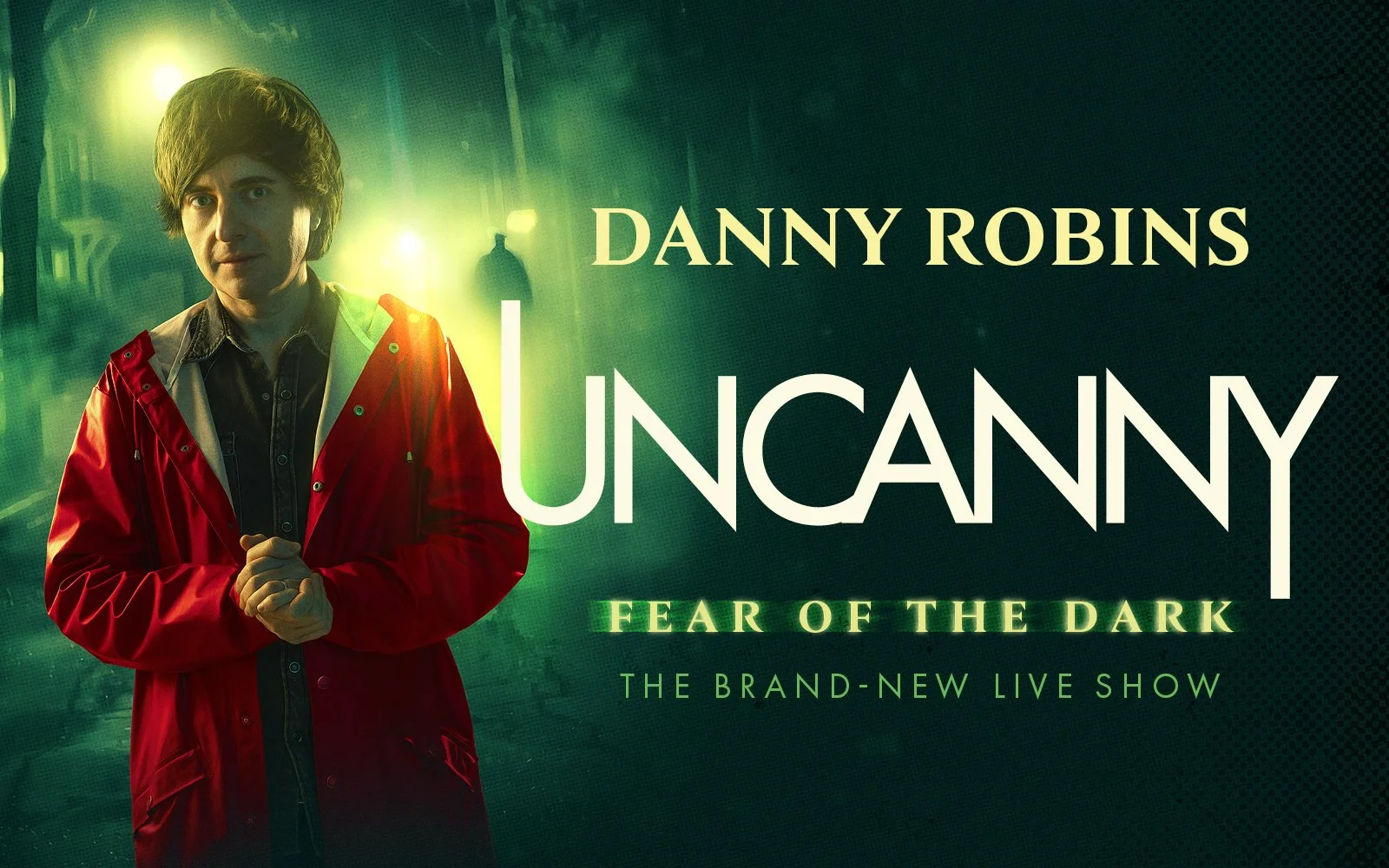
Uncanny: Fear of the Dark
Since its launch in 2020, the paranormal investigation show Uncanny, has become one of the most popular podcasts in the UK. It also has a substantial international audience. As a result, Uncanny has transitioned to television with two seasons being broadcast on BBC Two. Presenter Danny Robins has also written a tie-in book and there have been two previous Uncanny conventions, with a third scheduled for November this year at the ICC Birmingham. The fact that it is being held in an arena gives some indication as to the continuing interest in this show and its subject matter.
Since its launch in 2020, the paranormal investigation show Uncanny, has become one of the most popular podcasts in the UK. It also has a substantial international audience. As a result, Uncanny has transitioned to television with two seasons being broadcast on BBC Two. Presenter Danny Robins has also written a tie-in book and there have been two previous Uncanny conventions, with a third scheduled for November this year at the ICC Birmingham. The fact that it is being held in an arena gives some indication as to the continuing interest in this show and its subject matter.
Tonight, I had the great pleasure of seeing Uncanny: Fear of the Dark; a live stage show version of the podcast that at the Churchill Theatre in Bromley. This tour that has been travelling around the UK since November 2025. I was fortunate to buy the last two tickets to this event. Again, the full house reflects the popularity of the podcast. The audience was quite diverse with a broad range of ages. They were also quite lively and more than willing to enter into the spirit of the proceedings, screaming at the right parts and ironically going “ooh” whenever Danny eluded to something sinister or potentially scary.
Uncanny: Fear of the Dark follows the format of the podcast, with six cases being recounted and subsequently being analysed by Paranormal Psychologist Evelyn Hollow and Psychologist Dr Ciarán O’Keeffe. Video segments are shown and there are props and sets to recreate some of the aspects of the experiences being recounted. The show also includes a Q&A session with the team, as well as stories of a paranormal nature from audience members. All of which is efficiently covered in a two hour running time.
A major contributory factor to the popularity of Uncanny is writer and presenter Danny Robins. He is a likeable individual who excels at listening and giving his guest a sympathetic ear. He strives to be objective but regularly acknowledges the emotional power of the stories being told and recognises the difficulty and trauma that his guests have undergone. Whether the tales are truly paranormal is at times irrelevant, as it is abundantly clear that the experience has had a long and negative impact upon those who endured it. That facet of Danny’s personality was front and centre in tonight’s show but as this was a live event in front of an audience of fans there was a lot more levity and banter. However, this was not to the detriment of the show, in fact it helped defuse some of the tension that arose from some of the cases discussed.
As to the new cases under scrutiny, there were six. These varied from poltergeists activity, a UFO sighting and an encounter with a cryptid. Perhaps the most dramatic of these was a rather tragic tale of a husband whose wife was terminally ill in hospital and how he was awoken one night while at home, by her talking to him. This allegedly took place at the exact time that she died according to the doctors and nurses that attended to her. I’ll say no more as these cases will no doubt feature in the next season of the podcast but they were an interesting and varied selection.
Naturally, it was the elements that arise from this being a live show that made it entertaining and a slightly different beast to the TV and podcast versions of Uncanny. During the first case, as Danny was narrating an increasingly creepy tale, a fly landed on the digital projector and so the audience was treated to the silhouette of a fly crawling over the various images on the screen, much to the amusement of the audience. I immediately thought of The Amityville Horror from 1979. The stories from the audience were somewhat eclectic with one tale proving to be quite lengthy and possibly overblown in scope. I personally prefer more understated anecdotes as these seem more plausible. The show also featured more relaxed input from Evelyn and Ciarán. Both shared humorous stories and were more jovial than usual.
There were a few minor issues with the evening’s entertainment that weren’t quite to my liking. Prior to the show beginning, a compilation of songs with a supernatural theme were played. These tended to be rock and soft metal. Sadly, this idea didn’t really work instead of invoking a suitable atmosphere, it was simply low level noise on the periphery of your hearing. May be it was due to the acoustics of the venue. I also could have done without the audio based jump scare that punctuated the climax of some of the cases. These loud screams were a cheap trick and not quite in tune with the respectful tone of the show. There was also a sound glitch during the show which resulted in the proceeding being stopped for ten minutes. I’m sure I wasn’t the only audience member who thought this was some planned contrivance from Danny but it wasn’t.
Uncanny: Fear of the Dark was certainly an entertaining tangential version of the show and much of that was due to the enthusiastic audience and fans that attended. It is nice to be part of a community that can encompass a broad spectrum of opinions without it becoming acrimonious and partisan. Despite working within a clearly established formula, the diversity of cases keeps the show fresh and engaging. I certainly would go again to such a production and would even consider attending the convention later in the year. Fans of the show can also look forwards to a new official YouTube channel launching on April 9th. It will be hosting a new iteration of the show, called Uncanny Cold Case, in which classic paranormal cases such as Borley Rectory are explored. In the meantime, be you team sceptic or team believer, don’t have nightmares.

The Paranormal
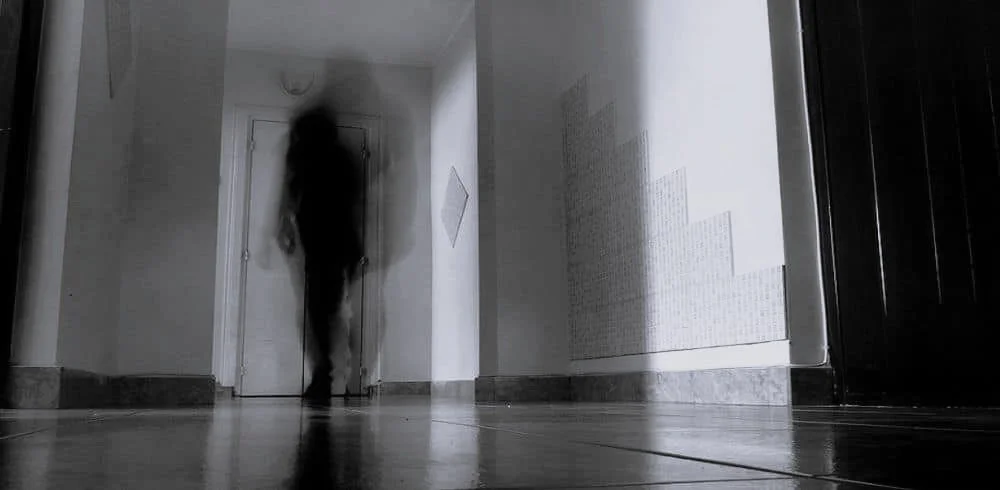
I’ve had an interest in the paranormal since I was a child. My mother always got books out of the library about ghosts and UFO phenomenon, so in some respects I was influenced by her reading habits. As a child such tales were by default interesting and any potentially scary element naturally made them more enjoyable. However, my father being an academic had taught me to question everything, so I felt fairly evenly equipped when exploring these subjects. Further to this point, over the years I have learned that humans have a very unique perspective on the world. We are hard wired to see patterns, regardless of whether they’re there or not. Our senses can also be fooled and often are. Perhaps the most important aspect of our nature that impacts upon any analysis we make into the paranormal is our penchant for creating stories. Hence unusual experiences can be subconsciously misremembered and “retconned” to form more precise narratives.
I’ve had an interest in the paranormal since I was a child. My mother always got books out of the library about ghosts and UFO phenomenon, so in some respects I was influenced by her reading habits. As a child such tales were by default interesting and any potentially scary element naturally made them more enjoyable. However, my father being an academic had taught me to question everything, so I felt fairly evenly equipped when exploring these subjects. Further to this point, over the years I have learned that humans have a very unique perspective on the world. We are hard wired to see patterns, regardless of whether they’re there or not. Our senses can also be fooled and often are. Perhaps the most important aspect of our nature that impacts upon any analysis we make into the paranormal is our penchant for creating stories. Hence unusual experiences can be subconsciously misremembered and “retconned” to form more precise narratives.
My interest in the paranormal is mainly to do with people who have such experiences, rather than the specifics of the experience themselves, which are frequently generic. A lot of people who experience events that they cannot explain are sceptical of such things to begin with and profoundly affected by them afterwards. Humans like the illusion of certainty and can be severely traumatised when something shakes their existing world view. Hence, when listening to tales of the paranormal, I do not immediately distrust what I am told, in so far that I believe that the subjects of such things genuinely feel their experiences are real. More often than not, admitting publicly that you’ve had a paranormal experience is positively detrimental to your life, so fabricating a story is a potential risk. Yes there are individuals who will lie for profit or some other underlying psychological need but I do not assume this to be the case in all instances.
Ghost Hunters US TV Show
However, the field of paranormal study is fraught with problems. Much of the discourse surrounding the subject is hyperbolic and intentionally designed to be sensational. Books, TV shows and online discourse about the supernatural is intended to grab your attention and first and foremost, driven by the need for ratings and clicks. The paranormal also intersects regularly with religion which is contentious and highly subjective. Sadly at the fringes of the paranormal there are conspiracy theories, “woo” science and those with mental health issues which muddies the waters. The field also attracts a lot of charlatans. Furthermore, the paranormal has had such an influence upon the zeitgeist, that often the existing pop culture tropes born of film, TV and literature impact upon our understanding of the subject and prejudice our opinions. Which is why there was a marked increase in reported UFO siting after the release of Close Encounters of the Third Kind in 1978.
Now that I’ve stated my interest in the paranormal, I guess the most obvious question to ask is do I believe in ghosts. However, before we can even discuss a subject such as “ghosts”, we require a commonly agreed and recognised definition. Unfortunately, there doesn’t appear to be one and so any in-depth discussion can potentially fall at the first hurdle. Which leads me to my wider thoughts on the paranormal. Although I find it a fascinating subject, I feel that it is not really being researched in an appropriate manner. Possibly because research funding is mainly allocated to things that have a commercial application. Hence, those who are active in the field of research are not necessarily the best fit, academically or ethically. Consider Harry Price, Uri Geller and Derek Acorah. Let us also reflect upon the plethora of questionable supernatural TV shows with boisterous Americans incorrectly using scientific equipment and bellowing at alleged ghosts.
Alleged Spiritual Medium Derek Acorah
I was asked once, because I lean towards scepticism why do I find the paranormal so compelling. To which I replied “because of the human element”. I also went on to add, that it is possible that what is broadly labelled as the paranormal is actually something else that has been incorrectly observed and documented. It is not unreasonable to consider that as human knowledge advances, we may eventually be able to validate these things but within a scientific framework, establishing them as part of the universe. What I don’t care for is the deliberate setting of alleged paranormal activity into some separate and distinct category. It smacks of trying to appropriate something, take ownership of it and keep it free of any scrutiny. Something that exists but only on the terms that you dictate. That is a little too similar to the culture of conspiracy theories for my liking.
As you can see, I don’t see the paranormal is simple terms. I think there is a lot to unpack and it is a subject that has numerous layers to it. These can be scientific, spiritual, psychological, sociological and cultural. Due to the sprawling nature and complexity of many of these elements it makes it exceedingly hard to determine the facts of a case and process them. Which is why I often choose not to. I am a fan of the Uncanny podcast with Danny Robins and am going to see the live version of the show at the Churchill Theatre in March. For me the biggest appeal of Uncanny are the stories and the people telling them. I don’t expect a definitive answer to be given at the end of each episode and often all I can do in response to such stories is recognise that I cannot explain them. Once again, I would like to see a third option added to standard binary stance on the paranormal. I think that “there is insufficient data to draw any definitive conclusion” is a perfectly valid position and should be encouraged more.





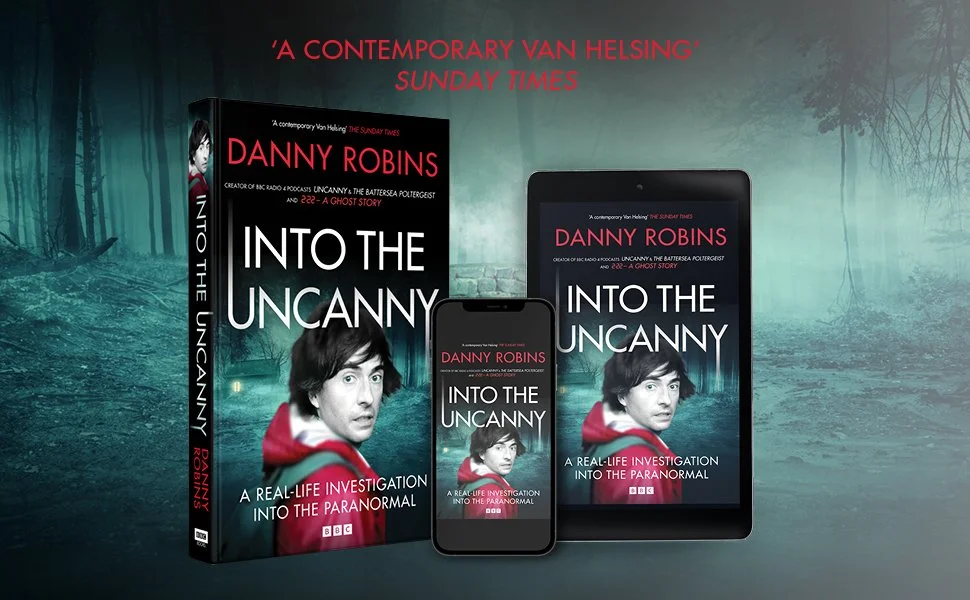
Into the Uncanny by Danny Robins (2023)
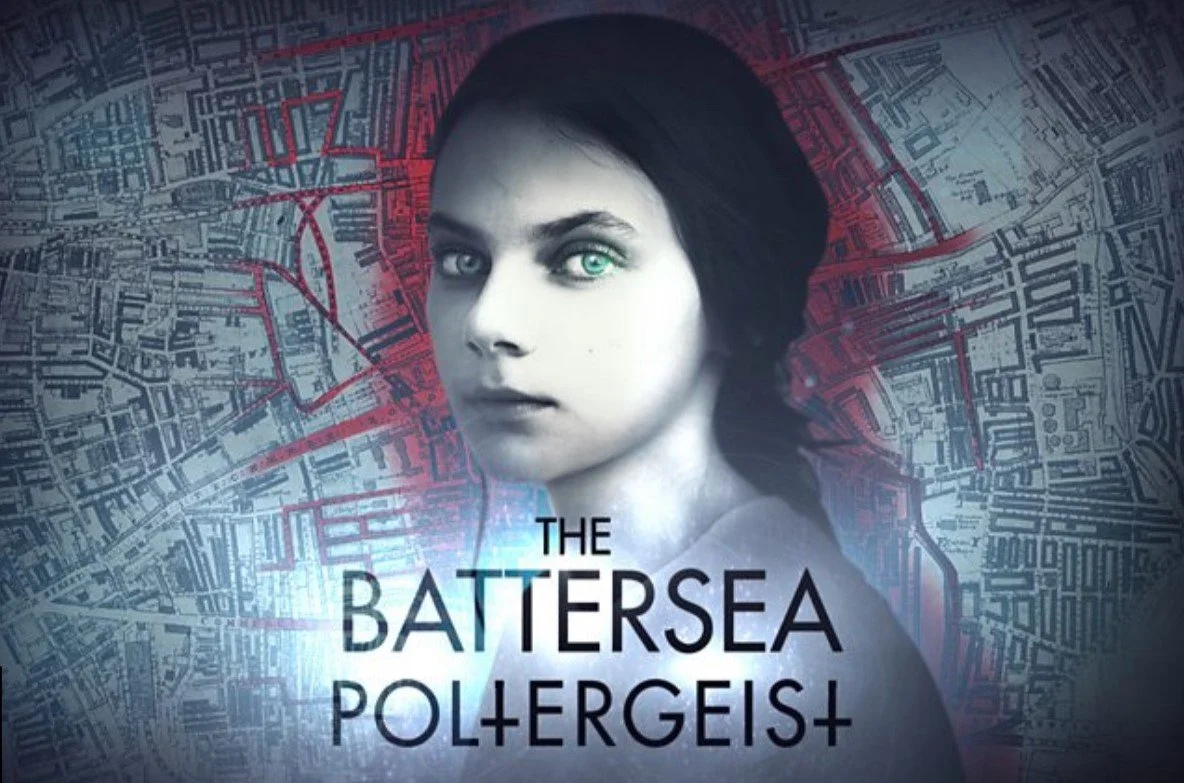
Last August I listened to The Battersea Poltergeist podcast by Danny Robins and was subsequently introduced to his other production Uncanny. Both are investigations into alleged supernatural events but unlike other shows of this kind, these are far better researched, produced and most importantly even handed. Danny makes a great deal of effort to try and keep a foot in each camp; team believer and team sceptic. Overall these podcast work as they genuinely appeal to multiple audiences and they are not excessively hyperbolic or credulous. A lot of this comes down to Danny’s personality which is upbeat and relatable. Perhaps his greatest strength is being a sympathetic ear to those recounting their experiences. He lightens the mood from time to time with humour when required. He also liberally litters the proceedings with pop culture references. However, he will probe and ask pointed questions but does so in a non-accusatory manner.
Last August I listened to The Battersea Poltergeist podcast by Danny Robins and was subsequently introduced to his other production Uncanny. Both are investigations into alleged supernatural events but unlike other shows of this kind, these are far better researched, produced and most importantly even handed. Danny makes a great deal of effort to try and keep a foot in each camp; team believer and team sceptic. Overall these podcast work as they genuinely appeal to multiple audiences and they are not excessively hyperbolic or credulous. A lot of this comes down to Danny’s personality which is upbeat and relatable. Perhaps his greatest strength is being a sympathetic ear to those recounting their experiences. He lightens the mood from time to time with humour when required. He also liberally litters the proceedings with pop culture references. However, he will probe and ask pointed questions but does so in a non-accusatory manner.
These podcasts have proven so popular, Uncanny made the transition to television. Therefore a book version does not come as a great surprise. What does though is the fact that the format of the podcast works so well in prose. Into the Uncanny takes three cases and explores them in detail, featuring all the eye witness testimony and historical facts you’d expect. Danny often cross references them with other cases as a means to explaining such phenomenon as “stone tape theory” and “poltergeist focus”. He also references his own life experiences and how they played a part in him now working in this field. The first case investigated is of such a magnitude, it is subsequently a plot thread throughout the entire book, culminating in visiting the actual site of the supernatural incidents in the final chapters. The style is designed to make the reader feel that they’re accompanying Danny Robins on his investigations and it works very well.
What stands out in Into the Uncanny is the way Danny approaches and interacts with those recounting their experiences. The majority of whom come across as regular people struggling to come to terms with what they have seen and felt. Many of which have never previously spoken to anyone about these matters out of genuine fear that they would suffer negative consequences. One such individual, a now retired Policeman, recounts how his career was blighted as a response to his very measured report of the incident he experienced. Hence Into the Uncanny does not perpetuate the stereotype that most people who have stories of the supernatural are members of the “lunatic fringe”. Most of the stories in the book are steeped in sadness and regret. There are families that have never spoken to each other for decades about a shared incident and more often than not, people have been greatly troubled by their world view being turned upside down.
Into the Uncanny is not afraid to explore multiple theories and ideas regarding the supernatural. In a bold move, one of the three main stories investigated in the book is in fact about an encounter with a UFO, rather than a ghost. Yet the parallels between these two incidents are strong. The psychological trauma being the underlying similarity. As for explanations, Into the Uncanny goes beyond the standard tropes of established supernatural lore. Magnetic fields, theoretical physics and psychological conditions are all posited and explored. Danny recounts a personal anecdote about a smoke detector that provides an object lesson in the perils of assumption and not verifying information yourself. This habit of providing both the pros and cons to being both sceptical and open to belief serve the book well. It gives the impression of a balanced investigation, rather than having a desired position and then retrofitting the data to validate it.
I listened to the audiobook version of Into the Uncanny and it is embellished with some ambient music and sound effects, making it a lot more like a podcast episode. However, I recently thumbed through a print copy of the book in a shop and the text version similarly maintains the same quality, albeit sans the sound effects. Overall, Into the Uncanny is a very engaging continuation of the Uncanny podcast and TV show format. Often explorations of the supernatural treat the subject as a sideshow attraction. The presenters are loud and confrontational. Into the Uncanny is a very British undertaking. It is calm, considered and when required, self-deprecating. Does it reach any definitive conclusions? No. Previously, when reviewing The Battersea Poltergeist, I considered this approach to be cakeism. However, here author Danny Robins muses upon this point himself and concludes that their can’t be a final answer in such a broad field. I concur but remain entertained.



Intimate plays with a small cast and a tightly focused storyline can be very compelling. 2:22 A Ghost Story falls squarely into that category with its contemporary supernatural narrative. Written by Danny Robins, of the Uncanny podcast fame, this is a tight 100 minutes tale of the perennial clash between those who believe in the supernatural versus those who maintain a logical and rational perspective. The set in a recently renovated house, the story unfolds in a single room; a modern living room diner. The protagonists become aware of some potential supernatural activity that takes place at 2:22 AM and decide to see for themselves what will or won’t happen. This is a dialogue driven story which covers a lot of ground and sometimes strays into wider social topics. There have been multiple UK productions since the plays London debut in 2021 as well as several notable international performances. I saw 2:22 A Ghost Story at the Churchill Theatre, Bromley on Monday 15th June.