
Kent Battle of Britain Museum
There are an estimated 2,500 museums in the UK. This number has grown significantly over time, more than tripling between 1960 and 2017. While it is laudable that so many of these institutions exist, they do not all receive equal interest or publicity. Some museums dominate in their respective fields and drown out others that have a similar theme. With this in mind, I was unaware of the Kent Battle of Britain Museum until a friend recently brought it to my attention. After yesterday’s visit my initial thoughts are what a treasure trove it is. According to the museum’s website it is the world’s largest Battle of Britain collection of memorabilia. This includes planes, uniforms, weapons and related artefacts from over 700 crashed aircraft. Furthermore, the museum tells the story of this battle without bias, choosing to highlight both the historical and the human aspects of the conflict. It is often very poignant.
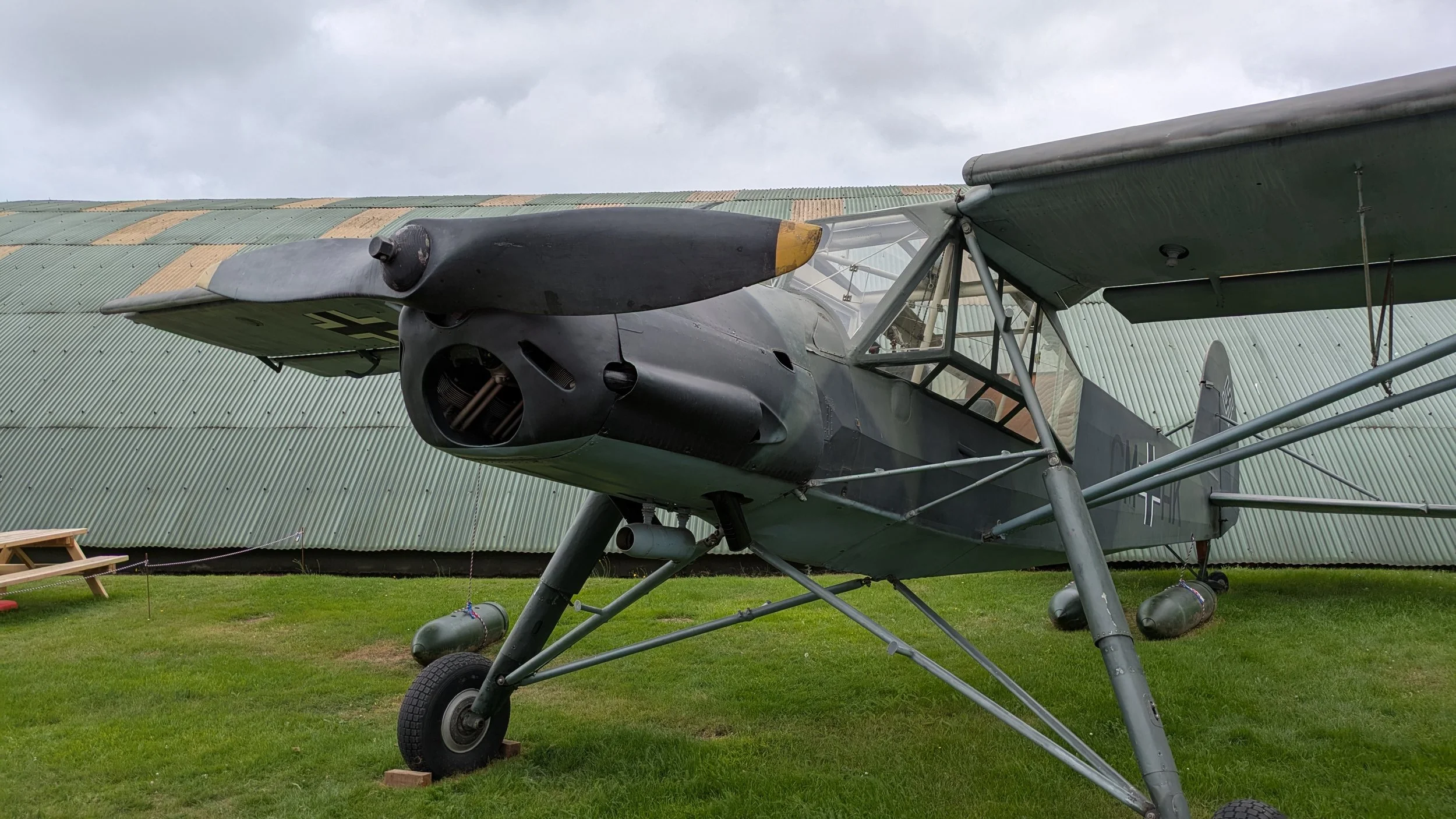
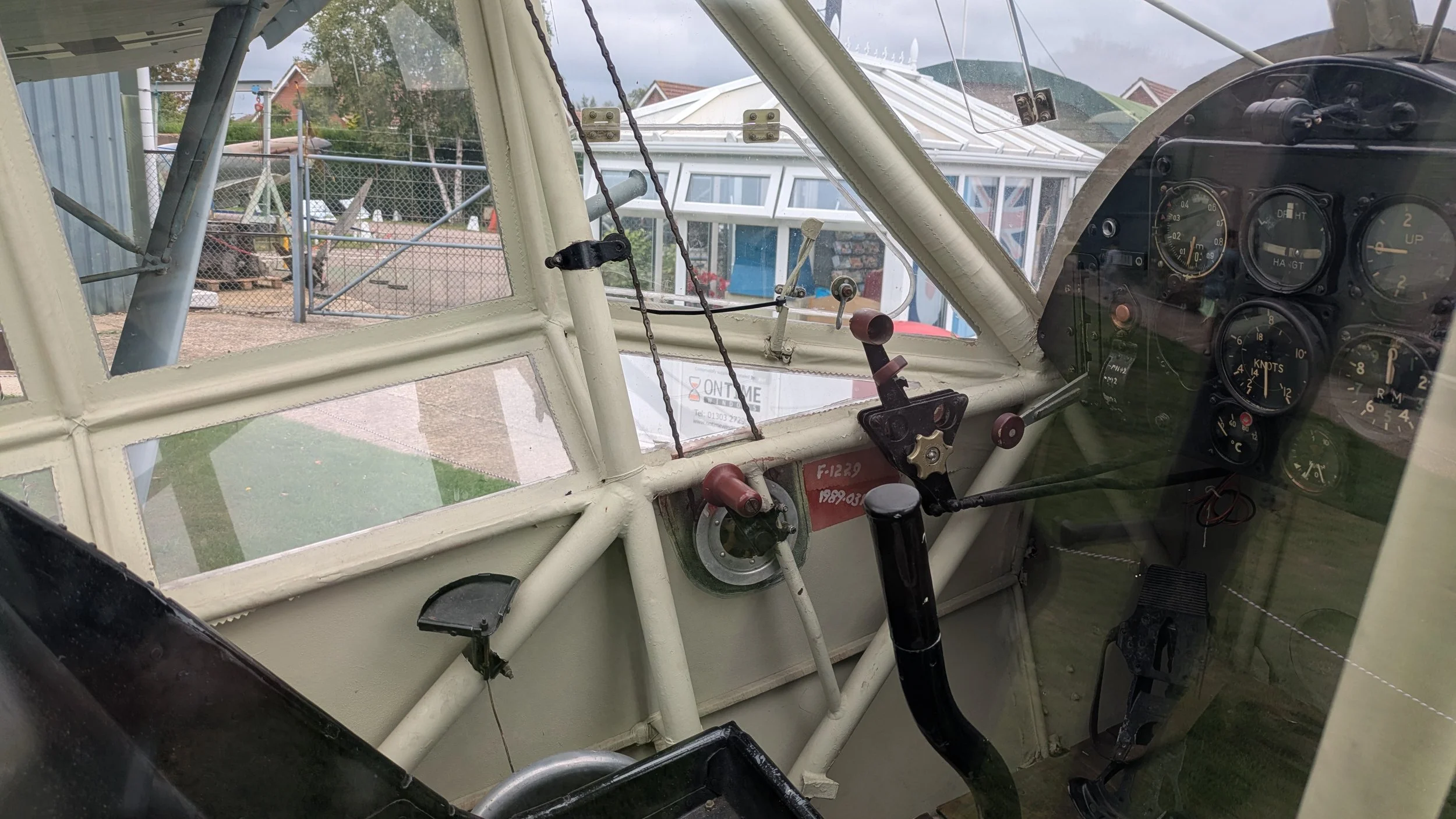
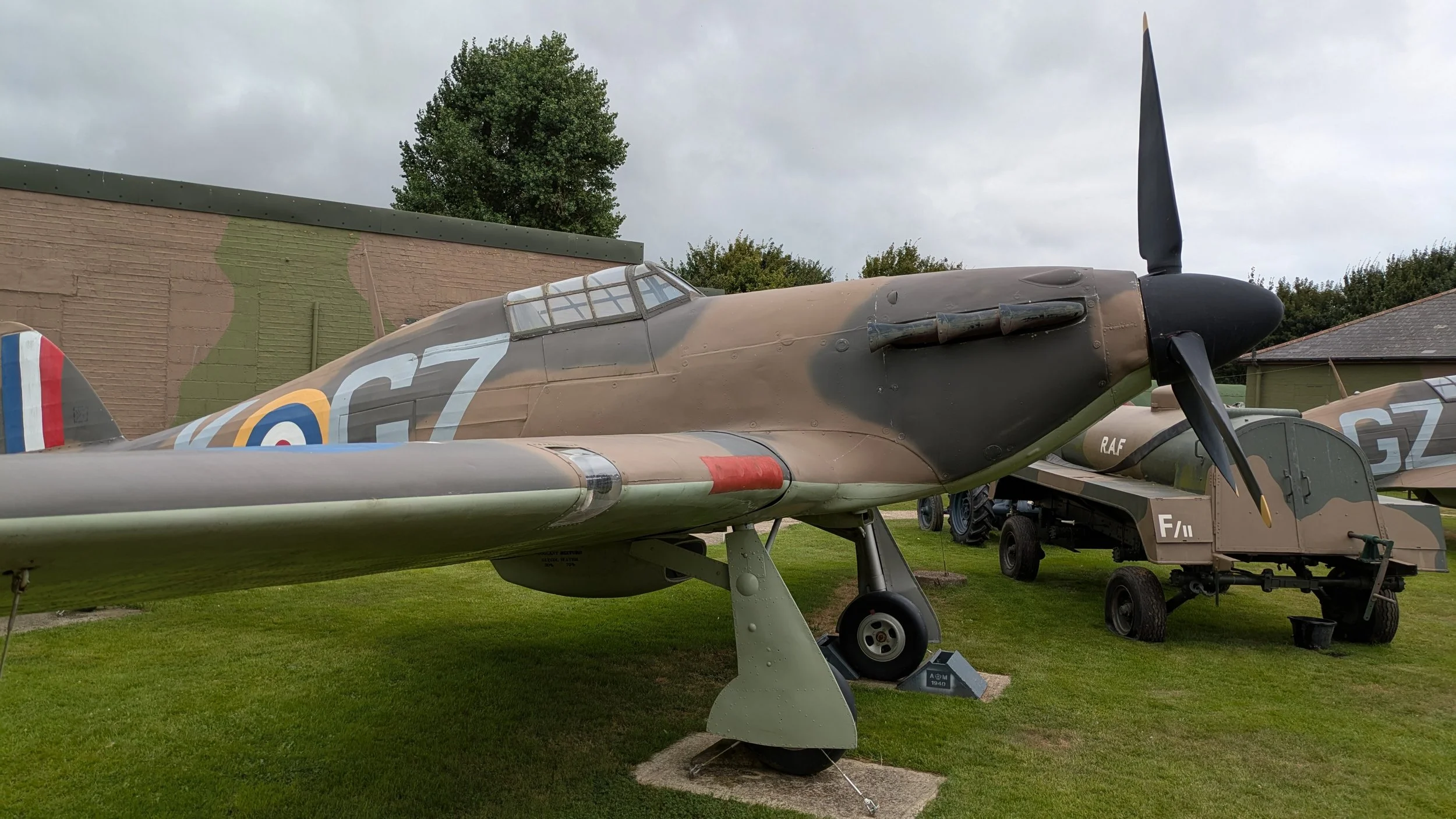
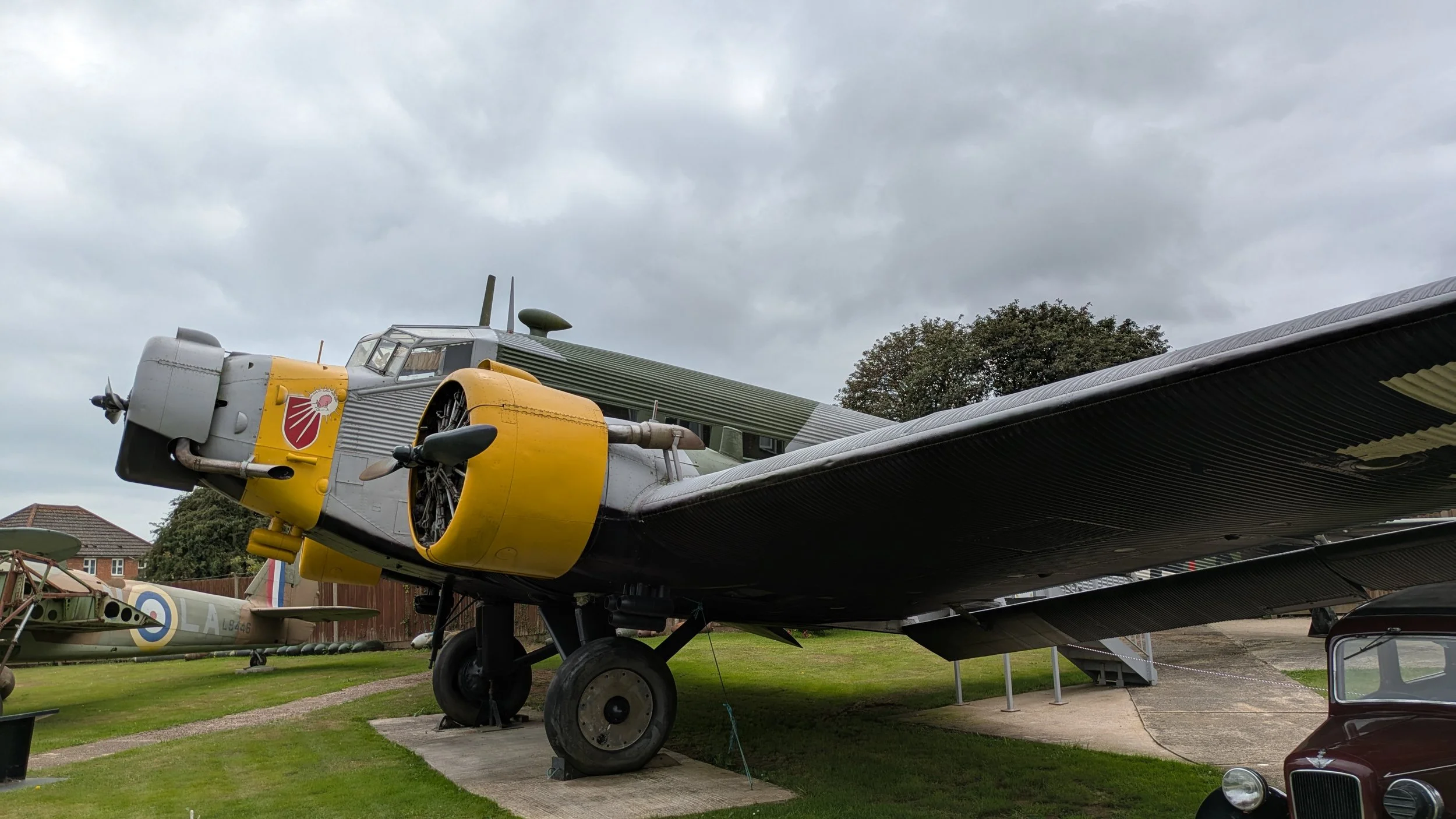
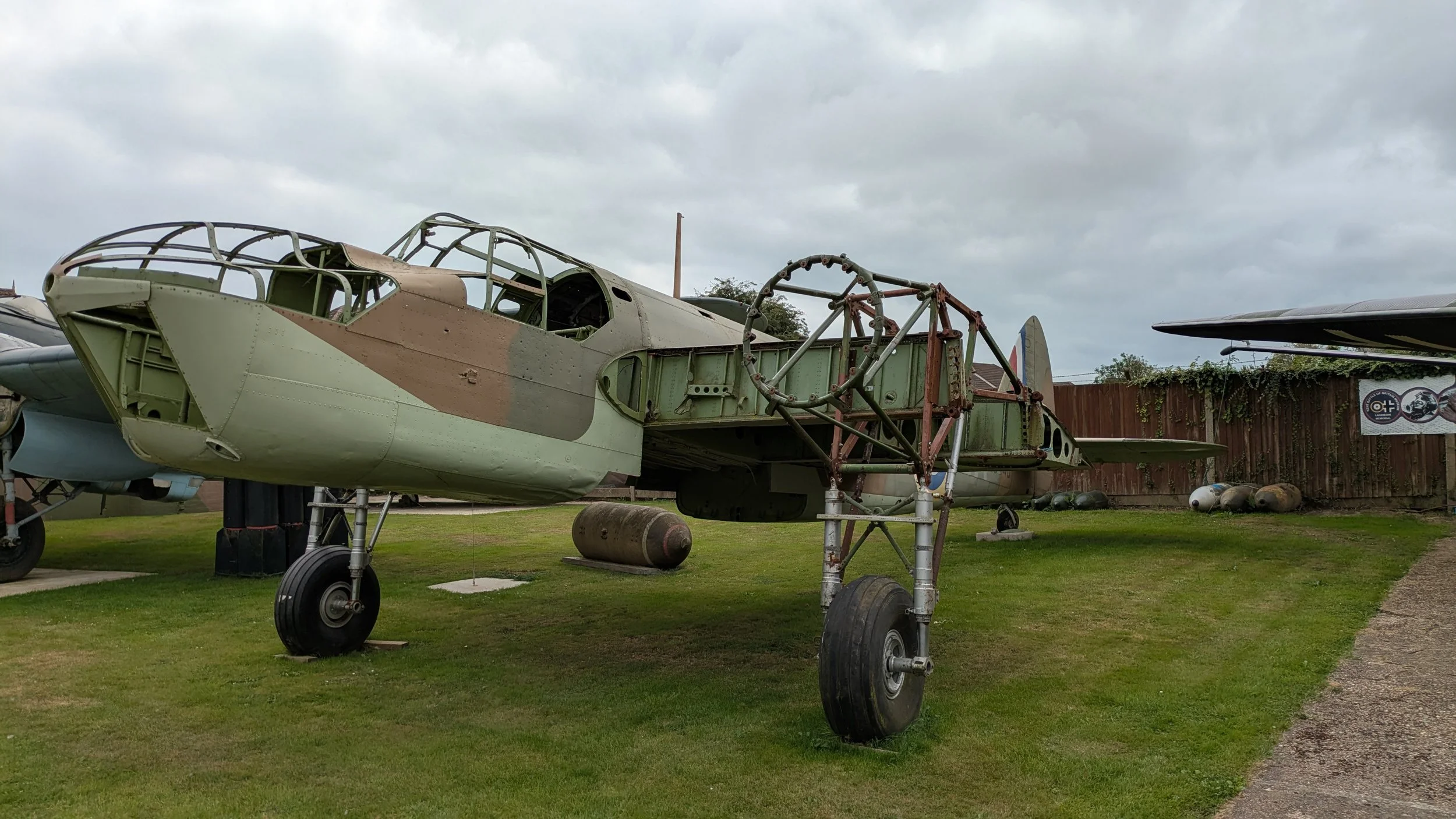
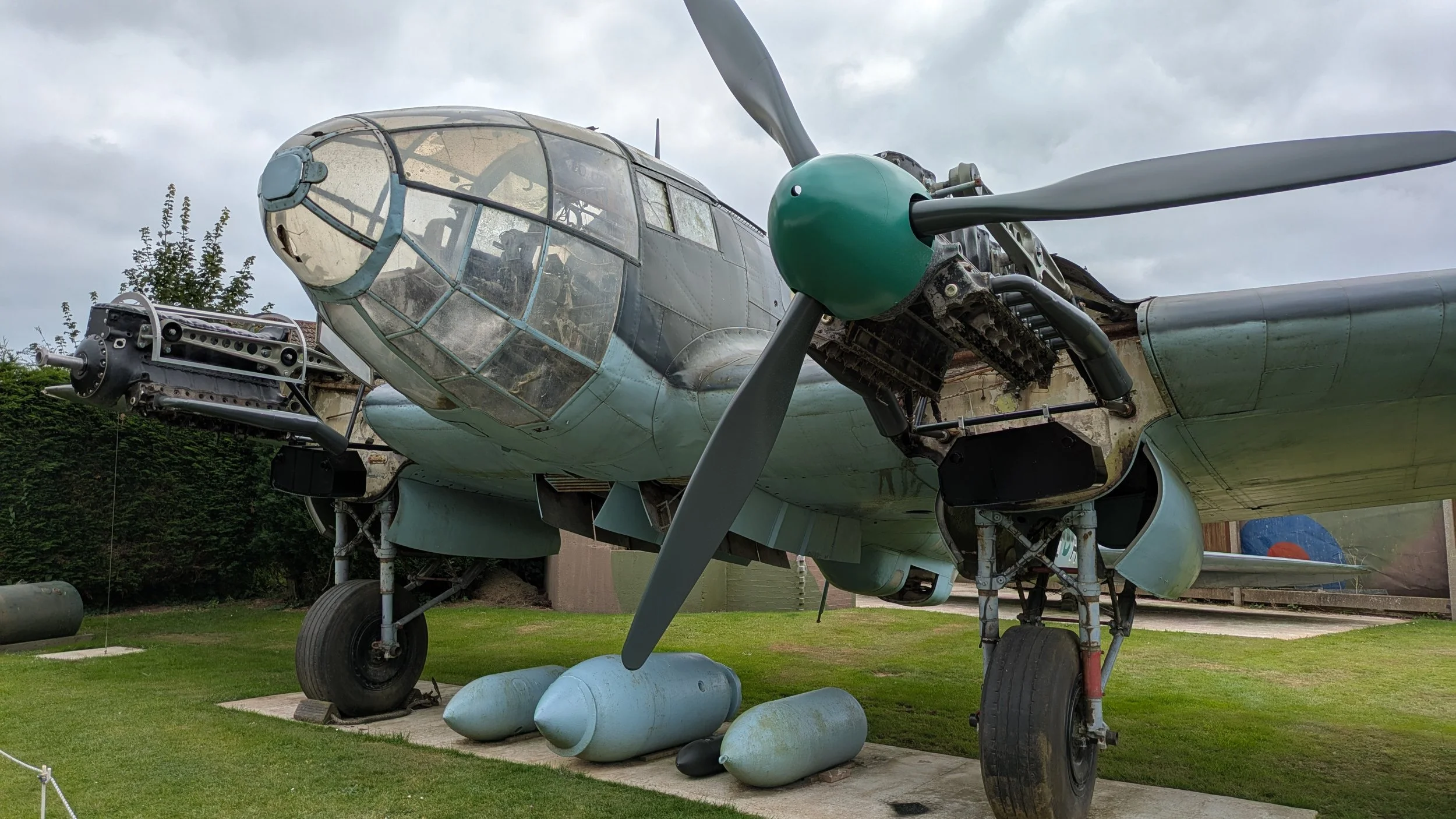
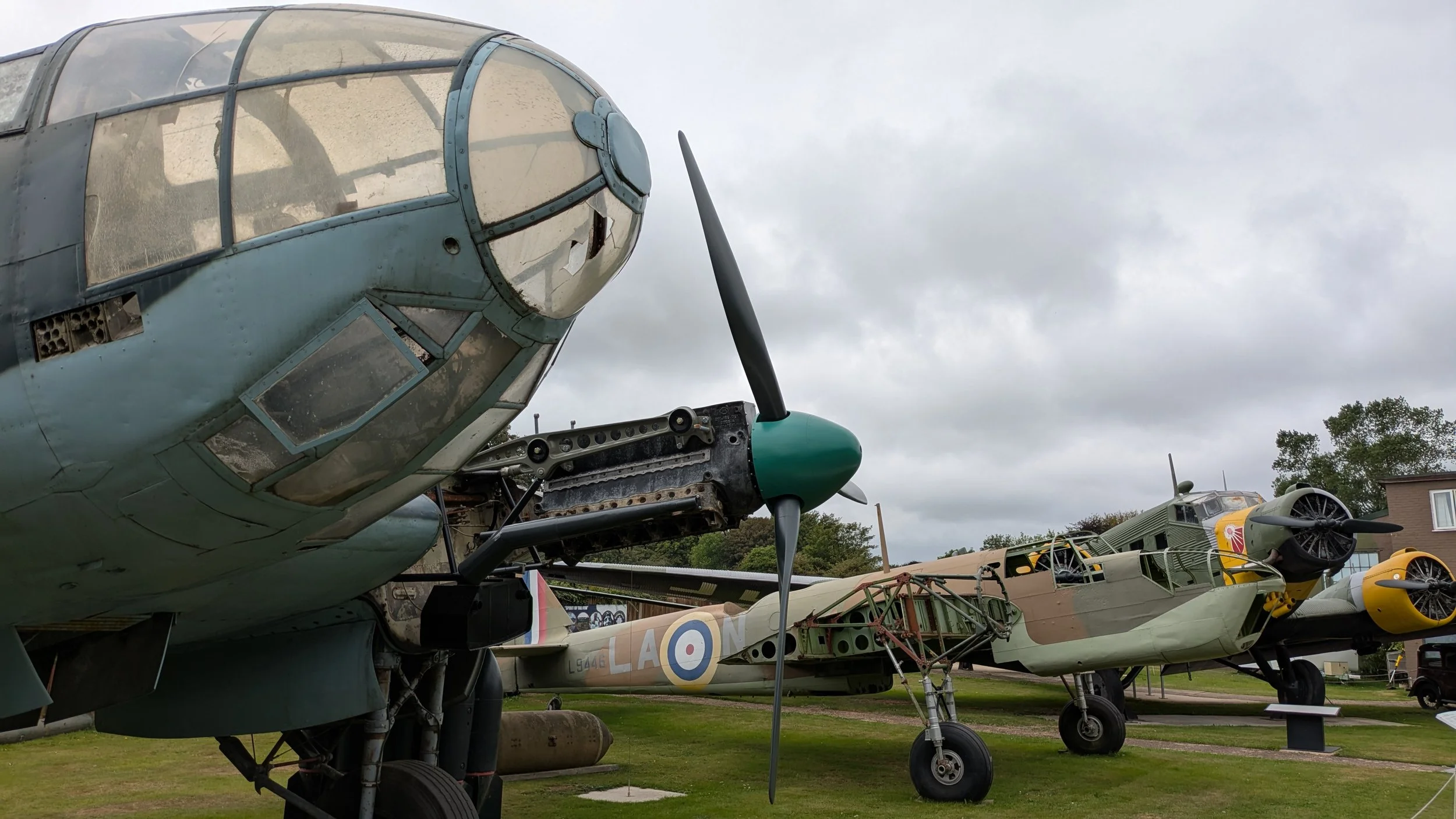
The museums’ collection is displayed via two hangers and the old operations building, as it is located on what remains of the former RAF Hawkinge site. Upon exiting the main entrance and ticket office, you step into a grass quadrangle with a collection of aircraft on display. These include a Heinkel He 111H-6, Junkers Ju 52/3M (CASA 352L), Bristol Blenheim Mk. IV (Bolingbroke), three Gate Guardian Hurricanes. There is also a replica of a long range Fieseler Fi.103 V-I Flying Bomb that was built for the film Operation Crossbow (1965), along with a V2 combustion chamber and rocket exhaust. Several of the aircraft are currently undergoing restoration using modern materials. At present, their current state of disassembly affords a fascinating view at the airframes and the overall construction.
The Stuart-Buttle hangar (dedicated to the memory of Squadron Leader Stuart-Buttle), contains full sized replicas of Hurricane and Spitfire aircraft. These were built for the 1969 film Battle of Britain, much of which was filmed at Hawkinge. There is also a Boulton Paul Defiant, interceptor aircraft with its rear facing turret. This seldom seen and rare aeroplane is painted in its daytime camouflage, prior to it being withdrawn and repurposed as a night fighter. The hangar is also home to both a de Havilland Tiger Moth and a North American Harvard. There are also multiple Rolls Royce Merlin engines along with period vehicles such as a Bedford MW truck, an Austin Tilly light van and a Beavertte armoured car.
The Lord Dowding Memorial Hangar and the Operations Block house a prodigious collection of artefacts. The centrepiece in the second hangar is a replica of a crashed replica Messerschmitt Bf 109E, again from the Battle of Britain film. There is also a collection of Daimler-Benz engines and numerous parts from downed planes. The most noticeable aspect of these is that each has a detailed history, identifying the plane and pilot and who they were shot down by. These details have a great impact. The Operations Block houses further artefacts from crashed and destroyed aircraft, along with items belonging to aircrew. Bent machine guns and crushed radial engines succinctly demonstrate the kinetic forces involved in an air crash. Again many of the items have very personal stories associated with them.
It is the intimate history associated with these collections that makes them so compelling. Although some have been donated by the families of such notables as Lord Dowding, Sir Keith Park, many others are from local families who had a close connection to the RAF. It highlights the fact that WWII was fought by everyday people, who did extraordinary things out of necessity. I don’t want to disparage other museums but there is a trend at present to curate to a minimalist standard. Focusing on key points such as statistics or known figures to present a tight and focused message. Yet the human aspect of WWII can be somewhat lost with this approach. Infographics can convey data but sometimes it is vital to give a name and show a photo of a man or woman, for context and empathy.
The sheer volume of content on display at Kent Battle of Britain Museum is another interesting point in itself. It brings home the scale of the Battle of Britain by showing so many relics and remnants. The number of crashed planes is not an abstraction but something that can plainly be seen and quantified. Both my parents grew up through WWII and it was in many ways a defining aspect of their lives. It was a subject that was regularly broached during my childhood in the seventies. Hence, for me, that era of conflict is easily conceptualised. However, younger generations do not have the benefit of such a direct connection. Hence WWII can be just as remote as the Napoleonic Wars or the Crusades. The personal stories and sheer volume of content available in Kent Battle of Britain Museum effectively bridges that gap.
It is apparent after visiting Kent Battle of Britain Museum that it would benefit from more space so that visitors could get better access to the displays. No doubt I am preaching to the choir on this matter and those running this museum are abundantly aware of the situation. As it stands, the museum does much with the resources it has. There is far more to see beyond the items I have referenced. There is a fantastic set of bronze statues , The Spirit of the Few Memorial, along with a memorial to the “Czech cloverleaf”; four Czechoslovak pilots from No. 303 Squadron. There is also a very well presented armoury. However, due previous thefts and the very personal nature of some of the items on display, the museum at present has a no photography policy. I was very fortunate that museum Chairman Dave Brocklehurst MBE, allowed me to take pictures of the aircraft in the quadrangle under supervision, for which I am very grateful.
I was adhering to a very tight and specific itinerary yesterday and although I spent sufficient time to get the measure of Kent Battle of Britain Museum, I shall definitely be returning so I can immerse myself further in the various collections. There are several members of staff who are available to provide facts and background information to visitors that I’d like to talk to. I thoroughly recommend the museum both to those with a casual interest in the Battle of Britain as well as amateur historians and aficionados. It is important to support smaller and local museums as they often have just as much to offer as their larger and wealthier counterparts. That is especially true of Kent Battle of Britain Museum, which focuses upon a very specific and well known aspect of UK history and explores it in a very unique and thought provoking way.



The Imperial War Museum serves as a national museum for Britain. Its main location is in London, complemented by five additional branches across England. Established in 1917 as the Imperial War Museum, its original purpose was to document the civil and military efforts and sacrifices made by the United Kingdom and its Empire during the First World War. Over time, the museum’s scope has broadened to encompass all conflicts involving British or Commonwealth forces since 1914. As of 2012, the museum’s mission is to provide and encourage the study and understanding of the history of modern warfare as well as the “wartime experience”. The IWM as it is now known has its headquarters and primary site is located at Southwark in Central London. The museum is funded by government grants, charitable donations and revenue generated through commercial activity such as retailing, licensing and publishing. General admission is free to IWM London.