
The Marksman (2021)
Former United States Marine Corps Scout Sniper and Vietnam War veteran Jim Hanson (Liam Neeson) lives on a ranch on the Arizona-Mexico border. The mortgage on the property is in arrears after the death of his wife has left him medically bankrupt. One day while patrolling his property he encounters Mother Rosa (Teresa Ruiz) with her son Miguel (Jacob Perez) illegally crossing the border fence. He calls his step daughter Sarah (Katheryn Winnick) in the border patrol and reports them as they’re miles from any habitation. However, Rosa and Miguel are fleeing a drug cartel and Mauricio (Juan Pablo Raba), one of their enforcers. When Mauricio and his men try to forcibly take Rosa, Jim intervenes and a car chase and firefight ensue. Mauricio’s brother is killed and Rosa is fatally wounded. She gives Jim a note with her family's address in Chicago and he reluctantly agrees to take Miguel there.
The various trailers and advertisements for The Marksman give the impression that this is an action film but that is not the case. This thoughtful, low key drama is far more of a character study of the relationship between Jim and Miguel. The film explores bereavement and loss, the plight of migrants across the US border and what happens when the “American Dream” turns bad. It bears a lot of similarities to Clint Eastwood’s A Perfect World (1993). Critics claims that the story is formulaic are indeed true and there are not many plot surprises along the way. However, the film’s strength lies in the two central performances which are both very good. There is genuine pathos as opposed to contrived sentimentality and again we are reminded that Neeson is a serious actor who reinvented himself as an action star. Plus it helps that Neeson can do “gruff” and “sad” with his eyes shut. He does much with the simple dialogue to establish his Rooster Cogburn credentials. “Nobody needs to call me, and I like it that way” he exclaims when asked why he doesn’t own a cell phone.
The Marksman is obviously made on a modest budget yet its cinematography by Mark Patten is handsome and makes the most of the vistas and scenery of Arizona and Wyoming. The film does a good job of conveying the immense size and often remote nature of the US border states. The action scenes are functional and do not strain the viewer's sense of credulity. Neeson is supposed to be an ageing Marine and not a special forces operative. He handles himself well in a fight but he also takes a beating. Everything of this nature remains within the confines of the film’s PG-13 rating which is fine as this is a story about characters bonding rather than breaking bones. Director Robert Lorenz has one final trick up his sleeve after teasing us with an action movie and giving us a character drama for 100 minutes. The ending, as Liam Neeson takes a bus to return home, is very reminiscent of Midnight Cowboy. It’s a little unexpected but in step with the film’s overall tone. The Marksman is by no means a masterpiece but is certainly better than its marketing campaign implied.
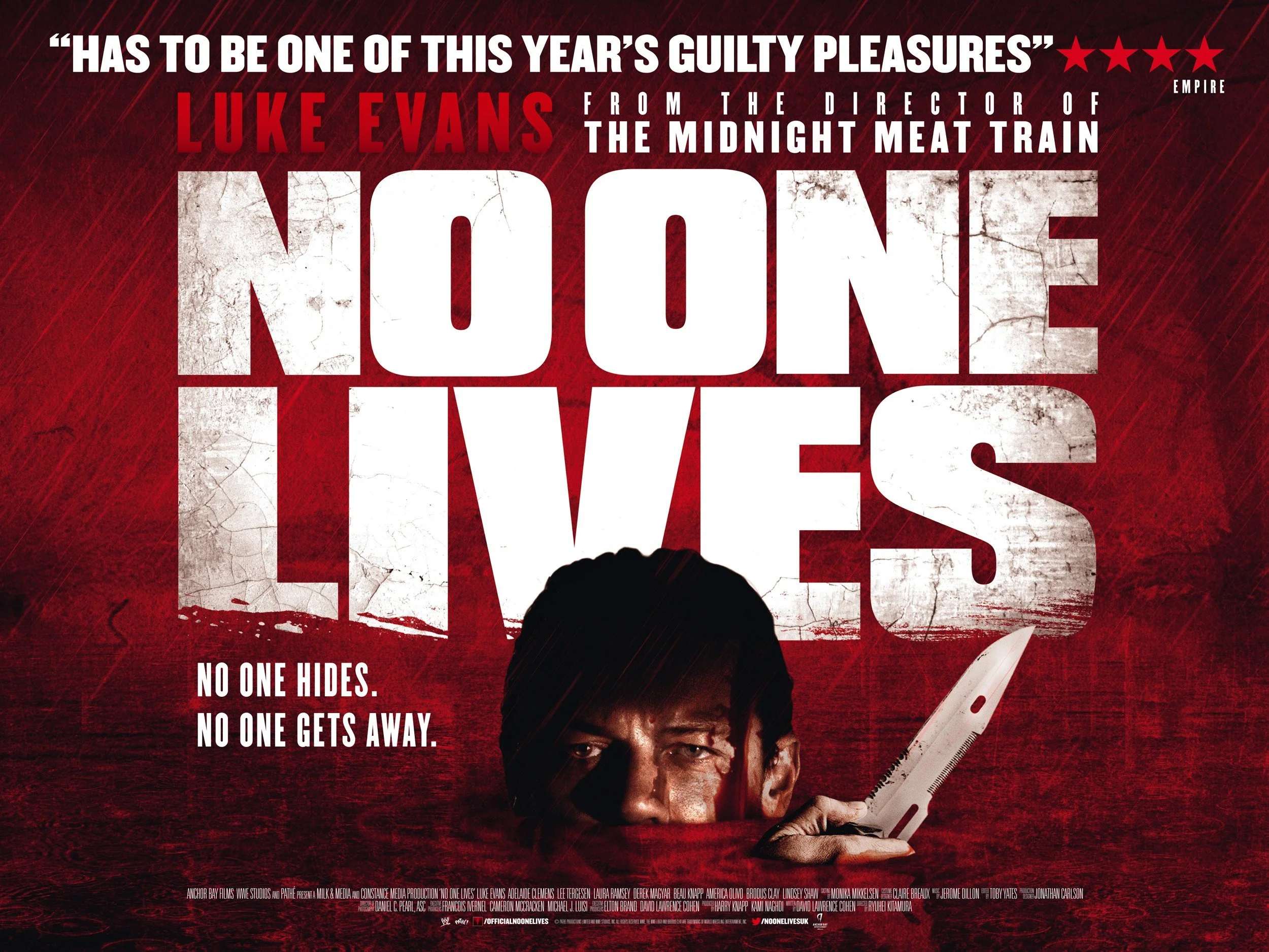
A lot of people may know Luke Evans from the live action version of Beauty and the Beast or Peter Jackson’s The Hobbit trilogy. With his matinee idol good looks, charming Welsh demeanour and his “smoky” tenor singing voice, he projects a sense of old school stardom. Which brings us to No One Lives; a film which is a radical departure from his previous work. His performance is disconcerting to say the least and the film is somewhat unhinged. Directed by Ryuhei Kitamura, who made an interesting adaptation of Clive Barker’s The Midnight Meat Train, this cinematic outing is similarly replete with robust shocks and gore. There are some interesting ideas about the nature of violence, Stockholm Syndrome and whether one should deny or embrace one’s nature. However, these are ultimately minor asides. Philosophical musings in between bouts of surprisingly striking unpleasantness.
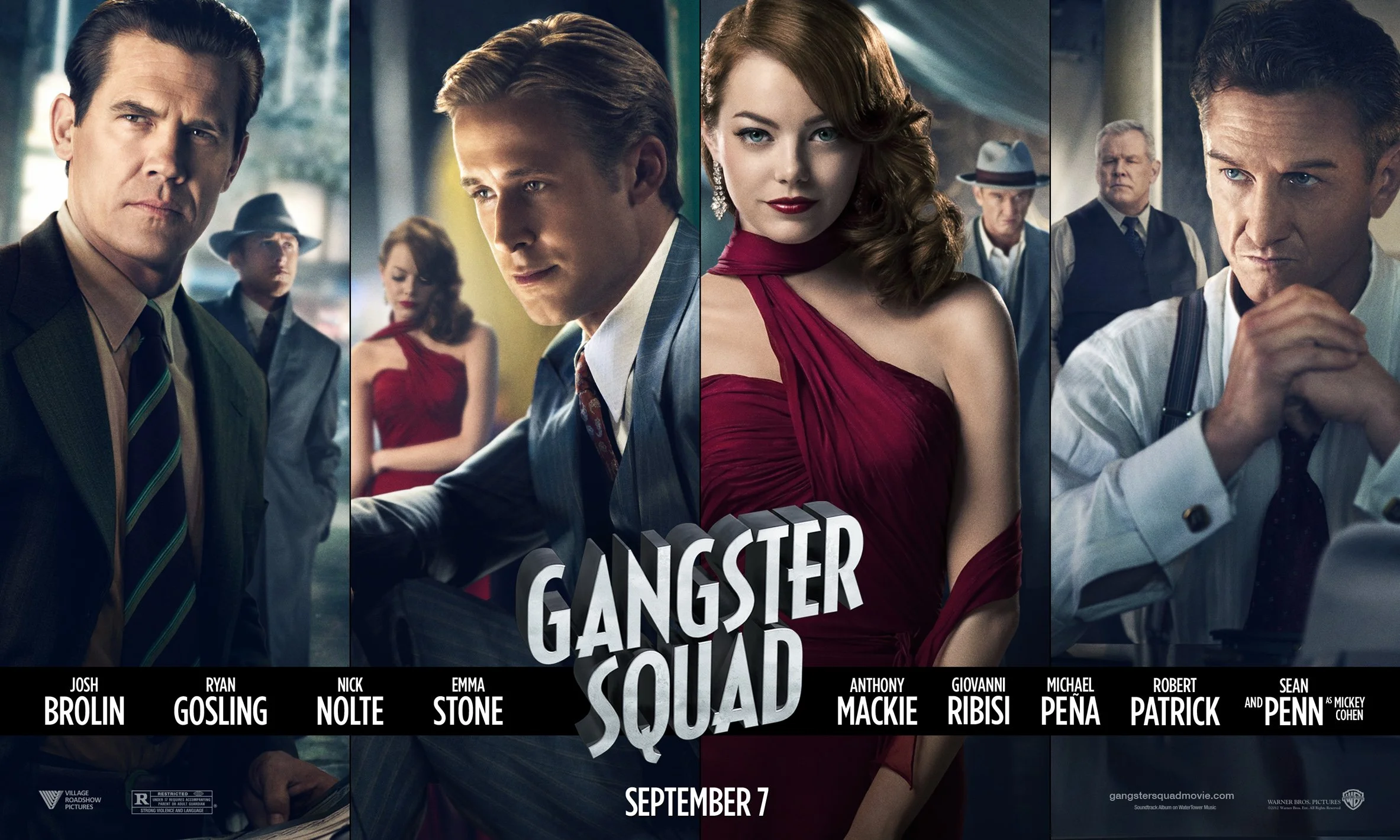
When I first saw the promotional trailer for Gangster Squad back in 2012, prior to its release, I wasn't especially impressed. I simply thought the film was another attempt to re-invent the gangster genre for a generation who were not especially familiar with it. I wasn't exactly overwhelmed with director Ruben Fleischer's resume either. I didn't particularly like Zombieland and haven't seen 30 Minutes Or Less. Then came the tragic mass shootings in Aurora, Colorado which led to the movie being delayed so that the original ending, which featured a shoot-out in a movie theatre, could be replaced. Hence when I finally watched this film recently, I wasn't expecting a movie up to the standards of say Once Upon A Time In America or Miller’s Crossing and it would seem that I was right do so. Gangster Squad is not especially noteworthy in any respect.

The Cold War was a mainstay of many a thriller and action movie throughout the sixties, seventies and eighties. However, all too often it was depicted in terms of the US versus the Soviet Union. China didn’t seem to feature so much, although it was just as equally an “enemy” of the West. Hence when I recently read about The Chairman (which has just had a Blu-ray release), it was of interest to me. An espionage story, starring Gregory Peck with a hidden bug implanted in his skull, infiltrating China to steal a secret enzyme formula is quite an intriguing premise. Furthermore, director J. Lee Thompson had previously worked with Peck on The Guns of Navarone, which is a solid action movie. Therefore I was initially optimistic that this film which I was previously unaware of, would be an interesting diversion. Unfortunately, having now seen The Chairman, all I can really describe it as is a cinematic curiosity. One of numerous films produced by a big studio in the late sixties that failed to satisfy anyone's expectations.

Former United States Marine Corps Scout Sniper and Vietnam War veteran Jim Hanson (Liam Neeson) lives on a ranch on the Arizona-Mexico border. The mortgage on the property is in arrears after the death of his wife has left him medically bankrupt. One day while patrolling his property he encounters Mother Rosa (Teresa Ruiz) with her son Miguel (Jacob Perez) illegally crossing the border fence. He calls his step daughter Sarah (Katheryn Winnick) in the border patrol and reports them as they’re miles from any habitation. However, Rosa and Miguel are fleeing a drug cartel and Mauricio (Juan Pablo Raba), one of their enforcers. When Mauricio and his men try to forcibly take Rosa, Jim intervenes and a car chase and firefight ensue. Mauricio’s brother is killed and Rosa is fatally wounded. She gives Jim a note with her family's address in Chicago and he reluctantly agrees to take Miguel there.
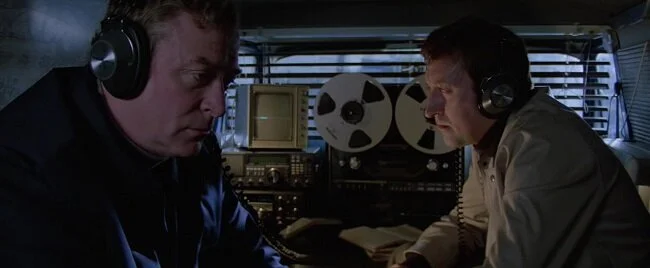
Sometimes a perfectly competent film simply misses the boat. The Fourth Protocol is a prime example of this. Based upon the novel by Frederick Forsythe this well made, somewhat clinical thriller arrived in cinemas at a time when the cold war was coming to an end due to “glasnost” and the “red menace” was becoming a somewhat tired plot device. It didn’t help that a similar story about a rogue Russian mission to detonate a nuclear device on a US base had already featured four years earlier in the Bond film, Octopussy. Michael Caine spent several years trying to get the project off the ground, after initially reading the author’s draft manuscript of the novel. Veteran screenwriter George Axelrod was hired and John Frankenheimer was sought to direct the film. However, difficulties in financing the project led to changes in the production and Forsythe ended writing the screenplay himself, while John Mackenzie (The Long Good Friday) took on the direction.
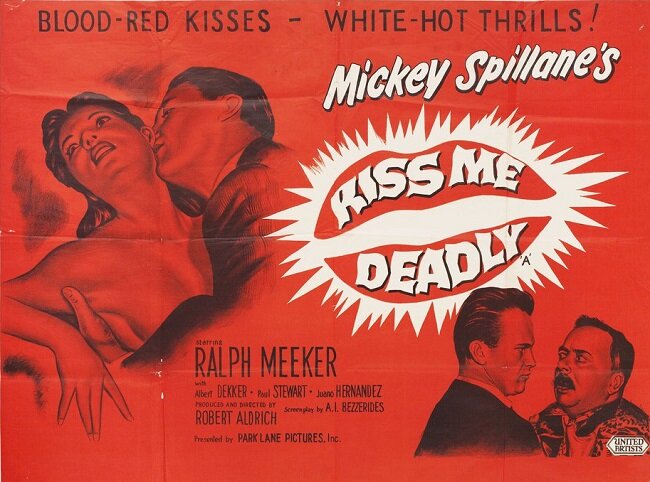
Film Noir often reflects the numerous things that influenced it. German expressionism, French poetic realism and American hardboiled fiction. Hence many films from this genre have a tendency to be stylised both visually and narratively speaking, with a fatalistic tone. Kiss Me Deadly, directed by Robert Aldrich in 1955, takes all these attributes as well as others and amplifies them in one of the bleakest and most uncompromising movies of the fifties. It features a brutal protagonist who isn’t even a decent detective and a plot that seems at first glance to come straight out of Greek mythology. Yet Kiss Me Deadly is compelling and lean without any superfluous scenes or narrative baggage. There’s also what appears to be the mother of all cinematic "MacGuffins" but once the film is over and the viewer reflects upon what they have seen, it can be argued that maybe the characters and the inevitability of their actions are actually the driving plot device instead.
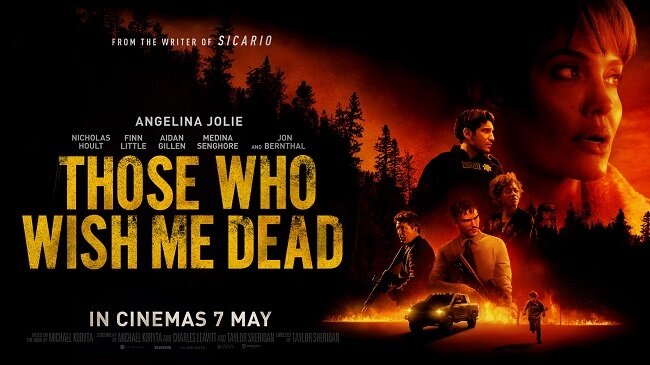
Forensic accountant Owen Casserly (Jake Weber) flees his home with his teenage son Connor (Finn Little) when he discovers he has been targeted by a pair of assassins (Nicholas Hoult and Aidan Gillen) who have been hired to stop him giving evidence in a major corruption case. Connor witnesses the murder of his father after their car is run off the road. Entrusted with important written evidence, he escapes into the dense forests of the Montana wilderness pursued by the killers. Seeking help he runs into smokejumper Hannah Faber (Angelina Jolie) who is stationed at a remote fire lookout tower. Hannah suffers from PTSD from a previous forest fire in which she was unable to save three young boys. Hannah attempts to lead Connor through the forest to safety. Meanwhile the assassins set fire to the forest to divert the attention of the authorities and cover their tracks.

When one considers all the various elements involved in the production of Telefon, it makes it all the more disappointing that the movie fails to reach its potential. The basic idea about sleeper agents in the US is sound but the story doesn’t really go anywhere and not a great deal happens. The strong cast featuring Charles Bronson, Lee Remick and Donald Pleasance have to do their best with an undeveloped screenplay. Considering that it was written by Peter Hyams and Stirling Silliphant (from a novel by Walter Wager) it is quite surprising how lacklustre it all is. But perhaps the most saddening aspect of the film is the somewhat indifferent direction from Don Siegel, who by his own admission was not especially engaged with the story. Considering that he had scored a major hit the previous year with John Wayne’s swansong The Shootist, makes it more curious that he wasn’t more enthused. Even Lalo Schifrin’s score fails to bolster Telefon.
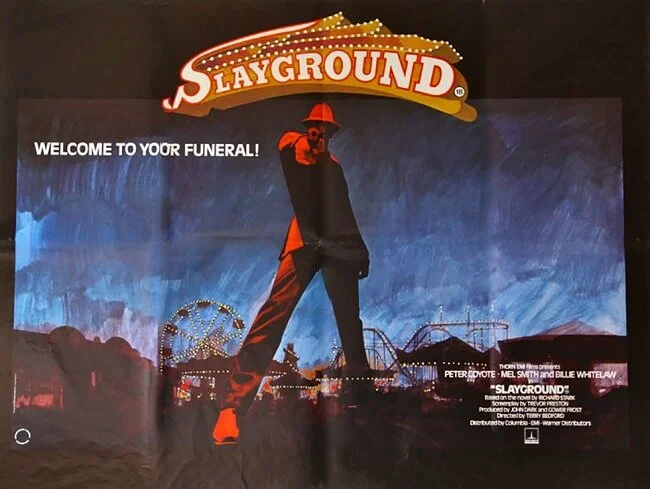
There have been several movie adaptations of the books of Jonathan Stark (AKA Donald E. Westlake) featuring his career criminal lead character, Parker. Sadly not all of them have fared well, either critically or at the box office. Many have deviated from the source material, often just using mere aspects of the original plot as the basis of their screenplay. Perhaps the most successful of these has been Point Blank (1967), directed by John Boorman and starring Lee Marvin. Slayground sadly follows the pattern set by previous adaptations. It changes several character names and takes two main elements from the source text and uses them as a premise. Specifically, a robbery that goes wrong which results in an accidental death and a climactic shootout in an out of season fairground. Due to the financing of the film, half of the story takes place in the US and the other in the UK. Much of the cast are British, resulting in a curious and at first glance somewhat incongruous film.
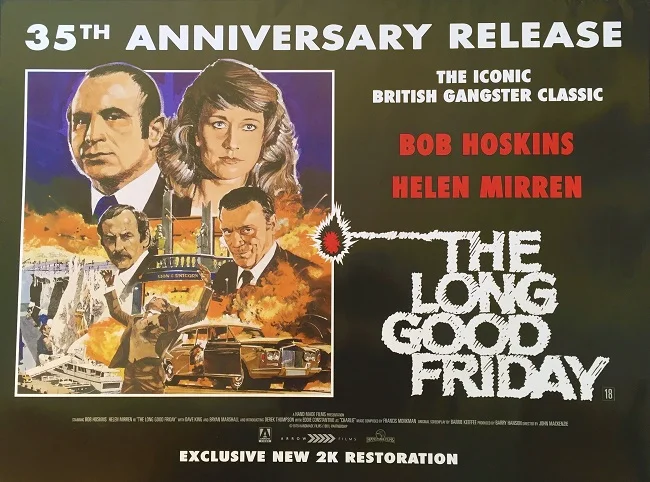
The Long Good Friday not only launched then career of Bob Hoskins but remains a uniquely British take on the gangster genre. Featuring authentic performances and a credible plot, the screenplay touches upon many of the social and political issues of the time; police corruption, the IRA, urban renewal and the decline of industry, along with EEC membership and the free-market economy. It’s a gritty and unrelenting drama that is still relevant today. Furthermore, the film is filled with quotable dialogue and has several stand out scenes that showcase Bob Hoskins’ smouldering performance. It’s also offers of “who’s who” of British character actors and there is one sequence still has the power to shock even today.
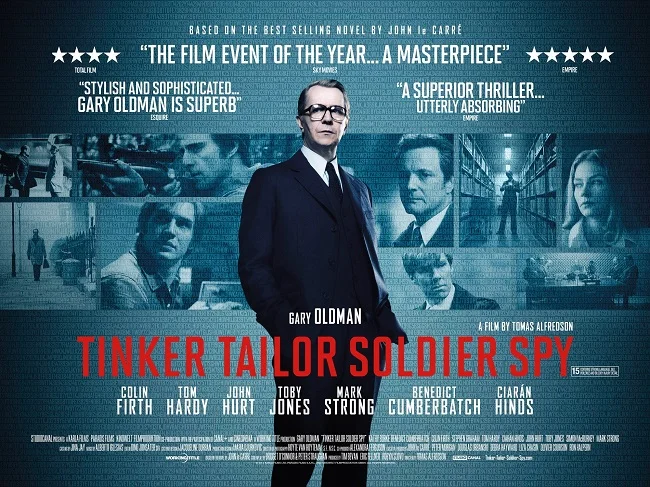
John le Carré's Cold War thriller Tinker Tailor Soldier Spy, is not only a good example of the spy novel genre, but a fine piece of seventies British literature per se. Therefore I was most surprised when I learned back in 2011 that it was to be made as a film. Could the complexities and subtleties of this cerebral and deliberately slowly paced book be adequately brought to the big screen, by today’s studio system? Could it compete with the previous BBC television adaptation starring Alec Guiness that was made in 1979? Thankfully, director Thomas Alfredson and Working Title films have successfully managed to distil the complex plot into the film’s 127-minute running time. Furthermore, the ensemble cast have a quality script to work with and the entire production benefits from the flair of a quality European director who brings an interesting outsiders dynamic to this very British tale.
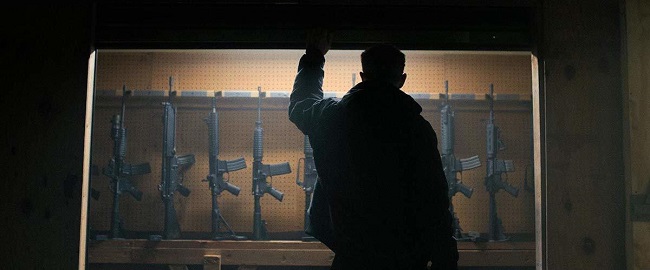
Inside a dark, remote warehouse, seven members of an unnamed midwestern militia meet. They’ve all heard via radio or police scanners that an unnamed, armed shooter armed with a modified AR-15 has opened fire on a police funeral. The assailant also plant IEDs and the casualty rate is therefore very high. This means the authorities will be scouring the countryside, raiding all known militia groups and their affiliates in the region. The men’s concern quickly turns to panic when they discover that one of their AR-15 is missing from their weapons cache, along with body armour and explosives. Is one of their own the shooter? Ford (Chris Mulkey), the group’s no-nonsense leader, asks fellow member Gannon (James Badge Dale), a former police interrogator, to question all the men and determine who is responsible. However, matters prove more complicated as Gannon knows that one other member, Noah (Brian Geraghty), is an undercover cop. Can a solution be found before the police inevitably come calling?

Clint Eastwood is 88 years old and has a successful career spanning over six decades. During that time he has proved to be one of America’s most bankable box office stars and established himself as an actor and director of note among his peers. If The Mule turns out to be his swansong, then it is certainly a fitting end to a prestigious career. Because in many respects The Mule is a distillation of many of the themes and concepts, we’ve seen in previous Eastwood movies such as Gran Torino and The Unforgiven. Perhaps the core story of an ageing man trying to reconcile himself to a modern world and make peace with it, is in some way Eastwood commenting on the movie industry himself. It is very much his film and his performance underpins the proceedings.
What is it with director Ridley Scott and his predilection for multiple edits of his films? Is he indecisive and a consummate tinkerer (like George Lucas) or a victim of studio politics? I suspect none of these are true. So how come there are always multiple cuts of his movies? Do his terms of employment always deny him final edit on a movie? I would think not. A film maker of his stature must surely get far more favourable terms when contract to make a film? Whatever the reason it leaves audience with a problem. How is one exactly to determine which is the best version of any of his films to see? For example, Kingdom of Heaven was greatly improved in its extended format. Yet his revised version of Alien is actually inferior to the original theatrical cut. And don’t even get me started on the plethora of versions of Blade Runner. His penchant for multiple edits therefore makes it difficult to debate his work.
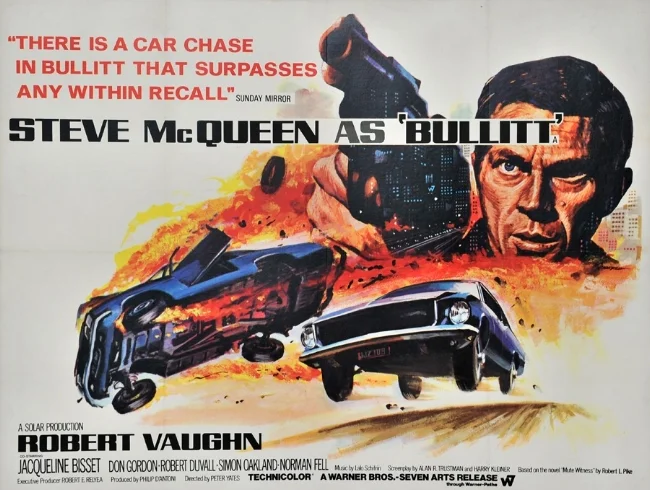
In a recent blog post I wrote about the difficulty that you can encounter sometimes when trying to watch movies that have been deemed “classic” by popular consensus. I listed 10 films of note that I intend to watch this year and to see if my views aligned with the various institutions and critics that praise them. The first on that list was the iconic sixties thriller Bullitt starring Steve McQueen. Having now watched the movie, I thought it would be prudent to collate my thoughts on it. Considering the immense amount of material that has already been written about it, I see no reason to present a review per se. Rather, here are my initial impressions for consideration. I’ve tried to highlight some specific aspects of the film that I think are of note or merit debate.
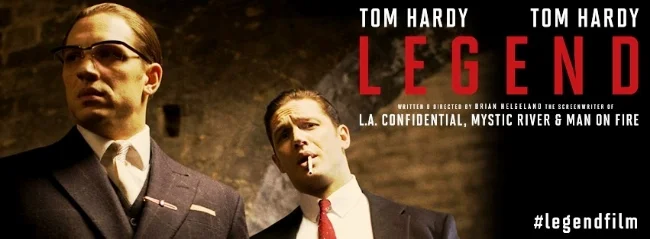
Legend is an extremely lavish biopic. Despite being about a pair of notorious British villains it has both the look and feel of an American gangster epic. There is no real attempt to depict either the period or the locations accurately nor is the story of the Kray twins themselves factually correct. As ever with American productions of this nature both the era and the subject matter are viewed through a miasma of sentimentality and faux nostalgia. The Krays are portrayed as folk heroes rather than the petty thugs that they were. However if you are prepared to overlook these deliberate biases then Legend is can still be an entertaining movie.
 Roger Edwards
Exit 8 is a sophisticated and claustrophobic psychological thriller directed by Genki Kawamura, which skilfully transforms a minimalist indie walking-simulator game into a cinematic existential enigma. This overtly metaphorical film renders the repetitive nature and drudgery of modern working life into a physical environment in which the lead character is trapped and must find a way out. A random, brutal maze filled with an atmosphere of indifference to the lab rats that find themselves trapped within. Or is it their personal guilt that has put them there? Genki Kawamura’s psychological mystery draws inspiration from the Japanese video game of the same name, as well as from the cyclical nature of Groundhog Day and endless corridors of the Overlook Hotel in Kubrick’s The Shining. Although there are jump scares and some ghoulish imagery, this is not a horror vehicle. Instead this is a disquieting psychological drama with a strong sense of morality.