
Spock
I’ve written in the past about the problems that can arise from untempered fandom. If enthusiasm and inspired love are not balanced by contextual reason and a healthy dose of reality, then it can get a little bit over zealous. Need I cite Star Wars fans and The Last Jedi as an example of unchecked fandom. However, I am now going to stray a little into the “Twilight Zone” of fandom myself, although I shall attempt to apply a healthy dose of realism into the proceedings. Because I want to discuss the fact that Ethan Peck has been cast to play one of the most iconic characters in popular culture. Yes, Gregory Peck’s grandson (and there’s plenty of “baggage” there) has been cast to play Spock in season two of Star Trek: Discovery. Furthermore, rather than be concerned, I am very excited by this development and I really look forward to seeing how this pans out.
I’ve written in the past about the problems that can arise from untempered fandom. If enthusiasm and inspired love are not balanced by contextual reason and a healthy dose of reality, then it can get a little bit over zealous. Need I cite Star Wars fans and The Last Jedi as an example of unchecked fandom. However, I am now going to stray a little into the “Twilight Zone” of fandom myself, although I shall attempt to apply a healthy dose of realism into the proceedings. Because I want to discuss the fact that Ethan Peck has been cast to play one of the most iconic characters in popular culture. Yes, Gregory Peck’s grandson (and there’s plenty of “baggage” there) has been cast to play Spock in season two of Star Trek: Discovery. Furthermore, rather than be concerned, I am very excited by this development and I really look forward to seeing how this pans out.
As a fan of not only Star Trek but wider popular culture, I believe that specific iconic characters are extremely pertinent and in their own way, beacons of hope and cultural touchstones for good in contemporary society. I personally believe that Spock as a fictious character is a positive force in the world, comparable to the likes of Sherlock Holmes. These characters are inspirational, provide hope and area source of introspection and self-reflection. The genius of Star Trek and other science fiction vehicles is that they provide alien characters and culture as a medium to examine the human condition. Leonard Nimoy struggled with this complex conundrum throughout his life, but he ultimately reconciled himself to the positive aspects of embracing such a multifaceted character as Spock, and saw him as a force for good. I sincerely hope that Ethan Peck has a similar opportunity, because we really need the wisdom and “humanity” of Spock in the wider world at the moment.
I like many others, was initially flummoxed by the aesthetic changes that came with Star Trek: Discovery. However, after a while I adjusted to this shift and focused upon the narrative of the new show and soon found that it embraced much of what I consider to be the core values of classic TOS. Considering the timeline and the specific lore that this new show has chosen to explore, ignoring Spock Prime is not really an option and I had a gut feeling that the character would have to be brought into the narrative at some point. It’s a bold move considering the esteem in which Spock is held by fans and the fact that only two other actors have ever played the character as an adult. I personally am not au fait with Ethan Peck’s previous work as an actor. However, I am prepared to continence the fact that the showrunners of Star Trek: Discovery are not going to doing anything rash when it comes to casting such a key role in Star Trek lore.
So rather than wringing my hands and focusing on the negative, I am prepared as a Star Trek fan to take a calculated gamble and remain positive about not only the casting of Ethan Peck, but the fact that the current writers wish to explore this legendary character further. So, I shall be looking forward to season two of Star Trek: Discovery when it premieres at the end of the year. I’m sure that the exploration of Spock’s career, prior to him meeting James T. Kirk will be insightful and informative. I believe that the essential character of Spock still has much to teach us and that this significant period of his life, associated with Captain Christopher Pike will be an most illuminating. As for actor Ethan Peck, welcome to the Star Trek family and I hope that this iconic role that you’ve bravely accepted will be both challenging and rewarding.
Star Trek Axanar is back in the news, twelve years on from the last controversy. For those unfamiliar with the original debacle, in 2014 Prelude to Axanar was released via YouTube. This Star Trek “fan-film” presented as a faux 21-minute, Starfleet documentary was very well received by fans and was intended by its makers as a proof of concept for a feature-length film. Set in the year 2245, during the final year of the Four Years War against the Klingons, Prelude to Axanar pushed the boundaries of what a fan film could be. The subsequent Kickstarter and Indiegogo campaigns raised more than $1.1 million. Prelude to Axanar was promoted as a professional-quality, “independent” Star Trek production, employing experienced actors and filmmakers and even established its own studio facilities. The presence of such actors as Richard Hatch, J. G. Hertzler, Kate Vernon, Tony Todd and Gary Graham (resuming his role as Vulcan Ambassador Soval) certainly made Prelude to Axanar distinct from other fan-films.
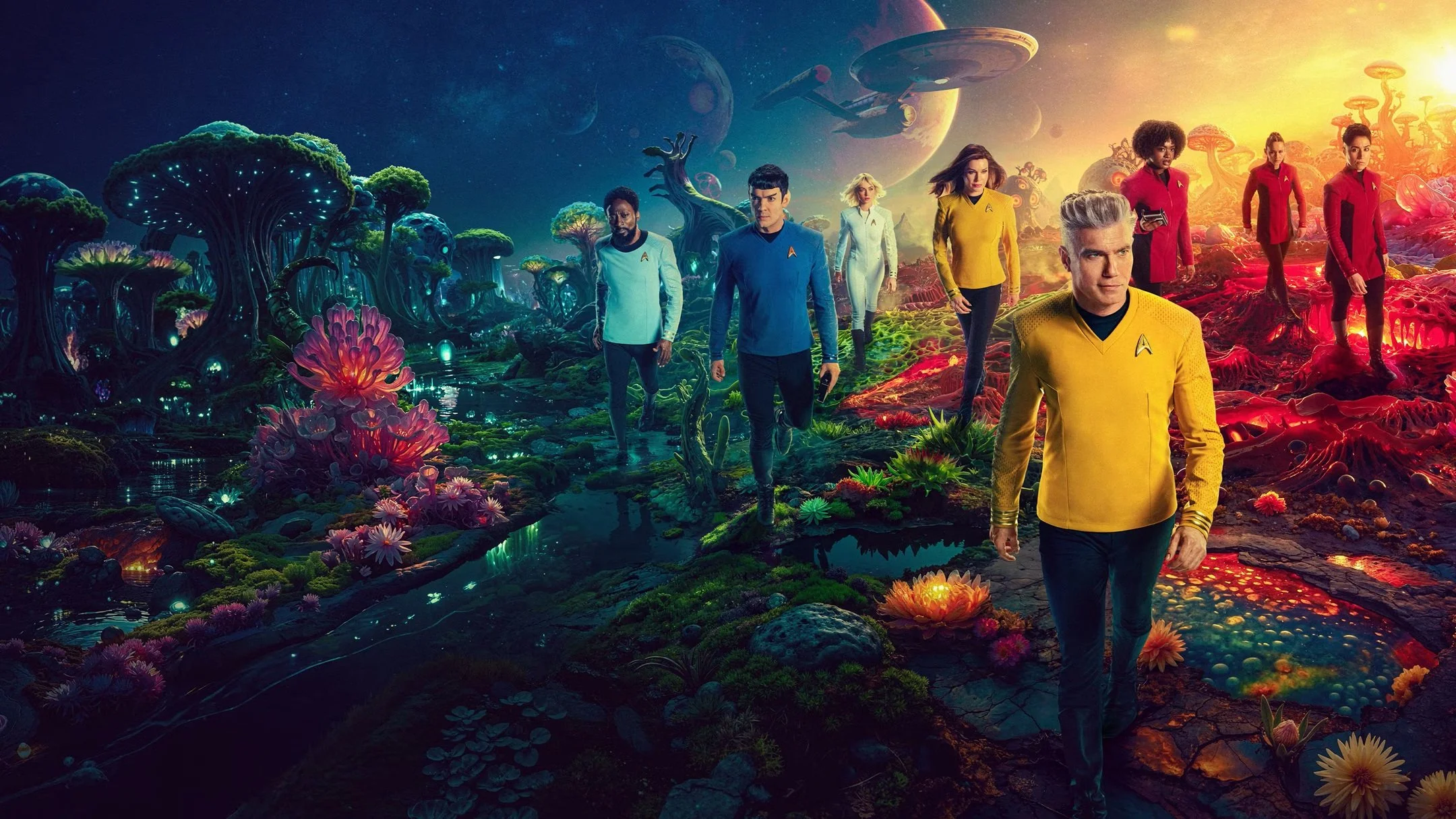
Thoughts on TV shows and my current viewing habits.
I last wrote a blog post in this series back in February 2022. Then for various reasons, I stopped. Possibly because my relationship with TV has changed in recent years. It’s fair to say at present that viewers are spoilt for choice. There are lots of very good shows around. Conversely, there is also a lot of bland, generic, filler as well. I appreciate that not every television series has to be an industry milestone and there are times when I’m content to watch undemanding content. However, I am very protective of how I spend my leisure time at present. I am not prepared to sink 6 or 8 hours into a show that is just “okay”. Hence I’m becoming very particular about what I watch. If something isn’t working for me in any fashion then I just abandon it and am happy to do so.
Jerry Goldsmith’s contribution to Star Trek is immense. Yet simply listing the films and TV episodes he wrote music for does not adequately encapsulate the significance of his contribution to the franchise. His majestic, thoughtful and uplifting musical scores provide an emotional foundation that reflects the core ethos of Star Trek. They also create an invaluable sense of continuity that spans multiple shows and movies. Perhaps the most obvious example of this is his iconic title music for Star Trek: The Motion Picture (1979) that was subsequently adopted as the theme tune for Star Trek: The Next Generation. His work was held in such high regard, when Star Trek V: The Final Frontier (1989) ran into production issues, it was thought that a Jerry Goldsmith soundtrack may well elevate the film. Sadly it didn’t but his work on that instalment was outstanding and among his best.
Star Trek documentaries are very much like Bruce Lee documentaries, in so far as they’re both a saturated market and more often than not, new content frequently ends up covering the same ground. However, fans tend to watch anything new in the hope that they will find a few new nuggets of information. Brian Volk-Weiss’ new 11 part series, The Center Seat: 55 years of Star Trek, not only covers established facts about the iconic show but also expands upon them as well as providing a wealth of new information. Volk-Weiss has previously explored popular culture with documentaries such as The Toys That Made Us and The Movies That Made Us. The Center Seat: 55 years of Star Trek is an in-depth chronological study of the Star Trek franchise, from its creation at Desilu Productions in 1965 all the way through to the latest iterations, Star Trek: Picard and Star Trek: Discovery.
I recently watched the first trailer for the new Obi-Wan Kenobi television show that is premiering on Disney + in May. I am interested in this latest instalment in the Star Wars franchise and curious as to whether Liam Neeson will make an appearance. I also watched a 20 minute fan video in which they “analysed” the entire trailer. They discussed the content of this 2 minute preview and then did a great deal of speculating about potential themes and characters that may feature in the show. They were clearly enthusiastic about what they had seen and were very knowledgeable about the subject. This resonated with me, as I like to be well versed about the things I enjoy. However, it is worth remembering that fandom can tip into obsession and gatekeeping. Hence I feel there is a subject to explore here.
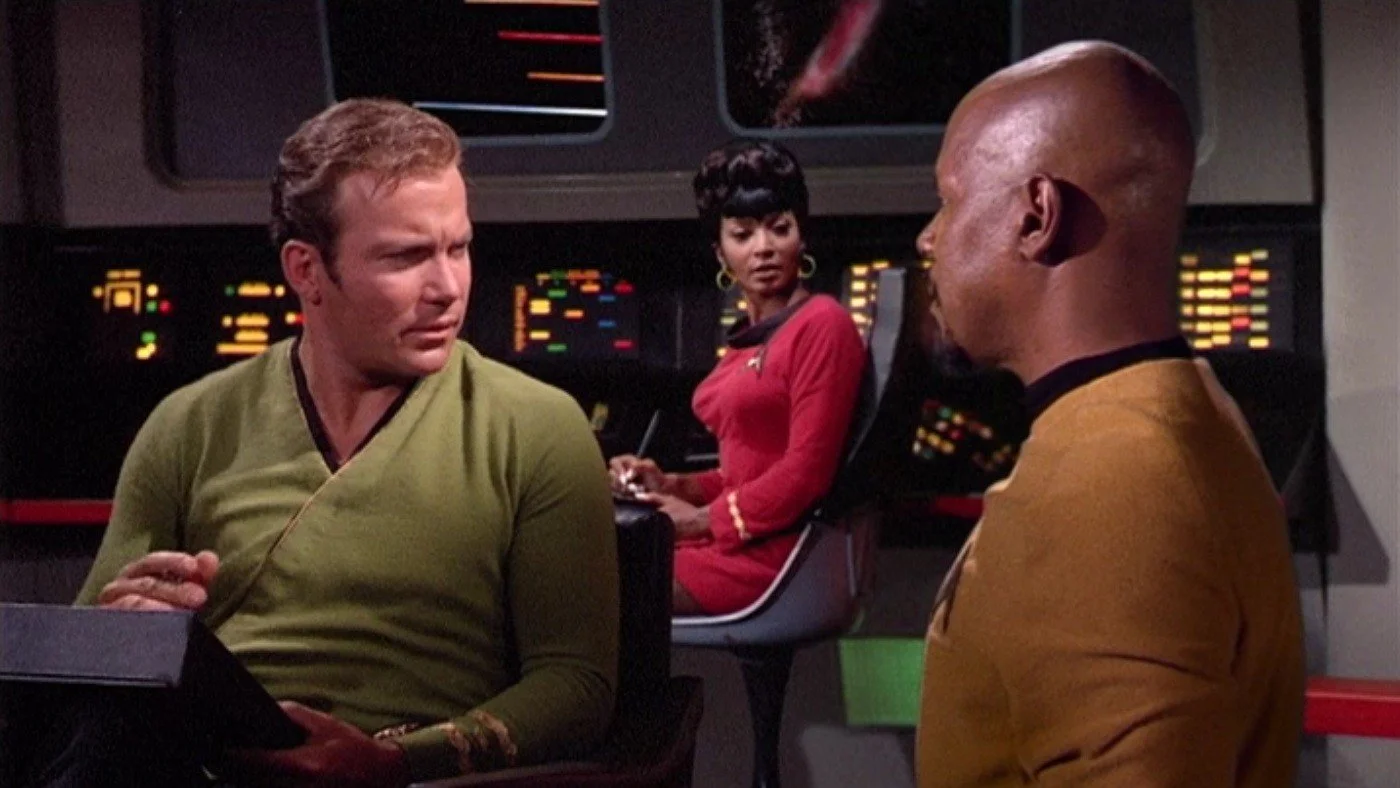
Before we start, no I am not writing about Alexander Courage’s classic main theme for the original Star Trek show. I can add nothing further to that particular discussion and it remains iconic and inspiring, even when distilled down to just the initial fanfare. In this post I want to draw your attention to another piece of music from Star Trek that has permeated its way into popular culture. A cue that when heard, if the listener is familiar with its provenance, will instantly conjure up images of flying drop kicks, ear claps and judo chops. A piece of music that can be added to pretty much any video footage and instantly make it more heroic. Yes, I am talking about what has become generically known as Star Trek “fight music”. Or more specifically, the "The Ancient Battle/2nd Kroykah" cue from Amok Time (S02E01) composed by Gerald Fried. The scene during the koon-ut-kal-if-fee ritual in which Spock fights Kirk on the planet Vulcan for complicated “reasons”.
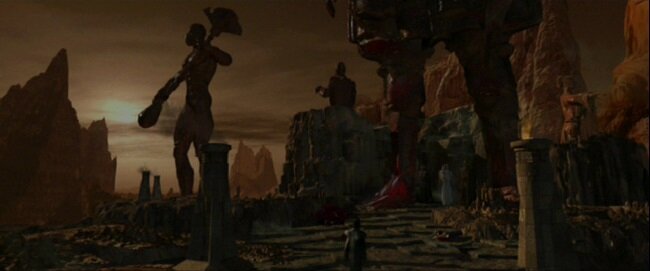
Star Trek: The Motion Picture is a wonderful paradox in the Star Trek cinematic pantheon. It is possibly the most hardcore science fiction story that the franchise has explored and is both simultaneously Trek-like and un-Trek-like. Director Robert Wise and the production team worked hard to deliver a completed film for the scheduled December 1979 release date. However, he felt that the theatrical version was only a “rough cut”. Hence in late 2001 he supervised a Director’s Edition of the film which runs 136 minutes (4 minutes longer than the theatrical release)and reinstates some additional scenes and replaces some of the optical effects with new CGI creations. Critics were divided as to whether the Director’s Edition improved the film overall but Wise felt that this version was much closer to his original vision. The Director’s Edition was released exclusively on DVD in standard definition.

Fan Edits are a curious film sub genre. Some simply reinstate deleted scenes to maximise the running time of a movie. Others will remove footage and seek to reorder events in the name of coherency. But a few are far more ambitious. Rather than just reshape what is there, they will shoot new footage to replace material deemed substandard and seek to totally reimagine a movie. On even rarer occasions a few manage to actually improve upon the original, rather than just offering an augmented version. Which leads me onto Star Trek: beyond the Barrier, an interesting and very enjoyable fan edit of Star Trek V: The Final Frontier by Anti-Matter from deLimited Productions. It attempts to repair many of the problems found in the theatrical release of the movie. Some would argue that such a task is a Kobayashi Maru test in itself. However, the results are surprisingly good and some tongue in cheek humour shows that the creator understands the nature of their task.
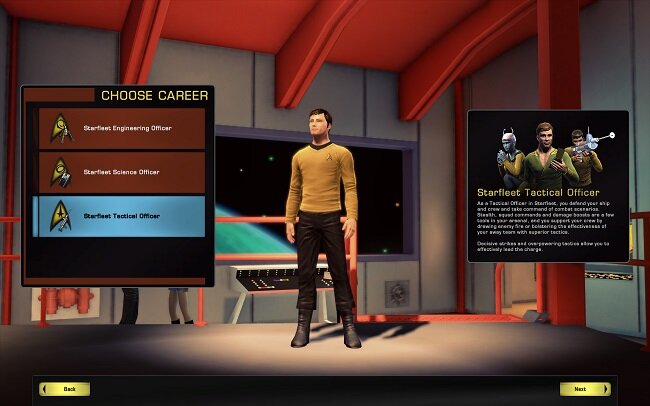
Welcome to the second part of my Star Trek Online: Beginners Guide. I thought it may be useful to write a series of posts, offering practical information for those who are just starting out in STO. Nothing fancy or in any way definitive. Just a few basic tips that may help orientate the new player. I’ve been playing STO since its launch in 2010 and this MMO has seen a lot of changes. The game features a lot of systems and mechanics that are not always immediately intuitive to grasp. So I’ll be doing my best to cover a selection of these in each post and try to provide a broad overview. Like a lot of advice, it can be subjective. Ultimately it comes down to each player how they wish to play. In this instalment, I shall be writing about career paths, factions and races.
Today is Star Trek Day. An officially sanctioned celebration of all things Star Trek. The date reflects the launch of the original television show, back in the sixties. Naturally, there are a multitude of events going on over at the official Star Trek website. And as ever, the MMORPG Star Trek Online is taking part in the celebrations. “On September 8th, 1966, the world first met a group of people, and a ship, that would change our lives forever. Pitched as “wagon train to the stars,” and brought to TV by the force of Lucille Ball’s will, Gene Roddenberry’s Star Trek hit tiny television screens around the world and immediately captured hearts and minds. Through three seasons, and decades in syndication, The Original Series started a movement that still lasts today, more than half a century later. We live in a time where there’s more new Star Trek than ever before, and we’re joining with the rest of our Star Trek Family to celebrate the franchise’s birthday”.

I’ve mentioned in the past that a lot of important information regarding the MMORPG Star Trek Online is centralised within the official subreddit. That’s fine if you enjoy using this platform but it’s not for everyone. I’ve always found Reddit somewhat esoteric and I don’t really like the way it visually displays information. I have to use a browser addon to make it more user friendly. Unlike other communities, STO does not seem to have that many fan produced blogs. However, I may be wrong regarding this, so feel free to correct me (and provide URLs). In the meantime, I thought it may be useful to write a series of simple guides, offering practical information for those who are new to STO. Nothing fancy or in any way definitive. Just a few basic tips that may help orientate the new player. This time we’re going to look at the business model for STO and the cost of playing the game.
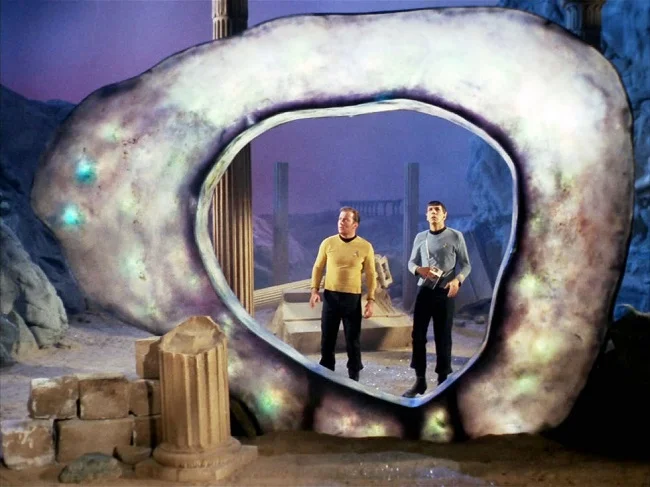
Out of the original seventy-nine episodes of Star Trek, one of the most respected and beloved is The City of the Edge of Forever. Written by Harlan Ellison the story is one of the more thoughtful and tragic in Trek Canon. It was also the first episode to feature a temporal plotline. Doctor Leonard McCoy (DeForest Kelley) accidently receives an overdose of medication and flees the Enterprise while in a delusional state. Beaming down to an alien planet he uses a temporal gateway (The Guardian of Forever) to travels back in time to earth during the Great Depression. By doing so he accidentally changes history. Captain Kirk (William Shatner) and Spock (Leonard Nimoy) follow him through the gateway to New York in hope of correcting the timeline. While awaiting the arrival of McCoy, Kirk falls in love with Edith Keeler (Joan Collins) who runs the 21st Street Mission. However he and Spock soon determine that to restore the timeline they must allow her to die.
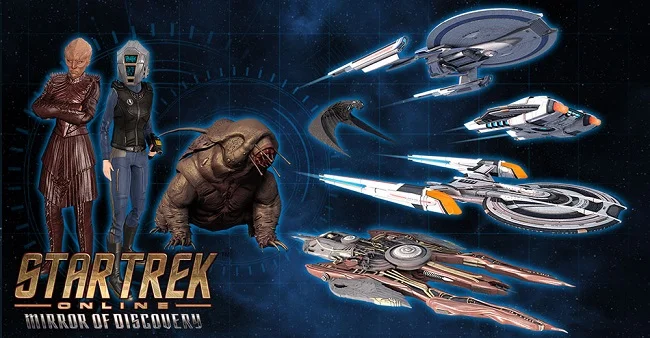
There has been a degree of controversy over the Discovery Operation Pack that has recently been made available for purchase in Star Trek Online. The bundle featuring ships, bridge officers, cosmetic items and more is displeasing some core players who feel that it is over priced and lacks anything relevant for Romulan and Klingon races. Personally, I’m only interested in two specific items from the pack, such as the Tier 6 Gagarin Miracle Worker Battlecruiser and the combat pet Tardigrade but at present they cannot be purchased separately. So, I shall not be parting with any money at present. The Gagarin Miracle Worker Battlecruiser is relatively similar to the Tucker Tactical Miracle Worker Cruiser, which I already own. However, it is an improvement aesthetically speaking (a subjective point, admittedly), so for me the obvious compromise is to purchase the fleet version and forgo the unique space trait and settle for an additional console slot. As I’m not a high-end player, the look and feel of a ship has as much appeal to me as its stats.
I have suffixed the title of this post “and stuff” so I can address several Star Trek Online related thoughts in a single blog post. Despite the fact that I frequently play STO it is does oddly get neglected in my writing. So, let us start with the issue of the ninth anniversary. As ever Q is back with the anniversary event and once again, we are stabilising Omega Molecules. This year’s reward is a Tier 6 Vulcan T’Pau Scout Ship. There are also emotes and sundry other items to earn during the duration of the festivities, but I more interested in the anniversary itself. Not many MMOs make it to nine years and if they do, they aren’t necessarily in as good shape as STO. The game has a stable and loyal playerbase and is currently tied-in to Star Trek: Discovery. Further established Trek actors are supplying voice acting and the game seems to be doing well across both PC and consoles. Like LOTRO, STO uses the IP well and seems to “fill in the gaps” in the existing lore as well as expand and extrapolate established canon. One of the best things about STO is that there’s always something to do in-game as well as new content in the pipeline. Perhaps this along with the handling of the IP is why the game endures.
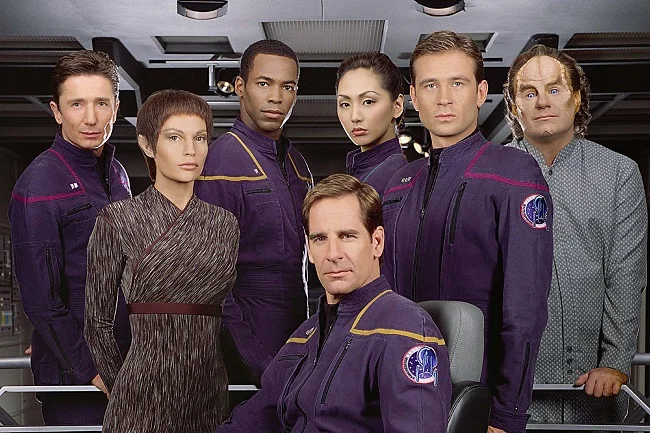
Star Trek: Enterprise was the first show in the Star Trek pantheon to have a song performed by an established artist play over the opening credits, rather than a traditional theme tune. Up until 2001, the franchise had maintained a more formal approach, established with the iconic introduction to the original series composed by Alexander Courage. Needless to say, such a radical departure from established practise brought about consternation and debate among fans. In some respects, you can argue that point about the entire show itself, but that as they say, is an entirely different blog post. Needless to say, the dislike and hatred that the song Where My Heart Will Take Me engendered in certain quarters, lead to a petition to have it removed. Needless to say, this movement failed, and the show continued using it for four seasons. Seventeen years on this particular debacle has now died down and the song is often just referenced ironically by fans as an amusing anecdote and piece of Trek trivia.
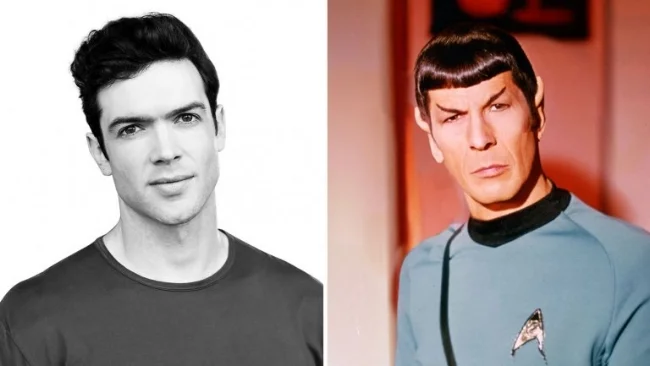
I’ve written in the past about the problems that can arise from untempered fandom. If enthusiasm and inspired love are not balanced by contextual reason and a healthy dose of reality, then it can get a little bit over zealous. Need I cite Star Wars fans and The Last Jedi as an example of unchecked fandom. However, I am now going to stray a little into the “Twilight Zone” of fandom myself, although I shall attempt to apply a healthy dose of realism into the proceedings. Because I want to discuss the fact that Ethan Peck has been cast to play one of the most iconic characters in popular culture. Yes, Gregory Peck’s grandson (and there’s plenty of “baggage” there) has been cast to play Spock in season two of Star Trek: Discovery. Furthermore, rather than be concerned, I am very excited by this development and I really look forward to seeing how this pans out.

After a prodigious marketing campaign and a great deal of internet speculation about one specific character, Star Trek Into Darkness was released to broadly strong reviews and solid box office returns in early May 2013. Finally, all the questions that had kept fans and website pundits endlessly theorising, were answered. For a second time running, Paramount Pictures managed to produce an action-filled blockbuster which still offered a strong plot, with complex and adult themes, explored by well-rounded characters. Batman Begins seems to have set a trend of framing material from a traditional pulp background, within broader intellectual parameters. Star Trek: Into Darkness managed to do this while cleverly re-imagining iconic material from its own lore. However, as with any substantial franchise movies, not everyone was satisfied or pleased. Many fans railed against the new Kelvin Timeline and continue to do so.

The reinvention of any popular franchise certainly comes with many risks. Twelve years ago, Casino Royale was hailed as a triumph in rebooting the 007 brand. It was hard edged, back to basics movie that made the spy genre relevant to a contemporary audience, without diluting its source material excessively. Yet this process went a step too far with Quantum of Solace, with a film that simply didn't feel Bond enough. Needless to say, the rights holders corrected this error. The success of the BBC's relaunch of Doctor Who hinged on making the formula accessible to modern viewers. Yet the new format of standalone episodes, celebrity guest stars and an emphasis on action over story, can be difficult to maintain and requires the involvement of top writers to keep the momentum going. Then of course there are the fans.
![Star Trek Discovery S01E01 The Vulcan Hello.mkv_snapshot_07.19_[2017.09.25_17.54.13].jpg](https://images.squarespace-cdn.com/content/v1/54e310f0e4b0f4a6ba3ac899/1506359625650-D976K1OBW47HSSSFN2S2/Star+Trek+Discovery+S01E01+The+Vulcan+Hello.mkv_snapshot_07.19_%5B2017.09.25_17.54.13%5D.jpg)
Finally, it’s arrived. The first new Star Trek TV show for twelve years. Star Trek: Discovery became available for Netflix UK customers to watch at 8:00 AM this morning. Needless to say, I cleared my schedule in advance so I could sit down and watch this much-anticipated show. Furthermore, I made it my business to avoid Twitter and the internet until I had finished viewing the first two episodes because I knew in advance that Star Trek: Discovery was going to be controversial and divide fans. Having now seen The Vulcan Hello and Battle at the Binary Stars and taken time to reflect upon both episodes, I have reached the following conclusion. From what we’ve seen so far, the spirit and emotional heart of Star Trek, is reflected in the new show. I found the characters to be interesting and well defined. Lead performances by Michelle Yeoh, Sonequa Martin-Green and Doug Jones were good and there’s an intriguing crew dynamic. The story has already touched upon numerous canonical themes and I am eager to learn more about the main characters and the universe they inhabit. I therefore shall continue to watch Star Trek: Discovery. However, not everyone feels the same, as my subsequent forays online have shown. Much has changed in this new iteration of Star Trek and as we know, some fans do not like change in any way, shape, or form.
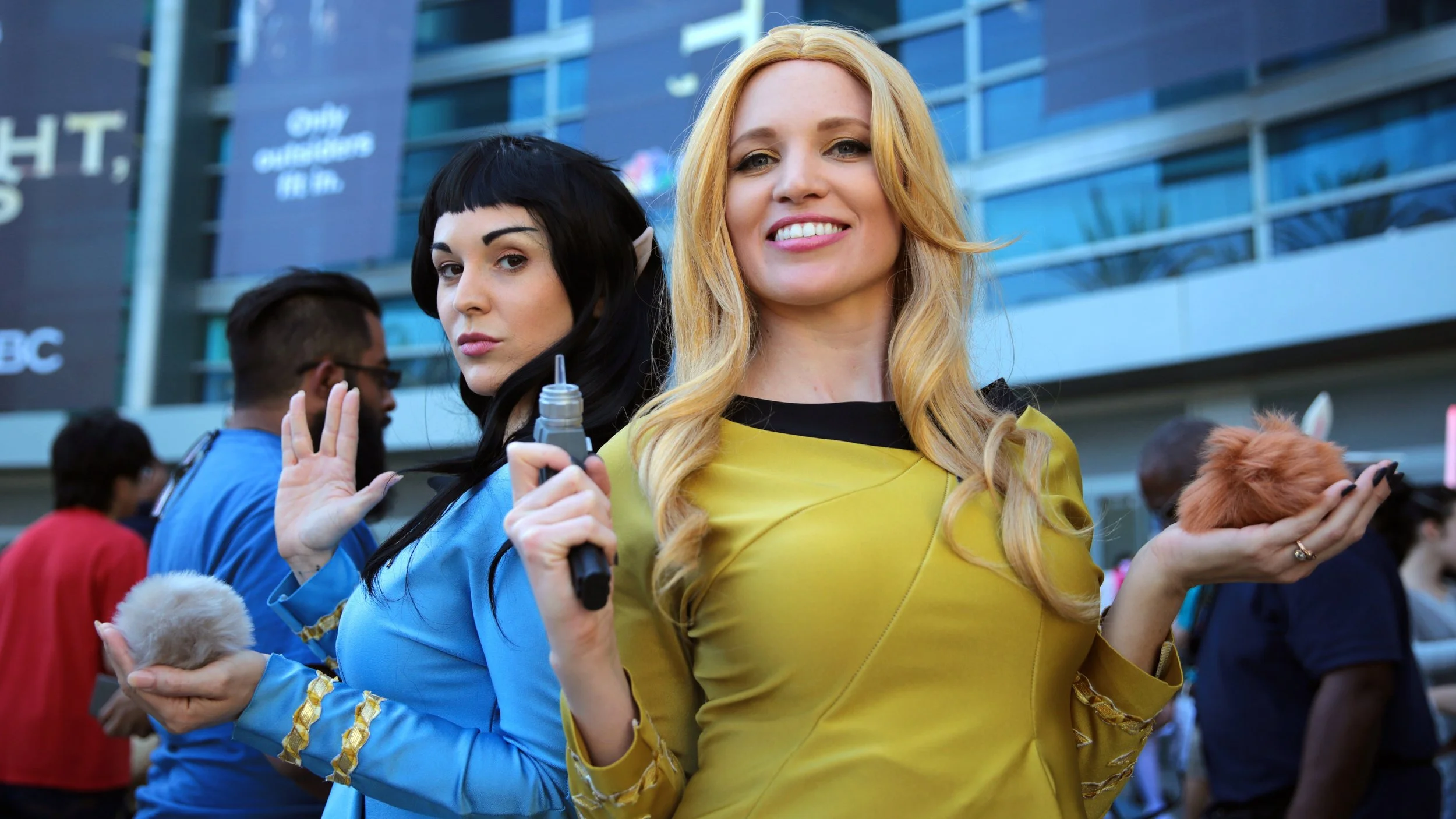
Over the years I have been a participant in several fan based communities. These have ranged from running film clubs, to creating and publishing fanzines in the pre-internet days. More recently this has included running websites, blogging and creating podcasts. It’s a curious thing the way fandom is cyclical and one’s involvement with such communities seems to ebb and flow. It’s something I’ve been thinking about a lot of late. Several of the You Tube channels I enjoy have reduced their output or stopped due, to changes in advertising policy and monetisation. The Newbie Blogger Initiative failed to manifest itself this year and many of my immediate colleagues in blogging and podcasting have also begun to fade away or moved on to pastures new. The sad thing is, the true value of many community contributors is never really realised until after they’ve gone.

Fans are often a very creative and resourceful bunch. Star Trek fans especially so. At present, there’s a lack of new officially endorsed canonical content being produced. The movies set in the Kelvin Timeline are not universally embraced by Trekkies and usually take three years to produce. The new TV show Star Trek: Discovery has been subject to several production delays and still seems a long way off. So, the fans solution in recent years, has been to make their own original content. Hence there is a wealth of unofficial, independently made shows available online, set in various incarnations of the Star Trek universe. Although many of these productions are lovingly crafted and driven by passion, often they lack the professional polish of the genuine article. Frequently their weakness lies in the quality of the acting and writing. Then there is Star Trek Continues.
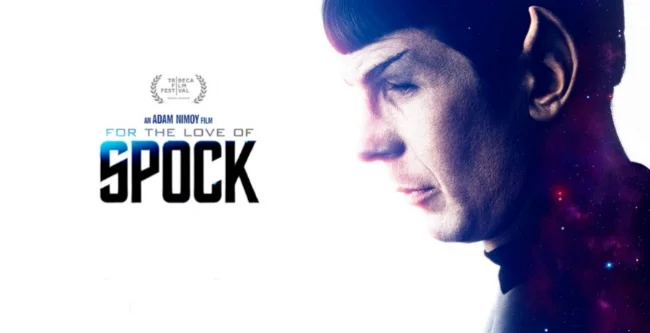
Adam Nimoy doesn’t paint a rosy picture of family life in his documentary about his father. The novelty of fame and popular acclaim soon wore off with it’s never ending photoshoots and long working hours that kept his father from ever being home. Yet among the anecdotes in this greatly condensed biopic there evidence of a lot of love and professional respect. Far from being comprehensive For the Love of Spock focuses on the matters that interest fans the most. So the documentary explores Nimoy’s relationship with Gene Roddenberry, his subsequent casting in Star Trek, his post Trek stage career and his return to the fold with the big screen movies.
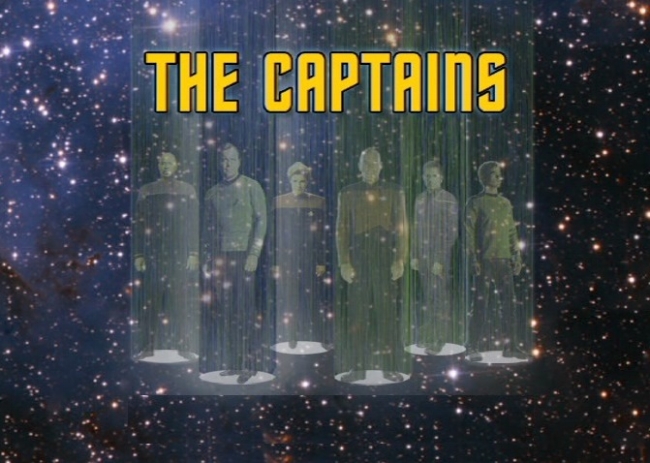
The Captains is a curious beast. If you’re expecting a traditional documentary where Bill Shatner simply indulges in a standard Q & A with other actors that have portrayed captains within the Star Trek franchise, then you will be disappointed. The Captains is a horse of a different colour entirely. Throughout its ninety minute duration, this documentary veers from personal reflections on acting, muses upon the nature of fame and even touches upon contemplating one’s own mortality. It certainly wasn’t what I was expecting and was subsequently a far more rewarding experience.
I am not a dogmatic fan. In fact as I get older, I become far more flexible and forgiving in my outlook. I certainly don’t buy into the concept that your “childhood can be ruined”. The only way something new can spoil the memories of something old that you hold dear, is if you allow it to. If you wish to explore this concept further, I’d suggest reading Marcus Aurelius. Back to the matter in hand. When I found out that Star Trek was to be rebooted via an alternative timeline plot device, I was content with this. I decided to ditch my personal baggage and try and be objective about the now named “Kelvin Timeline”. I make no bones about the fact I have liked the previous two Star Trek movies. Are they masterpieces? No. Are they entertaining? Yes. That is far more than some reboots have achieved.
The announcement that CBS has commissioned a new series of Star Trek is both a blessing and a curse. It’s a blessing in the sense that I have genuine affection for this franchise and therefore I welcome the prospect of a new incarnation of the show returning to TV. However I also consider this situation an absolute curse because well now have to endure at least eighteen months of idle speculation and an ongoing dissection of the entire production of a show before it is even released.
Trek Nation is a relatively straight forward documentary with a clear premise. It follows Eugene Roddenberry’s search to find out more about his father Gene and to understand the cultural phenomenon of Star Trek. Directed by Scott Colthorp the film endeavours to explore the enduring appeal of the franchise as Eugene discovers more about the father he didn't know and the show that passed him by. Through interviews with cast and crew members from all five Star Trek shows, as well as fans and celebrities who were influenced by the show while growing up, Trek Nation methodically follows a linear path. Yet this uncomplicated approach proves to very effective and surprising candid.
Star Trek is slightly older than me by 14 months. I was born on December 18th 1967. Star Trek was first broadcast in the US on 8th September 1966. Hence this show has always been part of the prevailing pop culture that surrounded me, as I grew up. I first began watching Star Trek as a young child in the early seventies. It would be repeated on the BBC in the early evening on Fridays and it became a family ritual to sit down together and watch it. As a seven or eight year old, it left a great impression upon me and was in many ways, the television highlight of the week. Star Trek along with Doctor Who certainly started my interest in science fiction. Star Trek was also one of the first shows that introduced me to tie-in marketing. I remember seeing in a toy shop, near to my school at the time, a Dinky Klingon Battle Cruiser and was flabbergasted that such a thing existed. I immediately coveted it but sadly never obtained one.