

Phone Internet Tethering
Usually I don’t have a problem with internet access when Mrs P and I are travelling. My phone data plan is sufficient for Google Maps and social media usage. Once we reach our hotel, it’s just a question of connecting to the free Wi-Fi or if need be, buying upgraded access. It’s seldom that expensive. When I went on holiday to Croatia this summer, I bought a bespoke data plan before arriving that granted me extra internet access. Our hotel in Makarska also had very robust internet access. Hence, regardless of being out and about or by the pool, I never had any issues getting online. The ubiquity of internet access means we often take it for granted. I seldom go to places in the UK or abroad that don’t have advanced IT infrastructure. Until this week.
Usually I don’t have a problem with internet access when Mrs P and I are travelling. My phone data plan is sufficient for Google Maps and social media usage. Once we reach our hotel, it’s just a question of connecting to the free Wi-Fi or if need be, buying upgraded access. It’s seldom that expensive. When I went on holiday to Croatia this summer, I bought a bespoke data plan before arriving that granted me extra internet access. Our hotel in Makarska also had very robust internet access. Hence, regardless of being out and about or by the pool, I never had any issues getting online. The ubiquity of internet access means we often take it for granted. I seldom go to places in the UK or abroad that don’t have advanced IT infrastructure. Until this week.
I am currently in St. Leonards-on-Sea in East Sussex on a 5 day break. We’re staying at Combe Haven Holiday Park for “reasons”. The caravan/static home/park home or whatever you want to call it is very well equipped with “all mod cons”. However, there is no internet access in the caravan itself. If you go to either the pub or the restaurant, there is complimentary wireless internet available. Sadly, such environments are not practical for me to sit down for an hour or so and write as they’re busy and somewhat loud. Thankfully, the 4G signal on my phone in this part of the UK is reasonably strong, so I decided to see if I could use this device for internet tethering. I have a Google Pixel 8a.
On my handset, there are specific settings for tethering that are easily accessible. There is a choice of turning the phone into an internet hotspot and connecting devices such as a laptop wirelessly. Alternatively you can attach the phone to a device via a USB cable and tether that way. I found that the wireless hotspot method was a little too unstable and the connection would intermittently drop. However, directly connecting to the phone via a USB cable has proven a far more reliable method. The internet connection is far from fast, about 3.49 Mbps, but it is sufficient for me to access my website and publish this post. Streaming media and gaming are off the table but as I’m technically on holiday, such activities weren’t part of my schedule anyway.
Although I have no immediate need at present, I have already started researching Portable Wi-Fi Routers/Mobile Hotspots. Rechargeable travel routers that can accommodate a SIM card, access the internet and act as a local hotspot for up to 10 devices. They’re ideal when travelling to locations where the only internet access available is 4G/5G via the phone network. If combined with a data only SIM package they can prove invaluable, according to consumer feedback. I read a comparison of common models on TechRadar and the reviews indicated that they can provide stable coverage within modest parameters but to to expect miracles. However, compared to Starlink they’re a far more affordable option. One I may take up in the future.
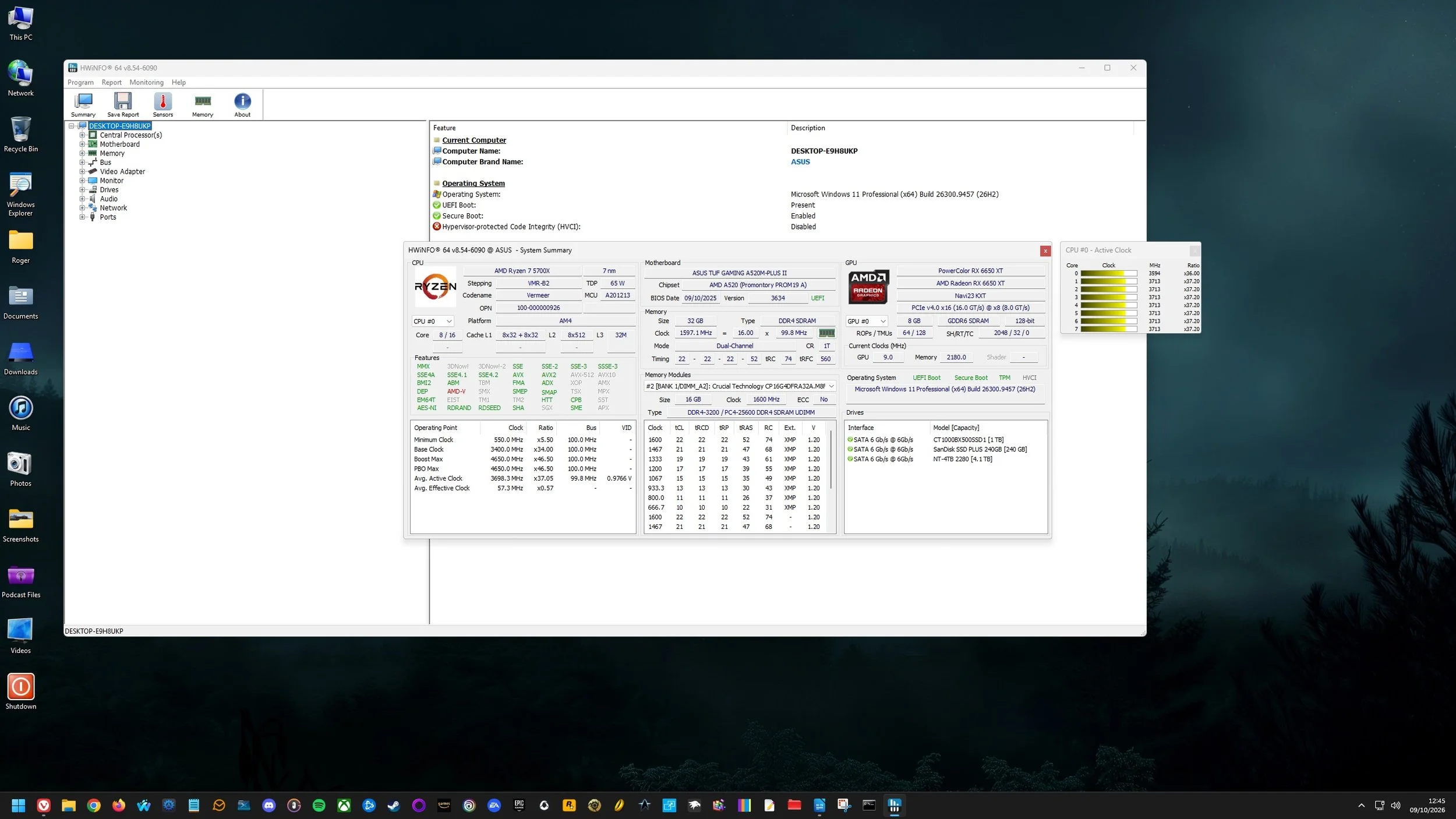
Until fairly recently, I have maintained a somewhat casual approach to the system maintenance of my PC. “Casual” in this context is a subjective term. What I consider to be “casual” others may think to be robust or even rigorous. But I digress. I regularly undertake minor housekeeping such a clearing my web browser data, removing temporary or unwanted files and updating software. I also make sure that only essential services and programs start when I turn on my PC. I keep an orderly desktop and an intuitive filing system. However, I do very little with respect to maintaining the hardware inside my PC. I clean inside the case a couple of times a year and ensure that the fans are free from dust contamination but that’s about it. I have no idea if the installed RAM is running optimally or whether the processor is operating within the appropriate heat threshold. Does the thermal paste between it and the heat sink need replacing? Are all the cores enabled?
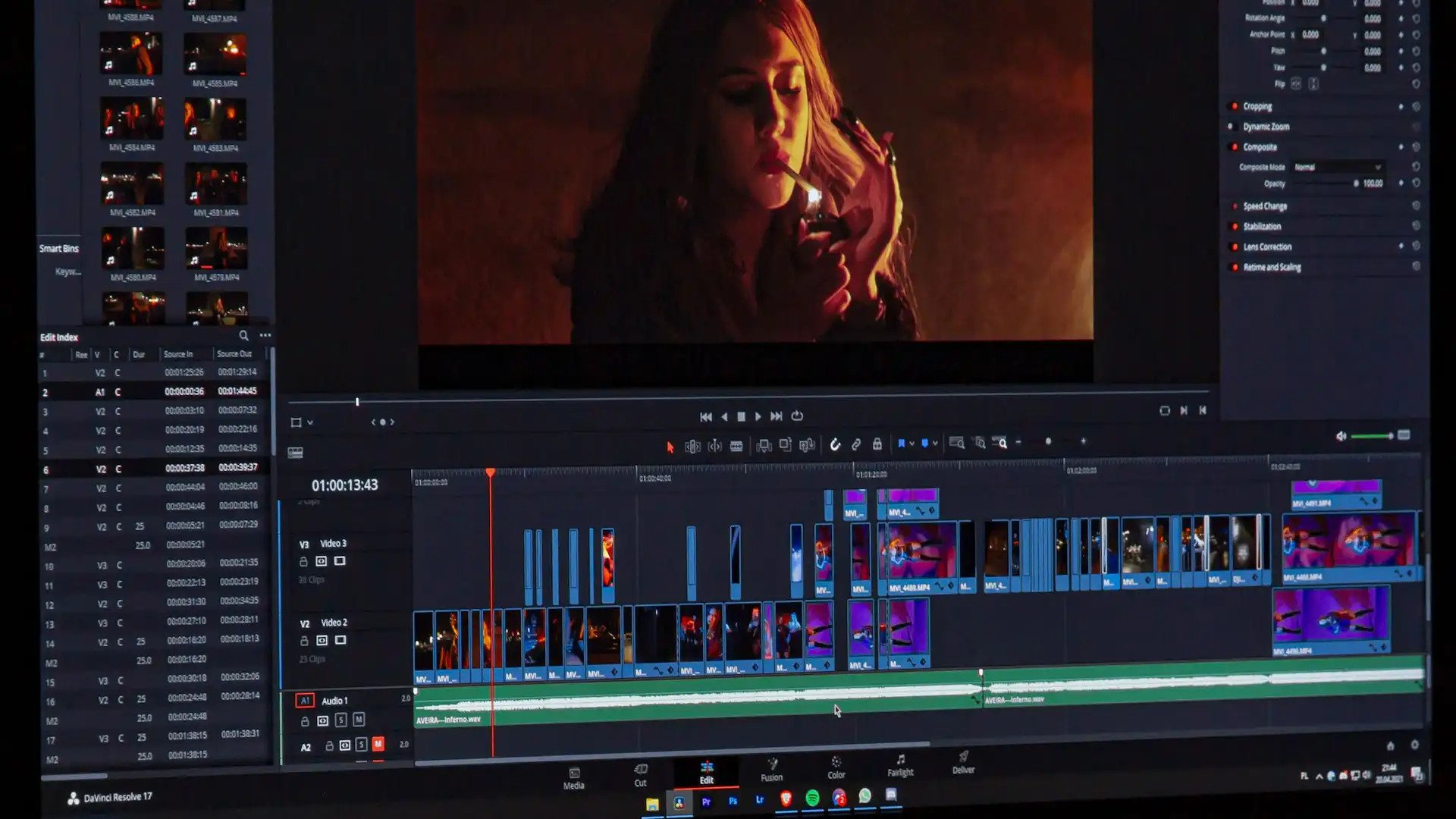
Last year, when I was looking for some suitable video editing software, I found that people would often recommended DaVinci Resolve. It is indeed an outstanding tool but totally beyond my needs. It is also a beast to run and occupies a substantial percentage of real estate on your SSD, so I dismissed this option for practical reasons. Let it suffice to say that finding a suitable product that met my requirements was quite difficult. Video editors often seem to be either quick and easy tools for clipping content on the fly, such as Bandicut (which is great for exactly that purpose) or huge, professional quality behemoths, used by people who work in the appropriate industry. DaVinci Resolve is a textbook example of this. It begs the question what products occupy the middle ground, assuming they exist.

Going forward, if I write any more posts about my use of AI, I am not going to add the following caveat. I will do it once more here, so everyone knows where we all stand. I am fully aware that AI has already taken jobs and will continue to do so. I also know that data centres are not environmentally friendly. As for the evil corporate billionaires that get rich from the situation, that also has not come as a surprise to me. I also believe that the AI market needs regulating and there should be legislation in place to ensure that AI is never directly linked to important government and civil infrastructure. That being said, I am not going to stop using AI at a domestic level over notions of ethical purity. All of the above criticisms can broadly be applied to the industrial revolution and society came to terms with that and survived it. The same goes for the computer revolution. Things change and we adapt. Plus, if you really wanted to protest and lobby against AI, the best time to do this was two decades ago.
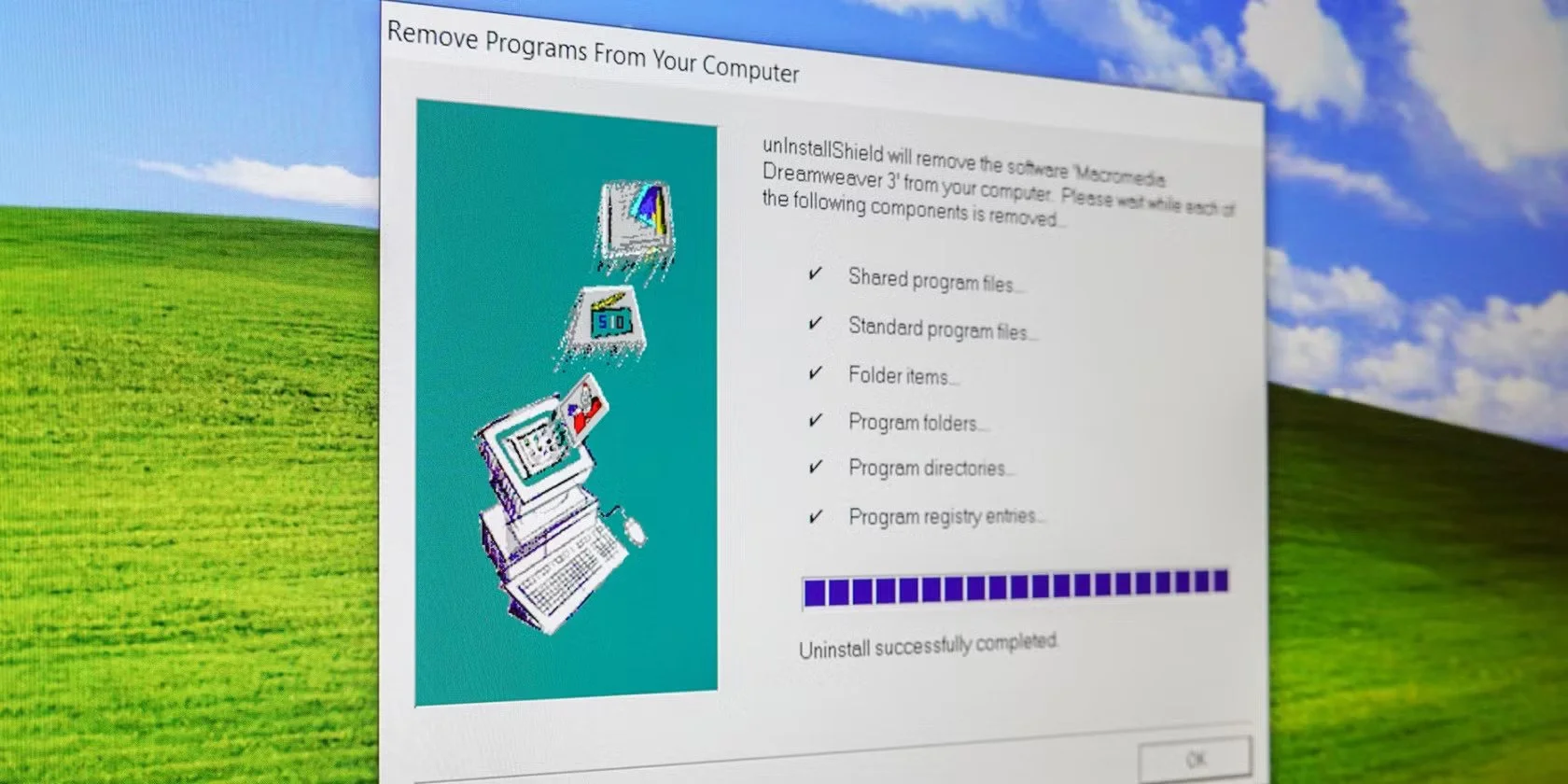
One of things I dislike with a passion about modern software is that you cannot cleanly uninstall it from your PC. Removing an unwanted or problematic program just leaves metaphorical muddy footprints throughout your PC. It makes my SSD feel like a crime scene with virtual brain matter spattered across the soft furnishings. Sadly, this is the price you pay for having a modern operating system with a registry, shared dependencies and a liking for temporary files and caches. It all makes me feel very nostalgic for the halcyon days of DOS, with self-contained programs sitting in a solitary folders. Often libraries and drivers lived in specific system paths or the same folder, avoiding conflicts. You could just delete stuff and it sodded off. You didn’t need two priests and holy water. Happy days.

Thinking Out Loud is a recurring post where I write about thoughts and ideas that have recently occurred to me. As ever the intention is not to develop these ideas into full blown blog posts, although they often the could be. Instead I just collate a few sentences to express my point and leave it at that. The idea being that if anyone else wants to pick up the conversation they can do so in the comments section below. On this occasion the various points are all technology based. I’ve been busy of late with several projects, such as building a new website and creating some widgets specifically for it. Like most technical projects things don’t often go as planned and problems occur unexpectedly. Hence, I thought why not make a themed instalment of Thinking Out Loud this time round? It’s something that I may well do this again in the future. As ever, feel free to make your thoughts known.
I turned on my laptop this morning for the first time in 4 months. I knew it was that long because I hadn’t connected the laptop to the new Netgear router that I bought at the end of April. Unsurprisingly, as I haven’t used this device for a while there were multiple Windows updates to be installed. This process took over an hour, so while the various updates were being downloaded and installed, I turned my attention to my Amazon Echo Dot which loiters in the corner of our lounge, doing very little to justify its existence. At present this device is mainly used as a glorified timer for cooking, which seems a bit of a waste given it’s alleged capabilities. Hence, I decided to see if I could increase its functionality while waiting for Windows to do its update thing. More on this later. Let us for the meantime return to the small matter of the operating system updates. Once they were completed, I immediately installed Chris Titus Tech’s Windows Utility and started removing unnecessary features and bloat, as well as disabling invasive services.
Before we begin, let me clearly state that this is not a comprehensive installation guide for installing Steam OS on your PC. Mainly because the variety of hardware that can be present in any PC makes each installation a somewhat bespoke affair. Hence I have decided to provide a list of bullet points of the various steps and issues I encountered during my installation, last week. Consider it advance warning of things you may encounter if you install this operating system. As ever, if this is something that you are intending to do, I would advise allowing yourself a suitable amount of time so you can accommodate any issues should they arise. It is entirely possible that this may be a two hour job for the technically literate running the most generic or commonplace hardware. However, I suspect that a lot of people undertaking this project will run into variations of the same problems that I encountered.

I am intrigued by the growth of the IndieWeb, owning your domain and static websites. I certainly agree with the notion of not relying on big corporations and I have an ongoing project to divest my dependency on software produced by major market players. However, although I own my own domain, my website is hosted by Squarespace. I’ve not really had any problems with them over the last 11 years and I would describe our business relationship as equitable. However, the monthly subscription price has increased over time and is likely to keep on doing so. It has crossed my mind as to whether there is a suitable alternative. However, if I were to migrate Contains Moderate Peril elsewhere I suspect it would be logistically complex and problematic.
I like learning new skills and starting projects. I regularly undertake such things with varying results. However, if they don’t work out that’s not a problem. You have to try something to see if you like it. I’ll add “within sensible parameters” as a caveat to the last statement. And it’s perfectly fine to discover that something isn’t for you. I like certain genres of video games, music, films and books. I am comfortable wearing certain types of clothes and not others. I’m picky about colours. I’ll even go so far as to say that I won’t drink out of any mug that’s just lying around. If I don’t like the joke, logo or overall aesthetic of it, I ain’t using it. However, I digress. Let’s get things back on track and talk about projects. This year I have wound down several websites and have decided not to move forward with making YouTube videos. I have focused my energy on improving my website and adding functionality. I am also trying to broaden the scope of my writing.
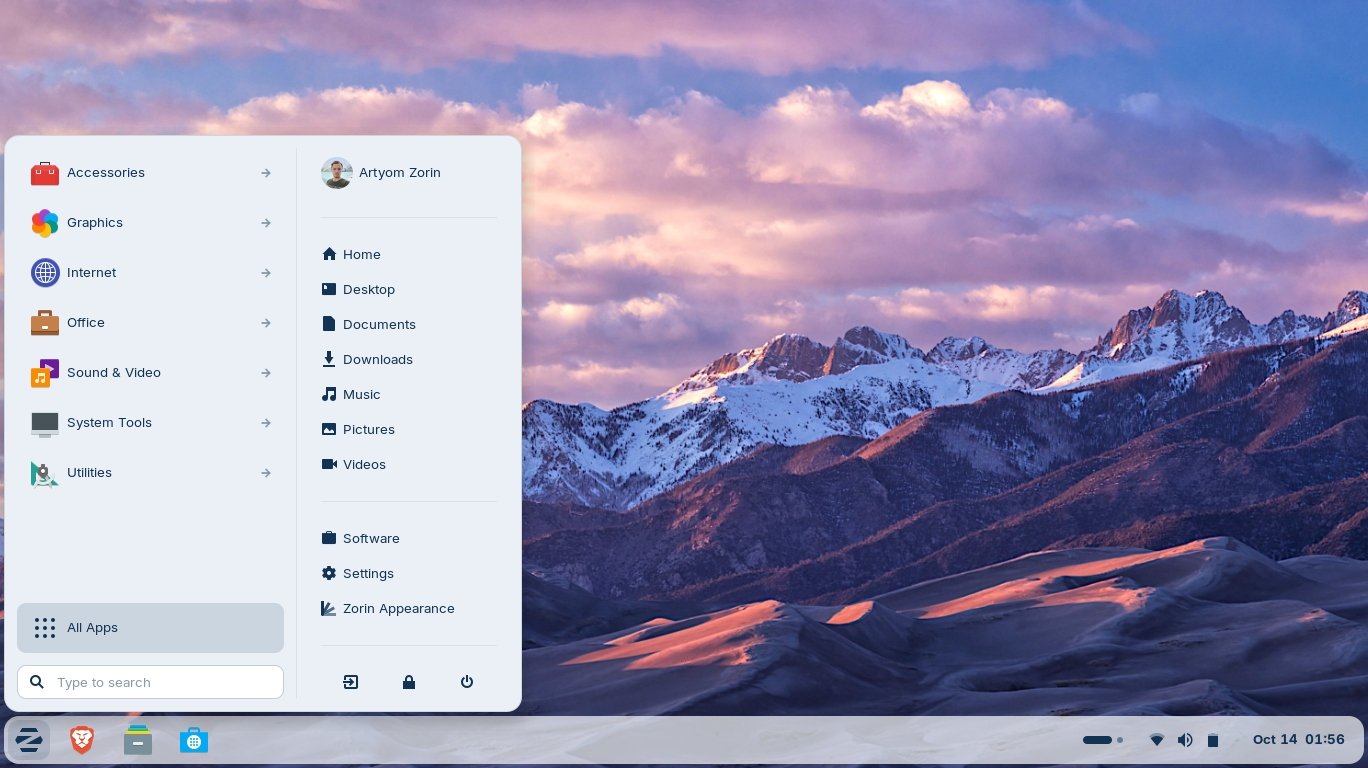
It’s funny how it is often the little things that become the proverbial straw that breaks the Camel’s back. I have been struggling for a while with the overall performance and functionality of my Windows 11 PC. The operating system is bloated, slow and buggy. It all too often commits that unpardonable sin of trying to do my thinking for me and enables some stupid feature by default. Despite having good specifications, my PC takes too long to boot up for my liking and is becoming too much of a wild card with regard to whether it will co-operate or not when I try and undertake a simple task. As someone who is very particular in their PC habits, IE I see my PC as a tool that I use on the terms that suit me. Hence, I find the faux enthusiasm that accompanies each uncalled for “improvement” that results in me losing agency, singularly antagonising. Then a minor issue arose recently that escalated into a thorn in my flesh and I decided that it was time that something must be done.
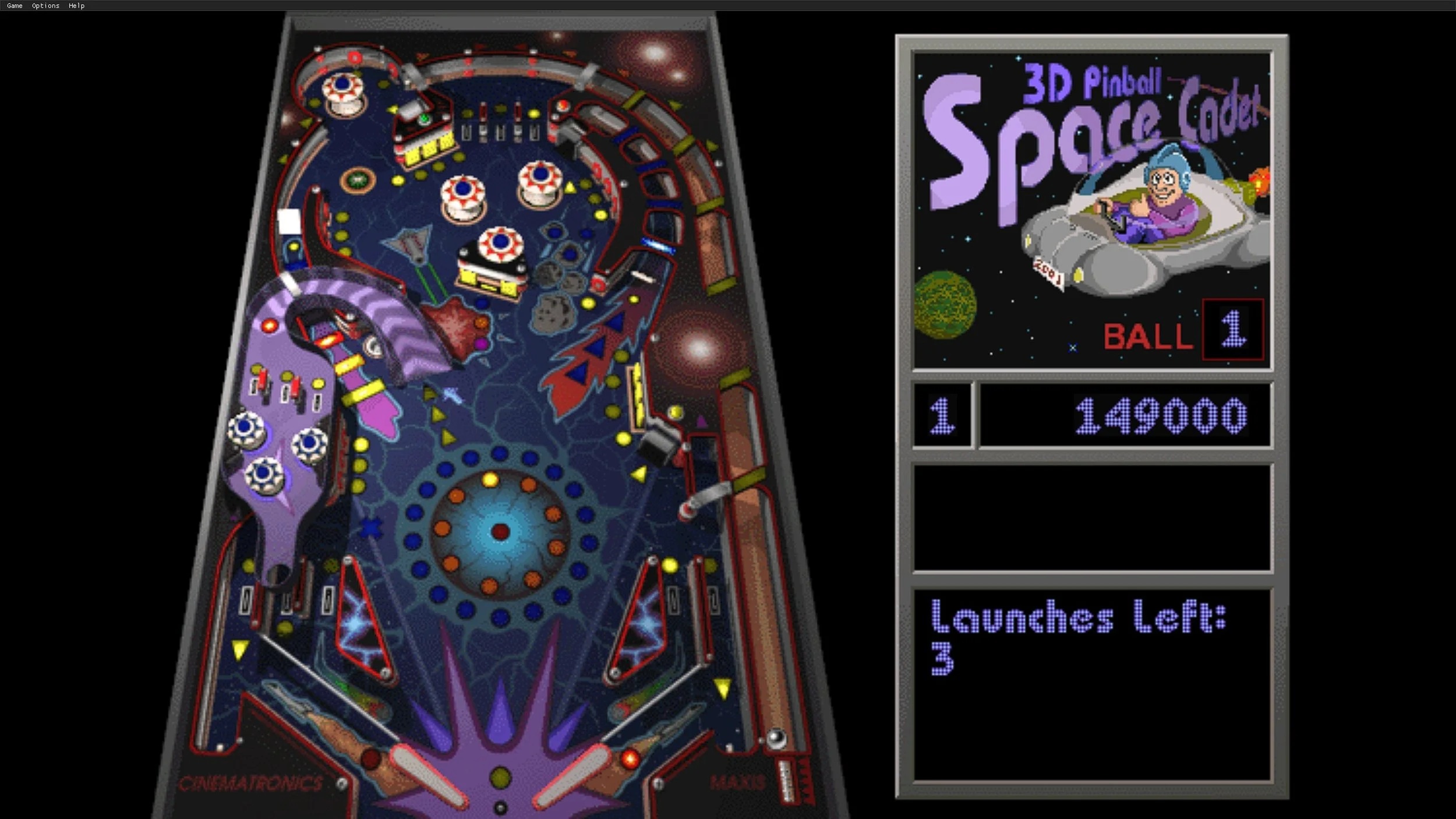
This is a post about the power of nostalgia and how sometimes, interacting with something from your past, be it physically or mentally, can produce a very strong and tangible emotional reaction. In some instances, this can be the result of something that you have specifically set out to do. On other occasions you can wander into a sense of nostalgia purely by chance. Today I experienced a very strong sense of nostalgia while watching a YouTube video and then again when I sought to replicate what I had seen. The video showed someone installing Windows 95 on to an old 486 PC from that era. The Window’s start up sound really touched a nerve (but in a good way) and then when the guy in the video launched Space Cadet 3D Pinball, a game that shipped with the operating system, I felt a strong compulsion to track down a copy and install the game myself, thus revisiting something that was an integral part of my life in 1995.

For the last few months I have being using Google Gemini. I subscribed so I could access a wider spectrum of services and evaluate it effectively. I also wanted to dispel some of the hysteria that accompanies any conversation about Large Language Models and Artificial Intelligence. The results were initially interesting and Google Gemini proved useful when researching material for blog posts. It is good at providing summaries about well documented subjects. I wrote a post about food banks recently and it distilled a lot of data into a manageable amount, which was ideal for my article. Google Gemini has also produced some visual basic scripting and simple batch files that have allowed me to automate processes on my PC. Such as changing the default monitor, or screen resolution at the click of an icon. However, I found this AI struggled with in-depth software troubleshooting and that its ability to create images varies greatly depending on the subject.

The UK Government has formerly announced its intention to ban under-16s from using social media. This is due to increasing public pressure that “something must be done” about the perceived iniquities of many online platforms. However, as with most complex social problems of this nature, no one has any clear or practical ideas as to what that “something” is. It remains a nebulous, non-specific panacea and clearly someone else’s job to identify and implement. As ever, why choose a nuanced and multifaceted solution to a complex problem, when it is far easier and politically expedient to just “ban” something. The former requires effort and a degree of thinking. If such an approach fails it also means that those who came up with it now carry the can. The latter dumps the problem in the lap of various third parties, who can then be conveniently blamed when the ill conceived policy fails.

Yesterday we changed internet service providers. We moved from EE (formerly BT) to Plusnet. The transition went surprisingly well, mainly due to the existing infrastructure remaining the same. We’ve had fibre to the premises (FTTP) since 2022 so this was essentially an administrative change. The previous ISP terminated their service at 1:30 AM in the morning, while I was playing Star Trek Online. By 6:30 AM I received a message from Plusnet that the new service was live. It took about an hour to configure the new Netgear Nighthawk RS100 router (I bought my own) and get all our household devices attached to the new network. The connection is running at exactly the same speed and stability as it had under the previous supplier. At present a 1Gbps connection is sufficient for our needs. The main factor that has driven this change is cost. We are currently paying £28 per month for internet access which is a competitive price in the UK.

In 1990 I was working at the DWP (Department for Work and Pensions). I had just taken the role of Computer Support Officer where I administered user access to the mainframe and provided first line support to staff using the terminals. That summer the office moved to a PC based network and the project was undertaken by the newly formed Siemens Nixdorf company. To cut a long story short I befriended one of the contract engineers and over the next 9 months he became an unofficial mentor to me. Technically he was only supposed to train me in the most basic of fashions but he liked the fact that I was always asking questions and effectively ended up schooling me in PC and server architecture, network administration and the associated protocols. For me this was the best way to learn. It was not a case of coming to grips with theory in a classroom environment. It was learning by doing and having direct and exclusive access to a source of knowledge and experience.

My Windows 11 PC is a cobbled together mess of upgrades, customisations and workarounds. It seems okay at first glance, mainly because my desktop is well organised and I don’t allow too many apps to start on boot up. But beneath this superficial veneer of efficiency and optimisation is a bloated mess. Every Windows update adds yet more spurious features which slows performance and tries to harvest your data. Windows is no longer a user friendly operating system that you buy and use without impediment. It is now a sprawling live service that actively gets in the way of your productivity so that it can make a buck off your inconvenience. There was a time when you could quickly learn its processes and foibles, so you could customise it into the tool you needed. Nowadays I have to continuously use third party tools to get Windows to do many of the things I want, or to access functionality that Microsoft has obtusely decided to restrict.
As the New Year is still young, I have embarked upon several new projects that I’ve been planning since Autumn last year. These undertakings have gone beyond the planning stage and are currently being implemented. The fun thing about the phrase “implemented” in this context is that it implies that it is by far the easiest and most straightforward part of the process. The initial brainstorming of ideas has been completed. A cogent and detailed plan has been written. The costing of materials and time required have been determined. These are the hard parts. All that remains is to “just do it”. It should be a piece of piss (a British phrase indicating that something is easy). It virtually “implements” itself. However, that is a load of bollocks. Because there is always scope for something to go wrong. It may well start as something minor and innocuous but it all too often ends in a “problem cascade”.

This time last year I made a decision to replace Microsoft Office or Office 365 as it is currently known. Mainly because I only use Outlook out of the entire suite of software. This project stalled because I couldn't easily import my existing email archive into Mozilla Thunderbird. Hence the status quo has been perpetuated. However, there is an ongoing cost associated with this software as well as some wider considerations about ethics and privacy which is why I have returned to this matter. Although this time I wish to replace not only Office 365 but all the other "production tools" I use to write and browse the internet. I have managed to make some progress towards this goal but it has been hard to adapt. Mainly because I had everything set up to my liking. Although alternatives are available, they're never exactly alike and require a lot of fine tuning to be deemed satisfactory.
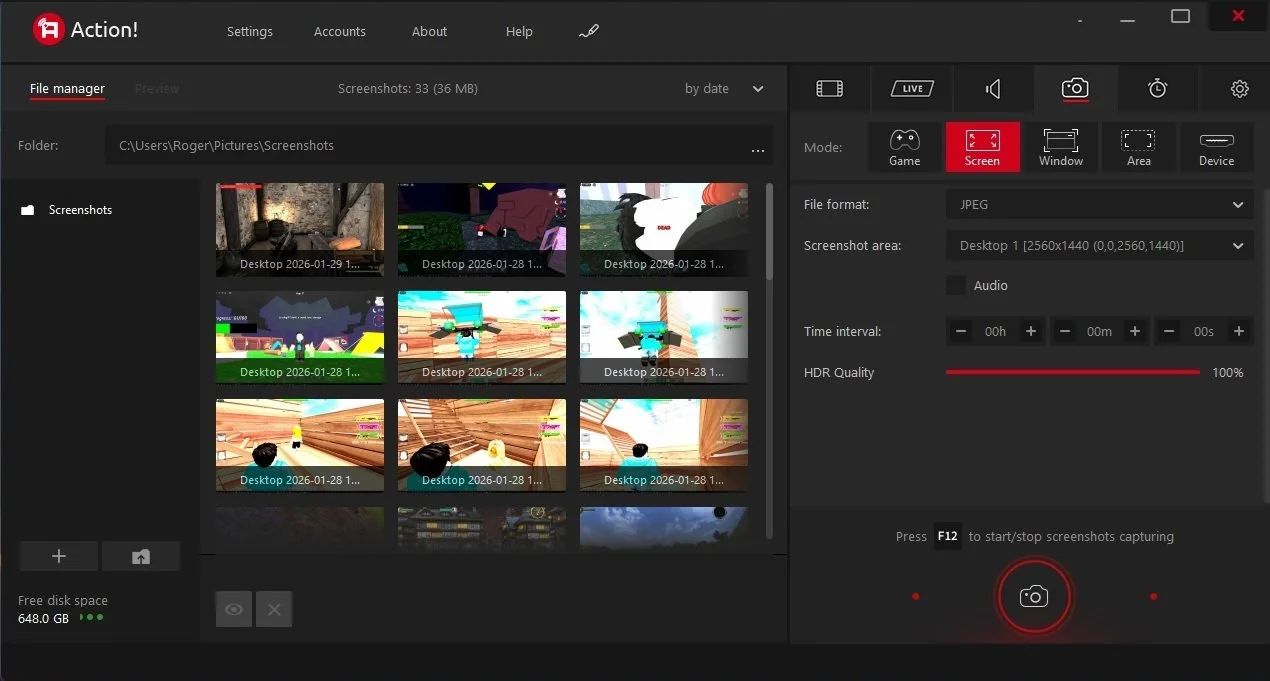
Last summer I wrote a post about my experiences using various screen capture software. At the time I was using Bandicam which suited all my needs. I had configured the software to launch at Windows start-up and had a hotkey assigned to capture images from my primary monitor. Hence I could quickly grab a screenshot from my desktop or when playing a game. However, this changed in November 2025, when I bought two new monitors. Both of which supported HDR (High Dynamic Range). Although they provide superior picture quality, HDR has a knock-on effect on Bandicam. Screen capture images and video look over exposed. Hence I had to stop using the software and find an alternative. Fortunately the same company has been developing an alternative product with HDR support; Bandi Camera. So I swapped to this software. The screenshots were far better but the functionality of the app was lacking.
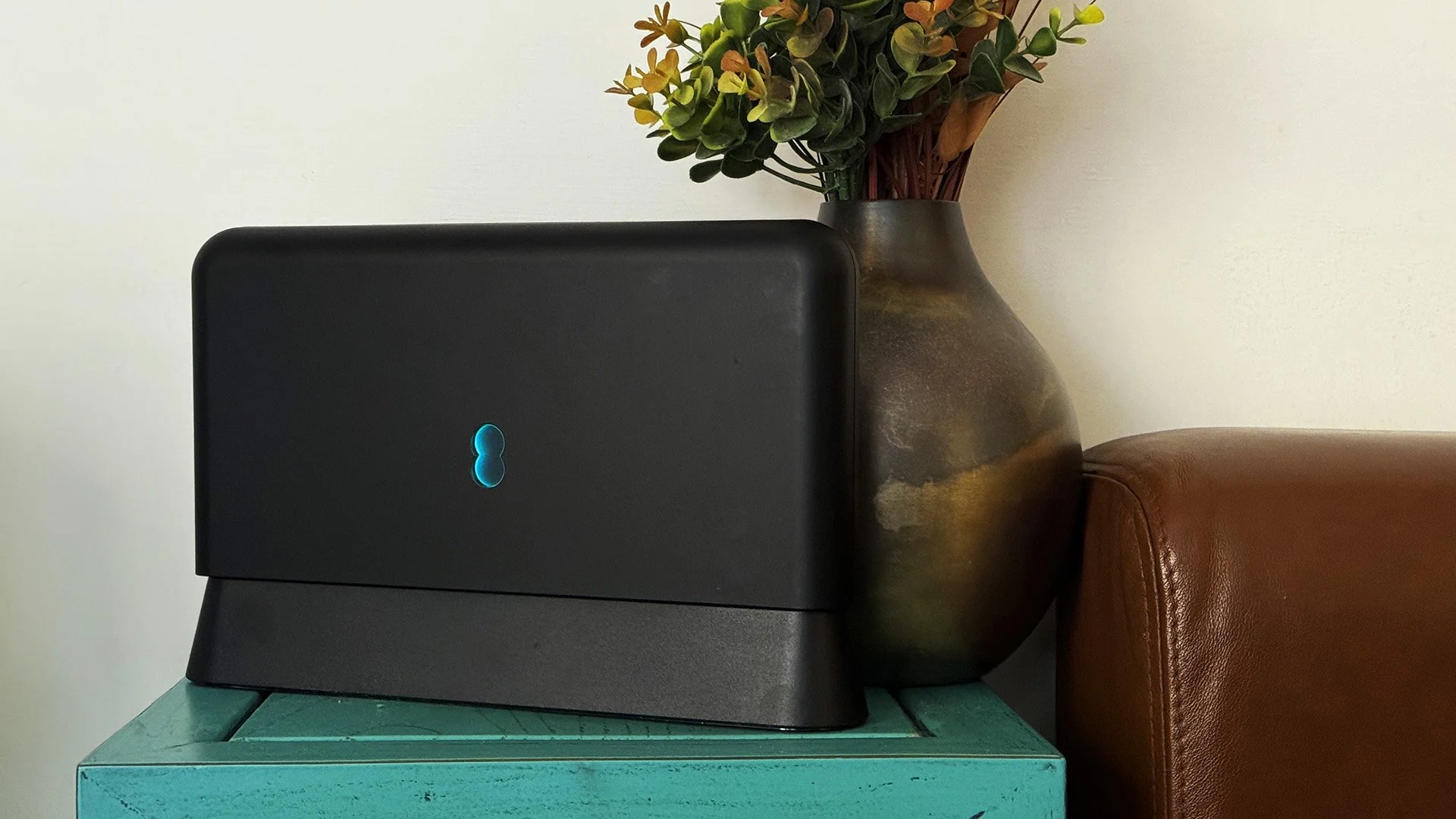
Our home has a 1 Gbps “fibre to the premises” internet connection. It has proven reliable since it was installed in June 2022. Our internet service provider EE (part of the BT group) are neither the best of worst suppliers. The monthly cost is not especially competitive and so we may be looking to move providers next Easter. However, that is a matter for the future. For the present there is a more immediate issue. Starting on Friday 21st November, our internet connection has started randomly dropping. Furthermore, both the Wi-Fi extender in the lounge and the wireless printer in my office have become disconnected from the network. It was as if their details had been erased from the router. I suspected that a recent firmware upgrade may be the culprit although EE denies it. However there are posts online from other customers with similar technical issues.

A couple of times a year, Mrs P asks me to copy onto her laptop, all the pictures that I’ve taken over recent months, as well as those that have been shared with us via WhatsApp. She then diligently whittles them down into a manageable amount which we then print off and put in our photo album. Yes we’re of the generation that still likes to print off hard copies of photos and from time to time look at them nostalgically. We have several albums with photographs in chronological order and numerous frames placed around the house, filled with pictures of family. The bulk of the photos are 4x6 inches (10x15 cm). We use an online photo printing service for the majority of our pictures and visit a local store with a self-service photographic department to print off specific pictures for bespoke frames. The original photos, now neatly organised, are backed up and archived.
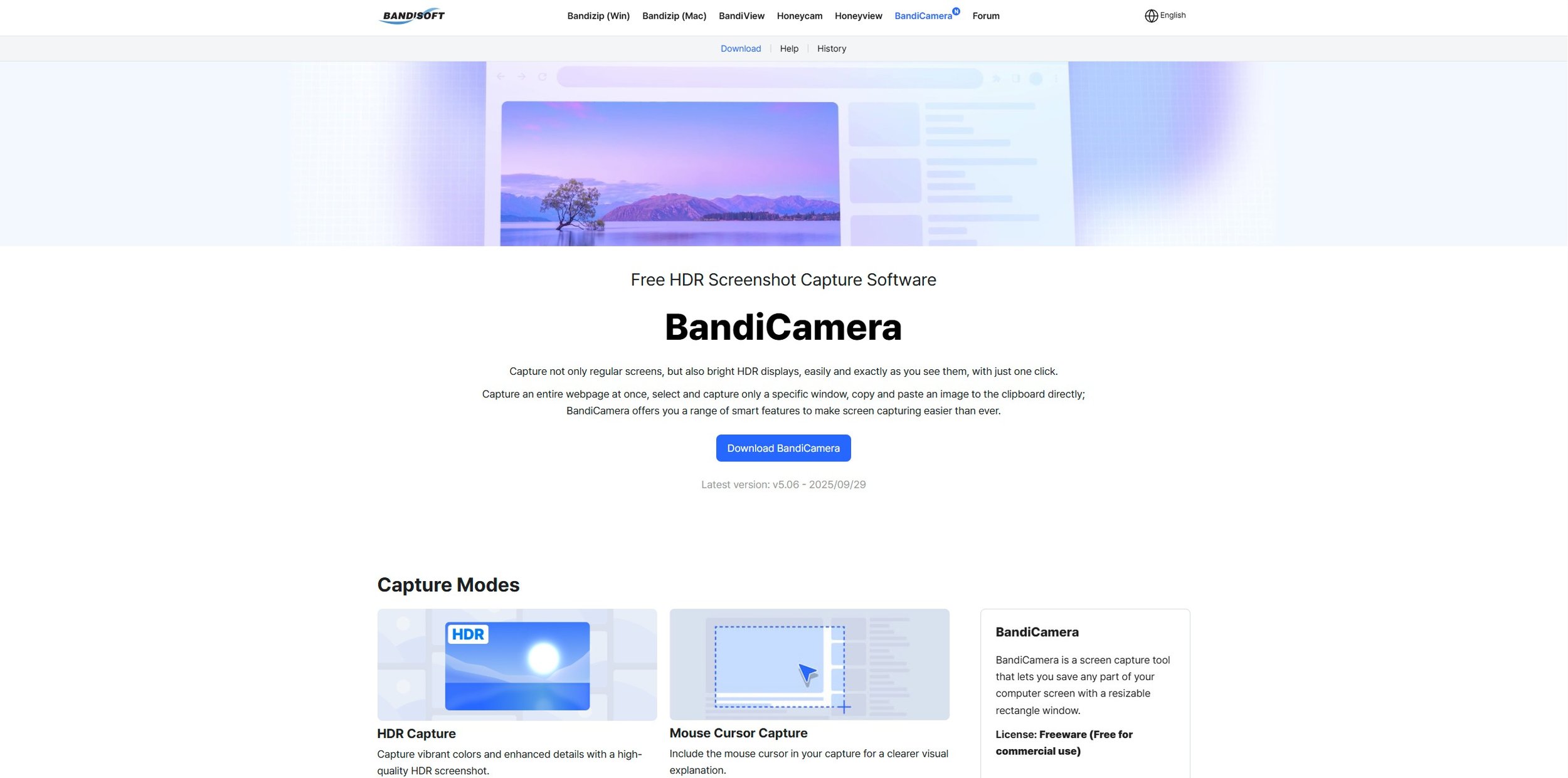
I take a lot of screen captures of video games and Windows apps, usually for blog posts. I use both Bandicam and Windows Snipping Tool to do this and have set up various hotkeys to make the process easy. Of late, the screen captures that I’ve taken have all suffered from washed out colours, regardless what tool I used to take them. I checked to see if both these apps needed to be updated but they are running the latest versions. Hence I was initially stumped as to why this problem had started happening. After some thought, I deduced that the only new elements in my PC hardware were my two new monitors. Both of which support HDR. Google Gemini quickly informed me that this was a known issue and taking screen captures from an HDR enabled device resulted in an excessively bright image that looked over exposed.
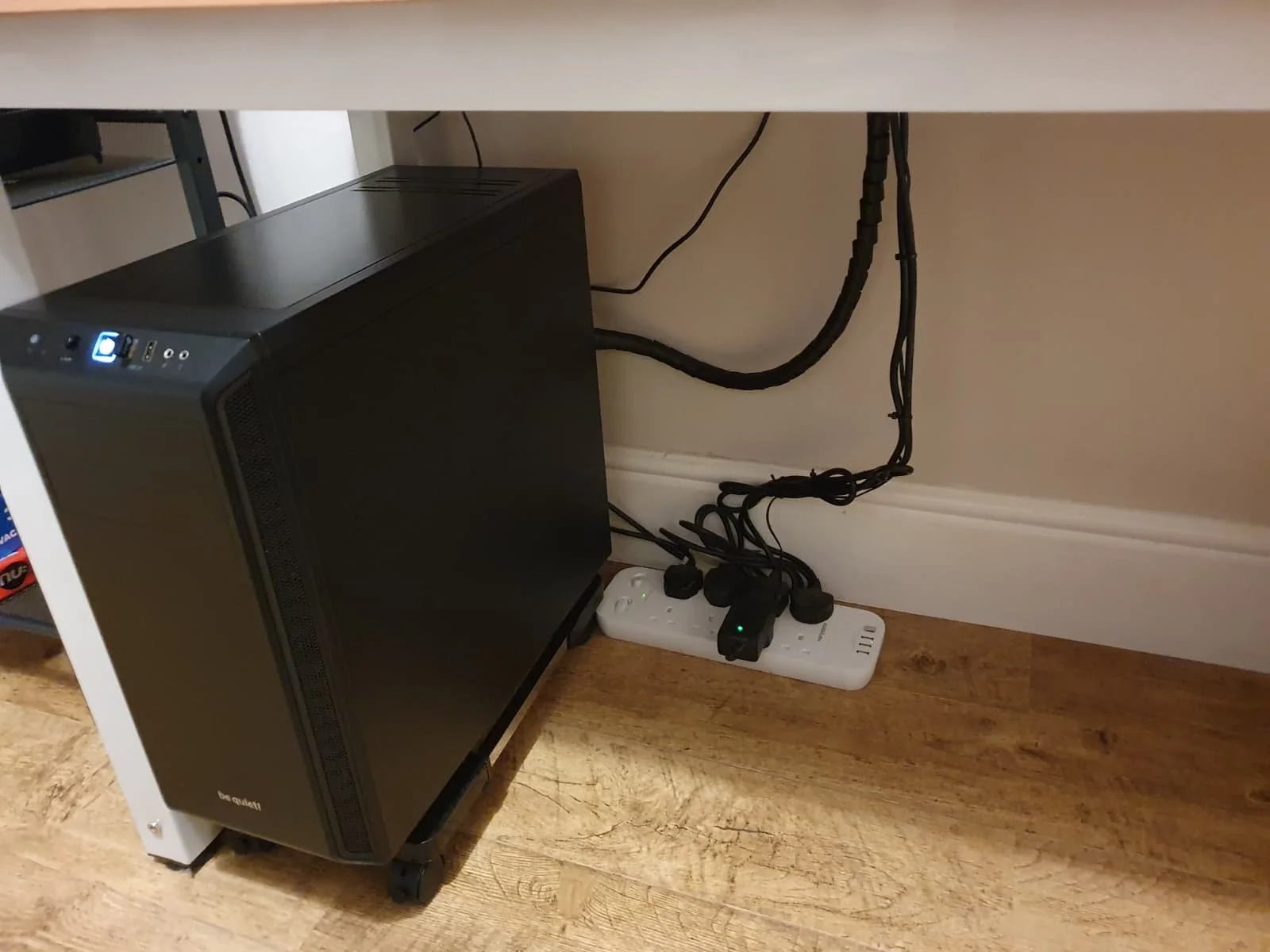
I recently bought two new monitors and a stand for my PC tower case. Today I thought I’d take the opportunity to disconnect every peripheral, clear my desk and then after a thorough clean, reassemble everything ensuring good cable management. I even went so far as to buy a new power extension lead so I could reorganise where everything was plugged in and therefore be able to isolate specific hardware. It seemed such a simple, straightforward task on paper. The reality was much different. It took me over three hours to sort out, mainly due to the fact that I don’t “bend” so well these days. During this Herculean task, my watch kept on notifying me that my heart rate was “high”. However, I regularly took breaks and fortified myself with gin for medicinal reasons. I am pleased with the results of this task.
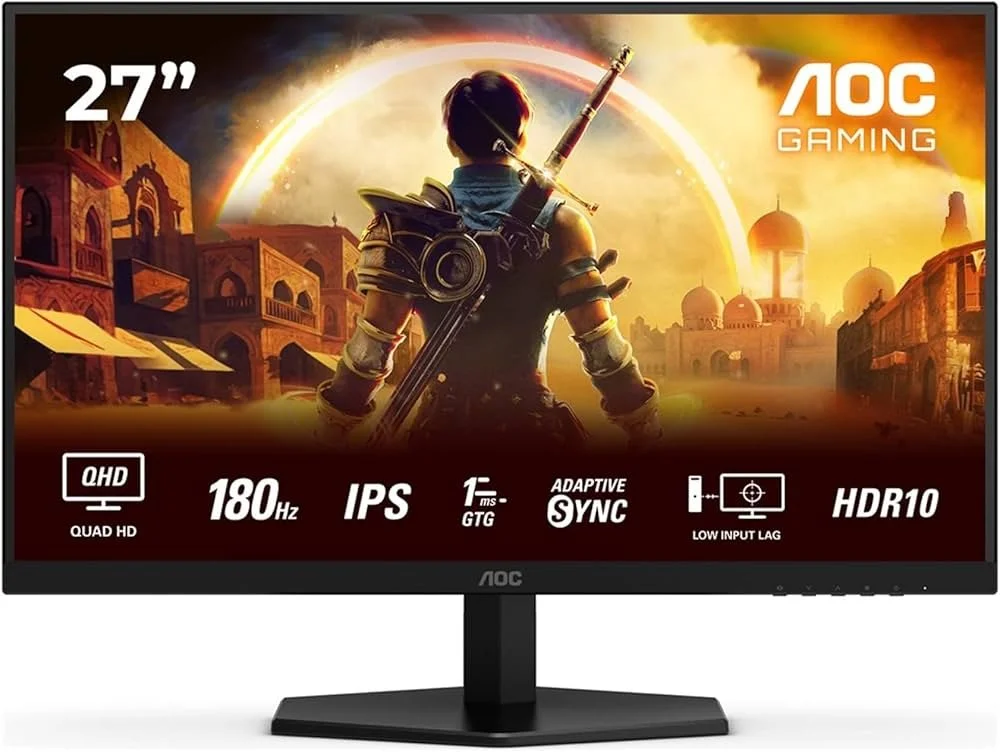
I use two monitors with my PC, as I find having the additional screen “real estate” invaluable when writing or playing games. Both monitors that I’ve been using up to now are somewhat old and they are not exactly the same size or resolution, although both are FHD. I have previously written about the problems I’ve had trying to get certain games and programs to display on specific monitors and the lengths I’ve had to go to to resolve this issue. To cut a long story short, I recently decided to replace both monitors with larger models with a higher resolution. Mainly because my eyesight is not what it used to be. I see best when working with a bright screen that can produce clear text. New monitors would also address my ongoing screen output problem. Hence, I set myself a reasonable budget and began researching appropriate replacements.

In July the UK Government introduced the Online Safety Act which requires age checks for accessing sexually explicit content online. As a result of this, Pornhub, the 19th most visited site on the internet, has reported a 77% decline in UK traffic. Furthermore, according to the UK regulatory body, OFCOM (The Office of Communications), overall visits to pornographic websites from the UK have fallen by 33%. Naturally, those who championed this legislation are claiming a moral and political victory. However, once you consider what these facts actually mean, they paint a somewhat different and potentially more worrying picture. It would be staggeringly naïve to think that UK visitors to Pornhub have ceased visiting such sites due to the age verification requirements. The more likely explanation is that UK porn consumers are now using VPNs to circumnavigate these restrictions and that this traffic to Pornhub is now recorded as coming from elsewhere.

It may be a case of preaching to the Choir but dust contamination in your PC causes overheating, decreased performance, and potential hardware failure. This mainly occurs due to dust restricting airflow, impeding components such as heat sinks and creating short circuits from conductive particles. Fluff builds up and restricts cooling fans, forcing them to work harder. Heat build can lead to issues like system crashes, lagging, and even permanent damage to the motherboard and CPU. Over time, it can shorten the lifespan of the computer and in severe cases, poses a fire hazard. When I used to work in IT contracting, I used to see the effects of dust contamination all the time. PC placed on carpet tiles or on top of desks and surrounded by other objects. I remember one PC replacement project I was working on where we found an old PC with a dead mouse in it. It was desiccated by the heat.
Usually I don’t have a problem with internet access when Mrs P and I are travelling. My phone data plan is sufficient for Google Maps and social media usage. Once we reach our hotel, it’s just a question of connecting to the free Wi-Fi or if need be, buying upgraded access. It’s seldom that expensive. When I went on holiday to Croatia this summer, I bought a bespoke data plan before arriving that granted me extra internet access. Our hotel in Makarska also had very robust internet access. Hence, regardless of being out and about or by the pool, I never had any issues getting online. The ubiquity of internet access means we often take it for granted. I seldom go to places in the UK or abroad that don’t have advanced IT infrastructure. Until this week.
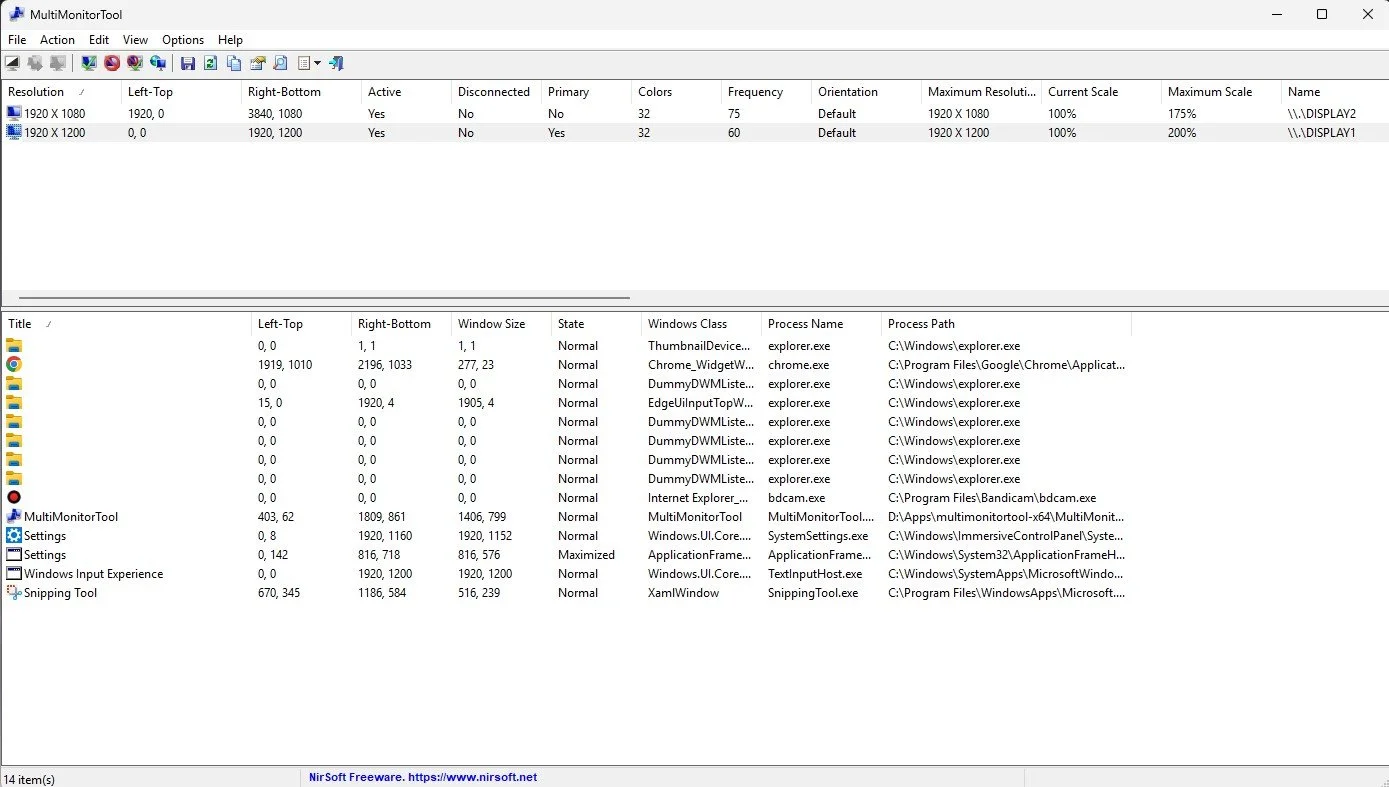
Back in January, I was very pleased because I had finally found some open source software, DisplayMagician, which allowed me to quickly and easily alter my display profile and run specific games and applications on my second monitor. Prior to this I would find that some programs just wouldn’t stay put, once they were dragged or otherwise cajoled to display on the monitor of my choice. They would continuously snap back to the primary display, regardless of my actions. DisplayMagician solved this issue and did so with aplomb. Or it did, until last weekend when I upgraded my PC from Windows 10 to 11. Then it stopped working. I therefore did some digging online and it became apparent that this is a known issue that is currently being addressed by its creator, Terry McDonald.

As part of our increasing dependency upon software, we have also grown accustomed to its associated foibles, especially the negative ones. Today, I upgraded my blog from Squarespace 7.0 to 7.1 and my PC operating system from Windows 10 to 11. I started early in the morning and ensured that all my personal data was backed up. My default expectation was that both processes would go wrong in some way, shape or form. Let’s take a moment to consider this mindset, which is born out of experience. It is now taken as read that whatever you upgrade, be it an app on your phone or a program on your PC, that it’s going to be problematic. It won’t be a seamless transition and you’ll end up having to do some sort of troubleshooting. Despite our lives becoming more dependent on such software, the quality of these products seems to be deteriorating. What a sorry state of affairs.
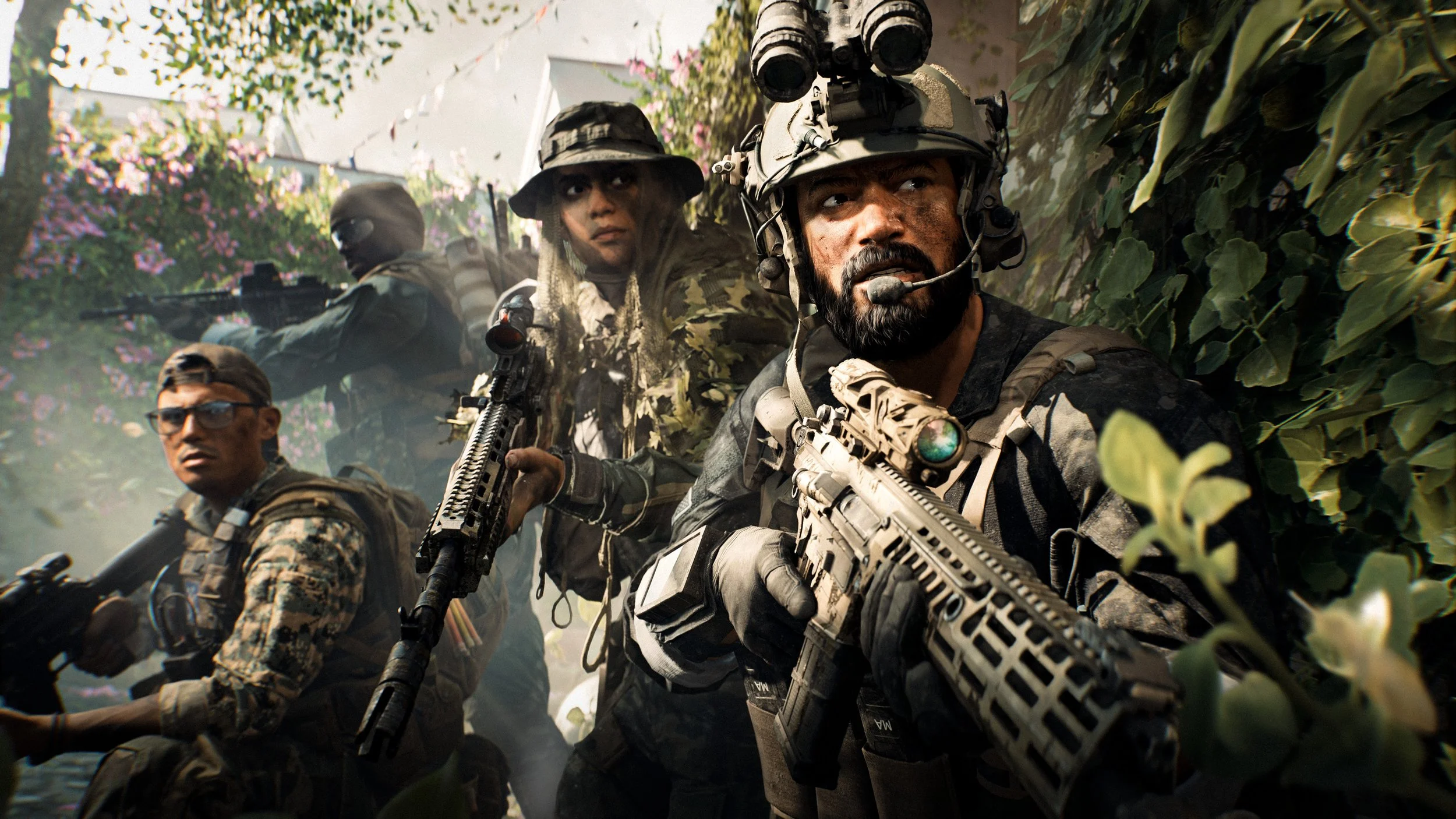
Battlefield 6: Thoughts on the Launch
When Battlefield 2042 launched on 19th November 2021, it was a complete dog’s dinner. There were technical issues, including widespread bugs, poor performance and inconsistent hit registration. The launch was also criticized for the removal of core gameplay features like the class system, a scoreboard, and a server browser, which led to the game being considered unfinished and incomplete at release. Although developers, Battlefield Studios, worked hard to address many of the issues arising from the launch, the net result was that the franchise’s reputation was harmed. However, the beta testing of Battlefield 6 throughout August this year, has done much to restore the franchise’s good standing with a game that has clearly returned to a formula that works.
When Battlefield 2042 launched on 19th November 2021, it was a complete dog’s dinner. There were technical issues, including widespread bugs, poor performance and inconsistent hit registration. The launch was also criticized for the removal of core gameplay features like the class system, a scoreboard, and a server browser, which led to the game being considered unfinished and incomplete at release. Although developers, Battlefield Studios, worked hard to address many of the issues arising from the launch, the net result was that the franchise’s reputation was harmed. However, the beta testing of Battlefield 6 throughout August this year, has done much to restore the franchise’s good standing with a game that has clearly returned to a formula that works.
Hence, yesterday’s launch of Battlefield 6 was of particular significance. Players would finally be able to experience the entirety of the new game and determine if Battlefield really was “back”. It was also a chance for developer’s, Battlefield Studios, to restore the franchise’s reputation. Fortunately, the launch went relatively well, with record player counts being set (740,000 concurrent players on Steam) as soon as the game went live at 16:00 GMT. However, there were some problems such as the game not working at all via the EA app, thus inconveniencing a sizable group of players. There were also some general errors such as “DXGI_ERROR_DEVICE_REMOVED”, which PC players encountered across multiple platforms. And being a game launch, there were server queues, which at one point were over a quarter of a million.
Thankfully, within 24 hours the majority of these issues were resolved. During this period I had to use EA support and I was impressed how quick and efficient the live chat option was. The communication was clear and the troubleshooting comprehensive. I was finally able to launch and play Battlefield 6 at about 13:00 PM today. The game is extremely well optimised and immediately configured the graphics to a level my PC could handle, without any need for me to do any fine tuning. Despite there still being an extremely large number of concurrent players, finding a multiplayer game does not take long and the server performance is robust. All of which is a step up from Call of Duty: Warzone where finding and connecting to a game can sometimes take 3 or 4 minutes. It will be interesting to see what happens when Battlefield 6 releases its Battle Royale game and starts directly competing with Warzone.
It is worth noting that EA were acutely aware that there were problems with the launch of Battlefield 6 yesterday. They were not as bad as those that blighted its predecessor but a lot of people were inconvenienced. While writing this post I received an email from EA addressing the failure of the EA app and apologising for the problem. As compensation they have offered the following. “Anyone on the EA app who was impacted will receive 12 Hardware and 12 Career 60-Minute Boosters, which should be arriving in impacted players’ in-game inbox this weekend. In addition, we will also be granting impacted players full access to a seasonal Battle Pass. Phantom Edition owners will get Season 2’s full Battle Pass”. As someone who uses the EA app and who purchased the Phantom Edition of the game, I appreciated the gesture. I shall share my thoughts on live gameplay in my next post.
I have written in the past about the video games we cannot play. The ones that require a keen understanding of a game’s mechanics, along with a strong degree of manual dexterity and situational awareness. Being 58 years old, I tend to have neither the co-ordination necessary to succeed or the patience to master such complex skill requirements. With this in mind, I recently watched a YouTube video for Chivalry 2 and thought, that looks like fun. The fact that it showed someone picking up a chicken and throwing it at an opponent is neither here nor there. However, after watching a few more videos I realised that combat in the game was complex and that, as usual, the reality of playing such a game would be different from my expectations. Hence, I came very close to not buying Chivalry 2. However, I eventually decided that I would, so I bought it for just under £10 from an online vendor.
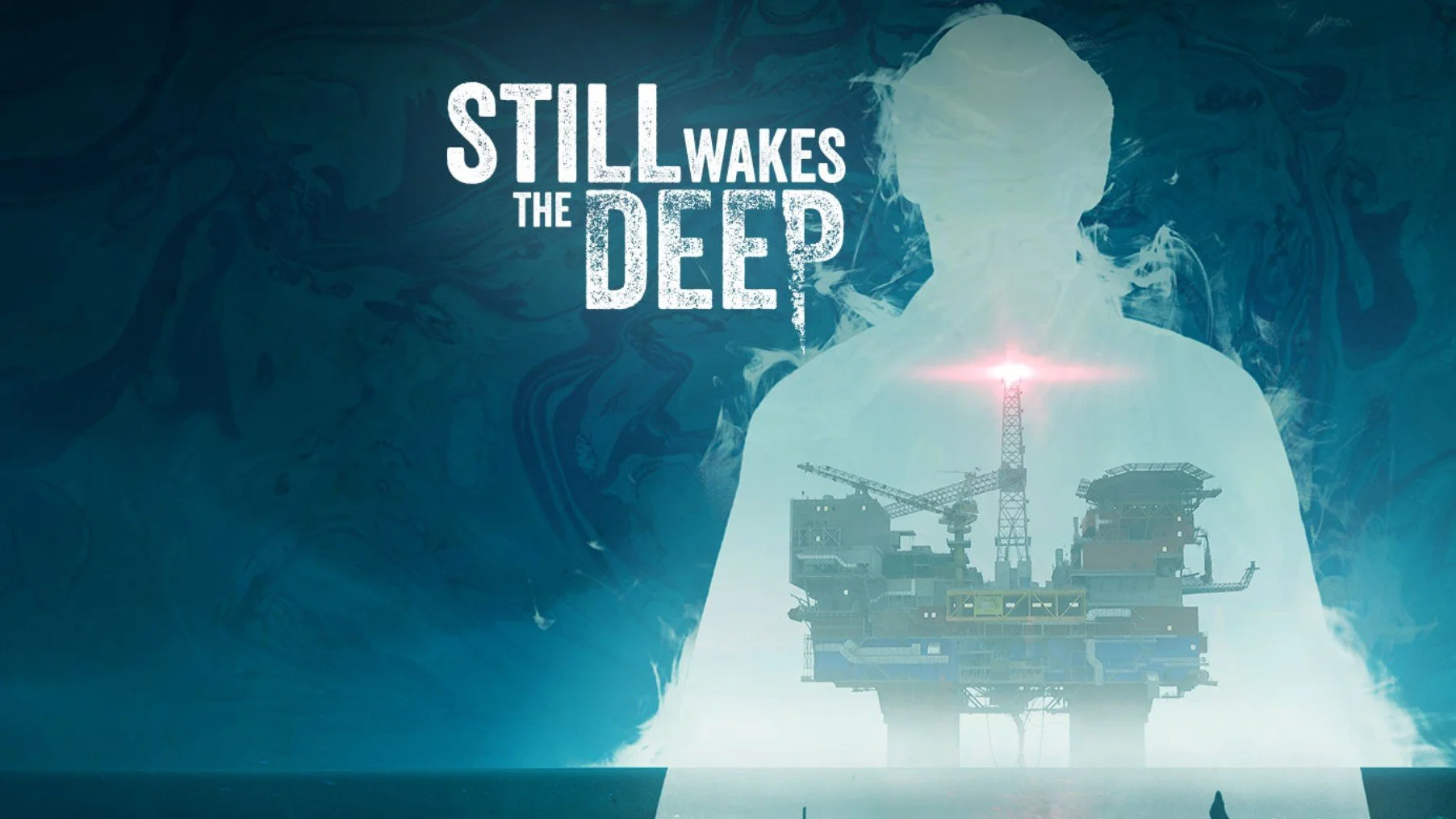
In the wake of Disco Elysium, I’ve been playing through several other games that have a focus on narrative and plot. I began with Call of Cthulhu which I shall write about in a separate post. Let it suffice to say that although I enjoyed the game, I wasn’t quite satisfied. This is not necessarily the game’s fault, as it makes a good attempt at depicting Lovecraftian Cosmic Horror. It’s just that any game following hard on the heels of one of the best RPG’s I’ve ever played, is likely to come up short in comparison. So I looked through my game library and found that I had Still Wakes The Deep, which enjoys a good reputation for having a strong story. I subsequently played through the game over two late night sessions and was left suitably impressed. So much so that I’ve bought the additional DLC, Siren’s Rest, in the hope that it maintains the quality of its predecessor.
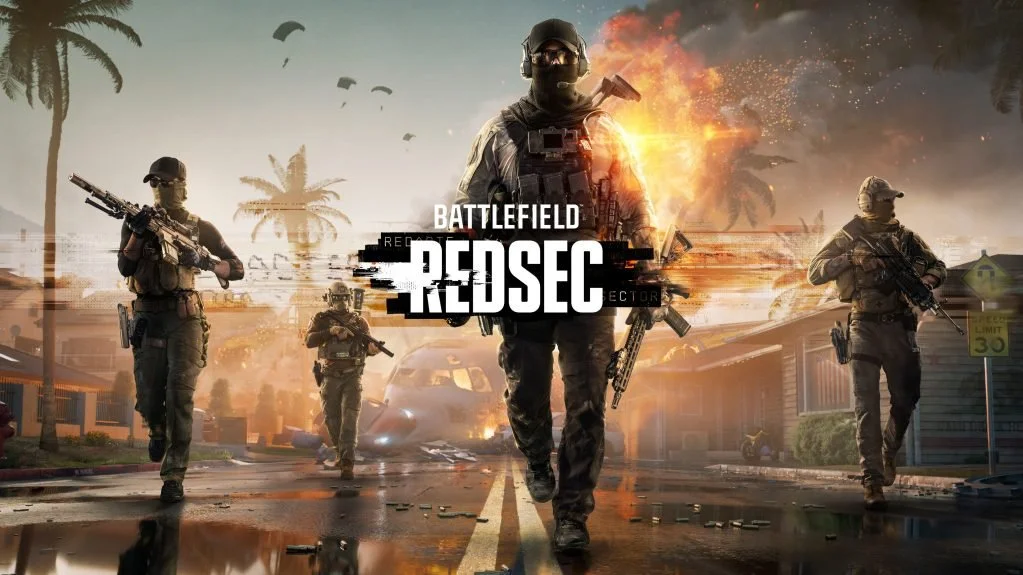
The Battlefield 6 Battle Royale game mode, known officially as Battlefield REDSEC, was released today at 15;00 on all platforms. REDSEC, which is short for “Redacted Sector,” offers an interesting take on the Battle Royale genre, blending familiar elements from games such as Fortnight and Warzone, while maintaining those unique aspects of Battlefield. Hence, you will find missions, loot crates and an ever decreasing environment, as well as the squad class dynamics and the destructible environment. The map offers both urban areas as well as open countryside thus supporting multiple play styles. Furthermore, REDSEC includes two additional modes. Gauntlet and Portal. Although it has launched alongside the first season of Battlefield 6 (which comes with an optional season pass), REDSEC is available to download as a standalone mode and is free-to-play.

One aspect of Battlefield 6 that some players struggle with is unlocking and levelling up new weapons. Players begin the game with a selection of weapons from each class but you then have to actively play with each of them to unlock specific attachments via Mastery XP. Further weapons become available as players gain experience and increase their overall Career Rank. Players who are well versed in playing the FPS genre will naturally progress faster. The downside to this is that new players equipped with a base weapon end up going up against seasoned players with superior firearms. Both Mastery and Career Rank XP are doled out according to team and individual performance in each game you play. It is a slow grind for players to unlock weapon and vehicle resources. Double XP tokens go some way to address this issue but they do not mitigate the progression speed, which exists by design.
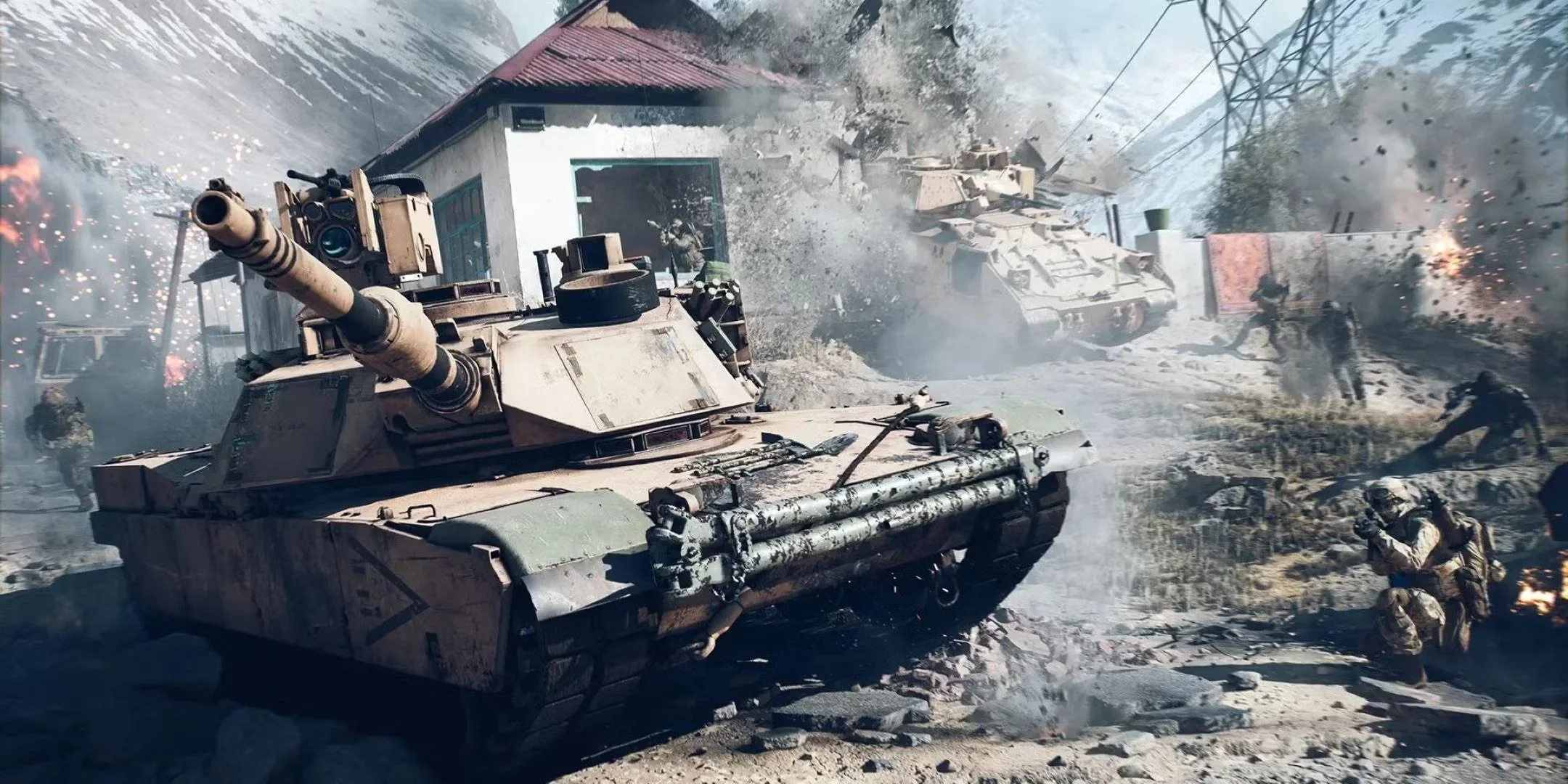
Multiplayer gameplay in Battlefield 6 is often fast, chaotic and disorientating. There are numerous controls to learn and game mechanics to familiarise yourself with. It can be a struggle at times to try and navigate your keyboard while under fire. Often you will lose in a gunfight simply because you don’t know about something important that could help you out or save your life. Like many other online games, it all comes down to experience. So here are some further tips regarding gameplay, settings and online etiquette, that will broaden your knowledge of Battlefield 6 and hopefully improve your online experience. As ever these tips are in no particular order. Some may be self-evident, others not. They’re written from the perspective of a PC player but are applicable to all platforms.

Although Battlefield 6 is a straightforward and self-explanatory multiplayer FPS, there are a great deal of controls, systems and game mechanics to master. Simply learning your controller or keyboard layout takes some time. There is also a lot of information about the game that, if known, can greatly improve your online experience. These can range from simple changes to default settings to understanding how weapons handle in-game and how to control them effectively. Hence, I thought it would be useful to new or returning players, to collate a list of tips for Battlefield 6. Some are quite obvious where others may not be quite so well known. They’re in no particular order. Hopefully you’ll find them useful.
When Battlefield 2042 launched on 19th November 2021, it was a complete dog’s dinner. There were technical issues, including widespread bugs, poor performance and inconsistent hit registration. The launch was also criticized for the removal of core gameplay features like the class system, a scoreboard, and a server browser, which led to the game being considered unfinished and incomplete at release. Although developers, Battlefield Studios, worked hard to address many of the issues arising from the launch, the net result was that the franchise’s reputation was harmed. However, the beta testing of Battlefield 6 throughout August this year, has done much to restore the franchise’s good standing with a game that has clearly returned to a formula that works.
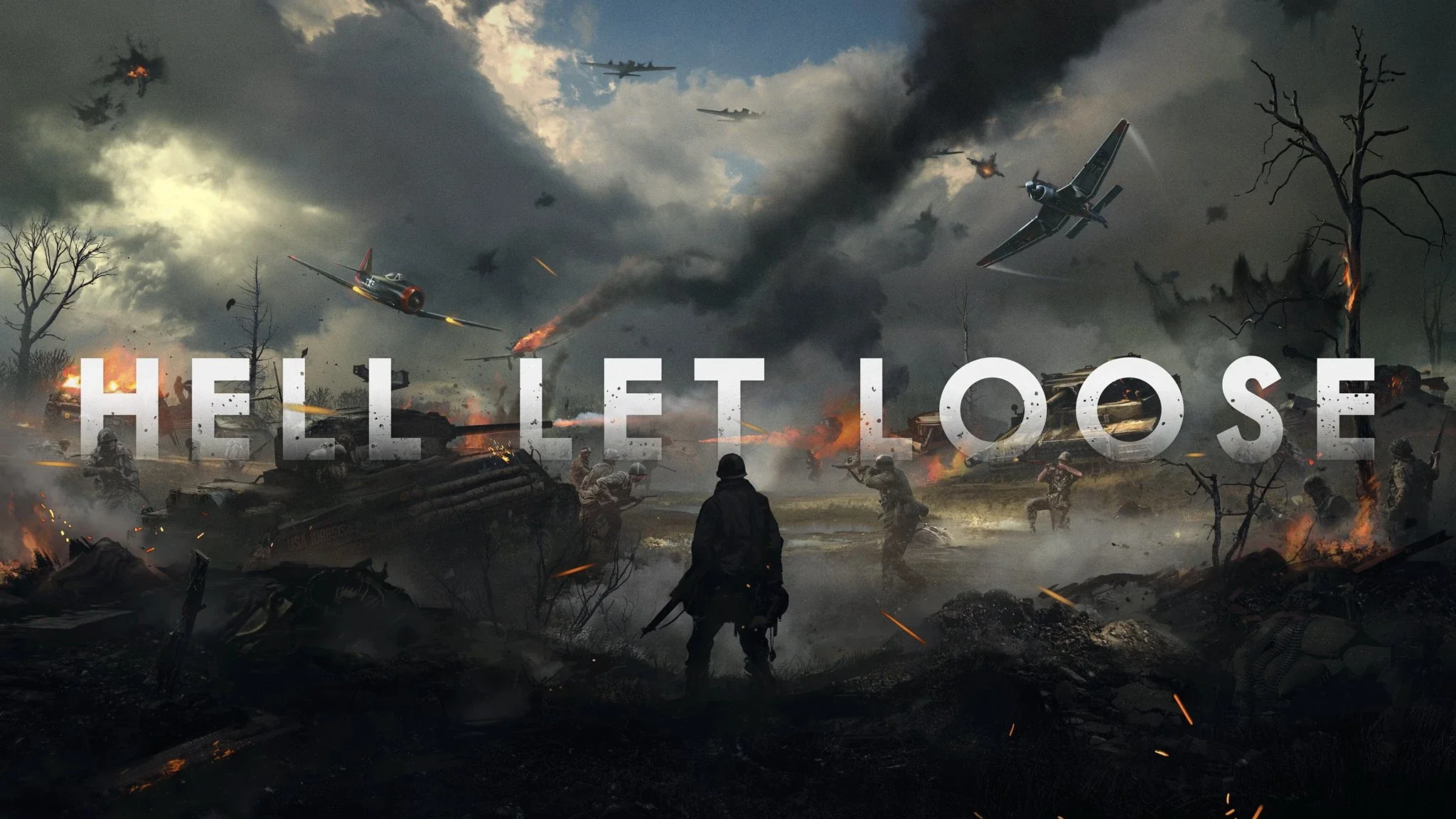
I bought Hell Let Loose last night. A decision I suspect that I shall regret. Despite the fact that I know that the YouTube videos of this game are carefully curated and therefore not truly representative of the reality of its gameplay, I felt compelled to try this World War II multiplayer tactical first-person shooter. From time to time I find a game that really appeals to me as a concept and I want to play it. However, more often than not these are online multiplayer games and as such the human element is distinctly “variable”. Hence the idealised gameplay that I imagine is a far cry from what playing the game is really like. I’m sure I am not alone in this mindset. Sometimes I have to just “get it out of my system” and the only real way to do that is buy the game in question, be disappointed and then move on.

The second Battlefield 6 Open Beta test started earlier today. A 7.6GB download added additional maps, new game modes and also resolved some technical issues. I was able to select my second monitor to display the game this time round and also made some basic performance related tweaks. The colour grading is still an issue for me and I struggle at times to correctly identify players and objects at distance due to the muted palette. Minor gripes aside, the game still performs well and all the game modes have something to offer. King of the Hill and some of the other close quarters maps are a little too intense for my skill level but I still had fun with projectiles and explosives. I still prefer the Conquest mode with its bigger maps and greater variety of gameplay options.
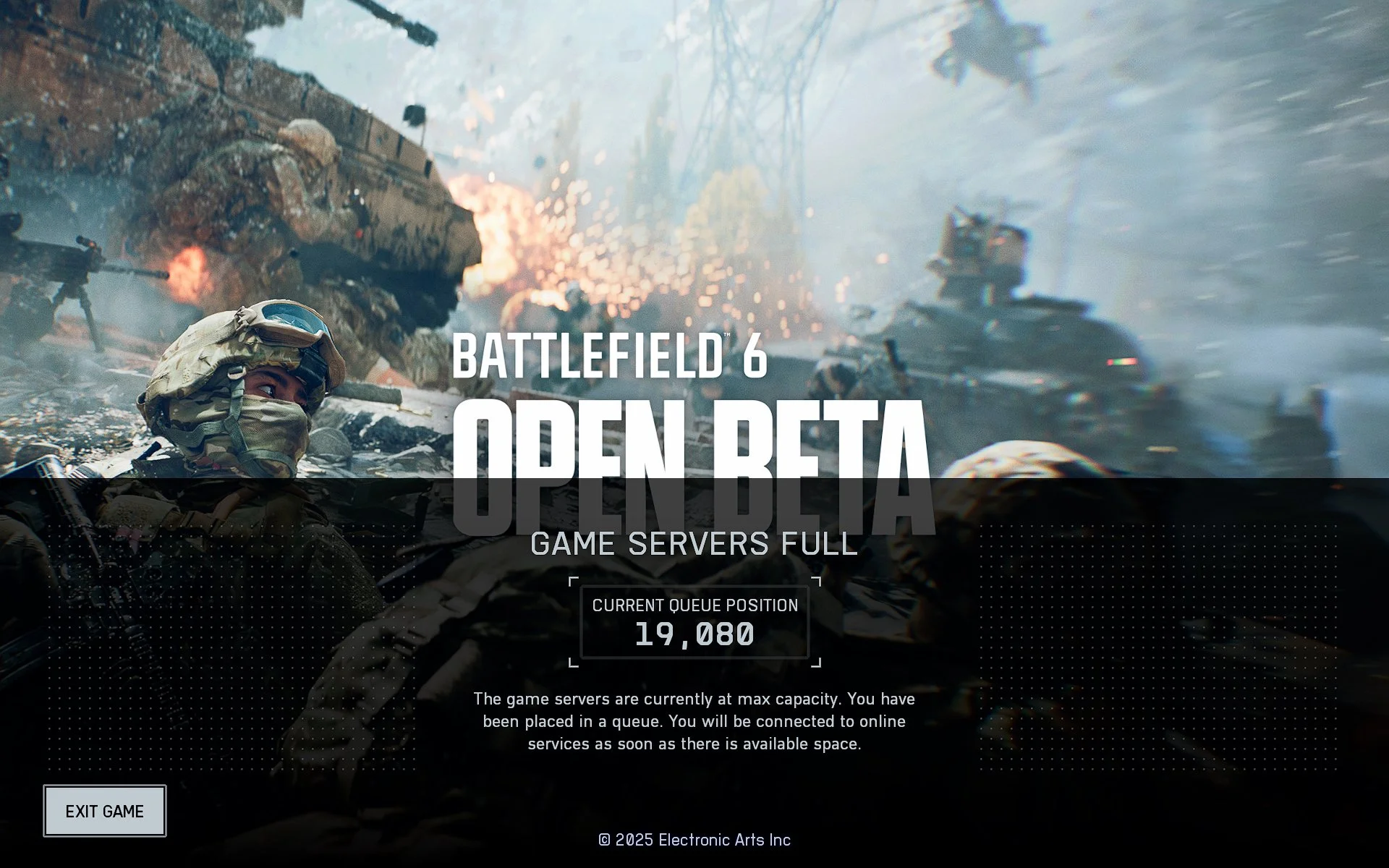
I spent several hours today trying Battlefield 6 during its first Open Beta weekend. Trying being an apt word as I experienced some technical difficulties during that time. There were server queues as there often are during test periods, which took 5-10 minutes to clear. I also found that when a multiplayer game ended the client would often freeze, requiring me to use the task manager to shutdown the .exe file . As I then had to restart the entire game it meant having to rejoin the server queue again. Furthermore, despite various methods, I could not get Battlefield 6 to display on my second monitor. Although there is a clear option within the graphics settings, I could not get the game to output to my Dell S2421H monitor. If I used the Windows + Shift + → key combination, the game would briefly appear on the second monitor then instantly snap back to the first. I also could not take any screen captures or use OBS to capture video. I believe this is down to the game’s anticheat software.

I was reading through my RSS feed this morning and found a post by Heartless Gamer, regarding how Battlefield 6 requires Secure Boot enabled on your PC. If it is not, then the game will not launch and you’ll get an error message. Naturally, this raised several questions. First off, what is Secure Boot and do I have it on my PC? Well apparently it is a security feature that protects a computer from malware during the startup process, by verifying the digital signatures of bootloaders and other software components before they are allowed to run. By using the msinfo32 command in the Run Window, I determined that I do indeed have it and went directly to the BIOS and enabled it. The next question to address was, why have I not been invited to the open beta for Battlefield 6? I subsequently checked the EA Game Launcher and discovered that I had. So I installed the game.
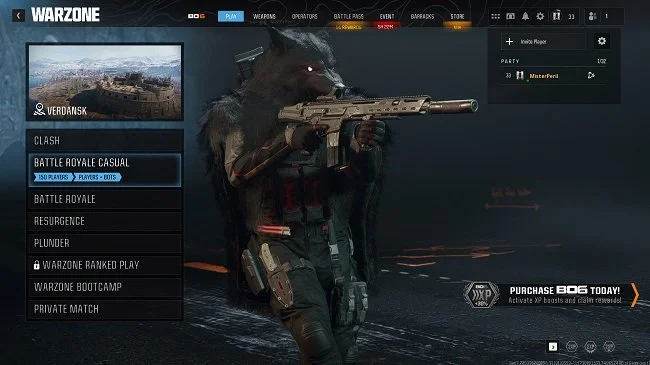
Warzone added a new “casual mode” to its Battle Royale at the start of Season 4. This reduced the number of real players in-game and substituted them with AI bots. The ratio is approximately one fifth real players, four fifths bots. This new mode for Battle Royale solos, duos and quads was well received, especially among the mainstream players who are more focused on fun than progression. Veteran players who still wanted the challenge of playing against real players were free to continue playing the traditional BR modes. Hence all parties were pleased as they were both being catered for. However, and there is always a “however” when it comes to Call of Duty, the developers saw fit to remove the standard solo Battle Royale mode, leaving just the Battle Royale Casual mode with AI bots. Subsequently, a lot of players were perplexed and annoyed, as taking away choice is seldom good customer service. As a result of subsequent backlash, the mode was added back to the game mid-season.
I have written about “games we cannot play” several times over the years. By this I mean video games that we lack the skill, coordination and patience to master. For example, I often struggle with video games that are primarily designed for consoles and are therefore intended to be played via a game controller. I also don’t want to have to spend an excess of time (a very subjective thing) to learn how to play a video game. Hence there are games that I am interested in but have accepted that I will never play because I cannot or will not do what is required to play them effectively. However, in this post I want to discuss a tangential point. Games which have the potential to be exceptionally entertaining but that entertainment depends on a lot of factors that exist outside of the game itself. Hence you may never get the experience you desire which is often the one that was marketed.
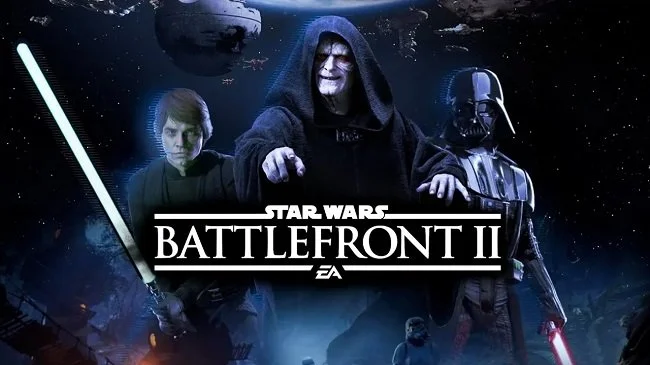
There has been a resurgence of people playing Star Wars Battlefront II recently. Possibly because the game was discounted on many outlets on May 4th and may be due to the success of Andor season 2. There’s a lot more people streaming it as well as videos on YouTube. Whatever the reason, it is always good to see a deserving game enjoying a renaissance. Star Wars Battlefront II was blighted at launch, back in November 2017 by some egregious business decisions and it took nearly a year for the game to recover from the negative publicity and player animosity. Setting this historical debacle aside for one moment, there was always a handsome and engaging game to be found. One that used the licensed intellectual property well. Which is why I recently reinstalled the game and resumed playing its multiplayer mode.
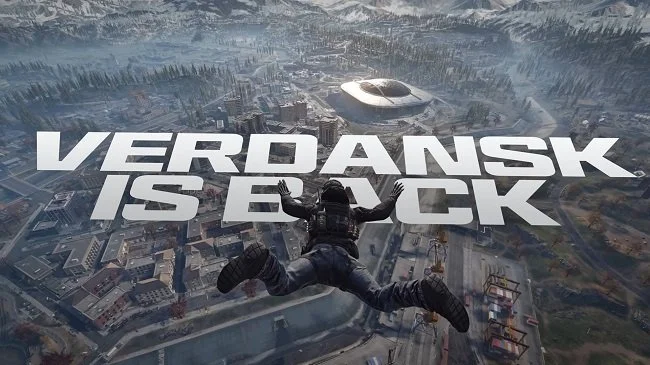
When the Battle Royale Call of Duty: Warzone launched on March 10th 2020, the Verdansk map was one of the key elements of the game’s success. The subsequent lockdown due to the global pandemic was also a major shot in the arm for the game, with so many gamers being home. The Verdansk map along with the gameplay mechanics of the game at the time were a perfect combination and so Warzone was “just so”. It allowed both skilled and unskilled players to play together, without one group dominating the other. Gunfights could be intense but there were periods of downtime when traversing the map. Players also couldn’t continuously respawn if defeated, so there was a requirement to play with a degree of caution and strategy. I enjoyed the game immensely despite not being the biggest fan of PVP based gaming. It was a broadly equitable experience but sadly it didn’t remain that way.

I decided to play Call of Duty today as I wanted some undemanding entertainment. I was not surprised when the game client began an update, as I have not played for about three months. Hence, there was obviously new content to install. However, when I saw the size of the download, I knew this was more than just a season update. I therefore checked the Battle.net client and discovered that the game was installing Black Ops 6, the latest version of Call of Duty that is released on 25th October. A game I have decided not to buy for a multitude of reasons. Fortunately, you can modify your game installation on the fly, so I unchecked a few boxes and the download stopped. However, I was annoyed by the hubris of this “download by default” policy, so I decided to uninstall my existing installation of Modern Warfare 3 as it is no longer a mainstay of my gaming activities.
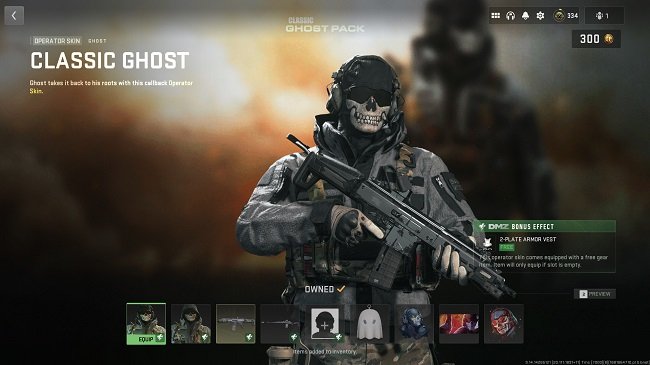
For those who are not familiar with this latest niche piece of “gaming outrage”, it regards the extraction shooter Warzone 2.0 DMZ, which is part of the Call of Duty franchise. When you enter the game (either solo or in a squad), you use gear that you have previously collected. A key part of the game is looting and upgrading your weapon, bullet proof vest (there are 3 tiers) and sundry support items. If you die, then you lose all the equipment you are currently carrying. With this in mind, Activision have recently added two purchasable gear bundles to the game store. One comes with a medium size backpack by default. The other comes with a 2 plate vest (tier 2) and two weapons that only have a 15 minute cooldown. This does offer a degree of convenience. Furthermore, the second bundle is tied to the Ghost operator skin, who within the game’s canon is an iconic figure. Hence there has been a great deal of debate over the rectitude of these bundles.

I have always dismissed hunting games as “not my thing”. Perhaps that stems from my ambivalent views about hunting per se. Yet after recently watching a YouTube video for The Hunter: Call of the Wild, I revised my opinion. The footage showed a slow and thoughtful game and I was also surprised to see that there was a campaign with a story. Hence I decided to step outside of my comfort zone and give the game a try. The base edition can be purchased for £20 on Steam and there is a wealth of optional DLC. I bought a bundle that included some additional maps, weapons packs and a dog that can be used for tracking. I also bought a quad bike as this is invaluable for traversing the open world, which is enormous. As ever with steam, the installation was easy and hassle free and within an hour I found myself exploring Layton Lake District, which is based upon the Pacific Northwest geographic region.
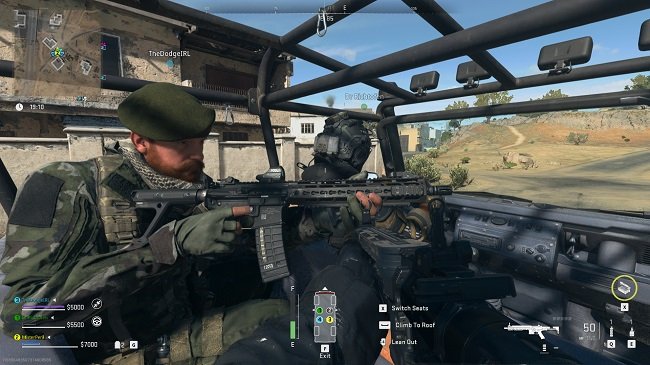
I like an analogy as a literary device, so here’s one for you. Video games are like parties. How so? In the following ways. They quite never live up to your expectations. The best ones are the ones you never go to, according to the “anecdotes” you’re told afterwards. And there’s always someone crying and throwing up at 2:00 AM. Okay, the last one isn’t quite relevant but the overall sentiment of the first two is sound. The reason I have used this visual metaphor is because both parties and multiplayer video games sell themselves on the alleged quality of their respective social dynamic. They supposedly offer you fun with your friends and a unique, memorable experience. However, the reality is a lot more lacklustre. Warzone 2.0 DMZ is a prime example. What enjoyment there is to be had in playing this game is offset by the iniquities of many of its players as they race to the proverbial bottom.

I want to talk about how we choose a new game from the countless titles that are currently available. I am going to be candid about how I do this as well as my own personal biases and prejudices. Because I am not open to playing any type of game. Like so many other aspects of life, I have very clear likes and dislikes that can only be tempered so far with logic and rational thinking. Video games as far as I’m concerned are supposed to be engaging, entertaining and inherently enjoyable. I don’t mind a degree of challenge and I’ll grind to achieve a specific goal, if I feel the reward to effort ratio is acceptable. I will on occasions attempt to step tentatively out of my comfort zone. However, there are some things that I simply don’t like, so they will not be considered. I think the best analogy for this is food. There are certain meals that I have tried (sometimes several times) and disliked, so they won’t ever be eaten again. Then there are other meals that contain ingredients I dislike or that are cooked in a style that I don’t enjoy. These are also off the proverbial table (no pun intended).
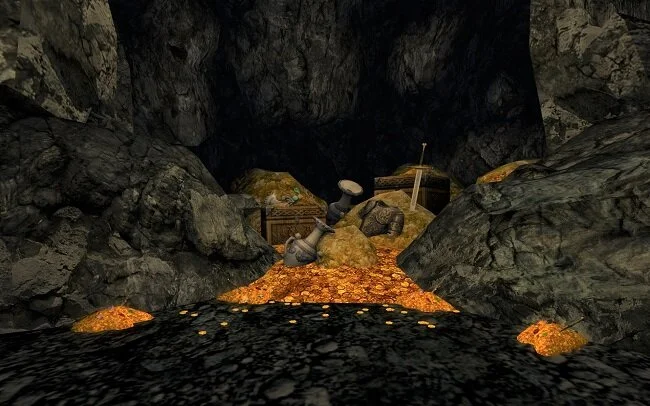
The last 31 days have gone by really fast, or at least that’s the way it feels. Despite having bought several new games recently and acquired yet more for free from the Epic Store, I did not embark on anything new throughout October. Due to the unexpectedly prompt release of the new “mini expansion” for The Lord of the Rings Online and the launch of a new event in Star Trek Online, I found myself focused upon the MMORPG genre, yet again. And after playing continuously for six months, Call of Duty Modern Warfare/Warzone has finally begun to lose its lustre. I didn’t especially enjoy the Halloween event, not that there was anything inherently wrong with it. It just wasn’t for me. I played a little Fall Guy: Ultimate Knockout but quickly discovered that the “season” system is just another gear treadmill, although the gear in this instance are novelty cosmetic outfits. I don’t want to be tied to too many games in this fashion (it’s bad enough with MMOs), so this is another title that has been relegated to occasional play when the fancy takes me.

September has been a difficult month. A family crisis and subsequent bereavement meant that gaming got pushed down the daily agenda. However, after the various chores and duties were done I did need some downtime and means to relax. Hence I did play some games in a limited fashion. Nothing fancy, just stuff like Fall Guys: Ultimate Knockout and Gang Beasts, which are light-hearted and undemanding. I also took the time to log on to The Lord of the Rings Online test server and check out the preview of the forthcoming “mini-expansion”. Not only was this informative but it provided material for a blog post. But overall I didn’t really achieve anything substantial with my gaming throughout September. Gaming was relegated to being just a convenient diversion from the immediate problems I’ve been facing but as such, it did fulfil that role well.
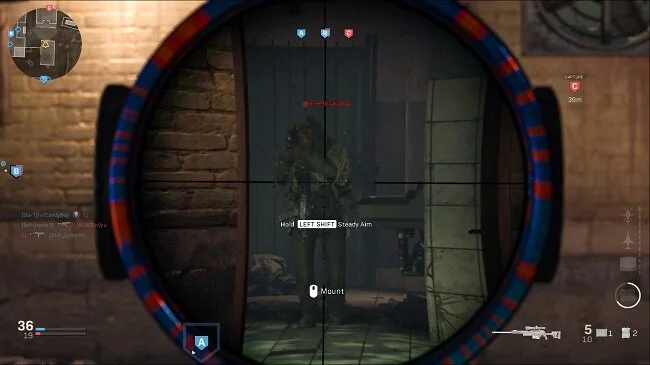
Developers do like to gate access to the best gear and equipment in video games. Often there will be an achievement or deed required to unlock the object that you desire. Now I have no objection to this concept in principle. It’s just that every now and then, the criteria required to access an item is beyond my abilities. Take Call of Duty Modern Warfare/Warzone. Infinity Ward recently added the Rytec AMR to the game. It is a semi-automatic sniper rifle that can use thermite and explosive rounds. It has a significantly higher rate-of-fire than the HDR and AX-5, and performs better at range than the Dragunov. I’ve been itching to get my hands on this weapon for a while. However, to unlock it, you have to complete the following achievement. "Get 2 quickscope kills using sniper or marksman rifles in 15 different matches". For me this is effectively one of the labours of Hercules.

I’m still somewhat shocked that August has been and gone. Even by 2020 standards it’s been an odd month. Due to illness in the family, my schedule has been turned on its head and subsequently there has not been as much time for gaming as I’ve previously enjoyed. However, I tried to put what time I had to good use. I attempted to return to the MMORPG The Lord of the Rings Online once again, to see if I could continue through the epic story. Sadly, the game has run into further server related issues, just as it did last month. Standing Stone Games community manager Jerry Snook was a little “snippy” in responding to players' concerns and at present there are no details regarding what the problem is and when it will be resolved. If this issue persists I suspect that it is going to do some genuine harm to both the player base and community relations. I hope matters improve for SSG and LOTRO over September.
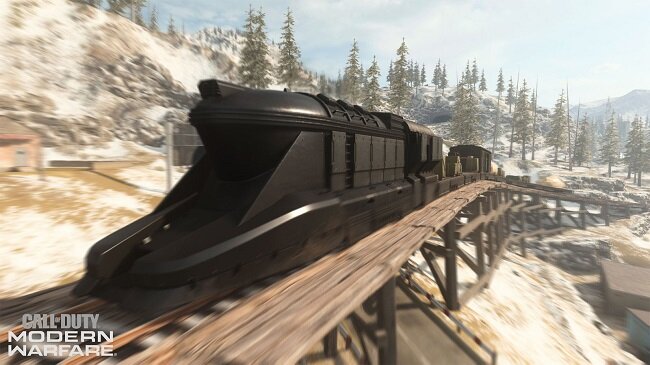
Adding a train to a Battle Royale game is hardly a new concept. Both Apex Legends and PlayerUnknown’s Battleground have successfully done this. So it was only a matter of time before one was added to Call of Duty Warzone. We were tipped off by the addition of train tracks last season. The launch of Season 5 this week finally made the “choo choo” a reality. I must admit, I’m quite surprised at how adding something as straightforward as a freight train has reinvigorated the game. That and the fact that you can now access the stadium seems to have really enthused the playerbase. Since Tuesday, whenever you play Warzone or one of its variants, a large number of players head straight to the stadium or the station where the armoured freight train starts its journey around the map. As a result of this, new players or those who aren’t so skilled in combat can navigate the outlying areas of Verdansk with a greater degree of freedom and safety. Everyone else is at either of those locations.
Video games can offer a great opportunity for personal growth. If you are the sort of player who likes to prove themselves and continuously test one’s mettle, then some titles can provide the challenge required to be the best of the best. Hence many games are competitive, have league tables and other formal structures for measuring success. It is one of the reasons why esports have become so popular. But this desire to excel and master a particular play style extends beyond competitive games. For some players part of a games allure is understanding the numbers and stats that drive the game mechanics. Because these are often the key to optimising your build and maximising DPS output. Hence you will find skilled and learned players in a variety of games across multiple genres. Although they are often motivated for different reasons, they all strive to be elite players.
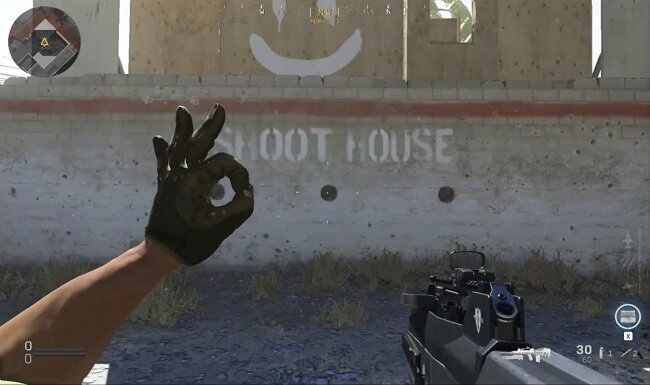
Call of Duty: Modern Warfare and Warzone have a wealth of customisation and cosmetics options. One of which is the ability to assign hand gestures to your character. These can be used as a means of giving instructions when playing in a squad but more often they’re just used for fun or humorously. Players will use them after a kill or sometimes make them part of a trick shot, such as making a gesture with the left hand while firing from the hip with the right. I’ve not noticed a lot of use of gestures while playing nor do I use them myself. It takes all my concentration to stay alive. However, they do seem to feature in the various CoD clip shows I watch on YouTube, so they’re more of an affectation used by “top tier” players. Recently, developers’ Infinity Ward removed the OK gesture from the game. This minor change was not mentioned in the patch notes and the gesture was replaced with a new one called "crush".
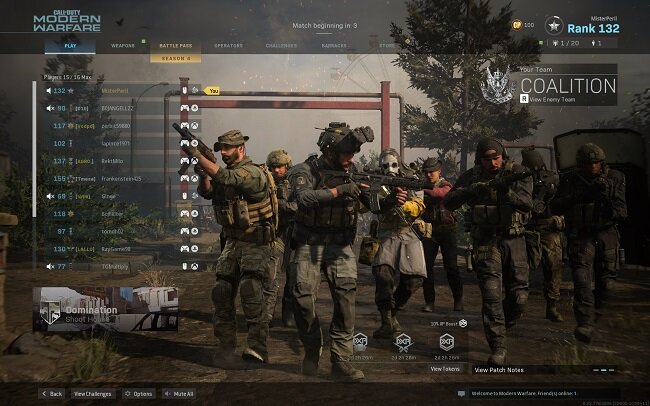
I was watching a YouTube video recently of someone trying the new Fennec SMG in Call of Duty Modern Warfare Multiplayer. It was a 5 versus 5 game and the player who made the video was clearly quite skilled. After quickly racking up multiple kills, 3 of the enemy team left mid game. He laughed and pointed out that they had “rage quit”, although that is just conjecture. They may have left the game for a multitude of reasons (a point I shall return to later). As ever this video began a train of thought which I would now like to explore. Multiplayer games often go hand in hand with a lot of informal social etiquette. Much of which stems from the original MMOs from two decades ago. However, these conventions are not in any way mandatory or enshrined in any games terms of service. Yet quitting in the middle of a multiplayer game is still frowned upon in certain quarters, often being seen as an act of selfishness and childish anger. However, like everything in life, I think it’s not as simple as that.
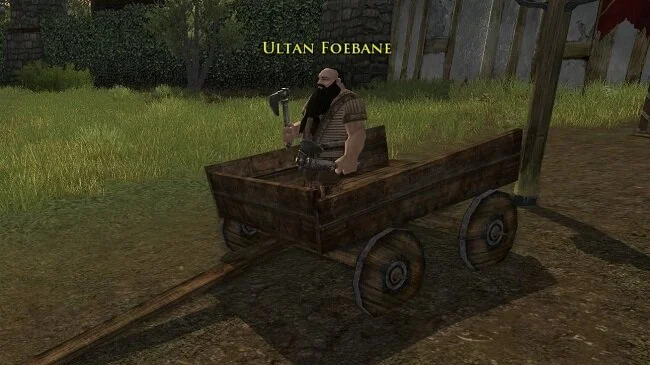
I stopped subscribing to The Lord of the Rings Online in June. I’ve always had a very cyclical relationship with this MMO and at present I feel I need a break from the games somewhat linear formula. Plus the new content scheduled for release centred around the wedding of Aragorn and Arwen doesn’t exactly sound enthralling. So I’ve left my primary character in Langflood and will return to the game later in the year when I feel the need to catch up with content. I have also abandoned the ongoing events in Star Trek Online as they’re getting too repetitive. I would like to see a new longterm story arc rather than just a continuous cycle of short term events and repeatable content. I don’t mind working towards a goal but it has to be something I want and the rewards offered in this MMO are getting a little too generic for my liking. I shall return to the game at some point as I’m a lifetime account holder and I’m curious to see how developer’s Cryptic overhauls the Klingon story arc.
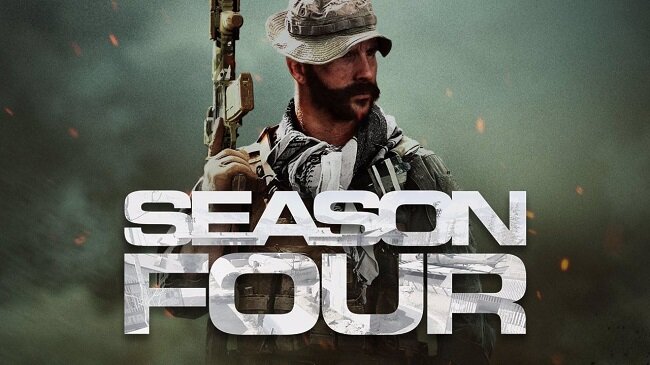
Setting aside the debate regarding the rectitude of the Battle Pass system in Call of Duty Modern Warfare, I certainly enjoyed Season 3. I managed to find multiplayer games that suit my ability along with loadouts that allow me to hit something every once in a while. It was very much a learning process but from April 12th to June10th, I slowly improved my performance and re-acquainted myself with the fact that the FPS genre can be fun. I finally got to try a Battle Royale game and was pleasantly surprised by how accessible they are. However, (and there’s always a however) Activision Blizzard seem to be hell bent on losing the good will they seemed to have gained in recent months. Today’s release of Season 4 has been blighted by major performance issues with the patch servers. Furthermore, the developers still insist in removing certain maps and game modes to promote new ones. This “lottery” which results in a lack of choice for many players is especially galling when you’ve just bought the new Battle Pass.
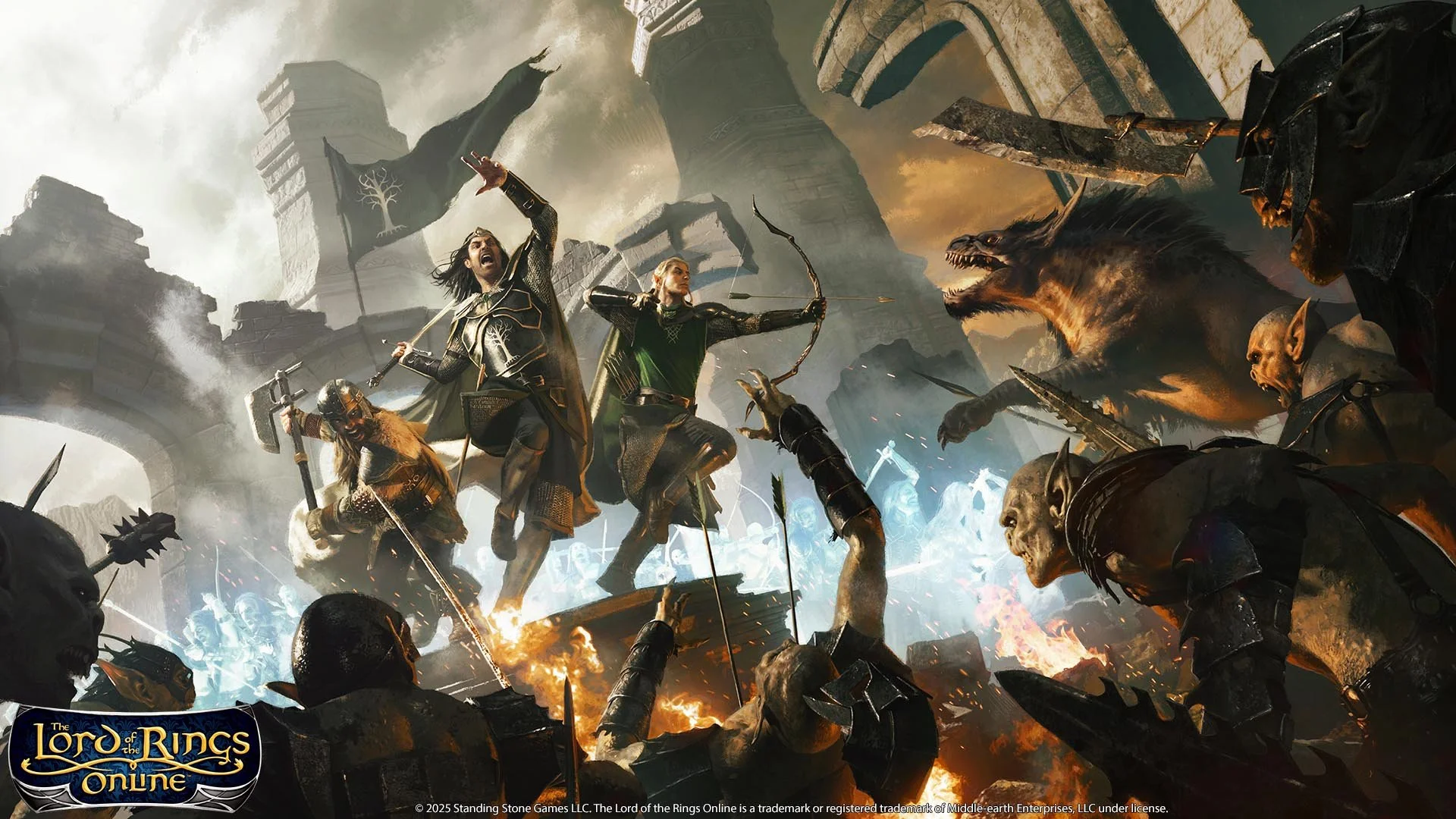
LOTRO: Free Transfers from Former 32-bit Game Worlds
After a six month migration period, Standing Stone Games formally closed all their legacy 32-bit game servers for the MMORPG, The Lord of the Rings Online, on the 31st August 2025. Despite this planned closure being widely discussed via the game’s official forums, professional video game websites and fan blogs, many LOTRO players were unaware of this deadline. Hence many were unable to migrate their respective alts to the new 64-bit servers. Naturally those affected by these closures were upset, especially those with longstanding characters who didn’t relish the prospect of starting from scratch with a new alt. Thankfully, SSG have been true to their word and as of today, have re-opened these “dark worlds” to character transfers. If you have an alt trapped on one of the older game worlds, then now is the time to use the transfer wizard and move them to a new active game world.
After a six month migration period, Standing Stone Games formally closed all their legacy 32-bit game servers for the MMORPG, The Lord of the Rings Online, on the 31st August 2025. Despite this planned closure being widely discussed via the game’s official forums, professional video game websites and fan blogs, many LOTRO players were unaware of this deadline. Hence many were unable to migrate their respective alts to the new 64-bit servers. Naturally those affected by these closures were upset, especially those with longstanding characters who didn’t relish the prospect of starting from scratch with a new alt. Thankfully, SSG have been true to their word and as of today, have re-opened these “dark worlds” to character transfers. If you have an alt trapped on one of the older game worlds, then now is the time to use the transfer wizard and move them to a new active game world.
Standing Stone Games have a comprehensive transfer guide on their website which is well worth reading. I have also made a video of how to use the transfer wizard, here. Due to historical differences between the US and European LOTRO game servers, alts from U 32-bit servers have to be migrated to US 64-bit servers. Similarly, alts from EU 32-bit servers have to be migrated to EU 64-bit servers. The service is free of charge and SSG is offering transfers from the “dark worlds” until 1st October 2027, which is a sizable timeframe. Players should bear in mind that depending on demand, the transfer service can take anything between 24 hours and several days to complete. Also, that the “dark worlds” are only available for character transfer. You cannot log into them. If players experience any issues when transferring alts, they should contact SSG customer support.
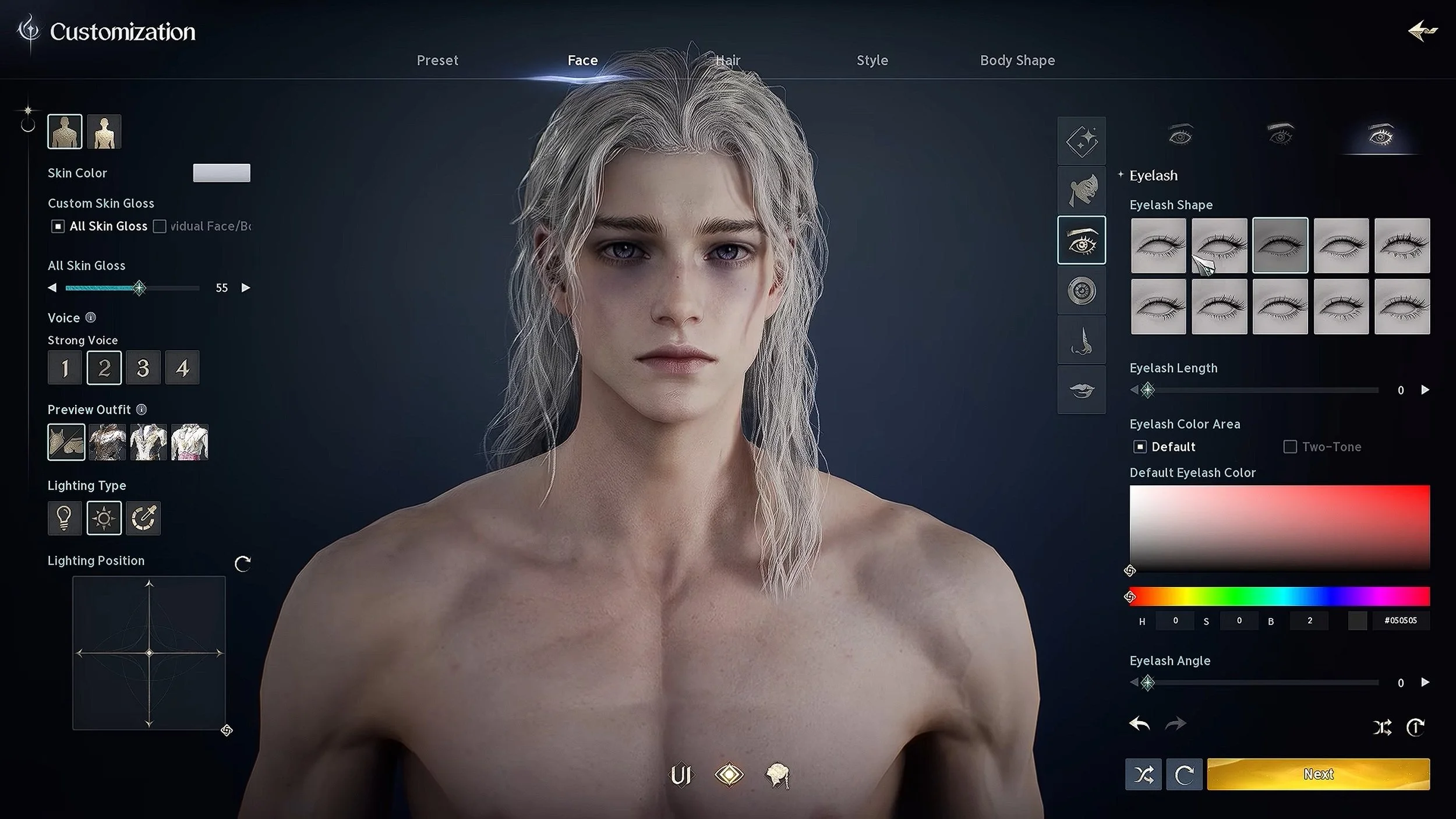
One of the things that I enjoy when playing a new video game is character customisation or character creation. I will spend hours trawling through settings, changing the most minute and consequential aspects of my avatars appearance. I am certain that there is a psychological aspect to this particular game mechanic and that it says something about you as a person. Are your creations shaped just by a need to look good in-game or is there more to it? Are they external manifestations of your sexual preferences or thoughts on body image. Do you treat them as characters from a book that exists in your mind. Do you aspire to recreate the likeness of people you know or admire? Do you strive to make your avatar look like you? Whatever the reasons, it would seem that character creation is something that a lot of gamers enjoy. Hence I am not alone in my borderline obsession. What you look like in-game is equally as important as your character’s name.
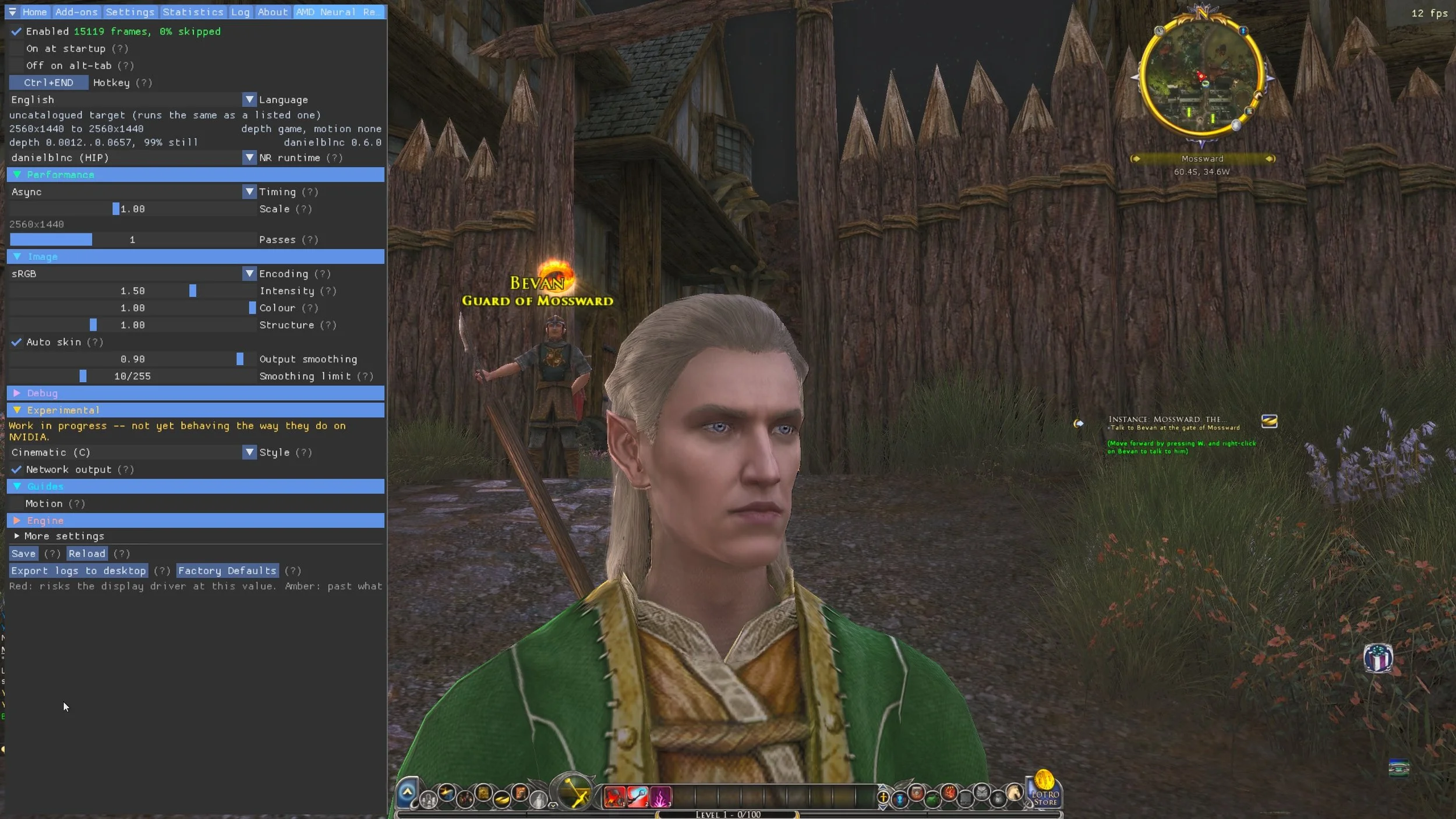
I recently tried to use DLSS 5 Manager with the MMORPG, The Lord of the Rings Online. Unfortunately, things didn’t work out. Today I undertook a similar experiment with AMD Neural Rendering, which is a broadly comparable product. Both utilities use 3D-Guided Neural Rendering, an AI technology that alters how lighting, reflections, and textures look in a game. Instead of just upscaling the image like older versions, DLSS 5 uses an AI network to instantly "re-render" lighting and material responses over the game's layout, achieving photorealistic details that would normally negatively impact a graphics card's performance. Or to put it in less fancy terms, the game graphics are enhanced and modified, although it is highly subjective as to whether the end results are an improvement. However, as a game such as LOTRO is unlikely to ever receive a major graphical overhaul, tools such as these are the nearest players will get to revised graphics.
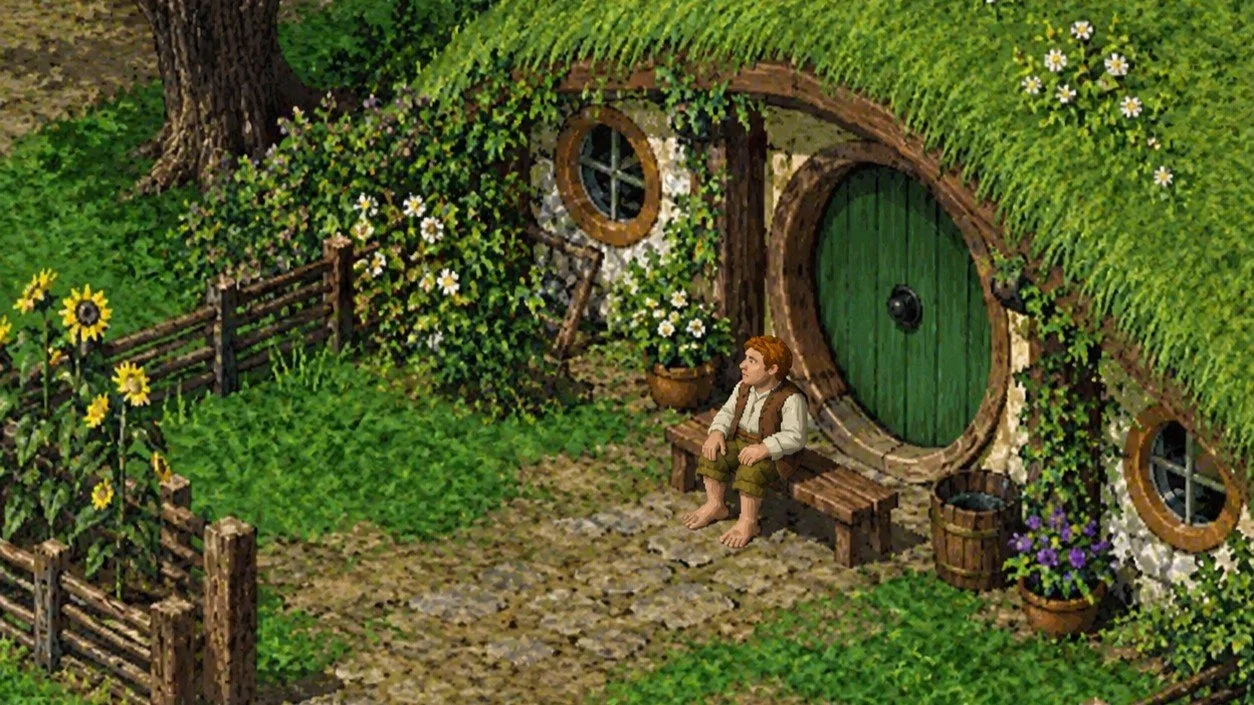
The core game code and engine for the MMORPG, The Lord of the Rings Online, is about 24 years old. LOTRO began originally as Middle-earth Online, developed by Sierra On-Line in 1998. Turbine took over full development of the project in 2003/2004 when their parent company, Vivendi Universal Games, acquired Sierra. The content that had already been developed by Sierra was abandoned and Turbine created a new game using structural elements such as the UI and game engine from their previous release Asheron’s Call 2 from 2002. The Lord of the Rings Online: Shadows of Angmar was officially released in April 2007. Hence, the active public release code is 19 years old. Despite continuous expansion and updates, along with a recent migration to 64-bit architecture, the foundations of LOTRO retains a nearly twenty year old legacy framework. This frequently contributes to modern technical hurdles and engine constraints.
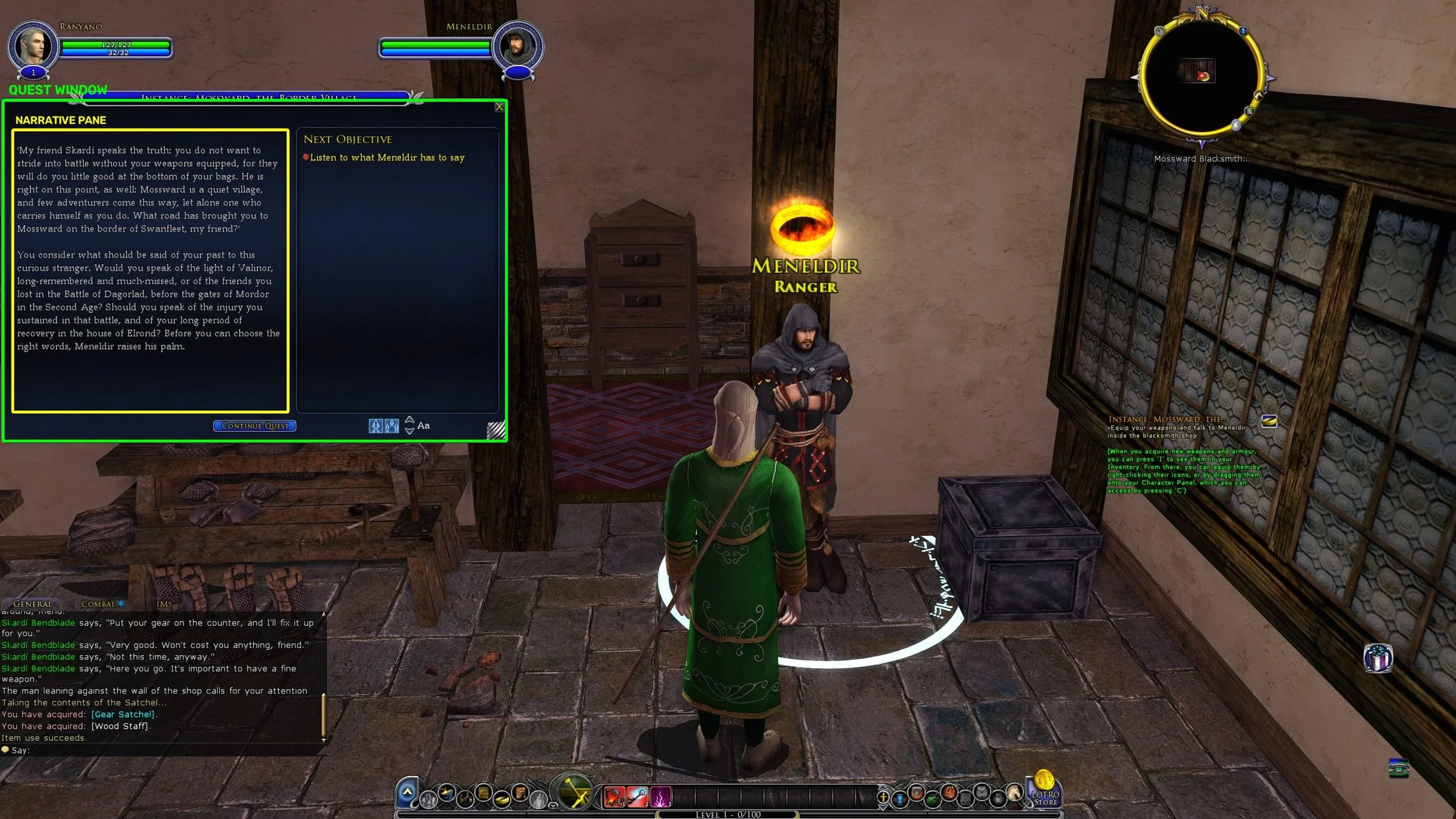
A few years ago, there was a fan created project to provide voice narration of NPC dialogue in the MMORPG, The Lord of the Rings Online. This mainly involved capturing the text in the quest dialogue windows and then sending it to OCR software, before using a text-to-speech program to read it. LOTROVoice as it was known, broadly worked but the creator stopped developing it as it proved troublesome to maintain. However, I recently discovered Khazad Voice TTS which is a separate project that does pretty much the same. I went so far as to install this “immersive AI narrator for LOTRO” after seeing a YouTube video of it being used successfully. Sadly I ran into issues configuring Khazad Voice TTS, because I have two monitors and LOTRO runs on the secondary (by my choice) and not the primary. I couldn’t “lasso” the dialogue windows in LOTRO during the calibration set up, which effectively prevented me from completing the process.
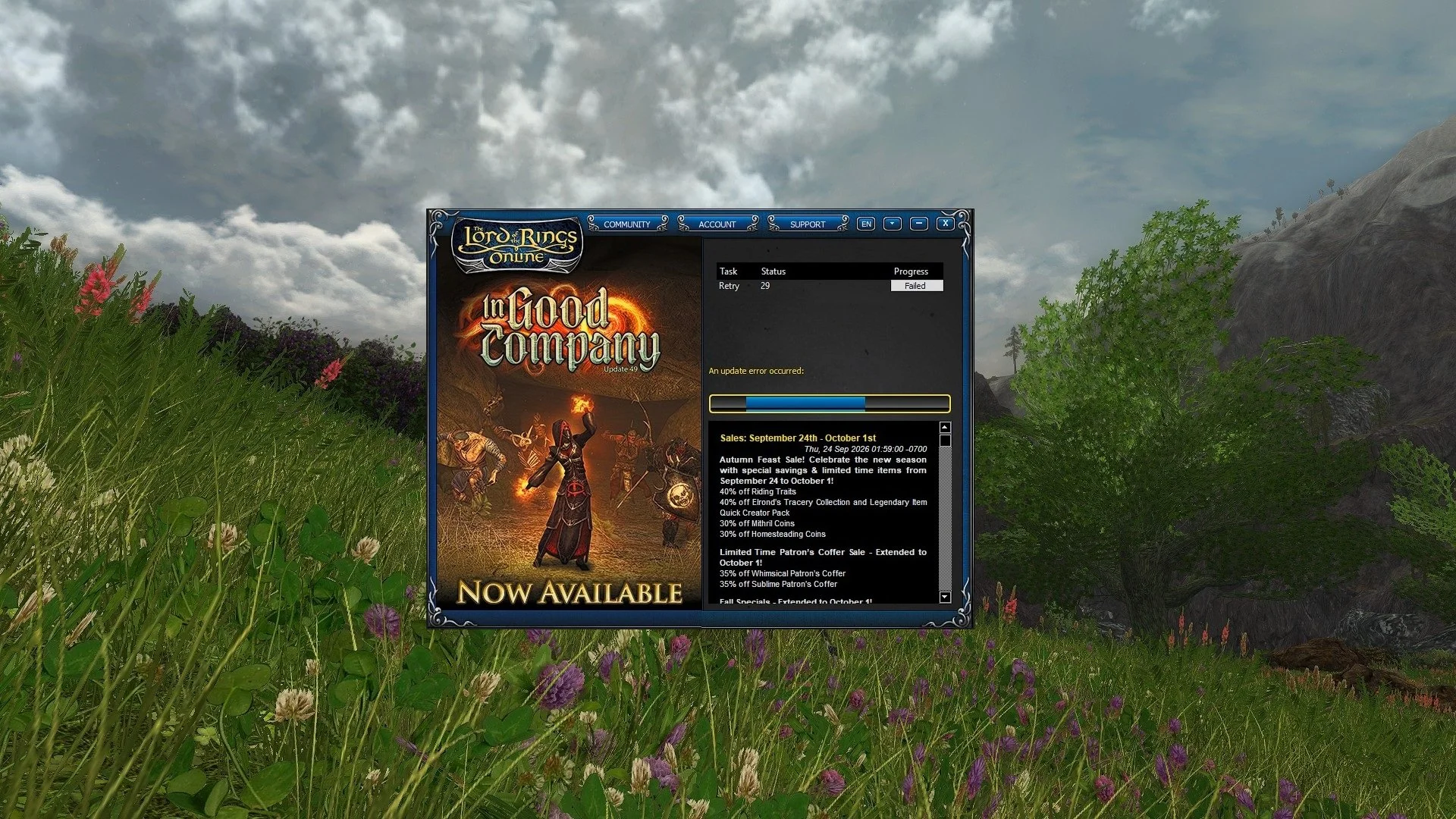
Throughout yesterday and early today, there was an issue logging in to the MMORPG, The Lord of the Rings Online. Upon starting the game launcher, it would attempt to connect to the patch server to download the latest game update. This process would start but then subsequently stall at 33%. The launcher would then attempt to reconnect to the patch server every 60 seconds but could not make any further progress. Some players found that if they left it long enough, it would eventually complete the download and the launcher then progress to the next screen where they could input their username and password. However, for the majority of LOTRO players the problem would simply persists and the launcher would be stuck in a loop. Some players attempted to reinstall the game or use the repair data facility in the launcher but neither of these proved to be successful workarounds. The patch sever needed to be bypassed to resolve the issue.

Two years ago I wrote a post about fine tuning your graphics in the MMORPG The Lord of the Rings Online. Apart from installing ReShade and using AMD Adrenalin, the options were somewhat limited, due to the game’s age and multiplayer status. Since then, I’ve been playing LOTRO with the game settings maxed out, a custom ReShade profile to make the colour palette more vivid and Radeon Image Sharpening enabled within the AMD software. The game looks clear, crisp and the draw distance is pretty good for an ageing game but I still wish the graphics could be tweaked further. Hence, I’ve been trawling the internet in a vain attempt to see if I can find any third party utilities that could be used to enhance LOTRO further. During the course of my search I stumbled across DLSS 5 Manager. This is an open-source, intelligent utility and one-click mod installer designed to inject and manage Nvidia's DLSS 5 neural rendering features, ReShade, and OptiScaler into PC games.
Are video games becoming easier? It’s a perennial subject that is frequently discussed by those who play them. Often the question of whether they have actually become easier is not the focus of the debate, as it seems to be broadly recognised that it is the case. Instead, discussion of this matter tend to drift into the rectitude of this change. Debate’s of this nature are usually awash with subjective opinions and personal preferences which are then put forward as objective facts. It’s not just a question of video games becoming easier, it’s the fact that making them easier is “wrong” and those who want them as such are “not proper gamers” etc. The hours that have been lost to this pointless, tedious debate are uncountable. However, I digress. Let us return to the matter of video games becoming easier, because although fans discuss this a lot and have plenty to say, you don’t often hear from the developers on this subject.
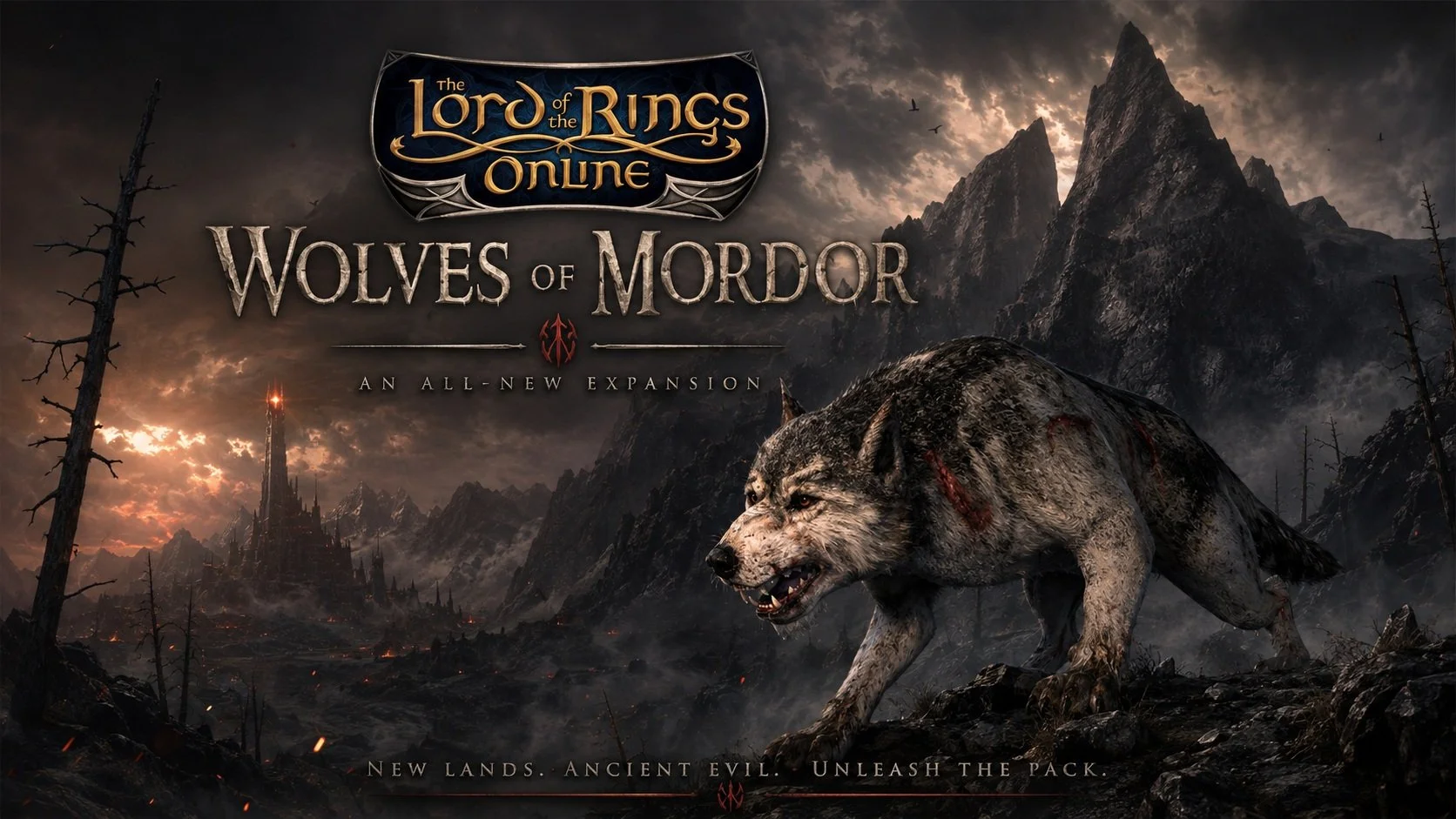
The next expansion for the MMORG, The Lord of the Rings Online, was announced on the 1st August, via the gaming website MMORPG.The Wolves of Mordor, which will launch later in the year, appears ambitious in scope as it will include two new game systems as well as the obligatory story update. This expansion takes place in Draugardh located in the North East of Mordor, beyond the Plateau of Gorgoroth. It includes the new zones of Heledhris, Parth Rhavas and Nan Ogol. These vary environmentally ranging from the arid, volcanic and semi-tropical. Players will encounter the Daugrim in these regions, Werewolves but not in the modern sense. This is not the lycanthropy of Eastern European legends but in the established Tolkien idiom of fell spirits inhabiting the bodies of Wolves. The region also sees the return of the Woses and players can expect to encounter Elves and scouts from Gondor. As ever with LOTRO expansions, there will be new instances as well as a raid.
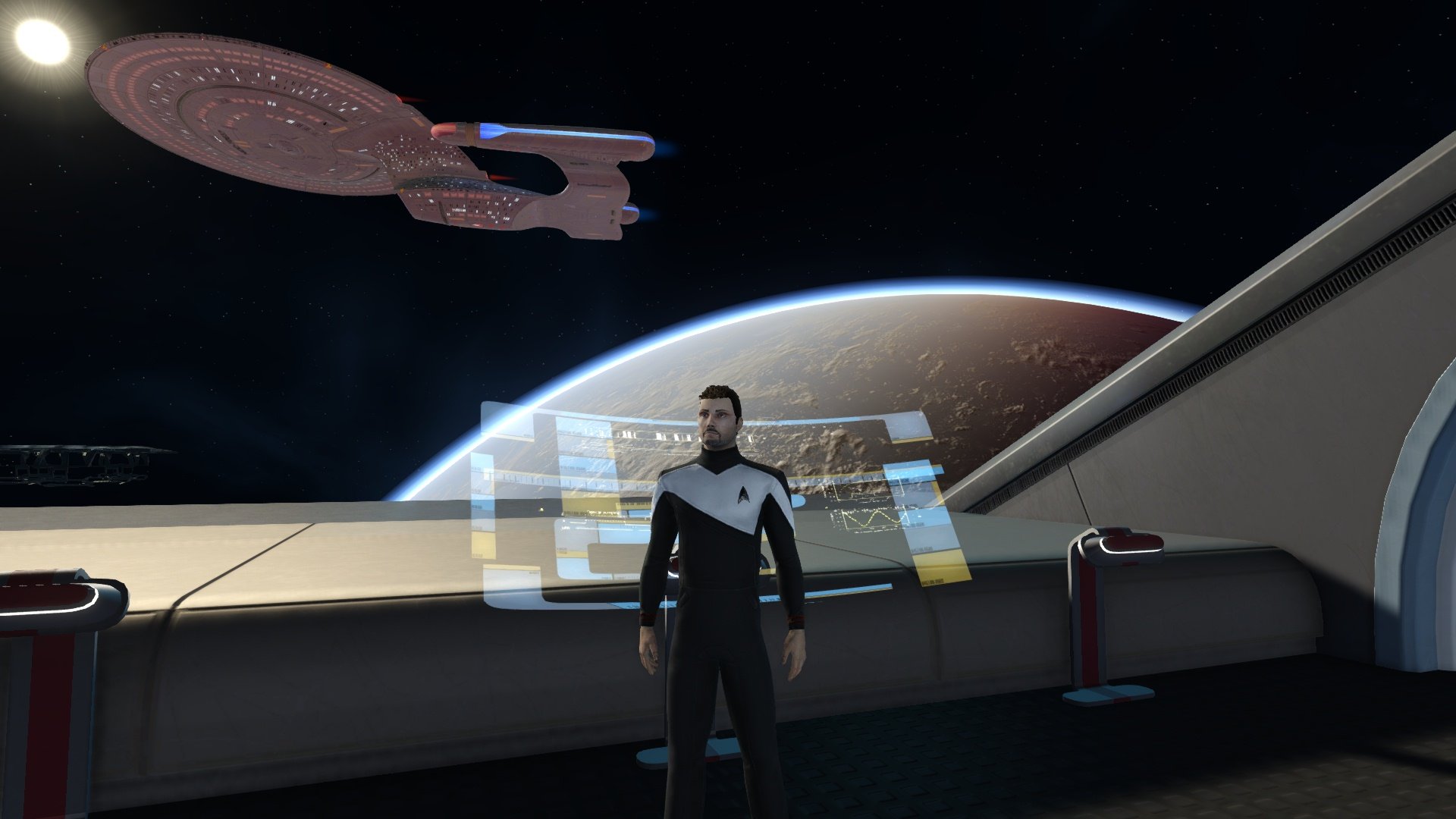
I was recently perusing my archive of old blog posts, when it struck me how much I’ve written about the MMORPG genre over the years. Naturally, there was far more material from between 2008 and 2012 as that was period when I immersed myself in the genre and was very enthusiastic about it. I was at a point in my life when I had the time to dedicate to such games and I was happy to participate in the social aspect of they offered. I would regularly play through group content and spend time socialising online with fellow guild members. My experience remains a textbook example of how online games can be more than the sum of their parts and that where you are at in your life has a major impact upon your overall enjoyment. As I read though various old posts it became clear that my experiences where specific to this particular part of my life and that they cannot be repeated. My relationship with the genre is very different now and that’s fine.
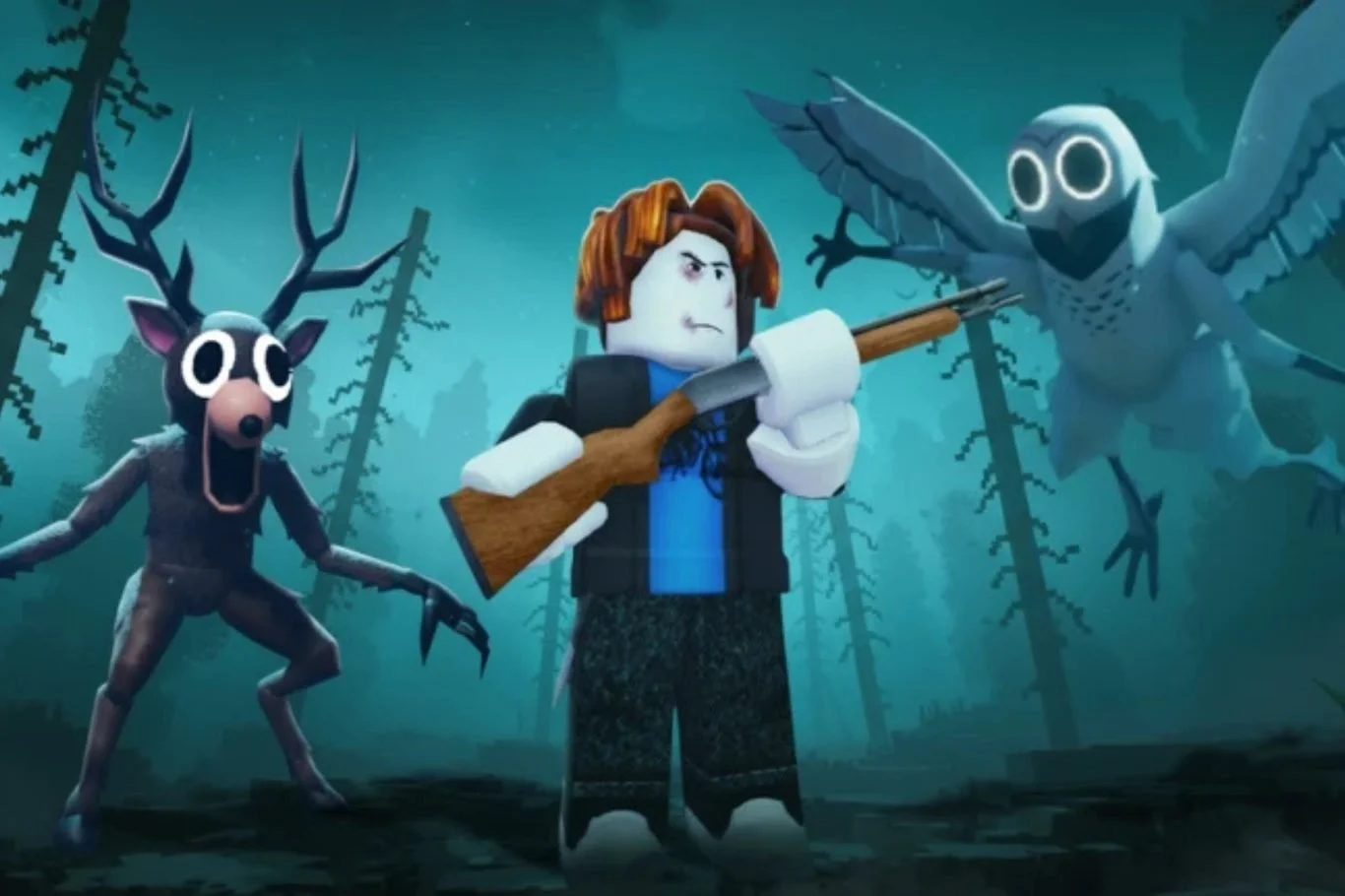
Video games as a genre are extremely poor at explaining themselves. When you buy a new game you’ll often find little or no information regarding the basic systems and mechanics. The industry assumes that their customers are by default familiar with the fundamentals of playing a modern video game. Hence if a game has a tutorial, it is often based around videos rather than detailed verbal instructions. You are are briefly shown a clip of a specific move being successfully undertaken but it is seldom shown in a wider context. The industry also expects the fan community to take on the role of curating and disseminating information about its games. The move away from forums and bespoke websites to Discord highlights this. Discord is a primarily a real time communication tool and not good at maintaining a historical data archive. If you want an answer to a specific gaming question, you’ll more than likely find it on YouTube in a video made by a fellow gamer.
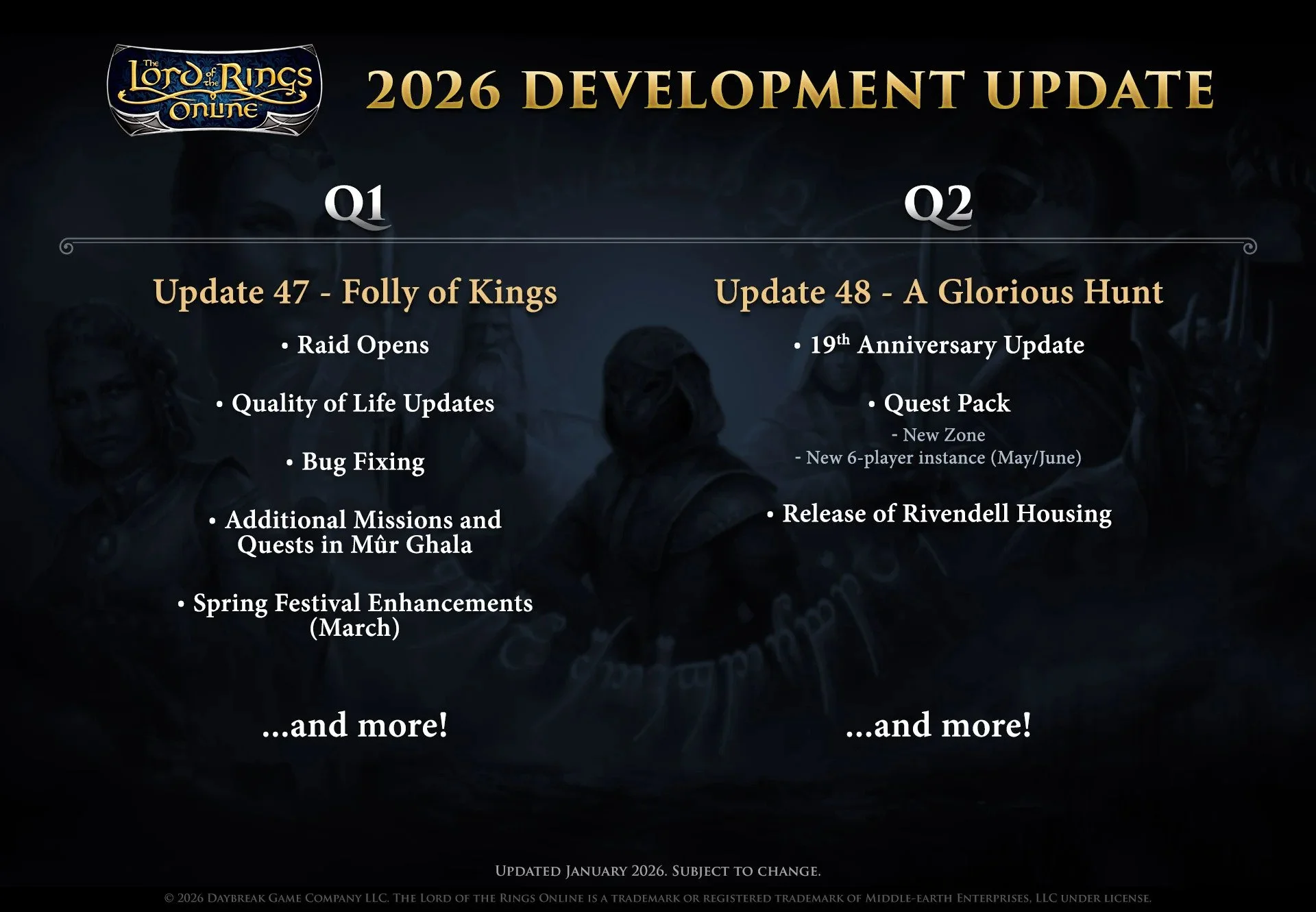
According to the recent “letter to the players”, Standing Stone Games will be adding a new zone to the MMORPG The Lord of the Rings Online in the second quarter of this year. Possibly around May or June. Having spent the last three expansions in the South of Middle-earth exploring the tropical Umbar and the deserts of Harad, I would certainly welcome a change of location. I have gradually warmed to these zones over the last eighteen months but I do find them so incongruous. They are so radically different to the European style content that has been the mainstay of the game for so long. Tolkien’s source text has plenty of detail regarding Eriador and Rhovanion. Information regarding Harad is scarce, hence it has afforded the developers a great deal of artistic freedom. Although exceedingly well realised these tropical zones have taken a while for me to get used to.
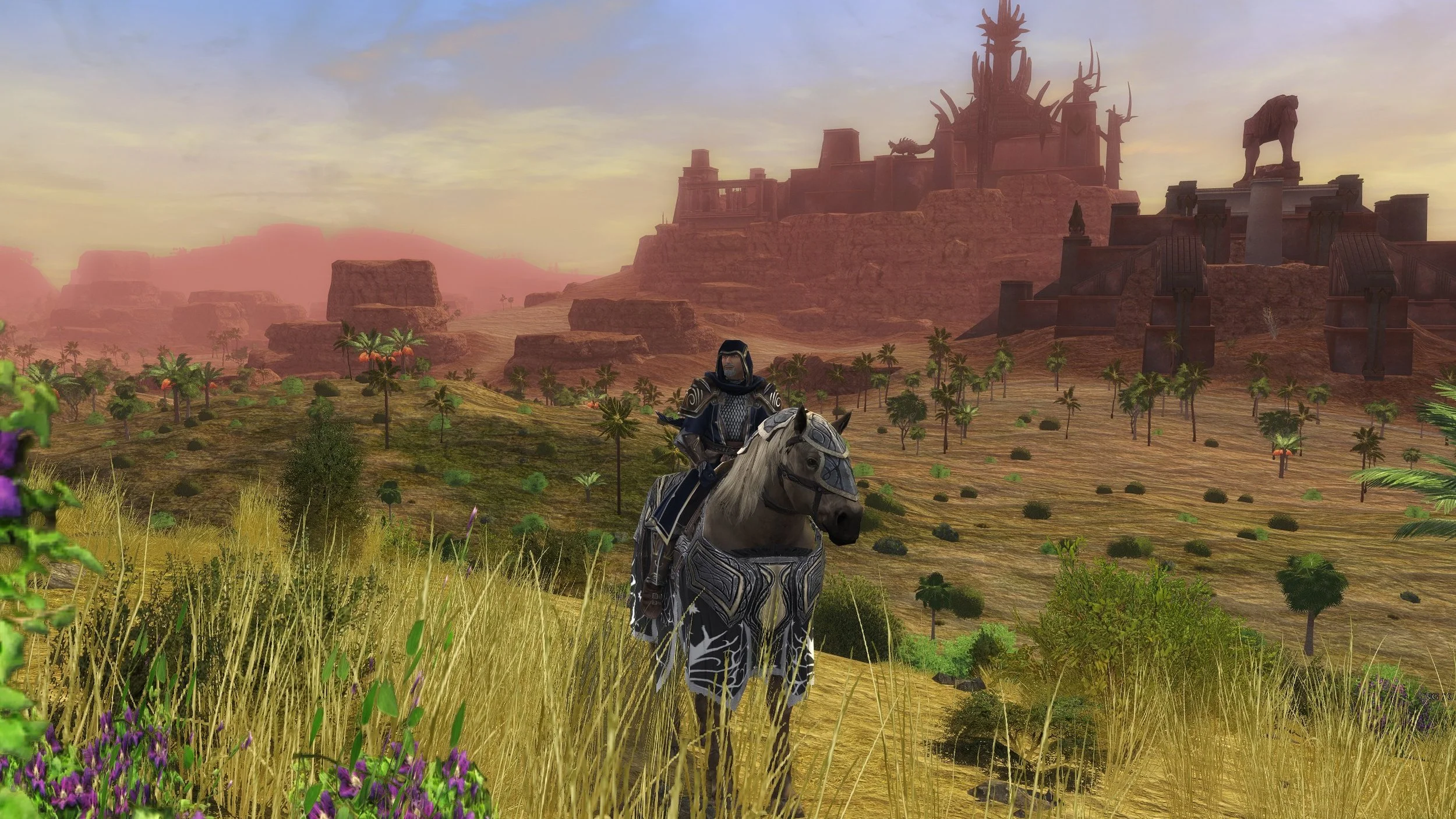
I’m not sure exactly when it started but I’ve recently noticed a graphical bug within the MMORPG The Lord of the Rings Online. This problem often occurs within caves or in areas where there are a lot of rocky surfaces. Hence it has become very apparent in the latest two expansions, set in Umbar and Harad. This graphical glitch causes some surface textures to appear to flash from light to dark intermittently. The resulting strobe effect is hard to ignore and very distracting. Fortunately, a quick online search showed that this is not a problem unique to my installation of LOTRO and is a known problem. Furthermore, there is a very simple workaround, which is to go into the Advanced Graphics setting and uncheck “Per Pixel Lighting”, which immediately remedies the problem. I have no idea why this has recently started to happen but at least it can be resolved.
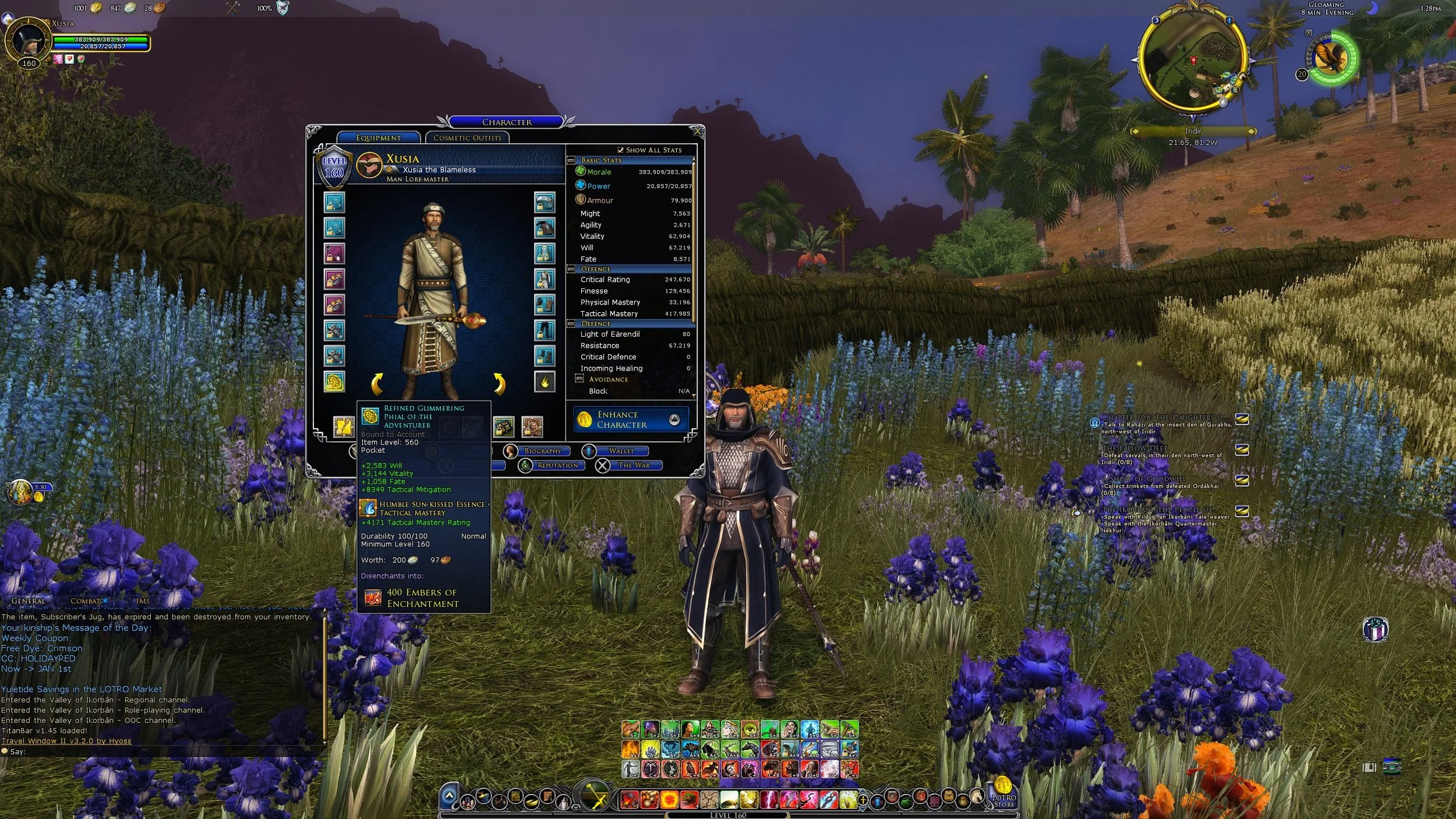
The latest expansion for the MMORPG The Lord of the Rings Online, Kingdoms of Harad, launched on December 3rd. With this release the level cap was raised from 150 to 160. It should also be noted that the cap for virtue traits was also raised from 96 to 100. Naturally these changes meant that there is a requirement to replace all armour and jewellery once the new cap is reached. Similarly Legendary Items have to be reforged and any traceries upgraded or replaced. If you follow the Epic Story it will lead you from quest hub to quest hub. The main quest rewards, along with those from side quests will provide adequate gear as you slowly progress towards the new level cap. The new raids, instances and missions/delvings then provide a means to acquire higher quality level 160 gear. LOTRO and indeed, many other MMOs are consistent in this methodology.
It is customary in a post such as this to list the various games that I’ve played over the last twelve months and share my thoughts on them. Wider analysis of the video game industry is also de rigeur. Unfortunately, I don’t really feel disposed to do either of those two things. My thoughts on the games I’ve played have already been published and can easily be accessed via the links at the bottom of this post. As for the video game industry, it suffers the same flaws as music, TV and cinema. There is creativity and innovation out there but it is often drowned out by mainstream products which are demonstrably inferior due to their inherent mediocrity. As for the business side of things, we once again clearly see the failings of the corporate management class. Sadly, they do not face the consequences of the mistakes that they make.
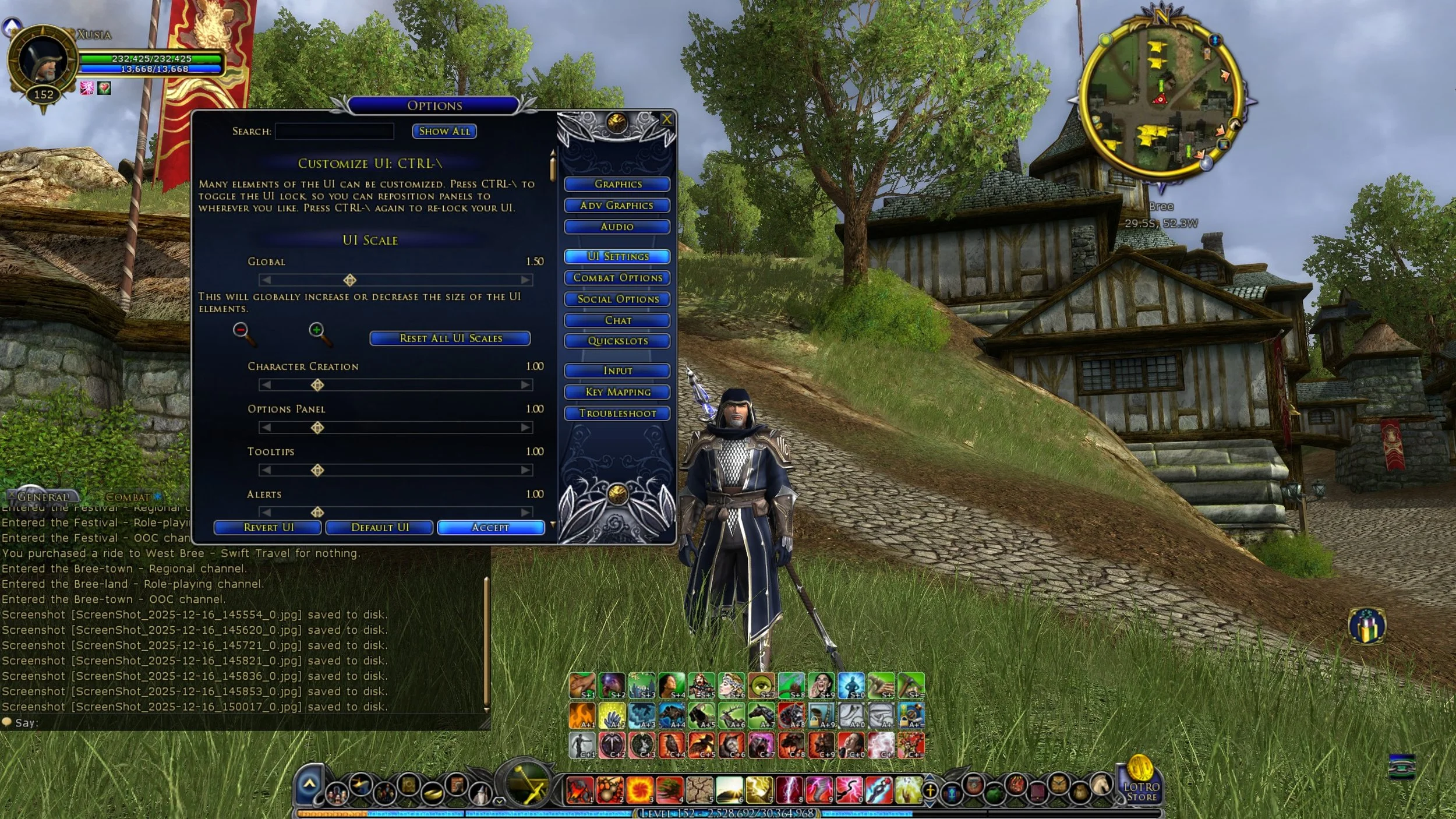
Today Standing Stone Games began beta testing Update 46.1 for the MMORPG The Lord of the Rings Online. The current preview on the Bullroarer test server is mainly for the new instance cluster that comes with the Kingdoms of Harad expansion which launched a few weeks ago. However, it would appear that this latest preview has another feature or note. One that should please LOTRO players. Contrary to what a lot of people thought, myself included, SSG have been working on a scaling UI for 2K and 4K monitors and the results are now available for testing from today Monday 15th through to Friday 19th December. Until now the main workaround to the lack of UI scaling has been to use either Nvidia or AMD graphics software to upscale the game from 1920 x 1080, or a third party app such as LosslessScaling. Having an official solution is a far better option.
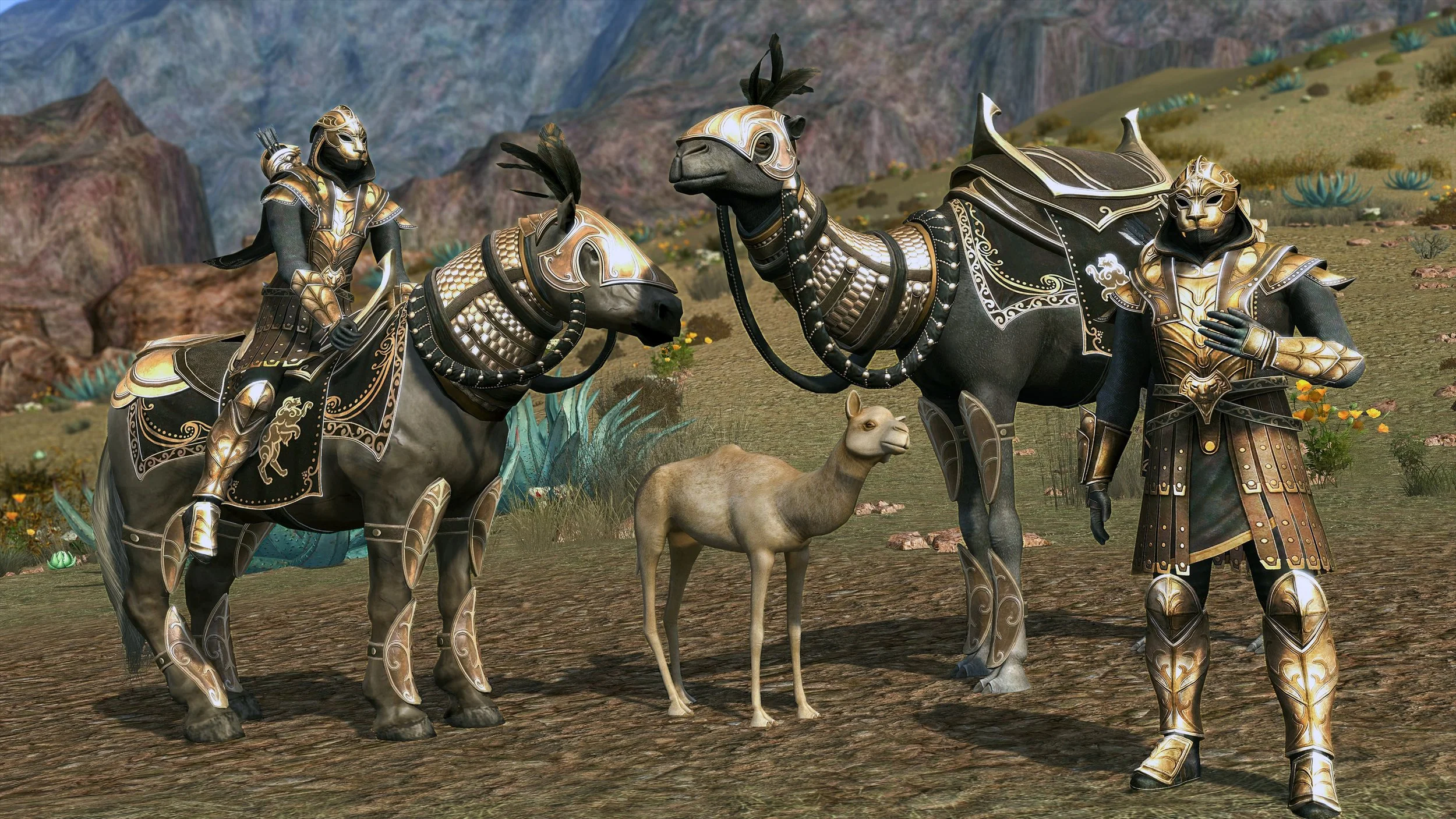
Kingdoms of Harad, the 13th expansion for the MMORPG The Lord of the Rings Online, was released today. Highlighting developer’s Standing Stone Games continuing commitment to this eighteen year old game. As 2025 draws to a close, I thought it would be prudent to reflect upon the current state of LOTRO and to consider what may come next year. Two words that I associated with this MMO are stable and consistent. The playerbase is loyal and dependable. Player numbers never greatly decline nor do they notably expand. LOTRO fills a very specific gaming niche and one of the reasons it retains its players is that there is no suitable alternative game. Although there is not a great deal of data in the public domain, it is generally accepted that LOTRO has an older player demographic and that many are consummate Tolkien fans.
The MMORPG The Lord of the Rings Online runs on a broad spectrum of PCs. From archaic laptops to high end gaming rigs, although it may require a bit of tweaking. At present, the optimal way to play the MMO is at a resolution of 1920x1080 (FHD) with the graphics setting maxed out. The graphics are sharp and the UI is readable. However, a growing number of gamers are now using 2K and 4K monitors. You can play LOTRO at higher resolutions such as 2560×1440 (QHD) and 3840x2160 (UHD) and the game looks great. However, the UI does not scale and so is very small on 2K and 4K monitors. The skill icons on the quickslots (shortcut bars) and the in-game text become difficult to see at these resolutions, which deters some players from using them. It is a known issue that Standing Stone Games are attempting to address but it is unlikely to be resolved any time soon.

I recently read a post on Massively Overpowered about skills rotation in the MMORPG genre. I found the subsequent discussion in the comments fascinating. Mainly because I have never used a fixed rotation of skills in any of the MMORPGs that I play. I understand the reasoning behind such things and why some players want to optimise their combat performance. Using one’s skills in a specific order to maximise damage and manage their subsequent cooldown has a logical appeal. In Star Trek Online, some players go so far as to create keybinds for their rotations and assign it to a specific hotkey, which is then continuously pressed throughout combat. However, rotations are a blunt tool that lack flexibility, often being geared towards dealing with a single target or using an area of effect skill against a larger group. They may not be the optimal approach to combat when things do not go to plan.
Tolkien enthusiasts may recollect Athlon Games, a subsidiary of Leyou Technologies, announcing that it was developing a new MMORPG, based upon The Lord of the Rings, back in September 2018. The following summer, it was revealed that Amazon Game Studios was the partner developer for the project. In late 2020, Leyou Technologies (a Hong Kong-based company), was acquired by the Chinese conglomerate Tencent. This triggered a contract clause with the license holder, Middle-earth Enterprises, allowing them to terminate the existing arrangement if a new deal could not be met. Amazon and Tencent were unable to agree upon how to proceed with the project, leading Amazon to withdraw from negotiations. The project was subsequently scrapped. No details or images of the MMO have been released.
After a six month migration period, Standing Stone Games formally closed all their legacy 32-bit game servers for the MMORPG, The Lord of the Rings Online, on the 31st August 2025. Despite this planned closure being widely discussed via the game’s official forums, professional video game websites and fan blogs, many LOTRO players were unaware of this deadline. Hence many were unable to migrate their respective alts to the new 64-bit servers. Naturally those affected by these closures were upset, especially those with longstanding characters who didn’t relish the prospect of starting from scratch with a new alt. Thankfully, SSG have been true to their word and as of today, have re-opened these “dark worlds” to character transfers. If you have an alt trapped on one of the older game worlds, then now is the time to use the transfer wizard and move them to a new active game world.
MMORPG announced earlier today and it was subsequently confirmed by Standing Stone games, that the new expansion for The Lord of the Rings Online will be Kingdoms of Harad and that it will launch later in the year. The expansion will see the conclusion of the epic Song of Waves and Wind storyline and the level cap raised from 150 to 160. There will be a new region to explore, Mûr Ghala, comprising four zones. Adagîm, Idagâl, An Shêru and Kighân. The latter contains the main trading hub of Zajâna. Players will travel into the region with Gandalf the White, along with allies of the Kindred of Coins and Mizadi as they seek to counter the regional power struggle brought about by the fall of Sauron. Canonically, this takes place three months after the destruction of the ring, hence King Elessar and Eomer are busy with domestic affairs in their respective kingdoms.
Skirmishes were added to the MMORPG The Lord of the Rings Online, in 2009 with the release of the Siege of Mirkwood expansion. Skirmishes are a repeatable and scalable combat system that allows players to access various instances for solo or group play from anywhere in the in-game world. Players can choose a Skirmish Soldier from a variety of classes to accompany them and provide healing, tank or additional DPS. On paper it’s a great system which is why many other MMOs offer something similar. I recently decided to tinker with my Skirmish Soldier build on my main character to see if I could optimise their performance. As my primary alt is a Lore-master, for the last few years I have had a Warrior as their Skirmish Soldier, to take some of the aggro from attacking mobs. I used the excellent guide by FibroJedi and swapped over a few Training and Personal Traits.

On 2nd August 2025, I was playing the MMORPG The Lord of the Rings Online, on my primary character, a level cap Lore-master. I decided to continue with one of the Allegiance Quest lines, specifically Durin’s Folk. I played through several quests and earned the appropriate tokens that advance the Allegiance system. I then handed these in to the NPC in the Hall Under the Mountain, expecting the next quest in the series “Chapter 3: Gimli’s Request” to be unlocked. An item appeared in my inventory that I then clicked on, which should have bestowed the quest. Unfortunately, nothing happened. Furthermore, the item vanished from my bag and therefore I could not attempt to click it again. I checked the LOTRO Wiki and then looked around the Hall Under the Mountain to see if any NPC had a ring icon above their head. As they did not, I surmised that this was a software glitch and logged a support ticket with Standing Stone Games.
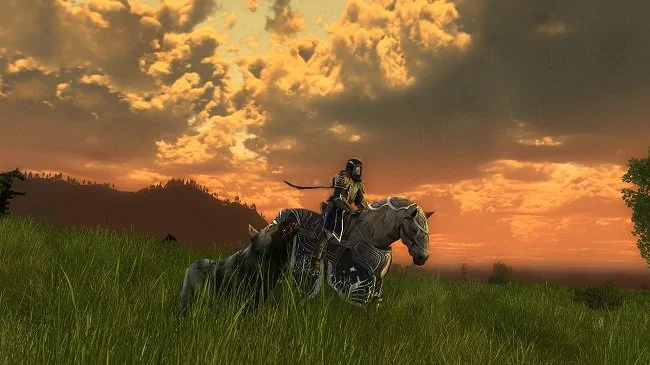
Let’s start with a quote from a classic Walter Hill film, The Warriors. “Can you count, suckers?” says Sirus. The gang leader was referring to the number of Police in New York City at the time. Whereas, for the purpose of this post, I am referencing how many Delving Writs a player needs to acquire 6 pieces of level cap armour in LOTRO. Because, next to the gear you get from endgame instances and raids, Delving gear is a good alternative.. It is marginally better than the items you can get from lootboxes. Hence, Delving armour is a good source of high end gear for the solo player. Through the miracle of mathematics, the number of Delving writs required to acquire a full set of this armour is 9,000. At first glance, that seems like a lot. If you then do some further research to put the number in context, you realise it is indeed a lot and a substantial undertaking.
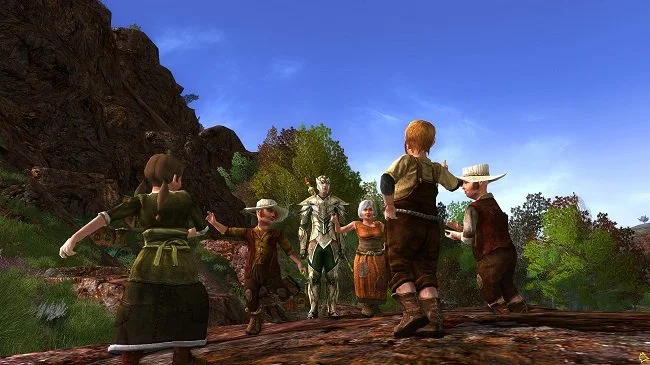
I am currently enjoying a renewed interest in the MMORPG The Lord of the Rings Online since I migrated all my characters from the old 32-bit servers to the new 64-bit replacements. I’ve created a new High Elf Lore-master on Peregrin server and am currently levelling them in a targeted play through of the Epic Story, supplemented by curated side quests. While playing recently, I realised the game UI on this alt wasn’t as I usually have it laid out. So I checked through the various documents on my PC and found a text file I had created many years ago that had a few hints and tips written down. I’ve added a few more and decided to share them as a blog post. I’m sure veteran players will be familiar with many of them but a lot of them are worth repeating. They may prove useful to those new to LOTRO or returning to the game after a long hiatus.
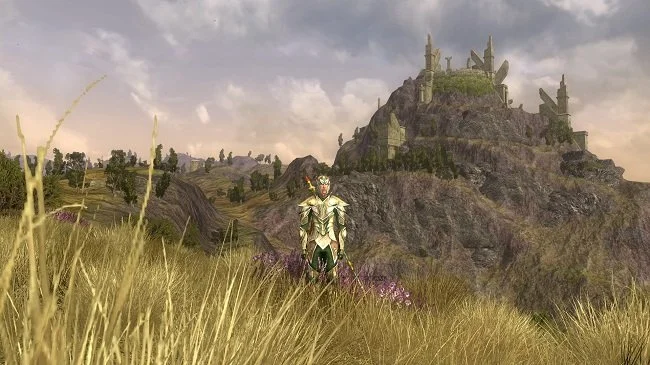
In mid-March, while the server migration debacle raged, I created a new alt for the MMORPG, The Lord of the Rings Online, on Peregrin server. The idea was to play casually through content focusing on enjoyment, rather than worrying about progression. I was to level at a pace that suited me and had no specific plans to develop my alt in any particular way. I have been playing LOTRO since 2008 and have a primary level-cap character that has been my main focus over the years. Hence I have previously experienced all story content from all the expansions and am therefore very familiar with what the game has to offer. Which is why I thought I’d do things differently this time. So I started my new Lore-master in Mossward in Swanfleet, the new starting area added to the game in 2022.
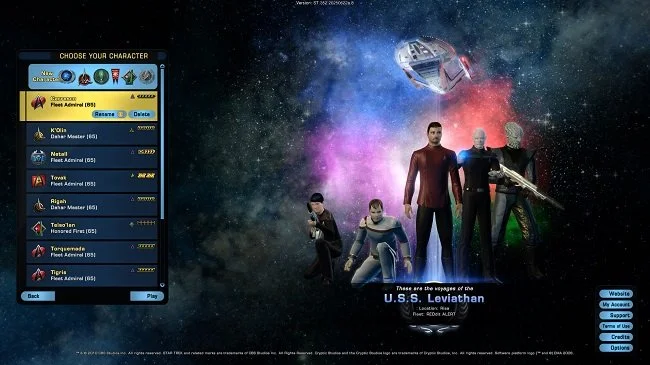
In massively multiplayer online games (MMOs), alts (short for alternate characters), are new characters created by a player in addition to their primary character (often called the “main”). Alts are often encouraged by developers as a means to keep players engaged with their game(s). Sometimes an MMO will actively reward the creation of alts either with access to exclusive content, or with additional skills or items previously unlocked by primary characters. As the myth that an MMO really begins at endgame still persists in gaming culture, some games sell boosts that will instantly raise the level of an alt to that of the current level cap. Creating alts is such a key aspect of the MMO genre, that some games will sell additional character slots, so that players can create further alts beyond the default amount allowed. There are many reasons why players create alts. Let us consider some.
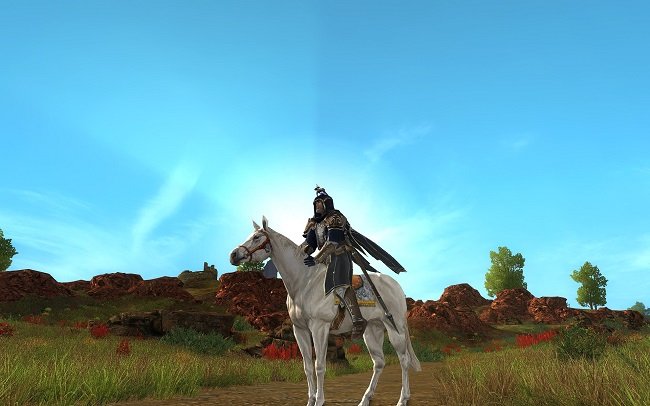
I wrote a while ago that a lot of kinships from the MMORPG, The Lord of the Rings Online, would probably not survive the recent server migration. MMOs are social endeavours by nature, often with strong emotional ties but a lot of kinships (or guilds) have already fallen into decline, simply due to gaming entropy. Hence the migration has seen players leave existing kinships to move to the superior 64-bit servers, resulting in a lot of people who may be potentially looking for a new home. This is exactly what happened to me. I opted to move to Meriadoc server promptly, at the cost of leaving a kinship I have been a member of since 2009. However, the move presented me with an opportunity to remedy this problem myself. I subsequently set up my own kinship and decided to make it available to others.

The dust appears to have settled for the MMORPG The Lord of the Rings Online, after last month’s server transfer debacle. Despite the technical issues arising and subsequent delays to the migration timetable as well as the procurement of in-game housing, LOTRO seems to be enjoying a minor resurgence. Many former players are returning to the game and moving retired alts to new servers, due to the superior performance. The migration issues have also brought a lot of attention to this 18 year old game and it would appear there are many new players trying this Tolkien themed MMO. I was pleasantly surprised to see that a further two 64-bit servers, Grond (EU) and Sting (US), are to be added to the game to meet demand. As I predicted in my previous posts, LOTRO has a habit of bouncing back due to its unique niche in the gaming ecosystem.
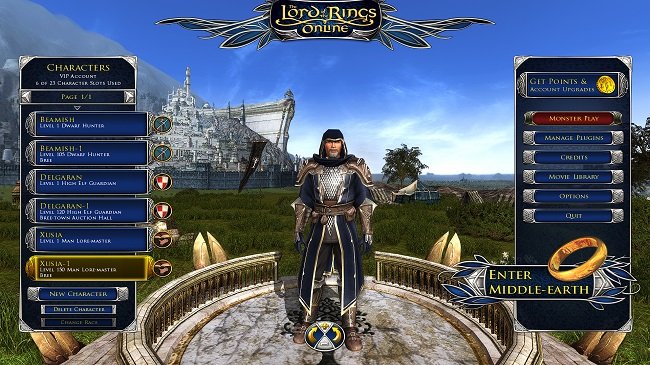
It has not been a good week for the MMORPG, The Lord of the Rings Online and its developer Standing Stone Games. The migration from legacy 32-bit servers to 64-bit servers has not gone smoothly. The transfer queue was overwhelmed by the sheer number of accounts and it has taken far longer than expected to process the backlog of requests. Today has been the fifth day of waiting to see if my 3 main characters from Laurelin server have successfully migrated to their new home on Meriadoc. When I checked this morning, the transfer wizard indicated that my characters were back where they originally came from. I therefore considered repeating the entire process. However, around midday, Community Manager Cordovan indicated that SSG had caught up with transfer requests made around 8:00 AM EST on Sunday 9th March. So I decided to be patient and wait a little longer.
Playing Hell Let Loose: Buying the Game and the Practice Range
I bought Hell Let Loose last night. A decision I suspect that I shall regret. Despite the fact that I know that the YouTube videos of this game are carefully curated and therefore not truly representative of the reality of its gameplay, I felt compelled to try this World War II multiplayer tactical first-person shooter. From time to time I find a game that really appeals to me as a concept and I want to play it. However, more often than not these are online multiplayer games and as such the human element is distinctly “variable”. Hence the idealised gameplay that I imagine is a far cry from what playing the game is really like. I’m sure I am not alone in this mindset. Sometimes I have to just “get it out of my system” and the only real way to do that is buy the game in question, be disappointed and then move on.
I bought Hell Let Loose last night. A decision I suspect that I shall regret. Despite the fact that I know that the YouTube videos of this game are carefully curated and therefore not truly representative of the reality of its gameplay, I felt compelled to try this World War II multiplayer tactical first-person shooter. From time to time I find a game that really appeals to me as a concept and I want to play it. However, more often than not these are online multiplayer games and as such the human element is distinctly “variable”. Hence the idealised gameplay that I imagine is a far cry from what playing the game is really like. I’m sure I am not alone in this mindset. Sometimes I have to just “get it out of my system” and the only real way to do that is buy the game in question, be disappointed and then move on.
I wrote a post a while back where I speculated that Hell Let Loose is one of those games that it’s best to watch, rather than play and I now get to prove or disprove that theory. At least such an experiment is good for a few blog posts. The first step was naturally to buy a copy of the game and so I looked at several price comparison websites yesterday to see whether this was going to be a costly endeavour. I noticed there were about 3 permutations of Hell Let Loose (Standard, Deluxe and Ultimate) and a lot of DLC. I quickly discovered that the DLC is mainly cosmetic outfits and weapon skins. Not game maps. So I bought the cheapest version I could from a reputable vendor, spending £16 from Fanatical. There was a sale on at the time and I had just 10 minutes to spare before the discount expired and the price returned to £42 which is not such a bargain.
The game is approximately a 54GB install. Not that’s a problem as I have a 4 Terabyte NVMe M.2 SSD. One of my better purchases. On launching Hell Let Loose for the first time I didn’t encounter any issues of note, apart from my usual problem of trying to get the game to display on my second monitor. I could drag a windowed version over to my screen of choice and it stayed there once I did so. However, when I quit and relaunched Hell Let Loose, it defaulted back to the primary display. So I used MultiMonitorTool and the problem was resolved. The graphic settings were turned up to Epic by default and as my graphics card didn’t object I left them as such. Hell Let Loose is a handsome looking game that uses Unreal Engine 4. After looking at the graphic settings I spent some time pursuing the keybindings, of which there are many.
Next, I started looking through the various classes and factions in the Barracks. It was then that I noticed that all were unlocked and that I had downloaded and installed the game client for the test server. A mistake but a useful one, as it allowed me to see a much wider variety of builds other than the base ones. I then moved on to the Practice Range and experimented with various weapons. I found the bolt action rifles to be very accurate and was also surprised by the low recoil on the fully automatic weapons such as SMGs and LMGs. Grenades can be thrown over arm or under arm but there is no visual assist to help you gauge the distance. You effectively have to learn manually and assess the distance by how high you raise your arm. I also tried driving a few vehicles which are quite complex, as there are manual gears to master.
What I didn’t do after all this was to jump headlong into a live game. I have decided that due to the complexity of Hell Let Loose, which is a much different beast to Warzone or even Battlefield, I shall watch a few YouTube videos and try and orient myself first. Having a keymap on my other monitor may be useful and learning some basic tips may well improve my first gameplay experience. I also have to set up my headset as communication with other players is key in this game. This is likely to be the one aspect of the game that I’ll like least, as open microphones do seem to be a magnet for the worst sorts of gamers. I did however, install the live game client and delete the test server version. All I have to do now is find an evening when I have a few hours spare and then log into a live game and see how it goes. I’ll share my thoughts in the next post.
I started playing MMOs in late 2008 by which time the genre was clearly established and dominated by one particular title, World of Warcraft. I chose to play The Lord of the Rings Online, mainly because of my love for the intellectual property the game is based upon. I still play LOTRO today. However, I was very aware of popularity and significance of WoW at the time. It pretty much set the rules for how you design a MMO and it did much to move on from the previous gameplay parameters set by such titles as Ultima Online and EverQuest. It was also the MMO that every other developer was trying to beat. Another compelling factor regarding WoW is that everyone I knew at the time was either actively playing it or had done so at some point. It was for many gamers, the go-to title for socialising. Finally around early 2010, I tried a free trail of WoW to “see what all the fuss was about”. Simply put, I felt that it wasn’t for me.

Over the course of the last 16 years, the MMORPG Star Trek Online has changed greatly. What started as a disjointed, rushed game with unfinished systems and a lack of overall cohesion has now evolved into streamlined MMO with clearly defined systems and very strong narrative arcs. Let it suffice to say that STO makes very good use of its license and the intellectual property it is built upon. Although new content has been continuously added to STO over time and refinements are regularly rolled out, the developer’s have also removed content from the game in the past, that they feel is substandard or too dated in it presentation. Hence in October 2018 Cryptic took out the following eight missions from the game, with the proviso that they would be updated and replaced at a latter date. Until fairly recently, STO players had given up hope on this ever happening and the episodes being reinstated. Eight years is a long time.
One of the things that I enjoy when playing a new video game is character customisation or character creation. I will spend hours trawling through settings, changing the most minute and consequential aspects of my avatars appearance. I am certain that there is a psychological aspect to this particular game mechanic and that it says something about you as a person. Are your creations shaped just by a need to look good in-game or is there more to it? Are they external manifestations of your sexual preferences or thoughts on body image. Do you treat them as characters from a book that exists in your mind. Do you aspire to recreate the likeness of people you know or admire? Do you strive to make your avatar look like you? Whatever the reasons, it would seem that character creation is something that a lot of gamers enjoy. Hence I am not alone in my borderline obsession. What you look like in-game is equally as important as your character’s name.

I was playing Battlefield 6 recently and was experimenting with the mortar. If you stick with it and take some time to become familiar with its foibles, it can be an effective weapon. It can suppress the enemy, destroy equipment and provide useful cover for your own team. I remember thinking “I wonder if artillery could sustain a game on its own”. Artillery is an interesting feature in Hell Let Loose, although it is a little more complex in its game mechanics. I believe artillery is also available in Wardogs. I therefore spent a while looking online to see if there was a dedicated artillery simulator available or at least a game where it was a key feature. There nearest thing I found was Iron Nest, a dieselpunk heavy artillery game which looks interesting but isn’t quite what I seek. So I parked this idea and moved. Tonight, while perusing YouTube, I stumble across a teaser trailer for a game called Flak Simulator, currently under development by Horseman Interactive. It appears to be exactly what I am looking for.
I recently tried to use DLSS 5 Manager with the MMORPG, The Lord of the Rings Online. Unfortunately, things didn’t work out. Today I undertook a similar experiment with AMD Neural Rendering, which is a broadly comparable product. Both utilities use 3D-Guided Neural Rendering, an AI technology that alters how lighting, reflections, and textures look in a game. Instead of just upscaling the image like older versions, DLSS 5 uses an AI network to instantly "re-render" lighting and material responses over the game's layout, achieving photorealistic details that would normally negatively impact a graphics card's performance. Or to put it in less fancy terms, the game graphics are enhanced and modified, although it is highly subjective as to whether the end results are an improvement. However, as a game such as LOTRO is unlikely to ever receive a major graphical overhaul, tools such as these are the nearest players will get to revised graphics.
The core game code and engine for the MMORPG, The Lord of the Rings Online, is about 24 years old. LOTRO began originally as Middle-earth Online, developed by Sierra On-Line in 1998. Turbine took over full development of the project in 2003/2004 when their parent company, Vivendi Universal Games, acquired Sierra. The content that had already been developed by Sierra was abandoned and Turbine created a new game using structural elements such as the UI and game engine from their previous release Asheron’s Call 2 from 2002. The Lord of the Rings Online: Shadows of Angmar was officially released in April 2007. Hence, the active public release code is 19 years old. Despite continuous expansion and updates, along with a recent migration to 64-bit architecture, the foundations of LOTRO retains a nearly twenty year old legacy framework. This frequently contributes to modern technical hurdles and engine constraints.
A few years ago, there was a fan created project to provide voice narration of NPC dialogue in the MMORPG, The Lord of the Rings Online. This mainly involved capturing the text in the quest dialogue windows and then sending it to OCR software, before using a text-to-speech program to read it. LOTROVoice as it was known, broadly worked but the creator stopped developing it as it proved troublesome to maintain. However, I recently discovered Khazad Voice TTS which is a separate project that does pretty much the same. I went so far as to install this “immersive AI narrator for LOTRO” after seeing a YouTube video of it being used successfully. Sadly I ran into issues configuring Khazad Voice TTS, because I have two monitors and LOTRO runs on the secondary (by my choice) and not the primary. I couldn’t “lasso” the dialogue windows in LOTRO during the calibration set up, which effectively prevented me from completing the process.
Throughout yesterday and early today, there was an issue logging in to the MMORPG, The Lord of the Rings Online. Upon starting the game launcher, it would attempt to connect to the patch server to download the latest game update. This process would start but then subsequently stall at 33%. The launcher would then attempt to reconnect to the patch server every 60 seconds but could not make any further progress. Some players found that if they left it long enough, it would eventually complete the download and the launcher then progress to the next screen where they could input their username and password. However, for the majority of LOTRO players the problem would simply persists and the launcher would be stuck in a loop. Some players attempted to reinstall the game or use the repair data facility in the launcher but neither of these proved to be successful workarounds. The patch sever needed to be bypassed to resolve the issue.

I’ve been playing Fall Guys since its launch in early 2020, during the start of the pandemic. It is a fun, family friendly multiplayer game which is has proven popular with my grandchildren. Despite the game’s acquisition by Epic, it has maintained a sufficient level of popularity that has seen it ported to all major gaming platforms. Fall Guys is free to play but like most multiplayer games, there is a season pass and an in-game store. However, these monetised aspects are not essential to enjoy the game and the overall marketing of emotes and skins is nowhere near as invasive as it is in Roblox. In fact many of the players I see while in-game have default skins, indicating a regular casual player base. However, although game seems to be maintaining its popularity, it has several bugs that appear to be be persistent. Bugs that the developers claim have been resolved. Some can be addressed by players. Other at present cannot.

I find the concept of in-game radio stations fascinating. They’re an enjoyable aspect of open world video games and I have discovered several artists this way. They’re certainly a big deal as far as Rockstar Games are concerned, because the music selected for GTA VI is another important facet of the overall marketing campaign. So far, between two trailers and the sprawling extended look on Netflix, it has been determined that Tom Petty, the Pointer Sisters, Sexyy Red, Depeche Mode, Phil Collins, Birdman, Lil Wayne and the Bellamy Brothers are all part of the game soundtrack. That’s a very eclectic selection so far. Furthermore, there will be a 34 track album released on physical media (vinyl and CD) in conjunction with Atlantic Records.
Two years ago I wrote a post about fine tuning your graphics in the MMORPG The Lord of the Rings Online. Apart from installing ReShade and using AMD Adrenalin, the options were somewhat limited, due to the game’s age and multiplayer status. Since then, I’ve been playing LOTRO with the game settings maxed out, a custom ReShade profile to make the colour palette more vivid and Radeon Image Sharpening enabled within the AMD software. The game looks clear, crisp and the draw distance is pretty good for an ageing game but I still wish the graphics could be tweaked further. Hence, I’ve been trawling the internet in a vain attempt to see if I can find any third party utilities that could be used to enhance LOTRO further. During the course of my search I stumbled across DLSS 5 Manager. This is an open-source, intelligent utility and one-click mod installer designed to inject and manage Nvidia's DLSS 5 neural rendering features, ReShade, and OptiScaler into PC games.
Hellraiser (1987) was one of he most innovative and intelligent horror films of the eighties, with its cerebral and sophisticated exploration of pleasure, pain and the supernatural. Sadly what was a great concept for a single film was turned into yet another horror franchise. The resulting series of increasingly inferior sequels ultimately diminished the central idea. However, in recent years several horror “brands” have found a new lease of life via the medium of video games, so the announcement of Hellraiser: Revival last summer piqued my interest. The fact that author Clive Barker was directly involved certainly raised my expectations. However, even though video games have a history of depicting sex and violence, would the medium be able to fully embrace the true nature of Barker’s original novella and original film. Having played through the newly released demo for Hellraiser: Revival, I believe the answer is a yes.
Are video games becoming easier? It’s a perennial subject that is frequently discussed by those who play them. Often the question of whether they have actually become easier is not the focus of the debate, as it seems to be broadly recognised that it is the case. Instead, discussion of this matter tend to drift into the rectitude of this change. Debate’s of this nature are usually awash with subjective opinions and personal preferences which are then put forward as objective facts. It’s not just a question of video games becoming easier, it’s the fact that making them easier is “wrong” and those who want them as such are “not proper gamers” etc. The hours that have been lost to this pointless, tedious debate are uncountable. However, I digress. Let us return to the matter of video games becoming easier, because although fans discuss this a lot and have plenty to say, you don’t often hear from the developers on this subject.
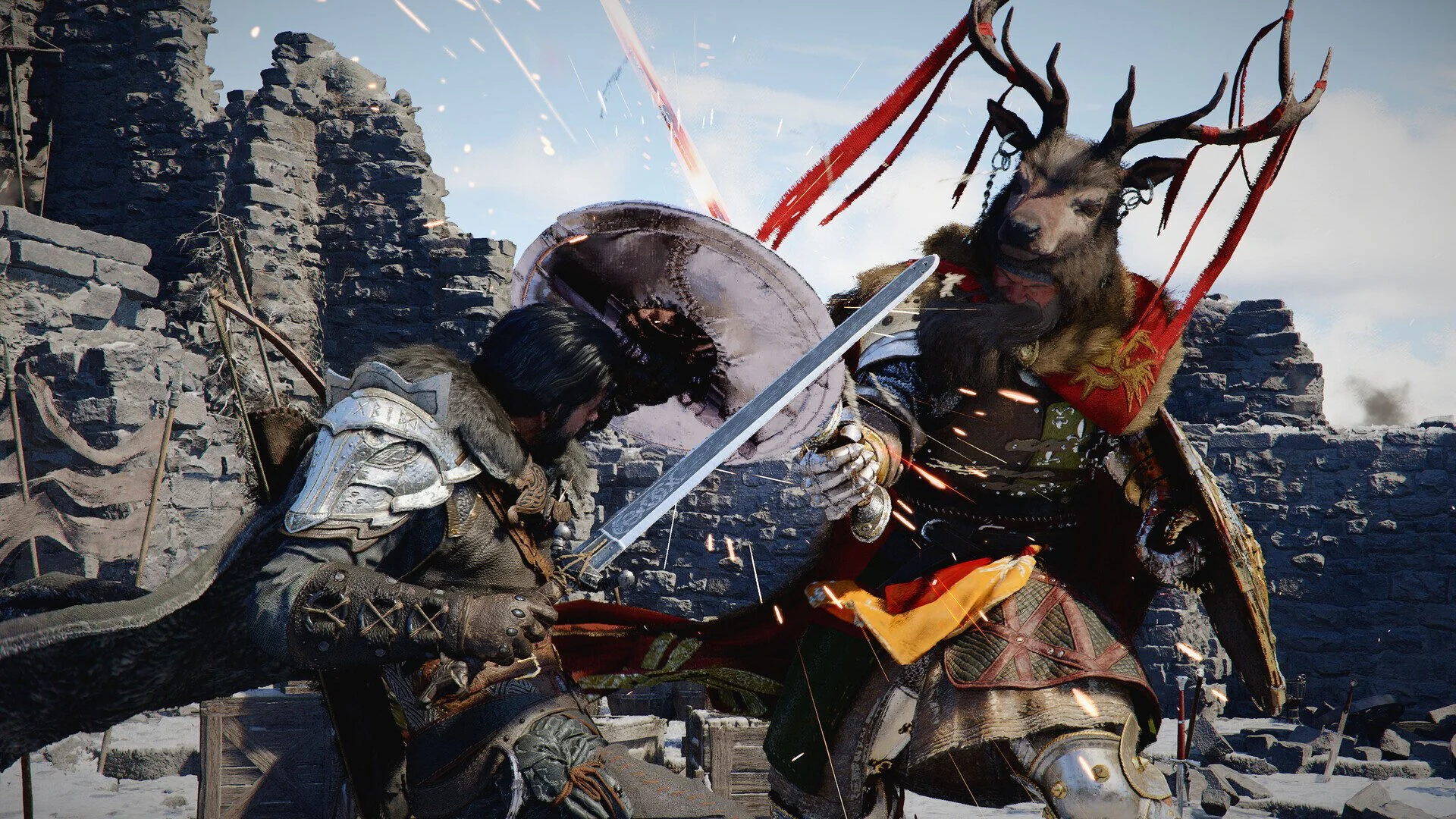
Some video games lend themselves to being set aside and resumed at a later date with zero consequences. These are often casual games with no major goals other than having fun while playing them. Fall Guys is a great example of this. You have a cartoony avatar that participates in zany group races, filled with obstacles. You run, jump, climb but the controls are far from difficult. You may well become skilled but such things are mitigated by the other players as they stumble around. You’re not at the mercy of apex players or “try hards”. It is not a game about winning and mastering techniques. The fun comes from playing it and the unique experience you have each time. I’ve been playing this game, on and off, since it’s launch in 2020 and in that time I have only ever won once (winning requires you to win a series of 4 to six individual races). However, whenever I pick up my controller and play Fall Guys, I have fun and the game lifts my spirits.
I recently completed the main story in Tainted Grail: The Fall of Avalon. In total I spent about sixty hours playing the game. I began at the start of the year, then took a break for a while but returned to it recently because I wanted to see if I could unlock a specific ending. I did manage to do this. Like so many other RPGs, Tainted Grail: the Fall of Avalon has a central storyline, along with a wealth of side quests, based around factions in specific zones. I think I possibly completed about a two thirds of these. However, once I finished the main story, my interest in the game began to wane. I finally left my character in the last major quest hub in case I wish to return at a future date. I then logged out of the game and uninstalled it from my PC to free up space for whatever I was to play next. In this case its The Sinking City 2. None of this is a negative reflection on Tainted Grail: the Fall of Avalon. I enjoyed the time I spent playing this quirky RPG. I simply had my fill and left to play something else.

On Tuesday 11th April, Aspyr Media rather surprisingly re-released The Lord of the Rings: War in the North, a co-op action-RPG from 2011. This game was delisted in late 2019, possibly due to changing rights ownership or a license expiring. Hence, I was somewhat discombobulated by the return of this title to all major gaming platforms. Mind you, the Embracer Group (through its subsidiary Middle-earth Enterprises) still controls the worldwide commercial and video game licensing rights for The Lord of the Rings and The Hobbit. Furthermore they have explicitly stated that they have plans for more games. It would appear this also means re-releasing and updating old favourites. It is also worth noting that they own Aspyr Media, which is also a bit of a giveaway. Let it suffice to say that this re-release and sparked enthusiastic online debate as to whether any other he Lord of the Rings themed games from the same era will receive a similar makeover. Judging by the internet chatter, there’s potentially a market for them.
The next expansion for the MMORG, The Lord of the Rings Online, was announced on the 1st August, via the gaming website MMORPG.The Wolves of Mordor, which will launch later in the year, appears ambitious in scope as it will include two new game systems as well as the obligatory story update. This expansion takes place in Draugardh located in the North East of Mordor, beyond the Plateau of Gorgoroth. It includes the new zones of Heledhris, Parth Rhavas and Nan Ogol. These vary environmentally ranging from the arid, volcanic and semi-tropical. Players will encounter the Daugrim in these regions, Werewolves but not in the modern sense. This is not the lycanthropy of Eastern European legends but in the established Tolkien idiom of fell spirits inhabiting the bodies of Wolves. The region also sees the return of the Woses and players can expect to encounter Elves and scouts from Gondor. As ever with LOTRO expansions, there will be new instances as well as a raid.
This is a post about the power of nostalgia and how sometimes, interacting with something from your past, be it physically or mentally, can produce a very strong and tangible emotional reaction. In some instances, this can be the result of something that you have specifically set out to do. On other occasions you can wander into a sense of nostalgia purely by chance. Today I experienced a very strong sense of nostalgia while watching a YouTube video and then again when I sought to replicate what I had seen. The video showed someone installing Windows 95 on to an old 486 PC from that era. The Window’s start up sound really touched a nerve (but in a good way) and then when the guy in the video launched Space Cadet 3D Pinball, a game that shipped with the operating system, I felt a strong compulsion to track down a copy and install the game myself, thus revisiting something that was an integral part of my life in 1995.
RV There Yet? is possibly the most entertaining game I’ve never played. My vicarious pleasure regarding this title has come exclusively from watching two popular YouTubers, JackFrags and WillFromWork, play through the game over a series of videos. It has been immensely amusing to watch and I have empathised a great deal as the group of four players has struggled with the game’s unpredictable mechanics and their own team’s dynamic. I could go and buy RV There Yet? myself but I doubt if I would ever have a gaming experience anywhere close to what I’ve watched online recently. So in some respects watching these videos has been an interesting alternative as I’ve been entertained, which ultimately is the point of video games. Perhaps there is a deeper philosophical point here that the game developers should reflect upon, as they’ve lost a potential sale. However, that is separate discussion for another day.
I don’t keep up with gaming news as much as I use to but several noteworthy announcement have come to my attention of late. Firstly, there’s an expansion, Songs of the Past, coming for the Witcher III: Wild Hunt in 2027. No doubt this is to pave the way for the Witcher IV. Next, I also found out about Hand of Fate: Horde. I liked this franchise and was saddened to learn that the original studio, Defiant Development, closed. Hence is was a pleasant surprise to see this new game being developed by members of the original studio. The third announcement was regarding Guild Wars 3. A new MMORPG in active development by a major studio is no small feat and is certainly good news for fans of this franchise and the genre per se. However, once you look beyond this news this announcement raises several questions and has certainly given me pause for thought. Let us take a few moments to consider them.
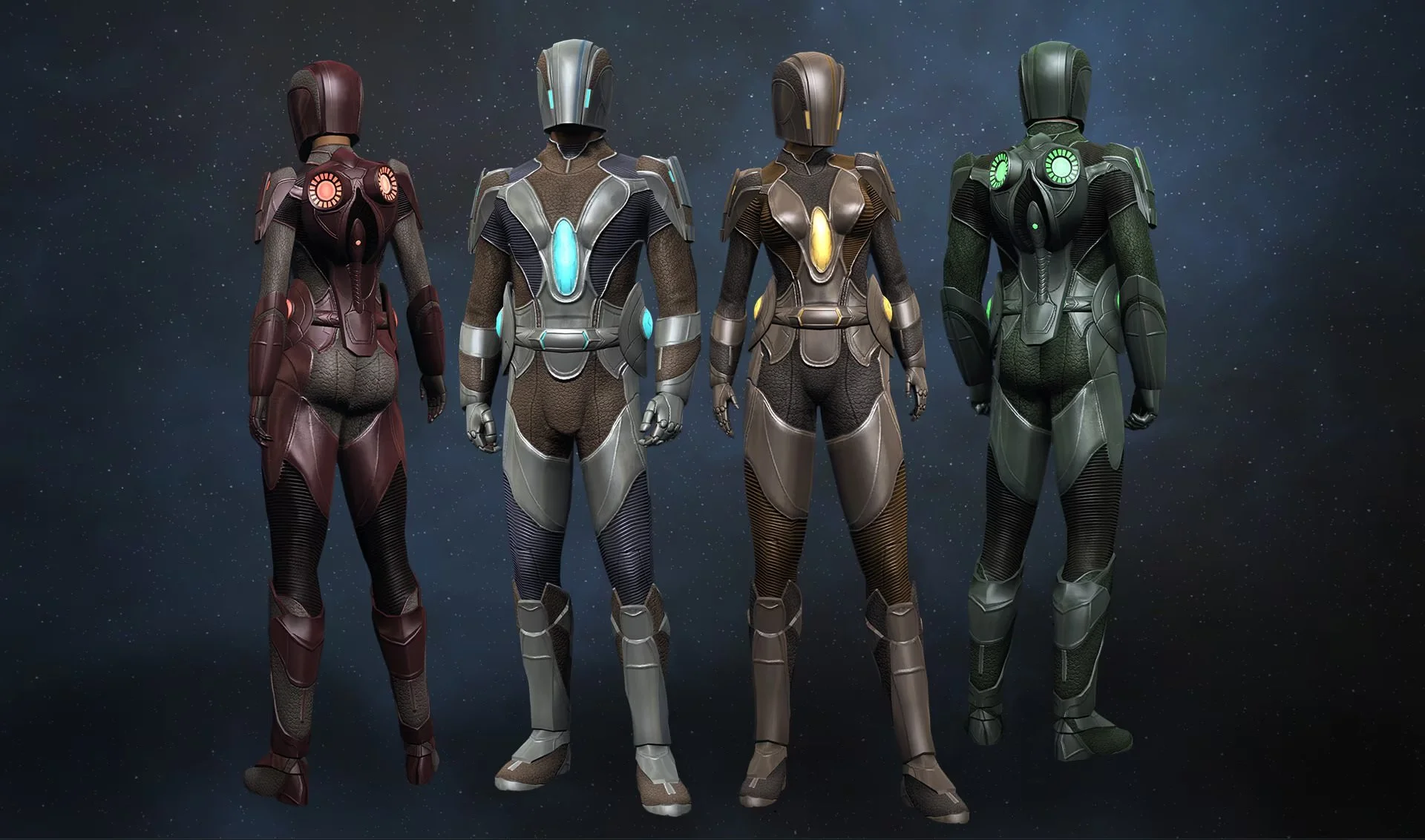
Star Trek Online has many in-game systems that are common to the MMORPG genre. The reputation system is one such example. In STO there are 13 reputation factions. Once a player has reached level 50 they may start progressing through the 6 reputation tiers of each one. Players gain progression through daily projects (20 hours in duration). Hourly projects are also available though they yield less reputation advancement and are limited to three times a day. Hence 20 hour projects are consider by default the most efficient way to gain rep. Projects require 30 Faction Specific Marks (earned via various activities in-game), 15,000 Energy Credits (standard in-game currency) and 2000 Expertise points. The most efficient way to tackle the reputation grind is to build up the necessary resources in advance and then at a designated time each day, start all 13 respective projects. Upon completion projects yield a player bound lockbox containing a random space or ground weapon, a console or Elite Marks which can be used to acquire faction gear.
I was recently perusing my archive of old blog posts, when it struck me how much I’ve written about the MMORPG genre over the years. Naturally, there was far more material from between 2008 and 2012 as that was period when I immersed myself in the genre and was very enthusiastic about it. I was at a point in my life when I had the time to dedicate to such games and I was happy to participate in the social aspect of they offered. I would regularly play through group content and spend time socialising online with fellow guild members. My experience remains a textbook example of how online games can be more than the sum of their parts and that where you are at in your life has a major impact upon your overall enjoyment. As I read though various old posts it became clear that my experiences where specific to this particular part of my life and that they cannot be repeated. My relationship with the genre is very different now and that’s fine.
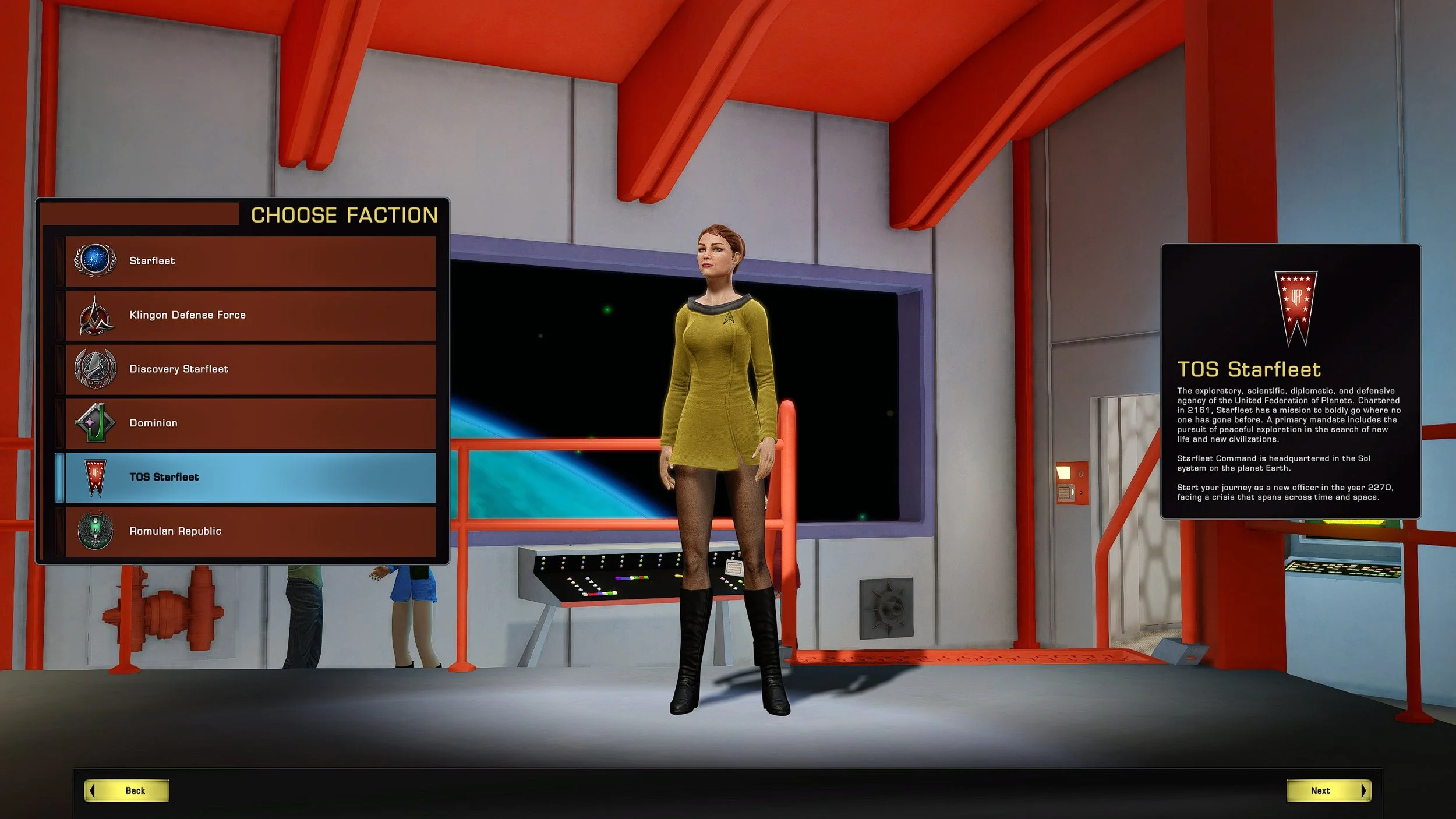
Creating alts is an integral aspect of the MMORPG genre. Many players will create a character of a specific class or faction, play it for a while, lose interest in it or they may decide that it is just not for them. Fortunately it is no effort at all to simply re-roll a new alt and set off once again. Furthermore, lots of players never reach level cap of the MMORPG that there playing. When the going get’s tough, so to speak, you can either soldier on for another 50 levels or simply create a new alt and return to the comfort of tried and tested content. Alts also give you the chance to secure an accolade or achievement that you previously missed. They are also of great benefit to the genres social aspects. Creating a new alt so you can play along with a friend who is just starting is great fun. Developer’s love them too as it means you’re still playing the game.
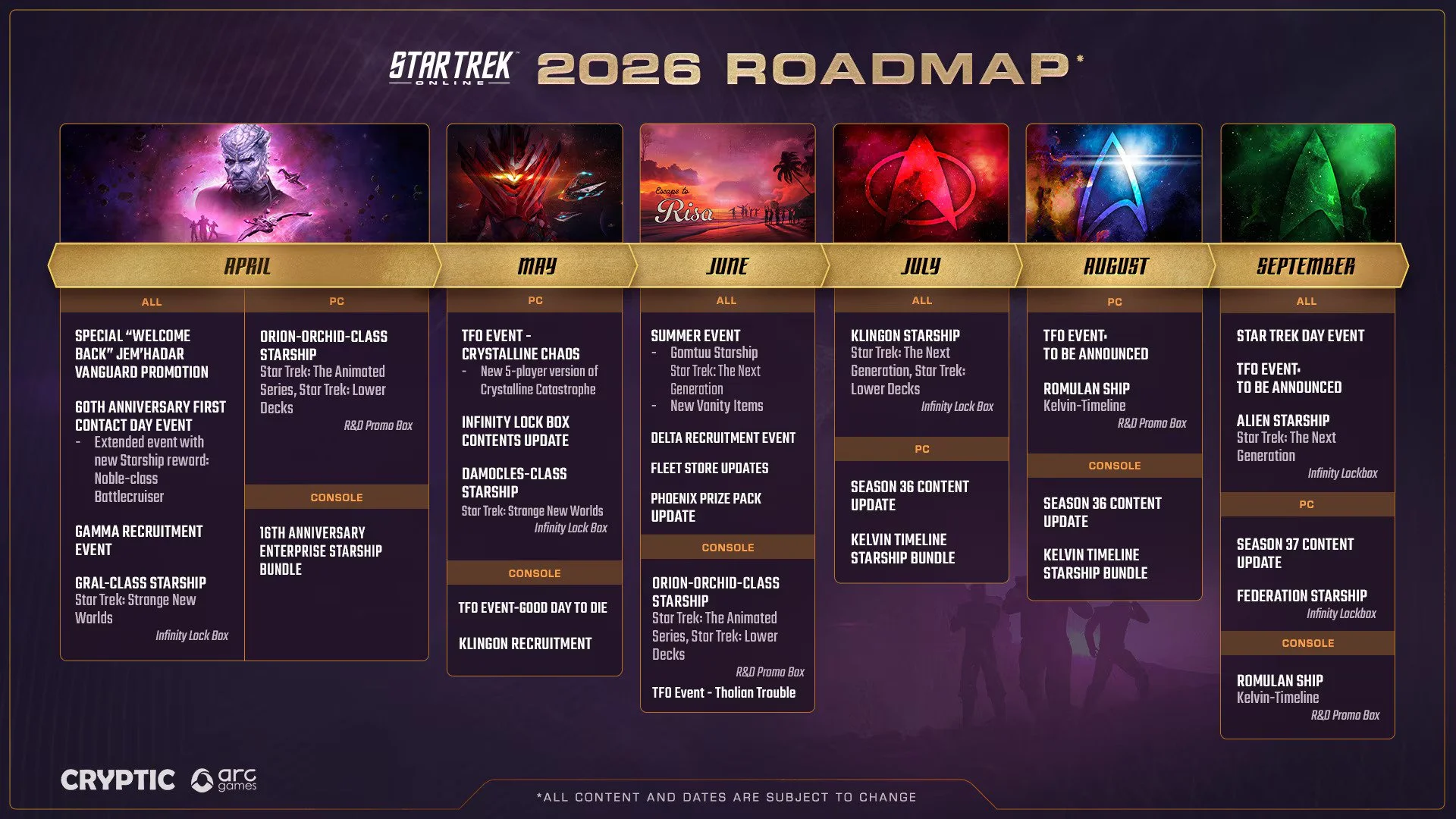
I recently took a break from Crimson Desert choosing instead to to play something familiar and easy going. As I’ve been logging into Star Trek Online daily to participate in the anniversary event, I decided to look through my various alts and see how far they had progressed through the game and what resources they had. At present I have twelve alts. My primary Captain was created in 2015 during the original Delta Recruit Event. I had previously played STO intermittently since its release in January 2010 but I never kept any of those characters. Hence this decade old Tactical Federation Captain has been my main focus when playing. The other eleven alts are the result of other recruitment events or whenever I wanted to try something different, such as playing a specific class or faction. I obviously played a lot of STO during the lockdown as several alts date from that period. Several had maximum reputation across all factions.
The action, open world RPG Crimson Desert has been patched five times since it launched on March 19th and there have also been multiple hotfixes. At first glance this isn’t anything unusual. New games have bugs and issues arise once a game is released and played across a much wider variety of hardware than in QA testing. However, if you read the patch notes that accompany these sizeable downloads it quickly becomes apparent that developer’s Pearl Abyss are not just addressing bugs and software glitches. They are actively engaging with their player base and responding to suggestions and requests from that community. Although this is not a unique approach, what is surprising is the speed and quantity in which these player driven changes are happening. There seems to be an active ongoing process to refine the game and eliminate some of its “rough edges” and the players are contributing to this process with their feedback.
According to my Steam statistics, I last played Starfield on 19th December 2023. I bought the game upon its release in September of that year and played in total for 136 hours. Starfield held my interest for three and a half month and I wrote seven blog posts about various aspects of the game. Although there were some engaging aspects to Starfield, I did feel that that the game was somewhat lacking in systems and content, at that point in its lifecycle. I also think that the marketing and player expectations associated with Starfield were overblown and unrealistic. The shadow of Skyrim looms large over all new Bethesda releases and they don’t seem able to quite recapture that magic. Hence, I inevitably drifted away from Starfield and to another game and was effectively “done” with it. I have not played the game since which seems to validate the theory that game are becoming increasingly more ephemeral.
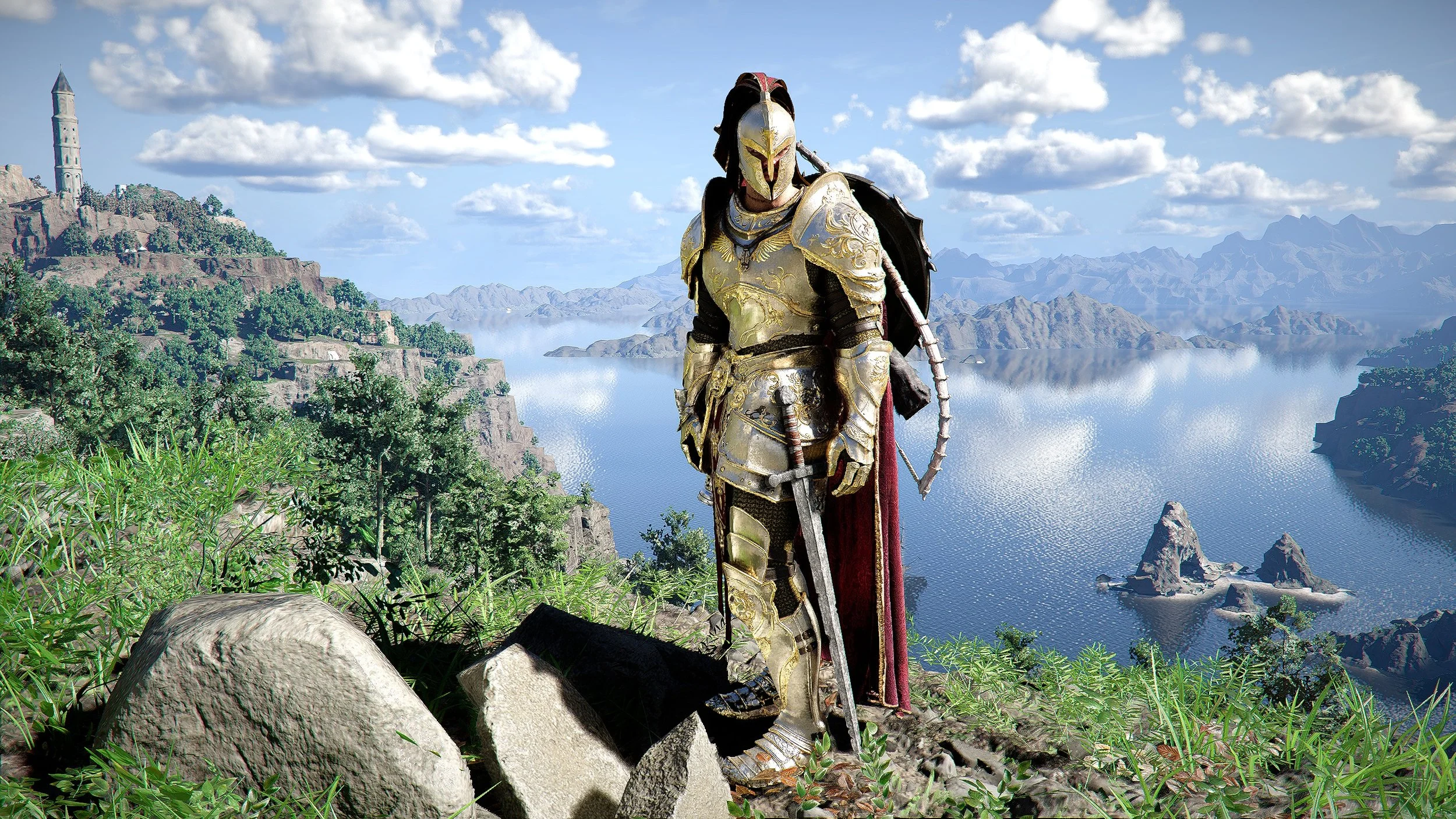
13 days after its release, market analysts estimate that Crimson Desert has already earned $200 million across the four main platforms (PC, PlayStation 5, and Xbox Series X and S). The game is certainly proving popular among gamers with the internet awash with live streams and “let’s play” videos. However, reviews are mixed both among gaming journalists and YouTube influencers. Common complaints about the game include that it is slow to start, the controls are poorly laid out on all platforms and that developer’s Pearl Abyss have done a poor job of explaining most aspects of the game to new players. Although such criticisms are true to a degree, I think these complaints highlight how many gamers are conditioned to expect new titles to follow a specific pattern with regard to pacing, narrative exposition and learning in-game systems. A pattern that Pearl Abyss has chosen to ignore, instead favouring an old school approach.
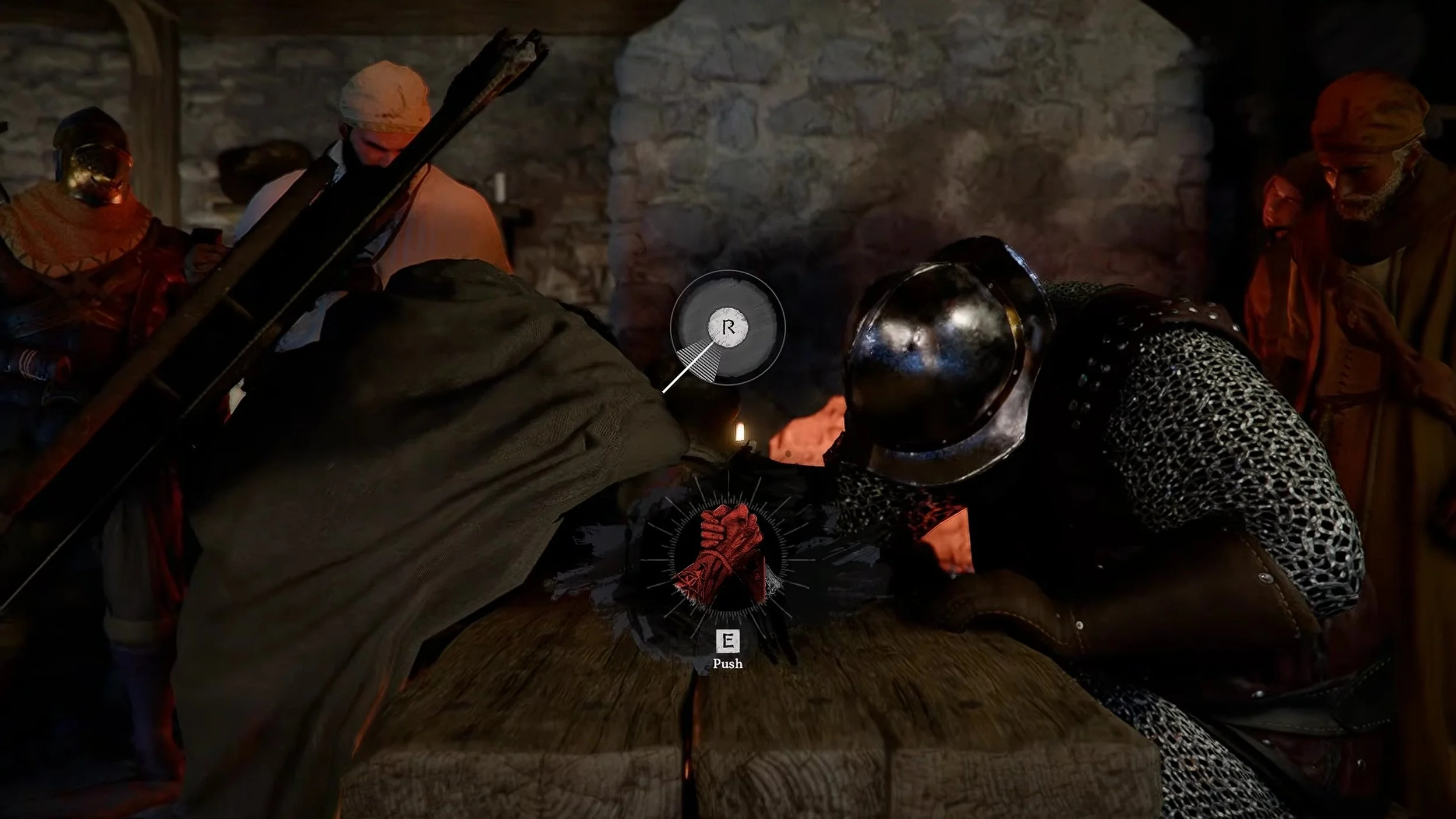
Early on Crimson Desert, the main quest requires the player to enter a tavern and arm wrestle a particularly strong guard. The arm wrestling match consists of a quick time event. If playing on PC you have to rapidly press the “E” key which turns a power meter from white to red. Then a white dial appears above the meter with a rotating hand. When the hand passes over a segment of the dial that is marked by hatching, the player must press the “R” key. The idea being the meter filling with red is you strength building (or waning) and the “R” key prompt indicates when to try and force your opponent’s arm. You will need to to continuously press the “E” key throughout the arm wrestling match and the “R” key about 4 times to win.
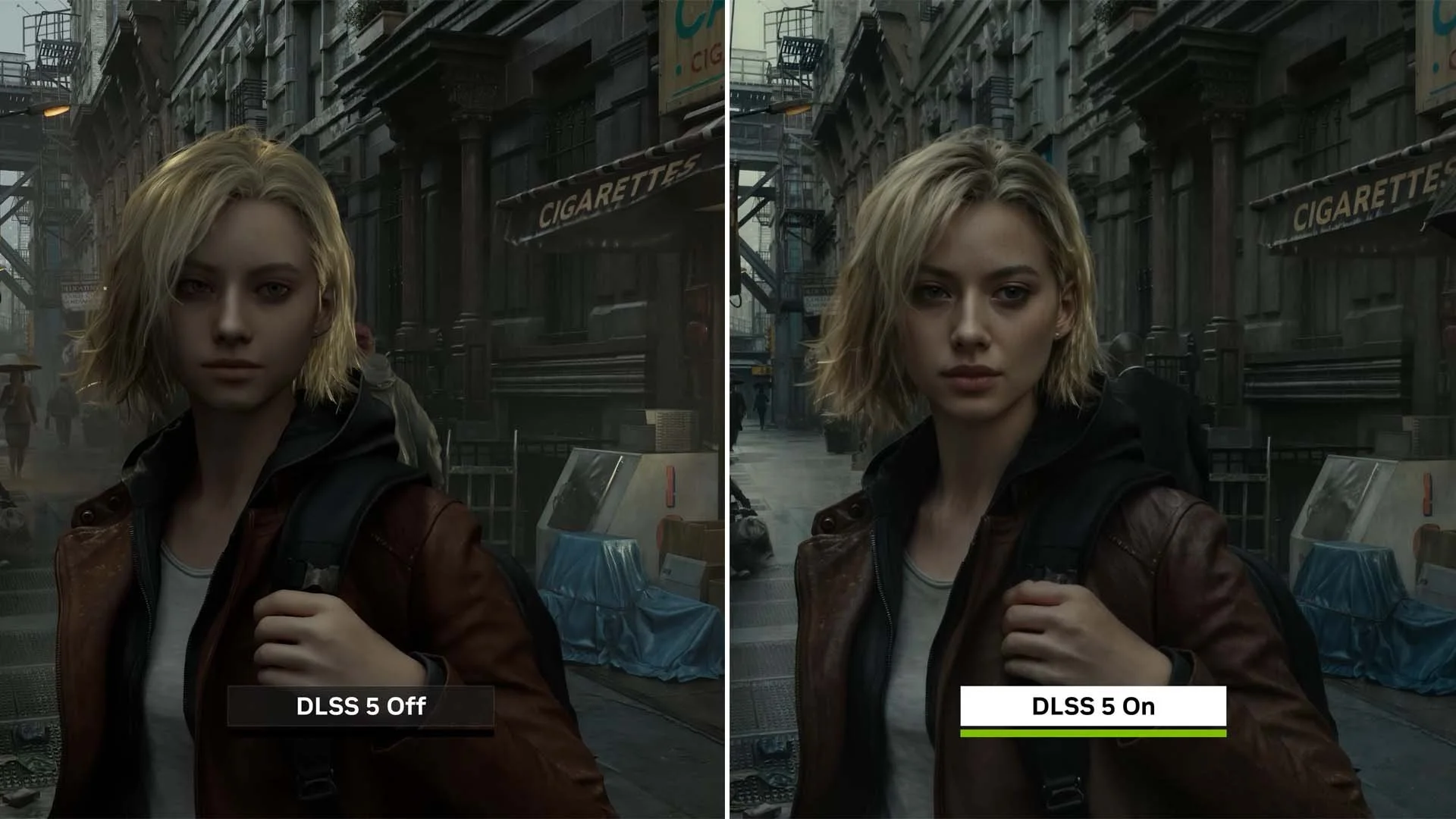
Earlier this week, Nvidia posted a video featuring their latest iteration of DLSS technology (Deep learning super sampling). DLSS 5 is an AI-powered “real-time neural rendering” process and unlike previous versions that focused on improving frame rates through upscaling or frame generation, DLSS 5 uses generative AI to “infuse” frames with photorealistic lighting and material details that the game engine never actually calculated. Let us pause for a moment and consider these words. Material detail that the game engine never actually calculated. Therein lies the rub. If you watch the aforementioned video or peruse the images posted here, it is abundantly clear what the technology does.
Last night, I spent the first 45 minutes after the launch of Crimson Desert, watching the 92GB pre-downloaded game files slowly decompressing and installing. I finally launched the game at about 10:50 PM GMT. I then waited a further 5 minutes while shaders were downloaded. It took me about 15 minutes or so to read through the various game settings and choose those that are optimal for my PC. I suspect even if you have a beast of a computer, you’re still going to have to spend some time tweaking settings. As for those players like myself with a gaming rig that is somewhere in the middle of the game’s specifications, be prepared to do a lot of fine tuning both within Crimson Desert itself and your Windows settings.
Underwater (2020)
In the near future, Kepler 822, a research and drilling facility located at the bottom of the Mariana Trench, suffers a sudden and catastrophic structural failure. There are only six survivors. Mechanical engineer Norah Price (Kristen Stewart), Captain Lucien (Vincent Cassel), biologist Emily Haversham (Jessica Henwick), engineer Liam Smith (John Gallagher Jr.) and crew members Rodrigo (Mamoudou Athie) and Paul (T.J. Miller). As all the functional escape pods have been used and they are unable to contact the surface, the Captain suggests using pressurized suits to walk one mile across the ocean floor to the Roebuck 641 drill installation. There they will find more escape pods. However, it soon becomes apparent that the disaster was not caused by an undersea earthquake and that they are not alone as they make their journey.
In the near future, Kepler 822, a research and drilling facility located at the bottom of the Mariana Trench, suffers a sudden and catastrophic structural failure. There are only six survivors. Mechanical engineer Norah Price (Kristen Stewart), Captain Lucien (Vincent Cassel), biologist Emily Haversham (Jessica Henwick), engineer Liam Smith (John Gallagher Jr.) and crew members Rodrigo (Mamoudou Athie) and Paul (T.J. Miller). As all the functional escape pods have been used and they are unable to contact the surface, the Captain suggests using pressurized suits to walk one mile across the ocean floor to the Roebuck 641 drill installation. There they will find more escape pods. However, it soon becomes apparent that the disaster was not caused by an undersea earthquake and that they are not alone as they make their journey.
Underwater starts with all the hallmarks of a film that is very derivative of Alien. The technology and immediate environment all have an industrial aesthetic that is worn and feels used. The crew is made up of “working men” rather than clean cut academics and the corporation that owns and runs the facility is simply referenced by branding on bulkheads or on monitor lockscreens. The screenplay by Brian Duffield (No One Will Save You) and Adam Cozad is lean and moves quickly but there’s sufficient dialogue to get the measure of each character. The threat comes quickly during the film’s concise 95 minute running time and it is here that Underwater diverges from similar films. DeepStar Six featured a prehistoric Eurypterid and Leviathan had monsters caused by mutagens containing piscine DNA. Underwater has a distinctly Lovecraftian nemesis.
Director William Eubank maintains a tense and claustrophobic atmosphere. Due to the seven mile depth, there is no sunlight and the ocean floor is illuminated by the lights on the crew’s environment suits and from LEDs on equipment. Hence, for the first two acts the aquatic menace is seen only fleetingly and the shocks come mainly from jump scares. The death scenes are hectically edited and you certainly get the impression that something unpleasant has happened but you cannot see the detail. Although initially frustrating this becomes the film’s greatest strength as it becomes clear this is not just a case of an apex predator. The crew do a little theorising about what is happening around them but it is left vague and there are no convenient answers. The climax and final reveal work better as a result of this approach.
Underwater is an effective genre outing. It isn’t a masterpiece and certainly isn’t original. It takes some standard tropes from “creature features” and horror films and it tries its best to do something a little different with them. The $60 million budget covers a lot of ground, with the sets, production design and VFXs looking polished and plausible. The cast is competent and the characters likeable. Marco Beltrami’s score at times has shades of vintage John Carpenter and Alan Howarth. But it is the film’s final act that is responsible for making Underwater better than average. Casual viewers may not necessarily get the inference but those who are aware of the concept of cosmic horror should enjoy the eldritch payoff. Underwater is a well crafted rollercoaster ride, that doesn’t out stay its welcome and should be judged as such.
In 1968 the dilapidated freighter Corita hastily leaves Freetown to avoid a customs inspection. Captain Lansen (Eric Porter) has a cargo of dangerous explosives which he is smuggling so he can finally retire. His ship’s passengers also have reasons for leaving in a hurry. Dr. Webster (Nigel Stock), together with his daughter Unity (Suzanna leigh), is relocating due to his indiscretions with patients and illegal operations. Alcoholic pianist Harry Tyler (Tony Beckley) is aimlessly drifting from port to port. Eva Peters (Hildegard Knef) is fleeing from her husband with stolen bearer bonds which she intend to use to buy back her son from his evil clutches Caracas. Ricaldi (Ben Carruthers), a questionable lawyer, is pursuing Eva to retrieve the stolen bonds. First officer Hemmings (Neil McCallum) suggests that the ship should return to Freetown after an imminent Hurricane warning. The Captain asks the passengers and they are unanimous that they do not wish to return. However a mutinous crew, the bad weather and the instability of the explosives force everyone to abandon ship. The survivors find themselves adrift in a lifeboat surrounded by a strange carnivorous seaweed.
Despite being considered by many as an original story, The Abominable Snowman (1957) is in fact a remake of a made for television play, The Creature, that was originally broadcast in the UK in 1955. Hammer Films would often purchase the rights of popular TV programs and subsequently re-work them for mainstream, international cinema. Larger production budgets and fewer censorship restrictions allowed them to make their cinematic interpretations more lurid, thus commercially viable. Hence The Quatermass Xperiment, Quatermass II and Quatermass and the Pit were all given a big screen makeover and were commercially successful. The Abominable Snowman was written by acclaimed writer Nigel Kneale, who also wrote the original television drama and the aforementioned Quatermass trilogy. Although ostensibly marketed as a horror film this production is actually an interesting blend of psychological thriller and science fiction.
In the near future, Kepler 822, a research and drilling facility located at the bottom of the Mariana Trench, suffers a sudden and catastrophic structural failure. There are only six survivors. Mechanical engineer Norah Price (Kristen Stewart), Captain Lucien (Vincent Cassel), biologist Emily Haversham (Jessica Henwick), engineer Liam Smith (John Gallagher Jr.) and crew members Rodrigo (Mamoudou Athie) and Paul (T.J. Miller). As all the functional escape pods have been used and they are unable to contact the surface, the Captain suggests using pressurized suits to walk one mile across the ocean floor to the Roebuck 641 drill installation. There they will find more escape pods. However, it soon becomes apparent that the disaster was not caused by an undersea earthquake and that they are not alone as they make their journey.
One of the most common objections raised regarding the Jurassic Park/Jurassic World franchise is that the films are specifically made to obtain a PG-13 rating from the Motion Picture Association, for purely commercial reasons. Hence, in all films, there is little on screen violence and the dinosaurs are mainly portrayed as a threat and a means of providing jump scares. When a character is killed by a dinosaur it usually happens off screen, is obscured by something else in frame, or is shown in long shot with very little detail. The realities of being eaten alive by a predator are conspicuously absent. Hence, audiences looking for films featuring more graphic dinosaur attacks, have not been well catered for apart from some minor direct-to-video titles. Primitive War finally fills this gap in the market with a frenetic genre mashup that strives to punch above is budgetary weight.
Fluke is a curious film about a man who is reincarnated as a dog and his subsequent realisation that he may have been murdered. It takes an adult novel by British author James Herbert, which is filled with philosophical musing and strives to adapt it in a far more family friendly fashion. The result is a somewhat bipolar production which thematically alternates between existential introspection and Buddhism. It then strives to deliver its message in a Disneyesque idiom. Children will potentially be confused and upset by what they see and adults will be wrongfooted by the continual shift in tone. Fluke was not a critical or commercial success upon release and the flaws that were identified by critics at the time still ring true today. That being said, Fluke is still an interesting and entertaining film, despite its faults.

When reviewing Sting, one critic stated that the small scale setting and thus, low stakes (IE only a few peoples lives are at risk), made the film not especially memorable. I consider this to be a somewhat spurious criticism. It is the very fact that Sting takes place in such a commonplace environment, with the main characters being everyday people that makes it different. There is a clear focus on well defined characters and their backstory. Unlike so many contemporary films, I actually gave a damn about the protagonists in Sting. An integral aspect of the horror genre is the ability to take a well known and familiar trope and provide a different and absorbing spin on it .It would appear that some audiences have been belaboured over the head by so many overblown and bombastic blockbusters, that the very notion of depicting small, localised and intimate events in a film, seems to bamboozle them.
When I first saw Mimic in 1997, I was impressed by the fact that it offered a different perspective on the monster movie genre and that it seemed to have moments of greater depth than you'd expect from such material. Later on when I became more aware of the works of writer, director Guillermo del Toro, I learned that this movie had had a troubled production and that Miramx had imposed specific requirements upon the final cut of the film. This explained some of the movies inconsistencies and hinted at a far more ambitious artistic endeavour by del Toro. Initially Mimic was conceived as a thirty minute short and part of a three part anthology movie. However it along with the sci-fi film Imposter were both deemed to be of sufficient merit to be developed into feature length productions.

During the seventies, Hollywood started looking to ongoing societal and political concerns as a source of material for movies. Hence, the energy crisis, terrorism and global pollution quickly found themselves being subsumed into hastily written screenplays, in attempt to be topical, commercially successful and relevant. Prophecy based upon a novel by David Seltzer tackled not only the issue of pollution but also the ongoing disenfranchisement of Native Americans. Paramount studios went so far as hiring an established director of note, John Frankenheimer. In many respects this movie should have been a bigger success with a reasonable budget, robust cast and studio support. Sadly it did not fare well, either critically or at the box office due to obvious flaws in the production. Despite his outstanding body work, (Birdman of Alcatraz, The Manchurian Candidate) Frankenheimer was not the best choice of director for a genre movie such as this and he was also going through a period of alcoholism.
In Agua Dulce, California, the Haywood family trains horses for film and TV productions. One day at the Haywood ranch, small metal objects unaccountably fall from the sky. One of which, a nickel, kills Otis Haywood Sr (Keith David). His children, Emerald “Em” Haywood (Keke Palmer) and Otis “OJ” Haywood Jr. (Daniel Kaluuya), continue to run the business. However, due to the loss of a contract, they have to sell some of the horses to Ricky “Jupe” Park (Steven Yeun), who operates a Western theme park called Jupiter's Claim. One night, the Haywood’s notice the electricity supply fluctuating and their horses violently reacting to an unknown presence. They discover that something has been taking their horses and regurgitating inorganic matter, which OJ believes caused their father's death. The Haywood’s decide to obtain proof and subsequently ask electronics store employee and UFO enthusiast, Angel Torres (Brandon Perea) to set up surveillance cameras.
Back in 2018 I wrote the following about The Meg in my review. “My interest doesn’t go so far as a sequel. This sort of movie is the equivalent of a greasy burger you buy at the funfair. It’s fine once in a while as an indulgence, despite the fact that you know it’s bad, but you would soon tire of them being a regular part of my diet”. Five years later, I foolishly thought it may be “fun” to give the sequel, Meg 2: The Trench (2023), a go. Especially in light of the fact that it’s directed by Ben Wheatley. Surely such a filmmaker would bring some creativity and a fresh perspective to this franchise? Nope. Turns out he didn’t. Meg 2: The Trench lacks everything that made its predecessor tolerable. This superfluous sequel is an uninspired, poorly written mess which confuses turning everything up to eleven with entertainment. It gets nowhere near “it’s so bad, it’s good” territory. Instead it makes the biggest mistake a film of this nature can do. It’s dull.
Not to be confused with the Shaw Brothers martial arts film of the same name from 1978, The Deadly Mantis (1957) is a creature feature in the idiom of Them! (1954). Unlike that film’s mutant ants, the monster on this occasion is not the product of the atomic age but a giant prehistoric praying mantis that has been released from the polar ice caps. Exactly how a creature associated with more tropical regions came to be at the North Pole is never explained. In fact precious little is in The Deadly Mantis. The film’s overall scope is somewhat limited with a basic story, limited action scenes and a rather dull cast of generic characters. There is an over reliance upon stock footage from period military documentaries and previous Universal Studio feature films. The film’s biggest failing is the giant praying mantis which does most of its rampaging conveniently off camera. It’s all rather disappointing.
It is no secret that the film industry relies on a handful of common tropes as the mainstay of their cinematic output. It uses timeless themes, storylines and archetypes that have featured in folk tales, plays and literature throughout history. Hence their familiarity with audiences around the world. Where the skill in filmmaking lies is to take a common, well known idea and interpret it in a new and innovative fashion. Akira Kurosawa took Shakespeare’s MacBeth and retold the tale through the prism of Japanese feudalistic culture. The result, Throne of Blood, is considered a masterpiece. Similarly, The Lion King retells the same story through the medium of animation and anthropomorphic wildlife. All of which proves that the key to successfully retelling a familiar tale is to be creative with regard to setting, presentation and perspective.
Jurassic World Dominion is a textbook example of a franchise that has run out of steam. Despite the enormous budget, the top notch production values and the presence of three members of the original cast, this is a long, tedious and curiously uneventful film. It has nothing new to say about environmental matters or unfettered science; themes that were front and centre in previous instalments. Nor does it do anything interesting with the main plot device of dinosaurs trying to integrate into our current ecosystems. But perhaps its biggest failing is the conspicuous lack of tension. The denizens of Jurassic World are simply not a threat and fail to have any emotional impact. The film doesn’t even placate viewers with superfluous cast members being eaten. The onscreen deaths by dinosaurs are rather tame.
Set in Brazil in 1901, plantation owner Christopher Leiningen (Charlton Heston) makes arrangements to get married. He has spent his entire life building his estate and reclaiming land from the jungle. He is fiercely independent but he is also alone and isolated. Joanna Selby (Eleanor Parker) from New Orleans agrees to marry him but their first meeting does not go well. Leiningen is unhappy to discover that Joanna is a widow and hence has a past, so he tells her to return to America on the next available boat. However, local commissioner (William Conrad) informs Leiningen that swarming soldier ants, or Marabunta, are moving towards his plantation destroying everything in their path. Leiningen refuses to abandon his life’s work and is surprised when Joanna decides to stay with him. Can they convince their native workers to stay too and can they defend the estate from the Marabunta, described as “forty square miles of agonising death”.
After the critical and commercial success of Jaws in 1975, a veritable tsunami of “creature feature” movies followed in its wake. A few titles, such as Alligator (1980) and Piranha (1978) managed to do something different with the rogue animal trope, both providing a quirky and satirical look at the genre along with plenty of exploitation mayhem. However, most of the rest were low budget productions of negligible quality. However, such qualities are not always an impediment at the box office. Grizzly (1976) was hastily made on a budget of $750,000 yet earned an impressive $39,000,000 at the box office. The critics hated it but the public loved it and it went on to be the second most financially successful independent feature film in the US that year (the first being Monty Python and the Holy Grail). Grizzly is in many ways a microcosm of the exploitation genre from the seventies and needs to be viewed through that prism if it is to be enjoyed.
The seventies saw a minor boom in creature feature films after the box office success of Jaws. Hence, we had movies such as Orca (1977), Tentacles (1977), The Pack (1977) and Piranha (1978). If an animal could eat you or potentially pose any threat to people, someone somewhere would make a movie about it. Usually a bad one. A few of these even dared to stray into other hot topics of the time such as pollution and protecting the environment. Some would even invoke mysticism and folk lore to facilitate their protagonists. Nightwing is one such curious genre hybrid which combines vampire bats, shale oil mining and Native American culture in its clumsy and unsubtle plot. It’s a somewhat odd undertaking, directed by Arthur Hiller. His previous work included Love Story (1970) and Silver Streak (1976), so he was not the first person you’d expect to see associated with such material. The film doesn’t work well as either a horror movie or an exploration of social issues, but like so many movies from this era, it is of interest mainly due to its sheer incongruity.

If you have seen any of the marketing material or trailers for The Meg, then you know exactly what you’re getting right from the get-go. All movies inherently require the viewer to suspend their sense of disbelief to various degrees. Naturally, the “creature feature” genre asks audience to go the extra mile with this concept. The Meg takes a major gamble by insisting that everyone goes further still, not by believing in a giant prehistoric shark (Megalodon) but that Jason Statham is a ex-navy, deep sea rescue diver. However, it pays off and the resulting movie is staggeringly stupid, but mercifully entertaining in an undemanding way. Recent movies such as Into the Storm and Geostorm are crass and made worse by their implicit assumption that their viewers are stupid. The Meg is far from cerebral but has an upbeat tone and a sense of playfulness that knowingly invites the audience to come aboard with the silliness. It’s a big distinction and the reason why I smiled a lot and frequently rolled my eyes while watching The Meg, but never with derision.

Critical opinion was very much split this summer when Jurassic World: Fallen Kingdom was released. However, the viewers were somewhat indifferent to the opinions of the professional critics and the movie made a healthy $1,303,476,615 globally, proving once again that the public’s’ continuing love affair with “all things dinosaur” shows no sign of abating. When you factor in the home media market into overall profits, the entire Jurassic Park franchise will have made $5 billion worldwide. So, bearing in mind the old adage that “money talks and bullshit walks”, I think it’s safe to say there’ll be more instalments in the years to come. When faced with such overwhelming box office popularity it seems somewhat pointless to dissect the latest movie, because the film seems to be bullet proof regardless of narrative flaws or ill-conceived plot devices. However, film criticism isn’t about box office popularity but about analysing the relative quality of a movie’s construction and its subsequent standing.
I first saw The Land That Time Forgot way back in 1975 at the Odeon Isle of Wight, when it was first released. We were on holiday at the time, which was cause for celebration in itself, as these were few and far between during my youth, due to the state of the UK economy at the time. But to then go to the cinema and see a fantasy film, filled with action, adventure and monsters, was the icing on the cake for an over excited eight-year-old. Adapted by Michael Moorcock and James Cawthorn from the 1924 the novel by Edgar Rice Burroughs, The Land That Time Forgot is a classic example of high adventure on a low budget. Its technical shortcomings were even apparent to me as a child, yet there was a charm and honesty to this curious British production, that had the audacity to try and compete with the likes of more expensive US productions such as The Golden Voyage of Sinbad and Island at the Top of the World.
Black Sheep is a high concept horror comedy from New Zealand. Featuring creative physical effects by Weta Workshop, this tale of genetically modified killer sheep, animal husbandry and environmentalism requires a very broad sense of humour and an abiding love for the “creature feature” sub-genre. It should be noted that the copy I watched was the unrated R1 DVD. This version is stronger in content than the R rated US theatrical release and yet was released at the UK cinemas with only a 15 rating from the BBFC. I suspect that the similarities in humour between the UK and New Zealand contributed to this somewhat low rating. That and the fact that horror comedy often gets a free pass because the humour always tends to mitigate the violence.
Frank Darabont achieved both critical acclaim and mass appeal with his adaptations of The Shawshank Redemption and The Green Mile. In 2007 he returned once again to the work of Stephen King with his film version of The Mist. It’s a sideways step away from human drama into a more genre piece, yet it still retains a very traditional story at its heart. Once you look beyond the superficial elements of "creature feature" plot, you get yet another well written character study by an ensemble cast, again focusing on how the human condition deals with extreme situations. The particular route it takes and some of the themes it explores may not be to everyone's taste. However, it still focuses on characters and performances. It is also a movie that ends with a somewhat unexpected plot development, that some viewers may find a little extreme. It is one of those film related twists that if known in advance, greatly diminishes once enjoyment of the film.
When you see the names of such cinematic luminaries as Steven Spielberg and J.J. Abrams together on the same movie poster, naturally your expectations are going to be high. Yet when watching the various trailers for Super 8, just prior to its release in 2011, I was somewhat cautious. I have discussed in the past at some length the ambiguous nature of trailers and that they can misrepresent a film. Yet even bearing this in mind at the time, I couldn’t help but feel that Super 8 seemed like a somewhat self-indulgent homage to Spielberg's earlier work. I subsequently saw the movie at the cinema in August that year and my suspicions were validated. However, over time I have spoken to several friends who are advocates of the movie, so I thought I’d watch it a second time. Sadly, I still find myself unable to label Super 8 as anything else other than adequate. Now I would hasten to add, that I use adequate within the context of both director’s body of work. An adequate film from either Mr Spielberg or Abrams is still superior to many of their competitors. But that's not the point. I simply expected better from such a project.
Having recently sat through Orcs! I decided to take a further chance and watch Orc Wars. It too is a very low budget film, although this time the finances were raised through crowdfunding. Sadly, it is not the fun, tongue in cheek, independent adventure movie the trailer and associated marketing implies. There is very little merit in this production. It's cheap, cheerful and although harmless, it clearly demonstrates that not all fan funded projects are good cinema. Some are just indulgences. The problem is in the title itself, which tries to sell an idea that the movie production is incapable of delivering. Instead of the spectacle of an army of a thousand Orcs pitted against the technological might of the US war machine, we get a few extras in ill-fitting costumes, running skirmishes against no-name actors on quad bikes and a few old Army Surplus vehicles. It's all rather lacklustre and underwhelming.

As a fan of the horror genre I’ve sat through numerous low budget films in my time. This has usually been at festivals or conventions. Sometimes watching something as part of a group, with likeminded individuals, makes a difference. You find yourself groaning in unison and the shared experience helps compensate for potential deficiencies. Watching questionable material in the comfort of your own home, purely on your own can be a lot tougher. However, due to my abiding love of the genre, I am prepared to cut a lot of cheap ass indie flicks considerably more slack than I would others. So, I'll endeavour to review Orcs! with as much impartiality as possible. Oh, and before we start, let us clarify the term Orcs. Although Middle-earth is not referenced in any way, this film is definitely about Tolkien's creations. Or at least their depiction in another well-known series of films.
10 Cloverfield Lane blends several cinematic genres producing an interesting premise. Once it has established its narrative arc, it then dives head long into an exciting and tense one hundred and four minutes. The movie is not a direct sequel to Cloverfield (2008) but does touch upon some of the same themes and ideas. Made on a modest budget of $15 million, the claustrophobic setting of a nuclear bunker accommodates strong performances from the lead actors. It is not until the third act when the story movies back to the outside world, do we see any major visual effects. Overall, this is a very compelling film due to the strong screenplay and well defined central characters.

I did my best to avoid the hype surrounding the initial release of Cloverfield. Such media saturation and public interest can often cloud the issue of whether the actual film is any good. Five years later and having watched the movie twice, once in the theatre and once at home, I am still somewhat conflicted about this movie. The use of hand held video cameras is both a boon and a bane. The constant movement of the image has proven to cause motion sickness for some viewers, although this is not so overwhelming when viewed on a smaller screen at home. Yet the medium of news footage mixed with handheld cameras does create a palpable sense of immediacy. This helps immensely when trying to sell a fantastic concept, such as the one that Cloverfield features.

The enigma of the Xenomorph in the Alien franchise is diminished once you start to rationalise its heritage. Sadly, that’s exactly what Alien: Covenant has chosen to do. It jettisons the mystery of the original 1979 movie and pulls back the curtain, so wisely put in place thirty-eight years ago, to reveal a rather lacklustre explanation to the Xenomorph’s origin. Having spent nearly $100 million and employed a production team of some of the finest talent that money can buy, the resulting movie is not bad per se, just crushingly superfluous. After watching Alien: Covenant this week, my overall reaction can be distilled down to a deep sigh of indifference and a shrug of the shoulders.
I have written many times in recent years about how big titles get announced by the gaming industry, of the ensuing hype up that leads up to launch day and then the subsequent disappointment on purchase. It is a malady that has afflicted the movie industry for decades and has become increasingly more common in the last decade. Hype has a curious link with reputation. There are a handful of directors in contemporary Hollywood who when they add their name to a production, people take notice. Ridley Scott is one of these. His body of work pretty much guarantees he can make whatever he wants, be it a commercial undertaking or a ludicrous vanity project. However, the downside to being a film maker of this stature is that you are not so easily exposed to proper scrutiny by your peers. No one stops you from making a mistake because you are supposed to know what you are doing. They let you do what you want. Which is bad.
Hollywood is a cyclical place and often repeats decisions it's successfully made in the past. During the early seventies, the mainstream film industry head hunted a lot of up and coming talent from the independent film making community, or took a chance on directors who were fresh out of film school. It was a means to an end and a way to tap into the new talent that was proving popular and lucrative. Similarly, Warner Bros. followed suit in 2014 when Gareth Edwards was hired to direct the multi-million-dollar Godzilla reboot. His previous movie was the self-financed indie Sci-Fi picture Monsters. Godzilla went on to be both a box office and critical hit.

Gareth Edwards directing debut Monsters, was a clever, subtle and genuinely moving human drama that just happened to be set against the background of alien lifeforms in a quarantine zone. He also managed to imbue the monsters of the title with a sense of depth. They were intriguing with their bio-luminescent communication and curious vocalisations. They were not simply an arbitrary MacGuffin and hinted at something far more complex. I was therefore very surprised and pleased that he has managed to maintain these qualities in his second feature film Godzilla. Despite being a massive studio undertaking his reboot of the classic franchise has a depth of soul that you seldom find in such mainstream material.

Strictly Come Dancing 2025: The Thomas Skinner Controversy
Strictly Come Dancing remains the BBC’s flagship light entertainment show for Autumn. Despite controversy and scandal, the show bounced back last year and firmly re-established itself as the “feel good, family show” it has always claimed to be. Blind comedian Chris McCausland becoming the 2024 champion certainly validated the show’s commitment to diversity and inclusion and helped place Strictly (as it is known to its fans) back on its cultural pedestal. I’m sure those involved in the production of the show breathed a sigh of relief when the season ended on such a positive note, eclipsing the negative press that had been ever present last summer. Second chances and opportunities for a “course correction” are few and far between these days. Especially when you have elements of the UK press waiting with bated breath and hoping that you’ll fail.
Strictly Come Dancing remains the BBC’s flagship light entertainment show for Autumn. Despite controversy and scandal, the show bounced back last year and firmly re-established itself as the “feel good, family show” it has always claimed to be. Blind comedian Chris McCausland becoming the 2024 champion certainly validated the show’s commitment to diversity and inclusion and helped place Strictly (as it is known to its fans) back on its cultural pedestal. I’m sure those involved in the production of the show breathed a sigh of relief when the season ended on such a positive note, eclipsing the negative press that had been ever present last summer. Second chances and opportunities for a “course correction” are few and far between these days. Especially when you have elements of the UK press waiting with bated breath and hoping that you’ll fail.
For those who live outside of the UK or who do not watch Strictly, it is worth taking a few moments to consider the significance of the show, its importance to the BBC and its place in UK pop culture. Strictly has grown from its humble origins in 2004 as a celebrity dance talent show, to a national institution and a text book example of “feel-good TV”. It champions dancing, fitness, inclusivity and celebrity re-invention. It regularly has an audience of over 7 million viewers and has been licensed to over 60 other countries under the title Dancing With the Stars. The show has a broadly wholesome reputation and as such has proven accessible to a wide audience. It appeals to wide eyed fans, families, casual viewers and even cynical old curmudgeons like myself, as learning to dance is a prodigious undertaking requiring dedication and fortitude. Strictly is also a great way for actors, artists and media personalities to revitalise their careers.
Bearing this all in mind, the fact that Strictly is a big deal in entertainment terms and that it has bounced back after a problematic year, let us address the elephant in the room that manifested itself in late summer when this year’s contestants were announced. Why did the BBC decide to include Thomas Skinner in this year’s line up? For those who are unfamiliar with Mr Skinner, he is a UK businessman and TV personality who is best known for appearing on The Apprentice. At first glance, this is hardly controversial. However, if you look further Thomas Skinner has clear political affiliations with the likes of J.D. Vance and Robert Jenrick, has spoken out publicly on several issues such as crime in London and the performance of Mayor Sadiq Khan and is potentially seeking a political career with either the Conservative Party or Reform UK. He has been offered support by Dominic Cummings.
Strictly has always been a bastion of inclusivity. Straight, gay, able bodied, disabled, all are welcome on the show. The show has even included former politicians, such as Anne Widdecombe and Ed Balls. However, these were individuals who were no longer directly involved in frontline politics at the time of their appearance. It can be argued that this is not the case with Thomas Skinner. Furthermore, Mr Skinner is linked to a type of popular politics that has specific views regarding diversity and inclusion. Things they perceive as being “woke” or the province of the left. A percentage of the UK electorate and thus Strictly viewers, see the sort of politics and ideology that Mr Skinner is affiliated to as populist, nationalist and even racist. Hence his inclusion in this year’s show was not well received by all. Others see it as a politically useful Trojan Horse.
If you peruse the in-depth musings on Strictly by its hard core fans on such platforms as Reddit, Instagram and TikTok, you’ll find several recurring complaints regarding Thomas Skinner. Firstly, that he potentially contradicts the show’s inclusivity philosophy with his personal views and political outlook. Secondly, his very presence diminishes the feel good factor inherent in Strictly by dragging real world politics into the show. Something that fans wish to escape. Thirdly, the inclusion of a person with clear right wing leanings will further exacerbate the tabloid press frenzy regarding the show, as much of the UK print media is owned and edited by figures of a similar political disposition. Hence, a show designed to bring audiences together may potentially become a vehicle for bi-partisan politics and a further bridgehead in the ongoing culture war.
The BBC has long been a target for the political right, being seen as institutionally biased against them and a platform for all the political and cultural ideas that they are mainly against. The BBC in its naivete continues to seek balance in all things and thus ultimately giving a platform and possibly an excess of air time to those who would happily see it brought to heel or closed. It can be argued that in principle, Thomas Skinner should be able to participate in a show such as Strictly Come Dancing and be treated the same as anyone else. He is competing in a dance based reality show and no more. However, the reality of the situation is quite the opposite. Television of this kind is about more than just entertainment. It is a platform for messaging and promoting a media persona. Look at what appearing on a few episodes of the comedy panel show Have I Got News For You did for Boris Johnson’s career.
It was inevitable that the inclusion of a person such as Thomas Skinner on a high profile TV show such as Strictly, would result in a political bunfight. The BBC cannot claim surprise at this? Perhaps they chose to do so as a way of declaring to their opponents, “look we aren’t biased. Here’s one of your people”. An act of appeasement or the extending of an olive branch, perhaps? However, such a move never works. As any child will tell you, you can’t befriend your bully. Which means that for however long Thomas Skinner remains on the show, the wider coverage will be about his politics and him personally, as opposed to his dancing prowess. More cynical viewers believe that he has been partnered with Amy Dowden, a much loved professional dancer who has been battling multiple illnesses, as a means to negate the negative optics. If that is the case I doubt it will work.
This Saturday’s second episode of this year’s Strictly will see the first couple voted off the show. Someone has to go and it usually is the celebrity with the least skill. However, the participation of Mr Skinner and the media circus that follows means that whatever happens, the situation will be portrayed negatively for the show and what it represents, in the tabloid press. No doubt there will be plenty of political capital to be gained. If Thomas is eliminated, it will be because the liberal elite establishment conspired against him and if he endures, then it will be a triumph of British traditionalism over the woke cultural Marxism. The right wing media headlines effectively write themselves, the BBC scores a massive own goal and the viewing public are left with an unpleasant aftertaste as their favourite pop culture safe place is dragged through the sewer of contemporary politics.
Keep dancing.
It curious how one’s viewing habits change over time. I increasingly find myself watching and enjoying TV shows today, that I would have balked at 25 years ago. I also find that a lot of the so-called premium shows that are critically acclaimed and discussed at great length in subreddits and blog posts, hold no interest for me. This is not because they’re bad because they’re patently not. I am just overly familiar with television, the same way I am with cinema. I often spot plot devices and twists before they are revealed. I also find that many of the tropes and conceits common to TV have become boring. For example, I enjoy Reacher but the stories never place him in genuine jeopardy. It’s not as if his character is going to be killed off. So his adventures become fun but arbitrary. I also find the way stories are stretched over too many episodes and the obligatory cliffhanger ending predictable. Hence, I watch far less TV than I used to and I look for shows that engage with me in new ways.
Strictly Come Dancing remains the BBC’s flagship light entertainment show for Autumn. Despite controversy and scandal, the show bounced back last year and firmly re-established itself as the “feel good, family show” it has always claimed to be. Blind comedian Chris McCausland becoming the 2024 champion certainly validated the show’s commitment to diversity and inclusion and helped place Strictly (as it is known to its fans) back on its cultural pedestal. I’m sure those involved in the production of the show breathed a sigh of relief when the season ended on such a positive note, eclipsing the negative press that had been ever present last summer. Second chances and opportunities for a “course correction” are few and far between these days. Especially when you have elements of the UK press waiting with bated breath and hoping that you’ll fail.

At the beginning of April, Mrs P and I went to the Churchill Theatre in Bromley to see Speakeasy, a dance show starring Karen Hauer and Gorka Marquez (of Strictly Come Dancing Fame). It was 100 minutes of Mamba, Salsa, Charleston, Foxtrot and Samba dance numbers and it was very well received by the audience. I don’t usually go to such shows but I enjoyed it because it was focused, dynamic and “did exactly what it said on the tin”, to invoke a cliché. As a result, we promptly booked tickets for a similar show that was scheduled for July. This one, Dianne & Vito: Red Hot and Ready, features Vito Coppola and Dianne Buswell, another two of the professional dancers from Strictly (as the cool kids call it). Once again the show was at the Churchill Theatre, which is proving to be quite a good local venue.

Tonight’s results for week 5 of Strictly Come Dancing (season 22) have once again demonstrated that this show is more than just a dancing competition to UK viewers. If it were just a case of determining who are the best dancers, then JB Gill would not have been in the dance off. The judges may well see things exclusively in such terms but the public clearly do not. I last wrote about this phenomenon in 2019 and I think it appropriate to raise the subject again as this season of Strictly seems to be bucking past trends and I suspect we may be in for further upsets in the run up to the season finale. Broadly speaking, the public usually tends to vote in a manner similar to the official leaderboard. Hence, those who score the lowest usually end up in the dance off. Occasionally an underdog will be championed and kept on the show but that trend seems to have lost its novelty in recent years. This season appears to be quite different.

I make no bones about the fact that I watch Strictly Come Dancing every year. For those who live outside of the UK, this is the original version of the dancing reality show that you probably know as Dancing With the Stars in your country. It is still a big deal in the UK as far as TV ratings go, getting audiences on average of 6.6 million viewers. There are many aspects of the show that are textbook examples of prime time, popular entertainment but I like it because the “celebrities” that take part are ultimately learning a skill that is genuinely difficult. The latest season of Strictly, as it is known to its fans, is especially interesting as the BBC had a major PR problem earlier in the year, where several previous participants made allegations of bullying and abuse about their pro-dancer partners. An investigation is still ongoing and in the meantime, the two professional dancers that were named have withdrawn from the show. Hence everyone involved with the latest season are all on message, stating that it’s “all about having fun”.

Rather than continue to analyse each week’s show, which after all is a somewhat over saturated field, I thought it would be more interesting to write about the different facets of Strictly Come Dancing. The one I particularly wish to focus upon this time is the voting system and how it often highlights a differing of opinion between the professional judges on the show and the British public. For the past two weeks now there have been several celebrity dancers in the dreaded dance off who are far from the weakest performers. This has led to competent individuals leaving the show unexpectedly early. In many ways the voting system and the fact that no one can be considered safe is one the key factors that keeps Strictly popular and in the media spotlight. However, it also provides some pause for thought. The judges broadly mark and assess the celebrity dancers based upon their talent and performance. If they do not like a routine but still appreciate its technical merits, then they reflect that in their scores. However, the public seem to approach things quite differently.

Strictly Come Dancing is now over halfway through the season and there’s no room for mistakes or relying on past successes. The judges will now penalise technical errors and the public votes have now become less predictable. With Blackpool on the horizon, there was a lot at stake last night. Karim Zeroual and Amy Dowden danced the Viennese Waltz to Give Me Love by Ed Sheeran. However, he did make several errors during the routine and was noticeably rattled by the end. Subsequently, he scored lower than last week. On a positive note, Saffron made a major comeback. Her Waltz with AJ was outstanding, lacking the excesses of her previous dance. This was a focused and traditional routine and it was very well received. Kelvin an Oti’s Samba was a success with the audiences but the judges still found some minor mistakes, so they dropped a few marks. Michelle Visage excelled with a slick American Smooth. Her professional partner Giovanni Pernice always fines the right balance between the theatrics and traditional dance content. At present, these four couples are the frontrunners in the show.

Saturday was week 7 of Strictly Come Dancing and it definitely showed. This is the stage in the series where the judges take the gloves off and start getting picky, even with those who are clearly at the top of the leaderboard. Hence, Kelvin Fletcher and Oti Mabuse's Viennese Waltz along with Michelle Visage and Giovanni Pernice who danced the Paso Doble, didn’t score as highly as you’d expect. The judges pointed out technical aspects that were wanting in both routines. But that’s what they’re supposed to do so I have no issues with these criticisms. We are also at the point where certain dances can throw a lifeline to some celebrity dancers. Hence Chris Ramsey and Karen Hauer’s Street/Commercial dance really played to their core fanbase and more importantly, Chris’s dancing strengths. I doubt he’ll better this routine and it should keep him in the show a little longer.

Although Saturday night provided yet another excellent show, Strictly Come Dancing was notable for the absence of audience favourite Will Bayley. The Paralympian injured himself during training after he jumped from a table whilst practising his jive routine. According to Will “I jumped off a table. And as I landed, I landed with straightened legs,” he explained. “I thought I broke my leg because I never felt anything like it before. To hear the words I absolutely can’t dance was just really gutting for me. But I need to recover now and come back even stronger next week”. Thankfully, the comprehensive rules that govern Strictly allows for a week’s absence due to injury. However, if Will cannot resume dancing for next Saturday’s show, then he may have to retire from the entire series. If this does unfortunately happen, then it will also require the show’s producers to revise the schedule with regard to future eliminations, so that Strictly continues to follow the pre-set timetable.

Week 5 of Strictly Come Dancing once again saw some significant improvement among the celebrity dancers. Most notable were Alex Scott and Neil Jones who delivered a very enthusiastic Charleston. For the first time it appeared that both the technical and performance aspects of dancing “clicked” for Alex. After being saved by the judges in last week’s dance-off, Emma Weymouth and Aljaž Škorjanec's put on a beautiful display with their Viennese Waltz. The judge’s marks reflected their progress respectively by all awarding 9 marks out of 10. Then there was Will Bayley and Janet Janette Manrara whose emotional contemporary dance left judges Motsi Mabuse and Alfonso Ribeiro in tears. Will said before this year’s series that he was taking part in Strictly to “inspire people with a disability”. He certainly seems to be doing so and his commitment to the show and his constant training have earned him a strong fan base among viewers.

Well Saturday night’s show was an utter revelation. Many of the celebrity dancers who have been previously at the lower end of the leaderboard and therefore at risk of being in the dance off, decided to significantly up their game. Not only did this make for great entertainment, it also succinctly reiterated one of the fundamental aspects of what makes Strictly Come Dancing so popular; the “journey”. Yes, it is an incredibly cliched phrase but its something that seems to resonate with viewers. If the UK does have any national characteristics, then one of them is an appreciation of dogged determination. We tend to warm towards plucky underdogs who improve through hard work and dedication. And that is what we were treated to on last night’s show.

As I’ve mentioned before, the one piece of reality TV that I avidly watch is Strictly Come Dancing. I’ve been a regular viewer since 2005. Once you’ve got your head around the format and have fully understood what the show is and is not, it makes for entertaining viewing. Strictly is not a pure dance competition by any shakes. If it were, then the public wouldn’t have any say in who remained on the show and it would all be left to the professional judges. But such a show would have very limited appeal. Hence, we have audience participation and all the theatrics of reality television. Talent and ability can be trumped by popularity and frequently is. Over the last fifteen years, the shows formula has been finely tuned and we now find ourselves with a very controlled format. The broad spectrum of celebrities fulfil the role of various archetypes and the judges all have distinct roles to play. But at its heart the show is still about people learning to dance (or not) and that is a difficult skill to master. For me therein lies the entertainment.

There really is an excess of genuine talent in this year’s show. It’s week three and the standard has been raised yet again. Michelle Visage and Giovanni Pernice delivered a smouldering Quickstep to Cabaret, proving once again that it is unwise to write anyone off based purely on age. Furthermore actress Catherine Tyldesley dancing with Johannes Radebe stunned the audience and judges alike with a Rumba to the ballad Shallow from the film A Star is Born. The Rumba is a notoriously difficult dance to perform and to pull off such a feat so early on in the season was quite incredible. And we were also treated to our first Street Dance, with Dev Griffin and Diane Buswell performing an outstanding Aladdin themed routine. Considering that Diane had an accident during the week, it made such an assured performance even more remarkable. And let us not forget Kelvin Fletcher and Oti Mabuse’s robust Charleston.

There is obviously some sort of psychological comfort in being spoon fed the same content, again and again and again. Because that is what Strictly Come Dancing, the BBC’s flagship Autumn entertainment show, definitely does. And I don’t mean that in a derogatory way, because once again, I am one of the 8 million viewers avidly watching this seasonal ritual. But is must be said, that the show is incredibly formulaic and that the production team are expert at playing upon all the foibles of the format. Hence every September we get a wide spectrum of “celebrities” eager to learn how to dance. All of whom fall neatly into the various categories that have been established over the last 15 years. There are those who display an innate ability right from the start. Then there are the determined improvers. We also have wild cards whose content wildly changes in quality. Another favourite are the rhythmically challenged whose embarrassing failures are deemed “entertaining”. And let us not forget those who are just hopelessly out of their depth and you know are going to fall at the very first hurdle.

Series 16 of Strictly Come Dancing has been in many ways the most predictable season to date. It became clear within a matter of weeks as to which couples were the front runners, who had potential to grow and who would only go so far. Apart from the slight anomaly of Vick Hope going out early in week 5 due to a poorly conceived dance (blame Graziano for that), the show has followed a fairly unsurprising route. Therefore, it really comes as no shock to find Joes and Diane, Stacey and Kevin, Ashley and Pasha as well as Faye and Giovanni are going through to next week’s final. Nor should we be astonished by the subtle distinction between the judge’s favourites, and the couples that the public related to and take to their hearts.

The upbeat social media buzz around popular reality TV show Strictly Come Dancing took a turn for the worse this week, after celebrity contestant Seann Walsh was photographed kissing his professional partner Katya Jones. To the casual observer, this is simply standard fare for the tabloid press; a storm in a tea cup and nothing of note. However, four days after publication the story has grown from celebrity tittle-tattle to a major topic of national debate. This is because of several reasons. Mr Walsh was at the time when the picture was taken, in a long-term relationship. Katya Jones is married to fellow Strictly Come Dancing professional dancer, Neil Jones. Subsequently, actress Rebecca Humphries split up with Seann Walsh and released a statement online citing deficiencies in the five-year relationship and alluding to “controlling” behaviour. It is this later aspect, rather than just faux prurient outrage by the tabloids about the celebrity indiscretion, which has made this “story” persist. It links into the ongoing debate over “toxic masculinity” and the #MeToo movement.

With each successive season of Strictly Come Dancing there appears to be more and more celebrity participants who seem to be “good”, right from the get-go. For many years now there have been ongoing debates about whether those from certain backgrounds, IE music, acting and possibly even sport, have an advantage over the usual chefs, astrologers and ageing minor celebrities. Although I can see the initial sense of such arguments, I don’t think they hold up to close scrutiny. Having performed a few arbitrary dance moves whilst touring or having done a stilted routine for a TV drama or play is not the same as the rigour and scrutiny that comes with Strictly Come Dancing. However, setting aside this perennial question, despite only being three weeks into series sixteen, we saw some extremely strong movie themed performances last night and the potential emergence of several dark horses. Subsequently tonight’s results were interesting.

In recent week’s Joe McFadden has been widely tipped to win Strictly Come Dancing 2017, having crept up the leader board with a series technically polished and spirited performances. Labelled by head judge Shirley Ballas as a “dark horse” he has quickly become a thoroughbred in the eyes of most bookies’ to become this evenings favourite to win. Joes has proven not only to be a consistently good performer but a popular one too, as he was the only one of tonight’s finalist never to have been in the bottom two. He has in many ways been a classic example of the celebrity that embarks upon the “Strictly journey” and this evening, all the hard work paid off as he lifted the glitterball trophy for this years show. Let us not forget that this is also Katya Jones night as well. She has choreographed some incredible artistic and intelligent routines this season and has clearly understood what works best for her partner.

Singer Mollie King went into this week’s semi-final as the bookies' favourite to be voted off the show, and it has proven so. I appreciate that Mollie has been training hard and applied herself to the advice given to her by the judges. However, it would appear that she has plateaued with regard to her level of skill and performance several weeks agao. Sadly, nerves and the pressure of the night got the better of her on Saturday and her Samba was not well received. It was hesitant and lacked polish. She partially redeemed herself with an elegant waltz, although it is fair to say that she simply wasn’t in the same league as the other celebrity dancers. The judges seemed to be a little too generous with their marks for this dance, possibly to spare her any further distress because Mollie was visibly upset.

Strictly Come Dancing 2017 is proving to be quite the rollercoaster ride. Each week it seems that there is potential for an upset and Saturday night proved no different. The fact that Davood and Nadiya scored poorly with their Argentine Tango was quite a surprise. The relatively low spread of points put them squarely at the bottom of the leader board and made them prime candidates for the dance off. Personally, I thought this was a damn shame because Davood has significantly improved in recent weeks and has embraced the Strictly journey. However, it was a shock to see Alexandra and Gorka fighting to stay on the show once again. Sadly, the outcome of the dance off was a forgone conclusion. Alexandra was technically outstanding and gave a spirited performance. She had something to prove after last week's difficult Rhumba and I thought she came back with a vengeance. Sadly, the public thought otherwise. I’m sure being in the dance off yet again will be a disappointment for her. However, for the present she is safe.

No one is safe. I’m sure it’s a thought that all remaining contestants on Strictly Come Dancing are currently thinking. Week 10 has been and gone and found front runner Alexandra Burke in the dance off against the delightful Susan Calman. Obviously, the moment this was announced, the outcome was a forgone conclusion. But it proves as I said last week that the spread of public votes may not be that wide and if a celebrity finds themselves in the middle of the linerboard then they are at serious risk. There can be no “bad weeks for the remaining contestants, from now on. Every dance now has to be undertaken with as much confidence and technical accuracy as possible. I suspect that unless Gemma raises her game and Mollie continues to improve they too may be potential dance off candidates next week. As for Alexandra, I would hazard a guess that she will focus very much on ironing out any technical issues and will return with a show stopping performance, next Saturday. The lady is extremely motivated and competitive.

Blackpool always brings out the best in the celebrity dancers, due to its immense entertainment heritage and standing within the world of professional dancers. So, it wasn’t surprising to see some couples raise their game and make significant improvements with their routines. Gemma showed that she had listened to the judges’ comments and delivered a polished and elegant performance. She also appeared to have noticeably rediscovered her confidence. Mollie also delivered a far better routine which corrected many of the issues that have plagued her in previous weeks. I would argue that it was her best dance of the series. And once again, Susan poured her heart and soul into her time on the dance floor, delivering another spirited performance that found favour once again with the public, if not the judges.

Well I said it last week that there was scope for a surprise elimination from Strictly Come Dancing and surely enough it has happened. Aston Merrygold, despite being tipped as a contender for the final, scored poorly with the judges last night and also failed to garner sufficient public support. He subsequently found himself in the dance off with Mollie King and despite correcting some of the technical issues that were present in his initial performance, he failed to sway the majority of the judges in his favour. Darcey and Bruno both voted to save him but Craig and Shirley (who as head judge has the casting vote) opted to save Mollie. Hence, bookies favourite Aston Merrygold has left the show, proving that no one can rest on the laurels. As you’d expect, there were vocal complaints from fans and supporters who felt that the judges had been unfair with their marks. However, I believe if anyone is to blame then it is Aston’s professional partner Janette Manrara.

I could be very philosophical about Strictly Come Dancing and describe how the judges scrutinise and mark the contestants on technique, viewing their performances through the prism of their own professional experiences. Conversely, the public react and elect to support the celebrities far more emotively; championing potential underdogs and showing solidarity with those they feel have been poorly treated. However, such Janusian analogies are unnecessary and ultimately pointless, because the show is primarily for entertainment and not a dancing competition, although the professional dancers may not see it that way. Also, as we saw demonstrated once again tonight, Strictly Come Dancing is a popularity contest and the only thing that really matters is convincing the public to vote for you.

Yes, we’re three weeks into this year’s season of the BBC’s flagship entertainment show, Strictly Come Dancing (that’s the UK version of Dancing with the Stars for the benefit of US readers). The tabloid press has already started obsessing, dissecting and outright lying about the antics of a handful of minor celebrities as they struggle with the rigours of learning to dance. From now until Christmas, prime time Saturday night viewing on the Beeb will be suffused with the superficial glamour of showbiz, a barrage of camp innuendo and a mixture of well-honed muscles and wayward flesh as well as far too much make-up. You also get to choose whether to laugh along with heavily scripted and contrived comments from the professional judges. If we’re particularly fortunate we may even be blessed with a professional dancer meltdown as they balk at a “ill deserved” poor score (yes, we’re looking at you Brendan Cole).

Standardise and Monetise: The Decline of Online Content
I use a browser extension called Control Panel for YouTube, which allows me to determine who many videos are displayed on my YouTube homepage and to filter the content that is shown. At present it is configured to display rows of six. Something that I have noticed of late, is the amount of videos with hyperbolic titles and thumbnail images created by AI. Both of which are design choices made to increase engagement. Clickbait titles are contrived to meet current SEO optimisation criteria and as such feature more and more in search results. The fact that they frequently have no relation to the subject I am researching, seems to be neither here nor there. The same issues arise with regard to AI generated images, which again frequently have no bearing on the matter. The fact that more and more content creators do this, infers that it works and is now an essential part of the process you must follow to be seen and featured in search results.
I use a browser extension called Control Panel for YouTube, which allows me to determine who many videos are displayed on my YouTube homepage and to filter the content that is shown. At present it is configured to display rows of six. Something that I have noticed of late, is the amount of videos with hyperbolic titles and thumbnail images created by AI. Both of which are design choices made to increase engagement. Clickbait titles are contrived to meet current SEO optimisation criteria and as such feature more and more in search results. The fact that they frequently have no relation to the subject I am researching, seems to be neither here nor there. The same issues arise with regard to AI generated images, which again frequently have no bearing on the matter. The fact that more and more content creators do this, infers that it works and is now an essential part of the process you must follow to be seen and featured in search results.
What worries me is not so much the inherent hyperbole, both written and with regard to images, but the fact that YouTube content is driven by a standardised process. A prevailing meta is often creatively stifling, generic and tedious. We have seen this time and time again online. TED Talks being a prime example. When these lectures first began to gain an audience in 2006/7, the talks had a degree of individuality about them. Over time people began to notice what worked and what didn’t work within the format and so began establishing a process. Eventually this evolved into a sort of unofficial formula that became commonly adopted. This resulted in a noticeably generic style that eventually became an impediment to the way a presentation was received by audiences.
Today, the prevailing philosophy that shapes how people approach, make and present their online content seems to be “standardise and monetise”. That is not to say that there isn’t any good quality content online as there certainly is. What it means is when you search for a video, podcast or blog post related to a specific subject, it is harder to discern what meets your criteria. The algorithms return results that have met SEO standards but not necessarily the users intellectual, or presentation requirements. To put it candidly, you may type a very nuanced search request in a search engine pertaining to something niche and specific, such as Etruscan pottery. The search engine then returns a list of links allegedly relevant to that inquiry. However upon inspection you may find that links to relevant sites, such as Museums in Etruria and other historical resources, are surrounded by irrelevant results, such as local pottery suppliers and tourism in Italy.
I believe this problem goes beyond the iniquities of SEO. You only have to look at the everchanging terms and conditions for YouTube. The company seeks to monetise content but only in a manner that meets the sociopolitical foibles of its advertisers, financiers and political associates. Any material that does not meet this ever shifting set of rules or offends in some manner is effectively disenfranchised by the algorithmic gods. It won’t be seen or returned in search results. Anyone trying to produce video content within such an ecosystem has a stark choice to make. Produce videos in accordance with their own personal principles and risk being demonetised and buried. Or attempt to self-censor one’s content to satisfy YouTube’s standards. The latter results in risible bogus phrases such as “unalived” and “graped”. The notion of trying to sanitise a global platform as YouTube so that the only content that prevails is “marketable”, is ludicrous and possibly immoral.
Upon reflection, YouTube’s policy should not come as a surprise. Similar market forces have been at work in the film and music industries over the last 35 years. There was a time when a film could be made on the merits of its story alone and its subsequent rating was a secondary consideration. Nowadays, mainstream films are frequently made to achieve a specific rating and thus be accessible to a broad audience. Filmmakers of note with a history of success at the box office struggle to find financing for their new projects, if they are deemed to lack mainstream appeal or reference subjects that are at odds with the politics of the prevailing establishment. It is for the same reason that politics and expressing views on social matters have all but vanished from mainstream, popular music. Both industries are now driven by proven formulas and market requirements. This is to their artistic detriment.
Finally it is pertinent to mention blogs with respect to this conversation. Despite rumours to the contrary, they still exist and constitute a major part of online content. Blogs are still a medium for fandom but I do not think that it is considered the first choice of platform. Long form writing takes time, effort and thought. As does reading such content. Videos are immediate and potentially require less application from the viewer. Video content can also be tailor made in a specific idiom and then targeted at particular audiences. Hot takes, controversies, militant fandom, gatekeeping, nostalgia and numerous other “perspectives” can quickly find an audience and gain their creator notoriety. Blogging seems at times quaint compared to such a bellicose alternative. It is also often pilloried for not monetising by default, as if fandom for fandom’s sake is a naive or a fiscally crass decision.
Despite all this, there is still good material to be found online. There are engaging and intelligent blogs, podcasts and YouTube channels. Good quality cinema still exists as does innovative music. The problem is that it is much harder to find among all the bland, homogeneous and spurious material, due to a fundamentally dishonest search methodology. The market may well have won according to some but in doing so it has led to a universal race to the bottom. It is not just a question of inferior content being spoon-fed to the credulous. The internet is partly responsible for creating an audience that cannot consume any other form of material. This is the price we pay for clickbait, dumbed down content, diminished concentration spans, educational decline and an inability to think critically. This is the reality of “standardise and monetise”.

I felt that this years Blaugust: Festival of Blogging was a success and I personally enjoyed it a great deal. However, I also thought it prudent to seek the opinion of others who took part in the event, as ultimately that is what it’s all about. Hence I posted the Blaugust 2026 Participant Survey at the beginning of September and left it online for 3 weeks. The questions were straightforward and unambiguous. Did you enjoy the festival. Did you participate in the group writing prompts. Did you achieve your writing goals. Then there where questions about what additions, if any, you’d like to see added to Blaugust in the future. All pretty standard stuff for a post event questionnaire. Well the results have been analysed and here is a summary of the results. The intention is to see if there are any specific trends revealed in the feedback and to then discuss any potential course of action as a result. As ever feel free to leave comments below.

It is obligatory to start these sorts of posts by reiterating the standard mantra that you should not be driven by your websites stats and that the data they contain can be unreliable. Although a sound philosophy in principle, it is actually more nuanced than that. Such data can be useful for growth if used wisely. I have never been coy about trying to increase my readership. For me it seems an integral aspect of blogging. Over the course of 2026, the traffic to Contains Moderate Peril has doubled. A lot of that is down to curious spikes in visits which seems to be AI scraping the entire site. Setting aside these anomalies, more people are reading posts and a lot are doing so via the site’s RSS feed. All of which is fine by me as growing the audience for this blog was a goal for this year, I am quite pleased by this development and the ongoing progress. I hope it continues.

Judging by the posts I’ve read, it would appear that Blaugust 2026: Festival of Blogging has been well received by those who participated in it. That is most satisfying to know, especially in light of the fact that this is the first year the event has been run without our founder who sadly past away in July. It has also become clear that Blaugust is reaching a far wider and diverse audience and most definitely is no longer the exclusive province of bloggers from one particular community. There has been healthy discussions on our Discord server about whether this year event needs to adapt to accommodate the modern blogosphere. Questions such as whether or not there needs to be a dedicated Blaugust website have been raised and explored. Should every site participating have an RSS feed? How, if required, should comments be handled. Inevitably, the subject of the use of AI in blogging still remains a controversial issue.

After a very productive month of writing, we come to the final Blaugust 2026 Group Project writing prompt. It is titled lessons learned and is usually a chance to reflect on the festival and whether or not it has been to one’s satisfaction. Have you achieved your goals? What have you gained from the experience? Those sorts of things. It also poses two further questions; “What is the best piece of advice you’ve ever been given?” and “what’s the best advice you’ve ever given to someone else?” for your consideration. I’ll address the questions shortly. Firstly let’s mull over this years event and assess how it’s gone.
I am intrigued by the growth of the IndieWeb, owning your domain and static websites. I certainly agree with the notion of not relying on big corporations and I have an ongoing project to divest my dependency on software produced by major market players. However, although I own my own domain, my website is hosted by Squarespace. I’ve not really had any problems with them over the last 11 years and I would describe our business relationship as equitable. However, the monthly subscription price has increased over time and is likely to keep on doing so. It has crossed my mind as to whether there is a suitable alternative. However, if I were to migrate Contains Moderate Peril elsewhere I suspect it would be logistically complex and problematic.
It was my blogging anniversary on the 16th August. I’ve been writing and sharing my post online for 19 years, via various different websites and blogs. This current iteration of Contains Moderate Peril has been around since August 2015. To date it has 2,171 posts including this one. Quantity does not necessarily equate to quality but there are some articles I am proud of and feel that they make their point effectively.
This week’s Blaugust 2026 Group Project writing prompt is an important topic. Namely, staying motivated. I prepared a fairly lengthy post with some advice and ideas to keep people focused and writing. Then I checked it against the post I wrote last year and the year before that, going back to blogging events from 2012. All of these posts broadly said the same thing, so I decided to scrap what I had composed for today and to go with a simpler approach. I shall answer the questions Krikket posed for this writing prompt. Fellow blogger Bhagpuss has also done so and as ever, his thoughts are interesting and well expressed. Here are my answers.

Once again, I have stumbled across an interesting debate that has provided me with an opportunity to write a blog post. Over on the Blaugust Discord Server, I read a comment from AgingGamer regarding RSS feeds and their significance with regard to blogging. This in turn referred me to a post by fyr (don’t you love all these nom de plumes) who wrote at depth about the ongoing community debate about the use of RSS/Atom feeds. The article explored the importance of such feeds with regard to reaching readers and providing accessibility to the disabled. All of which provided me with a great deal of food for thought. Mainly because I use a mainstream website service provider for my online endeavours, so RSS is by default built. I’ve never really considered not having such a facility at my disposal. But the rise in the IndieWeb scene challenges this assumption.

I have written two blog posts today that I have subsequently abandoned. The first was gaming related but when I was about halfway through writing it, I felt like I was covering old ground and just repeating myself. It was also regarding an issue that can’t really be fixed. Namely, how do you ensure that matchmaking in PVP games is done equitably. As there is no solution to this issue at present, or at least not one that all parties can agree on, I decided to ditch it. Similarly a post I was working on about what becomes of my blog if anything happens to me was curtailed. In light of recent events in our community it seemed inappropriate. However, as a result of binning two blog posts, I new idea occurred to me. Do my fellow bloggers self-edit and curtail what they write about? Is your blog totally unfiltered or do you apply a set of rules that determine what content is deemed acceptable?
It is time for the next Blaugust 2026 Group Project writing prompt. This one comes with two lines of enquiry. The first is an opportunity to “introduce yourself”. Over the years, I have written several introductory posts for previous Blaugust events. Rather than repeat myself I’ll just link to the last one, which was posted in August 2023. I haven’t radically charged since then apart from my hair going whiter. The next part of the prompt poses a far more intriguing question. “If you could have one magical power or super power, what would you choose and what would you use it for?”, which offers much for consideration. Having given this proposition much thought here is my response.

A decade ago I wrote a post about blogrolls and the practical and social issues surrounding them. At the time, the version of Squarespace I was using didn’t easily support such things or at least wasn’t able to do so in a manner I liked, so I didn’t have one. Ten years later Squarespace as a hosting platform has far greater functionality, hence I recently decided to add a blogroll. That was in March this year. However it just wasn’t really fit for purpose. So I decided to revise it a few days ago and rather than just have a traditional list of blogs in a side column, I ended up producing a more comprehensive blog directory, which list two hundred plus sites alpha-numerically. I’ve been tinkering with it on and off and I am now finally happy with it. The latest update reflects the international nature of the Blaugust: Festival of Blogging and the fact that we have many blogs written in their native language. Translating text is now an integral function of web browsers, so I see no reason why these blogs should be excluded.

Today’s post is part of the Blaugust 2026 Group project, which features a series of writing prompts set for specific dates throughout the month. The idea being that everyone who wishes to participate can write about the same subject, riff off each other’s posts and enjoy a shared experience. In many respect having a common writing prompt levels the playing field and provides a sense of common purpose among those who take part. Today’s group project prompt asks the question “tell us all about your very first blog”. An unambiguous and interesting question that will hopefully prove enjoyable to write about and informative to others.

I have been writing online for nearly two decades. I don’t claim to be good or accomplished but what I can say with certainty is that the more often you write, the easier it becomes. For those who are new to writing a blog and the Blaugust Festival of Blogging, possibly the biggest hurdle that you now have to get over, is writing your first post of the month. You spent the lead up to this event sorting out your blog templates, fine tuning the backend and possibly banking some ideas. Or you may have decided to just wing it and make it all up as you go along. Both are perfectly valid approaches. However, there is one thing left to do that cannot be put off, avoided or danced around. Writing. At some point you’ve got to do it. Or bail on the event. The proverbial “shit or get off the pot”.

If you take a cursory look at a calendar you will see that the month of July is fast coming to an end. That means that Blaugust 2026 Festival of Blogging starts in a few days time! If you’re participating, or thinking of doing so, the next few days present a golden opportunity to do some practical organising and basic preparation. You don’t have to if you don’t want to. Feel free to just do things as they come, so to speak, if that’s your approach. However, for most of us, it helps if we have some kind of plan in place and make some arrangements in advance. I personally prefer this approach and like to have some ideas for blog posts in the bank. It is also useful to have “options” if something doesn’t go to plan. For those who are new to Blaugust, here are a few ideas regarding preparation that may be of use to you. As ever, your personal mileage may vary and ultimately you are best off adopting a strategy that suits your writing style and personal schedule.

Prior to last year’s Blaugust: Festival of Blogging, I upgraded Contains Moderate Peril to the latest version of Squarespace. There are still some aspects of the site that need fine tuning but overall, I am happy with the appearance of my blog and its respective functionality. With this year’s writing event fast approach, I decided to tackle over the last few days, some of those finer points that need tweaking. I have wanted a post counter on the site for a long time but unfortunately there is no native Squarespace widget for this basic function. I also felt the need to upgrade the blogroll, as the current one didn’t support RSS feeds from certain sites (e.g. Google Blogger) and was dependent upon a third party service, Elfsight, which wasn’t ideal. Both of these issues have now been addressed and I am pleased with the results. There is now a post counter on the Blog Archive page, which seems a logical place to have it and the Blogroll is now far more comprehensive.

Next month the annual Blaugust: Festival of Blogging begins. Roundabout this time each year, I try to write a promotional post to raise awareness of the event and encourage potential participants. However, as I’ve done this quite a few times before, each year it is becomes increasingly difficult to present the essential facts about Blaugust: Festival of Blogging in an interesting fashion. There’s nothing worse than writing a post and feeling that you’re just covering old ground. So, this year, I thought I’d try something different and present the most important information about this annual event, as if it were a conversation between myself and an interested passer by. Feel free to attribute novelty voices for each party in your own head, while you read this. If it helps, try imagining that this discussion is happening between two celebrities or such like. Both may be wearing exotic hats but I digress. On with the scenario.

I read a blog post by Void recently, about finding a new internet home. He wrote about how he and many others have had to pick up their “digital roots” and migrate multiple times over the years, from one platform to another. It is a position I can sympathise with as I have done likewise. Hence I like the idea of having a place online where I hangout by default. My own blog is an anchor for me but it is not quite the same thing as a platform or online portal where I can find all my friends and colleagues, share content and shoot the breeze. It’s a curious thing, because as I typed that last sentence it struck how such a sentiment may seem alien to others. There may well be people who like to have a finger in multiple pies and who are happy to frequent and flit between various social media apps, Discord servers and subreddits. I prefer to focus my efforts on a single instance. A place that suits my requirements, allows me to put down roots and become part of the furniture. Like a virtual Diogenes Club.
Everyday, once I’m up, I sit at my desk in my office, fire up my PC and log into Feedly. I have various RSS feeds grouped by category, which I slowly trawl through and read anything that catches my eye. I have one curated feed named “Blaugust” named after the yearly festival of blogging event. It has over 250 blogs listed, many of which are former participants. Most of these regularly post. Hence there’s a lot to get through and so I don’t read all of them. However there are a few that I always checkout. Mainly because they’re the personal musings of some of our writing community’s oldest and most prodigious members. The sorts of guys and gals who are part of the furniture. They’ve always been there and it feels like they always will. Posting their thoughts, sharing their enthusiasm and spreading the love, so to speak. One of these blogs, is Tales of the Aggronaut. written by Belghast.
For the last few months I have being using Google Gemini. I subscribed so I could access a wider spectrum of services and evaluate it effectively. I also wanted to dispel some of the hysteria that accompanies any conversation about Large Language Models and Artificial Intelligence. The results were initially interesting and Google Gemini proved useful when researching material for blog posts. It is good at providing summaries about well documented subjects. I wrote a post about food banks recently and it distilled a lot of data into a manageable amount, which was ideal for my article. Google Gemini has also produced some visual basic scripting and simple batch files that have allowed me to automate processes on my PC. Such as changing the default monitor, or screen resolution at the click of an icon. However, I found this AI struggled with in-depth software troubleshooting and that its ability to create images varies greatly depending on the subject.

On Friday 26th June, I had another random spike in internet traffic to Contains Moderate Peril. The statistical package that comes with my Squarespace account recorded over 13k visits in less than 24 hours, which is not typical (although I wish it was). However, all of these visits to my blog arrived via the default homepage and spent between 1 and 2 minutes there. Hence, it was obvious that this was not human traffic, as there was no evidence of any searches being made of content that is available on my site, nor of the “visitors” clicking on any of the links on the top menu and viewing other posts. This was undoubtedly AI traffic arriving at the designated homepage and simply parsing the site. I had a similar spate of this sort of web traffic last November. The only difference on that occasion is that the traffic all came from China. This time round it hailed from the US. I suspect that this is something that will happen more often as companies set their AI loose on the net for what is effectively training.

I recently watched a video on Patreon by someone who I actively support as a “content creator” and whose work I enjoy. I shall provide no more detail regarding their identity because they may not want their work referenced with regard to what I am going to say. During the course of their video they briefly referenced the work put into promoting a podcast they are currently producing and the relatively low audience that it has garnered so far. The comments were an aside and most certainly not said with any sense of self-pity. They were simply a statement of fact. Furthermore, I suspect they are far from unique and similar sentiments have been expressed in one way or another by anyone who has created something the published it online, only for it to be lost among the greater white noise” of the wider internet.

When I first started blogging way back in 2007, I maintained a blogroll of all my colleagues and peers’ websites. At the time this was a common practice and a way to support an expanding community. I considered this such an important aspect of the blogging scene at the time, I created a website to aggregate posts from video game blogs, called The Gaming Blog Nexus. It ran for two years and proved quite useful. However, it was tricky to administer and would frequently break as a lot of the back end widgets and plugins were created and maintained by “gifted amateurs”. I eventually shut it down due to the operating costs. When I moved my own website, Contains Moderate Peril, to Squarespace in 2015 I intended to start maintaining a blogroll once again. However, at that time there was no native support for such a thing on the platform. Hence for the last ten years, I have not had a blogroll on my website, which hasn’t sat well with me.
I was speaking to someone recently about hobbies (fortunately it wasn’t Simon Quinlank) and I mentioned that I have maintained a blog for over a 19 years. When I talked about the ongoing cost they were most surprised, as they had assumed that blogging was something that could be done for free. I guess we’ve become so accustomed to the provision of free online services such as email, that this a reasonable assumption. I pointed out that although it is indeed possible to blog for free using Blogger, it was not the optimal approach, especially if you want to maintain some degree of control over your writing. Naturally, the next question they asked was how much do I spend and I gave them a ballpark figure. All of which reminded me that I wrote a post on this very subject a few years ago. So I’ve decided to revisit the subject and see how much it currently costs to maintain Contains Moderate Peril.

Today I started the slow process of auditing every post that has been published on Contains Moderate Peril since 1st August 2016. The goal is to correct any obvious typos and replace all existing images with larger ones. The Squarespace software upgrade I applied to the website at the end of last year has finally allowed me to establish a standard format that I am happy with. Hence the ongoing audit is the perfect opportunity to apply these style rules to all posts. There are also some technical issues and matters regarding functionality that need to be addressed. I need to determine how to embed YouTube videos in such a way that they automatically scale to fit whatever device is viewing them. Another area which needs improving is the website search facility. This needs refinement so that enquiries can be more specific. Older posts also need to be more accessible, although I am still researching how best to achieve this.

It’s nearly two and half months since the Blaugust: Festival of Blogging event ended. During that time I’ve maintained a fairly regular writing schedule and I post every two days or so. Furthermore, I finally dragged my blog template, kicking and screaming, into the modern era. I tweaked a few pages and updated the content of the “about” page. The next task is to start going through all previous posts and replacing older, low resolution images with larger, more appropriate ones. This process also presents an opportunity to ensure that all posts follow a uniform style. IE Are appropriately categorised, have links to related posts at the bottom and are SEO optimised. This will be a lengthy task so I think the best approach will be to tackle two or three posts a day. Hopefully this will raise the profile of older content, which generates the lion’s hare of traffic to this site.
I use a browser extension called Control Panel for YouTube, which allows me to determine who many videos are displayed on my YouTube homepage and to filter the content that is shown. At present it is configured to display rows of six. Something that I have noticed of late, is the amount of videos with hyperbolic titles and thumbnail images created by AI. Both of which are design choices made to increase engagement. Clickbait titles are contrived to meet current SEO optimisation criteria and as such feature more and more in search results. The fact that they frequently have no relation to the subject I am researching, seems to be neither here nor there. The same issues arise with regard to AI generated images, which again frequently have no bearing on the matter. The fact that more and more content creators do this, infers that it works and is now an essential part of the process you must follow to be seen and featured in search results.

In the last post in this series, I specified the need for a plan with regard to upgrading my blog. Well a plan has emerged, been refined and has now been formally adopted. Rather than migrate Contains Moderate Peril to a new platform and effectively have to rebuild all the content, I am going to upgrade my existing presence on Squarespace. This decision was made for two reasons. Time and money. Migrating to a new platform will take a lot of time and incur additional costs. Upgrading the existing website will take less time and has no cost implications. That is not to say that it will be easy. It has become abundantly clear that the upgrade process will break stuff and that all published posts will have to be manually repaired. Hence my choice boils down to the lesser of two evils.

This year’s Blaugust: Festival of Blogging has reached an end and it would appear that this event has been well received by those who have participated in it. I believe that there were 168 bloggers taking part this year, many of whom have not participated before. Some were new to blogging, where others simply wished to see if they could increase their writing output. As ever there was a wide variety of blog styles and subject matters and it has been most interesting to read new posts every day. I have attempted to leave comments and positive feedback where I can and I hope that some of these new blogs that I’ve discovered continue to write. Well done to everyone who took part. I hope it has been an enjoyable and informative process and that you have learned from it. I know that at least one blogger has determined that writing online is not for them, which is a valuable lesson.
There is currently a group writing prompt available as part of this year’s Blaugust: Festival of Blogging which has piqued my interest. It asks the question “what is the oldest draft post you have” and suggests that it is revived in some manner. I have dozens of draft posts in a folder in my Google Drive. Many are film reviews or film related. The oldest of which dates back to summer 2010. Rather than write a straight forward review of Blake Edwards 1968 comedy The Party, I rather foolishly thought at the time that I’d tackle the issue of whether the film is sufficiently racist to make it beyond the pale. Let it suffice to say that I quickly found myself bogged down in the complexities of the subject and thus never completed the blog post.
I’ve participated in every previous Blaugust: Festival of Blogging event. Prior to that I was involved in the Newbie Blogger Initiative or NBI as it was affectionately known. I have therefore written quite a lot of blogging advice and suggestions over the years. If anyone feels disposed to do so, you can access them all by clicking on the “blogging” option on the top menu of this blog. However, it is important to remember that a lot of the ideas I have advocated and written about over the years are purely subjective. Not all advice or guidance works for everyone. People have different ideas about blogging, different approaches to it and different aspirations. This year has highlighted some quite distinct differences among bloggers which has been most illuminating.

Today is my blogging anniversary. I have been writing online consistently for 18 years. My earliest blogs no longer exist, although they can be found via the Internet Archive Wayback Machine. My first blog was a Lord of the Rings Online fansite called Misadventures in LOTRO. After a while this morphed into a wider gaming website; Misadventures in Gaming. However, I soon discovered that I wanted to write about more than just video games, so I decided to start from scratch and created Contains Moderate Peril in February 2010. This blog endured and has been my main online presence ever since. It has moved several times for various reasons. For a while I had a sponsor, as well as a reasonably sized audience and had dreams of making money from my writing and podcast. But it wasn’t to be and now I just write primarily for my own peace of mind and amusement.
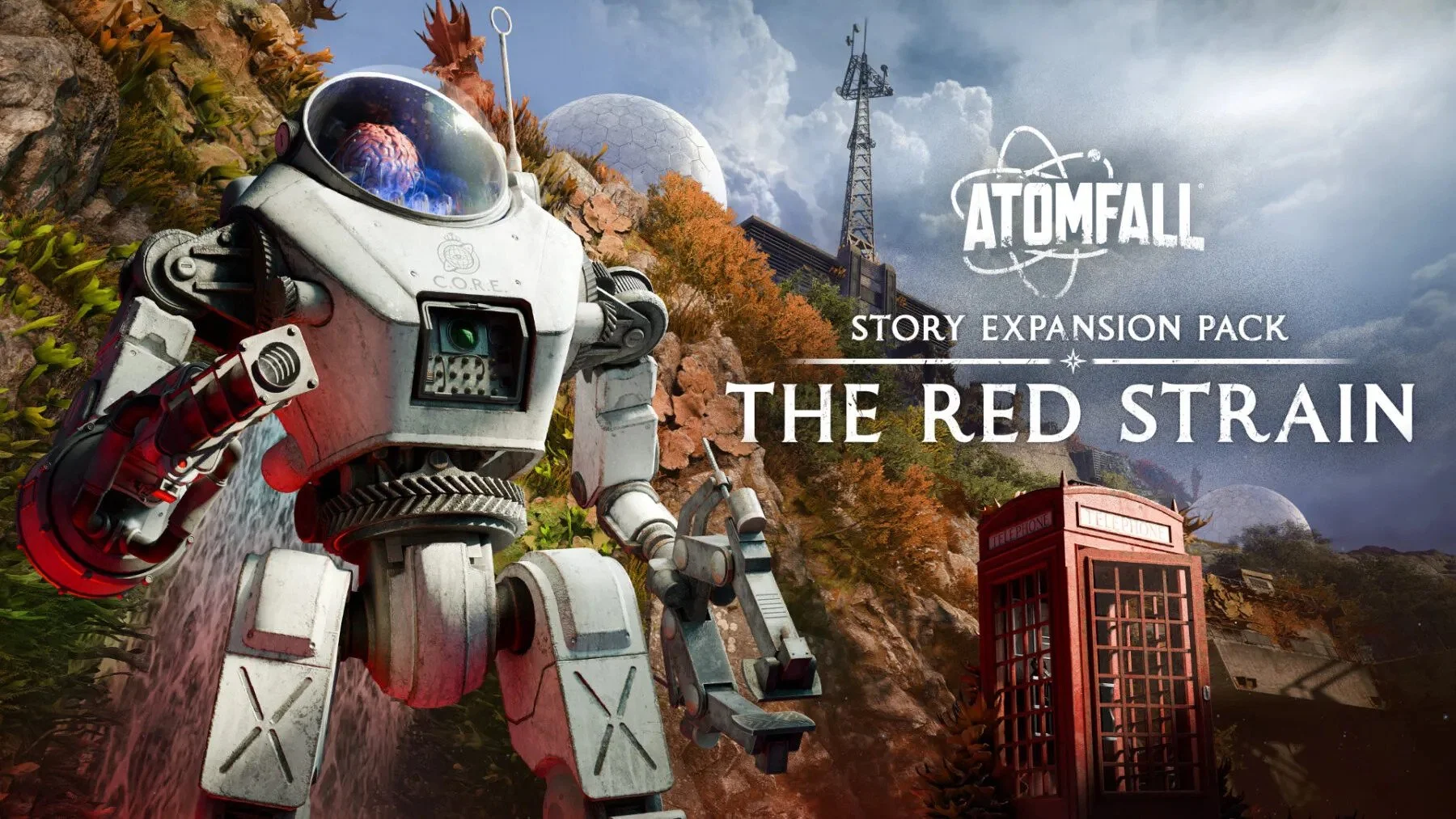
Atomfall: The Red Strain DLC
The Red Strain is the second DLC for the RPG Atomfall. It provides another interesting side story that is adjacent to that of the main game. Set in the new region of Stafell Crag, the player finds a secret installation called Test Site Moriah, run by C.O.R.E. (Co-ordinated Orbital Research Establishment). C.O.R.E. have seniority over B.A.R.D. (British Atomic Research Department) and have taken much of their research and used it for their own experiments. This includes the Red Strain, a genetically modified version of the Blue Infection. However, this has escaped containment and spread throughout the entire site. Once again the player must explore the zone, looking for leads and collecting resources, while trying to piece together what has happened. As in the previous DLC and main game, not every NPC that you meet in The Red Strain can be trusted.
The Red Strain is the second DLC for the RPG Atomfall. It provides another interesting side story that is adjacent to that of the main game. Set in the new region of Stafell Crag, the player finds a secret installation called Test Site Moriah, run by C.O.R.E. (Co-ordinated Orbital Research Establishment). C.O.R.E. have seniority over B.A.R.D. (British Atomic Research Department) and have taken much of their research and used it for their own experiments. This includes the Red Strain, a genetically modified version of the Blue Infection. However, this has escaped containment and spread throughout the entire site. Once again the player must explore the zone, looking for leads and collecting resources, while trying to piece together what has happened. As in the previous DLC and main game, not every NPC that you meet in The Red Strain can be trusted.
The DLC offers new weapons, including a silenced pistol and SMG, as well as several new skills. The player can now scavenge weapons from the C.O.R.E. Robots that patrol the region, although their high destructive power is offset with slow rate of fire. There is also an upgraded version of the Signal Redirector (MK II), which now allows the player to control turrets, swarms and robots, as well as switch power to locked or deactivated areas. Stafell Crag, a former rocket research site, is a far more vertical zone and as such adds a further degree of interest while travelling the area. The infected guards are all armed with SMGs and the C.O.R.E. Robots patrolling the various buildings have organic brains. Hence they are more aggressive when challenged and persistent if you retreat. As ever, stealth is the safest approach when exploring.
Stafell Crag is pleasingly different in its aesthetic, compared to the Midsummer Isle and the main regions of the base game. The railway station is atmospheric but also tactically useful, as the bridge and signal box offer elevated positions. Test Site Moriah is dominated by the rocket testing facilities and radar domes. I have referenced previously how aspects of the game draw upon the writings of Nigel Kneale. This area is very reminiscent of the military facility that features in Quatermass II. The story in The Red Strain DLC is far more science fiction driven and an interesting contrast to the folk horror themes found in Wicked Isle. The main characters are unusual, being disembodied brains in life support jars. The voice acting for these curious individuals is very good and the banter between them reflect the sociopolitical and class idioms of the time.
The Red Strain offers two new endings to the main game and they are quite different to those from the base game and the Wicked Isle DLC. Although well conceived, they may not satisfy all players, especially those who have not completed the game before. New players may be better served by playing through the Atomfall base game first and choosing one of the original six endings. Another notable difference in The Red Strain DLC, is that the Voice on the Phone does not offer as much guidance this time. He frequently calls and makes comments on developments but he doesn’t appear to have a preferred course of action. This is possibly because the story in the DLC does seem to be tangential to that of Atomfall, whereas the Wicked Isle was more closely linked. The entire Oberon issue doesn’t really materialise in The Red Strain until there is a plot requirement at the end to bypass the Interference Field.
Atomfall developer, Rebellion, have managed to craft three very engaging narrative arcs. The base game blends a mixture of science fiction and horror elements in a uniquely British idiom. The investigative approach, rather than simply undertaking clearly defined missions, is one of the game’s greatest strengths. The Wicked Isle DLC has a specific narrative tone referencing folk horror and the gameplay is stealth focused. The Red Strain has a far more science fiction driven story with a more aggressive approach to combat. However, the endings for the latest DLC do seem more specific and definitive than those available in the base game. Also, The Red Strain does not add any further details to the existing lore. We learn nothing further about Oberon or the Voice of the Phone. Hence I wonder if this marks the end of the development cycle for Atomfall or whether there will be any further DLC?
I recently completed the main story in Tainted Grail: The Fall of Avalon. In total I spent about sixty hours playing the game. I began at the start of the year, then took a break for a while but returned to it recently because I wanted to see if I could unlock a specific ending. I did manage to do this. Like so many other RPGs, Tainted Grail: the Fall of Avalon has a central storyline, along with a wealth of side quests, based around factions in specific zones. I think I possibly completed about a two thirds of these. However, once I finished the main story, my interest in the game began to wane. I finally left my character in the last major quest hub in case I wish to return at a future date. I then logged out of the game and uninstalled it from my PC to free up space for whatever I was to play next. In this case its The Sinking City 2. None of this is a negative reflection on Tainted Grail: the Fall of Avalon. I enjoyed the time I spent playing this quirky RPG. I simply had my fill and left to play something else.
The action, open world RPG Crimson Desert has been patched five times since it launched on March 19th and there have also been multiple hotfixes. At first glance this isn’t anything unusual. New games have bugs and issues arise once a game is released and played across a much wider variety of hardware than in QA testing. However, if you read the patch notes that accompany these sizeable downloads it quickly becomes apparent that developer’s Pearl Abyss are not just addressing bugs and software glitches. They are actively engaging with their player base and responding to suggestions and requests from that community. Although this is not a unique approach, what is surprising is the speed and quantity in which these player driven changes are happening. There seems to be an active ongoing process to refine the game and eliminate some of its “rough edges” and the players are contributing to this process with their feedback.
According to my Steam statistics, I last played Starfield on 19th December 2023. I bought the game upon its release in September of that year and played in total for 136 hours. Starfield held my interest for three and a half month and I wrote seven blog posts about various aspects of the game. Although there were some engaging aspects to Starfield, I did feel that that the game was somewhat lacking in systems and content, at that point in its lifecycle. I also think that the marketing and player expectations associated with Starfield were overblown and unrealistic. The shadow of Skyrim looms large over all new Bethesda releases and they don’t seem able to quite recapture that magic. Hence, I inevitably drifted away from Starfield and to another game and was effectively “done” with it. I have not played the game since which seems to validate the theory that game are becoming increasingly more ephemeral.
13 days after its release, market analysts estimate that Crimson Desert has already earned $200 million across the four main platforms (PC, PlayStation 5, and Xbox Series X and S). The game is certainly proving popular among gamers with the internet awash with live streams and “let’s play” videos. However, reviews are mixed both among gaming journalists and YouTube influencers. Common complaints about the game include that it is slow to start, the controls are poorly laid out on all platforms and that developer’s Pearl Abyss have done a poor job of explaining most aspects of the game to new players. Although such criticisms are true to a degree, I think these complaints highlight how many gamers are conditioned to expect new titles to follow a specific pattern with regard to pacing, narrative exposition and learning in-game systems. A pattern that Pearl Abyss has chosen to ignore, instead favouring an old school approach.
Last night, I spent the first 45 minutes after the launch of Crimson Desert, watching the 92GB pre-downloaded game files slowly decompressing and installing. I finally launched the game at about 10:50 PM GMT. I then waited a further 5 minutes while shaders were downloaded. It took me about 15 minutes or so to read through the various game settings and choose those that are optimal for my PC. I suspect even if you have a beast of a computer, you’re still going to have to spend some time tweaking settings. As for those players like myself with a gaming rig that is somewhere in the middle of the game’s specifications, be prepared to do a lot of fine tuning both within Crimson Desert itself and your Windows settings.
Video games as a genre are extremely poor at explaining themselves. When you buy a new game you’ll often find little or no information regarding the basic systems and mechanics. The industry assumes that their customers are by default familiar with the fundamentals of playing a modern video game. Hence if a game has a tutorial, it is often based around videos rather than detailed verbal instructions. You are are briefly shown a clip of a specific move being successfully undertaken but it is seldom shown in a wider context. The industry also expects the fan community to take on the role of curating and disseminating information about its games. The move away from forums and bespoke websites to Discord highlights this. Discord is a primarily a real time communication tool and not good at maintaining a historical data archive. If you want an answer to a specific gaming question, you’ll more than likely find it on YouTube in a video made by a fellow gamer.
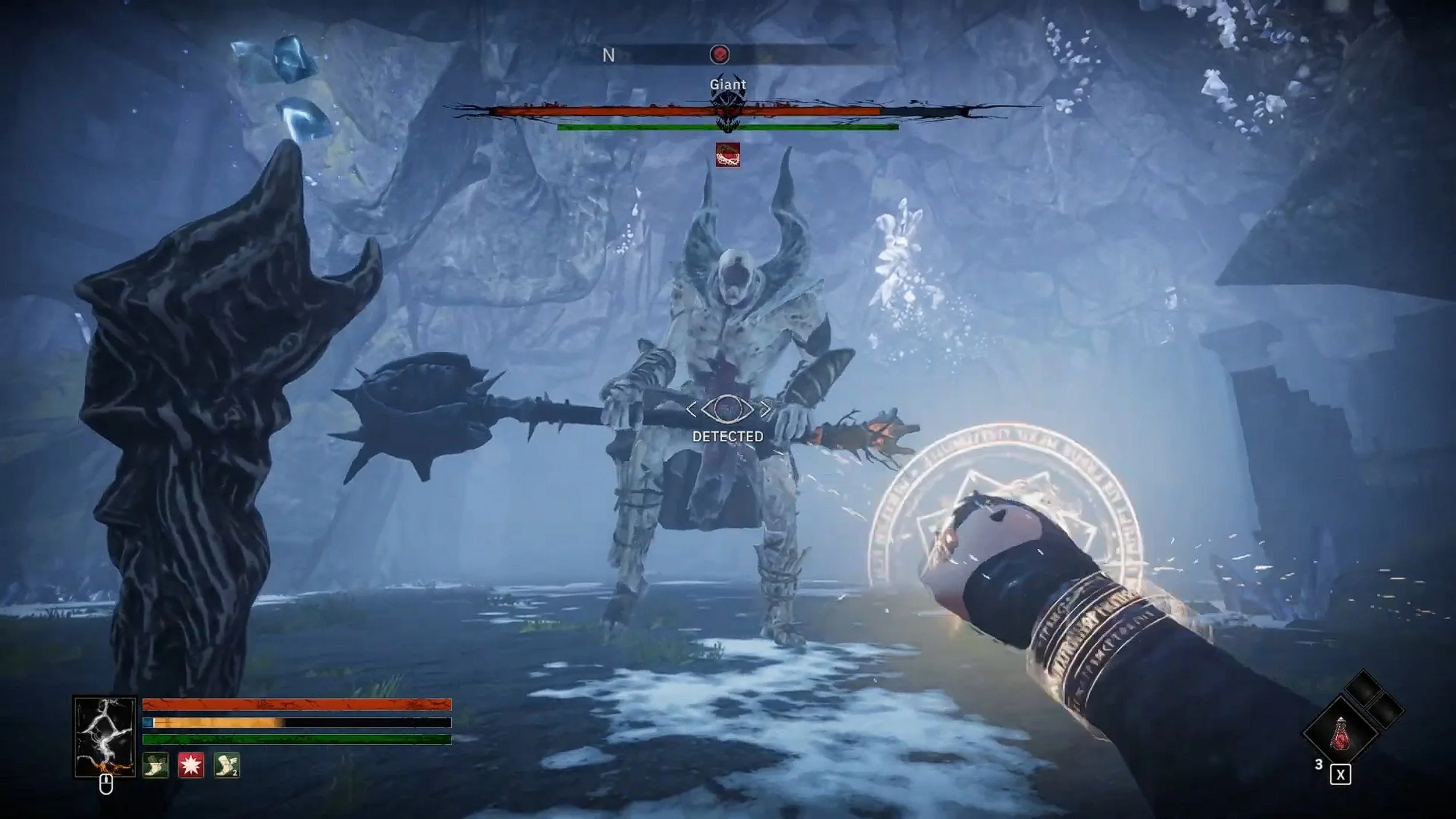
I decided to pursue a magic and spellcasting build in the RPG Tainted Grail: The Fall of Avalon after the story prologue. During the opening section of the game, the player is presented with a sufficient range of weapons to determine which type suits them best, although you can change at any time during the game. For me, casting spells feels right and is fun. Plus I have fond memories of the magic system in Two Worlds II and Skyrim. So once I started playing through the first zone, I started putting attribute and skill points into the appropriate trees to bolster my spells strengths and frequency. I also chose gear that would bolster those statistics further. The results have been surprising, as magic and spellcasting is not presented in the usual “glass cannon” style you find in some other RPGs. Here it offers robust DPS output and with the right gear and spell combination, a strong degree of survivability.
I first played The Elder Scrolls V: Skyrim in June 2013. This was over 18 months after the game’s initial release and the base game and DLC were bundled together in a “Legendary” edition. Although a seasoned gamer at the time, familiar with the RPG genre with such titles as Mass Effect and Grand Theft Auto IV, I had not played a game from this franchise before. It only took a few hours of gameplay to realise that this was a special title. The scope of the story, the art design and the size of the world were immediately notable. Tamriel was immersive in a way I had not experienced with other titles. Often simply traversing the terrain and watching the dawn break while the game soundtrack swelled, was sufficient to hold my attention. I instantly picked up on the voice acting of Christopher Plummer and Max Von Sydow. All of which indicated that this was a gaming landmark.
I recently started playing through the RPG Disco Elysium for a second time. I did not complete the game last time I played in February and March but go about two thirds of the way through the story. As far as solving the central crime, I had established an accurate cause of death for the murder victim and broadly understood the events leading to their death. The main reason I did not complete the game was because I was playing on the Nintendo Switch and found it increasingly difficult to read the text on the small screen. The loading times were also excruciatingly slow. Playing the game while “docked” helped the former but not the latter issue. Hence I bought the PC version of Disco Elysium: The Final Cut for just £5 and started again from the beginning.
The Red Strain is the second DLC for the RPG Atomfall. It provides another interesting side story that is adjacent to that of the main game. Set in the new region of Stafell Crag, the player finds a secret installation called Test Site Moriah, run by C.O.R.E. (Co-ordinated Orbital Research Establishment). C.O.R.E. have seniority over B.A.R.D. (British Atomic Research Department) and have taken much of their research and used it for their own experiments. This includes the Red Strain, a genetically modified version of the Blue Infection. However, this has escaped containment and spread throughout the entire site. Once again the player must explore the zone, looking for leads and collecting resources, while trying to piece together what has happened. As in the previous DLC and main game, not every NPC that you meet in The Red Strain can be trusted.
Wicked Isle DLC for the RPG Atomfall was released on 3rd June, two months after the base game launched. As with its predecessor there are no specific missions, the DLC requires the player to explore the environment to pick up leads. These ultimately provide a coherent story but the clues may not necessarily be obtained in the correct order. Hence, again there is a requirement for players to look, listen and think. Referring to the in-game notebook is beneficial for narrative clarification. As well as a new story, Wicked Isle DLC also has new weapons, items and skills. This includes a Blunderbuss shotgun which inflicts huge damage but has a limited range, as well as a cutlass and some ritualistic weapons. There is also an upgraded metal detector along with the Decomposition skill, which causes enemies to rapidly dissolve into fungal spores after a takedown. This means that dead NPCs cannot be discovered.

Spoiler Alert: The following post discusses the various endings available in Atomfall. About 15 or so hours into Atomfall, the various plot elements started to become a lot clearer to me and I realised that several key characters were all offering differing escape options. Naturally, each outcome came with a quid pro quo requirement. Hence, there was a choice to make as to which ending I wanted to pursue, assuming that some outcomes were narratively or ethically better than others. At this point I had avoided many plot spoilers, so had no clear idea as to what specific endings were available. So I made a decision based purely upon the information that each of these characters gave me and chose to implement Dr. Holder’s solution to the Oberon problem. It seemed the most honest and pragmatic outcome, plus it caused the least amount of collateral damage.
By default, I’m not always drawn to first person games. I see their merits in genres such as shooters but in an RPG, I prefer a third person perspective. So I was somewhat ambivalent towards Atomfall when I first saw promotional videos for the game. However, its uniquely British setting and period ambience piqued my interest. I also enjoy the Sniper Elite series which developers Rebellion also produce. So I recently bought the deluxe version of the game and began my play through. I made sure that I didn’t do too much research beforehand, because it was clear that the complexities of the plot are a major selling point of the game. Twenty two gaming hours later, I had completed two of six possible endings. Despite discovering a wealth of “leads” and diligently scouring the four main zones of Atomfall, I still feel there is much left to find and explore. Hence I have begun a second playthrough.

I’m a late convert to the church of Disco Elysium. Over 4 years late, although that can be a good thing in some respects. Pretty much everything that can be said about the game probably has been said already and I’ve missed it all. When purchasing the game, I knew there was a positive buzz around this RPG and it had something to do with its philosophical nature. Beyond that I wasn’t aware of the game's subtleties. I was just looking for something that I could play on my Nintendo Switch that wasn’t Mario. As Disco Elysium is a dialogue driven RPG, based upon choices rather than action, I thought buying the game on this platform was a good choice. So I started playing late on a Thursday night. 10 days later I am still utterly riveted, although this is one of the most emotionally gruelling gaming experiences of my life.
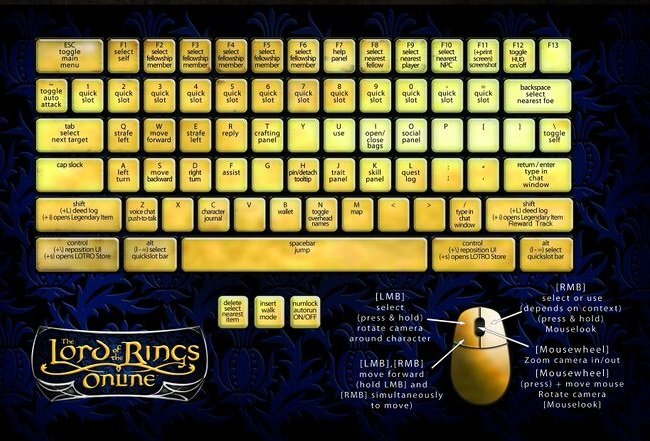
Do you know what you're doing? For clarification, this question is regarding video games and not how you run your life. The latter would make for an interesting discussion but that is not what I am asking. On this occasion the question is to establish whether you are the sort of player who strives to understand the mechanics of a video game? Do you make it your business to become au fait with all the statistics and the formulas behind them? Do you keep a spreadsheet filled with data pertaining to your gear or build? Do you fully comprehend the consequences of swapping out an item and seeing a particular statistic increase or decrease. Does all of this inherently appeal to you and contribute to overall the enjoyment you get from a game? If the answer is yes, then bravo. I kind of admire your dedication to this aspect of gaming. Because I tend to switch off when it comes to min-maxing.

One of the defining qualities of a truly great game is how long it can hold your interest and keep you engaged. For example I bought the Game of the Year version of Skyrim about 14 months after its initial release. Hence I had access to all the games content that I dutifully played through. However, I also fully explored the world map, completed all side quests, crafted, furnished several houses and continued to travel the in-game world and killing foes long after I had completed all the traditional content. I did the same with Red Dead Redemption 2 as this also offered a compelling and immersive world. Games such as these have a quality beyond just the functional. I would happily traverse the mountains in Skyrim and watch the sunset, revelling in the ambient music. Similarly, I would often just ride the train in RDR2 and watch the world go by. When I finally stopped playing both games for newer titles, I felt a sense of sadness when I bid them goodbye.

I struggle with certain types of game mechanics in RPGs and MMOs. Especially those involving crafting, building or any other form of gated, time based, resource dependent creation. Outposts in Starfield is a textbook example of this. I love the notion of having a fancy base on some remote planet, with all the necessary facilities for my starship and crew. I also like, in principle, the idea of being able to customise it so that it looks exactly how I want it. However, the reality is always very different. Building an outpost in Starfield is slow and the UI that you have to use is ponderous. You have to sink a great deal of time and effort into building one and ultimately, beyond the cosmetic, your completed outpost offers very few benefits. Which raises the question as to why I’ve spent so much time recently, watching YouTube videos about constructing outposts?
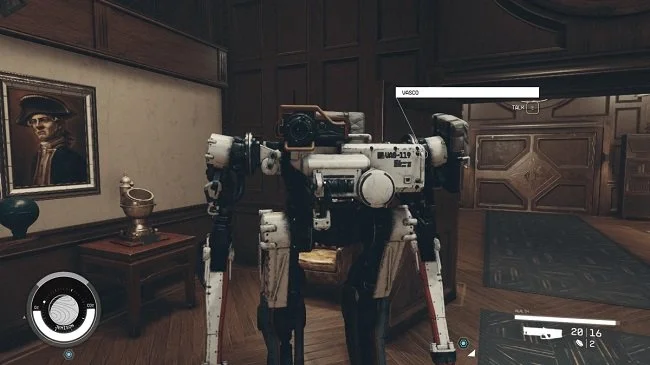
I like the concept of companions in video games. They can offer tactical support in combat, be assigned research or crafting jobs and often provide beneficial buffs and such like. There’s also the option for “romance” if you wish. More importantly, companions can sometimes offer unique quest lines. Extra content is always welcome. Starfield, being a Bethesda game, offers all of these with its companion system. However, as ever there is also a downside. Companions can get in the way during combat or wander off and cause aggro when it is not required. They will also judge your decisions which can be problematic, and they sometimes never stop talking. Sometimes, it can be useful to have a companion with you. But on other occasions it’s a pain in the ass. Hence, your style of gameplay should dictate how you use them.

These posts are all written after playing a lengthy session of Starfield. Often some of the points raised are clarified later. So, it would be remiss of me not to revise a comment I made previously about scanning when surveying a planet. It turns out that there is a surveying skill that you can invest points into that improve the efficiency of the process. Let it suffice to say that it does make things easier. Now that’s out of the way, I want to focus upon the necessity to replace your ship as soon as possible in Starfield. The Frontier, which is the first vessel you’re given access to in the game, has a lot of character but it doesn’t have much else. It is lacking in damage output and is therefore a bit of a liability in space combat, even after you’ve unlocked targeting in the skills tree. I therefore made it a priority to replace it as soon as possible.

It is quite easy to get overwhelmed by the sheer quantity of things to do in Starfield. You can be walking through the plaza in New Atlantis, pass a pair of NPCs talking about something and the next thing you know you have a new mission to complete. As with most video games, there is a hierarchy of importance when it comes to the various tasks you are asked to undertake. Players may feel obliged to focus upon the main story during their initial first six hours or so. Such a strategy usually provides players with an overview of the game’s mechanics as well as providing some essential items such as gear. But it can feel a little smothering to have content continuously added to your mission journal. Especially if you’re the sort of player that likes to impose structure upon your gaming and likes to undertake tasks in an orderly and methodical fashion.
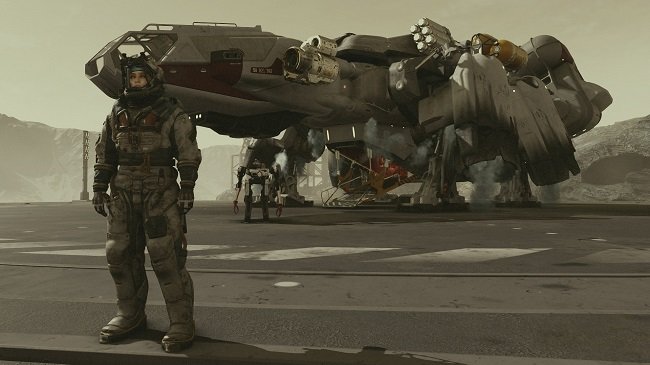
I pre-installed Starfield, via Steam, on Wednesday 30th August. Early access started in the UK at 1:00 AM today. However, I didn’t get around to playing until about 10:00 AM this morning. It took about an hour or so to unpack the pre-installed game. It currently occupies a little over 116GB of space. As I wasn’t sure how well my PC would handle Starfield, I decided to use my second monitor to play the game at a resolution of 1920x1080 (16:9). I have an Nvidia GTX 1660 Super GPU. Initially, I turned all the graphics to “high” and set the game to render at full resolution. Initially the game seemed to run well. I got through the initial story which takes place in a mine. I also got to the character customisation, which in true Bethesda style takes place after the story has progressed for a while. However, the moment I entered space in my ship, the game started running poorly. The graphics stuttered and the audio desynced.

I have already written about the hype associated with the forthcoming RPG Starfield and my thoughts on that particular issue have not changed. However, regardless of the iniquities of the marketing industry and the unrealistic expectations of some gamers, Starfield is a significant release from an established developer with a proven track record. Hence there is a great deal of interest in this game due to the scope of its content and breadth of vision. Plus many of Bethesda’s competitors will be watching the launch on September 6th very closely, especially those with similar products in development. Whatever your perspective on the game, there’s going to be a lot of interest in it, so I’ve decided to document my experiences with Starfield.
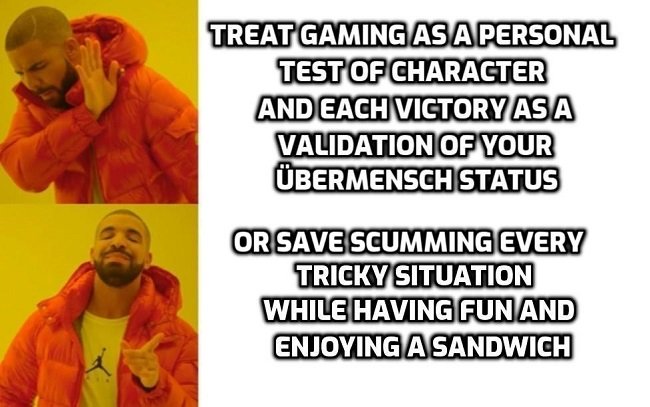
Throughout history, there’s always some asshole who confuses their own personal opinion for some undeniable, unassailable, universal truth. This misconception often ends in tragedy. Sadly it is the doom of men (especially Colin) that they forget. Hence, life continues to be regularly assailed by the following cycle. An asshole talks bollocks and advocates an erroneous position or philosophical stance that is unsustainable in the face of reality. A shit storm ensues. The asshole’s position is utterly and unequivocally demolished by facts and data. Everyone else then has to pick up the pieces, while the asshole, due to a lack of critical thinking and emotional literacy, still thinks that they’re right and that “they’re the victim”. This scenario manifests itself in many aspects of day-to-day life. Domestic politics, your places of employment etc. It is also an integral part of gaming culture and a core tenet of Gamers (™).
I have written in the past about games that have proved popular or critically successful that pass you by. You simply weren’t aware of them or their success at the time of their release. You missed all the marketing and hype. It’s easily enough done as there’s so much white noise associated with gaming these days. You subsequently stumble across these popular games later and much to your surprise, discover their merits long after everyone else has. I have also written about what it is like to be the proverbial “odd one out” by not being part of a major gaming group. Not playing World of Warcraft is a prime example of this phenomenon. Exploring both these subjects inevitably leads to discussions about hype, gaming consensus and FOMO. This time I want to talk about a game that has recently gained a great deal of traction in the gaming community and has also caused a great deal of debate. A game that some of its more enthusiastic supporters are calling a new “industry standard”.

Hype.
Noun: Extravagant or intensive publicity or promotion.” His first album hit the stores amid a storm of hype”.
Verb: Promote or publicise (a product or idea) intensively, often exaggerating its benefits.
“An industry quick to hype its products”,
Until recently I have gone out of my way to avoid any promotional material regarding Starfield, the forthcoming RPG from Bethesda Game Studios. However, as the September 6th release date is approaching, I finally decided to watch the following YouTube video in order to make a measured judgement about exactly what the game has to offer. Let it suffice to say that if you take the video at face value, then Starfield is potentially a revolutionary video game. However, upon mature reflection and sober consideration, I have chosen not to take the claims made in the video as gospel. As far as I’m concerned this is not regular marketing, as it goes beyond the scope of briefing potential buyers about the product. Instead I would define the videos as pure and unabashed hype, as specified in the two definitions at the start of this post. And hype is a very problematic phenomenon.
I started playing Red Dead Redemption 2 on the PC upon its release in late 2019. Although I enjoyed it, I was distracted by other matters at the time and so I drifted away in early 2020. To cut a long story short, I recently picked up exactly where I left off, because I felt the need for a big, narrative driven, RPG gaming experience. Red Dead Redemption 2 certainly meets those requirements. A few days ago I finished the main story and having played through sufficient side quests and challenges, decided to call it quits. Since then I have been musing on both the game itself and the experience I had while playing through it. Simply put, I consider Red Dead Redemption 2 to be a genre milestone and one of the most significant and impressive examples of video games that I have experienced over the course of my life, along with the likes of The Elder Scrolls V: Skyrim and The Witcher III: Wild Hunt.
Before I begin, this post comes with a massive caveat. In fact let’s go so far as to say it is a massive, highly polished and lavishly tooled caveat. There are gamers out there that play video games to challenge themselves and to be the best. Some do it for bragging rights. Others just do it for their own self satisfaction. This is fine. You do you. As long as your gameplay and gaming philosophy doesn’t impact anyone else negatively, then that’s fine. Let me state for the record that I am not that kind of gamer and this post is aimed very much at the average person who plays for entertainment, fun and to unwind. You know, the majority of people who play video games. So any responses to this post that fall into the “git gud” school of thought are irrelevant and can politely “go forth and multiply. Now we have established our frame of reference, let us proceed.
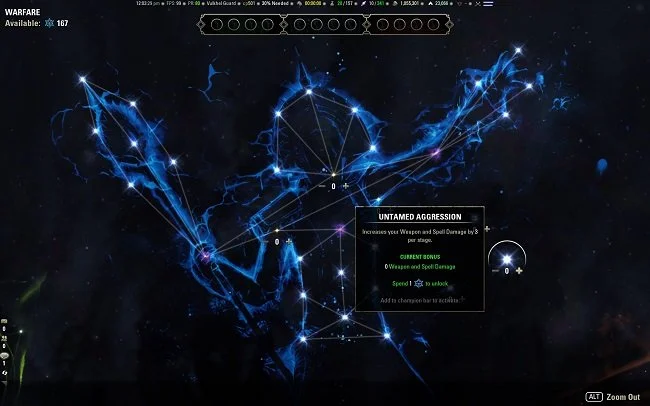
I’m sure I’ve mentioned this issue before in previous video game related posts. But I don’t think I’ve devoted an entire article to the matter, which is what I’m going to do today. So to provide some context, I logged into The Elder Scrolls Online today as I’m fast approaching that point in the year where I spend a few months subscribing to the game. Due to some recent patch, once again all my Champion Points have been refunded. Judging by the change in graphics, it may be that the entire Champion Point system has been updated. Whatever the reason, I have to re-allocate 501points into three skill trees. I wasn’t au fait with the last system, so I followed a build I found online. Now that it has changed, I’ll have to find a new one and copy it. Until I do, my character will be gimped. Shame the game doesn’t offer a selection of generic builds that can be easily implemented at the press of a button.

Again this is more a case of two months in gaming. Furthermore although I was quite active in July, I was less so in August as the Blaugust 2021 Festival of Blogging event consumed the lion share of my leisure time. The majority of my gaming time is usually mid to late evening. Although Mrs P and I do many activities together, there are times when she will want to watch something I don’t, be engrossed in a book or out with friends. These occasions present sizable windows of time to focus upon a video game, which is especially useful for the MMORPG and RPG genres. However, I often have to choose whether to use this time exclusively for gaming or some other recreational activities such as writing. Another foible of my video game time management is trying to arrange things so I can undertake recurring, daily quests in a game early in the morning. I will often tackle such content in Star Trek Online, as soon as I get up.
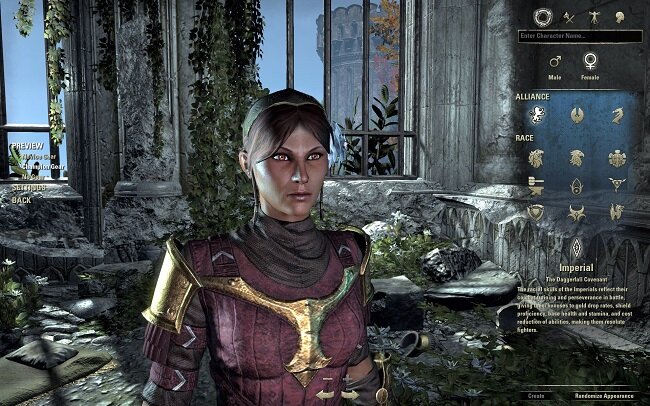
You’re strutting around in your favourite MMORPG, dressed to the nines in your finest outfit. You recently acquired The Tabard of Marginal Statistical Improvement after finally beating that particularly difficult raid boss. As you stroll into the auction house with the confident air of someone who knows they’re looking damn good, you keep an eye on the chat window anticipating comments and praise from other players. You stop in front of an NPC and stand their basking in presumed public adulation and revelling in your own self satisfaction. Suddenly another player appears on the periphery of your monitor and catches your attention. Oh calamity, their avatar looks virtually identical to your. Same fez, monocle and handlebar moustache. They’re also wearing The Tabard of Marginal Statistical Improvement, except theirs is in electric pink. Oh the humiliation. Oh the humanity. Oh Vienna. You log off in tears, your ego crushed, a victim of a game with insufficient character customisation and diversity.
Primitive War (2025)
One of the most common objections raised regarding the Jurassic Park/Jurassic World franchise is that the films are specifically made to obtain a PG-13 rating from the Motion Picture Association, for purely commercial reasons. Hence, in all films, there is little on screen violence and the dinosaurs are mainly portrayed as a threat and a means of providing jump scares. When a character is killed by a dinosaur it usually happens off screen, is obscured by something else in frame, or is shown in long shot with very little detail. The realities of being eaten alive by a predator are conspicuously absent. Hence, audiences looking for films featuring more graphic dinosaur attacks, have not been well catered for apart from some minor direct-to-video titles. Primitive War finally fills this gap in the market with a frenetic genre mashup that strives to punch above is budgetary weight.
One of the most common objections raised regarding the Jurassic Park/Jurassic World franchise is that the films are specifically made to obtain a PG-13 rating from the Motion Picture Association, for purely commercial reasons. Hence, in all films, there is little on screen violence and the dinosaurs are mainly portrayed as a threat and a means of providing jump scares. When a character is killed by a dinosaur it usually happens off screen, is obscured by something else in frame, or is shown in long shot with very little detail. The realities of being eaten alive by a predator are conspicuously absent. Hence, audiences looking for films featuring more graphic dinosaur attacks, have not been well catered for apart from some minor direct-to-video titles. Primitive War finally fills this gap in the market with a frenetic genre mashup that strives to punch above is budgetary weight.
In 1968 during the Vietnam War, Colonel Jericho (Jeremy Piven) orders Vulture Squad, a reconnaissance unit, to track down a Green Beret platoon that has gone missing on a classified mission. Sergeant First Class Ryan Baker (Ryan Kwanten) is concerned about the secrecy surrounding the mission and well being of his squad. After being dropped by helicopter in a remote region of the jungle the squad finds evidence of a firefight along with a large bird-like foot print. Upon searching a tunnel complex they are attacked by a pack of Deinonychus and are split up. Baker along with new squad member Verne (Carlos Sanson) are rescued from a Tyrannosaurus attack by a Soviet paleontologist, Sofia Wagner (Tricia Helfer), who shelters them in a nearby bunker. He learns that a Russian General has been experimenting with a particle collider, resulting in wormholes and the dinosaurs’ presence.
Primitive War takes the standard genre tropes found in Vietnam War movies, along with those common to “creature features” and mixes them together with B movie aplomb and the candid honesty inherent in Australian exploitation cinema. The result is fast paced, violent and thoroughly entertaining. The computer generated dinosaurs and animatronics are broadly good and when it does start to get a bit sketchy, it’s not a deal breaker because it is clear that the production is really trying hard to do it best with what its budget. Furthermore, rather than just resting on its high concept, exploitation laurels, Primitive War even takes a stab at focusing on characters and getting audiences emotionally invested in the protagonists. You could argue that it tries a little too hard but the film is ambitious and that is a praiseworthy quality these days because so many film productions do exactly the opposite.
Based on books by Ethan Pettus, who co-wrote the screenplay with director Luke Sparke, Primitive War strikes the right tone with its hard boiled, military dialogue and hyperbolic kiss-off lines. I especially enjoyed “Come get some, you Foghorn Leghorn motherfuckers”. The cast, who are mainly from television, acquit themselves well and the screenplay endeavours to give this dirty half-dozen some back story, touching upon such themes as PTSD and survivors guilt. The set pieces are violent and the dinosaur attacks show the reality of being devoured alive. Considering the $8 million dollar budget, the visual effects hold up well. There are some sequences that don’t work as well such as an aerial attack by a flock of Quetzalcoatlus but the film strives to style it out with its pacing. The dinosaurs reflect contemporary scientific thinking, hence many are brightly coloured and feathered.
Primitive War is a superior example of exploitation filmmaking. It makes its pitch quickly and efficiently to the audience and doesn’t waste time delivering upon viewer expectations. What stands out about this production is that it doesn’t allow its financial constraints to impact upon its creative ambitions. Director Luke Sparke and the cast clearly took the film seriously and strived to do their best. The result is a film that is ambitious, entertaining and exactly what was promised in the trailer. There are some rough edges along the way but that is to be expected. This isn’t a big studio production. Perhaps it could have been a slightly tighter 110 minutes instead of 133 but there are far more bloated, self indulgent films out there. Like most of the Jurassic Park/Jurassic World franchise. Unlike a lot of mainstream films these days, Primitive War is an honest film. If you want dinosaurs versus soldiers during the Vietnam War, that is what you get.
In 1968 the dilapidated freighter Corita hastily leaves Freetown to avoid a customs inspection. Captain Lansen (Eric Porter) has a cargo of dangerous explosives which he is smuggling so he can finally retire. His ship’s passengers also have reasons for leaving in a hurry. Dr. Webster (Nigel Stock), together with his daughter Unity (Suzanna leigh), is relocating due to his indiscretions with patients and illegal operations. Alcoholic pianist Harry Tyler (Tony Beckley) is aimlessly drifting from port to port. Eva Peters (Hildegard Knef) is fleeing from her husband with stolen bearer bonds which she intend to use to buy back her son from his evil clutches Caracas. Ricaldi (Ben Carruthers), a questionable lawyer, is pursuing Eva to retrieve the stolen bonds. First officer Hemmings (Neil McCallum) suggests that the ship should return to Freetown after an imminent Hurricane warning. The Captain asks the passengers and they are unanimous that they do not wish to return. However a mutinous crew, the bad weather and the instability of the explosives force everyone to abandon ship. The survivors find themselves adrift in a lifeboat surrounded by a strange carnivorous seaweed.
Despite being considered by many as an original story, The Abominable Snowman (1957) is in fact a remake of a made for television play, The Creature, that was originally broadcast in the UK in 1955. Hammer Films would often purchase the rights of popular TV programs and subsequently re-work them for mainstream, international cinema. Larger production budgets and fewer censorship restrictions allowed them to make their cinematic interpretations more lurid, thus commercially viable. Hence The Quatermass Xperiment, Quatermass II and Quatermass and the Pit were all given a big screen makeover and were commercially successful. The Abominable Snowman was written by acclaimed writer Nigel Kneale, who also wrote the original television drama and the aforementioned Quatermass trilogy. Although ostensibly marketed as a horror film this production is actually an interesting blend of psychological thriller and science fiction.
In the near future, Kepler 822, a research and drilling facility located at the bottom of the Mariana Trench, suffers a sudden and catastrophic structural failure. There are only six survivors. Mechanical engineer Norah Price (Kristen Stewart), Captain Lucien (Vincent Cassel), biologist Emily Haversham (Jessica Henwick), engineer Liam Smith (John Gallagher Jr.) and crew members Rodrigo (Mamoudou Athie) and Paul (T.J. Miller). As all the functional escape pods have been used and they are unable to contact the surface, the Captain suggests using pressurized suits to walk one mile across the ocean floor to the Roebuck 641 drill installation. There they will find more escape pods. However, it soon becomes apparent that the disaster was not caused by an undersea earthquake and that they are not alone as they make their journey.
One of the most common objections raised regarding the Jurassic Park/Jurassic World franchise is that the films are specifically made to obtain a PG-13 rating from the Motion Picture Association, for purely commercial reasons. Hence, in all films, there is little on screen violence and the dinosaurs are mainly portrayed as a threat and a means of providing jump scares. When a character is killed by a dinosaur it usually happens off screen, is obscured by something else in frame, or is shown in long shot with very little detail. The realities of being eaten alive by a predator are conspicuously absent. Hence, audiences looking for films featuring more graphic dinosaur attacks, have not been well catered for apart from some minor direct-to-video titles. Primitive War finally fills this gap in the market with a frenetic genre mashup that strives to punch above is budgetary weight.
Fluke is a curious film about a man who is reincarnated as a dog and his subsequent realisation that he may have been murdered. It takes an adult novel by British author James Herbert, which is filled with philosophical musing and strives to adapt it in a far more family friendly fashion. The result is a somewhat bipolar production which thematically alternates between existential introspection and Buddhism. It then strives to deliver its message in a Disneyesque idiom. Children will potentially be confused and upset by what they see and adults will be wrongfooted by the continual shift in tone. Fluke was not a critical or commercial success upon release and the flaws that were identified by critics at the time still ring true today. That being said, Fluke is still an interesting and entertaining film, despite its faults.
When reviewing Sting, one critic stated that the small scale setting and thus, low stakes (IE only a few peoples lives are at risk), made the film not especially memorable. I consider this to be a somewhat spurious criticism. It is the very fact that Sting takes place in such a commonplace environment, with the main characters being everyday people that makes it different. There is a clear focus on well defined characters and their backstory. Unlike so many contemporary films, I actually gave a damn about the protagonists in Sting. An integral aspect of the horror genre is the ability to take a well known and familiar trope and provide a different and absorbing spin on it .It would appear that some audiences have been belaboured over the head by so many overblown and bombastic blockbusters, that the very notion of depicting small, localised and intimate events in a film, seems to bamboozle them.
When I first saw Mimic in 1997, I was impressed by the fact that it offered a different perspective on the monster movie genre and that it seemed to have moments of greater depth than you'd expect from such material. Later on when I became more aware of the works of writer, director Guillermo del Toro, I learned that this movie had had a troubled production and that Miramx had imposed specific requirements upon the final cut of the film. This explained some of the movies inconsistencies and hinted at a far more ambitious artistic endeavour by del Toro. Initially Mimic was conceived as a thirty minute short and part of a three part anthology movie. However it along with the sci-fi film Imposter were both deemed to be of sufficient merit to be developed into feature length productions.
During the seventies, Hollywood started looking to ongoing societal and political concerns as a source of material for movies. Hence, the energy crisis, terrorism and global pollution quickly found themselves being subsumed into hastily written screenplays, in attempt to be topical, commercially successful and relevant. Prophecy based upon a novel by David Seltzer tackled not only the issue of pollution but also the ongoing disenfranchisement of Native Americans. Paramount studios went so far as hiring an established director of note, John Frankenheimer. In many respects this movie should have been a bigger success with a reasonable budget, robust cast and studio support. Sadly it did not fare well, either critically or at the box office due to obvious flaws in the production. Despite his outstanding body work, (Birdman of Alcatraz, The Manchurian Candidate) Frankenheimer was not the best choice of director for a genre movie such as this and he was also going through a period of alcoholism.
In Agua Dulce, California, the Haywood family trains horses for film and TV productions. One day at the Haywood ranch, small metal objects unaccountably fall from the sky. One of which, a nickel, kills Otis Haywood Sr (Keith David). His children, Emerald “Em” Haywood (Keke Palmer) and Otis “OJ” Haywood Jr. (Daniel Kaluuya), continue to run the business. However, due to the loss of a contract, they have to sell some of the horses to Ricky “Jupe” Park (Steven Yeun), who operates a Western theme park called Jupiter's Claim. One night, the Haywood’s notice the electricity supply fluctuating and their horses violently reacting to an unknown presence. They discover that something has been taking their horses and regurgitating inorganic matter, which OJ believes caused their father's death. The Haywood’s decide to obtain proof and subsequently ask electronics store employee and UFO enthusiast, Angel Torres (Brandon Perea) to set up surveillance cameras.
Back in 2018 I wrote the following about The Meg in my review. “My interest doesn’t go so far as a sequel. This sort of movie is the equivalent of a greasy burger you buy at the funfair. It’s fine once in a while as an indulgence, despite the fact that you know it’s bad, but you would soon tire of them being a regular part of my diet”. Five years later, I foolishly thought it may be “fun” to give the sequel, Meg 2: The Trench (2023), a go. Especially in light of the fact that it’s directed by Ben Wheatley. Surely such a filmmaker would bring some creativity and a fresh perspective to this franchise? Nope. Turns out he didn’t. Meg 2: The Trench lacks everything that made its predecessor tolerable. This superfluous sequel is an uninspired, poorly written mess which confuses turning everything up to eleven with entertainment. It gets nowhere near “it’s so bad, it’s good” territory. Instead it makes the biggest mistake a film of this nature can do. It’s dull.
Not to be confused with the Shaw Brothers martial arts film of the same name from 1978, The Deadly Mantis (1957) is a creature feature in the idiom of Them! (1954). Unlike that film’s mutant ants, the monster on this occasion is not the product of the atomic age but a giant prehistoric praying mantis that has been released from the polar ice caps. Exactly how a creature associated with more tropical regions came to be at the North Pole is never explained. In fact precious little is in The Deadly Mantis. The film’s overall scope is somewhat limited with a basic story, limited action scenes and a rather dull cast of generic characters. There is an over reliance upon stock footage from period military documentaries and previous Universal Studio feature films. The film’s biggest failing is the giant praying mantis which does most of its rampaging conveniently off camera. It’s all rather disappointing.
It is no secret that the film industry relies on a handful of common tropes as the mainstay of their cinematic output. It uses timeless themes, storylines and archetypes that have featured in folk tales, plays and literature throughout history. Hence their familiarity with audiences around the world. Where the skill in filmmaking lies is to take a common, well known idea and interpret it in a new and innovative fashion. Akira Kurosawa took Shakespeare’s MacBeth and retold the tale through the prism of Japanese feudalistic culture. The result, Throne of Blood, is considered a masterpiece. Similarly, The Lion King retells the same story through the medium of animation and anthropomorphic wildlife. All of which proves that the key to successfully retelling a familiar tale is to be creative with regard to setting, presentation and perspective.
Jurassic World Dominion is a textbook example of a franchise that has run out of steam. Despite the enormous budget, the top notch production values and the presence of three members of the original cast, this is a long, tedious and curiously uneventful film. It has nothing new to say about environmental matters or unfettered science; themes that were front and centre in previous instalments. Nor does it do anything interesting with the main plot device of dinosaurs trying to integrate into our current ecosystems. But perhaps its biggest failing is the conspicuous lack of tension. The denizens of Jurassic World are simply not a threat and fail to have any emotional impact. The film doesn’t even placate viewers with superfluous cast members being eaten. The onscreen deaths by dinosaurs are rather tame.
Set in Brazil in 1901, plantation owner Christopher Leiningen (Charlton Heston) makes arrangements to get married. He has spent his entire life building his estate and reclaiming land from the jungle. He is fiercely independent but he is also alone and isolated. Joanna Selby (Eleanor Parker) from New Orleans agrees to marry him but their first meeting does not go well. Leiningen is unhappy to discover that Joanna is a widow and hence has a past, so he tells her to return to America on the next available boat. However, local commissioner (William Conrad) informs Leiningen that swarming soldier ants, or Marabunta, are moving towards his plantation destroying everything in their path. Leiningen refuses to abandon his life’s work and is surprised when Joanna decides to stay with him. Can they convince their native workers to stay too and can they defend the estate from the Marabunta, described as “forty square miles of agonising death”.
After the critical and commercial success of Jaws in 1975, a veritable tsunami of “creature feature” movies followed in its wake. A few titles, such as Alligator (1980) and Piranha (1978) managed to do something different with the rogue animal trope, both providing a quirky and satirical look at the genre along with plenty of exploitation mayhem. However, most of the rest were low budget productions of negligible quality. However, such qualities are not always an impediment at the box office. Grizzly (1976) was hastily made on a budget of $750,000 yet earned an impressive $39,000,000 at the box office. The critics hated it but the public loved it and it went on to be the second most financially successful independent feature film in the US that year (the first being Monty Python and the Holy Grail). Grizzly is in many ways a microcosm of the exploitation genre from the seventies and needs to be viewed through that prism if it is to be enjoyed.
The seventies saw a minor boom in creature feature films after the box office success of Jaws. Hence, we had movies such as Orca (1977), Tentacles (1977), The Pack (1977) and Piranha (1978). If an animal could eat you or potentially pose any threat to people, someone somewhere would make a movie about it. Usually a bad one. A few of these even dared to stray into other hot topics of the time such as pollution and protecting the environment. Some would even invoke mysticism and folk lore to facilitate their protagonists. Nightwing is one such curious genre hybrid which combines vampire bats, shale oil mining and Native American culture in its clumsy and unsubtle plot. It’s a somewhat odd undertaking, directed by Arthur Hiller. His previous work included Love Story (1970) and Silver Streak (1976), so he was not the first person you’d expect to see associated with such material. The film doesn’t work well as either a horror movie or an exploration of social issues, but like so many movies from this era, it is of interest mainly due to its sheer incongruity.
If you have seen any of the marketing material or trailers for The Meg, then you know exactly what you’re getting right from the get-go. All movies inherently require the viewer to suspend their sense of disbelief to various degrees. Naturally, the “creature feature” genre asks audience to go the extra mile with this concept. The Meg takes a major gamble by insisting that everyone goes further still, not by believing in a giant prehistoric shark (Megalodon) but that Jason Statham is a ex-navy, deep sea rescue diver. However, it pays off and the resulting movie is staggeringly stupid, but mercifully entertaining in an undemanding way. Recent movies such as Into the Storm and Geostorm are crass and made worse by their implicit assumption that their viewers are stupid. The Meg is far from cerebral but has an upbeat tone and a sense of playfulness that knowingly invites the audience to come aboard with the silliness. It’s a big distinction and the reason why I smiled a lot and frequently rolled my eyes while watching The Meg, but never with derision.
Critical opinion was very much split this summer when Jurassic World: Fallen Kingdom was released. However, the viewers were somewhat indifferent to the opinions of the professional critics and the movie made a healthy $1,303,476,615 globally, proving once again that the public’s’ continuing love affair with “all things dinosaur” shows no sign of abating. When you factor in the home media market into overall profits, the entire Jurassic Park franchise will have made $5 billion worldwide. So, bearing in mind the old adage that “money talks and bullshit walks”, I think it’s safe to say there’ll be more instalments in the years to come. When faced with such overwhelming box office popularity it seems somewhat pointless to dissect the latest movie, because the film seems to be bullet proof regardless of narrative flaws or ill-conceived plot devices. However, film criticism isn’t about box office popularity but about analysing the relative quality of a movie’s construction and its subsequent standing.
I first saw The Land That Time Forgot way back in 1975 at the Odeon Isle of Wight, when it was first released. We were on holiday at the time, which was cause for celebration in itself, as these were few and far between during my youth, due to the state of the UK economy at the time. But to then go to the cinema and see a fantasy film, filled with action, adventure and monsters, was the icing on the cake for an over excited eight-year-old. Adapted by Michael Moorcock and James Cawthorn from the 1924 the novel by Edgar Rice Burroughs, The Land That Time Forgot is a classic example of high adventure on a low budget. Its technical shortcomings were even apparent to me as a child, yet there was a charm and honesty to this curious British production, that had the audacity to try and compete with the likes of more expensive US productions such as The Golden Voyage of Sinbad and Island at the Top of the World.
Black Sheep is a high concept horror comedy from New Zealand. Featuring creative physical effects by Weta Workshop, this tale of genetically modified killer sheep, animal husbandry and environmentalism requires a very broad sense of humour and an abiding love for the “creature feature” sub-genre. It should be noted that the copy I watched was the unrated R1 DVD. This version is stronger in content than the R rated US theatrical release and yet was released at the UK cinemas with only a 15 rating from the BBFC. I suspect that the similarities in humour between the UK and New Zealand contributed to this somewhat low rating. That and the fact that horror comedy often gets a free pass because the humour always tends to mitigate the violence.
Frank Darabont achieved both critical acclaim and mass appeal with his adaptations of The Shawshank Redemption and The Green Mile. In 2007 he returned once again to the work of Stephen King with his film version of The Mist. It’s a sideways step away from human drama into a more genre piece, yet it still retains a very traditional story at its heart. Once you look beyond the superficial elements of "creature feature" plot, you get yet another well written character study by an ensemble cast, again focusing on how the human condition deals with extreme situations. The particular route it takes and some of the themes it explores may not be to everyone's taste. However, it still focuses on characters and performances. It is also a movie that ends with a somewhat unexpected plot development, that some viewers may find a little extreme. It is one of those film related twists that if known in advance, greatly diminishes once enjoyment of the film.
When you see the names of such cinematic luminaries as Steven Spielberg and J.J. Abrams together on the same movie poster, naturally your expectations are going to be high. Yet when watching the various trailers for Super 8, just prior to its release in 2011, I was somewhat cautious. I have discussed in the past at some length the ambiguous nature of trailers and that they can misrepresent a film. Yet even bearing this in mind at the time, I couldn’t help but feel that Super 8 seemed like a somewhat self-indulgent homage to Spielberg's earlier work. I subsequently saw the movie at the cinema in August that year and my suspicions were validated. However, over time I have spoken to several friends who are advocates of the movie, so I thought I’d watch it a second time. Sadly, I still find myself unable to label Super 8 as anything else other than adequate. Now I would hasten to add, that I use adequate within the context of both director’s body of work. An adequate film from either Mr Spielberg or Abrams is still superior to many of their competitors. But that's not the point. I simply expected better from such a project.
Having recently sat through Orcs! I decided to take a further chance and watch Orc Wars. It too is a very low budget film, although this time the finances were raised through crowdfunding. Sadly, it is not the fun, tongue in cheek, independent adventure movie the trailer and associated marketing implies. There is very little merit in this production. It's cheap, cheerful and although harmless, it clearly demonstrates that not all fan funded projects are good cinema. Some are just indulgences. The problem is in the title itself, which tries to sell an idea that the movie production is incapable of delivering. Instead of the spectacle of an army of a thousand Orcs pitted against the technological might of the US war machine, we get a few extras in ill-fitting costumes, running skirmishes against no-name actors on quad bikes and a few old Army Surplus vehicles. It's all rather lacklustre and underwhelming.
As a fan of the horror genre I’ve sat through numerous low budget films in my time. This has usually been at festivals or conventions. Sometimes watching something as part of a group, with likeminded individuals, makes a difference. You find yourself groaning in unison and the shared experience helps compensate for potential deficiencies. Watching questionable material in the comfort of your own home, purely on your own can be a lot tougher. However, due to my abiding love of the genre, I am prepared to cut a lot of cheap ass indie flicks considerably more slack than I would others. So, I'll endeavour to review Orcs! with as much impartiality as possible. Oh, and before we start, let us clarify the term Orcs. Although Middle-earth is not referenced in any way, this film is definitely about Tolkien's creations. Or at least their depiction in another well-known series of films.
10 Cloverfield Lane blends several cinematic genres producing an interesting premise. Once it has established its narrative arc, it then dives head long into an exciting and tense one hundred and four minutes. The movie is not a direct sequel to Cloverfield (2008) but does touch upon some of the same themes and ideas. Made on a modest budget of $15 million, the claustrophobic setting of a nuclear bunker accommodates strong performances from the lead actors. It is not until the third act when the story movies back to the outside world, do we see any major visual effects. Overall, this is a very compelling film due to the strong screenplay and well defined central characters.
I did my best to avoid the hype surrounding the initial release of Cloverfield. Such media saturation and public interest can often cloud the issue of whether the actual film is any good. Five years later and having watched the movie twice, once in the theatre and once at home, I am still somewhat conflicted about this movie. The use of hand held video cameras is both a boon and a bane. The constant movement of the image has proven to cause motion sickness for some viewers, although this is not so overwhelming when viewed on a smaller screen at home. Yet the medium of news footage mixed with handheld cameras does create a palpable sense of immediacy. This helps immensely when trying to sell a fantastic concept, such as the one that Cloverfield features.
The enigma of the Xenomorph in the Alien franchise is diminished once you start to rationalise its heritage. Sadly, that’s exactly what Alien: Covenant has chosen to do. It jettisons the mystery of the original 1979 movie and pulls back the curtain, so wisely put in place thirty-eight years ago, to reveal a rather lacklustre explanation to the Xenomorph’s origin. Having spent nearly $100 million and employed a production team of some of the finest talent that money can buy, the resulting movie is not bad per se, just crushingly superfluous. After watching Alien: Covenant this week, my overall reaction can be distilled down to a deep sigh of indifference and a shrug of the shoulders.
I have written many times in recent years about how big titles get announced by the gaming industry, of the ensuing hype up that leads up to launch day and then the subsequent disappointment on purchase. It is a malady that has afflicted the movie industry for decades and has become increasingly more common in the last decade. Hype has a curious link with reputation. There are a handful of directors in contemporary Hollywood who when they add their name to a production, people take notice. Ridley Scott is one of these. His body of work pretty much guarantees he can make whatever he wants, be it a commercial undertaking or a ludicrous vanity project. However, the downside to being a film maker of this stature is that you are not so easily exposed to proper scrutiny by your peers. No one stops you from making a mistake because you are supposed to know what you are doing. They let you do what you want. Which is bad.
Hollywood is a cyclical place and often repeats decisions it's successfully made in the past. During the early seventies, the mainstream film industry head hunted a lot of up and coming talent from the independent film making community, or took a chance on directors who were fresh out of film school. It was a means to an end and a way to tap into the new talent that was proving popular and lucrative. Similarly, Warner Bros. followed suit in 2014 when Gareth Edwards was hired to direct the multi-million-dollar Godzilla reboot. His previous movie was the self-financed indie Sci-Fi picture Monsters. Godzilla went on to be both a box office and critical hit.
Gareth Edwards directing debut Monsters, was a clever, subtle and genuinely moving human drama that just happened to be set against the background of alien lifeforms in a quarantine zone. He also managed to imbue the monsters of the title with a sense of depth. They were intriguing with their bio-luminescent communication and curious vocalisations. They were not simply an arbitrary MacGuffin and hinted at something far more complex. I was therefore very surprised and pleased that he has managed to maintain these qualities in his second feature film Godzilla. Despite being a massive studio undertaking his reboot of the classic franchise has a depth of soul that you seldom find in such mainstream material.
Emperor Of The North (1973)
During the seventies, cinema was not only a source of mass, commercial entertainment but was still perceived as a medium for intellectual and philosophical discourse. Television was a poor relation in terms of art and cultural significance. Film was where the so called auteur director could muse and ruminate upon the nature of the human condition and audiences could subsequently gush sycophantically about their work at dinner parties. Or something like that. Let it suffice to say that some film makers were still indulged by studios and financiers, who were still keen to cash in on the cultural sea change that came to Hollywood in the late sixties. It’s difficult to see how a film such as Emperor of the North (AKA Emperor of the North Pole) could have been made otherwise. A film set in the Great Depression about a hobo illegally travelling on freight trains and his feud with a ruthless conductor.
During the seventies, cinema was not only a source of mass, commercial entertainment but was still perceived as a medium for intellectual and philosophical discourse. Television was a poor relation in terms of art and cultural significance. Film was where the so called auteur director could muse and ruminate upon the nature of the human condition and audiences could subsequently gush sycophantically about their work at dinner parties. Or something like that. Let it suffice to say that some film makers were still indulged by studios and financiers, who were still keen to cash in on the cultural sea change that came to Hollywood in the late sixties. It’s difficult to see how a film such as Emperor of the North (AKA Emperor of the North Pole) could have been made otherwise. A film set in the Great Depression about a hobo illegally travelling on freight trains and his feud with a ruthless conductor.
During the Great Depression, Shack (Ernest Borgnine), the conductor of the No.19 freight train on the Oregon, Pacific and Eastern Railroad, makes sure that no one rides for free on his train. When A-№1 (Lee Marvin), a legendary hobo among his peers, manages to climb aboard the train, a younger and less-experienced hobo called Cigaret (Keith Carradine) follows hims. However, he is seen by Shack, who locks them both inside the boxcar that they're hiding in. A-№1 casually sets fire to the hay onboard, forcing Shack to stop the train at a nearby rail yard. A-№1 escapes to a hobo shanty town, whereas Cigaret is caught by labourers at the rail yard. He brags to them that he is the only hobo to have ridden on Shack’s train. Shack is not liked by the labourers due to his psychotic temperament and they start taking bets that no hobo can ride Shack’s train all the way to Portland. When A-№1 hears of Cigaret’s bragging he decides to take up the challenge, thus claiming the hobo title Emperor of the North Pole.
Robert Aldrich is certainly an interesting director and I particularly like The Dirty Dozen and Flight of the Phoenix as they both examine power struggles in social hierarchies and anti-heroes battling the establishment. I also have a soft spot for Twilight’s Last Gleaming as it strives (but fails) to make a point that is still pertinent today about the nature of war. However, Emperor of the North is far too much of a niche metaphor and simply lacks sufficient narrative and character development to sustain a feature film. It frequently gets bogged down in hobo philosophy which is espoused didactically, rather than depicted directly. Furthermore, as the central characters are archetypes, we learn little of their back stories or motivations. Who was A-№1 before the financial collapse? Why is Shack so zealous in his work? No details are furnished. Director Aldrich was confident that the audience would quickly grasp his symbolism. Sadly, they didn’t or perhaps they did and just weren’t that impressed.
Emperor of the North is far from a terrible film. It is just a somewhat superficial one. It takes nearly two hours to make a minor sociopolitical point that hardly comes as a revelation. Despite having some solid set pieces, it isn’t a pure action film because of the frequent musing on hoboism and its inherent message doesn’t need to be cryptically deciphered because it is as subtle as a Rhinoceros horn up the fundament. It is essentially saved by the presence of its two lead actors who bring far more to their respective roles than what is present in the script. Lee Marvin effortlessly exudes guile and charisma as A-№1 and Ernest Borgnine is every inch the psychopath as he alternates between malevolent scowls and his signature Cheshire Cat grin. Whatever the film’s other failings, the climatic battle on a flatcar with the two stars fighting with chains and an axe, isn’t one of them.
The film’s original full title was Emperor of the North Pole, alluding to a self-deprecating hobo moniker that is grand but ultimately empty, as the North Pole at the time was considered a barren kingdom. However, outside of the US and later on home media the film title was shortened to Emperor of the North, apparently to avoid confusion that it was some sort of Christmas story. Casual viewers are probably best served not watching this one and opting for a better known example of the director’s work. Those with broader tastes may well enjoy the cast of notable character actors from the era, along with the raw brutality that is ever present in Aldrich’s work. Beware the excruciating song that plays out at the beginning of the film over a montage of steam train footage as it traverses the landscape. Tune it out if possible and reflect upon how there was once a time when a mainstream studio would greenlight a motion picture about a hobo riding trains.
College Professor Peter Proud (Michael Sarrazin) has a recurring dream about a man swimming on a lake late at night. A woman named Marcia (Margot Kidder) paddles a small boat out to meet him. As the man tries to climb aboard, Marcia hits him with an oar and he drowns. Perplexed and disturbed, Peter approaches Doctor Sam Goodman (Paul Hecht) who is conducting research into sleep at the College. He conducts several tests which prove that Peter’s experiences are not registering as dreams. The Doctor suggests that they’re hallucinations but Peter theorises that they may be memories of a past life. A chance viewing of a TV documentary about Massachusetts, triggers further memories, so Peter decides to go an investigate. He subsequently learns that the man in his visions is a former Tennis coach, Jeff Curtis, who died in the late 1940s under mysterious circumstances. Is Peter the reincarnation of this man? If so, didn’t he have a daughter, Ann (Jennifer O’Neil). Furthermore is Marcia, Ann’s mother, still alive?

Mainstream films are easy to recommend to people. They’re usually formulaic, work within clear parameters and they’re not controversial. Most people, when viewing such film on someone else’s suggestion, are left with a fairly simply choice. Did they like it or not? Whatever the outcome, no feathers are ruffled. No one looks at you askance afterwards and says “why the hell did you think I’d like that piece of shit”? If something like this happens, then you have clearly not recommended a mainstream film. Perhaps you’ve suggested something that’s a little more of an acquired taste. Something niche, from a very specific sub-genre. Which brings me neatly to Blazing Magnum AKA Strange Shadows in an Empty Room (1976). The US title gives the impression that this film is a hard boiled cop thriller, like so many others that followed in the wake of Dirty Harry. But there’s a clue in the European title. Yes, this movie has more than just a whiff of a giallo about it.

In the year 1860, Baron Victor Frankenstein (Peter Cushing) faces execution by guillotine for the murders perpetrated by the creature he created. With the assistance of a hunchback named Karl (Oscar Quitak) he avoids death by beheading the priest who came to give him the last rites. The priest’s body is then mistakenly buried by the authorities. Three years later, Victor, now using the name Doctor Stein, has established himself as a prosperous physician in Karlsbrück, serving both affluent patients and the poor at a paupers’ hospital. Hans Kleve (Francis Matthews), a junior member of the medical council, recognises Victor and being an admirer, seeks to become his apprentice. Victor and Hans then undertake an experiment to transplant Karl’s living brain into a new, more refined body, rather than a grotesque monstrosity the Baron has previously made. Karl is eager to have a new healthy body, especially after encountering Margaret Conrad (Eunice Gayson), the charming new assistant at the hospital.

This movie questionnaire was originally created by Alexander from Cinemaniac Reviews. Sadly, I believe that website is now defunct. However, that doesn’t in anyway invalidate the questionnaire itself which has some very good questions about your relationship with cinema. Some of my answers to the questions posed are about films that I enjoy, as opposed to those that are considered cinematic classics. However, I have answered some questions more seriously than others, especially the one about undeserving recipients of the Best Film Oscar. I struggled with a couple of questions because I no longer go the cinema as frequently as I did 10 years ago. This is mainly due to the fact that a lot of the films I find interesting end up going straight to streaming after very brief theatrical releases. Some do not even get shown in cinemas. Hence I view far more at home. But I digress. On with the questions and answers. Feel free to comment below and share your views.

Exit 8 is a sophisticated and claustrophobic psychological thriller directed by Genki Kawamura, which skilfully transforms a minimalist indie walking-simulator game into a cinematic existential enigma. This overtly metaphorical film renders the repetitive nature and drudgery of modern working life into a physical environment in which the lead character is trapped and must find a way out. A random, brutal maze filled with an atmosphere of indifference to the lab rats that find themselves trapped within. Or is it their personal guilt that has put them there? Genki Kawamura’s psychological mystery draws inspiration from the Japanese video game of the same name, as well as from the cyclical nature of Groundhog Day and endless corridors of the Overlook Hotel in Kubrick’s The Shining. Although there are jump scares and some ghoulish imagery, this is not a horror vehicle. Instead this is a disquieting psychological drama with a strong sense of morality.
I wrote a post 18 month’s ago regarding whether a directors cut of a film is superior by default to the version originally shown in cinemas. Obviously the answer was no and I then went on to give three examples of films where I think the theatrical release is better to lengthier or substantially altered director’s cut that was subsequently made available at a later date. This time round in this post, I would like to do the complete opposite. I shall provide some examples of films that I think are significantly improved by a longer cut or a substantially, restructured edit. Note some of these examples are technically not a “director’s cuts” but a restoration or reconstruction of the director’s original vision. I shall endeavour to highlight what specific material or broader changes make each respective film “better”. As ever, all of these examples are a matter of subjective opinion and my views are presented as such, not “fact”.
In 1968 the dilapidated freighter Corita hastily leaves Freetown to avoid a customs inspection. Captain Lansen (Eric Porter) has a cargo of dangerous explosives which he is smuggling so he can finally retire. His ship’s passengers also have reasons for leaving in a hurry. Dr. Webster (Nigel Stock), together with his daughter Unity (Suzanna leigh), is relocating due to his indiscretions with patients and illegal operations. Alcoholic pianist Harry Tyler (Tony Beckley) is aimlessly drifting from port to port. Eva Peters (Hildegard Knef) is fleeing from her husband with stolen bearer bonds which she intend to use to buy back her son from his evil clutches Caracas. Ricaldi (Ben Carruthers), a questionable lawyer, is pursuing Eva to retrieve the stolen bonds. First officer Hemmings (Neil McCallum) suggests that the ship should return to Freetown after an imminent Hurricane warning. The Captain asks the passengers and they are unanimous that they do not wish to return. However a mutinous crew, the bad weather and the instability of the explosives force everyone to abandon ship. The survivors find themselves adrift in a lifeboat surrounded by a strange carnivorous seaweed.
Jason Statham is an exemplar of the US mantra of “staying in your lane”. He makes action movies and occasionally strays into action comedies. His formula broadly works and is sufficiently lucrative to keep Mr. Statham employed. Therefore, if you watch a film in which he stars, you have a fairly good idea of what you’ll be getting. Of late, the criteria for his action vehicles have become more succinct. Jason Statham will play an innocuous character, such as a construction foreman or a bee keeper. Something terrible will subsequently befall another character who Mr. Statham has an emotional connection with in some capacity. He will subsequently hunt down those responsible and meet out death and violence. At some point the villain of the story will enquire as to how this innocuous person is so lethal. Research will then show that our Jason is in fact an ex-police officer/special forces operative/international assassin. There’s then a showdown and the villain dies. Job done.
The Light at the Edge of the World presented itself as an action movie upon its release in 1971. Based upon a story by Jules Verne, the Spanish American co-production was driven by its star Kirk Douglas, who curiously hired British director Kevin Billington to helm the project. This tale of a lighthouse keeper fighting a war of attrition against a group of pirates that have captured his island, was market as an adventure film ostensibly in the idiom of the authors previous works and as a pirate movie. MGM bought the rights to distribute the film in the UK on the misunderstanding that it was a family friendly production. It was not and remains so. They subsequently had to cut 15 minutes of violence and torture as well as an undercurrent of sexual assault to secure a suitable rating. Conversely, the US distributors received an arbitrary PG rating, despite the fact this is one of a handful of films that honestly depicts pirates as murderers, rapists and worse.
It’s an established action film trope. The fire team comprised of ex-military personnel, move in on their target. Only to have the tables turned by someone they don’t deem a threat. What makes it different in The Last Stand of Ellen Cole is a throwaway line of dialogue. The bested operative lies bleeding on the floor and the protagonists stands over them ready to finish them off. “Don’t, I have a cat” they feebly plead. For me that was the icing on the cake. The movie had already established it was taking the “same old, same old” and doing something different. Something fun, if taken in the right spirit. This scene tipped the balance and I embraced this film because it was being honest about what it is. This is a modern B movie that decides to give a very specific sub-genre a makeover. Furthermore, its clearly done with an affectionate wink, which is very different to sly wink. This isn’t deliberate self-knowing irony. Its just a film doing something different and possibly silly but it genuinely wants to have fun with it.
David Koepp is no stranger to genre cinema, having written the screenplay for such films as Jurassic Park, Spider-man and War of the Worlds. Where these titles are big budget, major studio productions, Cold Storage is a far more modest production with a smaller scope. Adapted from his own novel, the screenplay is by David Koepp and the film is directed by British film-maker Jonny Campbell. At first glance, Cold Storage seems a somewhat derivative science fiction horror film with a relatively modest budget, financed through a convoluted US and French co-production. Lurid green and red colours feature heavily in the marketing artwork and it is easy, after a cursory look, to write the film off as cheap, generic, direct-to-streaming filler. However, Cold Storage is prime example of why you should not judge a book by it’s cover, or in this case, a film by its posters and online advertising. It is in fact an amusing and fun endeavour that can fill an evening.
Despite being considered by many as an original story, The Abominable Snowman (1957) is in fact a remake of a made for television play, The Creature, that was originally broadcast in the UK in 1955. Hammer Films would often purchase the rights of popular TV programs and subsequently re-work them for mainstream, international cinema. Larger production budgets and fewer censorship restrictions allowed them to make their cinematic interpretations more lurid, thus commercially viable. Hence The Quatermass Xperiment, Quatermass II and Quatermass and the Pit were all given a big screen makeover and were commercially successful. The Abominable Snowman was written by acclaimed writer Nigel Kneale, who also wrote the original television drama and the aforementioned Quatermass trilogy. Although ostensibly marketed as a horror film this production is actually an interesting blend of psychological thriller and science fiction.
There are certain subjects that are notoriously uncinematic. These tend to be things that exist or are undertaken mainly in the mind, rather than expressed in an overtly physical way. Computing, science and mathematics are good examples. Writing code or working out complex equations does not immediately lend themselves to a visual medium such as cinema. Therefore, any film dealing with the world of corporate finance has its work cut out. Hence writer-director J C Chandor immediately deserves praise for making Margin Call, a film about the financial crash of 2008, as gripping and compelling as any political thriller. He does this by keeping the financial elements of the story to a minimum, choosing instead to focus upon those who have become aware of the imminent crisis and their reaction to it. However, the film remains a tough watch with regard to the some of the characters and their respective personal morality or lack there of.
The 1937 Hindenburg disaster has remained an enduring mystery over the years. The physical mechanics of how this airship filled with 7,000,000 cubic feet of hydrogen gas caught fire has been fully explored over the decades and there are now several extremely plausible theories as to how it may have happened. However, there remains the possibility of sabotage. As such an idea has more dramatic potential than mechanical failure, it was used as the central theme of the 1975 disaster movie The Hindenburg. Directed by Robert Wise, the screenplay by Nelson Gidding explores a German resistance against the Nazi regime. The airship is targeted as it is a powerful propaganda symbol for Hitler’s Germany. Sadly despite some interesting ideas, a strong cast and solid, old school optical effects, The Hindenburg is a slow and somewhat ponderous production. Although the final 20 minutes of the film recreate the infamous explosion meticulously, it doesn’t quite compensate for the uneventful, dialogue driven investigation of the previous 100 minutes.

On the Eastern Front in 1943, a German Tiger tank crew led by Lieutenant Philip Gerkens (David Schütter) is sent on a mission to rescue the missing officer Paul von Hardenburg (Tilman Strauss) from a top-secret bunker that is at risk of falling into enemy hands. As they make their way through an eerie no-man’s land, they have to avoid Russian armoured vehicles that seem to be aware of their mission. They also encounter a German unit taking punitive action against a peasant village, in reprisal for partisan activity in the area. The youngest crew member, Michel (Yoran Leicher), talks of the land being home to ghosts and spirits. As the tank penetrates further into contested territory the crew become increasingly disturbed by the uncanny nature of their mission and begin to fall prey to their own inner fears.
Robert Louis Stevenson’s classic novel has been adapted for cinema and television numerous times. Perhaps the most well known is the 1950 Disney version, starring Robert Newton as Long John Silver. His eye rolling performance and exaggerated West Country accent is credited with popularising the stereotypical form of “pirate speech" that has become the pop culture default. Although an enjoyable film, it does gloss over the more sinister aspects of both the source text and history, perpetuating the myth that pirates are just loveable scoundrels. Many subsequent adaptations have fallen into the same trap to a greater or lesser degree. However, that is not the case with the 1990 version of Treasure island, which was made for the TNT cable network and released theatrically outside of the US. This darker and notably more violent adaptation closely follows the source text and is widely considered the most faithful to the book.
The Planet of the Apes movie franchise took a radical change of course with its third entry in the series. The first two films were set in the future and benefited from high production values to help realise a post apocalyptic earth. However, due to a substantial reduction of budget, Escape from the Planet of the Apes uses a time travel plot device to bring the ape protagonists to present day Los Angeles (1971 in this case). The result is a film with a much smaller narrative scope. However, although it lacks the science fiction spectacle of its predecessors, it features an interesting satirical exploration of celebrity culture and ponders what it is like to be deemed an enemy of the state. As ever, Roddy McDowell and Kim Hunter provide exceptional lead performances as the Chimpanzees Cornelius and Zira. Escape from the Planet of the Apes also captures the pop culture vibe of seventies America.
It is not unusual for Disney to change film titles when marketing them outside of the US. In 2016 they renamed the animated feature film Zootopia to Zootropolis in the UK and Europe to avoid trademark conflicts with other existing businesses. For example there is a Danish zoo which already holds the “Zootopia” name. Similarly, in Germany there is a children’s book which caused copyright conflict, which led to the film being released under the title Zoomania. Such changes, although practical for legal reasons, can sometimes cause a degree of confusion. Especially as there are numerous, low budget productions companies that go out of their way to produce similarly titled “mockbusters” whenever there are big, tentpole, releases. So for clarity, Zootopia 2 has been released in the UK as Zootropolis 2.
Stephen King’s dystopian story, The Running Man, was previously adapted very loosely in 1987, as a vehicle for Arnold Schwarzenegger. That version focused mainly on the “Battle Royale” element of the story and leaned heavily into Arnie’s personality, rather than the politics of the book. It also wasn’t well received by the author. Edgar Wright’s remake follows the source text a lot more closely and is far more interested in its political themes and wider social commentary. Furthermore, this version re-establishes the everyman quality of the hero of Ben Richards, rather than him being the muscle bound, ex-military hero as per Mr. Schwarzenegger’s prior interpretation. This time round, The Running Man uses a lot of the visual and narrative tropes of contemporary reality TV, making this forty three year old story very relevant to today’s viewers and couching the film in a style that is recognisable and accessible.
The Haunted Dolls House is a short film based on a story by M.R. James about a unique antique that is subject to supernatural phenomenon. Adapted by Stephen Gray and David Lilley, this is the third of three short films based upon James’ work that the pair have made. It stars Steven Dolton as Mr. Dillet, a collector of antique dolls houses, who acquires a bargain only to discover that it harbours a ghostly secret. Made on an extremely modest budget over the course of 2012 this clever, innovative and rather sinister adaptation is a fine example of short film creativity. It manages to offer a unique visual depiction of M.R. James’ classic story whilst capturing the unsettling quality of the author’s work. Like so many independently made short films it is clearly a labour of love, made with modest resources. It succinctly captures the spirit of the author’s work and is both innovative and rewarding.
A lot of people may know Luke Evans from the live action version of Beauty and the Beast or Peter Jackson’s The Hobbit trilogy. With his matinee idol good looks, charming Welsh demeanour and his “smoky” tenor singing voice, he projects a sense of old school stardom. Which brings us to No One Lives; a film which is a radical departure from his previous work. His performance is disconcerting to say the least and the film is somewhat unhinged. Directed by Ryuhei Kitamura, who made an interesting adaptation of Clive Barker’s The Midnight Meat Train, this cinematic outing is similarly replete with robust shocks and gore. There are some interesting ideas about the nature of violence, Stockholm Syndrome and whether one should deny or embrace one’s nature. However, these are ultimately minor asides. Philosophical musings in between bouts of surprisingly striking unpleasantness.
In the near future, Kepler 822, a research and drilling facility located at the bottom of the Mariana Trench, suffers a sudden and catastrophic structural failure. There are only six survivors. Mechanical engineer Norah Price (Kristen Stewart), Captain Lucien (Vincent Cassel), biologist Emily Haversham (Jessica Henwick), engineer Liam Smith (John Gallagher Jr.) and crew members Rodrigo (Mamoudou Athie) and Paul (T.J. Miller). As all the functional escape pods have been used and they are unable to contact the surface, the Captain suggests using pressurized suits to walk one mile across the ocean floor to the Roebuck 641 drill installation. There they will find more escape pods. However, it soon becomes apparent that the disaster was not caused by an undersea earthquake and that they are not alone as they make their journey.
One of the most common objections raised regarding the Jurassic Park/Jurassic World franchise is that the films are specifically made to obtain a PG-13 rating from the Motion Picture Association, for purely commercial reasons. Hence, in all films, there is little on screen violence and the dinosaurs are mainly portrayed as a threat and a means of providing jump scares. When a character is killed by a dinosaur it usually happens off screen, is obscured by something else in frame, or is shown in long shot with very little detail. The realities of being eaten alive by a predator are conspicuously absent. Hence, audiences looking for films featuring more graphic dinosaur attacks, have not been well catered for apart from some minor direct-to-video titles. Primitive War finally fills this gap in the market with a frenetic genre mashup that strives to punch above is budgetary weight.
During the seventies, cinema was not only a source of mass, commercial entertainment but was still perceived as a medium for intellectual and philosophical discourse. Television was a poor relation in terms of art and cultural significance. Film was where the so called auteur director could muse and ruminate upon the nature of the human condition and audiences could subsequently gush sycophantically about their work at dinner parties. Or something like that. Let it suffice to say that some film makers were still indulged by studios and financiers, who were still keen to cash in on the cultural sea change that came to Hollywood in the late sixties. It’s difficult to see how a film such as Emperor of the North (AKA Emperor of the North Pole) could have been made otherwise. A film set in the Great Depression about a hobo illegally travelling on freight trains and his feud with a ruthless conductor.
In Buenos Aires, Clara (Natalia Señorales) hears voices emanating from the plughole in her kitchen sink. The voices seem to be plotting against her. Her husband Juan (Agustín Rittano) says the sounds are coming from next door. That night, Juan finds Clara’s dead body levitating in their bathroom, slamming against the wall by an invisible force. Meanwhile their neighbour, Walter (Demián Salomón), is experiencing supernatural occurrences while he tries to sleep. An invisible force repeatedly shakes his bed. After using a video camera to film these events, he sees a tall, cadaverous figure emerging from under the bed, standing over him as he sleeps. Across the road, Alicia (Julieta Vallina) is grieving for her recently deceased son, who was run over outside Walter’s house. Alicia's ex-boyfriend, police commissioner Funes (Maximiliano Ghione) calls Jano (Norberto Gonzalo), a paranormal investigator and the pair soon discover more supernatural occurrences in the area.
Black Sabbath (AKA I tre volti della paura) is a 1963 horror anthology film directed by Mario Bava. Although an Italian production, the film was co-financed by American International Pictures and as such was conceived to appeal to US audiences. Hence, the English dialogue edit of the film which was released in America differs significantly to the original Italian version. Despite the presence of the legendary Boris Karloff and the popularity of both anthology and gothic horror at the time,the film was only a modest success at the US box office and did not do well in Italy. However, in more recent years there has been a critical reappraisal of Black Sabbath, especially the Italian dialogue version. Many aspects of the film which are standard genre tropes today, were in fact novel at the time. Also despite the production mainly being studio bound, the film oozes style and has a striking visual aesthetic.
After the success of Raiders of the Lost Ark in 1981, filmmakers scrambled to find existing intellectual properties that they could use for similar films. Hence archaic heroes such as Alan Quatermain were hastily given a modern makeover and thrust into generic movies, in a vague attempt to replicate Steven Spielberg’s successful formula. Which brings us neatly on to James Charles Bigglesworth AKA “Biggles”, a fictional pilot and adventurer from a series of books written by W. E. Johns between 1932 and 1968. Several attempts had been made in the past to bring this character to the silver screen, including one by Disney but they all failed. However, the commercial and critical success of Indiana Jones provided sufficient impetus to greenlight a new film. However, due to some curious production choices, when Biggles was finally released it was far from just a period set, action movie.
Setting aside the hubris of remaking a film such as Red Dawn, the 2012 reboot had a troubled production. Shot over the course of late 2009, on location in Michigan, MGM intended to release the film in September 2010. However, the studio’s financial problems became unsustainable over the course of that year and the film was shelved, while a financial solution was sought. Furthermore, while Red Dawn was in post production, there was a major economic shift within Hollywood due to the increasing importance of the Chinese market. This was a significant problem for MGM because the new version of Red Dawn had the Chinese invading the USA instead of Russia. Hence there were reshoots and the need for additional visual effects, so that the Chinese could be replaced with North Koreans. MGM eventually went bankrupt and the distribution rights to Red Dawn were sold off. The film was eventually released in 2012.
American music producer James William Guercio is primarily known for his work in the music industry. He was the producer of the band Chicago’s first eleven studio albums. In the mid-seventies he also managed the Beach Boys and was a member of their backing band. He was during this time, well known in his field and respected. In 1973, Guercio directed, produced and wrote the score for his first and only feature film, Electra Glide in Blue. He was 28 years old at the time. Upon release the film received mixed reviews from many traditional US newspapers, who were dismissive of its revisionist themes and poetical style. However, in Europe the film was received more favourably and was entered into the 1973 Cannes Film Festival. Fifty two years on and Electra Glide in Blue is now considered an overlooked cult classic and is analysed in a more measured fashion.
When I first saw the promotional trailer for Gangster Squad back in 2012, prior to its release, I wasn't especially impressed. I simply thought the film was another attempt to re-invent the gangster genre for a generation who were not especially familiar with it. I wasn't exactly overwhelmed with director Ruben Fleischer's resume either. I didn't particularly like Zombieland and haven't seen 30 Minutes Or Less. Then came the tragic mass shootings in Aurora, Colorado which led to the movie being delayed so that the original ending, which featured a shoot-out in a movie theatre, could be replaced. Hence when I finally watched this film recently, I wasn't expecting a movie up to the standards of say Once Upon A Time In America or Miller’s Crossing and it would seem that I was right do so. Gangster Squad is not especially noteworthy in any respect.
LOTRO: Kingdoms of Harad Expansion Announced
MMORPG announced earlier today and it was subsequently confirmed by Standing Stone games, that the new expansion for The Lord of the Rings Online will be Kingdoms of Harad and that it will launch later in the year. The expansion will see the conclusion of the epic Song of Waves and Wind storyline and the level cap raised from 150 to 160. There will be a new region to explore, Mûr Ghala, comprising four zones. Adagîm, Idagâl, An Shêru and Kighân. The latter contains the main trading hub of Zajâna. Players will travel into the region with Gandalf the White, along with allies of the Kindred of Coins and Mizadi as they seek to counter the regional power struggle brought about by the fall of Sauron. Canonically, this takes place three months after the destruction of the ring, hence King Elessar and Eomer are busy with domestic affairs in their respective kingdoms.
MMORPG announced earlier today and it was subsequently confirmed by Standing Stone games, that the new expansion for The Lord of the Rings Online will be Kingdoms of Harad and that it will launch later in the year. The expansion will see the conclusion of the epic Song of Waves and Wind storyline and the level cap raised from 150 to 160. There will be a new region to explore, Mûr Ghala, comprising four zones. Adagîm, Idagâl, An Shêru and Kighân. The latter contains the main trading hub of Zajâna. Players will travel into the region with Gandalf the White, along with allies of the Kindred of Coins and Mizadi as they seek to counter the regional power struggle brought about by the fall of Sauron. Canonically, this takes place three months after the destruction of the ring, hence King Elessar and Eomer are busy with domestic affairs in their respective kingdoms.
Kingdoms of Harad is the thirteenth expansion for LOTRO, the first five of which, along with the later Before the Shadow are now bundled as part of the free-to-play base game. As of today the new expansion is available for pre-purchase from Standing Stone Games and is available in the usual three different, digital permutations. The Standard Edition, Collector’s Edition and the Ultimate Fan Bundle. All packages come with the new story content as well as the instance and raid cluster. There is also a single, one per count, “150 level up package” that can be used to instantly take a character of your choice to level 150, so you can immediately explore the new region. The provisional release date for the new Kingdoms of Harad expansion is 3rd December, with the usual caveat of a delay if there are technical issues.
Standing Stone Games can be accused of many things but not dragging their heels with regard to releasing new content. Kingdoms of Harad will be the seventh yearly expansion since 2019, which shows a degree of commitment to the MMOs future. Not bad for a game that is over 18 years old. Furthermore, there should be a new “Development Update” letter at the end of the month, which hopefully will show some progress with some of the longstanding technical issues that continue to impact upon the game. Such as the improved GUI with 4K support and the persistent problem of game lag that still seems to intermittently blight the new 64-bit servers. Although it is good to get new story content, it is important to address the essential nuts and bolts of this ageing game. In the meantime, Kingdoms of Harad will more than likely be available on the Bullroarer test server in the next few weeks.
One of the things that I enjoy when playing a new video game is character customisation or character creation. I will spend hours trawling through settings, changing the most minute and consequential aspects of my avatars appearance. I am certain that there is a psychological aspect to this particular game mechanic and that it says something about you as a person. Are your creations shaped just by a need to look good in-game or is there more to it? Are they external manifestations of your sexual preferences or thoughts on body image. Do you treat them as characters from a book that exists in your mind. Do you aspire to recreate the likeness of people you know or admire? Do you strive to make your avatar look like you? Whatever the reasons, it would seem that character creation is something that a lot of gamers enjoy. Hence I am not alone in my borderline obsession. What you look like in-game is equally as important as your character’s name.
I recently tried to use DLSS 5 Manager with the MMORPG, The Lord of the Rings Online. Unfortunately, things didn’t work out. Today I undertook a similar experiment with AMD Neural Rendering, which is a broadly comparable product. Both utilities use 3D-Guided Neural Rendering, an AI technology that alters how lighting, reflections, and textures look in a game. Instead of just upscaling the image like older versions, DLSS 5 uses an AI network to instantly "re-render" lighting and material responses over the game's layout, achieving photorealistic details that would normally negatively impact a graphics card's performance. Or to put it in less fancy terms, the game graphics are enhanced and modified, although it is highly subjective as to whether the end results are an improvement. However, as a game such as LOTRO is unlikely to ever receive a major graphical overhaul, tools such as these are the nearest players will get to revised graphics.
The core game code and engine for the MMORPG, The Lord of the Rings Online, is about 24 years old. LOTRO began originally as Middle-earth Online, developed by Sierra On-Line in 1998. Turbine took over full development of the project in 2003/2004 when their parent company, Vivendi Universal Games, acquired Sierra. The content that had already been developed by Sierra was abandoned and Turbine created a new game using structural elements such as the UI and game engine from their previous release Asheron’s Call 2 from 2002. The Lord of the Rings Online: Shadows of Angmar was officially released in April 2007. Hence, the active public release code is 19 years old. Despite continuous expansion and updates, along with a recent migration to 64-bit architecture, the foundations of LOTRO retains a nearly twenty year old legacy framework. This frequently contributes to modern technical hurdles and engine constraints.
A few years ago, there was a fan created project to provide voice narration of NPC dialogue in the MMORPG, The Lord of the Rings Online. This mainly involved capturing the text in the quest dialogue windows and then sending it to OCR software, before using a text-to-speech program to read it. LOTROVoice as it was known, broadly worked but the creator stopped developing it as it proved troublesome to maintain. However, I recently discovered Khazad Voice TTS which is a separate project that does pretty much the same. I went so far as to install this “immersive AI narrator for LOTRO” after seeing a YouTube video of it being used successfully. Sadly I ran into issues configuring Khazad Voice TTS, because I have two monitors and LOTRO runs on the secondary (by my choice) and not the primary. I couldn’t “lasso” the dialogue windows in LOTRO during the calibration set up, which effectively prevented me from completing the process.
Throughout yesterday and early today, there was an issue logging in to the MMORPG, The Lord of the Rings Online. Upon starting the game launcher, it would attempt to connect to the patch server to download the latest game update. This process would start but then subsequently stall at 33%. The launcher would then attempt to reconnect to the patch server every 60 seconds but could not make any further progress. Some players found that if they left it long enough, it would eventually complete the download and the launcher then progress to the next screen where they could input their username and password. However, for the majority of LOTRO players the problem would simply persists and the launcher would be stuck in a loop. Some players attempted to reinstall the game or use the repair data facility in the launcher but neither of these proved to be successful workarounds. The patch sever needed to be bypassed to resolve the issue.
Two years ago I wrote a post about fine tuning your graphics in the MMORPG The Lord of the Rings Online. Apart from installing ReShade and using AMD Adrenalin, the options were somewhat limited, due to the game’s age and multiplayer status. Since then, I’ve been playing LOTRO with the game settings maxed out, a custom ReShade profile to make the colour palette more vivid and Radeon Image Sharpening enabled within the AMD software. The game looks clear, crisp and the draw distance is pretty good for an ageing game but I still wish the graphics could be tweaked further. Hence, I’ve been trawling the internet in a vain attempt to see if I can find any third party utilities that could be used to enhance LOTRO further. During the course of my search I stumbled across DLSS 5 Manager. This is an open-source, intelligent utility and one-click mod installer designed to inject and manage Nvidia's DLSS 5 neural rendering features, ReShade, and OptiScaler into PC games.
Are video games becoming easier? It’s a perennial subject that is frequently discussed by those who play them. Often the question of whether they have actually become easier is not the focus of the debate, as it seems to be broadly recognised that it is the case. Instead, discussion of this matter tend to drift into the rectitude of this change. Debate’s of this nature are usually awash with subjective opinions and personal preferences which are then put forward as objective facts. It’s not just a question of video games becoming easier, it’s the fact that making them easier is “wrong” and those who want them as such are “not proper gamers” etc. The hours that have been lost to this pointless, tedious debate are uncountable. However, I digress. Let us return to the matter of video games becoming easier, because although fans discuss this a lot and have plenty to say, you don’t often hear from the developers on this subject.
The next expansion for the MMORG, The Lord of the Rings Online, was announced on the 1st August, via the gaming website MMORPG.The Wolves of Mordor, which will launch later in the year, appears ambitious in scope as it will include two new game systems as well as the obligatory story update. This expansion takes place in Draugardh located in the North East of Mordor, beyond the Plateau of Gorgoroth. It includes the new zones of Heledhris, Parth Rhavas and Nan Ogol. These vary environmentally ranging from the arid, volcanic and semi-tropical. Players will encounter the Daugrim in these regions, Werewolves but not in the modern sense. This is not the lycanthropy of Eastern European legends but in the established Tolkien idiom of fell spirits inhabiting the bodies of Wolves. The region also sees the return of the Woses and players can expect to encounter Elves and scouts from Gondor. As ever with LOTRO expansions, there will be new instances as well as a raid.
I was recently perusing my archive of old blog posts, when it struck me how much I’ve written about the MMORPG genre over the years. Naturally, there was far more material from between 2008 and 2012 as that was period when I immersed myself in the genre and was very enthusiastic about it. I was at a point in my life when I had the time to dedicate to such games and I was happy to participate in the social aspect of they offered. I would regularly play through group content and spend time socialising online with fellow guild members. My experience remains a textbook example of how online games can be more than the sum of their parts and that where you are at in your life has a major impact upon your overall enjoyment. As I read though various old posts it became clear that my experiences where specific to this particular part of my life and that they cannot be repeated. My relationship with the genre is very different now and that’s fine.
Video games as a genre are extremely poor at explaining themselves. When you buy a new game you’ll often find little or no information regarding the basic systems and mechanics. The industry assumes that their customers are by default familiar with the fundamentals of playing a modern video game. Hence if a game has a tutorial, it is often based around videos rather than detailed verbal instructions. You are are briefly shown a clip of a specific move being successfully undertaken but it is seldom shown in a wider context. The industry also expects the fan community to take on the role of curating and disseminating information about its games. The move away from forums and bespoke websites to Discord highlights this. Discord is a primarily a real time communication tool and not good at maintaining a historical data archive. If you want an answer to a specific gaming question, you’ll more than likely find it on YouTube in a video made by a fellow gamer.
According to the recent “letter to the players”, Standing Stone Games will be adding a new zone to the MMORPG The Lord of the Rings Online in the second quarter of this year. Possibly around May or June. Having spent the last three expansions in the South of Middle-earth exploring the tropical Umbar and the deserts of Harad, I would certainly welcome a change of location. I have gradually warmed to these zones over the last eighteen months but I do find them so incongruous. They are so radically different to the European style content that has been the mainstay of the game for so long. Tolkien’s source text has plenty of detail regarding Eriador and Rhovanion. Information regarding Harad is scarce, hence it has afforded the developers a great deal of artistic freedom. Although exceedingly well realised these tropical zones have taken a while for me to get used to.
I’m not sure exactly when it started but I’ve recently noticed a graphical bug within the MMORPG The Lord of the Rings Online. This problem often occurs within caves or in areas where there are a lot of rocky surfaces. Hence it has become very apparent in the latest two expansions, set in Umbar and Harad. This graphical glitch causes some surface textures to appear to flash from light to dark intermittently. The resulting strobe effect is hard to ignore and very distracting. Fortunately, a quick online search showed that this is not a problem unique to my installation of LOTRO and is a known problem. Furthermore, there is a very simple workaround, which is to go into the Advanced Graphics setting and uncheck “Per Pixel Lighting”, which immediately remedies the problem. I have no idea why this has recently started to happen but at least it can be resolved.
The latest expansion for the MMORPG The Lord of the Rings Online, Kingdoms of Harad, launched on December 3rd. With this release the level cap was raised from 150 to 160. It should also be noted that the cap for virtue traits was also raised from 96 to 100. Naturally these changes meant that there is a requirement to replace all armour and jewellery once the new cap is reached. Similarly Legendary Items have to be reforged and any traceries upgraded or replaced. If you follow the Epic Story it will lead you from quest hub to quest hub. The main quest rewards, along with those from side quests will provide adequate gear as you slowly progress towards the new level cap. The new raids, instances and missions/delvings then provide a means to acquire higher quality level 160 gear. LOTRO and indeed, many other MMOs are consistent in this methodology.
It is customary in a post such as this to list the various games that I’ve played over the last twelve months and share my thoughts on them. Wider analysis of the video game industry is also de rigeur. Unfortunately, I don’t really feel disposed to do either of those two things. My thoughts on the games I’ve played have already been published and can easily be accessed via the links at the bottom of this post. As for the video game industry, it suffers the same flaws as music, TV and cinema. There is creativity and innovation out there but it is often drowned out by mainstream products which are demonstrably inferior due to their inherent mediocrity. As for the business side of things, we once again clearly see the failings of the corporate management class. Sadly, they do not face the consequences of the mistakes that they make.
Today Standing Stone Games began beta testing Update 46.1 for the MMORPG The Lord of the Rings Online. The current preview on the Bullroarer test server is mainly for the new instance cluster that comes with the Kingdoms of Harad expansion which launched a few weeks ago. However, it would appear that this latest preview has another feature or note. One that should please LOTRO players. Contrary to what a lot of people thought, myself included, SSG have been working on a scaling UI for 2K and 4K monitors and the results are now available for testing from today Monday 15th through to Friday 19th December. Until now the main workaround to the lack of UI scaling has been to use either Nvidia or AMD graphics software to upscale the game from 1920 x 1080, or a third party app such as LosslessScaling. Having an official solution is a far better option.
Kingdoms of Harad, the 13th expansion for the MMORPG The Lord of the Rings Online, was released today. Highlighting developer’s Standing Stone Games continuing commitment to this eighteen year old game. As 2025 draws to a close, I thought it would be prudent to reflect upon the current state of LOTRO and to consider what may come next year. Two words that I associated with this MMO are stable and consistent. The playerbase is loyal and dependable. Player numbers never greatly decline nor do they notably expand. LOTRO fills a very specific gaming niche and one of the reasons it retains its players is that there is no suitable alternative game. Although there is not a great deal of data in the public domain, it is generally accepted that LOTRO has an older player demographic and that many are consummate Tolkien fans.
The MMORPG The Lord of the Rings Online runs on a broad spectrum of PCs. From archaic laptops to high end gaming rigs, although it may require a bit of tweaking. At present, the optimal way to play the MMO is at a resolution of 1920x1080 (FHD) with the graphics setting maxed out. The graphics are sharp and the UI is readable. However, a growing number of gamers are now using 2K and 4K monitors. You can play LOTRO at higher resolutions such as 2560×1440 (QHD) and 3840x2160 (UHD) and the game looks great. However, the UI does not scale and so is very small on 2K and 4K monitors. The skill icons on the quickslots (shortcut bars) and the in-game text become difficult to see at these resolutions, which deters some players from using them. It is a known issue that Standing Stone Games are attempting to address but it is unlikely to be resolved any time soon.
I recently read a post on Massively Overpowered about skills rotation in the MMORPG genre. I found the subsequent discussion in the comments fascinating. Mainly because I have never used a fixed rotation of skills in any of the MMORPGs that I play. I understand the reasoning behind such things and why some players want to optimise their combat performance. Using one’s skills in a specific order to maximise damage and manage their subsequent cooldown has a logical appeal. In Star Trek Online, some players go so far as to create keybinds for their rotations and assign it to a specific hotkey, which is then continuously pressed throughout combat. However, rotations are a blunt tool that lack flexibility, often being geared towards dealing with a single target or using an area of effect skill against a larger group. They may not be the optimal approach to combat when things do not go to plan.
Tolkien enthusiasts may recollect Athlon Games, a subsidiary of Leyou Technologies, announcing that it was developing a new MMORPG, based upon The Lord of the Rings, back in September 2018. The following summer, it was revealed that Amazon Game Studios was the partner developer for the project. In late 2020, Leyou Technologies (a Hong Kong-based company), was acquired by the Chinese conglomerate Tencent. This triggered a contract clause with the license holder, Middle-earth Enterprises, allowing them to terminate the existing arrangement if a new deal could not be met. Amazon and Tencent were unable to agree upon how to proceed with the project, leading Amazon to withdraw from negotiations. The project was subsequently scrapped. No details or images of the MMO have been released.
After a six month migration period, Standing Stone Games formally closed all their legacy 32-bit game servers for the MMORPG, The Lord of the Rings Online, on the 31st August 2025. Despite this planned closure being widely discussed via the game’s official forums, professional video game websites and fan blogs, many LOTRO players were unaware of this deadline. Hence many were unable to migrate their respective alts to the new 64-bit servers. Naturally those affected by these closures were upset, especially those with longstanding characters who didn’t relish the prospect of starting from scratch with a new alt. Thankfully, SSG have been true to their word and as of today, have re-opened these “dark worlds” to character transfers. If you have an alt trapped on one of the older game worlds, then now is the time to use the transfer wizard and move them to a new active game world.
MMORPG announced earlier today and it was subsequently confirmed by Standing Stone games, that the new expansion for The Lord of the Rings Online will be Kingdoms of Harad and that it will launch later in the year. The expansion will see the conclusion of the epic Song of Waves and Wind storyline and the level cap raised from 150 to 160. There will be a new region to explore, Mûr Ghala, comprising four zones. Adagîm, Idagâl, An Shêru and Kighân. The latter contains the main trading hub of Zajâna. Players will travel into the region with Gandalf the White, along with allies of the Kindred of Coins and Mizadi as they seek to counter the regional power struggle brought about by the fall of Sauron. Canonically, this takes place three months after the destruction of the ring, hence King Elessar and Eomer are busy with domestic affairs in their respective kingdoms.
Skirmishes were added to the MMORPG The Lord of the Rings Online, in 2009 with the release of the Siege of Mirkwood expansion. Skirmishes are a repeatable and scalable combat system that allows players to access various instances for solo or group play from anywhere in the in-game world. Players can choose a Skirmish Soldier from a variety of classes to accompany them and provide healing, tank or additional DPS. On paper it’s a great system which is why many other MMOs offer something similar. I recently decided to tinker with my Skirmish Soldier build on my main character to see if I could optimise their performance. As my primary alt is a Lore-master, for the last few years I have had a Warrior as their Skirmish Soldier, to take some of the aggro from attacking mobs. I used the excellent guide by FibroJedi and swapped over a few Training and Personal Traits.
On 2nd August 2025, I was playing the MMORPG The Lord of the Rings Online, on my primary character, a level cap Lore-master. I decided to continue with one of the Allegiance Quest lines, specifically Durin’s Folk. I played through several quests and earned the appropriate tokens that advance the Allegiance system. I then handed these in to the NPC in the Hall Under the Mountain, expecting the next quest in the series “Chapter 3: Gimli’s Request” to be unlocked. An item appeared in my inventory that I then clicked on, which should have bestowed the quest. Unfortunately, nothing happened. Furthermore, the item vanished from my bag and therefore I could not attempt to click it again. I checked the LOTRO Wiki and then looked around the Hall Under the Mountain to see if any NPC had a ring icon above their head. As they did not, I surmised that this was a software glitch and logged a support ticket with Standing Stone Games.
Let’s start with a quote from a classic Walter Hill film, The Warriors. “Can you count, suckers?” says Sirus. The gang leader was referring to the number of Police in New York City at the time. Whereas, for the purpose of this post, I am referencing how many Delving Writs a player needs to acquire 6 pieces of level cap armour in LOTRO. Because, next to the gear you get from endgame instances and raids, Delving gear is a good alternative.. It is marginally better than the items you can get from lootboxes. Hence, Delving armour is a good source of high end gear for the solo player. Through the miracle of mathematics, the number of Delving writs required to acquire a full set of this armour is 9,000. At first glance, that seems like a lot. If you then do some further research to put the number in context, you realise it is indeed a lot and a substantial undertaking.
I am currently enjoying a renewed interest in the MMORPG The Lord of the Rings Online since I migrated all my characters from the old 32-bit servers to the new 64-bit replacements. I’ve created a new High Elf Lore-master on Peregrin server and am currently levelling them in a targeted play through of the Epic Story, supplemented by curated side quests. While playing recently, I realised the game UI on this alt wasn’t as I usually have it laid out. So I checked through the various documents on my PC and found a text file I had created many years ago that had a few hints and tips written down. I’ve added a few more and decided to share them as a blog post. I’m sure veteran players will be familiar with many of them but a lot of them are worth repeating. They may prove useful to those new to LOTRO or returning to the game after a long hiatus.
In mid-March, while the server migration debacle raged, I created a new alt for the MMORPG, The Lord of the Rings Online, on Peregrin server. The idea was to play casually through content focusing on enjoyment, rather than worrying about progression. I was to level at a pace that suited me and had no specific plans to develop my alt in any particular way. I have been playing LOTRO since 2008 and have a primary level-cap character that has been my main focus over the years. Hence I have previously experienced all story content from all the expansions and am therefore very familiar with what the game has to offer. Which is why I thought I’d do things differently this time. So I started my new Lore-master in Mossward in Swanfleet, the new starting area added to the game in 2022.
In massively multiplayer online games (MMOs), alts (short for alternate characters), are new characters created by a player in addition to their primary character (often called the “main”). Alts are often encouraged by developers as a means to keep players engaged with their game(s). Sometimes an MMO will actively reward the creation of alts either with access to exclusive content, or with additional skills or items previously unlocked by primary characters. As the myth that an MMO really begins at endgame still persists in gaming culture, some games sell boosts that will instantly raise the level of an alt to that of the current level cap. Creating alts is such a key aspect of the MMO genre, that some games will sell additional character slots, so that players can create further alts beyond the default amount allowed. There are many reasons why players create alts. Let us consider some.
I wrote a while ago that a lot of kinships from the MMORPG, The Lord of the Rings Online, would probably not survive the recent server migration. MMOs are social endeavours by nature, often with strong emotional ties but a lot of kinships (or guilds) have already fallen into decline, simply due to gaming entropy. Hence the migration has seen players leave existing kinships to move to the superior 64-bit servers, resulting in a lot of people who may be potentially looking for a new home. This is exactly what happened to me. I opted to move to Meriadoc server promptly, at the cost of leaving a kinship I have been a member of since 2009. However, the move presented me with an opportunity to remedy this problem myself. I subsequently set up my own kinship and decided to make it available to others.
The dust appears to have settled for the MMORPG The Lord of the Rings Online, after last month’s server transfer debacle. Despite the technical issues arising and subsequent delays to the migration timetable as well as the procurement of in-game housing, LOTRO seems to be enjoying a minor resurgence. Many former players are returning to the game and moving retired alts to new servers, due to the superior performance. The migration issues have also brought a lot of attention to this 18 year old game and it would appear there are many new players trying this Tolkien themed MMO. I was pleasantly surprised to see that a further two 64-bit servers, Grond (EU) and Sting (US), are to be added to the game to meet demand. As I predicted in my previous posts, LOTRO has a habit of bouncing back due to its unique niche in the gaming ecosystem.
It has not been a good week for the MMORPG, The Lord of the Rings Online and its developer Standing Stone Games. The migration from legacy 32-bit servers to 64-bit servers has not gone smoothly. The transfer queue was overwhelmed by the sheer number of accounts and it has taken far longer than expected to process the backlog of requests. Today has been the fifth day of waiting to see if my 3 main characters from Laurelin server have successfully migrated to their new home on Meriadoc. When I checked this morning, the transfer wizard indicated that my characters were back where they originally came from. I therefore considered repeating the entire process. However, around midday, Community Manager Cordovan indicated that SSG had caught up with transfer requests made around 8:00 AM EST on Sunday 9th March. So I decided to be patient and wait a little longer.
Terrified (2017)
In Buenos Aires, Clara (Natalia Señorales) hears voices emanating from the plughole in her kitchen sink. The voices seem to be plotting against her. Her husband Juan (Agustín Rittano) says the sounds are coming from next door. That night, Juan finds Clara’s dead body levitating in their bathroom, slamming against the wall by an invisible force. Meanwhile their neighbour, Walter (Demián Salomón), is experiencing supernatural occurrences while he tries to sleep. An invisible force repeatedly shakes his bed. After using a video camera to film these events, he sees a tall, cadaverous figure emerging from under the bed, standing over him as he sleeps. Across the road, Alicia (Julieta Vallina) is grieving for her recently deceased son, who was run over outside Walter’s house. Alicia's ex-boyfriend, police commissioner Funes (Maximiliano Ghione) calls Jano (Norberto Gonzalo), a paranormal investigator and the pair soon discover more supernatural occurrences in the area.
In Buenos Aires, Clara (Natalia Señorales) hears voices emanating from the plughole in her kitchen sink. The voices seem to be plotting against her. Her husband Juan (Agustín Rittano) says the sounds are coming from next door. That night, Juan finds Clara’s dead body levitating in their bathroom, slamming against the wall by an invisible force. Meanwhile their neighbour, Walter (Demián Salomón), is experiencing supernatural occurrences while he tries to sleep. An invisible force repeatedly shakes his bed. After using a video camera to film these events, he sees a tall, cadaverous figure emerging from under the bed, standing over him as he sleeps. Across the road, Alicia (Julieta Vallina) is grieving for her recently deceased son, who was run over outside Walter’s house. Alicia's ex-boyfriend, police commissioner Funes (Maximiliano Ghione) calls Jano (Norberto Gonzalo), a paranormal investigator and the pair soon discover more supernatural occurrences in the area.
There are times when it benefits a film to clearly define the parameters of its story and then get on with the job of telling it efficiently. Conversely, there are other times when the best thing a film can do is simply drop the audience into the middle of some unusual event or situation and just let them experience what is happening without an excess of exposition or lore. This is what Terrified (AKA Aterrados) does. The film begins with two separate supernatural events which are quite different in nature. The story then moves on to a third vignette and it becomes apparent that these activities are happening in the same neighbourhood. Although the story subsequently follows three paranormal investigators and a local police commissioner’s attempts to determine exactly what is happening, there is no overall explanation for these events or what can be done about them.
Through the use of “hyperlink cinema”, we see several aspects of something potentially much larger unfolding. This adds much to the film’s atmosphere. Director Demián Rugna, eschews the standard approach of modern US horror of building to an event and instead dives immediately into multiple fatal, supernatural events. He further wrong foots audiences by having these activities taking place in modern suburbia, making a contemporary kitchen and bedroom the centre of these phenomena. However, he still taps into deeply ingrained, traditional fears such as something lurking under the bed. The jump scares are well conceived, as are some of the more graphic set pieces, blending CGI and practical effects cleverly. He also does not squander the film’s running time, starting at a pace and maintaining it through the lean and efficient 87 minute duration.
Another factor that makes Terrified interesting is its setting. Buenos Aires, in Argentina, is like any other modern city but it has a subtropical climate and flora. The actors also speak a specific Spanish dialect. All of which offers viewers both a degree of familiarity and a sense of difference. The ubiquitous nature of US film making along with its standard tropes can at times be a source of cinematic fatigue. Terrified side steps these, offering a well constructed and intriguing tale, with a palpable sense of tension and fear. The film excels at scaring the audience by presenting paranormal encounters in a setting one doesn’t expect by default. Furthermore, the subsequent investigations are conducted with the modern tools, which still fail to yield any viable answers. Rather than giving us an explanation, the audience is instead given an intense experience, that they then have to process themselves.
If you like to be spoon-fed highly predictable jump scares, via a story working within an established narrative framework, you may not necessarily enjoy Terrified. It doesn’t play but such cinematic rules. If you are seeking an innovative horror vehicle whose primary goal is to scare and discombobulate you, then turn off the lights, crank up the sound and revel in Demián Rugna sensory assault. Horror is an extremely flexible genre that can accommodate a broad spectrum of themes, ideas and stylistic presentations. All too often film makers simply follow an established formula, providing no more than minimal variations on a theme. Terrified does more than that, offering a window into startling and disturbing supernatural happenings. It is a film that focuses on the journey, rather than the destination and it is an exceptionally well conceived and shocking journey.
College Professor Peter Proud (Michael Sarrazin) has a recurring dream about a man swimming on a lake late at night. A woman named Marcia (Margot Kidder) paddles a small boat out to meet him. As the man tries to climb aboard, Marcia hits him with an oar and he drowns. Perplexed and disturbed, Peter approaches Doctor Sam Goodman (Paul Hecht) who is conducting research into sleep at the College. He conducts several tests which prove that Peter’s experiences are not registering as dreams. The Doctor suggests that they’re hallucinations but Peter theorises that they may be memories of a past life. A chance viewing of a TV documentary about Massachusetts, triggers further memories, so Peter decides to go an investigate. He subsequently learns that the man in his visions is a former Tennis coach, Jeff Curtis, who died in the late 1940s under mysterious circumstances. Is Peter the reincarnation of this man? If so, didn’t he have a daughter, Ann (Jennifer O’Neil). Furthermore is Marcia, Ann’s mother, still alive?
In the year 1860, Baron Victor Frankenstein (Peter Cushing) faces execution by guillotine for the murders perpetrated by the creature he created. With the assistance of a hunchback named Karl (Oscar Quitak) he avoids death by beheading the priest who came to give him the last rites. The priest’s body is then mistakenly buried by the authorities. Three years later, Victor, now using the name Doctor Stein, has established himself as a prosperous physician in Karlsbrück, serving both affluent patients and the poor at a paupers’ hospital. Hans Kleve (Francis Matthews), a junior member of the medical council, recognises Victor and being an admirer, seeks to become his apprentice. Victor and Hans then undertake an experiment to transplant Karl’s living brain into a new, more refined body, rather than a grotesque monstrosity the Baron has previously made. Karl is eager to have a new healthy body, especially after encountering Margaret Conrad (Eunice Gayson), the charming new assistant at the hospital.
Exit 8 is a sophisticated and claustrophobic psychological thriller directed by Genki Kawamura, which skilfully transforms a minimalist indie walking-simulator game into a cinematic existential enigma. This overtly metaphorical film renders the repetitive nature and drudgery of modern working life into a physical environment in which the lead character is trapped and must find a way out. A random, brutal maze filled with an atmosphere of indifference to the lab rats that find themselves trapped within. Or is it their personal guilt that has put them there? Genki Kawamura’s psychological mystery draws inspiration from the Japanese video game of the same name, as well as from the cyclical nature of Groundhog Day and endless corridors of the Overlook Hotel in Kubrick’s The Shining. Although there are jump scares and some ghoulish imagery, this is not a horror vehicle. Instead this is a disquieting psychological drama with a strong sense of morality.
In 1968 the dilapidated freighter Corita hastily leaves Freetown to avoid a customs inspection. Captain Lansen (Eric Porter) has a cargo of dangerous explosives which he is smuggling so he can finally retire. His ship’s passengers also have reasons for leaving in a hurry. Dr. Webster (Nigel Stock), together with his daughter Unity (Suzanna leigh), is relocating due to his indiscretions with patients and illegal operations. Alcoholic pianist Harry Tyler (Tony Beckley) is aimlessly drifting from port to port. Eva Peters (Hildegard Knef) is fleeing from her husband with stolen bearer bonds which she intend to use to buy back her son from his evil clutches Caracas. Ricaldi (Ben Carruthers), a questionable lawyer, is pursuing Eva to retrieve the stolen bonds. First officer Hemmings (Neil McCallum) suggests that the ship should return to Freetown after an imminent Hurricane warning. The Captain asks the passengers and they are unanimous that they do not wish to return. However a mutinous crew, the bad weather and the instability of the explosives force everyone to abandon ship. The survivors find themselves adrift in a lifeboat surrounded by a strange carnivorous seaweed.
David Koepp is no stranger to genre cinema, having written the screenplay for such films as Jurassic Park, Spider-man and War of the Worlds. Where these titles are big budget, major studio productions, Cold Storage is a far more modest production with a smaller scope. Adapted from his own novel, the screenplay is by David Koepp and the film is directed by British film-maker Jonny Campbell. At first glance, Cold Storage seems a somewhat derivative science fiction horror film with a relatively modest budget, financed through a convoluted US and French co-production. Lurid green and red colours feature heavily in the marketing artwork and it is easy, after a cursory look, to write the film off as cheap, generic, direct-to-streaming filler. However, Cold Storage is prime example of why you should not judge a book by it’s cover, or in this case, a film by its posters and online advertising. It is in fact an amusing and fun endeavour that can fill an evening.
Despite being considered by many as an original story, The Abominable Snowman (1957) is in fact a remake of a made for television play, The Creature, that was originally broadcast in the UK in 1955. Hammer Films would often purchase the rights of popular TV programs and subsequently re-work them for mainstream, international cinema. Larger production budgets and fewer censorship restrictions allowed them to make their cinematic interpretations more lurid, thus commercially viable. Hence The Quatermass Xperiment, Quatermass II and Quatermass and the Pit were all given a big screen makeover and were commercially successful. The Abominable Snowman was written by acclaimed writer Nigel Kneale, who also wrote the original television drama and the aforementioned Quatermass trilogy. Although ostensibly marketed as a horror film this production is actually an interesting blend of psychological thriller and science fiction.
The Haunted Dolls House is a short film based on a story by M.R. James about a unique antique that is subject to supernatural phenomenon. Adapted by Stephen Gray and David Lilley, this is the third of three short films based upon James’ work that the pair have made. It stars Steven Dolton as Mr. Dillet, a collector of antique dolls houses, who acquires a bargain only to discover that it harbours a ghostly secret. Made on an extremely modest budget over the course of 2012 this clever, innovative and rather sinister adaptation is a fine example of short film creativity. It manages to offer a unique visual depiction of M.R. James’ classic story whilst capturing the unsettling quality of the author’s work. Like so many independently made short films it is clearly a labour of love, made with modest resources. It succinctly captures the spirit of the author’s work and is both innovative and rewarding.
A lot of people may know Luke Evans from the live action version of Beauty and the Beast or Peter Jackson’s The Hobbit trilogy. With his matinee idol good looks, charming Welsh demeanour and his “smoky” tenor singing voice, he projects a sense of old school stardom. Which brings us to No One Lives; a film which is a radical departure from his previous work. His performance is disconcerting to say the least and the film is somewhat unhinged. Directed by Ryuhei Kitamura, who made an interesting adaptation of Clive Barker’s The Midnight Meat Train, this cinematic outing is similarly replete with robust shocks and gore. There are some interesting ideas about the nature of violence, Stockholm Syndrome and whether one should deny or embrace one’s nature. However, these are ultimately minor asides. Philosophical musings in between bouts of surprisingly striking unpleasantness.
In the near future, Kepler 822, a research and drilling facility located at the bottom of the Mariana Trench, suffers a sudden and catastrophic structural failure. There are only six survivors. Mechanical engineer Norah Price (Kristen Stewart), Captain Lucien (Vincent Cassel), biologist Emily Haversham (Jessica Henwick), engineer Liam Smith (John Gallagher Jr.) and crew members Rodrigo (Mamoudou Athie) and Paul (T.J. Miller). As all the functional escape pods have been used and they are unable to contact the surface, the Captain suggests using pressurized suits to walk one mile across the ocean floor to the Roebuck 641 drill installation. There they will find more escape pods. However, it soon becomes apparent that the disaster was not caused by an undersea earthquake and that they are not alone as they make their journey.
In Buenos Aires, Clara (Natalia Señorales) hears voices emanating from the plughole in her kitchen sink. The voices seem to be plotting against her. Her husband Juan (Agustín Rittano) says the sounds are coming from next door. That night, Juan finds Clara’s dead body levitating in their bathroom, slamming against the wall by an invisible force. Meanwhile their neighbour, Walter (Demián Salomón), is experiencing supernatural occurrences while he tries to sleep. An invisible force repeatedly shakes his bed. After using a video camera to film these events, he sees a tall, cadaverous figure emerging from under the bed, standing over him as he sleeps. Across the road, Alicia (Julieta Vallina) is grieving for her recently deceased son, who was run over outside Walter’s house. Alicia's ex-boyfriend, police commissioner Funes (Maximiliano Ghione) calls Jano (Norberto Gonzalo), a paranormal investigator and the pair soon discover more supernatural occurrences in the area.
Black Sabbath (AKA I tre volti della paura) is a 1963 horror anthology film directed by Mario Bava. Although an Italian production, the film was co-financed by American International Pictures and as such was conceived to appeal to US audiences. Hence, the English dialogue edit of the film which was released in America differs significantly to the original Italian version. Despite the presence of the legendary Boris Karloff and the popularity of both anthology and gothic horror at the time,the film was only a modest success at the US box office and did not do well in Italy. However, in more recent years there has been a critical reappraisal of Black Sabbath, especially the Italian dialogue version. Many aspects of the film which are standard genre tropes today, were in fact novel at the time. Also despite the production mainly being studio bound, the film oozes style and has a striking visual aesthetic.
During 1836, in the town of Darkness Falls, Maine, an elderly widow Matilda Dixon is adored by the town’s children as she gives them a gold coin whenever they lose a tooth. One day, after a house fire, Matilda is left burned and sensitive to sunlight, so she starts wearing a china mask. When two children are reported missing, Matilda is blamed by some locals, dragged from her home and hung. She curses the town, stating that whenever a child loses their last tooth, she would come for it. If the child looks at her, she will kill them. The missing children are subsequently found, so the citizens cover up their unjust lynching. In 1990, young Kyle Walsh awakes one night to find Matilda Walsh standing over him. Kyle’s mother is killed and he is blamed for her death and institutionalised. 12 years later, Kyle (Channey Kley) is released and tries to warn the town of the imminent danger when lightning disables the power supply. He is ignored by all until the deaths begin.
Osgood Perkins has a distinct visual style and tone to his films. It is why his previous film, Longlegs, was such a welcome change from standard genre outings. It was atmospheric both visually and tonally, demonstrating a keen understanding of horror cinema. Hence he is the perfect director to helm this adaptation of a Stephen King short story. The plot is greatly expanded and the screenplay takes a lot of liberties with the source material but the main themes of your past being inescapable and the power of guilt remain front and centre. Due to the extreme and bizarre nature of much of the onscreen deaths, the film wisely has a strong streak of gallows humour running through it which is extremely well handled. Comedy can often be used to defuse or mitigate violence which can be narratively dishonest (think Fred Krueger). Here it adds to the cruel and capricious nature of the random deaths.
When reviewing Sting, one critic stated that the small scale setting and thus, low stakes (IE only a few peoples lives are at risk), made the film not especially memorable. I consider this to be a somewhat spurious criticism. It is the very fact that Sting takes place in such a commonplace environment, with the main characters being everyday people that makes it different. There is a clear focus on well defined characters and their backstory. Unlike so many contemporary films, I actually gave a damn about the protagonists in Sting. An integral aspect of the horror genre is the ability to take a well known and familiar trope and provide a different and absorbing spin on it .It would appear that some audiences have been belaboured over the head by so many overblown and bombastic blockbusters, that the very notion of depicting small, localised and intimate events in a film, seems to bamboozle them.

Some films are made with the intention of starting a franchise, others evolve into one after a surprise box office success and lucrative sequels. Alien (1979) falls into the latter category. A mid-budget science fiction horror film that was well crafted and then benefited immensely by being released at just the right time. Sadly, many franchises become derailed and enter into a death spiral due to competing artistic visions, cynical studio politics and cinematic ignorance. This has certainly afflicted all subsequent Alien films after James Cameron’s magnificent Aliens (1986). Sometimes, a franchise can correct its course and do something fresh with the source material. Prey (2022) is a fine example of this with director Dan Trachtenberg bringing fresh vigour and intelligence back to the Predator movies. I believe that was the intention with Alien Romulus (2024). Sadly, the road to hell is paved with good intentions.
Friday the 13th: The Final Chapter is a popular entry among fans of the franchise. This is mainly due to the return of makeup artist, Tom Savini, who creates several notable death scenes and a bravura ending for Jason Voorhees. There is also an attempt by writer Barney Cohen to have a more involving story compared to previous entries in the series. Director Joseph Zito, who previously directed the above average slasher movie The Prowler AKA Rosemary’s Killer (1981), brings a harder edge to the proceedings, making Jason more menacing than in the previous instalment. As ever, the film was dismissed by the critics but performed well at the box office. Producer Frank Mancuso Jr fully intended for this film to be a definitive end to the series, as he was becoming increasingly concerned that his association with the franchise was having a negative impact upon his career.

Set directly after the events of the previous film, Friday the 13th Part III is again about a group of friends staying near Crystal Lake who encounter Jason Voorhees as he embarks upon another killing spree. Shot in 3D the film has a less sleazy tone than its predecessors although the formula remains the same. The set pieces and death scenes are more elaborate and less clinical, taking advantage of the 3D picture format. The film marks the first appearance of Jason's signature hockey mask, which subsequently became a trademark of both the character and the franchise. Originally conceived to be an end to the series of films, Friday the 13th Part III performed extremely well at the box office, earning $36.7 million on a budget of $2.2 million. As a result, the franchise was given a stay of execution and a further sequel was commissioned.
Originally, Friday the 13th Part 2 was intended to be an anthology film based on the superstition associated with the date. However, after the popularity of the original film's surprise ending, the producers opted to continue the story and mythology surrounding Camp Crystal Lake. This eventually became the parameters which all future films would broadly work within. Friday the 13th Part 2 is a more polished production than the first movie, benefitting from twice the budget of the original. The quick turnaround meant that Paramount Pictures could continue to capitalise on the popularity of the slasher genre. However, there was growing social pushback against these types of films, from Christian lobby groups and other “concerned parties”. Hence, Friday the 13th Part 2 ran into problems with the MPAA ratings board and cuts were imposed. Something that would continuously plague the franchise over the years.

Writing any kind of review for the original Friday the 13th movie seems somewhat redundant, as it has been analysed and written about numerous times before. If you’re interested in the film’s production as well as its subsequent impact on US cinema at the time, then there is an excellent summary on Wikipedia. Having recently rewatched the entire franchise, courtesy of the Shout Factory’s Friday the 13th Collection Deluxe Edition, I have a few thoughts I’d like to share. The picture quality of all the films is very good, offering a lot more visual information compared to previous releases. The amount of “extras” included in the box set is prodigious. I suspect that these are the best versions that we’re ever likely to see. Fans hoping that one day all the cut footage will be found and re-integrated into each film are likely to remain disappointed. Some material has surfaced but sadly a lot of deleted and extended scenes have been destroyed.

George A. Romero's Day Of The Dead (1985) is a bleak and remorseless masterpiece. The final entry in his “Dead Trilogy”, its central theme is that in a world on the brink of destruction, man is still the biggest threat to his own existence. It is well scripted, clinically accurate in its observations on human nature and thought provoking, despite having its budget cut just weeks before production commenced. 40 years later it is revered as a genre milestone and is considered one of Romero’s finest works. Sadly, the 2008 “remake” directed by Steve Miner, who has a background in slasher and exploitation movies, takes a contrasting approach, to say the least. It certainly has very little to do with Romero’s film and one can’t help but assume that it is nothing more than a cynical cash in. Setting aside comparisons with the original, this is not in any way a standout zombie film in its own right.
Although I was unaware of it, there was a guerrilla marketing campaign for Longlegs which was focused on the internet rather than traditional television adverts. Hence the film gained a lot of interest prior to its release and as well as some some disproportionate expectations. Then immediately after its theatrical debut, the matter was further compounded by a possible excess of gushing praise as the film was “over reviewed”. Therefore I maintained a degree of scepticism about Longlegs and tempered my expectations prior to watching it. Any film that is hailed as the next Silence of the Lambs, featuring a “traumatising” performance by Nicholas Cage needs to be keenly scrutinised so that its cinematic merits can be carefully separated from the surrounding hyperbole. After viewing I found Longlegs to be a finely honed, atmospheric and precisely targeted horror thriller but not the genre milestone that some would claim.

As a rule, it is always a challenge to end a trilogy of films successfully. Writing a satisfying denouement to a standalone movie is hard enough. To be able to conclude all pertinent story arcs and themes that have been sustained over three feature films, to everyone’s liking is far harder to achieve. In the case of The Final Conflict (1981), the last instalment of The Omen trilogy, writer Andrew Birkin does manage to resolve all of the external, internal and philosophical stakes, which are the fundamental components of a cinematic screenplay. Unfortunately, it is done in an incredibly underwhelming manner, which left audiences feeling cheated. The last time good defeated evil evil in such an unspectacular fashion was in Hammer’s To the Devil a Daughter (1976). This is why, in spite of solid production values, The Final Conflict is the least popular of the films about the Antichrist, Damien Thorn.

Halloween III: Season of the Witch is a film that often provokes a strong reaction from genre fans. This is mainly due to it not having any direct connection to the previous two films. The absence of Michael Myers in such a franchise was a serious mistake and the subsequent poor box office returns endorsed this. Yet if this film had been released as a separate product it may not have performed so poorly. After re-examining Halloween III: Season of the Witch there are many aspects of interest. Despite a troubled production, the film is an intriguing anomaly that tried to be different during a decade where the established horror formula was “stalk n' slash”. It does have a very bleak tone and some consider it to be mean spirited as the cast are killed off one by one. Perhaps theme of child sacrifice caused audiences to balk?

Ghostwatch is a controversial British horror “mockumentary” produced by the BBC that was first broadcast on October 31st 1992. Written by Stephen Volk and produced by Ruth Baumgarten it is now considered a milestone in UK broadcasting. This was mainly due to the strong reaction it provoked from the public, many of whom failed to grasp that it was a drama. At the time it raised serious questions about responsible programming and caused a furore in the British press. It has curiously never been shown since by the BBC. Ghostwatch remains a talking point to this day and is a text book example of the power of television as well as the publics enduring belief in the supernatural.

Event Horizon is a curious movie hybrid, mixing plot elements from classic sci-fi and horror genres. It has been labelled “Hellraiser in Space” by some lazy critics, although I think there's far more to it than that. Perhaps a more apt description would be a Gothic horror story set in space. The movie has garnered a cult reputation since its release in 1997, mainly due to its graphic imagery and troubled production history. It does indeed have some quite shocking sequences but the lightning editing does not show as much as some would think. Paramount forced director Paul W S Anderson to reduce the original one hundred and thirty minute running time down to a more manageable ninety, after unfavourable test screenings. Much of the violence was allegedly removed as a result of that process. Sadly nothing survives of the removed material other than a VHS workprint. Hence a restored director’s cut is therefore unlikely.

The peace of tranquillity of Santa Ynes, Utah, is shattered when the town becomes the focus of several hit and run deaths, by a mysterious and apparently driverless, black car. After the Sheriff (John Marley) is run down, it is down to Captain Wade Parent (James Brolin) and his deputies to protect the town from this sinister threat. Is the car simply a driven by a mad man or is there a more supernatural explanation? When the car menaces a local school marching band, the teachers and students take refuge in the nearby cemetery. Does the cars inability to enter consecrated ground provide a clue to its otherworldly origins and offer a potential solution? As the death count increases and the population becomes more fearful, the Captain and his team of deputies form a desperate plan to see if they can lure the car into a trap.
The key to success in the horror genre is to try and find an innovative new angle on tried and tested themes and tropes. The Night Flier is an often-overlooked gem, that takes a unique perspective on vampirism and features strong performances as well as an intelligent and thoughtful screenplay. It builds a sense of foreboding during it’s first two acts and teases audiences with some unpleasant prosthetic effects, courtesy of KNB EFX Group. The climax of the movie is both thought provoking and suitably unpleasant. Furthermore, The Night Flier even manages to make a coherent criticism of tabloid culture and morals of those journalists working in the industry. It’s a damn shame that this modest but well-crafted genre movie didn’t get the attention it deserved when it was initially released in 1997.
Dr. Terror's House of Horrors was the first portmanteau horror movie by Amicus Productions. The small British studio was founded by producers and screenwriters Milton Subotsky and Max Rosenberg. As the horror genre grew in popularity due to the success of Hammer films, Amicus saw the potential in the portmanteau format. Subotsky in particular held Ealing Studios 1945 classic Dead of Night in very high regard. Although only a modest budget movie, Dr. Terror's House of Horrors proved to be financially successful and led to a series of similarly structured films over the next decade. These included Torture Garden (1967), The House That Dripped Blood (1970), Asylum (1972), Tales from the Crypt (1972), The Vault of Horror (1973), From Beyond the Grave (1974),

Ghost Story is a deliberately superficial adaptation of the novel by Peter Straub. If you’ve read the book and are expecting a verbatim retelling of the plot, then you will be disappointed. It’s complex narrative structure and the abundance of characters do not immediately lend themselves to mainstream film making. However, if you like tales of the supernatural and solid performances from Hollywood legends, then this may well be for you. John Irvin has always been a workman like director and has therefore often been overlooked. Films such as Hamburger Hill and When Trumpets Fade show a great deal of focus and a clear understanding of the mechanics of cinema.
The Ruins is similar to both The Mist and Cloverfield , which were released around the same time, in so far that it is rather bleak and unrelenting movie. And like the aforementioned films, its strength lies in the manner in which it tackles the subject of people facing their own death in a credible fashion. In The Ruins the protagonists when faced with the prospect of their own demise quickly descend in to panic and resolutely refuse to face facts. Although these are negative themes that may not be to everyone’s tastes, they make The Ruins both gripping and genuinely scary.
Black Sabbath (1963)
Black Sabbath (AKA I tre volti della paura) is a 1963 horror anthology film directed by Mario Bava. Although an Italian production, the film was co-financed by American International Pictures and as such was conceived to appeal to US audiences. Hence, the English dialogue edit of the film which was released in America differs significantly to the original Italian version. Despite the presence of the legendary Boris Karloff and the popularity of both anthology and gothic horror at the time,the film was only a modest success at the US box office and did not do well in Italy. However, in more recent years there has been a critical reappraisal of Black Sabbath, especially the Italian dialogue version. Many aspects of the film which are standard genre tropes today, were in fact novel at the time. Also despite the production mainly being studio bound, the film oozes style and has a striking visual aesthetic.
Black Sabbath (AKA I tre volti della paura) is a 1963 horror anthology film directed by Mario Bava. Although an Italian production, the film was co-financed by American International Pictures and as such was conceived to appeal to US audiences. Hence, the English dialogue edit of the film which was released in America differs significantly to the original Italian version. Despite the presence of the legendary Boris Karloff and the popularity of both anthology and gothic horror at the time,the film was only a modest success at the US box office and did not do well in Italy. However, in more recent years there has been a critical reappraisal of Black Sabbath, especially the Italian dialogue version. Many aspects of the film which are standard genre tropes today, were in fact novel at the time. Also despite the production mainly being studio bound, the film oozes style and has a striking visual aesthetic.
The Italian version starts with “The Telephone”, in which upmarket call-girl Rosy (Michèle Mercier) returns to her basement apartment at night and starts to receive a series of menacing phone calls, allegedly from her former pimp Frank who she testified against and had jailed. She calls an ex-lover, Mary (Lidia Alfonsi), and asks for her help but things are not as they appear to be. The second story, “The Wurdulak”, features a 19th century Serbian nobleman Vladimir D'Urfe (Mark Damon) who takes shelter for the night with a peasant family in their farmhouse. They await the return of their father Gorca (Boris Karloff) who has gone to kill a Turkish bandit who has been terrorising the area. When Gorca returns his family fear that he has become a Wurdulak; a living corpse that feeds on blood. The final story “The Drop of Water”, is set in 1910 London, features her nurse Helen Chester (Jacqueline Pierreux) who steals a sapphire ring from an elderly deceased medium she is preparing for burial. On returning home she is plagued by the sound of dripping water and a ghostly apparition.
The most immediate difference between the US and Italian versions of Black Sabbath is the colour timings. The Italian print which was processed by Technicolor Roma and supervised by Mario Bava, has a vibrant, more flamboyantly nightmarish colour palette. The cinematography by Ubaldo Terzano and Mario Bava is fluid and often uses movement to create atmosphere. The use of vivid, saturated hues and dramatic lighting, particularly the contrast between light and shadow, creates a foreboding and menacing atmosphere, making the visuals themselves participants in the horror. Karloff’s entrance as Gorca is a masterfully composed sequence. He steps into frame with his back to the camera and the limps ominously towards the farmhouse. His imposing demeanour is enhanced by makeup that contrasts with being lit from below. These details are more pronounced in this version.
The Italian edit also has the stories in a different order to the US release. The film begins with “The Telephone” and in this version the sexual subtext is far more apparent. Rosy is clearly a prostitute. Mary is possibly a former client who subsequently fell in love with Rosy. Themes that were excised from the US prints. This story plays out in many respects as a giallo, bearing many narrative hallmarks. Next is “The Wurdulak”, the most gothic of the three vignettes. The Italian version has a little more violence, when Gorca reveals the head of the dead bandit. Finally “The Drop of Water” is identical in both versions of the film, as its shock lies in jump scares, rather than violence. The US release has a different introduction by Boris Karloff and he links each new story. The Italian version has him appear at the start and end of the film only. The original score by Roberto Nicolosi is present in the Italian release but was replaced in the US version by a new soundtrack by AIP stalwart Les Baxter.
Overall the Italian release of Black Sabbath, is the superior version. It delivers three supernatural tales, featuring adult themes with style and atmosphere. The US version is tamer in tone, mainly because horror films at the time were aimed at the teenage market. The visual impact of the Italian version is greater due to the more vivid use of colour and the original score is less intrusive and melodramatic than the new American soundtrack. If Mario Bava’s version has one failing it is the dubbing of Boris Karloff into Italian. Although a necessity for the film’s release in its home market, it does have an impact upon Karloff’s performance. Modern audiences may consider some of the ideas, especially those in “The Telephone”, to be a little tired and overused However, the notion of a stalker in this instance predates most US films by a decade.
The artistry and structure in Black Sabbath, particularly its blend of suspense and supernatural horror, directly influenced the Italian giallo genre and the wider global horror aesthetic. Beyond the supernatural, the film masterfully explores themes of guilt and the encroaching forces of evil, making the terror deeply relatable and psychologically disturbing. Mario Bava continued to have a significant impact upon cinema throughout the sixties and seventies. He pre-empted the US slasher genre with the gory giallo A Bay of Blood (1971) and clearly had an influence upon Ridley Scott’s Alien (1979) with his atmospheric science fiction film, Planet of the Vampires (1965). Black Sabbath is a fine example of the stylish European approach to gothic horror and is therefore “must see” viewing for horror aficionados. Seek out the Italian version if possible.
College Professor Peter Proud (Michael Sarrazin) has a recurring dream about a man swimming on a lake late at night. A woman named Marcia (Margot Kidder) paddles a small boat out to meet him. As the man tries to climb aboard, Marcia hits him with an oar and he drowns. Perplexed and disturbed, Peter approaches Doctor Sam Goodman (Paul Hecht) who is conducting research into sleep at the College. He conducts several tests which prove that Peter’s experiences are not registering as dreams. The Doctor suggests that they’re hallucinations but Peter theorises that they may be memories of a past life. A chance viewing of a TV documentary about Massachusetts, triggers further memories, so Peter decides to go an investigate. He subsequently learns that the man in his visions is a former Tennis coach, Jeff Curtis, who died in the late 1940s under mysterious circumstances. Is Peter the reincarnation of this man? If so, didn’t he have a daughter, Ann (Jennifer O’Neil). Furthermore is Marcia, Ann’s mother, still alive?
In the year 1860, Baron Victor Frankenstein (Peter Cushing) faces execution by guillotine for the murders perpetrated by the creature he created. With the assistance of a hunchback named Karl (Oscar Quitak) he avoids death by beheading the priest who came to give him the last rites. The priest’s body is then mistakenly buried by the authorities. Three years later, Victor, now using the name Doctor Stein, has established himself as a prosperous physician in Karlsbrück, serving both affluent patients and the poor at a paupers’ hospital. Hans Kleve (Francis Matthews), a junior member of the medical council, recognises Victor and being an admirer, seeks to become his apprentice. Victor and Hans then undertake an experiment to transplant Karl’s living brain into a new, more refined body, rather than a grotesque monstrosity the Baron has previously made. Karl is eager to have a new healthy body, especially after encountering Margaret Conrad (Eunice Gayson), the charming new assistant at the hospital.
Exit 8 is a sophisticated and claustrophobic psychological thriller directed by Genki Kawamura, which skilfully transforms a minimalist indie walking-simulator game into a cinematic existential enigma. This overtly metaphorical film renders the repetitive nature and drudgery of modern working life into a physical environment in which the lead character is trapped and must find a way out. A random, brutal maze filled with an atmosphere of indifference to the lab rats that find themselves trapped within. Or is it their personal guilt that has put them there? Genki Kawamura’s psychological mystery draws inspiration from the Japanese video game of the same name, as well as from the cyclical nature of Groundhog Day and endless corridors of the Overlook Hotel in Kubrick’s The Shining. Although there are jump scares and some ghoulish imagery, this is not a horror vehicle. Instead this is a disquieting psychological drama with a strong sense of morality.
In 1968 the dilapidated freighter Corita hastily leaves Freetown to avoid a customs inspection. Captain Lansen (Eric Porter) has a cargo of dangerous explosives which he is smuggling so he can finally retire. His ship’s passengers also have reasons for leaving in a hurry. Dr. Webster (Nigel Stock), together with his daughter Unity (Suzanna leigh), is relocating due to his indiscretions with patients and illegal operations. Alcoholic pianist Harry Tyler (Tony Beckley) is aimlessly drifting from port to port. Eva Peters (Hildegard Knef) is fleeing from her husband with stolen bearer bonds which she intend to use to buy back her son from his evil clutches Caracas. Ricaldi (Ben Carruthers), a questionable lawyer, is pursuing Eva to retrieve the stolen bonds. First officer Hemmings (Neil McCallum) suggests that the ship should return to Freetown after an imminent Hurricane warning. The Captain asks the passengers and they are unanimous that they do not wish to return. However a mutinous crew, the bad weather and the instability of the explosives force everyone to abandon ship. The survivors find themselves adrift in a lifeboat surrounded by a strange carnivorous seaweed.
David Koepp is no stranger to genre cinema, having written the screenplay for such films as Jurassic Park, Spider-man and War of the Worlds. Where these titles are big budget, major studio productions, Cold Storage is a far more modest production with a smaller scope. Adapted from his own novel, the screenplay is by David Koepp and the film is directed by British film-maker Jonny Campbell. At first glance, Cold Storage seems a somewhat derivative science fiction horror film with a relatively modest budget, financed through a convoluted US and French co-production. Lurid green and red colours feature heavily in the marketing artwork and it is easy, after a cursory look, to write the film off as cheap, generic, direct-to-streaming filler. However, Cold Storage is prime example of why you should not judge a book by it’s cover, or in this case, a film by its posters and online advertising. It is in fact an amusing and fun endeavour that can fill an evening.
Despite being considered by many as an original story, The Abominable Snowman (1957) is in fact a remake of a made for television play, The Creature, that was originally broadcast in the UK in 1955. Hammer Films would often purchase the rights of popular TV programs and subsequently re-work them for mainstream, international cinema. Larger production budgets and fewer censorship restrictions allowed them to make their cinematic interpretations more lurid, thus commercially viable. Hence The Quatermass Xperiment, Quatermass II and Quatermass and the Pit were all given a big screen makeover and were commercially successful. The Abominable Snowman was written by acclaimed writer Nigel Kneale, who also wrote the original television drama and the aforementioned Quatermass trilogy. Although ostensibly marketed as a horror film this production is actually an interesting blend of psychological thriller and science fiction.
The Haunted Dolls House is a short film based on a story by M.R. James about a unique antique that is subject to supernatural phenomenon. Adapted by Stephen Gray and David Lilley, this is the third of three short films based upon James’ work that the pair have made. It stars Steven Dolton as Mr. Dillet, a collector of antique dolls houses, who acquires a bargain only to discover that it harbours a ghostly secret. Made on an extremely modest budget over the course of 2012 this clever, innovative and rather sinister adaptation is a fine example of short film creativity. It manages to offer a unique visual depiction of M.R. James’ classic story whilst capturing the unsettling quality of the author’s work. Like so many independently made short films it is clearly a labour of love, made with modest resources. It succinctly captures the spirit of the author’s work and is both innovative and rewarding.
A lot of people may know Luke Evans from the live action version of Beauty and the Beast or Peter Jackson’s The Hobbit trilogy. With his matinee idol good looks, charming Welsh demeanour and his “smoky” tenor singing voice, he projects a sense of old school stardom. Which brings us to No One Lives; a film which is a radical departure from his previous work. His performance is disconcerting to say the least and the film is somewhat unhinged. Directed by Ryuhei Kitamura, who made an interesting adaptation of Clive Barker’s The Midnight Meat Train, this cinematic outing is similarly replete with robust shocks and gore. There are some interesting ideas about the nature of violence, Stockholm Syndrome and whether one should deny or embrace one’s nature. However, these are ultimately minor asides. Philosophical musings in between bouts of surprisingly striking unpleasantness.
In the near future, Kepler 822, a research and drilling facility located at the bottom of the Mariana Trench, suffers a sudden and catastrophic structural failure. There are only six survivors. Mechanical engineer Norah Price (Kristen Stewart), Captain Lucien (Vincent Cassel), biologist Emily Haversham (Jessica Henwick), engineer Liam Smith (John Gallagher Jr.) and crew members Rodrigo (Mamoudou Athie) and Paul (T.J. Miller). As all the functional escape pods have been used and they are unable to contact the surface, the Captain suggests using pressurized suits to walk one mile across the ocean floor to the Roebuck 641 drill installation. There they will find more escape pods. However, it soon becomes apparent that the disaster was not caused by an undersea earthquake and that they are not alone as they make their journey.
In Buenos Aires, Clara (Natalia Señorales) hears voices emanating from the plughole in her kitchen sink. The voices seem to be plotting against her. Her husband Juan (Agustín Rittano) says the sounds are coming from next door. That night, Juan finds Clara’s dead body levitating in their bathroom, slamming against the wall by an invisible force. Meanwhile their neighbour, Walter (Demián Salomón), is experiencing supernatural occurrences while he tries to sleep. An invisible force repeatedly shakes his bed. After using a video camera to film these events, he sees a tall, cadaverous figure emerging from under the bed, standing over him as he sleeps. Across the road, Alicia (Julieta Vallina) is grieving for her recently deceased son, who was run over outside Walter’s house. Alicia's ex-boyfriend, police commissioner Funes (Maximiliano Ghione) calls Jano (Norberto Gonzalo), a paranormal investigator and the pair soon discover more supernatural occurrences in the area.
Black Sabbath (AKA I tre volti della paura) is a 1963 horror anthology film directed by Mario Bava. Although an Italian production, the film was co-financed by American International Pictures and as such was conceived to appeal to US audiences. Hence, the English dialogue edit of the film which was released in America differs significantly to the original Italian version. Despite the presence of the legendary Boris Karloff and the popularity of both anthology and gothic horror at the time,the film was only a modest success at the US box office and did not do well in Italy. However, in more recent years there has been a critical reappraisal of Black Sabbath, especially the Italian dialogue version. Many aspects of the film which are standard genre tropes today, were in fact novel at the time. Also despite the production mainly being studio bound, the film oozes style and has a striking visual aesthetic.
During 1836, in the town of Darkness Falls, Maine, an elderly widow Matilda Dixon is adored by the town’s children as she gives them a gold coin whenever they lose a tooth. One day, after a house fire, Matilda is left burned and sensitive to sunlight, so she starts wearing a china mask. When two children are reported missing, Matilda is blamed by some locals, dragged from her home and hung. She curses the town, stating that whenever a child loses their last tooth, she would come for it. If the child looks at her, she will kill them. The missing children are subsequently found, so the citizens cover up their unjust lynching. In 1990, young Kyle Walsh awakes one night to find Matilda Walsh standing over him. Kyle’s mother is killed and he is blamed for her death and institutionalised. 12 years later, Kyle (Channey Kley) is released and tries to warn the town of the imminent danger when lightning disables the power supply. He is ignored by all until the deaths begin.
Osgood Perkins has a distinct visual style and tone to his films. It is why his previous film, Longlegs, was such a welcome change from standard genre outings. It was atmospheric both visually and tonally, demonstrating a keen understanding of horror cinema. Hence he is the perfect director to helm this adaptation of a Stephen King short story. The plot is greatly expanded and the screenplay takes a lot of liberties with the source material but the main themes of your past being inescapable and the power of guilt remain front and centre. Due to the extreme and bizarre nature of much of the onscreen deaths, the film wisely has a strong streak of gallows humour running through it which is extremely well handled. Comedy can often be used to defuse or mitigate violence which can be narratively dishonest (think Fred Krueger). Here it adds to the cruel and capricious nature of the random deaths.
When reviewing Sting, one critic stated that the small scale setting and thus, low stakes (IE only a few peoples lives are at risk), made the film not especially memorable. I consider this to be a somewhat spurious criticism. It is the very fact that Sting takes place in such a commonplace environment, with the main characters being everyday people that makes it different. There is a clear focus on well defined characters and their backstory. Unlike so many contemporary films, I actually gave a damn about the protagonists in Sting. An integral aspect of the horror genre is the ability to take a well known and familiar trope and provide a different and absorbing spin on it .It would appear that some audiences have been belaboured over the head by so many overblown and bombastic blockbusters, that the very notion of depicting small, localised and intimate events in a film, seems to bamboozle them.
Some films are made with the intention of starting a franchise, others evolve into one after a surprise box office success and lucrative sequels. Alien (1979) falls into the latter category. A mid-budget science fiction horror film that was well crafted and then benefited immensely by being released at just the right time. Sadly, many franchises become derailed and enter into a death spiral due to competing artistic visions, cynical studio politics and cinematic ignorance. This has certainly afflicted all subsequent Alien films after James Cameron’s magnificent Aliens (1986). Sometimes, a franchise can correct its course and do something fresh with the source material. Prey (2022) is a fine example of this with director Dan Trachtenberg bringing fresh vigour and intelligence back to the Predator movies. I believe that was the intention with Alien Romulus (2024). Sadly, the road to hell is paved with good intentions.
Friday the 13th: The Final Chapter is a popular entry among fans of the franchise. This is mainly due to the return of makeup artist, Tom Savini, who creates several notable death scenes and a bravura ending for Jason Voorhees. There is also an attempt by writer Barney Cohen to have a more involving story compared to previous entries in the series. Director Joseph Zito, who previously directed the above average slasher movie The Prowler AKA Rosemary’s Killer (1981), brings a harder edge to the proceedings, making Jason more menacing than in the previous instalment. As ever, the film was dismissed by the critics but performed well at the box office. Producer Frank Mancuso Jr fully intended for this film to be a definitive end to the series, as he was becoming increasingly concerned that his association with the franchise was having a negative impact upon his career.
Set directly after the events of the previous film, Friday the 13th Part III is again about a group of friends staying near Crystal Lake who encounter Jason Voorhees as he embarks upon another killing spree. Shot in 3D the film has a less sleazy tone than its predecessors although the formula remains the same. The set pieces and death scenes are more elaborate and less clinical, taking advantage of the 3D picture format. The film marks the first appearance of Jason's signature hockey mask, which subsequently became a trademark of both the character and the franchise. Originally conceived to be an end to the series of films, Friday the 13th Part III performed extremely well at the box office, earning $36.7 million on a budget of $2.2 million. As a result, the franchise was given a stay of execution and a further sequel was commissioned.
Originally, Friday the 13th Part 2 was intended to be an anthology film based on the superstition associated with the date. However, after the popularity of the original film's surprise ending, the producers opted to continue the story and mythology surrounding Camp Crystal Lake. This eventually became the parameters which all future films would broadly work within. Friday the 13th Part 2 is a more polished production than the first movie, benefitting from twice the budget of the original. The quick turnaround meant that Paramount Pictures could continue to capitalise on the popularity of the slasher genre. However, there was growing social pushback against these types of films, from Christian lobby groups and other “concerned parties”. Hence, Friday the 13th Part 2 ran into problems with the MPAA ratings board and cuts were imposed. Something that would continuously plague the franchise over the years.
Writing any kind of review for the original Friday the 13th movie seems somewhat redundant, as it has been analysed and written about numerous times before. If you’re interested in the film’s production as well as its subsequent impact on US cinema at the time, then there is an excellent summary on Wikipedia. Having recently rewatched the entire franchise, courtesy of the Shout Factory’s Friday the 13th Collection Deluxe Edition, I have a few thoughts I’d like to share. The picture quality of all the films is very good, offering a lot more visual information compared to previous releases. The amount of “extras” included in the box set is prodigious. I suspect that these are the best versions that we’re ever likely to see. Fans hoping that one day all the cut footage will be found and re-integrated into each film are likely to remain disappointed. Some material has surfaced but sadly a lot of deleted and extended scenes have been destroyed.
George A. Romero's Day Of The Dead (1985) is a bleak and remorseless masterpiece. The final entry in his “Dead Trilogy”, its central theme is that in a world on the brink of destruction, man is still the biggest threat to his own existence. It is well scripted, clinically accurate in its observations on human nature and thought provoking, despite having its budget cut just weeks before production commenced. 40 years later it is revered as a genre milestone and is considered one of Romero’s finest works. Sadly, the 2008 “remake” directed by Steve Miner, who has a background in slasher and exploitation movies, takes a contrasting approach, to say the least. It certainly has very little to do with Romero’s film and one can’t help but assume that it is nothing more than a cynical cash in. Setting aside comparisons with the original, this is not in any way a standout zombie film in its own right.
Although I was unaware of it, there was a guerrilla marketing campaign for Longlegs which was focused on the internet rather than traditional television adverts. Hence the film gained a lot of interest prior to its release and as well as some some disproportionate expectations. Then immediately after its theatrical debut, the matter was further compounded by a possible excess of gushing praise as the film was “over reviewed”. Therefore I maintained a degree of scepticism about Longlegs and tempered my expectations prior to watching it. Any film that is hailed as the next Silence of the Lambs, featuring a “traumatising” performance by Nicholas Cage needs to be keenly scrutinised so that its cinematic merits can be carefully separated from the surrounding hyperbole. After viewing I found Longlegs to be a finely honed, atmospheric and precisely targeted horror thriller but not the genre milestone that some would claim.
As a rule, it is always a challenge to end a trilogy of films successfully. Writing a satisfying denouement to a standalone movie is hard enough. To be able to conclude all pertinent story arcs and themes that have been sustained over three feature films, to everyone’s liking is far harder to achieve. In the case of The Final Conflict (1981), the last instalment of The Omen trilogy, writer Andrew Birkin does manage to resolve all of the external, internal and philosophical stakes, which are the fundamental components of a cinematic screenplay. Unfortunately, it is done in an incredibly underwhelming manner, which left audiences feeling cheated. The last time good defeated evil evil in such an unspectacular fashion was in Hammer’s To the Devil a Daughter (1976). This is why, in spite of solid production values, The Final Conflict is the least popular of the films about the Antichrist, Damien Thorn.
Halloween III: Season of the Witch is a film that often provokes a strong reaction from genre fans. This is mainly due to it not having any direct connection to the previous two films. The absence of Michael Myers in such a franchise was a serious mistake and the subsequent poor box office returns endorsed this. Yet if this film had been released as a separate product it may not have performed so poorly. After re-examining Halloween III: Season of the Witch there are many aspects of interest. Despite a troubled production, the film is an intriguing anomaly that tried to be different during a decade where the established horror formula was “stalk n' slash”. It does have a very bleak tone and some consider it to be mean spirited as the cast are killed off one by one. Perhaps theme of child sacrifice caused audiences to balk?
Ghostwatch is a controversial British horror “mockumentary” produced by the BBC that was first broadcast on October 31st 1992. Written by Stephen Volk and produced by Ruth Baumgarten it is now considered a milestone in UK broadcasting. This was mainly due to the strong reaction it provoked from the public, many of whom failed to grasp that it was a drama. At the time it raised serious questions about responsible programming and caused a furore in the British press. It has curiously never been shown since by the BBC. Ghostwatch remains a talking point to this day and is a text book example of the power of television as well as the publics enduring belief in the supernatural.
Event Horizon is a curious movie hybrid, mixing plot elements from classic sci-fi and horror genres. It has been labelled “Hellraiser in Space” by some lazy critics, although I think there's far more to it than that. Perhaps a more apt description would be a Gothic horror story set in space. The movie has garnered a cult reputation since its release in 1997, mainly due to its graphic imagery and troubled production history. It does indeed have some quite shocking sequences but the lightning editing does not show as much as some would think. Paramount forced director Paul W S Anderson to reduce the original one hundred and thirty minute running time down to a more manageable ninety, after unfavourable test screenings. Much of the violence was allegedly removed as a result of that process. Sadly nothing survives of the removed material other than a VHS workprint. Hence a restored director’s cut is therefore unlikely.
The peace of tranquillity of Santa Ynes, Utah, is shattered when the town becomes the focus of several hit and run deaths, by a mysterious and apparently driverless, black car. After the Sheriff (John Marley) is run down, it is down to Captain Wade Parent (James Brolin) and his deputies to protect the town from this sinister threat. Is the car simply a driven by a mad man or is there a more supernatural explanation? When the car menaces a local school marching band, the teachers and students take refuge in the nearby cemetery. Does the cars inability to enter consecrated ground provide a clue to its otherworldly origins and offer a potential solution? As the death count increases and the population becomes more fearful, the Captain and his team of deputies form a desperate plan to see if they can lure the car into a trap.
The key to success in the horror genre is to try and find an innovative new angle on tried and tested themes and tropes. The Night Flier is an often-overlooked gem, that takes a unique perspective on vampirism and features strong performances as well as an intelligent and thoughtful screenplay. It builds a sense of foreboding during it’s first two acts and teases audiences with some unpleasant prosthetic effects, courtesy of KNB EFX Group. The climax of the movie is both thought provoking and suitably unpleasant. Furthermore, The Night Flier even manages to make a coherent criticism of tabloid culture and morals of those journalists working in the industry. It’s a damn shame that this modest but well-crafted genre movie didn’t get the attention it deserved when it was initially released in 1997.
Dr. Terror's House of Horrors was the first portmanteau horror movie by Amicus Productions. The small British studio was founded by producers and screenwriters Milton Subotsky and Max Rosenberg. As the horror genre grew in popularity due to the success of Hammer films, Amicus saw the potential in the portmanteau format. Subotsky in particular held Ealing Studios 1945 classic Dead of Night in very high regard. Although only a modest budget movie, Dr. Terror's House of Horrors proved to be financially successful and led to a series of similarly structured films over the next decade. These included Torture Garden (1967), The House That Dripped Blood (1970), Asylum (1972), Tales from the Crypt (1972), The Vault of Horror (1973), From Beyond the Grave (1974),
Ghost Story is a deliberately superficial adaptation of the novel by Peter Straub. If you’ve read the book and are expecting a verbatim retelling of the plot, then you will be disappointed. It’s complex narrative structure and the abundance of characters do not immediately lend themselves to mainstream film making. However, if you like tales of the supernatural and solid performances from Hollywood legends, then this may well be for you. John Irvin has always been a workman like director and has therefore often been overlooked. Films such as Hamburger Hill and When Trumpets Fade show a great deal of focus and a clear understanding of the mechanics of cinema.
The Ruins is similar to both The Mist and Cloverfield , which were released around the same time, in so far that it is rather bleak and unrelenting movie. And like the aforementioned films, its strength lies in the manner in which it tackles the subject of people facing their own death in a credible fashion. In The Ruins the protagonists when faced with the prospect of their own demise quickly descend in to panic and resolutely refuse to face facts. Although these are negative themes that may not be to everyone’s tastes, they make The Ruins both gripping and genuinely scary.
MultiMonitorTool
Back in January, I was very pleased because I had finally found some open source software, DisplayMagician, which allowed me to quickly and easily alter my display profile and run specific games and applications on my second monitor. Prior to this I would find that some programs just wouldn’t stay put, once they were dragged or otherwise cajoled to display on the monitor of my choice. They would continuously snap back to the primary display, regardless of my actions. DisplayMagician solved this issue and did so with aplomb. Or it did, until last weekend when I upgraded my PC from Windows 10 to 11. Then it stopped working. I therefore did some digging online and it became apparent that this is a known issue that is currently being addressed by its creator, Terry McDonald.
Back in January, I was very pleased because I had finally found some open source software, DisplayMagician, which allowed me to quickly and easily alter my display profile and run specific games and applications on my second monitor. Prior to this I would find that some programs just wouldn’t stay put, once they were dragged or otherwise cajoled to display on the monitor of my choice. They would continuously snap back to the primary display, regardless of my actions. DisplayMagician solved this issue and did so with aplomb. Or it did, until last weekend when I upgraded my PC from Windows 10 to 11. Then it stopped working. I therefore did some digging online and it became apparent that this is a known issue that is currently being addressed by its creator, Terry McDonald.
I hope all goes well with Mr McDonald’s troubleshooting but as there is no timeframe for a fix, I found myself today back where I had started at the beginning of the year, with regard to looking for a suitable tool to change primary monitors on the fly. Which then led me to discover MultiMonitorTool by Nirsoft (Nir Sofer). According to the developer “MultiMonitorTool is a small tool that allows you to do some actions related to working with multiple monitors. With MultiMonitorTool, you can disable/enable monitors, set the primary monitor, save and load the configuration of all monitors, and move windows from one monitor to another. You can do these actions from the user interface or from command-line, without displaying the user interface”. It is also free (although you can make a donation) and is regularly updated.
I am happy to report that MultiMonitorTool works and works well. However, having previously used software for this task that simply required me to click on an icon, I found swapping display profiles from a command line, or clicking on the MultiMonitorTool application window somewhat fiddly. Like so many PC users, I like my desktop and icons laid out just so and I’m fussy about how I do things. Therefore, I decided to write a batch file that could toggle between making monitor 1 and monitor 2 the primary display. It took me a while to remember how to do this but I got there eventually. I then created a shortcut but pinning it to my taskbar proved problematic. Once I got around this, I then encountered an error when running the batch file via the shortcut. Possibly due to permissions and the fact that the MultiMonitorTool was outside of the system32 directory. My simple task was getting steadily more complex.
I next decided to create a script to run the batch file for me and then pin a shortcut to the script to my taskbar. However, my memory of .vbs files is worse than my memory of .bat files. So this time I turned to Google Gemini for assistance which produced a simple script according to my needs. All that was required after this, was a custom icon for the .vbs file shortcut. I possibly spent more time perusing icon files than I did actually resolving the problem. Needless to say, I now have a convenient icon on my taskbar that I can use to change my primary display designation, prior to launching certain games and applications. It works quickly and with minimal hassle. Furthermore, I saved myself $40 by not buying the Steam version of DisplayFusion which does the same thing as MultiMonitorTool.

Recently, the remote control for my Media Player developed a fault. I was watching a film, when for no apparent reasons, the video jumped ahead about twenty minutes and then get stuck in a playback loop of a few seconds duration. At first I thought it was a glitch with the particular .mkv file I was watching but then the problem started happening on both video and YouTube content. I then noticed that when the fault occurred, the backlight on the remote came on and shimmered as it a button was being pressed continuously. Removing the batteries from the remote control for 30 seconds and the replacing them would then restore functionality. This indicated to me that the fault lay with the remote control and not the media player itself. I therefore decided to take the remote control apart to see if I could see any obvious problems. I did not, so I cleaned it and re-assembled it. Sadly the fault persisted, so I decided to replace the remote control.
Until fairly recently, I have maintained a somewhat casual approach to the system maintenance of my PC. “Casual” in this context is a subjective term. What I consider to be “casual” others may think to be robust or even rigorous. But I digress. I regularly undertake minor housekeeping such a clearing my web browser data, removing temporary or unwanted files and updating software. I also make sure that only essential services and programs start when I turn on my PC. I keep an orderly desktop and an intuitive filing system. However, I do very little with respect to maintaining the hardware inside my PC. I clean inside the case a couple of times a year and ensure that the fans are free from dust contamination but that’s about it. I have no idea if the installed RAM is running optimally or whether the processor is operating within the appropriate heat threshold. Does the thermal paste between it and the heat sink need replacing? Are all the cores enabled?
Last year, when I was looking for some suitable video editing software, I found that people would often recommended DaVinci Resolve. It is indeed an outstanding tool but totally beyond my needs. It is also a beast to run and occupies a substantial percentage of real estate on your SSD, so I dismissed this option for practical reasons. Let it suffice to say that finding a suitable product that met my requirements was quite difficult. Video editors often seem to be either quick and easy tools for clipping content on the fly, such as Bandicut (which is great for exactly that purpose) or huge, professional quality behemoths, used by people who work in the appropriate industry. DaVinci Resolve is a textbook example of this. It begs the question what products occupy the middle ground, assuming they exist.
Going forward, if I write any more posts about my use of AI, I am not going to add the following caveat. I will do it once more here, so everyone knows where we all stand. I am fully aware that AI has already taken jobs and will continue to do so. I also know that data centres are not environmentally friendly. As for the evil corporate billionaires that get rich from the situation, that also has not come as a surprise to me. I also believe that the AI market needs regulating and there should be legislation in place to ensure that AI is never directly linked to important government and civil infrastructure. That being said, I am not going to stop using AI at a domestic level over notions of ethical purity. All of the above criticisms can broadly be applied to the industrial revolution and society came to terms with that and survived it. The same goes for the computer revolution. Things change and we adapt. Plus, if you really wanted to protest and lobby against AI, the best time to do this was two decades ago.
One of things I dislike with a passion about modern software is that you cannot cleanly uninstall it from your PC. Removing an unwanted or problematic program just leaves metaphorical muddy footprints throughout your PC. It makes my SSD feel like a crime scene with virtual brain matter spattered across the soft furnishings. Sadly, this is the price you pay for having a modern operating system with a registry, shared dependencies and a liking for temporary files and caches. It all makes me feel very nostalgic for the halcyon days of DOS, with self-contained programs sitting in a solitary folders. Often libraries and drivers lived in specific system paths or the same folder, avoiding conflicts. You could just delete stuff and it sodded off. You didn’t need two priests and holy water. Happy days.
Thinking Out Loud is a recurring post where I write about thoughts and ideas that have recently occurred to me. As ever the intention is not to develop these ideas into full blown blog posts, although they often the could be. Instead I just collate a few sentences to express my point and leave it at that. The idea being that if anyone else wants to pick up the conversation they can do so in the comments section below. On this occasion the various points are all technology based. I’ve been busy of late with several projects, such as building a new website and creating some widgets specifically for it. Like most technical projects things don’t often go as planned and problems occur unexpectedly. Hence, I thought why not make a themed instalment of Thinking Out Loud this time round? It’s something that I may well do this again in the future. As ever, feel free to make your thoughts known.
I turned on my laptop this morning for the first time in 4 months. I knew it was that long because I hadn’t connected the laptop to the new Netgear router that I bought at the end of April. Unsurprisingly, as I haven’t used this device for a while there were multiple Windows updates to be installed. This process took over an hour, so while the various updates were being downloaded and installed, I turned my attention to my Amazon Echo Dot which loiters in the corner of our lounge, doing very little to justify its existence. At present this device is mainly used as a glorified timer for cooking, which seems a bit of a waste given it’s alleged capabilities. Hence, I decided to see if I could increase its functionality while waiting for Windows to do its update thing. More on this later. Let us for the meantime return to the small matter of the operating system updates. Once they were completed, I immediately installed Chris Titus Tech’s Windows Utility and started removing unnecessary features and bloat, as well as disabling invasive services.
Before we begin, let me clearly state that this is not a comprehensive installation guide for installing Steam OS on your PC. Mainly because the variety of hardware that can be present in any PC makes each installation a somewhat bespoke affair. Hence I have decided to provide a list of bullet points of the various steps and issues I encountered during my installation, last week. Consider it advance warning of things you may encounter if you install this operating system. As ever, if this is something that you are intending to do, I would advise allowing yourself a suitable amount of time so you can accommodate any issues should they arise. It is entirely possible that this may be a two hour job for the technically literate running the most generic or commonplace hardware. However, I suspect that a lot of people undertaking this project will run into variations of the same problems that I encountered.
I am intrigued by the growth of the IndieWeb, owning your domain and static websites. I certainly agree with the notion of not relying on big corporations and I have an ongoing project to divest my dependency on software produced by major market players. However, although I own my own domain, my website is hosted by Squarespace. I’ve not really had any problems with them over the last 11 years and I would describe our business relationship as equitable. However, the monthly subscription price has increased over time and is likely to keep on doing so. It has crossed my mind as to whether there is a suitable alternative. However, if I were to migrate Contains Moderate Peril elsewhere I suspect it would be logistically complex and problematic.
I like learning new skills and starting projects. I regularly undertake such things with varying results. However, if they don’t work out that’s not a problem. You have to try something to see if you like it. I’ll add “within sensible parameters” as a caveat to the last statement. And it’s perfectly fine to discover that something isn’t for you. I like certain genres of video games, music, films and books. I am comfortable wearing certain types of clothes and not others. I’m picky about colours. I’ll even go so far as to say that I won’t drink out of any mug that’s just lying around. If I don’t like the joke, logo or overall aesthetic of it, I ain’t using it. However, I digress. Let’s get things back on track and talk about projects. This year I have wound down several websites and have decided not to move forward with making YouTube videos. I have focused my energy on improving my website and adding functionality. I am also trying to broaden the scope of my writing.
It’s funny how it is often the little things that become the proverbial straw that breaks the Camel’s back. I have been struggling for a while with the overall performance and functionality of my Windows 11 PC. The operating system is bloated, slow and buggy. It all too often commits that unpardonable sin of trying to do my thinking for me and enables some stupid feature by default. Despite having good specifications, my PC takes too long to boot up for my liking and is becoming too much of a wild card with regard to whether it will co-operate or not when I try and undertake a simple task. As someone who is very particular in their PC habits, IE I see my PC as a tool that I use on the terms that suit me. Hence, I find the faux enthusiasm that accompanies each uncalled for “improvement” that results in me losing agency, singularly antagonising. Then a minor issue arose recently that escalated into a thorn in my flesh and I decided that it was time that something must be done.
This is a post about the power of nostalgia and how sometimes, interacting with something from your past, be it physically or mentally, can produce a very strong and tangible emotional reaction. In some instances, this can be the result of something that you have specifically set out to do. On other occasions you can wander into a sense of nostalgia purely by chance. Today I experienced a very strong sense of nostalgia while watching a YouTube video and then again when I sought to replicate what I had seen. The video showed someone installing Windows 95 on to an old 486 PC from that era. The Window’s start up sound really touched a nerve (but in a good way) and then when the guy in the video launched Space Cadet 3D Pinball, a game that shipped with the operating system, I felt a strong compulsion to track down a copy and install the game myself, thus revisiting something that was an integral part of my life in 1995.
For the last few months I have being using Google Gemini. I subscribed so I could access a wider spectrum of services and evaluate it effectively. I also wanted to dispel some of the hysteria that accompanies any conversation about Large Language Models and Artificial Intelligence. The results were initially interesting and Google Gemini proved useful when researching material for blog posts. It is good at providing summaries about well documented subjects. I wrote a post about food banks recently and it distilled a lot of data into a manageable amount, which was ideal for my article. Google Gemini has also produced some visual basic scripting and simple batch files that have allowed me to automate processes on my PC. Such as changing the default monitor, or screen resolution at the click of an icon. However, I found this AI struggled with in-depth software troubleshooting and that its ability to create images varies greatly depending on the subject.
The UK Government has formerly announced its intention to ban under-16s from using social media. This is due to increasing public pressure that “something must be done” about the perceived iniquities of many online platforms. However, as with most complex social problems of this nature, no one has any clear or practical ideas as to what that “something” is. It remains a nebulous, non-specific panacea and clearly someone else’s job to identify and implement. As ever, why choose a nuanced and multifaceted solution to a complex problem, when it is far easier and politically expedient to just “ban” something. The former requires effort and a degree of thinking. If such an approach fails it also means that those who came up with it now carry the can. The latter dumps the problem in the lap of various third parties, who can then be conveniently blamed when the ill conceived policy fails.
Yesterday we changed internet service providers. We moved from EE (formerly BT) to Plusnet. The transition went surprisingly well, mainly due to the existing infrastructure remaining the same. We’ve had fibre to the premises (FTTP) since 2022 so this was essentially an administrative change. The previous ISP terminated their service at 1:30 AM in the morning, while I was playing Star Trek Online. By 6:30 AM I received a message from Plusnet that the new service was live. It took about an hour to configure the new Netgear Nighthawk RS100 router (I bought my own) and get all our household devices attached to the new network. The connection is running at exactly the same speed and stability as it had under the previous supplier. At present a 1Gbps connection is sufficient for our needs. The main factor that has driven this change is cost. We are currently paying £28 per month for internet access which is a competitive price in the UK.
In 1990 I was working at the DWP (Department for Work and Pensions). I had just taken the role of Computer Support Officer where I administered user access to the mainframe and provided first line support to staff using the terminals. That summer the office moved to a PC based network and the project was undertaken by the newly formed Siemens Nixdorf company. To cut a long story short I befriended one of the contract engineers and over the next 9 months he became an unofficial mentor to me. Technically he was only supposed to train me in the most basic of fashions but he liked the fact that I was always asking questions and effectively ended up schooling me in PC and server architecture, network administration and the associated protocols. For me this was the best way to learn. It was not a case of coming to grips with theory in a classroom environment. It was learning by doing and having direct and exclusive access to a source of knowledge and experience.
My Windows 11 PC is a cobbled together mess of upgrades, customisations and workarounds. It seems okay at first glance, mainly because my desktop is well organised and I don’t allow too many apps to start on boot up. But beneath this superficial veneer of efficiency and optimisation is a bloated mess. Every Windows update adds yet more spurious features which slows performance and tries to harvest your data. Windows is no longer a user friendly operating system that you buy and use without impediment. It is now a sprawling live service that actively gets in the way of your productivity so that it can make a buck off your inconvenience. There was a time when you could quickly learn its processes and foibles, so you could customise it into the tool you needed. Nowadays I have to continuously use third party tools to get Windows to do many of the things I want, or to access functionality that Microsoft has obtusely decided to restrict.
As the New Year is still young, I have embarked upon several new projects that I’ve been planning since Autumn last year. These undertakings have gone beyond the planning stage and are currently being implemented. The fun thing about the phrase “implemented” in this context is that it implies that it is by far the easiest and most straightforward part of the process. The initial brainstorming of ideas has been completed. A cogent and detailed plan has been written. The costing of materials and time required have been determined. These are the hard parts. All that remains is to “just do it”. It should be a piece of piss (a British phrase indicating that something is easy). It virtually “implements” itself. However, that is a load of bollocks. Because there is always scope for something to go wrong. It may well start as something minor and innocuous but it all too often ends in a “problem cascade”.
This time last year I made a decision to replace Microsoft Office or Office 365 as it is currently known. Mainly because I only use Outlook out of the entire suite of software. This project stalled because I couldn't easily import my existing email archive into Mozilla Thunderbird. Hence the status quo has been perpetuated. However, there is an ongoing cost associated with this software as well as some wider considerations about ethics and privacy which is why I have returned to this matter. Although this time I wish to replace not only Office 365 but all the other "production tools" I use to write and browse the internet. I have managed to make some progress towards this goal but it has been hard to adapt. Mainly because I had everything set up to my liking. Although alternatives are available, they're never exactly alike and require a lot of fine tuning to be deemed satisfactory.
Last summer I wrote a post about my experiences using various screen capture software. At the time I was using Bandicam which suited all my needs. I had configured the software to launch at Windows start-up and had a hotkey assigned to capture images from my primary monitor. Hence I could quickly grab a screenshot from my desktop or when playing a game. However, this changed in November 2025, when I bought two new monitors. Both of which supported HDR (High Dynamic Range). Although they provide superior picture quality, HDR has a knock-on effect on Bandicam. Screen capture images and video look over exposed. Hence I had to stop using the software and find an alternative. Fortunately the same company has been developing an alternative product with HDR support; Bandi Camera. So I swapped to this software. The screenshots were far better but the functionality of the app was lacking.
Our home has a 1 Gbps “fibre to the premises” internet connection. It has proven reliable since it was installed in June 2022. Our internet service provider EE (part of the BT group) are neither the best of worst suppliers. The monthly cost is not especially competitive and so we may be looking to move providers next Easter. However, that is a matter for the future. For the present there is a more immediate issue. Starting on Friday 21st November, our internet connection has started randomly dropping. Furthermore, both the Wi-Fi extender in the lounge and the wireless printer in my office have become disconnected from the network. It was as if their details had been erased from the router. I suspected that a recent firmware upgrade may be the culprit although EE denies it. However there are posts online from other customers with similar technical issues.
A couple of times a year, Mrs P asks me to copy onto her laptop, all the pictures that I’ve taken over recent months, as well as those that have been shared with us via WhatsApp. She then diligently whittles them down into a manageable amount which we then print off and put in our photo album. Yes we’re of the generation that still likes to print off hard copies of photos and from time to time look at them nostalgically. We have several albums with photographs in chronological order and numerous frames placed around the house, filled with pictures of family. The bulk of the photos are 4x6 inches (10x15 cm). We use an online photo printing service for the majority of our pictures and visit a local store with a self-service photographic department to print off specific pictures for bespoke frames. The original photos, now neatly organised, are backed up and archived.
I take a lot of screen captures of video games and Windows apps, usually for blog posts. I use both Bandicam and Windows Snipping Tool to do this and have set up various hotkeys to make the process easy. Of late, the screen captures that I’ve taken have all suffered from washed out colours, regardless what tool I used to take them. I checked to see if both these apps needed to be updated but they are running the latest versions. Hence I was initially stumped as to why this problem had started happening. After some thought, I deduced that the only new elements in my PC hardware were my two new monitors. Both of which support HDR. Google Gemini quickly informed me that this was a known issue and taking screen captures from an HDR enabled device resulted in an excessively bright image that looked over exposed.
I recently bought two new monitors and a stand for my PC tower case. Today I thought I’d take the opportunity to disconnect every peripheral, clear my desk and then after a thorough clean, reassemble everything ensuring good cable management. I even went so far as to buy a new power extension lead so I could reorganise where everything was plugged in and therefore be able to isolate specific hardware. It seemed such a simple, straightforward task on paper. The reality was much different. It took me over three hours to sort out, mainly due to the fact that I don’t “bend” so well these days. During this Herculean task, my watch kept on notifying me that my heart rate was “high”. However, I regularly took breaks and fortified myself with gin for medicinal reasons. I am pleased with the results of this task.
I use two monitors with my PC, as I find having the additional screen “real estate” invaluable when writing or playing games. Both monitors that I’ve been using up to now are somewhat old and they are not exactly the same size or resolution, although both are FHD. I have previously written about the problems I’ve had trying to get certain games and programs to display on specific monitors and the lengths I’ve had to go to to resolve this issue. To cut a long story short, I recently decided to replace both monitors with larger models with a higher resolution. Mainly because my eyesight is not what it used to be. I see best when working with a bright screen that can produce clear text. New monitors would also address my ongoing screen output problem. Hence, I set myself a reasonable budget and began researching appropriate replacements.
In July the UK Government introduced the Online Safety Act which requires age checks for accessing sexually explicit content online. As a result of this, Pornhub, the 19th most visited site on the internet, has reported a 77% decline in UK traffic. Furthermore, according to the UK regulatory body, OFCOM (The Office of Communications), overall visits to pornographic websites from the UK have fallen by 33%. Naturally, those who championed this legislation are claiming a moral and political victory. However, once you consider what these facts actually mean, they paint a somewhat different and potentially more worrying picture. It would be staggeringly naïve to think that UK visitors to Pornhub have ceased visiting such sites due to the age verification requirements. The more likely explanation is that UK porn consumers are now using VPNs to circumnavigate these restrictions and that this traffic to Pornhub is now recorded as coming from elsewhere.
It may be a case of preaching to the Choir but dust contamination in your PC causes overheating, decreased performance, and potential hardware failure. This mainly occurs due to dust restricting airflow, impeding components such as heat sinks and creating short circuits from conductive particles. Fluff builds up and restricts cooling fans, forcing them to work harder. Heat build can lead to issues like system crashes, lagging, and even permanent damage to the motherboard and CPU. Over time, it can shorten the lifespan of the computer and in severe cases, poses a fire hazard. When I used to work in IT contracting, I used to see the effects of dust contamination all the time. PC placed on carpet tiles or on top of desks and surrounded by other objects. I remember one PC replacement project I was working on where we found an old PC with a dead mouse in it. It was desiccated by the heat.
Usually I don’t have a problem with internet access when Mrs P and I are travelling. My phone data plan is sufficient for Google Maps and social media usage. Once we reach our hotel, it’s just a question of connecting to the free Wi-Fi or if need be, buying upgraded access. It’s seldom that expensive. When I went on holiday to Croatia this summer, I bought a bespoke data plan before arriving that granted me extra internet access. Our hotel in Makarska also had very robust internet access. Hence, regardless of being out and about or by the pool, I never had any issues getting online. The ubiquity of internet access means we often take it for granted. I seldom go to places in the UK or abroad that don’t have advanced IT infrastructure. Until this week.
Back in January, I was very pleased because I had finally found some open source software, DisplayMagician, which allowed me to quickly and easily alter my display profile and run specific games and applications on my second monitor. Prior to this I would find that some programs just wouldn’t stay put, once they were dragged or otherwise cajoled to display on the monitor of my choice. They would continuously snap back to the primary display, regardless of my actions. DisplayMagician solved this issue and did so with aplomb. Or it did, until last weekend when I upgraded my PC from Windows 10 to 11. Then it stopped working. I therefore did some digging online and it became apparent that this is a known issue that is currently being addressed by its creator, Terry McDonald.
As part of our increasing dependency upon software, we have also grown accustomed to its associated foibles, especially the negative ones. Today, I upgraded my blog from Squarespace 7.0 to 7.1 and my PC operating system from Windows 10 to 11. I started early in the morning and ensured that all my personal data was backed up. My default expectation was that both processes would go wrong in some way, shape or form. Let’s take a moment to consider this mindset, which is born out of experience. It is now taken as read that whatever you upgrade, be it an app on your phone or a program on your PC, that it’s going to be problematic. It won’t be a seamless transition and you’ll end up having to do some sort of troubleshooting. Despite our lives becoming more dependent on such software, the quality of these products seems to be deteriorating. What a sorry state of affairs.

Robert Redford (1936 - 2025)
It’s been five years since I last wrote about the passing of someone whose work I admired. Not because there’s been a shortage of such people dying. Sadly, it happens all too often. I stopped because I was experiencing my own grief over the loss of my parents in 2020 and 2022. So I wrote about other things instead and got out of the habit of “RIP” posts. Yet the recent death of Robert Redford has compelled me to write something, because he was so many things. An old school star from an important era of US filmmaking. He was also a much better actor than some think, as well as a talented director who didn’t just use his fame to make vanity projects. His passing was somewhat of a shock because I had seen him recently make a cameo in the TV show Dark Winds, of which he was an executive producer. It was his last onscreen appearance.
It’s been five years since I last wrote about the passing of someone whose work I admired. Not because there’s been a shortage of such people dying. Sadly, it happens all too often. I stopped because I was experiencing my own grief over the loss of my parents in 2020 and 2022. So I wrote about other things instead and got out of the habit of “RIP” posts. Yet the recent death of Robert Redford has compelled me to write something, because he was so many things. An old school star from an important era of US filmmaking. He was also a much better actor than some think, as well as a talented director who didn’t just use his fame to make vanity projects. His passing was somewhat of a shock because I had seen him recently make a cameo in the TV show Dark Winds, of which he was an executive producer. It was his last onscreen appearance.
Robert Redford came to my attention, during the seventies when I was growing up. It was a time of newspaper adverts for the latest film releases, something that I frequently perused having gained a liking for film and the promise of seventies film poster art. I remember seeing promotional material for Three Days of the Condor (1975) and being enthralled by it. I also recollect radio adverts, which were big at the time and hearing snatches of dialogue and suppressed gunfire. I finally saw the film eight years later and it lived up to my expectations. Redford’s character was resourceful and far from indestructible, in this well crafted thriller. His charm and charisma were self-evident but he had other qualities that helped him rise above his matinee idol persona that he was trying to break free from at the time.
Slowly, I caught up with many of his most iconic roles such as Butch Cassidy and the Sundance Kid (1969), The Sting (1973), and All the President’s Men (1976). It was clear that Robert Redford was growing as an actor and his choice of roles became increasingly more complex and nuanced throughout the eighties and nineties. He also tried his hand behind the camera, with his directorial debut Ordinary People (1980). The story of the implosion of a wealthy family from Illinois, following the accidental death of one of their two sons and the attempted suicide of the other, was deftly handled with Redford garnering praise for his emotional intelligence. About this time, he also established a yearly independent film festival which was eventually renamed the Sundance Film Festival. Success outside of acting led to him establishing two production companies, Wildwood Enterprises, Inc. and Sundance Films and financing such titles as A River Runs Through It (1992) and The Motor Cycle Diaries (2004).
Another surprising aspect of Robert Redford was his activism with regard to environmental issues and Native American rights. At a time when much of Hollywood was awash with stars revelling in their own iniquities, seeing someone of that ilk with a modicum of principle and concern for things outside of themselves was refreshing. Furthermore, as filmmaking and its associated culture evolved over time (and seldom for the better), it was reassuring to see someone from a prior golden age, still acting, making films and being relevant. Which is why so many of us just assumed he’d go on forever. As previously mentioned, his latest endeavour was bringing a new adaptation of the Leaphorn & Chee novel series by Tony Hillerman to television, with the gritty and authentic drama Dark Winds. And then he was gone.
A few years ago, I worked my way through all the episodes of The Twilight Zone television series. I was pleasantly surprised to see Robert Redford in an early role, in a story titled Nothing in the Dark,. He was young, handsome and certainly had a cinematic quality about him. He got far on his sex appeal at the start of his career yet was fortunate to have other talents at his disposal as he matured. When age changed him, as it does to us all, he still had that easy going charm, tempered with worldly experience. It’s what made his final cinematic role in The Old Man & the Gun (2014) so enjoyable. It is often considered cliched to state that the passing of someone of this nature is the end of an era but in Robert Redford’s case, it really is. There are no modern equivalents.
Everyday, once I’m up, I sit at my desk in my office, fire up my PC and log into Feedly. I have various RSS feeds grouped by category, which I slowly trawl through and read anything that catches my eye. I have one curated feed named “Blaugust” named after the yearly festival of blogging event. It has over 250 blogs listed, many of which are former participants. Most of these regularly post. Hence there’s a lot to get through and so I don’t read all of them. However there are a few that I always checkout. Mainly because they’re the personal musings of some of our writing community’s oldest and most prodigious members. The sorts of guys and gals who are part of the furniture. They’ve always been there and it feels like they always will. Posting their thoughts, sharing their enthusiasm and spreading the love, so to speak. One of these blogs, is Tales of the Aggronaut. written by Belghast.

German actor Udo Kier died on the 23rd November at the age of 81. Kier was far from a high profile star but his saturnine good looks and piercing eyes meant that he stood out. As an actor he was enigmatic, brooding and at times sinister which brought him to the attention of several notable European and American directors, such as Werner Herzog, Lars von Trier and Gus Van Sant. His early acting roles in the late sixties gained little attention and it was not until 1973 when he starred in Andy Warhol’s Flesh For Frankenstein, directed by Paul Morrissey that the right people started to take note. What followed was a career that spanned over 220 films, initially in arthouse productions but over time in horror and cult movies, until eventually he started to be cast in mainstream productions. Yet whatever role he appeared in he was always notable.
It’s been five years since I last wrote about the passing of someone whose work I admired. Not because there’s been a shortage of such people dying. Sadly, it happens all too often. I stopped because I was experiencing my own grief over the loss of my parents in 2020 and 2022. So I wrote about other things instead and got out of the habit of “RIP” posts. Yet the recent death of Robert Redford has compelled me to write something, because he was so many things. An old school star from an important era of US filmmaking. He was also a much better actor than some think, as well as a talented director who didn’t just use his fame to make vanity projects. His passing was somewhat of a shock because I had seen him recently make a cameo in the TV show Dark Winds, of which he was an executive producer. It was his last onscreen appearance.
Growing up in the seventies, by the time I became aware of Sean Connery as an actor he had already transcended the role of James Bond and become an international “superstar”. Roger Moore was my generation’s 007 but I was constantly reminded by the “older people” that he “couldn’t hold a candle to Sean Connery”. For many the Scottish actor defined this iconic role and so before I even became familiar with the man and his work, I was aware that there was some kind of mystique surrounding him. Around the time I was eight, I was finally introduced to his inimitable acting style with his performances as Mulai Ahmed er Raisuni in The Wind and the Lion (1975). It was a larger than life performance of a larger than life character; the sort of role that came to define Sean Connery in his later years. On paper it was utterly preposterous. A Scottish man playing an Arab potentate. But it worked and left a marked impression upon me.

Treasure of the Four Crowns (1983) is a somewhat confused and shoddy action movie that attempts to ride on the coattails of both Raiders of the Lost Ark and the 3-D revival of the time. It lurches between set pieces where anything and everything is thrown at the camera, to moments of unpleasantness and then into slapstick comedy. Yet there is one aspect of this unremarkable film that remains with the viewer after they’ve endured its 97 minute running time. The opulent and charismatic orchestral score by Ennio Morricone. Because "Maestro" Morricone always brought his immense talent to bear on a film regardless of its quality or provenance. Hence there are just as many genre movies and exploitation films with exceptional Morricone soundtracks as there are cinematic masterpieces and art house classics. As writer and director Edgar Wright said “he could make an average movie into a must see, a good movie into art, and a great movie into legend”.

Today Ray Harryhausen would have been 100. Sadly he died on 7th of May 2013. He is one of a handful of creative artists who due to his skill, passion and good nature, influenced generations of fans and had a significant impact on filmmaking worldwide. In 2010 I had the pleasure of attending Ray’s 90th Birthday celebrations held at the British Film Institute. Hosted by charismatic director John Landis, all manner of celebrities, actors and filmmakers queued to heap praise on this quiet and retiring gentleman. It was a wonderful evening and a fitting way to honour a man who was not only a pioneer in the visual effects industry but a great source of inspiration for so many. His work was so influential that it has shaped many aspects of contemporary fantasy cinema. For six decades Ray Harryhausen made unique movies where he breathed life into monsters and mythical creatures. Through the medium of stop motion animation he endowed all of his creations with a unique character. He quite simply made dreams real. And that unique gift had a colossal impact
From time to time, when an actor, film maker or creative artists dies, I will write a brief post about my appreciation of their work. Nothing hyperbolic, stating how they’ve been a major influence in my life. Just a few simple thoughts about how I and society perceived them and what I enjoy about their careers. If I was more of a sports fan or strongly affiliated to a specific political ideology, I suppose I’d cover more sports men and women, politicians and public figures. But I write about what I like, so naturally those in the film and television industry feature more. I don’t consider my personal musings to be anything more than just that. Western society is still very uncomfortable with the subject of death, plus the partisan nature of the internet can also lead to odd reactions when people express grief or remorse over “celebrities”. Comments like “you didn’t know them” or accusations of virtue signalling often accompany genuine expressions of sympathy and sadness. But I retain a somewhat old fashioned and possibly even quaint notion that if someone’s work has brought me pleasure and enjoyment, it seems only logical and polite to acknowledge that.

Peter Mayhew was working as an Orderly in the radiology department of King's College Hospital, London in 1976 when he was “discovered” by George Lucas. Lucas was looking to find someone suitably tall to play the Wookie Chewbacca in Star Wars. Legend has it that Mayhew simply stood up from his seat to great Lucas and immediately clinched the part. The rest they say is history. Peter Mayhew went on to play the role in another five movies, and despite not gaining the immediate fame of regular actors, became a firm favourite among fans at conventions. He was also held in very high regard by his professional acting peers. As for the role of Chewbacca, he made it his own and approached the character seriously and with genuine love. Despite a lack of conventional dialogue, Mayhew imbued Chewbacca with a personality and a distinctive sense of style. No mean achievement for a man who never intended for any of this to happen.

The actor Shane Rimmer died yesterday at the age of 89. Born in Toronto, Canada, on 28th May 1929, Rimmer moved to London in the late 1950s to pursue his acting career. Over the next five decades, he appeared in numerous TV shows such as Doctor Who and The Saint, and in films including Dr Strangelove, Gandhi, Rollerball and Out of Africa. He starred in James Bond film The Spy Who Loved Me and had smaller roles in Star Wars, Superman and Batman movies. If during the seventies and eighties, a British production needed someone to play an American character, he was a one of a handful of "go to" actors who would take the part. Rimmer and fellow US actor Ed Bishop (whose paths regularly crossed) jokingly referred to themselves a "Rent-a-Yanks” as a result of this.
Larry Cohen, the writer and director of such cult films as Black Caesar, It’s Alive and Q: The Winged Serpent, has died aged 77. Cohen was a key figure in the genre movie community during the seventies and eighties, as well as writing scripts and storylines for mainstream TV shows such as The Fugitive and Columbo. He was a rare beast, in so far as he became one of a few writers who became known to wider audiences and fans, and gathered a cult following over time. Guillermo del Toro hailed him as “a true iconoclast and independent” and Edgar Wright wrote thanked him “For so many fun high-concept genre romps with ideas bigger than the budgets, for so many truly inspiring cult movies”.
Burt Reynolds saw his greatest box office success during the seventies and early eighties, with movies such as Smokey and the Bandit and The Cannonball Run. I was aware of both these movies at the time of their release but was more enamoured with the sci-fi boom that followed in the wake of Star Wars, so was somewhat indifferent to them at the time. However, the release of Sharky’s Machine in 1981 put Burt Reynolds squarely on my radar. As a teenager I was already catching up with a lot of the major action movies from the previous decade such as Clint Eastwood’s Dirty Harry and its sequels. Sharky’s Machine was an extremely gritty, hard edged cop drama, directed and starring Burt Reynolds and it was a notable change of role for him. It left a marked impression upon me at the time, not only due to it’s strong action scenes, but because of Reynolds compelling and nuanced performance. For me, it remains his best movie, showcasing his dramatic range and directing skills.
I was seven years old when The Texas Chainsaw Massacre was released in the UK. I used to regularly look at the movie listings in the Evening Standard each Thursday and ruminate upon the lurid posters for the latest releases. My young imagination would frequently run riot at what I saw, fuelled further by the inference of the tag lines. And the UK poster for The Texas Chainsaw Massacre left me utterly terrified. The horrors I conjured up in my mind. It is only in recent years that I learnt that the film was deemed too controversial by the head of the British Board of Film Censorship as it was known back then. Chief film examiner Stephen Murphy felt the films focus on “abnormal psychology” made it unsuitable for even an X certificate. Thus, the movie was denied a rating which amounted to a de facto ban. However, due to a legal loophole, the BBFC decision could be vetoed by local authorities and the Greater London Council granted the movie a rating and so the film was shown in London.
Writer and director George A. Romero will forever be synonymous with the zombie genre and horror movies per se, as his work in this field was pioneering and outstanding. Yet, because of the success of his seminal film, Night of the Living Dead, he also brought a great deal of attention to independent film making and the way film making was financed. He was an intelligent and thoughtful film maker who used the medium of genre movies to explore a variety of socio-political themes. His characters were often flawed but credible and he had a knack for finding humanity in the bleakest of dramatic situations. If Romero had explored such ideas in mainstream cinema he would have garnered far more praise and potentially have won critical acclaim from the cinematic establishment.

Being a child of the seventies, Roger Moore was the James Bond that I grew up with. I was acutely aware of my parent’s generations antipathy towards him, as well as the endless and possibly unjust comparisons with Sean Connery. However, the younger fans embraced him so over the course of seven movies, Moore’s Bond broke all previous box office records. Furthermore, as each successive film in the franchise got bigger and became more of a caricature of itself, Moore tempered this with his self-deprecating humour and quips. His trademark cocksure performances and easy going charm was exactly what UK audiences needed. At a time when the country was losing its way in the world, both politically and economically, Roger Moore still effortlessly maintained the image of the suave, cool and droll English gentleman.

I first became aware of the actor Alan Rickman during the early eighties while watching The Barchester Chronicles. He played the scheming curate Obadiah Slope who aspired to the office of Bishop, in this television adaptation of Anthony Trollopes novels. It was the sort of period costumed drama that the BBC excels at and a role the Rickman clearly relished. Six years later his performance as the German terrorist Hans Gruber in Die Hard gained him international acclaim and placed him squarely on Hollywood’s radar. He continued to appear in both mainstream blockbusters and smaller more cerebral independent productions over the years, yet maintained his credibility as a serious character actor, despite his fame and association with populist franchises.

Last September I was sitting in the cinema enjoying The Martian when to my delight Starman featured as part of the movie soundtrack. At the time it raised a wry smile and a moment of contemplation as I reflected on how appropriate the song was, the relevance of the lyrics and how David Bowie has been ever present throughout my youth and adult life. As an artist Bowie has continuously explored new avenues, tested himself and remained relevant while his contemporaries are just content to tour and revisit their greatest hits. Therefore I was both shocked and saddened to wake up this morning and learn of his death. It took a while to compute, after all, he only released two new albums last week.

World War Z: The Complete Edition by Max Brooks (2013)
The zombie genre is a narrative seam that has been heavily mined in recent years. There seems to have been a never-ending supply of films, television shows and video games involving the undead over the last two decades. Which is why the notion of society being destroyed by its own citizens has somewhat lost its intellectual and horrific lustre. Hence I can understand people rolling their eyes at the mention of the novel World War Z by Max Brooks. The 2013 film adaptation starring Brad Pitt, which jettisoned most of the source text's innovations, isn’t the best advertisement for the book’s virtues. However, if you take the time to look beyond the hyperbolic title, you’ll find World War Z a work of singular intelligence which uses the zombie genre as a means to explore multiple socio-economic and political themes.
The zombie genre is a narrative seam that has been heavily mined in recent years. There seems to have been a never-ending supply of films, television shows and video games involving the undead over the last two decades. Which is why the notion of society being destroyed by its own citizens has somewhat lost its intellectual and horrific lustre. Hence I can understand people rolling their eyes at the mention of the novel World War Z by Max Brooks. The 2013 film adaptation starring Brad Pitt, which jettisoned most of the source text's innovations, isn’t the best advertisement for the book’s virtues. However, if you take the time to look beyond the hyperbolic title, you’ll find World War Z a work of singular intelligence which uses the zombie genre as a means to explore multiple socio-economic and political themes.
Instead of a traditional novel with several central characters and a linear story arc, World War Z is a collection of fictional interviews that take place between survivors of the zombie apocalypse from around the world and a fictional version of the author Max Brooks. Each personal vignette provides a first hand account of a specific event within the history of the zombie apocalypse and its subsequent consequences upon the narrator or the wider world. These personal anecdotes often obliquely reference wider happenings such as a specific government policy, military engagement or a mass migration. They frequently allude to things that the reader doesn’t directly know about. However, there is always sufficient information to deduce what is being inferred, be it wide scale cannibalism, emergency legislation to deal with civil unrest, or the collapse of specific public institutions.
Hence we hear from Fernando Oliveira, a Brazilian former surgeon, who recollects how the zombie virus was initially spread via the illegal organ trade that he was part of. Then there is Jurgen Warmbrunn, a Mossad agent, who co-write the first formal document recommending countermeasures against the undead. He reflects on how it was distributed to all major governments around the world, who subsequently dismissed it. There are also interviews with everyday people, such as Jesika Hendricks, an American-Canadian woman. She recounts how she survived the first winter after the Great Panic when she and her parents fled north, hoping the cold would freeze the zombies. These interviews personalise the global disaster, while simultaneously exploring the failings of government and how capitalism is ill equipped to deal with catastrophic events.
There is a lot of interesting analysis of both contemporary society and politics within World War Z. Both the public and the incumbent US government, initially refuse to countenance what is exactly going on, leading to a period of history referred to as the Great Denial. The pharmaceutical industry quickly exploits the situation by producing a placebo drug, which the government happily greenlights to buy time. When the modern US military finally faces a massed attack of undead outside Yonkers, their tactics and weapons fail. The shock and awe they depend on to psychologically crush their opponents, is absent in an enemy that is oblivious to their technological superiority. Perhaps the most fascinating aspect of the story is the US government's attempts to repurpose the surviving workforce, with 65% having no viable skills, apart from manual labour, in a post apocalyptic world.
The audiobook version of World War Z has a somewhat complicated history. Random House published an abridged version running 5 hours and 59 minutes in 2007. The book is read by Brooks (who previously had a career in voice acting) and includes Carl Reiner, Mark Hamill and Henry Rollins portraying some of the characters interviewed. Later in 2013, Random House released a revised 12 hours and 9 minutes audiobook titled World War Z: The Complete Edition (Movie Tie-in Edition): An Oral History of the Zombie War. It contains the entirety of the original, abridged audiobook, as well as new recordings of the previous absent material by such actors as Simon Pegg, Jeri Ryan and Parminder Nagra. There is also an alternative version available on Audible UK, with a completely different voice cast.
For the purpose of this review I listened to the rather ponderously named World War Z: The Complete Edition (Movie Tie-in Edition): An Oral History of the Zombie War. Although a lengthy production, the interview format easily allowed me to listen in stages over the course of the week. Sometimes an all star cast can be an impediment to an audiobook adaptation, with individual voice actors becoming the focus of attention instead of the prose. However, in this instance the robust cast imbues the interviews with a sense of credibility, making the various recollections very personal and human. There are no accompanying audio effects and the adaptation lacks a musical score. A simple ominous sting separates each personal recollection. This minimalist approach works very well, as it would have been a mistake to over embellish the production.
Nineteen years on from its publication, World War Z remains relevant, thought provoking and even a little portentous. The COVID-19 pandemic, although far from a zombie apocalypse, certainly shared some parallels with the themes of the book. There was government denial, flagrant business profiteering and a public that was unprepared for such a radical change to their daily existence. The current decline in democratic processes and politics in western civilisation has created an atmosphere of impending societal collapse. Is the broken world that is so vividly depicted within the pages of World War Z an indication of our own future? Max Brooks wrote metaphorically of zombies undoing our civilisation. We currently seem to be doing something similar but without the metaphor.
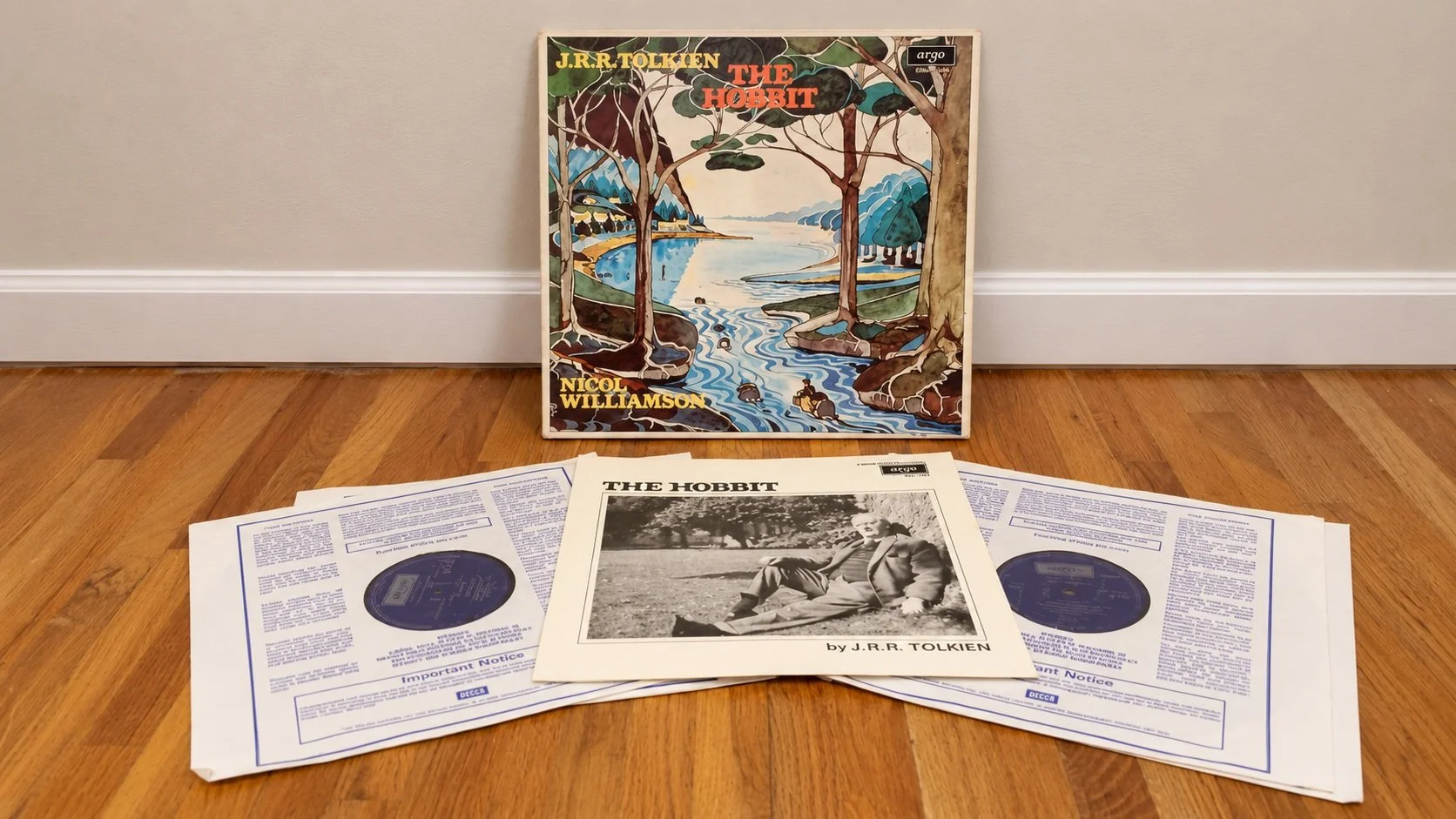
There are numerous audio recordings and dramatisations of of J. R. R. Tolkien’s The Hobbit. Most recently in 2020, actor Andy Serkis, famous for his portrayal of Gollum in Peter Jackson’s films, read an unabridged version of this classic story. Both critics and fans praised Serkis for his prodigious vocal range and ability to give distinct, recognisable voices to over a hundred characters. Prior to this in 1991, actor and playwright Rob Inglis, recorded the first unabridged version. This production was notable for its more traditional approach to storytelling, where as Serkis’ recording emphasises the drama. Inglis similarly gave each character a unique voice and sang all the songs featured in the text. However, prior to these, in 1974, Argo Records released an abridged recording of The Hobbit narrated by Scottish-born actor Nicol Williamson. Upon release this 4-LP box set was positively appraised but over the years has eclipsed by the aforementioned releases.
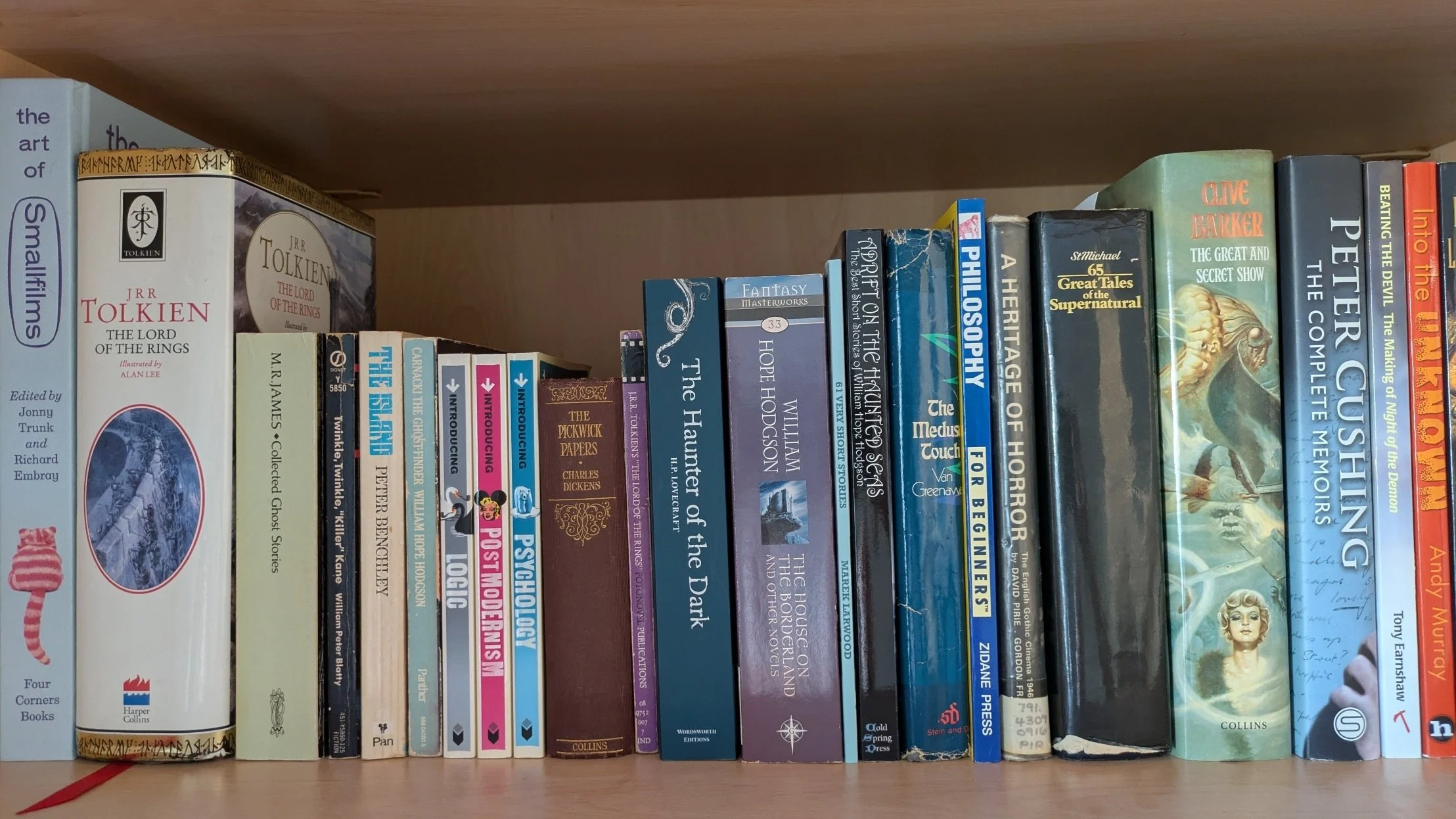
First off, credit where credit is due. I pilfered the idea for this post from Mark Rogers who writes the Newsonaut blog. Apparently it’s a questionnaire that has been doing the rounds across various indie blogs for a while. However, it happens to ask some interesting questions about one’s reading habits. I read a book every month or so and I supplement this by listening to a lot of audiobooks. Yes, I’m aware they’re not the same thing entirely but both offer a means to consume and digest a book. Hence I am not interested in this “popular” internet debate and won’t waste my time on it here. I advocate reading in all its variant forms. Be it sitting in an armchair and perusing a grimoire while smoking a Meerschaum, to reading an article online on your phone or PC. I’d rather that people read in some shape or form, than not at all. As Mark Twain wisely said, “The man who does not read has no advantage over the man who cannot read”. So without further ado, here are my answers to the “five Ws of Reading”.
Last August I listened to The Battersea Poltergeist podcast by Danny Robins and was subsequently introduced to his other production Uncanny. Both are investigations into alleged supernatural events but unlike other shows of this kind, these are far better researched, produced and most importantly even handed. Danny makes a great deal of effort to try and keep a foot in each camp; team believer and team sceptic. Overall these podcast work as they genuinely appeal to multiple audiences and they are not excessively hyperbolic or credulous. A lot of this comes down to Danny’s personality which is upbeat and relatable. Perhaps his greatest strength is being a sympathetic ear to those recounting their experiences. He lightens the mood from time to time with humour when required. He also liberally litters the proceedings with pop culture references. However, he will probe and ask pointed questions but does so in a non-accusatory manner.
The zombie genre is a narrative seam that has been heavily mined in recent years. There seems to have been a never-ending supply of films, television shows and video games involving the undead over the last two decades. Which is why the notion of society being destroyed by its own citizens has somewhat lost its intellectual and horrific lustre. Hence I can understand people rolling their eyes at the mention of the novel World War Z by Max Brooks. The 2013 film adaptation starring Brad Pitt, which jettisoned most of the source text's innovations, isn’t the best advertisement for the book’s virtues. However, if you take the time to look beyond the hyperbolic title, you’ll find World War Z a work of singular intelligence which uses the zombie genre as a means to explore multiple socio-economic and political themes.
I was unaware of the The Battersea Poltergeist podcast and accompanying online interest during its initial release. Created by Bafflegab Productions and presented by Danny Robins, who is well known in this field with similar shows such as Haunted and Uncanny, it was broadcast on BBC Sounds and BBC Radio 4 between February and March 2021 during lockdown. The Battersea Poltergeist is a documentary of a true story with dramatized re-enactments. The show alternates between interviews, discussions and research into the case with short vignettes from a cast of actors recreating events for dramatic effect. It was released episodically and gained a lot of online and press interest at the time. Hence there were additional episodes interspersed throughout the initial run which provided “case updates” and listener feedback and questions.
Dr Richard Shepherd is a senior forensic pathologist with over 30 years’ experience, consisting of 23,000 postmortems. His book, Unnatural Causes, explores his career and his devotion to the truth in determining how each of his cases died. Over the course of his career this includes victims of mass disasters, homicides, and those who have died in their own homes from unknown causes. Dr Shepherd’s job is to ascertain a cause of death based upon the facts and data presented. Each case is described with detail and empathy and it’s surprising how much the reader becomes immersed in the methodical approach that each postmortem entails. Furthermore, it is very satisfying to learn of Dr Shepherd’s verdict. However, far from being a technical dissertation on a succession of cases, this is a deeply personal and humane book which addresses the impact of the author’s career upon himself and his family. It is written with a surprising degree of literary flair and is profoundly thought provoking and moving.

Charles Dexter Ward is a young man from a prominent Rhode Island family with a keen interest in history. He spends much of his childhood wandering the streets of ancient Providence, drawn inexorably to its architecture, as well as it’s colourful heritage. As an adult he continues his antiquarian leanings and subsequently discovers a hitherto unknown ancestor, Joseph Curwen. One with a shadowy past which hints at the pursuit of alchemy and other arcane practises. Charles decides to uncover the truth regarding Joseph Curwen and over time his interest changes into obsession. His Father begins to worry about his son’s fixation and the family Doctor, Marinus Bicknell Willett, decides to keep an eye upon the youth’s state of mind. A series of curious events hint at a growing eldritch malevolence and Doctor Willett begins to suspect that Charles is in grave danger from a menace stretching across time.
At the Mountains of Madness is a story told from a first-person perspective by geologist William Dyer, a professor from Miskatonic University in Arkham, a fictional town in Essex County, Massachusetts USA. When a new scientific expedition to Antarctica is announced, Dyer breaks his silence and discloses hitherto unknown and closely kept secrets about his own explorations of the continent and exactly what befell his own expedition. He details how his team found the preserved remains of 14 prehistoric life forms unknown to science and outside of the existing geological and evolutionary timescale. He goes on to recount how some of the men and sled dogs are killed under mysterious circumstances. Dyer and graduate student Danforth, subsequently explored a mountain range by plane and discovered a vast, abandoned stone city, which is alien to any form of human architecture. What is the secret of this ancient ruin? Can Dyer convince subsequent explorers to stay clear of “the mountains of madness”.
Let’s not be coy about this. J. R. R. Tolkien’s The Silmarillion is not in any way a light read. It has a complex narrative, filled with staggering amounts of lore to digest. I certainly wouldn’t recommend it to anyone as their first point of entry into the Tolkien Legendarium. I think this is a book that you tackle after The Hobbit and The Lord of the Rings, if you are sufficiently enamoured with the threads of a wider backstory that are alluded to in both those volumes. If that is the case then brace yourself. However, despite its sprawling histories and dense genealogies, The Silmarillion is an incredibly rewarding book. There is an air of majesty surrounding the epic stories it contains and its themes about the eternal struggle between the dark and the light are timeless. Due to the immense detail that Tolkien lavishes upon the text, Middle-earth feels like a genuine living, breathing world. A world of languages, culture, geography and history. To date it has never been equalled.
First published in 1980, Unfinished Tales is a collection of stories by J. R. R. Tolkien, that spans from the Elder Days of Middle-earth to the end of the War of the Ring. For those who have read both The Silmarillion and The Lord of the Rings, this book provides additional insights and more detailed accounts of many key events of the First, Second and Third age. Such as Gandalf’s informative tale of how he came to send the Dwarves to Bag-End in search of a burglar, the appearance of the sea deity Ulmo before Tuor on the coast of Beleriand and an in depth description of the military organization of the Riders of Rohan. This collection of stories and essays by J. R. R. Tolkien were never fully completed during the author’s lifetime but were posthumously edited by his son Christopher Tolkien and present with notes, annotations and were required a detailed commentary.
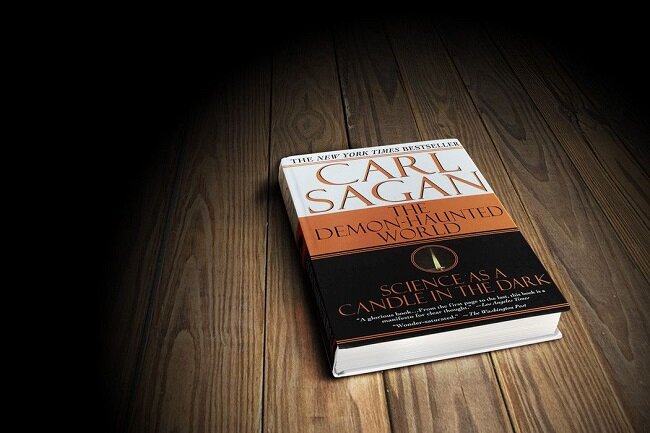
“For me, it is far better to grasp the Universe as it really is than to persist in delusion, however satisfying and reassuring.”
The problems that beset the modern world are complicated and nuanced. Thus any potential solutions will be equally complex and subtle. There are no quick fixes for issues such as climate change or nuclear proliferation and anyone trying to sell you one is either a charlatan or a fool. In his book, The Demon-Haunted World, Carl Sagan strongly advocates that adopting a scientific approach to thinking is essential in a modern democracy. By this he means questioning ideas critically and requiring evidence based arguments. If something cannot be effectively measured, tested or verified we should be deeply sceptical of it. He even goes so far as to argue that it is patriotic to ask questions and that any person, institution or organisation that avoids such scrutiny should be deemed suspect. Published in 1995 Sagan’s concerns regarding the coming century have proven sadly accurate. A quarter of a century ago, he predicted the rise of misinformation, fake news and alternative facts. When information is controlled and a population lacks critical thinking it becomes "unable to distinguish between what feels good and what’s true".

In my youth I was a prodigious reader. I spent many a happy weekend visiting my local library and often spent my pocket money on books as a child. Overtime, I changed from reading fiction to non-fiction. More recently, a lot of my reading has been done online, consumed either via my office PC or tablet. That’s not to say that I don’t buy paperback or hardback books anymore. I still consider this to be the preferred experience. There is something fundamentally exciting about sitting down in a comfy chair, reading at your own pace, away from distractions. However last year I injured my left arm and I have subsequently found holding a large hardback book to be a difficult experience. So for the sake of convenience I started listening to audiobooks instead. I’ve always enjoyed them considering them a great alternative to traditional print media. What my recent foray into this format has taught me is how much the medium of the audiobook has grown.

I have reviewed several audio recordings of J.R.R. Tolkien’s The Lord of the Rings over the years. My personal favourite is the BBC Radio adaptation from 1981, which has a superb cast of British character actors and does a wonderful job of adapting the text without diminishing the scope of the narrative. This is a dramatisation, rather than a straightforward reading of the book. However, if the latter is what you are looking for then the go to version is 1990 recording by Robert Inglis. He provides unique voices for all characters and even sings the songs included in the source text. And then there is the quirky Mind’s Eye Production from 1979, which is another dramatisation. This is a flawed version with a focus upon the character dialogue with much of the lore removed. Yet it has its charm and includes the often omitted Tom Bombadil. However, quite recently I accidentally stumbled upon a fourth adaptation and was surprised not only by the quality of the production but the curious history associated with it.
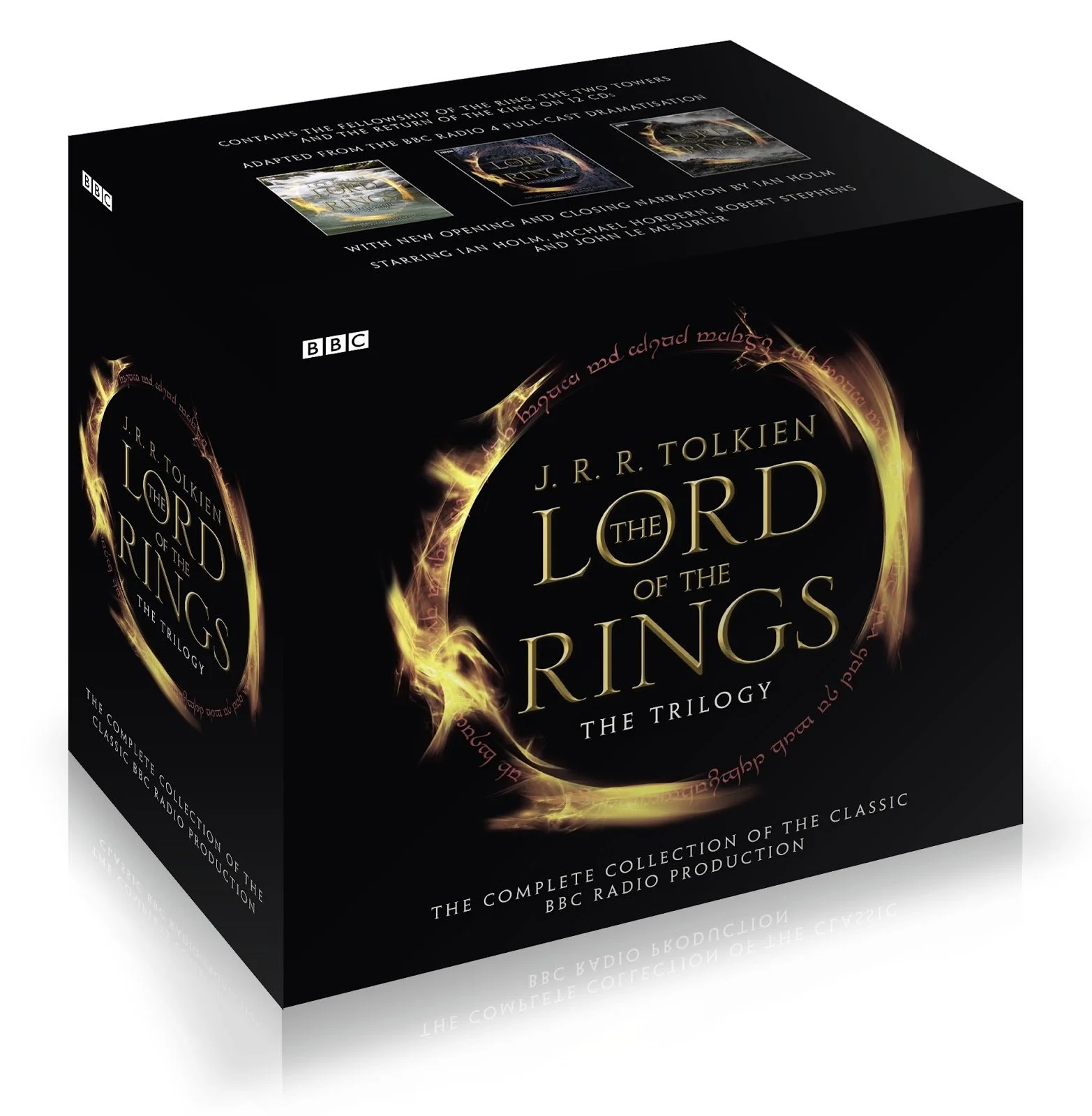
In 1981 BBC Radio 4 produced an ambitious adaptation of The Lord of the Rings, presenting Tolkien’s novel in twenty six, thirty minute episodes. As with all adaptations some material had to be removed, but overall the BBC production was not excessively abridged and followed the plot faithfully. The characterisations and dialogue were extremely well realised and music by composer Stephen Oliver was very much in the style and idiom of Tolkien. This was a production of the highest pedigree and a major event for the BBC at the time. The series was heavily promoted, receiving front page status in The Radio Times, the UK’s premier TV guide and bestselling magazine. Although initial reviews were varied, the series immediately gained a cult following with fans trading episodes recorded on cassette tape. Word of mouth and substantial listening figures soon lead to revised opinions from the press, along with the immortal slogan "Radio is Hobbit 4-ming".

When discussing the various audio dramatizations of J. R. R. Tolkien's The Lord of the Rings, people often think of the BBC Radio adaptation by default. However it should be noted that it was not the first. An earlier version was made and broadcast in 1979 on US National Public Radio and was subsequently released as an audiobook. It was produced by The Mind's Eye, a company who were responsible for numerous adaptations of classic literature for radio at the time. The script written by Bernard Mayes is a somewhat abridged version of the book. The eleven hour running time focuses significantly on the dialogue, with much of the back history, lore and expositionary narration removed.
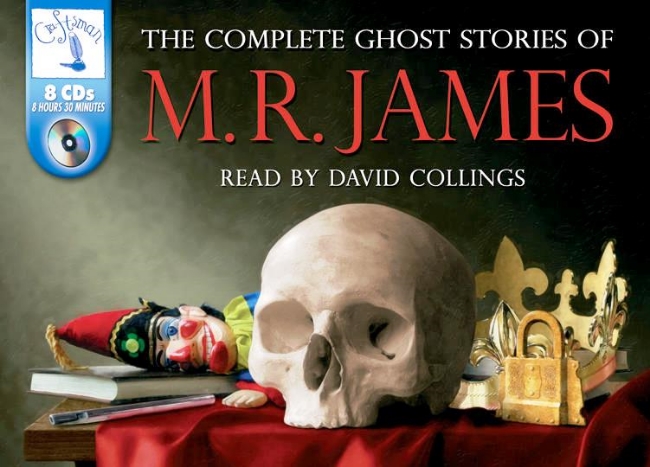
The supernatural fiction of Montague Rhodes James is a major milestone in the history of the literary ghost story. His work tangibly helped shape the genre as we know it today, focusing on classic themes such as retribution, vengeance and other aspects of traditional mythology literature. The protagonists are often socially dysfunctional intellectuals who face peril due to their excessive curiosity. The very physical nature of horror often masquerades for deeper psychological issues. They also serve as an invaluable window into the socioeconomic structure of Edwardian Britain.
LOTRO: The Problem With Skirmish Soldiers
Skirmishes were added to the MMORPG The Lord of the Rings Online, in 2009 with the release of the Siege of Mirkwood expansion. Skirmishes are a repeatable and scalable combat system that allows players to access various instances for solo or group play from anywhere in the in-game world. Players can choose a Skirmish Soldier from a variety of classes to accompany them and provide healing, tank or additional DPS. On paper it’s a great system which is why many other MMOs offer something similar. I recently decided to tinker with my Skirmish Soldier build on my main character to see if I could optimise their performance. As my primary alt is a Lore-master, for the last few years I have had a Warrior as their Skirmish Soldier, to take some of the aggro from attacking mobs. I used the excellent guide by FibroJedi and swapped over a few Training and Personal Traits.
Skirmishes were added to the MMORPG The Lord of the Rings Online, in 2009 with the release of the Siege of Mirkwood expansion. Skirmishes are a repeatable and scalable combat system that allows players to access various instances for solo or group play from anywhere in the in-game world. Players can choose a Skirmish Soldier from a variety of classes to accompany them and provide healing, tank or additional DPS. On paper it’s a great system which is why many other MMOs offer something similar. I recently decided to tinker with my Skirmish Soldier build on my main character to see if I could optimise their performance. As my primary alt is a Lore-master, for the last few years I have had a Warrior as their Skirmish Soldier, to take some of the aggro from attacking mobs. I used the excellent guide by FibroJedi and swapped over a few Training and Personal Traits.
I do not find playing Skirmishes at the default difficulty setting with my level cap Lore-master to be particularly challenging. Mainly because my primary character is well specified with good gear and an optimised Legendary Weapon. On occasions, I will send my Warrior to attack a specific target, if for example, one of my main attack skills is on cooldown. Most of the time, they simply follow in my wake, providing what support they can. Or so I assumed. Recently, I decided to look at my combat log after playing through Thievery and Mischief Skirmish. Let it suffice to say, there were few entries regarding their contribution and what was there showed minimal damage. The Skirmish Soldier in question had all their skills and abilities maxed out. I subsequently ran several other Skirmishes with other alts, all of which had Skirmish Soldiers of a commensurate rank to the level of the alt. The results were similar.
Hence I did some research via the official LOTRO forums and the subreddit and it would appear that Skirmish Soldiers are generally considered ineffective and often a liability in high-level content due to poor scaling and unintelligent AI. At lower levels, soldiers can be overpowered but still have a tendency to pull aggro and break crowd control. This beneficial over powered state only lasts for a ten levels or so. The main problem after their AI, is that their damage and utility do not scale well at higher levels, making them less useful compared to player-controlled companions like Captain's Heralds or Lore-master pets. A Herbalist Skirmish Soldier is the most recommended and reliable choice because its primary function is healing. A role that tends to keep them adjacent or behind the player. They help keep you alive during difficult fights, which is more important than the negligible damage output from other roles.
Over the years, the level cap increases have further exacerbated this problem. Hence, my fully maxed out Warrior doesn’t contribute that much to any fight. I mainly use them as a decoy. Similarly, when deployed during general PVE questing the Skirmish Soldier (or Landscape Soldier in this circumstances) suffers the same problems with skill scaling and damage output. Therefore, their primary role at present, is one of psychological prop. Making the player feel supported and thus, boosting their confidence. Making Skirmish Soldiers the equivalent of Andrew Ridgeley from Wham. LOTRO developers, Standing Stone Games need to fine tune and rebalance this game mechanic, so that Skirmish/Landscape Soldiers become a more reliable and universal companion within the game. I’d also like more cosmetics options for them. However, knowing SSG, I won’t hold my breath.
One of the things that I enjoy when playing a new video game is character customisation or character creation. I will spend hours trawling through settings, changing the most minute and consequential aspects of my avatars appearance. I am certain that there is a psychological aspect to this particular game mechanic and that it says something about you as a person. Are your creations shaped just by a need to look good in-game or is there more to it? Are they external manifestations of your sexual preferences or thoughts on body image. Do you treat them as characters from a book that exists in your mind. Do you aspire to recreate the likeness of people you know or admire? Do you strive to make your avatar look like you? Whatever the reasons, it would seem that character creation is something that a lot of gamers enjoy. Hence I am not alone in my borderline obsession. What you look like in-game is equally as important as your character’s name.
I recently tried to use DLSS 5 Manager with the MMORPG, The Lord of the Rings Online. Unfortunately, things didn’t work out. Today I undertook a similar experiment with AMD Neural Rendering, which is a broadly comparable product. Both utilities use 3D-Guided Neural Rendering, an AI technology that alters how lighting, reflections, and textures look in a game. Instead of just upscaling the image like older versions, DLSS 5 uses an AI network to instantly "re-render" lighting and material responses over the game's layout, achieving photorealistic details that would normally negatively impact a graphics card's performance. Or to put it in less fancy terms, the game graphics are enhanced and modified, although it is highly subjective as to whether the end results are an improvement. However, as a game such as LOTRO is unlikely to ever receive a major graphical overhaul, tools such as these are the nearest players will get to revised graphics.
The core game code and engine for the MMORPG, The Lord of the Rings Online, is about 24 years old. LOTRO began originally as Middle-earth Online, developed by Sierra On-Line in 1998. Turbine took over full development of the project in 2003/2004 when their parent company, Vivendi Universal Games, acquired Sierra. The content that had already been developed by Sierra was abandoned and Turbine created a new game using structural elements such as the UI and game engine from their previous release Asheron’s Call 2 from 2002. The Lord of the Rings Online: Shadows of Angmar was officially released in April 2007. Hence, the active public release code is 19 years old. Despite continuous expansion and updates, along with a recent migration to 64-bit architecture, the foundations of LOTRO retains a nearly twenty year old legacy framework. This frequently contributes to modern technical hurdles and engine constraints.
A few years ago, there was a fan created project to provide voice narration of NPC dialogue in the MMORPG, The Lord of the Rings Online. This mainly involved capturing the text in the quest dialogue windows and then sending it to OCR software, before using a text-to-speech program to read it. LOTROVoice as it was known, broadly worked but the creator stopped developing it as it proved troublesome to maintain. However, I recently discovered Khazad Voice TTS which is a separate project that does pretty much the same. I went so far as to install this “immersive AI narrator for LOTRO” after seeing a YouTube video of it being used successfully. Sadly I ran into issues configuring Khazad Voice TTS, because I have two monitors and LOTRO runs on the secondary (by my choice) and not the primary. I couldn’t “lasso” the dialogue windows in LOTRO during the calibration set up, which effectively prevented me from completing the process.
Throughout yesterday and early today, there was an issue logging in to the MMORPG, The Lord of the Rings Online. Upon starting the game launcher, it would attempt to connect to the patch server to download the latest game update. This process would start but then subsequently stall at 33%. The launcher would then attempt to reconnect to the patch server every 60 seconds but could not make any further progress. Some players found that if they left it long enough, it would eventually complete the download and the launcher then progress to the next screen where they could input their username and password. However, for the majority of LOTRO players the problem would simply persists and the launcher would be stuck in a loop. Some players attempted to reinstall the game or use the repair data facility in the launcher but neither of these proved to be successful workarounds. The patch sever needed to be bypassed to resolve the issue.
Two years ago I wrote a post about fine tuning your graphics in the MMORPG The Lord of the Rings Online. Apart from installing ReShade and using AMD Adrenalin, the options were somewhat limited, due to the game’s age and multiplayer status. Since then, I’ve been playing LOTRO with the game settings maxed out, a custom ReShade profile to make the colour palette more vivid and Radeon Image Sharpening enabled within the AMD software. The game looks clear, crisp and the draw distance is pretty good for an ageing game but I still wish the graphics could be tweaked further. Hence, I’ve been trawling the internet in a vain attempt to see if I can find any third party utilities that could be used to enhance LOTRO further. During the course of my search I stumbled across DLSS 5 Manager. This is an open-source, intelligent utility and one-click mod installer designed to inject and manage Nvidia's DLSS 5 neural rendering features, ReShade, and OptiScaler into PC games.
Are video games becoming easier? It’s a perennial subject that is frequently discussed by those who play them. Often the question of whether they have actually become easier is not the focus of the debate, as it seems to be broadly recognised that it is the case. Instead, discussion of this matter tend to drift into the rectitude of this change. Debate’s of this nature are usually awash with subjective opinions and personal preferences which are then put forward as objective facts. It’s not just a question of video games becoming easier, it’s the fact that making them easier is “wrong” and those who want them as such are “not proper gamers” etc. The hours that have been lost to this pointless, tedious debate are uncountable. However, I digress. Let us return to the matter of video games becoming easier, because although fans discuss this a lot and have plenty to say, you don’t often hear from the developers on this subject.
The next expansion for the MMORG, The Lord of the Rings Online, was announced on the 1st August, via the gaming website MMORPG.The Wolves of Mordor, which will launch later in the year, appears ambitious in scope as it will include two new game systems as well as the obligatory story update. This expansion takes place in Draugardh located in the North East of Mordor, beyond the Plateau of Gorgoroth. It includes the new zones of Heledhris, Parth Rhavas and Nan Ogol. These vary environmentally ranging from the arid, volcanic and semi-tropical. Players will encounter the Daugrim in these regions, Werewolves but not in the modern sense. This is not the lycanthropy of Eastern European legends but in the established Tolkien idiom of fell spirits inhabiting the bodies of Wolves. The region also sees the return of the Woses and players can expect to encounter Elves and scouts from Gondor. As ever with LOTRO expansions, there will be new instances as well as a raid.
I was recently perusing my archive of old blog posts, when it struck me how much I’ve written about the MMORPG genre over the years. Naturally, there was far more material from between 2008 and 2012 as that was period when I immersed myself in the genre and was very enthusiastic about it. I was at a point in my life when I had the time to dedicate to such games and I was happy to participate in the social aspect of they offered. I would regularly play through group content and spend time socialising online with fellow guild members. My experience remains a textbook example of how online games can be more than the sum of their parts and that where you are at in your life has a major impact upon your overall enjoyment. As I read though various old posts it became clear that my experiences where specific to this particular part of my life and that they cannot be repeated. My relationship with the genre is very different now and that’s fine.
Video games as a genre are extremely poor at explaining themselves. When you buy a new game you’ll often find little or no information regarding the basic systems and mechanics. The industry assumes that their customers are by default familiar with the fundamentals of playing a modern video game. Hence if a game has a tutorial, it is often based around videos rather than detailed verbal instructions. You are are briefly shown a clip of a specific move being successfully undertaken but it is seldom shown in a wider context. The industry also expects the fan community to take on the role of curating and disseminating information about its games. The move away from forums and bespoke websites to Discord highlights this. Discord is a primarily a real time communication tool and not good at maintaining a historical data archive. If you want an answer to a specific gaming question, you’ll more than likely find it on YouTube in a video made by a fellow gamer.
According to the recent “letter to the players”, Standing Stone Games will be adding a new zone to the MMORPG The Lord of the Rings Online in the second quarter of this year. Possibly around May or June. Having spent the last three expansions in the South of Middle-earth exploring the tropical Umbar and the deserts of Harad, I would certainly welcome a change of location. I have gradually warmed to these zones over the last eighteen months but I do find them so incongruous. They are so radically different to the European style content that has been the mainstay of the game for so long. Tolkien’s source text has plenty of detail regarding Eriador and Rhovanion. Information regarding Harad is scarce, hence it has afforded the developers a great deal of artistic freedom. Although exceedingly well realised these tropical zones have taken a while for me to get used to.
I’m not sure exactly when it started but I’ve recently noticed a graphical bug within the MMORPG The Lord of the Rings Online. This problem often occurs within caves or in areas where there are a lot of rocky surfaces. Hence it has become very apparent in the latest two expansions, set in Umbar and Harad. This graphical glitch causes some surface textures to appear to flash from light to dark intermittently. The resulting strobe effect is hard to ignore and very distracting. Fortunately, a quick online search showed that this is not a problem unique to my installation of LOTRO and is a known problem. Furthermore, there is a very simple workaround, which is to go into the Advanced Graphics setting and uncheck “Per Pixel Lighting”, which immediately remedies the problem. I have no idea why this has recently started to happen but at least it can be resolved.
The latest expansion for the MMORPG The Lord of the Rings Online, Kingdoms of Harad, launched on December 3rd. With this release the level cap was raised from 150 to 160. It should also be noted that the cap for virtue traits was also raised from 96 to 100. Naturally these changes meant that there is a requirement to replace all armour and jewellery once the new cap is reached. Similarly Legendary Items have to be reforged and any traceries upgraded or replaced. If you follow the Epic Story it will lead you from quest hub to quest hub. The main quest rewards, along with those from side quests will provide adequate gear as you slowly progress towards the new level cap. The new raids, instances and missions/delvings then provide a means to acquire higher quality level 160 gear. LOTRO and indeed, many other MMOs are consistent in this methodology.
It is customary in a post such as this to list the various games that I’ve played over the last twelve months and share my thoughts on them. Wider analysis of the video game industry is also de rigeur. Unfortunately, I don’t really feel disposed to do either of those two things. My thoughts on the games I’ve played have already been published and can easily be accessed via the links at the bottom of this post. As for the video game industry, it suffers the same flaws as music, TV and cinema. There is creativity and innovation out there but it is often drowned out by mainstream products which are demonstrably inferior due to their inherent mediocrity. As for the business side of things, we once again clearly see the failings of the corporate management class. Sadly, they do not face the consequences of the mistakes that they make.
Today Standing Stone Games began beta testing Update 46.1 for the MMORPG The Lord of the Rings Online. The current preview on the Bullroarer test server is mainly for the new instance cluster that comes with the Kingdoms of Harad expansion which launched a few weeks ago. However, it would appear that this latest preview has another feature or note. One that should please LOTRO players. Contrary to what a lot of people thought, myself included, SSG have been working on a scaling UI for 2K and 4K monitors and the results are now available for testing from today Monday 15th through to Friday 19th December. Until now the main workaround to the lack of UI scaling has been to use either Nvidia or AMD graphics software to upscale the game from 1920 x 1080, or a third party app such as LosslessScaling. Having an official solution is a far better option.
Kingdoms of Harad, the 13th expansion for the MMORPG The Lord of the Rings Online, was released today. Highlighting developer’s Standing Stone Games continuing commitment to this eighteen year old game. As 2025 draws to a close, I thought it would be prudent to reflect upon the current state of LOTRO and to consider what may come next year. Two words that I associated with this MMO are stable and consistent. The playerbase is loyal and dependable. Player numbers never greatly decline nor do they notably expand. LOTRO fills a very specific gaming niche and one of the reasons it retains its players is that there is no suitable alternative game. Although there is not a great deal of data in the public domain, it is generally accepted that LOTRO has an older player demographic and that many are consummate Tolkien fans.
The MMORPG The Lord of the Rings Online runs on a broad spectrum of PCs. From archaic laptops to high end gaming rigs, although it may require a bit of tweaking. At present, the optimal way to play the MMO is at a resolution of 1920x1080 (FHD) with the graphics setting maxed out. The graphics are sharp and the UI is readable. However, a growing number of gamers are now using 2K and 4K monitors. You can play LOTRO at higher resolutions such as 2560×1440 (QHD) and 3840x2160 (UHD) and the game looks great. However, the UI does not scale and so is very small on 2K and 4K monitors. The skill icons on the quickslots (shortcut bars) and the in-game text become difficult to see at these resolutions, which deters some players from using them. It is a known issue that Standing Stone Games are attempting to address but it is unlikely to be resolved any time soon.
I recently read a post on Massively Overpowered about skills rotation in the MMORPG genre. I found the subsequent discussion in the comments fascinating. Mainly because I have never used a fixed rotation of skills in any of the MMORPGs that I play. I understand the reasoning behind such things and why some players want to optimise their combat performance. Using one’s skills in a specific order to maximise damage and manage their subsequent cooldown has a logical appeal. In Star Trek Online, some players go so far as to create keybinds for their rotations and assign it to a specific hotkey, which is then continuously pressed throughout combat. However, rotations are a blunt tool that lack flexibility, often being geared towards dealing with a single target or using an area of effect skill against a larger group. They may not be the optimal approach to combat when things do not go to plan.
Tolkien enthusiasts may recollect Athlon Games, a subsidiary of Leyou Technologies, announcing that it was developing a new MMORPG, based upon The Lord of the Rings, back in September 2018. The following summer, it was revealed that Amazon Game Studios was the partner developer for the project. In late 2020, Leyou Technologies (a Hong Kong-based company), was acquired by the Chinese conglomerate Tencent. This triggered a contract clause with the license holder, Middle-earth Enterprises, allowing them to terminate the existing arrangement if a new deal could not be met. Amazon and Tencent were unable to agree upon how to proceed with the project, leading Amazon to withdraw from negotiations. The project was subsequently scrapped. No details or images of the MMO have been released.
After a six month migration period, Standing Stone Games formally closed all their legacy 32-bit game servers for the MMORPG, The Lord of the Rings Online, on the 31st August 2025. Despite this planned closure being widely discussed via the game’s official forums, professional video game websites and fan blogs, many LOTRO players were unaware of this deadline. Hence many were unable to migrate their respective alts to the new 64-bit servers. Naturally those affected by these closures were upset, especially those with longstanding characters who didn’t relish the prospect of starting from scratch with a new alt. Thankfully, SSG have been true to their word and as of today, have re-opened these “dark worlds” to character transfers. If you have an alt trapped on one of the older game worlds, then now is the time to use the transfer wizard and move them to a new active game world.
MMORPG announced earlier today and it was subsequently confirmed by Standing Stone games, that the new expansion for The Lord of the Rings Online will be Kingdoms of Harad and that it will launch later in the year. The expansion will see the conclusion of the epic Song of Waves and Wind storyline and the level cap raised from 150 to 160. There will be a new region to explore, Mûr Ghala, comprising four zones. Adagîm, Idagâl, An Shêru and Kighân. The latter contains the main trading hub of Zajâna. Players will travel into the region with Gandalf the White, along with allies of the Kindred of Coins and Mizadi as they seek to counter the regional power struggle brought about by the fall of Sauron. Canonically, this takes place three months after the destruction of the ring, hence King Elessar and Eomer are busy with domestic affairs in their respective kingdoms.
Skirmishes were added to the MMORPG The Lord of the Rings Online, in 2009 with the release of the Siege of Mirkwood expansion. Skirmishes are a repeatable and scalable combat system that allows players to access various instances for solo or group play from anywhere in the in-game world. Players can choose a Skirmish Soldier from a variety of classes to accompany them and provide healing, tank or additional DPS. On paper it’s a great system which is why many other MMOs offer something similar. I recently decided to tinker with my Skirmish Soldier build on my main character to see if I could optimise their performance. As my primary alt is a Lore-master, for the last few years I have had a Warrior as their Skirmish Soldier, to take some of the aggro from attacking mobs. I used the excellent guide by FibroJedi and swapped over a few Training and Personal Traits.
On 2nd August 2025, I was playing the MMORPG The Lord of the Rings Online, on my primary character, a level cap Lore-master. I decided to continue with one of the Allegiance Quest lines, specifically Durin’s Folk. I played through several quests and earned the appropriate tokens that advance the Allegiance system. I then handed these in to the NPC in the Hall Under the Mountain, expecting the next quest in the series “Chapter 3: Gimli’s Request” to be unlocked. An item appeared in my inventory that I then clicked on, which should have bestowed the quest. Unfortunately, nothing happened. Furthermore, the item vanished from my bag and therefore I could not attempt to click it again. I checked the LOTRO Wiki and then looked around the Hall Under the Mountain to see if any NPC had a ring icon above their head. As they did not, I surmised that this was a software glitch and logged a support ticket with Standing Stone Games.
Let’s start with a quote from a classic Walter Hill film, The Warriors. “Can you count, suckers?” says Sirus. The gang leader was referring to the number of Police in New York City at the time. Whereas, for the purpose of this post, I am referencing how many Delving Writs a player needs to acquire 6 pieces of level cap armour in LOTRO. Because, next to the gear you get from endgame instances and raids, Delving gear is a good alternative.. It is marginally better than the items you can get from lootboxes. Hence, Delving armour is a good source of high end gear for the solo player. Through the miracle of mathematics, the number of Delving writs required to acquire a full set of this armour is 9,000. At first glance, that seems like a lot. If you then do some further research to put the number in context, you realise it is indeed a lot and a substantial undertaking.
I am currently enjoying a renewed interest in the MMORPG The Lord of the Rings Online since I migrated all my characters from the old 32-bit servers to the new 64-bit replacements. I’ve created a new High Elf Lore-master on Peregrin server and am currently levelling them in a targeted play through of the Epic Story, supplemented by curated side quests. While playing recently, I realised the game UI on this alt wasn’t as I usually have it laid out. So I checked through the various documents on my PC and found a text file I had created many years ago that had a few hints and tips written down. I’ve added a few more and decided to share them as a blog post. I’m sure veteran players will be familiar with many of them but a lot of them are worth repeating. They may prove useful to those new to LOTRO or returning to the game after a long hiatus.
In mid-March, while the server migration debacle raged, I created a new alt for the MMORPG, The Lord of the Rings Online, on Peregrin server. The idea was to play casually through content focusing on enjoyment, rather than worrying about progression. I was to level at a pace that suited me and had no specific plans to develop my alt in any particular way. I have been playing LOTRO since 2008 and have a primary level-cap character that has been my main focus over the years. Hence I have previously experienced all story content from all the expansions and am therefore very familiar with what the game has to offer. Which is why I thought I’d do things differently this time. So I started my new Lore-master in Mossward in Swanfleet, the new starting area added to the game in 2022.
In massively multiplayer online games (MMOs), alts (short for alternate characters), are new characters created by a player in addition to their primary character (often called the “main”). Alts are often encouraged by developers as a means to keep players engaged with their game(s). Sometimes an MMO will actively reward the creation of alts either with access to exclusive content, or with additional skills or items previously unlocked by primary characters. As the myth that an MMO really begins at endgame still persists in gaming culture, some games sell boosts that will instantly raise the level of an alt to that of the current level cap. Creating alts is such a key aspect of the MMO genre, that some games will sell additional character slots, so that players can create further alts beyond the default amount allowed. There are many reasons why players create alts. Let us consider some.
I wrote a while ago that a lot of kinships from the MMORPG, The Lord of the Rings Online, would probably not survive the recent server migration. MMOs are social endeavours by nature, often with strong emotional ties but a lot of kinships (or guilds) have already fallen into decline, simply due to gaming entropy. Hence the migration has seen players leave existing kinships to move to the superior 64-bit servers, resulting in a lot of people who may be potentially looking for a new home. This is exactly what happened to me. I opted to move to Meriadoc server promptly, at the cost of leaving a kinship I have been a member of since 2009. However, the move presented me with an opportunity to remedy this problem myself. I subsequently set up my own kinship and decided to make it available to others.
The dust appears to have settled for the MMORPG The Lord of the Rings Online, after last month’s server transfer debacle. Despite the technical issues arising and subsequent delays to the migration timetable as well as the procurement of in-game housing, LOTRO seems to be enjoying a minor resurgence. Many former players are returning to the game and moving retired alts to new servers, due to the superior performance. The migration issues have also brought a lot of attention to this 18 year old game and it would appear there are many new players trying this Tolkien themed MMO. I was pleasantly surprised to see that a further two 64-bit servers, Grond (EU) and Sting (US), are to be added to the game to meet demand. As I predicted in my previous posts, LOTRO has a habit of bouncing back due to its unique niche in the gaming ecosystem.
It has not been a good week for the MMORPG, The Lord of the Rings Online and its developer Standing Stone Games. The migration from legacy 32-bit servers to 64-bit servers has not gone smoothly. The transfer queue was overwhelmed by the sheer number of accounts and it has taken far longer than expected to process the backlog of requests. Today has been the fifth day of waiting to see if my 3 main characters from Laurelin server have successfully migrated to their new home on Meriadoc. When I checked this morning, the transfer wizard indicated that my characters were back where they originally came from. I therefore considered repeating the entire process. However, around midday, Community Manager Cordovan indicated that SSG had caught up with transfer requests made around 8:00 AM EST on Sunday 9th March. So I decided to be patient and wait a little longer.
Software Updates
As part of our increasing dependency upon software, we have also grown accustomed to its associated foibles, especially the negative ones. Today, I upgraded my blog from Squarespace 7.0 to 7.1 and my PC operating system from Windows 10 to 11. I started early in the morning and ensured that all my personal data was backed up. My default expectation was that both processes would go wrong in some way, shape or form. Let’s take a moment to consider this mindset, which is born out of experience. It is now taken as read that whatever you upgrade, be it an app on your phone or a program on your PC, that it’s going to be problematic. It won’t be a seamless transition and you’ll end up having to do some sort of troubleshooting. Despite our lives becoming more dependent on such software, the quality of these products seems to be deteriorating. What a sorry state of affairs.
As part of our increasing dependency upon software, we have also grown accustomed to its associated foibles, especially the negative ones. Today, I upgraded my blog from Squarespace 7.0 to 7.1 and my PC operating system from Windows 10 to 11. I started early in the morning and ensured that all my personal data was backed up. My default expectation was that both processes would go wrong in some way, shape or form. Let’s take a moment to consider this mindset, which is born out of experience. It is now taken as read that whatever you upgrade, be it an app on your phone or a program on your PC, that it’s going to be problematic. It won’t be a seamless transition and you’ll end up having to do some sort of troubleshooting. Despite our lives becoming more dependent on such software, the quality of these products seems to be deteriorating. What a sorry state of affairs.
Setting aside the failures of the tech industry, I was pleasantly surprised by the fact that both upgrades went well, with no major fallout. With regard to Contains Moderate Peril, I am quite happy how individual posts are displayed. I just need to determine whether from now on, I can include images that scale to the width of the page (but display at full size when clicked on), rather than having to set them to a standard resolution. I also have to fix the main blog page, as it is currently showing each post in full, rather than just the first paragraph along with the option to “read more”. However, these are not deal breakers. The site is still functional for both PCs and mobile devices. Similarly, the Windows upgrade went well. I was interested to see that some of the formatting aspects of Windows 10 were carried over and as a result, I have not had to excessively tinker with the visuals of Windows 11.
Oddly, because things appear to have gone relatively smoothly, I cannot help but feel somewhat disconcerted. Mainly because, as mentioned earlier, we are so used to things just not going to plan these days with regard to the software we use. Hence for the next few days, I will remain prepared for some unforeseen technical issues to manifest themselves. If they materialise, so be it. If they do not, then it’s an added bonus. Hopefully, there’s nothing else on my PC that requires a major update, for the immediate future. That being said, I rebooted my phone earlier today and it has obviously installed an Android update. I only spotted this when I received a phone call and was furiously trying to swipe upwards to answer it. Turns out I now have to swipe to the right. Oh the pleasure of software upgrades! The tech companies obviously think that daily life just isn’t interesting enough.
Recently, the remote control for my Media Player developed a fault. I was watching a film, when for no apparent reasons, the video jumped ahead about twenty minutes and then get stuck in a playback loop of a few seconds duration. At first I thought it was a glitch with the particular .mkv file I was watching but then the problem started happening on both video and YouTube content. I then noticed that when the fault occurred, the backlight on the remote came on and shimmered as it a button was being pressed continuously. Removing the batteries from the remote control for 30 seconds and the replacing them would then restore functionality. This indicated to me that the fault lay with the remote control and not the media player itself. I therefore decided to take the remote control apart to see if I could see any obvious problems. I did not, so I cleaned it and re-assembled it. Sadly the fault persisted, so I decided to replace the remote control.
Until fairly recently, I have maintained a somewhat casual approach to the system maintenance of my PC. “Casual” in this context is a subjective term. What I consider to be “casual” others may think to be robust or even rigorous. But I digress. I regularly undertake minor housekeeping such a clearing my web browser data, removing temporary or unwanted files and updating software. I also make sure that only essential services and programs start when I turn on my PC. I keep an orderly desktop and an intuitive filing system. However, I do very little with respect to maintaining the hardware inside my PC. I clean inside the case a couple of times a year and ensure that the fans are free from dust contamination but that’s about it. I have no idea if the installed RAM is running optimally or whether the processor is operating within the appropriate heat threshold. Does the thermal paste between it and the heat sink need replacing? Are all the cores enabled?
Last year, when I was looking for some suitable video editing software, I found that people would often recommended DaVinci Resolve. It is indeed an outstanding tool but totally beyond my needs. It is also a beast to run and occupies a substantial percentage of real estate on your SSD, so I dismissed this option for practical reasons. Let it suffice to say that finding a suitable product that met my requirements was quite difficult. Video editors often seem to be either quick and easy tools for clipping content on the fly, such as Bandicut (which is great for exactly that purpose) or huge, professional quality behemoths, used by people who work in the appropriate industry. DaVinci Resolve is a textbook example of this. It begs the question what products occupy the middle ground, assuming they exist.
Going forward, if I write any more posts about my use of AI, I am not going to add the following caveat. I will do it once more here, so everyone knows where we all stand. I am fully aware that AI has already taken jobs and will continue to do so. I also know that data centres are not environmentally friendly. As for the evil corporate billionaires that get rich from the situation, that also has not come as a surprise to me. I also believe that the AI market needs regulating and there should be legislation in place to ensure that AI is never directly linked to important government and civil infrastructure. That being said, I am not going to stop using AI at a domestic level over notions of ethical purity. All of the above criticisms can broadly be applied to the industrial revolution and society came to terms with that and survived it. The same goes for the computer revolution. Things change and we adapt. Plus, if you really wanted to protest and lobby against AI, the best time to do this was two decades ago.
One of things I dislike with a passion about modern software is that you cannot cleanly uninstall it from your PC. Removing an unwanted or problematic program just leaves metaphorical muddy footprints throughout your PC. It makes my SSD feel like a crime scene with virtual brain matter spattered across the soft furnishings. Sadly, this is the price you pay for having a modern operating system with a registry, shared dependencies and a liking for temporary files and caches. It all makes me feel very nostalgic for the halcyon days of DOS, with self-contained programs sitting in a solitary folders. Often libraries and drivers lived in specific system paths or the same folder, avoiding conflicts. You could just delete stuff and it sodded off. You didn’t need two priests and holy water. Happy days.
Thinking Out Loud is a recurring post where I write about thoughts and ideas that have recently occurred to me. As ever the intention is not to develop these ideas into full blown blog posts, although they often the could be. Instead I just collate a few sentences to express my point and leave it at that. The idea being that if anyone else wants to pick up the conversation they can do so in the comments section below. On this occasion the various points are all technology based. I’ve been busy of late with several projects, such as building a new website and creating some widgets specifically for it. Like most technical projects things don’t often go as planned and problems occur unexpectedly. Hence, I thought why not make a themed instalment of Thinking Out Loud this time round? It’s something that I may well do this again in the future. As ever, feel free to make your thoughts known.
I turned on my laptop this morning for the first time in 4 months. I knew it was that long because I hadn’t connected the laptop to the new Netgear router that I bought at the end of April. Unsurprisingly, as I haven’t used this device for a while there were multiple Windows updates to be installed. This process took over an hour, so while the various updates were being downloaded and installed, I turned my attention to my Amazon Echo Dot which loiters in the corner of our lounge, doing very little to justify its existence. At present this device is mainly used as a glorified timer for cooking, which seems a bit of a waste given it’s alleged capabilities. Hence, I decided to see if I could increase its functionality while waiting for Windows to do its update thing. More on this later. Let us for the meantime return to the small matter of the operating system updates. Once they were completed, I immediately installed Chris Titus Tech’s Windows Utility and started removing unnecessary features and bloat, as well as disabling invasive services.
Before we begin, let me clearly state that this is not a comprehensive installation guide for installing Steam OS on your PC. Mainly because the variety of hardware that can be present in any PC makes each installation a somewhat bespoke affair. Hence I have decided to provide a list of bullet points of the various steps and issues I encountered during my installation, last week. Consider it advance warning of things you may encounter if you install this operating system. As ever, if this is something that you are intending to do, I would advise allowing yourself a suitable amount of time so you can accommodate any issues should they arise. It is entirely possible that this may be a two hour job for the technically literate running the most generic or commonplace hardware. However, I suspect that a lot of people undertaking this project will run into variations of the same problems that I encountered.
I am intrigued by the growth of the IndieWeb, owning your domain and static websites. I certainly agree with the notion of not relying on big corporations and I have an ongoing project to divest my dependency on software produced by major market players. However, although I own my own domain, my website is hosted by Squarespace. I’ve not really had any problems with them over the last 11 years and I would describe our business relationship as equitable. However, the monthly subscription price has increased over time and is likely to keep on doing so. It has crossed my mind as to whether there is a suitable alternative. However, if I were to migrate Contains Moderate Peril elsewhere I suspect it would be logistically complex and problematic.
I like learning new skills and starting projects. I regularly undertake such things with varying results. However, if they don’t work out that’s not a problem. You have to try something to see if you like it. I’ll add “within sensible parameters” as a caveat to the last statement. And it’s perfectly fine to discover that something isn’t for you. I like certain genres of video games, music, films and books. I am comfortable wearing certain types of clothes and not others. I’m picky about colours. I’ll even go so far as to say that I won’t drink out of any mug that’s just lying around. If I don’t like the joke, logo or overall aesthetic of it, I ain’t using it. However, I digress. Let’s get things back on track and talk about projects. This year I have wound down several websites and have decided not to move forward with making YouTube videos. I have focused my energy on improving my website and adding functionality. I am also trying to broaden the scope of my writing.
It’s funny how it is often the little things that become the proverbial straw that breaks the Camel’s back. I have been struggling for a while with the overall performance and functionality of my Windows 11 PC. The operating system is bloated, slow and buggy. It all too often commits that unpardonable sin of trying to do my thinking for me and enables some stupid feature by default. Despite having good specifications, my PC takes too long to boot up for my liking and is becoming too much of a wild card with regard to whether it will co-operate or not when I try and undertake a simple task. As someone who is very particular in their PC habits, IE I see my PC as a tool that I use on the terms that suit me. Hence, I find the faux enthusiasm that accompanies each uncalled for “improvement” that results in me losing agency, singularly antagonising. Then a minor issue arose recently that escalated into a thorn in my flesh and I decided that it was time that something must be done.
This is a post about the power of nostalgia and how sometimes, interacting with something from your past, be it physically or mentally, can produce a very strong and tangible emotional reaction. In some instances, this can be the result of something that you have specifically set out to do. On other occasions you can wander into a sense of nostalgia purely by chance. Today I experienced a very strong sense of nostalgia while watching a YouTube video and then again when I sought to replicate what I had seen. The video showed someone installing Windows 95 on to an old 486 PC from that era. The Window’s start up sound really touched a nerve (but in a good way) and then when the guy in the video launched Space Cadet 3D Pinball, a game that shipped with the operating system, I felt a strong compulsion to track down a copy and install the game myself, thus revisiting something that was an integral part of my life in 1995.
For the last few months I have being using Google Gemini. I subscribed so I could access a wider spectrum of services and evaluate it effectively. I also wanted to dispel some of the hysteria that accompanies any conversation about Large Language Models and Artificial Intelligence. The results were initially interesting and Google Gemini proved useful when researching material for blog posts. It is good at providing summaries about well documented subjects. I wrote a post about food banks recently and it distilled a lot of data into a manageable amount, which was ideal for my article. Google Gemini has also produced some visual basic scripting and simple batch files that have allowed me to automate processes on my PC. Such as changing the default monitor, or screen resolution at the click of an icon. However, I found this AI struggled with in-depth software troubleshooting and that its ability to create images varies greatly depending on the subject.
The UK Government has formerly announced its intention to ban under-16s from using social media. This is due to increasing public pressure that “something must be done” about the perceived iniquities of many online platforms. However, as with most complex social problems of this nature, no one has any clear or practical ideas as to what that “something” is. It remains a nebulous, non-specific panacea and clearly someone else’s job to identify and implement. As ever, why choose a nuanced and multifaceted solution to a complex problem, when it is far easier and politically expedient to just “ban” something. The former requires effort and a degree of thinking. If such an approach fails it also means that those who came up with it now carry the can. The latter dumps the problem in the lap of various third parties, who can then be conveniently blamed when the ill conceived policy fails.
Yesterday we changed internet service providers. We moved from EE (formerly BT) to Plusnet. The transition went surprisingly well, mainly due to the existing infrastructure remaining the same. We’ve had fibre to the premises (FTTP) since 2022 so this was essentially an administrative change. The previous ISP terminated their service at 1:30 AM in the morning, while I was playing Star Trek Online. By 6:30 AM I received a message from Plusnet that the new service was live. It took about an hour to configure the new Netgear Nighthawk RS100 router (I bought my own) and get all our household devices attached to the new network. The connection is running at exactly the same speed and stability as it had under the previous supplier. At present a 1Gbps connection is sufficient for our needs. The main factor that has driven this change is cost. We are currently paying £28 per month for internet access which is a competitive price in the UK.
In 1990 I was working at the DWP (Department for Work and Pensions). I had just taken the role of Computer Support Officer where I administered user access to the mainframe and provided first line support to staff using the terminals. That summer the office moved to a PC based network and the project was undertaken by the newly formed Siemens Nixdorf company. To cut a long story short I befriended one of the contract engineers and over the next 9 months he became an unofficial mentor to me. Technically he was only supposed to train me in the most basic of fashions but he liked the fact that I was always asking questions and effectively ended up schooling me in PC and server architecture, network administration and the associated protocols. For me this was the best way to learn. It was not a case of coming to grips with theory in a classroom environment. It was learning by doing and having direct and exclusive access to a source of knowledge and experience.
My Windows 11 PC is a cobbled together mess of upgrades, customisations and workarounds. It seems okay at first glance, mainly because my desktop is well organised and I don’t allow too many apps to start on boot up. But beneath this superficial veneer of efficiency and optimisation is a bloated mess. Every Windows update adds yet more spurious features which slows performance and tries to harvest your data. Windows is no longer a user friendly operating system that you buy and use without impediment. It is now a sprawling live service that actively gets in the way of your productivity so that it can make a buck off your inconvenience. There was a time when you could quickly learn its processes and foibles, so you could customise it into the tool you needed. Nowadays I have to continuously use third party tools to get Windows to do many of the things I want, or to access functionality that Microsoft has obtusely decided to restrict.
As the New Year is still young, I have embarked upon several new projects that I’ve been planning since Autumn last year. These undertakings have gone beyond the planning stage and are currently being implemented. The fun thing about the phrase “implemented” in this context is that it implies that it is by far the easiest and most straightforward part of the process. The initial brainstorming of ideas has been completed. A cogent and detailed plan has been written. The costing of materials and time required have been determined. These are the hard parts. All that remains is to “just do it”. It should be a piece of piss (a British phrase indicating that something is easy). It virtually “implements” itself. However, that is a load of bollocks. Because there is always scope for something to go wrong. It may well start as something minor and innocuous but it all too often ends in a “problem cascade”.
This time last year I made a decision to replace Microsoft Office or Office 365 as it is currently known. Mainly because I only use Outlook out of the entire suite of software. This project stalled because I couldn't easily import my existing email archive into Mozilla Thunderbird. Hence the status quo has been perpetuated. However, there is an ongoing cost associated with this software as well as some wider considerations about ethics and privacy which is why I have returned to this matter. Although this time I wish to replace not only Office 365 but all the other "production tools" I use to write and browse the internet. I have managed to make some progress towards this goal but it has been hard to adapt. Mainly because I had everything set up to my liking. Although alternatives are available, they're never exactly alike and require a lot of fine tuning to be deemed satisfactory.
Last summer I wrote a post about my experiences using various screen capture software. At the time I was using Bandicam which suited all my needs. I had configured the software to launch at Windows start-up and had a hotkey assigned to capture images from my primary monitor. Hence I could quickly grab a screenshot from my desktop or when playing a game. However, this changed in November 2025, when I bought two new monitors. Both of which supported HDR (High Dynamic Range). Although they provide superior picture quality, HDR has a knock-on effect on Bandicam. Screen capture images and video look over exposed. Hence I had to stop using the software and find an alternative. Fortunately the same company has been developing an alternative product with HDR support; Bandi Camera. So I swapped to this software. The screenshots were far better but the functionality of the app was lacking.
Our home has a 1 Gbps “fibre to the premises” internet connection. It has proven reliable since it was installed in June 2022. Our internet service provider EE (part of the BT group) are neither the best of worst suppliers. The monthly cost is not especially competitive and so we may be looking to move providers next Easter. However, that is a matter for the future. For the present there is a more immediate issue. Starting on Friday 21st November, our internet connection has started randomly dropping. Furthermore, both the Wi-Fi extender in the lounge and the wireless printer in my office have become disconnected from the network. It was as if their details had been erased from the router. I suspected that a recent firmware upgrade may be the culprit although EE denies it. However there are posts online from other customers with similar technical issues.
A couple of times a year, Mrs P asks me to copy onto her laptop, all the pictures that I’ve taken over recent months, as well as those that have been shared with us via WhatsApp. She then diligently whittles them down into a manageable amount which we then print off and put in our photo album. Yes we’re of the generation that still likes to print off hard copies of photos and from time to time look at them nostalgically. We have several albums with photographs in chronological order and numerous frames placed around the house, filled with pictures of family. The bulk of the photos are 4x6 inches (10x15 cm). We use an online photo printing service for the majority of our pictures and visit a local store with a self-service photographic department to print off specific pictures for bespoke frames. The original photos, now neatly organised, are backed up and archived.
I take a lot of screen captures of video games and Windows apps, usually for blog posts. I use both Bandicam and Windows Snipping Tool to do this and have set up various hotkeys to make the process easy. Of late, the screen captures that I’ve taken have all suffered from washed out colours, regardless what tool I used to take them. I checked to see if both these apps needed to be updated but they are running the latest versions. Hence I was initially stumped as to why this problem had started happening. After some thought, I deduced that the only new elements in my PC hardware were my two new monitors. Both of which support HDR. Google Gemini quickly informed me that this was a known issue and taking screen captures from an HDR enabled device resulted in an excessively bright image that looked over exposed.
I recently bought two new monitors and a stand for my PC tower case. Today I thought I’d take the opportunity to disconnect every peripheral, clear my desk and then after a thorough clean, reassemble everything ensuring good cable management. I even went so far as to buy a new power extension lead so I could reorganise where everything was plugged in and therefore be able to isolate specific hardware. It seemed such a simple, straightforward task on paper. The reality was much different. It took me over three hours to sort out, mainly due to the fact that I don’t “bend” so well these days. During this Herculean task, my watch kept on notifying me that my heart rate was “high”. However, I regularly took breaks and fortified myself with gin for medicinal reasons. I am pleased with the results of this task.
I use two monitors with my PC, as I find having the additional screen “real estate” invaluable when writing or playing games. Both monitors that I’ve been using up to now are somewhat old and they are not exactly the same size or resolution, although both are FHD. I have previously written about the problems I’ve had trying to get certain games and programs to display on specific monitors and the lengths I’ve had to go to to resolve this issue. To cut a long story short, I recently decided to replace both monitors with larger models with a higher resolution. Mainly because my eyesight is not what it used to be. I see best when working with a bright screen that can produce clear text. New monitors would also address my ongoing screen output problem. Hence, I set myself a reasonable budget and began researching appropriate replacements.
In July the UK Government introduced the Online Safety Act which requires age checks for accessing sexually explicit content online. As a result of this, Pornhub, the 19th most visited site on the internet, has reported a 77% decline in UK traffic. Furthermore, according to the UK regulatory body, OFCOM (The Office of Communications), overall visits to pornographic websites from the UK have fallen by 33%. Naturally, those who championed this legislation are claiming a moral and political victory. However, once you consider what these facts actually mean, they paint a somewhat different and potentially more worrying picture. It would be staggeringly naïve to think that UK visitors to Pornhub have ceased visiting such sites due to the age verification requirements. The more likely explanation is that UK porn consumers are now using VPNs to circumnavigate these restrictions and that this traffic to Pornhub is now recorded as coming from elsewhere.
It may be a case of preaching to the Choir but dust contamination in your PC causes overheating, decreased performance, and potential hardware failure. This mainly occurs due to dust restricting airflow, impeding components such as heat sinks and creating short circuits from conductive particles. Fluff builds up and restricts cooling fans, forcing them to work harder. Heat build can lead to issues like system crashes, lagging, and even permanent damage to the motherboard and CPU. Over time, it can shorten the lifespan of the computer and in severe cases, poses a fire hazard. When I used to work in IT contracting, I used to see the effects of dust contamination all the time. PC placed on carpet tiles or on top of desks and surrounded by other objects. I remember one PC replacement project I was working on where we found an old PC with a dead mouse in it. It was desiccated by the heat.
Usually I don’t have a problem with internet access when Mrs P and I are travelling. My phone data plan is sufficient for Google Maps and social media usage. Once we reach our hotel, it’s just a question of connecting to the free Wi-Fi or if need be, buying upgraded access. It’s seldom that expensive. When I went on holiday to Croatia this summer, I bought a bespoke data plan before arriving that granted me extra internet access. Our hotel in Makarska also had very robust internet access. Hence, regardless of being out and about or by the pool, I never had any issues getting online. The ubiquity of internet access means we often take it for granted. I seldom go to places in the UK or abroad that don’t have advanced IT infrastructure. Until this week.
Back in January, I was very pleased because I had finally found some open source software, DisplayMagician, which allowed me to quickly and easily alter my display profile and run specific games and applications on my second monitor. Prior to this I would find that some programs just wouldn’t stay put, once they were dragged or otherwise cajoled to display on the monitor of my choice. They would continuously snap back to the primary display, regardless of my actions. DisplayMagician solved this issue and did so with aplomb. Or it did, until last weekend when I upgraded my PC from Windows 10 to 11. Then it stopped working. I therefore did some digging online and it became apparent that this is a known issue that is currently being addressed by its creator, Terry McDonald.
As part of our increasing dependency upon software, we have also grown accustomed to its associated foibles, especially the negative ones. Today, I upgraded my blog from Squarespace 7.0 to 7.1 and my PC operating system from Windows 10 to 11. I started early in the morning and ensured that all my personal data was backed up. My default expectation was that both processes would go wrong in some way, shape or form. Let’s take a moment to consider this mindset, which is born out of experience. It is now taken as read that whatever you upgrade, be it an app on your phone or a program on your PC, that it’s going to be problematic. It won’t be a seamless transition and you’ll end up having to do some sort of troubleshooting. Despite our lives becoming more dependent on such software, the quality of these products seems to be deteriorating. What a sorry state of affairs.
LOTRO: Standing Stone Games and Support Tickets
On 2nd August 2025, I was playing the MMORPG The Lord of the Rings Online, on my primary character, a level cap Lore-master. I decided to continue with one of the Allegiance Quest lines, specifically Durin’s Folk. I played through several quests and earned the appropriate tokens that advance the Allegiance system. I then handed these in to the NPC in the Hall Under the Mountain, expecting the next quest in the series “Chapter 3: Gimli’s Request” to be unlocked. An item appeared in my inventory that I then clicked on, which should have bestowed the quest. Unfortunately, nothing happened. Furthermore, the item vanished from my bag and therefore I could not attempt to click it again. I checked the LOTRO Wiki and then looked around the Hall Under the Mountain to see if any NPC had a ring icon above their head. As they did not, I surmised that this was a software glitch and logged a support ticket with Standing Stone Games.
On 2nd August 2025, I was playing the MMORPG The Lord of the Rings Online, on my primary character, a level cap Lore-master. I decided to continue with one of the Allegiance Quest lines, specifically Durin’s Folk. I played through several quests and earned the appropriate tokens that advance the Allegiance system. I then handed these in to the NPC in the Hall Under the Mountain, expecting the next quest in the series “Chapter 3: Gimli’s Request” to be unlocked. An item appeared in my inventory that I then clicked on, which should have bestowed the quest. Unfortunately, nothing happened. Furthermore, the item vanished from my bag and therefore I could not attempt to click it again. I checked the LOTRO Wiki and then looked around the Hall Under the Mountain to see if any NPC had a ring icon above their head. As they did not, I surmised that this was a software glitch and logged a support ticket with Standing Stone Games.
Tonight, 40 days later, I received an email response from SSG and opened the message expecting to read that they had manually advanced the quest for me and I could continue with this story arc. However, that was not the case. I have attached a screen capture of my original support request along with the response from SSG, for readers edification. I believe I made myself quite clear in my initial communication. Hence I am somewhat confused by SSG’s response. There are several points to consider.
I have removed the name of the Customer Support member of staff out of courtesy
Firstly, are SSG claiming that they cannot advance a quest for a player when they state “Our ability to provide gameplay help or walkthroughs is limited from here in in-game CS”? If that is their assertion, I do not believe it. In the past, both I and friends have had quest lines advanced by Turbine/Standing Stone Games staff, when a bug has occurred.
Secondly, why write “I would suggest consulting with the community either in-game or on our official forums to gain a better understanding of gameplay content”? I gave a very clear breakdown of the fault I encountered and the problems most certainly can’t be remedied by reading the LOTRO forums. The comment implies that SSG has not read what I have written, for whatever reasons, which is hardly good customer relations.
Thirdly, I am further puzzled by the statement “If you believe there is an error with the in-game content, please provide a screenshot containing your character and the occurring issue to assist in further investigation, thank you”. My initial support request clearly indicates that I do indeed believe that an error occurred. It is why I raised a “ticket” in the first place. A quest bestowal failed, which is the very definition of a game error. As for supplying a screen capture, how exactly can I do this after the event? Again, this gives me the impression that my support request has not been read. I will not jump to any conclusion as to why this is but the most obvious answers that come to mind are far from edifying for SSG.
Finally, by what criteria is this support request “solved”?
Details of the Allegiance quest in question
There is always a temptation to consider a minor customer service matter such as this, too trivial to pursue any further. However, such a course of action ultimately makes matters worse for all players and paying customers. As a European, I am used to robust and good quality customer services. This example is the opposite of that. I waited 40 days, only to receive a generic response which neither addressed my in-game problem or even had the courtesy to offer the most basic of apologies for the inconvenience. This will not do.
If on the off chance that anyone from SSG reads this post, do you think this reflects well on your company? Not so much the fault, as bugs will occur in video games. I’m more concerned about the casual dismissal this official response infers and the fact that no one seems to have bothered to read what I wrote. Beyond this, can my game related problem be resolved? If you cannot advance a simple quest line for me after an obvious error, then please say so. A polite “sorry” would be well received.
In the meantime, I would be very interested to hear from fellow LOTRO players as to their experiences when seeking technical support from SSG. Did you wait long for a response? Do you feel that your request was read and understood? Was your game related problem resolved?
One of the things that I enjoy when playing a new video game is character customisation or character creation. I will spend hours trawling through settings, changing the most minute and consequential aspects of my avatars appearance. I am certain that there is a psychological aspect to this particular game mechanic and that it says something about you as a person. Are your creations shaped just by a need to look good in-game or is there more to it? Are they external manifestations of your sexual preferences or thoughts on body image. Do you treat them as characters from a book that exists in your mind. Do you aspire to recreate the likeness of people you know or admire? Do you strive to make your avatar look like you? Whatever the reasons, it would seem that character creation is something that a lot of gamers enjoy. Hence I am not alone in my borderline obsession. What you look like in-game is equally as important as your character’s name.
I recently tried to use DLSS 5 Manager with the MMORPG, The Lord of the Rings Online. Unfortunately, things didn’t work out. Today I undertook a similar experiment with AMD Neural Rendering, which is a broadly comparable product. Both utilities use 3D-Guided Neural Rendering, an AI technology that alters how lighting, reflections, and textures look in a game. Instead of just upscaling the image like older versions, DLSS 5 uses an AI network to instantly "re-render" lighting and material responses over the game's layout, achieving photorealistic details that would normally negatively impact a graphics card's performance. Or to put it in less fancy terms, the game graphics are enhanced and modified, although it is highly subjective as to whether the end results are an improvement. However, as a game such as LOTRO is unlikely to ever receive a major graphical overhaul, tools such as these are the nearest players will get to revised graphics.
The core game code and engine for the MMORPG, The Lord of the Rings Online, is about 24 years old. LOTRO began originally as Middle-earth Online, developed by Sierra On-Line in 1998. Turbine took over full development of the project in 2003/2004 when their parent company, Vivendi Universal Games, acquired Sierra. The content that had already been developed by Sierra was abandoned and Turbine created a new game using structural elements such as the UI and game engine from their previous release Asheron’s Call 2 from 2002. The Lord of the Rings Online: Shadows of Angmar was officially released in April 2007. Hence, the active public release code is 19 years old. Despite continuous expansion and updates, along with a recent migration to 64-bit architecture, the foundations of LOTRO retains a nearly twenty year old legacy framework. This frequently contributes to modern technical hurdles and engine constraints.
A few years ago, there was a fan created project to provide voice narration of NPC dialogue in the MMORPG, The Lord of the Rings Online. This mainly involved capturing the text in the quest dialogue windows and then sending it to OCR software, before using a text-to-speech program to read it. LOTROVoice as it was known, broadly worked but the creator stopped developing it as it proved troublesome to maintain. However, I recently discovered Khazad Voice TTS which is a separate project that does pretty much the same. I went so far as to install this “immersive AI narrator for LOTRO” after seeing a YouTube video of it being used successfully. Sadly I ran into issues configuring Khazad Voice TTS, because I have two monitors and LOTRO runs on the secondary (by my choice) and not the primary. I couldn’t “lasso” the dialogue windows in LOTRO during the calibration set up, which effectively prevented me from completing the process.
Throughout yesterday and early today, there was an issue logging in to the MMORPG, The Lord of the Rings Online. Upon starting the game launcher, it would attempt to connect to the patch server to download the latest game update. This process would start but then subsequently stall at 33%. The launcher would then attempt to reconnect to the patch server every 60 seconds but could not make any further progress. Some players found that if they left it long enough, it would eventually complete the download and the launcher then progress to the next screen where they could input their username and password. However, for the majority of LOTRO players the problem would simply persists and the launcher would be stuck in a loop. Some players attempted to reinstall the game or use the repair data facility in the launcher but neither of these proved to be successful workarounds. The patch sever needed to be bypassed to resolve the issue.
Two years ago I wrote a post about fine tuning your graphics in the MMORPG The Lord of the Rings Online. Apart from installing ReShade and using AMD Adrenalin, the options were somewhat limited, due to the game’s age and multiplayer status. Since then, I’ve been playing LOTRO with the game settings maxed out, a custom ReShade profile to make the colour palette more vivid and Radeon Image Sharpening enabled within the AMD software. The game looks clear, crisp and the draw distance is pretty good for an ageing game but I still wish the graphics could be tweaked further. Hence, I’ve been trawling the internet in a vain attempt to see if I can find any third party utilities that could be used to enhance LOTRO further. During the course of my search I stumbled across DLSS 5 Manager. This is an open-source, intelligent utility and one-click mod installer designed to inject and manage Nvidia's DLSS 5 neural rendering features, ReShade, and OptiScaler into PC games.
Are video games becoming easier? It’s a perennial subject that is frequently discussed by those who play them. Often the question of whether they have actually become easier is not the focus of the debate, as it seems to be broadly recognised that it is the case. Instead, discussion of this matter tend to drift into the rectitude of this change. Debate’s of this nature are usually awash with subjective opinions and personal preferences which are then put forward as objective facts. It’s not just a question of video games becoming easier, it’s the fact that making them easier is “wrong” and those who want them as such are “not proper gamers” etc. The hours that have been lost to this pointless, tedious debate are uncountable. However, I digress. Let us return to the matter of video games becoming easier, because although fans discuss this a lot and have plenty to say, you don’t often hear from the developers on this subject.
The next expansion for the MMORG, The Lord of the Rings Online, was announced on the 1st August, via the gaming website MMORPG.The Wolves of Mordor, which will launch later in the year, appears ambitious in scope as it will include two new game systems as well as the obligatory story update. This expansion takes place in Draugardh located in the North East of Mordor, beyond the Plateau of Gorgoroth. It includes the new zones of Heledhris, Parth Rhavas and Nan Ogol. These vary environmentally ranging from the arid, volcanic and semi-tropical. Players will encounter the Daugrim in these regions, Werewolves but not in the modern sense. This is not the lycanthropy of Eastern European legends but in the established Tolkien idiom of fell spirits inhabiting the bodies of Wolves. The region also sees the return of the Woses and players can expect to encounter Elves and scouts from Gondor. As ever with LOTRO expansions, there will be new instances as well as a raid.
I was recently perusing my archive of old blog posts, when it struck me how much I’ve written about the MMORPG genre over the years. Naturally, there was far more material from between 2008 and 2012 as that was period when I immersed myself in the genre and was very enthusiastic about it. I was at a point in my life when I had the time to dedicate to such games and I was happy to participate in the social aspect of they offered. I would regularly play through group content and spend time socialising online with fellow guild members. My experience remains a textbook example of how online games can be more than the sum of their parts and that where you are at in your life has a major impact upon your overall enjoyment. As I read though various old posts it became clear that my experiences where specific to this particular part of my life and that they cannot be repeated. My relationship with the genre is very different now and that’s fine.
Video games as a genre are extremely poor at explaining themselves. When you buy a new game you’ll often find little or no information regarding the basic systems and mechanics. The industry assumes that their customers are by default familiar with the fundamentals of playing a modern video game. Hence if a game has a tutorial, it is often based around videos rather than detailed verbal instructions. You are are briefly shown a clip of a specific move being successfully undertaken but it is seldom shown in a wider context. The industry also expects the fan community to take on the role of curating and disseminating information about its games. The move away from forums and bespoke websites to Discord highlights this. Discord is a primarily a real time communication tool and not good at maintaining a historical data archive. If you want an answer to a specific gaming question, you’ll more than likely find it on YouTube in a video made by a fellow gamer.
According to the recent “letter to the players”, Standing Stone Games will be adding a new zone to the MMORPG The Lord of the Rings Online in the second quarter of this year. Possibly around May or June. Having spent the last three expansions in the South of Middle-earth exploring the tropical Umbar and the deserts of Harad, I would certainly welcome a change of location. I have gradually warmed to these zones over the last eighteen months but I do find them so incongruous. They are so radically different to the European style content that has been the mainstay of the game for so long. Tolkien’s source text has plenty of detail regarding Eriador and Rhovanion. Information regarding Harad is scarce, hence it has afforded the developers a great deal of artistic freedom. Although exceedingly well realised these tropical zones have taken a while for me to get used to.
I’m not sure exactly when it started but I’ve recently noticed a graphical bug within the MMORPG The Lord of the Rings Online. This problem often occurs within caves or in areas where there are a lot of rocky surfaces. Hence it has become very apparent in the latest two expansions, set in Umbar and Harad. This graphical glitch causes some surface textures to appear to flash from light to dark intermittently. The resulting strobe effect is hard to ignore and very distracting. Fortunately, a quick online search showed that this is not a problem unique to my installation of LOTRO and is a known problem. Furthermore, there is a very simple workaround, which is to go into the Advanced Graphics setting and uncheck “Per Pixel Lighting”, which immediately remedies the problem. I have no idea why this has recently started to happen but at least it can be resolved.
The latest expansion for the MMORPG The Lord of the Rings Online, Kingdoms of Harad, launched on December 3rd. With this release the level cap was raised from 150 to 160. It should also be noted that the cap for virtue traits was also raised from 96 to 100. Naturally these changes meant that there is a requirement to replace all armour and jewellery once the new cap is reached. Similarly Legendary Items have to be reforged and any traceries upgraded or replaced. If you follow the Epic Story it will lead you from quest hub to quest hub. The main quest rewards, along with those from side quests will provide adequate gear as you slowly progress towards the new level cap. The new raids, instances and missions/delvings then provide a means to acquire higher quality level 160 gear. LOTRO and indeed, many other MMOs are consistent in this methodology.
It is customary in a post such as this to list the various games that I’ve played over the last twelve months and share my thoughts on them. Wider analysis of the video game industry is also de rigeur. Unfortunately, I don’t really feel disposed to do either of those two things. My thoughts on the games I’ve played have already been published and can easily be accessed via the links at the bottom of this post. As for the video game industry, it suffers the same flaws as music, TV and cinema. There is creativity and innovation out there but it is often drowned out by mainstream products which are demonstrably inferior due to their inherent mediocrity. As for the business side of things, we once again clearly see the failings of the corporate management class. Sadly, they do not face the consequences of the mistakes that they make.
Today Standing Stone Games began beta testing Update 46.1 for the MMORPG The Lord of the Rings Online. The current preview on the Bullroarer test server is mainly for the new instance cluster that comes with the Kingdoms of Harad expansion which launched a few weeks ago. However, it would appear that this latest preview has another feature or note. One that should please LOTRO players. Contrary to what a lot of people thought, myself included, SSG have been working on a scaling UI for 2K and 4K monitors and the results are now available for testing from today Monday 15th through to Friday 19th December. Until now the main workaround to the lack of UI scaling has been to use either Nvidia or AMD graphics software to upscale the game from 1920 x 1080, or a third party app such as LosslessScaling. Having an official solution is a far better option.
Kingdoms of Harad, the 13th expansion for the MMORPG The Lord of the Rings Online, was released today. Highlighting developer’s Standing Stone Games continuing commitment to this eighteen year old game. As 2025 draws to a close, I thought it would be prudent to reflect upon the current state of LOTRO and to consider what may come next year. Two words that I associated with this MMO are stable and consistent. The playerbase is loyal and dependable. Player numbers never greatly decline nor do they notably expand. LOTRO fills a very specific gaming niche and one of the reasons it retains its players is that there is no suitable alternative game. Although there is not a great deal of data in the public domain, it is generally accepted that LOTRO has an older player demographic and that many are consummate Tolkien fans.
The MMORPG The Lord of the Rings Online runs on a broad spectrum of PCs. From archaic laptops to high end gaming rigs, although it may require a bit of tweaking. At present, the optimal way to play the MMO is at a resolution of 1920x1080 (FHD) with the graphics setting maxed out. The graphics are sharp and the UI is readable. However, a growing number of gamers are now using 2K and 4K monitors. You can play LOTRO at higher resolutions such as 2560×1440 (QHD) and 3840x2160 (UHD) and the game looks great. However, the UI does not scale and so is very small on 2K and 4K monitors. The skill icons on the quickslots (shortcut bars) and the in-game text become difficult to see at these resolutions, which deters some players from using them. It is a known issue that Standing Stone Games are attempting to address but it is unlikely to be resolved any time soon.
I recently read a post on Massively Overpowered about skills rotation in the MMORPG genre. I found the subsequent discussion in the comments fascinating. Mainly because I have never used a fixed rotation of skills in any of the MMORPGs that I play. I understand the reasoning behind such things and why some players want to optimise their combat performance. Using one’s skills in a specific order to maximise damage and manage their subsequent cooldown has a logical appeal. In Star Trek Online, some players go so far as to create keybinds for their rotations and assign it to a specific hotkey, which is then continuously pressed throughout combat. However, rotations are a blunt tool that lack flexibility, often being geared towards dealing with a single target or using an area of effect skill against a larger group. They may not be the optimal approach to combat when things do not go to plan.
Tolkien enthusiasts may recollect Athlon Games, a subsidiary of Leyou Technologies, announcing that it was developing a new MMORPG, based upon The Lord of the Rings, back in September 2018. The following summer, it was revealed that Amazon Game Studios was the partner developer for the project. In late 2020, Leyou Technologies (a Hong Kong-based company), was acquired by the Chinese conglomerate Tencent. This triggered a contract clause with the license holder, Middle-earth Enterprises, allowing them to terminate the existing arrangement if a new deal could not be met. Amazon and Tencent were unable to agree upon how to proceed with the project, leading Amazon to withdraw from negotiations. The project was subsequently scrapped. No details or images of the MMO have been released.
After a six month migration period, Standing Stone Games formally closed all their legacy 32-bit game servers for the MMORPG, The Lord of the Rings Online, on the 31st August 2025. Despite this planned closure being widely discussed via the game’s official forums, professional video game websites and fan blogs, many LOTRO players were unaware of this deadline. Hence many were unable to migrate their respective alts to the new 64-bit servers. Naturally those affected by these closures were upset, especially those with longstanding characters who didn’t relish the prospect of starting from scratch with a new alt. Thankfully, SSG have been true to their word and as of today, have re-opened these “dark worlds” to character transfers. If you have an alt trapped on one of the older game worlds, then now is the time to use the transfer wizard and move them to a new active game world.
MMORPG announced earlier today and it was subsequently confirmed by Standing Stone games, that the new expansion for The Lord of the Rings Online will be Kingdoms of Harad and that it will launch later in the year. The expansion will see the conclusion of the epic Song of Waves and Wind storyline and the level cap raised from 150 to 160. There will be a new region to explore, Mûr Ghala, comprising four zones. Adagîm, Idagâl, An Shêru and Kighân. The latter contains the main trading hub of Zajâna. Players will travel into the region with Gandalf the White, along with allies of the Kindred of Coins and Mizadi as they seek to counter the regional power struggle brought about by the fall of Sauron. Canonically, this takes place three months after the destruction of the ring, hence King Elessar and Eomer are busy with domestic affairs in their respective kingdoms.
Skirmishes were added to the MMORPG The Lord of the Rings Online, in 2009 with the release of the Siege of Mirkwood expansion. Skirmishes are a repeatable and scalable combat system that allows players to access various instances for solo or group play from anywhere in the in-game world. Players can choose a Skirmish Soldier from a variety of classes to accompany them and provide healing, tank or additional DPS. On paper it’s a great system which is why many other MMOs offer something similar. I recently decided to tinker with my Skirmish Soldier build on my main character to see if I could optimise their performance. As my primary alt is a Lore-master, for the last few years I have had a Warrior as their Skirmish Soldier, to take some of the aggro from attacking mobs. I used the excellent guide by FibroJedi and swapped over a few Training and Personal Traits.
On 2nd August 2025, I was playing the MMORPG The Lord of the Rings Online, on my primary character, a level cap Lore-master. I decided to continue with one of the Allegiance Quest lines, specifically Durin’s Folk. I played through several quests and earned the appropriate tokens that advance the Allegiance system. I then handed these in to the NPC in the Hall Under the Mountain, expecting the next quest in the series “Chapter 3: Gimli’s Request” to be unlocked. An item appeared in my inventory that I then clicked on, which should have bestowed the quest. Unfortunately, nothing happened. Furthermore, the item vanished from my bag and therefore I could not attempt to click it again. I checked the LOTRO Wiki and then looked around the Hall Under the Mountain to see if any NPC had a ring icon above their head. As they did not, I surmised that this was a software glitch and logged a support ticket with Standing Stone Games.
Let’s start with a quote from a classic Walter Hill film, The Warriors. “Can you count, suckers?” says Sirus. The gang leader was referring to the number of Police in New York City at the time. Whereas, for the purpose of this post, I am referencing how many Delving Writs a player needs to acquire 6 pieces of level cap armour in LOTRO. Because, next to the gear you get from endgame instances and raids, Delving gear is a good alternative.. It is marginally better than the items you can get from lootboxes. Hence, Delving armour is a good source of high end gear for the solo player. Through the miracle of mathematics, the number of Delving writs required to acquire a full set of this armour is 9,000. At first glance, that seems like a lot. If you then do some further research to put the number in context, you realise it is indeed a lot and a substantial undertaking.
I am currently enjoying a renewed interest in the MMORPG The Lord of the Rings Online since I migrated all my characters from the old 32-bit servers to the new 64-bit replacements. I’ve created a new High Elf Lore-master on Peregrin server and am currently levelling them in a targeted play through of the Epic Story, supplemented by curated side quests. While playing recently, I realised the game UI on this alt wasn’t as I usually have it laid out. So I checked through the various documents on my PC and found a text file I had created many years ago that had a few hints and tips written down. I’ve added a few more and decided to share them as a blog post. I’m sure veteran players will be familiar with many of them but a lot of them are worth repeating. They may prove useful to those new to LOTRO or returning to the game after a long hiatus.
In mid-March, while the server migration debacle raged, I created a new alt for the MMORPG, The Lord of the Rings Online, on Peregrin server. The idea was to play casually through content focusing on enjoyment, rather than worrying about progression. I was to level at a pace that suited me and had no specific plans to develop my alt in any particular way. I have been playing LOTRO since 2008 and have a primary level-cap character that has been my main focus over the years. Hence I have previously experienced all story content from all the expansions and am therefore very familiar with what the game has to offer. Which is why I thought I’d do things differently this time. So I started my new Lore-master in Mossward in Swanfleet, the new starting area added to the game in 2022.
In massively multiplayer online games (MMOs), alts (short for alternate characters), are new characters created by a player in addition to their primary character (often called the “main”). Alts are often encouraged by developers as a means to keep players engaged with their game(s). Sometimes an MMO will actively reward the creation of alts either with access to exclusive content, or with additional skills or items previously unlocked by primary characters. As the myth that an MMO really begins at endgame still persists in gaming culture, some games sell boosts that will instantly raise the level of an alt to that of the current level cap. Creating alts is such a key aspect of the MMO genre, that some games will sell additional character slots, so that players can create further alts beyond the default amount allowed. There are many reasons why players create alts. Let us consider some.
I wrote a while ago that a lot of kinships from the MMORPG, The Lord of the Rings Online, would probably not survive the recent server migration. MMOs are social endeavours by nature, often with strong emotional ties but a lot of kinships (or guilds) have already fallen into decline, simply due to gaming entropy. Hence the migration has seen players leave existing kinships to move to the superior 64-bit servers, resulting in a lot of people who may be potentially looking for a new home. This is exactly what happened to me. I opted to move to Meriadoc server promptly, at the cost of leaving a kinship I have been a member of since 2009. However, the move presented me with an opportunity to remedy this problem myself. I subsequently set up my own kinship and decided to make it available to others.
The dust appears to have settled for the MMORPG The Lord of the Rings Online, after last month’s server transfer debacle. Despite the technical issues arising and subsequent delays to the migration timetable as well as the procurement of in-game housing, LOTRO seems to be enjoying a minor resurgence. Many former players are returning to the game and moving retired alts to new servers, due to the superior performance. The migration issues have also brought a lot of attention to this 18 year old game and it would appear there are many new players trying this Tolkien themed MMO. I was pleasantly surprised to see that a further two 64-bit servers, Grond (EU) and Sting (US), are to be added to the game to meet demand. As I predicted in my previous posts, LOTRO has a habit of bouncing back due to its unique niche in the gaming ecosystem.
It has not been a good week for the MMORPG, The Lord of the Rings Online and its developer Standing Stone Games. The migration from legacy 32-bit servers to 64-bit servers has not gone smoothly. The transfer queue was overwhelmed by the sheer number of accounts and it has taken far longer than expected to process the backlog of requests. Today has been the fifth day of waiting to see if my 3 main characters from Laurelin server have successfully migrated to their new home on Meriadoc. When I checked this morning, the transfer wizard indicated that my characters were back where they originally came from. I therefore considered repeating the entire process. However, around midday, Community Manager Cordovan indicated that SSG had caught up with transfer requests made around 8:00 AM EST on Sunday 9th March. So I decided to be patient and wait a little longer.
Upgrading My Blog: Part 2 Break Stuff
In the last post in this series, I specified the need for a plan with regard to upgrading my blog. Well a plan has emerged, been refined and has now been formally adopted. Rather than migrate Contains Moderate Peril to a new platform and effectively have to rebuild all the content, I am going to upgrade my existing presence on Squarespace. This decision was made for two reasons. Time and money. Migrating to a new platform will take a lot of time and incur additional costs. Upgrading the existing website will take less time and has no cost implications. That is not to say that it will be easy. It has become abundantly clear that the upgrade process will break stuff and that all published posts will have to be manually repaired. Hence my choice boils down to the lesser of two evils.
In the last post in this series, I specified the need for a plan with regard to upgrading my blog. Well a plan has emerged, been refined and has now been formally adopted. Rather than migrate Contains Moderate Peril to a new platform and effectively have to rebuild all the content, I am going to upgrade my existing presence on Squarespace. This decision was made for two reasons. Time and money. Migrating to a new platform will take a lot of time and incur additional costs. Upgrading the existing website will take less time and has no cost implications. That is not to say that it will be easy. It has become abundantly clear that the upgrade process will break stuff and that all published posts will have to be manually repaired. Hence my choice boils down to the lesser of two evils.
At present Contains Moderate Peril runs on Squarespace 7.0 and uses a template called Trombone Shorty. The template is obsolete and Squarespace 7.1 is now available with improved functionality. If I simply upgrade to the latest version, my site will break. If I replace the obsolete template with a compliant one, then upgrade, my site will break less. It’s all a bit of a Hobson’s Choice and somewhat annoying. However, this coming Saturday 13th September, I shall be upgrading one way or another and so expect the website to have anomalies. I shall then go through the back catalogue of posts and fix the formatting and replace the various pictures with ones that can be scaled accordingly.
I have decided that as part of this revamp and relaunch of Contains Moderate Peril, I am going to streamline its content. Film, television and video game related posts, such as reviews and long form criticism will now be the primary focus of the revised website. All other content will be relocated elsewhere. Where exactly, I’m not sure at present. But such content could find a suitable home on a platform such as Blot or Bear. I like to write about a wide variety of subjects and will continue to do so. However I think that it is wise to keep them separated. There was a time about a decade ago when Contains Moderate Peril had a clear identity. I think that has been diluted over time by trying to do too much in one place. I think re-establishing a clear remit will be beneficial.
I felt that this years Blaugust: Festival of Blogging was a success and I personally enjoyed it a great deal. However, I also thought it prudent to seek the opinion of others who took part in the event, as ultimately that is what it’s all about. Hence I posted the Blaugust 2026 Participant Survey at the beginning of September and left it online for 3 weeks. The questions were straightforward and unambiguous. Did you enjoy the festival. Did you participate in the group writing prompts. Did you achieve your writing goals. Then there where questions about what additions, if any, you’d like to see added to Blaugust in the future. All pretty standard stuff for a post event questionnaire. Well the results have been analysed and here is a summary of the results. The intention is to see if there are any specific trends revealed in the feedback and to then discuss any potential course of action as a result. As ever feel free to leave comments below.
It is obligatory to start these sorts of posts by reiterating the standard mantra that you should not be driven by your websites stats and that the data they contain can be unreliable. Although a sound philosophy in principle, it is actually more nuanced than that. Such data can be useful for growth if used wisely. I have never been coy about trying to increase my readership. For me it seems an integral aspect of blogging. Over the course of 2026, the traffic to Contains Moderate Peril has doubled. A lot of that is down to curious spikes in visits which seems to be AI scraping the entire site. Setting aside these anomalies, more people are reading posts and a lot are doing so via the site’s RSS feed. All of which is fine by me as growing the audience for this blog was a goal for this year, I am quite pleased by this development and the ongoing progress. I hope it continues.
Judging by the posts I’ve read, it would appear that Blaugust 2026: Festival of Blogging has been well received by those who participated in it. That is most satisfying to know, especially in light of the fact that this is the first year the event has been run without our founder who sadly past away in July. It has also become clear that Blaugust is reaching a far wider and diverse audience and most definitely is no longer the exclusive province of bloggers from one particular community. There has been healthy discussions on our Discord server about whether this year event needs to adapt to accommodate the modern blogosphere. Questions such as whether or not there needs to be a dedicated Blaugust website have been raised and explored. Should every site participating have an RSS feed? How, if required, should comments be handled. Inevitably, the subject of the use of AI in blogging still remains a controversial issue.
After a very productive month of writing, we come to the final Blaugust 2026 Group Project writing prompt. It is titled lessons learned and is usually a chance to reflect on the festival and whether or not it has been to one’s satisfaction. Have you achieved your goals? What have you gained from the experience? Those sorts of things. It also poses two further questions; “What is the best piece of advice you’ve ever been given?” and “what’s the best advice you’ve ever given to someone else?” for your consideration. I’ll address the questions shortly. Firstly let’s mull over this years event and assess how it’s gone.
I am intrigued by the growth of the IndieWeb, owning your domain and static websites. I certainly agree with the notion of not relying on big corporations and I have an ongoing project to divest my dependency on software produced by major market players. However, although I own my own domain, my website is hosted by Squarespace. I’ve not really had any problems with them over the last 11 years and I would describe our business relationship as equitable. However, the monthly subscription price has increased over time and is likely to keep on doing so. It has crossed my mind as to whether there is a suitable alternative. However, if I were to migrate Contains Moderate Peril elsewhere I suspect it would be logistically complex and problematic.
It was my blogging anniversary on the 16th August. I’ve been writing and sharing my post online for 19 years, via various different websites and blogs. This current iteration of Contains Moderate Peril has been around since August 2015. To date it has 2,171 posts including this one. Quantity does not necessarily equate to quality but there are some articles I am proud of and feel that they make their point effectively.
This week’s Blaugust 2026 Group Project writing prompt is an important topic. Namely, staying motivated. I prepared a fairly lengthy post with some advice and ideas to keep people focused and writing. Then I checked it against the post I wrote last year and the year before that, going back to blogging events from 2012. All of these posts broadly said the same thing, so I decided to scrap what I had composed for today and to go with a simpler approach. I shall answer the questions Krikket posed for this writing prompt. Fellow blogger Bhagpuss has also done so and as ever, his thoughts are interesting and well expressed. Here are my answers.
Once again, I have stumbled across an interesting debate that has provided me with an opportunity to write a blog post. Over on the Blaugust Discord Server, I read a comment from AgingGamer regarding RSS feeds and their significance with regard to blogging. This in turn referred me to a post by fyr (don’t you love all these nom de plumes) who wrote at depth about the ongoing community debate about the use of RSS/Atom feeds. The article explored the importance of such feeds with regard to reaching readers and providing accessibility to the disabled. All of which provided me with a great deal of food for thought. Mainly because I use a mainstream website service provider for my online endeavours, so RSS is by default built. I’ve never really considered not having such a facility at my disposal. But the rise in the IndieWeb scene challenges this assumption.
I have written two blog posts today that I have subsequently abandoned. The first was gaming related but when I was about halfway through writing it, I felt like I was covering old ground and just repeating myself. It was also regarding an issue that can’t really be fixed. Namely, how do you ensure that matchmaking in PVP games is done equitably. As there is no solution to this issue at present, or at least not one that all parties can agree on, I decided to ditch it. Similarly a post I was working on about what becomes of my blog if anything happens to me was curtailed. In light of recent events in our community it seemed inappropriate. However, as a result of binning two blog posts, I new idea occurred to me. Do my fellow bloggers self-edit and curtail what they write about? Is your blog totally unfiltered or do you apply a set of rules that determine what content is deemed acceptable?
It is time for the next Blaugust 2026 Group Project writing prompt. This one comes with two lines of enquiry. The first is an opportunity to “introduce yourself”. Over the years, I have written several introductory posts for previous Blaugust events. Rather than repeat myself I’ll just link to the last one, which was posted in August 2023. I haven’t radically charged since then apart from my hair going whiter. The next part of the prompt poses a far more intriguing question. “If you could have one magical power or super power, what would you choose and what would you use it for?”, which offers much for consideration. Having given this proposition much thought here is my response.
A decade ago I wrote a post about blogrolls and the practical and social issues surrounding them. At the time, the version of Squarespace I was using didn’t easily support such things or at least wasn’t able to do so in a manner I liked, so I didn’t have one. Ten years later Squarespace as a hosting platform has far greater functionality, hence I recently decided to add a blogroll. That was in March this year. However it just wasn’t really fit for purpose. So I decided to revise it a few days ago and rather than just have a traditional list of blogs in a side column, I ended up producing a more comprehensive blog directory, which list two hundred plus sites alpha-numerically. I’ve been tinkering with it on and off and I am now finally happy with it. The latest update reflects the international nature of the Blaugust: Festival of Blogging and the fact that we have many blogs written in their native language. Translating text is now an integral function of web browsers, so I see no reason why these blogs should be excluded.
Today’s post is part of the Blaugust 2026 Group project, which features a series of writing prompts set for specific dates throughout the month. The idea being that everyone who wishes to participate can write about the same subject, riff off each other’s posts and enjoy a shared experience. In many respect having a common writing prompt levels the playing field and provides a sense of common purpose among those who take part. Today’s group project prompt asks the question “tell us all about your very first blog”. An unambiguous and interesting question that will hopefully prove enjoyable to write about and informative to others.
I have been writing online for nearly two decades. I don’t claim to be good or accomplished but what I can say with certainty is that the more often you write, the easier it becomes. For those who are new to writing a blog and the Blaugust Festival of Blogging, possibly the biggest hurdle that you now have to get over, is writing your first post of the month. You spent the lead up to this event sorting out your blog templates, fine tuning the backend and possibly banking some ideas. Or you may have decided to just wing it and make it all up as you go along. Both are perfectly valid approaches. However, there is one thing left to do that cannot be put off, avoided or danced around. Writing. At some point you’ve got to do it. Or bail on the event. The proverbial “shit or get off the pot”.
If you take a cursory look at a calendar you will see that the month of July is fast coming to an end. That means that Blaugust 2026 Festival of Blogging starts in a few days time! If you’re participating, or thinking of doing so, the next few days present a golden opportunity to do some practical organising and basic preparation. You don’t have to if you don’t want to. Feel free to just do things as they come, so to speak, if that’s your approach. However, for most of us, it helps if we have some kind of plan in place and make some arrangements in advance. I personally prefer this approach and like to have some ideas for blog posts in the bank. It is also useful to have “options” if something doesn’t go to plan. For those who are new to Blaugust, here are a few ideas regarding preparation that may be of use to you. As ever, your personal mileage may vary and ultimately you are best off adopting a strategy that suits your writing style and personal schedule.
Prior to last year’s Blaugust: Festival of Blogging, I upgraded Contains Moderate Peril to the latest version of Squarespace. There are still some aspects of the site that need fine tuning but overall, I am happy with the appearance of my blog and its respective functionality. With this year’s writing event fast approach, I decided to tackle over the last few days, some of those finer points that need tweaking. I have wanted a post counter on the site for a long time but unfortunately there is no native Squarespace widget for this basic function. I also felt the need to upgrade the blogroll, as the current one didn’t support RSS feeds from certain sites (e.g. Google Blogger) and was dependent upon a third party service, Elfsight, which wasn’t ideal. Both of these issues have now been addressed and I am pleased with the results. There is now a post counter on the Blog Archive page, which seems a logical place to have it and the Blogroll is now far more comprehensive.
Next month the annual Blaugust: Festival of Blogging begins. Roundabout this time each year, I try to write a promotional post to raise awareness of the event and encourage potential participants. However, as I’ve done this quite a few times before, each year it is becomes increasingly difficult to present the essential facts about Blaugust: Festival of Blogging in an interesting fashion. There’s nothing worse than writing a post and feeling that you’re just covering old ground. So, this year, I thought I’d try something different and present the most important information about this annual event, as if it were a conversation between myself and an interested passer by. Feel free to attribute novelty voices for each party in your own head, while you read this. If it helps, try imagining that this discussion is happening between two celebrities or such like. Both may be wearing exotic hats but I digress. On with the scenario.
I read a blog post by Void recently, about finding a new internet home. He wrote about how he and many others have had to pick up their “digital roots” and migrate multiple times over the years, from one platform to another. It is a position I can sympathise with as I have done likewise. Hence I like the idea of having a place online where I hangout by default. My own blog is an anchor for me but it is not quite the same thing as a platform or online portal where I can find all my friends and colleagues, share content and shoot the breeze. It’s a curious thing, because as I typed that last sentence it struck how such a sentiment may seem alien to others. There may well be people who like to have a finger in multiple pies and who are happy to frequent and flit between various social media apps, Discord servers and subreddits. I prefer to focus my efforts on a single instance. A place that suits my requirements, allows me to put down roots and become part of the furniture. Like a virtual Diogenes Club.
Everyday, once I’m up, I sit at my desk in my office, fire up my PC and log into Feedly. I have various RSS feeds grouped by category, which I slowly trawl through and read anything that catches my eye. I have one curated feed named “Blaugust” named after the yearly festival of blogging event. It has over 250 blogs listed, many of which are former participants. Most of these regularly post. Hence there’s a lot to get through and so I don’t read all of them. However there are a few that I always checkout. Mainly because they’re the personal musings of some of our writing community’s oldest and most prodigious members. The sorts of guys and gals who are part of the furniture. They’ve always been there and it feels like they always will. Posting their thoughts, sharing their enthusiasm and spreading the love, so to speak. One of these blogs, is Tales of the Aggronaut. written by Belghast.
For the last few months I have being using Google Gemini. I subscribed so I could access a wider spectrum of services and evaluate it effectively. I also wanted to dispel some of the hysteria that accompanies any conversation about Large Language Models and Artificial Intelligence. The results were initially interesting and Google Gemini proved useful when researching material for blog posts. It is good at providing summaries about well documented subjects. I wrote a post about food banks recently and it distilled a lot of data into a manageable amount, which was ideal for my article. Google Gemini has also produced some visual basic scripting and simple batch files that have allowed me to automate processes on my PC. Such as changing the default monitor, or screen resolution at the click of an icon. However, I found this AI struggled with in-depth software troubleshooting and that its ability to create images varies greatly depending on the subject.
On Friday 26th June, I had another random spike in internet traffic to Contains Moderate Peril. The statistical package that comes with my Squarespace account recorded over 13k visits in less than 24 hours, which is not typical (although I wish it was). However, all of these visits to my blog arrived via the default homepage and spent between 1 and 2 minutes there. Hence, it was obvious that this was not human traffic, as there was no evidence of any searches being made of content that is available on my site, nor of the “visitors” clicking on any of the links on the top menu and viewing other posts. This was undoubtedly AI traffic arriving at the designated homepage and simply parsing the site. I had a similar spate of this sort of web traffic last November. The only difference on that occasion is that the traffic all came from China. This time round it hailed from the US. I suspect that this is something that will happen more often as companies set their AI loose on the net for what is effectively training.
I recently watched a video on Patreon by someone who I actively support as a “content creator” and whose work I enjoy. I shall provide no more detail regarding their identity because they may not want their work referenced with regard to what I am going to say. During the course of their video they briefly referenced the work put into promoting a podcast they are currently producing and the relatively low audience that it has garnered so far. The comments were an aside and most certainly not said with any sense of self-pity. They were simply a statement of fact. Furthermore, I suspect they are far from unique and similar sentiments have been expressed in one way or another by anyone who has created something the published it online, only for it to be lost among the greater white noise” of the wider internet.
When I first started blogging way back in 2007, I maintained a blogroll of all my colleagues and peers’ websites. At the time this was a common practice and a way to support an expanding community. I considered this such an important aspect of the blogging scene at the time, I created a website to aggregate posts from video game blogs, called The Gaming Blog Nexus. It ran for two years and proved quite useful. However, it was tricky to administer and would frequently break as a lot of the back end widgets and plugins were created and maintained by “gifted amateurs”. I eventually shut it down due to the operating costs. When I moved my own website, Contains Moderate Peril, to Squarespace in 2015 I intended to start maintaining a blogroll once again. However, at that time there was no native support for such a thing on the platform. Hence for the last ten years, I have not had a blogroll on my website, which hasn’t sat well with me.
I was speaking to someone recently about hobbies (fortunately it wasn’t Simon Quinlank) and I mentioned that I have maintained a blog for over a 19 years. When I talked about the ongoing cost they were most surprised, as they had assumed that blogging was something that could be done for free. I guess we’ve become so accustomed to the provision of free online services such as email, that this a reasonable assumption. I pointed out that although it is indeed possible to blog for free using Blogger, it was not the optimal approach, especially if you want to maintain some degree of control over your writing. Naturally, the next question they asked was how much do I spend and I gave them a ballpark figure. All of which reminded me that I wrote a post on this very subject a few years ago. So I’ve decided to revisit the subject and see how much it currently costs to maintain Contains Moderate Peril.
Today I started the slow process of auditing every post that has been published on Contains Moderate Peril since 1st August 2016. The goal is to correct any obvious typos and replace all existing images with larger ones. The Squarespace software upgrade I applied to the website at the end of last year has finally allowed me to establish a standard format that I am happy with. Hence the ongoing audit is the perfect opportunity to apply these style rules to all posts. There are also some technical issues and matters regarding functionality that need to be addressed. I need to determine how to embed YouTube videos in such a way that they automatically scale to fit whatever device is viewing them. Another area which needs improving is the website search facility. This needs refinement so that enquiries can be more specific. Older posts also need to be more accessible, although I am still researching how best to achieve this.
It’s nearly two and half months since the Blaugust: Festival of Blogging event ended. During that time I’ve maintained a fairly regular writing schedule and I post every two days or so. Furthermore, I finally dragged my blog template, kicking and screaming, into the modern era. I tweaked a few pages and updated the content of the “about” page. The next task is to start going through all previous posts and replacing older, low resolution images with larger, more appropriate ones. This process also presents an opportunity to ensure that all posts follow a uniform style. IE Are appropriately categorised, have links to related posts at the bottom and are SEO optimised. This will be a lengthy task so I think the best approach will be to tackle two or three posts a day. Hopefully this will raise the profile of older content, which generates the lion’s hare of traffic to this site.
I use a browser extension called Control Panel for YouTube, which allows me to determine who many videos are displayed on my YouTube homepage and to filter the content that is shown. At present it is configured to display rows of six. Something that I have noticed of late, is the amount of videos with hyperbolic titles and thumbnail images created by AI. Both of which are design choices made to increase engagement. Clickbait titles are contrived to meet current SEO optimisation criteria and as such feature more and more in search results. The fact that they frequently have no relation to the subject I am researching, seems to be neither here nor there. The same issues arise with regard to AI generated images, which again frequently have no bearing on the matter. The fact that more and more content creators do this, infers that it works and is now an essential part of the process you must follow to be seen and featured in search results.
In the last post in this series, I specified the need for a plan with regard to upgrading my blog. Well a plan has emerged, been refined and has now been formally adopted. Rather than migrate Contains Moderate Peril to a new platform and effectively have to rebuild all the content, I am going to upgrade my existing presence on Squarespace. This decision was made for two reasons. Time and money. Migrating to a new platform will take a lot of time and incur additional costs. Upgrading the existing website will take less time and has no cost implications. That is not to say that it will be easy. It has become abundantly clear that the upgrade process will break stuff and that all published posts will have to be manually repaired. Hence my choice boils down to the lesser of two evils.
This year’s Blaugust: Festival of Blogging has reached an end and it would appear that this event has been well received by those who have participated in it. I believe that there were 168 bloggers taking part this year, many of whom have not participated before. Some were new to blogging, where others simply wished to see if they could increase their writing output. As ever there was a wide variety of blog styles and subject matters and it has been most interesting to read new posts every day. I have attempted to leave comments and positive feedback where I can and I hope that some of these new blogs that I’ve discovered continue to write. Well done to everyone who took part. I hope it has been an enjoyable and informative process and that you have learned from it. I know that at least one blogger has determined that writing online is not for them, which is a valuable lesson.
There is currently a group writing prompt available as part of this year’s Blaugust: Festival of Blogging which has piqued my interest. It asks the question “what is the oldest draft post you have” and suggests that it is revived in some manner. I have dozens of draft posts in a folder in my Google Drive. Many are film reviews or film related. The oldest of which dates back to summer 2010. Rather than write a straight forward review of Blake Edwards 1968 comedy The Party, I rather foolishly thought at the time that I’d tackle the issue of whether the film is sufficiently racist to make it beyond the pale. Let it suffice to say that I quickly found myself bogged down in the complexities of the subject and thus never completed the blog post.
I’ve participated in every previous Blaugust: Festival of Blogging event. Prior to that I was involved in the Newbie Blogger Initiative or NBI as it was affectionately known. I have therefore written quite a lot of blogging advice and suggestions over the years. If anyone feels disposed to do so, you can access them all by clicking on the “blogging” option on the top menu of this blog. However, it is important to remember that a lot of the ideas I have advocated and written about over the years are purely subjective. Not all advice or guidance works for everyone. People have different ideas about blogging, different approaches to it and different aspirations. This year has highlighted some quite distinct differences among bloggers which has been most illuminating.
Today is my blogging anniversary. I have been writing online consistently for 18 years. My earliest blogs no longer exist, although they can be found via the Internet Archive Wayback Machine. My first blog was a Lord of the Rings Online fansite called Misadventures in LOTRO. After a while this morphed into a wider gaming website; Misadventures in Gaming. However, I soon discovered that I wanted to write about more than just video games, so I decided to start from scratch and created Contains Moderate Peril in February 2010. This blog endured and has been my main online presence ever since. It has moved several times for various reasons. For a while I had a sponsor, as well as a reasonably sized audience and had dreams of making money from my writing and podcast. But it wasn’t to be and now I just write primarily for my own peace of mind and amusement.
Recently, the remote control for my Media Player developed a fault. I was watching a film, when for no apparent reasons, the video jumped ahead about twenty minutes and then get stuck in a playback loop of a few seconds duration. At first I thought it was a glitch with the particular .mkv file I was watching but then the problem started happening on both video and YouTube content. I then noticed that when the fault occurred, the backlight on the remote came on and shimmered as it a button was being pressed continuously. Removing the batteries from the remote control for 30 seconds and the replacing them would then restore functionality. This indicated to me that the fault lay with the remote control and not the media player itself. I therefore decided to take the remote control apart to see if I could see any obvious problems. I did not, so I cleaned it and re-assembled it. Sadly the fault persisted, so I decided to replace the remote control.