
A Year in Podcasting
2017 didn’t quite go to plan with regard to my personal podcast output. Brian and I decided to stop producing the Burton & Scrooge Podcast and return to creating material under the Contains Moderate Peril brand. This was a good idea in so far as consolidation, but it was ill timed as both of us were somewhat fatigued with podcasting per se. Ultimately Brian decided to take a break and pursue some projects of his own. I decided to push on with podcasting in my usual idiom and I was pleased with the three new shows that were produced. Sean, Brax, Jaedia and Wolfy were extremely obliging and great guests, but ultimately my schedule just couldn’t sustain a regular show. Hence, I re-released some “classic” shows to fill the gaps in the run up to Christmas. As a result of all these changes and the delays, the overall numbers for the show have been disappointing. Although statistics are not the only reason why I podcast, they are important as I was hoping to grow the audience this year. That has patently not happened although it is nice to know there’s a loyal core group of listeners. Therefore, I now have to think long and hard about my podcasting plans for 2018.
2017 didn’t quite go to plan with regard to my personal podcast output. Brian and I decided to stop producing the Burton & Scrooge Podcast and return to creating material under the Contains Moderate Peril brand. This was a good idea in so far as consolidation, but it was ill timed as both of us were somewhat fatigued with podcasting per se. Ultimately Brian decided to take a break and pursue some projects of his own. I decided to push on with podcasting in my usual idiom and I was pleased with the three new shows that were produced. Sean, Brax, Jaedia and Wolfy were extremely obliging and great guests, but ultimately my schedule just couldn’t sustain a regular show. Hence, I re-released some “classic” shows to fill the gaps in the run up to Christmas. As a result of all these changes and the delays, the overall numbers for the show have been disappointing. Although statistics are not the only reason why I podcast, they are important as I was hoping to grow the audience this year. That has patently not happened although it is nice to know there’s a loyal core group of listeners. Therefore, I now have to think long and hard about my podcasting plans for 2018.
Although I’ve enjoyed many of the topics that have been regularly discussed on the Contains Moderate Peril podcast, I find myself tiring of the failings of the game industry and the iniquities of many of its fans. However, my passion for movies and the cinema per se is still strong and it’s a subject I would like to pursue at some depth. Sadly, I have yet to find someone who would like to co-host such a show, so the alternative is to produce a solo podcast. This requires writing a detailed script for each episode, which is time consuming and complex. Such a format would then have to be a monthly undertaking to allow the time to produce it. After some experimentation and due consideration, I don’t think I can accommodate such a project in conjunction with my regular blogging and the book I’ve decided to complete. I suspect that I may have to take a sabbatical from podcasting in 2018, which is frustrating to say the least.
Thankfully, many of my friends and colleagues have not been stymied by their production schedules and have continued to produce regular good quality show throughout the course of the year. Pixels & Dice, Aggro Chat and Battle Bards, as well as How is the Movie? remain the backbone of The Gaming and Entertainment Network. Outside of our own collective it’s been an exceptionally good year for the Geek to Geek Podcast. Hosts Void and Beej have consistently covered a broad range of subjects and are happy to differ in opinion on many of them. Their enthusiasm and dedication has been constant over the last twelve months. Mike Muncer’s Evolution of Horror was another great discovery this year and has proven to be fun, engaging and extremely knowledgeable about its subject. I’d also like to congratulate Will Ross and Mike Taylor who continue to explore quality literary horror in their aptly named A Podcast to the Curious. Despite there being a perceived dumbing down in other media, many podcasts still maintain extremely high standards. In many respects we are spoilt for choice at present as the medium really does seem to have come into its own. Therefore, I am confident that 2018 will be a good year of quality shows and entertaining content.
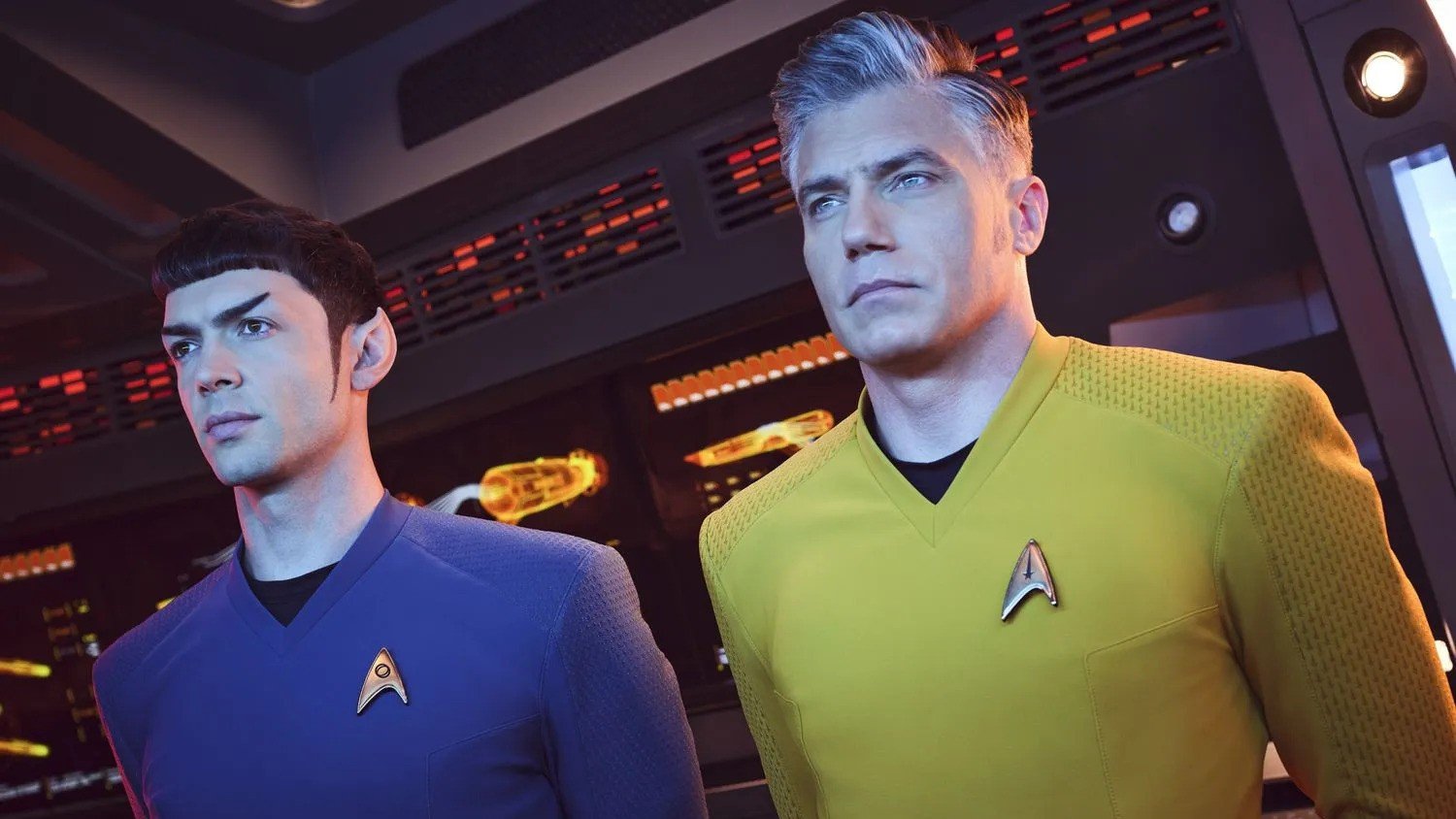
I have not watched as much TV as I usually do, this year. Mainly because I have become a little weary of the ways contemporary TV is produced, especially with regards to streaming shows. Due to the costs, shows such as Star Trek: Strange New Worlds only have 10 episodes per season. Simply put, the season begins to hit its stride and then is abruptly over. This problem (if you see it as such) is then further compounded by there being a significant wait between seasons. In the case of STSNW it was two years between season two and season three. Not all shows fall foul of this. Apple TV produces two seasons of the excellent espionage drama Slow Horses at a time, ensuring a prompt release schedule. However, even this has issues. Due to the complexity of the plots of many contemporary TV shows, something that is a marketing point, some viewers cannot remember the plot after a twelve month hiatus. Network TV shows seldom have these issues with each season being 20 plus episodes long and story arcs that are seldom as complex.
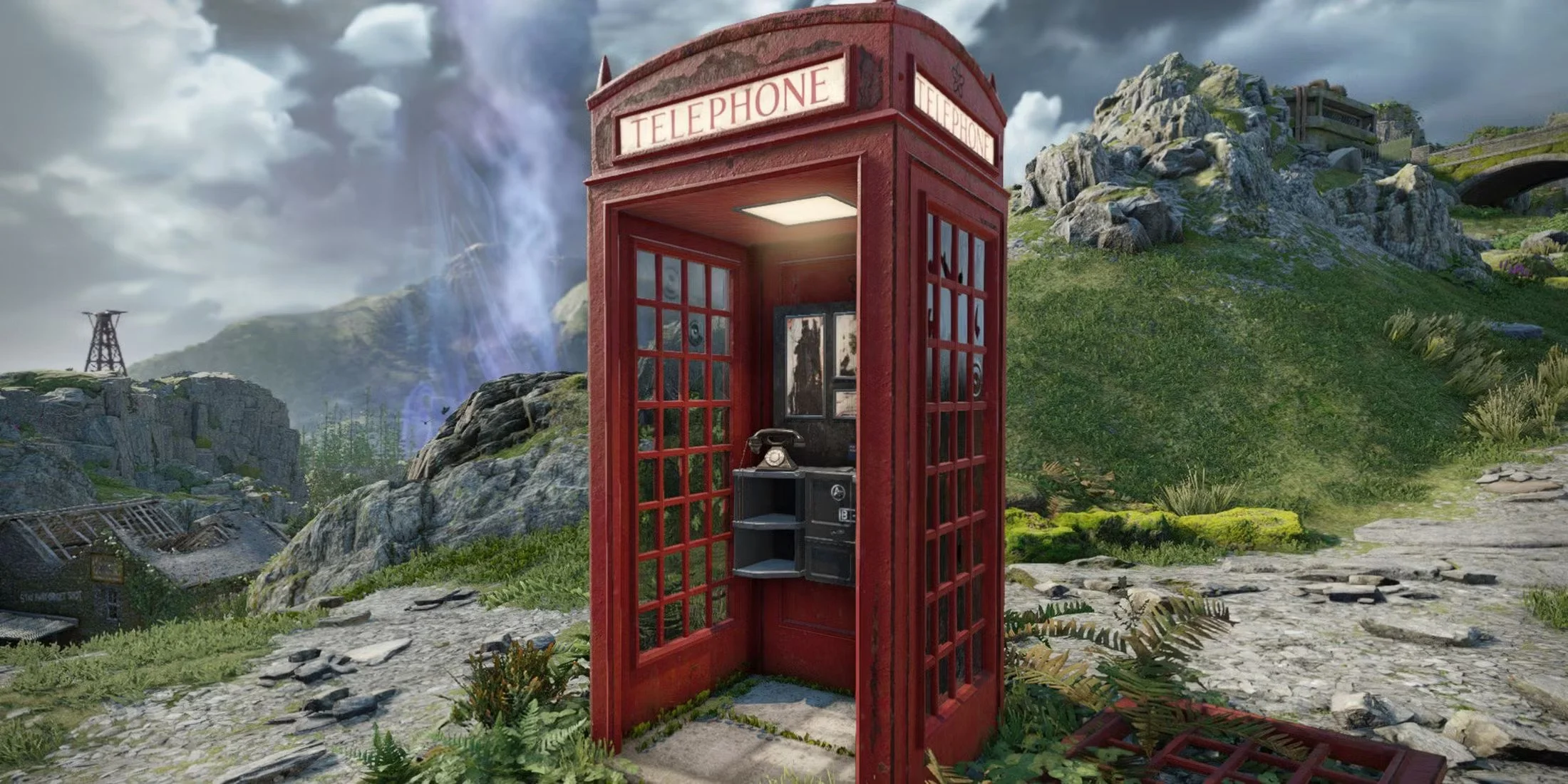
It is customary in a post such as this to list the various games that I’ve played over the last twelve months and share my thoughts on them. Wider analysis of the video game industry is also de rigeur. Unfortunately, I don’t really feel disposed to do either of those two things. My thoughts on the games I’ve played have already been published and can easily be accessed via the links at the bottom of this post. As for the video game industry, it suffers the same flaws as music, TV and cinema. There is creativity and innovation out there but it is often drowned out by mainstream products which are demonstrably inferior due to their inherent mediocrity. As for the business side of things, we once again clearly see the failings of the corporate management class. Sadly, they do not face the consequences of the mistakes that they make.
I began 2025 with a fairly strong writing streak, publishing posts about games, technology and even air fryers. Sadly, this burst of enthusiasm gradually tailed off between April and June. I can’t even recollect if there was any particular “real world” reason for this or whether it was just a case of I wasn’t especially motivated. Fortunately, I started writing again in July in preparation for Blaugust: Festival of Blogging and subsequently wrote throughout the entirety of August. Revamping my blog in September and moving it to the latest version of Squarespace proved a positive move and since then I have kept up a writing schedule of posting to Contains Moderate Peril every second day. At present I have a lot of draft posts pending and I am not struggling to come up with ideas and write in general. I intend to nurture this positive approach and see if I can build upon it in 2026.

Looking back at my various posts regarding “technology” this year, a recurring theme has been my ongoing attempts to replace certain mainstream products with alternatives that do the job in-hand better, don’t require constant updates, aren’t bloated by superfluous functionality and are more cost effective or even ethical. Needless to say, this has proven quite hard. Hence I was unable to find a suitable replacement email client for Microsoft Outlook and end my subscription to Microsoft 365 Personal. The main problem is that most alternative software won’t support my email archive due to differences in the mailbox format. One possible work around is to install an older and therefore, non-subscription version of Outlook but this raises support and compatibility issues. It would be a lot easier to divest myself of a lot of mainstream software if I was starting from scratch.
I created a Bluesky account a little over a year ago. I was initially somewhat sceptical of adopting a third social media messaging platform, because I had become quite comfortable using Mastodon as a replacement for Twitter/X. However, certain individuals that I wished to continue to follow were migrating to Bluesky, so I followed suit. It has always been my long term goal to pick one of these two newer services and make it my sole point of presence in social media terms. So far that hasn’t happened. Hence a year on I find myself juggling three such platforms. Twitter/X, Mastodon and Bluesky. I post links to my blog posts on all of these services. To be honest none of them generate any tangible traffic but this is how you promoted your website or blog 15 years ago and old habits die hard.

In my teenage years, there was a social obligation to go out on New Year’s Eve. This often meant congregating in some dismal pub, queuing at the bar for 30 minutes to get a drink, then trying to find a corner where you could stand and struggle to have a conversation with your friends, above the noise of the crowd. The evening was dull, noisy and often ended in a fight. Then, around 1:00 AM we were summarily turfed out into the street and had to make our way home. Buses always run at this time of year to serve a public need but the “drunk express” was never a pleasant means of transportation. Quite frankly the whole experience was shit but the hubris of youth meant we deluded ourselves that we were having a good time. If someone suggested something similar today, I would laugh in their face. I am happy to spend New Year’s Eve indoors and away from it all.
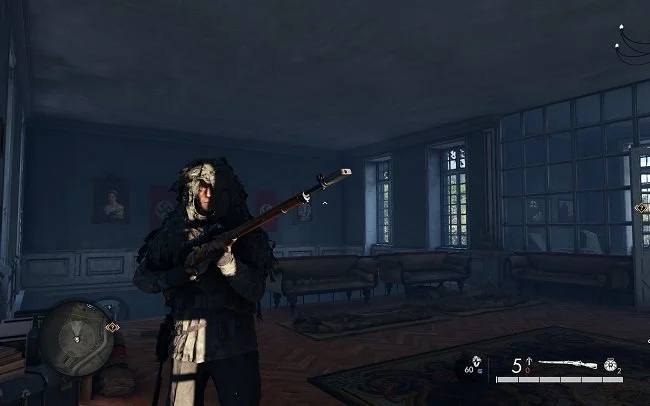
It is customary for me to write an end of year summary of my gaming activities but I suspect that on this occasion it will be somewhat short. For me, 2024 has really hammered home the notion of the ephemeral nature of video games as well as their commercial ubiquity. The moment a game fails to satisfy for whatever reason, rather than complain or worry about it, I just move on to something else. It’s not as if there’s a shortage of games out there. I have a substantial back catalogue of games that Epic and Amazon prime regularly giveaway. I have bought numerous discounted bundles in the past, in the pious hope that I’ll play one of the games included, at some point in the future. Games may well be enjoyable and engaging but many are also disposable. That’s not to say they’re bad. While playing them you are indeed “entertained”. However, when you’re “done”, it’s amazing how you quickly find another and forget what you were previously playing.

The last time I wrote A Year in Movies post was back in 2020. That was naturally an unusual year and it certainly had a radical impact upon the film industry and the way new movies are distributed. In many ways the pandemic accelerated the inevitable move towards cross platform, same day releases. 4 years on and it is quite usual for films to have a short cinema release before becoming available on streaming media. They often appear on physical media at the same time. Effectively you can go to the cinema, or simply watch at home on the platform of your choice if you prefer. Rent, buy or subscribe, the film studios still get their pound of flesh and everyone is happy. Sometimes if a film has failed to gain sufficient traction at the cinema, its release will be cut short and it will go to streaming even quicker. Direct to video from the eighties and nineties has been superseded with direct to streaming.
It is fair to say that we live in an age where we do not lack quality TV. There are numerous shows that have garnered critical acclaim or a strong word of mouth following that are deemed “must see” viewing. No doubt you, like myself, have a long “to do” list of programs that you need to “get round to watching” on top of those shows which are staples of your viewing regime. If you didn’t have enough programmes already to catch up with, we all have friends and family telling us about a “great show” that’s on a platform we don’t subscribe to, that we really need to see. It is quite extraordinary and a far cry from my youth when the UK simply had three terrestrial channels until satellite TV became popular in the late eighties. To paraphrase the former Prime Minister Harold Macmillan “we’ve never had it so good”.
This post is not intended to be a comprehensive review of music per se in 2024. It is simply a few thoughts on what I’ve been listening to over the course of the year and my ever changing relationship with the Terpsichorean muse. As a man in his fifties who has always enjoyed multiple genres of music and it is a comforting presence in day-to-day life. Up to a year ago, I relied upon my own music collection on my PC as the source of music to which I listened. Yet, this meant that I was somewhat locked into my own existing tastes and there was limited scope for me to find new material. This changed last December when I started subscribing to Spotify and since then it has become my primary source of music. It caters to my tastes, which at times are quite niche and it gently introduces me to new material without being too invasive. This has proven most beneficial.

This is my third attempt at writing this post. The first was a little too philosophical, tackling the nature of adult life and how it is a far cry from the childish notions I had about being a “grown up” when I was seven. The second was just a list of the various shit that has gone down in my life over the last twelve months and it felt far too much like whinging. Hopefully this one is more succinct and even handed. 2022 was not a good year, personally speaking. My family and I experienced a lot of health issues and my mother died after a rapid decline. Hence there has been a lot of stress and anxiety which has left me feeling tired and somewhat jaded. Due to the subsequent changes in my personal circumstances, I now find myself at somewhat of a “loose end”. I feel the need to channel my energies into something but I’m not sure exactly what at present.
So far I have written 135 blog posts in 2022. Not much compared to previous years, but frankly I’ve become a little despondent with writing in recent months (I shall expand more upon that in a moment). Hence, since October I have been enjoying a break from regular blogging. I have written sparingly and pursued other leisure activities. Given that my post output has gone down, it would be logical to assume that there has been a commensurate drop in web traffic to Contains Moderate Peril, but this is not the case. Overall, my monthly statistics have remained the same, proving once again that most of my readership find my written content via Google searches, rather than reading new material on a daily basis. This has given me much food for thought and added to my ongoing reflection upon my writing activities.

When I wrote Goodbye 2020 a year ago, I endeavoured to be philosophical and sanguine in my approach. It was a challenging year for all of us and for me it was further compounded by a bereavement. However, I strove to keep matters in perspective and tried to look at things in a broader context. I cannot be as even handed this time. 2021 has been a very difficult year for myself and my family and I will be glad to see the back of it. Nationally speaking, things haven’t been much better. I feel that we’ve squandered the initial progress that the COVID-19 vaccines offered. Obviously, I cannot do anything about the problems that the UK faces in 2022. However, I certainly intend to address some of the issues that I and my immediate family are facing. I am going to tackle some specific problems that need to be laid to rest and set myself some tangible goals to achieve. 2022 isn’t going to be something that just happens and I passively sit back and watch.
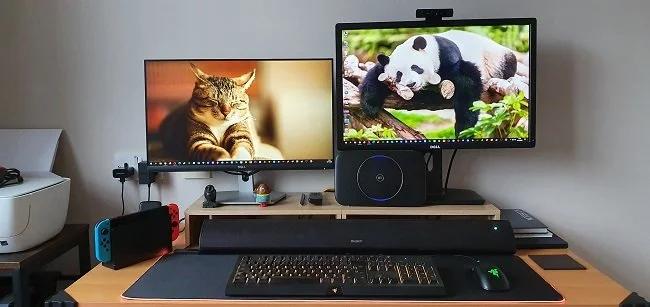
Getting older does have a few benefits. One of them, if you are fortunate enough to embrace the concept, is a degree of self awareness and the ability to be honest with yourself. Over the years I have tried to adjust my technological habits but ultimately I am a creature of habit. My use of technology and consumption of content has been determined by the decades I grew up in. Therefore, I am a PC user and prefer to sit in my office where I write, play games and peruse the internet. I have my desk set up in a way that suits my needs and I can go about my business in comfort. When away from my office, I rely heavily on my phone as an alternative platform. In some instances phone based apps offer a superior experience to the desktop or browser based PC alternatives. Banking being one example. For better or for worse this is how I do things and I am comfortable with these choices.
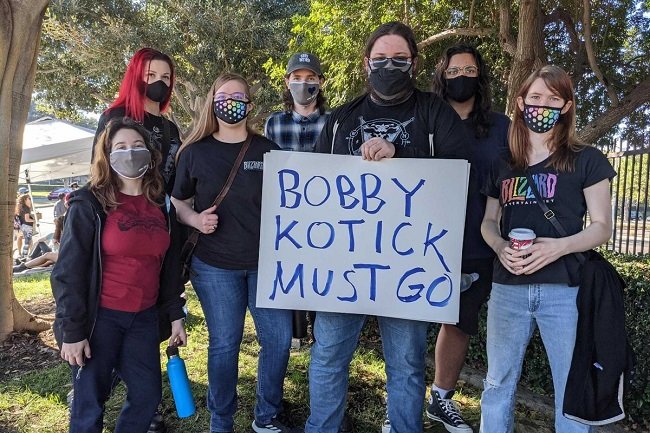
Usually in a post such as this, my primary focus would be writing about the games that I’ve played over the last twelve month and what it was about them that I specifically enjoyed. However, this year I feel that I must address the wider issues that have dominated the news regarding the video games industry. Simply put, several very high profile and successful triple A video game companies have been beset by scandals over the last twelve months. And these have been of such a nature that they have finally laid to rest the myth that some still cling to, that working “in video games” is somehow different from working in more traditional industries because it’s “cool”. It turns out that it has all the same failings as TV, music and film. The people at the top are abusive and broken and maltreat those at the coalface who do all the real work for precious little reward.

I can’t speak for others but my relationship with social media has certainly changed over the last two years. Whenever new internet technologies emerge, there is a brief period when it feels like some sort of new frontier. Often such innovations become a means of empowering the marginalised and the voiceless. For a while new platforms can even be a force for good. But eventually commercial interests creep in along with rules and regulations. Hence, it all inevitably takes a turn for the worst. The frontier is finally tamed and ends up being just another corporate space. Social media is certainly not a forum for discussing social issues or politics, instead being a medium for tribalism and rancour. Because of these factors and others, I have moderated my use of social media and it has proven extremely beneficial to my state of mind.

A very wise Vulcan once said “change is the essential process of all existence”. 2020 has demonstrated that unequivocally. How our privileged, pampered lives have altered over the last twelve months. We’ve had to stay at home, curtail our social interactions and reflect upon the meaning of existence. I appreciate that things are relative, so it’s not helpful to compare the concerns that discombobulate people today with the realities that folk had to endure during World War II for example. I won’t trivialise the sense of isolation and desperation some folk have felt over the lockdown. From my own perspective, my life as a carer is regimented and focused, so 2020 hasn’t really “cramped my style” to use an old fashioned phrase. However, several things happened over the course of the year that have had an impact upon myself and my family.
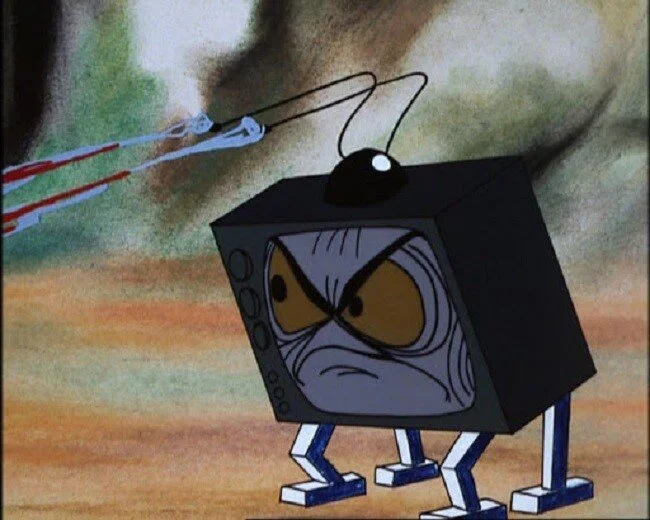
Let it suffice to say that due to current “circumstances”, Mrs P and I have watched a lot more TV this year. However, rather than just reiterate what we’ve viewed, which is already covered in my recurring blog post The Idiot Box, I thought I’d take the time to reflect upon some wider issues. TV has become a major source not only of entertainment but psychological support during this year’s social restrictions. The closure of cinemas for the majority of the past twelve months has meant that TV has had little or no competition. Furthermore, many of the films that may well have drawn audiences away, have come to the smaller screens a lot quicker. Never has so much TV been voraciously consumed. There’s also been a degree of nostalgia as viewers have watched popular shows at broadly similar times, reviving that sense of a shared experience that was so common in the seventies and eighties. However, the pandemic has also caused a slow down in TV production. Will the shortage of new content that many have predicted finally manifest itself next year?
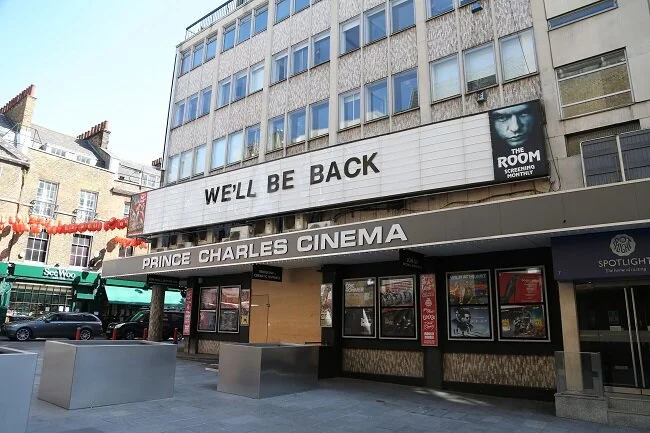
In 2019, I went to the cinema just once to see Star Wars: The Rise of Skywalker. I didn’t write a summary of the films I’d seen throughout that year, as I felt that mainstream releases had become far too formulaic and dull. 2020 has done little to change my perspective. The global pandemic has meant that Cinemas have spent most of the time closed and therefore many of this year’s major film releases have ended up on video on demand services. A few titles remain indefinitely postponed, such as the latest Bond movie No Time to Die, while Sony Pictures wait to see if “normality” resumes. But a film that is sitting on the shelf is not a film making money. Hence, Warner Bros. have announced that all their major releases for 2021 will be across multiple platforms simultaneously, thus ensuring a broader flow of revenue. This has not pleased director’s such as Christopher Nolan who argue passionately regarding the merits of cinema. But I doubt Mr. Nolan has ever had to endure an out of focus screening in the wrong aspect ratio at Cineworld, Rochester, where audiences talk and mess with their phones continuously.
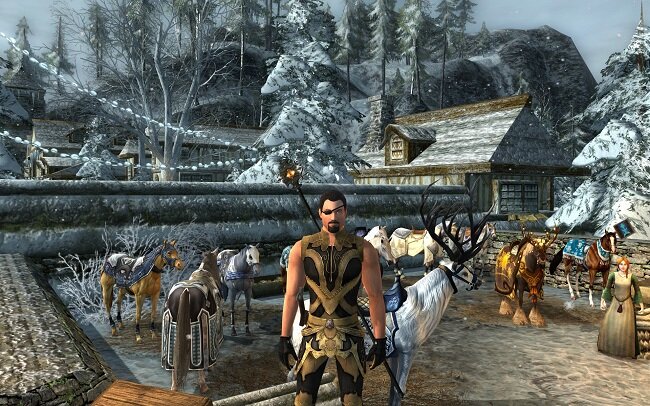
Retrospective posts such as this can be a sprawling mess. There is also potential to cover the same old ground that I’ve covered in my monthly summaries “A Month in Gaming”. So I’ll try to be as succinct as I can. Firstly I won’t dwell too much on the iniquities of the video game industry as I’ve covered that elsewhere. Let it suffice to say that the notion of the “rock star developer” and the ethical publisher have proven false. Buying a triple A mainstream game is as morally compromised as buying a pair of jeans made by child labour. But let’s not get caught up in ethics. That’s another post. The pandemic meant that I, like many others, had far more leisure time this year and hence I spent that time gaming. It’s been a good year for video games publishers and the revenue has rolled in. Have I had fun while playing more games? Yes. The games have proven engaging and they also provide a lot to write about, so it’s a win, win scenario from my perspective.

In my lifetime technology has always been promoted as something that improves our lives, especially at a domestic level. The VCR in the eighties is a prime example of this. It liberated us from having to watch TV at a specific time and place. Then there the personal computer, which brought into our own homes tools, that until that point, had been exclusive to the office. And for all the ill that it brings, the internet has certainly made the world demonstrably smaller. It’s revolutionised shopping and has improved the administration of services. So overall, I still feel that technology is a force for good. However there have been changes. In recent years technology on a domestic level has ceased to be quite as transformative and become more of a disposable commodity. Tech is now a fashion accessory, with a distinct lifecycle and upgrade treadmill. It is fast becoming just another form of superfluous crap to fill your home with.
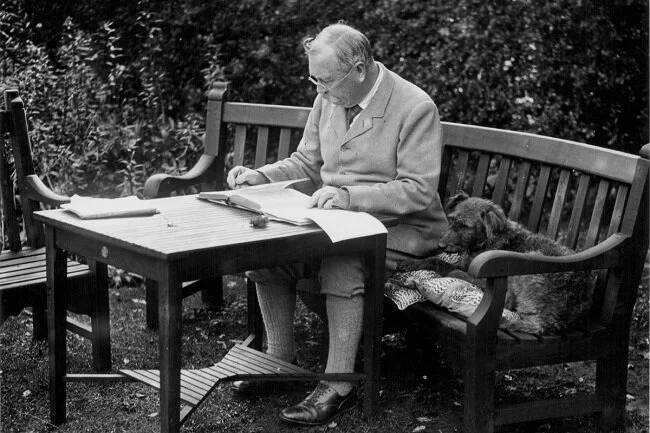
Despite the tumultuous events of the last twelve months and the accompanying emotional fallout that has followed in their wake, I’ve managed to keep writing throughout 2020. My output has been somewhat inconsistent this year and I’ve noticed some changes in what I write about. This is inevitable as one’s tastes and focus changes naturally change over time. I’m finding it tougher to write enthusiastically about the video games industry per se, as it has hardly covered itself in glory this year. However, I still enjoy writing film reviews although I haven’t set foot inside a cinema for over a year. I suspect that this will remain the case for much of 2021. My writing has broadened in its scope and I find myself writing social commentary about various aspects of life, rather than just posting articles about my hobbies. Sharing my thoughts on the pandemic itself and “caring for the elderly” has proven very cathartic. But as I’ve stated many times before, writing is one of the ways in which I make sense of the world around me.

Last year I tried to write a measured and balanced post about the passing of the year. Sadly this time round my attitude toward the departing 12-month period is somewhat binary. Yes there were a couple of highlights to 2019 but most of it was an uphill struggle and therefore not worth celebrating. It can frankly sod off and won’t be missed. The two high points were my son’s wedding in August and my renewed enthusiasm for blogging that came about due to the Blaugust writing event. But overall 2019 was a repetitive and somewhat depressing grind having to continuously deal with multiple family illnesses, numerous hospital visits and then at the end of the year a bereavement. Yes, these are things that happened to us all eventually and there is no escaping them but I appear to be trapped in this facet of the “circle of life”. Furthermore, until certain situations resolve themselves, I cannot make or implement any long-term plans. 2019 has been in many ways about just treading water.
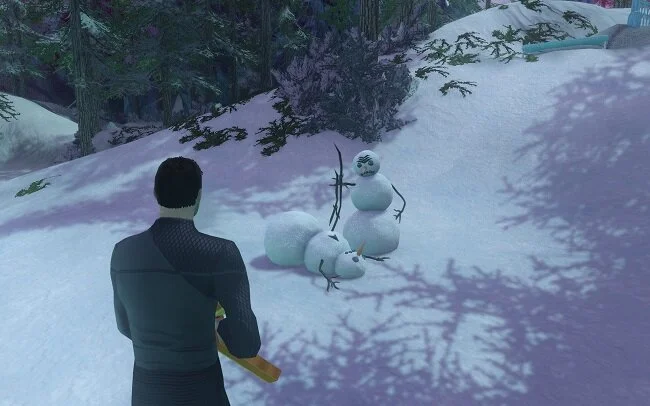
Life is often cyclical, if you don’t believe me go watch The Lion King. I started 2018 playing The Lord of the Rings Online and by writing a post about how gamers collectively seem to repeat the same mistakes. And as the year and indeed the decade ends, I find myself once again playing the Yule Festival in LOTRO and reflecting upon how some games that garnered criticism over their egregious business models, have ended up as huge hits. It would appear that gamers are their own worst enemy. I shall leave the psychological analysis of paradox to others. From my perspective, irrespective of the iniquities of the video game industry and certain quarters of the gaming community, it has been a good year, gaming wise. I have enjoyed my time playing MMOs such as Star Trek Online, The Elder Scrolls Online and the aforementioned LOTRO. These and other titles have entertained me, provided me with an opportunity to unwind as well as affording me some much-needed social interaction. I particularly enjoy Wednesday evenings when I log into my Discord server and then chat and play collaboratively with longstanding gaming friends.

One of the benefits that comes with age (for some people at least), if the gift of realistic expectations. Having reached 51 years, I no longer harbour thoughts that each year will be a rollercoaster ride of excitement, mirth and personal gain. Nor do I count on the stars aligning so that I make my fortune and retire peacefully to the Cayman Islands, to live the life of a tax exile. If New Year’s Eve rolls round and no one has died, I’m not looking at being tried for murder and there’s still gin in the drinks cabinet, then I usually deem the previous twelve months an acceptable year. However, despite even these fairly lose and undemanding criteria I feel compelled to say that 2018 was bollocks and that I won’t be sad to see the back of it.

I did not manage to maintain my writing schedule this year and have not posted everyday as I would’ve liked. I have produced over two hundred and seventy posts but still feel I could have done more. Blaugust was a welcome burst of enthusiasm that I managed to sustain for September and October, but I lost momentum in the run up to Christmas. At least I know what the root cause is which puts me a step nearer to resolving it. Having written several posts in the past about “writers block” and the other perennial excuse of not having anything to write about, I seem to have squarely fallen into both those traps. At present I find that motivating myself is the key problem. If I haven’t started writing something by midday, then it more than often gets left for the day. If I intend to escape this malaise, then I shall have to establish a far stricter writing schedule for 2019 and endeavour to do my writing first thing in the morning, when I am most focused.
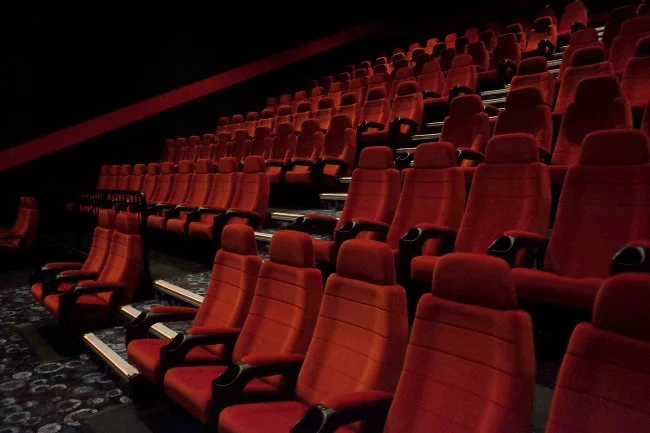
Throughout my adult life I have always gone to the cinema as a leisure activity. 2018 has been of note in this regard as it’s the year I’ve been to the cinema the least. I have visited my local multiplex just three times over the last twelve months. It’s not that good quality movies are not made anymore. Far from it. It’s just that they don’t always get released theatrically. Furthermore, the cost to entertainment ratio has simply become too much of a gamble. Standard tickets are priced between £12 to £15 locally and I resent such an outlay for a film that may only be adequate or worse. Perhaps my outlook on pricing is unreasonable but I am not going to pay such money for mediocre entertainment. I don’t expect every movie I see to be a cinematic milestone or genre classic but nor do I expect it to be an exercise in indifference. If I had paid such ticket prices to see The Predator or Death Wish at my local Cineworld, then I would have been singularly annoyed. Mercifully I saw them both at home and therefore at a much lower cost.
A Year in Blogging
My blogging goal for 2017 was to write a post every day. Due to family illness, I’ve missed approximately 10 days during the course of the year, however considering the circumstances I feel I have done well to maintain such a schedule. Compared to 2016 which saw the website decline and even go offline for a while, 2017 has been far more productive. Traffic has increased, and I feel that Contains Moderate Peril is finding an audience once again, as it did during it’s heyday in 2014. Broadening the scope of subjects that I write about has proven a sound decision and one I would recommend to other bloggers. It certainly allows for greater freedom of expression and technically, if nothing is off the table, then there’s always something to write about. Subsequently, I can see from my website statistics that the readership is becoming increasingly diverse and global in nature. As a writer, I therefore feel that it has been a successful year and I am satisfied with what has been achieved. My writing process has improved, and I can order my thoughts and structure a blog post far quicker than I use to.
My blogging goal for 2017 was to write a post every day. Due to family illness, I’ve missed approximately 10 days during the course of the year, however considering the circumstances I feel I have done well to maintain such a schedule. Compared to 2016 which saw the website decline and even go offline for a while, 2017 has been far more productive. Traffic has increased, and I feel that Contains Moderate Peril is finding an audience once again, as it did during it’s heyday in 2014. Broadening the scope of subjects that I write about has proven a sound decision and one I would recommend to other bloggers. It certainly allows for greater freedom of expression and technically, if nothing is off the table, then there’s always something to write about. Subsequently, I can see from my website statistics that the readership is becoming increasingly diverse and global in nature. As a writer, I therefore feel that it has been a successful year and I am satisfied with what has been achieved. My writing process has improved, and I can order my thoughts and structure a blog post far quicker than I use to.
Outside of my own writing, there are still many fellow bloggers who continue to write on a regular basis, sharing their thoughts and expressing their views. I try to read as broad a spectrum of writing styles and opinions as possible, as this is not only entertaining but can often provide an invaluable source of material to reply to or debate. I also follow one blog whose author’s world view is the complete opposite of mine. This is mainly to see how others think, irrespective of whether their views have been formed through analysis or critical thinking. Again, it can provide some interesting prompts for writing. Furthermore, as my gaming horizon inevitably contracts many of the blogs I follow, keep me informed about games I no longer play or aspects of the industry that I no longer focus upon. Then there are a few that I read just because I enjoy the author’s writing style or personality. Gaming can become awfully serious at times. I like those writers that still remember it’s also about having fun.
Sadly, there were some bloggers that decided to hang up their spurs this year. Real life demands, and pressures are usually the main reason for this. However, for some writers, there were less pleasant factors that led to their decision. Negative comments, abuse or the sheer blinkered zealotry of certain fans can certainly erode one’s pleasure in writing. Misogyny and prejudice still abound online, and the current political climate seems to have emboldened certain parties. Then there is the matter of blog post comments per se, which are few and far between these days. I have given up trying to encourage them. What responses I do get to my writing are often via Twitter. This situation just seems to reflect the changing nature of online social interaction. And it would also be remiss of me if I didn’t mention how I miss writing based online events such as the Newbie Blogger Initiative and Blaugust. Perhaps we will see someone else pick up the baton in the next twelve months and arrange something.
I intend to keep blogging in 2018 but it will be less frequent. I haven’t decided on my new schedule as of yet, but it will no longer be daily. I have a non-fiction book that remains unwritten, despite a great deal of preliminary work and planning. This will be my primary writing focus in the months ahead. I have a clear timetable and an end date that I wish to achieve. Perhaps I can blog about the process of writing something more substantial than a blog post? We shall see. In the meantime, I’d like to thank everyone who has visited Contains Moderate Peril in 2017 and helped make it such a good year. If you are thinking about writing in 2018 I would certainly encourage you to do so and stick with it. Google loves a website that posts new content regularly. Writing is also a very rewarding pastime and a great way to improve your written and analytical skills. We also need more rational and measured voices contributing to our online community.

I don’t really celebrate New Year’s Eve anymore. By that I mean, I don’t go to the pub or any other social gatherings. Nor do we have guests ourselves. Mrs P often doesn’t stay up to midnight. Mainly because she tends to go to bed relatively early, by default. One year changing to another seems a somewhat arbitrary excuse for a celebration to me. However, I realise that New Year is a big deal for some. I used to work with someone who said, very philosophically, that Christmas was for the children and New Year was for the adults. He was of Scottish antecedents and so New Year’s Eve was of more cultural significance to him. Also if you’ve had a difficult, problematic or traumatic 2025, then I fully understand that you may well be happy to see the back of 2025 and look to 2026 to be a significantly better year. Or at least, not to be as shit.
I have not watched as much TV as I usually do, this year. Mainly because I have become a little weary of the ways contemporary TV is produced, especially with regards to streaming shows. Due to the costs, shows such as Star Trek: Strange New Worlds only have 10 episodes per season. Simply put, the season begins to hit its stride and then is abruptly over. This problem (if you see it as such) is then further compounded by there being a significant wait between seasons. In the case of STSNW it was two years between season two and season three. Not all shows fall foul of this. Apple TV produces two seasons of the excellent espionage drama Slow Horses at a time, ensuring a prompt release schedule. However, even this has issues. Due to the complexity of the plots of many contemporary TV shows, something that is a marketing point, some viewers cannot remember the plot after a twelve month hiatus. Network TV shows seldom have these issues with each season being 20 plus episodes long and story arcs that are seldom as complex.
It is customary in a post such as this to list the various games that I’ve played over the last twelve months and share my thoughts on them. Wider analysis of the video game industry is also de rigeur. Unfortunately, I don’t really feel disposed to do either of those two things. My thoughts on the games I’ve played have already been published and can easily be accessed via the links at the bottom of this post. As for the video game industry, it suffers the same flaws as music, TV and cinema. There is creativity and innovation out there but it is often drowned out by mainstream products which are demonstrably inferior due to their inherent mediocrity. As for the business side of things, we once again clearly see the failings of the corporate management class. Sadly, they do not face the consequences of the mistakes that they make.
I began 2025 with a fairly strong writing streak, publishing posts about games, technology and even air fryers. Sadly, this burst of enthusiasm gradually tailed off between April and June. I can’t even recollect if there was any particular “real world” reason for this or whether it was just a case of I wasn’t especially motivated. Fortunately, I started writing again in July in preparation for Blaugust: Festival of Blogging and subsequently wrote throughout the entirety of August. Revamping my blog in September and moving it to the latest version of Squarespace proved a positive move and since then I have kept up a writing schedule of posting to Contains Moderate Peril every second day. At present I have a lot of draft posts pending and I am not struggling to come up with ideas and write in general. I intend to nurture this positive approach and see if I can build upon it in 2026.
Looking back at my various posts regarding “technology” this year, a recurring theme has been my ongoing attempts to replace certain mainstream products with alternatives that do the job in-hand better, don’t require constant updates, aren’t bloated by superfluous functionality and are more cost effective or even ethical. Needless to say, this has proven quite hard. Hence I was unable to find a suitable replacement email client for Microsoft Outlook and end my subscription to Microsoft 365 Personal. The main problem is that most alternative software won’t support my email archive due to differences in the mailbox format. One possible work around is to install an older and therefore, non-subscription version of Outlook but this raises support and compatibility issues. It would be a lot easier to divest myself of a lot of mainstream software if I was starting from scratch.
I created a Bluesky account a little over a year ago. I was initially somewhat sceptical of adopting a third social media messaging platform, because I had become quite comfortable using Mastodon as a replacement for Twitter/X. However, certain individuals that I wished to continue to follow were migrating to Bluesky, so I followed suit. It has always been my long term goal to pick one of these two newer services and make it my sole point of presence in social media terms. So far that hasn’t happened. Hence a year on I find myself juggling three such platforms. Twitter/X, Mastodon and Bluesky. I post links to my blog posts on all of these services. To be honest none of them generate any tangible traffic but this is how you promoted your website or blog 15 years ago and old habits die hard.
In my teenage years, there was a social obligation to go out on New Year’s Eve. This often meant congregating in some dismal pub, queuing at the bar for 30 minutes to get a drink, then trying to find a corner where you could stand and struggle to have a conversation with your friends, above the noise of the crowd. The evening was dull, noisy and often ended in a fight. Then, around 1:00 AM we were summarily turfed out into the street and had to make our way home. Buses always run at this time of year to serve a public need but the “drunk express” was never a pleasant means of transportation. Quite frankly the whole experience was shit but the hubris of youth meant we deluded ourselves that we were having a good time. If someone suggested something similar today, I would laugh in their face. I am happy to spend New Year’s Eve indoors and away from it all.
It is customary for me to write an end of year summary of my gaming activities but I suspect that on this occasion it will be somewhat short. For me, 2024 has really hammered home the notion of the ephemeral nature of video games as well as their commercial ubiquity. The moment a game fails to satisfy for whatever reason, rather than complain or worry about it, I just move on to something else. It’s not as if there’s a shortage of games out there. I have a substantial back catalogue of games that Epic and Amazon prime regularly giveaway. I have bought numerous discounted bundles in the past, in the pious hope that I’ll play one of the games included, at some point in the future. Games may well be enjoyable and engaging but many are also disposable. That’s not to say they’re bad. While playing them you are indeed “entertained”. However, when you’re “done”, it’s amazing how you quickly find another and forget what you were previously playing.
The last time I wrote A Year in Movies post was back in 2020. That was naturally an unusual year and it certainly had a radical impact upon the film industry and the way new movies are distributed. In many ways the pandemic accelerated the inevitable move towards cross platform, same day releases. 4 years on and it is quite usual for films to have a short cinema release before becoming available on streaming media. They often appear on physical media at the same time. Effectively you can go to the cinema, or simply watch at home on the platform of your choice if you prefer. Rent, buy or subscribe, the film studios still get their pound of flesh and everyone is happy. Sometimes if a film has failed to gain sufficient traction at the cinema, its release will be cut short and it will go to streaming even quicker. Direct to video from the eighties and nineties has been superseded with direct to streaming.
It is fair to say that we live in an age where we do not lack quality TV. There are numerous shows that have garnered critical acclaim or a strong word of mouth following that are deemed “must see” viewing. No doubt you, like myself, have a long “to do” list of programs that you need to “get round to watching” on top of those shows which are staples of your viewing regime. If you didn’t have enough programmes already to catch up with, we all have friends and family telling us about a “great show” that’s on a platform we don’t subscribe to, that we really need to see. It is quite extraordinary and a far cry from my youth when the UK simply had three terrestrial channels until satellite TV became popular in the late eighties. To paraphrase the former Prime Minister Harold Macmillan “we’ve never had it so good”.
This post is not intended to be a comprehensive review of music per se in 2024. It is simply a few thoughts on what I’ve been listening to over the course of the year and my ever changing relationship with the Terpsichorean muse. As a man in his fifties who has always enjoyed multiple genres of music and it is a comforting presence in day-to-day life. Up to a year ago, I relied upon my own music collection on my PC as the source of music to which I listened. Yet, this meant that I was somewhat locked into my own existing tastes and there was limited scope for me to find new material. This changed last December when I started subscribing to Spotify and since then it has become my primary source of music. It caters to my tastes, which at times are quite niche and it gently introduces me to new material without being too invasive. This has proven most beneficial.
This is my third attempt at writing this post. The first was a little too philosophical, tackling the nature of adult life and how it is a far cry from the childish notions I had about being a “grown up” when I was seven. The second was just a list of the various shit that has gone down in my life over the last twelve months and it felt far too much like whinging. Hopefully this one is more succinct and even handed. 2022 was not a good year, personally speaking. My family and I experienced a lot of health issues and my mother died after a rapid decline. Hence there has been a lot of stress and anxiety which has left me feeling tired and somewhat jaded. Due to the subsequent changes in my personal circumstances, I now find myself at somewhat of a “loose end”. I feel the need to channel my energies into something but I’m not sure exactly what at present.
So far I have written 135 blog posts in 2022. Not much compared to previous years, but frankly I’ve become a little despondent with writing in recent months (I shall expand more upon that in a moment). Hence, since October I have been enjoying a break from regular blogging. I have written sparingly and pursued other leisure activities. Given that my post output has gone down, it would be logical to assume that there has been a commensurate drop in web traffic to Contains Moderate Peril, but this is not the case. Overall, my monthly statistics have remained the same, proving once again that most of my readership find my written content via Google searches, rather than reading new material on a daily basis. This has given me much food for thought and added to my ongoing reflection upon my writing activities.
When I wrote Goodbye 2020 a year ago, I endeavoured to be philosophical and sanguine in my approach. It was a challenging year for all of us and for me it was further compounded by a bereavement. However, I strove to keep matters in perspective and tried to look at things in a broader context. I cannot be as even handed this time. 2021 has been a very difficult year for myself and my family and I will be glad to see the back of it. Nationally speaking, things haven’t been much better. I feel that we’ve squandered the initial progress that the COVID-19 vaccines offered. Obviously, I cannot do anything about the problems that the UK faces in 2022. However, I certainly intend to address some of the issues that I and my immediate family are facing. I am going to tackle some specific problems that need to be laid to rest and set myself some tangible goals to achieve. 2022 isn’t going to be something that just happens and I passively sit back and watch.
Getting older does have a few benefits. One of them, if you are fortunate enough to embrace the concept, is a degree of self awareness and the ability to be honest with yourself. Over the years I have tried to adjust my technological habits but ultimately I am a creature of habit. My use of technology and consumption of content has been determined by the decades I grew up in. Therefore, I am a PC user and prefer to sit in my office where I write, play games and peruse the internet. I have my desk set up in a way that suits my needs and I can go about my business in comfort. When away from my office, I rely heavily on my phone as an alternative platform. In some instances phone based apps offer a superior experience to the desktop or browser based PC alternatives. Banking being one example. For better or for worse this is how I do things and I am comfortable with these choices.
Usually in a post such as this, my primary focus would be writing about the games that I’ve played over the last twelve month and what it was about them that I specifically enjoyed. However, this year I feel that I must address the wider issues that have dominated the news regarding the video games industry. Simply put, several very high profile and successful triple A video game companies have been beset by scandals over the last twelve months. And these have been of such a nature that they have finally laid to rest the myth that some still cling to, that working “in video games” is somehow different from working in more traditional industries because it’s “cool”. It turns out that it has all the same failings as TV, music and film. The people at the top are abusive and broken and maltreat those at the coalface who do all the real work for precious little reward.
I can’t speak for others but my relationship with social media has certainly changed over the last two years. Whenever new internet technologies emerge, there is a brief period when it feels like some sort of new frontier. Often such innovations become a means of empowering the marginalised and the voiceless. For a while new platforms can even be a force for good. But eventually commercial interests creep in along with rules and regulations. Hence, it all inevitably takes a turn for the worst. The frontier is finally tamed and ends up being just another corporate space. Social media is certainly not a forum for discussing social issues or politics, instead being a medium for tribalism and rancour. Because of these factors and others, I have moderated my use of social media and it has proven extremely beneficial to my state of mind.
A very wise Vulcan once said “change is the essential process of all existence”. 2020 has demonstrated that unequivocally. How our privileged, pampered lives have altered over the last twelve months. We’ve had to stay at home, curtail our social interactions and reflect upon the meaning of existence. I appreciate that things are relative, so it’s not helpful to compare the concerns that discombobulate people today with the realities that folk had to endure during World War II for example. I won’t trivialise the sense of isolation and desperation some folk have felt over the lockdown. From my own perspective, my life as a carer is regimented and focused, so 2020 hasn’t really “cramped my style” to use an old fashioned phrase. However, several things happened over the course of the year that have had an impact upon myself and my family.
Let it suffice to say that due to current “circumstances”, Mrs P and I have watched a lot more TV this year. However, rather than just reiterate what we’ve viewed, which is already covered in my recurring blog post The Idiot Box, I thought I’d take the time to reflect upon some wider issues. TV has become a major source not only of entertainment but psychological support during this year’s social restrictions. The closure of cinemas for the majority of the past twelve months has meant that TV has had little or no competition. Furthermore, many of the films that may well have drawn audiences away, have come to the smaller screens a lot quicker. Never has so much TV been voraciously consumed. There’s also been a degree of nostalgia as viewers have watched popular shows at broadly similar times, reviving that sense of a shared experience that was so common in the seventies and eighties. However, the pandemic has also caused a slow down in TV production. Will the shortage of new content that many have predicted finally manifest itself next year?
In 2019, I went to the cinema just once to see Star Wars: The Rise of Skywalker. I didn’t write a summary of the films I’d seen throughout that year, as I felt that mainstream releases had become far too formulaic and dull. 2020 has done little to change my perspective. The global pandemic has meant that Cinemas have spent most of the time closed and therefore many of this year’s major film releases have ended up on video on demand services. A few titles remain indefinitely postponed, such as the latest Bond movie No Time to Die, while Sony Pictures wait to see if “normality” resumes. But a film that is sitting on the shelf is not a film making money. Hence, Warner Bros. have announced that all their major releases for 2021 will be across multiple platforms simultaneously, thus ensuring a broader flow of revenue. This has not pleased director’s such as Christopher Nolan who argue passionately regarding the merits of cinema. But I doubt Mr. Nolan has ever had to endure an out of focus screening in the wrong aspect ratio at Cineworld, Rochester, where audiences talk and mess with their phones continuously.
Retrospective posts such as this can be a sprawling mess. There is also potential to cover the same old ground that I’ve covered in my monthly summaries “A Month in Gaming”. So I’ll try to be as succinct as I can. Firstly I won’t dwell too much on the iniquities of the video game industry as I’ve covered that elsewhere. Let it suffice to say that the notion of the “rock star developer” and the ethical publisher have proven false. Buying a triple A mainstream game is as morally compromised as buying a pair of jeans made by child labour. But let’s not get caught up in ethics. That’s another post. The pandemic meant that I, like many others, had far more leisure time this year and hence I spent that time gaming. It’s been a good year for video games publishers and the revenue has rolled in. Have I had fun while playing more games? Yes. The games have proven engaging and they also provide a lot to write about, so it’s a win, win scenario from my perspective.
In my lifetime technology has always been promoted as something that improves our lives, especially at a domestic level. The VCR in the eighties is a prime example of this. It liberated us from having to watch TV at a specific time and place. Then there the personal computer, which brought into our own homes tools, that until that point, had been exclusive to the office. And for all the ill that it brings, the internet has certainly made the world demonstrably smaller. It’s revolutionised shopping and has improved the administration of services. So overall, I still feel that technology is a force for good. However there have been changes. In recent years technology on a domestic level has ceased to be quite as transformative and become more of a disposable commodity. Tech is now a fashion accessory, with a distinct lifecycle and upgrade treadmill. It is fast becoming just another form of superfluous crap to fill your home with.
Despite the tumultuous events of the last twelve months and the accompanying emotional fallout that has followed in their wake, I’ve managed to keep writing throughout 2020. My output has been somewhat inconsistent this year and I’ve noticed some changes in what I write about. This is inevitable as one’s tastes and focus changes naturally change over time. I’m finding it tougher to write enthusiastically about the video games industry per se, as it has hardly covered itself in glory this year. However, I still enjoy writing film reviews although I haven’t set foot inside a cinema for over a year. I suspect that this will remain the case for much of 2021. My writing has broadened in its scope and I find myself writing social commentary about various aspects of life, rather than just posting articles about my hobbies. Sharing my thoughts on the pandemic itself and “caring for the elderly” has proven very cathartic. But as I’ve stated many times before, writing is one of the ways in which I make sense of the world around me.
Last year I tried to write a measured and balanced post about the passing of the year. Sadly this time round my attitude toward the departing 12-month period is somewhat binary. Yes there were a couple of highlights to 2019 but most of it was an uphill struggle and therefore not worth celebrating. It can frankly sod off and won’t be missed. The two high points were my son’s wedding in August and my renewed enthusiasm for blogging that came about due to the Blaugust writing event. But overall 2019 was a repetitive and somewhat depressing grind having to continuously deal with multiple family illnesses, numerous hospital visits and then at the end of the year a bereavement. Yes, these are things that happened to us all eventually and there is no escaping them but I appear to be trapped in this facet of the “circle of life”. Furthermore, until certain situations resolve themselves, I cannot make or implement any long-term plans. 2019 has been in many ways about just treading water.
Life is often cyclical, if you don’t believe me go watch The Lion King. I started 2018 playing The Lord of the Rings Online and by writing a post about how gamers collectively seem to repeat the same mistakes. And as the year and indeed the decade ends, I find myself once again playing the Yule Festival in LOTRO and reflecting upon how some games that garnered criticism over their egregious business models, have ended up as huge hits. It would appear that gamers are their own worst enemy. I shall leave the psychological analysis of paradox to others. From my perspective, irrespective of the iniquities of the video game industry and certain quarters of the gaming community, it has been a good year, gaming wise. I have enjoyed my time playing MMOs such as Star Trek Online, The Elder Scrolls Online and the aforementioned LOTRO. These and other titles have entertained me, provided me with an opportunity to unwind as well as affording me some much-needed social interaction. I particularly enjoy Wednesday evenings when I log into my Discord server and then chat and play collaboratively with longstanding gaming friends.
One of the benefits that comes with age (for some people at least), if the gift of realistic expectations. Having reached 51 years, I no longer harbour thoughts that each year will be a rollercoaster ride of excitement, mirth and personal gain. Nor do I count on the stars aligning so that I make my fortune and retire peacefully to the Cayman Islands, to live the life of a tax exile. If New Year’s Eve rolls round and no one has died, I’m not looking at being tried for murder and there’s still gin in the drinks cabinet, then I usually deem the previous twelve months an acceptable year. However, despite even these fairly lose and undemanding criteria I feel compelled to say that 2018 was bollocks and that I won’t be sad to see the back of it.
I did not manage to maintain my writing schedule this year and have not posted everyday as I would’ve liked. I have produced over two hundred and seventy posts but still feel I could have done more. Blaugust was a welcome burst of enthusiasm that I managed to sustain for September and October, but I lost momentum in the run up to Christmas. At least I know what the root cause is which puts me a step nearer to resolving it. Having written several posts in the past about “writers block” and the other perennial excuse of not having anything to write about, I seem to have squarely fallen into both those traps. At present I find that motivating myself is the key problem. If I haven’t started writing something by midday, then it more than often gets left for the day. If I intend to escape this malaise, then I shall have to establish a far stricter writing schedule for 2019 and endeavour to do my writing first thing in the morning, when I am most focused.
Throughout my adult life I have always gone to the cinema as a leisure activity. 2018 has been of note in this regard as it’s the year I’ve been to the cinema the least. I have visited my local multiplex just three times over the last twelve months. It’s not that good quality movies are not made anymore. Far from it. It’s just that they don’t always get released theatrically. Furthermore, the cost to entertainment ratio has simply become too much of a gamble. Standard tickets are priced between £12 to £15 locally and I resent such an outlay for a film that may only be adequate or worse. Perhaps my outlook on pricing is unreasonable but I am not going to pay such money for mediocre entertainment. I don’t expect every movie I see to be a cinematic milestone or genre classic but nor do I expect it to be an exercise in indifference. If I had paid such ticket prices to see The Predator or Death Wish at my local Cineworld, then I would have been singularly annoyed. Mercifully I saw them both at home and therefore at a much lower cost.
A Year in Movies
I have always enjoyed the experience of going to the cinema and I still consider it a great night out. Watching an engaging film with good company and then discussing it afterwards over drinks or a meal is one of life’s great pleasures. Sadly, over the course of 2017 I’ve only gone to see a movie at my local multiplex three times. This has nothing to do with audience behaviour or the standard of my local cinema. Both are surprisingly good. This is all down to the films that dominated cinemas at present. Although I have no major axe to grind with the fantasy genre, I do not wish an exclusive cinematic diet of such material. I have seen sufficient Super Hero movies for the present and have become tired with high concept, blockbuster, CGI driven actionfests. It concerns me that viewers who predominantly watch such movies are missing out on a wealth or broader material that could expand their tastes and horizons. I could also argue that mainstream cinema is becoming increasingly infantilised but perhaps that is best left for another blog post.
I have always enjoyed the experience of going to the cinema and I still consider it a great night out. Watching an engaging film with good company and then discussing it afterwards over drinks or a meal is one of life’s great pleasures. Sadly, over the course of 2017 I’ve only gone to see a movie at my local multiplex three times. This has nothing to do with audience behaviour or the standard of my local cinema. Both are surprisingly good. This is all down to the films that dominated cinemas at present. Although I have no major axe to grind with the fantasy genre, I do not wish an exclusive cinematic diet of such material. I have seen sufficient Super Hero movies for the present and have become tired with high concept, blockbuster, CGI driven actionfests. It concerns me that viewers who predominantly watch such movies are missing out on a wealth or broader material that could expand their tastes and horizons. I could also argue that mainstream cinema is becoming increasingly infantilised but perhaps that is best left for another blog post.
A ticket at my local cinema costs between £9 and £12. Prices vary often according to the movie and its distributor. I paid several pounds more than usual when seeing Star Wars: The Last Jedi for example. There is also the additional cost of travel as well as food and drink to be considered. So, it is not unusual for me to spend £25 even if I just go on my own. Although this is not an exorbitant sum, I do think long and hard about whether the film being seen will be sufficiently entertaining, before committing to buying tickets. All too often the movies do not inspire or enthuse me enough to justify a visit. Furthermore, the gap between a movies theatrical release and its availability for home viewing, seems to be getting shorter and shorter. Blade Runner 2049 was shown in theatres from October 6th. It became available on iTunes on December 26th, less than two months later. Furthermore, some titles if they perform poorly in certain regions will subsequently bypass the cinemas elsewhere and go directly to streaming services. This also happens for films that have faired well at the box office. Sometimes services such as Netflix or Amazon Prime will pay a premium to have access to certain titles early. I was surprised to find The Foreigner starring Jackie Chan appear on UK Netflix from December 15th.
So, bearing all the aforementioned points in mind, I have managed to select three movies I feel are good examples of quality film making in 2017. Of this three, the first one I saw in the cinema upon its release. The other two I saw via VOD. First off, there was Christopher Nolan’s Dunkirk. A minimalist (in so far as dialogue) retelling of the Dunkirk evacuation of 1940, narratively framed within three simple, yet absorbing tales of heroism. An Intelligent and thought-provoking piece of cinema without any nationalist or political posturing, although some tried to erroneously couch it in those terms. Next was Edgar Wright’s old school action thriller Baby Driver. This is a film that works well on multiple levels. It is a wonderful homage to sixties and seventies heist movies. It also a well-crafted thriller and human drama. It has great performances, prefect editing and pacing with an eclectic yet innovative score. Finally, I was surprised and immensely impressed by Vince Vaughn’s performance in Brawl in Cell Block 99. Directed by Craig Zahler (Bone Tomahawk), this character driven drama about a prisoner who is forced to extremes to protect his family and settle a debt, features worryingly credible fights, all framed and edited in a style that flies in the face of the contemporary cinematic aesthetic. Yet it is still the story and acting that dominate the proceedings.
Setting aside the issue of the respective quality of mainstream Hollywood film making, there is another issue that has reached a head in 2017. Professional movie criticism has found itself increasingly at odds with fandom. Furthermore, fandom has become more adversarial in its relationship with film makers. The subtlety and nuance of a well-considered review, written by a cinematically literate critic, has been eclipsed by the arbitrary and two-dimensional nature of review aggregation websites such as Metacritic and Rotten Tomatoes. Distilling a movie into just a mark out of five is not exactly good for engendering balanced and broad cinematic appreciation. Also, such aggregation services can be manipulated to make “a point”. Furthermore, the recent fan furore over Star Wars: The Last Jedi shows that for many viewers, their relationship with film is inherently different from others. They see big movie franchises as vehicles for fan service; things to be crafted to their specific desires. The notion of cinema as art and as such being subject to the vision and whims of its makers, does not sit well with them. This perspective has odd parallels with that erroneous crowdfunding mindset and the misguided notion that simply because you like and financially support something it somehow guarantees creative input. Fandom may well end up being a contributory factor to the death of the blockbuster franchise movie.
It is customary to make prediction regarding the forthcoming year. The only one I feel confident in making is that I shall probably go to the cinema less in 2018. Despite some high-profile failures, the main studios seem to still have nothing but sequels, reboots and big budget tentpole releases lined up for the next twelve months. Thankfully, there is a healthy market for older, obscure and cult movies on home media and streaming. Furthermore, these are often remastered and released in high definition. So, although I may find myself absent from my local multiplex, I doubt if I’ll want for quality entertainment. As for titles that I’m looking forward to, I await Paddington 2 to be released on VOD. I’m also intrigued by Guillermo del Toro's The Shape of Water. I suspect that this may well be a serious Oscar contender. Then of course we should not overlook that both Netflix and Amazon Prime are now making their own feature films. They have both the budgets and the market research to entice known directors to work for them. Again, this change in consumer habits has scope to have a major impact upon film in 2018.
I don’t really celebrate New Year’s Eve anymore. By that I mean, I don’t go to the pub or any other social gatherings. Nor do we have guests ourselves. Mrs P often doesn’t stay up to midnight. Mainly because she tends to go to bed relatively early, by default. One year changing to another seems a somewhat arbitrary excuse for a celebration to me. However, I realise that New Year is a big deal for some. I used to work with someone who said, very philosophically, that Christmas was for the children and New Year was for the adults. He was of Scottish antecedents and so New Year’s Eve was of more cultural significance to him. Also if you’ve had a difficult, problematic or traumatic 2025, then I fully understand that you may well be happy to see the back of 2025 and look to 2026 to be a significantly better year. Or at least, not to be as shit.
I have not watched as much TV as I usually do, this year. Mainly because I have become a little weary of the ways contemporary TV is produced, especially with regards to streaming shows. Due to the costs, shows such as Star Trek: Strange New Worlds only have 10 episodes per season. Simply put, the season begins to hit its stride and then is abruptly over. This problem (if you see it as such) is then further compounded by there being a significant wait between seasons. In the case of STSNW it was two years between season two and season three. Not all shows fall foul of this. Apple TV produces two seasons of the excellent espionage drama Slow Horses at a time, ensuring a prompt release schedule. However, even this has issues. Due to the complexity of the plots of many contemporary TV shows, something that is a marketing point, some viewers cannot remember the plot after a twelve month hiatus. Network TV shows seldom have these issues with each season being 20 plus episodes long and story arcs that are seldom as complex.
It is customary in a post such as this to list the various games that I’ve played over the last twelve months and share my thoughts on them. Wider analysis of the video game industry is also de rigeur. Unfortunately, I don’t really feel disposed to do either of those two things. My thoughts on the games I’ve played have already been published and can easily be accessed via the links at the bottom of this post. As for the video game industry, it suffers the same flaws as music, TV and cinema. There is creativity and innovation out there but it is often drowned out by mainstream products which are demonstrably inferior due to their inherent mediocrity. As for the business side of things, we once again clearly see the failings of the corporate management class. Sadly, they do not face the consequences of the mistakes that they make.
I began 2025 with a fairly strong writing streak, publishing posts about games, technology and even air fryers. Sadly, this burst of enthusiasm gradually tailed off between April and June. I can’t even recollect if there was any particular “real world” reason for this or whether it was just a case of I wasn’t especially motivated. Fortunately, I started writing again in July in preparation for Blaugust: Festival of Blogging and subsequently wrote throughout the entirety of August. Revamping my blog in September and moving it to the latest version of Squarespace proved a positive move and since then I have kept up a writing schedule of posting to Contains Moderate Peril every second day. At present I have a lot of draft posts pending and I am not struggling to come up with ideas and write in general. I intend to nurture this positive approach and see if I can build upon it in 2026.
Looking back at my various posts regarding “technology” this year, a recurring theme has been my ongoing attempts to replace certain mainstream products with alternatives that do the job in-hand better, don’t require constant updates, aren’t bloated by superfluous functionality and are more cost effective or even ethical. Needless to say, this has proven quite hard. Hence I was unable to find a suitable replacement email client for Microsoft Outlook and end my subscription to Microsoft 365 Personal. The main problem is that most alternative software won’t support my email archive due to differences in the mailbox format. One possible work around is to install an older and therefore, non-subscription version of Outlook but this raises support and compatibility issues. It would be a lot easier to divest myself of a lot of mainstream software if I was starting from scratch.
I created a Bluesky account a little over a year ago. I was initially somewhat sceptical of adopting a third social media messaging platform, because I had become quite comfortable using Mastodon as a replacement for Twitter/X. However, certain individuals that I wished to continue to follow were migrating to Bluesky, so I followed suit. It has always been my long term goal to pick one of these two newer services and make it my sole point of presence in social media terms. So far that hasn’t happened. Hence a year on I find myself juggling three such platforms. Twitter/X, Mastodon and Bluesky. I post links to my blog posts on all of these services. To be honest none of them generate any tangible traffic but this is how you promoted your website or blog 15 years ago and old habits die hard.
In my teenage years, there was a social obligation to go out on New Year’s Eve. This often meant congregating in some dismal pub, queuing at the bar for 30 minutes to get a drink, then trying to find a corner where you could stand and struggle to have a conversation with your friends, above the noise of the crowd. The evening was dull, noisy and often ended in a fight. Then, around 1:00 AM we were summarily turfed out into the street and had to make our way home. Buses always run at this time of year to serve a public need but the “drunk express” was never a pleasant means of transportation. Quite frankly the whole experience was shit but the hubris of youth meant we deluded ourselves that we were having a good time. If someone suggested something similar today, I would laugh in their face. I am happy to spend New Year’s Eve indoors and away from it all.
It is customary for me to write an end of year summary of my gaming activities but I suspect that on this occasion it will be somewhat short. For me, 2024 has really hammered home the notion of the ephemeral nature of video games as well as their commercial ubiquity. The moment a game fails to satisfy for whatever reason, rather than complain or worry about it, I just move on to something else. It’s not as if there’s a shortage of games out there. I have a substantial back catalogue of games that Epic and Amazon prime regularly giveaway. I have bought numerous discounted bundles in the past, in the pious hope that I’ll play one of the games included, at some point in the future. Games may well be enjoyable and engaging but many are also disposable. That’s not to say they’re bad. While playing them you are indeed “entertained”. However, when you’re “done”, it’s amazing how you quickly find another and forget what you were previously playing.
The last time I wrote A Year in Movies post was back in 2020. That was naturally an unusual year and it certainly had a radical impact upon the film industry and the way new movies are distributed. In many ways the pandemic accelerated the inevitable move towards cross platform, same day releases. 4 years on and it is quite usual for films to have a short cinema release before becoming available on streaming media. They often appear on physical media at the same time. Effectively you can go to the cinema, or simply watch at home on the platform of your choice if you prefer. Rent, buy or subscribe, the film studios still get their pound of flesh and everyone is happy. Sometimes if a film has failed to gain sufficient traction at the cinema, its release will be cut short and it will go to streaming even quicker. Direct to video from the eighties and nineties has been superseded with direct to streaming.
It is fair to say that we live in an age where we do not lack quality TV. There are numerous shows that have garnered critical acclaim or a strong word of mouth following that are deemed “must see” viewing. No doubt you, like myself, have a long “to do” list of programs that you need to “get round to watching” on top of those shows which are staples of your viewing regime. If you didn’t have enough programmes already to catch up with, we all have friends and family telling us about a “great show” that’s on a platform we don’t subscribe to, that we really need to see. It is quite extraordinary and a far cry from my youth when the UK simply had three terrestrial channels until satellite TV became popular in the late eighties. To paraphrase the former Prime Minister Harold Macmillan “we’ve never had it so good”.
This post is not intended to be a comprehensive review of music per se in 2024. It is simply a few thoughts on what I’ve been listening to over the course of the year and my ever changing relationship with the Terpsichorean muse. As a man in his fifties who has always enjoyed multiple genres of music and it is a comforting presence in day-to-day life. Up to a year ago, I relied upon my own music collection on my PC as the source of music to which I listened. Yet, this meant that I was somewhat locked into my own existing tastes and there was limited scope for me to find new material. This changed last December when I started subscribing to Spotify and since then it has become my primary source of music. It caters to my tastes, which at times are quite niche and it gently introduces me to new material without being too invasive. This has proven most beneficial.
This is my third attempt at writing this post. The first was a little too philosophical, tackling the nature of adult life and how it is a far cry from the childish notions I had about being a “grown up” when I was seven. The second was just a list of the various shit that has gone down in my life over the last twelve months and it felt far too much like whinging. Hopefully this one is more succinct and even handed. 2022 was not a good year, personally speaking. My family and I experienced a lot of health issues and my mother died after a rapid decline. Hence there has been a lot of stress and anxiety which has left me feeling tired and somewhat jaded. Due to the subsequent changes in my personal circumstances, I now find myself at somewhat of a “loose end”. I feel the need to channel my energies into something but I’m not sure exactly what at present.
So far I have written 135 blog posts in 2022. Not much compared to previous years, but frankly I’ve become a little despondent with writing in recent months (I shall expand more upon that in a moment). Hence, since October I have been enjoying a break from regular blogging. I have written sparingly and pursued other leisure activities. Given that my post output has gone down, it would be logical to assume that there has been a commensurate drop in web traffic to Contains Moderate Peril, but this is not the case. Overall, my monthly statistics have remained the same, proving once again that most of my readership find my written content via Google searches, rather than reading new material on a daily basis. This has given me much food for thought and added to my ongoing reflection upon my writing activities.
When I wrote Goodbye 2020 a year ago, I endeavoured to be philosophical and sanguine in my approach. It was a challenging year for all of us and for me it was further compounded by a bereavement. However, I strove to keep matters in perspective and tried to look at things in a broader context. I cannot be as even handed this time. 2021 has been a very difficult year for myself and my family and I will be glad to see the back of it. Nationally speaking, things haven’t been much better. I feel that we’ve squandered the initial progress that the COVID-19 vaccines offered. Obviously, I cannot do anything about the problems that the UK faces in 2022. However, I certainly intend to address some of the issues that I and my immediate family are facing. I am going to tackle some specific problems that need to be laid to rest and set myself some tangible goals to achieve. 2022 isn’t going to be something that just happens and I passively sit back and watch.
Getting older does have a few benefits. One of them, if you are fortunate enough to embrace the concept, is a degree of self awareness and the ability to be honest with yourself. Over the years I have tried to adjust my technological habits but ultimately I am a creature of habit. My use of technology and consumption of content has been determined by the decades I grew up in. Therefore, I am a PC user and prefer to sit in my office where I write, play games and peruse the internet. I have my desk set up in a way that suits my needs and I can go about my business in comfort. When away from my office, I rely heavily on my phone as an alternative platform. In some instances phone based apps offer a superior experience to the desktop or browser based PC alternatives. Banking being one example. For better or for worse this is how I do things and I am comfortable with these choices.
Usually in a post such as this, my primary focus would be writing about the games that I’ve played over the last twelve month and what it was about them that I specifically enjoyed. However, this year I feel that I must address the wider issues that have dominated the news regarding the video games industry. Simply put, several very high profile and successful triple A video game companies have been beset by scandals over the last twelve months. And these have been of such a nature that they have finally laid to rest the myth that some still cling to, that working “in video games” is somehow different from working in more traditional industries because it’s “cool”. It turns out that it has all the same failings as TV, music and film. The people at the top are abusive and broken and maltreat those at the coalface who do all the real work for precious little reward.
I can’t speak for others but my relationship with social media has certainly changed over the last two years. Whenever new internet technologies emerge, there is a brief period when it feels like some sort of new frontier. Often such innovations become a means of empowering the marginalised and the voiceless. For a while new platforms can even be a force for good. But eventually commercial interests creep in along with rules and regulations. Hence, it all inevitably takes a turn for the worst. The frontier is finally tamed and ends up being just another corporate space. Social media is certainly not a forum for discussing social issues or politics, instead being a medium for tribalism and rancour. Because of these factors and others, I have moderated my use of social media and it has proven extremely beneficial to my state of mind.
A very wise Vulcan once said “change is the essential process of all existence”. 2020 has demonstrated that unequivocally. How our privileged, pampered lives have altered over the last twelve months. We’ve had to stay at home, curtail our social interactions and reflect upon the meaning of existence. I appreciate that things are relative, so it’s not helpful to compare the concerns that discombobulate people today with the realities that folk had to endure during World War II for example. I won’t trivialise the sense of isolation and desperation some folk have felt over the lockdown. From my own perspective, my life as a carer is regimented and focused, so 2020 hasn’t really “cramped my style” to use an old fashioned phrase. However, several things happened over the course of the year that have had an impact upon myself and my family.
Let it suffice to say that due to current “circumstances”, Mrs P and I have watched a lot more TV this year. However, rather than just reiterate what we’ve viewed, which is already covered in my recurring blog post The Idiot Box, I thought I’d take the time to reflect upon some wider issues. TV has become a major source not only of entertainment but psychological support during this year’s social restrictions. The closure of cinemas for the majority of the past twelve months has meant that TV has had little or no competition. Furthermore, many of the films that may well have drawn audiences away, have come to the smaller screens a lot quicker. Never has so much TV been voraciously consumed. There’s also been a degree of nostalgia as viewers have watched popular shows at broadly similar times, reviving that sense of a shared experience that was so common in the seventies and eighties. However, the pandemic has also caused a slow down in TV production. Will the shortage of new content that many have predicted finally manifest itself next year?
In 2019, I went to the cinema just once to see Star Wars: The Rise of Skywalker. I didn’t write a summary of the films I’d seen throughout that year, as I felt that mainstream releases had become far too formulaic and dull. 2020 has done little to change my perspective. The global pandemic has meant that Cinemas have spent most of the time closed and therefore many of this year’s major film releases have ended up on video on demand services. A few titles remain indefinitely postponed, such as the latest Bond movie No Time to Die, while Sony Pictures wait to see if “normality” resumes. But a film that is sitting on the shelf is not a film making money. Hence, Warner Bros. have announced that all their major releases for 2021 will be across multiple platforms simultaneously, thus ensuring a broader flow of revenue. This has not pleased director’s such as Christopher Nolan who argue passionately regarding the merits of cinema. But I doubt Mr. Nolan has ever had to endure an out of focus screening in the wrong aspect ratio at Cineworld, Rochester, where audiences talk and mess with their phones continuously.
Retrospective posts such as this can be a sprawling mess. There is also potential to cover the same old ground that I’ve covered in my monthly summaries “A Month in Gaming”. So I’ll try to be as succinct as I can. Firstly I won’t dwell too much on the iniquities of the video game industry as I’ve covered that elsewhere. Let it suffice to say that the notion of the “rock star developer” and the ethical publisher have proven false. Buying a triple A mainstream game is as morally compromised as buying a pair of jeans made by child labour. But let’s not get caught up in ethics. That’s another post. The pandemic meant that I, like many others, had far more leisure time this year and hence I spent that time gaming. It’s been a good year for video games publishers and the revenue has rolled in. Have I had fun while playing more games? Yes. The games have proven engaging and they also provide a lot to write about, so it’s a win, win scenario from my perspective.
In my lifetime technology has always been promoted as something that improves our lives, especially at a domestic level. The VCR in the eighties is a prime example of this. It liberated us from having to watch TV at a specific time and place. Then there the personal computer, which brought into our own homes tools, that until that point, had been exclusive to the office. And for all the ill that it brings, the internet has certainly made the world demonstrably smaller. It’s revolutionised shopping and has improved the administration of services. So overall, I still feel that technology is a force for good. However there have been changes. In recent years technology on a domestic level has ceased to be quite as transformative and become more of a disposable commodity. Tech is now a fashion accessory, with a distinct lifecycle and upgrade treadmill. It is fast becoming just another form of superfluous crap to fill your home with.
Despite the tumultuous events of the last twelve months and the accompanying emotional fallout that has followed in their wake, I’ve managed to keep writing throughout 2020. My output has been somewhat inconsistent this year and I’ve noticed some changes in what I write about. This is inevitable as one’s tastes and focus changes naturally change over time. I’m finding it tougher to write enthusiastically about the video games industry per se, as it has hardly covered itself in glory this year. However, I still enjoy writing film reviews although I haven’t set foot inside a cinema for over a year. I suspect that this will remain the case for much of 2021. My writing has broadened in its scope and I find myself writing social commentary about various aspects of life, rather than just posting articles about my hobbies. Sharing my thoughts on the pandemic itself and “caring for the elderly” has proven very cathartic. But as I’ve stated many times before, writing is one of the ways in which I make sense of the world around me.
Last year I tried to write a measured and balanced post about the passing of the year. Sadly this time round my attitude toward the departing 12-month period is somewhat binary. Yes there were a couple of highlights to 2019 but most of it was an uphill struggle and therefore not worth celebrating. It can frankly sod off and won’t be missed. The two high points were my son’s wedding in August and my renewed enthusiasm for blogging that came about due to the Blaugust writing event. But overall 2019 was a repetitive and somewhat depressing grind having to continuously deal with multiple family illnesses, numerous hospital visits and then at the end of the year a bereavement. Yes, these are things that happened to us all eventually and there is no escaping them but I appear to be trapped in this facet of the “circle of life”. Furthermore, until certain situations resolve themselves, I cannot make or implement any long-term plans. 2019 has been in many ways about just treading water.
Life is often cyclical, if you don’t believe me go watch The Lion King. I started 2018 playing The Lord of the Rings Online and by writing a post about how gamers collectively seem to repeat the same mistakes. And as the year and indeed the decade ends, I find myself once again playing the Yule Festival in LOTRO and reflecting upon how some games that garnered criticism over their egregious business models, have ended up as huge hits. It would appear that gamers are their own worst enemy. I shall leave the psychological analysis of paradox to others. From my perspective, irrespective of the iniquities of the video game industry and certain quarters of the gaming community, it has been a good year, gaming wise. I have enjoyed my time playing MMOs such as Star Trek Online, The Elder Scrolls Online and the aforementioned LOTRO. These and other titles have entertained me, provided me with an opportunity to unwind as well as affording me some much-needed social interaction. I particularly enjoy Wednesday evenings when I log into my Discord server and then chat and play collaboratively with longstanding gaming friends.
One of the benefits that comes with age (for some people at least), if the gift of realistic expectations. Having reached 51 years, I no longer harbour thoughts that each year will be a rollercoaster ride of excitement, mirth and personal gain. Nor do I count on the stars aligning so that I make my fortune and retire peacefully to the Cayman Islands, to live the life of a tax exile. If New Year’s Eve rolls round and no one has died, I’m not looking at being tried for murder and there’s still gin in the drinks cabinet, then I usually deem the previous twelve months an acceptable year. However, despite even these fairly lose and undemanding criteria I feel compelled to say that 2018 was bollocks and that I won’t be sad to see the back of it.
I did not manage to maintain my writing schedule this year and have not posted everyday as I would’ve liked. I have produced over two hundred and seventy posts but still feel I could have done more. Blaugust was a welcome burst of enthusiasm that I managed to sustain for September and October, but I lost momentum in the run up to Christmas. At least I know what the root cause is which puts me a step nearer to resolving it. Having written several posts in the past about “writers block” and the other perennial excuse of not having anything to write about, I seem to have squarely fallen into both those traps. At present I find that motivating myself is the key problem. If I haven’t started writing something by midday, then it more than often gets left for the day. If I intend to escape this malaise, then I shall have to establish a far stricter writing schedule for 2019 and endeavour to do my writing first thing in the morning, when I am most focused.
Throughout my adult life I have always gone to the cinema as a leisure activity. 2018 has been of note in this regard as it’s the year I’ve been to the cinema the least. I have visited my local multiplex just three times over the last twelve months. It’s not that good quality movies are not made anymore. Far from it. It’s just that they don’t always get released theatrically. Furthermore, the cost to entertainment ratio has simply become too much of a gamble. Standard tickets are priced between £12 to £15 locally and I resent such an outlay for a film that may only be adequate or worse. Perhaps my outlook on pricing is unreasonable but I am not going to pay such money for mediocre entertainment. I don’t expect every movie I see to be a cinematic milestone or genre classic but nor do I expect it to be an exercise in indifference. If I had paid such ticket prices to see The Predator or Death Wish at my local Cineworld, then I would have been singularly annoyed. Mercifully I saw them both at home and therefore at a much lower cost.
A Year in Gaming
As 2017 draws to a close, it is time once again time to reflect upon the subject of gaming as it has remained a primary form of entertainment for me over the last twelve months. I have enjoyed most of the new titles that I’ve bought this year but not all of them. There’s been some that have failed to please and others that have proven to be flawed. Then there has been my ongoing relationship with the MMO genre as I still have a handful of these games installed on my PC. Let it suffice to say that only one of these titles has managed to maintain my interest. I suspect that the MMO genre per se is in for a year of change in 2018. As for the wider aspects of gaming, I wouldn’t say it has been an especially edifying year for the game industry or the associated fan culture. The “goodwill” based band-aid that has remained in place for the last few years was finally torn off in 2017, exposing a festering self-inflicted wound.
As 2017 draws to a close, it is time once again time to reflect upon the subject of gaming as it has remained a primary form of entertainment for me over the last twelve months. I have enjoyed most of the new titles that I’ve bought this year but not all of them. There’s been some that have failed to please and others that have proven to be flawed. Then there has been my ongoing relationship with the MMO genre as I still have a handful of these games installed on my PC. Let it suffice to say that only one of these titles has managed to maintain my interest. I suspect that the MMO genre per se is in for a year of change in 2018. As for the wider aspects of gaming, I wouldn’t say it has been an especially edifying year for the game industry or the associated fan culture. The “goodwill” based band-aid that has remained in place for the last few years was finally torn off in 2017, exposing a festering self-inflicted wound.
I started off the year by purchasing The Elder Scrolls Online Imperial Edition, as I fancied spending time in an MMO. Sadly, the game failed to grab my attention. This was mainly due to having spent so much time playing Skyrim and being somewhat burned out on the entire Elder Scrolls vibe. I also found the requirement for mods somewhat troubling, feeling that a game should have adequate UI facilities present. It’s also a very solo friendly MMO, which in some way negates its multiplayer status. Why not just play a fully customised version of one of the earlier games in the franchise? I also tried in 2017 to make a sustained return to LOTRO. Northern Ithilien held my interest but once the game moved onto the Black Gates it soon waned. Mordor is a great zone on paper but its grindy requirements and relentlessly dour environment killed my passion. STO remains a casual friendly experience and due to there being regular events throughout the year, it facilitates setting goals and achievements. I also jumped on the Destiny 2 bandwagon and was surprised how agreeable it is. Its genre spanning nature scratched several of my gaming itches.
My single player experience was also varied in 2017. For Honor proved to be exactly as I expected; gripping in principle but beyond my personal skillset to play to any degree of success. However, Sniper Elite 4 proved to be a sound buy. The main game and DLC were well conceived and their extensive game maps allow for multiple and varied play throughs. I also dabbled with co-operative play which proved a very interesting experience. Overall this was rewarding purchase as I clocked up over 91 hours in-game. Thanks to discount key sites, I managed to purchase several titles at low prices. I bought Mafia III after it was reduced by 75% and enjoyed the games central story. I also pre-ordered the Gold Edition of Middle-earth: Shadow of War and secured a discount. Although the structure of that game has been compromised to accommodate microtransactions, I still liked the gameplay and the preposterous lore-breaking narrative. 2017 also included some minor surprises. I was not expecting further DLC for Two Worlds II but Topware released both new single player and co-op content. I was also intrigued by the recent update to Star Trek: Bridge Crew, allowing the game to be played in conventional desktop mode, rather than VR.
Of course, it wouldn’t be a year in gaming without some sort of controversy and man did 2017 have one. The blight that is microtransactions which has been slowly spreading from mobile gaming to the so-called Triple A scene, reached a head November. Star Wars: Battlefront II received such a backlash from its customer base that the story even appeared in mainstream news. Disney eventually intervened and ensured that EA suspended the real money loot boxes in the game. It would appear that the genie is finally out of the bottle and loot box culture is now coming under the scrutiny of legislative bodies all over the world. Apple has recently waded into the debate as it wants loot box odds to be fully disclosed. What happens next is anyone guess but I think that game developers may have to rethink the monetisation of their games. I also think that the tide is slowly turning with regard to early access and games that launch in a patently broken state. I avoided buying Friday the 13th: The Game until six months after it’s problematic release and I still feel that it is very much a work in progress. Several high-profile gaming commentators are loudly advocating a boycott of this trend and I think it may be getting some traction. Time will tell.
2017 once again validated my position of distancing myself from parts of the gaming community. The past twelve months have shown that a substantial number of gamers remain unreconstructed, self-centred, emotionally illiterate man-children. Developers, journalists and You Tube personalities are still regularly threatened and abused if something that is vaguely controversial is said. Outdated and blinkered views about gaming and its culture still abound. You only have to see how Jim Sterling’s Commentocracy has raised the hackles of the usual suspects, to recognise that gaming culture is still far from united. However, I believe this stems from a broader malady that seems to be permeating all aspects of modern life. But the hate, bile and stupidity are not the total picture and there are still many bloggers, streamers and content creators that celebrate and promote the positive side of gaming. I intend to make such individuals my focus in 2018. I’m not one for making predictions but I have a feeling that 2018 may be a milestone year for gaming. Potentially it presents an opportunity for the industry to either get on track or alternatively implode and suffer a slow long death. Perhaps next year’s review will have the answer.
I don’t really celebrate New Year’s Eve anymore. By that I mean, I don’t go to the pub or any other social gatherings. Nor do we have guests ourselves. Mrs P often doesn’t stay up to midnight. Mainly because she tends to go to bed relatively early, by default. One year changing to another seems a somewhat arbitrary excuse for a celebration to me. However, I realise that New Year is a big deal for some. I used to work with someone who said, very philosophically, that Christmas was for the children and New Year was for the adults. He was of Scottish antecedents and so New Year’s Eve was of more cultural significance to him. Also if you’ve had a difficult, problematic or traumatic 2025, then I fully understand that you may well be happy to see the back of 2025 and look to 2026 to be a significantly better year. Or at least, not to be as shit.
I have not watched as much TV as I usually do, this year. Mainly because I have become a little weary of the ways contemporary TV is produced, especially with regards to streaming shows. Due to the costs, shows such as Star Trek: Strange New Worlds only have 10 episodes per season. Simply put, the season begins to hit its stride and then is abruptly over. This problem (if you see it as such) is then further compounded by there being a significant wait between seasons. In the case of STSNW it was two years between season two and season three. Not all shows fall foul of this. Apple TV produces two seasons of the excellent espionage drama Slow Horses at a time, ensuring a prompt release schedule. However, even this has issues. Due to the complexity of the plots of many contemporary TV shows, something that is a marketing point, some viewers cannot remember the plot after a twelve month hiatus. Network TV shows seldom have these issues with each season being 20 plus episodes long and story arcs that are seldom as complex.
It is customary in a post such as this to list the various games that I’ve played over the last twelve months and share my thoughts on them. Wider analysis of the video game industry is also de rigeur. Unfortunately, I don’t really feel disposed to do either of those two things. My thoughts on the games I’ve played have already been published and can easily be accessed via the links at the bottom of this post. As for the video game industry, it suffers the same flaws as music, TV and cinema. There is creativity and innovation out there but it is often drowned out by mainstream products which are demonstrably inferior due to their inherent mediocrity. As for the business side of things, we once again clearly see the failings of the corporate management class. Sadly, they do not face the consequences of the mistakes that they make.
I began 2025 with a fairly strong writing streak, publishing posts about games, technology and even air fryers. Sadly, this burst of enthusiasm gradually tailed off between April and June. I can’t even recollect if there was any particular “real world” reason for this or whether it was just a case of I wasn’t especially motivated. Fortunately, I started writing again in July in preparation for Blaugust: Festival of Blogging and subsequently wrote throughout the entirety of August. Revamping my blog in September and moving it to the latest version of Squarespace proved a positive move and since then I have kept up a writing schedule of posting to Contains Moderate Peril every second day. At present I have a lot of draft posts pending and I am not struggling to come up with ideas and write in general. I intend to nurture this positive approach and see if I can build upon it in 2026.
Looking back at my various posts regarding “technology” this year, a recurring theme has been my ongoing attempts to replace certain mainstream products with alternatives that do the job in-hand better, don’t require constant updates, aren’t bloated by superfluous functionality and are more cost effective or even ethical. Needless to say, this has proven quite hard. Hence I was unable to find a suitable replacement email client for Microsoft Outlook and end my subscription to Microsoft 365 Personal. The main problem is that most alternative software won’t support my email archive due to differences in the mailbox format. One possible work around is to install an older and therefore, non-subscription version of Outlook but this raises support and compatibility issues. It would be a lot easier to divest myself of a lot of mainstream software if I was starting from scratch.
I created a Bluesky account a little over a year ago. I was initially somewhat sceptical of adopting a third social media messaging platform, because I had become quite comfortable using Mastodon as a replacement for Twitter/X. However, certain individuals that I wished to continue to follow were migrating to Bluesky, so I followed suit. It has always been my long term goal to pick one of these two newer services and make it my sole point of presence in social media terms. So far that hasn’t happened. Hence a year on I find myself juggling three such platforms. Twitter/X, Mastodon and Bluesky. I post links to my blog posts on all of these services. To be honest none of them generate any tangible traffic but this is how you promoted your website or blog 15 years ago and old habits die hard.
In my teenage years, there was a social obligation to go out on New Year’s Eve. This often meant congregating in some dismal pub, queuing at the bar for 30 minutes to get a drink, then trying to find a corner where you could stand and struggle to have a conversation with your friends, above the noise of the crowd. The evening was dull, noisy and often ended in a fight. Then, around 1:00 AM we were summarily turfed out into the street and had to make our way home. Buses always run at this time of year to serve a public need but the “drunk express” was never a pleasant means of transportation. Quite frankly the whole experience was shit but the hubris of youth meant we deluded ourselves that we were having a good time. If someone suggested something similar today, I would laugh in their face. I am happy to spend New Year’s Eve indoors and away from it all.
It is customary for me to write an end of year summary of my gaming activities but I suspect that on this occasion it will be somewhat short. For me, 2024 has really hammered home the notion of the ephemeral nature of video games as well as their commercial ubiquity. The moment a game fails to satisfy for whatever reason, rather than complain or worry about it, I just move on to something else. It’s not as if there’s a shortage of games out there. I have a substantial back catalogue of games that Epic and Amazon prime regularly giveaway. I have bought numerous discounted bundles in the past, in the pious hope that I’ll play one of the games included, at some point in the future. Games may well be enjoyable and engaging but many are also disposable. That’s not to say they’re bad. While playing them you are indeed “entertained”. However, when you’re “done”, it’s amazing how you quickly find another and forget what you were previously playing.
The last time I wrote A Year in Movies post was back in 2020. That was naturally an unusual year and it certainly had a radical impact upon the film industry and the way new movies are distributed. In many ways the pandemic accelerated the inevitable move towards cross platform, same day releases. 4 years on and it is quite usual for films to have a short cinema release before becoming available on streaming media. They often appear on physical media at the same time. Effectively you can go to the cinema, or simply watch at home on the platform of your choice if you prefer. Rent, buy or subscribe, the film studios still get their pound of flesh and everyone is happy. Sometimes if a film has failed to gain sufficient traction at the cinema, its release will be cut short and it will go to streaming even quicker. Direct to video from the eighties and nineties has been superseded with direct to streaming.
It is fair to say that we live in an age where we do not lack quality TV. There are numerous shows that have garnered critical acclaim or a strong word of mouth following that are deemed “must see” viewing. No doubt you, like myself, have a long “to do” list of programs that you need to “get round to watching” on top of those shows which are staples of your viewing regime. If you didn’t have enough programmes already to catch up with, we all have friends and family telling us about a “great show” that’s on a platform we don’t subscribe to, that we really need to see. It is quite extraordinary and a far cry from my youth when the UK simply had three terrestrial channels until satellite TV became popular in the late eighties. To paraphrase the former Prime Minister Harold Macmillan “we’ve never had it so good”.
This post is not intended to be a comprehensive review of music per se in 2024. It is simply a few thoughts on what I’ve been listening to over the course of the year and my ever changing relationship with the Terpsichorean muse. As a man in his fifties who has always enjoyed multiple genres of music and it is a comforting presence in day-to-day life. Up to a year ago, I relied upon my own music collection on my PC as the source of music to which I listened. Yet, this meant that I was somewhat locked into my own existing tastes and there was limited scope for me to find new material. This changed last December when I started subscribing to Spotify and since then it has become my primary source of music. It caters to my tastes, which at times are quite niche and it gently introduces me to new material without being too invasive. This has proven most beneficial.
This is my third attempt at writing this post. The first was a little too philosophical, tackling the nature of adult life and how it is a far cry from the childish notions I had about being a “grown up” when I was seven. The second was just a list of the various shit that has gone down in my life over the last twelve months and it felt far too much like whinging. Hopefully this one is more succinct and even handed. 2022 was not a good year, personally speaking. My family and I experienced a lot of health issues and my mother died after a rapid decline. Hence there has been a lot of stress and anxiety which has left me feeling tired and somewhat jaded. Due to the subsequent changes in my personal circumstances, I now find myself at somewhat of a “loose end”. I feel the need to channel my energies into something but I’m not sure exactly what at present.
So far I have written 135 blog posts in 2022. Not much compared to previous years, but frankly I’ve become a little despondent with writing in recent months (I shall expand more upon that in a moment). Hence, since October I have been enjoying a break from regular blogging. I have written sparingly and pursued other leisure activities. Given that my post output has gone down, it would be logical to assume that there has been a commensurate drop in web traffic to Contains Moderate Peril, but this is not the case. Overall, my monthly statistics have remained the same, proving once again that most of my readership find my written content via Google searches, rather than reading new material on a daily basis. This has given me much food for thought and added to my ongoing reflection upon my writing activities.
When I wrote Goodbye 2020 a year ago, I endeavoured to be philosophical and sanguine in my approach. It was a challenging year for all of us and for me it was further compounded by a bereavement. However, I strove to keep matters in perspective and tried to look at things in a broader context. I cannot be as even handed this time. 2021 has been a very difficult year for myself and my family and I will be glad to see the back of it. Nationally speaking, things haven’t been much better. I feel that we’ve squandered the initial progress that the COVID-19 vaccines offered. Obviously, I cannot do anything about the problems that the UK faces in 2022. However, I certainly intend to address some of the issues that I and my immediate family are facing. I am going to tackle some specific problems that need to be laid to rest and set myself some tangible goals to achieve. 2022 isn’t going to be something that just happens and I passively sit back and watch.
Getting older does have a few benefits. One of them, if you are fortunate enough to embrace the concept, is a degree of self awareness and the ability to be honest with yourself. Over the years I have tried to adjust my technological habits but ultimately I am a creature of habit. My use of technology and consumption of content has been determined by the decades I grew up in. Therefore, I am a PC user and prefer to sit in my office where I write, play games and peruse the internet. I have my desk set up in a way that suits my needs and I can go about my business in comfort. When away from my office, I rely heavily on my phone as an alternative platform. In some instances phone based apps offer a superior experience to the desktop or browser based PC alternatives. Banking being one example. For better or for worse this is how I do things and I am comfortable with these choices.
Usually in a post such as this, my primary focus would be writing about the games that I’ve played over the last twelve month and what it was about them that I specifically enjoyed. However, this year I feel that I must address the wider issues that have dominated the news regarding the video games industry. Simply put, several very high profile and successful triple A video game companies have been beset by scandals over the last twelve months. And these have been of such a nature that they have finally laid to rest the myth that some still cling to, that working “in video games” is somehow different from working in more traditional industries because it’s “cool”. It turns out that it has all the same failings as TV, music and film. The people at the top are abusive and broken and maltreat those at the coalface who do all the real work for precious little reward.
I can’t speak for others but my relationship with social media has certainly changed over the last two years. Whenever new internet technologies emerge, there is a brief period when it feels like some sort of new frontier. Often such innovations become a means of empowering the marginalised and the voiceless. For a while new platforms can even be a force for good. But eventually commercial interests creep in along with rules and regulations. Hence, it all inevitably takes a turn for the worst. The frontier is finally tamed and ends up being just another corporate space. Social media is certainly not a forum for discussing social issues or politics, instead being a medium for tribalism and rancour. Because of these factors and others, I have moderated my use of social media and it has proven extremely beneficial to my state of mind.
A very wise Vulcan once said “change is the essential process of all existence”. 2020 has demonstrated that unequivocally. How our privileged, pampered lives have altered over the last twelve months. We’ve had to stay at home, curtail our social interactions and reflect upon the meaning of existence. I appreciate that things are relative, so it’s not helpful to compare the concerns that discombobulate people today with the realities that folk had to endure during World War II for example. I won’t trivialise the sense of isolation and desperation some folk have felt over the lockdown. From my own perspective, my life as a carer is regimented and focused, so 2020 hasn’t really “cramped my style” to use an old fashioned phrase. However, several things happened over the course of the year that have had an impact upon myself and my family.
Let it suffice to say that due to current “circumstances”, Mrs P and I have watched a lot more TV this year. However, rather than just reiterate what we’ve viewed, which is already covered in my recurring blog post The Idiot Box, I thought I’d take the time to reflect upon some wider issues. TV has become a major source not only of entertainment but psychological support during this year’s social restrictions. The closure of cinemas for the majority of the past twelve months has meant that TV has had little or no competition. Furthermore, many of the films that may well have drawn audiences away, have come to the smaller screens a lot quicker. Never has so much TV been voraciously consumed. There’s also been a degree of nostalgia as viewers have watched popular shows at broadly similar times, reviving that sense of a shared experience that was so common in the seventies and eighties. However, the pandemic has also caused a slow down in TV production. Will the shortage of new content that many have predicted finally manifest itself next year?
In 2019, I went to the cinema just once to see Star Wars: The Rise of Skywalker. I didn’t write a summary of the films I’d seen throughout that year, as I felt that mainstream releases had become far too formulaic and dull. 2020 has done little to change my perspective. The global pandemic has meant that Cinemas have spent most of the time closed and therefore many of this year’s major film releases have ended up on video on demand services. A few titles remain indefinitely postponed, such as the latest Bond movie No Time to Die, while Sony Pictures wait to see if “normality” resumes. But a film that is sitting on the shelf is not a film making money. Hence, Warner Bros. have announced that all their major releases for 2021 will be across multiple platforms simultaneously, thus ensuring a broader flow of revenue. This has not pleased director’s such as Christopher Nolan who argue passionately regarding the merits of cinema. But I doubt Mr. Nolan has ever had to endure an out of focus screening in the wrong aspect ratio at Cineworld, Rochester, where audiences talk and mess with their phones continuously.
Retrospective posts such as this can be a sprawling mess. There is also potential to cover the same old ground that I’ve covered in my monthly summaries “A Month in Gaming”. So I’ll try to be as succinct as I can. Firstly I won’t dwell too much on the iniquities of the video game industry as I’ve covered that elsewhere. Let it suffice to say that the notion of the “rock star developer” and the ethical publisher have proven false. Buying a triple A mainstream game is as morally compromised as buying a pair of jeans made by child labour. But let’s not get caught up in ethics. That’s another post. The pandemic meant that I, like many others, had far more leisure time this year and hence I spent that time gaming. It’s been a good year for video games publishers and the revenue has rolled in. Have I had fun while playing more games? Yes. The games have proven engaging and they also provide a lot to write about, so it’s a win, win scenario from my perspective.
In my lifetime technology has always been promoted as something that improves our lives, especially at a domestic level. The VCR in the eighties is a prime example of this. It liberated us from having to watch TV at a specific time and place. Then there the personal computer, which brought into our own homes tools, that until that point, had been exclusive to the office. And for all the ill that it brings, the internet has certainly made the world demonstrably smaller. It’s revolutionised shopping and has improved the administration of services. So overall, I still feel that technology is a force for good. However there have been changes. In recent years technology on a domestic level has ceased to be quite as transformative and become more of a disposable commodity. Tech is now a fashion accessory, with a distinct lifecycle and upgrade treadmill. It is fast becoming just another form of superfluous crap to fill your home with.
Despite the tumultuous events of the last twelve months and the accompanying emotional fallout that has followed in their wake, I’ve managed to keep writing throughout 2020. My output has been somewhat inconsistent this year and I’ve noticed some changes in what I write about. This is inevitable as one’s tastes and focus changes naturally change over time. I’m finding it tougher to write enthusiastically about the video games industry per se, as it has hardly covered itself in glory this year. However, I still enjoy writing film reviews although I haven’t set foot inside a cinema for over a year. I suspect that this will remain the case for much of 2021. My writing has broadened in its scope and I find myself writing social commentary about various aspects of life, rather than just posting articles about my hobbies. Sharing my thoughts on the pandemic itself and “caring for the elderly” has proven very cathartic. But as I’ve stated many times before, writing is one of the ways in which I make sense of the world around me.
Last year I tried to write a measured and balanced post about the passing of the year. Sadly this time round my attitude toward the departing 12-month period is somewhat binary. Yes there were a couple of highlights to 2019 but most of it was an uphill struggle and therefore not worth celebrating. It can frankly sod off and won’t be missed. The two high points were my son’s wedding in August and my renewed enthusiasm for blogging that came about due to the Blaugust writing event. But overall 2019 was a repetitive and somewhat depressing grind having to continuously deal with multiple family illnesses, numerous hospital visits and then at the end of the year a bereavement. Yes, these are things that happened to us all eventually and there is no escaping them but I appear to be trapped in this facet of the “circle of life”. Furthermore, until certain situations resolve themselves, I cannot make or implement any long-term plans. 2019 has been in many ways about just treading water.
Life is often cyclical, if you don’t believe me go watch The Lion King. I started 2018 playing The Lord of the Rings Online and by writing a post about how gamers collectively seem to repeat the same mistakes. And as the year and indeed the decade ends, I find myself once again playing the Yule Festival in LOTRO and reflecting upon how some games that garnered criticism over their egregious business models, have ended up as huge hits. It would appear that gamers are their own worst enemy. I shall leave the psychological analysis of paradox to others. From my perspective, irrespective of the iniquities of the video game industry and certain quarters of the gaming community, it has been a good year, gaming wise. I have enjoyed my time playing MMOs such as Star Trek Online, The Elder Scrolls Online and the aforementioned LOTRO. These and other titles have entertained me, provided me with an opportunity to unwind as well as affording me some much-needed social interaction. I particularly enjoy Wednesday evenings when I log into my Discord server and then chat and play collaboratively with longstanding gaming friends.
One of the benefits that comes with age (for some people at least), if the gift of realistic expectations. Having reached 51 years, I no longer harbour thoughts that each year will be a rollercoaster ride of excitement, mirth and personal gain. Nor do I count on the stars aligning so that I make my fortune and retire peacefully to the Cayman Islands, to live the life of a tax exile. If New Year’s Eve rolls round and no one has died, I’m not looking at being tried for murder and there’s still gin in the drinks cabinet, then I usually deem the previous twelve months an acceptable year. However, despite even these fairly lose and undemanding criteria I feel compelled to say that 2018 was bollocks and that I won’t be sad to see the back of it.
I did not manage to maintain my writing schedule this year and have not posted everyday as I would’ve liked. I have produced over two hundred and seventy posts but still feel I could have done more. Blaugust was a welcome burst of enthusiasm that I managed to sustain for September and October, but I lost momentum in the run up to Christmas. At least I know what the root cause is which puts me a step nearer to resolving it. Having written several posts in the past about “writers block” and the other perennial excuse of not having anything to write about, I seem to have squarely fallen into both those traps. At present I find that motivating myself is the key problem. If I haven’t started writing something by midday, then it more than often gets left for the day. If I intend to escape this malaise, then I shall have to establish a far stricter writing schedule for 2019 and endeavour to do my writing first thing in the morning, when I am most focused.
Throughout my adult life I have always gone to the cinema as a leisure activity. 2018 has been of note in this regard as it’s the year I’ve been to the cinema the least. I have visited my local multiplex just three times over the last twelve months. It’s not that good quality movies are not made anymore. Far from it. It’s just that they don’t always get released theatrically. Furthermore, the cost to entertainment ratio has simply become too much of a gamble. Standard tickets are priced between £12 to £15 locally and I resent such an outlay for a film that may only be adequate or worse. Perhaps my outlook on pricing is unreasonable but I am not going to pay such money for mediocre entertainment. I don’t expect every movie I see to be a cinematic milestone or genre classic but nor do I expect it to be an exercise in indifference. If I had paid such ticket prices to see The Predator or Death Wish at my local Cineworld, then I would have been singularly annoyed. Mercifully I saw them both at home and therefore at a much lower cost.
A Year in Social Media
Although Twitter has changed a great deal since 2010, when I first joined, I still find it very enjoyable experience. It is my primary social media platform compared to Facebook and Instagram. Don’t get me wrong, I’ve had to mute several people (including some whom I like) and a ton of keywords over the last twelve months, so my timeline doesn’t become a portal into the seventh circle of hell. Contrary to the usual arguments that get trotted out, I don’t live in an echo chamber. I follow a diverse and eclectic group of people with a broad range of view and opinions. I simply filter out those who hold a binary view on all major issues and have with a predilection for being bellicose, bombastic and crass. If your default reaction to everything is get angry first and ask questions later, I think I can live without your opinions. Be that as it may, 2017 has been an especially rewarding year with my Twitter friends and I have greatly appreciated their company.
Although Twitter has changed a great deal since 2010, when I first joined, I still find it very enjoyable experience. It is my primary social media platform compared to Facebook and Instagram. Don’t get me wrong, I’ve had to mute several people (including some whom I like) and a ton of keywords over the last twelve months, so my timeline doesn’t become a portal into the seventh circle of hell. Contrary to the usual arguments that get trotted out, I don’t live in an echo chamber. I follow a diverse and eclectic group of people with a broad range of view and opinions. I simply filter out those who hold a binary view on all major issues and have with a predilection for being bellicose, bombastic and crass. If your default reaction to everything is get angry first and ask questions later, I think I can live without your opinions. Be that as it may, 2017 has been an especially rewarding year with my Twitter friends and I have greatly appreciated their company.
Like many people of my age, I’ve found that my personal social circle has shrunk over the years. It is simply the reality of growing older. I have a handful of close friends who I endeavour to see every few months, but my social life isn’t anything like it was when I was twenty. But I’m fine with this because I regularly interact with like minded individuals on Twitter. Through the process of day-to-day banter, I’ve got to know a lot of people. Despite being from various corners of the globe and different backgrounds, there is so much common ground. I like to check in with folk on Twitter, exchange ideas and post pictures and anecdotes about the absurdity of life in the UK. It’s great fun when others do the same and I find out about some minor cultural difference where they live, that I wasn’t aware of. Also, like some others out there, it’s been a difficult year for me. There’s been a lot of illness in my family. Sometimes the odd kind remark on social media can really make the difference. It has for me.
Although I still write and podcast, I no longer look to social media to drive traffic to my work. It actually makes up a small percentage of my blog traffic. Persistently posting material every day seems to be the best way to raise your profile but that’s a separate matter. Twitter now is mainly for fun and that is the way it will remain until it ceases to be so. However, I have learned a few things this year about the foibles of social media. I tweeted a minor political post to the TV and Radio broadcaster James O'Brien in Autumn, which he then subsequently retweeted. For the next two days my timeline was swamped by notifications of further retweets and comments that I was automatically copied into. It made conducting my usual badinage difficult. I also made the mistake of correcting someone who had misinterpreted something I had written. Sadly, as it was to do with an ongoing political demonstration, you can guess how it ended. For the next six hours I was copied into an argument that grew exponentially between so many people, that ignoring or muting them all became impossible.
I have two old friends that have moved to the US and we have a private Facebook page where we catch up. Apart from this one activity my relationship with this social media platform has declined. Frankly I’m bemused why it remains so popular with people, however a casual perusal of Facebook groups and pages has shown me why it is such a great tool for political propaganda. With regard to Instagram I’m afraid I have turned into one of those persons who just posts picture of his grandchildren. But this is the nature of social media. You use the platforms that suit you in a manner that fits your needs. If I were thirty years younger and embarking upon a career as a professional writer, I would certainly look into how to harness these powerful tools to my advantage. But I’m not, so I’ll more than likely just continue to post my own “unique brand” of humour online and hang out with my Twitter chums in 2018. And why not, as the late, great Barry Norman use to say.
I don’t really celebrate New Year’s Eve anymore. By that I mean, I don’t go to the pub or any other social gatherings. Nor do we have guests ourselves. Mrs P often doesn’t stay up to midnight. Mainly because she tends to go to bed relatively early, by default. One year changing to another seems a somewhat arbitrary excuse for a celebration to me. However, I realise that New Year is a big deal for some. I used to work with someone who said, very philosophically, that Christmas was for the children and New Year was for the adults. He was of Scottish antecedents and so New Year’s Eve was of more cultural significance to him. Also if you’ve had a difficult, problematic or traumatic 2025, then I fully understand that you may well be happy to see the back of 2025 and look to 2026 to be a significantly better year. Or at least, not to be as shit.
I have not watched as much TV as I usually do, this year. Mainly because I have become a little weary of the ways contemporary TV is produced, especially with regards to streaming shows. Due to the costs, shows such as Star Trek: Strange New Worlds only have 10 episodes per season. Simply put, the season begins to hit its stride and then is abruptly over. This problem (if you see it as such) is then further compounded by there being a significant wait between seasons. In the case of STSNW it was two years between season two and season three. Not all shows fall foul of this. Apple TV produces two seasons of the excellent espionage drama Slow Horses at a time, ensuring a prompt release schedule. However, even this has issues. Due to the complexity of the plots of many contemporary TV shows, something that is a marketing point, some viewers cannot remember the plot after a twelve month hiatus. Network TV shows seldom have these issues with each season being 20 plus episodes long and story arcs that are seldom as complex.
It is customary in a post such as this to list the various games that I’ve played over the last twelve months and share my thoughts on them. Wider analysis of the video game industry is also de rigeur. Unfortunately, I don’t really feel disposed to do either of those two things. My thoughts on the games I’ve played have already been published and can easily be accessed via the links at the bottom of this post. As for the video game industry, it suffers the same flaws as music, TV and cinema. There is creativity and innovation out there but it is often drowned out by mainstream products which are demonstrably inferior due to their inherent mediocrity. As for the business side of things, we once again clearly see the failings of the corporate management class. Sadly, they do not face the consequences of the mistakes that they make.
I began 2025 with a fairly strong writing streak, publishing posts about games, technology and even air fryers. Sadly, this burst of enthusiasm gradually tailed off between April and June. I can’t even recollect if there was any particular “real world” reason for this or whether it was just a case of I wasn’t especially motivated. Fortunately, I started writing again in July in preparation for Blaugust: Festival of Blogging and subsequently wrote throughout the entirety of August. Revamping my blog in September and moving it to the latest version of Squarespace proved a positive move and since then I have kept up a writing schedule of posting to Contains Moderate Peril every second day. At present I have a lot of draft posts pending and I am not struggling to come up with ideas and write in general. I intend to nurture this positive approach and see if I can build upon it in 2026.
Looking back at my various posts regarding “technology” this year, a recurring theme has been my ongoing attempts to replace certain mainstream products with alternatives that do the job in-hand better, don’t require constant updates, aren’t bloated by superfluous functionality and are more cost effective or even ethical. Needless to say, this has proven quite hard. Hence I was unable to find a suitable replacement email client for Microsoft Outlook and end my subscription to Microsoft 365 Personal. The main problem is that most alternative software won’t support my email archive due to differences in the mailbox format. One possible work around is to install an older and therefore, non-subscription version of Outlook but this raises support and compatibility issues. It would be a lot easier to divest myself of a lot of mainstream software if I was starting from scratch.
I created a Bluesky account a little over a year ago. I was initially somewhat sceptical of adopting a third social media messaging platform, because I had become quite comfortable using Mastodon as a replacement for Twitter/X. However, certain individuals that I wished to continue to follow were migrating to Bluesky, so I followed suit. It has always been my long term goal to pick one of these two newer services and make it my sole point of presence in social media terms. So far that hasn’t happened. Hence a year on I find myself juggling three such platforms. Twitter/X, Mastodon and Bluesky. I post links to my blog posts on all of these services. To be honest none of them generate any tangible traffic but this is how you promoted your website or blog 15 years ago and old habits die hard.
In my teenage years, there was a social obligation to go out on New Year’s Eve. This often meant congregating in some dismal pub, queuing at the bar for 30 minutes to get a drink, then trying to find a corner where you could stand and struggle to have a conversation with your friends, above the noise of the crowd. The evening was dull, noisy and often ended in a fight. Then, around 1:00 AM we were summarily turfed out into the street and had to make our way home. Buses always run at this time of year to serve a public need but the “drunk express” was never a pleasant means of transportation. Quite frankly the whole experience was shit but the hubris of youth meant we deluded ourselves that we were having a good time. If someone suggested something similar today, I would laugh in their face. I am happy to spend New Year’s Eve indoors and away from it all.
It is customary for me to write an end of year summary of my gaming activities but I suspect that on this occasion it will be somewhat short. For me, 2024 has really hammered home the notion of the ephemeral nature of video games as well as their commercial ubiquity. The moment a game fails to satisfy for whatever reason, rather than complain or worry about it, I just move on to something else. It’s not as if there’s a shortage of games out there. I have a substantial back catalogue of games that Epic and Amazon prime regularly giveaway. I have bought numerous discounted bundles in the past, in the pious hope that I’ll play one of the games included, at some point in the future. Games may well be enjoyable and engaging but many are also disposable. That’s not to say they’re bad. While playing them you are indeed “entertained”. However, when you’re “done”, it’s amazing how you quickly find another and forget what you were previously playing.
The last time I wrote A Year in Movies post was back in 2020. That was naturally an unusual year and it certainly had a radical impact upon the film industry and the way new movies are distributed. In many ways the pandemic accelerated the inevitable move towards cross platform, same day releases. 4 years on and it is quite usual for films to have a short cinema release before becoming available on streaming media. They often appear on physical media at the same time. Effectively you can go to the cinema, or simply watch at home on the platform of your choice if you prefer. Rent, buy or subscribe, the film studios still get their pound of flesh and everyone is happy. Sometimes if a film has failed to gain sufficient traction at the cinema, its release will be cut short and it will go to streaming even quicker. Direct to video from the eighties and nineties has been superseded with direct to streaming.
It is fair to say that we live in an age where we do not lack quality TV. There are numerous shows that have garnered critical acclaim or a strong word of mouth following that are deemed “must see” viewing. No doubt you, like myself, have a long “to do” list of programs that you need to “get round to watching” on top of those shows which are staples of your viewing regime. If you didn’t have enough programmes already to catch up with, we all have friends and family telling us about a “great show” that’s on a platform we don’t subscribe to, that we really need to see. It is quite extraordinary and a far cry from my youth when the UK simply had three terrestrial channels until satellite TV became popular in the late eighties. To paraphrase the former Prime Minister Harold Macmillan “we’ve never had it so good”.
This post is not intended to be a comprehensive review of music per se in 2024. It is simply a few thoughts on what I’ve been listening to over the course of the year and my ever changing relationship with the Terpsichorean muse. As a man in his fifties who has always enjoyed multiple genres of music and it is a comforting presence in day-to-day life. Up to a year ago, I relied upon my own music collection on my PC as the source of music to which I listened. Yet, this meant that I was somewhat locked into my own existing tastes and there was limited scope for me to find new material. This changed last December when I started subscribing to Spotify and since then it has become my primary source of music. It caters to my tastes, which at times are quite niche and it gently introduces me to new material without being too invasive. This has proven most beneficial.
This is my third attempt at writing this post. The first was a little too philosophical, tackling the nature of adult life and how it is a far cry from the childish notions I had about being a “grown up” when I was seven. The second was just a list of the various shit that has gone down in my life over the last twelve months and it felt far too much like whinging. Hopefully this one is more succinct and even handed. 2022 was not a good year, personally speaking. My family and I experienced a lot of health issues and my mother died after a rapid decline. Hence there has been a lot of stress and anxiety which has left me feeling tired and somewhat jaded. Due to the subsequent changes in my personal circumstances, I now find myself at somewhat of a “loose end”. I feel the need to channel my energies into something but I’m not sure exactly what at present.
So far I have written 135 blog posts in 2022. Not much compared to previous years, but frankly I’ve become a little despondent with writing in recent months (I shall expand more upon that in a moment). Hence, since October I have been enjoying a break from regular blogging. I have written sparingly and pursued other leisure activities. Given that my post output has gone down, it would be logical to assume that there has been a commensurate drop in web traffic to Contains Moderate Peril, but this is not the case. Overall, my monthly statistics have remained the same, proving once again that most of my readership find my written content via Google searches, rather than reading new material on a daily basis. This has given me much food for thought and added to my ongoing reflection upon my writing activities.
When I wrote Goodbye 2020 a year ago, I endeavoured to be philosophical and sanguine in my approach. It was a challenging year for all of us and for me it was further compounded by a bereavement. However, I strove to keep matters in perspective and tried to look at things in a broader context. I cannot be as even handed this time. 2021 has been a very difficult year for myself and my family and I will be glad to see the back of it. Nationally speaking, things haven’t been much better. I feel that we’ve squandered the initial progress that the COVID-19 vaccines offered. Obviously, I cannot do anything about the problems that the UK faces in 2022. However, I certainly intend to address some of the issues that I and my immediate family are facing. I am going to tackle some specific problems that need to be laid to rest and set myself some tangible goals to achieve. 2022 isn’t going to be something that just happens and I passively sit back and watch.
Getting older does have a few benefits. One of them, if you are fortunate enough to embrace the concept, is a degree of self awareness and the ability to be honest with yourself. Over the years I have tried to adjust my technological habits but ultimately I am a creature of habit. My use of technology and consumption of content has been determined by the decades I grew up in. Therefore, I am a PC user and prefer to sit in my office where I write, play games and peruse the internet. I have my desk set up in a way that suits my needs and I can go about my business in comfort. When away from my office, I rely heavily on my phone as an alternative platform. In some instances phone based apps offer a superior experience to the desktop or browser based PC alternatives. Banking being one example. For better or for worse this is how I do things and I am comfortable with these choices.
Usually in a post such as this, my primary focus would be writing about the games that I’ve played over the last twelve month and what it was about them that I specifically enjoyed. However, this year I feel that I must address the wider issues that have dominated the news regarding the video games industry. Simply put, several very high profile and successful triple A video game companies have been beset by scandals over the last twelve months. And these have been of such a nature that they have finally laid to rest the myth that some still cling to, that working “in video games” is somehow different from working in more traditional industries because it’s “cool”. It turns out that it has all the same failings as TV, music and film. The people at the top are abusive and broken and maltreat those at the coalface who do all the real work for precious little reward.
I can’t speak for others but my relationship with social media has certainly changed over the last two years. Whenever new internet technologies emerge, there is a brief period when it feels like some sort of new frontier. Often such innovations become a means of empowering the marginalised and the voiceless. For a while new platforms can even be a force for good. But eventually commercial interests creep in along with rules and regulations. Hence, it all inevitably takes a turn for the worst. The frontier is finally tamed and ends up being just another corporate space. Social media is certainly not a forum for discussing social issues or politics, instead being a medium for tribalism and rancour. Because of these factors and others, I have moderated my use of social media and it has proven extremely beneficial to my state of mind.
A very wise Vulcan once said “change is the essential process of all existence”. 2020 has demonstrated that unequivocally. How our privileged, pampered lives have altered over the last twelve months. We’ve had to stay at home, curtail our social interactions and reflect upon the meaning of existence. I appreciate that things are relative, so it’s not helpful to compare the concerns that discombobulate people today with the realities that folk had to endure during World War II for example. I won’t trivialise the sense of isolation and desperation some folk have felt over the lockdown. From my own perspective, my life as a carer is regimented and focused, so 2020 hasn’t really “cramped my style” to use an old fashioned phrase. However, several things happened over the course of the year that have had an impact upon myself and my family.
Let it suffice to say that due to current “circumstances”, Mrs P and I have watched a lot more TV this year. However, rather than just reiterate what we’ve viewed, which is already covered in my recurring blog post The Idiot Box, I thought I’d take the time to reflect upon some wider issues. TV has become a major source not only of entertainment but psychological support during this year’s social restrictions. The closure of cinemas for the majority of the past twelve months has meant that TV has had little or no competition. Furthermore, many of the films that may well have drawn audiences away, have come to the smaller screens a lot quicker. Never has so much TV been voraciously consumed. There’s also been a degree of nostalgia as viewers have watched popular shows at broadly similar times, reviving that sense of a shared experience that was so common in the seventies and eighties. However, the pandemic has also caused a slow down in TV production. Will the shortage of new content that many have predicted finally manifest itself next year?
In 2019, I went to the cinema just once to see Star Wars: The Rise of Skywalker. I didn’t write a summary of the films I’d seen throughout that year, as I felt that mainstream releases had become far too formulaic and dull. 2020 has done little to change my perspective. The global pandemic has meant that Cinemas have spent most of the time closed and therefore many of this year’s major film releases have ended up on video on demand services. A few titles remain indefinitely postponed, such as the latest Bond movie No Time to Die, while Sony Pictures wait to see if “normality” resumes. But a film that is sitting on the shelf is not a film making money. Hence, Warner Bros. have announced that all their major releases for 2021 will be across multiple platforms simultaneously, thus ensuring a broader flow of revenue. This has not pleased director’s such as Christopher Nolan who argue passionately regarding the merits of cinema. But I doubt Mr. Nolan has ever had to endure an out of focus screening in the wrong aspect ratio at Cineworld, Rochester, where audiences talk and mess with their phones continuously.
Retrospective posts such as this can be a sprawling mess. There is also potential to cover the same old ground that I’ve covered in my monthly summaries “A Month in Gaming”. So I’ll try to be as succinct as I can. Firstly I won’t dwell too much on the iniquities of the video game industry as I’ve covered that elsewhere. Let it suffice to say that the notion of the “rock star developer” and the ethical publisher have proven false. Buying a triple A mainstream game is as morally compromised as buying a pair of jeans made by child labour. But let’s not get caught up in ethics. That’s another post. The pandemic meant that I, like many others, had far more leisure time this year and hence I spent that time gaming. It’s been a good year for video games publishers and the revenue has rolled in. Have I had fun while playing more games? Yes. The games have proven engaging and they also provide a lot to write about, so it’s a win, win scenario from my perspective.
In my lifetime technology has always been promoted as something that improves our lives, especially at a domestic level. The VCR in the eighties is a prime example of this. It liberated us from having to watch TV at a specific time and place. Then there the personal computer, which brought into our own homes tools, that until that point, had been exclusive to the office. And for all the ill that it brings, the internet has certainly made the world demonstrably smaller. It’s revolutionised shopping and has improved the administration of services. So overall, I still feel that technology is a force for good. However there have been changes. In recent years technology on a domestic level has ceased to be quite as transformative and become more of a disposable commodity. Tech is now a fashion accessory, with a distinct lifecycle and upgrade treadmill. It is fast becoming just another form of superfluous crap to fill your home with.
Despite the tumultuous events of the last twelve months and the accompanying emotional fallout that has followed in their wake, I’ve managed to keep writing throughout 2020. My output has been somewhat inconsistent this year and I’ve noticed some changes in what I write about. This is inevitable as one’s tastes and focus changes naturally change over time. I’m finding it tougher to write enthusiastically about the video games industry per se, as it has hardly covered itself in glory this year. However, I still enjoy writing film reviews although I haven’t set foot inside a cinema for over a year. I suspect that this will remain the case for much of 2021. My writing has broadened in its scope and I find myself writing social commentary about various aspects of life, rather than just posting articles about my hobbies. Sharing my thoughts on the pandemic itself and “caring for the elderly” has proven very cathartic. But as I’ve stated many times before, writing is one of the ways in which I make sense of the world around me.
Last year I tried to write a measured and balanced post about the passing of the year. Sadly this time round my attitude toward the departing 12-month period is somewhat binary. Yes there were a couple of highlights to 2019 but most of it was an uphill struggle and therefore not worth celebrating. It can frankly sod off and won’t be missed. The two high points were my son’s wedding in August and my renewed enthusiasm for blogging that came about due to the Blaugust writing event. But overall 2019 was a repetitive and somewhat depressing grind having to continuously deal with multiple family illnesses, numerous hospital visits and then at the end of the year a bereavement. Yes, these are things that happened to us all eventually and there is no escaping them but I appear to be trapped in this facet of the “circle of life”. Furthermore, until certain situations resolve themselves, I cannot make or implement any long-term plans. 2019 has been in many ways about just treading water.
Life is often cyclical, if you don’t believe me go watch The Lion King. I started 2018 playing The Lord of the Rings Online and by writing a post about how gamers collectively seem to repeat the same mistakes. And as the year and indeed the decade ends, I find myself once again playing the Yule Festival in LOTRO and reflecting upon how some games that garnered criticism over their egregious business models, have ended up as huge hits. It would appear that gamers are their own worst enemy. I shall leave the psychological analysis of paradox to others. From my perspective, irrespective of the iniquities of the video game industry and certain quarters of the gaming community, it has been a good year, gaming wise. I have enjoyed my time playing MMOs such as Star Trek Online, The Elder Scrolls Online and the aforementioned LOTRO. These and other titles have entertained me, provided me with an opportunity to unwind as well as affording me some much-needed social interaction. I particularly enjoy Wednesday evenings when I log into my Discord server and then chat and play collaboratively with longstanding gaming friends.
One of the benefits that comes with age (for some people at least), if the gift of realistic expectations. Having reached 51 years, I no longer harbour thoughts that each year will be a rollercoaster ride of excitement, mirth and personal gain. Nor do I count on the stars aligning so that I make my fortune and retire peacefully to the Cayman Islands, to live the life of a tax exile. If New Year’s Eve rolls round and no one has died, I’m not looking at being tried for murder and there’s still gin in the drinks cabinet, then I usually deem the previous twelve months an acceptable year. However, despite even these fairly lose and undemanding criteria I feel compelled to say that 2018 was bollocks and that I won’t be sad to see the back of it.
I did not manage to maintain my writing schedule this year and have not posted everyday as I would’ve liked. I have produced over two hundred and seventy posts but still feel I could have done more. Blaugust was a welcome burst of enthusiasm that I managed to sustain for September and October, but I lost momentum in the run up to Christmas. At least I know what the root cause is which puts me a step nearer to resolving it. Having written several posts in the past about “writers block” and the other perennial excuse of not having anything to write about, I seem to have squarely fallen into both those traps. At present I find that motivating myself is the key problem. If I haven’t started writing something by midday, then it more than often gets left for the day. If I intend to escape this malaise, then I shall have to establish a far stricter writing schedule for 2019 and endeavour to do my writing first thing in the morning, when I am most focused.
Throughout my adult life I have always gone to the cinema as a leisure activity. 2018 has been of note in this regard as it’s the year I’ve been to the cinema the least. I have visited my local multiplex just three times over the last twelve months. It’s not that good quality movies are not made anymore. Far from it. It’s just that they don’t always get released theatrically. Furthermore, the cost to entertainment ratio has simply become too much of a gamble. Standard tickets are priced between £12 to £15 locally and I resent such an outlay for a film that may only be adequate or worse. Perhaps my outlook on pricing is unreasonable but I am not going to pay such money for mediocre entertainment. I don’t expect every movie I see to be a cinematic milestone or genre classic but nor do I expect it to be an exercise in indifference. If I had paid such ticket prices to see The Predator or Death Wish at my local Cineworld, then I would have been singularly annoyed. Mercifully I saw them both at home and therefore at a much lower cost.
Strictly Come Dancing 2017: Part 8
In recent week’s Joe McFadden has been widely tipped to win Strictly Come Dancing 2017, having crept up the leader board with a series technically polished and spirited performances. Labelled by head judge Shirley Ballas as a “dark horse” he has quickly become a thoroughbred in the eyes of most bookies’ to become this evenings favourite to win. Joes has proven not only to be a consistently good performer but a popular one too, as he was the only one of tonight’s finalist never to have been in the bottom two. He has in many ways been a classic example of the celebrity that embarks upon the “Strictly journey” and this evening, all the hard work paid off as he lifted the glitterball trophy for this years show. Let us not forget that this is also Katya Jones night as well. She has choreographed some incredible artistic and intelligent routines this season and has clearly understood what works best for her partner.
In recent week’s Joe McFadden has been widely tipped to win Strictly Come Dancing 2017, having crept up the leader board with a series technically polished and spirited performances. Labelled by head judge Shirley Ballas as a “dark horse” he has quickly become a thoroughbred in the eyes of most bookies’ to become this evenings favourite to win. Joes has proven not only to be a consistently good performer but a popular one too, as he was the only one of tonight’s finalist never to have been in the bottom two. He has in many ways been a classic example of the celebrity that embarks upon the “Strictly journey” and this evening, all the hard work paid off as he lifted the glitterball trophy for this years show. Let us not forget that this is also Katya Jones night as well. She has choreographed some incredible artistic and intelligent routines this season and has clearly understood what works best for her partner.
All that remains now is for the tabloid press to pick over the bones of the last 13 weeks in tomorrow’s newspapers. I’m sure they’ll still manage to dredge up some alleged sexual improprieties or imply that certain contestants where sabotaged. I’m sure they’ll be claims of bias, vote tampering and racism, as per usual. It’s a shame that every year when this show arrives to entertain a somewhat drained and fatigued British public, quarters of the UK press blight it with their “journalistic” race to the bottom and need to sell newspapers. But berating a parasite for being parasitical is foolhardy. Let us therefore put aside this unseemly facet of Strictly culture and focus on the wealth of good cheers that can be found online regarding the show. Like myself, there are countless of thousands of fans who have been thoroughly entertained this year.
Which leads me neatly to my final points. It is not a cliché but a fact to say that each year, the standard of celebrity dancing improves significantly on Strictly. 2017 has once again raised the bar even higher and it does make you stop and pause when considering where we go from here? Will we ever see a season where the standard of contestant is considerably lower and exactly how would the public react to such a situation. Also, will the producers and showrunners tweak with the format again, as they have this year? The four-pair finale worked well but would get a little clumsier if expanded any further. And it would be remiss of me not to mention Head Judge Shirley Ballas. I have enjoyed her measured, fair and supportive input this year and hope she does return in 2018. She compliments the existing team perfectly and has dispelled the memories of Len Goodman and his pickling proclivities. So as this year’s Strictly Come Dancing ends, it just remains for me to say “rest” and “shake it all out”. Or if you prefer “keep dancing”.
Strictly Come Dancing remains the BBC’s flagship light entertainment show for Autumn. Despite controversy and scandal, the show bounced back last year and firmly re-established itself as the “feel good, family show” it has always claimed to be. Blind comedian Chris McCausland becoming the 2024 champion certainly validated the show’s commitment to diversity and inclusion and helped place Strictly (as it is known to its fans) back on its cultural pedestal. I’m sure those involved in the production of the show breathed a sigh of relief when the season ended on such a positive note, eclipsing the negative press that had been ever present last summer. Second chances and opportunities for a “course correction” are few and far between these days. Especially when you have elements of the UK press waiting with bated breath and hoping that you’ll fail.

At the beginning of April, Mrs P and I went to the Churchill Theatre in Bromley to see Speakeasy, a dance show starring Karen Hauer and Gorka Marquez (of Strictly Come Dancing Fame). It was 100 minutes of Mamba, Salsa, Charleston, Foxtrot and Samba dance numbers and it was very well received by the audience. I don’t usually go to such shows but I enjoyed it because it was focused, dynamic and “did exactly what it said on the tin”, to invoke a cliché. As a result, we promptly booked tickets for a similar show that was scheduled for July. This one, Dianne & Vito: Red Hot and Ready, features Vito Coppola and Dianne Buswell, another two of the professional dancers from Strictly (as the cool kids call it). Once again the show was at the Churchill Theatre, which is proving to be quite a good local venue.
Tonight’s results for week 5 of Strictly Come Dancing (season 22) have once again demonstrated that this show is more than just a dancing competition to UK viewers. If it were just a case of determining who are the best dancers, then JB Gill would not have been in the dance off. The judges may well see things exclusively in such terms but the public clearly do not. I last wrote about this phenomenon in 2019 and I think it appropriate to raise the subject again as this season of Strictly seems to be bucking past trends and I suspect we may be in for further upsets in the run up to the season finale. Broadly speaking, the public usually tends to vote in a manner similar to the official leaderboard. Hence, those who score the lowest usually end up in the dance off. Occasionally an underdog will be championed and kept on the show but that trend seems to have lost its novelty in recent years. This season appears to be quite different.

I make no bones about the fact that I watch Strictly Come Dancing every year. For those who live outside of the UK, this is the original version of the dancing reality show that you probably know as Dancing With the Stars in your country. It is still a big deal in the UK as far as TV ratings go, getting audiences on average of 6.6 million viewers. There are many aspects of the show that are textbook examples of prime time, popular entertainment but I like it because the “celebrities” that take part are ultimately learning a skill that is genuinely difficult. The latest season of Strictly, as it is known to its fans, is especially interesting as the BBC had a major PR problem earlier in the year, where several previous participants made allegations of bullying and abuse about their pro-dancer partners. An investigation is still ongoing and in the meantime, the two professional dancers that were named have withdrawn from the show. Hence everyone involved with the latest season are all on message, stating that it’s “all about having fun”.
Rather than continue to analyse each week’s show, which after all is a somewhat over saturated field, I thought it would be more interesting to write about the different facets of Strictly Come Dancing. The one I particularly wish to focus upon this time is the voting system and how it often highlights a differing of opinion between the professional judges on the show and the British public. For the past two weeks now there have been several celebrity dancers in the dreaded dance off who are far from the weakest performers. This has led to competent individuals leaving the show unexpectedly early. In many ways the voting system and the fact that no one can be considered safe is one the key factors that keeps Strictly popular and in the media spotlight. However, it also provides some pause for thought. The judges broadly mark and assess the celebrity dancers based upon their talent and performance. If they do not like a routine but still appreciate its technical merits, then they reflect that in their scores. However, the public seem to approach things quite differently.

Strictly Come Dancing is now over halfway through the season and there’s no room for mistakes or relying on past successes. The judges will now penalise technical errors and the public votes have now become less predictable. With Blackpool on the horizon, there was a lot at stake last night. Karim Zeroual and Amy Dowden danced the Viennese Waltz to Give Me Love by Ed Sheeran. However, he did make several errors during the routine and was noticeably rattled by the end. Subsequently, he scored lower than last week. On a positive note, Saffron made a major comeback. Her Waltz with AJ was outstanding, lacking the excesses of her previous dance. This was a focused and traditional routine and it was very well received. Kelvin an Oti’s Samba was a success with the audiences but the judges still found some minor mistakes, so they dropped a few marks. Michelle Visage excelled with a slick American Smooth. Her professional partner Giovanni Pernice always fines the right balance between the theatrics and traditional dance content. At present, these four couples are the frontrunners in the show.
Saturday was week 7 of Strictly Come Dancing and it definitely showed. This is the stage in the series where the judges take the gloves off and start getting picky, even with those who are clearly at the top of the leaderboard. Hence, Kelvin Fletcher and Oti Mabuse's Viennese Waltz along with Michelle Visage and Giovanni Pernice who danced the Paso Doble, didn’t score as highly as you’d expect. The judges pointed out technical aspects that were wanting in both routines. But that’s what they’re supposed to do so I have no issues with these criticisms. We are also at the point where certain dances can throw a lifeline to some celebrity dancers. Hence Chris Ramsey and Karen Hauer’s Street/Commercial dance really played to their core fanbase and more importantly, Chris’s dancing strengths. I doubt he’ll better this routine and it should keep him in the show a little longer.

Although Saturday night provided yet another excellent show, Strictly Come Dancing was notable for the absence of audience favourite Will Bayley. The Paralympian injured himself during training after he jumped from a table whilst practising his jive routine. According to Will “I jumped off a table. And as I landed, I landed with straightened legs,” he explained. “I thought I broke my leg because I never felt anything like it before. To hear the words I absolutely can’t dance was just really gutting for me. But I need to recover now and come back even stronger next week”. Thankfully, the comprehensive rules that govern Strictly allows for a week’s absence due to injury. However, if Will cannot resume dancing for next Saturday’s show, then he may have to retire from the entire series. If this does unfortunately happen, then it will also require the show’s producers to revise the schedule with regard to future eliminations, so that Strictly continues to follow the pre-set timetable.
Week 5 of Strictly Come Dancing once again saw some significant improvement among the celebrity dancers. Most notable were Alex Scott and Neil Jones who delivered a very enthusiastic Charleston. For the first time it appeared that both the technical and performance aspects of dancing “clicked” for Alex. After being saved by the judges in last week’s dance-off, Emma Weymouth and Aljaž Škorjanec's put on a beautiful display with their Viennese Waltz. The judge’s marks reflected their progress respectively by all awarding 9 marks out of 10. Then there was Will Bayley and Janet Janette Manrara whose emotional contemporary dance left judges Motsi Mabuse and Alfonso Ribeiro in tears. Will said before this year’s series that he was taking part in Strictly to “inspire people with a disability”. He certainly seems to be doing so and his commitment to the show and his constant training have earned him a strong fan base among viewers.
Well Saturday night’s show was an utter revelation. Many of the celebrity dancers who have been previously at the lower end of the leaderboard and therefore at risk of being in the dance off, decided to significantly up their game. Not only did this make for great entertainment, it also succinctly reiterated one of the fundamental aspects of what makes Strictly Come Dancing so popular; the “journey”. Yes, it is an incredibly cliched phrase but its something that seems to resonate with viewers. If the UK does have any national characteristics, then one of them is an appreciation of dogged determination. We tend to warm towards plucky underdogs who improve through hard work and dedication. And that is what we were treated to on last night’s show.
As I’ve mentioned before, the one piece of reality TV that I avidly watch is Strictly Come Dancing. I’ve been a regular viewer since 2005. Once you’ve got your head around the format and have fully understood what the show is and is not, it makes for entertaining viewing. Strictly is not a pure dance competition by any shakes. If it were, then the public wouldn’t have any say in who remained on the show and it would all be left to the professional judges. But such a show would have very limited appeal. Hence, we have audience participation and all the theatrics of reality television. Talent and ability can be trumped by popularity and frequently is. Over the last fifteen years, the shows formula has been finely tuned and we now find ourselves with a very controlled format. The broad spectrum of celebrities fulfil the role of various archetypes and the judges all have distinct roles to play. But at its heart the show is still about people learning to dance (or not) and that is a difficult skill to master. For me therein lies the entertainment.

There really is an excess of genuine talent in this year’s show. It’s week three and the standard has been raised yet again. Michelle Visage and Giovanni Pernice delivered a smouldering Quickstep to Cabaret, proving once again that it is unwise to write anyone off based purely on age. Furthermore actress Catherine Tyldesley dancing with Johannes Radebe stunned the audience and judges alike with a Rumba to the ballad Shallow from the film A Star is Born. The Rumba is a notoriously difficult dance to perform and to pull off such a feat so early on in the season was quite incredible. And we were also treated to our first Street Dance, with Dev Griffin and Diane Buswell performing an outstanding Aladdin themed routine. Considering that Diane had an accident during the week, it made such an assured performance even more remarkable. And let us not forget Kelvin Fletcher and Oti Mabuse’s robust Charleston.
There is obviously some sort of psychological comfort in being spoon fed the same content, again and again and again. Because that is what Strictly Come Dancing, the BBC’s flagship Autumn entertainment show, definitely does. And I don’t mean that in a derogatory way, because once again, I am one of the 8 million viewers avidly watching this seasonal ritual. But is must be said, that the show is incredibly formulaic and that the production team are expert at playing upon all the foibles of the format. Hence every September we get a wide spectrum of “celebrities” eager to learn how to dance. All of whom fall neatly into the various categories that have been established over the last 15 years. There are those who display an innate ability right from the start. Then there are the determined improvers. We also have wild cards whose content wildly changes in quality. Another favourite are the rhythmically challenged whose embarrassing failures are deemed “entertaining”. And let us not forget those who are just hopelessly out of their depth and you know are going to fall at the very first hurdle.
Series 16 of Strictly Come Dancing has been in many ways the most predictable season to date. It became clear within a matter of weeks as to which couples were the front runners, who had potential to grow and who would only go so far. Apart from the slight anomaly of Vick Hope going out early in week 5 due to a poorly conceived dance (blame Graziano for that), the show has followed a fairly unsurprising route. Therefore, it really comes as no shock to find Joes and Diane, Stacey and Kevin, Ashley and Pasha as well as Faye and Giovanni are going through to next week’s final. Nor should we be astonished by the subtle distinction between the judge’s favourites, and the couples that the public related to and take to their hearts.
The upbeat social media buzz around popular reality TV show Strictly Come Dancing took a turn for the worse this week, after celebrity contestant Seann Walsh was photographed kissing his professional partner Katya Jones. To the casual observer, this is simply standard fare for the tabloid press; a storm in a tea cup and nothing of note. However, four days after publication the story has grown from celebrity tittle-tattle to a major topic of national debate. This is because of several reasons. Mr Walsh was at the time when the picture was taken, in a long-term relationship. Katya Jones is married to fellow Strictly Come Dancing professional dancer, Neil Jones. Subsequently, actress Rebecca Humphries split up with Seann Walsh and released a statement online citing deficiencies in the five-year relationship and alluding to “controlling” behaviour. It is this later aspect, rather than just faux prurient outrage by the tabloids about the celebrity indiscretion, which has made this “story” persist. It links into the ongoing debate over “toxic masculinity” and the #MeToo movement.
With each successive season of Strictly Come Dancing there appears to be more and more celebrity participants who seem to be “good”, right from the get-go. For many years now there have been ongoing debates about whether those from certain backgrounds, IE music, acting and possibly even sport, have an advantage over the usual chefs, astrologers and ageing minor celebrities. Although I can see the initial sense of such arguments, I don’t think they hold up to close scrutiny. Having performed a few arbitrary dance moves whilst touring or having done a stilted routine for a TV drama or play is not the same as the rigour and scrutiny that comes with Strictly Come Dancing. However, setting aside this perennial question, despite only being three weeks into series sixteen, we saw some extremely strong movie themed performances last night and the potential emergence of several dark horses. Subsequently tonight’s results were interesting.

In recent week’s Joe McFadden has been widely tipped to win Strictly Come Dancing 2017, having crept up the leader board with a series technically polished and spirited performances. Labelled by head judge Shirley Ballas as a “dark horse” he has quickly become a thoroughbred in the eyes of most bookies’ to become this evenings favourite to win. Joes has proven not only to be a consistently good performer but a popular one too, as he was the only one of tonight’s finalist never to have been in the bottom two. He has in many ways been a classic example of the celebrity that embarks upon the “Strictly journey” and this evening, all the hard work paid off as he lifted the glitterball trophy for this years show. Let us not forget that this is also Katya Jones night as well. She has choreographed some incredible artistic and intelligent routines this season and has clearly understood what works best for her partner.
Singer Mollie King went into this week’s semi-final as the bookies' favourite to be voted off the show, and it has proven so. I appreciate that Mollie has been training hard and applied herself to the advice given to her by the judges. However, it would appear that she has plateaued with regard to her level of skill and performance several weeks agao. Sadly, nerves and the pressure of the night got the better of her on Saturday and her Samba was not well received. It was hesitant and lacked polish. She partially redeemed herself with an elegant waltz, although it is fair to say that she simply wasn’t in the same league as the other celebrity dancers. The judges seemed to be a little too generous with their marks for this dance, possibly to spare her any further distress because Mollie was visibly upset.
Strictly Come Dancing 2017 is proving to be quite the rollercoaster ride. Each week it seems that there is potential for an upset and Saturday night proved no different. The fact that Davood and Nadiya scored poorly with their Argentine Tango was quite a surprise. The relatively low spread of points put them squarely at the bottom of the leader board and made them prime candidates for the dance off. Personally, I thought this was a damn shame because Davood has significantly improved in recent weeks and has embraced the Strictly journey. However, it was a shock to see Alexandra and Gorka fighting to stay on the show once again. Sadly, the outcome of the dance off was a forgone conclusion. Alexandra was technically outstanding and gave a spirited performance. She had something to prove after last week's difficult Rhumba and I thought she came back with a vengeance. Sadly, the public thought otherwise. I’m sure being in the dance off yet again will be a disappointment for her. However, for the present she is safe.

No one is safe. I’m sure it’s a thought that all remaining contestants on Strictly Come Dancing are currently thinking. Week 10 has been and gone and found front runner Alexandra Burke in the dance off against the delightful Susan Calman. Obviously, the moment this was announced, the outcome was a forgone conclusion. But it proves as I said last week that the spread of public votes may not be that wide and if a celebrity finds themselves in the middle of the linerboard then they are at serious risk. There can be no “bad weeks for the remaining contestants, from now on. Every dance now has to be undertaken with as much confidence and technical accuracy as possible. I suspect that unless Gemma raises her game and Mollie continues to improve they too may be potential dance off candidates next week. As for Alexandra, I would hazard a guess that she will focus very much on ironing out any technical issues and will return with a show stopping performance, next Saturday. The lady is extremely motivated and competitive.
Blackpool always brings out the best in the celebrity dancers, due to its immense entertainment heritage and standing within the world of professional dancers. So, it wasn’t surprising to see some couples raise their game and make significant improvements with their routines. Gemma showed that she had listened to the judges’ comments and delivered a polished and elegant performance. She also appeared to have noticeably rediscovered her confidence. Mollie also delivered a far better routine which corrected many of the issues that have plagued her in previous weeks. I would argue that it was her best dance of the series. And once again, Susan poured her heart and soul into her time on the dance floor, delivering another spirited performance that found favour once again with the public, if not the judges.
Well I said it last week that there was scope for a surprise elimination from Strictly Come Dancing and surely enough it has happened. Aston Merrygold, despite being tipped as a contender for the final, scored poorly with the judges last night and also failed to garner sufficient public support. He subsequently found himself in the dance off with Mollie King and despite correcting some of the technical issues that were present in his initial performance, he failed to sway the majority of the judges in his favour. Darcey and Bruno both voted to save him but Craig and Shirley (who as head judge has the casting vote) opted to save Mollie. Hence, bookies favourite Aston Merrygold has left the show, proving that no one can rest on the laurels. As you’d expect, there were vocal complaints from fans and supporters who felt that the judges had been unfair with their marks. However, I believe if anyone is to blame then it is Aston’s professional partner Janette Manrara.
I could be very philosophical about Strictly Come Dancing and describe how the judges scrutinise and mark the contestants on technique, viewing their performances through the prism of their own professional experiences. Conversely, the public react and elect to support the celebrities far more emotively; championing potential underdogs and showing solidarity with those they feel have been poorly treated. However, such Janusian analogies are unnecessary and ultimately pointless, because the show is primarily for entertainment and not a dancing competition, although the professional dancers may not see it that way. Also, as we saw demonstrated once again tonight, Strictly Come Dancing is a popularity contest and the only thing that really matters is convincing the public to vote for you.
Yes, we’re three weeks into this year’s season of the BBC’s flagship entertainment show, Strictly Come Dancing (that’s the UK version of Dancing with the Stars for the benefit of US readers). The tabloid press has already started obsessing, dissecting and outright lying about the antics of a handful of minor celebrities as they struggle with the rigours of learning to dance. From now until Christmas, prime time Saturday night viewing on the Beeb will be suffused with the superficial glamour of showbiz, a barrage of camp innuendo and a mixture of well-honed muscles and wayward flesh as well as far too much make-up. You also get to choose whether to laugh along with heavily scripted and contrived comments from the professional judges. If we’re particularly fortunate we may even be blessed with a professional dancer meltdown as they balk at a “ill deserved” poor score (yes, we’re looking at you Brendan Cole).
Strictly Come Dancing 2017: Part 7
Singer Mollie King went into this week’s semi-final as the bookies' favourite to be voted off the show, and it has proven so. I appreciate that Mollie has been training hard and applied herself to the advice given to her by the judges. However, it would appear that she has plateaued with regard to her level of skill and performance several weeks agao. Sadly, nerves and the pressure of the night got the better of her on Saturday and her Samba was not well received. It was hesitant and lacked polish. She partially redeemed herself with an elegant waltz, although it is fair to say that she simply wasn’t in the same league as the other celebrity dancers. The judges seemed to be a little too generous with their marks for this dance, possibly to spare her any further distress because Mollie was visibly upset.
Singer Mollie King went into this week’s semi-final as the bookies' favourite to be voted off the show, and it has proven so. I appreciate that Mollie has been training hard and applied herself to the advice given to her by the judges. However, it would appear that she has plateaued with regard to her level of skill and performance several weeks agao. Sadly, nerves and the pressure of the night got the better of her on Saturday and her Samba was not well received. It was hesitant and lacked polish. She partially redeemed herself with an elegant waltz, although it is fair to say that she simply wasn’t in the same league as the other celebrity dancers. The judges seemed to be a little too generous with their marks for this dance, possibly to spare her any further distress because Mollie was visibly upset.
But this is the nature of Strictly Come Dancing. Although not a true dance competition, it still is a very demanding experience both physically and mentally. It also comes with a great deal of tabloid scrutiny. The rumours and gossip that stem from the show fuel a great deal of hyperbole and sensationalism in the popular press. Mollie’s alleged relationship with her professional dance partner AJ Pritchard has been a major “talking point” this year. Now this is not a problem as long as it remains external from the show. One can choose whether to read such tittle tattle or ignore it. Yet this year, the so-called “showmance” between the couple has bled through into the live show, being referenced by both hosts on several occasions. Was this done to try and gain leverage with the viewers and boost her support? If that was the case, it strikes me as being somewhat crass and arbitrary. A bit like playing the terminally ill grandparent card on The X Factor.
Either way, it’s a redundant point now as Mollie faced Gemma in the dance off and it became immediately clear that the judges would vote her off the show. Cue a tearful farewell and the standard claims that Mollie is an “amazing person” or some such other superlative. How that label has lost its value in recent decades. Now it’s just a case of preparing for next week’s final. Although I have a lot of time and respect for Debbie McGee and would be happy to see her win, I think Joe and Katya are in a strong position to take this year’s trophy. Katya has a knack for creative choreography that provides Joe with a character to explore and project. I have a suspicion that their show dance will be something spectacular and will win the hearts of viewers. Then again, I could be completely wrong. That is the nature of the show and the public vote.
Strictly Come Dancing remains the BBC’s flagship light entertainment show for Autumn. Despite controversy and scandal, the show bounced back last year and firmly re-established itself as the “feel good, family show” it has always claimed to be. Blind comedian Chris McCausland becoming the 2024 champion certainly validated the show’s commitment to diversity and inclusion and helped place Strictly (as it is known to its fans) back on its cultural pedestal. I’m sure those involved in the production of the show breathed a sigh of relief when the season ended on such a positive note, eclipsing the negative press that had been ever present last summer. Second chances and opportunities for a “course correction” are few and far between these days. Especially when you have elements of the UK press waiting with bated breath and hoping that you’ll fail.
At the beginning of April, Mrs P and I went to the Churchill Theatre in Bromley to see Speakeasy, a dance show starring Karen Hauer and Gorka Marquez (of Strictly Come Dancing Fame). It was 100 minutes of Mamba, Salsa, Charleston, Foxtrot and Samba dance numbers and it was very well received by the audience. I don’t usually go to such shows but I enjoyed it because it was focused, dynamic and “did exactly what it said on the tin”, to invoke a cliché. As a result, we promptly booked tickets for a similar show that was scheduled for July. This one, Dianne & Vito: Red Hot and Ready, features Vito Coppola and Dianne Buswell, another two of the professional dancers from Strictly (as the cool kids call it). Once again the show was at the Churchill Theatre, which is proving to be quite a good local venue.
Tonight’s results for week 5 of Strictly Come Dancing (season 22) have once again demonstrated that this show is more than just a dancing competition to UK viewers. If it were just a case of determining who are the best dancers, then JB Gill would not have been in the dance off. The judges may well see things exclusively in such terms but the public clearly do not. I last wrote about this phenomenon in 2019 and I think it appropriate to raise the subject again as this season of Strictly seems to be bucking past trends and I suspect we may be in for further upsets in the run up to the season finale. Broadly speaking, the public usually tends to vote in a manner similar to the official leaderboard. Hence, those who score the lowest usually end up in the dance off. Occasionally an underdog will be championed and kept on the show but that trend seems to have lost its novelty in recent years. This season appears to be quite different.
I make no bones about the fact that I watch Strictly Come Dancing every year. For those who live outside of the UK, this is the original version of the dancing reality show that you probably know as Dancing With the Stars in your country. It is still a big deal in the UK as far as TV ratings go, getting audiences on average of 6.6 million viewers. There are many aspects of the show that are textbook examples of prime time, popular entertainment but I like it because the “celebrities” that take part are ultimately learning a skill that is genuinely difficult. The latest season of Strictly, as it is known to its fans, is especially interesting as the BBC had a major PR problem earlier in the year, where several previous participants made allegations of bullying and abuse about their pro-dancer partners. An investigation is still ongoing and in the meantime, the two professional dancers that were named have withdrawn from the show. Hence everyone involved with the latest season are all on message, stating that it’s “all about having fun”.
Rather than continue to analyse each week’s show, which after all is a somewhat over saturated field, I thought it would be more interesting to write about the different facets of Strictly Come Dancing. The one I particularly wish to focus upon this time is the voting system and how it often highlights a differing of opinion between the professional judges on the show and the British public. For the past two weeks now there have been several celebrity dancers in the dreaded dance off who are far from the weakest performers. This has led to competent individuals leaving the show unexpectedly early. In many ways the voting system and the fact that no one can be considered safe is one the key factors that keeps Strictly popular and in the media spotlight. However, it also provides some pause for thought. The judges broadly mark and assess the celebrity dancers based upon their talent and performance. If they do not like a routine but still appreciate its technical merits, then they reflect that in their scores. However, the public seem to approach things quite differently.
Strictly Come Dancing is now over halfway through the season and there’s no room for mistakes or relying on past successes. The judges will now penalise technical errors and the public votes have now become less predictable. With Blackpool on the horizon, there was a lot at stake last night. Karim Zeroual and Amy Dowden danced the Viennese Waltz to Give Me Love by Ed Sheeran. However, he did make several errors during the routine and was noticeably rattled by the end. Subsequently, he scored lower than last week. On a positive note, Saffron made a major comeback. Her Waltz with AJ was outstanding, lacking the excesses of her previous dance. This was a focused and traditional routine and it was very well received. Kelvin an Oti’s Samba was a success with the audiences but the judges still found some minor mistakes, so they dropped a few marks. Michelle Visage excelled with a slick American Smooth. Her professional partner Giovanni Pernice always fines the right balance between the theatrics and traditional dance content. At present, these four couples are the frontrunners in the show.
Saturday was week 7 of Strictly Come Dancing and it definitely showed. This is the stage in the series where the judges take the gloves off and start getting picky, even with those who are clearly at the top of the leaderboard. Hence, Kelvin Fletcher and Oti Mabuse's Viennese Waltz along with Michelle Visage and Giovanni Pernice who danced the Paso Doble, didn’t score as highly as you’d expect. The judges pointed out technical aspects that were wanting in both routines. But that’s what they’re supposed to do so I have no issues with these criticisms. We are also at the point where certain dances can throw a lifeline to some celebrity dancers. Hence Chris Ramsey and Karen Hauer’s Street/Commercial dance really played to their core fanbase and more importantly, Chris’s dancing strengths. I doubt he’ll better this routine and it should keep him in the show a little longer.
Although Saturday night provided yet another excellent show, Strictly Come Dancing was notable for the absence of audience favourite Will Bayley. The Paralympian injured himself during training after he jumped from a table whilst practising his jive routine. According to Will “I jumped off a table. And as I landed, I landed with straightened legs,” he explained. “I thought I broke my leg because I never felt anything like it before. To hear the words I absolutely can’t dance was just really gutting for me. But I need to recover now and come back even stronger next week”. Thankfully, the comprehensive rules that govern Strictly allows for a week’s absence due to injury. However, if Will cannot resume dancing for next Saturday’s show, then he may have to retire from the entire series. If this does unfortunately happen, then it will also require the show’s producers to revise the schedule with regard to future eliminations, so that Strictly continues to follow the pre-set timetable.
Week 5 of Strictly Come Dancing once again saw some significant improvement among the celebrity dancers. Most notable were Alex Scott and Neil Jones who delivered a very enthusiastic Charleston. For the first time it appeared that both the technical and performance aspects of dancing “clicked” for Alex. After being saved by the judges in last week’s dance-off, Emma Weymouth and Aljaž Škorjanec's put on a beautiful display with their Viennese Waltz. The judge’s marks reflected their progress respectively by all awarding 9 marks out of 10. Then there was Will Bayley and Janet Janette Manrara whose emotional contemporary dance left judges Motsi Mabuse and Alfonso Ribeiro in tears. Will said before this year’s series that he was taking part in Strictly to “inspire people with a disability”. He certainly seems to be doing so and his commitment to the show and his constant training have earned him a strong fan base among viewers.
Well Saturday night’s show was an utter revelation. Many of the celebrity dancers who have been previously at the lower end of the leaderboard and therefore at risk of being in the dance off, decided to significantly up their game. Not only did this make for great entertainment, it also succinctly reiterated one of the fundamental aspects of what makes Strictly Come Dancing so popular; the “journey”. Yes, it is an incredibly cliched phrase but its something that seems to resonate with viewers. If the UK does have any national characteristics, then one of them is an appreciation of dogged determination. We tend to warm towards plucky underdogs who improve through hard work and dedication. And that is what we were treated to on last night’s show.
As I’ve mentioned before, the one piece of reality TV that I avidly watch is Strictly Come Dancing. I’ve been a regular viewer since 2005. Once you’ve got your head around the format and have fully understood what the show is and is not, it makes for entertaining viewing. Strictly is not a pure dance competition by any shakes. If it were, then the public wouldn’t have any say in who remained on the show and it would all be left to the professional judges. But such a show would have very limited appeal. Hence, we have audience participation and all the theatrics of reality television. Talent and ability can be trumped by popularity and frequently is. Over the last fifteen years, the shows formula has been finely tuned and we now find ourselves with a very controlled format. The broad spectrum of celebrities fulfil the role of various archetypes and the judges all have distinct roles to play. But at its heart the show is still about people learning to dance (or not) and that is a difficult skill to master. For me therein lies the entertainment.
There really is an excess of genuine talent in this year’s show. It’s week three and the standard has been raised yet again. Michelle Visage and Giovanni Pernice delivered a smouldering Quickstep to Cabaret, proving once again that it is unwise to write anyone off based purely on age. Furthermore actress Catherine Tyldesley dancing with Johannes Radebe stunned the audience and judges alike with a Rumba to the ballad Shallow from the film A Star is Born. The Rumba is a notoriously difficult dance to perform and to pull off such a feat so early on in the season was quite incredible. And we were also treated to our first Street Dance, with Dev Griffin and Diane Buswell performing an outstanding Aladdin themed routine. Considering that Diane had an accident during the week, it made such an assured performance even more remarkable. And let us not forget Kelvin Fletcher and Oti Mabuse’s robust Charleston.
There is obviously some sort of psychological comfort in being spoon fed the same content, again and again and again. Because that is what Strictly Come Dancing, the BBC’s flagship Autumn entertainment show, definitely does. And I don’t mean that in a derogatory way, because once again, I am one of the 8 million viewers avidly watching this seasonal ritual. But is must be said, that the show is incredibly formulaic and that the production team are expert at playing upon all the foibles of the format. Hence every September we get a wide spectrum of “celebrities” eager to learn how to dance. All of whom fall neatly into the various categories that have been established over the last 15 years. There are those who display an innate ability right from the start. Then there are the determined improvers. We also have wild cards whose content wildly changes in quality. Another favourite are the rhythmically challenged whose embarrassing failures are deemed “entertaining”. And let us not forget those who are just hopelessly out of their depth and you know are going to fall at the very first hurdle.
Series 16 of Strictly Come Dancing has been in many ways the most predictable season to date. It became clear within a matter of weeks as to which couples were the front runners, who had potential to grow and who would only go so far. Apart from the slight anomaly of Vick Hope going out early in week 5 due to a poorly conceived dance (blame Graziano for that), the show has followed a fairly unsurprising route. Therefore, it really comes as no shock to find Joes and Diane, Stacey and Kevin, Ashley and Pasha as well as Faye and Giovanni are going through to next week’s final. Nor should we be astonished by the subtle distinction between the judge’s favourites, and the couples that the public related to and take to their hearts.
The upbeat social media buzz around popular reality TV show Strictly Come Dancing took a turn for the worse this week, after celebrity contestant Seann Walsh was photographed kissing his professional partner Katya Jones. To the casual observer, this is simply standard fare for the tabloid press; a storm in a tea cup and nothing of note. However, four days after publication the story has grown from celebrity tittle-tattle to a major topic of national debate. This is because of several reasons. Mr Walsh was at the time when the picture was taken, in a long-term relationship. Katya Jones is married to fellow Strictly Come Dancing professional dancer, Neil Jones. Subsequently, actress Rebecca Humphries split up with Seann Walsh and released a statement online citing deficiencies in the five-year relationship and alluding to “controlling” behaviour. It is this later aspect, rather than just faux prurient outrage by the tabloids about the celebrity indiscretion, which has made this “story” persist. It links into the ongoing debate over “toxic masculinity” and the #MeToo movement.
With each successive season of Strictly Come Dancing there appears to be more and more celebrity participants who seem to be “good”, right from the get-go. For many years now there have been ongoing debates about whether those from certain backgrounds, IE music, acting and possibly even sport, have an advantage over the usual chefs, astrologers and ageing minor celebrities. Although I can see the initial sense of such arguments, I don’t think they hold up to close scrutiny. Having performed a few arbitrary dance moves whilst touring or having done a stilted routine for a TV drama or play is not the same as the rigour and scrutiny that comes with Strictly Come Dancing. However, setting aside this perennial question, despite only being three weeks into series sixteen, we saw some extremely strong movie themed performances last night and the potential emergence of several dark horses. Subsequently tonight’s results were interesting.
In recent week’s Joe McFadden has been widely tipped to win Strictly Come Dancing 2017, having crept up the leader board with a series technically polished and spirited performances. Labelled by head judge Shirley Ballas as a “dark horse” he has quickly become a thoroughbred in the eyes of most bookies’ to become this evenings favourite to win. Joes has proven not only to be a consistently good performer but a popular one too, as he was the only one of tonight’s finalist never to have been in the bottom two. He has in many ways been a classic example of the celebrity that embarks upon the “Strictly journey” and this evening, all the hard work paid off as he lifted the glitterball trophy for this years show. Let us not forget that this is also Katya Jones night as well. She has choreographed some incredible artistic and intelligent routines this season and has clearly understood what works best for her partner.
Singer Mollie King went into this week’s semi-final as the bookies' favourite to be voted off the show, and it has proven so. I appreciate that Mollie has been training hard and applied herself to the advice given to her by the judges. However, it would appear that she has plateaued with regard to her level of skill and performance several weeks agao. Sadly, nerves and the pressure of the night got the better of her on Saturday and her Samba was not well received. It was hesitant and lacked polish. She partially redeemed herself with an elegant waltz, although it is fair to say that she simply wasn’t in the same league as the other celebrity dancers. The judges seemed to be a little too generous with their marks for this dance, possibly to spare her any further distress because Mollie was visibly upset.
Strictly Come Dancing 2017 is proving to be quite the rollercoaster ride. Each week it seems that there is potential for an upset and Saturday night proved no different. The fact that Davood and Nadiya scored poorly with their Argentine Tango was quite a surprise. The relatively low spread of points put them squarely at the bottom of the leader board and made them prime candidates for the dance off. Personally, I thought this was a damn shame because Davood has significantly improved in recent weeks and has embraced the Strictly journey. However, it was a shock to see Alexandra and Gorka fighting to stay on the show once again. Sadly, the outcome of the dance off was a forgone conclusion. Alexandra was technically outstanding and gave a spirited performance. She had something to prove after last week's difficult Rhumba and I thought she came back with a vengeance. Sadly, the public thought otherwise. I’m sure being in the dance off yet again will be a disappointment for her. However, for the present she is safe.
No one is safe. I’m sure it’s a thought that all remaining contestants on Strictly Come Dancing are currently thinking. Week 10 has been and gone and found front runner Alexandra Burke in the dance off against the delightful Susan Calman. Obviously, the moment this was announced, the outcome was a forgone conclusion. But it proves as I said last week that the spread of public votes may not be that wide and if a celebrity finds themselves in the middle of the linerboard then they are at serious risk. There can be no “bad weeks for the remaining contestants, from now on. Every dance now has to be undertaken with as much confidence and technical accuracy as possible. I suspect that unless Gemma raises her game and Mollie continues to improve they too may be potential dance off candidates next week. As for Alexandra, I would hazard a guess that she will focus very much on ironing out any technical issues and will return with a show stopping performance, next Saturday. The lady is extremely motivated and competitive.
Blackpool always brings out the best in the celebrity dancers, due to its immense entertainment heritage and standing within the world of professional dancers. So, it wasn’t surprising to see some couples raise their game and make significant improvements with their routines. Gemma showed that she had listened to the judges’ comments and delivered a polished and elegant performance. She also appeared to have noticeably rediscovered her confidence. Mollie also delivered a far better routine which corrected many of the issues that have plagued her in previous weeks. I would argue that it was her best dance of the series. And once again, Susan poured her heart and soul into her time on the dance floor, delivering another spirited performance that found favour once again with the public, if not the judges.
Well I said it last week that there was scope for a surprise elimination from Strictly Come Dancing and surely enough it has happened. Aston Merrygold, despite being tipped as a contender for the final, scored poorly with the judges last night and also failed to garner sufficient public support. He subsequently found himself in the dance off with Mollie King and despite correcting some of the technical issues that were present in his initial performance, he failed to sway the majority of the judges in his favour. Darcey and Bruno both voted to save him but Craig and Shirley (who as head judge has the casting vote) opted to save Mollie. Hence, bookies favourite Aston Merrygold has left the show, proving that no one can rest on the laurels. As you’d expect, there were vocal complaints from fans and supporters who felt that the judges had been unfair with their marks. However, I believe if anyone is to blame then it is Aston’s professional partner Janette Manrara.
I could be very philosophical about Strictly Come Dancing and describe how the judges scrutinise and mark the contestants on technique, viewing their performances through the prism of their own professional experiences. Conversely, the public react and elect to support the celebrities far more emotively; championing potential underdogs and showing solidarity with those they feel have been poorly treated. However, such Janusian analogies are unnecessary and ultimately pointless, because the show is primarily for entertainment and not a dancing competition, although the professional dancers may not see it that way. Also, as we saw demonstrated once again tonight, Strictly Come Dancing is a popularity contest and the only thing that really matters is convincing the public to vote for you.
Yes, we’re three weeks into this year’s season of the BBC’s flagship entertainment show, Strictly Come Dancing (that’s the UK version of Dancing with the Stars for the benefit of US readers). The tabloid press has already started obsessing, dissecting and outright lying about the antics of a handful of minor celebrities as they struggle with the rigours of learning to dance. From now until Christmas, prime time Saturday night viewing on the Beeb will be suffused with the superficial glamour of showbiz, a barrage of camp innuendo and a mixture of well-honed muscles and wayward flesh as well as far too much make-up. You also get to choose whether to laugh along with heavily scripted and contrived comments from the professional judges. If we’re particularly fortunate we may even be blessed with a professional dancer meltdown as they balk at a “ill deserved” poor score (yes, we’re looking at you Brendan Cole).
Strictly Come Dancing 2017: Part 6
Strictly Come Dancing 2017 is proving to be quite the rollercoaster ride. Each week it seems that there is potential for an upset and Saturday night proved no different. The fact that Davood and Nadiya scored poorly with their Argentine Tango was quite a surprise. The relatively low spread of points put them squarely at the bottom of the leader board and made them prime candidates for the dance off. Personally, I thought this was a damn shame because Davood has significantly improved in recent weeks and has embraced the Strictly journey. However, it was a shock to see Alexandra and Gorka fighting to stay on the show once again. Sadly, the outcome of the dance off was a forgone conclusion. Alexandra was technically outstanding and gave a spirited performance. She had something to prove after last week's difficult Rhumba and I thought she came back with a vengeance. Sadly, the public thought otherwise. I’m sure being in the dance off yet again will be a disappointment for her. However, for the present she is safe.
Strictly Come Dancing 2017 is proving to be quite the rollercoaster ride. Each week it seems that there is potential for an upset and Saturday night proved no different. The fact that Davood and Nadiya scored poorly with their Argentine Tango was quite a surprise. The relatively low spread of points put them squarely at the bottom of the leader board and made them prime candidates for the dance off. Personally, I thought this was a damn shame because Davood has significantly improved in recent weeks and has embraced the Strictly journey. However, it was a shock to see Alexandra and Gorka fighting to stay on the show once again. Sadly, the outcome of the dance off was a forgone conclusion. Alexandra was technically outstanding and gave a spirited performance. She had something to prove after last week's difficult Rhumba and I thought she came back with a vengeance. Sadly, the public thought otherwise. I’m sure being in the dance off yet again will be a disappointment for her. However, for the present she is safe.
I'm of the opinion that despite being favoured by the judges and quarters of the press, Alexandra doesn't enjoy as big a fan base as some would surmise. The fact that she has been consistently good since week one may actually be working against her. Viewers like the narrative of progression and growing artistically. They want to champion a celebrity who blossoms and tire quickly of those who are good from the get go. It's a pattern we have seen before. There is also a school of thought that those at the top of the leader board will automatically attract votes, although this theory is often wrong. So, after considering the foibles of viewer voting and the precedents set by previous shows I think it is unlikely that Miss Burke will win Strictly Come Dancing 2017. I fully expect her to be a finalist but not lift the trophy. But winning is not necessarily everything. I would not be surprised to see her starring in a hit West End show a year from now.
Certainly, the dynamics of the remaining two episodes has now changed considerably. Davood’s departure is potentially good news for Debbie and Giovanni as well as Joe and Katya. Both of these pairs are now strong contenders to win. Voting by the public tends to increase in the final stages of the competition as people realise the importance of their vote. As for Mollie and A J, as well as Gemma and Alijaz, there future is somewhat less predictable. Mollie is steadily improving but still seems to lack a degree of stamina and more importantly confidence. Gemma has veered between exceptionally good performances and those that have been problematic. It is this inconsistency that presents a weakness. Can she put her own doubts behind her and produce a more polished performance? This is why It Takes Two is such essential viewing, during the week, as I believe it provides a good indication of how well the celebrities are taking to their new dances. It’s also a litmus test as to their state of mind, which is integral to their success.
Strictly Come Dancing remains the BBC’s flagship light entertainment show for Autumn. Despite controversy and scandal, the show bounced back last year and firmly re-established itself as the “feel good, family show” it has always claimed to be. Blind comedian Chris McCausland becoming the 2024 champion certainly validated the show’s commitment to diversity and inclusion and helped place Strictly (as it is known to its fans) back on its cultural pedestal. I’m sure those involved in the production of the show breathed a sigh of relief when the season ended on such a positive note, eclipsing the negative press that had been ever present last summer. Second chances and opportunities for a “course correction” are few and far between these days. Especially when you have elements of the UK press waiting with bated breath and hoping that you’ll fail.
At the beginning of April, Mrs P and I went to the Churchill Theatre in Bromley to see Speakeasy, a dance show starring Karen Hauer and Gorka Marquez (of Strictly Come Dancing Fame). It was 100 minutes of Mamba, Salsa, Charleston, Foxtrot and Samba dance numbers and it was very well received by the audience. I don’t usually go to such shows but I enjoyed it because it was focused, dynamic and “did exactly what it said on the tin”, to invoke a cliché. As a result, we promptly booked tickets for a similar show that was scheduled for July. This one, Dianne & Vito: Red Hot and Ready, features Vito Coppola and Dianne Buswell, another two of the professional dancers from Strictly (as the cool kids call it). Once again the show was at the Churchill Theatre, which is proving to be quite a good local venue.
Tonight’s results for week 5 of Strictly Come Dancing (season 22) have once again demonstrated that this show is more than just a dancing competition to UK viewers. If it were just a case of determining who are the best dancers, then JB Gill would not have been in the dance off. The judges may well see things exclusively in such terms but the public clearly do not. I last wrote about this phenomenon in 2019 and I think it appropriate to raise the subject again as this season of Strictly seems to be bucking past trends and I suspect we may be in for further upsets in the run up to the season finale. Broadly speaking, the public usually tends to vote in a manner similar to the official leaderboard. Hence, those who score the lowest usually end up in the dance off. Occasionally an underdog will be championed and kept on the show but that trend seems to have lost its novelty in recent years. This season appears to be quite different.
I make no bones about the fact that I watch Strictly Come Dancing every year. For those who live outside of the UK, this is the original version of the dancing reality show that you probably know as Dancing With the Stars in your country. It is still a big deal in the UK as far as TV ratings go, getting audiences on average of 6.6 million viewers. There are many aspects of the show that are textbook examples of prime time, popular entertainment but I like it because the “celebrities” that take part are ultimately learning a skill that is genuinely difficult. The latest season of Strictly, as it is known to its fans, is especially interesting as the BBC had a major PR problem earlier in the year, where several previous participants made allegations of bullying and abuse about their pro-dancer partners. An investigation is still ongoing and in the meantime, the two professional dancers that were named have withdrawn from the show. Hence everyone involved with the latest season are all on message, stating that it’s “all about having fun”.
Rather than continue to analyse each week’s show, which after all is a somewhat over saturated field, I thought it would be more interesting to write about the different facets of Strictly Come Dancing. The one I particularly wish to focus upon this time is the voting system and how it often highlights a differing of opinion between the professional judges on the show and the British public. For the past two weeks now there have been several celebrity dancers in the dreaded dance off who are far from the weakest performers. This has led to competent individuals leaving the show unexpectedly early. In many ways the voting system and the fact that no one can be considered safe is one the key factors that keeps Strictly popular and in the media spotlight. However, it also provides some pause for thought. The judges broadly mark and assess the celebrity dancers based upon their talent and performance. If they do not like a routine but still appreciate its technical merits, then they reflect that in their scores. However, the public seem to approach things quite differently.
Strictly Come Dancing is now over halfway through the season and there’s no room for mistakes or relying on past successes. The judges will now penalise technical errors and the public votes have now become less predictable. With Blackpool on the horizon, there was a lot at stake last night. Karim Zeroual and Amy Dowden danced the Viennese Waltz to Give Me Love by Ed Sheeran. However, he did make several errors during the routine and was noticeably rattled by the end. Subsequently, he scored lower than last week. On a positive note, Saffron made a major comeback. Her Waltz with AJ was outstanding, lacking the excesses of her previous dance. This was a focused and traditional routine and it was very well received. Kelvin an Oti’s Samba was a success with the audiences but the judges still found some minor mistakes, so they dropped a few marks. Michelle Visage excelled with a slick American Smooth. Her professional partner Giovanni Pernice always fines the right balance between the theatrics and traditional dance content. At present, these four couples are the frontrunners in the show.
Saturday was week 7 of Strictly Come Dancing and it definitely showed. This is the stage in the series where the judges take the gloves off and start getting picky, even with those who are clearly at the top of the leaderboard. Hence, Kelvin Fletcher and Oti Mabuse's Viennese Waltz along with Michelle Visage and Giovanni Pernice who danced the Paso Doble, didn’t score as highly as you’d expect. The judges pointed out technical aspects that were wanting in both routines. But that’s what they’re supposed to do so I have no issues with these criticisms. We are also at the point where certain dances can throw a lifeline to some celebrity dancers. Hence Chris Ramsey and Karen Hauer’s Street/Commercial dance really played to their core fanbase and more importantly, Chris’s dancing strengths. I doubt he’ll better this routine and it should keep him in the show a little longer.
Although Saturday night provided yet another excellent show, Strictly Come Dancing was notable for the absence of audience favourite Will Bayley. The Paralympian injured himself during training after he jumped from a table whilst practising his jive routine. According to Will “I jumped off a table. And as I landed, I landed with straightened legs,” he explained. “I thought I broke my leg because I never felt anything like it before. To hear the words I absolutely can’t dance was just really gutting for me. But I need to recover now and come back even stronger next week”. Thankfully, the comprehensive rules that govern Strictly allows for a week’s absence due to injury. However, if Will cannot resume dancing for next Saturday’s show, then he may have to retire from the entire series. If this does unfortunately happen, then it will also require the show’s producers to revise the schedule with regard to future eliminations, so that Strictly continues to follow the pre-set timetable.
Week 5 of Strictly Come Dancing once again saw some significant improvement among the celebrity dancers. Most notable were Alex Scott and Neil Jones who delivered a very enthusiastic Charleston. For the first time it appeared that both the technical and performance aspects of dancing “clicked” for Alex. After being saved by the judges in last week’s dance-off, Emma Weymouth and Aljaž Škorjanec's put on a beautiful display with their Viennese Waltz. The judge’s marks reflected their progress respectively by all awarding 9 marks out of 10. Then there was Will Bayley and Janet Janette Manrara whose emotional contemporary dance left judges Motsi Mabuse and Alfonso Ribeiro in tears. Will said before this year’s series that he was taking part in Strictly to “inspire people with a disability”. He certainly seems to be doing so and his commitment to the show and his constant training have earned him a strong fan base among viewers.
Well Saturday night’s show was an utter revelation. Many of the celebrity dancers who have been previously at the lower end of the leaderboard and therefore at risk of being in the dance off, decided to significantly up their game. Not only did this make for great entertainment, it also succinctly reiterated one of the fundamental aspects of what makes Strictly Come Dancing so popular; the “journey”. Yes, it is an incredibly cliched phrase but its something that seems to resonate with viewers. If the UK does have any national characteristics, then one of them is an appreciation of dogged determination. We tend to warm towards plucky underdogs who improve through hard work and dedication. And that is what we were treated to on last night’s show.
As I’ve mentioned before, the one piece of reality TV that I avidly watch is Strictly Come Dancing. I’ve been a regular viewer since 2005. Once you’ve got your head around the format and have fully understood what the show is and is not, it makes for entertaining viewing. Strictly is not a pure dance competition by any shakes. If it were, then the public wouldn’t have any say in who remained on the show and it would all be left to the professional judges. But such a show would have very limited appeal. Hence, we have audience participation and all the theatrics of reality television. Talent and ability can be trumped by popularity and frequently is. Over the last fifteen years, the shows formula has been finely tuned and we now find ourselves with a very controlled format. The broad spectrum of celebrities fulfil the role of various archetypes and the judges all have distinct roles to play. But at its heart the show is still about people learning to dance (or not) and that is a difficult skill to master. For me therein lies the entertainment.
There really is an excess of genuine talent in this year’s show. It’s week three and the standard has been raised yet again. Michelle Visage and Giovanni Pernice delivered a smouldering Quickstep to Cabaret, proving once again that it is unwise to write anyone off based purely on age. Furthermore actress Catherine Tyldesley dancing with Johannes Radebe stunned the audience and judges alike with a Rumba to the ballad Shallow from the film A Star is Born. The Rumba is a notoriously difficult dance to perform and to pull off such a feat so early on in the season was quite incredible. And we were also treated to our first Street Dance, with Dev Griffin and Diane Buswell performing an outstanding Aladdin themed routine. Considering that Diane had an accident during the week, it made such an assured performance even more remarkable. And let us not forget Kelvin Fletcher and Oti Mabuse’s robust Charleston.
There is obviously some sort of psychological comfort in being spoon fed the same content, again and again and again. Because that is what Strictly Come Dancing, the BBC’s flagship Autumn entertainment show, definitely does. And I don’t mean that in a derogatory way, because once again, I am one of the 8 million viewers avidly watching this seasonal ritual. But is must be said, that the show is incredibly formulaic and that the production team are expert at playing upon all the foibles of the format. Hence every September we get a wide spectrum of “celebrities” eager to learn how to dance. All of whom fall neatly into the various categories that have been established over the last 15 years. There are those who display an innate ability right from the start. Then there are the determined improvers. We also have wild cards whose content wildly changes in quality. Another favourite are the rhythmically challenged whose embarrassing failures are deemed “entertaining”. And let us not forget those who are just hopelessly out of their depth and you know are going to fall at the very first hurdle.
Series 16 of Strictly Come Dancing has been in many ways the most predictable season to date. It became clear within a matter of weeks as to which couples were the front runners, who had potential to grow and who would only go so far. Apart from the slight anomaly of Vick Hope going out early in week 5 due to a poorly conceived dance (blame Graziano for that), the show has followed a fairly unsurprising route. Therefore, it really comes as no shock to find Joes and Diane, Stacey and Kevin, Ashley and Pasha as well as Faye and Giovanni are going through to next week’s final. Nor should we be astonished by the subtle distinction between the judge’s favourites, and the couples that the public related to and take to their hearts.
The upbeat social media buzz around popular reality TV show Strictly Come Dancing took a turn for the worse this week, after celebrity contestant Seann Walsh was photographed kissing his professional partner Katya Jones. To the casual observer, this is simply standard fare for the tabloid press; a storm in a tea cup and nothing of note. However, four days after publication the story has grown from celebrity tittle-tattle to a major topic of national debate. This is because of several reasons. Mr Walsh was at the time when the picture was taken, in a long-term relationship. Katya Jones is married to fellow Strictly Come Dancing professional dancer, Neil Jones. Subsequently, actress Rebecca Humphries split up with Seann Walsh and released a statement online citing deficiencies in the five-year relationship and alluding to “controlling” behaviour. It is this later aspect, rather than just faux prurient outrage by the tabloids about the celebrity indiscretion, which has made this “story” persist. It links into the ongoing debate over “toxic masculinity” and the #MeToo movement.
With each successive season of Strictly Come Dancing there appears to be more and more celebrity participants who seem to be “good”, right from the get-go. For many years now there have been ongoing debates about whether those from certain backgrounds, IE music, acting and possibly even sport, have an advantage over the usual chefs, astrologers and ageing minor celebrities. Although I can see the initial sense of such arguments, I don’t think they hold up to close scrutiny. Having performed a few arbitrary dance moves whilst touring or having done a stilted routine for a TV drama or play is not the same as the rigour and scrutiny that comes with Strictly Come Dancing. However, setting aside this perennial question, despite only being three weeks into series sixteen, we saw some extremely strong movie themed performances last night and the potential emergence of several dark horses. Subsequently tonight’s results were interesting.
In recent week’s Joe McFadden has been widely tipped to win Strictly Come Dancing 2017, having crept up the leader board with a series technically polished and spirited performances. Labelled by head judge Shirley Ballas as a “dark horse” he has quickly become a thoroughbred in the eyes of most bookies’ to become this evenings favourite to win. Joes has proven not only to be a consistently good performer but a popular one too, as he was the only one of tonight’s finalist never to have been in the bottom two. He has in many ways been a classic example of the celebrity that embarks upon the “Strictly journey” and this evening, all the hard work paid off as he lifted the glitterball trophy for this years show. Let us not forget that this is also Katya Jones night as well. She has choreographed some incredible artistic and intelligent routines this season and has clearly understood what works best for her partner.
Singer Mollie King went into this week’s semi-final as the bookies' favourite to be voted off the show, and it has proven so. I appreciate that Mollie has been training hard and applied herself to the advice given to her by the judges. However, it would appear that she has plateaued with regard to her level of skill and performance several weeks agao. Sadly, nerves and the pressure of the night got the better of her on Saturday and her Samba was not well received. It was hesitant and lacked polish. She partially redeemed herself with an elegant waltz, although it is fair to say that she simply wasn’t in the same league as the other celebrity dancers. The judges seemed to be a little too generous with their marks for this dance, possibly to spare her any further distress because Mollie was visibly upset.
Strictly Come Dancing 2017 is proving to be quite the rollercoaster ride. Each week it seems that there is potential for an upset and Saturday night proved no different. The fact that Davood and Nadiya scored poorly with their Argentine Tango was quite a surprise. The relatively low spread of points put them squarely at the bottom of the leader board and made them prime candidates for the dance off. Personally, I thought this was a damn shame because Davood has significantly improved in recent weeks and has embraced the Strictly journey. However, it was a shock to see Alexandra and Gorka fighting to stay on the show once again. Sadly, the outcome of the dance off was a forgone conclusion. Alexandra was technically outstanding and gave a spirited performance. She had something to prove after last week's difficult Rhumba and I thought she came back with a vengeance. Sadly, the public thought otherwise. I’m sure being in the dance off yet again will be a disappointment for her. However, for the present she is safe.
No one is safe. I’m sure it’s a thought that all remaining contestants on Strictly Come Dancing are currently thinking. Week 10 has been and gone and found front runner Alexandra Burke in the dance off against the delightful Susan Calman. Obviously, the moment this was announced, the outcome was a forgone conclusion. But it proves as I said last week that the spread of public votes may not be that wide and if a celebrity finds themselves in the middle of the linerboard then they are at serious risk. There can be no “bad weeks for the remaining contestants, from now on. Every dance now has to be undertaken with as much confidence and technical accuracy as possible. I suspect that unless Gemma raises her game and Mollie continues to improve they too may be potential dance off candidates next week. As for Alexandra, I would hazard a guess that she will focus very much on ironing out any technical issues and will return with a show stopping performance, next Saturday. The lady is extremely motivated and competitive.
Blackpool always brings out the best in the celebrity dancers, due to its immense entertainment heritage and standing within the world of professional dancers. So, it wasn’t surprising to see some couples raise their game and make significant improvements with their routines. Gemma showed that she had listened to the judges’ comments and delivered a polished and elegant performance. She also appeared to have noticeably rediscovered her confidence. Mollie also delivered a far better routine which corrected many of the issues that have plagued her in previous weeks. I would argue that it was her best dance of the series. And once again, Susan poured her heart and soul into her time on the dance floor, delivering another spirited performance that found favour once again with the public, if not the judges.
Well I said it last week that there was scope for a surprise elimination from Strictly Come Dancing and surely enough it has happened. Aston Merrygold, despite being tipped as a contender for the final, scored poorly with the judges last night and also failed to garner sufficient public support. He subsequently found himself in the dance off with Mollie King and despite correcting some of the technical issues that were present in his initial performance, he failed to sway the majority of the judges in his favour. Darcey and Bruno both voted to save him but Craig and Shirley (who as head judge has the casting vote) opted to save Mollie. Hence, bookies favourite Aston Merrygold has left the show, proving that no one can rest on the laurels. As you’d expect, there were vocal complaints from fans and supporters who felt that the judges had been unfair with their marks. However, I believe if anyone is to blame then it is Aston’s professional partner Janette Manrara.
I could be very philosophical about Strictly Come Dancing and describe how the judges scrutinise and mark the contestants on technique, viewing their performances through the prism of their own professional experiences. Conversely, the public react and elect to support the celebrities far more emotively; championing potential underdogs and showing solidarity with those they feel have been poorly treated. However, such Janusian analogies are unnecessary and ultimately pointless, because the show is primarily for entertainment and not a dancing competition, although the professional dancers may not see it that way. Also, as we saw demonstrated once again tonight, Strictly Come Dancing is a popularity contest and the only thing that really matters is convincing the public to vote for you.
Yes, we’re three weeks into this year’s season of the BBC’s flagship entertainment show, Strictly Come Dancing (that’s the UK version of Dancing with the Stars for the benefit of US readers). The tabloid press has already started obsessing, dissecting and outright lying about the antics of a handful of minor celebrities as they struggle with the rigours of learning to dance. From now until Christmas, prime time Saturday night viewing on the Beeb will be suffused with the superficial glamour of showbiz, a barrage of camp innuendo and a mixture of well-honed muscles and wayward flesh as well as far too much make-up. You also get to choose whether to laugh along with heavily scripted and contrived comments from the professional judges. If we’re particularly fortunate we may even be blessed with a professional dancer meltdown as they balk at a “ill deserved” poor score (yes, we’re looking at you Brendan Cole).
Strictly Come Dancing 2017: Part 5
No one is safe. I’m sure it’s a thought that all remaining contestants on Strictly Come Dancing are currently thinking. Week 10 has been and gone and found front runner Alexandra Burke in the dance off against the delightful Susan Calman. Obviously, the moment this was announced, the outcome was a forgone conclusion. But it proves as I said last week that the spread of public votes may not be that wide and if a celebrity finds themselves in the middle of the linerboard then they are at serious risk. There can be no “bad weeks for the remaining contestants, from now on. Every dance now has to be undertaken with as much confidence and technical accuracy as possible. I suspect that unless Gemma raises her game and Mollie continues to improve they too may be potential dance off candidates next week. As for Alexandra, I would hazard a guess that she will focus very much on ironing out any technical issues and will return with a show stopping performance, next Saturday. The lady is extremely motivated and competitive.
No one is safe. I’m sure it’s a thought that all remaining contestants on Strictly Come Dancing are currently thinking. Week 10 has been and gone and found front runner Alexandra Burke in the dance off against the delightful Susan Calman. Obviously, the moment this was announced, the outcome was a forgone conclusion. But it proves as I said last week that the spread of public votes may not be that wide and if a celebrity finds themselves in the middle of the linerboard then they are at serious risk. There can be no “bad weeks for the remaining contestants, from now on. Every dance now has to be undertaken with as much confidence and technical accuracy as possible. I suspect that unless Gemma raises her game and Mollie continues to improve they too may be potential dance off candidates next week. As for Alexandra, I would hazard a guess that she will focus very much on ironing out any technical issues and will return with a show stopping performance, next Saturday. The lady is extremely motivated and competitive.
However, let us take a moment to reflect upon the departure of Susan Calman. Susan was one of the reasons I have returned to actively watching Strictly Come Dancing. Unlike other celebrities Susan has absolutely no prior dance experience and at first glance could have been labelled the “fun” contestant. Yet she has surprised us all, as well as herself, by her progression and improvement. Not only has she learnt how to dance but she has brought an unbridled joy to the show. In many respects she has embodied the essence of Strictly and represent all that is good and rewarding about the journey. Each year, the public will champion a celebrity that they perceive as an underdog and keep them in the show. Sometimes this is done for entertainment value and on occasions I believe this is done simply as pushback against the judge’s formal approach to marking performances. But I believe this year that Susan stayed on the show for so long simply because the public loved her and her genuine outlook. She will be missed.
Next Saturday is the Quarter Final of Strictly Come Dancing as well as being Musical Week. It presents the celebrities with an opportunity to really to sell themselves. Up and till now I’ve been voting intermittently, for those who have impressed me. But I haven’t consistently supported a specific couple. I believe from now that the voting will start to get very tribal and if you have a favourite celebrity, then your support will be essential for them. As I’ve said time and again over the years, Strictly Come Dancing is an entertainment show and the winner does not lift the trophy purely buy being technically the best. It often comes down to who the public thinks deserve to win, which puts a very different complexion on things. Both Joe and Davood are potential champions, whose good nature and self-improvement could prove a challenge to technically excellent front runner, Alexandra. Yet I still feel that Debbie McGee is a wild card and personally I would like to see her succeed and shatter the myth about Strictly always being the prerogative of the young. Roll on next Saturday.
Strictly Come Dancing remains the BBC’s flagship light entertainment show for Autumn. Despite controversy and scandal, the show bounced back last year and firmly re-established itself as the “feel good, family show” it has always claimed to be. Blind comedian Chris McCausland becoming the 2024 champion certainly validated the show’s commitment to diversity and inclusion and helped place Strictly (as it is known to its fans) back on its cultural pedestal. I’m sure those involved in the production of the show breathed a sigh of relief when the season ended on such a positive note, eclipsing the negative press that had been ever present last summer. Second chances and opportunities for a “course correction” are few and far between these days. Especially when you have elements of the UK press waiting with bated breath and hoping that you’ll fail.
At the beginning of April, Mrs P and I went to the Churchill Theatre in Bromley to see Speakeasy, a dance show starring Karen Hauer and Gorka Marquez (of Strictly Come Dancing Fame). It was 100 minutes of Mamba, Salsa, Charleston, Foxtrot and Samba dance numbers and it was very well received by the audience. I don’t usually go to such shows but I enjoyed it because it was focused, dynamic and “did exactly what it said on the tin”, to invoke a cliché. As a result, we promptly booked tickets for a similar show that was scheduled for July. This one, Dianne & Vito: Red Hot and Ready, features Vito Coppola and Dianne Buswell, another two of the professional dancers from Strictly (as the cool kids call it). Once again the show was at the Churchill Theatre, which is proving to be quite a good local venue.
Tonight’s results for week 5 of Strictly Come Dancing (season 22) have once again demonstrated that this show is more than just a dancing competition to UK viewers. If it were just a case of determining who are the best dancers, then JB Gill would not have been in the dance off. The judges may well see things exclusively in such terms but the public clearly do not. I last wrote about this phenomenon in 2019 and I think it appropriate to raise the subject again as this season of Strictly seems to be bucking past trends and I suspect we may be in for further upsets in the run up to the season finale. Broadly speaking, the public usually tends to vote in a manner similar to the official leaderboard. Hence, those who score the lowest usually end up in the dance off. Occasionally an underdog will be championed and kept on the show but that trend seems to have lost its novelty in recent years. This season appears to be quite different.
I make no bones about the fact that I watch Strictly Come Dancing every year. For those who live outside of the UK, this is the original version of the dancing reality show that you probably know as Dancing With the Stars in your country. It is still a big deal in the UK as far as TV ratings go, getting audiences on average of 6.6 million viewers. There are many aspects of the show that are textbook examples of prime time, popular entertainment but I like it because the “celebrities” that take part are ultimately learning a skill that is genuinely difficult. The latest season of Strictly, as it is known to its fans, is especially interesting as the BBC had a major PR problem earlier in the year, where several previous participants made allegations of bullying and abuse about their pro-dancer partners. An investigation is still ongoing and in the meantime, the two professional dancers that were named have withdrawn from the show. Hence everyone involved with the latest season are all on message, stating that it’s “all about having fun”.
Rather than continue to analyse each week’s show, which after all is a somewhat over saturated field, I thought it would be more interesting to write about the different facets of Strictly Come Dancing. The one I particularly wish to focus upon this time is the voting system and how it often highlights a differing of opinion between the professional judges on the show and the British public. For the past two weeks now there have been several celebrity dancers in the dreaded dance off who are far from the weakest performers. This has led to competent individuals leaving the show unexpectedly early. In many ways the voting system and the fact that no one can be considered safe is one the key factors that keeps Strictly popular and in the media spotlight. However, it also provides some pause for thought. The judges broadly mark and assess the celebrity dancers based upon their talent and performance. If they do not like a routine but still appreciate its technical merits, then they reflect that in their scores. However, the public seem to approach things quite differently.
Strictly Come Dancing is now over halfway through the season and there’s no room for mistakes or relying on past successes. The judges will now penalise technical errors and the public votes have now become less predictable. With Blackpool on the horizon, there was a lot at stake last night. Karim Zeroual and Amy Dowden danced the Viennese Waltz to Give Me Love by Ed Sheeran. However, he did make several errors during the routine and was noticeably rattled by the end. Subsequently, he scored lower than last week. On a positive note, Saffron made a major comeback. Her Waltz with AJ was outstanding, lacking the excesses of her previous dance. This was a focused and traditional routine and it was very well received. Kelvin an Oti’s Samba was a success with the audiences but the judges still found some minor mistakes, so they dropped a few marks. Michelle Visage excelled with a slick American Smooth. Her professional partner Giovanni Pernice always fines the right balance between the theatrics and traditional dance content. At present, these four couples are the frontrunners in the show.
Saturday was week 7 of Strictly Come Dancing and it definitely showed. This is the stage in the series where the judges take the gloves off and start getting picky, even with those who are clearly at the top of the leaderboard. Hence, Kelvin Fletcher and Oti Mabuse's Viennese Waltz along with Michelle Visage and Giovanni Pernice who danced the Paso Doble, didn’t score as highly as you’d expect. The judges pointed out technical aspects that were wanting in both routines. But that’s what they’re supposed to do so I have no issues with these criticisms. We are also at the point where certain dances can throw a lifeline to some celebrity dancers. Hence Chris Ramsey and Karen Hauer’s Street/Commercial dance really played to their core fanbase and more importantly, Chris’s dancing strengths. I doubt he’ll better this routine and it should keep him in the show a little longer.
Although Saturday night provided yet another excellent show, Strictly Come Dancing was notable for the absence of audience favourite Will Bayley. The Paralympian injured himself during training after he jumped from a table whilst practising his jive routine. According to Will “I jumped off a table. And as I landed, I landed with straightened legs,” he explained. “I thought I broke my leg because I never felt anything like it before. To hear the words I absolutely can’t dance was just really gutting for me. But I need to recover now and come back even stronger next week”. Thankfully, the comprehensive rules that govern Strictly allows for a week’s absence due to injury. However, if Will cannot resume dancing for next Saturday’s show, then he may have to retire from the entire series. If this does unfortunately happen, then it will also require the show’s producers to revise the schedule with regard to future eliminations, so that Strictly continues to follow the pre-set timetable.
Week 5 of Strictly Come Dancing once again saw some significant improvement among the celebrity dancers. Most notable were Alex Scott and Neil Jones who delivered a very enthusiastic Charleston. For the first time it appeared that both the technical and performance aspects of dancing “clicked” for Alex. After being saved by the judges in last week’s dance-off, Emma Weymouth and Aljaž Škorjanec's put on a beautiful display with their Viennese Waltz. The judge’s marks reflected their progress respectively by all awarding 9 marks out of 10. Then there was Will Bayley and Janet Janette Manrara whose emotional contemporary dance left judges Motsi Mabuse and Alfonso Ribeiro in tears. Will said before this year’s series that he was taking part in Strictly to “inspire people with a disability”. He certainly seems to be doing so and his commitment to the show and his constant training have earned him a strong fan base among viewers.
Well Saturday night’s show was an utter revelation. Many of the celebrity dancers who have been previously at the lower end of the leaderboard and therefore at risk of being in the dance off, decided to significantly up their game. Not only did this make for great entertainment, it also succinctly reiterated one of the fundamental aspects of what makes Strictly Come Dancing so popular; the “journey”. Yes, it is an incredibly cliched phrase but its something that seems to resonate with viewers. If the UK does have any national characteristics, then one of them is an appreciation of dogged determination. We tend to warm towards plucky underdogs who improve through hard work and dedication. And that is what we were treated to on last night’s show.
As I’ve mentioned before, the one piece of reality TV that I avidly watch is Strictly Come Dancing. I’ve been a regular viewer since 2005. Once you’ve got your head around the format and have fully understood what the show is and is not, it makes for entertaining viewing. Strictly is not a pure dance competition by any shakes. If it were, then the public wouldn’t have any say in who remained on the show and it would all be left to the professional judges. But such a show would have very limited appeal. Hence, we have audience participation and all the theatrics of reality television. Talent and ability can be trumped by popularity and frequently is. Over the last fifteen years, the shows formula has been finely tuned and we now find ourselves with a very controlled format. The broad spectrum of celebrities fulfil the role of various archetypes and the judges all have distinct roles to play. But at its heart the show is still about people learning to dance (or not) and that is a difficult skill to master. For me therein lies the entertainment.
There really is an excess of genuine talent in this year’s show. It’s week three and the standard has been raised yet again. Michelle Visage and Giovanni Pernice delivered a smouldering Quickstep to Cabaret, proving once again that it is unwise to write anyone off based purely on age. Furthermore actress Catherine Tyldesley dancing with Johannes Radebe stunned the audience and judges alike with a Rumba to the ballad Shallow from the film A Star is Born. The Rumba is a notoriously difficult dance to perform and to pull off such a feat so early on in the season was quite incredible. And we were also treated to our first Street Dance, with Dev Griffin and Diane Buswell performing an outstanding Aladdin themed routine. Considering that Diane had an accident during the week, it made such an assured performance even more remarkable. And let us not forget Kelvin Fletcher and Oti Mabuse’s robust Charleston.
There is obviously some sort of psychological comfort in being spoon fed the same content, again and again and again. Because that is what Strictly Come Dancing, the BBC’s flagship Autumn entertainment show, definitely does. And I don’t mean that in a derogatory way, because once again, I am one of the 8 million viewers avidly watching this seasonal ritual. But is must be said, that the show is incredibly formulaic and that the production team are expert at playing upon all the foibles of the format. Hence every September we get a wide spectrum of “celebrities” eager to learn how to dance. All of whom fall neatly into the various categories that have been established over the last 15 years. There are those who display an innate ability right from the start. Then there are the determined improvers. We also have wild cards whose content wildly changes in quality. Another favourite are the rhythmically challenged whose embarrassing failures are deemed “entertaining”. And let us not forget those who are just hopelessly out of their depth and you know are going to fall at the very first hurdle.
Series 16 of Strictly Come Dancing has been in many ways the most predictable season to date. It became clear within a matter of weeks as to which couples were the front runners, who had potential to grow and who would only go so far. Apart from the slight anomaly of Vick Hope going out early in week 5 due to a poorly conceived dance (blame Graziano for that), the show has followed a fairly unsurprising route. Therefore, it really comes as no shock to find Joes and Diane, Stacey and Kevin, Ashley and Pasha as well as Faye and Giovanni are going through to next week’s final. Nor should we be astonished by the subtle distinction between the judge’s favourites, and the couples that the public related to and take to their hearts.
The upbeat social media buzz around popular reality TV show Strictly Come Dancing took a turn for the worse this week, after celebrity contestant Seann Walsh was photographed kissing his professional partner Katya Jones. To the casual observer, this is simply standard fare for the tabloid press; a storm in a tea cup and nothing of note. However, four days after publication the story has grown from celebrity tittle-tattle to a major topic of national debate. This is because of several reasons. Mr Walsh was at the time when the picture was taken, in a long-term relationship. Katya Jones is married to fellow Strictly Come Dancing professional dancer, Neil Jones. Subsequently, actress Rebecca Humphries split up with Seann Walsh and released a statement online citing deficiencies in the five-year relationship and alluding to “controlling” behaviour. It is this later aspect, rather than just faux prurient outrage by the tabloids about the celebrity indiscretion, which has made this “story” persist. It links into the ongoing debate over “toxic masculinity” and the #MeToo movement.
With each successive season of Strictly Come Dancing there appears to be more and more celebrity participants who seem to be “good”, right from the get-go. For many years now there have been ongoing debates about whether those from certain backgrounds, IE music, acting and possibly even sport, have an advantage over the usual chefs, astrologers and ageing minor celebrities. Although I can see the initial sense of such arguments, I don’t think they hold up to close scrutiny. Having performed a few arbitrary dance moves whilst touring or having done a stilted routine for a TV drama or play is not the same as the rigour and scrutiny that comes with Strictly Come Dancing. However, setting aside this perennial question, despite only being three weeks into series sixteen, we saw some extremely strong movie themed performances last night and the potential emergence of several dark horses. Subsequently tonight’s results were interesting.
In recent week’s Joe McFadden has been widely tipped to win Strictly Come Dancing 2017, having crept up the leader board with a series technically polished and spirited performances. Labelled by head judge Shirley Ballas as a “dark horse” he has quickly become a thoroughbred in the eyes of most bookies’ to become this evenings favourite to win. Joes has proven not only to be a consistently good performer but a popular one too, as he was the only one of tonight’s finalist never to have been in the bottom two. He has in many ways been a classic example of the celebrity that embarks upon the “Strictly journey” and this evening, all the hard work paid off as he lifted the glitterball trophy for this years show. Let us not forget that this is also Katya Jones night as well. She has choreographed some incredible artistic and intelligent routines this season and has clearly understood what works best for her partner.
Singer Mollie King went into this week’s semi-final as the bookies' favourite to be voted off the show, and it has proven so. I appreciate that Mollie has been training hard and applied herself to the advice given to her by the judges. However, it would appear that she has plateaued with regard to her level of skill and performance several weeks agao. Sadly, nerves and the pressure of the night got the better of her on Saturday and her Samba was not well received. It was hesitant and lacked polish. She partially redeemed herself with an elegant waltz, although it is fair to say that she simply wasn’t in the same league as the other celebrity dancers. The judges seemed to be a little too generous with their marks for this dance, possibly to spare her any further distress because Mollie was visibly upset.
Strictly Come Dancing 2017 is proving to be quite the rollercoaster ride. Each week it seems that there is potential for an upset and Saturday night proved no different. The fact that Davood and Nadiya scored poorly with their Argentine Tango was quite a surprise. The relatively low spread of points put them squarely at the bottom of the leader board and made them prime candidates for the dance off. Personally, I thought this was a damn shame because Davood has significantly improved in recent weeks and has embraced the Strictly journey. However, it was a shock to see Alexandra and Gorka fighting to stay on the show once again. Sadly, the outcome of the dance off was a forgone conclusion. Alexandra was technically outstanding and gave a spirited performance. She had something to prove after last week's difficult Rhumba and I thought she came back with a vengeance. Sadly, the public thought otherwise. I’m sure being in the dance off yet again will be a disappointment for her. However, for the present she is safe.
No one is safe. I’m sure it’s a thought that all remaining contestants on Strictly Come Dancing are currently thinking. Week 10 has been and gone and found front runner Alexandra Burke in the dance off against the delightful Susan Calman. Obviously, the moment this was announced, the outcome was a forgone conclusion. But it proves as I said last week that the spread of public votes may not be that wide and if a celebrity finds themselves in the middle of the linerboard then they are at serious risk. There can be no “bad weeks for the remaining contestants, from now on. Every dance now has to be undertaken with as much confidence and technical accuracy as possible. I suspect that unless Gemma raises her game and Mollie continues to improve they too may be potential dance off candidates next week. As for Alexandra, I would hazard a guess that she will focus very much on ironing out any technical issues and will return with a show stopping performance, next Saturday. The lady is extremely motivated and competitive.
Blackpool always brings out the best in the celebrity dancers, due to its immense entertainment heritage and standing within the world of professional dancers. So, it wasn’t surprising to see some couples raise their game and make significant improvements with their routines. Gemma showed that she had listened to the judges’ comments and delivered a polished and elegant performance. She also appeared to have noticeably rediscovered her confidence. Mollie also delivered a far better routine which corrected many of the issues that have plagued her in previous weeks. I would argue that it was her best dance of the series. And once again, Susan poured her heart and soul into her time on the dance floor, delivering another spirited performance that found favour once again with the public, if not the judges.
Well I said it last week that there was scope for a surprise elimination from Strictly Come Dancing and surely enough it has happened. Aston Merrygold, despite being tipped as a contender for the final, scored poorly with the judges last night and also failed to garner sufficient public support. He subsequently found himself in the dance off with Mollie King and despite correcting some of the technical issues that were present in his initial performance, he failed to sway the majority of the judges in his favour. Darcey and Bruno both voted to save him but Craig and Shirley (who as head judge has the casting vote) opted to save Mollie. Hence, bookies favourite Aston Merrygold has left the show, proving that no one can rest on the laurels. As you’d expect, there were vocal complaints from fans and supporters who felt that the judges had been unfair with their marks. However, I believe if anyone is to blame then it is Aston’s professional partner Janette Manrara.
I could be very philosophical about Strictly Come Dancing and describe how the judges scrutinise and mark the contestants on technique, viewing their performances through the prism of their own professional experiences. Conversely, the public react and elect to support the celebrities far more emotively; championing potential underdogs and showing solidarity with those they feel have been poorly treated. However, such Janusian analogies are unnecessary and ultimately pointless, because the show is primarily for entertainment and not a dancing competition, although the professional dancers may not see it that way. Also, as we saw demonstrated once again tonight, Strictly Come Dancing is a popularity contest and the only thing that really matters is convincing the public to vote for you.
Yes, we’re three weeks into this year’s season of the BBC’s flagship entertainment show, Strictly Come Dancing (that’s the UK version of Dancing with the Stars for the benefit of US readers). The tabloid press has already started obsessing, dissecting and outright lying about the antics of a handful of minor celebrities as they struggle with the rigours of learning to dance. From now until Christmas, prime time Saturday night viewing on the Beeb will be suffused with the superficial glamour of showbiz, a barrage of camp innuendo and a mixture of well-honed muscles and wayward flesh as well as far too much make-up. You also get to choose whether to laugh along with heavily scripted and contrived comments from the professional judges. If we’re particularly fortunate we may even be blessed with a professional dancer meltdown as they balk at a “ill deserved” poor score (yes, we’re looking at you Brendan Cole).
Strictly Come Dancing 2017: Part 4
Blackpool always brings out the best in the celebrity dancers, due to its immense entertainment heritage and standing within the world of professional dancers. So, it wasn’t surprising to see some couples raise their game and make significant improvements with their routines. Gemma showed that she had listened to the judges’ comments and delivered a polished and elegant performance. She also appeared to have noticeably rediscovered her confidence. Mollie also delivered a far better routine which corrected many of the issues that have plagued her in previous weeks. I would argue that it was her best dance of the series. And once again, Susan poured her heart and soul into her time on the dance floor, delivering another spirited performance that found favour once again with the public, if not the judges.
Blackpool always brings out the best in the celebrity dancers, due to its immense entertainment heritage and standing within the world of professional dancers. So, it wasn’t surprising to see some couples raise their game and make significant improvements with their routines. Gemma showed that she had listened to the judges’ comments and delivered a polished and elegant performance. She also appeared to have noticeably rediscovered her confidence. Mollie also delivered a far better routine which corrected many of the issues that have plagued her in previous weeks. I would argue that it was her best dance of the series. And once again, Susan poured her heart and soul into her time on the dance floor, delivering another spirited performance that found favour once again with the public, if not the judges.
And once again there was an element of surprise when recent front runner Debbie McGee found herself in the dance off with people’s favourite Jonnie Peacock. However, I did feel that the outcome was somewhat arbitrary so didn’t feel that Debbie’s place on week ten’s show was under threat. But what this situation does demonstrate is the importance of public votes and that the potential distribution of them is possibly far closer than what people imagine. I suspect that although fans and supporters vote in large numbers there may not be anyone who has a demonstrable lead. I also suspect that some members of the public vote for multiple celebrities, having a clear favourite yet also acknowledging those who have done well and those they feel are being “picked on” by the judges. Public votes are often driven by emotion rather than an adherence to technical dance quality.
In the last few years, the BBC have been asked several times as to why they don’t release details of the public voting figures. I must admit, it would be very interesting to see such an analysis and to determine whether there is a clear pattern or whether it’s a far more reactionary process. However, when this question was last raised in 2016, a spokesperson for the show said “releasing voting figures could affect the way that people vote, and also have an impact on the participants. We therefore do not disclose the exact voting figures”. Both are good points. Knowing a contestant’s standing in a voting league table could indeed lead to tactical voting, plus it would add an additional layer of pressure for the celebrities to deal with. Ultimately, it is probably a sound decision to withhold this kind of information, at least during the duration of the current season.
Star Trek is slightly older than me by 14 months. I was born on December 18th 1967. Star Trek was first broadcast in the US on 8th September 1966. Hence this show has always been part of the prevailing pop culture that surrounded me, as I grew up. I first began watching Star Trek as a young child in the early seventies. It would be repeated on the BBC in the early evening on Fridays and it became a family ritual to sit down together and watch it. As a seven or eight year old, it left a great impression upon me and was in many ways, the television highlight of the week. Star Trek along with Doctor Who certainly started my interest in science fiction. Star Trek was also one of the first shows that introduced me to tie-in marketing. I remember seeing in a toy shop, near to my school at the time, a Dinky Klingon Battle Cruiser and was flabbergasted that such a thing existed. I immediately coveted it but sadly never obtained one.
Thoughts on TV shows and my current viewing habits.
This so-called recurring post is certainly becoming quite irregular, as It’s been over a year since I wrote the last instalment of The Idiot Box. I noted back then how I was watching less television and to be frank that hasn’t really changed. Although there are plenty of well written and entertaining shows out there, too often choosing to watch one effectively places you in an opened ended social contract. For example, I watched the first season of The Agency, which is a superior espionage drama. It ended with the main story completed and a few plot lines open for another season. A second season has just been released and I have learned from a blog post by Wilhelm Arcturus, that this season ends on a cliffhanger. Oh dear. Do I really want to get on another TV show treadmill? Nope. I like TV shows that have self-contained seasons. So I guess I’ll be skipping The Agency. Shame. I liked the Jack Black cover of a U2 song that they use on the title credits.
I recently found a DVD boxset of Return to the Planet of the Apes in a charity shop which I bought for £4, which is a ridiculously cheap price. I considered it an interesting find because it was a Region 1, US copy. However, that is not so unusual these days as most DVD players are now region free and Amazon (UK) sells media from all over the world. As for the show in question, I vaguely remember Return to the Planet of the Apes being shown on UK network TV when I was a child, probably circa 1976. Back then it would usually take a year or so before US shows made it onto UK television. From a commercial perspective, the entire Planet of the Apes franchise was beginning to run out of steam. I was 8 years old at the time so had missed most of the film releases. However, I enjoyed the live action TV show hence an animated follow up had obvious appeal to a child of my age.
I have not watched as much TV as I usually do, this year. Mainly because I have become a little weary of the ways contemporary TV is produced, especially with regards to streaming shows. Due to the costs, shows such as Star Trek: Strange New Worlds only have 10 episodes per season. Simply put, the season begins to hit its stride and then is abruptly over. This problem (if you see it as such) is then further compounded by there being a significant wait between seasons. In the case of STSNW it was two years between season two and season three. Not all shows fall foul of this. Apple TV produces two seasons of the excellent espionage drama Slow Horses at a time, ensuring a prompt release schedule. However, even this has issues. Due to the complexity of the plots of many contemporary TV shows, something that is a marketing point, some viewers cannot remember the plot after a twelve month hiatus. Network TV shows seldom have these issues with each season being 20 plus episodes long and story arcs that are seldom as complex.
Strictly Come Dancing remains the BBC’s flagship light entertainment show for Autumn. Despite controversy and scandal, the show bounced back last year and firmly re-established itself as the “feel good, family show” it has always claimed to be. Blind comedian Chris McCausland becoming the 2024 champion certainly validated the show’s commitment to diversity and inclusion and helped place Strictly (as it is known to its fans) back on its cultural pedestal. I’m sure those involved in the production of the show breathed a sigh of relief when the season ended on such a positive note, eclipsing the negative press that had been ever present last summer. Second chances and opportunities for a “course correction” are few and far between these days. Especially when you have elements of the UK press waiting with bated breath and hoping that you’ll fail.
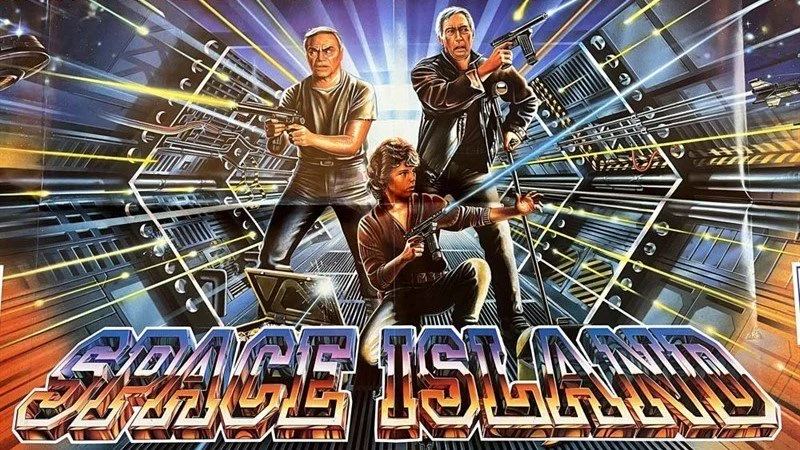
Treasure Island In Outer Space is a curious Italian television production from 1987 starring Anthony Quinn and Ernest Borgnine. It also features numerous international actors better known for their work in cult and exploitation films, such as Bobby Rhodes, David Warbeck and John Morghan. Directed by Antonio Margheriti (AKA Anthony Dawson), famous for such films as Killer Fish (a cash in on Piranha) and The Last Hunter (a Vietnam exploitation epic), Treasure Island In Outer Space is a faithful adaptation of Robert Louis Stevenson’s classic novel. The screenplay by Renato Castellani and Lucio De Caro draws heavily from the source text, maintaining character names and original dialogue. However in updating the material to a futuristic setting, the script is littered with the worst kind of eighties sci-fi clichés. We are subjected to sonic trains, anti-gravity rays and the usual buzzword driven faux science.
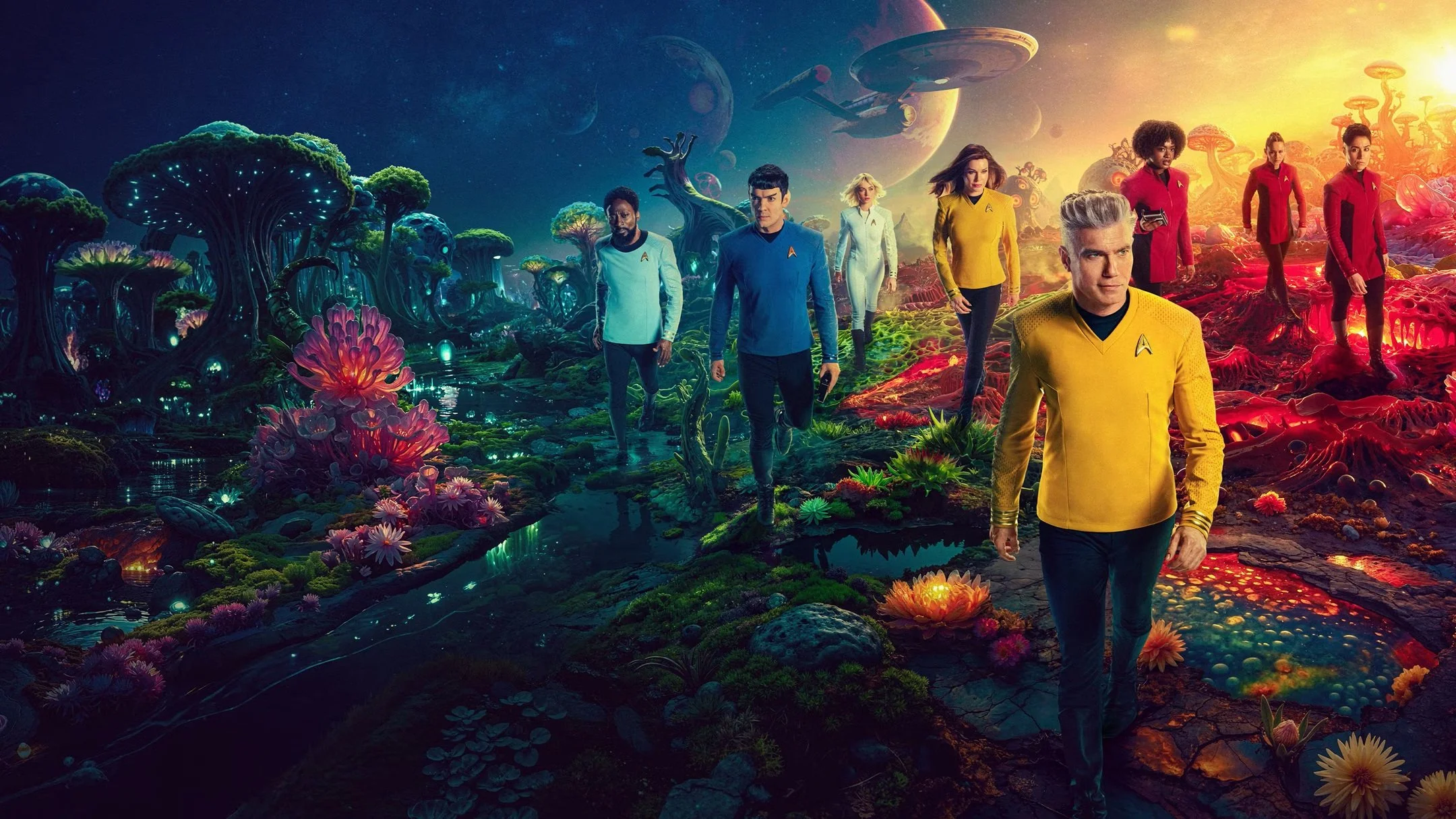
Thoughts on TV shows and my current viewing habits.
I last wrote a blog post in this series back in February 2022. Then for various reasons, I stopped. Possibly because my relationship with TV has changed in recent years. It’s fair to say at present that viewers are spoilt for choice. There are lots of very good shows around. Conversely, there is also a lot of bland, generic, filler as well. I appreciate that not every television series has to be an industry milestone and there are times when I’m content to watch undemanding content. However, I am very protective of how I spend my leisure time at present. I am not prepared to sink 6 or 8 hours into a show that is just “okay”. Hence I’m becoming very particular about what I watch. If something isn’t working for me in any fashion then I just abandon it and am happy to do so.
The seventies was an interesting time for UK genre television. Despite small budgets and often low key visual effects, there was no shortage of good ideas and creativity. Sapphire & Steel is a prime example of a show couched in a high concept, produced on a shoestring. It also credits its audiences with some degree of intelligence. Rather than spoon feeding the narrative in a didactic manner, it hints and implies, then leaves the rest to its viewers imagination. Created by Peter J. Hammond, a veteran TV writer, Sapphire & Steel centres on a pair of interdimensional operatives named Sapphire and Steel. They are two of a number of elements that assume human form. Over the course of three seasons little is revealed about the pair but they appear whenever there is any anomalous temporal activity. Time itself is portrayed as a sentient and malignant force that seeks to make incursions into the present reality, through weaknesses in the fabric of space.
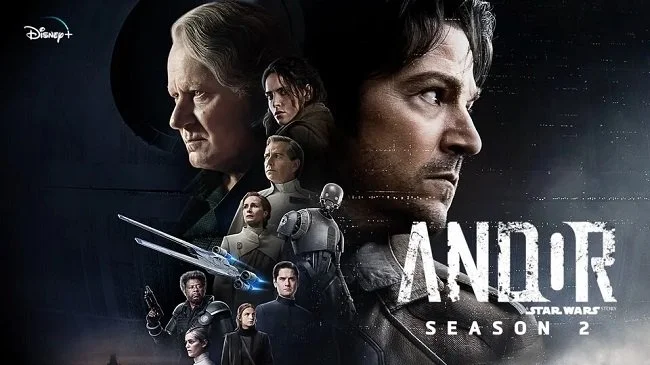
Season 2 of Andor has received praise from both critics and fans alike. It finally seems to have put to bed the common argument that Star Wars as a franchise has traditionally been light on narrative depth, character development and the exploration of the themes that its main story is predicated upon. Andor shows the realities of opposing authoritarian regimes and exists within shades of grey, rather than purille, binary positions. Many have drawn parallels with the current state of geopolitics, especially that of the United States. I certainly found the second season of Andor to be engaging and thought provoking. I also enjoyed the performances of many of the British actors who by default are cast in all the major Empire roles. I thought Anton Lesser was especially noteworthy as a senior officer in the Imperial Security Bureau.
If you don’t want to pay for streaming services, or premium digital satellite and cable content, then your choice in the UK is somewhat limited. You can receive all “free to air channels”, IE the ones that have advertising, via the digital terrestrial platform Freeview. Most UK televisions have Freeview access built in. Alternatively, the same selection of channels are available via the digital satellite platform Freesat. You can also buy either Freeview or Freesat digital video recorders and require only a rooftop aerial or satellite dish respectively to access these platforms. Most DVRs come with additional IPTV functionality built in along with the most popular streaming apps, so additional subscription services can be added if the viewer so desires. Freeview and Freesat carry a mixture of high definition and standard definition channels. Internet based services offer 4K content.
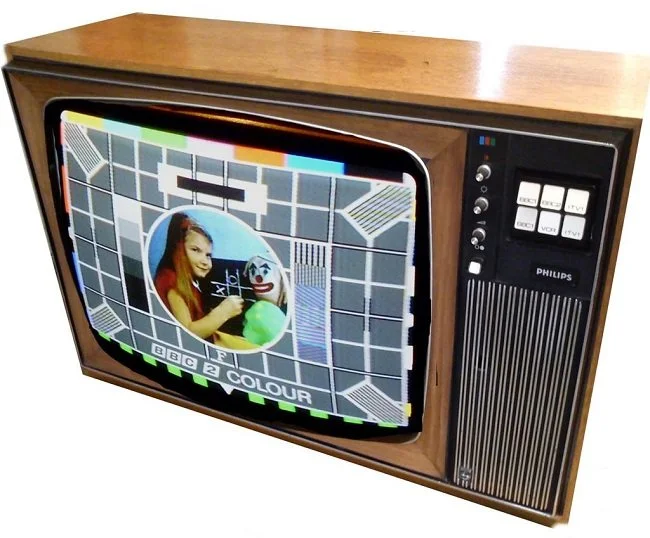
When I started writing this post it was intended to be about changing from one UK TV provider to another. However, I became concerned that there was a need to provide some sort of historical context, because I wasn’t sure whether all readers would be familiar with how television is provided here. The next thing I know, I’ve written a potted history of public and commercial broadcasting in the UK and the resulting post has become somewhat lengthy. So I have decided to split the text into two halves. The first being a summary of how the provision of television has changed in the UK over the course of the last fifty plus years. The second focuses more upon changes to the TV industry’s business model, consumer habits and the present status quo.
It is fair to say that we live in an age where we do not lack quality TV. There are numerous shows that have garnered critical acclaim or a strong word of mouth following that are deemed “must see” viewing. No doubt you, like myself, have a long “to do” list of programs that you need to “get round to watching” on top of those shows which are staples of your viewing regime. If you didn’t have enough programmes already to catch up with, we all have friends and family telling us about a “great show” that’s on a platform we don’t subscribe to, that we really need to see. It is quite extraordinary and a far cry from my youth when the UK simply had three terrestrial channels until satellite TV became popular in the late eighties. To paraphrase the former Prime Minister Harold Macmillan “we’ve never had it so good”.

Music by John Williams is a documentary celebration of the famous composer and his illustrious body of work. It provides some interesting biographical background information as to how the man was born into a family of talented musicians. It then traces his rise from pianist for hire to the most well known film composer today. Along the way, anyone who is anyone in film and music appears to heap justifiable praise upon him and his body of work. It also features a continuous medley of John Williams’ greatest hits, as it catalogues his work in broadly chronological order. Music by John Williams is an upbeat and positive love letter to the composer and exactly what you would expect, when you consider that the documentary was produced by his friends and peers.
Tonight’s results for week 5 of Strictly Come Dancing (season 22) have once again demonstrated that this show is more than just a dancing competition to UK viewers. If it were just a case of determining who are the best dancers, then JB Gill would not have been in the dance off. The judges may well see things exclusively in such terms but the public clearly do not. I last wrote about this phenomenon in 2019 and I think it appropriate to raise the subject again as this season of Strictly seems to be bucking past trends and I suspect we may be in for further upsets in the run up to the season finale. Broadly speaking, the public usually tends to vote in a manner similar to the official leaderboard. Hence, those who score the lowest usually end up in the dance off. Occasionally an underdog will be championed and kept on the show but that trend seems to have lost its novelty in recent years. This season appears to be quite different.
I make no bones about the fact that I watch Strictly Come Dancing every year. For those who live outside of the UK, this is the original version of the dancing reality show that you probably know as Dancing With the Stars in your country. It is still a big deal in the UK as far as TV ratings go, getting audiences on average of 6.6 million viewers. There are many aspects of the show that are textbook examples of prime time, popular entertainment but I like it because the “celebrities” that take part are ultimately learning a skill that is genuinely difficult. The latest season of Strictly, as it is known to its fans, is especially interesting as the BBC had a major PR problem earlier in the year, where several previous participants made allegations of bullying and abuse about their pro-dancer partners. An investigation is still ongoing and in the meantime, the two professional dancers that were named have withdrawn from the show. Hence everyone involved with the latest season are all on message, stating that it’s “all about having fun”.
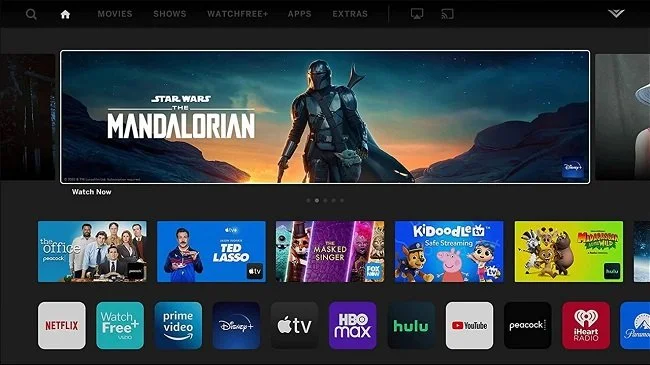
Watching TV was a far more communal activity in my youth. Families sat and watched specific shows or sports together. “Appointment TV” had its benefits not only for TV ratings but for advertising revenue. Although audiences may have grown over the years, they have also become more fragmented and compartmentalised. Smaller market shares have therefore made advertising far more pervasive. Even big streaming platforms are feeling the squeeze with declining subscribers and therefore introducing advertising on lower tier tariffs. Many catch up services also rely on advertising. However, viewers can always pay a fee if they wish to dispense with it. Another foible of modern digital television is poor picture quality Many smaller digital channels broadcast in standard definition. The source material has often been converted between different picture formats and has been cropped to suit a 16:9 screen. This results in low definition picture quality, with weak colours and a lot of digital artefacts.

I recently visited my local branch of the British Heart Foundation. This is a chain of UK charity shops that sell previously owned furniture and electrical goods, all of which are certified to be in good working order. It’s one of the few places where you’ll still find old school CRT televisions. These mainly come from house clearances. On this occasion, a particularly bulky model from the early 2000s was on display and despite its age, it still had a good, clear picture. I spoke to a member of staff and apparently these TVs are still popular with gamers who buy them for use with retro video games consoles. I felt especially nostalgic for this particular ageing Sony TV, because Mrs P and I had once owned a similar model. We bought it from a local department store (which no longer exists) and I remember it took two robust gentlemen to deliver it and install it.

We all knew it had to happen sooner or later. According to reports, Lucasfilm is planning to reduce its Star Wars related output on Disney+. Specifically, from 2025 there will be only one live-action television series per year. For comparison, Disney+ commissioned three shows in 2022 and two shows in both 2023 and 2024. It should be noted that this reduced output doesn’t include animated shows. It would appear that senior management at Disney have finally figured out something most of us have known for a while. That saturating the market with content based upon a specific intellectual property, is ultimately detrimental to its popularity and financial viability. To use an old adage “familiarity breeds contempt”. At present, hardcore fans are “unhappy” with the way the IP is being developed, while casual fans are somewhat burned out by the excess of content and its varying quality.

Two years ago, The Lord of the Rings: The Rings of Power premiered on Amazon Prime to mixed reviews and a tedious and predictable internet brouhaha. I have no interest in that debacle as I consider it spurious, to say the least. Representation is a commercial imperative for any big budget television production. As for any deviation from the established canon, that’s due to the show being an “adaptation” of Tolkien’s work. At no point were viewers promised a literal interpretation of the source text. Therefore I am only interested in legitimate critiques of the show based upon its production, writing and acting. As far as I’m concerned, the first season was broadly entertaining and had outstanding production values. Overall I enjoyed The Lord of the Rings: The Rings of Power as an exciting and inventive take on Tolkien’s legendarium. Hence, I have been looking forward to the second season, which began today.

Ghostwatch is a controversial British horror “mockumentary” produced by the BBC that was first broadcast on October 31st 1992. Written by Stephen Volk and produced by Ruth Baumgarten it is now considered a milestone in UK broadcasting. This was mainly due to the strong reaction it provoked from the public, many of whom failed to grasp that it was a drama. At the time it raised serious questions about responsible programming and caused a furore in the British press. It has curiously never been shown since by the BBC. Ghostwatch remains a talking point to this day and is a text book example of the power of television as well as the publics enduring belief in the supernatural.
Ronald Erle Grainer (11 August 1922 – 21 February 1981) was a prolific Australian composer who is best remembered for his work in the United Kingdom during the sixties and seventies. He wrote numerous notable scores and theme music for several iconic television shows such as Doctor Who, Steptoe and Son and Tales of the Unexpected. He also composed the soundtrack for several major motion pictures such as Some People (1962), The Assassination Bureau (1969) and The Omega Man (1971). Grainer relocated to London from Australia in 1952 but it was not until 1960 that he gained critical success after writing the music for the popular TV show Maigret. He subsequently received an Ivor Novello award for “Outstanding Composition for Film, TV or Radio”.

Anyone who writes regularly, sooner or later will have the following epiphany. The realisation that the post you consider your best work seldom finds an audience. Furthermore, the most inconsequential, disposable things that you have written on a whim, will often end up being the one article that gets a big response. It can be very frustrating but it is a reality of writing. It is with that idea in mind, I wish to move on to the matter of “Walter Watches”. In late March 2019, I took a picture of Walter sitting in his chair, watching a classic episode of The Twilight Zone. I subsequently Tweeted this image along with a descriptive caption. This gained a number of “likes” and retweets, so a day later I posted another. This time Walter was watching the film Krull (1983) and I added a humorous caption. Let’s just say I got more of a response for that one Tweet than I had for anything else I had posted over the previous nine years when promoting a blog post.
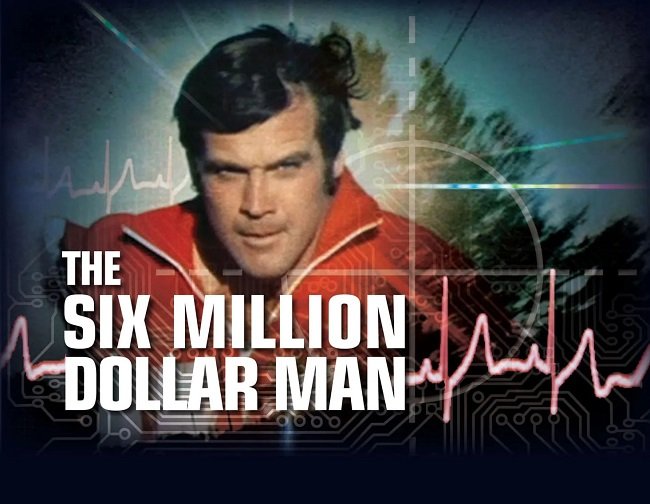
I was seven when The Six Million Dollar Man was first broadcast in the UK in late 1974. As a young and impressionable child, who was already fascinated by Doctor Who, Star Trek (TOS) and the films of Ray Harryhausen, this show was essential weekly viewing. I believe for the first couple of seasons, we sat and watched it as an entire family. Television was less sophisticated back then and dominated by sitcoms, police procedurals and traditional dramas. So a weekly show blending the espionage genre with science fiction themes was revolutionary. It also inspired a generation of school kids to run around the playground in “slow motion” and give themselves hernias as they attempted to lift heavy objects. And don’t get me started on the range of Steve Austin toys. One had a “bionic eye” which meant it had a lens in the front of the action figure’s face and you could look through the back of his head like a telescope. What a time to be alive!
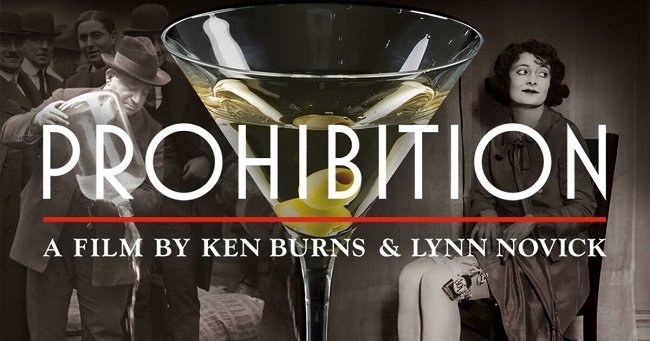
Despite being an analysis of the past there is a portentous air about Ken Burns and Lynn Novick’s Prohibition. A fascinating five-and-a-half-hour documentary produced for PBS in 2011. The history of this disastrous experiment, the banning of alcoholic beverages, is a textbook example of how the transactional nature of US politics can be effectively used upon “wedge” issues. Prohibition follows the format and style of Burns previous documentaries such as the Civil War (1990) and The War (2007) with the wider subject broken down and analysed according to protagonists, events and the political background. Specific historical figures and key players are followed throughout the documentary’s narrative, giving viewers a sense of focus. Hence we meet the hatchet-wielding Carrie Nation, Wayne Wheeler from the Anti-Saloon League and media savvy gangsters like Al Capone. It is interesting to note that some themes continue from Burns’ previous work, such as the political and cultural conflict between native-born Americans and European immigrants. The rural heartlands versus the big cities.
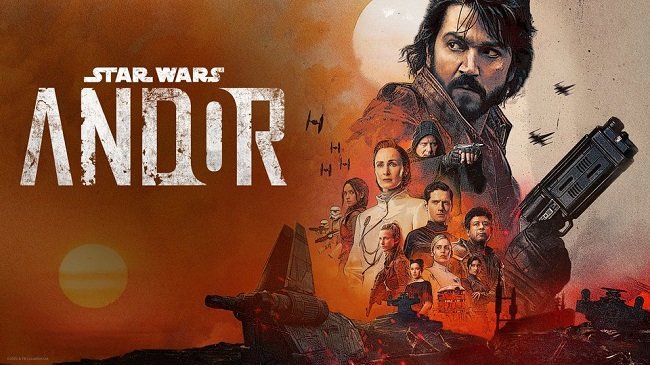
Andor is not like other entries in the Star Wars canon. It explores the human, social and political consequences of rebelling against an oppressive, totalitarian regime. The writing is intelligent and well observed, choosing to focus on the average citizens of the Empire and the nature of their daily lives. Andor also explores the ineffectual politicians and the way the senate are self serving and ultimately impotent. The Emperor is remote and instead we see how Imperial colonialism works at a grassroots level. It is an all too familiar depiction, born out of historical fact, such as Vichy France during World War II. Petty thugs and aspiring psychopaths happily align themselves with their Imperial overlords and actively oppress their own people. As for the Empire, and in particular the ISB (Imperial Security Bureau) it is rife with infighting, personal fiefdoms and all the flaws of similar institutions from the real world.
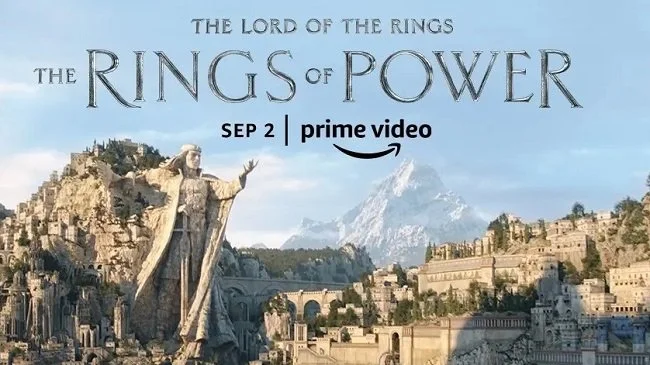
Having watched the first two episodes of The Lord of the Rings: The Rings of Power, I wish to express my thoughts on what I’ve seen and my overall impressions so far. I do not think it would be fair to frame this post as a review as the two episodes only constitute 25% of the show’s total content. A formal review of the first season seems more appropriate when I have seen it in its entirety. Before I begin commenting on specific points about the two premier episodes, I wish to point out that I have no problem with “representation” and have expressed my thoughts on this matter in a previous post. It also covers the matter of “adaptation” and how complex texts can at times require augmenting to be made accessible to wider audiences. Hence those viewers who want 100% canonical purity are unrealistic in their expectations. Objections based in racism and sexism can simply be ignored. NB I shall endeavour to keep my thoughts spoiler free.
The last time I wrote about our home entertainment system was six years ago. Back then I was hoping to upgrade our TV from HD to UHD. However, unless you are fortunate to have a surfeit of cash, most of us tend to soldier on with the hardware we already have until it breaks. Then at least we can justify replacing it. And that is exactly what happened to us last week. It would appear that both the TV and the powerline internet adapters which are in our lounge, suffered electrical induction damage during a recent thunderstorm. One of the powerline adapters was completely dead and the HDMI sockets on the television ceased to function. This meant we had no access to streaming services, the Blu-ray player or our BT TV DVR. We could access a selection of free, terrestrial digital channels via the aerial, but could not pause or record anything. Furthermore all of these were in standard definition.
The Eurovision Song Contest is a lot of things but it is never dull. Even if the songs that make it through to the final are a little lacklustre, there’s always drama to be found in the scoring. The first round of votes come from national juries made up of professionals from the music industry. Hence there is a propensity to judge songs on their technical and marketing merits. This often means that the juries favour songs that don’t necessarily appeal to the public. However, this is addressed in the second round in which the viewers can vote. The only caveat is that you cannot vote for your own country. Hence things can really change after the professional jury votes are counted and the public votes are added to the overall score. And that is what happened last night. There was a massive public vote for Ukrainian entry Stefania by the Kalush Orchestra and they subsequently won the contest.
Strictly Come Dancing 2017: Part 3
Well I said it last week that there was scope for a surprise elimination from Strictly Come Dancing and surely enough it has happened. Aston Merrygold, despite being tipped as a contender for the final, scored poorly with the judges last night and also failed to garner sufficient public support. He subsequently found himself in the dance off with Mollie King and despite correcting some of the technical issues that were present in his initial performance, he failed to sway the majority of the judges in his favour. Darcey and Bruno both voted to save him but Craig and Shirley (who as head judge has the casting vote) opted to save Mollie. Hence, bookies favourite Aston Merrygold has left the show, proving that no one can rest on the laurels. As you’d expect, there were vocal complaints from fans and supporters who felt that the judges had been unfair with their marks. However, I believe if anyone is to blame then it is Aston’s professional partner Janette Manrara.
Well I said it last week that there was scope for a surprise elimination from Strictly Come Dancing and surely enough it has happened. Aston Merrygold, despite being tipped as a contender for the final, scored poorly with the judges last night and also failed to garner sufficient public support. He subsequently found himself in the dance off with Mollie King and despite correcting some of the technical issues that were present in his initial performance, he failed to sway the majority of the judges in his favour. Darcey and Bruno both voted to save him but Craig and Shirley (who as head judge has the casting vote) opted to save Mollie. Hence, bookies favourite Aston Merrygold has left the show, proving that no one can rest on the laurels. As you’d expect, there were vocal complaints from fans and supporters who felt that the judges had been unfair with their marks. However, I believe if anyone is to blame then it is Aston’s professional partner Janette Manrara.
Last week, Aston and Janette were second from the top of the leader board with a robust score of 38 out of 40. Janette had cleverly choreographed a Paso Doble that blended traditional dance moves with more contemporary techniques. It was well received because it was a bold move that found the right balance between old and new. However, head judge Shirley Ballas did remark that she would have liked a little more traditional content, which is an important point to note. This week Janette took a similar gamble with a Viennese Waltz to Who’s Loving You by The Jackson 5. Again, she created a routine that placed a somewhat modern spin upon what is seen by some as a formal, traditional dance. If it was performed as a show dance, then I’m sure it would have fared better but as ever the judges scrutinised it on its technical merits. Both Craig and Shirley were not happy about its lack of Viennese Waltz content and thus marked accordingly. A view that the public may have also shared if you consider their votes.
So, Aston had little room to manoeuvre when he found himself in the dance off. He could obviously address some of the technical aspects of the routine but he couldn’t change the choreography. Mollie did give an improved performance second time round and the mistake that was made on Saturday’s show was not repeated. Furthermore, AJ wisely elected to keep her in-hold for as much of the routine as possible and minimised the potential for mistakes. Thus, there was no major reason when it came to decision time for judges Craig and Shirley to change their mind regarding Aston. I’m sure there will be those who disagree and even those who will trot out the usual arguments of subterfuge and prejudice. However, I believe the reality of the matter lies in the fact that approaching the Viennese Waltz in such a fashion was a fundamental mistake. Certainly, Aston’s departure at this stage alters the potential outcome of Strictly Come Dancing 2017. I’m thinking the smart money may should perhaps now be on Debbie McGee.
Star Trek is slightly older than me by 14 months. I was born on December 18th 1967. Star Trek was first broadcast in the US on 8th September 1966. Hence this show has always been part of the prevailing pop culture that surrounded me, as I grew up. I first began watching Star Trek as a young child in the early seventies. It would be repeated on the BBC in the early evening on Fridays and it became a family ritual to sit down together and watch it. As a seven or eight year old, it left a great impression upon me and was in many ways, the television highlight of the week. Star Trek along with Doctor Who certainly started my interest in science fiction. Star Trek was also one of the first shows that introduced me to tie-in marketing. I remember seeing in a toy shop, near to my school at the time, a Dinky Klingon Battle Cruiser and was flabbergasted that such a thing existed. I immediately coveted it but sadly never obtained one.
Thoughts on TV shows and my current viewing habits.
This so-called recurring post is certainly becoming quite irregular, as It’s been over a year since I wrote the last instalment of The Idiot Box. I noted back then how I was watching less television and to be frank that hasn’t really changed. Although there are plenty of well written and entertaining shows out there, too often choosing to watch one effectively places you in an opened ended social contract. For example, I watched the first season of The Agency, which is a superior espionage drama. It ended with the main story completed and a few plot lines open for another season. A second season has just been released and I have learned from a blog post by Wilhelm Arcturus, that this season ends on a cliffhanger. Oh dear. Do I really want to get on another TV show treadmill? Nope. I like TV shows that have self-contained seasons. So I guess I’ll be skipping The Agency. Shame. I liked the Jack Black cover of a U2 song that they use on the title credits.
I recently found a DVD boxset of Return to the Planet of the Apes in a charity shop which I bought for £4, which is a ridiculously cheap price. I considered it an interesting find because it was a Region 1, US copy. However, that is not so unusual these days as most DVD players are now region free and Amazon (UK) sells media from all over the world. As for the show in question, I vaguely remember Return to the Planet of the Apes being shown on UK network TV when I was a child, probably circa 1976. Back then it would usually take a year or so before US shows made it onto UK television. From a commercial perspective, the entire Planet of the Apes franchise was beginning to run out of steam. I was 8 years old at the time so had missed most of the film releases. However, I enjoyed the live action TV show hence an animated follow up had obvious appeal to a child of my age.
I have not watched as much TV as I usually do, this year. Mainly because I have become a little weary of the ways contemporary TV is produced, especially with regards to streaming shows. Due to the costs, shows such as Star Trek: Strange New Worlds only have 10 episodes per season. Simply put, the season begins to hit its stride and then is abruptly over. This problem (if you see it as such) is then further compounded by there being a significant wait between seasons. In the case of STSNW it was two years between season two and season three. Not all shows fall foul of this. Apple TV produces two seasons of the excellent espionage drama Slow Horses at a time, ensuring a prompt release schedule. However, even this has issues. Due to the complexity of the plots of many contemporary TV shows, something that is a marketing point, some viewers cannot remember the plot after a twelve month hiatus. Network TV shows seldom have these issues with each season being 20 plus episodes long and story arcs that are seldom as complex.
Strictly Come Dancing remains the BBC’s flagship light entertainment show for Autumn. Despite controversy and scandal, the show bounced back last year and firmly re-established itself as the “feel good, family show” it has always claimed to be. Blind comedian Chris McCausland becoming the 2024 champion certainly validated the show’s commitment to diversity and inclusion and helped place Strictly (as it is known to its fans) back on its cultural pedestal. I’m sure those involved in the production of the show breathed a sigh of relief when the season ended on such a positive note, eclipsing the negative press that had been ever present last summer. Second chances and opportunities for a “course correction” are few and far between these days. Especially when you have elements of the UK press waiting with bated breath and hoping that you’ll fail.
Treasure Island In Outer Space is a curious Italian television production from 1987 starring Anthony Quinn and Ernest Borgnine. It also features numerous international actors better known for their work in cult and exploitation films, such as Bobby Rhodes, David Warbeck and John Morghan. Directed by Antonio Margheriti (AKA Anthony Dawson), famous for such films as Killer Fish (a cash in on Piranha) and The Last Hunter (a Vietnam exploitation epic), Treasure Island In Outer Space is a faithful adaptation of Robert Louis Stevenson’s classic novel. The screenplay by Renato Castellani and Lucio De Caro draws heavily from the source text, maintaining character names and original dialogue. However in updating the material to a futuristic setting, the script is littered with the worst kind of eighties sci-fi clichés. We are subjected to sonic trains, anti-gravity rays and the usual buzzword driven faux science.
Thoughts on TV shows and my current viewing habits.
I last wrote a blog post in this series back in February 2022. Then for various reasons, I stopped. Possibly because my relationship with TV has changed in recent years. It’s fair to say at present that viewers are spoilt for choice. There are lots of very good shows around. Conversely, there is also a lot of bland, generic, filler as well. I appreciate that not every television series has to be an industry milestone and there are times when I’m content to watch undemanding content. However, I am very protective of how I spend my leisure time at present. I am not prepared to sink 6 or 8 hours into a show that is just “okay”. Hence I’m becoming very particular about what I watch. If something isn’t working for me in any fashion then I just abandon it and am happy to do so.
The seventies was an interesting time for UK genre television. Despite small budgets and often low key visual effects, there was no shortage of good ideas and creativity. Sapphire & Steel is a prime example of a show couched in a high concept, produced on a shoestring. It also credits its audiences with some degree of intelligence. Rather than spoon feeding the narrative in a didactic manner, it hints and implies, then leaves the rest to its viewers imagination. Created by Peter J. Hammond, a veteran TV writer, Sapphire & Steel centres on a pair of interdimensional operatives named Sapphire and Steel. They are two of a number of elements that assume human form. Over the course of three seasons little is revealed about the pair but they appear whenever there is any anomalous temporal activity. Time itself is portrayed as a sentient and malignant force that seeks to make incursions into the present reality, through weaknesses in the fabric of space.
Season 2 of Andor has received praise from both critics and fans alike. It finally seems to have put to bed the common argument that Star Wars as a franchise has traditionally been light on narrative depth, character development and the exploration of the themes that its main story is predicated upon. Andor shows the realities of opposing authoritarian regimes and exists within shades of grey, rather than purille, binary positions. Many have drawn parallels with the current state of geopolitics, especially that of the United States. I certainly found the second season of Andor to be engaging and thought provoking. I also enjoyed the performances of many of the British actors who by default are cast in all the major Empire roles. I thought Anton Lesser was especially noteworthy as a senior officer in the Imperial Security Bureau.
If you don’t want to pay for streaming services, or premium digital satellite and cable content, then your choice in the UK is somewhat limited. You can receive all “free to air channels”, IE the ones that have advertising, via the digital terrestrial platform Freeview. Most UK televisions have Freeview access built in. Alternatively, the same selection of channels are available via the digital satellite platform Freesat. You can also buy either Freeview or Freesat digital video recorders and require only a rooftop aerial or satellite dish respectively to access these platforms. Most DVRs come with additional IPTV functionality built in along with the most popular streaming apps, so additional subscription services can be added if the viewer so desires. Freeview and Freesat carry a mixture of high definition and standard definition channels. Internet based services offer 4K content.
When I started writing this post it was intended to be about changing from one UK TV provider to another. However, I became concerned that there was a need to provide some sort of historical context, because I wasn’t sure whether all readers would be familiar with how television is provided here. The next thing I know, I’ve written a potted history of public and commercial broadcasting in the UK and the resulting post has become somewhat lengthy. So I have decided to split the text into two halves. The first being a summary of how the provision of television has changed in the UK over the course of the last fifty plus years. The second focuses more upon changes to the TV industry’s business model, consumer habits and the present status quo.
It is fair to say that we live in an age where we do not lack quality TV. There are numerous shows that have garnered critical acclaim or a strong word of mouth following that are deemed “must see” viewing. No doubt you, like myself, have a long “to do” list of programs that you need to “get round to watching” on top of those shows which are staples of your viewing regime. If you didn’t have enough programmes already to catch up with, we all have friends and family telling us about a “great show” that’s on a platform we don’t subscribe to, that we really need to see. It is quite extraordinary and a far cry from my youth when the UK simply had three terrestrial channels until satellite TV became popular in the late eighties. To paraphrase the former Prime Minister Harold Macmillan “we’ve never had it so good”.
Music by John Williams is a documentary celebration of the famous composer and his illustrious body of work. It provides some interesting biographical background information as to how the man was born into a family of talented musicians. It then traces his rise from pianist for hire to the most well known film composer today. Along the way, anyone who is anyone in film and music appears to heap justifiable praise upon him and his body of work. It also features a continuous medley of John Williams’ greatest hits, as it catalogues his work in broadly chronological order. Music by John Williams is an upbeat and positive love letter to the composer and exactly what you would expect, when you consider that the documentary was produced by his friends and peers.
Tonight’s results for week 5 of Strictly Come Dancing (season 22) have once again demonstrated that this show is more than just a dancing competition to UK viewers. If it were just a case of determining who are the best dancers, then JB Gill would not have been in the dance off. The judges may well see things exclusively in such terms but the public clearly do not. I last wrote about this phenomenon in 2019 and I think it appropriate to raise the subject again as this season of Strictly seems to be bucking past trends and I suspect we may be in for further upsets in the run up to the season finale. Broadly speaking, the public usually tends to vote in a manner similar to the official leaderboard. Hence, those who score the lowest usually end up in the dance off. Occasionally an underdog will be championed and kept on the show but that trend seems to have lost its novelty in recent years. This season appears to be quite different.
I make no bones about the fact that I watch Strictly Come Dancing every year. For those who live outside of the UK, this is the original version of the dancing reality show that you probably know as Dancing With the Stars in your country. It is still a big deal in the UK as far as TV ratings go, getting audiences on average of 6.6 million viewers. There are many aspects of the show that are textbook examples of prime time, popular entertainment but I like it because the “celebrities” that take part are ultimately learning a skill that is genuinely difficult. The latest season of Strictly, as it is known to its fans, is especially interesting as the BBC had a major PR problem earlier in the year, where several previous participants made allegations of bullying and abuse about their pro-dancer partners. An investigation is still ongoing and in the meantime, the two professional dancers that were named have withdrawn from the show. Hence everyone involved with the latest season are all on message, stating that it’s “all about having fun”.
Watching TV was a far more communal activity in my youth. Families sat and watched specific shows or sports together. “Appointment TV” had its benefits not only for TV ratings but for advertising revenue. Although audiences may have grown over the years, they have also become more fragmented and compartmentalised. Smaller market shares have therefore made advertising far more pervasive. Even big streaming platforms are feeling the squeeze with declining subscribers and therefore introducing advertising on lower tier tariffs. Many catch up services also rely on advertising. However, viewers can always pay a fee if they wish to dispense with it. Another foible of modern digital television is poor picture quality Many smaller digital channels broadcast in standard definition. The source material has often been converted between different picture formats and has been cropped to suit a 16:9 screen. This results in low definition picture quality, with weak colours and a lot of digital artefacts.
I recently visited my local branch of the British Heart Foundation. This is a chain of UK charity shops that sell previously owned furniture and electrical goods, all of which are certified to be in good working order. It’s one of the few places where you’ll still find old school CRT televisions. These mainly come from house clearances. On this occasion, a particularly bulky model from the early 2000s was on display and despite its age, it still had a good, clear picture. I spoke to a member of staff and apparently these TVs are still popular with gamers who buy them for use with retro video games consoles. I felt especially nostalgic for this particular ageing Sony TV, because Mrs P and I had once owned a similar model. We bought it from a local department store (which no longer exists) and I remember it took two robust gentlemen to deliver it and install it.
We all knew it had to happen sooner or later. According to reports, Lucasfilm is planning to reduce its Star Wars related output on Disney+. Specifically, from 2025 there will be only one live-action television series per year. For comparison, Disney+ commissioned three shows in 2022 and two shows in both 2023 and 2024. It should be noted that this reduced output doesn’t include animated shows. It would appear that senior management at Disney have finally figured out something most of us have known for a while. That saturating the market with content based upon a specific intellectual property, is ultimately detrimental to its popularity and financial viability. To use an old adage “familiarity breeds contempt”. At present, hardcore fans are “unhappy” with the way the IP is being developed, while casual fans are somewhat burned out by the excess of content and its varying quality.
Two years ago, The Lord of the Rings: The Rings of Power premiered on Amazon Prime to mixed reviews and a tedious and predictable internet brouhaha. I have no interest in that debacle as I consider it spurious, to say the least. Representation is a commercial imperative for any big budget television production. As for any deviation from the established canon, that’s due to the show being an “adaptation” of Tolkien’s work. At no point were viewers promised a literal interpretation of the source text. Therefore I am only interested in legitimate critiques of the show based upon its production, writing and acting. As far as I’m concerned, the first season was broadly entertaining and had outstanding production values. Overall I enjoyed The Lord of the Rings: The Rings of Power as an exciting and inventive take on Tolkien’s legendarium. Hence, I have been looking forward to the second season, which began today.
Ghostwatch is a controversial British horror “mockumentary” produced by the BBC that was first broadcast on October 31st 1992. Written by Stephen Volk and produced by Ruth Baumgarten it is now considered a milestone in UK broadcasting. This was mainly due to the strong reaction it provoked from the public, many of whom failed to grasp that it was a drama. At the time it raised serious questions about responsible programming and caused a furore in the British press. It has curiously never been shown since by the BBC. Ghostwatch remains a talking point to this day and is a text book example of the power of television as well as the publics enduring belief in the supernatural.
Ronald Erle Grainer (11 August 1922 – 21 February 1981) was a prolific Australian composer who is best remembered for his work in the United Kingdom during the sixties and seventies. He wrote numerous notable scores and theme music for several iconic television shows such as Doctor Who, Steptoe and Son and Tales of the Unexpected. He also composed the soundtrack for several major motion pictures such as Some People (1962), The Assassination Bureau (1969) and The Omega Man (1971). Grainer relocated to London from Australia in 1952 but it was not until 1960 that he gained critical success after writing the music for the popular TV show Maigret. He subsequently received an Ivor Novello award for “Outstanding Composition for Film, TV or Radio”.
Anyone who writes regularly, sooner or later will have the following epiphany. The realisation that the post you consider your best work seldom finds an audience. Furthermore, the most inconsequential, disposable things that you have written on a whim, will often end up being the one article that gets a big response. It can be very frustrating but it is a reality of writing. It is with that idea in mind, I wish to move on to the matter of “Walter Watches”. In late March 2019, I took a picture of Walter sitting in his chair, watching a classic episode of The Twilight Zone. I subsequently Tweeted this image along with a descriptive caption. This gained a number of “likes” and retweets, so a day later I posted another. This time Walter was watching the film Krull (1983) and I added a humorous caption. Let’s just say I got more of a response for that one Tweet than I had for anything else I had posted over the previous nine years when promoting a blog post.
I was seven when The Six Million Dollar Man was first broadcast in the UK in late 1974. As a young and impressionable child, who was already fascinated by Doctor Who, Star Trek (TOS) and the films of Ray Harryhausen, this show was essential weekly viewing. I believe for the first couple of seasons, we sat and watched it as an entire family. Television was less sophisticated back then and dominated by sitcoms, police procedurals and traditional dramas. So a weekly show blending the espionage genre with science fiction themes was revolutionary. It also inspired a generation of school kids to run around the playground in “slow motion” and give themselves hernias as they attempted to lift heavy objects. And don’t get me started on the range of Steve Austin toys. One had a “bionic eye” which meant it had a lens in the front of the action figure’s face and you could look through the back of his head like a telescope. What a time to be alive!
Despite being an analysis of the past there is a portentous air about Ken Burns and Lynn Novick’s Prohibition. A fascinating five-and-a-half-hour documentary produced for PBS in 2011. The history of this disastrous experiment, the banning of alcoholic beverages, is a textbook example of how the transactional nature of US politics can be effectively used upon “wedge” issues. Prohibition follows the format and style of Burns previous documentaries such as the Civil War (1990) and The War (2007) with the wider subject broken down and analysed according to protagonists, events and the political background. Specific historical figures and key players are followed throughout the documentary’s narrative, giving viewers a sense of focus. Hence we meet the hatchet-wielding Carrie Nation, Wayne Wheeler from the Anti-Saloon League and media savvy gangsters like Al Capone. It is interesting to note that some themes continue from Burns’ previous work, such as the political and cultural conflict between native-born Americans and European immigrants. The rural heartlands versus the big cities.
Andor is not like other entries in the Star Wars canon. It explores the human, social and political consequences of rebelling against an oppressive, totalitarian regime. The writing is intelligent and well observed, choosing to focus on the average citizens of the Empire and the nature of their daily lives. Andor also explores the ineffectual politicians and the way the senate are self serving and ultimately impotent. The Emperor is remote and instead we see how Imperial colonialism works at a grassroots level. It is an all too familiar depiction, born out of historical fact, such as Vichy France during World War II. Petty thugs and aspiring psychopaths happily align themselves with their Imperial overlords and actively oppress their own people. As for the Empire, and in particular the ISB (Imperial Security Bureau) it is rife with infighting, personal fiefdoms and all the flaws of similar institutions from the real world.
Having watched the first two episodes of The Lord of the Rings: The Rings of Power, I wish to express my thoughts on what I’ve seen and my overall impressions so far. I do not think it would be fair to frame this post as a review as the two episodes only constitute 25% of the show’s total content. A formal review of the first season seems more appropriate when I have seen it in its entirety. Before I begin commenting on specific points about the two premier episodes, I wish to point out that I have no problem with “representation” and have expressed my thoughts on this matter in a previous post. It also covers the matter of “adaptation” and how complex texts can at times require augmenting to be made accessible to wider audiences. Hence those viewers who want 100% canonical purity are unrealistic in their expectations. Objections based in racism and sexism can simply be ignored. NB I shall endeavour to keep my thoughts spoiler free.
The last time I wrote about our home entertainment system was six years ago. Back then I was hoping to upgrade our TV from HD to UHD. However, unless you are fortunate to have a surfeit of cash, most of us tend to soldier on with the hardware we already have until it breaks. Then at least we can justify replacing it. And that is exactly what happened to us last week. It would appear that both the TV and the powerline internet adapters which are in our lounge, suffered electrical induction damage during a recent thunderstorm. One of the powerline adapters was completely dead and the HDMI sockets on the television ceased to function. This meant we had no access to streaming services, the Blu-ray player or our BT TV DVR. We could access a selection of free, terrestrial digital channels via the aerial, but could not pause or record anything. Furthermore all of these were in standard definition.
The Eurovision Song Contest is a lot of things but it is never dull. Even if the songs that make it through to the final are a little lacklustre, there’s always drama to be found in the scoring. The first round of votes come from national juries made up of professionals from the music industry. Hence there is a propensity to judge songs on their technical and marketing merits. This often means that the juries favour songs that don’t necessarily appeal to the public. However, this is addressed in the second round in which the viewers can vote. The only caveat is that you cannot vote for your own country. Hence things can really change after the professional jury votes are counted and the public votes are added to the overall score. And that is what happened last night. There was a massive public vote for Ukrainian entry Stefania by the Kalush Orchestra and they subsequently won the contest.
Strictly Come Dancing 2017: Part 2
I could be very philosophical about Strictly Come Dancing and describe how the judges scrutinise and mark the contestants on technique, viewing their performances through the prism of their own professional experiences. Conversely, the public react and elect to support the celebrities far more emotively; championing potential underdogs and showing solidarity with those they feel have been poorly treated. However, such Janusian analogies are unnecessary and ultimately pointless, because the show is primarily for entertainment and not a dancing competition, although the professional dancers may not see it that way. Also, as we saw demonstrated once again tonight, Strictly Come Dancing is a popularity contest and the only thing that really matters is convincing the public to vote for you.
I could be very philosophical about Strictly Come Dancing and describe how the judges scrutinise and mark the contestants on technique, viewing their performances through the prism of their own professional experiences. Conversely, the public react and elect to support the celebrities far more emotively; championing potential underdogs and showing solidarity with those they feel have been poorly treated. However, such Janusian analogies are unnecessary and ultimately pointless, because the show is primarily for entertainment and not a dancing competition, although the professional dancers may not see it that way. Also, as we saw demonstrated once again tonight, Strictly Come Dancing is a popularity contest and the only thing that really matters is convincing the public to vote for you.
This evening (well technically the show was recorded Saturday night), Mollie and AJ found themselves in the dance off along with Simon and Karen. Simon’s presence was far from a surprise. Despite his steadfast “have a go” attitude and pleasant manner, his level of attainment has plateaued of late, so it was only right, being bottom of the leader board, for him to be up for elimination. However, Mollie had scored a healthy 27 points, with her Cha Cha to "Better the Devil You Know" by Kylie Minogue. Furthermore, Mollie has shown improvement in her technique and is by no means one of the weakest celebrities in the show at present. Hence, the judges were somewhat surprised to see her in the dance off, although it can be clearly attributed to the public vote. However, this does raise the question why did the public not support her?
There are numerous reasons and potential theories as to why celebrities that perform well, still find themselves in the dance off. It has happened often enough over the last 15 seasons of the show for it not to be such a surprise, although it can still be quite jarring. The most obvious one that comes to mind is that the public assumes that those celebrities that perform well also have a strong fan base that will naturally support them. “I don’t need to vote for [insert series front runner here], they’ll be alright. I’ll vote for [insert name of alternative, possible underdog here], co’s they deserve a helping hand”. Then if we consider broader and possibly less charitable possibilities, people may vote tactically because they do not want someone to succeed. As I mentioned earlier a lot of viewers do react to the show very emotively. Furthermore, Strictly Come Dancing is reported heavily in the tabloid press which is happy perpetuate rumours and gossip. It could be a case that Mollie King doesn’t find favour with certain core viewer demographics.
I heard some people argue that Strictly Come Dancing is skewed by the public voting and it would be fairer if the judges to simply decide. I won’t discount such ideas but if that were the case, then the show would be far less popular. It is the public vote and audience interaction that is part of the program’s success and appeal. At a time when many people feel marginalised and having little control over their lives, the importance of a tangible public vote that demonstrably delivers results should not be discounted. The other thing that we shouldn’t ignore is the significance of the “journey”. Although it is great to see celebrities that take to dancing quickly, it does make for dull viewing if someone is habitually great every week. People like to see the celebrities grow and blossom. It’s a winning formula and accounts why some of the winners haven’t always been the bookies favourite. So, I suspect we may see a few more upsets like tonight’s in the weeks to come.
Star Trek is slightly older than me by 14 months. I was born on December 18th 1967. Star Trek was first broadcast in the US on 8th September 1966. Hence this show has always been part of the prevailing pop culture that surrounded me, as I grew up. I first began watching Star Trek as a young child in the early seventies. It would be repeated on the BBC in the early evening on Fridays and it became a family ritual to sit down together and watch it. As a seven or eight year old, it left a great impression upon me and was in many ways, the television highlight of the week. Star Trek along with Doctor Who certainly started my interest in science fiction. Star Trek was also one of the first shows that introduced me to tie-in marketing. I remember seeing in a toy shop, near to my school at the time, a Dinky Klingon Battle Cruiser and was flabbergasted that such a thing existed. I immediately coveted it but sadly never obtained one.
Thoughts on TV shows and my current viewing habits.
This so-called recurring post is certainly becoming quite irregular, as It’s been over a year since I wrote the last instalment of The Idiot Box. I noted back then how I was watching less television and to be frank that hasn’t really changed. Although there are plenty of well written and entertaining shows out there, too often choosing to watch one effectively places you in an opened ended social contract. For example, I watched the first season of The Agency, which is a superior espionage drama. It ended with the main story completed and a few plot lines open for another season. A second season has just been released and I have learned from a blog post by Wilhelm Arcturus, that this season ends on a cliffhanger. Oh dear. Do I really want to get on another TV show treadmill? Nope. I like TV shows that have self-contained seasons. So I guess I’ll be skipping The Agency. Shame. I liked the Jack Black cover of a U2 song that they use on the title credits.
I recently found a DVD boxset of Return to the Planet of the Apes in a charity shop which I bought for £4, which is a ridiculously cheap price. I considered it an interesting find because it was a Region 1, US copy. However, that is not so unusual these days as most DVD players are now region free and Amazon (UK) sells media from all over the world. As for the show in question, I vaguely remember Return to the Planet of the Apes being shown on UK network TV when I was a child, probably circa 1976. Back then it would usually take a year or so before US shows made it onto UK television. From a commercial perspective, the entire Planet of the Apes franchise was beginning to run out of steam. I was 8 years old at the time so had missed most of the film releases. However, I enjoyed the live action TV show hence an animated follow up had obvious appeal to a child of my age.
I have not watched as much TV as I usually do, this year. Mainly because I have become a little weary of the ways contemporary TV is produced, especially with regards to streaming shows. Due to the costs, shows such as Star Trek: Strange New Worlds only have 10 episodes per season. Simply put, the season begins to hit its stride and then is abruptly over. This problem (if you see it as such) is then further compounded by there being a significant wait between seasons. In the case of STSNW it was two years between season two and season three. Not all shows fall foul of this. Apple TV produces two seasons of the excellent espionage drama Slow Horses at a time, ensuring a prompt release schedule. However, even this has issues. Due to the complexity of the plots of many contemporary TV shows, something that is a marketing point, some viewers cannot remember the plot after a twelve month hiatus. Network TV shows seldom have these issues with each season being 20 plus episodes long and story arcs that are seldom as complex.
Strictly Come Dancing remains the BBC’s flagship light entertainment show for Autumn. Despite controversy and scandal, the show bounced back last year and firmly re-established itself as the “feel good, family show” it has always claimed to be. Blind comedian Chris McCausland becoming the 2024 champion certainly validated the show’s commitment to diversity and inclusion and helped place Strictly (as it is known to its fans) back on its cultural pedestal. I’m sure those involved in the production of the show breathed a sigh of relief when the season ended on such a positive note, eclipsing the negative press that had been ever present last summer. Second chances and opportunities for a “course correction” are few and far between these days. Especially when you have elements of the UK press waiting with bated breath and hoping that you’ll fail.
Treasure Island In Outer Space is a curious Italian television production from 1987 starring Anthony Quinn and Ernest Borgnine. It also features numerous international actors better known for their work in cult and exploitation films, such as Bobby Rhodes, David Warbeck and John Morghan. Directed by Antonio Margheriti (AKA Anthony Dawson), famous for such films as Killer Fish (a cash in on Piranha) and The Last Hunter (a Vietnam exploitation epic), Treasure Island In Outer Space is a faithful adaptation of Robert Louis Stevenson’s classic novel. The screenplay by Renato Castellani and Lucio De Caro draws heavily from the source text, maintaining character names and original dialogue. However in updating the material to a futuristic setting, the script is littered with the worst kind of eighties sci-fi clichés. We are subjected to sonic trains, anti-gravity rays and the usual buzzword driven faux science.
Thoughts on TV shows and my current viewing habits.
I last wrote a blog post in this series back in February 2022. Then for various reasons, I stopped. Possibly because my relationship with TV has changed in recent years. It’s fair to say at present that viewers are spoilt for choice. There are lots of very good shows around. Conversely, there is also a lot of bland, generic, filler as well. I appreciate that not every television series has to be an industry milestone and there are times when I’m content to watch undemanding content. However, I am very protective of how I spend my leisure time at present. I am not prepared to sink 6 or 8 hours into a show that is just “okay”. Hence I’m becoming very particular about what I watch. If something isn’t working for me in any fashion then I just abandon it and am happy to do so.
The seventies was an interesting time for UK genre television. Despite small budgets and often low key visual effects, there was no shortage of good ideas and creativity. Sapphire & Steel is a prime example of a show couched in a high concept, produced on a shoestring. It also credits its audiences with some degree of intelligence. Rather than spoon feeding the narrative in a didactic manner, it hints and implies, then leaves the rest to its viewers imagination. Created by Peter J. Hammond, a veteran TV writer, Sapphire & Steel centres on a pair of interdimensional operatives named Sapphire and Steel. They are two of a number of elements that assume human form. Over the course of three seasons little is revealed about the pair but they appear whenever there is any anomalous temporal activity. Time itself is portrayed as a sentient and malignant force that seeks to make incursions into the present reality, through weaknesses in the fabric of space.
Season 2 of Andor has received praise from both critics and fans alike. It finally seems to have put to bed the common argument that Star Wars as a franchise has traditionally been light on narrative depth, character development and the exploration of the themes that its main story is predicated upon. Andor shows the realities of opposing authoritarian regimes and exists within shades of grey, rather than purille, binary positions. Many have drawn parallels with the current state of geopolitics, especially that of the United States. I certainly found the second season of Andor to be engaging and thought provoking. I also enjoyed the performances of many of the British actors who by default are cast in all the major Empire roles. I thought Anton Lesser was especially noteworthy as a senior officer in the Imperial Security Bureau.
If you don’t want to pay for streaming services, or premium digital satellite and cable content, then your choice in the UK is somewhat limited. You can receive all “free to air channels”, IE the ones that have advertising, via the digital terrestrial platform Freeview. Most UK televisions have Freeview access built in. Alternatively, the same selection of channels are available via the digital satellite platform Freesat. You can also buy either Freeview or Freesat digital video recorders and require only a rooftop aerial or satellite dish respectively to access these platforms. Most DVRs come with additional IPTV functionality built in along with the most popular streaming apps, so additional subscription services can be added if the viewer so desires. Freeview and Freesat carry a mixture of high definition and standard definition channels. Internet based services offer 4K content.
When I started writing this post it was intended to be about changing from one UK TV provider to another. However, I became concerned that there was a need to provide some sort of historical context, because I wasn’t sure whether all readers would be familiar with how television is provided here. The next thing I know, I’ve written a potted history of public and commercial broadcasting in the UK and the resulting post has become somewhat lengthy. So I have decided to split the text into two halves. The first being a summary of how the provision of television has changed in the UK over the course of the last fifty plus years. The second focuses more upon changes to the TV industry’s business model, consumer habits and the present status quo.
It is fair to say that we live in an age where we do not lack quality TV. There are numerous shows that have garnered critical acclaim or a strong word of mouth following that are deemed “must see” viewing. No doubt you, like myself, have a long “to do” list of programs that you need to “get round to watching” on top of those shows which are staples of your viewing regime. If you didn’t have enough programmes already to catch up with, we all have friends and family telling us about a “great show” that’s on a platform we don’t subscribe to, that we really need to see. It is quite extraordinary and a far cry from my youth when the UK simply had three terrestrial channels until satellite TV became popular in the late eighties. To paraphrase the former Prime Minister Harold Macmillan “we’ve never had it so good”.
Music by John Williams is a documentary celebration of the famous composer and his illustrious body of work. It provides some interesting biographical background information as to how the man was born into a family of talented musicians. It then traces his rise from pianist for hire to the most well known film composer today. Along the way, anyone who is anyone in film and music appears to heap justifiable praise upon him and his body of work. It also features a continuous medley of John Williams’ greatest hits, as it catalogues his work in broadly chronological order. Music by John Williams is an upbeat and positive love letter to the composer and exactly what you would expect, when you consider that the documentary was produced by his friends and peers.
Tonight’s results for week 5 of Strictly Come Dancing (season 22) have once again demonstrated that this show is more than just a dancing competition to UK viewers. If it were just a case of determining who are the best dancers, then JB Gill would not have been in the dance off. The judges may well see things exclusively in such terms but the public clearly do not. I last wrote about this phenomenon in 2019 and I think it appropriate to raise the subject again as this season of Strictly seems to be bucking past trends and I suspect we may be in for further upsets in the run up to the season finale. Broadly speaking, the public usually tends to vote in a manner similar to the official leaderboard. Hence, those who score the lowest usually end up in the dance off. Occasionally an underdog will be championed and kept on the show but that trend seems to have lost its novelty in recent years. This season appears to be quite different.
I make no bones about the fact that I watch Strictly Come Dancing every year. For those who live outside of the UK, this is the original version of the dancing reality show that you probably know as Dancing With the Stars in your country. It is still a big deal in the UK as far as TV ratings go, getting audiences on average of 6.6 million viewers. There are many aspects of the show that are textbook examples of prime time, popular entertainment but I like it because the “celebrities” that take part are ultimately learning a skill that is genuinely difficult. The latest season of Strictly, as it is known to its fans, is especially interesting as the BBC had a major PR problem earlier in the year, where several previous participants made allegations of bullying and abuse about their pro-dancer partners. An investigation is still ongoing and in the meantime, the two professional dancers that were named have withdrawn from the show. Hence everyone involved with the latest season are all on message, stating that it’s “all about having fun”.
Watching TV was a far more communal activity in my youth. Families sat and watched specific shows or sports together. “Appointment TV” had its benefits not only for TV ratings but for advertising revenue. Although audiences may have grown over the years, they have also become more fragmented and compartmentalised. Smaller market shares have therefore made advertising far more pervasive. Even big streaming platforms are feeling the squeeze with declining subscribers and therefore introducing advertising on lower tier tariffs. Many catch up services also rely on advertising. However, viewers can always pay a fee if they wish to dispense with it. Another foible of modern digital television is poor picture quality Many smaller digital channels broadcast in standard definition. The source material has often been converted between different picture formats and has been cropped to suit a 16:9 screen. This results in low definition picture quality, with weak colours and a lot of digital artefacts.
I recently visited my local branch of the British Heart Foundation. This is a chain of UK charity shops that sell previously owned furniture and electrical goods, all of which are certified to be in good working order. It’s one of the few places where you’ll still find old school CRT televisions. These mainly come from house clearances. On this occasion, a particularly bulky model from the early 2000s was on display and despite its age, it still had a good, clear picture. I spoke to a member of staff and apparently these TVs are still popular with gamers who buy them for use with retro video games consoles. I felt especially nostalgic for this particular ageing Sony TV, because Mrs P and I had once owned a similar model. We bought it from a local department store (which no longer exists) and I remember it took two robust gentlemen to deliver it and install it.
We all knew it had to happen sooner or later. According to reports, Lucasfilm is planning to reduce its Star Wars related output on Disney+. Specifically, from 2025 there will be only one live-action television series per year. For comparison, Disney+ commissioned three shows in 2022 and two shows in both 2023 and 2024. It should be noted that this reduced output doesn’t include animated shows. It would appear that senior management at Disney have finally figured out something most of us have known for a while. That saturating the market with content based upon a specific intellectual property, is ultimately detrimental to its popularity and financial viability. To use an old adage “familiarity breeds contempt”. At present, hardcore fans are “unhappy” with the way the IP is being developed, while casual fans are somewhat burned out by the excess of content and its varying quality.
Two years ago, The Lord of the Rings: The Rings of Power premiered on Amazon Prime to mixed reviews and a tedious and predictable internet brouhaha. I have no interest in that debacle as I consider it spurious, to say the least. Representation is a commercial imperative for any big budget television production. As for any deviation from the established canon, that’s due to the show being an “adaptation” of Tolkien’s work. At no point were viewers promised a literal interpretation of the source text. Therefore I am only interested in legitimate critiques of the show based upon its production, writing and acting. As far as I’m concerned, the first season was broadly entertaining and had outstanding production values. Overall I enjoyed The Lord of the Rings: The Rings of Power as an exciting and inventive take on Tolkien’s legendarium. Hence, I have been looking forward to the second season, which began today.
Ghostwatch is a controversial British horror “mockumentary” produced by the BBC that was first broadcast on October 31st 1992. Written by Stephen Volk and produced by Ruth Baumgarten it is now considered a milestone in UK broadcasting. This was mainly due to the strong reaction it provoked from the public, many of whom failed to grasp that it was a drama. At the time it raised serious questions about responsible programming and caused a furore in the British press. It has curiously never been shown since by the BBC. Ghostwatch remains a talking point to this day and is a text book example of the power of television as well as the publics enduring belief in the supernatural.
Ronald Erle Grainer (11 August 1922 – 21 February 1981) was a prolific Australian composer who is best remembered for his work in the United Kingdom during the sixties and seventies. He wrote numerous notable scores and theme music for several iconic television shows such as Doctor Who, Steptoe and Son and Tales of the Unexpected. He also composed the soundtrack for several major motion pictures such as Some People (1962), The Assassination Bureau (1969) and The Omega Man (1971). Grainer relocated to London from Australia in 1952 but it was not until 1960 that he gained critical success after writing the music for the popular TV show Maigret. He subsequently received an Ivor Novello award for “Outstanding Composition for Film, TV or Radio”.
Anyone who writes regularly, sooner or later will have the following epiphany. The realisation that the post you consider your best work seldom finds an audience. Furthermore, the most inconsequential, disposable things that you have written on a whim, will often end up being the one article that gets a big response. It can be very frustrating but it is a reality of writing. It is with that idea in mind, I wish to move on to the matter of “Walter Watches”. In late March 2019, I took a picture of Walter sitting in his chair, watching a classic episode of The Twilight Zone. I subsequently Tweeted this image along with a descriptive caption. This gained a number of “likes” and retweets, so a day later I posted another. This time Walter was watching the film Krull (1983) and I added a humorous caption. Let’s just say I got more of a response for that one Tweet than I had for anything else I had posted over the previous nine years when promoting a blog post.
I was seven when The Six Million Dollar Man was first broadcast in the UK in late 1974. As a young and impressionable child, who was already fascinated by Doctor Who, Star Trek (TOS) and the films of Ray Harryhausen, this show was essential weekly viewing. I believe for the first couple of seasons, we sat and watched it as an entire family. Television was less sophisticated back then and dominated by sitcoms, police procedurals and traditional dramas. So a weekly show blending the espionage genre with science fiction themes was revolutionary. It also inspired a generation of school kids to run around the playground in “slow motion” and give themselves hernias as they attempted to lift heavy objects. And don’t get me started on the range of Steve Austin toys. One had a “bionic eye” which meant it had a lens in the front of the action figure’s face and you could look through the back of his head like a telescope. What a time to be alive!
Despite being an analysis of the past there is a portentous air about Ken Burns and Lynn Novick’s Prohibition. A fascinating five-and-a-half-hour documentary produced for PBS in 2011. The history of this disastrous experiment, the banning of alcoholic beverages, is a textbook example of how the transactional nature of US politics can be effectively used upon “wedge” issues. Prohibition follows the format and style of Burns previous documentaries such as the Civil War (1990) and The War (2007) with the wider subject broken down and analysed according to protagonists, events and the political background. Specific historical figures and key players are followed throughout the documentary’s narrative, giving viewers a sense of focus. Hence we meet the hatchet-wielding Carrie Nation, Wayne Wheeler from the Anti-Saloon League and media savvy gangsters like Al Capone. It is interesting to note that some themes continue from Burns’ previous work, such as the political and cultural conflict between native-born Americans and European immigrants. The rural heartlands versus the big cities.
Andor is not like other entries in the Star Wars canon. It explores the human, social and political consequences of rebelling against an oppressive, totalitarian regime. The writing is intelligent and well observed, choosing to focus on the average citizens of the Empire and the nature of their daily lives. Andor also explores the ineffectual politicians and the way the senate are self serving and ultimately impotent. The Emperor is remote and instead we see how Imperial colonialism works at a grassroots level. It is an all too familiar depiction, born out of historical fact, such as Vichy France during World War II. Petty thugs and aspiring psychopaths happily align themselves with their Imperial overlords and actively oppress their own people. As for the Empire, and in particular the ISB (Imperial Security Bureau) it is rife with infighting, personal fiefdoms and all the flaws of similar institutions from the real world.
Having watched the first two episodes of The Lord of the Rings: The Rings of Power, I wish to express my thoughts on what I’ve seen and my overall impressions so far. I do not think it would be fair to frame this post as a review as the two episodes only constitute 25% of the show’s total content. A formal review of the first season seems more appropriate when I have seen it in its entirety. Before I begin commenting on specific points about the two premier episodes, I wish to point out that I have no problem with “representation” and have expressed my thoughts on this matter in a previous post. It also covers the matter of “adaptation” and how complex texts can at times require augmenting to be made accessible to wider audiences. Hence those viewers who want 100% canonical purity are unrealistic in their expectations. Objections based in racism and sexism can simply be ignored. NB I shall endeavour to keep my thoughts spoiler free.
The last time I wrote about our home entertainment system was six years ago. Back then I was hoping to upgrade our TV from HD to UHD. However, unless you are fortunate to have a surfeit of cash, most of us tend to soldier on with the hardware we already have until it breaks. Then at least we can justify replacing it. And that is exactly what happened to us last week. It would appear that both the TV and the powerline internet adapters which are in our lounge, suffered electrical induction damage during a recent thunderstorm. One of the powerline adapters was completely dead and the HDMI sockets on the television ceased to function. This meant we had no access to streaming services, the Blu-ray player or our BT TV DVR. We could access a selection of free, terrestrial digital channels via the aerial, but could not pause or record anything. Furthermore all of these were in standard definition.
The Eurovision Song Contest is a lot of things but it is never dull. Even if the songs that make it through to the final are a little lacklustre, there’s always drama to be found in the scoring. The first round of votes come from national juries made up of professionals from the music industry. Hence there is a propensity to judge songs on their technical and marketing merits. This often means that the juries favour songs that don’t necessarily appeal to the public. However, this is addressed in the second round in which the viewers can vote. The only caveat is that you cannot vote for your own country. Hence things can really change after the professional jury votes are counted and the public votes are added to the overall score. And that is what happened last night. There was a massive public vote for Ukrainian entry Stefania by the Kalush Orchestra and they subsequently won the contest.
Strictly Come Dancing 2017: Part 1
Yes, we’re three weeks into this year’s season of the BBC’s flagship entertainment show, Strictly Come Dancing (that’s the UK version of Dancing with the Stars for the benefit of US readers). The tabloid press has already started obsessing, dissecting and outright lying about the antics of a handful of minor celebrities as they struggle with the rigours of learning to dance. From now until Christmas, prime time Saturday night viewing on the Beeb will be suffused with the superficial glamour of showbiz, a barrage of camp innuendo and a mixture of well-honed muscles and wayward flesh as well as far too much make-up. You also get to choose whether to laugh along with heavily scripted and contrived comments from the professional judges. If we’re particularly fortunate we may even be blessed with a professional dancer meltdown as they balk at a “ill deserved” poor score (yes, we’re looking at you Brendan Cole).
Yes, we’re three weeks into this year’s season of the BBC’s flagship entertainment show, Strictly Come Dancing (that’s the UK version of Dancing with the Stars for the benefit of US readers). The tabloid press has already started obsessing, dissecting and outright lying about the antics of a handful of minor celebrities as they struggle with the rigours of learning to dance. From now until Christmas, prime time Saturday night viewing on the Beeb will be suffused with the superficial glamour of showbiz, a barrage of camp innuendo and a mixture of well-honed muscles and wayward flesh as well as far too much make-up. You also get to choose whether to laugh along with heavily scripted and contrived comments from the professional judges. If we’re particularly fortunate we may even be blessed with a professional dancer meltdown as they balk at a “ill deserved” poor score (yes, we’re looking at you Brendan Cole).
Now I have watched Strictly Come Dancing since 2005. It is ideal family viewing and is better than other reality shows because at its core, it's about people learning a very difficult artistic skill. As long as you accept it for what it is, which is an entertainment show rather than a straight dance contest, there is a great deal of fun to be had. Or that's the theory. I’ve been somewhat burned out on Strictly Come Dancing for the last three years and the prospects of watching another season was not especially appealing earlier on in the year. Because of the nature and more importantly, the popularity of the show, it has become a somewhat slickly oiled machine which follows an established formula. As a result, the last few seasons have left very little impression on me. There have been some outstanding dances but the celebrities have been somewhat bland and there has been a lack of anyone having a distinctive “journey”.
The judges until recently, have all become caricatures of themselves, which is exactly what the audience wants. However, the recent replacement of Len Goodman with Shirley Ballas has somewhat redressed the balance. Shirley seems to be both technically astute, as well as understanding of the human factor. So far, she has shown no penchant for pickling walnuts. However, we have seen in the last three shows, a broad spectrum of scores. And as ever the judges tend to have their favourites and seem to be encouraged to show this. So, if you’re expecting a broadly non-partisan experience from Strictly Come Dancing then you’re barking up the wrong tree. Nothing goes down better with the Great British public than binary choices and believe me, this show can get very tribal when it comes to public support of the dancing couples.
Another facet of the Strictly formula are the celebrity contestants, who also seem to follow a clear pattern. To date, those from a sporting, musical or TV background seem to have the best chances of claiming the trophy. Age and physical fitness is also plays a key part. So, it becomes very easy to guess which specific role each of the celebrities will play. Who will be the front runner (s) exhibiting a natural ability right from the get go. Who is wild card and which non-professional will assume the role of the self-improver. It is these individuals who often have the best “journey”. Then there is the pivotal position of the crowd-pleasing fool with no sense of rhythm. As long as they give it their all they usually remain on the show as far as Blackpool. And of course, let us not forget those who just can't dance and aren't even amusing. Plus, the show offers a great opportunity to judge people for the heinous crime of ageing without due care and attention.
Until this year, I thought that even Schadenfreude has its limits, so I was expecting to end my love affair with Strictly Come Dancing. But we live in proverbial “interesting times” and the world of late has become a very bleak and dark place. Hope is a scarce commodity at present and it is in such circumstances that I see the virtue in populist entertainment. That and the fact I absolutely adore Susan Calman and her entire approach to the Strictly phenomenon. Plus, I have a gut feeling that we’re going to have a controversy of some kind, shortly. I do like a controversy, especially if it’s of the magnitude of Sargent-gate. If a crap performer is kept on the show by the public at the expense of a more talented dancer, then there is scope for a national tabloid meltdown. Questions may well be asked in parliament. Then there’s the whole celebrity tittle-tattle of who’s having a sordid sexual dalliance with whom. It’s worryingly entertaining. So just to re-iterate, I'm not yet done with Strictly Come Dancing despite what I initially thought. I look forward to this year’s wardrobe choice that pushes the boundaries of "public decency" and live in the pious hope that someone will slap the smug grin of A J Pritchard’s face. Long live prime time, Saturday night, light entertainment.
Star Trek is slightly older than me by 14 months. I was born on December 18th 1967. Star Trek was first broadcast in the US on 8th September 1966. Hence this show has always been part of the prevailing pop culture that surrounded me, as I grew up. I first began watching Star Trek as a young child in the early seventies. It would be repeated on the BBC in the early evening on Fridays and it became a family ritual to sit down together and watch it. As a seven or eight year old, it left a great impression upon me and was in many ways, the television highlight of the week. Star Trek along with Doctor Who certainly started my interest in science fiction. Star Trek was also one of the first shows that introduced me to tie-in marketing. I remember seeing in a toy shop, near to my school at the time, a Dinky Klingon Battle Cruiser and was flabbergasted that such a thing existed. I immediately coveted it but sadly never obtained one.
Thoughts on TV shows and my current viewing habits.
This so-called recurring post is certainly becoming quite irregular, as It’s been over a year since I wrote the last instalment of The Idiot Box. I noted back then how I was watching less television and to be frank that hasn’t really changed. Although there are plenty of well written and entertaining shows out there, too often choosing to watch one effectively places you in an opened ended social contract. For example, I watched the first season of The Agency, which is a superior espionage drama. It ended with the main story completed and a few plot lines open for another season. A second season has just been released and I have learned from a blog post by Wilhelm Arcturus, that this season ends on a cliffhanger. Oh dear. Do I really want to get on another TV show treadmill? Nope. I like TV shows that have self-contained seasons. So I guess I’ll be skipping The Agency. Shame. I liked the Jack Black cover of a U2 song that they use on the title credits.
I recently found a DVD boxset of Return to the Planet of the Apes in a charity shop which I bought for £4, which is a ridiculously cheap price. I considered it an interesting find because it was a Region 1, US copy. However, that is not so unusual these days as most DVD players are now region free and Amazon (UK) sells media from all over the world. As for the show in question, I vaguely remember Return to the Planet of the Apes being shown on UK network TV when I was a child, probably circa 1976. Back then it would usually take a year or so before US shows made it onto UK television. From a commercial perspective, the entire Planet of the Apes franchise was beginning to run out of steam. I was 8 years old at the time so had missed most of the film releases. However, I enjoyed the live action TV show hence an animated follow up had obvious appeal to a child of my age.
I have not watched as much TV as I usually do, this year. Mainly because I have become a little weary of the ways contemporary TV is produced, especially with regards to streaming shows. Due to the costs, shows such as Star Trek: Strange New Worlds only have 10 episodes per season. Simply put, the season begins to hit its stride and then is abruptly over. This problem (if you see it as such) is then further compounded by there being a significant wait between seasons. In the case of STSNW it was two years between season two and season three. Not all shows fall foul of this. Apple TV produces two seasons of the excellent espionage drama Slow Horses at a time, ensuring a prompt release schedule. However, even this has issues. Due to the complexity of the plots of many contemporary TV shows, something that is a marketing point, some viewers cannot remember the plot after a twelve month hiatus. Network TV shows seldom have these issues with each season being 20 plus episodes long and story arcs that are seldom as complex.
Strictly Come Dancing remains the BBC’s flagship light entertainment show for Autumn. Despite controversy and scandal, the show bounced back last year and firmly re-established itself as the “feel good, family show” it has always claimed to be. Blind comedian Chris McCausland becoming the 2024 champion certainly validated the show’s commitment to diversity and inclusion and helped place Strictly (as it is known to its fans) back on its cultural pedestal. I’m sure those involved in the production of the show breathed a sigh of relief when the season ended on such a positive note, eclipsing the negative press that had been ever present last summer. Second chances and opportunities for a “course correction” are few and far between these days. Especially when you have elements of the UK press waiting with bated breath and hoping that you’ll fail.
Treasure Island In Outer Space is a curious Italian television production from 1987 starring Anthony Quinn and Ernest Borgnine. It also features numerous international actors better known for their work in cult and exploitation films, such as Bobby Rhodes, David Warbeck and John Morghan. Directed by Antonio Margheriti (AKA Anthony Dawson), famous for such films as Killer Fish (a cash in on Piranha) and The Last Hunter (a Vietnam exploitation epic), Treasure Island In Outer Space is a faithful adaptation of Robert Louis Stevenson’s classic novel. The screenplay by Renato Castellani and Lucio De Caro draws heavily from the source text, maintaining character names and original dialogue. However in updating the material to a futuristic setting, the script is littered with the worst kind of eighties sci-fi clichés. We are subjected to sonic trains, anti-gravity rays and the usual buzzword driven faux science.
Thoughts on TV shows and my current viewing habits.
I last wrote a blog post in this series back in February 2022. Then for various reasons, I stopped. Possibly because my relationship with TV has changed in recent years. It’s fair to say at present that viewers are spoilt for choice. There are lots of very good shows around. Conversely, there is also a lot of bland, generic, filler as well. I appreciate that not every television series has to be an industry milestone and there are times when I’m content to watch undemanding content. However, I am very protective of how I spend my leisure time at present. I am not prepared to sink 6 or 8 hours into a show that is just “okay”. Hence I’m becoming very particular about what I watch. If something isn’t working for me in any fashion then I just abandon it and am happy to do so.
The seventies was an interesting time for UK genre television. Despite small budgets and often low key visual effects, there was no shortage of good ideas and creativity. Sapphire & Steel is a prime example of a show couched in a high concept, produced on a shoestring. It also credits its audiences with some degree of intelligence. Rather than spoon feeding the narrative in a didactic manner, it hints and implies, then leaves the rest to its viewers imagination. Created by Peter J. Hammond, a veteran TV writer, Sapphire & Steel centres on a pair of interdimensional operatives named Sapphire and Steel. They are two of a number of elements that assume human form. Over the course of three seasons little is revealed about the pair but they appear whenever there is any anomalous temporal activity. Time itself is portrayed as a sentient and malignant force that seeks to make incursions into the present reality, through weaknesses in the fabric of space.
Season 2 of Andor has received praise from both critics and fans alike. It finally seems to have put to bed the common argument that Star Wars as a franchise has traditionally been light on narrative depth, character development and the exploration of the themes that its main story is predicated upon. Andor shows the realities of opposing authoritarian regimes and exists within shades of grey, rather than purille, binary positions. Many have drawn parallels with the current state of geopolitics, especially that of the United States. I certainly found the second season of Andor to be engaging and thought provoking. I also enjoyed the performances of many of the British actors who by default are cast in all the major Empire roles. I thought Anton Lesser was especially noteworthy as a senior officer in the Imperial Security Bureau.
If you don’t want to pay for streaming services, or premium digital satellite and cable content, then your choice in the UK is somewhat limited. You can receive all “free to air channels”, IE the ones that have advertising, via the digital terrestrial platform Freeview. Most UK televisions have Freeview access built in. Alternatively, the same selection of channels are available via the digital satellite platform Freesat. You can also buy either Freeview or Freesat digital video recorders and require only a rooftop aerial or satellite dish respectively to access these platforms. Most DVRs come with additional IPTV functionality built in along with the most popular streaming apps, so additional subscription services can be added if the viewer so desires. Freeview and Freesat carry a mixture of high definition and standard definition channels. Internet based services offer 4K content.
When I started writing this post it was intended to be about changing from one UK TV provider to another. However, I became concerned that there was a need to provide some sort of historical context, because I wasn’t sure whether all readers would be familiar with how television is provided here. The next thing I know, I’ve written a potted history of public and commercial broadcasting in the UK and the resulting post has become somewhat lengthy. So I have decided to split the text into two halves. The first being a summary of how the provision of television has changed in the UK over the course of the last fifty plus years. The second focuses more upon changes to the TV industry’s business model, consumer habits and the present status quo.
It is fair to say that we live in an age where we do not lack quality TV. There are numerous shows that have garnered critical acclaim or a strong word of mouth following that are deemed “must see” viewing. No doubt you, like myself, have a long “to do” list of programs that you need to “get round to watching” on top of those shows which are staples of your viewing regime. If you didn’t have enough programmes already to catch up with, we all have friends and family telling us about a “great show” that’s on a platform we don’t subscribe to, that we really need to see. It is quite extraordinary and a far cry from my youth when the UK simply had three terrestrial channels until satellite TV became popular in the late eighties. To paraphrase the former Prime Minister Harold Macmillan “we’ve never had it so good”.
Music by John Williams is a documentary celebration of the famous composer and his illustrious body of work. It provides some interesting biographical background information as to how the man was born into a family of talented musicians. It then traces his rise from pianist for hire to the most well known film composer today. Along the way, anyone who is anyone in film and music appears to heap justifiable praise upon him and his body of work. It also features a continuous medley of John Williams’ greatest hits, as it catalogues his work in broadly chronological order. Music by John Williams is an upbeat and positive love letter to the composer and exactly what you would expect, when you consider that the documentary was produced by his friends and peers.
Tonight’s results for week 5 of Strictly Come Dancing (season 22) have once again demonstrated that this show is more than just a dancing competition to UK viewers. If it were just a case of determining who are the best dancers, then JB Gill would not have been in the dance off. The judges may well see things exclusively in such terms but the public clearly do not. I last wrote about this phenomenon in 2019 and I think it appropriate to raise the subject again as this season of Strictly seems to be bucking past trends and I suspect we may be in for further upsets in the run up to the season finale. Broadly speaking, the public usually tends to vote in a manner similar to the official leaderboard. Hence, those who score the lowest usually end up in the dance off. Occasionally an underdog will be championed and kept on the show but that trend seems to have lost its novelty in recent years. This season appears to be quite different.
I make no bones about the fact that I watch Strictly Come Dancing every year. For those who live outside of the UK, this is the original version of the dancing reality show that you probably know as Dancing With the Stars in your country. It is still a big deal in the UK as far as TV ratings go, getting audiences on average of 6.6 million viewers. There are many aspects of the show that are textbook examples of prime time, popular entertainment but I like it because the “celebrities” that take part are ultimately learning a skill that is genuinely difficult. The latest season of Strictly, as it is known to its fans, is especially interesting as the BBC had a major PR problem earlier in the year, where several previous participants made allegations of bullying and abuse about their pro-dancer partners. An investigation is still ongoing and in the meantime, the two professional dancers that were named have withdrawn from the show. Hence everyone involved with the latest season are all on message, stating that it’s “all about having fun”.
Watching TV was a far more communal activity in my youth. Families sat and watched specific shows or sports together. “Appointment TV” had its benefits not only for TV ratings but for advertising revenue. Although audiences may have grown over the years, they have also become more fragmented and compartmentalised. Smaller market shares have therefore made advertising far more pervasive. Even big streaming platforms are feeling the squeeze with declining subscribers and therefore introducing advertising on lower tier tariffs. Many catch up services also rely on advertising. However, viewers can always pay a fee if they wish to dispense with it. Another foible of modern digital television is poor picture quality Many smaller digital channels broadcast in standard definition. The source material has often been converted between different picture formats and has been cropped to suit a 16:9 screen. This results in low definition picture quality, with weak colours and a lot of digital artefacts.
I recently visited my local branch of the British Heart Foundation. This is a chain of UK charity shops that sell previously owned furniture and electrical goods, all of which are certified to be in good working order. It’s one of the few places where you’ll still find old school CRT televisions. These mainly come from house clearances. On this occasion, a particularly bulky model from the early 2000s was on display and despite its age, it still had a good, clear picture. I spoke to a member of staff and apparently these TVs are still popular with gamers who buy them for use with retro video games consoles. I felt especially nostalgic for this particular ageing Sony TV, because Mrs P and I had once owned a similar model. We bought it from a local department store (which no longer exists) and I remember it took two robust gentlemen to deliver it and install it.
We all knew it had to happen sooner or later. According to reports, Lucasfilm is planning to reduce its Star Wars related output on Disney+. Specifically, from 2025 there will be only one live-action television series per year. For comparison, Disney+ commissioned three shows in 2022 and two shows in both 2023 and 2024. It should be noted that this reduced output doesn’t include animated shows. It would appear that senior management at Disney have finally figured out something most of us have known for a while. That saturating the market with content based upon a specific intellectual property, is ultimately detrimental to its popularity and financial viability. To use an old adage “familiarity breeds contempt”. At present, hardcore fans are “unhappy” with the way the IP is being developed, while casual fans are somewhat burned out by the excess of content and its varying quality.
Two years ago, The Lord of the Rings: The Rings of Power premiered on Amazon Prime to mixed reviews and a tedious and predictable internet brouhaha. I have no interest in that debacle as I consider it spurious, to say the least. Representation is a commercial imperative for any big budget television production. As for any deviation from the established canon, that’s due to the show being an “adaptation” of Tolkien’s work. At no point were viewers promised a literal interpretation of the source text. Therefore I am only interested in legitimate critiques of the show based upon its production, writing and acting. As far as I’m concerned, the first season was broadly entertaining and had outstanding production values. Overall I enjoyed The Lord of the Rings: The Rings of Power as an exciting and inventive take on Tolkien’s legendarium. Hence, I have been looking forward to the second season, which began today.
Ghostwatch is a controversial British horror “mockumentary” produced by the BBC that was first broadcast on October 31st 1992. Written by Stephen Volk and produced by Ruth Baumgarten it is now considered a milestone in UK broadcasting. This was mainly due to the strong reaction it provoked from the public, many of whom failed to grasp that it was a drama. At the time it raised serious questions about responsible programming and caused a furore in the British press. It has curiously never been shown since by the BBC. Ghostwatch remains a talking point to this day and is a text book example of the power of television as well as the publics enduring belief in the supernatural.
Ronald Erle Grainer (11 August 1922 – 21 February 1981) was a prolific Australian composer who is best remembered for his work in the United Kingdom during the sixties and seventies. He wrote numerous notable scores and theme music for several iconic television shows such as Doctor Who, Steptoe and Son and Tales of the Unexpected. He also composed the soundtrack for several major motion pictures such as Some People (1962), The Assassination Bureau (1969) and The Omega Man (1971). Grainer relocated to London from Australia in 1952 but it was not until 1960 that he gained critical success after writing the music for the popular TV show Maigret. He subsequently received an Ivor Novello award for “Outstanding Composition for Film, TV or Radio”.
Anyone who writes regularly, sooner or later will have the following epiphany. The realisation that the post you consider your best work seldom finds an audience. Furthermore, the most inconsequential, disposable things that you have written on a whim, will often end up being the one article that gets a big response. It can be very frustrating but it is a reality of writing. It is with that idea in mind, I wish to move on to the matter of “Walter Watches”. In late March 2019, I took a picture of Walter sitting in his chair, watching a classic episode of The Twilight Zone. I subsequently Tweeted this image along with a descriptive caption. This gained a number of “likes” and retweets, so a day later I posted another. This time Walter was watching the film Krull (1983) and I added a humorous caption. Let’s just say I got more of a response for that one Tweet than I had for anything else I had posted over the previous nine years when promoting a blog post.
I was seven when The Six Million Dollar Man was first broadcast in the UK in late 1974. As a young and impressionable child, who was already fascinated by Doctor Who, Star Trek (TOS) and the films of Ray Harryhausen, this show was essential weekly viewing. I believe for the first couple of seasons, we sat and watched it as an entire family. Television was less sophisticated back then and dominated by sitcoms, police procedurals and traditional dramas. So a weekly show blending the espionage genre with science fiction themes was revolutionary. It also inspired a generation of school kids to run around the playground in “slow motion” and give themselves hernias as they attempted to lift heavy objects. And don’t get me started on the range of Steve Austin toys. One had a “bionic eye” which meant it had a lens in the front of the action figure’s face and you could look through the back of his head like a telescope. What a time to be alive!
Despite being an analysis of the past there is a portentous air about Ken Burns and Lynn Novick’s Prohibition. A fascinating five-and-a-half-hour documentary produced for PBS in 2011. The history of this disastrous experiment, the banning of alcoholic beverages, is a textbook example of how the transactional nature of US politics can be effectively used upon “wedge” issues. Prohibition follows the format and style of Burns previous documentaries such as the Civil War (1990) and The War (2007) with the wider subject broken down and analysed according to protagonists, events and the political background. Specific historical figures and key players are followed throughout the documentary’s narrative, giving viewers a sense of focus. Hence we meet the hatchet-wielding Carrie Nation, Wayne Wheeler from the Anti-Saloon League and media savvy gangsters like Al Capone. It is interesting to note that some themes continue from Burns’ previous work, such as the political and cultural conflict between native-born Americans and European immigrants. The rural heartlands versus the big cities.
Andor is not like other entries in the Star Wars canon. It explores the human, social and political consequences of rebelling against an oppressive, totalitarian regime. The writing is intelligent and well observed, choosing to focus on the average citizens of the Empire and the nature of their daily lives. Andor also explores the ineffectual politicians and the way the senate are self serving and ultimately impotent. The Emperor is remote and instead we see how Imperial colonialism works at a grassroots level. It is an all too familiar depiction, born out of historical fact, such as Vichy France during World War II. Petty thugs and aspiring psychopaths happily align themselves with their Imperial overlords and actively oppress their own people. As for the Empire, and in particular the ISB (Imperial Security Bureau) it is rife with infighting, personal fiefdoms and all the flaws of similar institutions from the real world.
Having watched the first two episodes of The Lord of the Rings: The Rings of Power, I wish to express my thoughts on what I’ve seen and my overall impressions so far. I do not think it would be fair to frame this post as a review as the two episodes only constitute 25% of the show’s total content. A formal review of the first season seems more appropriate when I have seen it in its entirety. Before I begin commenting on specific points about the two premier episodes, I wish to point out that I have no problem with “representation” and have expressed my thoughts on this matter in a previous post. It also covers the matter of “adaptation” and how complex texts can at times require augmenting to be made accessible to wider audiences. Hence those viewers who want 100% canonical purity are unrealistic in their expectations. Objections based in racism and sexism can simply be ignored. NB I shall endeavour to keep my thoughts spoiler free.
The last time I wrote about our home entertainment system was six years ago. Back then I was hoping to upgrade our TV from HD to UHD. However, unless you are fortunate to have a surfeit of cash, most of us tend to soldier on with the hardware we already have until it breaks. Then at least we can justify replacing it. And that is exactly what happened to us last week. It would appear that both the TV and the powerline internet adapters which are in our lounge, suffered electrical induction damage during a recent thunderstorm. One of the powerline adapters was completely dead and the HDMI sockets on the television ceased to function. This meant we had no access to streaming services, the Blu-ray player or our BT TV DVR. We could access a selection of free, terrestrial digital channels via the aerial, but could not pause or record anything. Furthermore all of these were in standard definition.
The Eurovision Song Contest is a lot of things but it is never dull. Even if the songs that make it through to the final are a little lacklustre, there’s always drama to be found in the scoring. The first round of votes come from national juries made up of professionals from the music industry. Hence there is a propensity to judge songs on their technical and marketing merits. This often means that the juries favour songs that don’t necessarily appeal to the public. However, this is addressed in the second round in which the viewers can vote. The only caveat is that you cannot vote for your own country. Hence things can really change after the professional jury votes are counted and the public votes are added to the overall score. And that is what happened last night. There was a massive public vote for Ukrainian entry Stefania by the Kalush Orchestra and they subsequently won the contest.
"Make a New Plan, Stan"
“If something's important, you'll make the time”. Montgomery Scott.
I enjoy writing. I find the process helps order my thoughts. Then there’s the pleasure of communicating with others and being part of a community. Therefore, writing is something that I wish to do regularly. Up until 2015 I use to post content on Contains Moderate Peril every day. However, I began to find it a bit of a chore (because I had followed this schedule for 5 years), so subsequently reduced my output. Then in 2016 I had to make further changes due to real life issues, so my writing became even more infrequent, as did my podcasting. However, in recent weeks I cannot help but reflect upon Scotty’s wise words. I do have some leisure time and a degree of flexibility in my weekly schedule. I suspect that although time has been a factor in my reduced content output, motivation has also played a part.
“If something's important, you'll make the time”. Montgomery Scott.
I enjoy writing. I find the process helps order my thoughts. Then there’s the pleasure of communicating with others and being part of a community. Therefore, writing is something that I wish to do regularly. Up until 2015 I use to post content on Contains Moderate Peril every day. However, I began to find it a bit of a chore (because I had followed this schedule for 5 years), so subsequently reduced my output. Then in 2016 I had to make further changes due to real life issues, so my writing became even more infrequent, as did my podcasting. However, in recent weeks I cannot help but reflect upon Scotty’s wise words. I do have some leisure time and a degree of flexibility in my weekly schedule. I suspect that although time has been a factor in my reduced content output, motivation has also played a part.
My blog posts, like many other writers, reflect what my current interests are. As I’ve mentioned before my relationship with gaming has changed in recent years. So, it’s been harder to write meaningfully about them of late. Despite having often extolled the virtues of writing for yourself, I do feel I have been reticent about varying the core content of Contains Moderate Peril to drastically. So, I’ve decided to take the plunge and simply write about whatever I want. Contains Moderate Peril is no longer to be a site just about gaming, movies and other aspects of popular culture. It’s effectively going to be a vehicle what’s in my head, what I’m currently interested in, enthused or outraged about. That may be Overwatch, Sam Pekinpah or my love of Cheese. Readers can either join me on the journey or take their leave.
Stop me if any of the following sounds familiar to you. Whenever you decided to implement a new project or plan, rather than just focus on the core idea, you find yourself bogged down in the periphery. For example, because I want to write more and take Contains Moderate Peril in a new direction, part of me wants to rebrand, change blog template and generally mess around with superficial stuff that really isn’t that important to the overall scheme. I spent some time last night pondering such things before realising that such an approach really was unnecessary. So, I’m just going to leave the site as it is. I made some tiny changes to backgrounds and such like but that’s it. The idea is for me to write and that’s what I intend to do. Not everything will be long form criticism or the like. Some posts may well be nothing more than streams of consciousness or immediate thoughts and reactions. However, if I modify my approach to my writing I feel I can do more.
I also spoke with Brian last night regarding the Burton& Scrooge Uncut Podcast. It’s getting put on “the shelf” to be returned to later. The show has become unfocused, irregular and ticks over mainly because our listeners very kindly indulge us. However, I have a specific podcast project that I really want to focus on in 2017, so I am going to sideline any possibly distractions. As to the new show, well I’ll talk about that when it’s ready. That way I hopefully won’t paint myself in to any corners. In the past, I’ve made the mistake of being to specific or changing my mind about something quite quickly, causing confusion among listeners and overall panic in the ranks. Oh, and I’m also quite prepared to gatecrash other people’s podcasts in 2017. I like being a guest. I may also reach out to those other podcasters who find themselves currently at a loose end. You know who you are.
Those who regularly visit here know that I do not set myself tortuous and unrealistic New Year Resolutions. I prefer to set credible goals that can be achieved. Therefore, I’m going to endeavour to keep abreast of more quality blogs this year and strive to comment, retweet and generally provide input and feedback to my fellow content creators. The reasons for this are simple. Such interactions foster a sense of community and I also want the bastards to help me promote my crap as well. Let’s be grown up about this. Life is effectively based upon the notion of quid pro quo. I do feel that the blogging community that I have been part of for five years, has changed a lot but that is to be expected. However, I think with some mutual encouragement we can raise our collective online profile. Mind you, I’m going to leave the Newbie Blogger Initiative to others in 2017.
So, there you have it. My new plan for 2017 as advised by Paul Simon. I sure a lot of you out there may well have similar schemes in development or have thought at least about making some changes. On a serious note, I don’t think it is an appropriate time to retreat into our own respective bubbles. We need to respond to what we see, hear and read. If you have an opinion, then damn well share it. If you want to call someone or something out, then do so. Don’t let others stop you from expressing yourself just because you don’t fit into their world view. We live in an age unparalleled for and sharing ideas. Don’t squander such a golden opportunity. Happy New Year.
I don’t really celebrate New Year’s Eve anymore. By that I mean, I don’t go to the pub or any other social gatherings. Nor do we have guests ourselves. Mrs P often doesn’t stay up to midnight. Mainly because she tends to go to bed relatively early, by default. One year changing to another seems a somewhat arbitrary excuse for a celebration to me. However, I realise that New Year is a big deal for some. I used to work with someone who said, very philosophically, that Christmas was for the children and New Year was for the adults. He was of Scottish antecedents and so New Year’s Eve was of more cultural significance to him. Also if you’ve had a difficult, problematic or traumatic 2025, then I fully understand that you may well be happy to see the back of 2025 and look to 2026 to be a significantly better year. Or at least, not to be as shit.