
Sean Connery (1930 - 2020)
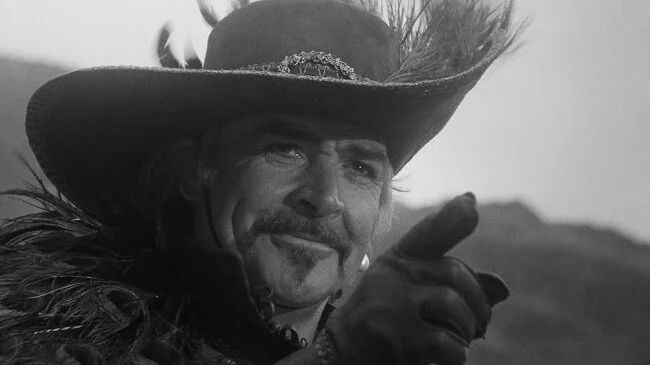
Growing up in the seventies, by the time I became aware of Sean Connery as an actor he had already transcended the role of James Bond and become an international “superstar”. Roger Moore was my generation’s 007 but I was constantly reminded by the “older people” that he “couldn’t hold a candle to Sean Connery”. For many the Scottish actor defined this iconic role and so before I even became familiar with the man and his work, I was aware that there was some kind of mystique surrounding him. Around the time I was eight, I was finally introduced to his inimitable acting style with his performances as Mulai Ahmed er Raisuni in The Wind and the Lion (1975). It was a larger than life performance of a larger than life character; the sort of role that came to define Sean Connery in his later years. On paper it was utterly preposterous. A Scottish man playing an Arab potentate. But it worked and left a marked impression upon me.
As I grew older, I finally caught up with Sean Connery’s tenure as James Bond and the films were notably different to those that followed in his wake. The first two Bond instalments were quite brutal and 007 was not quite the caricature he later became. I also understood why Connery tried so hard to break away from that character and the stifling trappings of the success it brought. Yet many of the experimental roles he decided to take during the seventies, which were the polar opposite from Bond, did not find an audience or box office success. By the eighties he appeared to finally embrace the bravura roles that he was constantly offered and carved a new niche for himself, endearing him to a new generation of fans. Again the casting of Sean Connery was often incongruous. Look no further than Juan Sánchez-Villalobos Ramírez in the Highlander. But on other occasions, characters such as Henry Jones in Indiana Jones and the Last Crusade were spot on and pure Hollywood gold.
Sean Connery remains a curious paradox. In many ways he was a textbook example of a Hollywood star whose sheer charm and charisma could carry him through roles that were somewhat implausible. Consider for a moment his Oscar winning performance in The Untouchables (1987) where he played an Irish Cop with a distinct Scottish accent. Yet he could provide nuance when required or more to the point when it suited him. His acting chops are clear in films such as The Man Who Would Be King (1975), The Offence (1973) and The Hill (1965). But more often than not, filmmakers just wanted Sean Connery “the star” in their movies and so that is what he gave them. He liked big speeches and monologues; scenes in which his character would philosophise or reflect upon life. Often John Milius, a writer and director he’d worked with before, would “fix” scripts to provide such dialogue for him.
However, in 2003, old age and a growing frustration with a film industry that was run by “idiots” prompted Connery to retire. He turned down the role of Gandalf in Peter Jackson’s The Lord of the Rings trilogy and a second opportunity to play Henry Jones again. In many ways this was a wise decision.Not only were quality roles declining but the media is seldom kind to ageing celebrities. For many, seeing “James Bond” grow old would have been unbearable. Even now it is quite difficult to reconcile the reality of his death with his show business persona. However, he leaves behind a broad body of work filled with numerous, eminently watchable films. The Hunt for Red October showcases Connery the Hollywood star. Marnie or Robin and Marian highlight a different side to the actor. Personally I’ve always had a soft spot for his performance as Agamemnon in Time Bandits and as Marshal O'Niel in Outland.




Everyday, once I’m up, I sit at my desk in my office, fire up my PC and log into Feedly. I have various RSS feeds grouped by category, which I slowly trawl through and read anything that catches my eye. I have one curated feed named “Blaugust” named after the yearly festival of blogging event. It has over 250 blogs listed, many of which are former participants. Most of these regularly post. Hence there’s a lot to get through and so I don’t read all of them. However there are a few that I always checkout. Mainly because they’re the personal musings of some of our writing community’s oldest and most prodigious members. The sorts of guys and gals who are part of the furniture. They’ve always been there and it feels like they always will. Posting their thoughts, sharing their enthusiasm and spreading the love, so to speak. One of these blogs, is Tales of the Aggronaut. written by Belghast.