
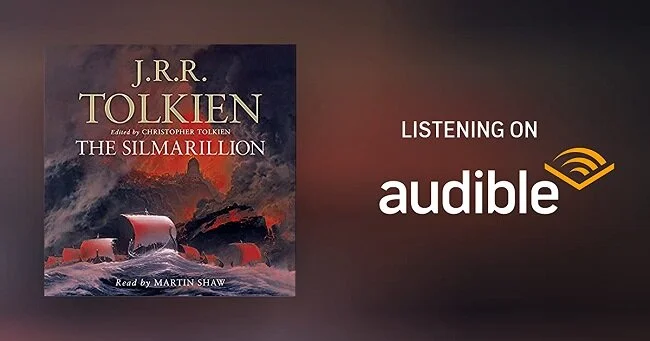
The Silmarillion by J. R. R. Tolkien - Read by Martin Shaw (1998)
Let’s not be coy about this. J. R. R. Tolkien’s The Silmarillion is not in any way a light read. It has a complex narrative, filled with staggering amounts of lore to digest. I certainly wouldn’t recommend it to anyone as their first point of entry into the Tolkien Legendarium. I think this is a book that you tackle after The Hobbit and The Lord of the Rings, if you are sufficiently enamoured with the threads of a wider backstory that are alluded to in both those volumes. If that is the case then brace yourself. However, despite its sprawling histories and dense genealogies, The Silmarillion is an incredibly rewarding book. There is an air of majesty surrounding the epic stories it contains and its themes about the eternal struggle between the dark and the light are timeless. Due to the immense detail that Tolkien lavishes upon the text, Middle-earth feels like a genuine living, breathing world. A world of languages, culture, geography and history. To date it has never been equalled.
Let’s not be coy about this. J. R. R. Tolkien’s The Silmarillion is not in any way a light read. It has a complex narrative, filled with staggering amounts of lore to digest. I certainly wouldn’t recommend it to anyone as their first point of entry into the Tolkien Legendarium. I think this is a book that you tackle after The Hobbit and The Lord of the Rings, if you are sufficiently enamoured with the threads of a wider backstory that are alluded to in both those volumes. If that is the case then brace yourself. However, despite its sprawling histories and dense genealogies, The Silmarillion is an incredibly rewarding book. There is an air of majesty surrounding the epic stories it contains and its themes about the eternal struggle between the dark and the light are timeless. Due to the immense detail that Tolkien lavishes upon the text, Middle-earth feels like a genuine living, breathing world. A world of languages, culture, geography and history. To date it has never been equalled.
The Silmarillion is the jewel in the crown of J.R.R. Tolkien’s imaginative writing, a collection of narratives ranging in time from the Elder Days of Middle-earth, through the Second Age and the rise of Sauron, to the end of the War of the Ring. The Ainulindalë is a myth of the Creation. In the Valaquenta the nature and powers of the gods is described. Quenta Silmarillion is set in an age when Morgoth was the first Dark Lord and dwelt in Middle-earth. The Elves made war upon him in his impenetrable fortress in Angband for the recovery of the Silmarils. Three jewels containing the last remaining pure light of Valinor, seized by Morgoth and set in his iron crown. The Akallabêth recounts the downfall of the great island kingdom of Númenor at the end of the Second Age. Of the Rings of Power tells of the great events at the end of the Third Age, as told in The Lord of the Rings.
The Silmarillion is a history, albeit an invented one. The book is not linear, nor is it always chronological. It blends expository mythological texts with more traditional story-telling. Despite this structure, it is hard not to feel a sense of awe at the totality of Tolkien’s visions. The book is a prodigious chronicle, highlighting events and individuals with a scope too large to easily summarise. Needless to say, it can often be difficult to keep track of all the characters. Often one story dovetails or impacts upon another, so that it frequently feels like a single narrative rather than a collection of smaller stories. There are events such as the founding of great cities, establishing dynasties, the sundering of peoples and the inevitable waging of war. Throughout these events there is tragedy, beauty, torture, escapes, murders and betrayals. Some characters are noble where others are blighted by hubris, although it often goes ill for them. Although these tales are long and complex, they’re never dull.
The HarperCollins audiobook, recorded in 1998 by British actor Martin Shaw, is possibly the most accessible way for relatively new fans of Tolikien’s writings to tackle The Silmarillion. Shaw narrates with a strong degree of reverence that borders on religious solemnity, guiding listeners carefully through epic battles and epochal events, as well as the legions of protagonists, antagonists and side characters. Shaw skilfully handles the difficult pronunciations of Tolkien's invented languages and inspires a frisson of pleasure when he breaks the straight narration to slip into character voices. The measured pacing of his reading is invaluable to the listener in allowing them to reflect upon the unfolding story and then digest it. I would also recommend listening to this audiobook while having a map of Beleriand to hand. Seeing the geography of the regions discussed is a major asset in understanding the events described. The Silmarillion read by Martin Shaw is currently available on Audible and would make a welcome addition to any Tolkien fan’s library.
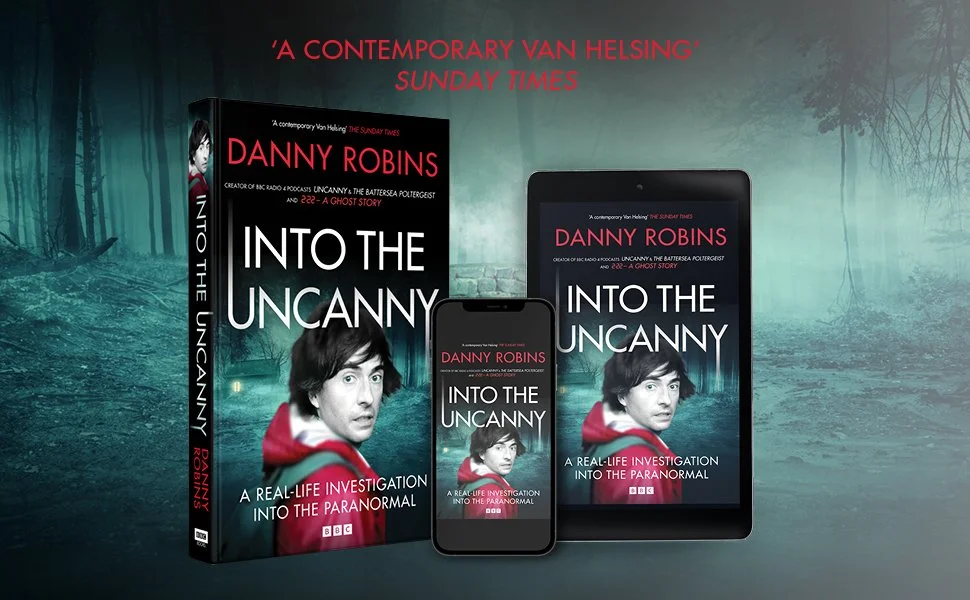
Last August I listened to The Battersea Poltergeist podcast by Danny Robins and was subsequently introduced to his other production Uncanny. Both are investigations into alleged supernatural events but unlike other shows of this kind, these are far better researched, produced and most importantly even handed. Danny makes a great deal of effort to try and keep a foot in each camp; team believer and team sceptic. Overall these podcast work as they genuinely appeal to multiple audiences and they are not excessively hyperbolic or credulous. A lot of this comes down to Danny’s personality which is upbeat and relatable. Perhaps his greatest strength is being a sympathetic ear to those recounting their experiences. He lightens the mood from time to time with humour when required. He also liberally litters the proceedings with pop culture references. However, he will probe and ask pointed questions but does so in a non-accusatory manner.

The zombie genre is a narrative seam that has been heavily mined in recent years. There seems to have been a never-ending supply of films, television shows and video games involving the undead over the last two decades. Which is why the notion of society being destroyed by its own citizens has somewhat lost its intellectual and horrific lustre. Hence I can understand people rolling their eyes at the mention of the novel World War Z by Max Brooks. The 2013 film adaptation starring Brad Pitt, which jettisoned most of the source text's innovations, isn’t the best advertisement for the book’s virtues. However, if you take the time to look beyond the hyperbolic title, you’ll find World War Z a work of singular intelligence which uses the zombie genre as a means to explore multiple socio-economic and political themes.
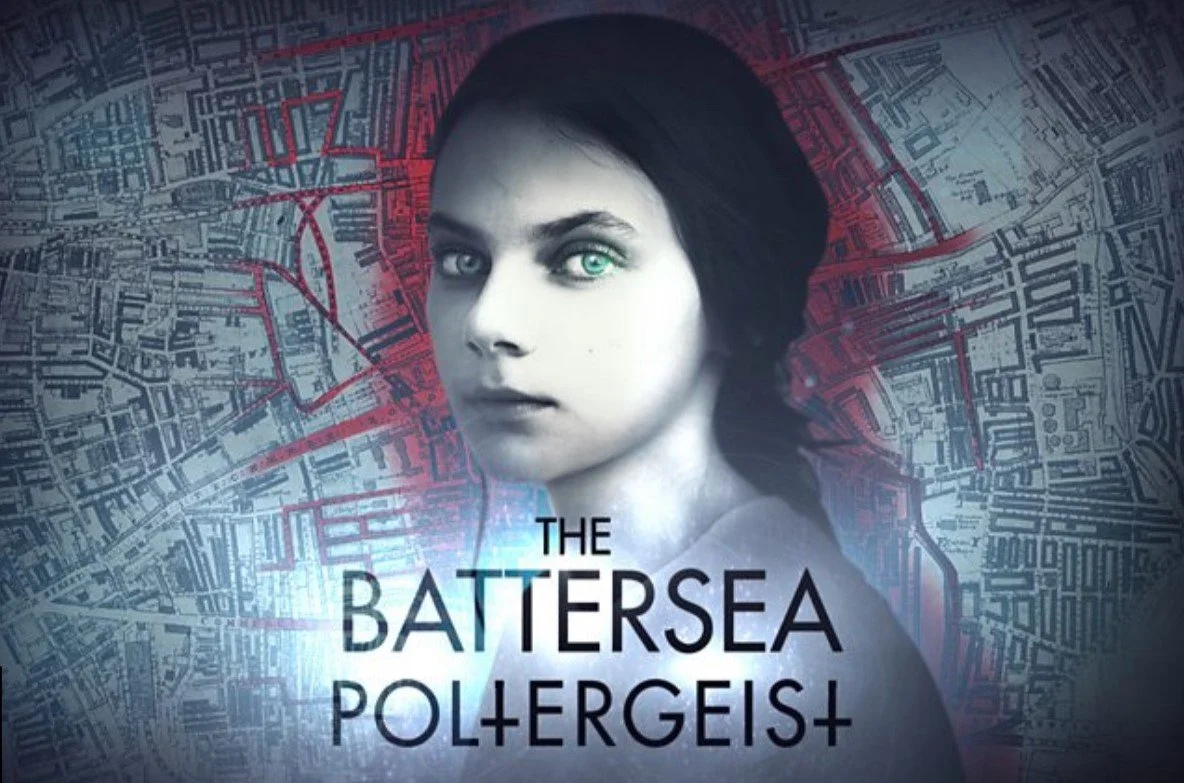
I was unaware of the The Battersea Poltergeist podcast and accompanying online interest during its initial release. Created by Bafflegab Productions and presented by Danny Robins, who is well known in this field with similar shows such as Haunted and Uncanny, it was broadcast on BBC Sounds and BBC Radio 4 between February and March 2021 during lockdown. The Battersea Poltergeist is a documentary of a true story with dramatized re-enactments. The show alternates between interviews, discussions and research into the case with short vignettes from a cast of actors recreating events for dramatic effect. It was released episodically and gained a lot of online and press interest at the time. Hence there were additional episodes interspersed throughout the initial run which provided “case updates” and listener feedback and questions.
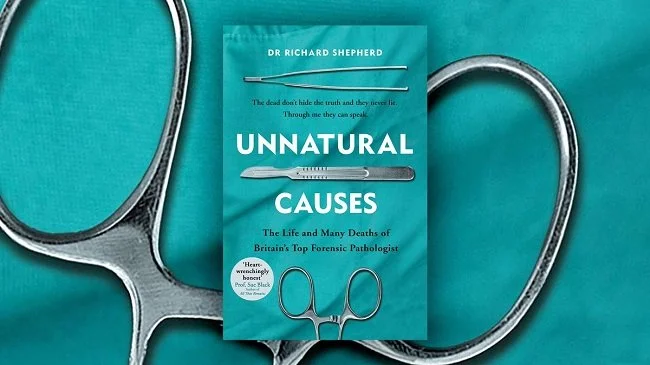
Dr Richard Shepherd is a senior forensic pathologist with over 30 years’ experience, consisting of 23,000 postmortems. His book, Unnatural Causes, explores his career and his devotion to the truth in determining how each of his cases died. Over the course of his career this includes victims of mass disasters, homicides, and those who have died in their own homes from unknown causes. Dr Shepherd’s job is to ascertain a cause of death based upon the facts and data presented. Each case is described with detail and empathy and it’s surprising how much the reader becomes immersed in the methodical approach that each postmortem entails. Furthermore, it is very satisfying to learn of Dr Shepherd’s verdict. However, far from being a technical dissertation on a succession of cases, this is a deeply personal and humane book which addresses the impact of the author’s career upon himself and his family. It is written with a surprising degree of literary flair and is profoundly thought provoking and moving.

Charles Dexter Ward is a young man from a prominent Rhode Island family with a keen interest in history. He spends much of his childhood wandering the streets of ancient Providence, drawn inexorably to its architecture, as well as it’s colourful heritage. As an adult he continues his antiquarian leanings and subsequently discovers a hitherto unknown ancestor, Joseph Curwen. One with a shadowy past which hints at the pursuit of alchemy and other arcane practises. Charles decides to uncover the truth regarding Joseph Curwen and over time his interest changes into obsession. His Father begins to worry about his son’s fixation and the family Doctor, Marinus Bicknell Willett, decides to keep an eye upon the youth’s state of mind. A series of curious events hint at a growing eldritch malevolence and Doctor Willett begins to suspect that Charles is in grave danger from a menace stretching across time.
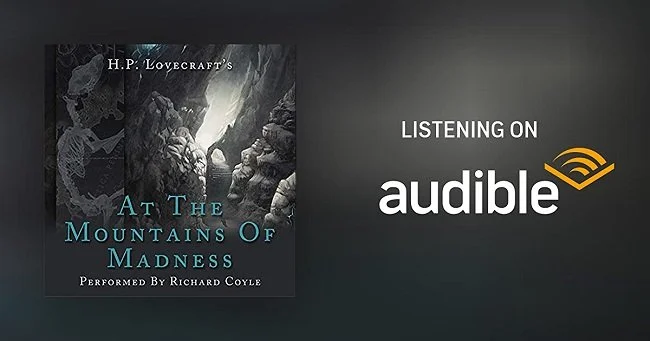
At the Mountains of Madness is a story told from a first-person perspective by geologist William Dyer, a professor from Miskatonic University in Arkham, a fictional town in Essex County, Massachusetts USA. When a new scientific expedition to Antarctica is announced, Dyer breaks his silence and discloses hitherto unknown and closely kept secrets about his own explorations of the continent and exactly what befell his own expedition. He details how his team found the preserved remains of 14 prehistoric life forms unknown to science and outside of the existing geological and evolutionary timescale. He goes on to recount how some of the men and sled dogs are killed under mysterious circumstances. Dyer and graduate student Danforth, subsequently explored a mountain range by plane and discovered a vast, abandoned stone city, which is alien to any form of human architecture. What is the secret of this ancient ruin? Can Dyer convince subsequent explorers to stay clear of “the mountains of madness”.
Let’s not be coy about this. J. R. R. Tolkien’s The Silmarillion is not in any way a light read. It has a complex narrative, filled with staggering amounts of lore to digest. I certainly wouldn’t recommend it to anyone as their first point of entry into the Tolkien Legendarium. I think this is a book that you tackle after The Hobbit and The Lord of the Rings, if you are sufficiently enamoured with the threads of a wider backstory that are alluded to in both those volumes. If that is the case then brace yourself. However, despite its sprawling histories and dense genealogies, The Silmarillion is an incredibly rewarding book. There is an air of majesty surrounding the epic stories it contains and its themes about the eternal struggle between the dark and the light are timeless. Due to the immense detail that Tolkien lavishes upon the text, Middle-earth feels like a genuine living, breathing world. A world of languages, culture, geography and history. To date it has never been equalled.
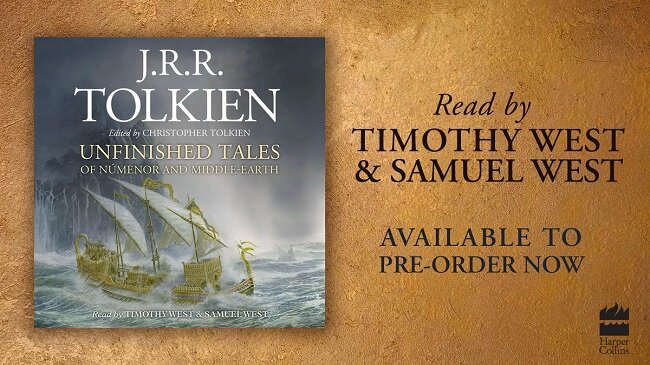
First published in 1980, Unfinished Tales is a collection of stories by J. R. R. Tolkien, that spans from the Elder Days of Middle-earth to the end of the War of the Ring. For those who have read both The Silmarillion and The Lord of the Rings, this book provides additional insights and more detailed accounts of many key events of the First, Second and Third age. Such as Gandalf’s informative tale of how he came to send the Dwarves to Bag-End in search of a burglar, the appearance of the sea deity Ulmo before Tuor on the coast of Beleriand and an in depth description of the military organization of the Riders of Rohan. This collection of stories and essays by J. R. R. Tolkien were never fully completed during the author’s lifetime but were posthumously edited by his son Christopher Tolkien and present with notes, annotations and were required a detailed commentary.
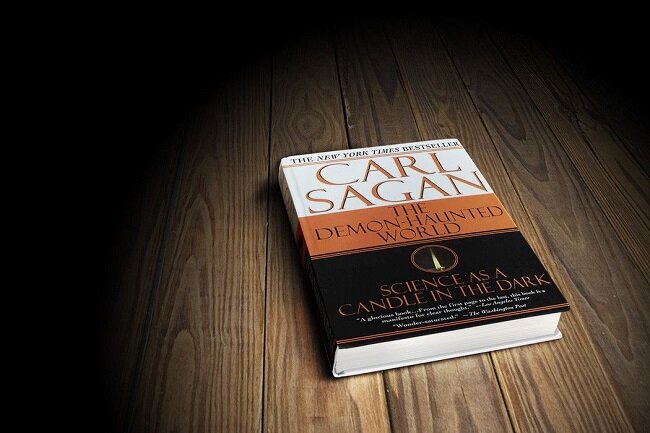
“For me, it is far better to grasp the Universe as it really is than to persist in delusion, however satisfying and reassuring.”
The problems that beset the modern world are complicated and nuanced. Thus any potential solutions will be equally complex and subtle. There are no quick fixes for issues such as climate change or nuclear proliferation and anyone trying to sell you one is either a charlatan or a fool. In his book, The Demon-Haunted World, Carl Sagan strongly advocates that adopting a scientific approach to thinking is essential in a modern democracy. By this he means questioning ideas critically and requiring evidence based arguments. If something cannot be effectively measured, tested or verified we should be deeply sceptical of it. He even goes so far as to argue that it is patriotic to ask questions and that any person, institution or organisation that avoids such scrutiny should be deemed suspect. Published in 1995 Sagan’s concerns regarding the coming century have proven sadly accurate. A quarter of a century ago, he predicted the rise of misinformation, fake news and alternative facts. When information is controlled and a population lacks critical thinking it becomes "unable to distinguish between what feels good and what’s true".

In my youth I was a prodigious reader. I spent many a happy weekend visiting my local library and often spent my pocket money on books as a child. Overtime, I changed from reading fiction to non-fiction. More recently, a lot of my reading has been done online, consumed either via my office PC or tablet. That’s not to say that I don’t buy paperback or hardback books anymore. I still consider this to be the preferred experience. There is something fundamentally exciting about sitting down in a comfy chair, reading at your own pace, away from distractions. However last year I injured my left arm and I have subsequently found holding a large hardback book to be a difficult experience. So for the sake of convenience I started listening to audiobooks instead. I’ve always enjoyed them considering them a great alternative to traditional print media. What my recent foray into this format has taught me is how much the medium of the audiobook has grown.

I have reviewed several audio recordings of J.R.R. Tolkien’s The Lord of the Rings over the years. My personal favourite is the BBC Radio adaptation from 1981, which has a superb cast of British character actors and does a wonderful job of adapting the text without diminishing the scope of the narrative. This is a dramatisation, rather than a straightforward reading of the book. However, if the latter is what you are looking for then the go to version is 1990 recording by Robert Inglis. He provides unique voices for all characters and even sings the songs included in the source text. And then there is the quirky Mind’s Eye Production from 1979, which is another dramatisation. This is a flawed version with a focus upon the character dialogue with much of the lore removed. Yet it has its charm and includes the often omitted Tom Bombadil. However, quite recently I accidentally stumbled upon a fourth adaptation and was surprised not only by the quality of the production but the curious history associated with it.
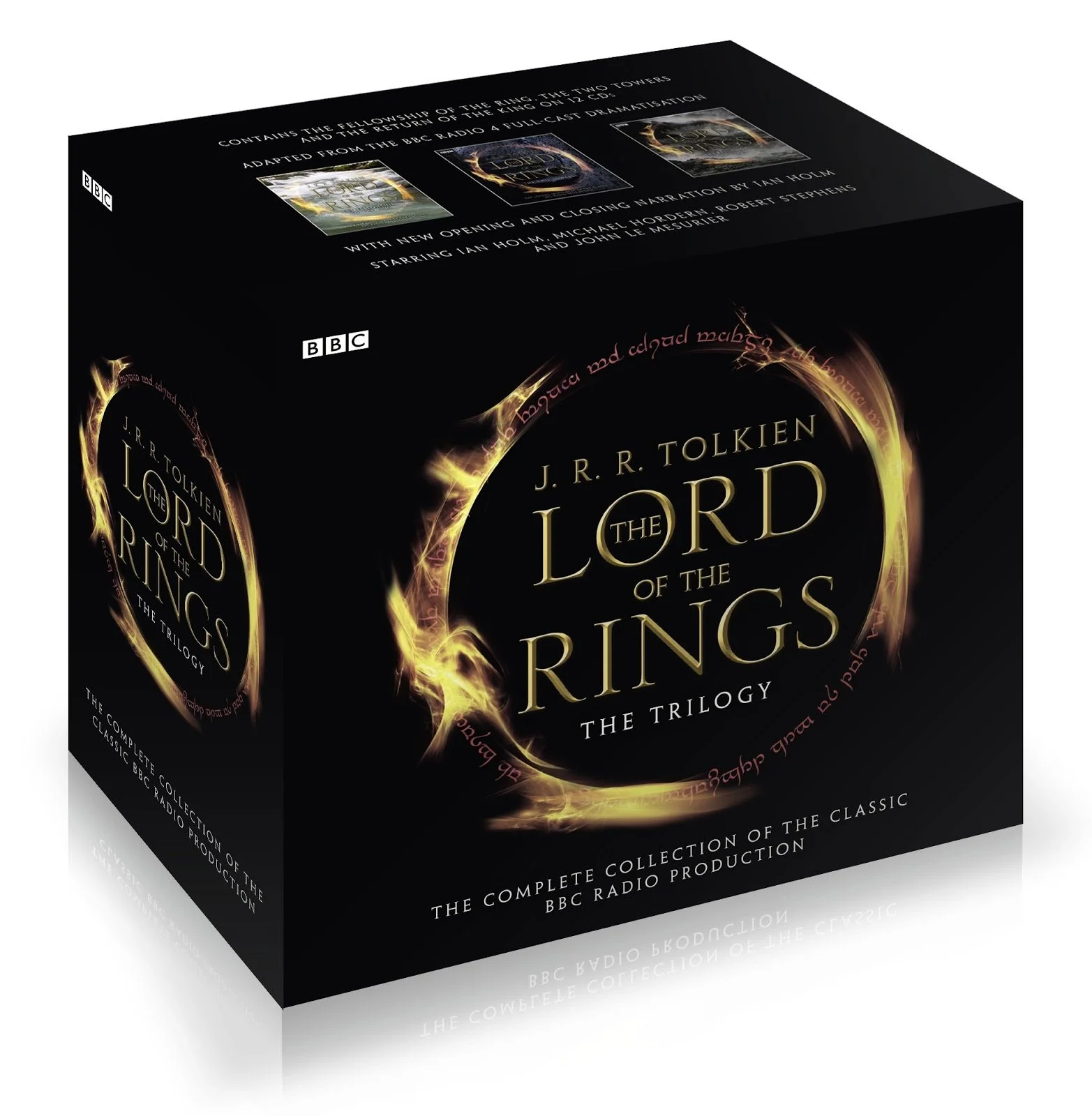
In 1981 BBC Radio 4 produced an ambitious adaptation of The Lord of the Rings, presenting Tolkien’s novel in twenty six, thirty minute episodes. As with all adaptations some material had to be removed, but overall the BBC production was not excessively abridged and followed the plot faithfully. The characterisations and dialogue were extremely well realised and music by composer Stephen Oliver was very much in the style and idiom of Tolkien. This was a production of the highest pedigree and a major event for the BBC at the time. The series was heavily promoted, receiving front page status in The Radio Times, the UK’s premier TV guide and bestselling magazine. Although initial reviews were varied, the series immediately gained a cult following with fans trading episodes recorded on cassette tape. Word of mouth and substantial listening figures soon lead to revised opinions from the press, along with the immortal slogan "Radio is Hobbit 4-ming".

When discussing the various audio dramatizations of J. R. R. Tolkien's The Lord of the Rings, people often think of the BBC Radio adaptation by default. However it should be noted that it was not the first. An earlier version was made and broadcast in 1979 on US National Public Radio and was subsequently released as an audiobook. It was produced by The Mind's Eye, a company who were responsible for numerous adaptations of classic literature for radio at the time. The script written by Bernard Mayes is a somewhat abridged version of the book. The eleven hour running time focuses significantly on the dialogue, with much of the back history, lore and expositionary narration removed.
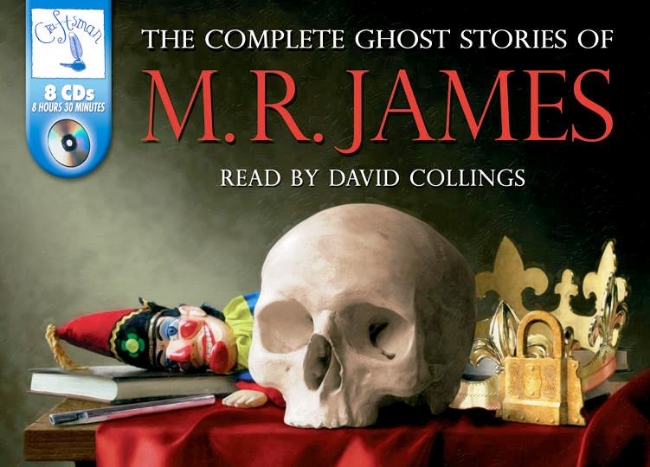
The supernatural fiction of Montague Rhodes James is a major milestone in the history of the literary ghost story. His work tangibly helped shape the genre as we know it today, focusing on classic themes such as retribution, vengeance and other aspects of traditional mythology literature. The protagonists are often socially dysfunctional intellectuals who face peril due to their excessive curiosity. The very physical nature of horror often masquerades for deeper psychological issues. They also serve as an invaluable window into the socioeconomic structure of Edwardian Britain.
COVID-19 Pandemic 2021 Part 10
I last wrote about the pandemic in February. Six months on the lockdown and most major restrictions have now been rescinded and life is returning to normal. COVID-19 cases are still occurring with many still requiring hospitalisation. The question of whether they’ll be another wave in Winter still remains, although the government has announced a programme of booster vaccinations. At the time of writing the United Kingdom has currently administered 91.2 million doses of the various vaccines. 43 million people are now fully vaccinated which is 64.6% of the population. The current focus is upon the 16 to 24 age group and there are currently plans and ongoing consultation to extend the vaccinations to school age children. All of which is happening against a background where the pandemic is slowly being pushed out of the news agenda. The UK government is certainly keen to move on and a substantial percentage of the public no longer wish to be constrained by COVID-19 protocols.
I last wrote about the pandemic in February. Six months on the lockdown and most major restrictions have now been rescinded and life is returning to normal. COVID-19 cases are still occurring with many still requiring hospitalisation. The question of whether they’ll be another wave in Winter still remains, although the government has announced a programme of booster vaccinations. At the time of writing the United Kingdom has currently administered 91.2 million doses of the various vaccines. 43 million people are now fully vaccinated which is 64.6% of the population. The current focus is upon the 16 to 24 age group and there are currently plans and ongoing consultation to extend the vaccinations to school age children. All of which is happening against a background where the pandemic is slowly being pushed out of the news agenda. The UK government is certainly keen to move on and a substantial percentage of the public no longer wish to be constrained by COVID-19 protocols.
I had my second vaccination (Pfizer-BioNTech) on 12th May and to date, all my immediate family are fully vaccinated. Since April there has been an ongoing schedule of restrictions being lifted. By May I was no longer having to cut my own hair and just before Summer most shops and businesses started to re-open. At present there are no longer limits on meeting up with friends, attending sporting events and other outdoor activities, pubs and restaurants are conducting business as usual and there is no longer a legal compulsion to wear face masks. The latter is now on a “recommended” basis, although the major rail networks still insist upon it. However, the majority of the public appear to have simply abandoned this safety measure and I often find that I am the only one wearing a mask in the supermarket queue. The only aspect of life that is still not running as normal is international travel. Hence the majority of people are not taking a foreign holiday this year.
I personally am still very cautious regarding relaxing measures against COVID-19. I went to a local pub this week and was pleased to see that the tables and seating were still sensibly distanced. Food and drink could be ordered at the bar but not consumed there. I was also pleased that similar arrangements were in place at the Bistro I went to tonight. COVID-19 is still a threat. A point that was brought home when a good friend and his wife both contracted the virus recently, despite being double vaccinated. The latter required hospitalisation but has thankfully now been discharged. Yet for a lot of people this pandemic is now “over”, simply because they want it to be so. Conversely, COVID-19 is still being used as a get out of jail card to excuse any delay, disruption or cancellation of a service, whether it’s justified or not. And there is still a vocal fringe group of anti-vaxxers making themselves a thorough nuisance with their disruptive demonstrations and constant misinformation.
Some more optimistic people other than me, hoped that there would be some major social change brought about from the pandemic. The focus upon essential workers raised the question as to whether their terms and conditions of employment would be improved. They haven’t and despite its hollow praise, the government only offered a 1% pay rise to nurses. Working from home has finally risen above its previous image, where it was often perceived as a means of skiving. However, although some businesses are going to continue to pursue a policy of work away from the office, the “working revolution” that many expected hasn’t happened. In fact, as the more sceptical among us predicted, the status quo has quickly returned and any opportunity for major socio political change has been lost. Such is the state of the UK and COVID-19 at present. Despite being a landmark, global event of historical importance, it’s amazing how quickly some people wish to forget.

It’s been five years since the COVID-19 global pandemic. At the time it was an utterly alien and tumultuous experience. However, due to the way numerous institutions responded (but not the government), many people thought there would be a great deal of social and political change in the UK afterwards. The pandemic highlighted the impotence of the NHS, as well as those who work in jobs designated as essential. It also shone a spotlight on many of the country’s inequalities. Due to our national character, a real sense of community emerged. Something that had been absent for a very long time. Briefly, we got a glimpse of what the UK could be when we all broadly worked together. There was a sense that now was the time to change the status quo. Sadly, nothing changed. As soon as the vaccination program was launched, the UK quickly slipped back into the mire it’s been wallowing in since the end of WWII.

I last wrote about the pandemic in February. Six months on the lockdown and most major restrictions have now been rescinded and life is returning to normal. COVID-19 cases are still occurring with many still requiring hospitalisation. The question of whether they’ll be another wave in Winter still remains, although the government has announced a programme of booster vaccinations. At the time of writing the United Kingdom has currently administered 91.2 million doses of the various vaccines. 43 million people are now fully vaccinated which is 64.6% of the population. The current focus is upon the 16 to 24 age group and there are currently plans and ongoing consultation to extend the vaccinations to school age children. All of which is happening against a background where the pandemic is slowly being pushed out of the news agenda. The UK government is certainly keen to move on and a substantial percentage of the public no longer wish to be constrained by COVID-19 protocols.

Over the last year, the UK government has mishandled many aspects of the COVID-19 Pandemic. However, the ongoing national vaccination program is not one of them. Taking the initiative while the major pharmaceutical companies were still developing their vaccines, the UK government has ordered 407 million doses from multiple manufacturers. The aim is to vaccinate everyone aged 18 or over in the UK with one dose by the end of July. This does not include children until further research is carried out regarding safety. At present the Covid vaccine is not compulsory. Two vaccines, developed by Pfizer-BioNTech and Oxford-AstraZeneca, are currently being used in the UK. A third, from Moderna, has also been approved. All three have proven to be effective at preventing people from becoming seriously ill and dying from Covid-19. The Oxford vaccine offers protection against the “Kent” variant currently dominant in the UK. Early research suggests that the other brands do the same.

It is now ten months since The World Health organization declared a global pandemic. The UK is now enduring its third lockdown. The only difference this time is that we are now facing several new strains of COVID-19 and the public is divided over the restrictions. The Government has consistently failed over the last year to take any meaningful action and the country effectively finds itself back at square one. To date, the UK has no functional test and trace system in place, nor are the country’s borders fully controlled in an effective manner. Flights from certain countries are banned but connecting flights can circumnavigate this problem. Only now are passengers tested for COVID-19 on arrival. PPE and glass vials are in short supply. Post Brexit “administrative issues” now threaten to delay stocks of the Pfizer-BioNTech COVID-19 Vaccine. The National Health Service is struggling to cope. All these issues are further exacerbated by a partisan press and a population that appears to be at war with itself.

Although I don’t especially enjoy doing so, I thought it prudent to update this series of blog posts about the state of the COVID-19 pandemic here in the UK. A lot has happened in the last few weeks and there has been a degree of optimism in some quarters, because of the news regarding the vaccine and hopes that the lockdown rules would be “relaxed” over the festive season. However, those who look beyond tabloid and 10 Downing Street propaganda, have had growing concerns that the chickens are coming home to roost and it would appear that is now happening. A new strain of COVID-19 has been identified and is now spreading rapidly in London and the South East. It does not appear to be deadlier than the original strain but the increased speed at which it spreads is the major concern. The National Health Service is very worried about reaching capacity of ICU beds.

When I last wrote about the COVID-19 Pandemic in May, the UK was just beginning to see an easing of lockdown restrictions. As a lot of people surmised, the government was trying to do too much, too soon and without the appropriate logistical support. Hence the last five months have been a litany of political disasters, all of which have contributed to the UK having the highest COVID-19 related deaths in all of Europe. Furthermore, the government's failure to provide PPE, make available a universally accessible testing service and implement an effective national tracing service, has highlighted their lack of talent and overall incompetence. Every week another “dead cat” is thrown on to the altar of politics in an attempt to divert the attention of 24 hour rolling news away from their utter ineptitude. Hence on top of the COVID-19 Pandemic, we’ve seen the spectre of both BREXIT and the “migrant crisis” re-emerge.

It’s a simple question but I suspect that the answer may not be so straightforward. The autumn TV schedule is fast approaching and as of yet, many popular shows have not yet resumed production. There is talk on many of the “entertainment” websites that CBS will start location filming for its NCIS franchises in early September and if the studio side of the production follows suit, then there’s the possibility of completed episodes being available by November. But naturally all of this is dependent on a lot of variables that could change. Will COVID-19 cases diminish in the months to come or will there be a second “spike” and thus another lockdown. Will the ongoing loss of revenue caused by the pandemic further harm the production of new content. Will studios, networks and production companies have to make some hard choices and as a result, will we see some popular shows cancelled?
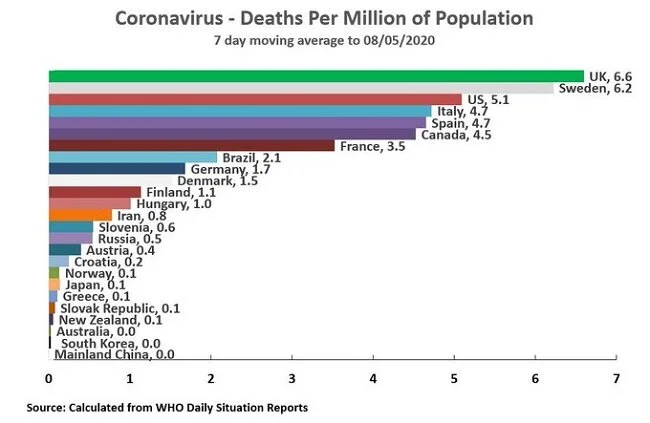
The UK Government’s honeymoon period with regard to the COVID-19 pandemic is well and truly over. Irrespective of one’s political outlook, it is sensible and dare I say it, reassuring to want to get behind the Prime Minister and his cabinet in their attempts to tackle this dreadful situation. Some may have thought it would be the making of the man and way to bridge the political divisions caused by Brexit. But that was six weeks ago and such optimism has conspicuously withered on the vine. Many of the promises made and have proven empty and a decade of politically motivated austerity has left many key public services struggling. The government was under prepared, lacking in talent and driven by the same hubris inherent in all their political decisions. Namely that notions of British exceptionalism would somehow see us through. They haven’t. Despite the recently recovered Prime Minister (who caught COVID-19 due to not following his own instructions) standing at a podium on 27th April and claiming some sort of success, the reality is the complete opposite.

I started displaying symptoms of COVID-19 on Sunday 5th April. I developed a headache, a raised temperature and muscle pains. And then the coughing started along with a sense of tightness in my chest. It was initially just uncomfortable and inconvenient. By Wednesday all symptoms had become much worse and I felt like I was in a constant bear hug. I was continuously trying to find a position where breathing wasn’t so painful and awkward. Due to the toll that fighting the virus was taking on my body, I was feeling very lethargic, despite sleeping at night for over 10 hours and napping during the day. I also noticed that I was continuously thirsty and was eating a great deal, to fuel my body’s immune system. Then on the evening of Friday 10th April I started to feel extremely cold. That evening was the worst I felt throughout the entire experience. Despite wrapping myself in a duvet and multiple blankets, I could not get warm. And then over the course of the weekend all symptoms started to decline. By Monday 13th April all that was left of COVID-19 was a sense of extreme fatigue. Something that will last for another week according to medical sources.

I wasn’t expecting to write the next instalment of this “pandemic diary” so soon. However, yesterday morning (Sunday 5th April) I developed a headache and shortly afterwards a temperature and muscle pains. By midday I started coughing persistently and noticed what I will describe as a sense of tightness in my chest (it feels like I’m wearing a shirt that is too small for me). These symptoms persisted and I went to bed at an uncustomary early hour. I slept in the spare bedroom, which is also my office and have isolated myself as well as I can (we live in a bungalow) from Mrs P. As of this morning the symptoms have persisted and it now feels very similar to a bout of flu. I am sluggish and groggy but certainly not at the point where I need medical treatment. Napping is proving useful and I’m hoping I can mainly sleep through this, as I am now stuck in the office for the next 7 days. I am allowed access to the bathroom, although separate towels and rigorous cleaning of all handles and surfaces is now the rule of thumb.

It’s been one and a half weeks since my last entry regarding the COVID-19 Pandemic 2020. As I’m sure you’re all aware, a lot has happened globally in that time and many nations are currently coming to terms with the ramifications of dealing with this virus in their own “bespoke” way. Personally I think a global approach to the problem would be beneficial but the rise of nationalism and a diminishing of worldwide institutions such as the United Nations has made such a strategy very difficult. I was going to summarise my thoughts on the UK’s response to this crisis but I have decided instead to defer such a post for another week and instead focus upon a more positive theme. Because something has happened recently in the UK. Something I was doubtful about because I’ve been so jaded by contemporary politics. And yet despite my cynicism, I have seen a demonstrable increase in community spirit, solidarity and compassion in the last few days. And it has been a thing of beauty to behold.

The COVD-19 Pandemic is an unprecedented global event and the way day to day life has changed so rapidly over the last few weeks is deeply unsettling. Hence I’m writing this recurring post as a coping mechanism; a means to process what is happening and observe how society is reacting to the ongoing crisis. And first off, let me state that I’ve already spoken to two people today, who do not see a Global Pandemic as being a crisis. Yes because we live in a post truth world where some people labour under the delusion that all opinions are of commensurate value, there are still people who “feel” that this is all an overwrought brouhaha. I suspect “crazy people watch” may become a major part of my writing. So where to begin exactly? Well I guess the best thing to do is to explain what my personal situation is.
Shortages
In early June I was visiting Sainsbury’s supermarket in Crayford, apparently their biggest site in the UK, when I noticed that several shelves had the following sign. “Please bear with us. We’re experiencing high demand”. At the time I thought nothing of it but then I started seeing similar notices in other stores. I then began seeing stories on some news websites about supply chain problems. This point was then reiterated on the news radio station LBC. Two month on and this issue is now finding its way into the mainstream press. McDonald’s currently cannot supply milkshakes or bottle drinks and Nando has had to close 45 branches around the UK as it has no chicken wings to serve. It is now becoming very clear that there is a big problem on the horizon, due to several complex factors. If it is not addressed this matter will only get worse with shortages directly impacting upon Christmas sales.
In early June I was visiting Sainsbury’s supermarket in Crayford, apparently their biggest site in the UK, when I noticed that several shelves had the following sign. “Please bear with us. We’re experiencing high demand”. At the time I thought nothing of it but then I started seeing similar notices in other stores. I then began seeing stories on some news websites about supply chain problems. This point was then reiterated on the news radio station LBC. Two month on and this issue is now finding its way into the mainstream press. McDonald’s currently cannot supply milkshakes or bottle drinks and Nando has had to close 45 branches around the UK as it has no chicken wings to serve. It is now becoming very clear that there is a big problem on the horizon, due to several complex factors. If it is not addressed this matter will only get worse with shortages directly impacting upon Christmas sales.
It would appear that Britain’s supply chain crisis is a result of worker shortages and transport disruption caused by Covid and Brexit. Confederation of British Industry (CBI) has stated that major retailers currently have the lowest stock levels since 1983. Furthermore a national shortage of lorry drivers and workers for food processing plants has led to increasing disruptions for food outlets and warnings of further empty supermarket shelves. Andrew Kuyk, the director general of the Provision Trade Federation, said there was no shortage of produce from UK farms, The gaps on shelves are instead the result of manpower and logistical difficulties. “Food is still being produced on farms and in factories, but it’s getting it to the consumer that is proving the challenge in lots of different ways. There is a lack of lorry drivers, warehouse staff, staff in retail distribution centres, in the supermarket to put it on the shelves”.
So what is being done to address the situation? Recruitment across all related industries has increased but so far has not remedied the situation. The big supermarket chains are offering substantial bonuses and pay increases, especially to HGV drivers. However, the short term result is that they’re merely poaching staff from smaller outlets and alleviating their own problems by compounding those of other sectors. Another aspect of these ongoing staff shortages is the fact that those who previously worked in these jobs were migrant labour from Europe. The post Brexit landscape with increased administrative work and bureaucracy has not proved conducive to attracting replacements. Furthermore, although not exclusively a Brexit issue, its very association makes this a politically charged subject. The current UK government which was elected on the mandate of “getting Brexit done” will not want to concede that there are downsides to the undertaking.
At present, although this supply and labour problem is currently known in the UK, it has not become the focus of the UK media. Therefore many members of the public will be oblivious of this problem until it directly affects them. I wouldn’t be surprised if we see the tabloid press capitalise on this aspect, once matters worsen. I also suspect that the UK government will be late to act and when they do, their response will be inadequate, as it has been with everything else they’ve dealt with since December 2019. I’m curious to see if shortages at Christmas will have a greater impact upon the Prime Minister’s approval rating than the thousands of excess COVID-19 related deaths. In the meantime, we’ve bought a second freezer and are doing our best to prepare for a difficult winter. Sadly not everyone is in a position to do so. What a ridiculous state of affairs for a G7 country.
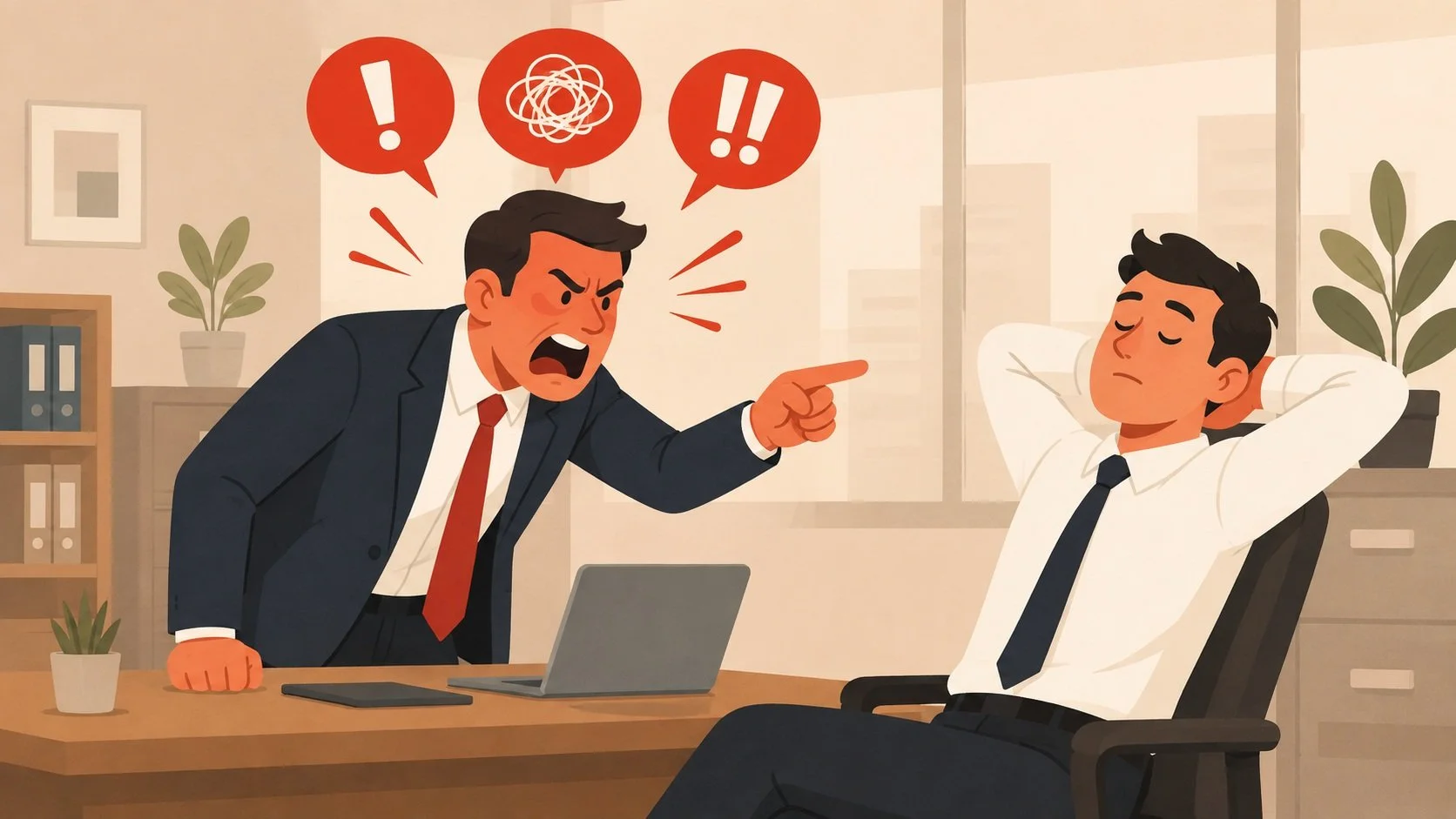
If you visit the websites for such UK tabloid newspapers as the Daily Express or the Daily Mail you will no doubt encounter prominent stories about Megan Markle, Nigel Farage and “immigrants”. If these two august institutions are short of column inches, they’ll run a piece about how some former celebrity has had the unmitigated gall and temerity to get old. I mean WTF? How dare they do what human beings are genetically disposed to do. It’s outrageous. Similarly, head over to the Unherd website and you’ll find foam flecked tirades regarding spurious points of contention over dubious subjects. Often the topic being harangued is incredibly niche and I’ve never heard of it before or even considered it being a thing. These sort of talking points are not about informing, debating and most certainly aren’t about thinking. They exist to provoke reactions.

Yesterday afternoon, Nigel Farage the Member of Parliament for Clacton and leader of the Reform Party, held a press conference in which he declared that he would be resigning his seat and thus triggering a by-election. He cited the following list of grievances that have led to him making this decision. That the Parliamentary standards investigations were being politicised, the media and other parties were conducting a coordinated campaign against him and that he had endured years of threats and physical attacks. He further asserted that his family’s privacy and safety had been breached as well. He finished by alleging that the political system was repeatedly changing rules to obstruct Reform and that he was the most attacked politician in the UK. Rather than be judged by the legacy media and the “establishment”, he would rather put the issue of his political integrity to the electorate of Clacton. He even offered to pay for the cost of the by-election.

UK Prime Minister, Sir Keir Starmer has resigned and intends to leave office before the parliamentary summer recess. By then Andy Burnham will more than likely be voted leader of the Labour Party and by default will become the new Prime Minister. Due to the current size of the incumbent Government’s majority, there is no pressing reason for a General Election that the UK’s right wing tabloid press is currently calling for. Whether this provides the Government with the reset they’re hoping for when Parliament reconvenes in autumn remains to be seen. With seven Prime Ministers coming and going in a decade, there are some serious questions to be asked about the current state of UK politics. However, the mechanics of contemporary politics, the decline of clearly defined ideologies and the people that seek elected office to be our leaders are only half of the problem. The other major impediment to the UK’s democracy functioning properly is the electorate.
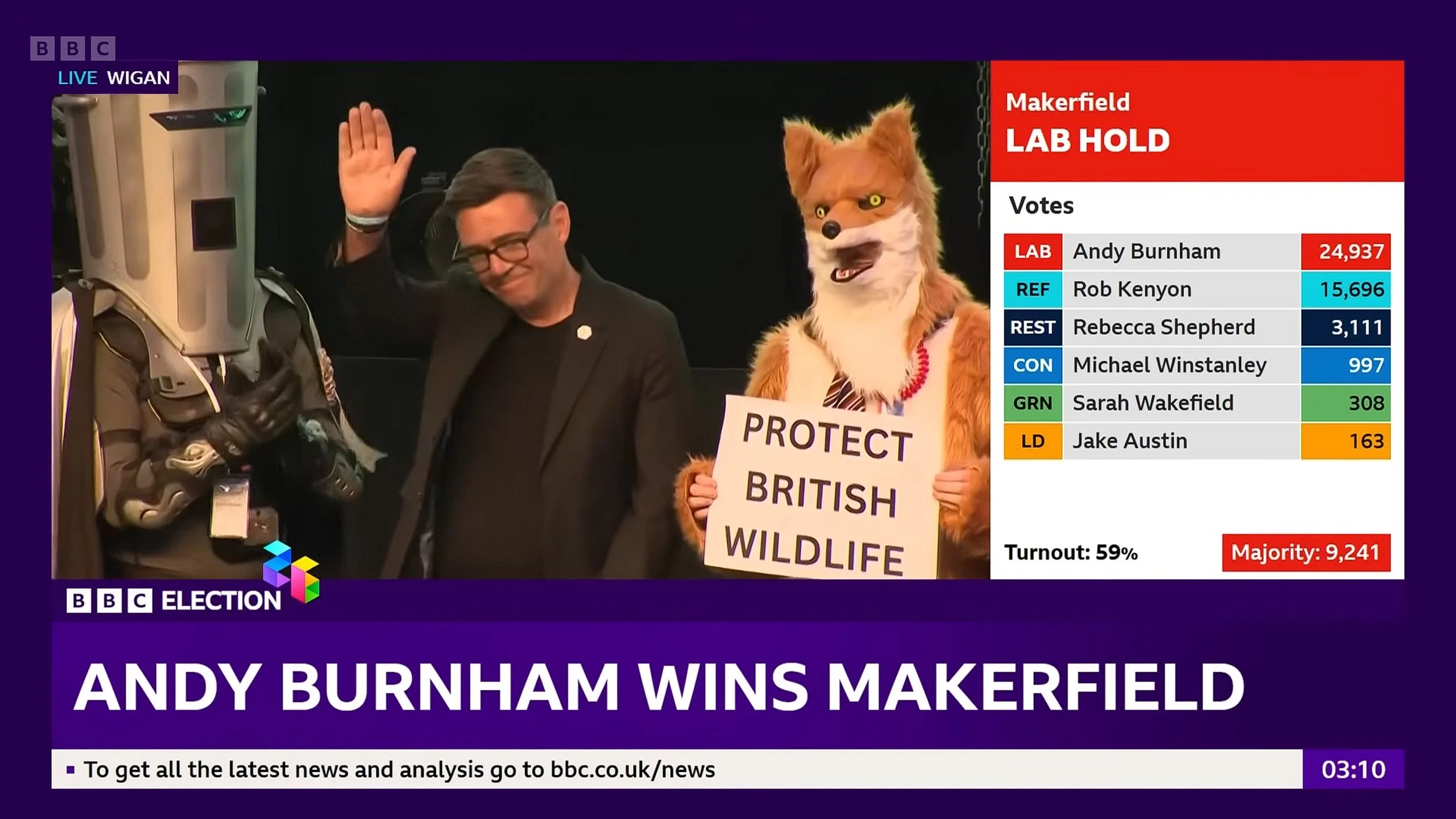
Andy Burnham successfully won the Makerfield by-election yesterday, returning him to the House of Commons as a member of Parliament after holding the position of Mayor of Manchester for the past nine years. Prior to this, Burnham was Labour MP for Leigh from 2001 and 2017. He served in both the Tony Blair and Gordon Brown administrations and has held such senior governmental posts as Chief Secretary to the Treasury, Secretary of State for Culture, Media and Sport and Secretary of State for Health. His return to Parliamentary politics is likely to result in a leadership challenge to incumbent Prime Minister Keir Starmer. When speaking after winning yesterday’s by-election Burnham spoke of “a final chance for change” the current trajectory of the present Labour Government. However, I don’t wish to focus on any of this at present. I am far more interested in the above picture, taken as the results were announced and what it says about UK politics.

The UK Government has formerly announced its intention to ban under-16s from using social media. This is due to increasing public pressure that “something must be done” about the perceived iniquities of many online platforms. However, as with most complex social problems of this nature, no one has any clear or practical ideas as to what that “something” is. It remains a nebulous, non-specific panacea and clearly someone else’s job to identify and implement. As ever, why choose a nuanced and multifaceted solution to a complex problem, when it is far easier and politically expedient to just “ban” something. The former requires effort and a degree of thinking. If such an approach fails it also means that those who came up with it now carry the can. The latter dumps the problem in the lap of various third parties, who can then be conveniently blamed when the ill conceived policy fails.

Every Thursday, Mrs P volunteers at a food bank that is run from a local church; Avery Hill Christian Fellowship. Today there was a shortage of staff so I agreed to help out. It proved to be an equitable arrangement as she collated the various orders and I packed the bags and took them to the respective clients. The food bank itself is organised and administered by the Trussell Trust, a UK based NGO and charity providing emergency food and support to people locked in poverty. It is open for 2 to 3 hours a week depending upon demand. During today’s session we served just six people. Some weeks its can be triple that amount. Upon closure, a member of staff from the Trussel Trust did a stock take and collated a list of what was needed. This is provided by various local church communities via parishioners donations, as well as local supermarkets who have an arrangement with the trust to provide surplus stock or good approaching the end of their sales window.
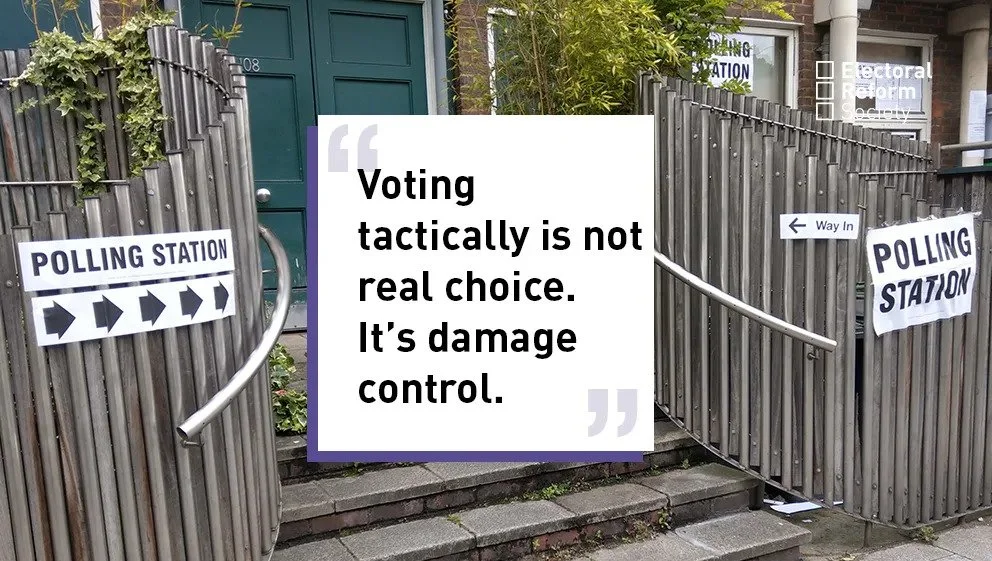
Under the First Past the Post electoral system, the candidate(s) receiving the highest number of votes in each constituency are elected. This system is used in the UK during general elections and in some local elections, such as those recently conducted in England. An alternative approach is the system of proportional representation, which aims to allocate seats in a manner that reflects the popularity of various parties. Both the Scottish Parliament and the Senedd in Wales employ systems of Proportional Representation. Historically, first-past-the-post has been seen as advantageous for the Conservative and Labour parties. It poses challenges for smaller parties whose votes are distributed evenly across different regions, making it difficult for them to secure seats. This dynamic effectively prevents potential competitors to the Conservatives and Labour from succeeding electorally. Consequently, due to this situation, voters may hesitate to support these smaller parties from the outset.

There are local elections being held across the UK today. Voters in Scotland and Wales will elect representatives to their respective national parliaments, while in England the voting is for local councils and regional mayors. These are the first major elections to be held in the UK since the 2024 General Election which saw the Conservative government of fourteen years, fall to the Labour Party. Midterm elections are often a litmus test for how the electorate think the national government are performing although local issues are also a major factor. The consensus among political journalists and commentators is that the incumbent government is polling extremely poorly and will subsequently face a backlash. In recent years the UK has seen a decline in traditional two party voting with Reform UK and the Greens gaining significant traction among the electorate. Hence today’s elections may well see both these parties make significant gains.
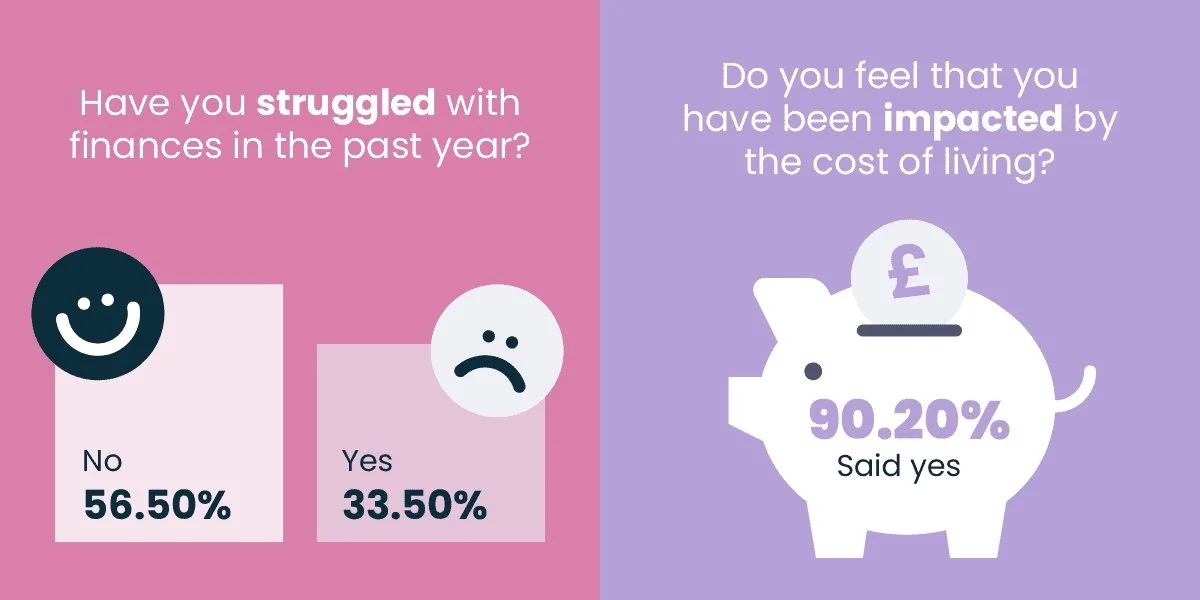
Our household is currently trying to reduce our monthly overheads in response to the ever increasing cost of living. April is not that far away and a great many service providers will increase their rates and tariff as the new financial year begins. Then there is the ongoing effects, both direct and indirect, of inflation to consider. Although the UK inflation rate is dropping, currently sitting at 3.4% in December 2025, food inflation remains higher at 4.5%. Being based in the UK, salaries and billed services tend to be administered monthly. You get paid usually at the end of the months and bills can turn up at any point, depending upon when you started a service. Any payments coming from central government, such as state pension or other benefits, are paid every 4 weeks. This means that there are 13 payments in a year. I thought it pertinent to clarify this point as other countries, such as the USA, favour a fortnightly financial cycle. Hence as a household we work around a monthly budget.

I don’t know if you have noticed that there are quite a lot of companies that have names taken from Tolkien’s Legendarium. At first glance, this seems innocuous enough. Tolkien’s writings grew in popularity over the seventies and eighties but since the release of the film trilogy at the start of the twenty-first century, his work has become more well known and been assimilated into our wider pop culture. Hence, it seems quite logical that a startup tech company, for example, would choose a name from his writings. No doubt the founders grew up reading The Lord of the Rings and are fans. That all seems plausible. However if you take a further look, it gets somewhat more complex. Here are four companies that have Tolkien based names.

“Managed decline” is a phrase that refers to the processes associated with the end of a specific lifecycle, with the goal of minimizing costs or other forms of loss. The concept originated in business where it referred to the management of companies and industries. More recently it is used in wider contexts. The concept gained prominence with regard to urban policy, particularly in the UK during the eighties when several major cities suffered economic and political collapse. Of late, the term has been applied to the UK, encompassing a systematic weakening of the economy, social structures, and cultural values, as well as its global political and diplomatic force. In each case, managed decline involves making strategic choices about resource allocation and accepting the consequences of those decisions. It is a complex issue with ethical and practical considerations, often sparking debate about the best way to address decline and reverse the process.
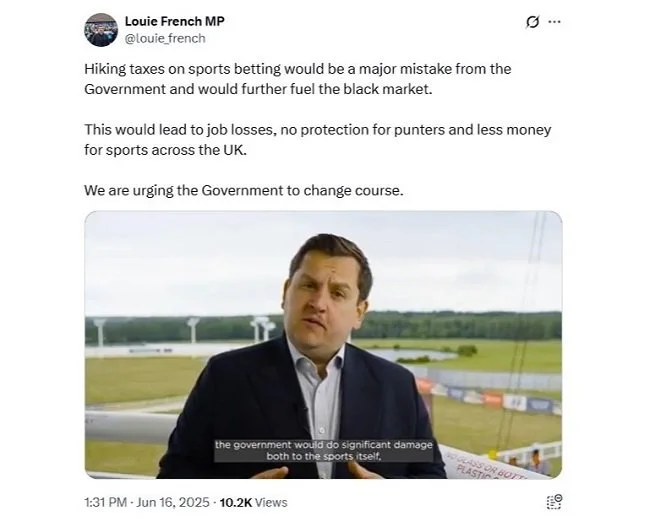
I still maintain a legacy presence on Twitter/X and I follow my local MP (member of Parliament) Louie French. It’s not something I especially relish as I am not a supporter of the Conservative party (or any other) and I did not vote for him in the last election. I just like to know what he is up to as he is the political representative for our constituency. As the Conservatives are out of power at present, to all intent and purposes, Mr French is a backbench MP although he has a minor position as Shadow Parliamentary Undersecretary (Culture, Media and Sport). However, with that being said he is hardly a key member of the shadow cabinet. Hence he focuses on constituency work and that which is generated by his shadow posting. He will also lend his voice, when required, to any major policy decision or statement made by his party.

Sunday 6th April is the start of a new financial year, here in the UK. According to data from numerous financial and economic institutions, an estimated million plus households will be facing annual increases of £400 to £500 as the proverbial “cost of living” goes up. Everything from Council Tax to Mobile and Broadband costs are being increased. Future cost hikes are expected in our energy and water utilities. As bills start going up across the country today, average wages remain stagnant. Middle-income and poorer households have been worst hit by this wage related issue. Hence the tabloid press have labelled the start of the new financial year as “Awful April”. Hyperbole aside, this is a very real issue which due to its complex, global causes, doesn’t have a quick fix solution.
I consider myself to be a grounded, rational individual. I am not excessively emotional. I like facts, data and reason as opposed to hyperbole, rhetoric and bluster. That being said, I am aware that the world is an imperfect place. Opinions are often not based upon empirical fact but personal perspective. Hence many people experience reality differently to me. They are driven by their feelings and other factors. However, despite these differences in philosophy, for most of my life the world has remained functional and over time slowly improved in subtle ways. Deference to expertise, a sense of community and basic pragmatism meant that people broadly pulled in the same direction. Of course there has always been dissent but it has been within a stable system. However, of late I feel that this era is now finally over. Things are no longer stable. We live in an uncertain world.
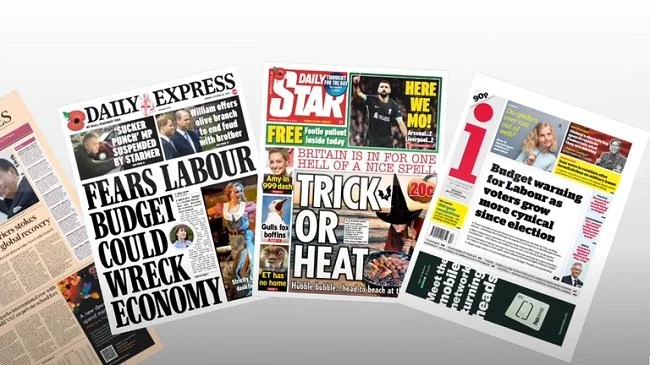
Newspapers were an integral part of UK culture in the seventies. During the week, they were delivered prior to going to work, so you would peruse them over breakfast. Alternatively you would buy one en route to your place of employment and read it on the bus or train. In a world before 24 hour, rolling news, they were the primary means of keeping the public abreast of events and as such, enjoyed a substantial audience. On occasions a newspaper story could make or break a political career or launch a crusading campaign to address a social ill. Newspapers were a force to be reckoned with and therefore a significant part of the socio-political landscape. However, due to a strong union presence within the workforce, the UKs newspapers often lagged behind other industries with regard to the technology.

The First Past the Post (FPTP) electoral system used in the United Kingdom, as well as in several other countries such as the US and India, has both advantages and disadvantages. However, despite being a simple and straightforward system it has been abandoned by many democracies in favour of more proportional and equitable methods. The primary criticism against FPTP is that it allows a minority of the electorate to return a majority government. Since 1935, there have been majority governments 90% of the time, but not one of them had the support of a majority of voters. At present, the current UK government has a majority of seats with just 43.6% of the votes. In the 2019 election they gained an extra 48 seats despite an increase of only 1.2% of the vote share.
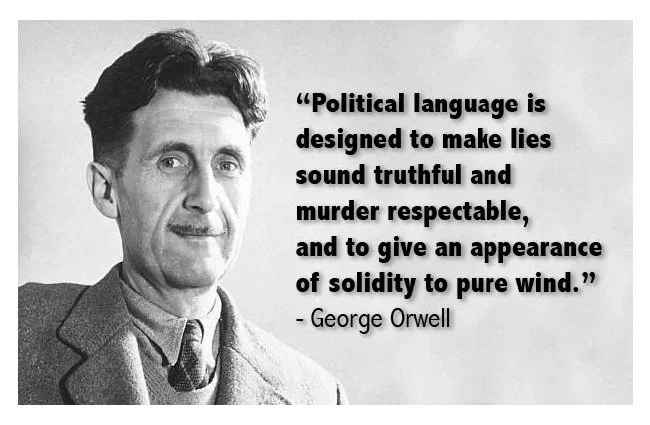
Politicians have a distinct way of talking when being interviewed or giving a press conference. It is often characterised by a strategic use of language, centred around rhetorical devices, persuasion techniques and a careful framing of messages. Direct answers to questions are usually avoided, with tangential responses being preferred. Opinions and specific perspectives are frequently presented as facts. There is also a propensity to focus on “problems” and apportioning blame, rather than “solutions”. It’s important to note that the use of language in politics is a complex and dynamic process influenced by various factors, including cultural context, media dynamics, and the evolving political landscape. Different politicians may employ different communication strategies based on their individual styles and objectives. Here are some key aspects of how politicians use language:

The United Kingdom is one of the few democratic countries in the world that does not have a single, written constitution. Others include Canada, New Zealand and Israel. To date, its constitution is a combination of written and unwritten sources, including statutes, common law, conventions and somewhat esoterically, royal prerogatives. The reason for this is predominantly historical. Since 1688, Britain has not experienced a revolution or regime change, which often leads to a constitutional initiative, such as the American or the French Revolution. Britain’s constitution has evolved slowly over time under relative stability and as such, it has never been deemed necessary to list the fundamental laws and principles of the country's political system.

On Friday 15th September the former actor and comedian turned internet social commentator, Russell Brand, released a video on his YouTube channel addressing allegations about his personal life, ahead of a forthcoming UK current affairs documentary. Brand vehemently denied what he described as “very serious criminal allegations”. The following day Channel Four broadcast “Russell Brand: In Plain Sight”. During the course of the program Brand was accused by one woman of rape and by three others of sexual assaults, and emotional abuse between 2006 and 2013. During the course of the week, further claims have been made against him and that his “predatory” behaviour was an open secret within the TV industry. Furthermore, women would warn each other in advance if they had any dealing with him. All of which has played out against a mixture of broadsheet analysis, tabloid hyperbole, performative politics and internet bluster.
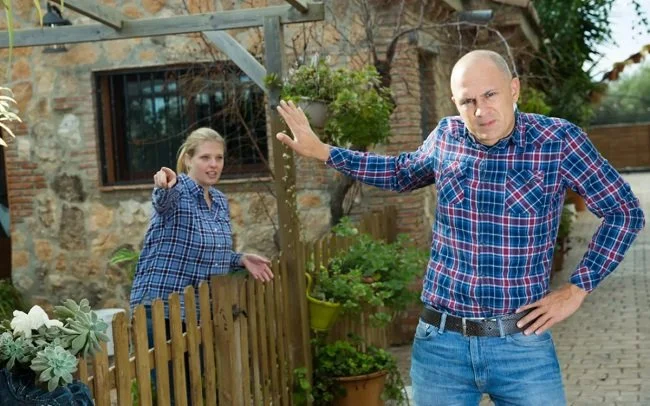
For those who live outside of the UK, let me categorically state that Brexit has broken British politics. Prior to 2016, national politics still broadly functioned along traditional party political lines, with income and class substantially determining voter allegiance. The big three cities (London, Birmingham and Liverpool) maintained their liberal dispositions and Scotland, Northern Ireland and Wales were dominated by their regional politics. Brexit changed all this creating fault lines that fell outside of the existing political status quo. Opinions differed based upon where you lived, how politically literate you were and even education. Your party political allegiance no longer indicated what stance you took on this matter. Furthermore, the discourse around this complex subject was quickly debased into a bipartisan culture war that was toxic and dangerous.

Okay, keep up as there’s a lot of ground to cover. The UK government is currently suffering in the opinion polls and after 13 years in office, is facing potential oblivion at the next general election. In an attempt to shore up support among the party faithful, the Prime Minister, Rishi Sunak, is currently pursuing a hardline with regard to immigration. According to Ipsos, as a political issue about 29% of the electorate consider immigration to be a major problem. The remainder either think current levels are manageable or have no substantive view on the matter. However, as a “culture war” issue that can be weaponized by the tabloid press, which often has direct links to the Conservative Party in the UK, immigration is a hill to die upon. Hence you will find a lot of rhetoric that is anti-immigration and any contrary view is tarred with trite pejorative terms such as “lefty”, “liberal” and “woke”.
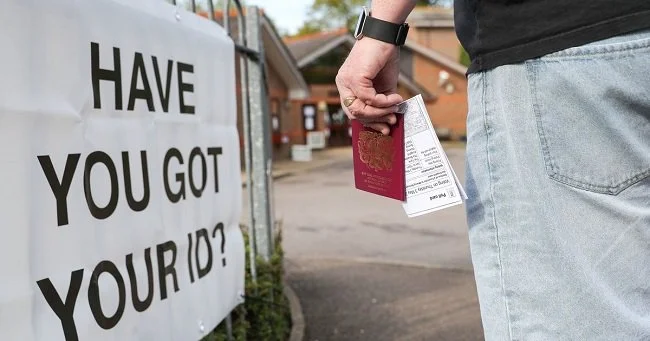
Last April, the Election Act 2022 became law within the UK. The Act introduced a requirement for all those voting in-person to produce photo identification when attending a polling station. This is the first time that such an ID has been required. Prior to this, voters could either bring their polling card to verify their identity at the polling station, or confirm their registered address from the electoral roll with staff. Now a UK driving licence or passport are considered the primary means of identity. A list of additional photo identification that has been deemed acceptable, is available on the UK government website. For those members of the electorate who do not have any of the qualifying ID, there is a Voter Authority Certificate available, which can be applied for online. This photo ID is linked to the applicants National Insurance Number. For further impartial information on photo ID and registering to vote, visit the The Electoral Commission website.

I am writing this post from the perspective of a UK citizen, but the sentiments expressed are applicable to anyone who lives in a country where you have democratically elected local political representation. IE someone who is supposed to advocate on behalf of your community or for you personally as the duly elected political representative. Here in the UK, the country is divided into 650 constituencies, each returning one Member of Parliament. Irrespective of whether you voted for your MP or whether you support the political party that they belong to, they are obliged to represent you and advocate on your behalf, if you request it. Such is the relationship in principle between constituents and MPs in the UK. It is important to be aware that your local MP is not a delegate whose sole purpose is to represent majority constituency views. Under the UK political system, an MP makes decisions on behalf of constituents and can take a position counter to local opinion, if they feel that is in the best interest of the constituency.
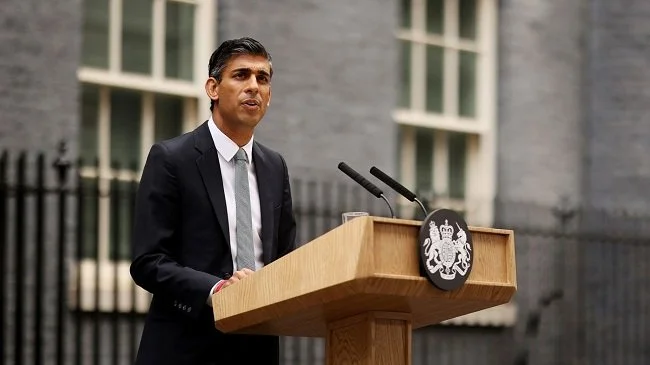
It is difficult to write about the state of UK politics with any degree of intellectual rigour when the entire situation has become so utterly farcical. My initial reaction to the recent departure of Liz Truss after just 45 days in office, was to laugh with abject scorn and derision. She was destined to fail due to utter lack of ability. However, there is still the outstanding matter of the country lacking a credible and functional government to address inflation, the cost of living crisis and resolve all the issues stemming from Brexit. There are problematic national and international events taking place that need addressing. A united, pragmatic and empathetic government is required to solve both these short term and long term needs. Sadly, the governing party is riven with opposing factions and there is no commonly held policy or underlying ideology. The PM may well have changed but the underlying flaws remain.

Conservative Party has been in government in the UK since 2010. During that time there have been three Prime Ministers. Today we moved onto the fourth. After Boris Johnson resigned on 7th July, the nation has had to endure a tedious two month process in which the Conservative Party elects a new leader. That person then becomes the PM by default. Many readers unfamiliar with the UK political system may be surprised that a change of leader has not led to a General Election. That is because the Conservative Party still holds a parliamentary majority of 71 elected Members of Parliament. Hence it is still constitutionally quite able to govern, despite Boris Johnson being forced from office. Therefore party members vote for a new party leader who gets the top job by default. Remember that in the UK, the Prime Minister is not the head of state and does not have the executive powers of a President.

I try to keep my thoughts on political matters to a minimum here at Contains Moderate Peril, mainly because UK politics and the current state of discourse associated with it has become an absolute shit show in recent years. Brexit broke traditional politics and has made matters far more tribal and partisan. The two main parties have declined from having clear ideologies, identities and manifestos, to becoming either a lobby group for the specific demographic group that supports them, or a conflicted, divided and schizoid shadow of its former self. I’ll let you work out which is which. Politics is no longer about governing a nation for the benefit of all its citizens. Now you simply pick a side and join the ongoing culture war against everyone and everything else. This rotten system produces rotten leaders. Hence, when Alexander Boris de Pfeffel Johnson became Prime Minister in December 2019, it was clear that the nation was taking a major risk on such a man. His failings as a politician and a person are a matter of public record for anyone who has the eyes to see them.

The title for this post is a quote from The Hobbit by J.R.R. Tolkien. I’ve used it as a verbal cue to try and give readers an overview of the point I’m striving to convey. Because I want to talk about modern life in western civilization, specifically its complexity and increasing uncertainty. If you’re extremely wealthy you can mitigate these two points but I’m working on the premise that most of the people who read Contains Moderate Peril are not. The blogging community, of which I am a participant, is a diverse group but from what I’ve observed it’s not populated by millionaires. In fact most of the people I know, both online and in person, are just holding down a job, trying to keep a roof over their head and pay the bills. Often they’re doing the job they do in default of anything else and they’re at the very least ambivalent towards it. The pandemic has also brought home how fragile so-called “normality” is. Modern politics are also volatile and life in general just doesn’t seem as certain as it was twenty years ago.

The Conservative Party successfully held onto their “safe seat” of Old Bexley and Sidcup in yesterday’s closely watched by-election. However their overall majority was reduced by more than half amid a very low voter turnout. Conservative councillor Louie French becomes the country’s newest MP after winning 11,189 votes, more than 50 per cent of those cast, in the seat previously held by the former cabinet minister James Brokenshire. Mr Brokenshire died in October from lung cancer aged 53. The closest challenger was Labour’s Daniel Francis, who secured 6,711 as the Tory majority fell from nearly 19,000 to 4,478, the equivalent of a vote share swing of 10 per cent to Labour. Turnout in the constituency was just 34%, down from the almost 70% who voted in the 2019 general election.
A Month in Gaming
Again this is more a case of two months in gaming. Furthermore although I was quite active in July, I was less so in August as the Blaugust 2021 Festival of Blogging event consumed the lion share of my leisure time. The majority of my gaming time is usually mid to late evening. Although Mrs P and I do many activities together, there are times when she will want to watch something I don’t, be engrossed in a book or out with friends. These occasions present sizable windows of time to focus upon a video game, which is especially useful for the MMORPG and RPG genres. However, I often have to choose whether to use this time exclusively for gaming or some other recreational activities such as writing. Another foible of my video game time management is trying to arrange things so I can undertake recurring, daily quests in a game early in the morning. I will often tackle such content in Star Trek Online, as soon as I get up.
Again this is more a case of two months in gaming. Furthermore although I was quite active in July, I was less so in August as the Blaugust 2021 Festival of Blogging event consumed the lion share of my leisure time. The majority of my gaming time is usually mid to late evening. Although Mrs P and I do many activities together, there are times when she will want to watch something I don’t, be engrossed in a book or out with friends. These occasions present sizable windows of time to focus upon a video game, which is especially useful for the MMORPG and RPG genres. However, I often have to choose whether to use this time exclusively for gaming or some other recreational activities such as writing. Another foible of my video game time management is trying to arrange things so I can undertake recurring, daily quests in a game early in the morning. I will often tackle such content in Star Trek Online, as soon as I get up.
Role-playing Games. I regret to say that my flirtation with GreedFall ran out of steam in July. This is no reflection upon the game itself which is interesting and enjoyable. It simply got usurped by Assassin’s Creed IV: Black Flag. I was so frustrated trying to play this game on the Nintendo Switch that I purchased it again on the PC and was able to play through the content far more easily with a keyboard and mouse. I completed the main story in the game and passed on the subsequent busy work side content. Enthused by the joys of playing a quality RPG, I moved straight on to the PC version of Days Gone. I really like this game as its setting in post-apocalyptic Oregon is quite unusual and it has a very similar zombie vibe to that of Left For Dead 2. This is another example of a game that I play with keyboard and mouse for PVE content and then a game controller when using a vehicle. Unfortunately, I haven’t had time of late to focus on this game due to the blogging event.
Massively Multiplayer Online Role-playing Games. I returned to The Lord of the Rings Online and started working through the last two content updates, Wildwood and Blood of Azog. As the former was level 45 content it was an absolute breeze to clear and it did wonders for my Virtue Traits. The story was inventive and this new area certainly compliments Bree-land as a region. Although I have a liking for any Dwarven driven stories in LOTRO, questing in Azanulbizar is a slog and too much of the content is of a grinding nature. Hence Star Trek Online has received more of my attention these last two months. Developer’s Cryptic continue to ensure that there are regular new events to undertake and goals to work towards. I’ve also raised another two alts to level cap, although I did use a boost for one with interesting results. I even felt bold enough to experiment with a “cannon build” on one of my KDF vessels, although it requires competent flying to use effectively.
Odds and Sods. Having bought a new game controller I have started playing Fall Guys: Ultimate Knockout once again. It is fun in short doses but I still worry about the fact I’ve not yet in over a year, won a Crown. I also find it curious that I find it more entertaining collecting the various outfits and emotes than playing the game itself. I also returned briefly to Call of Duty: Warzone to see what the state of the game is. The patch for the latest season was once again ridiculously large and took hours to download. Upon playing a solo Battle Royale game, I found things were pretty much exactly as I left them. I still don’t like the changes made to the map and some weapons continue to be overpowered and therefore ubiquitous. However, having been away from the game for so long, I found myself playing against new players and it proved to be a far more equitable experience. As for the next few months I have nothing major planned. The next announcement I’m awaiting is the release date and cost of the next LOTRO expansion. Hopefully I can return to Days Gone in September.
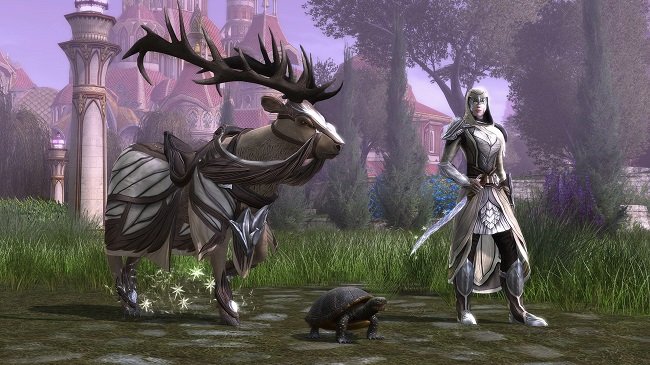
Here we are again with another summary of my gaming activities in recent months. Or in this case since last September. It’s been a while but I’ve been on a blogging hiatus until recently. However, I’ve kept myself busy gaming wise and often I find the hunt for news video games, just as entertaining as I do playing them. Perhaps that could be a future blog post. Back to the matter in hand. Gaming wise, pretty much all things related to the MMORPG genre are currently on the back burner. I’ll give specifics later but I am taking a break from these for the present. I am currently looking at trying games outside my usual comfort zone and also trying to test whether you can or cannot teach an old dog new tricks. Fortunately, the answer appears to be yes you can. Enough summation, on to the specifics.
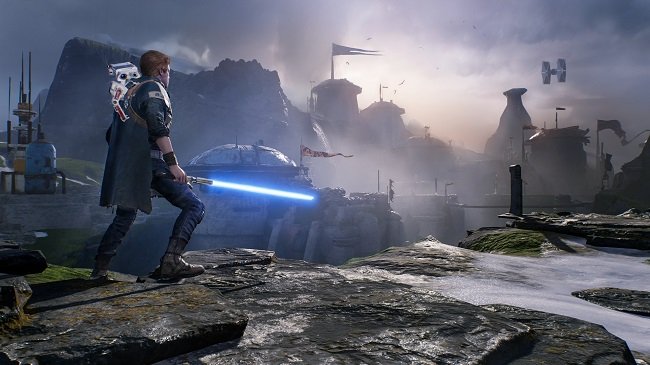
I last wrote a post in this series in June. Back then I wanted a break from MMOs as I had invested heavily in Star wars: the Old Republic and The Lord of the Rings Online. Because I was still enjoying the Star Wars vibe, I decided to try Jedi: Fallen Order. Sadly, despite the story showing a lot of promise, the PC version of the game handles poorly and the controls are sluggish. Often it felt like my character was wading through mud and there was a tangible amount of skills lag. So I uninstalled it and moved on to something else. One of the odd things about gaming is that despite amassing a library of free and discounted titles, we often end up buying something new, instead of playing that which we already own. And that is exactly what I did. I purchased Stray amid all the excitement surrounding the game, but to date I still haven’t played it. Make of that what you will.
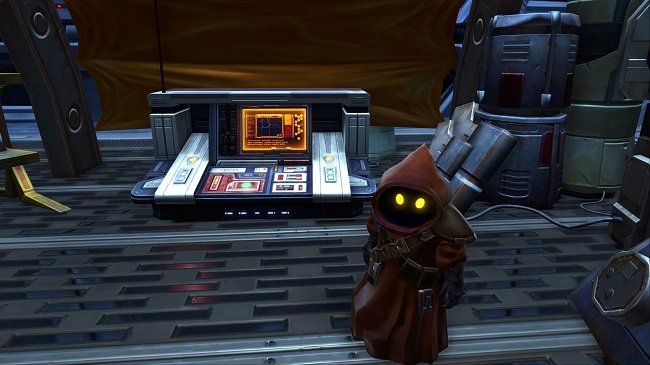
Usually I keep subscribing to an MMORPG, even if I’m not playing it that much. I like to have options in case I decide to log in on a whim. Especially if an absent friend returns to a particular game presenting an opportunity to catch up. However, the current economic climate is no longer something that I can ignore. Although far from having a low income, the current ongoing increase in the cost of living is becoming apparent, so I have been fiscally prudent and cancelled my monthly subscriptions to Star Wars: The Old Republic and The Lord of the Rings Online. Both have provided me with a lot of entertainment over the last three to four months but until new content becomes available, I can happily dispense with them for the meantime. Not only have I saved £17.98 on subscriptions, I shall no longer be making ad hoc purchases of in-game currencies. Something I have been doing a lot more than usual of late.
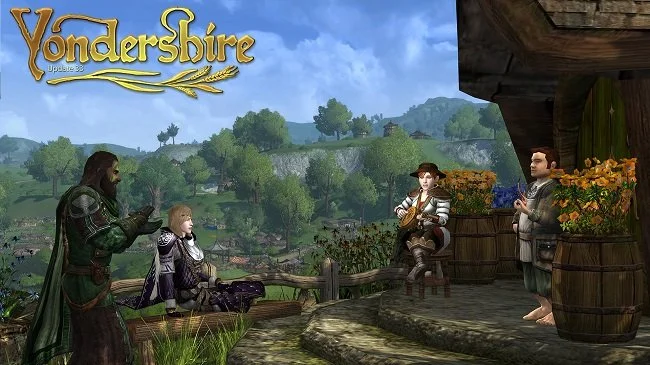
I have confined my gaming to three MMORPGs in recent months and have not strayed into anything new. Time has been an issue due to a great deal of change in my domestic life. Hence The Lord of the Rings Online, Star Wars: The Old Republic and Star Trek Online have proven suitable for my needs. Being able to log into a game and commence an activity without any complicated preamble is convenient and currently suits my schedule down to the ground. I will be buying Sniper Elite 5 at the end of the month as this is a franchise that has always proven entertaining and engaging. While recently perusing the various game launchers I have installed, I took the opportunity to remove several games that I’m no longer playing or that have proven to be a “five minute wonder”. Hence I said goodbye to GreedFall, Tom Clancy’s Ghost Recon: Breakpoint and Days Gone. Their removal is no reflection upon their quality.
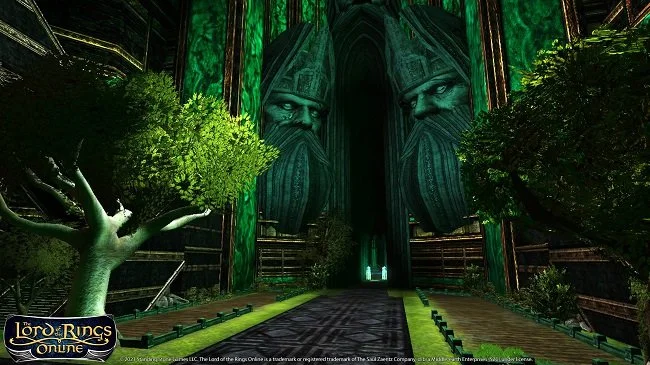
It’s been a while since I’ve written an instalment of A Month in Gaming. Over Christmas and New Year I was busy with family issues and it’s only in January that I’ve started anything approaching a regular gaming schedule. The novelty of Forza Horizon 5 has run its course and I’ve grown tired of the game’s upbeat tone and neverending activities that litter the in-game map. It’s nice that the game tries hard to engage with you but it reaches a point where you never get a time to stop, think and take stock. I couldn’t find anything else included in the Xbox Game Pass which especially excited me. There were a few titles that did take my fancy but I then discovered that I already own them elsewhere via Steam or Epic Games. So I decided to cancel my subscription. I still think that the Xbox Game Pass for PC is very good value and my failure to find anything that I like is my problem and not Microsoft’s fault.
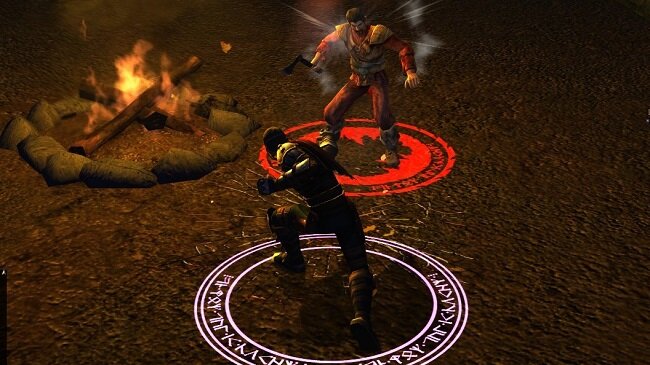
September has been and gone and the nights are now drawing in. Usually this time of year is ideal for gaming but sadly I’ve had a lot on over the last 30 days and as a result there’s been precious little time for gaming or indeed writing. Such is life. When I did have some leisure time, MMOs were the easiest way to get a quick gaming fix, as per usual. Standing Stone Games announced that the next expansion for The Lord of the Rings Online would be released in November and that a revision of the Legendary Item system would be coming prior to that. Hence I took a look at the beta builds on the Bullroarer test server and then started prepping my various alts on the live servers, to get ready for this major change. I also managed to complete the latest event in Star Trek Online. However, beyond these straightforward tasks I didn’t really get to do much more.
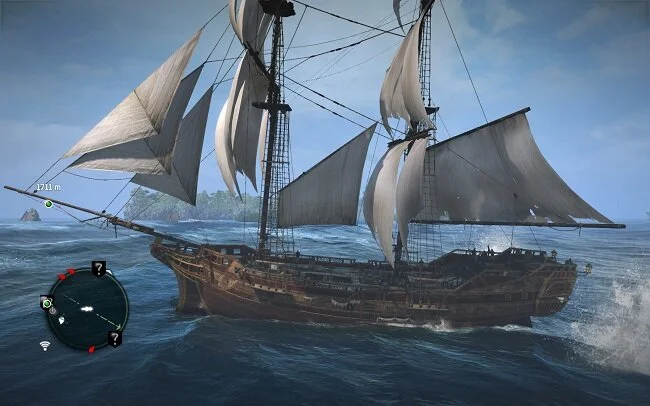
Again this is more a case of two months in gaming. Furthermore although I was quite active in July, I was less so in August as the Blaugust 2021 Festival of Blogging event consumed the lion share of my leisure time. The majority of my gaming time is usually mid to late evening. Although Mrs P and I do many activities together, there are times when she will want to watch something I don’t, be engrossed in a book or out with friends. These occasions present sizable windows of time to focus upon a video game, which is especially useful for the MMORPG and RPG genres. However, I often have to choose whether to use this time exclusively for gaming or some other recreational activities such as writing. Another foible of my video game time management is trying to arrange things so I can undertake recurring, daily quests in a game early in the morning. I will often tackle such content in Star Trek Online, as soon as I get up.
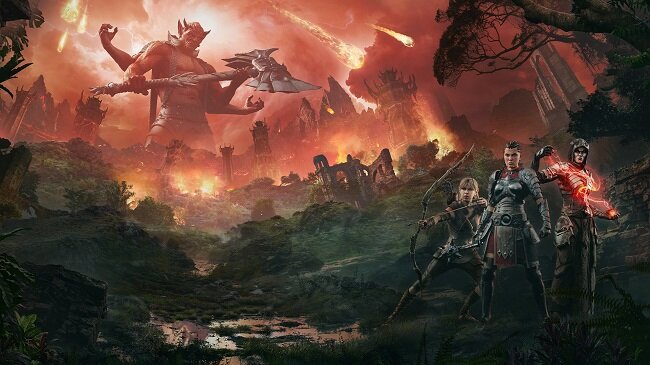
The last installment of A Month in Gaming was at the end of April. I have decided to update this recurring post less often to ensure that I have more to write about than just cataloguing my generic activities in The Lord of the Rings Online and Star Trek Online. The only downside of such an approach is that it invalidates the title but that can’t be helped. Fortunately, I have done more than usual over the last two months. My daily schedule has changed temporarily and I now have a little more leisure time available. Hence I’ve dabbled with several new games as well as using my Nintendo Switch more often. I also took part in a “tag team” playthrough of XCOM 2, which was a very interesting experience. And I finally took the time to go through all my games libraries on the various different platforms to catalogue exactly what I have. I found a few hidden gems but the majority is just “filler” that you find in most video game bundles.

I usually write this recurring post at the beginning of each month, reflecting upon my gaming activities over the previous thirty odd days. I refrained from writing an instalment at the beginning of April as I really didn’t feel I had much to say. However, now that a further month has elapsed, I believe sufficient has happened for me to continue. I do worry that these posts get repetitive and simply writing “ I played MMO A or B” is not sufficiently engaging. Luckily, I do feel that I have more to say this time round as I’ve broadened my gaming horizons recently and feel that I’ve done more, compared to other months. So let me begin with my return to console gaming. Something I haven’t done since 1999 when I purchased a Sega Dreamcast. After some procrastination, I’ve finally bought a Nintendo Switch and it has proven quite a hit not only with me but my grandchildren.
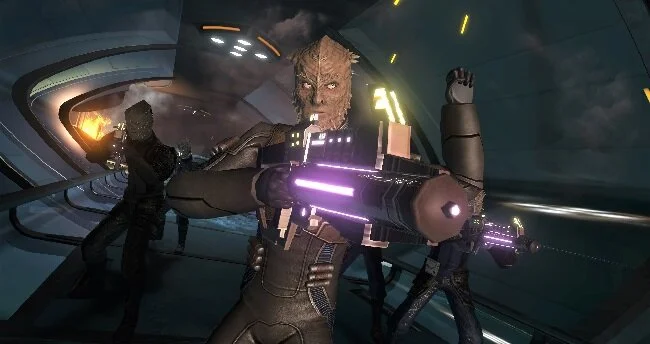
Here we are again. Yet another month has gone by and I find myself writing another instalment of “a month in gaming”. And to be honest, I have very little to say in this particular roundup of my gaming activities. I played Star Trek Online throughout February and created a new Klingon character to take advantage of the ongoing Klingon recruitment event. I have managed to upgrade a Tier 5 D7 and kit it out in such a way that it is fairly robust. And I also created a new Jem’Hadar alt, as they start at level 60 and you are provided with a fully equipped vessel and crew. Nothing fancy but it allows you to get into the endgame content a lot quicker. I may write a more detailed blog post about this at some point. I also played a lot more Fall Guys: Ultimate Knockout as my granddaughters came to stay for a week. I have already expressed my thoughts about the mechanics of that game in a prior post.
I last wrote A Month in Gaming post in December. Quite a lot has changed over the last two months. I have abandoned Cyberpunk 2077 as it has totally failed to hold my interest. I just couldn’t get on with the first person perspective. I also stopped playing Neverwinter, despite the game having many appealing elements. Sometimes, when you start an MMORPG that has been running for years, you feel so “behind the curve” that the prospect of catching up with everyone at the endgame is too daunting. And because the Call of Duty franchise has a yearly lifecycle, a new iteration of the game was released in November. Black Ops Cold War subsequently replaced the reboot of Modern Warfare and a lot of the new games content subsequently bled through in the free Battle Royale version. I’d been playing Warzone since last April and it was beginning to get a little stale. So I didn’t buy the latest Battle Pass and decided to move on. And then there’s The Lord of the Rings Online. Let it suffice to say I have completed as much of the latest “mini expansion” as I require and the game is now “on hold”.
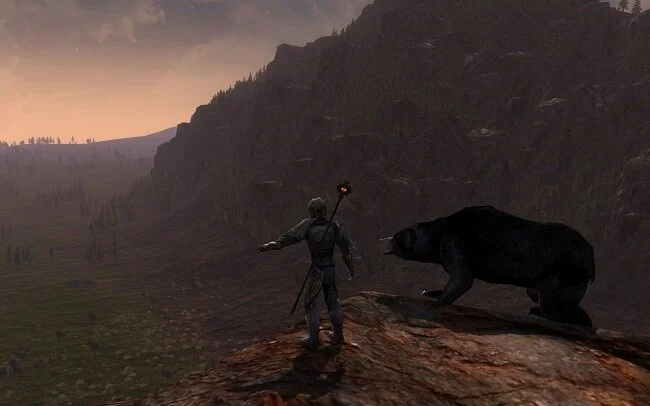
November proved to be a very productive month, gaming wise. I had to self isolate for 14 days, due to coming into contact with someone who had tested positive for COVID-19. Hence I had far more leisure time than usual. For a second month I applied myself to progressing through the new “mini expansion” in The Lord of the Rings Online. The new zone is a two phase map. The first is Elderslade, a mountainous region to the North of the Wells of Langflood. This area contains mainly story quests. The second phase, called War of Three Peaks, is the same zone but during a period of open war between the Dwarves and the Orcs. Quests here are mainly repeatable slayer and achievement quests. I did not discover this until I had completed the first round, so to speak, only to be offered exactly the same quests again by an NPC. As I had reached maximum rank in reputation for this new faction and there were no rewards of any note for me to spend my barter currency upon, I simply stopped playing through this content.
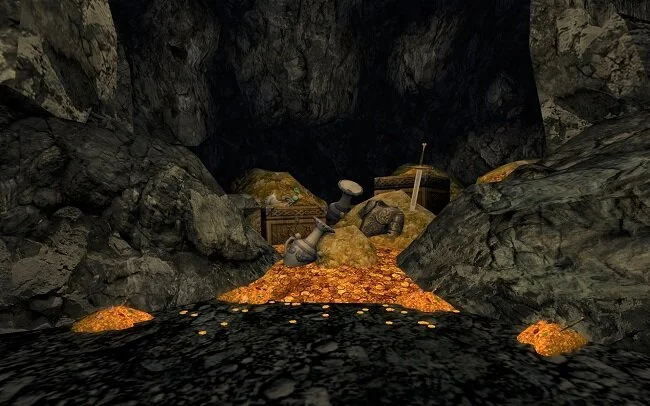
The last 31 days have gone by really fast, or at least that’s the way it feels. Despite having bought several new games recently and acquired yet more for free from the Epic Store, I did not embark on anything new throughout October. Due to the unexpectedly prompt release of the new “mini expansion” for The Lord of the Rings Online and the launch of a new event in Star Trek Online, I found myself focused upon the MMORPG genre, yet again. And after playing continuously for six months, Call of Duty Modern Warfare/Warzone has finally begun to lose its lustre. I didn’t especially enjoy the Halloween event, not that there was anything inherently wrong with it. It just wasn’t for me. I played a little Fall Guy: Ultimate Knockout but quickly discovered that the “season” system is just another gear treadmill, although the gear in this instance are novelty cosmetic outfits. I don’t want to be tied to too many games in this fashion (it’s bad enough with MMOs), so this is another title that has been relegated to occasional play when the fancy takes me.

September has been a difficult month. A family crisis and subsequent bereavement meant that gaming got pushed down the daily agenda. However, after the various chores and duties were done I did need some downtime and means to relax. Hence I did play some games in a limited fashion. Nothing fancy, just stuff like Fall Guys: Ultimate Knockout and Gang Beasts, which are light-hearted and undemanding. I also took the time to log on to The Lord of the Rings Online test server and check out the preview of the forthcoming “mini-expansion”. Not only was this informative but it provided material for a blog post. But overall I didn’t really achieve anything substantial with my gaming throughout September. Gaming was relegated to being just a convenient diversion from the immediate problems I’ve been facing but as such, it did fulfil that role well.

I’m still somewhat shocked that August has been and gone. Even by 2020 standards it’s been an odd month. Due to illness in the family, my schedule has been turned on its head and subsequently there has not been as much time for gaming as I’ve previously enjoyed. However, I tried to put what time I had to good use. I attempted to return to the MMORPG The Lord of the Rings Online once again, to see if I could continue through the epic story. Sadly, the game has run into further server related issues, just as it did last month. Standing Stone Games community manager Jerry Snook was a little “snippy” in responding to players' concerns and at present there are no details regarding what the problem is and when it will be resolved. If this issue persists I suspect that it is going to do some genuine harm to both the player base and community relations. I hope matters improve for SSG and LOTRO over September.
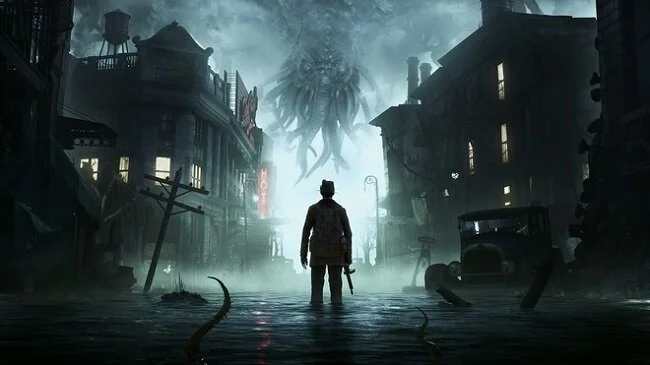
As I mentioned in the last instalment of “A Month in Gaming”, I was toying with the idea of buying Ghost Recon Breakpoint. However, I have decided against that. Yes the game may well be a third person, co-operative shooter but ultimately it’s yet more explosions and military hardware fetishism, which isn’t anything new. I have more than enough of that at present with Call of Duty Modern Warfare/Warzone. I also don’t feel disposed towards giving Ubisoft any of my money at the moment, until they get their house in order. I am so tired of continuously reading about how shitty the video game industry is to work in. It’s difficult to protest in a meaningful way but I guess for the present not buying a product is as good a way as any. So rather than purchasing any further games, I decided in July to play at least one of the many titles I’ve got in my existing library.
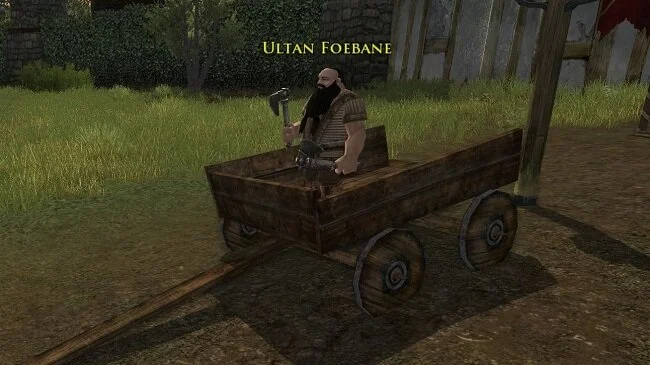
I stopped subscribing to The Lord of the Rings Online in June. I’ve always had a very cyclical relationship with this MMO and at present I feel I need a break from the games somewhat linear formula. Plus the new content scheduled for release centred around the wedding of Aragorn and Arwen doesn’t exactly sound enthralling. So I’ve left my primary character in Langflood and will return to the game later in the year when I feel the need to catch up with content. I have also abandoned the ongoing events in Star Trek Online as they’re getting too repetitive. I would like to see a new longterm story arc rather than just a continuous cycle of short term events and repeatable content. I don’t mind working towards a goal but it has to be something I want and the rewards offered in this MMO are getting a little too generic for my liking. I shall return to the game at some point as I’m a lifetime account holder and I’m curious to see how developer’s Cryptic overhauls the Klingon story arc.
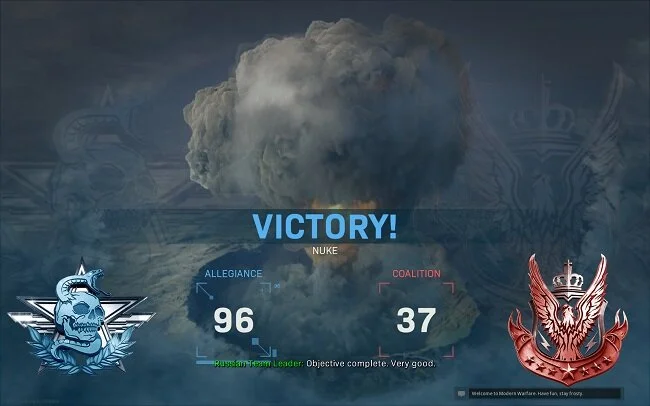
I see by the financial data that is currently available and being pawed over by industry pundits, that April was a very good month for the video games publishers. Quelle surprise. Who would have thought it? The increase in leisure time has certainly meant that even I have had a greater opportunity than usual to invest in playing video games. And as I predominantly play the MMORPG genre that has proven to be a boon. Or at least it was initially. After two month plus that is fast becoming a bane. MMOs are great when you have new content to play through, stories to discover, goals to achieve and systems and items to advance. But once you’ve done all these things and find yourself doing dailies just out of obligation and a way to kill time, then it may well be time to move on to something else.
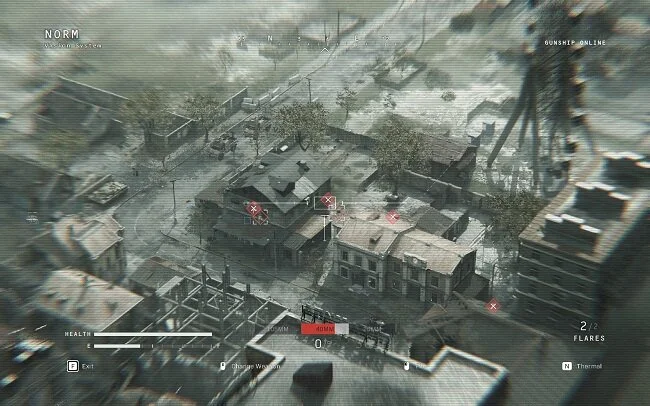
April has been an usual month. The ongoing lockdown here in the UK (and elsewhere in the world) has afforded me more gaming time than usual. The policy of social distancing has reduced my caring duties to just three hours a day. Hence I and many others like me have much more leisure time available. I initially thought that this situation would be the perfect time to try some of the many of the games that I have stockpiled over the years. However, despite trawling through many titles, I still failed to find anything that immediately took my fancy. So I decided to take stock of my overall gaming activities and whether it was time to revise them and try something new. And by new I don’t just mean just buying a new game but taking a step out of my current comfort zone into a genre I don’t usually play. So that’s exactly what I did and the results have been very interesting.
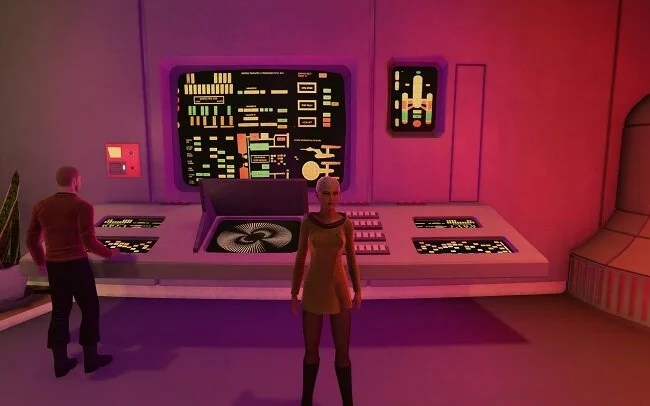
The problem I find with monthly gaming articles is that they tend to cover ground that I’ve already written about over the last 4 weeks in other blog posts, only in less detail. So here is the brief version of my gaming activities throughout February. I played through the entirety of the Star Trek Online 10th Anniversary event and received the new hybrid Tier 6 ship. I enjoyed the new 2 part feature episode and have managed to maintain a schedule of doing “odds and sods” to keep myself busy. STO is currently my primary game. I’ve ground to a halt in The Lord of the Rings Online, as soon as I start questing in Minas Morgul itself. It is simply too uninspiring and grindy an area. So I’ve focused on completing deeds for virtue experience and daily repeatable quests for Anfalas Scrolls of Empowerment. Due to constraints upon my schedule, I decided to temporarily stop my subscription to ESO Plus, as I simply do not have the time to invest in The Elder Scrolls Online at present. ESO is a good game and deserves attention when played. Committing to multiple MMOs at once is always a mistake.

So much for the New Year. January has now been and gone and 2020 just seems to be barrelling along. As ever, due to my real world commitments, I’ve been pushed for time over the last thirty one days. Therefore, most of my gaming has been targeted “binge” sessions conducted late at night. However, I do find playing through episodic content over several hours to be a very productive means of making progress in MMOs. So overall January has been an enjoyable experience, game wise. Due to my circumstances, I have deferred starting any new single player games and have focused primarily on two titles; The Lord of the Rings Online and Star Trek Online. Sadly, The Elder Scrolls Online has been relegated to being played just once a week, usually on a Wednesday night when I meet up online with friends. My exploration of Vvardenfell will have to wait until later in the year, as I cannot sustain three MMOs to any great degree.
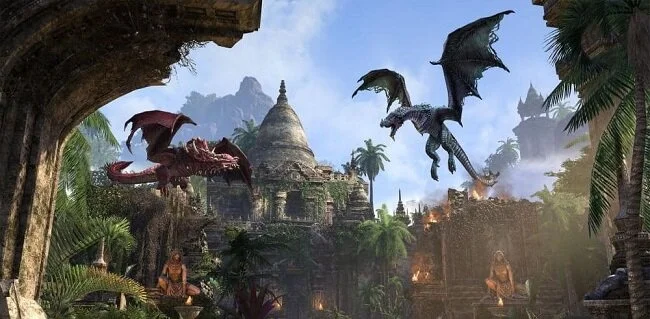
October has been and gone. And as ever the MMORPG genre has been the mainstay of my gaming activities over the last thirty days. Furthermore, it has been a productive month. I managed to complete the Daggerfall Covenant narrative arc, along with the main story on my Dragonknight in The Elder Scrolls Online. I find that completing Coldharbour is the biggest obstacle in progressing. It’s an atmospheric zone but once you’ve experienced it, it doesn’t really lend itself to repeat playing. But having done all this my Dragonknight hit level cap. I had taken the precaution of buying appropriate gear ahead of this achievement, so I managed to acquire some decent armour and jewellery that provide robust set bonuses. Despite focusing mainly on ESO, I did manage to progress further in The Lord of the Rings Online. I got as far as the Wolf Denes in the Vales of Anduin update. I also took the time to visit the LOTRO test server and checked out the Minas Morgul expansion preview. As for Star Trek Online my daily visits have been focused upon completing Task Force Operations and grinding for a free ship (again).
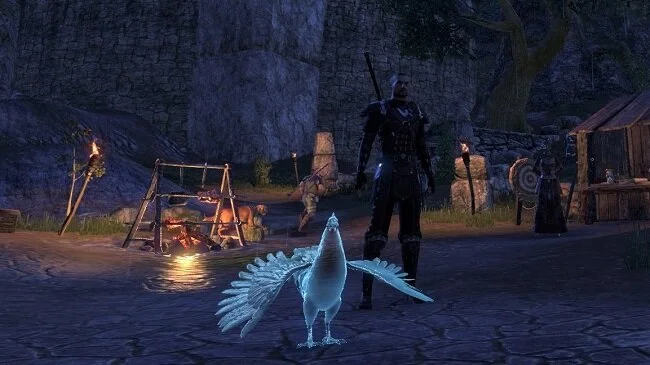
September saw The Elder Scrolls Online becoming my primary gaming focus. No real surprises there as I’ve been having so much fun of late with this MMORPG. I managed to get my Argonian Necromancer to level cap and then had the fun task of trying to equip them suitably. I don’t quite know why this aspect of gaming appeals to me so much but I just get a real kick out of trawling around looking for appropriate gear. I tend to enjoy it in all the MMOs I play. There’s just something inherently satisfying about equipping a new piece of armour or jewellery and seeing your stats noticeably increase. This process is even more enjoyable in ESO as there isn’t any server wide auction house, so you have to travel around from region to region, individually checking each guild trader you find. It really is virtual shopping. Once I managed to find the right gear for this character, I promptly created a new Imperial Dragon Knight and started playing through the Daggerfall Covenant storyline as it the one faction I haven’t yet completed. Oh and in ESO cosmetic pet news, the ghost chicken (official name Spectral Chicken) is outstanding.
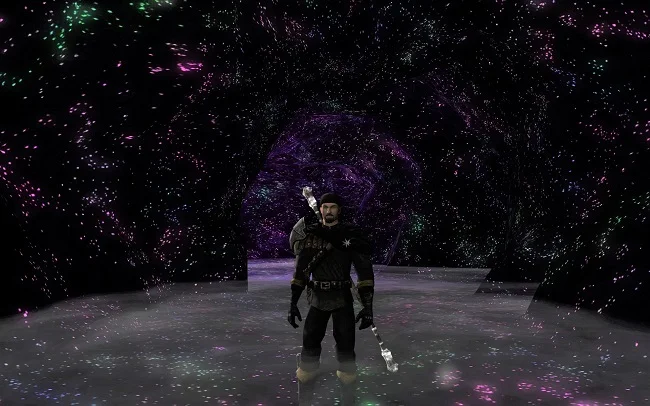
Last month panned out pretty much as I expected. Blaugust and writing daily blog posts took up a fair amount of my leisure time. And then I lost a few days due real-life social activities. What gaming time I had was focused mainly on The Elder Scrolls Online. I’m sorry to say that I’ve ground to a halt in The Lord of the Rings Online. My level 113 Guardian remains at the Black Gates and for the present I simply do not feel disposed towards working my way through Mordor again, which I did just a year ago on my primary character. I have undertaken a few quests with my level cap Lore-master and will endeavour in the weeks ahead to at least complete the Vales of Anduin region. LOTRO at present doesn’t have much of a hold on me, although I may well become more enthusiastic once the next expansion is formerly announced.
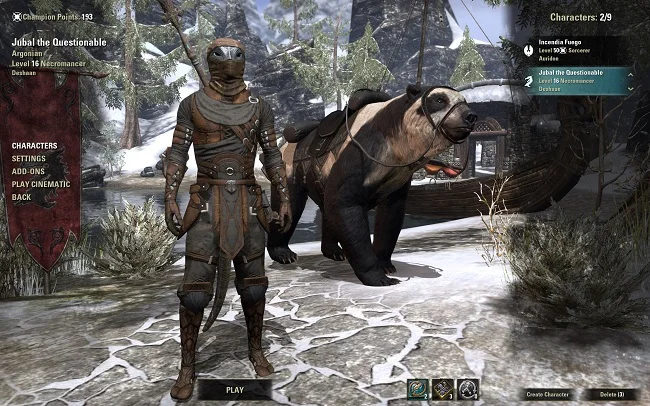
Contrary to my last A Month in Gaming post, I did actually end up buying a discount copy of Elsweyr and returning to The Elder Scrolls Online. And I’m rather glad that I did, because it has provided a welcome change of scene and an opportunity to do something different. However, you can’t just fire up ESO and dive right in. No sir. The first thing you have to do is update all your addons and if your starting a new alt (which I decided to do), ensure that your key mappings and custom settings are ported over. This process was a pain in the butt; however it did inspire a couple of blog posts. Creating a new alt is the perfect way to reacquaint yourself with ESO after a lengthy absence. In my case it has been 12 months. I decided to try the new Necromancer class and so far, it has proven to be both fun and rewarding. Rather than try to do a thousand things at once, I just started the Elsweyr main story and doggedly pursued it. The narrative is enjoyable and it was fun to see Cadwell as part of the plot focus. For practical reasons I’ve re-subscribed to ESO plus to unlock various DLC and I intend to continue playing for the next month or so.
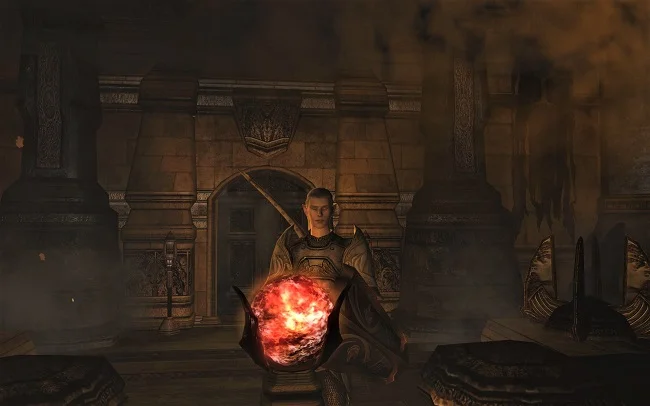
This post should have been published two weeks ago but as ever, real life just keeps getting in the way. As expected, June proved to be a busy month, however, I managed to organise my leisure time pretty well, affording me an opportunity to not only play my two current MMOs but also experiment with some other games. At present my caring commitment keep me busy from about 10:30 AM to about 5:00 PM. I tend to get up round about 7:00 AM so if I promptly have a shower, dress and eat, I can usually create a two-hour window in the morning to either tackle admin and paperwork or undertake dailies in games such as The Lord of the Rings Online or Star Trek Online. I can also find several hours in the evening as Mrs Peril tends to go to bed earlier than I. Therefore practical time management has proven beneficial over the last four weeks.
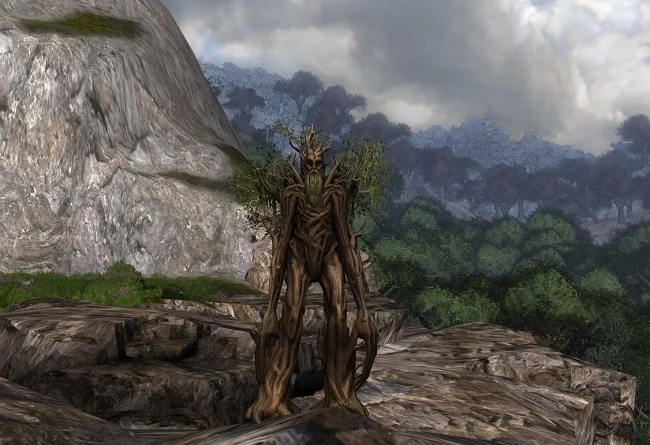
As I suspected in my last post, my gaming activities were somewhat curtailed throughout May due to both my parents being ill. However, the time I did manage to spend in-game was both therapeutic and relaxing. For me, I’ve never really seen gaming as escapism, although I appreciate it certainly is for others. One of the aspects it offers, along with a degree of challenge and entertainment, is a release from stress and the pressures of one’s daily life. Perhaps that is why I enjoyed Sniper Elite V2 Remastered so much, because not only is it a thoroughly absorbing game, it also provides a sense of catharsis. I’ve already written about the game in some detail, along with my thoughts about the ongoing “remaster versus remake” debate. However, I would add that I enjoyed it so much I re-installed the sequel, Sniper Elite III, which I haven’t played since it’s release in 2014. This also proved to be an enjoyable undertaking, again for the self-same reasons.
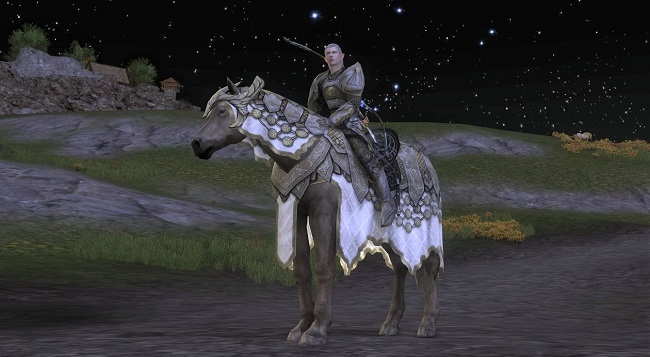
So what have I been up to in April gaming wise? Oh, yes there was this. Mounted combat for the Guardian class is awful. There. I said it. As I’m not a LOTRO “altoholic” my only previous experience with mounted combat was with my Lore-master. Most of their skills are ranged which makes the fights less tedious and time consuming. And you get a combat pet which helps the proceeding slightly, but overall, it’s not that much fun. However fighting via your war steed with a Guardian is a ponderous grind. You have to be in close proximity to your foe to hit them and half the time they are running around you, conspicuously out of range. Sure there’s a skill that brings them next to you for a short period of time but as a level 85 Guardian’s DPS output is distinctly average at this point in the levelling curve, it’s a long, arduous slog to kill anything. My solution has been to summon my skirmish soldier who is an Archer and to use them in conjunction with my own bow to shoot down mounted foes while on foot. This still takes time but is quicker than doing it from horse back.
Diary of a Podcaster Part 17
My personal podcast journey started back in 2010 when I effectively invited myself onto the Mordor or Bust podcast. The three of us who were involved in the production of that show were learning as we went along. I recently listened to an old episode and despite our enthusiasm, it is quite rough around the edges from a technical perspective. I think that the biggest mistake that I made at the time was not investing in a better quality microphone. I sound like I’m at the bottom of a well. It’s hardly surprising as I was using a very cheap analog desk microphone which I think only cost a few pounds from PC World. Roll on eleven years and I’ve been invited to be a guest on the Beyond Bossfights podcast. It’s nice to be back in the saddle again, so to speak. Up until now, I’ve been using my Razer gaming headset for any previous podcast recordings but I’ve decided to take the opportunity to overhaul my technical setup.
Cheap Desktop Mic
My personal podcast journey started back in 2010 when I effectively invited myself onto the Mordor or Bust podcast. The three of us who were involved in the production of that show were learning as we went along. I recently listened to an old episode and despite our enthusiasm, it is quite rough around the edges from a technical perspective. I think that the biggest mistake that I made at the time was not investing in a better quality microphone. I sound like I’m at the bottom of a well. It’s hardly surprising as I was using a very cheap analog desk microphone which I think only cost a few pounds from PC World. Roll on eleven years and I’ve been invited to be a guest on the Beyond Bossfights podcast. It’s nice to be back in the saddle again, so to speak. Up until now, I’ve been using my Razer gaming headset for any previous podcast recordings but I’ve decided to take the opportunity to overhaul my technical setup.
Aveek Condenser USB Microphone
The last official Contains Moderate Peril podcast was recorded in January 2019. Both Brian and I used our gaming headsets and Zencastr to record the show. I did have at one point a USB microphone on a fancy armature but although it looked as cool as heck, it was totally impractical to use and got in the way when I wasn’t recording a podcast. Hence slumming it with gaming headsets was the path of least resistance. However, Braxwolf and DJ PimpDaddy (they do have normal names as well) record their show using fancy desktop microphones and also use webcams for the YouTube version of the show. This has been a bit of a culture shock for me as I tend not to post pictures of myself online. But life is predicated on change so I’ve rolled with it. I already bought an adequate webcam during the 2020 lockdown, so I only needed to upgrade my mic and find a convenient means of being able to hear the other participants.
Anker Soundcore Life A1 Bluetooth Earbuds
In July I bought an Aveek Condenser USB Microphone. It’s essentially a Chinese clone of a more expensive brand but the customer feedback was good and the price was right. I’ve done some tests and the sound quality is perfectly adequate for the job in hand. It comes with a sturdy but simple desk stand. Rather than using headphones to monitor what everyone else is saying during the recording, I have recently purchased Anker Soundcore Life A1 Bluetooth Earbuds (why do products have such complex names these days?), so I don’t have cables trailing everywhere. I had to buy a TP-Link USB Bluetooth 5.0 Adaptor as well. I think in total these three items have cost about £100 or thereabouts. Bearing in mind that the primary goal is to be able to record clear voice audio I think I should be able to get the job done and to a reasonable standard. It’s certainly a far cry from the humble (IE shit) analog desktop microphone I was using a decade ago.

The initial podcast boom, which began circa 2005, started as an audio only medium. One of the reasons podcasting became so popular, especially among the fan community, was that you could get away with relatively low production standards. Anyone who had access to a basic microphone and a PC, could produce a show and upload it to iTunes, which was the primary platform at the time. Listeners were forgiving back then. Twenty years later and podcasting has been on a tempestuous journey. It started with the medium being accessible and democratised, sustaining a rich and diverse fan community via non-professional productions. However, slowly and inevitably it has been assimilated by corporate interests. Fan podcasts have given way to podcast production companies. The small, micro-budget, indie show has effectively been thrown out of their own party. Such shows still exist but they struggle to be heard.
Last August I listened to The Battersea Poltergeist podcast by Danny Robins and was subsequently introduced to his other production Uncanny. Both are investigations into alleged supernatural events but unlike other shows of this kind, these are far better researched, produced and most importantly even handed. Danny makes a great deal of effort to try and keep a foot in each camp; team believer and team sceptic. Overall these podcast work as they genuinely appeal to multiple audiences and they are not excessively hyperbolic or credulous. A lot of this comes down to Danny’s personality which is upbeat and relatable. Perhaps his greatest strength is being a sympathetic ear to those recounting their experiences. He lightens the mood from time to time with humour when required. He also liberally litters the proceedings with pop culture references. However, he will probe and ask pointed questions but does so in a non-accusatory manner.
Have you noticed how politicians, pundits and media commentators will often throw around phrases and buzzwords when discussing the news and other major political talking points? “Cultural Marxism” and “Metropolitan Elite” are two examples that spring to mind. Often it is clear that the person using these phrases has no idea what they mean or what their provenance is. Perhaps you’ve thought that it would be useful to learn more about these terms or the background behind certain institutions or movements. If this is the case then I wholeheartedly recommend the Origin Story podcast. To quote from their website “What are the real stories behind the most misunderstood and abused ideas in politics? From Conspiracy Theory to Woke to Centrism and beyond, Ian Dunt and Dorian Lynskey dig into the astonishing secret histories of concepts you thought you knew”.
I was unaware of the The Battersea Poltergeist podcast and accompanying online interest during its initial release. Created by Bafflegab Productions and presented by Danny Robins, who is well known in this field with similar shows such as Haunted and Uncanny, it was broadcast on BBC Sounds and BBC Radio 4 between February and March 2021 during lockdown. The Battersea Poltergeist is a documentary of a true story with dramatized re-enactments. The show alternates between interviews, discussions and research into the case with short vignettes from a cast of actors recreating events for dramatic effect. It was released episodically and gained a lot of online and press interest at the time. Hence there were additional episodes interspersed throughout the initial run which provided “case updates” and listener feedback and questions.
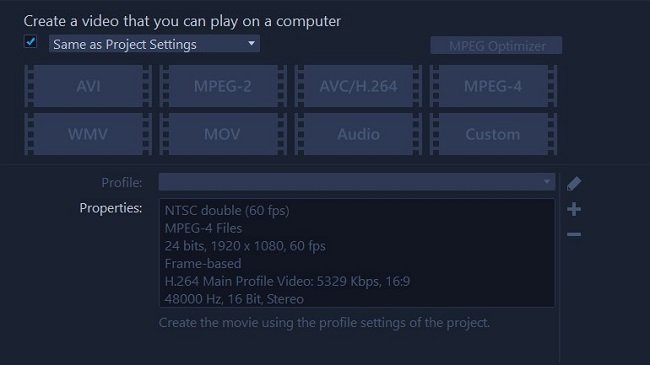
I spent most of this morning and afternoon editing video content I captured while playing Sniper Elite Resistance. I assembled 26 minutes of highlights and then recorded a narration. After adding appropriate branding for Contains Moderate Peril, I then uploaded the finished video to YouTube. Sadly, the picture quality was problematic, often becoming pixelated and blocky when there was rapid movement. The volume of my narration was also too low, so I decided to delete the video from my channel. I was somewhat disappointed by this outcome and initially thought that the day had been a waste of time. However, as I write this post, it becomes very clear that this is just part of the learning curve. I have given some thought to the problem and I believe I have determined why this video was not up to the standard of the previous one. Ultimately, this is an invaluable lesson.
I recently wrote a post about how I wanted to have a go at producing some gaming videos for YouTube. “How hard can it be?” I asked rhetorically, knowing that there would probably be a lot more to the process than meets the eye. Two weeks on and I can report back that there is indeed a learning curve but it is not insurmountable. I managed to figure out how to record a video game, edit it and then add a narration as well as a simple animated logo. Furthermore, I succeeded in doing this without spending a lot of money. I bought some video editing software and a year’s subscription to XSplit Broadcaster but got a really good deal on both. In total I paid £41, which is very reasonable. Hence yesterday, I posted my first video on the officially relaunched Contains Moderate Peril YouTube channel.

I regularly receive random emails addressed to such august bodies as “the Contains Moderate Peril team”. They always raise a wry smile. Like there’s a team. That implies an organisation, structure and even a budget. As opposed to just me, screaming into the void and pouring money into a financial black hole. I don’t resent such emails. People are just trying to earn a crust, I guess. The only thing about them that frustrates me, is they never address me by name. A cursory glance at the “about” page of the website would provide them with my personal details. So I just delete them and think no more about them. Today I received one that did more than make me smile. In fact I laughed out loud and heartily. The email started with “Dear Burton”. Someone had found a few old episodes of the Burton and Scrooge podcast and had assumed this was indeed my real identity.
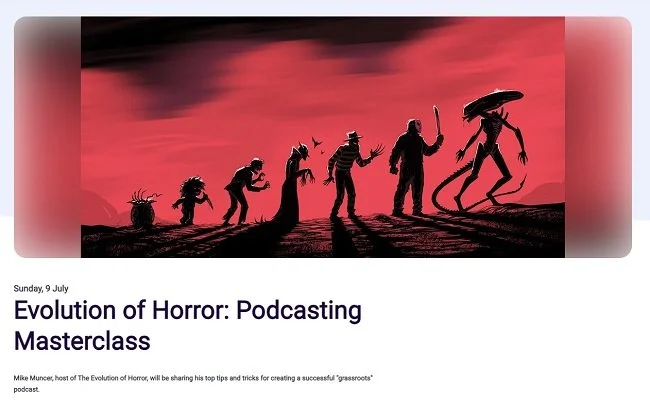
Earlier tonight, I had the pleasure of participating in the Evolution of Horror: Podcasting Masterclass. An online seminar conducted via Zoom. For those who are not familiar with the Evolution of Horror, it is a podcast written and hosted by Mike Muncer along with regular guests. It explores horror cinema in depth, considering the technical, thematic and sociological elements of the genre. Launched in 2017 this independent production has gone from strength to strength, with Mike now producing content for Paramount + and Studio Canal. The masterclass was designed to provide podcasters both old and new with some practical advice and answer some commonly asked questions. Being a fan of Evolution of Horror as well as a former podcaster, I signed up and enjoyed a most informative and enjoyable 90 minute seminar.
About three years ago, I wrote a very similar post to this one. Titled “Ride off into the sunset” it was an account of bloggers leaving or retiring from the community. Especially those who are established and part of the proverbial furniture. I referenced Zubon from Kill Ten Rats as an example and naturally invoked the mantra that nothing remains the same forever. Many of us go through periods of our life where a specific activity or pastime galvanises us into action. We focus on that activity for sometime and it becomes an integral part of our life and even identity. However, eventually we move on usually because such a hobby isn’t sustainable. Modern life makes too many demands upon our time. Plus we all change as individuals. What delights us today may well depress us in a year’s time. This was the thrust of that post and I now find myself in the sad but inevitable situation of writing it again.

I recently decided I’d had enough of the endless deliberation and procrastination and so I started producing a weekly podcast again. As of today the second episode of Season 10 of the Contains Moderate Peril podcast is available on all major platforms. I must admit, although I was confident that a few people would listen to the show, I was completely taken aback by the overall reaction. The Contains Moderate Peril podcast was warmly welcomed back by previous listeners on social media and the statistics for the first show have been most positive. For myself and Brian, recording the show is like putting on a comfortable pair of shoes. Last night’s recording went okay and I think after a few more episodes, the recording and editing process will be an efficient process. Keeping each episode to an hour or under means that the conversation stays on point.

Sometimes in life, you have to stop banging on about what you want to do and just go out and do it. I was thinking, yet again, over the Christmas holidays about how I wanted to get back into podcasting and to create a regular show. Although it is always a pleasure to be a guest on Beyond Bossfights, it is not quite the same as writing and producing your own project. So I decided not to sit around and overthink things but instead to pick a subject as a talking point, start recording and see what happened. As ever, my longstanding co-host Brian was happy to participate and so joined the session. Several hours later, I had a fully edited recording that was good to go. Hence, I am pleased to announce that after a three year hiatus, the Contains Moderate Peril podcast is back. A new episode is now available for download, either via the podcast page of this site or through iTunes and Stitcher.

My personal podcast journey started back in 2010 when I effectively invited myself onto the Mordor or Bust podcast. The three of us who were involved in the production of that show were learning as we went along. I recently listened to an old episode and despite our enthusiasm, it is quite rough around the edges from a technical perspective. I think that the biggest mistake that I made at the time was not investing in a better quality microphone. I sound like I’m at the bottom of a well. It’s hardly surprising as I was using a very cheap analog desk microphone which I think only cost a few pounds from PC World. Roll on eleven years and I’ve been invited to be a guest on the Beyond Bossfights podcast. It’s nice to be back in the saddle again, so to speak. Up until now, I’ve been using my Razer gaming headset for any previous podcast recordings but I’ve decided to take the opportunity to overhaul my technical setup.

Back in 2010 there was a video game podcast boom, especially with shows driven by MMORPG fandom. Hence, in a fit of hubris, I decided to add my voice to the growing conversation. Or alternatively jumped on the bandwagon, depending upon your point of view. The accessibility of the tools to create and distribute a podcast eliminated the traditional barriers to producing such material. Technically, the entire process of making a podcast remains quite simple. You record, edit, upload and promote. The quality of the podcast comes down to two factors. Your content and technical presentation. In this post I’d like to focus upon the latter. Podcasts are by their very nature, an audio medium, so it is important that those speaking are recorded clearly. Yes, this post is about microphones. How they can make or break a podcast (or live stream) and that they’re my new fixation.

Back in July 2014, a small group of podcasters banded together to launch The Gaming and Entertainment Network, a website which aggregated the content of eight independently produced shows. This eclectic group of podcasts covered a range of subjects such as gaming, movies, TV, hats and bacon as well as other aspects of popular culture. The project was conceived and implemented by Braxwolf from the popular blog Gaming Conversations. It was designed to raise awareness of the respective shows, as well promote group collaboration between the content creators. In addition to the website, TGEN (as it was abbreviated to) also had a presence on twitter, Facebook and Anook ensuring that the network was represented on all popular social media. Initially 8 podcasts participated in the project. Aggrochat, Battle Bards, Beyond Bossfights, Cat Context, Contains Moderate Peril, Couch Podtatoes, Massive Failure and Roleplay Domain.

Life is often about the things we’d like to do or wished we had done, rather than the things we’ve actually achieved. My last post in this blog series was back in 2nd October 2018 and the last podcast that I published was in January 2019. Since then most attempts to produce more content of this kind have come to nought, as spare time for both recording and editing have been in short supply. However, I did manage to record some material on the 22nd of December with my long-time co-host Brian. The idea was to release the finished podcast as a surprise show at the end of the year. However, due to real world commitments, that deadline has not been met. Now there’s a surprise. I do intend to finish editing the show and may add some extra material to make it a little more topical. But overall, I am not too upset by this delay, because in the process of organising this podcast, I discovered a quick and convenient means of recording via Discord. Something that has been seen as Holy Grail of podcasting over the years.

As part of the Blaugust Festival of Blogging, I thought I’d take the time to promote some of the content creators whose work I enjoy. Despite all the white noise, click bait and snake oil salesmen, there is still a wealth of good material to be found online, be it blogs, podcasts, You Tube channels or streamers. Most of what I currently enjoy, I discovered through word of mouth. I feel more disposed towards trusting the views and opinions of friends than I do of “recommendations” made by Google and You Tube, driven by their “questionable” algorithms. These are often determined by key words and have no ability to ascertain quality. So here are a mixture of You Tube channels, podcasts and blogs that I wholeheartedly recommend. Between them they cover such subjects as movies, gaming, comedy and history. Feel free to leave comments about my choices and share your own recommendations.
I’ve been pondering a new podcast project for a while, since Contains Moderate Peril ended a year ago. As I’ve discussed in previous posts, I want to create a movie-based show and have been considering of late exactly what sort of format to adopt. I don’t go to the cinema often enough these days to produce a contemporary review orientated podcast, plus I don’t find a lot of mainstream releases to be sufficiently engaging. Despite looking and pursuing discrete enquiries, I haven’t been able to find a co-host who is sufficiently knowledgeable, motivated or available to do a regular show producing the audio equivalent of long form criticism of films and the movie industry. So, it’s been a bit of a chore to try and work out which niche to explore. However, I have now a clear idea of what I want to do.

I have no problems finding podcasts and You Tube channels that explore the subjects that I like. It’s determining which ones are any good that is the real trick and the only way to do this is to sit down and listen or watch them. Sometimes you need to give two or three episodes a go before you can truly determine if a show is for you. So, I thought it may be useful to share another small selection of the content that I am currently enjoying, so you don’t have to wade through quite so much “white noise” that fills the internet. I’ve made a conscious decision to select a broader spectrum of material and not to focus just on gaming. All the shows recommended are freely available although you can support the content creators if you wish to. Feel free to leave comments on the titles listed and share your own recommendations.

Today I did a little blog housekeeping. I’ve reposted the last five episodes of the Contains Moderate Peril on the podcast page, now that previous hosting account has been closed and the RSS feed is defunct. The files are held locally and can either be played via the embedded player or downloaded manually. There are also two episodes of the Burton & Scrooge Podcast still available on SoundCloud for posterity. The podcast page and selection of episodes available are for reference and as an example of my podcasting back catalogue, so to speak. I may not be actively creating content of this kind at present, but I see no reason not to promote my experience in the field. If circumstances change in the future, there may be resumption of service.

I made a hard decision today. I cancelled my Podbean subscription and have effectively closed the Contains Moderate Peril podcast. Despite relaunching the show last September, I simply haven’t had the time to collate content for discussion or organise recording sessions with co-hosts. Hence, we are now two months into 2018 and a new show has not yet been produced. Furthermore, the listener numbers for the episode posted between September and December last year were disappointing. Upon mature reflection, I have reached the conclusion that the podcast peaked in 2014 when we had a strong and established audience. Rather than chase my own tail trying to recapture something that may well have been a product of circumstance, it seems prudent to finally draw a line under this show. I’m a little sad about this situation, as it does feel like the end of a personal era, but it is time to move on.

2017 didn’t quite go to plan with regard to my personal podcast output. Brian and I decided to stop producing the Burton & Scrooge Podcast and return to creating material under the Contains Moderate Peril brand. This was a good idea in so far as consolidation, but it was ill timed as both of us were somewhat fatigued with podcasting per se. Ultimately Brian decided to take a break and pursue some projects of his own. I decided to push on with podcasting in my usual idiom and I was pleased with the three new shows that were produced. Sean, Brax, Jaedia and Wolfy were extremely obliging and great guests, but ultimately my schedule just couldn’t sustain a regular show. Hence, I re-released some “classic” shows to fill the gaps in the run up to Christmas. As a result of all these changes and the delays, the overall numbers for the show have been disappointing. Although statistics are not the only reason why I podcast, they are important as I was hoping to grow the audience this year. That has patently not happened although it is nice to know there’s a loyal core group of listeners. Therefore, I now have to think long and hard about my podcasting plans for 2018.

Ever had what you thought was a great idea for a podcast that looked good on paper but turned into something quite different, once you started recording? Well I had that experience on Sunday evening and today I am dealing with the results. It all started with an innocuous Twitter conversation (don’t many things I hear you say) which highlighted a minor cultural difference between the US and the UK. Having recorded with an American co-host for many years this is a common occurrence, so I decided to make it the theme of the next Contains Moderate Peril podcast. I initially thought of several fun examples that could be discussed; the British obsession with the weather, cheese-rolling and Morris dancing. However, rather than take a scattergun approach, I decided to list specific categories in the show notes. Subjects such as school, work, food, social customs and public holidays were added for discussion and I believe that is where thing started to go wrong.

Podcasts are becoming an invaluable medium for the analysis and discussion of niche interests and bespoke subjects. Many of the shows that I regularly listen to bring professional quality documentary skills to bear on unique and varied areas of fandom. More and more podcasts are being made by informed and intelligent fans, offering in-depth material rather than just light weight banter. Simply put, I am spoilt for choice. Therefore, it is essential to have a suitable podcast management app to stay on top of such quality entertainment. Something that allows me to curate and organise those shows that I currently enjoy, as well as providing recommendations for comparable material that I may wish to subscribe to. For several years I’ve been using Podcast Addict on my Android devices, although I’ve struggled to find something comparable for my PC.

Last night, myself, Hannah and Chris (AKA Jaedia and Wolfyseyes) had an especially productive recording session. We managed to produce two hours of material in total and I’m confident that it can be whittled down into a coherent and enjoyable ninety-minute episode. What I especially enjoyed about this podcast recording was buoyant atmosphere and the flow of the conversation. I felt that we explored the various topics well and that the discussion felt natural. Ultimately, it will be the listeners who’ll determine whether this is the case or not but from my perspective the recording went well because the guests were a good choice. If you are pursuing a podcast format that has multiple hosts or regularly features guests, then it is important for there to be a rapport between all involved.

As I surmised, in its current state Squarespace has proven an inadequate host for my current podcast. After exchanging several emails with Apple support, I was informed that “the server for your episodes does not support HTTP HEAD requests. To enable streaming playback of episodes, ensure the hosting server allows HTTP HEAD requests and has byte-range requests enabled”. To cut a long story short, there is no scope for me to alter any of these things at present within the Squarespace dashboard. Nor did I want the work involved in using a third-party feed managing service such as FeedBurner. So, I decided to open up an account with a commercial hosting service. After some research, I determined that PodBean could cater for all my needs and at a competitive price. Submitting the new RSS feed was easy and Apple approved the podcast within 36 hours. As of today, the Contains Moderate Peril podcast is back on iTunes.

Whenever I encounter a word or term that I’m not familiar with, I will usually Google it. That’s the way I’m wired. I prefer to “know” rather than “not know”. However, it is not the concept of continuous self-improvement that I wish to discuss in this post but something else. Namely sociolinguistics. Earlier today I saw someone mention vocal fry on Twitter. I had no idea what that was so I checked on Wikipedia, watched some You Tube videos and finally read some newspaper articles. An hour later I was aware of not only vocal fry, but run-ons, uptalk, glottal Ts and the fact that the way we speak has a major impact upon our lives, just like education and class. According to sociolinguistics, the manner in which you speak has a major impact on the way you are perceived by others. Sadly, like so many other social markers, it can be used in a discriminatory fashion.

Back in April I decided to relaunch the Contains Moderate Peril podcast for reasons of brand continuity. At the time, I was hoping to get back in to the podcasting saddle and return to producing weekly shows. However, the recording session was fraught with technical problems with Zencastr crashing regularly. I was left with nine separate audio tracks that weren’t in sync which made editing a major problem. There then followed a wealth or real-world issues that I had to address that meant for the next three months the podcast was put on hold. Finally, at the beginning of August I managed to complete the post production work on the show and publish it via Squarespace. I was hoping that using this existing website as a host for the show would save some money and reduce the work load. However, like most plans, it didn’t exactly work out that way
Finally, after several months of diversions and distractions, I’ve managed to produce a new podcast. As I mentioned in a previous post, the Burton & Scrooge Podcast has been officially retired and for practical reasons of brand consolidation, the Contains Moderate Peril Podcast has been reinstated and will become the official show for this website. However, it should be noted that this latest episode is specifically designed to be a technical test meant to validate our RSS feed for submission to iTunes. Once this logistical issue has been dealt with and the podcast is accessible on all major platforms, then further episodes of the show will be scheduled for Autumn.
Blaugust 2021: Lessons Learned
It is the final week of the Blaugust 2021 Festival of Blogging event and the current theme and writing prompt is lessons learned. As a long term writer I do not have much to say on this matter. That’s not because I know everything and think there’s nothing new for me to come to grips with. You can always discover relevant and pertinent advice throughout your blogging journey. However, I do now have a fairly orderly writing regime and it serves my needs. The thing that most often derails this process are other demands upon my time. Overall, I think I have a positive approach to writing and it continues to bring me many benefits. With regard to lessons learned, I find it far more interesting to read others' thoughts on the matter. Especially those who are new to blogging or are trying to rekindle their passion for it. Krikket, Blockade85 and Aywren share some personal thoughts based upon their unique experiences.
It is the final week of the Blaugust 2021 Festival of Blogging event and the current theme and writing prompt is lessons learned. As a long term writer I do not have much to say on this matter. That’s not because I know everything and think there’s nothing new for me to come to grips with. You can always discover relevant and pertinent advice throughout your blogging journey. However, I do now have a fairly orderly writing regime and it serves my needs. The thing that most often derails this process are other demands upon my time. Overall, I think I have a positive approach to writing and it continues to bring me many benefits. With regard to lessons learned, I find it far more interesting to read others' thoughts on the matter. Especially those who are new to blogging or are trying to rekindle their passion for it. Krikket, Blockade85 and Aywren share some personal thoughts based upon their unique experiences.
Over the years, events such as Blaugust and the original Newbie Blogger Initiative have shown me that many people are writing as a means of self discovery, personal challenge or even self therapy. I understand this as I use writing as a way to order my thoughts and ponder the many of the issues that face us in life. I find that writing my thoughts, as opposed to face to face debate with others, is beneficial as it can be conducted without rancour. One has time to research a subject, reflect upon it and then form a considered opinion. However, I appreciate that others are blogging to do more than this. They are trying to conquer self doubt, work through a problem or test themselves. Blogging certainly does appear to be a valid form of cognitive behavioural therapy. It can have very restorative properties and be a source of support and community. I like to think that Blaugust contributes a little to these.
With all this in mind, I think there is another aspect to blogging that needs to be mentioned. It is a very personal undertaking. Yes, you can write under a pseudonym if you prefer and many people do. You can control to a degree who gets to see your writing. But there is still an element of “baring one’s soul” to it all and I think that is quite brave in some respects. We live in an age where we all have a degree of unparalleled reach due to social media and the internet. Yet that comes with a degree of risk in so far as the moment you stick your head above the parapet, then people may well take pot shots at you. There’s no shortage of angry people online and hatred is sadly an all too common currency these days. Yet I read blogs where the authors talk about their personal struggles be it physical or mental health, or the realities of their day to day lives which can be challenging. That takes courage as far as I’m concerned.
Which is why I think Blaugust in its final week should be short on criticism and long on praise. It doesn’t matter if you didn’t quite hit the target you set yourself or that you haven’t quite yet achieved global domination from your volcano lair. At least you posted some blog posts and have a swivel chair. You’re a step further along the road and that’s much better than not doing anything. Maybe you’ve discovered if blogging is for you and what you will do next. Plus hopefully you’ve found some new blogs and added them to Feedly or whatever list you keep to stay abreast of what is happening. The Blaugust Discord server is active all year round and you can always find people to offer advice and talk to. Hopefully, upon mature reflection the lesson learned by all participants over the course of the previous 30 days is “I’m glad I did it”.
There is a subtle difference between being rash and being proactive. Being rash means acting too fast without thinking about the results, while being proactive is a question of acting early with careful planning. Why have I mentioned this? Well prima facie information indicates that recent Blaugust participants are interested in an “official” online presence for the annual festival of blogging, other than that existing Discord server. That seems perfectly reasonable to me. Not everyone likes using Discord and I do worry that they may reduce its free functionality at some point in the future. With regard to there being a Blaugust platform of some kind, there is a consensus that it doesn’t need to be some sort of sprawling commercially hosted website running on Wix or such like. Those sorts of site require funding, a degree of admin and possibly private data management. It also a bit too “corporate” if you like. Hence the logical compromise is to have a static site. Let it suffice to say, that has been done.

Judging by the posts I’ve read, it would appear that Blaugust 2026: Festival of Blogging has been well received by those who participated in it. That is most satisfying to know, especially in light of the fact that this is the first year the event has been run without our founder who sadly past away in July. It has also become clear that Blaugust is reaching a far wider and diverse audience and most definitely is no longer the exclusive province of bloggers from one particular community. There has been healthy discussions on our Discord server about whether this year event needs to adapt to accommodate the modern blogosphere. Questions such as whether or not there needs to be a dedicated Blaugust website have been raised and explored. Should every site participating have an RSS feed? How, if required, should comments be handled. Inevitably, the subject of the use of AI in blogging still remains a controversial issue.
After a very productive month of writing, we come to the final Blaugust 2026 Group Project writing prompt. It is titled lessons learned and is usually a chance to reflect on the festival and whether or not it has been to one’s satisfaction. Have you achieved your goals? What have you gained from the experience? Those sorts of things. It also poses two further questions; “What is the best piece of advice you’ve ever been given?” and “what’s the best advice you’ve ever given to someone else?” for your consideration. I’ll address the questions shortly. Firstly let’s mull over this years event and assess how it’s gone.
It was my blogging anniversary on the 16th August. I’ve been writing and sharing my post online for 19 years, via various different websites and blogs. This current iteration of Contains Moderate Peril has been around since August 2015. To date it has 2,171 posts including this one. Quantity does not necessarily equate to quality but there are some articles I am proud of and feel that they make their point effectively.
This week’s Blaugust 2026 Group Project writing prompt is an important topic. Namely, staying motivated. I prepared a fairly lengthy post with some advice and ideas to keep people focused and writing. Then I checked it against the post I wrote last year and the year before that, going back to blogging events from 2012. All of these posts broadly said the same thing, so I decided to scrap what I had composed for today and to go with a simpler approach. I shall answer the questions Krikket posed for this writing prompt. Fellow blogger Bhagpuss has also done so and as ever, his thoughts are interesting and well expressed. Here are my answers.

Once again, I have stumbled across an interesting debate that has provided me with an opportunity to write a blog post. Over on the Blaugust Discord Server, I read a comment from AgingGamer regarding RSS feeds and their significance with regard to blogging. This in turn referred me to a post by fyr (don’t you love all these nom de plumes) who wrote at depth about the ongoing community debate about the use of RSS/Atom feeds. The article explored the importance of such feeds with regard to reaching readers and providing accessibility to the disabled. All of which provided me with a great deal of food for thought. Mainly because I use a mainstream website service provider for my online endeavours, so RSS is by default built. I’ve never really considered not having such a facility at my disposal. But the rise in the IndieWeb scene challenges this assumption.

I have written two blog posts today that I have subsequently abandoned. The first was gaming related but when I was about halfway through writing it, I felt like I was covering old ground and just repeating myself. It was also regarding an issue that can’t really be fixed. Namely, how do you ensure that matchmaking in PVP games is done equitably. As there is no solution to this issue at present, or at least not one that all parties can agree on, I decided to ditch it. Similarly a post I was working on about what becomes of my blog if anything happens to me was curtailed. In light of recent events in our community it seemed inappropriate. However, as a result of binning two blog posts, I new idea occurred to me. Do my fellow bloggers self-edit and curtail what they write about? Is your blog totally unfiltered or do you apply a set of rules that determine what content is deemed acceptable?
It is time for the next Blaugust 2026 Group Project writing prompt. This one comes with two lines of enquiry. The first is an opportunity to “introduce yourself”. Over the years, I have written several introductory posts for previous Blaugust events. Rather than repeat myself I’ll just link to the last one, which was posted in August 2023. I haven’t radically charged since then apart from my hair going whiter. The next part of the prompt poses a far more intriguing question. “If you could have one magical power or super power, what would you choose and what would you use it for?”, which offers much for consideration. Having given this proposition much thought here is my response.

A decade ago I wrote a post about blogrolls and the practical and social issues surrounding them. At the time, the version of Squarespace I was using didn’t easily support such things or at least wasn’t able to do so in a manner I liked, so I didn’t have one. Ten years later Squarespace as a hosting platform has far greater functionality, hence I recently decided to add a blogroll. That was in March this year. However it just wasn’t really fit for purpose. So I decided to revise it a few days ago and rather than just have a traditional list of blogs in a side column, I ended up producing a more comprehensive blog directory, which list two hundred plus sites alpha-numerically. I’ve been tinkering with it on and off and I am now finally happy with it. The latest update reflects the international nature of the Blaugust: Festival of Blogging and the fact that we have many blogs written in their native language. Translating text is now an integral function of web browsers, so I see no reason why these blogs should be excluded.
Today’s post is part of the Blaugust 2026 Group project, which features a series of writing prompts set for specific dates throughout the month. The idea being that everyone who wishes to participate can write about the same subject, riff off each other’s posts and enjoy a shared experience. In many respect having a common writing prompt levels the playing field and provides a sense of common purpose among those who take part. Today’s group project prompt asks the question “tell us all about your very first blog”. An unambiguous and interesting question that will hopefully prove enjoyable to write about and informative to others.

I have been writing online for nearly two decades. I don’t claim to be good or accomplished but what I can say with certainty is that the more often you write, the easier it becomes. For those who are new to writing a blog and the Blaugust Festival of Blogging, possibly the biggest hurdle that you now have to get over, is writing your first post of the month. You spent the lead up to this event sorting out your blog templates, fine tuning the backend and possibly banking some ideas. Or you may have decided to just wing it and make it all up as you go along. Both are perfectly valid approaches. However, there is one thing left to do that cannot be put off, avoided or danced around. Writing. At some point you’ve got to do it. Or bail on the event. The proverbial “shit or get off the pot”.
If you take a cursory look at a calendar you will see that the month of July is fast coming to an end. That means that Blaugust 2026 Festival of Blogging starts in a few days time! If you’re participating, or thinking of doing so, the next few days present a golden opportunity to do some practical organising and basic preparation. You don’t have to if you don’t want to. Feel free to just do things as they come, so to speak, if that’s your approach. However, for most of us, it helps if we have some kind of plan in place and make some arrangements in advance. I personally prefer this approach and like to have some ideas for blog posts in the bank. It is also useful to have “options” if something doesn’t go to plan. For those who are new to Blaugust, here are a few ideas regarding preparation that may be of use to you. As ever, your personal mileage may vary and ultimately you are best off adopting a strategy that suits your writing style and personal schedule.

Prior to last year’s Blaugust: Festival of Blogging, I upgraded Contains Moderate Peril to the latest version of Squarespace. There are still some aspects of the site that need fine tuning but overall, I am happy with the appearance of my blog and its respective functionality. With this year’s writing event fast approach, I decided to tackle over the last few days, some of those finer points that need tweaking. I have wanted a post counter on the site for a long time but unfortunately there is no native Squarespace widget for this basic function. I also felt the need to upgrade the blogroll, as the current one didn’t support RSS feeds from certain sites (e.g. Google Blogger) and was dependent upon a third party service, Elfsight, which wasn’t ideal. Both of these issues have now been addressed and I am pleased with the results. There is now a post counter on the Blog Archive page, which seems a logical place to have it and the Blogroll is now far more comprehensive.
Next month the annual Blaugust: Festival of Blogging begins. Roundabout this time each year, I try to write a promotional post to raise awareness of the event and encourage potential participants. However, as I’ve done this quite a few times before, each year it is becomes increasingly difficult to present the essential facts about Blaugust: Festival of Blogging in an interesting fashion. There’s nothing worse than writing a post and feeling that you’re just covering old ground. So, this year, I thought I’d try something different and present the most important information about this annual event, as if it were a conversation between myself and an interested passer by. Feel free to attribute novelty voices for each party in your own head, while you read this. If it helps, try imagining that this discussion is happening between two celebrities or such like. Both may be wearing exotic hats but I digress. On with the scenario.

I read a blog post by Void recently, about finding a new internet home. He wrote about how he and many others have had to pick up their “digital roots” and migrate multiple times over the years, from one platform to another. It is a position I can sympathise with as I have done likewise. Hence I like the idea of having a place online where I hangout by default. My own blog is an anchor for me but it is not quite the same thing as a platform or online portal where I can find all my friends and colleagues, share content and shoot the breeze. It’s a curious thing, because as I typed that last sentence it struck how such a sentiment may seem alien to others. There may well be people who like to have a finger in multiple pies and who are happy to frequent and flit between various social media apps, Discord servers and subreddits. I prefer to focus my efforts on a single instance. A place that suits my requirements, allows me to put down roots and become part of the furniture. Like a virtual Diogenes Club.
Everyday, once I’m up, I sit at my desk in my office, fire up my PC and log into Feedly. I have various RSS feeds grouped by category, which I slowly trawl through and read anything that catches my eye. I have one curated feed named “Blaugust” named after the yearly festival of blogging event. It has over 250 blogs listed, many of which are former participants. Most of these regularly post. Hence there’s a lot to get through and so I don’t read all of them. However there are a few that I always checkout. Mainly because they’re the personal musings of some of our writing community’s oldest and most prodigious members. The sorts of guys and gals who are part of the furniture. They’ve always been there and it feels like they always will. Posting their thoughts, sharing their enthusiasm and spreading the love, so to speak. One of these blogs, is Tales of the Aggronaut. written by Belghast.

On Friday 26th June, I had another random spike in internet traffic to Contains Moderate Peril. The statistical package that comes with my Squarespace account recorded over 13k visits in less than 24 hours, which is not typical (although I wish it was). However, all of these visits to my blog arrived via the default homepage and spent between 1 and 2 minutes there. Hence, it was obvious that this was not human traffic, as there was no evidence of any searches being made of content that is available on my site, nor of the “visitors” clicking on any of the links on the top menu and viewing other posts. This was undoubtedly AI traffic arriving at the designated homepage and simply parsing the site. I had a similar spate of this sort of web traffic last November. The only difference on that occasion is that the traffic all came from China. This time round it hailed from the US. I suspect that this is something that will happen more often as companies set their AI loose on the net for what is effectively training.
I recently watched a video on Patreon by someone who I actively support as a “content creator” and whose work I enjoy. I shall provide no more detail regarding their identity because they may not want their work referenced with regard to what I am going to say. During the course of their video they briefly referenced the work put into promoting a podcast they are currently producing and the relatively low audience that it has garnered so far. The comments were an aside and most certainly not said with any sense of self-pity. They were simply a statement of fact. Furthermore, I suspect they are far from unique and similar sentiments have been expressed in one way or another by anyone who has created something the published it online, only for it to be lost among the greater white noise” of the wider internet.
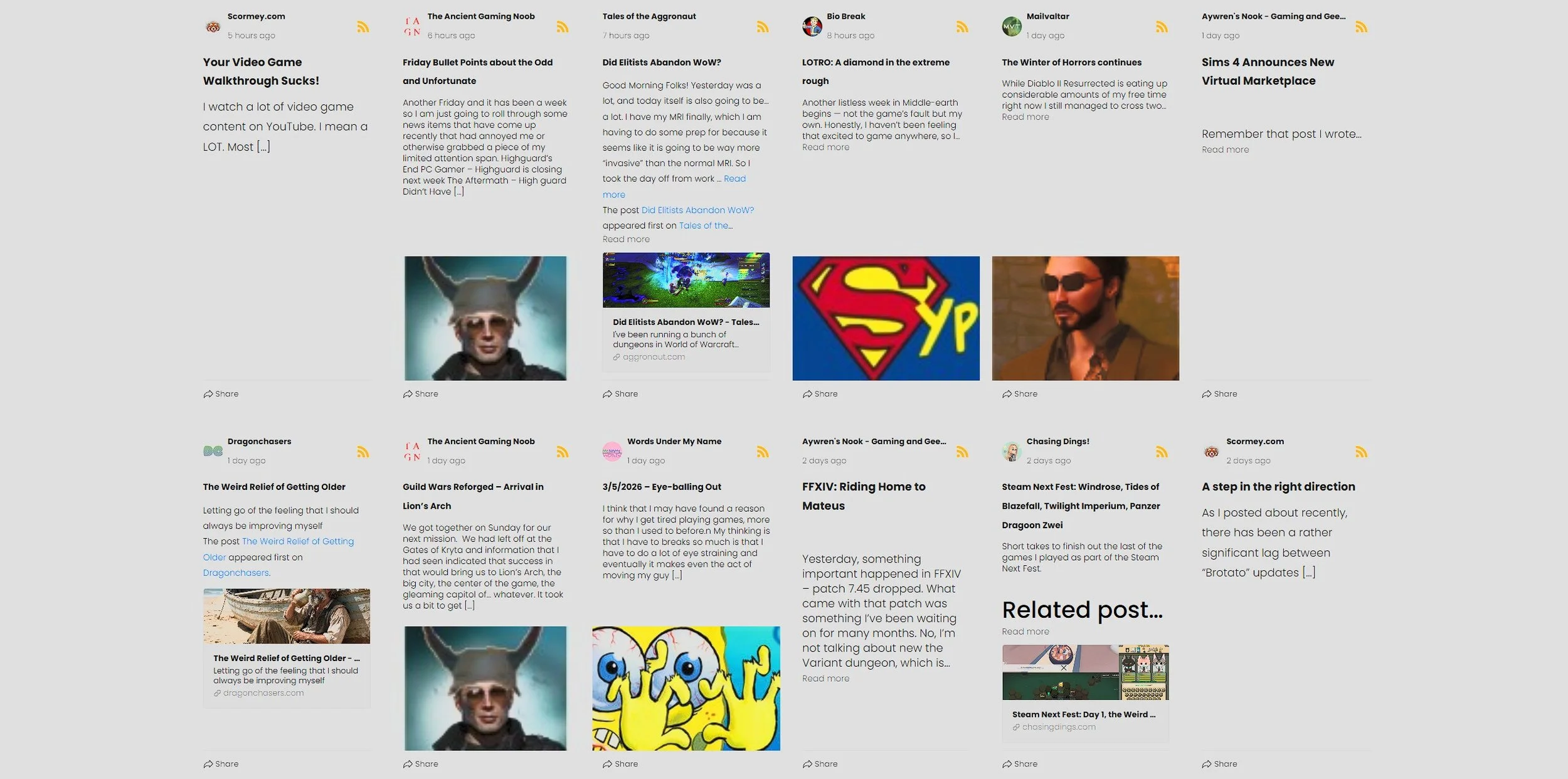
When I first started blogging way back in 2007, I maintained a blogroll of all my colleagues and peers’ websites. At the time this was a common practice and a way to support an expanding community. I considered this such an important aspect of the blogging scene at the time, I created a website to aggregate posts from video game blogs, called The Gaming Blog Nexus. It ran for two years and proved quite useful. However, it was tricky to administer and would frequently break as a lot of the back end widgets and plugins were created and maintained by “gifted amateurs”. I eventually shut it down due to the operating costs. When I moved my own website, Contains Moderate Peril, to Squarespace in 2015 I intended to start maintaining a blogroll once again. However, at that time there was no native support for such a thing on the platform. Hence for the last ten years, I have not had a blogroll on my website, which hasn’t sat well with me.

I was speaking to someone recently about hobbies (fortunately it wasn’t Simon Quinlank) and I mentioned that I have maintained a blog for over a 19 years. When I talked about the ongoing cost they were most surprised, as they had assumed that blogging was something that could be done for free. I guess we’ve become so accustomed to the provision of free online services such as email, that this a reasonable assumption. I pointed out that although it is indeed possible to blog for free using Blogger, it was not the optimal approach, especially if you want to maintain some degree of control over your writing. Naturally, the next question they asked was how much do I spend and I gave them a ballpark figure. All of which reminded me that I wrote a post on this very subject a few years ago. So I’ve decided to revisit the subject and see how much it currently costs to maintain Contains Moderate Peril.

Today I started the slow process of auditing every post that has been published on Contains Moderate Peril since 1st August 2016. The goal is to correct any obvious typos and replace all existing images with larger ones. The Squarespace software upgrade I applied to the website at the end of last year has finally allowed me to establish a standard format that I am happy with. Hence the ongoing audit is the perfect opportunity to apply these style rules to all posts. There are also some technical issues and matters regarding functionality that need to be addressed. I need to determine how to embed YouTube videos in such a way that they automatically scale to fit whatever device is viewing them. Another area which needs improving is the website search facility. This needs refinement so that enquiries can be more specific. Older posts also need to be more accessible, although I am still researching how best to achieve this.

It’s nearly two and half months since the Blaugust: Festival of Blogging event ended. During that time I’ve maintained a fairly regular writing schedule and I post every two days or so. Furthermore, I finally dragged my blog template, kicking and screaming, into the modern era. I tweaked a few pages and updated the content of the “about” page. The next task is to start going through all previous posts and replacing older, low resolution images with larger, more appropriate ones. This process also presents an opportunity to ensure that all posts follow a uniform style. IE Are appropriately categorised, have links to related posts at the bottom and are SEO optimised. This will be a lengthy task so I think the best approach will be to tackle two or three posts a day. Hopefully this will raise the profile of older content, which generates the lion’s hare of traffic to this site.
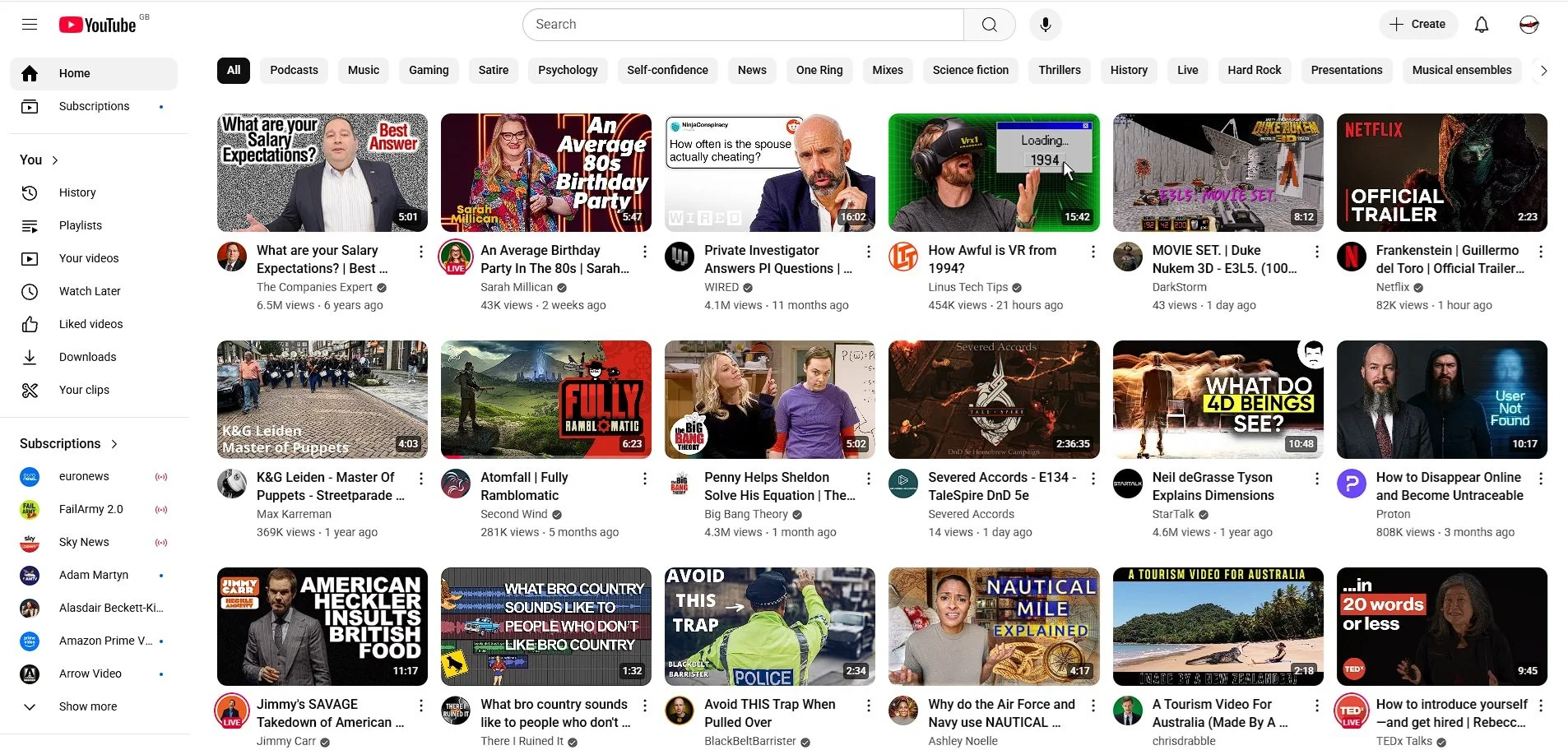
I use a browser extension called Control Panel for YouTube, which allows me to determine who many videos are displayed on my YouTube homepage and to filter the content that is shown. At present it is configured to display rows of six. Something that I have noticed of late, is the amount of videos with hyperbolic titles and thumbnail images created by AI. Both of which are design choices made to increase engagement. Clickbait titles are contrived to meet current SEO optimisation criteria and as such feature more and more in search results. The fact that they frequently have no relation to the subject I am researching, seems to be neither here nor there. The same issues arise with regard to AI generated images, which again frequently have no bearing on the matter. The fact that more and more content creators do this, infers that it works and is now an essential part of the process you must follow to be seen and featured in search results.

In the last post in this series, I specified the need for a plan with regard to upgrading my blog. Well a plan has emerged, been refined and has now been formally adopted. Rather than migrate Contains Moderate Peril to a new platform and effectively have to rebuild all the content, I am going to upgrade my existing presence on Squarespace. This decision was made for two reasons. Time and money. Migrating to a new platform will take a lot of time and incur additional costs. Upgrading the existing website will take less time and has no cost implications. That is not to say that it will be easy. It has become abundantly clear that the upgrade process will break stuff and that all published posts will have to be manually repaired. Hence my choice boils down to the lesser of two evils.
This year’s Blaugust: Festival of Blogging has reached an end and it would appear that this event has been well received by those who have participated in it. I believe that there were 168 bloggers taking part this year, many of whom have not participated before. Some were new to blogging, where others simply wished to see if they could increase their writing output. As ever there was a wide variety of blog styles and subject matters and it has been most interesting to read new posts every day. I have attempted to leave comments and positive feedback where I can and I hope that some of these new blogs that I’ve discovered continue to write. Well done to everyone who took part. I hope it has been an enjoyable and informative process and that you have learned from it. I know that at least one blogger has determined that writing online is not for them, which is a valuable lesson.
There is currently a group writing prompt available as part of this year’s Blaugust: Festival of Blogging which has piqued my interest. It asks the question “what is the oldest draft post you have” and suggests that it is revived in some manner. I have dozens of draft posts in a folder in my Google Drive. Many are film reviews or film related. The oldest of which dates back to summer 2010. Rather than write a straight forward review of Blake Edwards 1968 comedy The Party, I rather foolishly thought at the time that I’d tackle the issue of whether the film is sufficiently racist to make it beyond the pale. Let it suffice to say that I quickly found myself bogged down in the complexities of the subject and thus never completed the blog post.

I’ve participated in every previous Blaugust: Festival of Blogging event. Prior to that I was involved in the Newbie Blogger Initiative or NBI as it was affectionately known. I have therefore written quite a lot of blogging advice and suggestions over the years. If anyone feels disposed to do so, you can access them all by clicking on the “blogging” option on the top menu of this blog. However, it is important to remember that a lot of the ideas I have advocated and written about over the years are purely subjective. Not all advice or guidance works for everyone. People have different ideas about blogging, different approaches to it and different aspirations. This year has highlighted some quite distinct differences among bloggers which has been most illuminating.

Today is my blogging anniversary. I have been writing online consistently for 18 years. My earliest blogs no longer exist, although they can be found via the Internet Archive Wayback Machine. My first blog was a Lord of the Rings Online fansite called Misadventures in LOTRO. After a while this morphed into a wider gaming website; Misadventures in Gaming. However, I soon discovered that I wanted to write about more than just video games, so I decided to start from scratch and created Contains Moderate Peril in February 2010. This blog endured and has been my main online presence ever since. It has moved several times for various reasons. For a while I had a sponsor, as well as a reasonably sized audience and had dreams of making money from my writing and podcast. But it wasn’t to be and now I just write primarily for my own peace of mind and amusement.
This year’s Blaugust: Festival of Blogging has already raised a very interesting debate. An old one that habitually comes up when discussing blogs. Namely, whether a blog should or should not have “comments” enabled. However this time round there is a different slant on things. Rather than the usual binary choice of having comments enabled or disabled on your site, this time round there is a third option available. Leaving comments via email or a third party service such as Mastodon. Both of these additional options keep comments conspicuously at arms length from your website. Furthermore, the email option makes the comments private, instead of in the public domain. All of which puts a subtly different spin on conventional notions of blog comments and makes this ongoing discussion all the more interesting.
Yet More Cult Movie Soundtracks
Tenebrae (1982) is probably Dario Argento’s most accessible “giallo” for mainstream audiences. Although violent, it is not as narratively complex as Deep Red (1975) or as bat shit crazy as Phenomena (1985). The story centres on popular American novelist Peter Neal (Anthony Fanciosa) who is in Rome to promote his latest book. Events take a turn for the worst when a series of murders appear to have been inspired by his work. The plot twists and turns, the director explores themes such as dualism along with sexual aberration and blood is copiously spattered across the white walled interiors of modernist buildings. It is slick, disturbing and has a pounding synth and rock score by former Goblin members, Claudio Simonetti, Fabio Pignatelli, and Massimo Morante.
Tenebrae (1982) is probably Dario Argento’s most accessible “giallo” for mainstream audiences. Although violent, it is not as narratively complex as Deep Red (1975) or as bat shit crazy as Phenomena (1985). The story centres on popular American novelist Peter Neal (Anthony Fanciosa) who is in Rome to promote his latest book. Events take a turn for the worst when a series of murders appear to have been inspired by his work. The plot twists and turns, the director explores themes such as dualism along with sexual aberration and blood is copiously spattered across the white walled interiors of modernist buildings. It is slick, disturbing and has a pounding synth and rock score by former Goblin members, Claudio Simonetti, Fabio Pignatelli, and Massimo Morante.
One Million Years B.C. (1966) is a delightful collaboration between Hammer Studios and stop motion animation legend Ray Harryhausen. It is the tale of how caveman Tumak (John Richardson) is banished from his native Rock tribe and after a long journey encounters the Shell tribe who live on the shores of the sea. It’s historically inaccurate, with dinosaurs, faux prehistoric languages and Raquel Welch in a fur bikini. It is also great fun and features a superbly percussive and quasi-biblical themed score by Italian composer Mario Nascimbene. Nascimbene was an innovator and often incorporated non-orchestral instruments and random noises, such as objects being banged together or clockwork mechanisms, into his music to underpin the stories it was telling. There is a portentous quality to his main opening theme as the earth is created and primitive man emerges.
Get Carter (1971) is a classic, iconic British gangster film featuring a smoldering performance by Michae Caine. The musical score was composed and performed by Roy Budd and the other members of his jazz trio, Jeff Clyne (double bass) and Chris Karan (percussion). The musicians recorded the soundtrack live, direct to picture, playing along with the film. Budd did not use overdubs, simultaneously playing a real harpsichord, a Wurlitzer electric piano and a grand piano. The opening theme tune, which plays out as Caine travels to Newcastle by train, is extremely evocative and enigmatic with its catchy baseline, pumping tabla and echoing keyboards. The music is innovative and a radical change from the established genre formula of the previous decade which often featured a full orchestral score.
Witchfinder General (1968) is an bleak and harrowing exploration of man’s inhumanity to man, presented in a very dispassionate fashion. Matthew Hopkins (Vincent Price) is an opportunistic “witch-hunter”, who plays upon the superstitions of local villagers in remote East Anglia and takes advantage of the lawless times, brought about by the English Civil War. Price’s performance is extremely menacing and his usual camp demeanour is conspicuously absent. Director Michael Reeves paints a stark picture of the treatment of women in the 17th century. Yet despite the beatings, torture and rape, composer Paul Ferris crafts a charming and melancholic soundtrack. There is a gentle love theme that has subsequently been used in the low budget Vietnam War film How Sleep the Brave (1981) and even featured an advert for Vaseline Intensive Care hand lotion in the late seventies.
Journey to the Far Side of the Sun AKA Doppelgänger (1969) is the only live action feature film that Thunderbirds creator, Gerry Anderson, produced. It is an intriguing, cerebral science fiction film in which a new planet is discovered in an identical orbit to that of earth but on the exact opposite side of the sun. A joint manned mission is hastily arranged by EUROSEC and NASA to send astronauts Colonel Glenn Ross (Roy Thinnes) and Dr John Kane (Ian Hendry) to investigate. Upon arrival the pair crash on the new planet in a remote and barren region. Ross subsequently awakes to find himself back on earth in a EUROSEC hospital. Exactly what happened and how is he back home? Journey to the Far Side of the Sun is like an expanded episode of the Twilight Zone and boasts great production design by Century 21 Studios under the direction of special effects genius Derek Meddings. The miniature work is outstanding. There is also a rousing score by longtime Anderson collaborator Barry Gray. Gray always expressed what was happening on screen quite clearly in his music, scoring in a very narrative fashion. The highlight of the film is a pre-credit sequence where scientist and spy Dr Hassler (Herbert Lom) removes a camera hidden in his glass eye and develops photographs of secret files. Gray’s flamboyant score featuring an Ondes Martenot works perfectly with the onscreen gadgetry and red light illumination of the dark room.
For further thoughts on cult movie music, please see previous posts Cult Movie Soundtracks and More Cult Movie Soundtracks.
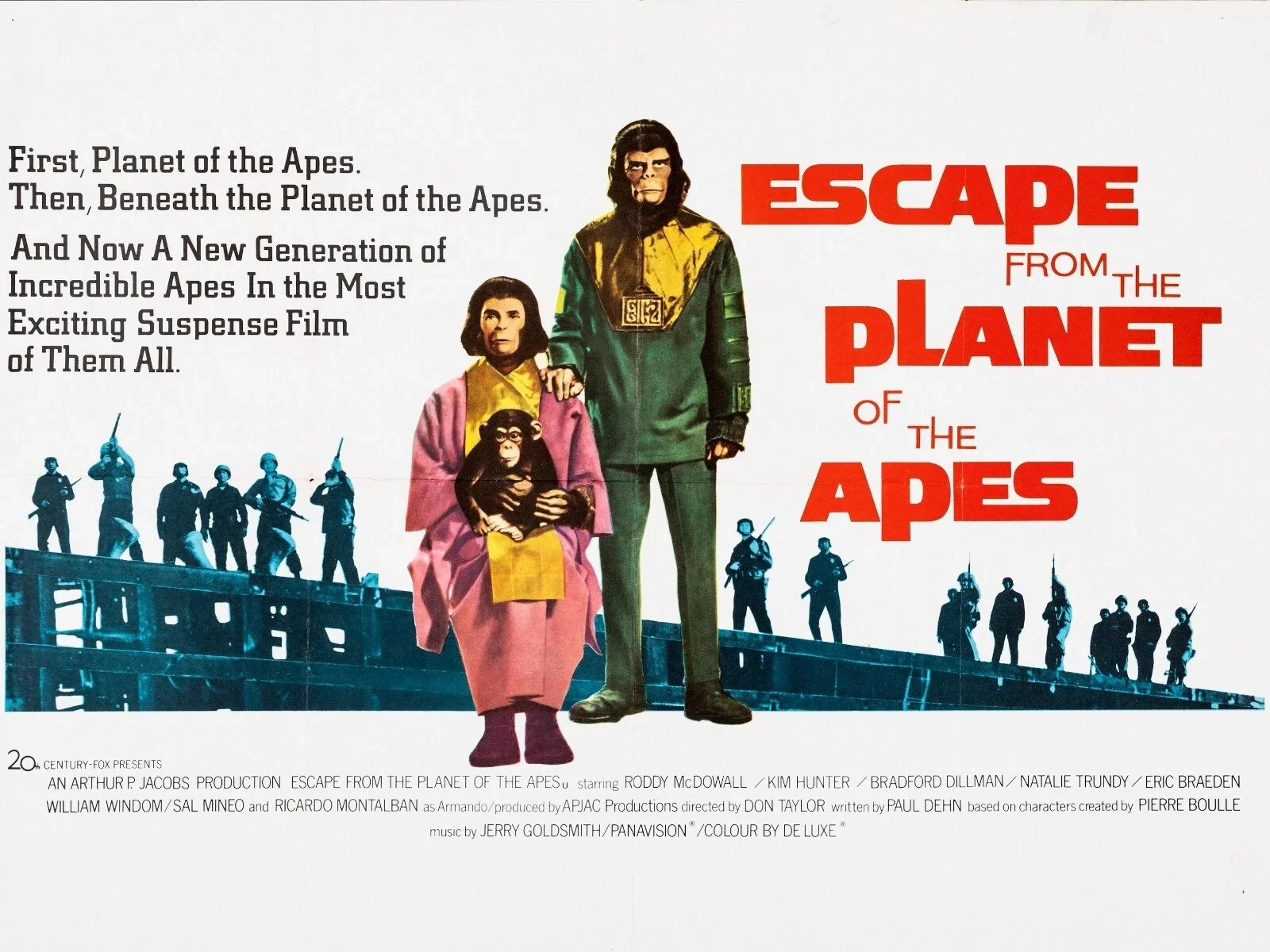
The Planet of the Apes movie franchise took a radical change of course with its third entry in the series. The first two films were set in the future and benefited from high production values to help realise a post apocalyptic earth. However, due to a substantial reduction of budget, Escape from the Planet of the Apes uses a time travel plot device to bring the ape protagonists to present day Los Angeles (1971 in this case). The result is a film with a much smaller narrative scope. However, although it lacks the science fiction spectacle of its predecessors, it features an interesting satirical exploration of celebrity culture and ponders what it is like to be deemed an enemy of the state. As ever, Roddy McDowell and Kim Hunter provide exceptional lead performances as the Chimpanzees Cornelius and Zira. Escape from the Planet of the Apes also captures the pop culture vibe of seventies America.
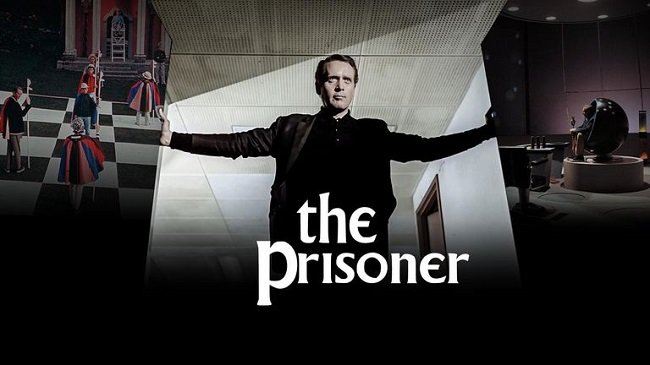
Ronald Erle Grainer (11 August 1922 – 21 February 1981) was a prolific Australian composer who is best remembered for his work in the United Kingdom during the sixties and seventies. He wrote numerous notable scores and theme music for several iconic television shows such as Doctor Who, Steptoe and Son and Tales of the Unexpected. He also composed the soundtrack for several major motion pictures such as Some People (1962), The Assassination Bureau (1969) and The Omega Man (1971). Grainer relocated to London from Australia in 1952 but it was not until 1960 that he gained critical success after writing the music for the popular TV show Maigret. He subsequently received an Ivor Novello award for “Outstanding Composition for Film, TV or Radio”.

The following is about a cultural change. That is not to say that it’s a value judgement or one of those posts you so frequently read by bloggers of a certain age, that essentially boil down to “things were better in my day”. It is merely an observation and like all observations it is not 100% universal. There will always be exceptions to the rule. I am simply painting with broad strokes a general truism for your consideration. My point being that people listen, experience and enjoy music differently these days compared to how they did three to four decades ago. I’m not talking about the science of hearing or anything complex like that. I am merely highlighting the change in the way we choose to experience music and how that has an impact upon its creation and presentation. So like Anne Elk, presenting her theory on the Brontosaurus, here is the axiom at the heart of this post.
Allonsanfàn (1974) is an Italian historical drama film written and directed by Paolo and Vittorio Taviani. The title of the film derives from the first words of the French Revolutionary anthem La Marseillaise (Allons enfants, IE “Arise, children”). It is also the name of a character in the story. Set against the backdrop of the Italian Unification in early 19th-century Italy, Marcello Mastroianni stars as an ageing revolutionary, Fulvio Imbriani, who becomes disillusioned after the Restoration and endeavours to betray his companions, who are organising an insurrection in Southern Italy. Allonsanfàn is a complex film that is not immediately accessible to those unfamiliar with the intricacies of Italian political history nor the arthouse style of the Taviani brothers. However, it is visually arresting and features a rousing score by Ennio Morricone.
Jerry Goldsmith’s contribution to Star Trek is immense. Yet simply listing the films and TV episodes he wrote music for does not adequately encapsulate the significance of his contribution to the franchise. His majestic, thoughtful and uplifting musical scores provide an emotional foundation that reflects the core ethos of Star Trek. They also create an invaluable sense of continuity that spans multiple shows and movies. Perhaps the most obvious example of this is his iconic title music for Star Trek: The Motion Picture (1979) that was subsequently adopted as the theme tune for Star Trek: The Next Generation. His work was held in such high regard, when Star Trek V: The Final Frontier (1989) ran into production issues, it was thought that a Jerry Goldsmith soundtrack may well elevate the film. Sadly it didn’t but his work on that instalment was outstanding and among his best.
Halloween (1978) is both a genre and cinematic milestone. It made stars of Jamie Lee Curtis and director John Carpenter as well as kickstarting the slasher genre that dominated the box office for the next 15 years. Unlike many of the inferior imitations that followed in its wake, Halloween is not a gorefest but a far more suspenseful and unsettling film. It’s shocks and sinister atmosphere are the result of sumptuous panavision cinematography by Dean Cundey and inventive editing by Tommy Wallace and Charles Bornstein. Another invaluable asset to the film’s effectiveness is John Carpenter minimalistic synth and piano score which perfectly embellishes the film with an air of menace. After 33 years and various re-arrangements in subsequent sequels, the original Halloween Theme is still as effective today as it was when the film was first released.
Tenebrae (1982) is probably Dario Argento’s most accessible “giallo” for mainstream audiences. Although violent, it is not as narratively complex as Deep Red (1975) or as bat shit crazy as Phenomena (1985). The story centres on popular American novelist Peter Neal (Anthony Fanciosa) who is in Rome to promote his latest book. Events take a turn for the worst when a series of murders appear to have been inspired by his work. The plot twists and turns, the director explores themes such as dualism along with sexual aberration and blood is copiously spattered across the white walled interiors of modernist buildings. It is slick, disturbing and has a pounding synth and rock score by former Goblin members, Claudio Simonetti, Fabio Pignatelli, and Massimo Morante.
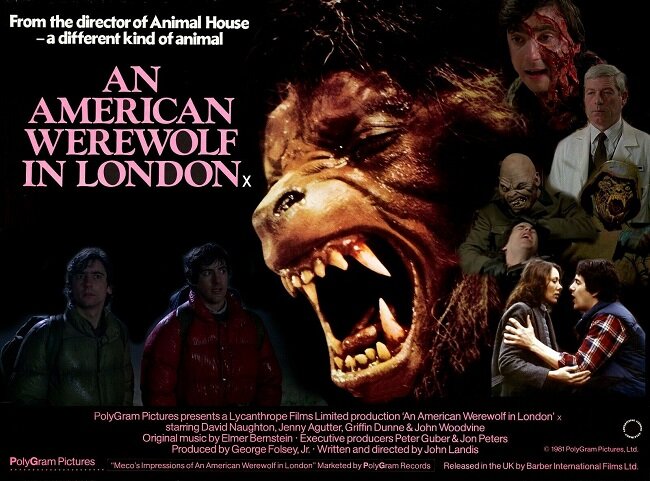
An American Werewolf in London is a genre milestone and one of the few horror films that successfully manages to balance humour and suspense without mitigating the overall tone of the story. 40 years on from its theatrical release it still holds up well with its bitter sweet love story, tragic themes and ground breaking transformation effects by Rick Baker. Director John Landis never really bettered this concise and effective genre outing. It hits the mark in virtually every part of the production. However, there is one aspect of the film that does suffer as a result of the director’s personal choices. Whether it is to the detriment of the overall film is debatable. The point in question is the film’s soundtrack and the director’s focus upon the song Blue Moon by Richard Rodgers and Lorenz Hart.

Before we start, no I am not writing about Alexander Courage’s classic main theme for the original Star Trek show. I can add nothing further to that particular discussion and it remains iconic and inspiring, even when distilled down to just the initial fanfare. In this post I want to draw your attention to another piece of music from Star Trek that has permeated its way into popular culture. A cue that when heard, if the listener is familiar with its provenance, will instantly conjure up images of flying drop kicks, ear claps and judo chops. A piece of music that can be added to pretty much any video footage and instantly make it more heroic. Yes, I am talking about what has become generically known as Star Trek “fight music”. Or more specifically, the "The Ancient Battle/2nd Kroykah" cue from Amok Time (S02E01) composed by Gerald Fried. The scene during the koon-ut-kal-if-fee ritual in which Spock fights Kirk on the planet Vulcan for complicated “reasons”.

Classical music has often been used to great effect in cinema since the advent of sound. It has certain advantages over bespoke compositions, in that it can imbue a scene with a sense of gravitas and emotionally connect with viewers who may already be familiar with the piece being played. Legendary director Stanley Kubrick famously rejected Alex North’s score for 2001: A space Odyssey after finding the classical tracks he used for the temporary soundtrack complement the visuals perfectly. Over the years, some particular pieces of classical music have proven to be very popular and flexible, thus appearing in a wide variety of films across multiple genres. Hence, I have chosen two well known tracks that demonstrate this. I would also like to highlight contemporary classical music and have also selected one example that I feel demonstrates how the genre sublimely compliments cinema.

If you mention The Pink Panther (1963) I’d hazard a guess that most people will instantly think of Inspector Clouseau (and possibly throw in a quote in faux French about “Minkeys”) or hum or whistle the iconic theme tune. It’s blend of cool sixties Jazz and Lounge is both classy and evocative. Henry Mancini’s contribution to the Pink Panther franchise is commensurate to that of Peter Sellers and Blake Edwards. If you removed his musical scores from any of the films they would be greatly diminished. In fact one can argue that the movies made in the eighties after Sellers’ death are greatly bolstered by Mancini’s intelligent and accomplished musical accompaniment. The franchise may have run out of steam but Mancini never did so.
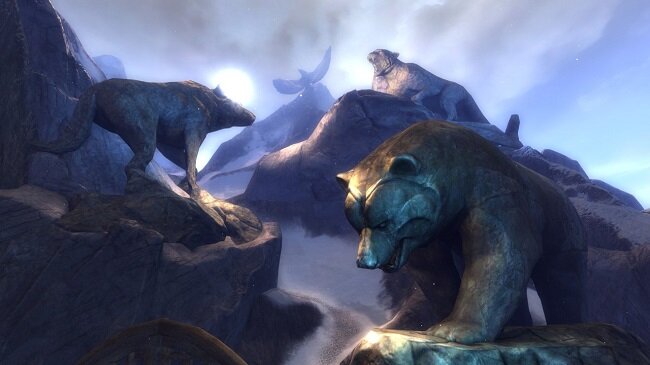
Back in August 2018, I posted seven of my favourite tracks from various video games that I’ve played over the years. I thought recently that it was high time that I did the same again. So here are a further five musical cues that I especially enjoy. All of which contribute greatly to the respective games that they feature in. Unlike film composers, musicians that write for video games do not always enjoy comparable exposure or attention. Yet often they have a more complex remit, having to write material for dozens of hours of content, rather than just two or three. Furthermore, the complete soundtrack to many video games often remain conspicuously absent, with fans having to data mine the game client to find the tracks that they love. Which is why it is important for those that enjoy video game music to show their support. Perhaps then more publishers will release full and comprehensive game soundtracks for digital download.
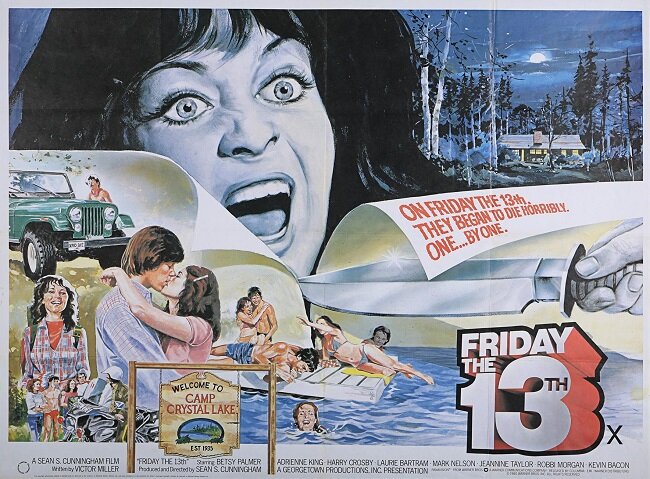
It was Friday the 13th yesterday, so I thought it was about time that I added Harry Manfredini’s iconic score to the annals of Classic Movie Themes. The 1980 slasher movie Friday the 13th has become as legendary in the pantheon of cinematic horror history as John Carpenter’s Halloween. Although there are marked differences between these two films, both use minimalist musical scores extremely effectively to punctuate the proceedings and embellish the overall atmosphere. However, Manfedini did not want to provide viewers with obvious audio cues during scenes of building tension. He preferred to focus his score upon the activities of the franchise's iconic killer, Jason Voorhees, and hence have strong musical cues when he was on screen. This approach meant that he had to use a unique musical motif to denote potential tension, without diminishing its effect on the audience by excessive use of obvious and melodramatic cues.

Game of Death was Bruce Lee’s fourth Hong Kong martial arts movie. Due to the success of his previous films he found himself in a position where he could finally write and direct a project himself. Filmed in late 1972 and early 1973, the film was put on hold midway through production when Hollywood offered him a starring role in Enter the Dragon. He died shortly after completing the US backed movie that made him an international star, so Game of Death remained unfinished. Several years later the rights to the raw footage were sold and recycled for a new movie, that kept the name but bore little resemblance to Lee’s original vision. For most of Game of Death, Kim Tai-jong and Yuen Biao double for Bruce Lee and it is only in the final act that audiences actually get to see about 12 minutes of material that he shot himself. The 1978 release of Game of Death, directed by Robert Clouse, is a mess but remains a cinematic curiosity. The scenes which genuinely feature Bruce Lee are outstanding, even in an abridged form.
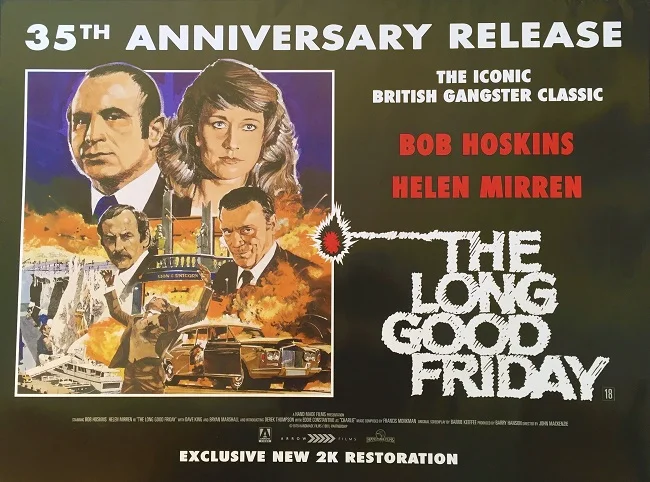
The Long Good Friday not only launched then career of Bob Hoskins but remains a uniquely British take on the gangster genre. Featuring authentic performances and a credible plot, the screenplay touches upon many of the social and political issues of the time; police corruption, the IRA, urban renewal and the decline of industry, along with EEC membership and the free-market economy. It’s a gritty and unrelenting drama that is still relevant today. Furthermore, the film is filled with quotable dialogue and has several stand out scenes that showcase Bob Hoskins’ smouldering performance. It’s also offers of “who’s who” of British character actors and there is one sequence still has the power to shock even today.
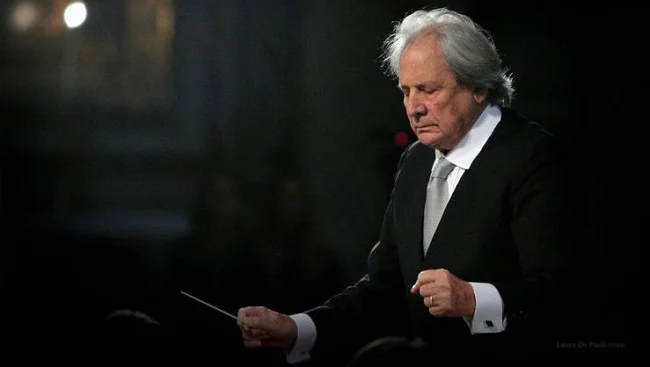
A few years ago, I wrote a post about cult movie soundtracks and how many of these movies are often blessed with a high quality score from an established composer. The subject came up again recently when I was visiting the British Film Institute with friends, and several other examples were discussed. Hence, I thought it would be prudent to write a follow up post with another selection of material, as it continues to amaze me how often the most appalling films can still have outstanding soundtracks. With this idea in mind I've collated five films that are for various reasons are labelled “cult” and have suffered the “slings and arrows of outrageous fortune” over the years. All have scores of interests and note, though for different reasons. I have chosen a track from each soundtrack which I think highlights the musical excellence and integrity of the composers involved. The genres are varied as are the musical styles and nuances of each piece. All clearly demonstrate how a well-conceived score can embellish and enhance a movie, effectively becoming a character in its own right.
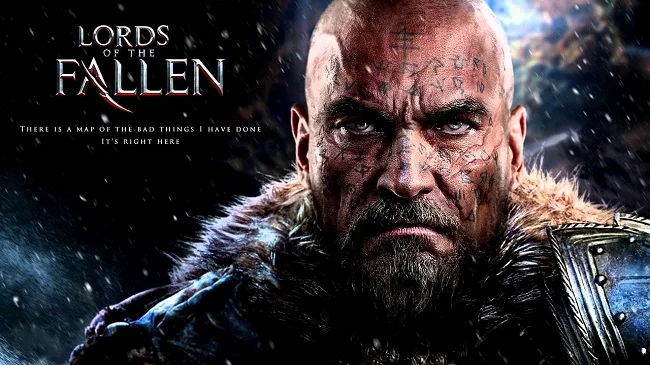
Lords of the Fallen is an action role-playing game from 2014, played from a third-person perspective. It is broadly in the same idiom to Darksiders and Dark Souls with the emphasis on complex and challenging combat. And it is for that reason that I didn’t get on with this title when I bought it in a Steam sale a few years ago. I felt that the long, protracted fights were an impediment to the narrative, which I quite enjoyed. However, the game was designed this way to appeal to the combat focused gamer and “git gud” culture. But I think that it’s important to try different genres of games from time to time and to step occasionally out of your comfort zone. I would cite the Hand of Fate series as a positive example of this. Both of those titles are from a genre I wouldn’t usually consider and playing them turned out to be a very positive experience
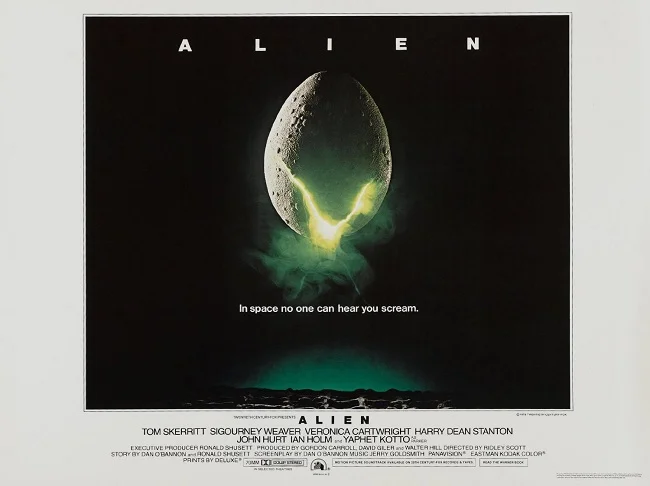
Alien is a unique genre milestone. It challenged the established aesthetic created by 2001: A Space Odyssey of space travel being pristine, clinical and high tech and replaced it with a grimy, industrial quality. The space tug Nostromo is also a conspicuously “blue collar”, civilian venture, underwritten by a large corporation. As for H. R Giger’s xenomorph, it redefined the depiction of extraterrestrial life in movies. Director Ridley Scott brought visual style and atmosphere to particularly unglamorous and dismal setting. He also scared the hell out of audiences at the time with his slow burn story structure and editing style that hints, rather than shows. Overall, Alien is a text book example of how to make a horror movie and put a new spin on a classic and well-trodden concept.

James Horner was a prolific, yet consistently good composer with a broad range of styles. Consider his score for 48 Hrs with its Jazz under currents and then compare it to his grand swashbuckling approach to Krull. They are radically different soundtracks, but both are extremely effective in embellishing their respective motion pictures. That was James Horner great talent. He knew when to be theatrical and bombastic but could also dial it back and be subtle, gentle and delicate. It made his body of work very diverse and memorable.
James Horner, although possessing a very broad and eclectic musical range, was in many respects a very traditional composer. He was certainly au fait with works of such giants as Miklós Rózsa, Korngold and Bernard Herrmann and it often manifested itself in his music through his use of the leitmotif. Perhaps the reason James Horner was so consistently good and crafted so many outstanding pieces of music, is because he never saw his profession as just a means to an end. As he said in an interview once, “I don’t look at this as just a job. I see music as art”.
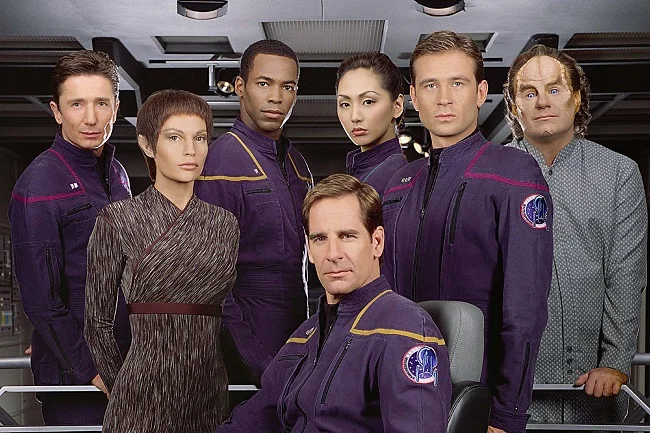
Star Trek: Enterprise was the first show in the Star Trek pantheon to have a song performed by an established artist play over the opening credits, rather than a traditional theme tune. Up until 2001, the franchise had maintained a more formal approach, established with the iconic introduction to the original series composed by Alexander Courage. Needless to say, such a radical departure from established practise brought about consternation and debate among fans. In some respects, you can argue that point about the entire show itself, but that as they say, is an entirely different blog post. Needless to say, the dislike and hatred that the song Where My Heart Will Take Me engendered in certain quarters, lead to a petition to have it removed. Needless to say, this movement failed, and the show continued using it for four seasons. Seventeen years on this particular debacle has now died down and the song is often just referenced ironically by fans as an amusing anecdote and piece of Trek trivia.
According to Wikipedia “Hawk the Slayer is a 1980 British sword and sorcery adventure film directed by Terry Marcel and starring John Terry and Jack Palance. The film has developed a cult following”. That doesn’t do the movie justice by any reckoning. Hawk the Slayer is a quirky, low budget, high camp fantasy movie that compensates for its budgetary shortcoming by being so preposterously silly. It is loaded with hard boiled, fantasy steeped dialogue that parodies well known genre tropes. It treads a fine line between utter bilge and stupid fun. It is very much a product of its time and is also filled with British character actors. Some viewers will see nothing more than a cheap and cheerful cash-in on the eighties Sword and Sorcery boom. Others will delight at this inventive, stylised and silly fantasy orientated outing. Such is the nature of cult movies.
Film producer Julian Blaustein had a long-standing desire to make a film that addressed the fears and concerns of the post war Atomic Age. With the backing from Fox Studio Executive Darryl F. Zanuck, he hired screenwriter Edmund North to adapt the short story Farewell to the Master by Harry Bates. The screenplay provided a moral commentary about the ongoing arms race and featured an alien visitor with Christ like qualities who delivers an apocalyptic message. Veteran director Robert Wise was brought in head the project and a fine cast of established characters actors such as Michael Rennie, Patricia Neal Hugh Marlowe and Sam Jaffe was assembled. The finished movie has proven to be one of the greatest science fiction movies ever; it is The Day the Earth Stood Still made in 1951.
King Solomon’s Mines is a 1985 Cannon Films production based on the pulp works of H. Rider Haggard. It was quickly made to cash in on the ongoing success of Indiana Jones franchise, although the finished movie bears little resemblance to the classic original novel. Like most Cannon movies from that boom era, it was a cheap and fast enterprise that superficially sported a good cast, but ultimately didn’t do much with them. Veteran director J. Lee Thompson favoured a light and comic approach to the material, as the film’s budget could hardly sustain any major notable set pieces. Yet, it proved popular enough at the box office to warrant a sequel the following year. Allan Quatermain and the Lost City of Gold proved to be as equally silly but by then the public’s interest had waned.
A ten months ago, I wrote about the LOTRO soundtrack and listed some of my favourite tracks. This time round rather than just limit myself to music from one game, I thought it may be more interesting to broaden the remit. So, I have decided to upload seven of my favourite tracks and music cues from various games I have played over the last two decades. As with cinema, the soundtrack of a game plays a very important role. It can make a substantial impact on the players perceptions and enjoyment. The following tracks are examples that I feel have greatly enhanced a game. They’re also ones that I find particularly enjoyable. They are not in any order of preference.

Paul Verhoeven has seldom made a movie without some semblance of controversy associated with it, and his 1992 neo-noir Basic Instinct was no different. Even before its US release, Basic Instinct courted controversy due over its overt sexuality and graphic depiction of violence. It was strongly opposed by gay rights activists, who criticised the film's depiction of homosexual relationships and the portrayal of a bisexual woman as a homocidal narcissistic psychopath. The opening murder with an icepick is still shocking twenty six years later and is an excellent showcase for makeup FX artists Rob Bottin.

You can write pages on Gerry Anderson's 1968 Supermarionation series Joe 90. There's the morally ambiguous premise of giving an emotionally immature nine-year-old the experiences of an adult. Then the psychological effects of allowing him to kill at will. Then there's the perennial issue of scientists prostituting their skills to the intelligence community. One can also reflect upon the absence of any major female characters in the series and how that may impact upon Joe himself. Finally, when one finally arrives she's a gold-digging bitch who tries to exploit Joe’s Dad, Professor McClaine. Joe 90 is certainly a psychiatrist’s dream subject.

Despite the popularity of the TV show in 1965, the two spinoff Thunderbirds feature films were both box offices failures. This has often been attributed to the indifferently written screenplays that seem to have completely missed the sense of suspense that the fifty-minute episodes achieved. Both feature films feel rather slow and like extended episodes rather than big budget extravaganzas. They fail to do anything different with established characters and apart from showcasing more extensive miniature effects in a widescreen format, don’t really have much more to offer. It’s curious that the winning, character driven formula that worked on television was overlooked for these big screen outings.

I grew up during the seventies when network TV shows still put a lot of thought and effort into such things as their theme tune. It was a decade littered with memorable tracks that captured the essence of the shows they came from. Many have now become integral aspects of popular culture, leading to countless internet memes as well as becoming the ringtones of choice for many a fortysomething. However, things are very different now. You can have a staggeringly good theme for your show, but it can't possibly be longer than thirty seconds. And don’t think for a moment that viewers can listen to it again at the end, as it has now become standard practice to compress the credits into a third of the TV screen and preview what's coming next, while some link announcer spouts inanities. Mercifully, cable and streaming companies tend to treat their TV shows with greater respect. The lack of commercial advertising ensures a longer program duration and hence more focus on a theme tune. However, network TV still commands big audiences, yet hasn’t in recent years produced any TV show themes of note.
LOTRO: We’ll Always Have the Books
I was cautiously optimistic when EG7 acquired Daybreak Game Company in December 2020. I found the various communications by CEO Robin Flodin to be quite encouraging. I got the impression that EG7 were facilitators and planned to provide the resources that developers such as Standing Stone Games required to move their portfolio of games forward. For the first time in ages, I felt that there was a positive future for the MMORPG The Lord of the Rings Online. The arrival of a new Producer, Oleg Brodskiy (AKA Raninia), certainly appeared to address the community communications vacuum that has existed for several years. However, it would appear that Robin Flodin has been removed as CEO. Apparently he had a poor interview recently with Dagen Industri in which he had “difficulty answering questions about the difference between total revenues and net sales during the quarter”. This followed an interim business report that was not well received with the market and led to a drop in share prices by 25%. Hence he was removed by the EG7 board.

I was cautiously optimistic when EG7 acquired Daybreak Game Company in December 2020. I found the various communications by CEO Robin Flodin to be quite encouraging. I got the impression that EG7 were facilitators and planned to provide the resources that developers such as Standing Stone Games required to move their portfolio of games forward. For the first time in ages, I felt that there was a positive future for the MMORPG The Lord of the Rings Online. The arrival of a new Producer, Oleg Brodskiy (AKA Raninia), certainly appeared to address the community communications vacuum that has existed for several years. However, it would appear that Robin Flodin has been removed as CEO. Apparently he had a poor interview recently with Dagen Industri in which he had “difficulty answering questions about the difference between total revenues and net sales during the quarter”. This followed an interim business report that was not well received with the market and led to a drop in share prices by 25%. Hence he was removed by the EG7 board.
In the meantime, Ji Ham has been appointed acting CEO, while EG7 searches for a permanent replacement. Ji Ham being the CEO of Daybreak Game Company. It all appears rather arcane to the layman. According to Robin Flodin, EG7 had increasing sales during the second quarter of 2021. The company, which has made numerous acquisitions in recent years, still reported higher profits. Yet shares prices have fallen and perhaps there are widers concerns about expanding too quickly and overreaching. Certainly there is consternation within the company and hence the change in CEO. It now remains to be seen as to whether this has any impact upon the various studios that EG7 own. Will the acting or new CEO make any radical policy changes and halt any ongoing projects? Simply put, from the fans point of view will this ultimately affect LOTRO?
As I’ve written in the past, the average LOTRO player is pretty much oblivious to what goes on at the corporate level. They just log into the game and take their pleasure where they can find it. Often they’re only aware of changes in the game, as and when they happen. For those of us who are more interested in how SSG are doing, it can be quite frustrating trying to get a handle on what is going on. Business strategy is seldom a topic for the public domain. Most of the information we have access to is limited to new reports and official press releases. Neither give us sufficient to go on. It therefore could be a case that the departure of Robin Flodin will have no impact upon LOTRO. But then again it could. Are we effectively back to square one again? It’s hard to tell. Perhaps that’s why I’m returning to and finding comfort in Tolkien’s source text. At least we’ll always have the books.
The next expansion for the MMORG, The Lord of the Rings Online, was announced on the 1st August, via the gaming website MMORPG.The Wolves of Mordor, which will launch later in the year, appears ambitious in scope as it will include two new game systems as well as the obligatory story update. This expansion takes place in Draugardh located in the North East of Mordor, beyond the Plateau of Gorgoroth. It includes the new zones of Heledhris, Parth Rhavas and Nan Ogol. These vary environmentally ranging from the arid, volcanic and semi-tropical. Players will encounter the Daugrim in these regions, Werewolves but not in the modern sense. This is not the lycanthropy of Eastern European legends but in the established Tolkien idiom of fell spirits inhabiting the bodies of Wolves. The region also sees the return of the Woses and players can expect to encounter Elves and scouts from Gondor. As ever with LOTRO expansions, there will be new instances as well as a raid.

I was recently perusing my archive of old blog posts, when it struck me how much I’ve written about the MMORPG genre over the years. Naturally, there was far more material from between 2008 and 2012 as that was period when I immersed myself in the genre and was very enthusiastic about it. I was at a point in my life when I had the time to dedicate to such games and I was happy to participate in the social aspect of they offered. I would regularly play through group content and spend time socialising online with fellow guild members. My experience remains a textbook example of how online games can be more than the sum of their parts and that where you are at in your life has a major impact upon your overall enjoyment. As I read though various old posts it became clear that my experiences where specific to this particular part of my life and that they cannot be repeated. My relationship with the genre is very different now and that’s fine.
Video games as a genre are extremely poor at explaining themselves. When you buy a new game you’ll often find little or no information regarding the basic systems and mechanics. The industry assumes that their customers are by default familiar with the fundamentals of playing a modern video game. Hence if a game has a tutorial, it is often based around videos rather than detailed verbal instructions. You are are briefly shown a clip of a specific move being successfully undertaken but it is seldom shown in a wider context. The industry also expects the fan community to take on the role of curating and disseminating information about its games. The move away from forums and bespoke websites to Discord highlights this. Discord is a primarily a real time communication tool and not good at maintaining a historical data archive. If you want an answer to a specific gaming question, you’ll more than likely find it on YouTube in a video made by a fellow gamer.
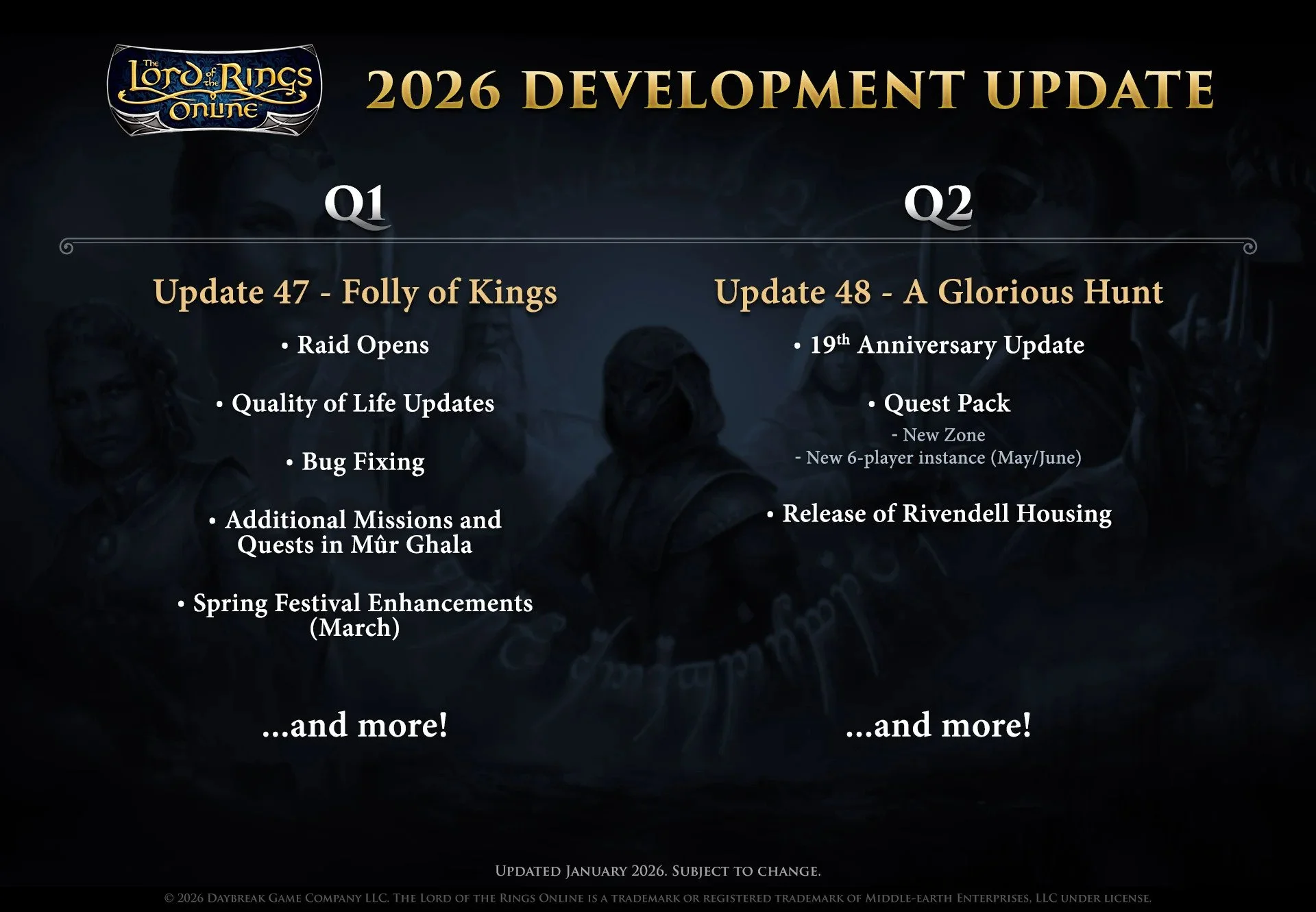
According to the recent “letter to the players”, Standing Stone Games will be adding a new zone to the MMORPG The Lord of the Rings Online in the second quarter of this year. Possibly around May or June. Having spent the last three expansions in the South of Middle-earth exploring the tropical Umbar and the deserts of Harad, I would certainly welcome a change of location. I have gradually warmed to these zones over the last eighteen months but I do find them so incongruous. They are so radically different to the European style content that has been the mainstay of the game for so long. Tolkien’s source text has plenty of detail regarding Eriador and Rhovanion. Information regarding Harad is scarce, hence it has afforded the developers a great deal of artistic freedom. Although exceedingly well realised these tropical zones have taken a while for me to get used to.
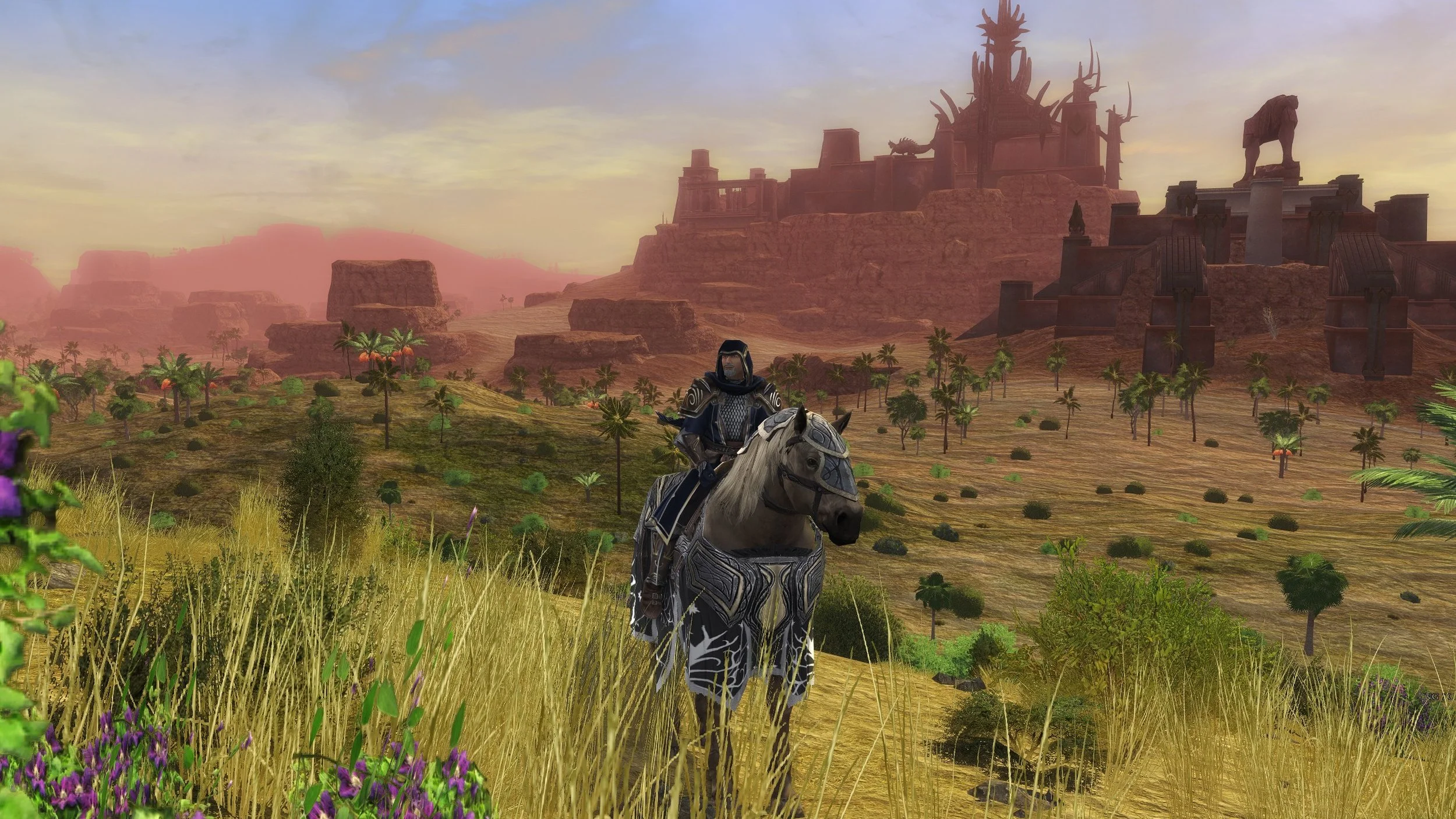
I’m not sure exactly when it started but I’ve recently noticed a graphical bug within the MMORPG The Lord of the Rings Online. This problem often occurs within caves or in areas where there are a lot of rocky surfaces. Hence it has become very apparent in the latest two expansions, set in Umbar and Harad. This graphical glitch causes some surface textures to appear to flash from light to dark intermittently. The resulting strobe effect is hard to ignore and very distracting. Fortunately, a quick online search showed that this is not a problem unique to my installation of LOTRO and is a known problem. Furthermore, there is a very simple workaround, which is to go into the Advanced Graphics setting and uncheck “Per Pixel Lighting”, which immediately remedies the problem. I have no idea why this has recently started to happen but at least it can be resolved.
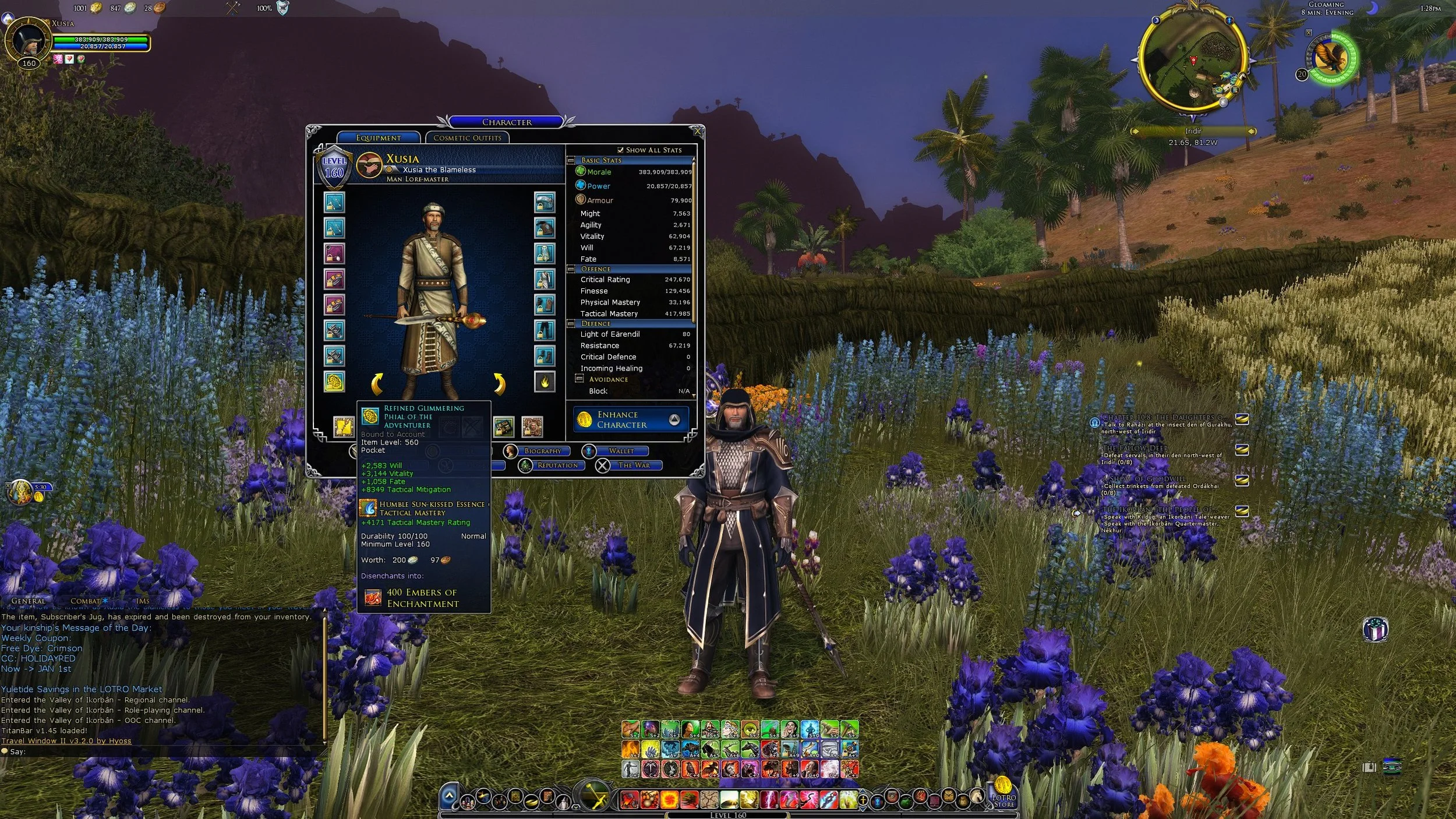
The latest expansion for the MMORPG The Lord of the Rings Online, Kingdoms of Harad, launched on December 3rd. With this release the level cap was raised from 150 to 160. It should also be noted that the cap for virtue traits was also raised from 96 to 100. Naturally these changes meant that there is a requirement to replace all armour and jewellery once the new cap is reached. Similarly Legendary Items have to be reforged and any traceries upgraded or replaced. If you follow the Epic Story it will lead you from quest hub to quest hub. The main quest rewards, along with those from side quests will provide adequate gear as you slowly progress towards the new level cap. The new raids, instances and missions/delvings then provide a means to acquire higher quality level 160 gear. LOTRO and indeed, many other MMOs are consistent in this methodology.
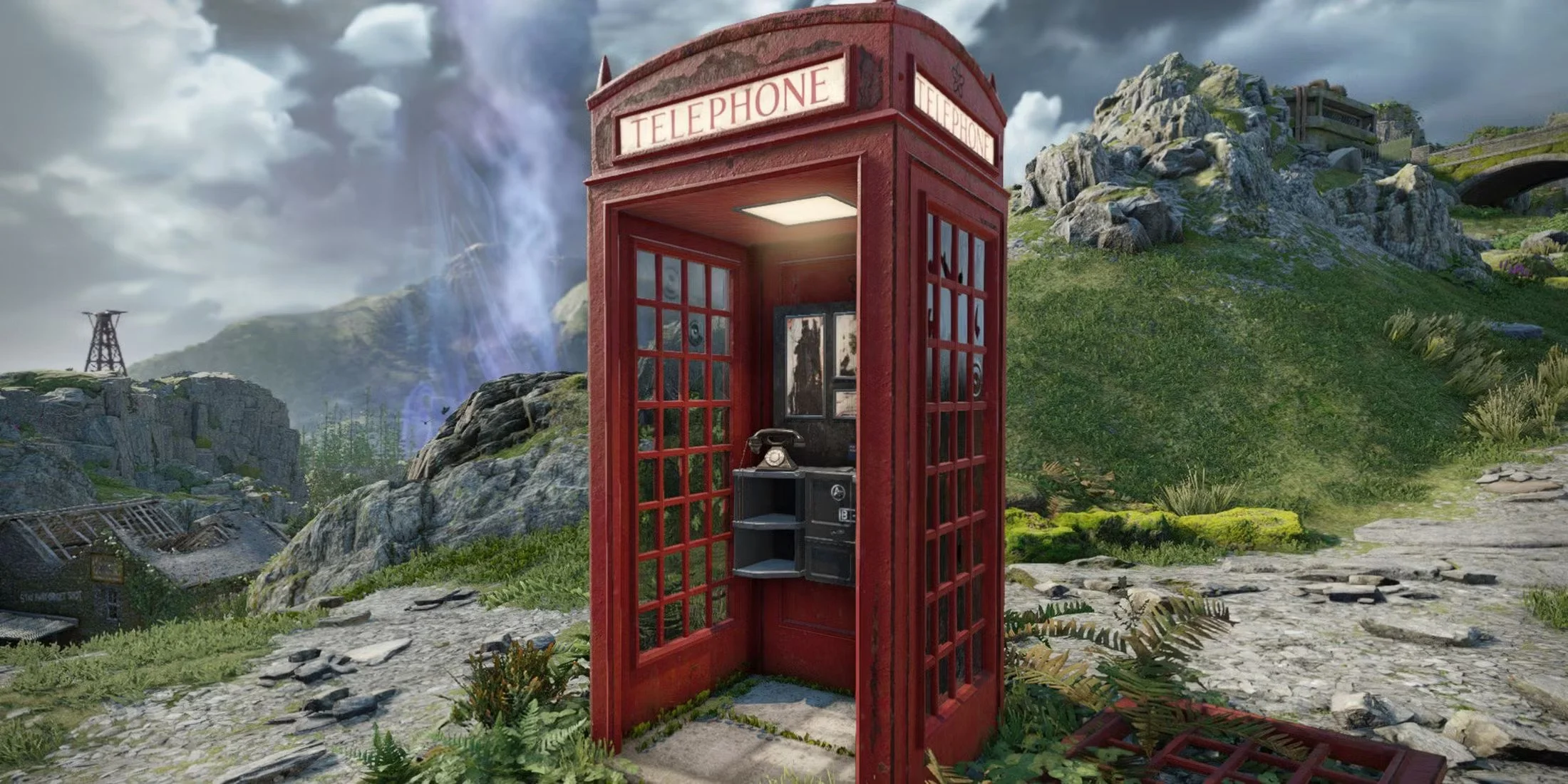
It is customary in a post such as this to list the various games that I’ve played over the last twelve months and share my thoughts on them. Wider analysis of the video game industry is also de rigeur. Unfortunately, I don’t really feel disposed to do either of those two things. My thoughts on the games I’ve played have already been published and can easily be accessed via the links at the bottom of this post. As for the video game industry, it suffers the same flaws as music, TV and cinema. There is creativity and innovation out there but it is often drowned out by mainstream products which are demonstrably inferior due to their inherent mediocrity. As for the business side of things, we once again clearly see the failings of the corporate management class. Sadly, they do not face the consequences of the mistakes that they make.
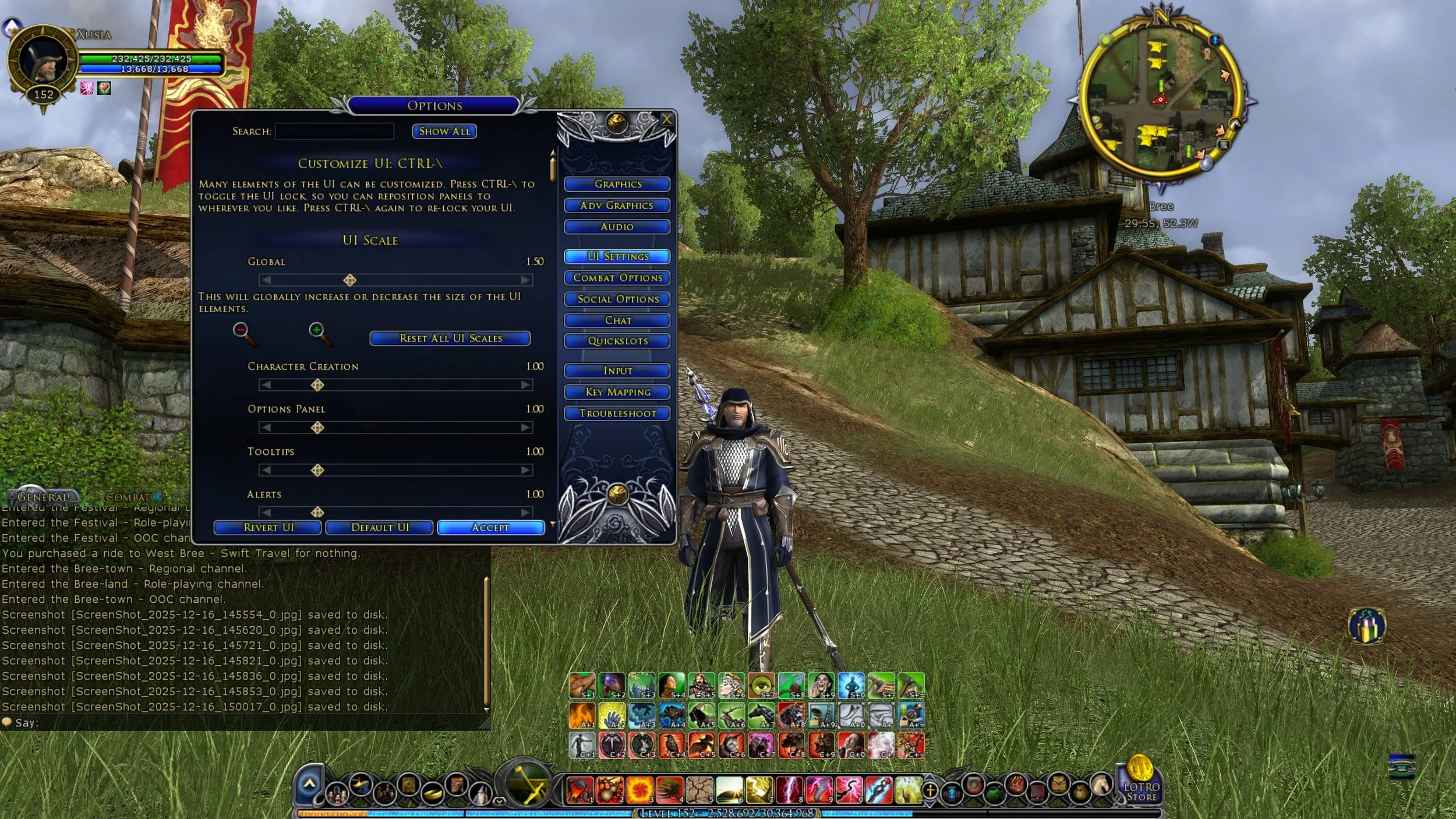
Today Standing Stone Games began beta testing Update 46.1 for the MMORPG The Lord of the Rings Online. The current preview on the Bullroarer test server is mainly for the new instance cluster that comes with the Kingdoms of Harad expansion which launched a few weeks ago. However, it would appear that this latest preview has another feature or note. One that should please LOTRO players. Contrary to what a lot of people thought, myself included, SSG have been working on a scaling UI for 2K and 4K monitors and the results are now available for testing from today Monday 15th through to Friday 19th December. Until now the main workaround to the lack of UI scaling has been to use either Nvidia or AMD graphics software to upscale the game from 1920 x 1080, or a third party app such as LosslessScaling. Having an official solution is a far better option.

Kingdoms of Harad, the 13th expansion for the MMORPG The Lord of the Rings Online, was released today. Highlighting developer’s Standing Stone Games continuing commitment to this eighteen year old game. As 2025 draws to a close, I thought it would be prudent to reflect upon the current state of LOTRO and to consider what may come next year. Two words that I associated with this MMO are stable and consistent. The playerbase is loyal and dependable. Player numbers never greatly decline nor do they notably expand. LOTRO fills a very specific gaming niche and one of the reasons it retains its players is that there is no suitable alternative game. Although there is not a great deal of data in the public domain, it is generally accepted that LOTRO has an older player demographic and that many are consummate Tolkien fans.

The MMORPG The Lord of the Rings Online runs on a broad spectrum of PCs. From archaic laptops to high end gaming rigs, although it may require a bit of tweaking. At present, the optimal way to play the MMO is at a resolution of 1920x1080 (FHD) with the graphics setting maxed out. The graphics are sharp and the UI is readable. However, a growing number of gamers are now using 2K and 4K monitors. You can play LOTRO at higher resolutions such as 2560×1440 (QHD) and 3840x2160 (UHD) and the game looks great. However, the UI does not scale and so is very small on 2K and 4K monitors. The skill icons on the quickslots (shortcut bars) and the in-game text become difficult to see at these resolutions, which deters some players from using them. It is a known issue that Standing Stone Games are attempting to address but it is unlikely to be resolved any time soon.

I recently read a post on Massively Overpowered about skills rotation in the MMORPG genre. I found the subsequent discussion in the comments fascinating. Mainly because I have never used a fixed rotation of skills in any of the MMORPGs that I play. I understand the reasoning behind such things and why some players want to optimise their combat performance. Using one’s skills in a specific order to maximise damage and manage their subsequent cooldown has a logical appeal. In Star Trek Online, some players go so far as to create keybinds for their rotations and assign it to a specific hotkey, which is then continuously pressed throughout combat. However, rotations are a blunt tool that lack flexibility, often being geared towards dealing with a single target or using an area of effect skill against a larger group. They may not be the optimal approach to combat when things do not go to plan.

Tolkien enthusiasts may recollect Athlon Games, a subsidiary of Leyou Technologies, announcing that it was developing a new MMORPG, based upon The Lord of the Rings, back in September 2018. The following summer, it was revealed that Amazon Game Studios was the partner developer for the project. In late 2020, Leyou Technologies (a Hong Kong-based company), was acquired by the Chinese conglomerate Tencent. This triggered a contract clause with the license holder, Middle-earth Enterprises, allowing them to terminate the existing arrangement if a new deal could not be met. Amazon and Tencent were unable to agree upon how to proceed with the project, leading Amazon to withdraw from negotiations. The project was subsequently scrapped. No details or images of the MMO have been released.
After a six month migration period, Standing Stone Games formally closed all their legacy 32-bit game servers for the MMORPG, The Lord of the Rings Online, on the 31st August 2025. Despite this planned closure being widely discussed via the game’s official forums, professional video game websites and fan blogs, many LOTRO players were unaware of this deadline. Hence many were unable to migrate their respective alts to the new 64-bit servers. Naturally those affected by these closures were upset, especially those with longstanding characters who didn’t relish the prospect of starting from scratch with a new alt. Thankfully, SSG have been true to their word and as of today, have re-opened these “dark worlds” to character transfers. If you have an alt trapped on one of the older game worlds, then now is the time to use the transfer wizard and move them to a new active game world.
MMORPG announced earlier today and it was subsequently confirmed by Standing Stone games, that the new expansion for The Lord of the Rings Online will be Kingdoms of Harad and that it will launch later in the year. The expansion will see the conclusion of the epic Song of Waves and Wind storyline and the level cap raised from 150 to 160. There will be a new region to explore, Mûr Ghala, comprising four zones. Adagîm, Idagâl, An Shêru and Kighân. The latter contains the main trading hub of Zajâna. Players will travel into the region with Gandalf the White, along with allies of the Kindred of Coins and Mizadi as they seek to counter the regional power struggle brought about by the fall of Sauron. Canonically, this takes place three months after the destruction of the ring, hence King Elessar and Eomer are busy with domestic affairs in their respective kingdoms.
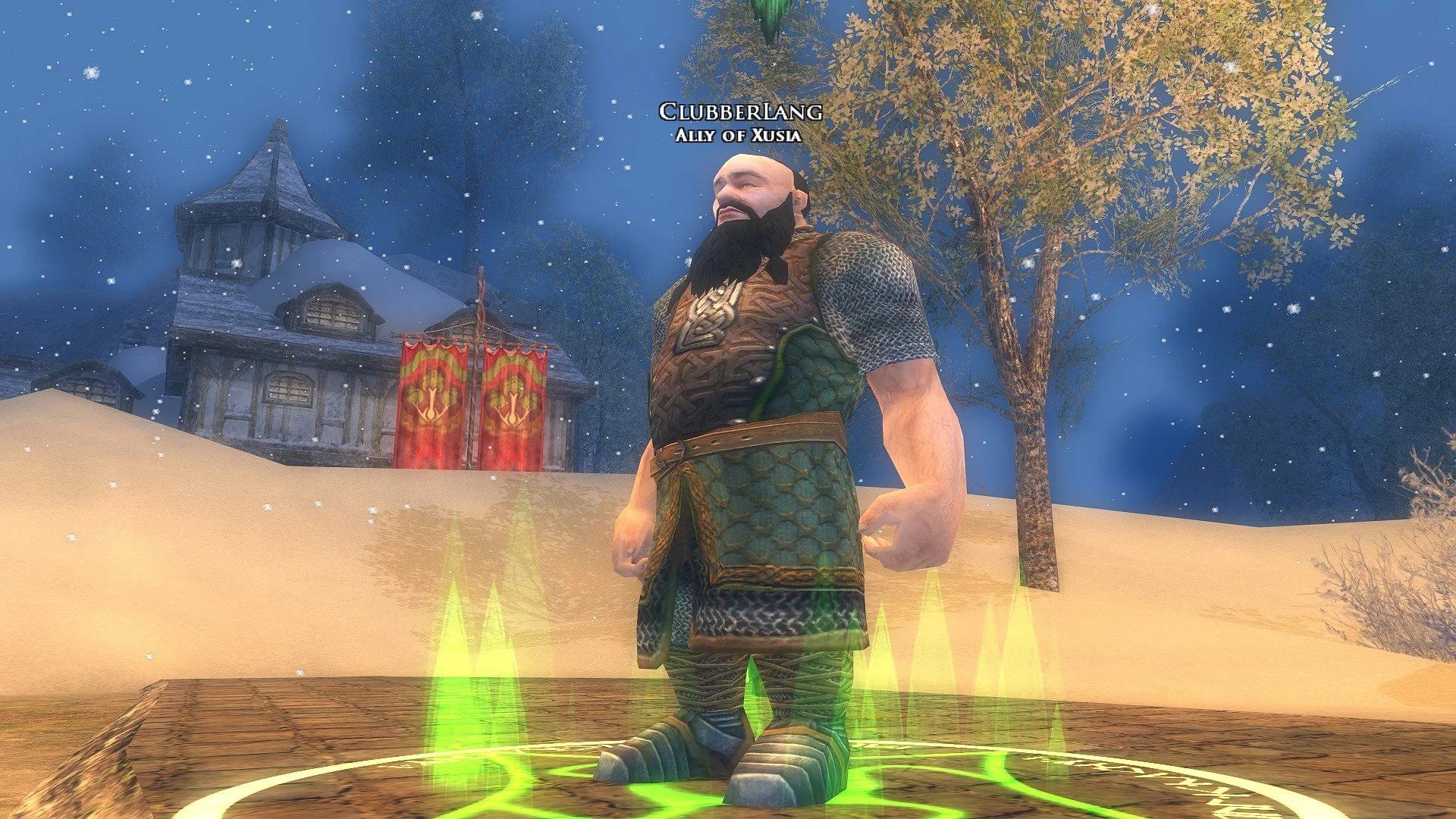
Skirmishes were added to the MMORPG The Lord of the Rings Online, in 2009 with the release of the Siege of Mirkwood expansion. Skirmishes are a repeatable and scalable combat system that allows players to access various instances for solo or group play from anywhere in the in-game world. Players can choose a Skirmish Soldier from a variety of classes to accompany them and provide healing, tank or additional DPS. On paper it’s a great system which is why many other MMOs offer something similar. I recently decided to tinker with my Skirmish Soldier build on my main character to see if I could optimise their performance. As my primary alt is a Lore-master, for the last few years I have had a Warrior as their Skirmish Soldier, to take some of the aggro from attacking mobs. I used the excellent guide by FibroJedi and swapped over a few Training and Personal Traits.
On 2nd August 2025, I was playing the MMORPG The Lord of the Rings Online, on my primary character, a level cap Lore-master. I decided to continue with one of the Allegiance Quest lines, specifically Durin’s Folk. I played through several quests and earned the appropriate tokens that advance the Allegiance system. I then handed these in to the NPC in the Hall Under the Mountain, expecting the next quest in the series “Chapter 3: Gimli’s Request” to be unlocked. An item appeared in my inventory that I then clicked on, which should have bestowed the quest. Unfortunately, nothing happened. Furthermore, the item vanished from my bag and therefore I could not attempt to click it again. I checked the LOTRO Wiki and then looked around the Hall Under the Mountain to see if any NPC had a ring icon above their head. As they did not, I surmised that this was a software glitch and logged a support ticket with Standing Stone Games.
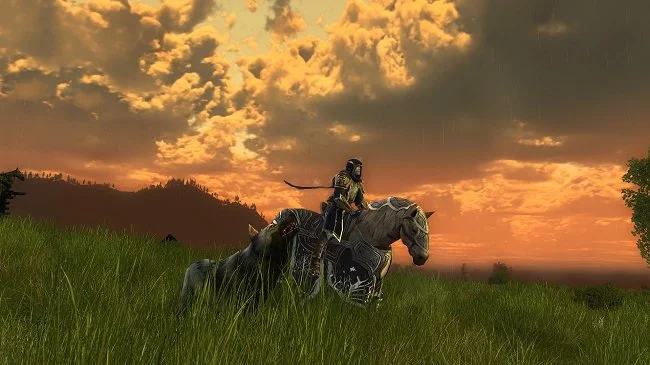
Let’s start with a quote from a classic Walter Hill film, The Warriors. “Can you count, suckers?” says Sirus. The gang leader was referring to the number of Police in New York City at the time. Whereas, for the purpose of this post, I am referencing how many Delving Writs a player needs to acquire 6 pieces of level cap armour in LOTRO. Because, next to the gear you get from endgame instances and raids, Delving gear is a good alternative.. It is marginally better than the items you can get from lootboxes. Hence, Delving armour is a good source of high end gear for the solo player. Through the miracle of mathematics, the number of Delving writs required to acquire a full set of this armour is 9,000. At first glance, that seems like a lot. If you then do some further research to put the number in context, you realise it is indeed a lot and a substantial undertaking.
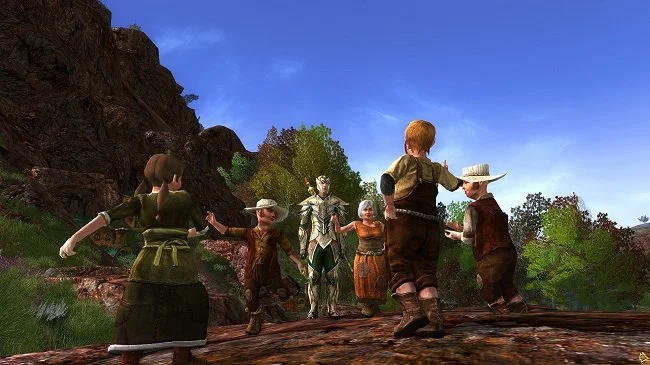
I am currently enjoying a renewed interest in the MMORPG The Lord of the Rings Online since I migrated all my characters from the old 32-bit servers to the new 64-bit replacements. I’ve created a new High Elf Lore-master on Peregrin server and am currently levelling them in a targeted play through of the Epic Story, supplemented by curated side quests. While playing recently, I realised the game UI on this alt wasn’t as I usually have it laid out. So I checked through the various documents on my PC and found a text file I had created many years ago that had a few hints and tips written down. I’ve added a few more and decided to share them as a blog post. I’m sure veteran players will be familiar with many of them but a lot of them are worth repeating. They may prove useful to those new to LOTRO or returning to the game after a long hiatus.
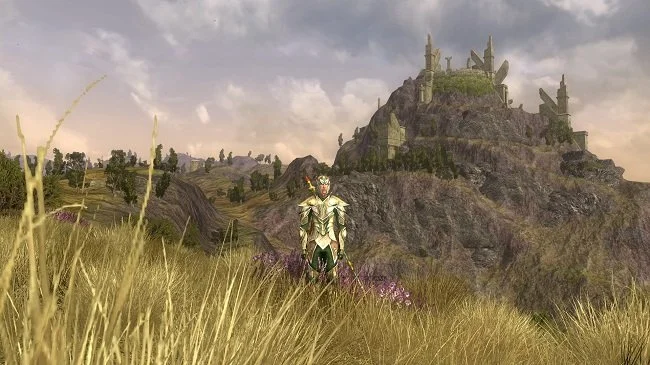
In mid-March, while the server migration debacle raged, I created a new alt for the MMORPG, The Lord of the Rings Online, on Peregrin server. The idea was to play casually through content focusing on enjoyment, rather than worrying about progression. I was to level at a pace that suited me and had no specific plans to develop my alt in any particular way. I have been playing LOTRO since 2008 and have a primary level-cap character that has been my main focus over the years. Hence I have previously experienced all story content from all the expansions and am therefore very familiar with what the game has to offer. Which is why I thought I’d do things differently this time. So I started my new Lore-master in Mossward in Swanfleet, the new starting area added to the game in 2022.
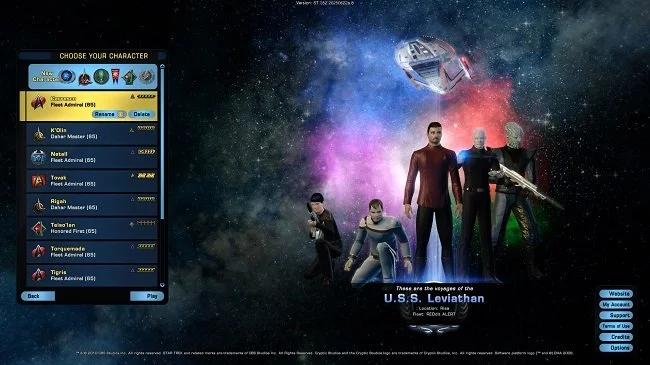
In massively multiplayer online games (MMOs), alts (short for alternate characters), are new characters created by a player in addition to their primary character (often called the “main”). Alts are often encouraged by developers as a means to keep players engaged with their game(s). Sometimes an MMO will actively reward the creation of alts either with access to exclusive content, or with additional skills or items previously unlocked by primary characters. As the myth that an MMO really begins at endgame still persists in gaming culture, some games sell boosts that will instantly raise the level of an alt to that of the current level cap. Creating alts is such a key aspect of the MMO genre, that some games will sell additional character slots, so that players can create further alts beyond the default amount allowed. There are many reasons why players create alts. Let us consider some.
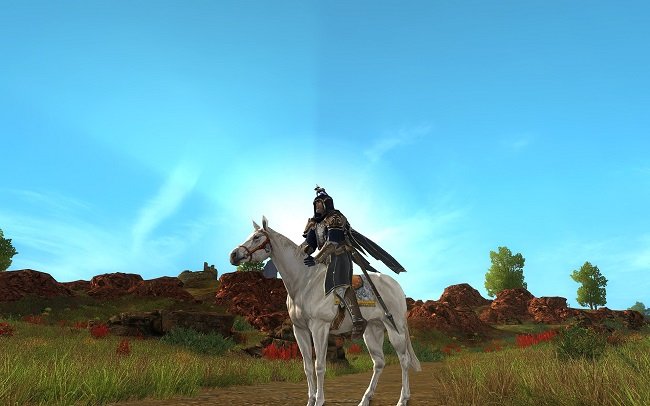
I wrote a while ago that a lot of kinships from the MMORPG, The Lord of the Rings Online, would probably not survive the recent server migration. MMOs are social endeavours by nature, often with strong emotional ties but a lot of kinships (or guilds) have already fallen into decline, simply due to gaming entropy. Hence the migration has seen players leave existing kinships to move to the superior 64-bit servers, resulting in a lot of people who may be potentially looking for a new home. This is exactly what happened to me. I opted to move to Meriadoc server promptly, at the cost of leaving a kinship I have been a member of since 2009. However, the move presented me with an opportunity to remedy this problem myself. I subsequently set up my own kinship and decided to make it available to others.

The dust appears to have settled for the MMORPG The Lord of the Rings Online, after last month’s server transfer debacle. Despite the technical issues arising and subsequent delays to the migration timetable as well as the procurement of in-game housing, LOTRO seems to be enjoying a minor resurgence. Many former players are returning to the game and moving retired alts to new servers, due to the superior performance. The migration issues have also brought a lot of attention to this 18 year old game and it would appear there are many new players trying this Tolkien themed MMO. I was pleasantly surprised to see that a further two 64-bit servers, Grond (EU) and Sting (US), are to be added to the game to meet demand. As I predicted in my previous posts, LOTRO has a habit of bouncing back due to its unique niche in the gaming ecosystem.
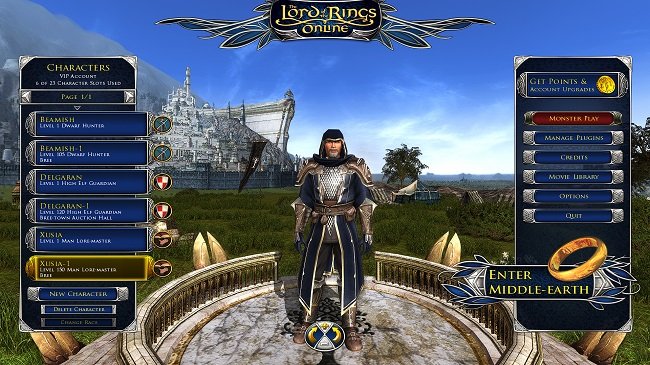
It has not been a good week for the MMORPG, The Lord of the Rings Online and its developer Standing Stone Games. The migration from legacy 32-bit servers to 64-bit servers has not gone smoothly. The transfer queue was overwhelmed by the sheer number of accounts and it has taken far longer than expected to process the backlog of requests. Today has been the fifth day of waiting to see if my 3 main characters from Laurelin server have successfully migrated to their new home on Meriadoc. When I checked this morning, the transfer wizard indicated that my characters were back where they originally came from. I therefore considered repeating the entire process. However, around midday, Community Manager Cordovan indicated that SSG had caught up with transfer requests made around 8:00 AM EST on Sunday 9th March. So I decided to be patient and wait a little longer.
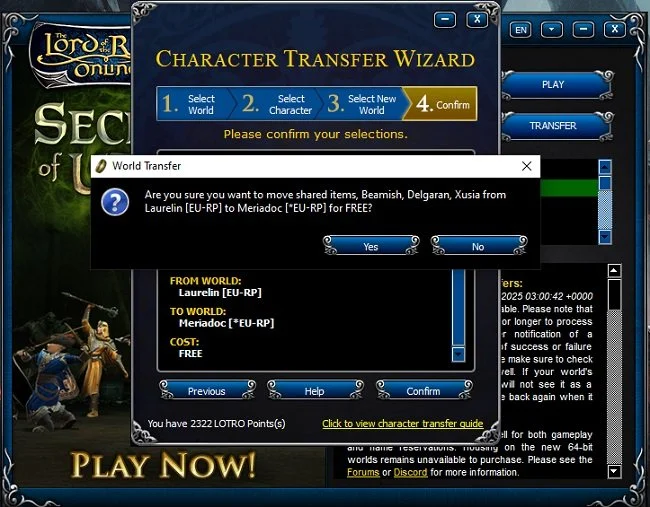
I’ve been busy this weekend, so it wasn’t until late afternoon today that I found time to sit down and attempt to migrate my characters from the old 32-bit server Laurelin, to the new 64-bit server Meriadoc. The “Great Server Migration” has not gone smoothly and the week has been a litany of changing deadlines and unfulfilled expectations. However, developer’s Standing Stone Games, have been “firefighting” issues on a daily basis and communicating regularly with the player base of the MMORPG, The Lord of the Rings Online. Sadly, a lot of players have not responded well to the ongoing technical difficulties and there is subsequently a lot of ill feeling on the official forums. I have chosen to adopt a more pragmatic outlook and to let events run their course.
Standing Stone Games were scheduled to open their new 64-bit servers for the MMORPG, The Lord of the Rings Online, today. However, when the free transfer service went live yesterday, it was quickly overwhelmed by the sheer number of players trying to migrate their alts from the older 32-bit servers to the new ones. Eventually SSG had to disable the transfer facility so that they could process the backlog. Hence today’s launch of the new servers has been postponed till tomorrow. In the meantime, the official LOTRO forum’s have gone into meltdown with irate players berating the developers for handling the migration poorly. True to form, SSG have been somewhat defensive and prickly in response to what they see as unjust criticism. Let it suffice to say that neither party has covered themselves in glory and there is a good chance that the technical problems will persist a while longer.

What Massively Overpowered calls LOTRO’s “Great Server Migration” began today. The MMORPG The Lord of the Rings Online has opened 4 new 64-bit servers in conjunction with the 2 existing 64-bit legendary servers and the long term plan is to migrate all current players over to them. Eventually, the 32-bit legacy servers will be shut down, however that is a long way off at present. As of today, VIP players can select a new server, log into it and create new characters with their desired names. These placeholder characters cannot be played at present but can be used to reserve names. Tomorrow, if all goes well, the new servers formally open and free transfers begin. Players can then delete placeholder characters and rename alts that they have migrated, thus restoring desired names. It should be noted that none of this is mandatory and players can remain on the old servers for the present.
I have many pleasant memories associated with playing the MMORPG The Lord of the Rings Online during its first decade. A lot of them are due to the kinship (guild) that I have been a member of since 2009. I started playing LOTRO in December 2008 and it took me a while to find a suitable kinship but once I did, it made logging into the game a real pleasure. I was at a point in my life where I had sufficient time to play the game regularly and take part in kinship organised raids. It was also an added bonus to be able to spend some time and chat with some like minded people. I’m sure such an experience is not unique to me and that many LOTRO players have enjoyed similar periods of time. The lucky ones may still be enjoying a comparable kinship experience today.
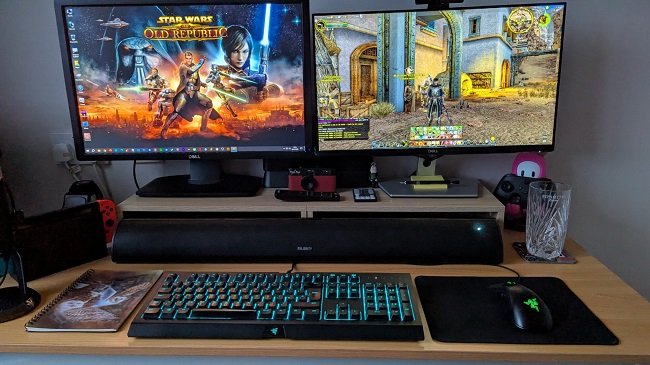
I have two monitors on my desk. The first (which is the primary monitor as far as my PC is concerned), is on the left and the second is on the right. The primary monitor is a 24 Dell U2412M, which has a resolution of 1920 x 1200. It therefore has an aspect ratio of 16:10 which adds a little extra desktop real estate, which I prefer when writing. The second monitor is a 24 inch Dell S2421H with a screen resolution of 1920 x 1080. It has an aspect ratio of 16:9 which is standard FHD. My chair is adjacent to the middle of my desk and I can turn according to each monitor I’m using. I tend to use the primary, larger monitor on the left for tasks such as writing via Google Docs and emails. The second monitor on the right is used for YouTube and gaming. This is because of its FHD format. I also have a Nintendo Switch connected to the second monitor for the same reason.
Star Trek Online: The Agony of Choice
Today I finally earned the requisite amount of campaign progress to be eligible for a free ship in the MMORPG Star Trek Online. It’s taken eight months or so to achieve this and I’ve played doggedly through the Voth Advance, Tholian Trouble and the Defense of Pahvo, multiple times to gain the maximum 3,500 campaign progress. Despite having plenty of time to decide which of the multiple reward options I would take, when actually confronted with a choice, I found it quite difficult to do so. Because there are a LOT of ships available in this game. So many in fact that making a choice becomes problematic. You find yourself not wanting to make a mistake so you end up down the rabbit hole of “researching ships”. Naturally, there are no definitive best ships in the game, although there are many that favour specific play styles and have certain benefits. Opinions vary and so you quickly find yourself just confused, cautious and even a little annoyed at being “ put in such a position”.
Today I finally earned the requisite amount of campaign progress to be eligible for a free ship in the MMORPG Star Trek Online. It’s taken eight months or so to achieve this and I’ve played doggedly through the Voth Advance, Tholian Trouble and the Defense of Pahvo, multiple times to gain the maximum 3,500 campaign progress. Despite having plenty of time to decide which of the multiple reward options I would take, when actually confronted with a choice, I found it quite difficult to do so. Because there are a LOT of ships available in this game. So many in fact that making a choice becomes problematic. You find yourself not wanting to make a mistake so you end up down the rabbit hole of “researching ships”. Naturally, there are no definitive best ships in the game, although there are many that favour specific play styles and have certain benefits. Opinions vary and so you quickly find yourself just confused, cautious and even a little annoyed at being “ put in such a position”.
There are three choices on offer. You can claim a ship from the Zen store, or a ship from the Infinity Lockbox which includes all the cross faction ships and vessels that are usually only available for a short period of time or found on the exchange at extortionate prices. Alternatively you can claim a fistful of Lobi Crystal, which is an in-game currency that lets you buy not only unique ships but consoles, ship weapons, ground gear and personnel. Lobi Crystals have the advantage of being bound to your account and so can be transferred between alts. If you claim a ship from either of the other two options associated with this promotional event, then they are bound to character. Essentially, these choices are better for players with fewers alts and may be one primary character. Luckily that is me in a nutshell. Although I have nine alts, one remains the focal point of my gaming and gets the best resources.
So after much deliberation, I found myself back where I started and decided upon the choice I had made several months ago while working through the campaign. I chose the Tier 6 Atlas Prototype Dreadnought Cruiser from the TOS era. Although this is a really stylish looking ship with a nice 23rd century aesthetic, I really just wanted it for the Universal Console. The Dynamic Power Redistributor Module offers +11.2 Energy Damage Resistance Rating and +17.8% Directed Energy Damage as a passive boost. It then has a "clickable" skill that gives +40% Bonus Damage (Reapplied every 1 second for 20 seconds as long as health is above 80%), +100 Bonus Damage Resistance Rating for 20 seconds and +500% hull regen per minute for 20 seconds. All with a 2 minute recharge. This is all well and good but once the console was equipped on my current ship and the Dreadnought Cruiser sent to Dry Dock, it did seem to deflate the sense of victory for completing this event and mitigate all the hard work. Perhaps I should have chosen something shiny that I was actually going to fly. C’est la vie or STO in this case.
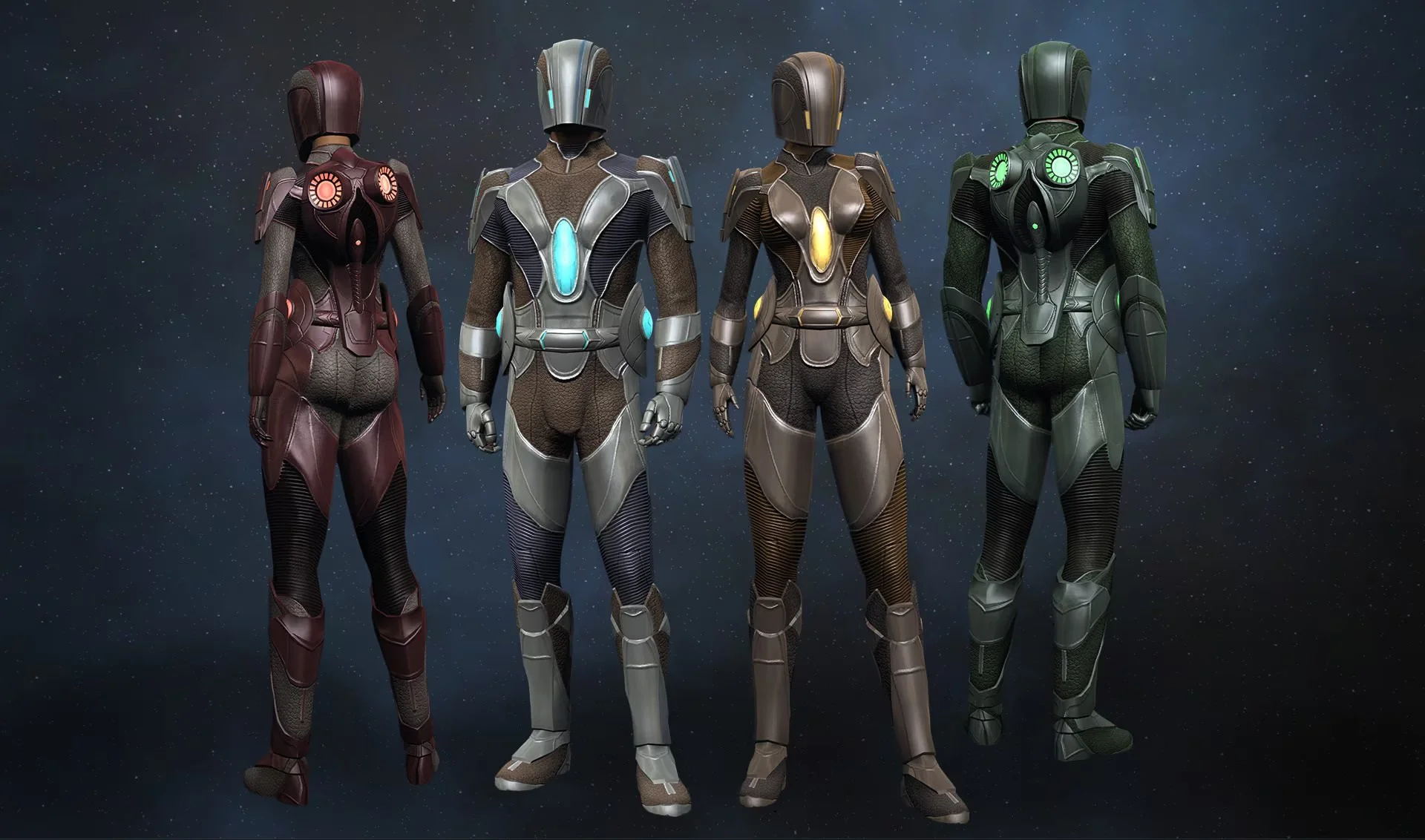
Star Trek Online has many in-game systems that are common to the MMORPG genre. The reputation system is one such example. In STO there are 13 reputation factions. Once a player has reached level 50 they may start progressing through the 6 reputation tiers of each one. Players gain progression through daily projects (20 hours in duration). Hourly projects are also available though they yield less reputation advancement and are limited to three times a day. Hence 20 hour projects are consider by default the most efficient way to gain rep. Projects require 30 Faction Specific Marks (earned via various activities in-game), 15,000 Energy Credits (standard in-game currency) and 2000 Expertise points. The most efficient way to tackle the reputation grind is to build up the necessary resources in advance and then at a designated time each day, start all 13 respective projects. Upon completion projects yield a player bound lockbox containing a random space or ground weapon, a console or Elite Marks which can be used to acquire faction gear.
I was recently perusing my archive of old blog posts, when it struck me how much I’ve written about the MMORPG genre over the years. Naturally, there was far more material from between 2008 and 2012 as that was period when I immersed myself in the genre and was very enthusiastic about it. I was at a point in my life when I had the time to dedicate to such games and I was happy to participate in the social aspect of they offered. I would regularly play through group content and spend time socialising online with fellow guild members. My experience remains a textbook example of how online games can be more than the sum of their parts and that where you are at in your life has a major impact upon your overall enjoyment. As I read though various old posts it became clear that my experiences where specific to this particular part of my life and that they cannot be repeated. My relationship with the genre is very different now and that’s fine.
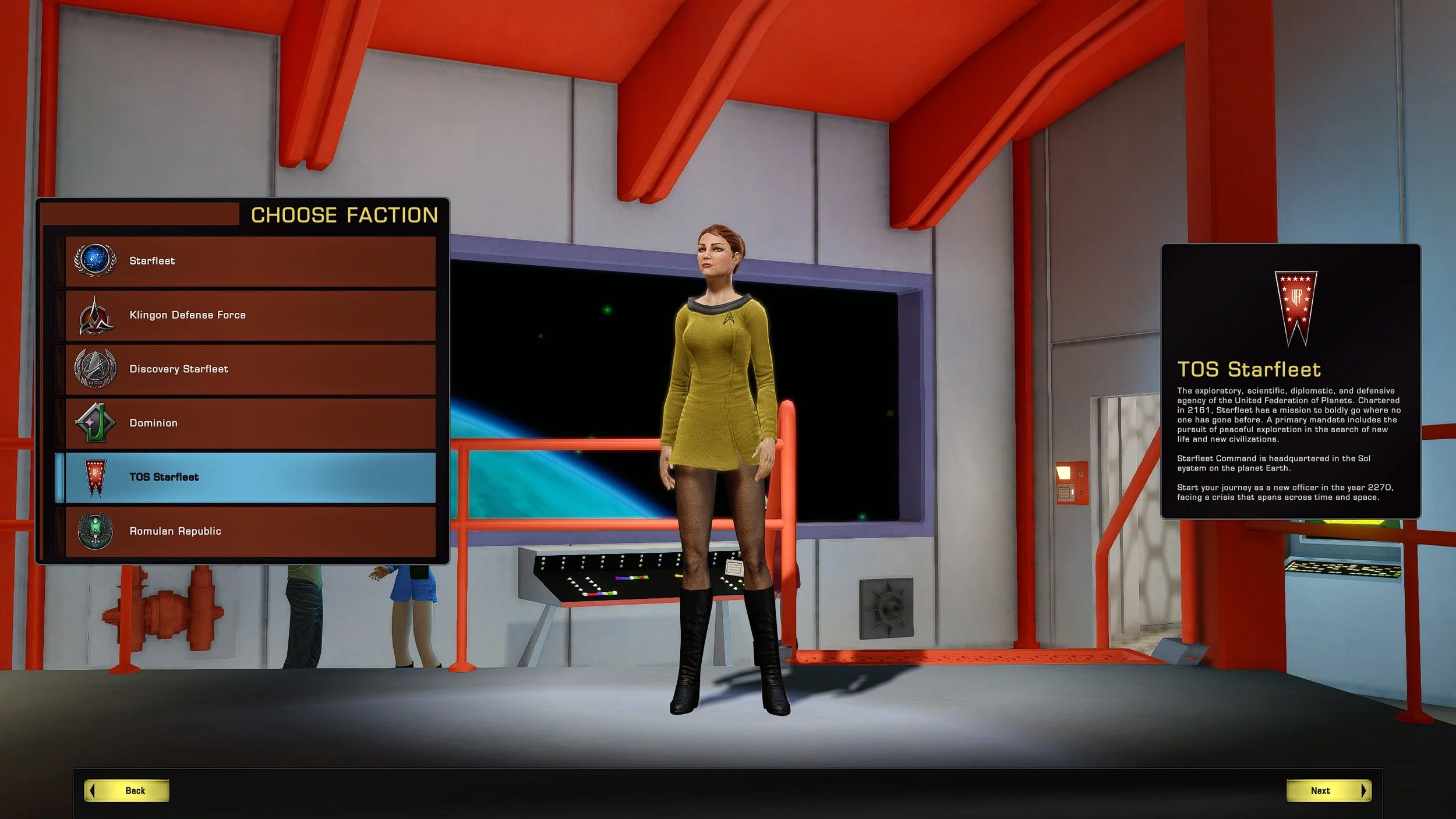
Creating alts is an integral aspect of the MMORPG genre. Many players will create a character of a specific class or faction, play it for a while, lose interest in it or they may decide that it is just not for them. Fortunately it is no effort at all to simply re-roll a new alt and set off once again. Furthermore, lots of players never reach level cap of the MMORPG that there playing. When the going get’s tough, so to speak, you can either soldier on for another 50 levels or simply create a new alt and return to the comfort of tried and tested content. Alts also give you the chance to secure an accolade or achievement that you previously missed. They are also of great benefit to the genres social aspects. Creating a new alt so you can play along with a friend who is just starting is great fun. Developer’s love them too as it means you’re still playing the game.
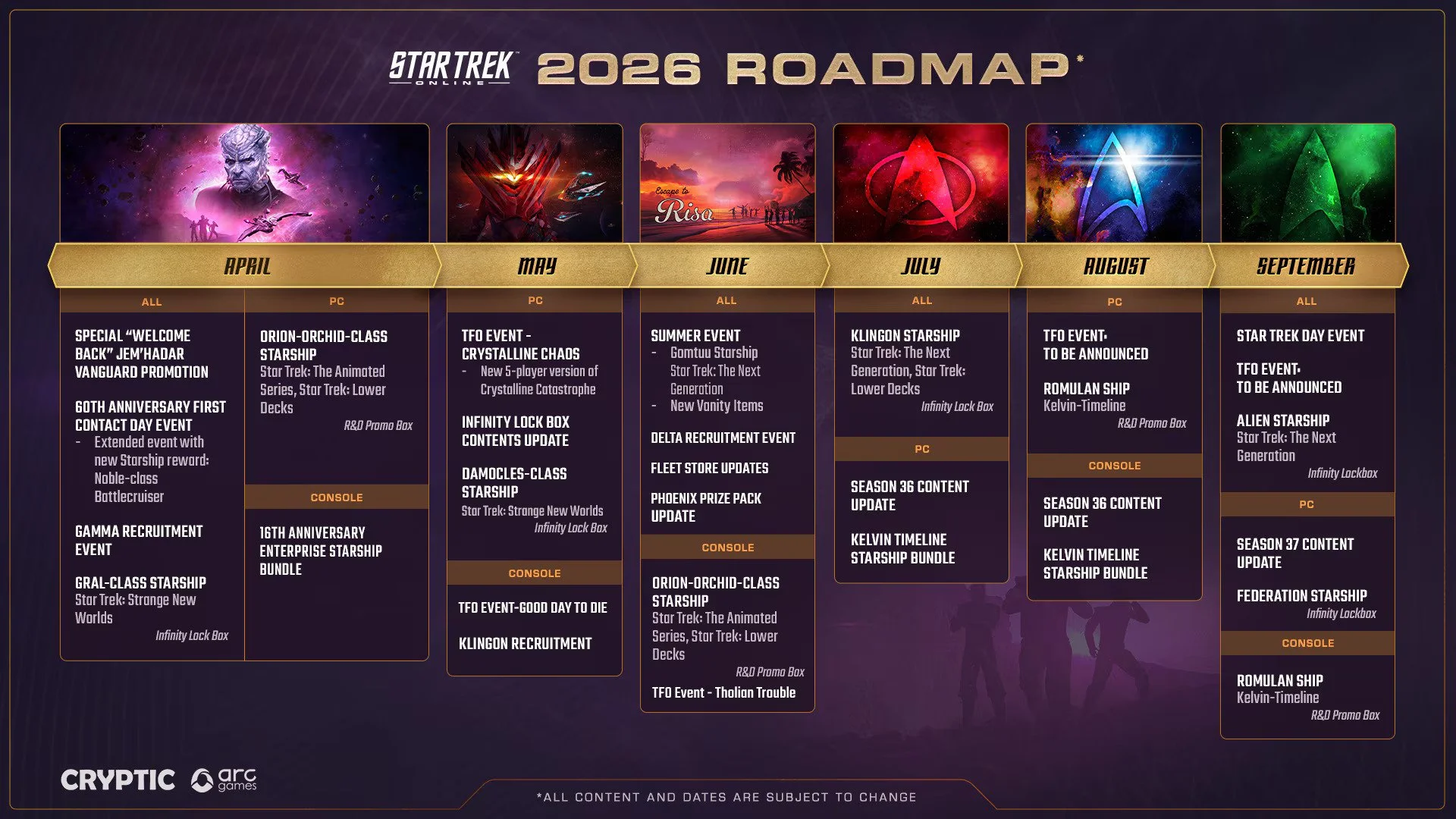
I recently took a break from Crimson Desert choosing instead to to play something familiar and easy going. As I’ve been logging into Star Trek Online daily to participate in the anniversary event, I decided to look through my various alts and see how far they had progressed through the game and what resources they had. At present I have twelve alts. My primary Captain was created in 2015 during the original Delta Recruit Event. I had previously played STO intermittently since its release in January 2010 but I never kept any of those characters. Hence this decade old Tactical Federation Captain has been my main focus when playing. The other eleven alts are the result of other recruitment events or whenever I wanted to try something different, such as playing a specific class or faction. I obviously played a lot of STO during the lockdown as several alts date from that period. Several had maximum reputation across all factions.
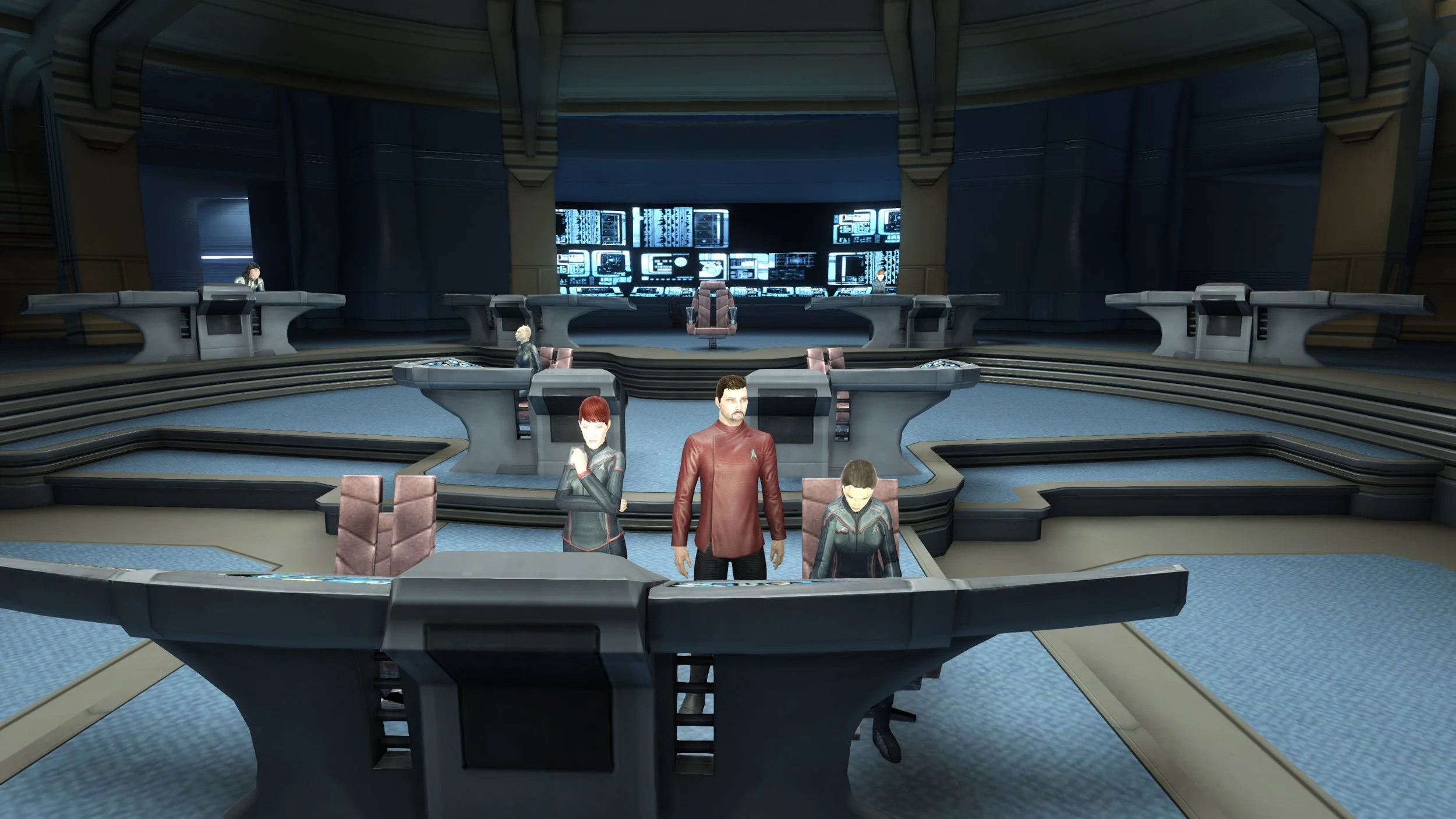
This year is the 60th anniversary of Star Trek. The original TV show was first broadcast in the US on September 8th 1966. If you search online you’ll find details of lots of related events. There are documentaries, conventions, new TV shows and even some video games in development. However, what you won’t find are any details regarding what will be happening with the MMORPG Star Trek Online. So far no road map for 2026 has been posted online by the developers but it is still quite early in the New Year. That being the case, I am not especially optimistic about there being any major plans waiting to be revealed. It is not as if DECA Games have demonstrated or stated any major ambitions for STO beyond keeping the endless events treadmill going and regularly adding content to the in-game store, during their development tenure. The ongoing story arc drags on inexorably and is as dull as ditchwater.
I recently read a post on Massively Overpowered about skills rotation in the MMORPG genre. I found the subsequent discussion in the comments fascinating. Mainly because I have never used a fixed rotation of skills in any of the MMORPGs that I play. I understand the reasoning behind such things and why some players want to optimise their combat performance. Using one’s skills in a specific order to maximise damage and manage their subsequent cooldown has a logical appeal. In Star Trek Online, some players go so far as to create keybinds for their rotations and assign it to a specific hotkey, which is then continuously pressed throughout combat. However, rotations are a blunt tool that lack flexibility, often being geared towards dealing with a single target or using an area of effect skill against a larger group. They may not be the optimal approach to combat when things do not go to plan.

If you check the Star Trek Online Wiki, you’ll find that there has been a steady stream of new content added to the MMORPG over the last 15 years. However, it doesn’t quite feel that way, mainly because more recent material seems weaker and less memorable. The last two major story arcs in STO have been somewhat lacklustre and demonstrably inferior to those that went before. Both Terran Gambit and Kings & Queens suffer from uninspired, repetitive ideas as well as an infrequent release schedule. Effectively weak stories have been dragged out over too much time. No doubt changes among the STO writing team have had an impact on content but it also seems that some of the newer stories have been tailored around whatever former Star Trek cast members that are available. As a result there has been a somewhat “square pegs in a round holes” aspect to both story arcs, where the pieces just don’t seem to fit together well.
In massively multiplayer online games (MMOs), alts (short for alternate characters), are new characters created by a player in addition to their primary character (often called the “main”). Alts are often encouraged by developers as a means to keep players engaged with their game(s). Sometimes an MMO will actively reward the creation of alts either with access to exclusive content, or with additional skills or items previously unlocked by primary characters. As the myth that an MMO really begins at endgame still persists in gaming culture, some games sell boosts that will instantly raise the level of an alt to that of the current level cap. Creating alts is such a key aspect of the MMO genre, that some games will sell additional character slots, so that players can create further alts beyond the default amount allowed. There are many reasons why players create alts. Let us consider some.
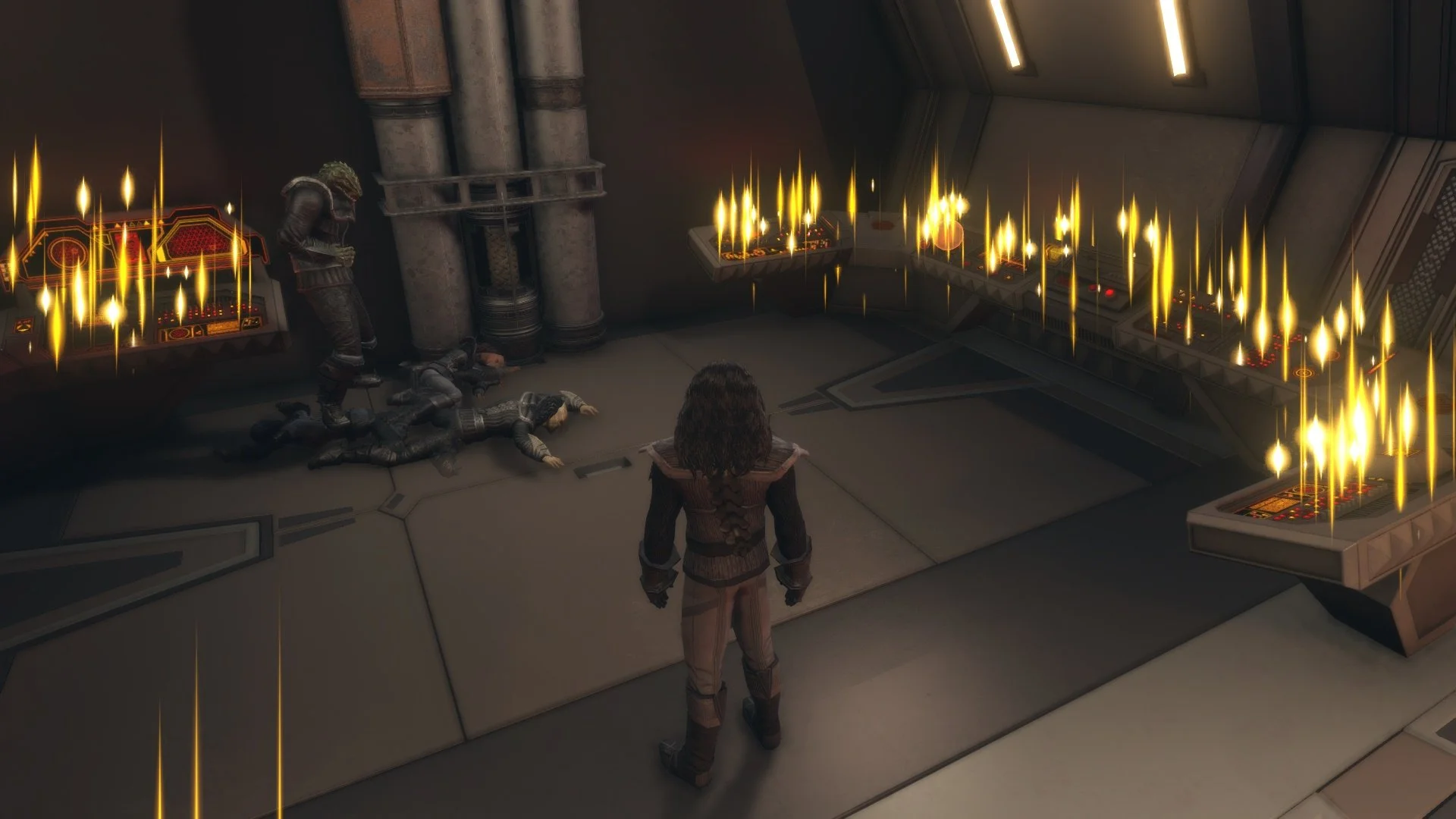
Star Trek Online is currently running its yearly Klingon Recruitment Event for PC players. Characters created from January 21st to February 11th gain additional rewards and account wide unlocks while levelling. It is a particularly useful way to orientate new and returning players. I created a Klingon Engineer during the 2021 Klingon Recruitment Event which I previously levelled to the current cap. However, I hadn’t taken this character through all the episodic missions, so I thought the current event would be a good time to resume their progress. Therefore today I resumed playing through the Romulan Mystery story arc. It was during the course of the final part of the episode, “Mine Enemy”, that I encountered a curious bug. It amused me sufficiently to prompt this blog post and make a lazy pop culture reference.
I have two monitors on my desk. The first (which is the primary monitor as far as my PC is concerned), is on the left and the second is on the right. The primary monitor is a 24 Dell U2412M, which has a resolution of 1920 x 1200. It therefore has an aspect ratio of 16:10 which adds a little extra desktop real estate, which I prefer when writing. The second monitor is a 24 inch Dell S2421H with a screen resolution of 1920 x 1080. It has an aspect ratio of 16:9 which is standard FHD. My chair is adjacent to the middle of my desk and I can turn according to each monitor I’m using. I tend to use the primary, larger monitor on the left for tasks such as writing via Google Docs and emails. The second monitor on the right is used for YouTube and gaming. This is because of its FHD format. I also have a Nintendo Switch connected to the second monitor for the same reason.
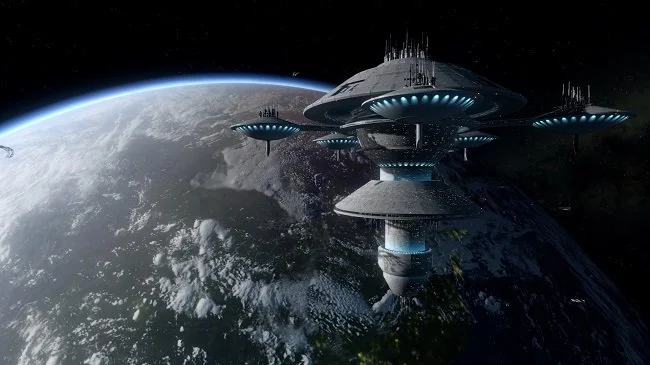
Yesterday the MMORPG Star Trek Online updated Earth Spacedock for the PC version of the game. The console version will be released a little later on. This replacement impacts upon Sol system space, the entire exterior model of ESD and elements of the interior. The outgoing model was somewhat old with several anomalies that linked to aspects of the game that have changed over the years. Perhaps the biggest reason for the change is a canon update to ESD as seen in the third season of Star Trek: Picard. The TV show features a new Earth Spacedock, also known as Probert Station, which boasts a larger superstructure designed to meet the demand of Starfleet in 2401. It would appear that this update is the first substantial release from the developers at DECA Games and may potentially indicate the quality of future content.
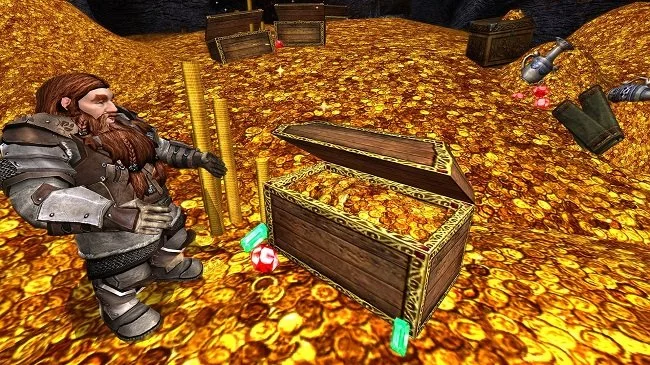
Bree Royce, editor-in chief at Massively Overpowered, recently asked the question “what is the most expensive MMORPG right now”. My first thought was to search through my old draft blog posts and track down an MMO cost analysis I wrote circa 2019. It includes data such as subscription rates and the price of current expansions. There was also information on what were the most popular cash shop items at the time. However, I then read some of the comments that had been left on Bree’s post and I quickly realised that this wasn’t just a matter of financial expenditure. Whether or not an MMO is expensive is also determined by one’s disposable income, respective wealth and personal relationship with money. The latter is perhaps the most important, irrespective whether you consider yourself rich or poor.
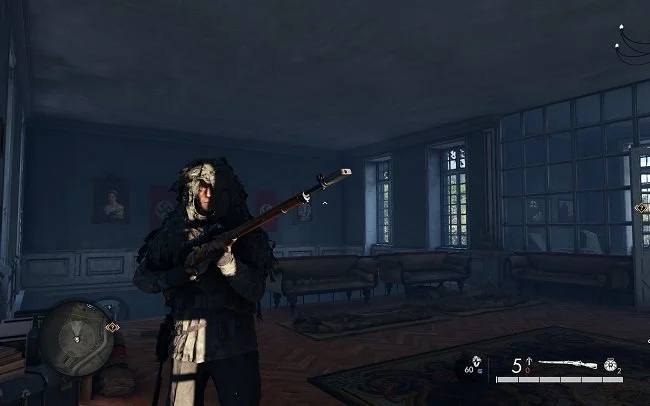
It is customary for me to write an end of year summary of my gaming activities but I suspect that on this occasion it will be somewhat short. For me, 2024 has really hammered home the notion of the ephemeral nature of video games as well as their commercial ubiquity. The moment a game fails to satisfy for whatever reason, rather than complain or worry about it, I just move on to something else. It’s not as if there’s a shortage of games out there. I have a substantial back catalogue of games that Epic and Amazon prime regularly giveaway. I have bought numerous discounted bundles in the past, in the pious hope that I’ll play one of the games included, at some point in the future. Games may well be enjoyable and engaging but many are also disposable. That’s not to say they’re bad. While playing them you are indeed “entertained”. However, when you’re “done”, it’s amazing how you quickly find another and forget what you were previously playing.
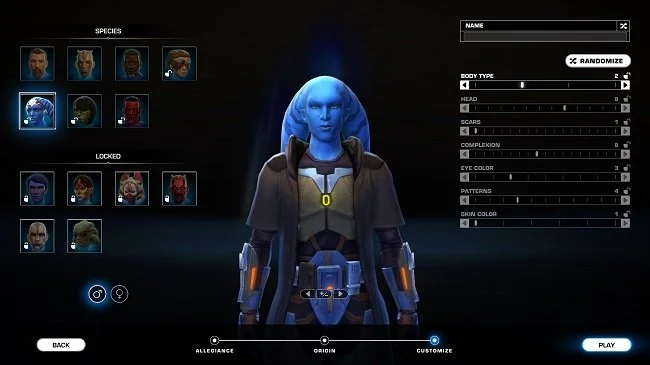
If you’ve ever played an MMORPG, then you have more than likely encountered this problem. Especially if you start playing a game that has been long established. You diligently create your character and spend time and effort customising them to suit your needs. All you’ve got to do next is choose a name, so you type in a pithy and droll title only to find that it has already been taken. So you quickly come up with another and that too is rejected. Next you try the same name but with some “alternative” spelling but the game resolutely tells you that even that permutation is already in use. I have found that even with a list of names that I’ve drawn up prior to playing the game, it can still take anything from 5 to 30 minutes to find one that is available. Naturally, this process is very frustrating, which is hardly the ideal user experience for a new player.

It would appear that one of the reasons potential new players avoid the MMORPG genre is due to the perception that they are all time sinks. I wouldn’t argue against this assumption because the reality is that it’s true. However any game that you enjoy, irrespective of genre, can become a time sink. That being said, the main difference between other genres and MMOs is as follows. A new player can jump straight into a FPS game and within minutes enjoy some multiplayer action, whereas in an MMO, a new player has to play through a tutorial and several hours of a starter zone before they start making headway in the game. This distinction does not have to be a deal breaker. An FPS can provide a quick fix of gaming and as such fulfils a need. MMORPGs can provide long term entertainment which scratches an ongoing gaming itch. Both are valid ways to enjoy gaming.
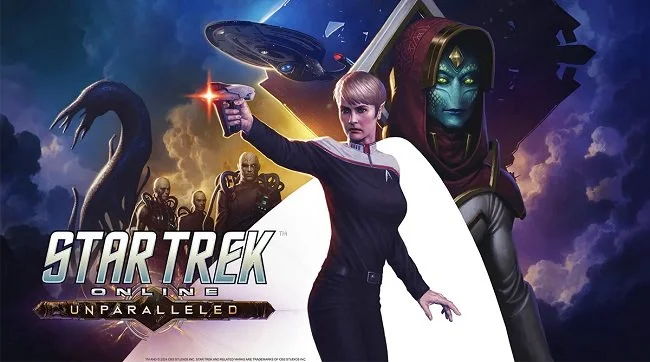
Cryptic Studios appear to have started a new round of layoffs, following those made last November. Although the developers of Star Trek Online and Neverwinter have not formally commented on the situation, it is more than likely that this is a continuation of their owners, the Embracer Group, ongoing restructuring program. So far, the Swedish company has laid off over 1,500 employees since June 2023, in an attempt to address its ill considered over expansion in recent years. At present development of Star Trek Online and other titles are being transitioned from Cryptic to DECA. The German developers are mainly known for mobile games and have recently positioned themselves as “breathing life into old games”. Their intent is to keep developing content for STO and to maintain a working relationship with the owners of the intellectual property.

If you are a new player, then Star Trek Online has 14 years of content to play through. It is all story driven and is frequently couched in existing lore from the various Star Trek TV shows. It also benefits from many of the original actors reprising their respective roles within the game. This provides an additional air of authenticity to the proceedings as well as being a spectacular fan service. Furthermore, much of that content is faction specific, hence there is a great deal of replay value to be had from this MMO. Apart from The Lord of the Rings Online, I cannot think of another game that manages to successfully tap into the style and idiom of its source intellectual property. Simply put, Star Trek Online looks and feels “very “Star Trek”. Which is why it has a robust and loyal player base and still proves to be a viable financial asset to its owners, DECA Games.
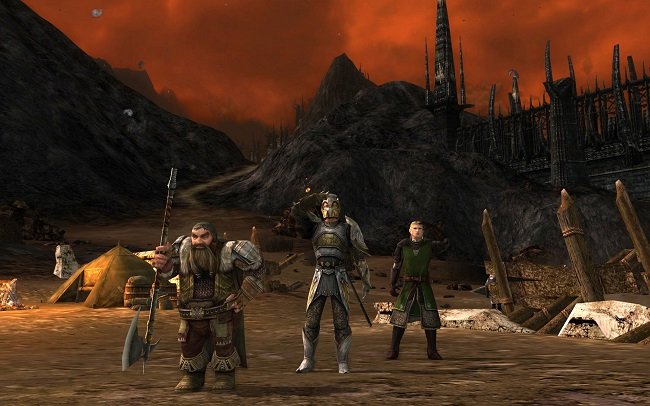
“The MMO genre is rife with its own set of tropes; recurring themes and motifs that have become established and ubiquitous. All of which are ideal material for a hastily produced, lazily conceived, recurring blog post”. One of the integral game mechanics of the MMORPG genre is the acquisition of loot. As you travel your virtual world of choice, committing random murder against all forms of flora and fauna, you acquire miscellaneous items by looting the corpses of the slain or stealing from houses and NPCs. Oh it’s a glamorous genre, the MMORPG. These random items can be crafting resources such as hides or ore. They may be food items or healing potions that provide some kind of statistical buff. If you’re fortunate, they may be gear that corresponds with your class or specific build, providing a much needed upgrade. Loot may also be the in-game currency, thus boosting your respective wealth. As you can see, loot comes in all shapes and sizes but how important is it?
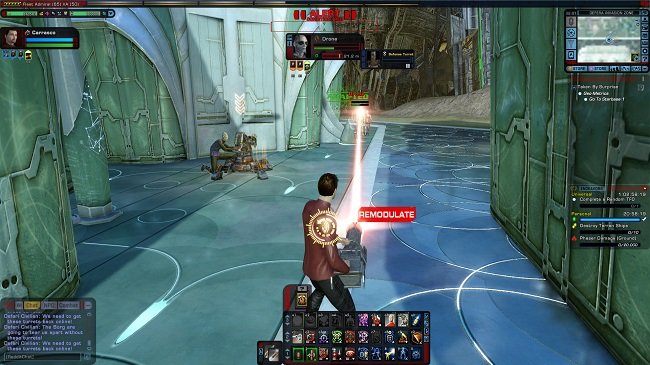
Ever since the Borg have been part of the MMORPG Star Trek Online, players have had to equip a Frequency Remodulator. The Borg adapt to damage from beam weapons after a few minutes and so players have to recalibrate their rifles or pistols, accordingly, using a Frequency Remodulator. This takes 5 seconds to perform and so has to be timed carefully to ensure that the player is not vulnerable to attack during this period. An upgraded version called a Fractal Remodulator, has been available from Federation and Klingon vendors in the Base Camp of the Defera Invasion Zone. It can be crafted for 50 Nanopower Capacitors, 50 Fibro-Neural Interface Cabling and 50 Cybernetic Armatures. It is quicker than the standard model, taking 3 seconds to apply new frequencies. Kinetic weapons do not require remodulation and the Borg cannot adapt to them.
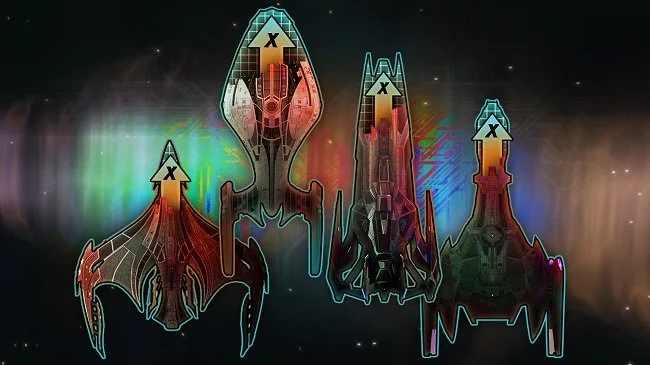
Cryptic used the same statement on their recent news release. Except they ended it with an exclamation mark whereas I’ve chosen a question mark instead. Because I really do question the wisdom of expanding the Experimental Ship Upgrade path and the benefits of applying additional tokens to your ships, unlocking further device, console and trait slots. This is a classic example of doing something because you can, as opposed because you should. Do players at level cap who have already upgraded their ship(s) from Tier 6 to Tier 6-X really need to augment it further? Beyond the immediate stats boost, does it offer any significant benefit to the player or the game in the long run? Or does this situation simply boil down to the fact that it’s another cynically contrived excuse for Star Trek Online developers, Cryptic, to sell you something. For the record, Experimental Ship Upgrade tokens are available for sale in the Zen Store (for money) or can be purchased via Phoenix Prize Pack (for dilithium).
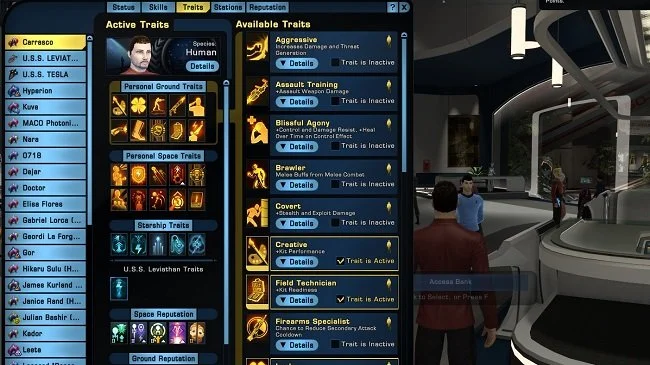
All MMORPGs have bugs. It is a certainty in life, just like death and taxes. However, some have more than others. I’m sure we could argue for hours as to which particular game has the most but I’ll leave that discussion to others. Star Trek Online has its share, many of which have persisted for years. But there is one that stands out, due to its longevity and sheer annoyance. To be specific, the “trait bug”. Like many MMO’s STO has a trait system that offers a range of passive or active buffs, skill boosts and statistical tweaks. STO is very much a number game, especially if you are chasing a high DPS output, which lots of players do. The trait bug is the random “unslotting” of some of your characters traits. It can affect any of the seven categories of traits but tends to most often happen to Personal Space Traits and Starship Traits. Unless you regularly check, most players will not immediately know this has happened.
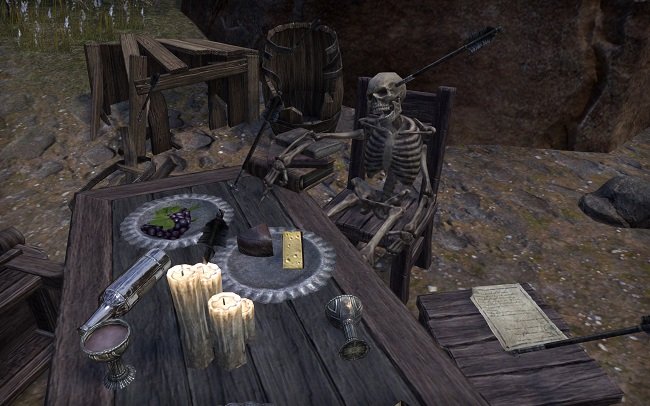
“The MMO genre is rife with its own set of tropes; recurring themes and motifs that have become established and ubiquitous. All of which are ideal material for a hastily produced, lazily conceived, recurring blog post”. Dying in an Massively Multiplayer Online Role-Playing Game is a clear and unambiguous fail state. A means by which to teach the player that they’re doing something wrong and that they need to rethink their strategy. IE Don’t mess with the foul Marmydons unless you have back up and are wielding the Sword of Kagnazax. Dying is a reminder to not get overconfident and maintain situational awareness. It teaches us to ensure you have the right gear and consumables, to be au fait with the mechanics of any fight you’re about to get into and that winning is not a given. Any enterprise that offers a tangible reward will come with potential risks and consequences. If you’re playing in a group then death provides a timely reminder not to rely on Colin.
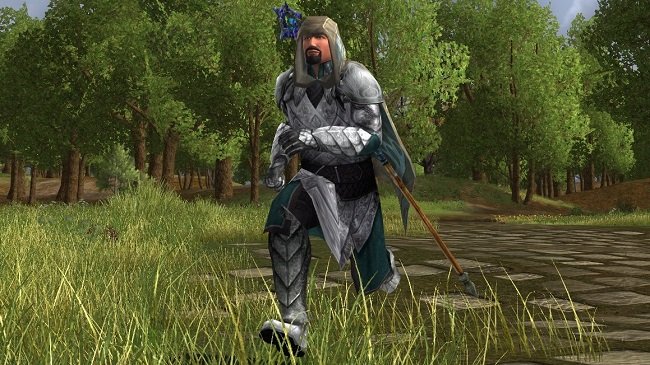
“The MMO genre is rife with its own set of tropes; recurring themes and motifs that have become established and ubiquitous. All of which are ideal material for a hastily produced, lazily conceived, recurring blog post”. I was in London recently, idly walking to the Natural History Museum in South Kensington, when a group of tourists started running for no discernable reason. Someone I was with asked “ I wonder why they’re running” and I replied “perhaps they think they’re in an MMO”. The quips fell on deaf ears but that is a cross I often have to bear. This anecdote highlights one of the points of this post. Namely, why do our avatars in the MMORPG genre run by default? I would also like to discuss the manner in which MMOs address the issue of travel around an ever expanding virtual world. Is fast travel lazy? Our mounts a boon or a bane?
Here we are again with another summary of my gaming activities in recent months. Or in this case since last September. It’s been a while but I’ve been on a blogging hiatus until recently. However, I’ve kept myself busy gaming wise and often I find the hunt for news video games, just as entertaining as I do playing them. Perhaps that could be a future blog post. Back to the matter in hand. Gaming wise, pretty much all things related to the MMORPG genre are currently on the back burner. I’ll give specifics later but I am taking a break from these for the present. I am currently looking at trying games outside my usual comfort zone and also trying to test whether you can or cannot teach an old dog new tricks. Fortunately, the answer appears to be yes you can. Enough summation, on to the specifics.

This afternoon Cryptic launched the latest season update, Ascension, for the MMORPG Star Trek Online. Furthermore, I’m sure it will not come as a shock to long term players that it was broken and an emergency patch had to be applied. Oh how we all laughed. Even after being “fixed” players are still experiencing bugs with the new content, especially the ground mission part of the update, but this sadly is just par for the course. Personally speaking, it is not the bugs that I have a problem with as they are just part of the overall gaming experience when playing STO. What I am saddened about is the actual gameplay found in Ascension. The space combat section of the game is simply “more of the same”. Destroy some specific vessels and once the goal has been met, watch the cutscene. But the ground combat is especially uninspired and repetitive, despite its interesting setting.
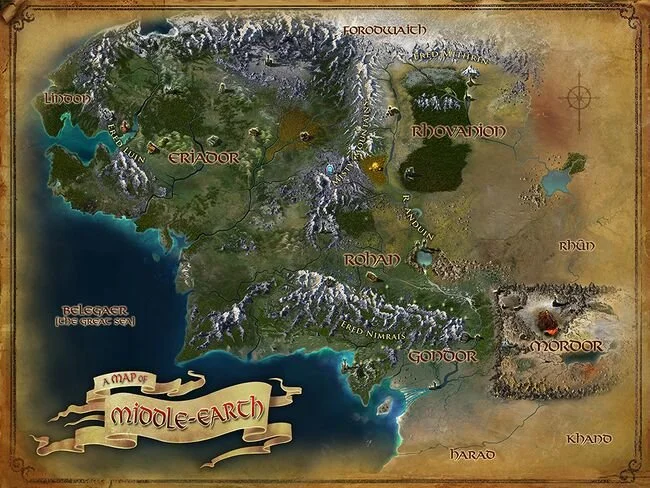
The Lord of the Rings Online was my first major MMORPG. I started playing in late 2008 and quickly discovered that there was a necessity to become familiar with the game world. Although the game provides quick travel options they were not ubiquitous at that point and often a player would simply travel on foot to travel costs down and to take the most direct route. Back in 2008 you could not own a mount until level 30. Hence I began “learning the maps” in the game and to this day still remember how to travel from one side of Moria, to another. The maps in the base game remain clear in my mind as they were so well trodden. Not so those in the regions. There are far more stables with fast mounts present in the game now and so convenience trumps any requirement to become so familiar with newly added zones. Nowadays Standing Stone Games designs new zones that tend to funnel players through them from quest hub to quest hub.
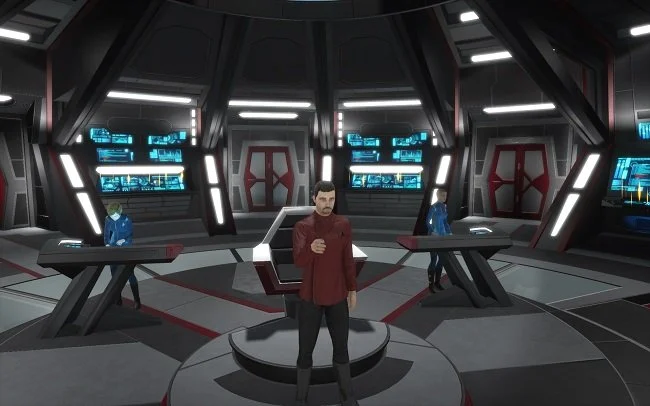
I’ve been playing Star Trek Online on and off for about 8 years. During that time I read a lot of Wikis and watched a lot of videos on YouTube that explore the game’s various systems and mechanics. I find a lot of the recommendations made by “expert” players to be impractical. The commonest being builds that include traits and consoles that you can only obtain from buying specific ships. Or using resources in quantities that take months of grinding to build up. This is hardly what I’d call handy advice for a new player. So I thought I’d give five tips of my own in no particular order, that I feel are useful. Some are glaringly obvious. Others not so. But hopefully they will prove useful to both new and returning players.

Cryptic are once again running the Temporal Agent Recruitment event in Star Trek Online from Tuesday 6th September 2022. Players who create a TOS (The original series) era character during this time are eligible for bonus dilithium, equipment and special traits as they play through the game. Progression also unlocks rewards for existing alts which can prove very useful. There are also unique tasks associated with Temporal Agents such as finding and unlocking Temporal Probes, which are hidden throughout the game’s story content. Once a player has created a 23rd century Starfleet character, completed the tutorial and received their special Temporal Agent transceiver device, they will gain the title Temporal Agent. The goals and bonus content associated with the event can be completed anytime, even after it ends on October 4th.
The Legend of Hell House (1973)
There is a school of thought that the key to crafting a good horror or supernatural film lies with creating an atmosphere that impacts upon the viewer’s mind and emotions, rather than relying solely upon visual effects, gore and spectacle. Director Robert Wise clearly demonstrated this in his 1963 film The Haunting, based upon Shirley Jackson’s book The Haunting of Hill House. In many ways the film is seen as vindicating this particular theory. The Legend Of Hell House, made a decade later, is another example of this approach to genre film making. Directed by John Hough and written by Twilight Zone veteran and cult author Richard Matheson, it is another meticulously crafted piece of cinema with a focus on increasing tension and a sense of disquiet. Rather than intermittently scalding the viewer with jump scares, the film’s atmosphere is more akin to placing the audience in water and slowly bringing them to a boil.
There is a school of thought that the key to crafting a good horror or supernatural film lies with creating an atmosphere that impacts upon the viewer’s mind and emotions, rather than relying solely upon visual effects, gore and spectacle. Director Robert Wise clearly demonstrated this in his 1963 film The Haunting, based upon Shirley Jackson’s book The Haunting of Hill House. In many ways the film is seen as vindicating this particular theory. The Legend Of Hell House, made a decade later, is another example of this approach to genre film making. Directed by John Hough and written by Twilight Zone veteran and cult author Richard Matheson, it is another meticulously crafted piece of cinema with a focus on increasing tension and a sense of disquiet. Rather than intermittently scalding the viewer with jump scares, the film’s atmosphere is more akin to placing the audience in water and slowly bringing them to a boil.
Physicist Dr. Lionel Barrett (Clive Revill) is contracted by eccentric millionaire Mr. Deutsch to make an investigation into "survival after death". He must conduct his experiment in "the one place where it has yet to be refuted". The Belasco House, the "Mount Everest of haunted houses", originally owned by the notorious "Roaring Giant" Emeric Belasco. A six-foot-five perverted millionaire and alleged murderer, who disappeared soon after a massacre was discovered at his home. The house is believed to be haunted by numerous spirits, all victims of Belasco's twisted and sadistic desires. Accompanying Barrett are his wife, Ann (Gayle Hunnicutt), as well as two mediums. The first is mental medium and spiritualist minister Florence Tanner (Pamela Franklin) and the second is physical medium Benjamin Franklin "Ben" Fischer (Roddy McDowell). Ben is the only survivor of a previous investigation conducted 20 years before. All others involved either died or subsequently went mad.
British TV and film director John Hough had a very eclectic background prior to making this film. Yet despite only making one previous horror film (Twins of Evil for Hammer studios) he certainly shows a flair for the genre here. Using a very direct style bordering on a faux documentary, The Legend Of Hell House moves efficiently through its story. The Pre-credits sequence clearly sets out the film’s remit and then wastes no time in exploring it. It is not long before there is a seance with ectoplasm manifesting around Florence. And then both Florence and Ann are subject to nocturnal disturbances and whisperings. The spirit activity also plays heavily upon their sexual desires, especially Ann who is repressed. There are some intermittent jump scares and sudden jolts but Hough focuses more upon the characters reaction to the increasingly malevolent atmosphere, as the house itself preys upon each of the four researcher’s weaknesses.
Underpinning the proceedings is a discordant and sinister electronic score from former BBC Radiophonic workshop pioneers Delia Derbyshire and Brian Hodgson. It is composed mainly of sounds and rhythms rather than traditional music and motifs and it works incredibly well. The cast are all on top form and acquit themselves well, especially McDowell. His calm demeanour hides the true horror of his previous experience at the Belasco House. There is a disquieting scene in which he finally lowers his psychic barriers to the evil presence. The camera spends several seconds holding McDowell in a close shot only for him to scream directly into the camera. Gayle Hunnicutt also gives a very sympathetic performance, as the spirit exploits her latent desires. Screenwriter Richard Matheson, who adapted his own novel, has toned down the sexual content and it is handled intelligently rather than explicitly. Viewers are made abundantly aware how human lust becomes a point of leverage by the force inhabiting the house.
The Legend Of Hell House remains a genuinely creepy and undeniably uneasy viewing experience. It explores the conflicts between traditional spiritualism and scientific enquiry into the so-called supernatural with an honest eye. The two make for curious bedfellows but this idea works well with the confines of this story. The ending is a curious blend of both methodologies which I felt was genuinely innovative. I would also like to note how the Blu-ray release of The Legend Of Hell House benefits greatly by having subtitles. They show what many of the inaudible whispering voices are saying which greatly enhances the story. Over the years The Legend Of Hell House has grown in reputation. It received mixed reviews upon its theatrical release in 1973 but has garnered more attention over time by critics who see it as a more cerebral work, rather than standard horror exploitation fodder. Discerning genre fans with an interest in noteworthy films should certainly add it to their watch list.

Exit 8 is a sophisticated and claustrophobic psychological thriller directed by Genki Kawamura, which skilfully transforms a minimalist indie walking-simulator game into a cinematic existential enigma. This overtly metaphorical film renders the repetitive nature and drudgery of modern working life into a physical environment in which the lead character is trapped and must find a way out. A random, brutal maze filled with an atmosphere of indifference to the lab rats that find themselves trapped within. Or is it their personal guilt that has put them there? Genki Kawamura’s psychological mystery draws inspiration from the Japanese video game of the same name, as well as from the cyclical nature of Groundhog Day and endless corridors of the Overlook Hotel in Kubrick’s The Shining. Although there are jump scares and some ghoulish imagery, this is not a horror vehicle. Instead this is a disquieting psychological drama with a strong sense of morality.
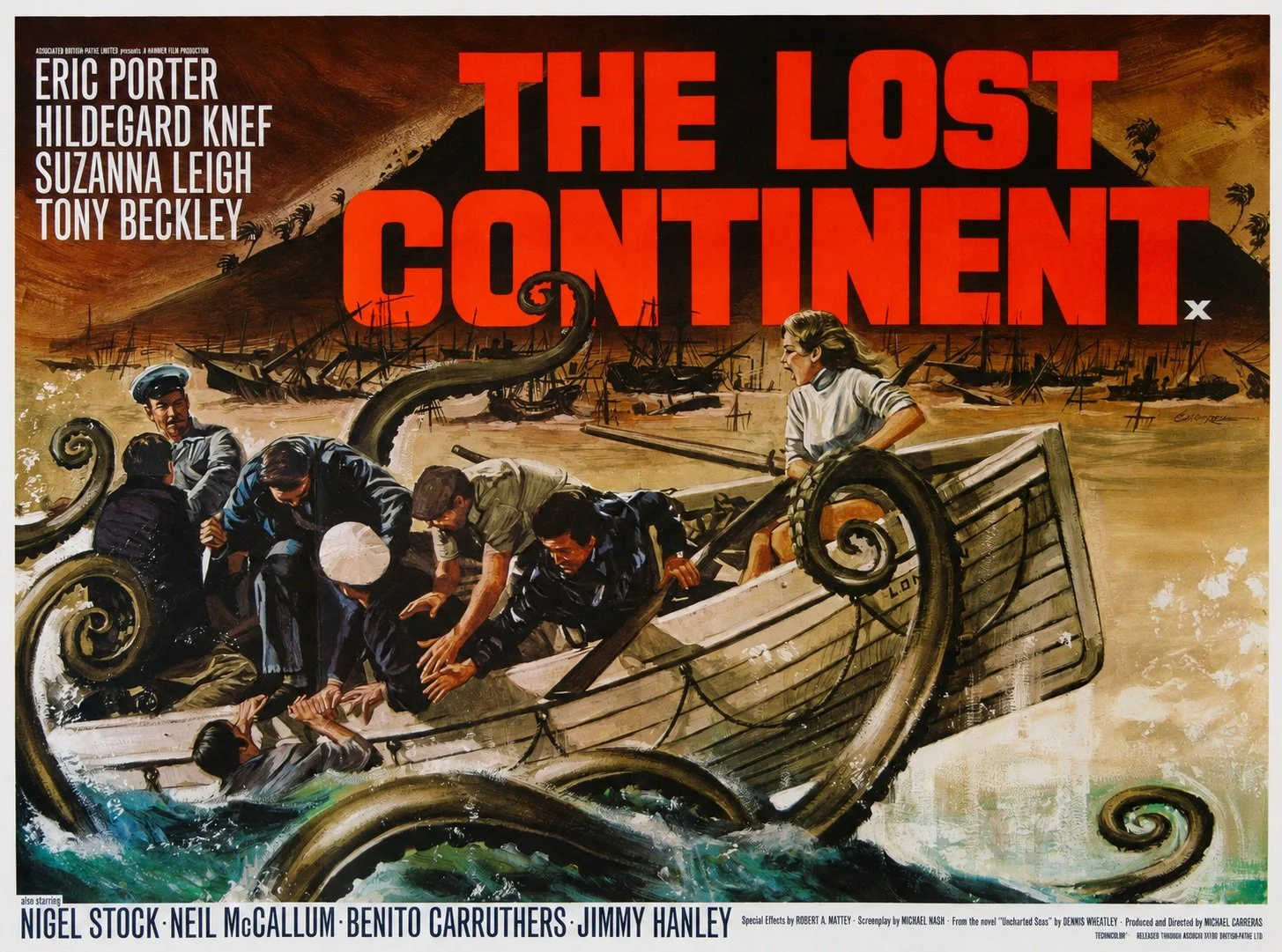
In 1968 the dilapidated freighter Corita hastily leaves Freetown to avoid a customs inspection. Captain Lansen (Eric Porter) has a cargo of dangerous explosives which he is smuggling so he can finally retire. His ship’s passengers also have reasons for leaving in a hurry. Dr. Webster (Nigel Stock), together with his daughter Unity (Suzanna leigh), is relocating due to his indiscretions with patients and illegal operations. Alcoholic pianist Harry Tyler (Tony Beckley) is aimlessly drifting from port to port. Eva Peters (Hildegard Knef) is fleeing from her husband with stolen bearer bonds which she intend to use to buy back her son from his evil clutches Caracas. Ricaldi (Ben Carruthers), a questionable lawyer, is pursuing Eva to retrieve the stolen bonds. First officer Hemmings (Neil McCallum) suggests that the ship should return to Freetown after an imminent Hurricane warning. The Captain asks the passengers and they are unanimous that they do not wish to return. However a mutinous crew, the bad weather and the instability of the explosives force everyone to abandon ship. The survivors find themselves adrift in a lifeboat surrounded by a strange carnivorous seaweed.

David Koepp is no stranger to genre cinema, having written the screenplay for such films as Jurassic Park, Spider-man and War of the Worlds. Where these titles are big budget, major studio productions, Cold Storage is a far more modest production with a smaller scope. Adapted from his own novel, the screenplay is by David Koepp and the film is directed by British film-maker Jonny Campbell. At first glance, Cold Storage seems a somewhat derivative science fiction horror film with a relatively modest budget, financed through a convoluted US and French co-production. Lurid green and red colours feature heavily in the marketing artwork and it is easy, after a cursory look, to write the film off as cheap, generic, direct-to-streaming filler. However, Cold Storage is prime example of why you should not judge a book by it’s cover, or in this case, a film by its posters and online advertising. It is in fact an amusing and fun endeavour that can fill an evening.

Despite being considered by many as an original story, The Abominable Snowman (1957) is in fact a remake of a made for television play, The Creature, that was originally broadcast in the UK in 1955. Hammer Films would often purchase the rights of popular TV programs and subsequently re-work them for mainstream, international cinema. Larger production budgets and fewer censorship restrictions allowed them to make their cinematic interpretations more lurid, thus commercially viable. Hence The Quatermass Xperiment, Quatermass II and Quatermass and the Pit were all given a big screen makeover and were commercially successful. The Abominable Snowman was written by acclaimed writer Nigel Kneale, who also wrote the original television drama and the aforementioned Quatermass trilogy. Although ostensibly marketed as a horror film this production is actually an interesting blend of psychological thriller and science fiction.

The Haunted Dolls House is a short film based on a story by M.R. James about a unique antique that is subject to supernatural phenomenon. Adapted by Stephen Gray and David Lilley, this is the third of three short films based upon James’ work that the pair have made. It stars Steven Dolton as Mr. Dillet, a collector of antique dolls houses, who acquires a bargain only to discover that it harbours a ghostly secret. Made on an extremely modest budget over the course of 2012 this clever, innovative and rather sinister adaptation is a fine example of short film creativity. It manages to offer a unique visual depiction of M.R. James’ classic story whilst capturing the unsettling quality of the author’s work. Like so many independently made short films it is clearly a labour of love, made with modest resources. It succinctly captures the spirit of the author’s work and is both innovative and rewarding.

A lot of people may know Luke Evans from the live action version of Beauty and the Beast or Peter Jackson’s The Hobbit trilogy. With his matinee idol good looks, charming Welsh demeanour and his “smoky” tenor singing voice, he projects a sense of old school stardom. Which brings us to No One Lives; a film which is a radical departure from his previous work. His performance is disconcerting to say the least and the film is somewhat unhinged. Directed by Ryuhei Kitamura, who made an interesting adaptation of Clive Barker’s The Midnight Meat Train, this cinematic outing is similarly replete with robust shocks and gore. There are some interesting ideas about the nature of violence, Stockholm Syndrome and whether one should deny or embrace one’s nature. However, these are ultimately minor asides. Philosophical musings in between bouts of surprisingly striking unpleasantness.

In the near future, Kepler 822, a research and drilling facility located at the bottom of the Mariana Trench, suffers a sudden and catastrophic structural failure. There are only six survivors. Mechanical engineer Norah Price (Kristen Stewart), Captain Lucien (Vincent Cassel), biologist Emily Haversham (Jessica Henwick), engineer Liam Smith (John Gallagher Jr.) and crew members Rodrigo (Mamoudou Athie) and Paul (T.J. Miller). As all the functional escape pods have been used and they are unable to contact the surface, the Captain suggests using pressurized suits to walk one mile across the ocean floor to the Roebuck 641 drill installation. There they will find more escape pods. However, it soon becomes apparent that the disaster was not caused by an undersea earthquake and that they are not alone as they make their journey.

In Buenos Aires, Clara (Natalia Señorales) hears voices emanating from the plughole in her kitchen sink. The voices seem to be plotting against her. Her husband Juan (Agustín Rittano) says the sounds are coming from next door. That night, Juan finds Clara’s dead body levitating in their bathroom, slamming against the wall by an invisible force. Meanwhile their neighbour, Walter (Demián Salomón), is experiencing supernatural occurrences while he tries to sleep. An invisible force repeatedly shakes his bed. After using a video camera to film these events, he sees a tall, cadaverous figure emerging from under the bed, standing over him as he sleeps. Across the road, Alicia (Julieta Vallina) is grieving for her recently deceased son, who was run over outside Walter’s house. Alicia's ex-boyfriend, police commissioner Funes (Maximiliano Ghione) calls Jano (Norberto Gonzalo), a paranormal investigator and the pair soon discover more supernatural occurrences in the area.

Black Sabbath (AKA I tre volti della paura) is a 1963 horror anthology film directed by Mario Bava. Although an Italian production, the film was co-financed by American International Pictures and as such was conceived to appeal to US audiences. Hence, the English dialogue edit of the film which was released in America differs significantly to the original Italian version. Despite the presence of the legendary Boris Karloff and the popularity of both anthology and gothic horror at the time,the film was only a modest success at the US box office and did not do well in Italy. However, in more recent years there has been a critical reappraisal of Black Sabbath, especially the Italian dialogue version. Many aspects of the film which are standard genre tropes today, were in fact novel at the time. Also despite the production mainly being studio bound, the film oozes style and has a striking visual aesthetic.

During 1836, in the town of Darkness Falls, Maine, an elderly widow Matilda Dixon is adored by the town’s children as she gives them a gold coin whenever they lose a tooth. One day, after a house fire, Matilda is left burned and sensitive to sunlight, so she starts wearing a china mask. When two children are reported missing, Matilda is blamed by some locals, dragged from her home and hung. She curses the town, stating that whenever a child loses their last tooth, she would come for it. If the child looks at her, she will kill them. The missing children are subsequently found, so the citizens cover up their unjust lynching. In 1990, young Kyle Walsh awakes one night to find Matilda Walsh standing over him. Kyle’s mother is killed and he is blamed for her death and institutionalised. 12 years later, Kyle (Channey Kley) is released and tries to warn the town of the imminent danger when lightning disables the power supply. He is ignored by all until the deaths begin.

Osgood Perkins has a distinct visual style and tone to his films. It is why his previous film, Longlegs, was such a welcome change from standard genre outings. It was atmospheric both visually and tonally, demonstrating a keen understanding of horror cinema. Hence he is the perfect director to helm this adaptation of a Stephen King short story. The plot is greatly expanded and the screenplay takes a lot of liberties with the source material but the main themes of your past being inescapable and the power of guilt remain front and centre. Due to the extreme and bizarre nature of much of the onscreen deaths, the film wisely has a strong streak of gallows humour running through it which is extremely well handled. Comedy can often be used to defuse or mitigate violence which can be narratively dishonest (think Fred Krueger). Here it adds to the cruel and capricious nature of the random deaths.

When reviewing Sting, one critic stated that the small scale setting and thus, low stakes (IE only a few peoples lives are at risk), made the film not especially memorable. I consider this to be a somewhat spurious criticism. It is the very fact that Sting takes place in such a commonplace environment, with the main characters being everyday people that makes it different. There is a clear focus on well defined characters and their backstory. Unlike so many contemporary films, I actually gave a damn about the protagonists in Sting. An integral aspect of the horror genre is the ability to take a well known and familiar trope and provide a different and absorbing spin on it .It would appear that some audiences have been belaboured over the head by so many overblown and bombastic blockbusters, that the very notion of depicting small, localised and intimate events in a film, seems to bamboozle them.

Some films are made with the intention of starting a franchise, others evolve into one after a surprise box office success and lucrative sequels. Alien (1979) falls into the latter category. A mid-budget science fiction horror film that was well crafted and then benefited immensely by being released at just the right time. Sadly, many franchises become derailed and enter into a death spiral due to competing artistic visions, cynical studio politics and cinematic ignorance. This has certainly afflicted all subsequent Alien films after James Cameron’s magnificent Aliens (1986). Sometimes, a franchise can correct its course and do something fresh with the source material. Prey (2022) is a fine example of this with director Dan Trachtenberg bringing fresh vigour and intelligence back to the Predator movies. I believe that was the intention with Alien Romulus (2024). Sadly, the road to hell is paved with good intentions.
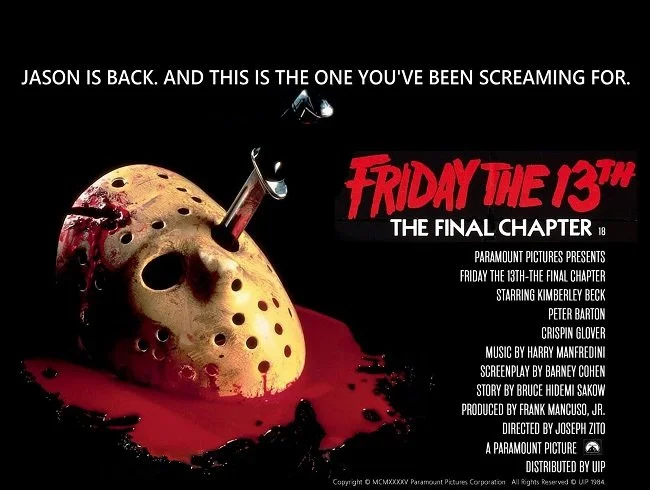
Friday the 13th: The Final Chapter is a popular entry among fans of the franchise. This is mainly due to the return of makeup artist, Tom Savini, who creates several notable death scenes and a bravura ending for Jason Voorhees. There is also an attempt by writer Barney Cohen to have a more involving story compared to previous entries in the series. Director Joseph Zito, who previously directed the above average slasher movie The Prowler AKA Rosemary’s Killer (1981), brings a harder edge to the proceedings, making Jason more menacing than in the previous instalment. As ever, the film was dismissed by the critics but performed well at the box office. Producer Frank Mancuso Jr fully intended for this film to be a definitive end to the series, as he was becoming increasingly concerned that his association with the franchise was having a negative impact upon his career.

Set directly after the events of the previous film, Friday the 13th Part III is again about a group of friends staying near Crystal Lake who encounter Jason Voorhees as he embarks upon another killing spree. Shot in 3D the film has a less sleazy tone than its predecessors although the formula remains the same. The set pieces and death scenes are more elaborate and less clinical, taking advantage of the 3D picture format. The film marks the first appearance of Jason's signature hockey mask, which subsequently became a trademark of both the character and the franchise. Originally conceived to be an end to the series of films, Friday the 13th Part III performed extremely well at the box office, earning $36.7 million on a budget of $2.2 million. As a result, the franchise was given a stay of execution and a further sequel was commissioned.
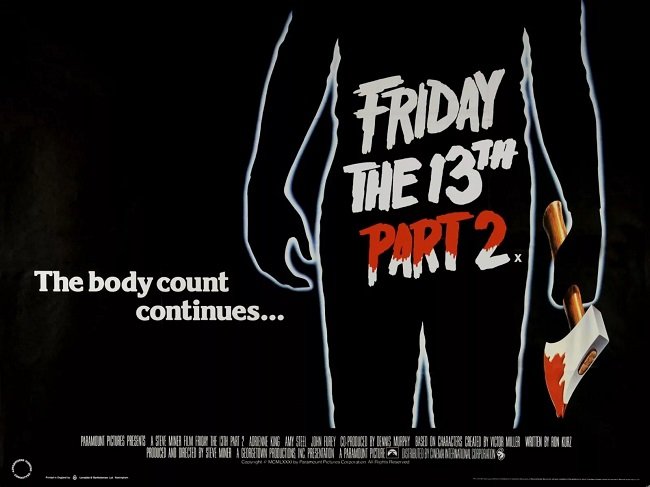
Originally, Friday the 13th Part 2 was intended to be an anthology film based on the superstition associated with the date. However, after the popularity of the original film's surprise ending, the producers opted to continue the story and mythology surrounding Camp Crystal Lake. This eventually became the parameters which all future films would broadly work within. Friday the 13th Part 2 is a more polished production than the first movie, benefitting from twice the budget of the original. The quick turnaround meant that Paramount Pictures could continue to capitalise on the popularity of the slasher genre. However, there was growing social pushback against these types of films, from Christian lobby groups and other “concerned parties”. Hence, Friday the 13th Part 2 ran into problems with the MPAA ratings board and cuts were imposed. Something that would continuously plague the franchise over the years.

Writing any kind of review for the original Friday the 13th movie seems somewhat redundant, as it has been analysed and written about numerous times before. If you’re interested in the film’s production as well as its subsequent impact on US cinema at the time, then there is an excellent summary on Wikipedia. Having recently rewatched the entire franchise, courtesy of the Shout Factory’s Friday the 13th Collection Deluxe Edition, I have a few thoughts I’d like to share. The picture quality of all the films is very good, offering a lot more visual information compared to previous releases. The amount of “extras” included in the box set is prodigious. I suspect that these are the best versions that we’re ever likely to see. Fans hoping that one day all the cut footage will be found and re-integrated into each film are likely to remain disappointed. Some material has surfaced but sadly a lot of deleted and extended scenes have been destroyed.

George A. Romero's Day Of The Dead (1985) is a bleak and remorseless masterpiece. The final entry in his “Dead Trilogy”, its central theme is that in a world on the brink of destruction, man is still the biggest threat to his own existence. It is well scripted, clinically accurate in its observations on human nature and thought provoking, despite having its budget cut just weeks before production commenced. 40 years later it is revered as a genre milestone and is considered one of Romero’s finest works. Sadly, the 2008 “remake” directed by Steve Miner, who has a background in slasher and exploitation movies, takes a contrasting approach, to say the least. It certainly has very little to do with Romero’s film and one can’t help but assume that it is nothing more than a cynical cash in. Setting aside comparisons with the original, this is not in any way a standout zombie film in its own right.

Although I was unaware of it, there was a guerrilla marketing campaign for Longlegs which was focused on the internet rather than traditional television adverts. Hence the film gained a lot of interest prior to its release and as well as some some disproportionate expectations. Then immediately after its theatrical debut, the matter was further compounded by a possible excess of gushing praise as the film was “over reviewed”. Therefore I maintained a degree of scepticism about Longlegs and tempered my expectations prior to watching it. Any film that is hailed as the next Silence of the Lambs, featuring a “traumatising” performance by Nicholas Cage needs to be keenly scrutinised so that its cinematic merits can be carefully separated from the surrounding hyperbole. After viewing I found Longlegs to be a finely honed, atmospheric and precisely targeted horror thriller but not the genre milestone that some would claim.

As a rule, it is always a challenge to end a trilogy of films successfully. Writing a satisfying denouement to a standalone movie is hard enough. To be able to conclude all pertinent story arcs and themes that have been sustained over three feature films, to everyone’s liking is far harder to achieve. In the case of The Final Conflict (1981), the last instalment of The Omen trilogy, writer Andrew Birkin does manage to resolve all of the external, internal and philosophical stakes, which are the fundamental components of a cinematic screenplay. Unfortunately, it is done in an incredibly underwhelming manner, which left audiences feeling cheated. The last time good defeated evil evil in such an unspectacular fashion was in Hammer’s To the Devil a Daughter (1976). This is why, in spite of solid production values, The Final Conflict is the least popular of the films about the Antichrist, Damien Thorn.

Halloween III: Season of the Witch is a film that often provokes a strong reaction from genre fans. This is mainly due to it not having any direct connection to the previous two films. The absence of Michael Myers in such a franchise was a serious mistake and the subsequent poor box office returns endorsed this. Yet if this film had been released as a separate product it may not have performed so poorly. After re-examining Halloween III: Season of the Witch there are many aspects of interest. Despite a troubled production, the film is an intriguing anomaly that tried to be different during a decade where the established horror formula was “stalk n' slash”. It does have a very bleak tone and some consider it to be mean spirited as the cast are killed off one by one. Perhaps theme of child sacrifice caused audiences to balk?

Ghostwatch is a controversial British horror “mockumentary” produced by the BBC that was first broadcast on October 31st 1992. Written by Stephen Volk and produced by Ruth Baumgarten it is now considered a milestone in UK broadcasting. This was mainly due to the strong reaction it provoked from the public, many of whom failed to grasp that it was a drama. At the time it raised serious questions about responsible programming and caused a furore in the British press. It has curiously never been shown since by the BBC. Ghostwatch remains a talking point to this day and is a text book example of the power of television as well as the publics enduring belief in the supernatural.

Event Horizon is a curious movie hybrid, mixing plot elements from classic sci-fi and horror genres. It has been labelled “Hellraiser in Space” by some lazy critics, although I think there's far more to it than that. Perhaps a more apt description would be a Gothic horror story set in space. The movie has garnered a cult reputation since its release in 1997, mainly due to its graphic imagery and troubled production history. It does indeed have some quite shocking sequences but the lightning editing does not show as much as some would think. Paramount forced director Paul W S Anderson to reduce the original one hundred and thirty minute running time down to a more manageable ninety, after unfavourable test screenings. Much of the violence was allegedly removed as a result of that process. Sadly nothing survives of the removed material other than a VHS workprint. Hence a restored director’s cut is therefore unlikely.
The peace of tranquillity of Santa Ynes, Utah, is shattered when the town becomes the focus of several hit and run deaths, by a mysterious and apparently driverless, black car. After the Sheriff (John Marley) is run down, it is down to Captain Wade Parent (James Brolin) and his deputies to protect the town from this sinister threat. Is the car simply a driven by a mad man or is there a more supernatural explanation? When the car menaces a local school marching band, the teachers and students take refuge in the nearby cemetery. Does the cars inability to enter consecrated ground provide a clue to its otherworldly origins and offer a potential solution? As the death count increases and the population becomes more fearful, the Captain and his team of deputies form a desperate plan to see if they can lure the car into a trap.
The key to success in the horror genre is to try and find an innovative new angle on tried and tested themes and tropes. The Night Flier is an often-overlooked gem, that takes a unique perspective on vampirism and features strong performances as well as an intelligent and thoughtful screenplay. It builds a sense of foreboding during it’s first two acts and teases audiences with some unpleasant prosthetic effects, courtesy of KNB EFX Group. The climax of the movie is both thought provoking and suitably unpleasant. Furthermore, The Night Flier even manages to make a coherent criticism of tabloid culture and morals of those journalists working in the industry. It’s a damn shame that this modest but well-crafted genre movie didn’t get the attention it deserved when it was initially released in 1997.
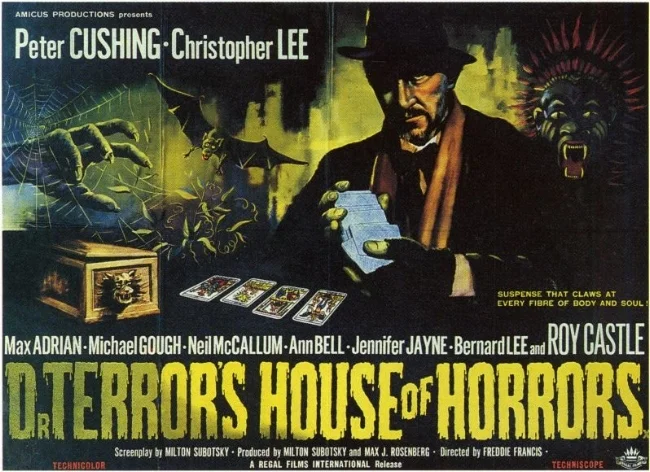
Dr. Terror's House of Horrors was the first portmanteau horror movie by Amicus Productions. The small British studio was founded by producers and screenwriters Milton Subotsky and Max Rosenberg. As the horror genre grew in popularity due to the success of Hammer films, Amicus saw the potential in the portmanteau format. Subotsky in particular held Ealing Studios 1945 classic Dead of Night in very high regard. Although only a modest budget movie, Dr. Terror's House of Horrors proved to be financially successful and led to a series of similarly structured films over the next decade. These included Torture Garden (1967), The House That Dripped Blood (1970), Asylum (1972), Tales from the Crypt (1972), The Vault of Horror (1973), From Beyond the Grave (1974),

Ghost Story is a deliberately superficial adaptation of the novel by Peter Straub. If you’ve read the book and are expecting a verbatim retelling of the plot, then you will be disappointed. It’s complex narrative structure and the abundance of characters do not immediately lend themselves to mainstream film making. However, if you like tales of the supernatural and solid performances from Hollywood legends, then this may well be for you. John Irvin has always been a workman like director and has therefore often been overlooked. Films such as Hamburger Hill and When Trumpets Fade show a great deal of focus and a clear understanding of the mechanics of cinema.
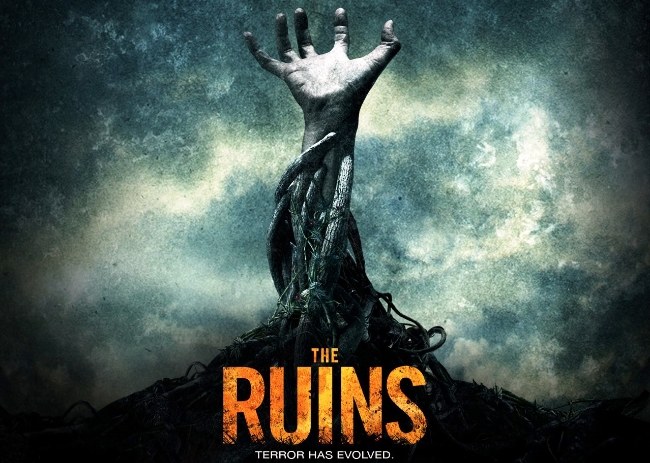
The Ruins is similar to both The Mist and Cloverfield , which were released around the same time, in so far that it is rather bleak and unrelenting movie. And like the aforementioned films, its strength lies in the manner in which it tackles the subject of people facing their own death in a credible fashion. In The Ruins the protagonists when faced with the prospect of their own demise quickly descend in to panic and resolutely refuse to face facts. Although these are negative themes that may not be to everyone’s tastes, they make The Ruins both gripping and genuinely scary.
Blogging: Do or Do Not
We are currently in the third week of the Blaugust 2021 Festival of Blogging Event. The current theme and writing prompt is staying motivated. Several of my colleagues have already tackled the subject. Kaylriene, Krikket, Naithin and Wilhelm Arturus. There’s certainly a lot to say on the point and people deal with it in their own, unique way. But to cut to the chase I think Bhagpuss has hit the nail on the head and has touched upon the heart of the matter. “If you need to go looking for motivation then you're already in trouble”. Yes, that’s a very good point. Blogging or writing creatively is both enjoyable and rewarding. But it requires focus and effort. Hence for a lot of people the prospect of doing it to a schedule is daunting and effectively determines how they continue to blog. But that’s fine. There is nothing wrong with being an intermittent blogger. I follow numerous blogs of that kind. However, if you desire to write daily or on some other regular basis, then one of two things will happen. You will either do it or you will not.
We are currently in the third week of the Blaugust 2021 Festival of Blogging Event. The current theme and writing prompt is staying motivated. Several of my colleagues have already tackled the subject. Kaylriene, Krikket, Naithin and Wilhelm Arturus. There’s certainly a lot to say on the point and people deal with it in their own, unique way. But to cut to the chase I think Bhagpuss has hit the nail on the head and has touched upon the heart of the matter. “If you need to go looking for motivation then you're already in trouble”. Yes, that’s a very good point. Blogging or writing creatively is both enjoyable and rewarding. But it requires focus and effort. Hence for a lot of people the prospect of doing it to a schedule is daunting and effectively determines how they continue to blog. But that’s fine. There is nothing wrong with being an intermittent blogger. I follow numerous blogs of that kind. However, if you desire to write daily or on some other regular basis, then one of two things will happen. You will either do it or you will not.
Now I am sorry for going all “Yoda” on you all but I feel that this is an honest and realistic appraisal of the situation. Writing regularly requires discipline and there will be days when it does feel like a chore. You may feel uninspired and unfocused. However, if you still successfully manage to write something under such circumstances, then you do get a sense of immense satisfaction afterwards as you hit the publish button. As for the perennial discussion about writer’s block, I have argued in the past that there is always something to write about. More often than not it is a case of you just not wanting to write and you would rather go and do something else instead. Writer’s block does present itself as a convenient “get out of jail” card in such instances. But it also offers an opportunity to reflect upon your relationship with writing and how you want to progress.
If you genuinely want to write on the days when it is difficult then you have to sit down and come up with the germ of an idea. Once you have something written down you can focus upon expanding upon it. To start with, try adding a few points relating to it. Next if you begin to flesh out these ideas into sentences, before you know it, you have the foundations for a post. That’s how you power through these periods when you find writing to be an uphill struggle. It requires focus and determination to take that first step. To sit down at your keyboard and write that first word or sentence and start the process. And I think we all know in advance, whether we’re actually going to do that or not. If you’re not then that is fine. You haven’t failed. You’ve been honest with yourself. In fact you have found the level of writing that you’re comfortable with, which is an invaluable lesson.
Blogging isn’t an “all or nothing proposition”. You write what you want, how you want, when you want. Put aside what you think people might expect from you and focus upon your own needs. If you reach a point where writing is actually causing you anxiety then you need to stop and take stock of the situation. During the course of our lives we try lots of things. Sometimes we find that we like something and it becomes a regular part of our lives. Other times we give a new activity a go but discover that it is not for us, or that we will do it only occasionally, or only on our own particular terms. All of which is fine. So overall, I believe that motivation is a bit of a Red Herring. There are certainly things that you can do that will assist with your writing, such as picking the best time to write and doing so in an optimal environment. But essentially, I think your motivation to write to the level and schedule that suits you, is either there or it isn’t. A subconscious choice that has already been made. Hence, do or do not. There is no try.
There is a subtle difference between being rash and being proactive. Being rash means acting too fast without thinking about the results, while being proactive is a question of acting early with careful planning. Why have I mentioned this? Well prima facie information indicates that recent Blaugust participants are interested in an “official” online presence for the annual festival of blogging, other than that existing Discord server. That seems perfectly reasonable to me. Not everyone likes using Discord and I do worry that they may reduce its free functionality at some point in the future. With regard to there being a Blaugust platform of some kind, there is a consensus that it doesn’t need to be some sort of sprawling commercially hosted website running on Wix or such like. Those sorts of site require funding, a degree of admin and possibly private data management. It also a bit too “corporate” if you like. Hence the logical compromise is to have a static site. Let it suffice to say, that has been done.
Judging by the posts I’ve read, it would appear that Blaugust 2026: Festival of Blogging has been well received by those who participated in it. That is most satisfying to know, especially in light of the fact that this is the first year the event has been run without our founder who sadly past away in July. It has also become clear that Blaugust is reaching a far wider and diverse audience and most definitely is no longer the exclusive province of bloggers from one particular community. There has been healthy discussions on our Discord server about whether this year event needs to adapt to accommodate the modern blogosphere. Questions such as whether or not there needs to be a dedicated Blaugust website have been raised and explored. Should every site participating have an RSS feed? How, if required, should comments be handled. Inevitably, the subject of the use of AI in blogging still remains a controversial issue.
After a very productive month of writing, we come to the final Blaugust 2026 Group Project writing prompt. It is titled lessons learned and is usually a chance to reflect on the festival and whether or not it has been to one’s satisfaction. Have you achieved your goals? What have you gained from the experience? Those sorts of things. It also poses two further questions; “What is the best piece of advice you’ve ever been given?” and “what’s the best advice you’ve ever given to someone else?” for your consideration. I’ll address the questions shortly. Firstly let’s mull over this years event and assess how it’s gone.
It was my blogging anniversary on the 16th August. I’ve been writing and sharing my post online for 19 years, via various different websites and blogs. This current iteration of Contains Moderate Peril has been around since August 2015. To date it has 2,171 posts including this one. Quantity does not necessarily equate to quality but there are some articles I am proud of and feel that they make their point effectively.
This week’s Blaugust 2026 Group Project writing prompt is an important topic. Namely, staying motivated. I prepared a fairly lengthy post with some advice and ideas to keep people focused and writing. Then I checked it against the post I wrote last year and the year before that, going back to blogging events from 2012. All of these posts broadly said the same thing, so I decided to scrap what I had composed for today and to go with a simpler approach. I shall answer the questions Krikket posed for this writing prompt. Fellow blogger Bhagpuss has also done so and as ever, his thoughts are interesting and well expressed. Here are my answers.
Once again, I have stumbled across an interesting debate that has provided me with an opportunity to write a blog post. Over on the Blaugust Discord Server, I read a comment from AgingGamer regarding RSS feeds and their significance with regard to blogging. This in turn referred me to a post by fyr (don’t you love all these nom de plumes) who wrote at depth about the ongoing community debate about the use of RSS/Atom feeds. The article explored the importance of such feeds with regard to reaching readers and providing accessibility to the disabled. All of which provided me with a great deal of food for thought. Mainly because I use a mainstream website service provider for my online endeavours, so RSS is by default built. I’ve never really considered not having such a facility at my disposal. But the rise in the IndieWeb scene challenges this assumption.
I have written two blog posts today that I have subsequently abandoned. The first was gaming related but when I was about halfway through writing it, I felt like I was covering old ground and just repeating myself. It was also regarding an issue that can’t really be fixed. Namely, how do you ensure that matchmaking in PVP games is done equitably. As there is no solution to this issue at present, or at least not one that all parties can agree on, I decided to ditch it. Similarly a post I was working on about what becomes of my blog if anything happens to me was curtailed. In light of recent events in our community it seemed inappropriate. However, as a result of binning two blog posts, I new idea occurred to me. Do my fellow bloggers self-edit and curtail what they write about? Is your blog totally unfiltered or do you apply a set of rules that determine what content is deemed acceptable?
It is time for the next Blaugust 2026 Group Project writing prompt. This one comes with two lines of enquiry. The first is an opportunity to “introduce yourself”. Over the years, I have written several introductory posts for previous Blaugust events. Rather than repeat myself I’ll just link to the last one, which was posted in August 2023. I haven’t radically charged since then apart from my hair going whiter. The next part of the prompt poses a far more intriguing question. “If you could have one magical power or super power, what would you choose and what would you use it for?”, which offers much for consideration. Having given this proposition much thought here is my response.
A decade ago I wrote a post about blogrolls and the practical and social issues surrounding them. At the time, the version of Squarespace I was using didn’t easily support such things or at least wasn’t able to do so in a manner I liked, so I didn’t have one. Ten years later Squarespace as a hosting platform has far greater functionality, hence I recently decided to add a blogroll. That was in March this year. However it just wasn’t really fit for purpose. So I decided to revise it a few days ago and rather than just have a traditional list of blogs in a side column, I ended up producing a more comprehensive blog directory, which list two hundred plus sites alpha-numerically. I’ve been tinkering with it on and off and I am now finally happy with it. The latest update reflects the international nature of the Blaugust: Festival of Blogging and the fact that we have many blogs written in their native language. Translating text is now an integral function of web browsers, so I see no reason why these blogs should be excluded.
Today’s post is part of the Blaugust 2026 Group project, which features a series of writing prompts set for specific dates throughout the month. The idea being that everyone who wishes to participate can write about the same subject, riff off each other’s posts and enjoy a shared experience. In many respect having a common writing prompt levels the playing field and provides a sense of common purpose among those who take part. Today’s group project prompt asks the question “tell us all about your very first blog”. An unambiguous and interesting question that will hopefully prove enjoyable to write about and informative to others.
I have been writing online for nearly two decades. I don’t claim to be good or accomplished but what I can say with certainty is that the more often you write, the easier it becomes. For those who are new to writing a blog and the Blaugust Festival of Blogging, possibly the biggest hurdle that you now have to get over, is writing your first post of the month. You spent the lead up to this event sorting out your blog templates, fine tuning the backend and possibly banking some ideas. Or you may have decided to just wing it and make it all up as you go along. Both are perfectly valid approaches. However, there is one thing left to do that cannot be put off, avoided or danced around. Writing. At some point you’ve got to do it. Or bail on the event. The proverbial “shit or get off the pot”.
If you take a cursory look at a calendar you will see that the month of July is fast coming to an end. That means that Blaugust 2026 Festival of Blogging starts in a few days time! If you’re participating, or thinking of doing so, the next few days present a golden opportunity to do some practical organising and basic preparation. You don’t have to if you don’t want to. Feel free to just do things as they come, so to speak, if that’s your approach. However, for most of us, it helps if we have some kind of plan in place and make some arrangements in advance. I personally prefer this approach and like to have some ideas for blog posts in the bank. It is also useful to have “options” if something doesn’t go to plan. For those who are new to Blaugust, here are a few ideas regarding preparation that may be of use to you. As ever, your personal mileage may vary and ultimately you are best off adopting a strategy that suits your writing style and personal schedule.
Prior to last year’s Blaugust: Festival of Blogging, I upgraded Contains Moderate Peril to the latest version of Squarespace. There are still some aspects of the site that need fine tuning but overall, I am happy with the appearance of my blog and its respective functionality. With this year’s writing event fast approach, I decided to tackle over the last few days, some of those finer points that need tweaking. I have wanted a post counter on the site for a long time but unfortunately there is no native Squarespace widget for this basic function. I also felt the need to upgrade the blogroll, as the current one didn’t support RSS feeds from certain sites (e.g. Google Blogger) and was dependent upon a third party service, Elfsight, which wasn’t ideal. Both of these issues have now been addressed and I am pleased with the results. There is now a post counter on the Blog Archive page, which seems a logical place to have it and the Blogroll is now far more comprehensive.
Next month the annual Blaugust: Festival of Blogging begins. Roundabout this time each year, I try to write a promotional post to raise awareness of the event and encourage potential participants. However, as I’ve done this quite a few times before, each year it is becomes increasingly difficult to present the essential facts about Blaugust: Festival of Blogging in an interesting fashion. There’s nothing worse than writing a post and feeling that you’re just covering old ground. So, this year, I thought I’d try something different and present the most important information about this annual event, as if it were a conversation between myself and an interested passer by. Feel free to attribute novelty voices for each party in your own head, while you read this. If it helps, try imagining that this discussion is happening between two celebrities or such like. Both may be wearing exotic hats but I digress. On with the scenario.
I read a blog post by Void recently, about finding a new internet home. He wrote about how he and many others have had to pick up their “digital roots” and migrate multiple times over the years, from one platform to another. It is a position I can sympathise with as I have done likewise. Hence I like the idea of having a place online where I hangout by default. My own blog is an anchor for me but it is not quite the same thing as a platform or online portal where I can find all my friends and colleagues, share content and shoot the breeze. It’s a curious thing, because as I typed that last sentence it struck how such a sentiment may seem alien to others. There may well be people who like to have a finger in multiple pies and who are happy to frequent and flit between various social media apps, Discord servers and subreddits. I prefer to focus my efforts on a single instance. A place that suits my requirements, allows me to put down roots and become part of the furniture. Like a virtual Diogenes Club.
Everyday, once I’m up, I sit at my desk in my office, fire up my PC and log into Feedly. I have various RSS feeds grouped by category, which I slowly trawl through and read anything that catches my eye. I have one curated feed named “Blaugust” named after the yearly festival of blogging event. It has over 250 blogs listed, many of which are former participants. Most of these regularly post. Hence there’s a lot to get through and so I don’t read all of them. However there are a few that I always checkout. Mainly because they’re the personal musings of some of our writing community’s oldest and most prodigious members. The sorts of guys and gals who are part of the furniture. They’ve always been there and it feels like they always will. Posting their thoughts, sharing their enthusiasm and spreading the love, so to speak. One of these blogs, is Tales of the Aggronaut. written by Belghast.
On Friday 26th June, I had another random spike in internet traffic to Contains Moderate Peril. The statistical package that comes with my Squarespace account recorded over 13k visits in less than 24 hours, which is not typical (although I wish it was). However, all of these visits to my blog arrived via the default homepage and spent between 1 and 2 minutes there. Hence, it was obvious that this was not human traffic, as there was no evidence of any searches being made of content that is available on my site, nor of the “visitors” clicking on any of the links on the top menu and viewing other posts. This was undoubtedly AI traffic arriving at the designated homepage and simply parsing the site. I had a similar spate of this sort of web traffic last November. The only difference on that occasion is that the traffic all came from China. This time round it hailed from the US. I suspect that this is something that will happen more often as companies set their AI loose on the net for what is effectively training.
I recently watched a video on Patreon by someone who I actively support as a “content creator” and whose work I enjoy. I shall provide no more detail regarding their identity because they may not want their work referenced with regard to what I am going to say. During the course of their video they briefly referenced the work put into promoting a podcast they are currently producing and the relatively low audience that it has garnered so far. The comments were an aside and most certainly not said with any sense of self-pity. They were simply a statement of fact. Furthermore, I suspect they are far from unique and similar sentiments have been expressed in one way or another by anyone who has created something the published it online, only for it to be lost among the greater white noise” of the wider internet.
When I first started blogging way back in 2007, I maintained a blogroll of all my colleagues and peers’ websites. At the time this was a common practice and a way to support an expanding community. I considered this such an important aspect of the blogging scene at the time, I created a website to aggregate posts from video game blogs, called The Gaming Blog Nexus. It ran for two years and proved quite useful. However, it was tricky to administer and would frequently break as a lot of the back end widgets and plugins were created and maintained by “gifted amateurs”. I eventually shut it down due to the operating costs. When I moved my own website, Contains Moderate Peril, to Squarespace in 2015 I intended to start maintaining a blogroll once again. However, at that time there was no native support for such a thing on the platform. Hence for the last ten years, I have not had a blogroll on my website, which hasn’t sat well with me.
I was speaking to someone recently about hobbies (fortunately it wasn’t Simon Quinlank) and I mentioned that I have maintained a blog for over a 19 years. When I talked about the ongoing cost they were most surprised, as they had assumed that blogging was something that could be done for free. I guess we’ve become so accustomed to the provision of free online services such as email, that this a reasonable assumption. I pointed out that although it is indeed possible to blog for free using Blogger, it was not the optimal approach, especially if you want to maintain some degree of control over your writing. Naturally, the next question they asked was how much do I spend and I gave them a ballpark figure. All of which reminded me that I wrote a post on this very subject a few years ago. So I’ve decided to revisit the subject and see how much it currently costs to maintain Contains Moderate Peril.
Today I started the slow process of auditing every post that has been published on Contains Moderate Peril since 1st August 2016. The goal is to correct any obvious typos and replace all existing images with larger ones. The Squarespace software upgrade I applied to the website at the end of last year has finally allowed me to establish a standard format that I am happy with. Hence the ongoing audit is the perfect opportunity to apply these style rules to all posts. There are also some technical issues and matters regarding functionality that need to be addressed. I need to determine how to embed YouTube videos in such a way that they automatically scale to fit whatever device is viewing them. Another area which needs improving is the website search facility. This needs refinement so that enquiries can be more specific. Older posts also need to be more accessible, although I am still researching how best to achieve this.
It’s nearly two and half months since the Blaugust: Festival of Blogging event ended. During that time I’ve maintained a fairly regular writing schedule and I post every two days or so. Furthermore, I finally dragged my blog template, kicking and screaming, into the modern era. I tweaked a few pages and updated the content of the “about” page. The next task is to start going through all previous posts and replacing older, low resolution images with larger, more appropriate ones. This process also presents an opportunity to ensure that all posts follow a uniform style. IE Are appropriately categorised, have links to related posts at the bottom and are SEO optimised. This will be a lengthy task so I think the best approach will be to tackle two or three posts a day. Hopefully this will raise the profile of older content, which generates the lion’s hare of traffic to this site.
I use a browser extension called Control Panel for YouTube, which allows me to determine who many videos are displayed on my YouTube homepage and to filter the content that is shown. At present it is configured to display rows of six. Something that I have noticed of late, is the amount of videos with hyperbolic titles and thumbnail images created by AI. Both of which are design choices made to increase engagement. Clickbait titles are contrived to meet current SEO optimisation criteria and as such feature more and more in search results. The fact that they frequently have no relation to the subject I am researching, seems to be neither here nor there. The same issues arise with regard to AI generated images, which again frequently have no bearing on the matter. The fact that more and more content creators do this, infers that it works and is now an essential part of the process you must follow to be seen and featured in search results.
In the last post in this series, I specified the need for a plan with regard to upgrading my blog. Well a plan has emerged, been refined and has now been formally adopted. Rather than migrate Contains Moderate Peril to a new platform and effectively have to rebuild all the content, I am going to upgrade my existing presence on Squarespace. This decision was made for two reasons. Time and money. Migrating to a new platform will take a lot of time and incur additional costs. Upgrading the existing website will take less time and has no cost implications. That is not to say that it will be easy. It has become abundantly clear that the upgrade process will break stuff and that all published posts will have to be manually repaired. Hence my choice boils down to the lesser of two evils.
This year’s Blaugust: Festival of Blogging has reached an end and it would appear that this event has been well received by those who have participated in it. I believe that there were 168 bloggers taking part this year, many of whom have not participated before. Some were new to blogging, where others simply wished to see if they could increase their writing output. As ever there was a wide variety of blog styles and subject matters and it has been most interesting to read new posts every day. I have attempted to leave comments and positive feedback where I can and I hope that some of these new blogs that I’ve discovered continue to write. Well done to everyone who took part. I hope it has been an enjoyable and informative process and that you have learned from it. I know that at least one blogger has determined that writing online is not for them, which is a valuable lesson.
There is currently a group writing prompt available as part of this year’s Blaugust: Festival of Blogging which has piqued my interest. It asks the question “what is the oldest draft post you have” and suggests that it is revived in some manner. I have dozens of draft posts in a folder in my Google Drive. Many are film reviews or film related. The oldest of which dates back to summer 2010. Rather than write a straight forward review of Blake Edwards 1968 comedy The Party, I rather foolishly thought at the time that I’d tackle the issue of whether the film is sufficiently racist to make it beyond the pale. Let it suffice to say that I quickly found myself bogged down in the complexities of the subject and thus never completed the blog post.
I’ve participated in every previous Blaugust: Festival of Blogging event. Prior to that I was involved in the Newbie Blogger Initiative or NBI as it was affectionately known. I have therefore written quite a lot of blogging advice and suggestions over the years. If anyone feels disposed to do so, you can access them all by clicking on the “blogging” option on the top menu of this blog. However, it is important to remember that a lot of the ideas I have advocated and written about over the years are purely subjective. Not all advice or guidance works for everyone. People have different ideas about blogging, different approaches to it and different aspirations. This year has highlighted some quite distinct differences among bloggers which has been most illuminating.
Today is my blogging anniversary. I have been writing online consistently for 18 years. My earliest blogs no longer exist, although they can be found via the Internet Archive Wayback Machine. My first blog was a Lord of the Rings Online fansite called Misadventures in LOTRO. After a while this morphed into a wider gaming website; Misadventures in Gaming. However, I soon discovered that I wanted to write about more than just video games, so I decided to start from scratch and created Contains Moderate Peril in February 2010. This blog endured and has been my main online presence ever since. It has moved several times for various reasons. For a while I had a sponsor, as well as a reasonably sized audience and had dreams of making money from my writing and podcast. But it wasn’t to be and now I just write primarily for my own peace of mind and amusement.
This year’s Blaugust: Festival of Blogging has already raised a very interesting debate. An old one that habitually comes up when discussing blogs. Namely, whether a blog should or should not have “comments” enabled. However this time round there is a different slant on things. Rather than the usual binary choice of having comments enabled or disabled on your site, this time round there is a third option available. Leaving comments via email or a third party service such as Mastodon. Both of these additional options keep comments conspicuously at arms length from your website. Furthermore, the email option makes the comments private, instead of in the public domain. All of which puts a subtly different spin on conventional notions of blog comments and makes this ongoing discussion all the more interesting.
Star Trek Online: Max Level Boost
In January this year, Star Trek Online ran the Klingon Recruitment Event to celebrate the streamlining and revision of all KDF content in the MMO. I created a Klingon Engineer and over the following weeks progressed to level cap. Let it suffice to say that the Klingon story arc is now greatly improved and has the sense of grandeur and melodrama that one expects. I then decided to buy the Legendary Klingon Defense Force Captain Bundle, mainly because I wanted a Tier 6 D7 Battlecruiser. I had tried to get by with an upgraded Tier 5 fleet version of this iconic ship but it was somewhat underpowered. So I purchased the bundle, unlocked the ship and went about the business of equipping it with the best gear I had at my disposal. The bundle also came with a Max Level Boost but as my existing Klingon character was already at level cap, I left this item unclaimed.
In January this year, Star Trek Online ran the Klingon Recruitment Event to celebrate the streamlining and revision of all KDF content in the MMO. I created a Klingon Engineer and over the following weeks progressed to level cap. Let it suffice to say that the Klingon story arc is now greatly improved and has the sense of grandeur and melodrama that one expects. I then decided to buy the Legendary Klingon Defense Force Captain Bundle, mainly because I wanted a Tier 6 D7 Battlecruiser. I had tried to get by with an upgraded Tier 5 fleet version of this iconic ship but it was somewhat underpowered. So I purchased the bundle, unlocked the ship and went about the business of equipping it with the best gear I had at my disposal. The bundle also came with a Max Level Boost but as my existing Klingon character was already at level cap, I left this item unclaimed.
Roll on April and Cryptic decided to re-run The Delta Recruitment Event. This time round you could create Federation, Romulan Republic and Klingon Defense Force characters and receive perks and benefits while levelling. So I rolled new alts from each faction and really enjoyed playing through the entirety of both the Federation and Romulan storylines. I managed to get both of these alts to level cap but ran out of “enthusiasm” when it came to the Klingon character, as I had already done something similar with this faction only three months previously. So poor old Lieutenant Rigah was left in the Vlugta Asteroid Field to mine Dilithium and function solely as a resource management alt. Until yesterday when I remembered that I had an unused Max Level Boost. So I relocated this Gorn character to Genalda Space Station, unequipped all items and utilised the boost.
The Good: The boost promptly takes you to the current level cap with minimal onscreen hassle. You don’t have to sit around waiting an eternity as confirmation messages fly across the screen (I’m looking at you LOTRO). Once the boost has completed its task you get a nice splash screen that summarises everything that you’ve been granted. This includes 36 x Inventory Slots, 12 x Bank Slots, 6 x Bridge Officer Slots and 2 x Starship Slots as well as 46 Skills Points and 15 Specialisation Points.
The Bad: The Ground Kit and Modules, along with the Space Weapons, Consoles and Ship Equipment are all decidedly lacklustre (as is the ground gear). They are all “very rare” quality, Mark XIV level and are of the kind you usually buy from a vendor. Frankly it would have been preferable if Cryptic had given you a larger quantity of Energy Credits (you get 1,000,000) and let you see what you could buy on The Exchange.
The Adequate: I was surprised to see that you get six bridge officers all pre-promoted to the rank of Commander, pre-equipped with Mk XIV Very Rare equipment and Very Rare-quality traits. This is actually quite useful, although you may wish to tinker with their individual builds before you’re content. The Projected Stasis Beam Universal Console is an acceptable “slot filler” until you find something more bespoke for your ship build. It’s a nice Star Trek TAS reference.
Overall, this Max Level Boost has proven okay and a convenient means to an end. It came with a bundle and was not something I specifically sought out. I’m not sure if I’d buy this if it was sold separately. Knowing how Cryptic tends to price things, it may not offer sufficient value for money. But in this specific situation it has served its purpose. At level 65 I can now access Task Force Operations, Red Alerts and Patrols, providing me with an alternative to just progressing through the story mission arcs once again. The equipment supplied is sufficient to keep me going until I can acquire superior reputation crafted gear. The account unlocks from previous events is also a good source of additional weapons, consoles and devices. And once this character has been played for 20 hours (they’re at 13 at present) I can claim the Tier 6 Bird of Prey that was made available for all alts during the Klingon Recruitment Event.
Star Trek Online has many in-game systems that are common to the MMORPG genre. The reputation system is one such example. In STO there are 13 reputation factions. Once a player has reached level 50 they may start progressing through the 6 reputation tiers of each one. Players gain progression through daily projects (20 hours in duration). Hourly projects are also available though they yield less reputation advancement and are limited to three times a day. Hence 20 hour projects are consider by default the most efficient way to gain rep. Projects require 30 Faction Specific Marks (earned via various activities in-game), 15,000 Energy Credits (standard in-game currency) and 2000 Expertise points. The most efficient way to tackle the reputation grind is to build up the necessary resources in advance and then at a designated time each day, start all 13 respective projects. Upon completion projects yield a player bound lockbox containing a random space or ground weapon, a console or Elite Marks which can be used to acquire faction gear.
I was recently perusing my archive of old blog posts, when it struck me how much I’ve written about the MMORPG genre over the years. Naturally, there was far more material from between 2008 and 2012 as that was period when I immersed myself in the genre and was very enthusiastic about it. I was at a point in my life when I had the time to dedicate to such games and I was happy to participate in the social aspect of they offered. I would regularly play through group content and spend time socialising online with fellow guild members. My experience remains a textbook example of how online games can be more than the sum of their parts and that where you are at in your life has a major impact upon your overall enjoyment. As I read though various old posts it became clear that my experiences where specific to this particular part of my life and that they cannot be repeated. My relationship with the genre is very different now and that’s fine.
Creating alts is an integral aspect of the MMORPG genre. Many players will create a character of a specific class or faction, play it for a while, lose interest in it or they may decide that it is just not for them. Fortunately it is no effort at all to simply re-roll a new alt and set off once again. Furthermore, lots of players never reach level cap of the MMORPG that there playing. When the going get’s tough, so to speak, you can either soldier on for another 50 levels or simply create a new alt and return to the comfort of tried and tested content. Alts also give you the chance to secure an accolade or achievement that you previously missed. They are also of great benefit to the genres social aspects. Creating a new alt so you can play along with a friend who is just starting is great fun. Developer’s love them too as it means you’re still playing the game.
I recently took a break from Crimson Desert choosing instead to to play something familiar and easy going. As I’ve been logging into Star Trek Online daily to participate in the anniversary event, I decided to look through my various alts and see how far they had progressed through the game and what resources they had. At present I have twelve alts. My primary Captain was created in 2015 during the original Delta Recruit Event. I had previously played STO intermittently since its release in January 2010 but I never kept any of those characters. Hence this decade old Tactical Federation Captain has been my main focus when playing. The other eleven alts are the result of other recruitment events or whenever I wanted to try something different, such as playing a specific class or faction. I obviously played a lot of STO during the lockdown as several alts date from that period. Several had maximum reputation across all factions.
This year is the 60th anniversary of Star Trek. The original TV show was first broadcast in the US on September 8th 1966. If you search online you’ll find details of lots of related events. There are documentaries, conventions, new TV shows and even some video games in development. However, what you won’t find are any details regarding what will be happening with the MMORPG Star Trek Online. So far no road map for 2026 has been posted online by the developers but it is still quite early in the New Year. That being the case, I am not especially optimistic about there being any major plans waiting to be revealed. It is not as if DECA Games have demonstrated or stated any major ambitions for STO beyond keeping the endless events treadmill going and regularly adding content to the in-game store, during their development tenure. The ongoing story arc drags on inexorably and is as dull as ditchwater.
I recently read a post on Massively Overpowered about skills rotation in the MMORPG genre. I found the subsequent discussion in the comments fascinating. Mainly because I have never used a fixed rotation of skills in any of the MMORPGs that I play. I understand the reasoning behind such things and why some players want to optimise their combat performance. Using one’s skills in a specific order to maximise damage and manage their subsequent cooldown has a logical appeal. In Star Trek Online, some players go so far as to create keybinds for their rotations and assign it to a specific hotkey, which is then continuously pressed throughout combat. However, rotations are a blunt tool that lack flexibility, often being geared towards dealing with a single target or using an area of effect skill against a larger group. They may not be the optimal approach to combat when things do not go to plan.
If you check the Star Trek Online Wiki, you’ll find that there has been a steady stream of new content added to the MMORPG over the last 15 years. However, it doesn’t quite feel that way, mainly because more recent material seems weaker and less memorable. The last two major story arcs in STO have been somewhat lacklustre and demonstrably inferior to those that went before. Both Terran Gambit and Kings & Queens suffer from uninspired, repetitive ideas as well as an infrequent release schedule. Effectively weak stories have been dragged out over too much time. No doubt changes among the STO writing team have had an impact on content but it also seems that some of the newer stories have been tailored around whatever former Star Trek cast members that are available. As a result there has been a somewhat “square pegs in a round holes” aspect to both story arcs, where the pieces just don’t seem to fit together well.
In massively multiplayer online games (MMOs), alts (short for alternate characters), are new characters created by a player in addition to their primary character (often called the “main”). Alts are often encouraged by developers as a means to keep players engaged with their game(s). Sometimes an MMO will actively reward the creation of alts either with access to exclusive content, or with additional skills or items previously unlocked by primary characters. As the myth that an MMO really begins at endgame still persists in gaming culture, some games sell boosts that will instantly raise the level of an alt to that of the current level cap. Creating alts is such a key aspect of the MMO genre, that some games will sell additional character slots, so that players can create further alts beyond the default amount allowed. There are many reasons why players create alts. Let us consider some.
Star Trek Online is currently running its yearly Klingon Recruitment Event for PC players. Characters created from January 21st to February 11th gain additional rewards and account wide unlocks while levelling. It is a particularly useful way to orientate new and returning players. I created a Klingon Engineer during the 2021 Klingon Recruitment Event which I previously levelled to the current cap. However, I hadn’t taken this character through all the episodic missions, so I thought the current event would be a good time to resume their progress. Therefore today I resumed playing through the Romulan Mystery story arc. It was during the course of the final part of the episode, “Mine Enemy”, that I encountered a curious bug. It amused me sufficiently to prompt this blog post and make a lazy pop culture reference.
I have two monitors on my desk. The first (which is the primary monitor as far as my PC is concerned), is on the left and the second is on the right. The primary monitor is a 24 Dell U2412M, which has a resolution of 1920 x 1200. It therefore has an aspect ratio of 16:10 which adds a little extra desktop real estate, which I prefer when writing. The second monitor is a 24 inch Dell S2421H with a screen resolution of 1920 x 1080. It has an aspect ratio of 16:9 which is standard FHD. My chair is adjacent to the middle of my desk and I can turn according to each monitor I’m using. I tend to use the primary, larger monitor on the left for tasks such as writing via Google Docs and emails. The second monitor on the right is used for YouTube and gaming. This is because of its FHD format. I also have a Nintendo Switch connected to the second monitor for the same reason.
Yesterday the MMORPG Star Trek Online updated Earth Spacedock for the PC version of the game. The console version will be released a little later on. This replacement impacts upon Sol system space, the entire exterior model of ESD and elements of the interior. The outgoing model was somewhat old with several anomalies that linked to aspects of the game that have changed over the years. Perhaps the biggest reason for the change is a canon update to ESD as seen in the third season of Star Trek: Picard. The TV show features a new Earth Spacedock, also known as Probert Station, which boasts a larger superstructure designed to meet the demand of Starfleet in 2401. It would appear that this update is the first substantial release from the developers at DECA Games and may potentially indicate the quality of future content.
Bree Royce, editor-in chief at Massively Overpowered, recently asked the question “what is the most expensive MMORPG right now”. My first thought was to search through my old draft blog posts and track down an MMO cost analysis I wrote circa 2019. It includes data such as subscription rates and the price of current expansions. There was also information on what were the most popular cash shop items at the time. However, I then read some of the comments that had been left on Bree’s post and I quickly realised that this wasn’t just a matter of financial expenditure. Whether or not an MMO is expensive is also determined by one’s disposable income, respective wealth and personal relationship with money. The latter is perhaps the most important, irrespective whether you consider yourself rich or poor.
It is customary for me to write an end of year summary of my gaming activities but I suspect that on this occasion it will be somewhat short. For me, 2024 has really hammered home the notion of the ephemeral nature of video games as well as their commercial ubiquity. The moment a game fails to satisfy for whatever reason, rather than complain or worry about it, I just move on to something else. It’s not as if there’s a shortage of games out there. I have a substantial back catalogue of games that Epic and Amazon prime regularly giveaway. I have bought numerous discounted bundles in the past, in the pious hope that I’ll play one of the games included, at some point in the future. Games may well be enjoyable and engaging but many are also disposable. That’s not to say they’re bad. While playing them you are indeed “entertained”. However, when you’re “done”, it’s amazing how you quickly find another and forget what you were previously playing.
If you’ve ever played an MMORPG, then you have more than likely encountered this problem. Especially if you start playing a game that has been long established. You diligently create your character and spend time and effort customising them to suit your needs. All you’ve got to do next is choose a name, so you type in a pithy and droll title only to find that it has already been taken. So you quickly come up with another and that too is rejected. Next you try the same name but with some “alternative” spelling but the game resolutely tells you that even that permutation is already in use. I have found that even with a list of names that I’ve drawn up prior to playing the game, it can still take anything from 5 to 30 minutes to find one that is available. Naturally, this process is very frustrating, which is hardly the ideal user experience for a new player.
It would appear that one of the reasons potential new players avoid the MMORPG genre is due to the perception that they are all time sinks. I wouldn’t argue against this assumption because the reality is that it’s true. However any game that you enjoy, irrespective of genre, can become a time sink. That being said, the main difference between other genres and MMOs is as follows. A new player can jump straight into a FPS game and within minutes enjoy some multiplayer action, whereas in an MMO, a new player has to play through a tutorial and several hours of a starter zone before they start making headway in the game. This distinction does not have to be a deal breaker. An FPS can provide a quick fix of gaming and as such fulfils a need. MMORPGs can provide long term entertainment which scratches an ongoing gaming itch. Both are valid ways to enjoy gaming.
Cryptic Studios appear to have started a new round of layoffs, following those made last November. Although the developers of Star Trek Online and Neverwinter have not formally commented on the situation, it is more than likely that this is a continuation of their owners, the Embracer Group, ongoing restructuring program. So far, the Swedish company has laid off over 1,500 employees since June 2023, in an attempt to address its ill considered over expansion in recent years. At present development of Star Trek Online and other titles are being transitioned from Cryptic to DECA. The German developers are mainly known for mobile games and have recently positioned themselves as “breathing life into old games”. Their intent is to keep developing content for STO and to maintain a working relationship with the owners of the intellectual property.
If you are a new player, then Star Trek Online has 14 years of content to play through. It is all story driven and is frequently couched in existing lore from the various Star Trek TV shows. It also benefits from many of the original actors reprising their respective roles within the game. This provides an additional air of authenticity to the proceedings as well as being a spectacular fan service. Furthermore, much of that content is faction specific, hence there is a great deal of replay value to be had from this MMO. Apart from The Lord of the Rings Online, I cannot think of another game that manages to successfully tap into the style and idiom of its source intellectual property. Simply put, Star Trek Online looks and feels “very “Star Trek”. Which is why it has a robust and loyal player base and still proves to be a viable financial asset to its owners, DECA Games.
“The MMO genre is rife with its own set of tropes; recurring themes and motifs that have become established and ubiquitous. All of which are ideal material for a hastily produced, lazily conceived, recurring blog post”. One of the integral game mechanics of the MMORPG genre is the acquisition of loot. As you travel your virtual world of choice, committing random murder against all forms of flora and fauna, you acquire miscellaneous items by looting the corpses of the slain or stealing from houses and NPCs. Oh it’s a glamorous genre, the MMORPG. These random items can be crafting resources such as hides or ore. They may be food items or healing potions that provide some kind of statistical buff. If you’re fortunate, they may be gear that corresponds with your class or specific build, providing a much needed upgrade. Loot may also be the in-game currency, thus boosting your respective wealth. As you can see, loot comes in all shapes and sizes but how important is it?
Ever since the Borg have been part of the MMORPG Star Trek Online, players have had to equip a Frequency Remodulator. The Borg adapt to damage from beam weapons after a few minutes and so players have to recalibrate their rifles or pistols, accordingly, using a Frequency Remodulator. This takes 5 seconds to perform and so has to be timed carefully to ensure that the player is not vulnerable to attack during this period. An upgraded version called a Fractal Remodulator, has been available from Federation and Klingon vendors in the Base Camp of the Defera Invasion Zone. It can be crafted for 50 Nanopower Capacitors, 50 Fibro-Neural Interface Cabling and 50 Cybernetic Armatures. It is quicker than the standard model, taking 3 seconds to apply new frequencies. Kinetic weapons do not require remodulation and the Borg cannot adapt to them.
Cryptic used the same statement on their recent news release. Except they ended it with an exclamation mark whereas I’ve chosen a question mark instead. Because I really do question the wisdom of expanding the Experimental Ship Upgrade path and the benefits of applying additional tokens to your ships, unlocking further device, console and trait slots. This is a classic example of doing something because you can, as opposed because you should. Do players at level cap who have already upgraded their ship(s) from Tier 6 to Tier 6-X really need to augment it further? Beyond the immediate stats boost, does it offer any significant benefit to the player or the game in the long run? Or does this situation simply boil down to the fact that it’s another cynically contrived excuse for Star Trek Online developers, Cryptic, to sell you something. For the record, Experimental Ship Upgrade tokens are available for sale in the Zen Store (for money) or can be purchased via Phoenix Prize Pack (for dilithium).
All MMORPGs have bugs. It is a certainty in life, just like death and taxes. However, some have more than others. I’m sure we could argue for hours as to which particular game has the most but I’ll leave that discussion to others. Star Trek Online has its share, many of which have persisted for years. But there is one that stands out, due to its longevity and sheer annoyance. To be specific, the “trait bug”. Like many MMO’s STO has a trait system that offers a range of passive or active buffs, skill boosts and statistical tweaks. STO is very much a number game, especially if you are chasing a high DPS output, which lots of players do. The trait bug is the random “unslotting” of some of your characters traits. It can affect any of the seven categories of traits but tends to most often happen to Personal Space Traits and Starship Traits. Unless you regularly check, most players will not immediately know this has happened.
“The MMO genre is rife with its own set of tropes; recurring themes and motifs that have become established and ubiquitous. All of which are ideal material for a hastily produced, lazily conceived, recurring blog post”. Dying in an Massively Multiplayer Online Role-Playing Game is a clear and unambiguous fail state. A means by which to teach the player that they’re doing something wrong and that they need to rethink their strategy. IE Don’t mess with the foul Marmydons unless you have back up and are wielding the Sword of Kagnazax. Dying is a reminder to not get overconfident and maintain situational awareness. It teaches us to ensure you have the right gear and consumables, to be au fait with the mechanics of any fight you’re about to get into and that winning is not a given. Any enterprise that offers a tangible reward will come with potential risks and consequences. If you’re playing in a group then death provides a timely reminder not to rely on Colin.
“The MMO genre is rife with its own set of tropes; recurring themes and motifs that have become established and ubiquitous. All of which are ideal material for a hastily produced, lazily conceived, recurring blog post”. I was in London recently, idly walking to the Natural History Museum in South Kensington, when a group of tourists started running for no discernable reason. Someone I was with asked “ I wonder why they’re running” and I replied “perhaps they think they’re in an MMO”. The quips fell on deaf ears but that is a cross I often have to bear. This anecdote highlights one of the points of this post. Namely, why do our avatars in the MMORPG genre run by default? I would also like to discuss the manner in which MMOs address the issue of travel around an ever expanding virtual world. Is fast travel lazy? Our mounts a boon or a bane?
Here we are again with another summary of my gaming activities in recent months. Or in this case since last September. It’s been a while but I’ve been on a blogging hiatus until recently. However, I’ve kept myself busy gaming wise and often I find the hunt for news video games, just as entertaining as I do playing them. Perhaps that could be a future blog post. Back to the matter in hand. Gaming wise, pretty much all things related to the MMORPG genre are currently on the back burner. I’ll give specifics later but I am taking a break from these for the present. I am currently looking at trying games outside my usual comfort zone and also trying to test whether you can or cannot teach an old dog new tricks. Fortunately, the answer appears to be yes you can. Enough summation, on to the specifics.
This afternoon Cryptic launched the latest season update, Ascension, for the MMORPG Star Trek Online. Furthermore, I’m sure it will not come as a shock to long term players that it was broken and an emergency patch had to be applied. Oh how we all laughed. Even after being “fixed” players are still experiencing bugs with the new content, especially the ground mission part of the update, but this sadly is just par for the course. Personally speaking, it is not the bugs that I have a problem with as they are just part of the overall gaming experience when playing STO. What I am saddened about is the actual gameplay found in Ascension. The space combat section of the game is simply “more of the same”. Destroy some specific vessels and once the goal has been met, watch the cutscene. But the ground combat is especially uninspired and repetitive, despite its interesting setting.
The Lord of the Rings Online was my first major MMORPG. I started playing in late 2008 and quickly discovered that there was a necessity to become familiar with the game world. Although the game provides quick travel options they were not ubiquitous at that point and often a player would simply travel on foot to travel costs down and to take the most direct route. Back in 2008 you could not own a mount until level 30. Hence I began “learning the maps” in the game and to this day still remember how to travel from one side of Moria, to another. The maps in the base game remain clear in my mind as they were so well trodden. Not so those in the regions. There are far more stables with fast mounts present in the game now and so convenience trumps any requirement to become so familiar with newly added zones. Nowadays Standing Stone Games designs new zones that tend to funnel players through them from quest hub to quest hub.
I’ve been playing Star Trek Online on and off for about 8 years. During that time I read a lot of Wikis and watched a lot of videos on YouTube that explore the game’s various systems and mechanics. I find a lot of the recommendations made by “expert” players to be impractical. The commonest being builds that include traits and consoles that you can only obtain from buying specific ships. Or using resources in quantities that take months of grinding to build up. This is hardly what I’d call handy advice for a new player. So I thought I’d give five tips of my own in no particular order, that I feel are useful. Some are glaringly obvious. Others not so. But hopefully they will prove useful to both new and returning players.
Cryptic are once again running the Temporal Agent Recruitment event in Star Trek Online from Tuesday 6th September 2022. Players who create a TOS (The original series) era character during this time are eligible for bonus dilithium, equipment and special traits as they play through the game. Progression also unlocks rewards for existing alts which can prove very useful. There are also unique tasks associated with Temporal Agents such as finding and unlocking Temporal Probes, which are hidden throughout the game’s story content. Once a player has created a 23rd century Starfleet character, completed the tutorial and received their special Temporal Agent transceiver device, they will gain the title Temporal Agent. The goals and bonus content associated with the event can be completed anytime, even after it ends on October 4th.
The Problem with “Adaptable” Recipes
It’s curious how some things that you think are simple and mundane, can turn into complex and time consuming problems. They go on to haunt you for years to come. In many ways such a scenario is a variation of the old idiom that “no good deed goes unpunished. So let me begin this story back in 2001 around Easter. A chance conversation arose about how people tend to buy cakes from the supermarket as opposed to making their own. This was just before baking shows became popular on TV. I subsequently referenced how my Mother used to make bread pudding back in the seventies. Needless to say, no sooner had I uttered those words, then I immediately desired the aforementioned dessert and it has been an albatross around my neck ever since. The problem isn’t that bread pudding is as rare as Tanzanite or rocking horse droppings. There are plenty of recipes available. Therein lies the rub. There are numerous regional and international variations. Too many in fact.
It’s curious how some things that you think are simple and mundane, can turn into complex and time consuming problems. They go on to haunt you for years to come. In many ways such a scenario is a variation of the old idiom that “no good deed goes unpunished. So let me begin this story back in 2001 around Easter. A chance conversation arose about how people tend to buy cakes from the supermarket as opposed to making their own. This was just before baking shows became popular on TV. I subsequently referenced how my Mother used to make Bread Pudding back in the seventies. Needless to say, no sooner had I uttered those words, then I immediately desired the aforementioned dessert and it has been an albatross around my neck ever since. The problem isn’t that Bread Pudding is as rare as Tanzanite or rocking horse droppings. There are plenty of recipes available. Therein lies the rub. There are numerous regional and international variations. Too many in fact.
So for those who are not familiar with the aforementioned “delicacy”, Wikipedia describes it thus. “Bread Pudding is a bread-based dessert popular in many countries' cuisines, made with stale bread and milk or cream, generally containing eggs, a form of fat such as oil, butter or suet, and depending on whether the pudding is sweet or savory, a variety of other ingredients. Sweet bread puddings may use sugar, syrup, honey, dried fruit, nuts, as well as spices such as cinnamon, nutmeg, mace, or vanilla. The bread is soaked in the liquids, mixed with the other ingredients, and baked”. They go on to mention a savoury version but that’s just crazy talk and the spawn of Beelzebub. So now that everyone’s au fait with bread pudding, I have spent the last twenty years trying to find a recipe that is close to how my Mother used to make it. Obviously, I asked her back in 2001 but she had mislaid the recipe. Subsequently interrogations have yielded less data as she is now in her nineties.
Now you may well be asking yourself, what exactly is the point I am trying to make here. Am I advocating that all family recipes should be committed to text and filed away for future reference. Well yes, but that is not my primary concern. I find that the sort of recipes that lend themselves to be “adapted” can be both a boon and a bane. Being able to easily expunge an ingredient that you don’t like and replace it with one that you do, without radically altering the dish, is a godsend. But some recipes have a tendency to be too flexible. Even nebulous. For example, Spaghetti Bolognese has many permutations. Chicken Tikka Masala is another. You could theoretically dine at a different Indian restaurant every day of the year, ordering the aforementioned dish and potentially have 365 meals of incredible diversity. Some may vary greatly from your expectations rendering them unpalatable. Conversely, a dish such as Beef Wellington is quite specific and doesn’t lend itself to radical augmentations.
Often one gains a liking for a particular meal either through dining together as a family or via a specific restaurant. Thus your perception and preferences for that meal are determined by the unique recipe of a family member or local chef. It can be confusing and sometimes even awkward, when you encounter somebody else’s version, especially if you don’t like their culinary interpretation. They might have removed the mushrooms or used shallots instead of regular onions. People can’t even agree as to the best way to make an omelette or even poach an egg. This is one of the reasons why fast food chains are so popular because they offer a homogeneous experience. A quarter pounder with cheese is virtually identical irrespective of whether you buy it from a McDonald’s in Kent or Aberdeenshire. It is comforting to know that you are going to have the same experience as last time, free from any “surprises”.
And so we return to the subject of Bread Pudding. I am finally reconciled to the fact that I shall never be able to recreate this dessert exactly as I experienced it in my youth. My Mother’s recipe has gone and so is my Mother in-law’s which came a very close second. I have however, discovered several variations that I do find quite palatable and the local Baker’s does one that is quite passable. I have even gone so far as to experiment myself and feel that using brown sugar and nutmeg are essential. As for the wider issues regarding “adaptable” recipes, I do tend to ask a lot more questions before ordering a meal in a restaurant. Most of the time, staff are happy to discuss what makes their version of a classic dish “different”. This often proves invaluable. Like many other things in life it’s best not to assume anything. Certainly don’t think, “I’ll order the Shepherd’s Pie. They can’t get that wrong”, because you’ll be surprised how they can.
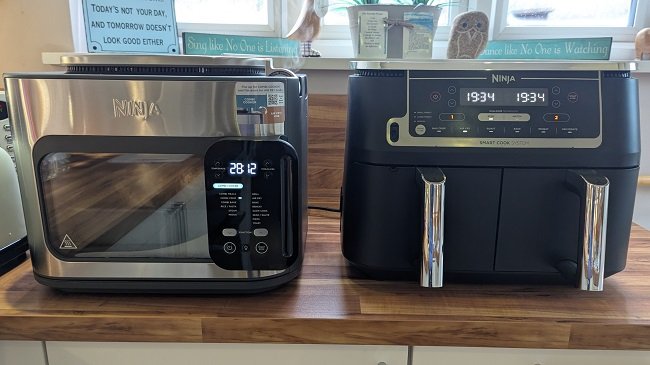
In October 2023, we bought an air fryer. Specifically the Ninja Foodi Max which was on special offer on QVC UK. We were intrigued by the possibilities and the convenience the device was alleged to offer. Fortunately, most of the hype proved correct and air fryers are quick and convenient. It takes awhile to determine cooking times but eventually you become as familiar and comfortable cooking with an air fryer, as you would using a conventional oven. They are also easy to clean. The baskets can be wiped down with hot, soapy water and the drip trays can be put in the dishwasher. Over a year later, we have grown attached to our air fryer due to its versatility and quick cooking times. Having one has substantially changed our cooking habits and the traditional oven is used far less.

I saw a post on social media recently which featured a picture of a plate with three slices of cake, along with a cake fork (also known as a pastry fork or dessert fork). I made a comment about using the right tool for the job and then thought how unusual it was to see this particular piece of cutlery these days. I then remembered that my American friends refer to cutlery as silverware, which then got me thinking about table manners and the associated social etiquette around dining. The internet does an excellent job of making the world smaller and because international English and US pop culture are so ubiquitous, you can be fooled into thinking that we’re all somewhat homogeneous in our habits and customs. That, however, is not the case and I have always found these minor differences fascinating. Hence I thought it would be a good subject to explore.

One of the pleasures I enjoy in life, especially when I’m dining out or staying in a hotel, is having a Full English Breakfast. I like the fact that each one is unique, with potential additional ingredients and regional variations. But then there is the comfort of the familiar and knowing that key aspects of the dish will be present. It is also nice when elements are locally sourced which often means that they stand out. In Norfolk recently, the sausages included in my Full English Breakfast were exceptional. When in Hampshire, I find that the bacon is thicker cut and cured in a manner unique to the county. It is these aspects that make the Full English Breakfast such a pleasant and interesting dish. I also find that having such a robust and substantive breakfast is a great way to start the day and keeps me energised until mid-afternoon.

It’s curious how some things that you think are simple and mundane, can turn into complex and time consuming problems. They go on to haunt you for years to come. In many ways such a scenario is a variation of the old idiom that “no good deed goes unpunished. So let me begin this story back in 2001 around Easter. A chance conversation arose about how people tend to buy cakes from the supermarket as opposed to making their own. This was just before baking shows became popular on TV. I subsequently referenced how my Mother used to make bread pudding back in the seventies. Needless to say, no sooner had I uttered those words, then I immediately desired the aforementioned dessert and it has been an albatross around my neck ever since. The problem isn’t that bread pudding is as rare as Tanzanite or rocking horse droppings. There are plenty of recipes available. Therein lies the rub. There are numerous regional and international variations. Too many in fact.
Thoughts on Blogging Part 15
At the time of writing we are halfway through the Blaugust 2021 Festival of Blogging event. Whenever the subject of personal blogging is raised, there are those who immediately declare that “blogging is dead”. According to Google, out of 1.7 billion websites that currently exist worldwide, 500 million or so of those are blogs of some kind. These generate over 2 million blog posts daily. So I wouldn’t say that blogging per se is done and dusted. However it certainly has evolved considerably over the last 15 years. At the start of the current century blogging was a novel activity providing the means of keeping a personal journal online. Inevitably, popularity and ubiquity led to commercialisation and a necessity to monetise. There was a period of time when clicks, traffic and advertising could generate popularity as well as an income. But other forms of social media offering greater immediacy eventually usurped this potential. Now blogging is seen as more of a niche market activity or corporate tool.
Blogging is dead: At the time of writing we are halfway through the Blaugust 2021 Festival of Blogging event. Whenever the subject of personal blogging is raised, there are those who immediately declare that “blogging is dead”. According to Google, out of 1.7 billion websites that currently exist worldwide, 500 million or so of those are blogs of some kind. These generate over 2 million blog posts daily. So I wouldn’t say that blogging per se is done and dusted. However it certainly has evolved considerably over the last 15 years. At the start of the current century blogging was a novel activity providing the means of keeping a personal journal online. Inevitably, popularity and ubiquity led to commercialisation and a necessity to monetise. There was a period of time when clicks, traffic and advertising could generate popularity as well as an income. But other forms of social media offering greater immediacy eventually usurped this potential. Now blogging is seen as more of a niche market activity or corporate tool.
Blogging for pleasure: At present it is the microblogging site Tumblr that dominates the bloggersphere, hosting over 400 million blogs (WordPress hosts 60 million). However, this is not really a platform for in-depth, longform writing. Perhaps that is the main reason for blogging becoming less popular. Writing competently does require both skill and time. Modern social media platforms are the opposite, offering immediacy and brevity. Plus there is far more of a focus upon monetisation and building an audience these days. Hence many bloggers are choosing to write not so much about personal subjects but are pursuing material that is marketable, such as Lifestyle and Travel blogs. Product reviews are another popular subject. Yet despite the fact that there are many commercial prospects available, current data from Google indicates that only about 10% of all bloggers generate any income. Broadly speaking the primary motivation for personal blogging is passion, fandom and pleasure.
Amending existing posts: I wrote a blog post back in May of this year about how the RPG The Elder Scrolls V: Skyrim was fast approaching ten years old. At that time there was a lot of speculation but no definitive answer as to whether the game developer Bethesda were going to do anything formal to celebrate this anniversary. This has now changed and a Skyrim Anniversary Edition has now been announced. So I updated the post with an additional paragraph and added a date reflecting the amendment. I think that this is a valid policy, providing value for your readers and also maintaining your credibility as a writer. I think it’s especially important if you are writing about a news story and the facts are constantly being updated and possibly corrected. Updating or appending a post is also a useful form of self-promotion.
Changes in traffic sources: Squarespace has an integral analytical service which provides statistics and data for Contains Moderate Peril. I even have an app on my phone that I can check if I see fit. I also have the website linked to Google Analytics which generates and emails to me very useful monthly summary of website traffic. Over the last decade, due to the success of smartphones and tablets, there has been a major shift in how people browse the internet and consume content. Over 46% of those who visit Contains Moderate Peril, do so from a mobile device. Hence it is important as a blogger to ensure that the template you use for your blog is “responsive” and adapts and optimises your content for mobile platforms. There are various sites available that can test your template and provide a preview of what your blog looks like on a mobile device. I would recommend that that all new bloggers look into this to ensure that their site is responsive, so they do not unintentionally exclude potential readers.
There is a subtle difference between being rash and being proactive. Being rash means acting too fast without thinking about the results, while being proactive is a question of acting early with careful planning. Why have I mentioned this? Well prima facie information indicates that recent Blaugust participants are interested in an “official” online presence for the annual festival of blogging, other than that existing Discord server. That seems perfectly reasonable to me. Not everyone likes using Discord and I do worry that they may reduce its free functionality at some point in the future. With regard to there being a Blaugust platform of some kind, there is a consensus that it doesn’t need to be some sort of sprawling commercially hosted website running on Wix or such like. Those sorts of site require funding, a degree of admin and possibly private data management. It also a bit too “corporate” if you like. Hence the logical compromise is to have a static site. Let it suffice to say, that has been done.
Judging by the posts I’ve read, it would appear that Blaugust 2026: Festival of Blogging has been well received by those who participated in it. That is most satisfying to know, especially in light of the fact that this is the first year the event has been run without our founder who sadly past away in July. It has also become clear that Blaugust is reaching a far wider and diverse audience and most definitely is no longer the exclusive province of bloggers from one particular community. There has been healthy discussions on our Discord server about whether this year event needs to adapt to accommodate the modern blogosphere. Questions such as whether or not there needs to be a dedicated Blaugust website have been raised and explored. Should every site participating have an RSS feed? How, if required, should comments be handled. Inevitably, the subject of the use of AI in blogging still remains a controversial issue.
After a very productive month of writing, we come to the final Blaugust 2026 Group Project writing prompt. It is titled lessons learned and is usually a chance to reflect on the festival and whether or not it has been to one’s satisfaction. Have you achieved your goals? What have you gained from the experience? Those sorts of things. It also poses two further questions; “What is the best piece of advice you’ve ever been given?” and “what’s the best advice you’ve ever given to someone else?” for your consideration. I’ll address the questions shortly. Firstly let’s mull over this years event and assess how it’s gone.
It was my blogging anniversary on the 16th August. I’ve been writing and sharing my post online for 19 years, via various different websites and blogs. This current iteration of Contains Moderate Peril has been around since August 2015. To date it has 2,171 posts including this one. Quantity does not necessarily equate to quality but there are some articles I am proud of and feel that they make their point effectively.
This week’s Blaugust 2026 Group Project writing prompt is an important topic. Namely, staying motivated. I prepared a fairly lengthy post with some advice and ideas to keep people focused and writing. Then I checked it against the post I wrote last year and the year before that, going back to blogging events from 2012. All of these posts broadly said the same thing, so I decided to scrap what I had composed for today and to go with a simpler approach. I shall answer the questions Krikket posed for this writing prompt. Fellow blogger Bhagpuss has also done so and as ever, his thoughts are interesting and well expressed. Here are my answers.
Once again, I have stumbled across an interesting debate that has provided me with an opportunity to write a blog post. Over on the Blaugust Discord Server, I read a comment from AgingGamer regarding RSS feeds and their significance with regard to blogging. This in turn referred me to a post by fyr (don’t you love all these nom de plumes) who wrote at depth about the ongoing community debate about the use of RSS/Atom feeds. The article explored the importance of such feeds with regard to reaching readers and providing accessibility to the disabled. All of which provided me with a great deal of food for thought. Mainly because I use a mainstream website service provider for my online endeavours, so RSS is by default built. I’ve never really considered not having such a facility at my disposal. But the rise in the IndieWeb scene challenges this assumption.
I have written two blog posts today that I have subsequently abandoned. The first was gaming related but when I was about halfway through writing it, I felt like I was covering old ground and just repeating myself. It was also regarding an issue that can’t really be fixed. Namely, how do you ensure that matchmaking in PVP games is done equitably. As there is no solution to this issue at present, or at least not one that all parties can agree on, I decided to ditch it. Similarly a post I was working on about what becomes of my blog if anything happens to me was curtailed. In light of recent events in our community it seemed inappropriate. However, as a result of binning two blog posts, I new idea occurred to me. Do my fellow bloggers self-edit and curtail what they write about? Is your blog totally unfiltered or do you apply a set of rules that determine what content is deemed acceptable?
It is time for the next Blaugust 2026 Group Project writing prompt. This one comes with two lines of enquiry. The first is an opportunity to “introduce yourself”. Over the years, I have written several introductory posts for previous Blaugust events. Rather than repeat myself I’ll just link to the last one, which was posted in August 2023. I haven’t radically charged since then apart from my hair going whiter. The next part of the prompt poses a far more intriguing question. “If you could have one magical power or super power, what would you choose and what would you use it for?”, which offers much for consideration. Having given this proposition much thought here is my response.
A decade ago I wrote a post about blogrolls and the practical and social issues surrounding them. At the time, the version of Squarespace I was using didn’t easily support such things or at least wasn’t able to do so in a manner I liked, so I didn’t have one. Ten years later Squarespace as a hosting platform has far greater functionality, hence I recently decided to add a blogroll. That was in March this year. However it just wasn’t really fit for purpose. So I decided to revise it a few days ago and rather than just have a traditional list of blogs in a side column, I ended up producing a more comprehensive blog directory, which list two hundred plus sites alpha-numerically. I’ve been tinkering with it on and off and I am now finally happy with it. The latest update reflects the international nature of the Blaugust: Festival of Blogging and the fact that we have many blogs written in their native language. Translating text is now an integral function of web browsers, so I see no reason why these blogs should be excluded.
Today’s post is part of the Blaugust 2026 Group project, which features a series of writing prompts set for specific dates throughout the month. The idea being that everyone who wishes to participate can write about the same subject, riff off each other’s posts and enjoy a shared experience. In many respect having a common writing prompt levels the playing field and provides a sense of common purpose among those who take part. Today’s group project prompt asks the question “tell us all about your very first blog”. An unambiguous and interesting question that will hopefully prove enjoyable to write about and informative to others.
I have been writing online for nearly two decades. I don’t claim to be good or accomplished but what I can say with certainty is that the more often you write, the easier it becomes. For those who are new to writing a blog and the Blaugust Festival of Blogging, possibly the biggest hurdle that you now have to get over, is writing your first post of the month. You spent the lead up to this event sorting out your blog templates, fine tuning the backend and possibly banking some ideas. Or you may have decided to just wing it and make it all up as you go along. Both are perfectly valid approaches. However, there is one thing left to do that cannot be put off, avoided or danced around. Writing. At some point you’ve got to do it. Or bail on the event. The proverbial “shit or get off the pot”.
If you take a cursory look at a calendar you will see that the month of July is fast coming to an end. That means that Blaugust 2026 Festival of Blogging starts in a few days time! If you’re participating, or thinking of doing so, the next few days present a golden opportunity to do some practical organising and basic preparation. You don’t have to if you don’t want to. Feel free to just do things as they come, so to speak, if that’s your approach. However, for most of us, it helps if we have some kind of plan in place and make some arrangements in advance. I personally prefer this approach and like to have some ideas for blog posts in the bank. It is also useful to have “options” if something doesn’t go to plan. For those who are new to Blaugust, here are a few ideas regarding preparation that may be of use to you. As ever, your personal mileage may vary and ultimately you are best off adopting a strategy that suits your writing style and personal schedule.
Prior to last year’s Blaugust: Festival of Blogging, I upgraded Contains Moderate Peril to the latest version of Squarespace. There are still some aspects of the site that need fine tuning but overall, I am happy with the appearance of my blog and its respective functionality. With this year’s writing event fast approach, I decided to tackle over the last few days, some of those finer points that need tweaking. I have wanted a post counter on the site for a long time but unfortunately there is no native Squarespace widget for this basic function. I also felt the need to upgrade the blogroll, as the current one didn’t support RSS feeds from certain sites (e.g. Google Blogger) and was dependent upon a third party service, Elfsight, which wasn’t ideal. Both of these issues have now been addressed and I am pleased with the results. There is now a post counter on the Blog Archive page, which seems a logical place to have it and the Blogroll is now far more comprehensive.
Next month the annual Blaugust: Festival of Blogging begins. Roundabout this time each year, I try to write a promotional post to raise awareness of the event and encourage potential participants. However, as I’ve done this quite a few times before, each year it is becomes increasingly difficult to present the essential facts about Blaugust: Festival of Blogging in an interesting fashion. There’s nothing worse than writing a post and feeling that you’re just covering old ground. So, this year, I thought I’d try something different and present the most important information about this annual event, as if it were a conversation between myself and an interested passer by. Feel free to attribute novelty voices for each party in your own head, while you read this. If it helps, try imagining that this discussion is happening between two celebrities or such like. Both may be wearing exotic hats but I digress. On with the scenario.
I read a blog post by Void recently, about finding a new internet home. He wrote about how he and many others have had to pick up their “digital roots” and migrate multiple times over the years, from one platform to another. It is a position I can sympathise with as I have done likewise. Hence I like the idea of having a place online where I hangout by default. My own blog is an anchor for me but it is not quite the same thing as a platform or online portal where I can find all my friends and colleagues, share content and shoot the breeze. It’s a curious thing, because as I typed that last sentence it struck how such a sentiment may seem alien to others. There may well be people who like to have a finger in multiple pies and who are happy to frequent and flit between various social media apps, Discord servers and subreddits. I prefer to focus my efforts on a single instance. A place that suits my requirements, allows me to put down roots and become part of the furniture. Like a virtual Diogenes Club.
Everyday, once I’m up, I sit at my desk in my office, fire up my PC and log into Feedly. I have various RSS feeds grouped by category, which I slowly trawl through and read anything that catches my eye. I have one curated feed named “Blaugust” named after the yearly festival of blogging event. It has over 250 blogs listed, many of which are former participants. Most of these regularly post. Hence there’s a lot to get through and so I don’t read all of them. However there are a few that I always checkout. Mainly because they’re the personal musings of some of our writing community’s oldest and most prodigious members. The sorts of guys and gals who are part of the furniture. They’ve always been there and it feels like they always will. Posting their thoughts, sharing their enthusiasm and spreading the love, so to speak. One of these blogs, is Tales of the Aggronaut. written by Belghast.
On Friday 26th June, I had another random spike in internet traffic to Contains Moderate Peril. The statistical package that comes with my Squarespace account recorded over 13k visits in less than 24 hours, which is not typical (although I wish it was). However, all of these visits to my blog arrived via the default homepage and spent between 1 and 2 minutes there. Hence, it was obvious that this was not human traffic, as there was no evidence of any searches being made of content that is available on my site, nor of the “visitors” clicking on any of the links on the top menu and viewing other posts. This was undoubtedly AI traffic arriving at the designated homepage and simply parsing the site. I had a similar spate of this sort of web traffic last November. The only difference on that occasion is that the traffic all came from China. This time round it hailed from the US. I suspect that this is something that will happen more often as companies set their AI loose on the net for what is effectively training.
I recently watched a video on Patreon by someone who I actively support as a “content creator” and whose work I enjoy. I shall provide no more detail regarding their identity because they may not want their work referenced with regard to what I am going to say. During the course of their video they briefly referenced the work put into promoting a podcast they are currently producing and the relatively low audience that it has garnered so far. The comments were an aside and most certainly not said with any sense of self-pity. They were simply a statement of fact. Furthermore, I suspect they are far from unique and similar sentiments have been expressed in one way or another by anyone who has created something the published it online, only for it to be lost among the greater white noise” of the wider internet.
When I first started blogging way back in 2007, I maintained a blogroll of all my colleagues and peers’ websites. At the time this was a common practice and a way to support an expanding community. I considered this such an important aspect of the blogging scene at the time, I created a website to aggregate posts from video game blogs, called The Gaming Blog Nexus. It ran for two years and proved quite useful. However, it was tricky to administer and would frequently break as a lot of the back end widgets and plugins were created and maintained by “gifted amateurs”. I eventually shut it down due to the operating costs. When I moved my own website, Contains Moderate Peril, to Squarespace in 2015 I intended to start maintaining a blogroll once again. However, at that time there was no native support for such a thing on the platform. Hence for the last ten years, I have not had a blogroll on my website, which hasn’t sat well with me.
I was speaking to someone recently about hobbies (fortunately it wasn’t Simon Quinlank) and I mentioned that I have maintained a blog for over a 19 years. When I talked about the ongoing cost they were most surprised, as they had assumed that blogging was something that could be done for free. I guess we’ve become so accustomed to the provision of free online services such as email, that this a reasonable assumption. I pointed out that although it is indeed possible to blog for free using Blogger, it was not the optimal approach, especially if you want to maintain some degree of control over your writing. Naturally, the next question they asked was how much do I spend and I gave them a ballpark figure. All of which reminded me that I wrote a post on this very subject a few years ago. So I’ve decided to revisit the subject and see how much it currently costs to maintain Contains Moderate Peril.
Today I started the slow process of auditing every post that has been published on Contains Moderate Peril since 1st August 2016. The goal is to correct any obvious typos and replace all existing images with larger ones. The Squarespace software upgrade I applied to the website at the end of last year has finally allowed me to establish a standard format that I am happy with. Hence the ongoing audit is the perfect opportunity to apply these style rules to all posts. There are also some technical issues and matters regarding functionality that need to be addressed. I need to determine how to embed YouTube videos in such a way that they automatically scale to fit whatever device is viewing them. Another area which needs improving is the website search facility. This needs refinement so that enquiries can be more specific. Older posts also need to be more accessible, although I am still researching how best to achieve this.
It’s nearly two and half months since the Blaugust: Festival of Blogging event ended. During that time I’ve maintained a fairly regular writing schedule and I post every two days or so. Furthermore, I finally dragged my blog template, kicking and screaming, into the modern era. I tweaked a few pages and updated the content of the “about” page. The next task is to start going through all previous posts and replacing older, low resolution images with larger, more appropriate ones. This process also presents an opportunity to ensure that all posts follow a uniform style. IE Are appropriately categorised, have links to related posts at the bottom and are SEO optimised. This will be a lengthy task so I think the best approach will be to tackle two or three posts a day. Hopefully this will raise the profile of older content, which generates the lion’s hare of traffic to this site.
I use a browser extension called Control Panel for YouTube, which allows me to determine who many videos are displayed on my YouTube homepage and to filter the content that is shown. At present it is configured to display rows of six. Something that I have noticed of late, is the amount of videos with hyperbolic titles and thumbnail images created by AI. Both of which are design choices made to increase engagement. Clickbait titles are contrived to meet current SEO optimisation criteria and as such feature more and more in search results. The fact that they frequently have no relation to the subject I am researching, seems to be neither here nor there. The same issues arise with regard to AI generated images, which again frequently have no bearing on the matter. The fact that more and more content creators do this, infers that it works and is now an essential part of the process you must follow to be seen and featured in search results.
In the last post in this series, I specified the need for a plan with regard to upgrading my blog. Well a plan has emerged, been refined and has now been formally adopted. Rather than migrate Contains Moderate Peril to a new platform and effectively have to rebuild all the content, I am going to upgrade my existing presence on Squarespace. This decision was made for two reasons. Time and money. Migrating to a new platform will take a lot of time and incur additional costs. Upgrading the existing website will take less time and has no cost implications. That is not to say that it will be easy. It has become abundantly clear that the upgrade process will break stuff and that all published posts will have to be manually repaired. Hence my choice boils down to the lesser of two evils.
This year’s Blaugust: Festival of Blogging has reached an end and it would appear that this event has been well received by those who have participated in it. I believe that there were 168 bloggers taking part this year, many of whom have not participated before. Some were new to blogging, where others simply wished to see if they could increase their writing output. As ever there was a wide variety of blog styles and subject matters and it has been most interesting to read new posts every day. I have attempted to leave comments and positive feedback where I can and I hope that some of these new blogs that I’ve discovered continue to write. Well done to everyone who took part. I hope it has been an enjoyable and informative process and that you have learned from it. I know that at least one blogger has determined that writing online is not for them, which is a valuable lesson.
There is currently a group writing prompt available as part of this year’s Blaugust: Festival of Blogging which has piqued my interest. It asks the question “what is the oldest draft post you have” and suggests that it is revived in some manner. I have dozens of draft posts in a folder in my Google Drive. Many are film reviews or film related. The oldest of which dates back to summer 2010. Rather than write a straight forward review of Blake Edwards 1968 comedy The Party, I rather foolishly thought at the time that I’d tackle the issue of whether the film is sufficiently racist to make it beyond the pale. Let it suffice to say that I quickly found myself bogged down in the complexities of the subject and thus never completed the blog post.
I’ve participated in every previous Blaugust: Festival of Blogging event. Prior to that I was involved in the Newbie Blogger Initiative or NBI as it was affectionately known. I have therefore written quite a lot of blogging advice and suggestions over the years. If anyone feels disposed to do so, you can access them all by clicking on the “blogging” option on the top menu of this blog. However, it is important to remember that a lot of the ideas I have advocated and written about over the years are purely subjective. Not all advice or guidance works for everyone. People have different ideas about blogging, different approaches to it and different aspirations. This year has highlighted some quite distinct differences among bloggers which has been most illuminating.
Today is my blogging anniversary. I have been writing online consistently for 18 years. My earliest blogs no longer exist, although they can be found via the Internet Archive Wayback Machine. My first blog was a Lord of the Rings Online fansite called Misadventures in LOTRO. After a while this morphed into a wider gaming website; Misadventures in Gaming. However, I soon discovered that I wanted to write about more than just video games, so I decided to start from scratch and created Contains Moderate Peril in February 2010. This blog endured and has been my main online presence ever since. It has moved several times for various reasons. For a while I had a sponsor, as well as a reasonably sized audience and had dreams of making money from my writing and podcast. But it wasn’t to be and now I just write primarily for my own peace of mind and amusement.
This year’s Blaugust: Festival of Blogging has already raised a very interesting debate. An old one that habitually comes up when discussing blogs. Namely, whether a blog should or should not have “comments” enabled. However this time round there is a different slant on things. Rather than the usual binary choice of having comments enabled or disabled on your site, this time round there is a third option available. Leaving comments via email or a third party service such as Mastodon. Both of these additional options keep comments conspicuously at arms length from your website. Furthermore, the email option makes the comments private, instead of in the public domain. All of which puts a subtly different spin on conventional notions of blog comments and makes this ongoing discussion all the more interesting.
The LOTROCommunity Forums to Close
One 1st June 2011, Turbine officially took back control of the European service of the MMORPG The Lord of the Rings Online. Prior to this it was operated by Codemasters Online Gaming. There were several unique distinctions between the two services. Codemasters were far more proactive in running community events and they also maintained a totally separate set of forums, catering to their European customers. When LOTRO was consolidated in the US under the auspices of Turbine, the European forums faced closure and the loss of all the valuable game related data that they held. However, a private, fan maintained forum was quickly established by MueR and the old Codemaster data was archived. Over the next ten years the LOTROCommunity, as it was known, grew in membership and overtime found itself to be an independent alternative to the official LOTRO forums run by Turbine and later Standing Stone Games.
The LOTROCommunity Forums
One 1st June 2011, Turbine officially took back control of the European service of the MMORPG The Lord of the Rings Online. Prior to this it was operated by Codemasters Online Gaming. There were several unique distinctions between the two services. Codemasters were far more proactive in running community events and they also maintained a totally separate set of forums, catering to their European customers. When LOTRO was consolidated in the US under the auspices of Turbine, the European forums faced closure and the loss of all the valuable game related data that they held. However, a private, fan maintained forum was quickly established by MueR and the old Codemaster data was archived. Over the next ten years the LOTROCommunity, as it was known, grew in membership and overtime found itself to be an independent alternative to the official LOTRO forums run by Turbine and later Standing Stone Games.
There was a point when there was a great deal of rivalry between the two communities. The official LOTRO forums were frequently moderated with a heavy hand and frankly any criticism, regardless of its validity, was quashed. The forums subsequently became dominated by a small cadre of bombastic LOTRO fanboys who hailed from the “if you’re not playing it the same as me, then you’re playing it wrong” school of thought. Hence the unofficial LOTROCommunity forums saw an influx of new members and became increasingly vocal in the way the MMO was run and how the official forums were moderated. Matters reached a head in mid 2013 when the Helm’s Deep expansion was being beta tested and it became clear that Mounted Combat, Epic Battles and the changes to the class "trait tree" system were far from good. Turbine circled the wagons and effectively stifled any relevant debate on these subjects and so the LOTROCommunity forums became a beacon of dissent and anger towards Turbine.
The Official LOTRO Forums
Gamers are a passionate bunch. MMO players may be more so, due to the long term investment required. Hence there were times when members of the LOTROCommunity were inflammatory and went out of its way to pick fights not only with Turbine but with specific players on the official forums that they saw as “shills” and “lick spittles”. There were occasions when members of one forum would surreptitiously create an account on the rival platform and indulge in some untrammeled trolling. Yet despite the sniping and the unpleasantries perpetuated by a handful of members, the LOTROCommunity was often a source of invaluable news, analysis and game related data. There was also some important information leaked by beta testers breaking NDAs. Turbine has always had a propensity for being unduly tight-lipped yet the LOTROCommunity was always there to fill in the blanks. Plus for a lot of the time, I enjoyed actively posting and participating there. I took a break when it got too partisan but there was always more good there than bad.
In recent years the LOTROCommunity has fallen into decline. Mainly because a lot of the core members simply stopped playing LOTRO and moved on to other games. There was a brief resurgence when Standing Stone Games extracted themselves from Turbine in December 2016. A further spike occurred during mid 2020 when the pandemic kept a lot of people at home and SSG made a lot of LOTRO content free. Overall it would appear that the LOTROCommunity has followed the lifecycle of LOTRO itself and has waxed and waned accordingly. There is now a core of dedicated players who keep the MMO ticking over but the general buzz around the game has declined. The official forums are now a lot quieter and the willingness for a flame war has long since diminished. Hence MueR has decided that its time to call it a day for the LOTROCommunity forums and it will close on 1st October 2021.
The Archived Codemasters LOTRO Forums
I don’t know what will happen to the archived data from Codemasters that is still preserved there, nor do I know how long the forums themselves will stay online. But it does smack of the end of an era, although this may seem trivial to those who have not been active LOTRO players or immersed at any point in the games wider community. I can recollect a time when I would sit up late burning the midnight oil, trawling through threads on the LOTROCommunity forums, investing possibly a little too much time into heated debates. LOTRO was my first MMO and it has played a major part in my personal gaming experience. I’ve blogged frequently about the game and got into podcasting because of it as well. The LOTROCommunity forums have also contributed greatly to this overall experience. So thank you MueR for running the site for so long. Good luck with your future endeavours. It feels odd for an MMO to outlive its fan related forum but that’s the way it is. Nothing lasts forever.
The next expansion for the MMORG, The Lord of the Rings Online, was announced on the 1st August, via the gaming website MMORPG.The Wolves of Mordor, which will launch later in the year, appears ambitious in scope as it will include two new game systems as well as the obligatory story update. This expansion takes place in Draugardh located in the North East of Mordor, beyond the Plateau of Gorgoroth. It includes the new zones of Heledhris, Parth Rhavas and Nan Ogol. These vary environmentally ranging from the arid, volcanic and semi-tropical. Players will encounter the Daugrim in these regions, Werewolves but not in the modern sense. This is not the lycanthropy of Eastern European legends but in the established Tolkien idiom of fell spirits inhabiting the bodies of Wolves. The region also sees the return of the Woses and players can expect to encounter Elves and scouts from Gondor. As ever with LOTRO expansions, there will be new instances as well as a raid.
I was recently perusing my archive of old blog posts, when it struck me how much I’ve written about the MMORPG genre over the years. Naturally, there was far more material from between 2008 and 2012 as that was period when I immersed myself in the genre and was very enthusiastic about it. I was at a point in my life when I had the time to dedicate to such games and I was happy to participate in the social aspect of they offered. I would regularly play through group content and spend time socialising online with fellow guild members. My experience remains a textbook example of how online games can be more than the sum of their parts and that where you are at in your life has a major impact upon your overall enjoyment. As I read though various old posts it became clear that my experiences where specific to this particular part of my life and that they cannot be repeated. My relationship with the genre is very different now and that’s fine.
Video games as a genre are extremely poor at explaining themselves. When you buy a new game you’ll often find little or no information regarding the basic systems and mechanics. The industry assumes that their customers are by default familiar with the fundamentals of playing a modern video game. Hence if a game has a tutorial, it is often based around videos rather than detailed verbal instructions. You are are briefly shown a clip of a specific move being successfully undertaken but it is seldom shown in a wider context. The industry also expects the fan community to take on the role of curating and disseminating information about its games. The move away from forums and bespoke websites to Discord highlights this. Discord is a primarily a real time communication tool and not good at maintaining a historical data archive. If you want an answer to a specific gaming question, you’ll more than likely find it on YouTube in a video made by a fellow gamer.
According to the recent “letter to the players”, Standing Stone Games will be adding a new zone to the MMORPG The Lord of the Rings Online in the second quarter of this year. Possibly around May or June. Having spent the last three expansions in the South of Middle-earth exploring the tropical Umbar and the deserts of Harad, I would certainly welcome a change of location. I have gradually warmed to these zones over the last eighteen months but I do find them so incongruous. They are so radically different to the European style content that has been the mainstay of the game for so long. Tolkien’s source text has plenty of detail regarding Eriador and Rhovanion. Information regarding Harad is scarce, hence it has afforded the developers a great deal of artistic freedom. Although exceedingly well realised these tropical zones have taken a while for me to get used to.
I’m not sure exactly when it started but I’ve recently noticed a graphical bug within the MMORPG The Lord of the Rings Online. This problem often occurs within caves or in areas where there are a lot of rocky surfaces. Hence it has become very apparent in the latest two expansions, set in Umbar and Harad. This graphical glitch causes some surface textures to appear to flash from light to dark intermittently. The resulting strobe effect is hard to ignore and very distracting. Fortunately, a quick online search showed that this is not a problem unique to my installation of LOTRO and is a known problem. Furthermore, there is a very simple workaround, which is to go into the Advanced Graphics setting and uncheck “Per Pixel Lighting”, which immediately remedies the problem. I have no idea why this has recently started to happen but at least it can be resolved.
The latest expansion for the MMORPG The Lord of the Rings Online, Kingdoms of Harad, launched on December 3rd. With this release the level cap was raised from 150 to 160. It should also be noted that the cap for virtue traits was also raised from 96 to 100. Naturally these changes meant that there is a requirement to replace all armour and jewellery once the new cap is reached. Similarly Legendary Items have to be reforged and any traceries upgraded or replaced. If you follow the Epic Story it will lead you from quest hub to quest hub. The main quest rewards, along with those from side quests will provide adequate gear as you slowly progress towards the new level cap. The new raids, instances and missions/delvings then provide a means to acquire higher quality level 160 gear. LOTRO and indeed, many other MMOs are consistent in this methodology.
It is customary in a post such as this to list the various games that I’ve played over the last twelve months and share my thoughts on them. Wider analysis of the video game industry is also de rigeur. Unfortunately, I don’t really feel disposed to do either of those two things. My thoughts on the games I’ve played have already been published and can easily be accessed via the links at the bottom of this post. As for the video game industry, it suffers the same flaws as music, TV and cinema. There is creativity and innovation out there but it is often drowned out by mainstream products which are demonstrably inferior due to their inherent mediocrity. As for the business side of things, we once again clearly see the failings of the corporate management class. Sadly, they do not face the consequences of the mistakes that they make.
Today Standing Stone Games began beta testing Update 46.1 for the MMORPG The Lord of the Rings Online. The current preview on the Bullroarer test server is mainly for the new instance cluster that comes with the Kingdoms of Harad expansion which launched a few weeks ago. However, it would appear that this latest preview has another feature or note. One that should please LOTRO players. Contrary to what a lot of people thought, myself included, SSG have been working on a scaling UI for 2K and 4K monitors and the results are now available for testing from today Monday 15th through to Friday 19th December. Until now the main workaround to the lack of UI scaling has been to use either Nvidia or AMD graphics software to upscale the game from 1920 x 1080, or a third party app such as LosslessScaling. Having an official solution is a far better option.
Kingdoms of Harad, the 13th expansion for the MMORPG The Lord of the Rings Online, was released today. Highlighting developer’s Standing Stone Games continuing commitment to this eighteen year old game. As 2025 draws to a close, I thought it would be prudent to reflect upon the current state of LOTRO and to consider what may come next year. Two words that I associated with this MMO are stable and consistent. The playerbase is loyal and dependable. Player numbers never greatly decline nor do they notably expand. LOTRO fills a very specific gaming niche and one of the reasons it retains its players is that there is no suitable alternative game. Although there is not a great deal of data in the public domain, it is generally accepted that LOTRO has an older player demographic and that many are consummate Tolkien fans.
The MMORPG The Lord of the Rings Online runs on a broad spectrum of PCs. From archaic laptops to high end gaming rigs, although it may require a bit of tweaking. At present, the optimal way to play the MMO is at a resolution of 1920x1080 (FHD) with the graphics setting maxed out. The graphics are sharp and the UI is readable. However, a growing number of gamers are now using 2K and 4K monitors. You can play LOTRO at higher resolutions such as 2560×1440 (QHD) and 3840x2160 (UHD) and the game looks great. However, the UI does not scale and so is very small on 2K and 4K monitors. The skill icons on the quickslots (shortcut bars) and the in-game text become difficult to see at these resolutions, which deters some players from using them. It is a known issue that Standing Stone Games are attempting to address but it is unlikely to be resolved any time soon.
I recently read a post on Massively Overpowered about skills rotation in the MMORPG genre. I found the subsequent discussion in the comments fascinating. Mainly because I have never used a fixed rotation of skills in any of the MMORPGs that I play. I understand the reasoning behind such things and why some players want to optimise their combat performance. Using one’s skills in a specific order to maximise damage and manage their subsequent cooldown has a logical appeal. In Star Trek Online, some players go so far as to create keybinds for their rotations and assign it to a specific hotkey, which is then continuously pressed throughout combat. However, rotations are a blunt tool that lack flexibility, often being geared towards dealing with a single target or using an area of effect skill against a larger group. They may not be the optimal approach to combat when things do not go to plan.
Tolkien enthusiasts may recollect Athlon Games, a subsidiary of Leyou Technologies, announcing that it was developing a new MMORPG, based upon The Lord of the Rings, back in September 2018. The following summer, it was revealed that Amazon Game Studios was the partner developer for the project. In late 2020, Leyou Technologies (a Hong Kong-based company), was acquired by the Chinese conglomerate Tencent. This triggered a contract clause with the license holder, Middle-earth Enterprises, allowing them to terminate the existing arrangement if a new deal could not be met. Amazon and Tencent were unable to agree upon how to proceed with the project, leading Amazon to withdraw from negotiations. The project was subsequently scrapped. No details or images of the MMO have been released.
After a six month migration period, Standing Stone Games formally closed all their legacy 32-bit game servers for the MMORPG, The Lord of the Rings Online, on the 31st August 2025. Despite this planned closure being widely discussed via the game’s official forums, professional video game websites and fan blogs, many LOTRO players were unaware of this deadline. Hence many were unable to migrate their respective alts to the new 64-bit servers. Naturally those affected by these closures were upset, especially those with longstanding characters who didn’t relish the prospect of starting from scratch with a new alt. Thankfully, SSG have been true to their word and as of today, have re-opened these “dark worlds” to character transfers. If you have an alt trapped on one of the older game worlds, then now is the time to use the transfer wizard and move them to a new active game world.
MMORPG announced earlier today and it was subsequently confirmed by Standing Stone games, that the new expansion for The Lord of the Rings Online will be Kingdoms of Harad and that it will launch later in the year. The expansion will see the conclusion of the epic Song of Waves and Wind storyline and the level cap raised from 150 to 160. There will be a new region to explore, Mûr Ghala, comprising four zones. Adagîm, Idagâl, An Shêru and Kighân. The latter contains the main trading hub of Zajâna. Players will travel into the region with Gandalf the White, along with allies of the Kindred of Coins and Mizadi as they seek to counter the regional power struggle brought about by the fall of Sauron. Canonically, this takes place three months after the destruction of the ring, hence King Elessar and Eomer are busy with domestic affairs in their respective kingdoms.
Skirmishes were added to the MMORPG The Lord of the Rings Online, in 2009 with the release of the Siege of Mirkwood expansion. Skirmishes are a repeatable and scalable combat system that allows players to access various instances for solo or group play from anywhere in the in-game world. Players can choose a Skirmish Soldier from a variety of classes to accompany them and provide healing, tank or additional DPS. On paper it’s a great system which is why many other MMOs offer something similar. I recently decided to tinker with my Skirmish Soldier build on my main character to see if I could optimise their performance. As my primary alt is a Lore-master, for the last few years I have had a Warrior as their Skirmish Soldier, to take some of the aggro from attacking mobs. I used the excellent guide by FibroJedi and swapped over a few Training and Personal Traits.
On 2nd August 2025, I was playing the MMORPG The Lord of the Rings Online, on my primary character, a level cap Lore-master. I decided to continue with one of the Allegiance Quest lines, specifically Durin’s Folk. I played through several quests and earned the appropriate tokens that advance the Allegiance system. I then handed these in to the NPC in the Hall Under the Mountain, expecting the next quest in the series “Chapter 3: Gimli’s Request” to be unlocked. An item appeared in my inventory that I then clicked on, which should have bestowed the quest. Unfortunately, nothing happened. Furthermore, the item vanished from my bag and therefore I could not attempt to click it again. I checked the LOTRO Wiki and then looked around the Hall Under the Mountain to see if any NPC had a ring icon above their head. As they did not, I surmised that this was a software glitch and logged a support ticket with Standing Stone Games.
Let’s start with a quote from a classic Walter Hill film, The Warriors. “Can you count, suckers?” says Sirus. The gang leader was referring to the number of Police in New York City at the time. Whereas, for the purpose of this post, I am referencing how many Delving Writs a player needs to acquire 6 pieces of level cap armour in LOTRO. Because, next to the gear you get from endgame instances and raids, Delving gear is a good alternative.. It is marginally better than the items you can get from lootboxes. Hence, Delving armour is a good source of high end gear for the solo player. Through the miracle of mathematics, the number of Delving writs required to acquire a full set of this armour is 9,000. At first glance, that seems like a lot. If you then do some further research to put the number in context, you realise it is indeed a lot and a substantial undertaking.
I am currently enjoying a renewed interest in the MMORPG The Lord of the Rings Online since I migrated all my characters from the old 32-bit servers to the new 64-bit replacements. I’ve created a new High Elf Lore-master on Peregrin server and am currently levelling them in a targeted play through of the Epic Story, supplemented by curated side quests. While playing recently, I realised the game UI on this alt wasn’t as I usually have it laid out. So I checked through the various documents on my PC and found a text file I had created many years ago that had a few hints and tips written down. I’ve added a few more and decided to share them as a blog post. I’m sure veteran players will be familiar with many of them but a lot of them are worth repeating. They may prove useful to those new to LOTRO or returning to the game after a long hiatus.
In mid-March, while the server migration debacle raged, I created a new alt for the MMORPG, The Lord of the Rings Online, on Peregrin server. The idea was to play casually through content focusing on enjoyment, rather than worrying about progression. I was to level at a pace that suited me and had no specific plans to develop my alt in any particular way. I have been playing LOTRO since 2008 and have a primary level-cap character that has been my main focus over the years. Hence I have previously experienced all story content from all the expansions and am therefore very familiar with what the game has to offer. Which is why I thought I’d do things differently this time. So I started my new Lore-master in Mossward in Swanfleet, the new starting area added to the game in 2022.
In massively multiplayer online games (MMOs), alts (short for alternate characters), are new characters created by a player in addition to their primary character (often called the “main”). Alts are often encouraged by developers as a means to keep players engaged with their game(s). Sometimes an MMO will actively reward the creation of alts either with access to exclusive content, or with additional skills or items previously unlocked by primary characters. As the myth that an MMO really begins at endgame still persists in gaming culture, some games sell boosts that will instantly raise the level of an alt to that of the current level cap. Creating alts is such a key aspect of the MMO genre, that some games will sell additional character slots, so that players can create further alts beyond the default amount allowed. There are many reasons why players create alts. Let us consider some.
I wrote a while ago that a lot of kinships from the MMORPG, The Lord of the Rings Online, would probably not survive the recent server migration. MMOs are social endeavours by nature, often with strong emotional ties but a lot of kinships (or guilds) have already fallen into decline, simply due to gaming entropy. Hence the migration has seen players leave existing kinships to move to the superior 64-bit servers, resulting in a lot of people who may be potentially looking for a new home. This is exactly what happened to me. I opted to move to Meriadoc server promptly, at the cost of leaving a kinship I have been a member of since 2009. However, the move presented me with an opportunity to remedy this problem myself. I subsequently set up my own kinship and decided to make it available to others.
The dust appears to have settled for the MMORPG The Lord of the Rings Online, after last month’s server transfer debacle. Despite the technical issues arising and subsequent delays to the migration timetable as well as the procurement of in-game housing, LOTRO seems to be enjoying a minor resurgence. Many former players are returning to the game and moving retired alts to new servers, due to the superior performance. The migration issues have also brought a lot of attention to this 18 year old game and it would appear there are many new players trying this Tolkien themed MMO. I was pleasantly surprised to see that a further two 64-bit servers, Grond (EU) and Sting (US), are to be added to the game to meet demand. As I predicted in my previous posts, LOTRO has a habit of bouncing back due to its unique niche in the gaming ecosystem.
It has not been a good week for the MMORPG, The Lord of the Rings Online and its developer Standing Stone Games. The migration from legacy 32-bit servers to 64-bit servers has not gone smoothly. The transfer queue was overwhelmed by the sheer number of accounts and it has taken far longer than expected to process the backlog of requests. Today has been the fifth day of waiting to see if my 3 main characters from Laurelin server have successfully migrated to their new home on Meriadoc. When I checked this morning, the transfer wizard indicated that my characters were back where they originally came from. I therefore considered repeating the entire process. However, around midday, Community Manager Cordovan indicated that SSG had caught up with transfer requests made around 8:00 AM EST on Sunday 9th March. So I decided to be patient and wait a little longer.
I’ve been busy this weekend, so it wasn’t until late afternoon today that I found time to sit down and attempt to migrate my characters from the old 32-bit server Laurelin, to the new 64-bit server Meriadoc. The “Great Server Migration” has not gone smoothly and the week has been a litany of changing deadlines and unfulfilled expectations. However, developer’s Standing Stone Games, have been “firefighting” issues on a daily basis and communicating regularly with the player base of the MMORPG, The Lord of the Rings Online. Sadly, a lot of players have not responded well to the ongoing technical difficulties and there is subsequently a lot of ill feeling on the official forums. I have chosen to adopt a more pragmatic outlook and to let events run their course.
Standing Stone Games were scheduled to open their new 64-bit servers for the MMORPG, The Lord of the Rings Online, today. However, when the free transfer service went live yesterday, it was quickly overwhelmed by the sheer number of players trying to migrate their alts from the older 32-bit servers to the new ones. Eventually SSG had to disable the transfer facility so that they could process the backlog. Hence today’s launch of the new servers has been postponed till tomorrow. In the meantime, the official LOTRO forum’s have gone into meltdown with irate players berating the developers for handling the migration poorly. True to form, SSG have been somewhat defensive and prickly in response to what they see as unjust criticism. Let it suffice to say that neither party has covered themselves in glory and there is a good chance that the technical problems will persist a while longer.
What Massively Overpowered calls LOTRO’s “Great Server Migration” began today. The MMORPG The Lord of the Rings Online has opened 4 new 64-bit servers in conjunction with the 2 existing 64-bit legendary servers and the long term plan is to migrate all current players over to them. Eventually, the 32-bit legacy servers will be shut down, however that is a long way off at present. As of today, VIP players can select a new server, log into it and create new characters with their desired names. These placeholder characters cannot be played at present but can be used to reserve names. Tomorrow, if all goes well, the new servers formally open and free transfers begin. Players can then delete placeholder characters and rename alts that they have migrated, thus restoring desired names. It should be noted that none of this is mandatory and players can remain on the old servers for the present.
I have many pleasant memories associated with playing the MMORPG The Lord of the Rings Online during its first decade. A lot of them are due to the kinship (guild) that I have been a member of since 2009. I started playing LOTRO in December 2008 and it took me a while to find a suitable kinship but once I did, it made logging into the game a real pleasure. I was at a point in my life where I had sufficient time to play the game regularly and take part in kinship organised raids. It was also an added bonus to be able to spend some time and chat with some like minded people. I’m sure such an experience is not unique to me and that many LOTRO players have enjoyed similar periods of time. The lucky ones may still be enjoying a comparable kinship experience today.
I have two monitors on my desk. The first (which is the primary monitor as far as my PC is concerned), is on the left and the second is on the right. The primary monitor is a 24 Dell U2412M, which has a resolution of 1920 x 1200. It therefore has an aspect ratio of 16:10 which adds a little extra desktop real estate, which I prefer when writing. The second monitor is a 24 inch Dell S2421H with a screen resolution of 1920 x 1080. It has an aspect ratio of 16:9 which is standard FHD. My chair is adjacent to the middle of my desk and I can turn according to each monitor I’m using. I tend to use the primary, larger monitor on the left for tasks such as writing via Google Docs and emails. The second monitor on the right is used for YouTube and gaming. This is because of its FHD format. I also have a Nintendo Switch connected to the second monitor for the same reason.
Would You Rather? - The Gaming Edition
Ah, there’s nothing like an internet questionnaire to help you out when you’re scratching your head, desperately trying to think of something to write about. I don’t consider Blaugust to be complete unless there’s at least one of these “question and answer” style blog posts doing the rounds. This one is courtesy of Krikket over at Nerd Girl Thoughts. Do go and have a look at their unique take on the various questions. Naithin has also tackled this line of enquiry and you can find his answers at Time to Loot. As ever I tend to deviate from the somewhat binary nature of the questions but that’s the whole point, isn’t it? To open up the scope of the discussion and potentially encourage others to join in. This is why I like these sorts of internet questionnaires and think they contribute much to Blaugust.
Ah, there’s nothing like an internet questionnaire to help you out when you’re scratching your head, desperately trying to think of something to write about. I don’t consider Blaugust to be complete unless there’s at least one of these “question and answer” style blog posts doing the rounds. This one is courtesy of Krikket over at Nerd Girl Thoughts. Do go and have a look at their unique take on the various questions. Naithin has also tackled this line of enquiry and you can find his answers at Time to Loot. As ever I tend to deviate from the somewhat binary nature of the questions but that’s the whole point, isn’t it? To open up the scope of the discussion and potentially encourage others to join in. This is why I like these sorts of internet questionnaires and think they contribute much to Blaugust.
Q: Would you rather play games only on console? OR Would you rather play games only on PC?
A: It very much depends upon the game. I recently bought a Nintendo Switch to be able to have access to games such as Mario Kart 8. Playing games of this variety with a controller is ideal. However, I find that playing some game franchises on a PC is preferable, such as Assassin’s Creed. Both platforms serve specific purposes and occupy a particular niche. As I’ve written previously, I made the change from console to PC gaming roundabout 1995, although for a few years I used both platforms equally. I do find console exclusive titles a little frustrating although from a business perspective I see the sense of them. This is why I was both surprised and pleased when Days Gone was unexpectedly ported from the PS5 to the PC. However, all things considered PC gaming is my platform of choice and the majority of the games that I own are for this format.
Q: Would you rather play only singleplayer games? OR Would you rather only play multiplayer games?
A: I am predominantly disposed towards singleplayer games, as your enjoyment and progress are not in any way dependent on other people. However, I have spent many a happy hour in the company of friends in an MMORPG. Out of all the varieties of multiplayer games, that is the genre I enjoy the most. Mainly because your interaction is with established colleagues who are a known quantity and there is less scope for drama and shenanigans. Although I will play games such as Call of Duty: Warzone, it is a lottery as to whether you’re going to have an enjoyable and productive time, due to the random grouping that occurs and the overall nature of pickup groups. I think that multiplayer games, where possible, should always have an AI bot option.
Q: Would you rather play only games you already own? OR Would you rather play only games you would need to still acquire?
A: The grass is always greener, especially with regard to games you do not own and that everyone else is playing. I have numerous game libraries spanning multiple platforms filled with games that I haven’t yet played. And then there is the Epic Game Store which regularly gives away premium titles. Do I really need them? No. Do I still acquire them? Yes. I suppose what this ultimately highlights is the ephemeral nature of video games. A game is the talk of the internet one day and then six months later, very much yesterday’s news. However, if you’re content to play titles that others may consider “old hat”, then you’ll have plenty of good and reasonably priced games to play through.
Q: Would you rather play only games that challenge you mentally? OR Would you rather play only games that challenge you physically?
A: I primarily play games for entertainment. That may include a degree of both mental and physical challenge. However, I tend to avoid games that are based exclusively upon either of these two options. I no longer play complex platformer games where rhythm and coordination are paramount as I find them frustrating. I don’t like games that are rife with puzzles or require you to manage numerous resources because to me that simply isn’t fun, it’s a job. I don’t mind a challenge in a game but I don’t actively seek those titles that are comparable to the labours of Hercules. I don’t seek or require personal validation through success in a video game. I have, however, fallen off my chair playing Mortal Kombat.
Q: Would you rather play only long / endless games? OR Would you rather play only games that are less than 20 hours long?
A: Again both types of games have their virtues. I like MMOs as they do grow in content over time and their longevity offers the illusion of stability and routine, which is very comforting. However, I like games that can be completed in 20 or thirty hours. Some RPGs can outstay their welcome, narratively speaking. As ever with video games, what I play is very much dependent upon my frame of mind.
Q: Would you rather play only games released in the last 10 years? OR Would you rather play only games released more than 10 years ago?
A: ’m not overly enamoured with the binary nature of this question, as I play both old and new games. Furthermore, there are numerous games from a decade ago that still hold up incredibly well. The Elder Scrolls V: Skyrim, Mass Effect 2 and L.A. Noire for example. However, from a logical perspective, sticking with newer games is by far the better option. Older games get reboots or remasters and there is always a continuous output of new material. Hence, this choice is the best of both worlds.

Usually, during the Blaugust Festival of Blogging event, I like to tackle an internet questionnaire. I do these because they’re fun and they’re a break from standard blog posts. The only problem is that I’ve completed a lot of the more popular ones over the years. You’ll find my previous answers for these below, in the “Related Posts” section. I was certain there still had to be some questionnaires available that I haven’t completed and after searching online, I discovered the Bernard Pivot Questionnaire. It is a set of ten quick questions which French TV host Bernard Pivot would asked his guests at the end of his cultural show Bouillon de culture. He based his list of questions on the older Proust Questionnaire, which itself is derived from Victorian parlour games. Later, TV host James Lipton made a version of the Bernard Pivot Questionnaire famous, on Inside the Actors Studio. So with out further ado, here are my answers to the Bernard Pivot Questionnaire.
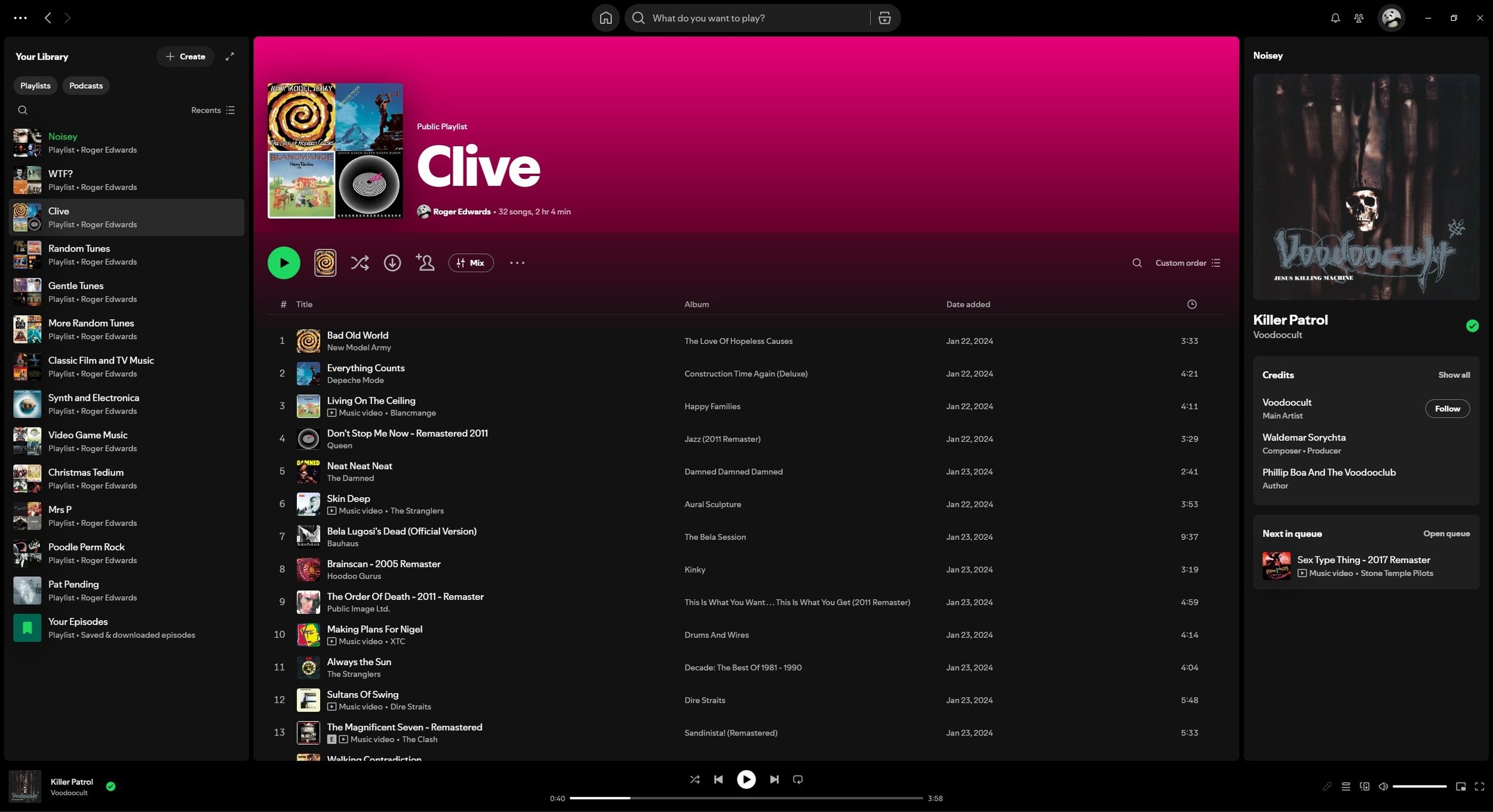
The Guardian news website have a recurring feature in their “culture” section called Honest Playlist where they ask various celebrities about their music listening habits. There are a dozen or so stock questions that they use to grill their guest, although they don’t always use the same ones. I think it makes for interesting reading so its a column that I often visit. As I haven’t published a post based upon an internet questionnaire for a while, I thought I poach this particular line of questioning and have a crack at it myself. I have chosen the ten questions that I think are the best and by that I mean, they have the most scope for interesting answers. I didn’t include the one about karaoke because it’s not something I especially like. Each to their own. Feel free to similarly purloin this set of questions and write your own responses. I’m always fascinated by these sort of things.

This post is inspired by Axxuy, who recently replied to an open post by Forking Mad. It’s a simple set of questions and a convenient writing prompt for those occasional slow days. Now some folk can get quite “sniffy” about these sorts of posts. Perhaps they think they’re too insubstantial or too easy or something. Irrespective of whether such assertions are true or not, I would like to point out that one of the most popular posts on Contains Moderate Peril is a similar sort of internet questionnaire, titled “Would You Rather - The Gaming Edition”. Originally posted in late August 2021, it has been read over 18,000 times. Now I’m not advocating shameless “ambulances chasing” and “jumping on bandwagons” but I am reminded of the old adage, “if the shit fits, wear it”. Hence, you’ll find no prejudice against internet questionnaires on this blog. Here are ten pointless facts about me.

If you’re familiar with this blog then you know that I like an internet questionnaire. A little bit of introspection can be quite a useful thing. This particular questionnaire, the “Blog Questions Challenge”, was originally created for users of Bear Blog. However, the questions have subsequently been adapted to make them applicable to other blogging platforms and therefore accessible to a wider audience. I recently discovered this particular questionnaire over at Alvan’s Digital Garden and thought the selection of questions to be interesting. Hence I have decided to tackle them. If you’re a blogger yourself, feel free to follow suit and use this set of questions, as I think that it’s always interesting to know what inspires people to write and what path brought them online.

I spent some time today, looking for a new internet questionnaire as they make for fun and quirky blog posts (by which I mean lazy and easy ones). Sadly, most of the search results that Google found were ones I’ve done already. So I thought why not ask the online AI, ChatGenie, to provide the questions? Surely it can’t be that difficult to come up with some interesting talking points? Well it turns out it is, because the 10 questions that the AI has provided are not especially inspired. However, I did find it amusing how ChatGenie justified itself, explaining where the mirth and hilarity lie in each of its questions. Therefore, here are my answers to what I am officially calling the ChatGenie Questionnaire. Feel free to complete it yourself.
Using his prodigious experience as a chat show host, Stephen Colbert (of the eponymous The Late Show with Stephen Colbert fame) has crafted 15 hard-hitting, probing and perceptive questions, as a means to dissect and analyse his celebrity guests. These include such insightful inquiries as “What is the scariest animal?”, “What do you think happens when we die?” and “Apples or oranges?”. So far these questions have been successfully used by Mr Colbert to interrogate the likes of Keanu Reeves, Jeff Goldblum and Sandra Bullock. Hilarity naturally ensued, or at least by the standard of US network television. I’m not really a fan of the “celebrity talk show” because it doesn’t really exist as such anymore. What we now have instead is the “celebrity with something to sell show” but that gripe is best addressed in a separate blog post.

Great, it’s internet question time once again. Regular readers will already know that I really like these sorts of things. Unlike Sparks, I do have the time to answer questionnaires. Despite the fact that such articles are often considered lightweight writing, I do believe that even the most vacuous line of enquiry can yield an interesting post. This time round I have a diverse set of questions from two very different sources. The first five are courtesy of ChatGPT, which seems just as capable of asking sublimely asinine questions as real people. The next five come from Cosmopolitan. A publication and website that you wouldn’t immediately associate with me. However, out of the various questions available on both sites, I have chosen ten that I think have scope for reasoned debate and interesting answers. Thanks very much to UltrViolet and Hamatti for providing the aforementioned lines of enquiry.

I’m not sure where it came from but I have a page of allegedly philosophical questions bookmarked in Google Chrome. As it’s filed under “blogging” I suspect that these may have been saved as an emergency source of inspiration if I were in need of a writing prompt. Well I’m not exactly brimming with ideas today, so I’ve decided to avail myself of this list. I selected 10 questions randomly and shall now proceed to answer them. I am not claiming that my answers are as philosophical as the questions. I shall no doubt be flippant, sarcastic and possibly a little scathing, but I’ll endeavour to answer the questions properly (if they merit it). As I’ve said before about previous internet questionnaires that I’ve completed, sometimes what at first glance looks like lightweight material can inadvertently lead to some interesting discussions.

I’ve said it before and I’ll say it again, I’m a sucker for an internet questionnaire. Yes, I know such things are considered in some quarters as somewhat lightweight content. But not every blog post needs to be an insightful analysis of crop rotation in the 14th century or a searing indictment of the latest internet outrage. Sometimes answering a few simple questions in a light hearted fashion can be quite illuminating. Plus readers like to get to know something about the bloggers that they follow and internet questionnaires are a means to that. So without further ado, here is a set of questions known as “The Blogger Tag”. I first encountered this over at A Geek Girl's Guide care of Michelle. Do go and check out her take on these. Also feel free to use them yourself, as that is the idea behind answering them.

Ah, there’s nothing like an internet questionnaire to help you out when you’re scratching your head, desperately trying to think of something to write about. I don’t consider Blaugust to be complete unless there’s at least one of these “question and answer” style blog posts doing the rounds. This one is courtesy of Krikket over at Nerd Girl Thoughts. Do go and have a look at their unique take on the various questions. Naithin has also tackled this line of enquiry and you can find his answers at Time to Loot. As ever I tend to deviate from the somewhat binary nature of the questions but that’s the whole point, isn’t it? To open up the scope of the discussion and potentially encourage others to join in. This is why I like these sorts of internet questionnaires and think they contribute much to Blaugust.
Oh look, another internet questionnaire blog post. By now you must be aware of my weakness for these sorts of things (if not then take a look at the links to related posts at the bottom of this article). It would appear that the “never have I ever” format has been adapted and we now have a “have you ever” set of questions specifically aimed at gamers. As usual some of the questions are trivial but others offer scope for quite interesting responses. Etiquette dictates that I credit those who have already participated and answered these questions. They are as follows. Michelle over at A Geek Girl’s Guide. Pix1001 from Shoot The Rookie. Joseph Skyrim’s post can be found at JVT Workshop and pkudude99 share their thoughts at Nomadic Gamers. Do check out their take on the questions as there are some interesting replies. On to the questions and answers.
“The Mystery Blogger Award is an award for amazing bloggers with ingenious posts. Their blog not only captivates; it inspires and motivates. They are one of the best out there, and they deserve every recognition they get. This award is also for bloggers who find fun and inspiration in blogging, and they do it with so much love and passion”. Okoto Enigma
The Rules:
Ensure the award logo is used in your post.
List the rules.
Thank whoever nominated you and provide a link to their blog.
Mention the original creator of the award and provide a link to their site.
Tell your readers 3 things about yourself.
You have to nominate 10 – 20 people.
Notify your nominees by commenting on their blog.
Ask your nominees any 5 questions of your choice.
Share a link to your best post(s).
“The Mystery Blogger Award is an award for amazing bloggers with ingenious posts. Their blog not only captivates; it inspires and motivates. They are one of the best out there, and they deserve every recognition they get. This award is also for bloggers who find fun and inspiration in blogging, and they do it with so much love and passion”. Okoto Enigma
The Rules:
Ensure the award logo is used in your post.
List the rules.
Thank whoever nominated you and provide a link to their blog.
Mention the original creator of the award and provide a link to their site.
Tell your readers 3 things about yourself.
You have to nominate 10 – 20 people.
Notify your nominees by commenting on their blog.
Ask your nominees any 5 questions of your choice.
Share a link to your best post(s).

As some of you may know, I have a weakness for internet questionnaires. Yes, they can be looked upon as self indulgent filler that you post on a day when you’re strapped for inspiration, if you want to be snippy about them. But I find them quite insightful as I like to know about the people whose blogs I read. Sometimes it’s just as much about the person as it is about the blog post. “You are your own brand” and all that. But I digress. I saw this particular questionnaire over at Ace Asunder. Solarayo borrowed it from Quietschisto of RNG, who in turn purloined it from Chrisse of Vamp It Up Manchester who created the questions. There’s a broad spectrum of enquiries and scope for some informative and entertaining answers. So let us begin.

I got tagged by fellow blogger, Magimos, as part of the Real Neat Blogger Awards. Now I’m not entirely sure what that is. It’s one of those things where you get asked a bunch of questions, then get to set some yourself and then tag other people to answer them. I certainly don’t mind answering questions. I’ve already written in previous posts how I’m a sucker for internet surveys. But I’m not keen on tagging people. It’s a little invasive for my liking and I’m a stickler for etiquette. By all means ask people if they’d like to participate but never inflict things on people without consent. To me it’s the same as random people cold calling and trying to sell you stuff. Or religious types, knocking on your front door and asking if you’d like to join a Cthulhu cult. So I’ll just write my responses to Magimos questions and then write a few questions of my own, which I’ll leave for other to reflect upon and answer if they see fit.

Naithin over at Time to Loot has compiled a Blaugust related internet questionnaire. As I’ve made clear in the past, I have a weakness for these sorts of things and will happily indulge the most peculiar enquiries. I’m not really sure why I like to do questionnaires. Perhaps I feel at some level that even the crassest or vacuous of questions can yield a good or at least entertaining answer. Not that I’m saying that Naithin’s questions are any of those things. In fact I think they are quite engaging. The other thing about questionnaires is that I can make a really obscure and impenetrable pop culture reference about the band Sparks. So here are my responses to the all of them in full. An unedited stream of consciousness or load of bollocks, depending upon your perspective. I hope some of the other Blaugust participants also take part. It will be interesting to compare notes, so to speak.
At the beginning of November, I started to answer the various questions set out in The Proust Questionnaire, mainly because at some level I do like the occasional insight that “internet questions” can provide. Although most of my answers are frequently tinged with a degree of levity and at times even scorn, every now and then the right question can provoke a sincere response. So here are my measured replies to the remaining interrogative enquiries, for your consideration and edification. If you do not agree with them or find yourself at odds with my mindset, please address any complaints care of the late Marcel Proust (10th July 1871 - 18th November 1922).
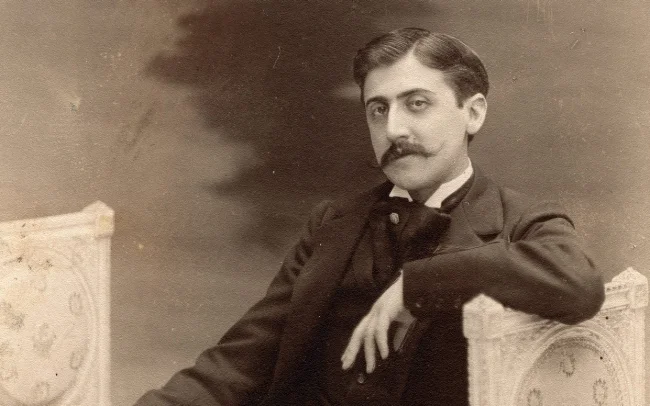
The Proust Questionnaire was popularized by Marcel Proust, the French essayist and novelist, who believed that, in answering the questions, an individual provides an insight into his or her true nature. Whether that is true is debatable, but I do find the internets fondness for Q&A sessions, curiously fascinating. And as this very questionnaire has been recently resurrected by Vanity Fair magazine and has also been utilised on the Ricky Gervais is Deadly Sirius podcast, I though I’d jump on the same bandwagon, as I’m behind in my writing and this is an easy post. As there are thirty-five questions, I thought I’d tackle them over two days. So, without further ado, here are my considered and measured thought on the first seventeen.

Despite having written a blog posts claiming that there’s always something to write about, even I have days when I’m lacking inspiration. Or more to the point lacking in motivation to write. And today is a prime example. I’d much rather be doing something else, but I made a promise to myself to keep the blog content flowing. However, I discovered a selection of questions that have been doing the rounds, via Marathal over at Deez Words and decided to answer them. I’m sure you know the form. They’re a selection of “touchy-feely”, non-threatening questions designed to give the reader a simple thumbnail sketch of your “personality”. So, I thought to myself, “there’s today’s blog post”. I will try my best to answer sensibly and give as relevant answers as I can, but you know me.

Many of my fellow bloggers regularly posts details of what they’ve been reading of late. I must admit that although I received several books and graphic novels as Christmas presents, I’ve yet to start any of them. The bulk of my reading is done via my PC or Tablet and usually tends to be news articles, blog posts and research for my writing. The last book that I physically read was Titus Crow, Volume 3: In the Moons of Borea & Elysia by Brian Lumley and that was last November. So, I’ve decided to get back into reading in the traditional sense and as ever have allotted time in my schedule and set myself goals. As a carer I have numerous appointments to attend throughout the week with my parents. Rather than waste time on my phone perusing twitter and gawping at the internet, I shall use these periods to read.
Sleep
A cursory Google search on the subject of sleep will instantly regale you with a wealth of trivia on the subject. 12% of people dream entirely in black and white. Two thirds of a cat's life is spent asleep. A giraffe only needs 1.9 hours of sleep a day, whereas a brown bat needs 19.9 hours a day. Humans spend 1/3 of their life sleeping. The record for the longest period without sleep is 11 days. Trivia aside, sleep is an important function for both the mind and body. It has multiple restorative benefits and is essential to a person’s wellbeing. Furthermore, most people’s relationship with sleep changes over the course of their life. Often as children, we resent sleep. I still do to a degree. It does seem a waste of valuable time. Conversely, as we get older the virtue of a good night’s sleep becomes something to embrace and even enjoy. And by the time we reach our dotage sleep often becomes a leading factor in life, bordering on a default position. However, whatever your thoughts on sleep, the moment you have difficulties with it, you have a serious problem.
A cursory Google search on the subject of sleep will instantly regale you with a wealth of trivia on the subject. 12% of people dream entirely in black and white. Two thirds of a cat's life is spent asleep. A giraffe only needs 1.9 hours of sleep a day, whereas a brown bat needs 19.9 hours a day. Humans spend 1/3 of their life sleeping. The record for the longest period without sleep is 11 days. Trivia aside, sleep is an important function for both the mind and body. It has multiple restorative benefits and is essential to a person’s wellbeing. Furthermore, most people’s relationship with sleep changes over the course of their life. Often as children, we resent sleep. I still do to a degree. It does seem a waste of valuable time. Conversely, as we get older the virtue of a good night’s sleep becomes something to embrace and even enjoy. And by the time we reach our dotage sleep often becomes a leading factor in life, bordering on a default position. However, whatever your thoughts on sleep, the moment you have difficulties with it, you have a serious problem.
Until fairly recently, I’ve had increasingly poor-quality periods of sleep. There were multiple reasons for this, including me staying up too late, too much light coming into the bedroom and the fact that the bed was over a decade old. The mattress was far from comfortable. I would go to bed between 1:00 and 2:00 AM and then struggle to settle and sleep. Outside activity in the street, such as people leaving for work would further disturb me. I live in a bungalow and the bedrooms are in the front of the property. So back in January 2019, a new bed was bought during the sales. As both the bed frame and mattress from Hypnos were made to order, we had to wait a month before they were delivered. However, upon arrival, the new mattress and base had a transformative effect upon the quality of my sleep. Also the curtains in the bedroom were replaced with ones with a heavier blackout lining, which not only cut out ambient light but reduced noise.
Hence over the last two years the quality of my sleep has improved greatly. I now own a Huawei Smartband which monitors a wealth of bodily metrics including sleep. I can’t vouch for the veracity of the number it assigns as a sleep rating but it shows a consistently high number within its own scale. I broadly take this to be a good sign. Certainly, until I caught COVID-19, my sleep patterns have proven stable and refreshing. Now I have a tendency to still awake feeling tired. However, this is more to do with my wider health which is currently being investigated and not in any way a reflection upon my sleep pattern. I have also started going to bed a little earlier, usually about midnight and aim for a solid 7 hours sleep. I find that making an early start at around 7:30 AM is good for my productivity. I certainly find writing first thing in the morning a lot easier than late at night.
Although the importance of a suitable bed for a good night’s sleep should not be understated, there are other factors that also should be considered. Light and noise levels, I’ve mentioned already. Ventilation and temperature are two others. Hydration is a consideration as well. Though you should not drink too much beforehand for obvious reasons. Going to bed when one is ready is another point to consider. Sometimes it is important to unwind and decompress before turning in, especially if you’ve been mentally engaged prior to this. A little light reading helps some or a phone game. All these factors can be controlled to a degree and you need to find what is right for you. However, there are some aspects that you cannot manage as well. The biggest being sharing a bed with another person. Differing sleep habits and patterns can be a major bone of contention but that is a completely separate blog post. For a good night’s sleep, focus upon what you can change and then do so. You won’t regret it.

When I was a child, I quickly learned never to say within earshot of my parents that I was bored. It was quickly met with a response along the lines of “an intelligent mind is never bored” or more worryingly “if you’ve got nothing to do, I’ll find you something” which meant a chore or Herculean task. Being a child of the seventies and due to my parents fundamentalist approach to declarations of boredom, I quickly discovered numerous ways to occupy myself. The default solution was a book or comic. I always liked reading as a child and had plenty of books to choose from. I also had numerous of comics as an alternative to a hefty tome. I would also draw and paint. My father use to work during the summer holidays as a design draftsman and as a result, we always had plenty of paper in our house. Then of course there were toys and such like. Hence I learned the art of keeping myself busy.
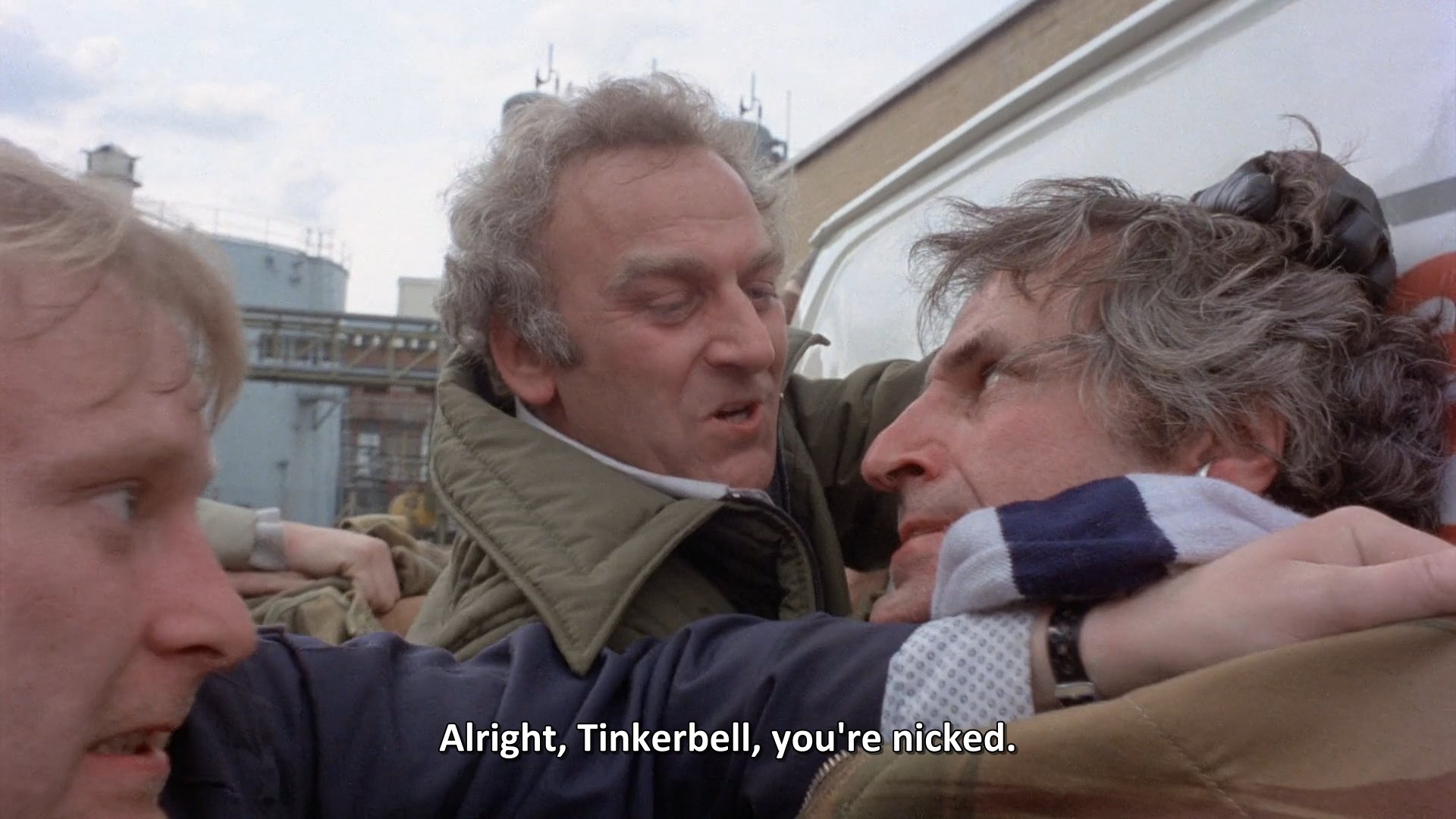
When I first started this series of posts back in 2023, they were originally intended to provide a useful overview into UK (mainly British) slang. US slang is ubiquitous globally due to the pervasive nature of American culture. Hence most people have a good grasp of its nuances. However, the proverbial door does not swing both ways. Hence most people will watch British TV dramas or read popular novels and can be quite bamboozled by some of the phrases that are used. That is what I was trying to address. However, over time this entire enterprise now reads like a some sort of Guy Ritchie film with Colin as the anti-hero. That notwithstanding, hopefully the list of slang phrases below will prove useful to know, if you ever visit the UK or tour around London. As ever I have given an example of their respective use. Feel free to ask questions if anything needs clarifying, or you wish to leave a comment with examples of you’re own national and regional slang.

As I write this post, the temperature in Greater London is 33°C (91.4°F). This has become a regular occurrence since the middle of May onwards. High temperatures are fine when you’re on holiday mainly because you’re off work and at your leisure. You don’t have to perform the usual daily task that life requires of you such as work, shop, cook, clean etc. Furthermore, if you’re on vacation you’ll probably be staying at a resort or hotel that is fully air conditioned and you’re dressed accordingly. However, if you’re still performing you’re daily routine such as commuting to work and spending time in an office that wasn’t built with such external temperatures in mind, then 33°C is frankly a pain in the ass. Oh and if you’re one of those people who always respond to discussions such as this with “well I live in Riyadh and it’s 40°C here”, please sod off. You live in a desert which is dumb to begin with. Plus this is not a commensurate comparison. Temperatures are rising in the UK. It’s always hot in Saudi Arabia.
If you visit the websites for such UK tabloid newspapers as the Daily Express or the Daily Mail you will no doubt encounter prominent stories about Megan Markle, Nigel Farage and “immigrants”. If these two august institutions are short of column inches, they’ll run a piece about how some former celebrity has had the unmitigated gall and temerity to get old. I mean WTF? How dare they do what human beings are genetically disposed to do. It’s outrageous. Similarly, head over to the Unherd website and you’ll find foam flecked tirades regarding spurious points of contention over dubious subjects. Often the topic being harangued is incredibly niche and I’ve never heard of it before or even considered it being a thing. These sort of talking points are not about informing, debating and most certainly aren’t about thinking. They exist to provoke reactions.

Before we start, let me explain to those readers outside of the UK, the significance of a Dairy Milk Freddo chocolate bar and its relevance to this post. The “Freddo” is an 18g (0.63 oz) chocolate bar, in the shape of an anthropomorphic frog. When it was re-launched by Cadbury in 1990 (it had previously been manufactured by an Australian confectionery company in the seventies), it was priced at 10p (£0.10). It remained at that price until 2005 when a 1p to 2p increase began to occur each year. By 2016 Freddos were retailing at 25p. However, the following year the price “lept” to 30p with an increase that was double its usual yearly rise. This led to public outrage across social media. Since then the price of a Freddo has waxed and waned. Tesco supermarket reduced the price back to 10p as part of their centenary celebrations. The post COVID price in 2022 hit 49p. At present, the average price of a Freddo in the UK is somewhere around 35p.
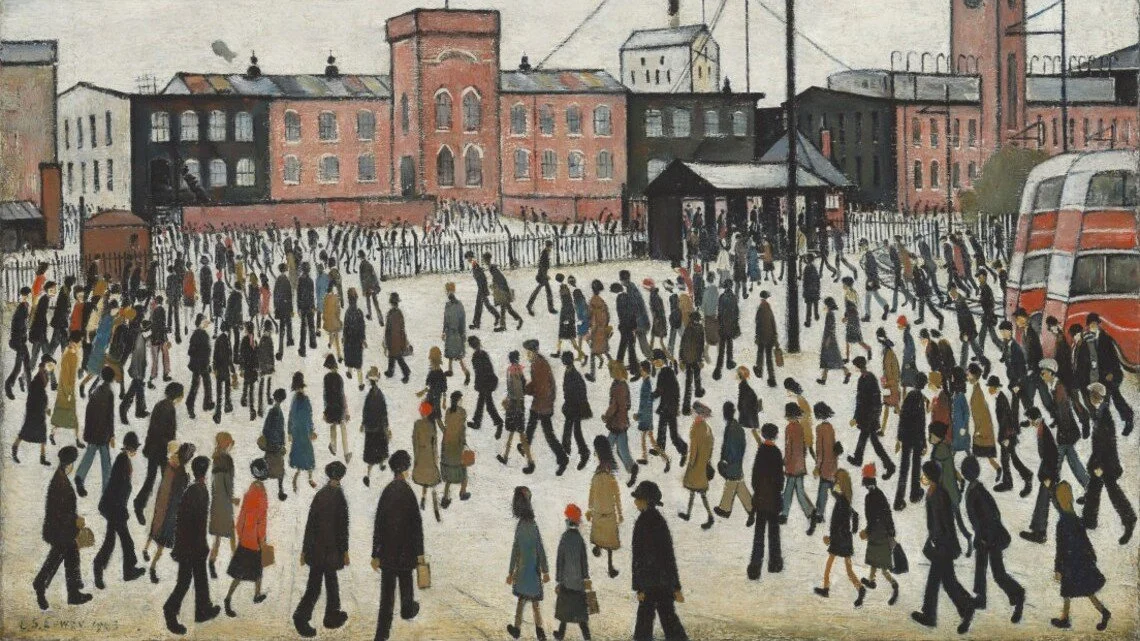
Over the last 10 years, I’ve written several blog posts about my personal working experiences and my career, such as it was. I touched upon working specifically in IT and how that industry changed over time, both technically and in the way that other people perceived it. I have also given my thoughts on the social dynamics of the modern work environment and the way we interact with our colleagues and employers. That is another area that has changed dramatically. Naturally my retirement from full time work has been written about, as it is such a radical change in one’s life. Especially if you’re the sort of person who is clearly defined by their job, which I personally was not. This time, I want to share a few thoughts I have about what I miss about “going to work” and “having a job”. I’m not sure if “miss” is the right word. Perhaps it is more a question of things being absent. Either way, there are some aspects of being employed that I use to enjoy or at least found beneficial that I now no longer experience.
UK Prime Minister, Sir Keir Starmer has resigned and intends to leave office before the parliamentary summer recess. By then Andy Burnham will more than likely be voted leader of the Labour Party and by default will become the new Prime Minister. Due to the current size of the incumbent Government’s majority, there is no pressing reason for a General Election that the UK’s right wing tabloid press is currently calling for. Whether this provides the Government with the reset they’re hoping for when Parliament reconvenes in autumn remains to be seen. With seven Prime Ministers coming and going in a decade, there are some serious questions to be asked about the current state of UK politics. However, the mechanics of contemporary politics, the decline of clearly defined ideologies and the people that seek elected office to be our leaders are only half of the problem. The other major impediment to the UK’s democracy functioning properly is the electorate.
The UK Government has formerly announced its intention to ban under-16s from using social media. This is due to increasing public pressure that “something must be done” about the perceived iniquities of many online platforms. However, as with most complex social problems of this nature, no one has any clear or practical ideas as to what that “something” is. It remains a nebulous, non-specific panacea and clearly someone else’s job to identify and implement. As ever, why choose a nuanced and multifaceted solution to a complex problem, when it is far easier and politically expedient to just “ban” something. The former requires effort and a degree of thinking. If such an approach fails it also means that those who came up with it now carry the can. The latter dumps the problem in the lap of various third parties, who can then be conveniently blamed when the ill conceived policy fails.
Every Thursday, Mrs P volunteers at a food bank that is run from a local church; Avery Hill Christian Fellowship. Today there was a shortage of staff so I agreed to help out. It proved to be an equitable arrangement as she collated the various orders and I packed the bags and took them to the respective clients. The food bank itself is organised and administered by the Trussell Trust, a UK based NGO and charity providing emergency food and support to people locked in poverty. It is open for 2 to 3 hours a week depending upon demand. During today’s session we served just six people. Some weeks its can be triple that amount. Upon closure, a member of staff from the Trussel Trust did a stock take and collated a list of what was needed. This is provided by various local church communities via parishioners donations, as well as local supermarkets who have an arrangement with the trust to provide surplus stock or good approaching the end of their sales window.
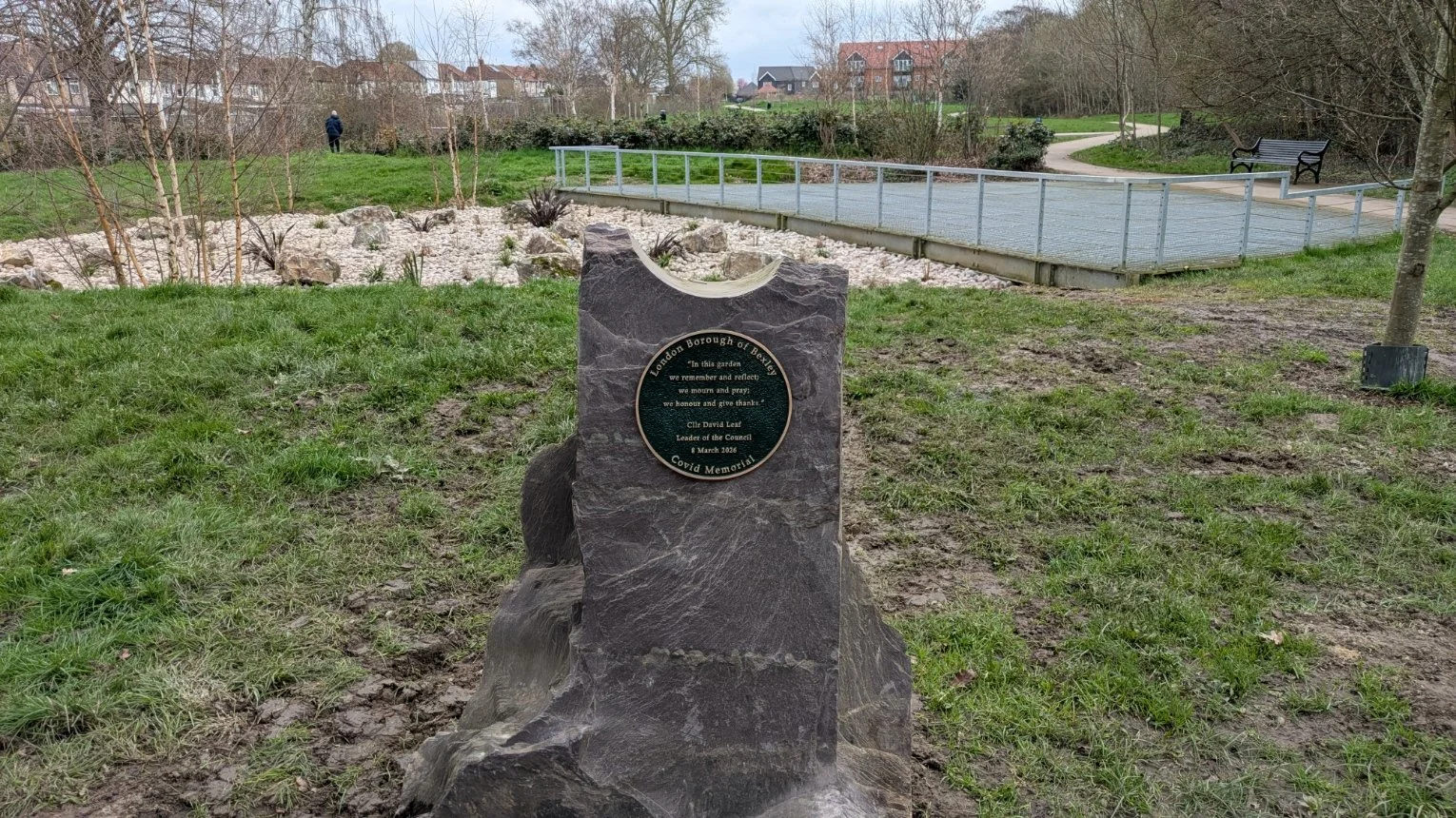
There are approximately 4000 parks and green spaces in Greater London. Bexley Borough alone has over 100. Public parks and green spaces are vital to modern cities, providing essential health, environmental and social benefits. They boost physical and mental wellbeing by reducing stress and providing a place for exercise. Furthermore they enhance urban sustainability, mitigate heat, and provide a sustainable environment for a wildlife. Parks are often a venue for social activities and events and as such are an important part of the local community. Going to the park has always been a part of my life. I live next to Old Farm Park in Sidcup and have made use of this recreational space throughout my life. I used visit with my parents in the seventies, when I was a child. Thirty years later my son, father in-law and I would fly kites there. Now I take my grandchildren to Old Farm Park as it now has a playground.

Being a 58 year old man, I welcome any undertaking which can potentially improve my health. One such thing is proactive screening and testing. The UK National Health Service has started doing a lot more of this in recent years, mainly because diagnosing a problem and treating it early is far more efficient and cost effective than retroactive action. Hence this policy and my age is why I was recently sent a NHS Bowel Cancer Test Kit via the post. This screening service takes place every two years for people aged 50 to 74 in the UK. The kit is very quick and simple to use. A sample of your stool is sent via a prepaid return envelope for testing and the entire process is free of charge. Upon receipt, the laboratory test determines whether there is any blood present in your stool, which is a potential indicator of bowel cancer. If detected, an early diagnosis greatly improves any subsequent treatment outcomes.
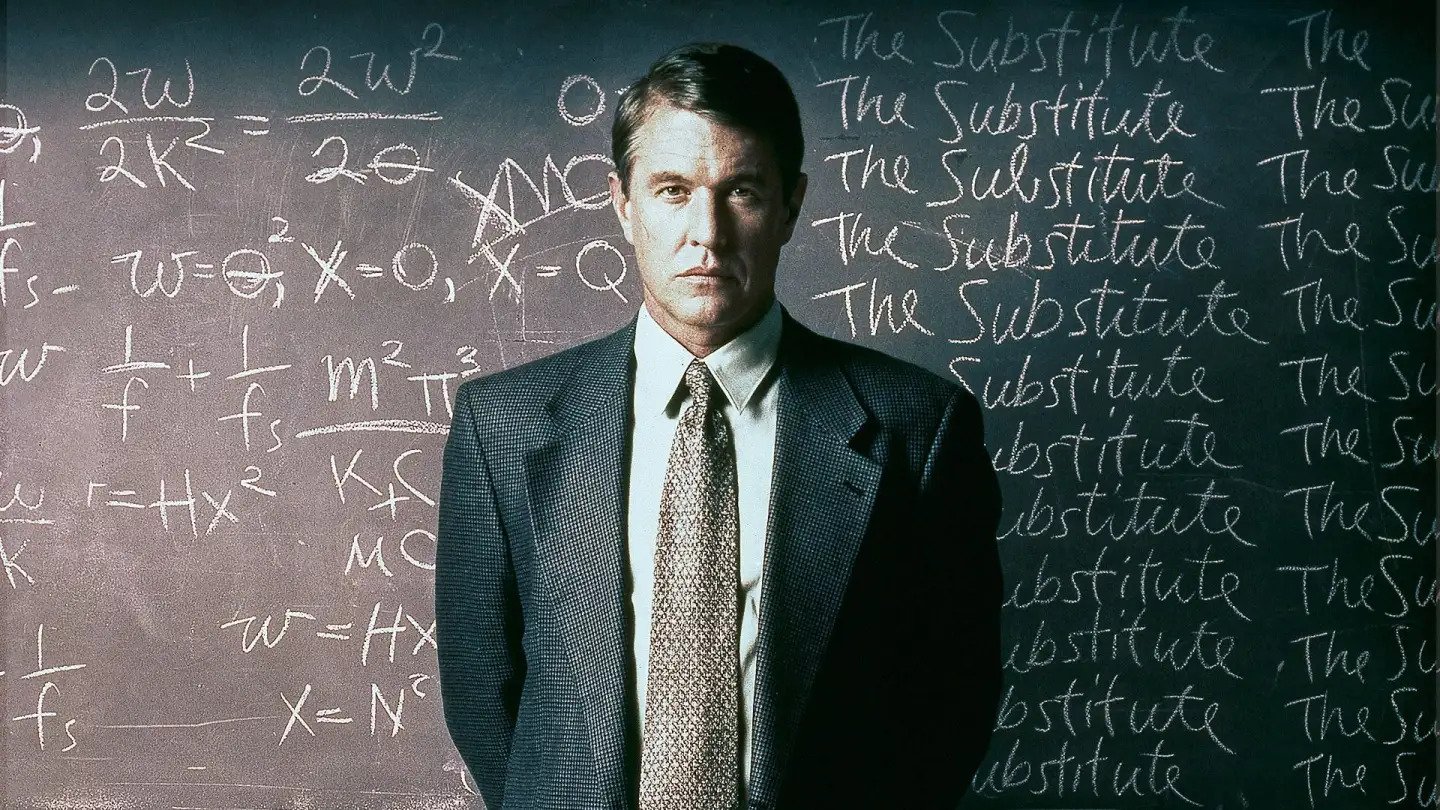
I like learning things. I always have. During my middle school years I thought I was a mediocre student and often I wouldn’t apply myself. According to an old school report this was because I was “too busy indulging in Tomfoolery”. Then I had the positive experience of meeting an exceptional teacher. Their lessons were the highlight of the week as they had an ability to make the subject matter, Classical History, utterly compelling and relevant. The teacher in question also treated us like adults and the class benefitted from only having five pupils. This really brought home to me that a lot of disinterest and underachievement in education is linked to the paucity of some teachers. One bad teacher can undermine the good work that all the others can do. Perhaps it has improved nowadays?
I’ve had an interest in the paranormal since I was a child. My mother always got books out of the library about ghosts and UFO phenomenon, so in some respects I was influenced by her reading habits. As a child such tales were by default interesting and any potentially scary element naturally made them more enjoyable. However, my father being an academic had taught me to question everything, so I felt fairly evenly equipped when exploring these subjects. Further to this point, over the years I have learned that humans have a very unique perspective on the world. We are hard wired to see patterns, regardless of whether they’re there or not. Our senses can also be fooled and often are. Perhaps the most important aspect of our nature that impacts upon any analysis we make into the paranormal is our penchant for creating stories. Hence unusual experiences can be subconsciously misremembered and “retconned” to form more precise narratives.
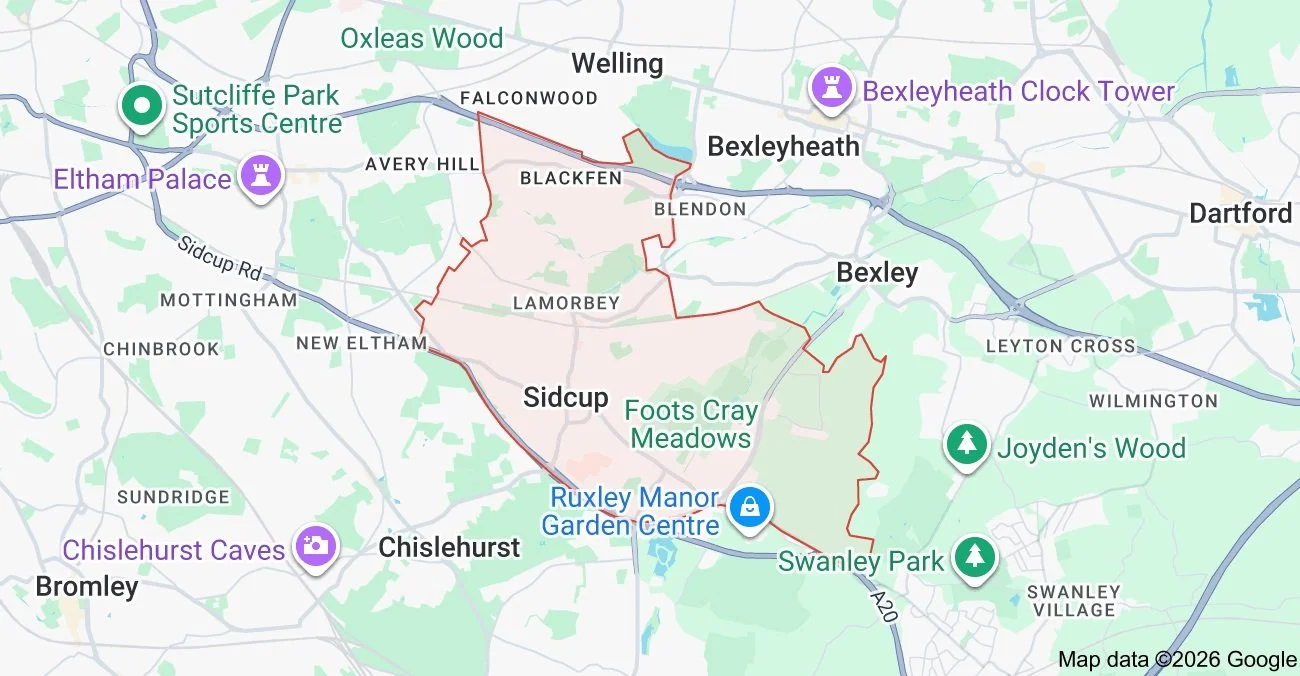
I have lived in Sidcup, in South East London, for most of my life. The first two schools that I went to were local and within 15 minutes walking distance. My Doctor’s Surgery and Dentist are only a few streets away, as is the barbershop that I’ve frequented since 1970. I now have my haircut by the son of the original barber. My point being that Sidcup has everything that residents immediately need. There’s a local hospital, good public transport networks and a broad range of shopping and restaurant facilities. It also has several parks with lakes, sport facilities and children’s play areas. It is a microcosm of the concept of suburbia with its residents commuting into Central London or out into Kent for work. People move here to raise families and end up staying. My parents lived here for 62 years.
Our household is currently trying to reduce our monthly overheads in response to the ever increasing cost of living. April is not that far away and a great many service providers will increase their rates and tariff as the new financial year begins. Then there is the ongoing effects, both direct and indirect, of inflation to consider. Although the UK inflation rate is dropping, currently sitting at 3.4% in December 2025, food inflation remains higher at 4.5%. Being based in the UK, salaries and billed services tend to be administered monthly. You get paid usually at the end of the months and bills can turn up at any point, depending upon when you started a service. Any payments coming from central government, such as state pension or other benefits, are paid every 4 weeks. This means that there are 13 payments in a year. I thought it pertinent to clarify this point as other countries, such as the USA, favour a fortnightly financial cycle. Hence as a household we work around a monthly budget.

I try not to let the failings of contemporary capitalism get to me but such a mindset is very hard to maintain. From time to time it does just piss you off and you know damn well that there’s nothing you can do about it. So to begin this tale, at the end of November, our Indesit washer/dryer gave up the ghost after a valiant twelve year lifespan. As a result of this household appliance’s stirling work, it was decided to buy another from the same manufacturer. Their website informed me that the model that had just broken was no longer being produced. However, it recommended two newer appliances that had comparable specifications and more importantly the same size. This washer/dryer had to fit into a fitted kitchen unit. To cut a long story short, a model was chosen, purchased, delivered within 48 hours and installed. The broken predecessor was subsequently taken away. The wonders of modern consumer culture!

I was in a pub last night, catching up with friends before Christmas, when I noticed on the wall something I haven’t seen in a pub for a very long time. A jukebox. In my experiences most of the pubs I go to take one of the following two approaches to background music. They either have a sound system and exclusively manage any music via personally curated playlists from behind the bar. Or they have no music at all. The Wetherspoons chain of pubs broadly follow the latter policy and actively use it as a marketing point. Quiet pubs for clientele that just want to talk can be popular. Hence finding an accessible jukebox was a blast from the past. During the late eighties and early nineties, I regularly visited my local pub and often used the jukebox there, which at the time, was operated by an ever changing store of CDs. The jukebox I encountered last night was digital.

Today is my 58th birthday. It would appear that I have existed for nearly six decades. Put another way, I am over half a century old. All of which has given me pause for thought with regard to the passage of time. A phrase that is often bandied about, but what exactly does it mean? As I understand it, the “passage of time” refers to our perception of the flow of time and how we experience its movement. This is something distinct and different from objective time as measured by clocks. Our subjective experience of time can vary due to multiple factors. Two common examples are how time can feel like it's flying by when we're having fun and enjoying something or dragging its feet when you’re enduring something dull. Other factors are whether we are applying ourselves to a task, concentrating and general activity. Such focus can make time pass quickly.

When Mrs P and I moved into our current home, over twenty years ago, we were both working full time. As the garden was poorly maintained and neither of us had any horticultural skills, we decided to employ a gardener. At the time it was a practical solution to the issue of garden maintenance and remains so today. Hence it is a service we continue to use, although our personal health is now the main reason we pay a gardener.

In July the UK Government introduced the Online Safety Act which requires age checks for accessing sexually explicit content online. As a result of this, Pornhub, the 19th most visited site on the internet, has reported a 77% decline in UK traffic. Furthermore, according to the UK regulatory body, OFCOM (The Office of Communications), overall visits to pornographic websites from the UK have fallen by 33%. Naturally, those who championed this legislation are claiming a moral and political victory. However, once you consider what these facts actually mean, they paint a somewhat different and potentially more worrying picture. It would be staggeringly naïve to think that UK visitors to Pornhub have ceased visiting such sites due to the age verification requirements. The more likely explanation is that UK porn consumers are now using VPNs to circumnavigate these restrictions and that this traffic to Pornhub is now recorded as coming from elsewhere.

Formal education in the UK is a structured process, starting at early years learning and continuing through to higher education at university. Some aspects of the educational system are mandatory, whereas others are optional. At present, children in the UK must start full-time education from the age of 5 and remain until the age of 16. After this age, they are no longer required to attend school per se but must remain in some other form of education or training, such as a vocational college or an apprenticeship. Many students remain at school until 18, as there are specific exams to be obtained that are required for a subsequent university placement. Here is a breakdown of the current process as it exists in the UK.
I don’t know if you have noticed that there are quite a lot of companies that have names taken from Tolkien’s Legendarium. At first glance, this seems innocuous enough. Tolkien’s writings grew in popularity over the seventies and eighties but since the release of the film trilogy at the start of the twenty-first century, his work has become more well known and been assimilated into our wider pop culture. Hence, it seems quite logical that a startup tech company, for example, would choose a name from his writings. No doubt the founders grew up reading The Lord of the Rings and are fans. That all seems plausible. However if you take a further look, it gets somewhat more complex. Here are four companies that have Tolkien based names.

Last Wednesday, I woke up with what I thought to be a crick in my neck on the left hand side. I assumed this was simply due to sleeping awkwardly and so I self medicated with some non-prescription pain relief and judicious use of a heat pad. Unfortunately, the problem has persisted and in the last 24 hours it has become much worse. I awoke this morning at about 5:00 AM and as I sat up in bed, an intense pain ran up the left side of my neck and behind my ear. It took several attempts for me to get out of bed because if I turned my head in either direction or inclined my chin, the pain would again run up the side of my neck. Sitting down, getting up and raising my arms caused similar results. While dressing, I attempted to pull a t-shirt over my head. The pain in my neck on this occasion was so severe that I yelled out loud and nearly blacked out.

I am a non-driver. If you wish to know the specifics of how this situation came about, feel free to read the post I wrote about it back in early 2018. To be succinct, I don’t drive, I’ve never learned how and have never owned a car. I don’t feel that I’ve missed out. In fact I feel quite the opposite. I think I’ve dodged a major hassle and expense in life. Mrs P, my significant other, is the designated driver of our household. She owns a car, insures it and maintains it. She also mainly pays for the petrol, whereas I pick up the tab for other things such as lunch or hotels when we travel. All I have to do is make like Iggy Pop if we go anywhere. The most I am ever called upon to do is navigate using Google maps and Android Auto. Fortunately, Mrs P enjoys driving. Always has done. Hence I look upon this situation as an extremely fortunate and equitable arrangement.
I am getting old. I shall be 58 in December. Now, as soon as you say something like that these days, some folk will get uncomfortable and say things like “age is relative” or “you’re as old as you feel”. Well I don’t measure my age in geological terms, so it’s not relative and I’m not feeling anyone especially young at the moment, so both schools or thoughts can sod off. I am getting old by the yardstick we measure human life by, namely years. I have specific, age related health issues and I just don’t feel as energised as I did a decade ago. There are minor signs, such as deciding to go to bed earlier and taking longer to get dressed after taking a shower. I’m not at death’s door but I am slowing up physically. It would also appear that my reactions are also slowing down as I tend to get massacred in any FPS I play these days. So far, my mental faculties seem to be holding up. However, that is the one thing I worry about the most. The potential loss of cognitive abilities scares the shit out of me.

Foots Cray Reuse and Recycling Centre is the fancy name of our local dump. A few decades ago, this was no more than a scrap yard. The rubbish and bric-a-brac left by the public was sorted and scavenged for resaleable scrap. Everything that was left was subsequently sent to landfill or incineration. Much has changed. Today it is the embodiment of the modern recycling ethos. The recycling centre is a well managed, carefully segregated site providing safe disposal of a wide variety of household and garden waste. Wood, metal and hardcore are recycled and there is similar provision for a multitude of electrical goods. Plastics, oils, paint, batteries can be safely disposed of. I have yet to find a home item that they do not have provision to dispose of. The Foots Cray Reuse and Recycling Centre has won awards for the service it provides and is considered one of the best facilities of its kind in the South East of the country.

One of the things I enjoy most about having my own blog is the fact I can write about the mundane and the trivial. Mainly because so much of life falls into this category. Life defining events are all fine and dandy and certainly lend themselves to philosophical musings that make fine blog posts. However, you can get just as much mileage out of those everyday things in life with less gravitas, that we all do. Such as buying new clothes, taking out the recycling and going to buy groceries. I have written about all of these in the past. However, today I wish to broach a subject that both fascinates me but also raises my blood pressure. I believe it to be a social marker and a clear indication of an individual’s personal psychology. Yes, I’m talking about packing your groceries at the supermarket and the various rituals and social etiquette associated with it.
“Managed decline” is a phrase that refers to the processes associated with the end of a specific lifecycle, with the goal of minimizing costs or other forms of loss. The concept originated in business where it referred to the management of companies and industries. More recently it is used in wider contexts. The concept gained prominence with regard to urban policy, particularly in the UK during the eighties when several major cities suffered economic and political collapse. Of late, the term has been applied to the UK, encompassing a systematic weakening of the economy, social structures, and cultural values, as well as its global political and diplomatic force. In each case, managed decline involves making strategic choices about resource allocation and accepting the consequences of those decisions. It is a complex issue with ethical and practical considerations, often sparking debate about the best way to address decline and reverse the process.
Guild Wars 2: Once Bitten, Twice Shy
When Guild Wars 2 launched in the summer of 2012, I was very enthusiastic about the game on the Contains Moderate Peril podcast. I had participated in the beta and was impressed by many of the game's mechanics and its overall accessibility. Although I did not expect the game to be the focal point of my gaming activities, I (and many others I suspect) felt that this casual MMO had a lot to offer and would become a firm favourite. And that was pretty much the case up until 2015 when the first expansion, Heat of Thorns, was released. I have written in the past about how this new content changed the nature of Guild Wars 2 and contradicted its existing laissez-faire approach to solo game play. I didn’t want content gated behind skills I didn’t enjoy earning, Nor did I want my access to zones subject to player unlocks and thus making my gaming activities dependent on others. Hence I parted company with the MMO and have not returned.
When Guild Wars 2 launched in the summer of 2012, I was very enthusiastic about the game on the Contains Moderate Peril podcast. I had participated in the beta and was impressed by many of the game's mechanics and its overall accessibility. Although I did not expect the game to be the focal point of my gaming activities, I (and many others I suspect) felt that this casual MMO had a lot to offer and would become a firm favourite. And that was pretty much the case up until 2015 when the first expansion, Heat of Thorns, was released. I have written in the past about how this new content changed the nature of Guild Wars 2 and contradicted its existing laissez-faire approach to solo game play. I didn’t want content gated behind skills I didn’t enjoy earning, Nor did I want my access to zones subject to player unlocks and thus making my gaming activities dependent on others. Hence I parted company with the MMO and have not returned.
Since then, there has been a second expansion, Path of Fire, which added mounts to the game as well as new content. I believe that this expansion was more equitable than the previous and friends and colleagues have assured me that I can return to the game and bypass the material I didn’t previously like. However, this still did not prove sufficient to tempt me back to the game in 2017 as I felt that Guild Wars 2 was simply one of those games that just wasn’t applicable to me any longer. All too often when I return to an MMO that I have previously left, I enjoy a few hours of excitement mainly due to all the things that have been added to the game in my absence. Then after a while, I find that all the things I didn’t like are still there, or that there is a massive progression gap to be overcome before I can join my friends at the endgame. I believe we as gamers, have an inherent blind spot where we substitute the reality of a situation with what we would “like” a game to be.
There is now a third expansion for Guild Wars 2 on the horizon. Provocatively called End of Dragons. Despite my past experience and the fact that the MMO genre has evolved greatly since the launch of this game, I have a worrying urge to re-install the game and see what is “going on”. The rational part of my mind predicts that I’ll spend an evening downloading the game client, log in to my primary character in Divinity’s Reach and then spend some time riding around on my flying carpet. I’ll quickly establish that the game is not really that different than before and then promptly log out. I did exactly the same with The Secret World: Legends, Star Wars: The Old Republic and Neverwinter. But the irrational part of my mind is adamant that I’m missing out on “the best MMO around” and that “it’s way better than last time” and I really do need to check things out. I’m curious to see which point of view wins, although common sense urges that it should be the former.
I don’t keep up with gaming news as much as I use to but several noteworthy announcement have come to my attention of late. Firstly, there’s an expansion, Songs of the Past, coming for the Witcher III: Wild Hunt in 2027. No doubt this is to pave the way for the Witcher IV. Next, I also found out about Hand of Fate: Horde. I liked this franchise and was saddened to learn that the original studio, Defiant Development, closed. Hence is was a pleasant surprise to see this new game being developed by members of the original studio. The third announcement was regarding Guild Wars 3. A new MMORPG in active development by a major studio is no small feat and is certainly good news for fans of this franchise and the genre per se. However, once you look beyond this news this announcement raises several questions and has certainly given me pause for thought. Let us take a few moments to consider them.
I was recently perusing my archive of old blog posts, when it struck me how much I’ve written about the MMORPG genre over the years. Naturally, there was far more material from between 2008 and 2012 as that was period when I immersed myself in the genre and was very enthusiastic about it. I was at a point in my life when I had the time to dedicate to such games and I was happy to participate in the social aspect of they offered. I would regularly play through group content and spend time socialising online with fellow guild members. My experience remains a textbook example of how online games can be more than the sum of their parts and that where you are at in your life has a major impact upon your overall enjoyment. As I read though various old posts it became clear that my experiences where specific to this particular part of my life and that they cannot be repeated. My relationship with the genre is very different now and that’s fine.
I have two monitors on my desk. The first (which is the primary monitor as far as my PC is concerned), is on the left and the second is on the right. The primary monitor is a 24 Dell U2412M, which has a resolution of 1920 x 1200. It therefore has an aspect ratio of 16:10 which adds a little extra desktop real estate, which I prefer when writing. The second monitor is a 24 inch Dell S2421H with a screen resolution of 1920 x 1080. It has an aspect ratio of 16:9 which is standard FHD. My chair is adjacent to the middle of my desk and I can turn according to each monitor I’m using. I tend to use the primary, larger monitor on the left for tasks such as writing via Google Docs and emails. The second monitor on the right is used for YouTube and gaming. This is because of its FHD format. I also have a Nintendo Switch connected to the second monitor for the same reason.
Bree Royce, editor-in chief at Massively Overpowered, recently asked the question “what is the most expensive MMORPG right now”. My first thought was to search through my old draft blog posts and track down an MMO cost analysis I wrote circa 2019. It includes data such as subscription rates and the price of current expansions. There was also information on what were the most popular cash shop items at the time. However, I then read some of the comments that had been left on Bree’s post and I quickly realised that this wasn’t just a matter of financial expenditure. Whether or not an MMO is expensive is also determined by one’s disposable income, respective wealth and personal relationship with money. The latter is perhaps the most important, irrespective whether you consider yourself rich or poor.
“The MMO genre is rife with its own set of tropes; recurring themes and motifs that have become established and ubiquitous. All of which are ideal material for a hastily produced, lazily conceived, recurring blog post”. Dying in an Massively Multiplayer Online Role-Playing Game is a clear and unambiguous fail state. A means by which to teach the player that they’re doing something wrong and that they need to rethink their strategy. IE Don’t mess with the foul Marmydons unless you have back up and are wielding the Sword of Kagnazax. Dying is a reminder to not get overconfident and maintain situational awareness. It teaches us to ensure you have the right gear and consumables, to be au fait with the mechanics of any fight you’re about to get into and that winning is not a given. Any enterprise that offers a tangible reward will come with potential risks and consequences. If you’re playing in a group then death provides a timely reminder not to rely on Colin.
I last wrote a post in this series in June. Back then I wanted a break from MMOs as I had invested heavily in Star wars: the Old Republic and The Lord of the Rings Online. Because I was still enjoying the Star Wars vibe, I decided to try Jedi: Fallen Order. Sadly, despite the story showing a lot of promise, the PC version of the game handles poorly and the controls are sluggish. Often it felt like my character was wading through mud and there was a tangible amount of skills lag. So I uninstalled it and moved on to something else. One of the odd things about gaming is that despite amassing a library of free and discounted titles, we often end up buying something new, instead of playing that which we already own. And that is exactly what I did. I purchased Stray amid all the excitement surrounding the game, but to date I still haven’t played it. Make of that what you will.
The Lord of the Rings Online was my first major MMORPG. I started playing in late 2008 and quickly discovered that there was a necessity to become familiar with the game world. Although the game provides quick travel options they were not ubiquitous at that point and often a player would simply travel on foot to travel costs down and to take the most direct route. Back in 2008 you could not own a mount until level 30. Hence I began “learning the maps” in the game and to this day still remember how to travel from one side of Moria, to another. The maps in the base game remain clear in my mind as they were so well trodden. Not so those in the regions. There are far more stables with fast mounts present in the game now and so convenience trumps any requirement to become so familiar with newly added zones. Nowadays Standing Stone Games designs new zones that tend to funnel players through them from quest hub to quest hub.
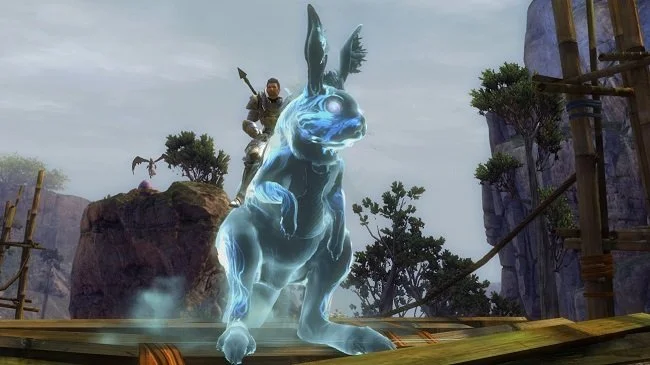
It’s a curious thing but despite there being a wealth of story content available for me to do in Guild Wars 2, I don’t feel disposed towards doing any of it. I think this all stems from the fact that it’s an original intellectual property, rather than one based upon an established franchise. Looking back through my achievements and story journal on my primary character, I played through quite a lot of narrative content when I first started playing this MMO at launch. Sadly none of it has made a sufficient impression upon me to have stuck in my memory. This is not a reflection of the quality of the storyline of Guild Wars 2 but more a case of how I tend to prefer known quantities such as Tolkien and Star Trek. Curiously, I have not encountered this problem with The Elder Scrolls Online which is equally an original intellectual property. It all seems very much a case of horses for courses.
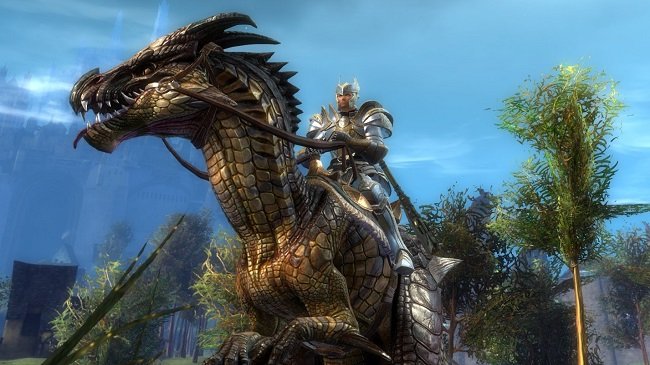
Last night I had some spare time, so I watched a Guild Wars 2 live stream from Massively Overpowered. I stopped playing this particular MMORPG in late 2015, a few months after the second expansion Heart of Thorns was released. To say that it changed the game is an understatement and sadly they were not changes that I especially liked. Since then I have occasionally logged into the game but never done anything more than potter about the starter zones. However, after watching this live stream I felt disposed towards giving the game another go. I wanted to try a new class and swan about casting spells, looking like Ming the Merciless from Flash Gordon because that’s the way all Mages look in MMOs. Today I logged into the game with hopes of rolling a Necromancer and questing in Tyria. However, the game had other plans.
Usually I keep subscribing to an MMORPG, even if I’m not playing it that much. I like to have options in case I decide to log in on a whim. Especially if an absent friend returns to a particular game presenting an opportunity to catch up. However, the current economic climate is no longer something that I can ignore. Although far from having a low income, the current ongoing increase in the cost of living is becoming apparent, so I have been fiscally prudent and cancelled my monthly subscriptions to Star Wars: The Old Republic and The Lord of the Rings Online. Both have provided me with a lot of entertainment over the last three to four months but until new content becomes available, I can happily dispense with them for the meantime. Not only have I saved £17.98 on subscriptions, I shall no longer be making ad hoc purchases of in-game currencies. Something I have been doing a lot more than usual of late.
When Guild Wars 2 launched in the summer of 2012, I was very enthusiastic about the game on the Contains Moderate Peril podcast. I had participated in the beta and was impressed by many of the game's mechanics and its overall accessibility. Although I did not expect the game to be the focal point of my gaming activities, I (and many others I suspect) felt that this casual MMO had a lot to offer and would become a firm favourite. And that was pretty much the case up until 2015 when the first expansion, Heat of Thorns, was released. I have written in the past about how this new content changed the nature of Guild Wars 2 and contradicted its existing laissez-faire approach to solo game play. I didn’t want content gated behind skills I didn’t enjoy earning, Nor did I want my access to zones subject to player unlocks and thus making my gaming activities dependent on others. Hence I parted company with the MMO and have not returned.
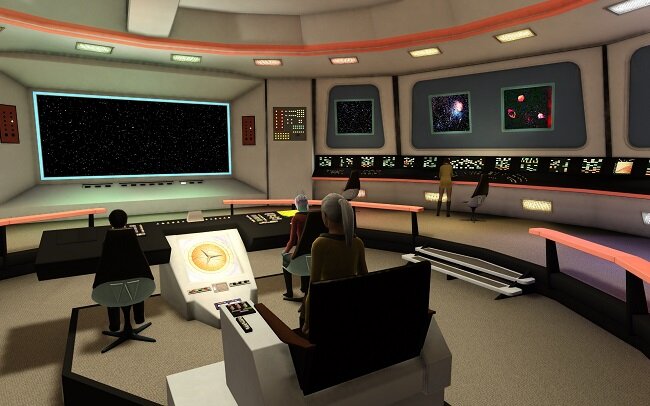
Last year I wrote a post about several “quality-of-life mechanics” found in MMOs. Systems and functionality that just make a game more manageable or convenient. Despite having many features in common, MMOs are far from identical in their interface and controls. If you’re a genre aficionado, then you can usually bluff your way through a new game and decipher how to play it. But for new players, often just trying to figure out how to do a simple thing, like find your skill points, can be an uphill struggle. However, every now and then, you’ll come across some simple functionality in a game that is useful and makes a task much easier. So I have collated another five “quality-of-life mechanics” that I feel are significant and beneficial to the player. Some are very minor but that does not diminish their value. Sometimes, less can indeed be more.
When I first started playing MMOs, it was very easy to maintain a degree of “gaming monogamy”. The Lord of the Rings held my attention for two years, without any distractions because everything was new to me at the time. But eventually, the allure of other genre titles became too great that I moved on to pastures new. And so I spent between 2009 and 2014 trying numerous other games. Star Trek Online, Age of Conan, Aion, Guild Wars 2, Star Wars: The Old Republic, The Secret World, Neverwinter, WildStar and The Elder Scrolls Online to name but a few. If a game took my fancy, I would invest a great deal of time and make substantial progress. Conversely, if the “shoe didn’t fit”, it was quickly dispensed with. For example World of Warcraft never “clicked with me. It’s no reflection on the game itself. I just didn’t warm to any aspect of it. Similarly, the reality of EVE Online was vastly different to what I had imagined and expected.
World of Warcraft was the MMO that broke the mould. The reasons for its success are too numerous and complex for this blog post, so let it suffice to say that it rode a perfect storm of factors and has maintained a strong presence for fifteen years. And as a result, subsequent developers have often sought to duplicate its success. Yet frequently the opposite has happened. In fact several MMOs have launched and experienced a brief time “in the sun” only for things to come crashing down thereafter. Perhaps the most well-known example of this was SWTOR which experienced a triumphant launch in December 2011, yet within three months the majority of players had left for pastures new. It took the game going F2P and a lot of hard work by BioWare to claw back the playerbase. It has also been argued that many MMOs have grown too big for their own good? It is true that a new player starting a game such as LOTRO today has a long slog ahead of them and some may simply find that too daunting.
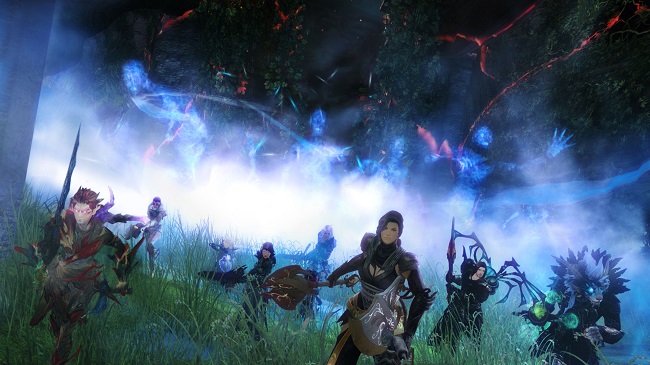
The above promotional video for Guild Wars 2 (dated July 19th, 2011) came up in an online discussion recently. The game as it exists today is radically different to this eight-year-old marketing presentation. It got me thinking about MMOs, how they evolve and those that have fallen from grace. Naturally the spectre of World of Warcraft looms large in such a discussion, because for many years this was the game to beat. Subsequently the market was awash with clones, which proved to be an unwise business tactic. The tumultuous life of Star Wars: The Old Republic along with the closure of Warhammer: Online, Vanguard and recently WildStar indicates that more of the same is not necessarily what players want or at the least, insufficient to keep them engaged. Guild Wars 2 initially deviated noticeably from the perceived wisdom but then contradicted its own ideology out of necessity to remain financially viable. Subsequent expansions have proven far more “traditional”. A decade on from the MMO boom, the genre has had to become far more niche to survive. MMOs exist and make money, but the are no longer seen as cash cows.
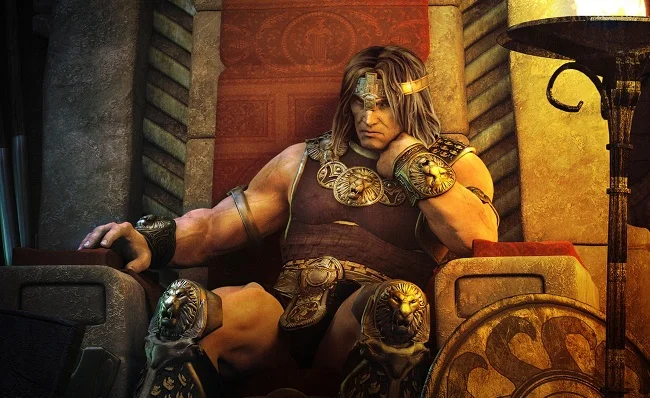
I started playing MMORPGs over a decade ago, at a point when the genre was growing. It seemed at one point that every developer wanted to produce the game that usurped World of Warcrafts crown. I therefore ended up trying many of these massively multiplayer online games yet ended up sticking with few. All too often many of these titles were too generic or had an inherent flaw or flaws that killed my enjoyment. Sometimes it was just a case that the game just didn’t chime with me. Naturally over time, I have revisited some of these MMOs and a few have become a mainstay of my gaming activities. The Lord of the Rings Online, Star Trek Online and The Elder Scrolls online are three such examples. Yet there are numerous other games from this genre that I have not returned to or if I have, I still found them to be problematic, so they have not become part of my leisure activities.
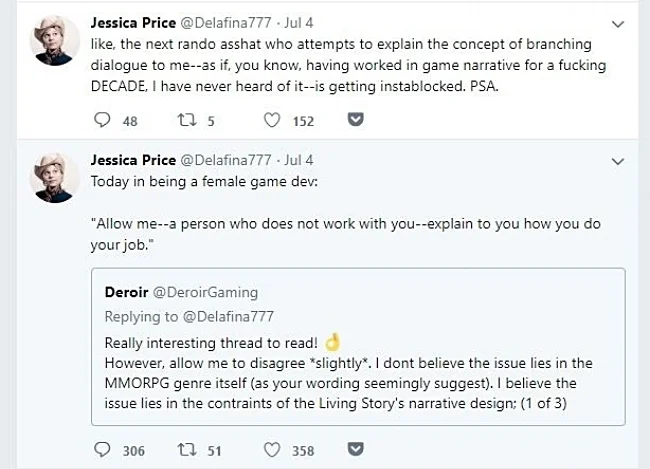
When I first read about the furore caused by Jessica Price’s comments yesterday, I knew it wouldn’t end well. There’s a tedious inevitability to the outcome of most video game related “outrages” these days. For example, a senior member of staff from a major developer will same something crass, double down, dig a hole and then finally after being bitten on the ass by reality, will put out a mealy-mouthed half ass apology. The other scenario is that an employee affiliated to a studio says something completely left field, is presented with short window of opportunity to retract it and blame it on over the counter flu medication, before they get fired due to the ensuing PR shit storm. This particular controversy falls into the latter category. However, if you take a step back from the Jessica Price debacle you quickly notice it raises a lot of questions beyond her obvious transgression. Namely, the problem of always being “on the clock” when you work in certain professions, the need to separate your work and personal social media presence and the place “influencers have in the video games industry.

It would appear that lockboxes are being discussed once again. Bhagpuss wrote a post over at Inventory Full yesterday, which subsequently got used as a talking point on Massively Overpowered today. What made the debate a little different this time around, was that Bhagpuss doesn’t object to lockboxses per se, merely that in most games that have them, the content is frequently lacklustre and uninspiring. A point I am compelled to concur with. I too have no major objection to lockboxes in principle and partake of them from time to time in various games. However, they seldom seem to contain anything that I consider to be of tangible benefit to me. I want pets, gear and weapons. But because of vocal complaints from certain quarters, we are more often than not saddled with inconsequential convenience items and minor cosmetics baubles and trinkets.
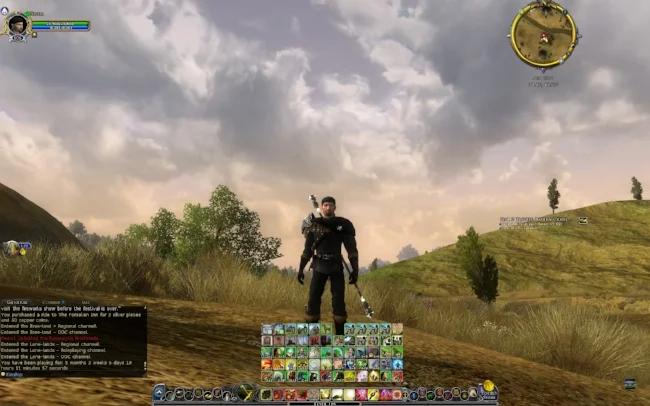
Although I have played numerous other online games, LOTRO has been my main MMO for the last nine years years. I have invested a great deal of time into it, which is hardly surprising as that is the entire raison d'etre of the genre. I recently purchased the Mordor expansion for the game which offers a wealth of new content. Yet despite having all this available I have done precious little in the game of late and have made no significant progress. Currently, I have Guilds Wars 2, The Elder Scrolls Online, Secret World Legends and Star Trek Online installed on my PC. I have dabbled with them all over the last few weeks, trying to rekindle a sense of enjoyment and pursue content that I have not completed. Sadly, none of them seem to hold my interest. I log in to them in the hope that something will grab my attention but I always seem to find myself just kicking my heels and aimlessly wandering through zones with no sense of focus.
Jeremy Soule's score for Guild Wars 2 is an integral part of the games charm and appeal. It enhances the world of Tyria and is a character in its own right. As a player, whenever you visit one of the vast cities or travel the rolling countryside, it is Soule's music that breathes life into the finely crafted world that ArenaNet have made. Upon the games launch in 2012, the soundtrack for Guild Wars 2 was released in a four-disc box set, via Soule's own record label DirectSong. Sadly, this was a limited pressing and is now out of print. Copies now change hands for exceedingly large sums of money.
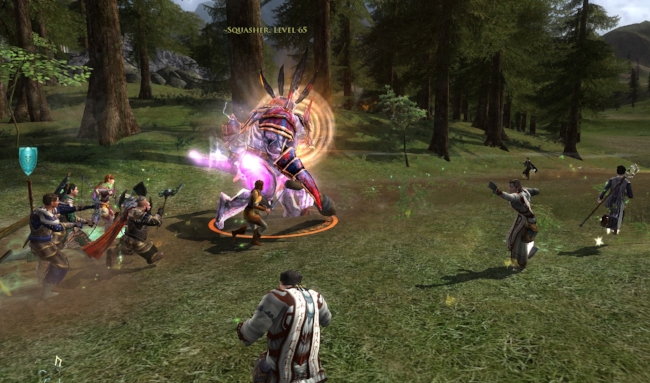
There’s one particular topic that appears with tedious regularity on MMO subreddits and forums. That old chestnut about how the genre has become too solo friendly and that it’s to the ruination of the genre. It usually hails from the raiding community and follows a predictable path about high end gear and those who do and don’t deserve it. When you look beyond the initial arguments, you’ll frequently find that such positions are very emotive, couched in judgemental terms and often end in the sentiment “why even play an MMO?” or something comparable. The reason I mention this perennial debate is because it appeared recently on a forum that I still occasionally visit. It saddens me to a degree because, this point has been debunked so many times, yet it still persists (a bit like many political talking points). It also smacks of that attitude I see all too frequently these days. A concern and borderline resentment of what others are doing, irrespective of whether it impacts upon you or not.
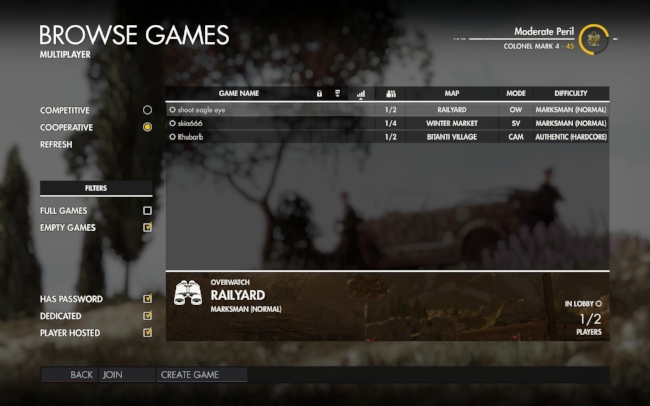
Out of all my recent gaming, Sniper Elite 4 has proved the most entertaining. The engaging mechanics and stealthy gameplay have held my attention and kept me engaged. So far, I spent over seventy-two hours playing through the campaign and DLC. After watching several You Tube videos I was tempted to try the co-operative mode, something that I don’t always do in these sorts of games. Overwatch allows two players to work together as sniper and spotter respectively, to complete objectives within a custom map. It requires communication and co-ordination. It should also be noted that multiplayer in Sniper Elite 4, is dependent on peer-to-peer connection rather than dedicated servers, with the players hosting the games themselves.
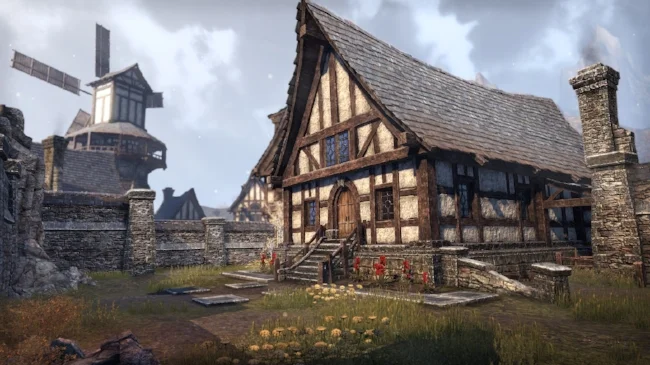
Having recently returned to The Elder Scrolls Online, there is a lot of excitement within the community regarding the introduction of housing in the next major game update in February. So far from the information that is available, there’s a wide variety of house styles and customisation options available. Properties can be bought furnished or unfurnished and players can further embellish their respective dwellings by crafting specific items for them. Housing also includes the usual fast travel options to and from their location and access can be shared among friends and alts. There’s a more detailed breakdown at The Elder Scrolls Online website and so far, ZeniMax seem to be offering all a comprehensive version of the current popular MMO mechanic.
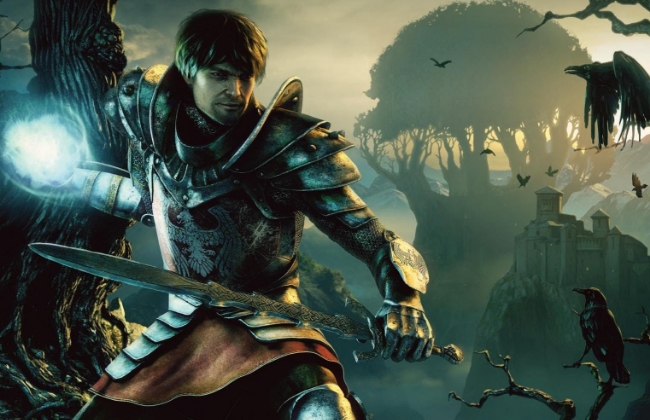
I started 2015 playing RPGs. Despite becoming bored with Dragon Age: Inquisition and its ponderous storyline, I still found this particular genre engaging. January and February are often slows months in my line of work, so it’s a good time of year to immerse oneself in games of this type. I played through both Arcania : Gothic 4 and Rise of the Argonauts and found them both to be enjoyable. Neither of these titles was revolutionary, being mainly “business as usual” RPGs. However both were bought as part of gaming bundles and the discounted price does have an impact upon my gaming expectations. For what they were, I enjoyed them.
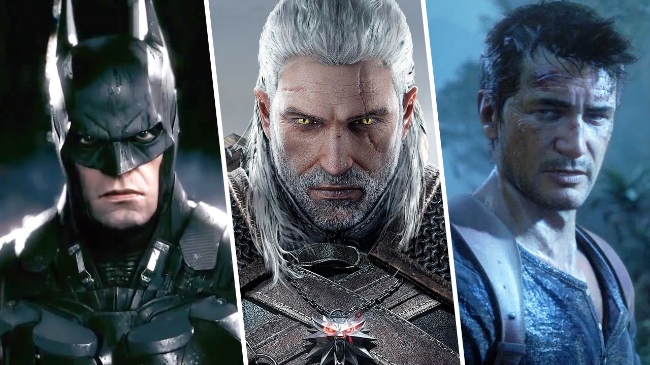
This time last year I wrote a two part post called A Year in MMOs. Twelve months later I find myself writing a similar round-up of my gaming activities. However this time round the title has now become A Year in Gaming. One of the most significant changes for me over the course of 2015 has been my step away with the MMO genre. Where in the past I would seek out new titles and stay abreast of those in development, I now find myself no longer drawn to the genre by default. Traditional titles such as LOTRO have been sidelined. This is because both MMOs and I have changed over recent years. Although I still play this genre (mainly STO), I do so sparingly and it is no longer the apple of my eye or the mainstay of my gaming time.
Guild Wars 2 has always been a game that’s easy to return to. In many ways this has been the game’s biggest selling point for me. The lore doesn’t appeal to me that much but the games frictionless approach to combat and character stats have always made it easy to jump back into after being away. So for the last three years I have been a regular visitor to Tyria. However, many of the changes that came with the October expansion, Heart of Thorns, were not to my liking. That’s not to say that they were bad. They seem to have found favour in some quarters. But from my perspective the changes made to Guild Wars 2 have not improved or enhanced it and took the game in a direction contrary to my tastes. As a result I have stopped playing the game entirely.

While watching the official LOTROstream recently, I noted that there was still a lot of LOTRO related merchandise adorning staff desks at Turbine’s offices. I recollect in the past that mouse mats, mugs and other items use to be available for sale in the Warner Bros. store. There was an initial marketing campaign associated with the launch of the game in 2007 and another in 2010 when the game converted to F2P, both of which required a stock of merchandise for promotional reasons. Sadly a search of the Warner Bros. store has shown that no such material is available any longer. Furthermore considering where LOTRO is in its lifespan, there is not likely to be any further stock produced.
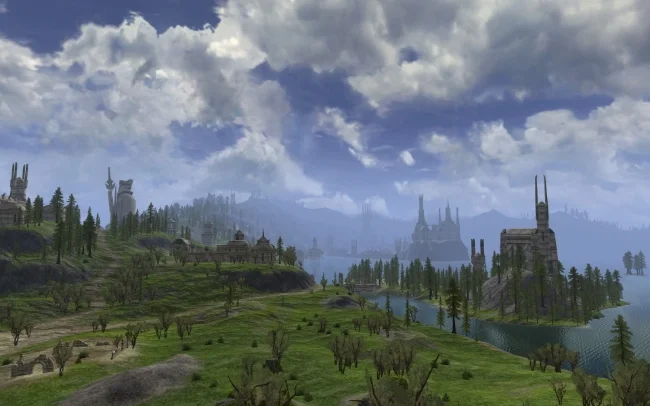
I started playing my first MMO in late 2008. Until then it was the one genre that I had never tried. I initially considered buying World of Warcraft but when I found out there was a virtual version of Middle-Earth I chose to purchase The Lord of the Rings Online instead. Right from the outset I was hooked. My working pattern and domestic arrangements afforded me plenty of time to invest into this game and I did so willingly.
Job Hierarchies and Thoughts on Employment
I appreciate that this is a somewhat ponderous blog title but I’m trying to consolidate several ideas and streams of thoughts into one post. So to begin with it is the third week of the Blaugust 2021 Festival of Blogging event. Specifically it’s “Developer Appreciation Week”. At first glance a laudable undertaking. An opportunity to praise the developers of a game that’s close to your heart. However, given the current debacle with Blizzard Entertainment, I think there’s a conversation to be had about how fans virtual deification of specific developers of World of Warcraft and how treating them like rock stars, may well have had some bearing on their subsequent misdemeanours. I would in fact go further and say that the video game industry is another sector of work, like film, TV, music and sport that is perceived to be glamorous, aspirational and generally put on a pedestal. Fans lose sight of the fact that these companies have a lot of staff who don’t get any kudos and endure tough working conditions. Just like more conventional jobs.
I appreciate that this is a somewhat ponderous blog title but I’m trying to consolidate several ideas and streams of thoughts into one post. So to begin with it is the third week of the Blaugust 2021 Festival of Blogging event. Specifically it’s “Developer Appreciation Week”. At first glance a laudable undertaking. An opportunity to praise the developers of a game that’s close to your heart. However, given the current debacle with Blizzard Entertainment, I think there’s a conversation to be had about how fans virtual deification of specific developers of World of Warcraft and how treating them like rock stars, may well have had some bearing on their subsequent misdemeanours. I would in fact go further and say that the video game industry is another sector of work, like film, TV, music and sport that is perceived to be glamorous, aspirational and generally put on a pedestal. Fans lose sight of the fact that these companies have a lot of staff who don’t get any kudos and endure tough working conditions. Just like more conventional jobs.
There has always been a hierarchy of jobs in the public consciousness, although logically all forms of employment are essentially the same in principle. People providing a service in return for money. But life doesn’t exclusively operate within logical parameters. Hence vocational and professional jobs come with a lot of cultural baggage. Rightly or wrongly, the moment you declare to someone what you do for a living, they will instantly make assumptions and judgments about you. Often these will be erroneous or spurious but this sadly is the prevailing trend. Cleaners, carers, shop workers all do essential and invaluable work (as 2020 clearly highlighted). Yet such work is often frowned upon by certain parts of the population. Despite the fact that many who work in such sectors do so out of necessity and may well be overqualified. In fact there are stereotypes associated with jobs of all spectrum. Academia, working in the law and banking being seen as the prerogative of the rich. Estate agency (real estate) being seen as “barrow boys” and chancers. Oh and IT is exclusively populated by the socially dysfunctional.
During the course of my lifetime, the job market has evolved and changed rapidly. Applying for jobs in the eighties was a very formal process. Hand written applications and questionnaires were used to filter candidates, prior to interview by panel. Vacancies were predominantly advertised in newspapers, recruitment agencies or the government run “Job Centres”. Qualifications gated many positions, even for the most entry level administrative roles. When I started working for the DWP in 1990 on the first rung of the ladder, you still needed to have 3 GCE “O” level exams with passing grades. Nowadays, the job market is far more fast paced and like so many things, now predominantly handled online. Having a customisable curriculum vitae (or resume), that can be tailored to specific applications is essential. Sadly, the new job market has little room for feedback. Most applications never garner any sort of response. Keyword searches eliminate those who are not relevant and such automated services do not generate a polite “sorry you weren’t successful” letter.
However, these major changes to the overall employment landscape has led to an increasing amount of job homogenisation. Especially here in the UK where traditional industries have been replaced with service ones. Hence we have seen an increase in employment dissatisfaction and the rise of so-called “bullshit jobs”. I am currently reading a book on the subject by American anthropologist David Graeber. He contends that “over half of societal work is pointless and becomes psychologically destructive when paired with a work ethic that associates work with self-worth”. Graeber describes five types of meaningless jobs, in which workers pretend their role is not as pointless or harmful as they know it to be: flunkies, goons, duct tapers, box tickers, and taskmasters. He argues that the association of labour with virtuous suffering is recent in human history, and proposes universal basic income as a potential solution. I certainly wouldn’t argue against these things having had such positions in my career.
Hence we return to the jobs that are perceived as aspirational or a means to bypass the rat race, or at the very least, manage it on your own terms. Many young people look to social media as a means of escaping the fate of their parents. Because the social contract that has existed in most western societies in the post World War II era has been proven false. If you study, work hard and live within your means you’ll be able to raise a family, afford a home and the state will assist you in your autumn years. Young people know first hand that this is a lie. Many modern jobs have no formal working hours, no employee protection or rights and pay insufficient to keep an individual, let alone a family. Bullshit jobs are rife and work is a treadmill. Which is why the allure of being an “influencer” is so strong. And why a rock star game developer who gets to write really cool games and hangout at conventions and trade shows is infinitely preferable to toiling in a call centre and having to ask your 30 year old, sociopath boss if you can go to the bathroom.
There’s a good chance that I may have to return to the workplace when my caring duties end. Let it suffice to say that such a prospect does not fill me with glee. It is highly unlikely that I will seamlessly resume a career in IT and at comparable rates to what I was earning in 2016. Although the law is supposed to prevent discrimination, I’m certain my age will work against me as will no doubt my health. Furthermore, I’m not sure if my personality is cut out for the modern workplace which has become a much more complicated socio-political environment. Hence working from home and the gig economy is an obvious solution, although many creative forms of work have been devalued by internet culture. Writing for money is certainly not an immediate path to fortune and glory. People expect “all that” for free nowadays.
Therefore, if you are one of the minority of people who are actively employed in a job you actually enjoy, then count yourself very fortunate. The rest of society either just tolerates their employment and employer or actively hates them. Condemned to carry out arbitrary and pointless tasks, for people who just see them as an asset or a resource. The modern day workplace is often an endless grind and in some examples a form of indentured slavery. Oh and with regard to Blaugust, rather than thinking about those high profile game developers, who love to preen themselves on stage at E3, spare a thought for all the other staff that do the nuts and bolts work and never get a name check. It would appear they get put upon, ripped off and abused, just as much as the guy who delivers your pizza or the lady who works the checkout at your local store.
When I was a child, I quickly learned never to say within earshot of my parents that I was bored. It was quickly met with a response along the lines of “an intelligent mind is never bored” or more worryingly “if you’ve got nothing to do, I’ll find you something” which meant a chore or Herculean task. Being a child of the seventies and due to my parents fundamentalist approach to declarations of boredom, I quickly discovered numerous ways to occupy myself. The default solution was a book or comic. I always liked reading as a child and had plenty of books to choose from. I also had numerous of comics as an alternative to a hefty tome. I would also draw and paint. My father use to work during the summer holidays as a design draftsman and as a result, we always had plenty of paper in our house. Then of course there were toys and such like. Hence I learned the art of keeping myself busy.
When I first started this series of posts back in 2023, they were originally intended to provide a useful overview into UK (mainly British) slang. US slang is ubiquitous globally due to the pervasive nature of American culture. Hence most people have a good grasp of its nuances. However, the proverbial door does not swing both ways. Hence most people will watch British TV dramas or read popular novels and can be quite bamboozled by some of the phrases that are used. That is what I was trying to address. However, over time this entire enterprise now reads like a some sort of Guy Ritchie film with Colin as the anti-hero. That notwithstanding, hopefully the list of slang phrases below will prove useful to know, if you ever visit the UK or tour around London. As ever I have given an example of their respective use. Feel free to ask questions if anything needs clarifying, or you wish to leave a comment with examples of you’re own national and regional slang.
As I write this post, the temperature in Greater London is 33°C (91.4°F). This has become a regular occurrence since the middle of May onwards. High temperatures are fine when you’re on holiday mainly because you’re off work and at your leisure. You don’t have to perform the usual daily task that life requires of you such as work, shop, cook, clean etc. Furthermore, if you’re on vacation you’ll probably be staying at a resort or hotel that is fully air conditioned and you’re dressed accordingly. However, if you’re still performing you’re daily routine such as commuting to work and spending time in an office that wasn’t built with such external temperatures in mind, then 33°C is frankly a pain in the ass. Oh and if you’re one of those people who always respond to discussions such as this with “well I live in Riyadh and it’s 40°C here”, please sod off. You live in a desert which is dumb to begin with. Plus this is not a commensurate comparison. Temperatures are rising in the UK. It’s always hot in Saudi Arabia.
If you visit the websites for such UK tabloid newspapers as the Daily Express or the Daily Mail you will no doubt encounter prominent stories about Megan Markle, Nigel Farage and “immigrants”. If these two august institutions are short of column inches, they’ll run a piece about how some former celebrity has had the unmitigated gall and temerity to get old. I mean WTF? How dare they do what human beings are genetically disposed to do. It’s outrageous. Similarly, head over to the Unherd website and you’ll find foam flecked tirades regarding spurious points of contention over dubious subjects. Often the topic being harangued is incredibly niche and I’ve never heard of it before or even considered it being a thing. These sort of talking points are not about informing, debating and most certainly aren’t about thinking. They exist to provoke reactions.
Before we start, let me explain to those readers outside of the UK, the significance of a Dairy Milk Freddo chocolate bar and its relevance to this post. The “Freddo” is an 18g (0.63 oz) chocolate bar, in the shape of an anthropomorphic frog. When it was re-launched by Cadbury in 1990 (it had previously been manufactured by an Australian confectionery company in the seventies), it was priced at 10p (£0.10). It remained at that price until 2005 when a 1p to 2p increase began to occur each year. By 2016 Freddos were retailing at 25p. However, the following year the price “lept” to 30p with an increase that was double its usual yearly rise. This led to public outrage across social media. Since then the price of a Freddo has waxed and waned. Tesco supermarket reduced the price back to 10p as part of their centenary celebrations. The post COVID price in 2022 hit 49p. At present, the average price of a Freddo in the UK is somewhere around 35p.
Over the last 10 years, I’ve written several blog posts about my personal working experiences and my career, such as it was. I touched upon working specifically in IT and how that industry changed over time, both technically and in the way that other people perceived it. I have also given my thoughts on the social dynamics of the modern work environment and the way we interact with our colleagues and employers. That is another area that has changed dramatically. Naturally my retirement from full time work has been written about, as it is such a radical change in one’s life. Especially if you’re the sort of person who is clearly defined by their job, which I personally was not. This time, I want to share a few thoughts I have about what I miss about “going to work” and “having a job”. I’m not sure if “miss” is the right word. Perhaps it is more a question of things being absent. Either way, there are some aspects of being employed that I use to enjoy or at least found beneficial that I now no longer experience.
UK Prime Minister, Sir Keir Starmer has resigned and intends to leave office before the parliamentary summer recess. By then Andy Burnham will more than likely be voted leader of the Labour Party and by default will become the new Prime Minister. Due to the current size of the incumbent Government’s majority, there is no pressing reason for a General Election that the UK’s right wing tabloid press is currently calling for. Whether this provides the Government with the reset they’re hoping for when Parliament reconvenes in autumn remains to be seen. With seven Prime Ministers coming and going in a decade, there are some serious questions to be asked about the current state of UK politics. However, the mechanics of contemporary politics, the decline of clearly defined ideologies and the people that seek elected office to be our leaders are only half of the problem. The other major impediment to the UK’s democracy functioning properly is the electorate.
The UK Government has formerly announced its intention to ban under-16s from using social media. This is due to increasing public pressure that “something must be done” about the perceived iniquities of many online platforms. However, as with most complex social problems of this nature, no one has any clear or practical ideas as to what that “something” is. It remains a nebulous, non-specific panacea and clearly someone else’s job to identify and implement. As ever, why choose a nuanced and multifaceted solution to a complex problem, when it is far easier and politically expedient to just “ban” something. The former requires effort and a degree of thinking. If such an approach fails it also means that those who came up with it now carry the can. The latter dumps the problem in the lap of various third parties, who can then be conveniently blamed when the ill conceived policy fails.
Every Thursday, Mrs P volunteers at a food bank that is run from a local church; Avery Hill Christian Fellowship. Today there was a shortage of staff so I agreed to help out. It proved to be an equitable arrangement as she collated the various orders and I packed the bags and took them to the respective clients. The food bank itself is organised and administered by the Trussell Trust, a UK based NGO and charity providing emergency food and support to people locked in poverty. It is open for 2 to 3 hours a week depending upon demand. During today’s session we served just six people. Some weeks its can be triple that amount. Upon closure, a member of staff from the Trussel Trust did a stock take and collated a list of what was needed. This is provided by various local church communities via parishioners donations, as well as local supermarkets who have an arrangement with the trust to provide surplus stock or good approaching the end of their sales window.
There are approximately 4000 parks and green spaces in Greater London. Bexley Borough alone has over 100. Public parks and green spaces are vital to modern cities, providing essential health, environmental and social benefits. They boost physical and mental wellbeing by reducing stress and providing a place for exercise. Furthermore they enhance urban sustainability, mitigate heat, and provide a sustainable environment for a wildlife. Parks are often a venue for social activities and events and as such are an important part of the local community. Going to the park has always been a part of my life. I live next to Old Farm Park in Sidcup and have made use of this recreational space throughout my life. I used visit with my parents in the seventies, when I was a child. Thirty years later my son, father in-law and I would fly kites there. Now I take my grandchildren to Old Farm Park as it now has a playground.
Being a 58 year old man, I welcome any undertaking which can potentially improve my health. One such thing is proactive screening and testing. The UK National Health Service has started doing a lot more of this in recent years, mainly because diagnosing a problem and treating it early is far more efficient and cost effective than retroactive action. Hence this policy and my age is why I was recently sent a NHS Bowel Cancer Test Kit via the post. This screening service takes place every two years for people aged 50 to 74 in the UK. The kit is very quick and simple to use. A sample of your stool is sent via a prepaid return envelope for testing and the entire process is free of charge. Upon receipt, the laboratory test determines whether there is any blood present in your stool, which is a potential indicator of bowel cancer. If detected, an early diagnosis greatly improves any subsequent treatment outcomes.
I like learning things. I always have. During my middle school years I thought I was a mediocre student and often I wouldn’t apply myself. According to an old school report this was because I was “too busy indulging in Tomfoolery”. Then I had the positive experience of meeting an exceptional teacher. Their lessons were the highlight of the week as they had an ability to make the subject matter, Classical History, utterly compelling and relevant. The teacher in question also treated us like adults and the class benefitted from only having five pupils. This really brought home to me that a lot of disinterest and underachievement in education is linked to the paucity of some teachers. One bad teacher can undermine the good work that all the others can do. Perhaps it has improved nowadays?
I’ve had an interest in the paranormal since I was a child. My mother always got books out of the library about ghosts and UFO phenomenon, so in some respects I was influenced by her reading habits. As a child such tales were by default interesting and any potentially scary element naturally made them more enjoyable. However, my father being an academic had taught me to question everything, so I felt fairly evenly equipped when exploring these subjects. Further to this point, over the years I have learned that humans have a very unique perspective on the world. We are hard wired to see patterns, regardless of whether they’re there or not. Our senses can also be fooled and often are. Perhaps the most important aspect of our nature that impacts upon any analysis we make into the paranormal is our penchant for creating stories. Hence unusual experiences can be subconsciously misremembered and “retconned” to form more precise narratives.
I have lived in Sidcup, in South East London, for most of my life. The first two schools that I went to were local and within 15 minutes walking distance. My Doctor’s Surgery and Dentist are only a few streets away, as is the barbershop that I’ve frequented since 1970. I now have my haircut by the son of the original barber. My point being that Sidcup has everything that residents immediately need. There’s a local hospital, good public transport networks and a broad range of shopping and restaurant facilities. It also has several parks with lakes, sport facilities and children’s play areas. It is a microcosm of the concept of suburbia with its residents commuting into Central London or out into Kent for work. People move here to raise families and end up staying. My parents lived here for 62 years.
Our household is currently trying to reduce our monthly overheads in response to the ever increasing cost of living. April is not that far away and a great many service providers will increase their rates and tariff as the new financial year begins. Then there is the ongoing effects, both direct and indirect, of inflation to consider. Although the UK inflation rate is dropping, currently sitting at 3.4% in December 2025, food inflation remains higher at 4.5%. Being based in the UK, salaries and billed services tend to be administered monthly. You get paid usually at the end of the months and bills can turn up at any point, depending upon when you started a service. Any payments coming from central government, such as state pension or other benefits, are paid every 4 weeks. This means that there are 13 payments in a year. I thought it pertinent to clarify this point as other countries, such as the USA, favour a fortnightly financial cycle. Hence as a household we work around a monthly budget.
I try not to let the failings of contemporary capitalism get to me but such a mindset is very hard to maintain. From time to time it does just piss you off and you know damn well that there’s nothing you can do about it. So to begin this tale, at the end of November, our Indesit washer/dryer gave up the ghost after a valiant twelve year lifespan. As a result of this household appliance’s stirling work, it was decided to buy another from the same manufacturer. Their website informed me that the model that had just broken was no longer being produced. However, it recommended two newer appliances that had comparable specifications and more importantly the same size. This washer/dryer had to fit into a fitted kitchen unit. To cut a long story short, a model was chosen, purchased, delivered within 48 hours and installed. The broken predecessor was subsequently taken away. The wonders of modern consumer culture!
I was in a pub last night, catching up with friends before Christmas, when I noticed on the wall something I haven’t seen in a pub for a very long time. A jukebox. In my experiences most of the pubs I go to take one of the following two approaches to background music. They either have a sound system and exclusively manage any music via personally curated playlists from behind the bar. Or they have no music at all. The Wetherspoons chain of pubs broadly follow the latter policy and actively use it as a marketing point. Quiet pubs for clientele that just want to talk can be popular. Hence finding an accessible jukebox was a blast from the past. During the late eighties and early nineties, I regularly visited my local pub and often used the jukebox there, which at the time, was operated by an ever changing store of CDs. The jukebox I encountered last night was digital.
Today is my 58th birthday. It would appear that I have existed for nearly six decades. Put another way, I am over half a century old. All of which has given me pause for thought with regard to the passage of time. A phrase that is often bandied about, but what exactly does it mean? As I understand it, the “passage of time” refers to our perception of the flow of time and how we experience its movement. This is something distinct and different from objective time as measured by clocks. Our subjective experience of time can vary due to multiple factors. Two common examples are how time can feel like it's flying by when we're having fun and enjoying something or dragging its feet when you’re enduring something dull. Other factors are whether we are applying ourselves to a task, concentrating and general activity. Such focus can make time pass quickly.
When Mrs P and I moved into our current home, over twenty years ago, we were both working full time. As the garden was poorly maintained and neither of us had any horticultural skills, we decided to employ a gardener. At the time it was a practical solution to the issue of garden maintenance and remains so today. Hence it is a service we continue to use, although our personal health is now the main reason we pay a gardener.
In July the UK Government introduced the Online Safety Act which requires age checks for accessing sexually explicit content online. As a result of this, Pornhub, the 19th most visited site on the internet, has reported a 77% decline in UK traffic. Furthermore, according to the UK regulatory body, OFCOM (The Office of Communications), overall visits to pornographic websites from the UK have fallen by 33%. Naturally, those who championed this legislation are claiming a moral and political victory. However, once you consider what these facts actually mean, they paint a somewhat different and potentially more worrying picture. It would be staggeringly naïve to think that UK visitors to Pornhub have ceased visiting such sites due to the age verification requirements. The more likely explanation is that UK porn consumers are now using VPNs to circumnavigate these restrictions and that this traffic to Pornhub is now recorded as coming from elsewhere.
Formal education in the UK is a structured process, starting at early years learning and continuing through to higher education at university. Some aspects of the educational system are mandatory, whereas others are optional. At present, children in the UK must start full-time education from the age of 5 and remain until the age of 16. After this age, they are no longer required to attend school per se but must remain in some other form of education or training, such as a vocational college or an apprenticeship. Many students remain at school until 18, as there are specific exams to be obtained that are required for a subsequent university placement. Here is a breakdown of the current process as it exists in the UK.
I don’t know if you have noticed that there are quite a lot of companies that have names taken from Tolkien’s Legendarium. At first glance, this seems innocuous enough. Tolkien’s writings grew in popularity over the seventies and eighties but since the release of the film trilogy at the start of the twenty-first century, his work has become more well known and been assimilated into our wider pop culture. Hence, it seems quite logical that a startup tech company, for example, would choose a name from his writings. No doubt the founders grew up reading The Lord of the Rings and are fans. That all seems plausible. However if you take a further look, it gets somewhat more complex. Here are four companies that have Tolkien based names.
Last Wednesday, I woke up with what I thought to be a crick in my neck on the left hand side. I assumed this was simply due to sleeping awkwardly and so I self medicated with some non-prescription pain relief and judicious use of a heat pad. Unfortunately, the problem has persisted and in the last 24 hours it has become much worse. I awoke this morning at about 5:00 AM and as I sat up in bed, an intense pain ran up the left side of my neck and behind my ear. It took several attempts for me to get out of bed because if I turned my head in either direction or inclined my chin, the pain would again run up the side of my neck. Sitting down, getting up and raising my arms caused similar results. While dressing, I attempted to pull a t-shirt over my head. The pain in my neck on this occasion was so severe that I yelled out loud and nearly blacked out.
I am a non-driver. If you wish to know the specifics of how this situation came about, feel free to read the post I wrote about it back in early 2018. To be succinct, I don’t drive, I’ve never learned how and have never owned a car. I don’t feel that I’ve missed out. In fact I feel quite the opposite. I think I’ve dodged a major hassle and expense in life. Mrs P, my significant other, is the designated driver of our household. She owns a car, insures it and maintains it. She also mainly pays for the petrol, whereas I pick up the tab for other things such as lunch or hotels when we travel. All I have to do is make like Iggy Pop if we go anywhere. The most I am ever called upon to do is navigate using Google maps and Android Auto. Fortunately, Mrs P enjoys driving. Always has done. Hence I look upon this situation as an extremely fortunate and equitable arrangement.
I am getting old. I shall be 58 in December. Now, as soon as you say something like that these days, some folk will get uncomfortable and say things like “age is relative” or “you’re as old as you feel”. Well I don’t measure my age in geological terms, so it’s not relative and I’m not feeling anyone especially young at the moment, so both schools or thoughts can sod off. I am getting old by the yardstick we measure human life by, namely years. I have specific, age related health issues and I just don’t feel as energised as I did a decade ago. There are minor signs, such as deciding to go to bed earlier and taking longer to get dressed after taking a shower. I’m not at death’s door but I am slowing up physically. It would also appear that my reactions are also slowing down as I tend to get massacred in any FPS I play these days. So far, my mental faculties seem to be holding up. However, that is the one thing I worry about the most. The potential loss of cognitive abilities scares the shit out of me.
Foots Cray Reuse and Recycling Centre is the fancy name of our local dump. A few decades ago, this was no more than a scrap yard. The rubbish and bric-a-brac left by the public was sorted and scavenged for resaleable scrap. Everything that was left was subsequently sent to landfill or incineration. Much has changed. Today it is the embodiment of the modern recycling ethos. The recycling centre is a well managed, carefully segregated site providing safe disposal of a wide variety of household and garden waste. Wood, metal and hardcore are recycled and there is similar provision for a multitude of electrical goods. Plastics, oils, paint, batteries can be safely disposed of. I have yet to find a home item that they do not have provision to dispose of. The Foots Cray Reuse and Recycling Centre has won awards for the service it provides and is considered one of the best facilities of its kind in the South East of the country.
One of the things I enjoy most about having my own blog is the fact I can write about the mundane and the trivial. Mainly because so much of life falls into this category. Life defining events are all fine and dandy and certainly lend themselves to philosophical musings that make fine blog posts. However, you can get just as much mileage out of those everyday things in life with less gravitas, that we all do. Such as buying new clothes, taking out the recycling and going to buy groceries. I have written about all of these in the past. However, today I wish to broach a subject that both fascinates me but also raises my blood pressure. I believe it to be a social marker and a clear indication of an individual’s personal psychology. Yes, I’m talking about packing your groceries at the supermarket and the various rituals and social etiquette associated with it.
“Managed decline” is a phrase that refers to the processes associated with the end of a specific lifecycle, with the goal of minimizing costs or other forms of loss. The concept originated in business where it referred to the management of companies and industries. More recently it is used in wider contexts. The concept gained prominence with regard to urban policy, particularly in the UK during the eighties when several major cities suffered economic and political collapse. Of late, the term has been applied to the UK, encompassing a systematic weakening of the economy, social structures, and cultural values, as well as its global political and diplomatic force. In each case, managed decline involves making strategic choices about resource allocation and accepting the consequences of those decisions. It is a complex issue with ethical and practical considerations, often sparking debate about the best way to address decline and reverse the process.
LOTRO: Wildwood, Deeds and Virtues
I recently logged into the MMORPG The Lord of the Rings Online with the intention of completing Update 30: Blood of Azog. I got as far as some of the wrapper quests which set up the main story and then I lost interest when I reflected upon the content ahead. I tire of some of the excessively dour regions one has to play through in LOTRO, although I realise they are fully lore appropriate. LOTRO is also one of those games where I frequently struggle to see what is going on if there is low lighting. In such instances I have to tinker with the video settings to try and improve things. So with all this in mind, I decided instead of participating in the Battle of Azanulbizar, I would go and visit the Wildwood region in Bree-land which was added to the game in April. Now you may ask why take a level cap Lore-master to a zone that has content at level 45? Well the answer is simple. There are deeds to be completed.
I recently logged into the MMORPG The Lord of the Rings Online with the intention of completing Update 30: Blood of Azog. I got as far as some of the wrapper quests which set up the main story and then I lost interest when I reflected upon the content ahead. I tire of some of the excessively dour regions one has to play through in LOTRO, although I realise they are fully lore appropriate. LOTRO is also one of those games where I frequently struggle to see what is going on if there is low lighting. In such instances I have to tinker with the video settings to try and improve things. So with all this in mind, I decided instead of participating in the Battle of Azanulbizar, I would go and visit the Wildwood region in Bree-land which was added to the game in April. Now you may ask why take a level cap Lore-master to a zone that has content at level 45? Well the answer is simple. There are deeds to be completed.
For those who are unfamiliar with the deed system in LOTRO, each region of the game, such as The Shire, Bree-land or Wildwood has a set of deeds available for completion. These range from visiting key locations, slaying specific amounts of foes and completing a fixed number of quests. Upon completing any deed you are awarded “virtue experience” which is tied to the virtue trait system. Virtues traits grant bonuses to your character's base stats. The player can slot five at a time, usually picking those they deem appropriate for their class. Therefore, the discerning player can choose one of their five virtues and then undertake specific deeds to level it to 75 which is the current cap. You then repeat the process until you’ve levelled all of your equipped traits. It’s not as if you’ll run out of deeds. The game is rife with them.
It took 48 hours to play through the main content in Wildwood. As ever with LOTRO, it is the story driving the questlines that made the experience enjoyable. I like the fact that you can start the zone by either helping the Woodcutter's Brotherhood in Trestlebridge Gate or League of the Axe at Trader's Wharf in Evendim. The Wildwood itself is not difficult to traverse and is green and leafy, making it a pleasant environment to quest in. Too often the developers at Standing Stone Games go out of their way to make navigating a zone very esoteric. While undertaking the various quests in the area, I maintained a policy of “kill everything” and it didn’t take too long for the deeds to rack up. I didn’t even bother using a deed accelerator. Hence by the time I finished the region I was at maximum reputation with both factions and had increased two of my five virtue traits to level 75 (they were previously 72).
Playing content above level does have some advantages. Not having to worry about combat allows you time to focus on the story and enjoy the environment that you’re travelling in. LOTRO is a game where zones are often densely populated with mobs. To the point that you feel that it’s been done just to try and slow you down. However, LOTRO does something that other MMOS don’t. It has a peculiar mechanic in which if you’re several levels above the mobs, they ignore you. You can stand right next to them and they behave as if you’re not there. It makes taking screenshots a lot easier. It certainly made completing Wildwoods quicker. Overall, it has been a productive and entertaining endeavour. My virtue traits have increased plus I have bought two additional “return to” skills (Trestlebridge and Traders Wharf) from the faction quartermasters. I suppose it’s now time to move on to Update 30.
The next expansion for the MMORG, The Lord of the Rings Online, was announced on the 1st August, via the gaming website MMORPG.The Wolves of Mordor, which will launch later in the year, appears ambitious in scope as it will include two new game systems as well as the obligatory story update. This expansion takes place in Draugardh located in the North East of Mordor, beyond the Plateau of Gorgoroth. It includes the new zones of Heledhris, Parth Rhavas and Nan Ogol. These vary environmentally ranging from the arid, volcanic and semi-tropical. Players will encounter the Daugrim in these regions, Werewolves but not in the modern sense. This is not the lycanthropy of Eastern European legends but in the established Tolkien idiom of fell spirits inhabiting the bodies of Wolves. The region also sees the return of the Woses and players can expect to encounter Elves and scouts from Gondor. As ever with LOTRO expansions, there will be new instances as well as a raid.
I was recently perusing my archive of old blog posts, when it struck me how much I’ve written about the MMORPG genre over the years. Naturally, there was far more material from between 2008 and 2012 as that was period when I immersed myself in the genre and was very enthusiastic about it. I was at a point in my life when I had the time to dedicate to such games and I was happy to participate in the social aspect of they offered. I would regularly play through group content and spend time socialising online with fellow guild members. My experience remains a textbook example of how online games can be more than the sum of their parts and that where you are at in your life has a major impact upon your overall enjoyment. As I read though various old posts it became clear that my experiences where specific to this particular part of my life and that they cannot be repeated. My relationship with the genre is very different now and that’s fine.
Video games as a genre are extremely poor at explaining themselves. When you buy a new game you’ll often find little or no information regarding the basic systems and mechanics. The industry assumes that their customers are by default familiar with the fundamentals of playing a modern video game. Hence if a game has a tutorial, it is often based around videos rather than detailed verbal instructions. You are are briefly shown a clip of a specific move being successfully undertaken but it is seldom shown in a wider context. The industry also expects the fan community to take on the role of curating and disseminating information about its games. The move away from forums and bespoke websites to Discord highlights this. Discord is a primarily a real time communication tool and not good at maintaining a historical data archive. If you want an answer to a specific gaming question, you’ll more than likely find it on YouTube in a video made by a fellow gamer.
According to the recent “letter to the players”, Standing Stone Games will be adding a new zone to the MMORPG The Lord of the Rings Online in the second quarter of this year. Possibly around May or June. Having spent the last three expansions in the South of Middle-earth exploring the tropical Umbar and the deserts of Harad, I would certainly welcome a change of location. I have gradually warmed to these zones over the last eighteen months but I do find them so incongruous. They are so radically different to the European style content that has been the mainstay of the game for so long. Tolkien’s source text has plenty of detail regarding Eriador and Rhovanion. Information regarding Harad is scarce, hence it has afforded the developers a great deal of artistic freedom. Although exceedingly well realised these tropical zones have taken a while for me to get used to.
I’m not sure exactly when it started but I’ve recently noticed a graphical bug within the MMORPG The Lord of the Rings Online. This problem often occurs within caves or in areas where there are a lot of rocky surfaces. Hence it has become very apparent in the latest two expansions, set in Umbar and Harad. This graphical glitch causes some surface textures to appear to flash from light to dark intermittently. The resulting strobe effect is hard to ignore and very distracting. Fortunately, a quick online search showed that this is not a problem unique to my installation of LOTRO and is a known problem. Furthermore, there is a very simple workaround, which is to go into the Advanced Graphics setting and uncheck “Per Pixel Lighting”, which immediately remedies the problem. I have no idea why this has recently started to happen but at least it can be resolved.
The latest expansion for the MMORPG The Lord of the Rings Online, Kingdoms of Harad, launched on December 3rd. With this release the level cap was raised from 150 to 160. It should also be noted that the cap for virtue traits was also raised from 96 to 100. Naturally these changes meant that there is a requirement to replace all armour and jewellery once the new cap is reached. Similarly Legendary Items have to be reforged and any traceries upgraded or replaced. If you follow the Epic Story it will lead you from quest hub to quest hub. The main quest rewards, along with those from side quests will provide adequate gear as you slowly progress towards the new level cap. The new raids, instances and missions/delvings then provide a means to acquire higher quality level 160 gear. LOTRO and indeed, many other MMOs are consistent in this methodology.
It is customary in a post such as this to list the various games that I’ve played over the last twelve months and share my thoughts on them. Wider analysis of the video game industry is also de rigeur. Unfortunately, I don’t really feel disposed to do either of those two things. My thoughts on the games I’ve played have already been published and can easily be accessed via the links at the bottom of this post. As for the video game industry, it suffers the same flaws as music, TV and cinema. There is creativity and innovation out there but it is often drowned out by mainstream products which are demonstrably inferior due to their inherent mediocrity. As for the business side of things, we once again clearly see the failings of the corporate management class. Sadly, they do not face the consequences of the mistakes that they make.
Today Standing Stone Games began beta testing Update 46.1 for the MMORPG The Lord of the Rings Online. The current preview on the Bullroarer test server is mainly for the new instance cluster that comes with the Kingdoms of Harad expansion which launched a few weeks ago. However, it would appear that this latest preview has another feature or note. One that should please LOTRO players. Contrary to what a lot of people thought, myself included, SSG have been working on a scaling UI for 2K and 4K monitors and the results are now available for testing from today Monday 15th through to Friday 19th December. Until now the main workaround to the lack of UI scaling has been to use either Nvidia or AMD graphics software to upscale the game from 1920 x 1080, or a third party app such as LosslessScaling. Having an official solution is a far better option.
Kingdoms of Harad, the 13th expansion for the MMORPG The Lord of the Rings Online, was released today. Highlighting developer’s Standing Stone Games continuing commitment to this eighteen year old game. As 2025 draws to a close, I thought it would be prudent to reflect upon the current state of LOTRO and to consider what may come next year. Two words that I associated with this MMO are stable and consistent. The playerbase is loyal and dependable. Player numbers never greatly decline nor do they notably expand. LOTRO fills a very specific gaming niche and one of the reasons it retains its players is that there is no suitable alternative game. Although there is not a great deal of data in the public domain, it is generally accepted that LOTRO has an older player demographic and that many are consummate Tolkien fans.
The MMORPG The Lord of the Rings Online runs on a broad spectrum of PCs. From archaic laptops to high end gaming rigs, although it may require a bit of tweaking. At present, the optimal way to play the MMO is at a resolution of 1920x1080 (FHD) with the graphics setting maxed out. The graphics are sharp and the UI is readable. However, a growing number of gamers are now using 2K and 4K monitors. You can play LOTRO at higher resolutions such as 2560×1440 (QHD) and 3840x2160 (UHD) and the game looks great. However, the UI does not scale and so is very small on 2K and 4K monitors. The skill icons on the quickslots (shortcut bars) and the in-game text become difficult to see at these resolutions, which deters some players from using them. It is a known issue that Standing Stone Games are attempting to address but it is unlikely to be resolved any time soon.
I recently read a post on Massively Overpowered about skills rotation in the MMORPG genre. I found the subsequent discussion in the comments fascinating. Mainly because I have never used a fixed rotation of skills in any of the MMORPGs that I play. I understand the reasoning behind such things and why some players want to optimise their combat performance. Using one’s skills in a specific order to maximise damage and manage their subsequent cooldown has a logical appeal. In Star Trek Online, some players go so far as to create keybinds for their rotations and assign it to a specific hotkey, which is then continuously pressed throughout combat. However, rotations are a blunt tool that lack flexibility, often being geared towards dealing with a single target or using an area of effect skill against a larger group. They may not be the optimal approach to combat when things do not go to plan.
Tolkien enthusiasts may recollect Athlon Games, a subsidiary of Leyou Technologies, announcing that it was developing a new MMORPG, based upon The Lord of the Rings, back in September 2018. The following summer, it was revealed that Amazon Game Studios was the partner developer for the project. In late 2020, Leyou Technologies (a Hong Kong-based company), was acquired by the Chinese conglomerate Tencent. This triggered a contract clause with the license holder, Middle-earth Enterprises, allowing them to terminate the existing arrangement if a new deal could not be met. Amazon and Tencent were unable to agree upon how to proceed with the project, leading Amazon to withdraw from negotiations. The project was subsequently scrapped. No details or images of the MMO have been released.
After a six month migration period, Standing Stone Games formally closed all their legacy 32-bit game servers for the MMORPG, The Lord of the Rings Online, on the 31st August 2025. Despite this planned closure being widely discussed via the game’s official forums, professional video game websites and fan blogs, many LOTRO players were unaware of this deadline. Hence many were unable to migrate their respective alts to the new 64-bit servers. Naturally those affected by these closures were upset, especially those with longstanding characters who didn’t relish the prospect of starting from scratch with a new alt. Thankfully, SSG have been true to their word and as of today, have re-opened these “dark worlds” to character transfers. If you have an alt trapped on one of the older game worlds, then now is the time to use the transfer wizard and move them to a new active game world.
MMORPG announced earlier today and it was subsequently confirmed by Standing Stone games, that the new expansion for The Lord of the Rings Online will be Kingdoms of Harad and that it will launch later in the year. The expansion will see the conclusion of the epic Song of Waves and Wind storyline and the level cap raised from 150 to 160. There will be a new region to explore, Mûr Ghala, comprising four zones. Adagîm, Idagâl, An Shêru and Kighân. The latter contains the main trading hub of Zajâna. Players will travel into the region with Gandalf the White, along with allies of the Kindred of Coins and Mizadi as they seek to counter the regional power struggle brought about by the fall of Sauron. Canonically, this takes place three months after the destruction of the ring, hence King Elessar and Eomer are busy with domestic affairs in their respective kingdoms.
Skirmishes were added to the MMORPG The Lord of the Rings Online, in 2009 with the release of the Siege of Mirkwood expansion. Skirmishes are a repeatable and scalable combat system that allows players to access various instances for solo or group play from anywhere in the in-game world. Players can choose a Skirmish Soldier from a variety of classes to accompany them and provide healing, tank or additional DPS. On paper it’s a great system which is why many other MMOs offer something similar. I recently decided to tinker with my Skirmish Soldier build on my main character to see if I could optimise their performance. As my primary alt is a Lore-master, for the last few years I have had a Warrior as their Skirmish Soldier, to take some of the aggro from attacking mobs. I used the excellent guide by FibroJedi and swapped over a few Training and Personal Traits.
On 2nd August 2025, I was playing the MMORPG The Lord of the Rings Online, on my primary character, a level cap Lore-master. I decided to continue with one of the Allegiance Quest lines, specifically Durin’s Folk. I played through several quests and earned the appropriate tokens that advance the Allegiance system. I then handed these in to the NPC in the Hall Under the Mountain, expecting the next quest in the series “Chapter 3: Gimli’s Request” to be unlocked. An item appeared in my inventory that I then clicked on, which should have bestowed the quest. Unfortunately, nothing happened. Furthermore, the item vanished from my bag and therefore I could not attempt to click it again. I checked the LOTRO Wiki and then looked around the Hall Under the Mountain to see if any NPC had a ring icon above their head. As they did not, I surmised that this was a software glitch and logged a support ticket with Standing Stone Games.
Let’s start with a quote from a classic Walter Hill film, The Warriors. “Can you count, suckers?” says Sirus. The gang leader was referring to the number of Police in New York City at the time. Whereas, for the purpose of this post, I am referencing how many Delving Writs a player needs to acquire 6 pieces of level cap armour in LOTRO. Because, next to the gear you get from endgame instances and raids, Delving gear is a good alternative.. It is marginally better than the items you can get from lootboxes. Hence, Delving armour is a good source of high end gear for the solo player. Through the miracle of mathematics, the number of Delving writs required to acquire a full set of this armour is 9,000. At first glance, that seems like a lot. If you then do some further research to put the number in context, you realise it is indeed a lot and a substantial undertaking.
I am currently enjoying a renewed interest in the MMORPG The Lord of the Rings Online since I migrated all my characters from the old 32-bit servers to the new 64-bit replacements. I’ve created a new High Elf Lore-master on Peregrin server and am currently levelling them in a targeted play through of the Epic Story, supplemented by curated side quests. While playing recently, I realised the game UI on this alt wasn’t as I usually have it laid out. So I checked through the various documents on my PC and found a text file I had created many years ago that had a few hints and tips written down. I’ve added a few more and decided to share them as a blog post. I’m sure veteran players will be familiar with many of them but a lot of them are worth repeating. They may prove useful to those new to LOTRO or returning to the game after a long hiatus.
In mid-March, while the server migration debacle raged, I created a new alt for the MMORPG, The Lord of the Rings Online, on Peregrin server. The idea was to play casually through content focusing on enjoyment, rather than worrying about progression. I was to level at a pace that suited me and had no specific plans to develop my alt in any particular way. I have been playing LOTRO since 2008 and have a primary level-cap character that has been my main focus over the years. Hence I have previously experienced all story content from all the expansions and am therefore very familiar with what the game has to offer. Which is why I thought I’d do things differently this time. So I started my new Lore-master in Mossward in Swanfleet, the new starting area added to the game in 2022.
In massively multiplayer online games (MMOs), alts (short for alternate characters), are new characters created by a player in addition to their primary character (often called the “main”). Alts are often encouraged by developers as a means to keep players engaged with their game(s). Sometimes an MMO will actively reward the creation of alts either with access to exclusive content, or with additional skills or items previously unlocked by primary characters. As the myth that an MMO really begins at endgame still persists in gaming culture, some games sell boosts that will instantly raise the level of an alt to that of the current level cap. Creating alts is such a key aspect of the MMO genre, that some games will sell additional character slots, so that players can create further alts beyond the default amount allowed. There are many reasons why players create alts. Let us consider some.
I wrote a while ago that a lot of kinships from the MMORPG, The Lord of the Rings Online, would probably not survive the recent server migration. MMOs are social endeavours by nature, often with strong emotional ties but a lot of kinships (or guilds) have already fallen into decline, simply due to gaming entropy. Hence the migration has seen players leave existing kinships to move to the superior 64-bit servers, resulting in a lot of people who may be potentially looking for a new home. This is exactly what happened to me. I opted to move to Meriadoc server promptly, at the cost of leaving a kinship I have been a member of since 2009. However, the move presented me with an opportunity to remedy this problem myself. I subsequently set up my own kinship and decided to make it available to others.
The dust appears to have settled for the MMORPG The Lord of the Rings Online, after last month’s server transfer debacle. Despite the technical issues arising and subsequent delays to the migration timetable as well as the procurement of in-game housing, LOTRO seems to be enjoying a minor resurgence. Many former players are returning to the game and moving retired alts to new servers, due to the superior performance. The migration issues have also brought a lot of attention to this 18 year old game and it would appear there are many new players trying this Tolkien themed MMO. I was pleasantly surprised to see that a further two 64-bit servers, Grond (EU) and Sting (US), are to be added to the game to meet demand. As I predicted in my previous posts, LOTRO has a habit of bouncing back due to its unique niche in the gaming ecosystem.
It has not been a good week for the MMORPG, The Lord of the Rings Online and its developer Standing Stone Games. The migration from legacy 32-bit servers to 64-bit servers has not gone smoothly. The transfer queue was overwhelmed by the sheer number of accounts and it has taken far longer than expected to process the backlog of requests. Today has been the fifth day of waiting to see if my 3 main characters from Laurelin server have successfully migrated to their new home on Meriadoc. When I checked this morning, the transfer wizard indicated that my characters were back where they originally came from. I therefore considered repeating the entire process. However, around midday, Community Manager Cordovan indicated that SSG had caught up with transfer requests made around 8:00 AM EST on Sunday 9th March. So I decided to be patient and wait a little longer.
I’ve been busy this weekend, so it wasn’t until late afternoon today that I found time to sit down and attempt to migrate my characters from the old 32-bit server Laurelin, to the new 64-bit server Meriadoc. The “Great Server Migration” has not gone smoothly and the week has been a litany of changing deadlines and unfulfilled expectations. However, developer’s Standing Stone Games, have been “firefighting” issues on a daily basis and communicating regularly with the player base of the MMORPG, The Lord of the Rings Online. Sadly, a lot of players have not responded well to the ongoing technical difficulties and there is subsequently a lot of ill feeling on the official forums. I have chosen to adopt a more pragmatic outlook and to let events run their course.
Standing Stone Games were scheduled to open their new 64-bit servers for the MMORPG, The Lord of the Rings Online, today. However, when the free transfer service went live yesterday, it was quickly overwhelmed by the sheer number of players trying to migrate their alts from the older 32-bit servers to the new ones. Eventually SSG had to disable the transfer facility so that they could process the backlog. Hence today’s launch of the new servers has been postponed till tomorrow. In the meantime, the official LOTRO forum’s have gone into meltdown with irate players berating the developers for handling the migration poorly. True to form, SSG have been somewhat defensive and prickly in response to what they see as unjust criticism. Let it suffice to say that neither party has covered themselves in glory and there is a good chance that the technical problems will persist a while longer.
What Massively Overpowered calls LOTRO’s “Great Server Migration” began today. The MMORPG The Lord of the Rings Online has opened 4 new 64-bit servers in conjunction with the 2 existing 64-bit legendary servers and the long term plan is to migrate all current players over to them. Eventually, the 32-bit legacy servers will be shut down, however that is a long way off at present. As of today, VIP players can select a new server, log into it and create new characters with their desired names. These placeholder characters cannot be played at present but can be used to reserve names. Tomorrow, if all goes well, the new servers formally open and free transfers begin. Players can then delete placeholder characters and rename alts that they have migrated, thus restoring desired names. It should be noted that none of this is mandatory and players can remain on the old servers for the present.
I have many pleasant memories associated with playing the MMORPG The Lord of the Rings Online during its first decade. A lot of them are due to the kinship (guild) that I have been a member of since 2009. I started playing LOTRO in December 2008 and it took me a while to find a suitable kinship but once I did, it made logging into the game a real pleasure. I was at a point in my life where I had sufficient time to play the game regularly and take part in kinship organised raids. It was also an added bonus to be able to spend some time and chat with some like minded people. I’m sure such an experience is not unique to me and that many LOTRO players have enjoyed similar periods of time. The lucky ones may still be enjoying a comparable kinship experience today.
I have two monitors on my desk. The first (which is the primary monitor as far as my PC is concerned), is on the left and the second is on the right. The primary monitor is a 24 Dell U2412M, which has a resolution of 1920 x 1200. It therefore has an aspect ratio of 16:10 which adds a little extra desktop real estate, which I prefer when writing. The second monitor is a 24 inch Dell S2421H with a screen resolution of 1920 x 1080. It has an aspect ratio of 16:9 which is standard FHD. My chair is adjacent to the middle of my desk and I can turn according to each monitor I’m using. I tend to use the primary, larger monitor on the left for tasks such as writing via Google Docs and emails. The second monitor on the right is used for YouTube and gaming. This is because of its FHD format. I also have a Nintendo Switch connected to the second monitor for the same reason.
First off, credit where credit is due. I pilfered the idea for this post from Mark Rogers who writes the Newsonaut blog. Apparently it’s a questionnaire that has been doing the rounds across various indie blogs for a while. However, it happens to ask some interesting questions about one’s reading habits. I read a book every month or so and I supplement this by listening to a lot of audiobooks. Yes, I’m aware they’re not the same thing entirely but both offer a means to consume and digest a book. Hence I am not interested in this “popular” internet debate and won’t waste my time on it here. I advocate reading in all its variant forms. Be it sitting in an armchair and perusing a grimoire while smoking a Meerschaum, to reading an article online on your phone or PC. I’d rather that people read in some shape or form, than not at all. As Mark Twain wisely said, “The man who does not read has no advantage over the man who cannot read”. So without further ado, here are my answers to the “five Ws of Reading”.