
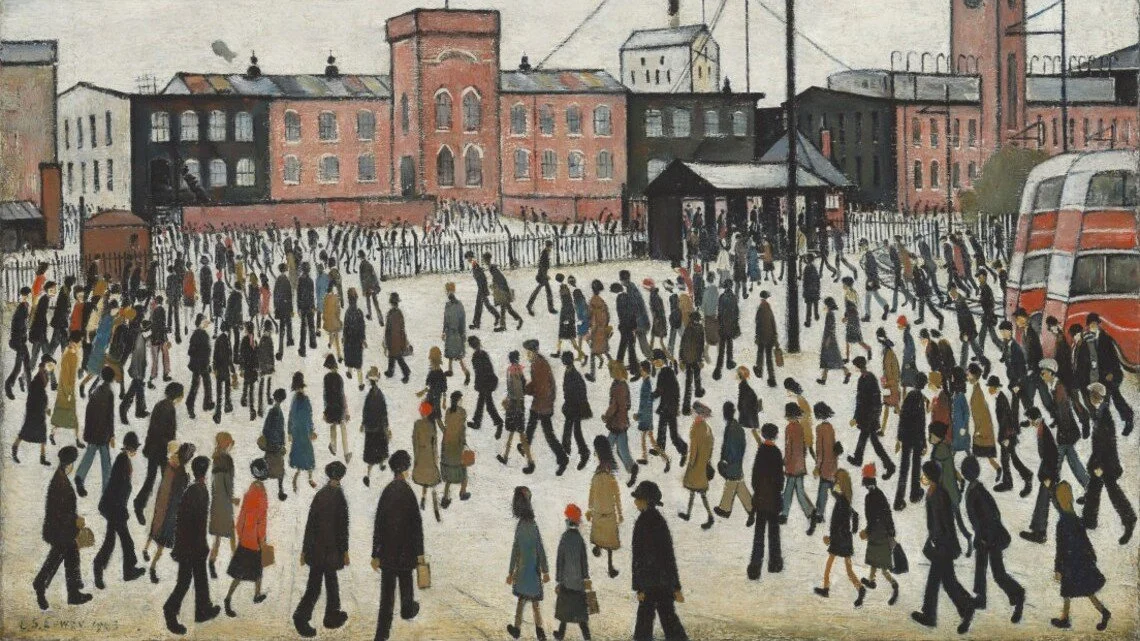
Thoughts on Work Part 4
Over the last 10 years, I’ve written several blog posts about my personal working experiences and my career, such as it was. I touched upon working specifically in IT and how that industry changed over time, both technically and in the way that other people perceived it. I have also given my thoughts on the social dynamics of the modern work environment and the way we interact with our colleagues and employers. That is another area that has changed dramatically. Naturally my retirement from full time work has been written about, as it is such a radical change in one’s life. Especially if you’re the sort of person who is clearly defined by their job, which I personally was not. This time, I want to share a few thoughts I have about what I miss about “going to work” and “having a job”. I’m not sure if “miss” is the right word. Perhaps it is more a question of things being absent. Either way, there are some aspects of being employed that I use to enjoy or at least found beneficial that I now no longer experience.
Over the last 10 years, I’ve written several blog posts about my personal working experiences and my career, such as it was. I touched upon working specifically in IT and how that industry changed over time, both technically and in the way that other people perceived it. I have also given my thoughts on the social dynamics of the modern work environment and the way we interact with our colleagues and employers. That is another area that has changed dramatically. Naturally my retirement from full time work has been written about, as it is such a radical change in one’s life. Especially if you’re the sort of person who is clearly defined by their job, which I personally was not. This time, I want to share a few thoughts I have about what I miss about “going to work” and “having a job”. I’m not sure if “miss” is the right word. Perhaps it is more a question of things being absent. Either way, there are some aspects of being employed that I use to enjoy or at least found beneficial that I now no longer experience.
Friends and colleagues
I read a recent poll about employment in the UK that showed that for a lot of people, the thing that makes a lot of jobs bearable, are the people we work with. That was totally the case for me. There were a few problematic managers during the course of my career and I have worked with my share of idiots but for most of the time, I was fortunate to spend 9 to 5 with a good bunch of people from all walks of life. There were a lot of laughs and often a lot of drinking. I remember the time we... Nope, upon reflection its best not to recount such anecdotes. Some of those friendships have endured. Others were of the time. However, I look back fondly on all of them. Friends and colleagues often made going to work fun, when the job itself had no other intrinsic value other than providing a pay cheque.
Sharing knowledge
During my working life, each job provided a network of professional colleagues, most of whom were more than happy to share knowledge and help each other out. All it took was a phone call and advice was freely given. No one asked for anything in return, although the implicit social contract was that this unofficial service was a quid pro quo. If you could return the favour at sometime in the future, then you did so. It was a very equitable and useful gentleman’s agreement to have. It’s something I miss greatly today and AI is not a perfect substitute.
Access to resources
When you work for a big company you often get direct and indirect access to resources. Or you did in my day. My IT qualifications such as MCSEs, CCNA, PRINCE2 accreditation and others were all paid for by my employers. Phones, laptops, software and sundry IT peripherals were also provided as part of the job. Then there was the stationery, the lunches and “expenses”. Old kit that was scheduled for disposal could also be “acquired”. The moment I went self-employed all these benefits stopped. Every new skill or project that I undertake nowadays comes with a cost that falls directly to me. Such is life.
A sense of achievement and pride in one’s work
I was at the dentist recently and there on the wall, in a corner, was a half sized patch panel cabinet. It was a total dog’s dinner and it took my mind completely off whatever the hygienists was doing (which was painful). All I could think of was that I’d have never have left a panel in such a state because all you’re doing is deferring a problem that you’ll eventually have to address. Also because personal pride would not allow me to do leave such a thing. A far as I’m concerned stuff like that reflects directly on the IT department. It doesn’t matter if other people don’t notice it, if that were my responsibility, I’d know it was still there and it would keep me awake. Yes. I curiously miss this aspect of work. I guess that’s why I’m currently fine tuning this blog. It’s my current equivalent of a messy patch panel.
For the sake of balance and to offset any sense of regret, which I unequivocally do not have, here are a few things about having a full time job that I don’t miss.
Commuting
I am not a good traveller. The idea of getting up at “stupid o’clock” and getting on a cramped commuter train in this current heat just fills me with dread. I always disliked commuting as I saw it as unpleasant, uncomfortable, dead time. I guess I still do. Hence I always tried to fill these journeys by doing something constructive, such as reading or watching a documentary on my laptop. I also remember having to get out of London by any means available during the 7th July 2005 terrorists attacks. That was a grim day that still crosses my mind whenever I go to London.
Idiots, bullies and lazy employees
Although I’ve often worked with nice, decent and regular people I have also encountered some unpleasant individuals during my career. No matter how thorough people think the interview process is with regard to finding new employees, idiots always seem to beat the system. There is nothing worse than the fool who has an unworkable plan and the ear of senior management. Unless it is the person who is quite capable of doing their job but for whatever reasons chooses not to. Someone you have to carry because they never answer emails or do their part of the project. Then there are those broken human beings who see work a means to persecute others. Who revel in humiliating subordinates and making them unhappy. The one’s that hated lockdown because there was no one to bully, apart from their own family. Those pitiful bastards are out of my life forever now.
The Treadmill effect
One of the reasons I moved from a permanent position to short term IT contracting and then to self-employment, was because of the treadmill effect. A short term IT project has a start and an end date. Once it’s done you move on. Some of the permanent jobs I’ve had at the start of my career have felt like an endless slog to nowhere. Especially when I worked for the DWP processing benefit claims. The process naturally never ended and it came with a substantial portion of human misery. An average jobs can’t all be perfect and is unlikely to be totally spiritually fulfilling but feeling that you’re making no progress what so ever is utterly demoralising.
Since leaving a work environment, a decade ago, I have kept in touch with various recruitment executives and naturally still have friends who are still working. I suspect that I experienced a vastly different work culture during the late eighties, nineties and the early two thousands, compared to what exists today. I suspect I wouldn’t thrive in the modern office environment, as I speak my mind too freely and have far too many rough edges for the likes of a modern HR department. I could go back to contracting if necessary but I suspect it just wouldn’t be as fun as it used to be and fun was a very important element in my working life. However, overall I count myself fortunate that my career followed the course that it did and took place at the time that it did. I have a lot of happy memories which I reflect upon whenever I miss the aspects of work that I’ve listed above.

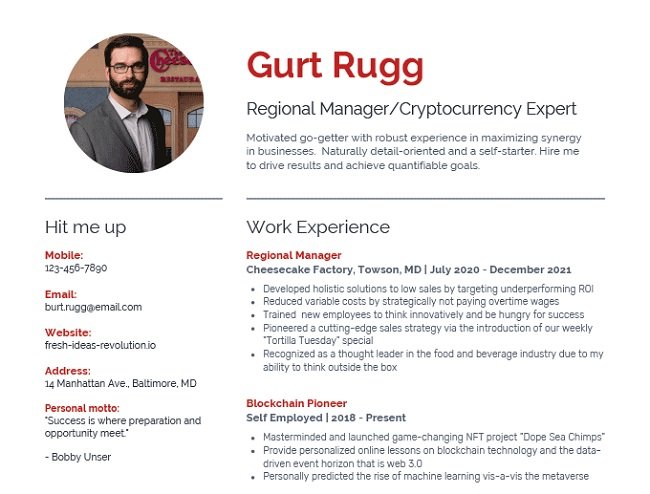




Retirement
My carer’s duties ended on April 7th 2022 when my Mother moved into a care home. I stopped claiming Carer’s Allowance (£69.70) from the Department of Work and Pensions and decided to take a few weeks to rest and consider what I was going to do next. Naturally, being 54 years of age, the most immediate consideration has been one of employment. We all need an income to survive. At present the State Pension Age in the UK for men is 67. This is when you will receive your State Pension, which is based upon your National Insurance Contributions that you have paid throughout your working life. That is 13 years away, hence why I’ve been considering returning to work. However, Mrs P took early retirement from the Civil Service seven years ago and raised the point that if I returned to full time work, we would no longer have so much time together. Although caring for my parents has been tough, it revolved around a schedule thus affording Mrs P and I windows of opportunity to do things.
My carer’s duties ended on April 7th 2022 when my Mother moved into a care home. I stopped claiming Carer’s Allowance (£69.70) from the Department of Work and Pensions and decided to take a few weeks to rest and consider what I was going to do next. Naturally, being 54 years of age, the most immediate consideration has been one of employment. We all need an income to survive. At present the State Pension Age in the UK for men is 67. This is when you will receive your State Pension, which is based upon your National Insurance Contributions that you have paid throughout your working life. That is 13 years away, hence why I’ve been considering returning to work. However, Mrs P took early retirement from the Civil Service seven years ago and raised the point that if I returned to full time work, we would no longer have so much time together. Although caring for my parents has been tough, it revolved around a schedule thus affording Mrs P and I windows of opportunity to do things.
With this in mind, I decided to investigate whether part time work is more viable? IT support and management, project management and short term IT contracts tend not to have part time options, so I decided to check out local work of a more general nature. I investigated vacancies in local government and small business. I then spoke to the staff at my local supermarket and newsagents to see what employment was available. The results were very interesting. If I want to return to most fields of IT it is not too difficult. Short term contracts such as a hardware rollout in a hospital or across a series of offices are paying good money for experienced staff, now that so much migrant labour is not available. But taking such work would mean spending extended periods of time away from home, which is not something I desire. The alternative would be to take a position such as an IT Manager for a small business, possibly in Central London. But that raises the spectre of commuting and again is more than likely to be a full time position.
Therefore, I decided to look more into local, part time work as this would theoretically suit my needs. I want to have at least two days a week available for me and Mrs P to spend time together. Financially speaking, the part time job would only have to pay a specific figure that I’ve worked out that I need to get by. However, the more people I spoke to, the more I discovered that is not how things work. Many do not get to work the hours that they want and tend to have little say when they do work. The pay is low, the workload excessive and the general environment pressurised and uncaring. One young man I regularly spoke to at my local supermarket said it was like being on a treadmill and akin to being a prisoner. There was little or no respite from the daily slog and he felt like an asset that was just there to be used when his employers found it convenient. This gave me pause for thought. Why would I want to do such work? Why would anyone want to do it other than out of necessity?
I have had good jobs in the past that I have earned through my skills and experience. I have undertaken them well because that’s what I feel is the foundation of the contract between myself and my employer. It is a civil and polite quid pro quo. But I have never seen my work as defining me in any way. I have worked in the past because I have to, not because I believe in “work setting you free”. There is pride in a job well done but I’m not doing it for a pat on the back. I expect market rates as well as competitive terms and conditions. Everyone should. Sadly, this doesn’t seem to be the default position of many employers these days. They want as much as they can get out of you and for as little as they can get away with paying. Plus work culture is rife with so much bullshit these days. Awareness courses, personal development, the pursuit of the company vision. And let us not forget the psychopaths, sociopath, bullies and the sexual predators that still seem to get through the interview process and climb the greasy pole. Fuck all that.
“ I’ve looked at the numbers and to use a technical term, you have fuck all money”
So having researched the state of the UK job market, I concluded that it either didn’t align with the lifestyle I was aspiring to or it was effectively a form of self torture that didn’t warrant the rewards it yielded. I then decided to consider alternative options so I spoke with a financial advisor. I subsequently discovered that due to change in the UK financial regulations, I could access my own private pension in December this year when I become 55. From 1997 to 2016 I paid money into my own independent pension fund. The amounts were not always consistent and in the last few years of that 19 year period the payments were somewhat erratic due to me mainly doing short term contract work. However, I could access this money and contrary to my belief, it wasn’t as small an amount as I thought. This combined with other assets such as savings, meant I was in a stronger position. The financial advisor said “you can not work if you don’t want to. You’ll be able to get by”.
Retirement is just like this…
As you can tell by the title of this post, it’s not too hard to figure out what option I’ve taken. My Father worked hard throughout his life but he also extolled the value of leisure time. Like many people, the last few years have really made me and Mrs P rethink what we want out of the remainder of our lives. We’d prefer to get by and have time to enjoy ourselves rather than run ourselves into the ground chasing a few extra pounds. I guess this makes me an anathema to the likes of Dominic Raab, Liz Truss and the other authors of Britannia Unchained. But why should I kill myself making someone else rich, especially a socioeconomic group I despise. I am 54 and possibly have 20 good years left if my family’s medical history is anything to go by. I am going to live life on my terms. Therefore I am now retired and will remain so unless my finances or personal situation forces me to do otherwise. I hope that you can do something similar. Remember, you’re a long time dead.





















Thoughts on Work Part 3
As my caring commitments are now over, I find myself in the “interesting” position of being 54 years old and potentially returning to the job market. I use the phrase “potentially” because I am fortunate enough to have a financial safety net in place, so it is not as if I have to find gainful employment immediately. So there is no pressing requirement for me to claim Universal Credit and find work via the UK social security system, which is most fortunate. The DWP has a policy of actively pressuring benefit claimants into accepting any kind of work, irrespective of skills, after a few weeks as part of a policy of trying to keep the employment number low. I have no intention of going down that route and so will look for work in my own way and on my own terms.
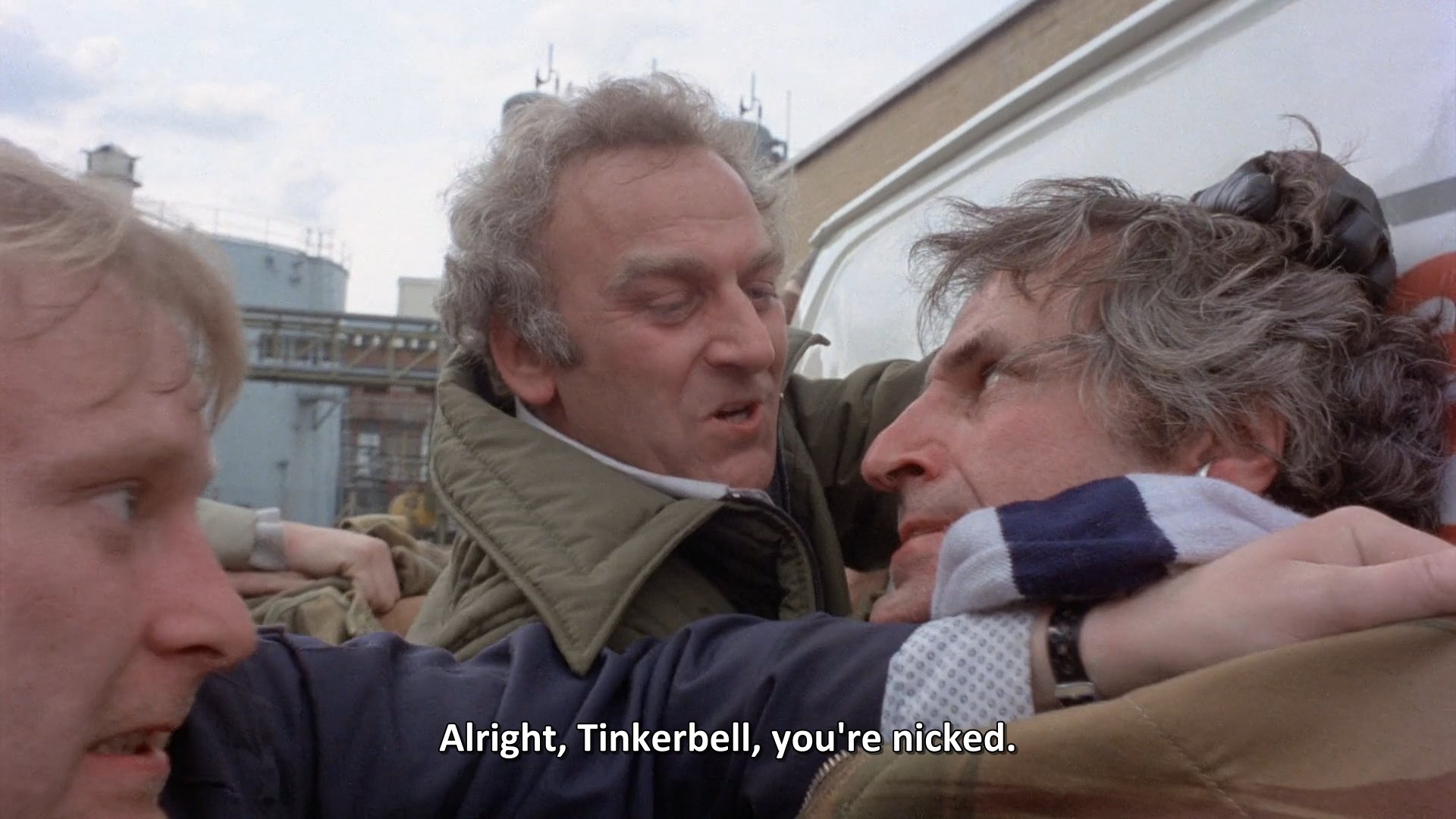
A spoof résumé, or is it?
As my caring commitments are now over, I find myself in the “interesting” position of being 54 years old and potentially returning to the job market. I use the phrase “potentially” because I am fortunate enough to have a financial safety net in place, so it is not as if I have to find gainful employment immediately. So there is no pressing requirement for me to claim Universal Credit and find work via the UK social security system, which is most fortunate. The DWP has a policy of actively pressuring benefit claimants into accepting any kind of work, irrespective of skills, after a few weeks as part of a policy of trying to keep the employment number low. I have no intention of going down that route and so will look for work in my own way and on my own terms.
Over the years, my attitude towards the entire concept of work has evolved. At my age I am certainly not concerned about a career, nor am I especially concerned about how others perceive my relationship with work. Work is a quid pro quo although lots of employers seem to have forgotten this. I provide skills to undertake a pre-agreed set of tasks and get financial remuneration in return. Anything outside of that is bullshit. Simply put, I am not defined by work or anything like that. It is a means to an end. Nor do I find myself at a loose end without it. I can happily fill my days with activities and occupy myself. However, I cannot officially retire just yet for financial reasons. Hence I need a source of revenue. But it doesn’t need to be a fortune and therefore there are a lot more options available as to how I can earn it.
Spookily enough they had no vacancies for “head of secret police” or “ninjas”
So with all that in mind, I’ve created three new CVs (curriculum vitae/résumé). One with respect to my IT project experience, tailored to contract work. Another has been weighted towards general administrative experience (my time as a civil servant) and the last focuses upon my writing and podcast skills. I have registered with several job websites and have already started looking at what is out there. This has been most illuminating but not necessarily in a good way. I noticed that some job vacancies do not give any information about the salary. Apparently this is common practice in the US and some European countries. Needless to say I will have no truck with it. I am not going to apply for a position, attend an interview and invest valuable time and effort, only to find out that the pay is inadequate. The tail does not wag the dog.
At present I have a three tier plan with regard to employment. Plan A is focused around writing and podcasting. Can I monetise Contains Moderate Peril or can I write for someone else and get paid for it? Possibly. I’m also thinking about some new writing projects and websites that may lend themselves more to monetisation. I may also try to return to technical writing as I did this back in 2015. Plan B is a return to IT contracting. Oddly enough I received a phone call from a recruitment executive recently who still had my details. They reckoned I still had the necessary skills needed to find work, despite being out of the “game” for 6 years. And if the shit hits the fan, then there’s Plan C. This is the last resort where I take any job that covers my expenses. It is not a prospect I relish, working minimum wage for some 27 year old sociopath.
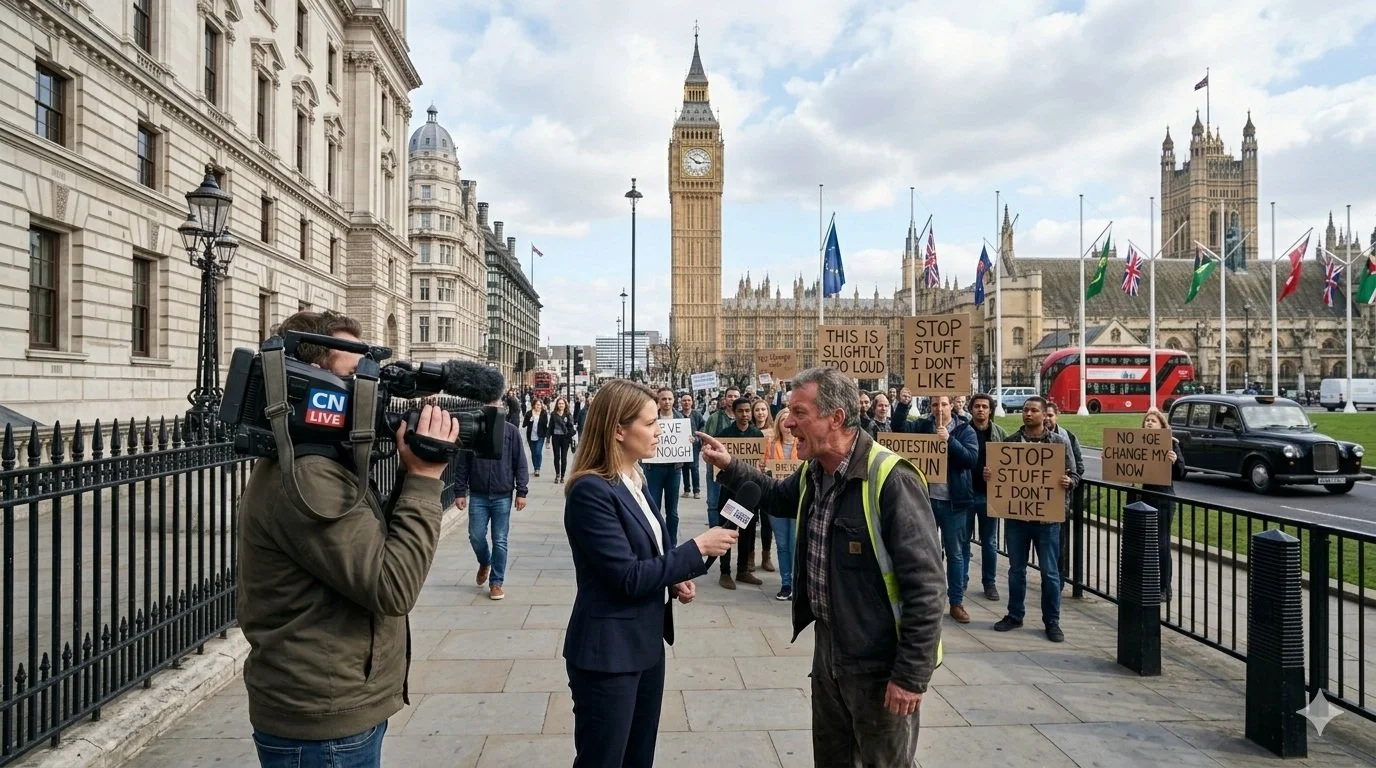
The office twat
I appreciate that my perspective on employment is not something that everyone has the luxury of sharing. Many people do not have savings to give them a degree of independence while they look for work. Your skills and abilities also determine how much say you have in looking for work as well as the kind of work you undertake. Certain jobs simply do not get the respect and recognition they deserve. We briefly paid lip service to this during the pandemic but it soon evaporated once the status quo resumed. At present the job market is weighted in favour of the employer rather than the employee and this does not make for good pay or terms and conditions. The increasing cost of living also means that many jobs no longer provide the financial security that they once may have done. Overall, it’s not the best time to be looking for work. However, regardless of the results, I’m sure the search itself will make a good blog post.
Job Hierarchies and Thoughts on Employment
I appreciate that this is a somewhat ponderous blog title but I’m trying to consolidate several ideas and streams of thoughts into one post. So to begin with it is the third week of the Blaugust 2021 Festival of Blogging event. Specifically it’s “Developer Appreciation Week”. At first glance a laudable undertaking. An opportunity to praise the developers of a game that’s close to your heart. However, given the current debacle with Blizzard Entertainment, I think there’s a conversation to be had about how fans virtual deification of specific developers of World of Warcraft and how treating them like rock stars, may well have had some bearing on their subsequent misdemeanours. I would in fact go further and say that the video game industry is another sector of work, like film, TV, music and sport that is perceived to be glamorous, aspirational and generally put on a pedestal. Fans lose sight of the fact that these companies have a lot of staff who don’t get any kudos and endure tough working conditions. Just like more conventional jobs.
I appreciate that this is a somewhat ponderous blog title but I’m trying to consolidate several ideas and streams of thoughts into one post. So to begin with it is the third week of the Blaugust 2021 Festival of Blogging event. Specifically it’s “Developer Appreciation Week”. At first glance a laudable undertaking. An opportunity to praise the developers of a game that’s close to your heart. However, given the current debacle with Blizzard Entertainment, I think there’s a conversation to be had about how fans virtual deification of specific developers of World of Warcraft and how treating them like rock stars, may well have had some bearing on their subsequent misdemeanours. I would in fact go further and say that the video game industry is another sector of work, like film, TV, music and sport that is perceived to be glamorous, aspirational and generally put on a pedestal. Fans lose sight of the fact that these companies have a lot of staff who don’t get any kudos and endure tough working conditions. Just like more conventional jobs.
There has always been a hierarchy of jobs in the public consciousness, although logically all forms of employment are essentially the same in principle. People providing a service in return for money. But life doesn’t exclusively operate within logical parameters. Hence vocational and professional jobs come with a lot of cultural baggage. Rightly or wrongly, the moment you declare to someone what you do for a living, they will instantly make assumptions and judgments about you. Often these will be erroneous or spurious but this sadly is the prevailing trend. Cleaners, carers, shop workers all do essential and invaluable work (as 2020 clearly highlighted). Yet such work is often frowned upon by certain parts of the population. Despite the fact that many who work in such sectors do so out of necessity and may well be overqualified. In fact there are stereotypes associated with jobs of all spectrum. Academia, working in the law and banking being seen as the prerogative of the rich. Estate agency (real estate) being seen as “barrow boys” and chancers. Oh and IT is exclusively populated by the socially dysfunctional.
During the course of my lifetime, the job market has evolved and changed rapidly. Applying for jobs in the eighties was a very formal process. Hand written applications and questionnaires were used to filter candidates, prior to interview by panel. Vacancies were predominantly advertised in newspapers, recruitment agencies or the government run “Job Centres”. Qualifications gated many positions, even for the most entry level administrative roles. When I started working for the DWP in 1990 on the first rung of the ladder, you still needed to have 3 GCE “O” level exams with passing grades. Nowadays, the job market is far more fast paced and like so many things, now predominantly handled online. Having a customisable curriculum vitae (or resume), that can be tailored to specific applications is essential. Sadly, the new job market has little room for feedback. Most applications never garner any sort of response. Keyword searches eliminate those who are not relevant and such automated services do not generate a polite “sorry you weren’t successful” letter.
However, these major changes to the overall employment landscape has led to an increasing amount of job homogenisation. Especially here in the UK where traditional industries have been replaced with service ones. Hence we have seen an increase in employment dissatisfaction and the rise of so-called “bullshit jobs”. I am currently reading a book on the subject by American anthropologist David Graeber. He contends that “over half of societal work is pointless and becomes psychologically destructive when paired with a work ethic that associates work with self-worth”. Graeber describes five types of meaningless jobs, in which workers pretend their role is not as pointless or harmful as they know it to be: flunkies, goons, duct tapers, box tickers, and taskmasters. He argues that the association of labour with virtuous suffering is recent in human history, and proposes universal basic income as a potential solution. I certainly wouldn’t argue against these things having had such positions in my career.
Hence we return to the jobs that are perceived as aspirational or a means to bypass the rat race, or at the very least, manage it on your own terms. Many young people look to social media as a means of escaping the fate of their parents. Because the social contract that has existed in most western societies in the post World War II era has been proven false. If you study, work hard and live within your means you’ll be able to raise a family, afford a home and the state will assist you in your autumn years. Young people know first hand that this is a lie. Many modern jobs have no formal working hours, no employee protection or rights and pay insufficient to keep an individual, let alone a family. Bullshit jobs are rife and work is a treadmill. Which is why the allure of being an “influencer” is so strong. And why a rock star game developer who gets to write really cool games and hangout at conventions and trade shows is infinitely preferable to toiling in a call centre and having to ask your 30 year old, sociopath boss if you can go to the bathroom.
There’s a good chance that I may have to return to the workplace when my caring duties end. Let it suffice to say that such a prospect does not fill me with glee. It is highly unlikely that I will seamlessly resume a career in IT and at comparable rates to what I was earning in 2016. Although the law is supposed to prevent discrimination, I’m certain my age will work against me as will no doubt my health. Furthermore, I’m not sure if my personality is cut out for the modern workplace which has become a much more complicated socio-political environment. Hence working from home and the gig economy is an obvious solution, although many creative forms of work have been devalued by internet culture. Writing for money is certainly not an immediate path to fortune and glory. People expect “all that” for free nowadays.
Therefore, if you are one of the minority of people who are actively employed in a job you actually enjoy, then count yourself very fortunate. The rest of society either just tolerates their employment and employer or actively hates them. Condemned to carry out arbitrary and pointless tasks, for people who just see them as an asset or a resource. The modern day workplace is often an endless grind and in some examples a form of indentured slavery. Oh and with regard to Blaugust, rather than thinking about those high profile game developers, who love to preen themselves on stage at E3, spare a thought for all the other staff that do the nuts and bolts work and never get a name check. It would appear they get put upon, ripped off and abused, just as much as the guy who delivers your pizza or the lady who works the checkout at your local store.
Thoughts on Work Part 2
In a previous post I wrote about my own personal employment history and the various ups and downs of my working life (so far). In this post I want to reflect upon the broader concept of work, because it has radically changed since I entered the job market in the late eighties. Contracts, job descriptions, the working environment and even the way in which we find work have evolved rapidly due to the internet and the advent of social media. Some of these changes have been good, but others I feel have been detrimental for job seekers. The job market is always subject to a lot of ebb and flow and depending on the state of the economy, it can either favour of the employer or employee. At present in the UK, it strikes me as being very much the former.
The joys of commuting to work
In a previous post I wrote about my own personal employment history and the various ups and downs of my working life (so far). In this post I want to reflect upon the broader concept of work, because it has radically changed since I entered the job market in the late eighties. Contracts, job descriptions, the working environment and even the way in which we find work have evolved rapidly due to the internet and the advent of social media. Some of these changes have been good, but others I feel have been detrimental for job seekers. The job market is always subject to a lot of ebb and flow and depending on the state of the economy, it can either favour of the employer or employee. At present in the UK, it strikes me as being very much the former.
When I left full time education at the age of eighteen (I didn’t want to go to university as I had no clear career plan), the commonest means to find work were the classified ads of certain regional newspapers. Applications where usually made in writing or you’d request an application form by return of post. You could also visit your local Job Centre (which are part of the Department of Work and Pensions), which not only handled social security benefits but also listed local jobs. However, most of the work advertised at the time, tended to be unskilled labour and traditional “blue collar” positions. However, regardless of how you looked for work, the process was slow and ponderous. Positions were advertised for a fixed period of time and selections for interview often ran to a strict timetable. As I had no specific idea of what I wanted to do, I ended up in a government position, working in the UK Civil Service.
Also known as the “dole office”, “the zoo” and “the social”
During the last major financial crash back in 2008-2009, I found finding contract work a little harder due to the market slowing, so I visited the Job Centre a few times. Twenty years on, the sort of positions available there had changed considerably so it was quite useful to peruse their listings. I spoke to several people during that time who had lost their jobs and it was quite a culture shock to be back in the jobs market. Many had not adjusted to the necessity with registering with online recruitment agencies and learning when the key times were to search and apply for work. Many were still carrying paper copies of their Curriculum vitae (résumé) and trying to find jobs via the press. It was a steep learning curve for them. Many job markets now have preferred ways of presenting your skills and work history. Plus the modern job markets requires applicant to be able to effectively sell themselves. Employers don’t just want the right skills but the right type of person. Some people just can’t handle the “you are your own brand” concept.
Moving on from how one finds work, I would like to reflect upon the actual work environment itself, because when you step back and look at it objectively, it really is an incongruous concept. At its heart it is founded upon the hope and belief that a complete group of strangers are expected to get on. Furthermore, this goes beyond being able to work co-cooperatively. There is usually an expectation of some sort of wider cordial relationship. Hence, we find that birthdays, marriages and other social activities are dragged into the workplace. There are cards to sign, collections to contribute to and drinks after work to go to. The other thing that has struck me, is how despite robust recruitment processes, how so many obviously socially and emotionally dysfunctional people fly under the radar and find gainful employment. Bullies, racists, misogynists, tedious bores and people who are just lazy or shit at their job abound. Over the course of my 30-year working life, I’ve seen so many square pegs in round holes. Considering the friction and drama that arises so often within the work environment, I am genuinely surprised that there isn’t a higher murder rate stemming from work.
“No, I won’t be signing Kendra’s leaving card and if you ask me again, I’ll cut you…”
Another thing that has changed about work culture, is that it is no longer just about being skilled at what you do. Now everyone is trying to be the best they can be, working towards a personal development plan, striving for targets and reaching for goals. This sort of corporate bullshit may be applicable to highfliers and certain types of jobs. But is it relevant to cleaners? Should someone on minimum wage, working a zero hours contract worry about whether they’re bringing value to their work, or upholding the company mission statement while mopping up faecal matter? But where corporate attitudes towards work have changed, so has that of employees and wider society. People of my parent’s generation where sold the myth that if you work hard, you’d be rewarded. Although this can still happen, for many it is no longer true. Too many people have got wise to the fact that they’re doing a pointless or arbitrary job, with no major hopes of advancement. They are neither respected nor valued by their employer, who mainly sees them as an asset. A tool to be used and then put down immediately when it’s no longer required. Social media has shown how the other half lives and popped a lot of bubbles. People now know that their life is pretty much pre-ordained by factors such as where you are born, the quality of your education and the social economic group you belong to. Therefore the modern workplace can be fractious and jobs are sometimes not done well, because why bother?
Co’s this is what cleaning is really like
Despite growing up in the seventies, I do not believe that I am defined by my job (which I perceive to be a very American outlook). I have learnt the true value of leisure time and over the years have worked mainly for my own intellectual stimulation and just for the money. But many people don’t have that luxury. They do the jobs that are available, rather than what they desire and have little say over the salaries they earn. Furthermore, I suspect that this situation will only get worse. AI and globalism will further continue to reshape the employment market. There will be less jobs and those available will require more skills. Governments will need to have plans to address such a state of affairs or there will be consequences. As for me. I sometimes miss the social aspects of work but only because I was very fortunate with most of my colleagues. But commuting and listening to friend’s stories about what goes down where they work, soon makes me appreciate that I’m well out of all this. When my granddaughters get older, I shall try and impress upon them that need to gain skills. As I believe this is the key to successfully navigating the jobs market and ensuring that your working life is something you control, rather than something that happens to you.
Thoughts on Work Part 1
During the course of my career (1986 – 2016) I have worked in numerous complex social environments. I worked for the UK civil Service and saw the final days of very traditional, formal employment hierarchy. There were people with academic titles such as Doctor or Professor and there were also those with honorary monikers such as Sir. I even met an ex-army officer who clung to the old school etiquette of still being referred to by his former military rank (which was Captain). I was later employed at the London corporate headquarters of a global Indian company. It was fascinating to see the cultural differences along with the class structure and prevailing social dynamics. Over 30 years, I’ve worked for numerous high-profile organisations such as HP, Fujitsu Siemens and Symbian as well as other smaller businesses. All provided gainful employment, acceptable financial remuneration and an opportunity to learn more. However, all of them suffered from two of the most common faults found in contemporary employment; namely office politics and problematic members of staff.
During the course of my career (1986 – 2016) I have worked in numerous complex social environments. I worked for the UK civil Service and saw the final days of very traditional, formal employment hierarchy. There were people with academic titles such as Doctor or Professor and there were also those with honorary monikers such as Sir. I even met an ex-army officer who clung to the old school etiquette of still being referred to by his former military rank (which was Captain). I was later employed at the London corporate headquarters of a global Indian company. It was fascinating to see the cultural differences along with the class structure and prevailing social dynamics. Over 30 years, I’ve worked for numerous high-profile organisations such as HP, Fujitsu Siemens and Symbian as well as other smaller businesses. All provided gainful employment, acceptable financial remuneration and an opportunity to learn more. However, all of them suffered from two of the most common faults found in contemporary employment; namely office politics and problematic members of staff.
When I first started working, I embraced the reality of being the most junior member of staff. That’s not to say I liked it, because I didn’t. But you don’t just turn up to a job at the age of 18 and expect to know everything and go straight to the top of the pay scale. So, I listened, learnt and did what I was contracted to do. But it quickly became apparent that like everything else in life, the work environment was not a level playing field and did not function on logic or even merit. Being competent and reliable was not enough. If you wanted to get ahead it often came down to who you knew, favours owed or cashed in and whether your face fitted. I won’t go on but I’m sure that anyone who has the merest inkling as to what I’m like as a person will know that none of this sat well with me. The old boy network, office politics, dealing with the management bully is all bullshit as far as I’m concerned. I went to work to do my job and do it to the best of my ability. I’d also be civil and diplomatic, not always through choice, but because it made the process more efficient. But this not the way work is by default. All jobs end up employing a percentage of those who cannot or will not do what their contracted to do. And certain types of jobs and position attract the emotionally and socially dysfunctional.
Over the course of my working life, for every three pleasant and agreeable work colleagues, I’d always find another who was either a bully, institutionally racist (or some other kind of irrational prejudice), incompetent or basically just a shit who wanted to make those that they could, utterly miserable. As I’m not a big fan of monolithic hierarchies and chains of command, I looked to see if I could find a means by which I could insulate myself from the iniquities of the modern work place. I ultimately resolved these issues by changing disciplines, electing to move from admin and management, to working in IT. Furthermore, I did this at a time when there was a rapid growth in technology in the workplace. Because I enjoyed this line of work and thrived in it, I progressed from old school, hands on, first line support to IT management and all that came with it. Procurement, change management, network planning, security and recruiting staff for the IT department. The latter was a key element to job satisfaction. I’ve always been happy to be a team player. But it’s much better when you get to pick the team yourself and ensure that those you work with are reliable and sound.
For a while I held several fulltime positions, ran modest sized departments and had the pleasure of focusing on my work, enjoying the intellectual challenge that it offered and kept myself out of the fray that is office politics. In the late nineties there was still an element of uncertainty regarding technology and where it fitted in the hierarchy of the office structure. Were those in IT just jumped up “oily rags” or were we skilled professionals? Most of the companies I worked for erred on the side of caution and favoured the latter. Essentially, as long as the network was running and the technology worked, I found that I was left to my own devices and senior management contented itself with sniping at sales, who would then blame marketing or some such similar permutation. But after the Y2K debacle, the pendulum shifted, and people started wondering if we were not only “oily rags” but con artists as well.
In 2006 I decided to move into contract work as I’d had enough of corporate culture. Pursuing short term, targeted work was not only financially more lucrative it negated a lot of the social and competency issues among work colleagues, or so I thought. Turns out that even on short term contracts you’d find an engineer who seemed to have slipped through the screening process and was useless or problematic in some way. However, what I did find in this work environment was that if a problem was identified, it was dealt with quickly. If someone wasn’t pulling their weight and it got noticed, then a phone call to the agency that supplied them usually remedied the situation. Overall, I enjoyed working in this fashion. If a contract wasn’t especially engaging, I had the piece of mind to know that it wasn’t forever. Broadly most of the work I undertook was enjoyable. I worked on several major system upgrades and new software rollouts for various government departments. However I found working in hospitals the most satisfactory. Helping out the staff in A&E was especially rewarding.
In early 2011, I decided to draw upon my network of colleagues that I’d built up over the years and set up my own consultancy business. The idea was to provide a one stop solutions service to the myriad of small and start-up businesses in The City. I would handle the work that fell within my purview and I had associates who would cover more bespoke requirements. Broadly, it worked. It didn’t make me rich but it was a living and from a work perspective, it was on terms that I felt were equitable. And I believe that’s the most that many of us can expect from our “careers”. Some folk do get to do their dream job and thrive in it. But for many of us, work is a necessary evil and one we try to accommodate as well as we can. It often feels like battle of wills between our own needs and that of the employers. Occasionally you may find yourself in a situation were both parties are in accord but that seldom is the default state. Having now left formal employment to be a carer, I’m often asked if I miss traditional work. I sometime hanker after the intellectual challenge and the satisfaction of problem solving. Also the human element from time to time. But I don’t miss the politics or the “drama” that goes hand in hand with the contemporary work place. That is something I’m pleased to be rid off.
Working in IT
Working in IT is an extremely broad job description that encompasses multiple subsets and disciplines. Each specific field has its own skills and academic hierarchies. You may well be an experienced Network Administrator but that doesn’t make you equally as knowledgeable with regard to Database Development and vice versa. Saying that you work in IT is pretty much the same as saying that you work in healthcare. You could be working in procurement or be a Cardiothoracic Surgeon. However none of this is of any concern to those who work outside of IT. If you get collared by someone at a social event and tell them you work in IT, it’s only a matter of time before you get asked “I’m thinking of buying a new laptop, which one is best?” or something similar. I always tell them that Purple ones have the most RAM.
Don't mess with my patching
Working in IT is an extremely broad job description that encompasses multiple subsets and disciplines. Each specific field has its own skills and academic hierarchies. You may well be an experienced Network Administrator but that doesn’t make you equally as knowledgeable with regard to Database Development and vice versa. Saying that you work in IT is pretty much the same as saying that you work in healthcare. You could be working in procurement or be a Cardiothoracic Surgeon. However none of this is of any concern to those who work outside of IT. If you get collared by someone at a social event and tell them you work in IT, it’s only a matter of time before you get asked “I’m thinking of buying a new laptop, which one is best?” or something similar. I always tell them that Purple ones have the most RAM.
I won’t ramble on about how I got into IT as a career, as it’s not particularly interesting. I will say that having an aptitude for technology has helped as well as being in the right place at the right time. I was working for a major UK government department at a time when it was undergoing a major systems upgrade. I volunteered for a new position and was trained by seasoned third party contractors. Although I have some formal qualifications most of my knowledge is from hands on experience. After twenty years I now find myself self-employed, running a niche market consultancy offering superfluous and overpriced solutions for clients with more money than sense. It’s not the best job in the world, nor is it the worse. For me my real passions now lie elsewhere and work is mainly a means to an ends, although I recognise that I have far more favourable working conditions than many. Not many careers allow you to work in your underwear.
Of course this is a typical home office...
Something that I’ve found interesting since I’ve been writing online and podcasting is the amount of friends and colleagues from the Bloggersphere that also work in IT. Perhaps their technical aptitude means that social media and other online activities are not so daunting. My Father who is an old school mechanical engineer considers IT to be this generation’s equivalent field. It’s a skilled profession with many new and evolving disciplines. It also has clear career paths and progressions, making it stable work for those buying a home or raising a family (other money pits are available). However not every job in the IT industry is safe bet. There is a great deal of short term contracts and market rates rise and fall, based on supply and demand.
There is also the perception that IT is a very academic and studious industry to work in. This can be true but a great deal can also be learned simply by “monkey see, monkey do”. And while we’re on the subject of perceptions working with technology still has the whole geek and nerd stereotype associated with it. The funny thing is the vast majority of my IT colleagues are very social creatures who are often far more emotionally literate than many of our peers in other industries. However something that has changed in the last decade and a half is the perceived standing of information technology. Up until 2000 I felt that many considered IT to be a field very much akin to alchemy, because it was alien to so many people. Now because technology is so pervasive in our lives IT literacy is much higher. As result I find that I am no longer regarded as a Wizard but just an overpriced Photocopier repair guy (no disrespect intended ).
Only 25% of IT professionals are women
IT is still very much a male dominated industry. My own personal experience reflects this as I have only worked with six female colleagues over a twenty year career. Considering that there is no gender imbalance with regard to the use of technology it is sad to see such a disparity within the industry itself. To say that the IT sector is institutionally sexist would be too broad a generalisation. However I have regularly encountered individuals with prejudicial views often at an age group commensurate to my own. There still seems to be an assumption both within IT and from its external customer that when someone arrives from the technical department, regardless of their level it will always be a man; hence phrases such as “call the tech support guy”. From my perspective ignoring the skills and talents of 50% of the workforce is illogical, so I support in principle any endeavour to redress this imbalance within the industry.
Although IT is a multi-faceted industry perhaps the area we are all most familiar with is tech support, because pretty much most businesses have IT infrastructure and services that need maintaining these days. First line support is one of the commonest entry points in to the industry and many IT professionals will have at one point in their career cut their teeth providing customer support or manning a help desk. Like any job that involves dealing with the public, it can be challenging. This is exacerbated in IT by the gulf in knowledge between vendor and client as well as unrealistic user expectations. The person you speak to on the phone does not know the answer to everything. If they did they wouldn’t be answering the phone.
"Have you tried fucking off and dying?"
Anyone who’s worked in tech support will have a wealth of amusing anecdotes and horror stories regarding the “users”. Most office staff will have similar vignettes about the IT support department. It is a strange symbiotic relationship. Most of those that have worked in first line support do not look back upon it fondly. It’s a rite of passage that has to be undertaken to reach the next stage of your career. To this day I do everything in my power to minimise my personal interaction with the customer. However it is far harder to escape the technical needs of ones friends and families or that neighbour who has a PC that’s still running Windows ME. If you want to avoid such situations you either need to lie to everyone you meet about your line of work of become an orphan.
I once went to a social event after a long day at work, only to find myself saddled with insufferable dullard who was out for some free advice. His simple enquiry turned out to be a crass attempt at an hour’s free consultancy. After five minutes or so I interrupted his stream of questions and asked what his preferred method of payment was? Before he could answer I pointed out what my hourly rate was and that I had a credit card reader in my bag. The conversation very rapidly turned to his new patio which proved to be as equally dull. However to counter this particular story I would like to offer another. I worked for nearly two years at St. Georges Hospital in South West London. Undertaking the most arbitrary support tasks within the A&E department, such a fixing a printer or a PC on reception were always met with genuine gratitude. I was told by front-line staff that removing such hassles made their life demonstrably less difficult. I got immense satisfaction from this.
"Congratulations. You've just bought a cloud-based enterprise solution and I'm retiring to the Cayman Islands."
So there you have it; a few random thoughts about working in IT. It’s not something I deliberately set out to do, yet all things considered it has served me very well over the years. As a result I’ve worked for some very diverse employers and seen some very interesting aspects of life I may not have done so under other circumstances. Furthermore it has been intellectually challenging and a source of self-improvement, as there’s always something new to learn in this field. As someone who doesn’t care for office politics and social hierarchies too much, IT has also been a means of bypassing a lot of work place drama. The person at the top of a company and the most junior member of staff both rely on technology and I have always endeavoured to treat them equally. IT has afforded me a great deal of freedom outside of standard business rules and etiquette. Plus in what other industry can you walk around with a network cable or a circuit board and people just assume that you’re really busy?
Over the last 10 years, I’ve written several blog posts about my personal working experiences and my career, such as it was. I touched upon working specifically in IT and how that industry changed over time, both technically and in the way that other people perceived it. I have also given my thoughts on the social dynamics of the modern work environment and the way we interact with our colleagues and employers. That is another area that has changed dramatically. Naturally my retirement from full time work has been written about, as it is such a radical change in one’s life. Especially if you’re the sort of person who is clearly defined by their job, which I personally was not. This time, I want to share a few thoughts I have about what I miss about “going to work” and “having a job”. I’m not sure if “miss” is the right word. Perhaps it is more a question of things being absent. Either way, there are some aspects of being employed that I use to enjoy or at least found beneficial that I now no longer experience.