
More Podcast and You Tube Recommendations
As part of the Blaugust Festival of Blogging, I thought I’d take the time to promote some of the content creators whose work I enjoy. Despite all the white noise, click bait and snake oil salesmen, there is still a wealth of good material to be found online, be it blogs, podcasts, You Tube channels or streamers. Most of what I currently enjoy, I discovered through word of mouth. I feel more disposed towards trusting the views and opinions of friends than I do of “recommendations” made by Google and You Tube, driven by their “questionable” algorithms. These are often determined by key words and have no ability to ascertain quality. So here are a mixture of You Tube channels, podcasts and blogs that I wholeheartedly recommend. Between them they cover such subjects as movies, gaming, comedy and history. Feel free to leave comments about my choices and share your own recommendations.
As part of the Blaugust Festival of Blogging, I thought I’d take the time to promote some of the content creators whose work I enjoy. Despite all the white noise, click bait and snake oil salesmen, there is still a wealth of good material to be found online, be it blogs, podcasts, You Tube channels or streamers. Most of what I currently enjoy, I discovered through word of mouth. I feel more disposed towards trusting the views and opinions of friends than I do of “recommendations” made by Google and You Tube, driven by their “questionable” algorithms. These are often determined by key words and have no ability to ascertain quality. So here are a mixture of You Tube channels, podcasts and blogs that I wholeheartedly recommend. Between them they cover such subjects as movies, gaming, comedy and history. Feel free to leave comments about my choices and share your own recommendations.
Dark Corners Reviews. If you have a liking for cult, obscure and trash cinema, then Dark Corners Reviews can provide in-depth commentary upon such content. Presented by writer Robin Bailes, films such as The Clones of Bruce Lee, Trog and Warriors of the Apocalypse are dissected in a droll and knowledgeable fashion. Robin also provides some very detailed retrospectives on classic horror movie franchises such as Universal Horror movies of the thirties and Hammer Studios Frankenstein series. These are extremely well researched and offer intelligent genre analysis along with clear love and affection. Dark Corners Reviews has been running for over five years so there is a wealth of content available on the channel. It is also interesting to see Robin refine his style and technique over time.
Extra Credits. Created by Daniel Floyd and James Portnow in 2008, Extra Credits was initially a You Tube channel about video games studies. However over the years it has broadened its scope and now offers regular content analysing Science Fiction, History and Mythology. Each subject is presented as an animated video with casual but extremely informative narration. It’s a great way to come to grips with weighty subjects such as the history of the Irish Potato Famine or Greek Myths. The games study videos are all written by those with first-hand experience and explore such subjects as common mechanics, development schedules and sales and monetisation. Furthermore, the videos are always presented in an upbeat fashion, even when tackling tough issues. The team also put out updates to previous videos and will correct or append content where appropriate. It’s all extremely professional, intelligent and yet presented in an entertaining and easily digestible format. All involved seem to be genuine and likeable. Something that’s quite rare online these days.
Rule of Three. This is a somewhat niche market podcast but is really excels at what it does. British comedy writers Joel Morris and Jason Hazeley invite other comedians, actors and writers to discuss what they find funny and provide one example for discussion. Hence you will get the likes of comedian Phil Jupitus waxing lyrical about animator Chuck Jones, comic actor Kevin Eldon heaping praise upon The Rutles and writer Charlie Brooker dissecting the comedy genius of the movie Airplane. The show is informative, extremely funny and at times an utter geekfest. These guys know about their craft (as do their guests) and among all the humour and banter, the budding writer can glean a lot of useful information via their show.
Scormus Fails. As long as I can remember, Scormus (formerly known as the MMO Troll) has been writing, podcasting, producing You Tube videos and live streaming. He is a familiar face in the MMO fan community; part of the furniture if you will. Like many of us, he has seen an ebb and flow in his content and audience. Yet he doggedly produces content, tries different mediums and talks about the things he loves. He knows he’s not to everyone liking but he is resolutely his own man. You have to admire someone who just does their own thing and keeps going. Over the years his sense of humour has grown on me and I enjoy dipping into his various content. I think he sends a very positive message to those who are just starting out on their blogging, podcasting or streaming career.
Murf Versus. I wrote a blog post a while ago about how overfamiliarity can be fandom’s Achilles Heel. In my case it’s movies. I’ve seen a lot and therefore, it takes more to impress, surprise or inspire me. However, a great tangential way to enjoy material you’re already familiar with, is through the experiences of others. And that is why I enjoy Murf’s blog. He and his partner Diane regularly sit and view classic films and do their upmost to put aside their own cultural baggage and give a fair and logical appraisal. Sometimes they find a point of entry and some common ground. Other times not so. Murf writes eloquently and thoughtfully. His musings are often astute and mature. He is also happy to eschew critical consensus. If he doesn’t like a cinematic sacred cow, he’ll happily say so and provide cogent reasons for doing so. So if you are more than just a casual movie viewer then do take a look at his blog. You may or may not agree with him on certain films but you cannot fault his honesty.
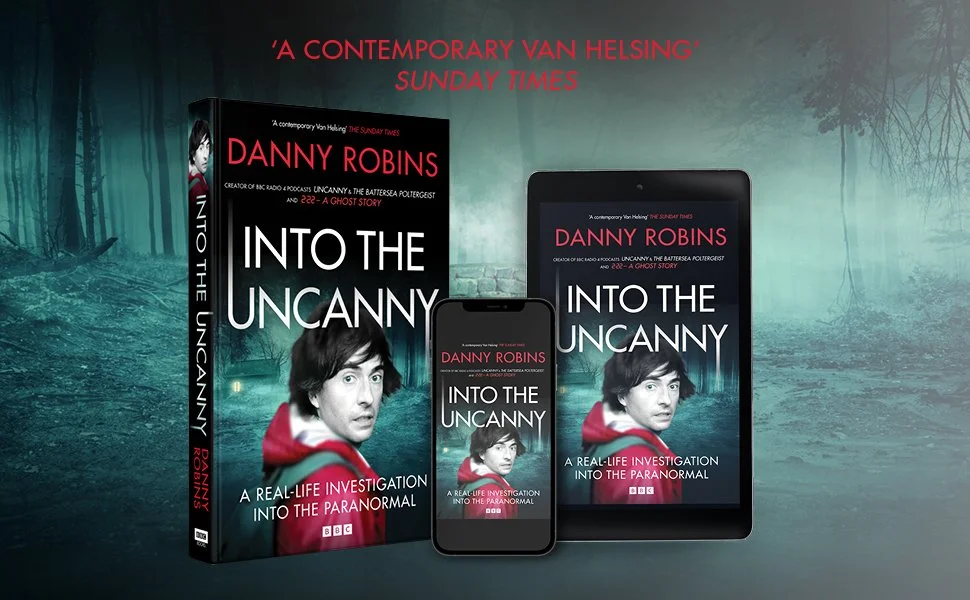
Last August I listened to The Battersea Poltergeist podcast by Danny Robins and was subsequently introduced to his other production Uncanny. Both are investigations into alleged supernatural events but unlike other shows of this kind, these are far better researched, produced and most importantly even handed. Danny makes a great deal of effort to try and keep a foot in each camp; team believer and team sceptic. Overall these podcast work as they genuinely appeal to multiple audiences and they are not excessively hyperbolic or credulous. A lot of this comes down to Danny’s personality which is upbeat and relatable. Perhaps his greatest strength is being a sympathetic ear to those recounting their experiences. He lightens the mood from time to time with humour when required. He also liberally litters the proceedings with pop culture references. However, he will probe and ask pointed questions but does so in a non-accusatory manner.
Have you noticed how politicians, pundits and media commentators will often throw around phrases and buzzwords when discussing the news and other major political talking points? “Cultural Marxism” and “Metropolitan Elite” are two examples that spring to mind. Often it is clear that the person using these phrases has no idea what they mean or what their provenance is. Perhaps you’ve thought that it would be useful to learn more about these terms or the background behind certain institutions or movements. If this is the case then I wholeheartedly recommend the Origin Story podcast. To quote from their website “What are the real stories behind the most misunderstood and abused ideas in politics? From Conspiracy Theory to Woke to Centrism and beyond, Ian Dunt and Dorian Lynskey dig into the astonishing secret histories of concepts you thought you knew”.
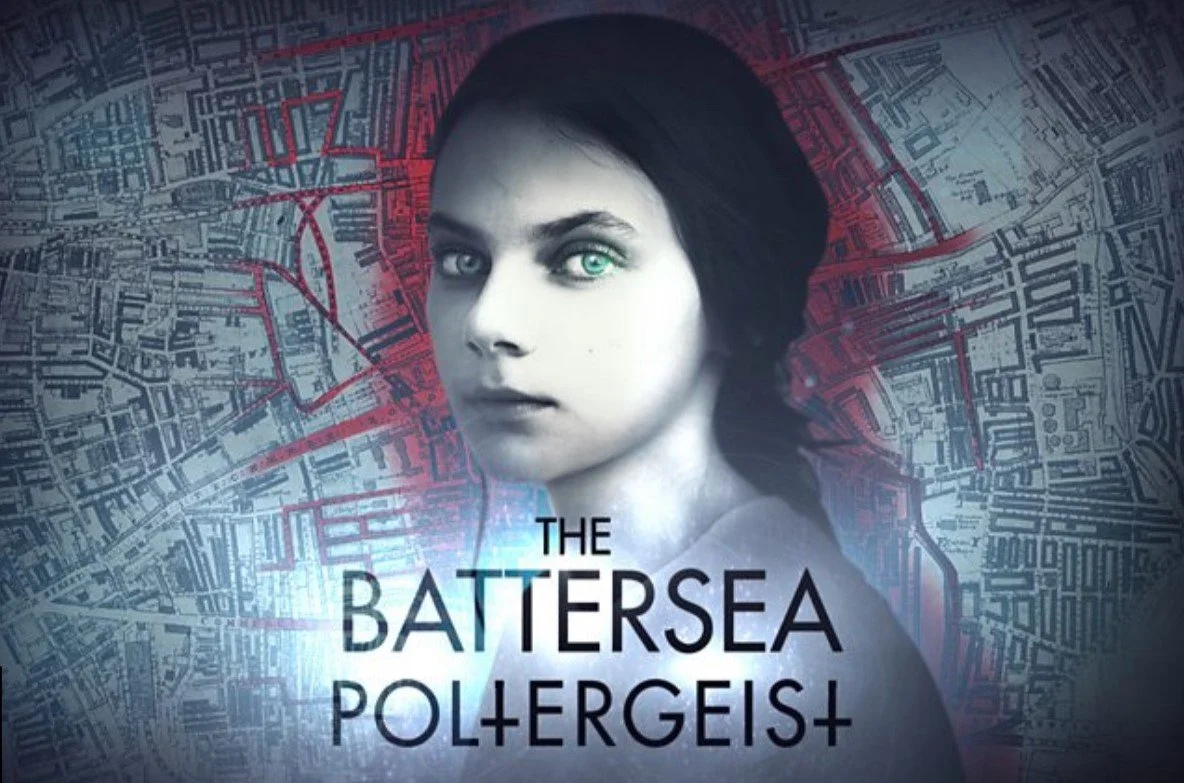
I was unaware of the The Battersea Poltergeist podcast and accompanying online interest during its initial release. Created by Bafflegab Productions and presented by Danny Robins, who is well known in this field with similar shows such as Haunted and Uncanny, it was broadcast on BBC Sounds and BBC Radio 4 between February and March 2021 during lockdown. The Battersea Poltergeist is a documentary of a true story with dramatized re-enactments. The show alternates between interviews, discussions and research into the case with short vignettes from a cast of actors recreating events for dramatic effect. It was released episodically and gained a lot of online and press interest at the time. Hence there were additional episodes interspersed throughout the initial run which provided “case updates” and listener feedback and questions.
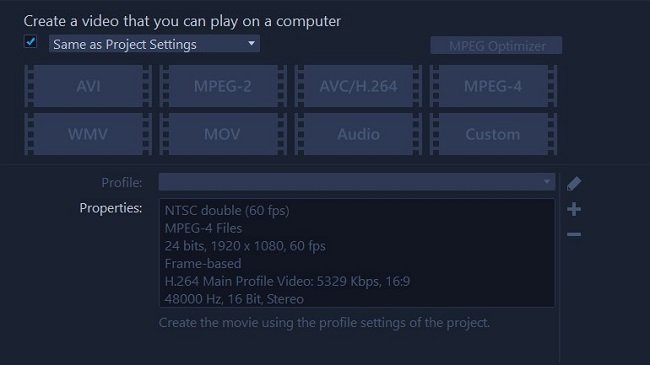
I spent most of this morning and afternoon editing video content I captured while playing Sniper Elite Resistance. I assembled 26 minutes of highlights and then recorded a narration. After adding appropriate branding for Contains Moderate Peril, I then uploaded the finished video to YouTube. Sadly, the picture quality was problematic, often becoming pixelated and blocky when there was rapid movement. The volume of my narration was also too low, so I decided to delete the video from my channel. I was somewhat disappointed by this outcome and initially thought that the day had been a waste of time. However, as I write this post, it becomes very clear that this is just part of the learning curve. I have given some thought to the problem and I believe I have determined why this video was not up to the standard of the previous one. Ultimately, this is an invaluable lesson.
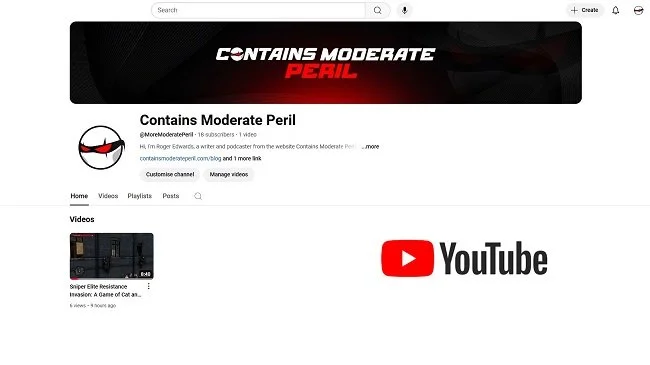
I recently wrote a post about how I wanted to have a go at producing some gaming videos for YouTube. “How hard can it be?” I asked rhetorically, knowing that there would probably be a lot more to the process than meets the eye. Two weeks on and I can report back that there is indeed a learning curve but it is not insurmountable. I managed to figure out how to record a video game, edit it and then add a narration as well as a simple animated logo. Furthermore, I succeeded in doing this without spending a lot of money. I bought some video editing software and a year’s subscription to XSplit Broadcaster but got a really good deal on both. In total I paid £41, which is very reasonable. Hence yesterday, I posted my first video on the officially relaunched Contains Moderate Peril YouTube channel.
I regularly receive random emails addressed to such august bodies as “the Contains Moderate Peril team”. They always raise a wry smile. Like there’s a team. That implies an organisation, structure and even a budget. As opposed to just me, screaming into the void and pouring money into a financial black hole. I don’t resent such emails. People are just trying to earn a crust, I guess. The only thing about them that frustrates me, is they never address me by name. A cursory glance at the “about” page of the website would provide them with my personal details. So I just delete them and think no more about them. Today I received one that did more than make me smile. In fact I laughed out loud and heartily. The email started with “Dear Burton”. Someone had found a few old episodes of the Burton and Scrooge podcast and had assumed this was indeed my real identity.
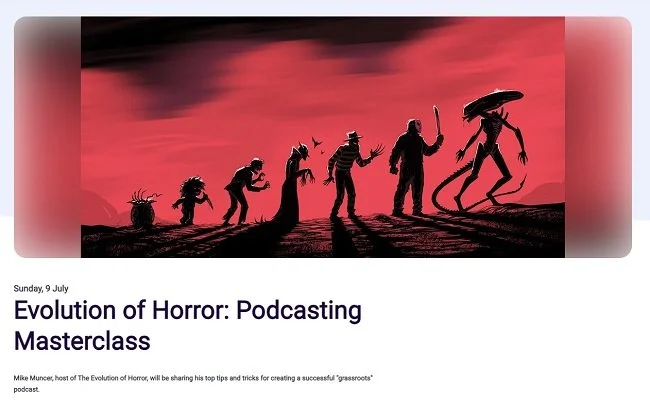
Earlier tonight, I had the pleasure of participating in the Evolution of Horror: Podcasting Masterclass. An online seminar conducted via Zoom. For those who are not familiar with the Evolution of Horror, it is a podcast written and hosted by Mike Muncer along with regular guests. It explores horror cinema in depth, considering the technical, thematic and sociological elements of the genre. Launched in 2017 this independent production has gone from strength to strength, with Mike now producing content for Paramount + and Studio Canal. The masterclass was designed to provide podcasters both old and new with some practical advice and answer some commonly asked questions. Being a fan of Evolution of Horror as well as a former podcaster, I signed up and enjoyed a most informative and enjoyable 90 minute seminar.
About three years ago, I wrote a very similar post to this one. Titled “Ride off into the sunset” it was an account of bloggers leaving or retiring from the community. Especially those who are established and part of the proverbial furniture. I referenced Zubon from Kill Ten Rats as an example and naturally invoked the mantra that nothing remains the same forever. Many of us go through periods of our life where a specific activity or pastime galvanises us into action. We focus on that activity for sometime and it becomes an integral part of our life and even identity. However, eventually we move on usually because such a hobby isn’t sustainable. Modern life makes too many demands upon our time. Plus we all change as individuals. What delights us today may well depress us in a year’s time. This was the thrust of that post and I now find myself in the sad but inevitable situation of writing it again.

I recently decided I’d had enough of the endless deliberation and procrastination and so I started producing a weekly podcast again. As of today the second episode of Season 10 of the Contains Moderate Peril podcast is available on all major platforms. I must admit, although I was confident that a few people would listen to the show, I was completely taken aback by the overall reaction. The Contains Moderate Peril podcast was warmly welcomed back by previous listeners on social media and the statistics for the first show have been most positive. For myself and Brian, recording the show is like putting on a comfortable pair of shoes. Last night’s recording went okay and I think after a few more episodes, the recording and editing process will be an efficient process. Keeping each episode to an hour or under means that the conversation stays on point.
Sometimes in life, you have to stop banging on about what you want to do and just go out and do it. I was thinking, yet again, over the Christmas holidays about how I wanted to get back into podcasting and to create a regular show. Although it is always a pleasure to be a guest on Beyond Bossfights, it is not quite the same as writing and producing your own project. So I decided not to sit around and overthink things but instead to pick a subject as a talking point, start recording and see what happened. As ever, my longstanding co-host Brian was happy to participate and so joined the session. Several hours later, I had a fully edited recording that was good to go. Hence, I am pleased to announce that after a three year hiatus, the Contains Moderate Peril podcast is back. A new episode is now available for download, either via the podcast page of this site or through iTunes and Stitcher.

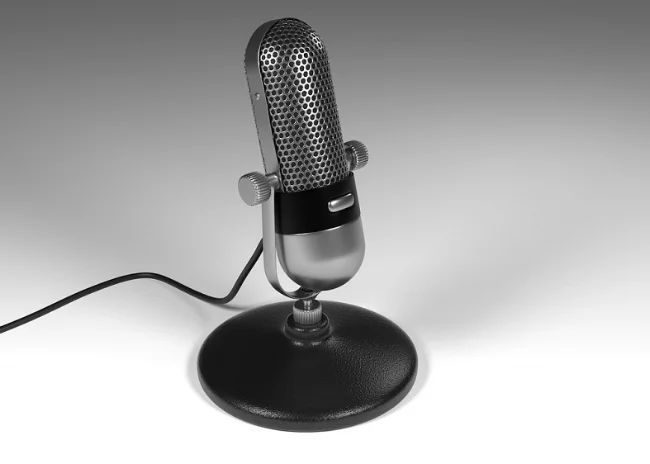
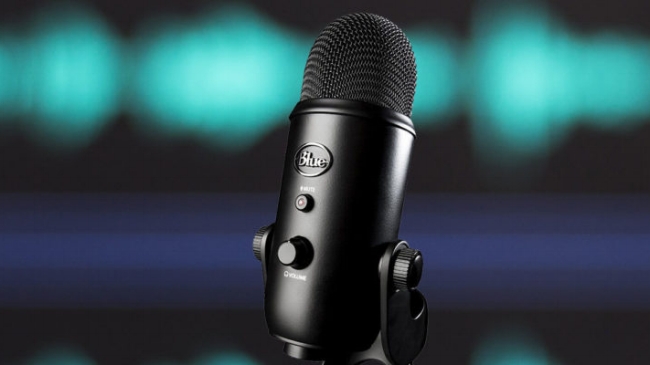
My personal podcast journey started back in 2010 when I effectively invited myself onto the Mordor or Bust podcast. The three of us who were involved in the production of that show were learning as we went along. I recently listened to an old episode and despite our enthusiasm, it is quite rough around the edges from a technical perspective. I think that the biggest mistake that I made at the time was not investing in a better quality microphone. I sound like I’m at the bottom of a well. It’s hardly surprising as I was using a very cheap analog desk microphone which I think only cost a few pounds from PC World. Roll on eleven years and I’ve been invited to be a guest on the Beyond Bossfights podcast. It’s nice to be back in the saddle again, so to speak. Up until now, I’ve been using my Razer gaming headset for any previous podcast recordings but I’ve decided to take the opportunity to overhaul my technical setup.

Back in 2010 there was a video game podcast boom, especially with shows driven by MMORPG fandom. Hence, in a fit of hubris, I decided to add my voice to the growing conversation. Or alternatively jumped on the bandwagon, depending upon your point of view. The accessibility of the tools to create and distribute a podcast eliminated the traditional barriers to producing such material. Technically, the entire process of making a podcast remains quite simple. You record, edit, upload and promote. The quality of the podcast comes down to two factors. Your content and technical presentation. In this post I’d like to focus upon the latter. Podcasts are by their very nature, an audio medium, so it is important that those speaking are recorded clearly. Yes, this post is about microphones. How they can make or break a podcast (or live stream) and that they’re my new fixation.

Back in July 2014, a small group of podcasters banded together to launch The Gaming and Entertainment Network, a website which aggregated the content of eight independently produced shows. This eclectic group of podcasts covered a range of subjects such as gaming, movies, TV, hats and bacon as well as other aspects of popular culture. The project was conceived and implemented by Braxwolf from the popular blog Gaming Conversations. It was designed to raise awareness of the respective shows, as well promote group collaboration between the content creators. In addition to the website, TGEN (as it was abbreviated to) also had a presence on twitter, Facebook and Anook ensuring that the network was represented on all popular social media. Initially 8 podcasts participated in the project. Aggrochat, Battle Bards, Beyond Bossfights, Cat Context, Contains Moderate Peril, Couch Podtatoes, Massive Failure and Roleplay Domain.

Life is often about the things we’d like to do or wished we had done, rather than the things we’ve actually achieved. My last post in this blog series was back in 2nd October 2018 and the last podcast that I published was in January 2019. Since then most attempts to produce more content of this kind have come to nought, as spare time for both recording and editing have been in short supply. However, I did manage to record some material on the 22nd of December with my long-time co-host Brian. The idea was to release the finished podcast as a surprise show at the end of the year. However, due to real world commitments, that deadline has not been met. Now there’s a surprise. I do intend to finish editing the show and may add some extra material to make it a little more topical. But overall, I am not too upset by this delay, because in the process of organising this podcast, I discovered a quick and convenient means of recording via Discord. Something that has been seen as Holy Grail of podcasting over the years.

As part of the Blaugust Festival of Blogging, I thought I’d take the time to promote some of the content creators whose work I enjoy. Despite all the white noise, click bait and snake oil salesmen, there is still a wealth of good material to be found online, be it blogs, podcasts, You Tube channels or streamers. Most of what I currently enjoy, I discovered through word of mouth. I feel more disposed towards trusting the views and opinions of friends than I do of “recommendations” made by Google and You Tube, driven by their “questionable” algorithms. These are often determined by key words and have no ability to ascertain quality. So here are a mixture of You Tube channels, podcasts and blogs that I wholeheartedly recommend. Between them they cover such subjects as movies, gaming, comedy and history. Feel free to leave comments about my choices and share your own recommendations.
I’ve been pondering a new podcast project for a while, since Contains Moderate Peril ended a year ago. As I’ve discussed in previous posts, I want to create a movie-based show and have been considering of late exactly what sort of format to adopt. I don’t go to the cinema often enough these days to produce a contemporary review orientated podcast, plus I don’t find a lot of mainstream releases to be sufficiently engaging. Despite looking and pursuing discrete enquiries, I haven’t been able to find a co-host who is sufficiently knowledgeable, motivated or available to do a regular show producing the audio equivalent of long form criticism of films and the movie industry. So, it’s been a bit of a chore to try and work out which niche to explore. However, I have now a clear idea of what I want to do.

I have no problems finding podcasts and You Tube channels that explore the subjects that I like. It’s determining which ones are any good that is the real trick and the only way to do this is to sit down and listen or watch them. Sometimes you need to give two or three episodes a go before you can truly determine if a show is for you. So, I thought it may be useful to share another small selection of the content that I am currently enjoying, so you don’t have to wade through quite so much “white noise” that fills the internet. I’ve made a conscious decision to select a broader spectrum of material and not to focus just on gaming. All the shows recommended are freely available although you can support the content creators if you wish to. Feel free to leave comments on the titles listed and share your own recommendations.

Today I did a little blog housekeeping. I’ve reposted the last five episodes of the Contains Moderate Peril on the podcast page, now that previous hosting account has been closed and the RSS feed is defunct. The files are held locally and can either be played via the embedded player or downloaded manually. There are also two episodes of the Burton & Scrooge Podcast still available on SoundCloud for posterity. The podcast page and selection of episodes available are for reference and as an example of my podcasting back catalogue, so to speak. I may not be actively creating content of this kind at present, but I see no reason not to promote my experience in the field. If circumstances change in the future, there may be resumption of service.
I made a hard decision today. I cancelled my Podbean subscription and have effectively closed the Contains Moderate Peril podcast. Despite relaunching the show last September, I simply haven’t had the time to collate content for discussion or organise recording sessions with co-hosts. Hence, we are now two months into 2018 and a new show has not yet been produced. Furthermore, the listener numbers for the episode posted between September and December last year were disappointing. Upon mature reflection, I have reached the conclusion that the podcast peaked in 2014 when we had a strong and established audience. Rather than chase my own tail trying to recapture something that may well have been a product of circumstance, it seems prudent to finally draw a line under this show. I’m a little sad about this situation, as it does feel like the end of a personal era, but it is time to move on.

2017 didn’t quite go to plan with regard to my personal podcast output. Brian and I decided to stop producing the Burton & Scrooge Podcast and return to creating material under the Contains Moderate Peril brand. This was a good idea in so far as consolidation, but it was ill timed as both of us were somewhat fatigued with podcasting per se. Ultimately Brian decided to take a break and pursue some projects of his own. I decided to push on with podcasting in my usual idiom and I was pleased with the three new shows that were produced. Sean, Brax, Jaedia and Wolfy were extremely obliging and great guests, but ultimately my schedule just couldn’t sustain a regular show. Hence, I re-released some “classic” shows to fill the gaps in the run up to Christmas. As a result of all these changes and the delays, the overall numbers for the show have been disappointing. Although statistics are not the only reason why I podcast, they are important as I was hoping to grow the audience this year. That has patently not happened although it is nice to know there’s a loyal core group of listeners. Therefore, I now have to think long and hard about my podcasting plans for 2018.
Ever had what you thought was a great idea for a podcast that looked good on paper but turned into something quite different, once you started recording? Well I had that experience on Sunday evening and today I am dealing with the results. It all started with an innocuous Twitter conversation (don’t many things I hear you say) which highlighted a minor cultural difference between the US and the UK. Having recorded with an American co-host for many years this is a common occurrence, so I decided to make it the theme of the next Contains Moderate Peril podcast. I initially thought of several fun examples that could be discussed; the British obsession with the weather, cheese-rolling and Morris dancing. However, rather than take a scattergun approach, I decided to list specific categories in the show notes. Subjects such as school, work, food, social customs and public holidays were added for discussion and I believe that is where thing started to go wrong.
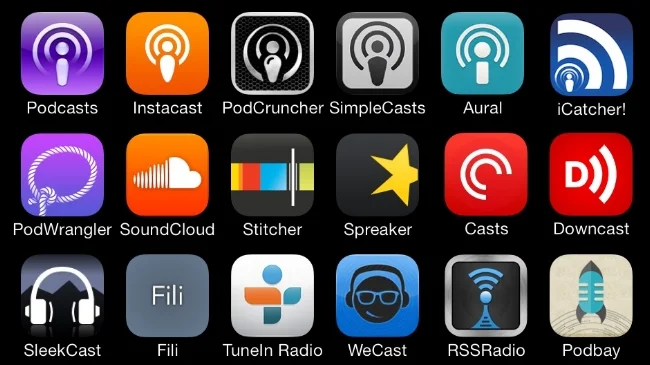
Podcasts are becoming an invaluable medium for the analysis and discussion of niche interests and bespoke subjects. Many of the shows that I regularly listen to bring professional quality documentary skills to bear on unique and varied areas of fandom. More and more podcasts are being made by informed and intelligent fans, offering in-depth material rather than just light weight banter. Simply put, I am spoilt for choice. Therefore, it is essential to have a suitable podcast management app to stay on top of such quality entertainment. Something that allows me to curate and organise those shows that I currently enjoy, as well as providing recommendations for comparable material that I may wish to subscribe to. For several years I’ve been using Podcast Addict on my Android devices, although I’ve struggled to find something comparable for my PC.

Last night, myself, Hannah and Chris (AKA Jaedia and Wolfyseyes) had an especially productive recording session. We managed to produce two hours of material in total and I’m confident that it can be whittled down into a coherent and enjoyable ninety-minute episode. What I especially enjoyed about this podcast recording was buoyant atmosphere and the flow of the conversation. I felt that we explored the various topics well and that the discussion felt natural. Ultimately, it will be the listeners who’ll determine whether this is the case or not but from my perspective the recording went well because the guests were a good choice. If you are pursuing a podcast format that has multiple hosts or regularly features guests, then it is important for there to be a rapport between all involved.
As I surmised, in its current state Squarespace has proven an inadequate host for my current podcast. After exchanging several emails with Apple support, I was informed that “the server for your episodes does not support HTTP HEAD requests. To enable streaming playback of episodes, ensure the hosting server allows HTTP HEAD requests and has byte-range requests enabled”. To cut a long story short, there is no scope for me to alter any of these things at present within the Squarespace dashboard. Nor did I want the work involved in using a third-party feed managing service such as FeedBurner. So, I decided to open up an account with a commercial hosting service. After some research, I determined that PodBean could cater for all my needs and at a competitive price. Submitting the new RSS feed was easy and Apple approved the podcast within 36 hours. As of today, the Contains Moderate Peril podcast is back on iTunes.

Whenever I encounter a word or term that I’m not familiar with, I will usually Google it. That’s the way I’m wired. I prefer to “know” rather than “not know”. However, it is not the concept of continuous self-improvement that I wish to discuss in this post but something else. Namely sociolinguistics. Earlier today I saw someone mention vocal fry on Twitter. I had no idea what that was so I checked on Wikipedia, watched some You Tube videos and finally read some newspaper articles. An hour later I was aware of not only vocal fry, but run-ons, uptalk, glottal Ts and the fact that the way we speak has a major impact upon our lives, just like education and class. According to sociolinguistics, the manner in which you speak has a major impact on the way you are perceived by others. Sadly, like so many other social markers, it can be used in a discriminatory fashion.

Back in April I decided to relaunch the Contains Moderate Peril podcast for reasons of brand continuity. At the time, I was hoping to get back in to the podcasting saddle and return to producing weekly shows. However, the recording session was fraught with technical problems with Zencastr crashing regularly. I was left with nine separate audio tracks that weren’t in sync which made editing a major problem. There then followed a wealth or real-world issues that I had to address that meant for the next three months the podcast was put on hold. Finally, at the beginning of August I managed to complete the post production work on the show and publish it via Squarespace. I was hoping that using this existing website as a host for the show would save some money and reduce the work load. However, like most plans, it didn’t exactly work out that way
Finally, after several months of diversions and distractions, I’ve managed to produce a new podcast. As I mentioned in a previous post, the Burton & Scrooge Podcast has been officially retired and for practical reasons of brand consolidation, the Contains Moderate Peril Podcast has been reinstated and will become the official show for this website. However, it should be noted that this latest episode is specifically designed to be a technical test meant to validate our RSS feed for submission to iTunes. Once this logistical issue has been dealt with and the podcast is accessible on all major platforms, then further episodes of the show will be scheduled for Autumn.
Get Your House in Order
Theoretically, the fallout from the Christchurch mass shooting should be far reaching. There is at present an opportunity to address numerous problems and issues while the tragedy still has both political and social momentum. Because “it is the doom of man that he forgets”. 24-hour news culture has severely strained the public’s attention span. Plus it is in the interests of numerous institutions for the news cycle to move on, because current scrutiny is highlighting how culpable they are. The tabloid press, media commentators, tech companies and internet communities have been found wanting for a while and last weeks carnage is now raising questions over their involvement in the growing culture of hate and therefore their potential regulation. This may be the last chance for many to put their own house in order before the establishment does. And considering the knee-jerk, ham-fisted nature of contemporary western politics, the latter is not likely to be either subtle, efficient or even beneficial.
Theoretically, the fallout from the Christchurch mass shooting should be far reaching. There is at present an opportunity to address numerous problems and issues while the tragedy still has both political and social momentum. Because “it is the doom of man that he forgets”. 24-hour news culture has severely strained the public’s attention span. Plus it is in the interests of numerous institutions for the news cycle to move on, because current scrutiny is highlighting how culpable they are. The tabloid press, media commentators, tech companies and internet communities have been found wanting for a while and last weeks carnage is now raising questions over their involvement in the growing culture of hate and therefore their potential regulation. This may be the last chance for many to put their own house in order before the establishment does. And considering the knee-jerk, ham-fisted nature of contemporary western politics, the latter is not likely to be either subtle, efficient or even beneficial.
It sadly did not come as a surprise that Brenton Tarrant is steeped in numerous aspects of the unsavoury side of internet culture. Namely, 8chan, shitposting and the alt-right. A “manifesto” allegedly attributed to him is filled with the usual weaponised use of memes to try and obfuscate and confuse. And then there’s the fact that he was allegedly a gamer and conversant with You Tube sub-culture to consider. While old school politicians, mainstream journalists and senior members of the public struggle to catch up, those of us who are more familiar with fluid and rapidly evolving nature of internet culture are facing the stark reality that it played a part in shaping this killer’s beliefs. Furthermore gaming, online communities and You Tube personalities are some of the many intersecting circles of a wider and ultimately harmful Venn diagram. Memes aren’t necessarily “just harmless, movements such as #gamergate aren’t purely about “ethics in gaming journalism” and when You Tube personalities say racist, sexist or homophobic things, it not just “banter” or “a joke”.
Tarrant stated, “Remember lads, subscribe to PewDiePie!” just before he started shooting. Felix Kjellberg has made a statement disavowing any association with him, his ideology and being “sickened” by his comments. However, Kjellberg has used racist language in the past, as well as given shout-outs to questionable individuals. With 89 million plus YouTube subscribers who are predominantly young, male and white, he has a lot of reach. Then there are other personalities and channels that cater and court this specific demographic. One filled with poorly skilled, disaffected young males, struggling with emotional literacy and social awkwardness. Add to this a growing adversarial culture that eschews nuance and increasing zealotry in previously benign social interactions and pastimes such as fandom and there’s trouble. PC culture has failed and the pendulum has now swung the other way with populist bandwagons such as Brexit and MAGA. A perfect storm has been forming for a while and it appears to have now arrived.
It is both sad and ironic that the old cautionary mantra of “the only thing necessary for the triumph of evil is for good men to do nothing” which has almost become hokey in recent years, has suddenly become alarming relevant again. Online communities, You Tube, Twitch, even game developers have not done enough (if indeed anything) to adequately police and moderate the communities they financially benefit from. They’ve hidden behind “freedom of speech”, claims they are not publishers and generally complained that the technology or man power required to do the job would be too difficult to manage and inefficient. And so we saw both Facebook and You Tube desperately trying to get in control of the continuous reposting of video content of the Christchurch shootings. “Why not just suspend all uploads during such circumstances?” some politicians have asked. The ensuing silence from the tech companies was deafening. And the real answer is money as anyone with a functioning intellect knows.
There are no simple reasons for the rise in hate crimes or easy explanations for such tragic events such as that in Christchurch. Nor are there any quick fixes. Multiple factors have contributed to an ongoing drip, drip, drip of populist rhetoric that have normalised racism, xenophobia and hatred of “the other”. Online culture has evolved quickly from a quirky, backwater niche to an unchecked, unpoliced “frontier town”. We now find that such an environment is dangerous and action needs to be taken. Codes of conduct need to be enforced, moderation is required and we must stop mollifying sanctions with bogus attempts at reform, because we still want everyones money. We all need to play our part and call out those who peddle hatred. We also need to be smart and ensure we don’t throw the baby out with the bath water. With regard to the bigger players such as You Tube and Facebook, if they don’t take real steps now to prevent abuse of their services, they will find control rested away from them and given to the politicians. Not the most desirable solution. The time for “whataboutery” and generally prevaricating is over. There is guilt by association and in some cases blood on the hands of those who profit from the status quo. So to all involved, get you house in order. While you still can. The consequences for not doing so don’t bear thinking about.

When I was a child, I quickly learned never to say within earshot of my parents that I was bored. It was quickly met with a response along the lines of “an intelligent mind is never bored” or more worryingly “if you’ve got nothing to do, I’ll find you something” which meant a chore or Herculean task. Being a child of the seventies and due to my parents fundamentalist approach to declarations of boredom, I quickly discovered numerous ways to occupy myself. The default solution was a book or comic. I always liked reading as a child and had plenty of books to choose from. I also had numerous of comics as an alternative to a hefty tome. I would also draw and paint. My father use to work during the summer holidays as a design draftsman and as a result, we always had plenty of paper in our house. Then of course there were toys and such like. Hence I learned the art of keeping myself busy.
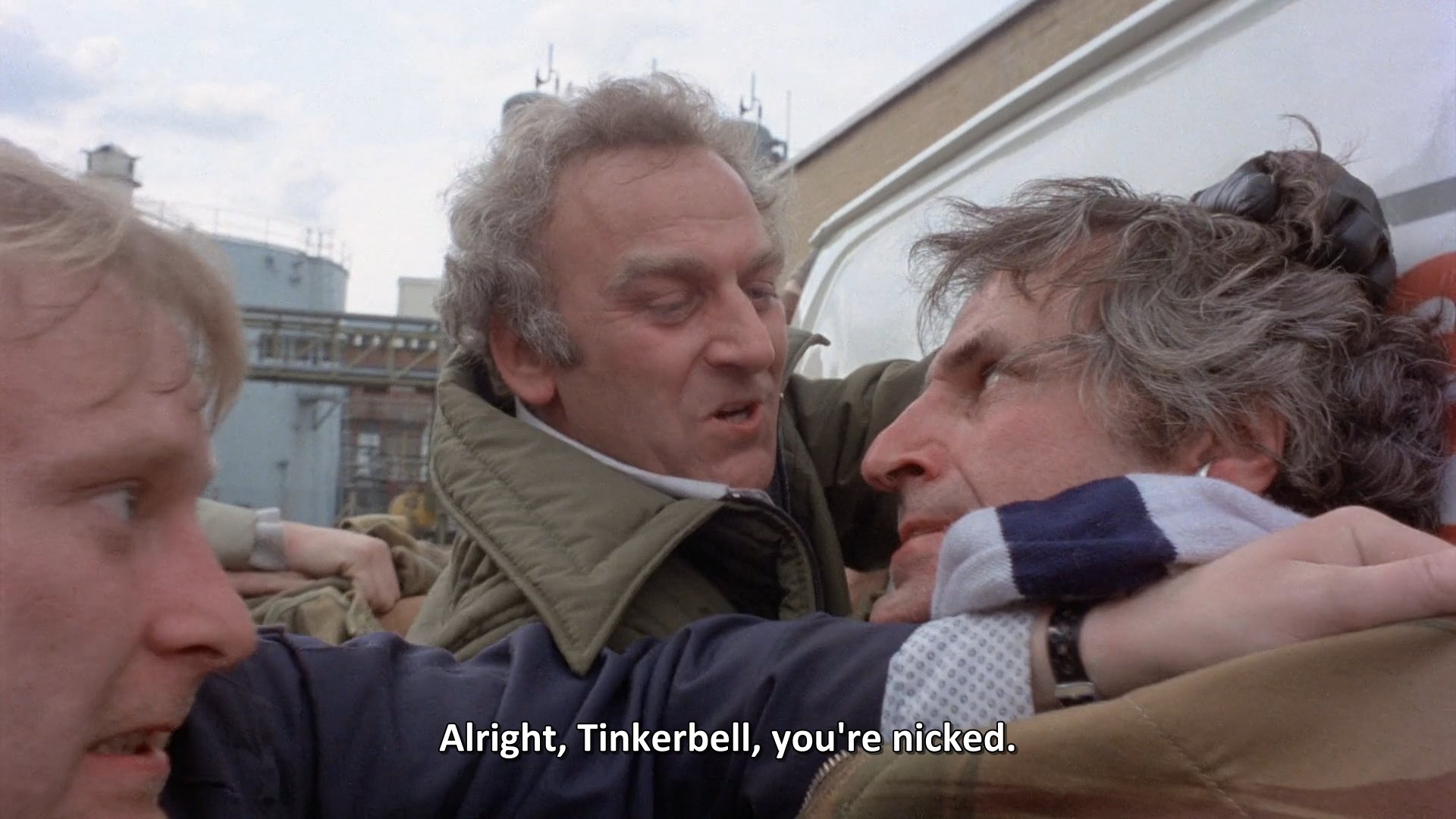
When I first started this series of posts back in 2023, they were originally intended to provide a useful overview into UK (mainly British) slang. US slang is ubiquitous globally due to the pervasive nature of American culture. Hence most people have a good grasp of its nuances. However, the proverbial door does not swing both ways. Hence most people will watch British TV dramas or read popular novels and can be quite bamboozled by some of the phrases that are used. That is what I was trying to address. However, over time this entire enterprise now reads like a some sort of Guy Ritchie film with Colin as the anti-hero. That notwithstanding, hopefully the list of slang phrases below will prove useful to know, if you ever visit the UK or tour around London. As ever I have given an example of their respective use. Feel free to ask questions if anything needs clarifying, or you wish to leave a comment with examples of you’re own national and regional slang.
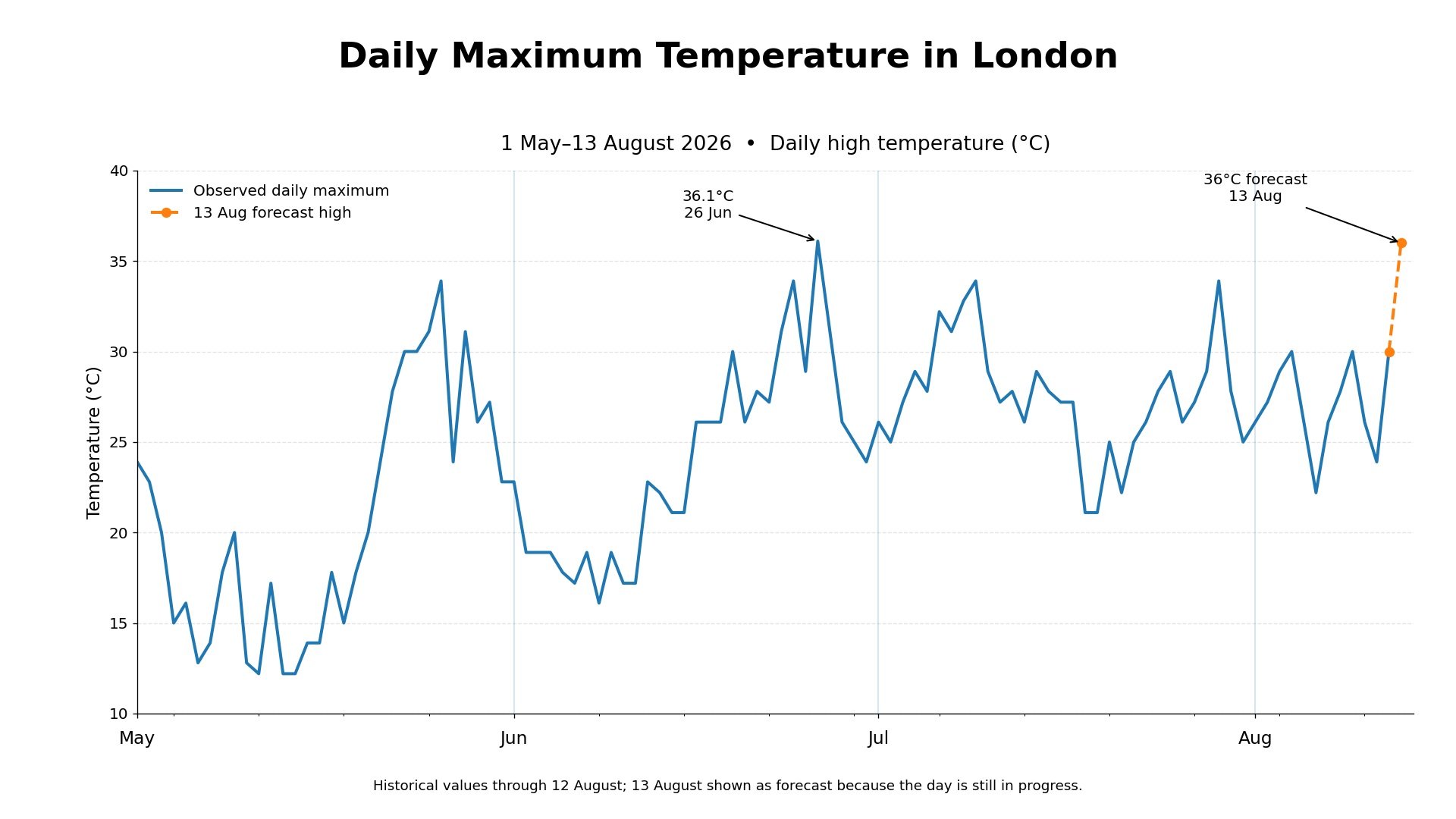
As I write this post, the temperature in Greater London is 33°C (91.4°F). This has become a regular occurrence since the middle of May onwards. High temperatures are fine when you’re on holiday mainly because you’re off work and at your leisure. You don’t have to perform the usual daily task that life requires of you such as work, shop, cook, clean etc. Furthermore, if you’re on vacation you’ll probably be staying at a resort or hotel that is fully air conditioned and you’re dressed accordingly. However, if you’re still performing you’re daily routine such as commuting to work and spending time in an office that wasn’t built with such external temperatures in mind, then 33°C is frankly a pain in the ass. Oh and if you’re one of those people who always respond to discussions such as this with “well I live in Riyadh and it’s 40°C here”, please sod off. You live in a desert which is dumb to begin with. Plus this is not a commensurate comparison. Temperatures are rising in the UK. It’s always hot in Saudi Arabia.
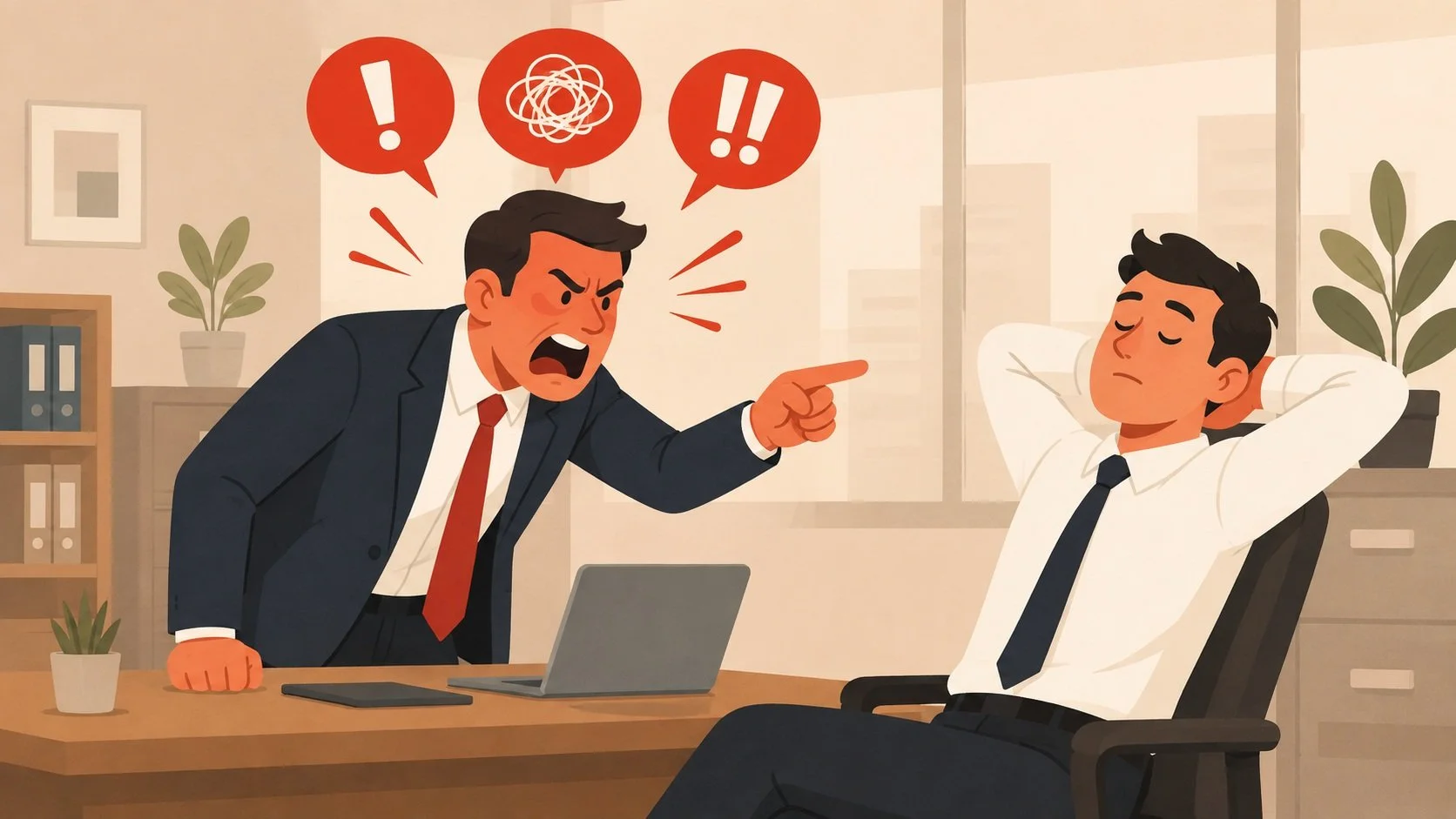
If you visit the websites for such UK tabloid newspapers as the Daily Express or the Daily Mail you will no doubt encounter prominent stories about Megan Markle, Nigel Farage and “immigrants”. If these two august institutions are short of column inches, they’ll run a piece about how some former celebrity has had the unmitigated gall and temerity to get old. I mean WTF? How dare they do what human beings are genetically disposed to do. It’s outrageous. Similarly, head over to the Unherd website and you’ll find foam flecked tirades regarding spurious points of contention over dubious subjects. Often the topic being harangued is incredibly niche and I’ve never heard of it before or even considered it being a thing. These sort of talking points are not about informing, debating and most certainly aren’t about thinking. They exist to provoke reactions.
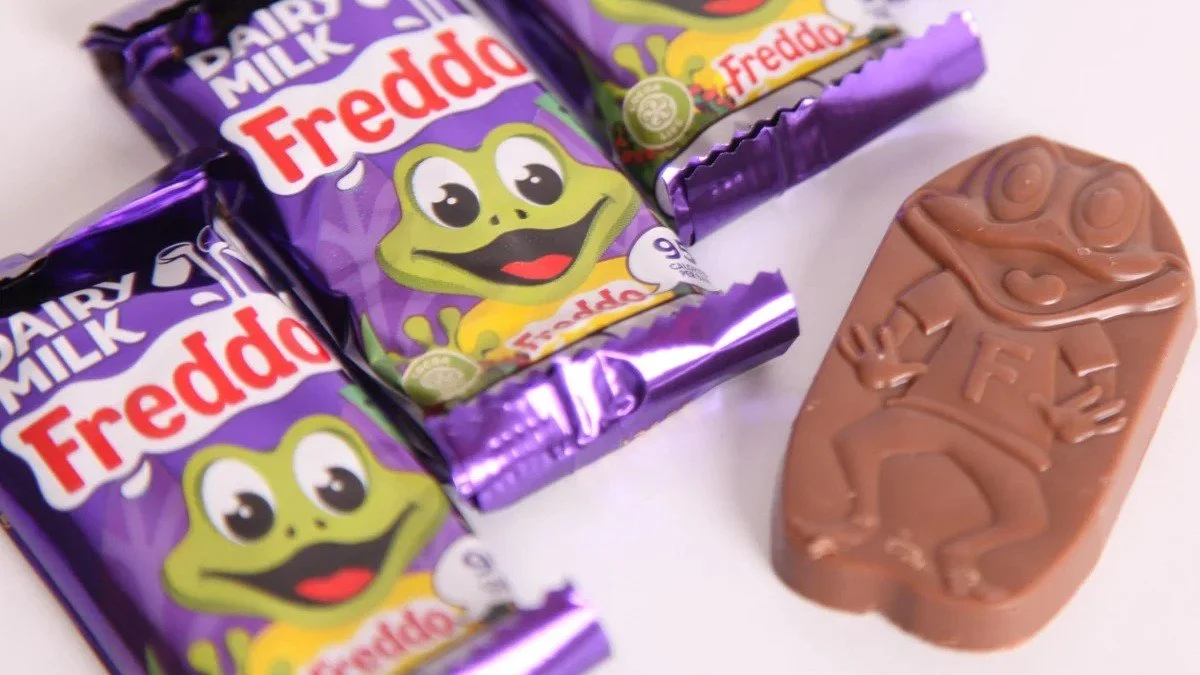
Before we start, let me explain to those readers outside of the UK, the significance of a Dairy Milk Freddo chocolate bar and its relevance to this post. The “Freddo” is an 18g (0.63 oz) chocolate bar, in the shape of an anthropomorphic frog. When it was re-launched by Cadbury in 1990 (it had previously been manufactured by an Australian confectionery company in the seventies), it was priced at 10p (£0.10). It remained at that price until 2005 when a 1p to 2p increase began to occur each year. By 2016 Freddos were retailing at 25p. However, the following year the price “lept” to 30p with an increase that was double its usual yearly rise. This led to public outrage across social media. Since then the price of a Freddo has waxed and waned. Tesco supermarket reduced the price back to 10p as part of their centenary celebrations. The post COVID price in 2022 hit 49p. At present, the average price of a Freddo in the UK is somewhere around 35p.
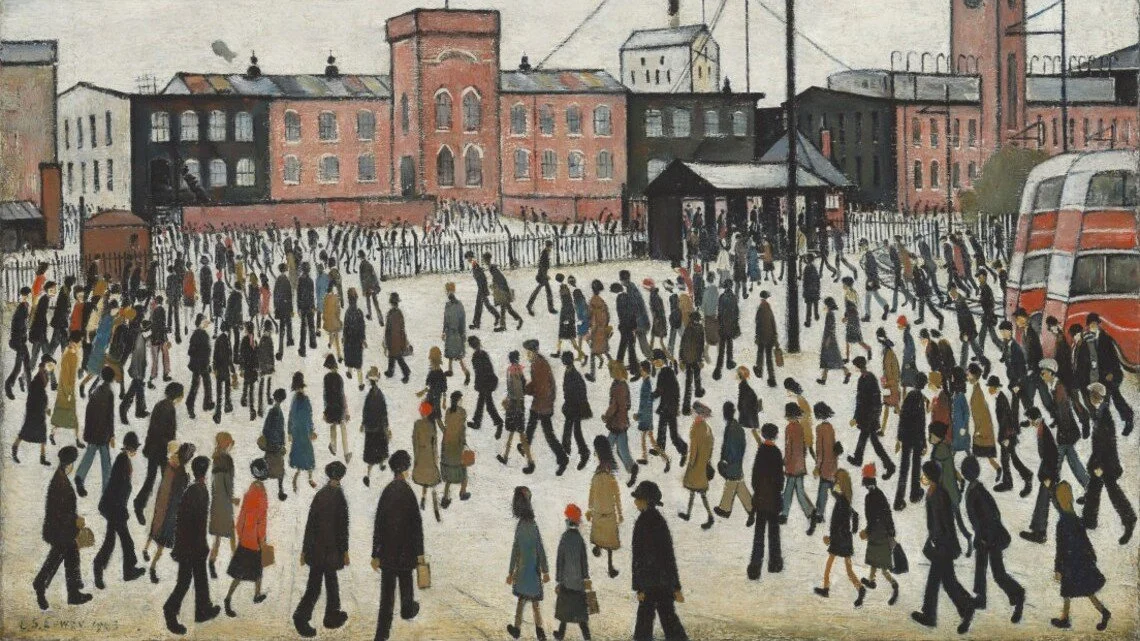
Over the last 10 years, I’ve written several blog posts about my personal working experiences and my career, such as it was. I touched upon working specifically in IT and how that industry changed over time, both technically and in the way that other people perceived it. I have also given my thoughts on the social dynamics of the modern work environment and the way we interact with our colleagues and employers. That is another area that has changed dramatically. Naturally my retirement from full time work has been written about, as it is such a radical change in one’s life. Especially if you’re the sort of person who is clearly defined by their job, which I personally was not. This time, I want to share a few thoughts I have about what I miss about “going to work” and “having a job”. I’m not sure if “miss” is the right word. Perhaps it is more a question of things being absent. Either way, there are some aspects of being employed that I use to enjoy or at least found beneficial that I now no longer experience.
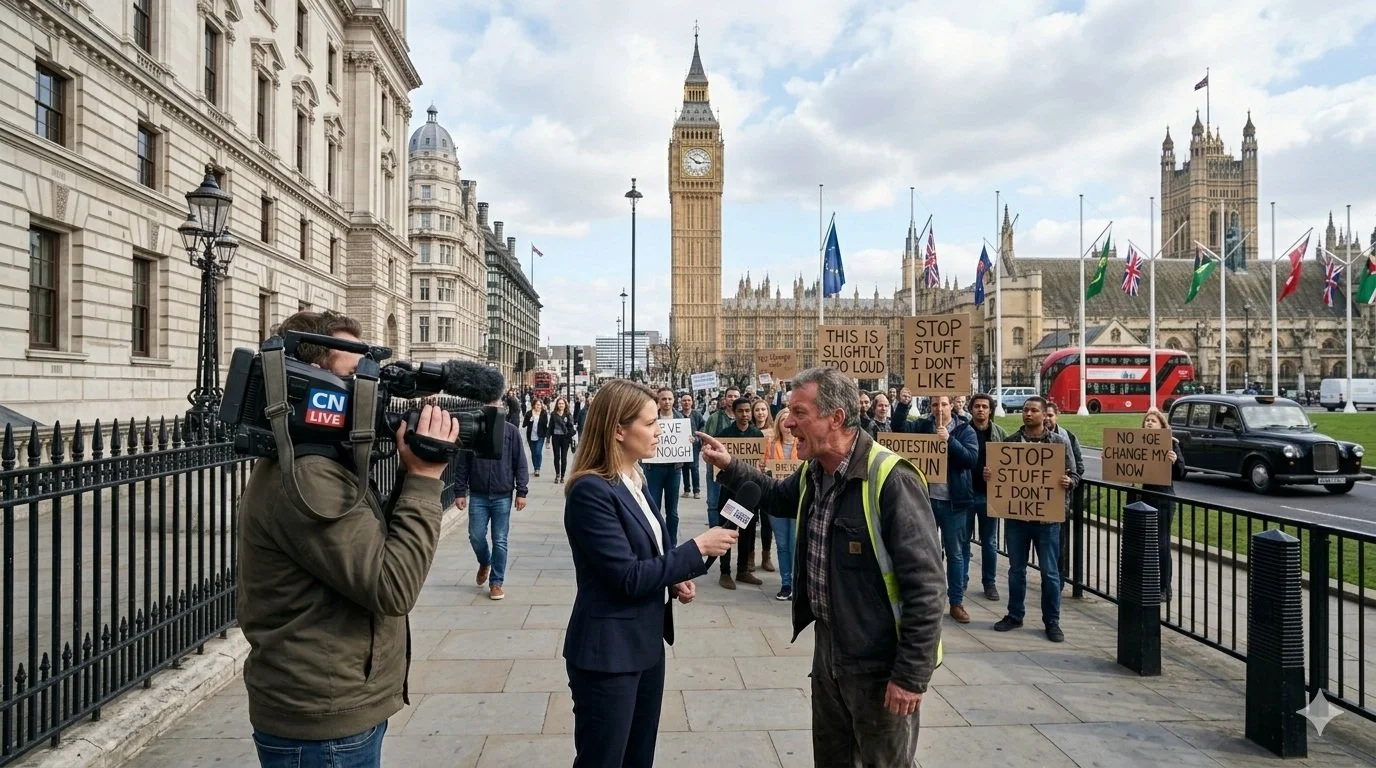
UK Prime Minister, Sir Keir Starmer has resigned and intends to leave office before the parliamentary summer recess. By then Andy Burnham will more than likely be voted leader of the Labour Party and by default will become the new Prime Minister. Due to the current size of the incumbent Government’s majority, there is no pressing reason for a General Election that the UK’s right wing tabloid press is currently calling for. Whether this provides the Government with the reset they’re hoping for when Parliament reconvenes in autumn remains to be seen. With seven Prime Ministers coming and going in a decade, there are some serious questions to be asked about the current state of UK politics. However, the mechanics of contemporary politics, the decline of clearly defined ideologies and the people that seek elected office to be our leaders are only half of the problem. The other major impediment to the UK’s democracy functioning properly is the electorate.

The UK Government has formerly announced its intention to ban under-16s from using social media. This is due to increasing public pressure that “something must be done” about the perceived iniquities of many online platforms. However, as with most complex social problems of this nature, no one has any clear or practical ideas as to what that “something” is. It remains a nebulous, non-specific panacea and clearly someone else’s job to identify and implement. As ever, why choose a nuanced and multifaceted solution to a complex problem, when it is far easier and politically expedient to just “ban” something. The former requires effort and a degree of thinking. If such an approach fails it also means that those who came up with it now carry the can. The latter dumps the problem in the lap of various third parties, who can then be conveniently blamed when the ill conceived policy fails.

Every Thursday, Mrs P volunteers at a food bank that is run from a local church; Avery Hill Christian Fellowship. Today there was a shortage of staff so I agreed to help out. It proved to be an equitable arrangement as she collated the various orders and I packed the bags and took them to the respective clients. The food bank itself is organised and administered by the Trussell Trust, a UK based NGO and charity providing emergency food and support to people locked in poverty. It is open for 2 to 3 hours a week depending upon demand. During today’s session we served just six people. Some weeks its can be triple that amount. Upon closure, a member of staff from the Trussel Trust did a stock take and collated a list of what was needed. This is provided by various local church communities via parishioners donations, as well as local supermarkets who have an arrangement with the trust to provide surplus stock or good approaching the end of their sales window.

There are approximately 4000 parks and green spaces in Greater London. Bexley Borough alone has over 100. Public parks and green spaces are vital to modern cities, providing essential health, environmental and social benefits. They boost physical and mental wellbeing by reducing stress and providing a place for exercise. Furthermore they enhance urban sustainability, mitigate heat, and provide a sustainable environment for a wildlife. Parks are often a venue for social activities and events and as such are an important part of the local community. Going to the park has always been a part of my life. I live next to Old Farm Park in Sidcup and have made use of this recreational space throughout my life. I used visit with my parents in the seventies, when I was a child. Thirty years later my son, father in-law and I would fly kites there. Now I take my grandchildren to Old Farm Park as it now has a playground.
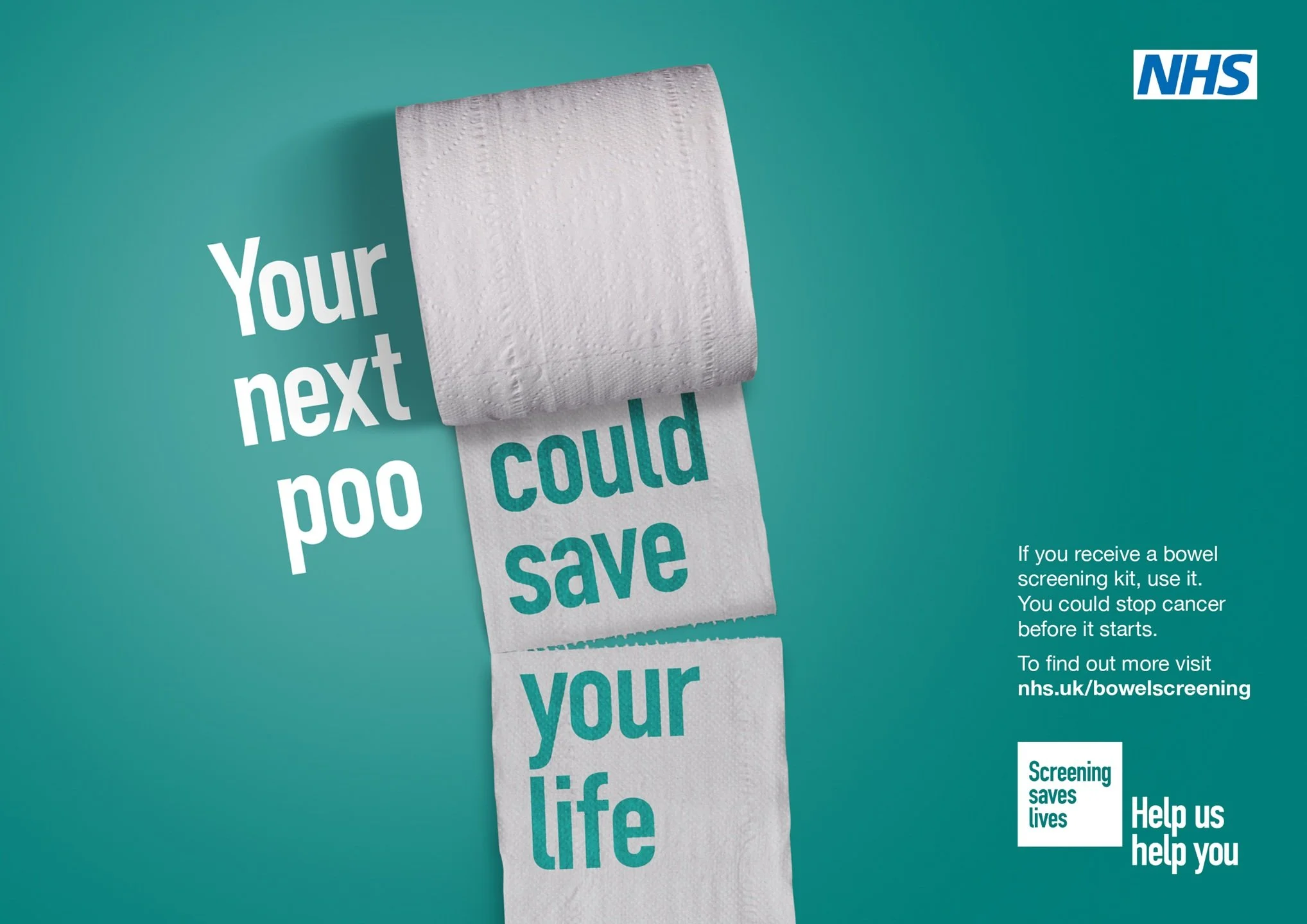
Being a 58 year old man, I welcome any undertaking which can potentially improve my health. One such thing is proactive screening and testing. The UK National Health Service has started doing a lot more of this in recent years, mainly because diagnosing a problem and treating it early is far more efficient and cost effective than retroactive action. Hence this policy and my age is why I was recently sent a NHS Bowel Cancer Test Kit via the post. This screening service takes place every two years for people aged 50 to 74 in the UK. The kit is very quick and simple to use. A sample of your stool is sent via a prepaid return envelope for testing and the entire process is free of charge. Upon receipt, the laboratory test determines whether there is any blood present in your stool, which is a potential indicator of bowel cancer. If detected, an early diagnosis greatly improves any subsequent treatment outcomes.
I like learning things. I always have. During my middle school years I thought I was a mediocre student and often I wouldn’t apply myself. According to an old school report this was because I was “too busy indulging in Tomfoolery”. Then I had the positive experience of meeting an exceptional teacher. Their lessons were the highlight of the week as they had an ability to make the subject matter, Classical History, utterly compelling and relevant. The teacher in question also treated us like adults and the class benefitted from only having five pupils. This really brought home to me that a lot of disinterest and underachievement in education is linked to the paucity of some teachers. One bad teacher can undermine the good work that all the others can do. Perhaps it has improved nowadays?

I’ve had an interest in the paranormal since I was a child. My mother always got books out of the library about ghosts and UFO phenomenon, so in some respects I was influenced by her reading habits. As a child such tales were by default interesting and any potentially scary element naturally made them more enjoyable. However, my father being an academic had taught me to question everything, so I felt fairly evenly equipped when exploring these subjects. Further to this point, over the years I have learned that humans have a very unique perspective on the world. We are hard wired to see patterns, regardless of whether they’re there or not. Our senses can also be fooled and often are. Perhaps the most important aspect of our nature that impacts upon any analysis we make into the paranormal is our penchant for creating stories. Hence unusual experiences can be subconsciously misremembered and “retconned” to form more precise narratives.
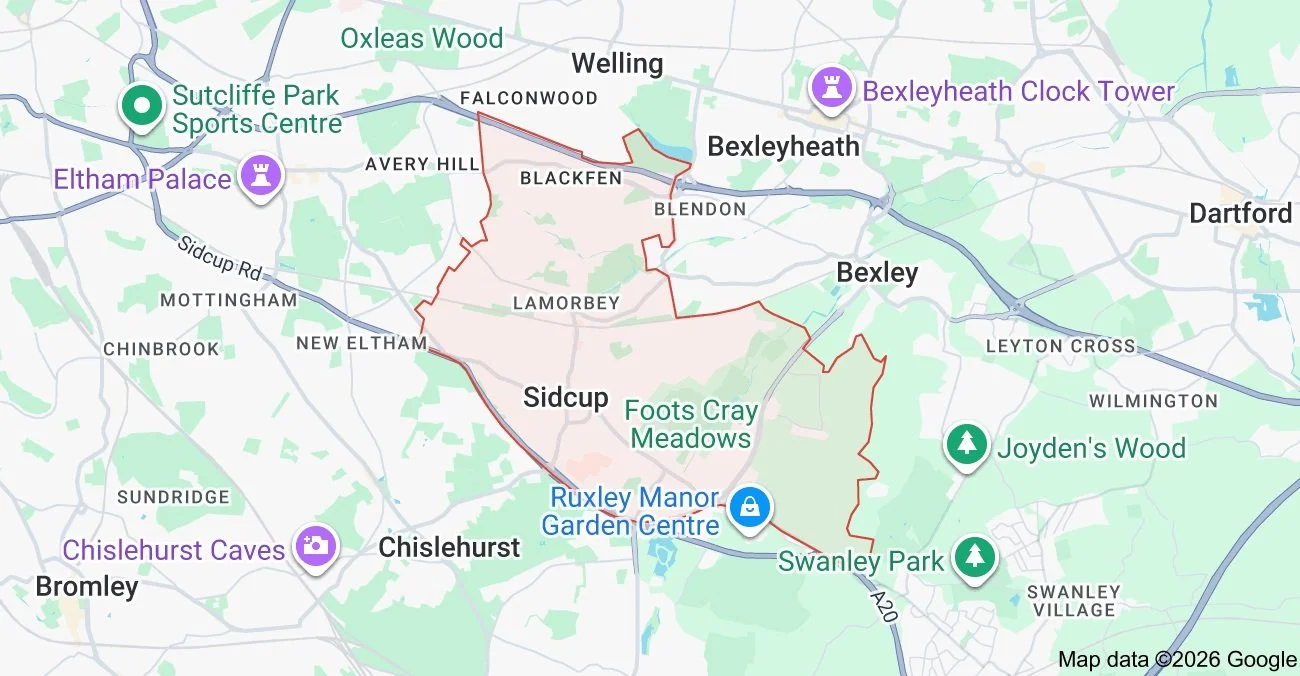
I have lived in Sidcup, in South East London, for most of my life. The first two schools that I went to were local and within 15 minutes walking distance. My Doctor’s Surgery and Dentist are only a few streets away, as is the barbershop that I’ve frequented since 1970. I now have my haircut by the son of the original barber. My point being that Sidcup has everything that residents immediately need. There’s a local hospital, good public transport networks and a broad range of shopping and restaurant facilities. It also has several parks with lakes, sport facilities and children’s play areas. It is a microcosm of the concept of suburbia with its residents commuting into Central London or out into Kent for work. People move here to raise families and end up staying. My parents lived here for 62 years.
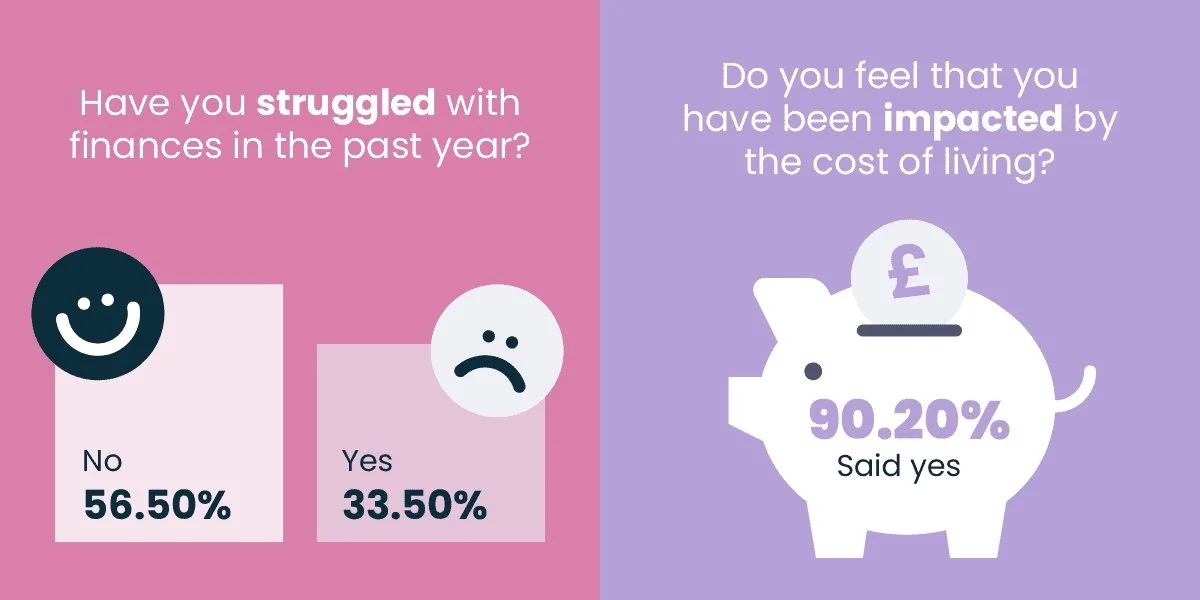
Our household is currently trying to reduce our monthly overheads in response to the ever increasing cost of living. April is not that far away and a great many service providers will increase their rates and tariff as the new financial year begins. Then there is the ongoing effects, both direct and indirect, of inflation to consider. Although the UK inflation rate is dropping, currently sitting at 3.4% in December 2025, food inflation remains higher at 4.5%. Being based in the UK, salaries and billed services tend to be administered monthly. You get paid usually at the end of the months and bills can turn up at any point, depending upon when you started a service. Any payments coming from central government, such as state pension or other benefits, are paid every 4 weeks. This means that there are 13 payments in a year. I thought it pertinent to clarify this point as other countries, such as the USA, favour a fortnightly financial cycle. Hence as a household we work around a monthly budget.

I try not to let the failings of contemporary capitalism get to me but such a mindset is very hard to maintain. From time to time it does just piss you off and you know damn well that there’s nothing you can do about it. So to begin this tale, at the end of November, our Indesit washer/dryer gave up the ghost after a valiant twelve year lifespan. As a result of this household appliance’s stirling work, it was decided to buy another from the same manufacturer. Their website informed me that the model that had just broken was no longer being produced. However, it recommended two newer appliances that had comparable specifications and more importantly the same size. This washer/dryer had to fit into a fitted kitchen unit. To cut a long story short, a model was chosen, purchased, delivered within 48 hours and installed. The broken predecessor was subsequently taken away. The wonders of modern consumer culture!

I was in a pub last night, catching up with friends before Christmas, when I noticed on the wall something I haven’t seen in a pub for a very long time. A jukebox. In my experiences most of the pubs I go to take one of the following two approaches to background music. They either have a sound system and exclusively manage any music via personally curated playlists from behind the bar. Or they have no music at all. The Wetherspoons chain of pubs broadly follow the latter policy and actively use it as a marketing point. Quiet pubs for clientele that just want to talk can be popular. Hence finding an accessible jukebox was a blast from the past. During the late eighties and early nineties, I regularly visited my local pub and often used the jukebox there, which at the time, was operated by an ever changing store of CDs. The jukebox I encountered last night was digital.

Today is my 58th birthday. It would appear that I have existed for nearly six decades. Put another way, I am over half a century old. All of which has given me pause for thought with regard to the passage of time. A phrase that is often bandied about, but what exactly does it mean? As I understand it, the “passage of time” refers to our perception of the flow of time and how we experience its movement. This is something distinct and different from objective time as measured by clocks. Our subjective experience of time can vary due to multiple factors. Two common examples are how time can feel like it's flying by when we're having fun and enjoying something or dragging its feet when you’re enduring something dull. Other factors are whether we are applying ourselves to a task, concentrating and general activity. Such focus can make time pass quickly.

When Mrs P and I moved into our current home, over twenty years ago, we were both working full time. As the garden was poorly maintained and neither of us had any horticultural skills, we decided to employ a gardener. At the time it was a practical solution to the issue of garden maintenance and remains so today. Hence it is a service we continue to use, although our personal health is now the main reason we pay a gardener.

In July the UK Government introduced the Online Safety Act which requires age checks for accessing sexually explicit content online. As a result of this, Pornhub, the 19th most visited site on the internet, has reported a 77% decline in UK traffic. Furthermore, according to the UK regulatory body, OFCOM (The Office of Communications), overall visits to pornographic websites from the UK have fallen by 33%. Naturally, those who championed this legislation are claiming a moral and political victory. However, once you consider what these facts actually mean, they paint a somewhat different and potentially more worrying picture. It would be staggeringly naïve to think that UK visitors to Pornhub have ceased visiting such sites due to the age verification requirements. The more likely explanation is that UK porn consumers are now using VPNs to circumnavigate these restrictions and that this traffic to Pornhub is now recorded as coming from elsewhere.

Formal education in the UK is a structured process, starting at early years learning and continuing through to higher education at university. Some aspects of the educational system are mandatory, whereas others are optional. At present, children in the UK must start full-time education from the age of 5 and remain until the age of 16. After this age, they are no longer required to attend school per se but must remain in some other form of education or training, such as a vocational college or an apprenticeship. Many students remain at school until 18, as there are specific exams to be obtained that are required for a subsequent university placement. Here is a breakdown of the current process as it exists in the UK.

I don’t know if you have noticed that there are quite a lot of companies that have names taken from Tolkien’s Legendarium. At first glance, this seems innocuous enough. Tolkien’s writings grew in popularity over the seventies and eighties but since the release of the film trilogy at the start of the twenty-first century, his work has become more well known and been assimilated into our wider pop culture. Hence, it seems quite logical that a startup tech company, for example, would choose a name from his writings. No doubt the founders grew up reading The Lord of the Rings and are fans. That all seems plausible. However if you take a further look, it gets somewhat more complex. Here are four companies that have Tolkien based names.

Last Wednesday, I woke up with what I thought to be a crick in my neck on the left hand side. I assumed this was simply due to sleeping awkwardly and so I self medicated with some non-prescription pain relief and judicious use of a heat pad. Unfortunately, the problem has persisted and in the last 24 hours it has become much worse. I awoke this morning at about 5:00 AM and as I sat up in bed, an intense pain ran up the left side of my neck and behind my ear. It took several attempts for me to get out of bed because if I turned my head in either direction or inclined my chin, the pain would again run up the side of my neck. Sitting down, getting up and raising my arms caused similar results. While dressing, I attempted to pull a t-shirt over my head. The pain in my neck on this occasion was so severe that I yelled out loud and nearly blacked out.

I am a non-driver. If you wish to know the specifics of how this situation came about, feel free to read the post I wrote about it back in early 2018. To be succinct, I don’t drive, I’ve never learned how and have never owned a car. I don’t feel that I’ve missed out. In fact I feel quite the opposite. I think I’ve dodged a major hassle and expense in life. Mrs P, my significant other, is the designated driver of our household. She owns a car, insures it and maintains it. She also mainly pays for the petrol, whereas I pick up the tab for other things such as lunch or hotels when we travel. All I have to do is make like Iggy Pop if we go anywhere. The most I am ever called upon to do is navigate using Google maps and Android Auto. Fortunately, Mrs P enjoys driving. Always has done. Hence I look upon this situation as an extremely fortunate and equitable arrangement.
I am getting old. I shall be 58 in December. Now, as soon as you say something like that these days, some folk will get uncomfortable and say things like “age is relative” or “you’re as old as you feel”. Well I don’t measure my age in geological terms, so it’s not relative and I’m not feeling anyone especially young at the moment, so both schools or thoughts can sod off. I am getting old by the yardstick we measure human life by, namely years. I have specific, age related health issues and I just don’t feel as energised as I did a decade ago. There are minor signs, such as deciding to go to bed earlier and taking longer to get dressed after taking a shower. I’m not at death’s door but I am slowing up physically. It would also appear that my reactions are also slowing down as I tend to get massacred in any FPS I play these days. So far, my mental faculties seem to be holding up. However, that is the one thing I worry about the most. The potential loss of cognitive abilities scares the shit out of me.

Foots Cray Reuse and Recycling Centre is the fancy name of our local dump. A few decades ago, this was no more than a scrap yard. The rubbish and bric-a-brac left by the public was sorted and scavenged for resaleable scrap. Everything that was left was subsequently sent to landfill or incineration. Much has changed. Today it is the embodiment of the modern recycling ethos. The recycling centre is a well managed, carefully segregated site providing safe disposal of a wide variety of household and garden waste. Wood, metal and hardcore are recycled and there is similar provision for a multitude of electrical goods. Plastics, oils, paint, batteries can be safely disposed of. I have yet to find a home item that they do not have provision to dispose of. The Foots Cray Reuse and Recycling Centre has won awards for the service it provides and is considered one of the best facilities of its kind in the South East of the country.

One of the things I enjoy most about having my own blog is the fact I can write about the mundane and the trivial. Mainly because so much of life falls into this category. Life defining events are all fine and dandy and certainly lend themselves to philosophical musings that make fine blog posts. However, you can get just as much mileage out of those everyday things in life with less gravitas, that we all do. Such as buying new clothes, taking out the recycling and going to buy groceries. I have written about all of these in the past. However, today I wish to broach a subject that both fascinates me but also raises my blood pressure. I believe it to be a social marker and a clear indication of an individual’s personal psychology. Yes, I’m talking about packing your groceries at the supermarket and the various rituals and social etiquette associated with it.

“Managed decline” is a phrase that refers to the processes associated with the end of a specific lifecycle, with the goal of minimizing costs or other forms of loss. The concept originated in business where it referred to the management of companies and industries. More recently it is used in wider contexts. The concept gained prominence with regard to urban policy, particularly in the UK during the eighties when several major cities suffered economic and political collapse. Of late, the term has been applied to the UK, encompassing a systematic weakening of the economy, social structures, and cultural values, as well as its global political and diplomatic force. In each case, managed decline involves making strategic choices about resource allocation and accepting the consequences of those decisions. It is a complex issue with ethical and practical considerations, often sparking debate about the best way to address decline and reverse the process.
The Varying Quality of You Tube Content
"The ability to speak does not make you intelligent". Qui-Gon Jinn
I’m sure this has happened to many of you before. You’re playing a video game and you have a particular question regarding it. How do I reach a specific location on the map? Is there an optimal build for a certain class? Where can I get a certain item? A quick Google search returns multiple results but most of them are videos rather than text-based answers, so you opt to watch one to get the answer that you seek. However, you then notice that your simple enquiry somehow merits a video that lasts twelve minutes. You then spend your precious time enduring a rambling diatribe from someone who clearly hasn’t scripted a succinct explanation. If you’re lucky you may get the answer that you seek, or you may end up wasting your time entirely. Should you perhaps watch another video? Needless to say, you eventually go back and read one of the written answers.
"The ability to speak does not make you intelligent". Qui-Gon Jinn
I’m sure this has happened to many of you before. You’re playing a video game and you have a particular question regarding it. How do I reach a specific location on the map? Is there an optimal build for a certain class? Where can I get a certain item? A quick Google search returns multiple results but most of them are videos rather than text-based answers, so you opt to watch one to get the answer that you seek. However, you then notice that your simple enquiry somehow merits a video that lasts twelve minutes. You then spend your precious time enduring a rambling diatribe from someone who clearly hasn’t scripted a succinct explanation. If you’re lucky you may get the answer that you seek, or you may end up wasting your time entirely. Should you perhaps watch another video? Needless to say, you eventually go back and read one of the written answers.
The written word is a great medium for imparting information and answering questions. But video is often considered an easier and more convenient option. It’s quicker and potentially easier to create and you can embrace the old Hollywood adage, “Show, don’t tell”. When I was an active Guild Wars 2 player, You Tube videos were the most immediate way to find out how you reach a specific Vista, especially if it involved a complex jumping puzzle. However, there was an important caveat involved. Whether you got a quick and accurate answer came down to the quality of the video, how well it was edited, and whether the author was adept at expressing themselves clearly. And this pretty much rings true for any kind of instructional video, be it for wiring a plug or co-ordinating a twelve-man raid in an MMORPG. Sadly, one of the few things that You Tube, and the democratisation of video production hasn’t achieved is any form of automated quality control. Simply put not everyone is cut out to be a teacher and the ability to record a video doesn’t mean that it will be good by default.
Instructional videos are a “lottery”, to say the least.
For the sake of this discussion, let us focus exclusively on game related You Tube content and that which is specifically meant to explain a mechanic, system or such like. IE any material that is intended to be instructional. The key to producing a good video of this kind is twofold. The video content has to clearly show the thing that is being discussed and explained. Presentation is key. It needs to be unambiguous and focused. Next the accompanying narration has to be factually accurate, easy to understand and engaging. The former of these two skills can be easily learned. There is a wealth of advice and guidance available on the technicalities of producing professional videos. The latter requirement, which is a form of public speaking, is not so easy to pick up. In fact, for some it is nigh on impossible. Hence, there is a broad spectrum of quality when it comes to You Tube content of this kind. Speaking casually, as you would with friends, using banter, patois and colloquialism are fine on “let’s plays” or for live streaming. This very personal style of discourse can be a source of appeal. But I believe it has no place when it comes to providing instruction.
And therein lies the rub as the expression goes. Simply put there are far too many You Tube videos where the subject matter is poorly framed, and the creator has no discernible oratorial skills. Inarticulate ramblings and poorly expressed points are sadly common place. Plus, there is absolutely no excuse for being dull. Yet You Tube is awash with poorly made content that often proves to be an absolute chore to sit through. I appreciate that many content creators are driven by enthusiasm, but I also suspect that a percentage are motivated by dreams of internet fame or a chance to make a fast buck. Greed often seems to trump quality control and enthusiasm is no substitute for talent. Furthermore, irrespective of the sophisticated algorithms that You Tube has at its disposal, it doesn’t have yet have the tools to automatically determine the quality of content. Which means that unless you have a prior familiarity with a content creators work and trust it, watching any video for instructional reasons is a crapshoot.
Bluster, hyperbole and calumny do not equate to quality public speaking.
Now I want to make it quite clear that I'm not in any way advocating that people should be denied the chance to create You Tube content. I firmly believe in the individual’s right to express themselves within the confines of the law, regardless of whether their videos are shit or borderline David Attenborough. However, the moment you place something in the public domain then you are inviting criticism. We live in a media saturated age and the wider public are extremely tech savvy and expect content to be to a certain standard by default. Therefore, a lot of existing content creators really do need to raise their game and produce work to a higher standard. Basic literacy helps. So does not speaking like you’re recovering from a major head trauma. You Tube also needs to introduce a more sophisticated means of providing feedback, other than the arbitrary thumbs up or down, so that content creators have a fighting chance of knowing what needs to be improved. However, You Tube doesn’t like to spend money on human moderation, so this situation is sadly not likely to change any time soon.
When I was a child, I quickly learned never to say within earshot of my parents that I was bored. It was quickly met with a response along the lines of “an intelligent mind is never bored” or more worryingly “if you’ve got nothing to do, I’ll find you something” which meant a chore or Herculean task. Being a child of the seventies and due to my parents fundamentalist approach to declarations of boredom, I quickly discovered numerous ways to occupy myself. The default solution was a book or comic. I always liked reading as a child and had plenty of books to choose from. I also had numerous of comics as an alternative to a hefty tome. I would also draw and paint. My father use to work during the summer holidays as a design draftsman and as a result, we always had plenty of paper in our house. Then of course there were toys and such like. Hence I learned the art of keeping myself busy.
When I first started this series of posts back in 2023, they were originally intended to provide a useful overview into UK (mainly British) slang. US slang is ubiquitous globally due to the pervasive nature of American culture. Hence most people have a good grasp of its nuances. However, the proverbial door does not swing both ways. Hence most people will watch British TV dramas or read popular novels and can be quite bamboozled by some of the phrases that are used. That is what I was trying to address. However, over time this entire enterprise now reads like a some sort of Guy Ritchie film with Colin as the anti-hero. That notwithstanding, hopefully the list of slang phrases below will prove useful to know, if you ever visit the UK or tour around London. As ever I have given an example of their respective use. Feel free to ask questions if anything needs clarifying, or you wish to leave a comment with examples of you’re own national and regional slang.
As I write this post, the temperature in Greater London is 33°C (91.4°F). This has become a regular occurrence since the middle of May onwards. High temperatures are fine when you’re on holiday mainly because you’re off work and at your leisure. You don’t have to perform the usual daily task that life requires of you such as work, shop, cook, clean etc. Furthermore, if you’re on vacation you’ll probably be staying at a resort or hotel that is fully air conditioned and you’re dressed accordingly. However, if you’re still performing you’re daily routine such as commuting to work and spending time in an office that wasn’t built with such external temperatures in mind, then 33°C is frankly a pain in the ass. Oh and if you’re one of those people who always respond to discussions such as this with “well I live in Riyadh and it’s 40°C here”, please sod off. You live in a desert which is dumb to begin with. Plus this is not a commensurate comparison. Temperatures are rising in the UK. It’s always hot in Saudi Arabia.
If you visit the websites for such UK tabloid newspapers as the Daily Express or the Daily Mail you will no doubt encounter prominent stories about Megan Markle, Nigel Farage and “immigrants”. If these two august institutions are short of column inches, they’ll run a piece about how some former celebrity has had the unmitigated gall and temerity to get old. I mean WTF? How dare they do what human beings are genetically disposed to do. It’s outrageous. Similarly, head over to the Unherd website and you’ll find foam flecked tirades regarding spurious points of contention over dubious subjects. Often the topic being harangued is incredibly niche and I’ve never heard of it before or even considered it being a thing. These sort of talking points are not about informing, debating and most certainly aren’t about thinking. They exist to provoke reactions.
Before we start, let me explain to those readers outside of the UK, the significance of a Dairy Milk Freddo chocolate bar and its relevance to this post. The “Freddo” is an 18g (0.63 oz) chocolate bar, in the shape of an anthropomorphic frog. When it was re-launched by Cadbury in 1990 (it had previously been manufactured by an Australian confectionery company in the seventies), it was priced at 10p (£0.10). It remained at that price until 2005 when a 1p to 2p increase began to occur each year. By 2016 Freddos were retailing at 25p. However, the following year the price “lept” to 30p with an increase that was double its usual yearly rise. This led to public outrage across social media. Since then the price of a Freddo has waxed and waned. Tesco supermarket reduced the price back to 10p as part of their centenary celebrations. The post COVID price in 2022 hit 49p. At present, the average price of a Freddo in the UK is somewhere around 35p.
Over the last 10 years, I’ve written several blog posts about my personal working experiences and my career, such as it was. I touched upon working specifically in IT and how that industry changed over time, both technically and in the way that other people perceived it. I have also given my thoughts on the social dynamics of the modern work environment and the way we interact with our colleagues and employers. That is another area that has changed dramatically. Naturally my retirement from full time work has been written about, as it is such a radical change in one’s life. Especially if you’re the sort of person who is clearly defined by their job, which I personally was not. This time, I want to share a few thoughts I have about what I miss about “going to work” and “having a job”. I’m not sure if “miss” is the right word. Perhaps it is more a question of things being absent. Either way, there are some aspects of being employed that I use to enjoy or at least found beneficial that I now no longer experience.
UK Prime Minister, Sir Keir Starmer has resigned and intends to leave office before the parliamentary summer recess. By then Andy Burnham will more than likely be voted leader of the Labour Party and by default will become the new Prime Minister. Due to the current size of the incumbent Government’s majority, there is no pressing reason for a General Election that the UK’s right wing tabloid press is currently calling for. Whether this provides the Government with the reset they’re hoping for when Parliament reconvenes in autumn remains to be seen. With seven Prime Ministers coming and going in a decade, there are some serious questions to be asked about the current state of UK politics. However, the mechanics of contemporary politics, the decline of clearly defined ideologies and the people that seek elected office to be our leaders are only half of the problem. The other major impediment to the UK’s democracy functioning properly is the electorate.
The UK Government has formerly announced its intention to ban under-16s from using social media. This is due to increasing public pressure that “something must be done” about the perceived iniquities of many online platforms. However, as with most complex social problems of this nature, no one has any clear or practical ideas as to what that “something” is. It remains a nebulous, non-specific panacea and clearly someone else’s job to identify and implement. As ever, why choose a nuanced and multifaceted solution to a complex problem, when it is far easier and politically expedient to just “ban” something. The former requires effort and a degree of thinking. If such an approach fails it also means that those who came up with it now carry the can. The latter dumps the problem in the lap of various third parties, who can then be conveniently blamed when the ill conceived policy fails.
Every Thursday, Mrs P volunteers at a food bank that is run from a local church; Avery Hill Christian Fellowship. Today there was a shortage of staff so I agreed to help out. It proved to be an equitable arrangement as she collated the various orders and I packed the bags and took them to the respective clients. The food bank itself is organised and administered by the Trussell Trust, a UK based NGO and charity providing emergency food and support to people locked in poverty. It is open for 2 to 3 hours a week depending upon demand. During today’s session we served just six people. Some weeks its can be triple that amount. Upon closure, a member of staff from the Trussel Trust did a stock take and collated a list of what was needed. This is provided by various local church communities via parishioners donations, as well as local supermarkets who have an arrangement with the trust to provide surplus stock or good approaching the end of their sales window.
I like learning things. I always have. During my middle school years I thought I was a mediocre student and often I wouldn’t apply myself. According to an old school report this was because I was “too busy indulging in Tomfoolery”. Then I had the positive experience of meeting an exceptional teacher. Their lessons were the highlight of the week as they had an ability to make the subject matter, Classical History, utterly compelling and relevant. The teacher in question also treated us like adults and the class benefitted from only having five pupils. This really brought home to me that a lot of disinterest and underachievement in education is linked to the paucity of some teachers. One bad teacher can undermine the good work that all the others can do. Perhaps it has improved nowadays?
Our household is currently trying to reduce our monthly overheads in response to the ever increasing cost of living. April is not that far away and a great many service providers will increase their rates and tariff as the new financial year begins. Then there is the ongoing effects, both direct and indirect, of inflation to consider. Although the UK inflation rate is dropping, currently sitting at 3.4% in December 2025, food inflation remains higher at 4.5%. Being based in the UK, salaries and billed services tend to be administered monthly. You get paid usually at the end of the months and bills can turn up at any point, depending upon when you started a service. Any payments coming from central government, such as state pension or other benefits, are paid every 4 weeks. This means that there are 13 payments in a year. I thought it pertinent to clarify this point as other countries, such as the USA, favour a fortnightly financial cycle. Hence as a household we work around a monthly budget.
I try not to let the failings of contemporary capitalism get to me but such a mindset is very hard to maintain. From time to time it does just piss you off and you know damn well that there’s nothing you can do about it. So to begin this tale, at the end of November, our Indesit washer/dryer gave up the ghost after a valiant twelve year lifespan. As a result of this household appliance’s stirling work, it was decided to buy another from the same manufacturer. Their website informed me that the model that had just broken was no longer being produced. However, it recommended two newer appliances that had comparable specifications and more importantly the same size. This washer/dryer had to fit into a fitted kitchen unit. To cut a long story short, a model was chosen, purchased, delivered within 48 hours and installed. The broken predecessor was subsequently taken away. The wonders of modern consumer culture!
I was in a pub last night, catching up with friends before Christmas, when I noticed on the wall something I haven’t seen in a pub for a very long time. A jukebox. In my experiences most of the pubs I go to take one of the following two approaches to background music. They either have a sound system and exclusively manage any music via personally curated playlists from behind the bar. Or they have no music at all. The Wetherspoons chain of pubs broadly follow the latter policy and actively use it as a marketing point. Quiet pubs for clientele that just want to talk can be popular. Hence finding an accessible jukebox was a blast from the past. During the late eighties and early nineties, I regularly visited my local pub and often used the jukebox there, which at the time, was operated by an ever changing store of CDs. The jukebox I encountered last night was digital.
Today is my 58th birthday. It would appear that I have existed for nearly six decades. Put another way, I am over half a century old. All of which has given me pause for thought with regard to the passage of time. A phrase that is often bandied about, but what exactly does it mean? As I understand it, the “passage of time” refers to our perception of the flow of time and how we experience its movement. This is something distinct and different from objective time as measured by clocks. Our subjective experience of time can vary due to multiple factors. Two common examples are how time can feel like it's flying by when we're having fun and enjoying something or dragging its feet when you’re enduring something dull. Other factors are whether we are applying ourselves to a task, concentrating and general activity. Such focus can make time pass quickly.

German actor Udo Kier died on the 23rd November at the age of 81. Kier was far from a high profile star but his saturnine good looks and piercing eyes meant that he stood out. As an actor he was enigmatic, brooding and at times sinister which brought him to the attention of several notable European and American directors, such as Werner Herzog, Lars von Trier and Gus Van Sant. His early acting roles in the late sixties gained little attention and it was not until 1973 when he starred in Andy Warhol’s Flesh For Frankenstein, directed by Paul Morrissey that the right people started to take note. What followed was a career that spanned over 220 films, initially in arthouse productions but over time in horror and cult movies, until eventually he started to be cast in mainstream productions. Yet whatever role he appeared in he was always notable.
When Mrs P and I moved into our current home, over twenty years ago, we were both working full time. As the garden was poorly maintained and neither of us had any horticultural skills, we decided to employ a gardener. At the time it was a practical solution to the issue of garden maintenance and remains so today. Hence it is a service we continue to use, although our personal health is now the main reason we pay a gardener.
In July the UK Government introduced the Online Safety Act which requires age checks for accessing sexually explicit content online. As a result of this, Pornhub, the 19th most visited site on the internet, has reported a 77% decline in UK traffic. Furthermore, according to the UK regulatory body, OFCOM (The Office of Communications), overall visits to pornographic websites from the UK have fallen by 33%. Naturally, those who championed this legislation are claiming a moral and political victory. However, once you consider what these facts actually mean, they paint a somewhat different and potentially more worrying picture. It would be staggeringly naïve to think that UK visitors to Pornhub have ceased visiting such sites due to the age verification requirements. The more likely explanation is that UK porn consumers are now using VPNs to circumnavigate these restrictions and that this traffic to Pornhub is now recorded as coming from elsewhere.

It’s been five years since I last wrote about the passing of someone whose work I admired. Not because there’s been a shortage of such people dying. Sadly, it happens all too often. I stopped because I was experiencing my own grief over the loss of my parents in 2020 and 2022. So I wrote about other things instead and got out of the habit of “RIP” posts. Yet the recent death of Robert Redford has compelled me to write something, because he was so many things. An old school star from an important era of US filmmaking. He was also a much better actor than some think, as well as a talented director who didn’t just use his fame to make vanity projects. His passing was somewhat of a shock because I had seen him recently make a cameo in the TV show Dark Winds, of which he was an executive producer. It was his last onscreen appearance.
Formal education in the UK is a structured process, starting at early years learning and continuing through to higher education at university. Some aspects of the educational system are mandatory, whereas others are optional. At present, children in the UK must start full-time education from the age of 5 and remain until the age of 16. After this age, they are no longer required to attend school per se but must remain in some other form of education or training, such as a vocational college or an apprenticeship. Many students remain at school until 18, as there are specific exams to be obtained that are required for a subsequent university placement. Here is a breakdown of the current process as it exists in the UK.
I don’t know if you have noticed that there are quite a lot of companies that have names taken from Tolkien’s Legendarium. At first glance, this seems innocuous enough. Tolkien’s writings grew in popularity over the seventies and eighties but since the release of the film trilogy at the start of the twenty-first century, his work has become more well known and been assimilated into our wider pop culture. Hence, it seems quite logical that a startup tech company, for example, would choose a name from his writings. No doubt the founders grew up reading The Lord of the Rings and are fans. That all seems plausible. However if you take a further look, it gets somewhat more complex. Here are four companies that have Tolkien based names.
Last Wednesday, I woke up with what I thought to be a crick in my neck on the left hand side. I assumed this was simply due to sleeping awkwardly and so I self medicated with some non-prescription pain relief and judicious use of a heat pad. Unfortunately, the problem has persisted and in the last 24 hours it has become much worse. I awoke this morning at about 5:00 AM and as I sat up in bed, an intense pain ran up the left side of my neck and behind my ear. It took several attempts for me to get out of bed because if I turned my head in either direction or inclined my chin, the pain would again run up the side of my neck. Sitting down, getting up and raising my arms caused similar results. While dressing, I attempted to pull a t-shirt over my head. The pain in my neck on this occasion was so severe that I yelled out loud and nearly blacked out.
I am a non-driver. If you wish to know the specifics of how this situation came about, feel free to read the post I wrote about it back in early 2018. To be succinct, I don’t drive, I’ve never learned how and have never owned a car. I don’t feel that I’ve missed out. In fact I feel quite the opposite. I think I’ve dodged a major hassle and expense in life. Mrs P, my significant other, is the designated driver of our household. She owns a car, insures it and maintains it. She also mainly pays for the petrol, whereas I pick up the tab for other things such as lunch or hotels when we travel. All I have to do is make like Iggy Pop if we go anywhere. The most I am ever called upon to do is navigate using Google maps and Android Auto. Fortunately, Mrs P enjoys driving. Always has done. Hence I look upon this situation as an extremely fortunate and equitable arrangement.
I am getting old. I shall be 58 in December. Now, as soon as you say something like that these days, some folk will get uncomfortable and say things like “age is relative” or “you’re as old as you feel”. Well I don’t measure my age in geological terms, so it’s not relative and I’m not feeling anyone especially young at the moment, so both schools or thoughts can sod off. I am getting old by the yardstick we measure human life by, namely years. I have specific, age related health issues and I just don’t feel as energised as I did a decade ago. There are minor signs, such as deciding to go to bed earlier and taking longer to get dressed after taking a shower. I’m not at death’s door but I am slowing up physically. It would also appear that my reactions are also slowing down as I tend to get massacred in any FPS I play these days. So far, my mental faculties seem to be holding up. However, that is the one thing I worry about the most. The potential loss of cognitive abilities scares the shit out of me.
Foots Cray Reuse and Recycling Centre is the fancy name of our local dump. A few decades ago, this was no more than a scrap yard. The rubbish and bric-a-brac left by the public was sorted and scavenged for resaleable scrap. Everything that was left was subsequently sent to landfill or incineration. Much has changed. Today it is the embodiment of the modern recycling ethos. The recycling centre is a well managed, carefully segregated site providing safe disposal of a wide variety of household and garden waste. Wood, metal and hardcore are recycled and there is similar provision for a multitude of electrical goods. Plastics, oils, paint, batteries can be safely disposed of. I have yet to find a home item that they do not have provision to dispose of. The Foots Cray Reuse and Recycling Centre has won awards for the service it provides and is considered one of the best facilities of its kind in the South East of the country.
One of the things I enjoy most about having my own blog is the fact I can write about the mundane and the trivial. Mainly because so much of life falls into this category. Life defining events are all fine and dandy and certainly lend themselves to philosophical musings that make fine blog posts. However, you can get just as much mileage out of those everyday things in life with less gravitas, that we all do. Such as buying new clothes, taking out the recycling and going to buy groceries. I have written about all of these in the past. However, today I wish to broach a subject that both fascinates me but also raises my blood pressure. I believe it to be a social marker and a clear indication of an individual’s personal psychology. Yes, I’m talking about packing your groceries at the supermarket and the various rituals and social etiquette associated with it.
“Managed decline” is a phrase that refers to the processes associated with the end of a specific lifecycle, with the goal of minimizing costs or other forms of loss. The concept originated in business where it referred to the management of companies and industries. More recently it is used in wider contexts. The concept gained prominence with regard to urban policy, particularly in the UK during the eighties when several major cities suffered economic and political collapse. Of late, the term has been applied to the UK, encompassing a systematic weakening of the economy, social structures, and cultural values, as well as its global political and diplomatic force. In each case, managed decline involves making strategic choices about resource allocation and accepting the consequences of those decisions. It is a complex issue with ethical and practical considerations, often sparking debate about the best way to address decline and reverse the process.
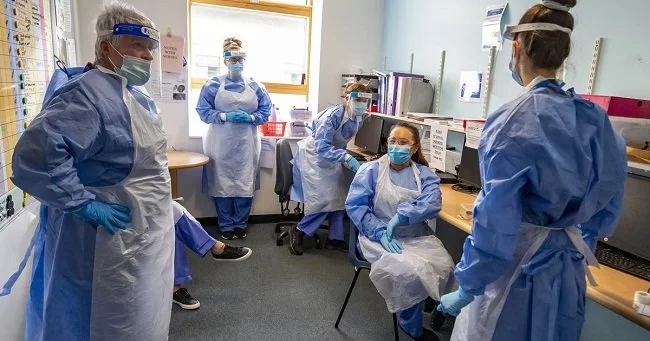
It’s been five years since the COVID-19 global pandemic. At the time it was an utterly alien and tumultuous experience. However, due to the way numerous institutions responded (but not the government), many people thought there would be a great deal of social and political change in the UK afterwards. The pandemic highlighted the impotence of the NHS, as well as those who work in jobs designated as essential. It also shone a spotlight on many of the country’s inequalities. Due to our national character, a real sense of community emerged. Something that had been absent for a very long time. Briefly, we got a glimpse of what the UK could be when we all broadly worked together. There was a sense that now was the time to change the status quo. Sadly, nothing changed. As soon as the vaccination program was launched, the UK quickly slipped back into the mire it’s been wallowing in since the end of WWII.

Prior to writing this post, I clocked a picture on a news website of the now disgraced TV presenter (and nonce) Gregg Wallace. I noticed that he doesn’t smile as such but tends to “gurn” instead. So does UK politician (and cunt) Nigel Farage. He always has his mouth open and his face contorted in some curious rictus, in most of the pictures you see of him. Mind you, I also don’t photograph especially well and any pictures of me smiling tend to look sinister or with a heavy hint of irony. The bottom line is not everyone is good at smiling. It doesn’t come naturally to all of us. This can be a problem at times or in social situations, because smiling is an integral part of our culture. On many occasions, I’ve been walking along, my face in a state of natural repose, only to be harangued by some twat shouting “cheer up, it may never happen”. A phrase I haven’t quite fathomed out, even to this day.
Podcast and You Tube Recommendations
I have no problems finding podcasts and You Tube channels that explore the subjects that I like. It’s determining which ones are any good that is the real trick and the only way to do this is to sit down and listen or watch them. Sometimes you need to give two or three episodes a go before you can truly determine if a show is for you. So, I thought it may be useful to share another small selection of the content that I am currently enjoying, so you don’t have to wade through quite so much “white noise” that fills the internet. I’ve made a conscious decision to select a broader spectrum of material and not to focus just on gaming. All the shows recommended are freely available although you can support the content creators if you wish to. Feel free to leave comments on the titles listed and share your own recommendations.
I have no problems finding podcasts and You Tube channels that explore the subjects that I like. It’s determining which ones are any good that is the real trick and the only way to do this is to sit down and listen or watch them. Sometimes you need to give two or three episodes a go before you can truly determine if a show is for you. So, I thought it may be useful to share another small selection of the content that I am currently enjoying, so you don’t have to wade through quite so much “white noise” that fills the internet. I’ve made a conscious decision to select a broader spectrum of material and not to focus just on gaming. All the shows recommended are freely available although you can support the content creators if you wish to. Feel free to leave comments on the titles listed and share your own recommendations.
The Infinite Monkey Cage. Science can be very complex, esoteric and daunting. Many of the big topics can seem inaccessible to the layman. However, The Infinite Monkey Cage addresses this with its witty, irreverent look at the universe. Physicist Brian Cox, comedian Robin Ince and a selection of guests discuss and debate such subjects as the Big Bang, Infinity and human irrationality. The light-hearted approach helps break down barriers and make the topics somewhat clearer, without trivialising matters. Guests have included Neil deGrasse Tyson, Richard Dawkins and Alan Moore. This is a very entertaining show which appeals on multiple levels. The mixture of academic and non-academic guest often means that explanations are rendered in clear and understandable terms. Frequently the subjects discussed will remain with the listener for days after the show as they are so thought-provoking. Furthermore, if that wasn't enough to recommend this podcast to you, a few years ago it acquired a great new theme tune by Eric Idle.
A Podcast to the Curious. This show explores and dissects not only the collected works of author M R James, but in more recent episode focuses on the short stories that influenced his writing. The two hosts Will Ross and Mike Taylor are knowledgeable entertaining and easy to listen to. The production is slick and academic, with all the appropriate references discussed clearly appearing in the show notes. I live in the hope that others will listen to the show and be inspired to produces a similar podcast focusing on the works of comparable authors. If you are an avid reader, then listening to A Podcast to the Curious is like joining a book club where you can swap ideas and discuss the meaning behind the text. It’s a great show that is both enjoyable to listen to and very illuminating. The subtleties of the authors work are fully explored, and I’ve gained a wider insight into the work of M R James as a result.
The Geek to Geek Podcast. There are many game related podcasts and shows that also talk about pop culture. What makes The Geek to Geek Podcast different from others is the quality of the discussions between host Beej and Void. Their respective tastes are similar but not identical and therefore they’re not afraid to disagree. The banter is thoughtful and at times quite scholarly, but the tone remains light, enthusiastic and engaging. Void also does an extremely good job of moderating the discussions and the show is well edited. As a result, a lot of material is packed into the hour running time and the pair maintain a regular publishing schedule. Beej and Void are also happy to engage with their listeners and have a subreddit where they expand upon subjects covered in the show. It is this attention to detail along with good natured and informed conversation, that makes The Geek to Geek Podcast stand out from similar shows about gaming, comics, the MCU and all things geek.
The Evolution of Horror. One of my minor podcasting regrets is that I never managed to get the movie related show I was planning off the drawing board and into production. However, The Evolution of Horror has recently come along and filled that gap for me. Hosted by freelance video producer Mike Muncer, the show explores the long-term evolution of the horror genre, through analysis of its respective sub-genres. The primary focus is that of horror cinema, but the show is not shy from tackling the subject from a literary, television and even theatrical perspective. Mike is well informed and dedicated. He regularly draws upon his professional contacts and peers as guests who are always illuminating and engaging. These have included writer Alan Jones, actor and writer Andy Nyman and director Lesley Manning. Furthermore, horror fandom is sometimes perceived as a male dominated province. The Evolution of Horror flies in the face of this not only by having female guests but frequently exploring the subject from a gender perspective. So, if you are a fan of horror and enjoy the audio equivalent of long-form critiquing, then this podcast is essential listening.
Good Bad Flicks. As a consummate movie fan who likes material from both ends of the cinematic spectrum, Good Bad Flicks is a refreshing change from some of the dry and dusty shows that explore more cerebral movies. Cecil Trachenburg regularly creates videos that explore cult classics, obscure horror as well as exploitation and other sub-genres. These analyses are in-depth, well researched and humourlessly narrated. The latter is a real skill as all too often other video hosts come across as mocking the very material they explore. Cecil does not do this, and his light-hearted approach is born of affection for the subject rather than scorn. I’ve watched several films as a result of reviews on Good Bad Flicks. I found Operation Avalanche to be exactly as described although I didn’t reciprocate Cecil’s stance on Doom. However, Good Bad Flicks isn’t a dogmatic fanboy show entrenched in a defensive stance. It’s about enjoying something even if it’s bad and Cecil makes it clear that not everything will be to everyone taste. Hence, I can wholeheartedly recommend his You Tube channel as it encapsulates the good things about fandom and not the negative.

The initial podcast boom, which began circa 2005, started as an audio only medium. One of the reasons podcasting became so popular, especially among the fan community, was that you could get away with relatively low production standards. Anyone who had access to a basic microphone and a PC, could produce a show and upload it to iTunes, which was the primary platform at the time. Listeners were forgiving back then. Twenty years later and podcasting has been on a tempestuous journey. It started with the medium being accessible and democratised, sustaining a rich and diverse fan community via non-professional productions. However, slowly and inevitably it has been assimilated by corporate interests. Fan podcasts have given way to podcast production companies. The small, micro-budget, indie show has effectively been thrown out of their own party. Such shows still exist but they struggle to be heard.
Last August I listened to The Battersea Poltergeist podcast by Danny Robins and was subsequently introduced to his other production Uncanny. Both are investigations into alleged supernatural events but unlike other shows of this kind, these are far better researched, produced and most importantly even handed. Danny makes a great deal of effort to try and keep a foot in each camp; team believer and team sceptic. Overall these podcast work as they genuinely appeal to multiple audiences and they are not excessively hyperbolic or credulous. A lot of this comes down to Danny’s personality which is upbeat and relatable. Perhaps his greatest strength is being a sympathetic ear to those recounting their experiences. He lightens the mood from time to time with humour when required. He also liberally litters the proceedings with pop culture references. However, he will probe and ask pointed questions but does so in a non-accusatory manner.
Have you noticed how politicians, pundits and media commentators will often throw around phrases and buzzwords when discussing the news and other major political talking points? “Cultural Marxism” and “Metropolitan Elite” are two examples that spring to mind. Often it is clear that the person using these phrases has no idea what they mean or what their provenance is. Perhaps you’ve thought that it would be useful to learn more about these terms or the background behind certain institutions or movements. If this is the case then I wholeheartedly recommend the Origin Story podcast. To quote from their website “What are the real stories behind the most misunderstood and abused ideas in politics? From Conspiracy Theory to Woke to Centrism and beyond, Ian Dunt and Dorian Lynskey dig into the astonishing secret histories of concepts you thought you knew”.
I was unaware of the The Battersea Poltergeist podcast and accompanying online interest during its initial release. Created by Bafflegab Productions and presented by Danny Robins, who is well known in this field with similar shows such as Haunted and Uncanny, it was broadcast on BBC Sounds and BBC Radio 4 between February and March 2021 during lockdown. The Battersea Poltergeist is a documentary of a true story with dramatized re-enactments. The show alternates between interviews, discussions and research into the case with short vignettes from a cast of actors recreating events for dramatic effect. It was released episodically and gained a lot of online and press interest at the time. Hence there were additional episodes interspersed throughout the initial run which provided “case updates” and listener feedback and questions.
I spent most of this morning and afternoon editing video content I captured while playing Sniper Elite Resistance. I assembled 26 minutes of highlights and then recorded a narration. After adding appropriate branding for Contains Moderate Peril, I then uploaded the finished video to YouTube. Sadly, the picture quality was problematic, often becoming pixelated and blocky when there was rapid movement. The volume of my narration was also too low, so I decided to delete the video from my channel. I was somewhat disappointed by this outcome and initially thought that the day had been a waste of time. However, as I write this post, it becomes very clear that this is just part of the learning curve. I have given some thought to the problem and I believe I have determined why this video was not up to the standard of the previous one. Ultimately, this is an invaluable lesson.
I recently wrote a post about how I wanted to have a go at producing some gaming videos for YouTube. “How hard can it be?” I asked rhetorically, knowing that there would probably be a lot more to the process than meets the eye. Two weeks on and I can report back that there is indeed a learning curve but it is not insurmountable. I managed to figure out how to record a video game, edit it and then add a narration as well as a simple animated logo. Furthermore, I succeeded in doing this without spending a lot of money. I bought some video editing software and a year’s subscription to XSplit Broadcaster but got a really good deal on both. In total I paid £41, which is very reasonable. Hence yesterday, I posted my first video on the officially relaunched Contains Moderate Peril YouTube channel.
I regularly receive random emails addressed to such august bodies as “the Contains Moderate Peril team”. They always raise a wry smile. Like there’s a team. That implies an organisation, structure and even a budget. As opposed to just me, screaming into the void and pouring money into a financial black hole. I don’t resent such emails. People are just trying to earn a crust, I guess. The only thing about them that frustrates me, is they never address me by name. A cursory glance at the “about” page of the website would provide them with my personal details. So I just delete them and think no more about them. Today I received one that did more than make me smile. In fact I laughed out loud and heartily. The email started with “Dear Burton”. Someone had found a few old episodes of the Burton and Scrooge podcast and had assumed this was indeed my real identity.
Earlier tonight, I had the pleasure of participating in the Evolution of Horror: Podcasting Masterclass. An online seminar conducted via Zoom. For those who are not familiar with the Evolution of Horror, it is a podcast written and hosted by Mike Muncer along with regular guests. It explores horror cinema in depth, considering the technical, thematic and sociological elements of the genre. Launched in 2017 this independent production has gone from strength to strength, with Mike now producing content for Paramount + and Studio Canal. The masterclass was designed to provide podcasters both old and new with some practical advice and answer some commonly asked questions. Being a fan of Evolution of Horror as well as a former podcaster, I signed up and enjoyed a most informative and enjoyable 90 minute seminar.
About three years ago, I wrote a very similar post to this one. Titled “Ride off into the sunset” it was an account of bloggers leaving or retiring from the community. Especially those who are established and part of the proverbial furniture. I referenced Zubon from Kill Ten Rats as an example and naturally invoked the mantra that nothing remains the same forever. Many of us go through periods of our life where a specific activity or pastime galvanises us into action. We focus on that activity for sometime and it becomes an integral part of our life and even identity. However, eventually we move on usually because such a hobby isn’t sustainable. Modern life makes too many demands upon our time. Plus we all change as individuals. What delights us today may well depress us in a year’s time. This was the thrust of that post and I now find myself in the sad but inevitable situation of writing it again.
I recently decided I’d had enough of the endless deliberation and procrastination and so I started producing a weekly podcast again. As of today the second episode of Season 10 of the Contains Moderate Peril podcast is available on all major platforms. I must admit, although I was confident that a few people would listen to the show, I was completely taken aback by the overall reaction. The Contains Moderate Peril podcast was warmly welcomed back by previous listeners on social media and the statistics for the first show have been most positive. For myself and Brian, recording the show is like putting on a comfortable pair of shoes. Last night’s recording went okay and I think after a few more episodes, the recording and editing process will be an efficient process. Keeping each episode to an hour or under means that the conversation stays on point.
Sometimes in life, you have to stop banging on about what you want to do and just go out and do it. I was thinking, yet again, over the Christmas holidays about how I wanted to get back into podcasting and to create a regular show. Although it is always a pleasure to be a guest on Beyond Bossfights, it is not quite the same as writing and producing your own project. So I decided not to sit around and overthink things but instead to pick a subject as a talking point, start recording and see what happened. As ever, my longstanding co-host Brian was happy to participate and so joined the session. Several hours later, I had a fully edited recording that was good to go. Hence, I am pleased to announce that after a three year hiatus, the Contains Moderate Peril podcast is back. A new episode is now available for download, either via the podcast page of this site or through iTunes and Stitcher.
My personal podcast journey started back in 2010 when I effectively invited myself onto the Mordor or Bust podcast. The three of us who were involved in the production of that show were learning as we went along. I recently listened to an old episode and despite our enthusiasm, it is quite rough around the edges from a technical perspective. I think that the biggest mistake that I made at the time was not investing in a better quality microphone. I sound like I’m at the bottom of a well. It’s hardly surprising as I was using a very cheap analog desk microphone which I think only cost a few pounds from PC World. Roll on eleven years and I’ve been invited to be a guest on the Beyond Bossfights podcast. It’s nice to be back in the saddle again, so to speak. Up until now, I’ve been using my Razer gaming headset for any previous podcast recordings but I’ve decided to take the opportunity to overhaul my technical setup.
Back in 2010 there was a video game podcast boom, especially with shows driven by MMORPG fandom. Hence, in a fit of hubris, I decided to add my voice to the growing conversation. Or alternatively jumped on the bandwagon, depending upon your point of view. The accessibility of the tools to create and distribute a podcast eliminated the traditional barriers to producing such material. Technically, the entire process of making a podcast remains quite simple. You record, edit, upload and promote. The quality of the podcast comes down to two factors. Your content and technical presentation. In this post I’d like to focus upon the latter. Podcasts are by their very nature, an audio medium, so it is important that those speaking are recorded clearly. Yes, this post is about microphones. How they can make or break a podcast (or live stream) and that they’re my new fixation.
Back in July 2014, a small group of podcasters banded together to launch The Gaming and Entertainment Network, a website which aggregated the content of eight independently produced shows. This eclectic group of podcasts covered a range of subjects such as gaming, movies, TV, hats and bacon as well as other aspects of popular culture. The project was conceived and implemented by Braxwolf from the popular blog Gaming Conversations. It was designed to raise awareness of the respective shows, as well promote group collaboration between the content creators. In addition to the website, TGEN (as it was abbreviated to) also had a presence on twitter, Facebook and Anook ensuring that the network was represented on all popular social media. Initially 8 podcasts participated in the project. Aggrochat, Battle Bards, Beyond Bossfights, Cat Context, Contains Moderate Peril, Couch Podtatoes, Massive Failure and Roleplay Domain.
Life is often about the things we’d like to do or wished we had done, rather than the things we’ve actually achieved. My last post in this blog series was back in 2nd October 2018 and the last podcast that I published was in January 2019. Since then most attempts to produce more content of this kind have come to nought, as spare time for both recording and editing have been in short supply. However, I did manage to record some material on the 22nd of December with my long-time co-host Brian. The idea was to release the finished podcast as a surprise show at the end of the year. However, due to real world commitments, that deadline has not been met. Now there’s a surprise. I do intend to finish editing the show and may add some extra material to make it a little more topical. But overall, I am not too upset by this delay, because in the process of organising this podcast, I discovered a quick and convenient means of recording via Discord. Something that has been seen as Holy Grail of podcasting over the years.
As part of the Blaugust Festival of Blogging, I thought I’d take the time to promote some of the content creators whose work I enjoy. Despite all the white noise, click bait and snake oil salesmen, there is still a wealth of good material to be found online, be it blogs, podcasts, You Tube channels or streamers. Most of what I currently enjoy, I discovered through word of mouth. I feel more disposed towards trusting the views and opinions of friends than I do of “recommendations” made by Google and You Tube, driven by their “questionable” algorithms. These are often determined by key words and have no ability to ascertain quality. So here are a mixture of You Tube channels, podcasts and blogs that I wholeheartedly recommend. Between them they cover such subjects as movies, gaming, comedy and history. Feel free to leave comments about my choices and share your own recommendations.
I’ve been pondering a new podcast project for a while, since Contains Moderate Peril ended a year ago. As I’ve discussed in previous posts, I want to create a movie-based show and have been considering of late exactly what sort of format to adopt. I don’t go to the cinema often enough these days to produce a contemporary review orientated podcast, plus I don’t find a lot of mainstream releases to be sufficiently engaging. Despite looking and pursuing discrete enquiries, I haven’t been able to find a co-host who is sufficiently knowledgeable, motivated or available to do a regular show producing the audio equivalent of long form criticism of films and the movie industry. So, it’s been a bit of a chore to try and work out which niche to explore. However, I have now a clear idea of what I want to do.
I have no problems finding podcasts and You Tube channels that explore the subjects that I like. It’s determining which ones are any good that is the real trick and the only way to do this is to sit down and listen or watch them. Sometimes you need to give two or three episodes a go before you can truly determine if a show is for you. So, I thought it may be useful to share another small selection of the content that I am currently enjoying, so you don’t have to wade through quite so much “white noise” that fills the internet. I’ve made a conscious decision to select a broader spectrum of material and not to focus just on gaming. All the shows recommended are freely available although you can support the content creators if you wish to. Feel free to leave comments on the titles listed and share your own recommendations.
Today I did a little blog housekeeping. I’ve reposted the last five episodes of the Contains Moderate Peril on the podcast page, now that previous hosting account has been closed and the RSS feed is defunct. The files are held locally and can either be played via the embedded player or downloaded manually. There are also two episodes of the Burton & Scrooge Podcast still available on SoundCloud for posterity. The podcast page and selection of episodes available are for reference and as an example of my podcasting back catalogue, so to speak. I may not be actively creating content of this kind at present, but I see no reason not to promote my experience in the field. If circumstances change in the future, there may be resumption of service.
I made a hard decision today. I cancelled my Podbean subscription and have effectively closed the Contains Moderate Peril podcast. Despite relaunching the show last September, I simply haven’t had the time to collate content for discussion or organise recording sessions with co-hosts. Hence, we are now two months into 2018 and a new show has not yet been produced. Furthermore, the listener numbers for the episode posted between September and December last year were disappointing. Upon mature reflection, I have reached the conclusion that the podcast peaked in 2014 when we had a strong and established audience. Rather than chase my own tail trying to recapture something that may well have been a product of circumstance, it seems prudent to finally draw a line under this show. I’m a little sad about this situation, as it does feel like the end of a personal era, but it is time to move on.
2017 didn’t quite go to plan with regard to my personal podcast output. Brian and I decided to stop producing the Burton & Scrooge Podcast and return to creating material under the Contains Moderate Peril brand. This was a good idea in so far as consolidation, but it was ill timed as both of us were somewhat fatigued with podcasting per se. Ultimately Brian decided to take a break and pursue some projects of his own. I decided to push on with podcasting in my usual idiom and I was pleased with the three new shows that were produced. Sean, Brax, Jaedia and Wolfy were extremely obliging and great guests, but ultimately my schedule just couldn’t sustain a regular show. Hence, I re-released some “classic” shows to fill the gaps in the run up to Christmas. As a result of all these changes and the delays, the overall numbers for the show have been disappointing. Although statistics are not the only reason why I podcast, they are important as I was hoping to grow the audience this year. That has patently not happened although it is nice to know there’s a loyal core group of listeners. Therefore, I now have to think long and hard about my podcasting plans for 2018.
Ever had what you thought was a great idea for a podcast that looked good on paper but turned into something quite different, once you started recording? Well I had that experience on Sunday evening and today I am dealing with the results. It all started with an innocuous Twitter conversation (don’t many things I hear you say) which highlighted a minor cultural difference between the US and the UK. Having recorded with an American co-host for many years this is a common occurrence, so I decided to make it the theme of the next Contains Moderate Peril podcast. I initially thought of several fun examples that could be discussed; the British obsession with the weather, cheese-rolling and Morris dancing. However, rather than take a scattergun approach, I decided to list specific categories in the show notes. Subjects such as school, work, food, social customs and public holidays were added for discussion and I believe that is where thing started to go wrong.
Podcasts are becoming an invaluable medium for the analysis and discussion of niche interests and bespoke subjects. Many of the shows that I regularly listen to bring professional quality documentary skills to bear on unique and varied areas of fandom. More and more podcasts are being made by informed and intelligent fans, offering in-depth material rather than just light weight banter. Simply put, I am spoilt for choice. Therefore, it is essential to have a suitable podcast management app to stay on top of such quality entertainment. Something that allows me to curate and organise those shows that I currently enjoy, as well as providing recommendations for comparable material that I may wish to subscribe to. For several years I’ve been using Podcast Addict on my Android devices, although I’ve struggled to find something comparable for my PC.
Last night, myself, Hannah and Chris (AKA Jaedia and Wolfyseyes) had an especially productive recording session. We managed to produce two hours of material in total and I’m confident that it can be whittled down into a coherent and enjoyable ninety-minute episode. What I especially enjoyed about this podcast recording was buoyant atmosphere and the flow of the conversation. I felt that we explored the various topics well and that the discussion felt natural. Ultimately, it will be the listeners who’ll determine whether this is the case or not but from my perspective the recording went well because the guests were a good choice. If you are pursuing a podcast format that has multiple hosts or regularly features guests, then it is important for there to be a rapport between all involved.
As I surmised, in its current state Squarespace has proven an inadequate host for my current podcast. After exchanging several emails with Apple support, I was informed that “the server for your episodes does not support HTTP HEAD requests. To enable streaming playback of episodes, ensure the hosting server allows HTTP HEAD requests and has byte-range requests enabled”. To cut a long story short, there is no scope for me to alter any of these things at present within the Squarespace dashboard. Nor did I want the work involved in using a third-party feed managing service such as FeedBurner. So, I decided to open up an account with a commercial hosting service. After some research, I determined that PodBean could cater for all my needs and at a competitive price. Submitting the new RSS feed was easy and Apple approved the podcast within 36 hours. As of today, the Contains Moderate Peril podcast is back on iTunes.
Whenever I encounter a word or term that I’m not familiar with, I will usually Google it. That’s the way I’m wired. I prefer to “know” rather than “not know”. However, it is not the concept of continuous self-improvement that I wish to discuss in this post but something else. Namely sociolinguistics. Earlier today I saw someone mention vocal fry on Twitter. I had no idea what that was so I checked on Wikipedia, watched some You Tube videos and finally read some newspaper articles. An hour later I was aware of not only vocal fry, but run-ons, uptalk, glottal Ts and the fact that the way we speak has a major impact upon our lives, just like education and class. According to sociolinguistics, the manner in which you speak has a major impact on the way you are perceived by others. Sadly, like so many other social markers, it can be used in a discriminatory fashion.
Back in April I decided to relaunch the Contains Moderate Peril podcast for reasons of brand continuity. At the time, I was hoping to get back in to the podcasting saddle and return to producing weekly shows. However, the recording session was fraught with technical problems with Zencastr crashing regularly. I was left with nine separate audio tracks that weren’t in sync which made editing a major problem. There then followed a wealth or real-world issues that I had to address that meant for the next three months the podcast was put on hold. Finally, at the beginning of August I managed to complete the post production work on the show and publish it via Squarespace. I was hoping that using this existing website as a host for the show would save some money and reduce the work load. However, like most plans, it didn’t exactly work out that way
Finally, after several months of diversions and distractions, I’ve managed to produce a new podcast. As I mentioned in a previous post, the Burton & Scrooge Podcast has been officially retired and for practical reasons of brand consolidation, the Contains Moderate Peril Podcast has been reinstated and will become the official show for this website. However, it should be noted that this latest episode is specifically designed to be a technical test meant to validate our RSS feed for submission to iTunes. Once this logistical issue has been dealt with and the podcast is accessible on all major platforms, then further episodes of the show will be scheduled for Autumn.
How Do You Solve a Problem Like You Tube?
You Tube like any other online platform has a wealth of rules, term and conditions and other policies. Sadly, what we have seen over recent years is an organisation that has precious little inclination to use them. The facilities that are currently in place are often abused and there are no consequences for misusing the “disputes” procedure. Furthermore, there are still multiple You Tube channels that peddle hate and You Tube personalities that endure without any real sanction for their transgressions. It seems that popular You Tubers are not held to any standard but their own. There is no formal regulation from an external body for this or any other comparable platform. The rules that govern conventional media don’t apply here. It’s a classic example of the law falling behind the technology and change.
You Tube like any other online platform has a wealth of rules, term and conditions and other policies. Sadly, what we have seen over recent years is an organisation that has precious little inclination to use them. The facilities that are currently in place are often abused and there are no consequences for misusing the “disputes” procedure. Furthermore, there are still multiple You Tube channels that peddle hate and You Tube personalities that endure without any real sanction for their transgressions. It seems that popular You Tubers are not held to any standard but their own. There is no formal regulation from an external body for this or any other comparable platform. The rules that govern conventional media don’t apply here. It’s a classic example of the law falling behind the technology and change.
That is not to say that you can get away with anything on You Tube. Theoretically, if you cross certain lines then legal action may well be applicable. Then there is always the threat of the loss of advertising revenue, prestige and sponsorship. However, so far there has not been any major test cases where reality has bitten a wayward You Tuber on the ass for their iniquities. Even if an individual was banned from the platform and had their channel closed, they would still be walking away with their coffers bulging. More than likely, they’d simply pitch their tent elsewhere. One companies embarrassing controversy is another another’s new selling point. We see it in the tabloid press all the time. An odious pundit crosses a line and says something beyond the pale, gets sacked and subsequently gets a new gig with a rival publication. The other problem associated with such issues is the public have very short memories.
Obviously, PewDiePie AKA Felix Kjellberg and his recent behaviour has added fuel to the fire with regard to You Tubes inability to police itself effectively. The platform is now at a crossroad in its business life. The audience that You Tube serves is now so big that third parties cannot easily dispense with it. However, outside business doesn’t like the “frontier town” ethos that still permeates the online portal. The recent Adpocalype shows that advertisers don’t want to be associated with certain channels and personalities. But due to the blunt tool nature of the withholding of revenue and the nebulous criteria of what exactly is “family friendly”, there’s been a lot of collateral damage. And because of Mr Kjellberg’s stupidity we see the use of weaponised DMCA takedowns raising their ugly head once again.
The main risks at present are twofold. You Tube will take action but in a knee jerk fashion, imposing draconian rules and effectively queering the pitch for all parties regardless of what side of the line they are on. Alternatively, if they prevaricate any longer someone outside may step in to deal with the situation. For example, if some idiot is dragged into court, the somewhat grey area of “fair use” which is the foundation of so much content on You Tube, could be scrutinised and a more definitive ruling made. If a precedent is set and it is not a favourable one regarding this catchall term, then it could mean that a hell of a lot of content and channels go the way of the Dodo. Furthermore, such drama and shenanigans could attract the attention of the political classes and the last thing we need is for things like You Tube and Streaming to fall under their remit in any way.
To avoid catastrophe, You Tube should act now but act in a sensible measured way. As a company, it need to start policing its own backyard in a viable fashion. That means not rely on automated procedure that can be gamed but employing moderators who work to a clear set of guidelines. When someone transgresses the rules, action should be swift and clearly explained as to why it has been taken. There also needs to be a fair appeals procedure to ensure that the door swings both ways. Yes, such an undertaking means spending money but considering the alternative, allocating resources wisely now may prevent a massive loss in revenue later. Also, Joe Public needs to up their game and stop cutting offenders so much slack. We as viewers need to stop sitting of the fence and hedging are bets for our own personal convenience. Sooner or later we all need to pick a side, like it or not.
Finally, a few words about PewDiePie. Everyone makes mistakes. I believe in giving people a fair hearing and a second chance where appropriate. Sadly, this individual has proven to be a repeat offender. If your go to curse of choice is a racial slur, then that frankly speaks volumes to me. As far as I’m concerned “I didn’t mean it in a bad way” is the 21st Century Nuremberg defence. You cannot divorce this word from its racially pejorative roots. It exactly the same as calling something “gay”. You may think you’re simply implying that something is not good but you are establishing your proposition by equating being gay as something inherently bad. Considering the diversity of profanity available in the English language, if you wish to express disdain then there are plenty of alternatives words that do not have the same complex socio-political heritage of the term Mr Kjellberg chose to use.
I have seen the term “influencers” bandied about with regard to You Tube and the likes of PewDiePie. It’s a very vague term like so much of the marketing speak we have to endure these days. Its greatest weakness seems to be in the way it is allocated. To be an “influencer” you just need to have a large following. There is no requirement for expertise and talent is a broad and subjective term. It’s time for business to rethink the nature of “influencers” and perhaps reconsider who they show favour too. It is naïve to expect ethics and integrity by default. If you require these virtues then it is incumbent upon you to establish their existence beforehand in those you groom for fame and fortune. However, when one considers the track record of the gaming industry, advertisers and You Tube themselves, I cannot help but be somewhat sceptical that these groups will tackle their respective problems with any degree of success.
When I was a child, I quickly learned never to say within earshot of my parents that I was bored. It was quickly met with a response along the lines of “an intelligent mind is never bored” or more worryingly “if you’ve got nothing to do, I’ll find you something” which meant a chore or Herculean task. Being a child of the seventies and due to my parents fundamentalist approach to declarations of boredom, I quickly discovered numerous ways to occupy myself. The default solution was a book or comic. I always liked reading as a child and had plenty of books to choose from. I also had numerous of comics as an alternative to a hefty tome. I would also draw and paint. My father use to work during the summer holidays as a design draftsman and as a result, we always had plenty of paper in our house. Then of course there were toys and such like. Hence I learned the art of keeping myself busy.
When I first started this series of posts back in 2023, they were originally intended to provide a useful overview into UK (mainly British) slang. US slang is ubiquitous globally due to the pervasive nature of American culture. Hence most people have a good grasp of its nuances. However, the proverbial door does not swing both ways. Hence most people will watch British TV dramas or read popular novels and can be quite bamboozled by some of the phrases that are used. That is what I was trying to address. However, over time this entire enterprise now reads like a some sort of Guy Ritchie film with Colin as the anti-hero. That notwithstanding, hopefully the list of slang phrases below will prove useful to know, if you ever visit the UK or tour around London. As ever I have given an example of their respective use. Feel free to ask questions if anything needs clarifying, or you wish to leave a comment with examples of you’re own national and regional slang.
As I write this post, the temperature in Greater London is 33°C (91.4°F). This has become a regular occurrence since the middle of May onwards. High temperatures are fine when you’re on holiday mainly because you’re off work and at your leisure. You don’t have to perform the usual daily task that life requires of you such as work, shop, cook, clean etc. Furthermore, if you’re on vacation you’ll probably be staying at a resort or hotel that is fully air conditioned and you’re dressed accordingly. However, if you’re still performing you’re daily routine such as commuting to work and spending time in an office that wasn’t built with such external temperatures in mind, then 33°C is frankly a pain in the ass. Oh and if you’re one of those people who always respond to discussions such as this with “well I live in Riyadh and it’s 40°C here”, please sod off. You live in a desert which is dumb to begin with. Plus this is not a commensurate comparison. Temperatures are rising in the UK. It’s always hot in Saudi Arabia.
If you visit the websites for such UK tabloid newspapers as the Daily Express or the Daily Mail you will no doubt encounter prominent stories about Megan Markle, Nigel Farage and “immigrants”. If these two august institutions are short of column inches, they’ll run a piece about how some former celebrity has had the unmitigated gall and temerity to get old. I mean WTF? How dare they do what human beings are genetically disposed to do. It’s outrageous. Similarly, head over to the Unherd website and you’ll find foam flecked tirades regarding spurious points of contention over dubious subjects. Often the topic being harangued is incredibly niche and I’ve never heard of it before or even considered it being a thing. These sort of talking points are not about informing, debating and most certainly aren’t about thinking. They exist to provoke reactions.
Before we start, let me explain to those readers outside of the UK, the significance of a Dairy Milk Freddo chocolate bar and its relevance to this post. The “Freddo” is an 18g (0.63 oz) chocolate bar, in the shape of an anthropomorphic frog. When it was re-launched by Cadbury in 1990 (it had previously been manufactured by an Australian confectionery company in the seventies), it was priced at 10p (£0.10). It remained at that price until 2005 when a 1p to 2p increase began to occur each year. By 2016 Freddos were retailing at 25p. However, the following year the price “lept” to 30p with an increase that was double its usual yearly rise. This led to public outrage across social media. Since then the price of a Freddo has waxed and waned. Tesco supermarket reduced the price back to 10p as part of their centenary celebrations. The post COVID price in 2022 hit 49p. At present, the average price of a Freddo in the UK is somewhere around 35p.
Over the last 10 years, I’ve written several blog posts about my personal working experiences and my career, such as it was. I touched upon working specifically in IT and how that industry changed over time, both technically and in the way that other people perceived it. I have also given my thoughts on the social dynamics of the modern work environment and the way we interact with our colleagues and employers. That is another area that has changed dramatically. Naturally my retirement from full time work has been written about, as it is such a radical change in one’s life. Especially if you’re the sort of person who is clearly defined by their job, which I personally was not. This time, I want to share a few thoughts I have about what I miss about “going to work” and “having a job”. I’m not sure if “miss” is the right word. Perhaps it is more a question of things being absent. Either way, there are some aspects of being employed that I use to enjoy or at least found beneficial that I now no longer experience.
UK Prime Minister, Sir Keir Starmer has resigned and intends to leave office before the parliamentary summer recess. By then Andy Burnham will more than likely be voted leader of the Labour Party and by default will become the new Prime Minister. Due to the current size of the incumbent Government’s majority, there is no pressing reason for a General Election that the UK’s right wing tabloid press is currently calling for. Whether this provides the Government with the reset they’re hoping for when Parliament reconvenes in autumn remains to be seen. With seven Prime Ministers coming and going in a decade, there are some serious questions to be asked about the current state of UK politics. However, the mechanics of contemporary politics, the decline of clearly defined ideologies and the people that seek elected office to be our leaders are only half of the problem. The other major impediment to the UK’s democracy functioning properly is the electorate.
The UK Government has formerly announced its intention to ban under-16s from using social media. This is due to increasing public pressure that “something must be done” about the perceived iniquities of many online platforms. However, as with most complex social problems of this nature, no one has any clear or practical ideas as to what that “something” is. It remains a nebulous, non-specific panacea and clearly someone else’s job to identify and implement. As ever, why choose a nuanced and multifaceted solution to a complex problem, when it is far easier and politically expedient to just “ban” something. The former requires effort and a degree of thinking. If such an approach fails it also means that those who came up with it now carry the can. The latter dumps the problem in the lap of various third parties, who can then be conveniently blamed when the ill conceived policy fails.
Every Thursday, Mrs P volunteers at a food bank that is run from a local church; Avery Hill Christian Fellowship. Today there was a shortage of staff so I agreed to help out. It proved to be an equitable arrangement as she collated the various orders and I packed the bags and took them to the respective clients. The food bank itself is organised and administered by the Trussell Trust, a UK based NGO and charity providing emergency food and support to people locked in poverty. It is open for 2 to 3 hours a week depending upon demand. During today’s session we served just six people. Some weeks its can be triple that amount. Upon closure, a member of staff from the Trussel Trust did a stock take and collated a list of what was needed. This is provided by various local church communities via parishioners donations, as well as local supermarkets who have an arrangement with the trust to provide surplus stock or good approaching the end of their sales window.
I like learning things. I always have. During my middle school years I thought I was a mediocre student and often I wouldn’t apply myself. According to an old school report this was because I was “too busy indulging in Tomfoolery”. Then I had the positive experience of meeting an exceptional teacher. Their lessons were the highlight of the week as they had an ability to make the subject matter, Classical History, utterly compelling and relevant. The teacher in question also treated us like adults and the class benefitted from only having five pupils. This really brought home to me that a lot of disinterest and underachievement in education is linked to the paucity of some teachers. One bad teacher can undermine the good work that all the others can do. Perhaps it has improved nowadays?
Our household is currently trying to reduce our monthly overheads in response to the ever increasing cost of living. April is not that far away and a great many service providers will increase their rates and tariff as the new financial year begins. Then there is the ongoing effects, both direct and indirect, of inflation to consider. Although the UK inflation rate is dropping, currently sitting at 3.4% in December 2025, food inflation remains higher at 4.5%. Being based in the UK, salaries and billed services tend to be administered monthly. You get paid usually at the end of the months and bills can turn up at any point, depending upon when you started a service. Any payments coming from central government, such as state pension or other benefits, are paid every 4 weeks. This means that there are 13 payments in a year. I thought it pertinent to clarify this point as other countries, such as the USA, favour a fortnightly financial cycle. Hence as a household we work around a monthly budget.
I try not to let the failings of contemporary capitalism get to me but such a mindset is very hard to maintain. From time to time it does just piss you off and you know damn well that there’s nothing you can do about it. So to begin this tale, at the end of November, our Indesit washer/dryer gave up the ghost after a valiant twelve year lifespan. As a result of this household appliance’s stirling work, it was decided to buy another from the same manufacturer. Their website informed me that the model that had just broken was no longer being produced. However, it recommended two newer appliances that had comparable specifications and more importantly the same size. This washer/dryer had to fit into a fitted kitchen unit. To cut a long story short, a model was chosen, purchased, delivered within 48 hours and installed. The broken predecessor was subsequently taken away. The wonders of modern consumer culture!
I was in a pub last night, catching up with friends before Christmas, when I noticed on the wall something I haven’t seen in a pub for a very long time. A jukebox. In my experiences most of the pubs I go to take one of the following two approaches to background music. They either have a sound system and exclusively manage any music via personally curated playlists from behind the bar. Or they have no music at all. The Wetherspoons chain of pubs broadly follow the latter policy and actively use it as a marketing point. Quiet pubs for clientele that just want to talk can be popular. Hence finding an accessible jukebox was a blast from the past. During the late eighties and early nineties, I regularly visited my local pub and often used the jukebox there, which at the time, was operated by an ever changing store of CDs. The jukebox I encountered last night was digital.
Today is my 58th birthday. It would appear that I have existed for nearly six decades. Put another way, I am over half a century old. All of which has given me pause for thought with regard to the passage of time. A phrase that is often bandied about, but what exactly does it mean? As I understand it, the “passage of time” refers to our perception of the flow of time and how we experience its movement. This is something distinct and different from objective time as measured by clocks. Our subjective experience of time can vary due to multiple factors. Two common examples are how time can feel like it's flying by when we're having fun and enjoying something or dragging its feet when you’re enduring something dull. Other factors are whether we are applying ourselves to a task, concentrating and general activity. Such focus can make time pass quickly.
German actor Udo Kier died on the 23rd November at the age of 81. Kier was far from a high profile star but his saturnine good looks and piercing eyes meant that he stood out. As an actor he was enigmatic, brooding and at times sinister which brought him to the attention of several notable European and American directors, such as Werner Herzog, Lars von Trier and Gus Van Sant. His early acting roles in the late sixties gained little attention and it was not until 1973 when he starred in Andy Warhol’s Flesh For Frankenstein, directed by Paul Morrissey that the right people started to take note. What followed was a career that spanned over 220 films, initially in arthouse productions but over time in horror and cult movies, until eventually he started to be cast in mainstream productions. Yet whatever role he appeared in he was always notable.
When Mrs P and I moved into our current home, over twenty years ago, we were both working full time. As the garden was poorly maintained and neither of us had any horticultural skills, we decided to employ a gardener. At the time it was a practical solution to the issue of garden maintenance and remains so today. Hence it is a service we continue to use, although our personal health is now the main reason we pay a gardener.
In July the UK Government introduced the Online Safety Act which requires age checks for accessing sexually explicit content online. As a result of this, Pornhub, the 19th most visited site on the internet, has reported a 77% decline in UK traffic. Furthermore, according to the UK regulatory body, OFCOM (The Office of Communications), overall visits to pornographic websites from the UK have fallen by 33%. Naturally, those who championed this legislation are claiming a moral and political victory. However, once you consider what these facts actually mean, they paint a somewhat different and potentially more worrying picture. It would be staggeringly naïve to think that UK visitors to Pornhub have ceased visiting such sites due to the age verification requirements. The more likely explanation is that UK porn consumers are now using VPNs to circumnavigate these restrictions and that this traffic to Pornhub is now recorded as coming from elsewhere.
It’s been five years since I last wrote about the passing of someone whose work I admired. Not because there’s been a shortage of such people dying. Sadly, it happens all too often. I stopped because I was experiencing my own grief over the loss of my parents in 2020 and 2022. So I wrote about other things instead and got out of the habit of “RIP” posts. Yet the recent death of Robert Redford has compelled me to write something, because he was so many things. An old school star from an important era of US filmmaking. He was also a much better actor than some think, as well as a talented director who didn’t just use his fame to make vanity projects. His passing was somewhat of a shock because I had seen him recently make a cameo in the TV show Dark Winds, of which he was an executive producer. It was his last onscreen appearance.
Formal education in the UK is a structured process, starting at early years learning and continuing through to higher education at university. Some aspects of the educational system are mandatory, whereas others are optional. At present, children in the UK must start full-time education from the age of 5 and remain until the age of 16. After this age, they are no longer required to attend school per se but must remain in some other form of education or training, such as a vocational college or an apprenticeship. Many students remain at school until 18, as there are specific exams to be obtained that are required for a subsequent university placement. Here is a breakdown of the current process as it exists in the UK.
I don’t know if you have noticed that there are quite a lot of companies that have names taken from Tolkien’s Legendarium. At first glance, this seems innocuous enough. Tolkien’s writings grew in popularity over the seventies and eighties but since the release of the film trilogy at the start of the twenty-first century, his work has become more well known and been assimilated into our wider pop culture. Hence, it seems quite logical that a startup tech company, for example, would choose a name from his writings. No doubt the founders grew up reading The Lord of the Rings and are fans. That all seems plausible. However if you take a further look, it gets somewhat more complex. Here are four companies that have Tolkien based names.
Last Wednesday, I woke up with what I thought to be a crick in my neck on the left hand side. I assumed this was simply due to sleeping awkwardly and so I self medicated with some non-prescription pain relief and judicious use of a heat pad. Unfortunately, the problem has persisted and in the last 24 hours it has become much worse. I awoke this morning at about 5:00 AM and as I sat up in bed, an intense pain ran up the left side of my neck and behind my ear. It took several attempts for me to get out of bed because if I turned my head in either direction or inclined my chin, the pain would again run up the side of my neck. Sitting down, getting up and raising my arms caused similar results. While dressing, I attempted to pull a t-shirt over my head. The pain in my neck on this occasion was so severe that I yelled out loud and nearly blacked out.
I am a non-driver. If you wish to know the specifics of how this situation came about, feel free to read the post I wrote about it back in early 2018. To be succinct, I don’t drive, I’ve never learned how and have never owned a car. I don’t feel that I’ve missed out. In fact I feel quite the opposite. I think I’ve dodged a major hassle and expense in life. Mrs P, my significant other, is the designated driver of our household. She owns a car, insures it and maintains it. She also mainly pays for the petrol, whereas I pick up the tab for other things such as lunch or hotels when we travel. All I have to do is make like Iggy Pop if we go anywhere. The most I am ever called upon to do is navigate using Google maps and Android Auto. Fortunately, Mrs P enjoys driving. Always has done. Hence I look upon this situation as an extremely fortunate and equitable arrangement.
I am getting old. I shall be 58 in December. Now, as soon as you say something like that these days, some folk will get uncomfortable and say things like “age is relative” or “you’re as old as you feel”. Well I don’t measure my age in geological terms, so it’s not relative and I’m not feeling anyone especially young at the moment, so both schools or thoughts can sod off. I am getting old by the yardstick we measure human life by, namely years. I have specific, age related health issues and I just don’t feel as energised as I did a decade ago. There are minor signs, such as deciding to go to bed earlier and taking longer to get dressed after taking a shower. I’m not at death’s door but I am slowing up physically. It would also appear that my reactions are also slowing down as I tend to get massacred in any FPS I play these days. So far, my mental faculties seem to be holding up. However, that is the one thing I worry about the most. The potential loss of cognitive abilities scares the shit out of me.
Foots Cray Reuse and Recycling Centre is the fancy name of our local dump. A few decades ago, this was no more than a scrap yard. The rubbish and bric-a-brac left by the public was sorted and scavenged for resaleable scrap. Everything that was left was subsequently sent to landfill or incineration. Much has changed. Today it is the embodiment of the modern recycling ethos. The recycling centre is a well managed, carefully segregated site providing safe disposal of a wide variety of household and garden waste. Wood, metal and hardcore are recycled and there is similar provision for a multitude of electrical goods. Plastics, oils, paint, batteries can be safely disposed of. I have yet to find a home item that they do not have provision to dispose of. The Foots Cray Reuse and Recycling Centre has won awards for the service it provides and is considered one of the best facilities of its kind in the South East of the country.
One of the things I enjoy most about having my own blog is the fact I can write about the mundane and the trivial. Mainly because so much of life falls into this category. Life defining events are all fine and dandy and certainly lend themselves to philosophical musings that make fine blog posts. However, you can get just as much mileage out of those everyday things in life with less gravitas, that we all do. Such as buying new clothes, taking out the recycling and going to buy groceries. I have written about all of these in the past. However, today I wish to broach a subject that both fascinates me but also raises my blood pressure. I believe it to be a social marker and a clear indication of an individual’s personal psychology. Yes, I’m talking about packing your groceries at the supermarket and the various rituals and social etiquette associated with it.
“Managed decline” is a phrase that refers to the processes associated with the end of a specific lifecycle, with the goal of minimizing costs or other forms of loss. The concept originated in business where it referred to the management of companies and industries. More recently it is used in wider contexts. The concept gained prominence with regard to urban policy, particularly in the UK during the eighties when several major cities suffered economic and political collapse. Of late, the term has been applied to the UK, encompassing a systematic weakening of the economy, social structures, and cultural values, as well as its global political and diplomatic force. In each case, managed decline involves making strategic choices about resource allocation and accepting the consequences of those decisions. It is a complex issue with ethical and practical considerations, often sparking debate about the best way to address decline and reverse the process.
It’s been five years since the COVID-19 global pandemic. At the time it was an utterly alien and tumultuous experience. However, due to the way numerous institutions responded (but not the government), many people thought there would be a great deal of social and political change in the UK afterwards. The pandemic highlighted the impotence of the NHS, as well as those who work in jobs designated as essential. It also shone a spotlight on many of the country’s inequalities. Due to our national character, a real sense of community emerged. Something that had been absent for a very long time. Briefly, we got a glimpse of what the UK could be when we all broadly worked together. There was a sense that now was the time to change the status quo. Sadly, nothing changed. As soon as the vaccination program was launched, the UK quickly slipped back into the mire it’s been wallowing in since the end of WWII.
Prior to writing this post, I clocked a picture on a news website of the now disgraced TV presenter (and nonce) Gregg Wallace. I noticed that he doesn’t smile as such but tends to “gurn” instead. So does UK politician (and cunt) Nigel Farage. He always has his mouth open and his face contorted in some curious rictus, in most of the pictures you see of him. Mind you, I also don’t photograph especially well and any pictures of me smiling tend to look sinister or with a heavy hint of irony. The bottom line is not everyone is good at smiling. It doesn’t come naturally to all of us. This can be a problem at times or in social situations, because smiling is an integral part of our culture. On many occasions, I’ve been walking along, my face in a state of natural repose, only to be harangued by some twat shouting “cheer up, it may never happen”. A phrase I haven’t quite fathomed out, even to this day.
Money Changes Everything
When I look back at the various posts I’ve written about gaming over the past decade, several themes regularly occur. Player toxicity, marketing hype and industry shenanigans are three that never seem to go away. Pre-order culture, fans enthusiasm and launch day disappointment are also perennial bad pennies. However, there is one point that I constantly find myself reiterating. Yet despite its staggeringly obvious nature it is habitually overlooked and ignored. Namely that money changes everything. Regardless of the nature of a situation, be it the cost of an item in the cash store, alterations to a games mechanics or the relationship between a You Tube personality and their audience, if it involves some sort of financial exchange then it fundamentally alters the dynamic of that given situation.
When I look back at the various posts I’ve written about gaming over the past decade, several themes regularly occur. Player toxicity, marketing hype and industry shenanigans are three that never seem to go away. Pre-order culture, fans enthusiasm and launch day disappointment are also perennial bad pennies. However, there is one point that I constantly find myself reiterating. Yet despite its staggeringly obvious nature it is habitually overlooked and ignored. Namely that money changes everything. Regardless of the nature of a situation, be it the cost of an item in the cash store, alterations to a games mechanics or the relationship between a You Tube personality and their audience, if it involves some sort of financial exchange then it fundamentally alters the dynamic of that given situation.
People are motivated to blog, podcast, live stream and make videos for a variety of reasons. Some do it to please themselves, where some like to please others. It is actually possible to achieve both. If you are persistent in your endeavours and communicate with your audience positively, then you will get some traction. But there are consequences to being successful and I’m not talking exclusively about having an audience of millions. Even a modest site such as Contains Moderate Peril can be subject to some basic internet cause and effect mechanics. Audiences, or readers in my case, consume content voraciously. They also foster expectations regardless of whether you’ve directly instigated them. If you create new material daily, your audience will grow to expect it daily. If you significantly deviate from such a schedule there are consequences. In my case, between March and April last year I took a break from writing and as a result my traffic tanked. It has taken a year plus to recover. Interruptions to the podcast schedule also killed the listener numbers.
Now the reason I mention this is because, even before you’ve got to the point of taking money from your audience, you have to deal with their expectations, regardless of whether they are founded or not. I have known several fan related sites that have been criticised for changing direction, deviating from perceived schedules or having the unmitigated gall to cease producing their free service. But the moment you accept money from your audience, then your independent status is lost. You are no longer providing content but a service. Fans are often blighted by a malady which seems to equate support with direct input. Add money to that spurious equation and you will inevitably have problems. It doesn’t matter what route you take or what platform you use to raise capital, paying is perceived by some as buying a share in “You Incoporated”. Thus, we have Twitch streamers who are criticised for how they spend the money they are “given”, fansites lambasted for championing or not championing specific issues. And at present, popular You Tube personality Joe “Angry Joe” Vargas is at war with a faction of his so-called “Angry Army” of subscribers.
I have in the past toyed with monetising both this site and the associated podcast(s). For a brief period of time, I asked for PayPal donations when the hosting costs were getting extravagant. However, that ended when I was offered a sponsorship deal with Host1Plus. When I moved the site in 2015 to Squarespace I decided it was easier to simply bank roll all my projects myself because it just guaranteed that I could do my own thing free from any external constraints. That’s not to say that I don’t support the notion that people providing content on the internet should be paid, because I do. It’s just that the Huffington Post business model and the fallacy of “exposure” has done a lot of damage. Sadly, Joe Public has become use to getting “free stuff” and it’s very hard to try and overcome that mindset. So, for the present I look upon my online projects as “indulgences” and will fund them myself to maintain my creative control.
If one broadens the scope of the argument that “money changes everything” it is clear that it permeates everything in life and alters are relationship with it. In the UK, university education used to be selective and free of charge. However, now it is more accessible but as more people use it, is chargeable via a deferred loan. Some students no longer see education as a self-determined process of personal improvement but simply as the buying of a service. Thus, academic under achievement is seen not as a personal failure, but as a business dispute. Such a mindset shows how money alters the perception of any undertaking. Thus, some MMO gamers want bespoke content that suits their needs, You Tube subscribers feel that they should dictate what content is posted on a channel and the entire field of crowdfunded projects is rife with complaints, acrimony and misplaced demands.
Now it is fair to say that there is nothing inherently wrong with the traditional business and customer relationship, as long as both parties accept it as such. The same can be said regarding the free content providers and their audiences. Both are perfectly equitable arrangement as along as everyone understand their respective role. Sadly, the internet has impacted upon this perception. Fans think they’re on the board of director’s, Patreon subscribers fail to understand what “donation” actually means and support for any undertaking in general is seen as a point of leverage. Plus, any sort of financial transaction means some sort of contract. Adding a legal veneer to a situation only adds to its complexity.
As I’m writing this very post, someone on my Twitter timeline has just tweeted about how their patrons can now vote on what they review next. If they are happy with this situation then that is fine but it highlights exactly how “money changes everything”. Contains Moderate Peril is never going to make me rich or even break even. But for the present it is exclusively my platform and that makes the operating costs worthwhile. If you feel the need to tell me what I should or should not be doing on my personal site then that is your prerogative. However, I can also ignore your demands and tell you to fuck right off with a clear conscience. So, my advice to any budding blogger, podcaster or You Tuber, is to think long and hard before you take the proverbial “King’s Shilling”. A source of revenue may well be all fine and dandy but at the costs of your independence?
When I was a child, I quickly learned never to say within earshot of my parents that I was bored. It was quickly met with a response along the lines of “an intelligent mind is never bored” or more worryingly “if you’ve got nothing to do, I’ll find you something” which meant a chore or Herculean task. Being a child of the seventies and due to my parents fundamentalist approach to declarations of boredom, I quickly discovered numerous ways to occupy myself. The default solution was a book or comic. I always liked reading as a child and had plenty of books to choose from. I also had numerous of comics as an alternative to a hefty tome. I would also draw and paint. My father use to work during the summer holidays as a design draftsman and as a result, we always had plenty of paper in our house. Then of course there were toys and such like. Hence I learned the art of keeping myself busy.
When I first started this series of posts back in 2023, they were originally intended to provide a useful overview into UK (mainly British) slang. US slang is ubiquitous globally due to the pervasive nature of American culture. Hence most people have a good grasp of its nuances. However, the proverbial door does not swing both ways. Hence most people will watch British TV dramas or read popular novels and can be quite bamboozled by some of the phrases that are used. That is what I was trying to address. However, over time this entire enterprise now reads like a some sort of Guy Ritchie film with Colin as the anti-hero. That notwithstanding, hopefully the list of slang phrases below will prove useful to know, if you ever visit the UK or tour around London. As ever I have given an example of their respective use. Feel free to ask questions if anything needs clarifying, or you wish to leave a comment with examples of you’re own national and regional slang.
As I write this post, the temperature in Greater London is 33°C (91.4°F). This has become a regular occurrence since the middle of May onwards. High temperatures are fine when you’re on holiday mainly because you’re off work and at your leisure. You don’t have to perform the usual daily task that life requires of you such as work, shop, cook, clean etc. Furthermore, if you’re on vacation you’ll probably be staying at a resort or hotel that is fully air conditioned and you’re dressed accordingly. However, if you’re still performing you’re daily routine such as commuting to work and spending time in an office that wasn’t built with such external temperatures in mind, then 33°C is frankly a pain in the ass. Oh and if you’re one of those people who always respond to discussions such as this with “well I live in Riyadh and it’s 40°C here”, please sod off. You live in a desert which is dumb to begin with. Plus this is not a commensurate comparison. Temperatures are rising in the UK. It’s always hot in Saudi Arabia.
If you visit the websites for such UK tabloid newspapers as the Daily Express or the Daily Mail you will no doubt encounter prominent stories about Megan Markle, Nigel Farage and “immigrants”. If these two august institutions are short of column inches, they’ll run a piece about how some former celebrity has had the unmitigated gall and temerity to get old. I mean WTF? How dare they do what human beings are genetically disposed to do. It’s outrageous. Similarly, head over to the Unherd website and you’ll find foam flecked tirades regarding spurious points of contention over dubious subjects. Often the topic being harangued is incredibly niche and I’ve never heard of it before or even considered it being a thing. These sort of talking points are not about informing, debating and most certainly aren’t about thinking. They exist to provoke reactions.
Before we start, let me explain to those readers outside of the UK, the significance of a Dairy Milk Freddo chocolate bar and its relevance to this post. The “Freddo” is an 18g (0.63 oz) chocolate bar, in the shape of an anthropomorphic frog. When it was re-launched by Cadbury in 1990 (it had previously been manufactured by an Australian confectionery company in the seventies), it was priced at 10p (£0.10). It remained at that price until 2005 when a 1p to 2p increase began to occur each year. By 2016 Freddos were retailing at 25p. However, the following year the price “lept” to 30p with an increase that was double its usual yearly rise. This led to public outrage across social media. Since then the price of a Freddo has waxed and waned. Tesco supermarket reduced the price back to 10p as part of their centenary celebrations. The post COVID price in 2022 hit 49p. At present, the average price of a Freddo in the UK is somewhere around 35p.
Over the last 10 years, I’ve written several blog posts about my personal working experiences and my career, such as it was. I touched upon working specifically in IT and how that industry changed over time, both technically and in the way that other people perceived it. I have also given my thoughts on the social dynamics of the modern work environment and the way we interact with our colleagues and employers. That is another area that has changed dramatically. Naturally my retirement from full time work has been written about, as it is such a radical change in one’s life. Especially if you’re the sort of person who is clearly defined by their job, which I personally was not. This time, I want to share a few thoughts I have about what I miss about “going to work” and “having a job”. I’m not sure if “miss” is the right word. Perhaps it is more a question of things being absent. Either way, there are some aspects of being employed that I use to enjoy or at least found beneficial that I now no longer experience.
UK Prime Minister, Sir Keir Starmer has resigned and intends to leave office before the parliamentary summer recess. By then Andy Burnham will more than likely be voted leader of the Labour Party and by default will become the new Prime Minister. Due to the current size of the incumbent Government’s majority, there is no pressing reason for a General Election that the UK’s right wing tabloid press is currently calling for. Whether this provides the Government with the reset they’re hoping for when Parliament reconvenes in autumn remains to be seen. With seven Prime Ministers coming and going in a decade, there are some serious questions to be asked about the current state of UK politics. However, the mechanics of contemporary politics, the decline of clearly defined ideologies and the people that seek elected office to be our leaders are only half of the problem. The other major impediment to the UK’s democracy functioning properly is the electorate.
The UK Government has formerly announced its intention to ban under-16s from using social media. This is due to increasing public pressure that “something must be done” about the perceived iniquities of many online platforms. However, as with most complex social problems of this nature, no one has any clear or practical ideas as to what that “something” is. It remains a nebulous, non-specific panacea and clearly someone else’s job to identify and implement. As ever, why choose a nuanced and multifaceted solution to a complex problem, when it is far easier and politically expedient to just “ban” something. The former requires effort and a degree of thinking. If such an approach fails it also means that those who came up with it now carry the can. The latter dumps the problem in the lap of various third parties, who can then be conveniently blamed when the ill conceived policy fails.
Every Thursday, Mrs P volunteers at a food bank that is run from a local church; Avery Hill Christian Fellowship. Today there was a shortage of staff so I agreed to help out. It proved to be an equitable arrangement as she collated the various orders and I packed the bags and took them to the respective clients. The food bank itself is organised and administered by the Trussell Trust, a UK based NGO and charity providing emergency food and support to people locked in poverty. It is open for 2 to 3 hours a week depending upon demand. During today’s session we served just six people. Some weeks its can be triple that amount. Upon closure, a member of staff from the Trussel Trust did a stock take and collated a list of what was needed. This is provided by various local church communities via parishioners donations, as well as local supermarkets who have an arrangement with the trust to provide surplus stock or good approaching the end of their sales window.
I like learning things. I always have. During my middle school years I thought I was a mediocre student and often I wouldn’t apply myself. According to an old school report this was because I was “too busy indulging in Tomfoolery”. Then I had the positive experience of meeting an exceptional teacher. Their lessons were the highlight of the week as they had an ability to make the subject matter, Classical History, utterly compelling and relevant. The teacher in question also treated us like adults and the class benefitted from only having five pupils. This really brought home to me that a lot of disinterest and underachievement in education is linked to the paucity of some teachers. One bad teacher can undermine the good work that all the others can do. Perhaps it has improved nowadays?
Our household is currently trying to reduce our monthly overheads in response to the ever increasing cost of living. April is not that far away and a great many service providers will increase their rates and tariff as the new financial year begins. Then there is the ongoing effects, both direct and indirect, of inflation to consider. Although the UK inflation rate is dropping, currently sitting at 3.4% in December 2025, food inflation remains higher at 4.5%. Being based in the UK, salaries and billed services tend to be administered monthly. You get paid usually at the end of the months and bills can turn up at any point, depending upon when you started a service. Any payments coming from central government, such as state pension or other benefits, are paid every 4 weeks. This means that there are 13 payments in a year. I thought it pertinent to clarify this point as other countries, such as the USA, favour a fortnightly financial cycle. Hence as a household we work around a monthly budget.
I try not to let the failings of contemporary capitalism get to me but such a mindset is very hard to maintain. From time to time it does just piss you off and you know damn well that there’s nothing you can do about it. So to begin this tale, at the end of November, our Indesit washer/dryer gave up the ghost after a valiant twelve year lifespan. As a result of this household appliance’s stirling work, it was decided to buy another from the same manufacturer. Their website informed me that the model that had just broken was no longer being produced. However, it recommended two newer appliances that had comparable specifications and more importantly the same size. This washer/dryer had to fit into a fitted kitchen unit. To cut a long story short, a model was chosen, purchased, delivered within 48 hours and installed. The broken predecessor was subsequently taken away. The wonders of modern consumer culture!
I was in a pub last night, catching up with friends before Christmas, when I noticed on the wall something I haven’t seen in a pub for a very long time. A jukebox. In my experiences most of the pubs I go to take one of the following two approaches to background music. They either have a sound system and exclusively manage any music via personally curated playlists from behind the bar. Or they have no music at all. The Wetherspoons chain of pubs broadly follow the latter policy and actively use it as a marketing point. Quiet pubs for clientele that just want to talk can be popular. Hence finding an accessible jukebox was a blast from the past. During the late eighties and early nineties, I regularly visited my local pub and often used the jukebox there, which at the time, was operated by an ever changing store of CDs. The jukebox I encountered last night was digital.
Today is my 58th birthday. It would appear that I have existed for nearly six decades. Put another way, I am over half a century old. All of which has given me pause for thought with regard to the passage of time. A phrase that is often bandied about, but what exactly does it mean? As I understand it, the “passage of time” refers to our perception of the flow of time and how we experience its movement. This is something distinct and different from objective time as measured by clocks. Our subjective experience of time can vary due to multiple factors. Two common examples are how time can feel like it's flying by when we're having fun and enjoying something or dragging its feet when you’re enduring something dull. Other factors are whether we are applying ourselves to a task, concentrating and general activity. Such focus can make time pass quickly.
German actor Udo Kier died on the 23rd November at the age of 81. Kier was far from a high profile star but his saturnine good looks and piercing eyes meant that he stood out. As an actor he was enigmatic, brooding and at times sinister which brought him to the attention of several notable European and American directors, such as Werner Herzog, Lars von Trier and Gus Van Sant. His early acting roles in the late sixties gained little attention and it was not until 1973 when he starred in Andy Warhol’s Flesh For Frankenstein, directed by Paul Morrissey that the right people started to take note. What followed was a career that spanned over 220 films, initially in arthouse productions but over time in horror and cult movies, until eventually he started to be cast in mainstream productions. Yet whatever role he appeared in he was always notable.
When Mrs P and I moved into our current home, over twenty years ago, we were both working full time. As the garden was poorly maintained and neither of us had any horticultural skills, we decided to employ a gardener. At the time it was a practical solution to the issue of garden maintenance and remains so today. Hence it is a service we continue to use, although our personal health is now the main reason we pay a gardener.
In July the UK Government introduced the Online Safety Act which requires age checks for accessing sexually explicit content online. As a result of this, Pornhub, the 19th most visited site on the internet, has reported a 77% decline in UK traffic. Furthermore, according to the UK regulatory body, OFCOM (The Office of Communications), overall visits to pornographic websites from the UK have fallen by 33%. Naturally, those who championed this legislation are claiming a moral and political victory. However, once you consider what these facts actually mean, they paint a somewhat different and potentially more worrying picture. It would be staggeringly naïve to think that UK visitors to Pornhub have ceased visiting such sites due to the age verification requirements. The more likely explanation is that UK porn consumers are now using VPNs to circumnavigate these restrictions and that this traffic to Pornhub is now recorded as coming from elsewhere.
It’s been five years since I last wrote about the passing of someone whose work I admired. Not because there’s been a shortage of such people dying. Sadly, it happens all too often. I stopped because I was experiencing my own grief over the loss of my parents in 2020 and 2022. So I wrote about other things instead and got out of the habit of “RIP” posts. Yet the recent death of Robert Redford has compelled me to write something, because he was so many things. An old school star from an important era of US filmmaking. He was also a much better actor than some think, as well as a talented director who didn’t just use his fame to make vanity projects. His passing was somewhat of a shock because I had seen him recently make a cameo in the TV show Dark Winds, of which he was an executive producer. It was his last onscreen appearance.
Formal education in the UK is a structured process, starting at early years learning and continuing through to higher education at university. Some aspects of the educational system are mandatory, whereas others are optional. At present, children in the UK must start full-time education from the age of 5 and remain until the age of 16. After this age, they are no longer required to attend school per se but must remain in some other form of education or training, such as a vocational college or an apprenticeship. Many students remain at school until 18, as there are specific exams to be obtained that are required for a subsequent university placement. Here is a breakdown of the current process as it exists in the UK.
I don’t know if you have noticed that there are quite a lot of companies that have names taken from Tolkien’s Legendarium. At first glance, this seems innocuous enough. Tolkien’s writings grew in popularity over the seventies and eighties but since the release of the film trilogy at the start of the twenty-first century, his work has become more well known and been assimilated into our wider pop culture. Hence, it seems quite logical that a startup tech company, for example, would choose a name from his writings. No doubt the founders grew up reading The Lord of the Rings and are fans. That all seems plausible. However if you take a further look, it gets somewhat more complex. Here are four companies that have Tolkien based names.
Last Wednesday, I woke up with what I thought to be a crick in my neck on the left hand side. I assumed this was simply due to sleeping awkwardly and so I self medicated with some non-prescription pain relief and judicious use of a heat pad. Unfortunately, the problem has persisted and in the last 24 hours it has become much worse. I awoke this morning at about 5:00 AM and as I sat up in bed, an intense pain ran up the left side of my neck and behind my ear. It took several attempts for me to get out of bed because if I turned my head in either direction or inclined my chin, the pain would again run up the side of my neck. Sitting down, getting up and raising my arms caused similar results. While dressing, I attempted to pull a t-shirt over my head. The pain in my neck on this occasion was so severe that I yelled out loud and nearly blacked out.
I am a non-driver. If you wish to know the specifics of how this situation came about, feel free to read the post I wrote about it back in early 2018. To be succinct, I don’t drive, I’ve never learned how and have never owned a car. I don’t feel that I’ve missed out. In fact I feel quite the opposite. I think I’ve dodged a major hassle and expense in life. Mrs P, my significant other, is the designated driver of our household. She owns a car, insures it and maintains it. She also mainly pays for the petrol, whereas I pick up the tab for other things such as lunch or hotels when we travel. All I have to do is make like Iggy Pop if we go anywhere. The most I am ever called upon to do is navigate using Google maps and Android Auto. Fortunately, Mrs P enjoys driving. Always has done. Hence I look upon this situation as an extremely fortunate and equitable arrangement.
I am getting old. I shall be 58 in December. Now, as soon as you say something like that these days, some folk will get uncomfortable and say things like “age is relative” or “you’re as old as you feel”. Well I don’t measure my age in geological terms, so it’s not relative and I’m not feeling anyone especially young at the moment, so both schools or thoughts can sod off. I am getting old by the yardstick we measure human life by, namely years. I have specific, age related health issues and I just don’t feel as energised as I did a decade ago. There are minor signs, such as deciding to go to bed earlier and taking longer to get dressed after taking a shower. I’m not at death’s door but I am slowing up physically. It would also appear that my reactions are also slowing down as I tend to get massacred in any FPS I play these days. So far, my mental faculties seem to be holding up. However, that is the one thing I worry about the most. The potential loss of cognitive abilities scares the shit out of me.
Foots Cray Reuse and Recycling Centre is the fancy name of our local dump. A few decades ago, this was no more than a scrap yard. The rubbish and bric-a-brac left by the public was sorted and scavenged for resaleable scrap. Everything that was left was subsequently sent to landfill or incineration. Much has changed. Today it is the embodiment of the modern recycling ethos. The recycling centre is a well managed, carefully segregated site providing safe disposal of a wide variety of household and garden waste. Wood, metal and hardcore are recycled and there is similar provision for a multitude of electrical goods. Plastics, oils, paint, batteries can be safely disposed of. I have yet to find a home item that they do not have provision to dispose of. The Foots Cray Reuse and Recycling Centre has won awards for the service it provides and is considered one of the best facilities of its kind in the South East of the country.
One of the things I enjoy most about having my own blog is the fact I can write about the mundane and the trivial. Mainly because so much of life falls into this category. Life defining events are all fine and dandy and certainly lend themselves to philosophical musings that make fine blog posts. However, you can get just as much mileage out of those everyday things in life with less gravitas, that we all do. Such as buying new clothes, taking out the recycling and going to buy groceries. I have written about all of these in the past. However, today I wish to broach a subject that both fascinates me but also raises my blood pressure. I believe it to be a social marker and a clear indication of an individual’s personal psychology. Yes, I’m talking about packing your groceries at the supermarket and the various rituals and social etiquette associated with it.
“Managed decline” is a phrase that refers to the processes associated with the end of a specific lifecycle, with the goal of minimizing costs or other forms of loss. The concept originated in business where it referred to the management of companies and industries. More recently it is used in wider contexts. The concept gained prominence with regard to urban policy, particularly in the UK during the eighties when several major cities suffered economic and political collapse. Of late, the term has been applied to the UK, encompassing a systematic weakening of the economy, social structures, and cultural values, as well as its global political and diplomatic force. In each case, managed decline involves making strategic choices about resource allocation and accepting the consequences of those decisions. It is a complex issue with ethical and practical considerations, often sparking debate about the best way to address decline and reverse the process.
It’s been five years since the COVID-19 global pandemic. At the time it was an utterly alien and tumultuous experience. However, due to the way numerous institutions responded (but not the government), many people thought there would be a great deal of social and political change in the UK afterwards. The pandemic highlighted the impotence of the NHS, as well as those who work in jobs designated as essential. It also shone a spotlight on many of the country’s inequalities. Due to our national character, a real sense of community emerged. Something that had been absent for a very long time. Briefly, we got a glimpse of what the UK could be when we all broadly worked together. There was a sense that now was the time to change the status quo. Sadly, nothing changed. As soon as the vaccination program was launched, the UK quickly slipped back into the mire it’s been wallowing in since the end of WWII.
Prior to writing this post, I clocked a picture on a news website of the now disgraced TV presenter (and nonce) Gregg Wallace. I noticed that he doesn’t smile as such but tends to “gurn” instead. So does UK politician (and cunt) Nigel Farage. He always has his mouth open and his face contorted in some curious rictus, in most of the pictures you see of him. Mind you, I also don’t photograph especially well and any pictures of me smiling tend to look sinister or with a heavy hint of irony. The bottom line is not everyone is good at smiling. It doesn’t come naturally to all of us. This can be a problem at times or in social situations, because smiling is an integral part of our culture. On many occasions, I’ve been walking along, my face in a state of natural repose, only to be harangued by some twat shouting “cheer up, it may never happen”. A phrase I haven’t quite fathomed out, even to this day.
Kingsman: The Secret Service (2015)
As a sequel is due out in September, I thought I’d revisit Kingsman: The Secret Service. Contrary to the movies titles and the implied homage seen in the various trailers, the film is not as clichéd as the genre it's set in. Nor does it draw too heavily from its graphic novel source material. As with Kick Ass director Matthew Vaughn has managed to smooth over the rough edges of this films antecedents and create a rather unique, stylised and extremely entertaining hybrid. It is a somewhat niche market undertaking and won't appeal to all audiences but if you like all out action, knowing satire and a liberal dose of gallows humour then this movie is most likely for you.
As a sequel is due out in September, I thought I’d revisit Kingsman: The Secret Service. Contrary to the movies titles and the implied homage seen in the various trailers, the film is not as clichéd as the genre it's set in. Nor does it draw too heavily from its graphic novel source material. As with Kick Ass director Matthew Vaughn has managed to smooth over the rough edges of this films antecedents and create a rather unique, stylised and extremely entertaining hybrid. It is a somewhat niche market undertaking and won't appeal to all audiences but if you like all out action, knowing satire and a liberal dose of gallows humour then this movie is most likely for you.
Kingsman is an independent international agency specialising in the elimination of global terrorist threats; something they like to do with as much panache and class as possible. After the death of one of their operatives, Kingsman agent Harry Heart (Colin Firth) decides to replace him with a rather disreputable, unemployed youth called Eggsy (Egerton), whose father was in fact a fellow Kingsman. Thus, follows a fish out of water tale, as Eggsy has to pass the rigours of the Kingsman training program, while the agency has to counter the machinations of multi-billionaire entrepreneur Richmond Valentine (Jackson) and his obligatory plan for world domination.
Now this is all very contrived and certainly there's a lot of plot themes that we've seen before but the movie has an incredible sense of style and some of the most dynamic and fluid action scenes of recent years. Let me stress that this is really over the top gratuitous stuff, yet it works perfectly within its own internal logic. Colin Firth is a pleasure to watch playing against type and adapting to the material effortlessly. The set piece in which single handedly slays an entire church congregation that has become psychotic, is very impressive. Michael Caine, Mark Strong and Samuel L. Jackson also greatly elevate the proceedings. I thought that Taron Egerton as Eggsy would be the movie weakest link but he surprisingly makes the role his own.
Sadly, the movie does have a flaw running through it and it's based around the institutionalised sexism that has always been prevalent in this genre. Consider any Connery Bond movie and you'll get the idea. Matthew Vaughn and Jane Goldman strive to satirise this theme but it ends out having the reverse effect and somewhat derails the final act. The gag at the end of the film in which Princess Tilde gives Eggsy his “reward” is somewhat tasteless. It's a shame because I'm pretty sure that was not the intention but tonally this doesn't work. Yet this isn't an enough of a defect to spoil the entire movie, which in other respects has quite a moral undertone.
Kingsman: The Secret Service was a surprise hit for Twentieth Century Fox back in 2015. The film had a production cost of $81 million but saw a total box office gross of $414,351,546, which is a handsome return by Hollywood standards. Therefore a sequel was inevitable and so we have Kingsman: The Golden Circle hitting the UK cinemas on 29th September. The budget has now increased to $140 million but the writing and directing talent remains the same. Hopefully, audiences will be given a similarly stylised and satirical take on the international spy genre, that will prove as entertaining as the first. I’m happy to give the movie the benefit of the doubt, because after all “manners maketh man”.

Mainstream films are easy to recommend to people. They’re usually formulaic, work within clear parameters and they’re not controversial. Most people, when viewing such film on someone else’s suggestion, are left with a fairly simply choice. Did they like it or not? Whatever the outcome, no feathers are ruffled. No one looks at you askance afterwards and says “why the hell did you think I’d like that piece of shit”? If something like this happens, then you have clearly not recommended a mainstream film. Perhaps you’ve suggested something that’s a little more of an acquired taste. Something niche, from a very specific sub-genre. Which brings me neatly to Blazing Magnum AKA Strange Shadows in an Empty Room (1976). The US title gives the impression that this film is a hard boiled cop thriller, like so many others that followed in the wake of Dirty Harry. But there’s a clue in the European title. Yes, this movie has more than just a whiff of a giallo about it.

In the year 1860, Baron Victor Frankenstein (Peter Cushing) faces execution by guillotine for the murders perpetrated by the creature he created. With the assistance of a hunchback named Karl (Oscar Quitak) he avoids death by beheading the priest who came to give him the last rites. The priest’s body is then mistakenly buried by the authorities. Three years later, Victor, now using the name Doctor Stein, has established himself as a prosperous physician in Karlsbrück, serving both affluent patients and the poor at a paupers’ hospital. Hans Kleve (Francis Matthews), a junior member of the medical council, recognises Victor and being an admirer, seeks to become his apprentice. Victor and Hans then undertake an experiment to transplant Karl’s living brain into a new, more refined body, rather than a grotesque monstrosity the Baron has previously made. Karl is eager to have a new healthy body, especially after encountering Margaret Conrad (Eunice Gayson), the charming new assistant at the hospital.

This movie questionnaire was originally created by Alexander from Cinemaniac Reviews. Sadly, I believe that website is now defunct. However, that doesn’t in anyway invalidate the questionnaire itself which has some very good questions about your relationship with cinema. Some of my answers to the questions posed are about films that I enjoy, as opposed to those that are considered cinematic classics. However, I have answered some questions more seriously than others, especially the one about undeserving recipients of the Best Film Oscar. I struggled with a couple of questions because I no longer go the cinema as frequently as I did 10 years ago. This is mainly due to the fact that a lot of the films I find interesting end up going straight to streaming after very brief theatrical releases. Some do not even get shown in cinemas. Hence I view far more at home. But I digress. On with the questions and answers. Feel free to comment below and share your views.

Exit 8 is a sophisticated and claustrophobic psychological thriller directed by Genki Kawamura, which skilfully transforms a minimalist indie walking-simulator game into a cinematic existential enigma. This overtly metaphorical film renders the repetitive nature and drudgery of modern working life into a physical environment in which the lead character is trapped and must find a way out. A random, brutal maze filled with an atmosphere of indifference to the lab rats that find themselves trapped within. Or is it their personal guilt that has put them there? Genki Kawamura’s psychological mystery draws inspiration from the Japanese video game of the same name, as well as from the cyclical nature of Groundhog Day and endless corridors of the Overlook Hotel in Kubrick’s The Shining. Although there are jump scares and some ghoulish imagery, this is not a horror vehicle. Instead this is a disquieting psychological drama with a strong sense of morality.

I wrote a post 18 month’s ago regarding whether a directors cut of a film is superior by default to the version originally shown in cinemas. Obviously the answer was no and I then went on to give three examples of films where I think the theatrical release is better to lengthier or substantially altered director’s cut that was subsequently made available at a later date. This time round in this post, I would like to do the complete opposite. I shall provide some examples of films that I think are significantly improved by a longer cut or a substantially, restructured edit. Note some of these examples are technically not a “director’s cuts” but a restoration or reconstruction of the director’s original vision. I shall endeavour to highlight what specific material or broader changes make each respective film “better”. As ever, all of these examples are a matter of subjective opinion and my views are presented as such, not “fact”.
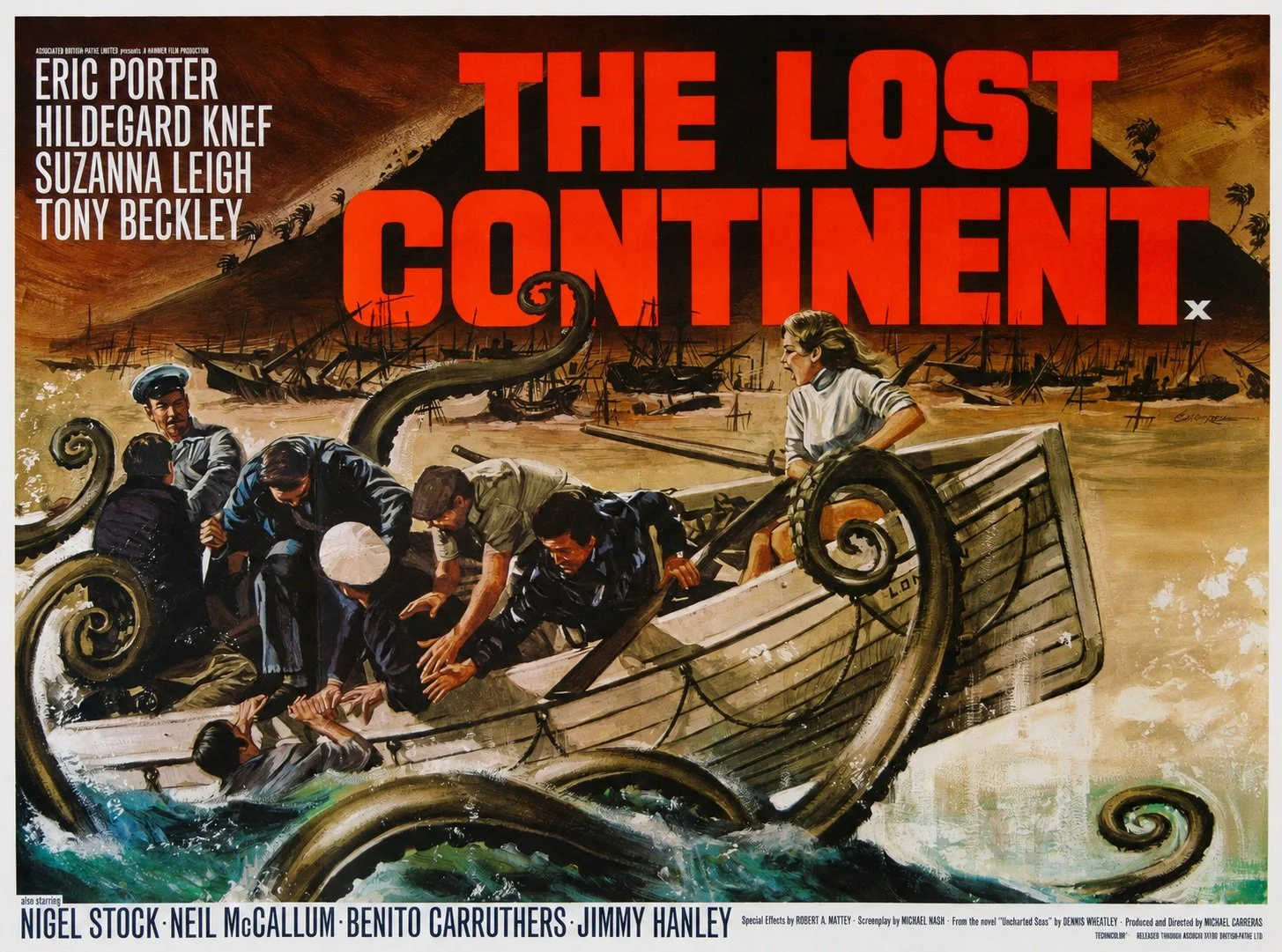
In 1968 the dilapidated freighter Corita hastily leaves Freetown to avoid a customs inspection. Captain Lansen (Eric Porter) has a cargo of dangerous explosives which he is smuggling so he can finally retire. His ship’s passengers also have reasons for leaving in a hurry. Dr. Webster (Nigel Stock), together with his daughter Unity (Suzanna leigh), is relocating due to his indiscretions with patients and illegal operations. Alcoholic pianist Harry Tyler (Tony Beckley) is aimlessly drifting from port to port. Eva Peters (Hildegard Knef) is fleeing from her husband with stolen bearer bonds which she intend to use to buy back her son from his evil clutches Caracas. Ricaldi (Ben Carruthers), a questionable lawyer, is pursuing Eva to retrieve the stolen bonds. First officer Hemmings (Neil McCallum) suggests that the ship should return to Freetown after an imminent Hurricane warning. The Captain asks the passengers and they are unanimous that they do not wish to return. However a mutinous crew, the bad weather and the instability of the explosives force everyone to abandon ship. The survivors find themselves adrift in a lifeboat surrounded by a strange carnivorous seaweed.
Jason Statham is an exemplar of the US mantra of “staying in your lane”. He makes action movies and occasionally strays into action comedies. His formula broadly works and is sufficiently lucrative to keep Mr. Statham employed. Therefore, if you watch a film in which he stars, you have a fairly good idea of what you’ll be getting. Of late, the criteria for his action vehicles have become more succinct. Jason Statham will play an innocuous character, such as a construction foreman or a bee keeper. Something terrible will subsequently befall another character who Mr. Statham has an emotional connection with in some capacity. He will subsequently hunt down those responsible and meet out death and violence. At some point the villain of the story will enquire as to how this innocuous person is so lethal. Research will then show that our Jason is in fact an ex-police officer/special forces operative/international assassin. There’s then a showdown and the villain dies. Job done.
The Light at the Edge of the World presented itself as an action movie upon its release in 1971. Based upon a story by Jules Verne, the Spanish American co-production was driven by its star Kirk Douglas, who curiously hired British director Kevin Billington to helm the project. This tale of a lighthouse keeper fighting a war of attrition against a group of pirates that have captured his island, was market as an adventure film ostensibly in the idiom of the authors previous works and as a pirate movie. MGM bought the rights to distribute the film in the UK on the misunderstanding that it was a family friendly production. It was not and remains so. They subsequently had to cut 15 minutes of violence and torture as well as an undercurrent of sexual assault to secure a suitable rating. Conversely, the US distributors received an arbitrary PG rating, despite the fact this is one of a handful of films that honestly depicts pirates as murderers, rapists and worse.
It’s an established action film trope. The fire team comprised of ex-military personnel, move in on their target. Only to have the tables turned by someone they don’t deem a threat. What makes it different in The Last Stand of Ellen Cole is a throwaway line of dialogue. The bested operative lies bleeding on the floor and the protagonists stands over them ready to finish them off. “Don’t, I have a cat” they feebly plead. For me that was the icing on the cake. The movie had already established it was taking the “same old, same old” and doing something different. Something fun, if taken in the right spirit. This scene tipped the balance and I embraced this film because it was being honest about what it is. This is a modern B movie that decides to give a very specific sub-genre a makeover. Furthermore, its clearly done with an affectionate wink, which is very different to sly wink. This isn’t deliberate self-knowing irony. Its just a film doing something different and possibly silly but it genuinely wants to have fun with it.
David Koepp is no stranger to genre cinema, having written the screenplay for such films as Jurassic Park, Spider-man and War of the Worlds. Where these titles are big budget, major studio productions, Cold Storage is a far more modest production with a smaller scope. Adapted from his own novel, the screenplay is by David Koepp and the film is directed by British film-maker Jonny Campbell. At first glance, Cold Storage seems a somewhat derivative science fiction horror film with a relatively modest budget, financed through a convoluted US and French co-production. Lurid green and red colours feature heavily in the marketing artwork and it is easy, after a cursory look, to write the film off as cheap, generic, direct-to-streaming filler. However, Cold Storage is prime example of why you should not judge a book by it’s cover, or in this case, a film by its posters and online advertising. It is in fact an amusing and fun endeavour that can fill an evening.
Despite being considered by many as an original story, The Abominable Snowman (1957) is in fact a remake of a made for television play, The Creature, that was originally broadcast in the UK in 1955. Hammer Films would often purchase the rights of popular TV programs and subsequently re-work them for mainstream, international cinema. Larger production budgets and fewer censorship restrictions allowed them to make their cinematic interpretations more lurid, thus commercially viable. Hence The Quatermass Xperiment, Quatermass II and Quatermass and the Pit were all given a big screen makeover and were commercially successful. The Abominable Snowman was written by acclaimed writer Nigel Kneale, who also wrote the original television drama and the aforementioned Quatermass trilogy. Although ostensibly marketed as a horror film this production is actually an interesting blend of psychological thriller and science fiction.
There are certain subjects that are notoriously uncinematic. These tend to be things that exist or are undertaken mainly in the mind, rather than expressed in an overtly physical way. Computing, science and mathematics are good examples. Writing code or working out complex equations does not immediately lend themselves to a visual medium such as cinema. Therefore, any film dealing with the world of corporate finance has its work cut out. Hence writer-director J C Chandor immediately deserves praise for making Margin Call, a film about the financial crash of 2008, as gripping and compelling as any political thriller. He does this by keeping the financial elements of the story to a minimum, choosing instead to focus upon those who have become aware of the imminent crisis and their reaction to it. However, the film remains a tough watch with regard to the some of the characters and their respective personal morality or lack there of.
The 1937 Hindenburg disaster has remained an enduring mystery over the years. The physical mechanics of how this airship filled with 7,000,000 cubic feet of hydrogen gas caught fire has been fully explored over the decades and there are now several extremely plausible theories as to how it may have happened. However, there remains the possibility of sabotage. As such an idea has more dramatic potential than mechanical failure, it was used as the central theme of the 1975 disaster movie The Hindenburg. Directed by Robert Wise, the screenplay by Nelson Gidding explores a German resistance against the Nazi regime. The airship is targeted as it is a powerful propaganda symbol for Hitler’s Germany. Sadly despite some interesting ideas, a strong cast and solid, old school optical effects, The Hindenburg is a slow and somewhat ponderous production. Although the final 20 minutes of the film recreate the infamous explosion meticulously, it doesn’t quite compensate for the uneventful, dialogue driven investigation of the previous 100 minutes.

On the Eastern Front in 1943, a German Tiger tank crew led by Lieutenant Philip Gerkens (David Schütter) is sent on a mission to rescue the missing officer Paul von Hardenburg (Tilman Strauss) from a top-secret bunker that is at risk of falling into enemy hands. As they make their way through an eerie no-man’s land, they have to avoid Russian armoured vehicles that seem to be aware of their mission. They also encounter a German unit taking punitive action against a peasant village, in reprisal for partisan activity in the area. The youngest crew member, Michel (Yoran Leicher), talks of the land being home to ghosts and spirits. As the tank penetrates further into contested territory the crew become increasingly disturbed by the uncanny nature of their mission and begin to fall prey to their own inner fears.
Robert Louis Stevenson’s classic novel has been adapted for cinema and television numerous times. Perhaps the most well known is the 1950 Disney version, starring Robert Newton as Long John Silver. His eye rolling performance and exaggerated West Country accent is credited with popularising the stereotypical form of “pirate speech" that has become the pop culture default. Although an enjoyable film, it does gloss over the more sinister aspects of both the source text and history, perpetuating the myth that pirates are just loveable scoundrels. Many subsequent adaptations have fallen into the same trap to a greater or lesser degree. However, that is not the case with the 1990 version of Treasure island, which was made for the TNT cable network and released theatrically outside of the US. This darker and notably more violent adaptation closely follows the source text and is widely considered the most faithful to the book.
The Planet of the Apes movie franchise took a radical change of course with its third entry in the series. The first two films were set in the future and benefited from high production values to help realise a post apocalyptic earth. However, due to a substantial reduction of budget, Escape from the Planet of the Apes uses a time travel plot device to bring the ape protagonists to present day Los Angeles (1971 in this case). The result is a film with a much smaller narrative scope. However, although it lacks the science fiction spectacle of its predecessors, it features an interesting satirical exploration of celebrity culture and ponders what it is like to be deemed an enemy of the state. As ever, Roddy McDowell and Kim Hunter provide exceptional lead performances as the Chimpanzees Cornelius and Zira. Escape from the Planet of the Apes also captures the pop culture vibe of seventies America.
It is not unusual for Disney to change film titles when marketing them outside of the US. In 2016 they renamed the animated feature film Zootopia to Zootropolis in the UK and Europe to avoid trademark conflicts with other existing businesses. For example there is a Danish zoo which already holds the “Zootopia” name. Similarly, in Germany there is a children’s book which caused copyright conflict, which led to the film being released under the title Zoomania. Such changes, although practical for legal reasons, can sometimes cause a degree of confusion. Especially as there are numerous, low budget productions companies that go out of their way to produce similarly titled “mockbusters” whenever there are big, tentpole, releases. So for clarity, Zootopia 2 has been released in the UK as Zootropolis 2.

Stephen King’s dystopian story, The Running Man, was previously adapted very loosely in 1987, as a vehicle for Arnold Schwarzenegger. That version focused mainly on the “Battle Royale” element of the story and leaned heavily into Arnie’s personality, rather than the politics of the book. It also wasn’t well received by the author. Edgar Wright’s remake follows the source text a lot more closely and is far more interested in its political themes and wider social commentary. Furthermore, this version re-establishes the everyman quality of the hero of Ben Richards, rather than him being the muscle bound, ex-military hero as per Mr. Schwarzenegger’s prior interpretation. This time round, The Running Man uses a lot of the visual and narrative tropes of contemporary reality TV, making this forty three year old story very relevant to today’s viewers and couching the film in a style that is recognisable and accessible.
The Haunted Dolls House is a short film based on a story by M.R. James about a unique antique that is subject to supernatural phenomenon. Adapted by Stephen Gray and David Lilley, this is the third of three short films based upon James’ work that the pair have made. It stars Steven Dolton as Mr. Dillet, a collector of antique dolls houses, who acquires a bargain only to discover that it harbours a ghostly secret. Made on an extremely modest budget over the course of 2012 this clever, innovative and rather sinister adaptation is a fine example of short film creativity. It manages to offer a unique visual depiction of M.R. James’ classic story whilst capturing the unsettling quality of the author’s work. Like so many independently made short films it is clearly a labour of love, made with modest resources. It succinctly captures the spirit of the author’s work and is both innovative and rewarding.
A lot of people may know Luke Evans from the live action version of Beauty and the Beast or Peter Jackson’s The Hobbit trilogy. With his matinee idol good looks, charming Welsh demeanour and his “smoky” tenor singing voice, he projects a sense of old school stardom. Which brings us to No One Lives; a film which is a radical departure from his previous work. His performance is disconcerting to say the least and the film is somewhat unhinged. Directed by Ryuhei Kitamura, who made an interesting adaptation of Clive Barker’s The Midnight Meat Train, this cinematic outing is similarly replete with robust shocks and gore. There are some interesting ideas about the nature of violence, Stockholm Syndrome and whether one should deny or embrace one’s nature. However, these are ultimately minor asides. Philosophical musings in between bouts of surprisingly striking unpleasantness.
In the near future, Kepler 822, a research and drilling facility located at the bottom of the Mariana Trench, suffers a sudden and catastrophic structural failure. There are only six survivors. Mechanical engineer Norah Price (Kristen Stewart), Captain Lucien (Vincent Cassel), biologist Emily Haversham (Jessica Henwick), engineer Liam Smith (John Gallagher Jr.) and crew members Rodrigo (Mamoudou Athie) and Paul (T.J. Miller). As all the functional escape pods have been used and they are unable to contact the surface, the Captain suggests using pressurized suits to walk one mile across the ocean floor to the Roebuck 641 drill installation. There they will find more escape pods. However, it soon becomes apparent that the disaster was not caused by an undersea earthquake and that they are not alone as they make their journey.

One of the most common objections raised regarding the Jurassic Park/Jurassic World franchise is that the films are specifically made to obtain a PG-13 rating from the Motion Picture Association, for purely commercial reasons. Hence, in all films, there is little on screen violence and the dinosaurs are mainly portrayed as a threat and a means of providing jump scares. When a character is killed by a dinosaur it usually happens off screen, is obscured by something else in frame, or is shown in long shot with very little detail. The realities of being eaten alive by a predator are conspicuously absent. Hence, audiences looking for films featuring more graphic dinosaur attacks, have not been well catered for apart from some minor direct-to-video titles. Primitive War finally fills this gap in the market with a frenetic genre mashup that strives to punch above is budgetary weight.
During the seventies, cinema was not only a source of mass, commercial entertainment but was still perceived as a medium for intellectual and philosophical discourse. Television was a poor relation in terms of art and cultural significance. Film was where the so called auteur director could muse and ruminate upon the nature of the human condition and audiences could subsequently gush sycophantically about their work at dinner parties. Or something like that. Let it suffice to say that some film makers were still indulged by studios and financiers, who were still keen to cash in on the cultural sea change that came to Hollywood in the late sixties. It’s difficult to see how a film such as Emperor of the North (AKA Emperor of the North Pole) could have been made otherwise. A film set in the Great Depression about a hobo illegally travelling on freight trains and his feud with a ruthless conductor.
In Buenos Aires, Clara (Natalia Señorales) hears voices emanating from the plughole in her kitchen sink. The voices seem to be plotting against her. Her husband Juan (Agustín Rittano) says the sounds are coming from next door. That night, Juan finds Clara’s dead body levitating in their bathroom, slamming against the wall by an invisible force. Meanwhile their neighbour, Walter (Demián Salomón), is experiencing supernatural occurrences while he tries to sleep. An invisible force repeatedly shakes his bed. After using a video camera to film these events, he sees a tall, cadaverous figure emerging from under the bed, standing over him as he sleeps. Across the road, Alicia (Julieta Vallina) is grieving for her recently deceased son, who was run over outside Walter’s house. Alicia's ex-boyfriend, police commissioner Funes (Maximiliano Ghione) calls Jano (Norberto Gonzalo), a paranormal investigator and the pair soon discover more supernatural occurrences in the area.

Black Sabbath (AKA I tre volti della paura) is a 1963 horror anthology film directed by Mario Bava. Although an Italian production, the film was co-financed by American International Pictures and as such was conceived to appeal to US audiences. Hence, the English dialogue edit of the film which was released in America differs significantly to the original Italian version. Despite the presence of the legendary Boris Karloff and the popularity of both anthology and gothic horror at the time,the film was only a modest success at the US box office and did not do well in Italy. However, in more recent years there has been a critical reappraisal of Black Sabbath, especially the Italian dialogue version. Many aspects of the film which are standard genre tropes today, were in fact novel at the time. Also despite the production mainly being studio bound, the film oozes style and has a striking visual aesthetic.
After the success of Raiders of the Lost Ark in 1981, filmmakers scrambled to find existing intellectual properties that they could use for similar films. Hence archaic heroes such as Alan Quatermain were hastily given a modern makeover and thrust into generic movies, in a vague attempt to replicate Steven Spielberg’s successful formula. Which brings us neatly on to James Charles Bigglesworth AKA “Biggles”, a fictional pilot and adventurer from a series of books written by W. E. Johns between 1932 and 1968. Several attempts had been made in the past to bring this character to the silver screen, including one by Disney but they all failed. However, the commercial and critical success of Indiana Jones provided sufficient impetus to greenlight a new film. However, due to some curious production choices, when Biggles was finally released it was far from just a period set, action movie.
Setting aside the hubris of remaking a film such as Red Dawn, the 2012 reboot had a troubled production. Shot over the course of late 2009, on location in Michigan, MGM intended to release the film in September 2010. However, the studio’s financial problems became unsustainable over the course of that year and the film was shelved, while a financial solution was sought. Furthermore, while Red Dawn was in post production, there was a major economic shift within Hollywood due to the increasing importance of the Chinese market. This was a significant problem for MGM because the new version of Red Dawn had the Chinese invading the USA instead of Russia. Hence there were reshoots and the need for additional visual effects, so that the Chinese could be replaced with North Koreans. MGM eventually went bankrupt and the distribution rights to Red Dawn were sold off. The film was eventually released in 2012.
American music producer James William Guercio is primarily known for his work in the music industry. He was the producer of the band Chicago’s first eleven studio albums. In the mid-seventies he also managed the Beach Boys and was a member of their backing band. He was during this time, well known in his field and respected. In 1973, Guercio directed, produced and wrote the score for his first and only feature film, Electra Glide in Blue. He was 28 years old at the time. Upon release the film received mixed reviews from many traditional US newspapers, who were dismissive of its revisionist themes and poetical style. However, in Europe the film was received more favourably and was entered into the 1973 Cannes Film Festival. Fifty two years on and Electra Glide in Blue is now considered an overlooked cult classic and is analysed in a more measured fashion.
Burton & Scrooge Podcast #31
After a short hiatus, Messrs Burton and Scrooge make a welcome return to the world of podcasting with their lavishly tooled and finely crafted show. No expense has been spared upon the production as once again this esteemed broadcasting duo, bring you another erudite and august debate. As ever they focus on the relevant issues and ensure that their scholarly discussions are free from unnecessary phatic language and tabloid hyperbole. The podcast also sports a new introductory voiceover and complimentary epilogue at the close of the show. Liam Neeson has graciously endorsed Burton and Scrooge yet again.
After a short hiatus, Messrs Burton and Scrooge make a welcome return to the world of podcasting with their lavishly tooled and finely crafted show. No expense has been spared upon the production as once again this esteemed broadcasting duo, bring you another erudite and august debate. As ever they focus on the relevant issues and ensure that their scholarly discussions are free from unnecessary phatic language and tabloid hyperbole. The podcast also sports a new introductory voiceover and complimentary epilogue at the close of the show. Liam Neeson has graciously endorsed Burton and Scrooge yet again.
In this latest instalment, our hosts turn their attention to the popular MMORPG, Lord of the Rings Online and ponder the games ongoing renaissance, since the it changed developers and publishers. They also ponder the recent brouhaha, caused by popular You Tuber PewDiePie. Is he a misunderstood artist of just another jumped up blackguard? Finally, to close the show, Messrs Burton and Scrooge ponder the merits of season four of the television drama Sherlock. Was it a worthy entry in to the pantheon or “a load of old bollocks”, to coin a phrase?
So why not settle down in your favourite fireside chair, ask your batman to pour you a glass of Amontillado and treat yourself to seventy-five minutes of auditory delight. Remember your podcasting enjoyment is assured as Messrs Burton and Scrooge have a reputation for being purveyors of the finest quality podcasts throughout the civilised world. If you don’t enjoy the experience, then you’re obviously listening incorrectly and need to raise your own personal game. You may benefit from listening to previous episodes as a means of educating yourself.
Burton and scrooge. Condescending to their listeners since 2010.
The initial podcast boom, which began circa 2005, started as an audio only medium. One of the reasons podcasting became so popular, especially among the fan community, was that you could get away with relatively low production standards. Anyone who had access to a basic microphone and a PC, could produce a show and upload it to iTunes, which was the primary platform at the time. Listeners were forgiving back then. Twenty years later and podcasting has been on a tempestuous journey. It started with the medium being accessible and democratised, sustaining a rich and diverse fan community via non-professional productions. However, slowly and inevitably it has been assimilated by corporate interests. Fan podcasts have given way to podcast production companies. The small, micro-budget, indie show has effectively been thrown out of their own party. Such shows still exist but they struggle to be heard.
Last August I listened to The Battersea Poltergeist podcast by Danny Robins and was subsequently introduced to his other production Uncanny. Both are investigations into alleged supernatural events but unlike other shows of this kind, these are far better researched, produced and most importantly even handed. Danny makes a great deal of effort to try and keep a foot in each camp; team believer and team sceptic. Overall these podcast work as they genuinely appeal to multiple audiences and they are not excessively hyperbolic or credulous. A lot of this comes down to Danny’s personality which is upbeat and relatable. Perhaps his greatest strength is being a sympathetic ear to those recounting their experiences. He lightens the mood from time to time with humour when required. He also liberally litters the proceedings with pop culture references. However, he will probe and ask pointed questions but does so in a non-accusatory manner.
Have you noticed how politicians, pundits and media commentators will often throw around phrases and buzzwords when discussing the news and other major political talking points? “Cultural Marxism” and “Metropolitan Elite” are two examples that spring to mind. Often it is clear that the person using these phrases has no idea what they mean or what their provenance is. Perhaps you’ve thought that it would be useful to learn more about these terms or the background behind certain institutions or movements. If this is the case then I wholeheartedly recommend the Origin Story podcast. To quote from their website “What are the real stories behind the most misunderstood and abused ideas in politics? From Conspiracy Theory to Woke to Centrism and beyond, Ian Dunt and Dorian Lynskey dig into the astonishing secret histories of concepts you thought you knew”.
I was unaware of the The Battersea Poltergeist podcast and accompanying online interest during its initial release. Created by Bafflegab Productions and presented by Danny Robins, who is well known in this field with similar shows such as Haunted and Uncanny, it was broadcast on BBC Sounds and BBC Radio 4 between February and March 2021 during lockdown. The Battersea Poltergeist is a documentary of a true story with dramatized re-enactments. The show alternates between interviews, discussions and research into the case with short vignettes from a cast of actors recreating events for dramatic effect. It was released episodically and gained a lot of online and press interest at the time. Hence there were additional episodes interspersed throughout the initial run which provided “case updates” and listener feedback and questions.
I spent most of this morning and afternoon editing video content I captured while playing Sniper Elite Resistance. I assembled 26 minutes of highlights and then recorded a narration. After adding appropriate branding for Contains Moderate Peril, I then uploaded the finished video to YouTube. Sadly, the picture quality was problematic, often becoming pixelated and blocky when there was rapid movement. The volume of my narration was also too low, so I decided to delete the video from my channel. I was somewhat disappointed by this outcome and initially thought that the day had been a waste of time. However, as I write this post, it becomes very clear that this is just part of the learning curve. I have given some thought to the problem and I believe I have determined why this video was not up to the standard of the previous one. Ultimately, this is an invaluable lesson.
I recently wrote a post about how I wanted to have a go at producing some gaming videos for YouTube. “How hard can it be?” I asked rhetorically, knowing that there would probably be a lot more to the process than meets the eye. Two weeks on and I can report back that there is indeed a learning curve but it is not insurmountable. I managed to figure out how to record a video game, edit it and then add a narration as well as a simple animated logo. Furthermore, I succeeded in doing this without spending a lot of money. I bought some video editing software and a year’s subscription to XSplit Broadcaster but got a really good deal on both. In total I paid £41, which is very reasonable. Hence yesterday, I posted my first video on the officially relaunched Contains Moderate Peril YouTube channel.
I regularly receive random emails addressed to such august bodies as “the Contains Moderate Peril team”. They always raise a wry smile. Like there’s a team. That implies an organisation, structure and even a budget. As opposed to just me, screaming into the void and pouring money into a financial black hole. I don’t resent such emails. People are just trying to earn a crust, I guess. The only thing about them that frustrates me, is they never address me by name. A cursory glance at the “about” page of the website would provide them with my personal details. So I just delete them and think no more about them. Today I received one that did more than make me smile. In fact I laughed out loud and heartily. The email started with “Dear Burton”. Someone had found a few old episodes of the Burton and Scrooge podcast and had assumed this was indeed my real identity.
Earlier tonight, I had the pleasure of participating in the Evolution of Horror: Podcasting Masterclass. An online seminar conducted via Zoom. For those who are not familiar with the Evolution of Horror, it is a podcast written and hosted by Mike Muncer along with regular guests. It explores horror cinema in depth, considering the technical, thematic and sociological elements of the genre. Launched in 2017 this independent production has gone from strength to strength, with Mike now producing content for Paramount + and Studio Canal. The masterclass was designed to provide podcasters both old and new with some practical advice and answer some commonly asked questions. Being a fan of Evolution of Horror as well as a former podcaster, I signed up and enjoyed a most informative and enjoyable 90 minute seminar.
About three years ago, I wrote a very similar post to this one. Titled “Ride off into the sunset” it was an account of bloggers leaving or retiring from the community. Especially those who are established and part of the proverbial furniture. I referenced Zubon from Kill Ten Rats as an example and naturally invoked the mantra that nothing remains the same forever. Many of us go through periods of our life where a specific activity or pastime galvanises us into action. We focus on that activity for sometime and it becomes an integral part of our life and even identity. However, eventually we move on usually because such a hobby isn’t sustainable. Modern life makes too many demands upon our time. Plus we all change as individuals. What delights us today may well depress us in a year’s time. This was the thrust of that post and I now find myself in the sad but inevitable situation of writing it again.
I recently decided I’d had enough of the endless deliberation and procrastination and so I started producing a weekly podcast again. As of today the second episode of Season 10 of the Contains Moderate Peril podcast is available on all major platforms. I must admit, although I was confident that a few people would listen to the show, I was completely taken aback by the overall reaction. The Contains Moderate Peril podcast was warmly welcomed back by previous listeners on social media and the statistics for the first show have been most positive. For myself and Brian, recording the show is like putting on a comfortable pair of shoes. Last night’s recording went okay and I think after a few more episodes, the recording and editing process will be an efficient process. Keeping each episode to an hour or under means that the conversation stays on point.
Sometimes in life, you have to stop banging on about what you want to do and just go out and do it. I was thinking, yet again, over the Christmas holidays about how I wanted to get back into podcasting and to create a regular show. Although it is always a pleasure to be a guest on Beyond Bossfights, it is not quite the same as writing and producing your own project. So I decided not to sit around and overthink things but instead to pick a subject as a talking point, start recording and see what happened. As ever, my longstanding co-host Brian was happy to participate and so joined the session. Several hours later, I had a fully edited recording that was good to go. Hence, I am pleased to announce that after a three year hiatus, the Contains Moderate Peril podcast is back. A new episode is now available for download, either via the podcast page of this site or through iTunes and Stitcher.
My personal podcast journey started back in 2010 when I effectively invited myself onto the Mordor or Bust podcast. The three of us who were involved in the production of that show were learning as we went along. I recently listened to an old episode and despite our enthusiasm, it is quite rough around the edges from a technical perspective. I think that the biggest mistake that I made at the time was not investing in a better quality microphone. I sound like I’m at the bottom of a well. It’s hardly surprising as I was using a very cheap analog desk microphone which I think only cost a few pounds from PC World. Roll on eleven years and I’ve been invited to be a guest on the Beyond Bossfights podcast. It’s nice to be back in the saddle again, so to speak. Up until now, I’ve been using my Razer gaming headset for any previous podcast recordings but I’ve decided to take the opportunity to overhaul my technical setup.
Back in 2010 there was a video game podcast boom, especially with shows driven by MMORPG fandom. Hence, in a fit of hubris, I decided to add my voice to the growing conversation. Or alternatively jumped on the bandwagon, depending upon your point of view. The accessibility of the tools to create and distribute a podcast eliminated the traditional barriers to producing such material. Technically, the entire process of making a podcast remains quite simple. You record, edit, upload and promote. The quality of the podcast comes down to two factors. Your content and technical presentation. In this post I’d like to focus upon the latter. Podcasts are by their very nature, an audio medium, so it is important that those speaking are recorded clearly. Yes, this post is about microphones. How they can make or break a podcast (or live stream) and that they’re my new fixation.
Back in July 2014, a small group of podcasters banded together to launch The Gaming and Entertainment Network, a website which aggregated the content of eight independently produced shows. This eclectic group of podcasts covered a range of subjects such as gaming, movies, TV, hats and bacon as well as other aspects of popular culture. The project was conceived and implemented by Braxwolf from the popular blog Gaming Conversations. It was designed to raise awareness of the respective shows, as well promote group collaboration between the content creators. In addition to the website, TGEN (as it was abbreviated to) also had a presence on twitter, Facebook and Anook ensuring that the network was represented on all popular social media. Initially 8 podcasts participated in the project. Aggrochat, Battle Bards, Beyond Bossfights, Cat Context, Contains Moderate Peril, Couch Podtatoes, Massive Failure and Roleplay Domain.
Life is often about the things we’d like to do or wished we had done, rather than the things we’ve actually achieved. My last post in this blog series was back in 2nd October 2018 and the last podcast that I published was in January 2019. Since then most attempts to produce more content of this kind have come to nought, as spare time for both recording and editing have been in short supply. However, I did manage to record some material on the 22nd of December with my long-time co-host Brian. The idea was to release the finished podcast as a surprise show at the end of the year. However, due to real world commitments, that deadline has not been met. Now there’s a surprise. I do intend to finish editing the show and may add some extra material to make it a little more topical. But overall, I am not too upset by this delay, because in the process of organising this podcast, I discovered a quick and convenient means of recording via Discord. Something that has been seen as Holy Grail of podcasting over the years.
As part of the Blaugust Festival of Blogging, I thought I’d take the time to promote some of the content creators whose work I enjoy. Despite all the white noise, click bait and snake oil salesmen, there is still a wealth of good material to be found online, be it blogs, podcasts, You Tube channels or streamers. Most of what I currently enjoy, I discovered through word of mouth. I feel more disposed towards trusting the views and opinions of friends than I do of “recommendations” made by Google and You Tube, driven by their “questionable” algorithms. These are often determined by key words and have no ability to ascertain quality. So here are a mixture of You Tube channels, podcasts and blogs that I wholeheartedly recommend. Between them they cover such subjects as movies, gaming, comedy and history. Feel free to leave comments about my choices and share your own recommendations.
The initial podcast boom, which began circa 2005, started as an audio only medium. One of the reasons podcasting became so popular, especially among the fan community, was that you could get away with relatively low production standards. Anyone who had access to a basic microphone and a PC, could produce a show and upload it to iTunes, which was the primary platform at the time. Listeners were forgiving back then. Twenty years later and podcasting has been on a tempestuous journey. It started with the medium being accessible and democratised, sustaining a rich and diverse fan community via non-professional productions. However, slowly and inevitably it has been assimilated by corporate interests. Fan podcasts have given way to podcast production companies. The small, micro-budget, indie show has effectively been thrown out of their own party. Such shows still exist but they struggle to be heard.