
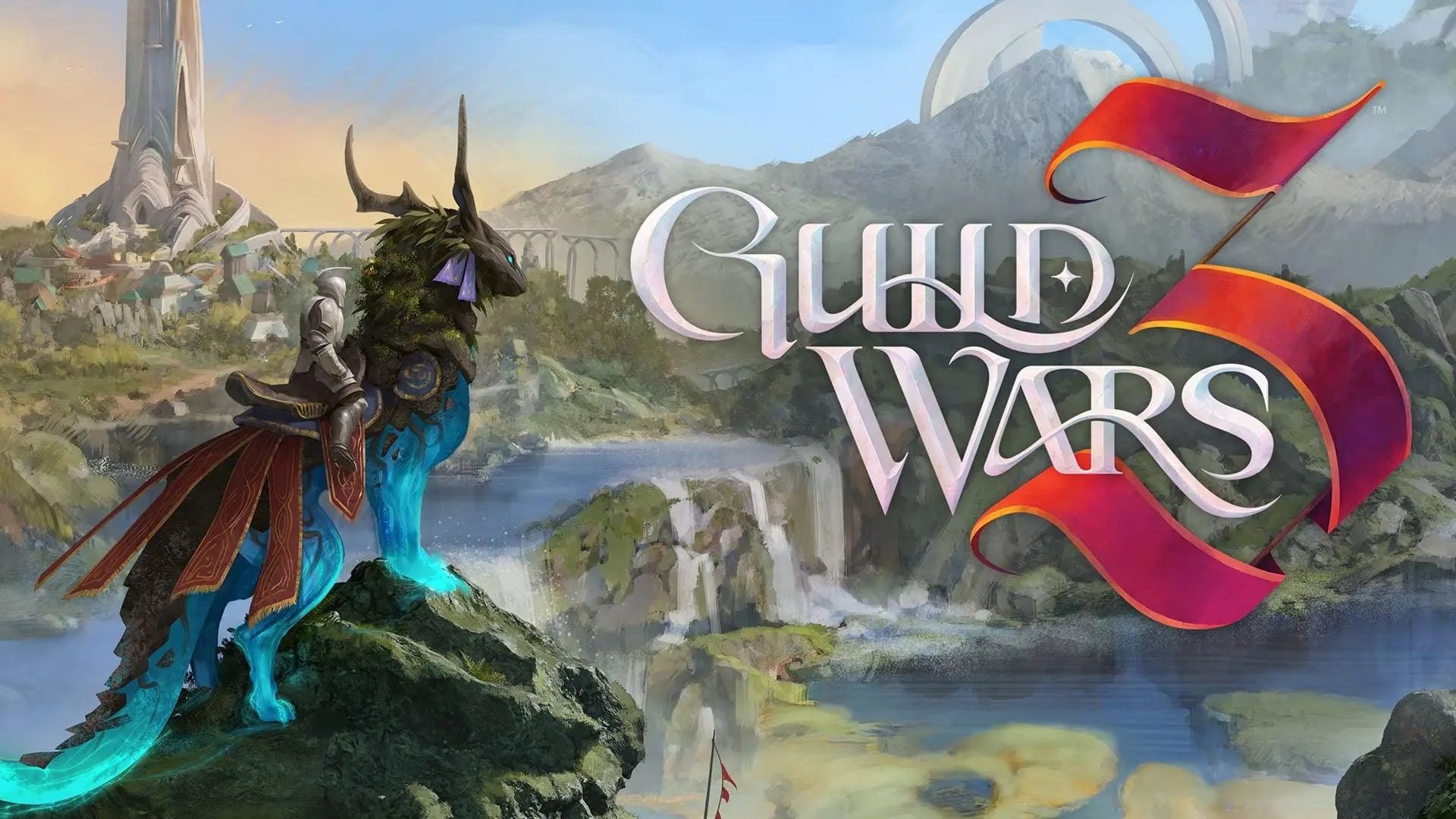
Guild Wars 3
I don’t keep up with gaming news as much as I use to but several noteworthy announcement have come to my attention of late. Firstly, there’s an expansion, Songs of the Past, coming for the Witcher III: Wild Hunt in 2027. No doubt this is to pave the way for the Witcher IV. Next, I also found out about Hand of Fate: Horde. I liked this franchise and was saddened to learn that the original studio, Defiant Development, closed. Hence is was a pleasant surprise to see this new game being developed by members of the original studio. The third announcement was regarding Guild Wars 3. A new MMORPG in active development by a major studio is no small feat and is certainly good news for fans of this franchise and the genre per se. However, once you look beyond this news this announcement raises several questions and has certainly given me pause for thought. Let us take a few moments to consider them.
I don’t keep up with gaming news as much as I use to but several noteworthy announcement have come to my attention of late. Firstly, there’s an expansion, Songs of the Past, coming for the Witcher III: Wild Hunt in 2027. No doubt this is to pave the way for the Witcher IV. Next, I also found out about Hand of Fate: Horde. I liked this franchise and was saddened to learn that the original studio, Defiant Development, closed. Hence is was a pleasant surprise to see this new game being developed by members of the original studio. The third announcement was regarding Guild Wars 3. A new MMORPG in active development by a major studio is no small feat and is certainly good news for fans of this franchise and the genre per se. However, once you look beyond this news this announcement raises several questions and has certainly given me pause for thought. Let us take a few moments to consider them.
When a new game in a popular franchise is launched, it does not necessarily mean the immediate death of the previous iteration. You can still buy and play older versions of titles such as Call of Duty and Battlefield and they often maintain a dedicated player base. That has not always been the case with the MMO genre. The Playstation 2 version of EverQuest Online Adventures was shutdown by Sony Online Entertainment upon the release of EverQuest II. Overwatch was not closed as the such but the game client was patched thus morphing existing installations of the game into Overwatch II, regardless of whether players wished this or not. However in the case of Guild Wars 2, ArenaNet have announced that they will keep producing content for the older game once they have completed work on Guild Wars 3. ArenaNet have a track record of maintaining old and new products in parallel.
Perhaps the biggest issue associated with Guild Wars 3 and the one that is currently being debated, is what does a modern MMORPG look like? The term has evolved greatly over the last 25 years and as a result there are clear difference between games hailing from different eras. Those who want tab targetting, static combat and structured skill rotations, along with a strong social component and required grouping may be disappointed. I suspect that ArenaNet will be pursuing a modern approach to Guild Wars 3, utilising a hybrid style that blends a large persistent online world with the kind of high-mobility gameplay that you find in modern third-person action games. Perhaps there are clues to be found in the recent RPG Crimson Desert, which started its development life as an MMORPG before being transitioned into a single player game. It has many systems inherent in the MMORPG genre but its combat is very contemporary.
Naturally, there is scope that some players will not like the cut of Guild Wars 3 proverbial jib and will not migrate to it. Conversely, the existing Guild Wars 2 community may well see a substantive drop in players which may impact negatively upon guilds and end game content. You cannot please everyone, nor should you try to. It will be interesting to see how both game fare. I still have numerous screen captures taken during the Guild Wars 2 beta tests in 2012 and have fond memories of that time as I was a consummate MMORPG player back then. Nowadays, I am more curious about the development of Guild Wars 3 from a business and industry perspective, rather than an active player of the genre. As to those players who have already questioning whether to continue to play Guild Wars 2 now that a new game has been announced, I’d urge them to live in the moment and continue to play and enjoy the current game. Guild Wars 3 is a long way off. “Now” is here already.
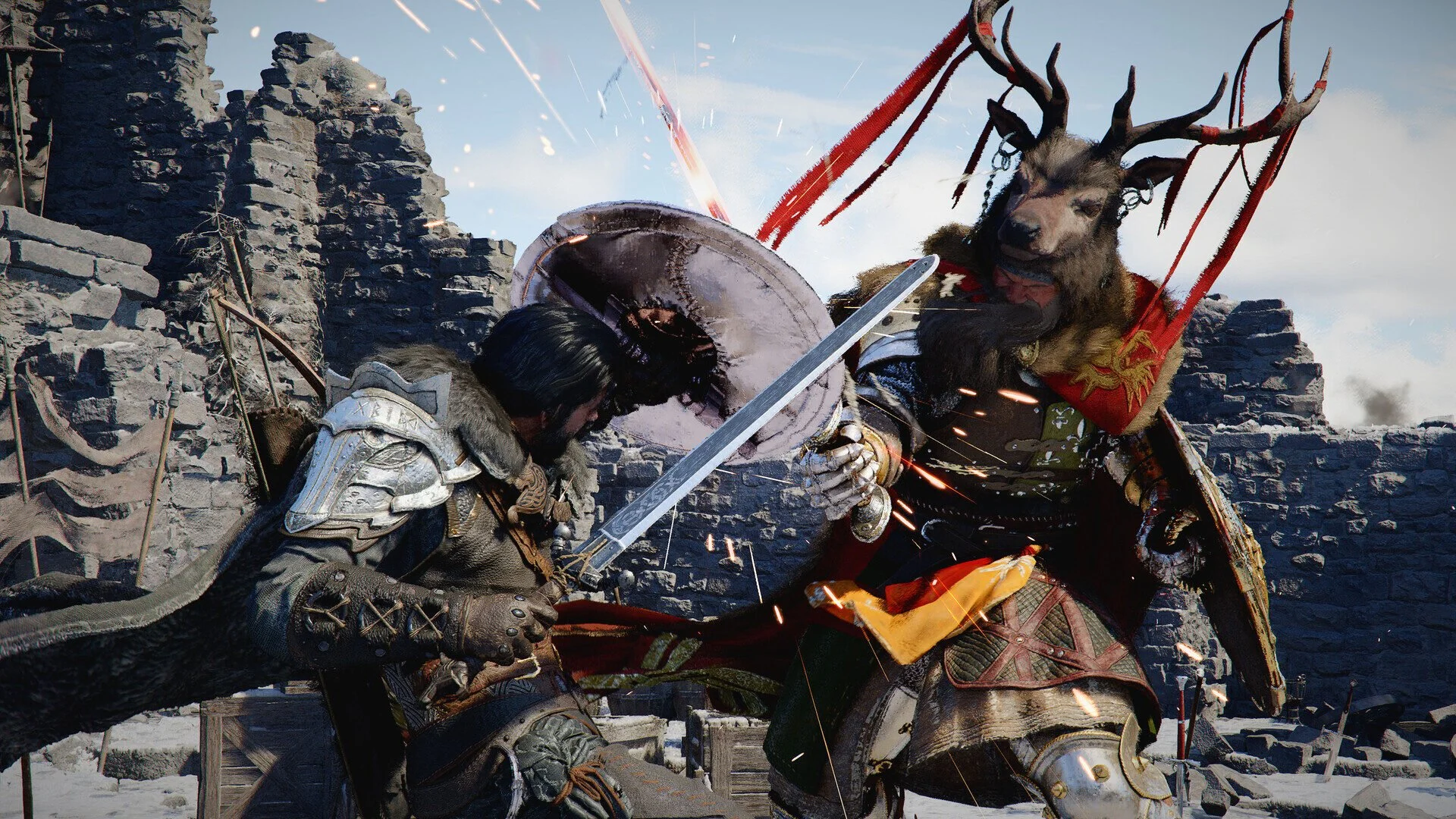
Some video games lend themselves to being set aside and resumed at a later date with zero consequences. These are often casual games with no major goals other than having fun while playing them. Fall Guys is a great example of this. You have a cartoony avatar that participates in zany group races, filled with obstacles. You run, jump, climb but the controls are far from difficult. You may well become skilled but such things are mitigated by the other players as they stumble around. You’re not at the mercy of apex players or “try hards”. It is not a game about winning and mastering techniques. The fun comes from playing it and the unique experience you have each time. I’ve been playing this game, on and off, since it’s launch in 2020 and in that time I have only ever won once (winning requires you to win a series of 4 to six individual races). However, whenever I pick up my controller and play Fall Guys, I have fun and the game lifts my spirits.
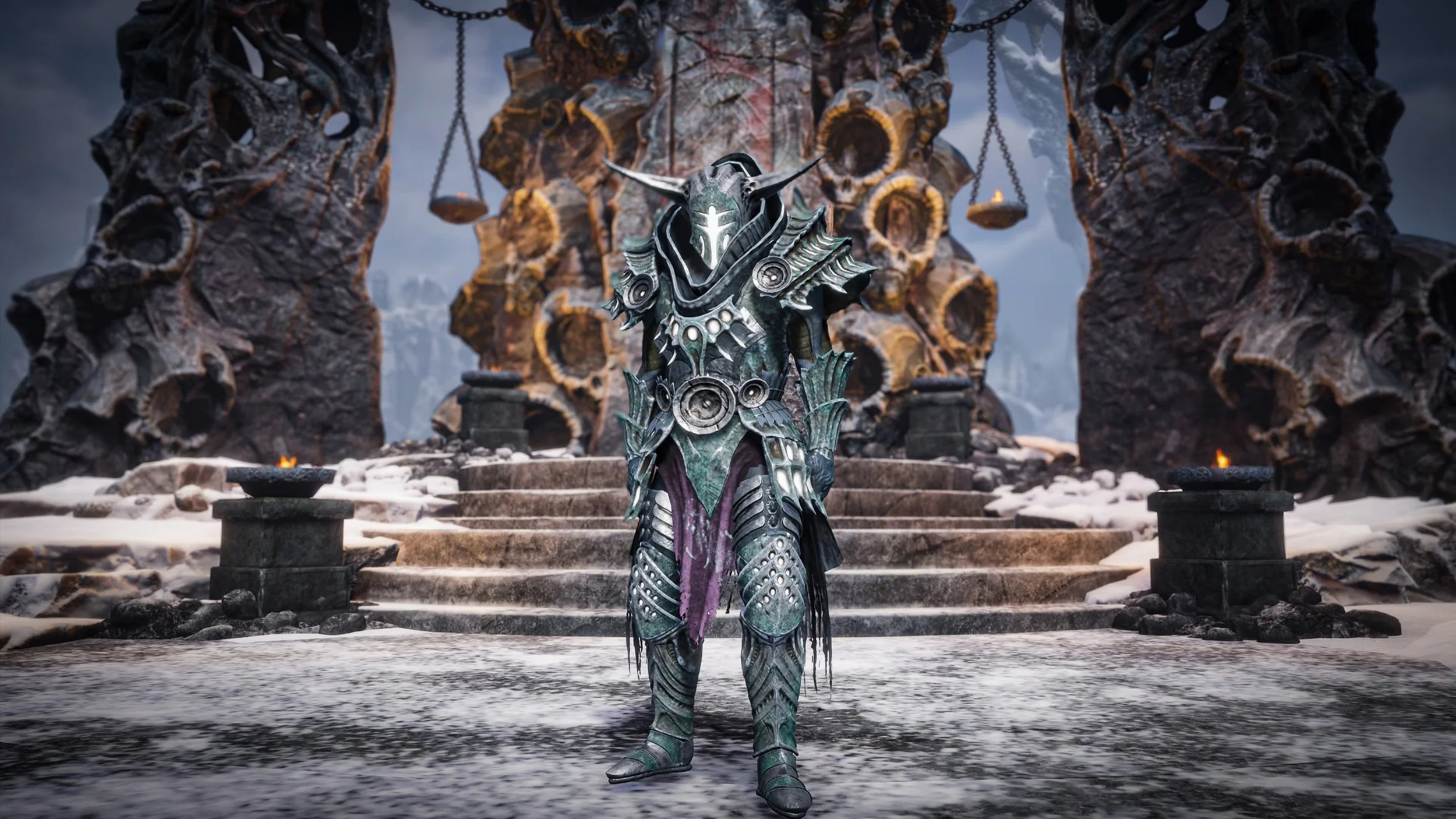
I recently completed the main story in Tainted Grail: The Fall of Avalon. In total I spent about sixty hours playing the game. I began at the start of the year, then took a break for a while but returned to it recently because I wanted to see if I could unlock a specific ending. I did manage to do this. Like so many other RPGs, Tainted Grail: the Fall of Avalon has a central storyline, along with a wealth of side quests, based around factions in specific zones. I think I possibly completed about a two thirds of these. However, once I finished the main story, my interest in the game began to wane. I finally left my character in the last major quest hub in case I wish to return at a future date. I then logged out of the game and uninstalled it from my PC to free up space for whatever I was to play next. In this case its The Sinking City 2. None of this is a negative reflection on Tainted Grail: the Fall of Avalon. I enjoyed the time I spent playing this quirky RPG. I simply had my fill and left to play something else.

On Tuesday 11th April, Aspyr Media rather surprisingly re-released The Lord of the Rings: War in the North, a co-op action-RPG from 2011. This game was delisted in late 2019, possibly due to changing rights ownership or a license expiring. Hence, I was somewhat discombobulated by the return of this title to all major gaming platforms. Mind you, the Embracer Group (through its subsidiary Middle-earth Enterprises) still controls the worldwide commercial and video game licensing rights for The Lord of the Rings and The Hobbit. Furthermore they have explicitly stated that they have plans for more games. It would appear this also means re-releasing and updating old favourites. It is also worth noting that they own Aspyr Media, which is also a bit of a giveaway. Let it suffice to say that this re-release and sparked enthusiastic online debate as to whether any other he Lord of the Rings themed games from the same era will receive a similar makeover. Judging by the internet chatter, there’s potentially a market for them.
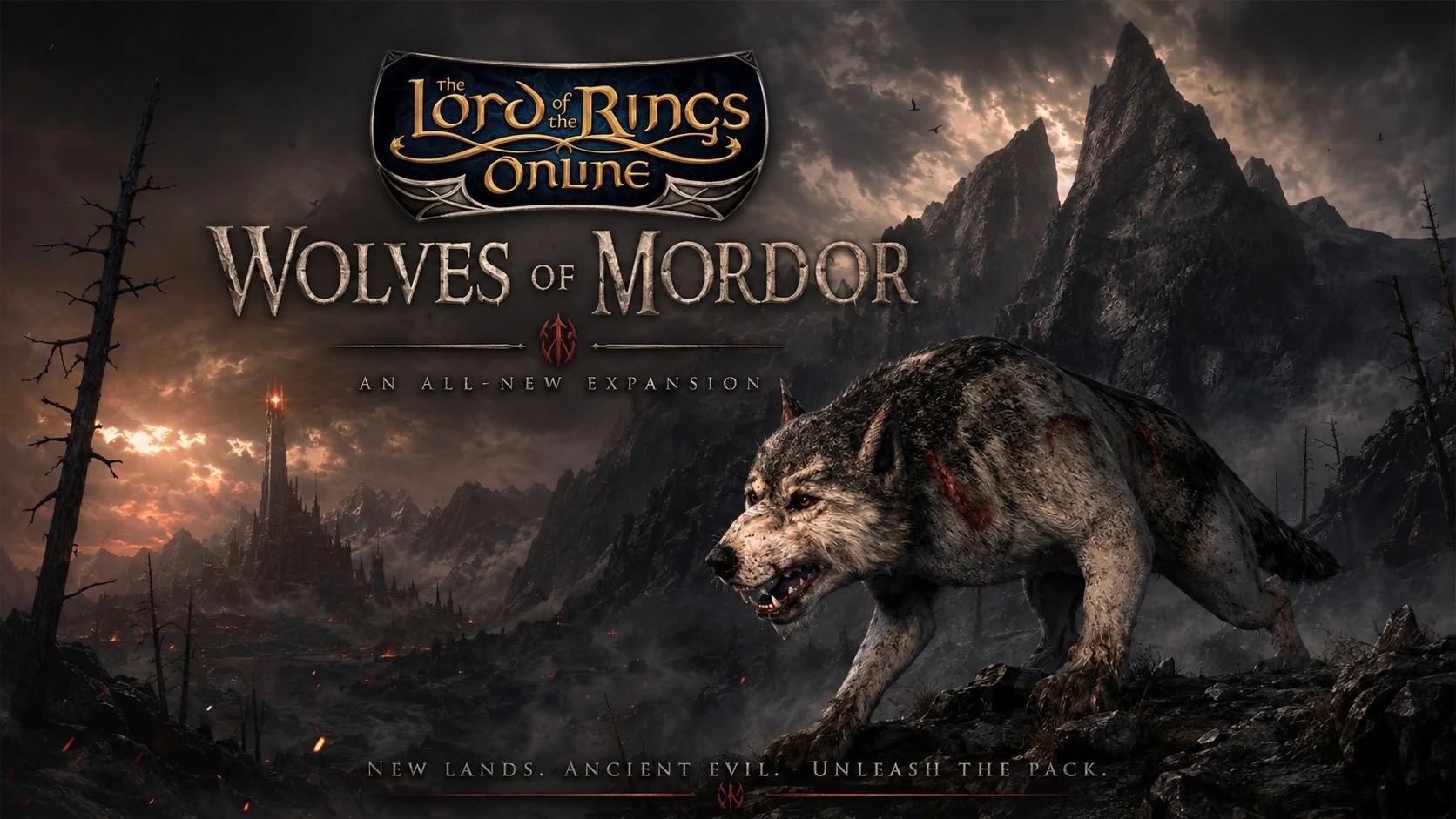
The next expansion for the MMORG, The Lord of the Rings Online, was announced on the 1st August, via the gaming website MMORPG.The Wolves of Mordor, which will launch later in the year, appears ambitious in scope as it will include two new game systems as well as the obligatory story update. This expansion takes place in Draugardh located in the North East of Mordor, beyond the Plateau of Gorgoroth. It includes the new zones of Heledhris, Parth Rhavas and Nan Ogol. These vary environmentally ranging from the arid, volcanic and semi-tropical. Players will encounter the Daugrim in these regions, Werewolves but not in the modern sense. This is not the lycanthropy of Eastern European legends but in the established Tolkien idiom of fell spirits inhabiting the bodies of Wolves. The region also sees the return of the Woses and players can expect to encounter Elves and scouts from Gondor. As ever with LOTRO expansions, there will be new instances as well as a raid.
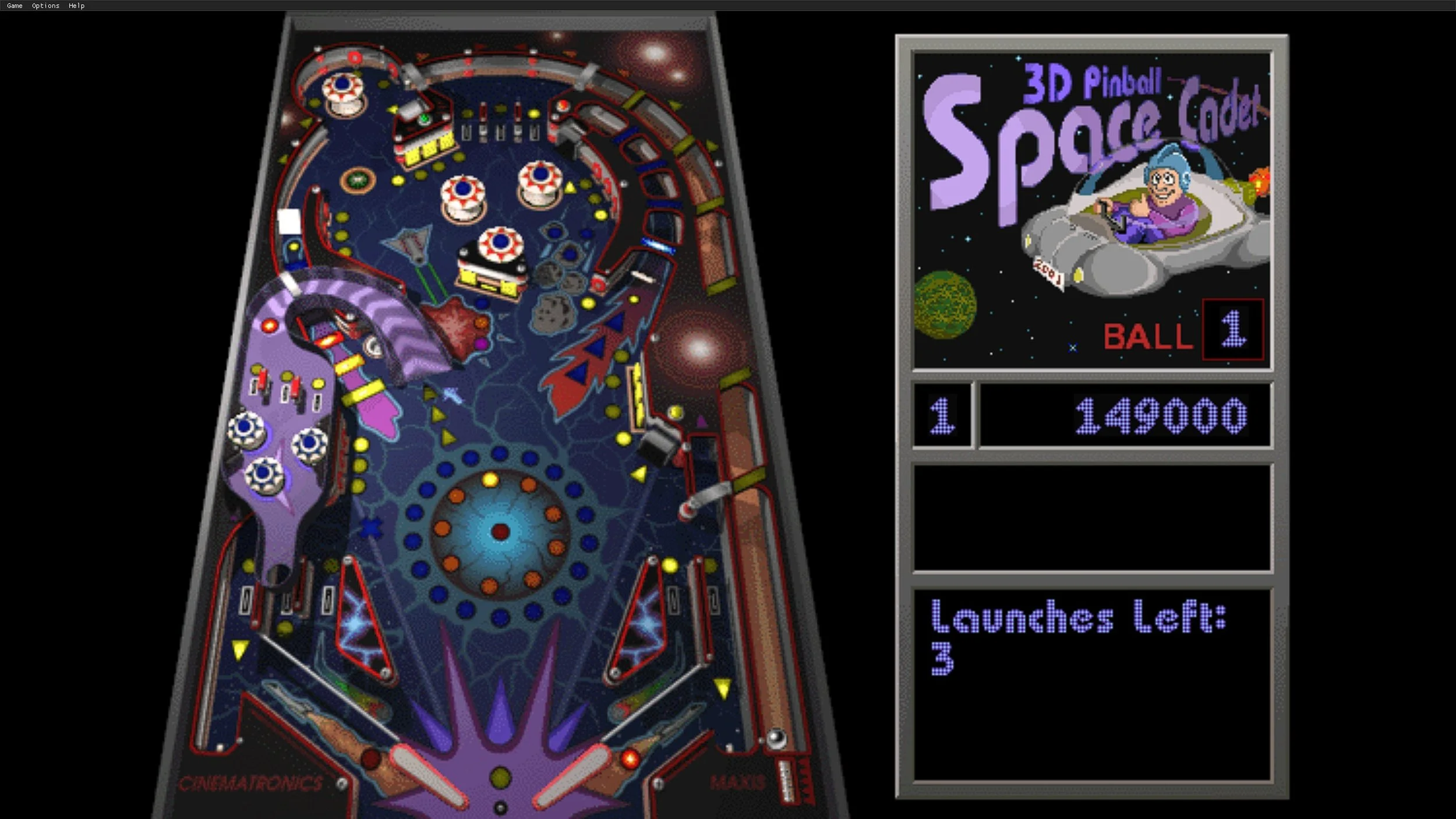
This is a post about the power of nostalgia and how sometimes, interacting with something from your past, be it physically or mentally, can produce a very strong and tangible emotional reaction. In some instances, this can be the result of something that you have specifically set out to do. On other occasions you can wander into a sense of nostalgia purely by chance. Today I experienced a very strong sense of nostalgia while watching a YouTube video and then again when I sought to replicate what I had seen. The video showed someone installing Windows 95 on to an old 486 PC from that era. The Window’s start up sound really touched a nerve (but in a good way) and then when the guy in the video launched Space Cadet 3D Pinball, a game that shipped with the operating system, I felt a strong compulsion to track down a copy and install the game myself, thus revisiting something that was an integral part of my life in 1995.
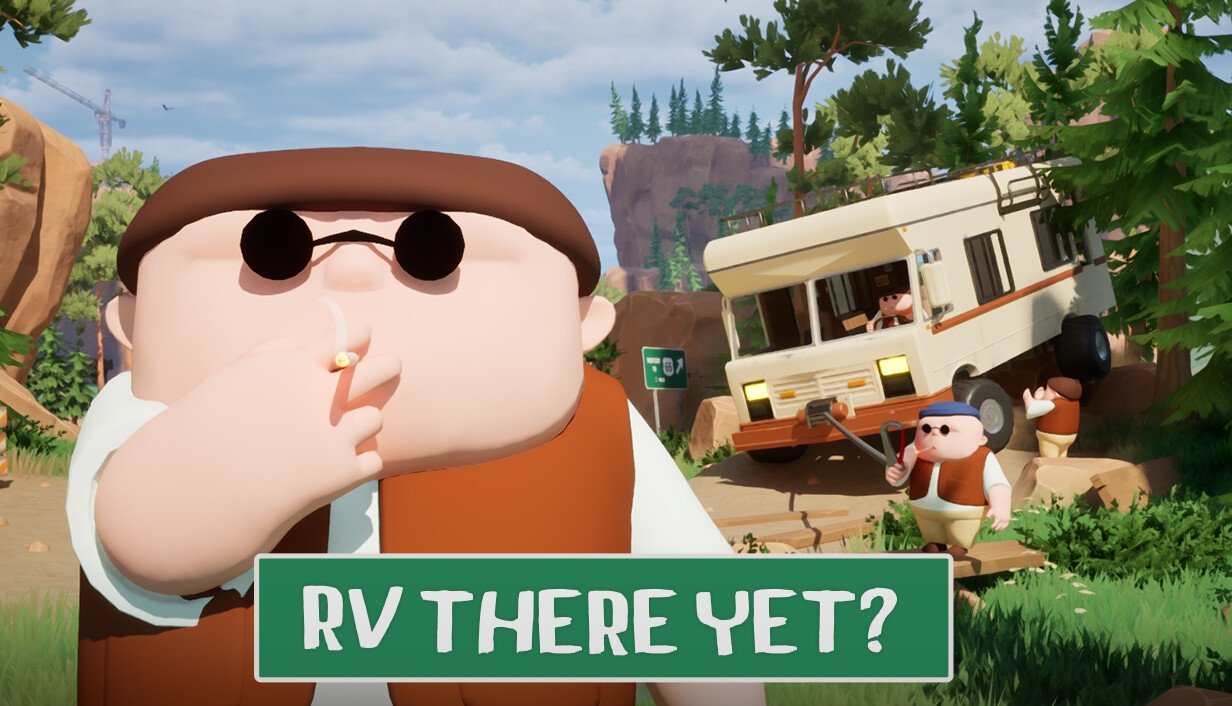
RV There Yet? is possibly the most entertaining game I’ve never played. My vicarious pleasure regarding this title has come exclusively from watching two popular YouTubers, JackFrags and WillFromWork, play through the game over a series of videos. It has been immensely amusing to watch and I have empathised a great deal as the group of four players has struggled with the game’s unpredictable mechanics and their own team’s dynamic. I could go and buy RV There Yet? myself but I doubt if I would ever have a gaming experience anywhere close to what I’ve watched online recently. So in some respects watching these videos has been an interesting alternative as I’ve been entertained, which ultimately is the point of video games. Perhaps there is a deeper philosophical point here that the game developers should reflect upon, as they’ve lost a potential sale. However, that is separate discussion for another day.
I don’t keep up with gaming news as much as I use to but several noteworthy announcement have come to my attention of late. Firstly, there’s an expansion, Songs of the Past, coming for the Witcher III: Wild Hunt in 2027. No doubt this is to pave the way for the Witcher IV. Next, I also found out about Hand of Fate: Horde. I liked this franchise and was saddened to learn that the original studio, Defiant Development, closed. Hence is was a pleasant surprise to see this new game being developed by members of the original studio. The third announcement was regarding Guild Wars 3. A new MMORPG in active development by a major studio is no small feat and is certainly good news for fans of this franchise and the genre per se. However, once you look beyond this news this announcement raises several questions and has certainly given me pause for thought. Let us take a few moments to consider them.
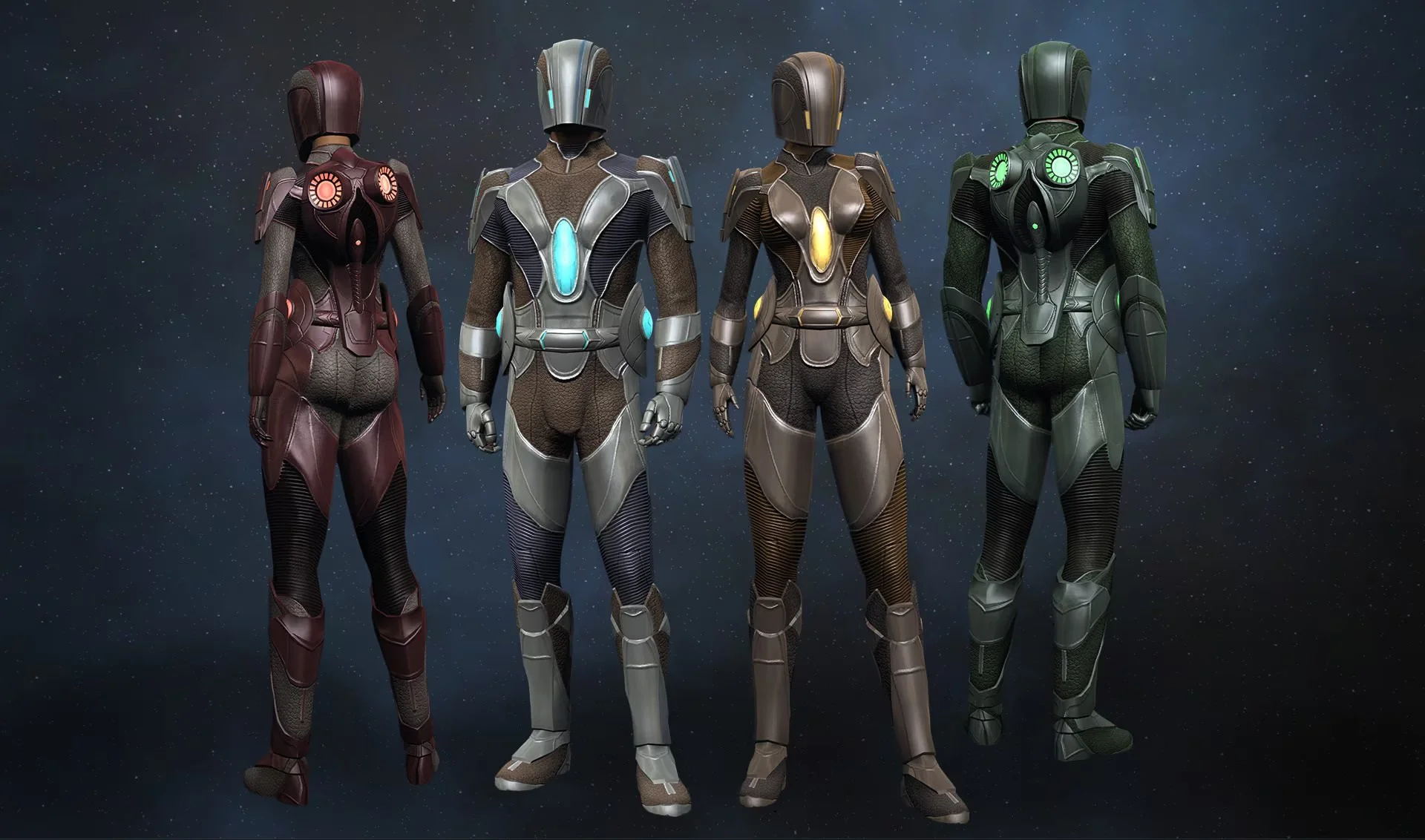
Star Trek Online has many in-game systems that are common to the MMORPG genre. The reputation system is one such example. In STO there are 13 reputation factions. Once a player has reached level 50 they may start progressing through the 6 reputation tiers of each one. Players gain progression through daily projects (20 hours in duration). Hourly projects are also available though they yield less reputation advancement and are limited to three times a day. Hence 20 hour projects are consider by default the most efficient way to gain rep. Projects require 30 Faction Specific Marks (earned via various activities in-game), 15,000 Energy Credits (standard in-game currency) and 2000 Expertise points. The most efficient way to tackle the reputation grind is to build up the necessary resources in advance and then at a designated time each day, start all 13 respective projects. Upon completion projects yield a player bound lockbox containing a random space or ground weapon, a console or Elite Marks which can be used to acquire faction gear.
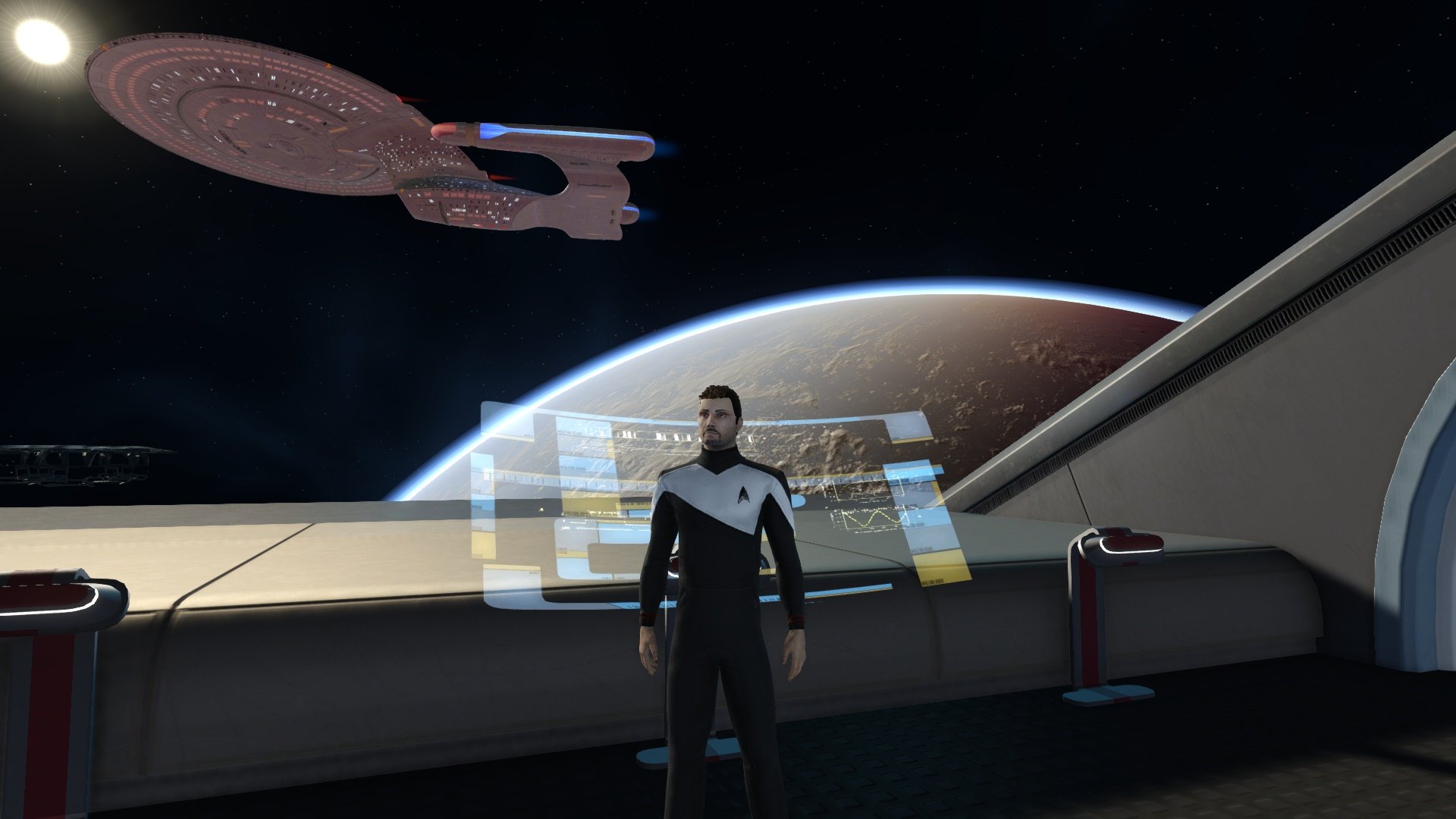
I was recently perusing my archive of old blog posts, when it struck me how much I’ve written about the MMORPG genre over the years. Naturally, there was far more material from between 2008 and 2012 as that was period when I immersed myself in the genre and was very enthusiastic about it. I was at a point in my life when I had the time to dedicate to such games and I was happy to participate in the social aspect of they offered. I would regularly play through group content and spend time socialising online with fellow guild members. My experience remains a textbook example of how online games can be more than the sum of their parts and that where you are at in your life has a major impact upon your overall enjoyment. As I read though various old posts it became clear that my experiences where specific to this particular part of my life and that they cannot be repeated. My relationship with the genre is very different now and that’s fine.
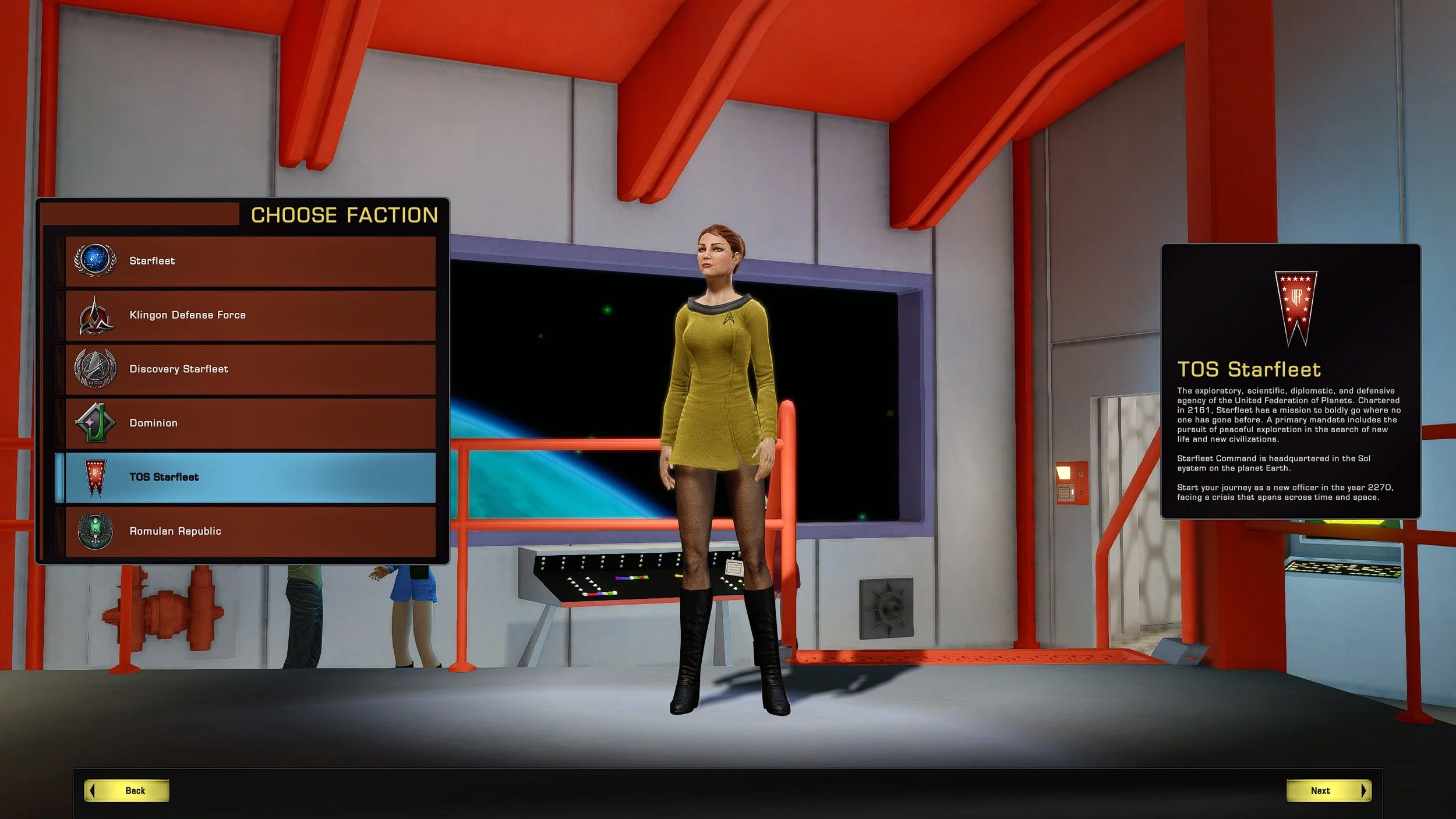
Creating alts is an integral aspect of the MMORPG genre. Many players will create a character of a specific class or faction, play it for a while, lose interest in it or they may decide that it is just not for them. Fortunately it is no effort at all to simply re-roll a new alt and set off once again. Furthermore, lots of players never reach level cap of the MMORPG that there playing. When the going get’s tough, so to speak, you can either soldier on for another 50 levels or simply create a new alt and return to the comfort of tried and tested content. Alts also give you the chance to secure an accolade or achievement that you previously missed. They are also of great benefit to the genres social aspects. Creating a new alt so you can play along with a friend who is just starting is great fun. Developer’s love them too as it means you’re still playing the game.
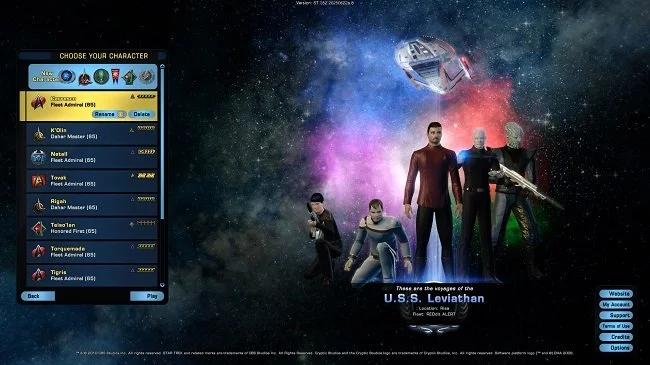
I recently took a break from Crimson Desert choosing instead to to play something familiar and easy going. As I’ve been logging into Star Trek Online daily to participate in the anniversary event, I decided to look through my various alts and see how far they had progressed through the game and what resources they had. At present I have twelve alts. My primary Captain was created in 2015 during the original Delta Recruit Event. I had previously played STO intermittently since its release in January 2010 but I never kept any of those characters. Hence this decade old Tactical Federation Captain has been my main focus when playing. The other eleven alts are the result of other recruitment events or whenever I wanted to try something different, such as playing a specific class or faction. I obviously played a lot of STO during the lockdown as several alts date from that period. Several had maximum reputation across all factions.
The action, open world RPG Crimson Desert has been patched five times since it launched on March 19th and there have also been multiple hotfixes. At first glance this isn’t anything unusual. New games have bugs and issues arise once a game is released and played across a much wider variety of hardware than in QA testing. However, if you read the patch notes that accompany these sizeable downloads it quickly becomes apparent that developer’s Pearl Abyss are not just addressing bugs and software glitches. They are actively engaging with their player base and responding to suggestions and requests from that community. Although this is not a unique approach, what is surprising is the speed and quantity in which these player driven changes are happening. There seems to be an active ongoing process to refine the game and eliminate some of its “rough edges” and the players are contributing to this process with their feedback.
According to my Steam statistics, I last played Starfield on 19th December 2023. I bought the game upon its release in September of that year and played in total for 136 hours. Starfield held my interest for three and a half month and I wrote seven blog posts about various aspects of the game. Although there were some engaging aspects to Starfield, I did feel that that the game was somewhat lacking in systems and content, at that point in its lifecycle. I also think that the marketing and player expectations associated with Starfield were overblown and unrealistic. The shadow of Skyrim looms large over all new Bethesda releases and they don’t seem able to quite recapture that magic. Hence, I inevitably drifted away from Starfield and to another game and was effectively “done” with it. I have not played the game since which seems to validate the theory that game are becoming increasingly more ephemeral.
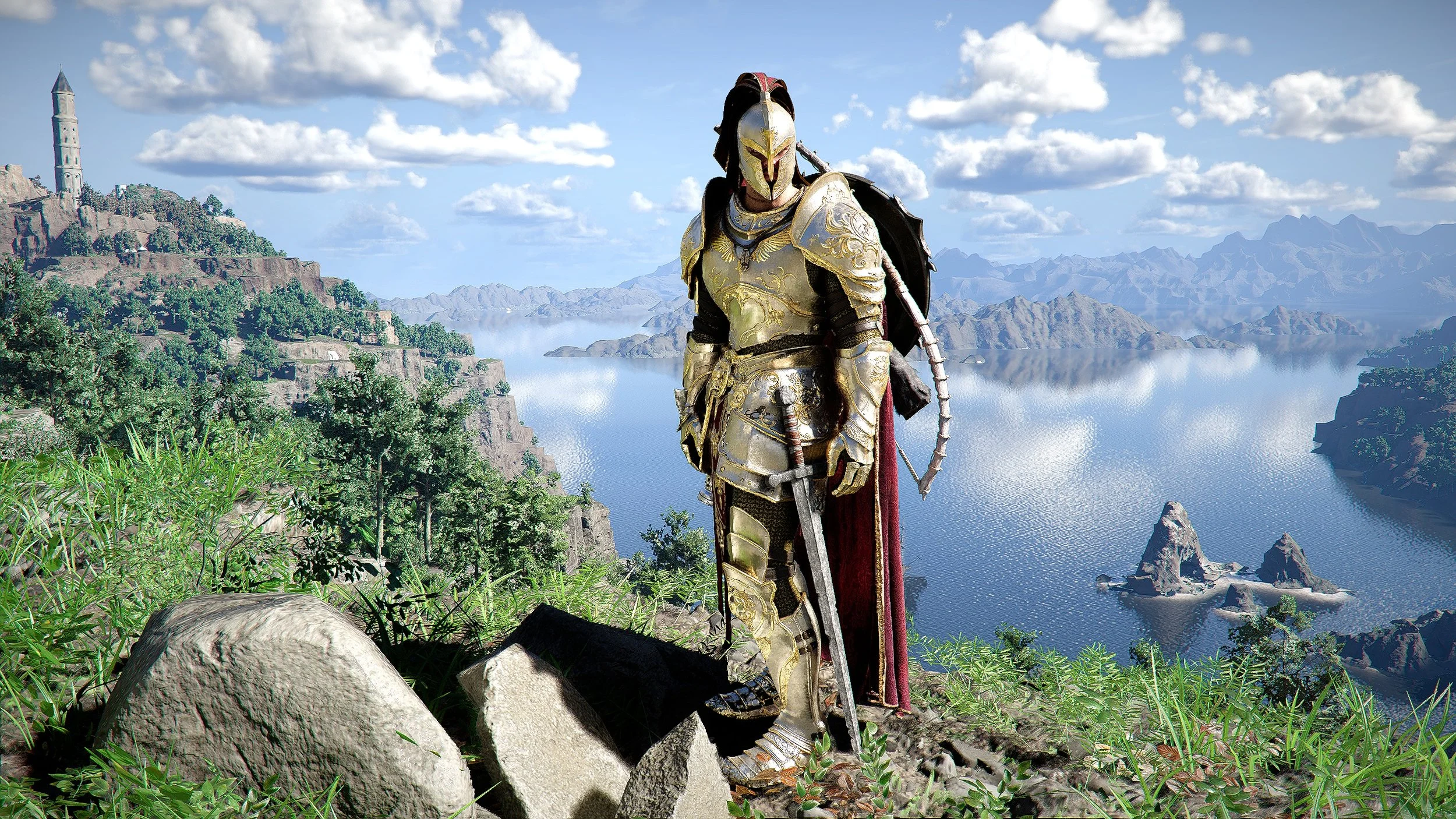
13 days after its release, market analysts estimate that Crimson Desert has already earned $200 million across the four main platforms (PC, PlayStation 5, and Xbox Series X and S). The game is certainly proving popular among gamers with the internet awash with live streams and “let’s play” videos. However, reviews are mixed both among gaming journalists and YouTube influencers. Common complaints about the game include that it is slow to start, the controls are poorly laid out on all platforms and that developer’s Pearl Abyss have done a poor job of explaining most aspects of the game to new players. Although such criticisms are true to a degree, I think these complaints highlight how many gamers are conditioned to expect new titles to follow a specific pattern with regard to pacing, narrative exposition and learning in-game systems. A pattern that Pearl Abyss has chosen to ignore, instead favouring an old school approach.
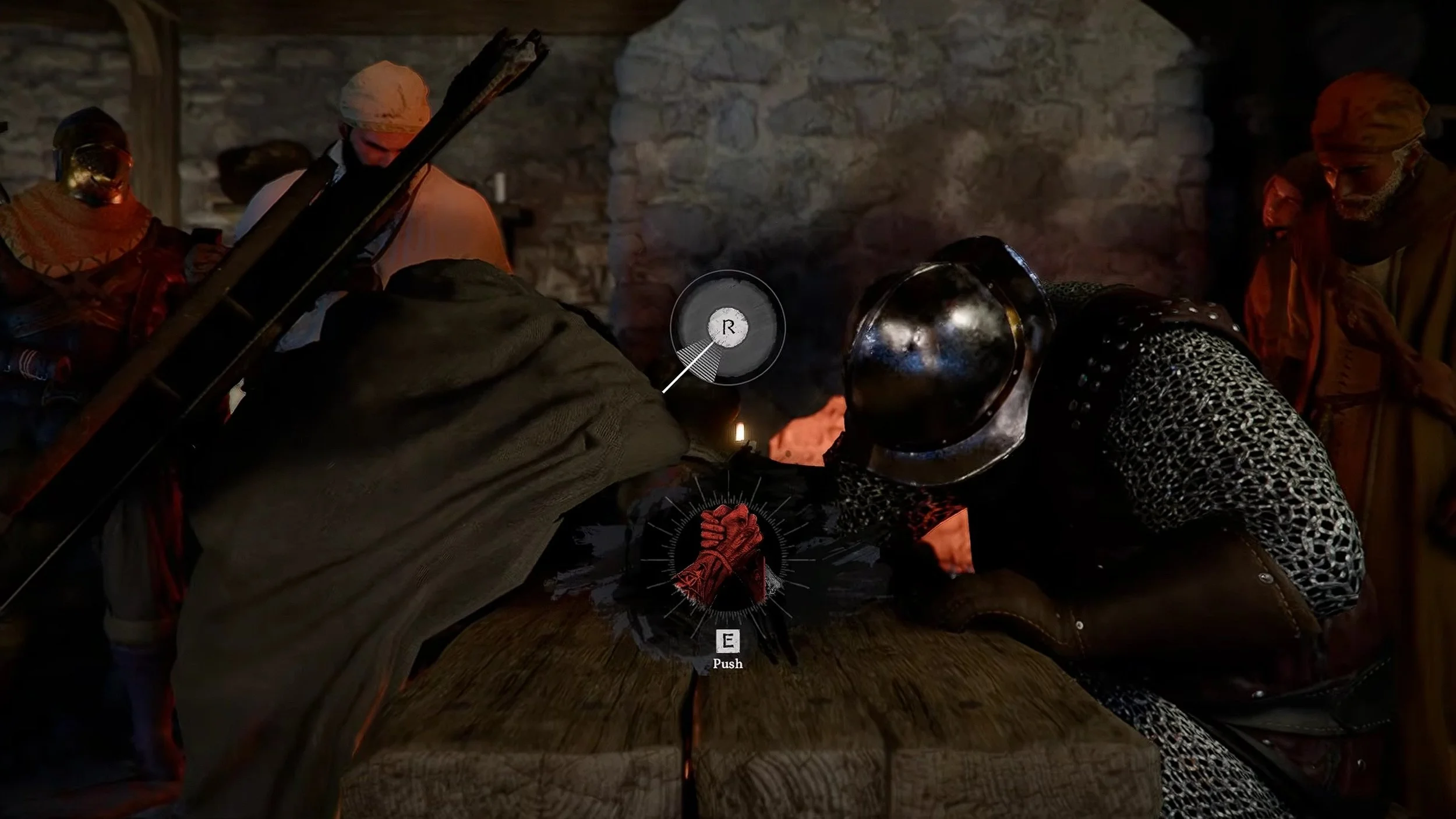
Early on Crimson Desert, the main quest requires the player to enter a tavern and arm wrestle a particularly strong guard. The arm wrestling match consists of a quick time event. If playing on PC you have to rapidly press the “E” key which turns a power meter from white to red. Then a white dial appears above the meter with a rotating hand. When the hand passes over a segment of the dial that is marked by hatching, the player must press the “R” key. The idea being the meter filling with red is you strength building (or waning) and the “R” key prompt indicates when to try and force your opponent’s arm. You will need to to continuously press the “E” key throughout the arm wrestling match and the “R” key about 4 times to win.
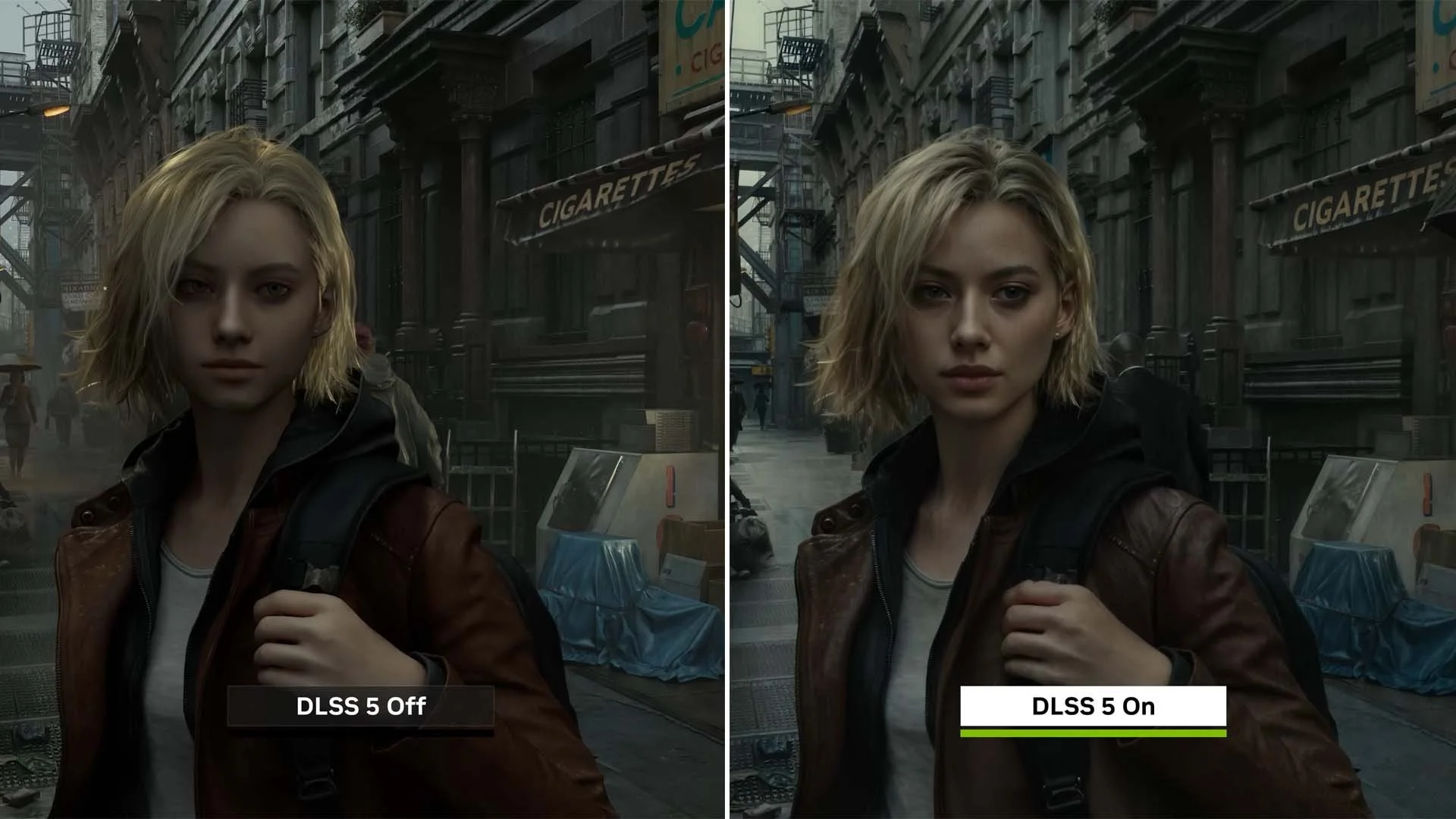
Earlier this week, Nvidia posted a video featuring their latest iteration of DLSS technology (Deep learning super sampling). DLSS 5 is an AI-powered “real-time neural rendering” process and unlike previous versions that focused on improving frame rates through upscaling or frame generation, DLSS 5 uses generative AI to “infuse” frames with photorealistic lighting and material details that the game engine never actually calculated. Let us pause for a moment and consider these words. Material detail that the game engine never actually calculated. Therein lies the rub. If you watch the aforementioned video or peruse the images posted here, it is abundantly clear what the technology does.
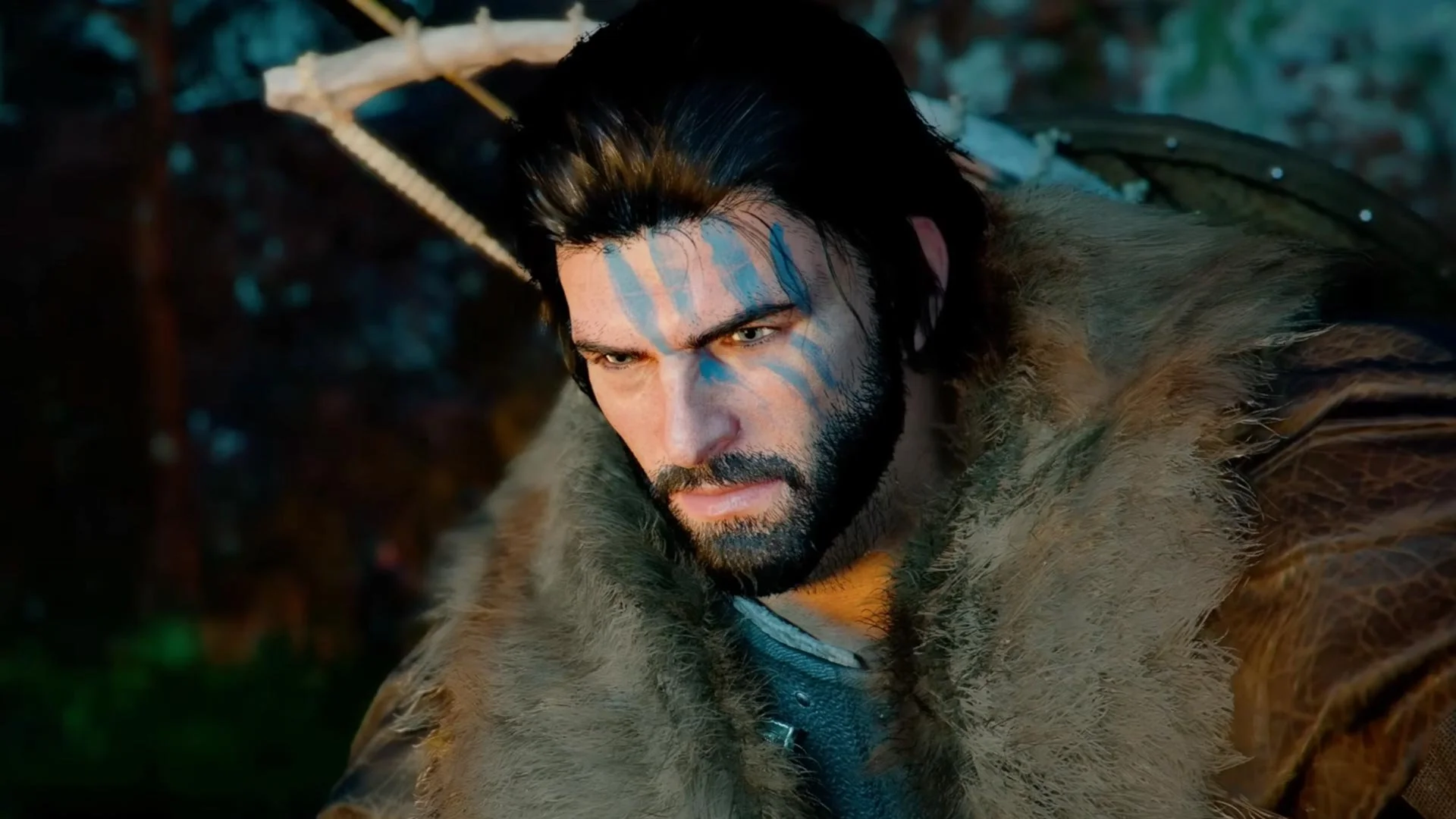
Last night, I spent the first 45 minutes after the launch of Crimson Desert, watching the 92GB pre-downloaded game files slowly decompressing and installing. I finally launched the game at about 10:50 PM GMT. I then waited a further 5 minutes while shaders were downloaded. It took me about 15 minutes or so to read through the various game settings and choose those that are optimal for my PC. I suspect even if you have a beast of a computer, you’re still going to have to spend some time tweaking settings. As for those players like myself with a gaming rig that is somewhere in the middle of the game’s specifications, be prepared to do a lot of fine tuning both within Crimson Desert itself and your Windows settings.
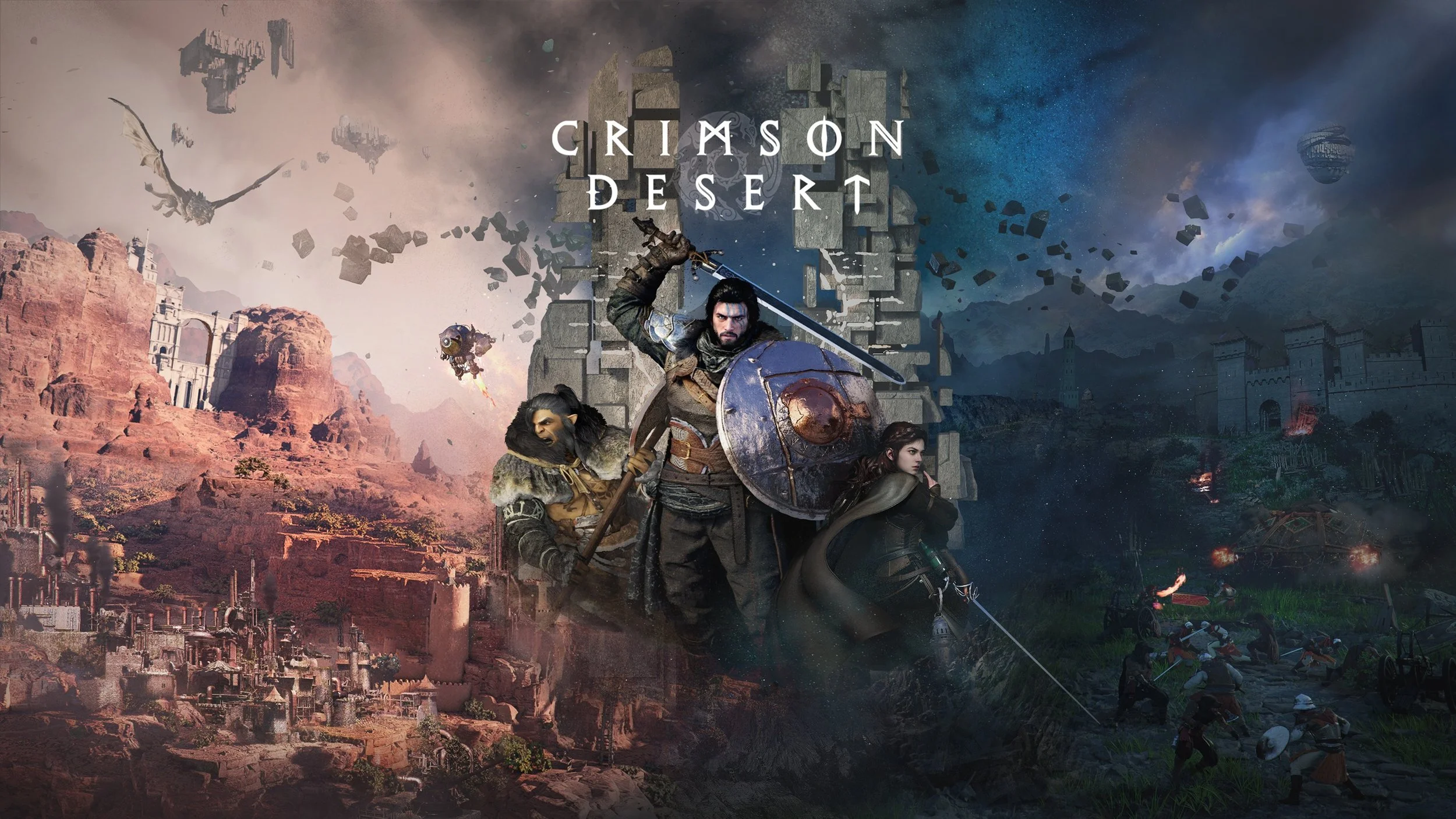
I have been aware of the online interest around the open world action game Crimson Desert for a while now. One of the things that has intrigued me about it is the scope of the game. The word “hype” has been bandied about by a few gaming websites. However, from what I have observed, developers Pearl Abyss have not been excessively hyperbolic themselves, with regard to the manner in which the game’s systems and mechanics have been marketed. Now that the press embargo has been lifted, the pre-release reviews seem to confirm that everything we’ve seen in promotional videos in the run up to the launch, is in fact present in the game. So far the initial critical response has been very positive and it has been hinted that the game may well be a genre milestone. Perhaps Crimson Desert is just a rare example of a game that has not had a rushed development and isn’t launching prematurely for business reasons.
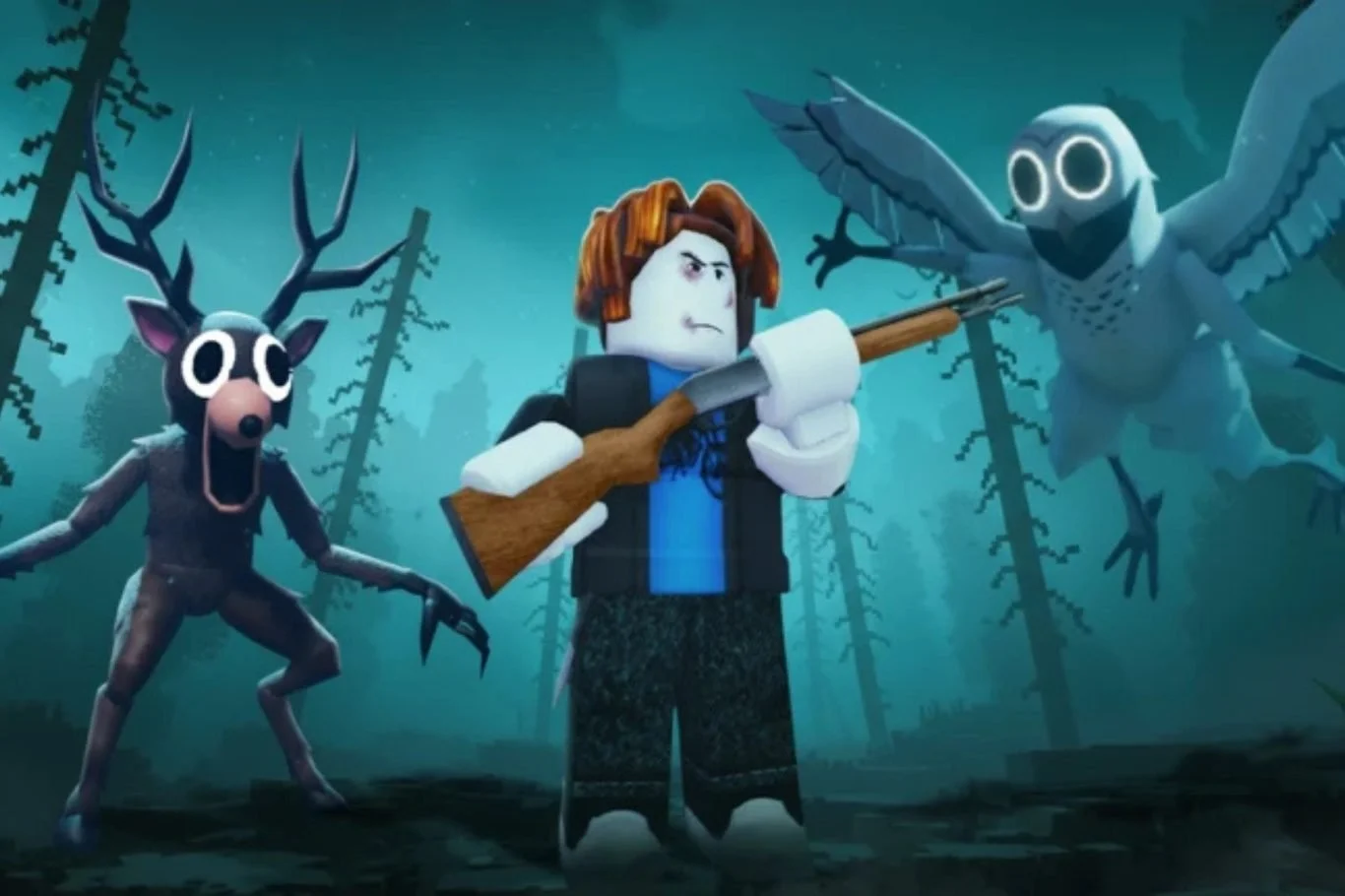
Video games as a genre are extremely poor at explaining themselves. When you buy a new game you’ll often find little or no information regarding the basic systems and mechanics. The industry assumes that their customers are by default familiar with the fundamentals of playing a modern video game. Hence if a game has a tutorial, it is often based around videos rather than detailed verbal instructions. You are are briefly shown a clip of a specific move being successfully undertaken but it is seldom shown in a wider context. The industry also expects the fan community to take on the role of curating and disseminating information about its games. The move away from forums and bespoke websites to Discord highlights this. Discord is a primarily a real time communication tool and not good at maintaining a historical data archive. If you want an answer to a specific gaming question, you’ll more than likely find it on YouTube in a video made by a fellow gamer.
I have written in the past about the video games we cannot play. The ones that require a keen understanding of a game’s mechanics, along with a strong degree of manual dexterity and situational awareness. Being 58 years old, I tend to have neither the co-ordination necessary to succeed or the patience to master such complex skill requirements. With this in mind, I recently watched a YouTube video for Chivalry 2 and thought, that looks like fun. The fact that it showed someone picking up a chicken and throwing it at an opponent is neither here nor there. However, after watching a few more videos I realised that combat in the game was complex and that, as usual, the reality of playing such a game would be different from my expectations. Hence, I came very close to not buying Chivalry 2. However, I eventually decided that I would, so I bought it for just under £10 from an online vendor.
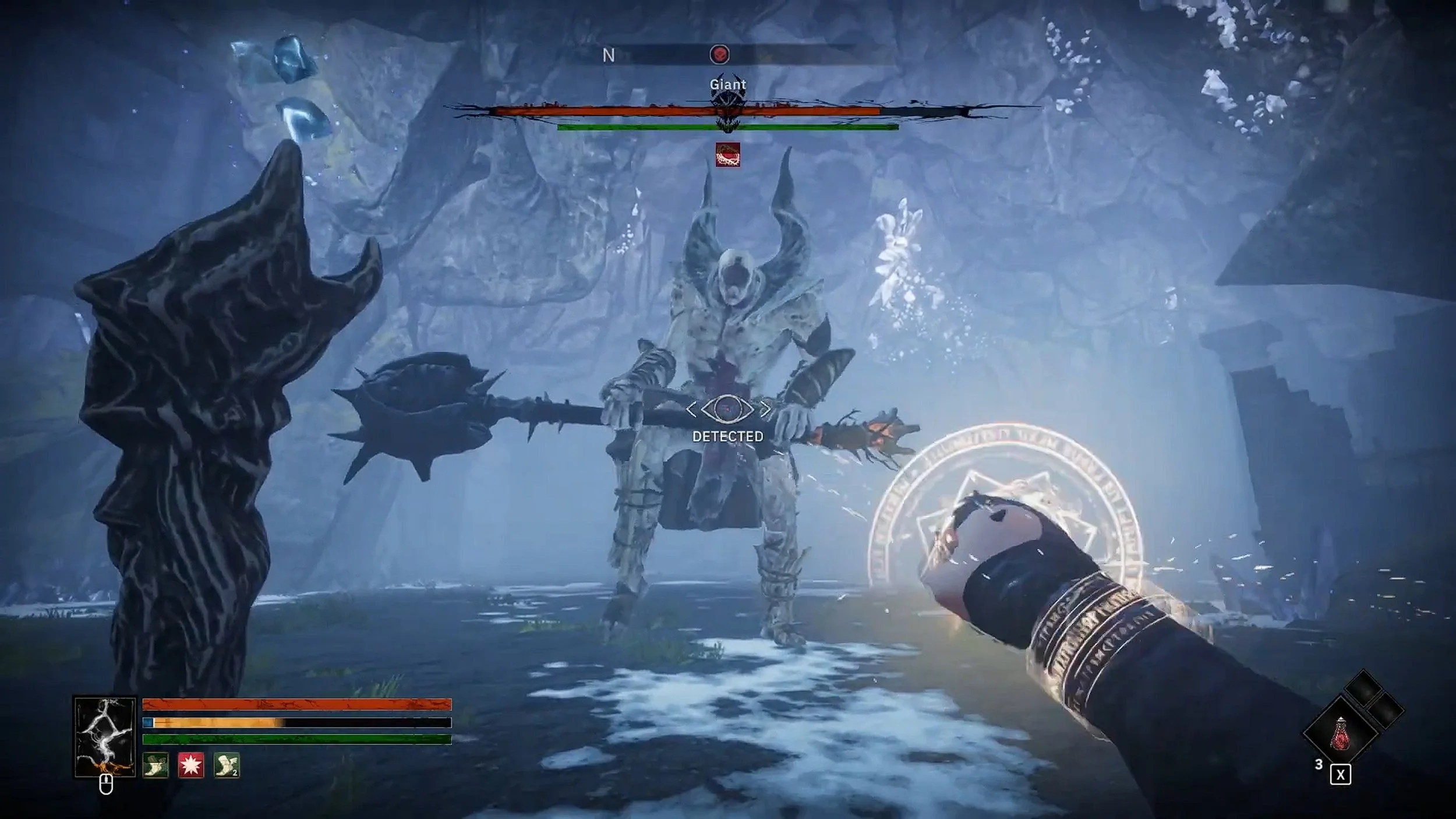
I decided to pursue a magic and spellcasting build in the RPG Tainted Grail: The Fall of Avalon after the story prologue. During the opening section of the game, the player is presented with a sufficient range of weapons to determine which type suits them best, although you can change at any time during the game. For me, casting spells feels right and is fun. Plus I have fond memories of the magic system in Two Worlds II and Skyrim. So once I started playing through the first zone, I started putting attribute and skill points into the appropriate trees to bolster my spells strengths and frequency. I also chose gear that would bolster those statistics further. The results have been surprising, as magic and spellcasting is not presented in the usual “glass cannon” style you find in some other RPGs. Here it offers robust DPS output and with the right gear and spell combination, a strong degree of survivability.
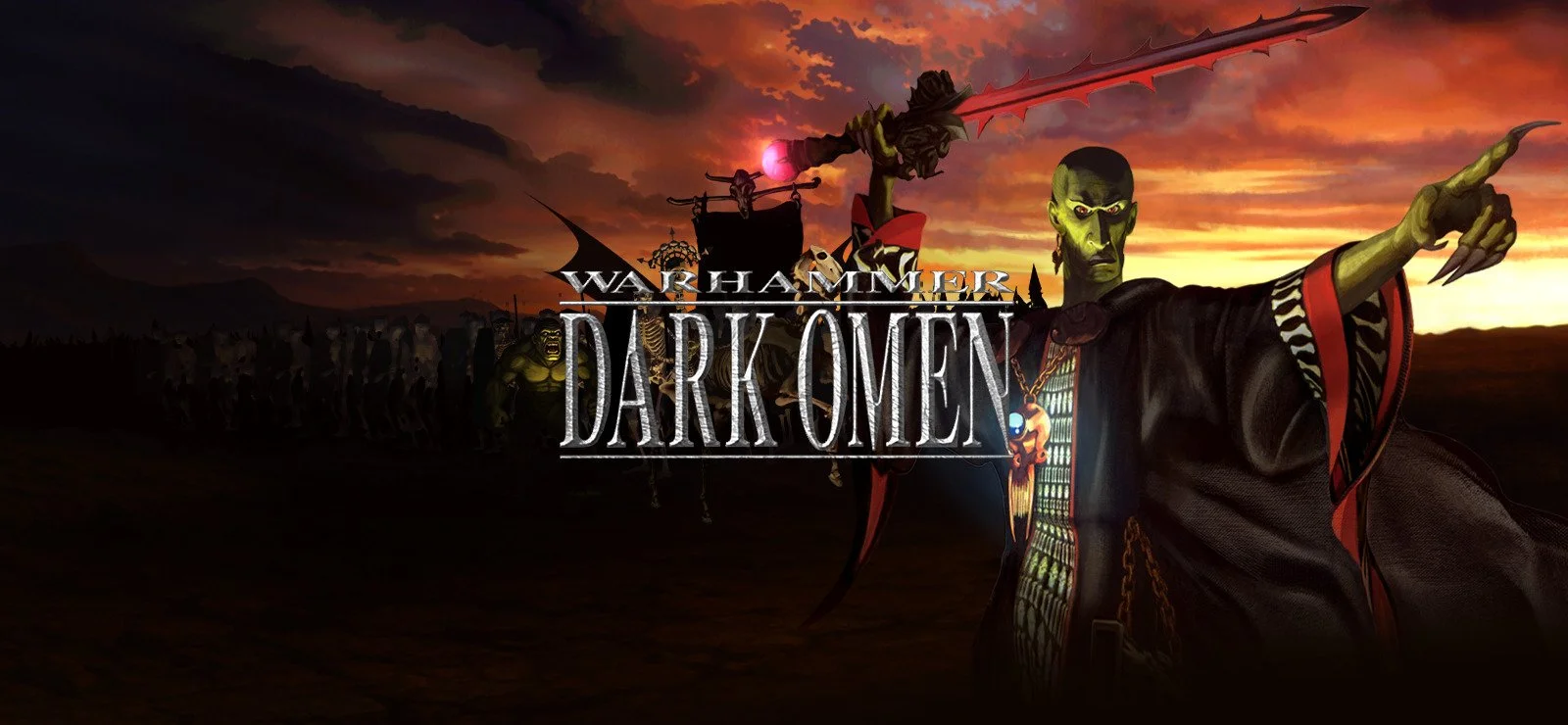
I originally bought Warhammer: Dark Omen in the summer of 1998. I played a demo copy via a magazine cover disc, which was a common means of promotion and marketing back then. Although I was at that point, unfamiliar with the Warhammer Universe, I found this game to be an excellent point of entry. The story did an excellent job of introducing players to “The Old World”, the political and power structure and major characters. I instantly liked both the aesthetic and the lore. Warhammer: Dark Omen was also the first real-time tactical wargame that I played and I spent numerous hours playing through the campaign. Overall, the game was a critical success, particularly on PC, but it struggled commercially upon its initial release and didn’t quite find the audience that it deserved. However, it has achieved status as a “cult classic” among gamers, leading to a recent re-release on GOG in late 2025.
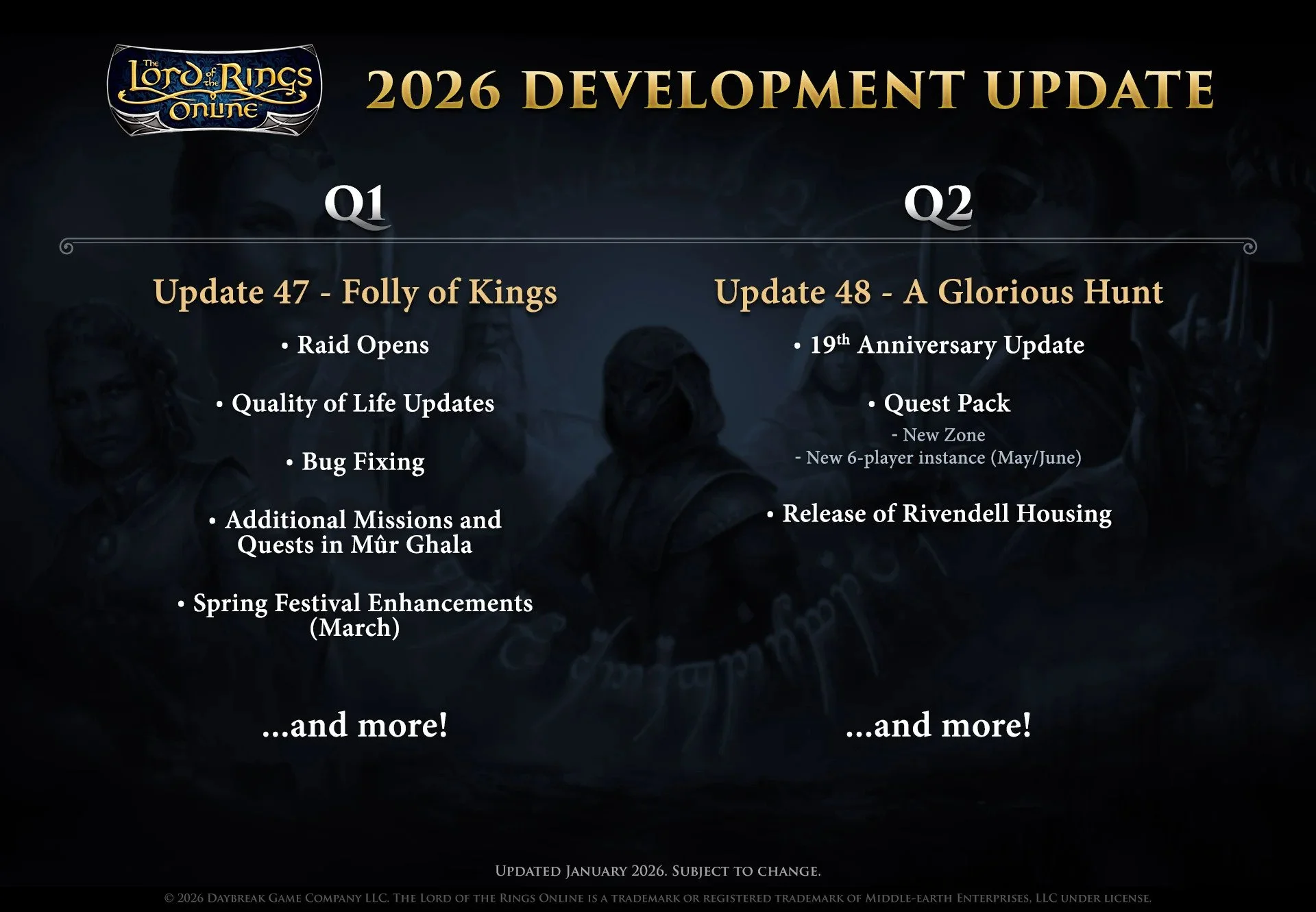
According to the recent “letter to the players”, Standing Stone Games will be adding a new zone to the MMORPG The Lord of the Rings Online in the second quarter of this year. Possibly around May or June. Having spent the last three expansions in the South of Middle-earth exploring the tropical Umbar and the deserts of Harad, I would certainly welcome a change of location. I have gradually warmed to these zones over the last eighteen months but I do find them so incongruous. They are so radically different to the European style content that has been the mainstay of the game for so long. Tolkien’s source text has plenty of detail regarding Eriador and Rhovanion. Information regarding Harad is scarce, hence it has afforded the developers a great deal of artistic freedom. Although exceedingly well realised these tropical zones have taken a while for me to get used to.
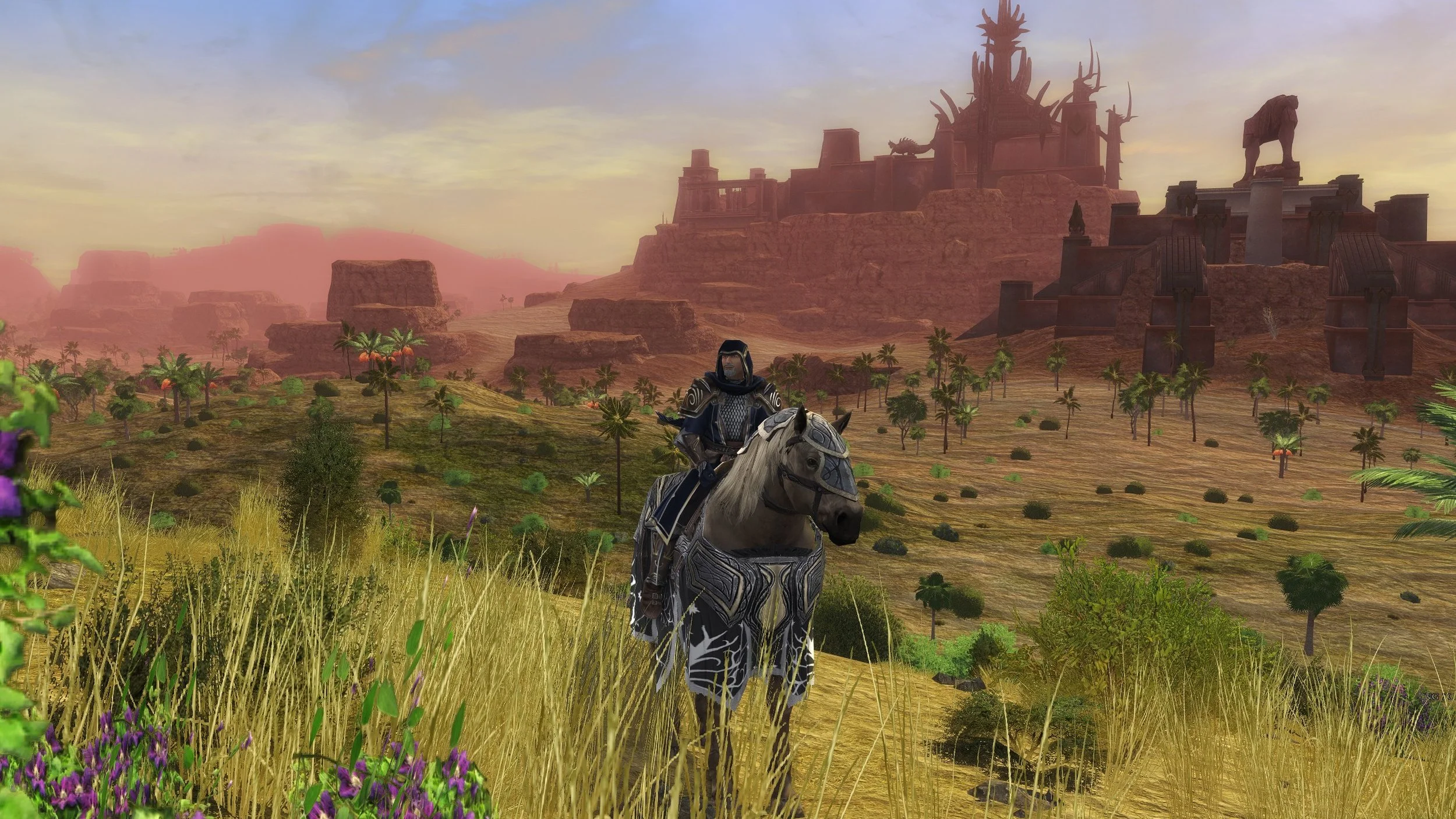
I’m not sure exactly when it started but I’ve recently noticed a graphical bug within the MMORPG The Lord of the Rings Online. This problem often occurs within caves or in areas where there are a lot of rocky surfaces. Hence it has become very apparent in the latest two expansions, set in Umbar and Harad. This graphical glitch causes some surface textures to appear to flash from light to dark intermittently. The resulting strobe effect is hard to ignore and very distracting. Fortunately, a quick online search showed that this is not a problem unique to my installation of LOTRO and is a known problem. Furthermore, there is a very simple workaround, which is to go into the Advanced Graphics setting and uncheck “Per Pixel Lighting”, which immediately remedies the problem. I have no idea why this has recently started to happen but at least it can be resolved.
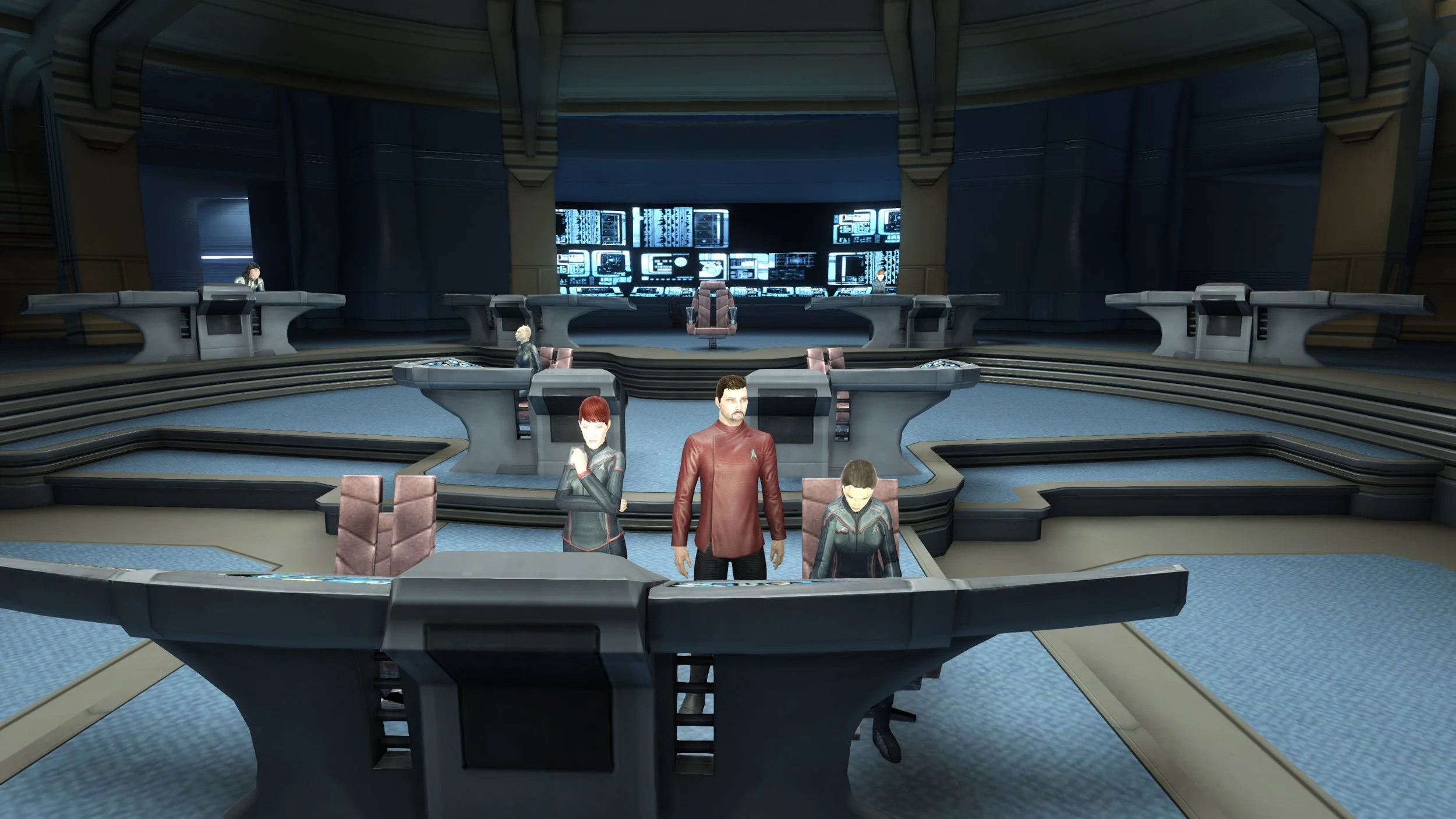
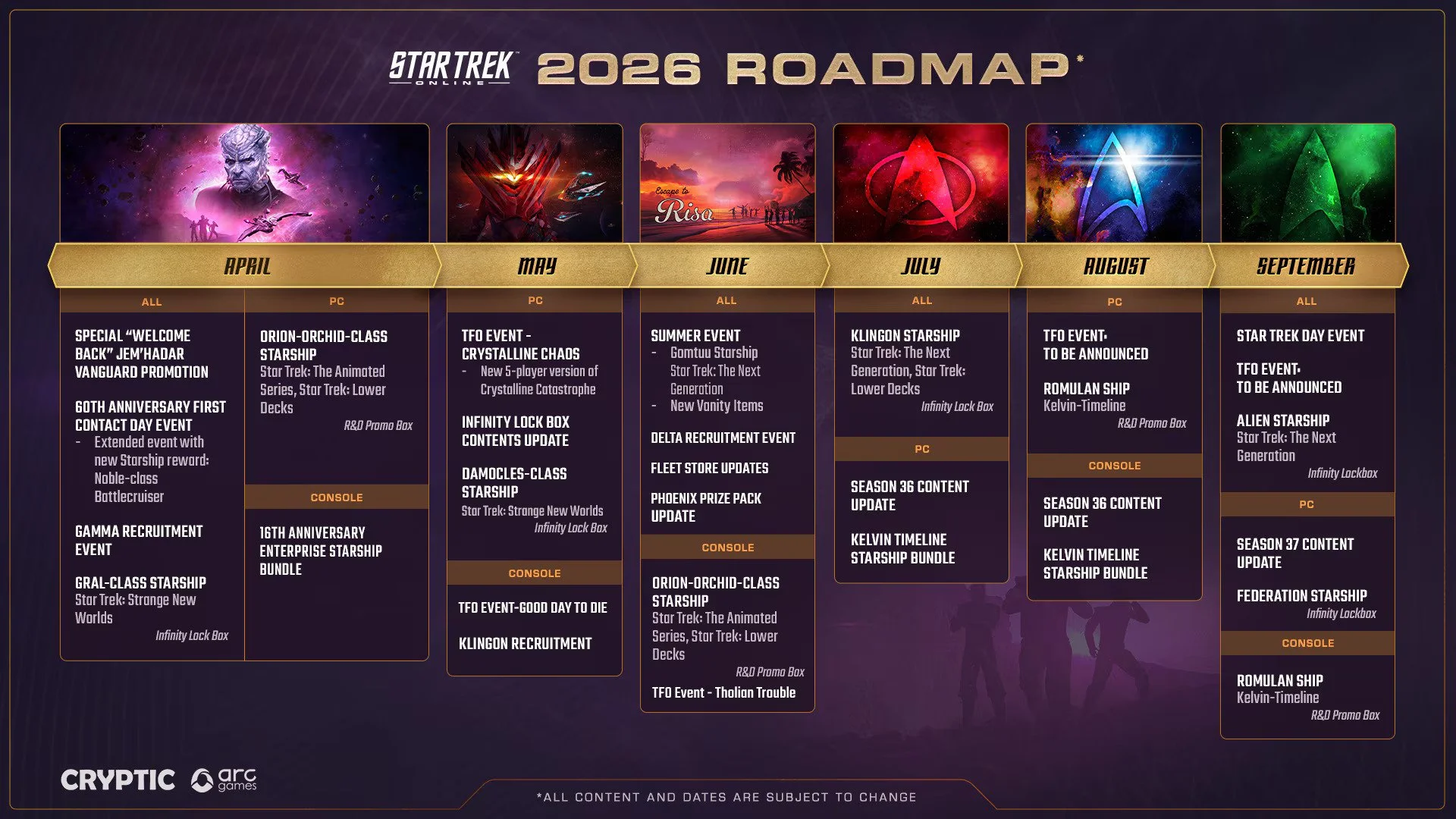
This year is the 60th anniversary of Star Trek. The original TV show was first broadcast in the US on September 8th 1966. If you search online you’ll find details of lots of related events. There are documentaries, conventions, new TV shows and even some video games in development. However, what you won’t find are any details regarding what will be happening with the MMORPG Star Trek Online. So far no road map for 2026 has been posted online by the developers but it is still quite early in the New Year. That being the case, I am not especially optimistic about there being any major plans waiting to be revealed. It is not as if DECA Games have demonstrated or stated any major ambitions for STO beyond keeping the endless events treadmill going and regularly adding content to the in-game store, during their development tenure. The ongoing story arc drags on inexorably and is as dull as ditchwater.
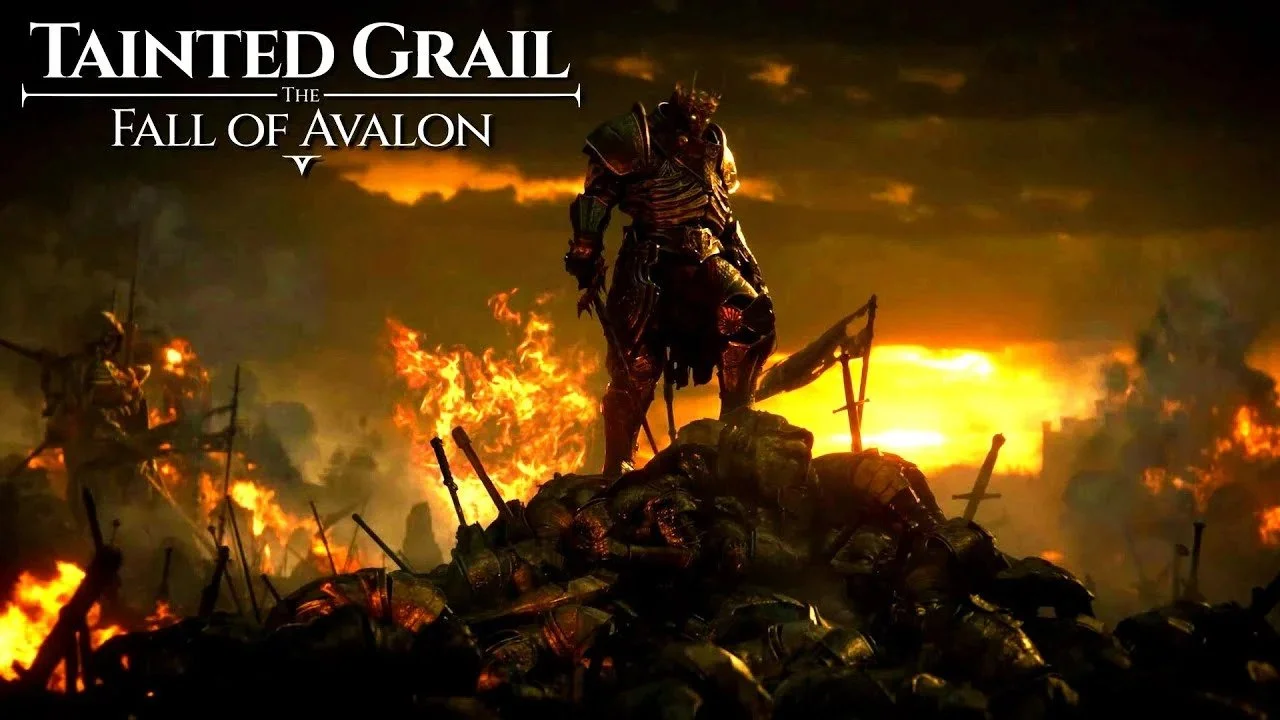
I first played The Elder Scrolls V: Skyrim in June 2013. This was over 18 months after the game’s initial release and the base game and DLC were bundled together in a “Legendary” edition. Although a seasoned gamer at the time, familiar with the RPG genre with such titles as Mass Effect and Grand Theft Auto IV, I had not played a game from this franchise before. It only took a few hours of gameplay to realise that this was a special title. The scope of the story, the art design and the size of the world were immediately notable. Tamriel was immersive in a way I had not experienced with other titles. Often simply traversing the terrain and watching the dawn break while the game soundtrack swelled, was sufficient to hold my attention. I instantly picked up on the voice acting of Christopher Plummer and Max Von Sydow. All of which indicated that this was a gaming landmark.
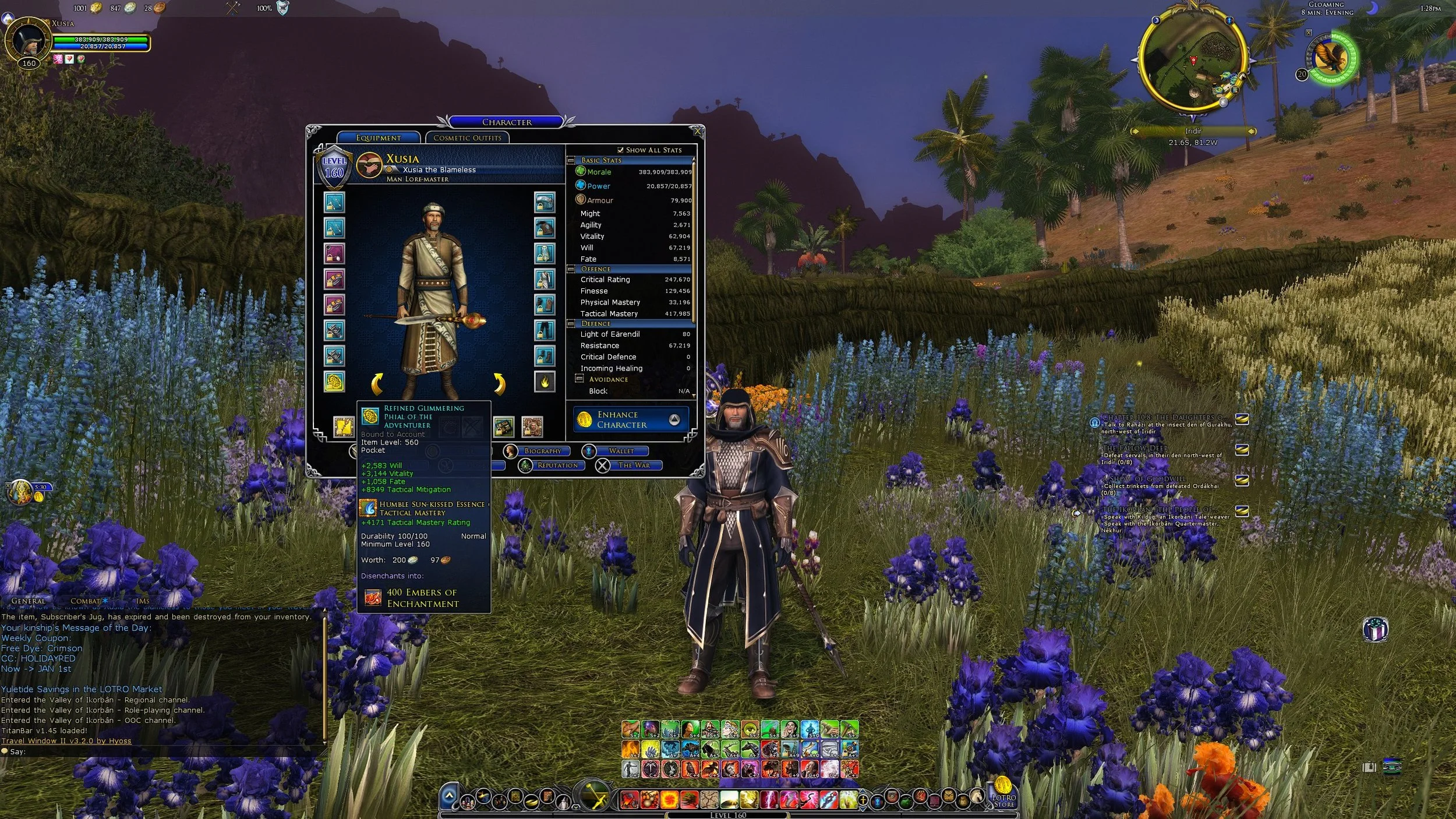
The latest expansion for the MMORPG The Lord of the Rings Online, Kingdoms of Harad, launched on December 3rd. With this release the level cap was raised from 150 to 160. It should also be noted that the cap for virtue traits was also raised from 96 to 100. Naturally these changes meant that there is a requirement to replace all armour and jewellery once the new cap is reached. Similarly Legendary Items have to be reforged and any traceries upgraded or replaced. If you follow the Epic Story it will lead you from quest hub to quest hub. The main quest rewards, along with those from side quests will provide adequate gear as you slowly progress towards the new level cap. The new raids, instances and missions/delvings then provide a means to acquire higher quality level 160 gear. LOTRO and indeed, many other MMOs are consistent in this methodology.
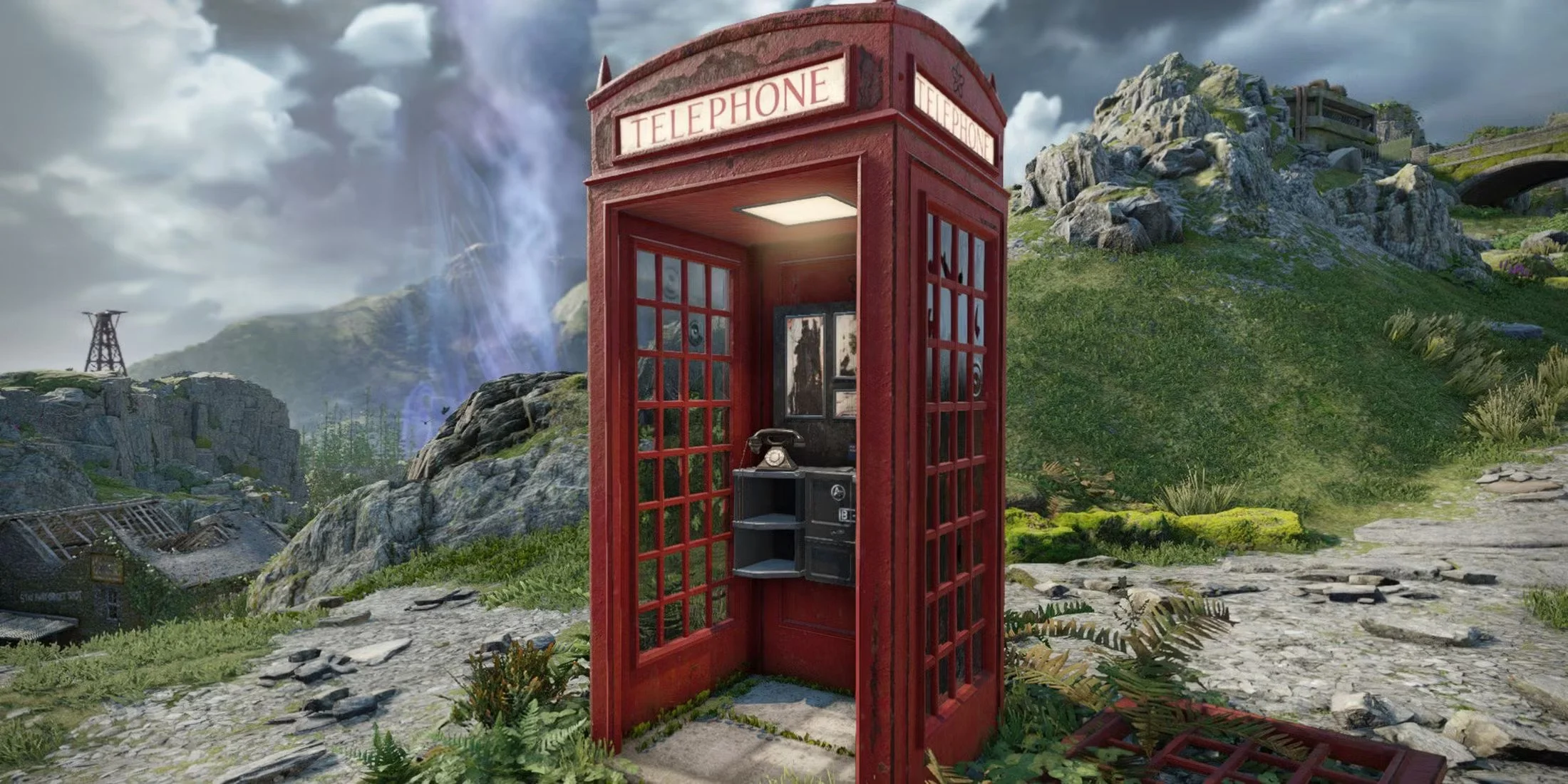
It is customary in a post such as this to list the various games that I’ve played over the last twelve months and share my thoughts on them. Wider analysis of the video game industry is also de rigeur. Unfortunately, I don’t really feel disposed to do either of those two things. My thoughts on the games I’ve played have already been published and can easily be accessed via the links at the bottom of this post. As for the video game industry, it suffers the same flaws as music, TV and cinema. There is creativity and innovation out there but it is often drowned out by mainstream products which are demonstrably inferior due to their inherent mediocrity. As for the business side of things, we once again clearly see the failings of the corporate management class. Sadly, they do not face the consequences of the mistakes that they make.
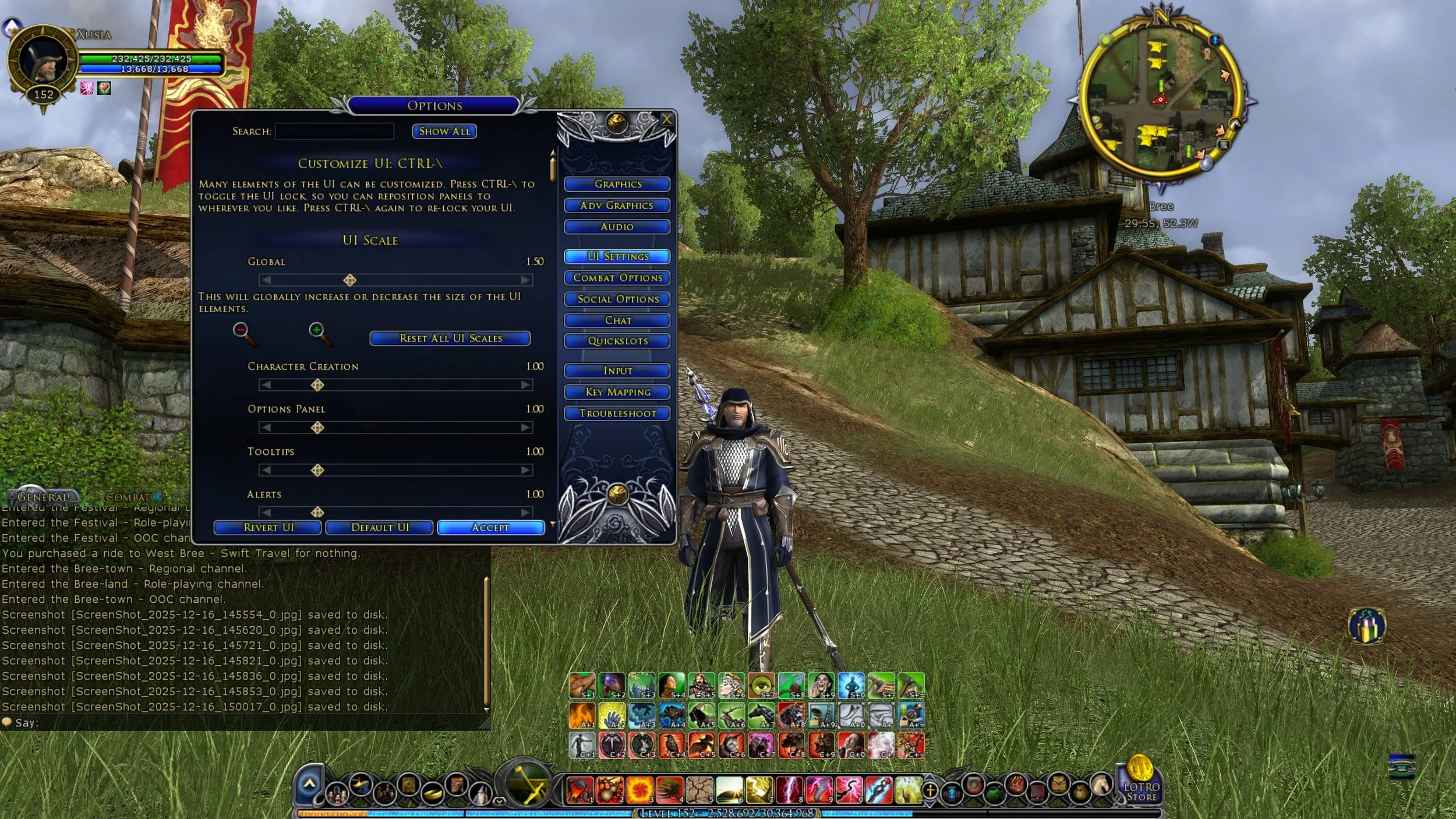
Today Standing Stone Games began beta testing Update 46.1 for the MMORPG The Lord of the Rings Online. The current preview on the Bullroarer test server is mainly for the new instance cluster that comes with the Kingdoms of Harad expansion which launched a few weeks ago. However, it would appear that this latest preview has another feature or note. One that should please LOTRO players. Contrary to what a lot of people thought, myself included, SSG have been working on a scaling UI for 2K and 4K monitors and the results are now available for testing from today Monday 15th through to Friday 19th December. Until now the main workaround to the lack of UI scaling has been to use either Nvidia or AMD graphics software to upscale the game from 1920 x 1080, or a third party app such as LosslessScaling. Having an official solution is a far better option.
MMORPGs Based on Existing Intellectual Properties
I was recently perusing my archive of old blog posts, when it struck me how much I’ve written about the MMORPG genre over the years. Naturally, there was far more material from between 2008 and 2012 as that was period when I immersed myself in the genre and was very enthusiastic about it. I was at a point in my life when I had the time to dedicate to such games and I was happy to participate in the social aspect of they offered. I would regularly play through group content and spend time socialising online with fellow guild members. My experience remains a textbook example of how online games can be more than the sum of their parts and that where you are at in your life has a major impact upon your overall enjoyment. As I read though various old posts it became clear that my experiences where specific to this particular part of my life and that they cannot be repeated. My relationship with the genre is very different now and that’s fine.
I was recently perusing my archive of old blog posts, when it struck me how much I’ve written about the MMORPG genre over the years. Naturally, there was far more material from between 2008 and 2012 as that was period when I immersed myself in the genre and was very enthusiastic about it. I was at a point in my life when I had the time to dedicate to such games and I was happy to participate in the social aspect of they offered. I would regularly play through group content and spend time socialising online with fellow guild members. My experience remains a textbook example of how online games can be more than the sum of their parts and that where you are at in your life has a major impact upon your overall enjoyment. As I read though various old posts it became clear that my experiences where specific to this particular part of my life and that they cannot be repeated. My relationship with the genre is very different now and that’s fine.
Out of all the MMOs that I’ve dabbled with over the years, only two are still being actively played. The Lord of the Rings Online and Star Trek Online. After giving this matter some thought, I have concluded that it is my relationship with the intellectual property on which they’re based is the main reason why these two have remained, where as other have fallen by the wayside. I used to play Guild Wars 2 regularly. I participated in the beta testing and doggedly worked my way through the base game and tackled the first expansion. It was the latter that killed my interest. On its release Heart of Thorns was difficult to play through, due to it’s three dimensional environment. There were no flying mounts at the time, so the game ground to a halt for me. Usually in such circumstances, games like LOTRO have the benefit of lore heavy narratives which appeal to my sense of fandom. Guild Wars 2 is its own unique IP and sadly has no emotional resonance for me. So I stopped playing.
The same thing effectively killed my interest in most other MMOs. I really tried to get into the lore of The Elder Scrolls Online because I had enjoyed Skyrim so much. But it all seemed a little too derivative for my taste. When I’ve raised this issue in-game, other MMO players have suggested I just ignore the dialogue and mission text and focus on just getting whatever is required done. Sadly, I like narratives and therefore want to know what my motivation is. Doing a task for “reasons” doesn’t really suit me. Such things don’t kill my interest in an MMO immediately. The social component can keep me engaged for a while, especially if you often play through content as a group. However, that too can wane over time, especially if friends move on to another game. I’m in a curious situation where I still talk online each week to a friend I have met through MMOs but we seldom play the same games any more.
All of this raises the question of whether I am still an MMO player per se, or whether I am just playing MMOs as single player games, in a multiplayer environment. Crimson Desert has highlighted this point as that game feels conspicuously like an MMO, especially with regard to many of its game systems and mechanics, yet it lacks the presence of other players. I suppose the definitive test would be if a new MMO launched that took my fancy, would I now play it? That question would depend greatly upon its setting and whether it was based on an IP I was already familiar with and enjoyed. If there was a modern MMO released that was set in the First Age of Middle-earth, then I would most definitely try it. I cannot say the same about titles with just a generic fantasy setting. I am not entirely sure if this change in perspective is down to me or the ongoing evolution of the genre. I suspect that both have contributed to my current outlook.
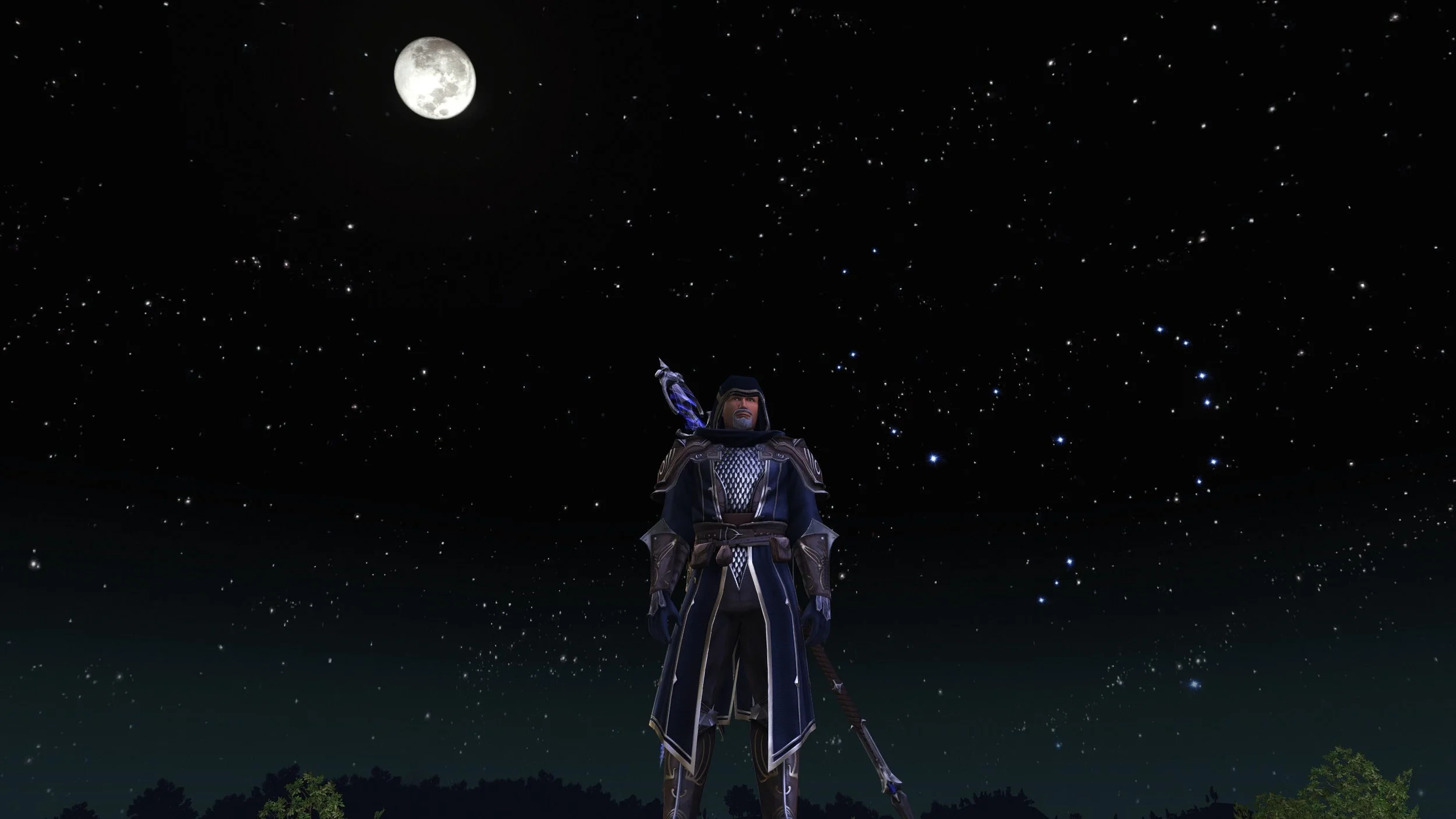
Are video games becoming easier? It’s a perennial subject that is frequently discussed by those who play them. Often the question of whether they have actually become easier is not the focus of the debate, as it seems to be broadly recognised that it is the case. Instead, discussion of this matter tend to drift into the rectitude of this change. Debate’s of this nature are usually awash with subjective opinions and personal preferences which are then put forward as objective facts. It’s not just a question of video games becoming easier, it’s the fact that making them easier is “wrong” and those who want them as such are “not proper gamers” etc. The hours that have been lost to this pointless, tedious debate are uncountable. However, I digress. Let us return to the matter of video games becoming easier, because although fans discuss this a lot and have plenty to say, you don’t often hear from the developers on this subject.
I recently completed the main story in Tainted Grail: The Fall of Avalon. In total I spent about sixty hours playing the game. I began at the start of the year, then took a break for a while but returned to it recently because I wanted to see if I could unlock a specific ending. I did manage to do this. Like so many other RPGs, Tainted Grail: the Fall of Avalon has a central storyline, along with a wealth of side quests, based around factions in specific zones. I think I possibly completed about a two thirds of these. However, once I finished the main story, my interest in the game began to wane. I finally left my character in the last major quest hub in case I wish to return at a future date. I then logged out of the game and uninstalled it from my PC to free up space for whatever I was to play next. In this case its The Sinking City 2. None of this is a negative reflection on Tainted Grail: the Fall of Avalon. I enjoyed the time I spent playing this quirky RPG. I simply had my fill and left to play something else.
The next expansion for the MMORG, The Lord of the Rings Online, was announced on the 1st August, via the gaming website MMORPG.The Wolves of Mordor, which will launch later in the year, appears ambitious in scope as it will include two new game systems as well as the obligatory story update. This expansion takes place in Draugardh located in the North East of Mordor, beyond the Plateau of Gorgoroth. It includes the new zones of Heledhris, Parth Rhavas and Nan Ogol. These vary environmentally ranging from the arid, volcanic and semi-tropical. Players will encounter the Daugrim in these regions, Werewolves but not in the modern sense. This is not the lycanthropy of Eastern European legends but in the established Tolkien idiom of fell spirits inhabiting the bodies of Wolves. The region also sees the return of the Woses and players can expect to encounter Elves and scouts from Gondor. As ever with LOTRO expansions, there will be new instances as well as a raid.
I don’t keep up with gaming news as much as I use to but several noteworthy announcement have come to my attention of late. Firstly, there’s an expansion, Songs of the Past, coming for the Witcher III: Wild Hunt in 2027. No doubt this is to pave the way for the Witcher IV. Next, I also found out about Hand of Fate: Horde. I liked this franchise and was saddened to learn that the original studio, Defiant Development, closed. Hence is was a pleasant surprise to see this new game being developed by members of the original studio. The third announcement was regarding Guild Wars 3. A new MMORPG in active development by a major studio is no small feat and is certainly good news for fans of this franchise and the genre per se. However, once you look beyond this news this announcement raises several questions and has certainly given me pause for thought. Let us take a few moments to consider them.
Star Trek Online has many in-game systems that are common to the MMORPG genre. The reputation system is one such example. In STO there are 13 reputation factions. Once a player has reached level 50 they may start progressing through the 6 reputation tiers of each one. Players gain progression through daily projects (20 hours in duration). Hourly projects are also available though they yield less reputation advancement and are limited to three times a day. Hence 20 hour projects are consider by default the most efficient way to gain rep. Projects require 30 Faction Specific Marks (earned via various activities in-game), 15,000 Energy Credits (standard in-game currency) and 2000 Expertise points. The most efficient way to tackle the reputation grind is to build up the necessary resources in advance and then at a designated time each day, start all 13 respective projects. Upon completion projects yield a player bound lockbox containing a random space or ground weapon, a console or Elite Marks which can be used to acquire faction gear.
I was recently perusing my archive of old blog posts, when it struck me how much I’ve written about the MMORPG genre over the years. Naturally, there was far more material from between 2008 and 2012 as that was period when I immersed myself in the genre and was very enthusiastic about it. I was at a point in my life when I had the time to dedicate to such games and I was happy to participate in the social aspect of they offered. I would regularly play through group content and spend time socialising online with fellow guild members. My experience remains a textbook example of how online games can be more than the sum of their parts and that where you are at in your life has a major impact upon your overall enjoyment. As I read though various old posts it became clear that my experiences where specific to this particular part of my life and that they cannot be repeated. My relationship with the genre is very different now and that’s fine.
Creating alts is an integral aspect of the MMORPG genre. Many players will create a character of a specific class or faction, play it for a while, lose interest in it or they may decide that it is just not for them. Fortunately it is no effort at all to simply re-roll a new alt and set off once again. Furthermore, lots of players never reach level cap of the MMORPG that there playing. When the going get’s tough, so to speak, you can either soldier on for another 50 levels or simply create a new alt and return to the comfort of tried and tested content. Alts also give you the chance to secure an accolade or achievement that you previously missed. They are also of great benefit to the genres social aspects. Creating a new alt so you can play along with a friend who is just starting is great fun. Developer’s love them too as it means you’re still playing the game.
I recently took a break from Crimson Desert choosing instead to to play something familiar and easy going. As I’ve been logging into Star Trek Online daily to participate in the anniversary event, I decided to look through my various alts and see how far they had progressed through the game and what resources they had. At present I have twelve alts. My primary Captain was created in 2015 during the original Delta Recruit Event. I had previously played STO intermittently since its release in January 2010 but I never kept any of those characters. Hence this decade old Tactical Federation Captain has been my main focus when playing. The other eleven alts are the result of other recruitment events or whenever I wanted to try something different, such as playing a specific class or faction. I obviously played a lot of STO during the lockdown as several alts date from that period. Several had maximum reputation across all factions.
13 days after its release, market analysts estimate that Crimson Desert has already earned $200 million across the four main platforms (PC, PlayStation 5, and Xbox Series X and S). The game is certainly proving popular among gamers with the internet awash with live streams and “let’s play” videos. However, reviews are mixed both among gaming journalists and YouTube influencers. Common complaints about the game include that it is slow to start, the controls are poorly laid out on all platforms and that developer’s Pearl Abyss have done a poor job of explaining most aspects of the game to new players. Although such criticisms are true to a degree, I think these complaints highlight how many gamers are conditioned to expect new titles to follow a specific pattern with regard to pacing, narrative exposition and learning in-game systems. A pattern that Pearl Abyss has chosen to ignore, instead favouring an old school approach.
Last night, I spent the first 45 minutes after the launch of Crimson Desert, watching the 92GB pre-downloaded game files slowly decompressing and installing. I finally launched the game at about 10:50 PM GMT. I then waited a further 5 minutes while shaders were downloaded. It took me about 15 minutes or so to read through the various game settings and choose those that are optimal for my PC. I suspect even if you have a beast of a computer, you’re still going to have to spend some time tweaking settings. As for those players like myself with a gaming rig that is somewhere in the middle of the game’s specifications, be prepared to do a lot of fine tuning both within Crimson Desert itself and your Windows settings.
Video games as a genre are extremely poor at explaining themselves. When you buy a new game you’ll often find little or no information regarding the basic systems and mechanics. The industry assumes that their customers are by default familiar with the fundamentals of playing a modern video game. Hence if a game has a tutorial, it is often based around videos rather than detailed verbal instructions. You are are briefly shown a clip of a specific move being successfully undertaken but it is seldom shown in a wider context. The industry also expects the fan community to take on the role of curating and disseminating information about its games. The move away from forums and bespoke websites to Discord highlights this. Discord is a primarily a real time communication tool and not good at maintaining a historical data archive. If you want an answer to a specific gaming question, you’ll more than likely find it on YouTube in a video made by a fellow gamer.
According to the recent “letter to the players”, Standing Stone Games will be adding a new zone to the MMORPG The Lord of the Rings Online in the second quarter of this year. Possibly around May or June. Having spent the last three expansions in the South of Middle-earth exploring the tropical Umbar and the deserts of Harad, I would certainly welcome a change of location. I have gradually warmed to these zones over the last eighteen months but I do find them so incongruous. They are so radically different to the European style content that has been the mainstay of the game for so long. Tolkien’s source text has plenty of detail regarding Eriador and Rhovanion. Information regarding Harad is scarce, hence it has afforded the developers a great deal of artistic freedom. Although exceedingly well realised these tropical zones have taken a while for me to get used to.
I’m not sure exactly when it started but I’ve recently noticed a graphical bug within the MMORPG The Lord of the Rings Online. This problem often occurs within caves or in areas where there are a lot of rocky surfaces. Hence it has become very apparent in the latest two expansions, set in Umbar and Harad. This graphical glitch causes some surface textures to appear to flash from light to dark intermittently. The resulting strobe effect is hard to ignore and very distracting. Fortunately, a quick online search showed that this is not a problem unique to my installation of LOTRO and is a known problem. Furthermore, there is a very simple workaround, which is to go into the Advanced Graphics setting and uncheck “Per Pixel Lighting”, which immediately remedies the problem. I have no idea why this has recently started to happen but at least it can be resolved.
This year is the 60th anniversary of Star Trek. The original TV show was first broadcast in the US on September 8th 1966. If you search online you’ll find details of lots of related events. There are documentaries, conventions, new TV shows and even some video games in development. However, what you won’t find are any details regarding what will be happening with the MMORPG Star Trek Online. So far no road map for 2026 has been posted online by the developers but it is still quite early in the New Year. That being the case, I am not especially optimistic about there being any major plans waiting to be revealed. It is not as if DECA Games have demonstrated or stated any major ambitions for STO beyond keeping the endless events treadmill going and regularly adding content to the in-game store, during their development tenure. The ongoing story arc drags on inexorably and is as dull as ditchwater.
The latest expansion for the MMORPG The Lord of the Rings Online, Kingdoms of Harad, launched on December 3rd. With this release the level cap was raised from 150 to 160. It should also be noted that the cap for virtue traits was also raised from 96 to 100. Naturally these changes meant that there is a requirement to replace all armour and jewellery once the new cap is reached. Similarly Legendary Items have to be reforged and any traceries upgraded or replaced. If you follow the Epic Story it will lead you from quest hub to quest hub. The main quest rewards, along with those from side quests will provide adequate gear as you slowly progress towards the new level cap. The new raids, instances and missions/delvings then provide a means to acquire higher quality level 160 gear. LOTRO and indeed, many other MMOs are consistent in this methodology.
It is customary in a post such as this to list the various games that I’ve played over the last twelve months and share my thoughts on them. Wider analysis of the video game industry is also de rigeur. Unfortunately, I don’t really feel disposed to do either of those two things. My thoughts on the games I’ve played have already been published and can easily be accessed via the links at the bottom of this post. As for the video game industry, it suffers the same flaws as music, TV and cinema. There is creativity and innovation out there but it is often drowned out by mainstream products which are demonstrably inferior due to their inherent mediocrity. As for the business side of things, we once again clearly see the failings of the corporate management class. Sadly, they do not face the consequences of the mistakes that they make.
Today Standing Stone Games began beta testing Update 46.1 for the MMORPG The Lord of the Rings Online. The current preview on the Bullroarer test server is mainly for the new instance cluster that comes with the Kingdoms of Harad expansion which launched a few weeks ago. However, it would appear that this latest preview has another feature or note. One that should please LOTRO players. Contrary to what a lot of people thought, myself included, SSG have been working on a scaling UI for 2K and 4K monitors and the results are now available for testing from today Monday 15th through to Friday 19th December. Until now the main workaround to the lack of UI scaling has been to use either Nvidia or AMD graphics software to upscale the game from 1920 x 1080, or a third party app such as LosslessScaling. Having an official solution is a far better option.
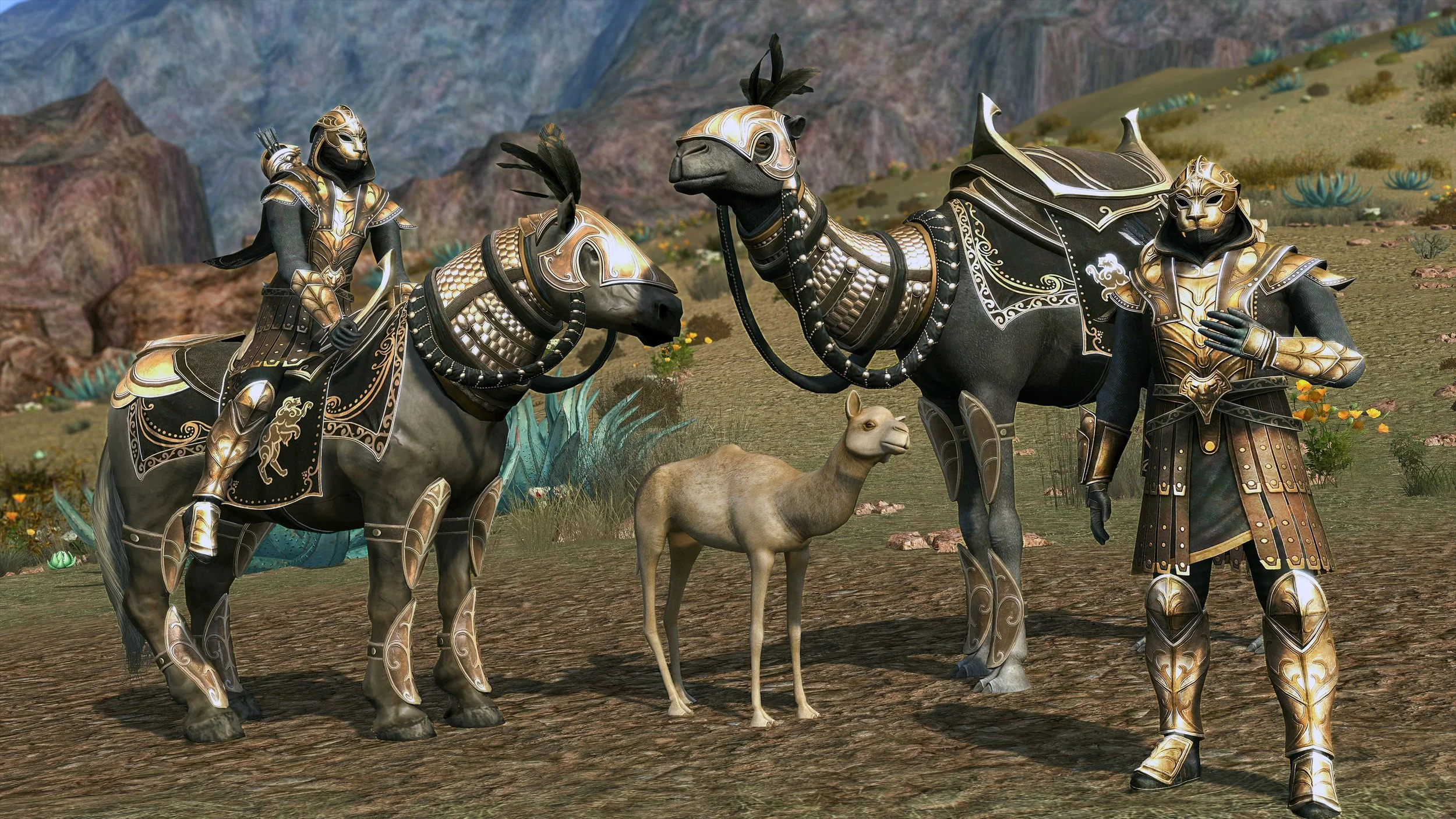
Kingdoms of Harad, the 13th expansion for the MMORPG The Lord of the Rings Online, was released today. Highlighting developer’s Standing Stone Games continuing commitment to this eighteen year old game. As 2025 draws to a close, I thought it would be prudent to reflect upon the current state of LOTRO and to consider what may come next year. Two words that I associated with this MMO are stable and consistent. The playerbase is loyal and dependable. Player numbers never greatly decline nor do they notably expand. LOTRO fills a very specific gaming niche and one of the reasons it retains its players is that there is no suitable alternative game. Although there is not a great deal of data in the public domain, it is generally accepted that LOTRO has an older player demographic and that many are consummate Tolkien fans.
The MMORPG The Lord of the Rings Online runs on a broad spectrum of PCs. From archaic laptops to high end gaming rigs, although it may require a bit of tweaking. At present, the optimal way to play the MMO is at a resolution of 1920x1080 (FHD) with the graphics setting maxed out. The graphics are sharp and the UI is readable. However, a growing number of gamers are now using 2K and 4K monitors. You can play LOTRO at higher resolutions such as 2560×1440 (QHD) and 3840x2160 (UHD) and the game looks great. However, the UI does not scale and so is very small on 2K and 4K monitors. The skill icons on the quickslots (shortcut bars) and the in-game text become difficult to see at these resolutions, which deters some players from using them. It is a known issue that Standing Stone Games are attempting to address but it is unlikely to be resolved any time soon.
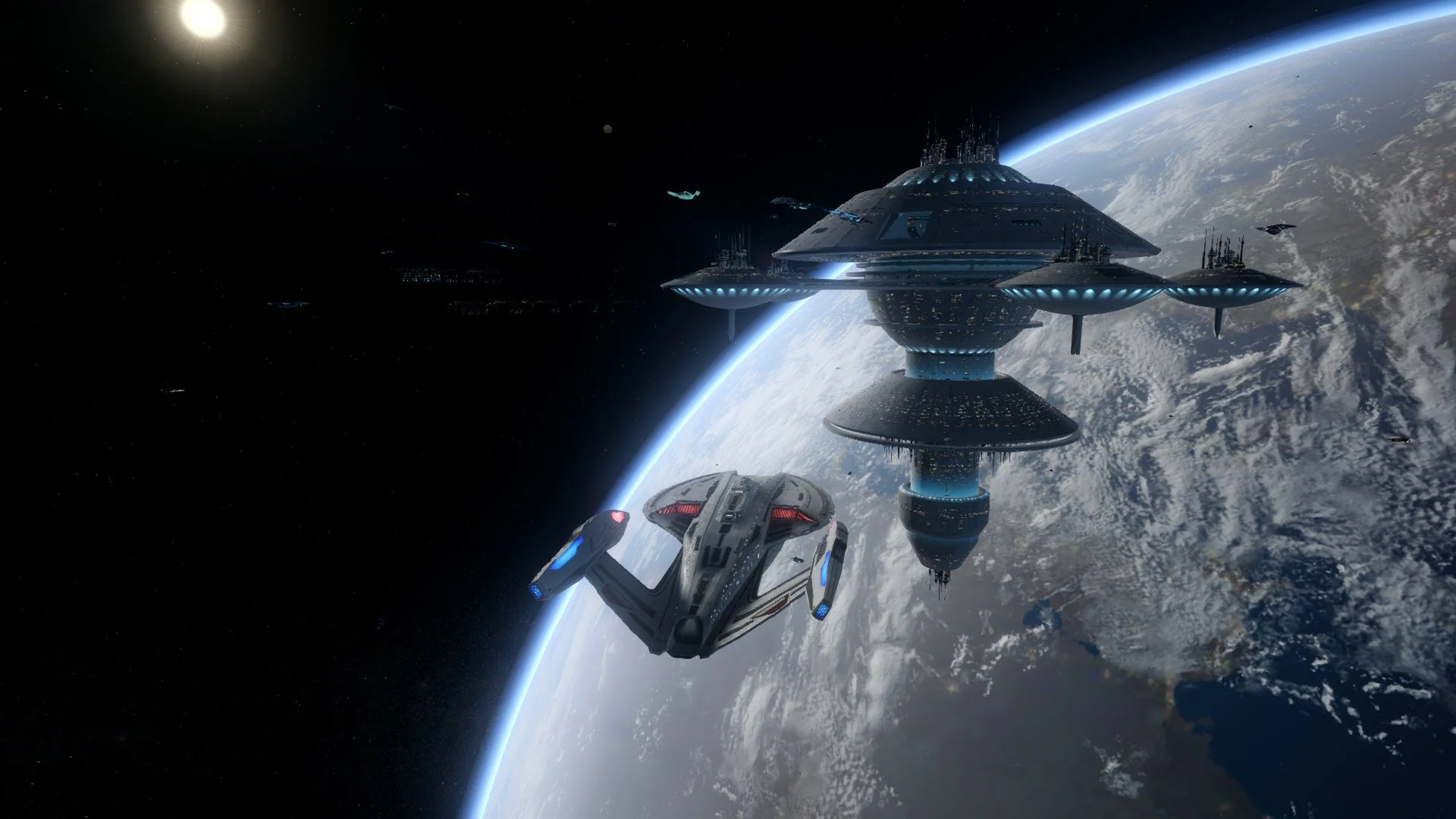
I recently read a post on Massively Overpowered about skills rotation in the MMORPG genre. I found the subsequent discussion in the comments fascinating. Mainly because I have never used a fixed rotation of skills in any of the MMORPGs that I play. I understand the reasoning behind such things and why some players want to optimise their combat performance. Using one’s skills in a specific order to maximise damage and manage their subsequent cooldown has a logical appeal. In Star Trek Online, some players go so far as to create keybinds for their rotations and assign it to a specific hotkey, which is then continuously pressed throughout combat. However, rotations are a blunt tool that lack flexibility, often being geared towards dealing with a single target or using an area of effect skill against a larger group. They may not be the optimal approach to combat when things do not go to plan.
Tolkien enthusiasts may recollect Athlon Games, a subsidiary of Leyou Technologies, announcing that it was developing a new MMORPG, based upon The Lord of the Rings, back in September 2018. The following summer, it was revealed that Amazon Game Studios was the partner developer for the project. In late 2020, Leyou Technologies (a Hong Kong-based company), was acquired by the Chinese conglomerate Tencent. This triggered a contract clause with the license holder, Middle-earth Enterprises, allowing them to terminate the existing arrangement if a new deal could not be met. Amazon and Tencent were unable to agree upon how to proceed with the project, leading Amazon to withdraw from negotiations. The project was subsequently scrapped. No details or images of the MMO have been released.
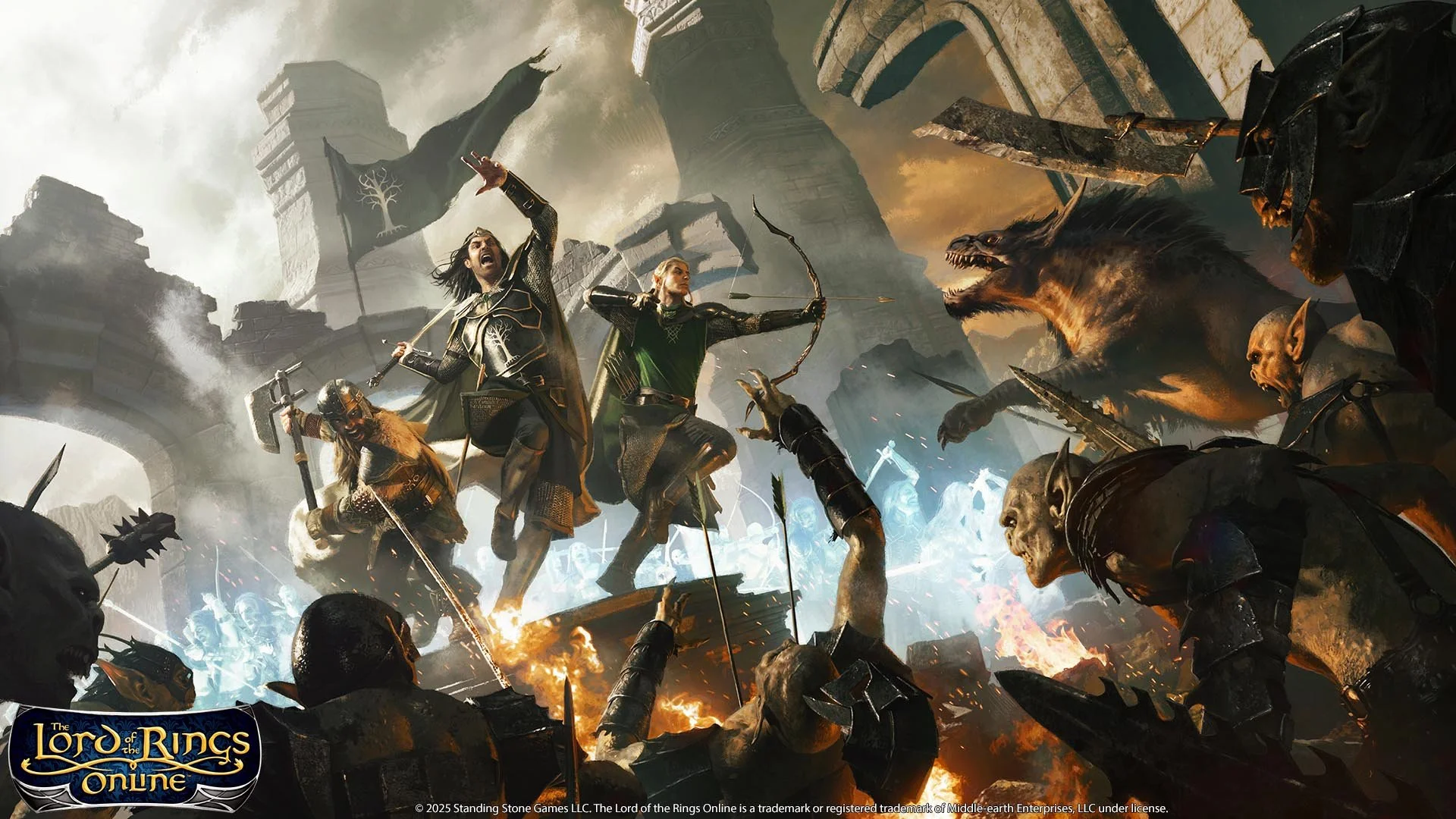
After a six month migration period, Standing Stone Games formally closed all their legacy 32-bit game servers for the MMORPG, The Lord of the Rings Online, on the 31st August 2025. Despite this planned closure being widely discussed via the game’s official forums, professional video game websites and fan blogs, many LOTRO players were unaware of this deadline. Hence many were unable to migrate their respective alts to the new 64-bit servers. Naturally those affected by these closures were upset, especially those with longstanding characters who didn’t relish the prospect of starting from scratch with a new alt. Thankfully, SSG have been true to their word and as of today, have re-opened these “dark worlds” to character transfers. If you have an alt trapped on one of the older game worlds, then now is the time to use the transfer wizard and move them to a new active game world.
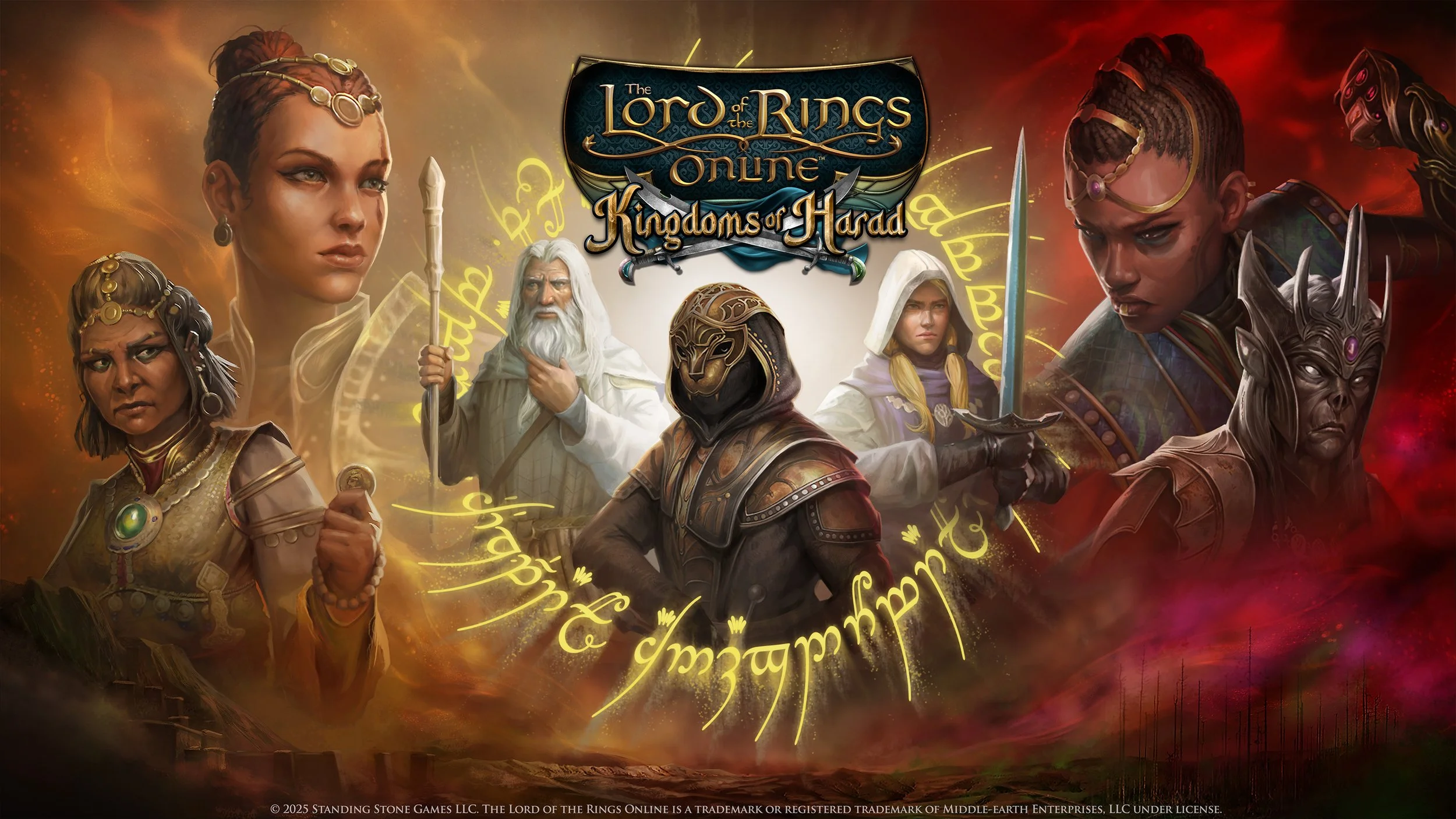
MMORPG announced earlier today and it was subsequently confirmed by Standing Stone games, that the new expansion for The Lord of the Rings Online will be Kingdoms of Harad and that it will launch later in the year. The expansion will see the conclusion of the epic Song of Waves and Wind storyline and the level cap raised from 150 to 160. There will be a new region to explore, Mûr Ghala, comprising four zones. Adagîm, Idagâl, An Shêru and Kighân. The latter contains the main trading hub of Zajâna. Players will travel into the region with Gandalf the White, along with allies of the Kindred of Coins and Mizadi as they seek to counter the regional power struggle brought about by the fall of Sauron. Canonically, this takes place three months after the destruction of the ring, hence King Elessar and Eomer are busy with domestic affairs in their respective kingdoms.
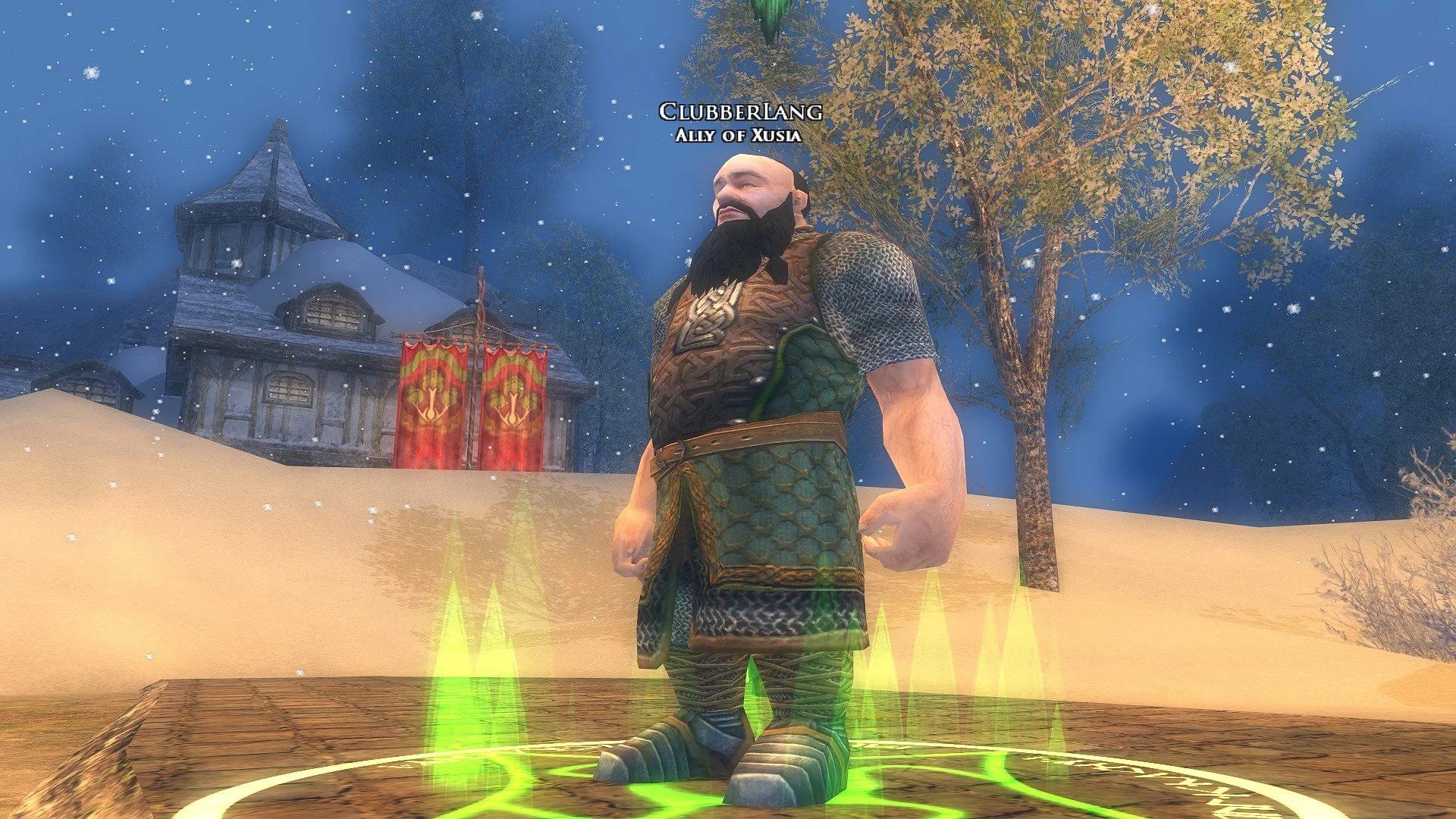
Skirmishes were added to the MMORPG The Lord of the Rings Online, in 2009 with the release of the Siege of Mirkwood expansion. Skirmishes are a repeatable and scalable combat system that allows players to access various instances for solo or group play from anywhere in the in-game world. Players can choose a Skirmish Soldier from a variety of classes to accompany them and provide healing, tank or additional DPS. On paper it’s a great system which is why many other MMOs offer something similar. I recently decided to tinker with my Skirmish Soldier build on my main character to see if I could optimise their performance. As my primary alt is a Lore-master, for the last few years I have had a Warrior as their Skirmish Soldier, to take some of the aggro from attacking mobs. I used the excellent guide by FibroJedi and swapped over a few Training and Personal Traits.
On 2nd August 2025, I was playing the MMORPG The Lord of the Rings Online, on my primary character, a level cap Lore-master. I decided to continue with one of the Allegiance Quest lines, specifically Durin’s Folk. I played through several quests and earned the appropriate tokens that advance the Allegiance system. I then handed these in to the NPC in the Hall Under the Mountain, expecting the next quest in the series “Chapter 3: Gimli’s Request” to be unlocked. An item appeared in my inventory that I then clicked on, which should have bestowed the quest. Unfortunately, nothing happened. Furthermore, the item vanished from my bag and therefore I could not attempt to click it again. I checked the LOTRO Wiki and then looked around the Hall Under the Mountain to see if any NPC had a ring icon above their head. As they did not, I surmised that this was a software glitch and logged a support ticket with Standing Stone Games.

If you check the Star Trek Online Wiki, you’ll find that there has been a steady stream of new content added to the MMORPG over the last 15 years. However, it doesn’t quite feel that way, mainly because more recent material seems weaker and less memorable. The last two major story arcs in STO have been somewhat lacklustre and demonstrably inferior to those that went before. Both Terran Gambit and Kings & Queens suffer from uninspired, repetitive ideas as well as an infrequent release schedule. Effectively weak stories have been dragged out over too much time. No doubt changes among the STO writing team have had an impact on content but it also seems that some of the newer stories have been tailored around whatever former Star Trek cast members that are available. As a result there has been a somewhat “square pegs in a round holes” aspect to both story arcs, where the pieces just don’t seem to fit together well.
Let’s start with a quote from a classic Walter Hill film, The Warriors. “Can you count, suckers?” says Sirus. The gang leader was referring to the number of Police in New York City at the time. Whereas, for the purpose of this post, I am referencing how many Delving Writs a player needs to acquire 6 pieces of level cap armour in LOTRO. Because, next to the gear you get from endgame instances and raids, Delving gear is a good alternative.. It is marginally better than the items you can get from lootboxes. Hence, Delving armour is a good source of high end gear for the solo player. Through the miracle of mathematics, the number of Delving writs required to acquire a full set of this armour is 9,000. At first glance, that seems like a lot. If you then do some further research to put the number in context, you realise it is indeed a lot and a substantial undertaking.
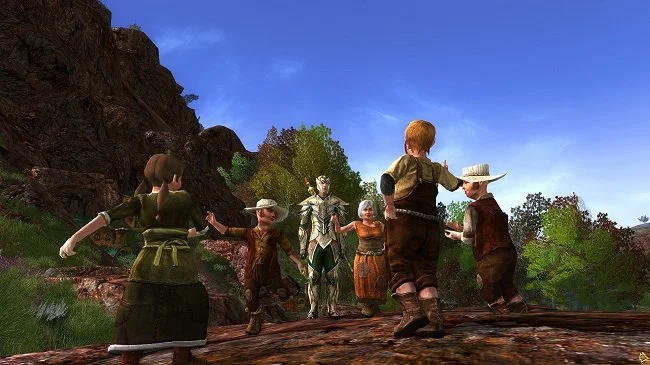
I am currently enjoying a renewed interest in the MMORPG The Lord of the Rings Online since I migrated all my characters from the old 32-bit servers to the new 64-bit replacements. I’ve created a new High Elf Lore-master on Peregrin server and am currently levelling them in a targeted play through of the Epic Story, supplemented by curated side quests. While playing recently, I realised the game UI on this alt wasn’t as I usually have it laid out. So I checked through the various documents on my PC and found a text file I had created many years ago that had a few hints and tips written down. I’ve added a few more and decided to share them as a blog post. I’m sure veteran players will be familiar with many of them but a lot of them are worth repeating. They may prove useful to those new to LOTRO or returning to the game after a long hiatus.
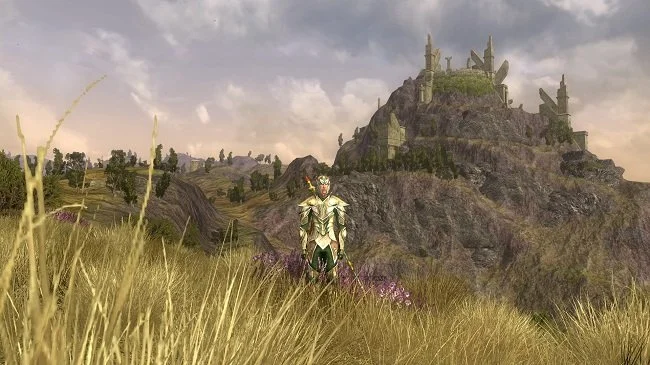
In mid-March, while the server migration debacle raged, I created a new alt for the MMORPG, The Lord of the Rings Online, on Peregrin server. The idea was to play casually through content focusing on enjoyment, rather than worrying about progression. I was to level at a pace that suited me and had no specific plans to develop my alt in any particular way. I have been playing LOTRO since 2008 and have a primary level-cap character that has been my main focus over the years. Hence I have previously experienced all story content from all the expansions and am therefore very familiar with what the game has to offer. Which is why I thought I’d do things differently this time. So I started my new Lore-master in Mossward in Swanfleet, the new starting area added to the game in 2022.
In massively multiplayer online games (MMOs), alts (short for alternate characters), are new characters created by a player in addition to their primary character (often called the “main”). Alts are often encouraged by developers as a means to keep players engaged with their game(s). Sometimes an MMO will actively reward the creation of alts either with access to exclusive content, or with additional skills or items previously unlocked by primary characters. As the myth that an MMO really begins at endgame still persists in gaming culture, some games sell boosts that will instantly raise the level of an alt to that of the current level cap. Creating alts is such a key aspect of the MMO genre, that some games will sell additional character slots, so that players can create further alts beyond the default amount allowed. There are many reasons why players create alts. Let us consider some.
Playing MMOs on a Second Monitor
I have two monitors on my desk. The first (which is the primary monitor as far as my PC is concerned), is on the left and the second is on the right. The primary monitor is a 24 Dell U2412M, which has a resolution of 1920 x 1200. It therefore has an aspect ratio of 16:10 which adds a little extra desktop real estate, which I prefer when writing. The second monitor is a 24 inch Dell S2421H with a screen resolution of 1920 x 1080. It has an aspect ratio of 16:9 which is standard FHD. My chair is adjacent to the middle of my desk and I can turn according to each monitor I’m using. I tend to use the primary, larger monitor on the left for tasks such as writing via Google Docs and emails. The second monitor on the right is used for YouTube and gaming. This is because of its FHD format. I also have a Nintendo Switch connected to the second monitor for the same reason.
I have two monitors on my desk. The first (which is the primary monitor as far as my PC is concerned), is on the left and the second is on the right. The primary monitor is a 24 Dell U2412M, which has a resolution of 1920 x 1200. It therefore has an aspect ratio of 16:10 which adds a little extra desktop real estate, which I prefer when writing. The second monitor is a 24 inch Dell S2421H with a screen resolution of 1920 x 1080. It has an aspect ratio of 16:9 which is standard FHD. My chair is adjacent to the middle of my desk and I can turn according to each monitor I’m using. I tend to use the primary, larger monitor on the left for tasks such as writing via Google Docs and emails. The second monitor on the right is used for YouTube and gaming. This is because of its FHD format. I also have a Nintendo Switch connected to the second monitor for the same reason.
Now that’s out of the way, let’s move on to video games that are relevant to this post. I have at present six MMORPGs installed on my PC. Age of Conan, Star Trek Online, The Lord of the Rings Online, Guild Wars 2, The Elder Scrolls Online and Star Wars: The Old Republic. As previously stated I prefer to play video games using the second monitor as it is a default FHD standard. Screen captures and any recorded material are in a 16:9 aspect ratio, which is very useful for YouTube or streaming. Working within a standard format is also convenient when trying to find optimal game settings for my CPU and GPU. However, trying to get these games to run on my second monitor and more importantly stay there, has not proven easy. Some cooperate, others have to be cajoled and a few flat out refuse to do so.
The obvious solution is to change the primary monitor designation in the PC settings. However, I don’t want to do this as it would have a knock on effect on my current preferences. Hence I have had to manually tinker with each game to see if it will run consistently on monitor number 2. ESO being the most recent MMO out of those listed, has a drop down box in the game settings where you can choose which display you use. Both STO and SWTOR can be temporarily set to “windowed mode” and dragged over to the second display. Furthermore this change persists after exiting the game client and rebooting the PC. Sadly, AoC, LOTRO and GW2 resist this simple work around. The games can be dragged to the second monitor in “windowed mode” but when the display is set back to fullscreen they instantly revert back to the primary monitor.
I am far from alone in my preferences. A simple Google search shows that many other gamers have made similar enquiries and you’ll find numerous forums and subreddit posts. Often the advice is to use various Windows 10 settings to force content from one monitor to another but it seldom works, or if it does it doesn’t persist. Using the management software that comes with your GPU is also frequently recommended but this tends to be for spanning a game across two monitors, rather than forcing the output to a specific one. There are also some third party apps that have been developed by “gifted amateurs” but again the results are not guaranteed and often depend on having the right sort of GPU with the right sort of output cable. The problem ultimately stems from most of these games being developed when having multiple monitors was not as common as today.
Out of the three MMOs where this problem persists I find GW2 the most egregious. This game possibly has the biggest development budget of them all and is regularly updated. You would have thought such a feature as a choice of displays would have been added to the game by now. AoC is in maintenance mode, so one adjusts one’s expectations accordingly. However, LOTRO is a curious beast. It has a small but loyal playerbase and makes sufficient money to keep going. Updating the GUI is on the development “to do list”. In the meantime I finally found a workaround today by making some alterations to the “UserPreferences.ini” file. I changed “DisplayOutput=1” to 2 in the list of [Render] settings and changed all display resolution data to 1920 x 1080 and the aspect ratio to 16:9. LOTRO now runs on my second monitor and stays there after rebooting the PC. A minor victory but a victory no less.
Are video games becoming easier? It’s a perennial subject that is frequently discussed by those who play them. Often the question of whether they have actually become easier is not the focus of the debate, as it seems to be broadly recognised that it is the case. Instead, discussion of this matter tend to drift into the rectitude of this change. Debate’s of this nature are usually awash with subjective opinions and personal preferences which are then put forward as objective facts. It’s not just a question of video games becoming easier, it’s the fact that making them easier is “wrong” and those who want them as such are “not proper gamers” etc. The hours that have been lost to this pointless, tedious debate are uncountable. However, I digress. Let us return to the matter of video games becoming easier, because although fans discuss this a lot and have plenty to say, you don’t often hear from the developers on this subject.
I recently completed the main story in Tainted Grail: The Fall of Avalon. In total I spent about sixty hours playing the game. I began at the start of the year, then took a break for a while but returned to it recently because I wanted to see if I could unlock a specific ending. I did manage to do this. Like so many other RPGs, Tainted Grail: the Fall of Avalon has a central storyline, along with a wealth of side quests, based around factions in specific zones. I think I possibly completed about a two thirds of these. However, once I finished the main story, my interest in the game began to wane. I finally left my character in the last major quest hub in case I wish to return at a future date. I then logged out of the game and uninstalled it from my PC to free up space for whatever I was to play next. In this case its The Sinking City 2. None of this is a negative reflection on Tainted Grail: the Fall of Avalon. I enjoyed the time I spent playing this quirky RPG. I simply had my fill and left to play something else.
The next expansion for the MMORG, The Lord of the Rings Online, was announced on the 1st August, via the gaming website MMORPG.The Wolves of Mordor, which will launch later in the year, appears ambitious in scope as it will include two new game systems as well as the obligatory story update. This expansion takes place in Draugardh located in the North East of Mordor, beyond the Plateau of Gorgoroth. It includes the new zones of Heledhris, Parth Rhavas and Nan Ogol. These vary environmentally ranging from the arid, volcanic and semi-tropical. Players will encounter the Daugrim in these regions, Werewolves but not in the modern sense. This is not the lycanthropy of Eastern European legends but in the established Tolkien idiom of fell spirits inhabiting the bodies of Wolves. The region also sees the return of the Woses and players can expect to encounter Elves and scouts from Gondor. As ever with LOTRO expansions, there will be new instances as well as a raid.
I don’t keep up with gaming news as much as I use to but several noteworthy announcement have come to my attention of late. Firstly, there’s an expansion, Songs of the Past, coming for the Witcher III: Wild Hunt in 2027. No doubt this is to pave the way for the Witcher IV. Next, I also found out about Hand of Fate: Horde. I liked this franchise and was saddened to learn that the original studio, Defiant Development, closed. Hence is was a pleasant surprise to see this new game being developed by members of the original studio. The third announcement was regarding Guild Wars 3. A new MMORPG in active development by a major studio is no small feat and is certainly good news for fans of this franchise and the genre per se. However, once you look beyond this news this announcement raises several questions and has certainly given me pause for thought. Let us take a few moments to consider them.
Star Trek Online has many in-game systems that are common to the MMORPG genre. The reputation system is one such example. In STO there are 13 reputation factions. Once a player has reached level 50 they may start progressing through the 6 reputation tiers of each one. Players gain progression through daily projects (20 hours in duration). Hourly projects are also available though they yield less reputation advancement and are limited to three times a day. Hence 20 hour projects are consider by default the most efficient way to gain rep. Projects require 30 Faction Specific Marks (earned via various activities in-game), 15,000 Energy Credits (standard in-game currency) and 2000 Expertise points. The most efficient way to tackle the reputation grind is to build up the necessary resources in advance and then at a designated time each day, start all 13 respective projects. Upon completion projects yield a player bound lockbox containing a random space or ground weapon, a console or Elite Marks which can be used to acquire faction gear.
I was recently perusing my archive of old blog posts, when it struck me how much I’ve written about the MMORPG genre over the years. Naturally, there was far more material from between 2008 and 2012 as that was period when I immersed myself in the genre and was very enthusiastic about it. I was at a point in my life when I had the time to dedicate to such games and I was happy to participate in the social aspect of they offered. I would regularly play through group content and spend time socialising online with fellow guild members. My experience remains a textbook example of how online games can be more than the sum of their parts and that where you are at in your life has a major impact upon your overall enjoyment. As I read though various old posts it became clear that my experiences where specific to this particular part of my life and that they cannot be repeated. My relationship with the genre is very different now and that’s fine.
Creating alts is an integral aspect of the MMORPG genre. Many players will create a character of a specific class or faction, play it for a while, lose interest in it or they may decide that it is just not for them. Fortunately it is no effort at all to simply re-roll a new alt and set off once again. Furthermore, lots of players never reach level cap of the MMORPG that there playing. When the going get’s tough, so to speak, you can either soldier on for another 50 levels or simply create a new alt and return to the comfort of tried and tested content. Alts also give you the chance to secure an accolade or achievement that you previously missed. They are also of great benefit to the genres social aspects. Creating a new alt so you can play along with a friend who is just starting is great fun. Developer’s love them too as it means you’re still playing the game.
I recently took a break from Crimson Desert choosing instead to to play something familiar and easy going. As I’ve been logging into Star Trek Online daily to participate in the anniversary event, I decided to look through my various alts and see how far they had progressed through the game and what resources they had. At present I have twelve alts. My primary Captain was created in 2015 during the original Delta Recruit Event. I had previously played STO intermittently since its release in January 2010 but I never kept any of those characters. Hence this decade old Tactical Federation Captain has been my main focus when playing. The other eleven alts are the result of other recruitment events or whenever I wanted to try something different, such as playing a specific class or faction. I obviously played a lot of STO during the lockdown as several alts date from that period. Several had maximum reputation across all factions.
13 days after its release, market analysts estimate that Crimson Desert has already earned $200 million across the four main platforms (PC, PlayStation 5, and Xbox Series X and S). The game is certainly proving popular among gamers with the internet awash with live streams and “let’s play” videos. However, reviews are mixed both among gaming journalists and YouTube influencers. Common complaints about the game include that it is slow to start, the controls are poorly laid out on all platforms and that developer’s Pearl Abyss have done a poor job of explaining most aspects of the game to new players. Although such criticisms are true to a degree, I think these complaints highlight how many gamers are conditioned to expect new titles to follow a specific pattern with regard to pacing, narrative exposition and learning in-game systems. A pattern that Pearl Abyss has chosen to ignore, instead favouring an old school approach.
Last night, I spent the first 45 minutes after the launch of Crimson Desert, watching the 92GB pre-downloaded game files slowly decompressing and installing. I finally launched the game at about 10:50 PM GMT. I then waited a further 5 minutes while shaders were downloaded. It took me about 15 minutes or so to read through the various game settings and choose those that are optimal for my PC. I suspect even if you have a beast of a computer, you’re still going to have to spend some time tweaking settings. As for those players like myself with a gaming rig that is somewhere in the middle of the game’s specifications, be prepared to do a lot of fine tuning both within Crimson Desert itself and your Windows settings.
Video games as a genre are extremely poor at explaining themselves. When you buy a new game you’ll often find little or no information regarding the basic systems and mechanics. The industry assumes that their customers are by default familiar with the fundamentals of playing a modern video game. Hence if a game has a tutorial, it is often based around videos rather than detailed verbal instructions. You are are briefly shown a clip of a specific move being successfully undertaken but it is seldom shown in a wider context. The industry also expects the fan community to take on the role of curating and disseminating information about its games. The move away from forums and bespoke websites to Discord highlights this. Discord is a primarily a real time communication tool and not good at maintaining a historical data archive. If you want an answer to a specific gaming question, you’ll more than likely find it on YouTube in a video made by a fellow gamer.
According to the recent “letter to the players”, Standing Stone Games will be adding a new zone to the MMORPG The Lord of the Rings Online in the second quarter of this year. Possibly around May or June. Having spent the last three expansions in the South of Middle-earth exploring the tropical Umbar and the deserts of Harad, I would certainly welcome a change of location. I have gradually warmed to these zones over the last eighteen months but I do find them so incongruous. They are so radically different to the European style content that has been the mainstay of the game for so long. Tolkien’s source text has plenty of detail regarding Eriador and Rhovanion. Information regarding Harad is scarce, hence it has afforded the developers a great deal of artistic freedom. Although exceedingly well realised these tropical zones have taken a while for me to get used to.
I’m not sure exactly when it started but I’ve recently noticed a graphical bug within the MMORPG The Lord of the Rings Online. This problem often occurs within caves or in areas where there are a lot of rocky surfaces. Hence it has become very apparent in the latest two expansions, set in Umbar and Harad. This graphical glitch causes some surface textures to appear to flash from light to dark intermittently. The resulting strobe effect is hard to ignore and very distracting. Fortunately, a quick online search showed that this is not a problem unique to my installation of LOTRO and is a known problem. Furthermore, there is a very simple workaround, which is to go into the Advanced Graphics setting and uncheck “Per Pixel Lighting”, which immediately remedies the problem. I have no idea why this has recently started to happen but at least it can be resolved.
This year is the 60th anniversary of Star Trek. The original TV show was first broadcast in the US on September 8th 1966. If you search online you’ll find details of lots of related events. There are documentaries, conventions, new TV shows and even some video games in development. However, what you won’t find are any details regarding what will be happening with the MMORPG Star Trek Online. So far no road map for 2026 has been posted online by the developers but it is still quite early in the New Year. That being the case, I am not especially optimistic about there being any major plans waiting to be revealed. It is not as if DECA Games have demonstrated or stated any major ambitions for STO beyond keeping the endless events treadmill going and regularly adding content to the in-game store, during their development tenure. The ongoing story arc drags on inexorably and is as dull as ditchwater.
The latest expansion for the MMORPG The Lord of the Rings Online, Kingdoms of Harad, launched on December 3rd. With this release the level cap was raised from 150 to 160. It should also be noted that the cap for virtue traits was also raised from 96 to 100. Naturally these changes meant that there is a requirement to replace all armour and jewellery once the new cap is reached. Similarly Legendary Items have to be reforged and any traceries upgraded or replaced. If you follow the Epic Story it will lead you from quest hub to quest hub. The main quest rewards, along with those from side quests will provide adequate gear as you slowly progress towards the new level cap. The new raids, instances and missions/delvings then provide a means to acquire higher quality level 160 gear. LOTRO and indeed, many other MMOs are consistent in this methodology.
It is customary in a post such as this to list the various games that I’ve played over the last twelve months and share my thoughts on them. Wider analysis of the video game industry is also de rigeur. Unfortunately, I don’t really feel disposed to do either of those two things. My thoughts on the games I’ve played have already been published and can easily be accessed via the links at the bottom of this post. As for the video game industry, it suffers the same flaws as music, TV and cinema. There is creativity and innovation out there but it is often drowned out by mainstream products which are demonstrably inferior due to their inherent mediocrity. As for the business side of things, we once again clearly see the failings of the corporate management class. Sadly, they do not face the consequences of the mistakes that they make.
Today Standing Stone Games began beta testing Update 46.1 for the MMORPG The Lord of the Rings Online. The current preview on the Bullroarer test server is mainly for the new instance cluster that comes with the Kingdoms of Harad expansion which launched a few weeks ago. However, it would appear that this latest preview has another feature or note. One that should please LOTRO players. Contrary to what a lot of people thought, myself included, SSG have been working on a scaling UI for 2K and 4K monitors and the results are now available for testing from today Monday 15th through to Friday 19th December. Until now the main workaround to the lack of UI scaling has been to use either Nvidia or AMD graphics software to upscale the game from 1920 x 1080, or a third party app such as LosslessScaling. Having an official solution is a far better option.
Kingdoms of Harad, the 13th expansion for the MMORPG The Lord of the Rings Online, was released today. Highlighting developer’s Standing Stone Games continuing commitment to this eighteen year old game. As 2025 draws to a close, I thought it would be prudent to reflect upon the current state of LOTRO and to consider what may come next year. Two words that I associated with this MMO are stable and consistent. The playerbase is loyal and dependable. Player numbers never greatly decline nor do they notably expand. LOTRO fills a very specific gaming niche and one of the reasons it retains its players is that there is no suitable alternative game. Although there is not a great deal of data in the public domain, it is generally accepted that LOTRO has an older player demographic and that many are consummate Tolkien fans.
The MMORPG The Lord of the Rings Online runs on a broad spectrum of PCs. From archaic laptops to high end gaming rigs, although it may require a bit of tweaking. At present, the optimal way to play the MMO is at a resolution of 1920x1080 (FHD) with the graphics setting maxed out. The graphics are sharp and the UI is readable. However, a growing number of gamers are now using 2K and 4K monitors. You can play LOTRO at higher resolutions such as 2560×1440 (QHD) and 3840x2160 (UHD) and the game looks great. However, the UI does not scale and so is very small on 2K and 4K monitors. The skill icons on the quickslots (shortcut bars) and the in-game text become difficult to see at these resolutions, which deters some players from using them. It is a known issue that Standing Stone Games are attempting to address but it is unlikely to be resolved any time soon.
I recently read a post on Massively Overpowered about skills rotation in the MMORPG genre. I found the subsequent discussion in the comments fascinating. Mainly because I have never used a fixed rotation of skills in any of the MMORPGs that I play. I understand the reasoning behind such things and why some players want to optimise their combat performance. Using one’s skills in a specific order to maximise damage and manage their subsequent cooldown has a logical appeal. In Star Trek Online, some players go so far as to create keybinds for their rotations and assign it to a specific hotkey, which is then continuously pressed throughout combat. However, rotations are a blunt tool that lack flexibility, often being geared towards dealing with a single target or using an area of effect skill against a larger group. They may not be the optimal approach to combat when things do not go to plan.
Tolkien enthusiasts may recollect Athlon Games, a subsidiary of Leyou Technologies, announcing that it was developing a new MMORPG, based upon The Lord of the Rings, back in September 2018. The following summer, it was revealed that Amazon Game Studios was the partner developer for the project. In late 2020, Leyou Technologies (a Hong Kong-based company), was acquired by the Chinese conglomerate Tencent. This triggered a contract clause with the license holder, Middle-earth Enterprises, allowing them to terminate the existing arrangement if a new deal could not be met. Amazon and Tencent were unable to agree upon how to proceed with the project, leading Amazon to withdraw from negotiations. The project was subsequently scrapped. No details or images of the MMO have been released.
After a six month migration period, Standing Stone Games formally closed all their legacy 32-bit game servers for the MMORPG, The Lord of the Rings Online, on the 31st August 2025. Despite this planned closure being widely discussed via the game’s official forums, professional video game websites and fan blogs, many LOTRO players were unaware of this deadline. Hence many were unable to migrate their respective alts to the new 64-bit servers. Naturally those affected by these closures were upset, especially those with longstanding characters who didn’t relish the prospect of starting from scratch with a new alt. Thankfully, SSG have been true to their word and as of today, have re-opened these “dark worlds” to character transfers. If you have an alt trapped on one of the older game worlds, then now is the time to use the transfer wizard and move them to a new active game world.
MMORPG announced earlier today and it was subsequently confirmed by Standing Stone games, that the new expansion for The Lord of the Rings Online will be Kingdoms of Harad and that it will launch later in the year. The expansion will see the conclusion of the epic Song of Waves and Wind storyline and the level cap raised from 150 to 160. There will be a new region to explore, Mûr Ghala, comprising four zones. Adagîm, Idagâl, An Shêru and Kighân. The latter contains the main trading hub of Zajâna. Players will travel into the region with Gandalf the White, along with allies of the Kindred of Coins and Mizadi as they seek to counter the regional power struggle brought about by the fall of Sauron. Canonically, this takes place three months after the destruction of the ring, hence King Elessar and Eomer are busy with domestic affairs in their respective kingdoms.
Skirmishes were added to the MMORPG The Lord of the Rings Online, in 2009 with the release of the Siege of Mirkwood expansion. Skirmishes are a repeatable and scalable combat system that allows players to access various instances for solo or group play from anywhere in the in-game world. Players can choose a Skirmish Soldier from a variety of classes to accompany them and provide healing, tank or additional DPS. On paper it’s a great system which is why many other MMOs offer something similar. I recently decided to tinker with my Skirmish Soldier build on my main character to see if I could optimise their performance. As my primary alt is a Lore-master, for the last few years I have had a Warrior as their Skirmish Soldier, to take some of the aggro from attacking mobs. I used the excellent guide by FibroJedi and swapped over a few Training and Personal Traits.
On 2nd August 2025, I was playing the MMORPG The Lord of the Rings Online, on my primary character, a level cap Lore-master. I decided to continue with one of the Allegiance Quest lines, specifically Durin’s Folk. I played through several quests and earned the appropriate tokens that advance the Allegiance system. I then handed these in to the NPC in the Hall Under the Mountain, expecting the next quest in the series “Chapter 3: Gimli’s Request” to be unlocked. An item appeared in my inventory that I then clicked on, which should have bestowed the quest. Unfortunately, nothing happened. Furthermore, the item vanished from my bag and therefore I could not attempt to click it again. I checked the LOTRO Wiki and then looked around the Hall Under the Mountain to see if any NPC had a ring icon above their head. As they did not, I surmised that this was a software glitch and logged a support ticket with Standing Stone Games.
If you check the Star Trek Online Wiki, you’ll find that there has been a steady stream of new content added to the MMORPG over the last 15 years. However, it doesn’t quite feel that way, mainly because more recent material seems weaker and less memorable. The last two major story arcs in STO have been somewhat lacklustre and demonstrably inferior to those that went before. Both Terran Gambit and Kings & Queens suffer from uninspired, repetitive ideas as well as an infrequent release schedule. Effectively weak stories have been dragged out over too much time. No doubt changes among the STO writing team have had an impact on content but it also seems that some of the newer stories have been tailored around whatever former Star Trek cast members that are available. As a result there has been a somewhat “square pegs in a round holes” aspect to both story arcs, where the pieces just don’t seem to fit together well.
Let’s start with a quote from a classic Walter Hill film, The Warriors. “Can you count, suckers?” says Sirus. The gang leader was referring to the number of Police in New York City at the time. Whereas, for the purpose of this post, I am referencing how many Delving Writs a player needs to acquire 6 pieces of level cap armour in LOTRO. Because, next to the gear you get from endgame instances and raids, Delving gear is a good alternative.. It is marginally better than the items you can get from lootboxes. Hence, Delving armour is a good source of high end gear for the solo player. Through the miracle of mathematics, the number of Delving writs required to acquire a full set of this armour is 9,000. At first glance, that seems like a lot. If you then do some further research to put the number in context, you realise it is indeed a lot and a substantial undertaking.
I am currently enjoying a renewed interest in the MMORPG The Lord of the Rings Online since I migrated all my characters from the old 32-bit servers to the new 64-bit replacements. I’ve created a new High Elf Lore-master on Peregrin server and am currently levelling them in a targeted play through of the Epic Story, supplemented by curated side quests. While playing recently, I realised the game UI on this alt wasn’t as I usually have it laid out. So I checked through the various documents on my PC and found a text file I had created many years ago that had a few hints and tips written down. I’ve added a few more and decided to share them as a blog post. I’m sure veteran players will be familiar with many of them but a lot of them are worth repeating. They may prove useful to those new to LOTRO or returning to the game after a long hiatus.
In mid-March, while the server migration debacle raged, I created a new alt for the MMORPG, The Lord of the Rings Online, on Peregrin server. The idea was to play casually through content focusing on enjoyment, rather than worrying about progression. I was to level at a pace that suited me and had no specific plans to develop my alt in any particular way. I have been playing LOTRO since 2008 and have a primary level-cap character that has been my main focus over the years. Hence I have previously experienced all story content from all the expansions and am therefore very familiar with what the game has to offer. Which is why I thought I’d do things differently this time. So I started my new Lore-master in Mossward in Swanfleet, the new starting area added to the game in 2022.
In massively multiplayer online games (MMOs), alts (short for alternate characters), are new characters created by a player in addition to their primary character (often called the “main”). Alts are often encouraged by developers as a means to keep players engaged with their game(s). Sometimes an MMO will actively reward the creation of alts either with access to exclusive content, or with additional skills or items previously unlocked by primary characters. As the myth that an MMO really begins at endgame still persists in gaming culture, some games sell boosts that will instantly raise the level of an alt to that of the current level cap. Creating alts is such a key aspect of the MMO genre, that some games will sell additional character slots, so that players can create further alts beyond the default amount allowed. There are many reasons why players create alts. Let us consider some.
Are MMORPGs Expensive to Play?
Bree Royce, editor-in chief at Massively Overpowered, recently asked the question “what is the most expensive MMORPG right now”. My first thought was to search through my old draft blog posts and track down an MMO cost analysis I wrote circa 2019. It includes data such as subscription rates and the price of current expansions. There was also information on what were the most popular cash shop items at the time. However, I then read some of the comments that had been left on Bree’s post and I quickly realised that this wasn’t just a matter of financial expenditure. Whether or not an MMO is expensive is also determined by one’s disposable income, respective wealth and personal relationship with money. The latter is perhaps the most important, irrespective whether you consider yourself rich or poor.
Bree Royce, editor-in chief at Massively Overpowered, recently asked the question “what is the most expensive MMORPG right now”. My first thought was to search through my old draft blog posts and track down an MMO cost analysis I wrote circa 2019. It includes data such as subscription rates and the price of current expansions. There was also information on what were the most popular cash shop items at the time. However, I then read some of the comments that had been left on Bree’s post and I quickly realised that this wasn’t just a matter of financial expenditure. Whether or not an MMO is expensive is also determined by one’s disposable income, respective wealth and personal relationship with money. The latter is perhaps the most important, irrespective whether you consider yourself rich or poor.
I play several MMORPGs over the course of a year. I tend to return to a game when there’s sufficient outstanding content to keep me busy for a few months, such as a new expansion. Hence I will binge play games such as The Lord of the Rings Online, Star Wars: The Old Republic and The Elder Scrolls Online. While I am playing any one of these titles, I will subscribe to ensure that I am not impeded by any “free-to-play” restrictions. I will also buy some in-game currency so I can obtain any cash shop items I desire. Hence, if I play SWTOR for three months or so, I can end up spending between £60 to £75. It is therefore entirely possible that I can spend £300 a year across multiple MMOs. Broadly, this breaks down to about £6 a week. I personally do not feel that this is a lot of money.
Every hobby has some sort of cost associated with it. From golf, fishing, gardening, painting lead figures to trainspotting. Compared to others, I consider video games good value, especially the MMO genre. However, this is very subjective. Some people may consider my spending to be profligate. Others may think that I’m penny pinching. It all comes down to our own relationship with money. Something that varies between generations and other social divides. I know very wealthy people who will balk at costs that are just pocket change to them. I know others on what would be considered a relatively low income, to happily embrace in-game expenditure because it is the primary source of leisure and entertainment. Furthermore, “whales” do exist and are a big enough factor to influence a video game’s business model.
However, setting aside one’s own finances, there is another factor that counts here. One that is a matter of perspective. Most gamers understand that games cost money to develop and that there is a requirement to generate revenue to finance new content. Hence we broadly accept that there will be charges such as a subscription or the sale of cosmetic items. What matters here is setting a cost that feels appropriate. If this is done right then the player does not feel abused or exploited. A $5 or $10 cosmetic mount is therefore acceptable. Not so, $50 or more. Sadly, publishers often push egregious charges upon developers and mandate that they are included in the game. All too often a deliberate bottleneck or grind is artificially created in an MMO which can only be bypassed with a paid solution. This is the main bone of contention with many gamers.
As I’ve stated in other posts recently, what we expect from a video game is very much determined with what we have grown accustomed to and that varies depending on age. Paying once and getting everything was the norm during the eighties and nineties. But those days are gone and are not coming back. Therefore one has to adjust one’s expectations. It is also true that video game studios only pitch a business model that they can get away with. Sometimes, a live service game fails because it delivers too little and charges too much. The business models for games like LOTRO and SWTOR persist because the players ultimately tolerate it. They may complain but they continue paying. Unless you are prepared to stop paying you cannot exercise any leverage. Ultimately, the only intellectually honest answer to the question “what is the most expensive MMO right now” is the one you’ve chosen not to play.
Are video games becoming easier? It’s a perennial subject that is frequently discussed by those who play them. Often the question of whether they have actually become easier is not the focus of the debate, as it seems to be broadly recognised that it is the case. Instead, discussion of this matter tend to drift into the rectitude of this change. Debate’s of this nature are usually awash with subjective opinions and personal preferences which are then put forward as objective facts. It’s not just a question of video games becoming easier, it’s the fact that making them easier is “wrong” and those who want them as such are “not proper gamers” etc. The hours that have been lost to this pointless, tedious debate are uncountable. However, I digress. Let us return to the matter of video games becoming easier, because although fans discuss this a lot and have plenty to say, you don’t often hear from the developers on this subject.
I recently completed the main story in Tainted Grail: The Fall of Avalon. In total I spent about sixty hours playing the game. I began at the start of the year, then took a break for a while but returned to it recently because I wanted to see if I could unlock a specific ending. I did manage to do this. Like so many other RPGs, Tainted Grail: the Fall of Avalon has a central storyline, along with a wealth of side quests, based around factions in specific zones. I think I possibly completed about a two thirds of these. However, once I finished the main story, my interest in the game began to wane. I finally left my character in the last major quest hub in case I wish to return at a future date. I then logged out of the game and uninstalled it from my PC to free up space for whatever I was to play next. In this case its The Sinking City 2. None of this is a negative reflection on Tainted Grail: the Fall of Avalon. I enjoyed the time I spent playing this quirky RPG. I simply had my fill and left to play something else.
The next expansion for the MMORG, The Lord of the Rings Online, was announced on the 1st August, via the gaming website MMORPG.The Wolves of Mordor, which will launch later in the year, appears ambitious in scope as it will include two new game systems as well as the obligatory story update. This expansion takes place in Draugardh located in the North East of Mordor, beyond the Plateau of Gorgoroth. It includes the new zones of Heledhris, Parth Rhavas and Nan Ogol. These vary environmentally ranging from the arid, volcanic and semi-tropical. Players will encounter the Daugrim in these regions, Werewolves but not in the modern sense. This is not the lycanthropy of Eastern European legends but in the established Tolkien idiom of fell spirits inhabiting the bodies of Wolves. The region also sees the return of the Woses and players can expect to encounter Elves and scouts from Gondor. As ever with LOTRO expansions, there will be new instances as well as a raid.
I don’t keep up with gaming news as much as I use to but several noteworthy announcement have come to my attention of late. Firstly, there’s an expansion, Songs of the Past, coming for the Witcher III: Wild Hunt in 2027. No doubt this is to pave the way for the Witcher IV. Next, I also found out about Hand of Fate: Horde. I liked this franchise and was saddened to learn that the original studio, Defiant Development, closed. Hence is was a pleasant surprise to see this new game being developed by members of the original studio. The third announcement was regarding Guild Wars 3. A new MMORPG in active development by a major studio is no small feat and is certainly good news for fans of this franchise and the genre per se. However, once you look beyond this news this announcement raises several questions and has certainly given me pause for thought. Let us take a few moments to consider them.
Star Trek Online has many in-game systems that are common to the MMORPG genre. The reputation system is one such example. In STO there are 13 reputation factions. Once a player has reached level 50 they may start progressing through the 6 reputation tiers of each one. Players gain progression through daily projects (20 hours in duration). Hourly projects are also available though they yield less reputation advancement and are limited to three times a day. Hence 20 hour projects are consider by default the most efficient way to gain rep. Projects require 30 Faction Specific Marks (earned via various activities in-game), 15,000 Energy Credits (standard in-game currency) and 2000 Expertise points. The most efficient way to tackle the reputation grind is to build up the necessary resources in advance and then at a designated time each day, start all 13 respective projects. Upon completion projects yield a player bound lockbox containing a random space or ground weapon, a console or Elite Marks which can be used to acquire faction gear.
I was recently perusing my archive of old blog posts, when it struck me how much I’ve written about the MMORPG genre over the years. Naturally, there was far more material from between 2008 and 2012 as that was period when I immersed myself in the genre and was very enthusiastic about it. I was at a point in my life when I had the time to dedicate to such games and I was happy to participate in the social aspect of they offered. I would regularly play through group content and spend time socialising online with fellow guild members. My experience remains a textbook example of how online games can be more than the sum of their parts and that where you are at in your life has a major impact upon your overall enjoyment. As I read though various old posts it became clear that my experiences where specific to this particular part of my life and that they cannot be repeated. My relationship with the genre is very different now and that’s fine.
Creating alts is an integral aspect of the MMORPG genre. Many players will create a character of a specific class or faction, play it for a while, lose interest in it or they may decide that it is just not for them. Fortunately it is no effort at all to simply re-roll a new alt and set off once again. Furthermore, lots of players never reach level cap of the MMORPG that there playing. When the going get’s tough, so to speak, you can either soldier on for another 50 levels or simply create a new alt and return to the comfort of tried and tested content. Alts also give you the chance to secure an accolade or achievement that you previously missed. They are also of great benefit to the genres social aspects. Creating a new alt so you can play along with a friend who is just starting is great fun. Developer’s love them too as it means you’re still playing the game.
I recently took a break from Crimson Desert choosing instead to to play something familiar and easy going. As I’ve been logging into Star Trek Online daily to participate in the anniversary event, I decided to look through my various alts and see how far they had progressed through the game and what resources they had. At present I have twelve alts. My primary Captain was created in 2015 during the original Delta Recruit Event. I had previously played STO intermittently since its release in January 2010 but I never kept any of those characters. Hence this decade old Tactical Federation Captain has been my main focus when playing. The other eleven alts are the result of other recruitment events or whenever I wanted to try something different, such as playing a specific class or faction. I obviously played a lot of STO during the lockdown as several alts date from that period. Several had maximum reputation across all factions.
13 days after its release, market analysts estimate that Crimson Desert has already earned $200 million across the four main platforms (PC, PlayStation 5, and Xbox Series X and S). The game is certainly proving popular among gamers with the internet awash with live streams and “let’s play” videos. However, reviews are mixed both among gaming journalists and YouTube influencers. Common complaints about the game include that it is slow to start, the controls are poorly laid out on all platforms and that developer’s Pearl Abyss have done a poor job of explaining most aspects of the game to new players. Although such criticisms are true to a degree, I think these complaints highlight how many gamers are conditioned to expect new titles to follow a specific pattern with regard to pacing, narrative exposition and learning in-game systems. A pattern that Pearl Abyss has chosen to ignore, instead favouring an old school approach.
Last night, I spent the first 45 minutes after the launch of Crimson Desert, watching the 92GB pre-downloaded game files slowly decompressing and installing. I finally launched the game at about 10:50 PM GMT. I then waited a further 5 minutes while shaders were downloaded. It took me about 15 minutes or so to read through the various game settings and choose those that are optimal for my PC. I suspect even if you have a beast of a computer, you’re still going to have to spend some time tweaking settings. As for those players like myself with a gaming rig that is somewhere in the middle of the game’s specifications, be prepared to do a lot of fine tuning both within Crimson Desert itself and your Windows settings.
Video games as a genre are extremely poor at explaining themselves. When you buy a new game you’ll often find little or no information regarding the basic systems and mechanics. The industry assumes that their customers are by default familiar with the fundamentals of playing a modern video game. Hence if a game has a tutorial, it is often based around videos rather than detailed verbal instructions. You are are briefly shown a clip of a specific move being successfully undertaken but it is seldom shown in a wider context. The industry also expects the fan community to take on the role of curating and disseminating information about its games. The move away from forums and bespoke websites to Discord highlights this. Discord is a primarily a real time communication tool and not good at maintaining a historical data archive. If you want an answer to a specific gaming question, you’ll more than likely find it on YouTube in a video made by a fellow gamer.
According to the recent “letter to the players”, Standing Stone Games will be adding a new zone to the MMORPG The Lord of the Rings Online in the second quarter of this year. Possibly around May or June. Having spent the last three expansions in the South of Middle-earth exploring the tropical Umbar and the deserts of Harad, I would certainly welcome a change of location. I have gradually warmed to these zones over the last eighteen months but I do find them so incongruous. They are so radically different to the European style content that has been the mainstay of the game for so long. Tolkien’s source text has plenty of detail regarding Eriador and Rhovanion. Information regarding Harad is scarce, hence it has afforded the developers a great deal of artistic freedom. Although exceedingly well realised these tropical zones have taken a while for me to get used to.
I’m not sure exactly when it started but I’ve recently noticed a graphical bug within the MMORPG The Lord of the Rings Online. This problem often occurs within caves or in areas where there are a lot of rocky surfaces. Hence it has become very apparent in the latest two expansions, set in Umbar and Harad. This graphical glitch causes some surface textures to appear to flash from light to dark intermittently. The resulting strobe effect is hard to ignore and very distracting. Fortunately, a quick online search showed that this is not a problem unique to my installation of LOTRO and is a known problem. Furthermore, there is a very simple workaround, which is to go into the Advanced Graphics setting and uncheck “Per Pixel Lighting”, which immediately remedies the problem. I have no idea why this has recently started to happen but at least it can be resolved.
This year is the 60th anniversary of Star Trek. The original TV show was first broadcast in the US on September 8th 1966. If you search online you’ll find details of lots of related events. There are documentaries, conventions, new TV shows and even some video games in development. However, what you won’t find are any details regarding what will be happening with the MMORPG Star Trek Online. So far no road map for 2026 has been posted online by the developers but it is still quite early in the New Year. That being the case, I am not especially optimistic about there being any major plans waiting to be revealed. It is not as if DECA Games have demonstrated or stated any major ambitions for STO beyond keeping the endless events treadmill going and regularly adding content to the in-game store, during their development tenure. The ongoing story arc drags on inexorably and is as dull as ditchwater.
The latest expansion for the MMORPG The Lord of the Rings Online, Kingdoms of Harad, launched on December 3rd. With this release the level cap was raised from 150 to 160. It should also be noted that the cap for virtue traits was also raised from 96 to 100. Naturally these changes meant that there is a requirement to replace all armour and jewellery once the new cap is reached. Similarly Legendary Items have to be reforged and any traceries upgraded or replaced. If you follow the Epic Story it will lead you from quest hub to quest hub. The main quest rewards, along with those from side quests will provide adequate gear as you slowly progress towards the new level cap. The new raids, instances and missions/delvings then provide a means to acquire higher quality level 160 gear. LOTRO and indeed, many other MMOs are consistent in this methodology.
It is customary in a post such as this to list the various games that I’ve played over the last twelve months and share my thoughts on them. Wider analysis of the video game industry is also de rigeur. Unfortunately, I don’t really feel disposed to do either of those two things. My thoughts on the games I’ve played have already been published and can easily be accessed via the links at the bottom of this post. As for the video game industry, it suffers the same flaws as music, TV and cinema. There is creativity and innovation out there but it is often drowned out by mainstream products which are demonstrably inferior due to their inherent mediocrity. As for the business side of things, we once again clearly see the failings of the corporate management class. Sadly, they do not face the consequences of the mistakes that they make.
Today Standing Stone Games began beta testing Update 46.1 for the MMORPG The Lord of the Rings Online. The current preview on the Bullroarer test server is mainly for the new instance cluster that comes with the Kingdoms of Harad expansion which launched a few weeks ago. However, it would appear that this latest preview has another feature or note. One that should please LOTRO players. Contrary to what a lot of people thought, myself included, SSG have been working on a scaling UI for 2K and 4K monitors and the results are now available for testing from today Monday 15th through to Friday 19th December. Until now the main workaround to the lack of UI scaling has been to use either Nvidia or AMD graphics software to upscale the game from 1920 x 1080, or a third party app such as LosslessScaling. Having an official solution is a far better option.
Kingdoms of Harad, the 13th expansion for the MMORPG The Lord of the Rings Online, was released today. Highlighting developer’s Standing Stone Games continuing commitment to this eighteen year old game. As 2025 draws to a close, I thought it would be prudent to reflect upon the current state of LOTRO and to consider what may come next year. Two words that I associated with this MMO are stable and consistent. The playerbase is loyal and dependable. Player numbers never greatly decline nor do they notably expand. LOTRO fills a very specific gaming niche and one of the reasons it retains its players is that there is no suitable alternative game. Although there is not a great deal of data in the public domain, it is generally accepted that LOTRO has an older player demographic and that many are consummate Tolkien fans.
The MMORPG The Lord of the Rings Online runs on a broad spectrum of PCs. From archaic laptops to high end gaming rigs, although it may require a bit of tweaking. At present, the optimal way to play the MMO is at a resolution of 1920x1080 (FHD) with the graphics setting maxed out. The graphics are sharp and the UI is readable. However, a growing number of gamers are now using 2K and 4K monitors. You can play LOTRO at higher resolutions such as 2560×1440 (QHD) and 3840x2160 (UHD) and the game looks great. However, the UI does not scale and so is very small on 2K and 4K monitors. The skill icons on the quickslots (shortcut bars) and the in-game text become difficult to see at these resolutions, which deters some players from using them. It is a known issue that Standing Stone Games are attempting to address but it is unlikely to be resolved any time soon.
I recently read a post on Massively Overpowered about skills rotation in the MMORPG genre. I found the subsequent discussion in the comments fascinating. Mainly because I have never used a fixed rotation of skills in any of the MMORPGs that I play. I understand the reasoning behind such things and why some players want to optimise their combat performance. Using one’s skills in a specific order to maximise damage and manage their subsequent cooldown has a logical appeal. In Star Trek Online, some players go so far as to create keybinds for their rotations and assign it to a specific hotkey, which is then continuously pressed throughout combat. However, rotations are a blunt tool that lack flexibility, often being geared towards dealing with a single target or using an area of effect skill against a larger group. They may not be the optimal approach to combat when things do not go to plan.
Tolkien enthusiasts may recollect Athlon Games, a subsidiary of Leyou Technologies, announcing that it was developing a new MMORPG, based upon The Lord of the Rings, back in September 2018. The following summer, it was revealed that Amazon Game Studios was the partner developer for the project. In late 2020, Leyou Technologies (a Hong Kong-based company), was acquired by the Chinese conglomerate Tencent. This triggered a contract clause with the license holder, Middle-earth Enterprises, allowing them to terminate the existing arrangement if a new deal could not be met. Amazon and Tencent were unable to agree upon how to proceed with the project, leading Amazon to withdraw from negotiations. The project was subsequently scrapped. No details or images of the MMO have been released.
After a six month migration period, Standing Stone Games formally closed all their legacy 32-bit game servers for the MMORPG, The Lord of the Rings Online, on the 31st August 2025. Despite this planned closure being widely discussed via the game’s official forums, professional video game websites and fan blogs, many LOTRO players were unaware of this deadline. Hence many were unable to migrate their respective alts to the new 64-bit servers. Naturally those affected by these closures were upset, especially those with longstanding characters who didn’t relish the prospect of starting from scratch with a new alt. Thankfully, SSG have been true to their word and as of today, have re-opened these “dark worlds” to character transfers. If you have an alt trapped on one of the older game worlds, then now is the time to use the transfer wizard and move them to a new active game world.
MMORPG announced earlier today and it was subsequently confirmed by Standing Stone games, that the new expansion for The Lord of the Rings Online will be Kingdoms of Harad and that it will launch later in the year. The expansion will see the conclusion of the epic Song of Waves and Wind storyline and the level cap raised from 150 to 160. There will be a new region to explore, Mûr Ghala, comprising four zones. Adagîm, Idagâl, An Shêru and Kighân. The latter contains the main trading hub of Zajâna. Players will travel into the region with Gandalf the White, along with allies of the Kindred of Coins and Mizadi as they seek to counter the regional power struggle brought about by the fall of Sauron. Canonically, this takes place three months after the destruction of the ring, hence King Elessar and Eomer are busy with domestic affairs in their respective kingdoms.
Skirmishes were added to the MMORPG The Lord of the Rings Online, in 2009 with the release of the Siege of Mirkwood expansion. Skirmishes are a repeatable and scalable combat system that allows players to access various instances for solo or group play from anywhere in the in-game world. Players can choose a Skirmish Soldier from a variety of classes to accompany them and provide healing, tank or additional DPS. On paper it’s a great system which is why many other MMOs offer something similar. I recently decided to tinker with my Skirmish Soldier build on my main character to see if I could optimise their performance. As my primary alt is a Lore-master, for the last few years I have had a Warrior as their Skirmish Soldier, to take some of the aggro from attacking mobs. I used the excellent guide by FibroJedi and swapped over a few Training and Personal Traits.
On 2nd August 2025, I was playing the MMORPG The Lord of the Rings Online, on my primary character, a level cap Lore-master. I decided to continue with one of the Allegiance Quest lines, specifically Durin’s Folk. I played through several quests and earned the appropriate tokens that advance the Allegiance system. I then handed these in to the NPC in the Hall Under the Mountain, expecting the next quest in the series “Chapter 3: Gimli’s Request” to be unlocked. An item appeared in my inventory that I then clicked on, which should have bestowed the quest. Unfortunately, nothing happened. Furthermore, the item vanished from my bag and therefore I could not attempt to click it again. I checked the LOTRO Wiki and then looked around the Hall Under the Mountain to see if any NPC had a ring icon above their head. As they did not, I surmised that this was a software glitch and logged a support ticket with Standing Stone Games.
If you check the Star Trek Online Wiki, you’ll find that there has been a steady stream of new content added to the MMORPG over the last 15 years. However, it doesn’t quite feel that way, mainly because more recent material seems weaker and less memorable. The last two major story arcs in STO have been somewhat lacklustre and demonstrably inferior to those that went before. Both Terran Gambit and Kings & Queens suffer from uninspired, repetitive ideas as well as an infrequent release schedule. Effectively weak stories have been dragged out over too much time. No doubt changes among the STO writing team have had an impact on content but it also seems that some of the newer stories have been tailored around whatever former Star Trek cast members that are available. As a result there has been a somewhat “square pegs in a round holes” aspect to both story arcs, where the pieces just don’t seem to fit together well.
Let’s start with a quote from a classic Walter Hill film, The Warriors. “Can you count, suckers?” says Sirus. The gang leader was referring to the number of Police in New York City at the time. Whereas, for the purpose of this post, I am referencing how many Delving Writs a player needs to acquire 6 pieces of level cap armour in LOTRO. Because, next to the gear you get from endgame instances and raids, Delving gear is a good alternative.. It is marginally better than the items you can get from lootboxes. Hence, Delving armour is a good source of high end gear for the solo player. Through the miracle of mathematics, the number of Delving writs required to acquire a full set of this armour is 9,000. At first glance, that seems like a lot. If you then do some further research to put the number in context, you realise it is indeed a lot and a substantial undertaking.
I am currently enjoying a renewed interest in the MMORPG The Lord of the Rings Online since I migrated all my characters from the old 32-bit servers to the new 64-bit replacements. I’ve created a new High Elf Lore-master on Peregrin server and am currently levelling them in a targeted play through of the Epic Story, supplemented by curated side quests. While playing recently, I realised the game UI on this alt wasn’t as I usually have it laid out. So I checked through the various documents on my PC and found a text file I had created many years ago that had a few hints and tips written down. I’ve added a few more and decided to share them as a blog post. I’m sure veteran players will be familiar with many of them but a lot of them are worth repeating. They may prove useful to those new to LOTRO or returning to the game after a long hiatus.
In mid-March, while the server migration debacle raged, I created a new alt for the MMORPG, The Lord of the Rings Online, on Peregrin server. The idea was to play casually through content focusing on enjoyment, rather than worrying about progression. I was to level at a pace that suited me and had no specific plans to develop my alt in any particular way. I have been playing LOTRO since 2008 and have a primary level-cap character that has been my main focus over the years. Hence I have previously experienced all story content from all the expansions and am therefore very familiar with what the game has to offer. Which is why I thought I’d do things differently this time. So I started my new Lore-master in Mossward in Swanfleet, the new starting area added to the game in 2022.
In massively multiplayer online games (MMOs), alts (short for alternate characters), are new characters created by a player in addition to their primary character (often called the “main”). Alts are often encouraged by developers as a means to keep players engaged with their game(s). Sometimes an MMO will actively reward the creation of alts either with access to exclusive content, or with additional skills or items previously unlocked by primary characters. As the myth that an MMO really begins at endgame still persists in gaming culture, some games sell boosts that will instantly raise the level of an alt to that of the current level cap. Creating alts is such a key aspect of the MMO genre, that some games will sell additional character slots, so that players can create further alts beyond the default amount allowed. There are many reasons why players create alts. Let us consider some.
MMO Tropes: Death
“The MMO genre is rife with its own set of tropes; recurring themes and motifs that have become established and ubiquitous. All of which are ideal material for a hastily produced, lazily conceived, recurring blog post”. Dying in an Massively Multiplayer Online Role-Playing Game is a clear and unambiguous fail state. A means by which to teach the player that they’re doing something wrong and that they need to rethink their strategy. IE Don’t mess with the foul Marmydons unless you have back up and are wielding the Sword of Kagnazax. Dying is a reminder to not get overconfident and maintain situational awareness. It teaches us to ensure you have the right gear and consumables, to be au fait with the mechanics of any fight you’re about to get into and that winning is not a given. Any enterprise that offers a tangible reward will come with potential risks and consequences. If you’re playing in a group then death provides a timely reminder not to rely on Colin.
I use to be alive until I took an arrow to the cerebral cortex
“The MMO genre is rife with its own set of tropes; recurring themes and motifs that have become established and ubiquitous. All of which are ideal material for a hastily produced, lazily conceived, recurring blog post”. Dying in an Massively Multiplayer Online Role-Playing Game is a clear and unambiguous fail state. A means by which to teach the player that they’re doing something wrong and that they need to rethink their strategy. IE Don’t mess with the foul Marmydons unless you have back up and are wielding the Sword of Kagnazax. Dying is a reminder to not get overconfident and maintain situational awareness. It teaches us to ensure you have the right gear and consumables, to be au fait with the mechanics of any fight you’re about to get into and that winning is not a given. Any enterprise that offers a tangible reward will come with potential risks and consequences. If you’re playing in a group then death provides a timely reminder not to rely on Colin.
Over the course of its evolution, the MMORPG genre has handled death in many different ways. There’s the scorched earth policy of permadeath, in which your in-game character dies for good. You lose everything you’ve accrued and have to create a new character and start from scratch. Then there was the infamous “corpse run”, in which your character’s spirit spawns at a designated point on the in-game map and has to return to their own dead body to re-animate it. In the meantime, any passing player can pilfer your loot from your unattended cadaver. However, such draconian rules have fallen out of favour with modern MMOs, although you will still find them in many classic games that still linger online. Death is now treated as a minor penalty that temporarily inconveniences you. It may incur damage to your gear but it is no longer the setback that it used to be.
I’ve spent many a happy hour plummeting to my death in LOTRO
In the Lord of the Rings Online, death is politely called “defeat” and occurs when your morale reaches zero. While defeated your character remains immobile, unable to use any skills. You may then use a self-revive which has a two hour cooldown by default, assuming that the immediate area is safe. If however you cannot or do not wish to self-revive, you may “retreat” which will teleport you to the nearest rally point, which is a circle of stones in a safe area. This disadvantage of “retreating” is that it may take you a substantial distance from your previous location. This is particularly problematic if you are in an instance. However, if you are playing in a group you may be revived by a fellow player, if they are of a class that can revive others. It is not the best or worst example of death mechanics in an MMO but it can be managed. You can purchase an account unlock that reduces the two hour cooldown on “revive” to one or purchase additional consumable “revives” by using in-game currency.
Death is managed in a far more equitable fashion in Star Trek Online. During ground combat, if you are inconvenienced by dying you can simply respawn at the last unlocked respawn point. However, more often than not, your character is accompanied by your “away team”. This is a group of four NPC companions or “bridge officers”. While dead you may request “help”, in which case one will come and revive you. Depending upon the intensity of the ongoing combat, your companions may well all heroically die trying to save you. However, if you ensure that you have a holographic or android NPC on your away team, these have the ability to self-reboot. Hence if your entire group is wiped out, one will self-revive and then revive everyone else. Conversely, space combat in STO handles dying far more simply. There is a short 10 second cooldown and then you can opt to respawn in the combat zone.
“He’s dead, Jim. Oh shit, it is Jim”
I have always liked the way that Guild Wars 2 has made reviving others a key social aspect of the game. Each player can use a self-revive when “downed”, the stage between zero health and “defeat”. Alternatively, while “downed” if you manage to kill an enemy you will “rally” back to a state of health. However, once dead, they can either retreat to the nearest waypoint or look to an ally or the kindness of passing strangers to revive you. In dynamic events, where there are lots of players, it is commonplace to help players who are “downed” or “defeated” as it is practical to have as many functional players attacking a target as possible. There are traits in the game that improve reviving speed and potency. Gear can be augmented with runes, some of which can improve revival mechanics.
The Elder Scrolls Online dispenses with the intermediate stage of being “downed” and once your health is exhausted, you are officially dead. At this point, you can retreat to the nearest wayshrine or self-revive using a soul gem. Soul gems are consumable items that are initially empty. However, if the player slots the right skills, they are filled with the souls of enemies they defeat. Hence soul gems come with a cost. The player has to either make them themselves or buy them pre-made from the in-game store. Reviving yourself with a soul gem will grant you a spectral form for a short time that is unable to attack or be attacked, before returning to full health. This allows the player to strategically reposition themselves. Soul gems can also be used to revive other players. However, unlike Guild Wars 2, as you are using a resource with a value, players may not always be disposed to help you.
A poultry-geist
Most people are not overly enamoured by death mechanics. However, during solo PVE gameplay, it is broadly tolerated. However, in my experience, this changes significantly during group content. I jokingly mentioned earlier about death in instances or raids. It is a fact that players do not warm to dying in an MMO when it is due to the incompetence of another player. Group content in MMOs requires a substantial investment of time and resources. Death may lead to a wipe and failure to obtain the loot you desire. Which means when Colin fucks up and you all die, tempers will flare. It can ruin a game. Colin notwithstanding, death is a legacy penalty left over from the original hardcore days of MMOs. Its relevance seems to have diminished with age and continues to do so in this era of “live services”. It may eventually vanish from the genre as it ultimately stands in the way of player gratification. Unhappy players tend not to play or pay. Business doesn’t like that.
I recently read a post on Massively Overpowered about skills rotation in the MMORPG genre. I found the subsequent discussion in the comments fascinating. Mainly because I have never used a fixed rotation of skills in any of the MMORPGs that I play. I understand the reasoning behind such things and why some players want to optimise their combat performance. Using one’s skills in a specific order to maximise damage and manage their subsequent cooldown has a logical appeal. In Star Trek Online, some players go so far as to create keybinds for their rotations and assign it to a specific hotkey, which is then continuously pressed throughout combat. However, rotations are a blunt tool that lack flexibility, often being geared towards dealing with a single target or using an area of effect skill against a larger group. They may not be the optimal approach to combat when things do not go to plan.
In massively multiplayer online games (MMOs), alts (short for alternate characters), are new characters created by a player in addition to their primary character (often called the “main”). Alts are often encouraged by developers as a means to keep players engaged with their game(s). Sometimes an MMO will actively reward the creation of alts either with access to exclusive content, or with additional skills or items previously unlocked by primary characters. As the myth that an MMO really begins at endgame still persists in gaming culture, some games sell boosts that will instantly raise the level of an alt to that of the current level cap. Creating alts is such a key aspect of the MMO genre, that some games will sell additional character slots, so that players can create further alts beyond the default amount allowed. There are many reasons why players create alts. Let us consider some.
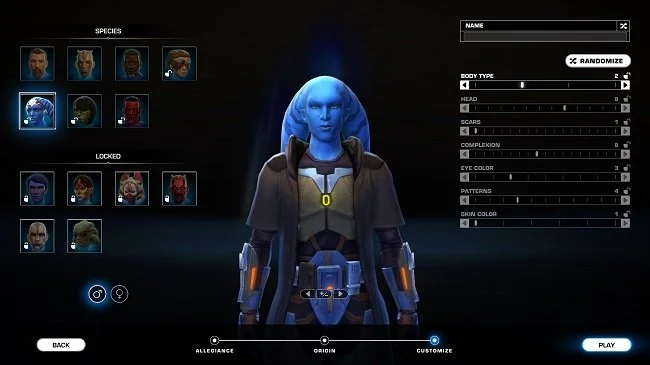
If you’ve ever played an MMORPG, then you have more than likely encountered this problem. Especially if you start playing a game that has been long established. You diligently create your character and spend time and effort customising them to suit your needs. All you’ve got to do next is choose a name, so you type in a pithy and droll title only to find that it has already been taken. So you quickly come up with another and that too is rejected. Next you try the same name but with some “alternative” spelling but the game resolutely tells you that even that permutation is already in use. I have found that even with a list of names that I’ve drawn up prior to playing the game, it can still take anything from 5 to 30 minutes to find one that is available. Naturally, this process is very frustrating, which is hardly the ideal user experience for a new player.

It would appear that one of the reasons potential new players avoid the MMORPG genre is due to the perception that they are all time sinks. I wouldn’t argue against this assumption because the reality is that it’s true. However any game that you enjoy, irrespective of genre, can become a time sink. That being said, the main difference between other genres and MMOs is as follows. A new player can jump straight into a FPS game and within minutes enjoy some multiplayer action, whereas in an MMO, a new player has to play through a tutorial and several hours of a starter zone before they start making headway in the game. This distinction does not have to be a deal breaker. An FPS can provide a quick fix of gaming and as such fulfils a need. MMORPGs can provide long term entertainment which scratches an ongoing gaming itch. Both are valid ways to enjoy gaming.
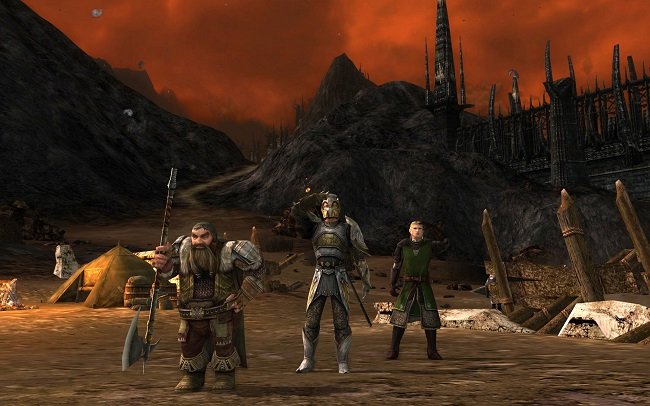
“The MMO genre is rife with its own set of tropes; recurring themes and motifs that have become established and ubiquitous. All of which are ideal material for a hastily produced, lazily conceived, recurring blog post”. One of the integral game mechanics of the MMORPG genre is the acquisition of loot. As you travel your virtual world of choice, committing random murder against all forms of flora and fauna, you acquire miscellaneous items by looting the corpses of the slain or stealing from houses and NPCs. Oh it’s a glamorous genre, the MMORPG. These random items can be crafting resources such as hides or ore. They may be food items or healing potions that provide some kind of statistical buff. If you’re fortunate, they may be gear that corresponds with your class or specific build, providing a much needed upgrade. Loot may also be the in-game currency, thus boosting your respective wealth. As you can see, loot comes in all shapes and sizes but how important is it?
“The MMO genre is rife with its own set of tropes; recurring themes and motifs that have become established and ubiquitous. All of which are ideal material for a hastily produced, lazily conceived, recurring blog post”. Dying in an Massively Multiplayer Online Role-Playing Game is a clear and unambiguous fail state. A means by which to teach the player that they’re doing something wrong and that they need to rethink their strategy. IE Don’t mess with the foul Marmydons unless you have back up and are wielding the Sword of Kagnazax. Dying is a reminder to not get overconfident and maintain situational awareness. It teaches us to ensure you have the right gear and consumables, to be au fait with the mechanics of any fight you’re about to get into and that winning is not a given. Any enterprise that offers a tangible reward will come with potential risks and consequences. If you’re playing in a group then death provides a timely reminder not to rely on Colin.
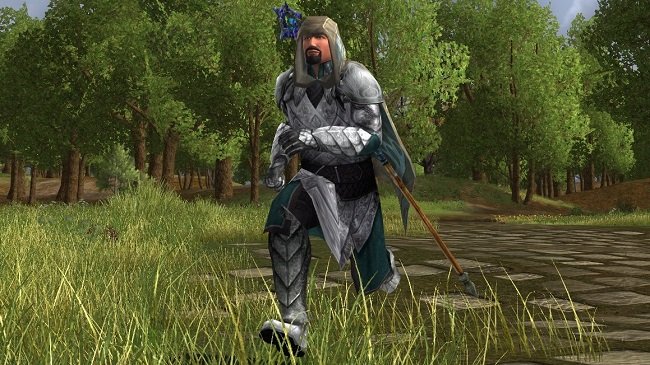
“The MMO genre is rife with its own set of tropes; recurring themes and motifs that have become established and ubiquitous. All of which are ideal material for a hastily produced, lazily conceived, recurring blog post”. I was in London recently, idly walking to the Natural History Museum in South Kensington, when a group of tourists started running for no discernable reason. Someone I was with asked “ I wonder why they’re running” and I replied “perhaps they think they’re in an MMO”. The quips fell on deaf ears but that is a cross I often have to bear. This anecdote highlights one of the points of this post. Namely, why do our avatars in the MMORPG genre run by default? I would also like to discuss the manner in which MMOs address the issue of travel around an ever expanding virtual world. Is fast travel lazy? Our mounts a boon or a bane?
“The MMO genre is rife with its own set of tropes; recurring themes and motifs that have become established and ubiquitous. All of which are ideal material for a hastily produced, lazily conceived, recurring blog post”. Many MMORPGs are set in open worlds that are designed to mimic a real and living reality. Beautiful fantasy or science fiction themed environments, rich with diverse fauna and flora. Settlements are filled with people that go about their daily routine. There is often a day and night cycle and changing weather. All of which is intended to make the game world feel alive. Furthermore, these open worlds become a source of content of their own. Not only do they provide the environment for the various quests and missions that players undertake but a source of exploration and discovery. Something that many players value more than other types of game content.
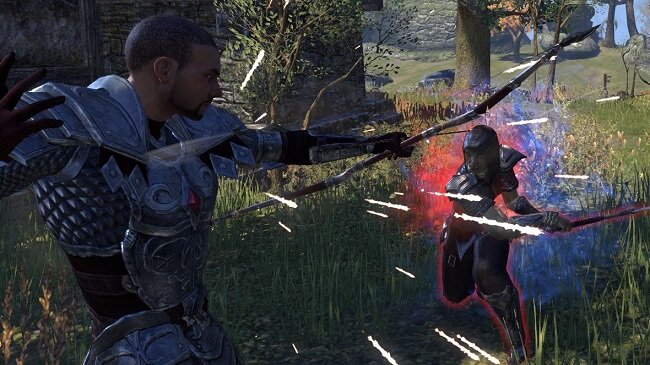
“The MMO genre is rife with its own set of tropes; recurring themes and motifs that have become established and ubiquitous. All of which are ideal material for a hastily produced, lazily conceived, recurring blog post”.
The MMORPG genre is a curious subset of video games. Not only is it predicated on violence against the individual, institutions and “others”, as so many video games are but also species-specific genocide and general mass extinction of fauna and flora. It is easy to understand how this gaming specific trope came about. Early MMOs often had very little or no narrative driven quests and players simply levelled their characters by gaining XP from any sort of combat. Be that against other players, mobs or general in-game wildlife. What is far more perplexing is why such an arbitrary mechanic still persists in the modern MMO. Is it simply due to “laziness” and the fact that it’s easy to implement and rely upon? Or is there more to it than that?
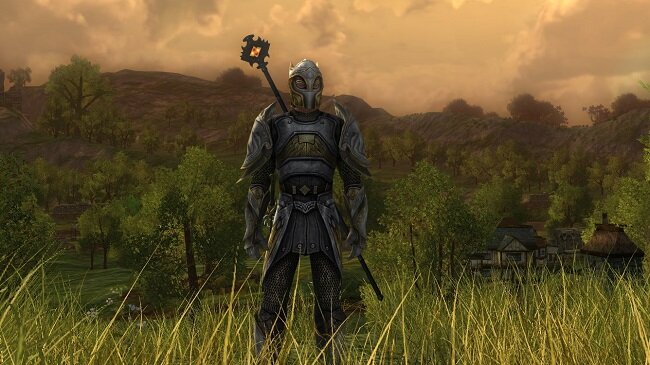
If I may quote myself “The MMO genre is rife with its own set of tropes; recurring themes and motifs that have become established and ubiquitous. All of which are ideal material for a hastily produced, lazily conceived, recurring blog post”. This time round, I would like to discuss the following. The Hero, the Chosen One, the Übermensch. As that is the role that we so often are assigned in this genre. Developers broadly assume that most players want a power fantasy and precious little else is on offer. Hence we find ourselves in a story in which we are destined to do great deeds in a virtual world, whether we wish to or not. I can see the superficial appeal of such a conceit. Most of us are not such overachievers in real life. So a game in which we get to do stuff to the world, instead of the world doing stuff to us has an inherent allure. But like most MMO tropes, unless it is implemented with some panache and creativity, it quickly becomes a tiresome cliche.
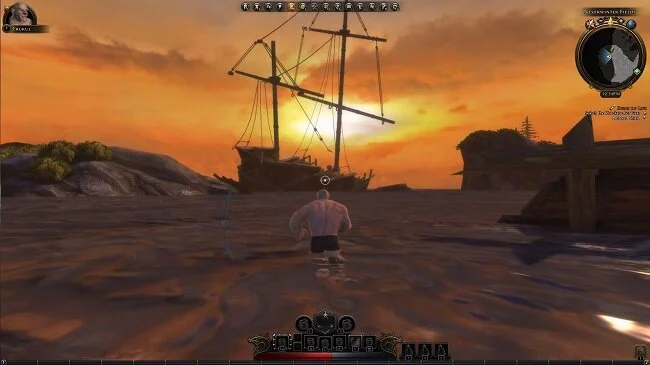
I have played more than “a few” MMORPGs over the years. It’s an enjoyable (and accessible) genre of video games. But like any other type of game, MMOs have a fairly standard formula based on a handful of game mechanics. There is levelling, gaining experience and the acquisition of skills and points. Gear such as armour, jewellery and weapons come and go as you progress through the game. Then there’s crafting, trading and gaining “gold”. Another key aspect is the social dynamic. Often there’s content specifically designed for groups to complete. But this homogeneity also extends beyond the systems that underpin the games. The MMO genre is rife with its own set of tropes; recurring themes and motifs that have become established and ubiquitous. All of which are ideal material for a hastily produced, lazily conceived, recurring blog post.
A Month in Gaming
I last wrote a post in this series in June. Back then I wanted a break from MMOs as I had invested heavily in Star wars: the Old Republic and The Lord of the Rings Online. Because I was still enjoying the Star Wars vibe, I decided to try Jedi: Fallen Order. Sadly, despite the story showing a lot of promise, the PC version of the game handles poorly and the controls are sluggish. Often it felt like my character was wading through mud and there was a tangible amount of skills lag. So I uninstalled it and moved on to something else. One of the odd things about gaming is that despite amassing a library of free and discounted titles, we often end up buying something new, instead of playing that which we already own. And that is exactly what I did. I purchased Stray amid all the excitement surrounding the game, but to date I still haven’t played it. Make of that what you will.
I last wrote a post in this series in June. Back then I wanted a break from MMOs as I had invested heavily in Star wars: the Old Republic and The Lord of the Rings Online. Because I was still enjoying the Star Wars vibe, I decided to try Jedi: Fallen Order. Sadly, despite the story showing a lot of promise, the PC version of the game handles poorly and the controls are sluggish. Often it felt like my character was wading through mud and there was a tangible amount of skills lag. So I uninstalled it and moved on to something else. One of the odd things about gaming is that despite amassing a library of free and discounted titles, we often end up buying something new, instead of playing that which we already own. And that is exactly what I did. I purchased Stray amid all the excitement surrounding the game, but to date I still haven’t played it. Make of that what you will.
So what exactly have I been playing? Sniper Elite 5 for starters. I feel this is by far the best iteration of the franchise and as such it kept me busy in June and July. I like the weapon customisation, especially the addition of non-lethal ammunition. I finally feel that weapons choice makes a tangible difference to your play style. I also like the pace of this game or more specifically, the fact that you determine it. You can spend ages lining up a shot or you can go in all guns blazing. And the maps are by far the best that developer’s Rebellion has come up with so far. They lend themselves to continuous replay due to the variety of potential routes you can explore. Invasion mode, which I wrote about at length in a proper blog post, offers a new and interesting spin on PvP, with another player entering your campaign game and trying to hunt you down. Sniper Elite 5 has provided me with some of the best gaming I’ve had this year.
It was nice to see Fall Guys go free-to-play, in so far that it makes the game more accessible to players across multiple platforms. This is a fun game; something you can jump into and quickly start enjoying, with little or no impediment. However, the business model is based upon the selling of cosmetic skins and the pricing structure is far from generous. Running about with a default character will be a problem for some players, so they will naturally want to customise their look. Earning the in-game currency is a long grind (when is it not?), so the only alternative is the game store. FOMO is not an ethically ideal foundation for your game’s business model, but it doesn’t seem to bother publishers that much. If you are content to just play with the default skins, then Fall Guys is certainly still an enjoyable game. But sooner or later, you will want a chicken outfit or something and will have to reach for your wallet.
Despite my overall fatigue with LOTRO, I have been intrigued by the Echoes of Angmar private server and the debacle that has accompanied it. Despite a politely worded and somewhat wishy-washy cease and desist notice from Middle-earth Enterprises, the developers of this project have pushed ahead with several stress tests and delivered (so far) exactly what they intended. A version of LOTRO as it was back in November 2007, shortly after its launch. I found the few hours that I played to be entertaining, although that mainly came from the sense of nostalgia. I’m not so sure if I’d enjoy the game in this form quite so much, as I did back in the day. However, I am curious to see how this project evades the “legal issues” arising from its situation and what sort of long term audience it can sustain.
The other gaming development of note that I’ve enjoyed over recent weeks, has been my return to Guild Wars 2 after a seven year absence. There are still several elements of the game that infuriate me, but after a further two expansions there is sufficient content for me to do and enjoy. I have set about collecting mounts and earning mastery for their various skills. I continue to enjoy the various events that regularly occur and the fact that you can always find something to do if you’re pushed for time. Playing through the main story is another matter altogether. I await to see if my interest in the game lasts. As autumn approaches, the immersive nature of MMOs and their requirement for time investment becomes both appealing and sustainable. If Guild Wars 2 cannot fill that gap, there’s always The Elder Scrolls Online. The next post in this series will indicate which game prevails.
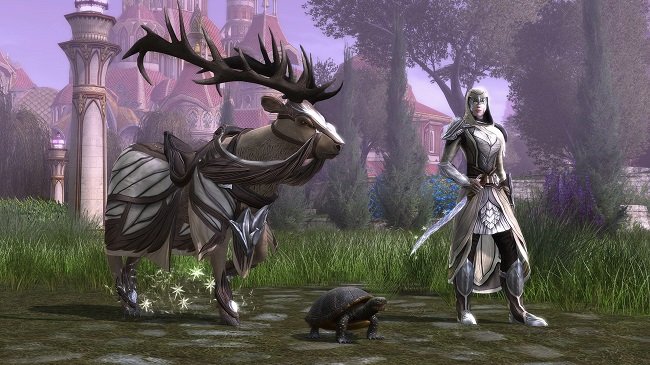
Here we are again with another summary of my gaming activities in recent months. Or in this case since last September. It’s been a while but I’ve been on a blogging hiatus until recently. However, I’ve kept myself busy gaming wise and often I find the hunt for news video games, just as entertaining as I do playing them. Perhaps that could be a future blog post. Back to the matter in hand. Gaming wise, pretty much all things related to the MMORPG genre are currently on the back burner. I’ll give specifics later but I am taking a break from these for the present. I am currently looking at trying games outside my usual comfort zone and also trying to test whether you can or cannot teach an old dog new tricks. Fortunately, the answer appears to be yes you can. Enough summation, on to the specifics.
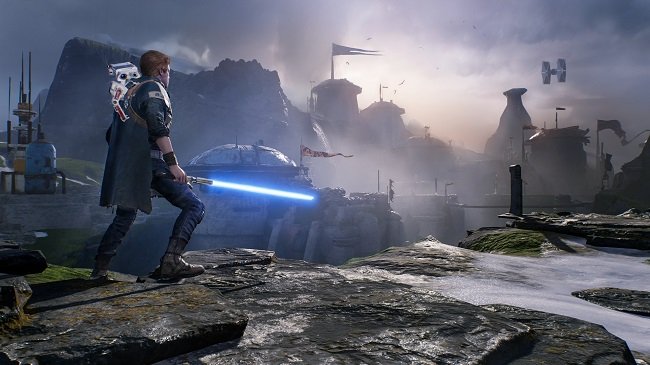
I last wrote a post in this series in June. Back then I wanted a break from MMOs as I had invested heavily in Star wars: the Old Republic and The Lord of the Rings Online. Because I was still enjoying the Star Wars vibe, I decided to try Jedi: Fallen Order. Sadly, despite the story showing a lot of promise, the PC version of the game handles poorly and the controls are sluggish. Often it felt like my character was wading through mud and there was a tangible amount of skills lag. So I uninstalled it and moved on to something else. One of the odd things about gaming is that despite amassing a library of free and discounted titles, we often end up buying something new, instead of playing that which we already own. And that is exactly what I did. I purchased Stray amid all the excitement surrounding the game, but to date I still haven’t played it. Make of that what you will.
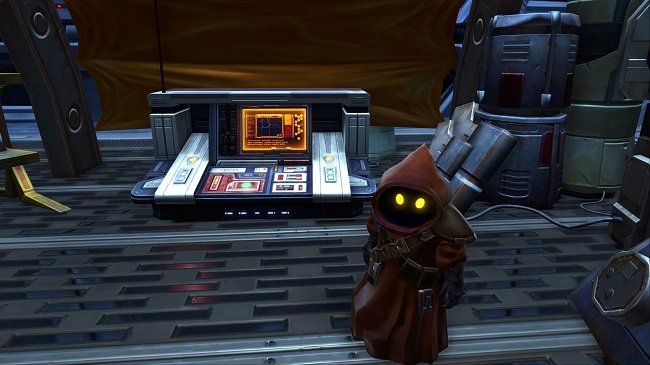
Usually I keep subscribing to an MMORPG, even if I’m not playing it that much. I like to have options in case I decide to log in on a whim. Especially if an absent friend returns to a particular game presenting an opportunity to catch up. However, the current economic climate is no longer something that I can ignore. Although far from having a low income, the current ongoing increase in the cost of living is becoming apparent, so I have been fiscally prudent and cancelled my monthly subscriptions to Star Wars: The Old Republic and The Lord of the Rings Online. Both have provided me with a lot of entertainment over the last three to four months but until new content becomes available, I can happily dispense with them for the meantime. Not only have I saved £17.98 on subscriptions, I shall no longer be making ad hoc purchases of in-game currencies. Something I have been doing a lot more than usual of late.
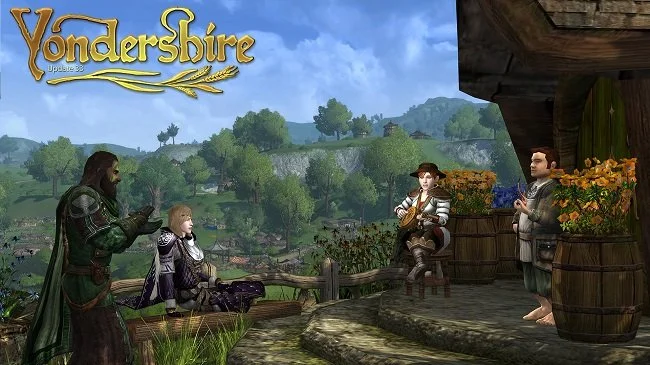
I have confined my gaming to three MMORPGs in recent months and have not strayed into anything new. Time has been an issue due to a great deal of change in my domestic life. Hence The Lord of the Rings Online, Star Wars: The Old Republic and Star Trek Online have proven suitable for my needs. Being able to log into a game and commence an activity without any complicated preamble is convenient and currently suits my schedule down to the ground. I will be buying Sniper Elite 5 at the end of the month as this is a franchise that has always proven entertaining and engaging. While recently perusing the various game launchers I have installed, I took the opportunity to remove several games that I’m no longer playing or that have proven to be a “five minute wonder”. Hence I said goodbye to GreedFall, Tom Clancy’s Ghost Recon: Breakpoint and Days Gone. Their removal is no reflection upon their quality.
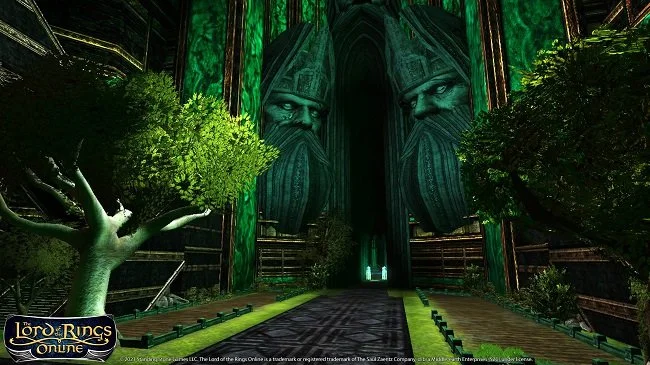
It’s been a while since I’ve written an instalment of A Month in Gaming. Over Christmas and New Year I was busy with family issues and it’s only in January that I’ve started anything approaching a regular gaming schedule. The novelty of Forza Horizon 5 has run its course and I’ve grown tired of the game’s upbeat tone and neverending activities that litter the in-game map. It’s nice that the game tries hard to engage with you but it reaches a point where you never get a time to stop, think and take stock. I couldn’t find anything else included in the Xbox Game Pass which especially excited me. There were a few titles that did take my fancy but I then discovered that I already own them elsewhere via Steam or Epic Games. So I decided to cancel my subscription. I still think that the Xbox Game Pass for PC is very good value and my failure to find anything that I like is my problem and not Microsoft’s fault.
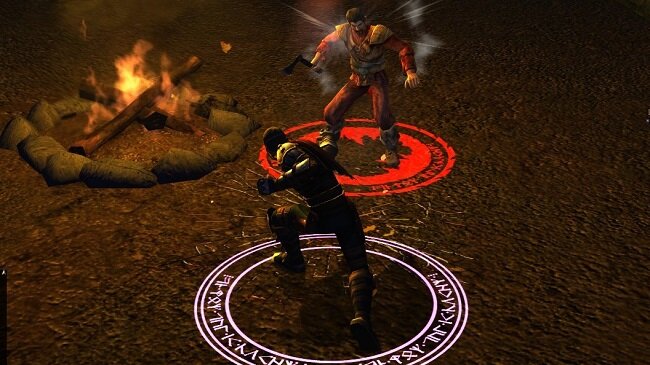
September has been and gone and the nights are now drawing in. Usually this time of year is ideal for gaming but sadly I’ve had a lot on over the last 30 days and as a result there’s been precious little time for gaming or indeed writing. Such is life. When I did have some leisure time, MMOs were the easiest way to get a quick gaming fix, as per usual. Standing Stone Games announced that the next expansion for The Lord of the Rings Online would be released in November and that a revision of the Legendary Item system would be coming prior to that. Hence I took a look at the beta builds on the Bullroarer test server and then started prepping my various alts on the live servers, to get ready for this major change. I also managed to complete the latest event in Star Trek Online. However, beyond these straightforward tasks I didn’t really get to do much more.
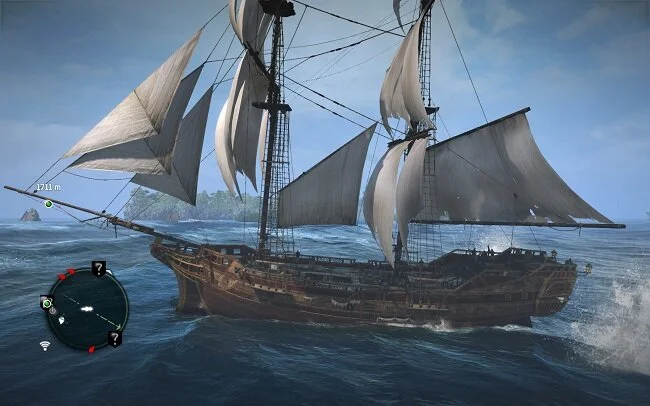
Again this is more a case of two months in gaming. Furthermore although I was quite active in July, I was less so in August as the Blaugust 2021 Festival of Blogging event consumed the lion share of my leisure time. The majority of my gaming time is usually mid to late evening. Although Mrs P and I do many activities together, there are times when she will want to watch something I don’t, be engrossed in a book or out with friends. These occasions present sizable windows of time to focus upon a video game, which is especially useful for the MMORPG and RPG genres. However, I often have to choose whether to use this time exclusively for gaming or some other recreational activities such as writing. Another foible of my video game time management is trying to arrange things so I can undertake recurring, daily quests in a game early in the morning. I will often tackle such content in Star Trek Online, as soon as I get up.
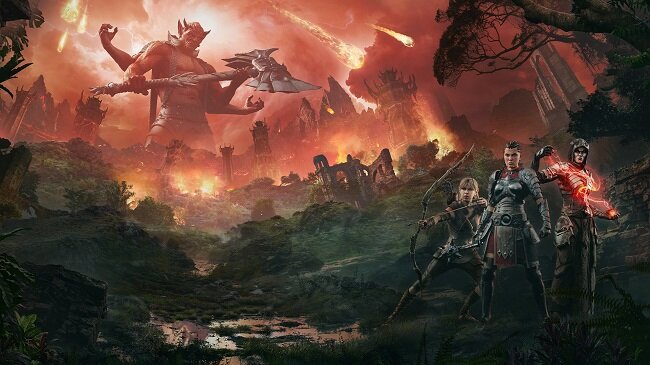
The last installment of A Month in Gaming was at the end of April. I have decided to update this recurring post less often to ensure that I have more to write about than just cataloguing my generic activities in The Lord of the Rings Online and Star Trek Online. The only downside of such an approach is that it invalidates the title but that can’t be helped. Fortunately, I have done more than usual over the last two months. My daily schedule has changed temporarily and I now have a little more leisure time available. Hence I’ve dabbled with several new games as well as using my Nintendo Switch more often. I also took part in a “tag team” playthrough of XCOM 2, which was a very interesting experience. And I finally took the time to go through all my games libraries on the various different platforms to catalogue exactly what I have. I found a few hidden gems but the majority is just “filler” that you find in most video game bundles.

I usually write this recurring post at the beginning of each month, reflecting upon my gaming activities over the previous thirty odd days. I refrained from writing an instalment at the beginning of April as I really didn’t feel I had much to say. However, now that a further month has elapsed, I believe sufficient has happened for me to continue. I do worry that these posts get repetitive and simply writing “ I played MMO A or B” is not sufficiently engaging. Luckily, I do feel that I have more to say this time round as I’ve broadened my gaming horizons recently and feel that I’ve done more, compared to other months. So let me begin with my return to console gaming. Something I haven’t done since 1999 when I purchased a Sega Dreamcast. After some procrastination, I’ve finally bought a Nintendo Switch and it has proven quite a hit not only with me but my grandchildren.
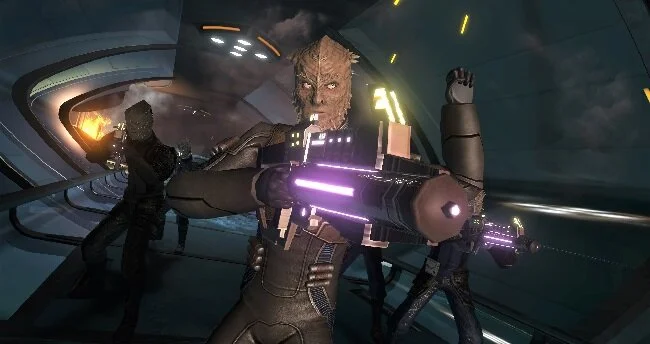
Here we are again. Yet another month has gone by and I find myself writing another instalment of “a month in gaming”. And to be honest, I have very little to say in this particular roundup of my gaming activities. I played Star Trek Online throughout February and created a new Klingon character to take advantage of the ongoing Klingon recruitment event. I have managed to upgrade a Tier 5 D7 and kit it out in such a way that it is fairly robust. And I also created a new Jem’Hadar alt, as they start at level 60 and you are provided with a fully equipped vessel and crew. Nothing fancy but it allows you to get into the endgame content a lot quicker. I may write a more detailed blog post about this at some point. I also played a lot more Fall Guys: Ultimate Knockout as my granddaughters came to stay for a week. I have already expressed my thoughts about the mechanics of that game in a prior post.
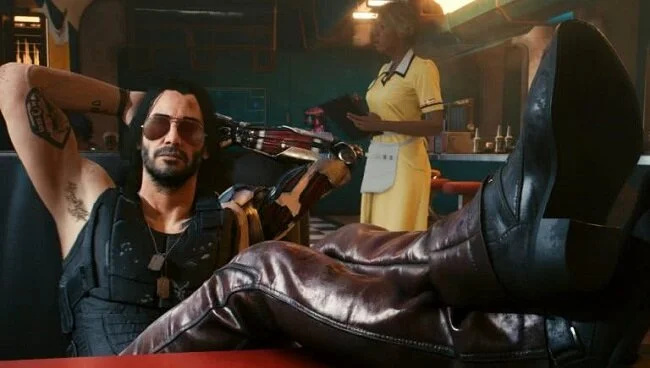
I last wrote A Month in Gaming post in December. Quite a lot has changed over the last two months. I have abandoned Cyberpunk 2077 as it has totally failed to hold my interest. I just couldn’t get on with the first person perspective. I also stopped playing Neverwinter, despite the game having many appealing elements. Sometimes, when you start an MMORPG that has been running for years, you feel so “behind the curve” that the prospect of catching up with everyone at the endgame is too daunting. And because the Call of Duty franchise has a yearly lifecycle, a new iteration of the game was released in November. Black Ops Cold War subsequently replaced the reboot of Modern Warfare and a lot of the new games content subsequently bled through in the free Battle Royale version. I’d been playing Warzone since last April and it was beginning to get a little stale. So I didn’t buy the latest Battle Pass and decided to move on. And then there’s The Lord of the Rings Online. Let it suffice to say I have completed as much of the latest “mini expansion” as I require and the game is now “on hold”.
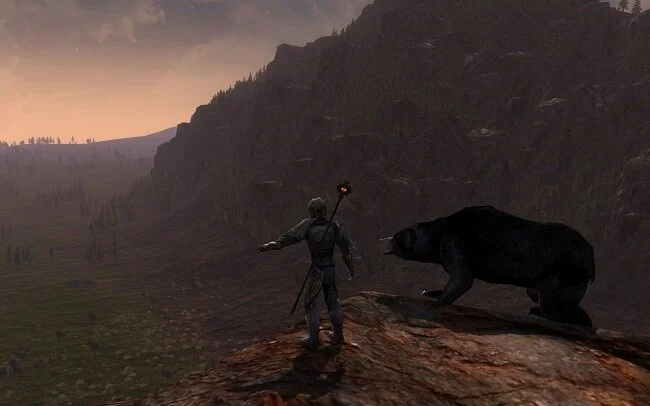
November proved to be a very productive month, gaming wise. I had to self isolate for 14 days, due to coming into contact with someone who had tested positive for COVID-19. Hence I had far more leisure time than usual. For a second month I applied myself to progressing through the new “mini expansion” in The Lord of the Rings Online. The new zone is a two phase map. The first is Elderslade, a mountainous region to the North of the Wells of Langflood. This area contains mainly story quests. The second phase, called War of Three Peaks, is the same zone but during a period of open war between the Dwarves and the Orcs. Quests here are mainly repeatable slayer and achievement quests. I did not discover this until I had completed the first round, so to speak, only to be offered exactly the same quests again by an NPC. As I had reached maximum rank in reputation for this new faction and there were no rewards of any note for me to spend my barter currency upon, I simply stopped playing through this content.
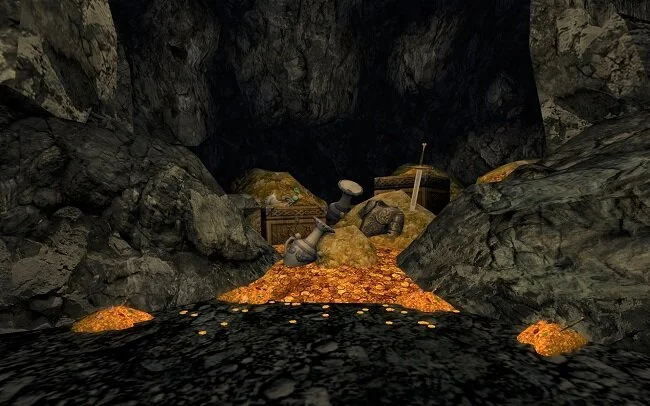
The last 31 days have gone by really fast, or at least that’s the way it feels. Despite having bought several new games recently and acquired yet more for free from the Epic Store, I did not embark on anything new throughout October. Due to the unexpectedly prompt release of the new “mini expansion” for The Lord of the Rings Online and the launch of a new event in Star Trek Online, I found myself focused upon the MMORPG genre, yet again. And after playing continuously for six months, Call of Duty Modern Warfare/Warzone has finally begun to lose its lustre. I didn’t especially enjoy the Halloween event, not that there was anything inherently wrong with it. It just wasn’t for me. I played a little Fall Guy: Ultimate Knockout but quickly discovered that the “season” system is just another gear treadmill, although the gear in this instance are novelty cosmetic outfits. I don’t want to be tied to too many games in this fashion (it’s bad enough with MMOs), so this is another title that has been relegated to occasional play when the fancy takes me.
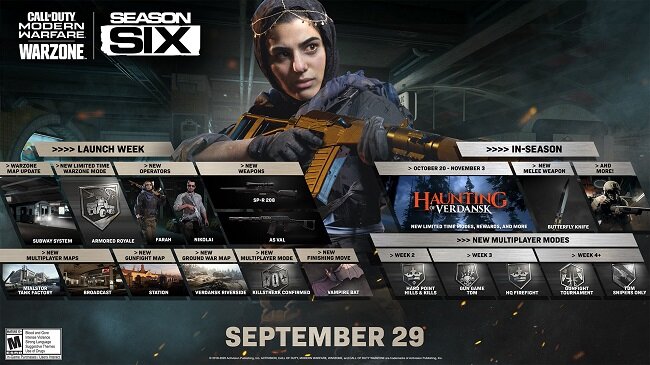
September has been a difficult month. A family crisis and subsequent bereavement meant that gaming got pushed down the daily agenda. However, after the various chores and duties were done I did need some downtime and means to relax. Hence I did play some games in a limited fashion. Nothing fancy, just stuff like Fall Guys: Ultimate Knockout and Gang Beasts, which are light-hearted and undemanding. I also took the time to log on to The Lord of the Rings Online test server and check out the preview of the forthcoming “mini-expansion”. Not only was this informative but it provided material for a blog post. But overall I didn’t really achieve anything substantial with my gaming throughout September. Gaming was relegated to being just a convenient diversion from the immediate problems I’ve been facing but as such, it did fulfil that role well.
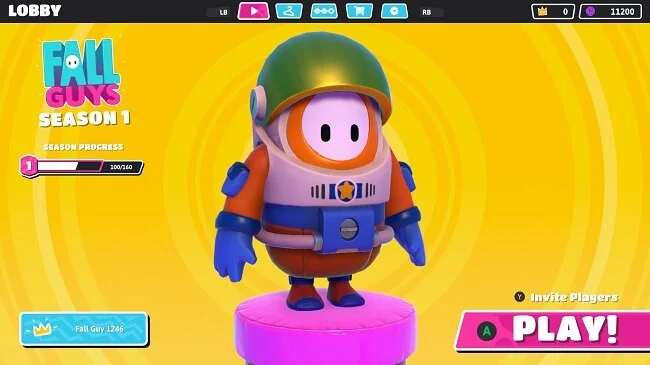
I’m still somewhat shocked that August has been and gone. Even by 2020 standards it’s been an odd month. Due to illness in the family, my schedule has been turned on its head and subsequently there has not been as much time for gaming as I’ve previously enjoyed. However, I tried to put what time I had to good use. I attempted to return to the MMORPG The Lord of the Rings Online once again, to see if I could continue through the epic story. Sadly, the game has run into further server related issues, just as it did last month. Standing Stone Games community manager Jerry Snook was a little “snippy” in responding to players' concerns and at present there are no details regarding what the problem is and when it will be resolved. If this issue persists I suspect that it is going to do some genuine harm to both the player base and community relations. I hope matters improve for SSG and LOTRO over September.
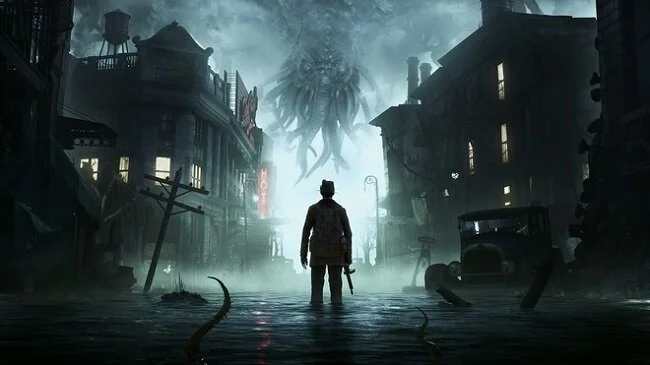
As I mentioned in the last instalment of “A Month in Gaming”, I was toying with the idea of buying Ghost Recon Breakpoint. However, I have decided against that. Yes the game may well be a third person, co-operative shooter but ultimately it’s yet more explosions and military hardware fetishism, which isn’t anything new. I have more than enough of that at present with Call of Duty Modern Warfare/Warzone. I also don’t feel disposed towards giving Ubisoft any of my money at the moment, until they get their house in order. I am so tired of continuously reading about how shitty the video game industry is to work in. It’s difficult to protest in a meaningful way but I guess for the present not buying a product is as good a way as any. So rather than purchasing any further games, I decided in July to play at least one of the many titles I’ve got in my existing library.
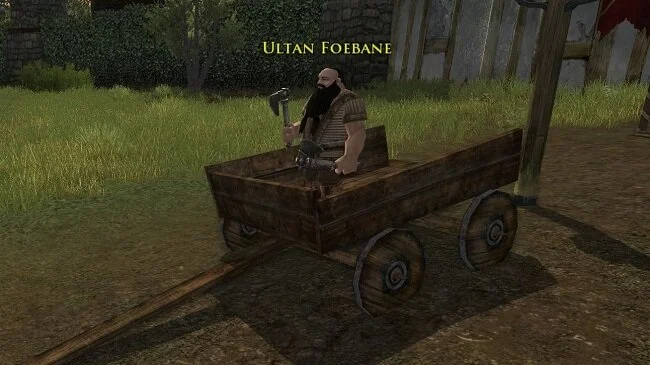
I stopped subscribing to The Lord of the Rings Online in June. I’ve always had a very cyclical relationship with this MMO and at present I feel I need a break from the games somewhat linear formula. Plus the new content scheduled for release centred around the wedding of Aragorn and Arwen doesn’t exactly sound enthralling. So I’ve left my primary character in Langflood and will return to the game later in the year when I feel the need to catch up with content. I have also abandoned the ongoing events in Star Trek Online as they’re getting too repetitive. I would like to see a new longterm story arc rather than just a continuous cycle of short term events and repeatable content. I don’t mind working towards a goal but it has to be something I want and the rewards offered in this MMO are getting a little too generic for my liking. I shall return to the game at some point as I’m a lifetime account holder and I’m curious to see how developer’s Cryptic overhauls the Klingon story arc.
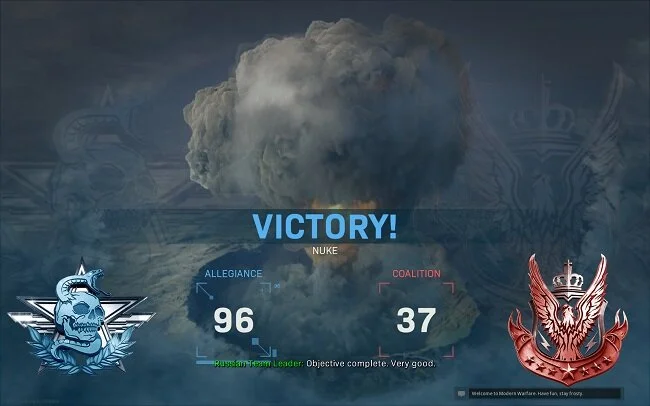
I see by the financial data that is currently available and being pawed over by industry pundits, that April was a very good month for the video games publishers. Quelle surprise. Who would have thought it? The increase in leisure time has certainly meant that even I have had a greater opportunity than usual to invest in playing video games. And as I predominantly play the MMORPG genre that has proven to be a boon. Or at least it was initially. After two month plus that is fast becoming a bane. MMOs are great when you have new content to play through, stories to discover, goals to achieve and systems and items to advance. But once you’ve done all these things and find yourself doing dailies just out of obligation and a way to kill time, then it may well be time to move on to something else.
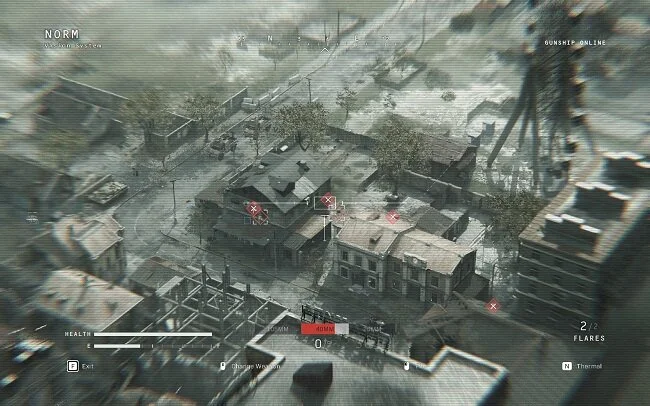
April has been an usual month. The ongoing lockdown here in the UK (and elsewhere in the world) has afforded me more gaming time than usual. The policy of social distancing has reduced my caring duties to just three hours a day. Hence I and many others like me have much more leisure time available. I initially thought that this situation would be the perfect time to try some of the many of the games that I have stockpiled over the years. However, despite trawling through many titles, I still failed to find anything that immediately took my fancy. So I decided to take stock of my overall gaming activities and whether it was time to revise them and try something new. And by new I don’t just mean just buying a new game but taking a step out of my current comfort zone into a genre I don’t usually play. So that’s exactly what I did and the results have been very interesting.
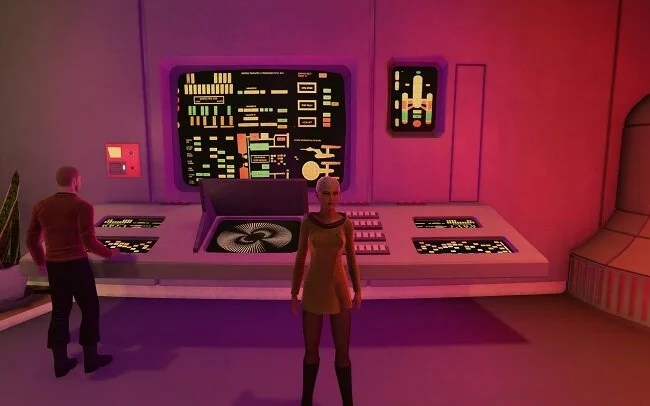
The problem I find with monthly gaming articles is that they tend to cover ground that I’ve already written about over the last 4 weeks in other blog posts, only in less detail. So here is the brief version of my gaming activities throughout February. I played through the entirety of the Star Trek Online 10th Anniversary event and received the new hybrid Tier 6 ship. I enjoyed the new 2 part feature episode and have managed to maintain a schedule of doing “odds and sods” to keep myself busy. STO is currently my primary game. I’ve ground to a halt in The Lord of the Rings Online, as soon as I start questing in Minas Morgul itself. It is simply too uninspiring and grindy an area. So I’ve focused on completing deeds for virtue experience and daily repeatable quests for Anfalas Scrolls of Empowerment. Due to constraints upon my schedule, I decided to temporarily stop my subscription to ESO Plus, as I simply do not have the time to invest in The Elder Scrolls Online at present. ESO is a good game and deserves attention when played. Committing to multiple MMOs at once is always a mistake.

So much for the New Year. January has now been and gone and 2020 just seems to be barrelling along. As ever, due to my real world commitments, I’ve been pushed for time over the last thirty one days. Therefore, most of my gaming has been targeted “binge” sessions conducted late at night. However, I do find playing through episodic content over several hours to be a very productive means of making progress in MMOs. So overall January has been an enjoyable experience, game wise. Due to my circumstances, I have deferred starting any new single player games and have focused primarily on two titles; The Lord of the Rings Online and Star Trek Online. Sadly, The Elder Scrolls Online has been relegated to being played just once a week, usually on a Wednesday night when I meet up online with friends. My exploration of Vvardenfell will have to wait until later in the year, as I cannot sustain three MMOs to any great degree.
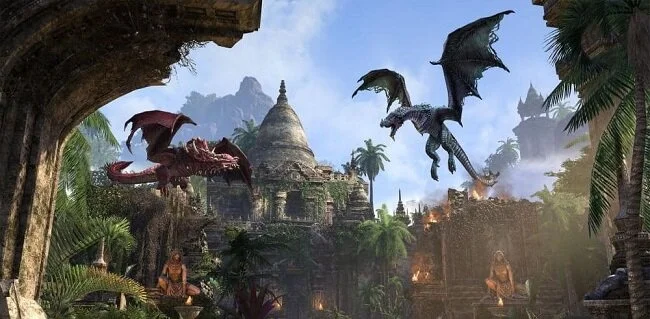
October has been and gone. And as ever the MMORPG genre has been the mainstay of my gaming activities over the last thirty days. Furthermore, it has been a productive month. I managed to complete the Daggerfall Covenant narrative arc, along with the main story on my Dragonknight in The Elder Scrolls Online. I find that completing Coldharbour is the biggest obstacle in progressing. It’s an atmospheric zone but once you’ve experienced it, it doesn’t really lend itself to repeat playing. But having done all this my Dragonknight hit level cap. I had taken the precaution of buying appropriate gear ahead of this achievement, so I managed to acquire some decent armour and jewellery that provide robust set bonuses. Despite focusing mainly on ESO, I did manage to progress further in The Lord of the Rings Online. I got as far as the Wolf Denes in the Vales of Anduin update. I also took the time to visit the LOTRO test server and checked out the Minas Morgul expansion preview. As for Star Trek Online my daily visits have been focused upon completing Task Force Operations and grinding for a free ship (again).
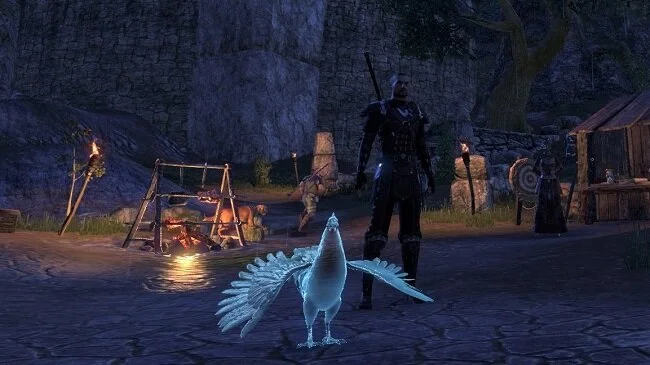
September saw The Elder Scrolls Online becoming my primary gaming focus. No real surprises there as I’ve been having so much fun of late with this MMORPG. I managed to get my Argonian Necromancer to level cap and then had the fun task of trying to equip them suitably. I don’t quite know why this aspect of gaming appeals to me so much but I just get a real kick out of trawling around looking for appropriate gear. I tend to enjoy it in all the MMOs I play. There’s just something inherently satisfying about equipping a new piece of armour or jewellery and seeing your stats noticeably increase. This process is even more enjoyable in ESO as there isn’t any server wide auction house, so you have to travel around from region to region, individually checking each guild trader you find. It really is virtual shopping. Once I managed to find the right gear for this character, I promptly created a new Imperial Dragon Knight and started playing through the Daggerfall Covenant storyline as it the one faction I haven’t yet completed. Oh and in ESO cosmetic pet news, the ghost chicken (official name Spectral Chicken) is outstanding.
Last month panned out pretty much as I expected. Blaugust and writing daily blog posts took up a fair amount of my leisure time. And then I lost a few days due real-life social activities. What gaming time I had was focused mainly on The Elder Scrolls Online. I’m sorry to say that I’ve ground to a halt in The Lord of the Rings Online. My level 113 Guardian remains at the Black Gates and for the present I simply do not feel disposed towards working my way through Mordor again, which I did just a year ago on my primary character. I have undertaken a few quests with my level cap Lore-master and will endeavour in the weeks ahead to at least complete the Vales of Anduin region. LOTRO at present doesn’t have much of a hold on me, although I may well become more enthusiastic once the next expansion is formerly announced.
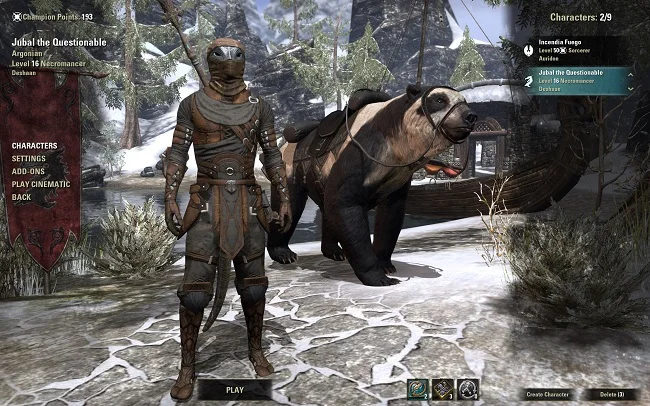
Contrary to my last A Month in Gaming post, I did actually end up buying a discount copy of Elsweyr and returning to The Elder Scrolls Online. And I’m rather glad that I did, because it has provided a welcome change of scene and an opportunity to do something different. However, you can’t just fire up ESO and dive right in. No sir. The first thing you have to do is update all your addons and if your starting a new alt (which I decided to do), ensure that your key mappings and custom settings are ported over. This process was a pain in the butt; however it did inspire a couple of blog posts. Creating a new alt is the perfect way to reacquaint yourself with ESO after a lengthy absence. In my case it has been 12 months. I decided to try the new Necromancer class and so far, it has proven to be both fun and rewarding. Rather than try to do a thousand things at once, I just started the Elsweyr main story and doggedly pursued it. The narrative is enjoyable and it was fun to see Cadwell as part of the plot focus. For practical reasons I’ve re-subscribed to ESO plus to unlock various DLC and I intend to continue playing for the next month or so.
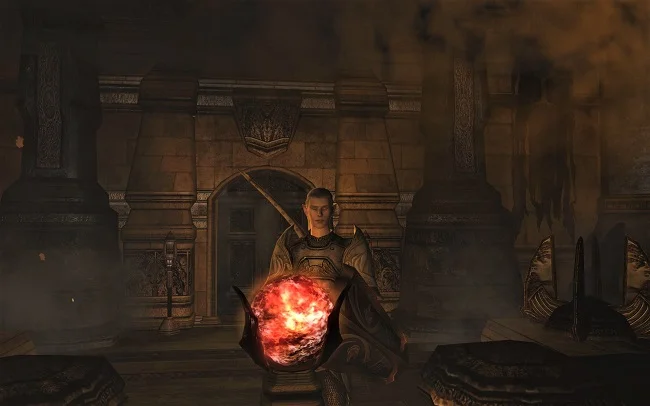
This post should have been published two weeks ago but as ever, real life just keeps getting in the way. As expected, June proved to be a busy month, however, I managed to organise my leisure time pretty well, affording me an opportunity to not only play my two current MMOs but also experiment with some other games. At present my caring commitment keep me busy from about 10:30 AM to about 5:00 PM. I tend to get up round about 7:00 AM so if I promptly have a shower, dress and eat, I can usually create a two-hour window in the morning to either tackle admin and paperwork or undertake dailies in games such as The Lord of the Rings Online or Star Trek Online. I can also find several hours in the evening as Mrs Peril tends to go to bed earlier than I. Therefore practical time management has proven beneficial over the last four weeks.
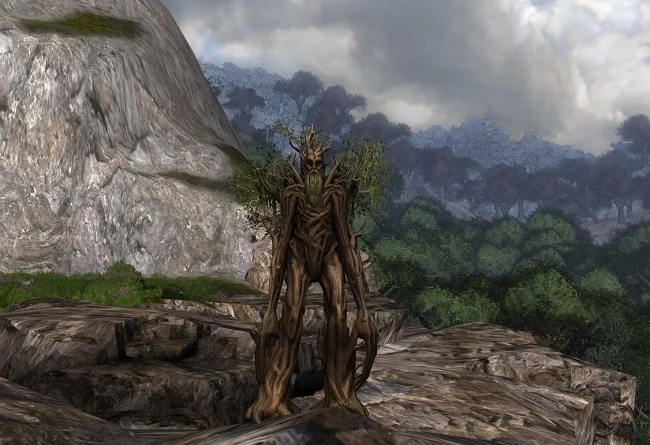
As I suspected in my last post, my gaming activities were somewhat curtailed throughout May due to both my parents being ill. However, the time I did manage to spend in-game was both therapeutic and relaxing. For me, I’ve never really seen gaming as escapism, although I appreciate it certainly is for others. One of the aspects it offers, along with a degree of challenge and entertainment, is a release from stress and the pressures of one’s daily life. Perhaps that is why I enjoyed Sniper Elite V2 Remastered so much, because not only is it a thoroughly absorbing game, it also provides a sense of catharsis. I’ve already written about the game in some detail, along with my thoughts about the ongoing “remaster versus remake” debate. However, I would add that I enjoyed it so much I re-installed the sequel, Sniper Elite III, which I haven’t played since it’s release in 2014. This also proved to be an enjoyable undertaking, again for the self-same reasons.
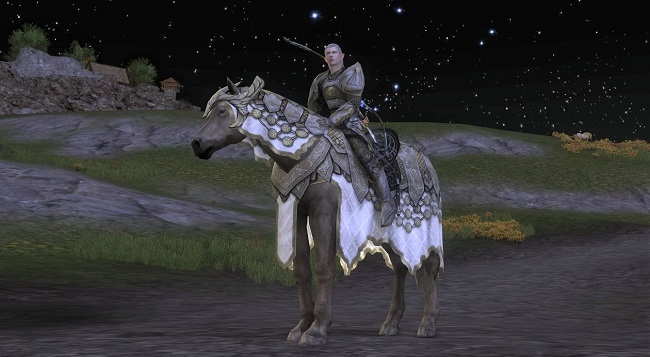
So what have I been up to in April gaming wise? Oh, yes there was this. Mounted combat for the Guardian class is awful. There. I said it. As I’m not a LOTRO “altoholic” my only previous experience with mounted combat was with my Lore-master. Most of their skills are ranged which makes the fights less tedious and time consuming. And you get a combat pet which helps the proceeding slightly, but overall, it’s not that much fun. However fighting via your war steed with a Guardian is a ponderous grind. You have to be in close proximity to your foe to hit them and half the time they are running around you, conspicuously out of range. Sure there’s a skill that brings them next to you for a short period of time but as a level 85 Guardian’s DPS output is distinctly average at this point in the levelling curve, it’s a long, arduous slog to kill anything. My solution has been to summon my skirmish soldier who is an Archer and to use them in conjunction with my own bow to shoot down mounted foes while on foot. This still takes time but is quicker than doing it from horse back.
Navigating in MMORPGs
The Lord of the Rings Online was my first major MMORPG. I started playing in late 2008 and quickly discovered that there was a necessity to become familiar with the game world. Although the game provides quick travel options they were not ubiquitous at that point and often a player would simply travel on foot to travel costs down and to take the most direct route. Back in 2008 you could not own a mount until level 30. Hence I began “learning the maps” in the game and to this day still remember how to travel from one side of Moria, to another. The maps in the base game remain clear in my mind as they were so well trodden. Not so those in the regions. There are far more stables with fast mounts present in the game now and so convenience trumps any requirement to become so familiar with newly added zones. Nowadays Standing Stone Games designs new zones that tend to funnel players through them from quest hub to quest hub.
The Lord of the Rings Online was my first major MMORPG. I started playing in late 2008 and quickly discovered that there was a necessity to become familiar with the game world. Although the game provides quick travel options they were not ubiquitous at that point and often a player would simply travel on foot to travel costs down and to take the most direct route. Back in 2008 you could not own a mount until level 30. Hence I began “learning the maps” in the game and to this day still remember how to travel from one side of Moria, to another. The maps in the base game remain clear in my mind as they were so well trodden. Not so those in the regions. There are far more stables with fast mounts present in the game now and so convenience trumps any requirement to become so familiar with newly added zones. Nowadays Standing Stone Games designs new zones that tend to funnel players through them from quest hub to quest hub.
After considering the wider matter of maps in general in the MMO genre, it seems that most of them seem to be lacking in some fashion. The biggest problem is that traditional in-game maps are two dimensional views of three dimensional environments. LOTRO, Star Wars: The Old Republic and Guild Wars 2 are prime examples of this. Furthermore maps in this genre tend to be initially devoid of specific detail. This is to encourage exploration which then populates a map with NPC, fast travel points, crafting stations etc after they’re discovered. Another issue, especially in fantasy games, is that the maps themselves are designed in a stylised manner and are frequently not accurate in the sense that an Ordnance Survey map is in real life. The Elder Scrolls Online at least addresses the issue of multi-layers maps, allowing players to switch between levels. But it is far from perfect. The MMO does allow you to set a waypoint which can be a godsend.
As maps can prove so “unhelpful”, I find the most practical thing a game can do to help me with navigation is to provide a highly visible landmark which can be used to orientate players. Weathertop is a prime example of this in the Loneland region of LOTRO. The crumbling fortress on the highest hill in the region dominates the map. Having line of sight helps you make quick decisions when travelling and find the direction you need. Guild Wars 2 has gone all in on the concept of verticality and three dimensional environments. Does it make for interesting and complex world design? Yes. But the main problem is you cannot easily set a destination and travel there. As you seldom have any line of sight, often the only way to a location is through trial and error. Usually through “bandit territory”. It is intensely frustrating especially as there is much XP gain to be had via discovery. It makes me miss Neverwinter and its sparkly trails that can optionally lead you to your destination.
Navigating in Star Trek Online is the polar opposite of most other fantasy based MMOs and a very straightforward process. Especially after 2015 when developers Cryptic revised the galaxy map dividing it into four clearly defined quadrants, rather than sectors which were separate instances. The point and click navigation between planetary systems in sector space is simple and easy. If you wish to navigate by hand you can manually fly around at your own leisure. However, until you earn the transwarp travel skill it can take some time to get from one side of the map to another as a low level player. There is no cost associated with travel in STO. Unlike SWTOR which charges the player for the fuel used to travel across space. Both approaches are compliant with their respective lore of each franchise.
I find travelling and exploration a major source of enjoyment in MMOs. If I’m confronted with a blank map, then the first thing I want to do is open it up and see its details. I’ll often go exploring first off, rather than playing through mission or quest content. This isn’t always a shrewd decision as I can find myself in zones I am ill equipped to travel. Bu for me, looking around the game world is part of a game attraction, especially if it has a rich and diverse environment. Sometimes I will log into LOTRO and ride around Middle-earth just for the pleasure of it. Sadly, that is not the case for all MMOs. Take SWTOR, which has some industrial themed, city based maps that are a never ending maze of corridors and walkways. Overall I would like to see more games in the MMO genre having some sort of Grand Tour option or game mechanic. A means for peaceful exploration as an alternative to the usual narrative driven progression.
Are video games becoming easier? It’s a perennial subject that is frequently discussed by those who play them. Often the question of whether they have actually become easier is not the focus of the debate, as it seems to be broadly recognised that it is the case. Instead, discussion of this matter tend to drift into the rectitude of this change. Debate’s of this nature are usually awash with subjective opinions and personal preferences which are then put forward as objective facts. It’s not just a question of video games becoming easier, it’s the fact that making them easier is “wrong” and those who want them as such are “not proper gamers” etc. The hours that have been lost to this pointless, tedious debate are uncountable. However, I digress. Let us return to the matter of video games becoming easier, because although fans discuss this a lot and have plenty to say, you don’t often hear from the developers on this subject.
I recently completed the main story in Tainted Grail: The Fall of Avalon. In total I spent about sixty hours playing the game. I began at the start of the year, then took a break for a while but returned to it recently because I wanted to see if I could unlock a specific ending. I did manage to do this. Like so many other RPGs, Tainted Grail: the Fall of Avalon has a central storyline, along with a wealth of side quests, based around factions in specific zones. I think I possibly completed about a two thirds of these. However, once I finished the main story, my interest in the game began to wane. I finally left my character in the last major quest hub in case I wish to return at a future date. I then logged out of the game and uninstalled it from my PC to free up space for whatever I was to play next. In this case its The Sinking City 2. None of this is a negative reflection on Tainted Grail: the Fall of Avalon. I enjoyed the time I spent playing this quirky RPG. I simply had my fill and left to play something else.
The next expansion for the MMORG, The Lord of the Rings Online, was announced on the 1st August, via the gaming website MMORPG.The Wolves of Mordor, which will launch later in the year, appears ambitious in scope as it will include two new game systems as well as the obligatory story update. This expansion takes place in Draugardh located in the North East of Mordor, beyond the Plateau of Gorgoroth. It includes the new zones of Heledhris, Parth Rhavas and Nan Ogol. These vary environmentally ranging from the arid, volcanic and semi-tropical. Players will encounter the Daugrim in these regions, Werewolves but not in the modern sense. This is not the lycanthropy of Eastern European legends but in the established Tolkien idiom of fell spirits inhabiting the bodies of Wolves. The region also sees the return of the Woses and players can expect to encounter Elves and scouts from Gondor. As ever with LOTRO expansions, there will be new instances as well as a raid.
I don’t keep up with gaming news as much as I use to but several noteworthy announcement have come to my attention of late. Firstly, there’s an expansion, Songs of the Past, coming for the Witcher III: Wild Hunt in 2027. No doubt this is to pave the way for the Witcher IV. Next, I also found out about Hand of Fate: Horde. I liked this franchise and was saddened to learn that the original studio, Defiant Development, closed. Hence is was a pleasant surprise to see this new game being developed by members of the original studio. The third announcement was regarding Guild Wars 3. A new MMORPG in active development by a major studio is no small feat and is certainly good news for fans of this franchise and the genre per se. However, once you look beyond this news this announcement raises several questions and has certainly given me pause for thought. Let us take a few moments to consider them.
Star Trek Online has many in-game systems that are common to the MMORPG genre. The reputation system is one such example. In STO there are 13 reputation factions. Once a player has reached level 50 they may start progressing through the 6 reputation tiers of each one. Players gain progression through daily projects (20 hours in duration). Hourly projects are also available though they yield less reputation advancement and are limited to three times a day. Hence 20 hour projects are consider by default the most efficient way to gain rep. Projects require 30 Faction Specific Marks (earned via various activities in-game), 15,000 Energy Credits (standard in-game currency) and 2000 Expertise points. The most efficient way to tackle the reputation grind is to build up the necessary resources in advance and then at a designated time each day, start all 13 respective projects. Upon completion projects yield a player bound lockbox containing a random space or ground weapon, a console or Elite Marks which can be used to acquire faction gear.
I was recently perusing my archive of old blog posts, when it struck me how much I’ve written about the MMORPG genre over the years. Naturally, there was far more material from between 2008 and 2012 as that was period when I immersed myself in the genre and was very enthusiastic about it. I was at a point in my life when I had the time to dedicate to such games and I was happy to participate in the social aspect of they offered. I would regularly play through group content and spend time socialising online with fellow guild members. My experience remains a textbook example of how online games can be more than the sum of their parts and that where you are at in your life has a major impact upon your overall enjoyment. As I read though various old posts it became clear that my experiences where specific to this particular part of my life and that they cannot be repeated. My relationship with the genre is very different now and that’s fine.
Creating alts is an integral aspect of the MMORPG genre. Many players will create a character of a specific class or faction, play it for a while, lose interest in it or they may decide that it is just not for them. Fortunately it is no effort at all to simply re-roll a new alt and set off once again. Furthermore, lots of players never reach level cap of the MMORPG that there playing. When the going get’s tough, so to speak, you can either soldier on for another 50 levels or simply create a new alt and return to the comfort of tried and tested content. Alts also give you the chance to secure an accolade or achievement that you previously missed. They are also of great benefit to the genres social aspects. Creating a new alt so you can play along with a friend who is just starting is great fun. Developer’s love them too as it means you’re still playing the game.
I recently took a break from Crimson Desert choosing instead to to play something familiar and easy going. As I’ve been logging into Star Trek Online daily to participate in the anniversary event, I decided to look through my various alts and see how far they had progressed through the game and what resources they had. At present I have twelve alts. My primary Captain was created in 2015 during the original Delta Recruit Event. I had previously played STO intermittently since its release in January 2010 but I never kept any of those characters. Hence this decade old Tactical Federation Captain has been my main focus when playing. The other eleven alts are the result of other recruitment events or whenever I wanted to try something different, such as playing a specific class or faction. I obviously played a lot of STO during the lockdown as several alts date from that period. Several had maximum reputation across all factions.
13 days after its release, market analysts estimate that Crimson Desert has already earned $200 million across the four main platforms (PC, PlayStation 5, and Xbox Series X and S). The game is certainly proving popular among gamers with the internet awash with live streams and “let’s play” videos. However, reviews are mixed both among gaming journalists and YouTube influencers. Common complaints about the game include that it is slow to start, the controls are poorly laid out on all platforms and that developer’s Pearl Abyss have done a poor job of explaining most aspects of the game to new players. Although such criticisms are true to a degree, I think these complaints highlight how many gamers are conditioned to expect new titles to follow a specific pattern with regard to pacing, narrative exposition and learning in-game systems. A pattern that Pearl Abyss has chosen to ignore, instead favouring an old school approach.
Last night, I spent the first 45 minutes after the launch of Crimson Desert, watching the 92GB pre-downloaded game files slowly decompressing and installing. I finally launched the game at about 10:50 PM GMT. I then waited a further 5 minutes while shaders were downloaded. It took me about 15 minutes or so to read through the various game settings and choose those that are optimal for my PC. I suspect even if you have a beast of a computer, you’re still going to have to spend some time tweaking settings. As for those players like myself with a gaming rig that is somewhere in the middle of the game’s specifications, be prepared to do a lot of fine tuning both within Crimson Desert itself and your Windows settings.
Video games as a genre are extremely poor at explaining themselves. When you buy a new game you’ll often find little or no information regarding the basic systems and mechanics. The industry assumes that their customers are by default familiar with the fundamentals of playing a modern video game. Hence if a game has a tutorial, it is often based around videos rather than detailed verbal instructions. You are are briefly shown a clip of a specific move being successfully undertaken but it is seldom shown in a wider context. The industry also expects the fan community to take on the role of curating and disseminating information about its games. The move away from forums and bespoke websites to Discord highlights this. Discord is a primarily a real time communication tool and not good at maintaining a historical data archive. If you want an answer to a specific gaming question, you’ll more than likely find it on YouTube in a video made by a fellow gamer.
According to the recent “letter to the players”, Standing Stone Games will be adding a new zone to the MMORPG The Lord of the Rings Online in the second quarter of this year. Possibly around May or June. Having spent the last three expansions in the South of Middle-earth exploring the tropical Umbar and the deserts of Harad, I would certainly welcome a change of location. I have gradually warmed to these zones over the last eighteen months but I do find them so incongruous. They are so radically different to the European style content that has been the mainstay of the game for so long. Tolkien’s source text has plenty of detail regarding Eriador and Rhovanion. Information regarding Harad is scarce, hence it has afforded the developers a great deal of artistic freedom. Although exceedingly well realised these tropical zones have taken a while for me to get used to.
I’m not sure exactly when it started but I’ve recently noticed a graphical bug within the MMORPG The Lord of the Rings Online. This problem often occurs within caves or in areas where there are a lot of rocky surfaces. Hence it has become very apparent in the latest two expansions, set in Umbar and Harad. This graphical glitch causes some surface textures to appear to flash from light to dark intermittently. The resulting strobe effect is hard to ignore and very distracting. Fortunately, a quick online search showed that this is not a problem unique to my installation of LOTRO and is a known problem. Furthermore, there is a very simple workaround, which is to go into the Advanced Graphics setting and uncheck “Per Pixel Lighting”, which immediately remedies the problem. I have no idea why this has recently started to happen but at least it can be resolved.
This year is the 60th anniversary of Star Trek. The original TV show was first broadcast in the US on September 8th 1966. If you search online you’ll find details of lots of related events. There are documentaries, conventions, new TV shows and even some video games in development. However, what you won’t find are any details regarding what will be happening with the MMORPG Star Trek Online. So far no road map for 2026 has been posted online by the developers but it is still quite early in the New Year. That being the case, I am not especially optimistic about there being any major plans waiting to be revealed. It is not as if DECA Games have demonstrated or stated any major ambitions for STO beyond keeping the endless events treadmill going and regularly adding content to the in-game store, during their development tenure. The ongoing story arc drags on inexorably and is as dull as ditchwater.
The latest expansion for the MMORPG The Lord of the Rings Online, Kingdoms of Harad, launched on December 3rd. With this release the level cap was raised from 150 to 160. It should also be noted that the cap for virtue traits was also raised from 96 to 100. Naturally these changes meant that there is a requirement to replace all armour and jewellery once the new cap is reached. Similarly Legendary Items have to be reforged and any traceries upgraded or replaced. If you follow the Epic Story it will lead you from quest hub to quest hub. The main quest rewards, along with those from side quests will provide adequate gear as you slowly progress towards the new level cap. The new raids, instances and missions/delvings then provide a means to acquire higher quality level 160 gear. LOTRO and indeed, many other MMOs are consistent in this methodology.
It is customary in a post such as this to list the various games that I’ve played over the last twelve months and share my thoughts on them. Wider analysis of the video game industry is also de rigeur. Unfortunately, I don’t really feel disposed to do either of those two things. My thoughts on the games I’ve played have already been published and can easily be accessed via the links at the bottom of this post. As for the video game industry, it suffers the same flaws as music, TV and cinema. There is creativity and innovation out there but it is often drowned out by mainstream products which are demonstrably inferior due to their inherent mediocrity. As for the business side of things, we once again clearly see the failings of the corporate management class. Sadly, they do not face the consequences of the mistakes that they make.
Today Standing Stone Games began beta testing Update 46.1 for the MMORPG The Lord of the Rings Online. The current preview on the Bullroarer test server is mainly for the new instance cluster that comes with the Kingdoms of Harad expansion which launched a few weeks ago. However, it would appear that this latest preview has another feature or note. One that should please LOTRO players. Contrary to what a lot of people thought, myself included, SSG have been working on a scaling UI for 2K and 4K monitors and the results are now available for testing from today Monday 15th through to Friday 19th December. Until now the main workaround to the lack of UI scaling has been to use either Nvidia or AMD graphics software to upscale the game from 1920 x 1080, or a third party app such as LosslessScaling. Having an official solution is a far better option.
Kingdoms of Harad, the 13th expansion for the MMORPG The Lord of the Rings Online, was released today. Highlighting developer’s Standing Stone Games continuing commitment to this eighteen year old game. As 2025 draws to a close, I thought it would be prudent to reflect upon the current state of LOTRO and to consider what may come next year. Two words that I associated with this MMO are stable and consistent. The playerbase is loyal and dependable. Player numbers never greatly decline nor do they notably expand. LOTRO fills a very specific gaming niche and one of the reasons it retains its players is that there is no suitable alternative game. Although there is not a great deal of data in the public domain, it is generally accepted that LOTRO has an older player demographic and that many are consummate Tolkien fans.
The MMORPG The Lord of the Rings Online runs on a broad spectrum of PCs. From archaic laptops to high end gaming rigs, although it may require a bit of tweaking. At present, the optimal way to play the MMO is at a resolution of 1920x1080 (FHD) with the graphics setting maxed out. The graphics are sharp and the UI is readable. However, a growing number of gamers are now using 2K and 4K monitors. You can play LOTRO at higher resolutions such as 2560×1440 (QHD) and 3840x2160 (UHD) and the game looks great. However, the UI does not scale and so is very small on 2K and 4K monitors. The skill icons on the quickslots (shortcut bars) and the in-game text become difficult to see at these resolutions, which deters some players from using them. It is a known issue that Standing Stone Games are attempting to address but it is unlikely to be resolved any time soon.
I recently read a post on Massively Overpowered about skills rotation in the MMORPG genre. I found the subsequent discussion in the comments fascinating. Mainly because I have never used a fixed rotation of skills in any of the MMORPGs that I play. I understand the reasoning behind such things and why some players want to optimise their combat performance. Using one’s skills in a specific order to maximise damage and manage their subsequent cooldown has a logical appeal. In Star Trek Online, some players go so far as to create keybinds for their rotations and assign it to a specific hotkey, which is then continuously pressed throughout combat. However, rotations are a blunt tool that lack flexibility, often being geared towards dealing with a single target or using an area of effect skill against a larger group. They may not be the optimal approach to combat when things do not go to plan.
Tolkien enthusiasts may recollect Athlon Games, a subsidiary of Leyou Technologies, announcing that it was developing a new MMORPG, based upon The Lord of the Rings, back in September 2018. The following summer, it was revealed that Amazon Game Studios was the partner developer for the project. In late 2020, Leyou Technologies (a Hong Kong-based company), was acquired by the Chinese conglomerate Tencent. This triggered a contract clause with the license holder, Middle-earth Enterprises, allowing them to terminate the existing arrangement if a new deal could not be met. Amazon and Tencent were unable to agree upon how to proceed with the project, leading Amazon to withdraw from negotiations. The project was subsequently scrapped. No details or images of the MMO have been released.
After a six month migration period, Standing Stone Games formally closed all their legacy 32-bit game servers for the MMORPG, The Lord of the Rings Online, on the 31st August 2025. Despite this planned closure being widely discussed via the game’s official forums, professional video game websites and fan blogs, many LOTRO players were unaware of this deadline. Hence many were unable to migrate their respective alts to the new 64-bit servers. Naturally those affected by these closures were upset, especially those with longstanding characters who didn’t relish the prospect of starting from scratch with a new alt. Thankfully, SSG have been true to their word and as of today, have re-opened these “dark worlds” to character transfers. If you have an alt trapped on one of the older game worlds, then now is the time to use the transfer wizard and move them to a new active game world.
MMORPG announced earlier today and it was subsequently confirmed by Standing Stone games, that the new expansion for The Lord of the Rings Online will be Kingdoms of Harad and that it will launch later in the year. The expansion will see the conclusion of the epic Song of Waves and Wind storyline and the level cap raised from 150 to 160. There will be a new region to explore, Mûr Ghala, comprising four zones. Adagîm, Idagâl, An Shêru and Kighân. The latter contains the main trading hub of Zajâna. Players will travel into the region with Gandalf the White, along with allies of the Kindred of Coins and Mizadi as they seek to counter the regional power struggle brought about by the fall of Sauron. Canonically, this takes place three months after the destruction of the ring, hence King Elessar and Eomer are busy with domestic affairs in their respective kingdoms.
Skirmishes were added to the MMORPG The Lord of the Rings Online, in 2009 with the release of the Siege of Mirkwood expansion. Skirmishes are a repeatable and scalable combat system that allows players to access various instances for solo or group play from anywhere in the in-game world. Players can choose a Skirmish Soldier from a variety of classes to accompany them and provide healing, tank or additional DPS. On paper it’s a great system which is why many other MMOs offer something similar. I recently decided to tinker with my Skirmish Soldier build on my main character to see if I could optimise their performance. As my primary alt is a Lore-master, for the last few years I have had a Warrior as their Skirmish Soldier, to take some of the aggro from attacking mobs. I used the excellent guide by FibroJedi and swapped over a few Training and Personal Traits.
On 2nd August 2025, I was playing the MMORPG The Lord of the Rings Online, on my primary character, a level cap Lore-master. I decided to continue with one of the Allegiance Quest lines, specifically Durin’s Folk. I played through several quests and earned the appropriate tokens that advance the Allegiance system. I then handed these in to the NPC in the Hall Under the Mountain, expecting the next quest in the series “Chapter 3: Gimli’s Request” to be unlocked. An item appeared in my inventory that I then clicked on, which should have bestowed the quest. Unfortunately, nothing happened. Furthermore, the item vanished from my bag and therefore I could not attempt to click it again. I checked the LOTRO Wiki and then looked around the Hall Under the Mountain to see if any NPC had a ring icon above their head. As they did not, I surmised that this was a software glitch and logged a support ticket with Standing Stone Games.
If you check the Star Trek Online Wiki, you’ll find that there has been a steady stream of new content added to the MMORPG over the last 15 years. However, it doesn’t quite feel that way, mainly because more recent material seems weaker and less memorable. The last two major story arcs in STO have been somewhat lacklustre and demonstrably inferior to those that went before. Both Terran Gambit and Kings & Queens suffer from uninspired, repetitive ideas as well as an infrequent release schedule. Effectively weak stories have been dragged out over too much time. No doubt changes among the STO writing team have had an impact on content but it also seems that some of the newer stories have been tailored around whatever former Star Trek cast members that are available. As a result there has been a somewhat “square pegs in a round holes” aspect to both story arcs, where the pieces just don’t seem to fit together well.
Let’s start with a quote from a classic Walter Hill film, The Warriors. “Can you count, suckers?” says Sirus. The gang leader was referring to the number of Police in New York City at the time. Whereas, for the purpose of this post, I am referencing how many Delving Writs a player needs to acquire 6 pieces of level cap armour in LOTRO. Because, next to the gear you get from endgame instances and raids, Delving gear is a good alternative.. It is marginally better than the items you can get from lootboxes. Hence, Delving armour is a good source of high end gear for the solo player. Through the miracle of mathematics, the number of Delving writs required to acquire a full set of this armour is 9,000. At first glance, that seems like a lot. If you then do some further research to put the number in context, you realise it is indeed a lot and a substantial undertaking.
I am currently enjoying a renewed interest in the MMORPG The Lord of the Rings Online since I migrated all my characters from the old 32-bit servers to the new 64-bit replacements. I’ve created a new High Elf Lore-master on Peregrin server and am currently levelling them in a targeted play through of the Epic Story, supplemented by curated side quests. While playing recently, I realised the game UI on this alt wasn’t as I usually have it laid out. So I checked through the various documents on my PC and found a text file I had created many years ago that had a few hints and tips written down. I’ve added a few more and decided to share them as a blog post. I’m sure veteran players will be familiar with many of them but a lot of them are worth repeating. They may prove useful to those new to LOTRO or returning to the game after a long hiatus.
Making Your Own Fun in Guild Wars 2
It’s a curious thing but despite there being a wealth of story content available for me to do in Guild Wars 2, I don’t feel disposed towards doing any of it. I think this all stems from the fact that it’s an original intellectual property, rather than one based upon an established franchise. Looking back through my achievements and story journal on my primary character, I played through quite a lot of narrative content when I first started playing this MMO at launch. Sadly none of it has made a sufficient impression upon me to have stuck in my memory. This is not a reflection of the quality of the storyline of Guild Wars 2 but more a case of how I tend to prefer known quantities such as Tolkien and Star Trek. Curiously, I have not encountered this problem with The Elder Scrolls Online which is equally an original intellectual property. It all seems very much a case of horses for courses.
It’s a curious thing but despite there being a wealth of story content available for me to do in Guild Wars 2, I don’t feel disposed towards doing any of it. I think this all stems from the fact that it’s an original intellectual property, rather than one based upon an established franchise. Looking back through my achievements and story journal on my primary character, I played through quite a lot of narrative content when I first started playing this MMO at launch. Sadly none of it has made a sufficient impression upon me to have stuck in my memory. This is not a reflection of the quality of the storyline of Guild Wars 2 but more a case of how I tend to prefer known quantities such as Tolkien and Star Trek. Curiously, I have not encountered this problem with The Elder Scrolls Online which is equally an original intellectual property. It all seems very much a case of horses for courses.
Having returned to Guild Wars 2 and rolled a new Necromancer with Reaper Elite Specialisation, I’ve been trying to keep myself occupied while minimising my interaction with the central stories associated with the base game and the subsequent expansions. However, you have to do some of this content to be granted access to the various zones. I decided to bypass the Heart of Thorns content which I didn’t especially enjoy when first released and instead began Path of Fire. I benefited from playing this MMO again, just as they’ve recently given all players a Raptor mount when they reach level 10. Hence, I thought it would be fun to set about collecting all the other kinds of mount. I’ve also set myself the goal of completing all points of interest, vistas and heart quests, as well as Mastery and Hero points. So far this has proven sufficiently engaging, along with exploring the new maps I’ve not seen before.
Another aspect about PVE story content in Guild Wars 2 is that it’s far from easy and not the faceroll that many players are used to in games such as The Lord of the Rings Online. You have to be well geared and well versed in playing your class to undertake it without “incident”. Many play through it with friends or guild mates, which makes it a lot easier. However, that comes with the organisational and social complexities associated with playing as a group. I recently reached a point in the story near the Makali Outpost where I had to clear the surrounding desert of three groups of mobs, each of which had a Champion boss among them. This fight is long, hard and not especially exciting. Finding the sweet spot for combat duration is a difficult task as different people have different levels of patience. Mercifully, I was assisted by a friend.
At present, I can effectively make my own fun in Guild Wars 2 and keep myself engaged with the game, rather than following the formal structure that is already there. For example, tonight I decided to just follow any zergs I encountered and this proved a fun and useful strategy. I was in the Maguuma Jungle at the time which proved beneficial by opening up some points of interest along the way. Hopefully, this approach to the game will keep me going for a while. Now that this MMO is available via Steam there seems to be an influx of new players and lots of zones in the base game are well populated at present. I’m sure my approach to Guild Wars 2 is not unique and that other players follow suit not only in this game but also in other MMOs. Naturally, there are “purists” that will consider my approach an anathema, but that is of no importance to me. Having fun on your own terms is my maxim.
I don’t keep up with gaming news as much as I use to but several noteworthy announcement have come to my attention of late. Firstly, there’s an expansion, Songs of the Past, coming for the Witcher III: Wild Hunt in 2027. No doubt this is to pave the way for the Witcher IV. Next, I also found out about Hand of Fate: Horde. I liked this franchise and was saddened to learn that the original studio, Defiant Development, closed. Hence is was a pleasant surprise to see this new game being developed by members of the original studio. The third announcement was regarding Guild Wars 3. A new MMORPG in active development by a major studio is no small feat and is certainly good news for fans of this franchise and the genre per se. However, once you look beyond this news this announcement raises several questions and has certainly given me pause for thought. Let us take a few moments to consider them.
I was recently perusing my archive of old blog posts, when it struck me how much I’ve written about the MMORPG genre over the years. Naturally, there was far more material from between 2008 and 2012 as that was period when I immersed myself in the genre and was very enthusiastic about it. I was at a point in my life when I had the time to dedicate to such games and I was happy to participate in the social aspect of they offered. I would regularly play through group content and spend time socialising online with fellow guild members. My experience remains a textbook example of how online games can be more than the sum of their parts and that where you are at in your life has a major impact upon your overall enjoyment. As I read though various old posts it became clear that my experiences where specific to this particular part of my life and that they cannot be repeated. My relationship with the genre is very different now and that’s fine.
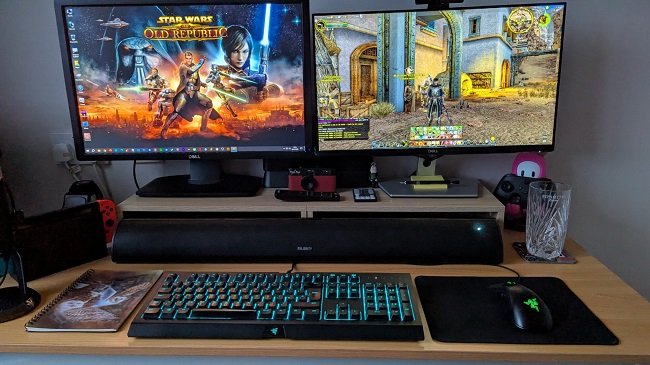
I have two monitors on my desk. The first (which is the primary monitor as far as my PC is concerned), is on the left and the second is on the right. The primary monitor is a 24 Dell U2412M, which has a resolution of 1920 x 1200. It therefore has an aspect ratio of 16:10 which adds a little extra desktop real estate, which I prefer when writing. The second monitor is a 24 inch Dell S2421H with a screen resolution of 1920 x 1080. It has an aspect ratio of 16:9 which is standard FHD. My chair is adjacent to the middle of my desk and I can turn according to each monitor I’m using. I tend to use the primary, larger monitor on the left for tasks such as writing via Google Docs and emails. The second monitor on the right is used for YouTube and gaming. This is because of its FHD format. I also have a Nintendo Switch connected to the second monitor for the same reason.
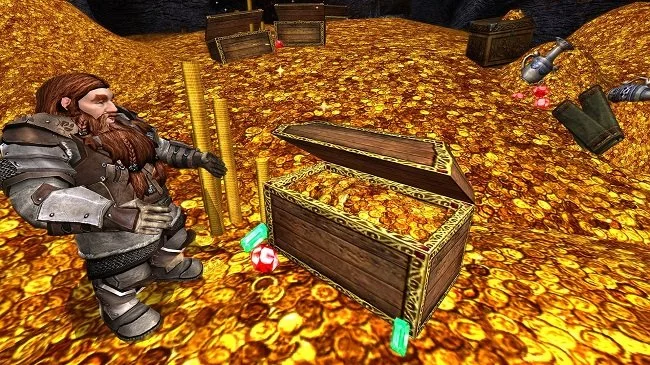
Bree Royce, editor-in chief at Massively Overpowered, recently asked the question “what is the most expensive MMORPG right now”. My first thought was to search through my old draft blog posts and track down an MMO cost analysis I wrote circa 2019. It includes data such as subscription rates and the price of current expansions. There was also information on what were the most popular cash shop items at the time. However, I then read some of the comments that had been left on Bree’s post and I quickly realised that this wasn’t just a matter of financial expenditure. Whether or not an MMO is expensive is also determined by one’s disposable income, respective wealth and personal relationship with money. The latter is perhaps the most important, irrespective whether you consider yourself rich or poor.
“The MMO genre is rife with its own set of tropes; recurring themes and motifs that have become established and ubiquitous. All of which are ideal material for a hastily produced, lazily conceived, recurring blog post”. Dying in an Massively Multiplayer Online Role-Playing Game is a clear and unambiguous fail state. A means by which to teach the player that they’re doing something wrong and that they need to rethink their strategy. IE Don’t mess with the foul Marmydons unless you have back up and are wielding the Sword of Kagnazax. Dying is a reminder to not get overconfident and maintain situational awareness. It teaches us to ensure you have the right gear and consumables, to be au fait with the mechanics of any fight you’re about to get into and that winning is not a given. Any enterprise that offers a tangible reward will come with potential risks and consequences. If you’re playing in a group then death provides a timely reminder not to rely on Colin.
I last wrote a post in this series in June. Back then I wanted a break from MMOs as I had invested heavily in Star wars: the Old Republic and The Lord of the Rings Online. Because I was still enjoying the Star Wars vibe, I decided to try Jedi: Fallen Order. Sadly, despite the story showing a lot of promise, the PC version of the game handles poorly and the controls are sluggish. Often it felt like my character was wading through mud and there was a tangible amount of skills lag. So I uninstalled it and moved on to something else. One of the odd things about gaming is that despite amassing a library of free and discounted titles, we often end up buying something new, instead of playing that which we already own. And that is exactly what I did. I purchased Stray amid all the excitement surrounding the game, but to date I still haven’t played it. Make of that what you will.
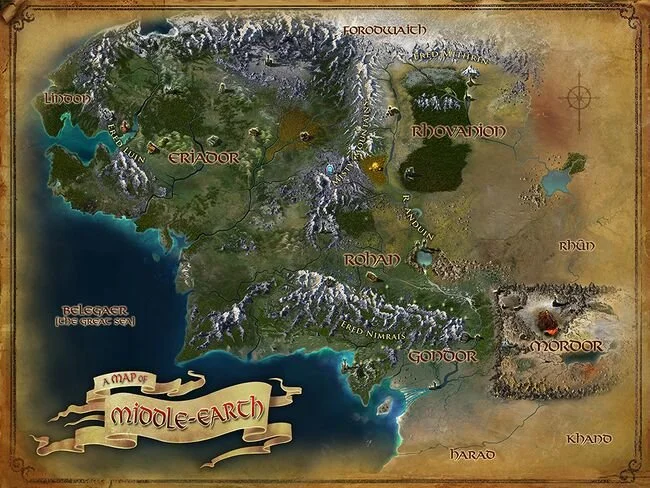
The Lord of the Rings Online was my first major MMORPG. I started playing in late 2008 and quickly discovered that there was a necessity to become familiar with the game world. Although the game provides quick travel options they were not ubiquitous at that point and often a player would simply travel on foot to travel costs down and to take the most direct route. Back in 2008 you could not own a mount until level 30. Hence I began “learning the maps” in the game and to this day still remember how to travel from one side of Moria, to another. The maps in the base game remain clear in my mind as they were so well trodden. Not so those in the regions. There are far more stables with fast mounts present in the game now and so convenience trumps any requirement to become so familiar with newly added zones. Nowadays Standing Stone Games designs new zones that tend to funnel players through them from quest hub to quest hub.
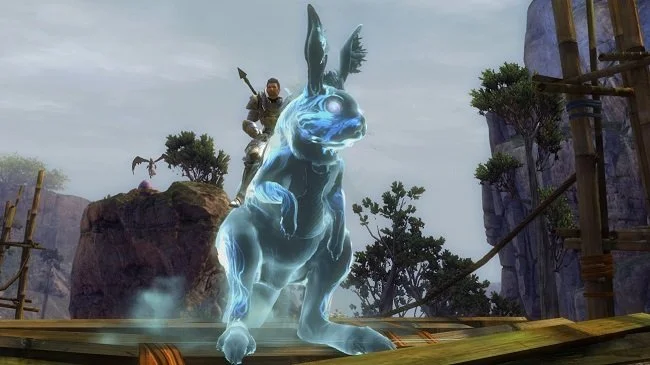
It’s a curious thing but despite there being a wealth of story content available for me to do in Guild Wars 2, I don’t feel disposed towards doing any of it. I think this all stems from the fact that it’s an original intellectual property, rather than one based upon an established franchise. Looking back through my achievements and story journal on my primary character, I played through quite a lot of narrative content when I first started playing this MMO at launch. Sadly none of it has made a sufficient impression upon me to have stuck in my memory. This is not a reflection of the quality of the storyline of Guild Wars 2 but more a case of how I tend to prefer known quantities such as Tolkien and Star Trek. Curiously, I have not encountered this problem with The Elder Scrolls Online which is equally an original intellectual property. It all seems very much a case of horses for courses.
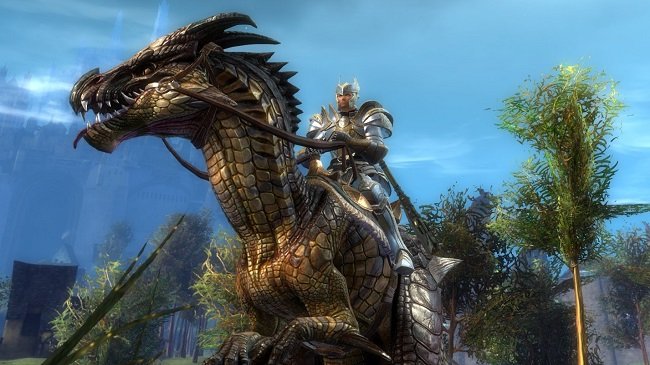
Last night I had some spare time, so I watched a Guild Wars 2 live stream from Massively Overpowered. I stopped playing this particular MMORPG in late 2015, a few months after the second expansion Heart of Thorns was released. To say that it changed the game is an understatement and sadly they were not changes that I especially liked. Since then I have occasionally logged into the game but never done anything more than potter about the starter zones. However, after watching this live stream I felt disposed towards giving the game another go. I wanted to try a new class and swan about casting spells, looking like Ming the Merciless from Flash Gordon because that’s the way all Mages look in MMOs. Today I logged into the game with hopes of rolling a Necromancer and questing in Tyria. However, the game had other plans.
Usually I keep subscribing to an MMORPG, even if I’m not playing it that much. I like to have options in case I decide to log in on a whim. Especially if an absent friend returns to a particular game presenting an opportunity to catch up. However, the current economic climate is no longer something that I can ignore. Although far from having a low income, the current ongoing increase in the cost of living is becoming apparent, so I have been fiscally prudent and cancelled my monthly subscriptions to Star Wars: The Old Republic and The Lord of the Rings Online. Both have provided me with a lot of entertainment over the last three to four months but until new content becomes available, I can happily dispense with them for the meantime. Not only have I saved £17.98 on subscriptions, I shall no longer be making ad hoc purchases of in-game currencies. Something I have been doing a lot more than usual of late.
When Guild Wars 2 launched in the summer of 2012, I was very enthusiastic about the game on the Contains Moderate Peril podcast. I had participated in the beta and was impressed by many of the game's mechanics and its overall accessibility. Although I did not expect the game to be the focal point of my gaming activities, I (and many others I suspect) felt that this casual MMO had a lot to offer and would become a firm favourite. And that was pretty much the case up until 2015 when the first expansion, Heat of Thorns, was released. I have written in the past about how this new content changed the nature of Guild Wars 2 and contradicted its existing laissez-faire approach to solo game play. I didn’t want content gated behind skills I didn’t enjoy earning, Nor did I want my access to zones subject to player unlocks and thus making my gaming activities dependent on others. Hence I parted company with the MMO and have not returned.
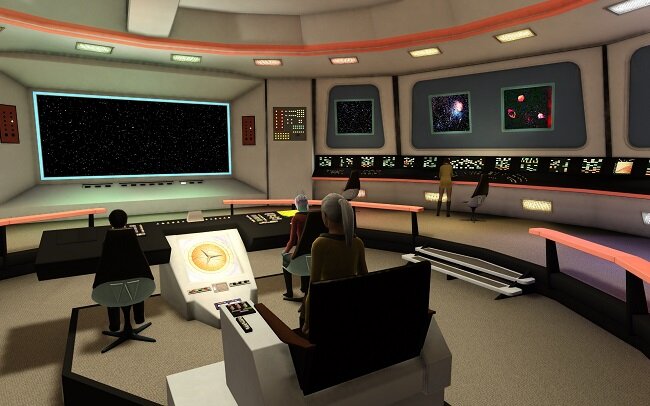
Last year I wrote a post about several “quality-of-life mechanics” found in MMOs. Systems and functionality that just make a game more manageable or convenient. Despite having many features in common, MMOs are far from identical in their interface and controls. If you’re a genre aficionado, then you can usually bluff your way through a new game and decipher how to play it. But for new players, often just trying to figure out how to do a simple thing, like find your skill points, can be an uphill struggle. However, every now and then, you’ll come across some simple functionality in a game that is useful and makes a task much easier. So I have collated another five “quality-of-life mechanics” that I feel are significant and beneficial to the player. Some are very minor but that does not diminish their value. Sometimes, less can indeed be more.
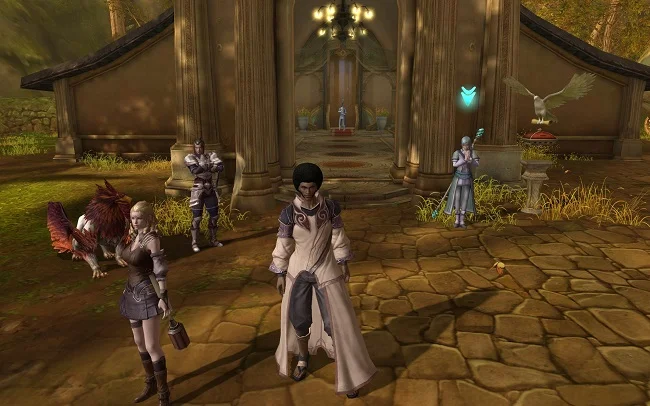
When I first started playing MMOs, it was very easy to maintain a degree of “gaming monogamy”. The Lord of the Rings held my attention for two years, without any distractions because everything was new to me at the time. But eventually, the allure of other genre titles became too great that I moved on to pastures new. And so I spent between 2009 and 2014 trying numerous other games. Star Trek Online, Age of Conan, Aion, Guild Wars 2, Star Wars: The Old Republic, The Secret World, Neverwinter, WildStar and The Elder Scrolls Online to name but a few. If a game took my fancy, I would invest a great deal of time and make substantial progress. Conversely, if the “shoe didn’t fit”, it was quickly dispensed with. For example World of Warcraft never “clicked with me. It’s no reflection on the game itself. I just didn’t warm to any aspect of it. Similarly, the reality of EVE Online was vastly different to what I had imagined and expected.
World of Warcraft was the MMO that broke the mould. The reasons for its success are too numerous and complex for this blog post, so let it suffice to say that it rode a perfect storm of factors and has maintained a strong presence for fifteen years. And as a result, subsequent developers have often sought to duplicate its success. Yet frequently the opposite has happened. In fact several MMOs have launched and experienced a brief time “in the sun” only for things to come crashing down thereafter. Perhaps the most well-known example of this was SWTOR which experienced a triumphant launch in December 2011, yet within three months the majority of players had left for pastures new. It took the game going F2P and a lot of hard work by BioWare to claw back the playerbase. It has also been argued that many MMOs have grown too big for their own good? It is true that a new player starting a game such as LOTRO today has a long slog ahead of them and some may simply find that too daunting.
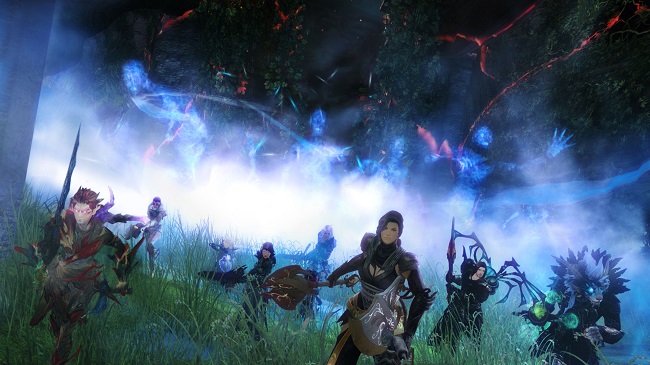
The above promotional video for Guild Wars 2 (dated July 19th, 2011) came up in an online discussion recently. The game as it exists today is radically different to this eight-year-old marketing presentation. It got me thinking about MMOs, how they evolve and those that have fallen from grace. Naturally the spectre of World of Warcraft looms large in such a discussion, because for many years this was the game to beat. Subsequently the market was awash with clones, which proved to be an unwise business tactic. The tumultuous life of Star Wars: The Old Republic along with the closure of Warhammer: Online, Vanguard and recently WildStar indicates that more of the same is not necessarily what players want or at the least, insufficient to keep them engaged. Guild Wars 2 initially deviated noticeably from the perceived wisdom but then contradicted its own ideology out of necessity to remain financially viable. Subsequent expansions have proven far more “traditional”. A decade on from the MMO boom, the genre has had to become far more niche to survive. MMOs exist and make money, but the are no longer seen as cash cows.
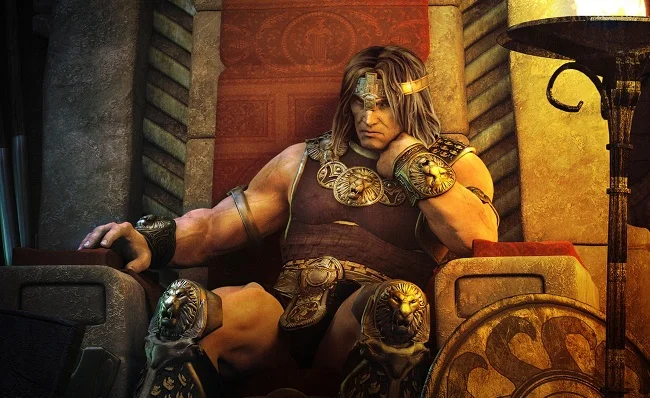
I started playing MMORPGs over a decade ago, at a point when the genre was growing. It seemed at one point that every developer wanted to produce the game that usurped World of Warcrafts crown. I therefore ended up trying many of these massively multiplayer online games yet ended up sticking with few. All too often many of these titles were too generic or had an inherent flaw or flaws that killed my enjoyment. Sometimes it was just a case that the game just didn’t chime with me. Naturally over time, I have revisited some of these MMOs and a few have become a mainstay of my gaming activities. The Lord of the Rings Online, Star Trek Online and The Elder Scrolls online are three such examples. Yet there are numerous other games from this genre that I have not returned to or if I have, I still found them to be problematic, so they have not become part of my leisure activities.
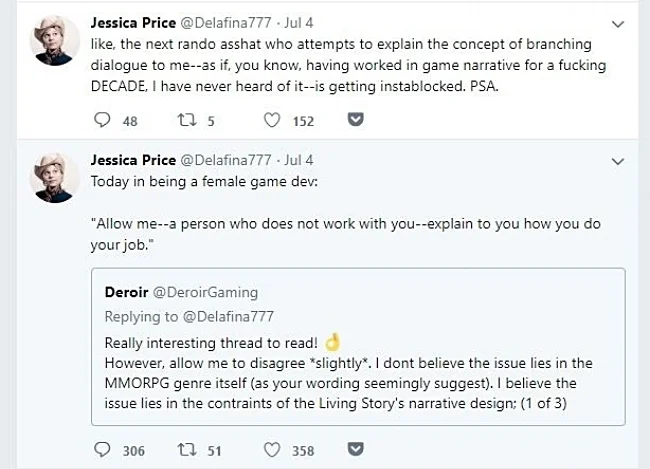
When I first read about the furore caused by Jessica Price’s comments yesterday, I knew it wouldn’t end well. There’s a tedious inevitability to the outcome of most video game related “outrages” these days. For example, a senior member of staff from a major developer will same something crass, double down, dig a hole and then finally after being bitten on the ass by reality, will put out a mealy-mouthed half ass apology. The other scenario is that an employee affiliated to a studio says something completely left field, is presented with short window of opportunity to retract it and blame it on over the counter flu medication, before they get fired due to the ensuing PR shit storm. This particular controversy falls into the latter category. However, if you take a step back from the Jessica Price debacle you quickly notice it raises a lot of questions beyond her obvious transgression. Namely, the problem of always being “on the clock” when you work in certain professions, the need to separate your work and personal social media presence and the place “influencers have in the video games industry.

It would appear that lockboxes are being discussed once again. Bhagpuss wrote a post over at Inventory Full yesterday, which subsequently got used as a talking point on Massively Overpowered today. What made the debate a little different this time around, was that Bhagpuss doesn’t object to lockboxses per se, merely that in most games that have them, the content is frequently lacklustre and uninspiring. A point I am compelled to concur with. I too have no major objection to lockboxes in principle and partake of them from time to time in various games. However, they seldom seem to contain anything that I consider to be of tangible benefit to me. I want pets, gear and weapons. But because of vocal complaints from certain quarters, we are more often than not saddled with inconsequential convenience items and minor cosmetics baubles and trinkets.
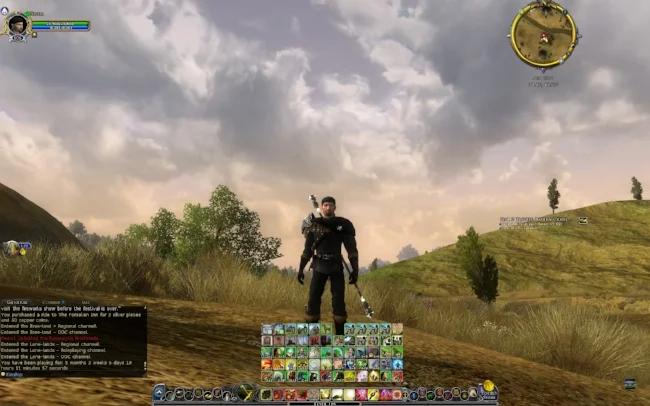
Although I have played numerous other online games, LOTRO has been my main MMO for the last nine years years. I have invested a great deal of time into it, which is hardly surprising as that is the entire raison d'etre of the genre. I recently purchased the Mordor expansion for the game which offers a wealth of new content. Yet despite having all this available I have done precious little in the game of late and have made no significant progress. Currently, I have Guilds Wars 2, The Elder Scrolls Online, Secret World Legends and Star Trek Online installed on my PC. I have dabbled with them all over the last few weeks, trying to rekindle a sense of enjoyment and pursue content that I have not completed. Sadly, none of them seem to hold my interest. I log in to them in the hope that something will grab my attention but I always seem to find myself just kicking my heels and aimlessly wandering through zones with no sense of focus.
Jeremy Soule's score for Guild Wars 2 is an integral part of the games charm and appeal. It enhances the world of Tyria and is a character in its own right. As a player, whenever you visit one of the vast cities or travel the rolling countryside, it is Soule's music that breathes life into the finely crafted world that ArenaNet have made. Upon the games launch in 2012, the soundtrack for Guild Wars 2 was released in a four-disc box set, via Soule's own record label DirectSong. Sadly, this was a limited pressing and is now out of print. Copies now change hands for exceedingly large sums of money.
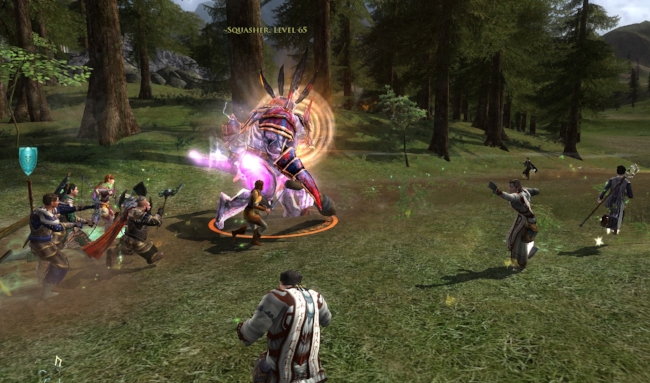
There’s one particular topic that appears with tedious regularity on MMO subreddits and forums. That old chestnut about how the genre has become too solo friendly and that it’s to the ruination of the genre. It usually hails from the raiding community and follows a predictable path about high end gear and those who do and don’t deserve it. When you look beyond the initial arguments, you’ll frequently find that such positions are very emotive, couched in judgemental terms and often end in the sentiment “why even play an MMO?” or something comparable. The reason I mention this perennial debate is because it appeared recently on a forum that I still occasionally visit. It saddens me to a degree because, this point has been debunked so many times, yet it still persists (a bit like many political talking points). It also smacks of that attitude I see all too frequently these days. A concern and borderline resentment of what others are doing, irrespective of whether it impacts upon you or not.
Out of all my recent gaming, Sniper Elite 4 has proved the most entertaining. The engaging mechanics and stealthy gameplay have held my attention and kept me engaged. So far, I spent over seventy-two hours playing through the campaign and DLC. After watching several You Tube videos I was tempted to try the co-operative mode, something that I don’t always do in these sorts of games. Overwatch allows two players to work together as sniper and spotter respectively, to complete objectives within a custom map. It requires communication and co-ordination. It should also be noted that multiplayer in Sniper Elite 4, is dependent on peer-to-peer connection rather than dedicated servers, with the players hosting the games themselves.
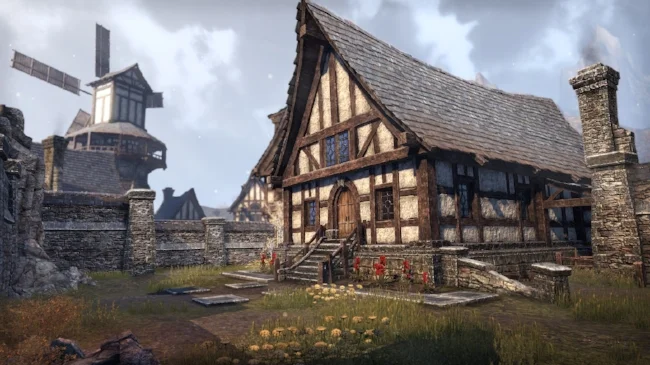
Having recently returned to The Elder Scrolls Online, there is a lot of excitement within the community regarding the introduction of housing in the next major game update in February. So far from the information that is available, there’s a wide variety of house styles and customisation options available. Properties can be bought furnished or unfurnished and players can further embellish their respective dwellings by crafting specific items for them. Housing also includes the usual fast travel options to and from their location and access can be shared among friends and alts. There’s a more detailed breakdown at The Elder Scrolls Online website and so far, ZeniMax seem to be offering all a comprehensive version of the current popular MMO mechanic.
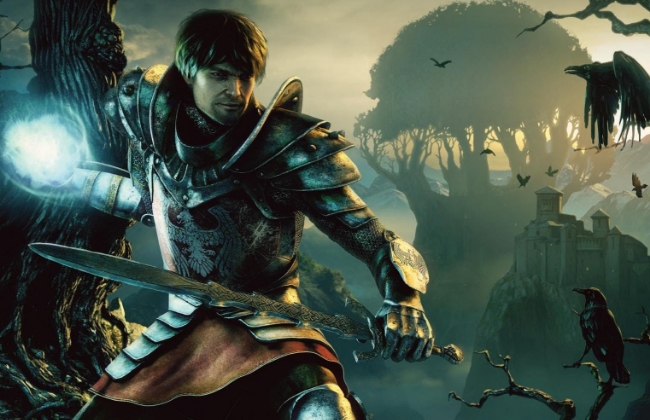
I started 2015 playing RPGs. Despite becoming bored with Dragon Age: Inquisition and its ponderous storyline, I still found this particular genre engaging. January and February are often slows months in my line of work, so it’s a good time of year to immerse oneself in games of this type. I played through both Arcania : Gothic 4 and Rise of the Argonauts and found them both to be enjoyable. Neither of these titles was revolutionary, being mainly “business as usual” RPGs. However both were bought as part of gaming bundles and the discounted price does have an impact upon my gaming expectations. For what they were, I enjoyed them.
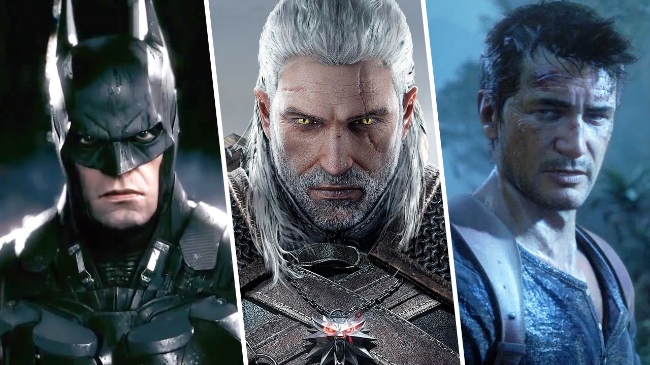
This time last year I wrote a two part post called A Year in MMOs. Twelve months later I find myself writing a similar round-up of my gaming activities. However this time round the title has now become A Year in Gaming. One of the most significant changes for me over the course of 2015 has been my step away with the MMO genre. Where in the past I would seek out new titles and stay abreast of those in development, I now find myself no longer drawn to the genre by default. Traditional titles such as LOTRO have been sidelined. This is because both MMOs and I have changed over recent years. Although I still play this genre (mainly STO), I do so sparingly and it is no longer the apple of my eye or the mainstay of my gaming time.
Guild Wars 2 has always been a game that’s easy to return to. In many ways this has been the game’s biggest selling point for me. The lore doesn’t appeal to me that much but the games frictionless approach to combat and character stats have always made it easy to jump back into after being away. So for the last three years I have been a regular visitor to Tyria. However, many of the changes that came with the October expansion, Heart of Thorns, were not to my liking. That’s not to say that they were bad. They seem to have found favour in some quarters. But from my perspective the changes made to Guild Wars 2 have not improved or enhanced it and took the game in a direction contrary to my tastes. As a result I have stopped playing the game entirely.
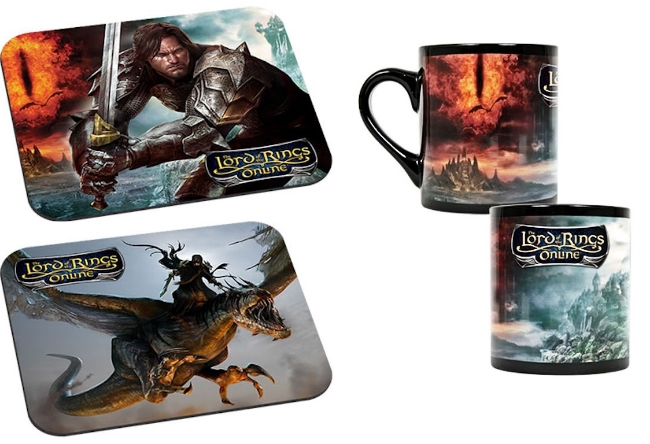
While watching the official LOTROstream recently, I noted that there was still a lot of LOTRO related merchandise adorning staff desks at Turbine’s offices. I recollect in the past that mouse mats, mugs and other items use to be available for sale in the Warner Bros. store. There was an initial marketing campaign associated with the launch of the game in 2007 and another in 2010 when the game converted to F2P, both of which required a stock of merchandise for promotional reasons. Sadly a search of the Warner Bros. store has shown that no such material is available any longer. Furthermore considering where LOTRO is in its lifespan, there is not likely to be any further stock produced.
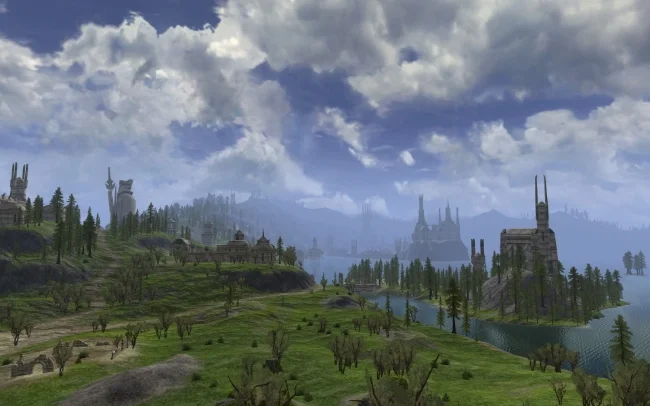
I started playing my first MMO in late 2008. Until then it was the one genre that I had never tried. I initially considered buying World of Warcraft but when I found out there was a virtual version of Middle-Earth I chose to purchase The Lord of the Rings Online instead. Right from the outset I was hooked. My working pattern and domestic arrangements afforded me plenty of time to invest into this game and I did so willingly.
You Can Never Just Do the Thing You Want to Do
Last night I had some spare time, so I watched a Guild Wars 2 live stream from Massively Overpowered. I stopped playing this particular MMORPG in late 2015, a few months after the second expansion Heart of Thorns was released. To say that it changed the game is an understatement and sadly they were not changes that I especially liked. Since then I have occasionally logged into the game but never done anything more than potter about the starter zones. However, after watching this live stream I felt disposed towards giving the game another go. I wanted to try a new class and swan about casting spells, looking like Ming the Merciless from Flash Gordon because that’s the way all Mages look in MMOs. Today I logged into the game with hopes of rolling a Necromancer and questing in Tyria. However, the game had other plans.
Last night I had some spare time, so I watched a Guild Wars 2 live stream from Massively Overpowered. I stopped playing this particular MMORPG in late 2015, a few months after the second expansion Heart of Thorns was released. To say that it changed the game is an understatement and sadly they were not changes that I especially liked. Since then I have occasionally logged into the game but never done anything more than potter about the starter zones. However, after watching this live stream I felt disposed towards giving the game another go. I wanted to try a new class and swan about casting spells, looking like Ming the Merciless from Flash Gordon because that’s the way all Mages look in MMOs. Today I logged into the game with hopes of rolling a Necromancer and questing in Tyria. However, the game had other plans.
The MMO genre is very good at some things. Many have complex lore and engaging stories. If a game has been around for a while there’s usually plenty of content to complete. Then there are the communities, many of which are helpful and welcoming. And let’s not forget the business model. If you want to try an MMO you can usually do so without having to spend a red cent. You can usually progress sufficiently to decide whether the game in question is right for you. However and there is always a “however”, most MMOs are utterly incapable of just letting a new or a returning player log into the game and casually start playing. No, the game has to burden you with a confusing tutorial and emails with filled boost, gifts and other paraphernalia.Then there’s the wildly flashing interface that is desperately trying to get you to attend some in-game system that you have zero interest in at this point in time. It’s like being surrounded by multiple toddlers that want to show you the collage they’ve just made out of pasta.
I was watching the film Reach For the Sky recently about WWII fighter pilot Douglas Bader. There is a scene where he is with a friend at a golf course and Bader has no prior experience of the game. The friend lends him a club and a ball so he can get the feel of them. Now I appreciate that this analogy is somewhat of an oversimplification, but why can’t bloody MMOs give players the option to do the same? Because Guild Wars 2 was having none of this. As soon as I rolled a new Human Necromancer, I was funnelled into a tutorial. It was relatively short but it was confusing because it gave me an axe as a weapon by default and I didn’t want an axe, so I was vexed until I was able to change it. Once the tutorial was over the emails started coming with all the account wide free crap I’ve earned over the years on other alts or through buying an expansion. And then I had to clear out my shared bank space and try and determine what stuff was still relevant and what wasn’t.
Despite these frustrations, I soon determined that I like the Necromancer class and decided to use the level boost I had been given to advance to the current level cap of 80. Let it suffice to say that although the game is quite generous with the gear it gives players who do this, there is precious little guidance regarding builds. This meant that I had to stop playing to do “homework” and by that I mean looking for information outside of the game. Something I think is cardinal sine in the gaming world. I finally settled on a build that suited my needs and returned to the zone where I was pottering about. After some further gameplay I decided to buy some Gems, the currency for the game’s item shop. I used PayPal and was somewhat taken aback by an onscreen message that stated it could take up to 72 hours to get them. Mercifully, it was only an hour but the absence of an instantaneous transaction shocked me. I’ve subsequently learned it doesn’t seem to happen if you pay by credit card.
To cut a long story short, despite the game doing its utmost to not let me play, I have decided to stick with Guild Wars 2 for a while. However, I learned to treat the game store with caution. Don’t rely on it to warn you about buying something you can’t use. I ended up with a Skimmer skin despite the fact I haven’t got one as yet. If you’re not sure about something in the store and if it is relevant to you, tab out of the game and do some research. Again you shouldn’t have to but that’s the way it is. Also the complexities of the Elite Specialisation system are not explained in-game. It took me ages to figure out how to unlock the Greatsword for a Reaper Necromancer and how to enable its skills. Again player curated websites provided the answers and there was no information of a comparable standard provided by ArenaNet, which is rather annoying and also damn strange. What’s their excuse?
On a positive note, all three of the expansions for Guild Wars 2 are available for purchase as a collection at the reasonable price of £44 bar a penny. I already had the first but this bundle was still cheaper than buying the two more recent ones separately. So I’m now back in this MMO and will be playing it until something else comes along. I did have fun today and I do like the class that I’ve rolled. But I do think that my concerns have legs and that not only Guild Wars 2 but most MMOs seem to have a problem with just letting players get into the game and doing their own thing. I appreciate that there is a need to inform players about a game’s systems and that tutorials are hard to do well. But it would be nice if there was a way to temporarily suspend the tsunami of in-game information I’ve highlighted and be able to get on with the task in hand. Be it in the main game or a bespoke “testing zone”. However, knowing how the MMO genre is, I won’t get my hopes up.
Are video games becoming easier? It’s a perennial subject that is frequently discussed by those who play them. Often the question of whether they have actually become easier is not the focus of the debate, as it seems to be broadly recognised that it is the case. Instead, discussion of this matter tend to drift into the rectitude of this change. Debate’s of this nature are usually awash with subjective opinions and personal preferences which are then put forward as objective facts. It’s not just a question of video games becoming easier, it’s the fact that making them easier is “wrong” and those who want them as such are “not proper gamers” etc. The hours that have been lost to this pointless, tedious debate are uncountable. However, I digress. Let us return to the matter of video games becoming easier, because although fans discuss this a lot and have plenty to say, you don’t often hear from the developers on this subject.
Some video games lend themselves to being set aside and resumed at a later date with zero consequences. These are often casual games with no major goals other than having fun while playing them. Fall Guys is a great example of this. You have a cartoony avatar that participates in zany group races, filled with obstacles. You run, jump, climb but the controls are far from difficult. You may well become skilled but such things are mitigated by the other players as they stumble around. You’re not at the mercy of apex players or “try hards”. It is not a game about winning and mastering techniques. The fun comes from playing it and the unique experience you have each time. I’ve been playing this game, on and off, since it’s launch in 2020 and in that time I have only ever won once (winning requires you to win a series of 4 to six individual races). However, whenever I pick up my controller and play Fall Guys, I have fun and the game lifts my spirits.
I recently completed the main story in Tainted Grail: The Fall of Avalon. In total I spent about sixty hours playing the game. I began at the start of the year, then took a break for a while but returned to it recently because I wanted to see if I could unlock a specific ending. I did manage to do this. Like so many other RPGs, Tainted Grail: the Fall of Avalon has a central storyline, along with a wealth of side quests, based around factions in specific zones. I think I possibly completed about a two thirds of these. However, once I finished the main story, my interest in the game began to wane. I finally left my character in the last major quest hub in case I wish to return at a future date. I then logged out of the game and uninstalled it from my PC to free up space for whatever I was to play next. In this case its The Sinking City 2. None of this is a negative reflection on Tainted Grail: the Fall of Avalon. I enjoyed the time I spent playing this quirky RPG. I simply had my fill and left to play something else.
On Tuesday 11th April, Aspyr Media rather surprisingly re-released The Lord of the Rings: War in the North, a co-op action-RPG from 2011. This game was delisted in late 2019, possibly due to changing rights ownership or a license expiring. Hence, I was somewhat discombobulated by the return of this title to all major gaming platforms. Mind you, the Embracer Group (through its subsidiary Middle-earth Enterprises) still controls the worldwide commercial and video game licensing rights for The Lord of the Rings and The Hobbit. Furthermore they have explicitly stated that they have plans for more games. It would appear this also means re-releasing and updating old favourites. It is also worth noting that they own Aspyr Media, which is also a bit of a giveaway. Let it suffice to say that this re-release and sparked enthusiastic online debate as to whether any other he Lord of the Rings themed games from the same era will receive a similar makeover. Judging by the internet chatter, there’s potentially a market for them.
The next expansion for the MMORG, The Lord of the Rings Online, was announced on the 1st August, via the gaming website MMORPG.The Wolves of Mordor, which will launch later in the year, appears ambitious in scope as it will include two new game systems as well as the obligatory story update. This expansion takes place in Draugardh located in the North East of Mordor, beyond the Plateau of Gorgoroth. It includes the new zones of Heledhris, Parth Rhavas and Nan Ogol. These vary environmentally ranging from the arid, volcanic and semi-tropical. Players will encounter the Daugrim in these regions, Werewolves but not in the modern sense. This is not the lycanthropy of Eastern European legends but in the established Tolkien idiom of fell spirits inhabiting the bodies of Wolves. The region also sees the return of the Woses and players can expect to encounter Elves and scouts from Gondor. As ever with LOTRO expansions, there will be new instances as well as a raid.
This is a post about the power of nostalgia and how sometimes, interacting with something from your past, be it physically or mentally, can produce a very strong and tangible emotional reaction. In some instances, this can be the result of something that you have specifically set out to do. On other occasions you can wander into a sense of nostalgia purely by chance. Today I experienced a very strong sense of nostalgia while watching a YouTube video and then again when I sought to replicate what I had seen. The video showed someone installing Windows 95 on to an old 486 PC from that era. The Window’s start up sound really touched a nerve (but in a good way) and then when the guy in the video launched Space Cadet 3D Pinball, a game that shipped with the operating system, I felt a strong compulsion to track down a copy and install the game myself, thus revisiting something that was an integral part of my life in 1995.
RV There Yet? is possibly the most entertaining game I’ve never played. My vicarious pleasure regarding this title has come exclusively from watching two popular YouTubers, JackFrags and WillFromWork, play through the game over a series of videos. It has been immensely amusing to watch and I have empathised a great deal as the group of four players has struggled with the game’s unpredictable mechanics and their own team’s dynamic. I could go and buy RV There Yet? myself but I doubt if I would ever have a gaming experience anywhere close to what I’ve watched online recently. So in some respects watching these videos has been an interesting alternative as I’ve been entertained, which ultimately is the point of video games. Perhaps there is a deeper philosophical point here that the game developers should reflect upon, as they’ve lost a potential sale. However, that is separate discussion for another day.
I don’t keep up with gaming news as much as I use to but several noteworthy announcement have come to my attention of late. Firstly, there’s an expansion, Songs of the Past, coming for the Witcher III: Wild Hunt in 2027. No doubt this is to pave the way for the Witcher IV. Next, I also found out about Hand of Fate: Horde. I liked this franchise and was saddened to learn that the original studio, Defiant Development, closed. Hence is was a pleasant surprise to see this new game being developed by members of the original studio. The third announcement was regarding Guild Wars 3. A new MMORPG in active development by a major studio is no small feat and is certainly good news for fans of this franchise and the genre per se. However, once you look beyond this news this announcement raises several questions and has certainly given me pause for thought. Let us take a few moments to consider them.
Star Trek Online has many in-game systems that are common to the MMORPG genre. The reputation system is one such example. In STO there are 13 reputation factions. Once a player has reached level 50 they may start progressing through the 6 reputation tiers of each one. Players gain progression through daily projects (20 hours in duration). Hourly projects are also available though they yield less reputation advancement and are limited to three times a day. Hence 20 hour projects are consider by default the most efficient way to gain rep. Projects require 30 Faction Specific Marks (earned via various activities in-game), 15,000 Energy Credits (standard in-game currency) and 2000 Expertise points. The most efficient way to tackle the reputation grind is to build up the necessary resources in advance and then at a designated time each day, start all 13 respective projects. Upon completion projects yield a player bound lockbox containing a random space or ground weapon, a console or Elite Marks which can be used to acquire faction gear.
I was recently perusing my archive of old blog posts, when it struck me how much I’ve written about the MMORPG genre over the years. Naturally, there was far more material from between 2008 and 2012 as that was period when I immersed myself in the genre and was very enthusiastic about it. I was at a point in my life when I had the time to dedicate to such games and I was happy to participate in the social aspect of they offered. I would regularly play through group content and spend time socialising online with fellow guild members. My experience remains a textbook example of how online games can be more than the sum of their parts and that where you are at in your life has a major impact upon your overall enjoyment. As I read though various old posts it became clear that my experiences where specific to this particular part of my life and that they cannot be repeated. My relationship with the genre is very different now and that’s fine.
Creating alts is an integral aspect of the MMORPG genre. Many players will create a character of a specific class or faction, play it for a while, lose interest in it or they may decide that it is just not for them. Fortunately it is no effort at all to simply re-roll a new alt and set off once again. Furthermore, lots of players never reach level cap of the MMORPG that there playing. When the going get’s tough, so to speak, you can either soldier on for another 50 levels or simply create a new alt and return to the comfort of tried and tested content. Alts also give you the chance to secure an accolade or achievement that you previously missed. They are also of great benefit to the genres social aspects. Creating a new alt so you can play along with a friend who is just starting is great fun. Developer’s love them too as it means you’re still playing the game.
I recently took a break from Crimson Desert choosing instead to to play something familiar and easy going. As I’ve been logging into Star Trek Online daily to participate in the anniversary event, I decided to look through my various alts and see how far they had progressed through the game and what resources they had. At present I have twelve alts. My primary Captain was created in 2015 during the original Delta Recruit Event. I had previously played STO intermittently since its release in January 2010 but I never kept any of those characters. Hence this decade old Tactical Federation Captain has been my main focus when playing. The other eleven alts are the result of other recruitment events or whenever I wanted to try something different, such as playing a specific class or faction. I obviously played a lot of STO during the lockdown as several alts date from that period. Several had maximum reputation across all factions.
The action, open world RPG Crimson Desert has been patched five times since it launched on March 19th and there have also been multiple hotfixes. At first glance this isn’t anything unusual. New games have bugs and issues arise once a game is released and played across a much wider variety of hardware than in QA testing. However, if you read the patch notes that accompany these sizeable downloads it quickly becomes apparent that developer’s Pearl Abyss are not just addressing bugs and software glitches. They are actively engaging with their player base and responding to suggestions and requests from that community. Although this is not a unique approach, what is surprising is the speed and quantity in which these player driven changes are happening. There seems to be an active ongoing process to refine the game and eliminate some of its “rough edges” and the players are contributing to this process with their feedback.
According to my Steam statistics, I last played Starfield on 19th December 2023. I bought the game upon its release in September of that year and played in total for 136 hours. Starfield held my interest for three and a half month and I wrote seven blog posts about various aspects of the game. Although there were some engaging aspects to Starfield, I did feel that that the game was somewhat lacking in systems and content, at that point in its lifecycle. I also think that the marketing and player expectations associated with Starfield were overblown and unrealistic. The shadow of Skyrim looms large over all new Bethesda releases and they don’t seem able to quite recapture that magic. Hence, I inevitably drifted away from Starfield and to another game and was effectively “done” with it. I have not played the game since which seems to validate the theory that game are becoming increasingly more ephemeral.
13 days after its release, market analysts estimate that Crimson Desert has already earned $200 million across the four main platforms (PC, PlayStation 5, and Xbox Series X and S). The game is certainly proving popular among gamers with the internet awash with live streams and “let’s play” videos. However, reviews are mixed both among gaming journalists and YouTube influencers. Common complaints about the game include that it is slow to start, the controls are poorly laid out on all platforms and that developer’s Pearl Abyss have done a poor job of explaining most aspects of the game to new players. Although such criticisms are true to a degree, I think these complaints highlight how many gamers are conditioned to expect new titles to follow a specific pattern with regard to pacing, narrative exposition and learning in-game systems. A pattern that Pearl Abyss has chosen to ignore, instead favouring an old school approach.
Early on Crimson Desert, the main quest requires the player to enter a tavern and arm wrestle a particularly strong guard. The arm wrestling match consists of a quick time event. If playing on PC you have to rapidly press the “E” key which turns a power meter from white to red. Then a white dial appears above the meter with a rotating hand. When the hand passes over a segment of the dial that is marked by hatching, the player must press the “R” key. The idea being the meter filling with red is you strength building (or waning) and the “R” key prompt indicates when to try and force your opponent’s arm. You will need to to continuously press the “E” key throughout the arm wrestling match and the “R” key about 4 times to win.
Earlier this week, Nvidia posted a video featuring their latest iteration of DLSS technology (Deep learning super sampling). DLSS 5 is an AI-powered “real-time neural rendering” process and unlike previous versions that focused on improving frame rates through upscaling or frame generation, DLSS 5 uses generative AI to “infuse” frames with photorealistic lighting and material details that the game engine never actually calculated. Let us pause for a moment and consider these words. Material detail that the game engine never actually calculated. Therein lies the rub. If you watch the aforementioned video or peruse the images posted here, it is abundantly clear what the technology does.
Last night, I spent the first 45 minutes after the launch of Crimson Desert, watching the 92GB pre-downloaded game files slowly decompressing and installing. I finally launched the game at about 10:50 PM GMT. I then waited a further 5 minutes while shaders were downloaded. It took me about 15 minutes or so to read through the various game settings and choose those that are optimal for my PC. I suspect even if you have a beast of a computer, you’re still going to have to spend some time tweaking settings. As for those players like myself with a gaming rig that is somewhere in the middle of the game’s specifications, be prepared to do a lot of fine tuning both within Crimson Desert itself and your Windows settings.
I have been aware of the online interest around the open world action game Crimson Desert for a while now. One of the things that has intrigued me about it is the scope of the game. The word “hype” has been bandied about by a few gaming websites. However, from what I have observed, developers Pearl Abyss have not been excessively hyperbolic themselves, with regard to the manner in which the game’s systems and mechanics have been marketed. Now that the press embargo has been lifted, the pre-release reviews seem to confirm that everything we’ve seen in promotional videos in the run up to the launch, is in fact present in the game. So far the initial critical response has been very positive and it has been hinted that the game may well be a genre milestone. Perhaps Crimson Desert is just a rare example of a game that has not had a rushed development and isn’t launching prematurely for business reasons.
Video games as a genre are extremely poor at explaining themselves. When you buy a new game you’ll often find little or no information regarding the basic systems and mechanics. The industry assumes that their customers are by default familiar with the fundamentals of playing a modern video game. Hence if a game has a tutorial, it is often based around videos rather than detailed verbal instructions. You are are briefly shown a clip of a specific move being successfully undertaken but it is seldom shown in a wider context. The industry also expects the fan community to take on the role of curating and disseminating information about its games. The move away from forums and bespoke websites to Discord highlights this. Discord is a primarily a real time communication tool and not good at maintaining a historical data archive. If you want an answer to a specific gaming question, you’ll more than likely find it on YouTube in a video made by a fellow gamer.
I have written in the past about the video games we cannot play. The ones that require a keen understanding of a game’s mechanics, along with a strong degree of manual dexterity and situational awareness. Being 58 years old, I tend to have neither the co-ordination necessary to succeed or the patience to master such complex skill requirements. With this in mind, I recently watched a YouTube video for Chivalry 2 and thought, that looks like fun. The fact that it showed someone picking up a chicken and throwing it at an opponent is neither here nor there. However, after watching a few more videos I realised that combat in the game was complex and that, as usual, the reality of playing such a game would be different from my expectations. Hence, I came very close to not buying Chivalry 2. However, I eventually decided that I would, so I bought it for just under £10 from an online vendor.
I decided to pursue a magic and spellcasting build in the RPG Tainted Grail: The Fall of Avalon after the story prologue. During the opening section of the game, the player is presented with a sufficient range of weapons to determine which type suits them best, although you can change at any time during the game. For me, casting spells feels right and is fun. Plus I have fond memories of the magic system in Two Worlds II and Skyrim. So once I started playing through the first zone, I started putting attribute and skill points into the appropriate trees to bolster my spells strengths and frequency. I also chose gear that would bolster those statistics further. The results have been surprising, as magic and spellcasting is not presented in the usual “glass cannon” style you find in some other RPGs. Here it offers robust DPS output and with the right gear and spell combination, a strong degree of survivability.
I originally bought Warhammer: Dark Omen in the summer of 1998. I played a demo copy via a magazine cover disc, which was a common means of promotion and marketing back then. Although I was at that point, unfamiliar with the Warhammer Universe, I found this game to be an excellent point of entry. The story did an excellent job of introducing players to “The Old World”, the political and power structure and major characters. I instantly liked both the aesthetic and the lore. Warhammer: Dark Omen was also the first real-time tactical wargame that I played and I spent numerous hours playing through the campaign. Overall, the game was a critical success, particularly on PC, but it struggled commercially upon its initial release and didn’t quite find the audience that it deserved. However, it has achieved status as a “cult classic” among gamers, leading to a recent re-release on GOG in late 2025.
According to the recent “letter to the players”, Standing Stone Games will be adding a new zone to the MMORPG The Lord of the Rings Online in the second quarter of this year. Possibly around May or June. Having spent the last three expansions in the South of Middle-earth exploring the tropical Umbar and the deserts of Harad, I would certainly welcome a change of location. I have gradually warmed to these zones over the last eighteen months but I do find them so incongruous. They are so radically different to the European style content that has been the mainstay of the game for so long. Tolkien’s source text has plenty of detail regarding Eriador and Rhovanion. Information regarding Harad is scarce, hence it has afforded the developers a great deal of artistic freedom. Although exceedingly well realised these tropical zones have taken a while for me to get used to.
I’m not sure exactly when it started but I’ve recently noticed a graphical bug within the MMORPG The Lord of the Rings Online. This problem often occurs within caves or in areas where there are a lot of rocky surfaces. Hence it has become very apparent in the latest two expansions, set in Umbar and Harad. This graphical glitch causes some surface textures to appear to flash from light to dark intermittently. The resulting strobe effect is hard to ignore and very distracting. Fortunately, a quick online search showed that this is not a problem unique to my installation of LOTRO and is a known problem. Furthermore, there is a very simple workaround, which is to go into the Advanced Graphics setting and uncheck “Per Pixel Lighting”, which immediately remedies the problem. I have no idea why this has recently started to happen but at least it can be resolved.
This year is the 60th anniversary of Star Trek. The original TV show was first broadcast in the US on September 8th 1966. If you search online you’ll find details of lots of related events. There are documentaries, conventions, new TV shows and even some video games in development. However, what you won’t find are any details regarding what will be happening with the MMORPG Star Trek Online. So far no road map for 2026 has been posted online by the developers but it is still quite early in the New Year. That being the case, I am not especially optimistic about there being any major plans waiting to be revealed. It is not as if DECA Games have demonstrated or stated any major ambitions for STO beyond keeping the endless events treadmill going and regularly adding content to the in-game store, during their development tenure. The ongoing story arc drags on inexorably and is as dull as ditchwater.
I first played The Elder Scrolls V: Skyrim in June 2013. This was over 18 months after the game’s initial release and the base game and DLC were bundled together in a “Legendary” edition. Although a seasoned gamer at the time, familiar with the RPG genre with such titles as Mass Effect and Grand Theft Auto IV, I had not played a game from this franchise before. It only took a few hours of gameplay to realise that this was a special title. The scope of the story, the art design and the size of the world were immediately notable. Tamriel was immersive in a way I had not experienced with other titles. Often simply traversing the terrain and watching the dawn break while the game soundtrack swelled, was sufficient to hold my attention. I instantly picked up on the voice acting of Christopher Plummer and Max Von Sydow. All of which indicated that this was a gaming landmark.
The latest expansion for the MMORPG The Lord of the Rings Online, Kingdoms of Harad, launched on December 3rd. With this release the level cap was raised from 150 to 160. It should also be noted that the cap for virtue traits was also raised from 96 to 100. Naturally these changes meant that there is a requirement to replace all armour and jewellery once the new cap is reached. Similarly Legendary Items have to be reforged and any traceries upgraded or replaced. If you follow the Epic Story it will lead you from quest hub to quest hub. The main quest rewards, along with those from side quests will provide adequate gear as you slowly progress towards the new level cap. The new raids, instances and missions/delvings then provide a means to acquire higher quality level 160 gear. LOTRO and indeed, many other MMOs are consistent in this methodology.
A Month in Gaming
Usually I keep subscribing to an MMORPG, even if I’m not playing it that much. I like to have options in case I decide to log in on a whim. Especially if an absent friend returns to a particular game presenting an opportunity to catch up. However, the current economic climate is no longer something that I can ignore. Although far from having a low income, the current ongoing increase in the cost of living is becoming apparent, so I have been fiscally prudent and cancelled my monthly subscriptions to Star Wars: The Old Republic and The Lord of the Rings Online. Both have provided me with a lot of entertainment over the last three to four months but until new content becomes available, I can happily dispense with them for the meantime. Not only have I saved £17.98 on subscriptions, I shall no longer be making ad hoc purchases of in-game currencies. Something I have been doing a lot more than usual of late.
Usually I keep subscribing to an MMORPG, even if I’m not playing it that much. I like to have options in case I decide to log in on a whim. Especially if an absent friend returns to a particular game presenting an opportunity to catch up. However, the current economic climate is no longer something that I can ignore. Although far from having a low income, the current ongoing increase in the cost of living is becoming apparent, so I have been fiscally prudent and cancelled my monthly subscriptions to Star Wars: The Old Republic and The Lord of the Rings Online. Both have provided me with a lot of entertainment over the last three to four months but until new content becomes available, I can happily dispense with them for the meantime. Not only have I saved £17.98 on subscriptions, I shall no longer be making ad hoc purchases of in-game currencies. Something I have been doing a lot more than usual of late.
May saw the release of Sniper Elite 5 and as ever, I have found the game thoroughly engrossing. I have written a more substantial review elsewhere but I just want to reiterate how this franchise is the complete opposite of the fast paced insanity and lightning reflexes of Call of Duty. I find taking my time in Sniper Elite, tagging all targets and waiting for as long as it takes to make the right shot, is immensely satisfying. All too often, modern gaming is excessively frenetic, bombastic and overwhelming. Sniper Elite is the antidote to this. I also made a brief return to Fall Guys: Ultimate Knockout recently. It is still fun in small doses and the cosmetic aspect of the game is a major contributor to that enjoyment. As a Prime Gaming customer (part of being an Amazon Prime subscriber), there are frequently free outfits to claim each month. Despite having played this game for two years now, I still haven’t achieved being the “last player standing” and thus won a complete tournament.
I surprised myself recently by reinstalling Guild Wars 2. Again I’ve written at length in the past as to the point of returning to a game that requires me to spend time in a zone I loathe. However, unlike some other MMOs that require you to tinker with your client once it’s downloaded, or update a plethora of third party addons, installing Guild Wars 2 is really simple. The game launcher downloads at a reasonable rate and once done, you can jump straight back into the game. It even remembered all my personal settings. I quickly found my favourite character, a human ranger, where I left them in Queensdale and jumped into an event that used to be part of the “Champion Train”. I noticed that everyone now has mounts and was briefly tempted to look into this. I suspect that it will require a grind of some kind, so I’m going to nip this flight of fancy in the bud, immediately. Plus, why do I need a mount when I have a flying carpet?
Over the forthcoming summer, I intend to tackle some of the games I have amassed across various platforms such as Epic and Steam. The first title I intend to explore is Jedi: Fallen Order as it has enjoyed a lot of praise and flown in the face of EA’s numerous claims over the last decade that single player games are “finished”. I’m also tempted to play through another Assassin’s Creed game, as I enjoyed Black Flag so much last year. I recently spotted that I had a copy of Control: Ultimate Edition, which has piqued my curiosity as I have no idea when or where I got a copy. This is what happens when you arbitrarily claim any free games offered to you. Hence I’m not lacking anything to play in the months ahead. It will be a pleasant change to be able to write about something new in the next instalment of “A Month in Gaming”, rather than the usual MMOs.
Here we are again with another summary of my gaming activities in recent months. Or in this case since last September. It’s been a while but I’ve been on a blogging hiatus until recently. However, I’ve kept myself busy gaming wise and often I find the hunt for news video games, just as entertaining as I do playing them. Perhaps that could be a future blog post. Back to the matter in hand. Gaming wise, pretty much all things related to the MMORPG genre are currently on the back burner. I’ll give specifics later but I am taking a break from these for the present. I am currently looking at trying games outside my usual comfort zone and also trying to test whether you can or cannot teach an old dog new tricks. Fortunately, the answer appears to be yes you can. Enough summation, on to the specifics.
I last wrote a post in this series in June. Back then I wanted a break from MMOs as I had invested heavily in Star wars: the Old Republic and The Lord of the Rings Online. Because I was still enjoying the Star Wars vibe, I decided to try Jedi: Fallen Order. Sadly, despite the story showing a lot of promise, the PC version of the game handles poorly and the controls are sluggish. Often it felt like my character was wading through mud and there was a tangible amount of skills lag. So I uninstalled it and moved on to something else. One of the odd things about gaming is that despite amassing a library of free and discounted titles, we often end up buying something new, instead of playing that which we already own. And that is exactly what I did. I purchased Stray amid all the excitement surrounding the game, but to date I still haven’t played it. Make of that what you will.
Usually I keep subscribing to an MMORPG, even if I’m not playing it that much. I like to have options in case I decide to log in on a whim. Especially if an absent friend returns to a particular game presenting an opportunity to catch up. However, the current economic climate is no longer something that I can ignore. Although far from having a low income, the current ongoing increase in the cost of living is becoming apparent, so I have been fiscally prudent and cancelled my monthly subscriptions to Star Wars: The Old Republic and The Lord of the Rings Online. Both have provided me with a lot of entertainment over the last three to four months but until new content becomes available, I can happily dispense with them for the meantime. Not only have I saved £17.98 on subscriptions, I shall no longer be making ad hoc purchases of in-game currencies. Something I have been doing a lot more than usual of late.
I have confined my gaming to three MMORPGs in recent months and have not strayed into anything new. Time has been an issue due to a great deal of change in my domestic life. Hence The Lord of the Rings Online, Star Wars: The Old Republic and Star Trek Online have proven suitable for my needs. Being able to log into a game and commence an activity without any complicated preamble is convenient and currently suits my schedule down to the ground. I will be buying Sniper Elite 5 at the end of the month as this is a franchise that has always proven entertaining and engaging. While recently perusing the various game launchers I have installed, I took the opportunity to remove several games that I’m no longer playing or that have proven to be a “five minute wonder”. Hence I said goodbye to GreedFall, Tom Clancy’s Ghost Recon: Breakpoint and Days Gone. Their removal is no reflection upon their quality.
It’s been a while since I’ve written an instalment of A Month in Gaming. Over Christmas and New Year I was busy with family issues and it’s only in January that I’ve started anything approaching a regular gaming schedule. The novelty of Forza Horizon 5 has run its course and I’ve grown tired of the game’s upbeat tone and neverending activities that litter the in-game map. It’s nice that the game tries hard to engage with you but it reaches a point where you never get a time to stop, think and take stock. I couldn’t find anything else included in the Xbox Game Pass which especially excited me. There were a few titles that did take my fancy but I then discovered that I already own them elsewhere via Steam or Epic Games. So I decided to cancel my subscription. I still think that the Xbox Game Pass for PC is very good value and my failure to find anything that I like is my problem and not Microsoft’s fault.
September has been and gone and the nights are now drawing in. Usually this time of year is ideal for gaming but sadly I’ve had a lot on over the last 30 days and as a result there’s been precious little time for gaming or indeed writing. Such is life. When I did have some leisure time, MMOs were the easiest way to get a quick gaming fix, as per usual. Standing Stone Games announced that the next expansion for The Lord of the Rings Online would be released in November and that a revision of the Legendary Item system would be coming prior to that. Hence I took a look at the beta builds on the Bullroarer test server and then started prepping my various alts on the live servers, to get ready for this major change. I also managed to complete the latest event in Star Trek Online. However, beyond these straightforward tasks I didn’t really get to do much more.
Again this is more a case of two months in gaming. Furthermore although I was quite active in July, I was less so in August as the Blaugust 2021 Festival of Blogging event consumed the lion share of my leisure time. The majority of my gaming time is usually mid to late evening. Although Mrs P and I do many activities together, there are times when she will want to watch something I don’t, be engrossed in a book or out with friends. These occasions present sizable windows of time to focus upon a video game, which is especially useful for the MMORPG and RPG genres. However, I often have to choose whether to use this time exclusively for gaming or some other recreational activities such as writing. Another foible of my video game time management is trying to arrange things so I can undertake recurring, daily quests in a game early in the morning. I will often tackle such content in Star Trek Online, as soon as I get up.
The last installment of A Month in Gaming was at the end of April. I have decided to update this recurring post less often to ensure that I have more to write about than just cataloguing my generic activities in The Lord of the Rings Online and Star Trek Online. The only downside of such an approach is that it invalidates the title but that can’t be helped. Fortunately, I have done more than usual over the last two months. My daily schedule has changed temporarily and I now have a little more leisure time available. Hence I’ve dabbled with several new games as well as using my Nintendo Switch more often. I also took part in a “tag team” playthrough of XCOM 2, which was a very interesting experience. And I finally took the time to go through all my games libraries on the various different platforms to catalogue exactly what I have. I found a few hidden gems but the majority is just “filler” that you find in most video game bundles.
I usually write this recurring post at the beginning of each month, reflecting upon my gaming activities over the previous thirty odd days. I refrained from writing an instalment at the beginning of April as I really didn’t feel I had much to say. However, now that a further month has elapsed, I believe sufficient has happened for me to continue. I do worry that these posts get repetitive and simply writing “ I played MMO A or B” is not sufficiently engaging. Luckily, I do feel that I have more to say this time round as I’ve broadened my gaming horizons recently and feel that I’ve done more, compared to other months. So let me begin with my return to console gaming. Something I haven’t done since 1999 when I purchased a Sega Dreamcast. After some procrastination, I’ve finally bought a Nintendo Switch and it has proven quite a hit not only with me but my grandchildren.
Here we are again. Yet another month has gone by and I find myself writing another instalment of “a month in gaming”. And to be honest, I have very little to say in this particular roundup of my gaming activities. I played Star Trek Online throughout February and created a new Klingon character to take advantage of the ongoing Klingon recruitment event. I have managed to upgrade a Tier 5 D7 and kit it out in such a way that it is fairly robust. And I also created a new Jem’Hadar alt, as they start at level 60 and you are provided with a fully equipped vessel and crew. Nothing fancy but it allows you to get into the endgame content a lot quicker. I may write a more detailed blog post about this at some point. I also played a lot more Fall Guys: Ultimate Knockout as my granddaughters came to stay for a week. I have already expressed my thoughts about the mechanics of that game in a prior post.
I last wrote A Month in Gaming post in December. Quite a lot has changed over the last two months. I have abandoned Cyberpunk 2077 as it has totally failed to hold my interest. I just couldn’t get on with the first person perspective. I also stopped playing Neverwinter, despite the game having many appealing elements. Sometimes, when you start an MMORPG that has been running for years, you feel so “behind the curve” that the prospect of catching up with everyone at the endgame is too daunting. And because the Call of Duty franchise has a yearly lifecycle, a new iteration of the game was released in November. Black Ops Cold War subsequently replaced the reboot of Modern Warfare and a lot of the new games content subsequently bled through in the free Battle Royale version. I’d been playing Warzone since last April and it was beginning to get a little stale. So I didn’t buy the latest Battle Pass and decided to move on. And then there’s The Lord of the Rings Online. Let it suffice to say I have completed as much of the latest “mini expansion” as I require and the game is now “on hold”.
November proved to be a very productive month, gaming wise. I had to self isolate for 14 days, due to coming into contact with someone who had tested positive for COVID-19. Hence I had far more leisure time than usual. For a second month I applied myself to progressing through the new “mini expansion” in The Lord of the Rings Online. The new zone is a two phase map. The first is Elderslade, a mountainous region to the North of the Wells of Langflood. This area contains mainly story quests. The second phase, called War of Three Peaks, is the same zone but during a period of open war between the Dwarves and the Orcs. Quests here are mainly repeatable slayer and achievement quests. I did not discover this until I had completed the first round, so to speak, only to be offered exactly the same quests again by an NPC. As I had reached maximum rank in reputation for this new faction and there were no rewards of any note for me to spend my barter currency upon, I simply stopped playing through this content.
The last 31 days have gone by really fast, or at least that’s the way it feels. Despite having bought several new games recently and acquired yet more for free from the Epic Store, I did not embark on anything new throughout October. Due to the unexpectedly prompt release of the new “mini expansion” for The Lord of the Rings Online and the launch of a new event in Star Trek Online, I found myself focused upon the MMORPG genre, yet again. And after playing continuously for six months, Call of Duty Modern Warfare/Warzone has finally begun to lose its lustre. I didn’t especially enjoy the Halloween event, not that there was anything inherently wrong with it. It just wasn’t for me. I played a little Fall Guy: Ultimate Knockout but quickly discovered that the “season” system is just another gear treadmill, although the gear in this instance are novelty cosmetic outfits. I don’t want to be tied to too many games in this fashion (it’s bad enough with MMOs), so this is another title that has been relegated to occasional play when the fancy takes me.
September has been a difficult month. A family crisis and subsequent bereavement meant that gaming got pushed down the daily agenda. However, after the various chores and duties were done I did need some downtime and means to relax. Hence I did play some games in a limited fashion. Nothing fancy, just stuff like Fall Guys: Ultimate Knockout and Gang Beasts, which are light-hearted and undemanding. I also took the time to log on to The Lord of the Rings Online test server and check out the preview of the forthcoming “mini-expansion”. Not only was this informative but it provided material for a blog post. But overall I didn’t really achieve anything substantial with my gaming throughout September. Gaming was relegated to being just a convenient diversion from the immediate problems I’ve been facing but as such, it did fulfil that role well.
I’m still somewhat shocked that August has been and gone. Even by 2020 standards it’s been an odd month. Due to illness in the family, my schedule has been turned on its head and subsequently there has not been as much time for gaming as I’ve previously enjoyed. However, I tried to put what time I had to good use. I attempted to return to the MMORPG The Lord of the Rings Online once again, to see if I could continue through the epic story. Sadly, the game has run into further server related issues, just as it did last month. Standing Stone Games community manager Jerry Snook was a little “snippy” in responding to players' concerns and at present there are no details regarding what the problem is and when it will be resolved. If this issue persists I suspect that it is going to do some genuine harm to both the player base and community relations. I hope matters improve for SSG and LOTRO over September.
As I mentioned in the last instalment of “A Month in Gaming”, I was toying with the idea of buying Ghost Recon Breakpoint. However, I have decided against that. Yes the game may well be a third person, co-operative shooter but ultimately it’s yet more explosions and military hardware fetishism, which isn’t anything new. I have more than enough of that at present with Call of Duty Modern Warfare/Warzone. I also don’t feel disposed towards giving Ubisoft any of my money at the moment, until they get their house in order. I am so tired of continuously reading about how shitty the video game industry is to work in. It’s difficult to protest in a meaningful way but I guess for the present not buying a product is as good a way as any. So rather than purchasing any further games, I decided in July to play at least one of the many titles I’ve got in my existing library.
I stopped subscribing to The Lord of the Rings Online in June. I’ve always had a very cyclical relationship with this MMO and at present I feel I need a break from the games somewhat linear formula. Plus the new content scheduled for release centred around the wedding of Aragorn and Arwen doesn’t exactly sound enthralling. So I’ve left my primary character in Langflood and will return to the game later in the year when I feel the need to catch up with content. I have also abandoned the ongoing events in Star Trek Online as they’re getting too repetitive. I would like to see a new longterm story arc rather than just a continuous cycle of short term events and repeatable content. I don’t mind working towards a goal but it has to be something I want and the rewards offered in this MMO are getting a little too generic for my liking. I shall return to the game at some point as I’m a lifetime account holder and I’m curious to see how developer’s Cryptic overhauls the Klingon story arc.
I see by the financial data that is currently available and being pawed over by industry pundits, that April was a very good month for the video games publishers. Quelle surprise. Who would have thought it? The increase in leisure time has certainly meant that even I have had a greater opportunity than usual to invest in playing video games. And as I predominantly play the MMORPG genre that has proven to be a boon. Or at least it was initially. After two month plus that is fast becoming a bane. MMOs are great when you have new content to play through, stories to discover, goals to achieve and systems and items to advance. But once you’ve done all these things and find yourself doing dailies just out of obligation and a way to kill time, then it may well be time to move on to something else.
April has been an usual month. The ongoing lockdown here in the UK (and elsewhere in the world) has afforded me more gaming time than usual. The policy of social distancing has reduced my caring duties to just three hours a day. Hence I and many others like me have much more leisure time available. I initially thought that this situation would be the perfect time to try some of the many of the games that I have stockpiled over the years. However, despite trawling through many titles, I still failed to find anything that immediately took my fancy. So I decided to take stock of my overall gaming activities and whether it was time to revise them and try something new. And by new I don’t just mean just buying a new game but taking a step out of my current comfort zone into a genre I don’t usually play. So that’s exactly what I did and the results have been very interesting.
The problem I find with monthly gaming articles is that they tend to cover ground that I’ve already written about over the last 4 weeks in other blog posts, only in less detail. So here is the brief version of my gaming activities throughout February. I played through the entirety of the Star Trek Online 10th Anniversary event and received the new hybrid Tier 6 ship. I enjoyed the new 2 part feature episode and have managed to maintain a schedule of doing “odds and sods” to keep myself busy. STO is currently my primary game. I’ve ground to a halt in The Lord of the Rings Online, as soon as I start questing in Minas Morgul itself. It is simply too uninspiring and grindy an area. So I’ve focused on completing deeds for virtue experience and daily repeatable quests for Anfalas Scrolls of Empowerment. Due to constraints upon my schedule, I decided to temporarily stop my subscription to ESO Plus, as I simply do not have the time to invest in The Elder Scrolls Online at present. ESO is a good game and deserves attention when played. Committing to multiple MMOs at once is always a mistake.
So much for the New Year. January has now been and gone and 2020 just seems to be barrelling along. As ever, due to my real world commitments, I’ve been pushed for time over the last thirty one days. Therefore, most of my gaming has been targeted “binge” sessions conducted late at night. However, I do find playing through episodic content over several hours to be a very productive means of making progress in MMOs. So overall January has been an enjoyable experience, game wise. Due to my circumstances, I have deferred starting any new single player games and have focused primarily on two titles; The Lord of the Rings Online and Star Trek Online. Sadly, The Elder Scrolls Online has been relegated to being played just once a week, usually on a Wednesday night when I meet up online with friends. My exploration of Vvardenfell will have to wait until later in the year, as I cannot sustain three MMOs to any great degree.
October has been and gone. And as ever the MMORPG genre has been the mainstay of my gaming activities over the last thirty days. Furthermore, it has been a productive month. I managed to complete the Daggerfall Covenant narrative arc, along with the main story on my Dragonknight in The Elder Scrolls Online. I find that completing Coldharbour is the biggest obstacle in progressing. It’s an atmospheric zone but once you’ve experienced it, it doesn’t really lend itself to repeat playing. But having done all this my Dragonknight hit level cap. I had taken the precaution of buying appropriate gear ahead of this achievement, so I managed to acquire some decent armour and jewellery that provide robust set bonuses. Despite focusing mainly on ESO, I did manage to progress further in The Lord of the Rings Online. I got as far as the Wolf Denes in the Vales of Anduin update. I also took the time to visit the LOTRO test server and checked out the Minas Morgul expansion preview. As for Star Trek Online my daily visits have been focused upon completing Task Force Operations and grinding for a free ship (again).
September saw The Elder Scrolls Online becoming my primary gaming focus. No real surprises there as I’ve been having so much fun of late with this MMORPG. I managed to get my Argonian Necromancer to level cap and then had the fun task of trying to equip them suitably. I don’t quite know why this aspect of gaming appeals to me so much but I just get a real kick out of trawling around looking for appropriate gear. I tend to enjoy it in all the MMOs I play. There’s just something inherently satisfying about equipping a new piece of armour or jewellery and seeing your stats noticeably increase. This process is even more enjoyable in ESO as there isn’t any server wide auction house, so you have to travel around from region to region, individually checking each guild trader you find. It really is virtual shopping. Once I managed to find the right gear for this character, I promptly created a new Imperial Dragon Knight and started playing through the Daggerfall Covenant storyline as it the one faction I haven’t yet completed. Oh and in ESO cosmetic pet news, the ghost chicken (official name Spectral Chicken) is outstanding.
Last month panned out pretty much as I expected. Blaugust and writing daily blog posts took up a fair amount of my leisure time. And then I lost a few days due real-life social activities. What gaming time I had was focused mainly on The Elder Scrolls Online. I’m sorry to say that I’ve ground to a halt in The Lord of the Rings Online. My level 113 Guardian remains at the Black Gates and for the present I simply do not feel disposed towards working my way through Mordor again, which I did just a year ago on my primary character. I have undertaken a few quests with my level cap Lore-master and will endeavour in the weeks ahead to at least complete the Vales of Anduin region. LOTRO at present doesn’t have much of a hold on me, although I may well become more enthusiastic once the next expansion is formerly announced.
Contrary to my last A Month in Gaming post, I did actually end up buying a discount copy of Elsweyr and returning to The Elder Scrolls Online. And I’m rather glad that I did, because it has provided a welcome change of scene and an opportunity to do something different. However, you can’t just fire up ESO and dive right in. No sir. The first thing you have to do is update all your addons and if your starting a new alt (which I decided to do), ensure that your key mappings and custom settings are ported over. This process was a pain in the butt; however it did inspire a couple of blog posts. Creating a new alt is the perfect way to reacquaint yourself with ESO after a lengthy absence. In my case it has been 12 months. I decided to try the new Necromancer class and so far, it has proven to be both fun and rewarding. Rather than try to do a thousand things at once, I just started the Elsweyr main story and doggedly pursued it. The narrative is enjoyable and it was fun to see Cadwell as part of the plot focus. For practical reasons I’ve re-subscribed to ESO plus to unlock various DLC and I intend to continue playing for the next month or so.
This post should have been published two weeks ago but as ever, real life just keeps getting in the way. As expected, June proved to be a busy month, however, I managed to organise my leisure time pretty well, affording me an opportunity to not only play my two current MMOs but also experiment with some other games. At present my caring commitment keep me busy from about 10:30 AM to about 5:00 PM. I tend to get up round about 7:00 AM so if I promptly have a shower, dress and eat, I can usually create a two-hour window in the morning to either tackle admin and paperwork or undertake dailies in games such as The Lord of the Rings Online or Star Trek Online. I can also find several hours in the evening as Mrs Peril tends to go to bed earlier than I. Therefore practical time management has proven beneficial over the last four weeks.
As I suspected in my last post, my gaming activities were somewhat curtailed throughout May due to both my parents being ill. However, the time I did manage to spend in-game was both therapeutic and relaxing. For me, I’ve never really seen gaming as escapism, although I appreciate it certainly is for others. One of the aspects it offers, along with a degree of challenge and entertainment, is a release from stress and the pressures of one’s daily life. Perhaps that is why I enjoyed Sniper Elite V2 Remastered so much, because not only is it a thoroughly absorbing game, it also provides a sense of catharsis. I’ve already written about the game in some detail, along with my thoughts about the ongoing “remaster versus remake” debate. However, I would add that I enjoyed it so much I re-installed the sequel, Sniper Elite III, which I haven’t played since it’s release in 2014. This also proved to be an enjoyable undertaking, again for the self-same reasons.
So what have I been up to in April gaming wise? Oh, yes there was this. Mounted combat for the Guardian class is awful. There. I said it. As I’m not a LOTRO “altoholic” my only previous experience with mounted combat was with my Lore-master. Most of their skills are ranged which makes the fights less tedious and time consuming. And you get a combat pet which helps the proceeding slightly, but overall, it’s not that much fun. However fighting via your war steed with a Guardian is a ponderous grind. You have to be in close proximity to your foe to hit them and half the time they are running around you, conspicuously out of range. Sure there’s a skill that brings them next to you for a short period of time but as a level 85 Guardian’s DPS output is distinctly average at this point in the levelling curve, it’s a long, arduous slog to kill anything. My solution has been to summon my skirmish soldier who is an Archer and to use them in conjunction with my own bow to shoot down mounted foes while on foot. This still takes time but is quicker than doing it from horse back.
Guild Wars 2: Once Bitten, Twice Shy
When Guild Wars 2 launched in the summer of 2012, I was very enthusiastic about the game on the Contains Moderate Peril podcast. I had participated in the beta and was impressed by many of the game's mechanics and its overall accessibility. Although I did not expect the game to be the focal point of my gaming activities, I (and many others I suspect) felt that this casual MMO had a lot to offer and would become a firm favourite. And that was pretty much the case up until 2015 when the first expansion, Heat of Thorns, was released. I have written in the past about how this new content changed the nature of Guild Wars 2 and contradicted its existing laissez-faire approach to solo game play. I didn’t want content gated behind skills I didn’t enjoy earning, Nor did I want my access to zones subject to player unlocks and thus making my gaming activities dependent on others. Hence I parted company with the MMO and have not returned.
When Guild Wars 2 launched in the summer of 2012, I was very enthusiastic about the game on the Contains Moderate Peril podcast. I had participated in the beta and was impressed by many of the game's mechanics and its overall accessibility. Although I did not expect the game to be the focal point of my gaming activities, I (and many others I suspect) felt that this casual MMO had a lot to offer and would become a firm favourite. And that was pretty much the case up until 2015 when the first expansion, Heat of Thorns, was released. I have written in the past about how this new content changed the nature of Guild Wars 2 and contradicted its existing laissez-faire approach to solo game play. I didn’t want content gated behind skills I didn’t enjoy earning, Nor did I want my access to zones subject to player unlocks and thus making my gaming activities dependent on others. Hence I parted company with the MMO and have not returned.
Since then, there has been a second expansion, Path of Fire, which added mounts to the game as well as new content. I believe that this expansion was more equitable than the previous and friends and colleagues have assured me that I can return to the game and bypass the material I didn’t previously like. However, this still did not prove sufficient to tempt me back to the game in 2017 as I felt that Guild Wars 2 was simply one of those games that just wasn’t applicable to me any longer. All too often when I return to an MMO that I have previously left, I enjoy a few hours of excitement mainly due to all the things that have been added to the game in my absence. Then after a while, I find that all the things I didn’t like are still there, or that there is a massive progression gap to be overcome before I can join my friends at the endgame. I believe we as gamers, have an inherent blind spot where we substitute the reality of a situation with what we would “like” a game to be.
There is now a third expansion for Guild Wars 2 on the horizon. Provocatively called End of Dragons. Despite my past experience and the fact that the MMO genre has evolved greatly since the launch of this game, I have a worrying urge to re-install the game and see what is “going on”. The rational part of my mind predicts that I’ll spend an evening downloading the game client, log in to my primary character in Divinity’s Reach and then spend some time riding around on my flying carpet. I’ll quickly establish that the game is not really that different than before and then promptly log out. I did exactly the same with The Secret World: Legends, Star Wars: The Old Republic and Neverwinter. But the irrational part of my mind is adamant that I’m missing out on “the best MMO around” and that “it’s way better than last time” and I really do need to check things out. I’m curious to see which point of view wins, although common sense urges that it should be the former.
I don’t keep up with gaming news as much as I use to but several noteworthy announcement have come to my attention of late. Firstly, there’s an expansion, Songs of the Past, coming for the Witcher III: Wild Hunt in 2027. No doubt this is to pave the way for the Witcher IV. Next, I also found out about Hand of Fate: Horde. I liked this franchise and was saddened to learn that the original studio, Defiant Development, closed. Hence is was a pleasant surprise to see this new game being developed by members of the original studio. The third announcement was regarding Guild Wars 3. A new MMORPG in active development by a major studio is no small feat and is certainly good news for fans of this franchise and the genre per se. However, once you look beyond this news this announcement raises several questions and has certainly given me pause for thought. Let us take a few moments to consider them.
I was recently perusing my archive of old blog posts, when it struck me how much I’ve written about the MMORPG genre over the years. Naturally, there was far more material from between 2008 and 2012 as that was period when I immersed myself in the genre and was very enthusiastic about it. I was at a point in my life when I had the time to dedicate to such games and I was happy to participate in the social aspect of they offered. I would regularly play through group content and spend time socialising online with fellow guild members. My experience remains a textbook example of how online games can be more than the sum of their parts and that where you are at in your life has a major impact upon your overall enjoyment. As I read though various old posts it became clear that my experiences where specific to this particular part of my life and that they cannot be repeated. My relationship with the genre is very different now and that’s fine.
I have two monitors on my desk. The first (which is the primary monitor as far as my PC is concerned), is on the left and the second is on the right. The primary monitor is a 24 Dell U2412M, which has a resolution of 1920 x 1200. It therefore has an aspect ratio of 16:10 which adds a little extra desktop real estate, which I prefer when writing. The second monitor is a 24 inch Dell S2421H with a screen resolution of 1920 x 1080. It has an aspect ratio of 16:9 which is standard FHD. My chair is adjacent to the middle of my desk and I can turn according to each monitor I’m using. I tend to use the primary, larger monitor on the left for tasks such as writing via Google Docs and emails. The second monitor on the right is used for YouTube and gaming. This is because of its FHD format. I also have a Nintendo Switch connected to the second monitor for the same reason.
Bree Royce, editor-in chief at Massively Overpowered, recently asked the question “what is the most expensive MMORPG right now”. My first thought was to search through my old draft blog posts and track down an MMO cost analysis I wrote circa 2019. It includes data such as subscription rates and the price of current expansions. There was also information on what were the most popular cash shop items at the time. However, I then read some of the comments that had been left on Bree’s post and I quickly realised that this wasn’t just a matter of financial expenditure. Whether or not an MMO is expensive is also determined by one’s disposable income, respective wealth and personal relationship with money. The latter is perhaps the most important, irrespective whether you consider yourself rich or poor.
“The MMO genre is rife with its own set of tropes; recurring themes and motifs that have become established and ubiquitous. All of which are ideal material for a hastily produced, lazily conceived, recurring blog post”. Dying in an Massively Multiplayer Online Role-Playing Game is a clear and unambiguous fail state. A means by which to teach the player that they’re doing something wrong and that they need to rethink their strategy. IE Don’t mess with the foul Marmydons unless you have back up and are wielding the Sword of Kagnazax. Dying is a reminder to not get overconfident and maintain situational awareness. It teaches us to ensure you have the right gear and consumables, to be au fait with the mechanics of any fight you’re about to get into and that winning is not a given. Any enterprise that offers a tangible reward will come with potential risks and consequences. If you’re playing in a group then death provides a timely reminder not to rely on Colin.
I last wrote a post in this series in June. Back then I wanted a break from MMOs as I had invested heavily in Star wars: the Old Republic and The Lord of the Rings Online. Because I was still enjoying the Star Wars vibe, I decided to try Jedi: Fallen Order. Sadly, despite the story showing a lot of promise, the PC version of the game handles poorly and the controls are sluggish. Often it felt like my character was wading through mud and there was a tangible amount of skills lag. So I uninstalled it and moved on to something else. One of the odd things about gaming is that despite amassing a library of free and discounted titles, we often end up buying something new, instead of playing that which we already own. And that is exactly what I did. I purchased Stray amid all the excitement surrounding the game, but to date I still haven’t played it. Make of that what you will.
The Lord of the Rings Online was my first major MMORPG. I started playing in late 2008 and quickly discovered that there was a necessity to become familiar with the game world. Although the game provides quick travel options they were not ubiquitous at that point and often a player would simply travel on foot to travel costs down and to take the most direct route. Back in 2008 you could not own a mount until level 30. Hence I began “learning the maps” in the game and to this day still remember how to travel from one side of Moria, to another. The maps in the base game remain clear in my mind as they were so well trodden. Not so those in the regions. There are far more stables with fast mounts present in the game now and so convenience trumps any requirement to become so familiar with newly added zones. Nowadays Standing Stone Games designs new zones that tend to funnel players through them from quest hub to quest hub.
It’s a curious thing but despite there being a wealth of story content available for me to do in Guild Wars 2, I don’t feel disposed towards doing any of it. I think this all stems from the fact that it’s an original intellectual property, rather than one based upon an established franchise. Looking back through my achievements and story journal on my primary character, I played through quite a lot of narrative content when I first started playing this MMO at launch. Sadly none of it has made a sufficient impression upon me to have stuck in my memory. This is not a reflection of the quality of the storyline of Guild Wars 2 but more a case of how I tend to prefer known quantities such as Tolkien and Star Trek. Curiously, I have not encountered this problem with The Elder Scrolls Online which is equally an original intellectual property. It all seems very much a case of horses for courses.
Last night I had some spare time, so I watched a Guild Wars 2 live stream from Massively Overpowered. I stopped playing this particular MMORPG in late 2015, a few months after the second expansion Heart of Thorns was released. To say that it changed the game is an understatement and sadly they were not changes that I especially liked. Since then I have occasionally logged into the game but never done anything more than potter about the starter zones. However, after watching this live stream I felt disposed towards giving the game another go. I wanted to try a new class and swan about casting spells, looking like Ming the Merciless from Flash Gordon because that’s the way all Mages look in MMOs. Today I logged into the game with hopes of rolling a Necromancer and questing in Tyria. However, the game had other plans.
Usually I keep subscribing to an MMORPG, even if I’m not playing it that much. I like to have options in case I decide to log in on a whim. Especially if an absent friend returns to a particular game presenting an opportunity to catch up. However, the current economic climate is no longer something that I can ignore. Although far from having a low income, the current ongoing increase in the cost of living is becoming apparent, so I have been fiscally prudent and cancelled my monthly subscriptions to Star Wars: The Old Republic and The Lord of the Rings Online. Both have provided me with a lot of entertainment over the last three to four months but until new content becomes available, I can happily dispense with them for the meantime. Not only have I saved £17.98 on subscriptions, I shall no longer be making ad hoc purchases of in-game currencies. Something I have been doing a lot more than usual of late.
When Guild Wars 2 launched in the summer of 2012, I was very enthusiastic about the game on the Contains Moderate Peril podcast. I had participated in the beta and was impressed by many of the game's mechanics and its overall accessibility. Although I did not expect the game to be the focal point of my gaming activities, I (and many others I suspect) felt that this casual MMO had a lot to offer and would become a firm favourite. And that was pretty much the case up until 2015 when the first expansion, Heat of Thorns, was released. I have written in the past about how this new content changed the nature of Guild Wars 2 and contradicted its existing laissez-faire approach to solo game play. I didn’t want content gated behind skills I didn’t enjoy earning, Nor did I want my access to zones subject to player unlocks and thus making my gaming activities dependent on others. Hence I parted company with the MMO and have not returned.
Last year I wrote a post about several “quality-of-life mechanics” found in MMOs. Systems and functionality that just make a game more manageable or convenient. Despite having many features in common, MMOs are far from identical in their interface and controls. If you’re a genre aficionado, then you can usually bluff your way through a new game and decipher how to play it. But for new players, often just trying to figure out how to do a simple thing, like find your skill points, can be an uphill struggle. However, every now and then, you’ll come across some simple functionality in a game that is useful and makes a task much easier. So I have collated another five “quality-of-life mechanics” that I feel are significant and beneficial to the player. Some are very minor but that does not diminish their value. Sometimes, less can indeed be more.
When I first started playing MMOs, it was very easy to maintain a degree of “gaming monogamy”. The Lord of the Rings held my attention for two years, without any distractions because everything was new to me at the time. But eventually, the allure of other genre titles became too great that I moved on to pastures new. And so I spent between 2009 and 2014 trying numerous other games. Star Trek Online, Age of Conan, Aion, Guild Wars 2, Star Wars: The Old Republic, The Secret World, Neverwinter, WildStar and The Elder Scrolls Online to name but a few. If a game took my fancy, I would invest a great deal of time and make substantial progress. Conversely, if the “shoe didn’t fit”, it was quickly dispensed with. For example World of Warcraft never “clicked with me. It’s no reflection on the game itself. I just didn’t warm to any aspect of it. Similarly, the reality of EVE Online was vastly different to what I had imagined and expected.
World of Warcraft was the MMO that broke the mould. The reasons for its success are too numerous and complex for this blog post, so let it suffice to say that it rode a perfect storm of factors and has maintained a strong presence for fifteen years. And as a result, subsequent developers have often sought to duplicate its success. Yet frequently the opposite has happened. In fact several MMOs have launched and experienced a brief time “in the sun” only for things to come crashing down thereafter. Perhaps the most well-known example of this was SWTOR which experienced a triumphant launch in December 2011, yet within three months the majority of players had left for pastures new. It took the game going F2P and a lot of hard work by BioWare to claw back the playerbase. It has also been argued that many MMOs have grown too big for their own good? It is true that a new player starting a game such as LOTRO today has a long slog ahead of them and some may simply find that too daunting.
The above promotional video for Guild Wars 2 (dated July 19th, 2011) came up in an online discussion recently. The game as it exists today is radically different to this eight-year-old marketing presentation. It got me thinking about MMOs, how they evolve and those that have fallen from grace. Naturally the spectre of World of Warcraft looms large in such a discussion, because for many years this was the game to beat. Subsequently the market was awash with clones, which proved to be an unwise business tactic. The tumultuous life of Star Wars: The Old Republic along with the closure of Warhammer: Online, Vanguard and recently WildStar indicates that more of the same is not necessarily what players want or at the least, insufficient to keep them engaged. Guild Wars 2 initially deviated noticeably from the perceived wisdom but then contradicted its own ideology out of necessity to remain financially viable. Subsequent expansions have proven far more “traditional”. A decade on from the MMO boom, the genre has had to become far more niche to survive. MMOs exist and make money, but the are no longer seen as cash cows.
I started playing MMORPGs over a decade ago, at a point when the genre was growing. It seemed at one point that every developer wanted to produce the game that usurped World of Warcrafts crown. I therefore ended up trying many of these massively multiplayer online games yet ended up sticking with few. All too often many of these titles were too generic or had an inherent flaw or flaws that killed my enjoyment. Sometimes it was just a case that the game just didn’t chime with me. Naturally over time, I have revisited some of these MMOs and a few have become a mainstay of my gaming activities. The Lord of the Rings Online, Star Trek Online and The Elder Scrolls online are three such examples. Yet there are numerous other games from this genre that I have not returned to or if I have, I still found them to be problematic, so they have not become part of my leisure activities.
When I first read about the furore caused by Jessica Price’s comments yesterday, I knew it wouldn’t end well. There’s a tedious inevitability to the outcome of most video game related “outrages” these days. For example, a senior member of staff from a major developer will same something crass, double down, dig a hole and then finally after being bitten on the ass by reality, will put out a mealy-mouthed half ass apology. The other scenario is that an employee affiliated to a studio says something completely left field, is presented with short window of opportunity to retract it and blame it on over the counter flu medication, before they get fired due to the ensuing PR shit storm. This particular controversy falls into the latter category. However, if you take a step back from the Jessica Price debacle you quickly notice it raises a lot of questions beyond her obvious transgression. Namely, the problem of always being “on the clock” when you work in certain professions, the need to separate your work and personal social media presence and the place “influencers have in the video games industry.
It would appear that lockboxes are being discussed once again. Bhagpuss wrote a post over at Inventory Full yesterday, which subsequently got used as a talking point on Massively Overpowered today. What made the debate a little different this time around, was that Bhagpuss doesn’t object to lockboxses per se, merely that in most games that have them, the content is frequently lacklustre and uninspiring. A point I am compelled to concur with. I too have no major objection to lockboxes in principle and partake of them from time to time in various games. However, they seldom seem to contain anything that I consider to be of tangible benefit to me. I want pets, gear and weapons. But because of vocal complaints from certain quarters, we are more often than not saddled with inconsequential convenience items and minor cosmetics baubles and trinkets.
Although I have played numerous other online games, LOTRO has been my main MMO for the last nine years years. I have invested a great deal of time into it, which is hardly surprising as that is the entire raison d'etre of the genre. I recently purchased the Mordor expansion for the game which offers a wealth of new content. Yet despite having all this available I have done precious little in the game of late and have made no significant progress. Currently, I have Guilds Wars 2, The Elder Scrolls Online, Secret World Legends and Star Trek Online installed on my PC. I have dabbled with them all over the last few weeks, trying to rekindle a sense of enjoyment and pursue content that I have not completed. Sadly, none of them seem to hold my interest. I log in to them in the hope that something will grab my attention but I always seem to find myself just kicking my heels and aimlessly wandering through zones with no sense of focus.
Jeremy Soule's score for Guild Wars 2 is an integral part of the games charm and appeal. It enhances the world of Tyria and is a character in its own right. As a player, whenever you visit one of the vast cities or travel the rolling countryside, it is Soule's music that breathes life into the finely crafted world that ArenaNet have made. Upon the games launch in 2012, the soundtrack for Guild Wars 2 was released in a four-disc box set, via Soule's own record label DirectSong. Sadly, this was a limited pressing and is now out of print. Copies now change hands for exceedingly large sums of money.
There’s one particular topic that appears with tedious regularity on MMO subreddits and forums. That old chestnut about how the genre has become too solo friendly and that it’s to the ruination of the genre. It usually hails from the raiding community and follows a predictable path about high end gear and those who do and don’t deserve it. When you look beyond the initial arguments, you’ll frequently find that such positions are very emotive, couched in judgemental terms and often end in the sentiment “why even play an MMO?” or something comparable. The reason I mention this perennial debate is because it appeared recently on a forum that I still occasionally visit. It saddens me to a degree because, this point has been debunked so many times, yet it still persists (a bit like many political talking points). It also smacks of that attitude I see all too frequently these days. A concern and borderline resentment of what others are doing, irrespective of whether it impacts upon you or not.
Out of all my recent gaming, Sniper Elite 4 has proved the most entertaining. The engaging mechanics and stealthy gameplay have held my attention and kept me engaged. So far, I spent over seventy-two hours playing through the campaign and DLC. After watching several You Tube videos I was tempted to try the co-operative mode, something that I don’t always do in these sorts of games. Overwatch allows two players to work together as sniper and spotter respectively, to complete objectives within a custom map. It requires communication and co-ordination. It should also be noted that multiplayer in Sniper Elite 4, is dependent on peer-to-peer connection rather than dedicated servers, with the players hosting the games themselves.
Having recently returned to The Elder Scrolls Online, there is a lot of excitement within the community regarding the introduction of housing in the next major game update in February. So far from the information that is available, there’s a wide variety of house styles and customisation options available. Properties can be bought furnished or unfurnished and players can further embellish their respective dwellings by crafting specific items for them. Housing also includes the usual fast travel options to and from their location and access can be shared among friends and alts. There’s a more detailed breakdown at The Elder Scrolls Online website and so far, ZeniMax seem to be offering all a comprehensive version of the current popular MMO mechanic.
I started 2015 playing RPGs. Despite becoming bored with Dragon Age: Inquisition and its ponderous storyline, I still found this particular genre engaging. January and February are often slows months in my line of work, so it’s a good time of year to immerse oneself in games of this type. I played through both Arcania : Gothic 4 and Rise of the Argonauts and found them both to be enjoyable. Neither of these titles was revolutionary, being mainly “business as usual” RPGs. However both were bought as part of gaming bundles and the discounted price does have an impact upon my gaming expectations. For what they were, I enjoyed them.
This time last year I wrote a two part post called A Year in MMOs. Twelve months later I find myself writing a similar round-up of my gaming activities. However this time round the title has now become A Year in Gaming. One of the most significant changes for me over the course of 2015 has been my step away with the MMO genre. Where in the past I would seek out new titles and stay abreast of those in development, I now find myself no longer drawn to the genre by default. Traditional titles such as LOTRO have been sidelined. This is because both MMOs and I have changed over recent years. Although I still play this genre (mainly STO), I do so sparingly and it is no longer the apple of my eye or the mainstay of my gaming time.
Guild Wars 2 has always been a game that’s easy to return to. In many ways this has been the game’s biggest selling point for me. The lore doesn’t appeal to me that much but the games frictionless approach to combat and character stats have always made it easy to jump back into after being away. So for the last three years I have been a regular visitor to Tyria. However, many of the changes that came with the October expansion, Heart of Thorns, were not to my liking. That’s not to say that they were bad. They seem to have found favour in some quarters. But from my perspective the changes made to Guild Wars 2 have not improved or enhanced it and took the game in a direction contrary to my tastes. As a result I have stopped playing the game entirely.
While watching the official LOTROstream recently, I noted that there was still a lot of LOTRO related merchandise adorning staff desks at Turbine’s offices. I recollect in the past that mouse mats, mugs and other items use to be available for sale in the Warner Bros. store. There was an initial marketing campaign associated with the launch of the game in 2007 and another in 2010 when the game converted to F2P, both of which required a stock of merchandise for promotional reasons. Sadly a search of the Warner Bros. store has shown that no such material is available any longer. Furthermore considering where LOTRO is in its lifespan, there is not likely to be any further stock produced.
I started playing my first MMO in late 2008. Until then it was the one genre that I had never tried. I initially considered buying World of Warcraft but when I found out there was a virtual version of Middle-Earth I chose to purchase The Lord of the Rings Online instead. Right from the outset I was hooked. My working pattern and domestic arrangements afforded me plenty of time to invest into this game and I did so willingly.
Another 5 of My Favourite Quality-of-Life Mechanics in MMOs
Last year I wrote a post about several “quality-of-life mechanics” found in MMOs. Systems and functionality that just make a game more manageable or convenient. Despite having many features in common, MMOs are far from identical in their interface and controls. If you’re a genre aficionado, then you can usually bluff your way through a new game and decipher how to play it. But for new players, often just trying to figure out how to do a simple thing, like find your skill points, can be an uphill struggle. However, every now and then, you’ll come across some simple functionality in a game that is useful and makes a task much easier. So I have collated another five “quality-of-life mechanics” that I feel are significant and beneficial to the player. Some are very minor but that does not diminish their value. Sometimes, less can indeed be more.
Last year I wrote a post about several “quality-of-life mechanics” found in MMOs. Systems and functionality that just make a game more manageable or convenient. Despite having many features in common, MMOs are far from identical in their interface and controls. If you’re a genre aficionado, then you can usually bluff your way through a new game and decipher how to play it. But for new players, often just trying to figure out how to do a simple thing, like find your skill points, can be an uphill struggle. However, every now and then, you’ll come across some simple functionality in a game that is useful and makes a task much easier. So I have collated another five “quality-of-life mechanics” that I feel are significant and beneficial to the player. Some are very minor but that does not diminish their value. Sometimes, less can indeed be more.
Star Trek Online: Away Teams and Combat Pets.
Some MMOs include AI companions that can join you on quests. I used to enjoy the virtual company of Guss Tuno in Star Wars: The Old Republic and his amusing quips and personal foibles. However, Star Trek Online goes a step further and allows players to take a 4 man away team with them on ground missions. You can pick your away team from your Bridge Officer personnel and have whatever mix of classes you wish (Engineering, Science and Tactical). Hence, a well balanced team can provide heals, buffs and DPS support. Furthermore, if you wish to play more tactically, you can assign basic instructions to your away team, such as holding a position or suppressing fire. It’s all a bit hit and miss at times but it adds to the fun and has practical benefits. If you are defeated you can opt to respawn or call a team member over to revive you. If you have an android as part of your away team they have the ability to reboot themselves. If the entire team wipes they will self revive and then resurrect everyone else. You also get to customise your away teams gear, so you can make them very robust if you choose wisely.
Like other MMOs STO has cosmetic pets. But it also has a modest collection of combat pets that can be used offensively during ground missions. It is possible to equip up to 4 of these at a time, although I wouldn’t advise such a strategy as it comes at the expense of other useful ground equipment. Combat pets can be very effective if used in conjunction with deployable turrets and other ground support weapons. Plus it is great fun to watch a combat Horta leisurely sliding over to the enemy. However the jewel in the crown is the Bio-Engineered Furiadon. Who doesn’t want an armoured dinosaur equipped with lasers fighting at their side?
LOTRO: Simple Rally Horn.
The Lord of the Rings Online has a huge game world. Standing Stone Games’ virtual Middle-earth has grown prodigiously over the last 14 years. If you want to play through content with another player or need assistance, it can be quite a chore for one party to travel to the other. The is a complex network of stables and auto mounts across the various zones and it can take a while to get from A to B at times. However, the simple rally horn is a consumable item that will summon another player to your location, if you are grouped with them. They can be obtained from the Hobbit Gifts, which are a daily login reward, or purchased from the store. They are incredibly useful and I always keep a few in my bag for occasions when I want to team up with another player. Because so many play LOTRO PVE content solo these days, these items are often overlooked.
Guild Wars 2: Revival.
Over the years, the MMO genre has experimented with various systems that handle player “death” or “defeat”. I’ve never liked “corpse walking” as it is a major inconvenience. Many games have a specific class that can revive, resurrect or heal a downed player which is fine if you have one in your group but not so good if you don’t. In STO, your AI companions can revive you which is beneficial. However, I feel that Guild Wars 2 handles this mechanic the best, insofar as every player has the ability to revive another. As it is a game with wide expansive zones and dynamic events it makes sense to have this common skill. When a player is defeated and in a “downed” state, they can either retreat to a nearby waypoint, or be resurrected by one or many players. The more players that participate, the quicker the process is. It is a simple and efficient process and I wish it was available in other games.
The Elder Scrolls Online: The Crafting Bag.
Storage, bag space and inventory slots are a perennial problem in most MMOs. Many players feel obliged to store everything “just in case”. Therefore, you can never have enough storage and therein lies the problem. Monetising bag space is an easy source of revenue. Perhaps the biggest culprit for hoarding space are crafting items. I tend not to craft in MMOs but I do trade in such commodities. So even I am not immune from this problem. Which brings me onto The Elder Scrolls Online and the way the issue is handled in that game. The Craft Bag is a unique subset of the player's inventory, that does not take up any space and can store an unlimited amount of all crafting and style materials. Therefore when you are out in the world playing through content, armour, weapons and jewellery etc will be deposited in your regular bag space but crafting items are automatically segregated into the craft bag and doesn’t steal space. The only caveat is that this facility is only available as part of an ESO Plus subscription. However, I usually play ESO for 2 to 3 months a year and during that time, I always subscribe due to the practical benefits of this bag.
So these are another five examples of “quality-of-life mechanics in MMOs” that I find useful and consider game enhancing. I’m sure there are plenty of other examples. Feel free to leave comments below any that you enjoy and would like to mention.
Are video games becoming easier? It’s a perennial subject that is frequently discussed by those who play them. Often the question of whether they have actually become easier is not the focus of the debate, as it seems to be broadly recognised that it is the case. Instead, discussion of this matter tend to drift into the rectitude of this change. Debate’s of this nature are usually awash with subjective opinions and personal preferences which are then put forward as objective facts. It’s not just a question of video games becoming easier, it’s the fact that making them easier is “wrong” and those who want them as such are “not proper gamers” etc. The hours that have been lost to this pointless, tedious debate are uncountable. However, I digress. Let us return to the matter of video games becoming easier, because although fans discuss this a lot and have plenty to say, you don’t often hear from the developers on this subject.
Some video games lend themselves to being set aside and resumed at a later date with zero consequences. These are often casual games with no major goals other than having fun while playing them. Fall Guys is a great example of this. You have a cartoony avatar that participates in zany group races, filled with obstacles. You run, jump, climb but the controls are far from difficult. You may well become skilled but such things are mitigated by the other players as they stumble around. You’re not at the mercy of apex players or “try hards”. It is not a game about winning and mastering techniques. The fun comes from playing it and the unique experience you have each time. I’ve been playing this game, on and off, since it’s launch in 2020 and in that time I have only ever won once (winning requires you to win a series of 4 to six individual races). However, whenever I pick up my controller and play Fall Guys, I have fun and the game lifts my spirits.
I recently completed the main story in Tainted Grail: The Fall of Avalon. In total I spent about sixty hours playing the game. I began at the start of the year, then took a break for a while but returned to it recently because I wanted to see if I could unlock a specific ending. I did manage to do this. Like so many other RPGs, Tainted Grail: the Fall of Avalon has a central storyline, along with a wealth of side quests, based around factions in specific zones. I think I possibly completed about a two thirds of these. However, once I finished the main story, my interest in the game began to wane. I finally left my character in the last major quest hub in case I wish to return at a future date. I then logged out of the game and uninstalled it from my PC to free up space for whatever I was to play next. In this case its The Sinking City 2. None of this is a negative reflection on Tainted Grail: the Fall of Avalon. I enjoyed the time I spent playing this quirky RPG. I simply had my fill and left to play something else.
On Tuesday 11th April, Aspyr Media rather surprisingly re-released The Lord of the Rings: War in the North, a co-op action-RPG from 2011. This game was delisted in late 2019, possibly due to changing rights ownership or a license expiring. Hence, I was somewhat discombobulated by the return of this title to all major gaming platforms. Mind you, the Embracer Group (through its subsidiary Middle-earth Enterprises) still controls the worldwide commercial and video game licensing rights for The Lord of the Rings and The Hobbit. Furthermore they have explicitly stated that they have plans for more games. It would appear this also means re-releasing and updating old favourites. It is also worth noting that they own Aspyr Media, which is also a bit of a giveaway. Let it suffice to say that this re-release and sparked enthusiastic online debate as to whether any other he Lord of the Rings themed games from the same era will receive a similar makeover. Judging by the internet chatter, there’s potentially a market for them.
The next expansion for the MMORG, The Lord of the Rings Online, was announced on the 1st August, via the gaming website MMORPG.The Wolves of Mordor, which will launch later in the year, appears ambitious in scope as it will include two new game systems as well as the obligatory story update. This expansion takes place in Draugardh located in the North East of Mordor, beyond the Plateau of Gorgoroth. It includes the new zones of Heledhris, Parth Rhavas and Nan Ogol. These vary environmentally ranging from the arid, volcanic and semi-tropical. Players will encounter the Daugrim in these regions, Werewolves but not in the modern sense. This is not the lycanthropy of Eastern European legends but in the established Tolkien idiom of fell spirits inhabiting the bodies of Wolves. The region also sees the return of the Woses and players can expect to encounter Elves and scouts from Gondor. As ever with LOTRO expansions, there will be new instances as well as a raid.
This is a post about the power of nostalgia and how sometimes, interacting with something from your past, be it physically or mentally, can produce a very strong and tangible emotional reaction. In some instances, this can be the result of something that you have specifically set out to do. On other occasions you can wander into a sense of nostalgia purely by chance. Today I experienced a very strong sense of nostalgia while watching a YouTube video and then again when I sought to replicate what I had seen. The video showed someone installing Windows 95 on to an old 486 PC from that era. The Window’s start up sound really touched a nerve (but in a good way) and then when the guy in the video launched Space Cadet 3D Pinball, a game that shipped with the operating system, I felt a strong compulsion to track down a copy and install the game myself, thus revisiting something that was an integral part of my life in 1995.
RV There Yet? is possibly the most entertaining game I’ve never played. My vicarious pleasure regarding this title has come exclusively from watching two popular YouTubers, JackFrags and WillFromWork, play through the game over a series of videos. It has been immensely amusing to watch and I have empathised a great deal as the group of four players has struggled with the game’s unpredictable mechanics and their own team’s dynamic. I could go and buy RV There Yet? myself but I doubt if I would ever have a gaming experience anywhere close to what I’ve watched online recently. So in some respects watching these videos has been an interesting alternative as I’ve been entertained, which ultimately is the point of video games. Perhaps there is a deeper philosophical point here that the game developers should reflect upon, as they’ve lost a potential sale. However, that is separate discussion for another day.
I don’t keep up with gaming news as much as I use to but several noteworthy announcement have come to my attention of late. Firstly, there’s an expansion, Songs of the Past, coming for the Witcher III: Wild Hunt in 2027. No doubt this is to pave the way for the Witcher IV. Next, I also found out about Hand of Fate: Horde. I liked this franchise and was saddened to learn that the original studio, Defiant Development, closed. Hence is was a pleasant surprise to see this new game being developed by members of the original studio. The third announcement was regarding Guild Wars 3. A new MMORPG in active development by a major studio is no small feat and is certainly good news for fans of this franchise and the genre per se. However, once you look beyond this news this announcement raises several questions and has certainly given me pause for thought. Let us take a few moments to consider them.
Star Trek Online has many in-game systems that are common to the MMORPG genre. The reputation system is one such example. In STO there are 13 reputation factions. Once a player has reached level 50 they may start progressing through the 6 reputation tiers of each one. Players gain progression through daily projects (20 hours in duration). Hourly projects are also available though they yield less reputation advancement and are limited to three times a day. Hence 20 hour projects are consider by default the most efficient way to gain rep. Projects require 30 Faction Specific Marks (earned via various activities in-game), 15,000 Energy Credits (standard in-game currency) and 2000 Expertise points. The most efficient way to tackle the reputation grind is to build up the necessary resources in advance and then at a designated time each day, start all 13 respective projects. Upon completion projects yield a player bound lockbox containing a random space or ground weapon, a console or Elite Marks which can be used to acquire faction gear.
I was recently perusing my archive of old blog posts, when it struck me how much I’ve written about the MMORPG genre over the years. Naturally, there was far more material from between 2008 and 2012 as that was period when I immersed myself in the genre and was very enthusiastic about it. I was at a point in my life when I had the time to dedicate to such games and I was happy to participate in the social aspect of they offered. I would regularly play through group content and spend time socialising online with fellow guild members. My experience remains a textbook example of how online games can be more than the sum of their parts and that where you are at in your life has a major impact upon your overall enjoyment. As I read though various old posts it became clear that my experiences where specific to this particular part of my life and that they cannot be repeated. My relationship with the genre is very different now and that’s fine.
Creating alts is an integral aspect of the MMORPG genre. Many players will create a character of a specific class or faction, play it for a while, lose interest in it or they may decide that it is just not for them. Fortunately it is no effort at all to simply re-roll a new alt and set off once again. Furthermore, lots of players never reach level cap of the MMORPG that there playing. When the going get’s tough, so to speak, you can either soldier on for another 50 levels or simply create a new alt and return to the comfort of tried and tested content. Alts also give you the chance to secure an accolade or achievement that you previously missed. They are also of great benefit to the genres social aspects. Creating a new alt so you can play along with a friend who is just starting is great fun. Developer’s love them too as it means you’re still playing the game.
I recently took a break from Crimson Desert choosing instead to to play something familiar and easy going. As I’ve been logging into Star Trek Online daily to participate in the anniversary event, I decided to look through my various alts and see how far they had progressed through the game and what resources they had. At present I have twelve alts. My primary Captain was created in 2015 during the original Delta Recruit Event. I had previously played STO intermittently since its release in January 2010 but I never kept any of those characters. Hence this decade old Tactical Federation Captain has been my main focus when playing. The other eleven alts are the result of other recruitment events or whenever I wanted to try something different, such as playing a specific class or faction. I obviously played a lot of STO during the lockdown as several alts date from that period. Several had maximum reputation across all factions.
The action, open world RPG Crimson Desert has been patched five times since it launched on March 19th and there have also been multiple hotfixes. At first glance this isn’t anything unusual. New games have bugs and issues arise once a game is released and played across a much wider variety of hardware than in QA testing. However, if you read the patch notes that accompany these sizeable downloads it quickly becomes apparent that developer’s Pearl Abyss are not just addressing bugs and software glitches. They are actively engaging with their player base and responding to suggestions and requests from that community. Although this is not a unique approach, what is surprising is the speed and quantity in which these player driven changes are happening. There seems to be an active ongoing process to refine the game and eliminate some of its “rough edges” and the players are contributing to this process with their feedback.
According to my Steam statistics, I last played Starfield on 19th December 2023. I bought the game upon its release in September of that year and played in total for 136 hours. Starfield held my interest for three and a half month and I wrote seven blog posts about various aspects of the game. Although there were some engaging aspects to Starfield, I did feel that that the game was somewhat lacking in systems and content, at that point in its lifecycle. I also think that the marketing and player expectations associated with Starfield were overblown and unrealistic. The shadow of Skyrim looms large over all new Bethesda releases and they don’t seem able to quite recapture that magic. Hence, I inevitably drifted away from Starfield and to another game and was effectively “done” with it. I have not played the game since which seems to validate the theory that game are becoming increasingly more ephemeral.
13 days after its release, market analysts estimate that Crimson Desert has already earned $200 million across the four main platforms (PC, PlayStation 5, and Xbox Series X and S). The game is certainly proving popular among gamers with the internet awash with live streams and “let’s play” videos. However, reviews are mixed both among gaming journalists and YouTube influencers. Common complaints about the game include that it is slow to start, the controls are poorly laid out on all platforms and that developer’s Pearl Abyss have done a poor job of explaining most aspects of the game to new players. Although such criticisms are true to a degree, I think these complaints highlight how many gamers are conditioned to expect new titles to follow a specific pattern with regard to pacing, narrative exposition and learning in-game systems. A pattern that Pearl Abyss has chosen to ignore, instead favouring an old school approach.
Early on Crimson Desert, the main quest requires the player to enter a tavern and arm wrestle a particularly strong guard. The arm wrestling match consists of a quick time event. If playing on PC you have to rapidly press the “E” key which turns a power meter from white to red. Then a white dial appears above the meter with a rotating hand. When the hand passes over a segment of the dial that is marked by hatching, the player must press the “R” key. The idea being the meter filling with red is you strength building (or waning) and the “R” key prompt indicates when to try and force your opponent’s arm. You will need to to continuously press the “E” key throughout the arm wrestling match and the “R” key about 4 times to win.
Earlier this week, Nvidia posted a video featuring their latest iteration of DLSS technology (Deep learning super sampling). DLSS 5 is an AI-powered “real-time neural rendering” process and unlike previous versions that focused on improving frame rates through upscaling or frame generation, DLSS 5 uses generative AI to “infuse” frames with photorealistic lighting and material details that the game engine never actually calculated. Let us pause for a moment and consider these words. Material detail that the game engine never actually calculated. Therein lies the rub. If you watch the aforementioned video or peruse the images posted here, it is abundantly clear what the technology does.
Last night, I spent the first 45 minutes after the launch of Crimson Desert, watching the 92GB pre-downloaded game files slowly decompressing and installing. I finally launched the game at about 10:50 PM GMT. I then waited a further 5 minutes while shaders were downloaded. It took me about 15 minutes or so to read through the various game settings and choose those that are optimal for my PC. I suspect even if you have a beast of a computer, you’re still going to have to spend some time tweaking settings. As for those players like myself with a gaming rig that is somewhere in the middle of the game’s specifications, be prepared to do a lot of fine tuning both within Crimson Desert itself and your Windows settings.
I have been aware of the online interest around the open world action game Crimson Desert for a while now. One of the things that has intrigued me about it is the scope of the game. The word “hype” has been bandied about by a few gaming websites. However, from what I have observed, developers Pearl Abyss have not been excessively hyperbolic themselves, with regard to the manner in which the game’s systems and mechanics have been marketed. Now that the press embargo has been lifted, the pre-release reviews seem to confirm that everything we’ve seen in promotional videos in the run up to the launch, is in fact present in the game. So far the initial critical response has been very positive and it has been hinted that the game may well be a genre milestone. Perhaps Crimson Desert is just a rare example of a game that has not had a rushed development and isn’t launching prematurely for business reasons.
Video games as a genre are extremely poor at explaining themselves. When you buy a new game you’ll often find little or no information regarding the basic systems and mechanics. The industry assumes that their customers are by default familiar with the fundamentals of playing a modern video game. Hence if a game has a tutorial, it is often based around videos rather than detailed verbal instructions. You are are briefly shown a clip of a specific move being successfully undertaken but it is seldom shown in a wider context. The industry also expects the fan community to take on the role of curating and disseminating information about its games. The move away from forums and bespoke websites to Discord highlights this. Discord is a primarily a real time communication tool and not good at maintaining a historical data archive. If you want an answer to a specific gaming question, you’ll more than likely find it on YouTube in a video made by a fellow gamer.
I have written in the past about the video games we cannot play. The ones that require a keen understanding of a game’s mechanics, along with a strong degree of manual dexterity and situational awareness. Being 58 years old, I tend to have neither the co-ordination necessary to succeed or the patience to master such complex skill requirements. With this in mind, I recently watched a YouTube video for Chivalry 2 and thought, that looks like fun. The fact that it showed someone picking up a chicken and throwing it at an opponent is neither here nor there. However, after watching a few more videos I realised that combat in the game was complex and that, as usual, the reality of playing such a game would be different from my expectations. Hence, I came very close to not buying Chivalry 2. However, I eventually decided that I would, so I bought it for just under £10 from an online vendor.
I decided to pursue a magic and spellcasting build in the RPG Tainted Grail: The Fall of Avalon after the story prologue. During the opening section of the game, the player is presented with a sufficient range of weapons to determine which type suits them best, although you can change at any time during the game. For me, casting spells feels right and is fun. Plus I have fond memories of the magic system in Two Worlds II and Skyrim. So once I started playing through the first zone, I started putting attribute and skill points into the appropriate trees to bolster my spells strengths and frequency. I also chose gear that would bolster those statistics further. The results have been surprising, as magic and spellcasting is not presented in the usual “glass cannon” style you find in some other RPGs. Here it offers robust DPS output and with the right gear and spell combination, a strong degree of survivability.
I originally bought Warhammer: Dark Omen in the summer of 1998. I played a demo copy via a magazine cover disc, which was a common means of promotion and marketing back then. Although I was at that point, unfamiliar with the Warhammer Universe, I found this game to be an excellent point of entry. The story did an excellent job of introducing players to “The Old World”, the political and power structure and major characters. I instantly liked both the aesthetic and the lore. Warhammer: Dark Omen was also the first real-time tactical wargame that I played and I spent numerous hours playing through the campaign. Overall, the game was a critical success, particularly on PC, but it struggled commercially upon its initial release and didn’t quite find the audience that it deserved. However, it has achieved status as a “cult classic” among gamers, leading to a recent re-release on GOG in late 2025.
According to the recent “letter to the players”, Standing Stone Games will be adding a new zone to the MMORPG The Lord of the Rings Online in the second quarter of this year. Possibly around May or June. Having spent the last three expansions in the South of Middle-earth exploring the tropical Umbar and the deserts of Harad, I would certainly welcome a change of location. I have gradually warmed to these zones over the last eighteen months but I do find them so incongruous. They are so radically different to the European style content that has been the mainstay of the game for so long. Tolkien’s source text has plenty of detail regarding Eriador and Rhovanion. Information regarding Harad is scarce, hence it has afforded the developers a great deal of artistic freedom. Although exceedingly well realised these tropical zones have taken a while for me to get used to.
I’m not sure exactly when it started but I’ve recently noticed a graphical bug within the MMORPG The Lord of the Rings Online. This problem often occurs within caves or in areas where there are a lot of rocky surfaces. Hence it has become very apparent in the latest two expansions, set in Umbar and Harad. This graphical glitch causes some surface textures to appear to flash from light to dark intermittently. The resulting strobe effect is hard to ignore and very distracting. Fortunately, a quick online search showed that this is not a problem unique to my installation of LOTRO and is a known problem. Furthermore, there is a very simple workaround, which is to go into the Advanced Graphics setting and uncheck “Per Pixel Lighting”, which immediately remedies the problem. I have no idea why this has recently started to happen but at least it can be resolved.
This year is the 60th anniversary of Star Trek. The original TV show was first broadcast in the US on September 8th 1966. If you search online you’ll find details of lots of related events. There are documentaries, conventions, new TV shows and even some video games in development. However, what you won’t find are any details regarding what will be happening with the MMORPG Star Trek Online. So far no road map for 2026 has been posted online by the developers but it is still quite early in the New Year. That being the case, I am not especially optimistic about there being any major plans waiting to be revealed. It is not as if DECA Games have demonstrated or stated any major ambitions for STO beyond keeping the endless events treadmill going and regularly adding content to the in-game store, during their development tenure. The ongoing story arc drags on inexorably and is as dull as ditchwater.
I first played The Elder Scrolls V: Skyrim in June 2013. This was over 18 months after the game’s initial release and the base game and DLC were bundled together in a “Legendary” edition. Although a seasoned gamer at the time, familiar with the RPG genre with such titles as Mass Effect and Grand Theft Auto IV, I had not played a game from this franchise before. It only took a few hours of gameplay to realise that this was a special title. The scope of the story, the art design and the size of the world were immediately notable. Tamriel was immersive in a way I had not experienced with other titles. Often simply traversing the terrain and watching the dawn break while the game soundtrack swelled, was sufficient to hold my attention. I instantly picked up on the voice acting of Christopher Plummer and Max Von Sydow. All of which indicated that this was a gaming landmark.
The latest expansion for the MMORPG The Lord of the Rings Online, Kingdoms of Harad, launched on December 3rd. With this release the level cap was raised from 150 to 160. It should also be noted that the cap for virtue traits was also raised from 96 to 100. Naturally these changes meant that there is a requirement to replace all armour and jewellery once the new cap is reached. Similarly Legendary Items have to be reforged and any traceries upgraded or replaced. If you follow the Epic Story it will lead you from quest hub to quest hub. The main quest rewards, along with those from side quests will provide adequate gear as you slowly progress towards the new level cap. The new raids, instances and missions/delvings then provide a means to acquire higher quality level 160 gear. LOTRO and indeed, many other MMOs are consistent in this methodology.
A Welcome Return or Just Repeating a Mistake?
When I first started playing MMOs, it was very easy to maintain a degree of “gaming monogamy”. The Lord of the Rings held my attention for two years, without any distractions because everything was new to me at the time. But eventually, the allure of other genre titles became too great that I moved on to pastures new. And so I spent between 2009 and 2014 trying numerous other games. Star Trek Online, Age of Conan, Aion, Guild Wars 2, Star Wars: The Old Republic, The Secret World, Neverwinter, WildStar and The Elder Scrolls Online to name but a few. If a game took my fancy, I would invest a great deal of time and make substantial progress. Conversely, if the “shoe didn’t fit”, it was quickly dispensed with. For example World of Warcraft never “clicked with me. It’s no reflection on the game itself. I just didn’t warm to any aspect of it. Similarly, the reality of EVE Online was vastly different to what I had imagined and expected.
Aion. July 2011
When I first started playing MMOs, it was very easy to maintain a degree of “gaming monogamy”. The Lord of the Rings held my attention for two years, without any distractions because everything was new to me at the time. But eventually, the allure of other genre titles became too great that I moved on to pastures new. And so I spent between 2009 and 2014 trying numerous other games. Star Trek Online, Age of Conan, Aion, Guild Wars 2, Star Wars: The Old Republic, The Secret World, Neverwinter, WildStar and The Elder Scrolls Online to name but a few. If a game took my fancy, I would invest a great deal of time and make substantial progress. Conversely, if the “shoe didn’t fit”, it was quickly dispensed with. For example World of Warcraft never “clicked with me. It’s no reflection on the game itself. I just didn’t warm to any aspect of it. Similarly, the reality of EVE Online was vastly different to what I had imagined and expected.
Hence, I’ve left numerous MMOs behind me in my gaming wake over the years. Games that I learned were not for me. Or were they? The thing is, I’m not immune to cognitive dissonance. I’m quite capable of holding two contradictory ideas simultaneously. Namely, that hardy perennial among gamers, “I know I didn’t like [insert game title here] last time I played but maybe it’s changed”. And so due to a combination of factors, I have recently found myself revisiting several MMOs I have previously parted company with. Because of the recent coverage of Guild Wars 2 on the Massively OP Podcast, I decided to reinstall the game and return to Tyria. Much to my surprise, I rediscovered that I had three characters at level cap. A Human Ranger, a Norn Warrior and a Charr Engineer. My primary alt was still based in Queensdale which brought back pleasant memories of the “Choo Choo” or Queensdale Express. In fact within a few minutes of pottering around the zone, I began to recall how the various game systems and mechanics work. It began to feel like putting on a comfortable pair of slippers. And then I ported to the Maguuma Jungle and things rapidly went South.
Guild Wars 2 Beta. April 2012
The Heart of Thorns expansion killed my enjoyment of Guild Wars 2. If memory serves, I lasted until summer 2016 and then I quit the game. The “verticality” of the new zone and the grinding for Mastery Points to get the gliding skill and such like, were and remain the primary problem. That and the fact that this expansion made playing solo demonstrably harder and more reliant on others. Path of Fire may well do much to redress these issues but I’ll have to trudge through the first expansion before I can reap any benefits of the second. And as I play MMOs for primarily for pleasure and do not welcome any enterprise that “gets on my tits”, to coin a phrase, I shall be progressing no further in Guild Wars 2. I mistook the MMO for an absent friend because I was focused on my enjoyment of the base game. But the first expansion remains just as frustrating as it originally was and so all I’ve done is repeat a mistake by reinstalling things. I won’t get fooled again. No honestly, I won’t.
Neverwinter Beta. March 2013
So, fresh from this lesson, I decided that it would be a really good idea to ignore what I had just learned and retry Neverwinter. This a game I haven’t played since the beta test in 2013. Unlike Guild Wars 2, I really couldn’t remember much about the game. The only things that stuck in my mind was the combat which was a curious action hybrid. But beyond that, the game didn’t leave that much of an impression upon me. I was most surprised when I found my original avatar still available. However, for practical reasons I think it best to roll a new alt as I have no idea how the game plays. But over the next day or so, I will give this MMO another go. It’s odd that despite being an inferior game to Guild Wars 2, this is the one that seems to be more welcoming. Perhaps I didn’t play sufficiently to become prejudice against Neverwinter. Or may be after a while, suppressed memories will come flooding back. Perhaps my experiment to revisit older MMOs is already a forgone conclusion and these games have been abandoned for obvious and legitimate reason. Either way, it all makes for ideal material for a blog post. If there are any interesting developments I’ll keep you posted.
Are video games becoming easier? It’s a perennial subject that is frequently discussed by those who play them. Often the question of whether they have actually become easier is not the focus of the debate, as it seems to be broadly recognised that it is the case. Instead, discussion of this matter tend to drift into the rectitude of this change. Debate’s of this nature are usually awash with subjective opinions and personal preferences which are then put forward as objective facts. It’s not just a question of video games becoming easier, it’s the fact that making them easier is “wrong” and those who want them as such are “not proper gamers” etc. The hours that have been lost to this pointless, tedious debate are uncountable. However, I digress. Let us return to the matter of video games becoming easier, because although fans discuss this a lot and have plenty to say, you don’t often hear from the developers on this subject.
Some video games lend themselves to being set aside and resumed at a later date with zero consequences. These are often casual games with no major goals other than having fun while playing them. Fall Guys is a great example of this. You have a cartoony avatar that participates in zany group races, filled with obstacles. You run, jump, climb but the controls are far from difficult. You may well become skilled but such things are mitigated by the other players as they stumble around. You’re not at the mercy of apex players or “try hards”. It is not a game about winning and mastering techniques. The fun comes from playing it and the unique experience you have each time. I’ve been playing this game, on and off, since it’s launch in 2020 and in that time I have only ever won once (winning requires you to win a series of 4 to six individual races). However, whenever I pick up my controller and play Fall Guys, I have fun and the game lifts my spirits.
I recently completed the main story in Tainted Grail: The Fall of Avalon. In total I spent about sixty hours playing the game. I began at the start of the year, then took a break for a while but returned to it recently because I wanted to see if I could unlock a specific ending. I did manage to do this. Like so many other RPGs, Tainted Grail: the Fall of Avalon has a central storyline, along with a wealth of side quests, based around factions in specific zones. I think I possibly completed about a two thirds of these. However, once I finished the main story, my interest in the game began to wane. I finally left my character in the last major quest hub in case I wish to return at a future date. I then logged out of the game and uninstalled it from my PC to free up space for whatever I was to play next. In this case its The Sinking City 2. None of this is a negative reflection on Tainted Grail: the Fall of Avalon. I enjoyed the time I spent playing this quirky RPG. I simply had my fill and left to play something else.
On Tuesday 11th April, Aspyr Media rather surprisingly re-released The Lord of the Rings: War in the North, a co-op action-RPG from 2011. This game was delisted in late 2019, possibly due to changing rights ownership or a license expiring. Hence, I was somewhat discombobulated by the return of this title to all major gaming platforms. Mind you, the Embracer Group (through its subsidiary Middle-earth Enterprises) still controls the worldwide commercial and video game licensing rights for The Lord of the Rings and The Hobbit. Furthermore they have explicitly stated that they have plans for more games. It would appear this also means re-releasing and updating old favourites. It is also worth noting that they own Aspyr Media, which is also a bit of a giveaway. Let it suffice to say that this re-release and sparked enthusiastic online debate as to whether any other he Lord of the Rings themed games from the same era will receive a similar makeover. Judging by the internet chatter, there’s potentially a market for them.
The next expansion for the MMORG, The Lord of the Rings Online, was announced on the 1st August, via the gaming website MMORPG.The Wolves of Mordor, which will launch later in the year, appears ambitious in scope as it will include two new game systems as well as the obligatory story update. This expansion takes place in Draugardh located in the North East of Mordor, beyond the Plateau of Gorgoroth. It includes the new zones of Heledhris, Parth Rhavas and Nan Ogol. These vary environmentally ranging from the arid, volcanic and semi-tropical. Players will encounter the Daugrim in these regions, Werewolves but not in the modern sense. This is not the lycanthropy of Eastern European legends but in the established Tolkien idiom of fell spirits inhabiting the bodies of Wolves. The region also sees the return of the Woses and players can expect to encounter Elves and scouts from Gondor. As ever with LOTRO expansions, there will be new instances as well as a raid.
This is a post about the power of nostalgia and how sometimes, interacting with something from your past, be it physically or mentally, can produce a very strong and tangible emotional reaction. In some instances, this can be the result of something that you have specifically set out to do. On other occasions you can wander into a sense of nostalgia purely by chance. Today I experienced a very strong sense of nostalgia while watching a YouTube video and then again when I sought to replicate what I had seen. The video showed someone installing Windows 95 on to an old 486 PC from that era. The Window’s start up sound really touched a nerve (but in a good way) and then when the guy in the video launched Space Cadet 3D Pinball, a game that shipped with the operating system, I felt a strong compulsion to track down a copy and install the game myself, thus revisiting something that was an integral part of my life in 1995.
RV There Yet? is possibly the most entertaining game I’ve never played. My vicarious pleasure regarding this title has come exclusively from watching two popular YouTubers, JackFrags and WillFromWork, play through the game over a series of videos. It has been immensely amusing to watch and I have empathised a great deal as the group of four players has struggled with the game’s unpredictable mechanics and their own team’s dynamic. I could go and buy RV There Yet? myself but I doubt if I would ever have a gaming experience anywhere close to what I’ve watched online recently. So in some respects watching these videos has been an interesting alternative as I’ve been entertained, which ultimately is the point of video games. Perhaps there is a deeper philosophical point here that the game developers should reflect upon, as they’ve lost a potential sale. However, that is separate discussion for another day.
I don’t keep up with gaming news as much as I use to but several noteworthy announcement have come to my attention of late. Firstly, there’s an expansion, Songs of the Past, coming for the Witcher III: Wild Hunt in 2027. No doubt this is to pave the way for the Witcher IV. Next, I also found out about Hand of Fate: Horde. I liked this franchise and was saddened to learn that the original studio, Defiant Development, closed. Hence is was a pleasant surprise to see this new game being developed by members of the original studio. The third announcement was regarding Guild Wars 3. A new MMORPG in active development by a major studio is no small feat and is certainly good news for fans of this franchise and the genre per se. However, once you look beyond this news this announcement raises several questions and has certainly given me pause for thought. Let us take a few moments to consider them.
Star Trek Online has many in-game systems that are common to the MMORPG genre. The reputation system is one such example. In STO there are 13 reputation factions. Once a player has reached level 50 they may start progressing through the 6 reputation tiers of each one. Players gain progression through daily projects (20 hours in duration). Hourly projects are also available though they yield less reputation advancement and are limited to three times a day. Hence 20 hour projects are consider by default the most efficient way to gain rep. Projects require 30 Faction Specific Marks (earned via various activities in-game), 15,000 Energy Credits (standard in-game currency) and 2000 Expertise points. The most efficient way to tackle the reputation grind is to build up the necessary resources in advance and then at a designated time each day, start all 13 respective projects. Upon completion projects yield a player bound lockbox containing a random space or ground weapon, a console or Elite Marks which can be used to acquire faction gear.
I was recently perusing my archive of old blog posts, when it struck me how much I’ve written about the MMORPG genre over the years. Naturally, there was far more material from between 2008 and 2012 as that was period when I immersed myself in the genre and was very enthusiastic about it. I was at a point in my life when I had the time to dedicate to such games and I was happy to participate in the social aspect of they offered. I would regularly play through group content and spend time socialising online with fellow guild members. My experience remains a textbook example of how online games can be more than the sum of their parts and that where you are at in your life has a major impact upon your overall enjoyment. As I read though various old posts it became clear that my experiences where specific to this particular part of my life and that they cannot be repeated. My relationship with the genre is very different now and that’s fine.
Creating alts is an integral aspect of the MMORPG genre. Many players will create a character of a specific class or faction, play it for a while, lose interest in it or they may decide that it is just not for them. Fortunately it is no effort at all to simply re-roll a new alt and set off once again. Furthermore, lots of players never reach level cap of the MMORPG that there playing. When the going get’s tough, so to speak, you can either soldier on for another 50 levels or simply create a new alt and return to the comfort of tried and tested content. Alts also give you the chance to secure an accolade or achievement that you previously missed. They are also of great benefit to the genres social aspects. Creating a new alt so you can play along with a friend who is just starting is great fun. Developer’s love them too as it means you’re still playing the game.
I recently took a break from Crimson Desert choosing instead to to play something familiar and easy going. As I’ve been logging into Star Trek Online daily to participate in the anniversary event, I decided to look through my various alts and see how far they had progressed through the game and what resources they had. At present I have twelve alts. My primary Captain was created in 2015 during the original Delta Recruit Event. I had previously played STO intermittently since its release in January 2010 but I never kept any of those characters. Hence this decade old Tactical Federation Captain has been my main focus when playing. The other eleven alts are the result of other recruitment events or whenever I wanted to try something different, such as playing a specific class or faction. I obviously played a lot of STO during the lockdown as several alts date from that period. Several had maximum reputation across all factions.
The action, open world RPG Crimson Desert has been patched five times since it launched on March 19th and there have also been multiple hotfixes. At first glance this isn’t anything unusual. New games have bugs and issues arise once a game is released and played across a much wider variety of hardware than in QA testing. However, if you read the patch notes that accompany these sizeable downloads it quickly becomes apparent that developer’s Pearl Abyss are not just addressing bugs and software glitches. They are actively engaging with their player base and responding to suggestions and requests from that community. Although this is not a unique approach, what is surprising is the speed and quantity in which these player driven changes are happening. There seems to be an active ongoing process to refine the game and eliminate some of its “rough edges” and the players are contributing to this process with their feedback.
According to my Steam statistics, I last played Starfield on 19th December 2023. I bought the game upon its release in September of that year and played in total for 136 hours. Starfield held my interest for three and a half month and I wrote seven blog posts about various aspects of the game. Although there were some engaging aspects to Starfield, I did feel that that the game was somewhat lacking in systems and content, at that point in its lifecycle. I also think that the marketing and player expectations associated with Starfield were overblown and unrealistic. The shadow of Skyrim looms large over all new Bethesda releases and they don’t seem able to quite recapture that magic. Hence, I inevitably drifted away from Starfield and to another game and was effectively “done” with it. I have not played the game since which seems to validate the theory that game are becoming increasingly more ephemeral.
13 days after its release, market analysts estimate that Crimson Desert has already earned $200 million across the four main platforms (PC, PlayStation 5, and Xbox Series X and S). The game is certainly proving popular among gamers with the internet awash with live streams and “let’s play” videos. However, reviews are mixed both among gaming journalists and YouTube influencers. Common complaints about the game include that it is slow to start, the controls are poorly laid out on all platforms and that developer’s Pearl Abyss have done a poor job of explaining most aspects of the game to new players. Although such criticisms are true to a degree, I think these complaints highlight how many gamers are conditioned to expect new titles to follow a specific pattern with regard to pacing, narrative exposition and learning in-game systems. A pattern that Pearl Abyss has chosen to ignore, instead favouring an old school approach.
Early on Crimson Desert, the main quest requires the player to enter a tavern and arm wrestle a particularly strong guard. The arm wrestling match consists of a quick time event. If playing on PC you have to rapidly press the “E” key which turns a power meter from white to red. Then a white dial appears above the meter with a rotating hand. When the hand passes over a segment of the dial that is marked by hatching, the player must press the “R” key. The idea being the meter filling with red is you strength building (or waning) and the “R” key prompt indicates when to try and force your opponent’s arm. You will need to to continuously press the “E” key throughout the arm wrestling match and the “R” key about 4 times to win.
Earlier this week, Nvidia posted a video featuring their latest iteration of DLSS technology (Deep learning super sampling). DLSS 5 is an AI-powered “real-time neural rendering” process and unlike previous versions that focused on improving frame rates through upscaling or frame generation, DLSS 5 uses generative AI to “infuse” frames with photorealistic lighting and material details that the game engine never actually calculated. Let us pause for a moment and consider these words. Material detail that the game engine never actually calculated. Therein lies the rub. If you watch the aforementioned video or peruse the images posted here, it is abundantly clear what the technology does.
Last night, I spent the first 45 minutes after the launch of Crimson Desert, watching the 92GB pre-downloaded game files slowly decompressing and installing. I finally launched the game at about 10:50 PM GMT. I then waited a further 5 minutes while shaders were downloaded. It took me about 15 minutes or so to read through the various game settings and choose those that are optimal for my PC. I suspect even if you have a beast of a computer, you’re still going to have to spend some time tweaking settings. As for those players like myself with a gaming rig that is somewhere in the middle of the game’s specifications, be prepared to do a lot of fine tuning both within Crimson Desert itself and your Windows settings.
I have been aware of the online interest around the open world action game Crimson Desert for a while now. One of the things that has intrigued me about it is the scope of the game. The word “hype” has been bandied about by a few gaming websites. However, from what I have observed, developers Pearl Abyss have not been excessively hyperbolic themselves, with regard to the manner in which the game’s systems and mechanics have been marketed. Now that the press embargo has been lifted, the pre-release reviews seem to confirm that everything we’ve seen in promotional videos in the run up to the launch, is in fact present in the game. So far the initial critical response has been very positive and it has been hinted that the game may well be a genre milestone. Perhaps Crimson Desert is just a rare example of a game that has not had a rushed development and isn’t launching prematurely for business reasons.
Video games as a genre are extremely poor at explaining themselves. When you buy a new game you’ll often find little or no information regarding the basic systems and mechanics. The industry assumes that their customers are by default familiar with the fundamentals of playing a modern video game. Hence if a game has a tutorial, it is often based around videos rather than detailed verbal instructions. You are are briefly shown a clip of a specific move being successfully undertaken but it is seldom shown in a wider context. The industry also expects the fan community to take on the role of curating and disseminating information about its games. The move away from forums and bespoke websites to Discord highlights this. Discord is a primarily a real time communication tool and not good at maintaining a historical data archive. If you want an answer to a specific gaming question, you’ll more than likely find it on YouTube in a video made by a fellow gamer.
I have written in the past about the video games we cannot play. The ones that require a keen understanding of a game’s mechanics, along with a strong degree of manual dexterity and situational awareness. Being 58 years old, I tend to have neither the co-ordination necessary to succeed or the patience to master such complex skill requirements. With this in mind, I recently watched a YouTube video for Chivalry 2 and thought, that looks like fun. The fact that it showed someone picking up a chicken and throwing it at an opponent is neither here nor there. However, after watching a few more videos I realised that combat in the game was complex and that, as usual, the reality of playing such a game would be different from my expectations. Hence, I came very close to not buying Chivalry 2. However, I eventually decided that I would, so I bought it for just under £10 from an online vendor.
I decided to pursue a magic and spellcasting build in the RPG Tainted Grail: The Fall of Avalon after the story prologue. During the opening section of the game, the player is presented with a sufficient range of weapons to determine which type suits them best, although you can change at any time during the game. For me, casting spells feels right and is fun. Plus I have fond memories of the magic system in Two Worlds II and Skyrim. So once I started playing through the first zone, I started putting attribute and skill points into the appropriate trees to bolster my spells strengths and frequency. I also chose gear that would bolster those statistics further. The results have been surprising, as magic and spellcasting is not presented in the usual “glass cannon” style you find in some other RPGs. Here it offers robust DPS output and with the right gear and spell combination, a strong degree of survivability.
I originally bought Warhammer: Dark Omen in the summer of 1998. I played a demo copy via a magazine cover disc, which was a common means of promotion and marketing back then. Although I was at that point, unfamiliar with the Warhammer Universe, I found this game to be an excellent point of entry. The story did an excellent job of introducing players to “The Old World”, the political and power structure and major characters. I instantly liked both the aesthetic and the lore. Warhammer: Dark Omen was also the first real-time tactical wargame that I played and I spent numerous hours playing through the campaign. Overall, the game was a critical success, particularly on PC, but it struggled commercially upon its initial release and didn’t quite find the audience that it deserved. However, it has achieved status as a “cult classic” among gamers, leading to a recent re-release on GOG in late 2025.
According to the recent “letter to the players”, Standing Stone Games will be adding a new zone to the MMORPG The Lord of the Rings Online in the second quarter of this year. Possibly around May or June. Having spent the last three expansions in the South of Middle-earth exploring the tropical Umbar and the deserts of Harad, I would certainly welcome a change of location. I have gradually warmed to these zones over the last eighteen months but I do find them so incongruous. They are so radically different to the European style content that has been the mainstay of the game for so long. Tolkien’s source text has plenty of detail regarding Eriador and Rhovanion. Information regarding Harad is scarce, hence it has afforded the developers a great deal of artistic freedom. Although exceedingly well realised these tropical zones have taken a while for me to get used to.
I’m not sure exactly when it started but I’ve recently noticed a graphical bug within the MMORPG The Lord of the Rings Online. This problem often occurs within caves or in areas where there are a lot of rocky surfaces. Hence it has become very apparent in the latest two expansions, set in Umbar and Harad. This graphical glitch causes some surface textures to appear to flash from light to dark intermittently. The resulting strobe effect is hard to ignore and very distracting. Fortunately, a quick online search showed that this is not a problem unique to my installation of LOTRO and is a known problem. Furthermore, there is a very simple workaround, which is to go into the Advanced Graphics setting and uncheck “Per Pixel Lighting”, which immediately remedies the problem. I have no idea why this has recently started to happen but at least it can be resolved.
This year is the 60th anniversary of Star Trek. The original TV show was first broadcast in the US on September 8th 1966. If you search online you’ll find details of lots of related events. There are documentaries, conventions, new TV shows and even some video games in development. However, what you won’t find are any details regarding what will be happening with the MMORPG Star Trek Online. So far no road map for 2026 has been posted online by the developers but it is still quite early in the New Year. That being the case, I am not especially optimistic about there being any major plans waiting to be revealed. It is not as if DECA Games have demonstrated or stated any major ambitions for STO beyond keeping the endless events treadmill going and regularly adding content to the in-game store, during their development tenure. The ongoing story arc drags on inexorably and is as dull as ditchwater.
I first played The Elder Scrolls V: Skyrim in June 2013. This was over 18 months after the game’s initial release and the base game and DLC were bundled together in a “Legendary” edition. Although a seasoned gamer at the time, familiar with the RPG genre with such titles as Mass Effect and Grand Theft Auto IV, I had not played a game from this franchise before. It only took a few hours of gameplay to realise that this was a special title. The scope of the story, the art design and the size of the world were immediately notable. Tamriel was immersive in a way I had not experienced with other titles. Often simply traversing the terrain and watching the dawn break while the game soundtrack swelled, was sufficient to hold my attention. I instantly picked up on the voice acting of Christopher Plummer and Max Von Sydow. All of which indicated that this was a gaming landmark.
The latest expansion for the MMORPG The Lord of the Rings Online, Kingdoms of Harad, launched on December 3rd. With this release the level cap was raised from 150 to 160. It should also be noted that the cap for virtue traits was also raised from 96 to 100. Naturally these changes meant that there is a requirement to replace all armour and jewellery once the new cap is reached. Similarly Legendary Items have to be reforged and any traceries upgraded or replaced. If you follow the Epic Story it will lead you from quest hub to quest hub. The main quest rewards, along with those from side quests will provide adequate gear as you slowly progress towards the new level cap. The new raids, instances and missions/delvings then provide a means to acquire higher quality level 160 gear. LOTRO and indeed, many other MMOs are consistent in this methodology.
Do MMOs Have a Specific Window of Opportunity?
World of Warcraft was the MMO that broke the mould. The reasons for its success are too numerous and complex for this blog post, so let it suffice to say that it rode a perfect storm of factors and has maintained a strong presence for fifteen years. And as a result, subsequent developers have often sought to duplicate its success. Yet frequently the opposite has happened. In fact several MMOs have launched and experienced a brief time “in the sun” only for things to come crashing down thereafter. Perhaps the most well-known example of this was SWTOR which experienced a triumphant launch in December 2011, yet within three months the majority of players had left for pastures new. It took the game going F2P and a lot of hard work by BioWare to claw back the playerbase. It has also been argued that many MMOs have grown too big for their own good? It is true that a new player starting a game such as LOTRO today has a long slog ahead of them and some may simply find that too daunting.
World of Warcraft was the MMO that broke the mould. The reasons for its success are too numerous and complex for this blog post, so let it suffice to say that it rode a perfect storm of factors and has maintained a strong presence for fifteen years. And as a result, subsequent developers have often sought to duplicate its success. Yet frequently the opposite has happened. In fact several MMOs have launched and experienced a brief time “in the sun” only for things to come crashing down thereafter. Perhaps the most well-known example of this was SWTOR which experienced a triumphant launch in December 2011, yet within three months the majority of players had left for pastures new. It took the game going F2P and a lot of hard work by BioWare to claw back the playerbase. It has also been argued that many MMOs have grown too big for their own good? It is true that a new player starting a game such as LOTRO today has a long slog ahead of them and some may simply find that too daunting.
The reason I mention these two points is because I think they are linked and reflect a shift in mindset towards MMOs. Many of the older MMOs were originally based around group content and the formation of guilds. As a result many titles have a sizeable community of players that have reached level cap with multiple alts. Players such as this have played through pretty much all the content that the game has to offer. They play within guilds that have lasted years and have strong social bounds. Now consider a new player that has just started playing LOTRO for example. They have a prodigious amount of content to play through before they reach level cap. Furthermore because many players now prefer to play solo, they have an even more arduous task ahead of them.
Now I know some will argue that it's not about racing to level cap but the journey itself. This is a fair point if you are a player who is content to work through content in this fashion. However many games developers are still focused on the so-called endgame and creating new content for those at level cap. If you start playing LOTRO today, the only way you can reach Western Gondor or The Grey Mountains is if another player summons you there. It's a shame that so many of the older titles are hindered by such a linear approach to landmass and content but that's the way these titles were created. I personally would like to see more of an open world approach like The Elder Scrolls Online where content scaled according to your level and you are broadly free to go where you want.
So considering these points, I am beginning to think that for many MMOs there is an initial window of opportunity as to when it is most favourable to start playing the game. I started playing LOTRO in late 2008, just after The Mines of Moria expansion launched. As I was playing through The Shire, Bree and The Lonelands, senior members of my guild were levelling from fifty to sixty in Moria. However because I was very invested in the game at the time (it was my first MMO) I managed to catch up within nine months. I am now part of the group of players permanently at level cap and I can therefore immediately enjoy whatever new content Standing Stone Games develops for the game.
The Elder Scrolls Online and Guild Wars 2 are both relatively new titles, so I think one could start playing these games and still be participating during the optimum window of opportunity. Plus they do not have such a difficult levelling curve or level cap that is extremely high. Is this the same case with EVE Online, Final Fantasy XIV or Black Dessert Online? I'm not so sure. These are games where the key to success is the investment of time. Some MMOs have mechanics or store items that will allow you to level quickly but does that really solve the issue? There is an inherent contradiction in selling an item to boost your level, hence paying money to bypass playable content. But levelling through intermediate level content can be a lonely process sometimes. Zones can be devoid of other players. At least in Guild Wars 2 the game downscales players to the zones specific level thus providing an incentive for the veteran player to return. Sadly many other titles do nothing to encourage players at cap to revisit lower level areas.
I also think this window of opportunity may be tied to wider factors, other than the games progression system. Many MMOs experience a period when the fan base thrives and produces a wealth of content. This can be blogs, guides, podcasts, You Tube videos or livestreams. However this tends to be cyclical. Due to the rise of the casual player and their migratory nature, this if often more pronounced. I remember sites like the LOTRO Combo Blog that used to aggregate fan related blogs. It has long since gone. Another example you can see is the way your Twitter timeline may be awash with content regarding a new title and then over time it simply fades away. Twitch TV is also another interesting litmus test. A look at the homepage will quickly tell you what is popular and what is not. Is the window of opportunity for MMOs therefore not only verifiable but also clearly getting shorter?
There are other genres and franchises that experience similar optimum windows of opportunity. Harry Potter and Friday the 13th are two examples from the movie industry. There was a clear period in time when both were immensely successful franchises. However, their transition from silver screen to multiplayer game took a lot longer and perhaps the proverbial boat was missed. The Wizarding World eventually found a home in the mobile gaming market and not as an MMO. Friday the 13th fared slightly better as a multiplayer game and captured a nostalgia wave. Yet it was ultimately hamstrung by legal issues surrounding the rights to the franchise. MMOs take a lot of time to develop and the market trends can change during that time. Amazon Game Studio appears to have halted the development of New World. Is this game now going to be repurposed to tie in with their Middle-earth themed TV show. If that is the case the game may launch during the optimum window of interest.
Finally there is an odd codicil to this question. We have seen recently a trend towards “Classic” servers which strive to serve up a broadly comparable experience to that of launch and the first year of an MMO. Is nostalgia the key to successfully creating a second window of opportunity for a game. Is it sustainable? Or is it going to have an even shorter arc? So far, the LOTRO Legendary Servers seem to be ticking over and I have not at present seen any data pointing to a decline in population. Perhaps the launch of World of Warcraft Classic on the 27th August will provide a greater insight into the longevity of nostalgia. In the meantime there is much to reflect upon, as the points raised here have barely scratched the surface of the matter. Because when we talk of a window of opportunity for an MMO, there is the player perspective and then there’s the business perspective. For all the market research and data analysis, I suspect that there are also some other factors that are much harder to quantify.
Are video games becoming easier? It’s a perennial subject that is frequently discussed by those who play them. Often the question of whether they have actually become easier is not the focus of the debate, as it seems to be broadly recognised that it is the case. Instead, discussion of this matter tend to drift into the rectitude of this change. Debate’s of this nature are usually awash with subjective opinions and personal preferences which are then put forward as objective facts. It’s not just a question of video games becoming easier, it’s the fact that making them easier is “wrong” and those who want them as such are “not proper gamers” etc. The hours that have been lost to this pointless, tedious debate are uncountable. However, I digress. Let us return to the matter of video games becoming easier, because although fans discuss this a lot and have plenty to say, you don’t often hear from the developers on this subject.
Some video games lend themselves to being set aside and resumed at a later date with zero consequences. These are often casual games with no major goals other than having fun while playing them. Fall Guys is a great example of this. You have a cartoony avatar that participates in zany group races, filled with obstacles. You run, jump, climb but the controls are far from difficult. You may well become skilled but such things are mitigated by the other players as they stumble around. You’re not at the mercy of apex players or “try hards”. It is not a game about winning and mastering techniques. The fun comes from playing it and the unique experience you have each time. I’ve been playing this game, on and off, since it’s launch in 2020 and in that time I have only ever won once (winning requires you to win a series of 4 to six individual races). However, whenever I pick up my controller and play Fall Guys, I have fun and the game lifts my spirits.
I recently completed the main story in Tainted Grail: The Fall of Avalon. In total I spent about sixty hours playing the game. I began at the start of the year, then took a break for a while but returned to it recently because I wanted to see if I could unlock a specific ending. I did manage to do this. Like so many other RPGs, Tainted Grail: the Fall of Avalon has a central storyline, along with a wealth of side quests, based around factions in specific zones. I think I possibly completed about a two thirds of these. However, once I finished the main story, my interest in the game began to wane. I finally left my character in the last major quest hub in case I wish to return at a future date. I then logged out of the game and uninstalled it from my PC to free up space for whatever I was to play next. In this case its The Sinking City 2. None of this is a negative reflection on Tainted Grail: the Fall of Avalon. I enjoyed the time I spent playing this quirky RPG. I simply had my fill and left to play something else.
On Tuesday 11th April, Aspyr Media rather surprisingly re-released The Lord of the Rings: War in the North, a co-op action-RPG from 2011. This game was delisted in late 2019, possibly due to changing rights ownership or a license expiring. Hence, I was somewhat discombobulated by the return of this title to all major gaming platforms. Mind you, the Embracer Group (through its subsidiary Middle-earth Enterprises) still controls the worldwide commercial and video game licensing rights for The Lord of the Rings and The Hobbit. Furthermore they have explicitly stated that they have plans for more games. It would appear this also means re-releasing and updating old favourites. It is also worth noting that they own Aspyr Media, which is also a bit of a giveaway. Let it suffice to say that this re-release and sparked enthusiastic online debate as to whether any other he Lord of the Rings themed games from the same era will receive a similar makeover. Judging by the internet chatter, there’s potentially a market for them.
The next expansion for the MMORG, The Lord of the Rings Online, was announced on the 1st August, via the gaming website MMORPG.The Wolves of Mordor, which will launch later in the year, appears ambitious in scope as it will include two new game systems as well as the obligatory story update. This expansion takes place in Draugardh located in the North East of Mordor, beyond the Plateau of Gorgoroth. It includes the new zones of Heledhris, Parth Rhavas and Nan Ogol. These vary environmentally ranging from the arid, volcanic and semi-tropical. Players will encounter the Daugrim in these regions, Werewolves but not in the modern sense. This is not the lycanthropy of Eastern European legends but in the established Tolkien idiom of fell spirits inhabiting the bodies of Wolves. The region also sees the return of the Woses and players can expect to encounter Elves and scouts from Gondor. As ever with LOTRO expansions, there will be new instances as well as a raid.
This is a post about the power of nostalgia and how sometimes, interacting with something from your past, be it physically or mentally, can produce a very strong and tangible emotional reaction. In some instances, this can be the result of something that you have specifically set out to do. On other occasions you can wander into a sense of nostalgia purely by chance. Today I experienced a very strong sense of nostalgia while watching a YouTube video and then again when I sought to replicate what I had seen. The video showed someone installing Windows 95 on to an old 486 PC from that era. The Window’s start up sound really touched a nerve (but in a good way) and then when the guy in the video launched Space Cadet 3D Pinball, a game that shipped with the operating system, I felt a strong compulsion to track down a copy and install the game myself, thus revisiting something that was an integral part of my life in 1995.
RV There Yet? is possibly the most entertaining game I’ve never played. My vicarious pleasure regarding this title has come exclusively from watching two popular YouTubers, JackFrags and WillFromWork, play through the game over a series of videos. It has been immensely amusing to watch and I have empathised a great deal as the group of four players has struggled with the game’s unpredictable mechanics and their own team’s dynamic. I could go and buy RV There Yet? myself but I doubt if I would ever have a gaming experience anywhere close to what I’ve watched online recently. So in some respects watching these videos has been an interesting alternative as I’ve been entertained, which ultimately is the point of video games. Perhaps there is a deeper philosophical point here that the game developers should reflect upon, as they’ve lost a potential sale. However, that is separate discussion for another day.
I don’t keep up with gaming news as much as I use to but several noteworthy announcement have come to my attention of late. Firstly, there’s an expansion, Songs of the Past, coming for the Witcher III: Wild Hunt in 2027. No doubt this is to pave the way for the Witcher IV. Next, I also found out about Hand of Fate: Horde. I liked this franchise and was saddened to learn that the original studio, Defiant Development, closed. Hence is was a pleasant surprise to see this new game being developed by members of the original studio. The third announcement was regarding Guild Wars 3. A new MMORPG in active development by a major studio is no small feat and is certainly good news for fans of this franchise and the genre per se. However, once you look beyond this news this announcement raises several questions and has certainly given me pause for thought. Let us take a few moments to consider them.
Star Trek Online has many in-game systems that are common to the MMORPG genre. The reputation system is one such example. In STO there are 13 reputation factions. Once a player has reached level 50 they may start progressing through the 6 reputation tiers of each one. Players gain progression through daily projects (20 hours in duration). Hourly projects are also available though they yield less reputation advancement and are limited to three times a day. Hence 20 hour projects are consider by default the most efficient way to gain rep. Projects require 30 Faction Specific Marks (earned via various activities in-game), 15,000 Energy Credits (standard in-game currency) and 2000 Expertise points. The most efficient way to tackle the reputation grind is to build up the necessary resources in advance and then at a designated time each day, start all 13 respective projects. Upon completion projects yield a player bound lockbox containing a random space or ground weapon, a console or Elite Marks which can be used to acquire faction gear.
I was recently perusing my archive of old blog posts, when it struck me how much I’ve written about the MMORPG genre over the years. Naturally, there was far more material from between 2008 and 2012 as that was period when I immersed myself in the genre and was very enthusiastic about it. I was at a point in my life when I had the time to dedicate to such games and I was happy to participate in the social aspect of they offered. I would regularly play through group content and spend time socialising online with fellow guild members. My experience remains a textbook example of how online games can be more than the sum of their parts and that where you are at in your life has a major impact upon your overall enjoyment. As I read though various old posts it became clear that my experiences where specific to this particular part of my life and that they cannot be repeated. My relationship with the genre is very different now and that’s fine.
Creating alts is an integral aspect of the MMORPG genre. Many players will create a character of a specific class or faction, play it for a while, lose interest in it or they may decide that it is just not for them. Fortunately it is no effort at all to simply re-roll a new alt and set off once again. Furthermore, lots of players never reach level cap of the MMORPG that there playing. When the going get’s tough, so to speak, you can either soldier on for another 50 levels or simply create a new alt and return to the comfort of tried and tested content. Alts also give you the chance to secure an accolade or achievement that you previously missed. They are also of great benefit to the genres social aspects. Creating a new alt so you can play along with a friend who is just starting is great fun. Developer’s love them too as it means you’re still playing the game.
I recently took a break from Crimson Desert choosing instead to to play something familiar and easy going. As I’ve been logging into Star Trek Online daily to participate in the anniversary event, I decided to look through my various alts and see how far they had progressed through the game and what resources they had. At present I have twelve alts. My primary Captain was created in 2015 during the original Delta Recruit Event. I had previously played STO intermittently since its release in January 2010 but I never kept any of those characters. Hence this decade old Tactical Federation Captain has been my main focus when playing. The other eleven alts are the result of other recruitment events or whenever I wanted to try something different, such as playing a specific class or faction. I obviously played a lot of STO during the lockdown as several alts date from that period. Several had maximum reputation across all factions.
The action, open world RPG Crimson Desert has been patched five times since it launched on March 19th and there have also been multiple hotfixes. At first glance this isn’t anything unusual. New games have bugs and issues arise once a game is released and played across a much wider variety of hardware than in QA testing. However, if you read the patch notes that accompany these sizeable downloads it quickly becomes apparent that developer’s Pearl Abyss are not just addressing bugs and software glitches. They are actively engaging with their player base and responding to suggestions and requests from that community. Although this is not a unique approach, what is surprising is the speed and quantity in which these player driven changes are happening. There seems to be an active ongoing process to refine the game and eliminate some of its “rough edges” and the players are contributing to this process with their feedback.
According to my Steam statistics, I last played Starfield on 19th December 2023. I bought the game upon its release in September of that year and played in total for 136 hours. Starfield held my interest for three and a half month and I wrote seven blog posts about various aspects of the game. Although there were some engaging aspects to Starfield, I did feel that that the game was somewhat lacking in systems and content, at that point in its lifecycle. I also think that the marketing and player expectations associated with Starfield were overblown and unrealistic. The shadow of Skyrim looms large over all new Bethesda releases and they don’t seem able to quite recapture that magic. Hence, I inevitably drifted away from Starfield and to another game and was effectively “done” with it. I have not played the game since which seems to validate the theory that game are becoming increasingly more ephemeral.
13 days after its release, market analysts estimate that Crimson Desert has already earned $200 million across the four main platforms (PC, PlayStation 5, and Xbox Series X and S). The game is certainly proving popular among gamers with the internet awash with live streams and “let’s play” videos. However, reviews are mixed both among gaming journalists and YouTube influencers. Common complaints about the game include that it is slow to start, the controls are poorly laid out on all platforms and that developer’s Pearl Abyss have done a poor job of explaining most aspects of the game to new players. Although such criticisms are true to a degree, I think these complaints highlight how many gamers are conditioned to expect new titles to follow a specific pattern with regard to pacing, narrative exposition and learning in-game systems. A pattern that Pearl Abyss has chosen to ignore, instead favouring an old school approach.
Early on Crimson Desert, the main quest requires the player to enter a tavern and arm wrestle a particularly strong guard. The arm wrestling match consists of a quick time event. If playing on PC you have to rapidly press the “E” key which turns a power meter from white to red. Then a white dial appears above the meter with a rotating hand. When the hand passes over a segment of the dial that is marked by hatching, the player must press the “R” key. The idea being the meter filling with red is you strength building (or waning) and the “R” key prompt indicates when to try and force your opponent’s arm. You will need to to continuously press the “E” key throughout the arm wrestling match and the “R” key about 4 times to win.
Earlier this week, Nvidia posted a video featuring their latest iteration of DLSS technology (Deep learning super sampling). DLSS 5 is an AI-powered “real-time neural rendering” process and unlike previous versions that focused on improving frame rates through upscaling or frame generation, DLSS 5 uses generative AI to “infuse” frames with photorealistic lighting and material details that the game engine never actually calculated. Let us pause for a moment and consider these words. Material detail that the game engine never actually calculated. Therein lies the rub. If you watch the aforementioned video or peruse the images posted here, it is abundantly clear what the technology does.
Last night, I spent the first 45 minutes after the launch of Crimson Desert, watching the 92GB pre-downloaded game files slowly decompressing and installing. I finally launched the game at about 10:50 PM GMT. I then waited a further 5 minutes while shaders were downloaded. It took me about 15 minutes or so to read through the various game settings and choose those that are optimal for my PC. I suspect even if you have a beast of a computer, you’re still going to have to spend some time tweaking settings. As for those players like myself with a gaming rig that is somewhere in the middle of the game’s specifications, be prepared to do a lot of fine tuning both within Crimson Desert itself and your Windows settings.
I have been aware of the online interest around the open world action game Crimson Desert for a while now. One of the things that has intrigued me about it is the scope of the game. The word “hype” has been bandied about by a few gaming websites. However, from what I have observed, developers Pearl Abyss have not been excessively hyperbolic themselves, with regard to the manner in which the game’s systems and mechanics have been marketed. Now that the press embargo has been lifted, the pre-release reviews seem to confirm that everything we’ve seen in promotional videos in the run up to the launch, is in fact present in the game. So far the initial critical response has been very positive and it has been hinted that the game may well be a genre milestone. Perhaps Crimson Desert is just a rare example of a game that has not had a rushed development and isn’t launching prematurely for business reasons.
Video games as a genre are extremely poor at explaining themselves. When you buy a new game you’ll often find little or no information regarding the basic systems and mechanics. The industry assumes that their customers are by default familiar with the fundamentals of playing a modern video game. Hence if a game has a tutorial, it is often based around videos rather than detailed verbal instructions. You are are briefly shown a clip of a specific move being successfully undertaken but it is seldom shown in a wider context. The industry also expects the fan community to take on the role of curating and disseminating information about its games. The move away from forums and bespoke websites to Discord highlights this. Discord is a primarily a real time communication tool and not good at maintaining a historical data archive. If you want an answer to a specific gaming question, you’ll more than likely find it on YouTube in a video made by a fellow gamer.
I have written in the past about the video games we cannot play. The ones that require a keen understanding of a game’s mechanics, along with a strong degree of manual dexterity and situational awareness. Being 58 years old, I tend to have neither the co-ordination necessary to succeed or the patience to master such complex skill requirements. With this in mind, I recently watched a YouTube video for Chivalry 2 and thought, that looks like fun. The fact that it showed someone picking up a chicken and throwing it at an opponent is neither here nor there. However, after watching a few more videos I realised that combat in the game was complex and that, as usual, the reality of playing such a game would be different from my expectations. Hence, I came very close to not buying Chivalry 2. However, I eventually decided that I would, so I bought it for just under £10 from an online vendor.
I decided to pursue a magic and spellcasting build in the RPG Tainted Grail: The Fall of Avalon after the story prologue. During the opening section of the game, the player is presented with a sufficient range of weapons to determine which type suits them best, although you can change at any time during the game. For me, casting spells feels right and is fun. Plus I have fond memories of the magic system in Two Worlds II and Skyrim. So once I started playing through the first zone, I started putting attribute and skill points into the appropriate trees to bolster my spells strengths and frequency. I also chose gear that would bolster those statistics further. The results have been surprising, as magic and spellcasting is not presented in the usual “glass cannon” style you find in some other RPGs. Here it offers robust DPS output and with the right gear and spell combination, a strong degree of survivability.
I originally bought Warhammer: Dark Omen in the summer of 1998. I played a demo copy via a magazine cover disc, which was a common means of promotion and marketing back then. Although I was at that point, unfamiliar with the Warhammer Universe, I found this game to be an excellent point of entry. The story did an excellent job of introducing players to “The Old World”, the political and power structure and major characters. I instantly liked both the aesthetic and the lore. Warhammer: Dark Omen was also the first real-time tactical wargame that I played and I spent numerous hours playing through the campaign. Overall, the game was a critical success, particularly on PC, but it struggled commercially upon its initial release and didn’t quite find the audience that it deserved. However, it has achieved status as a “cult classic” among gamers, leading to a recent re-release on GOG in late 2025.
According to the recent “letter to the players”, Standing Stone Games will be adding a new zone to the MMORPG The Lord of the Rings Online in the second quarter of this year. Possibly around May or June. Having spent the last three expansions in the South of Middle-earth exploring the tropical Umbar and the deserts of Harad, I would certainly welcome a change of location. I have gradually warmed to these zones over the last eighteen months but I do find them so incongruous. They are so radically different to the European style content that has been the mainstay of the game for so long. Tolkien’s source text has plenty of detail regarding Eriador and Rhovanion. Information regarding Harad is scarce, hence it has afforded the developers a great deal of artistic freedom. Although exceedingly well realised these tropical zones have taken a while for me to get used to.
I’m not sure exactly when it started but I’ve recently noticed a graphical bug within the MMORPG The Lord of the Rings Online. This problem often occurs within caves or in areas where there are a lot of rocky surfaces. Hence it has become very apparent in the latest two expansions, set in Umbar and Harad. This graphical glitch causes some surface textures to appear to flash from light to dark intermittently. The resulting strobe effect is hard to ignore and very distracting. Fortunately, a quick online search showed that this is not a problem unique to my installation of LOTRO and is a known problem. Furthermore, there is a very simple workaround, which is to go into the Advanced Graphics setting and uncheck “Per Pixel Lighting”, which immediately remedies the problem. I have no idea why this has recently started to happen but at least it can be resolved.
This year is the 60th anniversary of Star Trek. The original TV show was first broadcast in the US on September 8th 1966. If you search online you’ll find details of lots of related events. There are documentaries, conventions, new TV shows and even some video games in development. However, what you won’t find are any details regarding what will be happening with the MMORPG Star Trek Online. So far no road map for 2026 has been posted online by the developers but it is still quite early in the New Year. That being the case, I am not especially optimistic about there being any major plans waiting to be revealed. It is not as if DECA Games have demonstrated or stated any major ambitions for STO beyond keeping the endless events treadmill going and regularly adding content to the in-game store, during their development tenure. The ongoing story arc drags on inexorably and is as dull as ditchwater.
I first played The Elder Scrolls V: Skyrim in June 2013. This was over 18 months after the game’s initial release and the base game and DLC were bundled together in a “Legendary” edition. Although a seasoned gamer at the time, familiar with the RPG genre with such titles as Mass Effect and Grand Theft Auto IV, I had not played a game from this franchise before. It only took a few hours of gameplay to realise that this was a special title. The scope of the story, the art design and the size of the world were immediately notable. Tamriel was immersive in a way I had not experienced with other titles. Often simply traversing the terrain and watching the dawn break while the game soundtrack swelled, was sufficient to hold my attention. I instantly picked up on the voice acting of Christopher Plummer and Max Von Sydow. All of which indicated that this was a gaming landmark.
The latest expansion for the MMORPG The Lord of the Rings Online, Kingdoms of Harad, launched on December 3rd. With this release the level cap was raised from 150 to 160. It should also be noted that the cap for virtue traits was also raised from 96 to 100. Naturally these changes meant that there is a requirement to replace all armour and jewellery once the new cap is reached. Similarly Legendary Items have to be reforged and any traceries upgraded or replaced. If you follow the Epic Story it will lead you from quest hub to quest hub. The main quest rewards, along with those from side quests will provide adequate gear as you slowly progress towards the new level cap. The new raids, instances and missions/delvings then provide a means to acquire higher quality level 160 gear. LOTRO and indeed, many other MMOs are consistent in this methodology.
The Changing Face of MMOs
The above promotional video for Guild Wars 2 (dated July 19th, 2011) came up in an online discussion recently. The game as it exists today is radically different to this eight-year-old marketing presentation. It got me thinking about MMOs, how they evolve and those that have fallen from grace. Naturally the spectre of World of Warcraft looms large in such a discussion, because for many years this was the game to beat. Subsequently the market was awash with clones, which proved to be an unwise business tactic. The tumultuous life of Star Wars: The Old Republic along with the closure of Warhammer: Online, Vanguard and recently WildStar indicates that more of the same is not necessarily what players want or at the least, insufficient to keep them engaged. Guild Wars 2 initially deviated noticeably from the perceived wisdom but then contradicted its own ideology out of necessity to remain financially viable. Subsequent expansions have proven far more “traditional”. A decade on from the MMO boom, the genre has had to become far more niche to survive. MMOs exist and make money, but the are no longer seen as cash cows.
The promotional video for Guild Wars 2 (dated July 19th, 2011) featured below, came up in an online discussion recently. The game as it exists today is radically different to this eight-year-old marketing presentation. It got me thinking about MMOs, how they evolve and those that have fallen from grace. Naturally the spectre of World of Warcraft looms large in such a discussion, because for many years this was the game to beat. Subsequently the market was awash with clones, which proved to be an unwise business tactic. The tumultuous life of Star Wars: The Old Republic along with the closure of Warhammer: Online, Vanguard and recently WildStar indicates that more of the same is not necessarily what players want or at the least, insufficient to keep them engaged. Guild Wars 2 initially deviated noticeably from the perceived wisdom but then contradicted its own ideology out of necessity to remain financially viable. Subsequent expansions have proven far more “traditional”. A decade on from the MMO boom, the genre has had to become far more niche to survive. MMOs exist and make money, but the are no longer seen as cash cows.
So what has changed? Well for a broad overview, I’d recommend watching a selection of episodes of The Jimquisition; Jim Sterling’s show that critiques the video games industry. He regularly explores the main problems that are endemic with mainstream, triple A games publishing. But one particular issue seems to be the root cause. Although game developers may well have artistic intentions and want to create a content that delights audiences, such motives are subordinate to the commercial requirements of the publisher and their shareholders. The industry is primarily focused on what sells and how to monetise any new product to ensure increasing financial growth. Hence after numerous efforts to make a WoW clone, most companies have discovered that such projects take too long to develop, cost to much up front and don’t have the adequate return on investment in the short term. Hence you seldom see such grandiose projects in development anymore. But what about Star Citizen, I hear you say. Yes indeed, what about it, I say in return? I’ll let you know when there’s an open beta and a release date on the horizon.
Now to clarify, the MMO market does have regional differences. In the China and South Korea large budget titles are still produced and prove viable, but this is due to major differences in the core market. The player base often embrace mechanics rejected in the West and monetisation is perceived differently. Hence many titles remain conspicuously absent from the North American and Europeans markets. Therefore, in recent years MMOs have had to adapt in the West to such an extent that the term itself is now being redefined. Older notions about persistent, immersive worlds, filled with group activities and nurturing communities have been replaced with more flexible concepts. Such as any game that supports a large body of players in an open world or instanced set of maps. Thus GTA Online, The Division 1 and 2, as well as the Destiny franchise find themselves as part of ever growing MMO Venn Diagram. Naturally old school purest protest, but from the industry perspective, “money talks and bullshit walks”.
Therefore, I am not optimistic about there ever being any weighty IP based MMORPG projects that are of a traditional nature. Perhaps the last big MMO was indeed The Elder Scrolls Online. The website Massively Overpowered lists numerous MMOs in development but the reality is that many of these are doomed to failure. Crowd funded vanity projects or indulgences by gifted fans or old school development staff who haven’t quite adjusted to the realities of the contemporary market. Titan after all got canned and parts of it became Overwatch. Amazon Game Studio’s New World may not get beyond its recent Alpha Test and could be augmented into something else with a more marketable IP. Hence, we are left with a handful of titles that are established and survive purely on the whims of their playerbase. New content costs money to develop but will bring in some profit. But to reduce content output risks bored players who’ll go elsewhere. If a publisher is content with the realities of their projected revenue, then games can tick over. However, if they seek all the money in Christendom, then things may go ill.
Perhaps the MMORPG has had its day in the sun. A cursory look at other leisure industries shows that trends come and go. Different genres of movies and music rise and fall, proving lucrative for a while and then fading away. When you compare the likes of Ultima Online with Guild Wars 2 there is a considerable gulf in mechanics and systems. Would the former sell well today? Fifteen years of changing consumer tastes may well put pay to such time-consuming games. With time being such a precious commodity these days, is there room for such a genre as the old school MMO? I played The Lord of the Rings Online heavily between 2008 and 2011, mainly because it was a period of my life where I was available to do so. I simply cannot do something comparable today. Furthermore older players who lived through the era of subscription models are often averse to modern monetisation methods. Live services are not embraced by this demographic, where younger players who prefer the quick fix nature of competitive multiplayer games are not so concerned. All of which leaves me increasingly disposed towards the idea that the MMO genre is going to be relegated to the sidelines in the years to come. A few will exist in their own bubbles of fandom, but they will be a relic of the past. Just like cinematic musicals, westerns and “poodle perm” rock.
Are video games becoming easier? It’s a perennial subject that is frequently discussed by those who play them. Often the question of whether they have actually become easier is not the focus of the debate, as it seems to be broadly recognised that it is the case. Instead, discussion of this matter tend to drift into the rectitude of this change. Debate’s of this nature are usually awash with subjective opinions and personal preferences which are then put forward as objective facts. It’s not just a question of video games becoming easier, it’s the fact that making them easier is “wrong” and those who want them as such are “not proper gamers” etc. The hours that have been lost to this pointless, tedious debate are uncountable. However, I digress. Let us return to the matter of video games becoming easier, because although fans discuss this a lot and have plenty to say, you don’t often hear from the developers on this subject.
I recently completed the main story in Tainted Grail: The Fall of Avalon. In total I spent about sixty hours playing the game. I began at the start of the year, then took a break for a while but returned to it recently because I wanted to see if I could unlock a specific ending. I did manage to do this. Like so many other RPGs, Tainted Grail: the Fall of Avalon has a central storyline, along with a wealth of side quests, based around factions in specific zones. I think I possibly completed about a two thirds of these. However, once I finished the main story, my interest in the game began to wane. I finally left my character in the last major quest hub in case I wish to return at a future date. I then logged out of the game and uninstalled it from my PC to free up space for whatever I was to play next. In this case its The Sinking City 2. None of this is a negative reflection on Tainted Grail: the Fall of Avalon. I enjoyed the time I spent playing this quirky RPG. I simply had my fill and left to play something else.
The next expansion for the MMORG, The Lord of the Rings Online, was announced on the 1st August, via the gaming website MMORPG.The Wolves of Mordor, which will launch later in the year, appears ambitious in scope as it will include two new game systems as well as the obligatory story update. This expansion takes place in Draugardh located in the North East of Mordor, beyond the Plateau of Gorgoroth. It includes the new zones of Heledhris, Parth Rhavas and Nan Ogol. These vary environmentally ranging from the arid, volcanic and semi-tropical. Players will encounter the Daugrim in these regions, Werewolves but not in the modern sense. This is not the lycanthropy of Eastern European legends but in the established Tolkien idiom of fell spirits inhabiting the bodies of Wolves. The region also sees the return of the Woses and players can expect to encounter Elves and scouts from Gondor. As ever with LOTRO expansions, there will be new instances as well as a raid.
I don’t keep up with gaming news as much as I use to but several noteworthy announcement have come to my attention of late. Firstly, there’s an expansion, Songs of the Past, coming for the Witcher III: Wild Hunt in 2027. No doubt this is to pave the way for the Witcher IV. Next, I also found out about Hand of Fate: Horde. I liked this franchise and was saddened to learn that the original studio, Defiant Development, closed. Hence is was a pleasant surprise to see this new game being developed by members of the original studio. The third announcement was regarding Guild Wars 3. A new MMORPG in active development by a major studio is no small feat and is certainly good news for fans of this franchise and the genre per se. However, once you look beyond this news this announcement raises several questions and has certainly given me pause for thought. Let us take a few moments to consider them.
Star Trek Online has many in-game systems that are common to the MMORPG genre. The reputation system is one such example. In STO there are 13 reputation factions. Once a player has reached level 50 they may start progressing through the 6 reputation tiers of each one. Players gain progression through daily projects (20 hours in duration). Hourly projects are also available though they yield less reputation advancement and are limited to three times a day. Hence 20 hour projects are consider by default the most efficient way to gain rep. Projects require 30 Faction Specific Marks (earned via various activities in-game), 15,000 Energy Credits (standard in-game currency) and 2000 Expertise points. The most efficient way to tackle the reputation grind is to build up the necessary resources in advance and then at a designated time each day, start all 13 respective projects. Upon completion projects yield a player bound lockbox containing a random space or ground weapon, a console or Elite Marks which can be used to acquire faction gear.
I was recently perusing my archive of old blog posts, when it struck me how much I’ve written about the MMORPG genre over the years. Naturally, there was far more material from between 2008 and 2012 as that was period when I immersed myself in the genre and was very enthusiastic about it. I was at a point in my life when I had the time to dedicate to such games and I was happy to participate in the social aspect of they offered. I would regularly play through group content and spend time socialising online with fellow guild members. My experience remains a textbook example of how online games can be more than the sum of their parts and that where you are at in your life has a major impact upon your overall enjoyment. As I read though various old posts it became clear that my experiences where specific to this particular part of my life and that they cannot be repeated. My relationship with the genre is very different now and that’s fine.
Creating alts is an integral aspect of the MMORPG genre. Many players will create a character of a specific class or faction, play it for a while, lose interest in it or they may decide that it is just not for them. Fortunately it is no effort at all to simply re-roll a new alt and set off once again. Furthermore, lots of players never reach level cap of the MMORPG that there playing. When the going get’s tough, so to speak, you can either soldier on for another 50 levels or simply create a new alt and return to the comfort of tried and tested content. Alts also give you the chance to secure an accolade or achievement that you previously missed. They are also of great benefit to the genres social aspects. Creating a new alt so you can play along with a friend who is just starting is great fun. Developer’s love them too as it means you’re still playing the game.
I recently took a break from Crimson Desert choosing instead to to play something familiar and easy going. As I’ve been logging into Star Trek Online daily to participate in the anniversary event, I decided to look through my various alts and see how far they had progressed through the game and what resources they had. At present I have twelve alts. My primary Captain was created in 2015 during the original Delta Recruit Event. I had previously played STO intermittently since its release in January 2010 but I never kept any of those characters. Hence this decade old Tactical Federation Captain has been my main focus when playing. The other eleven alts are the result of other recruitment events or whenever I wanted to try something different, such as playing a specific class or faction. I obviously played a lot of STO during the lockdown as several alts date from that period. Several had maximum reputation across all factions.
13 days after its release, market analysts estimate that Crimson Desert has already earned $200 million across the four main platforms (PC, PlayStation 5, and Xbox Series X and S). The game is certainly proving popular among gamers with the internet awash with live streams and “let’s play” videos. However, reviews are mixed both among gaming journalists and YouTube influencers. Common complaints about the game include that it is slow to start, the controls are poorly laid out on all platforms and that developer’s Pearl Abyss have done a poor job of explaining most aspects of the game to new players. Although such criticisms are true to a degree, I think these complaints highlight how many gamers are conditioned to expect new titles to follow a specific pattern with regard to pacing, narrative exposition and learning in-game systems. A pattern that Pearl Abyss has chosen to ignore, instead favouring an old school approach.
Last night, I spent the first 45 minutes after the launch of Crimson Desert, watching the 92GB pre-downloaded game files slowly decompressing and installing. I finally launched the game at about 10:50 PM GMT. I then waited a further 5 minutes while shaders were downloaded. It took me about 15 minutes or so to read through the various game settings and choose those that are optimal for my PC. I suspect even if you have a beast of a computer, you’re still going to have to spend some time tweaking settings. As for those players like myself with a gaming rig that is somewhere in the middle of the game’s specifications, be prepared to do a lot of fine tuning both within Crimson Desert itself and your Windows settings.
Video games as a genre are extremely poor at explaining themselves. When you buy a new game you’ll often find little or no information regarding the basic systems and mechanics. The industry assumes that their customers are by default familiar with the fundamentals of playing a modern video game. Hence if a game has a tutorial, it is often based around videos rather than detailed verbal instructions. You are are briefly shown a clip of a specific move being successfully undertaken but it is seldom shown in a wider context. The industry also expects the fan community to take on the role of curating and disseminating information about its games. The move away from forums and bespoke websites to Discord highlights this. Discord is a primarily a real time communication tool and not good at maintaining a historical data archive. If you want an answer to a specific gaming question, you’ll more than likely find it on YouTube in a video made by a fellow gamer.
According to the recent “letter to the players”, Standing Stone Games will be adding a new zone to the MMORPG The Lord of the Rings Online in the second quarter of this year. Possibly around May or June. Having spent the last three expansions in the South of Middle-earth exploring the tropical Umbar and the deserts of Harad, I would certainly welcome a change of location. I have gradually warmed to these zones over the last eighteen months but I do find them so incongruous. They are so radically different to the European style content that has been the mainstay of the game for so long. Tolkien’s source text has plenty of detail regarding Eriador and Rhovanion. Information regarding Harad is scarce, hence it has afforded the developers a great deal of artistic freedom. Although exceedingly well realised these tropical zones have taken a while for me to get used to.
I’m not sure exactly when it started but I’ve recently noticed a graphical bug within the MMORPG The Lord of the Rings Online. This problem often occurs within caves or in areas where there are a lot of rocky surfaces. Hence it has become very apparent in the latest two expansions, set in Umbar and Harad. This graphical glitch causes some surface textures to appear to flash from light to dark intermittently. The resulting strobe effect is hard to ignore and very distracting. Fortunately, a quick online search showed that this is not a problem unique to my installation of LOTRO and is a known problem. Furthermore, there is a very simple workaround, which is to go into the Advanced Graphics setting and uncheck “Per Pixel Lighting”, which immediately remedies the problem. I have no idea why this has recently started to happen but at least it can be resolved.
This year is the 60th anniversary of Star Trek. The original TV show was first broadcast in the US on September 8th 1966. If you search online you’ll find details of lots of related events. There are documentaries, conventions, new TV shows and even some video games in development. However, what you won’t find are any details regarding what will be happening with the MMORPG Star Trek Online. So far no road map for 2026 has been posted online by the developers but it is still quite early in the New Year. That being the case, I am not especially optimistic about there being any major plans waiting to be revealed. It is not as if DECA Games have demonstrated or stated any major ambitions for STO beyond keeping the endless events treadmill going and regularly adding content to the in-game store, during their development tenure. The ongoing story arc drags on inexorably and is as dull as ditchwater.
The latest expansion for the MMORPG The Lord of the Rings Online, Kingdoms of Harad, launched on December 3rd. With this release the level cap was raised from 150 to 160. It should also be noted that the cap for virtue traits was also raised from 96 to 100. Naturally these changes meant that there is a requirement to replace all armour and jewellery once the new cap is reached. Similarly Legendary Items have to be reforged and any traceries upgraded or replaced. If you follow the Epic Story it will lead you from quest hub to quest hub. The main quest rewards, along with those from side quests will provide adequate gear as you slowly progress towards the new level cap. The new raids, instances and missions/delvings then provide a means to acquire higher quality level 160 gear. LOTRO and indeed, many other MMOs are consistent in this methodology.
It is customary in a post such as this to list the various games that I’ve played over the last twelve months and share my thoughts on them. Wider analysis of the video game industry is also de rigeur. Unfortunately, I don’t really feel disposed to do either of those two things. My thoughts on the games I’ve played have already been published and can easily be accessed via the links at the bottom of this post. As for the video game industry, it suffers the same flaws as music, TV and cinema. There is creativity and innovation out there but it is often drowned out by mainstream products which are demonstrably inferior due to their inherent mediocrity. As for the business side of things, we once again clearly see the failings of the corporate management class. Sadly, they do not face the consequences of the mistakes that they make.
Today Standing Stone Games began beta testing Update 46.1 for the MMORPG The Lord of the Rings Online. The current preview on the Bullroarer test server is mainly for the new instance cluster that comes with the Kingdoms of Harad expansion which launched a few weeks ago. However, it would appear that this latest preview has another feature or note. One that should please LOTRO players. Contrary to what a lot of people thought, myself included, SSG have been working on a scaling UI for 2K and 4K monitors and the results are now available for testing from today Monday 15th through to Friday 19th December. Until now the main workaround to the lack of UI scaling has been to use either Nvidia or AMD graphics software to upscale the game from 1920 x 1080, or a third party app such as LosslessScaling. Having an official solution is a far better option.
Kingdoms of Harad, the 13th expansion for the MMORPG The Lord of the Rings Online, was released today. Highlighting developer’s Standing Stone Games continuing commitment to this eighteen year old game. As 2025 draws to a close, I thought it would be prudent to reflect upon the current state of LOTRO and to consider what may come next year. Two words that I associated with this MMO are stable and consistent. The playerbase is loyal and dependable. Player numbers never greatly decline nor do they notably expand. LOTRO fills a very specific gaming niche and one of the reasons it retains its players is that there is no suitable alternative game. Although there is not a great deal of data in the public domain, it is generally accepted that LOTRO has an older player demographic and that many are consummate Tolkien fans.
The MMORPG The Lord of the Rings Online runs on a broad spectrum of PCs. From archaic laptops to high end gaming rigs, although it may require a bit of tweaking. At present, the optimal way to play the MMO is at a resolution of 1920x1080 (FHD) with the graphics setting maxed out. The graphics are sharp and the UI is readable. However, a growing number of gamers are now using 2K and 4K monitors. You can play LOTRO at higher resolutions such as 2560×1440 (QHD) and 3840x2160 (UHD) and the game looks great. However, the UI does not scale and so is very small on 2K and 4K monitors. The skill icons on the quickslots (shortcut bars) and the in-game text become difficult to see at these resolutions, which deters some players from using them. It is a known issue that Standing Stone Games are attempting to address but it is unlikely to be resolved any time soon.
I recently read a post on Massively Overpowered about skills rotation in the MMORPG genre. I found the subsequent discussion in the comments fascinating. Mainly because I have never used a fixed rotation of skills in any of the MMORPGs that I play. I understand the reasoning behind such things and why some players want to optimise their combat performance. Using one’s skills in a specific order to maximise damage and manage their subsequent cooldown has a logical appeal. In Star Trek Online, some players go so far as to create keybinds for their rotations and assign it to a specific hotkey, which is then continuously pressed throughout combat. However, rotations are a blunt tool that lack flexibility, often being geared towards dealing with a single target or using an area of effect skill against a larger group. They may not be the optimal approach to combat when things do not go to plan.
Tolkien enthusiasts may recollect Athlon Games, a subsidiary of Leyou Technologies, announcing that it was developing a new MMORPG, based upon The Lord of the Rings, back in September 2018. The following summer, it was revealed that Amazon Game Studios was the partner developer for the project. In late 2020, Leyou Technologies (a Hong Kong-based company), was acquired by the Chinese conglomerate Tencent. This triggered a contract clause with the license holder, Middle-earth Enterprises, allowing them to terminate the existing arrangement if a new deal could not be met. Amazon and Tencent were unable to agree upon how to proceed with the project, leading Amazon to withdraw from negotiations. The project was subsequently scrapped. No details or images of the MMO have been released.
After a six month migration period, Standing Stone Games formally closed all their legacy 32-bit game servers for the MMORPG, The Lord of the Rings Online, on the 31st August 2025. Despite this planned closure being widely discussed via the game’s official forums, professional video game websites and fan blogs, many LOTRO players were unaware of this deadline. Hence many were unable to migrate their respective alts to the new 64-bit servers. Naturally those affected by these closures were upset, especially those with longstanding characters who didn’t relish the prospect of starting from scratch with a new alt. Thankfully, SSG have been true to their word and as of today, have re-opened these “dark worlds” to character transfers. If you have an alt trapped on one of the older game worlds, then now is the time to use the transfer wizard and move them to a new active game world.
MMORPG announced earlier today and it was subsequently confirmed by Standing Stone games, that the new expansion for The Lord of the Rings Online will be Kingdoms of Harad and that it will launch later in the year. The expansion will see the conclusion of the epic Song of Waves and Wind storyline and the level cap raised from 150 to 160. There will be a new region to explore, Mûr Ghala, comprising four zones. Adagîm, Idagâl, An Shêru and Kighân. The latter contains the main trading hub of Zajâna. Players will travel into the region with Gandalf the White, along with allies of the Kindred of Coins and Mizadi as they seek to counter the regional power struggle brought about by the fall of Sauron. Canonically, this takes place three months after the destruction of the ring, hence King Elessar and Eomer are busy with domestic affairs in their respective kingdoms.
Skirmishes were added to the MMORPG The Lord of the Rings Online, in 2009 with the release of the Siege of Mirkwood expansion. Skirmishes are a repeatable and scalable combat system that allows players to access various instances for solo or group play from anywhere in the in-game world. Players can choose a Skirmish Soldier from a variety of classes to accompany them and provide healing, tank or additional DPS. On paper it’s a great system which is why many other MMOs offer something similar. I recently decided to tinker with my Skirmish Soldier build on my main character to see if I could optimise their performance. As my primary alt is a Lore-master, for the last few years I have had a Warrior as their Skirmish Soldier, to take some of the aggro from attacking mobs. I used the excellent guide by FibroJedi and swapped over a few Training and Personal Traits.
On 2nd August 2025, I was playing the MMORPG The Lord of the Rings Online, on my primary character, a level cap Lore-master. I decided to continue with one of the Allegiance Quest lines, specifically Durin’s Folk. I played through several quests and earned the appropriate tokens that advance the Allegiance system. I then handed these in to the NPC in the Hall Under the Mountain, expecting the next quest in the series “Chapter 3: Gimli’s Request” to be unlocked. An item appeared in my inventory that I then clicked on, which should have bestowed the quest. Unfortunately, nothing happened. Furthermore, the item vanished from my bag and therefore I could not attempt to click it again. I checked the LOTRO Wiki and then looked around the Hall Under the Mountain to see if any NPC had a ring icon above their head. As they did not, I surmised that this was a software glitch and logged a support ticket with Standing Stone Games.
If you check the Star Trek Online Wiki, you’ll find that there has been a steady stream of new content added to the MMORPG over the last 15 years. However, it doesn’t quite feel that way, mainly because more recent material seems weaker and less memorable. The last two major story arcs in STO have been somewhat lacklustre and demonstrably inferior to those that went before. Both Terran Gambit and Kings & Queens suffer from uninspired, repetitive ideas as well as an infrequent release schedule. Effectively weak stories have been dragged out over too much time. No doubt changes among the STO writing team have had an impact on content but it also seems that some of the newer stories have been tailored around whatever former Star Trek cast members that are available. As a result there has been a somewhat “square pegs in a round holes” aspect to both story arcs, where the pieces just don’t seem to fit together well.
Let’s start with a quote from a classic Walter Hill film, The Warriors. “Can you count, suckers?” says Sirus. The gang leader was referring to the number of Police in New York City at the time. Whereas, for the purpose of this post, I am referencing how many Delving Writs a player needs to acquire 6 pieces of level cap armour in LOTRO. Because, next to the gear you get from endgame instances and raids, Delving gear is a good alternative.. It is marginally better than the items you can get from lootboxes. Hence, Delving armour is a good source of high end gear for the solo player. Through the miracle of mathematics, the number of Delving writs required to acquire a full set of this armour is 9,000. At first glance, that seems like a lot. If you then do some further research to put the number in context, you realise it is indeed a lot and a substantial undertaking.
I am currently enjoying a renewed interest in the MMORPG The Lord of the Rings Online since I migrated all my characters from the old 32-bit servers to the new 64-bit replacements. I’ve created a new High Elf Lore-master on Peregrin server and am currently levelling them in a targeted play through of the Epic Story, supplemented by curated side quests. While playing recently, I realised the game UI on this alt wasn’t as I usually have it laid out. So I checked through the various documents on my PC and found a text file I had created many years ago that had a few hints and tips written down. I’ve added a few more and decided to share them as a blog post. I’m sure veteran players will be familiar with many of them but a lot of them are worth repeating. They may prove useful to those new to LOTRO or returning to the game after a long hiatus.
MMOs I No Longer Play
I started playing MMORPGs over a decade ago, at a point when the genre was growing. It seemed at one point that every developer wanted to produce the game that usurped World of Warcrafts crown. I therefore ended up trying many of these massively multiplayer online games yet ended up sticking with few. All too often many of these titles were too generic or had an inherent flaw or flaws that killed my enjoyment. Sometimes it was just a case that the game just didn’t chime with me. Naturally over time, I have revisited some of these MMOs and a few have become a mainstay of my gaming activities. The Lord of the Rings Online, Star Trek Online and The Elder Scrolls online are three such examples. Yet there are numerous other games from this genre that I have not returned to or if I have, I still found them to be problematic, so they have not become part of my leisure activities.
I started playing MMORPGs over a decade ago, at a point when the genre was growing. It seemed at one point that every developer wanted to produce the game that usurped World of Warcrafts crown. I therefore ended up trying many of these massively multiplayer online games yet ended up sticking with few. All too often many of these titles were too generic or had an inherent flaw or flaws that killed my enjoyment. Sometimes it was just a case that the game just didn’t chime with me. Naturally over time, I have revisited some of these MMOs and a few have become a mainstay of my gaming activities. The Lord of the Rings Online, Star Trek Online and The Elder Scrolls online are three such examples. Yet there are numerous other games from this genre that I have not returned to or if I have, I still found them to be problematic, so they have not become part of my leisure activities.
Age of Conan: Hyborian Adventures (or Unchained as it is now suffixed) was one of the first MMOs I tried after LOTRO. Broadly I enjoyed the game although I found combat to be somewhat cumbersome. I liked the aesthetic of the game and the atmosphere, but like so many other players, was extremely disappointed when I discovered that the voice acting, and extensive cut scenes only applied to the starter zone of Tortage. And because it was a time when there was plenty of competition available, I can remember just abandoning the game and moving on to another title. Oddly enough that was STO but that game had a bad launch and was incomplete in spring 2010. It took several years for it to find its feet. Therefore I didn’t stay there for too long either.
Rift was my next MMO port of call and although I wasn’t especially inspired by the game’s lore and story, there was a broad spectrum of possibilities when it came to class builds. By now the novelty of traditional social gaming, participating in organised guilds and devoting large amounts of time was beginning to wear a little thin. The dynamic events that Rift introduced where you could simply join a zerg and participate in a localised event, was a welcome change. Yet Rift fell between two stools. Although it did new and innovative things it still struggled with skills bloat and was saddled with too many traditional MMO mechanics. So I moved on again, just in time for Star Wars: The Old Republic in December 2011. Out of all the MMOs that I’ve played over the years, this was the one that seemed to have the most expectations associated with it.
I like so many other gamers, really wanted to like SWTOR. So I gave it possibly more of a chance than it deserved. I liked many aspects of the game; the gunslinger smuggler class that I chose, the companion system and oddly enough the ship that wasn’t quite a house. The narrative was extremely good, and I liked the way gear could be upgraded. But there were quite a lot of negative points as well. The combat was slow and there was an excess of skills, many of which could simply be ignored. Plus, although it was Star Wars, it wasn’t the period of history that so many players wanted access to. Perhaps the biggest issue was that once you had burned through all the PVE content, there was little to do at level cap. Hence there was a mass exodus of players leading to the game having to go free-to-play just to survive. A lot has been done with the game since then and I did return a couple of times but although the narrative was still strong the game is just too old school for my liking.
And so in 2012, I dabbled with The Secret World in the hope that Funcom would honour their promises to do something different with the genre. And broadly that’s what they did. The story was adult and uncompromising. There was a lot of dialogue, which I enjoyed, and the game made you think. The skill wheel system did indeed lend itself to a far more nuanced approach to fine tuning your character. But the combat was slow, repetitious and far from fun and if you wanted to spend your skill points elsewhere, they were not transferrable. Hence you had to repeat content. Needless to say I parted company with The Secret World and moved on to possibly the last big MMO release Guild Wars 2. I could easily write an entire blog post about what I liked about this MMO. But for the sake of brevity, I shall say the flexibility of the classes, the horizontal progression, the fluid combat and the fact that there was always something to do. Out of all the titles I played, this is possibly the most frictionless, although I say this only of the base game. Things changed too much for me with the first expansion Heart of Thorns. But for the first year of two Guild Wars 2 was the most casual friendly MMO I played. You could return after a while and jump straight back in and pick up where you left off.
It’s odd how business demands will sometimes take you in the opposite direction of where you intend to go. The first expansion for Guild Wars 2 essentially put into the game all the systems and ideas that were conspicuously absent from it at launch. I could no longer easily freelance and join zergs to accomplish what I wanted. And as I was never a big fan of the lore, I had nothing to hold me when things changed. In fact lore appears to be a major selling point for me in the MMO genre. ESO is odd in so much as unlike LOTRO and STO, I was not familiar with the lore and history of the franchise, prior to playing. But because I consider the writing to be of a high standard, I do actually consult the games Wiki to gain a greater understanding of things. And ESO has established for me that action combat, a sensible amount of skills and systems is how a modern MMO should be. It will be interesting to see what changes another decade brings to the genre and what, if anything, I’ll still be playing.
Are video games becoming easier? It’s a perennial subject that is frequently discussed by those who play them. Often the question of whether they have actually become easier is not the focus of the debate, as it seems to be broadly recognised that it is the case. Instead, discussion of this matter tend to drift into the rectitude of this change. Debate’s of this nature are usually awash with subjective opinions and personal preferences which are then put forward as objective facts. It’s not just a question of video games becoming easier, it’s the fact that making them easier is “wrong” and those who want them as such are “not proper gamers” etc. The hours that have been lost to this pointless, tedious debate are uncountable. However, I digress. Let us return to the matter of video games becoming easier, because although fans discuss this a lot and have plenty to say, you don’t often hear from the developers on this subject.
I recently completed the main story in Tainted Grail: The Fall of Avalon. In total I spent about sixty hours playing the game. I began at the start of the year, then took a break for a while but returned to it recently because I wanted to see if I could unlock a specific ending. I did manage to do this. Like so many other RPGs, Tainted Grail: the Fall of Avalon has a central storyline, along with a wealth of side quests, based around factions in specific zones. I think I possibly completed about a two thirds of these. However, once I finished the main story, my interest in the game began to wane. I finally left my character in the last major quest hub in case I wish to return at a future date. I then logged out of the game and uninstalled it from my PC to free up space for whatever I was to play next. In this case its The Sinking City 2. None of this is a negative reflection on Tainted Grail: the Fall of Avalon. I enjoyed the time I spent playing this quirky RPG. I simply had my fill and left to play something else.
The next expansion for the MMORG, The Lord of the Rings Online, was announced on the 1st August, via the gaming website MMORPG.The Wolves of Mordor, which will launch later in the year, appears ambitious in scope as it will include two new game systems as well as the obligatory story update. This expansion takes place in Draugardh located in the North East of Mordor, beyond the Plateau of Gorgoroth. It includes the new zones of Heledhris, Parth Rhavas and Nan Ogol. These vary environmentally ranging from the arid, volcanic and semi-tropical. Players will encounter the Daugrim in these regions, Werewolves but not in the modern sense. This is not the lycanthropy of Eastern European legends but in the established Tolkien idiom of fell spirits inhabiting the bodies of Wolves. The region also sees the return of the Woses and players can expect to encounter Elves and scouts from Gondor. As ever with LOTRO expansions, there will be new instances as well as a raid.
I don’t keep up with gaming news as much as I use to but several noteworthy announcement have come to my attention of late. Firstly, there’s an expansion, Songs of the Past, coming for the Witcher III: Wild Hunt in 2027. No doubt this is to pave the way for the Witcher IV. Next, I also found out about Hand of Fate: Horde. I liked this franchise and was saddened to learn that the original studio, Defiant Development, closed. Hence is was a pleasant surprise to see this new game being developed by members of the original studio. The third announcement was regarding Guild Wars 3. A new MMORPG in active development by a major studio is no small feat and is certainly good news for fans of this franchise and the genre per se. However, once you look beyond this news this announcement raises several questions and has certainly given me pause for thought. Let us take a few moments to consider them.
Star Trek Online has many in-game systems that are common to the MMORPG genre. The reputation system is one such example. In STO there are 13 reputation factions. Once a player has reached level 50 they may start progressing through the 6 reputation tiers of each one. Players gain progression through daily projects (20 hours in duration). Hourly projects are also available though they yield less reputation advancement and are limited to three times a day. Hence 20 hour projects are consider by default the most efficient way to gain rep. Projects require 30 Faction Specific Marks (earned via various activities in-game), 15,000 Energy Credits (standard in-game currency) and 2000 Expertise points. The most efficient way to tackle the reputation grind is to build up the necessary resources in advance and then at a designated time each day, start all 13 respective projects. Upon completion projects yield a player bound lockbox containing a random space or ground weapon, a console or Elite Marks which can be used to acquire faction gear.
I was recently perusing my archive of old blog posts, when it struck me how much I’ve written about the MMORPG genre over the years. Naturally, there was far more material from between 2008 and 2012 as that was period when I immersed myself in the genre and was very enthusiastic about it. I was at a point in my life when I had the time to dedicate to such games and I was happy to participate in the social aspect of they offered. I would regularly play through group content and spend time socialising online with fellow guild members. My experience remains a textbook example of how online games can be more than the sum of their parts and that where you are at in your life has a major impact upon your overall enjoyment. As I read though various old posts it became clear that my experiences where specific to this particular part of my life and that they cannot be repeated. My relationship with the genre is very different now and that’s fine.
Creating alts is an integral aspect of the MMORPG genre. Many players will create a character of a specific class or faction, play it for a while, lose interest in it or they may decide that it is just not for them. Fortunately it is no effort at all to simply re-roll a new alt and set off once again. Furthermore, lots of players never reach level cap of the MMORPG that there playing. When the going get’s tough, so to speak, you can either soldier on for another 50 levels or simply create a new alt and return to the comfort of tried and tested content. Alts also give you the chance to secure an accolade or achievement that you previously missed. They are also of great benefit to the genres social aspects. Creating a new alt so you can play along with a friend who is just starting is great fun. Developer’s love them too as it means you’re still playing the game.
I recently took a break from Crimson Desert choosing instead to to play something familiar and easy going. As I’ve been logging into Star Trek Online daily to participate in the anniversary event, I decided to look through my various alts and see how far they had progressed through the game and what resources they had. At present I have twelve alts. My primary Captain was created in 2015 during the original Delta Recruit Event. I had previously played STO intermittently since its release in January 2010 but I never kept any of those characters. Hence this decade old Tactical Federation Captain has been my main focus when playing. The other eleven alts are the result of other recruitment events or whenever I wanted to try something different, such as playing a specific class or faction. I obviously played a lot of STO during the lockdown as several alts date from that period. Several had maximum reputation across all factions.
13 days after its release, market analysts estimate that Crimson Desert has already earned $200 million across the four main platforms (PC, PlayStation 5, and Xbox Series X and S). The game is certainly proving popular among gamers with the internet awash with live streams and “let’s play” videos. However, reviews are mixed both among gaming journalists and YouTube influencers. Common complaints about the game include that it is slow to start, the controls are poorly laid out on all platforms and that developer’s Pearl Abyss have done a poor job of explaining most aspects of the game to new players. Although such criticisms are true to a degree, I think these complaints highlight how many gamers are conditioned to expect new titles to follow a specific pattern with regard to pacing, narrative exposition and learning in-game systems. A pattern that Pearl Abyss has chosen to ignore, instead favouring an old school approach.
Last night, I spent the first 45 minutes after the launch of Crimson Desert, watching the 92GB pre-downloaded game files slowly decompressing and installing. I finally launched the game at about 10:50 PM GMT. I then waited a further 5 minutes while shaders were downloaded. It took me about 15 minutes or so to read through the various game settings and choose those that are optimal for my PC. I suspect even if you have a beast of a computer, you’re still going to have to spend some time tweaking settings. As for those players like myself with a gaming rig that is somewhere in the middle of the game’s specifications, be prepared to do a lot of fine tuning both within Crimson Desert itself and your Windows settings.
Video games as a genre are extremely poor at explaining themselves. When you buy a new game you’ll often find little or no information regarding the basic systems and mechanics. The industry assumes that their customers are by default familiar with the fundamentals of playing a modern video game. Hence if a game has a tutorial, it is often based around videos rather than detailed verbal instructions. You are are briefly shown a clip of a specific move being successfully undertaken but it is seldom shown in a wider context. The industry also expects the fan community to take on the role of curating and disseminating information about its games. The move away from forums and bespoke websites to Discord highlights this. Discord is a primarily a real time communication tool and not good at maintaining a historical data archive. If you want an answer to a specific gaming question, you’ll more than likely find it on YouTube in a video made by a fellow gamer.
According to the recent “letter to the players”, Standing Stone Games will be adding a new zone to the MMORPG The Lord of the Rings Online in the second quarter of this year. Possibly around May or June. Having spent the last three expansions in the South of Middle-earth exploring the tropical Umbar and the deserts of Harad, I would certainly welcome a change of location. I have gradually warmed to these zones over the last eighteen months but I do find them so incongruous. They are so radically different to the European style content that has been the mainstay of the game for so long. Tolkien’s source text has plenty of detail regarding Eriador and Rhovanion. Information regarding Harad is scarce, hence it has afforded the developers a great deal of artistic freedom. Although exceedingly well realised these tropical zones have taken a while for me to get used to.
I’m not sure exactly when it started but I’ve recently noticed a graphical bug within the MMORPG The Lord of the Rings Online. This problem often occurs within caves or in areas where there are a lot of rocky surfaces. Hence it has become very apparent in the latest two expansions, set in Umbar and Harad. This graphical glitch causes some surface textures to appear to flash from light to dark intermittently. The resulting strobe effect is hard to ignore and very distracting. Fortunately, a quick online search showed that this is not a problem unique to my installation of LOTRO and is a known problem. Furthermore, there is a very simple workaround, which is to go into the Advanced Graphics setting and uncheck “Per Pixel Lighting”, which immediately remedies the problem. I have no idea why this has recently started to happen but at least it can be resolved.
This year is the 60th anniversary of Star Trek. The original TV show was first broadcast in the US on September 8th 1966. If you search online you’ll find details of lots of related events. There are documentaries, conventions, new TV shows and even some video games in development. However, what you won’t find are any details regarding what will be happening with the MMORPG Star Trek Online. So far no road map for 2026 has been posted online by the developers but it is still quite early in the New Year. That being the case, I am not especially optimistic about there being any major plans waiting to be revealed. It is not as if DECA Games have demonstrated or stated any major ambitions for STO beyond keeping the endless events treadmill going and regularly adding content to the in-game store, during their development tenure. The ongoing story arc drags on inexorably and is as dull as ditchwater.
The latest expansion for the MMORPG The Lord of the Rings Online, Kingdoms of Harad, launched on December 3rd. With this release the level cap was raised from 150 to 160. It should also be noted that the cap for virtue traits was also raised from 96 to 100. Naturally these changes meant that there is a requirement to replace all armour and jewellery once the new cap is reached. Similarly Legendary Items have to be reforged and any traceries upgraded or replaced. If you follow the Epic Story it will lead you from quest hub to quest hub. The main quest rewards, along with those from side quests will provide adequate gear as you slowly progress towards the new level cap. The new raids, instances and missions/delvings then provide a means to acquire higher quality level 160 gear. LOTRO and indeed, many other MMOs are consistent in this methodology.
It is customary in a post such as this to list the various games that I’ve played over the last twelve months and share my thoughts on them. Wider analysis of the video game industry is also de rigeur. Unfortunately, I don’t really feel disposed to do either of those two things. My thoughts on the games I’ve played have already been published and can easily be accessed via the links at the bottom of this post. As for the video game industry, it suffers the same flaws as music, TV and cinema. There is creativity and innovation out there but it is often drowned out by mainstream products which are demonstrably inferior due to their inherent mediocrity. As for the business side of things, we once again clearly see the failings of the corporate management class. Sadly, they do not face the consequences of the mistakes that they make.
Today Standing Stone Games began beta testing Update 46.1 for the MMORPG The Lord of the Rings Online. The current preview on the Bullroarer test server is mainly for the new instance cluster that comes with the Kingdoms of Harad expansion which launched a few weeks ago. However, it would appear that this latest preview has another feature or note. One that should please LOTRO players. Contrary to what a lot of people thought, myself included, SSG have been working on a scaling UI for 2K and 4K monitors and the results are now available for testing from today Monday 15th through to Friday 19th December. Until now the main workaround to the lack of UI scaling has been to use either Nvidia or AMD graphics software to upscale the game from 1920 x 1080, or a third party app such as LosslessScaling. Having an official solution is a far better option.
Kingdoms of Harad, the 13th expansion for the MMORPG The Lord of the Rings Online, was released today. Highlighting developer’s Standing Stone Games continuing commitment to this eighteen year old game. As 2025 draws to a close, I thought it would be prudent to reflect upon the current state of LOTRO and to consider what may come next year. Two words that I associated with this MMO are stable and consistent. The playerbase is loyal and dependable. Player numbers never greatly decline nor do they notably expand. LOTRO fills a very specific gaming niche and one of the reasons it retains its players is that there is no suitable alternative game. Although there is not a great deal of data in the public domain, it is generally accepted that LOTRO has an older player demographic and that many are consummate Tolkien fans.
The MMORPG The Lord of the Rings Online runs on a broad spectrum of PCs. From archaic laptops to high end gaming rigs, although it may require a bit of tweaking. At present, the optimal way to play the MMO is at a resolution of 1920x1080 (FHD) with the graphics setting maxed out. The graphics are sharp and the UI is readable. However, a growing number of gamers are now using 2K and 4K monitors. You can play LOTRO at higher resolutions such as 2560×1440 (QHD) and 3840x2160 (UHD) and the game looks great. However, the UI does not scale and so is very small on 2K and 4K monitors. The skill icons on the quickslots (shortcut bars) and the in-game text become difficult to see at these resolutions, which deters some players from using them. It is a known issue that Standing Stone Games are attempting to address but it is unlikely to be resolved any time soon.
I recently read a post on Massively Overpowered about skills rotation in the MMORPG genre. I found the subsequent discussion in the comments fascinating. Mainly because I have never used a fixed rotation of skills in any of the MMORPGs that I play. I understand the reasoning behind such things and why some players want to optimise their combat performance. Using one’s skills in a specific order to maximise damage and manage their subsequent cooldown has a logical appeal. In Star Trek Online, some players go so far as to create keybinds for their rotations and assign it to a specific hotkey, which is then continuously pressed throughout combat. However, rotations are a blunt tool that lack flexibility, often being geared towards dealing with a single target or using an area of effect skill against a larger group. They may not be the optimal approach to combat when things do not go to plan.
Tolkien enthusiasts may recollect Athlon Games, a subsidiary of Leyou Technologies, announcing that it was developing a new MMORPG, based upon The Lord of the Rings, back in September 2018. The following summer, it was revealed that Amazon Game Studios was the partner developer for the project. In late 2020, Leyou Technologies (a Hong Kong-based company), was acquired by the Chinese conglomerate Tencent. This triggered a contract clause with the license holder, Middle-earth Enterprises, allowing them to terminate the existing arrangement if a new deal could not be met. Amazon and Tencent were unable to agree upon how to proceed with the project, leading Amazon to withdraw from negotiations. The project was subsequently scrapped. No details or images of the MMO have been released.
After a six month migration period, Standing Stone Games formally closed all their legacy 32-bit game servers for the MMORPG, The Lord of the Rings Online, on the 31st August 2025. Despite this planned closure being widely discussed via the game’s official forums, professional video game websites and fan blogs, many LOTRO players were unaware of this deadline. Hence many were unable to migrate their respective alts to the new 64-bit servers. Naturally those affected by these closures were upset, especially those with longstanding characters who didn’t relish the prospect of starting from scratch with a new alt. Thankfully, SSG have been true to their word and as of today, have re-opened these “dark worlds” to character transfers. If you have an alt trapped on one of the older game worlds, then now is the time to use the transfer wizard and move them to a new active game world.
MMORPG announced earlier today and it was subsequently confirmed by Standing Stone games, that the new expansion for The Lord of the Rings Online will be Kingdoms of Harad and that it will launch later in the year. The expansion will see the conclusion of the epic Song of Waves and Wind storyline and the level cap raised from 150 to 160. There will be a new region to explore, Mûr Ghala, comprising four zones. Adagîm, Idagâl, An Shêru and Kighân. The latter contains the main trading hub of Zajâna. Players will travel into the region with Gandalf the White, along with allies of the Kindred of Coins and Mizadi as they seek to counter the regional power struggle brought about by the fall of Sauron. Canonically, this takes place three months after the destruction of the ring, hence King Elessar and Eomer are busy with domestic affairs in their respective kingdoms.
Skirmishes were added to the MMORPG The Lord of the Rings Online, in 2009 with the release of the Siege of Mirkwood expansion. Skirmishes are a repeatable and scalable combat system that allows players to access various instances for solo or group play from anywhere in the in-game world. Players can choose a Skirmish Soldier from a variety of classes to accompany them and provide healing, tank or additional DPS. On paper it’s a great system which is why many other MMOs offer something similar. I recently decided to tinker with my Skirmish Soldier build on my main character to see if I could optimise their performance. As my primary alt is a Lore-master, for the last few years I have had a Warrior as their Skirmish Soldier, to take some of the aggro from attacking mobs. I used the excellent guide by FibroJedi and swapped over a few Training and Personal Traits.
On 2nd August 2025, I was playing the MMORPG The Lord of the Rings Online, on my primary character, a level cap Lore-master. I decided to continue with one of the Allegiance Quest lines, specifically Durin’s Folk. I played through several quests and earned the appropriate tokens that advance the Allegiance system. I then handed these in to the NPC in the Hall Under the Mountain, expecting the next quest in the series “Chapter 3: Gimli’s Request” to be unlocked. An item appeared in my inventory that I then clicked on, which should have bestowed the quest. Unfortunately, nothing happened. Furthermore, the item vanished from my bag and therefore I could not attempt to click it again. I checked the LOTRO Wiki and then looked around the Hall Under the Mountain to see if any NPC had a ring icon above their head. As they did not, I surmised that this was a software glitch and logged a support ticket with Standing Stone Games.
If you check the Star Trek Online Wiki, you’ll find that there has been a steady stream of new content added to the MMORPG over the last 15 years. However, it doesn’t quite feel that way, mainly because more recent material seems weaker and less memorable. The last two major story arcs in STO have been somewhat lacklustre and demonstrably inferior to those that went before. Both Terran Gambit and Kings & Queens suffer from uninspired, repetitive ideas as well as an infrequent release schedule. Effectively weak stories have been dragged out over too much time. No doubt changes among the STO writing team have had an impact on content but it also seems that some of the newer stories have been tailored around whatever former Star Trek cast members that are available. As a result there has been a somewhat “square pegs in a round holes” aspect to both story arcs, where the pieces just don’t seem to fit together well.
Let’s start with a quote from a classic Walter Hill film, The Warriors. “Can you count, suckers?” says Sirus. The gang leader was referring to the number of Police in New York City at the time. Whereas, for the purpose of this post, I am referencing how many Delving Writs a player needs to acquire 6 pieces of level cap armour in LOTRO. Because, next to the gear you get from endgame instances and raids, Delving gear is a good alternative.. It is marginally better than the items you can get from lootboxes. Hence, Delving armour is a good source of high end gear for the solo player. Through the miracle of mathematics, the number of Delving writs required to acquire a full set of this armour is 9,000. At first glance, that seems like a lot. If you then do some further research to put the number in context, you realise it is indeed a lot and a substantial undertaking.
I am currently enjoying a renewed interest in the MMORPG The Lord of the Rings Online since I migrated all my characters from the old 32-bit servers to the new 64-bit replacements. I’ve created a new High Elf Lore-master on Peregrin server and am currently levelling them in a targeted play through of the Epic Story, supplemented by curated side quests. While playing recently, I realised the game UI on this alt wasn’t as I usually have it laid out. So I checked through the various documents on my PC and found a text file I had created many years ago that had a few hints and tips written down. I’ve added a few more and decided to share them as a blog post. I’m sure veteran players will be familiar with many of them but a lot of them are worth repeating. They may prove useful to those new to LOTRO or returning to the game after a long hiatus.
Fans, Community Management and Social Media
When I first read about the furore caused by Jessica Price’s comments yesterday, I knew it wouldn’t end well. There’s a tedious inevitability to the outcome of most video game related “outrages” these days. For example, a senior member of staff from a major developer will same something crass, double down, dig a hole and then finally after being bitten on the ass by reality, will put out a mealy-mouthed half ass apology. The other scenario is that an employee affiliated to a studio says something completely left field, is presented with short window of opportunity to retract it and blame it on over the counter flu medication, before they get fired due to the ensuing PR shit storm. This particular controversy falls into the latter category. However, if you take a step back from the Jessica Price debacle you quickly notice it raises a lot of questions beyond her obvious transgression. Namely, the problem of always being “on the clock” when you work in certain professions, the need to separate your work and personal social media presence and the place “influencers have in the video games industry.
When I first read about the furore caused by Jessica Price’s comments yesterday, I knew it wouldn’t end well. There’s a tedious inevitability to the outcome of most video game related “outrages” these days. For example, a senior member of staff from a major developer will same something crass, double down, dig a hole and then finally after being bitten on the ass by reality, will put out a mealy-mouthed half ass apology. The other scenario is that an employee affiliated to a studio says something completely left field, is presented with short window of opportunity to retract it and blame it on over the counter flu medication, before they get fired due to the ensuing PR shit storm. This particular controversy falls into the latter category. However, if you take a step back from the Jessica Price debacle you quickly notice it raises a lot of questions beyond her obvious transgression. Namely, the problem of always being “on the clock” when you work in certain professions, the need to separate your work and personal social media presence and the place “influencers have in the video games industry.
First up, let’s deal with the most obvious things that standout from this “wee stooshie”. The moment you have your employers name in your twitter biography, you rightly or wrongly are now an ambassador for that company. This is a problematic foible of working in an age dominated by social media. I also think it is further exacerbated by the US work ethic which is curiously more zealous than its European counterpart. Work is more of defining factor in American culture to begin with. Irrespective of this, if you work for a major games developer and cite that in your profile then the fans will take it as read that you’re accessible 24/7 and they’ll cross examine you at every opportunity. It’s ironic but the term “emotional courtesan” that Jessica Price refutes in one of her tweets, is not a bad definition of the role that is thrust upon such employees. A company’s reputation and standing with its customers is one of its most prized assets. Questions regarding the capricious nature of fans and the fact that some totally lack any filter are ultimately irrelevant. You don’t upset the gravy train.
Next there’s the need to compartmentalise. If you work for a big player in any type of industry and feel that there are constraints placed upon your freedom of expression online as a result of that, then simply create separate social media accounts. Apply common sense to your work-related platforms and if need be follow a clear set of rules with regard to your customer interactions. As for your personal accounts, keep them separate and don’t make the mistake of getting drawn into needless arguments. Use mute or block judiciously if need be. And remember that Twitter is a public space and is therefore governed by rules of speech in such an environment. Ultimately if you want privacy in your discussion then use What’s App or something similar. Also, manners have declined in the last fifty years. Some people either lack a filter or simply refuse to use one for their own dysfunctional reasons. You have very little say or control over who decides to interject in any ongoing conversation. The sad reality is that your work related social media account forces you to do your job with one hand tied behind your back. It’s not a level playing field but if that’s place you’ve chosen to set up your stall, then that is how you have to roll with things.
Then there is the whole thorny issue of influencers. In this case, I’m not aware that You Tuber and Streamer Deroir has ever been considered a difficult or controversial individual. From what I’ve gleaned from the internet, they are a relatively benign community conduit. He’s even got an NPC named after him in the Mistlock Observatory. Therefore, it is not unreasonable for Deroir to want to interact with an ArenaNet employee such as Jessica Price. His comments were not in any way rude, so he really didn’t deserve the response he received. However, the wider gaming dependency upon influencers is a questionable practice. Not all are as measured as Deroir. It should not be forgotten that many influencers are not directly employed by the games developers and therefore not subject to the same scrutiny and security checks as regular staff. It’s a powerful position to be in and people are flawed. There have been instances of influencers going rogue in the past, although again I say this is clearly not one.
Finally, I am becoming increasingly sceptical of overt fandom of any kind. Pop culture, like politics and sports, is losing all semblance of measure and introspection and slowly becoming far more zealous. Everybody seems to have a stake or a personal claim on some part of the internet or aspect of fandom, regardless of whether it is legitimate or justified. Fandom isn’t collective ownership, although that is fast becoming a minority view. Dealing with such communities is becoming increasing hard. Who wants to navigate a daily diet of anger, accusations and bile? In the case of Jessica Price, her ill-conceived comments were wrong, and she has been sanctioned by her employers (The degree of which is subject to debate). However, what is worrying is the increasing trend that sees justifiable anger and complaint from legitimate quarters, being subsequently hi-jacked by those who simply smell blood in the water. The internet lynch mob is an extremely blunt tool and the dirty footprints of its affiliate members who often have their own agenda, ultimately just end up muddying the waters of measured and reasoned criticism. Thus, gaming culture declines further and it’s more mature and measured members find themselves moving ever further to its periphery, so as not be tarred with the same brush.
Are video games becoming easier? It’s a perennial subject that is frequently discussed by those who play them. Often the question of whether they have actually become easier is not the focus of the debate, as it seems to be broadly recognised that it is the case. Instead, discussion of this matter tend to drift into the rectitude of this change. Debate’s of this nature are usually awash with subjective opinions and personal preferences which are then put forward as objective facts. It’s not just a question of video games becoming easier, it’s the fact that making them easier is “wrong” and those who want them as such are “not proper gamers” etc. The hours that have been lost to this pointless, tedious debate are uncountable. However, I digress. Let us return to the matter of video games becoming easier, because although fans discuss this a lot and have plenty to say, you don’t often hear from the developers on this subject.
Some video games lend themselves to being set aside and resumed at a later date with zero consequences. These are often casual games with no major goals other than having fun while playing them. Fall Guys is a great example of this. You have a cartoony avatar that participates in zany group races, filled with obstacles. You run, jump, climb but the controls are far from difficult. You may well become skilled but such things are mitigated by the other players as they stumble around. You’re not at the mercy of apex players or “try hards”. It is not a game about winning and mastering techniques. The fun comes from playing it and the unique experience you have each time. I’ve been playing this game, on and off, since it’s launch in 2020 and in that time I have only ever won once (winning requires you to win a series of 4 to six individual races). However, whenever I pick up my controller and play Fall Guys, I have fun and the game lifts my spirits.
I recently completed the main story in Tainted Grail: The Fall of Avalon. In total I spent about sixty hours playing the game. I began at the start of the year, then took a break for a while but returned to it recently because I wanted to see if I could unlock a specific ending. I did manage to do this. Like so many other RPGs, Tainted Grail: the Fall of Avalon has a central storyline, along with a wealth of side quests, based around factions in specific zones. I think I possibly completed about a two thirds of these. However, once I finished the main story, my interest in the game began to wane. I finally left my character in the last major quest hub in case I wish to return at a future date. I then logged out of the game and uninstalled it from my PC to free up space for whatever I was to play next. In this case its The Sinking City 2. None of this is a negative reflection on Tainted Grail: the Fall of Avalon. I enjoyed the time I spent playing this quirky RPG. I simply had my fill and left to play something else.
On Tuesday 11th April, Aspyr Media rather surprisingly re-released The Lord of the Rings: War in the North, a co-op action-RPG from 2011. This game was delisted in late 2019, possibly due to changing rights ownership or a license expiring. Hence, I was somewhat discombobulated by the return of this title to all major gaming platforms. Mind you, the Embracer Group (through its subsidiary Middle-earth Enterprises) still controls the worldwide commercial and video game licensing rights for The Lord of the Rings and The Hobbit. Furthermore they have explicitly stated that they have plans for more games. It would appear this also means re-releasing and updating old favourites. It is also worth noting that they own Aspyr Media, which is also a bit of a giveaway. Let it suffice to say that this re-release and sparked enthusiastic online debate as to whether any other he Lord of the Rings themed games from the same era will receive a similar makeover. Judging by the internet chatter, there’s potentially a market for them.
The next expansion for the MMORG, The Lord of the Rings Online, was announced on the 1st August, via the gaming website MMORPG.The Wolves of Mordor, which will launch later in the year, appears ambitious in scope as it will include two new game systems as well as the obligatory story update. This expansion takes place in Draugardh located in the North East of Mordor, beyond the Plateau of Gorgoroth. It includes the new zones of Heledhris, Parth Rhavas and Nan Ogol. These vary environmentally ranging from the arid, volcanic and semi-tropical. Players will encounter the Daugrim in these regions, Werewolves but not in the modern sense. This is not the lycanthropy of Eastern European legends but in the established Tolkien idiom of fell spirits inhabiting the bodies of Wolves. The region also sees the return of the Woses and players can expect to encounter Elves and scouts from Gondor. As ever with LOTRO expansions, there will be new instances as well as a raid.
This is a post about the power of nostalgia and how sometimes, interacting with something from your past, be it physically or mentally, can produce a very strong and tangible emotional reaction. In some instances, this can be the result of something that you have specifically set out to do. On other occasions you can wander into a sense of nostalgia purely by chance. Today I experienced a very strong sense of nostalgia while watching a YouTube video and then again when I sought to replicate what I had seen. The video showed someone installing Windows 95 on to an old 486 PC from that era. The Window’s start up sound really touched a nerve (but in a good way) and then when the guy in the video launched Space Cadet 3D Pinball, a game that shipped with the operating system, I felt a strong compulsion to track down a copy and install the game myself, thus revisiting something that was an integral part of my life in 1995.
RV There Yet? is possibly the most entertaining game I’ve never played. My vicarious pleasure regarding this title has come exclusively from watching two popular YouTubers, JackFrags and WillFromWork, play through the game over a series of videos. It has been immensely amusing to watch and I have empathised a great deal as the group of four players has struggled with the game’s unpredictable mechanics and their own team’s dynamic. I could go and buy RV There Yet? myself but I doubt if I would ever have a gaming experience anywhere close to what I’ve watched online recently. So in some respects watching these videos has been an interesting alternative as I’ve been entertained, which ultimately is the point of video games. Perhaps there is a deeper philosophical point here that the game developers should reflect upon, as they’ve lost a potential sale. However, that is separate discussion for another day.
I don’t keep up with gaming news as much as I use to but several noteworthy announcement have come to my attention of late. Firstly, there’s an expansion, Songs of the Past, coming for the Witcher III: Wild Hunt in 2027. No doubt this is to pave the way for the Witcher IV. Next, I also found out about Hand of Fate: Horde. I liked this franchise and was saddened to learn that the original studio, Defiant Development, closed. Hence is was a pleasant surprise to see this new game being developed by members of the original studio. The third announcement was regarding Guild Wars 3. A new MMORPG in active development by a major studio is no small feat and is certainly good news for fans of this franchise and the genre per se. However, once you look beyond this news this announcement raises several questions and has certainly given me pause for thought. Let us take a few moments to consider them.
Star Trek Online has many in-game systems that are common to the MMORPG genre. The reputation system is one such example. In STO there are 13 reputation factions. Once a player has reached level 50 they may start progressing through the 6 reputation tiers of each one. Players gain progression through daily projects (20 hours in duration). Hourly projects are also available though they yield less reputation advancement and are limited to three times a day. Hence 20 hour projects are consider by default the most efficient way to gain rep. Projects require 30 Faction Specific Marks (earned via various activities in-game), 15,000 Energy Credits (standard in-game currency) and 2000 Expertise points. The most efficient way to tackle the reputation grind is to build up the necessary resources in advance and then at a designated time each day, start all 13 respective projects. Upon completion projects yield a player bound lockbox containing a random space or ground weapon, a console or Elite Marks which can be used to acquire faction gear.
I was recently perusing my archive of old blog posts, when it struck me how much I’ve written about the MMORPG genre over the years. Naturally, there was far more material from between 2008 and 2012 as that was period when I immersed myself in the genre and was very enthusiastic about it. I was at a point in my life when I had the time to dedicate to such games and I was happy to participate in the social aspect of they offered. I would regularly play through group content and spend time socialising online with fellow guild members. My experience remains a textbook example of how online games can be more than the sum of their parts and that where you are at in your life has a major impact upon your overall enjoyment. As I read though various old posts it became clear that my experiences where specific to this particular part of my life and that they cannot be repeated. My relationship with the genre is very different now and that’s fine.
Lockboxes
It would appear that lockboxes are being discussed once again. Bhagpuss wrote a post over at Inventory Full yesterday, which subsequently got used as a talking point on Massively Overpowered today. What made the debate a little different this time around, was that Bhagpuss doesn’t object to lockboxses per se, merely that in most games that have them, the content is frequently lacklustre and uninspiring. A point I am compelled to concur with. I too have no major objection to lockboxes in principle and partake of them from time to time in various games. However, they seldom seem to contain anything that I consider to be of tangible benefit to me. I want pets, gear and weapons. But because of vocal complaints from certain quarters, we are more often than not saddled with inconsequential convenience items and minor cosmetics baubles and trinkets.
It would appear that lockboxes are being discussed once again. Bhagpuss wrote a post over at Inventory Full yesterday, which subsequently got used as a talking point on Massively Overpowered today. What made the debate a little different this time around, was that Bhagpuss doesn’t object to lockboxses per se, merely that in most games that have them, the content is frequently lacklustre and uninspiring. A point I am compelled to concur with. I too have no major objection to lockboxes in principle and partake of them from time to time in various games. However, they seldom seem to contain anything that I consider to be of tangible benefit to me. I want pets, gear and weapons. But because of vocal complaints from certain quarters, we are more often than not saddled with inconsequential convenience items and minor cosmetics baubles and trinkets.
Lockboxes in Star Trek Online are themed and are only available in the game for a limited period of time. There is a nominal percentage chance to win gear, or even a ship if you are “lucky enough”. However, at the very least, each lockbox yields a quantity of Lobi crystals which are a barter currency. If one ever buys keys to open lockboxes it is best to consider the transaction as a means of buying currency that can be traded in for items. Winning a desirable item on top as that is then an added bonus. That is how I think of things on the occasions I purchase keys. Such an outlook then mitigates concerns over gambling although I have no major qualms about that subject either.
However, where STO handles lockboxes in a manner I like, many other MMOs do not. I have yet to find anything of note from one in LOTRO, Guild Wars 2 or Overwatch. The propensity to provided cosmetic or housing items means that lockboxes are often the prerogative of the role players or the game completists. I’m sure the developers target such a market because they pay dividends but if they could broaden their outlook and diversify the rewards there is scope for lockboxes to appeal to a wider number of consumers. Offering bag or bank space, or further character slots could potentially be attractive. Personally, I would like to see more game gear included but that would result in sabre rattling form the “pay to win crowd”. I certainly think that all lockbox rewards should be bind on equip and if not wanted available to sell via the game auction system.
Ultimately, lockboxes are symptomatic of game developers struggling to find a universally acceptable means to finance their game. The demise of the subscription model has left many MMOs in the thrall of an unsatisfactory hybrid F2P business models that have done precious little to improve the overall quality of the games. Monetisation of this kind impacts upon the conception and design of both content as well as game mechanics and seldom in a positive way. If this business model can be overturned for something better, then lockboxes may well go the way of the Dodo. However, that is not something that seems imminent at present so what can’t be cured must be endured. The current debate will more than likely have no effect on developers who have a propensity to repeat their mistakes and so the lockbox will continue as a gaming bête noire.
Are video games becoming easier? It’s a perennial subject that is frequently discussed by those who play them. Often the question of whether they have actually become easier is not the focus of the debate, as it seems to be broadly recognised that it is the case. Instead, discussion of this matter tend to drift into the rectitude of this change. Debate’s of this nature are usually awash with subjective opinions and personal preferences which are then put forward as objective facts. It’s not just a question of video games becoming easier, it’s the fact that making them easier is “wrong” and those who want them as such are “not proper gamers” etc. The hours that have been lost to this pointless, tedious debate are uncountable. However, I digress. Let us return to the matter of video games becoming easier, because although fans discuss this a lot and have plenty to say, you don’t often hear from the developers on this subject.
Some video games lend themselves to being set aside and resumed at a later date with zero consequences. These are often casual games with no major goals other than having fun while playing them. Fall Guys is a great example of this. You have a cartoony avatar that participates in zany group races, filled with obstacles. You run, jump, climb but the controls are far from difficult. You may well become skilled but such things are mitigated by the other players as they stumble around. You’re not at the mercy of apex players or “try hards”. It is not a game about winning and mastering techniques. The fun comes from playing it and the unique experience you have each time. I’ve been playing this game, on and off, since it’s launch in 2020 and in that time I have only ever won once (winning requires you to win a series of 4 to six individual races). However, whenever I pick up my controller and play Fall Guys, I have fun and the game lifts my spirits.
I recently completed the main story in Tainted Grail: The Fall of Avalon. In total I spent about sixty hours playing the game. I began at the start of the year, then took a break for a while but returned to it recently because I wanted to see if I could unlock a specific ending. I did manage to do this. Like so many other RPGs, Tainted Grail: the Fall of Avalon has a central storyline, along with a wealth of side quests, based around factions in specific zones. I think I possibly completed about a two thirds of these. However, once I finished the main story, my interest in the game began to wane. I finally left my character in the last major quest hub in case I wish to return at a future date. I then logged out of the game and uninstalled it from my PC to free up space for whatever I was to play next. In this case its The Sinking City 2. None of this is a negative reflection on Tainted Grail: the Fall of Avalon. I enjoyed the time I spent playing this quirky RPG. I simply had my fill and left to play something else.
On Tuesday 11th April, Aspyr Media rather surprisingly re-released The Lord of the Rings: War in the North, a co-op action-RPG from 2011. This game was delisted in late 2019, possibly due to changing rights ownership or a license expiring. Hence, I was somewhat discombobulated by the return of this title to all major gaming platforms. Mind you, the Embracer Group (through its subsidiary Middle-earth Enterprises) still controls the worldwide commercial and video game licensing rights for The Lord of the Rings and The Hobbit. Furthermore they have explicitly stated that they have plans for more games. It would appear this also means re-releasing and updating old favourites. It is also worth noting that they own Aspyr Media, which is also a bit of a giveaway. Let it suffice to say that this re-release and sparked enthusiastic online debate as to whether any other he Lord of the Rings themed games from the same era will receive a similar makeover. Judging by the internet chatter, there’s potentially a market for them.
The next expansion for the MMORG, The Lord of the Rings Online, was announced on the 1st August, via the gaming website MMORPG.The Wolves of Mordor, which will launch later in the year, appears ambitious in scope as it will include two new game systems as well as the obligatory story update. This expansion takes place in Draugardh located in the North East of Mordor, beyond the Plateau of Gorgoroth. It includes the new zones of Heledhris, Parth Rhavas and Nan Ogol. These vary environmentally ranging from the arid, volcanic and semi-tropical. Players will encounter the Daugrim in these regions, Werewolves but not in the modern sense. This is not the lycanthropy of Eastern European legends but in the established Tolkien idiom of fell spirits inhabiting the bodies of Wolves. The region also sees the return of the Woses and players can expect to encounter Elves and scouts from Gondor. As ever with LOTRO expansions, there will be new instances as well as a raid.
This is a post about the power of nostalgia and how sometimes, interacting with something from your past, be it physically or mentally, can produce a very strong and tangible emotional reaction. In some instances, this can be the result of something that you have specifically set out to do. On other occasions you can wander into a sense of nostalgia purely by chance. Today I experienced a very strong sense of nostalgia while watching a YouTube video and then again when I sought to replicate what I had seen. The video showed someone installing Windows 95 on to an old 486 PC from that era. The Window’s start up sound really touched a nerve (but in a good way) and then when the guy in the video launched Space Cadet 3D Pinball, a game that shipped with the operating system, I felt a strong compulsion to track down a copy and install the game myself, thus revisiting something that was an integral part of my life in 1995.
RV There Yet? is possibly the most entertaining game I’ve never played. My vicarious pleasure regarding this title has come exclusively from watching two popular YouTubers, JackFrags and WillFromWork, play through the game over a series of videos. It has been immensely amusing to watch and I have empathised a great deal as the group of four players has struggled with the game’s unpredictable mechanics and their own team’s dynamic. I could go and buy RV There Yet? myself but I doubt if I would ever have a gaming experience anywhere close to what I’ve watched online recently. So in some respects watching these videos has been an interesting alternative as I’ve been entertained, which ultimately is the point of video games. Perhaps there is a deeper philosophical point here that the game developers should reflect upon, as they’ve lost a potential sale. However, that is separate discussion for another day.
I don’t keep up with gaming news as much as I use to but several noteworthy announcement have come to my attention of late. Firstly, there’s an expansion, Songs of the Past, coming for the Witcher III: Wild Hunt in 2027. No doubt this is to pave the way for the Witcher IV. Next, I also found out about Hand of Fate: Horde. I liked this franchise and was saddened to learn that the original studio, Defiant Development, closed. Hence is was a pleasant surprise to see this new game being developed by members of the original studio. The third announcement was regarding Guild Wars 3. A new MMORPG in active development by a major studio is no small feat and is certainly good news for fans of this franchise and the genre per se. However, once you look beyond this news this announcement raises several questions and has certainly given me pause for thought. Let us take a few moments to consider them.
Star Trek Online has many in-game systems that are common to the MMORPG genre. The reputation system is one such example. In STO there are 13 reputation factions. Once a player has reached level 50 they may start progressing through the 6 reputation tiers of each one. Players gain progression through daily projects (20 hours in duration). Hourly projects are also available though they yield less reputation advancement and are limited to three times a day. Hence 20 hour projects are consider by default the most efficient way to gain rep. Projects require 30 Faction Specific Marks (earned via various activities in-game), 15,000 Energy Credits (standard in-game currency) and 2000 Expertise points. The most efficient way to tackle the reputation grind is to build up the necessary resources in advance and then at a designated time each day, start all 13 respective projects. Upon completion projects yield a player bound lockbox containing a random space or ground weapon, a console or Elite Marks which can be used to acquire faction gear.
I was recently perusing my archive of old blog posts, when it struck me how much I’ve written about the MMORPG genre over the years. Naturally, there was far more material from between 2008 and 2012 as that was period when I immersed myself in the genre and was very enthusiastic about it. I was at a point in my life when I had the time to dedicate to such games and I was happy to participate in the social aspect of they offered. I would regularly play through group content and spend time socialising online with fellow guild members. My experience remains a textbook example of how online games can be more than the sum of their parts and that where you are at in your life has a major impact upon your overall enjoyment. As I read though various old posts it became clear that my experiences where specific to this particular part of my life and that they cannot be repeated. My relationship with the genre is very different now and that’s fine.
Creating alts is an integral aspect of the MMORPG genre. Many players will create a character of a specific class or faction, play it for a while, lose interest in it or they may decide that it is just not for them. Fortunately it is no effort at all to simply re-roll a new alt and set off once again. Furthermore, lots of players never reach level cap of the MMORPG that there playing. When the going get’s tough, so to speak, you can either soldier on for another 50 levels or simply create a new alt and return to the comfort of tried and tested content. Alts also give you the chance to secure an accolade or achievement that you previously missed. They are also of great benefit to the genres social aspects. Creating a new alt so you can play along with a friend who is just starting is great fun. Developer’s love them too as it means you’re still playing the game.
I recently took a break from Crimson Desert choosing instead to to play something familiar and easy going. As I’ve been logging into Star Trek Online daily to participate in the anniversary event, I decided to look through my various alts and see how far they had progressed through the game and what resources they had. At present I have twelve alts. My primary Captain was created in 2015 during the original Delta Recruit Event. I had previously played STO intermittently since its release in January 2010 but I never kept any of those characters. Hence this decade old Tactical Federation Captain has been my main focus when playing. The other eleven alts are the result of other recruitment events or whenever I wanted to try something different, such as playing a specific class or faction. I obviously played a lot of STO during the lockdown as several alts date from that period. Several had maximum reputation across all factions.
The action, open world RPG Crimson Desert has been patched five times since it launched on March 19th and there have also been multiple hotfixes. At first glance this isn’t anything unusual. New games have bugs and issues arise once a game is released and played across a much wider variety of hardware than in QA testing. However, if you read the patch notes that accompany these sizeable downloads it quickly becomes apparent that developer’s Pearl Abyss are not just addressing bugs and software glitches. They are actively engaging with their player base and responding to suggestions and requests from that community. Although this is not a unique approach, what is surprising is the speed and quantity in which these player driven changes are happening. There seems to be an active ongoing process to refine the game and eliminate some of its “rough edges” and the players are contributing to this process with their feedback.
According to my Steam statistics, I last played Starfield on 19th December 2023. I bought the game upon its release in September of that year and played in total for 136 hours. Starfield held my interest for three and a half month and I wrote seven blog posts about various aspects of the game. Although there were some engaging aspects to Starfield, I did feel that that the game was somewhat lacking in systems and content, at that point in its lifecycle. I also think that the marketing and player expectations associated with Starfield were overblown and unrealistic. The shadow of Skyrim looms large over all new Bethesda releases and they don’t seem able to quite recapture that magic. Hence, I inevitably drifted away from Starfield and to another game and was effectively “done” with it. I have not played the game since which seems to validate the theory that game are becoming increasingly more ephemeral.
13 days after its release, market analysts estimate that Crimson Desert has already earned $200 million across the four main platforms (PC, PlayStation 5, and Xbox Series X and S). The game is certainly proving popular among gamers with the internet awash with live streams and “let’s play” videos. However, reviews are mixed both among gaming journalists and YouTube influencers. Common complaints about the game include that it is slow to start, the controls are poorly laid out on all platforms and that developer’s Pearl Abyss have done a poor job of explaining most aspects of the game to new players. Although such criticisms are true to a degree, I think these complaints highlight how many gamers are conditioned to expect new titles to follow a specific pattern with regard to pacing, narrative exposition and learning in-game systems. A pattern that Pearl Abyss has chosen to ignore, instead favouring an old school approach.
Early on Crimson Desert, the main quest requires the player to enter a tavern and arm wrestle a particularly strong guard. The arm wrestling match consists of a quick time event. If playing on PC you have to rapidly press the “E” key which turns a power meter from white to red. Then a white dial appears above the meter with a rotating hand. When the hand passes over a segment of the dial that is marked by hatching, the player must press the “R” key. The idea being the meter filling with red is you strength building (or waning) and the “R” key prompt indicates when to try and force your opponent’s arm. You will need to to continuously press the “E” key throughout the arm wrestling match and the “R” key about 4 times to win.
Earlier this week, Nvidia posted a video featuring their latest iteration of DLSS technology (Deep learning super sampling). DLSS 5 is an AI-powered “real-time neural rendering” process and unlike previous versions that focused on improving frame rates through upscaling or frame generation, DLSS 5 uses generative AI to “infuse” frames with photorealistic lighting and material details that the game engine never actually calculated. Let us pause for a moment and consider these words. Material detail that the game engine never actually calculated. Therein lies the rub. If you watch the aforementioned video or peruse the images posted here, it is abundantly clear what the technology does.
Last night, I spent the first 45 minutes after the launch of Crimson Desert, watching the 92GB pre-downloaded game files slowly decompressing and installing. I finally launched the game at about 10:50 PM GMT. I then waited a further 5 minutes while shaders were downloaded. It took me about 15 minutes or so to read through the various game settings and choose those that are optimal for my PC. I suspect even if you have a beast of a computer, you’re still going to have to spend some time tweaking settings. As for those players like myself with a gaming rig that is somewhere in the middle of the game’s specifications, be prepared to do a lot of fine tuning both within Crimson Desert itself and your Windows settings.
I have been aware of the online interest around the open world action game Crimson Desert for a while now. One of the things that has intrigued me about it is the scope of the game. The word “hype” has been bandied about by a few gaming websites. However, from what I have observed, developers Pearl Abyss have not been excessively hyperbolic themselves, with regard to the manner in which the game’s systems and mechanics have been marketed. Now that the press embargo has been lifted, the pre-release reviews seem to confirm that everything we’ve seen in promotional videos in the run up to the launch, is in fact present in the game. So far the initial critical response has been very positive and it has been hinted that the game may well be a genre milestone. Perhaps Crimson Desert is just a rare example of a game that has not had a rushed development and isn’t launching prematurely for business reasons.
Video games as a genre are extremely poor at explaining themselves. When you buy a new game you’ll often find little or no information regarding the basic systems and mechanics. The industry assumes that their customers are by default familiar with the fundamentals of playing a modern video game. Hence if a game has a tutorial, it is often based around videos rather than detailed verbal instructions. You are are briefly shown a clip of a specific move being successfully undertaken but it is seldom shown in a wider context. The industry also expects the fan community to take on the role of curating and disseminating information about its games. The move away from forums and bespoke websites to Discord highlights this. Discord is a primarily a real time communication tool and not good at maintaining a historical data archive. If you want an answer to a specific gaming question, you’ll more than likely find it on YouTube in a video made by a fellow gamer.
I have written in the past about the video games we cannot play. The ones that require a keen understanding of a game’s mechanics, along with a strong degree of manual dexterity and situational awareness. Being 58 years old, I tend to have neither the co-ordination necessary to succeed or the patience to master such complex skill requirements. With this in mind, I recently watched a YouTube video for Chivalry 2 and thought, that looks like fun. The fact that it showed someone picking up a chicken and throwing it at an opponent is neither here nor there. However, after watching a few more videos I realised that combat in the game was complex and that, as usual, the reality of playing such a game would be different from my expectations. Hence, I came very close to not buying Chivalry 2. However, I eventually decided that I would, so I bought it for just under £10 from an online vendor.
I decided to pursue a magic and spellcasting build in the RPG Tainted Grail: The Fall of Avalon after the story prologue. During the opening section of the game, the player is presented with a sufficient range of weapons to determine which type suits them best, although you can change at any time during the game. For me, casting spells feels right and is fun. Plus I have fond memories of the magic system in Two Worlds II and Skyrim. So once I started playing through the first zone, I started putting attribute and skill points into the appropriate trees to bolster my spells strengths and frequency. I also chose gear that would bolster those statistics further. The results have been surprising, as magic and spellcasting is not presented in the usual “glass cannon” style you find in some other RPGs. Here it offers robust DPS output and with the right gear and spell combination, a strong degree of survivability.
I originally bought Warhammer: Dark Omen in the summer of 1998. I played a demo copy via a magazine cover disc, which was a common means of promotion and marketing back then. Although I was at that point, unfamiliar with the Warhammer Universe, I found this game to be an excellent point of entry. The story did an excellent job of introducing players to “The Old World”, the political and power structure and major characters. I instantly liked both the aesthetic and the lore. Warhammer: Dark Omen was also the first real-time tactical wargame that I played and I spent numerous hours playing through the campaign. Overall, the game was a critical success, particularly on PC, but it struggled commercially upon its initial release and didn’t quite find the audience that it deserved. However, it has achieved status as a “cult classic” among gamers, leading to a recent re-release on GOG in late 2025.
According to the recent “letter to the players”, Standing Stone Games will be adding a new zone to the MMORPG The Lord of the Rings Online in the second quarter of this year. Possibly around May or June. Having spent the last three expansions in the South of Middle-earth exploring the tropical Umbar and the deserts of Harad, I would certainly welcome a change of location. I have gradually warmed to these zones over the last eighteen months but I do find them so incongruous. They are so radically different to the European style content that has been the mainstay of the game for so long. Tolkien’s source text has plenty of detail regarding Eriador and Rhovanion. Information regarding Harad is scarce, hence it has afforded the developers a great deal of artistic freedom. Although exceedingly well realised these tropical zones have taken a while for me to get used to.
I’m not sure exactly when it started but I’ve recently noticed a graphical bug within the MMORPG The Lord of the Rings Online. This problem often occurs within caves or in areas where there are a lot of rocky surfaces. Hence it has become very apparent in the latest two expansions, set in Umbar and Harad. This graphical glitch causes some surface textures to appear to flash from light to dark intermittently. The resulting strobe effect is hard to ignore and very distracting. Fortunately, a quick online search showed that this is not a problem unique to my installation of LOTRO and is a known problem. Furthermore, there is a very simple workaround, which is to go into the Advanced Graphics setting and uncheck “Per Pixel Lighting”, which immediately remedies the problem. I have no idea why this has recently started to happen but at least it can be resolved.
This year is the 60th anniversary of Star Trek. The original TV show was first broadcast in the US on September 8th 1966. If you search online you’ll find details of lots of related events. There are documentaries, conventions, new TV shows and even some video games in development. However, what you won’t find are any details regarding what will be happening with the MMORPG Star Trek Online. So far no road map for 2026 has been posted online by the developers but it is still quite early in the New Year. That being the case, I am not especially optimistic about there being any major plans waiting to be revealed. It is not as if DECA Games have demonstrated or stated any major ambitions for STO beyond keeping the endless events treadmill going and regularly adding content to the in-game store, during their development tenure. The ongoing story arc drags on inexorably and is as dull as ditchwater.
I first played The Elder Scrolls V: Skyrim in June 2013. This was over 18 months after the game’s initial release and the base game and DLC were bundled together in a “Legendary” edition. Although a seasoned gamer at the time, familiar with the RPG genre with such titles as Mass Effect and Grand Theft Auto IV, I had not played a game from this franchise before. It only took a few hours of gameplay to realise that this was a special title. The scope of the story, the art design and the size of the world were immediately notable. Tamriel was immersive in a way I had not experienced with other titles. Often simply traversing the terrain and watching the dawn break while the game soundtrack swelled, was sufficient to hold my attention. I instantly picked up on the voice acting of Christopher Plummer and Max Von Sydow. All of which indicated that this was a gaming landmark.
The latest expansion for the MMORPG The Lord of the Rings Online, Kingdoms of Harad, launched on December 3rd. With this release the level cap was raised from 150 to 160. It should also be noted that the cap for virtue traits was also raised from 96 to 100. Naturally these changes meant that there is a requirement to replace all armour and jewellery once the new cap is reached. Similarly Legendary Items have to be reforged and any traceries upgraded or replaced. If you follow the Epic Story it will lead you from quest hub to quest hub. The main quest rewards, along with those from side quests will provide adequate gear as you slowly progress towards the new level cap. The new raids, instances and missions/delvings then provide a means to acquire higher quality level 160 gear. LOTRO and indeed, many other MMOs are consistent in this methodology.
MMO Burnout
Although I have played numerous other online games, LOTRO has been my main MMO for the last nine years years. I have invested a great deal of time into it, which is hardly surprising as that is the entire raison d'etre of the genre. I recently purchased the Mordor expansion for the game which offers a wealth of new content. Yet despite having all this available I have done precious little in the game of late and have made no significant progress. Currently, I have Guilds Wars 2, The Elder Scrolls Online, Secret World Legends and Star Trek Online installed on my PC. I have dabbled with them all over the last few weeks, trying to rekindle a sense of enjoyment and pursue content that I have not completed. Sadly, none of them seem to hold my interest. I log in to them in the hope that something will grab my attention but I always seem to find myself just kicking my heels and aimlessly wandering through zones with no sense of focus.
Although I have played numerous other online games, LOTRO has been my main MMO for the last nine years years. I have invested a great deal of time into it, which is hardly surprising as that is the entire raison d'etre of the genre. I recently purchased the Mordor expansion for the game which offers a wealth of new content. Yet despite having all this available I have done precious little in the game of late and have made no significant progress. Currently, I have Guilds Wars 2, The Elder Scrolls Online, Secret World Legends and Star Trek Online installed on my PC. I have dabbled with them all over the last few weeks, trying to rekindle a sense of enjoyment and pursue content that I have not completed. Sadly, none of them seem to hold my interest. I log in to them in the hope that something will grab my attention but I always seem to find myself just kicking my heels and aimlessly wandering through zones with no sense of focus.
The social side of MMOs can also be an issue at times. You log in to a game hoping to find something you wish to do, only to be met with a barrage of welcomes and offers to join groups or participate in some collective event. In different circumstances, this can be a wonderful thing. The restorative properties of friendship can wash away the ills of a bad day and can replace a dark mood with a good humour. However, there are occasions when the attention can be somewhat overwhelming. There have been times when I’ve been upon the verge of logging in to an MMO but after reflecting upon athe gauntlet of upbeat cheerfulness that lays ahead, I’ve decided to do something else instead. Joking aside, there are times when socialising can be wearing and you just want to be left alone.
The consensus seems to be among gamers, as we get older we become far more particular about how we spend our time. I have purchased several games this year that I knew from the beginning would have a relatively short lifespan. Single player games often present a core campaign, online multiplay and DLC over a six-month period. You can effectively complete a game and gain a sense of closure that you’ve had your fill. Sniper Elite 4 has provided me with a solid five months of entertainment. I’ve progressed through all the content that I care to play through and have no desire to pursue it any further. Conversely, I have also returned to Middle-earth: Shadow of Mordor, in anticipation of the sequel that comes out in October. I have managed to complete a campaign that previously alluded me and now feel that I’m ready to move on.
It is this sense of finality, short and limited gameplay as well as the option to play alone, that MMOs cannot compete with at present. Gamers are fickle creatures. There are times when I want to invest time, work towards long term goals and chat with my fellow man. Yet after doing those very things for three to six months they can become somewhat smothering. Sometimes virtual worlds are a welcome respite from the daily tragedy and horror on real life. Yet I still cannot help but think that it is not healthy to make them too much of a focus and a permanent substitute for real world engagement. I tend not to regret the time I have spent gaming, yet from time to time, I do question the hours required to make progress. Often this happens when a new mechanic or goal is introduced into a game and I calculate exactly how many days it will take to achieve it.
As I am currently without an MMO, I find myself in need of an alternative distraction. However, when I look at the various titles that are currently available through a vendor such as Steam, the first thing that strikes me is the interchangeable and homogeneous nature of them all. This is hardly a revelation as most industries tend to follow tried and tested formulas. At present, mainstream films and music are staggeringly bland and uninventive, so it is almost inevitable that the gaming industry should follow suit. This perfunctory style is a major obstacle for me. For example, after pondering on whether to try Black Desert, I concluded that it simply didn't have sufficient difference from any other MMO to warrant a purchase. And of course, at times like this, EVE: Online raises its head once again, offering a wealth of perceived opportunities. Yet the reality of the situation is that I do not want to take on a game with such a steep learning curve. Neither do I have the time required to be successful at such a game.
So, it would appear that I’m currently suffering from a gaming, specifically MMO "burnout". Perhaps fatigue would be a better term on reflection. Although I have currently tired to a degree of the MMO genre, I still find myself interested in gaming. What I find trying is that I cannot seem to find that many titles, both new and old, to get excited about, especially MMOs. As a genre, they have so much potential but are simply hamstrung by a lack of vision and innovation. Perhaps single player game with co-op are the answers. Furthermore, I’m tired of the noticeable disparity in game engines between MMOs and other genres of game. I appreciate that developers have to lower the bar for entry to lower specified PCs but too many MMOs look and more importantly play as if they hail from a different era. It would be nice to have an MMORPG that had the combat of either For Honor or Middle-earth: Shadow of Mordor.
Fortunately, I have not put all my eggs in one basket and made my online activities the focus of all my friendships and socialising. This can be a real issue for some people when confronted with potential burnout, as loyalties and social ties can compound the problem. Gaming by its very nature can be indulged in to a far greater degree than say fishing or other traditional hobbies. It is not seasonal and is accessible 24/7.You don't have to go anywhere, prepare in advance and be mindful of things like the weather. Subsequently, unless we consciously decide to regulate ourselves it will simply swallow all our leisure time. Burnout is not a term I associate with train spotting, stamp collecting or campanology. As gaming continues to become a more mainstream activity, burnout is a phrase I think we shall hear more often.
Are video games becoming easier? It’s a perennial subject that is frequently discussed by those who play them. Often the question of whether they have actually become easier is not the focus of the debate, as it seems to be broadly recognised that it is the case. Instead, discussion of this matter tend to drift into the rectitude of this change. Debate’s of this nature are usually awash with subjective opinions and personal preferences which are then put forward as objective facts. It’s not just a question of video games becoming easier, it’s the fact that making them easier is “wrong” and those who want them as such are “not proper gamers” etc. The hours that have been lost to this pointless, tedious debate are uncountable. However, I digress. Let us return to the matter of video games becoming easier, because although fans discuss this a lot and have plenty to say, you don’t often hear from the developers on this subject.
Some video games lend themselves to being set aside and resumed at a later date with zero consequences. These are often casual games with no major goals other than having fun while playing them. Fall Guys is a great example of this. You have a cartoony avatar that participates in zany group races, filled with obstacles. You run, jump, climb but the controls are far from difficult. You may well become skilled but such things are mitigated by the other players as they stumble around. You’re not at the mercy of apex players or “try hards”. It is not a game about winning and mastering techniques. The fun comes from playing it and the unique experience you have each time. I’ve been playing this game, on and off, since it’s launch in 2020 and in that time I have only ever won once (winning requires you to win a series of 4 to six individual races). However, whenever I pick up my controller and play Fall Guys, I have fun and the game lifts my spirits.
I recently completed the main story in Tainted Grail: The Fall of Avalon. In total I spent about sixty hours playing the game. I began at the start of the year, then took a break for a while but returned to it recently because I wanted to see if I could unlock a specific ending. I did manage to do this. Like so many other RPGs, Tainted Grail: the Fall of Avalon has a central storyline, along with a wealth of side quests, based around factions in specific zones. I think I possibly completed about a two thirds of these. However, once I finished the main story, my interest in the game began to wane. I finally left my character in the last major quest hub in case I wish to return at a future date. I then logged out of the game and uninstalled it from my PC to free up space for whatever I was to play next. In this case its The Sinking City 2. None of this is a negative reflection on Tainted Grail: the Fall of Avalon. I enjoyed the time I spent playing this quirky RPG. I simply had my fill and left to play something else.
On Tuesday 11th April, Aspyr Media rather surprisingly re-released The Lord of the Rings: War in the North, a co-op action-RPG from 2011. This game was delisted in late 2019, possibly due to changing rights ownership or a license expiring. Hence, I was somewhat discombobulated by the return of this title to all major gaming platforms. Mind you, the Embracer Group (through its subsidiary Middle-earth Enterprises) still controls the worldwide commercial and video game licensing rights for The Lord of the Rings and The Hobbit. Furthermore they have explicitly stated that they have plans for more games. It would appear this also means re-releasing and updating old favourites. It is also worth noting that they own Aspyr Media, which is also a bit of a giveaway. Let it suffice to say that this re-release and sparked enthusiastic online debate as to whether any other he Lord of the Rings themed games from the same era will receive a similar makeover. Judging by the internet chatter, there’s potentially a market for them.
The next expansion for the MMORG, The Lord of the Rings Online, was announced on the 1st August, via the gaming website MMORPG.The Wolves of Mordor, which will launch later in the year, appears ambitious in scope as it will include two new game systems as well as the obligatory story update. This expansion takes place in Draugardh located in the North East of Mordor, beyond the Plateau of Gorgoroth. It includes the new zones of Heledhris, Parth Rhavas and Nan Ogol. These vary environmentally ranging from the arid, volcanic and semi-tropical. Players will encounter the Daugrim in these regions, Werewolves but not in the modern sense. This is not the lycanthropy of Eastern European legends but in the established Tolkien idiom of fell spirits inhabiting the bodies of Wolves. The region also sees the return of the Woses and players can expect to encounter Elves and scouts from Gondor. As ever with LOTRO expansions, there will be new instances as well as a raid.
This is a post about the power of nostalgia and how sometimes, interacting with something from your past, be it physically or mentally, can produce a very strong and tangible emotional reaction. In some instances, this can be the result of something that you have specifically set out to do. On other occasions you can wander into a sense of nostalgia purely by chance. Today I experienced a very strong sense of nostalgia while watching a YouTube video and then again when I sought to replicate what I had seen. The video showed someone installing Windows 95 on to an old 486 PC from that era. The Window’s start up sound really touched a nerve (but in a good way) and then when the guy in the video launched Space Cadet 3D Pinball, a game that shipped with the operating system, I felt a strong compulsion to track down a copy and install the game myself, thus revisiting something that was an integral part of my life in 1995.
RV There Yet? is possibly the most entertaining game I’ve never played. My vicarious pleasure regarding this title has come exclusively from watching two popular YouTubers, JackFrags and WillFromWork, play through the game over a series of videos. It has been immensely amusing to watch and I have empathised a great deal as the group of four players has struggled with the game’s unpredictable mechanics and their own team’s dynamic. I could go and buy RV There Yet? myself but I doubt if I would ever have a gaming experience anywhere close to what I’ve watched online recently. So in some respects watching these videos has been an interesting alternative as I’ve been entertained, which ultimately is the point of video games. Perhaps there is a deeper philosophical point here that the game developers should reflect upon, as they’ve lost a potential sale. However, that is separate discussion for another day.
I don’t keep up with gaming news as much as I use to but several noteworthy announcement have come to my attention of late. Firstly, there’s an expansion, Songs of the Past, coming for the Witcher III: Wild Hunt in 2027. No doubt this is to pave the way for the Witcher IV. Next, I also found out about Hand of Fate: Horde. I liked this franchise and was saddened to learn that the original studio, Defiant Development, closed. Hence is was a pleasant surprise to see this new game being developed by members of the original studio. The third announcement was regarding Guild Wars 3. A new MMORPG in active development by a major studio is no small feat and is certainly good news for fans of this franchise and the genre per se. However, once you look beyond this news this announcement raises several questions and has certainly given me pause for thought. Let us take a few moments to consider them.
Star Trek Online has many in-game systems that are common to the MMORPG genre. The reputation system is one such example. In STO there are 13 reputation factions. Once a player has reached level 50 they may start progressing through the 6 reputation tiers of each one. Players gain progression through daily projects (20 hours in duration). Hourly projects are also available though they yield less reputation advancement and are limited to three times a day. Hence 20 hour projects are consider by default the most efficient way to gain rep. Projects require 30 Faction Specific Marks (earned via various activities in-game), 15,000 Energy Credits (standard in-game currency) and 2000 Expertise points. The most efficient way to tackle the reputation grind is to build up the necessary resources in advance and then at a designated time each day, start all 13 respective projects. Upon completion projects yield a player bound lockbox containing a random space or ground weapon, a console or Elite Marks which can be used to acquire faction gear.
I was recently perusing my archive of old blog posts, when it struck me how much I’ve written about the MMORPG genre over the years. Naturally, there was far more material from between 2008 and 2012 as that was period when I immersed myself in the genre and was very enthusiastic about it. I was at a point in my life when I had the time to dedicate to such games and I was happy to participate in the social aspect of they offered. I would regularly play through group content and spend time socialising online with fellow guild members. My experience remains a textbook example of how online games can be more than the sum of their parts and that where you are at in your life has a major impact upon your overall enjoyment. As I read though various old posts it became clear that my experiences where specific to this particular part of my life and that they cannot be repeated. My relationship with the genre is very different now and that’s fine.
Creating alts is an integral aspect of the MMORPG genre. Many players will create a character of a specific class or faction, play it for a while, lose interest in it or they may decide that it is just not for them. Fortunately it is no effort at all to simply re-roll a new alt and set off once again. Furthermore, lots of players never reach level cap of the MMORPG that there playing. When the going get’s tough, so to speak, you can either soldier on for another 50 levels or simply create a new alt and return to the comfort of tried and tested content. Alts also give you the chance to secure an accolade or achievement that you previously missed. They are also of great benefit to the genres social aspects. Creating a new alt so you can play along with a friend who is just starting is great fun. Developer’s love them too as it means you’re still playing the game.
I recently took a break from Crimson Desert choosing instead to to play something familiar and easy going. As I’ve been logging into Star Trek Online daily to participate in the anniversary event, I decided to look through my various alts and see how far they had progressed through the game and what resources they had. At present I have twelve alts. My primary Captain was created in 2015 during the original Delta Recruit Event. I had previously played STO intermittently since its release in January 2010 but I never kept any of those characters. Hence this decade old Tactical Federation Captain has been my main focus when playing. The other eleven alts are the result of other recruitment events or whenever I wanted to try something different, such as playing a specific class or faction. I obviously played a lot of STO during the lockdown as several alts date from that period. Several had maximum reputation across all factions.
The action, open world RPG Crimson Desert has been patched five times since it launched on March 19th and there have also been multiple hotfixes. At first glance this isn’t anything unusual. New games have bugs and issues arise once a game is released and played across a much wider variety of hardware than in QA testing. However, if you read the patch notes that accompany these sizeable downloads it quickly becomes apparent that developer’s Pearl Abyss are not just addressing bugs and software glitches. They are actively engaging with their player base and responding to suggestions and requests from that community. Although this is not a unique approach, what is surprising is the speed and quantity in which these player driven changes are happening. There seems to be an active ongoing process to refine the game and eliminate some of its “rough edges” and the players are contributing to this process with their feedback.
According to my Steam statistics, I last played Starfield on 19th December 2023. I bought the game upon its release in September of that year and played in total for 136 hours. Starfield held my interest for three and a half month and I wrote seven blog posts about various aspects of the game. Although there were some engaging aspects to Starfield, I did feel that that the game was somewhat lacking in systems and content, at that point in its lifecycle. I also think that the marketing and player expectations associated with Starfield were overblown and unrealistic. The shadow of Skyrim looms large over all new Bethesda releases and they don’t seem able to quite recapture that magic. Hence, I inevitably drifted away from Starfield and to another game and was effectively “done” with it. I have not played the game since which seems to validate the theory that game are becoming increasingly more ephemeral.
13 days after its release, market analysts estimate that Crimson Desert has already earned $200 million across the four main platforms (PC, PlayStation 5, and Xbox Series X and S). The game is certainly proving popular among gamers with the internet awash with live streams and “let’s play” videos. However, reviews are mixed both among gaming journalists and YouTube influencers. Common complaints about the game include that it is slow to start, the controls are poorly laid out on all platforms and that developer’s Pearl Abyss have done a poor job of explaining most aspects of the game to new players. Although such criticisms are true to a degree, I think these complaints highlight how many gamers are conditioned to expect new titles to follow a specific pattern with regard to pacing, narrative exposition and learning in-game systems. A pattern that Pearl Abyss has chosen to ignore, instead favouring an old school approach.
Early on Crimson Desert, the main quest requires the player to enter a tavern and arm wrestle a particularly strong guard. The arm wrestling match consists of a quick time event. If playing on PC you have to rapidly press the “E” key which turns a power meter from white to red. Then a white dial appears above the meter with a rotating hand. When the hand passes over a segment of the dial that is marked by hatching, the player must press the “R” key. The idea being the meter filling with red is you strength building (or waning) and the “R” key prompt indicates when to try and force your opponent’s arm. You will need to to continuously press the “E” key throughout the arm wrestling match and the “R” key about 4 times to win.
Earlier this week, Nvidia posted a video featuring their latest iteration of DLSS technology (Deep learning super sampling). DLSS 5 is an AI-powered “real-time neural rendering” process and unlike previous versions that focused on improving frame rates through upscaling or frame generation, DLSS 5 uses generative AI to “infuse” frames with photorealistic lighting and material details that the game engine never actually calculated. Let us pause for a moment and consider these words. Material detail that the game engine never actually calculated. Therein lies the rub. If you watch the aforementioned video or peruse the images posted here, it is abundantly clear what the technology does.
Last night, I spent the first 45 minutes after the launch of Crimson Desert, watching the 92GB pre-downloaded game files slowly decompressing and installing. I finally launched the game at about 10:50 PM GMT. I then waited a further 5 minutes while shaders were downloaded. It took me about 15 minutes or so to read through the various game settings and choose those that are optimal for my PC. I suspect even if you have a beast of a computer, you’re still going to have to spend some time tweaking settings. As for those players like myself with a gaming rig that is somewhere in the middle of the game’s specifications, be prepared to do a lot of fine tuning both within Crimson Desert itself and your Windows settings.
I have been aware of the online interest around the open world action game Crimson Desert for a while now. One of the things that has intrigued me about it is the scope of the game. The word “hype” has been bandied about by a few gaming websites. However, from what I have observed, developers Pearl Abyss have not been excessively hyperbolic themselves, with regard to the manner in which the game’s systems and mechanics have been marketed. Now that the press embargo has been lifted, the pre-release reviews seem to confirm that everything we’ve seen in promotional videos in the run up to the launch, is in fact present in the game. So far the initial critical response has been very positive and it has been hinted that the game may well be a genre milestone. Perhaps Crimson Desert is just a rare example of a game that has not had a rushed development and isn’t launching prematurely for business reasons.
Video games as a genre are extremely poor at explaining themselves. When you buy a new game you’ll often find little or no information regarding the basic systems and mechanics. The industry assumes that their customers are by default familiar with the fundamentals of playing a modern video game. Hence if a game has a tutorial, it is often based around videos rather than detailed verbal instructions. You are are briefly shown a clip of a specific move being successfully undertaken but it is seldom shown in a wider context. The industry also expects the fan community to take on the role of curating and disseminating information about its games. The move away from forums and bespoke websites to Discord highlights this. Discord is a primarily a real time communication tool and not good at maintaining a historical data archive. If you want an answer to a specific gaming question, you’ll more than likely find it on YouTube in a video made by a fellow gamer.
I have written in the past about the video games we cannot play. The ones that require a keen understanding of a game’s mechanics, along with a strong degree of manual dexterity and situational awareness. Being 58 years old, I tend to have neither the co-ordination necessary to succeed or the patience to master such complex skill requirements. With this in mind, I recently watched a YouTube video for Chivalry 2 and thought, that looks like fun. The fact that it showed someone picking up a chicken and throwing it at an opponent is neither here nor there. However, after watching a few more videos I realised that combat in the game was complex and that, as usual, the reality of playing such a game would be different from my expectations. Hence, I came very close to not buying Chivalry 2. However, I eventually decided that I would, so I bought it for just under £10 from an online vendor.
I decided to pursue a magic and spellcasting build in the RPG Tainted Grail: The Fall of Avalon after the story prologue. During the opening section of the game, the player is presented with a sufficient range of weapons to determine which type suits them best, although you can change at any time during the game. For me, casting spells feels right and is fun. Plus I have fond memories of the magic system in Two Worlds II and Skyrim. So once I started playing through the first zone, I started putting attribute and skill points into the appropriate trees to bolster my spells strengths and frequency. I also chose gear that would bolster those statistics further. The results have been surprising, as magic and spellcasting is not presented in the usual “glass cannon” style you find in some other RPGs. Here it offers robust DPS output and with the right gear and spell combination, a strong degree of survivability.
I originally bought Warhammer: Dark Omen in the summer of 1998. I played a demo copy via a magazine cover disc, which was a common means of promotion and marketing back then. Although I was at that point, unfamiliar with the Warhammer Universe, I found this game to be an excellent point of entry. The story did an excellent job of introducing players to “The Old World”, the political and power structure and major characters. I instantly liked both the aesthetic and the lore. Warhammer: Dark Omen was also the first real-time tactical wargame that I played and I spent numerous hours playing through the campaign. Overall, the game was a critical success, particularly on PC, but it struggled commercially upon its initial release and didn’t quite find the audience that it deserved. However, it has achieved status as a “cult classic” among gamers, leading to a recent re-release on GOG in late 2025.
According to the recent “letter to the players”, Standing Stone Games will be adding a new zone to the MMORPG The Lord of the Rings Online in the second quarter of this year. Possibly around May or June. Having spent the last three expansions in the South of Middle-earth exploring the tropical Umbar and the deserts of Harad, I would certainly welcome a change of location. I have gradually warmed to these zones over the last eighteen months but I do find them so incongruous. They are so radically different to the European style content that has been the mainstay of the game for so long. Tolkien’s source text has plenty of detail regarding Eriador and Rhovanion. Information regarding Harad is scarce, hence it has afforded the developers a great deal of artistic freedom. Although exceedingly well realised these tropical zones have taken a while for me to get used to.
I’m not sure exactly when it started but I’ve recently noticed a graphical bug within the MMORPG The Lord of the Rings Online. This problem often occurs within caves or in areas where there are a lot of rocky surfaces. Hence it has become very apparent in the latest two expansions, set in Umbar and Harad. This graphical glitch causes some surface textures to appear to flash from light to dark intermittently. The resulting strobe effect is hard to ignore and very distracting. Fortunately, a quick online search showed that this is not a problem unique to my installation of LOTRO and is a known problem. Furthermore, there is a very simple workaround, which is to go into the Advanced Graphics setting and uncheck “Per Pixel Lighting”, which immediately remedies the problem. I have no idea why this has recently started to happen but at least it can be resolved.
This year is the 60th anniversary of Star Trek. The original TV show was first broadcast in the US on September 8th 1966. If you search online you’ll find details of lots of related events. There are documentaries, conventions, new TV shows and even some video games in development. However, what you won’t find are any details regarding what will be happening with the MMORPG Star Trek Online. So far no road map for 2026 has been posted online by the developers but it is still quite early in the New Year. That being the case, I am not especially optimistic about there being any major plans waiting to be revealed. It is not as if DECA Games have demonstrated or stated any major ambitions for STO beyond keeping the endless events treadmill going and regularly adding content to the in-game store, during their development tenure. The ongoing story arc drags on inexorably and is as dull as ditchwater.
I first played The Elder Scrolls V: Skyrim in June 2013. This was over 18 months after the game’s initial release and the base game and DLC were bundled together in a “Legendary” edition. Although a seasoned gamer at the time, familiar with the RPG genre with such titles as Mass Effect and Grand Theft Auto IV, I had not played a game from this franchise before. It only took a few hours of gameplay to realise that this was a special title. The scope of the story, the art design and the size of the world were immediately notable. Tamriel was immersive in a way I had not experienced with other titles. Often simply traversing the terrain and watching the dawn break while the game soundtrack swelled, was sufficient to hold my attention. I instantly picked up on the voice acting of Christopher Plummer and Max Von Sydow. All of which indicated that this was a gaming landmark.
The latest expansion for the MMORPG The Lord of the Rings Online, Kingdoms of Harad, launched on December 3rd. With this release the level cap was raised from 150 to 160. It should also be noted that the cap for virtue traits was also raised from 96 to 100. Naturally these changes meant that there is a requirement to replace all armour and jewellery once the new cap is reached. Similarly Legendary Items have to be reforged and any traceries upgraded or replaced. If you follow the Epic Story it will lead you from quest hub to quest hub. The main quest rewards, along with those from side quests will provide adequate gear as you slowly progress towards the new level cap. The new raids, instances and missions/delvings then provide a means to acquire higher quality level 160 gear. LOTRO and indeed, many other MMOs are consistent in this methodology.
Classic Game Themes: Guild Wars 2
Jeremy Soule's score for Guild Wars 2 is an integral part of the games charm and appeal. It enhances the world of Tyria and is a character in its own right. As a player, whenever you visit one of the vast cities or travel the rolling countryside, it is Soule's music that breathes life into the finely crafted world that ArenaNet have made. Upon the games launch in 2012, the soundtrack for Guild Wars 2 was released in a four-disc box set, via Soule's own record label DirectSong. Sadly, this was a limited pressing and is now out of print. Copies now change hands for exceedingly large sums of money.
Jeremy Soule's score for Guild Wars 2 is an integral part of the games charm and appeal. It enhances the world of Tyria and is a character in its own right. As a player, whenever you visit one of the vast cities or travel the rolling countryside, it is Soule's music that breathes life into the finely crafted world that ArenaNet have made. Upon the games launch in 2012, the soundtrack for Guild Wars 2 was released in a four-disc box set, via Soule's own record label DirectSong. Sadly, this was a limited pressing and is now out of print. Copies now change hands for exceedingly large sums of money.
The score for Guild Wars 2 has a high production value and displays a great attention to detail. The compositional quality of each piece included on the four-disc set are musically and stylistically diverse. There are many stand-out pieces that do more than just provide ambient background atmosphere. This is game soundtrack writing of the highest calibre. It is musically literate, thoughtful and rousing. Sadly, Jeremy Soule was not involved with the soundtrack for the 2015 expansion pack, Heart of Thorns.
The track I have chosen in many ways encapsulates all the positive attributes of the soundtrack. Dawn in Shaemoor plays in the human starter zone of Queensdale and is a beautiful example of the quality of Soule's work. It has a very haunting feel to it and sets the tone for the game.

The Planet of the Apes movie franchise took a radical change of course with its third entry in the series. The first two films were set in the future and benefited from high production values to help realise a post apocalyptic earth. However, due to a substantial reduction of budget, Escape from the Planet of the Apes uses a time travel plot device to bring the ape protagonists to present day Los Angeles (1971 in this case). The result is a film with a much smaller narrative scope. However, although it lacks the science fiction spectacle of its predecessors, it features an interesting satirical exploration of celebrity culture and ponders what it is like to be deemed an enemy of the state. As ever, Roddy McDowell and Kim Hunter provide exceptional lead performances as the Chimpanzees Cornelius and Zira. Escape from the Planet of the Apes also captures the pop culture vibe of seventies America.
Ronald Erle Grainer (11 August 1922 – 21 February 1981) was a prolific Australian composer who is best remembered for his work in the United Kingdom during the sixties and seventies. He wrote numerous notable scores and theme music for several iconic television shows such as Doctor Who, Steptoe and Son and Tales of the Unexpected. He also composed the soundtrack for several major motion pictures such as Some People (1962), The Assassination Bureau (1969) and The Omega Man (1971). Grainer relocated to London from Australia in 1952 but it was not until 1960 that he gained critical success after writing the music for the popular TV show Maigret. He subsequently received an Ivor Novello award for “Outstanding Composition for Film, TV or Radio”.

The following is about a cultural change. That is not to say that it’s a value judgement or one of those posts you so frequently read by bloggers of a certain age, that essentially boil down to “things were better in my day”. It is merely an observation and like all observations it is not 100% universal. There will always be exceptions to the rule. I am simply painting with broad strokes a general truism for your consideration. My point being that people listen, experience and enjoy music differently these days compared to how they did three to four decades ago. I’m not talking about the science of hearing or anything complex like that. I am merely highlighting the change in the way we choose to experience music and how that has an impact upon its creation and presentation. So like Anne Elk, presenting her theory on the Brontosaurus, here is the axiom at the heart of this post.
Allonsanfàn (1974) is an Italian historical drama film written and directed by Paolo and Vittorio Taviani. The title of the film derives from the first words of the French Revolutionary anthem La Marseillaise (Allons enfants, IE “Arise, children”). It is also the name of a character in the story. Set against the backdrop of the Italian Unification in early 19th-century Italy, Marcello Mastroianni stars as an ageing revolutionary, Fulvio Imbriani, who becomes disillusioned after the Restoration and endeavours to betray his companions, who are organising an insurrection in Southern Italy. Allonsanfàn is a complex film that is not immediately accessible to those unfamiliar with the intricacies of Italian political history nor the arthouse style of the Taviani brothers. However, it is visually arresting and features a rousing score by Ennio Morricone.
Jerry Goldsmith’s contribution to Star Trek is immense. Yet simply listing the films and TV episodes he wrote music for does not adequately encapsulate the significance of his contribution to the franchise. His majestic, thoughtful and uplifting musical scores provide an emotional foundation that reflects the core ethos of Star Trek. They also create an invaluable sense of continuity that spans multiple shows and movies. Perhaps the most obvious example of this is his iconic title music for Star Trek: The Motion Picture (1979) that was subsequently adopted as the theme tune for Star Trek: The Next Generation. His work was held in such high regard, when Star Trek V: The Final Frontier (1989) ran into production issues, it was thought that a Jerry Goldsmith soundtrack may well elevate the film. Sadly it didn’t but his work on that instalment was outstanding and among his best.
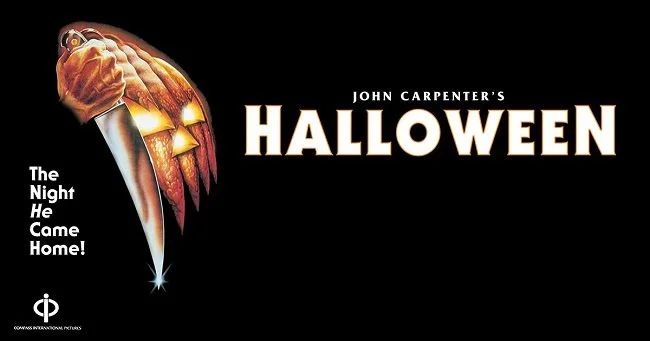
Halloween (1978) is both a genre and cinematic milestone. It made stars of Jamie Lee Curtis and director John Carpenter as well as kickstarting the slasher genre that dominated the box office for the next 15 years. Unlike many of the inferior imitations that followed in its wake, Halloween is not a gorefest but a far more suspenseful and unsettling film. It’s shocks and sinister atmosphere are the result of sumptuous panavision cinematography by Dean Cundey and inventive editing by Tommy Wallace and Charles Bornstein. Another invaluable asset to the film’s effectiveness is John Carpenter minimalistic synth and piano score which perfectly embellishes the film with an air of menace. After 33 years and various re-arrangements in subsequent sequels, the original Halloween Theme is still as effective today as it was when the film was first released.
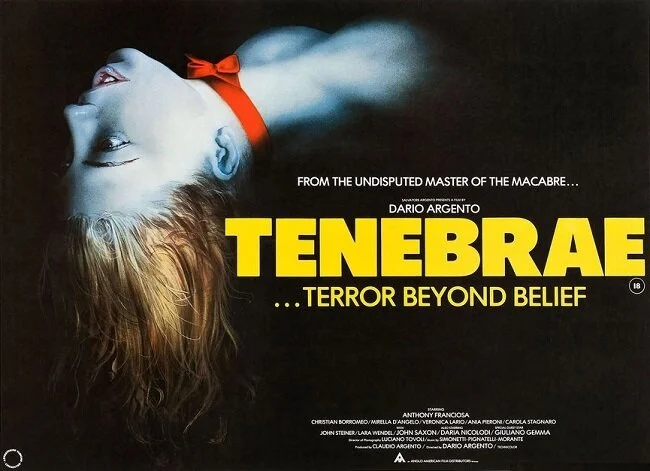
Tenebrae (1982) is probably Dario Argento’s most accessible “giallo” for mainstream audiences. Although violent, it is not as narratively complex as Deep Red (1975) or as bat shit crazy as Phenomena (1985). The story centres on popular American novelist Peter Neal (Anthony Fanciosa) who is in Rome to promote his latest book. Events take a turn for the worst when a series of murders appear to have been inspired by his work. The plot twists and turns, the director explores themes such as dualism along with sexual aberration and blood is copiously spattered across the white walled interiors of modernist buildings. It is slick, disturbing and has a pounding synth and rock score by former Goblin members, Claudio Simonetti, Fabio Pignatelli, and Massimo Morante.
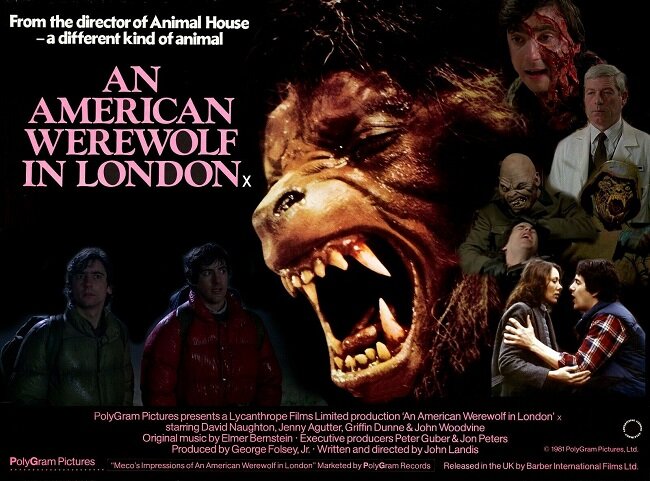
An American Werewolf in London is a genre milestone and one of the few horror films that successfully manages to balance humour and suspense without mitigating the overall tone of the story. 40 years on from its theatrical release it still holds up well with its bitter sweet love story, tragic themes and ground breaking transformation effects by Rick Baker. Director John Landis never really bettered this concise and effective genre outing. It hits the mark in virtually every part of the production. However, there is one aspect of the film that does suffer as a result of the director’s personal choices. Whether it is to the detriment of the overall film is debatable. The point in question is the film’s soundtrack and the director’s focus upon the song Blue Moon by Richard Rodgers and Lorenz Hart.
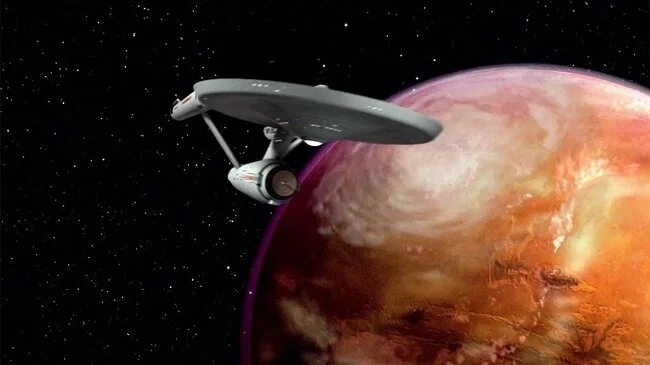
Before we start, no I am not writing about Alexander Courage’s classic main theme for the original Star Trek show. I can add nothing further to that particular discussion and it remains iconic and inspiring, even when distilled down to just the initial fanfare. In this post I want to draw your attention to another piece of music from Star Trek that has permeated its way into popular culture. A cue that when heard, if the listener is familiar with its provenance, will instantly conjure up images of flying drop kicks, ear claps and judo chops. A piece of music that can be added to pretty much any video footage and instantly make it more heroic. Yes, I am talking about what has become generically known as Star Trek “fight music”. Or more specifically, the "The Ancient Battle/2nd Kroykah" cue from Amok Time (S02E01) composed by Gerald Fried. The scene during the koon-ut-kal-if-fee ritual in which Spock fights Kirk on the planet Vulcan for complicated “reasons”.

Classical music has often been used to great effect in cinema since the advent of sound. It has certain advantages over bespoke compositions, in that it can imbue a scene with a sense of gravitas and emotionally connect with viewers who may already be familiar with the piece being played. Legendary director Stanley Kubrick famously rejected Alex North’s score for 2001: A space Odyssey after finding the classical tracks he used for the temporary soundtrack complement the visuals perfectly. Over the years, some particular pieces of classical music have proven to be very popular and flexible, thus appearing in a wide variety of films across multiple genres. Hence, I have chosen two well known tracks that demonstrate this. I would also like to highlight contemporary classical music and have also selected one example that I feel demonstrates how the genre sublimely compliments cinema.

If you mention The Pink Panther (1963) I’d hazard a guess that most people will instantly think of Inspector Clouseau (and possibly throw in a quote in faux French about “Minkeys”) or hum or whistle the iconic theme tune. It’s blend of cool sixties Jazz and Lounge is both classy and evocative. Henry Mancini’s contribution to the Pink Panther franchise is commensurate to that of Peter Sellers and Blake Edwards. If you removed his musical scores from any of the films they would be greatly diminished. In fact one can argue that the movies made in the eighties after Sellers’ death are greatly bolstered by Mancini’s intelligent and accomplished musical accompaniment. The franchise may have run out of steam but Mancini never did so.
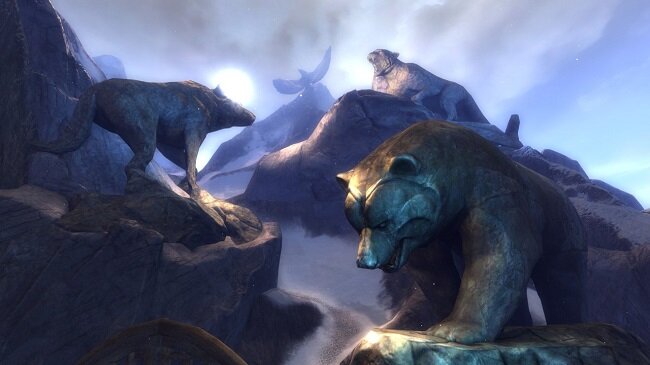
Back in August 2018, I posted seven of my favourite tracks from various video games that I’ve played over the years. I thought recently that it was high time that I did the same again. So here are a further five musical cues that I especially enjoy. All of which contribute greatly to the respective games that they feature in. Unlike film composers, musicians that write for video games do not always enjoy comparable exposure or attention. Yet often they have a more complex remit, having to write material for dozens of hours of content, rather than just two or three. Furthermore, the complete soundtrack to many video games often remain conspicuously absent, with fans having to data mine the game client to find the tracks that they love. Which is why it is important for those that enjoy video game music to show their support. Perhaps then more publishers will release full and comprehensive game soundtracks for digital download.
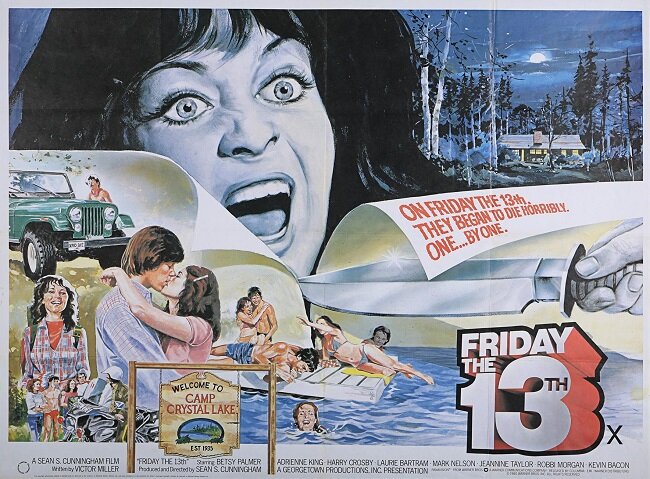
It was Friday the 13th yesterday, so I thought it was about time that I added Harry Manfredini’s iconic score to the annals of Classic Movie Themes. The 1980 slasher movie Friday the 13th has become as legendary in the pantheon of cinematic horror history as John Carpenter’s Halloween. Although there are marked differences between these two films, both use minimalist musical scores extremely effectively to punctuate the proceedings and embellish the overall atmosphere. However, Manfedini did not want to provide viewers with obvious audio cues during scenes of building tension. He preferred to focus his score upon the activities of the franchise's iconic killer, Jason Voorhees, and hence have strong musical cues when he was on screen. This approach meant that he had to use a unique musical motif to denote potential tension, without diminishing its effect on the audience by excessive use of obvious and melodramatic cues.

Game of Death was Bruce Lee’s fourth Hong Kong martial arts movie. Due to the success of his previous films he found himself in a position where he could finally write and direct a project himself. Filmed in late 1972 and early 1973, the film was put on hold midway through production when Hollywood offered him a starring role in Enter the Dragon. He died shortly after completing the US backed movie that made him an international star, so Game of Death remained unfinished. Several years later the rights to the raw footage were sold and recycled for a new movie, that kept the name but bore little resemblance to Lee’s original vision. For most of Game of Death, Kim Tai-jong and Yuen Biao double for Bruce Lee and it is only in the final act that audiences actually get to see about 12 minutes of material that he shot himself. The 1978 release of Game of Death, directed by Robert Clouse, is a mess but remains a cinematic curiosity. The scenes which genuinely feature Bruce Lee are outstanding, even in an abridged form.
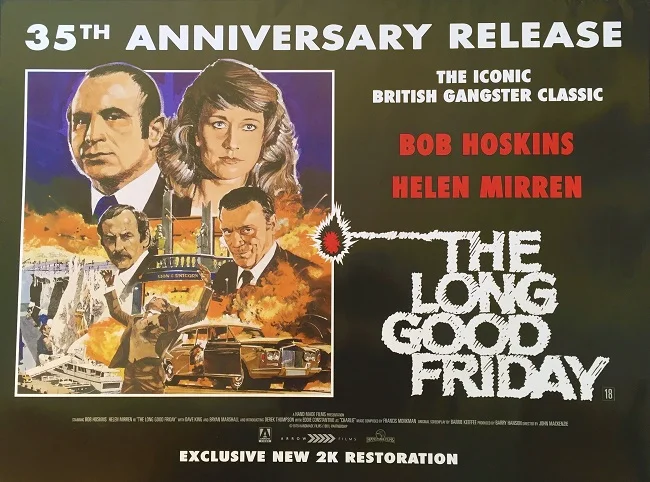
The Long Good Friday not only launched then career of Bob Hoskins but remains a uniquely British take on the gangster genre. Featuring authentic performances and a credible plot, the screenplay touches upon many of the social and political issues of the time; police corruption, the IRA, urban renewal and the decline of industry, along with EEC membership and the free-market economy. It’s a gritty and unrelenting drama that is still relevant today. Furthermore, the film is filled with quotable dialogue and has several stand out scenes that showcase Bob Hoskins’ smouldering performance. It’s also offers of “who’s who” of British character actors and there is one sequence still has the power to shock even today.
A few years ago, I wrote a post about cult movie soundtracks and how many of these movies are often blessed with a high quality score from an established composer. The subject came up again recently when I was visiting the British Film Institute with friends, and several other examples were discussed. Hence, I thought it would be prudent to write a follow up post with another selection of material, as it continues to amaze me how often the most appalling films can still have outstanding soundtracks. With this idea in mind I've collated five films that are for various reasons are labelled “cult” and have suffered the “slings and arrows of outrageous fortune” over the years. All have scores of interests and note, though for different reasons. I have chosen a track from each soundtrack which I think highlights the musical excellence and integrity of the composers involved. The genres are varied as are the musical styles and nuances of each piece. All clearly demonstrate how a well-conceived score can embellish and enhance a movie, effectively becoming a character in its own right.
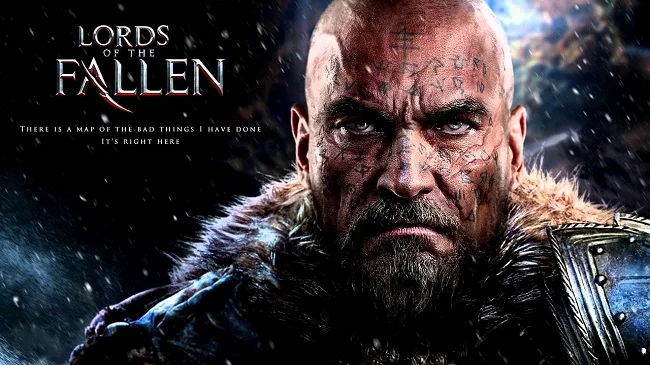
Lords of the Fallen is an action role-playing game from 2014, played from a third-person perspective. It is broadly in the same idiom to Darksiders and Dark Souls with the emphasis on complex and challenging combat. And it is for that reason that I didn’t get on with this title when I bought it in a Steam sale a few years ago. I felt that the long, protracted fights were an impediment to the narrative, which I quite enjoyed. However, the game was designed this way to appeal to the combat focused gamer and “git gud” culture. But I think that it’s important to try different genres of games from time to time and to step occasionally out of your comfort zone. I would cite the Hand of Fate series as a positive example of this. Both of those titles are from a genre I wouldn’t usually consider and playing them turned out to be a very positive experience
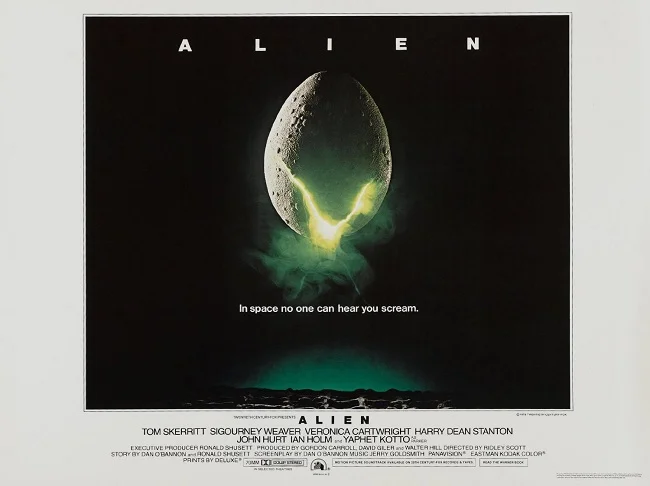
Alien is a unique genre milestone. It challenged the established aesthetic created by 2001: A Space Odyssey of space travel being pristine, clinical and high tech and replaced it with a grimy, industrial quality. The space tug Nostromo is also a conspicuously “blue collar”, civilian venture, underwritten by a large corporation. As for H. R Giger’s xenomorph, it redefined the depiction of extraterrestrial life in movies. Director Ridley Scott brought visual style and atmosphere to particularly unglamorous and dismal setting. He also scared the hell out of audiences at the time with his slow burn story structure and editing style that hints, rather than shows. Overall, Alien is a text book example of how to make a horror movie and put a new spin on a classic and well-trodden concept.

James Horner was a prolific, yet consistently good composer with a broad range of styles. Consider his score for 48 Hrs with its Jazz under currents and then compare it to his grand swashbuckling approach to Krull. They are radically different soundtracks, but both are extremely effective in embellishing their respective motion pictures. That was James Horner great talent. He knew when to be theatrical and bombastic but could also dial it back and be subtle, gentle and delicate. It made his body of work very diverse and memorable.
James Horner, although possessing a very broad and eclectic musical range, was in many respects a very traditional composer. He was certainly au fait with works of such giants as Miklós Rózsa, Korngold and Bernard Herrmann and it often manifested itself in his music through his use of the leitmotif. Perhaps the reason James Horner was so consistently good and crafted so many outstanding pieces of music, is because he never saw his profession as just a means to an end. As he said in an interview once, “I don’t look at this as just a job. I see music as art”.
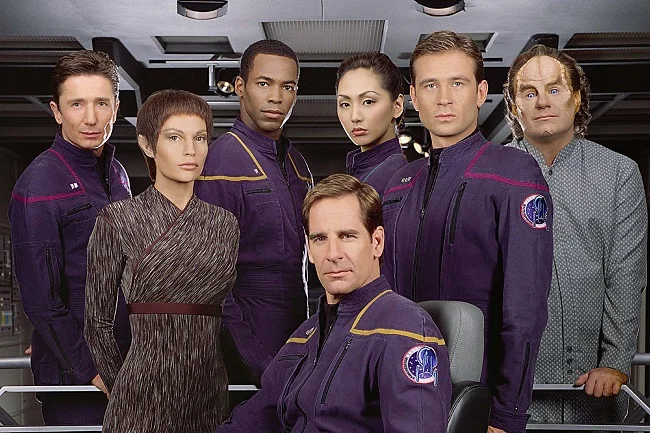
Star Trek: Enterprise was the first show in the Star Trek pantheon to have a song performed by an established artist play over the opening credits, rather than a traditional theme tune. Up until 2001, the franchise had maintained a more formal approach, established with the iconic introduction to the original series composed by Alexander Courage. Needless to say, such a radical departure from established practise brought about consternation and debate among fans. In some respects, you can argue that point about the entire show itself, but that as they say, is an entirely different blog post. Needless to say, the dislike and hatred that the song Where My Heart Will Take Me engendered in certain quarters, lead to a petition to have it removed. Needless to say, this movement failed, and the show continued using it for four seasons. Seventeen years on this particular debacle has now died down and the song is often just referenced ironically by fans as an amusing anecdote and piece of Trek trivia.
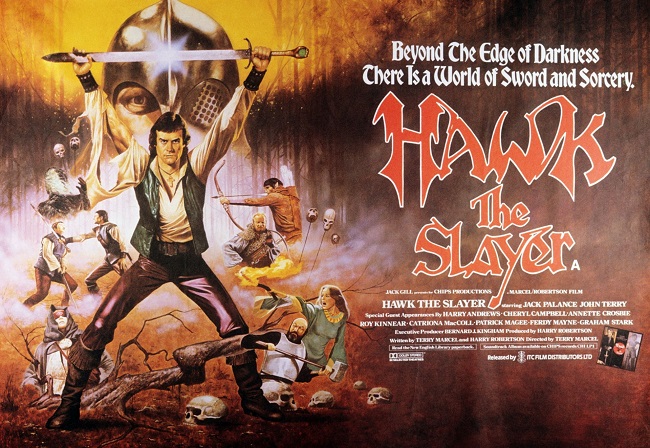
According to Wikipedia “Hawk the Slayer is a 1980 British sword and sorcery adventure film directed by Terry Marcel and starring John Terry and Jack Palance. The film has developed a cult following”. That doesn’t do the movie justice by any reckoning. Hawk the Slayer is a quirky, low budget, high camp fantasy movie that compensates for its budgetary shortcoming by being so preposterously silly. It is loaded with hard boiled, fantasy steeped dialogue that parodies well known genre tropes. It treads a fine line between utter bilge and stupid fun. It is very much a product of its time and is also filled with British character actors. Some viewers will see nothing more than a cheap and cheerful cash-in on the eighties Sword and Sorcery boom. Others will delight at this inventive, stylised and silly fantasy orientated outing. Such is the nature of cult movies.
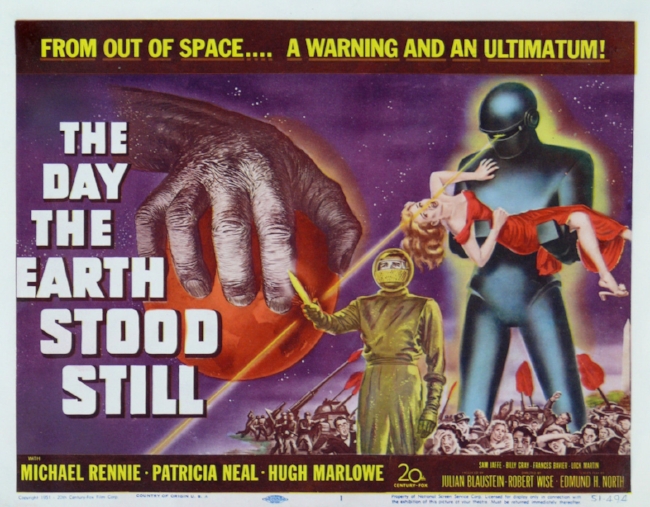
Film producer Julian Blaustein had a long-standing desire to make a film that addressed the fears and concerns of the post war Atomic Age. With the backing from Fox Studio Executive Darryl F. Zanuck, he hired screenwriter Edmund North to adapt the short story Farewell to the Master by Harry Bates. The screenplay provided a moral commentary about the ongoing arms race and featured an alien visitor with Christ like qualities who delivers an apocalyptic message. Veteran director Robert Wise was brought in head the project and a fine cast of established characters actors such as Michael Rennie, Patricia Neal Hugh Marlowe and Sam Jaffe was assembled. The finished movie has proven to be one of the greatest science fiction movies ever; it is The Day the Earth Stood Still made in 1951.
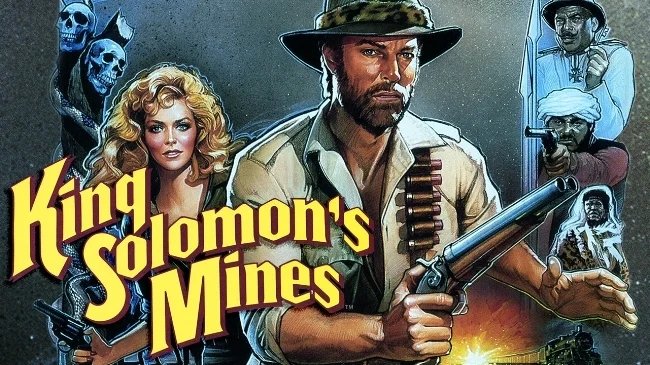
King Solomon’s Mines is a 1985 Cannon Films production based on the pulp works of H. Rider Haggard. It was quickly made to cash in on the ongoing success of Indiana Jones franchise, although the finished movie bears little resemblance to the classic original novel. Like most Cannon movies from that boom era, it was a cheap and fast enterprise that superficially sported a good cast, but ultimately didn’t do much with them. Veteran director J. Lee Thompson favoured a light and comic approach to the material, as the film’s budget could hardly sustain any major notable set pieces. Yet, it proved popular enough at the box office to warrant a sequel the following year. Allan Quatermain and the Lost City of Gold proved to be as equally silly but by then the public’s interest had waned.
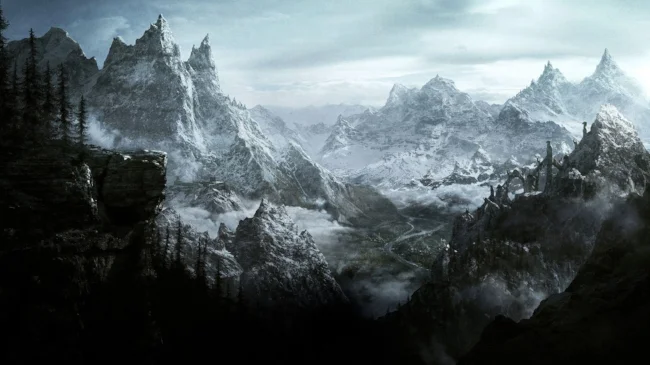
A ten months ago, I wrote about the LOTRO soundtrack and listed some of my favourite tracks. This time round rather than just limit myself to music from one game, I thought it may be more interesting to broaden the remit. So, I have decided to upload seven of my favourite tracks and music cues from various games I have played over the last two decades. As with cinema, the soundtrack of a game plays a very important role. It can make a substantial impact on the players perceptions and enjoyment. The following tracks are examples that I feel have greatly enhanced a game. They’re also ones that I find particularly enjoyable. They are not in any order of preference.

Paul Verhoeven has seldom made a movie without some semblance of controversy associated with it, and his 1992 neo-noir Basic Instinct was no different. Even before its US release, Basic Instinct courted controversy due over its overt sexuality and graphic depiction of violence. It was strongly opposed by gay rights activists, who criticised the film's depiction of homosexual relationships and the portrayal of a bisexual woman as a homocidal narcissistic psychopath. The opening murder with an icepick is still shocking twenty six years later and is an excellent showcase for makeup FX artists Rob Bottin.

You can write pages on Gerry Anderson's 1968 Supermarionation series Joe 90. There's the morally ambiguous premise of giving an emotionally immature nine-year-old the experiences of an adult. Then the psychological effects of allowing him to kill at will. Then there's the perennial issue of scientists prostituting their skills to the intelligence community. One can also reflect upon the absence of any major female characters in the series and how that may impact upon Joe himself. Finally, when one finally arrives she's a gold-digging bitch who tries to exploit Joe’s Dad, Professor McClaine. Joe 90 is certainly a psychiatrist’s dream subject.

Despite the popularity of the TV show in 1965, the two spinoff Thunderbirds feature films were both box offices failures. This has often been attributed to the indifferently written screenplays that seem to have completely missed the sense of suspense that the fifty-minute episodes achieved. Both feature films feel rather slow and like extended episodes rather than big budget extravaganzas. They fail to do anything different with established characters and apart from showcasing more extensive miniature effects in a widescreen format, don’t really have much more to offer. It’s curious that the winning, character driven formula that worked on television was overlooked for these big screen outings.

I grew up during the seventies when network TV shows still put a lot of thought and effort into such things as their theme tune. It was a decade littered with memorable tracks that captured the essence of the shows they came from. Many have now become integral aspects of popular culture, leading to countless internet memes as well as becoming the ringtones of choice for many a fortysomething. However, things are very different now. You can have a staggeringly good theme for your show, but it can't possibly be longer than thirty seconds. And don’t think for a moment that viewers can listen to it again at the end, as it has now become standard practice to compress the credits into a third of the TV screen and preview what's coming next, while some link announcer spouts inanities. Mercifully, cable and streaming companies tend to treat their TV shows with greater respect. The lack of commercial advertising ensures a longer program duration and hence more focus on a theme tune. However, network TV still commands big audiences, yet hasn’t in recent years produced any TV show themes of note.
Are video games becoming easier? It’s a perennial subject that is frequently discussed by those who play them. Often the question of whether they have actually become easier is not the focus of the debate, as it seems to be broadly recognised that it is the case. Instead, discussion of this matter tend to drift into the rectitude of this change. Debate’s of this nature are usually awash with subjective opinions and personal preferences which are then put forward as objective facts. It’s not just a question of video games becoming easier, it’s the fact that making them easier is “wrong” and those who want them as such are “not proper gamers” etc. The hours that have been lost to this pointless, tedious debate are uncountable. However, I digress. Let us return to the matter of video games becoming easier, because although fans discuss this a lot and have plenty to say, you don’t often hear from the developers on this subject.