
Sinister (2012)
Scott Derrickson’s Sinister is a curious blending of genres and classic plot devices. It certainly has some interesting ideas at the centre of its plot. Ethan Hawke plays a true-crime writer Ellison Oswalt, looking for his next big story and desperate to find fame again. After discovering a box full of Super 8 home movies in the attic of his new house, matters start to take a turn for the worst. The films appear to depict the real murders of several families and investigations lead to a series of strange unsolved crime and the possible involvement of supernatural forces. Could a pagan deity known as Bughuul, who allegedly preys upon the souls of children, be responsible? Is Oswalt’s own family in danger? Do bears conduct their personal business in deciduous forests?
Scott Derrickson’s Sinister is a curious blending of genres and classic plot devices. It certainly has some interesting ideas at the center of its plot. Ethan Hawke plays a true-crime writer Ellison Oswalt, looking for his next big story and desperate to find fame again. After discovering a box full of Super 8 home movies in the attic of his new house, matters start to take a turn for the worst. The films appear to depict the real murders of several families and investigations lead to a series of strange unsolved crime and the possible involvement of supernatural forces. Could a pagan deity known as Bughuul, who allegedly preys upon the souls of children, be responsible? Is Oswalt’s own family in danger? Do bears conduct their personal business in deciduous forests?
Sinister is a film of two very distinct halves. The opening set-up and subsequent plot exposition is technically well done, atmospheric and unnerving. The use of Super-8 film to show the murdered families, works very well and is constructed in a genuinely creepy manner. The found-footage sequences are a plot device within the main story, rather than the basis of the entire movie. This is by far the films best asset. Yet the tipping point comes when Bughuul physically manifests itself and the inferred threat becomes more immediate and less mysterious. At this point, Sinister becomes a far more perfunctory horror movie and heads towards a rather obvious bleak ending.
It saddens me to be so critical of Sinister, as watching a R rated horror movie is quite a rare experience these days. It’s a shame that the entire film could not be as convincingly scripted and compellingly filmed as the first half. Similar tonal inconsistencies featured in Director Scott Derrickson’s earlier movie, The Exorcism of Emily Rose. That too suffered dramatically once it made the conscious decision to show the supernatural rather than imply it. However, Sinister does benefit from Ethan Hawke who brings a little more to the role than expected and there are some adequate scares along the way. Yet these can't quite compensate for formulaic denouement, leaving viewers with a distinct feeling that Sinister has not reached its full potential.
Furthermore, whoever was responsible for the video marketing campaign for this movie certainly hasn’t done it any favours. The entire plot and virtually every scare were included in the various trailers and TV promos, totally mitigating any potential suspense the movie may have had upon release. It must be very frustrating for jobbing directors such as Scott Derrickson. Not only are they hamstrung by the commercial demands of the producers but any tricks that they may have up their sleeves are shamelessly given away by the marketing campaign. Yet despite these shortcomings the public found sufficient merit in Sinister to generate a healthy box office return. Thus, we were subsequently regaled with Sinister 2 in 2015. Sadly, it was not an improvement.









Is Co-op Gaming King?
“Is the popularity of smaller-scale co-op (games) hurting MMORPGs?” This interesting question was posted on Massively Overpowered today as part of their regular Massively Overthinking feature. The subject was explored by members of the writing team then thrown over to reader comments, many of which were very thought provoking. The subject was similar to one we debated recently on the Contains Moderate Peril podcast. That focused on whether traditional MMO players were now outsiders within their own genre of choice. Both of these discussions are about change and a shift in player habits. And change is frequently unsettling and potentially comes at the expense of something else.
“Is the popularity of smaller-scale co-op (games) hurting MMORPGs?” This interesting question was posted on Massively Overpowered today as part of their regular Massively Overthinking feature. The subject was explored by members of the writing team then thrown over to reader comments, many of which were very thought provoking. The subject was similar to one we debated recently on the Contains Moderate Peril podcast. That focused on whether traditional MMO players were now outsiders within their own genre of choice. Both of these discussions are about change and a shift in player habits. And change is frequently unsettling and potentially comes at the expense of something else.
A good MMORPG offers a complex persistent world that can be explored and enjoyed both as a solo player and as part of a group. A decade ago, the genre was very much focused on group run content and I have spent many a rewarding evening running dungeons with my guild mates. These sorts of social activities foster close bonding with fellow players and can be extremely uplifting. Yet raiding culture is by its nature time consuming and requires a lot of organising and commitment. Co-op play in other genres of games can offer the same sort of fix but without half as much baggage.
Running The Rift in LOTRO a decade ago meant everyone turning up on time, with the right gear and consumables. Everyone needed to know their job. Even the most casual of raid groups would have to give up a lot of time and if someone fumbled the ball it meant you got nothing for all your work, bar the fun you had. Teaming with your friends in Overwatch is quick and simple. Within minutes you’re in the middle of the action. You can play as casually or as hardcore as you like. If you fail epically, you still get XP points that can unlock loot creates. Such co-op games may not have the immersive world trappings of an MMO but they offer all the fun without the grind. No wonder so many players gravitate towards them.
I enjoy MMOs but play them differently today than how I did ten years ago. I have written recently about how Sniper Elite 4, For Honor and Overwatch can be great fun when played co-operatively with friends and for me I think this is the future. Co-op scratches that social gaming itch but in a manner that allows you to filter out much of the less desirable elements you find in MMOs. The risk of toxic team mates is far less and you aren’t faced with complex barriers to entry. There’s no need to wait for players to change their gear or empty their bags. Where the MMO player is still martialling his team mates, fifteen minutes after the raid was due to begin, the co-op player is knee deep in action, making the most of their precious game time.
If you look back over the last fifty years of popular culture, you’ll find a long list of popular genres, formats and mediums that have bitten the dust. It is sad but ultimately how markets work. Musicals and Westerns came and went as the most popular movie genres. TV saw the rise and fall of the Variety show. The FPS genre moved beyond the confines of World War II and MMOs evolved from open virtual worlds to tightly scripted and managed theme parks. All of these things happened because the public wanted something else that offered them better value for their time and money. At present, co-op games appear to be king by offering what the MMO genre either can’t or won’t. Developers working with such titles should take note but I’m not sure if there’s time left to fix this.
“I'd Like to Have an Argument, Please”
This post has been fermenting for a while. I’ve postponed writing it because I've gotten somewhat tired of constantly “spitting in the wind”. Because that is what speaking out on certain subjects frequently feels like these days. There is a sense of tedious inevitability that any post on sexism, racism or any form of marginalisation will eventually lead to a torrent of vile, ill-informed and just plain dumb comments. The list of subjects “best avoided” seems to be getting bigger each day. Politics, religion and social issues have now been joined by the likes of economics, education and healthcare. But it doesn’t end there. Critiquing a book, movie, TV show or game can be deemed contentious and open a can of worms. Frankly, soliciting comments on any subject via social media seems to be courting disaster these days. The sad reality is that some people just revel in being vile and trying to hurt others. It puts me in mind of that quote from Platoon "Hell is the impossibility of reason". And you'll find precious little reason on the internet.
This post has been fermenting for a while. I’ve postponed writing it because I've gotten somewhat tired of constantly “spitting in the wind”. Because that is what speaking out on certain subjects frequently feels like these days. There is a sense of tedious inevitability that any post on sexism, racism or any form of marginalisation will eventually lead to a torrent of vile, ill-informed and just plain dumb comments. The list of subjects “best avoided” seems to be getting bigger each day. Politics, religion and social issues have now been joined by the likes of economics, education and healthcare. But it doesn’t end there. Critiquing a book, movie, TV show or game can be deemed contentious and open a can of worms. Frankly, soliciting comments on any subject via social media seems to be courting disaster these days. The sad reality is that some people just revel in being vile and trying to hurt others. It puts me in mind of that quote from Platoon "Hell is the impossibility of reason". And you'll find precious little reason on the internet.
Two things have occurred recently that prompted me to write this post. One is the ongoing decline of both the Official and Unofficial LOTRO forums. The other was a minor twitter exchange I was involved in recently. A simple comment made in reply to a political pundit, meant that my timeline was subsequently flooded by an argument that went on for hours, as all parties chased their own tails and frothed at the mouth. As for the two LOTRO forums, they’ve become so polarised that they now mirror each other with their own militancy and are effectively different sides of the same coin. Both of these events are far from unique. It happens every day (“no matter what you say”, according to Tom Jones). Yet they got me thinking why does it have to always be this way and is there anything that can be done?
Well I believe there is. However, don't go looking for a miracle cure in this post because I don’t claim to have one. What I am suggesting is fairly basic and certainly requires lots of time. In a nutshell, keep writing and debating. Don't throw in the towel. I know it's very tempting sometimes, hence my spitting in the wind reference. Yet if we do, then the only information that will remains out there in the public domain is misinformation. Therefore, we should not shy away from speaking out on difficult matters. In fact, I would go so far as to say that it is our duty to do so. Sooner or later you have to pick a side. The alternative is to do nothing and watch it all go to hell in a hand basket (other portmanteaus and porterage devices are available). Here are few thoughts on what specifically can be done.
Research and a well-constructed argument: Debating is a skill. There is a process applied to discussing and arguing a point, the same way as mathematics and grammar have specific rules. Unfortunately, most folk either aren’t ware of them or feel their opinions are not subject to such criteria and so are happy to jump in to arguments feet first. It's a shame more schools do not teach critical thinking as it is an invaluable skill that can be brought to bear on so many aspects of life. However, it is prudent to consider that logic and objectivity cannot always be imposed upon a debate. Emotions do play a part and cannot necessarily be set aside. Especially if you have first-hand experience of the very matter being debated.
I believe it was the blogger Tobold who stated, "There cannot be any meaningful discussion of any subject if you start out by declaring only one side of the argument as valid". That is perhaps true of some subjects, especially if you are debating a matter that hinges on subjectivity and personal taste. However, in a debate regarding a subject such as equality, I cannot logically see any argument to validate a contrary stance. There are no degrees of equality. You either believe in it and live by it as a concept or you don’t. I guess the same can be said regarding certain scientific discussions, where specific rules and concepts are established. Mind you that doesn’t stop some people. But that raises a different matter where some individuals like to play devil’s advocate just for the fun of it.
Life is not simple: If you are intending to hold forth on a particular subject, it never does any harm to remember that most problems are what they are because of their complexity. Which is a nuisance because contemporary society really doesn't like or do “complex”. Listen to most radio phone-ins, read any internet forum or just glance through a tabloid newspaper and you'll find many of the most difficult and contentious problems the world currently faces, distilled in to some rather glib and factually questionable sound-bites. Furthermore, the public lap these up because they're easy to remember and trot out. It's far less hassle to spout some superficial nonsense you gleaned from the pages of the Daily Bastard, than spend time researching a subject and actually having to think and analyse data.
So, bear this in mind when you tackle a big issue when blogging etc. Question whether you are in a position to make a substantive point. Do your research and ensure you link to the sources you quote. Check the credentials of those supplying data and statistics. Is it a reputable organisation? Do they have any reason to be bias? Too often I see links in comments and forum threads that lead to questionable sources. Therefore, ensure that when you write about complex issues you don't make the mistake of inferring that it's a binary situation and easy to fix. Unless of course it is.
Change takes time: The previous point dovetails nicely in to this one. Progress is a long and often arduous path. Entrenched social attitudes and ideologies do not change overnight. Often, it’s a generational thing. For example, my parents were born in the 1930s and both have specific views on social status, race, religion, politics, patriotism and that other old favourite drugs. A quarter of the world was part of the British Empire during their most formative years and this era definitely shaped their world view. They have made some changes over the years but on some matters their beliefs remain strong. No amount of arguing will ever change that. However, such views are not so endemic with my own or my son’s generation. Simply put, some of the more unsavoury views from my parents’ generation will die with them. Change doesn't always come by winning "hearts and minds".
However, as with complexity, many people these days can't be doing with "long waits". Thus, we live in a time where knee-jerk reactions and crass, ill-conceived quick fixes abound. Why should gaming be any different from politics? All I can really say to the ardent campaigner or blogger with a strong social conscience, is it helps to cultivate some patience. Actually, you’ll need a lot. Bucket loads.
Be measured and fair: If for example, you as a gamer want to lobby the games industry with regard to the depiction of women in games. There is a requirement for you to engage with those who are either directly a part of the problem or those who seem to be indifferent to it. It's all about winning the middle ground and generating a head of steam. This process needs to be handled with subtlety and tact. Although passion is inspiring and anger can be power (or so The Clash said), step too far over the line and your perceived militancy (whether it is real or not) will work against you. It scares people and it may even drive those you need on-board to the other "side" of the debate. So, pick your battles, be firm, measured but always remain civil.
Another thing to be considered is the use of knowledge. Some gamers (and bloggers) are not as smart as others. Some folk are smart but driven by their emotions. It can therefore be easy sometimes for the intelligent or knowledgeable party to run rings around the other. Be careful in how you "wear" your intelligence. There's being clever and then there's wanting to be seen as being clever. Crushing a person publicly through Vulcan like logic does not necessarily mean that they will immediately recant their views and embrace yours. Quite the opposite. You may have made matters worse. Just watch them dig their heels in. You can be smart and make your point without being condescending or smug. However, that can be a difficult path to tread. Like it or loathe it, dealing with people in these situations requires a degree of diplomacy.
I sure we can all think of other points to add to the list. There's also an element of finding an approach that is right for you. Then of course there is always the option to simply not blog about some aspects of gaming or to stray in to certain areas of debate. However, I don’t think remaining “neutral” is a permanent option. Sooner or later you’ll get dragged in through tortuous logic as “opting to not have an opinion is tacit approval of status quo”. That being said, as a blogger, podcaster or streamer you are not obliged to discuss thorny issues if you don’t want to. That is your (and Bobby Brown’s) prerogative and you are free to create content in the manner that makes you happy. I am merely suggesting that if you feel the need to do express a view that may court debate, then you should not be deterred by the facts that it is hard to engage with some groups and that change takes time and work.
As I get older I do find that my passions have tempered over time. I do not find the need to go on that many demonstrations, nor to hold an "absolute" opinion on everything under the sun. I do tend to focus on more immediate issues that affect myself and my family (like the closure of my local A&E) rather than wider international matters. But even in my most sceptical of moments, I cannot truly advocate a total withdrawal of interaction on social issues. Because that means handing the floor over to the idiot brigade and therein lies madness. Plus, if we all did that then blogging would be a lot less interesting. Oh, and don’t forget that an argument is a connected series of statements intended to establish a proposition. It’s an intellectual process. Contradiction is just the automatic gainsaying of any statement the other person makes.























Being Elmo: A Puppeteer's Journey (2011)
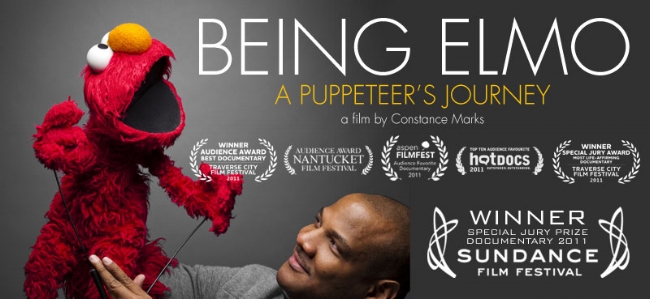
Constance Marks’ documentary explores the story of Kevin Clash, the man who effectively "was" Seasame Street's Elmo until 2014. The film charts Kevin Clash's rise from his modest beginnings in Baltimore to his success as a globally famous character and a major player in the Henson family of puppeteers. The documentary manages to maintain a good balance between examining the mechanics of puppetry and focusing on the human impact of Kevin's work. Like so many documentaries of these type, it clearly shows that achieving your dreams always comes with a cost and is often immensely arduous. It also reveals the complexity of something we take for granted and possibly trivialise, namely puppetry. Filmed in 2011 the documentary does not cover Kevin Clash’s resignation from “Seasame Workshop” three years later.
Constance Marks’ documentary explores the story of Kevin Clash, the man who effectively "was" Seasame Street's Elmo until 2014. The film charts Kevin Clash's rise from his modest beginnings in Baltimore to his success as a globally famous character and a major player in the Henson family of puppeteers. The documentary manages to maintain a good balance between examining the mechanics of puppetry and focusing on the human impact of Kevin's work. Like so many documentaries of these type, it clearly shows that achieving your dreams always comes with a cost and is often immensely arduous. It also reveals the complexity of something we take for granted and possibly trivialize, namely puppetry. Filmed in 2011 the documentary does not cover Kevin Clash’s resignation from “Seasame Workshop” three years later.
With a subject such as this, it would be very easy for director Constance Mark to substitute narrative for sentiment but this is conspicuously avoided. A very emotive scene in which a terminally ill child meets Elmo is handled extremely well, focusing on Kevin Clash's professionalism. It is his job to make his or rather Elmo’s fans happy and that is what he does. It is emotional trauma such as this along with the practical logistics of spending hours contorted behind sets with your arm held up for hours, that shows what a difficult job puppetry is. The documentary even briefly touches upon the notion of the puppeteer surrendering their identity to the puppet, highlighting a curious aspect of this particular career path.
Perhaps the most pertinent criticism that can be made about Being Elmo: A Puppeteer's Journey, is that it leans a little too much towards veneration and as a result do get the full measure of the man. Kevin loves his work and is highly motivated. Elmo is very much a character about love and giving. Perhaps the documentary could have explored more precisely his motivation and the consequences of being so "giving". There is a brief reference to an ex-wife but the viewer simply has to assume the exact circumstances that led to their breakup. I'm not advocating that the man's personal life should have been laid bare but it would have been interesting to have looked beyond his professional life.
Clash has stated since the documentary that his sexuality and ethnicity were pertinent to his work. I tend to avoid armchair psychology, but there's no argument that there's is a lot of Kevin in Elmo and vice versa. The documentary makes that self-evident. However, it is curious that some African-American adults have been surprised when they’ve met him. I wonder exactly what they were expecting? As for the children, perhaps they are the best arbiters of Kevin's talent. They tend to speak and interact directly with Elmo, even when Kevin is clearly operating him. He is simply ignored. It provides compelling proof of the power of both puppetry and love.






The Imitation Game (2014)
Where Mike Leigh's Mr. Turner is a series of vignettes from the painter’s life, The Imitation Game is a far more traditional biopic. Norwegian film director Morten Tyldum follows a tried and tested formula with his story arc, moving from points A to B to C, intercutting with flashbacks to reveal a specific plot theme. Yet such an approach is the perfect means to tell the story of British cryptanalyst Alan Turing, who helped break the Enigma code during the Second World War. It provides a stable foundation for the strong lead performances that drives the movie and compensate for the narratives conceits.
Where Mike Leigh's Mr. Turner is a series of vignettes from the painter’s life, The Imitation Game is a far more traditional biopic. Norwegian film director Morten Tyldum follows a tried and tested formula with his story arc, moving from points A to B to C, intercutting with flashbacks to reveal a specific plot theme. Yet such an approach is the perfect means to tell the story of British cryptanalyst Alan Turing, who helped break the Enigma code during the Second World War. It provides a stable foundation for the strong lead performances that drives the movie and compensate for the narratives conceits.
There have been complaints about the veracity of Graham Moore's adaptation of Andrew Hodges biography of Turing. However, The Imitation Game is a drama and not a documentary and the medium of cinema requires dramatic punctuation, so I am happy to forgive some of the stories contrivances. Was Turing truly broken hearted by a failed relationship at school? Did one of the codebreaking team have to put their own brother in harm’s way in order to maintain secrecy? More than likely not but such plot devices certainly do not detract from the central story of one man's obsession and struggle with his own personal demons.
Benedict Cumberbatch is compelling as Alan Turing, playing him as someone who is most definitely on the spectrum. A modern audience will seize upon this justification for Turing's obtuse behaviour. Keira Knightley provides a sympathetic performance as Joan Clarke: a woman with a prodigious intellect who is frustrated by the patriarchal culture of the times. The platonic relationship between the two leads is credibly realised. The movie also has an authentic feel to it due to Óscar Faura's Cinematography and the measured production design of Maria Djurkovic. There is sufficient detail to establish that this is war time Britain but we are not belaboured by an excess of CGI.
With regard to Turing's sexuality, the matter is explored sufficiently to advance the narrative but beyond that, no more is done. Critics have picked up on the fact that there's a lack of any conviction upon this matter throughout the movie. Perhaps this was a practical concession made to make the film more "accessible" for the US market. As a result, The Imitation Game is a very professionally made, absorbing but somewhat calculated biopic. Despite this it does provide an interesting overview into a significant period of war time history and one of the UK's unsung heroes. If that inspires people to explore the subjects further, then that is a good thing.
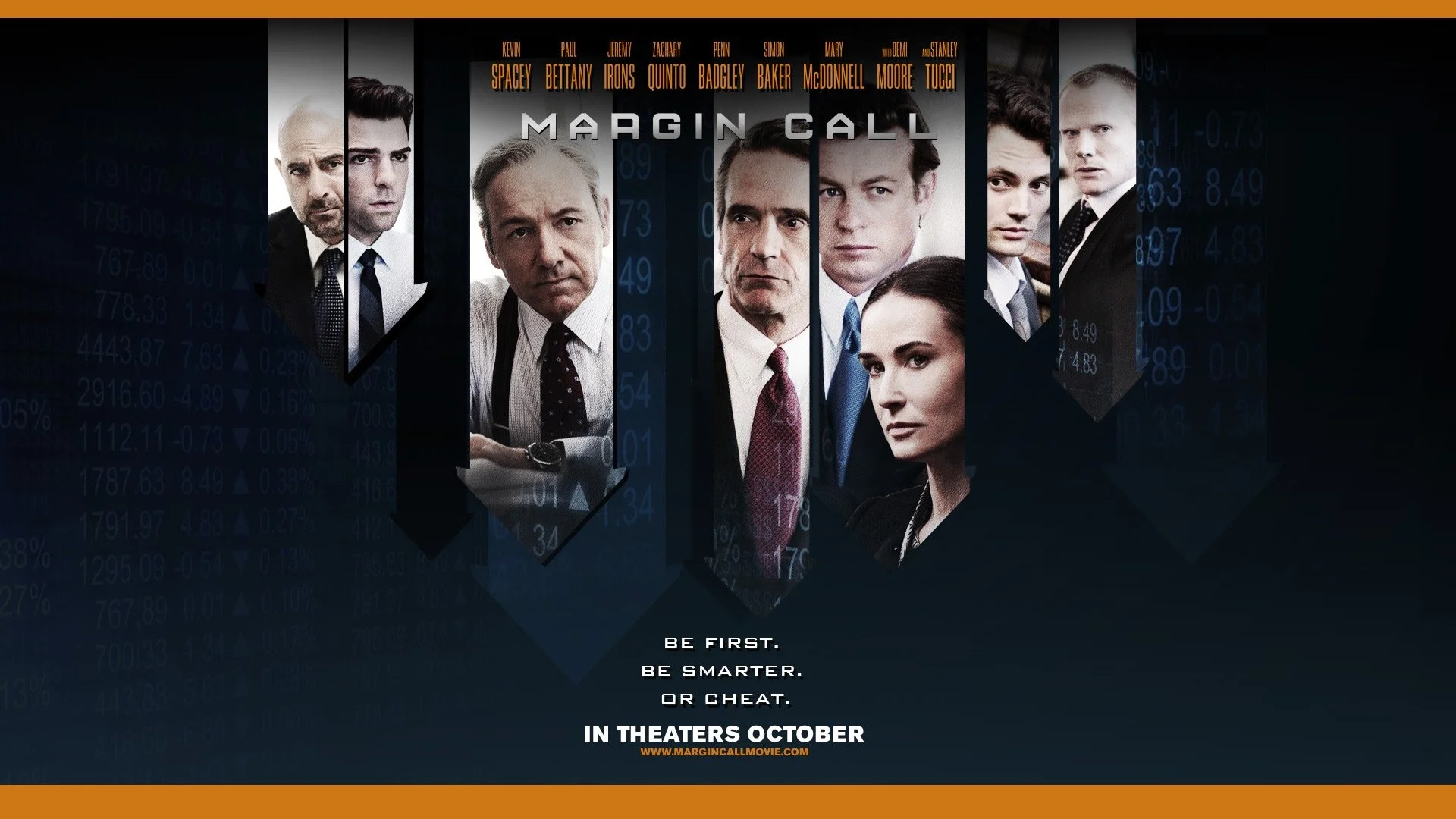
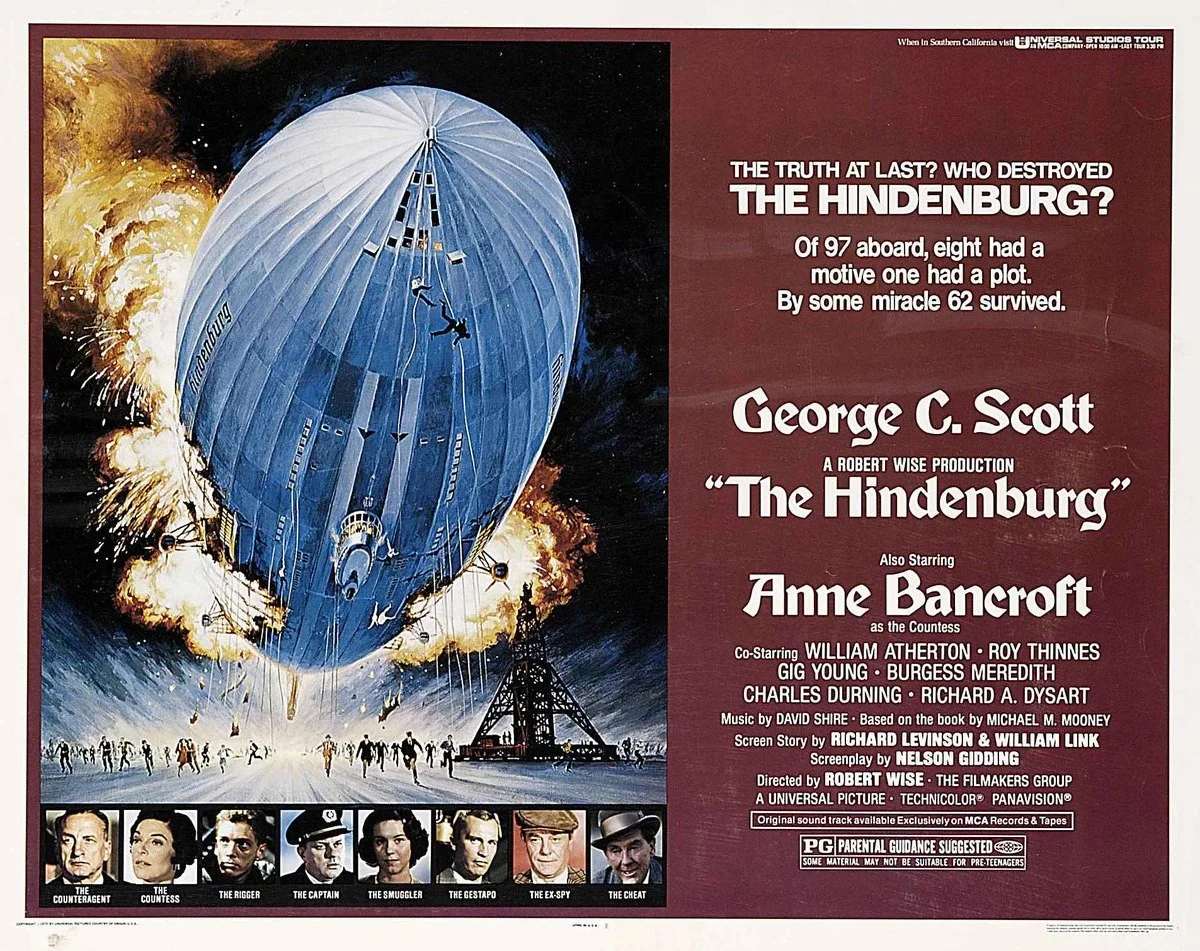

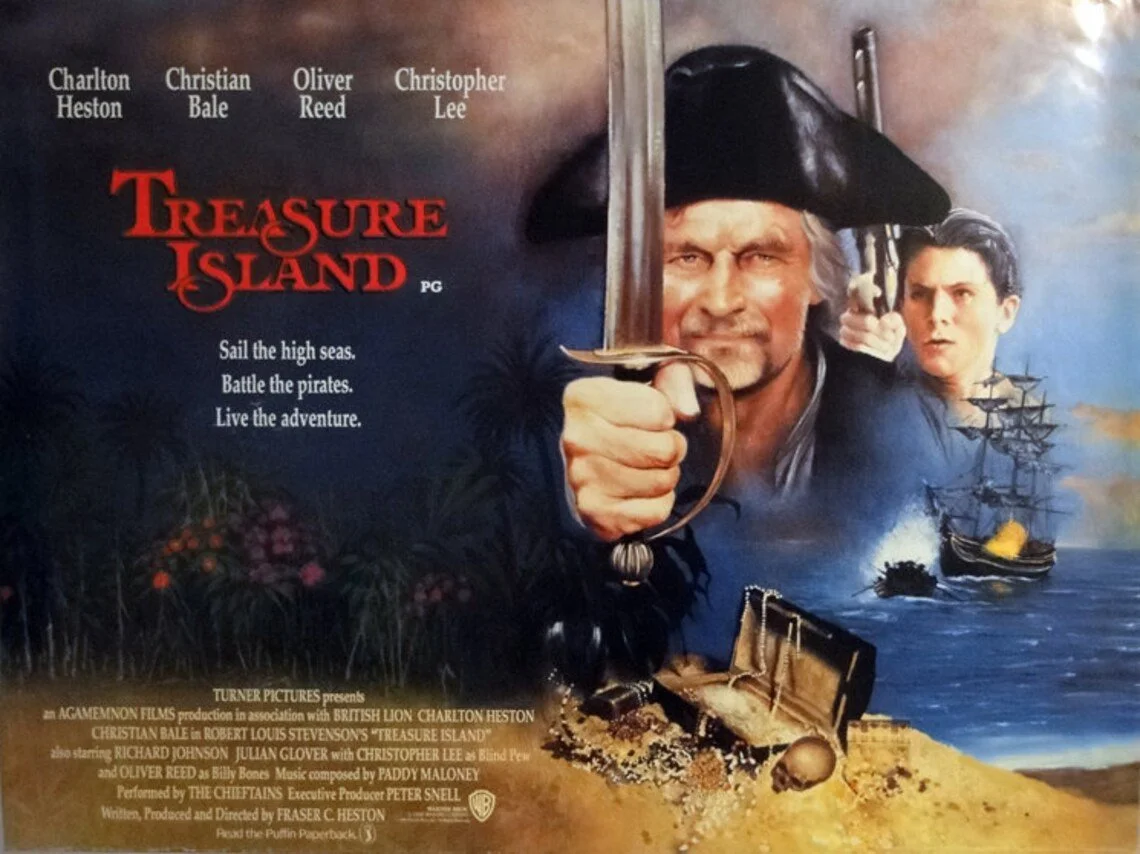
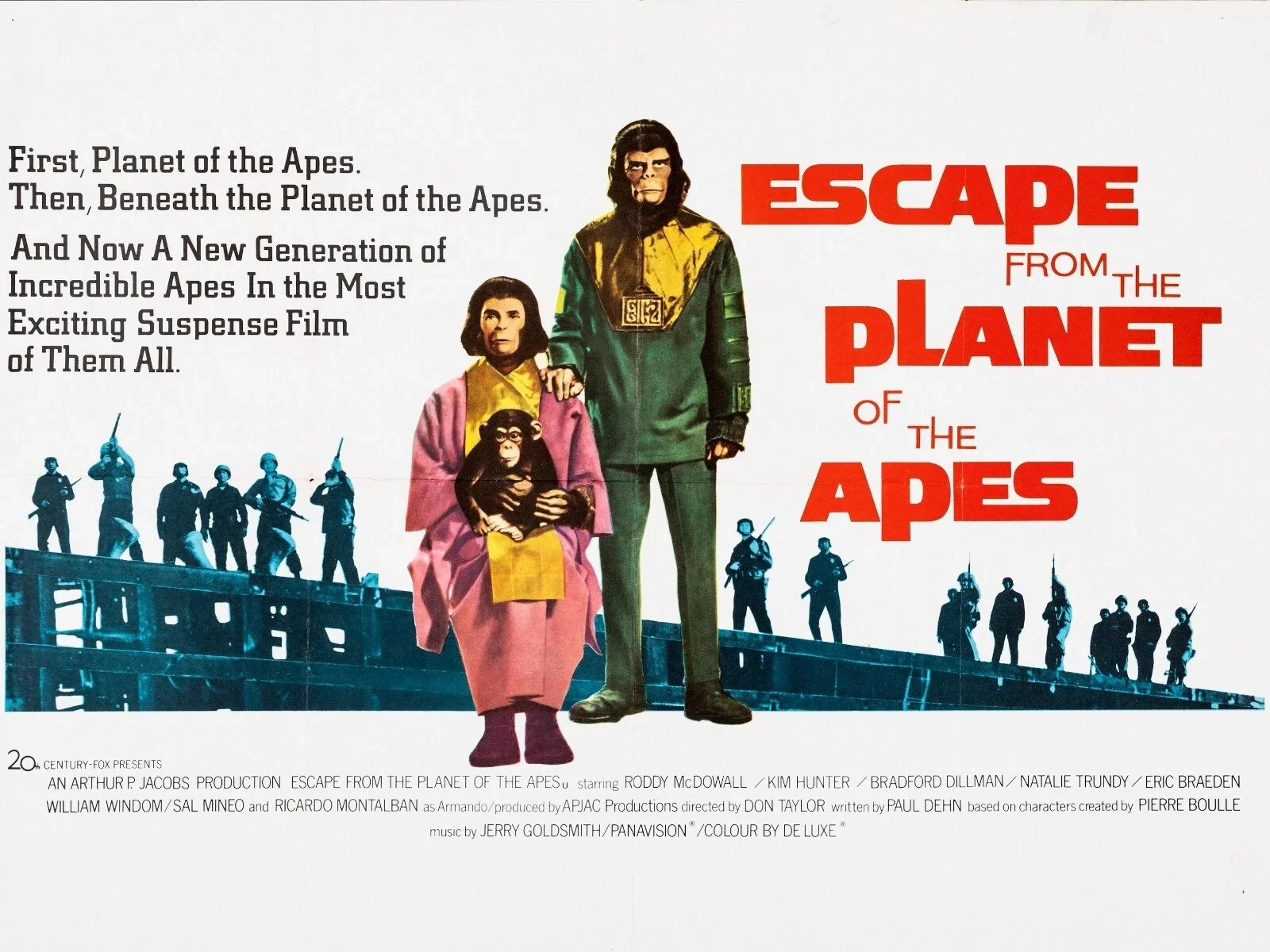
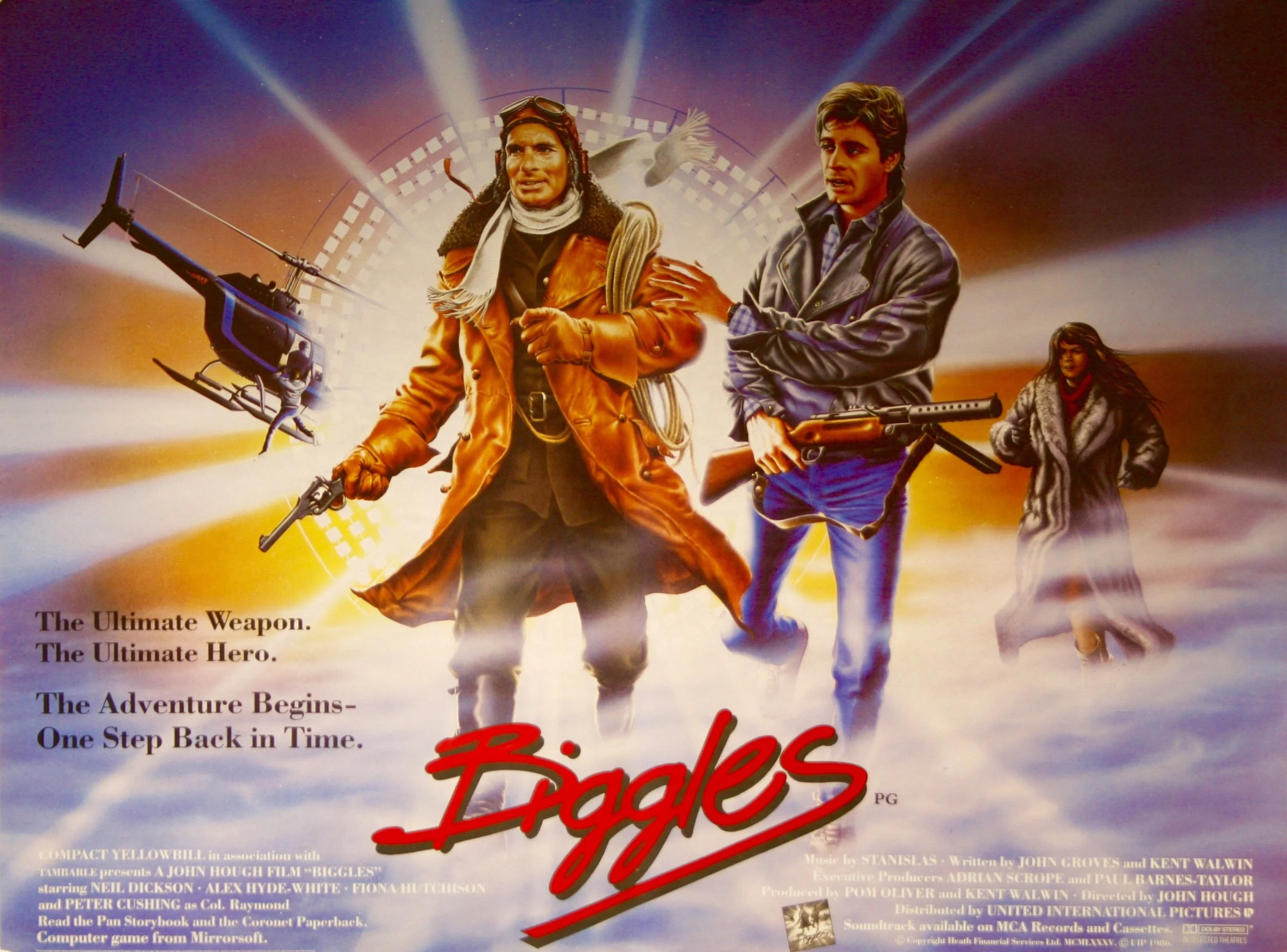
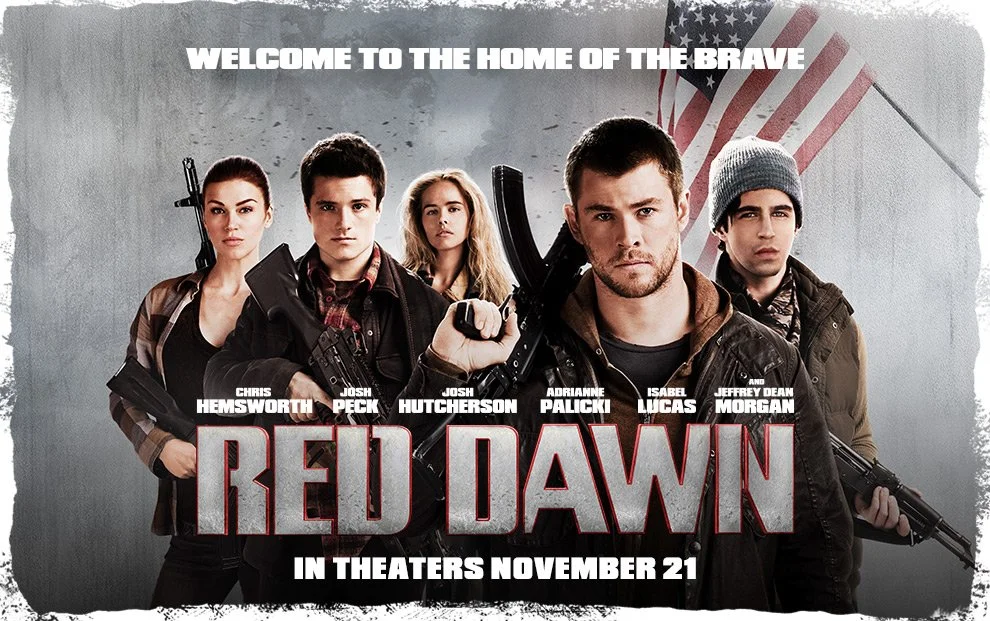
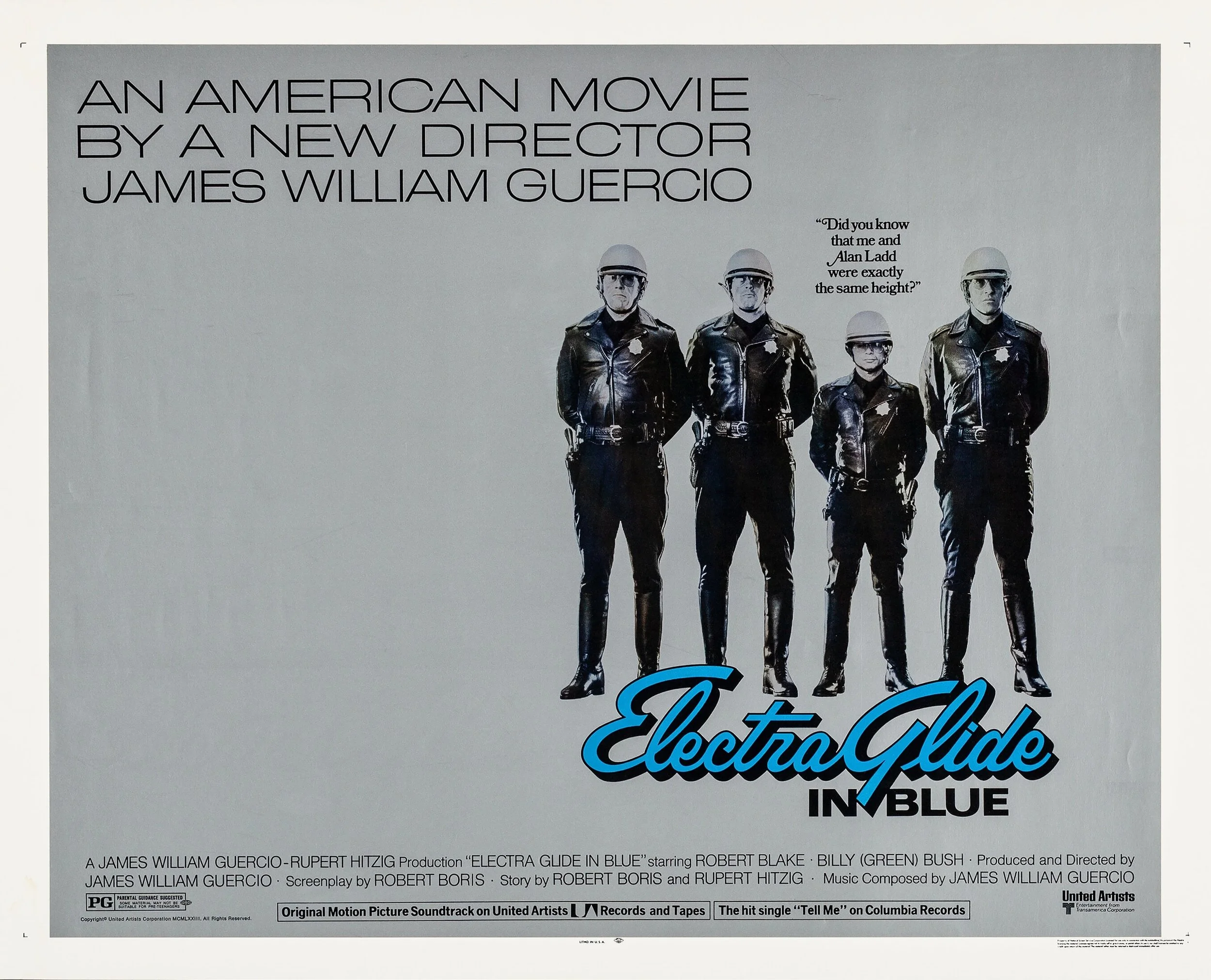
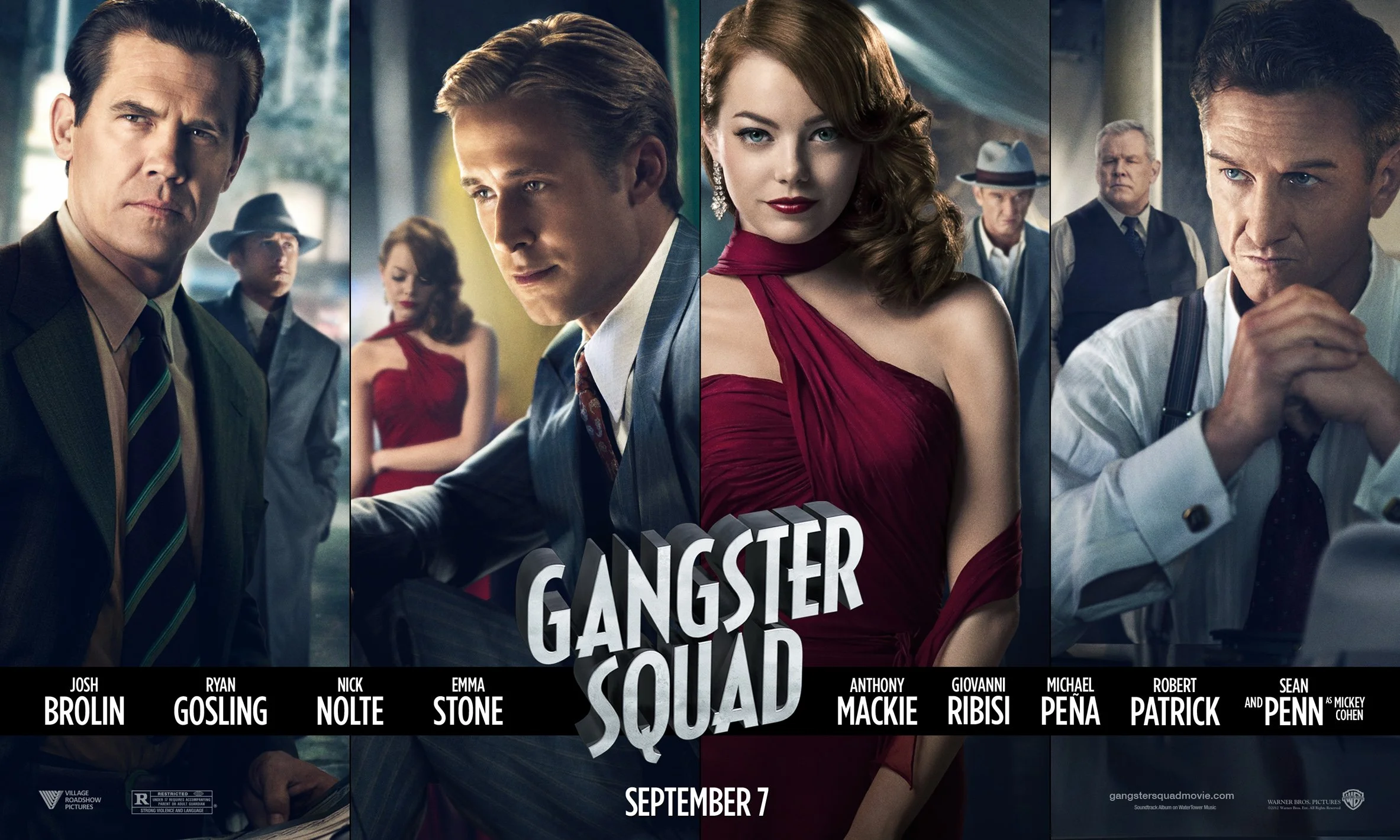


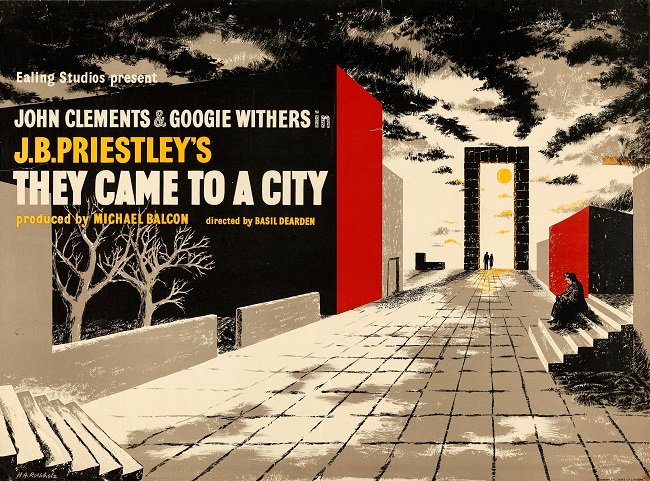
“We're All Journalists Now”
The "bloggers versus the gaming press" debate still lumbers on, despite years of discussion. The matter has now become more complex, due to the popularity of live streaming and You Tube personalities. Ultimately, this entire matter is a subset of the larger argument regarding citizen journalism and its conflict with the fourth estate. I recently read Scott Gant’s book We're All Journalists Now: The Transformation of the Press and Reshaping of the Law in the Internet Age which explores this very matter in-depth. The author has a very interesting attitude toward the democratisation of journalism, which he expresses eloquently. Many of the points that he makes are directly applicable to other fields of journalism and are not exclusive to traditional “news”.
The "bloggers versus the gaming press" debate still lumbers on, despite years of discussion. The matter has now become more complex, due to the popularity of live streaming and You Tube personalities. Ultimately, this entire matter is a subset of the larger argument regarding citizen journalism and its conflict with the fourth estate. I recently read Scott Gant’s book We're All Journalists Now: The Transformation of the Press and Reshaping of the Law in the Internet Age which explores this very matter in-depth. The author has a very interesting attitude toward the democratisation of journalism, which he expresses eloquently. Many of the points that he makes are directly applicable to other fields of journalism and are not exclusive to traditional “news”.
I am still of the opinion that professional and amateur writers complement each other and can be of equal value to the community. This is especially true of gaming related writing. Conventional game news informs and promotes across a broad spectrum of content. Amateur and fan blogs provide subjective detail and a greater degree of depth on the issues. As a gamer, ensuring that you have a mix of commercial sites and blogs in your feed reader, increases the likelihood of you being adequately informed. Obviously, blogs are not always subject to the same editorial scrutiny as professional writing. Thus, there can be issues regarding grammar and logical arguments. However, literary failings do not by default, invalidate an opinion or well-conceived idea. Conversely, working to a formalized style and standard of writing, as well as editorial guidelines can potentially remove eloquence or a writer’s style and replace it with uniformity. As for common sense and logical arguments, an editor and a team of writers can fail to observe these as equally as a single blogger. Thus, there is good and bad in both camps.
Until recently I had a substantial list of fan blogs that I read every day. Some regularly offered exceptionally good think pieces, comparable to professional journalism. Sadly, many of these writers have retired from the scene. There also seems to be a drop in long form writing and in-depth analysis among many of the commercial games news sites. It appears that both the pro and amateur writing scene has fallen victim to a malady that has spread across mainstream news. Namely, tribal, populist writing which eschews facts and data and instead slavishly retrofits content to support a specific mindset or agenda. Gaming has become very binary and entrenched, the same as politics. Bucking the trend can have consequences and subsequently many games bloggers have become tired of the toxic comments, twitter outrage and quit. The commercial sites often pick a side and thereafter pursue vociferously a specific ideological line. As with national newspapers, it leads to a partisan environment in which impartiality and logical debate do not thrive.
I still advocate the democratization of writing and publishing and do feel that “we’re all journalists now” to a degree. However, I also think that bloggers, streamers and You Tube personalities can also fall prey to the same failings of mainstream journalism. Commercial forces can impact heavily upon editorial decisions and shape the narratives in camps. We should not overlook other dubious motivations such as ego and “popularity” which can also have a negative effect upon content creation. Yet despite these issues, I still feel that the writings and musings of my peers is beneficial. I also think that collating daily gaming news is a daunting and unenviable task and am therefore grateful to the professional sites that aggregate such content. As for partisan, spurious and inflammatory games writing, we should reject it pointedly and publicly. Be it from professional outlets or from fans. If we want content of a higher caliber we should lead by example as well as demand it from others. Aim for the standard you wish to see elsewhere and it will be to the advantage of both "bloggers” and the “gaming press".





















Classic Game Themes: Guild Wars 2
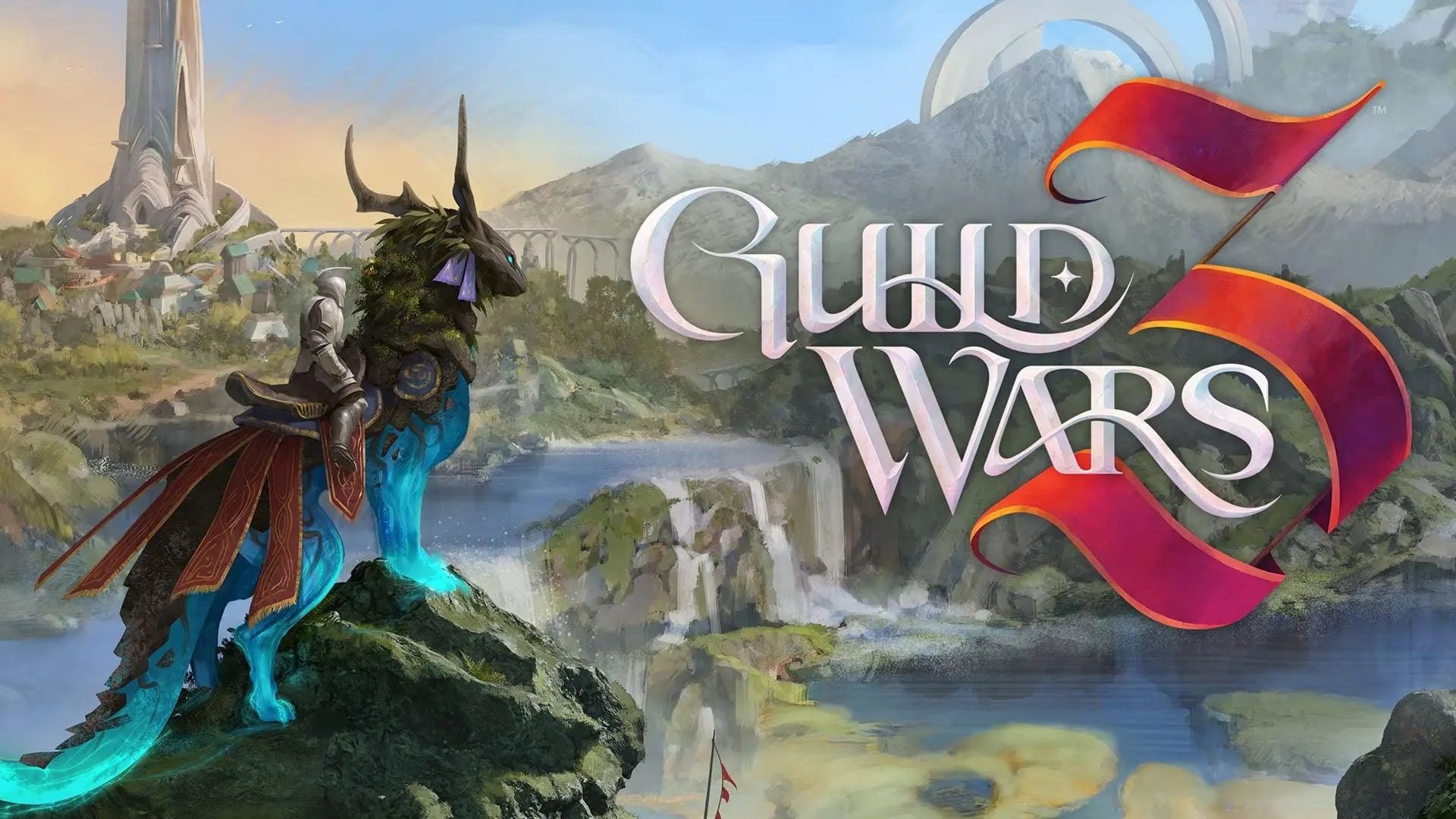
Jeremy Soule's score for Guild Wars 2 is an integral part of the games charm and appeal. It enhances the world of Tyria and is a character in its own right. As a player, whenever you visit one of the vast cities or travel the rolling countryside, it is Soule's music that breathes life into the finely crafted world that ArenaNet have made. Upon the games launch in 2012, the soundtrack for Guild Wars 2 was released in a four-disc box set, via Soule's own record label DirectSong. Sadly, this was a limited pressing and is now out of print. Copies now change hands for exceedingly large sums of money.
Jeremy Soule's score for Guild Wars 2 is an integral part of the games charm and appeal. It enhances the world of Tyria and is a character in its own right. As a player, whenever you visit one of the vast cities or travel the rolling countryside, it is Soule's music that breathes life into the finely crafted world that ArenaNet have made. Upon the games launch in 2012, the soundtrack for Guild Wars 2 was released in a four-disc box set, via Soule's own record label DirectSong. Sadly, this was a limited pressing and is now out of print. Copies now change hands for exceedingly large sums of money.
The score for Guild Wars 2 has a high production value and displays a great attention to detail. The compositional quality of each piece included on the four-disc set are musically and stylistically diverse. There are many stand-out pieces that do more than just provide ambient background atmosphere. This is game soundtrack writing of the highest calibre. It is musically literate, thoughtful and rousing. Sadly, Jeremy Soule was not involved with the soundtrack for the 2015 expansion pack, Heart of Thorns.
The track I have chosen in many ways encapsulates all the positive attributes of the soundtrack. Dawn in Shaemoor plays in the human starter zone of Queensdale and is a beautiful example of the quality of Soule's work. It has a very haunting feel to it and sets the tone for the game.





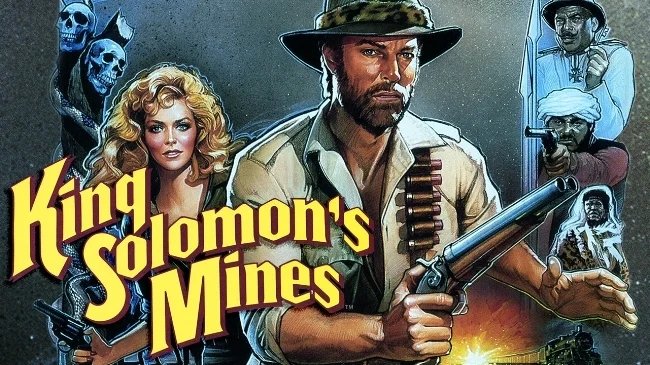
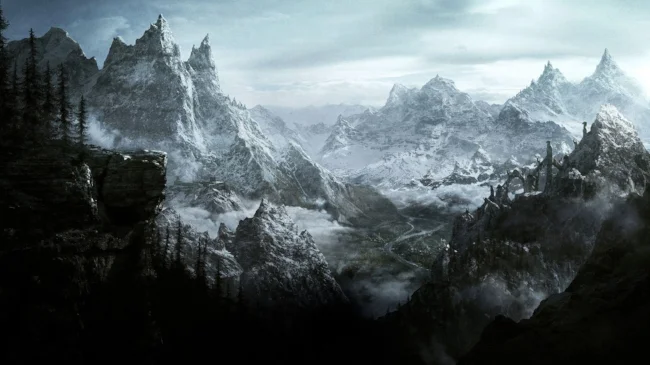


Alien: Covenant (2017)
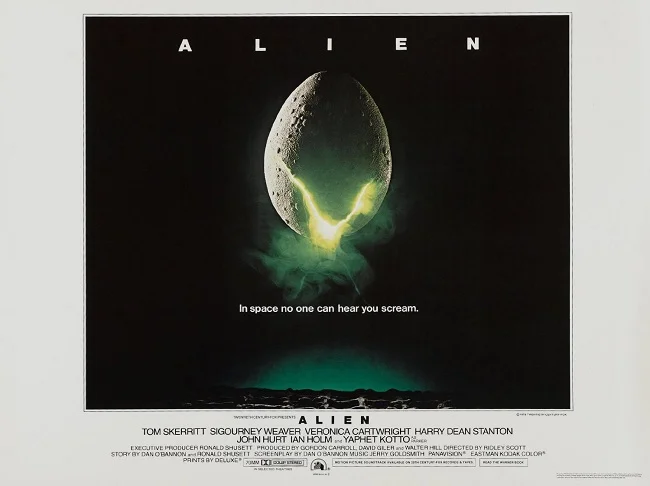
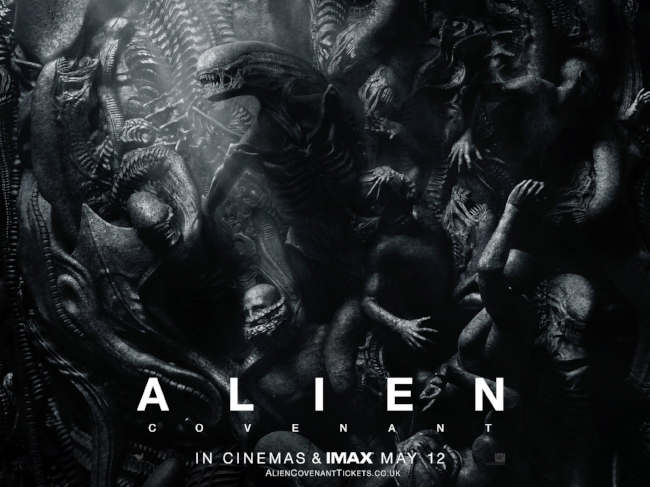
The enigma of the Xenomorph in the Alien franchise is diminished once you start to rationalise its heritage. Sadly, that’s exactly what Alien: Covenant has chosen to do. It jettisons the mystery of the original 1979 movie and pulls back the curtain, so wisely put in place thirty-eight years ago, to reveal a rather lacklustre explanation to the Xenomorph’s origin. Having spent nearly $100 million and employed a production team of some of the finest talent that money can buy, the resulting movie is not bad per se, just crushingly superfluous. After watching Alien: Covenant this week, my overall reaction can be distilled down to a deep sigh of indifference and a shrug of the shoulders.
The enigma of the Xenomorph in the Alien franchise is diminished once you start to rationalise its heritage. Sadly, that’s exactly what Alien: Covenant has chosen to do. It jettisons the mystery of the original 1979 movie and pulls back the curtain, so wisely put in place thirty-eight years ago, to reveal a rather lacklustre explanation to the Xenomorph’s origin. Having spent nearly $100 million and employed a production team of some of the finest talent that money can buy, the resulting movie is not bad per se, just crushingly superfluous. After watching Alien: Covenant this week, my overall reaction can be distilled down to a deep sigh of indifference and a shrug of the shoulders.
Ridley Scott, now in his autumn years, strikes me as a film maker who is more enamoured with the technical, logistical and business aspects of film making. He appears to have a good handle on navigating the choppy waters of studio politics and certainly thrives within the complex process of crafting a big budget, effects driven movies. Yet his body of work has become very hit and miss in recent years and for me it is only The Martian that stands outs as being of note. Frankly, the will to make further Alien movies seems to be driven primarily by the potential box office and Scott’s presence has done precious little to move the franchise forward. He has now delivered two movies that frankly undermine the existing canon, rather than expand upon it.
Much of Alien: Covenant is a pastiche of what has gone before. At times Ridley Scott is plagiarising himself and not in an especially knowing way. He squanders a good cast by giving them precious little to do. Again, most characters serve little purpose other than to die. Katherine Waterston as Janet "Danny" Daniels has scope to be a credible protagonist but is sadly relegated to running, pointing and explaining the plot. Comparing her to Ellen Ripley is unfair because the actor is never given the opportunity to explore the role. Michael Fassbender appears twice this time round playing both a new android named Walter as well as David, who we last saw decapitated by an Engineer in Prometheus. Sadly, despite Fassbenders acting talent, the character remains a contrived and uninspiring foil. Remove the mirth and satire from Marvin, the Paranoid Android from The Hitchhiker's Guide to the Galaxy and you are left with the scope of Fassbender’s role.
Alien was a stripped down, minimalist, science fiction horror movie. It had a tangible air of claustrophobia and bucked some of the usual trends of the genre. The crew of the Nostromo were mainly blue-collar workers, not academics or soldiers. Their concerns were primarily those of their social economic group. Pay, job security and just getting the task done. Their practical story contrasted the esoteric nature of what they encountered. The crashed ship, the space jockey and the alien eggs were all deliberately unexplained and all the more enthralling because of that. Was the Xenomorph a simple predator or a highly evolved creature that natural selection had chosen to rationalise? Where was it from? Was it intelligent? These unanswered questions gave the beast gravitas. The answers that Alien: Covenant has chosen to provide undo this.
There are joyless action scenes, routine jump scares and some arbitrary sex and violence to be had in Alien: Covenant. The production design, cinematography and overall aesthetic screams A list production but the story that plays out is so utterly uncompelling and lacklustre. Ultimately the movie fails because it over thinks the source material. Rob Zombie made a similar mistake when he remade John Carpenter’s Halloween. He tried to explain a force of nature and by giving Michael Myers a detailed backstory of abuse and sadness, he turned the embodiment of the supernatural in to just another sociopath created by society. Alien: Covenant has effectively done the same. The Xenomorph has gone from being an abstract vessel for our subconscious fears to just a laboratory experiment by a disgruntled individual. From high concept to arbitrary in less than four decades. Sad.

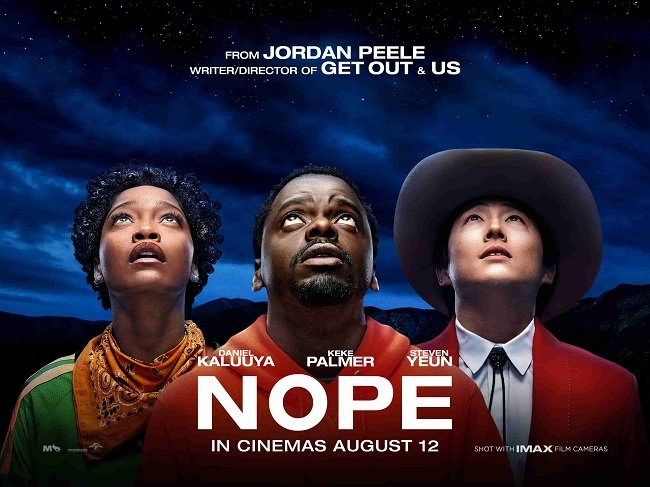
Prometheus (2012)
I have written many times in recent years about how big titles get announced by the gaming industry, of the ensuing hype up that leads up to launch day and then the subsequent disappointment on purchase. It is a malady that has afflicted the movie industry for decades and has become increasingly more common in the last decade. Hype has a curious link with reputation. There are a handful of directors in contemporary Hollywood who when they add their name to a production, people take notice. Ridley Scott is one of these. His body of work pretty much guarantees he can make whatever he wants, be it a commercial undertaking or a ludicrous vanity project. However, the downside to being a film maker of this stature is that you are not so easily exposed to proper scrutiny by your peers. No one stops you from making a mistake because you are supposed to know what you are doing. They let you do what you want. Which is bad.
I have written many times in recent years about how big titles get announced by the gaming industry, of the ensuing hype up that leads up to launch day and then the subsequent disappointment on purchase. It is a malady that has afflicted the movie industry for decades and has become increasingly more common in the last decade. Hype has a curious link with reputation. There are a handful of directors in contemporary Hollywood who when they add their name to a production, people take notice. Ridley Scott is one of these. His body of work pretty much guarantees he can make whatever he wants, be it a commercial undertaking or a ludicrous vanity project. However, the downside to being a film maker of this stature is that you are not so easily exposed to proper scrutiny by your peers. No one stops you from making a mistake because you are supposed to know what you are doing. They let you do what you want. Which is bad.
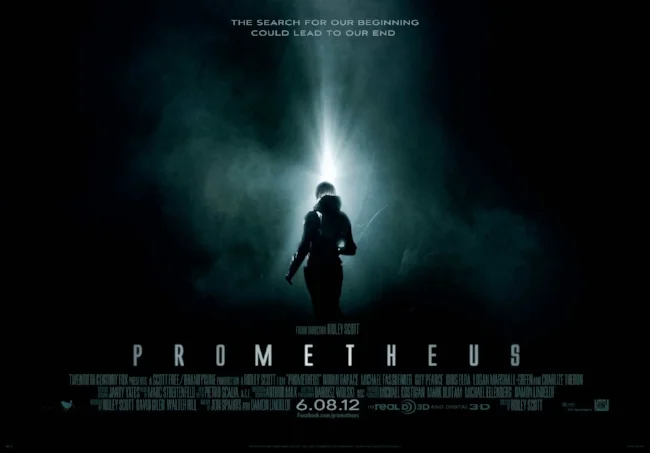
So, am I saying that Prometheus is a mistake per se? No. However, I am saying that mistakes have been made with regard to narrative and the plot direction of the movie. Scott himself has been open about how during the initial pre-production he and screenwriters Jon Spaihts and Damon Lindelof wished to take the story off on a tangent, rather than make a specific prequel to Alien. This in itself is not necessarily a bad thing to do as long as it is done robustly and intelligently. Prometheus is very much a film of two halves as it strives to embrace a weighty theme, namely the origins of life on earth. It sets the scene for a philosophical and theological exploration of the subject in the first act. However, it fails to sustain this momentum and in the second hour lapses into a far less ambitious, somewhat formulaic, creature feature. The narrative become confused, vague and is eventually sidelined.
There is still much to commend in Prometheus. There are good performances from the cast, despite the fact that they are not given half as much to go on as they should have. Michael Fassbender's portrayal of the Android David is outstanding and is by far the best character in the movie. The production design is handsome and Scott has not in any way lost his visual flair. There are some quite clever parallels to his original movie and he re-imagines certain iconic scenes in an inventive fashion, rather than becoming self plagiarising. There are also some solid action sequences and a liberal dose of gore. One scene involving a quasi-caesarian is not for the squeamish. Yet despite positive aspects one is left feeling that Prometheus is not as good as a film as it could be.
What is on offer is adequate and entertaining but no more than that. Although it is unreasonable to expect this movie to be equal of the 1979 original, it is not unreasonable to expect better material from Ridley Scott. Prometheus should have had a weightier story and stuck to either to its philosophical theme or remained a pure horror in space. As it is it fails to tread the path between the two. Since the release of the film on home media, the deleted scenes available on DVD and Blu-ray clearly show where the problem lies. Too much expositionary material was cut from the film. The producers wanted an action driven movie. They got one but sadly at the expense of narrative and character development. If all the deleted material was re-instated back in to Prometheus it would be a far more thoughtful, coherent movie. Sadly, Scott has now stated that the theatrical cut of the film is his definitive edition.
On a final note, Prometheus suffers from a common problem found in contemporary fill making; that of an excessively loud soundtrack. Dialogue is difficult to hear one moment and the score and ambient sound effects are deafening the next. I had to watch the film with subtitles enabled to fully pick up on all the nuances of the dialogue. This issue contributed to making a frustrating movie, somewhat more annoying. However, if you are simply looking for a high budget, science fiction thriller, then Prometheus, despite its flaws, may well satisfy. Those who are more invested in the Alien franchise may not be so forgiving and best prepare themselves for disappointment. Because Prometheus feels like a failed opportunity, it beggars the question, do we really need any further movies in this series? If they cannot offer anything new that takes the overall concept forward, perhaps the answer is no?
LOTRO: Mordor and Beyond
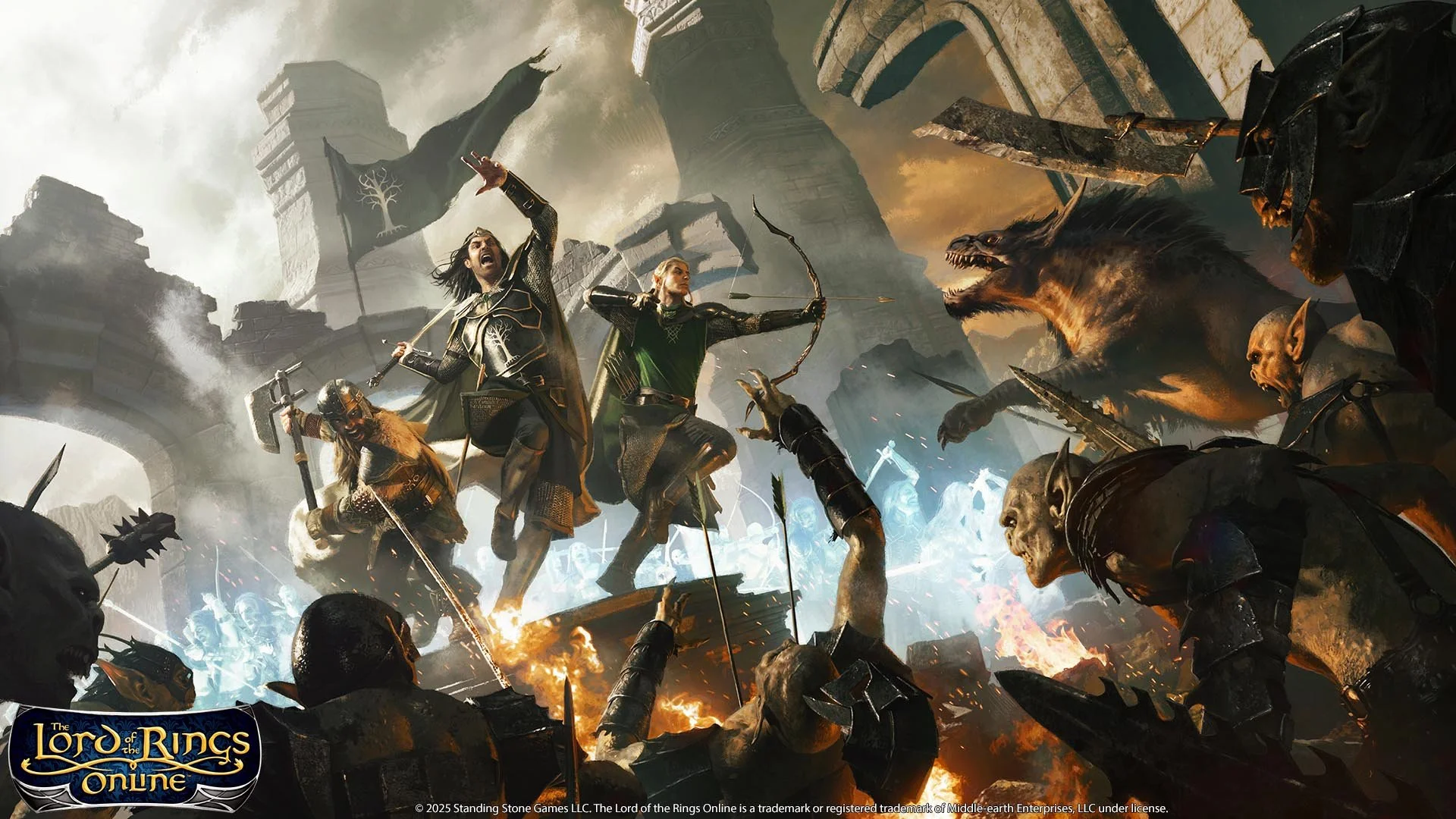
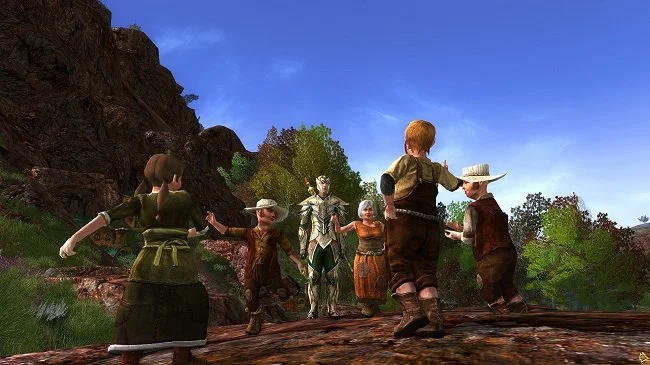
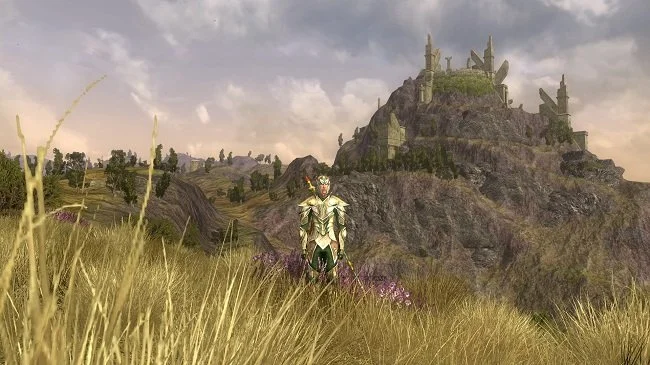
Well, I waited till this afternoon before buying the Mordor expansion for LOTRO. Unlike the song, a day really didn’t make that much difference. In true and traditional Standing Stone Games style there were still problems, glitches and hassles to be found twenty-four hours on from the launch. In fact, there’s a hot fix to be deployed tomorrow to iron some of these out. Yet, in spite of all these minor niggles, tonight I found myself officially entering Mordor, ten years after the launch of LOTRO and eight years on from my subscribing to the game. I must admit as the game wrapped up the original story and I said cheer-bye to Frodo and the rest of The Fellowship of the Ring, I did feel a sense of great satisfaction as I reflected on what my character had achieved on behalf of the free peoples of Middle-earth. Why even Gandalf himself thanked me for my courage and effort. And then a message appeared in chat, stating “You’ve earned 5 LOTRO Points”. The irony wasn’t lost and I then went on to ponder exactly why I’ve spent years being a butler to all the NPCs I’ve met in LOTRO.
Well, I waited till this afternoon before buying the Mordor expansion for LOTRO. Unlike the song, a day really didn’t make that much difference. In true and traditional Standing Stone Games style there were still problems, glitches and hassles to be found twenty-four hours on from the launch. In fact, there’s a hot fix to be deployed tomorrow to iron some of these out. Yet, in spite of all these minor niggles, tonight I found myself officially entering Mordor, ten years after the launch of LOTRO and eight years on from my subscribing to the game. I must admit as the game wrapped up the original story and I said cheer-bye to Frodo and the rest of The Fellowship of the Ring, I did feel a sense of great satisfaction as I reflected on what my character had achieved on behalf of the free peoples of Middle-earth. Why even Gandalf himself thanked me for my courage and effort. And then a message appeared in chat, stating “You’ve earned 5 LOTRO Points”. The irony wasn’t lost and I then went on to ponder exactly why I’ve spent years being a butler to all the NPCs I’ve met in LOTRO.
Joking aside, I did enjoy the final interlude where you play once again as Gollum. Standing Stone Games did somewhat stretch the lore to accommodate the player being present at Sam and Frodo’s rescue. However, it does bring a sense of closure to the player. The subsequent epilogue in The Field of Cormallen set up the premise for the next Epic Book nicely. Overall, the cutscenes were well conceived and showed sufficient of the end of the story without over egging matters. The destruction of Barad-dûr, the demise of the Ring Wraiths and the rescue of Frodo and Sam by the eagles were functional. Once again, the developers work well within the technical restrictions of a decade old game engine. It’s just a shame that they couldn’t have created a more exciting launch trailer. The hastily cobbled together effort that was created using in-game footage was very lacklustre and was far from the most effective marketing tool.
At the time of writing there are still some technical glitches with the new character animations. There are clipping and tearing issues especially with certain types of hats and hair. It was very noticeable of my primary character. There were also delays to some players receiving the Aria of the Valar level boost. I’m sure these matters will be addressed but once again it would have been preferable if these had been sorted prior to launch. The current gaming culture of early access, releasing unfinished content and fixing on the fly is hardly edifying for the game community. It is a lazy, finance driven concept that doesn’t take in to account such matters as professionalism and public perception. The LOTRO player base has proven its tolerance time and time again over the years. I’m sure they would have accommodated a delay or better still a later launch date, if it meant that they got a more polished product.
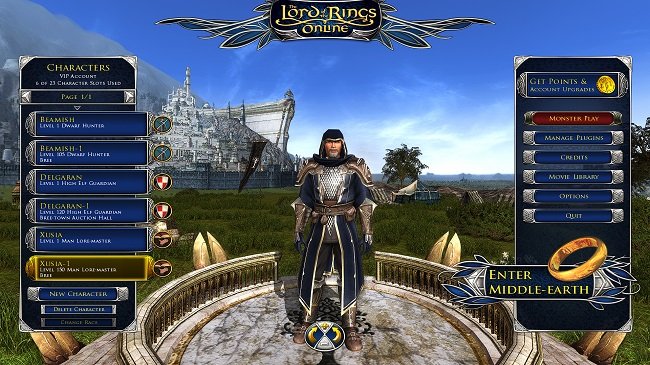
I was fortunate enough to have received the Aria of the Valar when I logged in to the game today. Not everyone has been as lucky. I applied this boost to level 105 to my Dwarf Hunter. He was currently languishing at level 50 something and loitering in Lothlorien, having simply run through Moria. As I wasn’t relishing revisiting such areas as Mirkwood and Dunland and have always fancied an alternative character at level cap, it seemed like the sensible thing to do. The boost provides adequate gear, although none of it is designed for essences and three Third Age legendary items. Virtues are also increased but not to cap and you are also given a modest quantity of skills points. These are mainly the ones you would acquire if you played through the Epic Story. All things considered it’s not a bad service and allows you to go directly to Mordor adequately equipped. However, it is no more than that and shouldn’t be considered a “pay to win” item. After using the Aria of the Valar my Dwarf Hunter had a Physical Mastery rating of 70K.
So finally, the wait is over. LOTRO has now reached the end of the accepted canonical story and is now moving in to wholly original territory, narratively speaking. It feels like a very major step in the games overall life. Yet the more I look around at LOTRO, the reality is that nothing has significantly changed. The new Allegiance system is merely an adaptation of the existing reputation mechanic. Similarly, the Light of Earendil/Shadow of Mordor System appears to be a regional buff/debuff mechanic, not to different to from the old Radiance/Gloom system. Although the Mordor expansion offers LOTRO player a lot more content, it is still just “more of the same”. For many this will be an acceptable arrangement but I can’t help but think that it would be to the game’s advantage if they introduced something truly innovative. Sadly, I think the reality is that the game is simply too old to support anything too complex.
Although I have bought the Mordor expansion and am happy to play through the new quests, I will more than likely move on to pastures new, once I’ve hit the new level cap. Then it’s a question of waiting to see what the next update has to offer. For those that stay it is then a question of levelling alts and repeating content. Due to the social nature of the game and its community, it is the player created content and activities that binds people to this virtual Middle-earth. Standing Stone Games provides the theatre and the players craft their own experiences with their friends and kinships. Although this on paper seems like a very equitable arrangement, I can’t help but feel that it excuses Standing Stone Games from pushing themselves. Rather than taking a proactive role in creating new innovative content, they seem more like paternal “groundskeepers” charged with maintaining a fertile environment for others. Although it’s a valid position I wonder if its sustainable now LOTRO moves beyond Mordor. What do players want next and can the developers provide it for them?


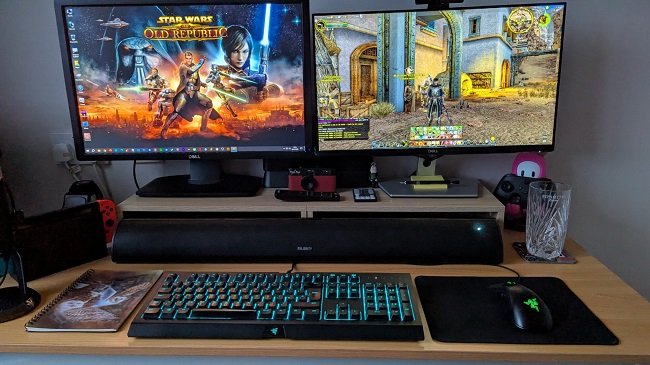

The Return of the Contains Moderate Peril Podcast
Finally, after several months of diversions and distractions, I’ve managed to produce a new podcast. As I mentioned in a previous post, the Burton & Scrooge Podcast has been officially retired and for practical reasons of brand consolidation, the Contains Moderate Peril Podcast has been reinstated and will become the official show for this website. However, it should be noted that this latest episode is specifically designed to be a technical test meant to validate our RSS feed for submission to iTunes. Once this logistical issue has been dealt with and the podcast is accessible on all major platforms, then further episodes of the show will be scheduled for Autumn.
Finally, after several months of diversions and distractions, I’ve managed to produce a new podcast. As I mentioned in a previous post, the Burton & Scrooge Podcast has been officially retired and for practical reasons of brand consolidation, the Contains Moderate Peril Podcast has been reinstated and will become the official show for this website. However, it should be noted that this latest episode is specifically designed to be a technical test meant to validate our RSS feed for submission to iTunes. Once this logistical issue has been dealt with and the podcast is accessible on all major platforms, then further episodes of the show will be scheduled for Autumn.
Episode 174 of Contains Moderate Peril was originally recorded in late April this year and features guest appearances by long time contributors Brian and Sean. However, due to a multitude of real world matters, the show was temporarily shelved and it has only been in the last few days that I’ve been in a position to rectify the technical problems that beset the recording and produce a final edit. All things considered I am happy with the final results and think we have produced three talking points that are still interesting and relevant, despite the three-month gap.
Moving forward, there will be several changes to future episodes of podcast. First and foremost, my good friend Brian will be taking a sabbatical. Simply put, he has pressing real world matters to attend at present. I shall miss his input greatly having regularly recorded with him since 2010. However, change is an inevitability and is something that should be embraced, rather than rejected. So, I shall be continuing the show on my own and with the occasional guest from time to time. Like the website itself, I shall be broadening the content, so don’t be surprised to find a more diverse spectrum of topics explored. I certainly want to cover more film related material in future episodes as well as explore current news items.
Like the Contains Moderate Peril website, I have clear aspirations to grow the audience for the podcast. However, I have set myself some very specific criteria for this undertaking. If the show fails to meet them then I will cease producing the podcast. Although I enjoy creating material and engaging with listeners, there is ultimately an effort to result ratio to consider. Yet as I am currently taking advice with regard to the marketing and promotion of the Contains Moderate Peril Podcast, I remain confident that the show will find a wider audience than previously. I would urge those who enjoy the podcast to retweet links, leave favourable reviews on appropriate platforms and to recommend the show to your friends and colleagues. For the present, you will find the latest episode of Contains Moderate Peril on our "podcast" page, which can be accessed via the menu, above the logo at the top of this page or by clicking here.

















Comic-Con Episode IV: A Fan's Hope (2011)
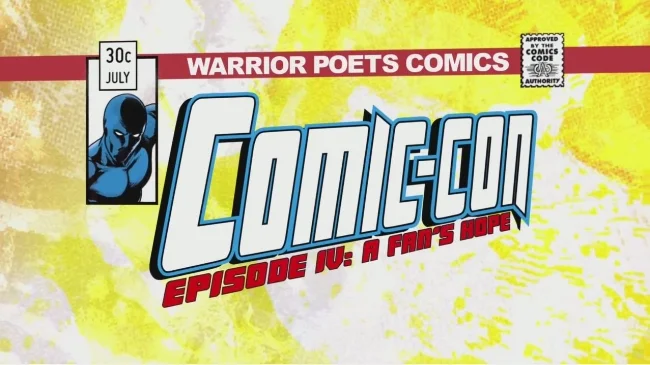
Documentaries about the fans and fandom often lack any impartiality and frequently have their own agenda, be it positive or negative. Looking at the names associated with Comic-Con Episode IV: A Fan's Hope, it’s fairly clear from the outset that this is not going to be an overtly critical undertaking. Director Morgan Spurlock follows five attendees during San Diego Comic-Con 2010 as they endeavour to fulfil their ambitions. The fans are immediately presented in a fairly positive way and as the documentary proceeds the viewer gets the opportunity to form their own opinion about the lifestyles, choices and philosophies. The documentary is also interspersed with talking heads from known genre luminaries such a Joss Wheedon, Kevin Smith and Stan Lee, who provide some interesting and quite frank views on Comic-Con as well as the wider fan scene.
Documentaries about the fans and fandom often lack any impartiality and frequently have their own agenda, be it positive or negative. Looking at the names associated with Comic-Con Episode IV: A Fan's Hope, it’s fairly clear from the outset that this is not going to be an overtly critical undertaking. Director Morgan Spurlock follows five attendees during San Diego Comic-Con 2010 as they endeavour to fulfil their ambitions. The fans are immediately presented in a fairly positive way and as the documentary proceeds the viewer gets the opportunity to form their own opinion about the lifestyles, choices and philosophies. The documentary is also interspersed with talking heads from known genre luminaries such a Joss Wheedon, Kevin Smith, Harry Knowles and Stan Lee, who provide some interesting and quite frank views on Comic-Con as well as the wider fan scene.
While Comic-Con Episode IV: A Fan's Hope does not wallow too much in the excesses of fandom it does not avoid all criticism. Joss Wheedon speaks of how what used to be an exclusive geek scene has now become a much broader event that is cynically exploited by the bean-counters. Veteran comic dealer Chuck, who is one of the focal points of the documentary, mourns the decline in the comic scene within the convention itself. There is a lot of truth in what he says and the commercial success of Comic-Con certainly has not been to the benefit of all. There are also some comments that do seem to validate some of common stereotypes about fans. There is talk of the "smell" of Comic-Con and some rather disdainful remarks about “counterfeit geeks” or “geek-for-a-week” tourists.
Out of the six or so subjects of the documentary, perhaps it is the aspirations of the two illustrators Eric and Skip that are best explored and offer the best drama. This is because they are seeking gainful employment and the chance to alter their lives as they hawk their portfolios between publishing houses. Their obsession is presented in a positive manner, where the adventures of the action figure collector seems far more self-indulgent. Costume designer Holly Conrad and her colleagues foray into the world of cosplay is both absorbing and honest. After spending a year creating their Mass Effect tribute costumes their dedication at times becomes a little manic. Tempers fray during cosplay rehearsals yet perhaps that is understandable considering the pressure and effort. As for the so called "lovers" and the alleged surprise proposal whilst at Comic-Con, it's the least edifying part of the documentary.
Although an enjoyable insight into a growing aspect of popular culture, Comic-Con Episode IV: A Fan's Hope is not a truly definitive or unbiased documentary and does not pretend to be one. It is fairly safe portal into the world of fandom for those on the outside, which removes some of the scenes rough edges, as well as being an ode to geekdom from those who have grown up with it. It does make a few points about the commercialisation of this particular phenomenon but doesn't offer any in-depth critique or solutions. Instead it settles for being a celebration of geek culture and focusing on the aspirational dreams of many of its participants, which is a worthy and positive spin on the proceedings.
Mad Max: Fury Road (2015)
There was a degree of collective hysteria among critics upon the release of George Miller's Mad Max: Fury Road. Phrases such as "genius" and "masterpiece" were being banded around willy nilly, mainly due to the overwhelming nature of the movie. Make no mistake, Mad Max: Fury Road is very much a case of film making turned up to eleven. The sheer sensory overload that one experiences over the two-hour running time makes for a jaw dropping experience. However, the movie does have a few minor flaws, which are more apparent upon second viewing, so perhaps some of the praise and superlatives that have been heaped upon the film need to be taken with a pinch of salt.
There was a degree of collective hysteria among critics upon the release of George Miller's Mad Max: Fury Road. Phrases such as "genius" and "masterpiece" were being banded around willy nilly, mainly due to the overwhelming nature of the movie. Make no mistake, Mad Max: Fury Road is very much a case of film making turned up to eleven. The sheer sensory overload that one experiences over the two-hour running time makes for a jaw dropping experience. However, the movie does have a few minor flaws, which are more apparent upon second viewing, so perhaps some of the praise and superlatives that have been heaped upon the film need to be taken with a pinch of salt.
That being said, if you can endure Mad Max: Fury Road and its exquisite assault upon your senses, it offers an extremely entertaining action movie with an interesting philosophical subtext. It also has something to say about gender politics, although this is not in any way a lecture. The films visual aesthetics and female casting does somewhat fly in the face of the alleged message. Therefore, one can consider the film’s deeper meaning as an optional extra. If you’re not in the market for sociopolitical subtexts, then ignore it and simply focus on the ongoing visual and the cinematic pandemonium. Please note that's two hours of continuous pandemonium. A potential chore for some.
The plot is simple and for those unfamiliar with the main character and the movies setting, there is a brief exposition at the start of the film that puts everything in perspective. The plot essentially is a continuous chase as Max escapes "The Citadel" with the five wives of local despot Immortan Joe (played by Hugh Keays-Byrne, Toecutter from the original movie). Tom Hardy handles the role of Max Rockatansky exceedingly well through his verbal and physical performance. However, this is a movie with minimal dialogue and often it is more about what is not said than what is. An exchanged glance or a particular stance speak volumes here. In many ways it is Furiosa, played by Charlize Theron, who drives the story with the force of her tangible screen presence.
Perhaps where director Geroge Miller excels the most is in the way he turns the complex action sequences from a mechanical process and elevates them into an elaborate form of visual opera. The production design, costumes and overall visual aesthetic of Mad Max: Fury Road goes beyond the term sumptuous. It is a physical experience. The nearest I can get to summarising it is that it's like being beaten around the head and shoulders with the collected works of Hieronymus Bosch, while being screamed at and set alight. When I saw this movie at the cinema, I needed a stiff drink when it ended because I genuinely felt that I had experienced everything that happened on screen. Even when viewed at home it is an immersive experience.
Be warned Mad Max: Fury Road is not your standard action movie, meticulously designed by a soulless committee and scrupulously edited to meet the requirements of the sanitised PG-13 rating. This is a raw and grotesque movie set in a neo-feudal world and it's a far from pleasant one. Yet despite the jarring nature of Goerge Miller's post-apocalyptic vision, it still has characters that you care for and there's a positive moral under current. Irrespective of its beautiful visual cacophony, Mad Max: Fury Road is ultimately a film about people and a very telling one at that. Something that is a rare commodity in contemporary Hollywood and something that many would not expect to find in this genre of movie.
Middle-earth and Non-Canonical Stories
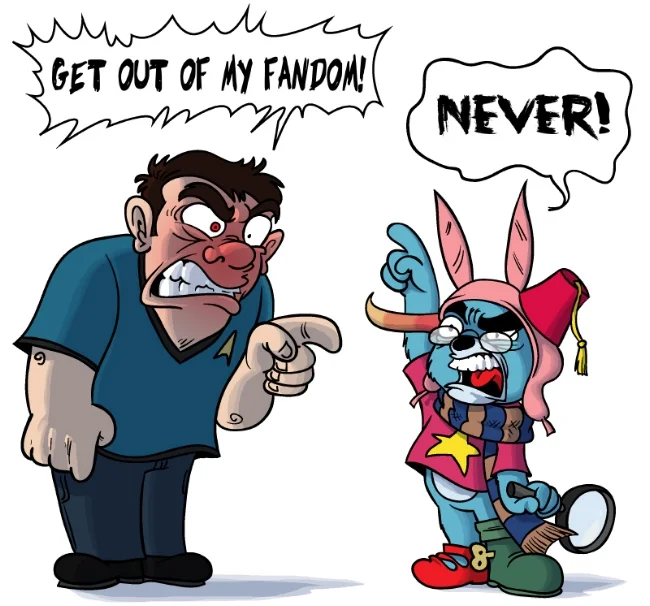
Canon and lore are sacred cows to many fans. Any deviation from the clearly established is met with scepticism and on occasions outrage. It is the hill they are prepared to die, defending. In the past I have felt equally as strong about this matter as others but over the years I have become increasingly relaxed about such things. I guess once you realise that your childhood memories cannot be ruined, despite what some claim, then you cease to worry as much. If you do not like an adaptation, extrapolation or continuation beyond the canon of a particular IP, then you simply say, “it’s not for me” and move on. Not liking an idea or concept because it doesn’t conform your preconceptions and personal tastes does not give you the right to try and quash it. So overall, I don’t mind Tom Cruise being Jack Reacher. A female Doctor Who is fine with me. I even like the movie adaptation of Raise the Titanic.
Canon and lore are sacred cows to many fans. Any deviation from the clearly established is met with scepticism and on occasions outrage. It is the hill they are prepared to die, defending. In the past I have felt equally as strong about this matter as others but over the years I have become increasingly relaxed about such things. I guess once you realise that your childhood memories cannot be ruined, despite what some claim, then you cease to worry as much. If you do not like an adaptation, extrapolation or continuation beyond the canon of a particular IP, then you simply say, “it’s not for me” and move on. Not liking an idea or concept because it doesn’t conform your preconceptions and personal tastes does not give you the right to try and quash it. So overall, I don’t mind Tom Cruise being Jack Reacher. A female Doctor Who is fine with me. I even like the movie adaptation of Raise the Titanic.
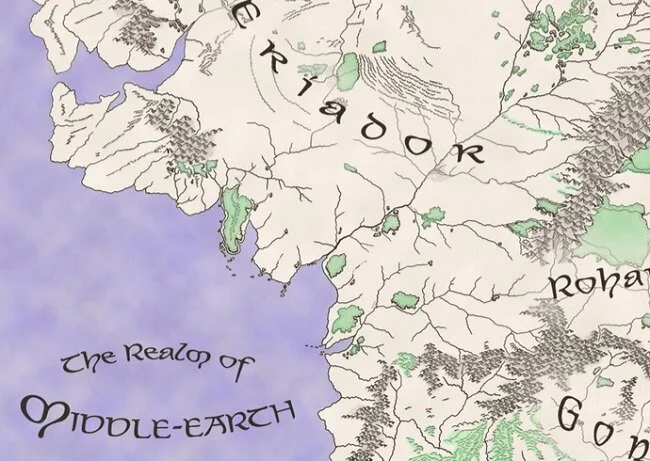
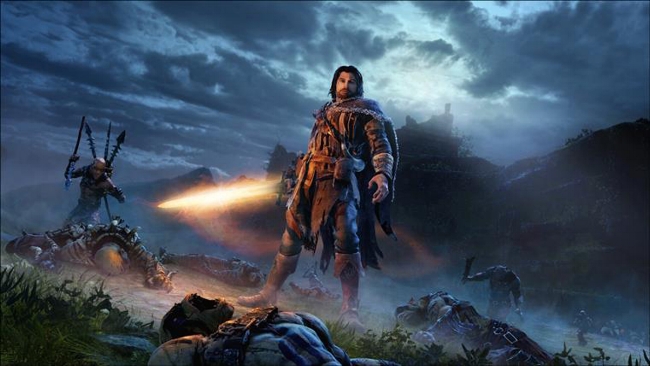
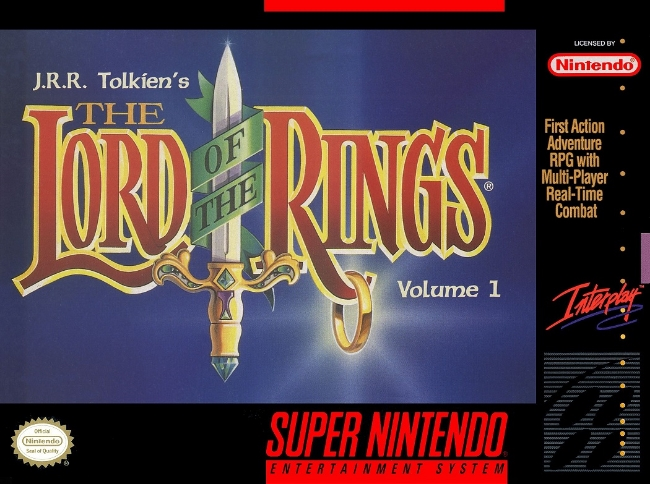
However, as I mention, I wasn’t always this easy going. Tolkien’s body of work has long been something I enjoy and hold in high esteem. Thus, when both The Lord of the Rings: War in the North and Middle-earth: Shadow of Mordor were both announced respectively in 2011 and 2014, I was highly sceptical. Initial marketing showed a great deal of imagery devoid of any context. How could a Ranger be a Wraith and why were Eagles being used as mounts? Yet over time, as more information filtered through, it became clear that these were not total bastardisations of Tolkien’s work and I ended up buying and enjoying both games. In fact, I would go so far as to say that it was their innovative extrapolation of the lore that was one of the primary reasons I liked both titles so well.
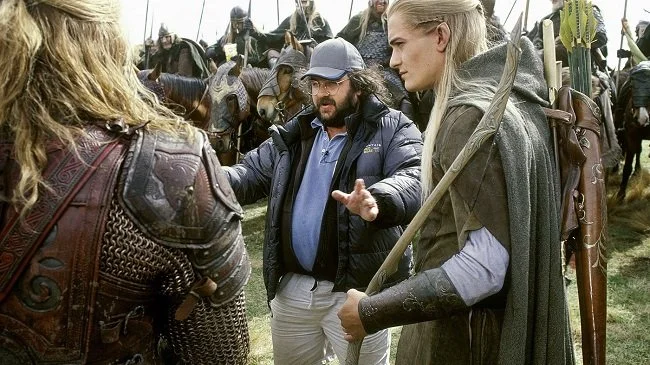
What becomes apparent when playing The Lord of the Rings: War in the North and Middle-earth: Shadow of Mordor is that although they are derived from Tolkien’s work, they are more of a continuation of Peter Jackson’s cinematic adaptations. They certainly have the same detailed aesthetic and action focus. However, the stories of both games have creative plots that are based heavily in Middle-earth lore. The Lord of the Rings makes it clear in the Appendices that the War of the Ring was fought on multiple fronts. Both Gondor and Erebor were assailed by Sauron’s forces and Dol Guldur was destroyed by the Elves. So, the threat of third front hailing from Angmar, as seen in The Lord of the Rings: War in the North, is hardly a stretch either narratively or militarily. Middle-earth: Shadow of Mordor is equally as creative exploring the fate of Celebrimbor. It delves in to many aspects of Tolkien’s work from the Blue Wizards, Saruman’s hunt for the ring, as well as the ongoing wane of Gondor.
These games along with Standing Stone Games’ Lord of the Rings Online succeed as they journey beyond established canon, due to the love and affection their writers have for the source material. Rather than abandon established ideas, these games develop them and frequently fill in the grey areas of known lore. When one considers the magnitude of Sauron’s empire, surely he would have a much wider chain of command, other than just the Nazgûl. Hence, I do not balk at the Black Númenórean Lieutenant named Agandaûr, or the three Black Captains; the Hammer of Sauron, the Tower of Sauron and their leader, the Black Hand of Sauron. All make sense and play a specific role in the Dark Lord’s military hierarchy. Furthermore, we have seen in the source text, that Orcs and Uruks have personalities, as well as aspirations and agendas of their own. Thus, I found the character Ratbag in Middle-earth: Shadow of Mordor very plausible as he tries to do a deal with Talion to establish his power base. Also, having made some checks, I cannot find any definitive proof that Smaug was the last Dragon in Middle-earth. So I have no major prejudice against Draigoch or Úrgost.
Sadly, where I am happy to accommodate the aforementioned games non-canonical narratives, I feel that I have to draw a line with fan fiction. The standard of knowledge, research and writing seen in LOTRO, The Lord of the Rings: War in the North and Middle-earth: Shadow of Mordor simply isn’t present in grassroot fan generated content. Many fan writers just don’t have the necessary skills to forge a compelling narrative. It’s something you’ll see in many Star Wars and Star Trek fan films. They will often sport exemplary production values given the financial constraints but the dialogue is usually amateurish and embarrassing. Boundless love and enthusiasm are no substitute for genuine talent. Star Trek Continues transcends the traditional fan film label, due to the pedigree of those associated with the production. The Hunt for Gollum and Born of Hope don’t quite hit that level of professionalism, although they certainly raised the bar for Tolkien based fan movies.
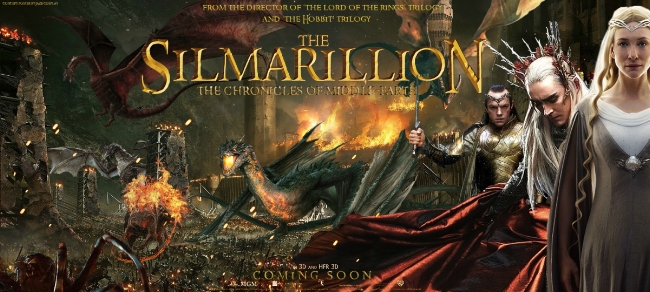
It was recently announced that the three-way legal dispute between the Tolkien Estate, Middle-earth Enterprises and Warner Bros. has now been settled, which raises the question of further game development of Tolkien’s IP. Middle-earth: Shadow of War is due to be released on October and I am very interested as to where the story goes next. I see from trailers that Shelob is now part of the narrative, which is a bold move indeed. If this title is as equally successful as its predecessor then surely more games of this idiom will follow. Because of the specific terms of the licence, future material is somewhat tied to the scope just The Hobbit and The Lord of the Rings. Yet because both of these books encompass a vast world of lore, much of which has never been fully explored or even fleshed out, we are potentially faced with a very creative opportunity. At present, due to the standard of what has already been released, I do not fear what may follow. Therefore, perhaps some fans should try and take a fresh look at this situation and revise their opinions regarding non-canonical stories.







Big Hero 6 (2014)
Big Hero 6 is a movie about loss and coming to terms with a bereavement. You'd think that Disney would run a mile from such a difficult subject, especially when you consider their core demographic, yet the subject is handled intelligently and sensitivity. There is a genuine sense of moral rectitude and conviction running throughout the story. It is a refreshing change to see a superhero driven plot that actually has a positive message as well as the requisite action scenes. Through years of accumulated experience Disney also ensure that the underlying themes are presented in a engaging and enjoyable manner. Big Hero 6 has a lot of laughs during its hundred minute plus running time.
Big Hero 6 is a movie about loss and coming to terms with a bereavement. You'd think that Disney would run a mile from such a difficult subject, especially when you consider their core demographic, yet the subject is handled intelligently and sensitivity. There is a genuine sense of moral rectitude and conviction running throughout the story. It is a refreshing change to see a superhero driven plot that actually has a positive message as well as the requisite action scenes. Through years of accumulated experience Disney also ensure that the underlying themes are presented in a engaging and enjoyable manner. Big Hero 6 has a lot of laughs during its hundred minute plus running time.
The story centres around electronic genius Hiro, who is suffering from depression after his brother is killed in a fire. When he inherits his brother's robotic project, Baymax, a "non-threatening" healthcare robot, he embarks on a journey to discover the truth about his death. After assembling his friends and "upgrading them" along with Baymax into a formidable fighting force, Hiro soon discovers that all is not a straightforward as it may seem and that in pursuing his own personal vengeance he is in fact, doing the opposite of what his brother would have wanted.
At the centre of Big Hero 6, is the character Baymax; the inflatable personal healthcare robot. With a minimum amount of dialogue voice actor Scott Adsitt brings him too life and embellishes him with some wonderful verbal idiosyncrasies. The simple design of Baymax is also an asset and the character is at his best when outside of his armour. Once again, we see the perennial theme of humans learning the nature of their own condition from a non-human source. Due to the emotional depth of the screenplay and the honesty of the performances, the message works and is genuinely moving. It also dovetails nicely into the story arc and set pieces.
There is a beautiful aesthetic to the city of San Fransokyo and I cannot remember the last time a saw a animated movie with such a fascinating production design. Several times whilst watching I found myself pausing the playback so I could examine the subtleties of the environment. The use of lighting is outstanding and it is clear where the $165 million production cost went. The blending of US and Japanese culture makes for a very striking visual landscape as many familiar landmarks and iconic buildings are given an inventive cross cultural makeover.
The more critical viewer may pick up on a few of the inherent weaknesses of Big Hero 6. Some of the supporting characters are not a well-developed as the lead. The central villain, although motivated by a specific plot device, still seems a little too arbitrary. But I can forgive these minor points as the story really is about Baymax, Hiro and their interdependency. Therein lies the movies strongest asset. Curiously I saw Big Hero 6 in the same week that I say Ex Machina, upon their release in 2014. The latter aslo deals with the issue of humans and AI coming to terms with each other. Although the two movies are radically different in tone and are pursuing different audiences, there are some very similar themes.
Moral Relativism in Popular Culture
Contemporary Western culture is far from perfect. Although major positive changes have been made with regard to social attitudes, equality and tolerance, there is still much work to be done. Privilege is still rife, be it financial, political or societal. Just to put one’s cards on the table right from the outset, I am a white, middle class, British male in his late forties. I do not feel in any way, shape or form marginalised. At present I am in one of the most advantageous social economic groups in the UK. That statement is devoid of any emotional connotation. It is simply a statement of fact and a means of providing some context for this post. Although I am acutely aware of discrimination, I have seldom personally experienced it. I mention this because this post is about moral relativism in popular culture and thus it is only fair that I define the prism through which I experience the world.
Contemporary Western culture is far from perfect. Although major positive changes have been made with regard to social attitudes, equality and tolerance, there is still much work to be done. Privilege is still rife, be it financial, political or societal. Just to put one’s cards on the table right from the outset, I am a white, middle class, British male in his late forties. I do not feel in any way, shape or form marginalised. At present I am in one of the most advantageous social economic groups in the UK. That statement is devoid of any emotional connotation. It is simply a statement of fact and a means of providing some context for this post. Although I am acutely aware of discrimination, I have seldom personally experienced it. I mention this because this post is about moral relativism in popular culture and thus it is only fair that I define the prism through which I experience the world.
For most of history, there have been hierarchies that have perpetuated discrimination for personal advantage. The church, nations states and all manner of other social institutions have done this in the past and continue to do so to varying degrees today. Therefore, it is foolish and factually inaccurate to try and avoid depicting this in any narrative medium. The quasi medieval world of Game of Thrones is therefore potentially justified in depicting the unpleasantness of its faux era. However, accuracy is one thing, exploitation is another. The latter often sites the former as a reason to justify "showing all". Sadly, authenticity is not really the real motivation here. It's purely a case of sex and violence sells. So, it is important to consider context. The harsh realities of slavery are shown without titillation in a movie such a 12 Years A Slave. Can the same be said about Mandingo?
There is a difficult line to tread here. Sometimes showing the stark reality of something abhorrent is the best way to make a point and to inform your audience or start a debate on a specific matter. On other occasions, depicting the specific details may not necessarily achieve this. I am of an age where I still remember the debate as to whether the rape scene in the 1988 movie The Accused actually needed to be shown, to make the film’s point about the treatment of women by the US judicial system of the time. On mature reflection, I believe that it did. Showing the assault puts a human face upon the crime and brings home its magnitude. However, can the same be said for “sensational” airport massacre scene in Call of Duty: Modern Warfare 2? Its primary inclusion seems to be to titillate, rather than to make any wider dramatic point.
Some people have very strong moral and ethical world views. These may be driven by faith or politics and they are also shaped by the prevailing social ideas and customs of the times. For example I have very different views on some subjects compared to my eighty year old parents. They are very much products of their era, as I am of mine. As a result, I believe that it is simply illogical to deny the concept of moral relativism. There are some broad common concepts that most cultures can agree upon, such as murder and theft being wrong. However, there is not a globally accepted moral equivalent of the Beaufort Scale or Periodic Table. Hence, we see disparities between men and women’s status and rites in certain cultures and religions.
As a result of this diversity of opinion, it's pretty difficult to deal in absolutes (unless you are the tabloid press). Yet that doesn't stop people from trying. Some folk feel that there are limits on the exploration of specific subjects or that certain things are just taboo. You mustn’t joke about this, never be disrespectful about that, the list can get pretty long. I cautiously take the opposite view. I don't believe anything is truly out of bounds to explore in a democracy as long as it’s done within the confines of the law. However, one must question what ones motivations are for doing so and straying in to such minefields. For me, I use the litmus test that comedian Reginald D. Hunter suggested. "Was there hate in your heart" when the controversial statement in question was said. It may not be the most sophisticated of tools but I believe it is a strong starting point.
Because so much of our perception of the world around us is visual, humans have a strong tendency towards voyeurism; thus, many people find depictions of sex and violence alluring. This is not necessarily in a sinister or unwholesome sense but possibly more due to the cultural attraction of anything designated taboo. In the UK during the early eighties, the home video market was unregulated. Hysteria and panic lead to ill-conceived legislation, namely the 1984 Video Recordings Act, resulting in lot of movies gaining notoriety as they were removed from shelves. Let it suffice to say that this state of affairs made a lot of these titles essential viewing for many teenagers. It became a rite of passage to try to seek them out and endure them. In many respects this is no different from placing an age based embargo upon smoking, drinking and other sundry vices. There is some truth in the clichés regarding forbidden fruit. It's a curious thing that the appeal of such extreme material often wanes with age. Teenagers are still drawn to such movies such as The Human Centipede and A Serbian Film. I however recognise that there is no real benefit in seeing such unpleasant and extreme material. Subsequently I now have self-imposed limitations.
Gender is also an important factor within this debate. Reactions between the sexes can differ drastically on matters such as the depiction of sexual violence and the use of pejorative language. Sadly, most media based industries are far from a level playing field and there is often gender bias when dealing with certain material. Often it is this sort of content that proves most financially viable, regardless of its moral rectitude. It’s a matter that seems to be the bane of video games industry at present. Consider the debacles over Tracer’s sexuality in Overwatch and the aesthetics of female characters in Mass Effect: Andromeda. With regard to TV and specifically Game of Thrones which has often been criticised over its lurid content, I would love to have an accurate age and gender based break down of the viewing figures to determine what aspects of the show appealed to whom. Do you think there would be any major surprises? No, neither do I.
Following on from this, I think that we need to focus on the inherent duality of contemporary society with regard to current social issues. There is still a huge gulf between what people say in public when they’re conscious of maintaining an equitable moral and ethical position, as opposed to what they may think personally. We’re all guilty of this to a greater or lesser degree. Perhaps modern life exacerbates this phenomenon. For instance, most places of employment have clear policies regarding equality and discrimination these days and usually staff publicly endorse them. However, do all employees genuinely support such ideals or is it just expedient to do so? Until recently, the prevailing politically correct mindset has silenced certain quarters. In this post Trump, post Brexit world, a lot of people who previous kept their less inclusive views to themselves now are more comfortable sharing them publicly.
Then of course there is the fact that as a species we just seem to have a knack for failing to live up to our finer principles. Consider a commonly held notion such as not judging a person by their looks. Most people will strongly advocate such an ideal, again to possible project an acceptable public image. Yet despite this, so many of us still do the complete opposite, possibly because the ideal is contrary to our genetic imperatives. I'll freely admit that I regularly fail to live up to the standards that society and more importantly myself set. We live in a world where many of us embrace concepts and ideas in principle only; because we've realised that actually acting upon them requires effort, self-denial or having to step outside of our own personal comfort zone. Morality and ethics often go hand in hand with cognitive dissonance.
There is still much more to say and explore about moral relativism and its impact upon numerous social and ethical issues. It's interesting that many of these subjects manifest themselves in genres that are appealing to gamers, geeks and nerds. Games and comics still court controversy at times with the way they depict women or ethnic groups. The debate over the casting of the first female Doctor Who still rages on. The level of sexual content in shows as American Gods still causes tongues wagging. The BBC is about to embark upon its Gay Britannia season, celebrating 50th anniversary of The Sexual Offences Act 1967, which partially decriminalised gay sex. Expect outrage from specific newspapers. There are still mutterings from some fans over both the critical and financial success of Wonder woman at the box office. This is why we see push back as some see progressive ideals as threatening and don’t want them in their social spheres.
Context and the prevailing Zeitgeist have a bearing on representation of all subjects. Why should popular culture be any different? Therefore, we should not carte blanche deny the reality of moral relativism. However, we should not just use it as a “get out of jail” card to justify an “anything goes” mentality. Moral relativism is an academic debating tool and not a life defining philosophy. Just because something taboo can be shown on TV or a controversial subject used as a plot device, doesn’t mean that it automatically should. I would hope that such a decision was tempered by the application of a good many other criteria first. Because despite what some academics, critics and pundits may think, popular culture is not necessarily trivial by default. It is accessible to swathes of the population and can shape a great many opinions. As such it can be a very powerful medium. Whether it is a force for good or not, is down to us.
Standing Stone Games: Is the Honeymoon Over?
I was not that surprised when Standing Stone Games announced that their Mordor expansion for LOTRO would be released at the end of July, just weeks after several open beta tests. This is something the developers have done for a while, with all their major updates. One has to remember that despite a change of name, to core team developing LOTRO has not radically changed since they extricated themselves from Turbine. Something that SSG went out of their way to stress when they formally announced their move, last December. The press releases and interviews at the time focused on a sense of continuity and implied that SSG was now free from the corporate yolk of Warner Bros. and Turbine. It led to a great deal of optimism among LOTRO players and sparked a resurgence in the game. The fact that the MMO has now reached the end of Tolkien’s story and is about to embark upon its own original narrative has been well received. Yet LOTRO has always been regarded both by the faithful and by those outside, as a game that never quite lived up to its potential. Perhaps the release of Mordor would remedy that?
I was not that surprised when Standing Stone Games announced that their Mordor expansion for LOTRO would be released at the end of July, just weeks after several open beta tests. This is something the developers have done for a while, with all their major updates. One has to remember that despite a change of name, to core team developing LOTRO has not radically changed since they extricated themselves from Turbine. Something that SSG went out of their way to stress when they formally announced their move, last December. The press releases and interviews at the time focused on a sense of continuity and implied that SSG was now free from the corporate yolk of Warner Bros. and Turbine. It led to a great deal of optimism among LOTRO players and sparked a resurgence in the game. The fact that the MMO has now reached the end of Tolkien’s story and is about to embark upon its own original narrative has been well received. Yet LOTRO has always been regarded both by the faithful and by those outside, as a game that never quite lived up to its potential. Perhaps the release of Mordor would remedy that?
Well it would appear that the honeymoon between Standing Stone Games and the LOTRO player base is now over. There were cracks appearing in the façade of mutual goodwill during the anniversary event, when it became clear that several activities were exclusional. However, it has been the debacle over the pricing structure of the Mordor expansion that has returned community relationships back to how they were previously. Many LOTRO players do not consider the itemisation and costs of the three different editions of the expansion to be equitable. Once again, the game developers appear to be taking their customers loyalty and support for granted. Something that was a regular complaint when LOTRO was administered under the auspices of Turbine. It would appear that LOTRO is still tied to a cycle of controversies, poor decision making and potentially biting the hand that feeds it. So much for the concept of “a new broom sweeps clean”.
For the last seven years, LOTRO players have been left to assume (often by the inference of Turbine themselves) that a lot of the problems associated with the MMOs development have been down to Warner Bros. interference. However, according to information garnered from staff who have either left Turbine or been laid off, it would appear that has not been the case. Turbine were left to run things pretty much as they liked by their corporate owner, who it would seem were merely interested in obtaining the licence. Thus, we must deduce that all the controversies that have happened with the game since 2010, such as the barter wallet, mounted combat and the skills tree revamp, can all be laid at Turbine’s door. It would appear that Standing Stone Games, despite separating themselves from Turbine per se, have brought with them the same business mindset because it was theirs to begin with.
As ever with matters of this kind, unless the public are given specific information gained from inside the company in question, it really comes down to deductive reasoning and making “educated guesses”. We do not know the exact details of the relationship between Daybreak Game Company and Standing Stone Games. Are they just a publisher or are more involved and control the purse strings? Did they have any say in deciding the pricing of the Mordor expansion? We do not know for certain. However, while these questions and others are debated on the forums and gaming websites, LOTRO players once again find themselves robustly supporting a game that still seems to be failing to meet its potential and at odds with a developer that doesn’t seem to listen as well as it claims. When one stands back and objectively looks at the life cycle of LOTRO, it really has dodged several major bullets mainly due to the goodwill of the players, who seem to be exceptionally forgiving. Perhaps too much so. If this MMO was an original IP with a different audience, then I do not think it would have lasted the ten years that it has.
Money Changes Everything
When I look back at the various posts I’ve written about gaming over the past decade, several themes regularly occur. Player toxicity, marketing hype and industry shenanigans are three that never seem to go away. Pre-order culture, fans enthusiasm and launch day disappointment are also perennial bad pennies. However, there is one point that I constantly find myself reiterating. Yet despite its staggeringly obvious nature it is habitually overlooked and ignored. Namely that money changes everything. Regardless of the nature of a situation, be it the cost of an item in the cash store, alterations to a games mechanics or the relationship between a You Tube personality and their audience, if it involves some sort of financial exchange then it fundamentally alters the dynamic of that given situation.
When I look back at the various posts I’ve written about gaming over the past decade, several themes regularly occur. Player toxicity, marketing hype and industry shenanigans are three that never seem to go away. Pre-order culture, fans enthusiasm and launch day disappointment are also perennial bad pennies. However, there is one point that I constantly find myself reiterating. Yet despite its staggeringly obvious nature it is habitually overlooked and ignored. Namely that money changes everything. Regardless of the nature of a situation, be it the cost of an item in the cash store, alterations to a games mechanics or the relationship between a You Tube personality and their audience, if it involves some sort of financial exchange then it fundamentally alters the dynamic of that given situation.
People are motivated to blog, podcast, live stream and make videos for a variety of reasons. Some do it to please themselves, where some like to please others. It is actually possible to achieve both. If you are persistent in your endeavours and communicate with your audience positively, then you will get some traction. But there are consequences to being successful and I’m not talking exclusively about having an audience of millions. Even a modest site such as Contains Moderate Peril can be subject to some basic internet cause and effect mechanics. Audiences, or readers in my case, consume content voraciously. They also foster expectations regardless of whether you’ve directly instigated them. If you create new material daily, your audience will grow to expect it daily. If you significantly deviate from such a schedule there are consequences. In my case, between March and April last year I took a break from writing and as a result my traffic tanked. It has taken a year plus to recover. Interruptions to the podcast schedule also killed the listener numbers.
Now the reason I mention this is because, even before you’ve got to the point of taking money from your audience, you have to deal with their expectations, regardless of whether they are founded or not. I have known several fan related sites that have been criticised for changing direction, deviating from perceived schedules or having the unmitigated gall to cease producing their free service. But the moment you accept money from your audience, then your independent status is lost. You are no longer providing content but a service. Fans are often blighted by a malady which seems to equate support with direct input. Add money to that spurious equation and you will inevitably have problems. It doesn’t matter what route you take or what platform you use to raise capital, paying is perceived by some as buying a share in “You Incoporated”. Thus, we have Twitch streamers who are criticised for how they spend the money they are “given”, fansites lambasted for championing or not championing specific issues. And at present, popular You Tube personality Joe “Angry Joe” Vargas is at war with a faction of his so-called “Angry Army” of subscribers.
I have in the past toyed with monetising both this site and the associated podcast(s). For a brief period of time, I asked for PayPal donations when the hosting costs were getting extravagant. However, that ended when I was offered a sponsorship deal with Host1Plus. When I moved the site in 2015 to Squarespace I decided it was easier to simply bank roll all my projects myself because it just guaranteed that I could do my own thing free from any external constraints. That’s not to say that I don’t support the notion that people providing content on the internet should be paid, because I do. It’s just that the Huffington Post business model and the fallacy of “exposure” has done a lot of damage. Sadly, Joe Public has become use to getting “free stuff” and it’s very hard to try and overcome that mindset. So, for the present I look upon my online projects as “indulgences” and will fund them myself to maintain my creative control.
If one broadens the scope of the argument that “money changes everything” it is clear that it permeates everything in life and alters are relationship with it. In the UK, university education used to be selective and free of charge. However, now it is more accessible but as more people use it, is chargeable via a deferred loan. Some students no longer see education as a self-determined process of personal improvement but simply as the buying of a service. Thus, academic under achievement is seen not as a personal failure, but as a business dispute. Such a mindset shows how money alters the perception of any undertaking. Thus, some MMO gamers want bespoke content that suits their needs, You Tube subscribers feel that they should dictate what content is posted on a channel and the entire field of crowdfunded projects is rife with complaints, acrimony and misplaced demands.
Now it is fair to say that there is nothing inherently wrong with the traditional business and customer relationship, as long as both parties accept it as such. The same can be said regarding the free content providers and their audiences. Both are perfectly equitable arrangement as along as everyone understand their respective role. Sadly, the internet has impacted upon this perception. Fans think they’re on the board of director’s, Patreon subscribers fail to understand what “donation” actually means and support for any undertaking in general is seen as a point of leverage. Plus, any sort of financial transaction means some sort of contract. Adding a legal veneer to a situation only adds to its complexity.
As I’m writing this very post, someone on my Twitter timeline has just tweeted about how their patrons can now vote on what they review next. If they are happy with this situation then that is fine but it highlights exactly how “money changes everything”. Contains Moderate Peril is never going to make me rich or even break even. But for the present it is exclusively my platform and that makes the operating costs worthwhile. If you feel the need to tell me what I should or should not be doing on my personal site then that is your prerogative. However, I can also ignore your demands and tell you to fuck right off with a clear conscience. So, my advice to any budding blogger, podcaster or You Tuber, is to think long and hard before you take the proverbial “King’s Shilling”. A source of revenue may well be all fine and dandy but at the costs of your independence?
The Stone Tape (1972)
The Stone Tape is a television play directed by Peter Sasdy and starring Michael Bryant, Jane Asher, Michael Bates and Iain Cuthbertson. It was first broadcast on BBC Two at Christmas 1972. Combining aspects of science fiction and horror, the story concerns a team of research scientists who move into their new facility, a renovated Victorian mansion that is allegedly haunted. Upon investigation, they learn that the haunting is a recording of a past event held within the very fabric of the structure. Believing that this may be the key to the development of a new recording medium, they throw all their expertise technology into learning how the stones preserves its recording. However, their investigations lead to more sinister and tragic events.
The Stone Tape is a television play directed by Peter Sasdy and starring Michael Bryant, Jane Asher, Michael Bates and Iain Cuthbertson. It was first broadcast on BBC Two at Christmas 1972. Combining aspects of science fiction and horror, the story concerns a team of research scientists who move into their new facility, a renovated Victorian mansion that is allegedly haunted. Upon investigation, they learn that the haunting is a recording of a past event held within the very fabric of the structure. Believing that this may be the key to the development of a new recording medium, they throw all their expertise technology into learning how the stones preserves its recording. However, their investigations lead to more sinister and tragic events.
The Stone Tape was written by Nigel Kneale, best known as the writer of the Quatermass series. Its juxtaposition of science and superstition is a common theme in much of Kneale's work; in particular, his 1952 radio play "You Must Listen", about a haunted telephone line. The Stone Tape was also influenced by a visit Kneale paid to the BBC's research and development department, which was based in an old Victorian house in Kingswood, Surrey. Critically acclaimed at time, The Stone Tape remains well regarded to this day as one of Kneale's best and most disturbing works. Since its broadcast, the hypothesis that residual hauntings are recordings of past events made by the natural environment, has come to be known as the “Stone Tape Theory”.
Nearly half a century on, certain aspects of The Stone Tape have dated. It's production design and soundtrack reflect seventies pop culture. The imperialist attitudes displayed along with the lead male characters inherent misogyny seem very archaic now. Yet the plot themes and underlying scientific premise are very contemporary. The lack of visual effects enhances the atmosphere as well as the growing tension and unease. It should also be noted that this was a drama made for television in the editorial style of the time. By today’s standards this is a slow burn but frankly all the better for it. The play was obviously an influence on such films as John carpenter’s Prince of Darkness and Tobe Hooper's Poltergeist and is a prime example of Nigel Kneale's best work. In an age when spectacle and aesthetics tend to drown out narrative in genre productions, The Stone Tape remains a true milestone, demonstrating that it is ideas and character that sustain a quality drama.
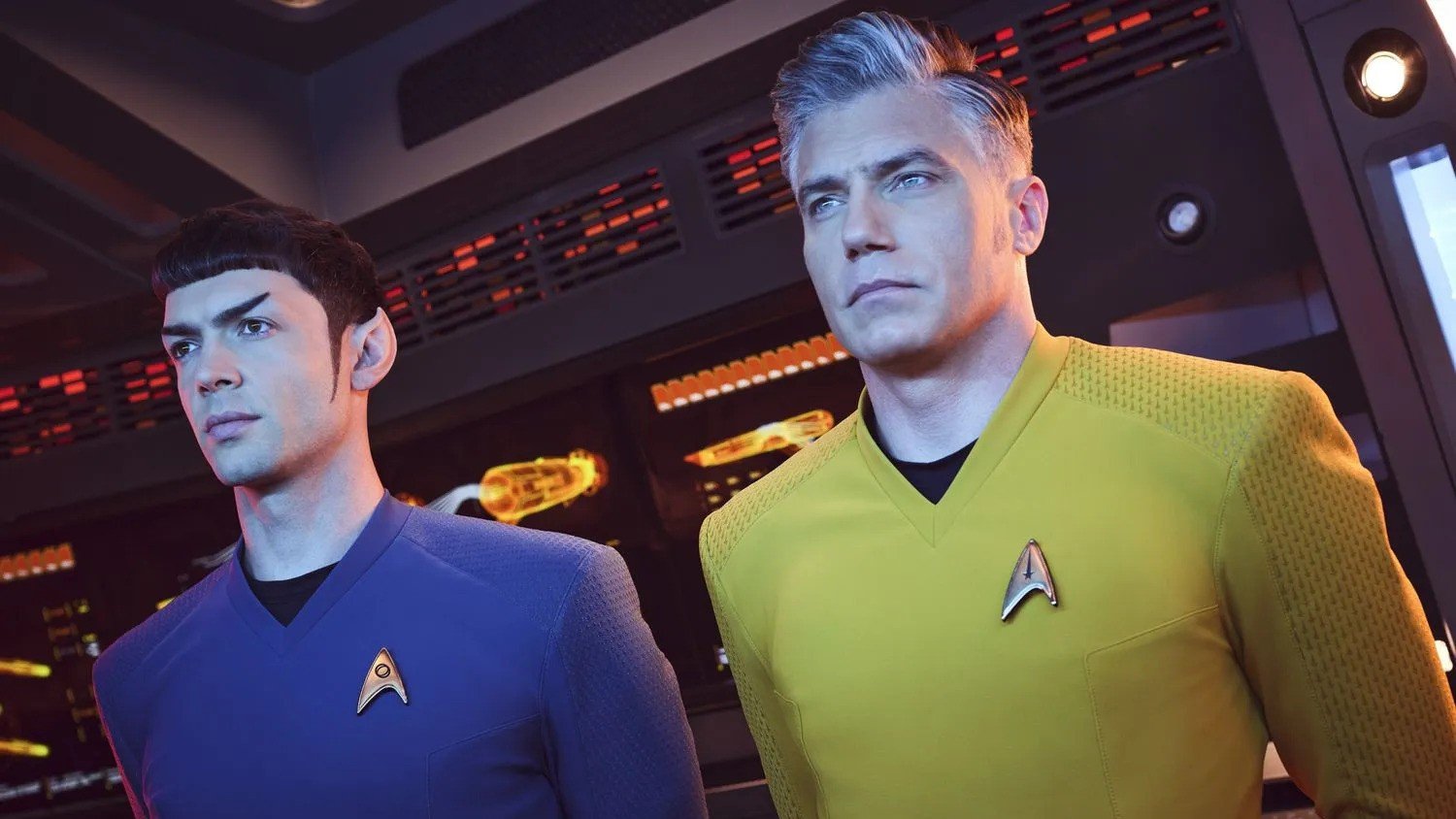





Social Media and Personal Identity
I'm fascinated by social media and the way it has been adopted by the wider community. A multitude of people utilise in a multitude of ways for so many different reasons. Therefore, I felt that it was time again to focus and discuss the phenomenon in a blog post. I have embraced social media, especially Twitter, mainly to promote my writing. I started “tweeting” in 2010 and along the way my use of the medium has become more socially orientated. I enjoy the interactions I share with a broad and eclectic group of people immensely. However, it should be noted that my Google + page, as well as Twitter and Facebook accounts are all based around Contains Moderate Peril and not my specifically my personal life. I like to maintain a distinction between these different aspects of my life. At present, I believe I have found the right balance.
I'm fascinated by social media and the way it has been adopted by the wider community. A multitude of people utilise in a multitude of ways for so many different reasons. Therefore, I felt that it was time again to focus and discuss the phenomenon in a blog post. I have embraced social media, especially Twitter, mainly to promote my writing. I started “tweeting” in 2010 and along the way my use of the medium has become more socially orientated. I enjoy the interactions I share with a broad and eclectic group of people immensely. However, it should be noted that my Google + page, as well as Twitter and Facebook accounts are all based around Contains Moderate Peril and not my specifically my personal life. I like to maintain a distinction between these different aspects of my life. At present, I believe I have found the right balance.
Now this raises the question of whether my online persona is genuine. How much do readers of Contains Moderate Peril, listeners of the podcast (which is on hiatus at present) and Twitter followers actually see of the "real me"? Well I think they get a measured version of myself. I keep certain aspect of life private while amplifying others. I also think that a certain amount of the "real me" inevitably permeates my writing and online presence by some process of emotional osmosis. Over the last eighteen months I have touched upon more personal aspects of my life, because they are significant aspects of my daily reality. However, I don’t share everything and there is much that I deem off limits.
Some people think this controlled flow of information via social media is somewhat cynical and contrived. Yet I think we all do it to a greater or lesser degree in the real world in our day-to-day relationships. As a species, we always strive to present the best possible representation of ourselves to others. In fact, I've noticed that some cultures are far more invested in this idea than others. In principle, there is nothing wrong with this. Speaking your mind all the time could prove problematic; hence we have social niceties and etiquette. However, if you are continuously trying to reinvent yourself for public consumption because you are inherently uncomfortable in your own skin then that is most definitely a problem.
I think age and how you feel about yourself most certainly have an impact upon how you conduct yourself on Twitter and other platforms. People naturally want to be liked and also be accepted. There is an imperative to be an individual and at the same time “normal”, which is a very nebulous concept. I prefer the broader concept of societal norms and knowing when to accommodate them. Social media as many has pointed out, liberates us from social cues and other vital aspects of communication. Then there is the old chestnut of anonymity and the lack of consequences that come with the internet. There is often scope to forget that we are dealing with another individual when using social media. I think most of us have made this mistake at some point and may have regretted what we've said or how we've treated someone.
Naturally there are counter points to all the above. As I've already stated, I have set limits and constraints on my online interactions. Others go a step further and live completely different lives online, so it is prudent not to take everything on face value. As in the real world, online friendships need to be approached with a similar degree of caution and common sense. I think it is important to focus on the positive things that social media and online friendships can achieve, such as breaking down of geographical boundaries perceived cultural differences. Although Twitter is often associated with birds of a feather flocking together and entrenched views, the complete opposite can often happen. Social media is a great way to bypass misinformation and learn about how others truly live and think. Sometimes the similarities between us speak far louder than the differences.