
The Conspiracy (2012)
Filmmakers Aaron (Aaron Poole) and Jim (James Gilbert) decide to make a documentary about online conspiracy theories Terrance G (Alan Peterson), mainly due to the amount of attention he attracts online. Terrance explains in detail how many global events all appear to be linked to an NGO called the Tarsus Club. Jim remains sceptical of such theories, but Aaron is more willing to accept them. During an interview, Terrance becomes agitated and points out a man whom he believes to be following him. A few days later Terrance vanishes. Aaron searches through various newspaper clippings left in Terrance’s apartment and finds a reference to a Time magazine article about the Tarsus Club written by Mark Tucker (Bruce Clayton). As the pair of journalists search for Tucker, they see the same man that was following Terrance. They are also menaced by a Black SUV that parks outside Jim’s house at night. Finally, Tucker contacts them online and it becomes clear that he has more to reveal about the Tarsus Club. Aaron suggests that they try to infiltrate the next meeting, but Jim is reluctant to do so, due to the possible danger.
Filmmakers Aaron (Aaron Poole) and Jim (James Gilbert) decide to make a documentary about online conspiracy theories Terrance G (Alan Peterson), mainly due to the amount of attention he attracts online. Terrance explains in detail how many global events all appear to be linked to an NGO called the Tarsus Club. Jim remains sceptical of such theories, but Aaron is more willing to accept them. During an interview, Terrance becomes agitated and points out a man whom he believes to be following him. A few days later Terrance vanishes. Aaron searches through various newspaper clippings left in Terrance’s apartment and finds a reference to a Time magazine article about the Tarsus Club written by Mark Tucker (Bruce Clayton). As the pair of journalists search for Tucker, they see the same man that was following Terrance. They are also menaced by a Black SUV that parks outside Jim’s house at night. Finally, Tucker contacts them online and it becomes clear that he has more to reveal about the Tarsus Club. Aaron suggests that they try to infiltrate the next meeting, but Jim is reluctant to do so, due to the possible danger.
The Conspiracy is very much a film of two halves. The first forty-five minutes sets up the story well as the two documentary filmmakers immerse themselves in the world of conspiracy theorists. We meet various personalities known within the conspiracy theory community, there are clips from their YouTube channels and we see online meetings via virtual chat rooms. Terrance G. is very plausible (and by far the most interesting character) who is cleverly offset and contrasted by occasional sound bites from an academic. His disappearance and the subsequent investigation by Aaron and Jim is suitably intriguing. Events begin to escalate as the journalists are followed by a black SUV and Aaron’s home is broken into. These events put a strain upon Jim and Aaron’s working relationship. When they meet Mark Tucker and he alludes to more powerful and sinister forces, the plot maintains a sense of credibility within its own internal logic. The Tarsus Club, initially represented as a political lobbying body and international business cartel, is not an inherently implausible plot device. So far, so good.
However, director and writer Christopher MacBride, takes the plot in a different direction during the second half of The Conspiracy. The faux documentary, through a plot conceit, switches to the use of hidden camera footage for most of the climax. Hence, we have a distinct change of tone as the film slips awkwardly into the found footage/horror genre as Aaron finds himself in jeopardy. Sadly, this transition doesn’t really work and negates the innovation of the first half. The main characters work adequately as documentary filmmakers because they are conduits for an exploration of conspiracy theories. Once they become protagonists in jeopardy, rather than just spectators, they’re too insubstantial to support such a plot twist. The ending, which implies a cover up, tries to reconcile the two different halves of this film but it struggles to do so in an acceptable fashion. It’s a shame because The Conspiracy begins with a lot of promise. Overall, it ends up being very average.
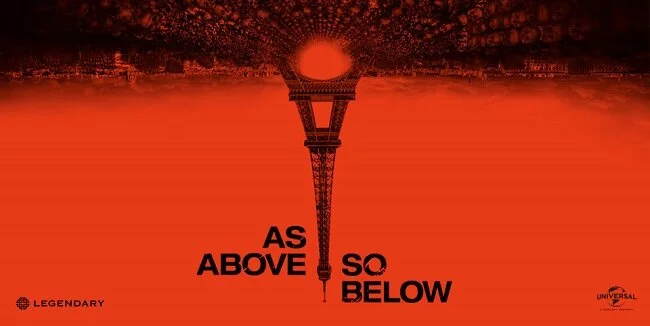
The found footage genre is predicated on the concept that the material the audience watches is supposed to be filmed from real life. This therefore presents a challenge for actors as their performances have to appear like everyday social interactions. Most people are not great orators with extensive vocabularies, in real life. Watch any wedding video or vox pop on a news broadcast and you’ll quickly become aware of the gulf between how people express themselves in reality and the stylised, contrived manner in which actors deliver dialogue. Hence, during the first act of As Above, So Below I became aware that the cast were “acting”. They were using dramatic techniques commonly used in conventional film but which stands out far more in this genre. This changed as the film progressed and the story became more deliberately chaotic. But it was noticeable during the initial set up to the story. It’s not something I’ve noticed before with other found footage movies. But in many ways, As Above, So Below is quite different compared to other genre examples
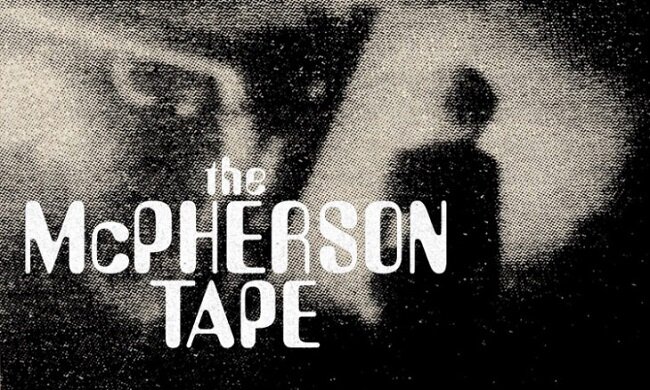
In many ways the story behind The McPherson Tape is a lot more interesting than the film itself. This early found footage movie from 1989, was shot on home video on a virtually non-existent budget. The director Dean Alioto eventually found a distributor but on the eve of the movie’s home video release, the warehouse burned down and allegedly destroyed the master tape and all the promotional artwork. Yet this was not the end of the story. It was common practice in the eighties for small distributors to send advance copies to local independent video stores. Hence The McPherson Tape found its way into the pirate video ecosystem. It then migrated to the UFO community where it was circulated as being a video of a legitimate alien abduction. Dean found himself in the unusual position of having to debunk his own work. Three decades later due to the intriguing tale associated with The McPherson Tape, it has been remastered from the newly rediscovered 3/4" tape and re-released.
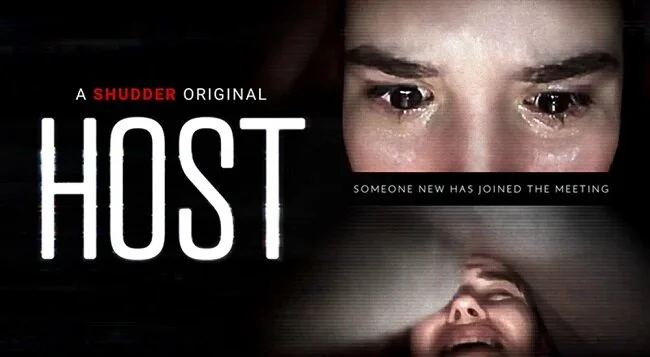
In his review in the New York Times Kyle Turner states that the new horror movie Host “seems to speak to a collective id” and serves as “an analogy for mourning the recent past”. I’ve read several other critiques of this nature that both praise the film and make similar philosophical musings upon its nature. As a long standing horror aficionado I am always a little sceptical when a new movie quickly gains a lot of traction and a critical consensus swiftly forms. Especially when a genre product suddenly gains the attention of the mainstream media who subsequently stray into hyperbole and hype. This happened last year with Midsommar which was hailed as a groundbreaking horror movie and indicative of a renaissance in the genre. Although an intelligent and disturbing film, Midsommar is not without flaws and is far from universally accessible. It is also frustrating the way the mainstream media is oblivious to the ongoing financial and critical success of the horror genre that has existed since the inception of cinema.
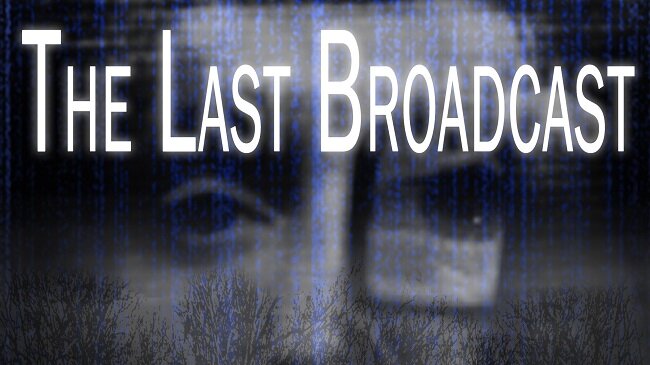
The Last Broadcast is a curious beast that straddles both the “mockumentary” and “found footage” genres. Shot entirely on consumer level video equipment, it effectively captures the look and feel of public access cable TV from the times. Released before the massive commercial success of The Blair Witch Project, The Last Broadcast did not find a comparable mainstream audience at the time, although it remains a favourite with genre fans. However, the movie has been recently re-released on Amazon Prime and subsequently become a talking point once again. Elements of the plot have proven very prophetic, such as the popularity of “ghost hunting” reality shows and the integration of online interactivity into live television. But the one standout aspect of The Last Broadcast which polarises viewer opinion is its ending. This is often seen as either a clever “sting in the tail” or an ill considered “jumping the shark” cop out.
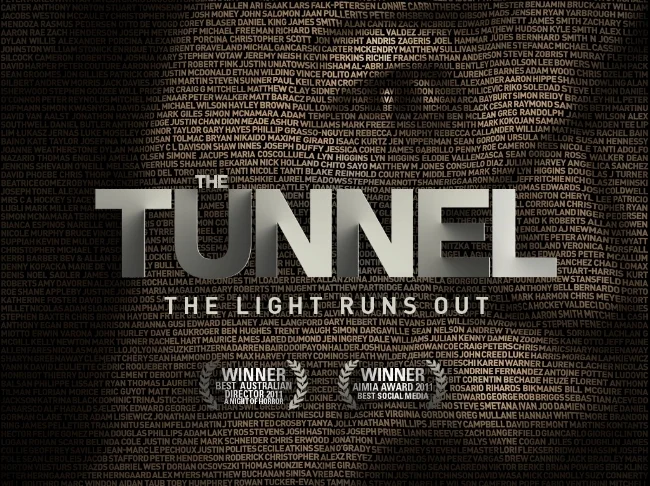
The Tunnel was released direct to Region 3 DVD on 19th May 2011, much the same as any other low budget horror movie. What made the marketing of this minor Aussie "Mockumentary" horror different to other similar products, is that the distributors decided to make a barebones copy of the film available for download, free of charge. The accompanying viral marketing campaign gained quite a lot of traction resulting in The Tunnel being heavily seeded across Bit Torrent sites and exposing the film to an audience of millions globally. Subsequently, when the movie was then showcased in the US and Europe and commercially released in other regions, its profile had been considerably raised. As a result of this novel marketing campaign and the fact that the movie is a better than average example of the found footage genre, The Tunnel won several awards on the festival circuit.
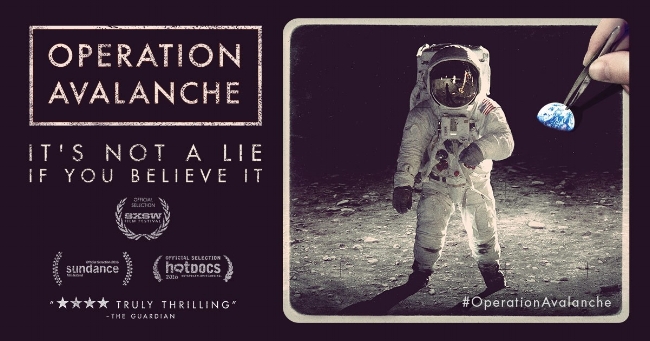
Conspiracy theories and found footage movies. Two genres with infinite scope to be tedious and uninspired on a low budget. Yet writer and director Matt Johnson manages to do something quite clever with both cinematic styles in his recent movie Operation Avalanche. He takes the basic conceit of the two formats and uses them to tell a tale based upon one of the most iconic moments of twentieth century history. Namely the moon landing of 1969. The results are surprising, intelligent and thought provoking, although a little uneven. Furthermore, I discovered this enjoyable curiosity via the GoodBadFlicks on You Tube. If you are interested in obscure and niche market genre creations then do check out this channel. It is informative, well presented and entertaining.
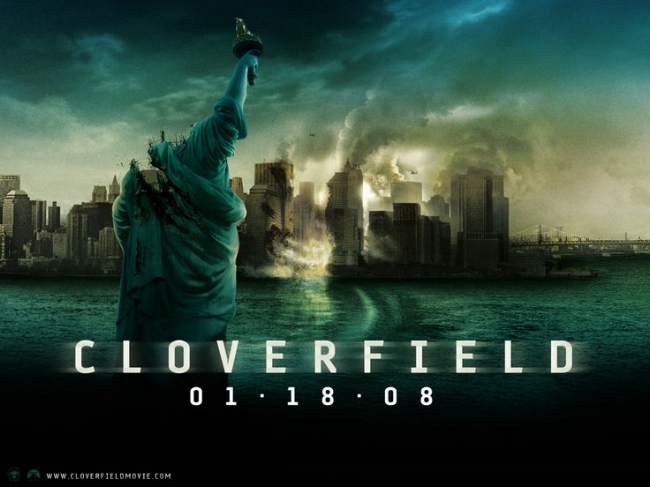
I did my best to avoid the hype surrounding the initial release of Cloverfield. Such media saturation and public interest can often cloud the issue of whether the actual film is any good. Five years later and having watched the movie twice, once in the theatre and once at home, I am still somewhat conflicted about this movie. The use of hand held video cameras is both a boon and a bane. The constant movement of the image has proven to cause motion sickness for some viewers, although this is not so overwhelming when viewed on a smaller screen at home. Yet the medium of news footage mixed with handheld cameras does create a palpable sense of immediacy. This helps immensely when trying to sell a fantastic concept, such as the one that Cloverfield features.
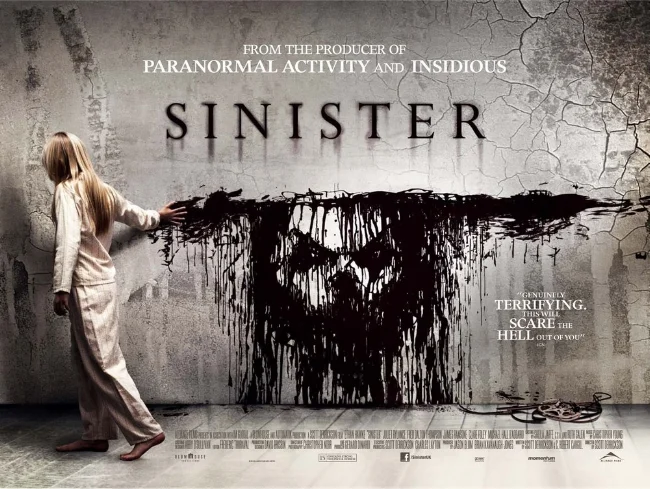
Scott Derrickson’s Sinister is a curious blending of genres and classic plot devices. It certainly has some interesting ideas at the centre of its plot. Ethan Hawke plays a true-crime writer Ellison Oswalt, looking for his next big story and desperate to find fame again. After discovering a box full of Super 8 home movies in the attic of his new house, matters start to take a turn for the worst. The films appear to depict the real murders of several families and investigations lead to a series of strange unsolved crime and the possible involvement of supernatural forces. Could a pagan deity known as Bughuul, who allegedly preys upon the souls of children, be responsible? Is Oswalt’s own family in danger? Do bears conduct their personal business in deciduous forests?
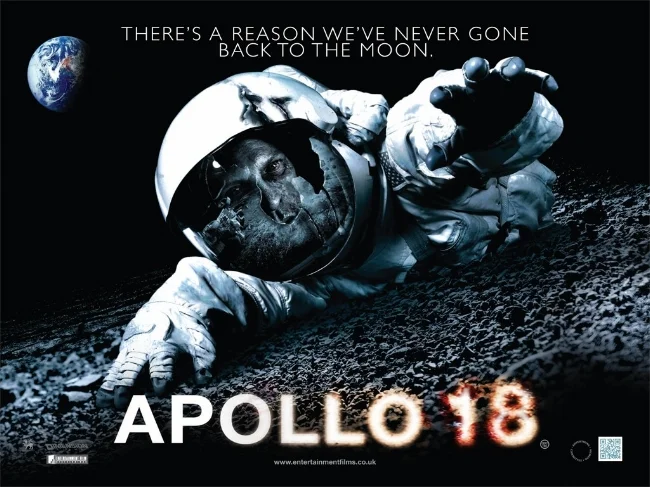
A fundamental requirement of cinema is that the audience suspends their sense of disbelief. Anything that breaks this will immediately has a negative impact upon the viewing experience. There are many things can severe this connection but the two most common seem to be obvious plot holes and Scooby Doo behaviour IE “Let’s split up…”. If these are the result of simply poor film making, then they can perhaps be forgiven. Every director has to learn their craft. However, if these two factors are present by design, then that is an unpardonable sin. Assuming that your audience is stupid, is insulting and the worse sort of hypocrisy.
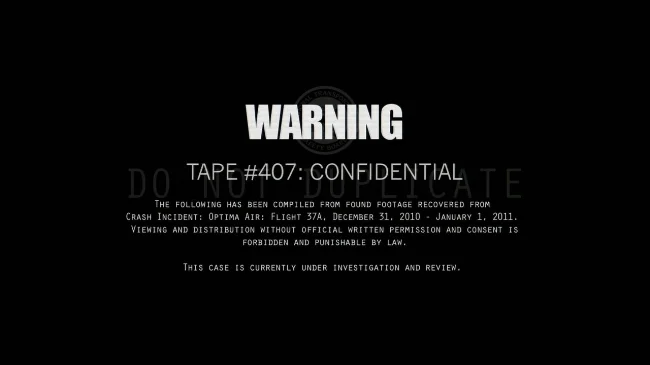
I really won't be sad to see the back of the found footage sub-genre because it really is becoming an over saturated market at present. For example, at the last count there were six Paranormal Activity movies, with their respective quality inversely proportional to their number in the franchise. Yes, there are the occasional good ones, such as the recent Operation Avalanche, which tackled conspiracy theories and the Moon Landing. But broadly speaking, this genre has become a dumping ground for cheap and uninspired movies, by mediocre film makers, out to make a fast buck. Take for example Tape 407 (AKA Area 407). It’s chosen twist on the genre is the inclusion of included dinosaurs. I was hoping that this would make the film sufficiently different to others and offers something new. Predictably it did not.
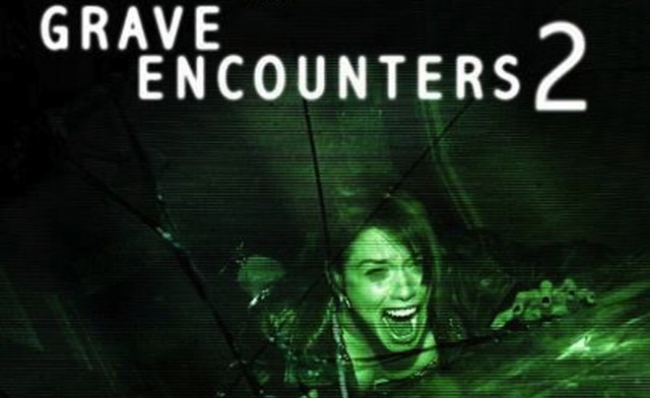
Sometimes you have to admire persistence. I really didn't think that Grave Encounters merited a sequel but apparently, it's financial returns indicated otherwise. So today I found myself watching Grave Encounters 2 with a certain sense of déjà vu because like the first movie, it tries to do something different and only partially succeeds. Once again, the writers (The Vicious Brothers) manage to jump the shark at the midway point and the movie ceases to innovate and just ticks boxes. The only major difference this time round is we get a little more of everything, because it is a sequel. So, there's more jumps, more ghosts and more violence. Is there more entertainment? May be.

I had high hopes for Grave Encounters after I saw the Trailer on You Tube six years ago. It got quite a lot of attention online, due to it jumping on the found footage bandwagon and by cashing in on the popularity of supernatural reality TV. The movie poster takes great pains to reference that fact. Shows such as Ghost Hunters and Most Haunted still pull in big TV ratings. Even I've been guilty of watching them in the past. So the idea of a TV crew investigating the paranormal and genuinely encountering it sounded very promising. Alas, Grave Encounters fails to reach it's potential in my opinion, although my primary objection hinges on a very subjective preconception. One that other viewers may not share.
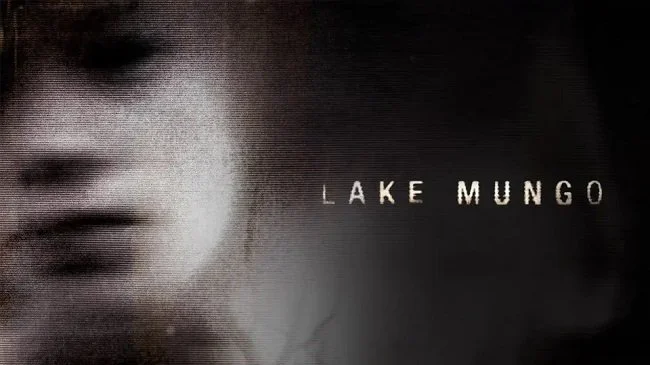
Do not be fooled by the marketing and artwork for Lake Mungo. It is not a found footage movie but in fact a faux documentary. If you are looking for cheap scares, loud noises and unpleasant imagery, then you will be disappointed. Lake Mungo is not your standard exploitation fodder. If however you like well constructed movies that create a genuine sense of disquiet, then Lake Mungo is a must see. Once again Australian cinema has managed to produce an innovative and thoughtful entry to a popular sub-genre. The film demonstrates a great understanding of the mechanics of a ghost story and how they should be handled.
As Above, So Below (2014)
The found footage genre is predicated on the concept that the material the audience watches is supposed to be filmed from real life. This therefore presents a challenge for actors as their performances have to appear like everyday social interactions. Most people are not great orators with extensive vocabularies, in real life. Watch any wedding video or vox pop on a news broadcast and you’ll quickly become aware of the gulf between how people express themselves in reality and the stylised, contrived manner in which actors deliver dialogue. Hence, during the first act of As Above, So Below I became aware that the cast were “acting”. They were using dramatic techniques commonly used in conventional film but which stands out far more in this genre. This changed as the film progressed and the story became more deliberately chaotic. But it was noticeable during the initial set up to the story. It’s not something I’ve noticed before with other found footage movies. But in many ways, As Above, So Below is quite different compared to other genre examples
The found footage genre is predicated on the concept that the material the audience watches is supposed to be filmed from real life. This therefore presents a challenge for actors as their performances have to appear like everyday social interactions. Most people are not great orators with extensive vocabularies, in real life. Watch any wedding video or vox pop on a news broadcast and you’ll quickly become aware of the gulf between how people express themselves in reality and the stylised, contrived manner in which actors deliver dialogue. Hence, during the first act of As Above, So Below I became aware that the cast were “acting”. They were using dramatic techniques commonly used in conventional film but which stands out far more in this genre. This changed as the film progressed and the story became more deliberately chaotic. But it was noticeable during the initial set up to the story. It’s not something I’ve noticed before with other found footage movies. But in many ways, As Above, So Below is quite different compared to other genre examples
Archaeologist Scarlett Marlowe (Perdita Weeks) is obsessed with finding Nicholas Flamel's alchemical Philosopher's Stone. After finding an inscription in a cave in Iran, written in Aramaic, she travels to Paris along with her documentary cameraman Benji (Edwin Hodge). She meets with her former boyfriend George (Ben Feldman) who is an expert in ancient languages. After deciphering the inscription and using it to find hidden information on the back of Nicholas Flamel's gravestone, they discover that the Philosopher's Stone is located in the Parisian Catacombs. The team then finds a group of unofficial guides, Papillon, Siouxie and Zed, who are experienced exploring the parts of the Catacombs not open to the public. They enter the subterranean necropolis and when a tunnel collapses, are forced to take a route that has previously not been explored. Papillon is nervous as a close friend of his La Taupe vanished here, despite his knowledge. As the group travel further they become aware that all is not as it seems and that they’re all being haunted by their own past.
Once the cast are trapped in the Parisian Catacombs the plot draws heavily from Dante's Inferno. Given the scope of the story and the nature of themes therein, I would argue that maybe it would have been preferable to have made As Above, So Below a standard horror film, rather than in the found footage format. However, writers Paco Plaza, Luis A. Berdejo and Jaume Balagueró certainly are innovative with regards to pushing the boundaries of this genre. There are several noticeable scenes which have a palpable sense of claustrophobia that I’ve only seen previously in The Borderlands (2013) and The Descent (2005). The characters are at times somewhat annoying with their bickering and squabbling but that is a reflection of their personalities. There is a tipping point in the story where events veer from the strange into the pure eldritch. Stone faces appear in the walls and attack people, hooded figures charge at the unwary and the narrow corridors of the necropolis fill with blood. By this point the viewer either goes with the proceedings or emotionally checks out.
Most found footage films do not hold up to close scrutiny. The most common criticism is that there often comes a point in the story where most people would stop filming and run. And this argument can certainly be levelled at As Above, So Below. However, because the story is so ambitious with its use of nonlinear time, visions of hell and exploration of alchemy, it seems pedantic to focus on minor contradictions of the format and the film’s own internal logic. There’s also an off kilter ambience to the proceedings. Simple things like finding a piano amid the dust and confines of the tunnel are disquieting. Papillon coming across one of his own graffiti tags which he claims he hasn’t done is similarly bothersome. Plus the Parisian Catacombs themselves are just plain sinister. I suspect there may be no middle ground with As Above, So Below. You’ll either embrace its ambition and enjoy it or dismiss it out right. I chose the former.
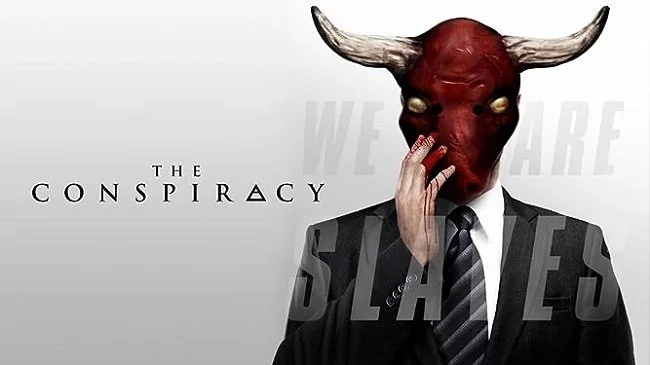
Filmmakers Aaron (Aaron Poole) and Jim (James Gilbert) decide to make a documentary about online conspiracy theories Terrance G (Alan Peterson), mainly due to the amount of attention he attracts online. Terrance explains in detail how many global events all appear to be linked to an NGO called the Tarsus Club. Jim remains sceptical of such theories, but Aaron is more willing to accept them. During an interview, Terrance becomes agitated and points out a man whom he believes to be following him. A few days later Terrance vanishes. Aaron searches through various newspaper clippings left in Terrance’s apartment and finds a reference to a Time magazine article about the Tarsus Club written by Mark Tucker (Bruce Clayton). As the pair of journalists search for Tucker, they see the same man that was following Terrance. They are also menaced by a Black SUV that parks outside Jim’s house at night. Finally, Tucker contacts them online and it becomes clear that he has more to reveal about the Tarsus Club. Aaron suggests that they try to infiltrate the next meeting, but Jim is reluctant to do so, due to the possible danger.
The found footage genre is predicated on the concept that the material the audience watches is supposed to be filmed from real life. This therefore presents a challenge for actors as their performances have to appear like everyday social interactions. Most people are not great orators with extensive vocabularies, in real life. Watch any wedding video or vox pop on a news broadcast and you’ll quickly become aware of the gulf between how people express themselves in reality and the stylised, contrived manner in which actors deliver dialogue. Hence, during the first act of As Above, So Below I became aware that the cast were “acting”. They were using dramatic techniques commonly used in conventional film but which stands out far more in this genre. This changed as the film progressed and the story became more deliberately chaotic. But it was noticeable during the initial set up to the story. It’s not something I’ve noticed before with other found footage movies. But in many ways, As Above, So Below is quite different compared to other genre examples
In many ways the story behind The McPherson Tape is a lot more interesting than the film itself. This early found footage movie from 1989, was shot on home video on a virtually non-existent budget. The director Dean Alioto eventually found a distributor but on the eve of the movie’s home video release, the warehouse burned down and allegedly destroyed the master tape and all the promotional artwork. Yet this was not the end of the story. It was common practice in the eighties for small distributors to send advance copies to local independent video stores. Hence The McPherson Tape found its way into the pirate video ecosystem. It then migrated to the UFO community where it was circulated as being a video of a legitimate alien abduction. Dean found himself in the unusual position of having to debunk his own work. Three decades later due to the intriguing tale associated with The McPherson Tape, it has been remastered from the newly rediscovered 3/4" tape and re-released.
In his review in the New York Times Kyle Turner states that the new horror movie Host “seems to speak to a collective id” and serves as “an analogy for mourning the recent past”. I’ve read several other critiques of this nature that both praise the film and make similar philosophical musings upon its nature. As a long standing horror aficionado I am always a little sceptical when a new movie quickly gains a lot of traction and a critical consensus swiftly forms. Especially when a genre product suddenly gains the attention of the mainstream media who subsequently stray into hyperbole and hype. This happened last year with Midsommar which was hailed as a groundbreaking horror movie and indicative of a renaissance in the genre. Although an intelligent and disturbing film, Midsommar is not without flaws and is far from universally accessible. It is also frustrating the way the mainstream media is oblivious to the ongoing financial and critical success of the horror genre that has existed since the inception of cinema.
The Last Broadcast is a curious beast that straddles both the “mockumentary” and “found footage” genres. Shot entirely on consumer level video equipment, it effectively captures the look and feel of public access cable TV from the times. Released before the massive commercial success of The Blair Witch Project, The Last Broadcast did not find a comparable mainstream audience at the time, although it remains a favourite with genre fans. However, the movie has been recently re-released on Amazon Prime and subsequently become a talking point once again. Elements of the plot have proven very prophetic, such as the popularity of “ghost hunting” reality shows and the integration of online interactivity into live television. But the one standout aspect of The Last Broadcast which polarises viewer opinion is its ending. This is often seen as either a clever “sting in the tail” or an ill considered “jumping the shark” cop out.
The Tunnel was released direct to Region 3 DVD on 19th May 2011, much the same as any other low budget horror movie. What made the marketing of this minor Aussie "Mockumentary" horror different to other similar products, is that the distributors decided to make a barebones copy of the film available for download, free of charge. The accompanying viral marketing campaign gained quite a lot of traction resulting in The Tunnel being heavily seeded across Bit Torrent sites and exposing the film to an audience of millions globally. Subsequently, when the movie was then showcased in the US and Europe and commercially released in other regions, its profile had been considerably raised. As a result of this novel marketing campaign and the fact that the movie is a better than average example of the found footage genre, The Tunnel won several awards on the festival circuit.
Conspiracy theories and found footage movies. Two genres with infinite scope to be tedious and uninspired on a low budget. Yet writer and director Matt Johnson manages to do something quite clever with both cinematic styles in his recent movie Operation Avalanche. He takes the basic conceit of the two formats and uses them to tell a tale based upon one of the most iconic moments of twentieth century history. Namely the moon landing of 1969. The results are surprising, intelligent and thought provoking, although a little uneven. Furthermore, I discovered this enjoyable curiosity via the GoodBadFlicks on You Tube. If you are interested in obscure and niche market genre creations then do check out this channel. It is informative, well presented and entertaining.
I did my best to avoid the hype surrounding the initial release of Cloverfield. Such media saturation and public interest can often cloud the issue of whether the actual film is any good. Five years later and having watched the movie twice, once in the theatre and once at home, I am still somewhat conflicted about this movie. The use of hand held video cameras is both a boon and a bane. The constant movement of the image has proven to cause motion sickness for some viewers, although this is not so overwhelming when viewed on a smaller screen at home. Yet the medium of news footage mixed with handheld cameras does create a palpable sense of immediacy. This helps immensely when trying to sell a fantastic concept, such as the one that Cloverfield features.
Scott Derrickson’s Sinister is a curious blending of genres and classic plot devices. It certainly has some interesting ideas at the centre of its plot. Ethan Hawke plays a true-crime writer Ellison Oswalt, looking for his next big story and desperate to find fame again. After discovering a box full of Super 8 home movies in the attic of his new house, matters start to take a turn for the worst. The films appear to depict the real murders of several families and investigations lead to a series of strange unsolved crime and the possible involvement of supernatural forces. Could a pagan deity known as Bughuul, who allegedly preys upon the souls of children, be responsible? Is Oswalt’s own family in danger? Do bears conduct their personal business in deciduous forests?
A fundamental requirement of cinema is that the audience suspends their sense of disbelief. Anything that breaks this will immediately has a negative impact upon the viewing experience. There are many things can severe this connection but the two most common seem to be obvious plot holes and Scooby Doo behaviour IE “Let’s split up…”. If these are the result of simply poor film making, then they can perhaps be forgiven. Every director has to learn their craft. However, if these two factors are present by design, then that is an unpardonable sin. Assuming that your audience is stupid, is insulting and the worse sort of hypocrisy.
I really won't be sad to see the back of the found footage sub-genre because it really is becoming an over saturated market at present. For example, at the last count there were six Paranormal Activity movies, with their respective quality inversely proportional to their number in the franchise. Yes, there are the occasional good ones, such as the recent Operation Avalanche, which tackled conspiracy theories and the Moon Landing. But broadly speaking, this genre has become a dumping ground for cheap and uninspired movies, by mediocre film makers, out to make a fast buck. Take for example Tape 407 (AKA Area 407). It’s chosen twist on the genre is the inclusion of included dinosaurs. I was hoping that this would make the film sufficiently different to others and offers something new. Predictably it did not.
Sometimes you have to admire persistence. I really didn't think that Grave Encounters merited a sequel but apparently, it's financial returns indicated otherwise. So today I found myself watching Grave Encounters 2 with a certain sense of déjà vu because like the first movie, it tries to do something different and only partially succeeds. Once again, the writers (The Vicious Brothers) manage to jump the shark at the midway point and the movie ceases to innovate and just ticks boxes. The only major difference this time round is we get a little more of everything, because it is a sequel. So, there's more jumps, more ghosts and more violence. Is there more entertainment? May be.
I had high hopes for Grave Encounters after I saw the Trailer on You Tube six years ago. It got quite a lot of attention online, due to it jumping on the found footage bandwagon and by cashing in on the popularity of supernatural reality TV. The movie poster takes great pains to reference that fact. Shows such as Ghost Hunters and Most Haunted still pull in big TV ratings. Even I've been guilty of watching them in the past. So the idea of a TV crew investigating the paranormal and genuinely encountering it sounded very promising. Alas, Grave Encounters fails to reach it's potential in my opinion, although my primary objection hinges on a very subjective preconception. One that other viewers may not share.
Do not be fooled by the marketing and artwork for Lake Mungo. It is not a found footage movie but in fact a faux documentary. If you are looking for cheap scares, loud noises and unpleasant imagery, then you will be disappointed. Lake Mungo is not your standard exploitation fodder. If however you like well constructed movies that create a genuine sense of disquiet, then Lake Mungo is a must see. Once again Australian cinema has managed to produce an innovative and thoughtful entry to a popular sub-genre. The film demonstrates a great understanding of the mechanics of a ghost story and how they should be handled.
The McPherson Tape (1989)
In many ways the story behind The McPherson Tape is a lot more interesting than the film itself. This early found footage movie from 1989, was shot on home video on a virtually non-existent budget. The director Dean Alioto eventually found a distributor but on the eve of the movie’s home video release, the warehouse burned down and allegedly destroyed the master tape and all the promotional artwork. Yet this was not the end of the story. It was common practice in the eighties for small distributors to send advance copies to local independent video stores. Hence The McPherson Tape found its way into the pirate video ecosystem. It then migrated to the UFO community where it was circulated as being a video of a legitimate alien abduction. Dean found himself in the unusual position of having to debunk his own work. Three decades later due to the intriguing tale associated with The McPherson Tape, it has been remastered from the newly rediscovered 3/4" tape and re-released.
In many ways the story behind The McPherson Tape is a lot more interesting than the film itself. This early found footage movie from 1989, was shot on home video on a virtually non-existent budget. The director Dean Alioto eventually found a distributor but on the eve of the movie’s home video release, the warehouse burned down and allegedly destroyed the master tape and all the promotional artwork. Yet this was not the end of the story. It was common practice in the eighties for small distributors to send advance copies to local independent video stores. Hence The McPherson Tape found its way into the pirate video ecosystem. It then migrated to the UFO community where it was circulated as being a video of a legitimate alien abduction. Dean found himself in the unusual position of having to debunk his own work. Three decades later due to the intriguing tale associated with The McPherson Tape, it has been remastered from the newly rediscovered 3/4" tape and re-released.
On the evening of October 8, 1983, the Van Heese family gather in the Connecticut mountains to celebrate the birthday of 5-year-old Michelle. The family consists of Ma Van Heese (Shirly McCalla), her three sons Eric (Tommy Giavocchini), Jason (Patrick Kelley), and Michael (Dean Alioto), Eric’s wife Jamie (Christine Staples), his daughter Michelle (Laura Tomas) and Jason’s girlfriend Renee (Stacey Shulman). Michael uses his hand-held camera to record the night’s events, much to the amusement and irritation of his family. They chat and argue as families do as the evening progresses. However when a circuit breaker trips the brothers go outside to restore power. An unusual red light overhead arouses their curiosity so they walk to a neighbouring property, only to find a spacecraft has landed. They flee back to their own house when they are noticed by the extraterrestrial occupants. Armed with shotguns they nervously await pursuit. When something tries to enter via a window, Eric shoots it and brings the body into the house as “evidence”. Is this the end of the siege or do further perils await them?
There is the germ of a good idea in The McPherson Tape and first time writer and director Dean Alioto should be applauded for trying to do something so unusual and ambitious like this back in 1989, when this genre was still in its infancy. But the film struggles to sustain its relatively short hour running time. Despite all the logical concessions that you can make to both the production and cast, this is a ponderous undertaking and a tough watch. It genuinely does at times come across as exactly watching someone’s home videos. Despite restoration, the picture quality is poor however that does work in the films favour to a degree. The characters act in a relatively plausible fashion, arguing among themselves and generally acting impulsively and without any critical thinking. But events take too long to go anywhere and by the time we reach a point where things start to get “interesting” the film ends because it has achieved its purpose.
Hence, I cannot recommend The McPherson Tape to the casual viewer, as it doesn’t really meet mainstream entertainment standards. This is most definitely a niche market product that will best suit the genre completist and aficionado. The editing is minimal and cleverly disguised making The McPherson Tape look very much like a continuous piece of footage. The camera at times is out of focus or points at a plate or the floor. Keeping things simple in scope certainly helps the proceedings and therefore we only see a small amount of the UFO and the aliens themselves. The commentary track on the new Blu-ray release is by far the biggest selling point and it is fascinating to learn how a small budget film ended up fuelling alien abduction conspiracy theories. The director later went on to remake the film with a larger budget and studio backing in 1998, under the title Alien Abduction: Incident in Lake County.
Filmmakers Aaron (Aaron Poole) and Jim (James Gilbert) decide to make a documentary about online conspiracy theories Terrance G (Alan Peterson), mainly due to the amount of attention he attracts online. Terrance explains in detail how many global events all appear to be linked to an NGO called the Tarsus Club. Jim remains sceptical of such theories, but Aaron is more willing to accept them. During an interview, Terrance becomes agitated and points out a man whom he believes to be following him. A few days later Terrance vanishes. Aaron searches through various newspaper clippings left in Terrance’s apartment and finds a reference to a Time magazine article about the Tarsus Club written by Mark Tucker (Bruce Clayton). As the pair of journalists search for Tucker, they see the same man that was following Terrance. They are also menaced by a Black SUV that parks outside Jim’s house at night. Finally, Tucker contacts them online and it becomes clear that he has more to reveal about the Tarsus Club. Aaron suggests that they try to infiltrate the next meeting, but Jim is reluctant to do so, due to the possible danger.
The found footage genre is predicated on the concept that the material the audience watches is supposed to be filmed from real life. This therefore presents a challenge for actors as their performances have to appear like everyday social interactions. Most people are not great orators with extensive vocabularies, in real life. Watch any wedding video or vox pop on a news broadcast and you’ll quickly become aware of the gulf between how people express themselves in reality and the stylised, contrived manner in which actors deliver dialogue. Hence, during the first act of As Above, So Below I became aware that the cast were “acting”. They were using dramatic techniques commonly used in conventional film but which stands out far more in this genre. This changed as the film progressed and the story became more deliberately chaotic. But it was noticeable during the initial set up to the story. It’s not something I’ve noticed before with other found footage movies. But in many ways, As Above, So Below is quite different compared to other genre examples
In many ways the story behind The McPherson Tape is a lot more interesting than the film itself. This early found footage movie from 1989, was shot on home video on a virtually non-existent budget. The director Dean Alioto eventually found a distributor but on the eve of the movie’s home video release, the warehouse burned down and allegedly destroyed the master tape and all the promotional artwork. Yet this was not the end of the story. It was common practice in the eighties for small distributors to send advance copies to local independent video stores. Hence The McPherson Tape found its way into the pirate video ecosystem. It then migrated to the UFO community where it was circulated as being a video of a legitimate alien abduction. Dean found himself in the unusual position of having to debunk his own work. Three decades later due to the intriguing tale associated with The McPherson Tape, it has been remastered from the newly rediscovered 3/4" tape and re-released.
In his review in the New York Times Kyle Turner states that the new horror movie Host “seems to speak to a collective id” and serves as “an analogy for mourning the recent past”. I’ve read several other critiques of this nature that both praise the film and make similar philosophical musings upon its nature. As a long standing horror aficionado I am always a little sceptical when a new movie quickly gains a lot of traction and a critical consensus swiftly forms. Especially when a genre product suddenly gains the attention of the mainstream media who subsequently stray into hyperbole and hype. This happened last year with Midsommar which was hailed as a groundbreaking horror movie and indicative of a renaissance in the genre. Although an intelligent and disturbing film, Midsommar is not without flaws and is far from universally accessible. It is also frustrating the way the mainstream media is oblivious to the ongoing financial and critical success of the horror genre that has existed since the inception of cinema.
The Last Broadcast is a curious beast that straddles both the “mockumentary” and “found footage” genres. Shot entirely on consumer level video equipment, it effectively captures the look and feel of public access cable TV from the times. Released before the massive commercial success of The Blair Witch Project, The Last Broadcast did not find a comparable mainstream audience at the time, although it remains a favourite with genre fans. However, the movie has been recently re-released on Amazon Prime and subsequently become a talking point once again. Elements of the plot have proven very prophetic, such as the popularity of “ghost hunting” reality shows and the integration of online interactivity into live television. But the one standout aspect of The Last Broadcast which polarises viewer opinion is its ending. This is often seen as either a clever “sting in the tail” or an ill considered “jumping the shark” cop out.
The Tunnel was released direct to Region 3 DVD on 19th May 2011, much the same as any other low budget horror movie. What made the marketing of this minor Aussie "Mockumentary" horror different to other similar products, is that the distributors decided to make a barebones copy of the film available for download, free of charge. The accompanying viral marketing campaign gained quite a lot of traction resulting in The Tunnel being heavily seeded across Bit Torrent sites and exposing the film to an audience of millions globally. Subsequently, when the movie was then showcased in the US and Europe and commercially released in other regions, its profile had been considerably raised. As a result of this novel marketing campaign and the fact that the movie is a better than average example of the found footage genre, The Tunnel won several awards on the festival circuit.
Conspiracy theories and found footage movies. Two genres with infinite scope to be tedious and uninspired on a low budget. Yet writer and director Matt Johnson manages to do something quite clever with both cinematic styles in his recent movie Operation Avalanche. He takes the basic conceit of the two formats and uses them to tell a tale based upon one of the most iconic moments of twentieth century history. Namely the moon landing of 1969. The results are surprising, intelligent and thought provoking, although a little uneven. Furthermore, I discovered this enjoyable curiosity via the GoodBadFlicks on You Tube. If you are interested in obscure and niche market genre creations then do check out this channel. It is informative, well presented and entertaining.
I did my best to avoid the hype surrounding the initial release of Cloverfield. Such media saturation and public interest can often cloud the issue of whether the actual film is any good. Five years later and having watched the movie twice, once in the theatre and once at home, I am still somewhat conflicted about this movie. The use of hand held video cameras is both a boon and a bane. The constant movement of the image has proven to cause motion sickness for some viewers, although this is not so overwhelming when viewed on a smaller screen at home. Yet the medium of news footage mixed with handheld cameras does create a palpable sense of immediacy. This helps immensely when trying to sell a fantastic concept, such as the one that Cloverfield features.
Scott Derrickson’s Sinister is a curious blending of genres and classic plot devices. It certainly has some interesting ideas at the centre of its plot. Ethan Hawke plays a true-crime writer Ellison Oswalt, looking for his next big story and desperate to find fame again. After discovering a box full of Super 8 home movies in the attic of his new house, matters start to take a turn for the worst. The films appear to depict the real murders of several families and investigations lead to a series of strange unsolved crime and the possible involvement of supernatural forces. Could a pagan deity known as Bughuul, who allegedly preys upon the souls of children, be responsible? Is Oswalt’s own family in danger? Do bears conduct their personal business in deciduous forests?
A fundamental requirement of cinema is that the audience suspends their sense of disbelief. Anything that breaks this will immediately has a negative impact upon the viewing experience. There are many things can severe this connection but the two most common seem to be obvious plot holes and Scooby Doo behaviour IE “Let’s split up…”. If these are the result of simply poor film making, then they can perhaps be forgiven. Every director has to learn their craft. However, if these two factors are present by design, then that is an unpardonable sin. Assuming that your audience is stupid, is insulting and the worse sort of hypocrisy.
I really won't be sad to see the back of the found footage sub-genre because it really is becoming an over saturated market at present. For example, at the last count there were six Paranormal Activity movies, with their respective quality inversely proportional to their number in the franchise. Yes, there are the occasional good ones, such as the recent Operation Avalanche, which tackled conspiracy theories and the Moon Landing. But broadly speaking, this genre has become a dumping ground for cheap and uninspired movies, by mediocre film makers, out to make a fast buck. Take for example Tape 407 (AKA Area 407). It’s chosen twist on the genre is the inclusion of included dinosaurs. I was hoping that this would make the film sufficiently different to others and offers something new. Predictably it did not.
Sometimes you have to admire persistence. I really didn't think that Grave Encounters merited a sequel but apparently, it's financial returns indicated otherwise. So today I found myself watching Grave Encounters 2 with a certain sense of déjà vu because like the first movie, it tries to do something different and only partially succeeds. Once again, the writers (The Vicious Brothers) manage to jump the shark at the midway point and the movie ceases to innovate and just ticks boxes. The only major difference this time round is we get a little more of everything, because it is a sequel. So, there's more jumps, more ghosts and more violence. Is there more entertainment? May be.
I had high hopes for Grave Encounters after I saw the Trailer on You Tube six years ago. It got quite a lot of attention online, due to it jumping on the found footage bandwagon and by cashing in on the popularity of supernatural reality TV. The movie poster takes great pains to reference that fact. Shows such as Ghost Hunters and Most Haunted still pull in big TV ratings. Even I've been guilty of watching them in the past. So the idea of a TV crew investigating the paranormal and genuinely encountering it sounded very promising. Alas, Grave Encounters fails to reach it's potential in my opinion, although my primary objection hinges on a very subjective preconception. One that other viewers may not share.
Do not be fooled by the marketing and artwork for Lake Mungo. It is not a found footage movie but in fact a faux documentary. If you are looking for cheap scares, loud noises and unpleasant imagery, then you will be disappointed. Lake Mungo is not your standard exploitation fodder. If however you like well constructed movies that create a genuine sense of disquiet, then Lake Mungo is a must see. Once again Australian cinema has managed to produce an innovative and thoughtful entry to a popular sub-genre. The film demonstrates a great understanding of the mechanics of a ghost story and how they should be handled.
Host (2020)
In his review in the New York Times Kyle Turner states that the new horror movie Host “seems to speak to a collective id” and serves as “an analogy for mourning the recent past”. I’ve read several other critiques of this nature that both praise the film and make similar philosophical musings upon its nature. As a long standing horror aficionado I am always a little sceptical when a new movie quickly gains a lot of traction and a critical consensus swiftly forms. Especially when a genre product suddenly gains the attention of the mainstream media who subsequently stray into hyperbole and hype. This happened last year with Midsommar which was hailed as a groundbreaking horror movie and indicative of a renaissance in the genre. Although an intelligent and disturbing film, Midsommar is not without flaws and is far from universally accessible. It is also frustrating the way the mainstream media is oblivious to the ongoing financial and critical success of the horror genre that has existed since the inception of cinema.
In his review in the New York Times Kyle Turner states that the new horror movie Host “seems to speak to a collective id” and serves as “an analogy for mourning the recent past”. I’ve read several other critiques of this nature that both praise the film and make similar philosophical musings upon its nature. As a long standing horror aficionado I am always a little sceptical when a new movie quickly gains a lot of traction and a critical consensus swiftly forms. Especially when a genre product suddenly gains the attention of the mainstream media who subsequently stray into hyperbole and hype. This happened last year with Midsommar which was hailed as a groundbreaking horror movie and indicative of a renaissance in the genre. Although an intelligent and disturbing film, Midsommar is not without flaws and is far from universally accessible. It is also frustrating the way the mainstream media is oblivious to the ongoing financial and critical success of the horror genre that has existed since the inception of cinema.
However, my ambivalence notwithstanding, in the past few days positive comments about Host have constantly appeared in my social media timelines, many of which come from grass roots sources that I trust (such as the Evolution of Horror podcast). Hence I signed up to a seven day free trial of the streaming service Shudder and watched Host under optimal conditions. IE knowing as little about the plot as possible and in a darkened room, late at night. Having had time to reflect upon my viewing and go through my notes, I believe that the popular consensus surrounding Host is certainly justified. The film is a finely honed 59 minutes, that is an intelligent reinvention of many classic horror tropes. Cleverly crafted, dovetailing modern fears and social angst with the traditional, it provides an array of scares while maintaining a tense atmosphere in that allegedly benign environment; the modern home. Is it a genre defining milestone? Not necessarily so but what it does do is tap into a lot of the psychological concerns prevalent in the current climate and integrate those into the established fear of the supernatural. Host is certainly very pertinent and “of the moment”.
Six friends, Haley, Jemma, Emma, Radina, Caroline and Teddy meet online via a Zoom video conference call. All are at home or living with partners during the ongoing lockdown. Rather than playing games or having a quiz Haley has hired a spiritual medium to hold a seance. Emma, Radina and Caroline are a little scared by the prospect of such a thing but Eddy and Jemma are both sceptical and prone to mocking it. Medium Seylan reminds the group to be respectful of the spirits and briefs them on managing their thoughts and most importantly how to correctly leave the “circle” if they become uncomfortable with the situation. As the seance progresses, Jemma screams when something touches her neck and she finds herself thinking of a friend from school called Jack who hung himself. Seylan is then disconnected from the call and one by one, each of the friends experience supernatural occurrences in their homes. Rather than contacting a benevolent spirit it becomes clear that they’ve enabled a far more malign force. Can they close the seance circle and dismiss the spectral guest?
One of the film’s greatest assets is the medium in which it is filmed. Buy using Zoom and phones on selfie sticks, there is a great sense of immediacy and the common place tech makes events more accessible. The narrative touches upon the frustrations and alien nature of the current lock down, something that is perhaps more keenly felt among the young. The characters are broadly likeable as well as plausible and the cast perform well. They’re behaviour is also in line with how people react in unknown situations. Some cope well, others go to pieces. As this is a UK production and there is a healthy dose of British colloquialisms and profanities. Where Host excels is in the effective use of its running time. The plot set up, introduction of the characters and dissent from normality into panic is perfectly paced. The idea of having the film last the length of a free Zoom call is sublime.
When supernatural events start to occur, they are initially small in scale and well implemented. Chairs move, a glass shatters and noises are heard off camera. There’s also an innovative use of the filters that come with contemporary phones and video conferencing software. In one scene the filter is triggered by the presence of the spirit and it is a genuinely scary and original sequence. Host handles the building tension well and has plenty of robust and jolting scares. If you are a long standing horror fan who has watched a prodigious amount of genre material, then you well may be able to predict some but not all. The creepy music box is an obviously telegraphed example but others will wrong foot you. The denouement is in some respects inevitable but that does not diminish its power. By the time it comes round you are so invested and engrossed in the proceedings that you still hope that things may work out.
Host is well made, inventive and exceedingly timely. It meets viewers expectations and delivers a white knuckle experience in spades. It’s also a textbook example of how the genre re-invents itself by taking its essential tropes and themes and interpreting in a way that is relevant for a modern audience. Host will especially resonate with the youth market but is still totally accessible to older horror fans who will recognise much that is traditional and de rigueur. I’m not sure if there is a universally accepted term for such movies as Host yet. Wikipedia classifies such productions as “computer screen films” and a subset of the “found footage” genre. However, I’m sure those associated with the production of Host such as director Rob Savage and writers Gemma Hurley and Jed Shepherd will find themselves much sought after. They’ll no doubt be a flood of inferior films in the months to come. But they won’t stand out like Host which has found an audience through talent, enterprise and a genuine appreciation of the genre.
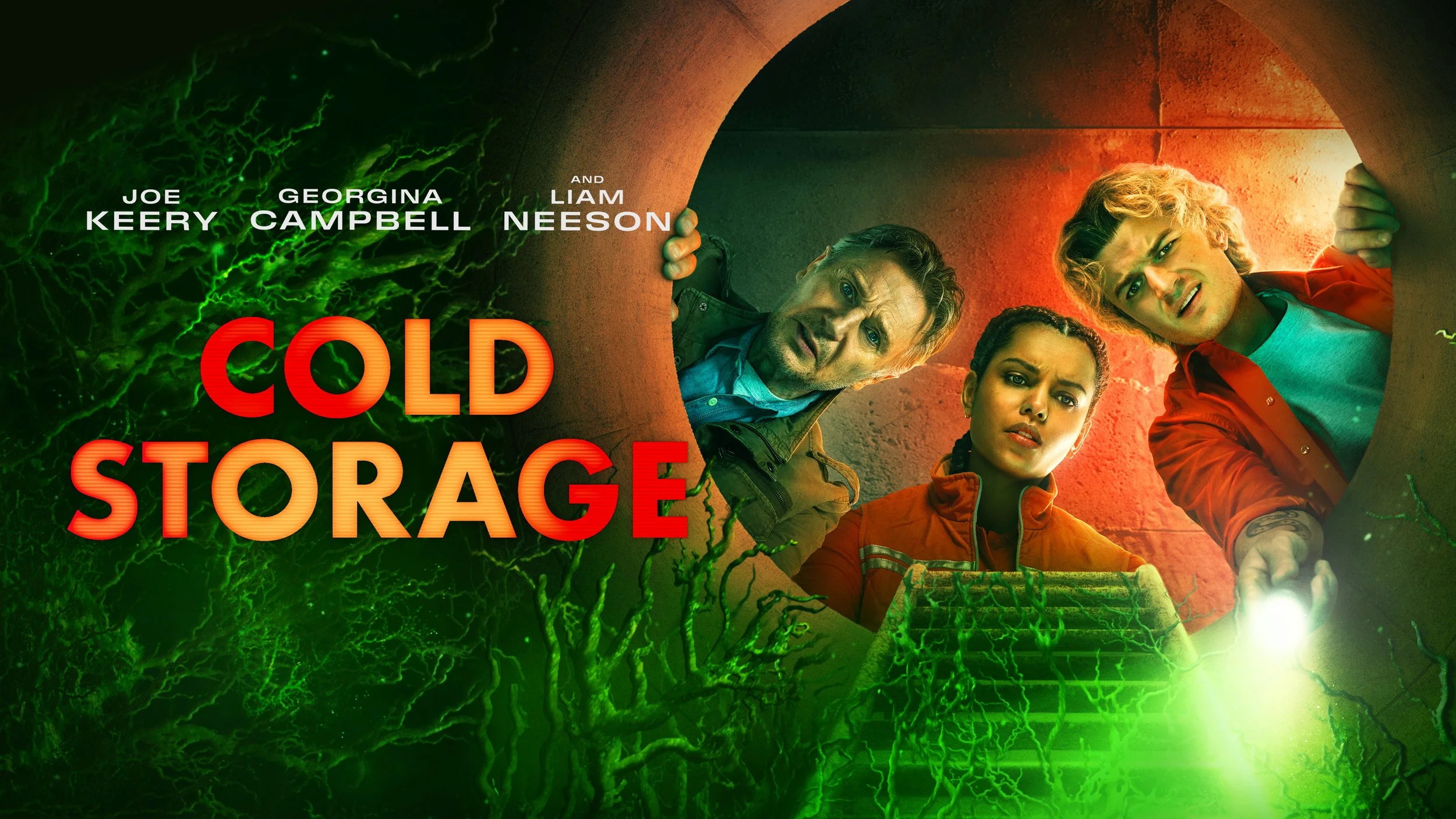
David Koepp is no stranger to genre cinema, having written the screenplay for such films as Jurassic Park, Spider-man and War of the Worlds. Where these titles are big budget, major studio productions, Cold Storage is a far more modest production with a smaller scope. Adapted from his own novel, the screenplay is by David Koepp and the film is directed by British film-maker Jonny Campbell. At first glance, Cold Storage seems a somewhat derivative science fiction horror film with a relatively modest budget, financed through a convoluted US and French co-production. Lurid green and red colours feature heavily in the marketing artwork and it is easy, after a cursory look, to write the film off as cheap, generic, direct-to-streaming filler. However, Cold Storage is prime example of why you should not judge a book by it’s cover, or in this case, a film by its posters and online advertising. It is in fact an amusing and fun endeavour that can fill an evening.
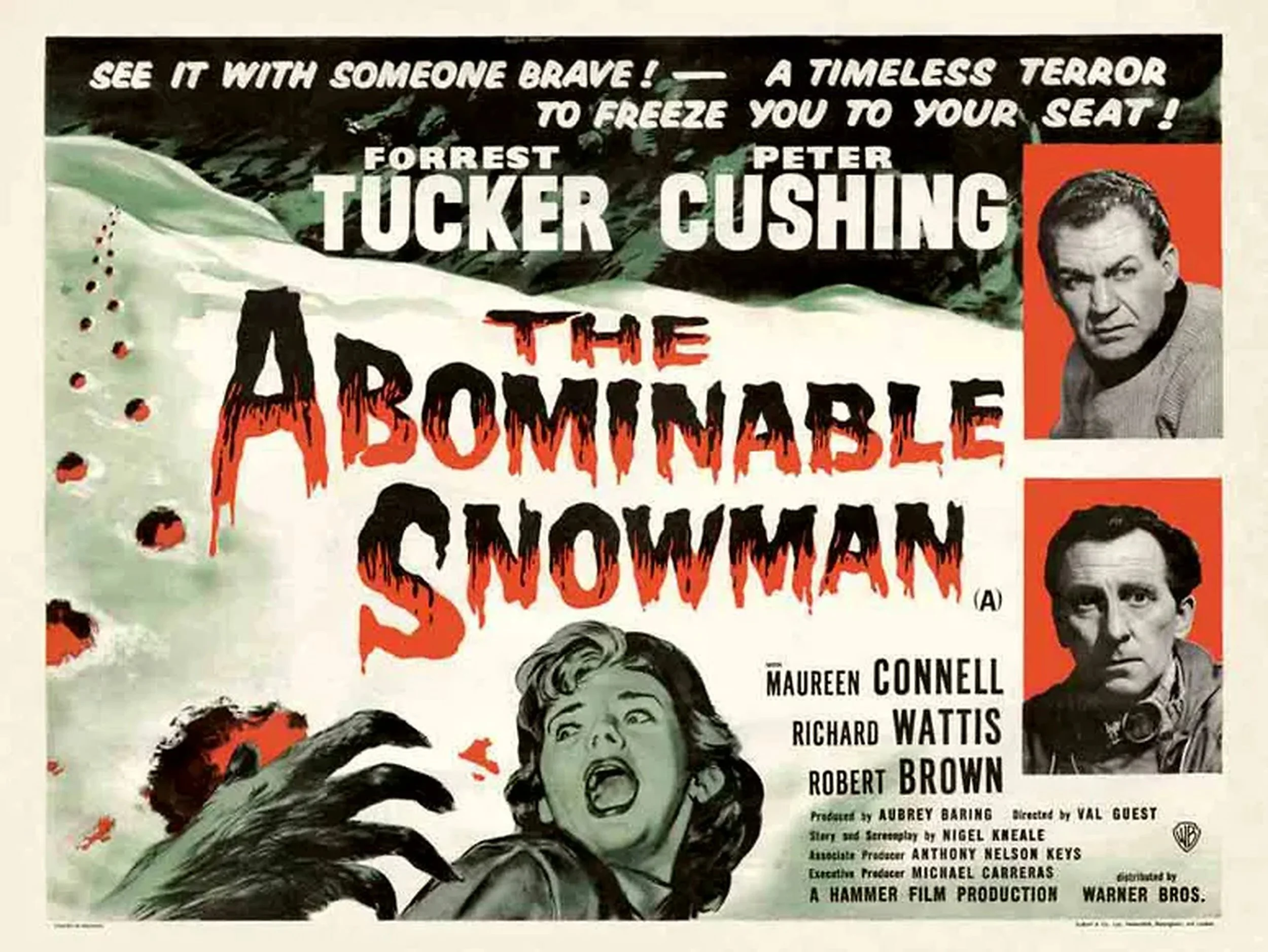
Despite being considered by many as an original story, The Abominable Snowman (1957) is in fact a remake of a made for television play, The Creature, that was originally broadcast in the UK in 1955. Hammer Films would often purchase the rights of popular TV programs and subsequently re-work them for mainstream, international cinema. Larger production budgets and fewer censorship restrictions allowed them to make their cinematic interpretations more lurid, thus commercially viable. Hence The Quatermass Xperiment, Quatermass II and Quatermass and the Pit were all given a big screen makeover and were commercially successful. The Abominable Snowman was written by acclaimed writer Nigel Kneale, who also wrote the original television drama and the aforementioned Quatermass trilogy. Although ostensibly marketed as a horror film this production is actually an interesting blend of psychological thriller and science fiction.
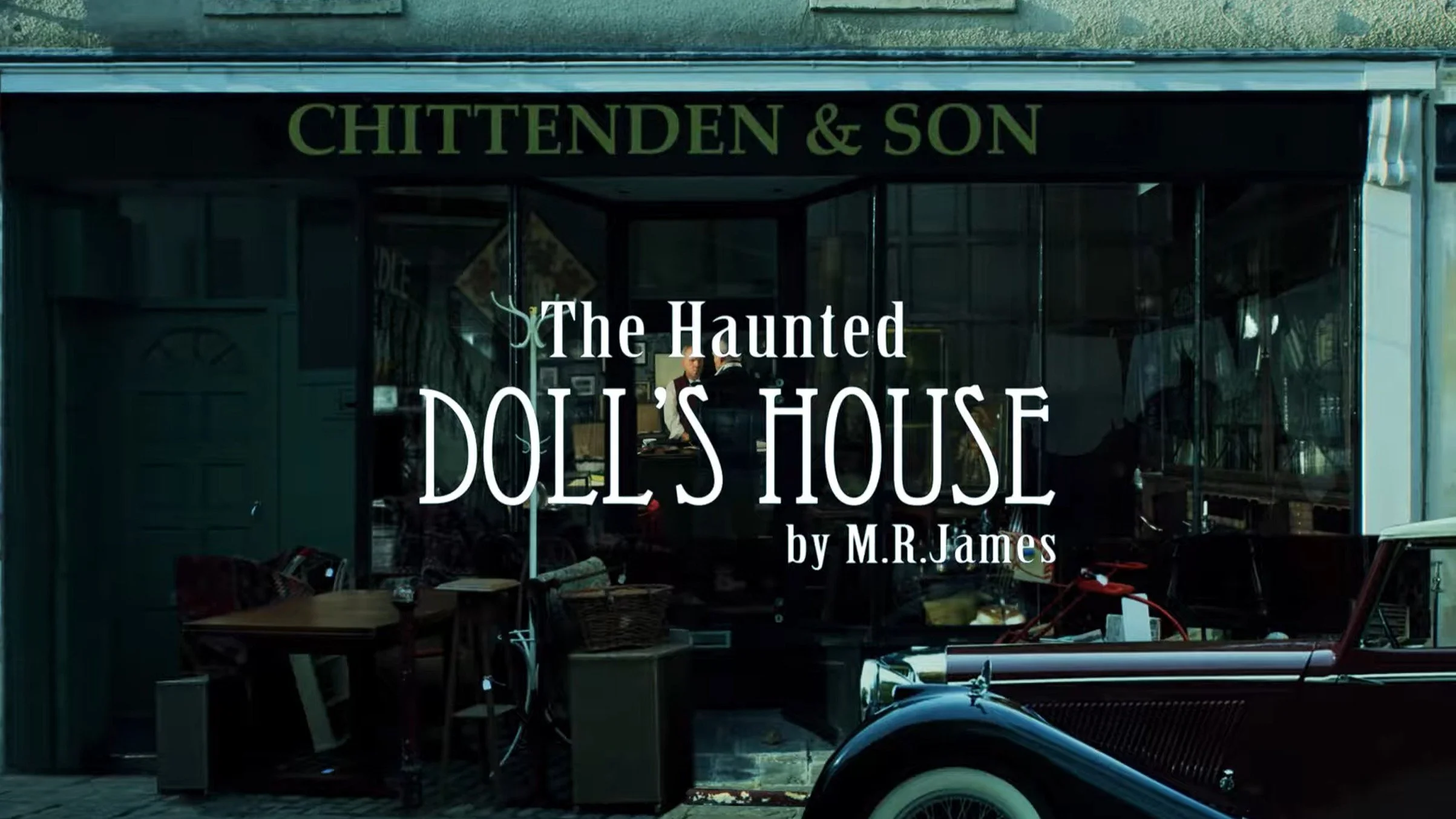
The Haunted Dolls House is a short film based on a story by M.R. James about a unique antique that is subject to supernatural phenomenon. Adapted by Stephen Gray and David Lilley, this is the third of three short films based upon James’ work that the pair have made. It stars Steven Dolton as Mr. Dillet, a collector of antique dolls houses, who acquires a bargain only to discover that it harbours a ghostly secret. Made on an extremely modest budget over the course of 2012 this clever, innovative and rather sinister adaptation is a fine example of short film creativity. It manages to offer a unique visual depiction of M.R. James’ classic story whilst capturing the unsettling quality of the author’s work. Like so many independently made short films it is clearly a labour of love, made with modest resources. It succinctly captures the spirit of the author’s work and is both innovative and rewarding.
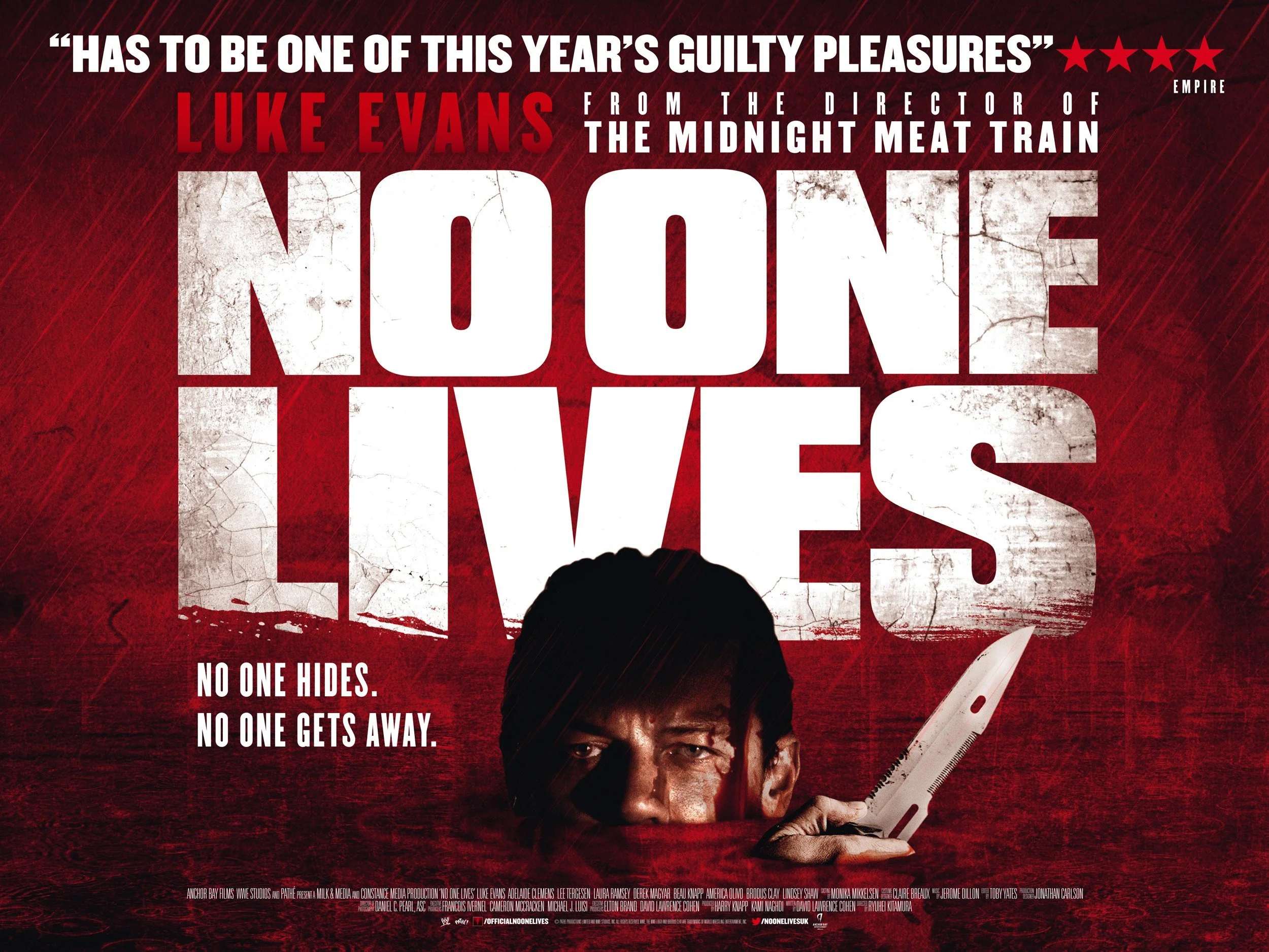
A lot of people may know Luke Evans from the live action version of Beauty and the Beast or Peter Jackson’s The Hobbit trilogy. With his matinee idol good looks, charming Welsh demeanour and his “smoky” tenor singing voice, he projects a sense of old school stardom. Which brings us to No One Lives; a film which is a radical departure from his previous work. His performance is disconcerting to say the least and the film is somewhat unhinged. Directed by Ryuhei Kitamura, who made an interesting adaptation of Clive Barker’s The Midnight Meat Train, this cinematic outing is similarly replete with robust shocks and gore. There are some interesting ideas about the nature of violence, Stockholm Syndrome and whether one should deny or embrace one’s nature. However, these are ultimately minor asides. Philosophical musings in between bouts of surprisingly striking unpleasantness.
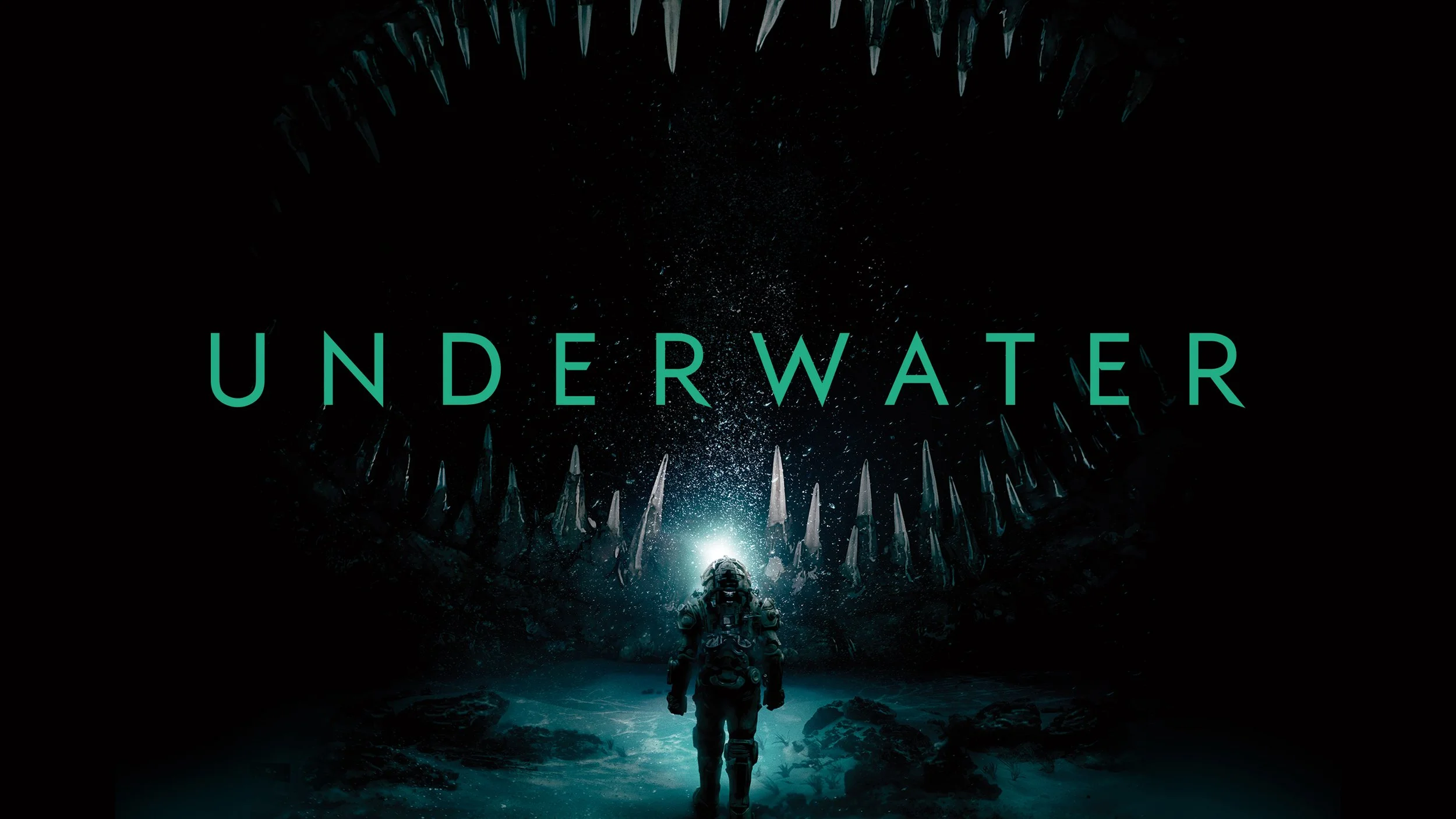
In the near future, Kepler 822, a research and drilling facility located at the bottom of the Mariana Trench, suffers a sudden and catastrophic structural failure. There are only six survivors. Mechanical engineer Norah Price (Kristen Stewart), Captain Lucien (Vincent Cassel), biologist Emily Haversham (Jessica Henwick), engineer Liam Smith (John Gallagher Jr.) and crew members Rodrigo (Mamoudou Athie) and Paul (T.J. Miller). As all the functional escape pods have been used and they are unable to contact the surface, the Captain suggests using pressurized suits to walk one mile across the ocean floor to the Roebuck 641 drill installation. There they will find more escape pods. However, it soon becomes apparent that the disaster was not caused by an undersea earthquake and that they are not alone as they make their journey.
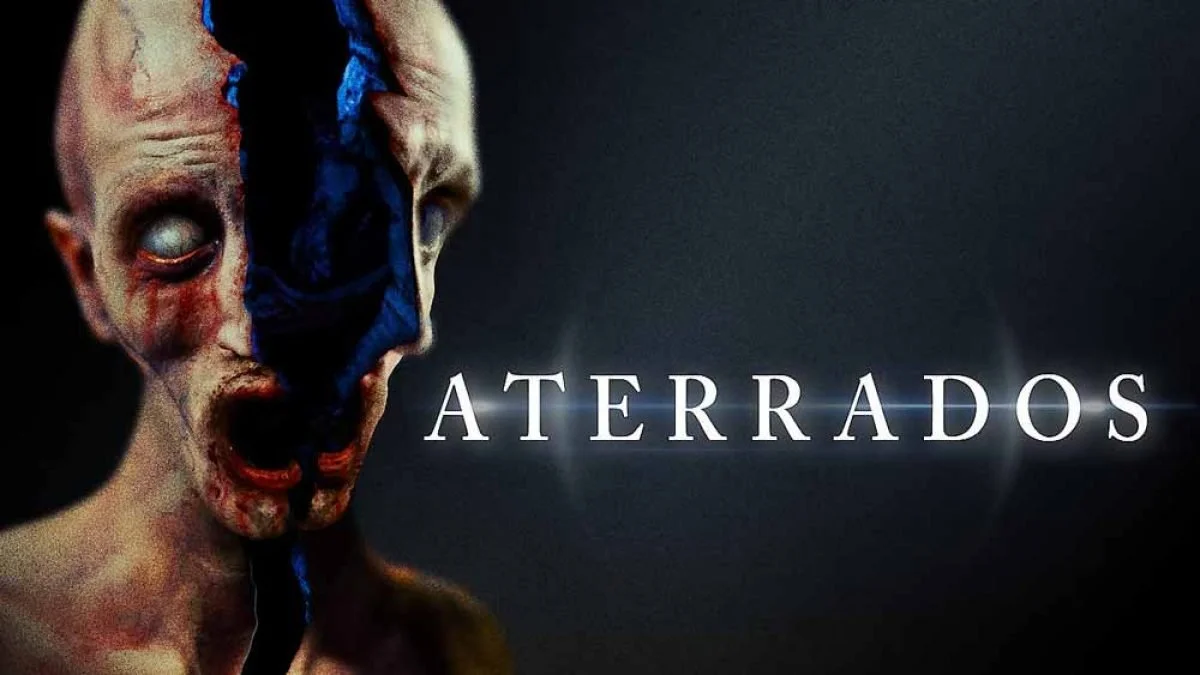
In Buenos Aires, Clara (Natalia Señorales) hears voices emanating from the plughole in her kitchen sink. The voices seem to be plotting against her. Her husband Juan (Agustín Rittano) says the sounds are coming from next door. That night, Juan finds Clara’s dead body levitating in their bathroom, slamming against the wall by an invisible force. Meanwhile their neighbour, Walter (Demián Salomón), is experiencing supernatural occurrences while he tries to sleep. An invisible force repeatedly shakes his bed. After using a video camera to film these events, he sees a tall, cadaverous figure emerging from under the bed, standing over him as he sleeps. Across the road, Alicia (Julieta Vallina) is grieving for her recently deceased son, who was run over outside Walter’s house. Alicia's ex-boyfriend, police commissioner Funes (Maximiliano Ghione) calls Jano (Norberto Gonzalo), a paranormal investigator and the pair soon discover more supernatural occurrences in the area.

Black Sabbath (AKA I tre volti della paura) is a 1963 horror anthology film directed by Mario Bava. Although an Italian production, the film was co-financed by American International Pictures and as such was conceived to appeal to US audiences. Hence, the English dialogue edit of the film which was released in America differs significantly to the original Italian version. Despite the presence of the legendary Boris Karloff and the popularity of both anthology and gothic horror at the time,the film was only a modest success at the US box office and did not do well in Italy. However, in more recent years there has been a critical reappraisal of Black Sabbath, especially the Italian dialogue version. Many aspects of the film which are standard genre tropes today, were in fact novel at the time. Also despite the production mainly being studio bound, the film oozes style and has a striking visual aesthetic.
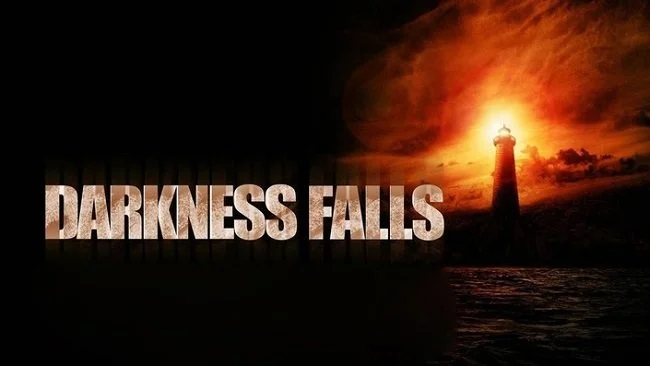
During 1836, in the town of Darkness Falls, Maine, an elderly widow Matilda Dixon is adored by the town’s children as she gives them a gold coin whenever they lose a tooth. One day, after a house fire, Matilda is left burned and sensitive to sunlight, so she starts wearing a china mask. When two children are reported missing, Matilda is blamed by some locals, dragged from her home and hung. She curses the town, stating that whenever a child loses their last tooth, she would come for it. If the child looks at her, she will kill them. The missing children are subsequently found, so the citizens cover up their unjust lynching. In 1990, young Kyle Walsh awakes one night to find Matilda Walsh standing over him. Kyle’s mother is killed and he is blamed for her death and institutionalised. 12 years later, Kyle (Channey Kley) is released and tries to warn the town of the imminent danger when lightning disables the power supply. He is ignored by all until the deaths begin.
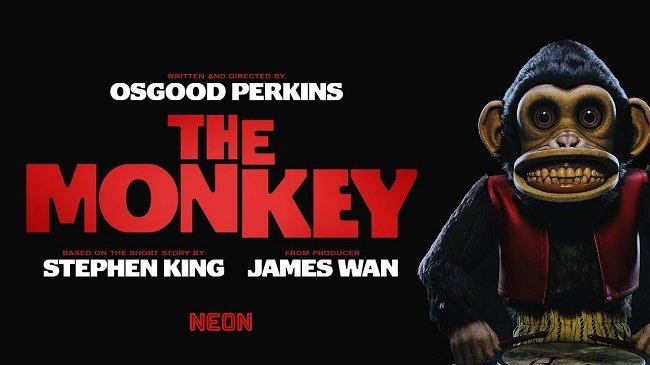
Osgood Perkins has a distinct visual style and tone to his films. It is why his previous film, Longlegs, was such a welcome change from standard genre outings. It was atmospheric both visually and tonally, demonstrating a keen understanding of horror cinema. Hence he is the perfect director to helm this adaptation of a Stephen King short story. The plot is greatly expanded and the screenplay takes a lot of liberties with the source material but the main themes of your past being inescapable and the power of guilt remain front and centre. Due to the extreme and bizarre nature of much of the onscreen deaths, the film wisely has a strong streak of gallows humour running through it which is extremely well handled. Comedy can often be used to defuse or mitigate violence which can be narratively dishonest (think Fred Krueger). Here it adds to the cruel and capricious nature of the random deaths.

When reviewing Sting, one critic stated that the small scale setting and thus, low stakes (IE only a few peoples lives are at risk), made the film not especially memorable. I consider this to be a somewhat spurious criticism. It is the very fact that Sting takes place in such a commonplace environment, with the main characters being everyday people that makes it different. There is a clear focus on well defined characters and their backstory. Unlike so many contemporary films, I actually gave a damn about the protagonists in Sting. An integral aspect of the horror genre is the ability to take a well known and familiar trope and provide a different and absorbing spin on it .It would appear that some audiences have been belaboured over the head by so many overblown and bombastic blockbusters, that the very notion of depicting small, localised and intimate events in a film, seems to bamboozle them.

Some films are made with the intention of starting a franchise, others evolve into one after a surprise box office success and lucrative sequels. Alien (1979) falls into the latter category. A mid-budget science fiction horror film that was well crafted and then benefited immensely by being released at just the right time. Sadly, many franchises become derailed and enter into a death spiral due to competing artistic visions, cynical studio politics and cinematic ignorance. This has certainly afflicted all subsequent Alien films after James Cameron’s magnificent Aliens (1986). Sometimes, a franchise can correct its course and do something fresh with the source material. Prey (2022) is a fine example of this with director Dan Trachtenberg bringing fresh vigour and intelligence back to the Predator movies. I believe that was the intention with Alien Romulus (2024). Sadly, the road to hell is paved with good intentions.
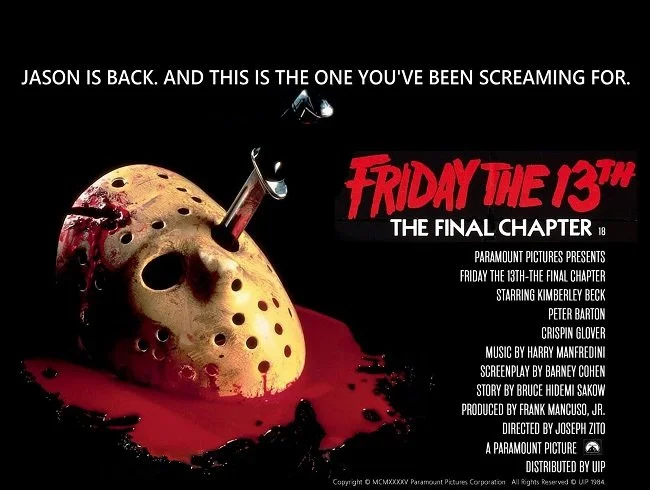
Friday the 13th: The Final Chapter is a popular entry among fans of the franchise. This is mainly due to the return of makeup artist, Tom Savini, who creates several notable death scenes and a bravura ending for Jason Voorhees. There is also an attempt by writer Barney Cohen to have a more involving story compared to previous entries in the series. Director Joseph Zito, who previously directed the above average slasher movie The Prowler AKA Rosemary’s Killer (1981), brings a harder edge to the proceedings, making Jason more menacing than in the previous instalment. As ever, the film was dismissed by the critics but performed well at the box office. Producer Frank Mancuso Jr fully intended for this film to be a definitive end to the series, as he was becoming increasingly concerned that his association with the franchise was having a negative impact upon his career.

Set directly after the events of the previous film, Friday the 13th Part III is again about a group of friends staying near Crystal Lake who encounter Jason Voorhees as he embarks upon another killing spree. Shot in 3D the film has a less sleazy tone than its predecessors although the formula remains the same. The set pieces and death scenes are more elaborate and less clinical, taking advantage of the 3D picture format. The film marks the first appearance of Jason's signature hockey mask, which subsequently became a trademark of both the character and the franchise. Originally conceived to be an end to the series of films, Friday the 13th Part III performed extremely well at the box office, earning $36.7 million on a budget of $2.2 million. As a result, the franchise was given a stay of execution and a further sequel was commissioned.
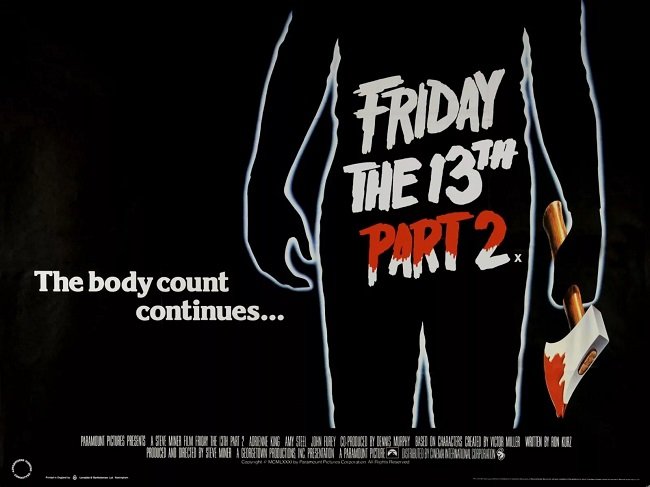
Originally, Friday the 13th Part 2 was intended to be an anthology film based on the superstition associated with the date. However, after the popularity of the original film's surprise ending, the producers opted to continue the story and mythology surrounding Camp Crystal Lake. This eventually became the parameters which all future films would broadly work within. Friday the 13th Part 2 is a more polished production than the first movie, benefitting from twice the budget of the original. The quick turnaround meant that Paramount Pictures could continue to capitalise on the popularity of the slasher genre. However, there was growing social pushback against these types of films, from Christian lobby groups and other “concerned parties”. Hence, Friday the 13th Part 2 ran into problems with the MPAA ratings board and cuts were imposed. Something that would continuously plague the franchise over the years.

Writing any kind of review for the original Friday the 13th movie seems somewhat redundant, as it has been analysed and written about numerous times before. If you’re interested in the film’s production as well as its subsequent impact on US cinema at the time, then there is an excellent summary on Wikipedia. Having recently rewatched the entire franchise, courtesy of the Shout Factory’s Friday the 13th Collection Deluxe Edition, I have a few thoughts I’d like to share. The picture quality of all the films is very good, offering a lot more visual information compared to previous releases. The amount of “extras” included in the box set is prodigious. I suspect that these are the best versions that we’re ever likely to see. Fans hoping that one day all the cut footage will be found and re-integrated into each film are likely to remain disappointed. Some material has surfaced but sadly a lot of deleted and extended scenes have been destroyed.

George A. Romero's Day Of The Dead (1985) is a bleak and remorseless masterpiece. The final entry in his “Dead Trilogy”, its central theme is that in a world on the brink of destruction, man is still the biggest threat to his own existence. It is well scripted, clinically accurate in its observations on human nature and thought provoking, despite having its budget cut just weeks before production commenced. 40 years later it is revered as a genre milestone and is considered one of Romero’s finest works. Sadly, the 2008 “remake” directed by Steve Miner, who has a background in slasher and exploitation movies, takes a contrasting approach, to say the least. It certainly has very little to do with Romero’s film and one can’t help but assume that it is nothing more than a cynical cash in. Setting aside comparisons with the original, this is not in any way a standout zombie film in its own right.
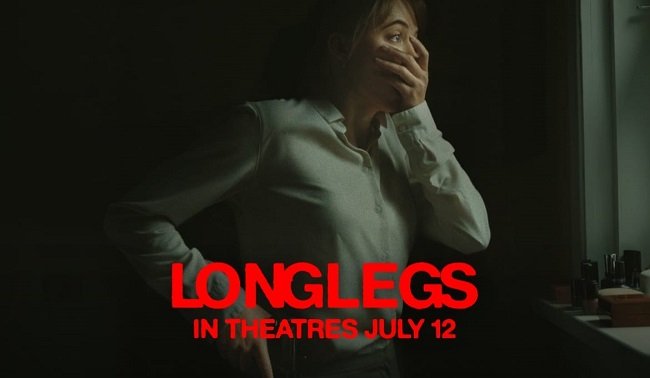
Although I was unaware of it, there was a guerrilla marketing campaign for Longlegs which was focused on the internet rather than traditional television adverts. Hence the film gained a lot of interest prior to its release and as well as some some disproportionate expectations. Then immediately after its theatrical debut, the matter was further compounded by a possible excess of gushing praise as the film was “over reviewed”. Therefore I maintained a degree of scepticism about Longlegs and tempered my expectations prior to watching it. Any film that is hailed as the next Silence of the Lambs, featuring a “traumatising” performance by Nicholas Cage needs to be keenly scrutinised so that its cinematic merits can be carefully separated from the surrounding hyperbole. After viewing I found Longlegs to be a finely honed, atmospheric and precisely targeted horror thriller but not the genre milestone that some would claim.

As a rule, it is always a challenge to end a trilogy of films successfully. Writing a satisfying denouement to a standalone movie is hard enough. To be able to conclude all pertinent story arcs and themes that have been sustained over three feature films, to everyone’s liking is far harder to achieve. In the case of The Final Conflict (1981), the last instalment of The Omen trilogy, writer Andrew Birkin does manage to resolve all of the external, internal and philosophical stakes, which are the fundamental components of a cinematic screenplay. Unfortunately, it is done in an incredibly underwhelming manner, which left audiences feeling cheated. The last time good defeated evil evil in such an unspectacular fashion was in Hammer’s To the Devil a Daughter (1976). This is why, in spite of solid production values, The Final Conflict is the least popular of the films about the Antichrist, Damien Thorn.

Halloween III: Season of the Witch is a film that often provokes a strong reaction from genre fans. This is mainly due to it not having any direct connection to the previous two films. The absence of Michael Myers in such a franchise was a serious mistake and the subsequent poor box office returns endorsed this. Yet if this film had been released as a separate product it may not have performed so poorly. After re-examining Halloween III: Season of the Witch there are many aspects of interest. Despite a troubled production, the film is an intriguing anomaly that tried to be different during a decade where the established horror formula was “stalk n' slash”. It does have a very bleak tone and some consider it to be mean spirited as the cast are killed off one by one. Perhaps theme of child sacrifice caused audiences to balk?

Ghostwatch is a controversial British horror “mockumentary” produced by the BBC that was first broadcast on October 31st 1992. Written by Stephen Volk and produced by Ruth Baumgarten it is now considered a milestone in UK broadcasting. This was mainly due to the strong reaction it provoked from the public, many of whom failed to grasp that it was a drama. At the time it raised serious questions about responsible programming and caused a furore in the British press. It has curiously never been shown since by the BBC. Ghostwatch remains a talking point to this day and is a text book example of the power of television as well as the publics enduring belief in the supernatural.

Event Horizon is a curious movie hybrid, mixing plot elements from classic sci-fi and horror genres. It has been labelled “Hellraiser in Space” by some lazy critics, although I think there's far more to it than that. Perhaps a more apt description would be a Gothic horror story set in space. The movie has garnered a cult reputation since its release in 1997, mainly due to its graphic imagery and troubled production history. It does indeed have some quite shocking sequences but the lightning editing does not show as much as some would think. Paramount forced director Paul W S Anderson to reduce the original one hundred and thirty minute running time down to a more manageable ninety, after unfavourable test screenings. Much of the violence was allegedly removed as a result of that process. Sadly nothing survives of the removed material other than a VHS workprint. Hence a restored director’s cut is therefore unlikely.
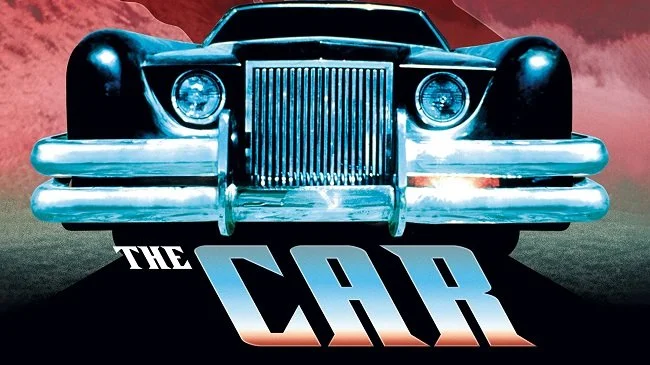
The peace of tranquillity of Santa Ynes, Utah, is shattered when the town becomes the focus of several hit and run deaths, by a mysterious and apparently driverless, black car. After the Sheriff (John Marley) is run down, it is down to Captain Wade Parent (James Brolin) and his deputies to protect the town from this sinister threat. Is the car simply a driven by a mad man or is there a more supernatural explanation? When the car menaces a local school marching band, the teachers and students take refuge in the nearby cemetery. Does the cars inability to enter consecrated ground provide a clue to its otherworldly origins and offer a potential solution? As the death count increases and the population becomes more fearful, the Captain and his team of deputies form a desperate plan to see if they can lure the car into a trap.
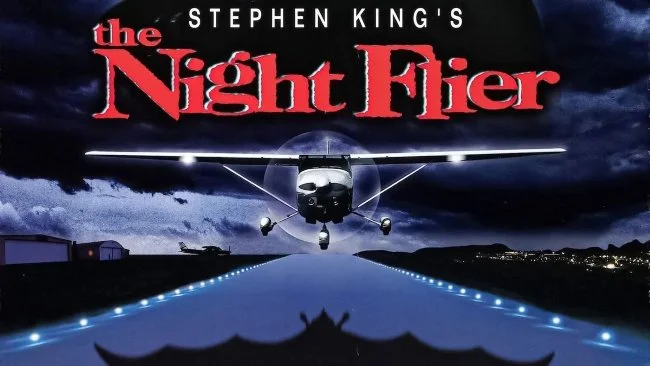
The key to success in the horror genre is to try and find an innovative new angle on tried and tested themes and tropes. The Night Flier is an often-overlooked gem, that takes a unique perspective on vampirism and features strong performances as well as an intelligent and thoughtful screenplay. It builds a sense of foreboding during it’s first two acts and teases audiences with some unpleasant prosthetic effects, courtesy of KNB EFX Group. The climax of the movie is both thought provoking and suitably unpleasant. Furthermore, The Night Flier even manages to make a coherent criticism of tabloid culture and morals of those journalists working in the industry. It’s a damn shame that this modest but well-crafted genre movie didn’t get the attention it deserved when it was initially released in 1997.
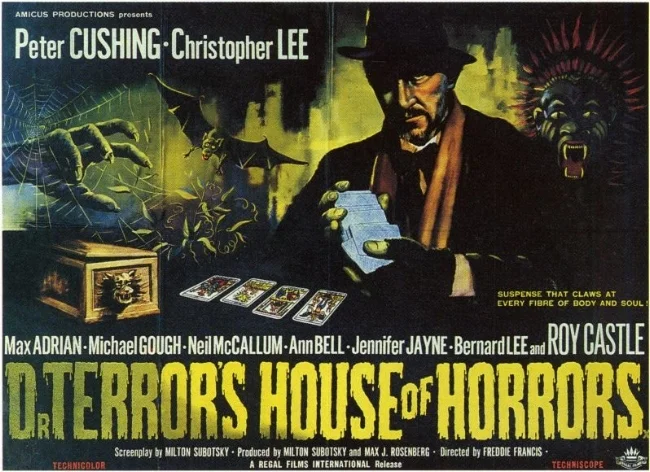
Dr. Terror's House of Horrors was the first portmanteau horror movie by Amicus Productions. The small British studio was founded by producers and screenwriters Milton Subotsky and Max Rosenberg. As the horror genre grew in popularity due to the success of Hammer films, Amicus saw the potential in the portmanteau format. Subotsky in particular held Ealing Studios 1945 classic Dead of Night in very high regard. Although only a modest budget movie, Dr. Terror's House of Horrors proved to be financially successful and led to a series of similarly structured films over the next decade. These included Torture Garden (1967), The House That Dripped Blood (1970), Asylum (1972), Tales from the Crypt (1972), The Vault of Horror (1973), From Beyond the Grave (1974),

Ghost Story is a deliberately superficial adaptation of the novel by Peter Straub. If you’ve read the book and are expecting a verbatim retelling of the plot, then you will be disappointed. It’s complex narrative structure and the abundance of characters do not immediately lend themselves to mainstream film making. However, if you like tales of the supernatural and solid performances from Hollywood legends, then this may well be for you. John Irvin has always been a workman like director and has therefore often been overlooked. Films such as Hamburger Hill and When Trumpets Fade show a great deal of focus and a clear understanding of the mechanics of cinema.
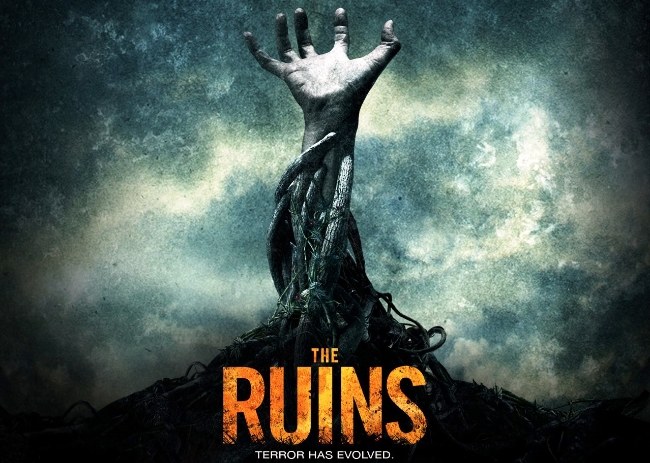
The Ruins is similar to both The Mist and Cloverfield , which were released around the same time, in so far that it is rather bleak and unrelenting movie. And like the aforementioned films, its strength lies in the manner in which it tackles the subject of people facing their own death in a credible fashion. In The Ruins the protagonists when faced with the prospect of their own demise quickly descend in to panic and resolutely refuse to face facts. Although these are negative themes that may not be to everyone’s tastes, they make The Ruins both gripping and genuinely scary.
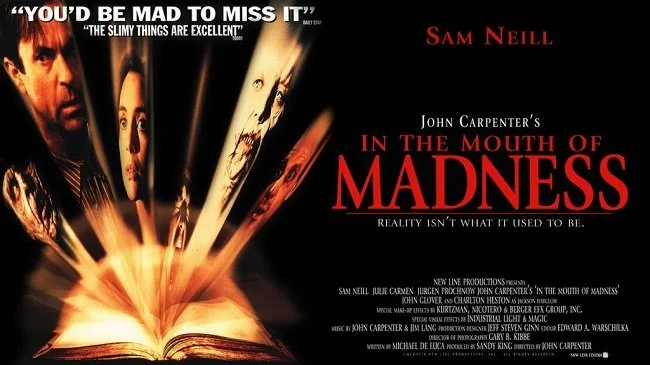
The arcane and esoteric works of author H P Lovecraft have often inspired horror directors. Sadly many of the films that have been made in homage to the Cthulhu Mythos have failed to capture its nightmarish mix of madness and mythology. John Carpenter's In the Mouth of Madness is not directly based on any of Lovecraft's specific works but screenwriter Michael De Luca draws his inspiration from many of this recurring ideas and concepts. He then adds a further homage to British writer Nigel Kneale, adding themes that are prevalent in his Quatermass series. Where others have failed, Carpenter successfully crafts a film that alludes to the baroque and eldritch qualities of the Cthulhu Mythos.
Since the late eighties Morgan Creek productions have dabbled with multiple genres whilst pursuing box office success. At times, they have been successful with such populist movies as Young Guns and Robin Hood: Prince of Thieves. However, for every film that proved financially viable there were often two more that failed to gain an audience. Yet, despite having the business acumen to commission the best writing and directing talent available, co-founders James G. Robinson and Joe Roth have often been at odds with such creative individuals, resulting in many troubled productions. Horror writer and director Clive Barker endured an arduous experience while making Nightbreed, which was based upon his own novella. It was such a negative experience, resulting in a movie that was far from his initial vision, that Barker effectively quit film making. A similar experience befell William Peter Blatty when he was given an opportunity to film a direct sequel to The Exorcist based upon his novel Legion.
The Last Broadcast (1998)
The Last Broadcast is a curious beast that straddles both the “mockumentary” and “found footage” genres. Shot entirely on consumer level video equipment, it effectively captures the look and feel of public access cable TV from the times. Released before the massive commercial success of The Blair Witch Project, The Last Broadcast did not find a comparable mainstream audience at the time, although it remains a favourite with genre fans. However, the movie has been recently re-released on Amazon Prime and subsequently become a talking point once again. Elements of the plot have proven very prophetic, such as the popularity of “ghost hunting” reality shows and the integration of online interactivity into live television. But the one standout aspect of The Last Broadcast which polarises viewer opinion is its ending. This is often seen as either a clever “sting in the tail” or an ill considered “jumping the shark” cop out.
The Last Broadcast is a curious beast that straddles both the “mockumentary” and “found footage” genres. Shot entirely on consumer level video equipment, it effectively captures the look and feel of public access cable TV from the times. Released before the massive commercial success of The Blair Witch Project, The Last Broadcast did not find a comparable mainstream audience at the time, although it remains a favourite with genre fans. However, the movie has been recently re-released on Amazon Prime and subsequently become a talking point once again. Elements of the plot have proven very prophetic, such as the popularity of “ghost hunting” reality shows and the integration of online interactivity into live television. But the one standout aspect of The Last Broadcast which polarises viewer opinion is its ending. This is often seen as either a clever “sting in the tail” or an ill considered “jumping the shark” cop out.
Filmmaker David Leigh (David Beard) is making a documentary about the murders of the hosts and crew of a cable TV show called Fact or Fiction. Presenters Steven "Johnny" Avkast (Stefan Avalos) and Locus Wheeler (Lance Weiler), along with sound recordist Rein Clackin (Rein Clabbers) and psychic Jim Suerd (James Seward) travel to the Pine Barrens in search of the Jersey Devil. Only Jim Suerd returns in a state of disorientation. The police mount a search and subsequently find the mutilated bodies of Wheeler and Clackins. Avakast remains missing although his hat is found by a pool of blood. Subsequent viewing of the video footage shows tensions between Suerd and the others and physical evidence soon leads to a quick conviction. However, Suerd dies in custody under mysterious circumstances while his appeal is pending. David Leigh subsequently obtains tape footage that was missing from the police investigation. Although damaged he hires data retrieval expert Michelle Monarch (Michelle Pulaski) to search for any viable material. Will this content reveal the truth?
The Last Broadcast does a good job of establishing its central characters and building up a credible biography on each through faux interviews with friends and officials. It also accurately reflects the “home brew” nature of cable TV and public access TV from the era. The use of IRC as a means for viewers to interact with the show’s hosts is an interesting snapshot of the times. Another clever aspect of the plot is the way in which the supernatural is teased and then sidelined. The Fact or Fiction hosts go in search of the Jersey Devil but viewers are not given a summary of the associated legend nor does the story go out of its way to imply that the murders are of a supernatural nature. Far more time is spent exploring whether Jum Suerd is a gifted psychic or a deluded, dangerous loner. Documentary filmmaker David Leigh also remains an enigma, although on face value he is simply investigating a story and hence shouldn’t be the focus of his own film.
The Last Broadcast proceeds at a measured pace and is a slow burn. There are some minor jump scares when interviews with people suddenly cut to pictures of the crime scene but overall the focus is on maintaining a mysterious atmosphere. The elephant in the room is the film’s climax, in which a computer enhanced image reveals the solution to the mystery. There is then a major shift in the technical style of the remainder of the movie which will either delight viewers or prove to be a deal breaking WTF moment. To say any more would be an overt spoiler. It is also worth noting that it is this aspect of the film that has kept the movie on fans radar and often becomes the focal point of discussion. Irrespective of this, there are many other aspects of The Last Broadcast that were ahead of its time. If you are a fan of this genre or a movie aficionado, then I’d recommend a viewing so you can decide upon the merits of the controversial ending.
Filmmakers Aaron (Aaron Poole) and Jim (James Gilbert) decide to make a documentary about online conspiracy theories Terrance G (Alan Peterson), mainly due to the amount of attention he attracts online. Terrance explains in detail how many global events all appear to be linked to an NGO called the Tarsus Club. Jim remains sceptical of such theories, but Aaron is more willing to accept them. During an interview, Terrance becomes agitated and points out a man whom he believes to be following him. A few days later Terrance vanishes. Aaron searches through various newspaper clippings left in Terrance’s apartment and finds a reference to a Time magazine article about the Tarsus Club written by Mark Tucker (Bruce Clayton). As the pair of journalists search for Tucker, they see the same man that was following Terrance. They are also menaced by a Black SUV that parks outside Jim’s house at night. Finally, Tucker contacts them online and it becomes clear that he has more to reveal about the Tarsus Club. Aaron suggests that they try to infiltrate the next meeting, but Jim is reluctant to do so, due to the possible danger.
The found footage genre is predicated on the concept that the material the audience watches is supposed to be filmed from real life. This therefore presents a challenge for actors as their performances have to appear like everyday social interactions. Most people are not great orators with extensive vocabularies, in real life. Watch any wedding video or vox pop on a news broadcast and you’ll quickly become aware of the gulf between how people express themselves in reality and the stylised, contrived manner in which actors deliver dialogue. Hence, during the first act of As Above, So Below I became aware that the cast were “acting”. They were using dramatic techniques commonly used in conventional film but which stands out far more in this genre. This changed as the film progressed and the story became more deliberately chaotic. But it was noticeable during the initial set up to the story. It’s not something I’ve noticed before with other found footage movies. But in many ways, As Above, So Below is quite different compared to other genre examples
In many ways the story behind The McPherson Tape is a lot more interesting than the film itself. This early found footage movie from 1989, was shot on home video on a virtually non-existent budget. The director Dean Alioto eventually found a distributor but on the eve of the movie’s home video release, the warehouse burned down and allegedly destroyed the master tape and all the promotional artwork. Yet this was not the end of the story. It was common practice in the eighties for small distributors to send advance copies to local independent video stores. Hence The McPherson Tape found its way into the pirate video ecosystem. It then migrated to the UFO community where it was circulated as being a video of a legitimate alien abduction. Dean found himself in the unusual position of having to debunk his own work. Three decades later due to the intriguing tale associated with The McPherson Tape, it has been remastered from the newly rediscovered 3/4" tape and re-released.
In his review in the New York Times Kyle Turner states that the new horror movie Host “seems to speak to a collective id” and serves as “an analogy for mourning the recent past”. I’ve read several other critiques of this nature that both praise the film and make similar philosophical musings upon its nature. As a long standing horror aficionado I am always a little sceptical when a new movie quickly gains a lot of traction and a critical consensus swiftly forms. Especially when a genre product suddenly gains the attention of the mainstream media who subsequently stray into hyperbole and hype. This happened last year with Midsommar which was hailed as a groundbreaking horror movie and indicative of a renaissance in the genre. Although an intelligent and disturbing film, Midsommar is not without flaws and is far from universally accessible. It is also frustrating the way the mainstream media is oblivious to the ongoing financial and critical success of the horror genre that has existed since the inception of cinema.
The Last Broadcast is a curious beast that straddles both the “mockumentary” and “found footage” genres. Shot entirely on consumer level video equipment, it effectively captures the look and feel of public access cable TV from the times. Released before the massive commercial success of The Blair Witch Project, The Last Broadcast did not find a comparable mainstream audience at the time, although it remains a favourite with genre fans. However, the movie has been recently re-released on Amazon Prime and subsequently become a talking point once again. Elements of the plot have proven very prophetic, such as the popularity of “ghost hunting” reality shows and the integration of online interactivity into live television. But the one standout aspect of The Last Broadcast which polarises viewer opinion is its ending. This is often seen as either a clever “sting in the tail” or an ill considered “jumping the shark” cop out.
The Tunnel was released direct to Region 3 DVD on 19th May 2011, much the same as any other low budget horror movie. What made the marketing of this minor Aussie "Mockumentary" horror different to other similar products, is that the distributors decided to make a barebones copy of the film available for download, free of charge. The accompanying viral marketing campaign gained quite a lot of traction resulting in The Tunnel being heavily seeded across Bit Torrent sites and exposing the film to an audience of millions globally. Subsequently, when the movie was then showcased in the US and Europe and commercially released in other regions, its profile had been considerably raised. As a result of this novel marketing campaign and the fact that the movie is a better than average example of the found footage genre, The Tunnel won several awards on the festival circuit.
Conspiracy theories and found footage movies. Two genres with infinite scope to be tedious and uninspired on a low budget. Yet writer and director Matt Johnson manages to do something quite clever with both cinematic styles in his recent movie Operation Avalanche. He takes the basic conceit of the two formats and uses them to tell a tale based upon one of the most iconic moments of twentieth century history. Namely the moon landing of 1969. The results are surprising, intelligent and thought provoking, although a little uneven. Furthermore, I discovered this enjoyable curiosity via the GoodBadFlicks on You Tube. If you are interested in obscure and niche market genre creations then do check out this channel. It is informative, well presented and entertaining.
I did my best to avoid the hype surrounding the initial release of Cloverfield. Such media saturation and public interest can often cloud the issue of whether the actual film is any good. Five years later and having watched the movie twice, once in the theatre and once at home, I am still somewhat conflicted about this movie. The use of hand held video cameras is both a boon and a bane. The constant movement of the image has proven to cause motion sickness for some viewers, although this is not so overwhelming when viewed on a smaller screen at home. Yet the medium of news footage mixed with handheld cameras does create a palpable sense of immediacy. This helps immensely when trying to sell a fantastic concept, such as the one that Cloverfield features.
Scott Derrickson’s Sinister is a curious blending of genres and classic plot devices. It certainly has some interesting ideas at the centre of its plot. Ethan Hawke plays a true-crime writer Ellison Oswalt, looking for his next big story and desperate to find fame again. After discovering a box full of Super 8 home movies in the attic of his new house, matters start to take a turn for the worst. The films appear to depict the real murders of several families and investigations lead to a series of strange unsolved crime and the possible involvement of supernatural forces. Could a pagan deity known as Bughuul, who allegedly preys upon the souls of children, be responsible? Is Oswalt’s own family in danger? Do bears conduct their personal business in deciduous forests?
A fundamental requirement of cinema is that the audience suspends their sense of disbelief. Anything that breaks this will immediately has a negative impact upon the viewing experience. There are many things can severe this connection but the two most common seem to be obvious plot holes and Scooby Doo behaviour IE “Let’s split up…”. If these are the result of simply poor film making, then they can perhaps be forgiven. Every director has to learn their craft. However, if these two factors are present by design, then that is an unpardonable sin. Assuming that your audience is stupid, is insulting and the worse sort of hypocrisy.
I really won't be sad to see the back of the found footage sub-genre because it really is becoming an over saturated market at present. For example, at the last count there were six Paranormal Activity movies, with their respective quality inversely proportional to their number in the franchise. Yes, there are the occasional good ones, such as the recent Operation Avalanche, which tackled conspiracy theories and the Moon Landing. But broadly speaking, this genre has become a dumping ground for cheap and uninspired movies, by mediocre film makers, out to make a fast buck. Take for example Tape 407 (AKA Area 407). It’s chosen twist on the genre is the inclusion of included dinosaurs. I was hoping that this would make the film sufficiently different to others and offers something new. Predictably it did not.
Sometimes you have to admire persistence. I really didn't think that Grave Encounters merited a sequel but apparently, it's financial returns indicated otherwise. So today I found myself watching Grave Encounters 2 with a certain sense of déjà vu because like the first movie, it tries to do something different and only partially succeeds. Once again, the writers (The Vicious Brothers) manage to jump the shark at the midway point and the movie ceases to innovate and just ticks boxes. The only major difference this time round is we get a little more of everything, because it is a sequel. So, there's more jumps, more ghosts and more violence. Is there more entertainment? May be.
I had high hopes for Grave Encounters after I saw the Trailer on You Tube six years ago. It got quite a lot of attention online, due to it jumping on the found footage bandwagon and by cashing in on the popularity of supernatural reality TV. The movie poster takes great pains to reference that fact. Shows such as Ghost Hunters and Most Haunted still pull in big TV ratings. Even I've been guilty of watching them in the past. So the idea of a TV crew investigating the paranormal and genuinely encountering it sounded very promising. Alas, Grave Encounters fails to reach it's potential in my opinion, although my primary objection hinges on a very subjective preconception. One that other viewers may not share.
Do not be fooled by the marketing and artwork for Lake Mungo. It is not a found footage movie but in fact a faux documentary. If you are looking for cheap scares, loud noises and unpleasant imagery, then you will be disappointed. Lake Mungo is not your standard exploitation fodder. If however you like well constructed movies that create a genuine sense of disquiet, then Lake Mungo is a must see. Once again Australian cinema has managed to produce an innovative and thoughtful entry to a popular sub-genre. The film demonstrates a great understanding of the mechanics of a ghost story and how they should be handled.
The Tunnel (2011)
The Tunnel was released direct to Region 3 DVD on 19th May 2011, much the same as any other low budget horror movie. What made the marketing of this minor Aussie "Mockumentary" horror different to other similar products, is that the distributors decided to make a barebones copy of the film available for download, free of charge. The accompanying viral marketing campaign gained quite a lot of traction resulting in The Tunnel being heavily seeded across Bit Torrent sites and exposing the film to an audience of millions globally. Subsequently, when the movie was then showcased in the US and Europe and commercially released in other regions, its profile had been considerably raised. As a result of this novel marketing campaign and the fact that the movie is a better than average example of the found footage genre, The Tunnel won several awards on the festival circuit.
The Tunnel was released direct to Region 3 DVD on 19th May 2011, much the same as any other low budget horror movie. What made the marketing of this minor Aussie "Mockumentary" horror different to other similar products, is that the distributors decided to make a barebones copy of the film available for download, free of charge. The accompanying viral marketing campaign gained quite a lot of traction resulting in The Tunnel being heavily seeded across Bit Torrent sites and exposing the film to an audience of millions globally. Subsequently, when the movie was then showcased in the US and Europe and commercially released in other regions, its profile had been considerably raised. As a result of this novel marketing campaign and the fact that the movie is a better than average example of the found footage genre, The Tunnel won several awards on the festival circuit.
The Tunnel has a somewhat generic storyline, following an investigation into a government cover-up over an abandoned reservoir project, that intended to use a network of abandoned train tunnels under Sydney. TV journalist Natasha Warner (Bel Deliá) and her crew, Peter Ferguson (Andy Rodoreda), Steve Miller (Steve Davis), Jim ‘Tangles’ Williams (Luke Arnold), look for the truth within the subterranean maze, only to find themselves hunted by someone or something. The film consists of video footage taken by the crew on both HD and night vision cameras. Material taken by CCTV and webcams are also used to great effect. Where The Tunnel differs from other films shot in this style, is that it is presented as a completed documentary, and is intercut with "talking heads" from the surviving members of the crew.
Now it could be argued that the format of the film indicates quite quickly who lives and who dies, thus mitigating the suspense. However, this is not the case. It actually adds to the sense of faux credibility. The story unfolds at a measured pace and introduces us to the lead characters, all of whom are quite plausible. Steve Davis, a real-life cameraman, give a very good performance, effectively playing himself and drawing on his working experience. Luke Arnold, makes a suitable foil for him as soundman "Tangles". Director Carlo Ledesma builds a suitable back story regarding the politics of the reservoir project and the aims of the TV journalists before taking the action into the tunnels of the title. The shocks are efficient and subtle. The mysterious entity that stalks the network under the city is kept wisely off camera for most of the proceedings. Less is more in this case.
Once again, Australian cinema shows that it has far greater understanding of the craft of film making that mainstream Hollywood. The Tunnel is certainly formulaic, yet due to a better than average script and measured performances, manages to produce a superior genre offering. Unlike recent equivalent films such as Paranormal Activity franchise, it does not jump the shark when it comes to the scares and maintains sustained tense and threatening atmosphere. The found footage genre, like so many other subsets of horror, can often be no more than a vehicle for lazy and uninspired film making. The key to success in this case is to use the format in an innovative fashion and tell a story from a new perspective. The Tunnel achieves this by maintaining a credible pretence of being a genuine documentary. The framing narrative justifies a lot of the usual questions that arise from this genre, especially the ubiquitous “why keep filming”? Hence, The Tunnel is a superior genre entry and worth seeing by both horror fans and causal viewers.
David Koepp is no stranger to genre cinema, having written the screenplay for such films as Jurassic Park, Spider-man and War of the Worlds. Where these titles are big budget, major studio productions, Cold Storage is a far more modest production with a smaller scope. Adapted from his own novel, the screenplay is by David Koepp and the film is directed by British film-maker Jonny Campbell. At first glance, Cold Storage seems a somewhat derivative science fiction horror film with a relatively modest budget, financed through a convoluted US and French co-production. Lurid green and red colours feature heavily in the marketing artwork and it is easy, after a cursory look, to write the film off as cheap, generic, direct-to-streaming filler. However, Cold Storage is prime example of why you should not judge a book by it’s cover, or in this case, a film by its posters and online advertising. It is in fact an amusing and fun endeavour that can fill an evening.
Despite being considered by many as an original story, The Abominable Snowman (1957) is in fact a remake of a made for television play, The Creature, that was originally broadcast in the UK in 1955. Hammer Films would often purchase the rights of popular TV programs and subsequently re-work them for mainstream, international cinema. Larger production budgets and fewer censorship restrictions allowed them to make their cinematic interpretations more lurid, thus commercially viable. Hence The Quatermass Xperiment, Quatermass II and Quatermass and the Pit were all given a big screen makeover and were commercially successful. The Abominable Snowman was written by acclaimed writer Nigel Kneale, who also wrote the original television drama and the aforementioned Quatermass trilogy. Although ostensibly marketed as a horror film this production is actually an interesting blend of psychological thriller and science fiction.
The Haunted Dolls House is a short film based on a story by M.R. James about a unique antique that is subject to supernatural phenomenon. Adapted by Stephen Gray and David Lilley, this is the third of three short films based upon James’ work that the pair have made. It stars Steven Dolton as Mr. Dillet, a collector of antique dolls houses, who acquires a bargain only to discover that it harbours a ghostly secret. Made on an extremely modest budget over the course of 2012 this clever, innovative and rather sinister adaptation is a fine example of short film creativity. It manages to offer a unique visual depiction of M.R. James’ classic story whilst capturing the unsettling quality of the author’s work. Like so many independently made short films it is clearly a labour of love, made with modest resources. It succinctly captures the spirit of the author’s work and is both innovative and rewarding.
A lot of people may know Luke Evans from the live action version of Beauty and the Beast or Peter Jackson’s The Hobbit trilogy. With his matinee idol good looks, charming Welsh demeanour and his “smoky” tenor singing voice, he projects a sense of old school stardom. Which brings us to No One Lives; a film which is a radical departure from his previous work. His performance is disconcerting to say the least and the film is somewhat unhinged. Directed by Ryuhei Kitamura, who made an interesting adaptation of Clive Barker’s The Midnight Meat Train, this cinematic outing is similarly replete with robust shocks and gore. There are some interesting ideas about the nature of violence, Stockholm Syndrome and whether one should deny or embrace one’s nature. However, these are ultimately minor asides. Philosophical musings in between bouts of surprisingly striking unpleasantness.
In the near future, Kepler 822, a research and drilling facility located at the bottom of the Mariana Trench, suffers a sudden and catastrophic structural failure. There are only six survivors. Mechanical engineer Norah Price (Kristen Stewart), Captain Lucien (Vincent Cassel), biologist Emily Haversham (Jessica Henwick), engineer Liam Smith (John Gallagher Jr.) and crew members Rodrigo (Mamoudou Athie) and Paul (T.J. Miller). As all the functional escape pods have been used and they are unable to contact the surface, the Captain suggests using pressurized suits to walk one mile across the ocean floor to the Roebuck 641 drill installation. There they will find more escape pods. However, it soon becomes apparent that the disaster was not caused by an undersea earthquake and that they are not alone as they make their journey.
In Buenos Aires, Clara (Natalia Señorales) hears voices emanating from the plughole in her kitchen sink. The voices seem to be plotting against her. Her husband Juan (Agustín Rittano) says the sounds are coming from next door. That night, Juan finds Clara’s dead body levitating in their bathroom, slamming against the wall by an invisible force. Meanwhile their neighbour, Walter (Demián Salomón), is experiencing supernatural occurrences while he tries to sleep. An invisible force repeatedly shakes his bed. After using a video camera to film these events, he sees a tall, cadaverous figure emerging from under the bed, standing over him as he sleeps. Across the road, Alicia (Julieta Vallina) is grieving for her recently deceased son, who was run over outside Walter’s house. Alicia's ex-boyfriend, police commissioner Funes (Maximiliano Ghione) calls Jano (Norberto Gonzalo), a paranormal investigator and the pair soon discover more supernatural occurrences in the area.
Black Sabbath (AKA I tre volti della paura) is a 1963 horror anthology film directed by Mario Bava. Although an Italian production, the film was co-financed by American International Pictures and as such was conceived to appeal to US audiences. Hence, the English dialogue edit of the film which was released in America differs significantly to the original Italian version. Despite the presence of the legendary Boris Karloff and the popularity of both anthology and gothic horror at the time,the film was only a modest success at the US box office and did not do well in Italy. However, in more recent years there has been a critical reappraisal of Black Sabbath, especially the Italian dialogue version. Many aspects of the film which are standard genre tropes today, were in fact novel at the time. Also despite the production mainly being studio bound, the film oozes style and has a striking visual aesthetic.
During 1836, in the town of Darkness Falls, Maine, an elderly widow Matilda Dixon is adored by the town’s children as she gives them a gold coin whenever they lose a tooth. One day, after a house fire, Matilda is left burned and sensitive to sunlight, so she starts wearing a china mask. When two children are reported missing, Matilda is blamed by some locals, dragged from her home and hung. She curses the town, stating that whenever a child loses their last tooth, she would come for it. If the child looks at her, she will kill them. The missing children are subsequently found, so the citizens cover up their unjust lynching. In 1990, young Kyle Walsh awakes one night to find Matilda Walsh standing over him. Kyle’s mother is killed and he is blamed for her death and institutionalised. 12 years later, Kyle (Channey Kley) is released and tries to warn the town of the imminent danger when lightning disables the power supply. He is ignored by all until the deaths begin.
Osgood Perkins has a distinct visual style and tone to his films. It is why his previous film, Longlegs, was such a welcome change from standard genre outings. It was atmospheric both visually and tonally, demonstrating a keen understanding of horror cinema. Hence he is the perfect director to helm this adaptation of a Stephen King short story. The plot is greatly expanded and the screenplay takes a lot of liberties with the source material but the main themes of your past being inescapable and the power of guilt remain front and centre. Due to the extreme and bizarre nature of much of the onscreen deaths, the film wisely has a strong streak of gallows humour running through it which is extremely well handled. Comedy can often be used to defuse or mitigate violence which can be narratively dishonest (think Fred Krueger). Here it adds to the cruel and capricious nature of the random deaths.
When reviewing Sting, one critic stated that the small scale setting and thus, low stakes (IE only a few peoples lives are at risk), made the film not especially memorable. I consider this to be a somewhat spurious criticism. It is the very fact that Sting takes place in such a commonplace environment, with the main characters being everyday people that makes it different. There is a clear focus on well defined characters and their backstory. Unlike so many contemporary films, I actually gave a damn about the protagonists in Sting. An integral aspect of the horror genre is the ability to take a well known and familiar trope and provide a different and absorbing spin on it .It would appear that some audiences have been belaboured over the head by so many overblown and bombastic blockbusters, that the very notion of depicting small, localised and intimate events in a film, seems to bamboozle them.
Some films are made with the intention of starting a franchise, others evolve into one after a surprise box office success and lucrative sequels. Alien (1979) falls into the latter category. A mid-budget science fiction horror film that was well crafted and then benefited immensely by being released at just the right time. Sadly, many franchises become derailed and enter into a death spiral due to competing artistic visions, cynical studio politics and cinematic ignorance. This has certainly afflicted all subsequent Alien films after James Cameron’s magnificent Aliens (1986). Sometimes, a franchise can correct its course and do something fresh with the source material. Prey (2022) is a fine example of this with director Dan Trachtenberg bringing fresh vigour and intelligence back to the Predator movies. I believe that was the intention with Alien Romulus (2024). Sadly, the road to hell is paved with good intentions.
Friday the 13th: The Final Chapter is a popular entry among fans of the franchise. This is mainly due to the return of makeup artist, Tom Savini, who creates several notable death scenes and a bravura ending for Jason Voorhees. There is also an attempt by writer Barney Cohen to have a more involving story compared to previous entries in the series. Director Joseph Zito, who previously directed the above average slasher movie The Prowler AKA Rosemary’s Killer (1981), brings a harder edge to the proceedings, making Jason more menacing than in the previous instalment. As ever, the film was dismissed by the critics but performed well at the box office. Producer Frank Mancuso Jr fully intended for this film to be a definitive end to the series, as he was becoming increasingly concerned that his association with the franchise was having a negative impact upon his career.
Set directly after the events of the previous film, Friday the 13th Part III is again about a group of friends staying near Crystal Lake who encounter Jason Voorhees as he embarks upon another killing spree. Shot in 3D the film has a less sleazy tone than its predecessors although the formula remains the same. The set pieces and death scenes are more elaborate and less clinical, taking advantage of the 3D picture format. The film marks the first appearance of Jason's signature hockey mask, which subsequently became a trademark of both the character and the franchise. Originally conceived to be an end to the series of films, Friday the 13th Part III performed extremely well at the box office, earning $36.7 million on a budget of $2.2 million. As a result, the franchise was given a stay of execution and a further sequel was commissioned.
Originally, Friday the 13th Part 2 was intended to be an anthology film based on the superstition associated with the date. However, after the popularity of the original film's surprise ending, the producers opted to continue the story and mythology surrounding Camp Crystal Lake. This eventually became the parameters which all future films would broadly work within. Friday the 13th Part 2 is a more polished production than the first movie, benefitting from twice the budget of the original. The quick turnaround meant that Paramount Pictures could continue to capitalise on the popularity of the slasher genre. However, there was growing social pushback against these types of films, from Christian lobby groups and other “concerned parties”. Hence, Friday the 13th Part 2 ran into problems with the MPAA ratings board and cuts were imposed. Something that would continuously plague the franchise over the years.
Writing any kind of review for the original Friday the 13th movie seems somewhat redundant, as it has been analysed and written about numerous times before. If you’re interested in the film’s production as well as its subsequent impact on US cinema at the time, then there is an excellent summary on Wikipedia. Having recently rewatched the entire franchise, courtesy of the Shout Factory’s Friday the 13th Collection Deluxe Edition, I have a few thoughts I’d like to share. The picture quality of all the films is very good, offering a lot more visual information compared to previous releases. The amount of “extras” included in the box set is prodigious. I suspect that these are the best versions that we’re ever likely to see. Fans hoping that one day all the cut footage will be found and re-integrated into each film are likely to remain disappointed. Some material has surfaced but sadly a lot of deleted and extended scenes have been destroyed.
George A. Romero's Day Of The Dead (1985) is a bleak and remorseless masterpiece. The final entry in his “Dead Trilogy”, its central theme is that in a world on the brink of destruction, man is still the biggest threat to his own existence. It is well scripted, clinically accurate in its observations on human nature and thought provoking, despite having its budget cut just weeks before production commenced. 40 years later it is revered as a genre milestone and is considered one of Romero’s finest works. Sadly, the 2008 “remake” directed by Steve Miner, who has a background in slasher and exploitation movies, takes a contrasting approach, to say the least. It certainly has very little to do with Romero’s film and one can’t help but assume that it is nothing more than a cynical cash in. Setting aside comparisons with the original, this is not in any way a standout zombie film in its own right.
Although I was unaware of it, there was a guerrilla marketing campaign for Longlegs which was focused on the internet rather than traditional television adverts. Hence the film gained a lot of interest prior to its release and as well as some some disproportionate expectations. Then immediately after its theatrical debut, the matter was further compounded by a possible excess of gushing praise as the film was “over reviewed”. Therefore I maintained a degree of scepticism about Longlegs and tempered my expectations prior to watching it. Any film that is hailed as the next Silence of the Lambs, featuring a “traumatising” performance by Nicholas Cage needs to be keenly scrutinised so that its cinematic merits can be carefully separated from the surrounding hyperbole. After viewing I found Longlegs to be a finely honed, atmospheric and precisely targeted horror thriller but not the genre milestone that some would claim.
As a rule, it is always a challenge to end a trilogy of films successfully. Writing a satisfying denouement to a standalone movie is hard enough. To be able to conclude all pertinent story arcs and themes that have been sustained over three feature films, to everyone’s liking is far harder to achieve. In the case of The Final Conflict (1981), the last instalment of The Omen trilogy, writer Andrew Birkin does manage to resolve all of the external, internal and philosophical stakes, which are the fundamental components of a cinematic screenplay. Unfortunately, it is done in an incredibly underwhelming manner, which left audiences feeling cheated. The last time good defeated evil evil in such an unspectacular fashion was in Hammer’s To the Devil a Daughter (1976). This is why, in spite of solid production values, The Final Conflict is the least popular of the films about the Antichrist, Damien Thorn.
Halloween III: Season of the Witch is a film that often provokes a strong reaction from genre fans. This is mainly due to it not having any direct connection to the previous two films. The absence of Michael Myers in such a franchise was a serious mistake and the subsequent poor box office returns endorsed this. Yet if this film had been released as a separate product it may not have performed so poorly. After re-examining Halloween III: Season of the Witch there are many aspects of interest. Despite a troubled production, the film is an intriguing anomaly that tried to be different during a decade where the established horror formula was “stalk n' slash”. It does have a very bleak tone and some consider it to be mean spirited as the cast are killed off one by one. Perhaps theme of child sacrifice caused audiences to balk?
Ghostwatch is a controversial British horror “mockumentary” produced by the BBC that was first broadcast on October 31st 1992. Written by Stephen Volk and produced by Ruth Baumgarten it is now considered a milestone in UK broadcasting. This was mainly due to the strong reaction it provoked from the public, many of whom failed to grasp that it was a drama. At the time it raised serious questions about responsible programming and caused a furore in the British press. It has curiously never been shown since by the BBC. Ghostwatch remains a talking point to this day and is a text book example of the power of television as well as the publics enduring belief in the supernatural.
Event Horizon is a curious movie hybrid, mixing plot elements from classic sci-fi and horror genres. It has been labelled “Hellraiser in Space” by some lazy critics, although I think there's far more to it than that. Perhaps a more apt description would be a Gothic horror story set in space. The movie has garnered a cult reputation since its release in 1997, mainly due to its graphic imagery and troubled production history. It does indeed have some quite shocking sequences but the lightning editing does not show as much as some would think. Paramount forced director Paul W S Anderson to reduce the original one hundred and thirty minute running time down to a more manageable ninety, after unfavourable test screenings. Much of the violence was allegedly removed as a result of that process. Sadly nothing survives of the removed material other than a VHS workprint. Hence a restored director’s cut is therefore unlikely.
The peace of tranquillity of Santa Ynes, Utah, is shattered when the town becomes the focus of several hit and run deaths, by a mysterious and apparently driverless, black car. After the Sheriff (John Marley) is run down, it is down to Captain Wade Parent (James Brolin) and his deputies to protect the town from this sinister threat. Is the car simply a driven by a mad man or is there a more supernatural explanation? When the car menaces a local school marching band, the teachers and students take refuge in the nearby cemetery. Does the cars inability to enter consecrated ground provide a clue to its otherworldly origins and offer a potential solution? As the death count increases and the population becomes more fearful, the Captain and his team of deputies form a desperate plan to see if they can lure the car into a trap.
The key to success in the horror genre is to try and find an innovative new angle on tried and tested themes and tropes. The Night Flier is an often-overlooked gem, that takes a unique perspective on vampirism and features strong performances as well as an intelligent and thoughtful screenplay. It builds a sense of foreboding during it’s first two acts and teases audiences with some unpleasant prosthetic effects, courtesy of KNB EFX Group. The climax of the movie is both thought provoking and suitably unpleasant. Furthermore, The Night Flier even manages to make a coherent criticism of tabloid culture and morals of those journalists working in the industry. It’s a damn shame that this modest but well-crafted genre movie didn’t get the attention it deserved when it was initially released in 1997.
Dr. Terror's House of Horrors was the first portmanteau horror movie by Amicus Productions. The small British studio was founded by producers and screenwriters Milton Subotsky and Max Rosenberg. As the horror genre grew in popularity due to the success of Hammer films, Amicus saw the potential in the portmanteau format. Subotsky in particular held Ealing Studios 1945 classic Dead of Night in very high regard. Although only a modest budget movie, Dr. Terror's House of Horrors proved to be financially successful and led to a series of similarly structured films over the next decade. These included Torture Garden (1967), The House That Dripped Blood (1970), Asylum (1972), Tales from the Crypt (1972), The Vault of Horror (1973), From Beyond the Grave (1974),
Ghost Story is a deliberately superficial adaptation of the novel by Peter Straub. If you’ve read the book and are expecting a verbatim retelling of the plot, then you will be disappointed. It’s complex narrative structure and the abundance of characters do not immediately lend themselves to mainstream film making. However, if you like tales of the supernatural and solid performances from Hollywood legends, then this may well be for you. John Irvin has always been a workman like director and has therefore often been overlooked. Films such as Hamburger Hill and When Trumpets Fade show a great deal of focus and a clear understanding of the mechanics of cinema.
The Ruins is similar to both The Mist and Cloverfield , which were released around the same time, in so far that it is rather bleak and unrelenting movie. And like the aforementioned films, its strength lies in the manner in which it tackles the subject of people facing their own death in a credible fashion. In The Ruins the protagonists when faced with the prospect of their own demise quickly descend in to panic and resolutely refuse to face facts. Although these are negative themes that may not be to everyone’s tastes, they make The Ruins both gripping and genuinely scary.
The arcane and esoteric works of author H P Lovecraft have often inspired horror directors. Sadly many of the films that have been made in homage to the Cthulhu Mythos have failed to capture its nightmarish mix of madness and mythology. John Carpenter's In the Mouth of Madness is not directly based on any of Lovecraft's specific works but screenwriter Michael De Luca draws his inspiration from many of this recurring ideas and concepts. He then adds a further homage to British writer Nigel Kneale, adding themes that are prevalent in his Quatermass series. Where others have failed, Carpenter successfully crafts a film that alludes to the baroque and eldritch qualities of the Cthulhu Mythos.
Since the late eighties Morgan Creek productions have dabbled with multiple genres whilst pursuing box office success. At times, they have been successful with such populist movies as Young Guns and Robin Hood: Prince of Thieves. However, for every film that proved financially viable there were often two more that failed to gain an audience. Yet, despite having the business acumen to commission the best writing and directing talent available, co-founders James G. Robinson and Joe Roth have often been at odds with such creative individuals, resulting in many troubled productions. Horror writer and director Clive Barker endured an arduous experience while making Nightbreed, which was based upon his own novella. It was such a negative experience, resulting in a movie that was far from his initial vision, that Barker effectively quit film making. A similar experience befell William Peter Blatty when he was given an opportunity to film a direct sequel to The Exorcist based upon his novel Legion.
Operation Avalanche (2016)
Conspiracy theories and found footage movies. Two genres with infinite scope to be tedious and uninspired on a low budget. Yet writer and director Matt Johnson manages to do something quite clever with both cinematic styles in his recent movie Operation Avalanche. He takes the basic conceit of the two formats and uses them to tell a tale based upon one of the most iconic moments of twentieth century history. Namely the moon landing of 1969. The results are surprising, intelligent and thought provoking, although a little uneven. Furthermore, I discovered this enjoyable curiosity via the GoodBadFlicks on You Tube. If you are interested in obscure and niche market genre creations then do check out this channel. It is informative, well presented and entertaining.
Conspiracy theories and found footage movies. Two genres with infinite scope to be tedious and uninspired on a low budget. Yet writer and director Matt Johnson manages to do something quite clever with both cinematic styles in his recent movie Operation Avalanche. He takes the basic conceit of the two formats and uses them to tell a tale based upon one of the most iconic moments of twentieth century history. Namely the moon landing of 1969. The results are surprising, intelligent and thought provoking, although a little uneven. Furthermore, I discovered this enjoyable curiosity via the GoodBadFlicks on You Tube. If you are interested in obscure and niche market genre creations then do check out this channel. It is informative, well presented and entertaining.
Back to Operation Avalanche. Director Matt Johnson, casts himself along with Owen Williams and Josh Boles as three graduate film makers hired by the CIA for their “A/V program”. Their work is not taken particularly seriously by senior staff and the trio soon find themselves facing dismissal. However, thy manage to talk their way into joining an ongoing operation searching for a Russian mole at NASA. Posing as an official government documentary crew they soon discover that there isn’t a mole but there is a major design flaw in the Lunar Module. This effectively makes the entire moon mission impossible and therefore a political and propaganda nightmare. It is at this point that Johnson’s character suggests that they fake the moon landing, thus guaranteeing the United States’ standing on the world stage. His bosses are initially sceptical but soon back the idea when they see how the plan can be carried out.
The central plot is great idea and the movie has sufficient plausibility to allow viewers to suspend their sense of disbelief for the first two acts. There are many popular culture and historical references during the course of the film which bolster the proceedings. Perhaps the cheekiest plot device is the referencing of Stanley Kubrick who is already a prime suspect among conspiracy theorists for “faking” the moon landings. In this instance, the team of CIA film makers pose as journalists and talk their way into an interview with Kubrick. A subsequent visit to the set of 2001: A Space Odyssey, allows them a chance to steal his special effects secrets and directly use them to help fabricate their own moon landing footage. I must admit this really did provoke an ironic chuckle from me. However, the estate of the late Stanley Kubrick did not see it this way and were singularly perturbed that his likeness had been used in such a fashion.
Unfortunately, the denouement of Operation Avalanche is somewhat disappointing. The CIA decides to clean house and eliminate any lose ends and the film develops into a formulaic chase scenario. This sadly mitigates the found footage angle of the plot. Up until this point the logic behind the plot device of continuously filming all that is happening is quite credible. Exactly why you would continue to do so when being pursued and shot at by government agents is questionable. Another minor niggle that works against the film is that the lead character, played by Matt Johnson, is not very likeable. He is bombastic, manipulative and a self-centred risk taker. These may well be necessary qualities in an agent but they’re hardly required traits in a cinematic hero. However, irrespective of its flaws, there’s a lot of creativity present in Operation Avalanche and it is sufficient to propel the movie forward at an entertaining pace. If we must have movies from such genres, then Operation Avalanche sets a solid precedence for the type we’d like more of.
Filmmakers Aaron (Aaron Poole) and Jim (James Gilbert) decide to make a documentary about online conspiracy theories Terrance G (Alan Peterson), mainly due to the amount of attention he attracts online. Terrance explains in detail how many global events all appear to be linked to an NGO called the Tarsus Club. Jim remains sceptical of such theories, but Aaron is more willing to accept them. During an interview, Terrance becomes agitated and points out a man whom he believes to be following him. A few days later Terrance vanishes. Aaron searches through various newspaper clippings left in Terrance’s apartment and finds a reference to a Time magazine article about the Tarsus Club written by Mark Tucker (Bruce Clayton). As the pair of journalists search for Tucker, they see the same man that was following Terrance. They are also menaced by a Black SUV that parks outside Jim’s house at night. Finally, Tucker contacts them online and it becomes clear that he has more to reveal about the Tarsus Club. Aaron suggests that they try to infiltrate the next meeting, but Jim is reluctant to do so, due to the possible danger.
The found footage genre is predicated on the concept that the material the audience watches is supposed to be filmed from real life. This therefore presents a challenge for actors as their performances have to appear like everyday social interactions. Most people are not great orators with extensive vocabularies, in real life. Watch any wedding video or vox pop on a news broadcast and you’ll quickly become aware of the gulf between how people express themselves in reality and the stylised, contrived manner in which actors deliver dialogue. Hence, during the first act of As Above, So Below I became aware that the cast were “acting”. They were using dramatic techniques commonly used in conventional film but which stands out far more in this genre. This changed as the film progressed and the story became more deliberately chaotic. But it was noticeable during the initial set up to the story. It’s not something I’ve noticed before with other found footage movies. But in many ways, As Above, So Below is quite different compared to other genre examples
In many ways the story behind The McPherson Tape is a lot more interesting than the film itself. This early found footage movie from 1989, was shot on home video on a virtually non-existent budget. The director Dean Alioto eventually found a distributor but on the eve of the movie’s home video release, the warehouse burned down and allegedly destroyed the master tape and all the promotional artwork. Yet this was not the end of the story. It was common practice in the eighties for small distributors to send advance copies to local independent video stores. Hence The McPherson Tape found its way into the pirate video ecosystem. It then migrated to the UFO community where it was circulated as being a video of a legitimate alien abduction. Dean found himself in the unusual position of having to debunk his own work. Three decades later due to the intriguing tale associated with The McPherson Tape, it has been remastered from the newly rediscovered 3/4" tape and re-released.
In his review in the New York Times Kyle Turner states that the new horror movie Host “seems to speak to a collective id” and serves as “an analogy for mourning the recent past”. I’ve read several other critiques of this nature that both praise the film and make similar philosophical musings upon its nature. As a long standing horror aficionado I am always a little sceptical when a new movie quickly gains a lot of traction and a critical consensus swiftly forms. Especially when a genre product suddenly gains the attention of the mainstream media who subsequently stray into hyperbole and hype. This happened last year with Midsommar which was hailed as a groundbreaking horror movie and indicative of a renaissance in the genre. Although an intelligent and disturbing film, Midsommar is not without flaws and is far from universally accessible. It is also frustrating the way the mainstream media is oblivious to the ongoing financial and critical success of the horror genre that has existed since the inception of cinema.
The Last Broadcast is a curious beast that straddles both the “mockumentary” and “found footage” genres. Shot entirely on consumer level video equipment, it effectively captures the look and feel of public access cable TV from the times. Released before the massive commercial success of The Blair Witch Project, The Last Broadcast did not find a comparable mainstream audience at the time, although it remains a favourite with genre fans. However, the movie has been recently re-released on Amazon Prime and subsequently become a talking point once again. Elements of the plot have proven very prophetic, such as the popularity of “ghost hunting” reality shows and the integration of online interactivity into live television. But the one standout aspect of The Last Broadcast which polarises viewer opinion is its ending. This is often seen as either a clever “sting in the tail” or an ill considered “jumping the shark” cop out.
The Tunnel was released direct to Region 3 DVD on 19th May 2011, much the same as any other low budget horror movie. What made the marketing of this minor Aussie "Mockumentary" horror different to other similar products, is that the distributors decided to make a barebones copy of the film available for download, free of charge. The accompanying viral marketing campaign gained quite a lot of traction resulting in The Tunnel being heavily seeded across Bit Torrent sites and exposing the film to an audience of millions globally. Subsequently, when the movie was then showcased in the US and Europe and commercially released in other regions, its profile had been considerably raised. As a result of this novel marketing campaign and the fact that the movie is a better than average example of the found footage genre, The Tunnel won several awards on the festival circuit.
Conspiracy theories and found footage movies. Two genres with infinite scope to be tedious and uninspired on a low budget. Yet writer and director Matt Johnson manages to do something quite clever with both cinematic styles in his recent movie Operation Avalanche. He takes the basic conceit of the two formats and uses them to tell a tale based upon one of the most iconic moments of twentieth century history. Namely the moon landing of 1969. The results are surprising, intelligent and thought provoking, although a little uneven. Furthermore, I discovered this enjoyable curiosity via the GoodBadFlicks on You Tube. If you are interested in obscure and niche market genre creations then do check out this channel. It is informative, well presented and entertaining.
I did my best to avoid the hype surrounding the initial release of Cloverfield. Such media saturation and public interest can often cloud the issue of whether the actual film is any good. Five years later and having watched the movie twice, once in the theatre and once at home, I am still somewhat conflicted about this movie. The use of hand held video cameras is both a boon and a bane. The constant movement of the image has proven to cause motion sickness for some viewers, although this is not so overwhelming when viewed on a smaller screen at home. Yet the medium of news footage mixed with handheld cameras does create a palpable sense of immediacy. This helps immensely when trying to sell a fantastic concept, such as the one that Cloverfield features.
Scott Derrickson’s Sinister is a curious blending of genres and classic plot devices. It certainly has some interesting ideas at the centre of its plot. Ethan Hawke plays a true-crime writer Ellison Oswalt, looking for his next big story and desperate to find fame again. After discovering a box full of Super 8 home movies in the attic of his new house, matters start to take a turn for the worst. The films appear to depict the real murders of several families and investigations lead to a series of strange unsolved crime and the possible involvement of supernatural forces. Could a pagan deity known as Bughuul, who allegedly preys upon the souls of children, be responsible? Is Oswalt’s own family in danger? Do bears conduct their personal business in deciduous forests?
A fundamental requirement of cinema is that the audience suspends their sense of disbelief. Anything that breaks this will immediately has a negative impact upon the viewing experience. There are many things can severe this connection but the two most common seem to be obvious plot holes and Scooby Doo behaviour IE “Let’s split up…”. If these are the result of simply poor film making, then they can perhaps be forgiven. Every director has to learn their craft. However, if these two factors are present by design, then that is an unpardonable sin. Assuming that your audience is stupid, is insulting and the worse sort of hypocrisy.
I really won't be sad to see the back of the found footage sub-genre because it really is becoming an over saturated market at present. For example, at the last count there were six Paranormal Activity movies, with their respective quality inversely proportional to their number in the franchise. Yes, there are the occasional good ones, such as the recent Operation Avalanche, which tackled conspiracy theories and the Moon Landing. But broadly speaking, this genre has become a dumping ground for cheap and uninspired movies, by mediocre film makers, out to make a fast buck. Take for example Tape 407 (AKA Area 407). It’s chosen twist on the genre is the inclusion of included dinosaurs. I was hoping that this would make the film sufficiently different to others and offers something new. Predictably it did not.
Sometimes you have to admire persistence. I really didn't think that Grave Encounters merited a sequel but apparently, it's financial returns indicated otherwise. So today I found myself watching Grave Encounters 2 with a certain sense of déjà vu because like the first movie, it tries to do something different and only partially succeeds. Once again, the writers (The Vicious Brothers) manage to jump the shark at the midway point and the movie ceases to innovate and just ticks boxes. The only major difference this time round is we get a little more of everything, because it is a sequel. So, there's more jumps, more ghosts and more violence. Is there more entertainment? May be.
I had high hopes for Grave Encounters after I saw the Trailer on You Tube six years ago. It got quite a lot of attention online, due to it jumping on the found footage bandwagon and by cashing in on the popularity of supernatural reality TV. The movie poster takes great pains to reference that fact. Shows such as Ghost Hunters and Most Haunted still pull in big TV ratings. Even I've been guilty of watching them in the past. So the idea of a TV crew investigating the paranormal and genuinely encountering it sounded very promising. Alas, Grave Encounters fails to reach it's potential in my opinion, although my primary objection hinges on a very subjective preconception. One that other viewers may not share.
Do not be fooled by the marketing and artwork for Lake Mungo. It is not a found footage movie but in fact a faux documentary. If you are looking for cheap scares, loud noises and unpleasant imagery, then you will be disappointed. Lake Mungo is not your standard exploitation fodder. If however you like well constructed movies that create a genuine sense of disquiet, then Lake Mungo is a must see. Once again Australian cinema has managed to produce an innovative and thoughtful entry to a popular sub-genre. The film demonstrates a great understanding of the mechanics of a ghost story and how they should be handled.
Cloverfield (2008)
I did my best to avoid the hype surrounding the initial release of Cloverfield. Such media saturation and public interest can often cloud the issue of whether the actual film is any good. Five years later and having watched the movie twice, once in the theatre and once at home, I am still somewhat conflicted about this movie. The use of hand held video cameras is both a boon and a bane. The constant movement of the image has proven to cause motion sickness for some viewers, although this is not so overwhelming when viewed on a smaller screen at home. Yet the medium of news footage mixed with handheld cameras does create a palpable sense of immediacy. This helps immensely when trying to sell a fantastic concept, such as the one that Cloverfield features.
I did my best to avoid the hype surrounding the initial release of Cloverfield. Such media saturation and public interest can often cloud the issue of whether the actual film is any good. Five years later and having watched the movie twice, once in the theatre and once at home, I am still somewhat conflicted about this movie. The use of hand held video cameras is both a boon and a bane. The constant movement of the image has proven to cause motion sickness for some viewers, although this is not so overwhelming when viewed on a smaller screen at home. Yet the medium of news footage mixed with handheld cameras does create a palpable sense of immediacy. This helps immensely when trying to sell a fantastic concept, such as the one that Cloverfield features.
Well let's get the obvious out of the way first. Yes, this film is potentially an act of national catharses over the events of 9/11. In the same way that the 1954 Godzilla (Gojira) was the Japanese way of dealing with the Atomic Bombing at the end of the war. The hand-held mockumentary style does lend and element of contemporary credibility to the proceeding. However more discerning film fans will be familiar with this technique in several other productions, such as The Blair Witch Project, The Last Broadcast, Ghostwatch, Cannibal Holocaust, REC and Diary Of The Dead. The film also utilises the classic plot device of only hinting at the monster. The fleeting glimpses caught between the skyscrapers of the Manhattan skyline are extremely well done and certainly contribute to the sense of horror and unease.
The story moves at a fast pace and the movie has a near perfect plot to running time ratio. It does not out stay its welcome and concludes in a fashion one would expect from such a genre production. There is little or no information given out in relation to the nature of the creature that has appeared or where it has hailed from. This works well, as the central theme is not the monster per se, but how people and governments deal with cataclysmic events. It is both scary and shocking but the violence is never overstated. But where Cloverfield fails is with its central characters. They are not as under developed as you would expect. They are simply unlikeable. In an effort to appeal to the target audience demographics, the producers focus on quartet of young "yuppies". Sadly, they are shallow and crass people. The women scream and the men just bellow, unable to deal with the unfolding events. This is not implausible, just depressingly credible. It's a shame that the makers of this film did not show as much flare and imagination for their central protagonists as they did with the visual effects and production design.
Now the actual creature itself, as mentioned above, remains cunningly hidden for the bulk of the film. It is quite ironic that a creature of such size can remain so well hidden in the densely built urban environment of New York. There is a particularly good aerial shot that shows the creature striding between buildings and subject to an air strike from a Stealth bomber. It is hinted that it is eating people that cross its path, a fact that is later more overtly established when the beats is revealed to our gaze in Central park. I personally think that this was a mistake and that the once clearly observed, the well-designed creature loses some of its mystique. I'm sure that the production team were also influenced to the work of H.P. Lovecraft and the Cthulhu Mythos. Similar giant alien beasts are briefly seen in Frank Darabont's The Mist. There is also a secondary threat brought about by the creature in the shape of parasites that are shaken loose from its body. These arthropods are the size of a dog and their bite presents another set of problems.
Overall, Cloverfield is a very enjoyable film. It is scary enough to appeal to a range of audiences and maintains a steady pace that carries the narrative beyond the obvious flaws and plot holes. Slightly older viewers and Europeans may find the American youth a little grating but after the opening plot exposition, we are fully immersed in the ongoing disaster. We then have an exhilarating ride for the remaining hour. Hence the movie is recommended as an example of well-produced populist entertainment and as a better example of the found footage genre. It should be noted that the 2016 film 10 Cloverfield Lane is not a direct sequel per se but more of a tangential follow up. Allegedly a third film is being made that will bring the various plot threads of all movies together.
Despite being considered by many as an original story, The Abominable Snowman (1957) is in fact a remake of a made for television play, The Creature, that was originally broadcast in the UK in 1955. Hammer Films would often purchase the rights of popular TV programs and subsequently re-work them for mainstream, international cinema. Larger production budgets and fewer censorship restrictions allowed them to make their cinematic interpretations more lurid, thus commercially viable. Hence The Quatermass Xperiment, Quatermass II and Quatermass and the Pit were all given a big screen makeover and were commercially successful. The Abominable Snowman was written by acclaimed writer Nigel Kneale, who also wrote the original television drama and the aforementioned Quatermass trilogy. Although ostensibly marketed as a horror film this production is actually an interesting blend of psychological thriller and science fiction.
In the near future, Kepler 822, a research and drilling facility located at the bottom of the Mariana Trench, suffers a sudden and catastrophic structural failure. There are only six survivors. Mechanical engineer Norah Price (Kristen Stewart), Captain Lucien (Vincent Cassel), biologist Emily Haversham (Jessica Henwick), engineer Liam Smith (John Gallagher Jr.) and crew members Rodrigo (Mamoudou Athie) and Paul (T.J. Miller). As all the functional escape pods have been used and they are unable to contact the surface, the Captain suggests using pressurized suits to walk one mile across the ocean floor to the Roebuck 641 drill installation. There they will find more escape pods. However, it soon becomes apparent that the disaster was not caused by an undersea earthquake and that they are not alone as they make their journey.
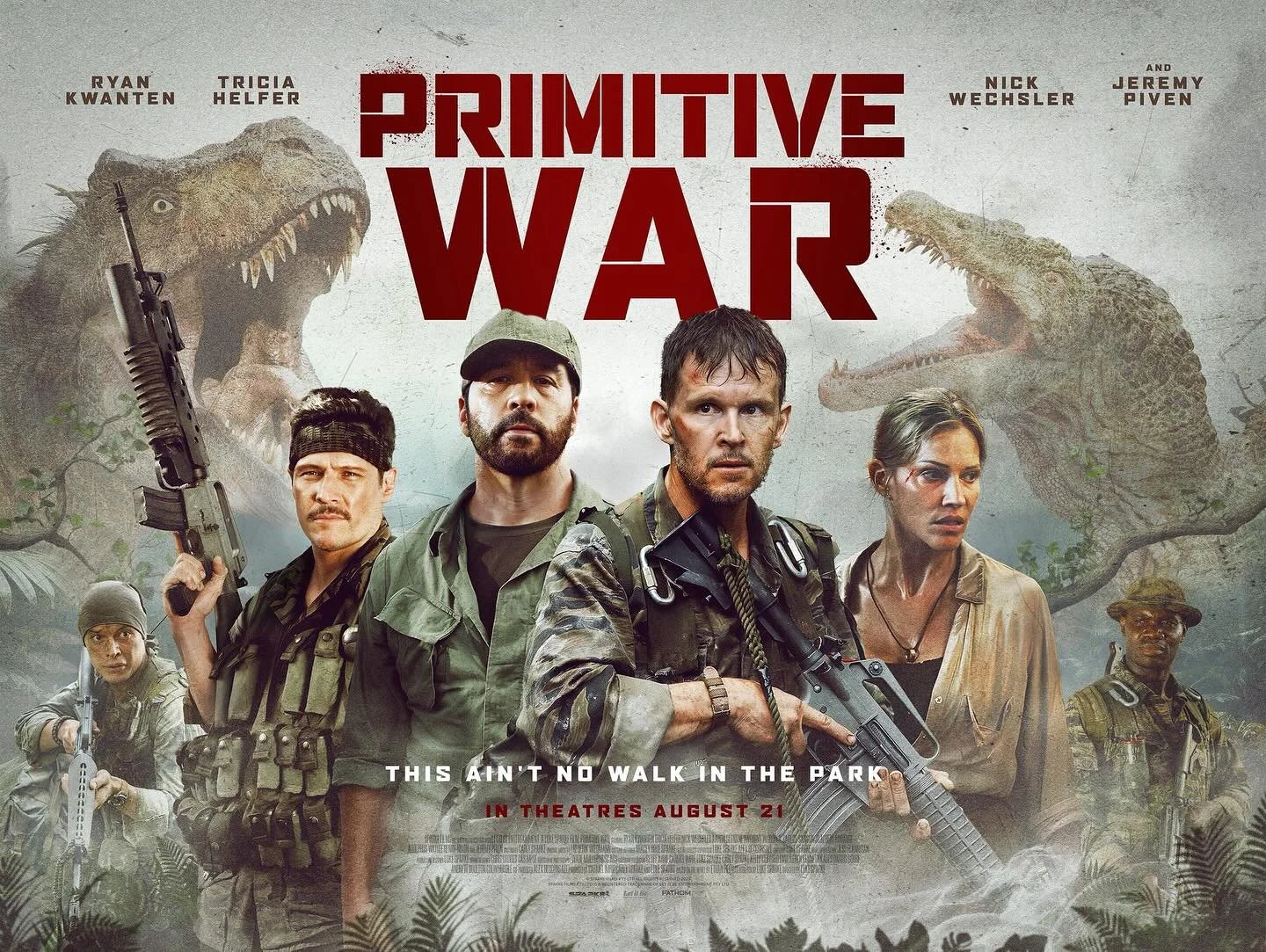
One of the most common objections raised regarding the Jurassic Park/Jurassic World franchise is that the films are specifically made to obtain a PG-13 rating from the Motion Picture Association, for purely commercial reasons. Hence, in all films, there is little on screen violence and the dinosaurs are mainly portrayed as a threat and a means of providing jump scares. When a character is killed by a dinosaur it usually happens off screen, is obscured by something else in frame, or is shown in long shot with very little detail. The realities of being eaten alive by a predator are conspicuously absent. Hence, audiences looking for films featuring more graphic dinosaur attacks, have not been well catered for apart from some minor direct-to-video titles. Primitive War finally fills this gap in the market with a frenetic genre mashup that strives to punch above is budgetary weight.
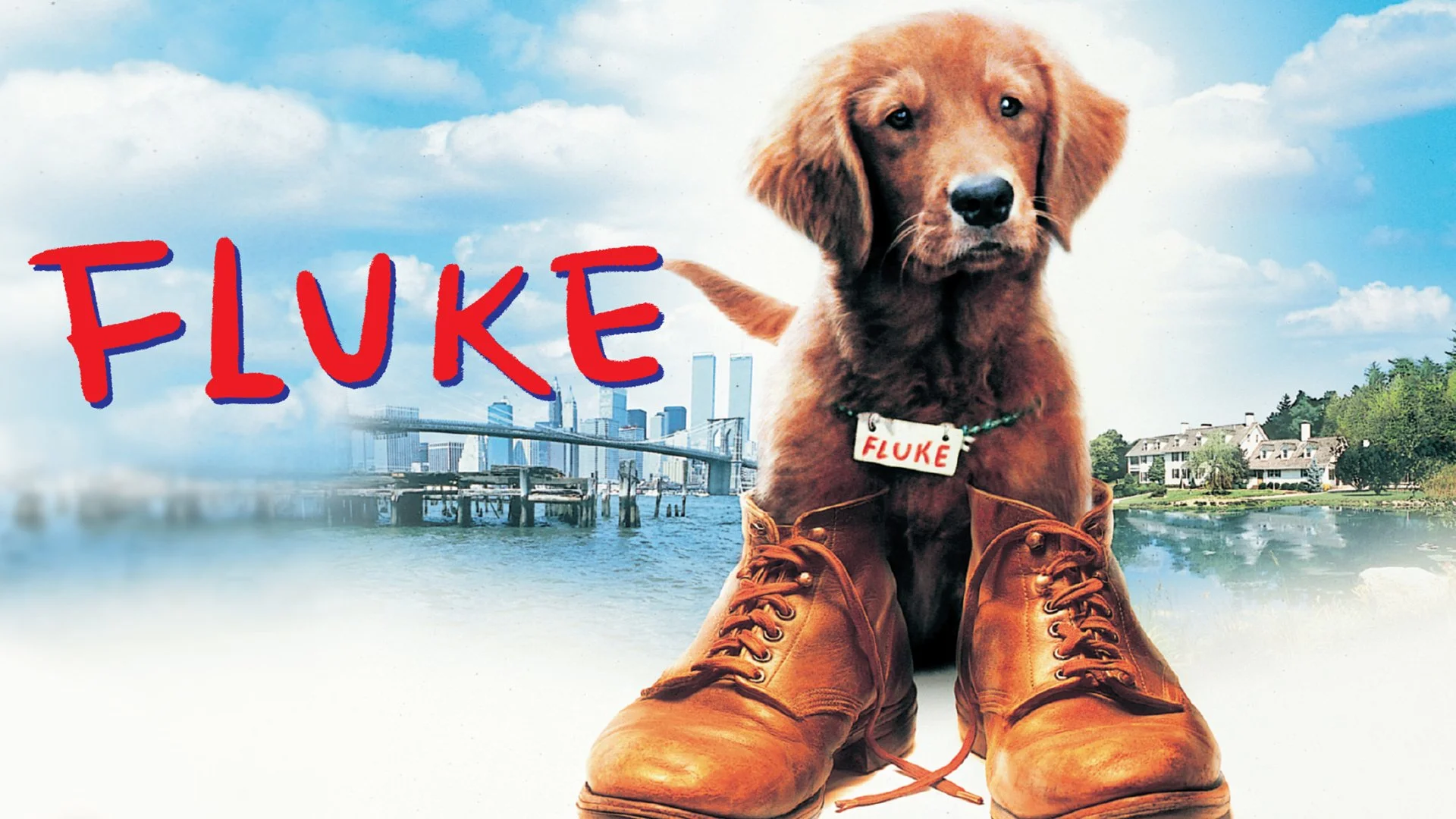
Fluke is a curious film about a man who is reincarnated as a dog and his subsequent realisation that he may have been murdered. It takes an adult novel by British author James Herbert, which is filled with philosophical musing and strives to adapt it in a far more family friendly fashion. The result is a somewhat bipolar production which thematically alternates between existential introspection and Buddhism. It then strives to deliver its message in a Disneyesque idiom. Children will potentially be confused and upset by what they see and adults will be wrongfooted by the continual shift in tone. Fluke was not a critical or commercial success upon release and the flaws that were identified by critics at the time still ring true today. That being said, Fluke is still an interesting and entertaining film, despite its faults.
When reviewing Sting, one critic stated that the small scale setting and thus, low stakes (IE only a few peoples lives are at risk), made the film not especially memorable. I consider this to be a somewhat spurious criticism. It is the very fact that Sting takes place in such a commonplace environment, with the main characters being everyday people that makes it different. There is a clear focus on well defined characters and their backstory. Unlike so many contemporary films, I actually gave a damn about the protagonists in Sting. An integral aspect of the horror genre is the ability to take a well known and familiar trope and provide a different and absorbing spin on it .It would appear that some audiences have been belaboured over the head by so many overblown and bombastic blockbusters, that the very notion of depicting small, localised and intimate events in a film, seems to bamboozle them.
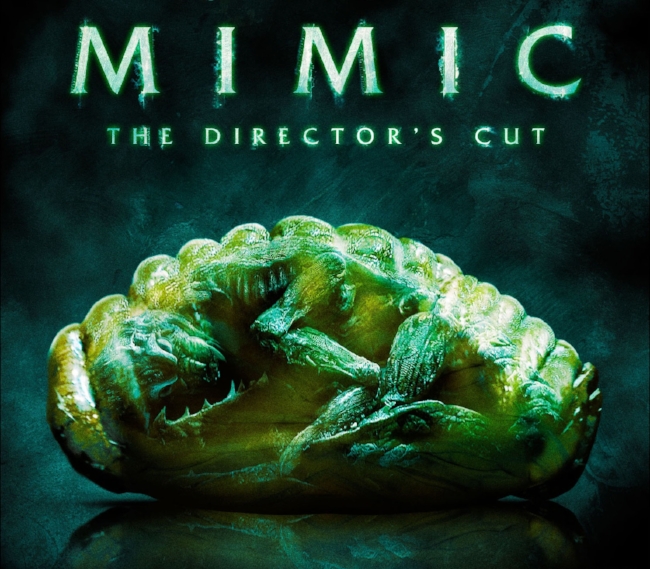
When I first saw Mimic in 1997, I was impressed by the fact that it offered a different perspective on the monster movie genre and that it seemed to have moments of greater depth than you'd expect from such material. Later on when I became more aware of the works of writer, director Guillermo del Toro, I learned that this movie had had a troubled production and that Miramx had imposed specific requirements upon the final cut of the film. This explained some of the movies inconsistencies and hinted at a far more ambitious artistic endeavour by del Toro. Initially Mimic was conceived as a thirty minute short and part of a three part anthology movie. However it along with the sci-fi film Imposter were both deemed to be of sufficient merit to be developed into feature length productions.
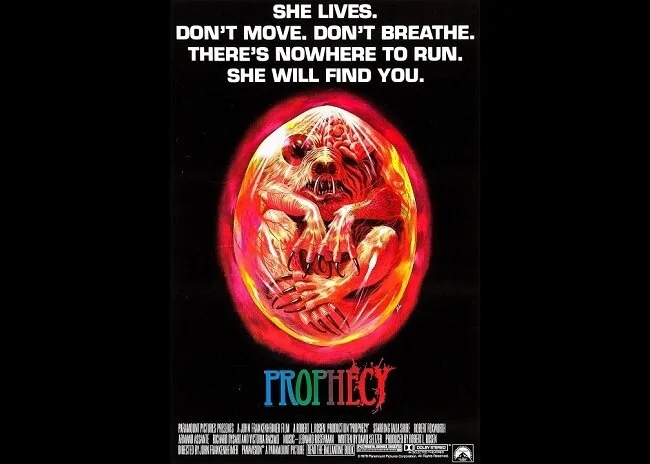
During the seventies, Hollywood started looking to ongoing societal and political concerns as a source of material for movies. Hence, the energy crisis, terrorism and global pollution quickly found themselves being subsumed into hastily written screenplays, in attempt to be topical, commercially successful and relevant. Prophecy based upon a novel by David Seltzer tackled not only the issue of pollution but also the ongoing disenfranchisement of Native Americans. Paramount studios went so far as hiring an established director of note, John Frankenheimer. In many respects this movie should have been a bigger success with a reasonable budget, robust cast and studio support. Sadly it did not fare well, either critically or at the box office due to obvious flaws in the production. Despite his outstanding body work, (Birdman of Alcatraz, The Manchurian Candidate) Frankenheimer was not the best choice of director for a genre movie such as this and he was also going through a period of alcoholism.
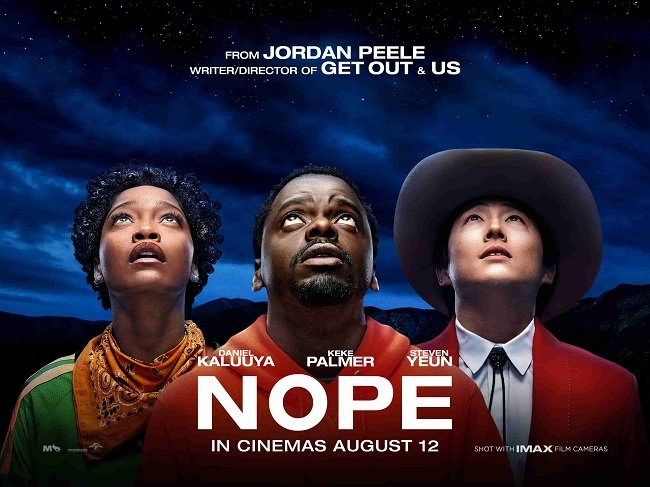
In Agua Dulce, California, the Haywood family trains horses for film and TV productions. One day at the Haywood ranch, small metal objects unaccountably fall from the sky. One of which, a nickel, kills Otis Haywood Sr (Keith David). His children, Emerald “Em” Haywood (Keke Palmer) and Otis “OJ” Haywood Jr. (Daniel Kaluuya), continue to run the business. However, due to the loss of a contract, they have to sell some of the horses to Ricky “Jupe” Park (Steven Yeun), who operates a Western theme park called Jupiter's Claim. One night, the Haywood’s notice the electricity supply fluctuating and their horses violently reacting to an unknown presence. They discover that something has been taking their horses and regurgitating inorganic matter, which OJ believes caused their father's death. The Haywood’s decide to obtain proof and subsequently ask electronics store employee and UFO enthusiast, Angel Torres (Brandon Perea) to set up surveillance cameras.
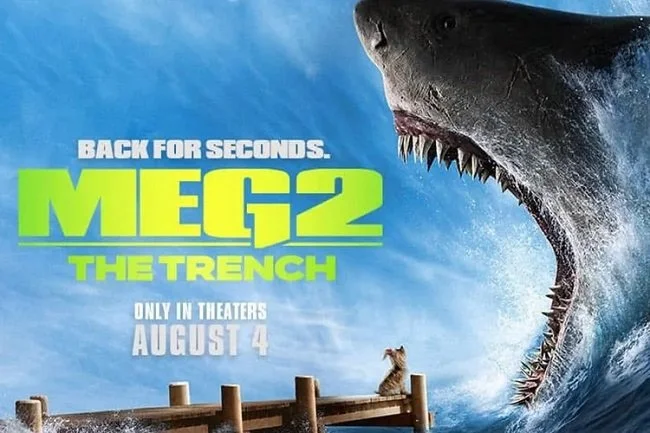
Back in 2018 I wrote the following about The Meg in my review. “My interest doesn’t go so far as a sequel. This sort of movie is the equivalent of a greasy burger you buy at the funfair. It’s fine once in a while as an indulgence, despite the fact that you know it’s bad, but you would soon tire of them being a regular part of my diet”. Five years later, I foolishly thought it may be “fun” to give the sequel, Meg 2: The Trench (2023), a go. Especially in light of the fact that it’s directed by Ben Wheatley. Surely such a filmmaker would bring some creativity and a fresh perspective to this franchise? Nope. Turns out he didn’t. Meg 2: The Trench lacks everything that made its predecessor tolerable. This superfluous sequel is an uninspired, poorly written mess which confuses turning everything up to eleven with entertainment. It gets nowhere near “it’s so bad, it’s good” territory. Instead it makes the biggest mistake a film of this nature can do. It’s dull.
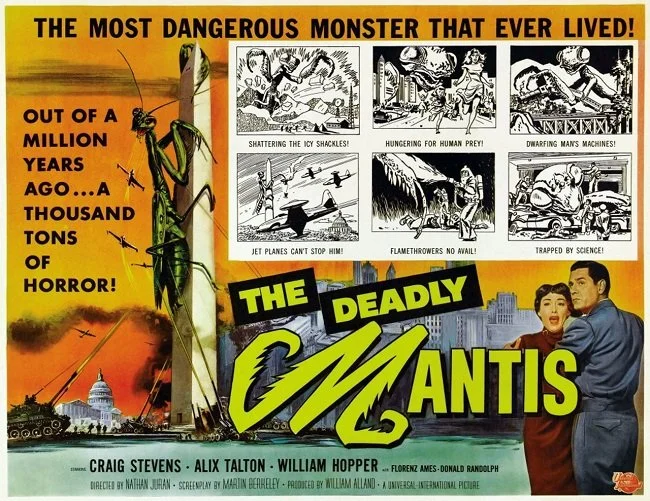
Not to be confused with the Shaw Brothers martial arts film of the same name from 1978, The Deadly Mantis (1957) is a creature feature in the idiom of Them! (1954). Unlike that film’s mutant ants, the monster on this occasion is not the product of the atomic age but a giant prehistoric praying mantis that has been released from the polar ice caps. Exactly how a creature associated with more tropical regions came to be at the North Pole is never explained. In fact precious little is in The Deadly Mantis. The film’s overall scope is somewhat limited with a basic story, limited action scenes and a rather dull cast of generic characters. There is an over reliance upon stock footage from period military documentaries and previous Universal Studio feature films. The film’s biggest failing is the giant praying mantis which does most of its rampaging conveniently off camera. It’s all rather disappointing.
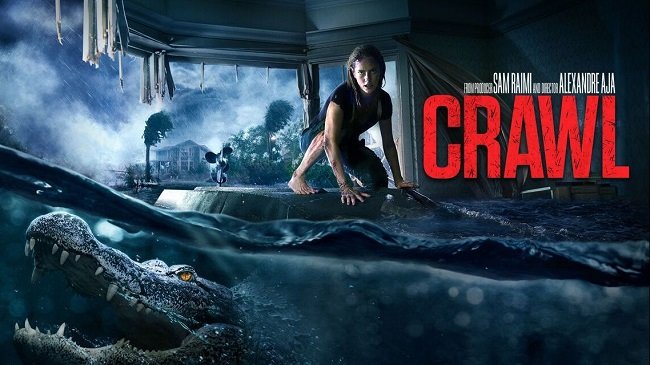
It is no secret that the film industry relies on a handful of common tropes as the mainstay of their cinematic output. It uses timeless themes, storylines and archetypes that have featured in folk tales, plays and literature throughout history. Hence their familiarity with audiences around the world. Where the skill in filmmaking lies is to take a common, well known idea and interpret it in a new and innovative fashion. Akira Kurosawa took Shakespeare’s MacBeth and retold the tale through the prism of Japanese feudalistic culture. The result, Throne of Blood, is considered a masterpiece. Similarly, The Lion King retells the same story through the medium of animation and anthropomorphic wildlife. All of which proves that the key to successfully retelling a familiar tale is to be creative with regard to setting, presentation and perspective.
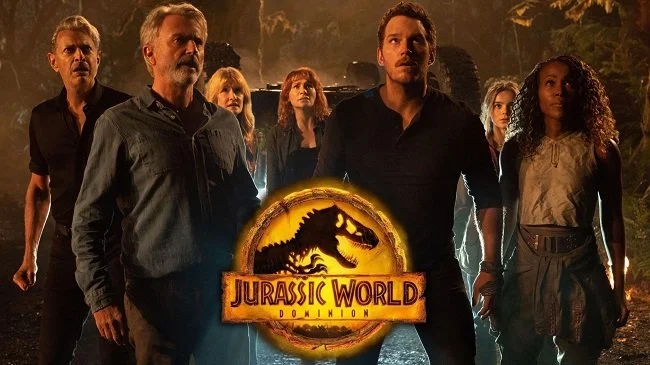
Jurassic World Dominion is a textbook example of a franchise that has run out of steam. Despite the enormous budget, the top notch production values and the presence of three members of the original cast, this is a long, tedious and curiously uneventful film. It has nothing new to say about environmental matters or unfettered science; themes that were front and centre in previous instalments. Nor does it do anything interesting with the main plot device of dinosaurs trying to integrate into our current ecosystems. But perhaps its biggest failing is the conspicuous lack of tension. The denizens of Jurassic World are simply not a threat and fail to have any emotional impact. The film doesn’t even placate viewers with superfluous cast members being eaten. The onscreen deaths by dinosaurs are rather tame.
Set in Brazil in 1901, plantation owner Christopher Leiningen (Charlton Heston) makes arrangements to get married. He has spent his entire life building his estate and reclaiming land from the jungle. He is fiercely independent but he is also alone and isolated. Joanna Selby (Eleanor Parker) from New Orleans agrees to marry him but their first meeting does not go well. Leiningen is unhappy to discover that Joanna is a widow and hence has a past, so he tells her to return to America on the next available boat. However, local commissioner (William Conrad) informs Leiningen that swarming soldier ants, or Marabunta, are moving towards his plantation destroying everything in their path. Leiningen refuses to abandon his life’s work and is surprised when Joanna decides to stay with him. Can they convince their native workers to stay too and can they defend the estate from the Marabunta, described as “forty square miles of agonising death”.
After the critical and commercial success of Jaws in 1975, a veritable tsunami of “creature feature” movies followed in its wake. A few titles, such as Alligator (1980) and Piranha (1978) managed to do something different with the rogue animal trope, both providing a quirky and satirical look at the genre along with plenty of exploitation mayhem. However, most of the rest were low budget productions of negligible quality. However, such qualities are not always an impediment at the box office. Grizzly (1976) was hastily made on a budget of $750,000 yet earned an impressive $39,000,000 at the box office. The critics hated it but the public loved it and it went on to be the second most financially successful independent feature film in the US that year (the first being Monty Python and the Holy Grail). Grizzly is in many ways a microcosm of the exploitation genre from the seventies and needs to be viewed through that prism if it is to be enjoyed.
The seventies saw a minor boom in creature feature films after the box office success of Jaws. Hence, we had movies such as Orca (1977), Tentacles (1977), The Pack (1977) and Piranha (1978). If an animal could eat you or potentially pose any threat to people, someone somewhere would make a movie about it. Usually a bad one. A few of these even dared to stray into other hot topics of the time such as pollution and protecting the environment. Some would even invoke mysticism and folk lore to facilitate their protagonists. Nightwing is one such curious genre hybrid which combines vampire bats, shale oil mining and Native American culture in its clumsy and unsubtle plot. It’s a somewhat odd undertaking, directed by Arthur Hiller. His previous work included Love Story (1970) and Silver Streak (1976), so he was not the first person you’d expect to see associated with such material. The film doesn’t work well as either a horror movie or an exploration of social issues, but like so many movies from this era, it is of interest mainly due to its sheer incongruity.
If you have seen any of the marketing material or trailers for The Meg, then you know exactly what you’re getting right from the get-go. All movies inherently require the viewer to suspend their sense of disbelief to various degrees. Naturally, the “creature feature” genre asks audience to go the extra mile with this concept. The Meg takes a major gamble by insisting that everyone goes further still, not by believing in a giant prehistoric shark (Megalodon) but that Jason Statham is a ex-navy, deep sea rescue diver. However, it pays off and the resulting movie is staggeringly stupid, but mercifully entertaining in an undemanding way. Recent movies such as Into the Storm and Geostorm are crass and made worse by their implicit assumption that their viewers are stupid. The Meg is far from cerebral but has an upbeat tone and a sense of playfulness that knowingly invites the audience to come aboard with the silliness. It’s a big distinction and the reason why I smiled a lot and frequently rolled my eyes while watching The Meg, but never with derision.
Critical opinion was very much split this summer when Jurassic World: Fallen Kingdom was released. However, the viewers were somewhat indifferent to the opinions of the professional critics and the movie made a healthy $1,303,476,615 globally, proving once again that the public’s’ continuing love affair with “all things dinosaur” shows no sign of abating. When you factor in the home media market into overall profits, the entire Jurassic Park franchise will have made $5 billion worldwide. So, bearing in mind the old adage that “money talks and bullshit walks”, I think it’s safe to say there’ll be more instalments in the years to come. When faced with such overwhelming box office popularity it seems somewhat pointless to dissect the latest movie, because the film seems to be bullet proof regardless of narrative flaws or ill-conceived plot devices. However, film criticism isn’t about box office popularity but about analysing the relative quality of a movie’s construction and its subsequent standing.
I first saw The Land That Time Forgot way back in 1975 at the Odeon Isle of Wight, when it was first released. We were on holiday at the time, which was cause for celebration in itself, as these were few and far between during my youth, due to the state of the UK economy at the time. But to then go to the cinema and see a fantasy film, filled with action, adventure and monsters, was the icing on the cake for an over excited eight-year-old. Adapted by Michael Moorcock and James Cawthorn from the 1924 the novel by Edgar Rice Burroughs, The Land That Time Forgot is a classic example of high adventure on a low budget. Its technical shortcomings were even apparent to me as a child, yet there was a charm and honesty to this curious British production, that had the audacity to try and compete with the likes of more expensive US productions such as The Golden Voyage of Sinbad and Island at the Top of the World.
Black Sheep is a high concept horror comedy from New Zealand. Featuring creative physical effects by Weta Workshop, this tale of genetically modified killer sheep, animal husbandry and environmentalism requires a very broad sense of humour and an abiding love for the “creature feature” sub-genre. It should be noted that the copy I watched was the unrated R1 DVD. This version is stronger in content than the R rated US theatrical release and yet was released at the UK cinemas with only a 15 rating from the BBFC. I suspect that the similarities in humour between the UK and New Zealand contributed to this somewhat low rating. That and the fact that horror comedy often gets a free pass because the humour always tends to mitigate the violence.
Frank Darabont achieved both critical acclaim and mass appeal with his adaptations of The Shawshank Redemption and The Green Mile. In 2007 he returned once again to the work of Stephen King with his film version of The Mist. It’s a sideways step away from human drama into a more genre piece, yet it still retains a very traditional story at its heart. Once you look beyond the superficial elements of "creature feature" plot, you get yet another well written character study by an ensemble cast, again focusing on how the human condition deals with extreme situations. The particular route it takes and some of the themes it explores may not be to everyone's taste. However, it still focuses on characters and performances. It is also a movie that ends with a somewhat unexpected plot development, that some viewers may find a little extreme. It is one of those film related twists that if known in advance, greatly diminishes once enjoyment of the film.
When you see the names of such cinematic luminaries as Steven Spielberg and J.J. Abrams together on the same movie poster, naturally your expectations are going to be high. Yet when watching the various trailers for Super 8, just prior to its release in 2011, I was somewhat cautious. I have discussed in the past at some length the ambiguous nature of trailers and that they can misrepresent a film. Yet even bearing this in mind at the time, I couldn’t help but feel that Super 8 seemed like a somewhat self-indulgent homage to Spielberg's earlier work. I subsequently saw the movie at the cinema in August that year and my suspicions were validated. However, over time I have spoken to several friends who are advocates of the movie, so I thought I’d watch it a second time. Sadly, I still find myself unable to label Super 8 as anything else other than adequate. Now I would hasten to add, that I use adequate within the context of both director’s body of work. An adequate film from either Mr Spielberg or Abrams is still superior to many of their competitors. But that's not the point. I simply expected better from such a project.
Having recently sat through Orcs! I decided to take a further chance and watch Orc Wars. It too is a very low budget film, although this time the finances were raised through crowdfunding. Sadly, it is not the fun, tongue in cheek, independent adventure movie the trailer and associated marketing implies. There is very little merit in this production. It's cheap, cheerful and although harmless, it clearly demonstrates that not all fan funded projects are good cinema. Some are just indulgences. The problem is in the title itself, which tries to sell an idea that the movie production is incapable of delivering. Instead of the spectacle of an army of a thousand Orcs pitted against the technological might of the US war machine, we get a few extras in ill-fitting costumes, running skirmishes against no-name actors on quad bikes and a few old Army Surplus vehicles. It's all rather lacklustre and underwhelming.
As a fan of the horror genre I’ve sat through numerous low budget films in my time. This has usually been at festivals or conventions. Sometimes watching something as part of a group, with likeminded individuals, makes a difference. You find yourself groaning in unison and the shared experience helps compensate for potential deficiencies. Watching questionable material in the comfort of your own home, purely on your own can be a lot tougher. However, due to my abiding love of the genre, I am prepared to cut a lot of cheap ass indie flicks considerably more slack than I would others. So, I'll endeavour to review Orcs! with as much impartiality as possible. Oh, and before we start, let us clarify the term Orcs. Although Middle-earth is not referenced in any way, this film is definitely about Tolkien's creations. Or at least their depiction in another well-known series of films.
10 Cloverfield Lane blends several cinematic genres producing an interesting premise. Once it has established its narrative arc, it then dives head long into an exciting and tense one hundred and four minutes. The movie is not a direct sequel to Cloverfield (2008) but does touch upon some of the same themes and ideas. Made on a modest budget of $15 million, the claustrophobic setting of a nuclear bunker accommodates strong performances from the lead actors. It is not until the third act when the story movies back to the outside world, do we see any major visual effects. Overall, this is a very compelling film due to the strong screenplay and well defined central characters.
I did my best to avoid the hype surrounding the initial release of Cloverfield. Such media saturation and public interest can often cloud the issue of whether the actual film is any good. Five years later and having watched the movie twice, once in the theatre and once at home, I am still somewhat conflicted about this movie. The use of hand held video cameras is both a boon and a bane. The constant movement of the image has proven to cause motion sickness for some viewers, although this is not so overwhelming when viewed on a smaller screen at home. Yet the medium of news footage mixed with handheld cameras does create a palpable sense of immediacy. This helps immensely when trying to sell a fantastic concept, such as the one that Cloverfield features.
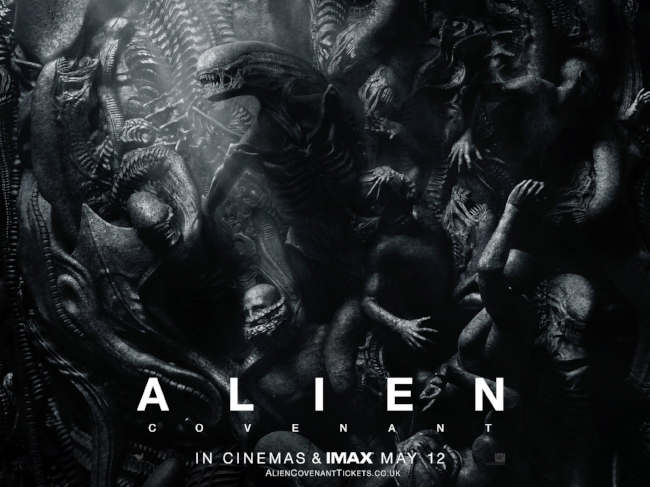
The enigma of the Xenomorph in the Alien franchise is diminished once you start to rationalise its heritage. Sadly, that’s exactly what Alien: Covenant has chosen to do. It jettisons the mystery of the original 1979 movie and pulls back the curtain, so wisely put in place thirty-eight years ago, to reveal a rather lacklustre explanation to the Xenomorph’s origin. Having spent nearly $100 million and employed a production team of some of the finest talent that money can buy, the resulting movie is not bad per se, just crushingly superfluous. After watching Alien: Covenant this week, my overall reaction can be distilled down to a deep sigh of indifference and a shrug of the shoulders.
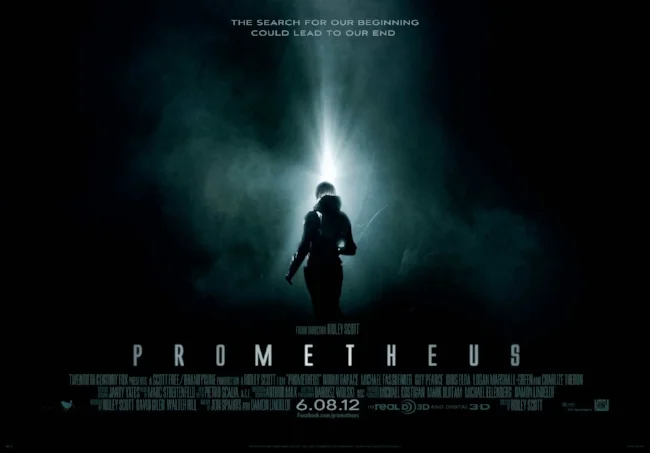
I have written many times in recent years about how big titles get announced by the gaming industry, of the ensuing hype up that leads up to launch day and then the subsequent disappointment on purchase. It is a malady that has afflicted the movie industry for decades and has become increasingly more common in the last decade. Hype has a curious link with reputation. There are a handful of directors in contemporary Hollywood who when they add their name to a production, people take notice. Ridley Scott is one of these. His body of work pretty much guarantees he can make whatever he wants, be it a commercial undertaking or a ludicrous vanity project. However, the downside to being a film maker of this stature is that you are not so easily exposed to proper scrutiny by your peers. No one stops you from making a mistake because you are supposed to know what you are doing. They let you do what you want. Which is bad.
Hollywood is a cyclical place and often repeats decisions it's successfully made in the past. During the early seventies, the mainstream film industry head hunted a lot of up and coming talent from the independent film making community, or took a chance on directors who were fresh out of film school. It was a means to an end and a way to tap into the new talent that was proving popular and lucrative. Similarly, Warner Bros. followed suit in 2014 when Gareth Edwards was hired to direct the multi-million-dollar Godzilla reboot. His previous movie was the self-financed indie Sci-Fi picture Monsters. Godzilla went on to be both a box office and critical hit.
Sinister (2012)
Scott Derrickson’s Sinister is a curious blending of genres and classic plot devices. It certainly has some interesting ideas at the centre of its plot. Ethan Hawke plays a true-crime writer Ellison Oswalt, looking for his next big story and desperate to find fame again. After discovering a box full of Super 8 home movies in the attic of his new house, matters start to take a turn for the worst. The films appear to depict the real murders of several families and investigations lead to a series of strange unsolved crime and the possible involvement of supernatural forces. Could a pagan deity known as Bughuul, who allegedly preys upon the souls of children, be responsible? Is Oswalt’s own family in danger? Do bears conduct their personal business in deciduous forests?
Scott Derrickson’s Sinister is a curious blending of genres and classic plot devices. It certainly has some interesting ideas at the center of its plot. Ethan Hawke plays a true-crime writer Ellison Oswalt, looking for his next big story and desperate to find fame again. After discovering a box full of Super 8 home movies in the attic of his new house, matters start to take a turn for the worst. The films appear to depict the real murders of several families and investigations lead to a series of strange unsolved crime and the possible involvement of supernatural forces. Could a pagan deity known as Bughuul, who allegedly preys upon the souls of children, be responsible? Is Oswalt’s own family in danger? Do bears conduct their personal business in deciduous forests?
Sinister is a film of two very distinct halves. The opening set-up and subsequent plot exposition is technically well done, atmospheric and unnerving. The use of Super-8 film to show the murdered families, works very well and is constructed in a genuinely creepy manner. The found-footage sequences are a plot device within the main story, rather than the basis of the entire movie. This is by far the films best asset. Yet the tipping point comes when Bughuul physically manifests itself and the inferred threat becomes more immediate and less mysterious. At this point, Sinister becomes a far more perfunctory horror movie and heads towards a rather obvious bleak ending.
It saddens me to be so critical of Sinister, as watching a R rated horror movie is quite a rare experience these days. It’s a shame that the entire film could not be as convincingly scripted and compellingly filmed as the first half. Similar tonal inconsistencies featured in Director Scott Derrickson’s earlier movie, The Exorcism of Emily Rose. That too suffered dramatically once it made the conscious decision to show the supernatural rather than imply it. However, Sinister does benefit from Ethan Hawke who brings a little more to the role than expected and there are some adequate scares along the way. Yet these can't quite compensate for formulaic denouement, leaving viewers with a distinct feeling that Sinister has not reached its full potential.
Furthermore, whoever was responsible for the video marketing campaign for this movie certainly hasn’t done it any favours. The entire plot and virtually every scare were included in the various trailers and TV promos, totally mitigating any potential suspense the movie may have had upon release. It must be very frustrating for jobbing directors such as Scott Derrickson. Not only are they hamstrung by the commercial demands of the producers but any tricks that they may have up their sleeves are shamelessly given away by the marketing campaign. Yet despite these shortcomings the public found sufficient merit in Sinister to generate a healthy box office return. Thus, we were subsequently regaled with Sinister 2 in 2015. Sadly, it was not an improvement.
David Koepp is no stranger to genre cinema, having written the screenplay for such films as Jurassic Park, Spider-man and War of the Worlds. Where these titles are big budget, major studio productions, Cold Storage is a far more modest production with a smaller scope. Adapted from his own novel, the screenplay is by David Koepp and the film is directed by British film-maker Jonny Campbell. At first glance, Cold Storage seems a somewhat derivative science fiction horror film with a relatively modest budget, financed through a convoluted US and French co-production. Lurid green and red colours feature heavily in the marketing artwork and it is easy, after a cursory look, to write the film off as cheap, generic, direct-to-streaming filler. However, Cold Storage is prime example of why you should not judge a book by it’s cover, or in this case, a film by its posters and online advertising. It is in fact an amusing and fun endeavour that can fill an evening.
Despite being considered by many as an original story, The Abominable Snowman (1957) is in fact a remake of a made for television play, The Creature, that was originally broadcast in the UK in 1955. Hammer Films would often purchase the rights of popular TV programs and subsequently re-work them for mainstream, international cinema. Larger production budgets and fewer censorship restrictions allowed them to make their cinematic interpretations more lurid, thus commercially viable. Hence The Quatermass Xperiment, Quatermass II and Quatermass and the Pit were all given a big screen makeover and were commercially successful. The Abominable Snowman was written by acclaimed writer Nigel Kneale, who also wrote the original television drama and the aforementioned Quatermass trilogy. Although ostensibly marketed as a horror film this production is actually an interesting blend of psychological thriller and science fiction.
The Haunted Dolls House is a short film based on a story by M.R. James about a unique antique that is subject to supernatural phenomenon. Adapted by Stephen Gray and David Lilley, this is the third of three short films based upon James’ work that the pair have made. It stars Steven Dolton as Mr. Dillet, a collector of antique dolls houses, who acquires a bargain only to discover that it harbours a ghostly secret. Made on an extremely modest budget over the course of 2012 this clever, innovative and rather sinister adaptation is a fine example of short film creativity. It manages to offer a unique visual depiction of M.R. James’ classic story whilst capturing the unsettling quality of the author’s work. Like so many independently made short films it is clearly a labour of love, made with modest resources. It succinctly captures the spirit of the author’s work and is both innovative and rewarding.
A lot of people may know Luke Evans from the live action version of Beauty and the Beast or Peter Jackson’s The Hobbit trilogy. With his matinee idol good looks, charming Welsh demeanour and his “smoky” tenor singing voice, he projects a sense of old school stardom. Which brings us to No One Lives; a film which is a radical departure from his previous work. His performance is disconcerting to say the least and the film is somewhat unhinged. Directed by Ryuhei Kitamura, who made an interesting adaptation of Clive Barker’s The Midnight Meat Train, this cinematic outing is similarly replete with robust shocks and gore. There are some interesting ideas about the nature of violence, Stockholm Syndrome and whether one should deny or embrace one’s nature. However, these are ultimately minor asides. Philosophical musings in between bouts of surprisingly striking unpleasantness.
In the near future, Kepler 822, a research and drilling facility located at the bottom of the Mariana Trench, suffers a sudden and catastrophic structural failure. There are only six survivors. Mechanical engineer Norah Price (Kristen Stewart), Captain Lucien (Vincent Cassel), biologist Emily Haversham (Jessica Henwick), engineer Liam Smith (John Gallagher Jr.) and crew members Rodrigo (Mamoudou Athie) and Paul (T.J. Miller). As all the functional escape pods have been used and they are unable to contact the surface, the Captain suggests using pressurized suits to walk one mile across the ocean floor to the Roebuck 641 drill installation. There they will find more escape pods. However, it soon becomes apparent that the disaster was not caused by an undersea earthquake and that they are not alone as they make their journey.
In Buenos Aires, Clara (Natalia Señorales) hears voices emanating from the plughole in her kitchen sink. The voices seem to be plotting against her. Her husband Juan (Agustín Rittano) says the sounds are coming from next door. That night, Juan finds Clara’s dead body levitating in their bathroom, slamming against the wall by an invisible force. Meanwhile their neighbour, Walter (Demián Salomón), is experiencing supernatural occurrences while he tries to sleep. An invisible force repeatedly shakes his bed. After using a video camera to film these events, he sees a tall, cadaverous figure emerging from under the bed, standing over him as he sleeps. Across the road, Alicia (Julieta Vallina) is grieving for her recently deceased son, who was run over outside Walter’s house. Alicia's ex-boyfriend, police commissioner Funes (Maximiliano Ghione) calls Jano (Norberto Gonzalo), a paranormal investigator and the pair soon discover more supernatural occurrences in the area.
Black Sabbath (AKA I tre volti della paura) is a 1963 horror anthology film directed by Mario Bava. Although an Italian production, the film was co-financed by American International Pictures and as such was conceived to appeal to US audiences. Hence, the English dialogue edit of the film which was released in America differs significantly to the original Italian version. Despite the presence of the legendary Boris Karloff and the popularity of both anthology and gothic horror at the time,the film was only a modest success at the US box office and did not do well in Italy. However, in more recent years there has been a critical reappraisal of Black Sabbath, especially the Italian dialogue version. Many aspects of the film which are standard genre tropes today, were in fact novel at the time. Also despite the production mainly being studio bound, the film oozes style and has a striking visual aesthetic.
During 1836, in the town of Darkness Falls, Maine, an elderly widow Matilda Dixon is adored by the town’s children as she gives them a gold coin whenever they lose a tooth. One day, after a house fire, Matilda is left burned and sensitive to sunlight, so she starts wearing a china mask. When two children are reported missing, Matilda is blamed by some locals, dragged from her home and hung. She curses the town, stating that whenever a child loses their last tooth, she would come for it. If the child looks at her, she will kill them. The missing children are subsequently found, so the citizens cover up their unjust lynching. In 1990, young Kyle Walsh awakes one night to find Matilda Walsh standing over him. Kyle’s mother is killed and he is blamed for her death and institutionalised. 12 years later, Kyle (Channey Kley) is released and tries to warn the town of the imminent danger when lightning disables the power supply. He is ignored by all until the deaths begin.
Osgood Perkins has a distinct visual style and tone to his films. It is why his previous film, Longlegs, was such a welcome change from standard genre outings. It was atmospheric both visually and tonally, demonstrating a keen understanding of horror cinema. Hence he is the perfect director to helm this adaptation of a Stephen King short story. The plot is greatly expanded and the screenplay takes a lot of liberties with the source material but the main themes of your past being inescapable and the power of guilt remain front and centre. Due to the extreme and bizarre nature of much of the onscreen deaths, the film wisely has a strong streak of gallows humour running through it which is extremely well handled. Comedy can often be used to defuse or mitigate violence which can be narratively dishonest (think Fred Krueger). Here it adds to the cruel and capricious nature of the random deaths.
When reviewing Sting, one critic stated that the small scale setting and thus, low stakes (IE only a few peoples lives are at risk), made the film not especially memorable. I consider this to be a somewhat spurious criticism. It is the very fact that Sting takes place in such a commonplace environment, with the main characters being everyday people that makes it different. There is a clear focus on well defined characters and their backstory. Unlike so many contemporary films, I actually gave a damn about the protagonists in Sting. An integral aspect of the horror genre is the ability to take a well known and familiar trope and provide a different and absorbing spin on it .It would appear that some audiences have been belaboured over the head by so many overblown and bombastic blockbusters, that the very notion of depicting small, localised and intimate events in a film, seems to bamboozle them.
Some films are made with the intention of starting a franchise, others evolve into one after a surprise box office success and lucrative sequels. Alien (1979) falls into the latter category. A mid-budget science fiction horror film that was well crafted and then benefited immensely by being released at just the right time. Sadly, many franchises become derailed and enter into a death spiral due to competing artistic visions, cynical studio politics and cinematic ignorance. This has certainly afflicted all subsequent Alien films after James Cameron’s magnificent Aliens (1986). Sometimes, a franchise can correct its course and do something fresh with the source material. Prey (2022) is a fine example of this with director Dan Trachtenberg bringing fresh vigour and intelligence back to the Predator movies. I believe that was the intention with Alien Romulus (2024). Sadly, the road to hell is paved with good intentions.
Friday the 13th: The Final Chapter is a popular entry among fans of the franchise. This is mainly due to the return of makeup artist, Tom Savini, who creates several notable death scenes and a bravura ending for Jason Voorhees. There is also an attempt by writer Barney Cohen to have a more involving story compared to previous entries in the series. Director Joseph Zito, who previously directed the above average slasher movie The Prowler AKA Rosemary’s Killer (1981), brings a harder edge to the proceedings, making Jason more menacing than in the previous instalment. As ever, the film was dismissed by the critics but performed well at the box office. Producer Frank Mancuso Jr fully intended for this film to be a definitive end to the series, as he was becoming increasingly concerned that his association with the franchise was having a negative impact upon his career.
Set directly after the events of the previous film, Friday the 13th Part III is again about a group of friends staying near Crystal Lake who encounter Jason Voorhees as he embarks upon another killing spree. Shot in 3D the film has a less sleazy tone than its predecessors although the formula remains the same. The set pieces and death scenes are more elaborate and less clinical, taking advantage of the 3D picture format. The film marks the first appearance of Jason's signature hockey mask, which subsequently became a trademark of both the character and the franchise. Originally conceived to be an end to the series of films, Friday the 13th Part III performed extremely well at the box office, earning $36.7 million on a budget of $2.2 million. As a result, the franchise was given a stay of execution and a further sequel was commissioned.
Originally, Friday the 13th Part 2 was intended to be an anthology film based on the superstition associated with the date. However, after the popularity of the original film's surprise ending, the producers opted to continue the story and mythology surrounding Camp Crystal Lake. This eventually became the parameters which all future films would broadly work within. Friday the 13th Part 2 is a more polished production than the first movie, benefitting from twice the budget of the original. The quick turnaround meant that Paramount Pictures could continue to capitalise on the popularity of the slasher genre. However, there was growing social pushback against these types of films, from Christian lobby groups and other “concerned parties”. Hence, Friday the 13th Part 2 ran into problems with the MPAA ratings board and cuts were imposed. Something that would continuously plague the franchise over the years.
Writing any kind of review for the original Friday the 13th movie seems somewhat redundant, as it has been analysed and written about numerous times before. If you’re interested in the film’s production as well as its subsequent impact on US cinema at the time, then there is an excellent summary on Wikipedia. Having recently rewatched the entire franchise, courtesy of the Shout Factory’s Friday the 13th Collection Deluxe Edition, I have a few thoughts I’d like to share. The picture quality of all the films is very good, offering a lot more visual information compared to previous releases. The amount of “extras” included in the box set is prodigious. I suspect that these are the best versions that we’re ever likely to see. Fans hoping that one day all the cut footage will be found and re-integrated into each film are likely to remain disappointed. Some material has surfaced but sadly a lot of deleted and extended scenes have been destroyed.
George A. Romero's Day Of The Dead (1985) is a bleak and remorseless masterpiece. The final entry in his “Dead Trilogy”, its central theme is that in a world on the brink of destruction, man is still the biggest threat to his own existence. It is well scripted, clinically accurate in its observations on human nature and thought provoking, despite having its budget cut just weeks before production commenced. 40 years later it is revered as a genre milestone and is considered one of Romero’s finest works. Sadly, the 2008 “remake” directed by Steve Miner, who has a background in slasher and exploitation movies, takes a contrasting approach, to say the least. It certainly has very little to do with Romero’s film and one can’t help but assume that it is nothing more than a cynical cash in. Setting aside comparisons with the original, this is not in any way a standout zombie film in its own right.
Although I was unaware of it, there was a guerrilla marketing campaign for Longlegs which was focused on the internet rather than traditional television adverts. Hence the film gained a lot of interest prior to its release and as well as some some disproportionate expectations. Then immediately after its theatrical debut, the matter was further compounded by a possible excess of gushing praise as the film was “over reviewed”. Therefore I maintained a degree of scepticism about Longlegs and tempered my expectations prior to watching it. Any film that is hailed as the next Silence of the Lambs, featuring a “traumatising” performance by Nicholas Cage needs to be keenly scrutinised so that its cinematic merits can be carefully separated from the surrounding hyperbole. After viewing I found Longlegs to be a finely honed, atmospheric and precisely targeted horror thriller but not the genre milestone that some would claim.
As a rule, it is always a challenge to end a trilogy of films successfully. Writing a satisfying denouement to a standalone movie is hard enough. To be able to conclude all pertinent story arcs and themes that have been sustained over three feature films, to everyone’s liking is far harder to achieve. In the case of The Final Conflict (1981), the last instalment of The Omen trilogy, writer Andrew Birkin does manage to resolve all of the external, internal and philosophical stakes, which are the fundamental components of a cinematic screenplay. Unfortunately, it is done in an incredibly underwhelming manner, which left audiences feeling cheated. The last time good defeated evil evil in such an unspectacular fashion was in Hammer’s To the Devil a Daughter (1976). This is why, in spite of solid production values, The Final Conflict is the least popular of the films about the Antichrist, Damien Thorn.
Halloween III: Season of the Witch is a film that often provokes a strong reaction from genre fans. This is mainly due to it not having any direct connection to the previous two films. The absence of Michael Myers in such a franchise was a serious mistake and the subsequent poor box office returns endorsed this. Yet if this film had been released as a separate product it may not have performed so poorly. After re-examining Halloween III: Season of the Witch there are many aspects of interest. Despite a troubled production, the film is an intriguing anomaly that tried to be different during a decade where the established horror formula was “stalk n' slash”. It does have a very bleak tone and some consider it to be mean spirited as the cast are killed off one by one. Perhaps theme of child sacrifice caused audiences to balk?
Ghostwatch is a controversial British horror “mockumentary” produced by the BBC that was first broadcast on October 31st 1992. Written by Stephen Volk and produced by Ruth Baumgarten it is now considered a milestone in UK broadcasting. This was mainly due to the strong reaction it provoked from the public, many of whom failed to grasp that it was a drama. At the time it raised serious questions about responsible programming and caused a furore in the British press. It has curiously never been shown since by the BBC. Ghostwatch remains a talking point to this day and is a text book example of the power of television as well as the publics enduring belief in the supernatural.
Event Horizon is a curious movie hybrid, mixing plot elements from classic sci-fi and horror genres. It has been labelled “Hellraiser in Space” by some lazy critics, although I think there's far more to it than that. Perhaps a more apt description would be a Gothic horror story set in space. The movie has garnered a cult reputation since its release in 1997, mainly due to its graphic imagery and troubled production history. It does indeed have some quite shocking sequences but the lightning editing does not show as much as some would think. Paramount forced director Paul W S Anderson to reduce the original one hundred and thirty minute running time down to a more manageable ninety, after unfavourable test screenings. Much of the violence was allegedly removed as a result of that process. Sadly nothing survives of the removed material other than a VHS workprint. Hence a restored director’s cut is therefore unlikely.
The peace of tranquillity of Santa Ynes, Utah, is shattered when the town becomes the focus of several hit and run deaths, by a mysterious and apparently driverless, black car. After the Sheriff (John Marley) is run down, it is down to Captain Wade Parent (James Brolin) and his deputies to protect the town from this sinister threat. Is the car simply a driven by a mad man or is there a more supernatural explanation? When the car menaces a local school marching band, the teachers and students take refuge in the nearby cemetery. Does the cars inability to enter consecrated ground provide a clue to its otherworldly origins and offer a potential solution? As the death count increases and the population becomes more fearful, the Captain and his team of deputies form a desperate plan to see if they can lure the car into a trap.
The key to success in the horror genre is to try and find an innovative new angle on tried and tested themes and tropes. The Night Flier is an often-overlooked gem, that takes a unique perspective on vampirism and features strong performances as well as an intelligent and thoughtful screenplay. It builds a sense of foreboding during it’s first two acts and teases audiences with some unpleasant prosthetic effects, courtesy of KNB EFX Group. The climax of the movie is both thought provoking and suitably unpleasant. Furthermore, The Night Flier even manages to make a coherent criticism of tabloid culture and morals of those journalists working in the industry. It’s a damn shame that this modest but well-crafted genre movie didn’t get the attention it deserved when it was initially released in 1997.
Dr. Terror's House of Horrors was the first portmanteau horror movie by Amicus Productions. The small British studio was founded by producers and screenwriters Milton Subotsky and Max Rosenberg. As the horror genre grew in popularity due to the success of Hammer films, Amicus saw the potential in the portmanteau format. Subotsky in particular held Ealing Studios 1945 classic Dead of Night in very high regard. Although only a modest budget movie, Dr. Terror's House of Horrors proved to be financially successful and led to a series of similarly structured films over the next decade. These included Torture Garden (1967), The House That Dripped Blood (1970), Asylum (1972), Tales from the Crypt (1972), The Vault of Horror (1973), From Beyond the Grave (1974),
Ghost Story is a deliberately superficial adaptation of the novel by Peter Straub. If you’ve read the book and are expecting a verbatim retelling of the plot, then you will be disappointed. It’s complex narrative structure and the abundance of characters do not immediately lend themselves to mainstream film making. However, if you like tales of the supernatural and solid performances from Hollywood legends, then this may well be for you. John Irvin has always been a workman like director and has therefore often been overlooked. Films such as Hamburger Hill and When Trumpets Fade show a great deal of focus and a clear understanding of the mechanics of cinema.
The Ruins is similar to both The Mist and Cloverfield , which were released around the same time, in so far that it is rather bleak and unrelenting movie. And like the aforementioned films, its strength lies in the manner in which it tackles the subject of people facing their own death in a credible fashion. In The Ruins the protagonists when faced with the prospect of their own demise quickly descend in to panic and resolutely refuse to face facts. Although these are negative themes that may not be to everyone’s tastes, they make The Ruins both gripping and genuinely scary.
The arcane and esoteric works of author H P Lovecraft have often inspired horror directors. Sadly many of the films that have been made in homage to the Cthulhu Mythos have failed to capture its nightmarish mix of madness and mythology. John Carpenter's In the Mouth of Madness is not directly based on any of Lovecraft's specific works but screenwriter Michael De Luca draws his inspiration from many of this recurring ideas and concepts. He then adds a further homage to British writer Nigel Kneale, adding themes that are prevalent in his Quatermass series. Where others have failed, Carpenter successfully crafts a film that alludes to the baroque and eldritch qualities of the Cthulhu Mythos.
Since the late eighties Morgan Creek productions have dabbled with multiple genres whilst pursuing box office success. At times, they have been successful with such populist movies as Young Guns and Robin Hood: Prince of Thieves. However, for every film that proved financially viable there were often two more that failed to gain an audience. Yet, despite having the business acumen to commission the best writing and directing talent available, co-founders James G. Robinson and Joe Roth have often been at odds with such creative individuals, resulting in many troubled productions. Horror writer and director Clive Barker endured an arduous experience while making Nightbreed, which was based upon his own novella. It was such a negative experience, resulting in a movie that was far from his initial vision, that Barker effectively quit film making. A similar experience befell William Peter Blatty when he was given an opportunity to film a direct sequel to The Exorcist based upon his novel Legion.
Apollo 18 (2011)
A fundamental requirement of cinema is that the audience suspends their sense of disbelief. Anything that breaks this will immediately has a negative impact upon the viewing experience. There are many things can severe this connection but the two most common seem to be obvious plot holes and Scooby Doo behaviour IE “Let’s split up…”. If these are the result of simply poor film making, then they can perhaps be forgiven. Every director has to learn their craft. However, if these two factors are present by design, then that is an unpardonable sin. Assuming that your audience is stupid, is insulting and the worse sort of hypocrisy.
A fundamental requirement of cinema is that the audience suspends their sense of disbelief. Anything that breaks this will immediately has a negative impact upon the viewing experience. There are many things can severe this connection but the two most common seem to be obvious plot holes and Scooby Doo behaviour IE “Let’s split up…”. If these are the result of simply poor film making, then they can perhaps be forgiven. Every director has to learn their craft. However, if these two factors are present by design, then that is an unpardonable sin. Assuming that your audience is stupid, is insulting and the worse sort of hypocrisy.
Apollo 18 has a strong start for a movie built around the found footage concept. It plays very nicely into the current appetite for conspiracy theories. The first thirty minutes where we meet the cast and learn of their covert mission to place monitoring equipment on the moon, is credible and intriguing. The cold war setting and the post-Watergate back drop do a lot to fuel the narrative. During this initial third of the movie, Apollo 18 plays more like a political thriller rather than a sci-fi shocker. But then director Gonzalo Lopez-Gallego goes and jumps the shark and all the previous good work goes out the window. It’s a common problem with contemporary film making. I remember having exactly the same thoughts when I saw Paranormal Activity.
After a string of anomalous events a key character makes the most illogical leap of thought and as a result the credibility simply melts away. You see, I take the attitude that NASA astronauts are trained professional, hand picked because of their skills and analytical mindset. Maintaining rational under extreme circumstances must surely feature in their training. So, I simply do not buy into the idea that, because they’ve found an abandoned Russian Lunar Module, a dead cosmonaut, picked up radio interference, had the flag that they planted removed and found some unidentified marking in the lunar soil, naturally concluded that it must be extraterrestrials. Scientists simply do not think this way.
The rest of the film is arbitrary and derivative bug hunt, with obviously telegraphed jumps. The conclusion involving complicit government agencies is predictable and uninspired. This is a shame because the film is very well made from a technical perspective. But once again we have a production that demonstrates a clear understanding of visuals but not plot construction. Furthermore, Apollo 18 also seems to forget that it is a found footage movie, with scenes and dialogue that are contrived to be more cinematic and come dangerously close to breaking the fourth wall.
With reference to the plot holes, I unlike other critics was not particularly bothered about the nebulous nature of the alien life forms featured in the film. I am happy to watch movies without every answer being given to me on a plate. Life is seldom clear cut, is it? However, I do balk at the fundamental flaw that permeates Apollo 18. The film comprises of 16 mm & 35 mm cine footage along with video material from external cameras. Now the latter may well have been broadcasted and thus been received and recorded back on earth. But the cine film had to be collected and developed. Does the film not hinge on the premise that no mission has subsequently returned to the moon? Also, the Russian Lunar Module and US Command module where both destroyed, therefore eliminating any footage they may have had. No, this is simply bad screen writing and brings me neatly full circle to my original point that I started with.
David Koepp is no stranger to genre cinema, having written the screenplay for such films as Jurassic Park, Spider-man and War of the Worlds. Where these titles are big budget, major studio productions, Cold Storage is a far more modest production with a smaller scope. Adapted from his own novel, the screenplay is by David Koepp and the film is directed by British film-maker Jonny Campbell. At first glance, Cold Storage seems a somewhat derivative science fiction horror film with a relatively modest budget, financed through a convoluted US and French co-production. Lurid green and red colours feature heavily in the marketing artwork and it is easy, after a cursory look, to write the film off as cheap, generic, direct-to-streaming filler. However, Cold Storage is prime example of why you should not judge a book by it’s cover, or in this case, a film by its posters and online advertising. It is in fact an amusing and fun endeavour that can fill an evening.
Despite being considered by many as an original story, The Abominable Snowman (1957) is in fact a remake of a made for television play, The Creature, that was originally broadcast in the UK in 1955. Hammer Films would often purchase the rights of popular TV programs and subsequently re-work them for mainstream, international cinema. Larger production budgets and fewer censorship restrictions allowed them to make their cinematic interpretations more lurid, thus commercially viable. Hence The Quatermass Xperiment, Quatermass II and Quatermass and the Pit were all given a big screen makeover and were commercially successful. The Abominable Snowman was written by acclaimed writer Nigel Kneale, who also wrote the original television drama and the aforementioned Quatermass trilogy. Although ostensibly marketed as a horror film this production is actually an interesting blend of psychological thriller and science fiction.
There are certain subjects that are notoriously uncinematic. These tend to be things that exist or are undertaken mainly in the mind, rather than expressed in an overtly physical way. Computing, science and mathematics are good examples. Writing code or working out complex equations does not immediately lend themselves to a visual medium such as cinema. Therefore, any film dealing with the world of corporate finance has its work cut out. Hence writer-director J C Chandor immediately deserves praise for making Margin Call, a film about the financial crash of 2008, as gripping and compelling as any political thriller. He does this by keeping the financial elements of the story to a minimum, choosing instead to focus upon those who have become aware of the imminent crisis and their reaction to it. However, the film remains a tough watch with regard to the some of the characters and their respective personal morality or lack there of.
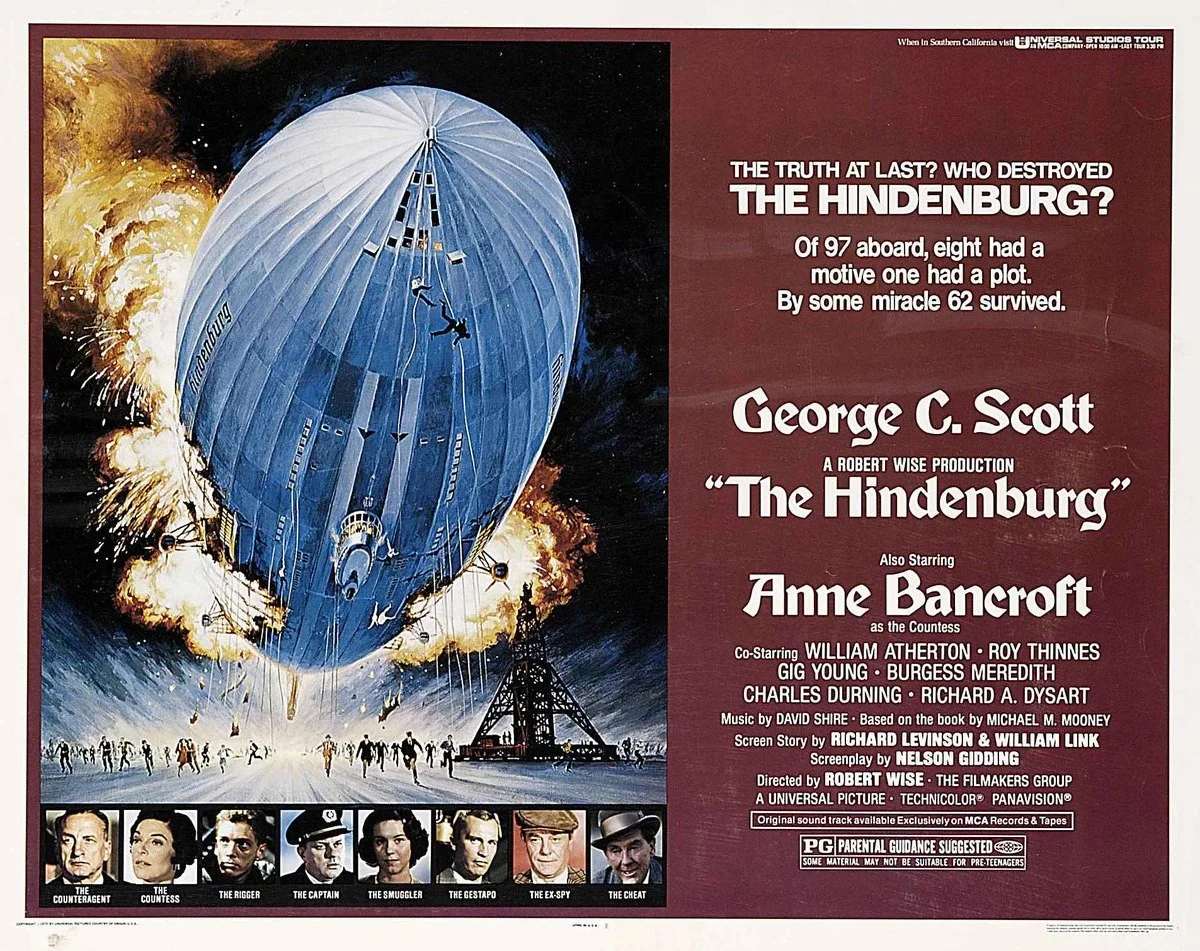
The 1937 Hindenburg disaster has remained an enduring mystery over the years. The physical mechanics of how this airship filled with 7,000,000 cubic feet of hydrogen gas caught fire has been fully explored over the decades and there are now several extremely plausible theories as to how it may have happened. However, there remains the possibility of sabotage. As such an idea has more dramatic potential than mechanical failure, it was used as the central theme of the 1975 disaster movie The Hindenburg. Directed by Robert Wise, the screenplay by Nelson Gidding explores a German resistance against the Nazi regime. The airship is targeted as it is a powerful propaganda symbol for Hitler’s Germany. Sadly despite some interesting ideas, a strong cast and solid, old school optical effects, The Hindenburg is a slow and somewhat ponderous production. Although the final 20 minutes of the film recreate the infamous explosion meticulously, it doesn’t quite compensate for the uneventful, dialogue driven investigation of the previous 100 minutes.

On the Eastern Front in 1943, a German Tiger tank crew led by Lieutenant Philip Gerkens (David Schütter) is sent on a mission to rescue the missing officer Paul von Hardenburg (Tilman Strauss) from a top-secret bunker that is at risk of falling into enemy hands. As they make their way through an eerie no-man’s land, they have to avoid Russian armoured vehicles that seem to be aware of their mission. They also encounter a German unit taking punitive action against a peasant village, in reprisal for partisan activity in the area. The youngest crew member, Michel (Yoran Leicher), talks of the land being home to ghosts and spirits. As the tank penetrates further into contested territory the crew become increasingly disturbed by the uncanny nature of their mission and begin to fall prey to their own inner fears.
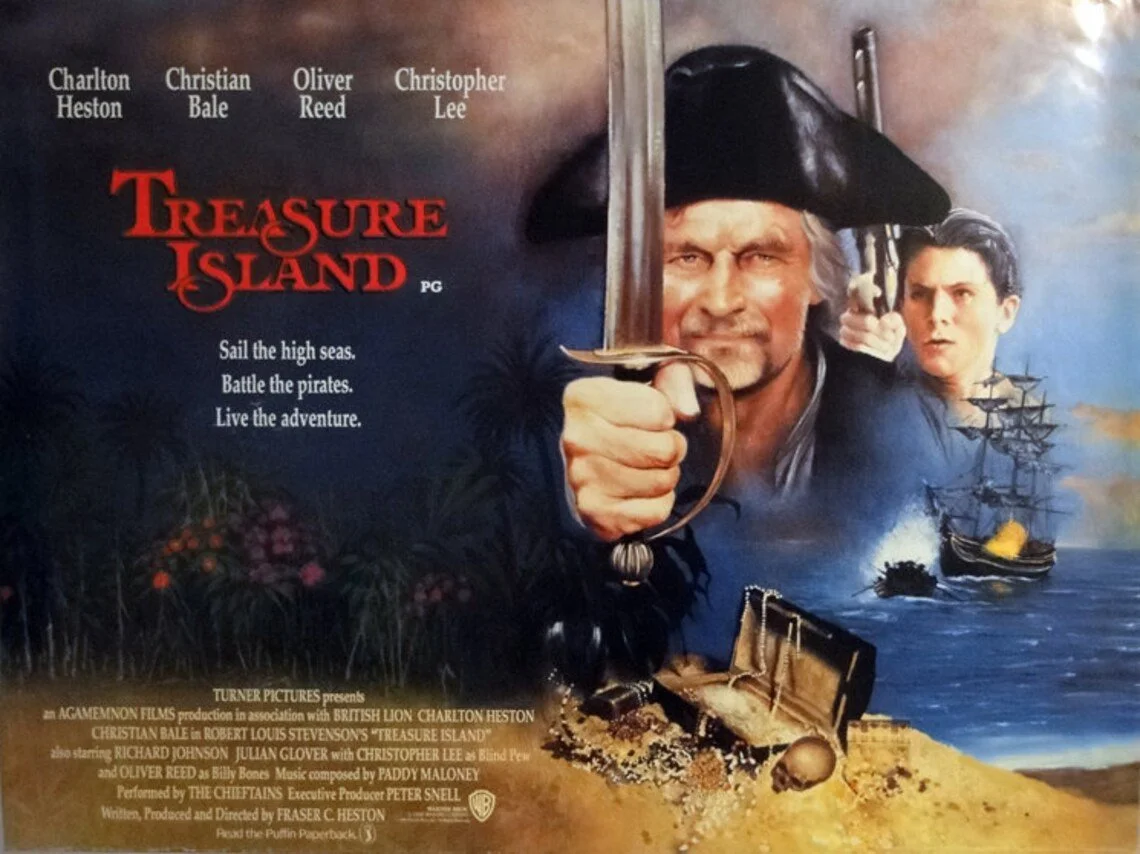
Robert Louis Stevenson’s classic novel has been adapted for cinema and television numerous times. Perhaps the most well known is the 1950 Disney version, starring Robert Newton as Long John Silver. His eye rolling performance and exaggerated West Country accent is credited with popularising the stereotypical form of “pirate speech" that has become the pop culture default. Although an enjoyable film, it does gloss over the more sinister aspects of both the source text and history, perpetuating the myth that pirates are just loveable scoundrels. Many subsequent adaptations have fallen into the same trap to a greater or lesser degree. However, that is not the case with the 1990 version of Treasure island, which was made for the TNT cable network and released theatrically outside of the US. This darker and notably more violent adaptation closely follows the source text and is widely considered the most faithful to the book.
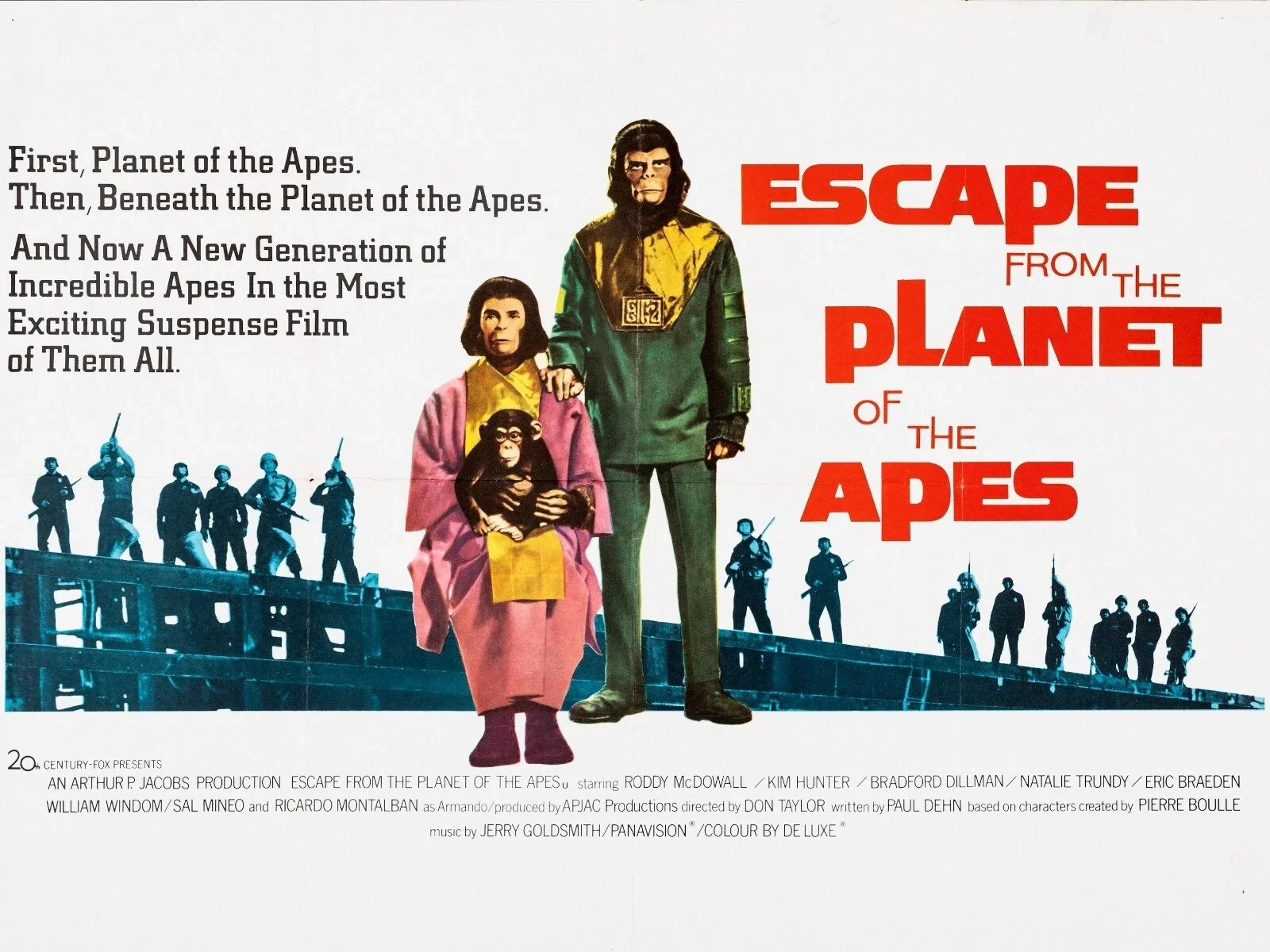
The Planet of the Apes movie franchise took a radical change of course with its third entry in the series. The first two films were set in the future and benefited from high production values to help realise a post apocalyptic earth. However, due to a substantial reduction of budget, Escape from the Planet of the Apes uses a time travel plot device to bring the ape protagonists to present day Los Angeles (1971 in this case). The result is a film with a much smaller narrative scope. However, although it lacks the science fiction spectacle of its predecessors, it features an interesting satirical exploration of celebrity culture and ponders what it is like to be deemed an enemy of the state. As ever, Roddy McDowell and Kim Hunter provide exceptional lead performances as the Chimpanzees Cornelius and Zira. Escape from the Planet of the Apes also captures the pop culture vibe of seventies America.
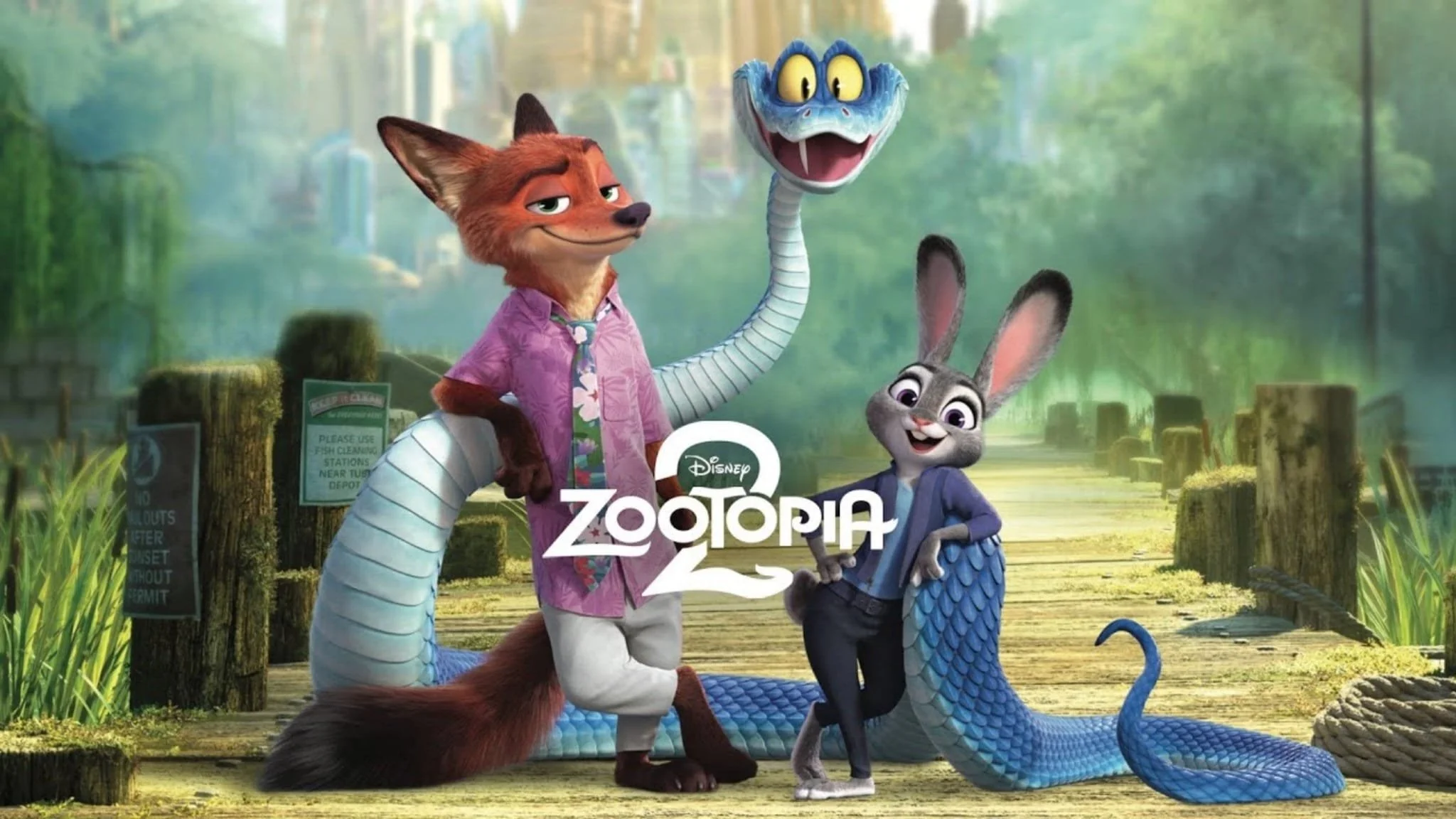
It is not unusual for Disney to change film titles when marketing them outside of the US. In 2016 they renamed the animated feature film Zootopia to Zootropolis in the UK and Europe to avoid trademark conflicts with other existing businesses. For example there is a Danish zoo which already holds the “Zootopia” name. Similarly, in Germany there is a children’s book which caused copyright conflict, which led to the film being released under the title Zoomania. Such changes, although practical for legal reasons, can sometimes cause a degree of confusion. Especially as there are numerous, low budget productions companies that go out of their way to produce similarly titled “mockbusters” whenever there are big, tentpole, releases. So for clarity, Zootopia 2 has been released in the UK as Zootropolis 2.
Stephen King’s dystopian story, The Running Man, was previously adapted very loosely in 1987, as a vehicle for Arnold Schwarzenegger. That version focused mainly on the “Battle Royale” element of the story and leaned heavily into Arnie’s personality, rather than the politics of the book. It also wasn’t well received by the author. Edgar Wright’s remake follows the source text a lot more closely and is far more interested in its political themes and wider social commentary. Furthermore, this version re-establishes the everyman quality of the hero of Ben Richards, rather than him being the muscle bound, ex-military hero as per Mr. Schwarzenegger’s prior interpretation. This time round, The Running Man uses a lot of the visual and narrative tropes of contemporary reality TV, making this forty three year old story very relevant to today’s viewers and couching the film in a style that is recognisable and accessible.
The Haunted Dolls House is a short film based on a story by M.R. James about a unique antique that is subject to supernatural phenomenon. Adapted by Stephen Gray and David Lilley, this is the third of three short films based upon James’ work that the pair have made. It stars Steven Dolton as Mr. Dillet, a collector of antique dolls houses, who acquires a bargain only to discover that it harbours a ghostly secret. Made on an extremely modest budget over the course of 2012 this clever, innovative and rather sinister adaptation is a fine example of short film creativity. It manages to offer a unique visual depiction of M.R. James’ classic story whilst capturing the unsettling quality of the author’s work. Like so many independently made short films it is clearly a labour of love, made with modest resources. It succinctly captures the spirit of the author’s work and is both innovative and rewarding.
A lot of people may know Luke Evans from the live action version of Beauty and the Beast or Peter Jackson’s The Hobbit trilogy. With his matinee idol good looks, charming Welsh demeanour and his “smoky” tenor singing voice, he projects a sense of old school stardom. Which brings us to No One Lives; a film which is a radical departure from his previous work. His performance is disconcerting to say the least and the film is somewhat unhinged. Directed by Ryuhei Kitamura, who made an interesting adaptation of Clive Barker’s The Midnight Meat Train, this cinematic outing is similarly replete with robust shocks and gore. There are some interesting ideas about the nature of violence, Stockholm Syndrome and whether one should deny or embrace one’s nature. However, these are ultimately minor asides. Philosophical musings in between bouts of surprisingly striking unpleasantness.
In the near future, Kepler 822, a research and drilling facility located at the bottom of the Mariana Trench, suffers a sudden and catastrophic structural failure. There are only six survivors. Mechanical engineer Norah Price (Kristen Stewart), Captain Lucien (Vincent Cassel), biologist Emily Haversham (Jessica Henwick), engineer Liam Smith (John Gallagher Jr.) and crew members Rodrigo (Mamoudou Athie) and Paul (T.J. Miller). As all the functional escape pods have been used and they are unable to contact the surface, the Captain suggests using pressurized suits to walk one mile across the ocean floor to the Roebuck 641 drill installation. There they will find more escape pods. However, it soon becomes apparent that the disaster was not caused by an undersea earthquake and that they are not alone as they make their journey.
One of the most common objections raised regarding the Jurassic Park/Jurassic World franchise is that the films are specifically made to obtain a PG-13 rating from the Motion Picture Association, for purely commercial reasons. Hence, in all films, there is little on screen violence and the dinosaurs are mainly portrayed as a threat and a means of providing jump scares. When a character is killed by a dinosaur it usually happens off screen, is obscured by something else in frame, or is shown in long shot with very little detail. The realities of being eaten alive by a predator are conspicuously absent. Hence, audiences looking for films featuring more graphic dinosaur attacks, have not been well catered for apart from some minor direct-to-video titles. Primitive War finally fills this gap in the market with a frenetic genre mashup that strives to punch above is budgetary weight.
During the seventies, cinema was not only a source of mass, commercial entertainment but was still perceived as a medium for intellectual and philosophical discourse. Television was a poor relation in terms of art and cultural significance. Film was where the so called auteur director could muse and ruminate upon the nature of the human condition and audiences could subsequently gush sycophantically about their work at dinner parties. Or something like that. Let it suffice to say that some film makers were still indulged by studios and financiers, who were still keen to cash in on the cultural sea change that came to Hollywood in the late sixties. It’s difficult to see how a film such as Emperor of the North (AKA Emperor of the North Pole) could have been made otherwise. A film set in the Great Depression about a hobo illegally travelling on freight trains and his feud with a ruthless conductor.
In Buenos Aires, Clara (Natalia Señorales) hears voices emanating from the plughole in her kitchen sink. The voices seem to be plotting against her. Her husband Juan (Agustín Rittano) says the sounds are coming from next door. That night, Juan finds Clara’s dead body levitating in their bathroom, slamming against the wall by an invisible force. Meanwhile their neighbour, Walter (Demián Salomón), is experiencing supernatural occurrences while he tries to sleep. An invisible force repeatedly shakes his bed. After using a video camera to film these events, he sees a tall, cadaverous figure emerging from under the bed, standing over him as he sleeps. Across the road, Alicia (Julieta Vallina) is grieving for her recently deceased son, who was run over outside Walter’s house. Alicia's ex-boyfriend, police commissioner Funes (Maximiliano Ghione) calls Jano (Norberto Gonzalo), a paranormal investigator and the pair soon discover more supernatural occurrences in the area.
Black Sabbath (AKA I tre volti della paura) is a 1963 horror anthology film directed by Mario Bava. Although an Italian production, the film was co-financed by American International Pictures and as such was conceived to appeal to US audiences. Hence, the English dialogue edit of the film which was released in America differs significantly to the original Italian version. Despite the presence of the legendary Boris Karloff and the popularity of both anthology and gothic horror at the time,the film was only a modest success at the US box office and did not do well in Italy. However, in more recent years there has been a critical reappraisal of Black Sabbath, especially the Italian dialogue version. Many aspects of the film which are standard genre tropes today, were in fact novel at the time. Also despite the production mainly being studio bound, the film oozes style and has a striking visual aesthetic.
After the success of Raiders of the Lost Ark in 1981, filmmakers scrambled to find existing intellectual properties that they could use for similar films. Hence archaic heroes such as Alan Quatermain were hastily given a modern makeover and thrust into generic movies, in a vague attempt to replicate Steven Spielberg’s successful formula. Which brings us neatly on to James Charles Bigglesworth AKA “Biggles”, a fictional pilot and adventurer from a series of books written by W. E. Johns between 1932 and 1968. Several attempts had been made in the past to bring this character to the silver screen, including one by Disney but they all failed. However, the commercial and critical success of Indiana Jones provided sufficient impetus to greenlight a new film. However, due to some curious production choices, when Biggles was finally released it was far from just a period set, action movie.
Setting aside the hubris of remaking a film such as Red Dawn, the 2012 reboot had a troubled production. Shot over the course of late 2009, on location in Michigan, MGM intended to release the film in September 2010. However, the studio’s financial problems became unsustainable over the course of that year and the film was shelved, while a financial solution was sought. Furthermore, while Red Dawn was in post production, there was a major economic shift within Hollywood due to the increasing importance of the Chinese market. This was a significant problem for MGM because the new version of Red Dawn had the Chinese invading the USA instead of Russia. Hence there were reshoots and the need for additional visual effects, so that the Chinese could be replaced with North Koreans. MGM eventually went bankrupt and the distribution rights to Red Dawn were sold off. The film was eventually released in 2012.
American music producer James William Guercio is primarily known for his work in the music industry. He was the producer of the band Chicago’s first eleven studio albums. In the mid-seventies he also managed the Beach Boys and was a member of their backing band. He was during this time, well known in his field and respected. In 1973, Guercio directed, produced and wrote the score for his first and only feature film, Electra Glide in Blue. He was 28 years old at the time. Upon release the film received mixed reviews from many traditional US newspapers, who were dismissive of its revisionist themes and poetical style. However, in Europe the film was received more favourably and was entered into the 1973 Cannes Film Festival. Fifty two years on and Electra Glide in Blue is now considered an overlooked cult classic and is analysed in a more measured fashion.
When I first saw the promotional trailer for Gangster Squad back in 2012, prior to its release, I wasn't especially impressed. I simply thought the film was another attempt to re-invent the gangster genre for a generation who were not especially familiar with it. I wasn't exactly overwhelmed with director Ruben Fleischer's resume either. I didn't particularly like Zombieland and haven't seen 30 Minutes Or Less. Then came the tragic mass shootings in Aurora, Colorado which led to the movie being delayed so that the original ending, which featured a shoot-out in a movie theatre, could be replaced. Hence when I finally watched this film recently, I wasn't expecting a movie up to the standards of say Once Upon A Time In America or Miller’s Crossing and it would seem that I was right do so. Gangster Squad is not especially noteworthy in any respect.
Fluke is a curious film about a man who is reincarnated as a dog and his subsequent realisation that he may have been murdered. It takes an adult novel by British author James Herbert, which is filled with philosophical musing and strives to adapt it in a far more family friendly fashion. The result is a somewhat bipolar production which thematically alternates between existential introspection and Buddhism. It then strives to deliver its message in a Disneyesque idiom. Children will potentially be confused and upset by what they see and adults will be wrongfooted by the continual shift in tone. Fluke was not a critical or commercial success upon release and the flaws that were identified by critics at the time still ring true today. That being said, Fluke is still an interesting and entertaining film, despite its faults.
During 1836, in the town of Darkness Falls, Maine, an elderly widow Matilda Dixon is adored by the town’s children as she gives them a gold coin whenever they lose a tooth. One day, after a house fire, Matilda is left burned and sensitive to sunlight, so she starts wearing a china mask. When two children are reported missing, Matilda is blamed by some locals, dragged from her home and hung. She curses the town, stating that whenever a child loses their last tooth, she would come for it. If the child looks at her, she will kill them. The missing children are subsequently found, so the citizens cover up their unjust lynching. In 1990, young Kyle Walsh awakes one night to find Matilda Walsh standing over him. Kyle’s mother is killed and he is blamed for her death and institutionalised. 12 years later, Kyle (Channey Kley) is released and tries to warn the town of the imminent danger when lightning disables the power supply. He is ignored by all until the deaths begin.
The Humanoid is one of many international Star Wars knock-offs that flooded cinemas in the late seventies and early eighties. Like so many others, it is derivative (even to the extent of replicating specific scenes from George Lucas’ movie), replete with awful dialogue and has somewhat basic production values. However, it does have an interesting cast including Richard Kiel, Barbara Bach, Arthur Kennedy and Corinne Cléry. Kiel gained a lot of media attention after his appearance as the steel-toothed villain Jaws in the 1977 Bond film, The Spy Who Loved Me. His stature made him the perfect fit for the titular character in this Italian science fiction production. Sadly, beyond a curious lineup of actors, The Humanoid has little to distinguish it from so many similar movies. For example, if you’ve seen Starcrash then you’ll be adequately prepared for this film.
Contemporary viewer’s may be perplexed by a film such as A Man For All Seasons. Why make a two our motion picture about a Tudor lawyer, statesman and scholar and their subsequent moral objection to the reigning monarchs marital status? Yet, during the sixties, it was entirely possible for a mainstream studio to produce a film based upon a stage play that dramatised such specific historical events. Furthermore, a film like this that relied upon strong performances and an intelligent script (and little more) could find a mainstream audience and be both a critical and commercial success. Nowadays, such productions still exist but they are now mainly the province of streaming services. Furthermore, the cinematic format has been replaced by that of a high budget TV show, which explores the topic at hand over an eight to ten hour running time.

With the proliferation of lore driven, franchise movies in recent years, a culture of analysis has developed online. Hence you will find a lot of YouTube videos that claim to “explain” the ending of specific films or provide clarification of their respective themes and subtexts. While critical debate and discussion about cinema is welcome, I think it is a mistake to always look for a specific meaning in cinema. Even clearly narrative films can be ambiguous. Art is ultimately a very subjective field of expression open to personal interpretation. Which brings me neatly to Flow, an animated feature film which tells a compelling story but raises more questions than it answers. It leaves the viewer to fill in a lot of the blanks themselves and the film is all the better for this approach. Flow is an extraordinary example of animation and a fascinating example of innovative, thought provoking filmmaking. Quite the rarity these days.

Levon Cade (Jason Staham) is a former Royal Marine Commando who has retired from military service and now works as the leader of a construction team in Chicago. He has a close relationship with Joe and Carla Garcia (Michael Peña and Noemi Gonzalez ) who run the company and considers them as family. Outside of work, Levon is involved in a bitter custody battle for his daughter, against her maternal grandfather, who blames Levon for his daughter’s suicide. When Garcia's teenage daughter Jenny (Arianna Rivas) goes missing, Levon reluctantly agrees to help her parents and get her back. Beginning his search at the nightclub where Jenny was last seen, he soon discovers that she was abducted by Russian traffickers. Furthermore, the culprit is Dimi Kolisnyk (Maximilian Osinski), the wayward son of a senior ranking gangster.
Osgood Perkins has a distinct visual style and tone to his films. It is why his previous film, Longlegs, was such a welcome change from standard genre outings. It was atmospheric both visually and tonally, demonstrating a keen understanding of horror cinema. Hence he is the perfect director to helm this adaptation of a Stephen King short story. The plot is greatly expanded and the screenplay takes a lot of liberties with the source material but the main themes of your past being inescapable and the power of guilt remain front and centre. Due to the extreme and bizarre nature of much of the onscreen deaths, the film wisely has a strong streak of gallows humour running through it which is extremely well handled. Comedy can often be used to defuse or mitigate violence which can be narratively dishonest (think Fred Krueger). Here it adds to the cruel and capricious nature of the random deaths.
For those unfamiliar with Dav Pilkey’s graphic novel character Dog Man, he’s a half-dog, half-human police officer. This comic chimaera is the result of a surgical procedure carried out after Officer Knight and his trusty dog Greg are blown up while defusing a bomb. Greg’s head is grafted to Officer Knight's body. Post surgery, Dog Man (Peter Hastings) remains an officer of the law and continues to track his nemesis, Petey (Pete Davidson), an orange cat and criminal genius. However, despite positive media coverage and a high arrest rate, Dog Man incurs the ire of his Chief (Lil Rel Howery) who is jealous of his success. Furthermore, Dog Man becomes depressed due to the loss of his owner, girlfriend and former home. Meanwhile, Petey decides to clone himself in an attempt to find a worthy assistant and also plots to resurrect a deceased super villain, Flippy, who is an evil telekinetic fish.
Tape 407 (2012)
I really won't be sad to see the back of the found footage sub-genre because it really is becoming an over saturated market at present. For example, at the last count there were six Paranormal Activity movies, with their respective quality inversely proportional to their number in the franchise. Yes, there are the occasional good ones, such as the recent Operation Avalanche, which tackled conspiracy theories and the Moon Landing. But broadly speaking, this genre has become a dumping ground for cheap and uninspired movies, by mediocre film makers, out to make a fast buck. Take for example Tape 407 (AKA Area 407). It’s chosen twist on the genre is the inclusion of included dinosaurs. I was hoping that this would make the film sufficiently different to others and offers something new. Predictably it did not.
I really won't be sad to see the back of the found footage sub-genre because it really is becoming an over saturated market at present. For example, at the last count there were six Paranormal Activity movies, with their respective quality inversely proportional to their number in the franchise. Yes, there are the occasional good ones, such as the recent Operation Avalanche, which tackled conspiracy theories and the Moon Landing. But broadly speaking, this genre has become a dumping ground for cheap and uninspired movies, by mediocre film makers, out to make a fast buck. Take for example Tape 407 (AKA Area 407). It’s chosen twist on the genre is the inclusion of included dinosaurs. I was hoping that this would make the film sufficiently different to others and offers something new. Predictably it did not.
Tape 407 starts aboard a plane with a motley collection of passengers travelling from New York back to Los Angeles. We meet film student Jessie (Samantha Lester) and her annoying younger sister Trish (Abigail Schrader), Journalist Jimmy (James Lyons) and irritable passenger from hell Charlie (Brendan Patrick Connor). After some rather pedestrian back story and character exposition the plane crashes in a somewhat remote desert region along its route. The survivors bicker and squabble and continuously talk across each other as they try to thrash out a survival strategy. One passenger goes looking for the other half of the plane. Screams and animal noises are later heard in the night. It quickly becomes clear that there are multiple predators on the loose.
There are brief flashes of inspiration in Tape 407, as well as a great deal of shouting and strident arguments conducted in a very American manner. It’s annoying and grating on the ear but certainly has a note of realism about it. The survivors slowly put aside their differences as they finally realise the magnitude of their predicament and attempt to work collaboratively. However, this aspect of the storyline is under developed and further hampered by a cast of characters I didn't really care for. Futhermore, the shocks are somewhat obvious, surprisingly understated and tame. As for the dinosaurs, which appear to be the result of a government experiment, precious little is seen. You simply can't skimp on plot device like this if it’s the movies selling point.
There's a fine line between being ambiguous and letting the audience fill in the blanks as opposed to allowing gaping plot holes. By the time I reached the end of Tape 407, I was annoyed by the lack of information, disappointed by the absence of carnivorous reptiles and thoroughly pissed off with the protagonists. The only worthy character, Air Marshall Laura (Melanie Lyons), was dispatched in a very mean spirited way. Mercifully the director opted for an appropriately downbeat dénouement so the remaining cast where subsequently killed off, offering an unexpected highpoint to a formulaic and unremarkable ninety-minute pot boiler.
I don't know whether budgetary restraints or simply the notion that less is more, where the reason the production was so shy of showing the dinosaur antagonists. If it was, then directors (Dale Fabrigar and Everette Wallin) intention to sideline them so they could focus on the human dynamics, was a very poor decision. Overall the slow pacing, noisy performances and frustrating characters as well as lack of action, torpedoes Tape 407. Viewers are left with a rather dull, predictable and lacklustre movie. I'd like to say that this will be the last found footage I'll be watching for a while but I have a suspicion that due to the cost effective nature of the format, they’ll be churning them out for a while yet.
David Koepp is no stranger to genre cinema, having written the screenplay for such films as Jurassic Park, Spider-man and War of the Worlds. Where these titles are big budget, major studio productions, Cold Storage is a far more modest production with a smaller scope. Adapted from his own novel, the screenplay is by David Koepp and the film is directed by British film-maker Jonny Campbell. At first glance, Cold Storage seems a somewhat derivative science fiction horror film with a relatively modest budget, financed through a convoluted US and French co-production. Lurid green and red colours feature heavily in the marketing artwork and it is easy, after a cursory look, to write the film off as cheap, generic, direct-to-streaming filler. However, Cold Storage is prime example of why you should not judge a book by it’s cover, or in this case, a film by its posters and online advertising. It is in fact an amusing and fun endeavour that can fill an evening.
Despite being considered by many as an original story, The Abominable Snowman (1957) is in fact a remake of a made for television play, The Creature, that was originally broadcast in the UK in 1955. Hammer Films would often purchase the rights of popular TV programs and subsequently re-work them for mainstream, international cinema. Larger production budgets and fewer censorship restrictions allowed them to make their cinematic interpretations more lurid, thus commercially viable. Hence The Quatermass Xperiment, Quatermass II and Quatermass and the Pit were all given a big screen makeover and were commercially successful. The Abominable Snowman was written by acclaimed writer Nigel Kneale, who also wrote the original television drama and the aforementioned Quatermass trilogy. Although ostensibly marketed as a horror film this production is actually an interesting blend of psychological thriller and science fiction.
There are certain subjects that are notoriously uncinematic. These tend to be things that exist or are undertaken mainly in the mind, rather than expressed in an overtly physical way. Computing, science and mathematics are good examples. Writing code or working out complex equations does not immediately lend themselves to a visual medium such as cinema. Therefore, any film dealing with the world of corporate finance has its work cut out. Hence writer-director J C Chandor immediately deserves praise for making Margin Call, a film about the financial crash of 2008, as gripping and compelling as any political thriller. He does this by keeping the financial elements of the story to a minimum, choosing instead to focus upon those who have become aware of the imminent crisis and their reaction to it. However, the film remains a tough watch with regard to the some of the characters and their respective personal morality or lack there of.
The 1937 Hindenburg disaster has remained an enduring mystery over the years. The physical mechanics of how this airship filled with 7,000,000 cubic feet of hydrogen gas caught fire has been fully explored over the decades and there are now several extremely plausible theories as to how it may have happened. However, there remains the possibility of sabotage. As such an idea has more dramatic potential than mechanical failure, it was used as the central theme of the 1975 disaster movie The Hindenburg. Directed by Robert Wise, the screenplay by Nelson Gidding explores a German resistance against the Nazi regime. The airship is targeted as it is a powerful propaganda symbol for Hitler’s Germany. Sadly despite some interesting ideas, a strong cast and solid, old school optical effects, The Hindenburg is a slow and somewhat ponderous production. Although the final 20 minutes of the film recreate the infamous explosion meticulously, it doesn’t quite compensate for the uneventful, dialogue driven investigation of the previous 100 minutes.
On the Eastern Front in 1943, a German Tiger tank crew led by Lieutenant Philip Gerkens (David Schütter) is sent on a mission to rescue the missing officer Paul von Hardenburg (Tilman Strauss) from a top-secret bunker that is at risk of falling into enemy hands. As they make their way through an eerie no-man’s land, they have to avoid Russian armoured vehicles that seem to be aware of their mission. They also encounter a German unit taking punitive action against a peasant village, in reprisal for partisan activity in the area. The youngest crew member, Michel (Yoran Leicher), talks of the land being home to ghosts and spirits. As the tank penetrates further into contested territory the crew become increasingly disturbed by the uncanny nature of their mission and begin to fall prey to their own inner fears.
Robert Louis Stevenson’s classic novel has been adapted for cinema and television numerous times. Perhaps the most well known is the 1950 Disney version, starring Robert Newton as Long John Silver. His eye rolling performance and exaggerated West Country accent is credited with popularising the stereotypical form of “pirate speech" that has become the pop culture default. Although an enjoyable film, it does gloss over the more sinister aspects of both the source text and history, perpetuating the myth that pirates are just loveable scoundrels. Many subsequent adaptations have fallen into the same trap to a greater or lesser degree. However, that is not the case with the 1990 version of Treasure island, which was made for the TNT cable network and released theatrically outside of the US. This darker and notably more violent adaptation closely follows the source text and is widely considered the most faithful to the book.
The Planet of the Apes movie franchise took a radical change of course with its third entry in the series. The first two films were set in the future and benefited from high production values to help realise a post apocalyptic earth. However, due to a substantial reduction of budget, Escape from the Planet of the Apes uses a time travel plot device to bring the ape protagonists to present day Los Angeles (1971 in this case). The result is a film with a much smaller narrative scope. However, although it lacks the science fiction spectacle of its predecessors, it features an interesting satirical exploration of celebrity culture and ponders what it is like to be deemed an enemy of the state. As ever, Roddy McDowell and Kim Hunter provide exceptional lead performances as the Chimpanzees Cornelius and Zira. Escape from the Planet of the Apes also captures the pop culture vibe of seventies America.
It is not unusual for Disney to change film titles when marketing them outside of the US. In 2016 they renamed the animated feature film Zootopia to Zootropolis in the UK and Europe to avoid trademark conflicts with other existing businesses. For example there is a Danish zoo which already holds the “Zootopia” name. Similarly, in Germany there is a children’s book which caused copyright conflict, which led to the film being released under the title Zoomania. Such changes, although practical for legal reasons, can sometimes cause a degree of confusion. Especially as there are numerous, low budget productions companies that go out of their way to produce similarly titled “mockbusters” whenever there are big, tentpole, releases. So for clarity, Zootopia 2 has been released in the UK as Zootropolis 2.
Stephen King’s dystopian story, The Running Man, was previously adapted very loosely in 1987, as a vehicle for Arnold Schwarzenegger. That version focused mainly on the “Battle Royale” element of the story and leaned heavily into Arnie’s personality, rather than the politics of the book. It also wasn’t well received by the author. Edgar Wright’s remake follows the source text a lot more closely and is far more interested in its political themes and wider social commentary. Furthermore, this version re-establishes the everyman quality of the hero of Ben Richards, rather than him being the muscle bound, ex-military hero as per Mr. Schwarzenegger’s prior interpretation. This time round, The Running Man uses a lot of the visual and narrative tropes of contemporary reality TV, making this forty three year old story very relevant to today’s viewers and couching the film in a style that is recognisable and accessible.
The Haunted Dolls House is a short film based on a story by M.R. James about a unique antique that is subject to supernatural phenomenon. Adapted by Stephen Gray and David Lilley, this is the third of three short films based upon James’ work that the pair have made. It stars Steven Dolton as Mr. Dillet, a collector of antique dolls houses, who acquires a bargain only to discover that it harbours a ghostly secret. Made on an extremely modest budget over the course of 2012 this clever, innovative and rather sinister adaptation is a fine example of short film creativity. It manages to offer a unique visual depiction of M.R. James’ classic story whilst capturing the unsettling quality of the author’s work. Like so many independently made short films it is clearly a labour of love, made with modest resources. It succinctly captures the spirit of the author’s work and is both innovative and rewarding.
A lot of people may know Luke Evans from the live action version of Beauty and the Beast or Peter Jackson’s The Hobbit trilogy. With his matinee idol good looks, charming Welsh demeanour and his “smoky” tenor singing voice, he projects a sense of old school stardom. Which brings us to No One Lives; a film which is a radical departure from his previous work. His performance is disconcerting to say the least and the film is somewhat unhinged. Directed by Ryuhei Kitamura, who made an interesting adaptation of Clive Barker’s The Midnight Meat Train, this cinematic outing is similarly replete with robust shocks and gore. There are some interesting ideas about the nature of violence, Stockholm Syndrome and whether one should deny or embrace one’s nature. However, these are ultimately minor asides. Philosophical musings in between bouts of surprisingly striking unpleasantness.
In the near future, Kepler 822, a research and drilling facility located at the bottom of the Mariana Trench, suffers a sudden and catastrophic structural failure. There are only six survivors. Mechanical engineer Norah Price (Kristen Stewart), Captain Lucien (Vincent Cassel), biologist Emily Haversham (Jessica Henwick), engineer Liam Smith (John Gallagher Jr.) and crew members Rodrigo (Mamoudou Athie) and Paul (T.J. Miller). As all the functional escape pods have been used and they are unable to contact the surface, the Captain suggests using pressurized suits to walk one mile across the ocean floor to the Roebuck 641 drill installation. There they will find more escape pods. However, it soon becomes apparent that the disaster was not caused by an undersea earthquake and that they are not alone as they make their journey.
One of the most common objections raised regarding the Jurassic Park/Jurassic World franchise is that the films are specifically made to obtain a PG-13 rating from the Motion Picture Association, for purely commercial reasons. Hence, in all films, there is little on screen violence and the dinosaurs are mainly portrayed as a threat and a means of providing jump scares. When a character is killed by a dinosaur it usually happens off screen, is obscured by something else in frame, or is shown in long shot with very little detail. The realities of being eaten alive by a predator are conspicuously absent. Hence, audiences looking for films featuring more graphic dinosaur attacks, have not been well catered for apart from some minor direct-to-video titles. Primitive War finally fills this gap in the market with a frenetic genre mashup that strives to punch above is budgetary weight.
During the seventies, cinema was not only a source of mass, commercial entertainment but was still perceived as a medium for intellectual and philosophical discourse. Television was a poor relation in terms of art and cultural significance. Film was where the so called auteur director could muse and ruminate upon the nature of the human condition and audiences could subsequently gush sycophantically about their work at dinner parties. Or something like that. Let it suffice to say that some film makers were still indulged by studios and financiers, who were still keen to cash in on the cultural sea change that came to Hollywood in the late sixties. It’s difficult to see how a film such as Emperor of the North (AKA Emperor of the North Pole) could have been made otherwise. A film set in the Great Depression about a hobo illegally travelling on freight trains and his feud with a ruthless conductor.
In Buenos Aires, Clara (Natalia Señorales) hears voices emanating from the plughole in her kitchen sink. The voices seem to be plotting against her. Her husband Juan (Agustín Rittano) says the sounds are coming from next door. That night, Juan finds Clara’s dead body levitating in their bathroom, slamming against the wall by an invisible force. Meanwhile their neighbour, Walter (Demián Salomón), is experiencing supernatural occurrences while he tries to sleep. An invisible force repeatedly shakes his bed. After using a video camera to film these events, he sees a tall, cadaverous figure emerging from under the bed, standing over him as he sleeps. Across the road, Alicia (Julieta Vallina) is grieving for her recently deceased son, who was run over outside Walter’s house. Alicia's ex-boyfriend, police commissioner Funes (Maximiliano Ghione) calls Jano (Norberto Gonzalo), a paranormal investigator and the pair soon discover more supernatural occurrences in the area.
Black Sabbath (AKA I tre volti della paura) is a 1963 horror anthology film directed by Mario Bava. Although an Italian production, the film was co-financed by American International Pictures and as such was conceived to appeal to US audiences. Hence, the English dialogue edit of the film which was released in America differs significantly to the original Italian version. Despite the presence of the legendary Boris Karloff and the popularity of both anthology and gothic horror at the time,the film was only a modest success at the US box office and did not do well in Italy. However, in more recent years there has been a critical reappraisal of Black Sabbath, especially the Italian dialogue version. Many aspects of the film which are standard genre tropes today, were in fact novel at the time. Also despite the production mainly being studio bound, the film oozes style and has a striking visual aesthetic.
After the success of Raiders of the Lost Ark in 1981, filmmakers scrambled to find existing intellectual properties that they could use for similar films. Hence archaic heroes such as Alan Quatermain were hastily given a modern makeover and thrust into generic movies, in a vague attempt to replicate Steven Spielberg’s successful formula. Which brings us neatly on to James Charles Bigglesworth AKA “Biggles”, a fictional pilot and adventurer from a series of books written by W. E. Johns between 1932 and 1968. Several attempts had been made in the past to bring this character to the silver screen, including one by Disney but they all failed. However, the commercial and critical success of Indiana Jones provided sufficient impetus to greenlight a new film. However, due to some curious production choices, when Biggles was finally released it was far from just a period set, action movie.
Setting aside the hubris of remaking a film such as Red Dawn, the 2012 reboot had a troubled production. Shot over the course of late 2009, on location in Michigan, MGM intended to release the film in September 2010. However, the studio’s financial problems became unsustainable over the course of that year and the film was shelved, while a financial solution was sought. Furthermore, while Red Dawn was in post production, there was a major economic shift within Hollywood due to the increasing importance of the Chinese market. This was a significant problem for MGM because the new version of Red Dawn had the Chinese invading the USA instead of Russia. Hence there were reshoots and the need for additional visual effects, so that the Chinese could be replaced with North Koreans. MGM eventually went bankrupt and the distribution rights to Red Dawn were sold off. The film was eventually released in 2012.
American music producer James William Guercio is primarily known for his work in the music industry. He was the producer of the band Chicago’s first eleven studio albums. In the mid-seventies he also managed the Beach Boys and was a member of their backing band. He was during this time, well known in his field and respected. In 1973, Guercio directed, produced and wrote the score for his first and only feature film, Electra Glide in Blue. He was 28 years old at the time. Upon release the film received mixed reviews from many traditional US newspapers, who were dismissive of its revisionist themes and poetical style. However, in Europe the film was received more favourably and was entered into the 1973 Cannes Film Festival. Fifty two years on and Electra Glide in Blue is now considered an overlooked cult classic and is analysed in a more measured fashion.
When I first saw the promotional trailer for Gangster Squad back in 2012, prior to its release, I wasn't especially impressed. I simply thought the film was another attempt to re-invent the gangster genre for a generation who were not especially familiar with it. I wasn't exactly overwhelmed with director Ruben Fleischer's resume either. I didn't particularly like Zombieland and haven't seen 30 Minutes Or Less. Then came the tragic mass shootings in Aurora, Colorado which led to the movie being delayed so that the original ending, which featured a shoot-out in a movie theatre, could be replaced. Hence when I finally watched this film recently, I wasn't expecting a movie up to the standards of say Once Upon A Time In America or Miller’s Crossing and it would seem that I was right do so. Gangster Squad is not especially noteworthy in any respect.
Fluke is a curious film about a man who is reincarnated as a dog and his subsequent realisation that he may have been murdered. It takes an adult novel by British author James Herbert, which is filled with philosophical musing and strives to adapt it in a far more family friendly fashion. The result is a somewhat bipolar production which thematically alternates between existential introspection and Buddhism. It then strives to deliver its message in a Disneyesque idiom. Children will potentially be confused and upset by what they see and adults will be wrongfooted by the continual shift in tone. Fluke was not a critical or commercial success upon release and the flaws that were identified by critics at the time still ring true today. That being said, Fluke is still an interesting and entertaining film, despite its faults.
During 1836, in the town of Darkness Falls, Maine, an elderly widow Matilda Dixon is adored by the town’s children as she gives them a gold coin whenever they lose a tooth. One day, after a house fire, Matilda is left burned and sensitive to sunlight, so she starts wearing a china mask. When two children are reported missing, Matilda is blamed by some locals, dragged from her home and hung. She curses the town, stating that whenever a child loses their last tooth, she would come for it. If the child looks at her, she will kill them. The missing children are subsequently found, so the citizens cover up their unjust lynching. In 1990, young Kyle Walsh awakes one night to find Matilda Walsh standing over him. Kyle’s mother is killed and he is blamed for her death and institutionalised. 12 years later, Kyle (Channey Kley) is released and tries to warn the town of the imminent danger when lightning disables the power supply. He is ignored by all until the deaths begin.
The Humanoid is one of many international Star Wars knock-offs that flooded cinemas in the late seventies and early eighties. Like so many others, it is derivative (even to the extent of replicating specific scenes from George Lucas’ movie), replete with awful dialogue and has somewhat basic production values. However, it does have an interesting cast including Richard Kiel, Barbara Bach, Arthur Kennedy and Corinne Cléry. Kiel gained a lot of media attention after his appearance as the steel-toothed villain Jaws in the 1977 Bond film, The Spy Who Loved Me. His stature made him the perfect fit for the titular character in this Italian science fiction production. Sadly, beyond a curious lineup of actors, The Humanoid has little to distinguish it from so many similar movies. For example, if you’ve seen Starcrash then you’ll be adequately prepared for this film.
Contemporary viewer’s may be perplexed by a film such as A Man For All Seasons. Why make a two our motion picture about a Tudor lawyer, statesman and scholar and their subsequent moral objection to the reigning monarchs marital status? Yet, during the sixties, it was entirely possible for a mainstream studio to produce a film based upon a stage play that dramatised such specific historical events. Furthermore, a film like this that relied upon strong performances and an intelligent script (and little more) could find a mainstream audience and be both a critical and commercial success. Nowadays, such productions still exist but they are now mainly the province of streaming services. Furthermore, the cinematic format has been replaced by that of a high budget TV show, which explores the topic at hand over an eight to ten hour running time.
With the proliferation of lore driven, franchise movies in recent years, a culture of analysis has developed online. Hence you will find a lot of YouTube videos that claim to “explain” the ending of specific films or provide clarification of their respective themes and subtexts. While critical debate and discussion about cinema is welcome, I think it is a mistake to always look for a specific meaning in cinema. Even clearly narrative films can be ambiguous. Art is ultimately a very subjective field of expression open to personal interpretation. Which brings me neatly to Flow, an animated feature film which tells a compelling story but raises more questions than it answers. It leaves the viewer to fill in a lot of the blanks themselves and the film is all the better for this approach. Flow is an extraordinary example of animation and a fascinating example of innovative, thought provoking filmmaking. Quite the rarity these days.
Levon Cade (Jason Staham) is a former Royal Marine Commando who has retired from military service and now works as the leader of a construction team in Chicago. He has a close relationship with Joe and Carla Garcia (Michael Peña and Noemi Gonzalez ) who run the company and considers them as family. Outside of work, Levon is involved in a bitter custody battle for his daughter, against her maternal grandfather, who blames Levon for his daughter’s suicide. When Garcia's teenage daughter Jenny (Arianna Rivas) goes missing, Levon reluctantly agrees to help her parents and get her back. Beginning his search at the nightclub where Jenny was last seen, he soon discovers that she was abducted by Russian traffickers. Furthermore, the culprit is Dimi Kolisnyk (Maximilian Osinski), the wayward son of a senior ranking gangster.
Osgood Perkins has a distinct visual style and tone to his films. It is why his previous film, Longlegs, was such a welcome change from standard genre outings. It was atmospheric both visually and tonally, demonstrating a keen understanding of horror cinema. Hence he is the perfect director to helm this adaptation of a Stephen King short story. The plot is greatly expanded and the screenplay takes a lot of liberties with the source material but the main themes of your past being inescapable and the power of guilt remain front and centre. Due to the extreme and bizarre nature of much of the onscreen deaths, the film wisely has a strong streak of gallows humour running through it which is extremely well handled. Comedy can often be used to defuse or mitigate violence which can be narratively dishonest (think Fred Krueger). Here it adds to the cruel and capricious nature of the random deaths.
For those unfamiliar with Dav Pilkey’s graphic novel character Dog Man, he’s a half-dog, half-human police officer. This comic chimaera is the result of a surgical procedure carried out after Officer Knight and his trusty dog Greg are blown up while defusing a bomb. Greg’s head is grafted to Officer Knight's body. Post surgery, Dog Man (Peter Hastings) remains an officer of the law and continues to track his nemesis, Petey (Pete Davidson), an orange cat and criminal genius. However, despite positive media coverage and a high arrest rate, Dog Man incurs the ire of his Chief (Lil Rel Howery) who is jealous of his success. Furthermore, Dog Man becomes depressed due to the loss of his owner, girlfriend and former home. Meanwhile, Petey decides to clone himself in an attempt to find a worthy assistant and also plots to resurrect a deceased super villain, Flippy, who is an evil telekinetic fish.
Grave Encounters 2 (2012)
Sometimes you have to admire persistence. I really didn't think that Grave Encounters merited a sequel but apparently, it's financial returns indicated otherwise. So today I found myself watching Grave Encounters 2 with a certain sense of déjà vu because like the first movie, it tries to do something different and only partially succeeds. Once again, the writers (The Vicious Brothers) manage to jump the shark at the midway point and the movie ceases to innovate and just ticks boxes. The only major difference this time round is we get a little more of everything, because it is a sequel. So, there's more jumps, more ghosts and more violence. Is there more entertainment? May be.
Sometimes you have to admire persistence. I really didn't think that Grave Encounters merited a sequel but apparently, it's financial returns indicated otherwise. So today I found myself watching Grave Encounters 2 with a certain sense of déjà vu because like the first movie, it tries to do something different and only partially succeeds. Once again, the writers (The Vicious Brothers) manage to jump the shark at the midway point and the movie ceases to innovate and just ticks boxes. The only major difference this time round is we get a little more of everything, because it is a sequel. So, there's more jumps, more ghosts and more violence. Is there more entertainment? May be.
The movie starts with a series of faux YouTube reviews of the original Grave Encounters. This is a fun way to start proceedings because not all the vloggers give favourable opinions. Then we meet indie horror film maker Alex (Richard Harmon) and his respective crew, who is convinced that the movie is in fact true. The more he digs for clues, the more his theory is validated. It is this first half of the story that works the best. Alex receives anonymous tip-offs via text and email from Deathawaits6. He also tracks down the producer of the first film and via a hidden camera, uncovers a chilling secret. As with the first movie, although the cast is mainly comprised of a bunch of unpleasant characters, they do all ring true.
It takes thirty-eight minutes before the action arrives at the asylum. Curiously enough as the spooky stuff starts my interest in the movie took a sharp dip. The gadgets, cameras and technological paraphernalia used by such reality shows are all present here and this does embellish the proceedings to a degree. A thermal imaging camera is used this time, introduced via a rather obvious and crass gag. There are also some further explorations of the building's ability to change shape and alter its layout. Whilst running in panic, one character turns a corner into a corridor but their friends take the same turn only to find a brick wall.
However there reaches a point in the story, not unlike the original, where the writers take too many liberties with the audience’s suspension of disbelief. Again, the first-person narrative give ways to material that feels much more like conventional third person cinema. The moment that happens the main selling point for the production is lost and mediocrity sets in. Grave Encounters 2 also ends with a rather more violent incident that seems a little out of place with what has previously transpired. It's rather gloating and mean spirited. The final resolution of the plot is somewhat obvious and worryingly paves the way for a third instalment.
I found myself reminded of Book of Shadows: Blair Witch 2 when watching Grave Encounters 2. Both sequels attempt to do something tangential to their predecessors, rather than rinse and repeat but both seem to get lost after initial bursts of creativity. Overall I would say that I enjoyed Grave Encounters 2, more than the first part, mainly because of its self-referential and self-deprecating first act. As I said at the beginning, persistence can be an endearing quality. Although I really am getting exasperated with the found footage sub-genre, one should acknowledge effort, even if it is misplaced. The Vicious Brothers have tried more so than other film makers to experiment and even managed to raise a wry smile. Their tongue must have been planted firmly in their cheek when one of the characters describes Hollywood as "the film Mecca of the world".
David Koepp is no stranger to genre cinema, having written the screenplay for such films as Jurassic Park, Spider-man and War of the Worlds. Where these titles are big budget, major studio productions, Cold Storage is a far more modest production with a smaller scope. Adapted from his own novel, the screenplay is by David Koepp and the film is directed by British film-maker Jonny Campbell. At first glance, Cold Storage seems a somewhat derivative science fiction horror film with a relatively modest budget, financed through a convoluted US and French co-production. Lurid green and red colours feature heavily in the marketing artwork and it is easy, after a cursory look, to write the film off as cheap, generic, direct-to-streaming filler. However, Cold Storage is prime example of why you should not judge a book by it’s cover, or in this case, a film by its posters and online advertising. It is in fact an amusing and fun endeavour that can fill an evening.
Despite being considered by many as an original story, The Abominable Snowman (1957) is in fact a remake of a made for television play, The Creature, that was originally broadcast in the UK in 1955. Hammer Films would often purchase the rights of popular TV programs and subsequently re-work them for mainstream, international cinema. Larger production budgets and fewer censorship restrictions allowed them to make their cinematic interpretations more lurid, thus commercially viable. Hence The Quatermass Xperiment, Quatermass II and Quatermass and the Pit were all given a big screen makeover and were commercially successful. The Abominable Snowman was written by acclaimed writer Nigel Kneale, who also wrote the original television drama and the aforementioned Quatermass trilogy. Although ostensibly marketed as a horror film this production is actually an interesting blend of psychological thriller and science fiction.
There are certain subjects that are notoriously uncinematic. These tend to be things that exist or are undertaken mainly in the mind, rather than expressed in an overtly physical way. Computing, science and mathematics are good examples. Writing code or working out complex equations does not immediately lend themselves to a visual medium such as cinema. Therefore, any film dealing with the world of corporate finance has its work cut out. Hence writer-director J C Chandor immediately deserves praise for making Margin Call, a film about the financial crash of 2008, as gripping and compelling as any political thriller. He does this by keeping the financial elements of the story to a minimum, choosing instead to focus upon those who have become aware of the imminent crisis and their reaction to it. However, the film remains a tough watch with regard to the some of the characters and their respective personal morality or lack there of.
The 1937 Hindenburg disaster has remained an enduring mystery over the years. The physical mechanics of how this airship filled with 7,000,000 cubic feet of hydrogen gas caught fire has been fully explored over the decades and there are now several extremely plausible theories as to how it may have happened. However, there remains the possibility of sabotage. As such an idea has more dramatic potential than mechanical failure, it was used as the central theme of the 1975 disaster movie The Hindenburg. Directed by Robert Wise, the screenplay by Nelson Gidding explores a German resistance against the Nazi regime. The airship is targeted as it is a powerful propaganda symbol for Hitler’s Germany. Sadly despite some interesting ideas, a strong cast and solid, old school optical effects, The Hindenburg is a slow and somewhat ponderous production. Although the final 20 minutes of the film recreate the infamous explosion meticulously, it doesn’t quite compensate for the uneventful, dialogue driven investigation of the previous 100 minutes.
On the Eastern Front in 1943, a German Tiger tank crew led by Lieutenant Philip Gerkens (David Schütter) is sent on a mission to rescue the missing officer Paul von Hardenburg (Tilman Strauss) from a top-secret bunker that is at risk of falling into enemy hands. As they make their way through an eerie no-man’s land, they have to avoid Russian armoured vehicles that seem to be aware of their mission. They also encounter a German unit taking punitive action against a peasant village, in reprisal for partisan activity in the area. The youngest crew member, Michel (Yoran Leicher), talks of the land being home to ghosts and spirits. As the tank penetrates further into contested territory the crew become increasingly disturbed by the uncanny nature of their mission and begin to fall prey to their own inner fears.
Robert Louis Stevenson’s classic novel has been adapted for cinema and television numerous times. Perhaps the most well known is the 1950 Disney version, starring Robert Newton as Long John Silver. His eye rolling performance and exaggerated West Country accent is credited with popularising the stereotypical form of “pirate speech" that has become the pop culture default. Although an enjoyable film, it does gloss over the more sinister aspects of both the source text and history, perpetuating the myth that pirates are just loveable scoundrels. Many subsequent adaptations have fallen into the same trap to a greater or lesser degree. However, that is not the case with the 1990 version of Treasure island, which was made for the TNT cable network and released theatrically outside of the US. This darker and notably more violent adaptation closely follows the source text and is widely considered the most faithful to the book.
The Planet of the Apes movie franchise took a radical change of course with its third entry in the series. The first two films were set in the future and benefited from high production values to help realise a post apocalyptic earth. However, due to a substantial reduction of budget, Escape from the Planet of the Apes uses a time travel plot device to bring the ape protagonists to present day Los Angeles (1971 in this case). The result is a film with a much smaller narrative scope. However, although it lacks the science fiction spectacle of its predecessors, it features an interesting satirical exploration of celebrity culture and ponders what it is like to be deemed an enemy of the state. As ever, Roddy McDowell and Kim Hunter provide exceptional lead performances as the Chimpanzees Cornelius and Zira. Escape from the Planet of the Apes also captures the pop culture vibe of seventies America.
It is not unusual for Disney to change film titles when marketing them outside of the US. In 2016 they renamed the animated feature film Zootopia to Zootropolis in the UK and Europe to avoid trademark conflicts with other existing businesses. For example there is a Danish zoo which already holds the “Zootopia” name. Similarly, in Germany there is a children’s book which caused copyright conflict, which led to the film being released under the title Zoomania. Such changes, although practical for legal reasons, can sometimes cause a degree of confusion. Especially as there are numerous, low budget productions companies that go out of their way to produce similarly titled “mockbusters” whenever there are big, tentpole, releases. So for clarity, Zootopia 2 has been released in the UK as Zootropolis 2.
Stephen King’s dystopian story, The Running Man, was previously adapted very loosely in 1987, as a vehicle for Arnold Schwarzenegger. That version focused mainly on the “Battle Royale” element of the story and leaned heavily into Arnie’s personality, rather than the politics of the book. It also wasn’t well received by the author. Edgar Wright’s remake follows the source text a lot more closely and is far more interested in its political themes and wider social commentary. Furthermore, this version re-establishes the everyman quality of the hero of Ben Richards, rather than him being the muscle bound, ex-military hero as per Mr. Schwarzenegger’s prior interpretation. This time round, The Running Man uses a lot of the visual and narrative tropes of contemporary reality TV, making this forty three year old story very relevant to today’s viewers and couching the film in a style that is recognisable and accessible.
The Haunted Dolls House is a short film based on a story by M.R. James about a unique antique that is subject to supernatural phenomenon. Adapted by Stephen Gray and David Lilley, this is the third of three short films based upon James’ work that the pair have made. It stars Steven Dolton as Mr. Dillet, a collector of antique dolls houses, who acquires a bargain only to discover that it harbours a ghostly secret. Made on an extremely modest budget over the course of 2012 this clever, innovative and rather sinister adaptation is a fine example of short film creativity. It manages to offer a unique visual depiction of M.R. James’ classic story whilst capturing the unsettling quality of the author’s work. Like so many independently made short films it is clearly a labour of love, made with modest resources. It succinctly captures the spirit of the author’s work and is both innovative and rewarding.
A lot of people may know Luke Evans from the live action version of Beauty and the Beast or Peter Jackson’s The Hobbit trilogy. With his matinee idol good looks, charming Welsh demeanour and his “smoky” tenor singing voice, he projects a sense of old school stardom. Which brings us to No One Lives; a film which is a radical departure from his previous work. His performance is disconcerting to say the least and the film is somewhat unhinged. Directed by Ryuhei Kitamura, who made an interesting adaptation of Clive Barker’s The Midnight Meat Train, this cinematic outing is similarly replete with robust shocks and gore. There are some interesting ideas about the nature of violence, Stockholm Syndrome and whether one should deny or embrace one’s nature. However, these are ultimately minor asides. Philosophical musings in between bouts of surprisingly striking unpleasantness.
In the near future, Kepler 822, a research and drilling facility located at the bottom of the Mariana Trench, suffers a sudden and catastrophic structural failure. There are only six survivors. Mechanical engineer Norah Price (Kristen Stewart), Captain Lucien (Vincent Cassel), biologist Emily Haversham (Jessica Henwick), engineer Liam Smith (John Gallagher Jr.) and crew members Rodrigo (Mamoudou Athie) and Paul (T.J. Miller). As all the functional escape pods have been used and they are unable to contact the surface, the Captain suggests using pressurized suits to walk one mile across the ocean floor to the Roebuck 641 drill installation. There they will find more escape pods. However, it soon becomes apparent that the disaster was not caused by an undersea earthquake and that they are not alone as they make their journey.
One of the most common objections raised regarding the Jurassic Park/Jurassic World franchise is that the films are specifically made to obtain a PG-13 rating from the Motion Picture Association, for purely commercial reasons. Hence, in all films, there is little on screen violence and the dinosaurs are mainly portrayed as a threat and a means of providing jump scares. When a character is killed by a dinosaur it usually happens off screen, is obscured by something else in frame, or is shown in long shot with very little detail. The realities of being eaten alive by a predator are conspicuously absent. Hence, audiences looking for films featuring more graphic dinosaur attacks, have not been well catered for apart from some minor direct-to-video titles. Primitive War finally fills this gap in the market with a frenetic genre mashup that strives to punch above is budgetary weight.
During the seventies, cinema was not only a source of mass, commercial entertainment but was still perceived as a medium for intellectual and philosophical discourse. Television was a poor relation in terms of art and cultural significance. Film was where the so called auteur director could muse and ruminate upon the nature of the human condition and audiences could subsequently gush sycophantically about their work at dinner parties. Or something like that. Let it suffice to say that some film makers were still indulged by studios and financiers, who were still keen to cash in on the cultural sea change that came to Hollywood in the late sixties. It’s difficult to see how a film such as Emperor of the North (AKA Emperor of the North Pole) could have been made otherwise. A film set in the Great Depression about a hobo illegally travelling on freight trains and his feud with a ruthless conductor.
In Buenos Aires, Clara (Natalia Señorales) hears voices emanating from the plughole in her kitchen sink. The voices seem to be plotting against her. Her husband Juan (Agustín Rittano) says the sounds are coming from next door. That night, Juan finds Clara’s dead body levitating in their bathroom, slamming against the wall by an invisible force. Meanwhile their neighbour, Walter (Demián Salomón), is experiencing supernatural occurrences while he tries to sleep. An invisible force repeatedly shakes his bed. After using a video camera to film these events, he sees a tall, cadaverous figure emerging from under the bed, standing over him as he sleeps. Across the road, Alicia (Julieta Vallina) is grieving for her recently deceased son, who was run over outside Walter’s house. Alicia's ex-boyfriend, police commissioner Funes (Maximiliano Ghione) calls Jano (Norberto Gonzalo), a paranormal investigator and the pair soon discover more supernatural occurrences in the area.
Black Sabbath (AKA I tre volti della paura) is a 1963 horror anthology film directed by Mario Bava. Although an Italian production, the film was co-financed by American International Pictures and as such was conceived to appeal to US audiences. Hence, the English dialogue edit of the film which was released in America differs significantly to the original Italian version. Despite the presence of the legendary Boris Karloff and the popularity of both anthology and gothic horror at the time,the film was only a modest success at the US box office and did not do well in Italy. However, in more recent years there has been a critical reappraisal of Black Sabbath, especially the Italian dialogue version. Many aspects of the film which are standard genre tropes today, were in fact novel at the time. Also despite the production mainly being studio bound, the film oozes style and has a striking visual aesthetic.
After the success of Raiders of the Lost Ark in 1981, filmmakers scrambled to find existing intellectual properties that they could use for similar films. Hence archaic heroes such as Alan Quatermain were hastily given a modern makeover and thrust into generic movies, in a vague attempt to replicate Steven Spielberg’s successful formula. Which brings us neatly on to James Charles Bigglesworth AKA “Biggles”, a fictional pilot and adventurer from a series of books written by W. E. Johns between 1932 and 1968. Several attempts had been made in the past to bring this character to the silver screen, including one by Disney but they all failed. However, the commercial and critical success of Indiana Jones provided sufficient impetus to greenlight a new film. However, due to some curious production choices, when Biggles was finally released it was far from just a period set, action movie.
Setting aside the hubris of remaking a film such as Red Dawn, the 2012 reboot had a troubled production. Shot over the course of late 2009, on location in Michigan, MGM intended to release the film in September 2010. However, the studio’s financial problems became unsustainable over the course of that year and the film was shelved, while a financial solution was sought. Furthermore, while Red Dawn was in post production, there was a major economic shift within Hollywood due to the increasing importance of the Chinese market. This was a significant problem for MGM because the new version of Red Dawn had the Chinese invading the USA instead of Russia. Hence there were reshoots and the need for additional visual effects, so that the Chinese could be replaced with North Koreans. MGM eventually went bankrupt and the distribution rights to Red Dawn were sold off. The film was eventually released in 2012.
American music producer James William Guercio is primarily known for his work in the music industry. He was the producer of the band Chicago’s first eleven studio albums. In the mid-seventies he also managed the Beach Boys and was a member of their backing band. He was during this time, well known in his field and respected. In 1973, Guercio directed, produced and wrote the score for his first and only feature film, Electra Glide in Blue. He was 28 years old at the time. Upon release the film received mixed reviews from many traditional US newspapers, who were dismissive of its revisionist themes and poetical style. However, in Europe the film was received more favourably and was entered into the 1973 Cannes Film Festival. Fifty two years on and Electra Glide in Blue is now considered an overlooked cult classic and is analysed in a more measured fashion.
When I first saw the promotional trailer for Gangster Squad back in 2012, prior to its release, I wasn't especially impressed. I simply thought the film was another attempt to re-invent the gangster genre for a generation who were not especially familiar with it. I wasn't exactly overwhelmed with director Ruben Fleischer's resume either. I didn't particularly like Zombieland and haven't seen 30 Minutes Or Less. Then came the tragic mass shootings in Aurora, Colorado which led to the movie being delayed so that the original ending, which featured a shoot-out in a movie theatre, could be replaced. Hence when I finally watched this film recently, I wasn't expecting a movie up to the standards of say Once Upon A Time In America or Miller’s Crossing and it would seem that I was right do so. Gangster Squad is not especially noteworthy in any respect.
Fluke is a curious film about a man who is reincarnated as a dog and his subsequent realisation that he may have been murdered. It takes an adult novel by British author James Herbert, which is filled with philosophical musing and strives to adapt it in a far more family friendly fashion. The result is a somewhat bipolar production which thematically alternates between existential introspection and Buddhism. It then strives to deliver its message in a Disneyesque idiom. Children will potentially be confused and upset by what they see and adults will be wrongfooted by the continual shift in tone. Fluke was not a critical or commercial success upon release and the flaws that were identified by critics at the time still ring true today. That being said, Fluke is still an interesting and entertaining film, despite its faults.
During 1836, in the town of Darkness Falls, Maine, an elderly widow Matilda Dixon is adored by the town’s children as she gives them a gold coin whenever they lose a tooth. One day, after a house fire, Matilda is left burned and sensitive to sunlight, so she starts wearing a china mask. When two children are reported missing, Matilda is blamed by some locals, dragged from her home and hung. She curses the town, stating that whenever a child loses their last tooth, she would come for it. If the child looks at her, she will kill them. The missing children are subsequently found, so the citizens cover up their unjust lynching. In 1990, young Kyle Walsh awakes one night to find Matilda Walsh standing over him. Kyle’s mother is killed and he is blamed for her death and institutionalised. 12 years later, Kyle (Channey Kley) is released and tries to warn the town of the imminent danger when lightning disables the power supply. He is ignored by all until the deaths begin.
The Humanoid is one of many international Star Wars knock-offs that flooded cinemas in the late seventies and early eighties. Like so many others, it is derivative (even to the extent of replicating specific scenes from George Lucas’ movie), replete with awful dialogue and has somewhat basic production values. However, it does have an interesting cast including Richard Kiel, Barbara Bach, Arthur Kennedy and Corinne Cléry. Kiel gained a lot of media attention after his appearance as the steel-toothed villain Jaws in the 1977 Bond film, The Spy Who Loved Me. His stature made him the perfect fit for the titular character in this Italian science fiction production. Sadly, beyond a curious lineup of actors, The Humanoid has little to distinguish it from so many similar movies. For example, if you’ve seen Starcrash then you’ll be adequately prepared for this film.
Contemporary viewer’s may be perplexed by a film such as A Man For All Seasons. Why make a two our motion picture about a Tudor lawyer, statesman and scholar and their subsequent moral objection to the reigning monarchs marital status? Yet, during the sixties, it was entirely possible for a mainstream studio to produce a film based upon a stage play that dramatised such specific historical events. Furthermore, a film like this that relied upon strong performances and an intelligent script (and little more) could find a mainstream audience and be both a critical and commercial success. Nowadays, such productions still exist but they are now mainly the province of streaming services. Furthermore, the cinematic format has been replaced by that of a high budget TV show, which explores the topic at hand over an eight to ten hour running time.
With the proliferation of lore driven, franchise movies in recent years, a culture of analysis has developed online. Hence you will find a lot of YouTube videos that claim to “explain” the ending of specific films or provide clarification of their respective themes and subtexts. While critical debate and discussion about cinema is welcome, I think it is a mistake to always look for a specific meaning in cinema. Even clearly narrative films can be ambiguous. Art is ultimately a very subjective field of expression open to personal interpretation. Which brings me neatly to Flow, an animated feature film which tells a compelling story but raises more questions than it answers. It leaves the viewer to fill in a lot of the blanks themselves and the film is all the better for this approach. Flow is an extraordinary example of animation and a fascinating example of innovative, thought provoking filmmaking. Quite the rarity these days.
Levon Cade (Jason Staham) is a former Royal Marine Commando who has retired from military service and now works as the leader of a construction team in Chicago. He has a close relationship with Joe and Carla Garcia (Michael Peña and Noemi Gonzalez ) who run the company and considers them as family. Outside of work, Levon is involved in a bitter custody battle for his daughter, against her maternal grandfather, who blames Levon for his daughter’s suicide. When Garcia's teenage daughter Jenny (Arianna Rivas) goes missing, Levon reluctantly agrees to help her parents and get her back. Beginning his search at the nightclub where Jenny was last seen, he soon discovers that she was abducted by Russian traffickers. Furthermore, the culprit is Dimi Kolisnyk (Maximilian Osinski), the wayward son of a senior ranking gangster.
Osgood Perkins has a distinct visual style and tone to his films. It is why his previous film, Longlegs, was such a welcome change from standard genre outings. It was atmospheric both visually and tonally, demonstrating a keen understanding of horror cinema. Hence he is the perfect director to helm this adaptation of a Stephen King short story. The plot is greatly expanded and the screenplay takes a lot of liberties with the source material but the main themes of your past being inescapable and the power of guilt remain front and centre. Due to the extreme and bizarre nature of much of the onscreen deaths, the film wisely has a strong streak of gallows humour running through it which is extremely well handled. Comedy can often be used to defuse or mitigate violence which can be narratively dishonest (think Fred Krueger). Here it adds to the cruel and capricious nature of the random deaths.
For those unfamiliar with Dav Pilkey’s graphic novel character Dog Man, he’s a half-dog, half-human police officer. This comic chimaera is the result of a surgical procedure carried out after Officer Knight and his trusty dog Greg are blown up while defusing a bomb. Greg’s head is grafted to Officer Knight's body. Post surgery, Dog Man (Peter Hastings) remains an officer of the law and continues to track his nemesis, Petey (Pete Davidson), an orange cat and criminal genius. However, despite positive media coverage and a high arrest rate, Dog Man incurs the ire of his Chief (Lil Rel Howery) who is jealous of his success. Furthermore, Dog Man becomes depressed due to the loss of his owner, girlfriend and former home. Meanwhile, Petey decides to clone himself in an attempt to find a worthy assistant and also plots to resurrect a deceased super villain, Flippy, who is an evil telekinetic fish.
Grave Encounters (2011)
I had high hopes for Grave Encounters after I saw the Trailer on You Tube six years ago. It got quite a lot of attention online, due to it jumping on the found footage bandwagon and by cashing in on the popularity of supernatural reality TV. The movie poster takes great pains to reference that fact. Shows such as Ghost Hunters and Most Haunted still pull in big TV ratings. Even I've been guilty of watching them in the past. So the idea of a TV crew investigating the paranormal and genuinely encountering it sounded very promising. Alas, Grave Encounters fails to reach it's potential in my opinion, although my primary objection hinges on a very subjective preconception. One that other viewers may not share.
I had high hopes for Grave Encounters after I saw the Trailer on You Tube six years ago. It got quite a lot of attention online, due to it jumping on the found footage bandwagon and by cashing in on the popularity of supernatural reality TV. The movie poster takes great pains to reference that fact. Shows such as Ghost Hunters and Most Haunted still pull in big TV ratings. Even I've been guilty of watching them in the past. So the idea of a TV crew investigating the paranormal and genuinely encountering it sounded very promising. Alas, Grave Encounters fails to reach it's potential in my opinion, although my primary objection hinges on a very subjective preconception. One that other viewers may not share.
The first act sets the scene very well with the documentary crew arriving at the Collingwood Psychiatric Hospital where unexplained phenomena has been reported for years. Front man Lance Preston (Sean Rogerson) is a self-obsessed individual and more than happy to contrive material just to make a good show. He bribes the caretaker to make false anecdotes and colludes with medium Houston Gray (Mackenzie Gray) to get the right shots and dialogue. After setting up their equipment and getting locked in for the night a series of progressively more disturbing events begin to unfold. At first these are the standard sort of ambiguous happening that are common place on these reality shows. Doors are slammed, object are moved and footsteps are heard. The movie works very well up to this point.
After an incident with EVP and the female crew member having her hair pulled, the team are genuinely startled. It is obvious that up to this point they have never truly believed in their work. So they decide to leave the building and are forced to break through the locked front doors. It is at this point in the plot that a perfectly adequate concept is abandoned for something much more ambitious. Instead of the finding the drive and grounds on the other side of the entrance, the crew finds yet more hospital corridors. The subsequent search reveals that the building is in some sort of Möbius loop and that despite the passage of time, it remains dark outside.
It is this very bold and possibly over reaching idea that I found to be the main problem with Grave Encounters. If this had been made as a traditional horror movie, shot from a third person perspective, then such a plot shift may well have been acceptable. Because Grave Encounters is shot as a faux documentary, such a major jump in the scope of the plot simply strains one’s sense of disbelief too much. If the movie had confined itself to just a single night with some low key supernatural encounters, it may well have been a superior piece of work. As it is, it jumps the shark within the idiom of the genre, offering predictable and clearly telegraphed shocks, culminating in a rather obvious ending that steps into the realms of the occult.
People have criticised Grave Encounters for its two-dimensional characters, bad dialogue and cheap digital FXs. I think this is somewhat missing the point because these have always been the mainstay of the horror genre over the last six decades. For me the film fails because it over reaches itself and ends up falling between two stools. One critic labelled it the "bastard child of The Blair Witch Project and House on Haunted Hill" which certainly sum ups what the film makers where trying to achieve. My advice is to only watch this movie if you are prepared to be forgiving. Grave Encounters in spite of its poster tagline, is neither one of the scariest or memorable movies of the year. It is adequate but flawed.
David Koepp is no stranger to genre cinema, having written the screenplay for such films as Jurassic Park, Spider-man and War of the Worlds. Where these titles are big budget, major studio productions, Cold Storage is a far more modest production with a smaller scope. Adapted from his own novel, the screenplay is by David Koepp and the film is directed by British film-maker Jonny Campbell. At first glance, Cold Storage seems a somewhat derivative science fiction horror film with a relatively modest budget, financed through a convoluted US and French co-production. Lurid green and red colours feature heavily in the marketing artwork and it is easy, after a cursory look, to write the film off as cheap, generic, direct-to-streaming filler. However, Cold Storage is prime example of why you should not judge a book by it’s cover, or in this case, a film by its posters and online advertising. It is in fact an amusing and fun endeavour that can fill an evening.
Despite being considered by many as an original story, The Abominable Snowman (1957) is in fact a remake of a made for television play, The Creature, that was originally broadcast in the UK in 1955. Hammer Films would often purchase the rights of popular TV programs and subsequently re-work them for mainstream, international cinema. Larger production budgets and fewer censorship restrictions allowed them to make their cinematic interpretations more lurid, thus commercially viable. Hence The Quatermass Xperiment, Quatermass II and Quatermass and the Pit were all given a big screen makeover and were commercially successful. The Abominable Snowman was written by acclaimed writer Nigel Kneale, who also wrote the original television drama and the aforementioned Quatermass trilogy. Although ostensibly marketed as a horror film this production is actually an interesting blend of psychological thriller and science fiction.
There are certain subjects that are notoriously uncinematic. These tend to be things that exist or are undertaken mainly in the mind, rather than expressed in an overtly physical way. Computing, science and mathematics are good examples. Writing code or working out complex equations does not immediately lend themselves to a visual medium such as cinema. Therefore, any film dealing with the world of corporate finance has its work cut out. Hence writer-director J C Chandor immediately deserves praise for making Margin Call, a film about the financial crash of 2008, as gripping and compelling as any political thriller. He does this by keeping the financial elements of the story to a minimum, choosing instead to focus upon those who have become aware of the imminent crisis and their reaction to it. However, the film remains a tough watch with regard to the some of the characters and their respective personal morality or lack there of.
The 1937 Hindenburg disaster has remained an enduring mystery over the years. The physical mechanics of how this airship filled with 7,000,000 cubic feet of hydrogen gas caught fire has been fully explored over the decades and there are now several extremely plausible theories as to how it may have happened. However, there remains the possibility of sabotage. As such an idea has more dramatic potential than mechanical failure, it was used as the central theme of the 1975 disaster movie The Hindenburg. Directed by Robert Wise, the screenplay by Nelson Gidding explores a German resistance against the Nazi regime. The airship is targeted as it is a powerful propaganda symbol for Hitler’s Germany. Sadly despite some interesting ideas, a strong cast and solid, old school optical effects, The Hindenburg is a slow and somewhat ponderous production. Although the final 20 minutes of the film recreate the infamous explosion meticulously, it doesn’t quite compensate for the uneventful, dialogue driven investigation of the previous 100 minutes.
On the Eastern Front in 1943, a German Tiger tank crew led by Lieutenant Philip Gerkens (David Schütter) is sent on a mission to rescue the missing officer Paul von Hardenburg (Tilman Strauss) from a top-secret bunker that is at risk of falling into enemy hands. As they make their way through an eerie no-man’s land, they have to avoid Russian armoured vehicles that seem to be aware of their mission. They also encounter a German unit taking punitive action against a peasant village, in reprisal for partisan activity in the area. The youngest crew member, Michel (Yoran Leicher), talks of the land being home to ghosts and spirits. As the tank penetrates further into contested territory the crew become increasingly disturbed by the uncanny nature of their mission and begin to fall prey to their own inner fears.
Robert Louis Stevenson’s classic novel has been adapted for cinema and television numerous times. Perhaps the most well known is the 1950 Disney version, starring Robert Newton as Long John Silver. His eye rolling performance and exaggerated West Country accent is credited with popularising the stereotypical form of “pirate speech" that has become the pop culture default. Although an enjoyable film, it does gloss over the more sinister aspects of both the source text and history, perpetuating the myth that pirates are just loveable scoundrels. Many subsequent adaptations have fallen into the same trap to a greater or lesser degree. However, that is not the case with the 1990 version of Treasure island, which was made for the TNT cable network and released theatrically outside of the US. This darker and notably more violent adaptation closely follows the source text and is widely considered the most faithful to the book.
The Planet of the Apes movie franchise took a radical change of course with its third entry in the series. The first two films were set in the future and benefited from high production values to help realise a post apocalyptic earth. However, due to a substantial reduction of budget, Escape from the Planet of the Apes uses a time travel plot device to bring the ape protagonists to present day Los Angeles (1971 in this case). The result is a film with a much smaller narrative scope. However, although it lacks the science fiction spectacle of its predecessors, it features an interesting satirical exploration of celebrity culture and ponders what it is like to be deemed an enemy of the state. As ever, Roddy McDowell and Kim Hunter provide exceptional lead performances as the Chimpanzees Cornelius and Zira. Escape from the Planet of the Apes also captures the pop culture vibe of seventies America.
It is not unusual for Disney to change film titles when marketing them outside of the US. In 2016 they renamed the animated feature film Zootopia to Zootropolis in the UK and Europe to avoid trademark conflicts with other existing businesses. For example there is a Danish zoo which already holds the “Zootopia” name. Similarly, in Germany there is a children’s book which caused copyright conflict, which led to the film being released under the title Zoomania. Such changes, although practical for legal reasons, can sometimes cause a degree of confusion. Especially as there are numerous, low budget productions companies that go out of their way to produce similarly titled “mockbusters” whenever there are big, tentpole, releases. So for clarity, Zootopia 2 has been released in the UK as Zootropolis 2.
Stephen King’s dystopian story, The Running Man, was previously adapted very loosely in 1987, as a vehicle for Arnold Schwarzenegger. That version focused mainly on the “Battle Royale” element of the story and leaned heavily into Arnie’s personality, rather than the politics of the book. It also wasn’t well received by the author. Edgar Wright’s remake follows the source text a lot more closely and is far more interested in its political themes and wider social commentary. Furthermore, this version re-establishes the everyman quality of the hero of Ben Richards, rather than him being the muscle bound, ex-military hero as per Mr. Schwarzenegger’s prior interpretation. This time round, The Running Man uses a lot of the visual and narrative tropes of contemporary reality TV, making this forty three year old story very relevant to today’s viewers and couching the film in a style that is recognisable and accessible.
The Haunted Dolls House is a short film based on a story by M.R. James about a unique antique that is subject to supernatural phenomenon. Adapted by Stephen Gray and David Lilley, this is the third of three short films based upon James’ work that the pair have made. It stars Steven Dolton as Mr. Dillet, a collector of antique dolls houses, who acquires a bargain only to discover that it harbours a ghostly secret. Made on an extremely modest budget over the course of 2012 this clever, innovative and rather sinister adaptation is a fine example of short film creativity. It manages to offer a unique visual depiction of M.R. James’ classic story whilst capturing the unsettling quality of the author’s work. Like so many independently made short films it is clearly a labour of love, made with modest resources. It succinctly captures the spirit of the author’s work and is both innovative and rewarding.
A lot of people may know Luke Evans from the live action version of Beauty and the Beast or Peter Jackson’s The Hobbit trilogy. With his matinee idol good looks, charming Welsh demeanour and his “smoky” tenor singing voice, he projects a sense of old school stardom. Which brings us to No One Lives; a film which is a radical departure from his previous work. His performance is disconcerting to say the least and the film is somewhat unhinged. Directed by Ryuhei Kitamura, who made an interesting adaptation of Clive Barker’s The Midnight Meat Train, this cinematic outing is similarly replete with robust shocks and gore. There are some interesting ideas about the nature of violence, Stockholm Syndrome and whether one should deny or embrace one’s nature. However, these are ultimately minor asides. Philosophical musings in between bouts of surprisingly striking unpleasantness.
In the near future, Kepler 822, a research and drilling facility located at the bottom of the Mariana Trench, suffers a sudden and catastrophic structural failure. There are only six survivors. Mechanical engineer Norah Price (Kristen Stewart), Captain Lucien (Vincent Cassel), biologist Emily Haversham (Jessica Henwick), engineer Liam Smith (John Gallagher Jr.) and crew members Rodrigo (Mamoudou Athie) and Paul (T.J. Miller). As all the functional escape pods have been used and they are unable to contact the surface, the Captain suggests using pressurized suits to walk one mile across the ocean floor to the Roebuck 641 drill installation. There they will find more escape pods. However, it soon becomes apparent that the disaster was not caused by an undersea earthquake and that they are not alone as they make their journey.
One of the most common objections raised regarding the Jurassic Park/Jurassic World franchise is that the films are specifically made to obtain a PG-13 rating from the Motion Picture Association, for purely commercial reasons. Hence, in all films, there is little on screen violence and the dinosaurs are mainly portrayed as a threat and a means of providing jump scares. When a character is killed by a dinosaur it usually happens off screen, is obscured by something else in frame, or is shown in long shot with very little detail. The realities of being eaten alive by a predator are conspicuously absent. Hence, audiences looking for films featuring more graphic dinosaur attacks, have not been well catered for apart from some minor direct-to-video titles. Primitive War finally fills this gap in the market with a frenetic genre mashup that strives to punch above is budgetary weight.
During the seventies, cinema was not only a source of mass, commercial entertainment but was still perceived as a medium for intellectual and philosophical discourse. Television was a poor relation in terms of art and cultural significance. Film was where the so called auteur director could muse and ruminate upon the nature of the human condition and audiences could subsequently gush sycophantically about their work at dinner parties. Or something like that. Let it suffice to say that some film makers were still indulged by studios and financiers, who were still keen to cash in on the cultural sea change that came to Hollywood in the late sixties. It’s difficult to see how a film such as Emperor of the North (AKA Emperor of the North Pole) could have been made otherwise. A film set in the Great Depression about a hobo illegally travelling on freight trains and his feud with a ruthless conductor.
In Buenos Aires, Clara (Natalia Señorales) hears voices emanating from the plughole in her kitchen sink. The voices seem to be plotting against her. Her husband Juan (Agustín Rittano) says the sounds are coming from next door. That night, Juan finds Clara’s dead body levitating in their bathroom, slamming against the wall by an invisible force. Meanwhile their neighbour, Walter (Demián Salomón), is experiencing supernatural occurrences while he tries to sleep. An invisible force repeatedly shakes his bed. After using a video camera to film these events, he sees a tall, cadaverous figure emerging from under the bed, standing over him as he sleeps. Across the road, Alicia (Julieta Vallina) is grieving for her recently deceased son, who was run over outside Walter’s house. Alicia's ex-boyfriend, police commissioner Funes (Maximiliano Ghione) calls Jano (Norberto Gonzalo), a paranormal investigator and the pair soon discover more supernatural occurrences in the area.
Black Sabbath (AKA I tre volti della paura) is a 1963 horror anthology film directed by Mario Bava. Although an Italian production, the film was co-financed by American International Pictures and as such was conceived to appeal to US audiences. Hence, the English dialogue edit of the film which was released in America differs significantly to the original Italian version. Despite the presence of the legendary Boris Karloff and the popularity of both anthology and gothic horror at the time,the film was only a modest success at the US box office and did not do well in Italy. However, in more recent years there has been a critical reappraisal of Black Sabbath, especially the Italian dialogue version. Many aspects of the film which are standard genre tropes today, were in fact novel at the time. Also despite the production mainly being studio bound, the film oozes style and has a striking visual aesthetic.
After the success of Raiders of the Lost Ark in 1981, filmmakers scrambled to find existing intellectual properties that they could use for similar films. Hence archaic heroes such as Alan Quatermain were hastily given a modern makeover and thrust into generic movies, in a vague attempt to replicate Steven Spielberg’s successful formula. Which brings us neatly on to James Charles Bigglesworth AKA “Biggles”, a fictional pilot and adventurer from a series of books written by W. E. Johns between 1932 and 1968. Several attempts had been made in the past to bring this character to the silver screen, including one by Disney but they all failed. However, the commercial and critical success of Indiana Jones provided sufficient impetus to greenlight a new film. However, due to some curious production choices, when Biggles was finally released it was far from just a period set, action movie.
Setting aside the hubris of remaking a film such as Red Dawn, the 2012 reboot had a troubled production. Shot over the course of late 2009, on location in Michigan, MGM intended to release the film in September 2010. However, the studio’s financial problems became unsustainable over the course of that year and the film was shelved, while a financial solution was sought. Furthermore, while Red Dawn was in post production, there was a major economic shift within Hollywood due to the increasing importance of the Chinese market. This was a significant problem for MGM because the new version of Red Dawn had the Chinese invading the USA instead of Russia. Hence there were reshoots and the need for additional visual effects, so that the Chinese could be replaced with North Koreans. MGM eventually went bankrupt and the distribution rights to Red Dawn were sold off. The film was eventually released in 2012.
American music producer James William Guercio is primarily known for his work in the music industry. He was the producer of the band Chicago’s first eleven studio albums. In the mid-seventies he also managed the Beach Boys and was a member of their backing band. He was during this time, well known in his field and respected. In 1973, Guercio directed, produced and wrote the score for his first and only feature film, Electra Glide in Blue. He was 28 years old at the time. Upon release the film received mixed reviews from many traditional US newspapers, who were dismissive of its revisionist themes and poetical style. However, in Europe the film was received more favourably and was entered into the 1973 Cannes Film Festival. Fifty two years on and Electra Glide in Blue is now considered an overlooked cult classic and is analysed in a more measured fashion.
When I first saw the promotional trailer for Gangster Squad back in 2012, prior to its release, I wasn't especially impressed. I simply thought the film was another attempt to re-invent the gangster genre for a generation who were not especially familiar with it. I wasn't exactly overwhelmed with director Ruben Fleischer's resume either. I didn't particularly like Zombieland and haven't seen 30 Minutes Or Less. Then came the tragic mass shootings in Aurora, Colorado which led to the movie being delayed so that the original ending, which featured a shoot-out in a movie theatre, could be replaced. Hence when I finally watched this film recently, I wasn't expecting a movie up to the standards of say Once Upon A Time In America or Miller’s Crossing and it would seem that I was right do so. Gangster Squad is not especially noteworthy in any respect.
Fluke is a curious film about a man who is reincarnated as a dog and his subsequent realisation that he may have been murdered. It takes an adult novel by British author James Herbert, which is filled with philosophical musing and strives to adapt it in a far more family friendly fashion. The result is a somewhat bipolar production which thematically alternates between existential introspection and Buddhism. It then strives to deliver its message in a Disneyesque idiom. Children will potentially be confused and upset by what they see and adults will be wrongfooted by the continual shift in tone. Fluke was not a critical or commercial success upon release and the flaws that were identified by critics at the time still ring true today. That being said, Fluke is still an interesting and entertaining film, despite its faults.
During 1836, in the town of Darkness Falls, Maine, an elderly widow Matilda Dixon is adored by the town’s children as she gives them a gold coin whenever they lose a tooth. One day, after a house fire, Matilda is left burned and sensitive to sunlight, so she starts wearing a china mask. When two children are reported missing, Matilda is blamed by some locals, dragged from her home and hung. She curses the town, stating that whenever a child loses their last tooth, she would come for it. If the child looks at her, she will kill them. The missing children are subsequently found, so the citizens cover up their unjust lynching. In 1990, young Kyle Walsh awakes one night to find Matilda Walsh standing over him. Kyle’s mother is killed and he is blamed for her death and institutionalised. 12 years later, Kyle (Channey Kley) is released and tries to warn the town of the imminent danger when lightning disables the power supply. He is ignored by all until the deaths begin.
The Humanoid is one of many international Star Wars knock-offs that flooded cinemas in the late seventies and early eighties. Like so many others, it is derivative (even to the extent of replicating specific scenes from George Lucas’ movie), replete with awful dialogue and has somewhat basic production values. However, it does have an interesting cast including Richard Kiel, Barbara Bach, Arthur Kennedy and Corinne Cléry. Kiel gained a lot of media attention after his appearance as the steel-toothed villain Jaws in the 1977 Bond film, The Spy Who Loved Me. His stature made him the perfect fit for the titular character in this Italian science fiction production. Sadly, beyond a curious lineup of actors, The Humanoid has little to distinguish it from so many similar movies. For example, if you’ve seen Starcrash then you’ll be adequately prepared for this film.
Contemporary viewer’s may be perplexed by a film such as A Man For All Seasons. Why make a two our motion picture about a Tudor lawyer, statesman and scholar and their subsequent moral objection to the reigning monarchs marital status? Yet, during the sixties, it was entirely possible for a mainstream studio to produce a film based upon a stage play that dramatised such specific historical events. Furthermore, a film like this that relied upon strong performances and an intelligent script (and little more) could find a mainstream audience and be both a critical and commercial success. Nowadays, such productions still exist but they are now mainly the province of streaming services. Furthermore, the cinematic format has been replaced by that of a high budget TV show, which explores the topic at hand over an eight to ten hour running time.
With the proliferation of lore driven, franchise movies in recent years, a culture of analysis has developed online. Hence you will find a lot of YouTube videos that claim to “explain” the ending of specific films or provide clarification of their respective themes and subtexts. While critical debate and discussion about cinema is welcome, I think it is a mistake to always look for a specific meaning in cinema. Even clearly narrative films can be ambiguous. Art is ultimately a very subjective field of expression open to personal interpretation. Which brings me neatly to Flow, an animated feature film which tells a compelling story but raises more questions than it answers. It leaves the viewer to fill in a lot of the blanks themselves and the film is all the better for this approach. Flow is an extraordinary example of animation and a fascinating example of innovative, thought provoking filmmaking. Quite the rarity these days.
Levon Cade (Jason Staham) is a former Royal Marine Commando who has retired from military service and now works as the leader of a construction team in Chicago. He has a close relationship with Joe and Carla Garcia (Michael Peña and Noemi Gonzalez ) who run the company and considers them as family. Outside of work, Levon is involved in a bitter custody battle for his daughter, against her maternal grandfather, who blames Levon for his daughter’s suicide. When Garcia's teenage daughter Jenny (Arianna Rivas) goes missing, Levon reluctantly agrees to help her parents and get her back. Beginning his search at the nightclub where Jenny was last seen, he soon discovers that she was abducted by Russian traffickers. Furthermore, the culprit is Dimi Kolisnyk (Maximilian Osinski), the wayward son of a senior ranking gangster.
Osgood Perkins has a distinct visual style and tone to his films. It is why his previous film, Longlegs, was such a welcome change from standard genre outings. It was atmospheric both visually and tonally, demonstrating a keen understanding of horror cinema. Hence he is the perfect director to helm this adaptation of a Stephen King short story. The plot is greatly expanded and the screenplay takes a lot of liberties with the source material but the main themes of your past being inescapable and the power of guilt remain front and centre. Due to the extreme and bizarre nature of much of the onscreen deaths, the film wisely has a strong streak of gallows humour running through it which is extremely well handled. Comedy can often be used to defuse or mitigate violence which can be narratively dishonest (think Fred Krueger). Here it adds to the cruel and capricious nature of the random deaths.
For those unfamiliar with Dav Pilkey’s graphic novel character Dog Man, he’s a half-dog, half-human police officer. This comic chimaera is the result of a surgical procedure carried out after Officer Knight and his trusty dog Greg are blown up while defusing a bomb. Greg’s head is grafted to Officer Knight's body. Post surgery, Dog Man (Peter Hastings) remains an officer of the law and continues to track his nemesis, Petey (Pete Davidson), an orange cat and criminal genius. However, despite positive media coverage and a high arrest rate, Dog Man incurs the ire of his Chief (Lil Rel Howery) who is jealous of his success. Furthermore, Dog Man becomes depressed due to the loss of his owner, girlfriend and former home. Meanwhile, Petey decides to clone himself in an attempt to find a worthy assistant and also plots to resurrect a deceased super villain, Flippy, who is an evil telekinetic fish.
Lake Mungo (2008)
Do not be fooled by the marketing and artwork for Lake Mungo. It is not a found footage movie but in fact a faux documentary. If you are looking for cheap scares, loud noises and unpleasant imagery, then you will be disappointed. Lake Mungo is not your standard exploitation fodder. If however you like well constructed movies that create a genuine sense of disquiet, then Lake Mungo is a must see. Once again Australian cinema has managed to produce an innovative and thoughtful entry to a popular sub-genre. The film demonstrates a great understanding of the mechanics of a ghost story and how they should be handled.
Do not be fooled by the marketing and artwork for Lake Mungo. It is not a found footage movie but in fact a faux documentary. If you are looking for cheap scares, loud noises and unpleasant imagery, then you will be disappointed. Lake Mungo is not your standard exploitation fodder. If however you like well constructed movies that create a genuine sense of disquiet, then Lake Mungo is a must see. Once again Australian cinema has managed to produce an innovative and thoughtful entry to a popular sub-genre. The film demonstrates a great understanding of the mechanics of a ghost story and how they should be handled.
The story centres around the Palmer family whose teenage daughter Alice drowned on a family holiday. The movie is shot in the style of a TV documentary, with talking heads, home video footage and recorded phone calls to the emergency services. The performances are very understated and very plausible. The opening scenes quickly establish a very credible depiction of a family coming to terms with loss. Performances by the three leads (Rosie Traynor, David Pledger and Martin Sharpe) are universally good as the Palmers. Shortly after Alice's funeral paranormal activity starts to happen within the house. The Mother is plagued by a recurring dream and the Father sees a manifestation of Alice. Matters are further confused by some photographic evidence that may indicate that Alice is not dead.
All these events are handled in a very understated and measured fashion. As the story progresses and the strain takes its toll on the Palmer family, we are introduced to a medium Ray (Steve Jodrell). Unlike other movies, this is a very sympathetic depiction of the profession and it adds a very different aspect to the narrative. The interview sessions and seances do not necessarily produce the results the viewer expects but like so many elements of Lake Mungo, these subtle sub-plots all have relevance and are tied up as the story progresses. There are several false positive events that occur as the film proceeds (one that particularly reminded me of Ghostwatch) which muddy the waters. This really helps add a credible element of doubt with the audience.
The pivotal plot moment occurs when Alice's Mother discovers her daughter’s secret. It is a terribly sad turn of events and it is purposely ambiguous in some of its details. One of the major themes of Lake Mungo is that of the transition of Alice Palmer; from a happy, outgoing teenage girl to a desperate and burdened soul. As well as the unsettling supernatural atmosphere, there is a great sense of tragedy to the movie. It also plays upon a parents fear of being powerless to help their child. Furthermore, even as the story reaches a point where you think it’s done, there are still several further twists in store. These widen the scope of the events and introduce some bolder ideas.
Lake Mungo is a film about grief, secrets, unfinished business and predestination. It conclusion is satisfactory and very melancholy. Alice Palmer is a very sympathetic character and there seems no justification for what happens to her. Like many things that occur in life, there is a great deal that is not explained. This is not because the writers are trying to be manipulative but because this is just the way of world. Director Joel Anderson maintains a steady pace and does not take liberties with the viewer’s suspension of disbelief. As the credits roll over a montage of photographs there is a further surprise, implying that the false positives we saw earlier were in fact genuine. It is a clever embellishment to end on and a validation of the movies merits.
David Koepp is no stranger to genre cinema, having written the screenplay for such films as Jurassic Park, Spider-man and War of the Worlds. Where these titles are big budget, major studio productions, Cold Storage is a far more modest production with a smaller scope. Adapted from his own novel, the screenplay is by David Koepp and the film is directed by British film-maker Jonny Campbell. At first glance, Cold Storage seems a somewhat derivative science fiction horror film with a relatively modest budget, financed through a convoluted US and French co-production. Lurid green and red colours feature heavily in the marketing artwork and it is easy, after a cursory look, to write the film off as cheap, generic, direct-to-streaming filler. However, Cold Storage is prime example of why you should not judge a book by it’s cover, or in this case, a film by its posters and online advertising. It is in fact an amusing and fun endeavour that can fill an evening.
Despite being considered by many as an original story, The Abominable Snowman (1957) is in fact a remake of a made for television play, The Creature, that was originally broadcast in the UK in 1955. Hammer Films would often purchase the rights of popular TV programs and subsequently re-work them for mainstream, international cinema. Larger production budgets and fewer censorship restrictions allowed them to make their cinematic interpretations more lurid, thus commercially viable. Hence The Quatermass Xperiment, Quatermass II and Quatermass and the Pit were all given a big screen makeover and were commercially successful. The Abominable Snowman was written by acclaimed writer Nigel Kneale, who also wrote the original television drama and the aforementioned Quatermass trilogy. Although ostensibly marketed as a horror film this production is actually an interesting blend of psychological thriller and science fiction.
The Haunted Dolls House is a short film based on a story by M.R. James about a unique antique that is subject to supernatural phenomenon. Adapted by Stephen Gray and David Lilley, this is the third of three short films based upon James’ work that the pair have made. It stars Steven Dolton as Mr. Dillet, a collector of antique dolls houses, who acquires a bargain only to discover that it harbours a ghostly secret. Made on an extremely modest budget over the course of 2012 this clever, innovative and rather sinister adaptation is a fine example of short film creativity. It manages to offer a unique visual depiction of M.R. James’ classic story whilst capturing the unsettling quality of the author’s work. Like so many independently made short films it is clearly a labour of love, made with modest resources. It succinctly captures the spirit of the author’s work and is both innovative and rewarding.
A lot of people may know Luke Evans from the live action version of Beauty and the Beast or Peter Jackson’s The Hobbit trilogy. With his matinee idol good looks, charming Welsh demeanour and his “smoky” tenor singing voice, he projects a sense of old school stardom. Which brings us to No One Lives; a film which is a radical departure from his previous work. His performance is disconcerting to say the least and the film is somewhat unhinged. Directed by Ryuhei Kitamura, who made an interesting adaptation of Clive Barker’s The Midnight Meat Train, this cinematic outing is similarly replete with robust shocks and gore. There are some interesting ideas about the nature of violence, Stockholm Syndrome and whether one should deny or embrace one’s nature. However, these are ultimately minor asides. Philosophical musings in between bouts of surprisingly striking unpleasantness.
In the near future, Kepler 822, a research and drilling facility located at the bottom of the Mariana Trench, suffers a sudden and catastrophic structural failure. There are only six survivors. Mechanical engineer Norah Price (Kristen Stewart), Captain Lucien (Vincent Cassel), biologist Emily Haversham (Jessica Henwick), engineer Liam Smith (John Gallagher Jr.) and crew members Rodrigo (Mamoudou Athie) and Paul (T.J. Miller). As all the functional escape pods have been used and they are unable to contact the surface, the Captain suggests using pressurized suits to walk one mile across the ocean floor to the Roebuck 641 drill installation. There they will find more escape pods. However, it soon becomes apparent that the disaster was not caused by an undersea earthquake and that they are not alone as they make their journey.
In Buenos Aires, Clara (Natalia Señorales) hears voices emanating from the plughole in her kitchen sink. The voices seem to be plotting against her. Her husband Juan (Agustín Rittano) says the sounds are coming from next door. That night, Juan finds Clara’s dead body levitating in their bathroom, slamming against the wall by an invisible force. Meanwhile their neighbour, Walter (Demián Salomón), is experiencing supernatural occurrences while he tries to sleep. An invisible force repeatedly shakes his bed. After using a video camera to film these events, he sees a tall, cadaverous figure emerging from under the bed, standing over him as he sleeps. Across the road, Alicia (Julieta Vallina) is grieving for her recently deceased son, who was run over outside Walter’s house. Alicia's ex-boyfriend, police commissioner Funes (Maximiliano Ghione) calls Jano (Norberto Gonzalo), a paranormal investigator and the pair soon discover more supernatural occurrences in the area.
Black Sabbath (AKA I tre volti della paura) is a 1963 horror anthology film directed by Mario Bava. Although an Italian production, the film was co-financed by American International Pictures and as such was conceived to appeal to US audiences. Hence, the English dialogue edit of the film which was released in America differs significantly to the original Italian version. Despite the presence of the legendary Boris Karloff and the popularity of both anthology and gothic horror at the time,the film was only a modest success at the US box office and did not do well in Italy. However, in more recent years there has been a critical reappraisal of Black Sabbath, especially the Italian dialogue version. Many aspects of the film which are standard genre tropes today, were in fact novel at the time. Also despite the production mainly being studio bound, the film oozes style and has a striking visual aesthetic.
During 1836, in the town of Darkness Falls, Maine, an elderly widow Matilda Dixon is adored by the town’s children as she gives them a gold coin whenever they lose a tooth. One day, after a house fire, Matilda is left burned and sensitive to sunlight, so she starts wearing a china mask. When two children are reported missing, Matilda is blamed by some locals, dragged from her home and hung. She curses the town, stating that whenever a child loses their last tooth, she would come for it. If the child looks at her, she will kill them. The missing children are subsequently found, so the citizens cover up their unjust lynching. In 1990, young Kyle Walsh awakes one night to find Matilda Walsh standing over him. Kyle’s mother is killed and he is blamed for her death and institutionalised. 12 years later, Kyle (Channey Kley) is released and tries to warn the town of the imminent danger when lightning disables the power supply. He is ignored by all until the deaths begin.
Osgood Perkins has a distinct visual style and tone to his films. It is why his previous film, Longlegs, was such a welcome change from standard genre outings. It was atmospheric both visually and tonally, demonstrating a keen understanding of horror cinema. Hence he is the perfect director to helm this adaptation of a Stephen King short story. The plot is greatly expanded and the screenplay takes a lot of liberties with the source material but the main themes of your past being inescapable and the power of guilt remain front and centre. Due to the extreme and bizarre nature of much of the onscreen deaths, the film wisely has a strong streak of gallows humour running through it which is extremely well handled. Comedy can often be used to defuse or mitigate violence which can be narratively dishonest (think Fred Krueger). Here it adds to the cruel and capricious nature of the random deaths.
When reviewing Sting, one critic stated that the small scale setting and thus, low stakes (IE only a few peoples lives are at risk), made the film not especially memorable. I consider this to be a somewhat spurious criticism. It is the very fact that Sting takes place in such a commonplace environment, with the main characters being everyday people that makes it different. There is a clear focus on well defined characters and their backstory. Unlike so many contemporary films, I actually gave a damn about the protagonists in Sting. An integral aspect of the horror genre is the ability to take a well known and familiar trope and provide a different and absorbing spin on it .It would appear that some audiences have been belaboured over the head by so many overblown and bombastic blockbusters, that the very notion of depicting small, localised and intimate events in a film, seems to bamboozle them.
Some films are made with the intention of starting a franchise, others evolve into one after a surprise box office success and lucrative sequels. Alien (1979) falls into the latter category. A mid-budget science fiction horror film that was well crafted and then benefited immensely by being released at just the right time. Sadly, many franchises become derailed and enter into a death spiral due to competing artistic visions, cynical studio politics and cinematic ignorance. This has certainly afflicted all subsequent Alien films after James Cameron’s magnificent Aliens (1986). Sometimes, a franchise can correct its course and do something fresh with the source material. Prey (2022) is a fine example of this with director Dan Trachtenberg bringing fresh vigour and intelligence back to the Predator movies. I believe that was the intention with Alien Romulus (2024). Sadly, the road to hell is paved with good intentions.
Friday the 13th: The Final Chapter is a popular entry among fans of the franchise. This is mainly due to the return of makeup artist, Tom Savini, who creates several notable death scenes and a bravura ending for Jason Voorhees. There is also an attempt by writer Barney Cohen to have a more involving story compared to previous entries in the series. Director Joseph Zito, who previously directed the above average slasher movie The Prowler AKA Rosemary’s Killer (1981), brings a harder edge to the proceedings, making Jason more menacing than in the previous instalment. As ever, the film was dismissed by the critics but performed well at the box office. Producer Frank Mancuso Jr fully intended for this film to be a definitive end to the series, as he was becoming increasingly concerned that his association with the franchise was having a negative impact upon his career.
Set directly after the events of the previous film, Friday the 13th Part III is again about a group of friends staying near Crystal Lake who encounter Jason Voorhees as he embarks upon another killing spree. Shot in 3D the film has a less sleazy tone than its predecessors although the formula remains the same. The set pieces and death scenes are more elaborate and less clinical, taking advantage of the 3D picture format. The film marks the first appearance of Jason's signature hockey mask, which subsequently became a trademark of both the character and the franchise. Originally conceived to be an end to the series of films, Friday the 13th Part III performed extremely well at the box office, earning $36.7 million on a budget of $2.2 million. As a result, the franchise was given a stay of execution and a further sequel was commissioned.
Originally, Friday the 13th Part 2 was intended to be an anthology film based on the superstition associated with the date. However, after the popularity of the original film's surprise ending, the producers opted to continue the story and mythology surrounding Camp Crystal Lake. This eventually became the parameters which all future films would broadly work within. Friday the 13th Part 2 is a more polished production than the first movie, benefitting from twice the budget of the original. The quick turnaround meant that Paramount Pictures could continue to capitalise on the popularity of the slasher genre. However, there was growing social pushback against these types of films, from Christian lobby groups and other “concerned parties”. Hence, Friday the 13th Part 2 ran into problems with the MPAA ratings board and cuts were imposed. Something that would continuously plague the franchise over the years.
Writing any kind of review for the original Friday the 13th movie seems somewhat redundant, as it has been analysed and written about numerous times before. If you’re interested in the film’s production as well as its subsequent impact on US cinema at the time, then there is an excellent summary on Wikipedia. Having recently rewatched the entire franchise, courtesy of the Shout Factory’s Friday the 13th Collection Deluxe Edition, I have a few thoughts I’d like to share. The picture quality of all the films is very good, offering a lot more visual information compared to previous releases. The amount of “extras” included in the box set is prodigious. I suspect that these are the best versions that we’re ever likely to see. Fans hoping that one day all the cut footage will be found and re-integrated into each film are likely to remain disappointed. Some material has surfaced but sadly a lot of deleted and extended scenes have been destroyed.
George A. Romero's Day Of The Dead (1985) is a bleak and remorseless masterpiece. The final entry in his “Dead Trilogy”, its central theme is that in a world on the brink of destruction, man is still the biggest threat to his own existence. It is well scripted, clinically accurate in its observations on human nature and thought provoking, despite having its budget cut just weeks before production commenced. 40 years later it is revered as a genre milestone and is considered one of Romero’s finest works. Sadly, the 2008 “remake” directed by Steve Miner, who has a background in slasher and exploitation movies, takes a contrasting approach, to say the least. It certainly has very little to do with Romero’s film and one can’t help but assume that it is nothing more than a cynical cash in. Setting aside comparisons with the original, this is not in any way a standout zombie film in its own right.
Although I was unaware of it, there was a guerrilla marketing campaign for Longlegs which was focused on the internet rather than traditional television adverts. Hence the film gained a lot of interest prior to its release and as well as some some disproportionate expectations. Then immediately after its theatrical debut, the matter was further compounded by a possible excess of gushing praise as the film was “over reviewed”. Therefore I maintained a degree of scepticism about Longlegs and tempered my expectations prior to watching it. Any film that is hailed as the next Silence of the Lambs, featuring a “traumatising” performance by Nicholas Cage needs to be keenly scrutinised so that its cinematic merits can be carefully separated from the surrounding hyperbole. After viewing I found Longlegs to be a finely honed, atmospheric and precisely targeted horror thriller but not the genre milestone that some would claim.
As a rule, it is always a challenge to end a trilogy of films successfully. Writing a satisfying denouement to a standalone movie is hard enough. To be able to conclude all pertinent story arcs and themes that have been sustained over three feature films, to everyone’s liking is far harder to achieve. In the case of The Final Conflict (1981), the last instalment of The Omen trilogy, writer Andrew Birkin does manage to resolve all of the external, internal and philosophical stakes, which are the fundamental components of a cinematic screenplay. Unfortunately, it is done in an incredibly underwhelming manner, which left audiences feeling cheated. The last time good defeated evil evil in such an unspectacular fashion was in Hammer’s To the Devil a Daughter (1976). This is why, in spite of solid production values, The Final Conflict is the least popular of the films about the Antichrist, Damien Thorn.
Halloween III: Season of the Witch is a film that often provokes a strong reaction from genre fans. This is mainly due to it not having any direct connection to the previous two films. The absence of Michael Myers in such a franchise was a serious mistake and the subsequent poor box office returns endorsed this. Yet if this film had been released as a separate product it may not have performed so poorly. After re-examining Halloween III: Season of the Witch there are many aspects of interest. Despite a troubled production, the film is an intriguing anomaly that tried to be different during a decade where the established horror formula was “stalk n' slash”. It does have a very bleak tone and some consider it to be mean spirited as the cast are killed off one by one. Perhaps theme of child sacrifice caused audiences to balk?
Ghostwatch is a controversial British horror “mockumentary” produced by the BBC that was first broadcast on October 31st 1992. Written by Stephen Volk and produced by Ruth Baumgarten it is now considered a milestone in UK broadcasting. This was mainly due to the strong reaction it provoked from the public, many of whom failed to grasp that it was a drama. At the time it raised serious questions about responsible programming and caused a furore in the British press. It has curiously never been shown since by the BBC. Ghostwatch remains a talking point to this day and is a text book example of the power of television as well as the publics enduring belief in the supernatural.
Event Horizon is a curious movie hybrid, mixing plot elements from classic sci-fi and horror genres. It has been labelled “Hellraiser in Space” by some lazy critics, although I think there's far more to it than that. Perhaps a more apt description would be a Gothic horror story set in space. The movie has garnered a cult reputation since its release in 1997, mainly due to its graphic imagery and troubled production history. It does indeed have some quite shocking sequences but the lightning editing does not show as much as some would think. Paramount forced director Paul W S Anderson to reduce the original one hundred and thirty minute running time down to a more manageable ninety, after unfavourable test screenings. Much of the violence was allegedly removed as a result of that process. Sadly nothing survives of the removed material other than a VHS workprint. Hence a restored director’s cut is therefore unlikely.
The peace of tranquillity of Santa Ynes, Utah, is shattered when the town becomes the focus of several hit and run deaths, by a mysterious and apparently driverless, black car. After the Sheriff (John Marley) is run down, it is down to Captain Wade Parent (James Brolin) and his deputies to protect the town from this sinister threat. Is the car simply a driven by a mad man or is there a more supernatural explanation? When the car menaces a local school marching band, the teachers and students take refuge in the nearby cemetery. Does the cars inability to enter consecrated ground provide a clue to its otherworldly origins and offer a potential solution? As the death count increases and the population becomes more fearful, the Captain and his team of deputies form a desperate plan to see if they can lure the car into a trap.
The key to success in the horror genre is to try and find an innovative new angle on tried and tested themes and tropes. The Night Flier is an often-overlooked gem, that takes a unique perspective on vampirism and features strong performances as well as an intelligent and thoughtful screenplay. It builds a sense of foreboding during it’s first two acts and teases audiences with some unpleasant prosthetic effects, courtesy of KNB EFX Group. The climax of the movie is both thought provoking and suitably unpleasant. Furthermore, The Night Flier even manages to make a coherent criticism of tabloid culture and morals of those journalists working in the industry. It’s a damn shame that this modest but well-crafted genre movie didn’t get the attention it deserved when it was initially released in 1997.
Dr. Terror's House of Horrors was the first portmanteau horror movie by Amicus Productions. The small British studio was founded by producers and screenwriters Milton Subotsky and Max Rosenberg. As the horror genre grew in popularity due to the success of Hammer films, Amicus saw the potential in the portmanteau format. Subotsky in particular held Ealing Studios 1945 classic Dead of Night in very high regard. Although only a modest budget movie, Dr. Terror's House of Horrors proved to be financially successful and led to a series of similarly structured films over the next decade. These included Torture Garden (1967), The House That Dripped Blood (1970), Asylum (1972), Tales from the Crypt (1972), The Vault of Horror (1973), From Beyond the Grave (1974),
Ghost Story is a deliberately superficial adaptation of the novel by Peter Straub. If you’ve read the book and are expecting a verbatim retelling of the plot, then you will be disappointed. It’s complex narrative structure and the abundance of characters do not immediately lend themselves to mainstream film making. However, if you like tales of the supernatural and solid performances from Hollywood legends, then this may well be for you. John Irvin has always been a workman like director and has therefore often been overlooked. Films such as Hamburger Hill and When Trumpets Fade show a great deal of focus and a clear understanding of the mechanics of cinema.
The Ruins is similar to both The Mist and Cloverfield , which were released around the same time, in so far that it is rather bleak and unrelenting movie. And like the aforementioned films, its strength lies in the manner in which it tackles the subject of people facing their own death in a credible fashion. In The Ruins the protagonists when faced with the prospect of their own demise quickly descend in to panic and resolutely refuse to face facts. Although these are negative themes that may not be to everyone’s tastes, they make The Ruins both gripping and genuinely scary.
The arcane and esoteric works of author H P Lovecraft have often inspired horror directors. Sadly many of the films that have been made in homage to the Cthulhu Mythos have failed to capture its nightmarish mix of madness and mythology. John Carpenter's In the Mouth of Madness is not directly based on any of Lovecraft's specific works but screenwriter Michael De Luca draws his inspiration from many of this recurring ideas and concepts. He then adds a further homage to British writer Nigel Kneale, adding themes that are prevalent in his Quatermass series. Where others have failed, Carpenter successfully crafts a film that alludes to the baroque and eldritch qualities of the Cthulhu Mythos.
Since the late eighties Morgan Creek productions have dabbled with multiple genres whilst pursuing box office success. At times, they have been successful with such populist movies as Young Guns and Robin Hood: Prince of Thieves. However, for every film that proved financially viable there were often two more that failed to gain an audience. Yet, despite having the business acumen to commission the best writing and directing talent available, co-founders James G. Robinson and Joe Roth have often been at odds with such creative individuals, resulting in many troubled productions. Horror writer and director Clive Barker endured an arduous experience while making Nightbreed, which was based upon his own novella. It was such a negative experience, resulting in a movie that was far from his initial vision, that Barker effectively quit film making. A similar experience befell William Peter Blatty when he was given an opportunity to film a direct sequel to The Exorcist based upon his novel Legion.
Murders in the Zoo was made towards the end of the first, post sound horror boom and just before the rigorous enforcement of The Motion Picture Production Code came into effect in 1934. The latter point is relevant because despite its age and being very much a product of its time, this movie has a grisly streak running through it. Had it entered production a year later I suspect it would have been a lot tamer both visually and thematically. Murders in the Zoo begins and ends with scenes that certainly leave an impact and stay with the viewer. Most casual movie viewers probably consider pre-war cinema to be theatrical in its acting style and somewhat tame, but that is not the case with Murders in the Zoo and many other movies from this time. Until tighter regulation was introduced, there was a brief period between 1928 and 1934 when movies were as violent and lurid (in principle) as contemporary cinema. All the things that are deplored today in certain quarters, where equally decried then.
When I first saw Mimic in 1997, I was impressed by the fact that it offered a different perspective on the monster movie genre and that it seemed to have moments of greater depth than you'd expect from such material. Later on when I became more aware of the works of writer, director Guillermo del Toro, I learned that this movie had had a troubled production and that Miramx had imposed specific requirements upon the final cut of the film. This explained some of the movies inconsistencies and hinted at a far more ambitious artistic endeavour by del Toro. Initially Mimic was conceived as a thirty minute short and part of a three part anthology movie. However it along with the sci-fi film Imposter were both deemed to be of sufficient merit to be developed into feature length productions.
Filmmakers Aaron (Aaron Poole) and Jim (James Gilbert) decide to make a documentary about online conspiracy theories Terrance G (Alan Peterson), mainly due to the amount of attention he attracts online. Terrance explains in detail how many global events all appear to be linked to an NGO called the Tarsus Club. Jim remains sceptical of such theories, but Aaron is more willing to accept them. During an interview, Terrance becomes agitated and points out a man whom he believes to be following him. A few days later Terrance vanishes. Aaron searches through various newspaper clippings left in Terrance’s apartment and finds a reference to a Time magazine article about the Tarsus Club written by Mark Tucker (Bruce Clayton). As the pair of journalists search for Tucker, they see the same man that was following Terrance. They are also menaced by a Black SUV that parks outside Jim’s house at night. Finally, Tucker contacts them online and it becomes clear that he has more to reveal about the Tarsus Club. Aaron suggests that they try to infiltrate the next meeting, but Jim is reluctant to do so, due to the possible danger.