
The Songs of Middle-earth: Part Two
Song is a fundamental aspect of Tolkien's writing, serving the same role as it does in our own cultures. It is a means of documenting history, expressing cultural heritage and maintaining traditions for the people of Middle-earth. The Ents sing lists of lore. The Rohirrim sing of battle and heroic deeds and the Shire folk, of ale and frivolity. Let us not forget that Tolkien’s fictitious world, Arda, was effectively sung into existence via the Ainulindalë, the divine music of creation sung by the Ainur. The cultural significance of song is also a key element of Tolkien’s world building. The songs within the narrative bolster the authenticity of the various cultures of Middle-earth, embedding their history and heritage into the story. Music, rhymes and songs also help define characters. The lighter ones sung by hobbits, provide lighthearted moments, contrasting with the dark and dangerous tones of the larger narrative. It also reinforced their rustic heritage.
Eight years ago I collated three songs that were either inspired by Tolkien’s writings or were indeed specific songs from the source text that had been set to music. These can be found here; The Songs of Middle-earth: Part One. The post was originally intended to be part of a series, so I therefore thought it was high time that I wrote about another three, as there is still so much material to choose from. Once again I have chosen two which are clear adaptations of songs in The Hobbit and The Lord of the Rings and have been set to music. Then there is one which is an original piece, though clearly inspired by Tolkien’s Legendarium and sung in Quenya. I have also added the lyrics and where necessary an English translation.
Gil-galad was an Elven king is a poem consisting of three stanzas, spoken aloud by Sam Gamgee in The Fellowship of the Ring. It is a brief account of Gil-galad, the last High King of the Noldor and his death during the siege of Barad-dûr at the hands of Sauron. Sam states that he learned the verse from Bilbo Baggins but Strider then asserts that it is part of a larger, older piece, written in an ancient tongue (probably Quenya) and that Bilbo no doubt translated it into the common speech. The song version presented here is from the BBC radio adaptation of The Lord of the Rings. The music is by Stephen Oliver and composed in the English pastoral tradition, The vocalist is actor and singer Oz Clarke who adopts a baritone style.
Gil-galad was an Elven king
Of him the harpers sadly sing
The last whose realm was fair and free
Between the mountains and the sea
His sword was long, his lance was keen
His shining helm afar was seen
And all the stars of heaven's field
Were mirrored in his silver shield
But long ago he rode away
And where he dwelleth none can say
For into darkness fell his star
In Mordor where the shadows are
Misty Mountains features in Peter Jackson’s The Hobbit: An Unexpected Journey. The music is written by Howard Shore and the words are an abbreviated version of the original song written by J.R.R. Tolkien in the book The Hobbit. Sung by the character Thorin Oakenshield, played by actor Richard Armitage, the rest of the cast provide additional vocals. The song itself is an oral history of how the kingdom of Erebor was attacked by the Dragon Smaug and how the dwarves were driven from their home. It is sung “a cappella” and has an almost “Gregorian chant” religious quality to it. The song was subsequently used as a leitmotif throughout the remainder of the film.
Far over the Misty Mountains cold
To dungeons deep and caverns old
We must away, ere break of day
To find our long forgotten gold
The pines were roaring on the height
The winds were moaning in the night
The fire was red, it flaming spread
The trees like torches blazed with light
Golden Leaves is an original song composed by Bear McCreary for the first episode of the second season of the Amazon Prime series The Lord of the Rings: The Rings of Power. It features lyrics sung in Quenya by actor Benjamin Walker, who plays Gil-galad, the last High King of the Noldor. The song is a lament for the fading of the Elves in Middle-earth and how it is time to return to Valinor. According to Bear McCreary, the lyrics were created by John D. Payne and were inspired in part by the lyrics Tolkien wrote for Galadriel’s Song in The Fellowship of the Ring. Dialect coach Leith McPherson guided Benjamin Walker’s pronunciation of the Quenya text. Characters expressing themselves in song is a core tenet of Tolkien’s writing and Golden Leaves reflects that admirably.
Sís laurië lassi taiter,
yénin linwavandië.
Anpalla Vai Ahtalëa,
sí lantar Eldaniër.
Eldalié! Eldalié!
Hrívë túla helda ré úlassëa.
Eldalié! Eldalié!
I lassi lantar celumenna.
(Children’s choir:) Cormar nelde aranin Eldaron
Eldalié and’ amárielvë
ambena solor.
Sí néca riëmancan,
viliën an Valinor
Eldalié! Eldalié!
Hrívë túla helda ré úlassëa.
Eldalié! Eldalié!
I lassi lantar celumenna.
Here long the golden leaves grew,
on years branching.
For beyond the Sundering Seas,
now fall Elven-tears.
O’ Elven-kind! O’ Elven-kind!
Winter is coming, bare leafless day.
O’ Elven-kind! O’ Elven-kind!
The leaves are falling in the stream.
(Children's choir:) Three rings for the Elven kings
Elven-kind long have we dwelt
upon this hither shore.
Now fading crown I trade,
to sail to Valinor.
O’ Elven-kind! O’ Elven-kind!
Winter is coming, bare leafless day.
O’ Elven-kind! O’ Elven-kind!
The leaves are falling in the stream.

On Tuesday 11th April, Aspyr Media rather surprisingly re-released The Lord of the Rings: War in the North, a co-op action-RPG from 2011. This game was delisted in late 2019, possibly due to changing rights ownership or a license expiring. Hence, I was somewhat discombobulated by the return of this title to all major gaming platforms. Mind you, the Embracer Group (through its subsidiary Middle-earth Enterprises) still controls the worldwide commercial and video game licensing rights for The Lord of the Rings and The Hobbit. Furthermore they have explicitly stated that they have plans for more games. It would appear this also means re-releasing and updating old favourites. It is also worth noting that they own Aspyr Media, which is also a bit of a giveaway. Let it suffice to say that this re-release and sparked enthusiastic online debate as to whether any other he Lord of the Rings themed games from the same era will receive a similar makeover. Judging by the internet chatter, there’s potentially a market for them.
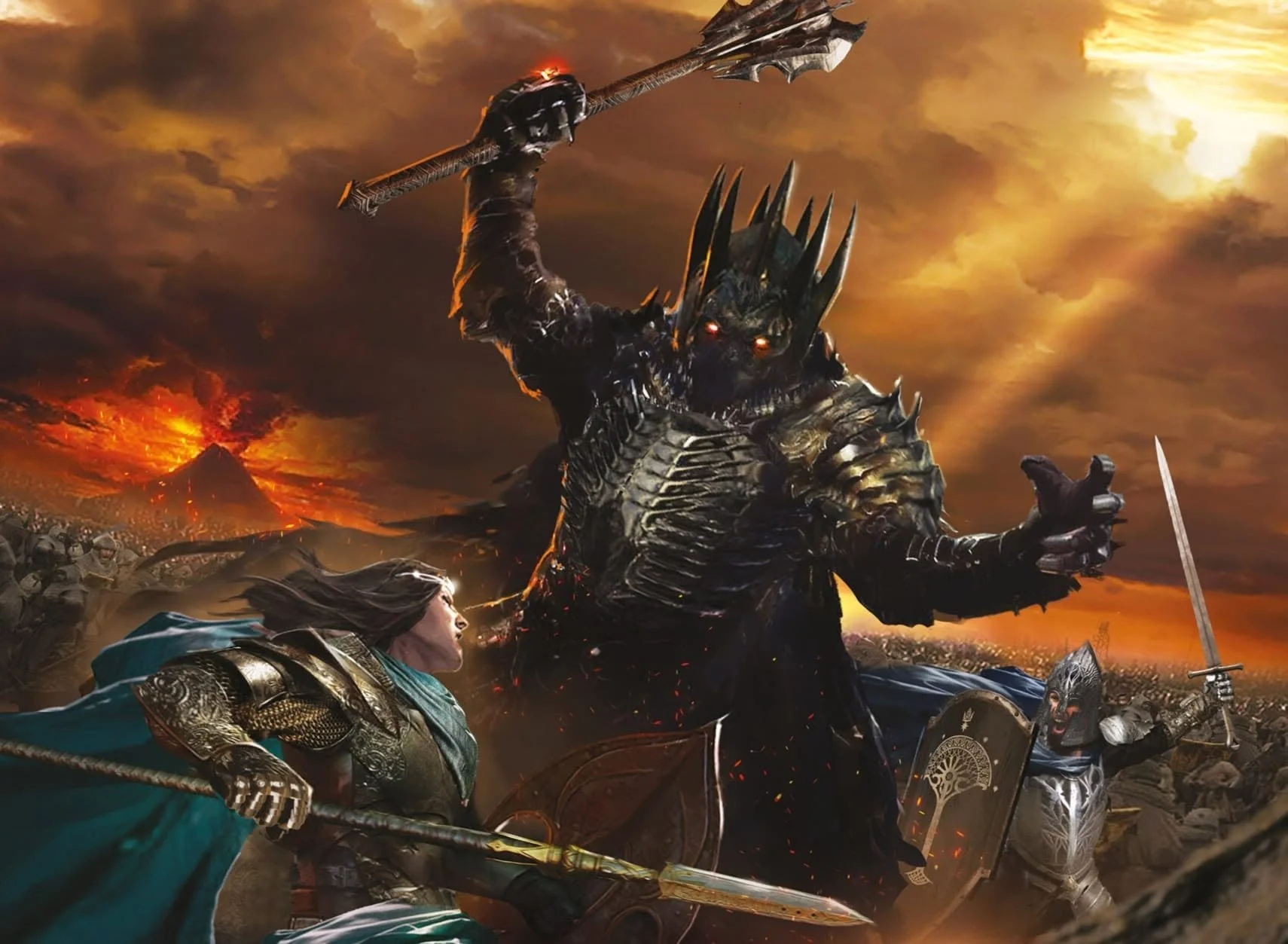
At the start of the 2001 film, The Fellowship of the Rings, director Peter Jackson has crafted a compelling and visual stunning prologue. It distils a great deal of Tolkien’s text and conveys the essential history of the One Ring succinctly. Cinematically it works extremely well but it is sadly far from canonical due to all the practical considerations a film maker has to make when adapting a lore dense text. I have often wondered exactly how Sauron was defeated at the end of the Second Age because Tolkien is somewhat vague in The Lord of the Rings. Gil-galad, Elendil and Isildur all seem to be involved in physically fighting the Dark Lord. Gil-galad died due to being burned by Sauron’s touch. Elendil also died in combat and his sword Narsil broke beneath him. Isildur claimed to have delivered the killing blow after his father was defeated. However, no character in the story provides a definite, linear account of these event.

Tolkien enthusiasts may recollect Athlon Games, a subsidiary of Leyou Technologies, announcing that it was developing a new MMORPG, based upon The Lord of the Rings, back in September 2018. The following summer, it was revealed that Amazon Game Studios was the partner developer for the project. In late 2020, Leyou Technologies (a Hong Kong-based company), was acquired by the Chinese conglomerate Tencent. This triggered a contract clause with the license holder, Middle-earth Enterprises, allowing them to terminate the existing arrangement if a new deal could not be met. Amazon and Tencent were unable to agree upon how to proceed with the project, leading Amazon to withdraw from negotiations. The project was subsequently scrapped. No details or images of the MMO have been released.
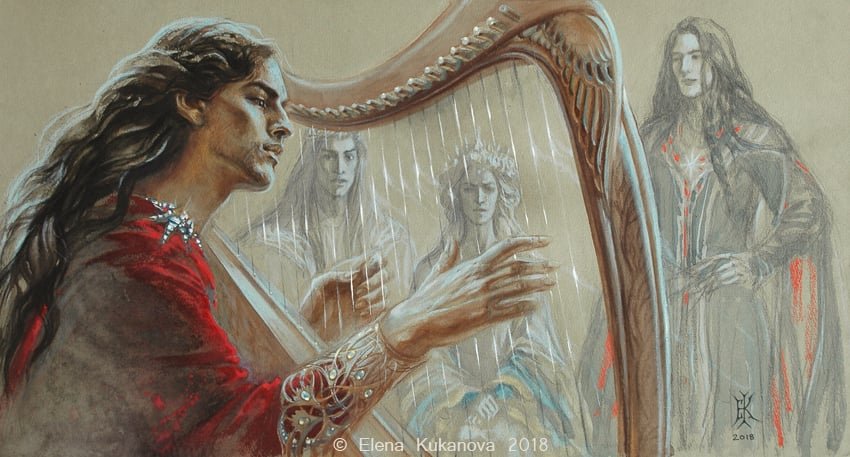
Song is a fundamental aspect of Tolkien's writing, serving the same role as it does in our own cultures. It is a means of documenting history, expressing cultural heritage and maintaining traditions for the people of Middle-earth. The Ents sing lists of lore. The Rohirrim sing of battle and heroic deeds and the Shire folk, of ale and frivolity. Let us not forget that Tolkien’s fictitious world, Arda, was effectively sung into existence via the Ainulindalë, the divine music of creation sung by the Ainur. The cultural significance of song is also a key element of Tolkien’s world building. The songs within the narrative bolster the authenticity of the various cultures of Middle-earth, embedding their history and heritage into the story. Music, rhymes and songs also help define characters. The lighter ones sung by hobbits, provide lighthearted moments, contrasting with the dark and dangerous tones of the larger narrative. It also reinforced their rustic heritage.

I have always found it curious that there haven't been more feature films set in Middle-earth, after the success of Peter Jackson’s The Lord of the Rings trilogy. However, a little research shows a very complex set of rights regarding Tolkien’s work, with different material being controlled and administered by different bodies. Hence, the market has not been saturated with officially licensed material. Thus, when The Lord of the Rings: The War of the Rohirrim was announced to be in production, it aroused a great deal of curiosity both among fans and those with an interest in the wider film industry. To base an entire feature film on something that is effectively just a few paragraphs in the appendices of The Lord of the Rings is quite intriguing. The producers claimed it afforded them greater artistic freedom not to be constrained by an excess of lore. Industry pundits theorised that the film was being produced solely to ensure that wider rights were retained.

Two years ago, The Lord of the Rings: The Rings of Power premiered on Amazon Prime to mixed reviews and a tedious and predictable internet brouhaha. I have no interest in that debacle as I consider it spurious, to say the least. Representation is a commercial imperative for any big budget television production. As for any deviation from the established canon, that’s due to the show being an “adaptation” of Tolkien’s work. At no point were viewers promised a literal interpretation of the source text. Therefore I am only interested in legitimate critiques of the show based upon its production, writing and acting. As far as I’m concerned, the first season was broadly entertaining and had outstanding production values. Overall I enjoyed The Lord of the Rings: The Rings of Power as an exciting and inventive take on Tolkien’s legendarium. Hence, I have been looking forward to the second season, which began today.
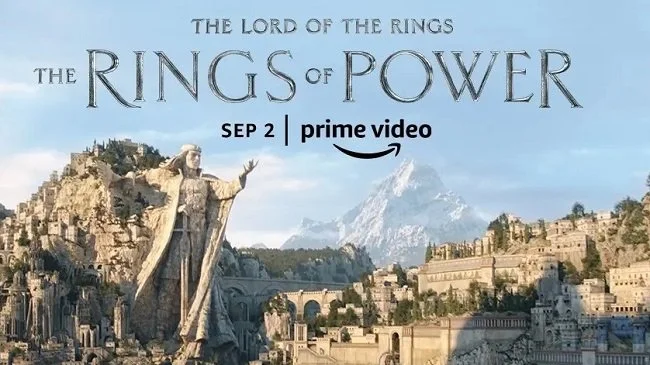
Having watched the first two episodes of The Lord of the Rings: The Rings of Power, I wish to express my thoughts on what I’ve seen and my overall impressions so far. I do not think it would be fair to frame this post as a review as the two episodes only constitute 25% of the show’s total content. A formal review of the first season seems more appropriate when I have seen it in its entirety. Before I begin commenting on specific points about the two premier episodes, I wish to point out that I have no problem with “representation” and have expressed my thoughts on this matter in a previous post. It also covers the matter of “adaptation” and how complex texts can at times require augmenting to be made accessible to wider audiences. Hence those viewers who want 100% canonical purity are unrealistic in their expectations. Objections based in racism and sexism can simply be ignored. NB I shall endeavour to keep my thoughts spoiler free.
In February this year, I wrote a blog post about how Middle-earth Enterprises were seeking to auction off the various rights they hold for the works of J.R.R. Tolkien. Today the Embracer Group announced that it was buying these rights as part of an ongoing acquisition strategy. The Swedish video game and media holding company has also purchased Limited Run Games, Tripwire Interactive as well as Middle-earth Enterprises portfolio. They recently acquired premium titles such as Tomb Raider, Deus Ex, and Thief. The Embracer Group currently owns more than 100 studios including Borderlands developer Gearbox, Saber Interactive, and THQ Nordic. Saudi Arabia recently bought a $1 billion stake in Embracer, which is around 8% of the company’s total shares. Embracer’s recent purchasing spree comes months after it acquired Square Enix’s three major Western game studios. In a press release the cost of buying the right to Tolkien’s work is £653,000,000 ($786,000,000).
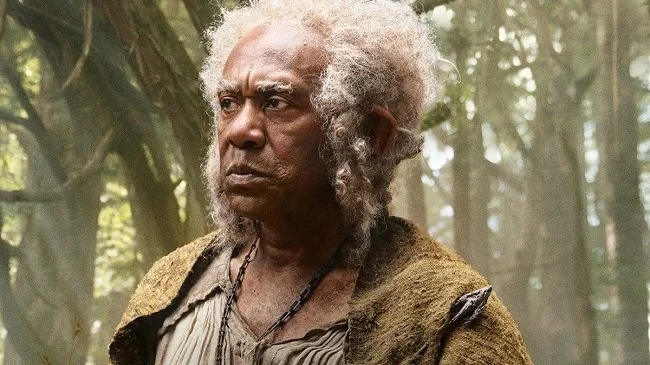
I was perusing my Twitter timeline last night and a tweet appeared from someone who doesn’t seem to care for the casting of Lenny Henry as a hobbit in the upcoming Amazon Prime TV show The Lord of the Rings: The Rings of Power. If you’re not familiar with Lenny Henry he’s a British comedian and actor of Jamaican heritage, who was one of first people of colour to establish himself as part of the cultural mainstream in the UK. He’s funny, smart and well respected. However, this particular individual on social media (we will not dignify them with a name check) was not happy about canonical authenticity being subject to the whims of representation. They tried to portray their objections as legitimate criticism based on a good faith argument, but some of the terminology they used clearly showed their true intent was passive aggressive dog whistle racism.
In 1969 J.R.R. Tolkien sold the motion picture, merchandising, stage and other rights to The Hobbit, The Lord of the Rings and other literary works to United Artists. UA were riding high at the time with the success of In the Heat of the Night and The Graduate. Allegedly Tolkien made the deal to pay off a tax debt, although this may be apocryphal. He was paid £100,000 which is equivalent to £1,680,000 today. He also retained a 7.5% royalty interest that has now been transferred to the Tolkien Estate. UA toyed with the idea of adapting The Lord of the Rings and many cinematic luminaries were associated with the project. In the early seventies British film director John Boorman was tasked with writing a screenplay. Boorman, an established director with a track record of being experimental, set about developing a script with his long term collaborator, Rospo Pallenberg. However, the project was cancelled due to costs and the studio getting “cold feet”.
Finally the first teaser trailer for Amazon Prime’s forthcoming TV show set in the Second Age of Middle-earth has been released. The Lord Of The Rings: The Rings of Power will be released weekly on Amazon’s streaming service commencing September 2nd 2022. The first season consists of eight episodes. The series is a prequel to the events of The Lord of the Rings, depicting "previously unexplored stories" based on Tolkien's works. The show will include such iconic locations as the Misty Mountains, the elf-capital Lindon, and the island kingdom of Númenor. The Lord Of The Rings: The Rings of Power maintains the visual and design aesthetic of the existing Peter Jackson movies. Furthermore, composer Howard Shaw maintains his involvement as does artists and designer John Howe. Apparently, due to the Tolkien Estate being happy with the development of the show, Amazon had gained access to certain elements and passages from The Silmarillion and Unfinished Tales to include in the narrative arc.
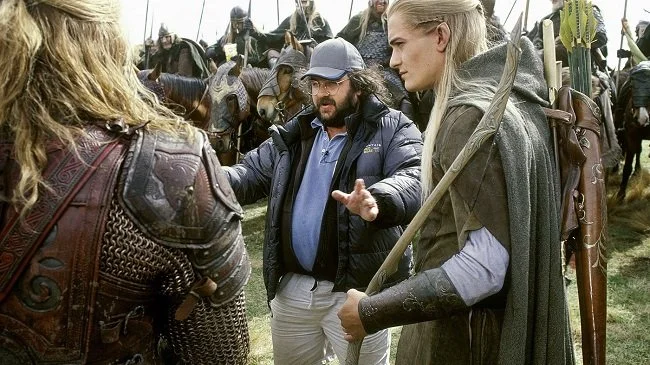
In December it will be the twenty year anniversary of the release of The Fellowship of the Ring. The first entry in Peter Jackson’s trilogy of film adaptations of Professor Tolkien’s iconic novel, The Lord of the Rings. I was utterly swept up in the hype and media frenzy that persisted for three years around these movies between 2001 and 2003. I certainly have fond memories of seeing each film on the first day of its release at the prestigious Leicester Square Odeon in London. Broadly speaking I was very impressed with all three films at the time of their release. However, over the years excitement and fandom has been tempered with a greater degree of critical analysis and appraisal. Having recently watched the Extended Editions of all three films, remastered in 4K, I now think it would be pertinent to revise my thoughts on them and repost them here on Contains Moderate Peril. This initial post is intended more as an overview on the trilogy. I shall write three new in depth reviews in due course.

I have reviewed several audio recordings of J.R.R. Tolkien’s The Lord of the Rings over the years. My personal favourite is the BBC Radio adaptation from 1981, which has a superb cast of British character actors and does a wonderful job of adapting the text without diminishing the scope of the narrative. This is a dramatisation, rather than a straightforward reading of the book. However, if the latter is what you are looking for then the go to version is 1990 recording by Robert Inglis. He provides unique voices for all characters and even sings the songs included in the source text. And then there is the quirky Mind’s Eye Production from 1979, which is another dramatisation. This is a flawed version with a focus upon the character dialogue with much of the lore removed. Yet it has its charm and includes the often omitted Tom Bombadil. However, quite recently I accidentally stumbled upon a fourth adaptation and was surprised not only by the quality of the production but the curious history associated with it.
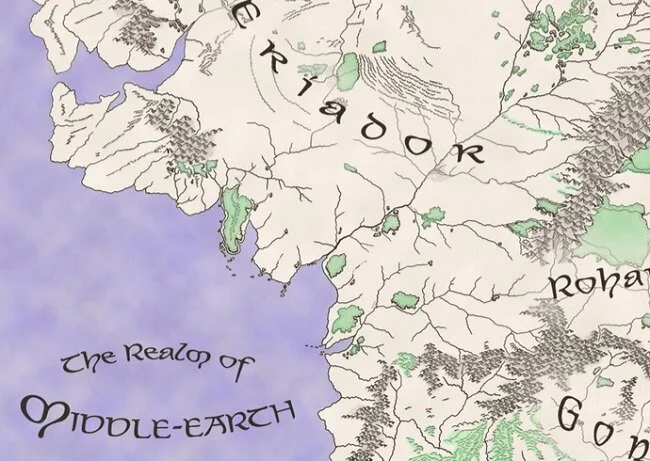
In late 2018 it was announced that Amazon Game Studios and Leyou were collaborating on massively multiplayer online game for PC and consoles set in Middle-earth. Ongoing development is being handled by Athlon Games, a global developer and publisher of free-to-play console and PC games. The studio is a subsidiary of Leyou Technologies Holdings Limited. But beyond the fairly vague press releases that can be found on the Athlon Games website (the last was posted in July 2019), little detail has emerged about the project. There has been unsubstantiated rumours that the project may well tie-in with the forthcoming Amazon Prime TV show that is set in the Second Age of Middle Earth. However, there is little information at present in the public domain to fully substantiate this or any of the other ongoing speculation. Hence, the entire situation raises some interesting questions and I’m sure like me, you have probably pondered some of them. Here are just a few that have crossed my mind.
In recent years there has been a shift in position of both Middle-earth Enterprises and the Tolkien Estate. Saul Zaentz died in 2014 leading to a relaxing in licensing requirements and Christopher Tolkien stepped down as the director of his father’s estate in late 2017, further contributing to increased commercial use of Tolkien’s intellectual property. Since then we have learned that Athlon Games are developing a new MMORPG set in Middle-earth and that Amazon Prime is producing a major TV show set in the Second Age. It would appear that the firm grip that has prevailed over the last forty years is now waning and that Middle-earth Enterprises and the Tolkien Estate are more disposed towards expanding the reach and financial potential of the Tolkien franchise.
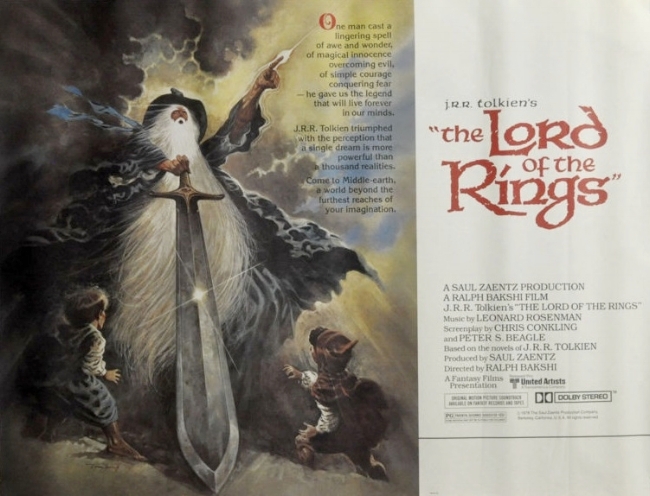
Ralph Bakshi’s 1978 adaptation of Tolkien’s The Lord of the Rings often polarises fan opinion. There is much to admire and there is also much to dislike in this 133-minute animated feature film. However, for many of us, this was our first visual foray into Middle-earth and for good or ill, it had an impact. You’ll certainly see several homages to it in Peter Jackson’s trilogy. And like so many cinematic adaptations of iconic books, The Lord of the Rings journey to the big screen was far from easy. Here are ten anecdotes regarding the film and its production.

The Hobbit (1977) is a curious beast. It’s a made for television animated film, which despite its budgetary constraints, strives to comprehensively adapted one of the most beloved children’s books of the last century. I remember reading an article about this television adaptation of The Hobbit, in Starburst Magazine during the late seventies. There were rumours that this Rankin/Bass production, which had already premièred on US network television, would gain a European cinema release. This was presumably to cash in on the success of Ralph Bakshi's animated feature film adaptation of The Lord of The Rings. However, this never happened to my knowledge. In fact, The Hobbit was not commercially available in the UK until 2001, when Warner Bros. released it on DVD to capitalise on the success of Peter Jackson’s The Fellowship of the Ring.
There are and always will be books that have a clear political agenda or make a very particular statement. Orwell’s 1984 springs to mind as an obvious example. Then there are also books that attract political interpretations by the nature of their plot or the subjects that they explore. Whether the author intended such a debate about the work or not, is a secondary issue. I have always taken Tolkien’s work at face value and to be what he stated they were. Epic and intricate faux histories, free from allegory. Furthermore, I appreciate that the moral position and themes of his work stem from the authors world view, personal experiences as well as the prevailing social dogma of the time. I find it interesting how his work attracts praise and adulation from a wide variety of groups. Catholics will naturally gravitate towards Tolkien’s writings due to his faith and that is the prism through which they will critically view his work. There are of course other examples about how The Hobbit and The Lord of the Rings appeals to different people in different ways. It is a common aspect of fandom.
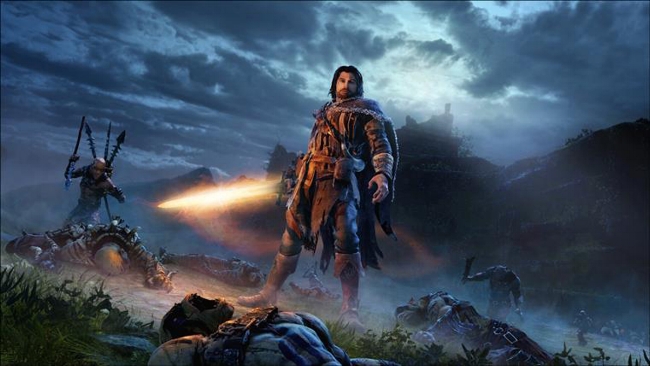
Canon and lore are sacred cows to many fans. Any deviation from the clearly established is met with scepticism and on occasions outrage. It is the hill they are prepared to die, defending. In the past I have felt equally as strong about this matter as others but over the years I have become increasingly relaxed about such things. I guess once you realise that your childhood memories cannot be ruined, despite what some claim, then you cease to worry as much. If you do not like an adaptation, extrapolation or continuation beyond the canon of a particular IP, then you simply say, “it’s not for me” and move on. Not liking an idea or concept because it doesn’t conform your preconceptions and personal tastes does not give you the right to try and quash it. So overall, I don’t mind Tom Cruise being Jack Reacher. A female Doctor Who is fine with me. I even like the movie adaptation of Raise the Titanic.
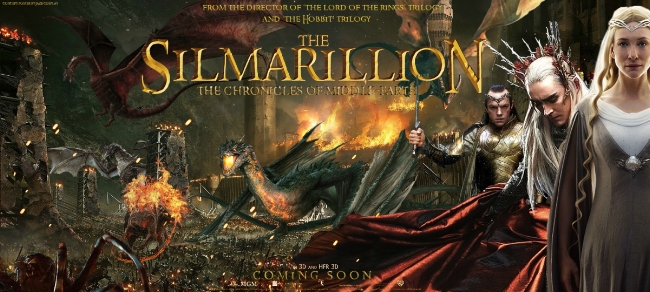
When Peter Jackson finished filming The Hobbit trilogy, there was some idle speculation by fans as to the possibility of a movie adaptation of The Silmarillion. It was meant mainly as a talking point, rather than a serious proposition and there certainly was an enthusiastic response from some quarters. Three years on, the fantasy genre is still a commercially successful genre both at Cinemas and on TV. Furthermore, production studios are regularly looking to existing literary properties that they can convert into viable long term franchises. Bearing all this in mind, is it possible that Tolkien’s complex mythopoeic work could be adapted for either the big or little screen?
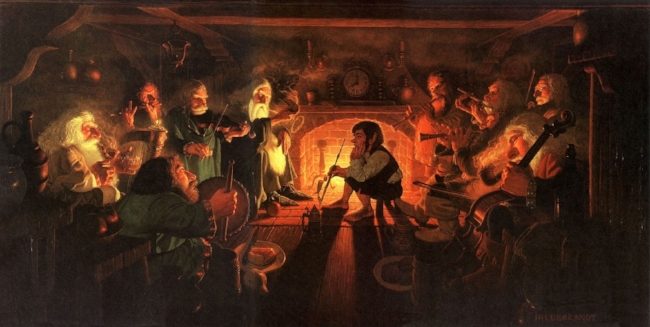
Tolkien's use of song and verse are an integral part of his writings. I am not musically talented myself, nor am I a scholar of song structure but I appreciate how he uses them for plot exposition and character development. In The Lord of the Rings, the medium of song is also used as a means of conveying the enormity of Middle Earth and the wealth of history therein. They give us a sense of the realms lore and heritage, stretching back over millennia. The respective sophistication of each song also reflects the culture that created them. Songs from The Shire are rustic and quaint. The songs of Men are bombastic and bold. Whereas Elven music is often melancholy and complex.
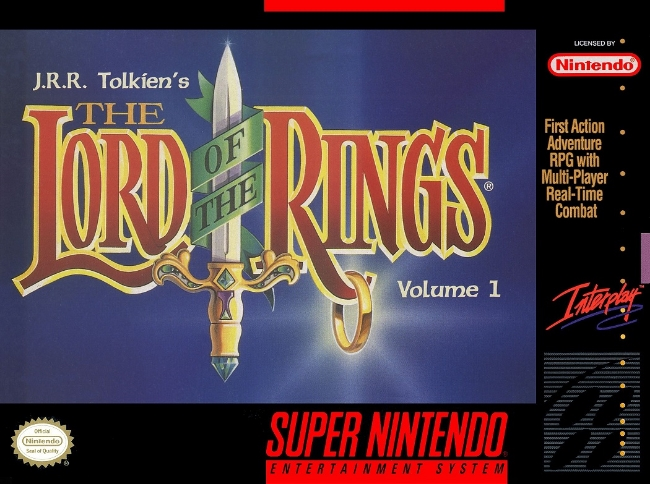
In a fit of nostalgia I recently found myself perusing several retro gaming websites, pondering on some of the titles that I use to play on the Super Nintendo Entertainment. During the early nineties when this platform was my primary source of gaming I use to meticulously research new titles before purchasing. This was the pre-internet age and console cartridges came at a premium price, so you did not want to waste valuable money on a poor game. Magazines featuring previews and in-depth reviews were the main source of information. The other would be your local gaming boutique where you could hang out and discuss such matters with fellow gamers. Broadly this system worked and I enjoyed most of the games I played on the SNES.
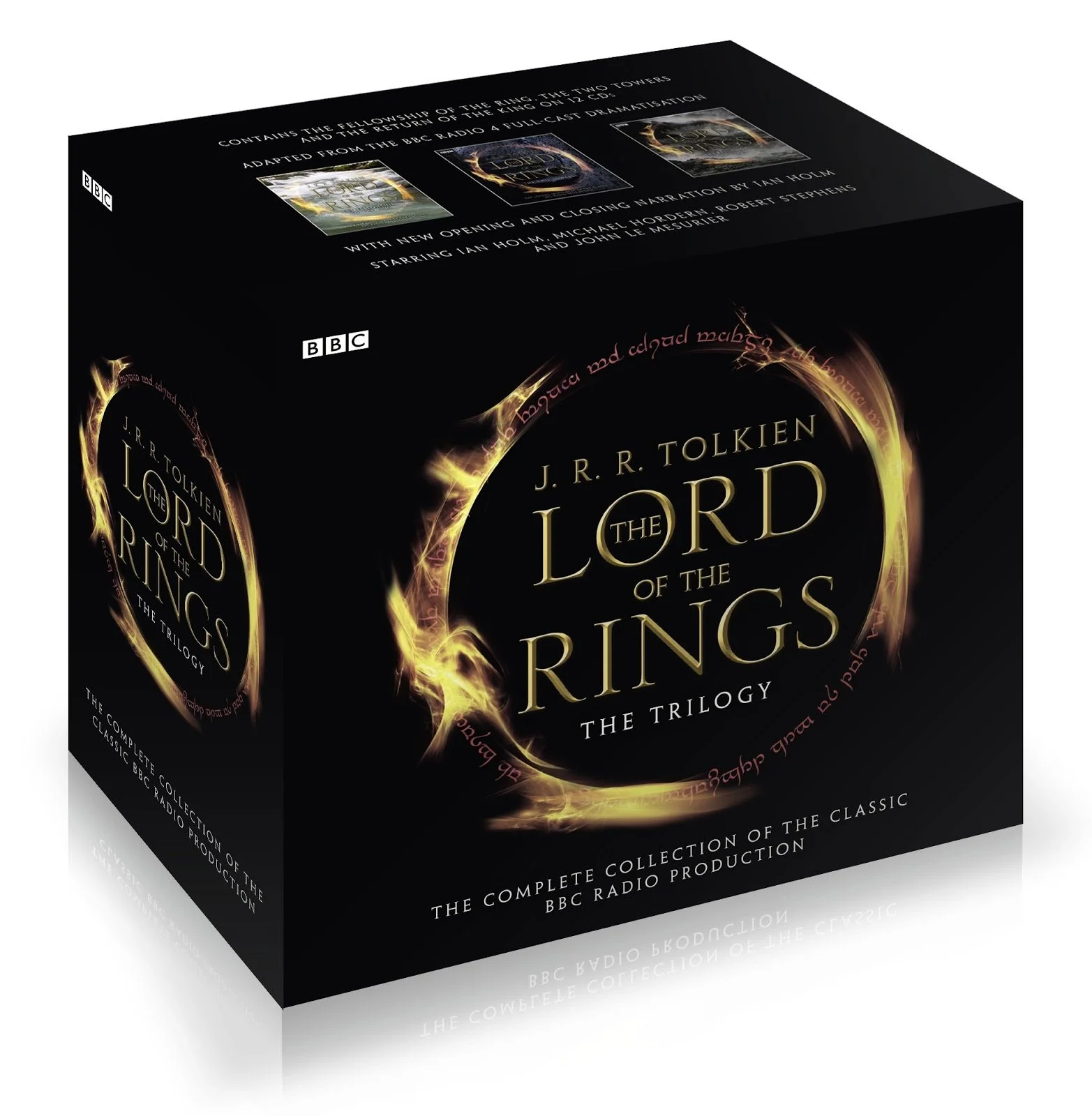
In 1981 BBC Radio 4 produced an ambitious adaptation of The Lord of the Rings, presenting Tolkien’s novel in twenty six, thirty minute episodes. As with all adaptations some material had to be removed, but overall the BBC production was not excessively abridged and followed the plot faithfully. The characterisations and dialogue were extremely well realised and music by composer Stephen Oliver was very much in the style and idiom of Tolkien. This was a production of the highest pedigree and a major event for the BBC at the time. The series was heavily promoted, receiving front page status in The Radio Times, the UK’s premier TV guide and bestselling magazine. Although initial reviews were varied, the series immediately gained a cult following with fans trading episodes recorded on cassette tape. Word of mouth and substantial listening figures soon lead to revised opinions from the press, along with the immortal slogan "Radio is Hobbit 4-ming".
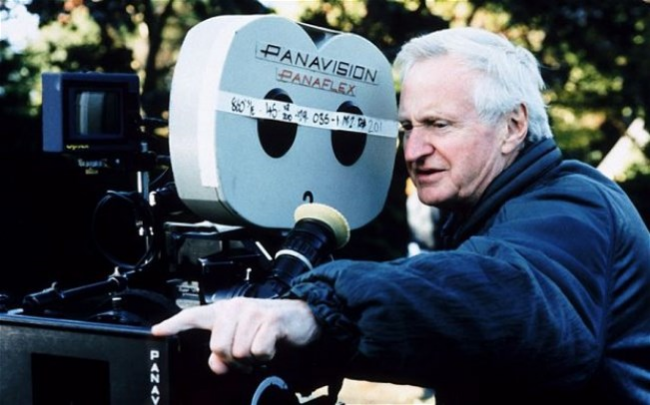
n 1969 JRR Tolkien finally sold the film and merchandising rights of The Lord of the Rings to United Artists for approximately £104,000. A year later the studio asked director John Boorman if he could make the books into a viable film. Boorman, an established director with a track record of being experimental, set about developing a screenplay with his long term collaborator, Rospo Pallenberg. What emerged was a one hundred and fifty minute script and possibly the most radical adaptation of Tolkien's work. Some of the ideas and concepts it contained were extremely innovative but others where simply too radical a divergence from the source text. I’ve collated a few of these for your consideration. If you are familiar with Boorman's 1973 film Zardoz, then you will note both similarities and re-occurring themes.

When discussing the various audio dramatizations of J. R. R. Tolkien's The Lord of the Rings, people often think of the BBC Radio adaptation by default. However it should be noted that it was not the first. An earlier version was made and broadcast in 1979 on US National Public Radio and was subsequently released as an audiobook. It was produced by The Mind's Eye, a company who were responsible for numerous adaptations of classic literature for radio at the time. The script written by Bernard Mayes is a somewhat abridged version of the book. The eleven hour running time focuses significantly on the dialogue, with much of the back history, lore and expositionary narration removed.
 Roger Edwards
Sometime in August 1979, I was travelling with my father by train to London, when I first saw posters advertising the Ralph Bakshi animated version of J. R. R. Tolkien’s The Lord of the Rings. The film had been released in the US the previous November and I aware of its existence because I had read articles about it production in Starburst magazine. Even at the age of 11 I was interested in genre films and television, having been raised on Doctor Who and Ray Harryhausen’s back catalogue of fantasy movies. Furthermore, I was familiar with Tolkien’s first novel, The Hobbit, as my father had read it to me when I was younger. I was impressed by the poster in that way that only an 11 year old can be. Why was Gandalf do gigantic? Also the A rating was enigmatic. Most animated films were usually rated U. Yet despite my interest, I didn’t see The Lord of the Rings at the cinema during the summer holidays.