
Waiting for the New Middle-earth MMO
In late 2018 it was announced that Amazon Game Studios and Leyou were collaborating on massively multiplayer online game for PC and consoles set in Middle-earth. Ongoing development is being handled by Athlon Games, a global developer and publisher of free-to-play console and PC games. The studio is a subsidiary of Leyou Technologies Holdings Limited. But beyond the fairly vague press releases that can be found on the Athlon Games website (the last was posted in July 2019), little detail has emerged about the project. There has been unsubstantiated rumours that the project may well tie-in with the forthcoming Amazon Prime TV show that is set in the Second Age of Middle Earth. However, there is little information at present in the public domain to fully substantiate this or any of the other ongoing speculation. Hence, the entire situation raises some interesting questions and I’m sure like me, you have probably pondered some of them. Here are just a few that have crossed my mind.
In late 2018 it was announced that Amazon Game Studios and Leyou were collaborating on massively multiplayer online game for PC and consoles set in Middle-earth. Ongoing development is being handled by Athlon Games, a global developer and publisher of free-to-play console and PC games. The studio is a subsidiary of Leyou Technologies Holdings Limited. But beyond the fairly vague press releases that can be found on the Athlon Games website (the last was posted in July 2019), little detail has emerged about the project. There has been unsubstantiated rumours that the project may well tie-in with the forthcoming Amazon Prime TV show that is set in the Second Age of Middle Earth. However, there is little information at present in the public domain to fully substantiate this or any of the other ongoing speculation. Hence, the entire situation raises some interesting questions and I’m sure like me, you have probably pondered some of them. Here are just a few that have crossed my mind.
Will this title be directly competing with Standing Stone Games MMORPG The Lord of the Rings Online?
Exactly what sort of MMO will this new LOTR based game be, as the very term MMO is extremely elastic these days.
Will the appropriate licensing body allow two games from the same genre to exist simultaneously?
Exactly what business model will this new MMO have?
What iteration of the franchise will this game be based upon? Will it draw directly from the Peter Jackson movies (like games such as Middle-earth: Shadow of Mordor and Middle-earth: Shadow of War) or will it create a unique vision of Middle Earth as with SSG’s LOTRO?
Due to the lack of any definitive information, all we can presently do is speculate about the answers to these questions. Firstly, as to “do we need another The Lord of the Rings themed MMO”, I certainly think the market can sustain one. Competition can be a healthy thing and it is nice as a consumer to have choice. Products can co-exist harmoniously if they provide different experiences. I am always interested in seeing different people’s visions of Professor Tolkien's work, such as artists like Alan Lee, John Howe and Ted Nasmith, so for me a new game would be welcome purely from an creative and aesthetic perspective. There is also a wealth of lore that is available to be developed into new storylines. This is something that Turbine and Standing Stone Games have managed to do successfully over the past thirteen years. Any new game can easily explore an aspect of Tolkien’s work that hasn’t been touched by any previous product. There is no need to simply tread old ground.
Now if this new The Lord of the Rings themed MMO is marketed in direct competition to LOTRO, then I would expect it to be a very different beast, based around the mechanics and systems that are currently popular within the genre. I do not see any benefit in simply creating an MMO that replicates what exactly LOTRO does. I would not be surprised if this new MMO was closer to The Elder Scrolls Online in its systems design. It is also worth considering licensing arrangements. When Star Wars: The Old Republic was released in late 2011, a decision was made to close the older MMO Star Wars Galaxies. Exactly why this happened has never been officially discussed, so we do not know if this was solely about concerns over competition. However, the legal rights for Tolkien’s work are administered by a completely different body, so it doesn’t mean that a similar fate necessarily awaits LOTRO. But it is prudent to at least reflect upon what happened to SWG.
Personally, I would like to see a less linear game with a far more open world environment, dynamic content that is proximity based and the chance to develop charterers that aren't solely based around combat. To be able to lose oneself in a virtual Middle Earth, where you are free to explore, craft, farm, trade or simply aimlessly meander, would be a massive step forward for fans of the IP. But I am fully aware that what delights me may well deter other gamers and that ultimately any game is going to have to find a balance between the new and established systems that are economically viable. The development costs required to create a truly open world version of Middle-earth would be substantial and more importantly, the risk of such an experimental project would potentially be the biggest obstacle. Conversely, just using Tolkien’s world for yet another PVP or Battle Royale game would in my view be a waste of the franchise.
I'm sure that many interested parties will be keeping an eye on Athlon Games over the next year to see how this new MMO pans out. Let us hope that further information is forthcoming regarding its development and its specific nature. However, a quality MMO is not made overnight and so I’m not optimistic that I’ll be playing this new game any time soon. If it is tied to the Amazon Prime TV show, then the games launch may also depend on whether that show gains any traction. Furthermore, the TV show may well be intended to run over numerous seasons and try and emulate the sustained success of Game of Thrones. If that's the case then this new MMO may not appear until the TV show has hit its peak popularity. And if the show is not well received the game could well be cancelled before release. Therefore, it may well be best for Tolkien fans to simply just keep an eye on this project and continue to focus on those games such as LOTRO that do currently exist and provide a specific service.
I was recently perusing my archive of old blog posts, when it struck me how much I’ve written about the MMORPG genre over the years. Naturally, there was far more material from between 2008 and 2012 as that was period when I immersed myself in the genre and was very enthusiastic about it. I was at a point in my life when I had the time to dedicate to such games and I was happy to participate in the social aspect of they offered. I would regularly play through group content and spend time socialising online with fellow guild members. My experience remains a textbook example of how online games can be more than the sum of their parts and that where you are at in your life has a major impact upon your overall enjoyment. As I read though various old posts it became clear that my experiences where specific to this particular part of my life and that they cannot be repeated. My relationship with the genre is very different now and that’s fine.
Video games as a genre are extremely poor at explaining themselves. When you buy a new game you’ll often find little or no information regarding the basic systems and mechanics. The industry assumes that their customers are by default familiar with the fundamentals of playing a modern video game. Hence if a game has a tutorial, it is often based around videos rather than detailed verbal instructions. You are are briefly shown a clip of a specific move being successfully undertaken but it is seldom shown in a wider context. The industry also expects the fan community to take on the role of curating and disseminating information about its games. The move away from forums and bespoke websites to Discord highlights this. Discord is a primarily a real time communication tool and not good at maintaining a historical data archive. If you want an answer to a specific gaming question, you’ll more than likely find it on YouTube in a video made by a fellow gamer.
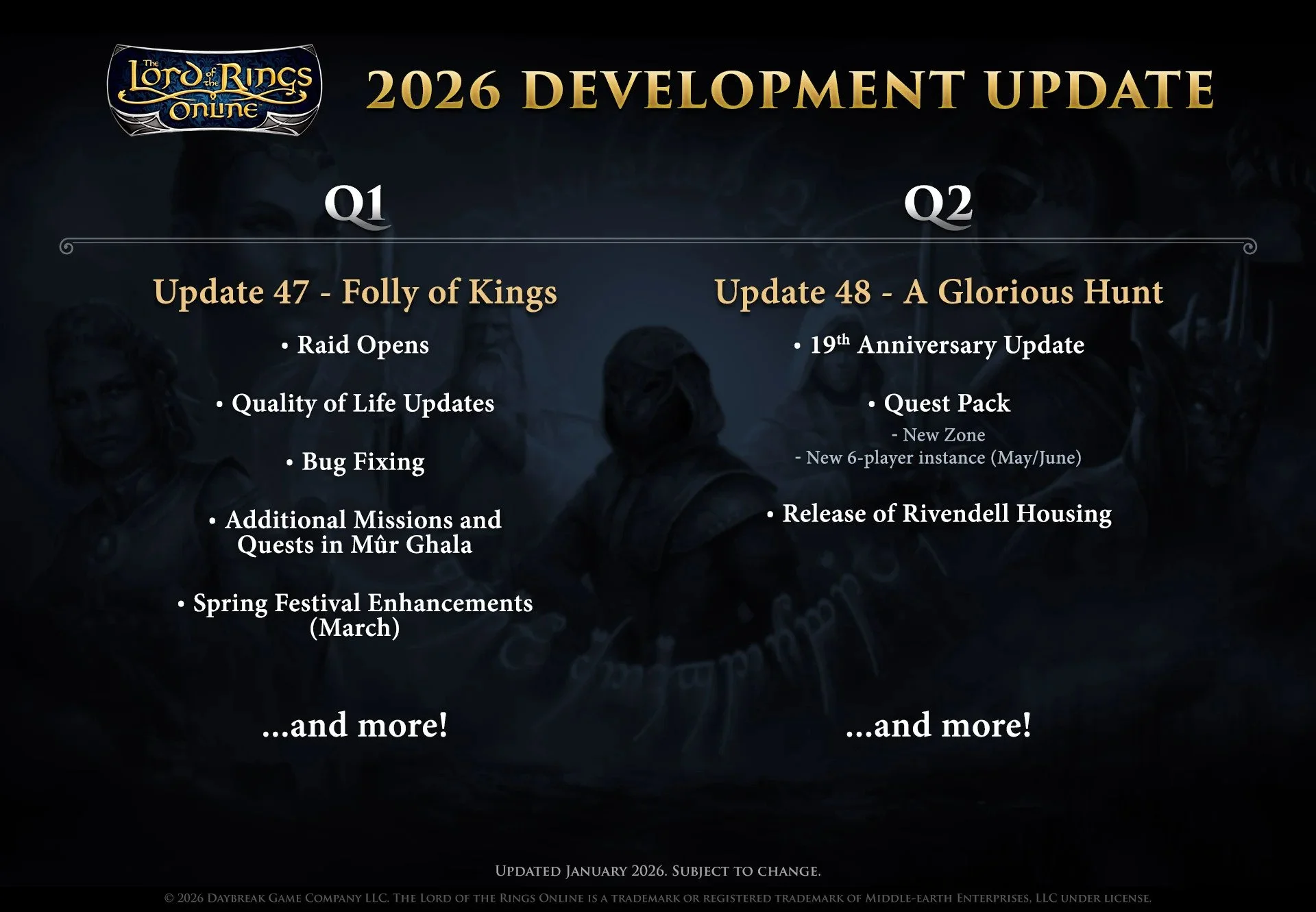
According to the recent “letter to the players”, Standing Stone Games will be adding a new zone to the MMORPG The Lord of the Rings Online in the second quarter of this year. Possibly around May or June. Having spent the last three expansions in the South of Middle-earth exploring the tropical Umbar and the deserts of Harad, I would certainly welcome a change of location. I have gradually warmed to these zones over the last eighteen months but I do find them so incongruous. They are so radically different to the European style content that has been the mainstay of the game for so long. Tolkien’s source text has plenty of detail regarding Eriador and Rhovanion. Information regarding Harad is scarce, hence it has afforded the developers a great deal of artistic freedom. Although exceedingly well realised these tropical zones have taken a while for me to get used to.
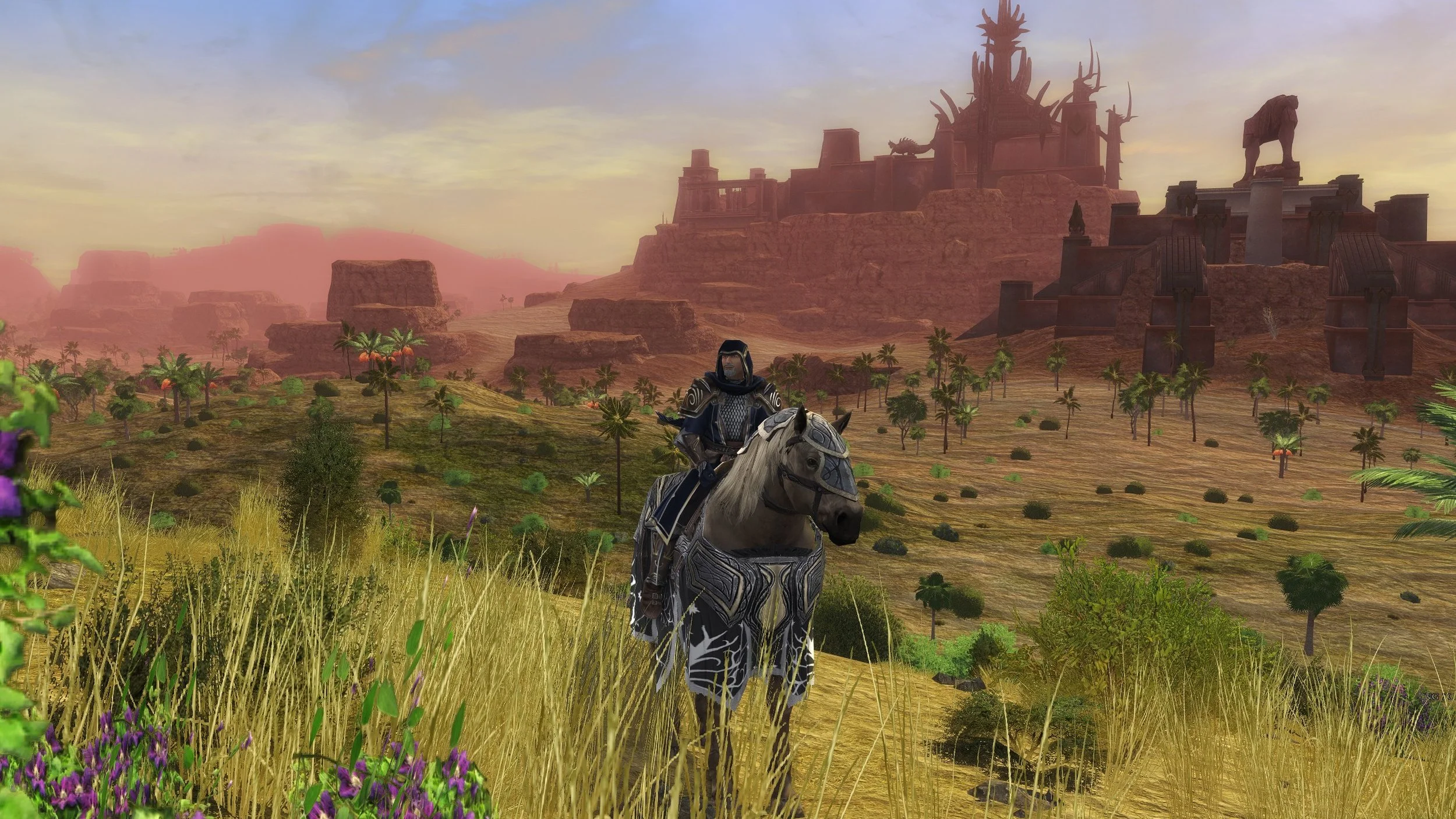
I’m not sure exactly when it started but I’ve recently noticed a graphical bug within the MMORPG The Lord of the Rings Online. This problem often occurs within caves or in areas where there are a lot of rocky surfaces. Hence it has become very apparent in the latest two expansions, set in Umbar and Harad. This graphical glitch causes some surface textures to appear to flash from light to dark intermittently. The resulting strobe effect is hard to ignore and very distracting. Fortunately, a quick online search showed that this is not a problem unique to my installation of LOTRO and is a known problem. Furthermore, there is a very simple workaround, which is to go into the Advanced Graphics setting and uncheck “Per Pixel Lighting”, which immediately remedies the problem. I have no idea why this has recently started to happen but at least it can be resolved.
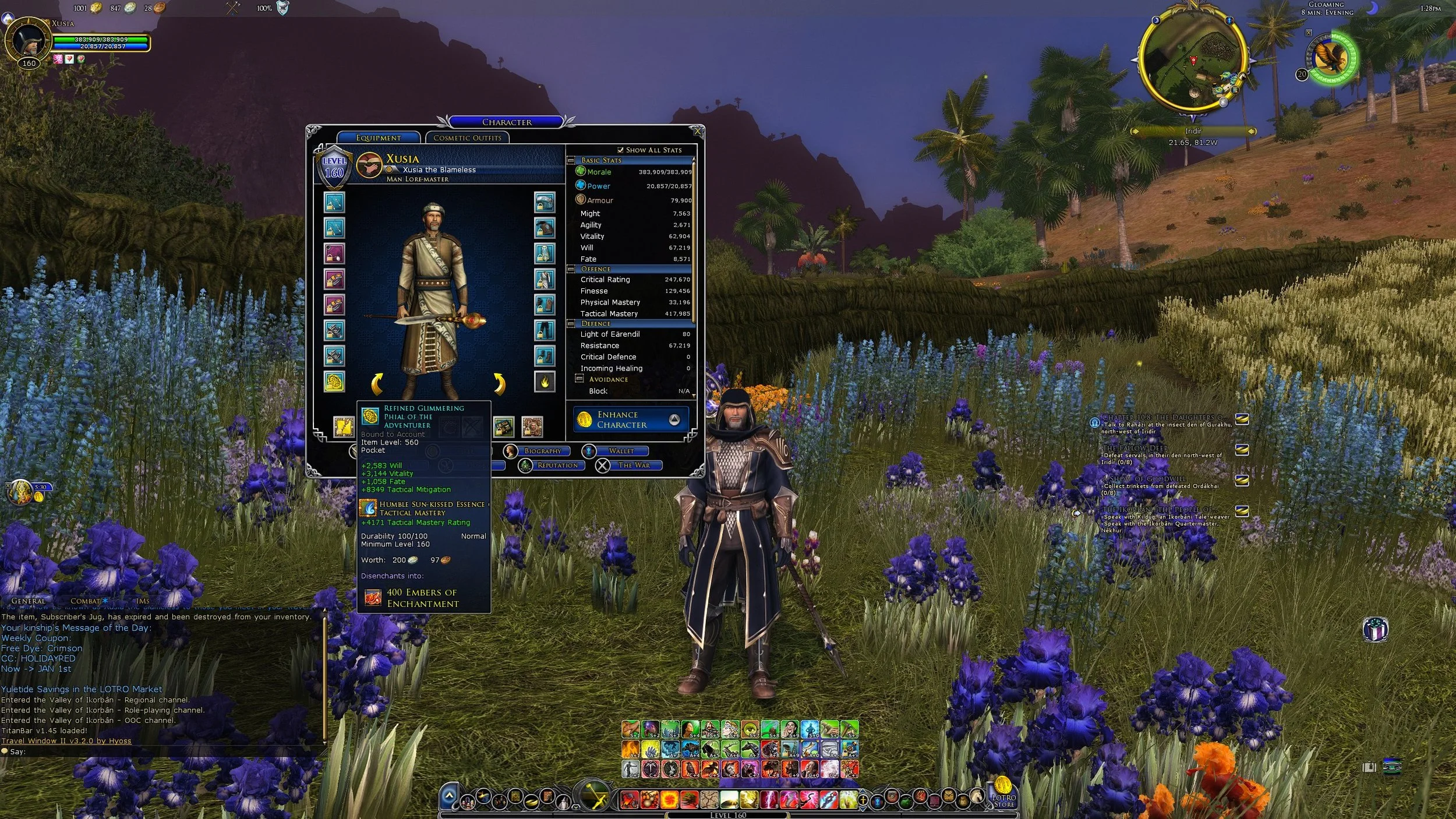
The latest expansion for the MMORPG The Lord of the Rings Online, Kingdoms of Harad, launched on December 3rd. With this release the level cap was raised from 150 to 160. It should also be noted that the cap for virtue traits was also raised from 96 to 100. Naturally these changes meant that there is a requirement to replace all armour and jewellery once the new cap is reached. Similarly Legendary Items have to be reforged and any traceries upgraded or replaced. If you follow the Epic Story it will lead you from quest hub to quest hub. The main quest rewards, along with those from side quests will provide adequate gear as you slowly progress towards the new level cap. The new raids, instances and missions/delvings then provide a means to acquire higher quality level 160 gear. LOTRO and indeed, many other MMOs are consistent in this methodology.
It is customary in a post such as this to list the various games that I’ve played over the last twelve months and share my thoughts on them. Wider analysis of the video game industry is also de rigeur. Unfortunately, I don’t really feel disposed to do either of those two things. My thoughts on the games I’ve played have already been published and can easily be accessed via the links at the bottom of this post. As for the video game industry, it suffers the same flaws as music, TV and cinema. There is creativity and innovation out there but it is often drowned out by mainstream products which are demonstrably inferior due to their inherent mediocrity. As for the business side of things, we once again clearly see the failings of the corporate management class. Sadly, they do not face the consequences of the mistakes that they make.
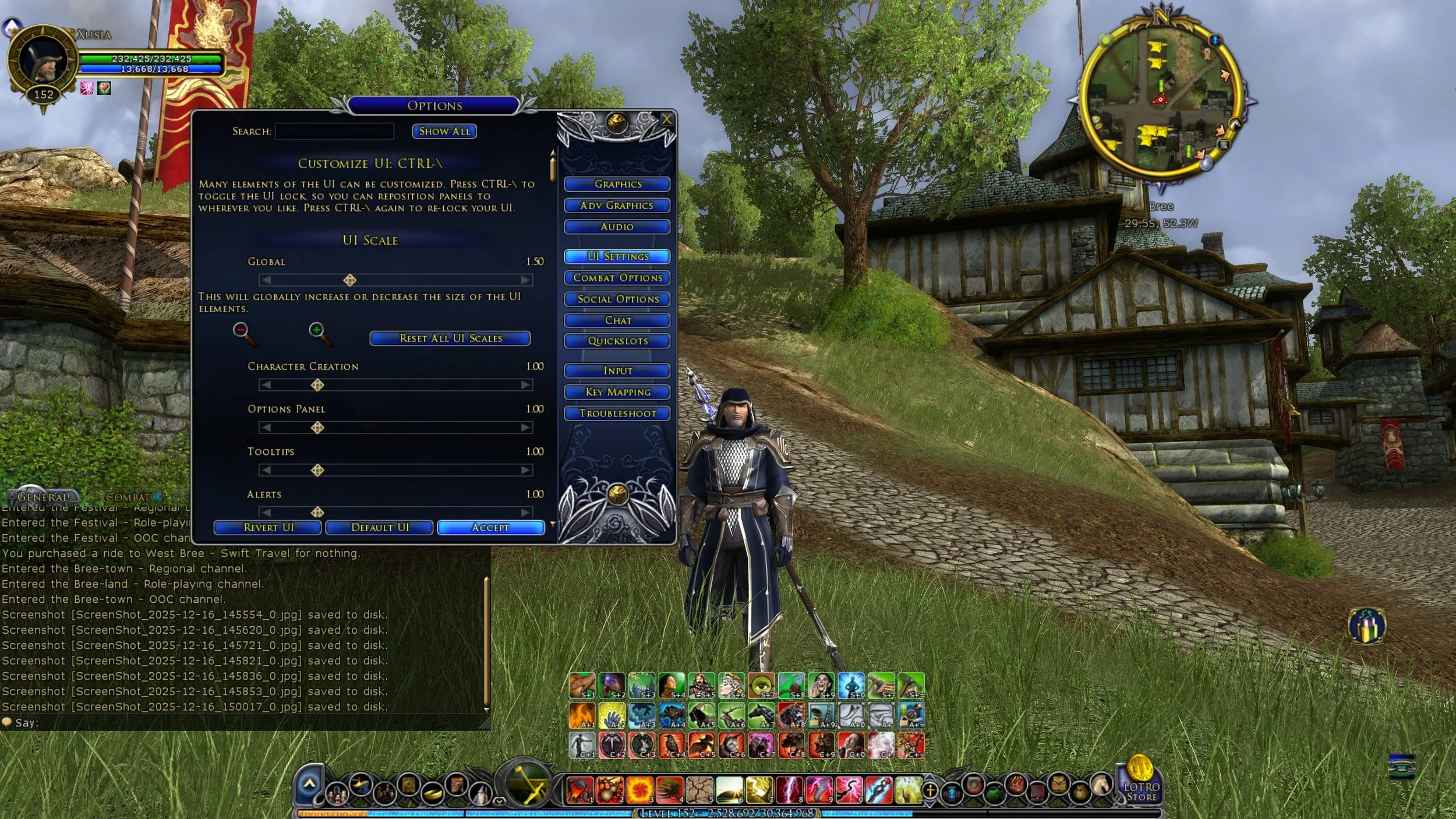
Today Standing Stone Games began beta testing Update 46.1 for the MMORPG The Lord of the Rings Online. The current preview on the Bullroarer test server is mainly for the new instance cluster that comes with the Kingdoms of Harad expansion which launched a few weeks ago. However, it would appear that this latest preview has another feature or note. One that should please LOTRO players. Contrary to what a lot of people thought, myself included, SSG have been working on a scaling UI for 2K and 4K monitors and the results are now available for testing from today Monday 15th through to Friday 19th December. Until now the main workaround to the lack of UI scaling has been to use either Nvidia or AMD graphics software to upscale the game from 1920 x 1080, or a third party app such as LosslessScaling. Having an official solution is a far better option.
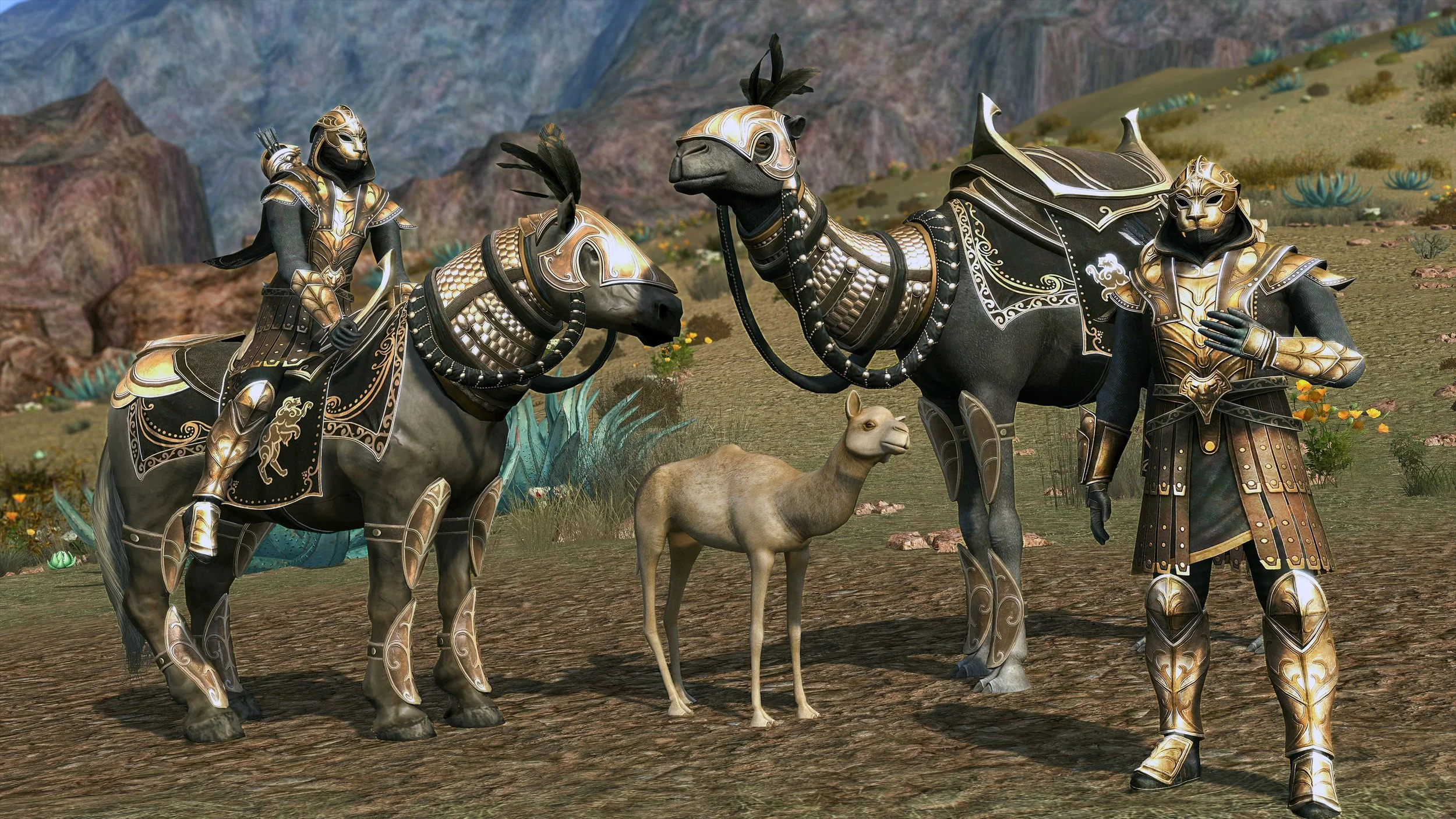
Kingdoms of Harad, the 13th expansion for the MMORPG The Lord of the Rings Online, was released today. Highlighting developer’s Standing Stone Games continuing commitment to this eighteen year old game. As 2025 draws to a close, I thought it would be prudent to reflect upon the current state of LOTRO and to consider what may come next year. Two words that I associated with this MMO are stable and consistent. The playerbase is loyal and dependable. Player numbers never greatly decline nor do they notably expand. LOTRO fills a very specific gaming niche and one of the reasons it retains its players is that there is no suitable alternative game. Although there is not a great deal of data in the public domain, it is generally accepted that LOTRO has an older player demographic and that many are consummate Tolkien fans.
The MMORPG The Lord of the Rings Online runs on a broad spectrum of PCs. From archaic laptops to high end gaming rigs, although it may require a bit of tweaking. At present, the optimal way to play the MMO is at a resolution of 1920x1080 (FHD) with the graphics setting maxed out. The graphics are sharp and the UI is readable. However, a growing number of gamers are now using 2K and 4K monitors. You can play LOTRO at higher resolutions such as 2560×1440 (QHD) and 3840x2160 (UHD) and the game looks great. However, the UI does not scale and so is very small on 2K and 4K monitors. The skill icons on the quickslots (shortcut bars) and the in-game text become difficult to see at these resolutions, which deters some players from using them. It is a known issue that Standing Stone Games are attempting to address but it is unlikely to be resolved any time soon.
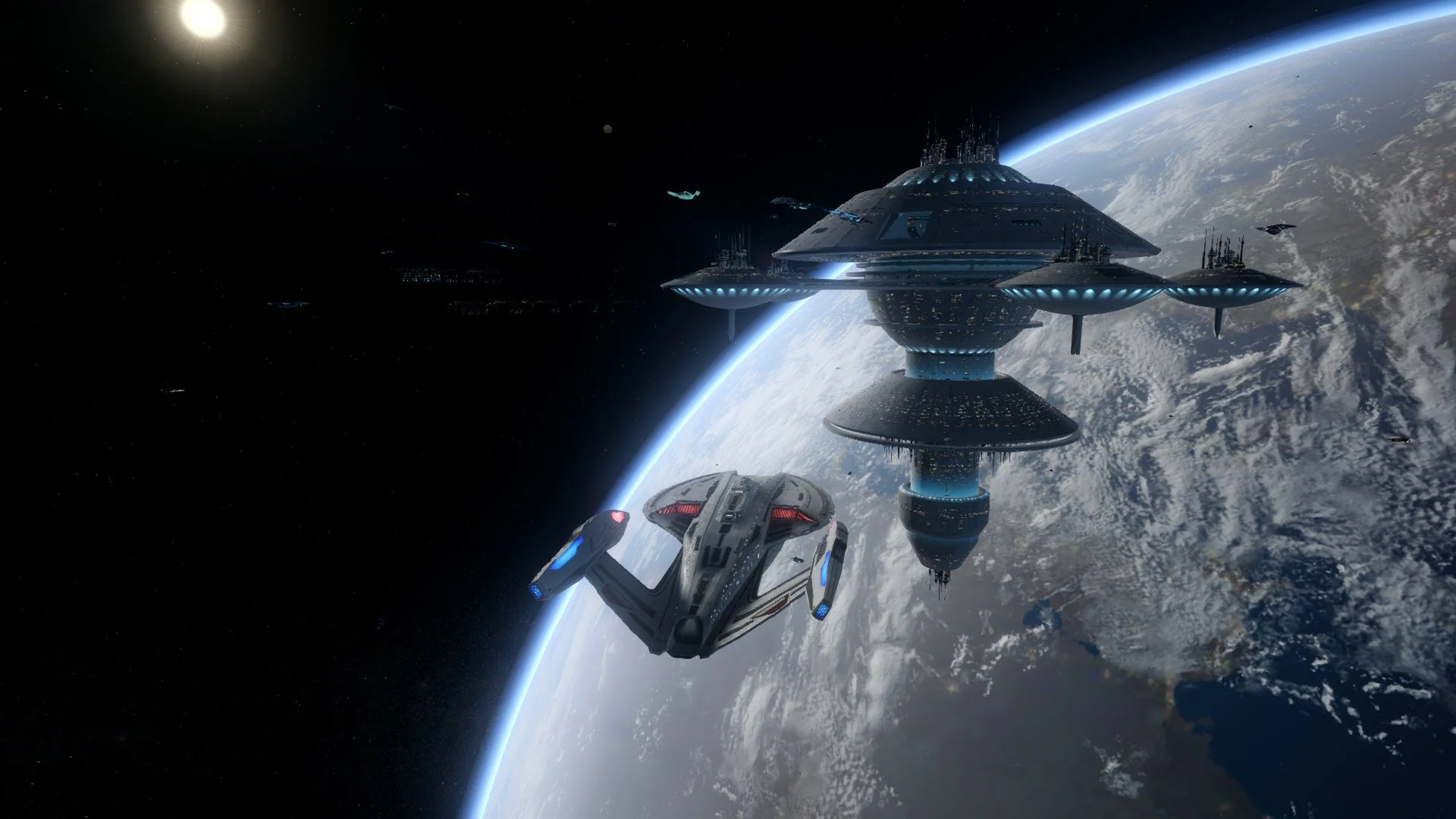
I recently read a post on Massively Overpowered about skills rotation in the MMORPG genre. I found the subsequent discussion in the comments fascinating. Mainly because I have never used a fixed rotation of skills in any of the MMORPGs that I play. I understand the reasoning behind such things and why some players want to optimise their combat performance. Using one’s skills in a specific order to maximise damage and manage their subsequent cooldown has a logical appeal. In Star Trek Online, some players go so far as to create keybinds for their rotations and assign it to a specific hotkey, which is then continuously pressed throughout combat. However, rotations are a blunt tool that lack flexibility, often being geared towards dealing with a single target or using an area of effect skill against a larger group. They may not be the optimal approach to combat when things do not go to plan.
Tolkien enthusiasts may recollect Athlon Games, a subsidiary of Leyou Technologies, announcing that it was developing a new MMORPG, based upon The Lord of the Rings, back in September 2018. The following summer, it was revealed that Amazon Game Studios was the partner developer for the project. In late 2020, Leyou Technologies (a Hong Kong-based company), was acquired by the Chinese conglomerate Tencent. This triggered a contract clause with the license holder, Middle-earth Enterprises, allowing them to terminate the existing arrangement if a new deal could not be met. Amazon and Tencent were unable to agree upon how to proceed with the project, leading Amazon to withdraw from negotiations. The project was subsequently scrapped. No details or images of the MMO have been released.
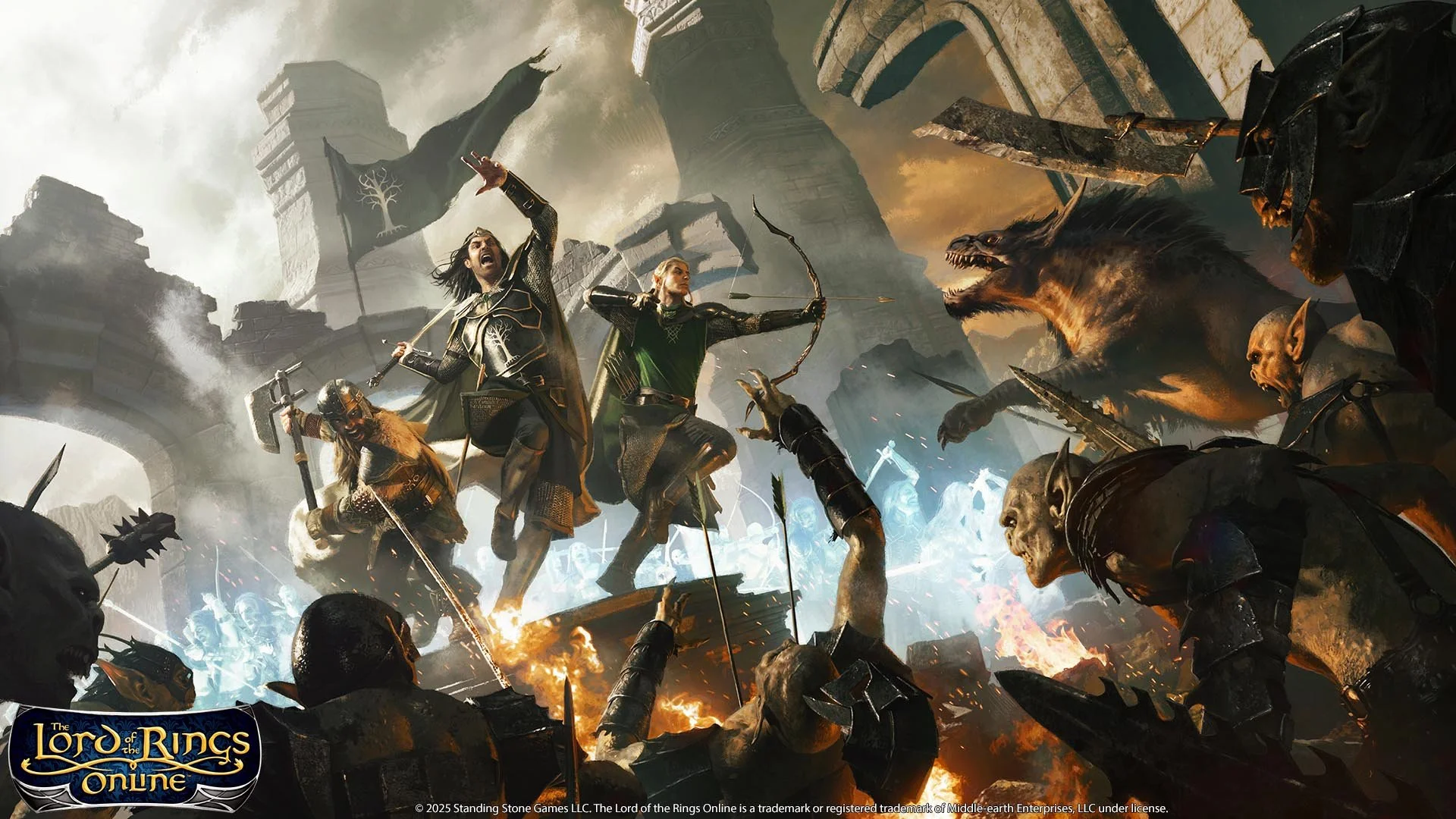
After a six month migration period, Standing Stone Games formally closed all their legacy 32-bit game servers for the MMORPG, The Lord of the Rings Online, on the 31st August 2025. Despite this planned closure being widely discussed via the game’s official forums, professional video game websites and fan blogs, many LOTRO players were unaware of this deadline. Hence many were unable to migrate their respective alts to the new 64-bit servers. Naturally those affected by these closures were upset, especially those with longstanding characters who didn’t relish the prospect of starting from scratch with a new alt. Thankfully, SSG have been true to their word and as of today, have re-opened these “dark worlds” to character transfers. If you have an alt trapped on one of the older game worlds, then now is the time to use the transfer wizard and move them to a new active game world.
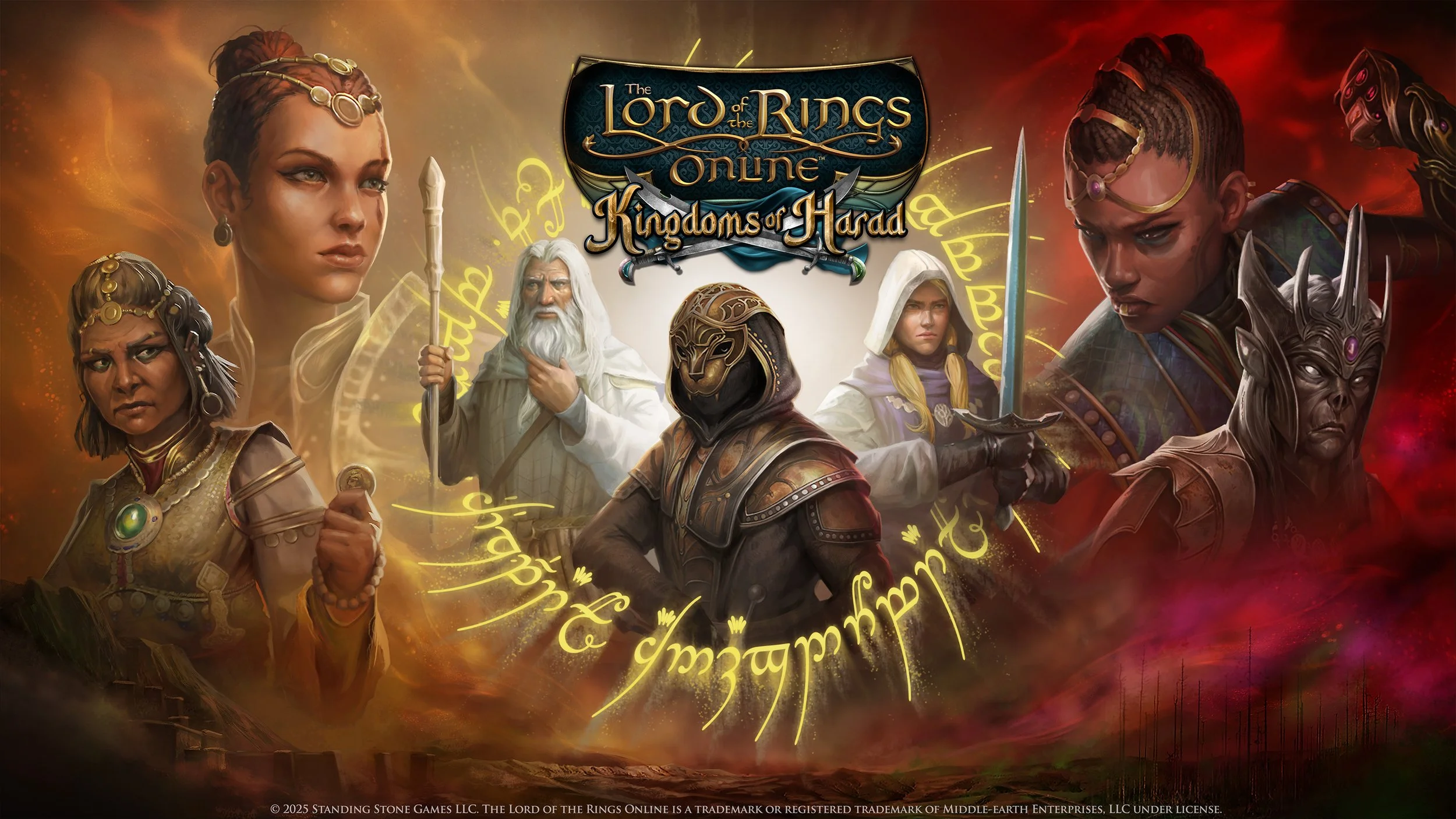
MMORPG announced earlier today and it was subsequently confirmed by Standing Stone games, that the new expansion for The Lord of the Rings Online will be Kingdoms of Harad and that it will launch later in the year. The expansion will see the conclusion of the epic Song of Waves and Wind storyline and the level cap raised from 150 to 160. There will be a new region to explore, Mûr Ghala, comprising four zones. Adagîm, Idagâl, An Shêru and Kighân. The latter contains the main trading hub of Zajâna. Players will travel into the region with Gandalf the White, along with allies of the Kindred of Coins and Mizadi as they seek to counter the regional power struggle brought about by the fall of Sauron. Canonically, this takes place three months after the destruction of the ring, hence King Elessar and Eomer are busy with domestic affairs in their respective kingdoms.
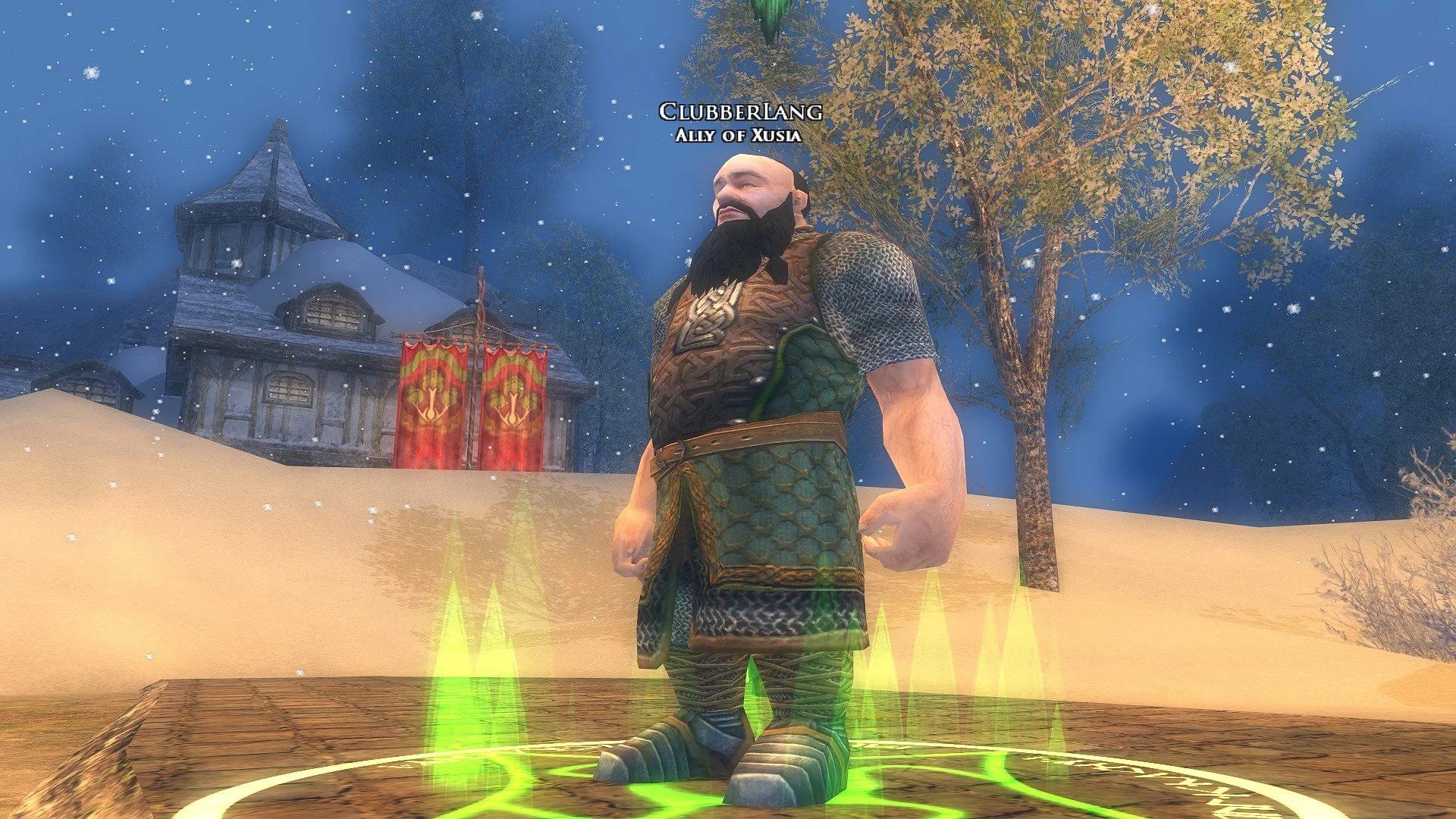
Skirmishes were added to the MMORPG The Lord of the Rings Online, in 2009 with the release of the Siege of Mirkwood expansion. Skirmishes are a repeatable and scalable combat system that allows players to access various instances for solo or group play from anywhere in the in-game world. Players can choose a Skirmish Soldier from a variety of classes to accompany them and provide healing, tank or additional DPS. On paper it’s a great system which is why many other MMOs offer something similar. I recently decided to tinker with my Skirmish Soldier build on my main character to see if I could optimise their performance. As my primary alt is a Lore-master, for the last few years I have had a Warrior as their Skirmish Soldier, to take some of the aggro from attacking mobs. I used the excellent guide by FibroJedi and swapped over a few Training and Personal Traits.

On 2nd August 2025, I was playing the MMORPG The Lord of the Rings Online, on my primary character, a level cap Lore-master. I decided to continue with one of the Allegiance Quest lines, specifically Durin’s Folk. I played through several quests and earned the appropriate tokens that advance the Allegiance system. I then handed these in to the NPC in the Hall Under the Mountain, expecting the next quest in the series “Chapter 3: Gimli’s Request” to be unlocked. An item appeared in my inventory that I then clicked on, which should have bestowed the quest. Unfortunately, nothing happened. Furthermore, the item vanished from my bag and therefore I could not attempt to click it again. I checked the LOTRO Wiki and then looked around the Hall Under the Mountain to see if any NPC had a ring icon above their head. As they did not, I surmised that this was a software glitch and logged a support ticket with Standing Stone Games.
Let’s start with a quote from a classic Walter Hill film, The Warriors. “Can you count, suckers?” says Sirus. The gang leader was referring to the number of Police in New York City at the time. Whereas, for the purpose of this post, I am referencing how many Delving Writs a player needs to acquire 6 pieces of level cap armour in LOTRO. Because, next to the gear you get from endgame instances and raids, Delving gear is a good alternative.. It is marginally better than the items you can get from lootboxes. Hence, Delving armour is a good source of high end gear for the solo player. Through the miracle of mathematics, the number of Delving writs required to acquire a full set of this armour is 9,000. At first glance, that seems like a lot. If you then do some further research to put the number in context, you realise it is indeed a lot and a substantial undertaking.
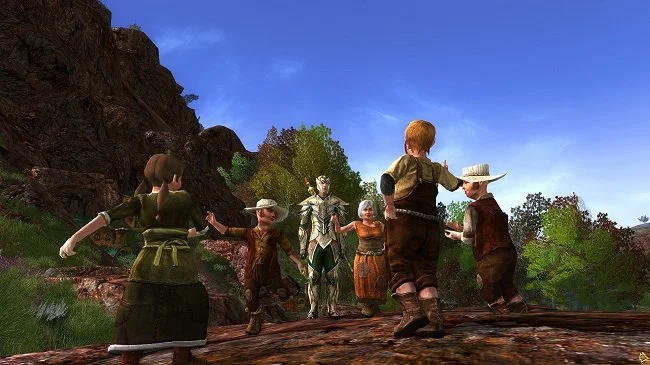
I am currently enjoying a renewed interest in the MMORPG The Lord of the Rings Online since I migrated all my characters from the old 32-bit servers to the new 64-bit replacements. I’ve created a new High Elf Lore-master on Peregrin server and am currently levelling them in a targeted play through of the Epic Story, supplemented by curated side quests. While playing recently, I realised the game UI on this alt wasn’t as I usually have it laid out. So I checked through the various documents on my PC and found a text file I had created many years ago that had a few hints and tips written down. I’ve added a few more and decided to share them as a blog post. I’m sure veteran players will be familiar with many of them but a lot of them are worth repeating. They may prove useful to those new to LOTRO or returning to the game after a long hiatus.
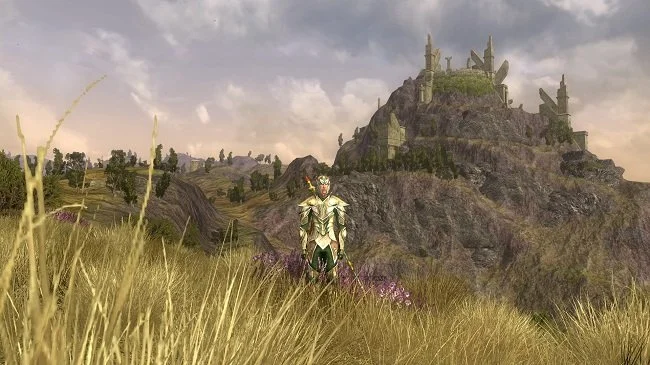
In mid-March, while the server migration debacle raged, I created a new alt for the MMORPG, The Lord of the Rings Online, on Peregrin server. The idea was to play casually through content focusing on enjoyment, rather than worrying about progression. I was to level at a pace that suited me and had no specific plans to develop my alt in any particular way. I have been playing LOTRO since 2008 and have a primary level-cap character that has been my main focus over the years. Hence I have previously experienced all story content from all the expansions and am therefore very familiar with what the game has to offer. Which is why I thought I’d do things differently this time. So I started my new Lore-master in Mossward in Swanfleet, the new starting area added to the game in 2022.
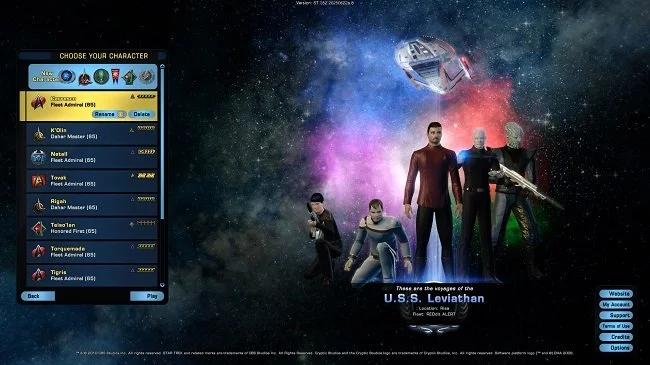
In massively multiplayer online games (MMOs), alts (short for alternate characters), are new characters created by a player in addition to their primary character (often called the “main”). Alts are often encouraged by developers as a means to keep players engaged with their game(s). Sometimes an MMO will actively reward the creation of alts either with access to exclusive content, or with additional skills or items previously unlocked by primary characters. As the myth that an MMO really begins at endgame still persists in gaming culture, some games sell boosts that will instantly raise the level of an alt to that of the current level cap. Creating alts is such a key aspect of the MMO genre, that some games will sell additional character slots, so that players can create further alts beyond the default amount allowed. There are many reasons why players create alts. Let us consider some.
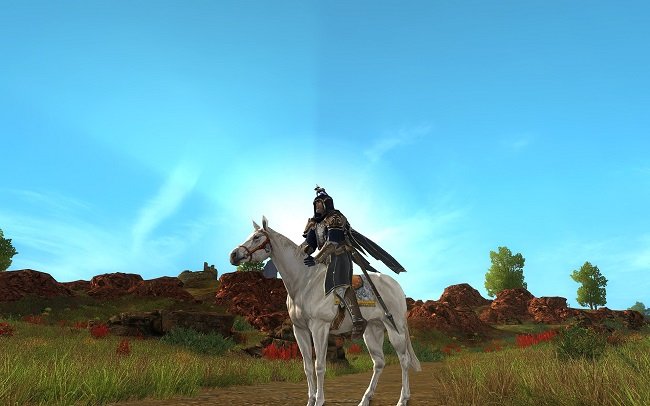
I wrote a while ago that a lot of kinships from the MMORPG, The Lord of the Rings Online, would probably not survive the recent server migration. MMOs are social endeavours by nature, often with strong emotional ties but a lot of kinships (or guilds) have already fallen into decline, simply due to gaming entropy. Hence the migration has seen players leave existing kinships to move to the superior 64-bit servers, resulting in a lot of people who may be potentially looking for a new home. This is exactly what happened to me. I opted to move to Meriadoc server promptly, at the cost of leaving a kinship I have been a member of since 2009. However, the move presented me with an opportunity to remedy this problem myself. I subsequently set up my own kinship and decided to make it available to others.

The dust appears to have settled for the MMORPG The Lord of the Rings Online, after last month’s server transfer debacle. Despite the technical issues arising and subsequent delays to the migration timetable as well as the procurement of in-game housing, LOTRO seems to be enjoying a minor resurgence. Many former players are returning to the game and moving retired alts to new servers, due to the superior performance. The migration issues have also brought a lot of attention to this 18 year old game and it would appear there are many new players trying this Tolkien themed MMO. I was pleasantly surprised to see that a further two 64-bit servers, Grond (EU) and Sting (US), are to be added to the game to meet demand. As I predicted in my previous posts, LOTRO has a habit of bouncing back due to its unique niche in the gaming ecosystem.
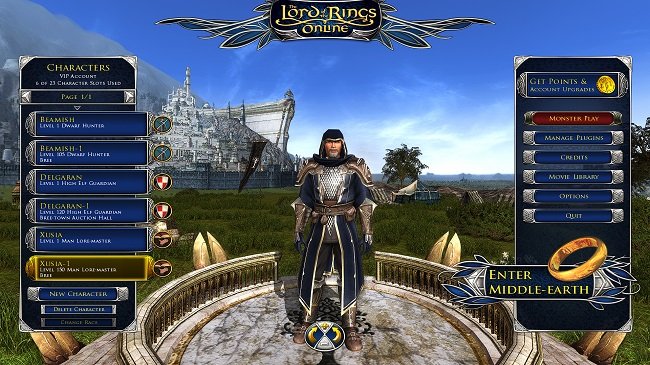
It has not been a good week for the MMORPG, The Lord of the Rings Online and its developer Standing Stone Games. The migration from legacy 32-bit servers to 64-bit servers has not gone smoothly. The transfer queue was overwhelmed by the sheer number of accounts and it has taken far longer than expected to process the backlog of requests. Today has been the fifth day of waiting to see if my 3 main characters from Laurelin server have successfully migrated to their new home on Meriadoc. When I checked this morning, the transfer wizard indicated that my characters were back where they originally came from. I therefore considered repeating the entire process. However, around midday, Community Manager Cordovan indicated that SSG had caught up with transfer requests made around 8:00 AM EST on Sunday 9th March. So I decided to be patient and wait a little longer.
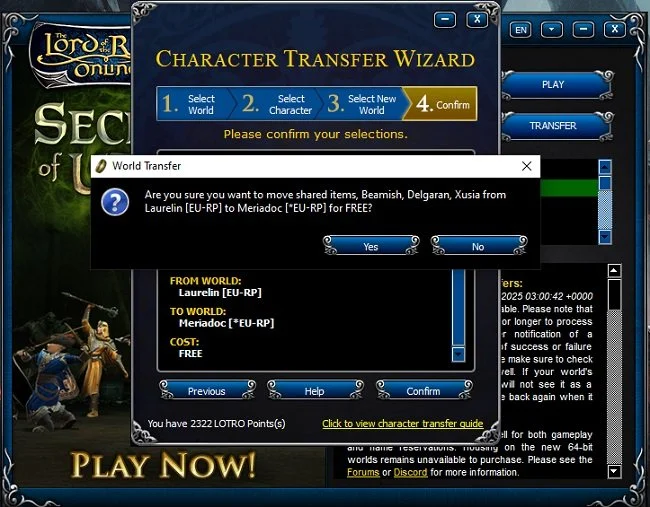
I’ve been busy this weekend, so it wasn’t until late afternoon today that I found time to sit down and attempt to migrate my characters from the old 32-bit server Laurelin, to the new 64-bit server Meriadoc. The “Great Server Migration” has not gone smoothly and the week has been a litany of changing deadlines and unfulfilled expectations. However, developer’s Standing Stone Games, have been “firefighting” issues on a daily basis and communicating regularly with the player base of the MMORPG, The Lord of the Rings Online. Sadly, a lot of players have not responded well to the ongoing technical difficulties and there is subsequently a lot of ill feeling on the official forums. I have chosen to adopt a more pragmatic outlook and to let events run their course.
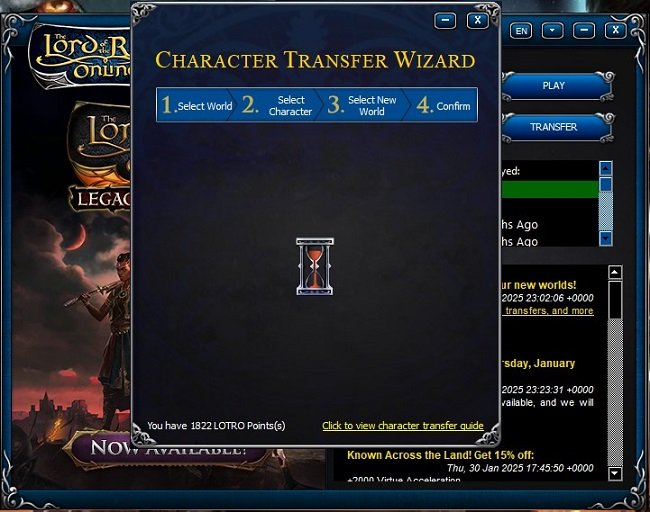
Standing Stone Games were scheduled to open their new 64-bit servers for the MMORPG, The Lord of the Rings Online, today. However, when the free transfer service went live yesterday, it was quickly overwhelmed by the sheer number of players trying to migrate their alts from the older 32-bit servers to the new ones. Eventually SSG had to disable the transfer facility so that they could process the backlog. Hence today’s launch of the new servers has been postponed till tomorrow. In the meantime, the official LOTRO forum’s have gone into meltdown with irate players berating the developers for handling the migration poorly. True to form, SSG have been somewhat defensive and prickly in response to what they see as unjust criticism. Let it suffice to say that neither party has covered themselves in glory and there is a good chance that the technical problems will persist a while longer.

What Massively Overpowered calls LOTRO’s “Great Server Migration” began today. The MMORPG The Lord of the Rings Online has opened 4 new 64-bit servers in conjunction with the 2 existing 64-bit legendary servers and the long term plan is to migrate all current players over to them. Eventually, the 32-bit legacy servers will be shut down, however that is a long way off at present. As of today, VIP players can select a new server, log into it and create new characters with their desired names. These placeholder characters cannot be played at present but can be used to reserve names. Tomorrow, if all goes well, the new servers formally open and free transfers begin. Players can then delete placeholder characters and rename alts that they have migrated, thus restoring desired names. It should be noted that none of this is mandatory and players can remain on the old servers for the present.
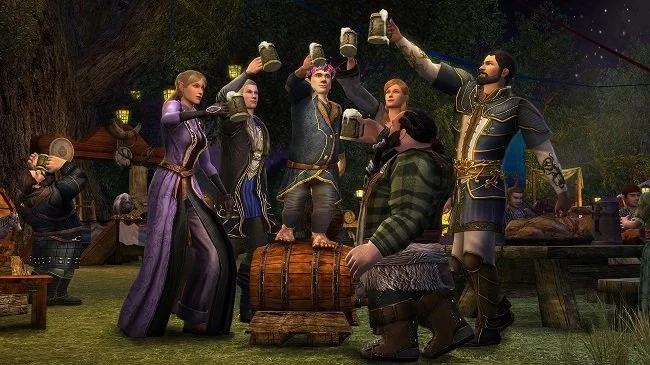
I have many pleasant memories associated with playing the MMORPG The Lord of the Rings Online during its first decade. A lot of them are due to the kinship (guild) that I have been a member of since 2009. I started playing LOTRO in December 2008 and it took me a while to find a suitable kinship but once I did, it made logging into the game a real pleasure. I was at a point in my life where I had sufficient time to play the game regularly and take part in kinship organised raids. It was also an added bonus to be able to spend some time and chat with some like minded people. I’m sure such an experience is not unique to me and that many LOTRO players have enjoyed similar periods of time. The lucky ones may still be enjoying a comparable kinship experience today.
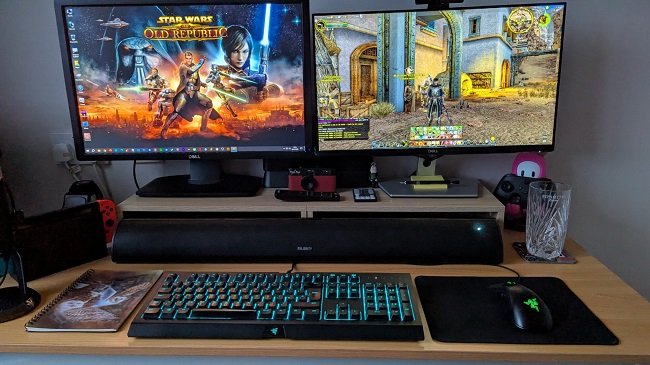
I have two monitors on my desk. The first (which is the primary monitor as far as my PC is concerned), is on the left and the second is on the right. The primary monitor is a 24 Dell U2412M, which has a resolution of 1920 x 1200. It therefore has an aspect ratio of 16:10 which adds a little extra desktop real estate, which I prefer when writing. The second monitor is a 24 inch Dell S2421H with a screen resolution of 1920 x 1080. It has an aspect ratio of 16:9 which is standard FHD. My chair is adjacent to the middle of my desk and I can turn according to each monitor I’m using. I tend to use the primary, larger monitor on the left for tasks such as writing via Google Docs and emails. The second monitor on the right is used for YouTube and gaming. This is because of its FHD format. I also have a Nintendo Switch connected to the second monitor for the same reason.
LOTRO: The Maps of Middle-earth
I logged into the third preview of Update 23 on Bullroarer test server this evening and perused the various changes that Standing Stone Games have made. For a lot of the “serious” LOTRO players, the focus of this latest build are the statistical changes to all the various classes. As I am not so au fait with this aspect of the game, I shall leave the matter until it is finalised then discuss it with my kinship who are more learned in these matters. My primary motivation for using the preview server is to get an advance look at any new region and to explore the environment. Standing Stone Games continue to do a sound job of realising the Third Age of Middle-earth and I enjoy the attention to detail they provide along with their adherence to the lore. One of the aspects of LOTRO that I’ve always enjoyed are the regional maps. In this latest preview build, all maps for the new region of Ered Mithrin are now available and the temporary placeholders for Erebor and The Steel Keep have been removed.
I logged into the third preview of Update 23 on Bullroarer test server this evening and perused the various changes that Standing Stone Games have made. For a lot of the “serious” LOTRO players, the focus of this latest build are the statistical changes to all the various classes. As I am not so au fait with this aspect of the game, I shall leave the matter until it is finalised then discuss it with my kinship who are more learned in these matters. My primary motivation for using the preview server is to get an advance look at any new region and to explore the environment. Standing Stone Games continue to do a sound job of realising the Third Age of Middle-earth and I enjoy the attention to detail they provide along with their adherence to the lore. One of the aspects of LOTRO that I’ve always enjoyed are the regional maps. In this latest preview build, all maps for the new region of Ered Mithrin are now available and the temporary placeholders for Erebor and The Steel Keep have been removed.
One of the things that attracted me to The Lord of the Rings when I first read it in the early eighties was the fact that the books came with maps. The hardback editions that I read via my local library had sumptuous fold out maps that clearly detailed the various regions. They help convey the sense of history of Middle-earth and depth of culture and lore that existed. The maps also gave a sense of scale to the Fellowship’s journey as well as context. They were integral to maintaining the illusion that Middle-earth was a living and ancient world. Hence the maps that feature in LOTRO serve a similar purpose beyond their immediate practical functionality. They don’t just provide a means of navigating from point A to point B but further embellish the games sense of immersion by showing a world populated by people in a broad variety of geographical locations. They also often reflect interesting details of lore, or minor comments from the source text.
Over the years, due to changes in the game and the streamlining of earlier zones, some maps have been replaced resulting in two distinct art styles. The contrast can be quite jarring at times. For example, the Bree-land map is one of the oldest in the game and is somewhat cluttered. However, if you then cross into the Barrow-downs the map was redesigned and sports a clearer style and breaks the zone up into two. As new content is added to the game, the newer map style naturally prevails. From an aesthetic point of view, I prefer the this to old. The maps are more functional and convey their respective information efficiently. Overall, I think they are an improvement, although I do still think they have some flaws. As to whether SSG intends to standardise all maps and thus replace those that have the older design remains to be scene.
Although the more contemporary LOTRO maps exude an appropriate art style and are easier to read, some still have a flaw with regard to conveying navigational data. Some of the maps do not always clearly show what route a player should take to enter a specific region. The other day, I decided on a whim to do some of the quests in Entwood. From memory I vaguely knew I could access the region from either Broadacres or Stonedean in West Rohan. Sadly, the maps lacked sufficient detail to give me a clear course to follow. Thus, I had to spend some time riding around the various hills that separate zones, until I found the right route. I believe access to Wildermore is similarly esoteric. Another problem are instance maps. They only become fully visible as you explore. If you leave and subsequently return to an instance, the process has to be repeated. Surely the logical thing would be to make it permanently available once the player had initially unlocked it.
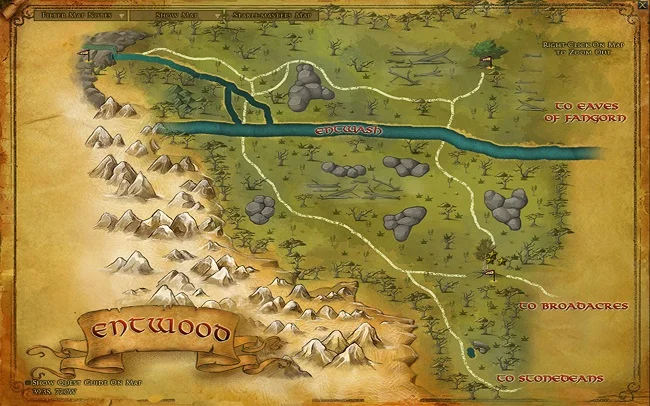
The maps in LOTRO are also poor at conveying data for regions that are set on multiple levels. Top down representations do not adequately express three-dimensional data, which can lead to confusion and frustration, especially in instances such as the Grand Stair in Moria. In the past when running this instance, I would have to rely on third party diagrams, outside of the game itself. Another map within LOTRO that is notoriously unintuitive when it comes to travelling around is the Misty Mountains. It displays what appear to be clear linear routes between key locations but fails to convey the topographical features that will impede you. Again, it is steep slopes or crevasses that bar your way. Now there may well be players who will take the view that these maps are not supposed to make things that easy for you and that their deliberate vagaries are designed to force the player to explore. That may well be true, but I find premeditated inconvenience to be poor game design choice. A map that doesn’t impart the necessary data you need to successfully navigate the area it represents, has fundamentally failed in its purpose as far as I’m concerned.
The key to success in getting the most out of the various regional maps in LOTRO is to familiarise yourself with both the pictorial representation of each zone and cross reference that with practical first-hand experience. Basically, learn your way around the physical foibles of an area and use that knowledge in conjunction with the map. The only downside of this strategy is that LOTRO is a big game so that’s a lot of information to commit to memory. Overall, I’m mainly familiar with the zone I’m currently questing through or those that I have a special affinity to. I haven’t really spent any time in South Mirkwood or parts of Rohan since those regions were released. Therefore, I often cannot immediately recall their subtleties or quirks. May be this is something else that can be added to the list of “bug” fixes and “quality of life improvements that SSG need to address. Clearer, more intuitive maps are only going to become more essential as the game continues to expand.
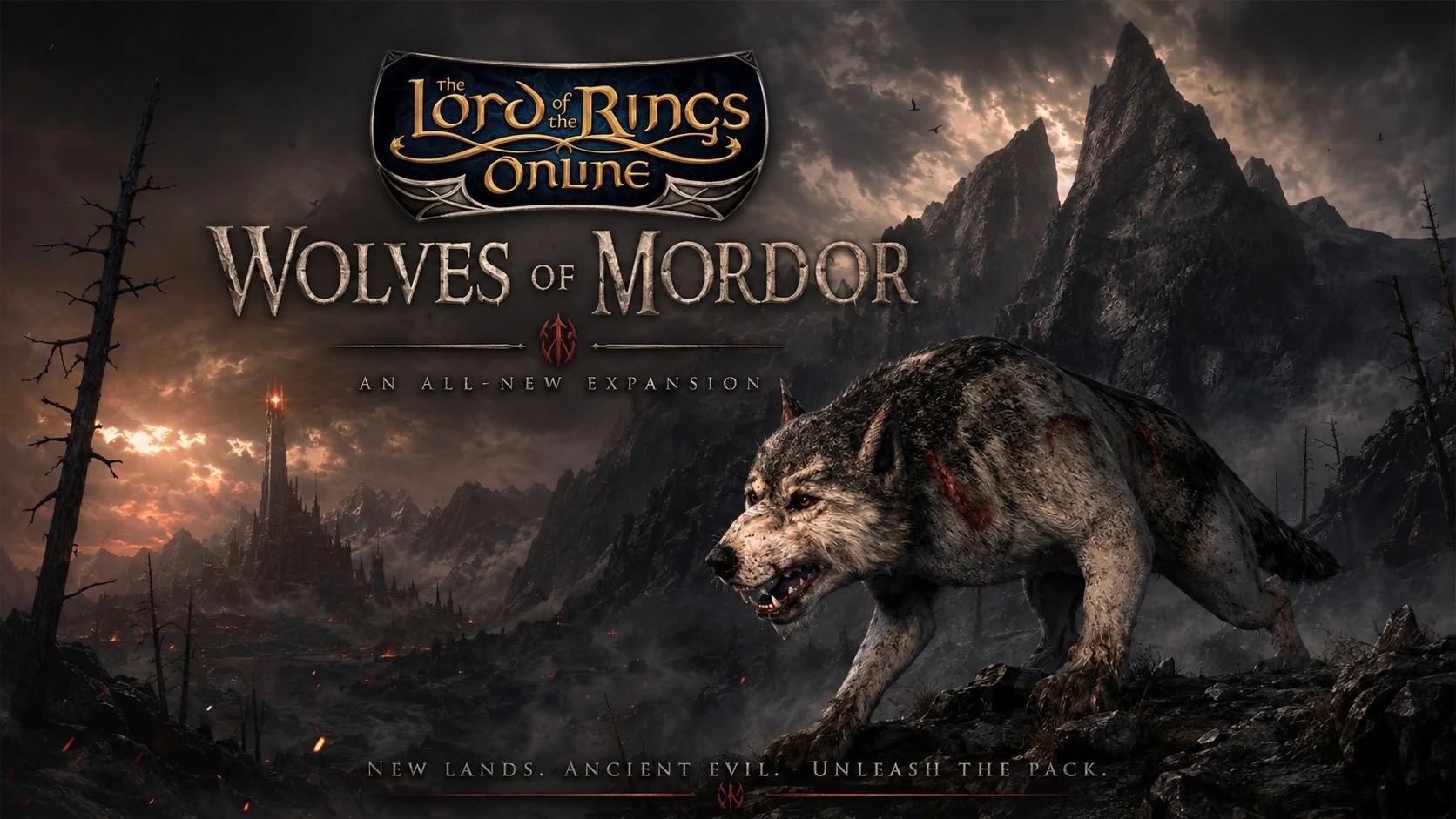
The next expansion for the MMORG, The Lord of the Rings Online, was announced on the 1st August, via the gaming website MMORPG.The Wolves of Mordor, which will launch later in the year, appears ambitious in scope as it will include two new game systems as well as the obligatory story update. This expansion takes place in Draugardh located in the North East of Mordor, beyond the Plateau of Gorgoroth. It includes the new zones of Heledhris, Parth Rhavas and Nan Ogol. These vary environmentally ranging from the arid, volcanic and semi-tropical. Players will encounter the Daugrim in these regions, Werewolves but not in the modern sense. This is not the lycanthropy of Eastern European legends but in the established Tolkien idiom of fell spirits inhabiting the bodies of Wolves. The region also sees the return of the Woses and players can expect to encounter Elves and scouts from Gondor. As ever with LOTRO expansions, there will be new instances as well as a raid.
I was recently perusing my archive of old blog posts, when it struck me how much I’ve written about the MMORPG genre over the years. Naturally, there was far more material from between 2008 and 2012 as that was period when I immersed myself in the genre and was very enthusiastic about it. I was at a point in my life when I had the time to dedicate to such games and I was happy to participate in the social aspect of they offered. I would regularly play through group content and spend time socialising online with fellow guild members. My experience remains a textbook example of how online games can be more than the sum of their parts and that where you are at in your life has a major impact upon your overall enjoyment. As I read though various old posts it became clear that my experiences where specific to this particular part of my life and that they cannot be repeated. My relationship with the genre is very different now and that’s fine.
Video games as a genre are extremely poor at explaining themselves. When you buy a new game you’ll often find little or no information regarding the basic systems and mechanics. The industry assumes that their customers are by default familiar with the fundamentals of playing a modern video game. Hence if a game has a tutorial, it is often based around videos rather than detailed verbal instructions. You are are briefly shown a clip of a specific move being successfully undertaken but it is seldom shown in a wider context. The industry also expects the fan community to take on the role of curating and disseminating information about its games. The move away from forums and bespoke websites to Discord highlights this. Discord is a primarily a real time communication tool and not good at maintaining a historical data archive. If you want an answer to a specific gaming question, you’ll more than likely find it on YouTube in a video made by a fellow gamer.
According to the recent “letter to the players”, Standing Stone Games will be adding a new zone to the MMORPG The Lord of the Rings Online in the second quarter of this year. Possibly around May or June. Having spent the last three expansions in the South of Middle-earth exploring the tropical Umbar and the deserts of Harad, I would certainly welcome a change of location. I have gradually warmed to these zones over the last eighteen months but I do find them so incongruous. They are so radically different to the European style content that has been the mainstay of the game for so long. Tolkien’s source text has plenty of detail regarding Eriador and Rhovanion. Information regarding Harad is scarce, hence it has afforded the developers a great deal of artistic freedom. Although exceedingly well realised these tropical zones have taken a while for me to get used to.
I’m not sure exactly when it started but I’ve recently noticed a graphical bug within the MMORPG The Lord of the Rings Online. This problem often occurs within caves or in areas where there are a lot of rocky surfaces. Hence it has become very apparent in the latest two expansions, set in Umbar and Harad. This graphical glitch causes some surface textures to appear to flash from light to dark intermittently. The resulting strobe effect is hard to ignore and very distracting. Fortunately, a quick online search showed that this is not a problem unique to my installation of LOTRO and is a known problem. Furthermore, there is a very simple workaround, which is to go into the Advanced Graphics setting and uncheck “Per Pixel Lighting”, which immediately remedies the problem. I have no idea why this has recently started to happen but at least it can be resolved.
The latest expansion for the MMORPG The Lord of the Rings Online, Kingdoms of Harad, launched on December 3rd. With this release the level cap was raised from 150 to 160. It should also be noted that the cap for virtue traits was also raised from 96 to 100. Naturally these changes meant that there is a requirement to replace all armour and jewellery once the new cap is reached. Similarly Legendary Items have to be reforged and any traceries upgraded or replaced. If you follow the Epic Story it will lead you from quest hub to quest hub. The main quest rewards, along with those from side quests will provide adequate gear as you slowly progress towards the new level cap. The new raids, instances and missions/delvings then provide a means to acquire higher quality level 160 gear. LOTRO and indeed, many other MMOs are consistent in this methodology.
It is customary in a post such as this to list the various games that I’ve played over the last twelve months and share my thoughts on them. Wider analysis of the video game industry is also de rigeur. Unfortunately, I don’t really feel disposed to do either of those two things. My thoughts on the games I’ve played have already been published and can easily be accessed via the links at the bottom of this post. As for the video game industry, it suffers the same flaws as music, TV and cinema. There is creativity and innovation out there but it is often drowned out by mainstream products which are demonstrably inferior due to their inherent mediocrity. As for the business side of things, we once again clearly see the failings of the corporate management class. Sadly, they do not face the consequences of the mistakes that they make.
Today Standing Stone Games began beta testing Update 46.1 for the MMORPG The Lord of the Rings Online. The current preview on the Bullroarer test server is mainly for the new instance cluster that comes with the Kingdoms of Harad expansion which launched a few weeks ago. However, it would appear that this latest preview has another feature or note. One that should please LOTRO players. Contrary to what a lot of people thought, myself included, SSG have been working on a scaling UI for 2K and 4K monitors and the results are now available for testing from today Monday 15th through to Friday 19th December. Until now the main workaround to the lack of UI scaling has been to use either Nvidia or AMD graphics software to upscale the game from 1920 x 1080, or a third party app such as LosslessScaling. Having an official solution is a far better option.
Kingdoms of Harad, the 13th expansion for the MMORPG The Lord of the Rings Online, was released today. Highlighting developer’s Standing Stone Games continuing commitment to this eighteen year old game. As 2025 draws to a close, I thought it would be prudent to reflect upon the current state of LOTRO and to consider what may come next year. Two words that I associated with this MMO are stable and consistent. The playerbase is loyal and dependable. Player numbers never greatly decline nor do they notably expand. LOTRO fills a very specific gaming niche and one of the reasons it retains its players is that there is no suitable alternative game. Although there is not a great deal of data in the public domain, it is generally accepted that LOTRO has an older player demographic and that many are consummate Tolkien fans.
The MMORPG The Lord of the Rings Online runs on a broad spectrum of PCs. From archaic laptops to high end gaming rigs, although it may require a bit of tweaking. At present, the optimal way to play the MMO is at a resolution of 1920x1080 (FHD) with the graphics setting maxed out. The graphics are sharp and the UI is readable. However, a growing number of gamers are now using 2K and 4K monitors. You can play LOTRO at higher resolutions such as 2560×1440 (QHD) and 3840x2160 (UHD) and the game looks great. However, the UI does not scale and so is very small on 2K and 4K monitors. The skill icons on the quickslots (shortcut bars) and the in-game text become difficult to see at these resolutions, which deters some players from using them. It is a known issue that Standing Stone Games are attempting to address but it is unlikely to be resolved any time soon.
Desolation of Mordor and the Blade of Galadriel
Today the latest story DLC unlocked for Middle-earth: Shadow of War. The Desolation of Mordor allows you to play as Captain Baranor, who we now find adventuring in the deserts wastes of Lithlad in Eastern Mordor. Unlike Talion and Eltariel, Baranor does not have any Wraith Powers or the innate gifts and talents of the first born. He is merely a mortal man which subsequently adds an interesting dynamic to the game play. However, Baranor quickly meets up with Dwarven Hunter Torvin, who provides him with a several usefully Numenorean artefacts which fill his “skills gap”. These include a Gauntlet that expands to become a buckler. It also houses a crossbow that fires a variety bolts as well as a grappling hook, thus aiding Baranor with climbing. The other artefact is a kite that is stowed in a back pack. This acts as a parachute and can also be used via the hot thermal vents that litter the landscape, to ascend to vertical vantage points.
Today the latest story DLC unlocked for Middle-earth: Shadow of War. The Desolation of Mordor allows you to play as Captain Baranor, who we now find adventuring in the deserts wastes of Lithlad in Eastern Mordor. Unlike Talion and Eltariel, Baranor does not have any Wraith Powers or the innate gifts and talents of the first born. He is merely a mortal man which subsequently adds an interesting dynamic to the game play. However, Baranor quickly meets up with Dwarven Hunter Torvin, who provides him with a several usefully Numenorean artefacts which fill his “skills gap”. These include a Gauntlet that expands to become a buckler. It also houses a crossbow that fires a variety bolts as well as a grappling hook, thus aiding Baranor with climbing. The other artefact is a kite that is stowed in a back pack. This acts as a parachute and can also be used via the hot thermal vents that litter the landscape, to ascend to vertical vantage points.
The story is relatively straightforward, with Baranor hiring the Easterling mercenary army, The Vanishing Sons and seeking to conquer the regional fortress of Shindram. Due to a quirk of fate (and narrative requirements) The Vanishing Sons are led by Baranor’s older brother Serka. It is the dialogue between the two which makes this story better than average. Both characters are well voice acted respectively by Ike Amadi and Usman Ally. There is a good chemistry between both actors and the narrative strikes the right tone with equal helpings of high adventure and ironic humorous dialogue. It a pleasant surprise to see the Dwarf Torvin return, although his role this time is more of a functional NPC, rather than a major character. The desert environment is a welcome change from the existing Mordor zones, and the Numenorean Fortress that is occupied by Orcs is strikingly different in its architectural style.
All things considered I found Desolation of Mordor to be a superior story expansion than the previous DLC, the Blade of Galadriel. The story of Eltariel is adequate but hardly offers any major difference from playing as Talion. Instead of dominating Orcs, Eltariel destroys them using the Light of Galadriel, although several Uruks do ally themselves with her as they have common goals. In fact, the character of Galadriel come across as martinet in this story and I felt somewhat sorry for Eltariel as she struggles to please such a hard taskmaster. However, Eltariel’s fighting style with twin blades does offer some interesting variations in technique compared to Talion and her quickshot archery ability often proves invaluable. It is the story that is the weakest aspect of this DLC and it is somewhat incredulous even by Middle-earth: Shadow of War standards. There seems to be a never-ending supply of unknown, non-canonical Nazgûl waiting in the wings to act as convenient plot devices. The crowbarring of an Eastern aesthetic into the proceedings is interesting but I’m sure hardcore purists will be having kittens.
If you set aside the biggest weakness of Middle-earth: Shadow of War, which is its loot box and market which somewhat undermines the Nemesis system, you still have an enjoyable RPG which blends a variety of action and stealth gaming mechanics. Developers Monolith Production recently announced that the market would be closing and ultimately removed from the game. As of today, players can no longer buy gold and a later patch will restructure the acquisition of Orcs. No doubt all of this will be done in time for the release of the Game of the Year Edition. However, I do not regret my decision to buy the Gold Edition of Middle-earth: Shadow of War upon its release last October. Irrespective of the games business model flaws, I do feel that I’ve had good value from the entire game. I prefer the Desolation of Mordor to the other DLC and felt that it was wise to release this one last of all, thus ending the game on a high point. It will be interesting to see if this franchise will continue or whether Warner Bros. will create any similar games based on the works of JRR Tolkien.
Some video games lend themselves to being set aside and resumed at a later date with zero consequences. These are often casual games with no major goals other than having fun while playing them. Fall Guys is a great example of this. You have a cartoony avatar that participates in zany group races, filled with obstacles. You run, jump, climb but the controls are far from difficult. You may well become skilled but such things are mitigated by the other players as they stumble around. You’re not at the mercy of apex players or “try hards”. It is not a game about winning and mastering techniques. The fun comes from playing it and the unique experience you have each time. I’ve been playing this game, on and off, since it’s launch in 2020 and in that time I have only ever won once (winning requires you to win a series of 4 to six individual races). However, whenever I pick up my controller and play Fall Guys, I have fun and the game lifts my spirits.
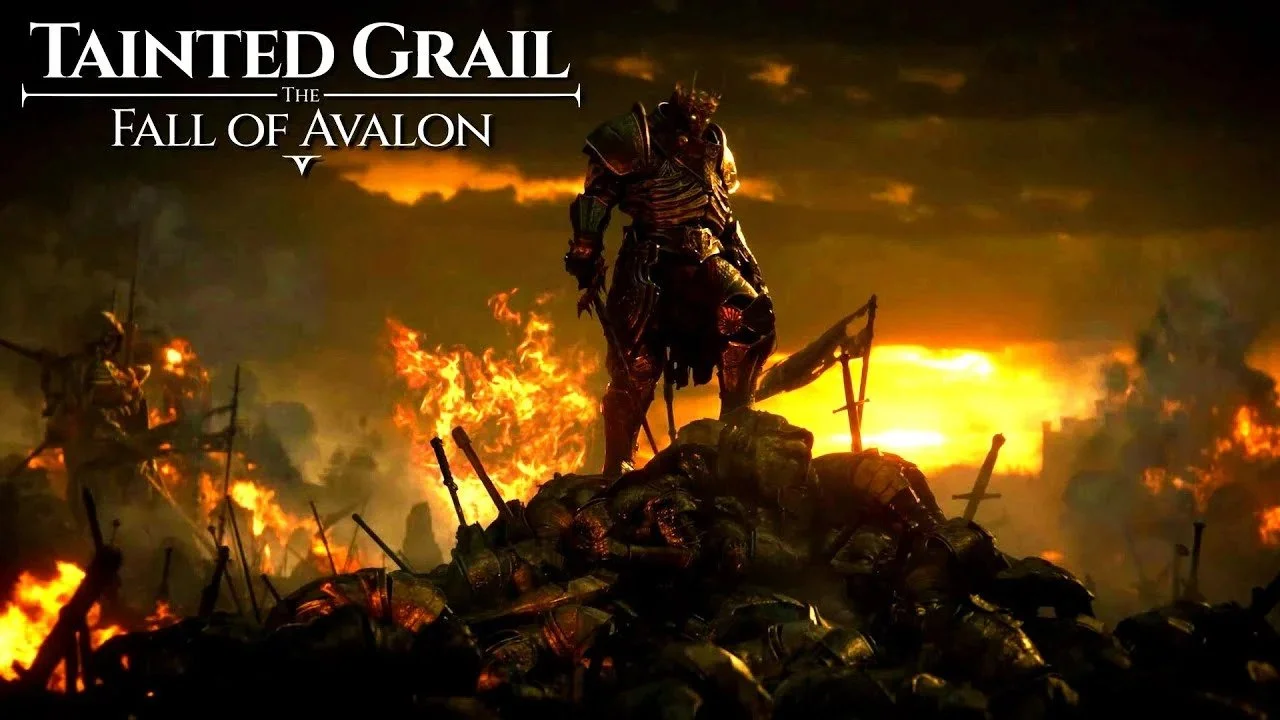
I recently completed the main story in Tainted Grail: The Fall of Avalon. In total I spent about sixty hours playing the game. I began at the start of the year, then took a break for a while but returned to it recently because I wanted to see if I could unlock a specific ending. I did manage to do this. Like so many other RPGs, Tainted Grail: the Fall of Avalon has a central storyline, along with a wealth of side quests, based around factions in specific zones. I think I possibly completed about a two thirds of these. However, once I finished the main story, my interest in the game began to wane. I finally left my character in the last major quest hub in case I wish to return at a future date. I then logged out of the game and uninstalled it from my PC to free up space for whatever I was to play next. In this case its The Sinking City 2. None of this is a negative reflection on Tainted Grail: the Fall of Avalon. I enjoyed the time I spent playing this quirky RPG. I simply had my fill and left to play something else.

On Tuesday 11th April, Aspyr Media rather surprisingly re-released The Lord of the Rings: War in the North, a co-op action-RPG from 2011. This game was delisted in late 2019, possibly due to changing rights ownership or a license expiring. Hence, I was somewhat discombobulated by the return of this title to all major gaming platforms. Mind you, the Embracer Group (through its subsidiary Middle-earth Enterprises) still controls the worldwide commercial and video game licensing rights for The Lord of the Rings and The Hobbit. Furthermore they have explicitly stated that they have plans for more games. It would appear this also means re-releasing and updating old favourites. It is also worth noting that they own Aspyr Media, which is also a bit of a giveaway. Let it suffice to say that this re-release and sparked enthusiastic online debate as to whether any other he Lord of the Rings themed games from the same era will receive a similar makeover. Judging by the internet chatter, there’s potentially a market for them.
The next expansion for the MMORG, The Lord of the Rings Online, was announced on the 1st August, via the gaming website MMORPG.The Wolves of Mordor, which will launch later in the year, appears ambitious in scope as it will include two new game systems as well as the obligatory story update. This expansion takes place in Draugardh located in the North East of Mordor, beyond the Plateau of Gorgoroth. It includes the new zones of Heledhris, Parth Rhavas and Nan Ogol. These vary environmentally ranging from the arid, volcanic and semi-tropical. Players will encounter the Daugrim in these regions, Werewolves but not in the modern sense. This is not the lycanthropy of Eastern European legends but in the established Tolkien idiom of fell spirits inhabiting the bodies of Wolves. The region also sees the return of the Woses and players can expect to encounter Elves and scouts from Gondor. As ever with LOTRO expansions, there will be new instances as well as a raid.
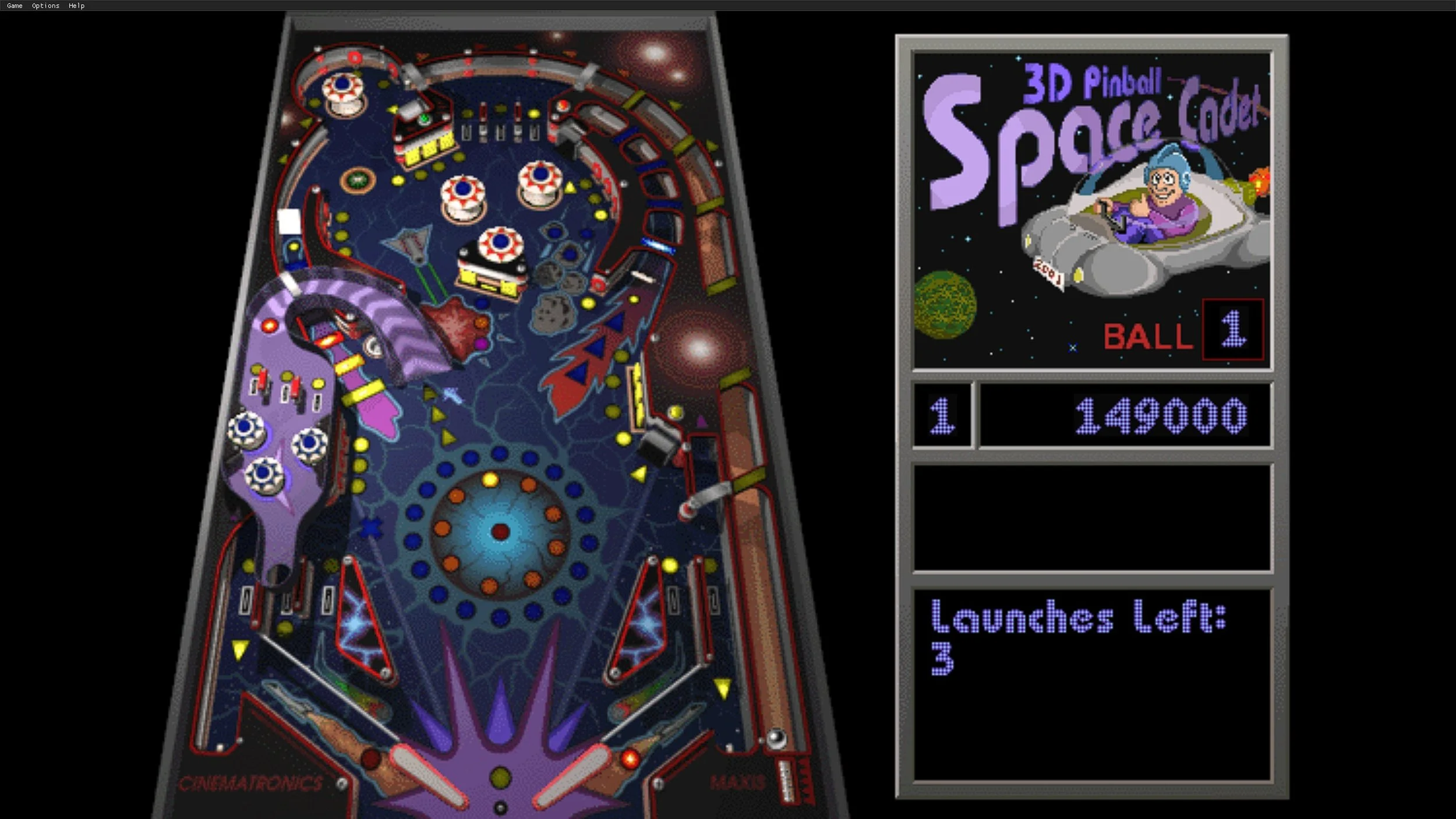
This is a post about the power of nostalgia and how sometimes, interacting with something from your past, be it physically or mentally, can produce a very strong and tangible emotional reaction. In some instances, this can be the result of something that you have specifically set out to do. On other occasions you can wander into a sense of nostalgia purely by chance. Today I experienced a very strong sense of nostalgia while watching a YouTube video and then again when I sought to replicate what I had seen. The video showed someone installing Windows 95 on to an old 486 PC from that era. The Window’s start up sound really touched a nerve (but in a good way) and then when the guy in the video launched Space Cadet 3D Pinball, a game that shipped with the operating system, I felt a strong compulsion to track down a copy and install the game myself, thus revisiting something that was an integral part of my life in 1995.
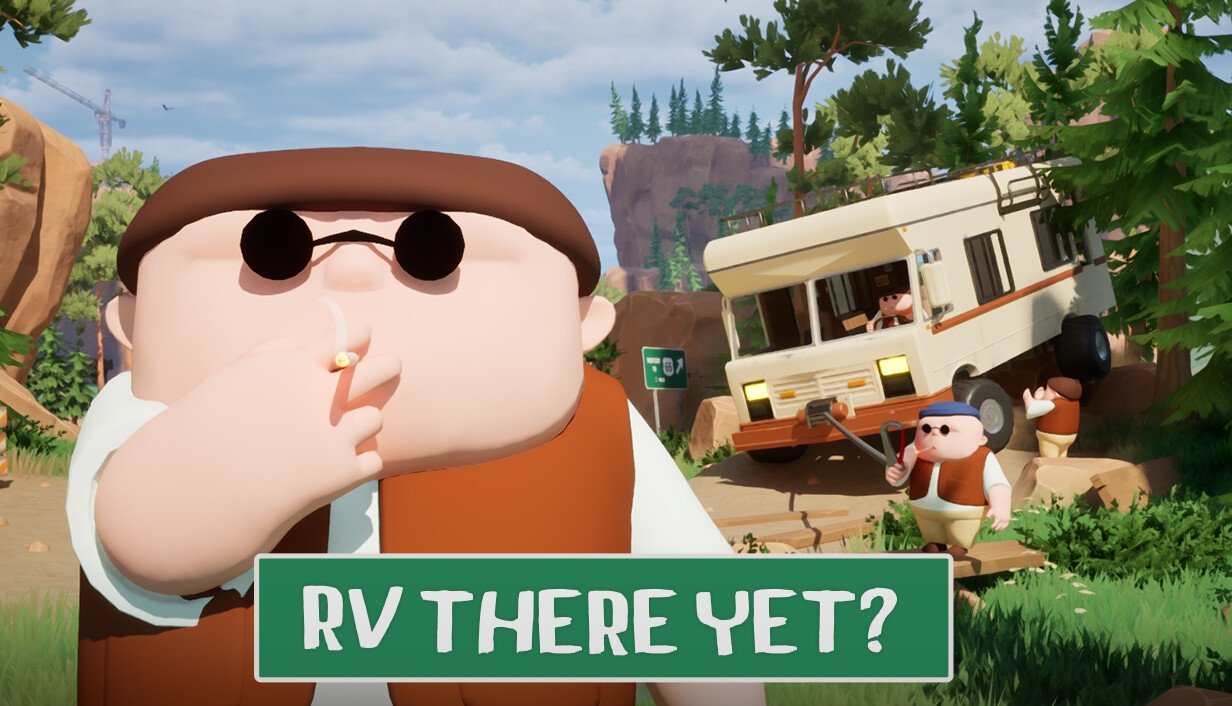
RV There Yet? is possibly the most entertaining game I’ve never played. My vicarious pleasure regarding this title has come exclusively from watching two popular YouTubers, JackFrags and WillFromWork, play through the game over a series of videos. It has been immensely amusing to watch and I have empathised a great deal as the group of four players has struggled with the game’s unpredictable mechanics and their own team’s dynamic. I could go and buy RV There Yet? myself but I doubt if I would ever have a gaming experience anywhere close to what I’ve watched online recently. So in some respects watching these videos has been an interesting alternative as I’ve been entertained, which ultimately is the point of video games. Perhaps there is a deeper philosophical point here that the game developers should reflect upon, as they’ve lost a potential sale. However, that is separate discussion for another day.
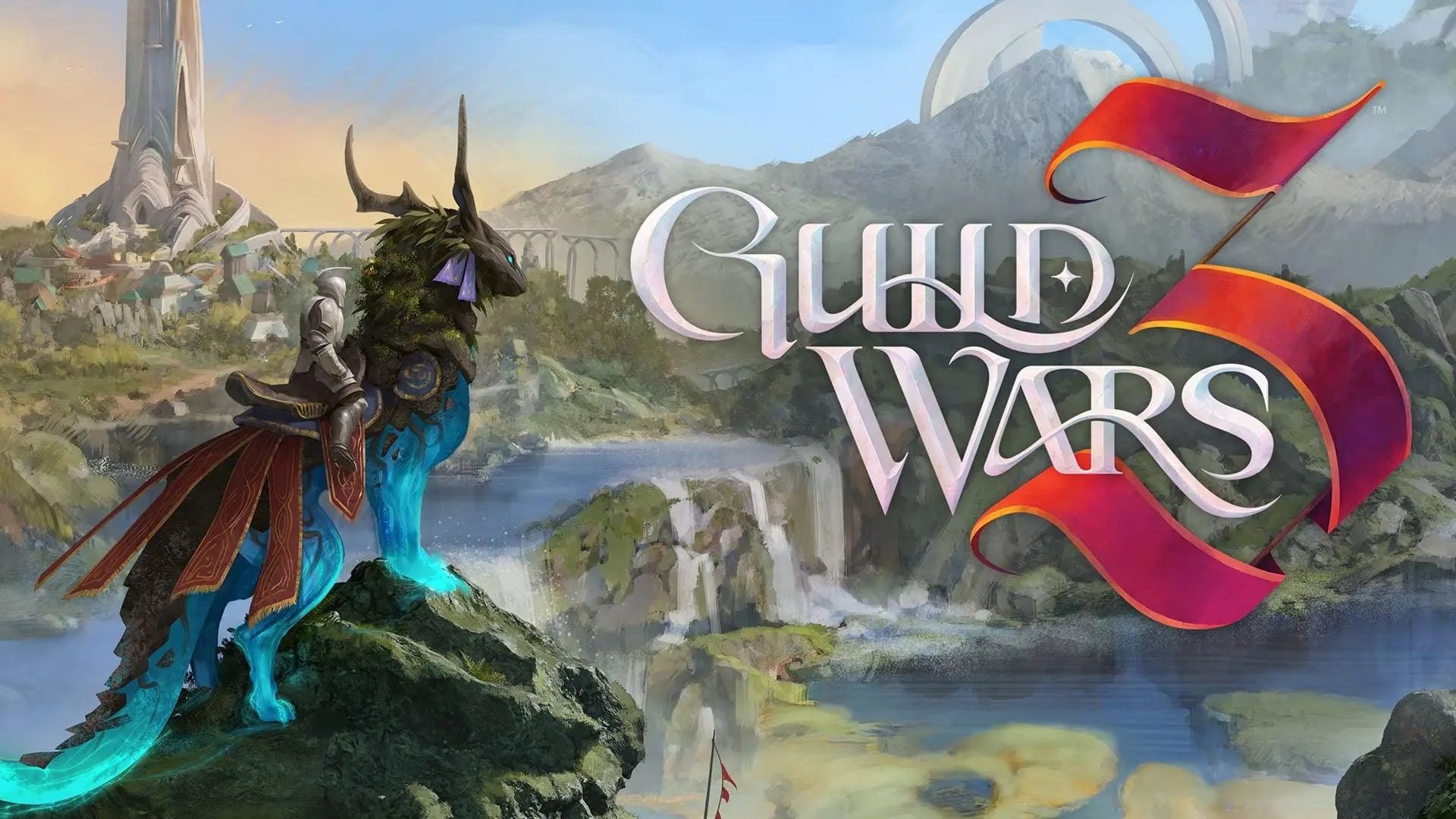
I don’t keep up with gaming news as much as I use to but several noteworthy announcement have come to my attention of late. Firstly, there’s an expansion, Songs of the Past, coming for the Witcher III: Wild Hunt in 2027. No doubt this is to pave the way for the Witcher IV. Next, I also found out about Hand of Fate: Horde. I liked this franchise and was saddened to learn that the original studio, Defiant Development, closed. Hence is was a pleasant surprise to see this new game being developed by members of the original studio. The third announcement was regarding Guild Wars 3. A new MMORPG in active development by a major studio is no small feat and is certainly good news for fans of this franchise and the genre per se. However, once you look beyond this news this announcement raises several questions and has certainly given me pause for thought. Let us take a few moments to consider them.
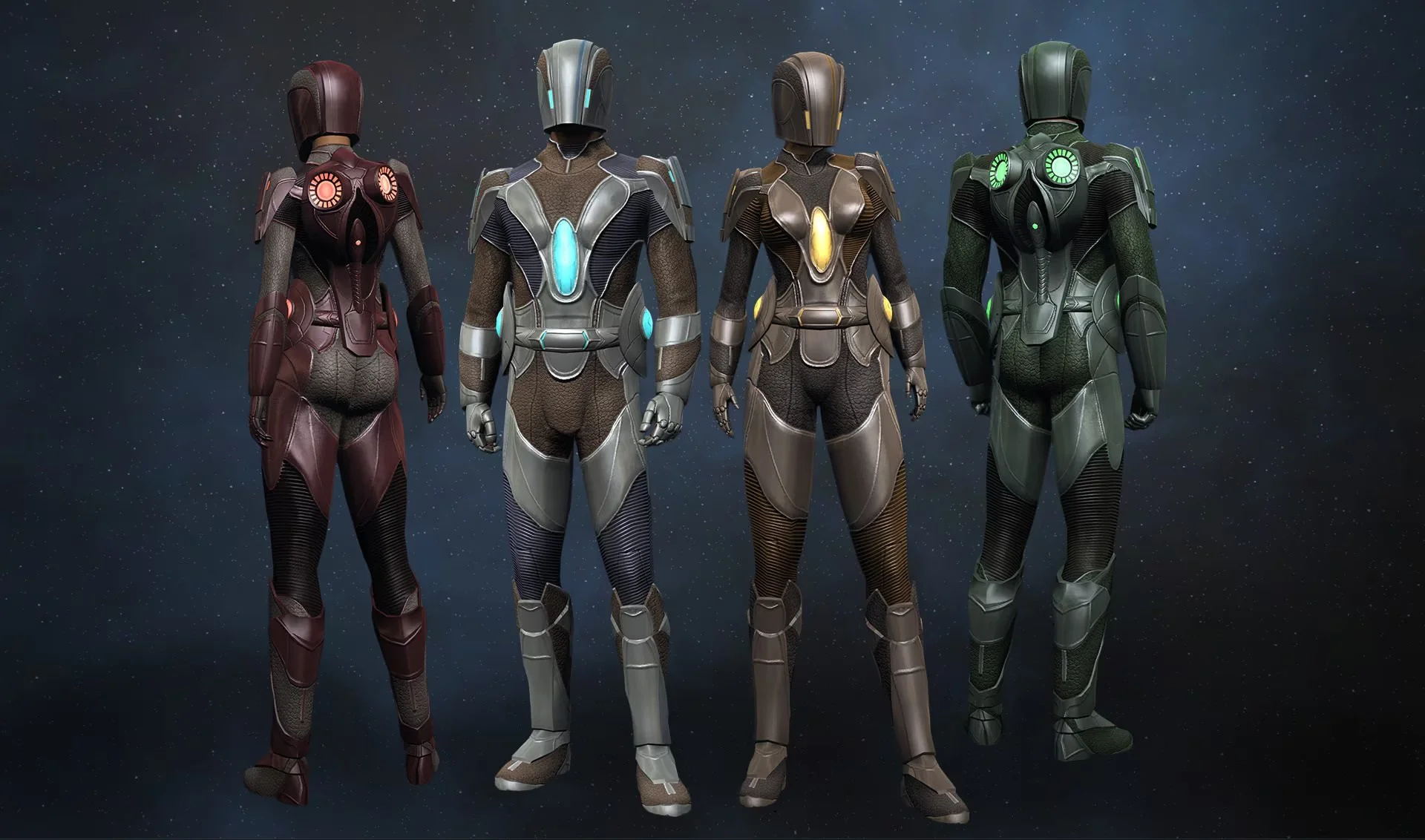
Star Trek Online has many in-game systems that are common to the MMORPG genre. The reputation system is one such example. In STO there are 13 reputation factions. Once a player has reached level 50 they may start progressing through the 6 reputation tiers of each one. Players gain progression through daily projects (20 hours in duration). Hourly projects are also available though they yield less reputation advancement and are limited to three times a day. Hence 20 hour projects are consider by default the most efficient way to gain rep. Projects require 30 Faction Specific Marks (earned via various activities in-game), 15,000 Energy Credits (standard in-game currency) and 2000 Expertise points. The most efficient way to tackle the reputation grind is to build up the necessary resources in advance and then at a designated time each day, start all 13 respective projects. Upon completion projects yield a player bound lockbox containing a random space or ground weapon, a console or Elite Marks which can be used to acquire faction gear.
I was recently perusing my archive of old blog posts, when it struck me how much I’ve written about the MMORPG genre over the years. Naturally, there was far more material from between 2008 and 2012 as that was period when I immersed myself in the genre and was very enthusiastic about it. I was at a point in my life when I had the time to dedicate to such games and I was happy to participate in the social aspect of they offered. I would regularly play through group content and spend time socialising online with fellow guild members. My experience remains a textbook example of how online games can be more than the sum of their parts and that where you are at in your life has a major impact upon your overall enjoyment. As I read though various old posts it became clear that my experiences where specific to this particular part of my life and that they cannot be repeated. My relationship with the genre is very different now and that’s fine.
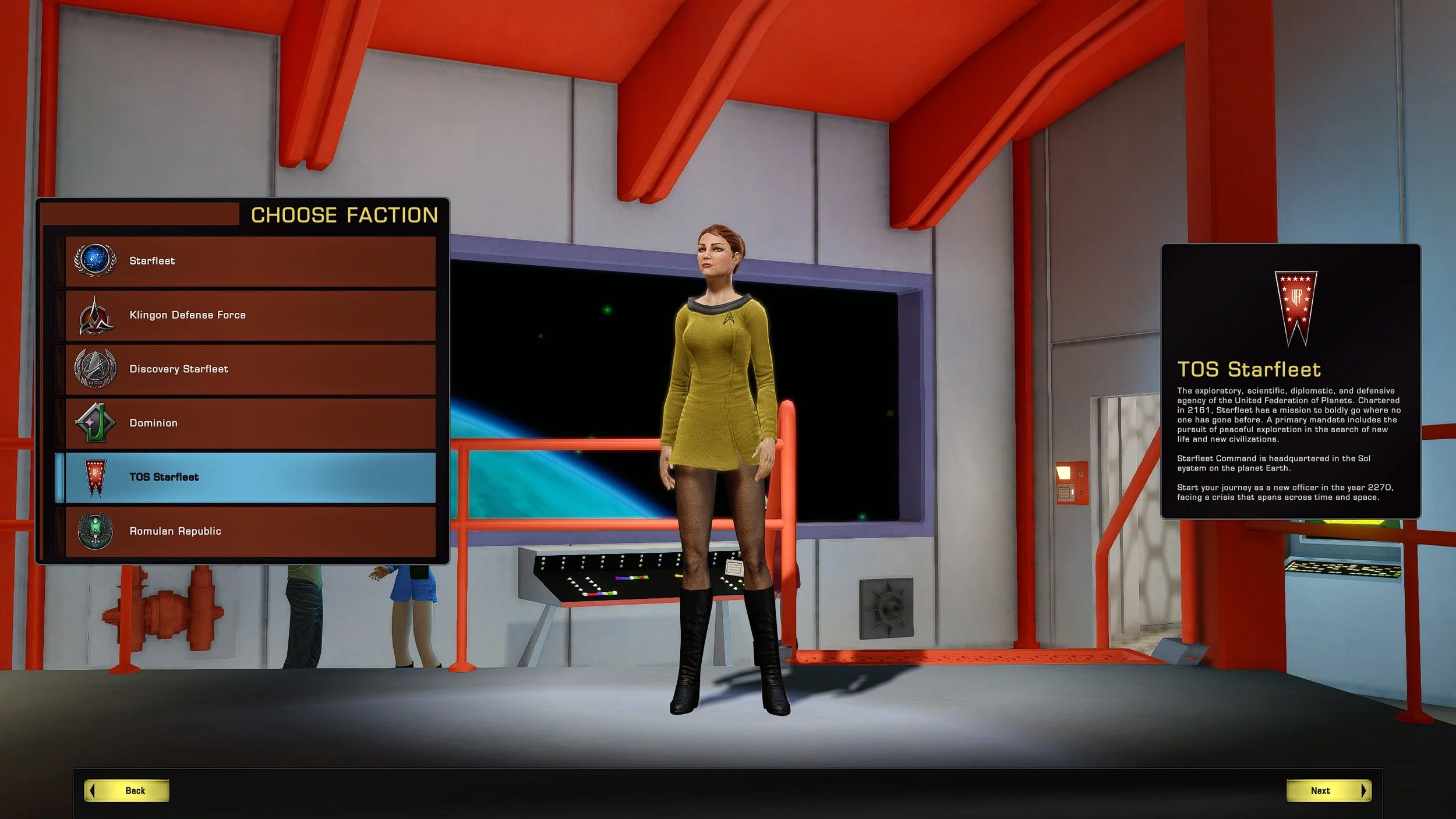
Creating alts is an integral aspect of the MMORPG genre. Many players will create a character of a specific class or faction, play it for a while, lose interest in it or they may decide that it is just not for them. Fortunately it is no effort at all to simply re-roll a new alt and set off once again. Furthermore, lots of players never reach level cap of the MMORPG that there playing. When the going get’s tough, so to speak, you can either soldier on for another 50 levels or simply create a new alt and return to the comfort of tried and tested content. Alts also give you the chance to secure an accolade or achievement that you previously missed. They are also of great benefit to the genres social aspects. Creating a new alt so you can play along with a friend who is just starting is great fun. Developer’s love them too as it means you’re still playing the game.
I recently took a break from Crimson Desert choosing instead to to play something familiar and easy going. As I’ve been logging into Star Trek Online daily to participate in the anniversary event, I decided to look through my various alts and see how far they had progressed through the game and what resources they had. At present I have twelve alts. My primary Captain was created in 2015 during the original Delta Recruit Event. I had previously played STO intermittently since its release in January 2010 but I never kept any of those characters. Hence this decade old Tactical Federation Captain has been my main focus when playing. The other eleven alts are the result of other recruitment events or whenever I wanted to try something different, such as playing a specific class or faction. I obviously played a lot of STO during the lockdown as several alts date from that period. Several had maximum reputation across all factions.
The action, open world RPG Crimson Desert has been patched five times since it launched on March 19th and there have also been multiple hotfixes. At first glance this isn’t anything unusual. New games have bugs and issues arise once a game is released and played across a much wider variety of hardware than in QA testing. However, if you read the patch notes that accompany these sizeable downloads it quickly becomes apparent that developer’s Pearl Abyss are not just addressing bugs and software glitches. They are actively engaging with their player base and responding to suggestions and requests from that community. Although this is not a unique approach, what is surprising is the speed and quantity in which these player driven changes are happening. There seems to be an active ongoing process to refine the game and eliminate some of its “rough edges” and the players are contributing to this process with their feedback.
According to my Steam statistics, I last played Starfield on 19th December 2023. I bought the game upon its release in September of that year and played in total for 136 hours. Starfield held my interest for three and a half month and I wrote seven blog posts about various aspects of the game. Although there were some engaging aspects to Starfield, I did feel that that the game was somewhat lacking in systems and content, at that point in its lifecycle. I also think that the marketing and player expectations associated with Starfield were overblown and unrealistic. The shadow of Skyrim looms large over all new Bethesda releases and they don’t seem able to quite recapture that magic. Hence, I inevitably drifted away from Starfield and to another game and was effectively “done” with it. I have not played the game since which seems to validate the theory that game are becoming increasingly more ephemeral.
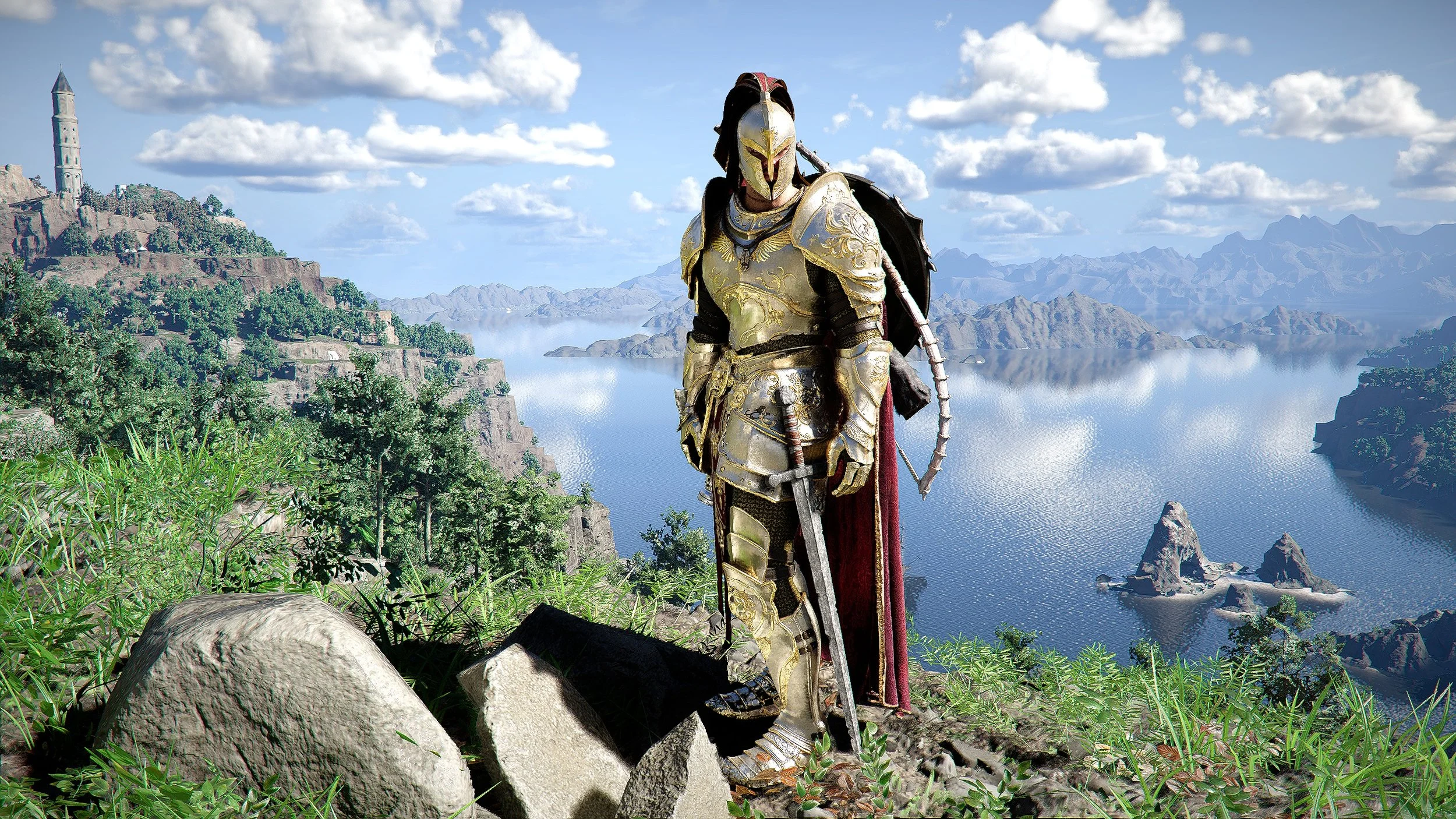
13 days after its release, market analysts estimate that Crimson Desert has already earned $200 million across the four main platforms (PC, PlayStation 5, and Xbox Series X and S). The game is certainly proving popular among gamers with the internet awash with live streams and “let’s play” videos. However, reviews are mixed both among gaming journalists and YouTube influencers. Common complaints about the game include that it is slow to start, the controls are poorly laid out on all platforms and that developer’s Pearl Abyss have done a poor job of explaining most aspects of the game to new players. Although such criticisms are true to a degree, I think these complaints highlight how many gamers are conditioned to expect new titles to follow a specific pattern with regard to pacing, narrative exposition and learning in-game systems. A pattern that Pearl Abyss has chosen to ignore, instead favouring an old school approach.
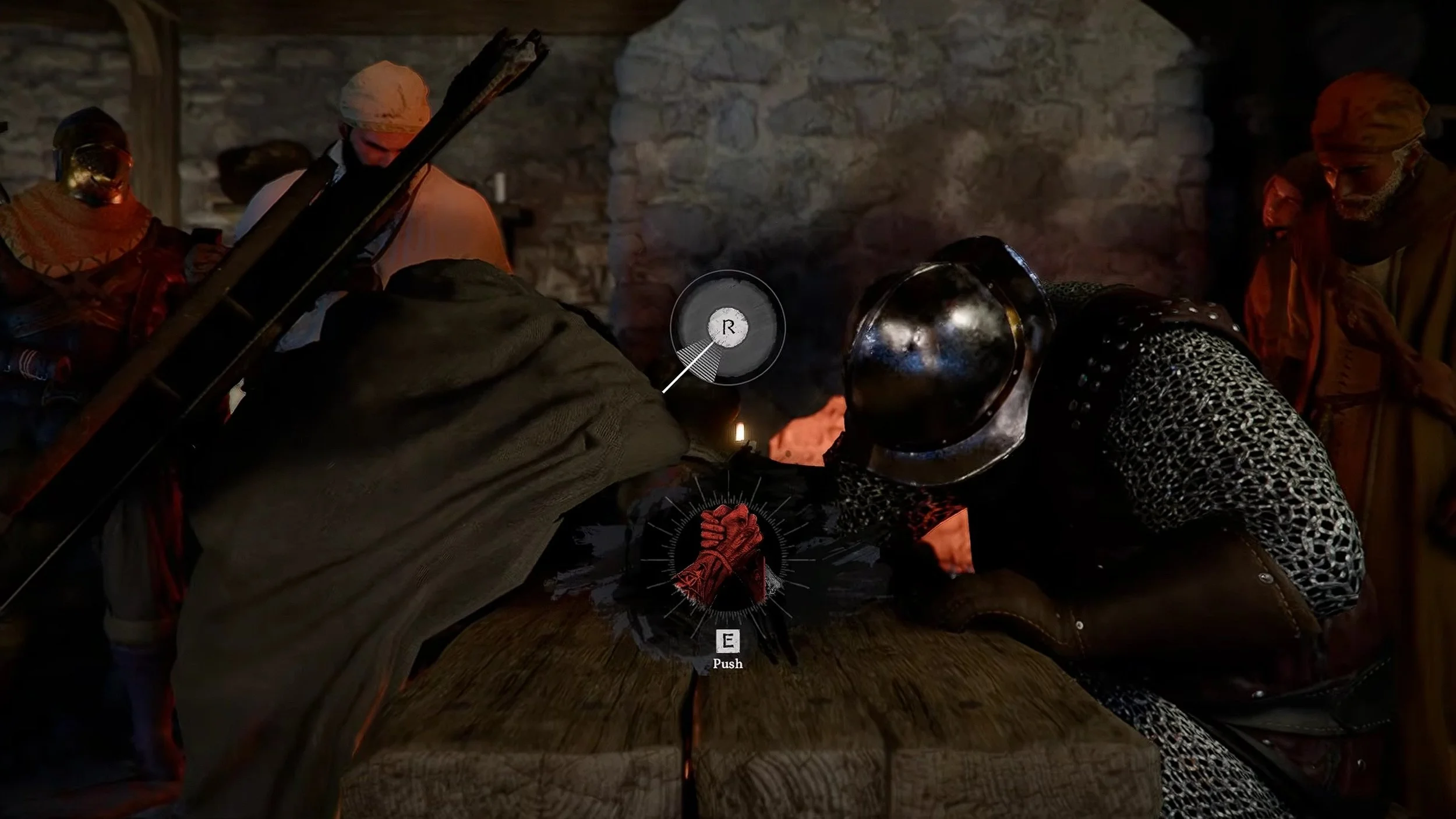
Early on Crimson Desert, the main quest requires the player to enter a tavern and arm wrestle a particularly strong guard. The arm wrestling match consists of a quick time event. If playing on PC you have to rapidly press the “E” key which turns a power meter from white to red. Then a white dial appears above the meter with a rotating hand. When the hand passes over a segment of the dial that is marked by hatching, the player must press the “R” key. The idea being the meter filling with red is you strength building (or waning) and the “R” key prompt indicates when to try and force your opponent’s arm. You will need to to continuously press the “E” key throughout the arm wrestling match and the “R” key about 4 times to win.
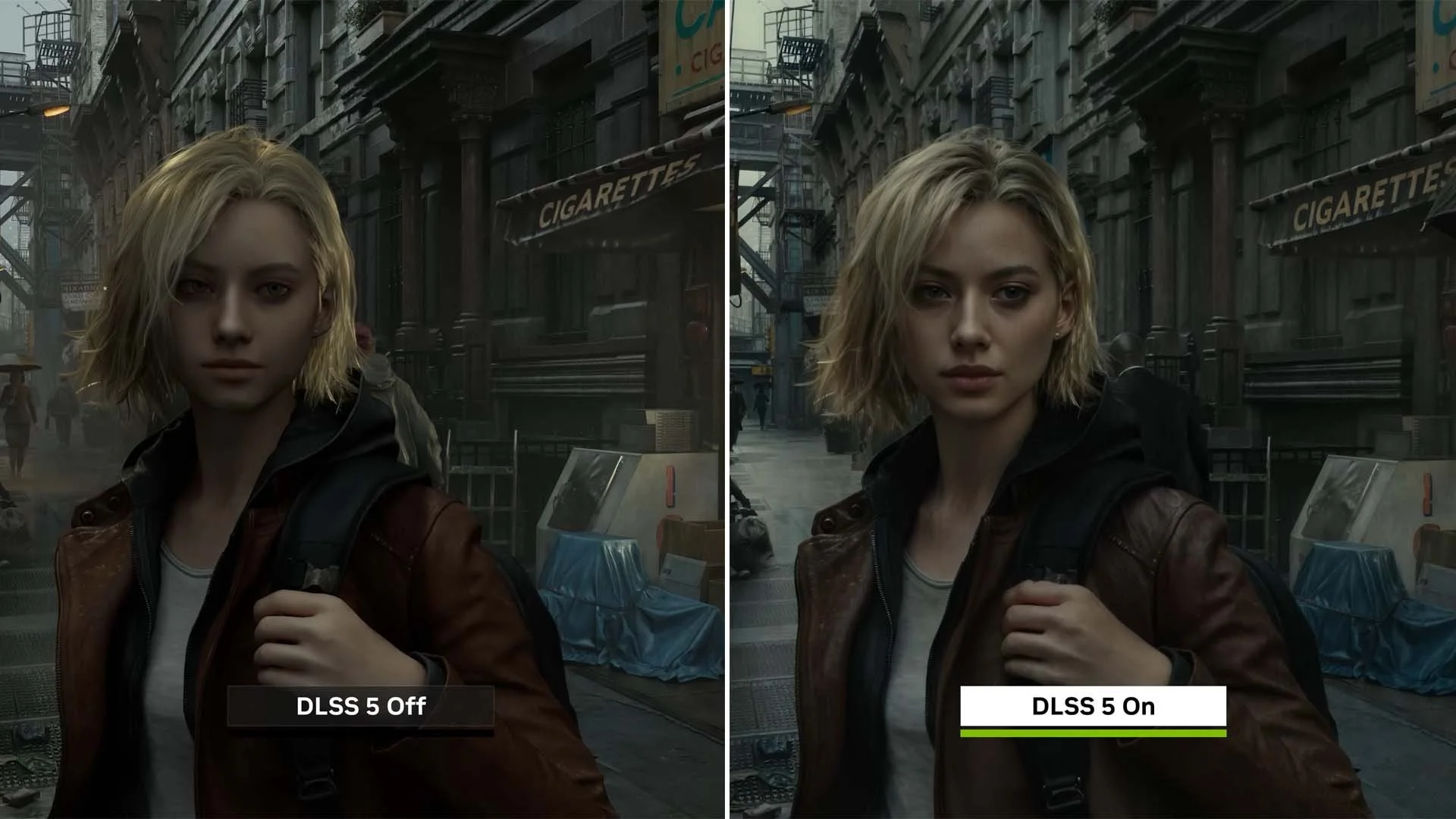
Earlier this week, Nvidia posted a video featuring their latest iteration of DLSS technology (Deep learning super sampling). DLSS 5 is an AI-powered “real-time neural rendering” process and unlike previous versions that focused on improving frame rates through upscaling or frame generation, DLSS 5 uses generative AI to “infuse” frames with photorealistic lighting and material details that the game engine never actually calculated. Let us pause for a moment and consider these words. Material detail that the game engine never actually calculated. Therein lies the rub. If you watch the aforementioned video or peruse the images posted here, it is abundantly clear what the technology does.
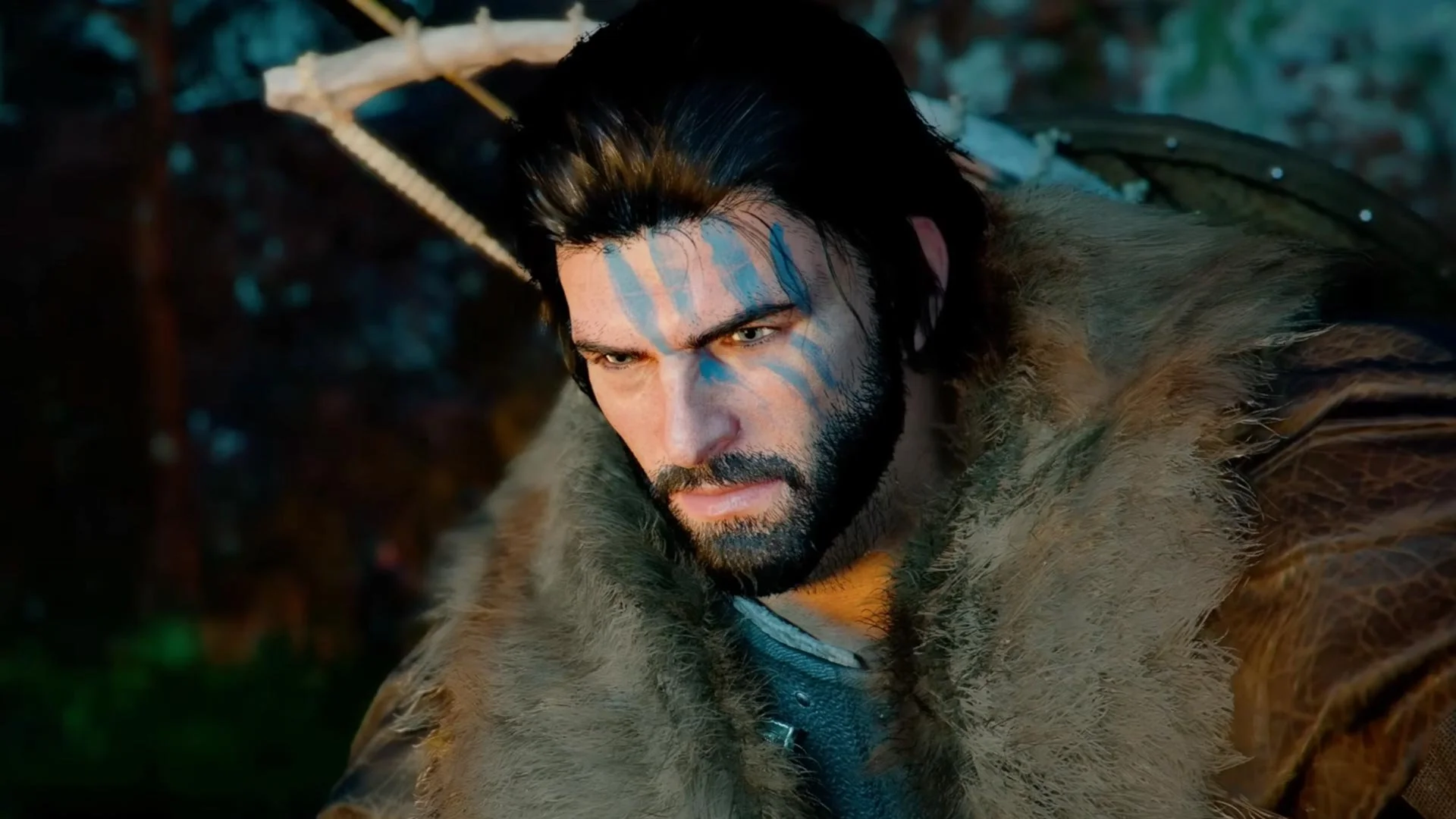
Last night, I spent the first 45 minutes after the launch of Crimson Desert, watching the 92GB pre-downloaded game files slowly decompressing and installing. I finally launched the game at about 10:50 PM GMT. I then waited a further 5 minutes while shaders were downloaded. It took me about 15 minutes or so to read through the various game settings and choose those that are optimal for my PC. I suspect even if you have a beast of a computer, you’re still going to have to spend some time tweaking settings. As for those players like myself with a gaming rig that is somewhere in the middle of the game’s specifications, be prepared to do a lot of fine tuning both within Crimson Desert itself and your Windows settings.
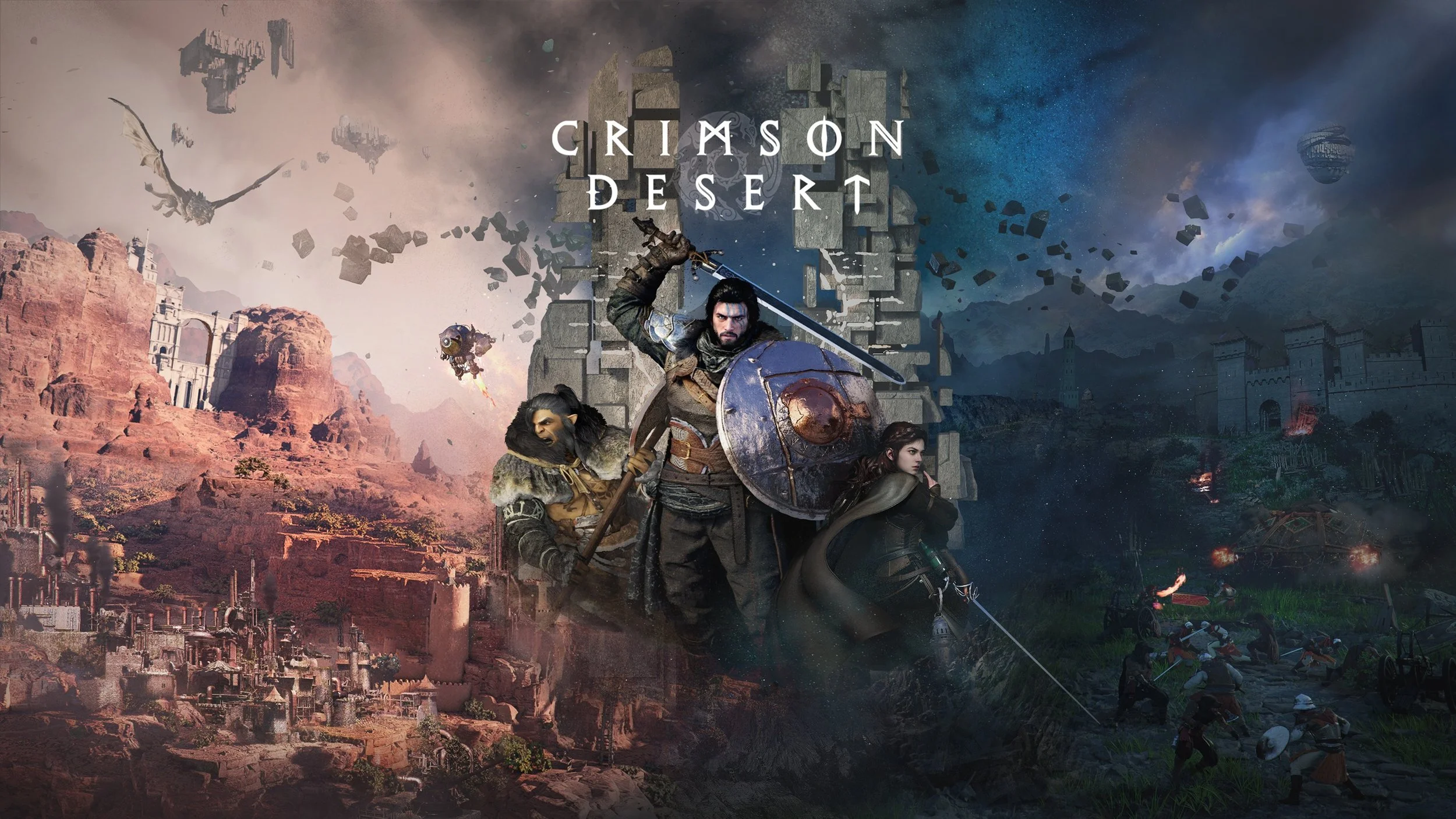
I have been aware of the online interest around the open world action game Crimson Desert for a while now. One of the things that has intrigued me about it is the scope of the game. The word “hype” has been bandied about by a few gaming websites. However, from what I have observed, developers Pearl Abyss have not been excessively hyperbolic themselves, with regard to the manner in which the game’s systems and mechanics have been marketed. Now that the press embargo has been lifted, the pre-release reviews seem to confirm that everything we’ve seen in promotional videos in the run up to the launch, is in fact present in the game. So far the initial critical response has been very positive and it has been hinted that the game may well be a genre milestone. Perhaps Crimson Desert is just a rare example of a game that has not had a rushed development and isn’t launching prematurely for business reasons.
Video games as a genre are extremely poor at explaining themselves. When you buy a new game you’ll often find little or no information regarding the basic systems and mechanics. The industry assumes that their customers are by default familiar with the fundamentals of playing a modern video game. Hence if a game has a tutorial, it is often based around videos rather than detailed verbal instructions. You are are briefly shown a clip of a specific move being successfully undertaken but it is seldom shown in a wider context. The industry also expects the fan community to take on the role of curating and disseminating information about its games. The move away from forums and bespoke websites to Discord highlights this. Discord is a primarily a real time communication tool and not good at maintaining a historical data archive. If you want an answer to a specific gaming question, you’ll more than likely find it on YouTube in a video made by a fellow gamer.
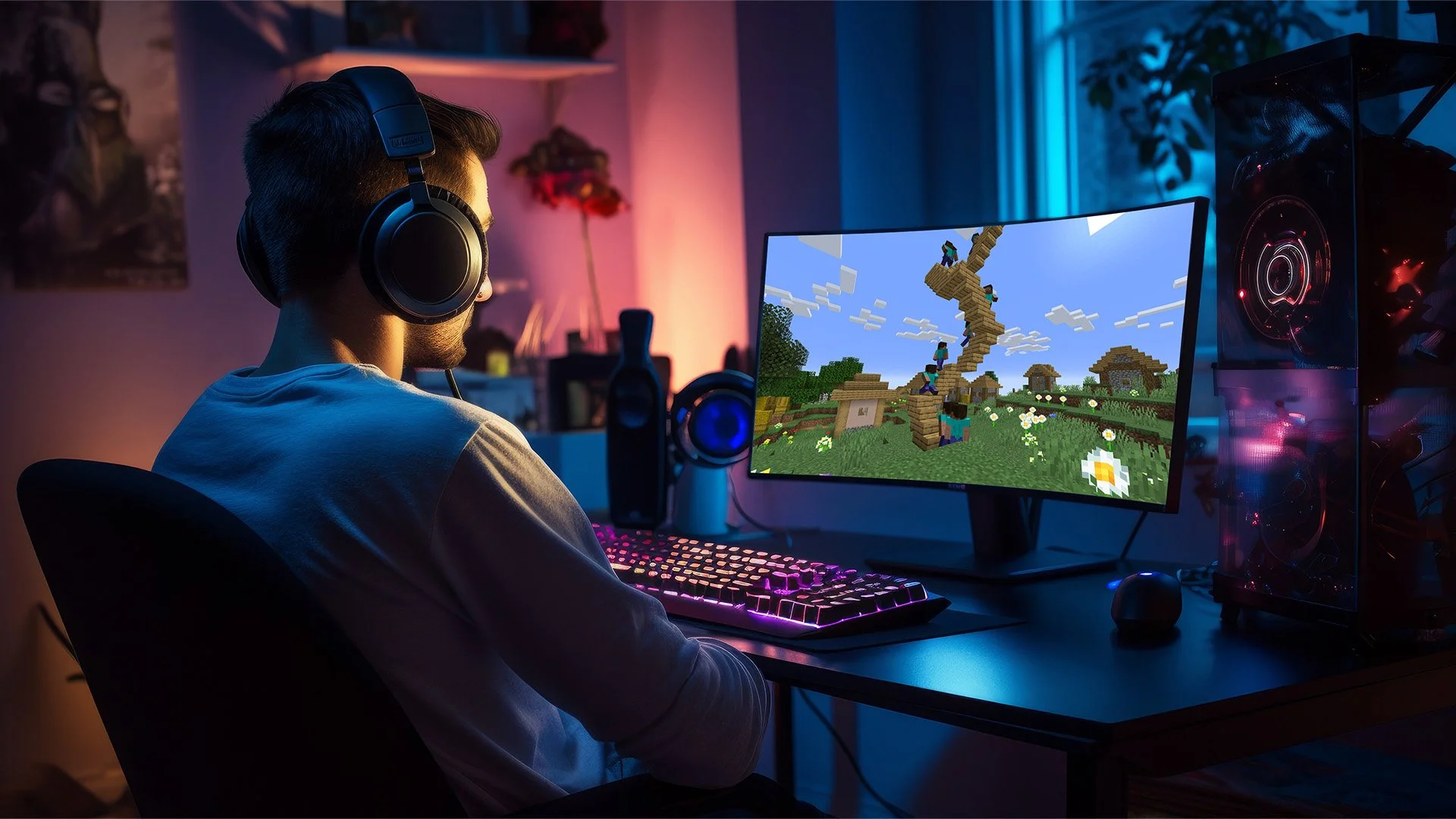
I have written in the past about the video games we cannot play. The ones that require a keen understanding of a game’s mechanics, along with a strong degree of manual dexterity and situational awareness. Being 58 years old, I tend to have neither the co-ordination necessary to succeed or the patience to master such complex skill requirements. With this in mind, I recently watched a YouTube video for Chivalry 2 and thought, that looks like fun. The fact that it showed someone picking up a chicken and throwing it at an opponent is neither here nor there. However, after watching a few more videos I realised that combat in the game was complex and that, as usual, the reality of playing such a game would be different from my expectations. Hence, I came very close to not buying Chivalry 2. However, I eventually decided that I would, so I bought it for just under £10 from an online vendor.
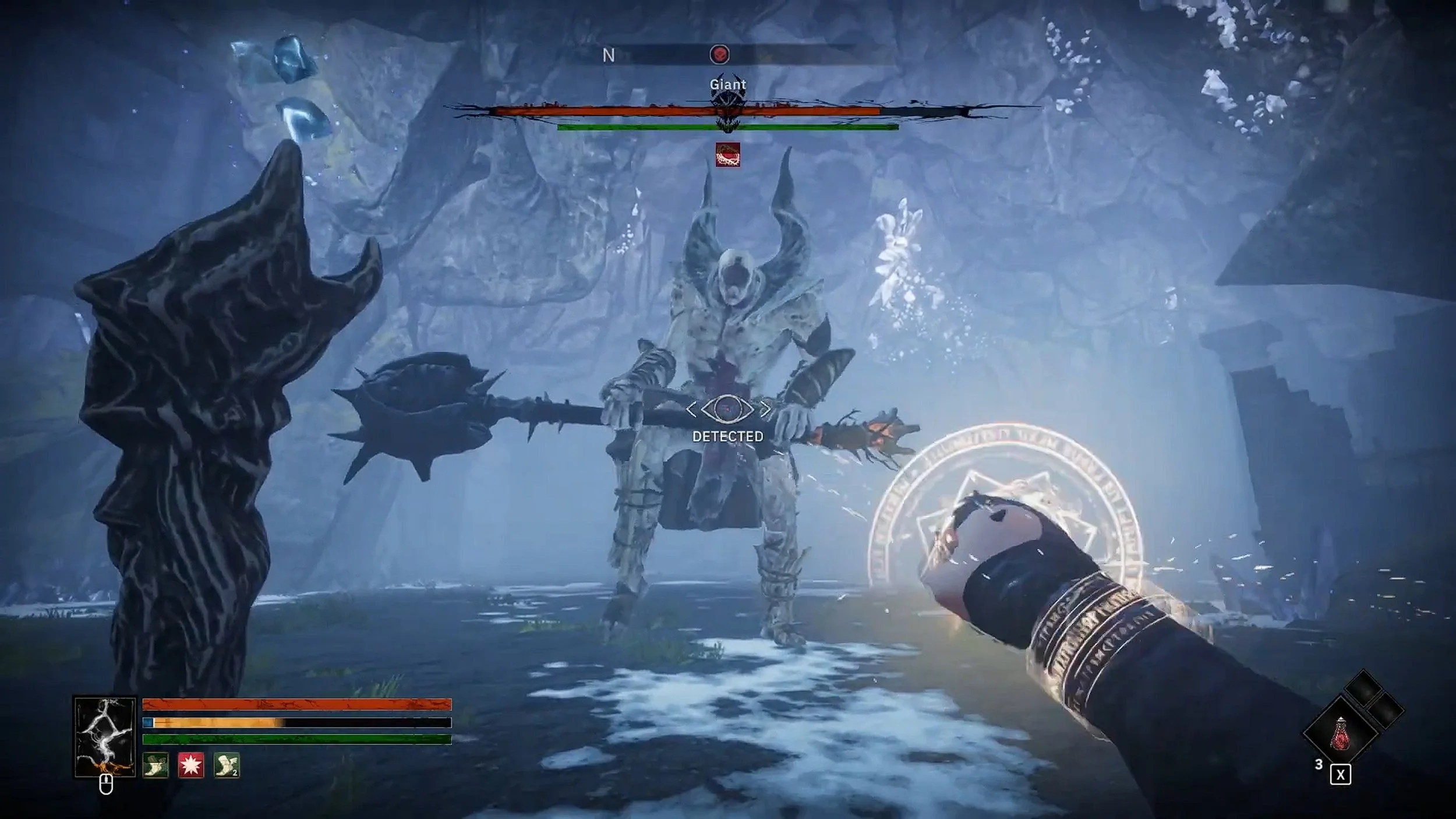
I decided to pursue a magic and spellcasting build in the RPG Tainted Grail: The Fall of Avalon after the story prologue. During the opening section of the game, the player is presented with a sufficient range of weapons to determine which type suits them best, although you can change at any time during the game. For me, casting spells feels right and is fun. Plus I have fond memories of the magic system in Two Worlds II and Skyrim. So once I started playing through the first zone, I started putting attribute and skill points into the appropriate trees to bolster my spells strengths and frequency. I also chose gear that would bolster those statistics further. The results have been surprising, as magic and spellcasting is not presented in the usual “glass cannon” style you find in some other RPGs. Here it offers robust DPS output and with the right gear and spell combination, a strong degree of survivability.
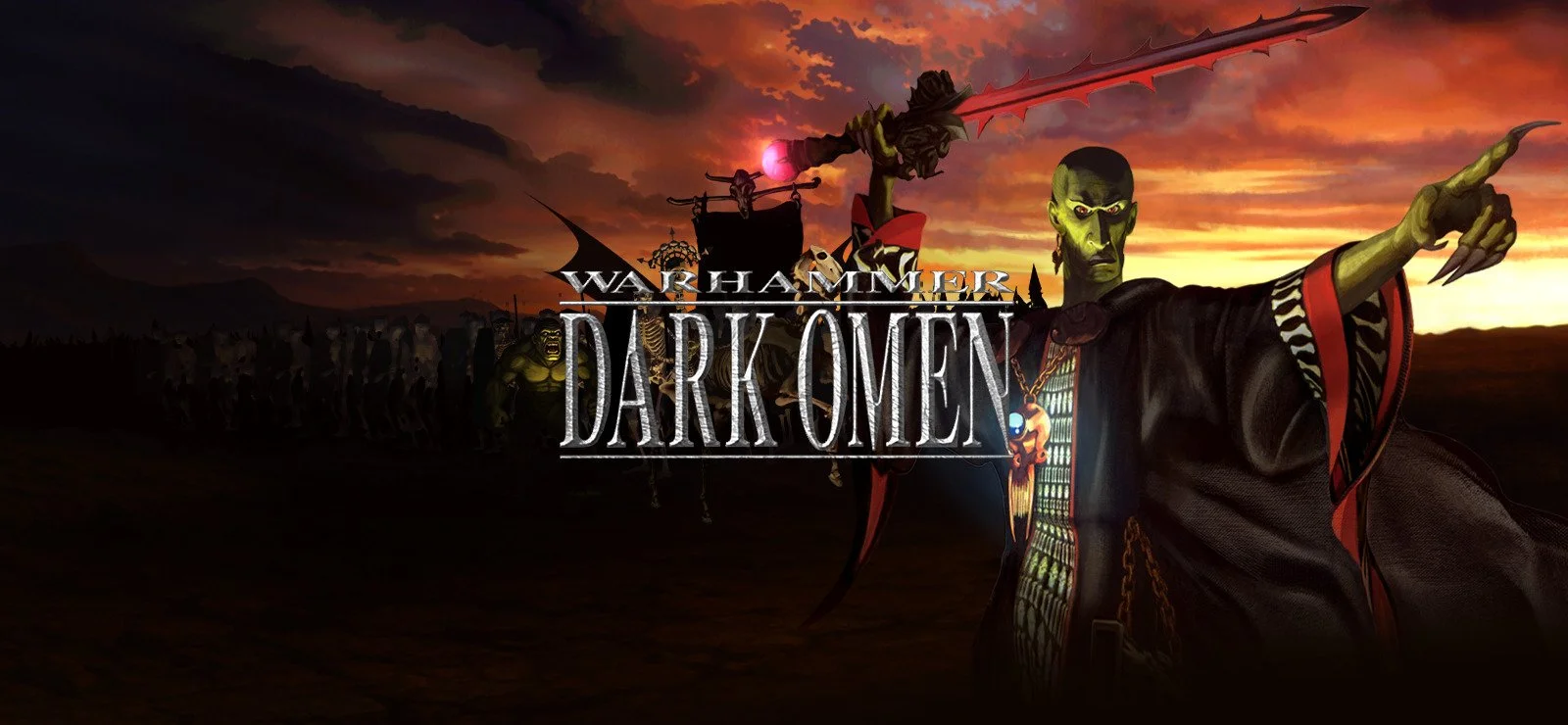
I originally bought Warhammer: Dark Omen in the summer of 1998. I played a demo copy via a magazine cover disc, which was a common means of promotion and marketing back then. Although I was at that point, unfamiliar with the Warhammer Universe, I found this game to be an excellent point of entry. The story did an excellent job of introducing players to “The Old World”, the political and power structure and major characters. I instantly liked both the aesthetic and the lore. Warhammer: Dark Omen was also the first real-time tactical wargame that I played and I spent numerous hours playing through the campaign. Overall, the game was a critical success, particularly on PC, but it struggled commercially upon its initial release and didn’t quite find the audience that it deserved. However, it has achieved status as a “cult classic” among gamers, leading to a recent re-release on GOG in late 2025.
According to the recent “letter to the players”, Standing Stone Games will be adding a new zone to the MMORPG The Lord of the Rings Online in the second quarter of this year. Possibly around May or June. Having spent the last three expansions in the South of Middle-earth exploring the tropical Umbar and the deserts of Harad, I would certainly welcome a change of location. I have gradually warmed to these zones over the last eighteen months but I do find them so incongruous. They are so radically different to the European style content that has been the mainstay of the game for so long. Tolkien’s source text has plenty of detail regarding Eriador and Rhovanion. Information regarding Harad is scarce, hence it has afforded the developers a great deal of artistic freedom. Although exceedingly well realised these tropical zones have taken a while for me to get used to.
I’m not sure exactly when it started but I’ve recently noticed a graphical bug within the MMORPG The Lord of the Rings Online. This problem often occurs within caves or in areas where there are a lot of rocky surfaces. Hence it has become very apparent in the latest two expansions, set in Umbar and Harad. This graphical glitch causes some surface textures to appear to flash from light to dark intermittently. The resulting strobe effect is hard to ignore and very distracting. Fortunately, a quick online search showed that this is not a problem unique to my installation of LOTRO and is a known problem. Furthermore, there is a very simple workaround, which is to go into the Advanced Graphics setting and uncheck “Per Pixel Lighting”, which immediately remedies the problem. I have no idea why this has recently started to happen but at least it can be resolved.
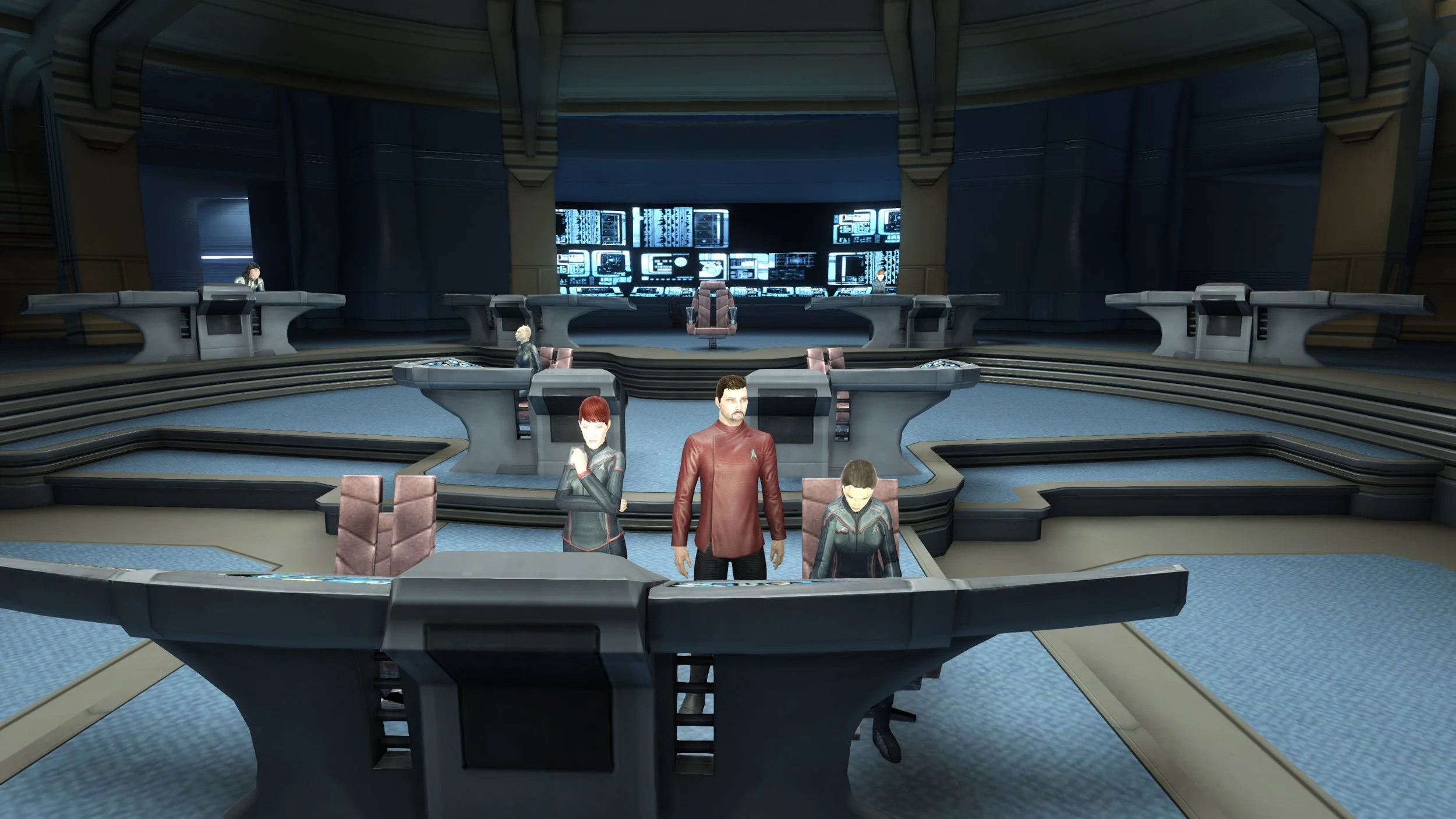
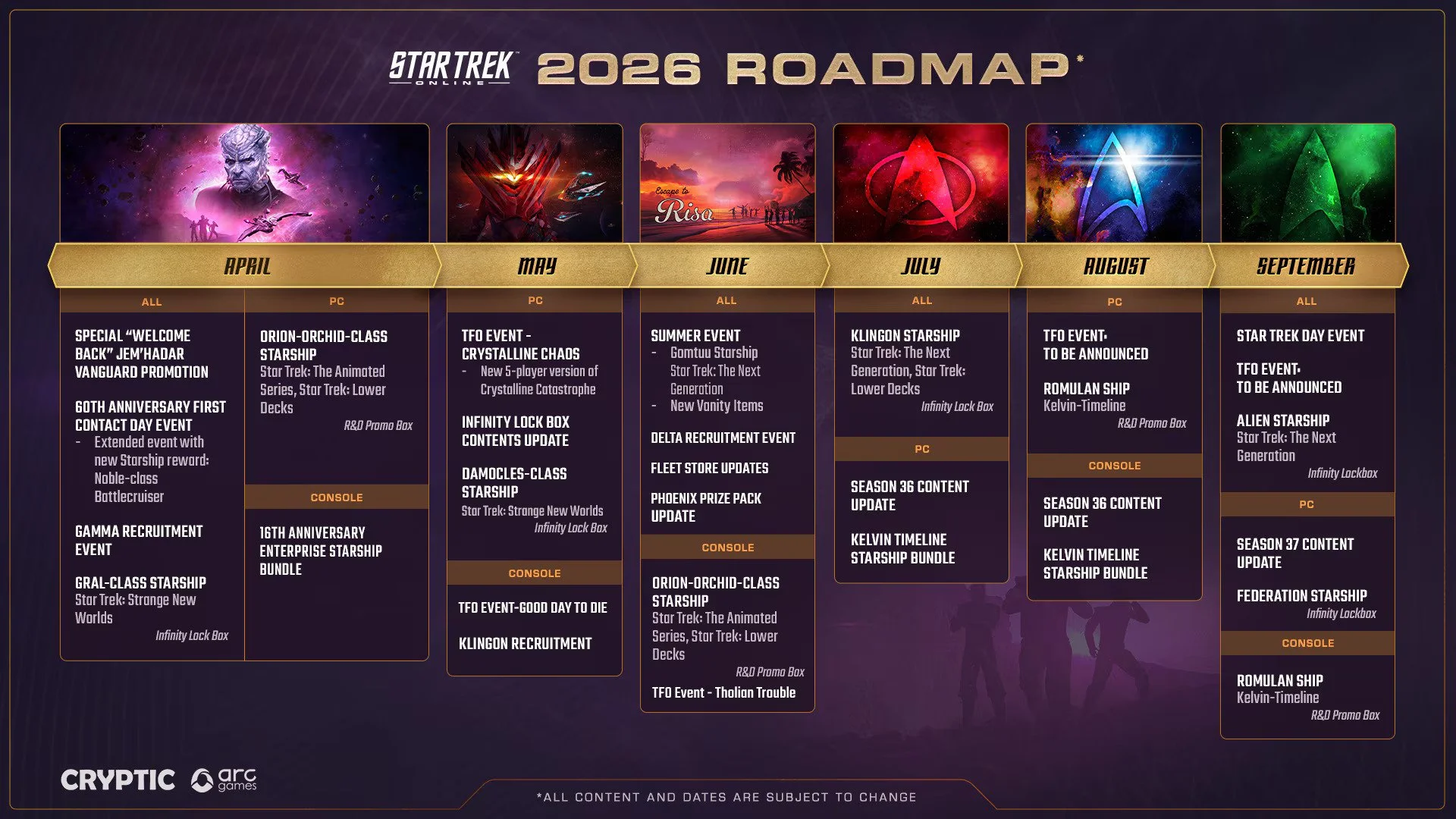
This year is the 60th anniversary of Star Trek. The original TV show was first broadcast in the US on September 8th 1966. If you search online you’ll find details of lots of related events. There are documentaries, conventions, new TV shows and even some video games in development. However, what you won’t find are any details regarding what will be happening with the MMORPG Star Trek Online. So far no road map for 2026 has been posted online by the developers but it is still quite early in the New Year. That being the case, I am not especially optimistic about there being any major plans waiting to be revealed. It is not as if DECA Games have demonstrated or stated any major ambitions for STO beyond keeping the endless events treadmill going and regularly adding content to the in-game store, during their development tenure. The ongoing story arc drags on inexorably and is as dull as ditchwater.
I first played The Elder Scrolls V: Skyrim in June 2013. This was over 18 months after the game’s initial release and the base game and DLC were bundled together in a “Legendary” edition. Although a seasoned gamer at the time, familiar with the RPG genre with such titles as Mass Effect and Grand Theft Auto IV, I had not played a game from this franchise before. It only took a few hours of gameplay to realise that this was a special title. The scope of the story, the art design and the size of the world were immediately notable. Tamriel was immersive in a way I had not experienced with other titles. Often simply traversing the terrain and watching the dawn break while the game soundtrack swelled, was sufficient to hold my attention. I instantly picked up on the voice acting of Christopher Plummer and Max Von Sydow. All of which indicated that this was a gaming landmark.
The latest expansion for the MMORPG The Lord of the Rings Online, Kingdoms of Harad, launched on December 3rd. With this release the level cap was raised from 150 to 160. It should also be noted that the cap for virtue traits was also raised from 96 to 100. Naturally these changes meant that there is a requirement to replace all armour and jewellery once the new cap is reached. Similarly Legendary Items have to be reforged and any traceries upgraded or replaced. If you follow the Epic Story it will lead you from quest hub to quest hub. The main quest rewards, along with those from side quests will provide adequate gear as you slowly progress towards the new level cap. The new raids, instances and missions/delvings then provide a means to acquire higher quality level 160 gear. LOTRO and indeed, many other MMOs are consistent in this methodology.
It is customary in a post such as this to list the various games that I’ve played over the last twelve months and share my thoughts on them. Wider analysis of the video game industry is also de rigeur. Unfortunately, I don’t really feel disposed to do either of those two things. My thoughts on the games I’ve played have already been published and can easily be accessed via the links at the bottom of this post. As for the video game industry, it suffers the same flaws as music, TV and cinema. There is creativity and innovation out there but it is often drowned out by mainstream products which are demonstrably inferior due to their inherent mediocrity. As for the business side of things, we once again clearly see the failings of the corporate management class. Sadly, they do not face the consequences of the mistakes that they make.
Classic Game Themes: Shadow of War
The soundtrack for Middle-earth: Shadow of Mordor by Gary Schyman and Nathan Grigg was a dark and brooding affair, reflecting the tragedy of its central characters. It was a score based upon haunting strings, low vocals and ominous tones. However, both composers have crafted a somewhat different soundscape for the sequel Middle-earth: Shadow of War. It should be noted that if you are an ardent fan of Howard Shores scores for Peter Jackson’s movies, that Gary Schyman and Nathan Grigg’s approach to Middle-earth is quite different, although both are orchestral works. Shores grandiose themes often reflected the enormity and history of Middle-earth. Here the music is more personal, channelling the emotions of those who stories unfold against such momentous events.
The soundtrack for Middle-earth: Shadow of Mordor by Gary Schyman and Nathan Grigg was a dark and brooding affair, reflecting the tragedy of its central characters. It was a score based upon haunting strings, low vocals and ominous tones. However, both composers have crafted a somewhat different soundscape for the sequel Middle-earth: Shadow of War. It should be noted that if you are an ardent fan of Howard Shores scores for Peter Jackson’s movies, that Gary Schyman and Nathan Grigg’s approach to Middle-earth is quite different, although both are orchestral works. Shores grandiose themes often reflected the enormity and history of Middle-earth. Here the music is more personal, channelling the emotions of those who stories unfold against such momentous events.
The first theme we encounter is with the games main menu. It is in fact an instrumental version of the song Fires of War which later plays across the end credits. This time round the music takes a different approach with a more positive and uplifting undercurrent. The stygian darkness of Mordor has been swapped for a more stoical mood and opening theme features swelling staccato strings. The central melody does still feature the high overtone along with the violins that were present in the first game but it feels very different this time, with a more optimistic spin. Talion is no longer seeking revenge but to over throw Sauron himself and this driving passion is reflected in the soundtrack.
Once you start following the narrative of the central story and move beyond Minas Ithil, the soundtrack feels much closer to the tense and portentous ambience of the original title, with choral parts and low register piano interludes. There are not so many leitmotifs used this time round and the score is more of an evolving soundscape. This suits the game play far more appropriately. For the sake of continuity, many of the themes associated with Talion’s specific abilities are used again. This includes the magnificent Caragor Riding with its off-kilter beat, Cello and vocalisation of the Ring Lore. Overall Middle-earth: Shadow of War boasts a very accomplished soundtrack and a worthy successor to its predecessor.
The Planet of the Apes movie franchise took a radical change of course with its third entry in the series. The first two films were set in the future and benefited from high production values to help realise a post apocalyptic earth. However, due to a substantial reduction of budget, Escape from the Planet of the Apes uses a time travel plot device to bring the ape protagonists to present day Los Angeles (1971 in this case). The result is a film with a much smaller narrative scope. However, although it lacks the science fiction spectacle of its predecessors, it features an interesting satirical exploration of celebrity culture and ponders what it is like to be deemed an enemy of the state. As ever, Roddy McDowell and Kim Hunter provide exceptional lead performances as the Chimpanzees Cornelius and Zira. Escape from the Planet of the Apes also captures the pop culture vibe of seventies America.
Ronald Erle Grainer (11 August 1922 – 21 February 1981) was a prolific Australian composer who is best remembered for his work in the United Kingdom during the sixties and seventies. He wrote numerous notable scores and theme music for several iconic television shows such as Doctor Who, Steptoe and Son and Tales of the Unexpected. He also composed the soundtrack for several major motion pictures such as Some People (1962), The Assassination Bureau (1969) and The Omega Man (1971). Grainer relocated to London from Australia in 1952 but it was not until 1960 that he gained critical success after writing the music for the popular TV show Maigret. He subsequently received an Ivor Novello award for “Outstanding Composition for Film, TV or Radio”.

The following is about a cultural change. That is not to say that it’s a value judgement or one of those posts you so frequently read by bloggers of a certain age, that essentially boil down to “things were better in my day”. It is merely an observation and like all observations it is not 100% universal. There will always be exceptions to the rule. I am simply painting with broad strokes a general truism for your consideration. My point being that people listen, experience and enjoy music differently these days compared to how they did three to four decades ago. I’m not talking about the science of hearing or anything complex like that. I am merely highlighting the change in the way we choose to experience music and how that has an impact upon its creation and presentation. So like Anne Elk, presenting her theory on the Brontosaurus, here is the axiom at the heart of this post.
Allonsanfàn (1974) is an Italian historical drama film written and directed by Paolo and Vittorio Taviani. The title of the film derives from the first words of the French Revolutionary anthem La Marseillaise (Allons enfants, IE “Arise, children”). It is also the name of a character in the story. Set against the backdrop of the Italian Unification in early 19th-century Italy, Marcello Mastroianni stars as an ageing revolutionary, Fulvio Imbriani, who becomes disillusioned after the Restoration and endeavours to betray his companions, who are organising an insurrection in Southern Italy. Allonsanfàn is a complex film that is not immediately accessible to those unfamiliar with the intricacies of Italian political history nor the arthouse style of the Taviani brothers. However, it is visually arresting and features a rousing score by Ennio Morricone.
Jerry Goldsmith’s contribution to Star Trek is immense. Yet simply listing the films and TV episodes he wrote music for does not adequately encapsulate the significance of his contribution to the franchise. His majestic, thoughtful and uplifting musical scores provide an emotional foundation that reflects the core ethos of Star Trek. They also create an invaluable sense of continuity that spans multiple shows and movies. Perhaps the most obvious example of this is his iconic title music for Star Trek: The Motion Picture (1979) that was subsequently adopted as the theme tune for Star Trek: The Next Generation. His work was held in such high regard, when Star Trek V: The Final Frontier (1989) ran into production issues, it was thought that a Jerry Goldsmith soundtrack may well elevate the film. Sadly it didn’t but his work on that instalment was outstanding and among his best.
Halloween (1978) is both a genre and cinematic milestone. It made stars of Jamie Lee Curtis and director John Carpenter as well as kickstarting the slasher genre that dominated the box office for the next 15 years. Unlike many of the inferior imitations that followed in its wake, Halloween is not a gorefest but a far more suspenseful and unsettling film. It’s shocks and sinister atmosphere are the result of sumptuous panavision cinematography by Dean Cundey and inventive editing by Tommy Wallace and Charles Bornstein. Another invaluable asset to the film’s effectiveness is John Carpenter minimalistic synth and piano score which perfectly embellishes the film with an air of menace. After 33 years and various re-arrangements in subsequent sequels, the original Halloween Theme is still as effective today as it was when the film was first released.
Tenebrae (1982) is probably Dario Argento’s most accessible “giallo” for mainstream audiences. Although violent, it is not as narratively complex as Deep Red (1975) or as bat shit crazy as Phenomena (1985). The story centres on popular American novelist Peter Neal (Anthony Fanciosa) who is in Rome to promote his latest book. Events take a turn for the worst when a series of murders appear to have been inspired by his work. The plot twists and turns, the director explores themes such as dualism along with sexual aberration and blood is copiously spattered across the white walled interiors of modernist buildings. It is slick, disturbing and has a pounding synth and rock score by former Goblin members, Claudio Simonetti, Fabio Pignatelli, and Massimo Morante.
An American Werewolf in London is a genre milestone and one of the few horror films that successfully manages to balance humour and suspense without mitigating the overall tone of the story. 40 years on from its theatrical release it still holds up well with its bitter sweet love story, tragic themes and ground breaking transformation effects by Rick Baker. Director John Landis never really bettered this concise and effective genre outing. It hits the mark in virtually every part of the production. However, there is one aspect of the film that does suffer as a result of the director’s personal choices. Whether it is to the detriment of the overall film is debatable. The point in question is the film’s soundtrack and the director’s focus upon the song Blue Moon by Richard Rodgers and Lorenz Hart.
Before we start, no I am not writing about Alexander Courage’s classic main theme for the original Star Trek show. I can add nothing further to that particular discussion and it remains iconic and inspiring, even when distilled down to just the initial fanfare. In this post I want to draw your attention to another piece of music from Star Trek that has permeated its way into popular culture. A cue that when heard, if the listener is familiar with its provenance, will instantly conjure up images of flying drop kicks, ear claps and judo chops. A piece of music that can be added to pretty much any video footage and instantly make it more heroic. Yes, I am talking about what has become generically known as Star Trek “fight music”. Or more specifically, the "The Ancient Battle/2nd Kroykah" cue from Amok Time (S02E01) composed by Gerald Fried. The scene during the koon-ut-kal-if-fee ritual in which Spock fights Kirk on the planet Vulcan for complicated “reasons”.

Classical music has often been used to great effect in cinema since the advent of sound. It has certain advantages over bespoke compositions, in that it can imbue a scene with a sense of gravitas and emotionally connect with viewers who may already be familiar with the piece being played. Legendary director Stanley Kubrick famously rejected Alex North’s score for 2001: A space Odyssey after finding the classical tracks he used for the temporary soundtrack complement the visuals perfectly. Over the years, some particular pieces of classical music have proven to be very popular and flexible, thus appearing in a wide variety of films across multiple genres. Hence, I have chosen two well known tracks that demonstrate this. I would also like to highlight contemporary classical music and have also selected one example that I feel demonstrates how the genre sublimely compliments cinema.
If you mention The Pink Panther (1963) I’d hazard a guess that most people will instantly think of Inspector Clouseau (and possibly throw in a quote in faux French about “Minkeys”) or hum or whistle the iconic theme tune. It’s blend of cool sixties Jazz and Lounge is both classy and evocative. Henry Mancini’s contribution to the Pink Panther franchise is commensurate to that of Peter Sellers and Blake Edwards. If you removed his musical scores from any of the films they would be greatly diminished. In fact one can argue that the movies made in the eighties after Sellers’ death are greatly bolstered by Mancini’s intelligent and accomplished musical accompaniment. The franchise may have run out of steam but Mancini never did so.
Back in August 2018, I posted seven of my favourite tracks from various video games that I’ve played over the years. I thought recently that it was high time that I did the same again. So here are a further five musical cues that I especially enjoy. All of which contribute greatly to the respective games that they feature in. Unlike film composers, musicians that write for video games do not always enjoy comparable exposure or attention. Yet often they have a more complex remit, having to write material for dozens of hours of content, rather than just two or three. Furthermore, the complete soundtrack to many video games often remain conspicuously absent, with fans having to data mine the game client to find the tracks that they love. Which is why it is important for those that enjoy video game music to show their support. Perhaps then more publishers will release full and comprehensive game soundtracks for digital download.
It was Friday the 13th yesterday, so I thought it was about time that I added Harry Manfredini’s iconic score to the annals of Classic Movie Themes. The 1980 slasher movie Friday the 13th has become as legendary in the pantheon of cinematic horror history as John Carpenter’s Halloween. Although there are marked differences between these two films, both use minimalist musical scores extremely effectively to punctuate the proceedings and embellish the overall atmosphere. However, Manfedini did not want to provide viewers with obvious audio cues during scenes of building tension. He preferred to focus his score upon the activities of the franchise's iconic killer, Jason Voorhees, and hence have strong musical cues when he was on screen. This approach meant that he had to use a unique musical motif to denote potential tension, without diminishing its effect on the audience by excessive use of obvious and melodramatic cues.

Game of Death was Bruce Lee’s fourth Hong Kong martial arts movie. Due to the success of his previous films he found himself in a position where he could finally write and direct a project himself. Filmed in late 1972 and early 1973, the film was put on hold midway through production when Hollywood offered him a starring role in Enter the Dragon. He died shortly after completing the US backed movie that made him an international star, so Game of Death remained unfinished. Several years later the rights to the raw footage were sold and recycled for a new movie, that kept the name but bore little resemblance to Lee’s original vision. For most of Game of Death, Kim Tai-jong and Yuen Biao double for Bruce Lee and it is only in the final act that audiences actually get to see about 12 minutes of material that he shot himself. The 1978 release of Game of Death, directed by Robert Clouse, is a mess but remains a cinematic curiosity. The scenes which genuinely feature Bruce Lee are outstanding, even in an abridged form.
The Long Good Friday not only launched then career of Bob Hoskins but remains a uniquely British take on the gangster genre. Featuring authentic performances and a credible plot, the screenplay touches upon many of the social and political issues of the time; police corruption, the IRA, urban renewal and the decline of industry, along with EEC membership and the free-market economy. It’s a gritty and unrelenting drama that is still relevant today. Furthermore, the film is filled with quotable dialogue and has several stand out scenes that showcase Bob Hoskins’ smouldering performance. It’s also offers of “who’s who” of British character actors and there is one sequence still has the power to shock even today.
A few years ago, I wrote a post about cult movie soundtracks and how many of these movies are often blessed with a high quality score from an established composer. The subject came up again recently when I was visiting the British Film Institute with friends, and several other examples were discussed. Hence, I thought it would be prudent to write a follow up post with another selection of material, as it continues to amaze me how often the most appalling films can still have outstanding soundtracks. With this idea in mind I've collated five films that are for various reasons are labelled “cult” and have suffered the “slings and arrows of outrageous fortune” over the years. All have scores of interests and note, though for different reasons. I have chosen a track from each soundtrack which I think highlights the musical excellence and integrity of the composers involved. The genres are varied as are the musical styles and nuances of each piece. All clearly demonstrate how a well-conceived score can embellish and enhance a movie, effectively becoming a character in its own right.
Lords of the Fallen is an action role-playing game from 2014, played from a third-person perspective. It is broadly in the same idiom to Darksiders and Dark Souls with the emphasis on complex and challenging combat. And it is for that reason that I didn’t get on with this title when I bought it in a Steam sale a few years ago. I felt that the long, protracted fights were an impediment to the narrative, which I quite enjoyed. However, the game was designed this way to appeal to the combat focused gamer and “git gud” culture. But I think that it’s important to try different genres of games from time to time and to step occasionally out of your comfort zone. I would cite the Hand of Fate series as a positive example of this. Both of those titles are from a genre I wouldn’t usually consider and playing them turned out to be a very positive experience
Alien is a unique genre milestone. It challenged the established aesthetic created by 2001: A Space Odyssey of space travel being pristine, clinical and high tech and replaced it with a grimy, industrial quality. The space tug Nostromo is also a conspicuously “blue collar”, civilian venture, underwritten by a large corporation. As for H. R Giger’s xenomorph, it redefined the depiction of extraterrestrial life in movies. Director Ridley Scott brought visual style and atmosphere to particularly unglamorous and dismal setting. He also scared the hell out of audiences at the time with his slow burn story structure and editing style that hints, rather than shows. Overall, Alien is a text book example of how to make a horror movie and put a new spin on a classic and well-trodden concept.

James Horner was a prolific, yet consistently good composer with a broad range of styles. Consider his score for 48 Hrs with its Jazz under currents and then compare it to his grand swashbuckling approach to Krull. They are radically different soundtracks, but both are extremely effective in embellishing their respective motion pictures. That was James Horner great talent. He knew when to be theatrical and bombastic but could also dial it back and be subtle, gentle and delicate. It made his body of work very diverse and memorable.
James Horner, although possessing a very broad and eclectic musical range, was in many respects a very traditional composer. He was certainly au fait with works of such giants as Miklós Rózsa, Korngold and Bernard Herrmann and it often manifested itself in his music through his use of the leitmotif. Perhaps the reason James Horner was so consistently good and crafted so many outstanding pieces of music, is because he never saw his profession as just a means to an end. As he said in an interview once, “I don’t look at this as just a job. I see music as art”.
Star Trek: Enterprise was the first show in the Star Trek pantheon to have a song performed by an established artist play over the opening credits, rather than a traditional theme tune. Up until 2001, the franchise had maintained a more formal approach, established with the iconic introduction to the original series composed by Alexander Courage. Needless to say, such a radical departure from established practise brought about consternation and debate among fans. In some respects, you can argue that point about the entire show itself, but that as they say, is an entirely different blog post. Needless to say, the dislike and hatred that the song Where My Heart Will Take Me engendered in certain quarters, lead to a petition to have it removed. Needless to say, this movement failed, and the show continued using it for four seasons. Seventeen years on this particular debacle has now died down and the song is often just referenced ironically by fans as an amusing anecdote and piece of Trek trivia.
According to Wikipedia “Hawk the Slayer is a 1980 British sword and sorcery adventure film directed by Terry Marcel and starring John Terry and Jack Palance. The film has developed a cult following”. That doesn’t do the movie justice by any reckoning. Hawk the Slayer is a quirky, low budget, high camp fantasy movie that compensates for its budgetary shortcoming by being so preposterously silly. It is loaded with hard boiled, fantasy steeped dialogue that parodies well known genre tropes. It treads a fine line between utter bilge and stupid fun. It is very much a product of its time and is also filled with British character actors. Some viewers will see nothing more than a cheap and cheerful cash-in on the eighties Sword and Sorcery boom. Others will delight at this inventive, stylised and silly fantasy orientated outing. Such is the nature of cult movies.
Film producer Julian Blaustein had a long-standing desire to make a film that addressed the fears and concerns of the post war Atomic Age. With the backing from Fox Studio Executive Darryl F. Zanuck, he hired screenwriter Edmund North to adapt the short story Farewell to the Master by Harry Bates. The screenplay provided a moral commentary about the ongoing arms race and featured an alien visitor with Christ like qualities who delivers an apocalyptic message. Veteran director Robert Wise was brought in head the project and a fine cast of established characters actors such as Michael Rennie, Patricia Neal Hugh Marlowe and Sam Jaffe was assembled. The finished movie has proven to be one of the greatest science fiction movies ever; it is The Day the Earth Stood Still made in 1951.
King Solomon’s Mines is a 1985 Cannon Films production based on the pulp works of H. Rider Haggard. It was quickly made to cash in on the ongoing success of Indiana Jones franchise, although the finished movie bears little resemblance to the classic original novel. Like most Cannon movies from that boom era, it was a cheap and fast enterprise that superficially sported a good cast, but ultimately didn’t do much with them. Veteran director J. Lee Thompson favoured a light and comic approach to the material, as the film’s budget could hardly sustain any major notable set pieces. Yet, it proved popular enough at the box office to warrant a sequel the following year. Allan Quatermain and the Lost City of Gold proved to be as equally silly but by then the public’s interest had waned.
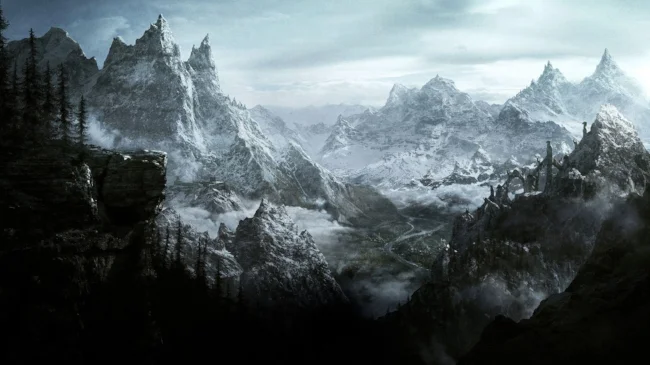
A ten months ago, I wrote about the LOTRO soundtrack and listed some of my favourite tracks. This time round rather than just limit myself to music from one game, I thought it may be more interesting to broaden the remit. So, I have decided to upload seven of my favourite tracks and music cues from various games I have played over the last two decades. As with cinema, the soundtrack of a game plays a very important role. It can make a substantial impact on the players perceptions and enjoyment. The following tracks are examples that I feel have greatly enhanced a game. They’re also ones that I find particularly enjoyable. They are not in any order of preference.

Paul Verhoeven has seldom made a movie without some semblance of controversy associated with it, and his 1992 neo-noir Basic Instinct was no different. Even before its US release, Basic Instinct courted controversy due over its overt sexuality and graphic depiction of violence. It was strongly opposed by gay rights activists, who criticised the film's depiction of homosexual relationships and the portrayal of a bisexual woman as a homocidal narcissistic psychopath. The opening murder with an icepick is still shocking twenty six years later and is an excellent showcase for makeup FX artists Rob Bottin.

You can write pages on Gerry Anderson's 1968 Supermarionation series Joe 90. There's the morally ambiguous premise of giving an emotionally immature nine-year-old the experiences of an adult. Then the psychological effects of allowing him to kill at will. Then there's the perennial issue of scientists prostituting their skills to the intelligence community. One can also reflect upon the absence of any major female characters in the series and how that may impact upon Joe himself. Finally, when one finally arrives she's a gold-digging bitch who tries to exploit Joe’s Dad, Professor McClaine. Joe 90 is certainly a psychiatrist’s dream subject.

Despite the popularity of the TV show in 1965, the two spinoff Thunderbirds feature films were both box offices failures. This has often been attributed to the indifferently written screenplays that seem to have completely missed the sense of suspense that the fifty-minute episodes achieved. Both feature films feel rather slow and like extended episodes rather than big budget extravaganzas. They fail to do anything different with established characters and apart from showcasing more extensive miniature effects in a widescreen format, don’t really have much more to offer. It’s curious that the winning, character driven formula that worked on television was overlooked for these big screen outings.
I grew up during the seventies when network TV shows still put a lot of thought and effort into such things as their theme tune. It was a decade littered with memorable tracks that captured the essence of the shows they came from. Many have now become integral aspects of popular culture, leading to countless internet memes as well as becoming the ringtones of choice for many a fortysomething. However, things are very different now. You can have a staggeringly good theme for your show, but it can't possibly be longer than thirty seconds. And don’t think for a moment that viewers can listen to it again at the end, as it has now become standard practice to compress the credits into a third of the TV screen and preview what's coming next, while some link announcer spouts inanities. Mercifully, cable and streaming companies tend to treat their TV shows with greater respect. The lack of commercial advertising ensures a longer program duration and hence more focus on a theme tune. However, network TV still commands big audiences, yet hasn’t in recent years produced any TV show themes of note.
Middle-earth: Shadow of War
I was sceptical about Middle-earth: Shadow of Mordor when it was first announced back in 2014. Let it suffice to say that despite the hype and the marketing controversy that ensued, the game was surprisingly good, especially the nemesis system. The "extrapolation" of the lore was also quite intriguing and although I tend to be a Tolkien purist at heart, I really liked the narrative and the overall aesthetic of the game. The look and feel of Middle-earth: Shadow of Mordor was very much based on Peter Jackson's movies. At the time of the games launch, I managed to purchase a discounted steam code via a CD key seller and also received the "Dark Ranger" cosmetic skin as a bonus. Overall, I spent about one hundred and forty hours playing Middle-earth: Shadow of Mordor which was good value for money.
I was sceptical about Middle-earth: Shadow of Mordor when it was first announced back in 2014. Let it suffice to say that despite the hype and the marketing controversy that ensued, the game was surprisingly good, especially the nemesis system. The "extrapolation" of the lore was also quite intriguing and although I tend to be a Tolkien purist at heart, I really liked the narrative and the overall aesthetic of the game. The look and feel of Middle-earth: Shadow of Mordor was very much based on Peter Jackson's movies. At the time of the games launch, I managed to purchase a discounted steam code via a CD key seller and also received the "Dark Ranger" cosmetic skin as a bonus. Overall, I spent about one hundred and forty hours playing Middle-earth: Shadow of Mordor which was good value for money.
Considering both the critical and commercial success of the game, it’s hardly surprising that a sequel has been developed. Last year, there were several hints that a follow up game was in production. The most notable of which was when an accomplished stunt and motion capture performer, Lauren Mary Kim accidently cited working on the sequel on her resume. However, the rumours have finally been validated as US retailer Target prematurely posted pre-orders for Middle-earth: Shadow of War, on all major gaming platforms. The listing has subsequently been removed but the game developers, Monolith Productions, have confirmed their involvement in the project. According to a further report on Kotaku, Middle-earth: Shadow of War will continue the story of Talion and Celebrimbor, as they work together to forge their own Ring of Power to battle Sauron.
I am pleased that this franchise will continue and am hoping that it will expand upon the systems and game mechanics that were showcased in the prequel. I also have a curious interest in the narrative as it is such a bold gambit do something so demonstrably non- canonical. It would appear that Middle-earth: Shadow of War will feature two Nemesis expansions, two story expansions, and a "Gold War Chest” over the course of its life cycle. The Nemesis expansions will include a new Orc tribe, enemies, missions, and more, while the story expansions will introduce a new campaign and playable character. Early adopters and pre-order junkies can expect to pay $100 up front for access to all content on 22nd August. I may well wait to the end of the year when a Game of the Year edition is inevitable.
Update:
A cinematic trailer has now been released. It does not feature any in-game footage but does set up the narrative for Middle-earth: Shadow of War. A further trailer coming in march will showcase actual footage from the RPG. Pre-orders are now available on all platforms.
Some video games lend themselves to being set aside and resumed at a later date with zero consequences. These are often casual games with no major goals other than having fun while playing them. Fall Guys is a great example of this. You have a cartoony avatar that participates in zany group races, filled with obstacles. You run, jump, climb but the controls are far from difficult. You may well become skilled but such things are mitigated by the other players as they stumble around. You’re not at the mercy of apex players or “try hards”. It is not a game about winning and mastering techniques. The fun comes from playing it and the unique experience you have each time. I’ve been playing this game, on and off, since it’s launch in 2020 and in that time I have only ever won once (winning requires you to win a series of 4 to six individual races). However, whenever I pick up my controller and play Fall Guys, I have fun and the game lifts my spirits.
I recently completed the main story in Tainted Grail: The Fall of Avalon. In total I spent about sixty hours playing the game. I began at the start of the year, then took a break for a while but returned to it recently because I wanted to see if I could unlock a specific ending. I did manage to do this. Like so many other RPGs, Tainted Grail: the Fall of Avalon has a central storyline, along with a wealth of side quests, based around factions in specific zones. I think I possibly completed about a two thirds of these. However, once I finished the main story, my interest in the game began to wane. I finally left my character in the last major quest hub in case I wish to return at a future date. I then logged out of the game and uninstalled it from my PC to free up space for whatever I was to play next. In this case its The Sinking City 2. None of this is a negative reflection on Tainted Grail: the Fall of Avalon. I enjoyed the time I spent playing this quirky RPG. I simply had my fill and left to play something else.
On Tuesday 11th April, Aspyr Media rather surprisingly re-released The Lord of the Rings: War in the North, a co-op action-RPG from 2011. This game was delisted in late 2019, possibly due to changing rights ownership or a license expiring. Hence, I was somewhat discombobulated by the return of this title to all major gaming platforms. Mind you, the Embracer Group (through its subsidiary Middle-earth Enterprises) still controls the worldwide commercial and video game licensing rights for The Lord of the Rings and The Hobbit. Furthermore they have explicitly stated that they have plans for more games. It would appear this also means re-releasing and updating old favourites. It is also worth noting that they own Aspyr Media, which is also a bit of a giveaway. Let it suffice to say that this re-release and sparked enthusiastic online debate as to whether any other he Lord of the Rings themed games from the same era will receive a similar makeover. Judging by the internet chatter, there’s potentially a market for them.
The next expansion for the MMORG, The Lord of the Rings Online, was announced on the 1st August, via the gaming website MMORPG.The Wolves of Mordor, which will launch later in the year, appears ambitious in scope as it will include two new game systems as well as the obligatory story update. This expansion takes place in Draugardh located in the North East of Mordor, beyond the Plateau of Gorgoroth. It includes the new zones of Heledhris, Parth Rhavas and Nan Ogol. These vary environmentally ranging from the arid, volcanic and semi-tropical. Players will encounter the Daugrim in these regions, Werewolves but not in the modern sense. This is not the lycanthropy of Eastern European legends but in the established Tolkien idiom of fell spirits inhabiting the bodies of Wolves. The region also sees the return of the Woses and players can expect to encounter Elves and scouts from Gondor. As ever with LOTRO expansions, there will be new instances as well as a raid.
This is a post about the power of nostalgia and how sometimes, interacting with something from your past, be it physically or mentally, can produce a very strong and tangible emotional reaction. In some instances, this can be the result of something that you have specifically set out to do. On other occasions you can wander into a sense of nostalgia purely by chance. Today I experienced a very strong sense of nostalgia while watching a YouTube video and then again when I sought to replicate what I had seen. The video showed someone installing Windows 95 on to an old 486 PC from that era. The Window’s start up sound really touched a nerve (but in a good way) and then when the guy in the video launched Space Cadet 3D Pinball, a game that shipped with the operating system, I felt a strong compulsion to track down a copy and install the game myself, thus revisiting something that was an integral part of my life in 1995.
RV There Yet? is possibly the most entertaining game I’ve never played. My vicarious pleasure regarding this title has come exclusively from watching two popular YouTubers, JackFrags and WillFromWork, play through the game over a series of videos. It has been immensely amusing to watch and I have empathised a great deal as the group of four players has struggled with the game’s unpredictable mechanics and their own team’s dynamic. I could go and buy RV There Yet? myself but I doubt if I would ever have a gaming experience anywhere close to what I’ve watched online recently. So in some respects watching these videos has been an interesting alternative as I’ve been entertained, which ultimately is the point of video games. Perhaps there is a deeper philosophical point here that the game developers should reflect upon, as they’ve lost a potential sale. However, that is separate discussion for another day.
I don’t keep up with gaming news as much as I use to but several noteworthy announcement have come to my attention of late. Firstly, there’s an expansion, Songs of the Past, coming for the Witcher III: Wild Hunt in 2027. No doubt this is to pave the way for the Witcher IV. Next, I also found out about Hand of Fate: Horde. I liked this franchise and was saddened to learn that the original studio, Defiant Development, closed. Hence is was a pleasant surprise to see this new game being developed by members of the original studio. The third announcement was regarding Guild Wars 3. A new MMORPG in active development by a major studio is no small feat and is certainly good news for fans of this franchise and the genre per se. However, once you look beyond this news this announcement raises several questions and has certainly given me pause for thought. Let us take a few moments to consider them.
Star Trek Online has many in-game systems that are common to the MMORPG genre. The reputation system is one such example. In STO there are 13 reputation factions. Once a player has reached level 50 they may start progressing through the 6 reputation tiers of each one. Players gain progression through daily projects (20 hours in duration). Hourly projects are also available though they yield less reputation advancement and are limited to three times a day. Hence 20 hour projects are consider by default the most efficient way to gain rep. Projects require 30 Faction Specific Marks (earned via various activities in-game), 15,000 Energy Credits (standard in-game currency) and 2000 Expertise points. The most efficient way to tackle the reputation grind is to build up the necessary resources in advance and then at a designated time each day, start all 13 respective projects. Upon completion projects yield a player bound lockbox containing a random space or ground weapon, a console or Elite Marks which can be used to acquire faction gear.
I was recently perusing my archive of old blog posts, when it struck me how much I’ve written about the MMORPG genre over the years. Naturally, there was far more material from between 2008 and 2012 as that was period when I immersed myself in the genre and was very enthusiastic about it. I was at a point in my life when I had the time to dedicate to such games and I was happy to participate in the social aspect of they offered. I would regularly play through group content and spend time socialising online with fellow guild members. My experience remains a textbook example of how online games can be more than the sum of their parts and that where you are at in your life has a major impact upon your overall enjoyment. As I read though various old posts it became clear that my experiences where specific to this particular part of my life and that they cannot be repeated. My relationship with the genre is very different now and that’s fine.
Creating alts is an integral aspect of the MMORPG genre. Many players will create a character of a specific class or faction, play it for a while, lose interest in it or they may decide that it is just not for them. Fortunately it is no effort at all to simply re-roll a new alt and set off once again. Furthermore, lots of players never reach level cap of the MMORPG that there playing. When the going get’s tough, so to speak, you can either soldier on for another 50 levels or simply create a new alt and return to the comfort of tried and tested content. Alts also give you the chance to secure an accolade or achievement that you previously missed. They are also of great benefit to the genres social aspects. Creating a new alt so you can play along with a friend who is just starting is great fun. Developer’s love them too as it means you’re still playing the game.
I recently took a break from Crimson Desert choosing instead to to play something familiar and easy going. As I’ve been logging into Star Trek Online daily to participate in the anniversary event, I decided to look through my various alts and see how far they had progressed through the game and what resources they had. At present I have twelve alts. My primary Captain was created in 2015 during the original Delta Recruit Event. I had previously played STO intermittently since its release in January 2010 but I never kept any of those characters. Hence this decade old Tactical Federation Captain has been my main focus when playing. The other eleven alts are the result of other recruitment events or whenever I wanted to try something different, such as playing a specific class or faction. I obviously played a lot of STO during the lockdown as several alts date from that period. Several had maximum reputation across all factions.
The action, open world RPG Crimson Desert has been patched five times since it launched on March 19th and there have also been multiple hotfixes. At first glance this isn’t anything unusual. New games have bugs and issues arise once a game is released and played across a much wider variety of hardware than in QA testing. However, if you read the patch notes that accompany these sizeable downloads it quickly becomes apparent that developer’s Pearl Abyss are not just addressing bugs and software glitches. They are actively engaging with their player base and responding to suggestions and requests from that community. Although this is not a unique approach, what is surprising is the speed and quantity in which these player driven changes are happening. There seems to be an active ongoing process to refine the game and eliminate some of its “rough edges” and the players are contributing to this process with their feedback.
According to my Steam statistics, I last played Starfield on 19th December 2023. I bought the game upon its release in September of that year and played in total for 136 hours. Starfield held my interest for three and a half month and I wrote seven blog posts about various aspects of the game. Although there were some engaging aspects to Starfield, I did feel that that the game was somewhat lacking in systems and content, at that point in its lifecycle. I also think that the marketing and player expectations associated with Starfield were overblown and unrealistic. The shadow of Skyrim looms large over all new Bethesda releases and they don’t seem able to quite recapture that magic. Hence, I inevitably drifted away from Starfield and to another game and was effectively “done” with it. I have not played the game since which seems to validate the theory that game are becoming increasingly more ephemeral.
13 days after its release, market analysts estimate that Crimson Desert has already earned $200 million across the four main platforms (PC, PlayStation 5, and Xbox Series X and S). The game is certainly proving popular among gamers with the internet awash with live streams and “let’s play” videos. However, reviews are mixed both among gaming journalists and YouTube influencers. Common complaints about the game include that it is slow to start, the controls are poorly laid out on all platforms and that developer’s Pearl Abyss have done a poor job of explaining most aspects of the game to new players. Although such criticisms are true to a degree, I think these complaints highlight how many gamers are conditioned to expect new titles to follow a specific pattern with regard to pacing, narrative exposition and learning in-game systems. A pattern that Pearl Abyss has chosen to ignore, instead favouring an old school approach.
Early on Crimson Desert, the main quest requires the player to enter a tavern and arm wrestle a particularly strong guard. The arm wrestling match consists of a quick time event. If playing on PC you have to rapidly press the “E” key which turns a power meter from white to red. Then a white dial appears above the meter with a rotating hand. When the hand passes over a segment of the dial that is marked by hatching, the player must press the “R” key. The idea being the meter filling with red is you strength building (or waning) and the “R” key prompt indicates when to try and force your opponent’s arm. You will need to to continuously press the “E” key throughout the arm wrestling match and the “R” key about 4 times to win.
Earlier this week, Nvidia posted a video featuring their latest iteration of DLSS technology (Deep learning super sampling). DLSS 5 is an AI-powered “real-time neural rendering” process and unlike previous versions that focused on improving frame rates through upscaling or frame generation, DLSS 5 uses generative AI to “infuse” frames with photorealistic lighting and material details that the game engine never actually calculated. Let us pause for a moment and consider these words. Material detail that the game engine never actually calculated. Therein lies the rub. If you watch the aforementioned video or peruse the images posted here, it is abundantly clear what the technology does.
The next expansion for the MMORG, The Lord of the Rings Online, was announced on the 1st August, via the gaming website MMORPG.The Wolves of Mordor, which will launch later in the year, appears ambitious in scope as it will include two new game systems as well as the obligatory story update. This expansion takes place in Draugardh located in the North East of Mordor, beyond the Plateau of Gorgoroth. It includes the new zones of Heledhris, Parth Rhavas and Nan Ogol. These vary environmentally ranging from the arid, volcanic and semi-tropical. Players will encounter the Daugrim in these regions, Werewolves but not in the modern sense. This is not the lycanthropy of Eastern European legends but in the established Tolkien idiom of fell spirits inhabiting the bodies of Wolves. The region also sees the return of the Woses and players can expect to encounter Elves and scouts from Gondor. As ever with LOTRO expansions, there will be new instances as well as a raid.