
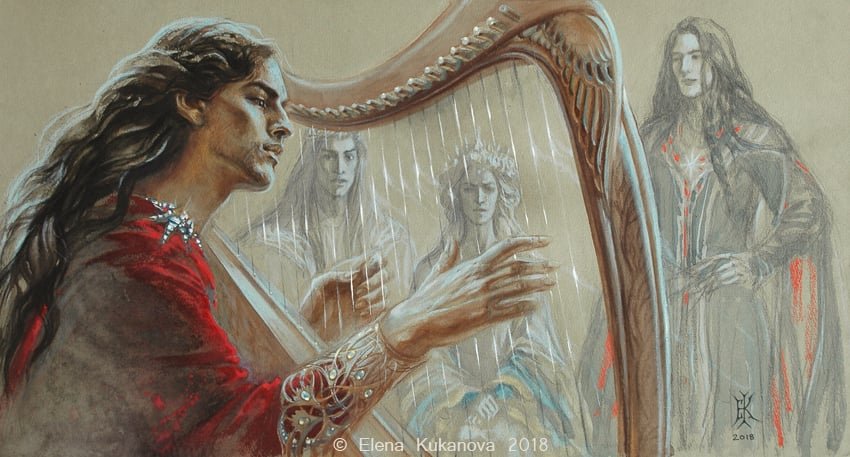
The Songs of Middle-earth: Part Two
Song is a fundamental aspect of Tolkien's writing, serving the same role as it does in our own cultures. It is a means of documenting history, expressing cultural heritage and maintaining traditions for the people of Middle-earth. The Ents sing lists of lore. The Rohirrim sing of battle and heroic deeds and the Shire folk, of ale and frivolity. Let us not forget that Tolkien’s fictitious world, Arda, was effectively sung into existence via the Ainulindalë, the divine music of creation sung by the Ainur. The cultural significance of song is also a key element of Tolkien’s world building. The songs within the narrative bolster the authenticity of the various cultures of Middle-earth, embedding their history and heritage into the story. Music, rhymes and songs also help define characters. The lighter ones sung by hobbits, provide lighthearted moments, contrasting with the dark and dangerous tones of the larger narrative. It also reinforced their rustic heritage.
Song is a fundamental aspect of Tolkien's writing, serving the same role as it does in our own cultures. It is a means of documenting history, expressing cultural heritage and maintaining traditions for the people of Middle-earth. The Ents sing lists of lore. The Rohirrim sing of battle and heroic deeds and the Shire folk, of ale and frivolity. Let us not forget that Tolkien’s fictitious world, Arda, was effectively sung into existence via the Ainulindalë, the divine music of creation sung by the Ainur. The cultural significance of song is also a key element of Tolkien’s world building. The songs within the narrative bolster the authenticity of the various cultures of Middle-earth, embedding their history and heritage into the story. Music, rhymes and songs also help define characters. The lighter ones sung by hobbits, provide lighthearted moments, contrasting with the dark and dangerous tones of the larger narrative. It also reinforced their rustic heritage.
Eight years ago I collated three songs that were either inspired by Tolkien’s writings or were indeed specific songs from the source text that had been set to music. These can be found here; The Songs of Middle-earth: Part One. The post was originally intended to be part of a series, so I therefore thought it was high time that I wrote about another three, as there is still so much material to choose from. Once again I have chosen two which are clear adaptations of songs in The Hobbit and The Lord of the Rings and have been set to music. Then there is one which is an original piece, though clearly inspired by Tolkien’s Legendarium and sung in Quenya. I have also added the lyrics and where necessary an English translation.
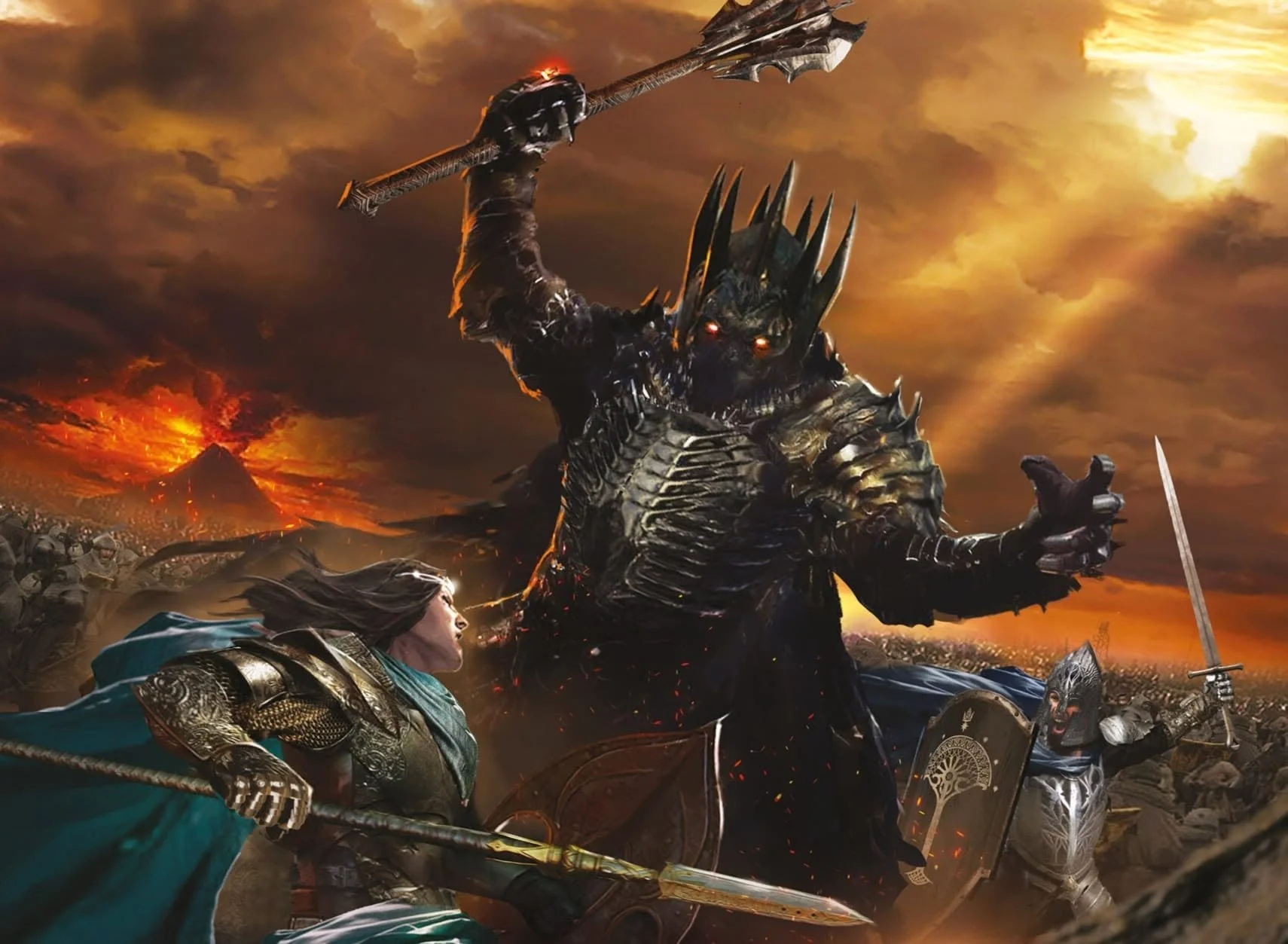
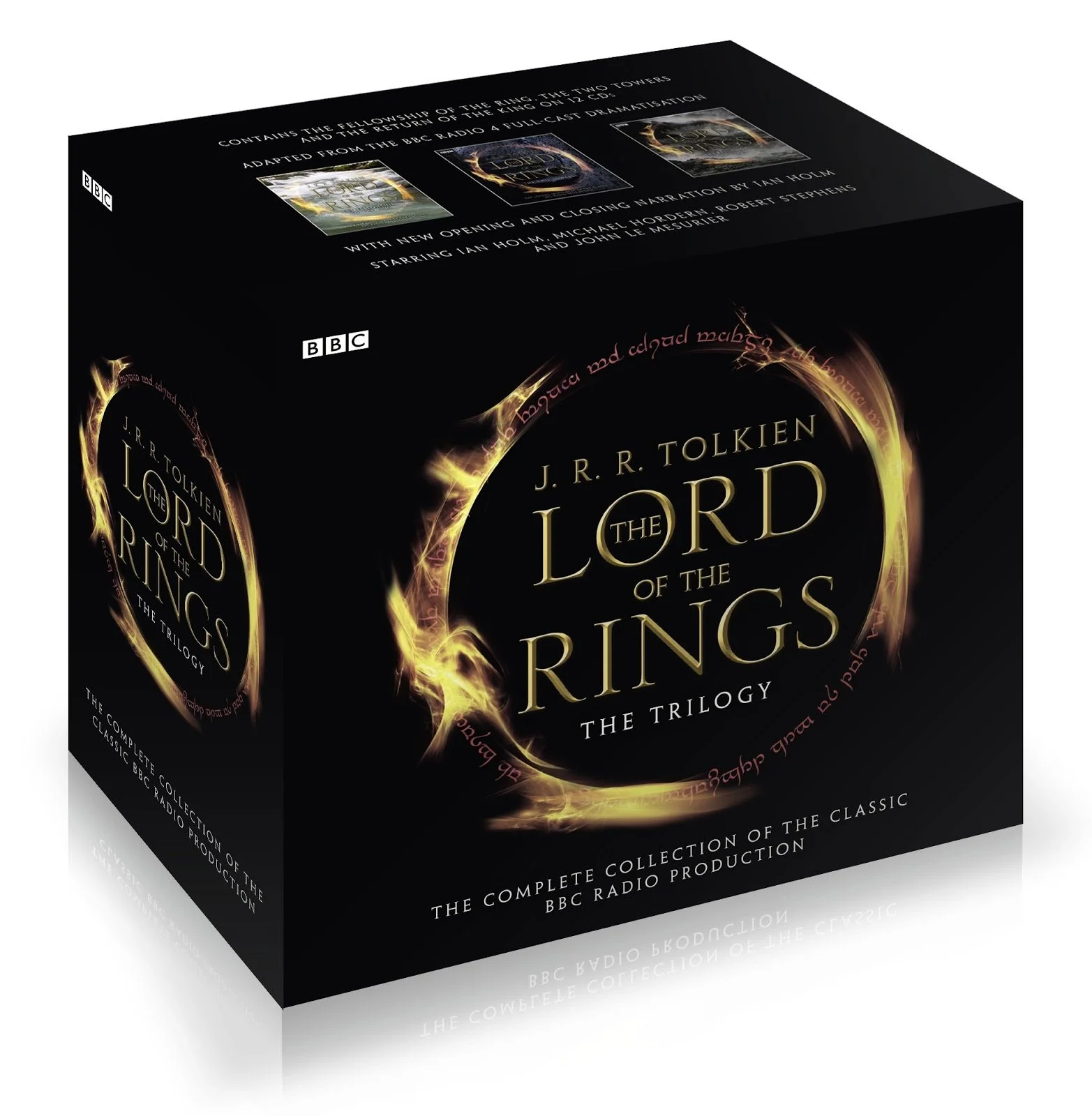
Gil-galad was an Elven king is a poem consisting of three stanzas, spoken aloud by Sam Gamgee in The Fellowship of the Ring. It is a brief account of Gil-galad, the last High King of the Noldor and his death during the siege of Barad-dûr at the hands of Sauron. Sam states that he learned the verse from Bilbo Baggins but Strider then asserts that it is part of a larger, older piece, written in an ancient tongue (probably Quenya) and that Bilbo no doubt translated it into the common speech. The song version presented here is from the BBC radio adaptation of The Lord of the Rings. The music is by Stephen Oliver and composed in the English pastoral tradition, The vocalist is actor and singer Oz Clarke who adopts a baritone style.
Gil-galad was an Elven king
Of him the harpers sadly sing
The last whose realm was fair and free
Between the mountains and the sea
His sword was long, his lance was keen
His shining helm afar was seen
And all the stars of heaven's field
Were mirrored in his silver shield
But long ago he rode away
And where he dwelleth none can say
For into darkness fell his star
In Mordor where the shadows are
Misty Mountains features in Peter Jackson’s The Hobbit: An Unexpected Journey. The music is written by Howard Shore and the words are an abbreviated version of the original song written by J.R.R. Tolkien in the book The Hobbit. Sung by the character Thorin Oakenshield, played by actor Richard Armitage, the rest of the cast provide additional vocals. The song itself is an oral history of how the kingdom of Erebor was attacked by the Dragon Smaug and how the dwarves were driven from their home. It is sung “a cappella” and has an almost “Gregorian chant” religious quality to it. The song was subsequently used as a leitmotif throughout the remainder of the film.
Far over the Misty Mountains cold
To dungeons deep and caverns old
We must away, ere break of day
To find our long forgotten gold
The pines were roaring on the height
The winds were moaning in the night
The fire was red, it flaming spread
The trees like torches blazed with light
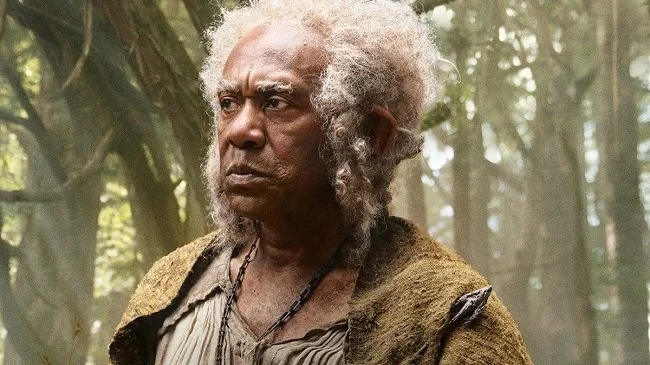
Golden Leaves is an original song composed by Bear McCreary for the first episode of the second season of the Amazon Prime series The Lord of the Rings: The Rings of Power. It features lyrics sung in Quenya by actor Benjamin Walker, who plays Gil-galad, the last High King of the Noldor. The song is a lament for the fading of the Elves in Middle-earth and how it is time to return to Valinor. According to Bear McCreary, the lyrics were created by John D. Payne and were inspired in part by the lyrics Tolkien wrote for Galadriel’s Song in The Fellowship of the Ring. Dialect coach Leith McPherson guided Benjamin Walker’s pronunciation of the Quenya text. Characters expressing themselves in song is a core tenet of Tolkien’s writing and Golden Leaves reflects that admirably.
Sís laurië lassi taiter,
yénin linwavandië.
Anpalla Vai Ahtalëa,
sí lantar Eldaniër.
Eldalié! Eldalié!
Hrívë túla helda ré úlassëa.
Eldalié! Eldalié!
I lassi lantar celumenna.
(Children’s choir:) Cormar nelde aranin Eldaron
Eldalié and’ amárielvë
ambena solor.
Sí néca riëmancan,
viliën an Valinor
Eldalié! Eldalié!
Hrívë túla helda ré úlassëa.
Eldalié! Eldalié!
I lassi lantar celumenna.
Here long the golden leaves grew,
on years branching.
For beyond the Sundering Seas,
now fall Elven-tears.
O’ Elven-kind! O’ Elven-kind!
Winter is coming, bare leafless day.
O’ Elven-kind! O’ Elven-kind!
The leaves are falling in the stream.
(Children's choir:) Three rings for the Elven kings
Elven-kind long have we dwelt
upon this hither shore.
Now fading crown I trade,
to sail to Valinor.
O’ Elven-kind! O’ Elven-kind!
Winter is coming, bare leafless day.
O’ Elven-kind! O’ Elven-kind!
The leaves are falling in the stream.









The Songs of Middle-earth: Part One
Tolkien's use of song and verse are an integral part of his writings. I am not musically talented myself, nor am I a scholar of song structure but I appreciate how he uses them for plot exposition and character development. In The Lord of the Rings, the medium of song is also used as a means of conveying the enormity of Middle Earth and the wealth of history therein. They give us a sense of the realms lore and heritage, stretching back over millennia. The respective sophistication of each song also reflects the culture that created them. Songs from The Shire are rustic and quaint. The songs of Men are bombastic and bold. Whereas Elven music is often melancholy and complex.
Tolkien's use of song and verse are an integral part of his writings. I am not musically talented myself, nor am I a scholar of song structure but I appreciate how he uses them for plot exposition and character development. In The Lord of the Rings, the medium of song is also used as a means of conveying the enormity of Middle Earth and the wealth of history therein. They give us a sense of the realms lore and heritage, stretching back over millennia. The respective sophistication of each song also reflects the culture that created them. Songs from The Shire are rustic and quaint. The songs of Men are bombastic and bold. Whereas Elven music is often melancholy and complex.
Norse and Anglo-Saxon Mythology were immensely important and influential on Tolkien. Thus, many of his songs are in the idiom of Norse poetry. He often uses literary devices such as the pitch of repeating vowel sounds (assonance) as well as the resonance of repeating consonant sounds (both in alliteration and in consonance). Tolkien himself sanctioned composer Donald Swann (of Flanders and Swann fame) to set some of his work to music and it met with his approval. Yet there are no definitive musical versions. This leaves a great deal of scope for artists from all musical disciplines to interpret his work.
A Google search will provide you with a wealth of artists that have attempted to bring Tolkien’s songs to life. From Rick Wakeman, Daniel McCarthy to Sir Christopher Lee. I have selected a few of examples of these for your consideration. Some are the exact songs as they were written by the Professor himself, with accompanying music. Others have been cleverly adapted or abridged. I have even included some material that was simply inspired by Professor Tolkien's work.
The BBC radio adaptation of The Lord of the Rings in 1981 was a milestone in radio drama. Composer Stephen Oliver made an immeasurable contribution to the production with his intelligent and musically literate expressions of Tolkien's written work. O Elbereth Gilthoniel is a paean in reverence of the star Queen. Oliver cleverly adapts the Sindarin text into a beautiful and expressive song, sung in the style of a madrigal. It is a bold interpretation yet it works superbly, reflecting the artistic dignity of the Elves.
A Elbereth Gilthoniel
silivren penna míriel
o menel aglar elenath!
Na-chaered palan-díriel
o galadhremmin ennorath,
Fanuilos, le linnathon
nef aear, sí nef aearon!
A Elbereth Gilthoniel
o menel palan-diriel,
le nallon sí di'nguruthos!
A tiro nin, Fanuilos!
O Elbereth Starkindler,
white-glittering, slanting down sparkling like a jewel,
the glory of the starry host!
Having gazed far away
from the tree-woven lands of Middle-earth,
to thee, Everwhite, I will sing,
on this side of the Sea, here on this side of the Ocean!
O Elbereth Starkindler,
from heaven gazing afar,
to thee I cry now beneath the shadow of death!
O look towards me, Everwhite!
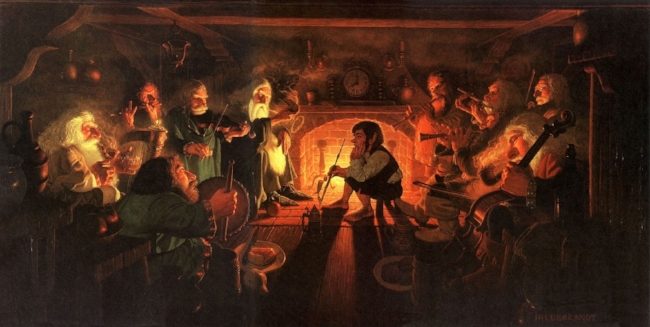
Now this may be a controversial choice, coming from the 1977 animated version of The Hobbit. It is not a film held in high regard. In the Valley, Ha! Ha! written by Jules Bass and performed by Glenn Yarbrough is based upon the song the Elves sing as the Dwarves, Gandalf and Bilbo ride down into the Valley of Rivendell for the first time. The musical arrangement is very much a product of the seventies and the warbling voice of Mr. Yarbrough is not to everyone's liking. Yet it catches the light-hearted spirit of the source text very well and it is worryingly hummable. I have warmed to it in recent years and consider it a good example of less being more.
O! What are you doing,
And where are you going?
Your ponies need shoeing!
The River is flowing!
O! Tra-la-la-lally
Here down in the valley!
Ha ha!
O! Where are you going,
With beards all a-wagging?
No knowing, no knowing
What brings Mister Baggins,
And Balin and Dwalin
In June in the valley
Ha ha!
O! Will you be staying,
Or will you be flying?
Your ponies are straying!
The daylight is dying!
To fly would be folly,
To stay would be jolly!
O! Tril-lil-lil-lolly
Ha ha!
O! What are you doing,
And where are you going?
Your ponies need shoeing!
The River is flowing!
O! Tra-la-la-lally
Here down in the valley!
Ha ha!
Mithrandir by Leonard Rosenman with lyrics by Mark Fleischer, comes from the 1978 animated version of The Lord of the Rings. The score by veteran composer Rosenman is not considered to be a particularly innovative piece of work but it is both functional and adequate. Director Ralph Bakshi found it clichéd and wanted a soundtrack by led Zeppelin. The song is somewhat traditional in its style, starting with elements of a holiday choir and ending in a Miklos Rozsa style biblical idiom. Yet despite its clumsy implementation the lyrics are a curiously accurate summation of Gandalf's character. The song is sung in Lothlorien as a lament to the Grey Pilgrim and is moving in a rather honest and simple fashion.
Let the night never cease to call you
Let the day nevermore be the same
Though you've gone where we cannot find you
In each heart you have set your name
Mithrandir far you wander
And long may your name be sung
Through kingdoms of starlight
And realms of the sun
Mithrandir though you're hidden
We're still guided by your light
You're walking beside us
A friend in the night
We were lost when the dark descended
And the light gathered into a storm
You appeared like a sunlit morning
At the winds of a world at war
Mithrandir far you wander
And long may your name be sung
Through kingdoms of starlight
And realms of the sun
Mithrandir though you're hidden
We're still guided by your light
You're walking beside us
A friend in the night
Mithrandir rising through the shadow
Like a star shining deep in its home
You will dwell in our hearts forever
Nevermore will we stand alone

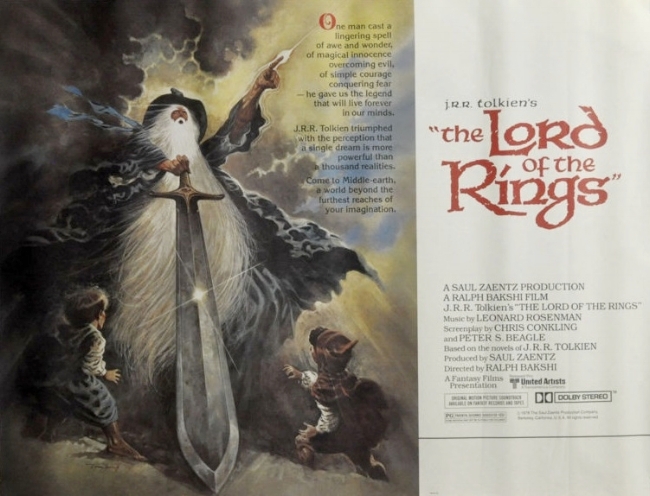
Sometime in August 1979, I was travelling with my father by train to London, when I first saw posters advertising the Ralph Bakshi animated version of J. R. R. Tolkien’s The Lord of the Rings. The film had been released in the US the previous November and I aware of its existence because I had read articles about it production in Starburst magazine. Even at the age of 11 I was interested in genre films and television, having been raised on Doctor Who and Ray Harryhausen’s back catalogue of fantasy movies. Furthermore, I was familiar with Tolkien’s first novel, The Hobbit, as my father had read it to me when I was younger. I was impressed by the poster in that way that only an 11 year old can be. Why was Gandalf do gigantic? Also the A rating was enigmatic. Most animated films were usually rated U. Yet despite my interest, I didn’t see The Lord of the Rings at the cinema during the summer holidays.