Upgrade Culture
Prior to her retirement in 2014, Mrs P bought a HP laptop (HP 15-g094sa). The model was chosen based upon her needs and budget. The fact that it was purple was also a contributory factor. This laptop came with Windows 8 installed and over the years has been upgraded to Windows 10. Being an older model it has a HDD rather than a SSD. However, given what it is used for, IE emails and online shopping and nothing else, it has always been able to cope with the task in hand. 8 years later the specifications should still be adequate to do these specific things (AMD Quad-Core A8-6410 APU). Sadly, the continued growth of Windows 10 has meant that the operating system has gotten bigger and more bloated with features. Hence this laptop struggles with updates, often spending 30 minutes or more each time it’s turned on, which is possibly only once a week. Overall, it is no longer the useful and convenient tool that it was when bought.
Prior to her retirement in 2014, Mrs P bought a HP laptop (HP 15-g094sa). The model was chosen based upon her needs and budget. The fact that it was purple was also a contributory factor. This laptop came with Windows 8 installed and over the years has been upgraded to Windows 10. Being an older model it has a HDD rather than a SSD. However, given what it is used for, IE emails and online shopping and nothing else, it has always been able to cope with the task in hand. 8 years later the specifications should still be adequate to do these specific things (AMD Quad-Core A8-6410 APU). Sadly, the continued growth of Windows 10 has meant that the operating system has gotten bigger and more bloated with features. Hence this laptop struggles with updates, often spending 30 minutes or more each time it’s turned on, which is possibly only once a week. Overall, it is no longer the useful and convenient tool that it was when bought.
Recently, Google sent an email regarding it ceasing support for older email clients that don’t conform to the latest security protocols. Mrs P’s laptop has an installation of Microsoft Office 2010 and Outlook will no longer be able to download directly from her gmail account in May. Combined with the performance issues caused by the ever increasing heft of Windows 10, I recommended that the laptop was replaced and Office 365 installed. To cut a long story short a new HP laptop has been purchased (HP 14s-dq2019na). This new model based on an Intel Core i3 processor is more than adequately specified to run Windows 10 and I will probably take the opportunity to upgrade to Windows 11. However, this costly undertaking, which also comes with a requirement to migrate data, has purely been driven by Microsoft and Google. Considering what the laptop is used for, the original specifications of the first model should still be adequate. This is all down to upgrade culture.
Upgrade culture seems to be driven by several factors. The ever growing software which reduces performance in return for superfluous functionality. The myth that anything new is by default superior, despite the fact that in the mobile phone and tablet market we’ve seen a slow down in significant performance increases between new hardware releases. And then there’s the “accessorisation” of technology. Tech is no longer just functional, it’s fashionable, aspirational and inspirational, as well as other bullshit marketing terms. Apparently, I’m due a mobile phone upgrade roundabout now. There’s nothing wrong with the Samsung Galaxy S10 5G that I currently own. I’ve had this since December 2019 and the phone is in good condition and performs just as well as it did back then. Anything new will simply have a fancier camera, although I dispute claims that I need better than I have already. Other sellings points will more than likely be gimmicks or that is how I perceive them. A screen that folds is not essential for me.
I am aware that I could install an alternative operating system on Mrs P’s laptop and it would potentially run as good as it did back in 2014 but that is not ideal for someone who is not especially confident with tech per se. Ultimately, we’re fortunate to be in the position to afford a replacement laptop although it is somewhat galling when one considers that the requirement to upgrade has been forced upon the user for “questionable” reasons. If Microsoft and other companies insist upon expanding the functionality of their software, it would be nice to be able to selectively remove the “stuff” you don’t want. Especially if it has an impact upon your systems performance. But I suppose that a free product such as Windows is not going to allow that sort of control and empowerment to be available to customers. It would impact hardware sales and upset an established business model. So we continue to upgrade continuously, while our obsolete tech piles up, awaiting recycling. The phrase “unsustainable” comes to mind for some reason.





















Thanks Google Page Experience Update For Desktop
Last Tuesday, I noticed a drop in traffic to Contains Moderate Peril. As I’m currently only writing every other day, I assumed that it is normal to have occasions when visits to the site may decrease. However the decline has persisted and to date, works out broadly as a 20% reduction of traffic to my blog. At present, I have a lot going on in my life so blogging and website growth are not my highest priorities. However, I am a firm believer in cause and effect and so a situation like this must be down due to other external factors, rather than just the capricious nature of my readership. So I searched online to see if Google had made any changes and I subsequently found that they had rolled out an algorithm update starting on Tuesday 22nd February 2022. Apparently Google Page Experience Update For Desktop “is designed to highlight pages that offer great user experiences. Page experience remains one of many factors our systems take into account. Given this, sites generally should not expect drastic changes”. I beg to differ.
Last Tuesday, I noticed a drop in traffic to Contains Moderate Peril. As I’m currently only writing every other day, I assumed that it is normal to have occasions when visits to the site may decrease. However the decline has persisted and to date, works out broadly as a 20% reduction of traffic to my blog. At present, I have a lot going on in my life so blogging and website growth are not my highest priorities. However, I am a firm believer in cause and effect and so a situation like this must be down due to other external factors, rather than just the capricious nature of my readership. So I searched online to see if Google had made any changes and I subsequently found that they had rolled out an algorithm update starting on Tuesday 22nd February 2022. Apparently Google Page Experience Update For Desktop “is designed to highlight pages that offer great user experiences. Page experience remains one of many factors our systems take into account. Given this, sites generally should not expect drastic changes”. I beg to differ.
Please feel free to search about Google Page Experience Update For Desktop and to read exactly what it’s supposed to do and how it “works”. I have and it is simply beyond my skill set to fully comprehend it. From what I can ascertain it’s supposed to ensure that the best content continues to appear in search results, which is the usual corporate mantra. My real concern is whether it’s fair and if the system can be manipulated. Will smaller content creators be able to equitably compete with the big players. Well, it looks like the answer is “no”. I am not the only person to see a drop in traffic. I have found several posts over at SEO subreddit and they squarely point the finger at Google for this change. There also seems to be growing concern over Google’s continued push for standardised criteria governing content creation. If your site doesn’t entirely comply with these it will have difficulty being found. Sadly, a poorer quality site that is compliant, will rank higher in search results.
Statistics are not the defining reason why I and many other people write online. But let us not be coy. Finding an audience is important and you cannot do that if your website is not visible. However, whether anyone finds Contains Moderate Peril ultimately is a matter out of my hands. I could slavishly follow the prevailing content writing styles and SEO trends in an attempt to “game the system”. However, I like to write in the same manner in which I express myself in real life. Having to conform to a specific regulated standard to reach a broader readership is a double edged sword. You may gain accessibility but at the expense of nuance, maturity and character. Personal blogs are often not just about the content but the content creator as well. However, all of this is academic while we deal with the reality of Google Page Experience Update For Desktop. Perhaps it is naïve to expect an equitable process and a level playing field from a corporate entity such as Google.






















Playing MMOs Solo
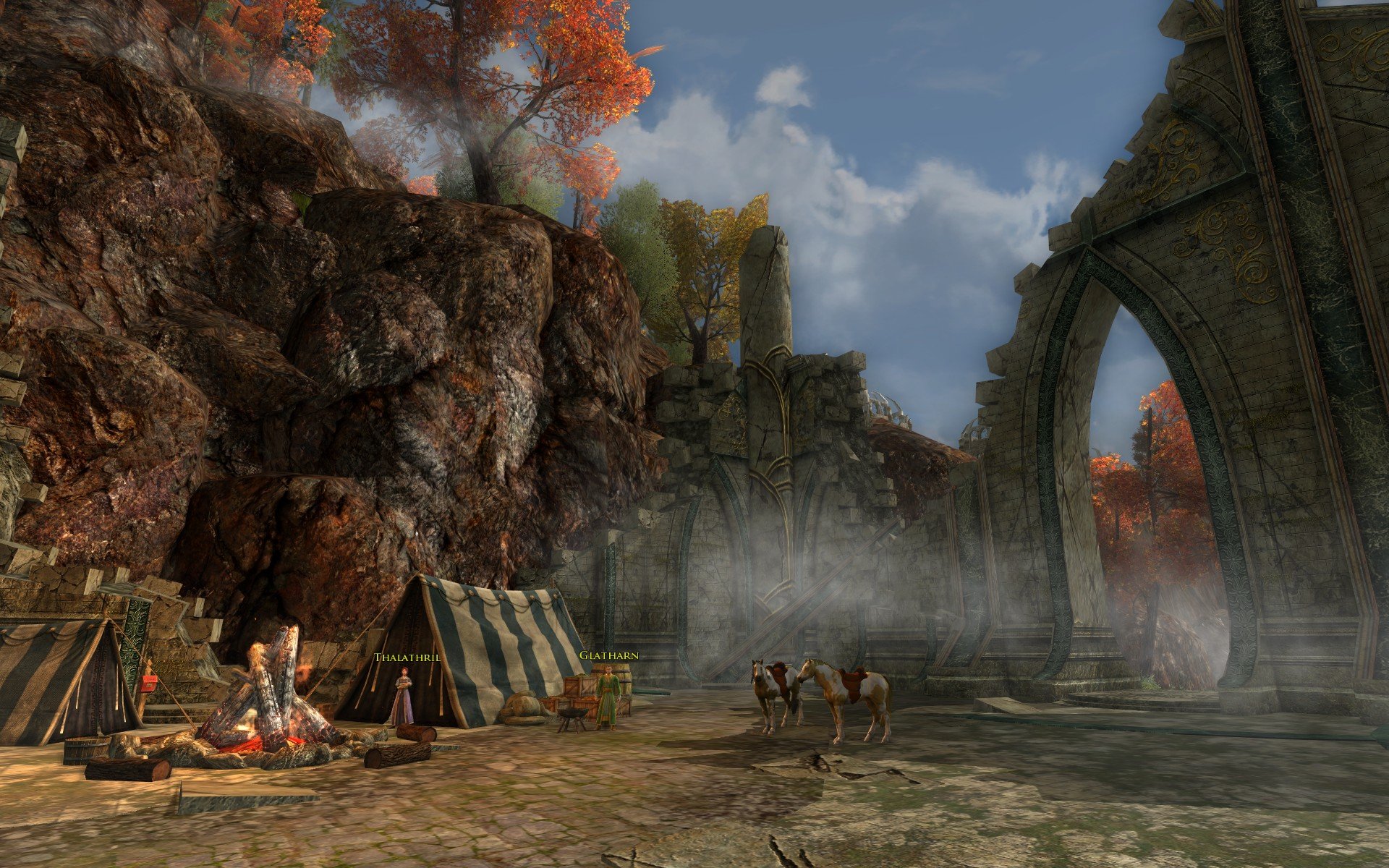
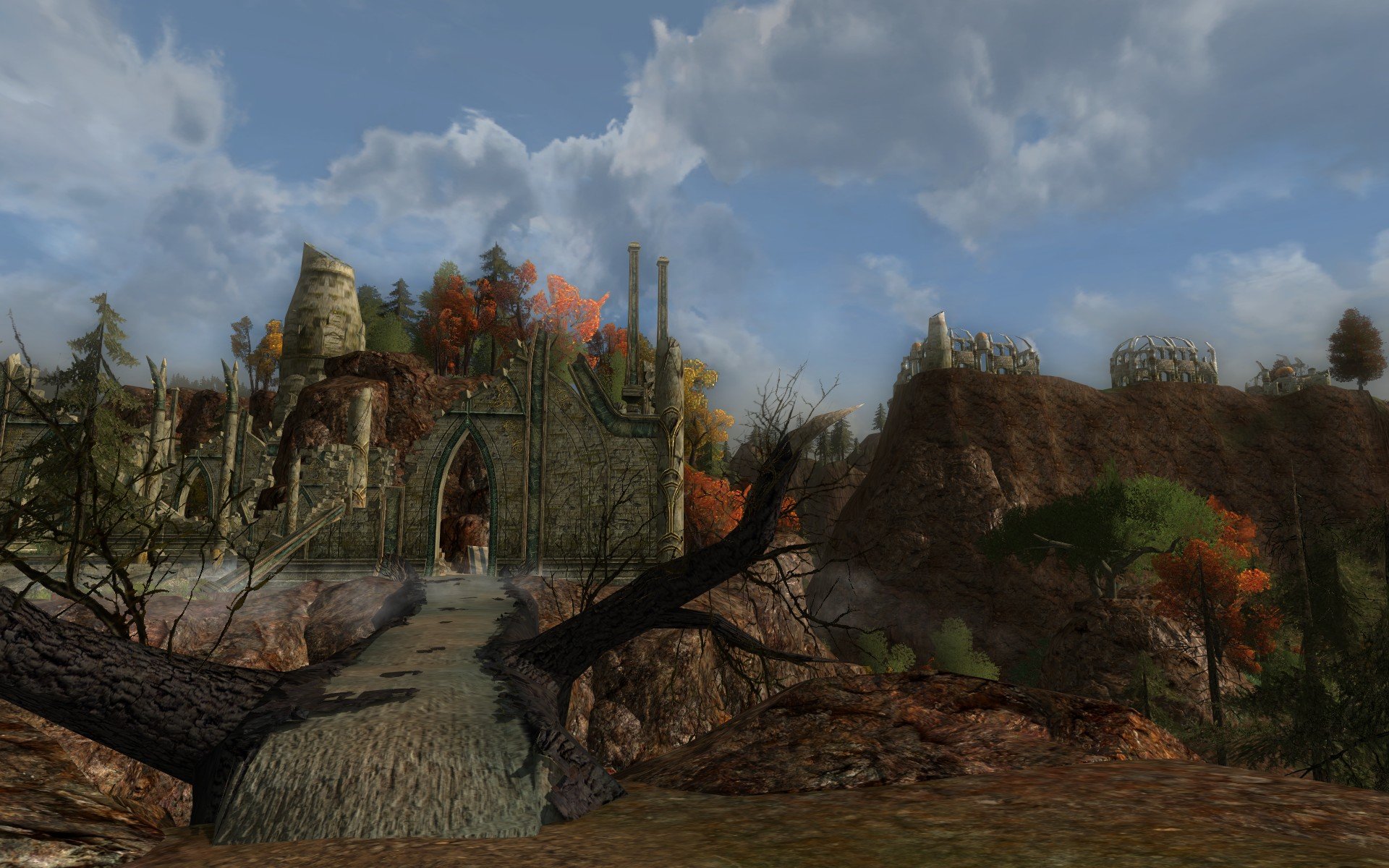
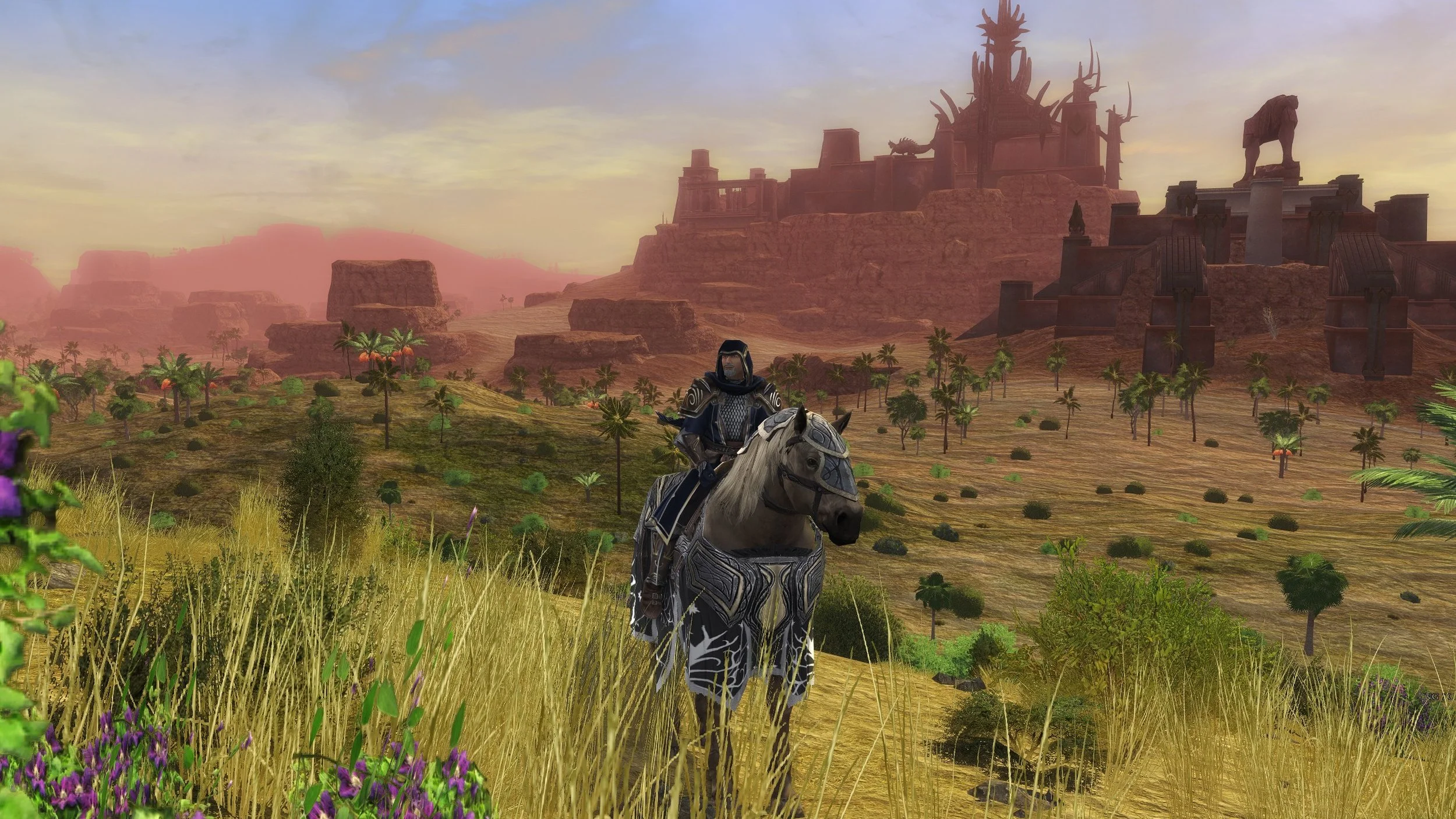
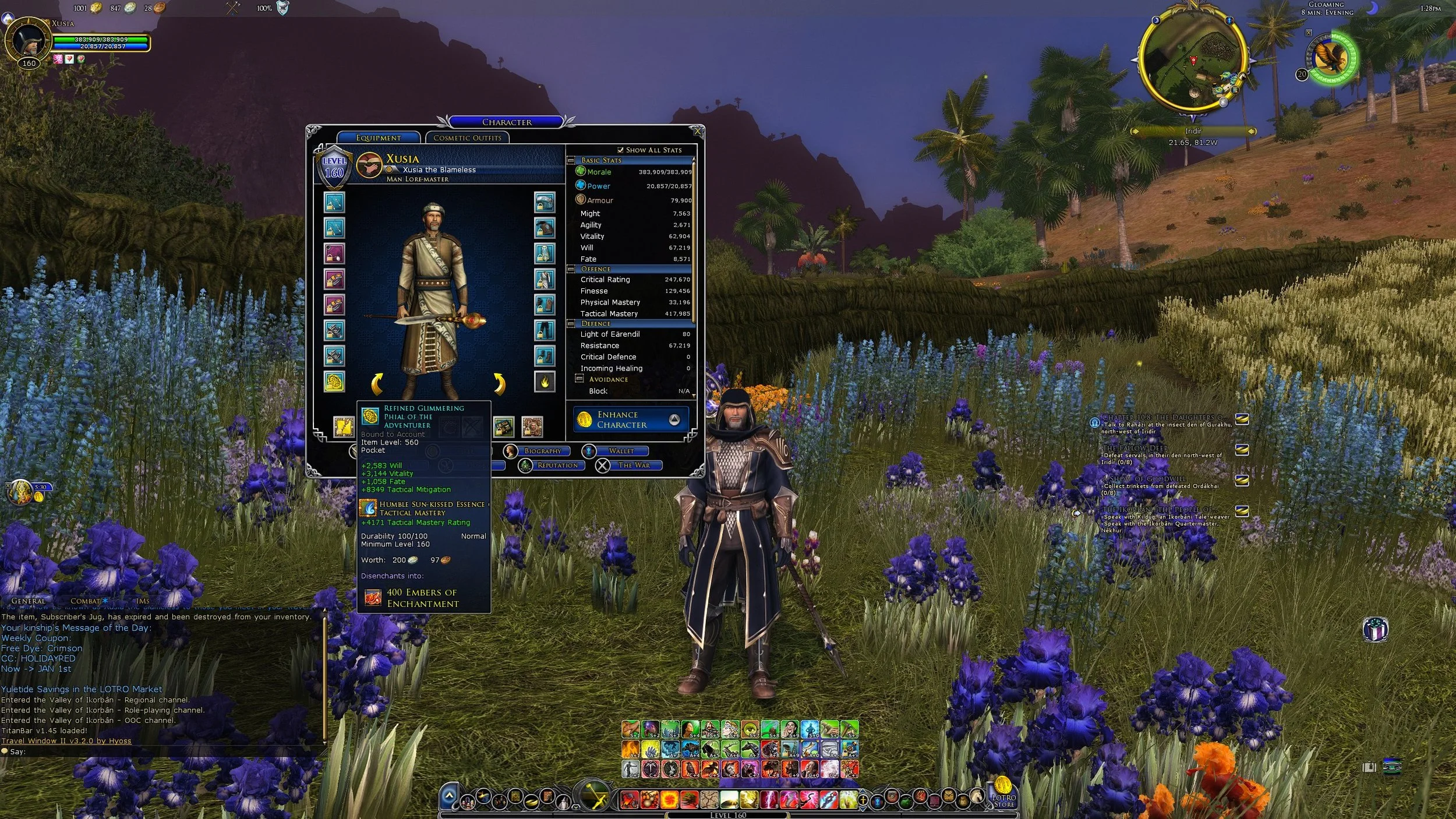
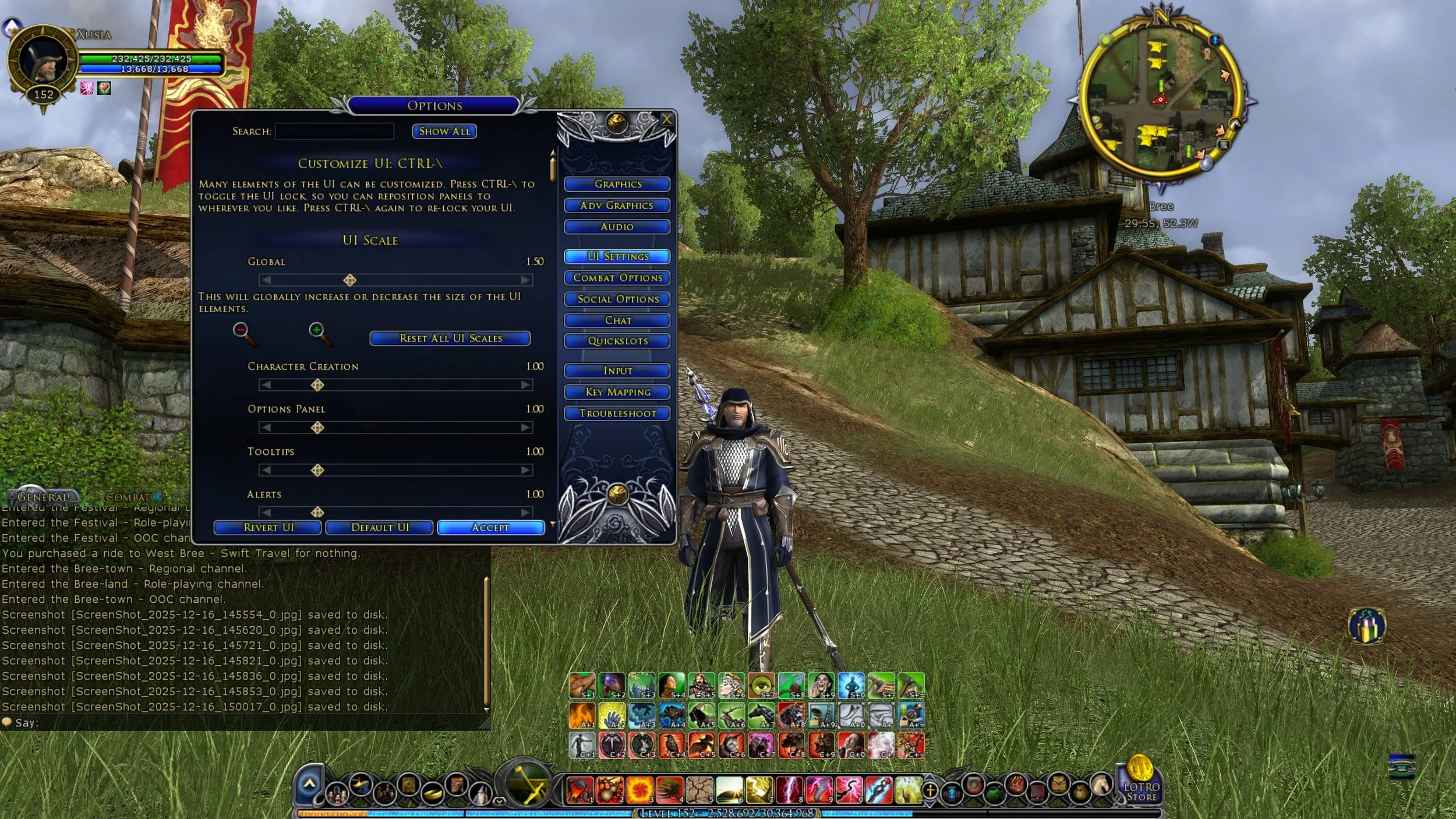
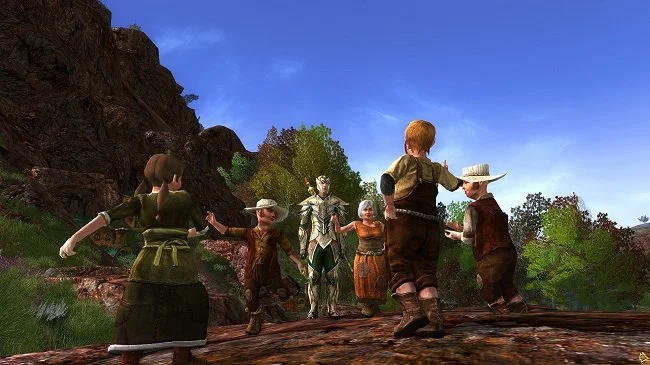
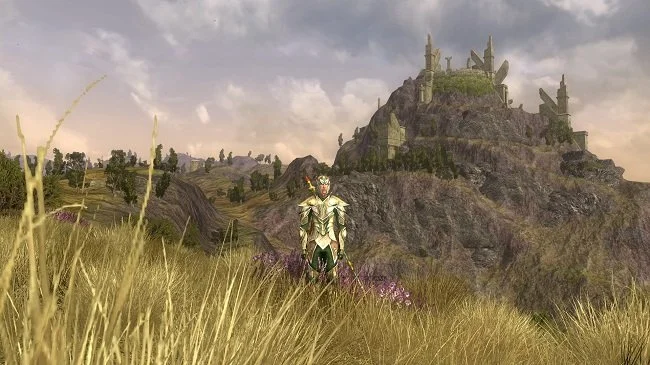
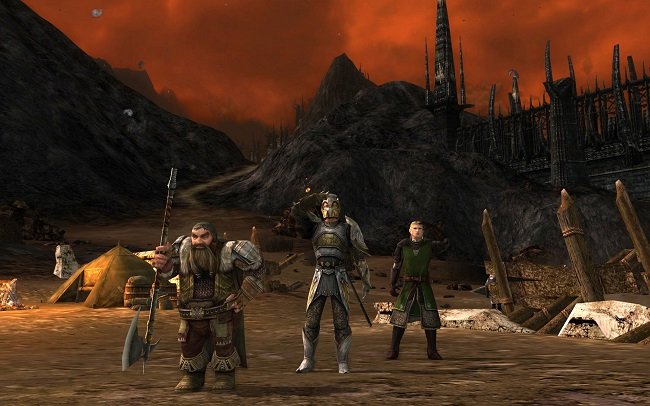
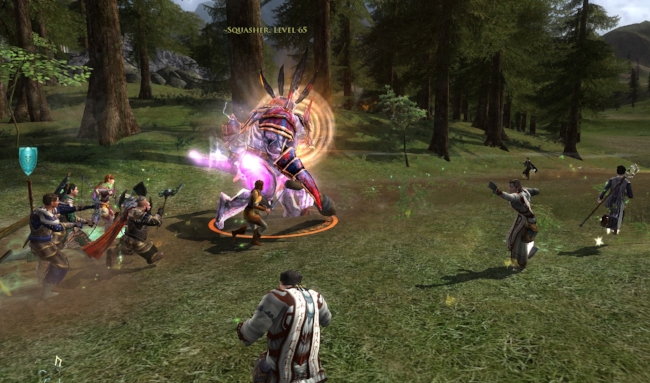
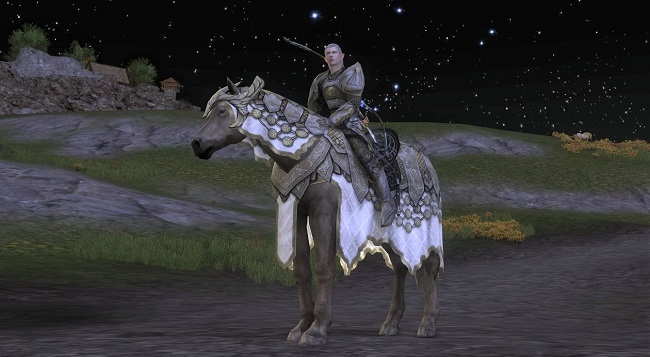
There was a perennial question being discussed over at Massively Overpowered recently. Justin Olivetti asked “why do you play MMOs solo” and as you would expect, there was a wide variety of answers. I have written about this myself in the past, as when I first started playing MMOs, I was very enamoured by the social element and therefore very disposed towards group content. However, that experience between 2008 and 2011, when I played The Lord of the Rings Online most days and dedicated Friday and Saturday nights to raiding, was very much down to circumstances. I had the time and inclination to spend hours online. That is something that I don’t have now. Plus the novelty of the social element has worn a little thin over the years. Nowadays, I do not have the luxury of waiting for a raid group to assemble, nor do I have the tolerance for the inevitable delays that always stem from any kind of human interaction.
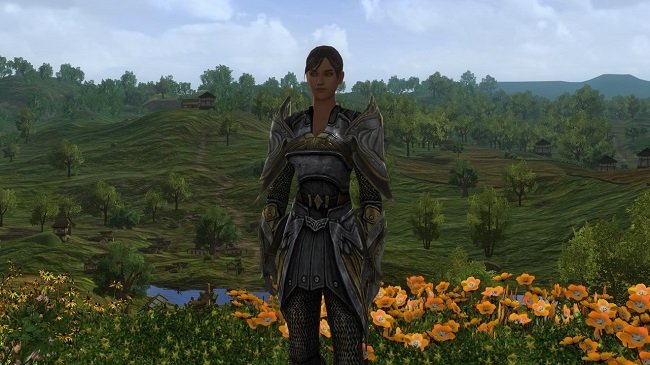
It’s just me versus Middle-earth
There was a perennial question being discussed over at Massively Overpowered recently. Justin Olivetti asked “why do you play MMOs solo” and as you would expect, there was a wide variety of answers. I have written about this myself in the past, as when I first started playing MMOs, I was very enamoured by the social element and therefore very disposed towards group content. However, that experience between 2008 and 2011, when I played The Lord of the Rings Online most days and dedicated Friday and Saturday nights to raiding, was very much down to circumstances. I had the time and inclination to spend hours online. That is something that I don’t have now. Plus the novelty of the social element has worn a little thin over the years. Nowadays, I do not have the luxury of waiting for a raid group to assemble, nor do I have the tolerance for the inevitable delays that always stem from any kind of human interaction.
Hence the primary reason I play MMOs solo is simply to be able to progress at my own pace and not having to be dependent on others in any other way, shape or form. The advantages are obvious, as are the disadvantages. I may well be able to clear through PVE content, level efficiently and manage my gear progression, but I also miss a substantial part of the game. I haven’t participated in any major group content in LOTRO for over a decade. The last raid I did was Draigoch’s Lair in 2011. But that is the price you pay for solo gameplay. By playing on my own I get to use my time efficiently. Raiding is a long, drawn out process that doesn’t come with any guarantees. It is this aspect of MMOs that bothers me. If I invest my time into something, I want to walk away with some sort of reward. Raids do not always hand out loot in an equitable fashion. Playing through PVE content on your own gives you clear and achievable goals.
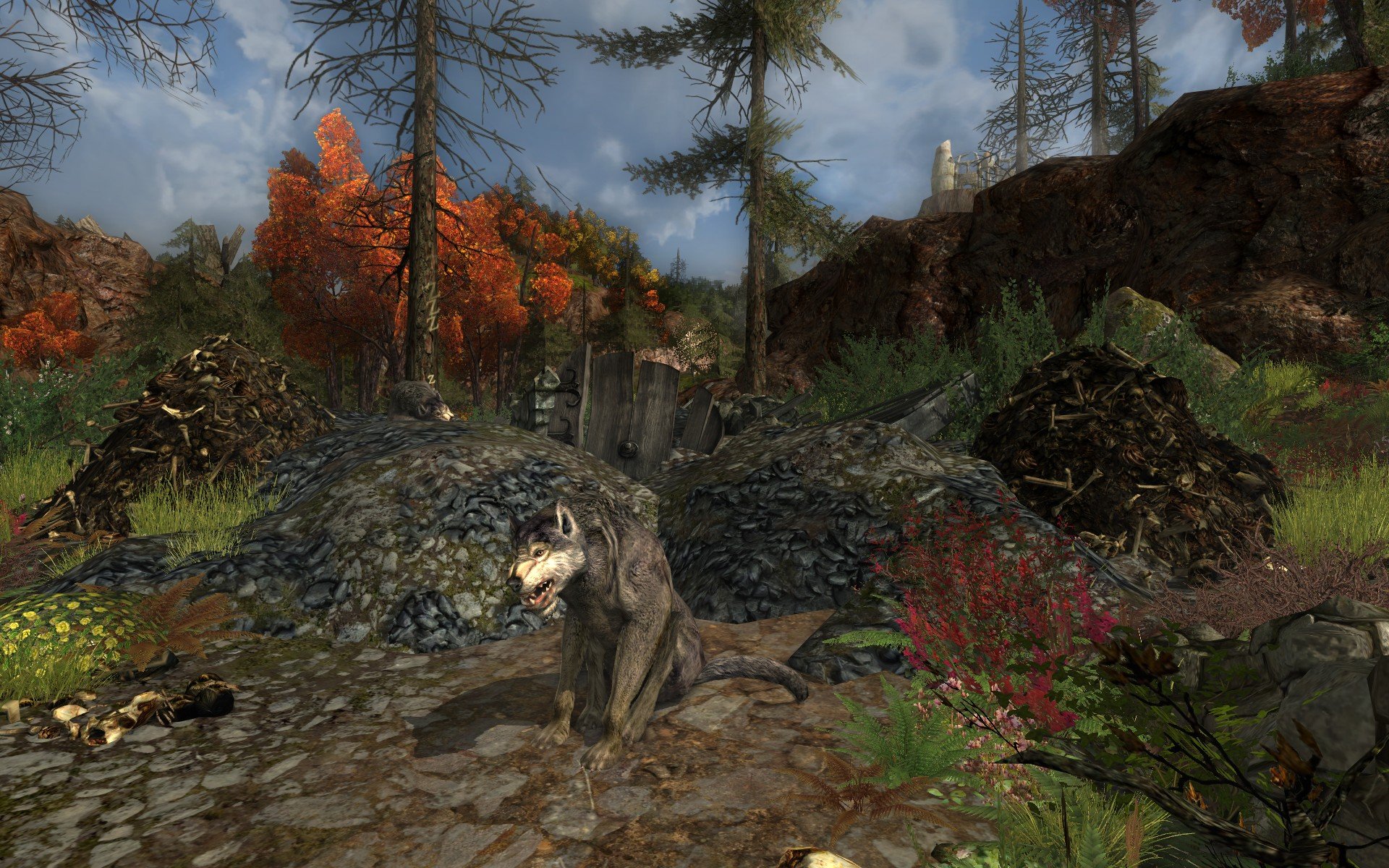
“Can you tell me where Bagel Street is?”
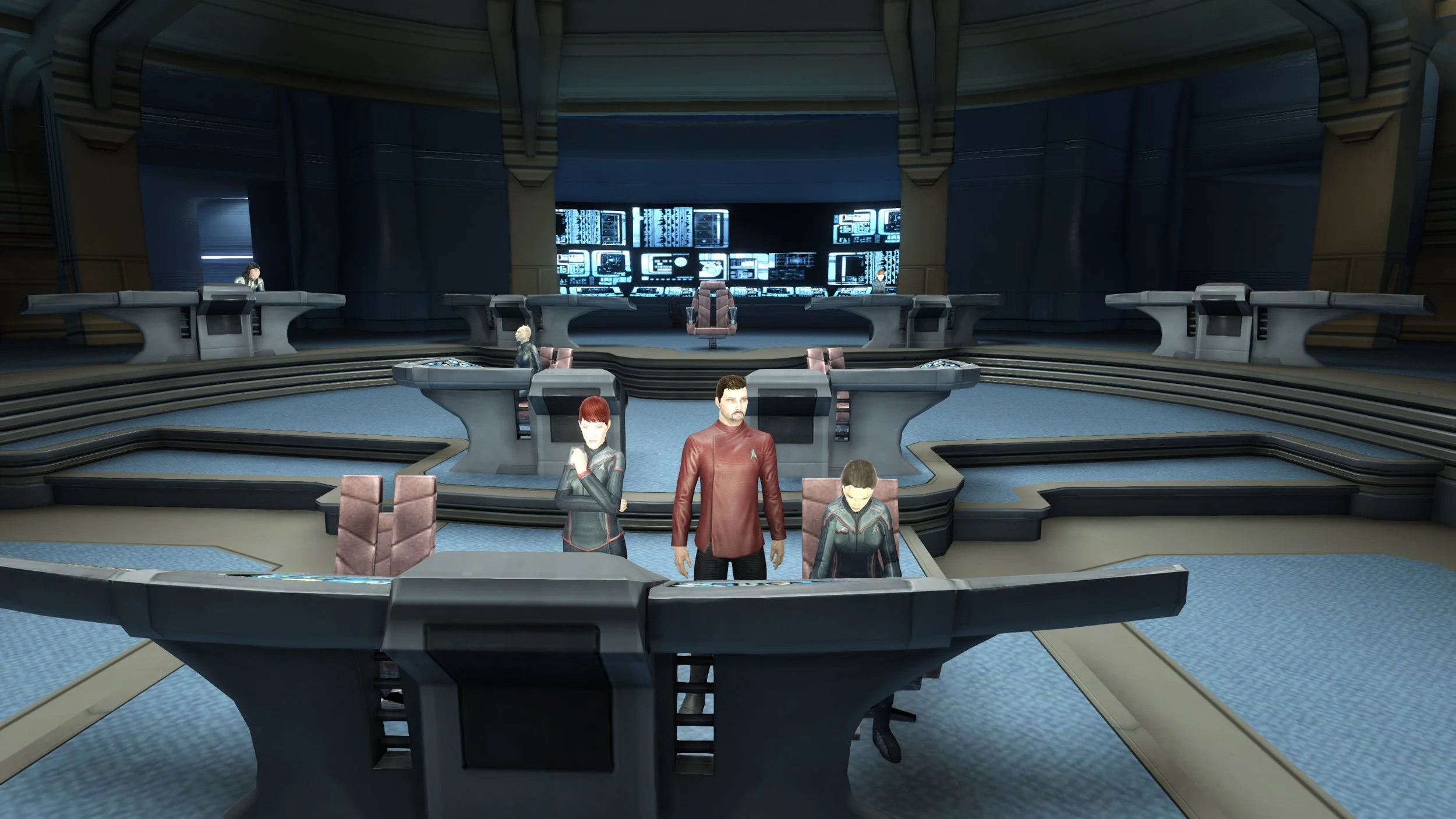
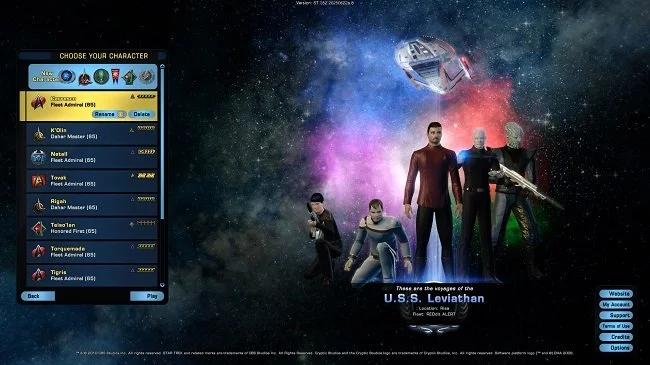
At present I play four MMOs. In LOTRO I have been in the same guild (or Kinship as it’s known in this game) since 2009. I know many of the other members and it is still active but certainly not to the degree it was a decade ago. In Star Trek Online I have my various alts in the respective Reddit based Fleets (guilds) such as Reddit Alert. I will chat with other members but I don't really know anyone nor ever group with them to play through content. I am in the Fleet simply for the benefits of accessing Fleet resources. which are mainly gear based in STO. With regard to Star Wars The Old Republic, I am in a guild which I created myself. This was mainly to stop me from getting swamped by guild invites from other players when the game first launched. It has two active members, myself and podcast co-host Brian. Beyond having a novelty name (Shaved Wookies) it serves no purpose. Due to my intermittent playing of The Elder Scrolls Online I see no reason to join a guild in that game.
The most social interaction I have in an MMORPG at present is in STO. Task Force Operations are five man missions which last between 5 and 15 minutes depending on the ability of the group. When selecting the TFO of your choice you are then auto-grouped and ported immediately to the appropriate instance. More often than not there is no communication between players in Team Chat. Sometimes players will deliberately go AFK and wait just to get the TFO reward. Every now and then someone will say “hi” to the group. On other occasions someone will try and give instructions but that seldom goes well. But such is the state of solo gameplay in most MMOs. You only talk and group with people if you want to and if there’s no compelling reason, then you don’t. Any game where your progress is dependent upon others is a game that I’ll more than likely not play.




The King's Man (2021)
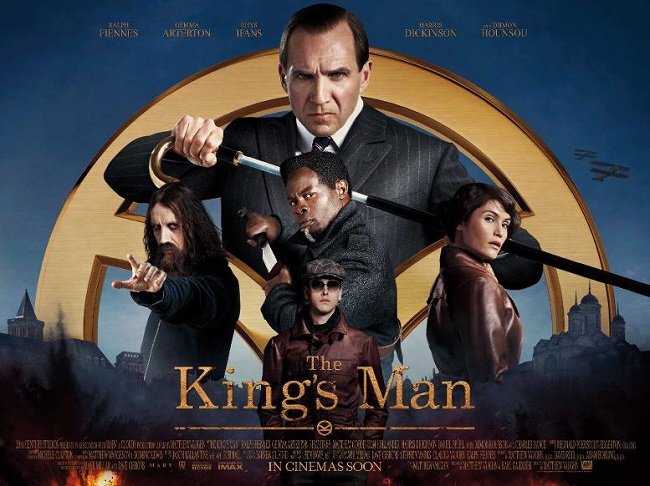
As a collection of history's worst tyrants and criminal masterminds gather to plot a war to wipe out millions, one man must race against time to stop them. Discover the origins of the very first independent intelligence agency in The King's Man. Based on the Comic Book “The Secret Service” by Mark Millar and Dave Gibbons. 20th Century Studios
Matthew Vaughn’s The King’s Man is an inconsistent film, both narratively and tonally. It veers between serious themes and stylised, hyperbolic action. At times it does quite a good job of exploring such complex subjects as global politics, mechanised warfare and colonialism. Sadly it then wrenches the viewer out of these cerebral reveries as it lapses into the sort of over the top action sequences that were notable in the two earlier films. It’s a shame because The King’s Man gets so many other aspects of the production right. The casting is very interesting, especially Ralph Fiennes as the “pacifist” Duke of Oxford. He is actually a very good fit for the action genre. Djimon Hounsou and Gemma Arterton are given little backstory beyond being respectively the faithful manservant and the family nanny but both are notable due to their own inherent acting chops and personal charisma. Rhys Ifans obviously has a great time as Grigori Rasputin, ensuring all the man’s vices are robustly depicted.
As a collection of history's worst tyrants and criminal masterminds gather to plot a war to wipe out millions, one man must race against time to stop them. Discover the origins of the very first independent intelligence agency in The King's Man. Based on the Comic Book “The Secret Service” by Mark Millar and Dave Gibbons. 20th Century Studios
Matthew Vaughn’s The King’s Man is an inconsistent film, both narratively and tonally. It veers between serious themes and stylised, hyperbolic action. At times it does quite a good job of exploring such complex subjects as global politics, mechanised warfare and colonialism. Sadly it then wrenches the viewer out of these cerebral reveries as it lapses into the sort of over the top action sequences that were notable in the two earlier films. It’s a shame because The King’s Man gets so many other aspects of the production right. The casting is very interesting, especially Ralph Fiennes as the “pacifist” Duke of Oxford. He is actually a very good fit for the action genre. Djimon Hounsou and Gemma Arterton are given little backstory beyond being respectively the faithful manservant and the family nanny but both are notable due to their own inherent acting chops and personal charisma. Rhys Ifans obviously has a great time as Grigori Rasputin, ensuring all the man’s vices are robustly depicted.
The problem lies with The King’s Man essentially trying to do too much and cover too much ground in its 130 minute running time. First it’s a father-son film and then it’s a revisionist history drama like Trantino’s Inglourious Basterds. Then it hastily tries to establish the backstory of the Kingsman Independent Intelligence Service. As a result director Matthew Vaughn struggles to maintain a consistent style and tone. He does provide some creative flourishes especially with the subplot relating to Conrad Oxford, the Duke’s son who wishes to serve his country and play his part in World War I. There is a sense of impending doom as Conrad (Harris Dickinson) heads towards an inevitable personal tragedy but the way it manifests itself is quite a surprise. This culminates in a genuinely moving scene at the end of the film’s second act. However, it is quickly mitigated by the directors interpretation of historical events and choosing to depict the tragedy and slaughter of WW I as a petty squabble between an international family.
The King’s Man is certainly a better film than its predecessor; Kingsman: The Golden Circle (2017). That was a poorly conceived project, ruined by the presence of Eltom John and the mean spirited way in which Merlin (Mark Strong) was so ignominiously killed off. Although Matthew Vaughn is clearly a creative film director who has a natural affinity to genre source material, he does strike me as someone who would be well served by a trusted associate who knows him well enough to curb his excesses. Both previous films in this series were blighted by some singularly unpalatable and obsolete sexual humour that would be more at home in a seventies “eroitic adventure” such as Confessions of a Window Cleaner. This error is not repeated in The King’s Man but instead Vaughn often comes a little too close to trivialising the human tragedy of WWI. There’s also a mid-credit coda that is very ill judged, especially in light of more recent events. Watch with discretion and be prepared to “hold your nose” if you are overly politically sensitive. The action is good.








Combat in Video Games: How Long is Too Long?
Many video games involve some sort of combat. It is a quintessential mechanic. The moral and ethical rectitude of this is a subject for another blog post and is not something I wish to discuss here. This post is about combat itself and specifically the amount of time that you have to spend to defeat an enemy. It may sound a somewhat trivial point but it becomes quite an important issue once you start playing a game for any length of time. Like many game mechanics, it often comes down to a matter of personal taste? Which then makes it a difficult matter to find the right balance from a game development point of view. If you make combat too brief, players will say it trivialises the game and diminishes the sense of challenge. Make combat too long and you’ll run the risk of boring your playerbase and driving them away. This is very much a “damned if you do, damned if you don’t situation.
Many video games involve some sort of combat. It is a quintessential mechanic. The moral and ethical rectitude of this is a subject for another blog post and is not something I wish to discuss here. This post is about combat itself and specifically the amount of time that you have to spend to defeat an enemy. It may sound a somewhat trivial point but it becomes quite an important issue once you start playing a game for any length of time. Like many game mechanics, it often comes down to a matter of personal taste? Which then makes it a difficult matter to find the right balance from a game development point of view. If you make combat too brief, players will say it trivialises the game and diminishes the sense of challenge. Make combat too long and you’ll run the risk of boring your playerbase and driving them away. This is very much a “damned if you do, damned if you don’t situation.
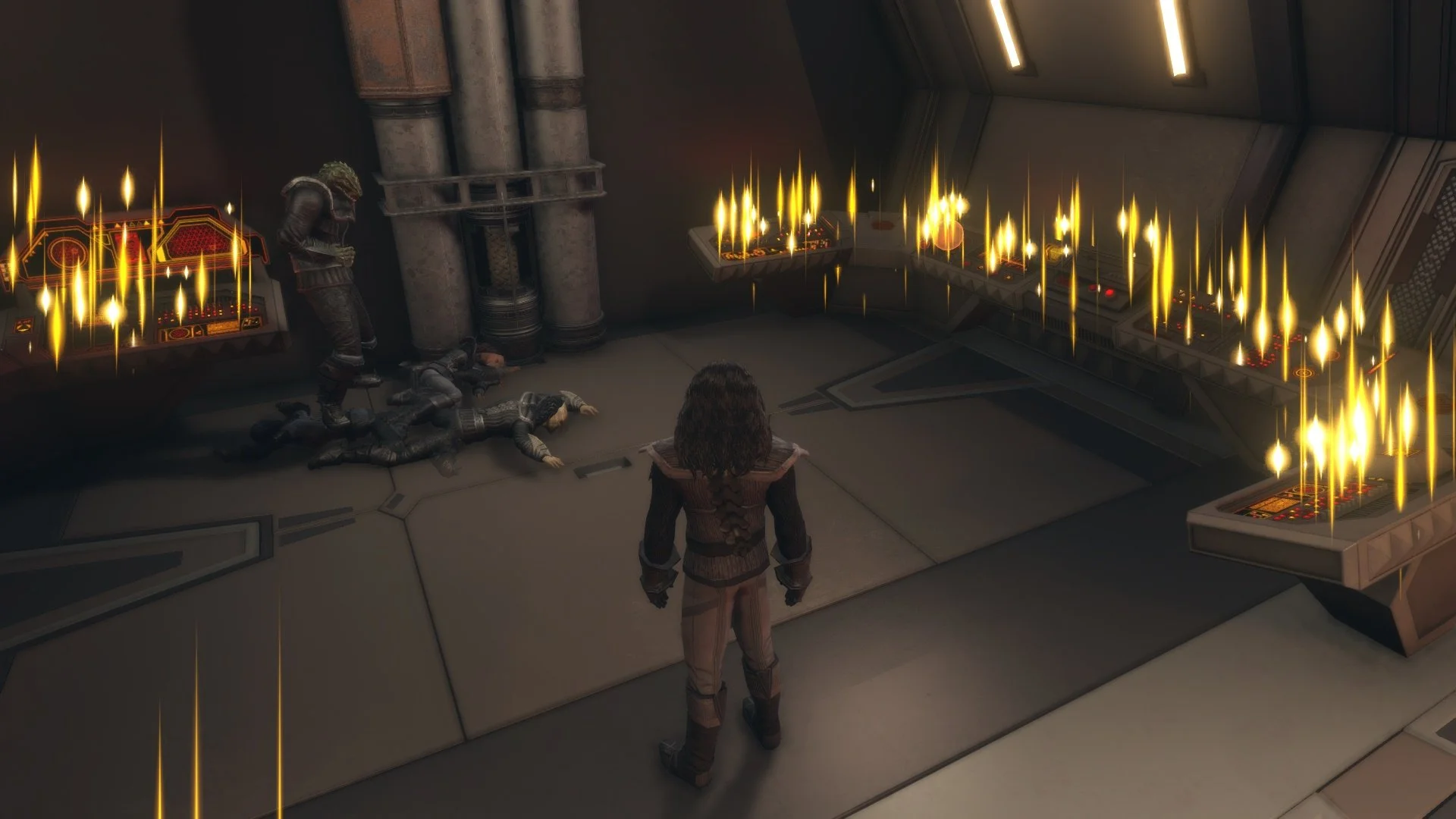
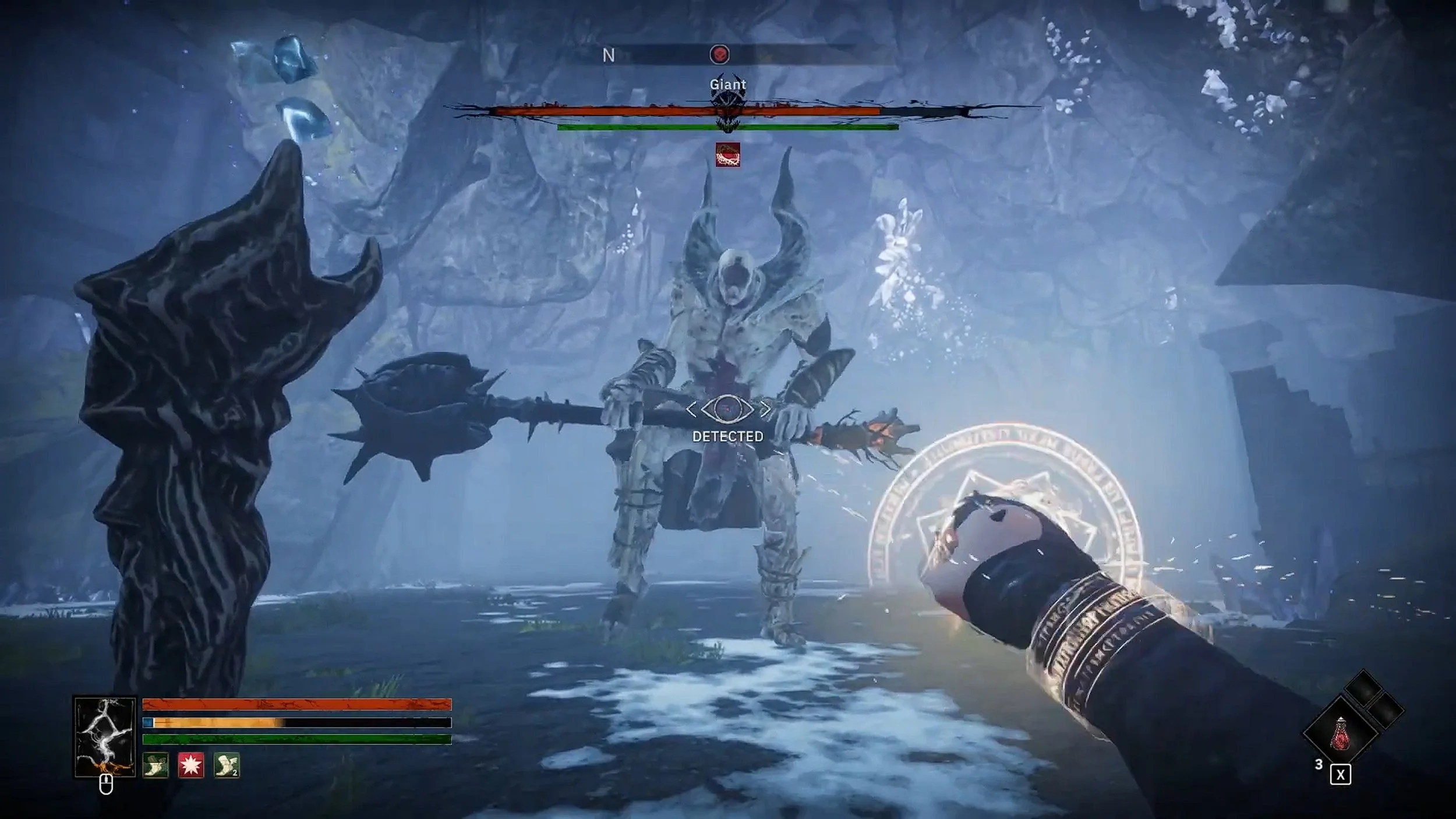
Perhaps an example would be useful. I was recently playing Star Wars: The Old Republic and had to fight the final boss in a Flashpoint. They were a Mandalorian and the combat took place in an arena with a panelled floor. During the fight the floor would open to reveal flames. A droid would occasionally appear with a grappling hook and drag my character towards it, exposing them to further fire damage. Because I was tackling this Flashpoint solo, I had a combat droid that tanked for me. Hence I would stand on the periphery of the action, doing ranged DPS while my Companion healed. I would have to destroy the droid when it spawned and ensure I avoided fire damage. This was a manageable process. However, it took a while to take down the boss. Most of the fight consisted of slowing watching their health bar decrease. It took over 5 minutes to complete and became tedious very quickly.
This highlights my point well. I appreciate that if developers accurately depicted the use of blaster weapons and lightsabers, then most fights would be a succession of one shot kills. Hence accurately depicting such weapons has to be tempered with a sensible reduction in damage to make the fights more challenging. Plus one has to remember that SWTOR is over a decade old and therefore its combat style is based upon the prevailing combat style of that time. There’s a lot of skills bloat, tab targeting and static combat. However, bearing all this in mind, a five minute boss fight or indeed any sort of fight of that duration as a single player activity is excessively long. Especially in light of the fact that I wasn’t in any major danger of failing. The main point of contention was simply the time it took to do damage. Watching a health meter go down slowly is not fun. Neither are ponderous combat mechanics or dealing with bullet sponges.
The main reason I stopped playing The Secret World was due to the tiresome combat mechanics, especially when using firearms. My objections hinged upon the time that it took to kill an enemy. In more contemporary games, such as The Elder Scrolls Online, combat is faster and critical chance and severity seem to play a more equitable role in proceedings. Boss fights tend to be faster paced. You have to be more mobile and cognisant of the damage that you’re taking. However, the combination of the right skills and a healthy dose of critical success means that the overall combat experience is more satisfying without being unnecessarily protracted. There’s a fine line between managing a fight and finding success and just endless plodding through a rotation of skills and then healing, like some uninspired line dance. Again I must reiterate that this is a very subjective experience. What I consider to be too long for me, may not be so for you.
I have adjusted my build after reaching level 70 in SWTOR and I may run the very same Flashpoint again to see if combat is any quicker with increased stats. I suspect that the downscaling mechanics in the game means that the fight will still drag on regardless. Which then raises the question as to whether I want to continue playing because combat is a substantial part of gameplay. If fighting through waves of mobs becomes a dull chore, it does somewhat mitigate the point of playing, which is supposed to be a fun activity. I appreciate that combat should not be a walk in the park and that skill and being situationally aware should all play a part. But slowly wearing down a DPS sponge is not the same thing. I want to be moderately challenged, not bored. Finding the correct pace of combat is a challenge and I wish I knew what the answer was. Sadly many developers don’t seem to know either.

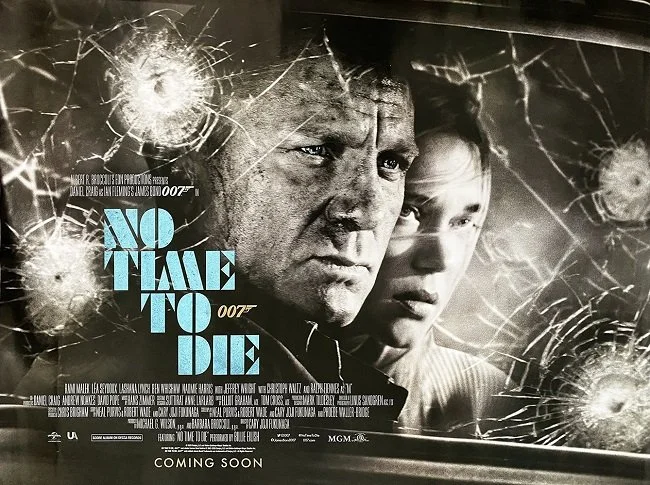
No Time to Die (2021)
Bond has left active service and is enjoying a tranquil life in Jamaica. His peace is short-lived when his old friend Felix Leiter from the CIA turns up asking for help. The mission to rescue a kidnapped scientist turns out to be far more treacherous than expected, leading Bond onto the trail of a mysterious villain armed with dangerous new technology.
Universal Pictures
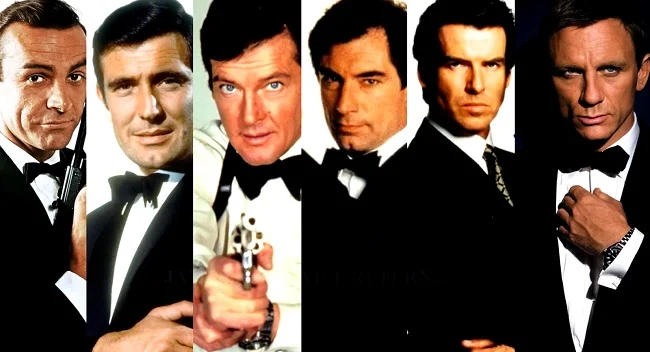
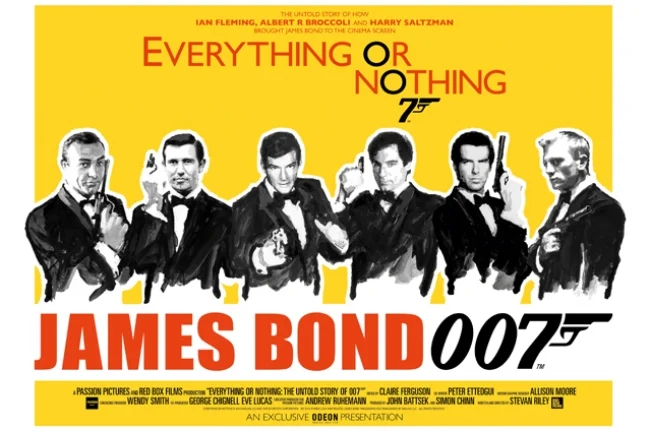
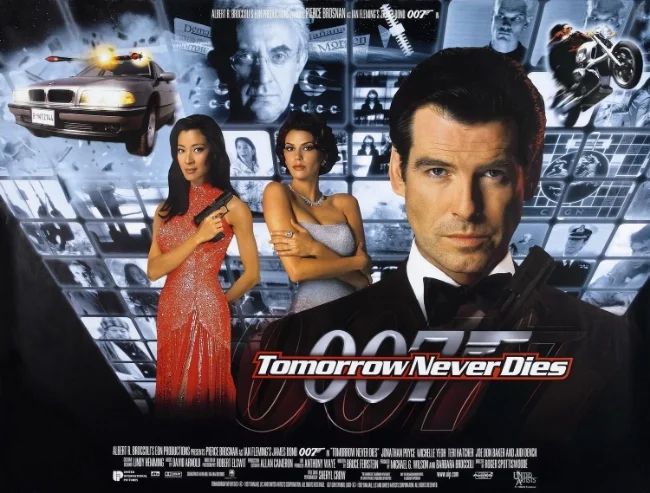
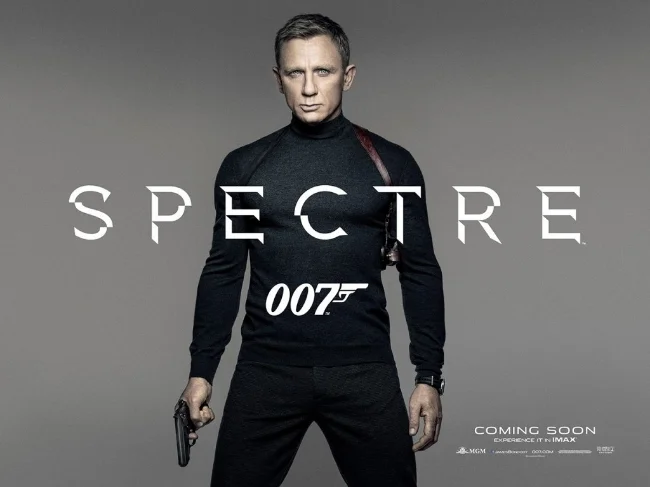
The twenty fifth Bond film is a horse of a different colour but then again that adage could be applied to the last five instalments of the franchise. Bond has never had a continuous story arc or any major narrative continuity until Daniel Craig’s tenure as 007. Two Roger Moore films briefly alluded to Bond’s previous marriage as depicted in On Her Majesty's Secret Service (1969). However, we should remember that Casino Royale (2006) was effectively a reboot of the entire franchise depicting Bond’s first mission as a recently commissioned 00 agent. As well as the tonal shift in the franchise regarding humour, violence and the role of agents in a modern world, the last five films have taken a far more personal interest into Bond. It has very much been about him as opposed to just his actions. Therein lies the rub as they say. Some fans have not warmed to this sort of character analysis, although the box office clearly shows that it has gone down well with the wider audience.
Bond has left active service and is enjoying a tranquil life in Jamaica. His peace is short-lived when his old friend Felix Leiter from the CIA turns up asking for help. The mission to rescue a kidnapped scientist turns out to be far more treacherous than expected, leading Bond onto the trail of a mysterious villain armed with dangerous new technology.
Universal Pictures
The twenty fifth Bond film is a horse of a different colour but then again that adage could be applied to the last five instalments of the franchise. Bond has never had a continuous story arc or any major narrative continuity until Daniel Craig’s tenure as 007. Two Roger Moore films briefly alluded to Bond’s previous marriage as depicted in On Her Majesty's Secret Service (1969). However, we should remember that Casino Royale (2006) was effectively a reboot of the entire franchise depicting Bond’s first mission as a recently commissioned 00 agent. As well as the tonal shift in the franchise regarding humour, violence and the role of agents in a modern world, the last five films have taken a far more personal interest into Bond. It has very much been about him as opposed to just his actions. Therein lies the rub as they say. Some fans have not warmed to this sort of character analysis, although the box office clearly shows that it has gone down well with the wider audience.
No Time to Die is by far the most intimate Bond movie to date. This is about Bonds relationship with Dr. Madeleine Swann (Léa Seydoux) and the void in his life when they part acrimoniously. The story explores perennial themes of how people in specific lines of work sacrifice so much of themselves. For every action set piece, and there are plenty of these, there are an equal amount of dramatic scenes in which Bond searches his soul and considers his future. The Bond of the seventies and eighties was seldom this thoughtful but this is clearly the way the franchise has been going since 2006. Director Cary Joji Fukunaga clearly is enamoured with On Her Majesty's Secret Service and references it with the use of subtle dialogue homages. “We have all the time in the world” Bond states at the beginning of the film and it’s not long before Louis Armstrong’s iconic song is played. Later, perceptive viewers will hear a clever reworking of John Barry’s famous instrumental theme from the 1969 film, as M expedites the plot. Hans Zimmer’s score is suitably intelligent and musically literate.
There are several extremely good vehicular stunt sequences in No Time to Die, as well as some solid hand to hand fights which are bone crunching and gritty. Although the gunfights are relatively bloodless, there is a realistic and callous quality to them. Rami Malek is notable as Lyutsifer Safin and provides the audience with a more interesting Bond villain than usual. His motivations are not about “world domination” but are far more personal. His enforcer, Primo (played by Muay Thai martial artist champion Dali Benssalah) is far from charismatic but has some very effective fight sequences. No Time to Die does not skimp on action, globe trotting or conspicuous product placement. The regular cast of Ralph Fiennes, Naomie Harris, Rory Kinnear and Ben Wishaw are as ever, robust and stalwart and it is interesting to see the franchise embracing modernity and featuring Lashana Lynch as Nomi; the latest agent to bear the number 007.
The success of whether No Time to Die resonates with viewers ultimately hinges upon whether one buys into the concept of a more personal Bond movie. It’s all a far cry from the self deprecating humour and two dimensional characterisation of the Roger Moore era. Eon productions seem to have learned a lot from the Jason Bourne films and the importance of a lead character with a soul, rather than just a series of action set pieces and an archetype as a hero. I was initially thrown by the tone of No Time to Die but upon reflection it is a rather sophisticated and appropriate ending to Bond’s story arc which started with Casino Royale. I suspect this film may find wider approval upon subsequent viewings and in time be appraised in a comparable manner to On Her Majesty's Secret Service. It will be interesting to see what direction the franchise takes with the 26th instalment. However, before that happens a new Bond needs to be found. I suspect that won’t be a walk in the park, either logistically or critically.


Star Wars: The Old Republic - Currency Caps
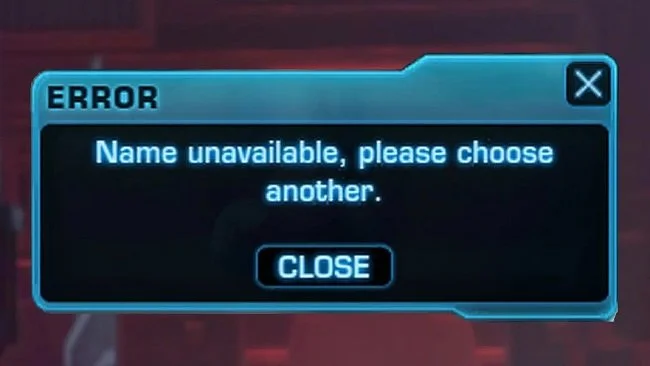
This post is a public service announcement. One that I’m making because of a lesson I learned the hard way. I am talking specifically about the two currency caps as they currently stand in the MMORPG Star Wars: The Old Republic. I’m sure many long term players will be aware of the current status quo. However, there may be many others who are not. If I can stop someone from making the same mistake that I made, so much the better. I would also like to highlight how developer’s BioWare has done very little to address these in-game issues. When using a vendor in SWTOR, if you are approaching the currency cap, you do get a message in the chat window. If you are not aware of the currency cap, or do not see the message and you’re moving Credits between characters then there is scope for problems. There should be a far more clear in-game alert.
This post is a public service announcement. One that I’m making because of a lesson I learned the hard way. I am talking specifically about the two currency caps as they currently stand in the MMORPG Star Wars: The Old Republic. I’m sure many long term players will be aware of the current status quo. However, there may be many others who are not. If I can stop someone from making the same mistake that I made, so much the better. I would also like to highlight how developer’s BioWare has done very little to address these in-game issues. When using a vendor in SWTOR, if you are approaching the currency cap, you do get a message in the chat window. If you are not aware of the currency cap, or do not see the message and you’re moving Credits between characters then there is scope for problems. There should be a far more clear in-game alert.
Free-to-Play and Preferred Players (those who have previously subscribed then cancelled or bought Cartel Coins) have a Credit cap of 1 million Credits. Anything you earn over that is held in Escrow. This is pretty much standard practice for most MMORPGs. The important factor here is that there is an Escrow facility, so that surplus Credits are not lost. However, a subscribing player can hold a maximum of 4,294,000,000 Credits in their inventory. If a player is selling items or moving Credits between characters by in-game mail, then they need to be aware of this cap. Once you have hit the currency cap, if you open an in-game mail and remove any attached Credits, they will be deleted. There is not any form of Escrow in this case. I was not aware of this and opened several mails recently, transferring the Credits directly to my character’s inventory. I ended up deleting a substantial amount of Credits, much to my annoyance.
According to a discussion on the SWTOR forums, this issue stems directly from the way the game was written in 2010. “It is a programming limit. The highest possible number in a 32 bit integer is 2^32-1 = 4,294,967,295”. I’m quoting here as this is not my field of expertise, however, I have no reason to doubt this explanation. I’m sure this limitation was perfectly reasonable when the game launched over a decade ago. Inflation is always an issue with MMO economies and you only have to look at prices of high end gear or cosmetic items on the Galactic Trade Network (the auction house) to see how costs have spiralled. Hence, it is not unusual that dedicated players of SWTOR have substantial amounts of Credits that they’ve built up over the years through trading and speculating. In the meantime, it is unlikely that BioWare is going to address this issue, which raises the question as to whether there’s a workaround?
Legacy Stronghold Storage that players have in their Stronghold does not have the same limitations as the player inventory. Through reading the SWTOR subreddit, it would appear that the Legacy Stronghold Storage is “likely a 64 bit float, so it can hold ridiculous numbers but starts rounding down the lowest digits once you're past 15 zeroes”. Hence players who wish to store more than 4,294,000,000 Credits, need to transfer them from their inventory to their Legacy Stronghold Storage in suitably sized increments. For convenience it may be wise to place one’s mailbox close to the Legacy Stronghold Storage in your Stronghold. Although it can store larger sums, this doesn’t address the practicalities involved in moving around Credits, nor the trading of items with a price over the Credit cap. High value items have to be sold face-to-face and payment made in multiple parts. Again, BioWare and the game does little to appraise the player of these restrictions, so be aware and act with caution.
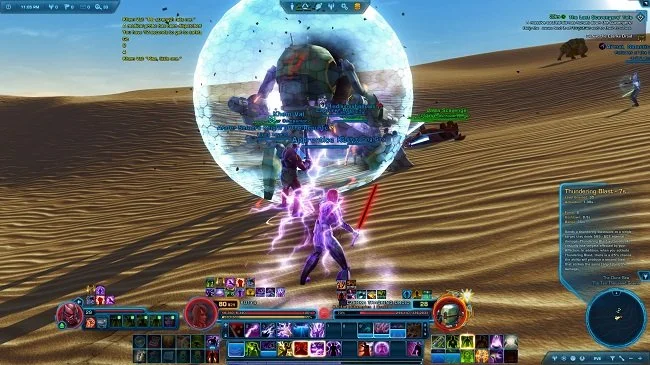
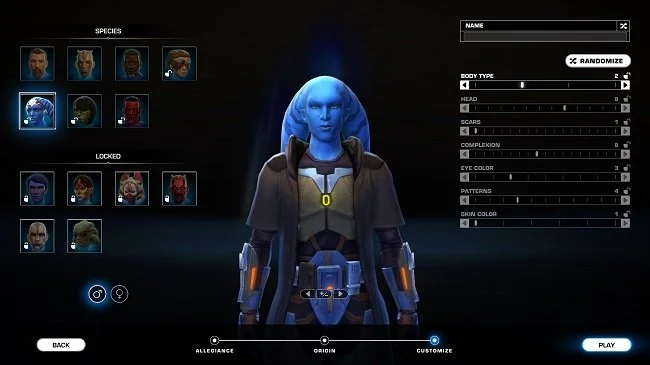
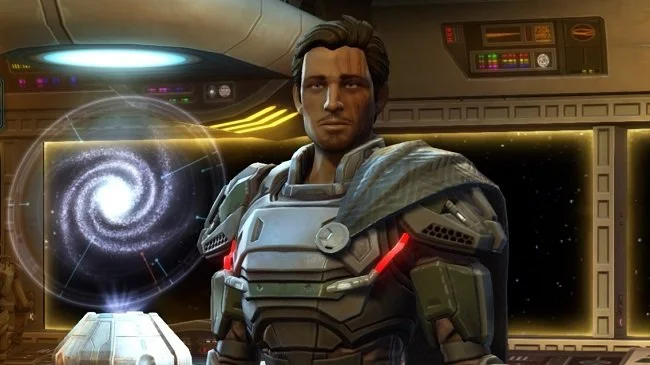
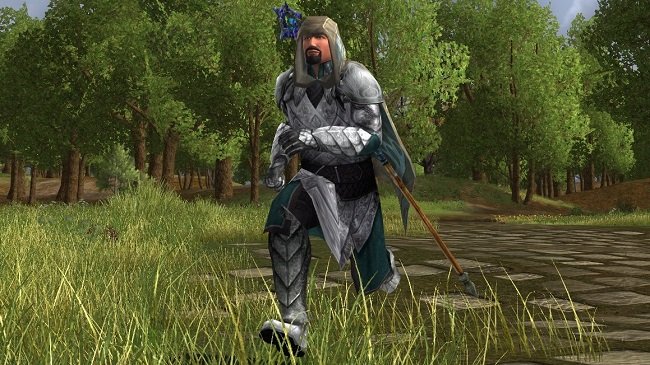
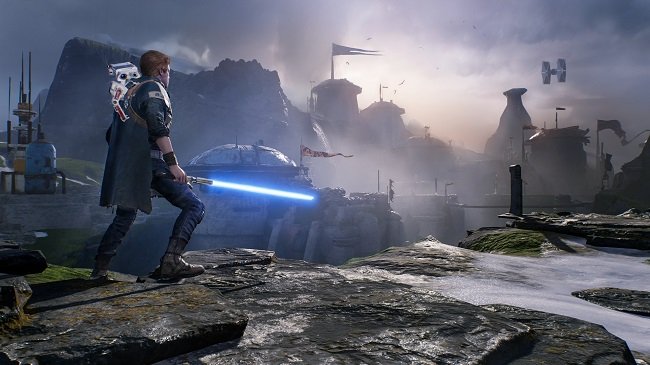
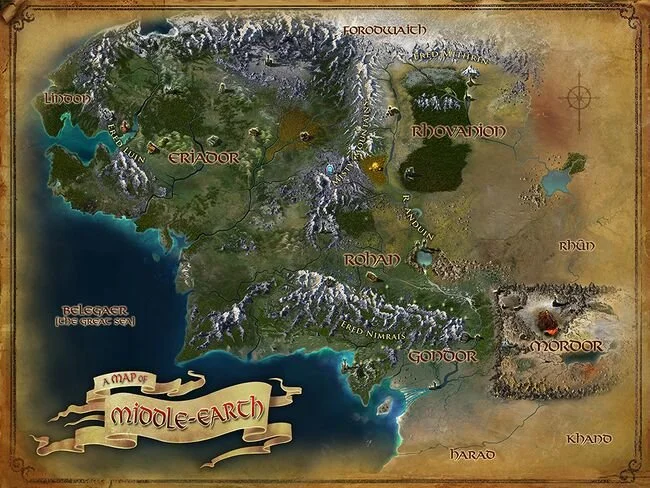
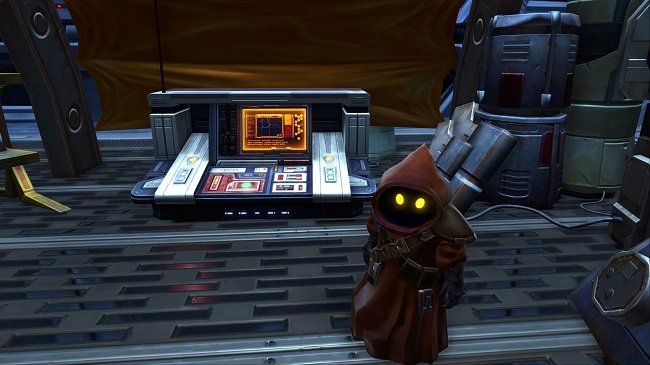


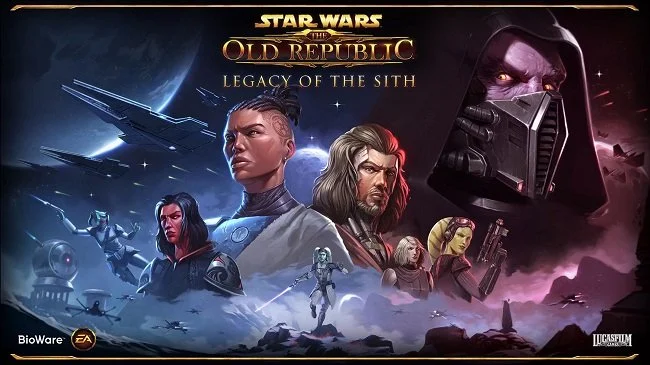
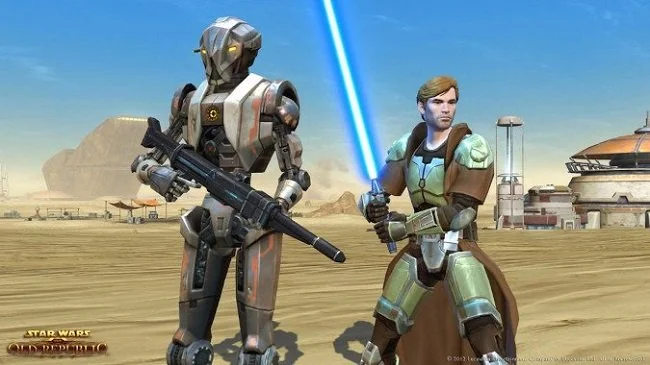

Star Wars: The Old Republic - Legacy of the Sith
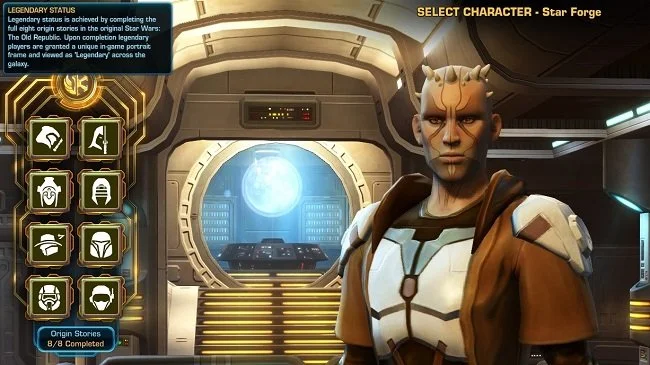
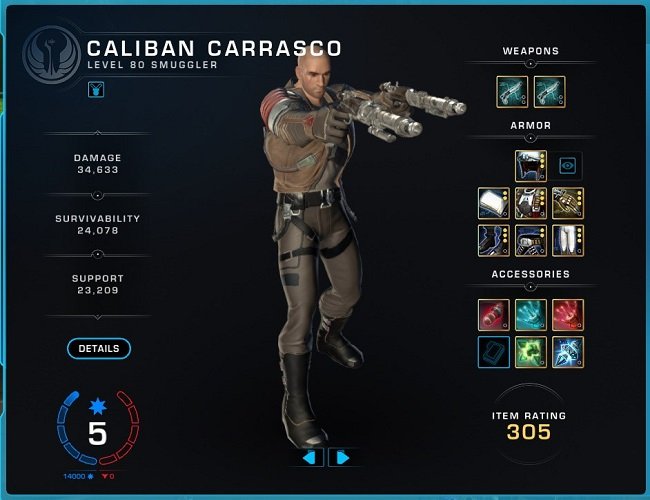
As well as a new central story, Legacy of the Sith has also introduced some major system changes to the MMORPG Star Wars: The Old Republic. From my own perspective as a returning casual player, these changes are measured and appropriate. Firstly, my Smuggler has had some of their skills rationalised. Some buffs which you previously chose to use, such as Smuggler’s Luck, are now passive skills. Other minor skills, such as Flash Grenade, have been removed. I don’t consider any of these changes to undermine the class and welcome the decluttering of my quickbars. Perhaps more advanced players may take a different view. Change is not always welcome, especially if it removes choice. I however approve of these alterations and the way the UI has been redesigned to display your gear, outfit, combat style, loadouts and companion details.
As well as a new central story, Legacy of the Sith has also introduced some major system changes to the MMORPG Star Wars: The Old Republic. From my own perspective as a returning casual player, these changes are measured and appropriate. Firstly, my Smuggler has had some of their skills rationalised. Some buffs which you previously chose to use, such as Smuggler’s Luck, are now passive skills. Other minor skills, such as Flash Grenade, have been removed. I don’t consider any of these changes to undermine the class and welcome the decluttering of my quickbars. Perhaps more advanced players may take a different view. Change is not always welcome, especially if it removes choice. I however approve of these alterations and the way the UI has been redesigned to display your gear, outfit, combat style, loadouts and companion details.
Secondly, another major addition to SWTOR in this expansion is Combat Styles. Prior to Legacy of the Sith, each class had two advanced classes, with three disciplines to choose from as they progressed through the game. My primary character in SWTOR is a Smuggler that has chosen the Gunslinger advanced class. I have then selected a DPS focused discipline by allocating points into a skills tree. Now I can select a second Combat Style (the new term for an additional advanced class) and hot swap between them. There are some limitations. As a Smuggler I can only choose Combat Styles from the Trooper and Bounty-hunter and Agent class. Similarly Jedi and Sith characters can only choose from each other. This new system offers a great deal of flexibility and variety. Once a player has completed chapter 3 they are offered a second Combat Style. New characters are now offered this option upon creation.
At present I have decided not to rush into choosing a second Combat Style. I am still trying to refine my current default one and determine what is the optimal skill rotation. When playing MMOs I tend to focus on one task at a time. I recently completed the Makeb story arc from Rise of the Hutt Cartel. Although I accepted the Seeker Droid and Macrobinocular missions I have yet to undertake them as I find that travelling back and forth between multiple tasks detrimental to following the various narratives. I decided to do some solo Flashpoints but found accessing them a little confusing. I wasn’t sure where to find the appropriate NPC to bestow them but eventually discovered I could access some via the Groupfinder panel. I recently discovered the Swtorista website and it has become an invaluable resource. SWTOR, like many other MMOs, doesn't do especially well at providing essential information in-game.
From my personal perspective, I have chosen a good time to return to SWTOR. I have managed to refamiliarize myself with the game and my existing characters skills quite quickly. The latest expansion has rationalised those skills making combat easier. I have a wealth of content ahead of me. SWTOR is also a very solo friendly MMO which suits me as I do not have the time to join a guild and participate in social gaming. My next goal is to play through Shadow of Revan. I am currently level 63 and will see if I can reach the level cap just by playing through the main stories of the game. I am also trying to keep abreast of the lore, which can get confusing at times. My Gunslinger defeated Darth Malgus on Ilum but it would appear that he returns in later expansions. This is why I try to do content in chronological order to maintain narrative continuity.
The Idiot Box
Thoughts on TV shows and my current viewing habits
Last November, CBS chose not to make season 4 of Star Trek Discovery available on Netflix. Netflix has been the home of this show outside of the US, for the past four years. This is due to Paramount + being launched in Europe sometime in 2022 and CBS wants to keep such a popular franchise on their own streaming platform. Naturally fans were unhappy. Then to add insult to injury CBS pulled all prior seasons of Star Trek Discovery from Netflix. However, due to the negative feedback, a last minute deal was made with Pluto TV; a streaming service which offers 110+ live TV channels on its UK platform and hundreds of on-demand films and TV episodes. It’s a free service supported by adverts and it lacks the polish and presentation of Netflix. I don’t consider it an optimal way to watch a show such as Star Trek Discovery. This is a timely reminder how licensed content can “vanish” from your platform of choice.
Thoughts on TV shows and my current viewing habits
Last November, CBS chose not to make season 4 of Star Trek Discovery available on Netflix. Netflix has been the home of this show outside of the US, for the past four years. This is due to Paramount + being launched in Europe sometime in 2022 and CBS wants to keep such a popular franchise on their own streaming platform. Naturally fans were unhappy. Then to add insult to injury CBS pulled all prior seasons of Star Trek Discovery from Netflix. However, due to the negative feedback, a last minute deal was made with Pluto TV; a streaming service which offers 110+ live TV channels on its UK platform and hundreds of on-demand films and TV episodes. It’s a free service supported by adverts and it lacks the polish and presentation of Netflix. I don’t consider it an optimal way to watch a show such as Star Trek Discovery. This is a timely reminder how licensed content can “vanish” from your platform of choice.
So much for what I haven’t been watching. Here’s a summary of the shows that I have managed to watch in the last three months.
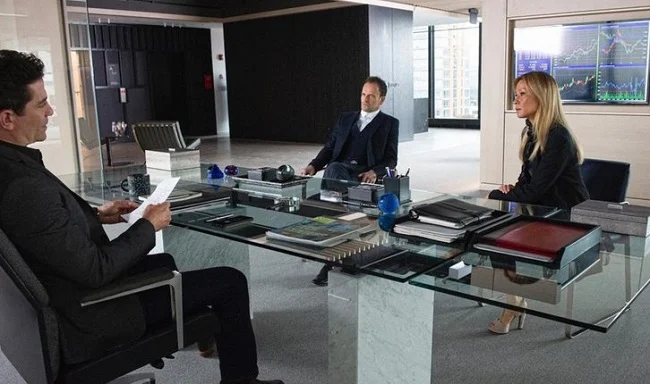
Stay Close is a British mystery drama miniseries based on the 2012 novel by Harlan Coben. The story has been relocated from the US to the UK and I was quite surprised how well this change works. Megan Pierce (Cush Jumbo) is a suburban mum living in the suburb, harbouring a secret. Michael Broome (James Nesbitt) is a detective still haunted by a cold case from seventeen years ago. Their paths cross when a new missing person's case impacts upon both their pasts. Stay Close is involving, convoluted and entertaining although I doubt real life crime is ever this complex.
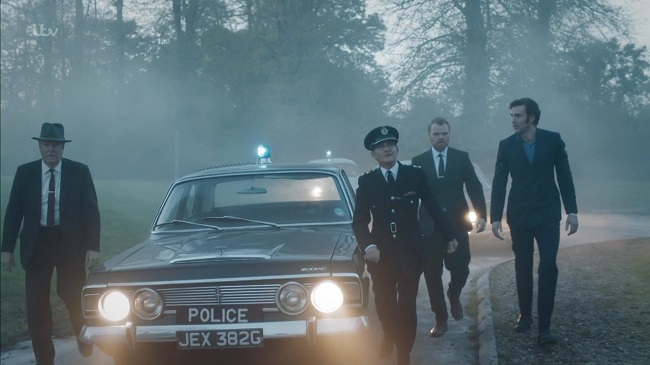
Four Lives. This three part drama follows the true story of the families of four young gay men. Anthony Walgate, Gabriel Kovari, Daniel Whitworth and Jack Taylor were murdered by Stephen Port between in 2014 and 2015. There deaths were not initially treated as murders or connected and the police investigation was a litany of incompetence and institutional prejudice. Sheridan Smith stars as Sarah Sak, the mother of Anthony Walgate who campaigned tirelessly to get justice for her son. There’s also a compelling performance by comedian and writer Stephen Merchant as the killer Stephen Port.
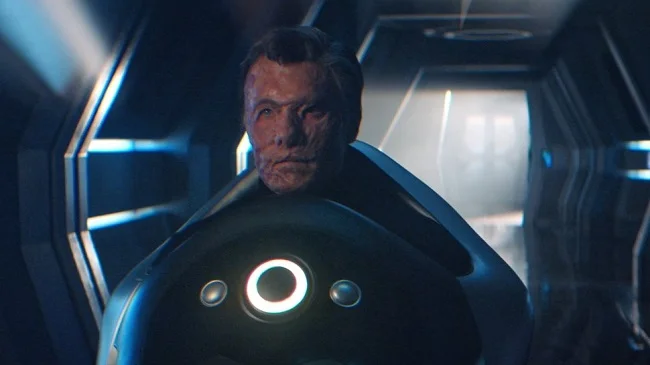
Universe. Professor Brian Cox tries to make the complexities of the universe accessible to the general public in this four part series. It treads a difficult path, trying to make the impenetrable and at times abstract science understandable to the layman. It takes time to dwell on the majesty of the universe but in doing so comes across as ponderous at times. Perhaps a shorter running time for each episode would have helped. It’s always a pleasure to see the BBC producing science content but this worthy show does fall between two stools.
After Life. Season 3 of Ricky Gervais’s black comedy drama was a necessary codicil to the story arc. There was a need for closure regarding the fate of specific characters such as Postman Pat (Joe Wilkinson) and Kath (Diane Morgan). I personally still found it funny and applaud the realities of life that Gervais does not shy away from. I believe it played better with viewers than it did with the critics who seem at times too focused on analysis, context and intent rather than just experiencing the show.
Reacher. I’ve not read any of the Jack Reacher books but was aware that a lot of fans were not happy with the casting of Tom Cruise in the two feature films. This eight part television adaptation of the first Jack Reacher novel, Killing Floor, does exactly what it’s supposed to. Ex-Military Policemen, Jack Racher, visits the town of Margrave, Georgia, and becomes embroiled in a murderous conspiracy by a gang of counterfeiters. Reacher is deadpan, the dialogue is hard boiled and the action scenes are gritty. Alan Ritchson looks the part and is very likeable. The show doesn’t reinvent the wheel but delivers on its promise. It’s all very binge watchable, which is what everyone I know who’s watched it has done. I’d happily watch another season.


Middle-earth Enterprises to Auction Off Rights
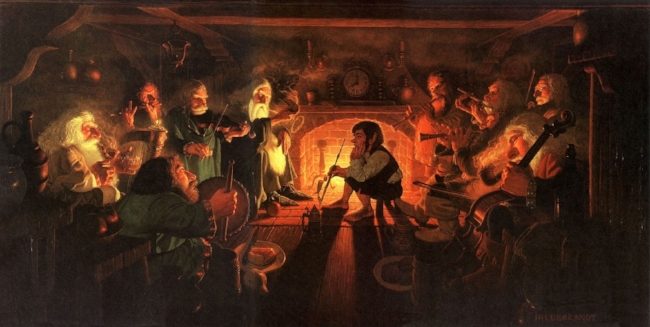
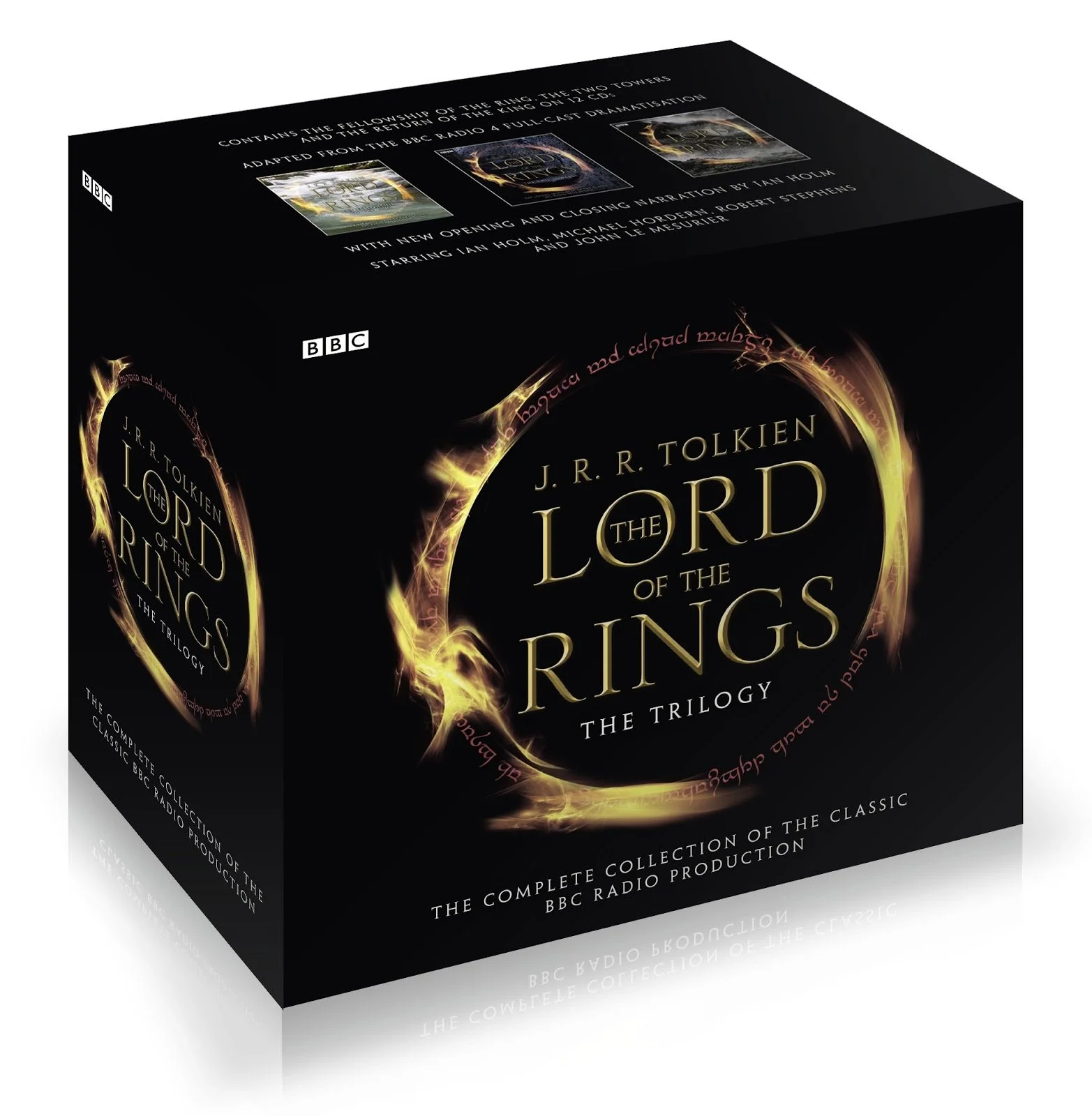
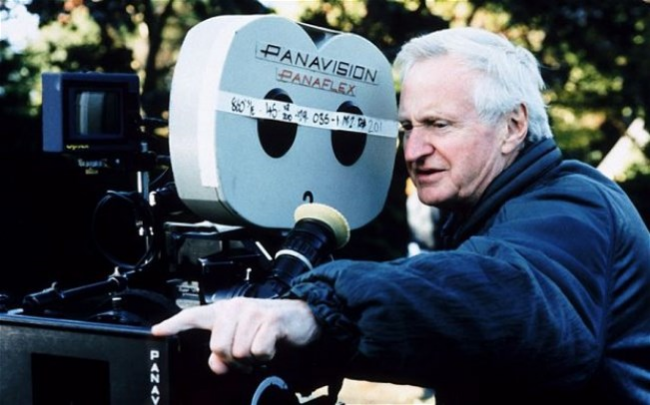
In 1969 J.R.R. Tolkien sold the motion picture, merchandising, stage and other rights to The Hobbit, The Lord of the Rings and other literary works to United Artists. UA were riding high at the time with the success of In the Heat of the Night and The Graduate. Allegedly Tolkien made the deal to pay off a tax debt, although this may be apocryphal. He was paid £100,000 which is equivalent to £1,680,000 today. He also retained a 7.5% royalty interest that has now been transferred to the Tolkien Estate. UA toyed with the idea of adapting The Lord of the Rings and many cinematic luminaries were associated with the project. In the early seventies British film director John Boorman was tasked with writing a screenplay. Boorman, an established director with a track record of being experimental, set about developing a script with his long term collaborator, Rospo Pallenberg. However, the project was cancelled due to costs and the studio getting “cold feet”.
In 1969 J.R.R. Tolkien sold the motion picture, merchandising, stage and other rights to The Hobbit, The Lord of the Rings and other literary works to United Artists. UA were riding high at the time with the success of In the Heat of the Night and The Graduate. Allegedly Tolkien made the deal to pay off a tax debt, although this may be apocryphal. He was paid £100,000 which is equivalent to £1,680,000 today. He also retained a 7.5% royalty interest that has now been transferred to the Tolkien Estate. UA toyed with the idea of adapting The Lord of the Rings and many cinematic luminaries were associated with the project. In the early seventies British film director John Boorman was tasked with writing a screenplay. Boorman, an established director with a track record of being experimental, set about developing a script with his long term collaborator, Rospo Pallenberg. However, the project was cancelled due to costs and the studio getting “cold feet”.
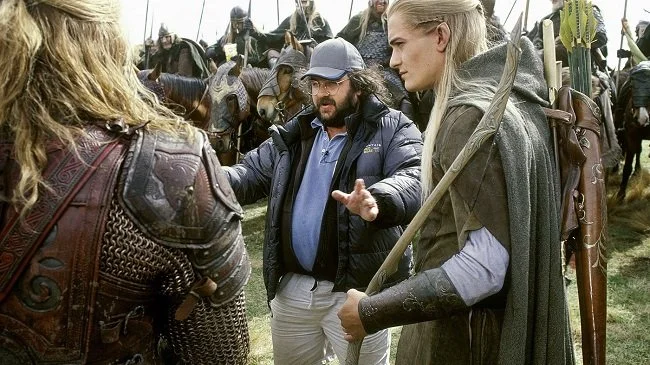
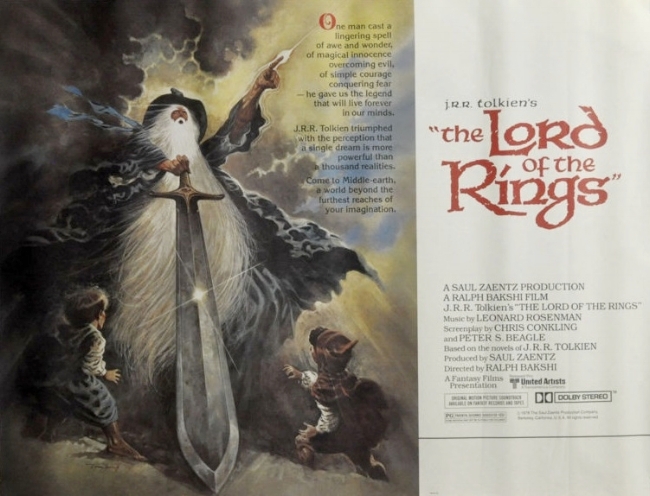
In 1976 United Artists sold most of their rights to Tolkien's work to the Saul Zaentz Company. Zaentz, an established film producer best known for One Flew Over the Cuckoo's Nest, then established Tolkien Enterprises to manage the rights that he'd acquired. Two years later, he produced Ralph Bakshi’s animated adaptation of The Lord of the Rings. The company name was later changed to Middle-earth Enterprises to avoid confusion with the Tolkien Estate. Over the next two decades Middle-earth Enterprises entered into various licensing and merchandising deals for both video and tabletop role-playing games. In 1997,a deal was struck with New Line Cinema for a live-action film adaptation of The Lord of the Rings. The trilogy of films released between 2001 and 2003, made over $3 billion at the box office. A further trilogy of films were made between 2013 and 2015, based upon The Hobbit.
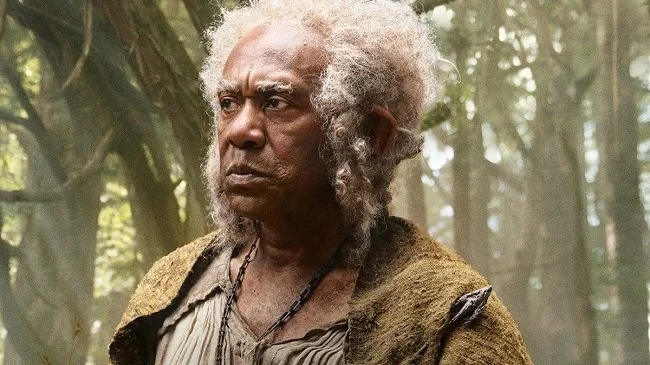
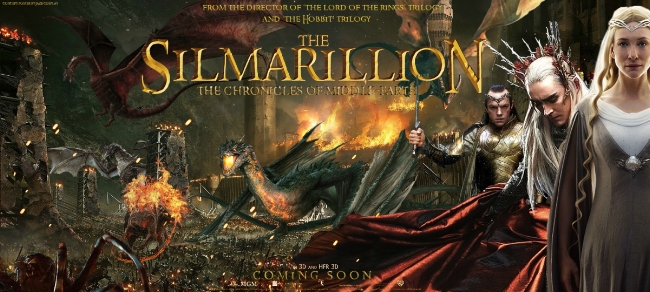
Since the success of Peter Jackson’s films, you would have thought that Middle-earth Enterprises would have capitalised more upon the intellectual property that they controlled. Yet Saul Zaentz was quite a Tolkien purist and along with Christopher Tolkien (Tolkien’s son), was not keen to see the brand “debased”. However, Zaentz died in 2014 and in his last years Christopher Tolkien stepped from the Tolkien Estate, down due to ill health. Tolkien’s grandchildren apparently have a more innovative approach to the running of the Tolkien Estate. Hence in 2017, they made a deal with Amazon for the global television rights for The Lord of the Rings. Jeff Bezos is a consummate fan of Tolkien and beat Netflix and HBO in the bidding war for the TV rights, paying $250,000,000. Apparently, the Tolkien Estate is so pleased with the development of The Lord of the Rings: The Rings of Power that they have provided access to material from The Silmarillion and Unfinished Tales.
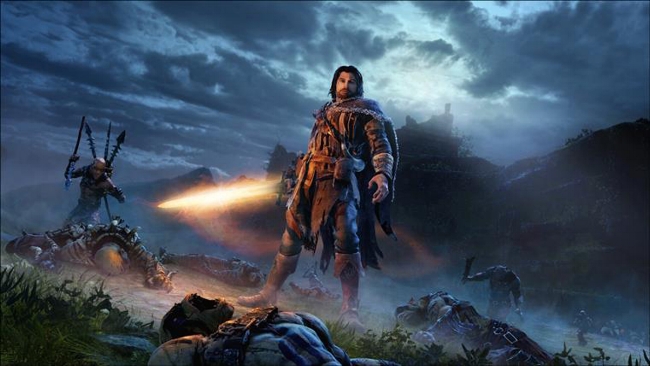
Which brings us neatly to yesterday’s announcement by Middle-earth Enterprises that they are to auction off the rights they own pertaining to Tolkien’s work. Episodic, big budget, fantasy television shows are a very lucrative business. If you want verification then cast your mind back to a popular HBO series based upon the works of George R.R. Martin. Hence, with The Lord of the Rings: The Rings of Power due for release in September of this year, Middle-earth Enterprises obviously thought it was the right time to sell their rights. Note that these include merchandise and video games. Two lines of business that have great commercial potential. It is logical to assume that Amazon will want to acquire these rights as it will compliment their existing Tolkien based portfolio perfectly. Middle-earth Enterprises rights are currently valued at $2 billion.
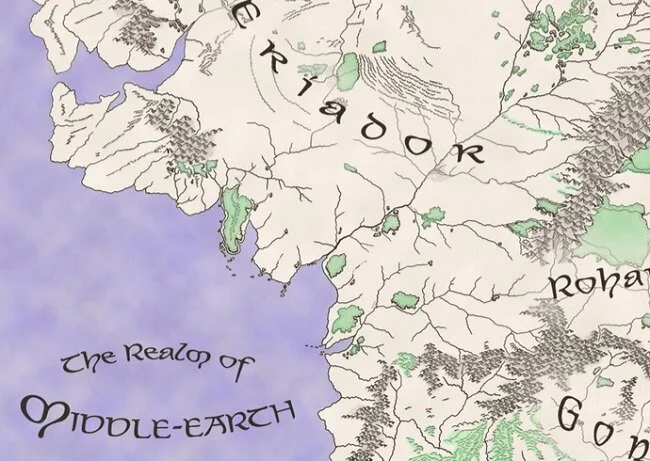
However, business is seldom black and white. I’m sure there may well be other interested parties such as Disney, Netflix or HBO. They may be “curious” about the intellectual property and what it can yield. Or they may be interested in curtailing the business ambitions of a competitor. Buying rights, intellectual properties and patents and then sitting on them is a thing. It’s not always about your own products but sometimes stopping other people’s. Furthermore, if Amazon do buyout Middle-earth Enterprises, what impact would that have upon existing licensed products? Daedalic Entertainment is currently developing a Gollum themed game. And then there is the long standing MMORPG, The Lord of the Rings Online. If the licence that Standing Stone Games currently rely upon isn’t renewed then it would mean the closure of the game. Yes, we’ve endured such shenanigans before. But last time Amazon wasn’t involved.
It’s also worth remembering that Amazon were developing their own MMORPG in conjunction with Athlon Games. However Athlon Games were bought out by Tencent Holdings and Amazon was “unable to secure terms to proceed with this title”. This raises some interesting questions. Was the game completed? What has happened to the code? Was it scuttled purely due to legal issues IE who got what percentage? If these “problems” were resolved, IE Amazon bought out Tencent’s stake, could the game go ahead? If Amazon did launch its own MMORPG based upon Tolkien’s work, would they want a competitor? Remember that Star Wars: Galaxies was closed to clear the path for Star Wars: The Old Republic. The auctioning of Middle-earth Enterprises rights at this time is not a coincidence. I have a suspicion that when the dust settles Amazon will be holding all the cards. And where there’s a winner there’s also a loser or losers.







The Book of Boba Fett (2022)
As of today, the final episode of The Book of Boba Fett has aired on Disney + and this spinoff show from The Mandalorian has finished its first season. It has been a curious seven part story and not at all what I was expecting. Initially focusing upon the trials and tribulations of the iconic Bounty Hunter Boba Fett as he fights for Jabba the Hutt’s former territory, the story creatively explained what happened to him after he was swallowed by the Sarlacc. However, the plot took an unexpected turn focusing upon the fate of Din Djarin and Grogu from The Mandalorian, before the climatic final instalment. It’s certainly been an entertaining ride but the show’s somewhat eclectic nature has been a little confusing. Having a dedicated story about Boba Fett and then undermining it by focusing upon other iconic characters seems somewhat contradictory. Thankfully, the final episode put both shows back on track.
As of today, the final episode of The Book of Boba Fett has aired on Disney + and this spinoff show from The Mandalorian has finished its first season. It has been a curious seven part story and not at all what I was expecting. Initially focusing upon the trials and tribulations of the iconic Bounty Hunter Boba Fett as he fights for Jabba the Hutt’s former territory, the story creatively explained what happened to him after he was swallowed by the Sarlacc. However, the plot took an unexpected turn focusing upon the fate of Din Djarin and Grogu from The Mandalorian, before the climatic final instalment. It’s certainly been an entertaining ride but the show’s somewhat eclectic nature has been a little confusing. Having a dedicated story about Boba Fett and then undermining it by focusing upon other iconic characters seems somewhat contradictory. Thankfully, the final episode put both shows back on track.
I am still of the opinion that as a franchise, Star Wars works best on TV in an episodic format. George Lucas often cited cliffhanger serials such as Flash Gordon and Buck Rogers as a source of inspiration. The reason that The Mandalorian works so much better than the last three Star Wars feature films is because the writing is consistent. The former was obviously conceived and planned in advance by a single writer/showrunner and their support team. Whereas the movies seemed to be “made up as they went along”. The changes in writers and directors clearly had a negative impact on the way the franchise was received by viewers. It ultimately seemed to self plagiarise and contradict its own lore. This has not been the case with The Mandalorian and now The Book of Boba Fett which seem to be very aware of established lore and adept at drawing upon it.
I am not a scholar of Star Wars lore and have watched only the feature films and very little of the animated shows. Nor have I read many of the books, graphic novels and comics which have flooded the market over the last 25 years. Much of these are no longer canonical. Hence, my viewing of The Mandalorian and The Book of Boba Fett has not been hampered by an excess of fan based baggage. I have watched these shows for entertainment first and fandom second. Broadly speaking I have enjoyed them and they deliver what I want and expect from the franchise. They certainly feel more like direct “relatives” of the original trilogy than the three Disney feature films. Creator and writer Jon Favreau seems to grasp how Star Wars works better than J.J. Abrams. I haven’t liked all aspects of these shows. The Mod gang of Mos Espa was a homage too far in my opinion but it’s not a deal breaker.
Some folk seem to have a problem with the idea of Boba Fett’s character arc and the franchise reinventing him as a “good guy”. I do not. There are lots of both fictional and historical characters that have changed due to personal circumstances as well as the political and social realities of the world. As so much of The Book of Boba Fett seems to be couched in Western mythology, I’ll cite Wyatt Earp or Pat Garrett as examples. Plus there is human nature to consider. Many real soldiers tire of their profession and look to escape it all in later life. Plus if you consider the character of Boba Fett just on the strength of his appearances in The Empire Strikes Back and Return of the Jedi, then there isn’t really a lot of backstory or narrative depth. He is a bounty hunter and beyond that pretty much nothing is established. That’s a blank canvas as far as I can see.
One of the most enjoyable aspects of The Book of Boba Fett has been the way the show draws heavily and not too subtly upon a lot of classic cinema. Some of these homages are quite obvious where others are more low key. Certainly the entirety of Boba Fett’s time among the Tusken tribe, is straight out of A Man Called Horse. The idea of the outlander who is adopted by a tribe and then eventually becomes its ruler is an established literary trope. The Pyke Syndicate spice train attack was also a major nod to David Lean’s Lawrence of Arabia. There are also numerous references both big and small to the works of Akira Kurosawa and Sergio Leone, especially with the introduction of Cad Bane. Then we had a bomb in a club which was straight out of Brian De Palma’s The Untouchables and you’d have to have a bag over your head not to spot the King Kong reference in the season finale.
I consider all of these cinematic references to be a good thing. If it encourages younger Star Wars fans to watch these films and widen their knowledge of cinema, then I deem that to be a good thing. Overall I found The Book of Bobba Fett entertaining. It does Star Wars “well”. I’ve read some reviews that imply that the show is poking fun at fans and that it isn’t as deep as the original movies. I consider this perspective to be risible. Star Wars is a lot of things but it has never been “deep”. It is effectively a Western style soap opera set in space. It has always been entertaining, popular entertainment. It deals in archetypes and established tropes but it has never been a cerebral competitor to other popular franchises like Tolkien’s legendarium or Frank Herbert’s work. The existing TV format seems to be a perfect fit for the franchise and I hope it continues in this idiom. No more bloated films driven by focus groups and corporate memos, thank you.









Revisiting Star Wars: The Old Republic
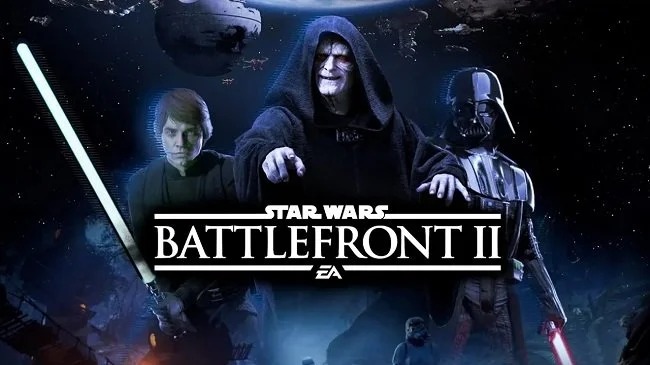
Star Wars is an interesting franchise in the way it elicits such a strong emotional reaction among those that venerate it. To cut a long story short, I recently reinstalled Star Wars: The Old Republic and the moment I reactivated one of my previous characters and logged into the game I was immediately smitten with what I can only describe as Star Wars “feels”. There is something about the aesthetic associated with the franchise, both visually and musically (the latter is in many ways unique to Star Wars) which taps into my subconscious and prompts a wave of nostalgia. The Star Wars theme is a unique piece of music, insofar as whenever I hear it, it never fails to make me feel like a ten year old boy again. A boy who was enamoured with the Star Wars universe. Perhaps I still am on some level.
Star Wars is an interesting franchise in the way it elicits such a strong emotional reaction among those that venerate it. To cut a long story short, I recently reinstalled Star Wars: The Old Republic and the moment I reactivated one of my previous characters and logged into the game I was immediately smitten with what I can only describe as Star Wars “feels”. There is something about the aesthetic associated with the franchise, both visually and musically (the latter is in many ways unique to Star Wars) which taps into my subconscious and prompts a wave of nostalgia. The Star Wars theme is a unique piece of music, insofar as whenever I hear it, it never fails to make me feel like a ten year old boy again. A boy who was enamoured with the Star Wars universe. Perhaps I still am on some level.
The reason I mention this is because nostalgia and having an emotional attachment to Star Wars certainly contributed to my decision to download the 45GB client for SWTOR. And let us not forget the very selective way our memory works. Hence I was focused on all the positive aspects of this MMORPG, such as the detailed stories, the immersive worlds and the allure of the franchise. There is something very satisfying in firing a blaster pistol in SWTOR and the fact that it makes exactly the same noise as they do in the movies. Returning to this game is at first like returning to a favourite restaurant. Familiarity is indeed comforting. I was pleased to see my previous characters just as I left them. A level 50 Smuggler from 2011 and a level 54 Bounty Hunter from 2013. I rolled a new Smuggler and it didn’t take long for me to orientate myself and remember how the controls work. The sumptuous soundtrack washed over me and I was briefly floating in a sea of nostalgia and joy. Several days later I have a more realistic attitude towards the game.
You to can run through endless corridors
Never let emotions and sentiment get in the way of critical thinking. SWTOR had some major flaws at launch and despite 10 years of updates, expansions and streamlining, there are still issues today. The game suffers from skills bloat, especially with regard to the original content. Modern action combat in MMOs has seen a rationalisation of skills, usually on one quickbar. SWTOR swamps you in skills, most of which are of varying relevance. Then there are the expansive planetary maps. Travelling from A to B can be exhausting sometimes, becoming a chore. Often you feel that it’s busy work for its own sake as you fight your way across Alderaan or Corellia just to get to a quest location. And then there is the perennial MMO problem of getting the gear progression right, as you level. At present my new Smuggler is level 22 and although I am adequately healed by my companion, my twin blasters feel somewhat lacklustre. It takes a little too long to kill enemies with gear from quest rewards. Yet modifying weapons is financially prohibitive at this level.
However, these criticisms stem from the fact that the base game was released in 2011 and SWTOR certainly follows the MMO trends of that time. However, much has been done to try and rectify this. The levelling experience has changed immensely and a player can progress through the game just by undertaking their class story. I remember back in 2011/12 having to do every quest available to try and get as much XP as possible. And developer’s BioWare has made many quality of life improvements over the past decade. Quick travel is now on a 6 minute cooldown instead of 30 minutes. You can port out of a story instance now conveniently back to a safe haven without having to fight all the way on foot. Taxi travel and personal speeders are cheaper and more accessible. The game also uses a lot of “standard” mechanics so if you’ve played other MMOs or, like me, have been away for a while, it is not too difficult to pick up where you left off.
Galactic Starfighter is not as bad as you think
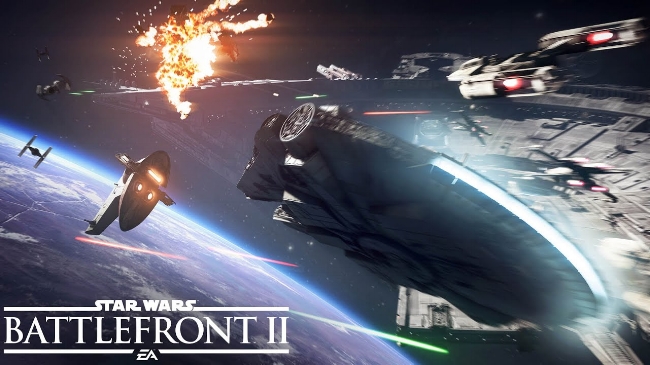
As for content and activities, there are now so many additional things to do. Strongholds, the player housing system, is enjoyable and very intuitive to figure out. There’s the Galactic Starfighter system as well, along with all the other raids and instances that have built up overtime. And if you like to tinker with armour and weapons you do so to your heart’s content. One of the first things I did was investigate the cosmetic options for both my new alt and their companion. I also seem to have qualified for a lot of “free stuff” over the years as I had over a dozen in-game mail alerts waiting for me when I first logged in. All of which had some sort of trinket and bauble attached. To my surprise I still had 3,500 Cartel Coins available from my previous time subscribing. The in-game store is filled with desirable items, from armour and mounts to cosmetic clothing and house furnishings. I bought a jetpack!
No one told me they had jetpacks
For me, perhaps the most compelling aspect of SWTOR is the story telling. You can hide the chat window and play this game as a single player RPG if you see fit. I did this back in 2011 and took exactly the same approach when I returned to the game a few days ago. I rolled a new Smuggler so I could familiarise myself once again with the class skills. Having done this I am now using my original level 50 character as I want to play through The Rise of the Hutt Cartel expansion, rather than repeat older content. Furthermore, I seem to have returned to SWTOR at exactly the right time, as there is a new expansion, Legacy of the Sith, due on the 15th February. So far I have subscribed for a month (as it removes a lot of the impediments that blight a free account) and it will be interesting to see if my enthusiasm for SWTOR is sustained longer than 31 days and whether those Star Wars “feels” remain.
The Naked Jungle (1954)
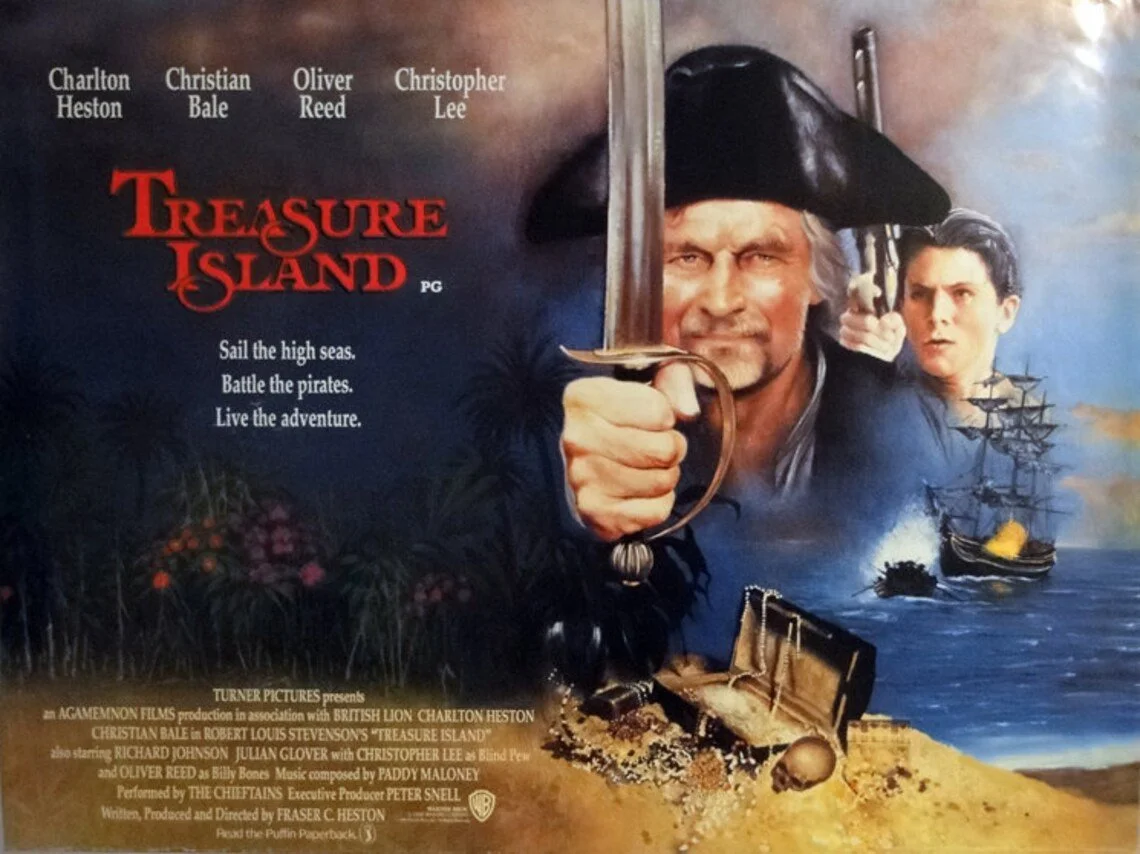
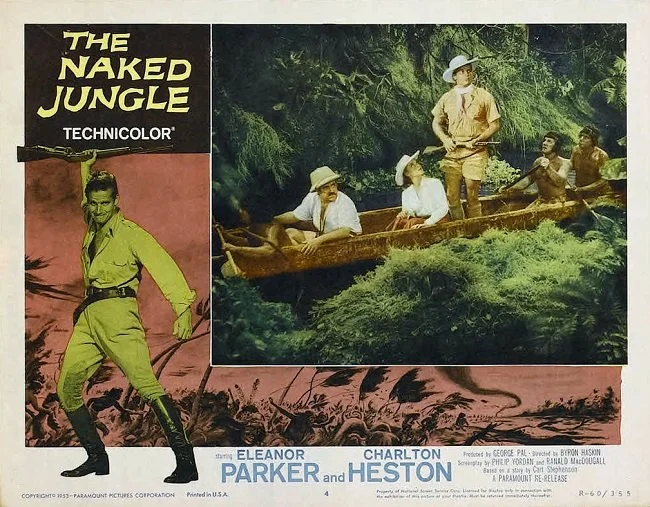
Set in Brazil in 1901, plantation owner Christopher Leiningen (Charlton Heston) makes arrangements to get married. He has spent his entire life building his estate and reclaiming land from the jungle. He is fiercely independent but he is also alone and isolated. Joanna Selby (Eleanor Parker) from New Orleans agrees to marry him but their first meeting does not go well. Leiningen is unhappy to discover that Joanna is a widow and hence has a past, so he tells her to return to America on the next available boat. However, local commissioner (William Conrad) informs Leiningen that swarming soldier ants, or Marabunta, are moving towards his plantation destroying everything in their path. Leiningen refuses to abandon his life’s work and is surprised when Joanna decides to stay with him. Can they convince their native workers to stay too and can they defend the estate from the Marabunta, described as “forty square miles of agonising death”.
Set in Brazil in 1901, plantation owner Christopher Leiningen (Charlton Heston) makes arrangements to get married. He has spent his entire life building his estate and reclaiming land from the jungle. He is fiercely independent but he is also alone and isolated. Joanna Selby (Eleanor Parker) from New Orleans agrees to marry him but their first meeting does not go well. Leiningen is unhappy to discover that Joanna is a widow and hence has a past, so he tells her to return to America on the next available boat. However, local commissioner (William Conrad) informs Leiningen that swarming soldier ants, or Marabunta, are moving towards his plantation destroying everything in their path. Leiningen refuses to abandon his life’s work and is surprised when Joanna decides to stay with him. Can they convince their native workers to stay too and can they defend the estate from the Marabunta, described as “forty square miles of agonising death”.
The Naked Jungle is essentially a romantic drama with some action scenes added to the final act. If it were made today it would more than likely be an action movie with a romantic subplot added as an afterthought. However, this was the fifties and “romance” sold and by “romance” I of course mean sex. Obviously such a subject couldn’t be addressed directly, due to the prevailing social attitudes and film making codes of the time. So the screenplay by Ranald MacDougall, Ben Maddow and Philip Yordan, dances around the issue dropping numerous unsubtle hints. Christopher Leiningen is a clean cut, no nonsense hero and man’s man. He is the master of all he surveys and has built his own world by the strength of his own will. But he balks of the idea of marrying a widow; a women who is more sexually experienced than him. Especially as it is more than likely he is a virgin himself. The sexual politics of this film are quite advanced for the times.
The first hour of the The Naked Jungle is a fraught love story, filled with sexual tension. Contemporary viewers who lack the ability to detach themselves from the outdated imperialist themes, dubious depiction of the Brazilian natives and other obsolete elements of the story may find The Naked Jungle hard to watch. Those who can contextualise the narrative will be rewarded with strong performances from both Heston and Parker. The latter has some very good lines. When rebuffed for being a widow and hence not being a virgin she calmly states that a piano plays better if it has already been played. The production values are also sound with Florida standing in for tropical Brazil. The studio scenes and interior sets are sumptuous and reflect the grandiose style of big studios of the time.
The last thirty minutes of The Naked Jungle feature the arrival of the Marabunta and the nature and habits of soldier ants are grossly misrepresented. But why let natural history stand in the way of good action scenes. Hence we get a lot of matte painting showing jungle stripped of foliage and composite shots of ants swarming around the cast. There’s also some good miniature work at the film’s climax. A few cast members are eaten by the marauding Marabunta but it’s all rather tame. A corpse that has been eaten to the bone is briefly shown and one actor briefly staggers around with ants covering his hands and face but it’s hardly terrifying. Overall, The Naked Jungle is an entertaining example of the sort of romantic drama with a soupçon of action which were a cinematic mainstay of the times. It reflects the tastes, politics and popular culture of the fifties and should be judged within such a context.
Chiddingstone
With January already behind us, Mrs P and I decided it was high time we took our first day trip of 2022. So yesterday I spent some time looking online at details of various National Trust sites within an hour or so drive from our home. I also looked at similar places of historical note that are run by other bodies. Sadly, many are either partially or totally closed for the present. It would appear that from January to March many of these sorts of tourist attractions spend time repairing, refurbishing and preparing for forthcoming events. Grounds also have to be maintained. Hence, we were somewhat lacking in choice for suitable destinations. However, as the weather forecast was mild, today we opted to visit the village of Chiddingstone so we could walk in the grounds of the local castle and along the various footpaths in the area.
With January already behind us, Mrs P and I decided it was high time we took our first day trip of 2022. So yesterday I spent some time looking online at details of various National Trust sites within an hour or so drive from our home. I also looked at similar places of historical note that are run by other bodies. Sadly, many are either partially or totally closed for the present. It would appear that from January to March many of these sorts of tourist attractions spend time repairing, refurbishing and preparing for forthcoming events. Grounds also have to be maintained. Hence, we were somewhat lacking in choice for suitable destinations. However, as the weather forecast was mild, today we opted to visit the village of Chiddingstone so we could walk in the grounds of the local castle and along the various footpaths in the area.
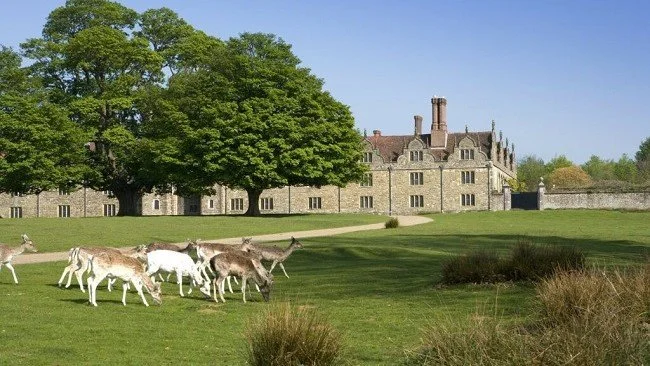
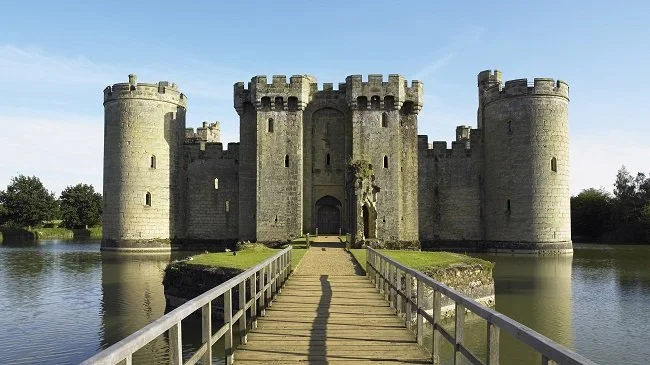
Chiddingstone is a village and civil parish located in Sevenoaks in the county of Kent, England. Located on the River Eden between Tonbridge and Edenbridge, Chiddingstone is unique in that the entire village (apart from the church and Chiddingstone Castle) is owned by the National Trust. It is considered to be the best example of a Tudor one-street village left in the country. Mentioned in the Domesday Book, Chiddingstone has several interesting buildings. The Castle Inn is a 15th-century building, which became a hostelry in 1730. The parish church St. Mary the Virgin is the fourth built upon the site. It was almost destroyed by a lightning fire in 1624. The churchyard has a stone gazebo dating from 1736, built by Henry Streatfeild whose family owned much of the land in the area. The National Trust bought the village in 1939.
Chiddingstone Castle was built by the Streatfeild family and served as their seat from the early 16th century until the beginning of the 20th century when the family left the castle. Much of the current structure dates from the early 19th century although it incorporates elements of the earlier buildings on the same site. The Castle lake measures around 3.5 hectares and separates the village of Chiddingstone from the grounds of the Castle. It is naturally stocked with wild Carp, Bream and Perch. It held the record for the largest Bream for 37 years, from 1945. Both the castle with it’s collection of painting and artefacts, as well as the grounds and lake are open to the public. The lake is a popular fishing venue and the grounds link with several footpaths in the vicinity, offering woodland walks and trails through the local fields.
Although an extremely picturesque village, access and parking are somewhat limited. The minor roads are not ideal for larger vehicles and some of the views and photo opportunities are blocked by the practical parking requirements of village residents. However, it was still pleasant to walk around the castle grounds today, as well as peruse the village and churchyard. Chiddingstone is a very tranquil place and apart from groundskeepers removing some recent storm damage, it was a pleasure to be away from the sound of traffic. I would have liked to have visited the castle itself but it is the wrong time of the year. In total we only spent about 90 minutes in Chiddingstone. Perhaps including a visit to the neighbouring villages of Chiddingstone Causeway and Charcott would make a more substantive day out.






























A Month in Gaming
It’s been a while since I’ve written an instalment of A Month in Gaming. Over Christmas and New Year I was busy with family issues and it’s only in January that I’ve started anything approaching a regular gaming schedule. The novelty of Forza Horizon 5 has run its course and I’ve grown tired of the game’s upbeat tone and neverending activities that litter the in-game map. It’s nice that the game tries hard to engage with you but it reaches a point where you never get a time to stop, think and take stock. I couldn’t find anything else included in the Xbox Game Pass which especially excited me. There were a few titles that did take my fancy but I then discovered that I already own them elsewhere via Steam or Epic Games. So I decided to cancel my subscription. I still think that the Xbox Game Pass for PC is very good value and my failure to find anything that I like is my problem and not Microsoft’s fault.
It’s been a while since I’ve written an instalment of A Month in Gaming. Over Christmas and New Year I was busy with family issues and it’s only in January that I’ve started anything approaching a regular gaming schedule. The novelty of Forza Horizon 5 has run its course and I’ve grown tired of the game’s upbeat tone and neverending activities that litter the in-game map. It’s nice that the game tries hard to engage with you but it reaches a point where you never get a time to stop, think and take stock. I couldn’t find anything else included in the Xbox Game Pass which especially excited me. There were a few titles that did take my fancy but I then discovered that I already own them elsewhere via Steam or Epic Games. So I decided to cancel my subscription. I still think that the Xbox Game Pass for PC is very good value and my failure to find anything that I like is my problem and not Microsoft’s fault.
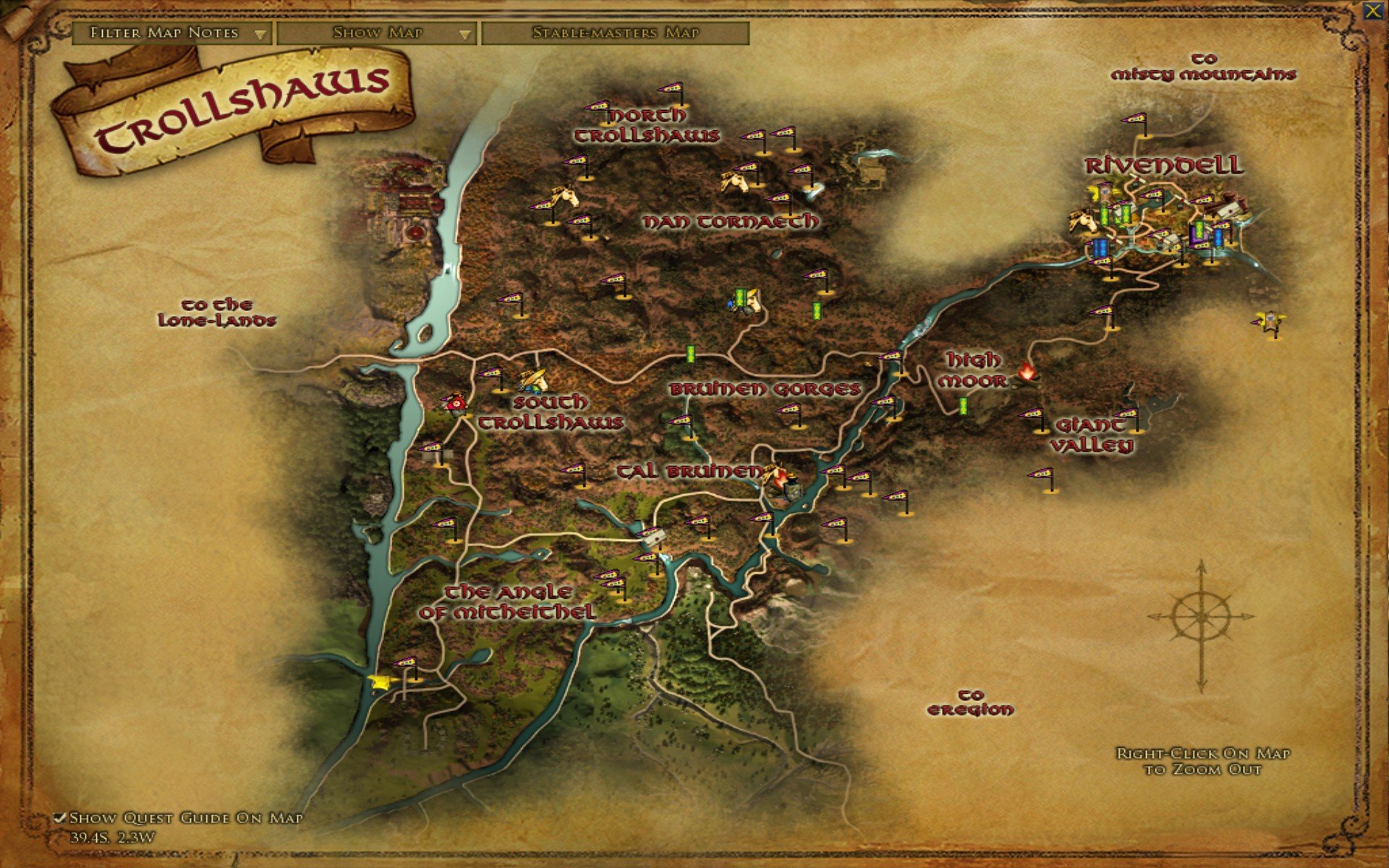
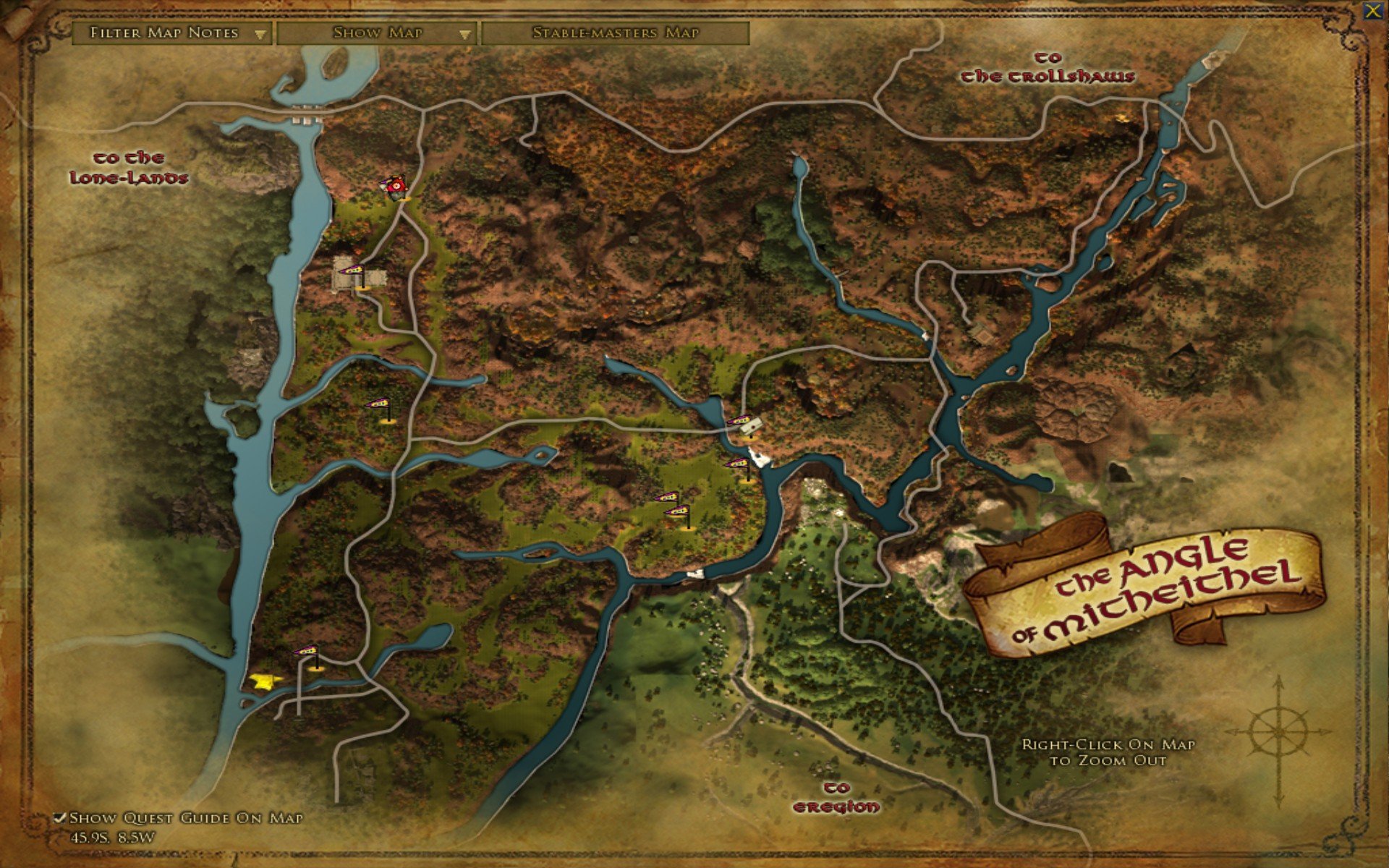
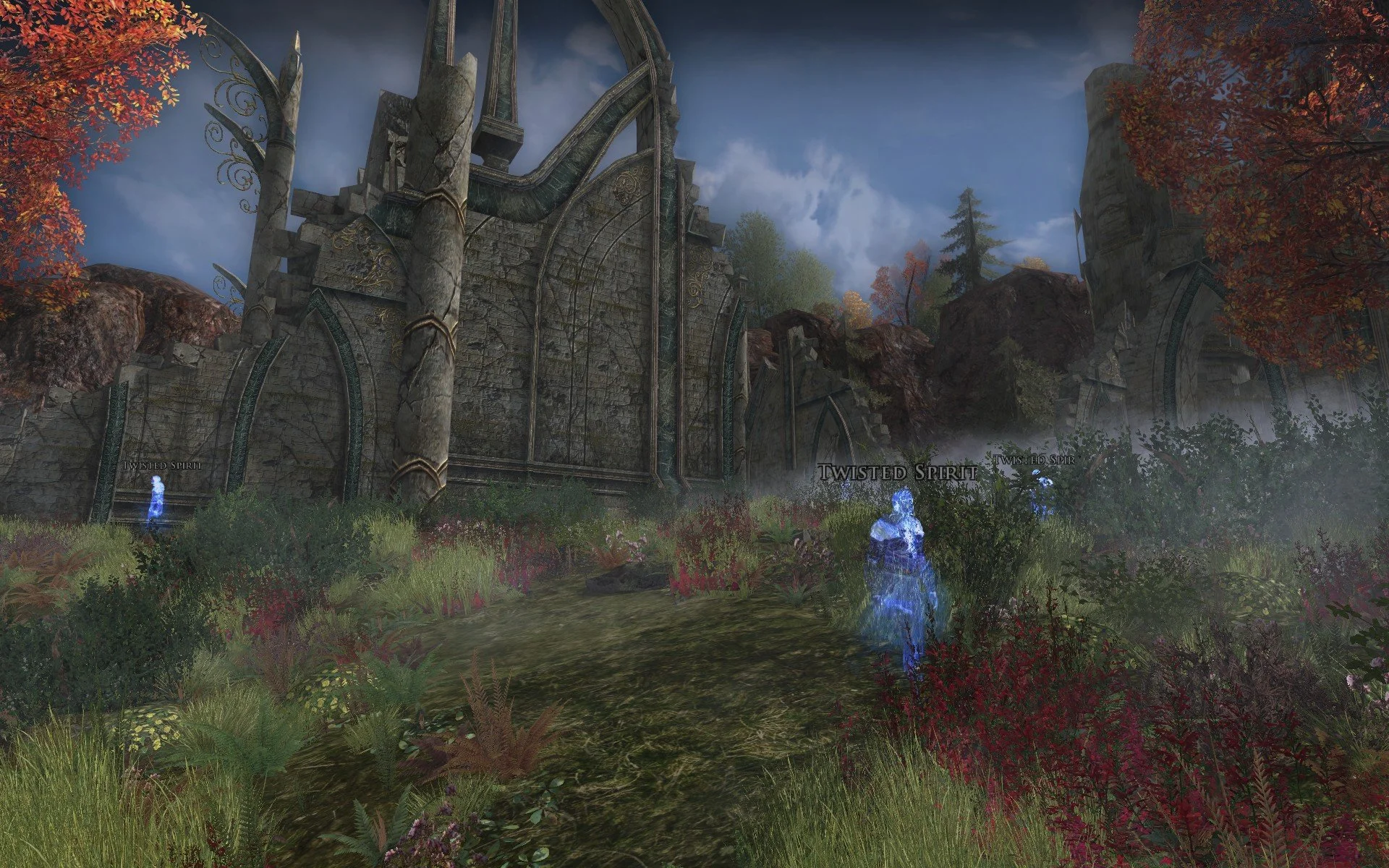
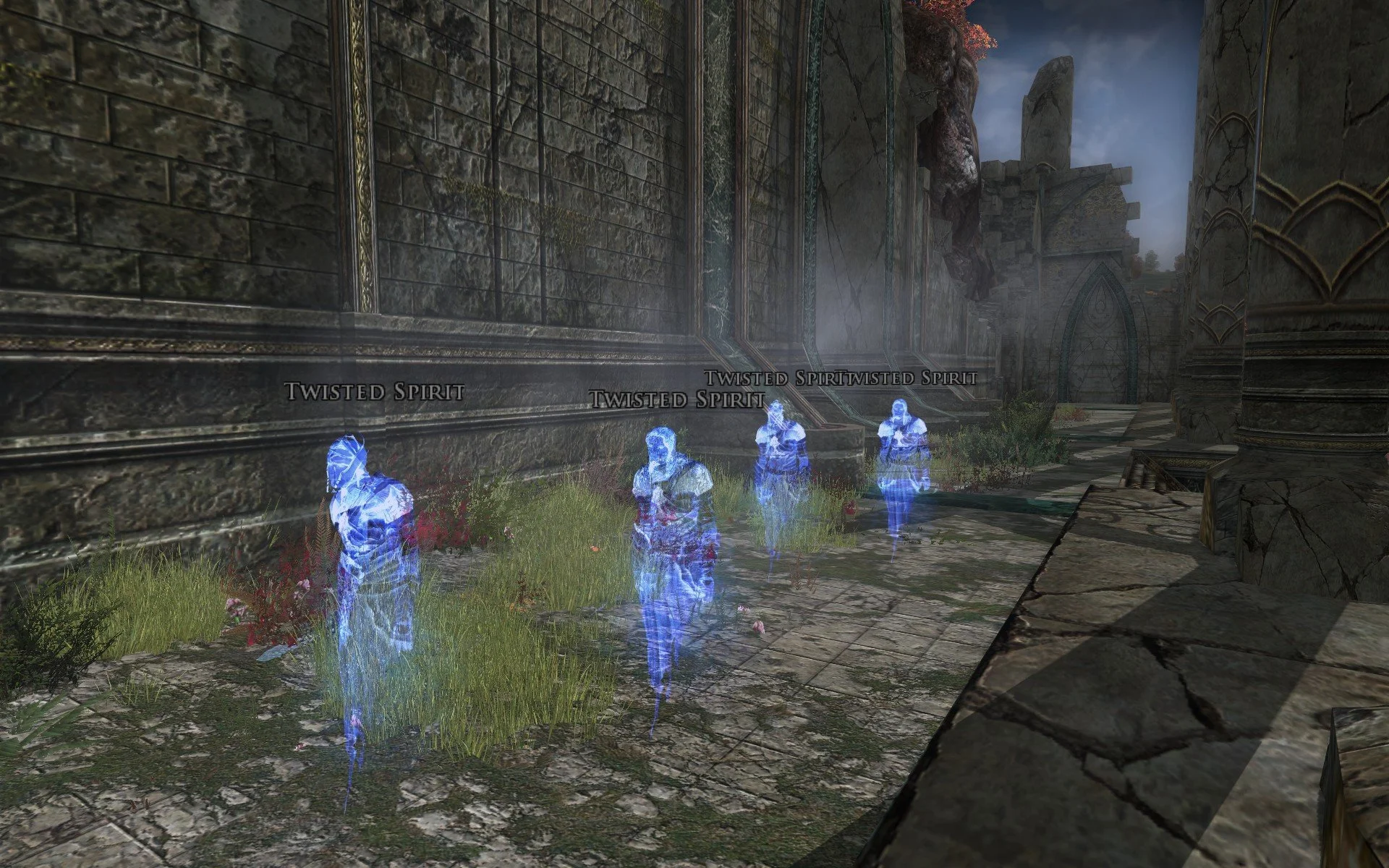
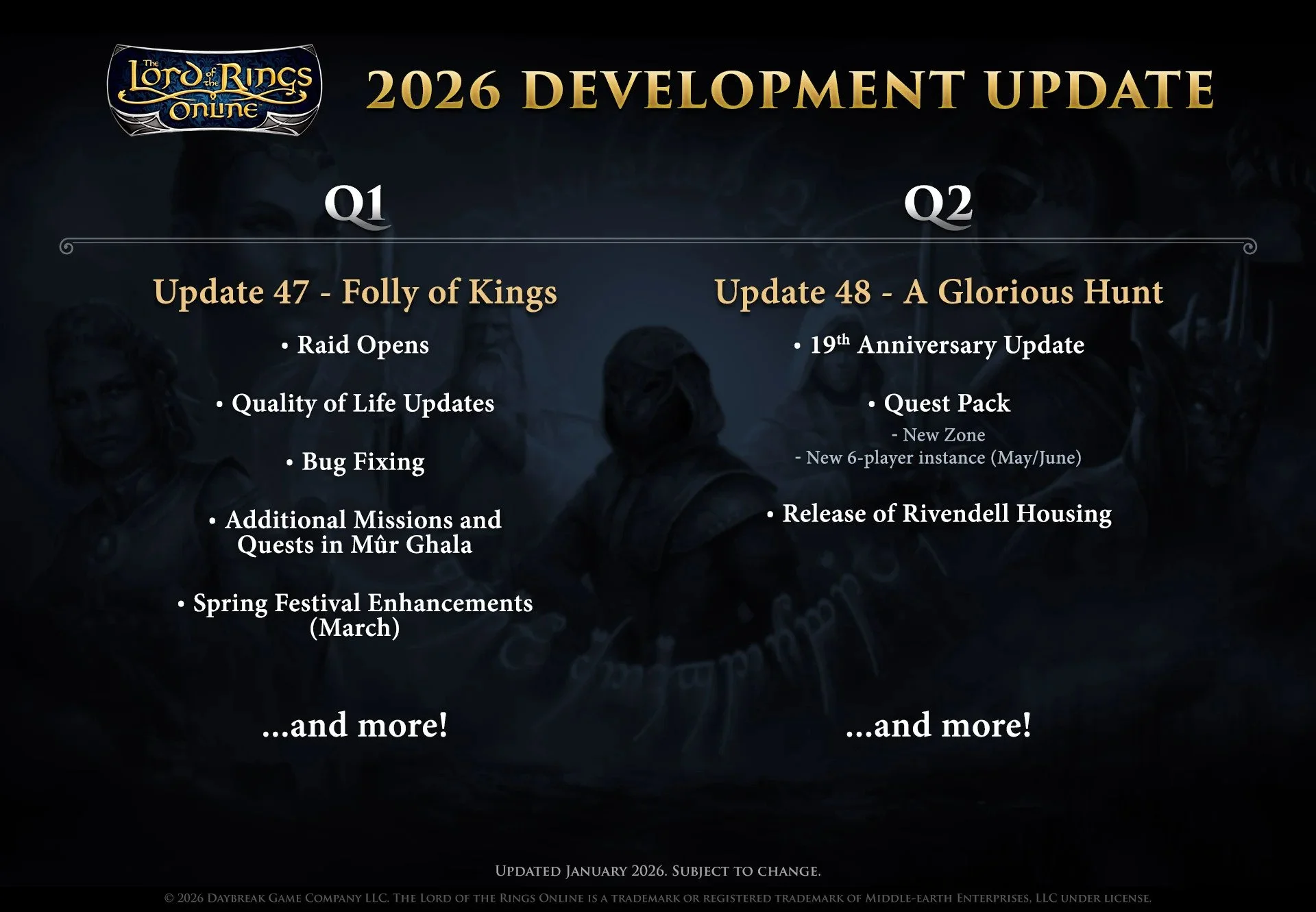
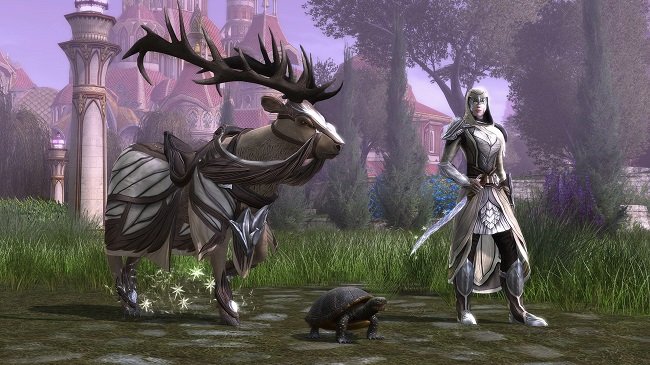
As ever MMORPG The Lord of the Rings Online has kept me intermittently busy over the Winter months. I have continued with the central story arc that runs throughout the latest expansion Fate of Gundabad. Sadly performance issues still plague the new zone. I have experienced at least two instances, in which NPCs will not trigger the next stage of the story and remain unresponsive despite having flaming rings above their heads. Lag also persists in the Gundabad maps, especially in Câr Bronach. Handing in missions is also problematic and again you often find yourself having to wait for the game to catch up with what you’re doing. I also managed to visit the Bullroarer test server and take a look at the preview of Update 32 (Beta #4 and #5). So far I like what I’ve seen of the new zone, The Angle of Mitheithel. It’s biggest problem seems to be the correct pronunciation of the name.
Star Trek Online has just started its12th anniversary celebrations. Kate Mulgrew is the latest actor from the television shows to reprise her character in-game. Furthermore, not only do we finally get to meet Admiral Kathryn Janeway in-game, we also encounter her Mirror Universe incarnation, Terran Marshal Janeway. I cannot emphasise how important it is to STO to have the presence of so many much loved characters in-game, portrayed by the same actors that did so on television. It certainly elevates the credibility and gravitas of the proceedings. The anniversary episode continues the new Terran Empire storyline and has some very interesting lore based surprises. One plot element that’s proving a major talking point is who exactly is the current Emperor of the Terran Empire. Will it be someone who has previously not featured in the game? Will there be a major voice artist surprise later in the year?
As for what I intend to play in February and beyond, I’m not quite sure at present. I suspect I’ll be done with LOTRO shortly and will then take a break from the game. I usually return to The Elder Scrolls Online for three months or so but I cannot at present muster much enthusiasm for the game. Should I revisit an older game such as one of the Sniper Elite series, or should I replay Hand of Fate 2; a game which still impresses me. I am reluctant to buy something new as the last few times I’ve done this it hasn’t proven a good decision. Prior to Christmas I bought Tom Clancy’s Ghost Recon: Breakpoint in a sale and it has failed to hold my interest. I sure I can find something in my ever growing libraries of “free” games to keep me amused. I shall have a trawl through them and hopefully may find a pleasant surprise.

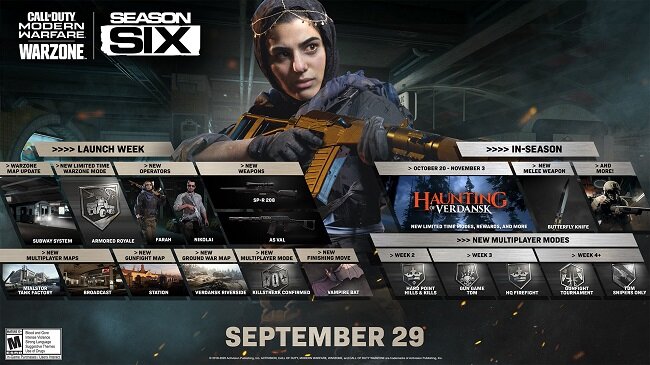

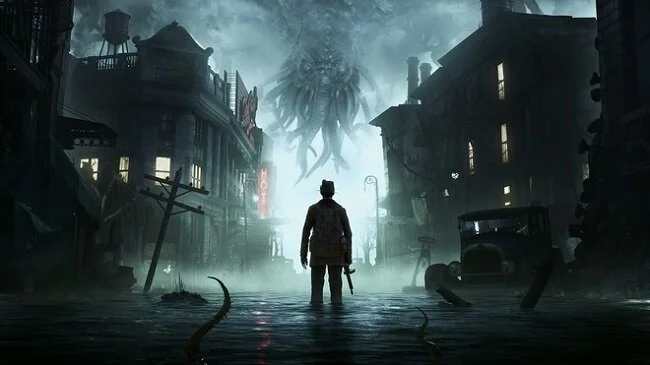
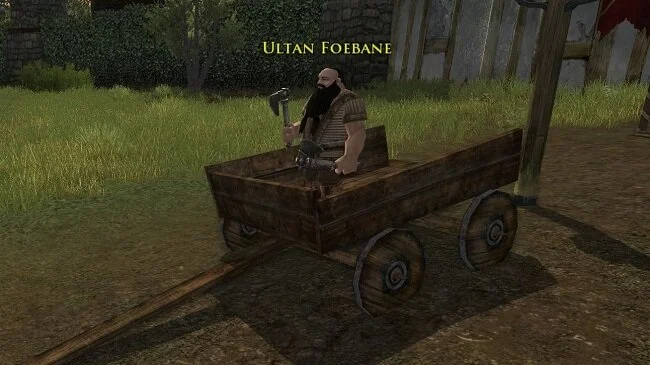
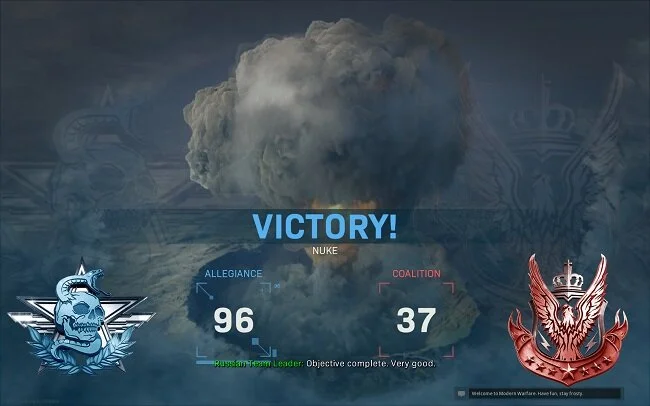

Video Game Monopolies
Less than two weeks after we learned that Microsoft would be purchasing Activision Blizzard for $70 billion, today it was announced that PlayStation Studios (AKA Sony) is to buy Bungie for $3.6 billion. Both Microsoft and Sony have extolled the virtues of their respective acquisitions and claim that gamers will benefit. Game passes will become better value for money with new titles added to them. Accessibility and crossplay may well increase due to each company’s technological innovations. Console prices could even be reduced. And at a company level, restructuring and streamlining presents a potential opportunity to purge some developers of many of the toxicity issues that blight them. If you believe the press releases from both Sony and Microsoft, then the future of gaming is in safe hands and looking good. And so far there hasn’t been one mention of NFTs.
Less than two weeks after we learned that Microsoft would be purchasing Activision Blizzard for $70 billion, today it was announced that PlayStation Studios (AKA Sony) is to buy Bungie for $3.6 billion. Both Microsoft and Sony have extolled the virtues of their respective acquisitions and claim that gamers will benefit. Game passes will become better value for money with new titles added to them. Accessibility and crossplay may well increase due to each company’s technological innovations. Console prices could even be reduced. And at a company level, restructuring and streamlining presents a potential opportunity to purge some developers of many of the toxicity issues that blight them. If you believe the press releases from both Sony and Microsoft, then the future of gaming is in safe hands and looking good. And so far there hasn’t been one mention of NFTs.
However, if one steps back as a gamer and considers the nature of monopolies and their historical precedent, then things don’t look so great. Typical problems associated with monopolies are as follows. Higher prices than in competitive markets. A decline in consumer surplus. Monopolies have fewer incentives to be efficient. Possible diseconomies of scale. Monopolies often have monopsony power in paying a lower price to suppliers. All of which can lead to poor quality, unoriginal, expensive video games made by overworked developers in poorly paid and bad working conditions. And let us not forget the industry's ongoing and ever increasing infatuation with blockchain technology and non-fungible tokens. The days of paying once for a game are on the way out. The prospect of gaming being a second job is on the horizon.
I find my interest in gaming waning on a daily basis. Have I outgrown gaming? No. Not at all. I still enjoy many aspects of playing a well conceived and implemented video game. But I have outgrown the hype, the tribal and partisan nature of video game culture and I’m as tired as hell with many generic, uninspired and frankly unenjoyable titles. Like good quality films, you need to cast your net far and wide to find decent video games these days. Or defer to older classics. The prospect of large monopolies dominating the video game industry hardly assuages my concerns. However, monopolies are not bulletproof institutions. When reflecting upon successful companies like De Beers, do not forget the fate of Pan Am, IBM and AOL. And if contemplating the machinations of big business is too depressing for you, consider The Very Big Corporation of America from Monty Python’s The Meaning of Life.
DIY
During the seventies there was a boom in DIY (do it yourself) in the UK and a surge in interest in interior design. It was a decade of home extensions, loft conversions and open plan living. Social attitudes were changing and the formal layout of the family home that had prevailed since Edwardian times was giving way to ideas of a far more informal living space. I experienced this cultural change first hand between 1975 and 1985, as my Father spent a decade renovating the family home, room by room. The time and pace of this decade of DIY were dictated purely by the costs. My Father was working as a teacher and so the school holidays afforded him the time and opportunity. The practical benefits of DIY made the cost far more affordable. Plus, my Father was a mechanical engineer by trade and therefore could competently undertake woodwork, building and basic plumbing.
During the seventies there was a boom in DIY (do it yourself) in the UK and a surge in interest in interior design. It was a decade of home extensions, loft conversions and open plan living. Social attitudes were changing and the formal layout of the family home that had prevailed since Edwardian times was giving way to ideas of a far more informal living space. I experienced this cultural change first hand between 1975 and 1985, as my Father spent a decade renovating the family home, room by room. The time and pace of this decade of DIY were dictated purely by the costs. My Father was working as a teacher and so the school holidays afforded him the time and opportunity. The practical benefits of DIY made the cost far more affordable. Plus, my Father was a mechanical engineer by trade and therefore could competently undertake woodwork, building and basic plumbing.
Sadly, through a caprice of genetics, all such skills have totally bypassed me. I am not happy doing any sort of DIY around the house, apart from the most basic of tasks. I’ll replace light bulbs, not that such a task is a regularity with the new LED bulbs. I replaced the front doorbell in 2020 which involved taking off the wireless button on the door frame outside and replacing it with another. It was no more complex than removing two screws and fixing two new ones. Beyond this I’ll defer to professionals. If any small building, plumbing or electrical work is required, I’ll have it carried out by those who do it for a living. And I am quite content with this arrangement. I am fortunate enough to be able to pay for these services and if anything goes wrong, there’s a right to recourse. I am also not the sort of person who sees not being good at DIY as a slight against his manhood.
Although I am reluctant to undertake DIY in the traditional sense, I’m quite happy to mess with most sorts of technology. Taking apart a laptop, building a PC and software troubleshooting hold no fear for me and I will happily give anything of this nature a go. I can also wire Cat 5e cabling, build a server cabinet and install trunking and tray. I suppose it comes down to training and what you’re familiar with. Plus dealing with tech is not exactly comparable to redecorating your lounge. A bad installation of an operating system can be resolved by a reinstallation. A badly wallpapered lounge is a matter of public record and harder to redress. Which makes me wonder if there is an element of risk aversion in my attitude towards DIY, as opposed to just indifference and possibly a degree of indolence.
However, I recently decided to step outside of my DIY comfort zone and fitted a new letterbox to our front door. The existing one had broken and was a potential security hazard. So I measured the various dimensions and tried to find a replacement on Amazon. Needless to say, things didn’t go as planned and I had to adapt the replacement letterbox to get it to fit. Two plastic fittings that weren’t required were fouling the hole in the uPVC door, so I had to remove them. As this letterbox was a fraction larger than the old one, the existing screw holes didn’t line up. I don’t own a drill but managed to make new ones using a bradawl attachment on a Swiss Army Penknife. It wasn’t an especially difficult job but it was a learning experience. It’s made me think about my household's lack of tools and the disposable nature of so many items these days. It also highlights our lack of traditional skills as a society and the wider question of how most of us have no idea how the things we rely upon actually work.
















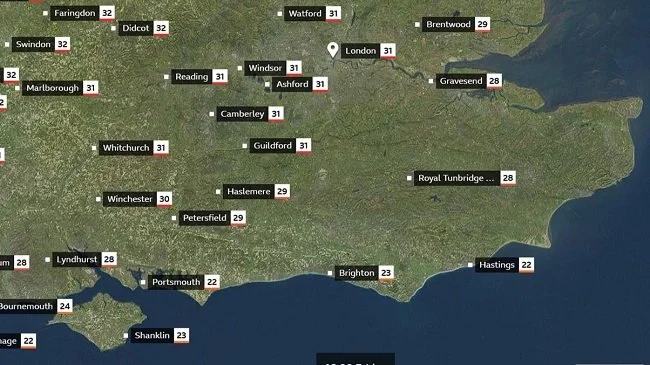
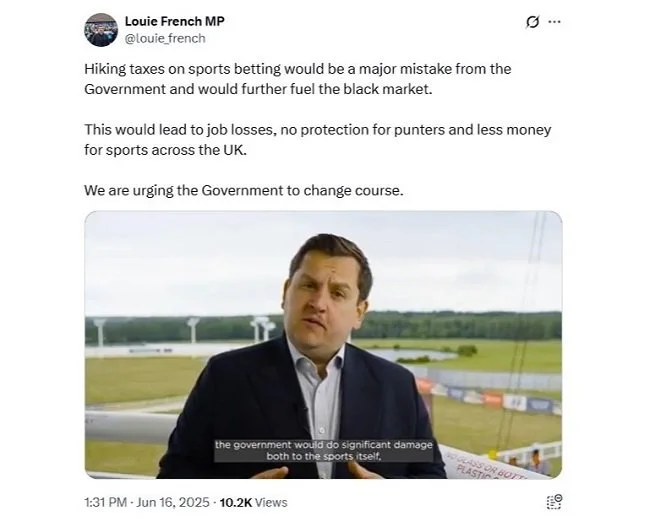


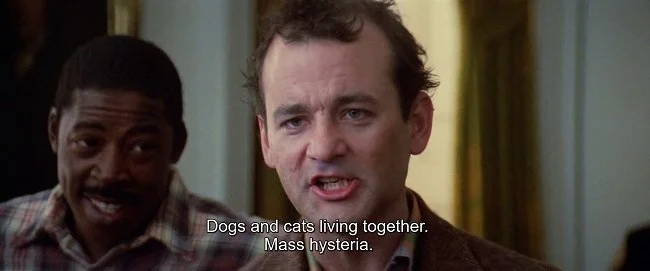



Films You Have Seen More Than Seven Times
There was this Tweet doing the rounds on Twitter today. You know, the kind that asks a simple question that gets some traction, so eventually you start seeing various people’s replies throughout the day in your timeline. This Tweet asked "what film have you watched more than 7 times? Reply only with gifs". After reading several answers from those I follow on Twitter (all of which were very interesting), I decided to join in myself. So I found a suitable gif for Akira Kurosawa’s classic 1954 masterpiece, Seven Samurai, and posted it. I chose this film because it is one of my favourites. I find something new in it every time I watch it. And I have definitely seen it more than seven times. However, the more I pondered this Twitter question, the more I realised that there are many films that I’ve seen over seven times. In fact you don’t even have to be a dedicated film fan to fall into this category.
There was this Tweet doing the rounds on Twitter today. You know, the kind that asks a simple question that gets some traction, so eventually you start seeing various people’s replies throughout the day in your timeline. This Tweet asked "what film have you watched more than 7 times? Reply only with gifs". After reading several answers from those I follow on Twitter (all of which were very interesting), I decided to join in myself. So I found a suitable gif for Akira Kurosawa’s classic 1954 masterpiece, Seven Samurai, and posted it. I chose this film because it is one of my favourites. I find something new in it every time I watch it. And I have definitely seen it more than seven times. However, the more I pondered this Twitter question, the more I realised that there are many films that I’ve seen over seven times. In fact you don’t even have to be a dedicated film fan to fall into this category.
Being a child of the seventies, going to the cinema was a mainstay of family entertainment. It took several years for a big film to turn up on TV and when it did, it was usually over the Christmas holidays. Hence, when video recorders became commonplace, being able to see a film of your choice, as and when you wanted was a real novelty. Therefore it was not unusual to see a popular film numerous times. Perhaps the most obvious example of this is Star Wars. Just off the top of my head I saw this movie twice upon its original UK cinema release. And then again when it was re-released with its sequels during the eighties. I have owned the film on VHS, LaserDisc, DVD and Blu-ray. I watched it multiple times with my son when he was growing up. I will no doubt watch it with my grandchildren at some point.
I suppose one’s relationship with film determines whether you watch something multiple times. Some people see films as being an entertaining diversion and nothing more. Why would you want to watch something that you’ve seen already? Each to their own. However, I look at cinema as a more enduring artform. I will listen to specific albums when the mood takes me and similarly will re-watch particular films depending upon how I feel. As I mentioned earlier, some films are far more than the sum of their parts and lend themselves to being watched multiple times. Each viewing can potentially yield something new that you failed to observe last time you watched it. And of course there are family rituals where you sit down and watch favourite movies together. This is more to do with bonding and the dynamics of relationships but that being said, there is something comforting about watching a film that you know like the back of your hand.
Finally, there is another scenario that’s worth mentioning. TV stations usually purchase a licence for access to a back catalogue of films. Hence it is not unusual to find some titles being shown as part of a regular cycle. Therefore, it is entirely possible to stumble upon a film that is halfway through while channel surfing. Often we will continue watching in default of anything else. Thus it as only in the last decade that I’ve actually seen Butch Cassidy and the Sundance Kid all the way through from start to finish. But I’ve seen parts of it numerous times beforehand. So, upon reflection, there are numerous films that I have watched more than seven times that I could have Tweeted about. I wouldn’t be surprised if someone who isn’t even a film fan could do exactly the same. Because television is such a permanent background feature to our lives.
Here are a few other films that I’ve definitely seen over seven times:
Zulu (1964)
The Golden Voyage of Sinbad (1973)
King Kong (1933)
Assault on Precinct 13 (1976)
The Wizard of Oz (1939)
The Medusa Touch (1978)
Scrooge (1970)
Aliens (1986)
Jaws (1975)
Dawn of the Dead (1978)
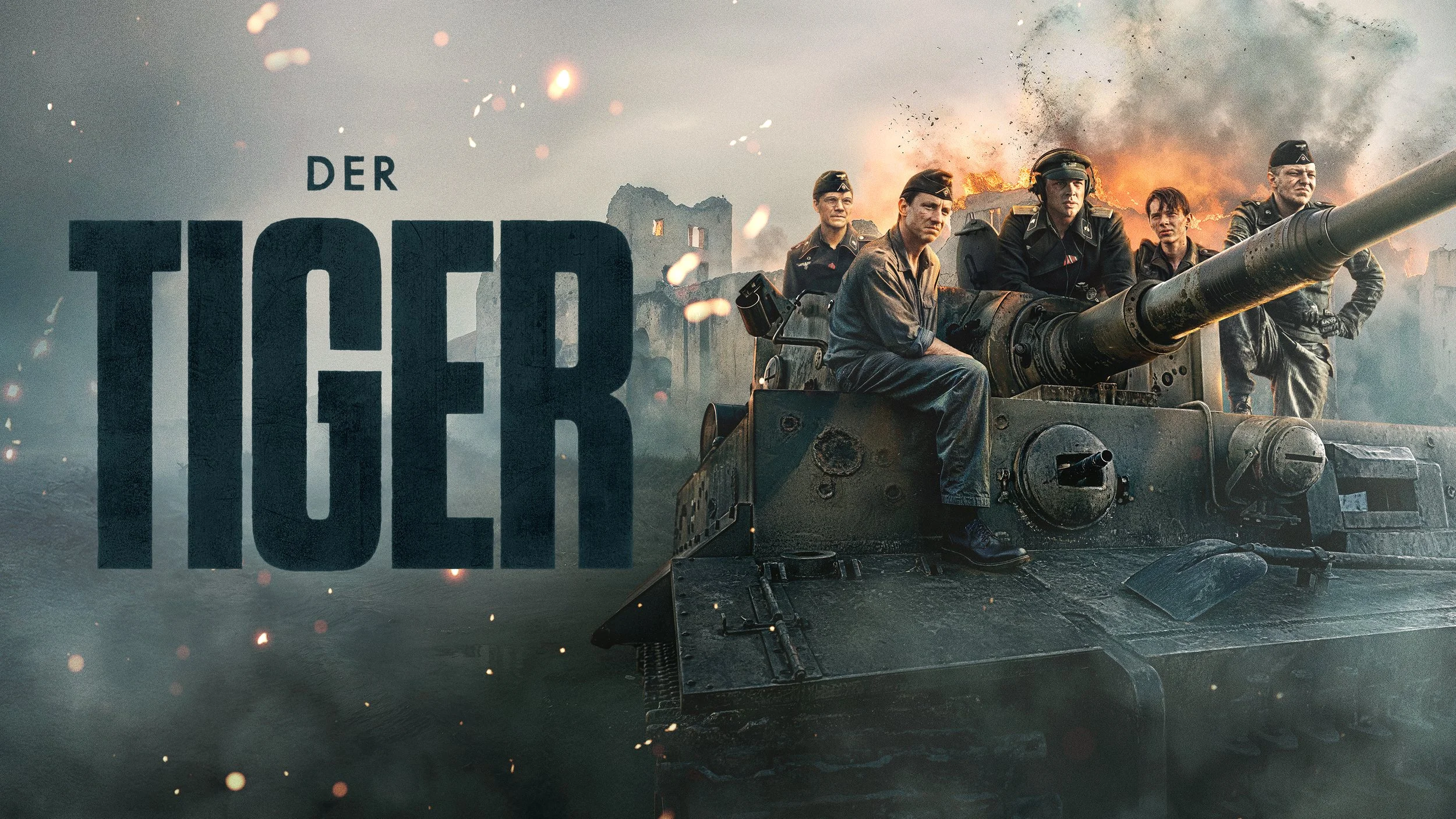
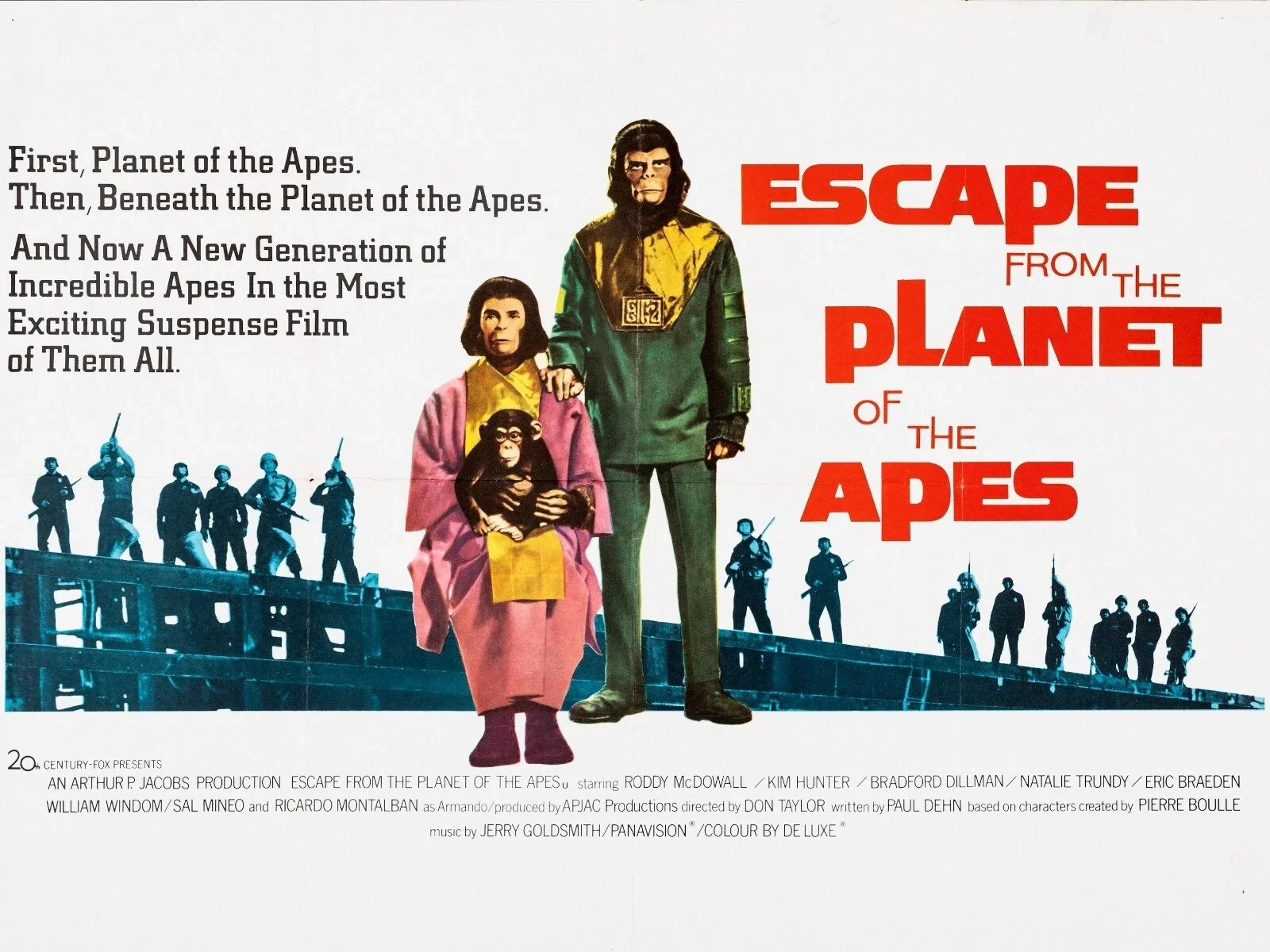
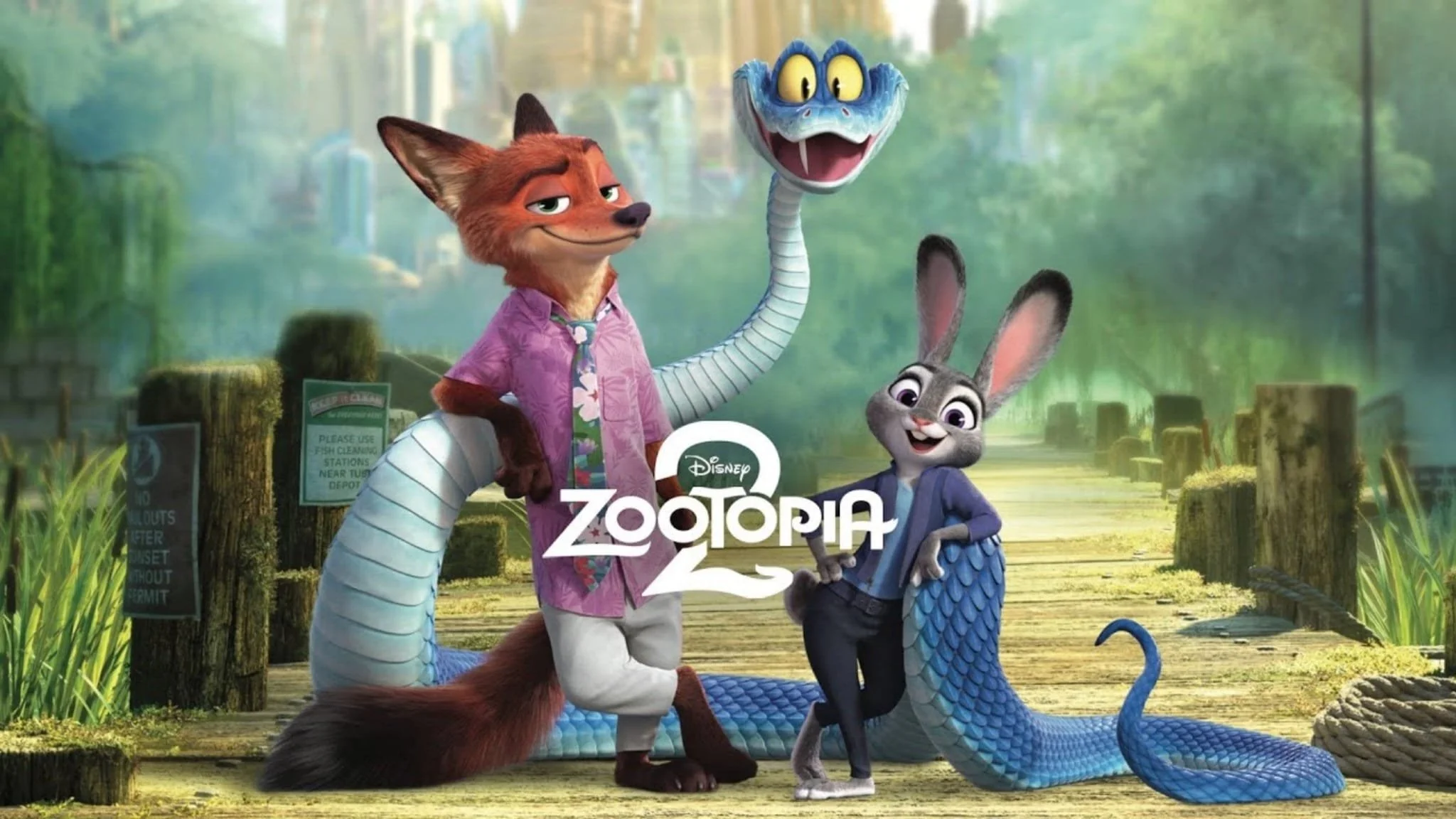
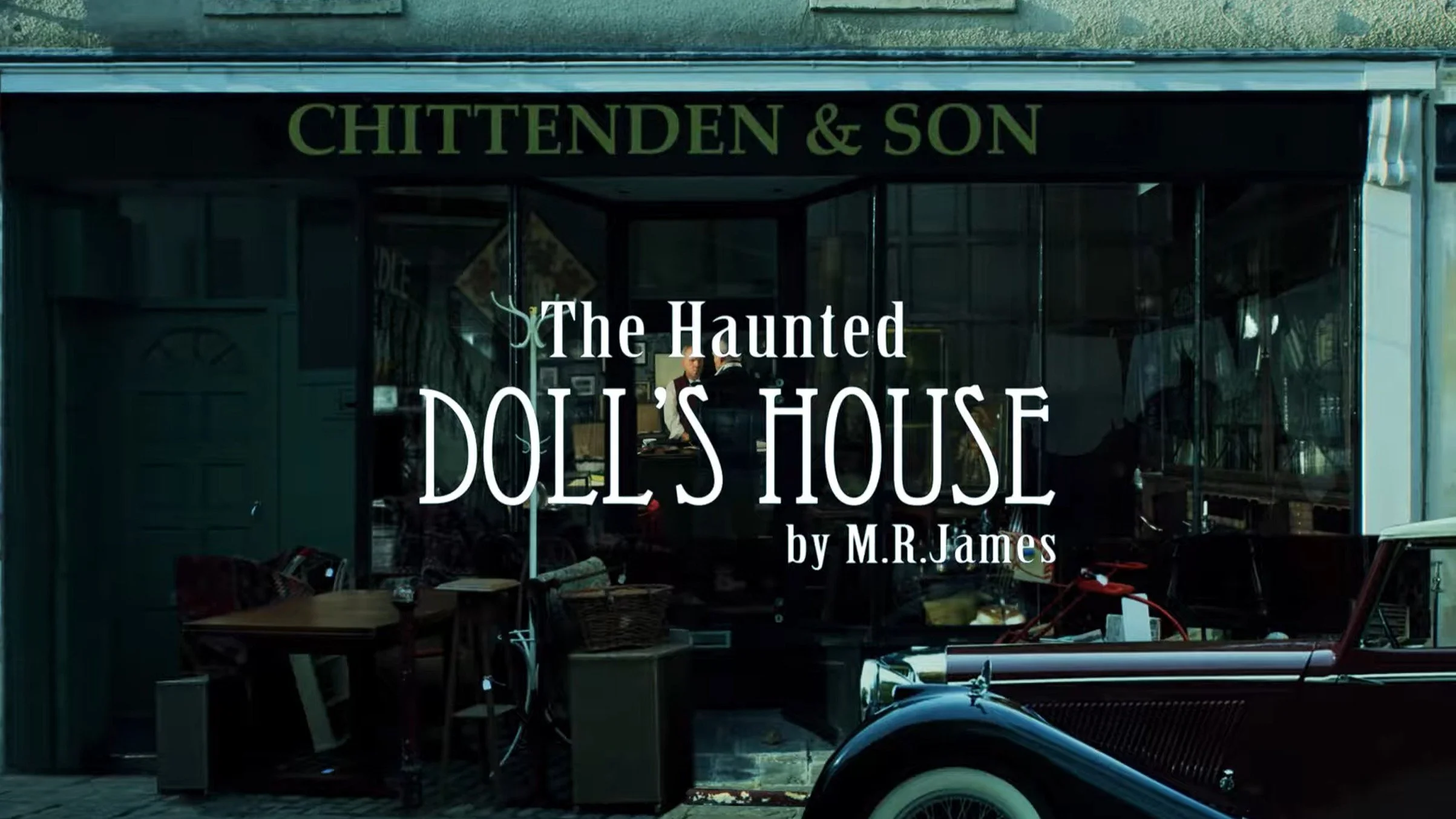
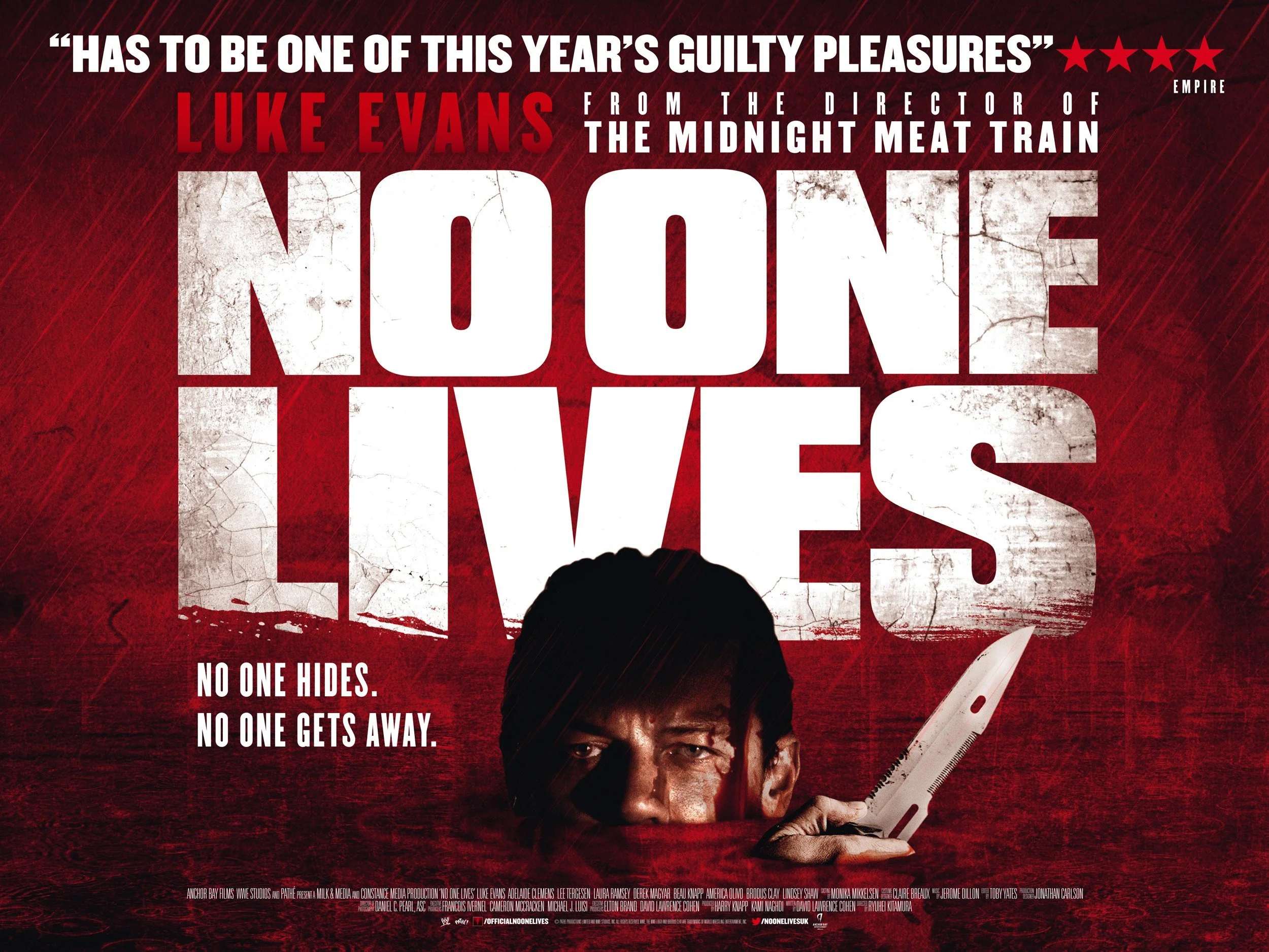
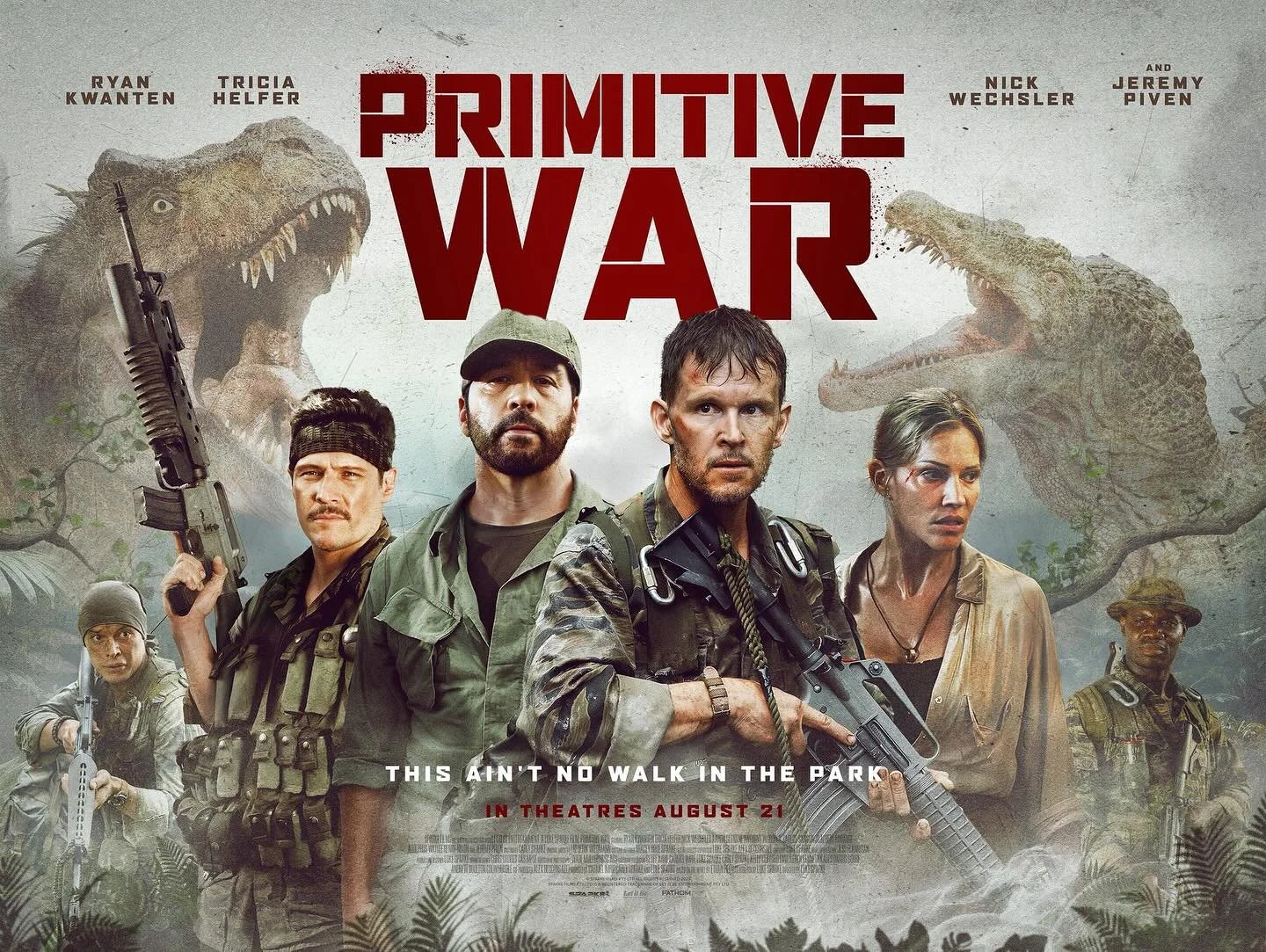
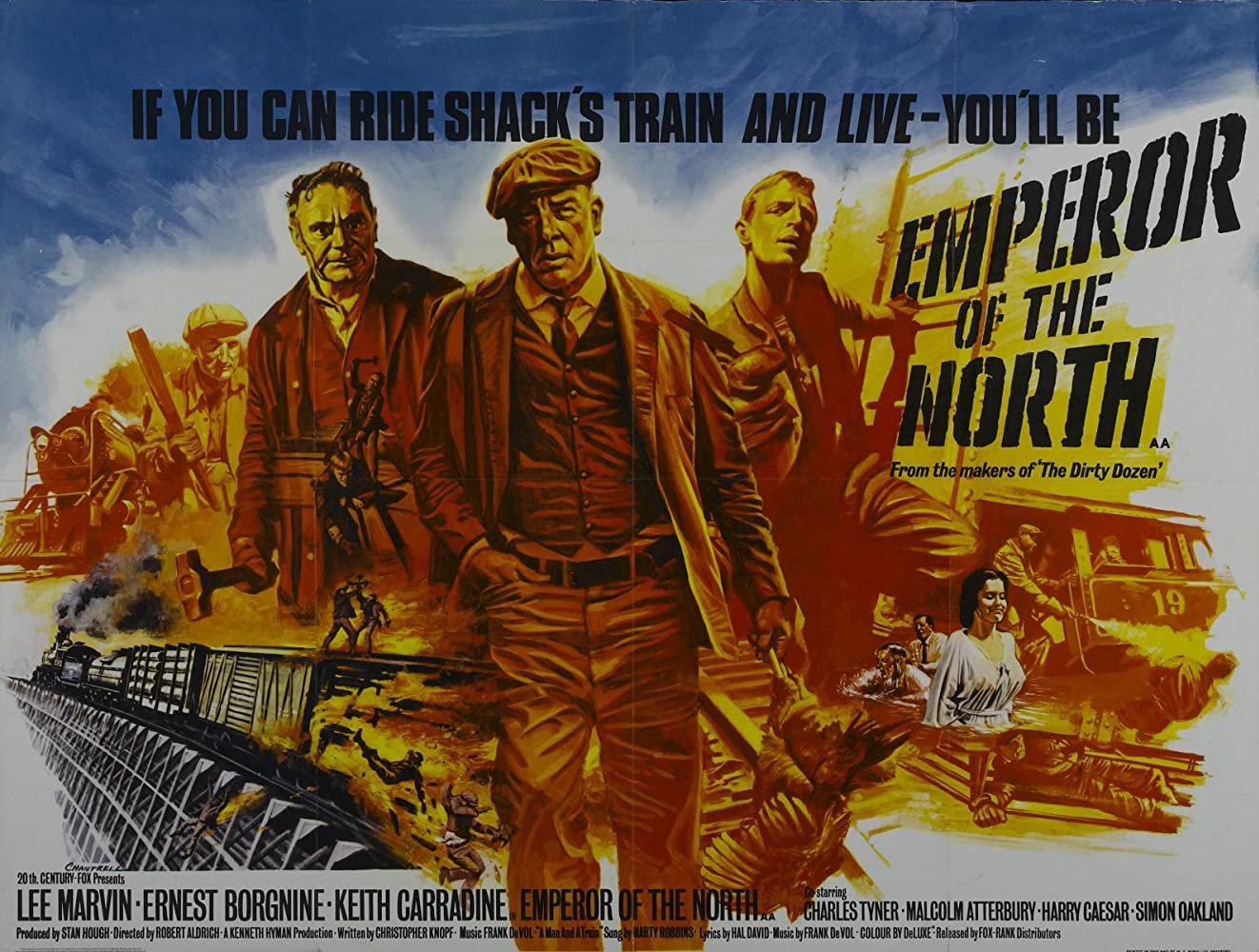



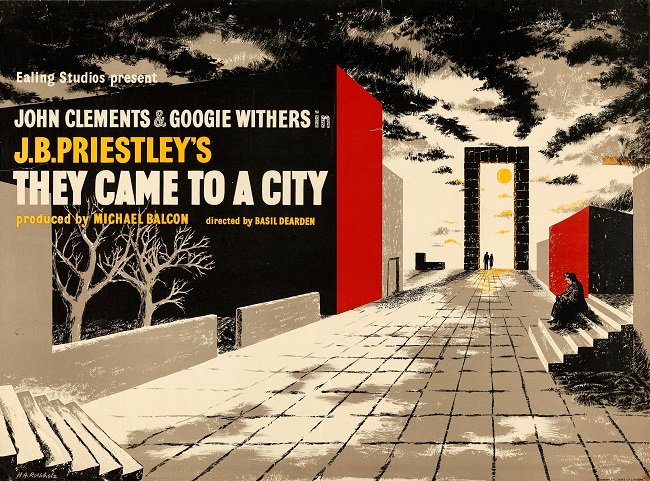
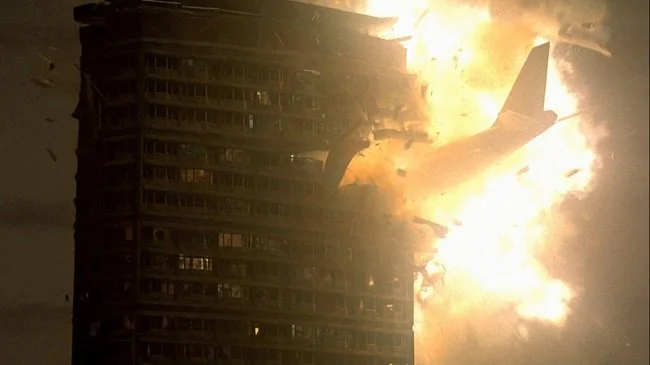
"The World Doesn't Actually Need 10,000 New Indie Games a Year"
One of the reasons I’m not that engaged with politics at the moment is because so many people’s opinions are based upon spurious data, misconceptions and logical fallacies. There are too many hot takes that are based on bluster, faux outrage and a fundamental dislike or fear of change. Sadly, speaking before thinking seems to have become commonplace and has filtered down from political discourse into pretty much every other aspect of public discourse. The furiously hard-of-thinking dominate most public spaces and seem ready to pounce on any subject being debated with an angry, knee-jerk opinion. It is all very wearing. It would seem that being angry about someone or something is as addictive as heroin and a lot cheaper. However, it is equally just as damaging to society.
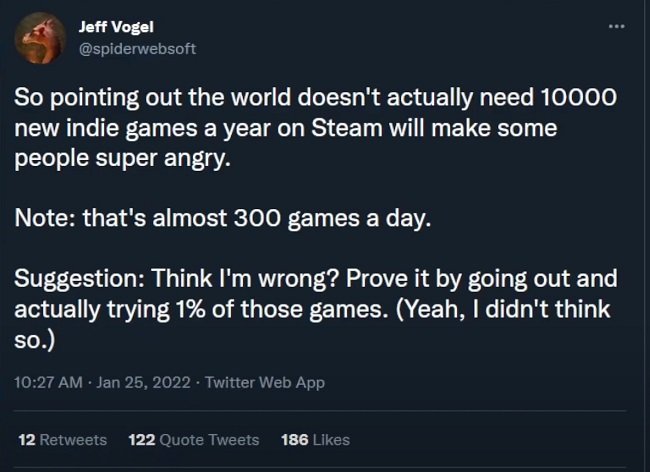
One of the reasons I’m not that engaged with politics at the moment is because so many people’s opinions are based upon spurious data, misconceptions and logical fallacies. There are too many hot takes that are based on bluster, faux outrage and a fundamental dislike or fear of change. Sadly, speaking before thinking seems to have become commonplace and has filtered down from political discourse into pretty much every other aspect of public discourse. The furiously hard-of-thinking dominate most public spaces and seem ready to pounce on any subject being debated with an angry, knee-jerk opinion. It is all very wearing. It would seem that being angry about someone or something is as addictive as heroin and a lot cheaper. However, it is equally just as damaging to society.
All of which brings me to recent Tweets made by software developer and businessman Jeff Vogel. Please note I have combined three of these in chronological order so we can see the full context of the points he was making. According to Mr Vogel, “When I started writing games for $$$ (1994), it was a weird eccentric thing to do and I didn't think I would make a penny. If I was starting out today, would I write video games? Almost undoubtedly not. This is a whole lot of young, smart, driven people making things nobody wants. At what point does this become a profound waste of human talent? So pointing out the world doesn't actually need 10000 new indie games a year on Steam will make some people super angry. Note: that's almost 300 games a day. Suggestion: Think I'm wrong? Prove it by going out and actually trying 1% of those games. (Yeah, I didn't think so)”.
It can be argued that if one overlooks the emotive element of Mr Vogel’s statement, there are indeed a lot of indie games produced for what is essentially a finite market. Therefore, many will fail commercially and struggle to get noticed. That part of his statement is correct on a logical basis. Beyond this point his words are personal and subjective musings on what people do with their lives and the projects that they invest their time into. He posits in subsequent Tweets that maybe people should put their efforts into other things as society still has lots of ills that need addressing. “The game industry doesn't care about this, it's too big. I think it's more about how it's a massive misallocation of talent. What forces are driving so many people to work so hard making something nobody wants, while so much of society in general is increasingly non-functional?”
The point that Jeff Vogel is making is an old one. I’ve made it myself in past posts. Essentially wouldn’t it be nice if people put the same level of energy and passion that they do with personal projects, into other things that are beneficial for wider society? For example if a local football club is going to be closed, the supporters will lobby hard to prevent it. Would they show the same dedication for a school or a hospital? However, beyond speculation, there is no practical solution to this philosophical conundrum. Because people tend not to think in such terms. For example, when my caring duties end, I shall have to find work. Given my qualifications and skills, returning to the field of IT would be logical, practical and possibly lucrative. It could also be argued as being “beneficial” for the economy and society. However, I do not wish to do this and therefore will not do so unless there is no other option. I wish to pursue a writing career although that will be far harder and pays less.
One of the problems with neoliberalism is that it goes hand in hand with the American dream; the belief that anyone, regardless of where they were born or what class they were born into, can attain their own version of success in a society in which upward mobility is possible for everyone. Hence people pursue what they’d like to do, rather than what may be most beneficial and practical. Hence so many people aspire to be “influencers” on Twitch TV and YouTube, rather than become an administrator for a firm of quantity surveyors. Does this say something about the state of the job market and people’s relationship with everyday life? I’m sure it does. You only have to read the late David Graeber’s book Bullshit Jobs to get an overview of how broken capitalism is for those not at the top. Hence people will pursue the seemingly impossible dream of developing an indie game, rather than endure the iniquities of soul crushingly pointless, underpaid work and having to interact with sociopathic management and social dysfunctional work colleagues.
Perhaps Jeff Vogel may wish to reflect on the following. Firstly, he and nobody else is the gatekeeper of indie games development or anything else for that matter. Any statement that directly or indirectly casts you in such a light is an error of judgement and will certainly provoke a reaction. Secondly, artistic endeavours and pursuing creative activities is enormously beneficial for both the artist and those who experience the resulting work of art. Creating something is not always about being financially successful. There is mental wellbeing, catharsis, mental discipline and a wealth of other benefits. This is why “the arts” are often subsidised in many countries. Art is a process of learning to create ourselves and experience the world in new ways. It supports the bigger view of life: beauty, symbols, spirituality, storytelling, and allows us to be present in the moment. Just because you can’t put a price on something doesn’t mean it’s invalid.
I don’t know that much about Jeff Vogel personally, so I can’t determine whether his Tweets are in good faith or deliberately designed to stir up an internet storm. If I assume that he meant what he said without malice, then perhaps his mistake was the way he phrased and presented his thoughts. If they had been less imperative and presented more as a point of consideration, then maybe they would have been met with less opprobrium. Perhaps such rhetorical questions as “the world doesn't actually need 10,000 new indie games a year” ultimately serve no purpose because of the nature of the human condition. We don’t run on pure logic. It is also a very problematic line of argument that can potentially be usurped to frame allsorts of other unpleasant concepts in a superficially “reasonable light”. Ultimately, the argument if taken to its inevitable conclusion would lead to group A dictating what group B does. That seldom ends well, especially in today’s political climate. People don’t take well to being told what to do. Irrespective of its rectitude.

LOTRO: The Angle of Mitheithel Preview Update
Yesterday, Standing Stone Games made Bullroarer Update 32 - Beta #5 available on their test server and invited player feedback. This latest preview of the next content update for the MMORPG, The Lord of the Rings Online, focuses mainly upon The Legendary Item Reward Track. When the revised LI system was released last October as part of the expansion Fate of Gundabad, it was not fully integrated into the game. Existing LI rewards were not replaced with new ones and no decision had been made regarding potential compensation for obsolete LI related items. There were also outstanding changes to the user interface for the LI system. These are now being addressed in Update 32. The current build, Beta #5, also has some minor updates to the new zone, The Angle of Mitheithel. As ever with anything on the Bullroarer test server, it is subject to change and may be different in the final live release.
Yesterday, Standing Stone Games made Bullroarer Update 32 - Beta #5 available on their test server and invited player feedback. This latest preview of the next content update for the MMORPG, The Lord of the Rings Online, focuses mainly upon The Legendary Item Reward Track. When the revised LI system was released last October as part of the expansion Fate of Gundabad, it was not fully integrated into the game. Existing LI rewards were not replaced with new ones and no decision had been made regarding potential compensation for obsolete LI related items. There were also outstanding changes to the user interface for the LI system. These are now being addressed in Update 32. The current build, Beta #5, also has some minor updates to the new zone, The Angle of Mitheithel. As ever with anything on the Bullroarer test server, it is subject to change and may be different in the final live release.
Beta #5 now features a new map for The Angle of Mitheithel as well as a revised map of the Trollshaws. In this test build, animals have been added to the region and there are boars, wolves and crows of a comparable level. There are now three additional stable-masters at the following locations; Gaerond, Tham Lumren and Tornhad. Gaerond is a camp to the Northern opening of The Angle of Mitheithel. Tham Lumren is a ruined Elven settlement to the West of the zone on the borders of Eregion and Tornhad is a village of men to the South of the region. Furthermore, two additional stable-masters have been added to the existing Trollshaw map. These are at The Last Bridge and directly outside The Last Homely House. The entire Trollshaw stable list has been updated to reflect these changes.
In my previous post I thought that a log bridge and a settlement that I saw was the existing route from Trollshaw to Eregion. However, in this test build, the landscape has changed further and the log bridge made from a large fallen tree appears to be the entrance to the Elven settlement of Thamren. I confirmed this by travelling to Gwingris and looking out West over The Angle of Mitheithel. You can clearly discern three of these sorts of bridges (see the gallery of pictures at the end of this post for details). Now there is a map available, I believe that The Angle of Mitheithel is a smaller zone than the Wildwood region that was added to Bree-land last year. In the middle of the new zone is a deserted Hobbit settlement called The Warrens of Tun Melen. I suspect this may be an instance or a quest hub. Similarly there is also a farmer’s cottage to the Northwest of the region which may also be a quest hub.