Blaugust 2021: Getting to Know You
According to the Blaugust 2021 Festival of Blogging schedule it is “getting to know you week”. Although I have been knocking around the blogging community since 2007 it would be extremely arrogant of me to assume that people know who I am. Plus, as I am allegedly a mentor in the Blaugust event, it is both polite and proper to introduce myself to those who are new participants. I’ve never been especially keen on the whole standing up and introducing yourself thing that comes up from time to time in one’s social and working life but it is a necessary evil. Whenever I used to attend training courses for work, I’d always go first when it came to introductions, just so I could get it out of the way. So with all that in mind let’s tackle this now. Here are a few minor facts about me so that people can “get to know me”, so to speak.
According to the Blaugust 2021 Festival of Blogging schedule it is “getting to know you week”. Although I have been knocking around the blogging community since 2007 it would be extremely arrogant of me to assume that people know who I am. Plus, as I am allegedly a mentor in the Blaugust event, it is both polite and proper to introduce myself to those who are new participants. I’ve never been especially keen on the whole standing up and introducing yourself thing that comes up from time to time in one’s social and working life but it is a necessary evil. Whenever I used to attend training courses for work, I’d always go first when it came to introductions, just so I could get it out of the way. So with all that in mind let’s tackle this now. Here are a few minor facts about me so that people can “get to know me”, so to speak.
Firstly, I use my real name, Roger Edwards, for my writing. I did initially start writing under my gaming handle but found it a somewhat bizarre form of social etiquette. Having conversations with Jubal the Questionable or Cardinal Spleen has always struck me as odd. So I just started posting under my own name which is fairly unremarkable. Plus I did at one point harbour aspirations to be a professional writer. Anyway, I do understand why people wish to compartmentalise their lives and certainly if you’re posting content on the internet, the anonymity helps keep the crazy people at bay.
Captain Scarlet
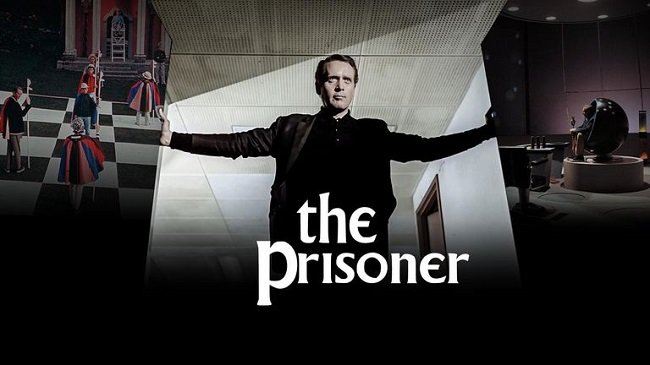
I was born on 18th December 1967. One week before Christmas. From an early age I discovered that anyone who said anything along the lines of “I’ve bought you a joint birthday and Christmas present” was a cheapskate bastard. 1967 was an interesting year. Sandie Shaw won the Eurovision Song Contest with Puppet on a String, Captain Scarlet and The Prisoner were on TV and The Beatles released Sgt. Pepper's Lonely Hearts Club Band.
I live with she who is known colloquially as “Mrs P (short for Mrs Peril). This is the agreed method to reference her online. I have a son who is 29 and three grandchildren. Twin granddaughters who are 6 and a grandson who is 6 months old. I used to be a IT consultant for small businesses but gave up full time work in 2016 to look after my ageing and disabled parents. My Father passed away last September at the age of 91. My Mother is 90 and now the focus of care. I am currently 53. Mrs P’s age is not for public disclosure. She took early retirement from work. We have a bungalow in South East London in what can be described as a “leafy suburb”. Walter lives with us.
Walter
As far as hobbies and interests, I like writing, reading, films, walking for pleasure and exercise. I’m not really interested in sport although I’m not hostile to it. It serves a purpose. I can swim, draw and paint competently. I used to sing and was in several choirs as a child. And then it all stopped and I can’t remember exactly why. I cannot play any musical instruments but I have a great passion for the craft of making music. I find it frustrating that I don’t know the correct terms when trying to write about music. I love words, logical arguments and critical thinking. I eschew ill conceived points of view, emotive debating and the overall infantilization of public discourse. It boils my piss that people will get up in arms about Geronimo the Alpaca but don’t seem disposed towards protesting against child poverty in the UK. Oh and binary, tribal politics is a constant source of irritation.
Here are a few more random facts. Mrs P and I don’t have pets due to health issues. In the past we’ve had dogs and cats. I am currently on a diet and need to shed about 18lbs. I’m trying to get down to 168lbs. I like good food and wine as well as good company. The latter is in short supply at present. I am not a practising Christian, although I grew up in the seventies when the UK was still very much culturally disposed towards that faith. Humour is extremely important to me and I consider it to be a kind of societal safety valve. I am not an extrovert although I can be social, even gregarious when I choose to be. I don’t like small talk and don’t tend to suffer fools gladly. Does anyone? However, politeness is hardwired into my social programming.
I enjoy church architecture
Finally, here is an anecdote from my childhood for your consideration. Around the age of five or six, I was compelled to appear in a school play. You didn’t have a choice in such matters. If you expressed dissent you were beaten (Yay, the seventies). The play was Snow White and I was assigned the role of The Huntsman who lets Snow White go. Dressed in a green felt ersatz Robin Hood outfit, I delivered my lines with all the disinterest of a school careers advisor. I then remember the audience laughing in that patronising “oh isn’t he adorable” parental fashion. Apparently I turned and scowled at all the assembled adults in a manner that my Father subsequently described as saturnine. The reason I mention this is because if I ever commit murder, I shall base my entire legal defence upon this traumatic experience. That and the fact I never got a model train set as a child.

























Deciding the Scope of Your Blog
One of the most helpful pieces of advice you can give someone who is just about to take up blogging for the first time is “write about what you know”. Expressing opinions and views on subjects that you’re familiar with or especially knowledgeable enables you to write with confidence. Stepping outside of your comfort zone is a more complicated proposition, unless you're writing to specifically document your learning experience. Which is why most of the people that I know who maintain a blog tend to write about the games they’re currently playing. Sometimes if someone is especially enamoured with a particular title, that single video game will be the sole focus of their blog. I did this in 2008 with Misadventures in LOTRO which catalogued my experiences playing the MMORPG The Lord of the Rings Online. It was a fun starting point and being focused on a single subject, kept me engaged with my writing.
One of the most helpful pieces of advice you can give someone who is just about to take up blogging for the first time is “write about what you know”. Expressing opinions and views on subjects that you’re familiar with or especially knowledgeable enables you to write with confidence. Stepping outside of your comfort zone is a more complicated proposition, unless you're writing to specifically document your learning experience. Which is why most of the people that I know who maintain a blog tend to write about the games they’re currently playing. Sometimes if someone is especially enamoured with a particular title, that single video game will be the sole focus of their blog. I did this in 2008 with Misadventures in LOTRO which catalogued my experiences playing the MMORPG The Lord of the Rings Online. It was a fun starting point and being focused on a single subject, kept me engaged with my writing.
However, there is an obvious downside to putting all your eggs in one basket, especially with regard to video games. What happens when you tire of the very subject that is integral to your blog or you just want to write about something else? This can be particularly troubling if you have found a niche for yourself and have built an audience through your writing. Will they stay if you diversify your writing? One possible solution is to set up a separate blog but that requires a great deal of discipline as you now have double the work, effectively having to produce and promote content for two sites. When I found myself in this situation I decided to broaden my blog’s remit and cover a wider spectrum of games. However, I didn’t feel that my existing blog could accommodate subjects such as films, TV, books etc so I set up a second site. As time progressed and I became more confident with my writing, I saw the sense in posting all my material on a single site. I wish in some respects I’d done this initially but sometimes you have to learn through experience.
You may wish to blog exclusively about Etruscan pottery
Therefore, my advice to anyone setting up a new blog is to keep the scope of your writing as broad as possible unless you have very specific goals associated with a single subject or are targeting a specific niche. At first glance a food blog or fitness blog may seem like subjects with clear lines of demarcation but that is actually not the case. A food blog can explore cooking, recipes, ingredients, world cuisine and much more. Writing about fitness allows the writer to discuss not only exercise but associated products, the social aspect of keeping yourself in shape and wider topics such as diet and general wellbeing. It’s the same if you blog about travel, sport, fashion and lifestyle. There is plenty of wiggle room in those subjects, affording the writer the opportunity to vary their content and hopefully prevent them from getting bored or burned out.
If you do maintain a “variety blog”, you can segregate content if you prefer, allowing your readers to focus on the material they like best. This is not an issue as many blog templates support such a magazine approach. Writing on a multitude of subjects is also beneficial for developing your overall writing skills. How you write about your experiences in a particular game is not the same as writing a book or film review. Running a varied blog means you can write think pieces, essays, reviews, streams of consciousness and other types of posts. All of which can help with refining your writing technique. The other benefit of writing about multiple subjects is that it adds depth to your writing persona and the way you as a writer are perceived. If you intend to write professionally, a blog with a spectrum of different content can be an important part of your portfolio.
Contains Moderate Peril circa July/June 2015
Some bloggers will cogently argue that blogging about a very specific subject or occupying a clearly defined niche is a lot easier to monetise. It also makes search engine optimisation a lot easier. However, I suspect that neither of these two points are necessarily driving factors for the new blogger who is just starting out. Most bloggers just want to come up with a snappy title for their new blog and to try and find a writing schedule that they can manage and that they’re comfortable with. I therefore cautiously suggest that establishing a fairly broad remit of things to write about will certainly be helpful in discovering the latter. It should also help keep so-called “writers block” at bay. However, choice is not always a good thing and some bloggers prefer to have the focus of a single subject blog. As ever there is no “one size fits all” solution. Ultimately, it is up to you to decide what the scope of your blog is to be, so pick what works for you the best.
Should You Monetise Your Blog?
If you search online for advice on “how to monetise your blog” you’ll find a wealth of articles claiming to have all the answers. There’s a veritable cottage industry out there offering guidance and help on how to make money from your writing. Such posts range from proven business advice to utter bilge peddled by the worst sort of snake oil salesmen. Yet good or bad, there is a strong demand for this sort of information because blogging is still perceived by a lot of people as a means to make money. It would appear that the idea of setting up a blog, making a living off it and quitting your day job is still a common goal and the various “lockdowns” we’ve all experienced in the last 18 months have only boosted such perceptions. Some people have been successful with their home businesses in 2020, although I would argue that the market has been anomalous, to say the least.
If you search online for advice on “how to monetise your blog” you’ll find a wealth of articles claiming to have all the answers. There’s a veritable cottage industry out there offering guidance and help on how to make money from your writing. Such posts range from proven business advice to utter bilge peddled by the worst sort of snake oil salesmen. Yet good or bad, there is a strong demand for this sort of information because blogging is still perceived by a lot of people as a means to make money. It would appear that the idea of setting up a blog, making a living off it and quitting your day job is still a common goal and the various “lockdowns” we’ve all experienced in the last 18 months have only boosted such perceptions. Some people have been successful with their home businesses in 2020, although I would argue that the market has been anomalous, to say the least.
I have maintained a writing presence online since 2007 and despite growing a modest audience have never made a red cent from my blog (although I have been paid for my writing elsewhere). In fact Contains Moderate Peril, The Gaming Blog Nexus and sundry podcasts such as Burton and Scrooge always have been and remain to date a financial black hole. I’ve written in the past about the financial realities of running a blog or similar online platform as the costs do add up over time. In purely notional terms, I would welcome a means to recoup my operating costs. Unfortunately, I have not found a method to do this that I find acceptable. However, as the purpose of the blog post is to address this very question, let’s indulge in some critical thinking and see if we can come up with some valid ideas regarding how to monetise your blog.

Is there value in your content? This is a complex question. It requires a degree of introspection and self scrutiny which might make you uncomfortable. However, value is a very open ended term and people find merit in all sorts of things. If you’re writing gaming guides or collating data from public test servers for a popular game, then you may well have a very clear market. Providing commentary on a popular topic or making yourself the “go to” news source for something specific also can make your writing of value. Sometimes it may come down to whether your readers like the “cut of your jib”. Also it’s not just about what others think about your writing. Your own opinion is important. If you are confident that your body of work is marketable then why not try and monetise it. Other aspects that may well have a bearing on this matter are your writing schedule, how unique your work is and how much content you are offering.
Optimising your writing for monetisation. If you’re looking to make your writing commercially viable, then you need to decide who you’re writing for. If you are looking to cover popular trends and the latest talking points then that is a distinctly reactive process. You may also have to consider “optimising” your writing to fit the broadest of demographics. Things such as your personal opinion and taste may well have to be sidelined as you go where the audience currently is. All of which are perfectly acceptable things to do. You are still providing a service, just one that is driven by the needs of your readers as opposed to your own likes and dislikes. There may well be occasions when those two positions overlap. The reverse of this is writing purely for yourself, which can be immensely preferable from a personal perspective but comes with the caveat that your readers may not always share your passion. However, writing for yourself may benefit if you have a strong writing persona.
How to monetise your writing.
The most obvious is advertising although the rise of ad blockers has had a real impact upon this option.
Affiliate marketing is another longstanding solution, although you need to make a lot of referrals to third party websites and hope those referrals make a purchase.
Influencer marketing can be lucrative but you need to reach a critical mass of followers before that becomes viable, so it’s certainly not an option with a quick ROI.
Creating an eBook is another option. This may suit writers who write reviews or write longform essays.
Offering premium content behind a paywall can work well for those who write prodigiously and have an established audience.
Sponsored content doesn’t necessarily mean selling your soul to the Devil, as long as you hold such material to the same editorial standards of your other content.
Patreon and other subscription services can generate revenue but again requires you to write specific additional content for paying customers.
Blog to promote another primary business. This is a very particular business approach but it can prove beneficial. This approach works best if you offer some sort of online service.
Offer bespoke writing services. Again this is more of an option for an established writer.
Have an online “tip jar”. Possibly the most benign and optimistic way to try and monetise your writing.
Out of the ten options listed I only feel that three are applicable to myself, if I decided to try and monetise my writing. I have considered in the past expanding some of my film reviews and creating an eBook. It certainly seems like a logical progression. I have also previously considered using Patreon, specifically when I was producing a regular podcast. The editing process makes producing two versions of a weekly show quite straightforward and in principle it seems like an easy idea to market. I also like the concept of a “tip jar” as I’ve been surprised by readers' generosity in the past. In 2014 when Contains Moderate Peril exceeded the bandwidth restrictions of its then hosting package, I was taken aback by how many people offered to help with the cost of migrating to a more expensive, yet viable solution. The other options mentioned above just don’t seem to fit my needs. Ultimately asking your readers for money is a big ask and you’ve got to feel right about it. That’s one of the reasons why I haven’t done it so far. However times can change.
The Chairman (1969)
The Cold War was a mainstay of many a thriller and action movie throughout the sixties, seventies and eighties. However, all too often it was depicted in terms of the US versus the Soviet Union. China didn’t seem to feature so much, although it was just as equally an “enemy” of the West. Hence when I recently read about The Chairman (which has just had a Blu-ray release), it was of interest to me. An espionage story, starring Gregory Peck with a hidden bug implanted in his skull, infiltrating China to steal a secret enzyme formula is quite an intriguing premise. Furthermore, director J. Lee Thompson had previously worked with Peck on The Guns of Navarone, which is a solid action movie. Therefore I was initially optimistic that this film which I was previously unaware of, would be an interesting diversion. Unfortunately, having now seen The Chairman, all I can really describe it as is a cinematic curiosity. One of numerous films produced by a big studio in the late sixties that failed to satisfy anyone's expectations.
The Cold War was a mainstay of many a thriller and action movie throughout the sixties, seventies and eighties. However, all too often it was depicted in terms of the US versus the Soviet Union. China didn’t seem to feature so much, although it was just as equally an “enemy” of the West. Hence when I recently read about The Chairman (which has just had a Blu-ray release), it was of interest to me. An espionage story, starring Gregory Peck with a hidden bug implanted in his skull, infiltrating China to steal a secret enzyme formula is quite an intriguing premise. Furthermore, director J. Lee Thompson had previously worked with Peck on The Guns of Navarone, which is a solid action movie. Therefore I was initially optimistic that this film which I was previously unaware of, would be an interesting diversion. Unfortunately, having now seen The Chairman, all I can really describe it as is a cinematic curiosity. One of numerous films produced by a big studio in the late sixties that failed to satisfy anyone's expectations.
Nobel Prize-winning scientist Dr John Hathaway (Gregory Peck) receives a letter from a former Professor Soong Li (Keye Luke), who now resides in The People's Republic of China, requesting his assistance. Raising concerns with the US authorities, Hathaway is "invited" by Lt. General Shelby (Arthur Hill) to visit the Professor, who has allegedly developed an enzyme that allows crops to grow in any kind of climate. Hathaway subsequently agrees and finds himself embroiled in a joint operation between the U.S. and the Soviet Union. A transmitter is implanted in Hathaway's skull which can be monitored by a satellite. He is not informed that the device also includes explosives that can be triggered by the Americans if necessary. Neither the U.S. nor the Soviet Union wants the enzyme to remain exclusively in Chinese hands. Hathaway flies to Hong Kong to request “authorisation” to visit China and meets Security Chief Yin (Eric Young) who is deeply suspicious of his motives.
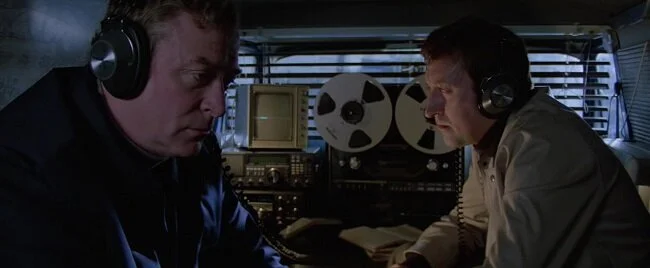
The Chairman has high tech trappings, similar to those seen in The Forbin Project or even Fantastic Voyage. Staff sit at computers monitoring Hathaways pulse and respiration, big screens track his locations and military staff pace up and down drinking coffee from plastic cups. The basic premise is sound and Peck makes for an unlikely hero. But once the plot has been established, very little happens. Hathaway goes to Hong Kong, meets the shadowy figure of Yin and then is granted permission to travel to China. There is a brief diversion when a Chinese agent attempts to seduce him while another searches his apartment but nothing is made of the plot device. On arrival in China Peck is given an official tour of the country, with a few nods to the continuous military presence everywhere. He next meets Mao Tse Tung (the chairman of the communist party and leader of China) who needs his help in finding a way to mass produce the enzyme. They trade political views and philosophy over a game of table tennis.
Peck is always compelling to watch and it’s interesting to see a story which attempts to explore the fear of China at the time. But there simply isn’t sufficient to sustain the narrative. There is an action sequence at the end of the film when Hathaway flees the remote experimental compound with the help of a deep cover Soviet operative played by Burt Kwouk. There’s then a chase to the border and an attempt to penetrate the minefield and electrified fences. But it’s too little, too late. The film ends with all three superpowers sitting on the information they all share and Peck attempting to place the information in the public domain for the benefit of mankind. It is a suitable ending and the film is quite concise at 98 minutes but it all feels very undeveloped and unremarkable. The main point of note is a solid score by the ever dependable Jerry Goldsmith.





Red Tails (2015)
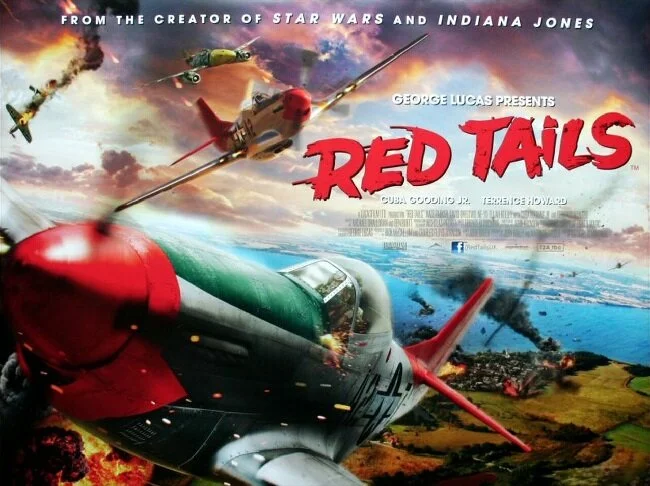
In 1944, the USAAF faces increased losses of Allied bombers conducting operations over Europe. The 332d Fighter Group (The Tuskegee Airmen), consisting of young African-American fighter pilots, are confined to ground attack missions in Italy and hampered with ageing, poorly maintained Curtiss P-40 Warhawk aircraft. After the Tuskegee Airmen distinguish themselves in support of the Allied landings at Anzio, Col. A.J. Bullard (Terence Howard) is surprised when the USAAF Bomber Command asks him if his men will escort the Boeing B-17 Flying Fortress bombers on their day time raids. Casualties have become unacceptably high. Bullard accepts on the condition his unit be supplied with the new North American P-51 Mustang. The tails of the new aircraft are painted bright red and become the unofficial name of the outfit. Bullard orders his pilots to remain with the bombers that they’re escorting and their first escort mission proves a success without the loss of a single bomber. Slowly, entrenched racist attitudes within the USAAF begin to change.
In 1944, the USAAF faces increased losses of Allied bombers conducting operations over Europe. The 332d Fighter Group (The Tuskegee Airmen), consisting of young African-American fighter pilots, are confined to ground attack missions in Italy and hampered with ageing, poorly maintained Curtiss P-40 Warhawk aircraft. After the Tuskegee Airmen distinguish themselves in support of the Allied landings at Anzio, Col. A.J. Bullard (Terence Howard) is surprised when the USAAF Bomber Command asks him if his men will escort the Boeing B-17 Flying Fortress bombers on their day time raids. Casualties have become unacceptably high. Bullard accepts on the condition his unit be supplied with the new North American P-51 Mustang. The tails of the new aircraft are painted bright red and become the unofficial name of the outfit. Bullard orders his pilots to remain with the bombers that they’re escorting and their first escort mission proves a success without the loss of a single bomber. Slowly, entrenched racist attitudes within the USAAF begin to change.
George Lucas is not known for his subtlety as a director, focusing more on visual flair than finely honed character development. Mercifully Red Tails does not do any sort of disservice to the memory of The Tuskegee Airmen. However, it doesn’t do them a great justice either. There are many aspects of the production that are outstanding, such as the ensemble cast featuring Nate Parker, David Oyelowo and Tristan Wilds and striking visual effects. But the weak link in the chain yet again is the screenplay by John Ridley and Aaron McGruder. It is laboured and pitched at a rather simplistic level. Subjects such as institutionalised bigotry, fascism and personal sacrifice need to be dignified with a bit more intelligence when depicted on screen. They are too important and complex issues to be portrayed in such an arbitrary fashion and sadly that is exactly how Red Tails plays out.
As a piece of populist entertainment, Red Tails works sufficiently. With the full weight of Industrial Light and Magic behind the visual effects, there is plenty of spectacle and the traditional story arc follows a distinctly tried and tested formula. The characters are engaging but this is predominantly due to the personalities of the respective actors. There is very little depth to the screenplay and the cast are mainly tasked with providing archetypes. The film will certainly play well to audiences who may not be so familiar with this aspect of World War II. The mixture of action and fast paced story should suit a youth demographic. But for the more sophisticated viewer, Red Tails will seem a bit light in content and lacking anything to make it distinctive. Portraying the Germans as “bad” because they are “Germans”, does not wash and seems a hangover from war films of the fifties. Furthermore the film seems to imply that after the success of The Tuskegee Airmen that the systemic problems of a segregated Air Force are effectively remedied. This sadly was not the case.
All films regardless of genre, require the suspension of disbelief by the audience to varying degrees and Red Tails is no different. Unfortunately George Lucas requires the audience not only to do this but to actively leave their common sense as home. You don’t have to be a military plane enthusiast to quibble over obvious technical inaccuracies or liberal bending of the laws of physics. One expects this to a degree in mainstream filmmaking but there are limitations. In this respect Red Tails does cross over the line. Ultimately, this could have been a superior film as opposed to just adequate, if a more seasoned director had been at the helm, armed with a more robust screenplay. One has to wonder exactly how much influence executive producer George Lucas had over various aspects of this production as Red Tails does exhibit the usual in-balance of content associated with his work.



The Marksman (2021)
Former United States Marine Corps Scout Sniper and Vietnam War veteran Jim Hanson (Liam Neeson) lives on a ranch on the Arizona-Mexico border. The mortgage on the property is in arrears after the death of his wife has left him medically bankrupt. One day while patrolling his property he encounters Mother Rosa (Teresa Ruiz) with her son Miguel (Jacob Perez) illegally crossing the border fence. He calls his step daughter Sarah (Katheryn Winnick) in the border patrol and reports them as they’re miles from any habitation. However, Rosa and Miguel are fleeing a drug cartel and Mauricio (Juan Pablo Raba), one of their enforcers. When Mauricio and his men try to forcibly take Rosa, Jim intervenes and a car chase and firefight ensue. Mauricio’s brother is killed and Rosa is fatally wounded. She gives Jim a note with her family's address in Chicago and he reluctantly agrees to take Miguel there.
Former United States Marine Corps Scout Sniper and Vietnam War veteran Jim Hanson (Liam Neeson) lives on a ranch on the Arizona-Mexico border. The mortgage on the property is in arrears after the death of his wife has left him medically bankrupt. One day while patrolling his property he encounters Mother Rosa (Teresa Ruiz) with her son Miguel (Jacob Perez) illegally crossing the border fence. He calls his step daughter Sarah (Katheryn Winnick) in the border patrol and reports them as they’re miles from any habitation. However, Rosa and Miguel are fleeing a drug cartel and Mauricio (Juan Pablo Raba), one of their enforcers. When Mauricio and his men try to forcibly take Rosa, Jim intervenes and a car chase and firefight ensue. Mauricio’s brother is killed and Rosa is fatally wounded. She gives Jim a note with her family's address in Chicago and he reluctantly agrees to take Miguel there.
The various trailers and advertisements for The Marksman give the impression that this is an action film but that is not the case. This thoughtful, low key drama is far more of a character study of the relationship between Jim and Miguel. The film explores bereavement and loss, the plight of migrants across the US border and what happens when the “American Dream” turns bad. It bears a lot of similarities to Clint Eastwood’s A Perfect World (1993). Critics claims that the story is formulaic are indeed true and there are not many plot surprises along the way. However, the film’s strength lies in the two central performances which are both very good. There is genuine pathos as opposed to contrived sentimentality and again we are reminded that Neeson is a serious actor who reinvented himself as an action star. Plus it helps that Neeson can do “gruff” and “sad” with his eyes shut. He does much with the simple dialogue to establish his Rooster Cogburn credentials. “Nobody needs to call me, and I like it that way” he exclaims when asked why he doesn’t own a cell phone.
The Marksman is obviously made on a modest budget yet its cinematography by Mark Patten is handsome and makes the most of the vistas and scenery of Arizona and Wyoming. The film does a good job of conveying the immense size and often remote nature of the US border states. The action scenes are functional and do not strain the viewer's sense of credulity. Neeson is supposed to be an ageing Marine and not a special forces operative. He handles himself well in a fight but he also takes a beating. Everything of this nature remains within the confines of the film’s PG-13 rating which is fine as this is a story about characters bonding rather than breaking bones. Director Robert Lorenz has one final trick up his sleeve after teasing us with an action movie and giving us a character drama for 100 minutes. The ending, as Liam Neeson takes a bus to return home, is very reminiscent of Midnight Cowboy. It’s a little unexpected but in step with the film’s overall tone. The Marksman is by no means a masterpiece but is certainly better than its marketing campaign implied.
Your Writing Persona
People bookmark sites and regularly visit blogs for a multitude of reasons. If you’re writing guides for a specific game then you may well gain traction within the appropriate community. Writing reviews or providing commentary on pop culture issues can also attract a growing audience. Some bloggers find themselves simply at the right place at the right time with regard to their writing activities and then later find they’re the “go to” site on a given subject. Never underestimate the importance of diligence and hard work. Writing regularly, interacting with others and building up a back catalogue of material does yield results. There is an element of truth in the old adage that if you throw enough mud at a wall, some of it will eventually stick. But content is not necessarily the only defining factor of a blog’s popularity or success. There is the matter of the writer’s persona.
People bookmark sites and regularly visit blogs for a multitude of reasons. If you’re writing guides for a specific game then you may well gain traction within the appropriate community. Writing reviews or providing commentary on pop culture issues can also attract a growing audience. Some bloggers find themselves simply at the right place at the right time with regard to their writing activities and then later find they’re the “go to” site on a given subject. Never underestimate the importance of diligence and hard work. Writing regularly, interacting with others and building up a back catalogue of material does yield results. There is an element of truth in the old adage that if you throw enough mud at a wall, some of it will eventually stick. But content is not necessarily the only defining factor of a blog’s popularity or success. There is the matter of the writer’s persona.
Unless you deliberately seek to make your writing as anodyne as possible, aspects of your personality will bleed through into your blog posts. It may be your sense of humour, your boundless passion or a fleeting admission of something personal that resonates with others. Some bloggers go a stage further and actively seek to create a deliberate persona through their content. Either way, it can be an important facet of blogging and integral to building a rapport with your readership. There are several bloggers who I admire and respect who frequently cover subjects or write about matters that I am not immediately interested in. However, it is their written style, personality or blogging philosophy that keeps me engaged and reading their content, even if it is about crop rotation in the 14th century. I just enjoy their turn of phrase, acerbic wit or just down to earth outlook upon life.
A writer’s persona may be obvious or it can be enigmatic. Some specific or non-specific aspect of their prose that resonates with the readers. It also doesn’t have to be something positive. I’ve followed some particular bloggers in the past just to see what outrageous nonsense they’d be pontificating today. Being controversial does sell although I’d argue it paints you into a corner and does make you a bit of a one trick pony. So perhaps this option is one to avoid. But whether you seek to cultivate a persona or not, readers do latch on to the tiniest of things and they will endeavour to humanise you. It is in our nature as a species to try and find similarities and common ground with those we encounter in real life, so it really is no surprise that we do the same online. Hence a passing reference to your cat, dog or children suddenly provides a psychosocial bridge and a window into your own humanity. Next thing you know you’ve gained regular readers.
People are nosey. I am. One of the many reasons I enjoy my online social relationships and reading blogs from all over the world is that they provide such a wonderful window into other people’s lives and personal experiences. These things are often paradoxically the same but at the same time different. I thought I had a good handle on what life in America was like but when I started doing a weekly podcast with my good friend Brian, it proved to be a fascinating insight into the cultural differences between the UK and US. This is why I like blogs that have a broad remit and will at times cover wider subjects. I love reading about how someone went on a hike, spent the day at a Renaissance Fayre or is undertaking some major home improvements. I find all these things relatable and the moment that happens I find reading their blogs far more intimate and friendly. It ceases to be just a post but becomes more of a conversation or catching up with a friend and having a coffee.
As to my own blogging persona, it isn’t really that different from the one I present to the world in day to day life. I speak pretty much the same as I write. I like words and am happy to use them. I use humour as a tool to navigate the choppy waters of social interaction and the discussion of those controversial cultural talking points. I will be profane if I think it’s relevant or necessary. Someone once described the Contains Moderate Peril podcast as two grumpy old men, sitting in far side chairs, wearing smoking jackets while they give vent to their loquacity through extraneous bombastic circumlocution. Whether that was the case or not (okay it was) they kept listening. I think a better example of a natural writing persona is that of Justin Olivetti AKA Syp who writes for Massively Overpowered and has his own blog BioBreak. He has an easy going, measured style but that does not mean it’s lacking in substance. He is generous, thoughtful and seldom gets annoyed. He’s kind of like the James Stewart of video game blogging.
Your writing is an extension of you. You have a personality. Therefore your blogging will have one to a degree. However, that is not to say that it is something to fret or fuss over. You may want to write solely about Etruscan pottery and keep purely to the topic in hand, ensuring that any details of your personal life are kept out of your content. That is fine. Be an enigma, although that in itself is a distinct persona. But whatever way in which you express yourself will still have an impact upon your readers. Hence you will develop a perceived writing persona regardless of what you do. However, unless you are deliberately spreading unrest, or actively trolling a community then I don’t think this is anything to be feared. Be genuine in your writing and that is what your readers will see. And think yourself lucky that you’re not a live streamer as your online persona has a far greater bearing in that particular medium.
Yet More PC Peripherals or How I killed a Game Controller in Under a Year
I bought a new game controller for my PC last September. Specifically a PowerA Spectra Enhanced Xbox One Wired Controller for £35. I chose this model as it has good reviews and is deemed a good alternative to the exorbitantly priced official Microsoft equivalent. I chose a wired controller to further keep the cost down. I mainly use a keyboard and mouse for PC gaming but specifically use a game controller for driving vehicles or for titles with simpler game mechanics like Fall Guys: Ultimate Knockout. Much to my surprise after less than a year this game controller has developed a problematic left thumbstick. It doesn’t register direct forward movement which is a major impediment. I have recalibrated the entire controller via Devices and Printers in Windows 10 but the problem persists indicating a physical fault with the controller.
PowerA Spectra Enhanced Xbox One Wired Controller
I bought a new game controller for my PC last September. Specifically a PowerA Spectra Enhanced Xbox One Wired Controller for £35. I chose this model as it has good reviews and is deemed a good alternative to the exorbitantly priced official Microsoft equivalent. I chose a wired controller to further keep the cost down. I mainly use a keyboard and mouse for PC gaming but specifically use a game controller for driving vehicles or for titles with simpler game mechanics like Fall Guys: Ultimate Knockout. Much to my surprise after less than a year this game controller has developed a problematic left thumbstick. It doesn’t register direct forward movement which is a major impediment. I have recalibrated the entire controller via Devices and Printers in Windows 10 but the problem persists indicating a physical fault with the controller.
It is disappointing that this PC peripheral has failed so soon. What makes it more frustrating is that this particular model feels very robust to the touch. It has a weight to it that implies a solid build and quality. However, after perusing Google, it would appear that thumbstick drift and failure are common problems and can affect most brands of game controllers, including the more expensive models. So rather than attempt a repair (as I did last summer which ultimately proved unsatisfactory), I have elected to buy a replacement. I recently installed Days Gone and so require a game controller for the parts of the game that take place while driving a motorbike. I briefly considered purchasing a USB Bluetooth adaptor and using my Nintendo Switch Pro controller. However, this requires additional software to make it PC compatible and then you have to customise the control settings for each game.
JAMSWALL Xbox 360 Controller
Last night, I spent over an hour trawling through listings for both high end and budget game controllers on various websites. User reviews strike me as capricious to say the least and models at both ends of the spectrum receive both high praise and scathing comments. I often find after reading such customer feedback, that I am none the wiser as to making a decision. However, considering the very specific use I have for a game controller, I eventually decided to purchase a low cost model. If it fails then the initial investment won’t add insult to injury. I ended up buying a generic Xbox 360 style wired controller for £14 from some “no name” brand. It arrives today and it will be interesting to see how it feels and performs. As for the old controller, that has been added to an ever growing pile of PC peripherals and electrical items that are destined to go to my local recycling centre.



























Minigames
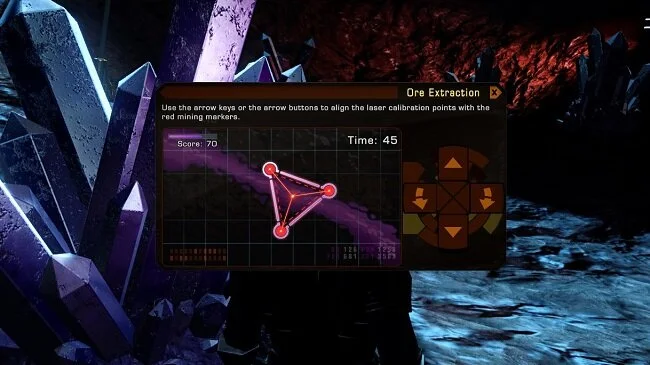
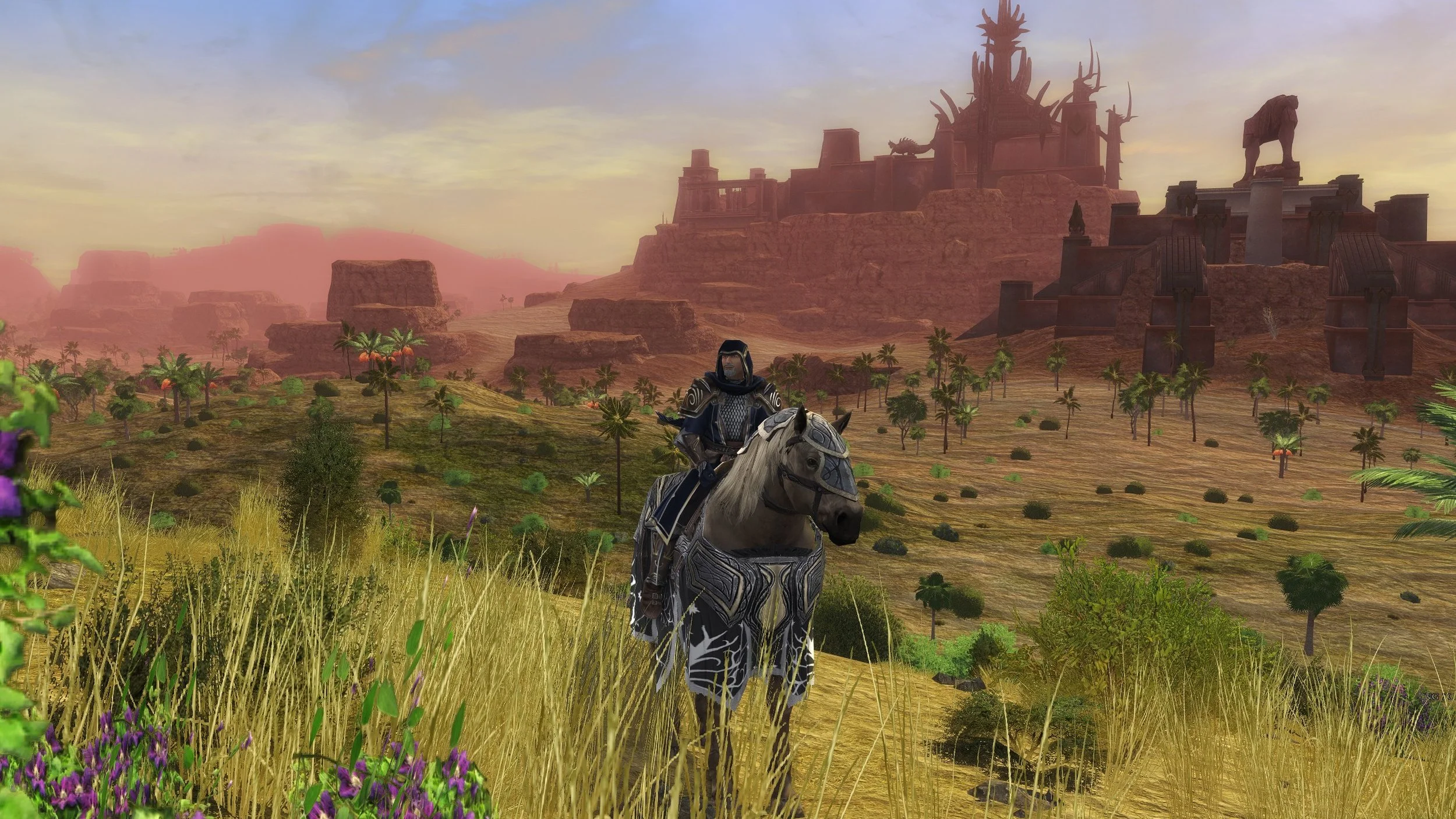
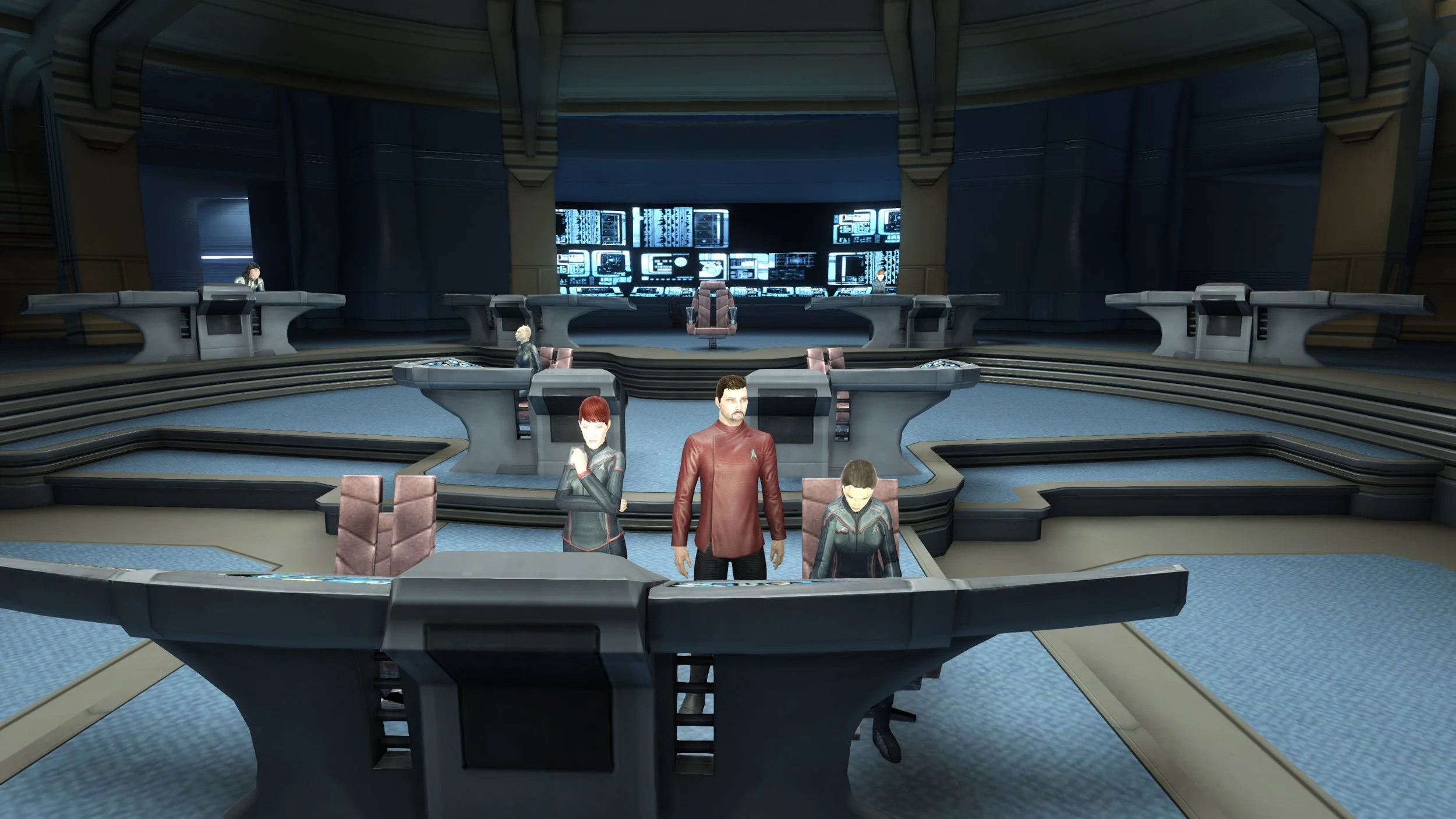
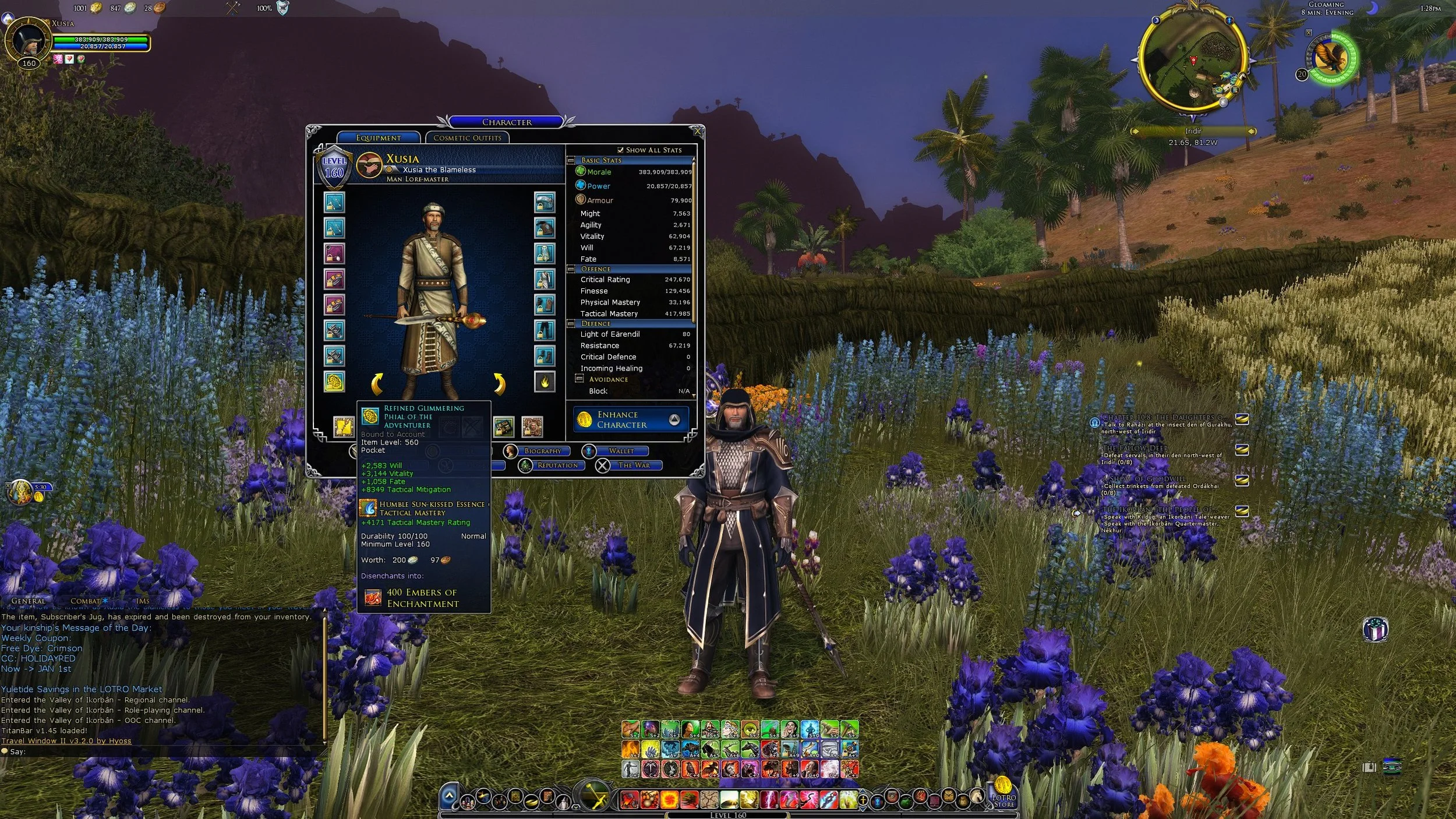
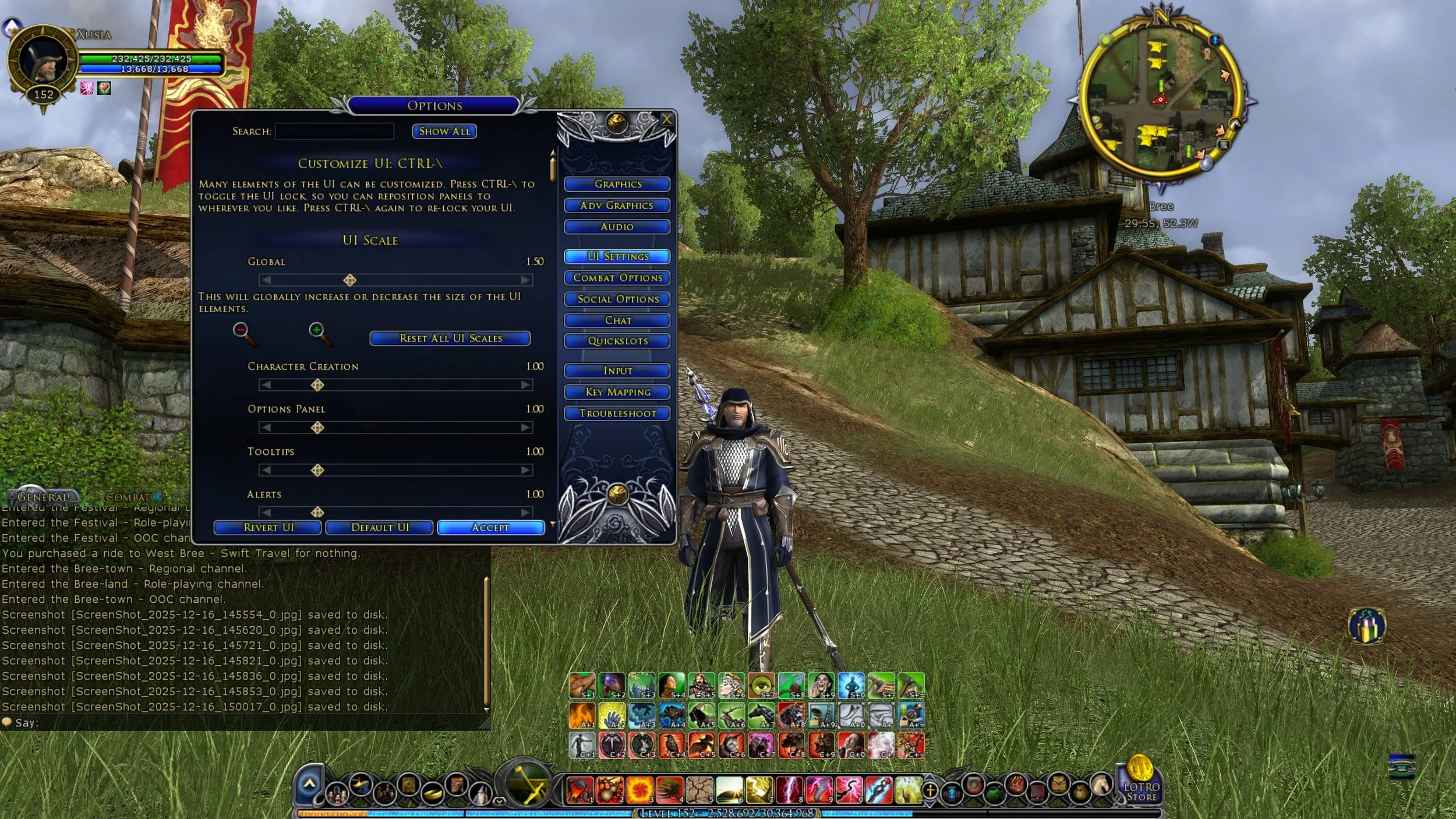
“Minigames” are small, short and self-contained games, within a larger RPG or MMO (as well as other game genres). Sometimes they are incidental and have no major bearing on the wider narrative or progression. For example, in The Lord of the Rings Online, you can take up fishing as a hobby. It is an additional activity and nothing more. Many players enjoy it as it can be very relaxing. Minigames of this nature are optional and can be ignored if the player sees fit. When mining Dilithium in Star Trek Online, there is a simple minigame where you have to match your onscreen triangular reticle over a secondary triangular marker that moves over the Dilithium seam. When they are aligned you start mining. It adds a nominal amount of effort to what is otherwise an arbitrary task. However this minigame is mandatory if you wish to do this task. If you elect not to do it then you cannot mine but there are plenty of other ways to acquire Dilithium.
“Minigames” are small, short and self-contained games, within a larger RPG or MMO (as well as other game genres). Sometimes they are incidental and have no major bearing on the wider narrative or progression. For example, in The Lord of the Rings Online, you can take up fishing as a hobby. It is an additional activity and nothing more. Many players enjoy it as it can be very relaxing. Minigames of this nature are optional and can be ignored if the player sees fit. When mining Dilithium in Star Trek Online, there is a simple minigame where you have to match your onscreen triangular reticle over a secondary triangular marker that moves over the Dilithium seam. When they are aligned you start mining. It adds a nominal amount of effort to what is otherwise an arbitrary task. However this minigame is mandatory if you wish to do this task. If you elect not to do it then you cannot mine but there are plenty of other ways to acquire Dilithium.
Then there’s a third type of minigame. One that is mandatory and integral to moving forward within the confines of the game. It acts as a gatekeeper and blocks further progression until it is completed. Minigames of this nature are universally reviled and are often an anathema to gamers. Furthermore they’re often considered “lazy game making”. If the player cannot complete the minigame in question then they may as well uninstall the game that they’re playing as they cannot progress any further. It begs the question why would anyone consider including such a system within a video game? Such situations remind me of that classic comedy routine by Irish comedian Dara O’Briain. For those unfamiliar with said pop culture reference here is the most salient quote. I do recommend that you watch the entire vignette as it is worryingly relevant.
You cannot be bad at watching a movie. You cannot be bad at listening to an album. But you can be bad at playing a video game and the video game will punish you and deny you access to the rest of the video game.
No other art form does this. You’ve never read a book and three chapters in, the book has gone, “What are the major themes of the book so far?”
You go “I, I, I don’t know, I wasn’t paying close enough attention”
And the book goes THOOMP.
“Aw, Jesus, come on”
You’ve never been listening to an album after three songs, the album has gone “Dance for me. Show me how good your dancing is.”
You’re dancing and going, “Is this good enough?”
And the album has gone “No,” and stopped. Games do this all the time.
So you may be wondering, “Roger, what prompted this somewhat querulous post”? I shall clarify the situation for you. For the last couple of weeks I’ve been playing through Assassin’s Creed IV: Black Flag. It’s a fun game with lots of pirate based mayhem and shenanigans. However, every so often the story moves from the 18th century to the present which is quite jarring. Anyway, there is a section of the game where you have to hack a computer terminal and move “a data packet” through a security field. Essentially you have to use the up, down, left and right arrows to navigate an obstacle course. Timing is everything. If you touch a “red” obstacle you have to repeat the activity from the beginning. Needless to say I was shit at it and spent an hour (yes that right an entire sixty minutes) trying to complete this utterly tedious, unenjoyable and insulting task. I came very close to just quitting the game and purging it from my hard drive.
Minigames can be fun. Minigames can enhance video games. Minigames can keep a player engaged when the more substantive content has lost its allure. You can use minigames as a means of levelling in something like STO if you don’t want to play through the story missions on alts. Minigames based around collecting and collections are also very popular and addictive. So I fully recognise that they can contribute something tangible and of merit to game design. But the utterly pointless and deliberately malicious kind that you find, such as the one I described earlier, are an utter blight upon the video games industry. Why would anyone countenance putting an impediment to progress into a game that cannot be bypassed. The sheer illogic of it is baffling. Gating content in such a fashion is counter productive and frankly trolling your customers, especially when one considers the cost of games these days. Video games are supposed to be entertainment and not feats of endurance.








Blogrolls
As today is the first day of Blaugust, I thought I’d write something pertinent to blogging. If you’re not sure what Blaugust is then follow the link and you’ll find a wealth of posts that explain this yearly event along with useful advice and guidance. So returning to the matter in hand, bloggers tend to form informal communities which support and promote each other's work. This can be either due to altruistic reasons or down to pure pragmatism. Either way networks of bloggers emerge, often around specific subjects or facets of popular culture. Our own community that holds the Blaugust event is one that is broadly centred around video games, although that is not in any way a defining criteria. All are welcome. However, the point I’m striving to make is that if you run a blog then you need people to read it. And if you want people to read it it helps if you cross promote others and they in turn promote yours. And the easiest way to do this is with the humble blogroll.
As today is the first day of Blaugust, I thought I’d write something pertinent to blogging. If you’re not sure what Blaugust is then follow the link and you’ll find a wealth of posts that explain this yearly event along with useful advice and guidance. So returning to the matter in hand, bloggers tend to form informal communities which support and promote each other's work. This can be either due to altruistic reasons or down to pure pragmatism. Either way networks of bloggers emerge, often around specific subjects or facets of popular culture. Our own community that holds the Blaugust event is one that is broadly centred around video games, although that is not in any way a defining criteria. All are welcome. However, the point I’m striving to make is that if you run a blog then you need people to read it. And if you want people to read it it helps if you cross promote others and they in turn promote yours. And the easiest way to do this is with the humble blogroll.
After writing online for over a decade, I consider blogrolls to be both an asset and a social minefield. In principle they provide a list of online resources that others can use for reference. In fact if you find a site with a comprehensive blogroll it can become a major asset with regard to keeping abreast of others writing. However they can also have some less desirable consequences. Some people see them as a popularity contest or a self indulgent backslapping exercise. There is also a strange sort of internet etiquette associated with them. Sometimes bloggers feel snubbed if they find that their site is absent from their peers' blogroll. If someone adds your site to their blogroll are you obliged to reciprocate? It may sound all very inconsequential but you’d be surprised at the little things that some people choose to get annoyed over.
When I moved Contains Moderate Peril from a hosted WordPress site over to Squarespace, I decided to review whether I should maintain a blogroll. Due to the template I chose and its lack of a sidebar, the matter pretty much resolved itself. I could set up a separate page with a list of blogs but it lacks the convenience of having it on the site homepage. Back in early 2012 I set up The Gaming Blog Nexus, as a more practical means to aggregate blog content and keep track of the latest post published. It proved to be a popular website and successful resource but like so many online projects, it was subject to increasing operational costs. After two and a half years I decided to close the site, which at the time listed over one hundred and twenty gaming related blogs. Although I do not regret my decision, as I do not have unlimited funding for my online projects, I do miss its practical benefits.
If you’ve decided that you wish to maintain a blogroll on your website, here are a few tips for your consideration. If possible present your blogroll in order of new posts or alphabetical site names. If your blogroll is simply a list of hyperlinks then the latter is possibly the best option. Fancier addons or plugins may offer more complex ways to tabulate and collate the blogs listed on your roll. Decide in advance what your policy is to be with regard to which blogs you add to your roll. If you choose a quid pro quo approach then stick to it. If you decide to be more particular, bear in mind that some people may question your policy. Also remove sites from your roll that have become inactive or you know are “dead”. A year is a fair benchmark. If you do these things and manage your blogroll well, you may see a spike in your website traffic. Just bear in mind it may be due to the well maintained resource that you’ve curated, rather than the quality of your prose.
Minions (2015)
It would appear that there is a Minions 2, although it’s release around the world has been staggered due to the pandemic. So I thought I’d revisit the original movie for a second viewing. Spin-off movies can be a risky venture. Side characters may work well in a supporting role within a successful movie but may not necessarily find an audience in their own vehicle. However this is most definitely not the case with Minions. The movie is ninety one minutes of exquisitely crafted cinema. From the opening Universal fanfare (which the Minions sing-a-long to) to the post credit rendition of Revolution, the film is consistently funny and perfectly paced. The production design and overall aesthetic is beautifully realised and the central characters of Kevin, Stuart and Bob are thoroughly engaging. Actually, forget "engaging ''. They are genuinely loveable. Directors Pierre Coffin and Kyle Balda barely put a foot wrong.
It would appear that there is a Minions 2, although it’s release around the world has been staggered due to the pandemic. So I thought I’d revisit the original movie for a second viewing. Spin-off movies can be a risky venture. Side characters may work well in a supporting role within a successful movie but may not necessarily find an audience in their own vehicle. However this is most definitely not the case with Minions. The movie is ninety one minutes of exquisitely crafted cinema. From the opening Universal fanfare (which the Minions sing-a-long to) to the post credit rendition of Revolution, the film is consistently funny and perfectly paced. The production design and overall aesthetic is beautifully realised and the central characters of Kevin, Stuart and Bob are thoroughly engaging. Actually, forget "engaging ''. They are genuinely loveable. Directors Pierre Coffin and Kyle Balda barely put a foot wrong.
Set in 1968, the Minions are in an emotional decline as they cannot find a master to serve. So Kevin, Stuart and Bob set off from home to find the biggest and baddest villain around with a view of becoming their henchmen. They chance upon international criminal Scarlet Overkill (Sandra Bullock) and due to good luck, inadvertently win her favour. If they can secure the Queen of England's crown for her, then Scarlet will find a home for them and restore them to their rightful role as henchmen. This broad plot lends itself to a wealth of sixties pop culture references and clever in-joke, along with continual slapstick humour. This is a movie that entertains on multiple levels which explains why the adults outnumbered the children in the screening I saw back in 2015.
During the course of their misadventures Kevin, Stuart and Bob drive through a movie set where Stanley Kubrick is faking the Moon Landing, get walked over by The Beatles at the Abbey Road zebra crossing and pull the sword Excalibur from the stone, thus claiming the throne of England. Minions is the sort of movie that requires multiple viewings to fully appreciate all it's throwaway gags and one liners. I spotted a great deal more second time round. The period setting also lends itself to a cornucopia of classic tunes by the likes of The Who, The Kinks and The Rolling Stones. Are they clichéd? Yes. Do they still work? Most certainly due to the way they superbly underscore the onscreen action.
I laughed continuously while watching Minions and was more than happy to surrender myself to its inherent stupidity and tangential narrative. The minions themselves are extremely likeable. There is no need for them to possess complex character traits or to have convoluted motivations beyond their Joie de vivre and penchant for bananas. This most certainly has been the funniest movie I've seen for a while and I felt immensely restored by seeing it. Laughter really does have curative properties and there is simply so much material to see here. Oh and if you do decide to watch Minions, stay right until the end and ensure you watch all the credits and beyond. You'll be well rewarded. Let us hope that the sequel delivers more of the same.









Everything That is Wrong With Management Hierarchies in a Nutshell
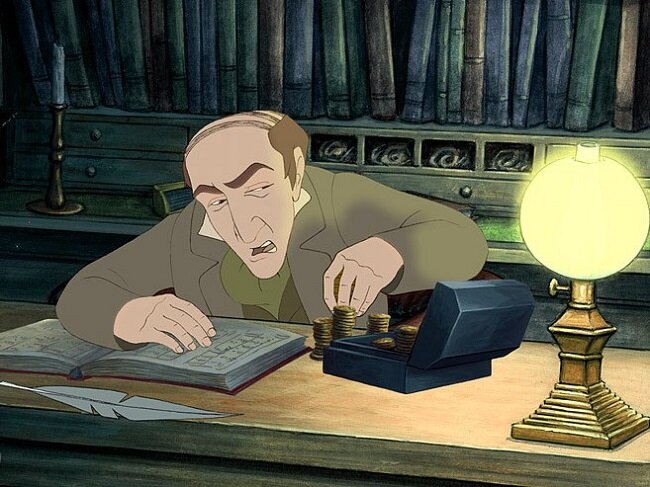
The following video appeared in my Twitter timeline three months ago. Upon watching it, I was annoyed on multiple levels and it takes quite a lot to get me agitated these days. I felt disposed towards writing a blog post about what I had seen. However, other stuff came up, as it always does and I ended up writing something else and this post ended up consigned to the “phantom zone” that is “draft posts”. However, I had a conversation today with someone online, that started a train of thought that led me back to this Tweet and my draft post. Someone used the word “literally” when they clearly meant something figuratively and it made me think about how so many people use words incorrectly. Not being able to express yourself clearly and accurately is a major problem. With regard to the anecdote featured in the video it is a clear demonstration of this. It also raises a lot of other issues, all of which are the bane of management.
The following video appeared in my Twitter timeline three months ago. Upon watching it, I was annoyed on multiple levels and it takes quite a lot to get me agitated these days. I felt disposed towards writing a blog post about what I had seen. However, other stuff came up, as it always does and I ended up writing something else and this post ended up consigned to the “phantom zone” that is “draft posts”. However, I had a conversation today with someone online, that started a train of thought that led me back to this Tweet and my draft post. Someone used the word “literally” when they clearly meant something figuratively and it made me think about how so many people use words incorrectly. Not being able to express yourself clearly and accurately is a major problem. With regard to the anecdote featured in the video it is a clear demonstration of this. It also raises a lot of other issues, all of which are the bane of management.
Essentially, the guy referenced in the story didn’t understand what “random” means. Furthermore, he couldn’t adequately articulate what it was that he actually wanted the developer to do. On several occasions he reacted retrospectively to the results presented, requesting changes that he had not previously expressed. So not only was he ignorant of a word’s definition he was incapable of stating what he ultimately desired, in this case the parameters of the sequence he wanted the songs played in. The results were ultimately achieved but the manager's communication and handling of the situation were inefficient and potentially had a cost impact upon the process. Rather than enhancing workflow and production through management of staff, this individual directly but probably unbeknown to themselves, hampered and held up development.
There are many problems that blight management culture and vertical hierarchies. Cronyism, direct entrants into a grade who are overqualified but under experienced and those who are just bereft of empathy and social skills. Management often have a degree of power which sadly attracts the socially dysfunctional, the sociopathic and those who just like to fuck with people. Managers should be able to do everyone else’s job, have both authority and “soft” people skills. They should lead by example. Sadly most fail these criteria. It seems to me that the only qualification required nowadays to manage staff is having a pulse. However, putting aside a wider critique of the role, I consider communications to be the biggest issue and possibly the most common failing. I have never worked in the video game industry but I have certainly encountered comparable examples of this anecdote. You’ve probably done the same.
If you’re looking for this post to come up with a solution to this malady then I must disappoint you. Getting the right people into the right positions is a difficult and complex problem and takes a lot of time, money and effort. Something a lot of businesses just don’t want to do. Hence you get square pegs in round holes or managers who are patently out of their depth without any idea that they are so. Again I will advocate the merits of self employment, where possible. If you work for yourself and have a shit manager then you only have yourself to blame. Beyond that, all I can advise is to document everything and ensure that you have a backup copy of your paper trail. Where possible, if someone is being vague, seek clarity. “What do you mean by that” is a useful phrase. But in a business world where the Dunning–Kruger effect is rife, what can’t be cured must be endured. I’m not a religious person myself but God obviously loves crap middle management because he certainly makes a lot of them.
























The Fourth Protocol (1987)
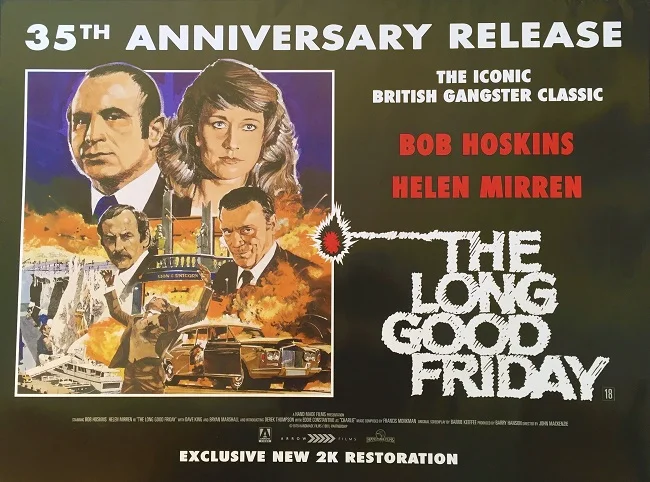
Sometimes a perfectly competent film simply misses the boat. The Fourth Protocol is a prime example of this. Based upon the novel by Frederick Forsythe this well made, somewhat clinical thriller arrived in cinemas at a time when the cold war was coming to an end due to “glasnost” and the “red menace” was becoming a somewhat tired plot device. It didn’t help that a similar story about a rogue Russian mission to detonate a nuclear device on a US base had already featured four years earlier in the Bond film, Octopussy. Michael Caine spent several years trying to get the project off the ground, after initially reading the author’s draft manuscript of the novel. Veteran screenwriter George Axelrod was hired and John Frankenheimer was sought to direct the film. However, difficulties in financing the project led to changes in the production and Forsythe ended writing the screenplay himself, while John Mackenzie (The Long Good Friday) took on the direction.
Sometimes a perfectly competent film simply misses the boat. The Fourth Protocol is a prime example of this. Based upon the novel by Frederick Forsythe this well made, somewhat clinical thriller arrived in cinemas at a time when the cold war was coming to an end due to “glasnost” and the “red menace” was becoming a somewhat tired plot device. It didn’t help that a similar story about a rogue Russian mission to detonate a nuclear device on a US base had already featured four years earlier in the Bond film, Octopussy. Michael Caine spent several years trying to get the project off the ground, after initially reading the author’s draft manuscript of the novel. Veteran screenwriter George Axelrod was hired and John Frankenheimer was sought to direct the film. However, difficulties in financing the project led to changes in the production and Forsythe ended writing the screenplay himself, while John Mackenzie (The Long Good Friday) took on the direction.
MI5 officer John Preston (Michael Caine) discovers that British government official George Berenson (Anton Rodgers) is leaking government documents. Although his investigation is well received by British Secret Service official Sir Nigel Irvine (Ian Richardson), Preston's methods embarrass the acting Director of MI5, Brian Harcourt-Smith (Julian Glover) and he is reassigned to "Airports and Ports". Meanwhile in Russia, KGB General Yevgeny Karpov (Ray MacAnally) suspects that his immediate superior, General Gavorshin (Alan North) is mounting an unauthorised operation. He discovers that Major Valeri Petrofsky (Pierce Brosnan) has recently assumed a long established fake identity and been dispatched to the UK. In the meantime, Preston investigates the death of a Russain merchant seaman who was run over while trying to leave port without authorisation. While searching through his personal affects he discovers a metal disk. This is subsequently identified as polonium, which could be used as part of a detonator for an atomic bomb.
The Fourth Protocol has a very similar feel to The Day of the Jackal, insofar that it is procedurally driven and plays at times more like a faux docudrama rather than thriller. The fact they’re both written by the same author is obviously relevant. In the case of The Fourth Protocol, this very procedural approach to Preston’s investigation, juxtaposed with Petrofsky’s methodical collection of the various bomb parts, does come somewhat at the expense of character development. This is a film mainly about archetypes and political themes common to the spy genre. However the film does offer some great detail such as when Berenson (Anton Rodgers) is followed by an MI5 surveillance team across London. Petrofsky’s elimination of casual witnesses is also quite grim. The practicalities of creating a nuclear bomb are also starkly presented, although certain aspects of the process are ignored for practical and narrative reasons.
Caine and Brosnan do much of the heavy lifting and keep the drama afloat. The latter does very well considering he does have a minimal amount of dialogue. Caine has some smart one liners that he delivers with relish and the scene where he forensically deals with two skinheads on the London Underground who are racially harassing a passenger is spot on. The film has some very good yet somewhat low key stunts. The scene where Caine and his MI5 sidekick drive directly onto a platform at King’s Cross station and Caine leaps onto the moving train is well handled. The fact that it's executed within a single tracking shot makes it all the more impressive. The film also benefits from a solid score by Lalo Schifrin which underpins the action and enhances the drama. All in all, this is a solid thriller which keeps the viewer engaged for nearly two hours. Unfortunately, timing is important and public tastes change. Hence The Fourth Protocol was just a few years too late and didn’t quite make its mark.
Is the Gaming Community to Blame?
The ongoing debacle about Blizzard Entertainment naturally raises the question as to what part the gaming community has contributed to this sorry state of affairs. There is a school of thought that gamers who blithely accept the status quo and never speak out about sexism, racism and casual misogyny within the games they play, the companies that create them and the wider community are part of the problem. They are effectively "facilitators" and are "complicit" with the perpetuation of these problems. Logically speaking, such observations are correct in a notional capacity. However, the reality of the situation is far more complex and nuanced. For example there are vast swathes of gamers who do not follow any associated news and therefore will be oblivious to the iniquities of Blizzard Entertainment. The same way as they are ignorant of the business practises of their car manufacturer or telecoms provider.
The ongoing debacle about Blizzard Entertainment naturally raises the question as to what part the gaming community has contributed to this sorry state of affairs. There is a school of thought that gamers who blithely accept the status quo and never speak out about sexism, racism and casual misogyny within the games they play, the companies that create them and the wider community are part of the problem. They are effectively "facilitators" and are "complicit" with the perpetuation of these problems. Logically speaking, such observations are correct in a notional capacity. However, the reality of the situation is far more complex and nuanced. For example there are vast swathes of gamers who do not follow any associated news and therefore will be oblivious to the iniquities of Blizzard Entertainment. The same way as they are ignorant of the business practises of their car manufacturer or telecoms provider.
Many gamers play the games they enjoy as a means to decompress from the pressure of modern life and to recharge their emotional batteries. A few hours spent playing an MMO or MOBA is a way to forget, for a while at least, about global warming, political shenanigans and the like. Therefore some players are not really disposed toward having to parse their gaming activities for its social and moral rectitude. It’s something we all do to a greater or lesser degree. Cognitive dissonance is virtually the average person's default position. We like cheap clothes but we don’t like to think we are actively participating in the exploitation of labour in developing countries. We voraciously consume factory farmed meat, yet we purposely distance ourselves from the realities of its production. Save the planet? Absolutely, I’m onboard for that. As long as I can still have my cheap flights. This is how people work and why some gamers want to stay below the parapet and off the radar.
There is an inherent duality in being part of the gaming community. There are times when we as gamers may feel proud to identify as such. And then there are other occasions when we look upon the actions and decorum of certain quarters with a sense of shame. In the past the common refrain you’d hear regarding racism, sexism and other forms of marginalisation would be “this is not representative of our community”. Sadly, post “Gamergate”, it is now very much representative of a sizable part of the community and cannot be easily dismissed as fringe malcontents and freelance trolls. I believe that the game community, just like social and political discourse, is pretty much split down the middle upon clear partisan lines. Exactly the same fault lines appear in most social groups and they are usually based around equality and access to power. The divide is between those who have the advantage and wish to maintain it for their benefit and those who wish to level the playing field.
Video games may well be far more inclusion nowadays but that is only a fairly recent development. Furthermore, such change has not been driven by a strong sense of morality but more by a financial imperative. But if you look at the way video games were created and marketed thirty plus years ago, it was very different. Hence a generation of boys grew up believing that games were very much their exclusive province. That combined with other cultural assumptions about gender roles, employment and social hierarchies certainly helps explain where we find ourselves today. Furthermore, because we live in a more socially conscious world it is now harder to try and remain neutral regarding who to address issues such as that currently blighting Blizzard Entertainment. Yet because of the clear divide in all opinions now there isn’t necessarily a consensus, although I do think there is often a clear “right” answer. And so the gaming community becomes a battlefield. Just another in the ongoing culture war.
So when the question is mooted as to whether the players are culpable to any degree for the ongoing Blizzard Entertainment debacle or indeed the wider failings of the gaming community, I no longer think we say it’s a gray area. As players, or more accurately consumers, we support in large numbers all of the practises and policies that we also continuously complain about. Microtransactions, live services, hype culture, pre-orders etc. We also enable those who we revere by treating them like rock gods. If you tell someone that they’re special and can do no wrong, don’t be surprised when they go along with it, at the expense of others. And then there’s the little, yet important things that we can sometimes let slide. Such as when someone spouts vile crap in world chat. Don’t just block them or quit that specific channel. Call them out or file a report on them. Remember “the only thing necessary for the triumph of evil is for good men to do nothing” as Edmund Burke succinctly stated.
Now you may argue that you personally don’t buy pre-orders, spend money on in-game purchases and that you eschew “bro” gaming culture. Good for you. But I think that we’ve reached the point where just not adding another stool to the ever growing lake of faecal matter isn’t the get out of jail card that it used to be. The status quo is demonstrably bad for many people and we cannot just leave it as it is. My biggest concern about the current situation with Blizzard is that the company will offer up some sacrificial lambs, mouth some vague commitments to change and simply try to ride out the storm, only to return to “business as usual” within the shortest time possible. So I believe it is time for everyone who finds the situation unacceptable to make their voice heard. You don’t have to man the barricades. Simply writing a blog post, saying something in your live stream or uninstalling battle.net sends a message. If we want our community back then we have to roll up our sleeves and pitch in.
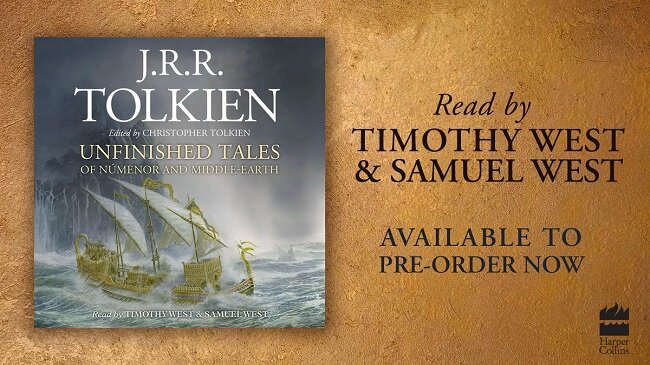
Unfinished Tales by J. R. R. Tolkien - Read by Timothy and Samuel West (2021)
First published in 1980, Unfinished Tales is a collection of stories by J. R. R. Tolkien, that spans from the Elder Days of Middle-earth to the end of the War of the Ring. For those who have read both The Silmarillion and The Lord of the Rings, this book provides additional insights and more detailed accounts of many key events of the First, Second and Third age. Such as Gandalf’s informative tale of how he came to send the Dwarves to Bag-End in search of a burglar, the appearance of the sea deity Ulmo before Tuor on the coast of Beleriand and an in depth description of the military organization of the Riders of Rohan. This collection of stories and essays by J. R. R. Tolkien were never fully completed during the author’s lifetime but were posthumously edited by his son Christopher Tolkien and present with notes, annotations and were required a detailed commentary.
First published in 1980, Unfinished Tales is a collection of stories by J. R. R. Tolkien, that spans from the Elder Days of Middle-earth to the end of the War of the Ring. For those who have read both The Silmarillion and The Lord of the Rings, this book provides additional insights and more detailed accounts of many key events of the First, Second and Third age. Such as Gandalf’s informative tale of how he came to send the Dwarves to Bag-End in search of a burglar, the appearance of the sea deity Ulmo before Tuor on the coast of Beleriand and an in depth description of the military organization of the Riders of Rohan. This collection of stories and essays by J. R. R. Tolkien were never fully completed during the author’s lifetime but were posthumously edited by his son Christopher Tolkien and present with notes, annotations and were required a detailed commentary.
Unfinished Tales also contains the only stories about the island of Numenor before its downfall, and all that is known about the Five Wizards that made up the Istari. Christopher Tolkien’s notes are invaluable, highlighting any deviations in lore with other books in the Tolkien Legendarium. They also help the reader to grasp the evolution of many of the tales and subject matter and provide a sense of context within the rest of his Father’s writings. The commercial success of Unfinished Tales demonstrated that there was still a strong demand for Tolkien's work after his death and that readers would avidly consume any material that provided further insight into the history of Middle-earth. Encouraged by the result, Christopher Tolkien embarked upon the more ambitious twelve-volume work entitled The History of Middle-earth which encompasses nearly the entire body of his Father's writings about Middle-earth.
This May HarperCollins released a new unabridged audio recording of this seminal text featuring the combined vocal talents of Father and Son, Timothy West CBE and Samuel West. The production is exemplary and the quality of reading outstanding. Both Messr West Senior and Junior, being established actors, navigate the choppy waters of pronouncing names correctly with ease. I would go so far as to say that their combined flawless diction adds immensely to the proceedings. The central narrative is told by Samuel West and his Father Timothy reads Christopher Tolkien’s annotations and notes. Furthermore, they read at a measured pace allowing the listener to digest the narrative which at times can be quite complex. It is a far cry from previous unofficial audio versions which have been read in the most perfunctory fashion and without any degree of enthusiasm. Hence I wholeheartedly recommend this version of Unfinished Tales due to its accessibility and quality.





Kiss Me Deadly (1955)
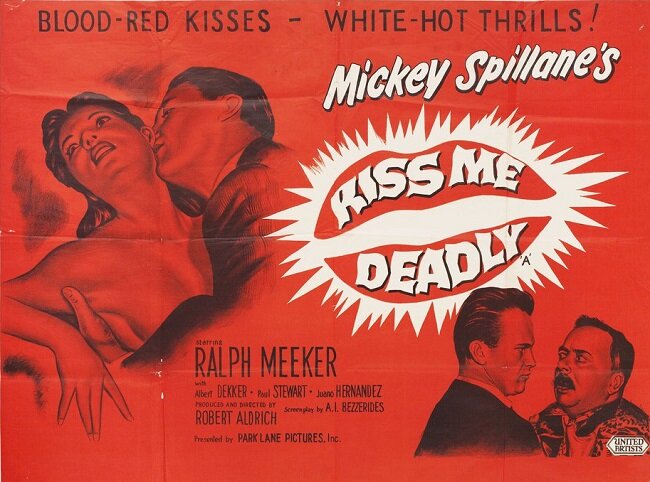
Film Noir often reflects the numerous things that influenced it. German expressionism, French poetic realism and American hardboiled fiction. Hence many films from this genre have a tendency to be stylised both visually and narratively speaking, with a fatalistic tone. Kiss Me Deadly, directed by Robert Aldrich in 1955, takes all these attributes as well as others and amplifies them in one of the bleakest and most uncompromising movies of the fifties. It features a brutal protagonist who isn’t even a decent detective and a plot that seems at first glance to come straight out of Greek mythology. Yet Kiss Me Deadly is compelling and lean without any superfluous scenes or narrative baggage. There’s also what appears to be the mother of all cinematic "MacGuffins" but once the film is over and the viewer reflects upon what they have seen, it can be argued that maybe the characters and the inevitability of their actions are actually the driving plot device instead.
Film Noir often reflects the numerous things that influenced it. German expressionism, French poetic realism and American hardboiled fiction. Hence many films from this genre have a tendency to be stylised both visually and narratively speaking, with a fatalistic tone. Kiss Me Deadly, directed by Robert Aldrich in 1955, takes all these attributes as well as others and amplifies them in one of the bleakest and most uncompromising movies of the fifties. It features a brutal protagonist who isn’t even a decent detective and a plot that seems at first glance to come straight out of Greek mythology. Yet Kiss Me Deadly is compelling and lean without any superfluous scenes or narrative baggage. There’s also what appears to be the mother of all cinematic "MacGuffins" but once the film is over and the viewer reflects upon what they have seen, it can be argued that maybe the characters and the inevitability of their actions are actually the driving plot device instead.
P. I. Mike Hammer (Ralph Meeker) is driving his sports car one evening when he is forced to stop due to a woman running barefoot along the road, wearing nothing but a trench coat. He offers her a lift and she identifies herself as Christina (Cloris Leachman). She then asks him to "remember me", regardless of what happens next, alluding to a poem by Christina Rossetti. The pair are subsequently run off the road by unseen assailants. Hammer is knocked out in the crash and briefly comes round to find himself in a house where Christina is tortured to death. Hammer is then put back in his car along with Christina's body and the vehicle is pushed off a cliff. He awakes in hospital, to find his secretary Velda (Maxine Cooper) waiting for him. He decides to investigate Christina's murder believing that it "must be connected with something big." He subsequently tracks down Lily Carver (Gaby Rodgers), Christina's roommate. Lily tells Hammer she is hiding from sinister forces who are trying to find a mysterious box that, she believes, has contents worth a fortune.
Author Mickey Spillane created the character of Mike Hammer in 1946 and he was never intended to be as cerebral or as reflective as other hard boiled literary P.I.s such as Philip Marlowe. Director Robert Aldrich refines the character even further. In an early scene Christina makes an intuitive assessment of Hammer stating that he is the sort of man that “never gives in a relationship, who only takes”. And take he does. Hammer is a cheap private detective who usually does nothing more than squalid divorce cases. He often involves Velda in his work who does his dirty work out of love and devotion.Things he uses to his benefit. He also takes a beating. Regularly. Due to a plot conceit involving a suspended gun permit, Hammer never pulls a weapon. He only makes progress with his case because the villains of the story briefly consider using him to their advantage. Hammer is lacking in sophistication or breadth of vision. He is indeed like his name, a very specific tool and sees everything “as nails”. In many ways like the US foreign policy during the era.
Robert Aldrich was a radical film maker who smuggled his anti-establishment ideas in what many would assume were mainstream films. Kiss Me Deadly is not really a hard-boiled crime drama but a parable about the risks of nuclear proliferation with the clear metaphor of opening Pandora’s box. He shows how violence, allegedly an anathema to the righteous and virtuous, often becomes a convenient tool as they pursue their cause. Hammer casually destroys an Opera lover's record collection in front of him, relishing his discomfort. He also slams a drawer on an old man’s hand for “reasons”. Aldrich is also far more enamoured with his female characters. Their clearly marginalised status in 1950s America affords them a far more introspective and philosophical nature. Velda quickly grasps the magnitude of the mysterious box that is being sought by multiple parties, referring to it at the great “whatsit”. Christina knows that her fate is sealed the moment she strays into the affairs of men.

The script for Kiss Me Deadly by AI Bezzerides, a left leaning blacklisted screenwriter at the time, is very precise and minimalist. Something that a lot of modern writers need to learn. The sumptuous black and white cinematography by Ernest Laszlo is inherently classic yet reflects the modernity that post World War II America exulted. Perhaps the most memorable aspect of Kiss Me Deadly is its ending. Aldrich saves his best metaphor for last. Is Lily, like the United States, so obsessed with the power inherent with destruction, compelled to open the lid to satisfy her insatiable curiosity? The denouement still leaves an impression today and it has clearly influenced many other filmmakers. Steven Spielberg references it during the ending of Raiders of the Lost Ark. And the concept of an all powerful force in the trunk of a car was similarly adopted by Alex Cox in his 1984 science fiction movie Repo Man.
Oh look, that’s similar…
The Blight of “Bro Culture” and “Boys Club” Mentality
During the summer of 2007 I was working as part of a team of IT contractors undertaking a major hardware rollout for a large smartphone software developer in London. I could spend a substantial amount of time setting up the backstory to this anecdote but upon mature reflection, I don’t think it is actually necessary. Let it suffice to say that the company was mainly staffed by men between the age of 25 and 50. The team of contractors that I was working with had a similar demographic. This is hardly surprising, as IT is still a male dominated field. Both the company that I was directly working for and the one we were providing support services to were very similar in their corporate culture. It was informal with a “work hard, play hard” ethic. Disputes and major decisions were often resolved by public arguments and there was a very clear hierarchy that sadly wasn’t based on intellect or decorum.
During the summer of 2007 I was working as part of a team of IT contractors undertaking a major hardware rollout for a large smartphone software developer in London. I could spend a substantial amount of time setting up the backstory to this anecdote but upon mature reflection, I don’t think it is actually necessary. Let it suffice to say that the company was mainly staffed by men between the age of 25 and 50. The team of contractors that I was working with had a similar demographic. This is hardly surprising, as IT is still a male dominated field. Both the company that I was directly working for and the one we were providing support services to were very similar in their corporate culture. It was informal with a “work hard, play hard” ethic. Disputes and major decisions were often resolved by public arguments and there was a very clear hierarchy that sadly wasn’t based on intellect or decorum.
Drinking culture is far more robust and commonplace in the UK compared to other countries. A swift pint at lunch time is not unusual and drinks after work throughout the week is part of the working landscape. However, on this occasion, it was far more in your face. Hence the standard of behaviour among employees often took a nose dive in the afternoon. The job often felt like a night out, rather than a short term contract. It also reminded me of the last few years I spent at school. Cliques and an “in crowd” were quickly established. Anyone who didn’t quite fit in became the butt of jokes which soon descended into bullying. The few women that worked in the building, mainly in admin, HR and support roles were badgered constantly. The cleaning staff were also subject to racist abuse and regularly taunted. Yet despite all this, because the work was getting done, no one felt the need to do or say anything. Plus in the view of the senior staff, it was all just “high” spirits and anyone complaining should “get over themselves”.
The sad thing about this story is that it is not in any way unusual. “It happens everyday” as Tom Jones wisely stated. Furthermore, if I or anyone else had attempted to do something about the situation it would have ended with our contracts being terminated. There may well have been lasting consequences with regard to being blacklisted by certain recruitment agencies for not being a team player. Because this “boys club” mentality is everywhere. It’s everywhere because it stems from the way society in Western Democracies are constructed and run. Power, opportunity and expectations are all centred around white men. Many people don’t like the phrase “white privilege” and it is misunderstood and frequently misused. So rather than invoke it, I’ll ask a very simple question for people to reflect upon and answer honestly. If you are a white man living in the US, UK or any of the major European countries would you ever want to be any other gender or ethnicity? (For further exploration of this, see Chris Rock).
All of which brings me on to the current debacle regarding Blizzard Entertainment. A sickening shit show which although appalling comes as absolutely no surprise. I have never been a fan of Blizzard. When I started playing MMOs roundabout 2008 I was aware of the behemoth that was (and to a degree still is) World of Warcraft but found the culture surrounding the game’s developers unpalatable. After watching footage from BlizzCon I wasn’t impressed by the strutting, preening narcissism I saw on display. The public Q&A sessions further solidified my opinion, as women were condescended to and those who didn’t fit into the “bro” hierarchy were mocked. Furthermore, the hardcore fans are equally part of the problem as they are the ones treating developers and popular industry figures as if they’re seventies rock stars. It’s hardly surprising when the usual suspects started acting as such.
In the months to come, Blizzard Entertainment will twist itself in knots trying to deny, deflect, and mitigate the charges that have been levelled at them by California Department of Fair Employment and Housing. They have lots of money and an army of lawyers so this isn’t going to be a simple lawsuit. I don’t see them “beating this rap” but I do question whether anything will truly change. Some minor sacrificial lambs will be offered up as a sign of supposed contrition and possibly a senior member of staff such as J. Allen Brack may have to fall on their sword. But they’ll leave with a full pay-out as part of a backroom deal and as history has shown us, it never harms their career in the long run (think Louis C. K.). We’ll also get the obligatory espousing of the “lessons must be learned” mantra but it will be as honest and credible as a politician’s promise. And as for those who work at the coalface in companies such as Blizzard Entertainment, there may well be a cessation of overt harassment but they’ll potentially suffer in other ways and find that there’s no future for them there.
Until we as a society decided to unequivocally address the blight of the “boys club” then it isn’t going to change. What is required are some fundamental sea change in the way we raise our children so that we instil a sense of equality right from the start. We need to also eliminate the gender specific roles and concepts we force both consciously and subconsciously upon the young as they grow up. And in the meantime while we have to endure a generation who have entrenched views that cannot be altered, we need to police and enforce the existing legislation that is in place that protects those who are harassed and marginalised. As for Blizzard Entertainment, they already have form for being the worst sort of corporate entity. They have no principles or sense of obligation to anyone or anything other than themselves. As a result they fully deserve the ire that is coming their way and I would actively encourage you to lend your voice and actions to it, if you can.
I have twin granddaughters. They’re six years old (how the hell did that happen?) and I already see the effects that consumerism and societal expectations have upon them. They are already concerned over how they look, what boys think about them and have clear ideas about gender specific roles. Hopefully as they grow older they will gain the insight and wisdom to shed this cultural baggage, rather than let it define them. As and when they reach an age where they start thinking about their careers and the job market, unless society radically changes in the next 12 years, I will offer them the following advice. Where possible work for yourself and not others. Eschew male dominated, corporate environments. Maintain a network of other skilled female freelancers. Police your workspace and document everything. All of which is advice that is indicative of a broken system but it is the only way to ensure that the wolves are held at bay. Until the “boys clubs” and “bro culture” are finally consigned to the annals of history.
Death Line (1972)
Late one night at the Russell Square station, university students Patricia (Sharon Gurney) and her American boyfriend Alex (David Ladd) find an unconscious man on the stairwell. Fearing that he may be ill, Patricia checks his wallet and finds a card that identifies him as James Manfred, OBE (James Cossins). They inform a police officer but when they return find that Manfred has vanished. Inspector Calhoun (Donald Pleasance) is assigned to look into the disappearance. He soon discovers that there are several similar “missing persons” cases. Calhoun's colleague tells him about the history of the London Underground, particularly how numerous Victorian construction workers were buried alive after a tunnel collapsed in 1892. Due to the construction company going bankrupt the rescue mission was abandoned. Is there a group of descendants who survived the cave-in, still alive and living below ground?
Late one night at the Russell Square station, university students Patricia (Sharon Gurney) and her American boyfriend Alex (David Ladd) find an unconscious man on the stairwell. Fearing that he may be ill, Patricia checks his wallet and finds a card that identifies him as James Manfred, OBE (James Cossins). They inform a police officer but when they return find that Manfred has vanished. Inspector Calhoun (Donald Pleasance) is assigned to look into the disappearance. He soon discovers that there are several similar “missing persons” cases. Calhoun's colleague tells him about the history of the London Underground, particularly how numerous Victorian construction workers were buried alive after a tunnel collapsed in 1892. Due to the construction company going bankrupt the rescue mission was abandoned. Is there a group of descendants who survived the cave-in, still alive and living below ground?
On paper the plot for Death Line (released in the US as Raw Meat) suggests a rather grubby and unpleasant exploitation horror film, common to that decade. However, although it is indeed stark, bleak and somewhat squalid, there is an unusual emotional depth to the story and an air of tragedy, mainly due to the unique performance of Hugh Armstrong as “The Man”. He is a murderer and a cannibal yet he is also a victim of circumstances. The scenes in which he desperately tries to tend to his dying, pregnant mate are both shocking yet inherently sad. And it is this melancholic aspect of the film that makes it so unique and certainly elevates it above standard genre material from this era. However, as well as intermittent pathos there is also some jolting violence. Director Gary Sherman has a knack for presenting injuries in a grimy, unflinching fashion. In one scene he slowly pans the camera around the lair of “The Man, gradually revealing several butchered corpses in various states of decay.
Death Line is not content to just explore the concept of cannibalism and strays into several other subjects and themes. Inspector Calhoun’s investigation is hampered by the involvement of Stratton-Villiers (Christopher Lee) of MI5. It would appear that the missing James Manfred, OBE, is of some importance to the security services. Manfred is seen at the start of the film frequenting the various strip clubs of Soho and later trying to pick up a sex worker. Donald Pleasance’s somewhat eccentric performance of a working class policeman who has fought tooth and nail to climb the promotion ladder is also an interesting facet of the story. There is a delightful scene in a pub where the Inspector and Detective Sergeant Rogers (Norman Rossington) outstay their welcome and are ushered out by the landlord. It is a fascinating snapshot of how utterly drab many pubs were at the time and an accurate assessment of UK drinking culture.
There are some weak aspects to Death Line, such as the rather unsympathetic lead protagonist, Alex, played by David Ladd. He’s cynical and lacking in empathy as so many heroes were in the seventies. He often comes across as being undeserving of his girlfriend Patricia. The film’s musical score by Wil Malone is deliberately discordant and somewhat experimental. The use of early synthesisers is interesting but may prove a little grating for some viewers. Yet the tragic premise of “The Man” does much to redress these flaws. The exploration of the London Underground network as it was at the time, is another compelling aspect of the film. The film ends on an ambiguous note with a remote voice, presumably “The Man”, shouting “mind the doors”. The only words he can say. Perhaps it’s a wider metaphor regarding how society has to continually reckon with the underclass it creates. It certainly sticks with you after the film has ended.













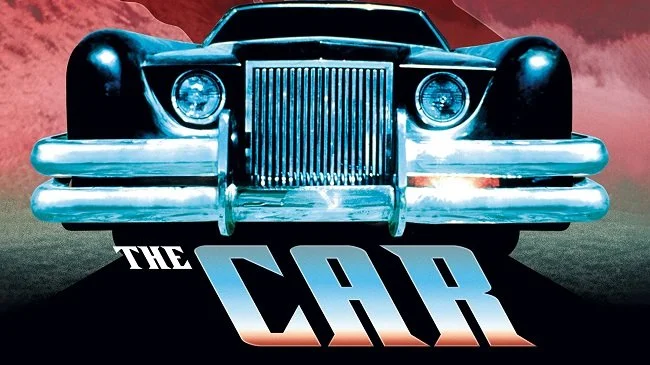
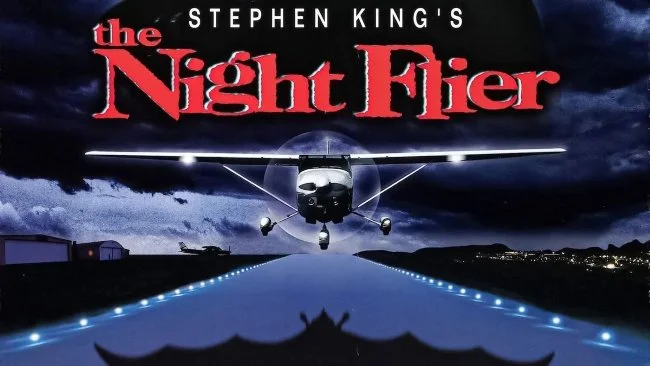
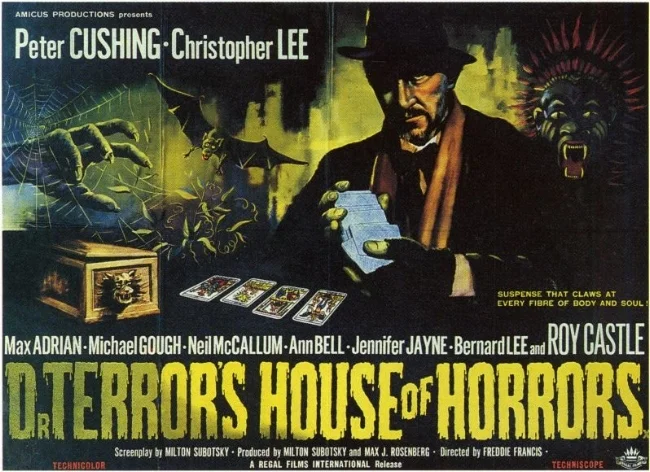

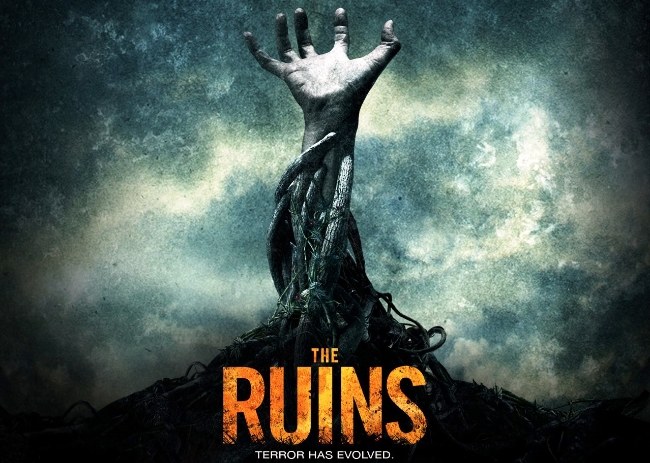
Lesnes Abbey Woods
For the last week the UK has been enjoying some exceptionally warm weather with temperatures reaching 80 degrees Fahrenheit (27 degrees Celsius) and above, here in the South East. For our latest day trip Mrs P and I decided to go somewhere local to reduce driving time and allow us to make an early start. Both of us wanted to achieve our daily step count (10,000 steps which is approximately 5 miles) but be done by mid afternoon before the heat made such activities uncomfortable. So we decided to go to Lesnes Abbey Woods which has a well tended park, gardens and the remains of a 12th century Abbey. It also connects to the Green Chain Walk. We drove there as it is only about twenty minutes away by car. However, we subsequently discovered that a local bus stops right outside the main entrance, so will bear this in mind for future visits.
For the last week the UK has been enjoying some exceptionally warm weather with temperatures reaching 80 degrees Fahrenheit (27 degrees Celsius) and above, here in the South East. For our latest day trip Mrs P and I decided to go somewhere local to reduce driving time and allow us to make an early start. Both of us wanted to achieve our daily step count (10,000 steps which is approximately 5 miles) but be done by mid afternoon before the heat made such activities uncomfortable. So we decided to go to Lesnes Abbey Woods which has a well tended park, gardens and the remains of a 12th century Abbey. It also connects to the Green Chain Walk. We drove there as it is only about twenty minutes away by car. However, we subsequently discovered that a local bus stops right outside the main entrance, so will bear this in mind for future visits.
The Abbey of St Mary and St Thomas the Martyr at Lesnes, to use its original name, was founded in 1178 by Richard de Luci, Chief Justiciar of England. This may have been in penance for the murder of Thomas Becket, in which he was involved. It was one of the first monasteries to be closed after the Dissolution of the Monasteries in 1534 and the monastic buildings were all pulled down. Over time the site was a source of salvaged building materials for the local inhabitant. The estate became farmland before being purchased by London County Council in 1930. The land was then repurposed as a park and the stone outline of the Abbey and outlying buildings restored. In recent years the adjacent woodlands have been added to the park and maintained as part of the Green Chain Walk which runs throughout three London Boroughs.
There are multiple entrances to the park in Abbey Road (not that one) and the surrounding streets. To the West there is a substantial children’s playground and outdoor gym that are well maintained and safe. The Abbey ruins are in the centre of the park, along with a walled ornamental garden. There is also a visitors centre with amenities and a function hall that is available for hire. This venue often hosts events and activities for schools. The garden is another popular site for events such as book readings and performance art. The grounds are superbly maintained and the paths are wide, making them very family and wheelchair friendly. For those who enjoy walking there are multiple trails around the grounds and surrounding woods, of varying length and difficulty. There are wooden sculptures to be found along these paths as well as a prehistoric Tumulus.
I was most surprised to find a park and series of walks of this quality right on my own doorstep. Mrs P and I enjoyed Lesnes Abbey Woods immensely and tried several of the more complex trails that traverse the woods. The ruins are also very interesting and are a somewhat incongruous sight amid the surrounding suburban sprawl. The park and woods look out south over Thamesmead where Kubrick filmed A Clockwork Orange and there are now wind turbines along the Thames estuary. If it hadn’t been for the heat, we’d have stayed longer but the woods were quite humid due to the recent heavy rainfall, despite offering shade from the sun. We will certainly return in the not too distant future and investigate the trails we didn’t complete.



















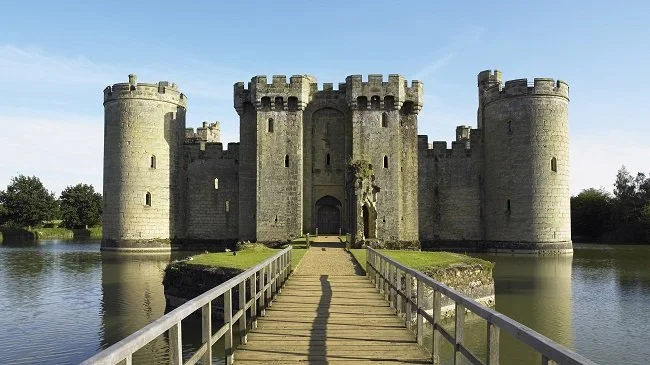


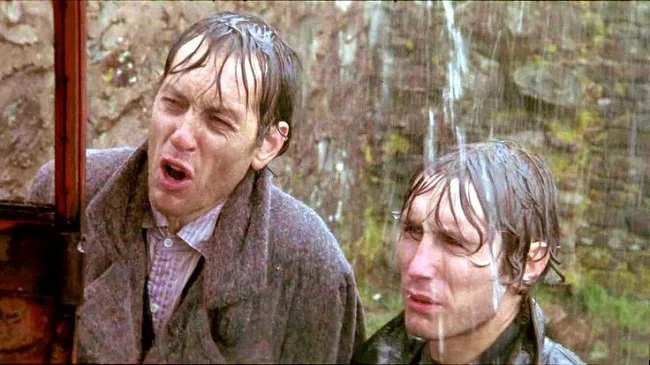












Keeping a Popular Franchise Relevant
I’ve written in the past about “how long should a TV show run for” and it remains a very interesting talking point. An ageing cast and a played out formula are not uncommon problems that can lead to a popular show being cancelled. But some long standing TV dramas have different issues that can blight them. Such as overly complicated lore, a vocal fanbase and a need to stay relevant in a way that some other shows don’t have to worry about. Martin Belam has recently written a very good article about this subject. He cites Doctor Who as a show that is extremely fatigued at present and suggests that maybe taking it off air and having some time out may well be the solution to its “problems”. I agree with him. Not only with regard to Doctor Who but basically any TV or movie franchise that has become ubiquitous and therefore tired as a result.
I’ve written in the past about “how long should a TV show run for” and it remains a very interesting talking point. An ageing cast and a played out formula are not uncommon problems that can lead to a popular show being cancelled. But some long standing TV dramas have different issues that can blight them. Such as overly complicated lore, a vocal fanbase and a need to stay relevant in a way that some other shows don’t have to worry about. Martin Belam has recently written a very good article about this subject. He cites Doctor Who as a show that is extremely fatigued at present and suggests that maybe taking it off air and having some time out may well be the solution to its “problems”. I agree with him. Not only with regard to Doctor Who but basically any TV or movie franchise that has become ubiquitous and therefore tired as a result.
Here are a few select quotes that I think are pertinent. Again these are specifically about Doctor Who but are equally applicable to comparable shows.
“Sometimes it feels like the show is being buried under the weight of its own continuity”.
“The decision to cast a woman as the Doctor has also meant the franchise became a pawn in the culture wars, further souring relationships in the fandom, and making the social media posts of the show’s creators and stars toxic to wade through”.
“It feels as if it is telling an increasingly self-absorbed meta-story about its own run, accompanied by a very vocal online fandom that isn’t quite sure what it wants, but knows it doesn’t want this”.
Doctor Who has been absent from our televisions in the past. It lost its way back in the middle to late eighties and was taken off air when audiences started declining. The sixteen year hiatus certainly made a difference and when it returned in 2005 it had totally reinvented itself and found exactly the right tone for a modern audience. James Bond is another prime example. The franchise has taken time out twice to rethink its direction. GoldenEye (1995) put the franchise back on track after the excesses of the Roger Moore era (The two Dalton movies were a change of tone too quickly). And Casino Royale (2006), possibly the best realisation of the character from the original text, made Bond relevant again after the franchise started losing ground to its competitors. However, taking a break doesn’t always guarantee an improved return. Dare I mention a certain franchise set in a galaxy, far, far away.
It is easy to see why owning a popular franchise is appealing to a TV network or film studio. Once established they become known quantities that need to be managed and curated. Spinoffs offer potential new content and do not pose the same risk as completely new products. You only have to look at Disney + to see a textbook example of such portfolio management. The BBC is not in such a position with Doctor Who. It doesn’t have the finances unless it goes into business partnership with a third party. Such a collaboration could potentially reinvigorate the franchise. But there is also equal scope for it to go the other way. A major US backer would naturally want a product tailored to its domestic market. All things considered, if Doctor Who doesn’t rethink its current direction it is destined to repeat the same mistakes of the late eighties, become a caricature of itself and get cancelled. Perhaps it is better to jump, than be pushed. A short hiatus may well be the solution.