
Night of the Animated Dead (2021)
George A. Romero’s Night of the Living Dead is a true genre milestone that is praised not only by horror film fans but mainstream critics alike. If you are interested in watching an intelligent, well researched and entertaining documentary about the film’s provenance and cultural impact then I thoroughly recommend Birth of the Living Dead (2013) by Rob Kuhn. It tells you pretty much all you need to know about why this classic film is so important. As for Night of the Living Dead itself, it still holds up well after 53 years. It is the immediacy and relatability of the premise and overall story that still makes the film relevant. The zombies are purely a “MacGuffin” and the real focus of the plot is how people behave under pressure in life threatening situations. It’s a film about how we can react to the same situation differently and how cultural baggage and the need for people to be “right”, hinders co-operation and thwarts progress.
The legacy of Night of the Living Dead is far reaching. It turned zombies from a minor horror subset into an entire genre of their own and propagated the idea of the “zombie apocalypse”. A plot device that can be used to scrutinise and explore all the various facets of the human condition or to provide an endless litany of gore and body horror. The central premise of Romero’s film lends itself to reinvention and interpretation. It has already been officially “remade” in 1990 which added an interesting feminist angle to the story. And there have been numerous unofficial remakes and variations on the same theme from all over the globe. All add something to the basics of the story. Which brings me on to Night of the Animated Dead (2021). The title clearly sets out the film’s pitch. This is an animated feature film remake which closely follows the narrative structure of the original.
According to director Jason Axxin “This is a remake of the original movie. It’s essentially a way to make a classic more accessible to modern audiences. This is in color and there’s a lot more gore and violence. If you were ever hesitant to watch the original film, this is the version to see. It’s a fast-paced roller coaster ride of violence”. Frankly I find this statement and its premise somewhat spurious. Is Night of the Living Dead really outside of a modern audience's frame of reference? If so, that doesn’t say a lot for the average cinema goer. However, if we are to take Axxin’s comments in good faith, the only credible comparison I can come up with is that this version of Night of the Living Dead is intended to be the cinematic equivalent of a Reader’s Digest Condensed Books. A streamlined and somewhat lurid distillation of Romero’s vision. It is also devoid of any character and is possibly the most redundant film I’ve seen since Gus Van Sant’s remake of Psycho in 1998.
Despite having a competent voice cast, featuring Dulé Hill, Katharine Isabelle, Josh Duhamel, Nancy Travis, James Roday Rodriguez, Jimmi Simpson and Will Sasso, the animation style lacks any distinction or innovation. Classic scenes are lovingly recreated but the overall design slavishly adheres to that of the 1968 film and therefore fails to add anything new and say anything different. The minimalist style doesn’t really bring the story or themes into sharp relief and the character designs are somewhat lacking. The screenplay is credited to John A. Russo who wrote the original, as it is a verbatim summary of the 1968 version. The score by Nima Fakhrara is used sparingly and is evocative of the library music that Romero used. As for the “gore” it lacks any real impact due to its rather crude realisation. It comes off as a rather unnecessary embellishment.
I appreciate that there were probably budgetary restrictions that had an impact on the production. Setting aside such considerations, Night of the Animated Dead provides a simplified, less nuanced version of Night of the Living Dead. It hits all the essential beats of Romero’s classic but offers nothing beyond that other than its own inherent novelty. The animation is functional but far from accomplished. That said, Night of the Animated Dead is not an utter disaster. It manages to hold your interest. However, a film being mildly engaging due to its pointlessness is not really a great selling point. If you are a diehard horror fan who is curious to see an ill conceived project, then by all means watch Night of the Animated Dead. But I cannot recommend it in any way as a substitute to the original. At best it is just a minor footnote that serves to highlight the merits of the 1968 version and the talent of George A. Romero.
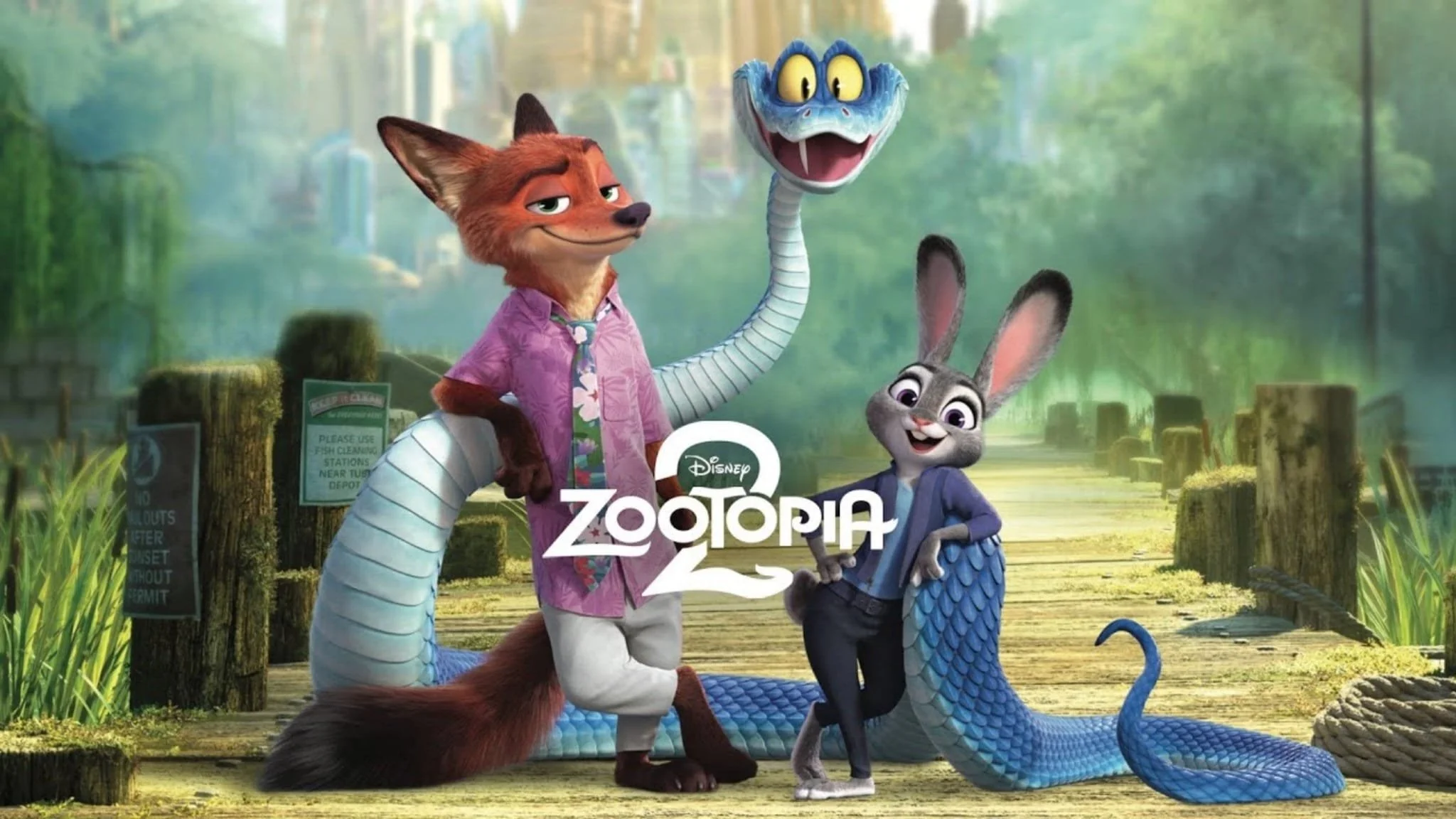
It is not unusual for Disney to change film titles when marketing them outside of the US. In 2016 they renamed the animated feature film Zootopia to Zootropolis in the UK and Europe to avoid trademark conflicts with other existing businesses. For example there is a Danish zoo which already holds the “Zootopia” name. Similarly, in Germany there is a children’s book which caused copyright conflict, which led to the film being released under the title Zoomania. Such changes, although practical for legal reasons, can sometimes cause a degree of confusion. Especially as there are numerous, low budget productions companies that go out of their way to produce similarly titled “mockbusters” whenever there are big, tentpole, releases. So for clarity, Zootopia 2 has been released in the UK as Zootropolis 2.

With the proliferation of lore driven, franchise movies in recent years, a culture of analysis has developed online. Hence you will find a lot of YouTube videos that claim to “explain” the ending of specific films or provide clarification of their respective themes and subtexts. While critical debate and discussion about cinema is welcome, I think it is a mistake to always look for a specific meaning in cinema. Even clearly narrative films can be ambiguous. Art is ultimately a very subjective field of expression open to personal interpretation. Which brings me neatly to Flow, an animated feature film which tells a compelling story but raises more questions than it answers. It leaves the viewer to fill in a lot of the blanks themselves and the film is all the better for this approach. Flow is an extraordinary example of animation and a fascinating example of innovative, thought provoking filmmaking. Quite the rarity these days.
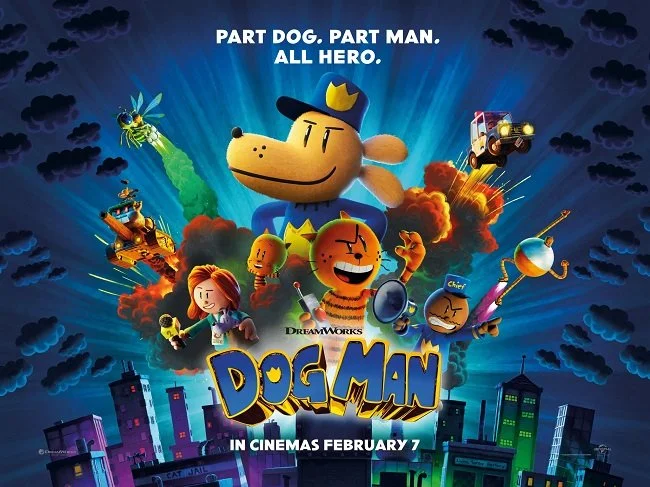
For those unfamiliar with Dav Pilkey’s graphic novel character Dog Man, he’s a half-dog, half-human police officer. This comic chimaera is the result of a surgical procedure carried out after Officer Knight and his trusty dog Greg are blown up while defusing a bomb. Greg’s head is grafted to Officer Knight's body. Post surgery, Dog Man (Peter Hastings) remains an officer of the law and continues to track his nemesis, Petey (Pete Davidson), an orange cat and criminal genius. However, despite positive media coverage and a high arrest rate, Dog Man incurs the ire of his Chief (Lil Rel Howery) who is jealous of his success. Furthermore, Dog Man becomes depressed due to the loss of his owner, girlfriend and former home. Meanwhile, Petey decides to clone himself in an attempt to find a worthy assistant and also plots to resurrect a deceased super villain, Flippy, who is an evil telekinetic fish.

I have always found it curious that there haven't been more feature films set in Middle-earth, after the success of Peter Jackson’s The Lord of the Rings trilogy. However, a little research shows a very complex set of rights regarding Tolkien’s work, with different material being controlled and administered by different bodies. Hence, the market has not been saturated with officially licensed material. Thus, when The Lord of the Rings: The War of the Rohirrim was announced to be in production, it aroused a great deal of curiosity both among fans and those with an interest in the wider film industry. To base an entire feature film on something that is effectively just a few paragraphs in the appendices of The Lord of the Rings is quite intriguing. The producers claimed it afforded them greater artistic freedom not to be constrained by an excess of lore. Industry pundits theorised that the film was being produced solely to ensure that wider rights were retained.
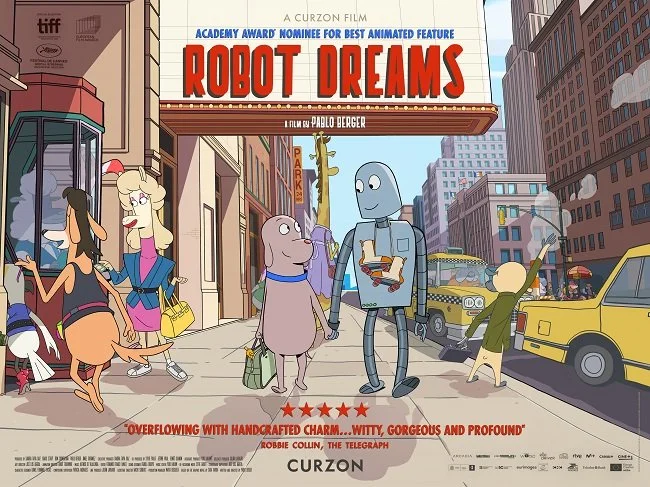
Whenever I feel that mainstream filmmaking is becoming increasingly bland and I grow despondent with it, along comes an animated film to prove that there is still greatness and art to be found through the medium of cinema. Robot Dreams begins as a tale of loneliness and then quickly becomes a eulogy to friendship and participating in life. The story then turns things on its head as it explores loss and finally concludes with a profoundly beautiful resolution, as it muses upon accepting change and new friends. Robot Dreams succeeds where so many other films fail by being honest, candid and sincere. Hence the emotions expressed by what is essentially a simple story are genuine and palpable. The film’s lack of dialogue is a blessing, with music doing a great deal of the narrative heavy lifting. This allows audiences to focus on the main characters without unnecessary distraction. The animation is uncomplicated but very specific in its style and setting. It utterly suits the tale being told.
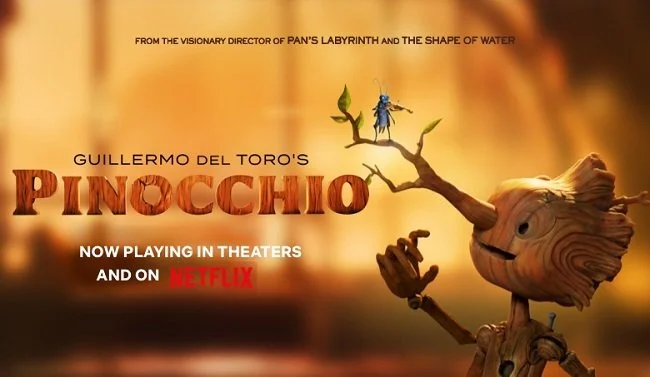
Guillermo del Toro's Pinocchio is a bold and inventive take on Carlo Collodi's classic story of the puppet that aspires to be a “real boy”. As you would expect from the director, it is a far cry from Disney’s 1940 version, taking a more bleak and sinister tone. Despite songs and exuberant set pieces, Guillermo del Toro's Pinocchio is an exploration of grief, death and even fascism. The screenplay by Guillermo del Toro and Patrick McHale also tackles the complexities of the relationship between parent and child. It is a remarkable example of stop motion animation and is visually very striking. However, it is a somewhat niche market adaptation and is not exactly easily accessible to children or the furiously hard of thinking. It comes as no surprise that this cinematic venture was green lit by Netflix, which appears to be the new home of the experimental, rather than a mainstream studio.

George A. Romero’s Night of the Living Dead is a true genre milestone that is praised not only by horror film fans but mainstream critics alike. If you are interested in watching an intelligent, well researched and entertaining documentary about the film’s provenance and cultural impact then I thoroughly recommend Birth of the Living Dead (2013) by Rob Kuhn. It tells you pretty much all you need to know about why this classic film is so important. As for Night of the Living Dead itself, it still holds up well after 53 years. It is the immediacy and relatability of the premise and overall story that still makes the film relevant. The zombies are purely a “MacGuffin” and the real focus of the plot is how people behave under pressure in life threatening situations. It’s a film about how we can react to the same situation differently and how cultural baggage and the need for people to be “right”, hinders co-operation and thwarts progress.

It would appear that there is a Minions 2, although it’s release around the world has been staggered due to the pandemic. So I thought I’d revisit the original movie for a second viewing. Spin-off movies can be a risky venture. Side characters may work well in a supporting role within a successful movie but may not necessarily find an audience in their own vehicle. However this is most definitely not the case with Minions. The movie is ninety one minutes of exquisitely crafted cinema. From the opening Universal fanfare (which the Minions sing-a-long to) to the post credit rendition of Revolution, the film is consistently funny and perfectly paced. The production design and overall aesthetic is beautifully realised and the central characters of Kevin, Stuart and Bob are thoroughly engaging. Actually, forget "engaging ''. They are genuinely loveable. Directors Pierre Coffin and Kyle Balda barely put a foot wrong.
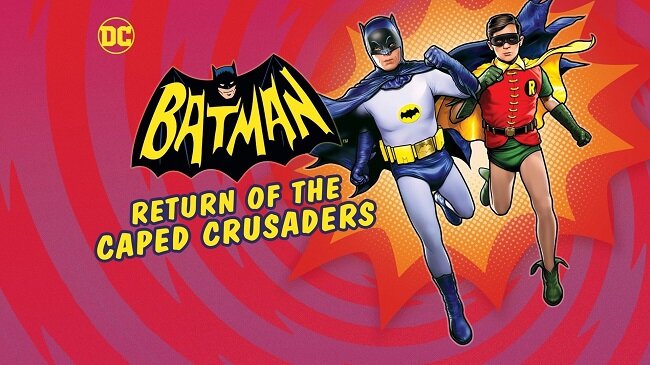
Although I have a passing interest in the franchise per se, I'm not a consummate fan of all things Batman. Hence a lot of content passes me by or I catch up with it years later. So it came as a great surprise when I discovered Batman: Return of the Caped Crusaders; a 2016 release in the ever growing catalogue of DC themed direct to DVD animated films. The movie is a de facto continuation of the sixties TV series, with the original actors reprising their roles (where possible). The cast includes Adam West as Batman, Burt Ward as Robin and Julie Newmar as Catwoman. Due to the death of actors Cesar Romero, Burgess Meredith and Frank Gorshin the voices for The Joker, The Penguin and The Riddler have been provided by Jeff Bergman, William Salyers and Wally Wingert. All of whom do their best to recreate the tone and idiom of the original artists.
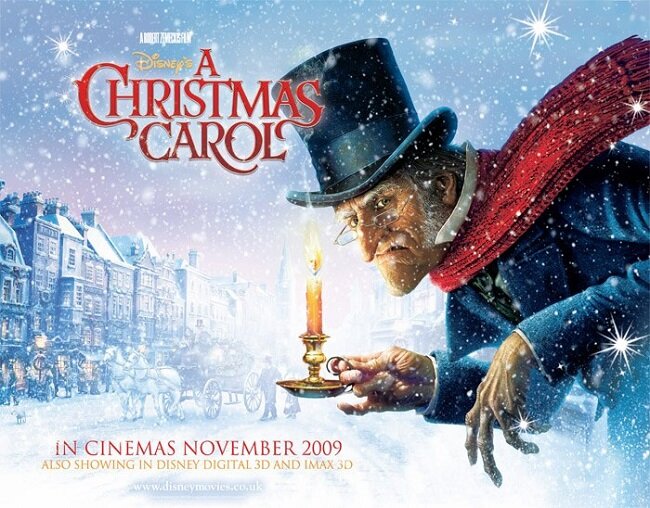
There are three key elements to Disney’s 2009 3D computer-animated adaptation of A Christmas Carol. Firstly, director Robert Zemeckis clearly seeks authenticity and hence includes a lot of original dialogue from the novel, as well as a bleaker depiction of the period. Secondly, he uses the digital production tools at his disposal to create sweeping vistas of 19th century London as well as highly stylised caricatures of the central characters. Thirdly, as this is a Disney production, there is an occasional lapse visual humour and levity that is required by their business model. Sadly all of these aspects of the production make for strange bedfellows that are at odds with each other. The result is a visually sumptuous film that loses its way as it lurches between bleak drama, odd humour and CGI driven spectacle.

Upon its theatrical release, Mickey’s Christmas Carol was the first animated film to star Mickey Mouse for thirty years. It was therefore accompanied with a large amount of hype and a wave of nostalgia. The US marketing stated “He’s Back. Mickey Mouse in his first new motion picture” which was somewhat misleading, as the actual animated film was just 26 minutes long. It was shown theatrically along with a re-release of The Rescuers in the US and The Jungle Book in the UK and other territories, in late December 1983. And despite his name being in the title, Mickey doesn’t have a lot of screen time as he plays Bob Cratchit. This is very much a vehicle for Scrooge McDuck as Ebenezer Scrooge. Overall, it’s a succinct distillation of the plot of Dickens’ A Christmas Carol, filled with cameo appearances by classic Disney characters. Naturally it is replete with the humour and sentiment that is inherent in the process known colloquially as Disneyfication. However, does this mitigate the book’s message?

At first glance, there is not much to distinguish this low budget production by Burbank Films Australia, from any of the other adaptations that were ubiquitous during the seventies and eighties. However, attentive viewers will discover a few details that lift this particular version above the mundane. Firstly, this is the second animated adaptation to feature the voice acting of Ron Haddrick as Ebenezer Scrooge. He had previously voiced the character in Air Programs International's shorter version of A Christmas Carol in 1969, thirteen years earlier. Secondly, despite the modest production values, there are a few additional scenes taken from the source text by Dickens, that don’t usually make it most film and TV adaptations. It is these minor embellishments that compensate for the simplicity of the animation (during the opening scene, some background characters do not move).
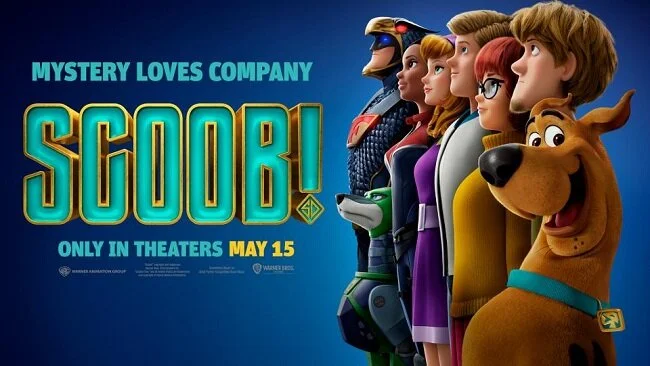
Scoob! is one of several movies that was slated for a theatrical release this summer but ended up being premiering on VOD instead due to the global pandemic. As a result, it is difficult to ascertain exactly how successful this animated film has been. A lot of trade newspapers have indicated that rentals have been high and that the film has proven more popular than Tom Hardy’s new movie Capone. Some industry sources have estimated a gross of $100,000,000 in a two week period. I suspect that the current lockdown has provided a market of children craving new entertainment and parents happy to pay for 90 minutes of peace and quiet. Hence Scoob! appears to have been in the right place at the right time. Whether that popular success would have happened if the movie had been released theatrically is another matter.
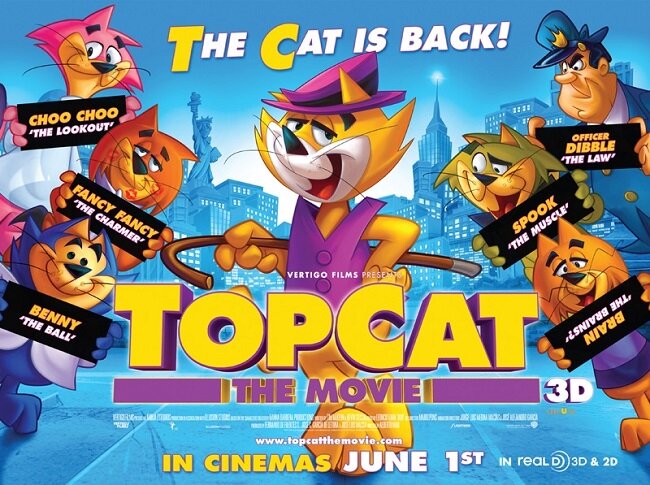
The first I found out about Top Cat: The Movie was when I received an email from an events company that was handling promotional screenings, prior to the film’s UK release in the summer of 2012. For some reason I missed the usual pre-production publicity that comes with the rebooting of a popular franchise. One of the benefits of this was that I didn't have time to fret or fuss about this reimagining of an integral part of my childhood. I must admit I was flummoxed that this 50-year-old franchise was subject to a makeover and was even more discombobulated to find out that the original show was a massive hit in Mexico and had garnered a huge cult following. This was why Warner Bros. subcontracted this production to Mexico's Anima and Argentina's Illusion studios. Subsequently Don Gato y Su Pandilla (Top Cat and His Gang) opened on 16th September 2011 in Mexico to weekend box office returns of 41m pesos ($2.9m). It subsequently became the highest-grossing independent animated films released in the United States that year.

It’s interesting that so many adaptations of Charles Dickens’ iconic seasonal story are brought to us via the medium of animation. Naturally, this is a far more economical means of depicting the story with its period detail and supernatural elements, compared to a live action production. However, for an animated version of A Christmas Carol to work successfully, it needs three things. An innovative and striking production design, robust voice acting and a screenplay that keeps the core themes while offering significance difference compared to prior adaptations. You’ll find all of these elements in Richard Williams’ 1971 animated short. Sadly they’re conspicuously absent from the 1997 version. Despite the presence such talents as Tim Curry, Ed Asner and Whoopi Goldberg, this is a distinctly arbitrary animated film. Considering that the screenplay was written by Jymn Magon who has years of experience working for Disney, I had hoped this would be better endeavour.
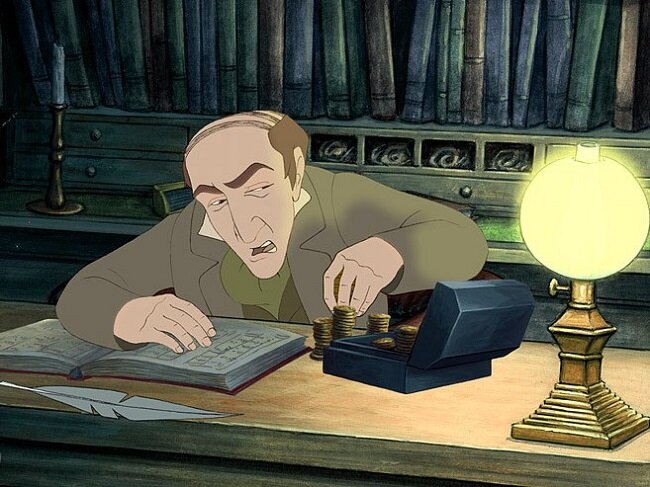
There’s a degree of hubris implicit in such a definitive title. At the very least the inference is that this is a notable adaptation of Charles Dickens’ classic book. And at first glance, it is perfectly reasonable to assume just that. Jimmy Murakami was an animator of note with such unique movies as The Snowman and When the Wind Blows to his credit. Hence it is reasonable to expect a similar quirky and experimental treatment of this well know yuletide story. However, what audiences actually get is a rather bold adaptation that substantially embellishes upon the established narrative. Veering between sinister and borderline psychedelic imagery, this is a very inconsistent version that tries to be too many things at once. Just as you think you’ve got a handle on the film approach it takes an abrupt turn in the opposite direction. Comedy, drama and even power ballads are thrown into the mix. Sadly, all these elements do not hang well together.

The Hobbit (1977) is a curious beast. It’s a made for television animated film, which despite its budgetary constraints, strives to comprehensively adapted one of the most beloved children’s books of the last century. I remember reading an article about this television adaptation of The Hobbit, in Starburst Magazine during the late seventies. There were rumours that this Rankin/Bass production, which had already premièred on US network television, would gain a European cinema release. This was presumably to cash in on the success of Ralph Bakshi's animated feature film adaptation of The Lord of The Rings. However, this never happened to my knowledge. In fact, The Hobbit was not commercially available in the UK until 2001, when Warner Bros. released it on DVD to capitalise on the success of Peter Jackson’s The Fellowship of the Ring.
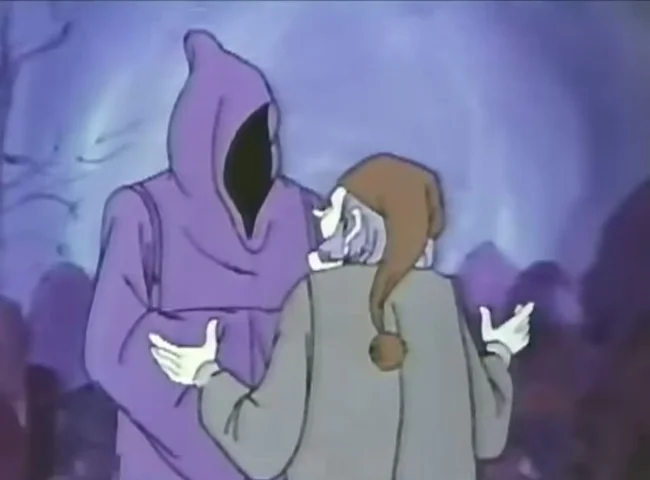
Over the last few years I’ve reviewed several adaptations of Charles Dickens seasonal story A Christmas Carol. As I stated previously one of the stories greatest strength is that it lends itself perfectly to multiple interpretations. I recently had the good fortune to rediscover the animated version from 1969 by Air Programs International. I remember seeing this animated short as a child but could not recollect sufficient details to allow me to track it down via the IMDB. Then by complete chance, I stumbled across it again on You Tube while doing some research.
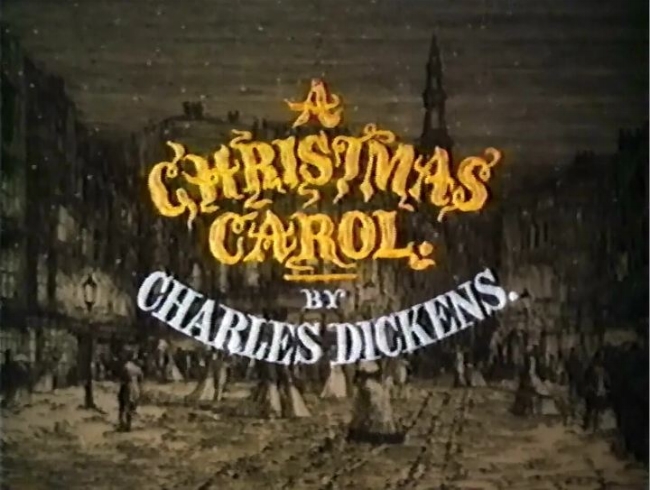
I have a great deal of affection for Charles Dickens' A Christmas Carol, not only because it’s a fine piece of literature but because it lends itself so well to dramatisation. I therefore have a keen interests in all the respective adaptation, of which there are many. Over the years there has been a trend to focus excessively on the sentimental aspect of the plot, resulting in a rather nauseating Disneyfication of the story. Although the redemption of the main protagonist is central to the narrative, the poverty and deprivations of the time are still very pertinent themes, especially in today's economic climate. I was therefore very gratified to rediscover the 1971 version of Charles Dickens' classic story which was originally shown on ABC. This short 25 minute animated feature realises the story superbly, capturing the tone of the book and accurately reflecting the darker aspects. Remember that A Christmas Carol is fundamentally a ghost story.
 Roger Edwards
I recently found a DVD boxset of Return to the Planet of the Apes in a charity shop which I bought for £4, which is a ridiculously cheap price. I considered it an interesting find because it was a Region 1, US copy. However, that is not so unusual these days as most DVD players are now region free and Amazon (UK) sells media from all over the world. As for the show in question, I vaguely remember Return to the Planet of the Apes being shown on UK network TV when I was a child, probably circa 1976. Back then it would usually take a year or so before US shows made it onto UK television. From a commercial perspective, the entire Planet of the Apes franchise was beginning to run out of steam. I was 8 years old at the time so had missed most of the film releases. However, I enjoyed the live action TV show hence an animated follow up had obvious appeal to a child of my age.