
Is the Gaming Community to Blame?
The ongoing debacle about Blizzard Entertainment naturally raises the question as to what part the gaming community has contributed to this sorry state of affairs. There is a school of thought that gamers who blithely accept the status quo and never speak out about sexism, racism and casual misogyny within the games they play, the companies that create them and the wider community are part of the problem. They are effectively "facilitators" and are "complicit" with the perpetuation of these problems. Logically speaking, such observations are correct in a notional capacity. However, the reality of the situation is far more complex and nuanced. For example there are vast swathes of gamers who do not follow any associated news and therefore will be oblivious to the iniquities of Blizzard Entertainment. The same way as they are ignorant of the business practises of their car manufacturer or telecoms provider.
The ongoing debacle about Blizzard Entertainment naturally raises the question as to what part the gaming community has contributed to this sorry state of affairs. There is a school of thought that gamers who blithely accept the status quo and never speak out about sexism, racism and casual misogyny within the games they play, the companies that create them and the wider community are part of the problem. They are effectively "facilitators" and are "complicit" with the perpetuation of these problems. Logically speaking, such observations are correct in a notional capacity. However, the reality of the situation is far more complex and nuanced. For example there are vast swathes of gamers who do not follow any associated news and therefore will be oblivious to the iniquities of Blizzard Entertainment. The same way as they are ignorant of the business practises of their car manufacturer or telecoms provider.
Many gamers play the games they enjoy as a means to decompress from the pressure of modern life and to recharge their emotional batteries. A few hours spent playing an MMO or MOBA is a way to forget, for a while at least, about global warming, political shenanigans and the like. Therefore some players are not really disposed toward having to parse their gaming activities for its social and moral rectitude. It’s something we all do to a greater or lesser degree. Cognitive dissonance is virtually the average person's default position. We like cheap clothes but we don’t like to think we are actively participating in the exploitation of labour in developing countries. We voraciously consume factory farmed meat, yet we purposely distance ourselves from the realities of its production. Save the planet? Absolutely, I’m onboard for that. As long as I can still have my cheap flights. This is how people work and why some gamers want to stay below the parapet and off the radar.
There is an inherent duality in being part of the gaming community. There are times when we as gamers may feel proud to identify as such. And then there are other occasions when we look upon the actions and decorum of certain quarters with a sense of shame. In the past the common refrain you’d hear regarding racism, sexism and other forms of marginalisation would be “this is not representative of our community”. Sadly, post “Gamergate”, it is now very much representative of a sizable part of the community and cannot be easily dismissed as fringe malcontents and freelance trolls. I believe that the game community, just like social and political discourse, is pretty much split down the middle upon clear partisan lines. Exactly the same fault lines appear in most social groups and they are usually based around equality and access to power. The divide is between those who have the advantage and wish to maintain it for their benefit and those who wish to level the playing field.
Video games may well be far more inclusion nowadays but that is only a fairly recent development. Furthermore, such change has not been driven by a strong sense of morality but more by a financial imperative. But if you look at the way video games were created and marketed thirty plus years ago, it was very different. Hence a generation of boys grew up believing that games were very much their exclusive province. That combined with other cultural assumptions about gender roles, employment and social hierarchies certainly helps explain where we find ourselves today. Furthermore, because we live in a more socially conscious world it is now harder to try and remain neutral regarding who to address issues such as that currently blighting Blizzard Entertainment. Yet because of the clear divide in all opinions now there isn’t necessarily a consensus, although I do think there is often a clear “right” answer. And so the gaming community becomes a battlefield. Just another in the ongoing culture war.
So when the question is mooted as to whether the players are culpable to any degree for the ongoing Blizzard Entertainment debacle or indeed the wider failings of the gaming community, I no longer think we say it’s a gray area. As players, or more accurately consumers, we support in large numbers all of the practises and policies that we also continuously complain about. Microtransactions, live services, hype culture, pre-orders etc. We also enable those who we revere by treating them like rock gods. If you tell someone that they’re special and can do no wrong, don’t be surprised when they go along with it, at the expense of others. And then there’s the little, yet important things that we can sometimes let slide. Such as when someone spouts vile crap in world chat. Don’t just block them or quit that specific channel. Call them out or file a report on them. Remember “the only thing necessary for the triumph of evil is for good men to do nothing” as Edmund Burke succinctly stated.
Now you may argue that you personally don’t buy pre-orders, spend money on in-game purchases and that you eschew “bro” gaming culture. Good for you. But I think that we’ve reached the point where just not adding another stool to the ever growing lake of faecal matter isn’t the get out of jail card that it used to be. The status quo is demonstrably bad for many people and we cannot just leave it as it is. My biggest concern about the current situation with Blizzard is that the company will offer up some sacrificial lambs, mouth some vague commitments to change and simply try to ride out the storm, only to return to “business as usual” within the shortest time possible. So I believe it is time for everyone who finds the situation unacceptable to make their voice heard. You don’t have to man the barricades. Simply writing a blog post, saying something in your live stream or uninstalling battle.net sends a message. If we want our community back then we have to roll up our sleeves and pitch in.

I was playing Battlefield 6 recently and was experimenting with the mortar. If you stick with it and take some time to become familiar with its foibles, it can be an effective weapon. It can suppress the enemy, destroy equipment and provide useful cover for your own team. I remember thinking “I wonder if artillery could sustain a game on its own”. Artillery is an interesting feature in Hell Let Loose, although it is a little more complex in its game mechanics. I believe artillery is also available in Wardogs. I therefore spent a while looking online to see if there was a dedicated artillery simulator available or at least a game where it was a key feature. There nearest thing I found was Iron Nest, a dieselpunk heavy artillery game which looks interesting but isn’t quite what I seek. So I parked this idea and moved. Tonight, while perusing YouTube, I stumble across a teaser trailer for a game called Flak Simulator, currently under development by Horseman Interactive. It appears to be exactly what I am looking for.
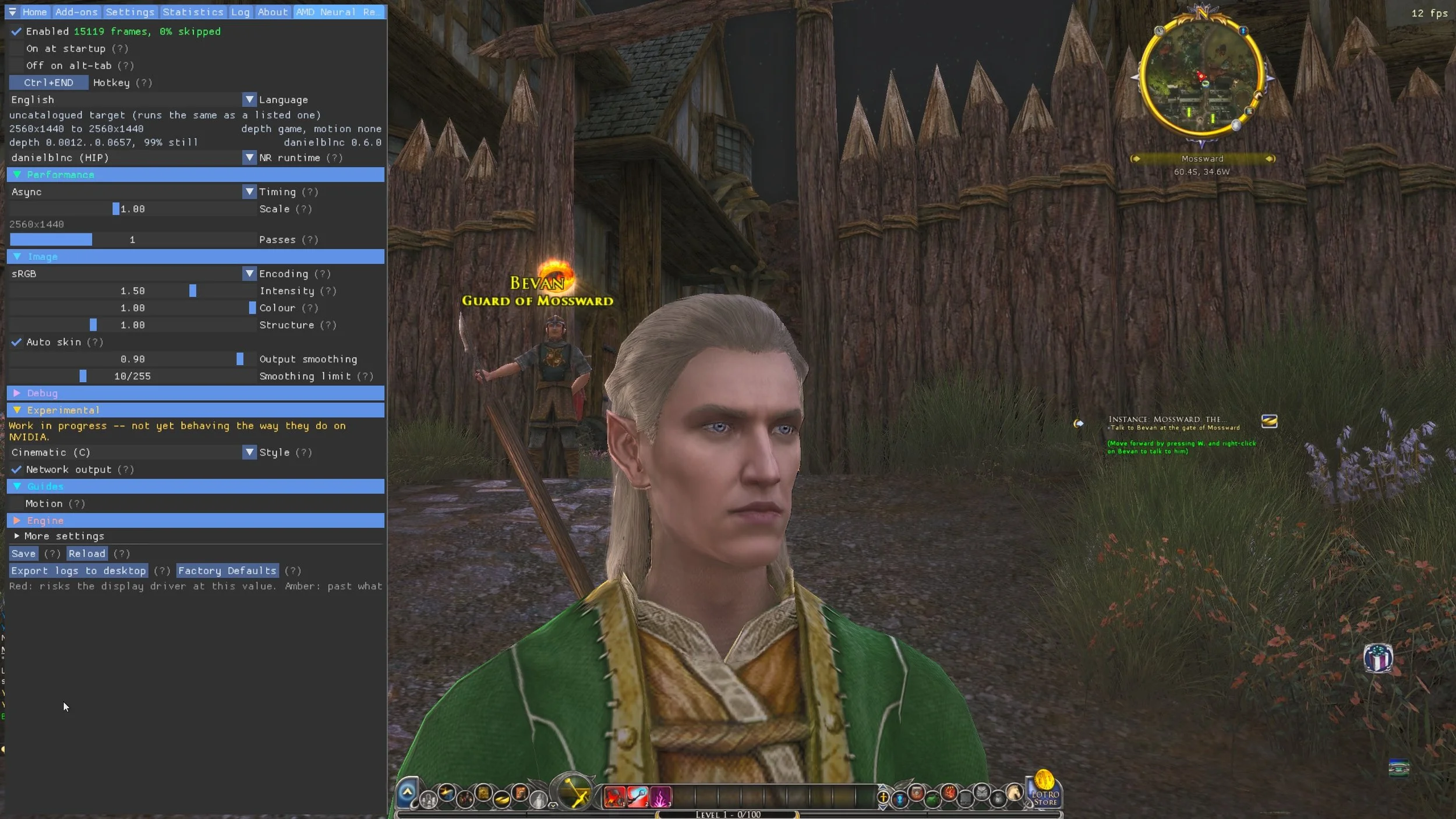
I recently tried to use DLSS 5 Manager with the MMORPG, The Lord of the Rings Online. Unfortunately, things didn’t work out. Today I undertook a similar experiment with AMD Neural Rendering, which is a broadly comparable product. Both utilities use 3D-Guided Neural Rendering, an AI technology that alters how lighting, reflections, and textures look in a game. Instead of just upscaling the image like older versions, DLSS 5 uses an AI network to instantly "re-render" lighting and material responses over the game's layout, achieving photorealistic details that would normally negatively impact a graphics card's performance. Or to put it in less fancy terms, the game graphics are enhanced and modified, although it is highly subjective as to whether the end results are an improvement. However, as a game such as LOTRO is unlikely to ever receive a major graphical overhaul, tools such as these are the nearest players will get to revised graphics.
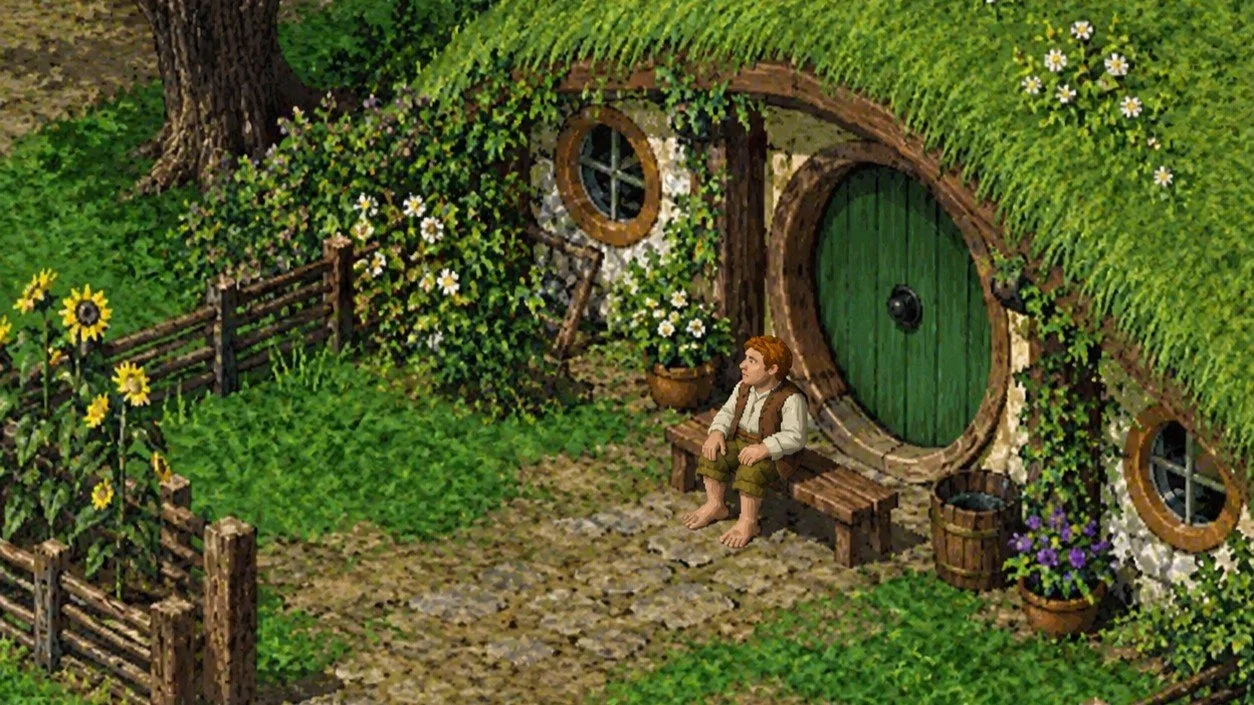
The core game code and engine for the MMORPG, The Lord of the Rings Online, is about 24 years old. LOTRO began originally as Middle-earth Online, developed by Sierra On-Line in 1998. Turbine took over full development of the project in 2003/2004 when their parent company, Vivendi Universal Games, acquired Sierra. The content that had already been developed by Sierra was abandoned and Turbine created a new game using structural elements such as the UI and game engine from their previous release Asheron’s Call 2 from 2002. The Lord of the Rings Online: Shadows of Angmar was officially released in April 2007. Hence, the active public release code is 19 years old. Despite continuous expansion and updates, along with a recent migration to 64-bit architecture, the foundations of LOTRO retains a nearly twenty year old legacy framework. This frequently contributes to modern technical hurdles and engine constraints.
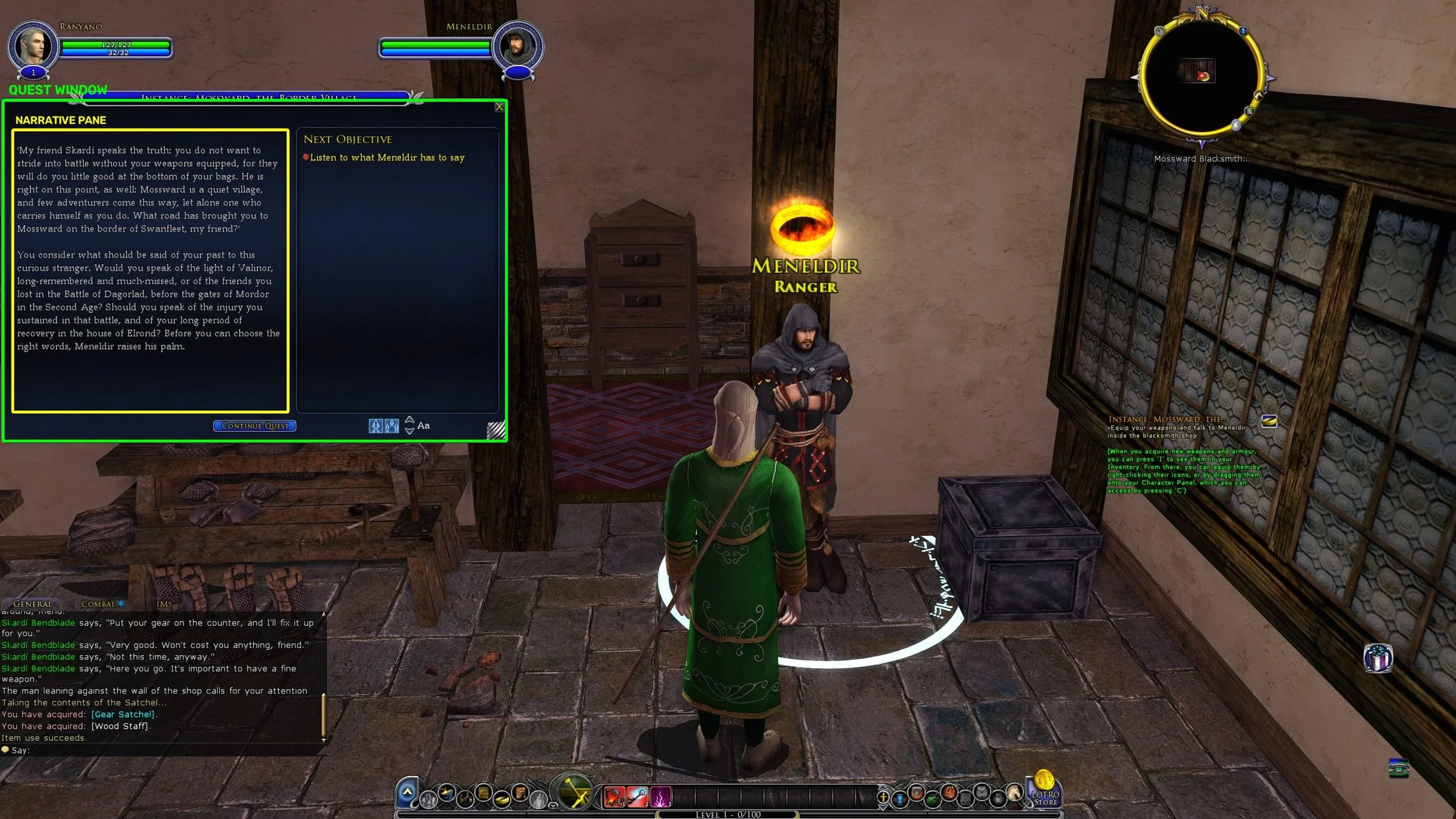
A few years ago, there was a fan created project to provide voice narration of NPC dialogue in the MMORPG, The Lord of the Rings Online. This mainly involved capturing the text in the quest dialogue windows and then sending it to OCR software, before using a text-to-speech program to read it. LOTROVoice as it was known, broadly worked but the creator stopped developing it as it proved troublesome to maintain. However, I recently discovered Khazad Voice TTS which is a separate project that does pretty much the same. I went so far as to install this “immersive AI narrator for LOTRO” after seeing a YouTube video of it being used successfully. Sadly I ran into issues configuring Khazad Voice TTS, because I have two monitors and LOTRO runs on the secondary (by my choice) and not the primary. I couldn’t “lasso” the dialogue windows in LOTRO during the calibration set up, which effectively prevented me from completing the process.
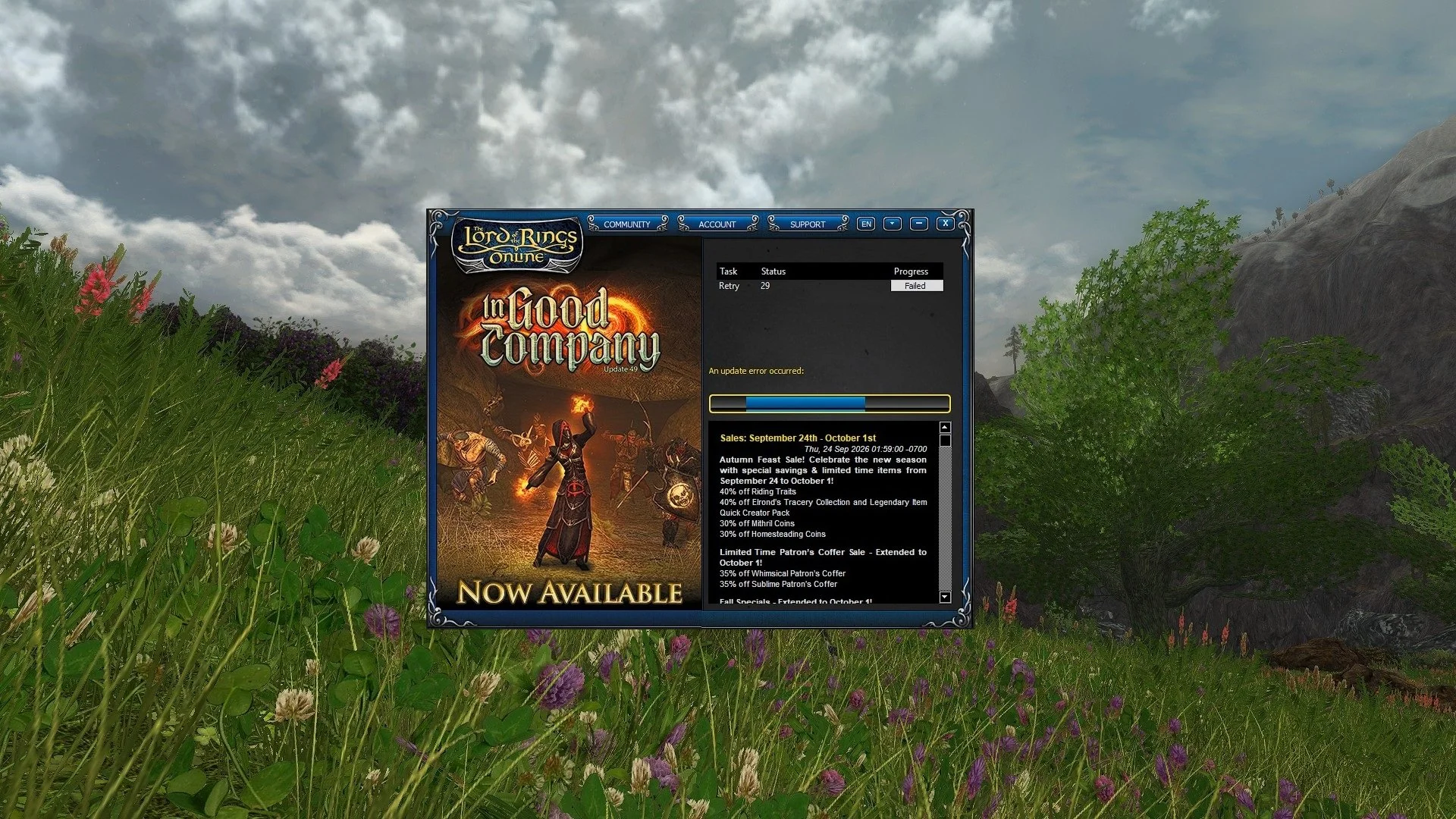
Throughout yesterday and early today, there was an issue logging in to the MMORPG, The Lord of the Rings Online. Upon starting the game launcher, it would attempt to connect to the patch server to download the latest game update. This process would start but then subsequently stall at 33%. The launcher would then attempt to reconnect to the patch server every 60 seconds but could not make any further progress. Some players found that if they left it long enough, it would eventually complete the download and the launcher then progress to the next screen where they could input their username and password. However, for the majority of LOTRO players the problem would simply persists and the launcher would be stuck in a loop. Some players attempted to reinstall the game or use the repair data facility in the launcher but neither of these proved to be successful workarounds. The patch sever needed to be bypassed to resolve the issue.
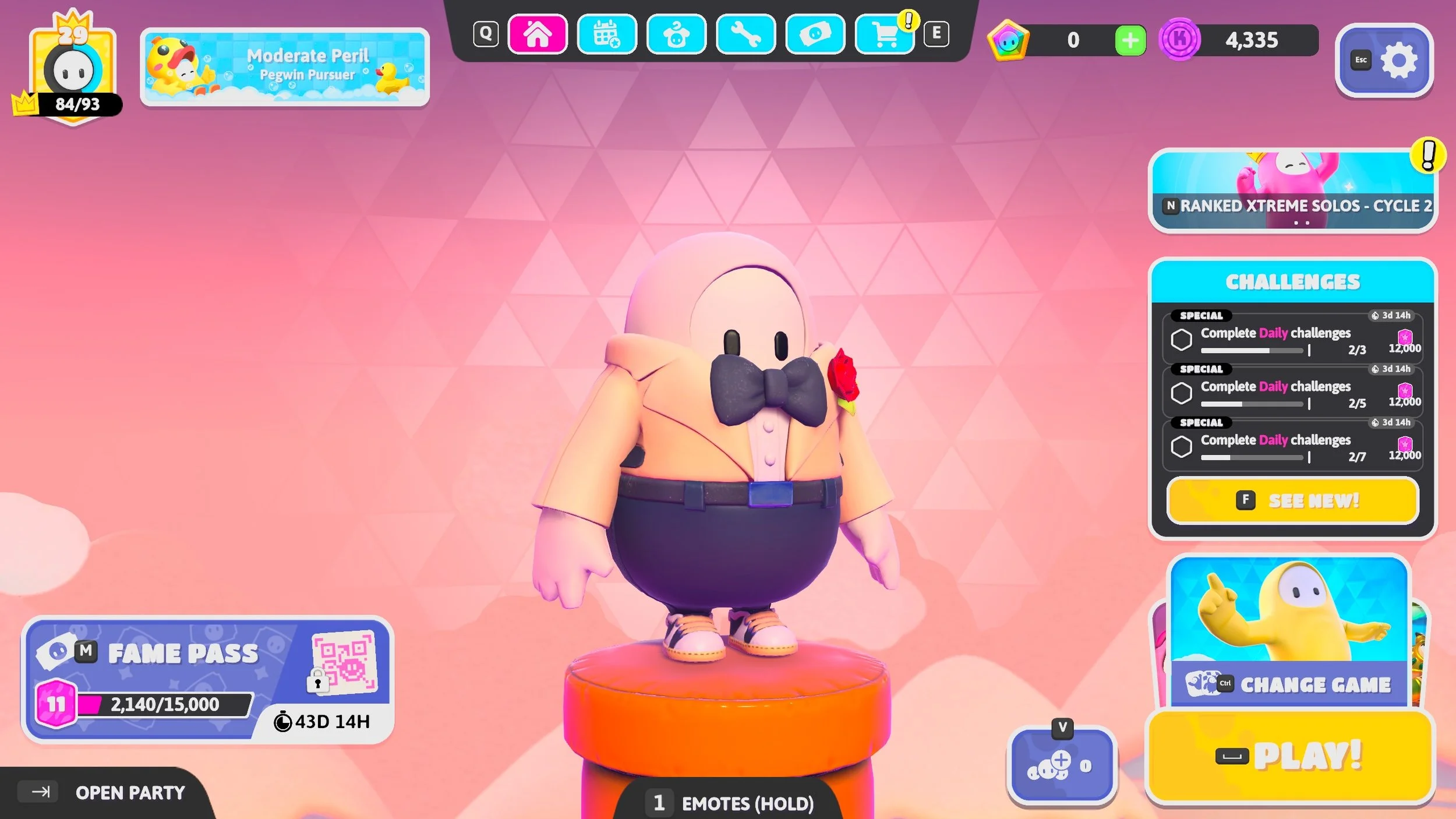
I’ve been playing Fall Guys since its launch in early 2020, during the start of the pandemic. It is a fun, family friendly multiplayer game which is has proven popular with my grandchildren. Despite the game’s acquisition by Epic, it has maintained a sufficient level of popularity that has seen it ported to all major gaming platforms. Fall Guys is free to play but like most multiplayer games, there is a season pass and an in-game store. However, these monetised aspects are not essential to enjoy the game and the overall marketing of emotes and skins is nowhere near as invasive as it is in Roblox. In fact many of the players I see while in-game have default skins, indicating a regular casual player base. However, although game seems to be maintaining its popularity, it has several bugs that appear to be be persistent. Bugs that the developers claim have been resolved. Some can be addressed by players. Other at present cannot.

I find the concept of in-game radio stations fascinating. They’re an enjoyable aspect of open world video games and I have discovered several artists this way. They’re certainly a big deal as far as Rockstar Games are concerned, because the music selected for GTA VI is another important facet of the overall marketing campaign. So far, between two trailers and the sprawling extended look on Netflix, it has been determined that Tom Petty, the Pointer Sisters, Sexyy Red, Depeche Mode, Phil Collins, Birdman, Lil Wayne and the Bellamy Brothers are all part of the game soundtrack. That’s a very eclectic selection so far. Furthermore, there will be a 34 track album released on physical media (vinyl and CD) in conjunction with Atlantic Records.

Two years ago I wrote a post about fine tuning your graphics in the MMORPG The Lord of the Rings Online. Apart from installing ReShade and using AMD Adrenalin, the options were somewhat limited, due to the game’s age and multiplayer status. Since then, I’ve been playing LOTRO with the game settings maxed out, a custom ReShade profile to make the colour palette more vivid and Radeon Image Sharpening enabled within the AMD software. The game looks clear, crisp and the draw distance is pretty good for an ageing game but I still wish the graphics could be tweaked further. Hence, I’ve been trawling the internet in a vain attempt to see if I can find any third party utilities that could be used to enhance LOTRO further. During the course of my search I stumbled across DLSS 5 Manager. This is an open-source, intelligent utility and one-click mod installer designed to inject and manage Nvidia's DLSS 5 neural rendering features, ReShade, and OptiScaler into PC games.
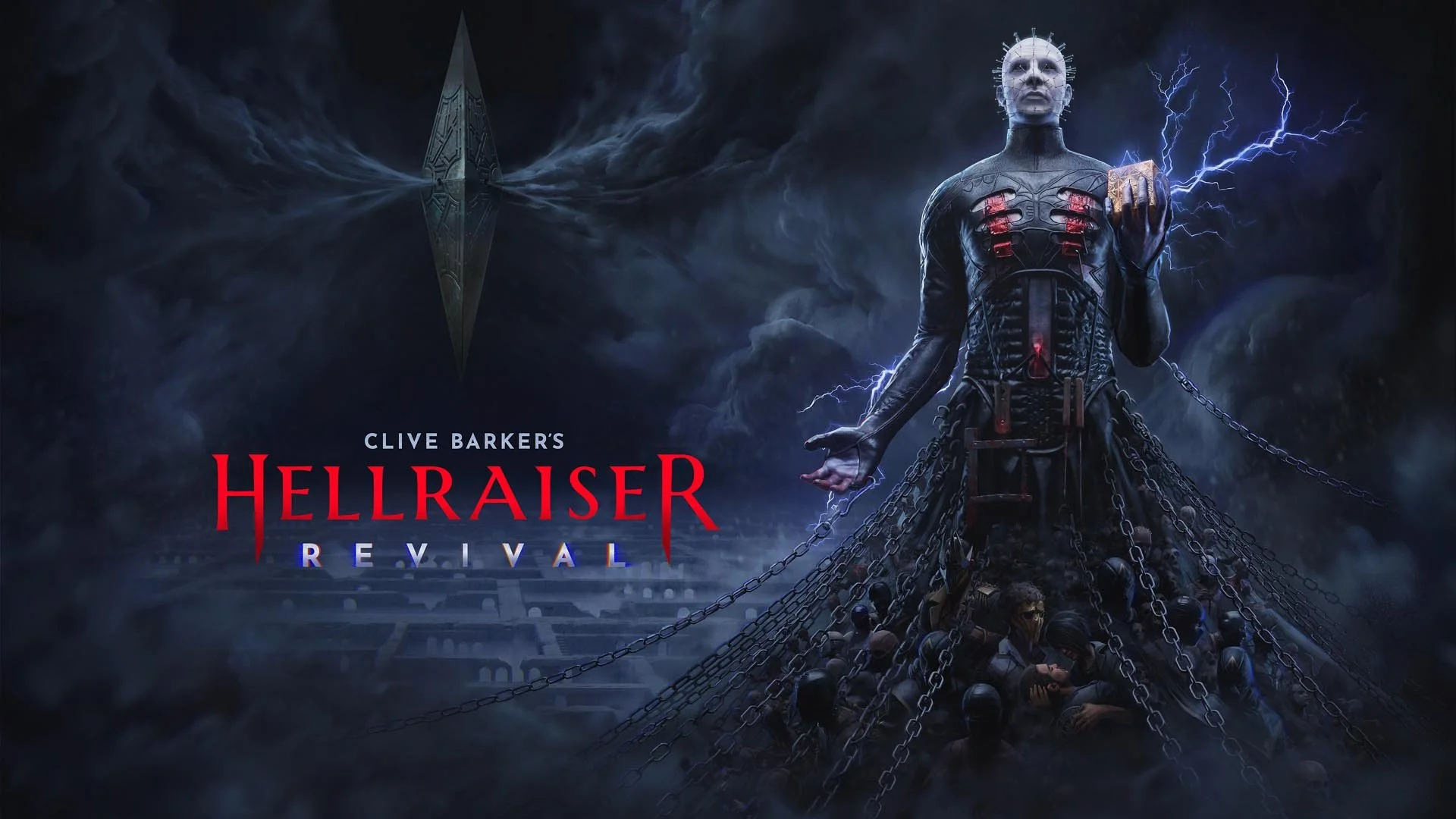
Hellraiser (1987) was one of he most innovative and intelligent horror films of the eighties, with its cerebral and sophisticated exploration of pleasure, pain and the supernatural. Sadly what was a great concept for a single film was turned into yet another horror franchise. The resulting series of increasingly inferior sequels ultimately diminished the central idea. However, in recent years several horror “brands” have found a new lease of life via the medium of video games, so the announcement of Hellraiser: Revival last summer piqued my interest. The fact that author Clive Barker was directly involved certainly raised my expectations. However, even though video games have a history of depicting sex and violence, would the medium be able to fully embrace the true nature of Barker’s original novella and original film. Having played through the newly released demo for Hellraiser: Revival, I believe the answer is a yes.
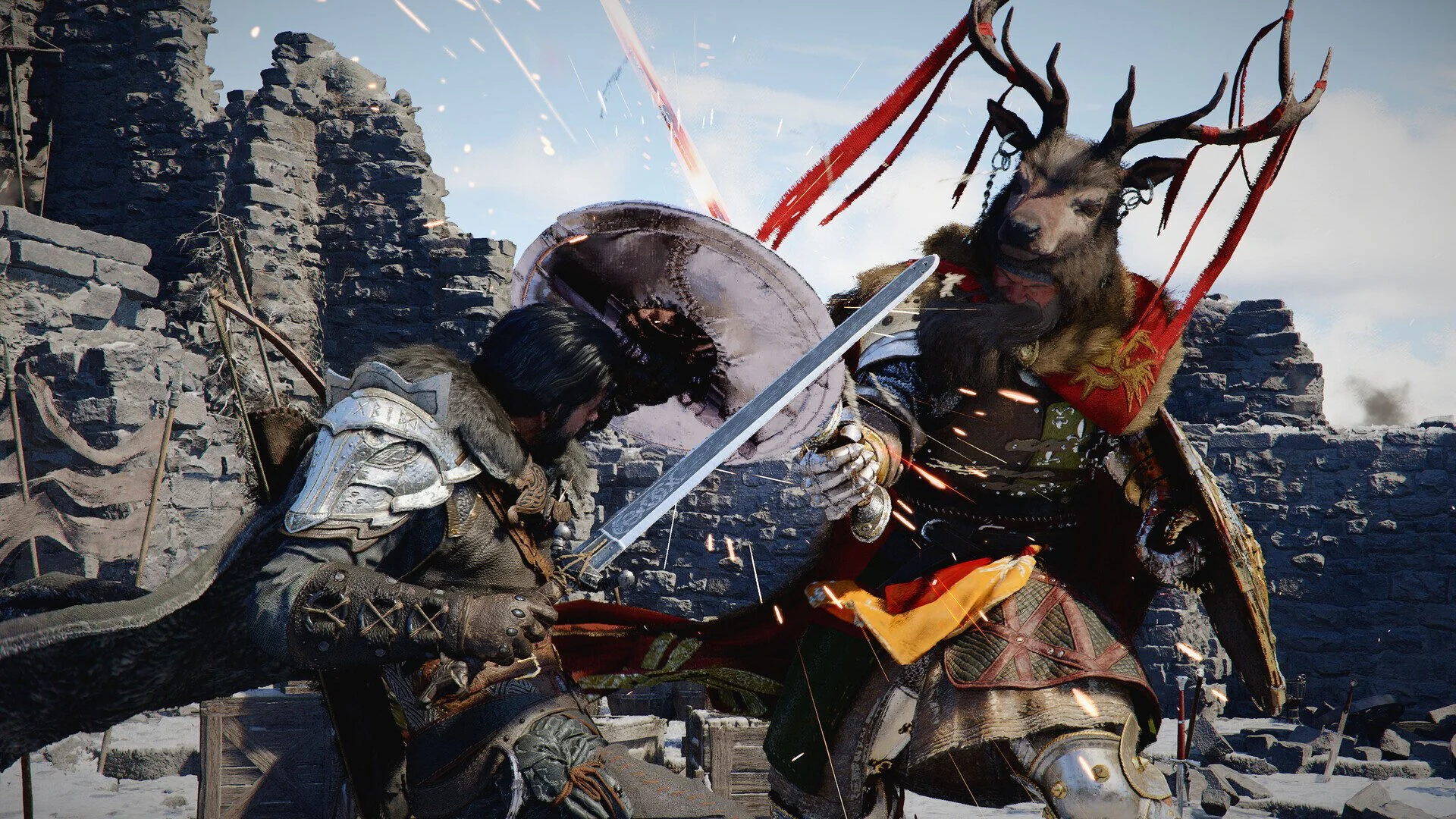
Are video games becoming easier? It’s a perennial subject that is frequently discussed by those who play them. Often the question of whether they have actually become easier is not the focus of the debate, as it seems to be broadly recognised that it is the case. Instead, discussion of this matter tend to drift into the rectitude of this change. Debate’s of this nature are usually awash with subjective opinions and personal preferences which are then put forward as objective facts. It’s not just a question of video games becoming easier, it’s the fact that making them easier is “wrong” and those who want them as such are “not proper gamers” etc. The hours that have been lost to this pointless, tedious debate are uncountable. However, I digress. Let us return to the matter of video games becoming easier, because although fans discuss this a lot and have plenty to say, you don’t often hear from the developers on this subject.
Some video games lend themselves to being set aside and resumed at a later date with zero consequences. These are often casual games with no major goals other than having fun while playing them. Fall Guys is a great example of this. You have a cartoony avatar that participates in zany group races, filled with obstacles. You run, jump, climb but the controls are far from difficult. You may well become skilled but such things are mitigated by the other players as they stumble around. You’re not at the mercy of apex players or “try hards”. It is not a game about winning and mastering techniques. The fun comes from playing it and the unique experience you have each time. I’ve been playing this game, on and off, since it’s launch in 2020 and in that time I have only ever won once (winning requires you to win a series of 4 to six individual races). However, whenever I pick up my controller and play Fall Guys, I have fun and the game lifts my spirits.
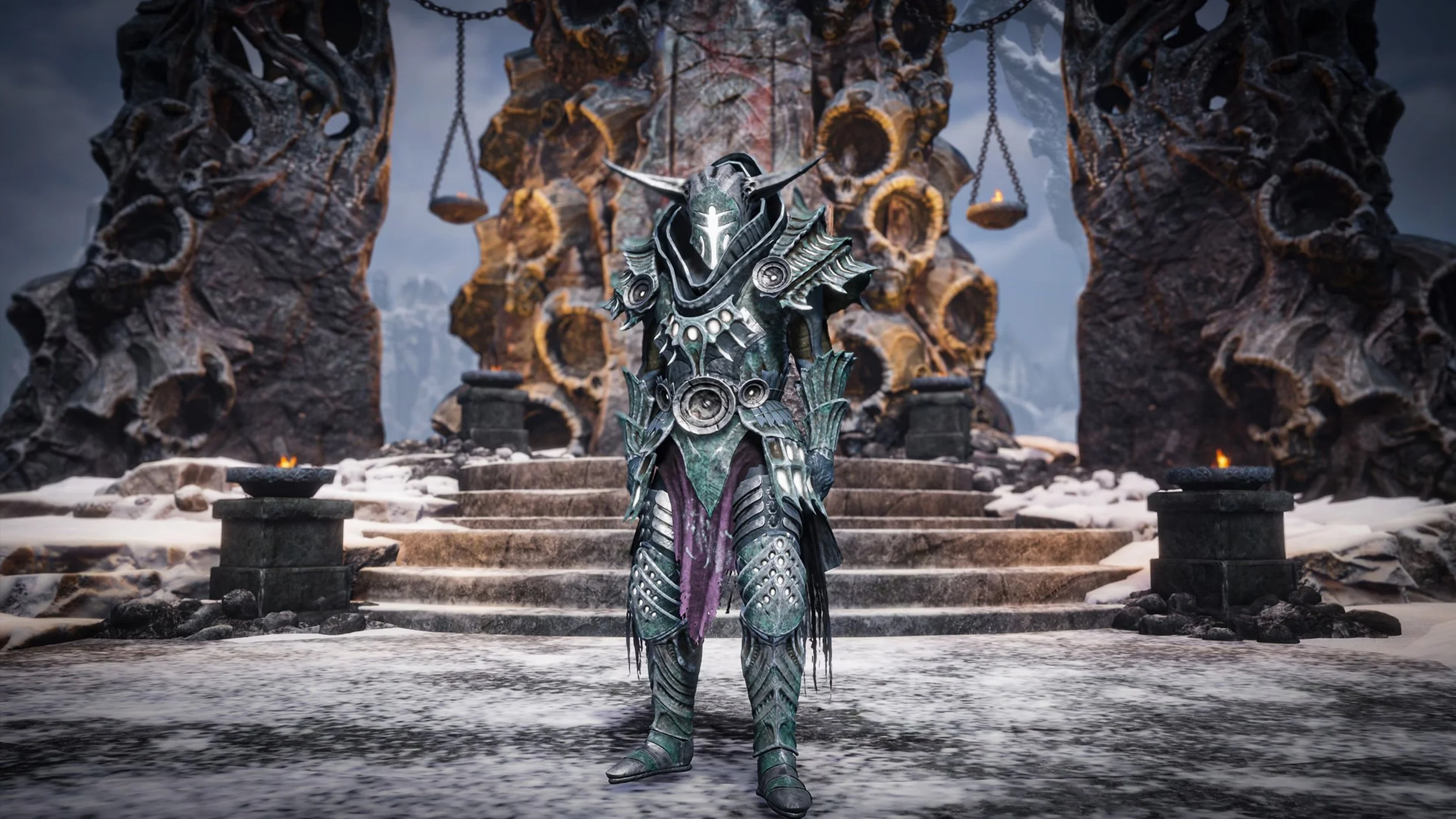
I recently completed the main story in Tainted Grail: The Fall of Avalon. In total I spent about sixty hours playing the game. I began at the start of the year, then took a break for a while but returned to it recently because I wanted to see if I could unlock a specific ending. I did manage to do this. Like so many other RPGs, Tainted Grail: the Fall of Avalon has a central storyline, along with a wealth of side quests, based around factions in specific zones. I think I possibly completed about a two thirds of these. However, once I finished the main story, my interest in the game began to wane. I finally left my character in the last major quest hub in case I wish to return at a future date. I then logged out of the game and uninstalled it from my PC to free up space for whatever I was to play next. In this case its The Sinking City 2. None of this is a negative reflection on Tainted Grail: the Fall of Avalon. I enjoyed the time I spent playing this quirky RPG. I simply had my fill and left to play something else.

On Tuesday 11th April, Aspyr Media rather surprisingly re-released The Lord of the Rings: War in the North, a co-op action-RPG from 2011. This game was delisted in late 2019, possibly due to changing rights ownership or a license expiring. Hence, I was somewhat discombobulated by the return of this title to all major gaming platforms. Mind you, the Embracer Group (through its subsidiary Middle-earth Enterprises) still controls the worldwide commercial and video game licensing rights for The Lord of the Rings and The Hobbit. Furthermore they have explicitly stated that they have plans for more games. It would appear this also means re-releasing and updating old favourites. It is also worth noting that they own Aspyr Media, which is also a bit of a giveaway. Let it suffice to say that this re-release and sparked enthusiastic online debate as to whether any other he Lord of the Rings themed games from the same era will receive a similar makeover. Judging by the internet chatter, there’s potentially a market for them.
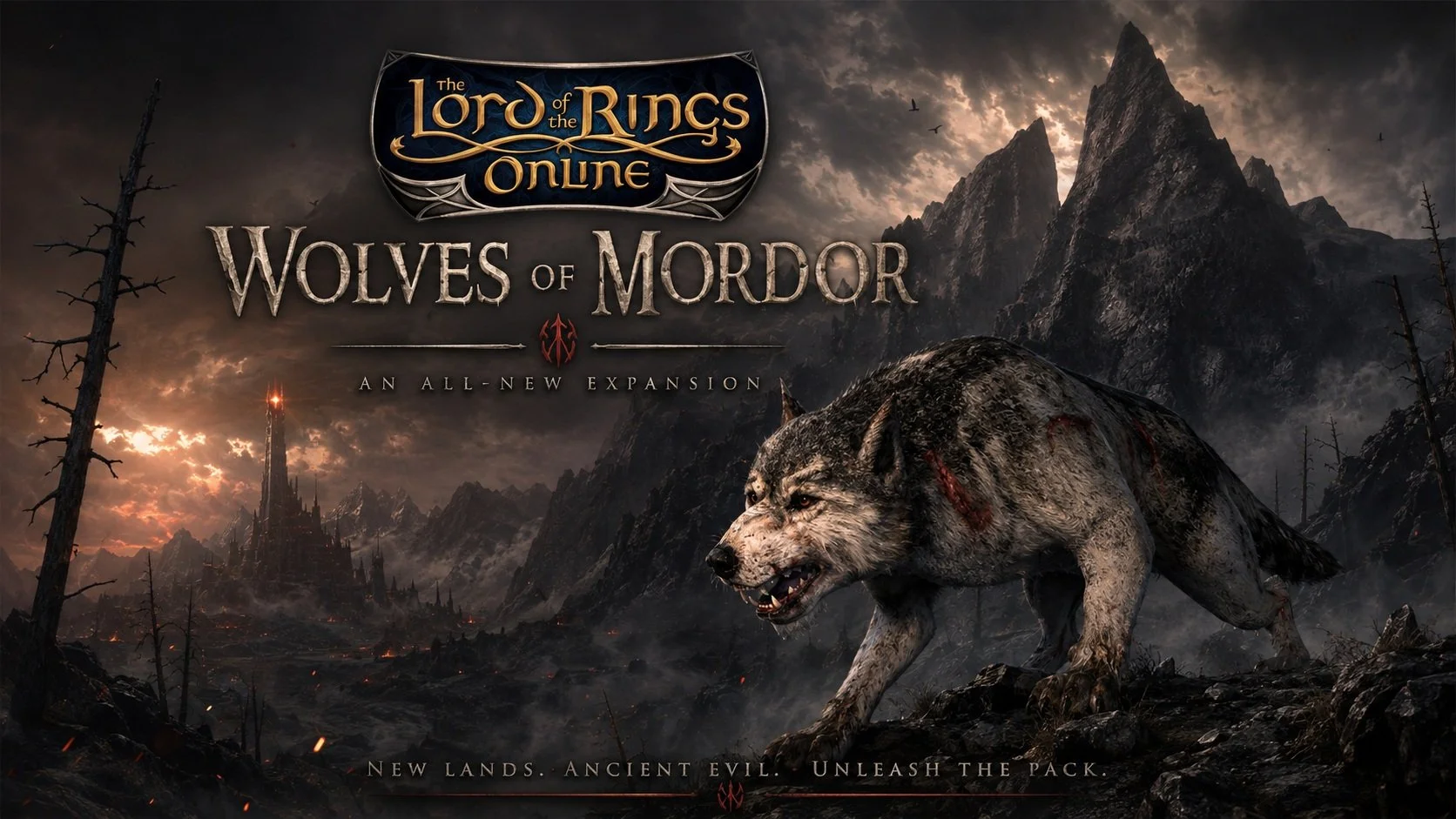
The next expansion for the MMORG, The Lord of the Rings Online, was announced on the 1st August, via the gaming website MMORPG.The Wolves of Mordor, which will launch later in the year, appears ambitious in scope as it will include two new game systems as well as the obligatory story update. This expansion takes place in Draugardh located in the North East of Mordor, beyond the Plateau of Gorgoroth. It includes the new zones of Heledhris, Parth Rhavas and Nan Ogol. These vary environmentally ranging from the arid, volcanic and semi-tropical. Players will encounter the Daugrim in these regions, Werewolves but not in the modern sense. This is not the lycanthropy of Eastern European legends but in the established Tolkien idiom of fell spirits inhabiting the bodies of Wolves. The region also sees the return of the Woses and players can expect to encounter Elves and scouts from Gondor. As ever with LOTRO expansions, there will be new instances as well as a raid.
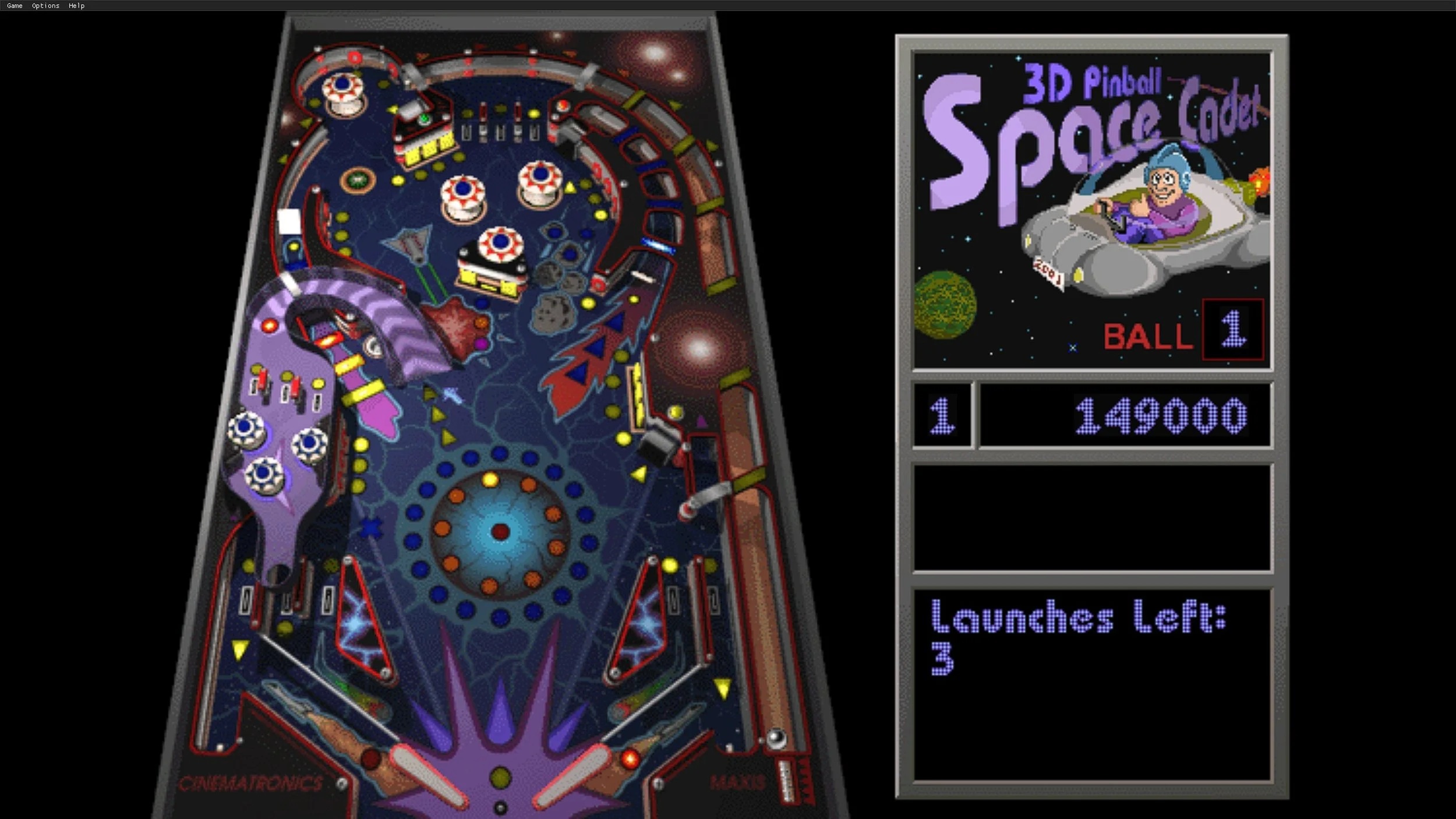
This is a post about the power of nostalgia and how sometimes, interacting with something from your past, be it physically or mentally, can produce a very strong and tangible emotional reaction. In some instances, this can be the result of something that you have specifically set out to do. On other occasions you can wander into a sense of nostalgia purely by chance. Today I experienced a very strong sense of nostalgia while watching a YouTube video and then again when I sought to replicate what I had seen. The video showed someone installing Windows 95 on to an old 486 PC from that era. The Window’s start up sound really touched a nerve (but in a good way) and then when the guy in the video launched Space Cadet 3D Pinball, a game that shipped with the operating system, I felt a strong compulsion to track down a copy and install the game myself, thus revisiting something that was an integral part of my life in 1995.
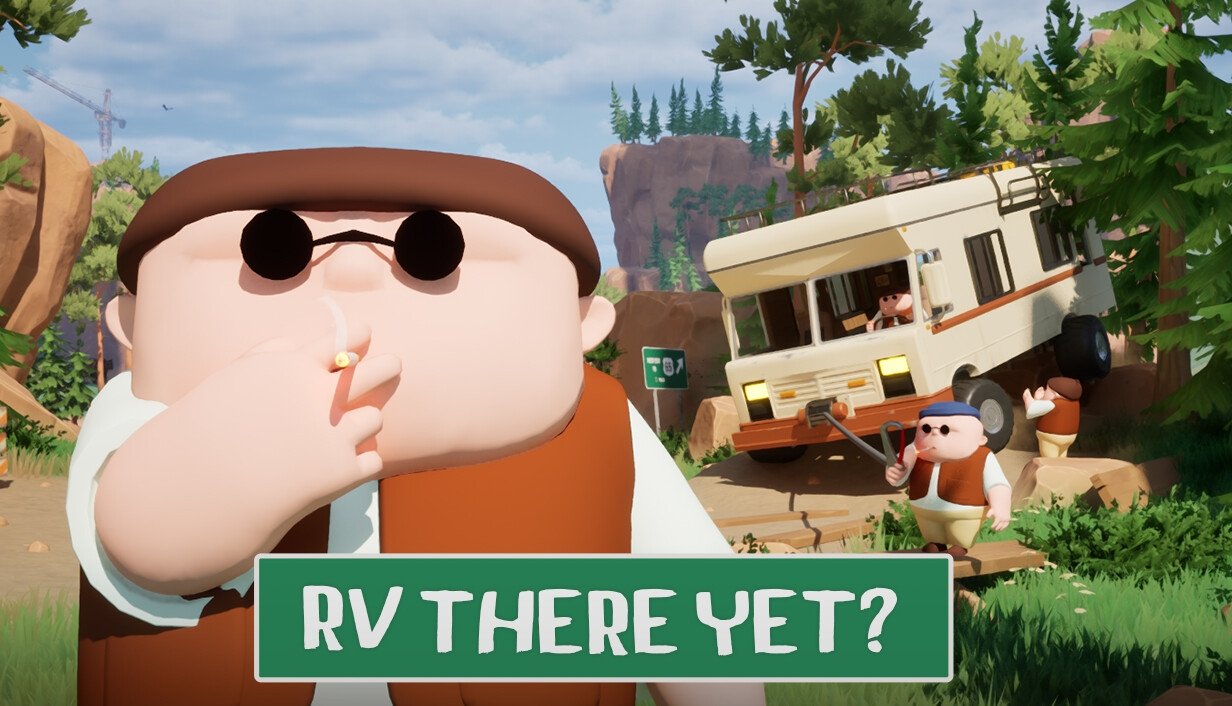
RV There Yet? is possibly the most entertaining game I’ve never played. My vicarious pleasure regarding this title has come exclusively from watching two popular YouTubers, JackFrags and WillFromWork, play through the game over a series of videos. It has been immensely amusing to watch and I have empathised a great deal as the group of four players has struggled with the game’s unpredictable mechanics and their own team’s dynamic. I could go and buy RV There Yet? myself but I doubt if I would ever have a gaming experience anywhere close to what I’ve watched online recently. So in some respects watching these videos has been an interesting alternative as I’ve been entertained, which ultimately is the point of video games. Perhaps there is a deeper philosophical point here that the game developers should reflect upon, as they’ve lost a potential sale. However, that is separate discussion for another day.
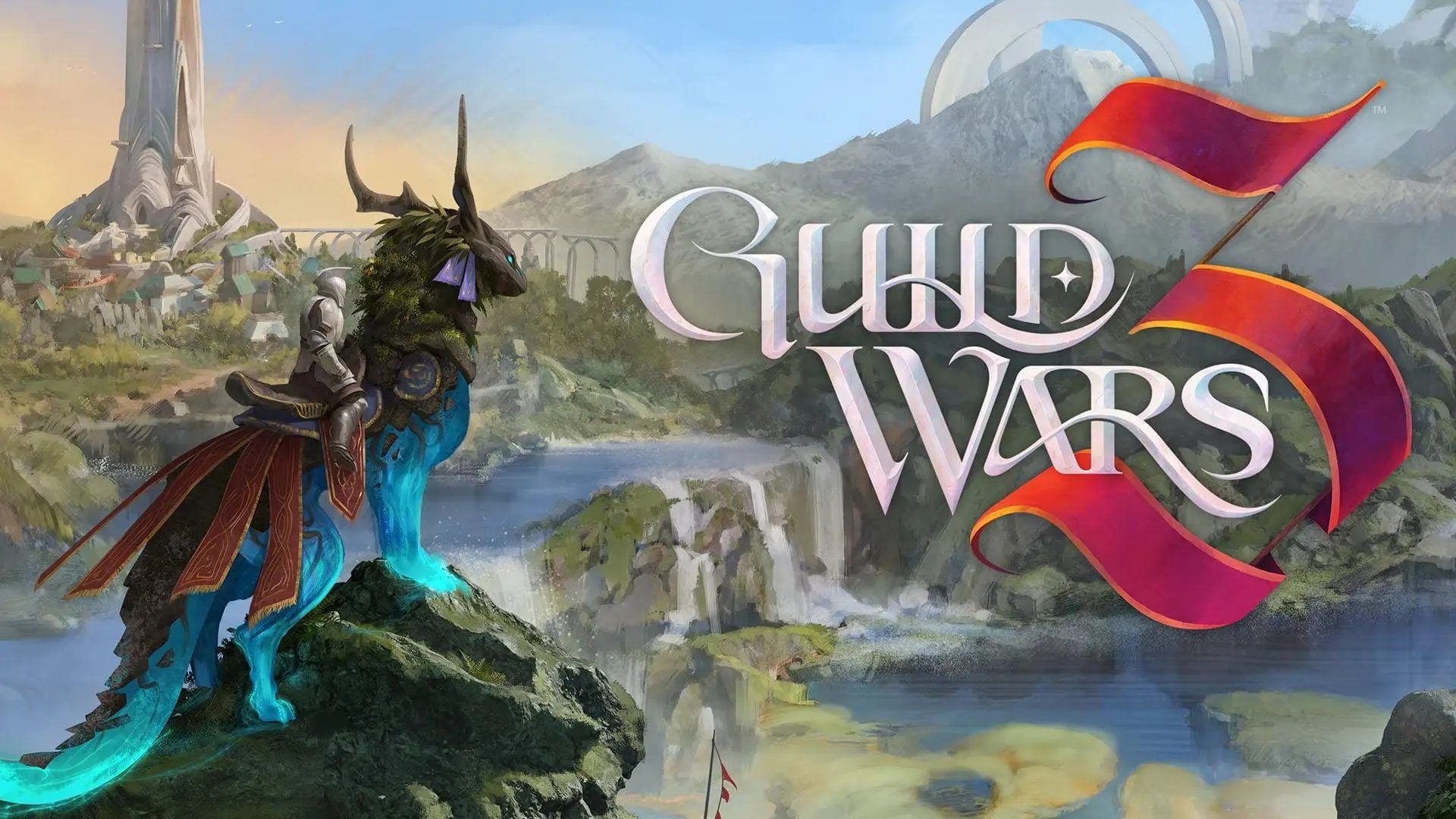
I don’t keep up with gaming news as much as I use to but several noteworthy announcement have come to my attention of late. Firstly, there’s an expansion, Songs of the Past, coming for the Witcher III: Wild Hunt in 2027. No doubt this is to pave the way for the Witcher IV. Next, I also found out about Hand of Fate: Horde. I liked this franchise and was saddened to learn that the original studio, Defiant Development, closed. Hence is was a pleasant surprise to see this new game being developed by members of the original studio. The third announcement was regarding Guild Wars 3. A new MMORPG in active development by a major studio is no small feat and is certainly good news for fans of this franchise and the genre per se. However, once you look beyond this news this announcement raises several questions and has certainly given me pause for thought. Let us take a few moments to consider them.
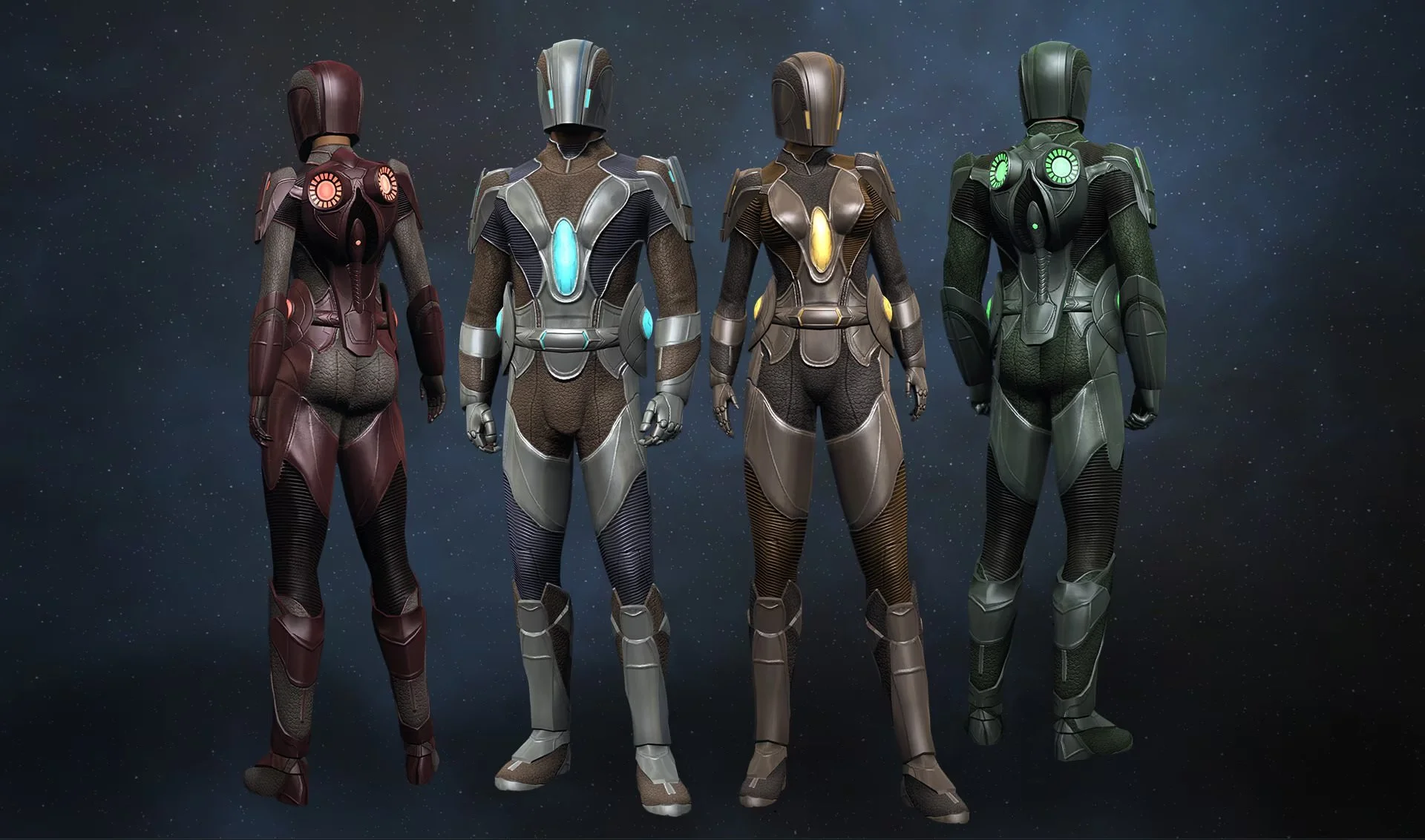
Star Trek Online has many in-game systems that are common to the MMORPG genre. The reputation system is one such example. In STO there are 13 reputation factions. Once a player has reached level 50 they may start progressing through the 6 reputation tiers of each one. Players gain progression through daily projects (20 hours in duration). Hourly projects are also available though they yield less reputation advancement and are limited to three times a day. Hence 20 hour projects are consider by default the most efficient way to gain rep. Projects require 30 Faction Specific Marks (earned via various activities in-game), 15,000 Energy Credits (standard in-game currency) and 2000 Expertise points. The most efficient way to tackle the reputation grind is to build up the necessary resources in advance and then at a designated time each day, start all 13 respective projects. Upon completion projects yield a player bound lockbox containing a random space or ground weapon, a console or Elite Marks which can be used to acquire faction gear.
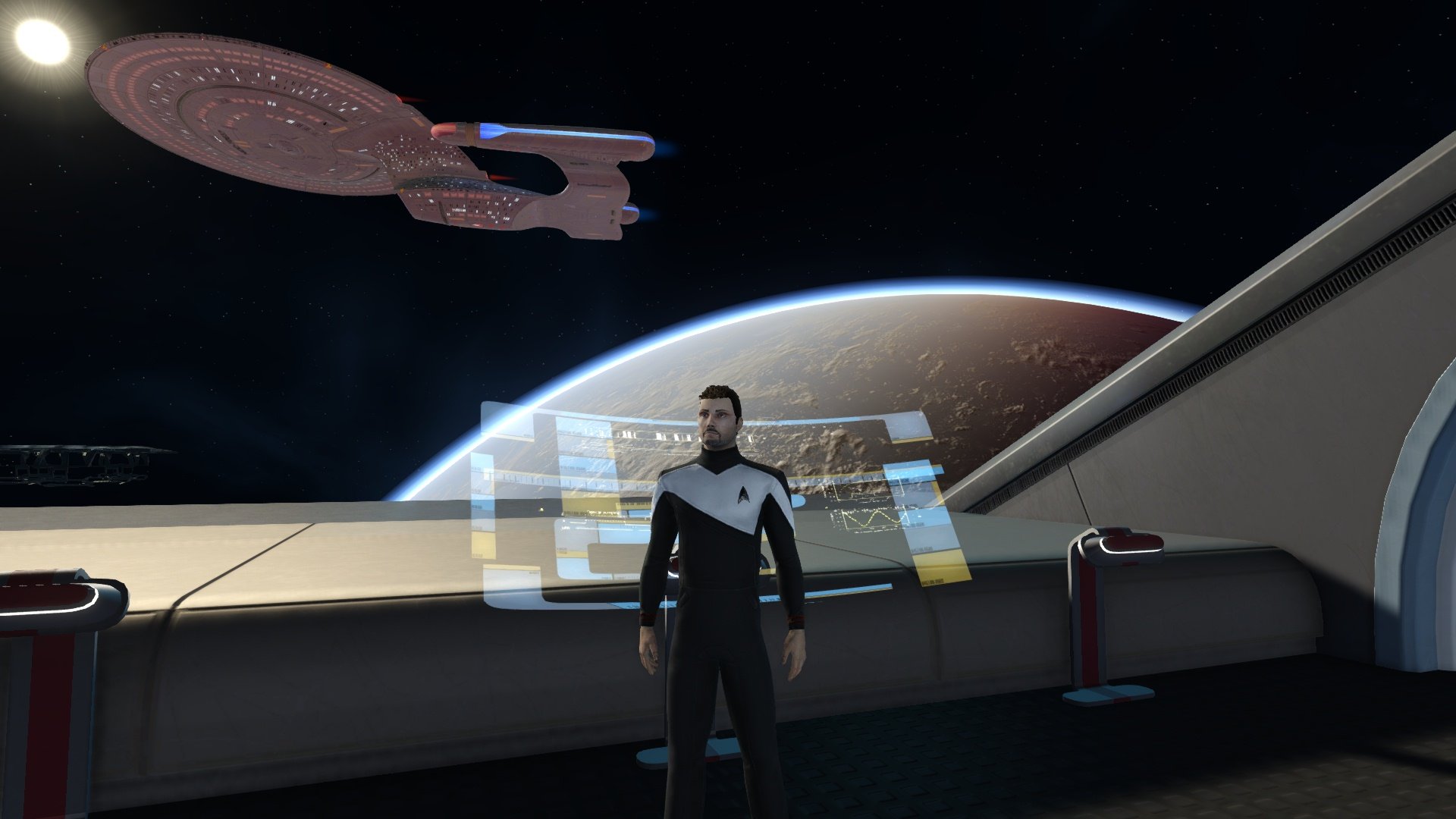
I was recently perusing my archive of old blog posts, when it struck me how much I’ve written about the MMORPG genre over the years. Naturally, there was far more material from between 2008 and 2012 as that was period when I immersed myself in the genre and was very enthusiastic about it. I was at a point in my life when I had the time to dedicate to such games and I was happy to participate in the social aspect of they offered. I would regularly play through group content and spend time socialising online with fellow guild members. My experience remains a textbook example of how online games can be more than the sum of their parts and that where you are at in your life has a major impact upon your overall enjoyment. As I read though various old posts it became clear that my experiences where specific to this particular part of my life and that they cannot be repeated. My relationship with the genre is very different now and that’s fine.
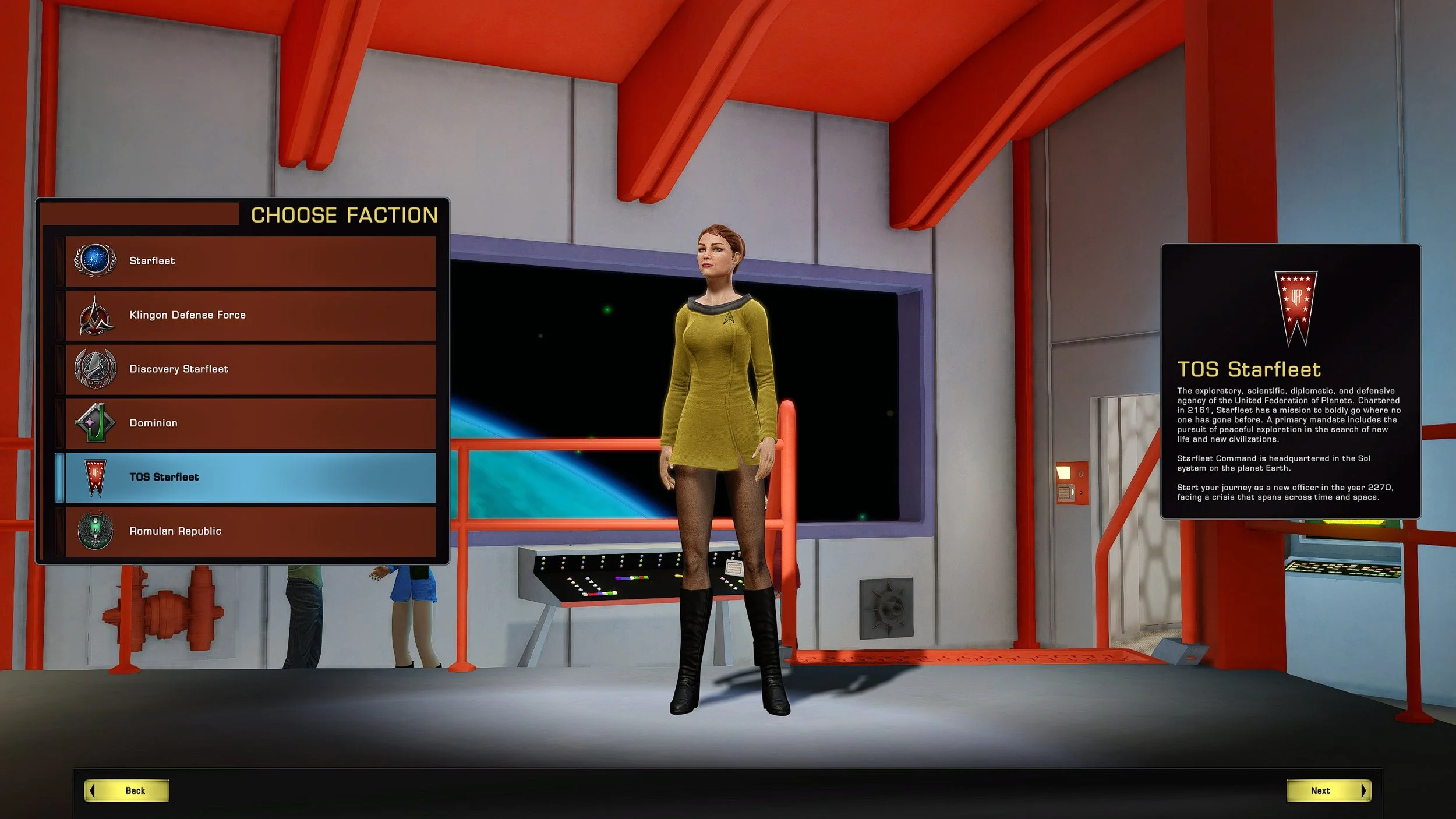
Creating alts is an integral aspect of the MMORPG genre. Many players will create a character of a specific class or faction, play it for a while, lose interest in it or they may decide that it is just not for them. Fortunately it is no effort at all to simply re-roll a new alt and set off once again. Furthermore, lots of players never reach level cap of the MMORPG that there playing. When the going get’s tough, so to speak, you can either soldier on for another 50 levels or simply create a new alt and return to the comfort of tried and tested content. Alts also give you the chance to secure an accolade or achievement that you previously missed. They are also of great benefit to the genres social aspects. Creating a new alt so you can play along with a friend who is just starting is great fun. Developer’s love them too as it means you’re still playing the game.
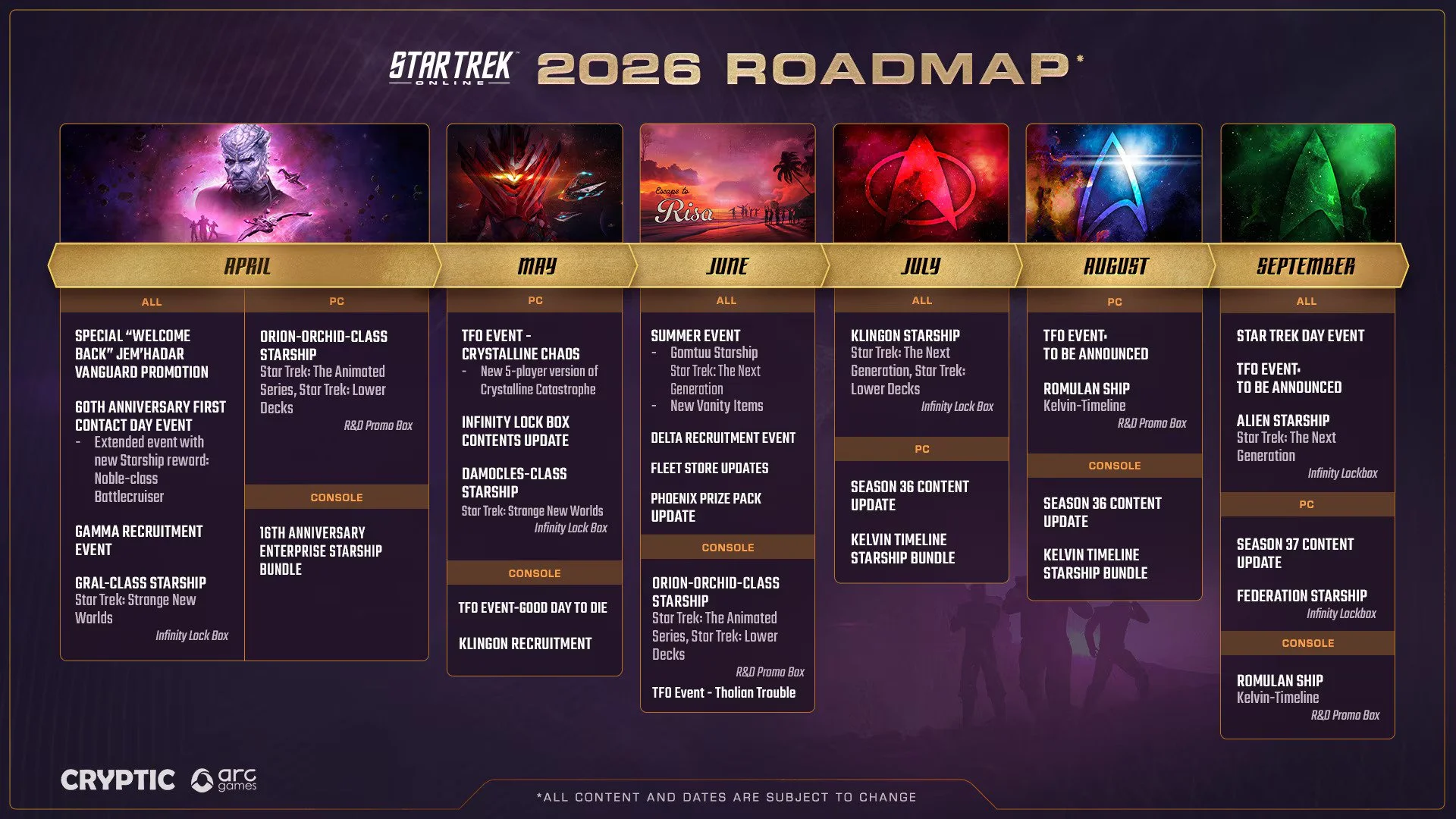
I recently took a break from Crimson Desert choosing instead to to play something familiar and easy going. As I’ve been logging into Star Trek Online daily to participate in the anniversary event, I decided to look through my various alts and see how far they had progressed through the game and what resources they had. At present I have twelve alts. My primary Captain was created in 2015 during the original Delta Recruit Event. I had previously played STO intermittently since its release in January 2010 but I never kept any of those characters. Hence this decade old Tactical Federation Captain has been my main focus when playing. The other eleven alts are the result of other recruitment events or whenever I wanted to try something different, such as playing a specific class or faction. I obviously played a lot of STO during the lockdown as several alts date from that period. Several had maximum reputation across all factions.
The action, open world RPG Crimson Desert has been patched five times since it launched on March 19th and there have also been multiple hotfixes. At first glance this isn’t anything unusual. New games have bugs and issues arise once a game is released and played across a much wider variety of hardware than in QA testing. However, if you read the patch notes that accompany these sizeable downloads it quickly becomes apparent that developer’s Pearl Abyss are not just addressing bugs and software glitches. They are actively engaging with their player base and responding to suggestions and requests from that community. Although this is not a unique approach, what is surprising is the speed and quantity in which these player driven changes are happening. There seems to be an active ongoing process to refine the game and eliminate some of its “rough edges” and the players are contributing to this process with their feedback.
According to my Steam statistics, I last played Starfield on 19th December 2023. I bought the game upon its release in September of that year and played in total for 136 hours. Starfield held my interest for three and a half month and I wrote seven blog posts about various aspects of the game. Although there were some engaging aspects to Starfield, I did feel that that the game was somewhat lacking in systems and content, at that point in its lifecycle. I also think that the marketing and player expectations associated with Starfield were overblown and unrealistic. The shadow of Skyrim looms large over all new Bethesda releases and they don’t seem able to quite recapture that magic. Hence, I inevitably drifted away from Starfield and to another game and was effectively “done” with it. I have not played the game since which seems to validate the theory that game are becoming increasingly more ephemeral.
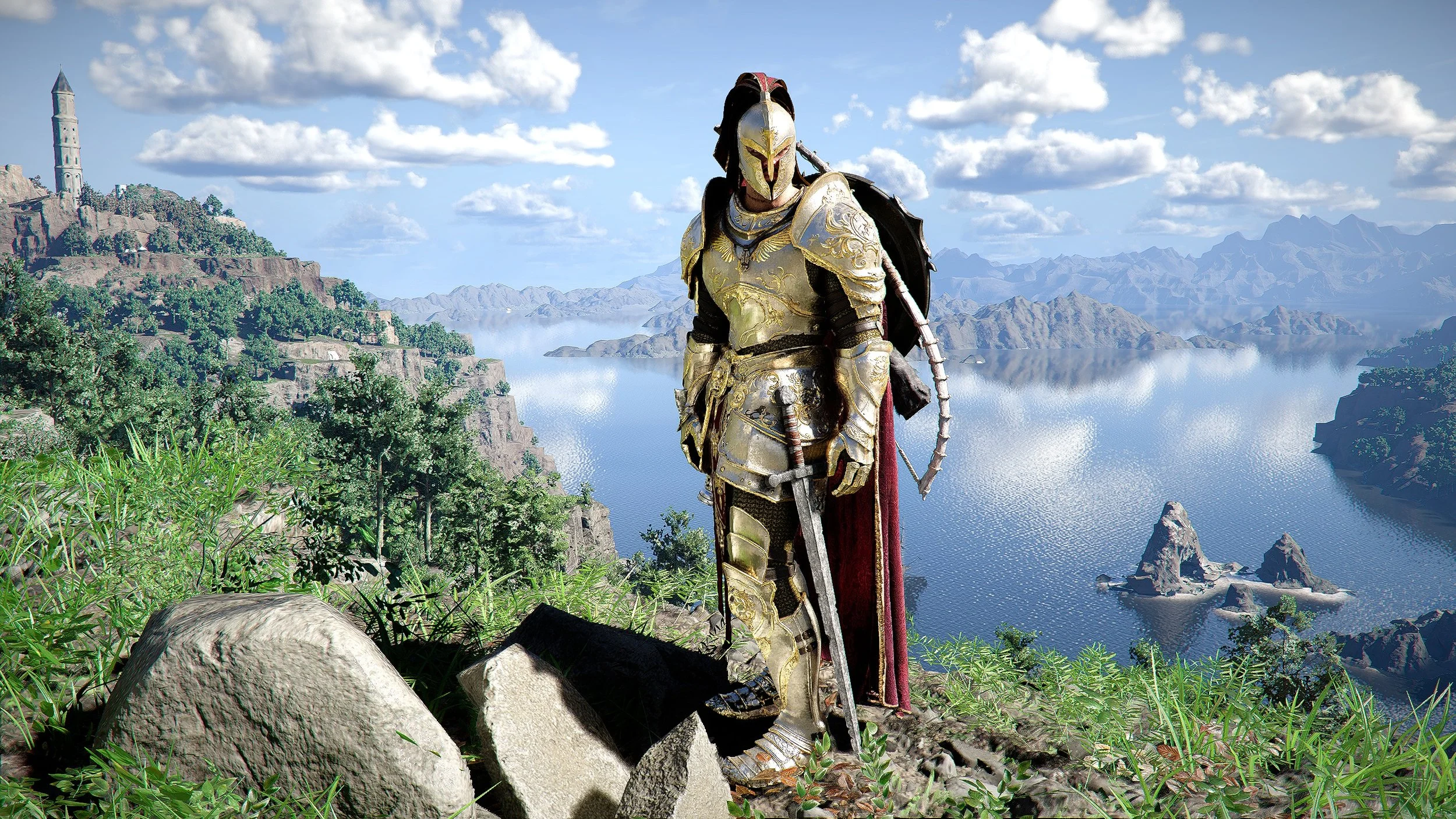
13 days after its release, market analysts estimate that Crimson Desert has already earned $200 million across the four main platforms (PC, PlayStation 5, and Xbox Series X and S). The game is certainly proving popular among gamers with the internet awash with live streams and “let’s play” videos. However, reviews are mixed both among gaming journalists and YouTube influencers. Common complaints about the game include that it is slow to start, the controls are poorly laid out on all platforms and that developer’s Pearl Abyss have done a poor job of explaining most aspects of the game to new players. Although such criticisms are true to a degree, I think these complaints highlight how many gamers are conditioned to expect new titles to follow a specific pattern with regard to pacing, narrative exposition and learning in-game systems. A pattern that Pearl Abyss has chosen to ignore, instead favouring an old school approach.
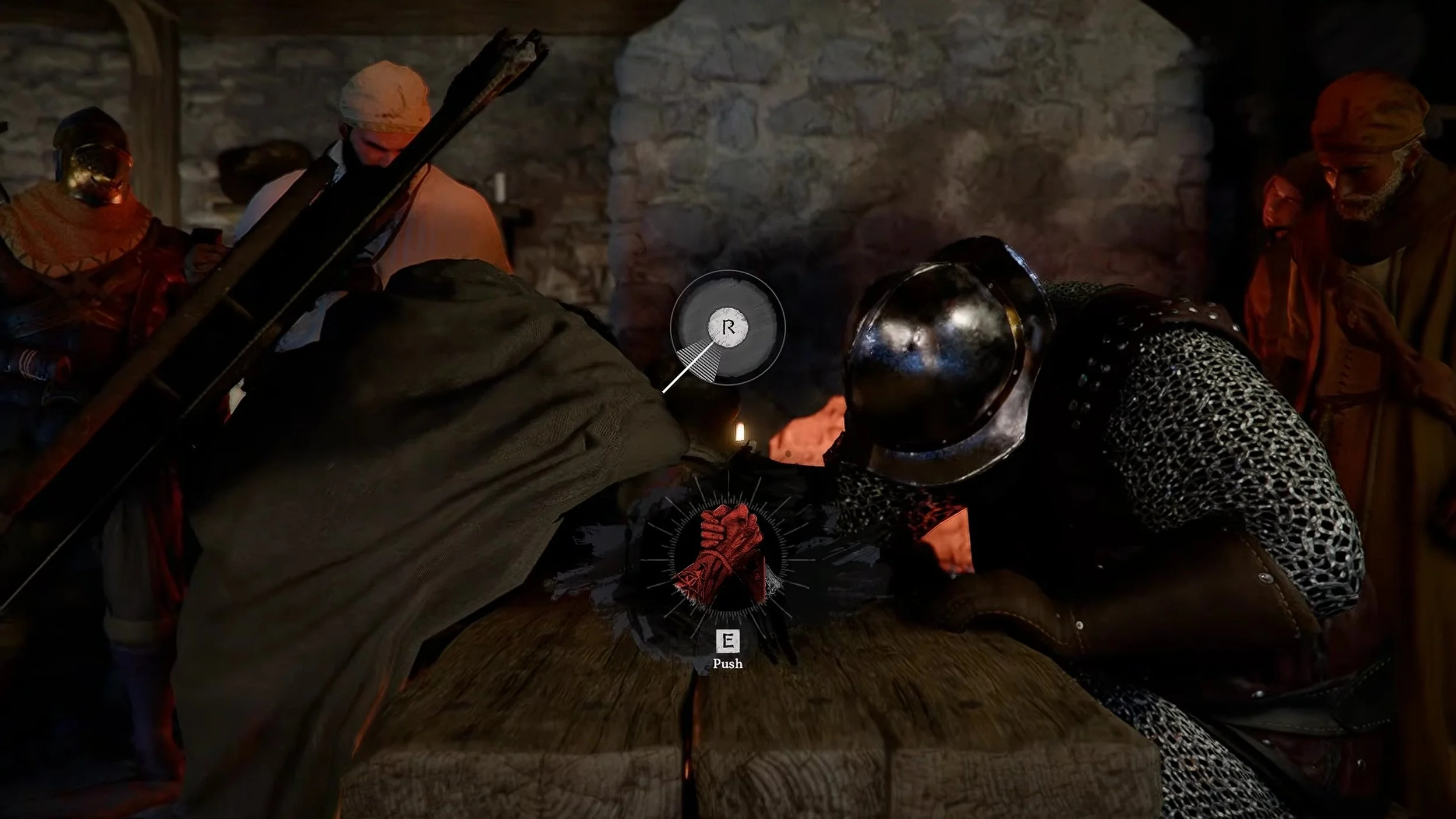
Early on Crimson Desert, the main quest requires the player to enter a tavern and arm wrestle a particularly strong guard. The arm wrestling match consists of a quick time event. If playing on PC you have to rapidly press the “E” key which turns a power meter from white to red. Then a white dial appears above the meter with a rotating hand. When the hand passes over a segment of the dial that is marked by hatching, the player must press the “R” key. The idea being the meter filling with red is you strength building (or waning) and the “R” key prompt indicates when to try and force your opponent’s arm. You will need to to continuously press the “E” key throughout the arm wrestling match and the “R” key about 4 times to win.
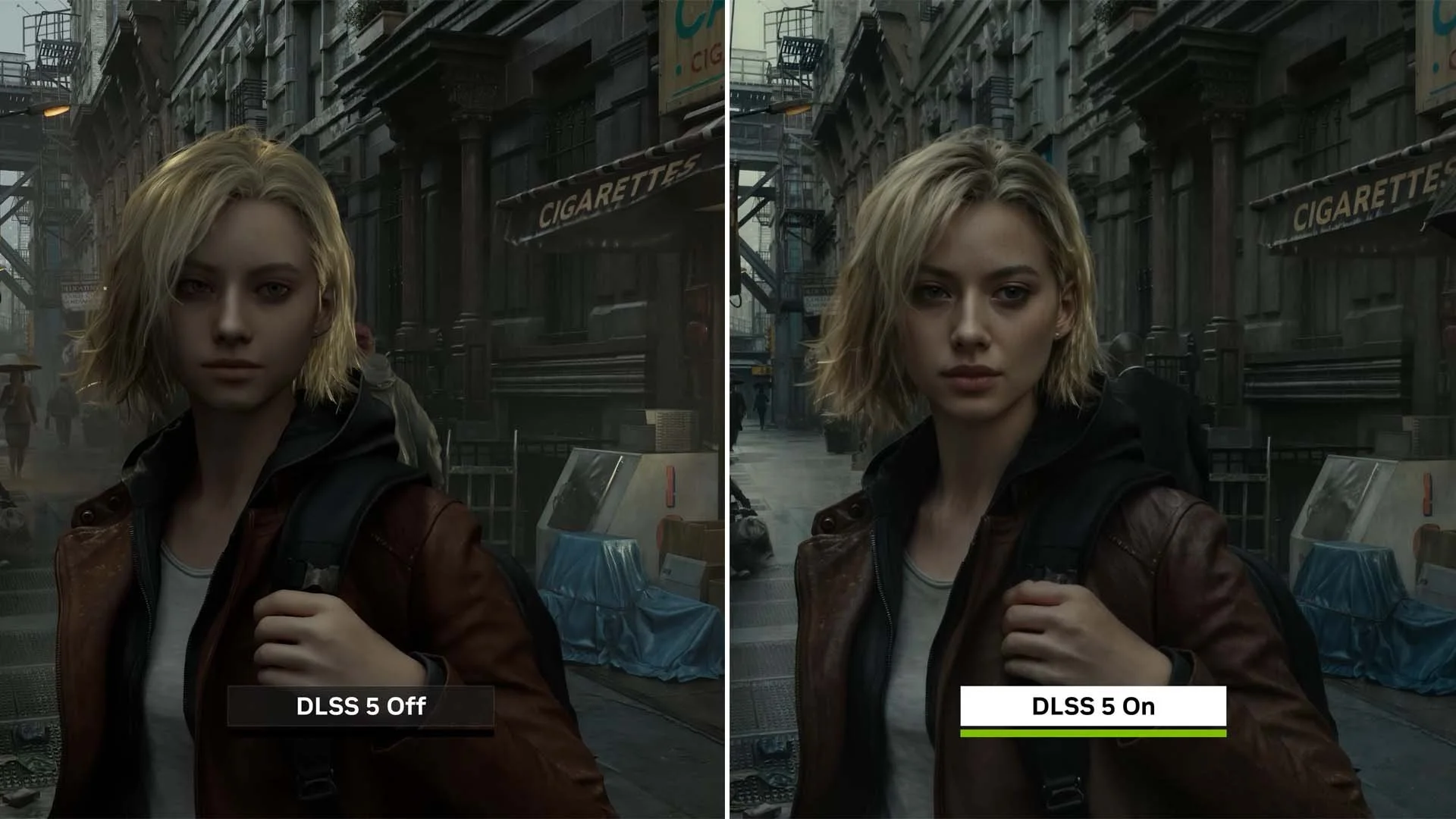
Earlier this week, Nvidia posted a video featuring their latest iteration of DLSS technology (Deep learning super sampling). DLSS 5 is an AI-powered “real-time neural rendering” process and unlike previous versions that focused on improving frame rates through upscaling or frame generation, DLSS 5 uses generative AI to “infuse” frames with photorealistic lighting and material details that the game engine never actually calculated. Let us pause for a moment and consider these words. Material detail that the game engine never actually calculated. Therein lies the rub. If you watch the aforementioned video or peruse the images posted here, it is abundantly clear what the technology does.
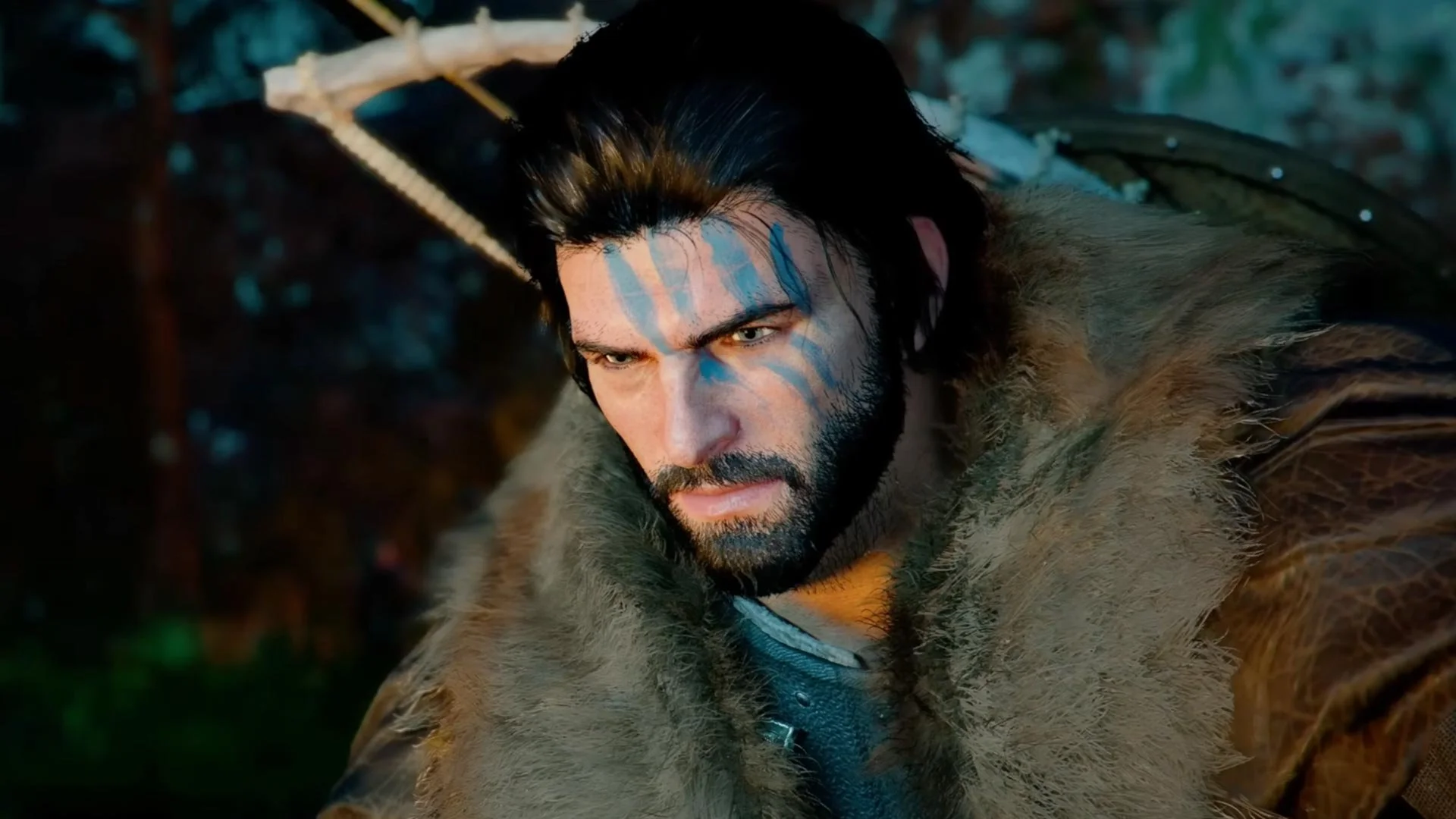
Last night, I spent the first 45 minutes after the launch of Crimson Desert, watching the 92GB pre-downloaded game files slowly decompressing and installing. I finally launched the game at about 10:50 PM GMT. I then waited a further 5 minutes while shaders were downloaded. It took me about 15 minutes or so to read through the various game settings and choose those that are optimal for my PC. I suspect even if you have a beast of a computer, you’re still going to have to spend some time tweaking settings. As for those players like myself with a gaming rig that is somewhere in the middle of the game’s specifications, be prepared to do a lot of fine tuning both within Crimson Desert itself and your Windows settings.
The Blight of “Bro Culture” and “Boys Club” Mentality
During the summer of 2007 I was working as part of a team of IT contractors undertaking a major hardware rollout for a large smartphone software developer in London. I could spend a substantial amount of time setting up the backstory to this anecdote but upon mature reflection, I don’t think it is actually necessary. Let it suffice to say that the company was mainly staffed by men between the age of 25 and 50. The team of contractors that I was working with had a similar demographic. This is hardly surprising, as IT is still a male dominated field. Both the company that I was directly working for and the one we were providing support services to were very similar in their corporate culture. It was informal with a “work hard, play hard” ethic. Disputes and major decisions were often resolved by public arguments and there was a very clear hierarchy that sadly wasn’t based on intellect or decorum.
During the summer of 2007 I was working as part of a team of IT contractors undertaking a major hardware rollout for a large smartphone software developer in London. I could spend a substantial amount of time setting up the backstory to this anecdote but upon mature reflection, I don’t think it is actually necessary. Let it suffice to say that the company was mainly staffed by men between the age of 25 and 50. The team of contractors that I was working with had a similar demographic. This is hardly surprising, as IT is still a male dominated field. Both the company that I was directly working for and the one we were providing support services to were very similar in their corporate culture. It was informal with a “work hard, play hard” ethic. Disputes and major decisions were often resolved by public arguments and there was a very clear hierarchy that sadly wasn’t based on intellect or decorum.
Drinking culture is far more robust and commonplace in the UK compared to other countries. A swift pint at lunch time is not unusual and drinks after work throughout the week is part of the working landscape. However, on this occasion, it was far more in your face. Hence the standard of behaviour among employees often took a nose dive in the afternoon. The job often felt like a night out, rather than a short term contract. It also reminded me of the last few years I spent at school. Cliques and an “in crowd” were quickly established. Anyone who didn’t quite fit in became the butt of jokes which soon descended into bullying. The few women that worked in the building, mainly in admin, HR and support roles were badgered constantly. The cleaning staff were also subject to racist abuse and regularly taunted. Yet despite all this, because the work was getting done, no one felt the need to do or say anything. Plus in the view of the senior staff, it was all just “high” spirits and anyone complaining should “get over themselves”.
The sad thing about this story is that it is not in any way unusual. “It happens everyday” as Tom Jones wisely stated. Furthermore, if I or anyone else had attempted to do something about the situation it would have ended with our contracts being terminated. There may well have been lasting consequences with regard to being blacklisted by certain recruitment agencies for not being a team player. Because this “boys club” mentality is everywhere. It’s everywhere because it stems from the way society in Western Democracies are constructed and run. Power, opportunity and expectations are all centred around white men. Many people don’t like the phrase “white privilege” and it is misunderstood and frequently misused. So rather than invoke it, I’ll ask a very simple question for people to reflect upon and answer honestly. If you are a white man living in the US, UK or any of the major European countries would you ever want to be any other gender or ethnicity? (For further exploration of this, see Chris Rock).
All of which brings me on to the current debacle regarding Blizzard Entertainment. A sickening shit show which although appalling comes as absolutely no surprise. I have never been a fan of Blizzard. When I started playing MMOs roundabout 2008 I was aware of the behemoth that was (and to a degree still is) World of Warcraft but found the culture surrounding the game’s developers unpalatable. After watching footage from BlizzCon I wasn’t impressed by the strutting, preening narcissism I saw on display. The public Q&A sessions further solidified my opinion, as women were condescended to and those who didn’t fit into the “bro” hierarchy were mocked. Furthermore, the hardcore fans are equally part of the problem as they are the ones treating developers and popular industry figures as if they’re seventies rock stars. It’s hardly surprising when the usual suspects started acting as such.
In the months to come, Blizzard Entertainment will twist itself in knots trying to deny, deflect, and mitigate the charges that have been levelled at them by California Department of Fair Employment and Housing. They have lots of money and an army of lawyers so this isn’t going to be a simple lawsuit. I don’t see them “beating this rap” but I do question whether anything will truly change. Some minor sacrificial lambs will be offered up as a sign of supposed contrition and possibly a senior member of staff such as J. Allen Brack may have to fall on their sword. But they’ll leave with a full pay-out as part of a backroom deal and as history has shown us, it never harms their career in the long run (think Louis C. K.). We’ll also get the obligatory espousing of the “lessons must be learned” mantra but it will be as honest and credible as a politician’s promise. And as for those who work at the coalface in companies such as Blizzard Entertainment, there may well be a cessation of overt harassment but they’ll potentially suffer in other ways and find that there’s no future for them there.
Until we as a society decided to unequivocally address the blight of the “boys club” then it isn’t going to change. What is required are some fundamental sea change in the way we raise our children so that we instil a sense of equality right from the start. We need to also eliminate the gender specific roles and concepts we force both consciously and subconsciously upon the young as they grow up. And in the meantime while we have to endure a generation who have entrenched views that cannot be altered, we need to police and enforce the existing legislation that is in place that protects those who are harassed and marginalised. As for Blizzard Entertainment, they already have form for being the worst sort of corporate entity. They have no principles or sense of obligation to anyone or anything other than themselves. As a result they fully deserve the ire that is coming their way and I would actively encourage you to lend your voice and actions to it, if you can.
I have twin granddaughters. They’re six years old (how the hell did that happen?) and I already see the effects that consumerism and societal expectations have upon them. They are already concerned over how they look, what boys think about them and have clear ideas about gender specific roles. Hopefully as they grow older they will gain the insight and wisdom to shed this cultural baggage, rather than let it define them. As and when they reach an age where they start thinking about their careers and the job market, unless society radically changes in the next 12 years, I will offer them the following advice. Where possible work for yourself and not others. Eschew male dominated, corporate environments. Maintain a network of other skilled female freelancers. Police your workspace and document everything. All of which is advice that is indicative of a broken system but it is the only way to ensure that the wolves are held at bay. Until the “boys clubs” and “bro culture” are finally consigned to the annals of history.

I recently stopped taking beta blockers after a consultation with my Doctor. Seven weeks on and I feel substantially better without them. I strongly advocate prescription reviews, as often the medication you’re taking does not necessarily need to be taken indefinitely. That was certainly the case with me and beta blockers. At the end of my last consultation, my GP asked me to keep a daily record of my blood pressure for a month. I could either do this at home or come into the surgery where there is a suitable device that is free to use. Fortunately I inherited an old but functional OMRON blood pressure monitor from my parents, so I was able to take readings each morning myself. It was while doing this for a month that it struck me; what exactly does all the data that I’m making note of mean exactly? What do systolic and diastolic mean and what is the difference between them? Also, where my readings good or bad?

I made a throwaway quip yesterday on social media about reaction videos on YouTube. I was specifically complaining about those made about music videos and how there is a growing trend among “content creators” to mute the audio and obscure the video of the very material they are reacting to. This is due to concerns over a copyright strike by the rights holders of the original content and the threat of potential demonetisation to those making the reaction video. What you are left with is 5 minutes of a rather tiresome, charisma vacuum watching a blurred video while listening to “elevator music”. What a world we live in. Why even bother posting such content? If there is any value to be found in reaction videos, then surely it lies in the shared experience of both the person in the video reacting and their viewers?

When I last wrote about the thorny subject of weight loss, I weighed 188 lbs (13 stone 6 lbs or 85.3 kg). That was in Spring 2022. Let it suffice to say the the optimistic health plan I subsequently embarked upon fell apart like a cheap suit, solely due to me not committing to it in any meaningful way. Since then my weight has slowly and steadily increased. I will avoid any long and tortuous explanations and quasi-justifications. I like my food and lots of it. The fact that my lifestyle has contributed to my ill health, is something that I have willingly tolerated. The pleasure outweighed the consequences. However, in early August a tipping point was finally reached. It wasn’t a theatrical epiphany or anything that can be framed dramatically. I simply woke up one morning and said to myself, “I am tired of constantly feeling like shit”.

When I was a child, I quickly learned never to say within earshot of my parents that I was bored. It was quickly met with a response along the lines of “an intelligent mind is never bored” or more worryingly “if you’ve got nothing to do, I’ll find you something” which meant a chore or Herculean task. Being a child of the seventies and due to my parents fundamentalist approach to declarations of boredom, I quickly discovered numerous ways to occupy myself. The default solution was a book or comic. I always liked reading as a child and had plenty of books to choose from. I also had numerous of comics as an alternative to a hefty tome. I would also draw and paint. My father use to work during the summer holidays as a design draftsman and as a result, we always had plenty of paper in our house. Then of course there were toys and such like. Hence I learned the art of keeping myself busy.
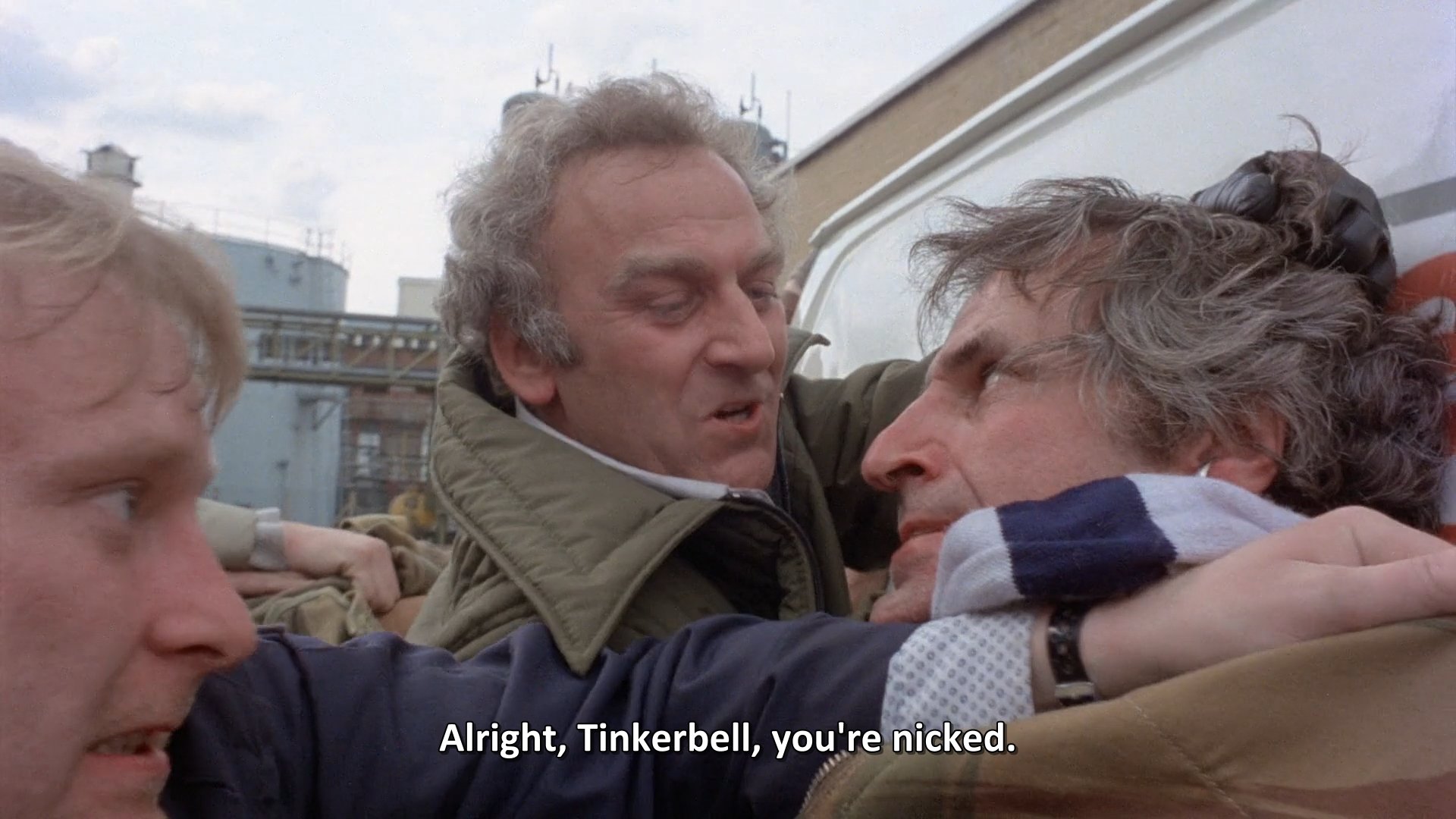
When I first started this series of posts back in 2023, they were originally intended to provide a useful overview into UK (mainly British) slang. US slang is ubiquitous globally due to the pervasive nature of American culture. Hence most people have a good grasp of its nuances. However, the proverbial door does not swing both ways. Hence most people will watch British TV dramas or read popular novels and can be quite bamboozled by some of the phrases that are used. That is what I was trying to address. However, over time this entire enterprise now reads like a some sort of Guy Ritchie film with Colin as the anti-hero. That notwithstanding, hopefully the list of slang phrases below will prove useful to know, if you ever visit the UK or tour around London. As ever I have given an example of their respective use. Feel free to ask questions if anything needs clarifying, or you wish to leave a comment with examples of you’re own national and regional slang.

As I write this post, the temperature in Greater London is 33°C (91.4°F). This has become a regular occurrence since the middle of May onwards. High temperatures are fine when you’re on holiday mainly because you’re off work and at your leisure. You don’t have to perform the usual daily task that life requires of you such as work, shop, cook, clean etc. Furthermore, if you’re on vacation you’ll probably be staying at a resort or hotel that is fully air conditioned and you’re dressed accordingly. However, if you’re still performing you’re daily routine such as commuting to work and spending time in an office that wasn’t built with such external temperatures in mind, then 33°C is frankly a pain in the ass. Oh and if you’re one of those people who always respond to discussions such as this with “well I live in Riyadh and it’s 40°C here”, please sod off. You live in a desert which is dumb to begin with. Plus this is not a commensurate comparison. Temperatures are rising in the UK. It’s always hot in Saudi Arabia.
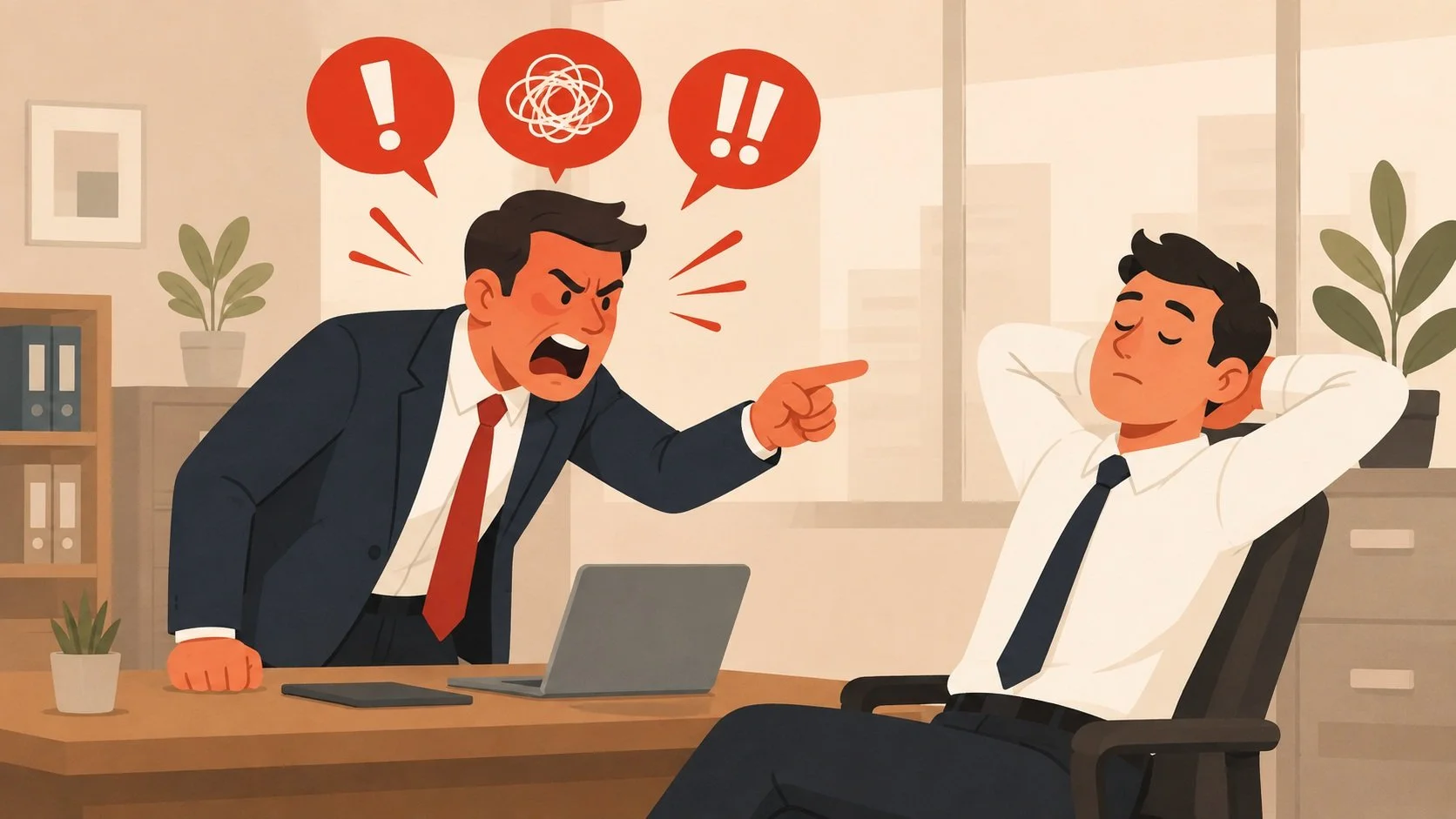
If you visit the websites for such UK tabloid newspapers as the Daily Express or the Daily Mail you will no doubt encounter prominent stories about Megan Markle, Nigel Farage and “immigrants”. If these two august institutions are short of column inches, they’ll run a piece about how some former celebrity has had the unmitigated gall and temerity to get old. I mean WTF? How dare they do what human beings are genetically disposed to do. It’s outrageous. Similarly, head over to the Unherd website and you’ll find foam flecked tirades regarding spurious points of contention over dubious subjects. Often the topic being harangued is incredibly niche and I’ve never heard of it before or even considered it being a thing. These sort of talking points are not about informing, debating and most certainly aren’t about thinking. They exist to provoke reactions.

Before we start, let me explain to those readers outside of the UK, the significance of a Dairy Milk Freddo chocolate bar and its relevance to this post. The “Freddo” is an 18g (0.63 oz) chocolate bar, in the shape of an anthropomorphic frog. When it was re-launched by Cadbury in 1990 (it had previously been manufactured by an Australian confectionery company in the seventies), it was priced at 10p (£0.10). It remained at that price until 2005 when a 1p to 2p increase began to occur each year. By 2016 Freddos were retailing at 25p. However, the following year the price “lept” to 30p with an increase that was double its usual yearly rise. This led to public outrage across social media. Since then the price of a Freddo has waxed and waned. Tesco supermarket reduced the price back to 10p as part of their centenary celebrations. The post COVID price in 2022 hit 49p. At present, the average price of a Freddo in the UK is somewhere around 35p.
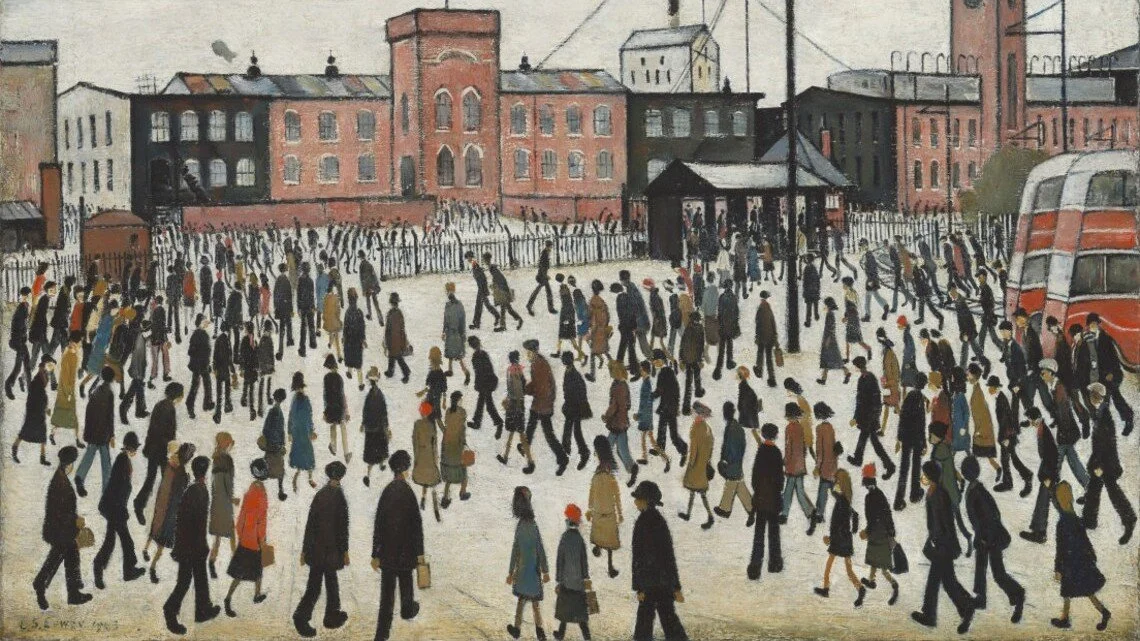
Over the last 10 years, I’ve written several blog posts about my personal working experiences and my career, such as it was. I touched upon working specifically in IT and how that industry changed over time, both technically and in the way that other people perceived it. I have also given my thoughts on the social dynamics of the modern work environment and the way we interact with our colleagues and employers. That is another area that has changed dramatically. Naturally my retirement from full time work has been written about, as it is such a radical change in one’s life. Especially if you’re the sort of person who is clearly defined by their job, which I personally was not. This time, I want to share a few thoughts I have about what I miss about “going to work” and “having a job”. I’m not sure if “miss” is the right word. Perhaps it is more a question of things being absent. Either way, there are some aspects of being employed that I use to enjoy or at least found beneficial that I now no longer experience.

UK Prime Minister, Sir Keir Starmer has resigned and intends to leave office before the parliamentary summer recess. By then Andy Burnham will more than likely be voted leader of the Labour Party and by default will become the new Prime Minister. Due to the current size of the incumbent Government’s majority, there is no pressing reason for a General Election that the UK’s right wing tabloid press is currently calling for. Whether this provides the Government with the reset they’re hoping for when Parliament reconvenes in autumn remains to be seen. With seven Prime Ministers coming and going in a decade, there are some serious questions to be asked about the current state of UK politics. However, the mechanics of contemporary politics, the decline of clearly defined ideologies and the people that seek elected office to be our leaders are only half of the problem. The other major impediment to the UK’s democracy functioning properly is the electorate.

The UK Government has formerly announced its intention to ban under-16s from using social media. This is due to increasing public pressure that “something must be done” about the perceived iniquities of many online platforms. However, as with most complex social problems of this nature, no one has any clear or practical ideas as to what that “something” is. It remains a nebulous, non-specific panacea and clearly someone else’s job to identify and implement. As ever, why choose a nuanced and multifaceted solution to a complex problem, when it is far easier and politically expedient to just “ban” something. The former requires effort and a degree of thinking. If such an approach fails it also means that those who came up with it now carry the can. The latter dumps the problem in the lap of various third parties, who can then be conveniently blamed when the ill conceived policy fails.

Every Thursday, Mrs P volunteers at a food bank that is run from a local church; Avery Hill Christian Fellowship. Today there was a shortage of staff so I agreed to help out. It proved to be an equitable arrangement as she collated the various orders and I packed the bags and took them to the respective clients. The food bank itself is organised and administered by the Trussell Trust, a UK based NGO and charity providing emergency food and support to people locked in poverty. It is open for 2 to 3 hours a week depending upon demand. During today’s session we served just six people. Some weeks its can be triple that amount. Upon closure, a member of staff from the Trussel Trust did a stock take and collated a list of what was needed. This is provided by various local church communities via parishioners donations, as well as local supermarkets who have an arrangement with the trust to provide surplus stock or good approaching the end of their sales window.

There are approximately 4000 parks and green spaces in Greater London. Bexley Borough alone has over 100. Public parks and green spaces are vital to modern cities, providing essential health, environmental and social benefits. They boost physical and mental wellbeing by reducing stress and providing a place for exercise. Furthermore they enhance urban sustainability, mitigate heat, and provide a sustainable environment for a wildlife. Parks are often a venue for social activities and events and as such are an important part of the local community. Going to the park has always been a part of my life. I live next to Old Farm Park in Sidcup and have made use of this recreational space throughout my life. I used visit with my parents in the seventies, when I was a child. Thirty years later my son, father in-law and I would fly kites there. Now I take my grandchildren to Old Farm Park as it now has a playground.

Being a 58 year old man, I welcome any undertaking which can potentially improve my health. One such thing is proactive screening and testing. The UK National Health Service has started doing a lot more of this in recent years, mainly because diagnosing a problem and treating it early is far more efficient and cost effective than retroactive action. Hence this policy and my age is why I was recently sent a NHS Bowel Cancer Test Kit via the post. This screening service takes place every two years for people aged 50 to 74 in the UK. The kit is very quick and simple to use. A sample of your stool is sent via a prepaid return envelope for testing and the entire process is free of charge. Upon receipt, the laboratory test determines whether there is any blood present in your stool, which is a potential indicator of bowel cancer. If detected, an early diagnosis greatly improves any subsequent treatment outcomes.

I like learning things. I always have. During my middle school years I thought I was a mediocre student and often I wouldn’t apply myself. According to an old school report this was because I was “too busy indulging in Tomfoolery”. Then I had the positive experience of meeting an exceptional teacher. Their lessons were the highlight of the week as they had an ability to make the subject matter, Classical History, utterly compelling and relevant. The teacher in question also treated us like adults and the class benefitted from only having five pupils. This really brought home to me that a lot of disinterest and underachievement in education is linked to the paucity of some teachers. One bad teacher can undermine the good work that all the others can do. Perhaps it has improved nowadays?

I’ve had an interest in the paranormal since I was a child. My mother always got books out of the library about ghosts and UFO phenomenon, so in some respects I was influenced by her reading habits. As a child such tales were by default interesting and any potentially scary element naturally made them more enjoyable. However, my father being an academic had taught me to question everything, so I felt fairly evenly equipped when exploring these subjects. Further to this point, over the years I have learned that humans have a very unique perspective on the world. We are hard wired to see patterns, regardless of whether they’re there or not. Our senses can also be fooled and often are. Perhaps the most important aspect of our nature that impacts upon any analysis we make into the paranormal is our penchant for creating stories. Hence unusual experiences can be subconsciously misremembered and “retconned” to form more precise narratives.
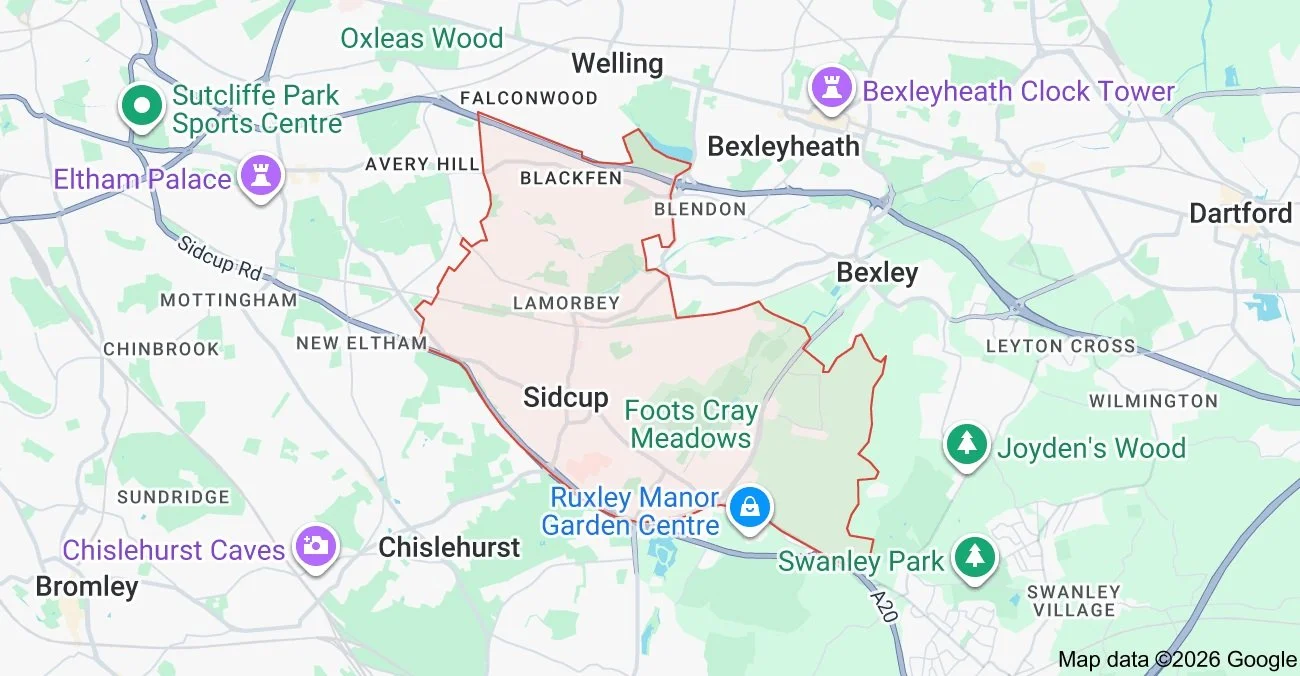
I have lived in Sidcup, in South East London, for most of my life. The first two schools that I went to were local and within 15 minutes walking distance. My Doctor’s Surgery and Dentist are only a few streets away, as is the barbershop that I’ve frequented since 1970. I now have my haircut by the son of the original barber. My point being that Sidcup has everything that residents immediately need. There’s a local hospital, good public transport networks and a broad range of shopping and restaurant facilities. It also has several parks with lakes, sport facilities and children’s play areas. It is a microcosm of the concept of suburbia with its residents commuting into Central London or out into Kent for work. People move here to raise families and end up staying. My parents lived here for 62 years.
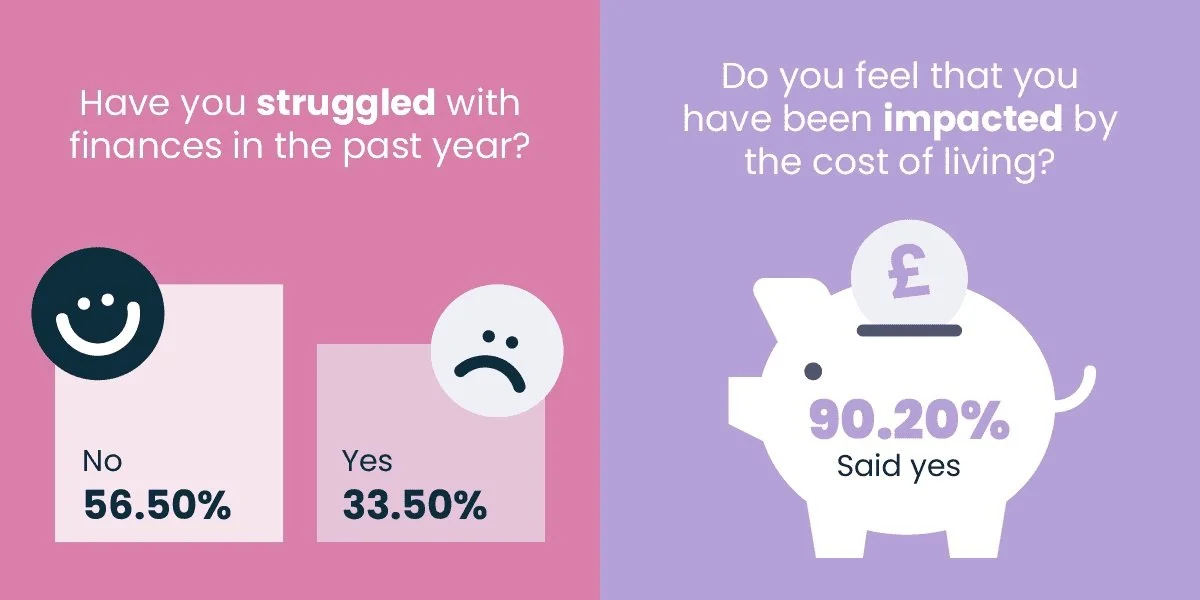
Our household is currently trying to reduce our monthly overheads in response to the ever increasing cost of living. April is not that far away and a great many service providers will increase their rates and tariff as the new financial year begins. Then there is the ongoing effects, both direct and indirect, of inflation to consider. Although the UK inflation rate is dropping, currently sitting at 3.4% in December 2025, food inflation remains higher at 4.5%. Being based in the UK, salaries and billed services tend to be administered monthly. You get paid usually at the end of the months and bills can turn up at any point, depending upon when you started a service. Any payments coming from central government, such as state pension or other benefits, are paid every 4 weeks. This means that there are 13 payments in a year. I thought it pertinent to clarify this point as other countries, such as the USA, favour a fortnightly financial cycle. Hence as a household we work around a monthly budget.

I try not to let the failings of contemporary capitalism get to me but such a mindset is very hard to maintain. From time to time it does just piss you off and you know damn well that there’s nothing you can do about it. So to begin this tale, at the end of November, our Indesit washer/dryer gave up the ghost after a valiant twelve year lifespan. As a result of this household appliance’s stirling work, it was decided to buy another from the same manufacturer. Their website informed me that the model that had just broken was no longer being produced. However, it recommended two newer appliances that had comparable specifications and more importantly the same size. This washer/dryer had to fit into a fitted kitchen unit. To cut a long story short, a model was chosen, purchased, delivered within 48 hours and installed. The broken predecessor was subsequently taken away. The wonders of modern consumer culture!

I was in a pub last night, catching up with friends before Christmas, when I noticed on the wall something I haven’t seen in a pub for a very long time. A jukebox. In my experiences most of the pubs I go to take one of the following two approaches to background music. They either have a sound system and exclusively manage any music via personally curated playlists from behind the bar. Or they have no music at all. The Wetherspoons chain of pubs broadly follow the latter policy and actively use it as a marketing point. Quiet pubs for clientele that just want to talk can be popular. Hence finding an accessible jukebox was a blast from the past. During the late eighties and early nineties, I regularly visited my local pub and often used the jukebox there, which at the time, was operated by an ever changing store of CDs. The jukebox I encountered last night was digital.

Today is my 58th birthday. It would appear that I have existed for nearly six decades. Put another way, I am over half a century old. All of which has given me pause for thought with regard to the passage of time. A phrase that is often bandied about, but what exactly does it mean? As I understand it, the “passage of time” refers to our perception of the flow of time and how we experience its movement. This is something distinct and different from objective time as measured by clocks. Our subjective experience of time can vary due to multiple factors. Two common examples are how time can feel like it's flying by when we're having fun and enjoying something or dragging its feet when you’re enduring something dull. Other factors are whether we are applying ourselves to a task, concentrating and general activity. Such focus can make time pass quickly.

When Mrs P and I moved into our current home, over twenty years ago, we were both working full time. As the garden was poorly maintained and neither of us had any horticultural skills, we decided to employ a gardener. At the time it was a practical solution to the issue of garden maintenance and remains so today. Hence it is a service we continue to use, although our personal health is now the main reason we pay a gardener.

In July the UK Government introduced the Online Safety Act which requires age checks for accessing sexually explicit content online. As a result of this, Pornhub, the 19th most visited site on the internet, has reported a 77% decline in UK traffic. Furthermore, according to the UK regulatory body, OFCOM (The Office of Communications), overall visits to pornographic websites from the UK have fallen by 33%. Naturally, those who championed this legislation are claiming a moral and political victory. However, once you consider what these facts actually mean, they paint a somewhat different and potentially more worrying picture. It would be staggeringly naïve to think that UK visitors to Pornhub have ceased visiting such sites due to the age verification requirements. The more likely explanation is that UK porn consumers are now using VPNs to circumnavigate these restrictions and that this traffic to Pornhub is now recorded as coming from elsewhere.

Formal education in the UK is a structured process, starting at early years learning and continuing through to higher education at university. Some aspects of the educational system are mandatory, whereas others are optional. At present, children in the UK must start full-time education from the age of 5 and remain until the age of 16. After this age, they are no longer required to attend school per se but must remain in some other form of education or training, such as a vocational college or an apprenticeship. Many students remain at school until 18, as there are specific exams to be obtained that are required for a subsequent university placement. Here is a breakdown of the current process as it exists in the UK.

I don’t know if you have noticed that there are quite a lot of companies that have names taken from Tolkien’s Legendarium. At first glance, this seems innocuous enough. Tolkien’s writings grew in popularity over the seventies and eighties but since the release of the film trilogy at the start of the twenty-first century, his work has become more well known and been assimilated into our wider pop culture. Hence, it seems quite logical that a startup tech company, for example, would choose a name from his writings. No doubt the founders grew up reading The Lord of the Rings and are fans. That all seems plausible. However if you take a further look, it gets somewhat more complex. Here are four companies that have Tolkien based names.

Last Wednesday, I woke up with what I thought to be a crick in my neck on the left hand side. I assumed this was simply due to sleeping awkwardly and so I self medicated with some non-prescription pain relief and judicious use of a heat pad. Unfortunately, the problem has persisted and in the last 24 hours it has become much worse. I awoke this morning at about 5:00 AM and as I sat up in bed, an intense pain ran up the left side of my neck and behind my ear. It took several attempts for me to get out of bed because if I turned my head in either direction or inclined my chin, the pain would again run up the side of my neck. Sitting down, getting up and raising my arms caused similar results. While dressing, I attempted to pull a t-shirt over my head. The pain in my neck on this occasion was so severe that I yelled out loud and nearly blacked out.

I am a non-driver. If you wish to know the specifics of how this situation came about, feel free to read the post I wrote about it back in early 2018. To be succinct, I don’t drive, I’ve never learned how and have never owned a car. I don’t feel that I’ve missed out. In fact I feel quite the opposite. I think I’ve dodged a major hassle and expense in life. Mrs P, my significant other, is the designated driver of our household. She owns a car, insures it and maintains it. She also mainly pays for the petrol, whereas I pick up the tab for other things such as lunch or hotels when we travel. All I have to do is make like Iggy Pop if we go anywhere. The most I am ever called upon to do is navigate using Google maps and Android Auto. Fortunately, Mrs P enjoys driving. Always has done. Hence I look upon this situation as an extremely fortunate and equitable arrangement.
I am getting old. I shall be 58 in December. Now, as soon as you say something like that these days, some folk will get uncomfortable and say things like “age is relative” or “you’re as old as you feel”. Well I don’t measure my age in geological terms, so it’s not relative and I’m not feeling anyone especially young at the moment, so both schools or thoughts can sod off. I am getting old by the yardstick we measure human life by, namely years. I have specific, age related health issues and I just don’t feel as energised as I did a decade ago. There are minor signs, such as deciding to go to bed earlier and taking longer to get dressed after taking a shower. I’m not at death’s door but I am slowing up physically. It would also appear that my reactions are also slowing down as I tend to get massacred in any FPS I play these days. So far, my mental faculties seem to be holding up. However, that is the one thing I worry about the most. The potential loss of cognitive abilities scares the shit out of me.
One of the things that I enjoy when playing a new video game is character customisation or character creation. I will spend hours trawling through settings, changing the most minute and consequential aspects of my avatars appearance. I am certain that there is a psychological aspect to this particular game mechanic and that it says something about you as a person. Are your creations shaped just by a need to look good in-game or is there more to it? Are they external manifestations of your sexual preferences or thoughts on body image. Do you treat them as characters from a book that exists in your mind. Do you aspire to recreate the likeness of people you know or admire? Do you strive to make your avatar look like you? Whatever the reasons, it would seem that character creation is something that a lot of gamers enjoy. Hence I am not alone in my borderline obsession. What you look like in-game is equally as important as your character’s name.