Blogrolls
As today is the first day of Blaugust, I thought I’d write something pertinent to blogging. If you’re not sure what Blaugust is then follow the link and you’ll find a wealth of posts that explain this yearly event along with useful advice and guidance. So returning to the matter in hand, bloggers tend to form informal communities which support and promote each other's work. This can be either due to altruistic reasons or down to pure pragmatism. Either way networks of bloggers emerge, often around specific subjects or facets of popular culture. Our own community that holds the Blaugust event is one that is broadly centred around video games, although that is not in any way a defining criteria. All are welcome. However, the point I’m striving to make is that if you run a blog then you need people to read it. And if you want people to read it it helps if you cross promote others and they in turn promote yours. And the easiest way to do this is with the humble blogroll.
As today is the first day of Blaugust, I thought I’d write something pertinent to blogging. If you’re not sure what Blaugust is then follow the link and you’ll find a wealth of posts that explain this yearly event along with useful advice and guidance. So returning to the matter in hand, bloggers tend to form informal communities which support and promote each other's work. This can be either due to altruistic reasons or down to pure pragmatism. Either way networks of bloggers emerge, often around specific subjects or facets of popular culture. Our own community that holds the Blaugust event is one that is broadly centred around video games, although that is not in any way a defining criteria. All are welcome. However, the point I’m striving to make is that if you run a blog then you need people to read it. And if you want people to read it it helps if you cross promote others and they in turn promote yours. And the easiest way to do this is with the humble blogroll.
After writing online for over a decade, I consider blogrolls to be both an asset and a social minefield. In principle they provide a list of online resources that others can use for reference. In fact if you find a site with a comprehensive blogroll it can become a major asset with regard to keeping abreast of others writing. However they can also have some less desirable consequences. Some people see them as a popularity contest or a self indulgent backslapping exercise. There is also a strange sort of internet etiquette associated with them. Sometimes bloggers feel snubbed if they find that their site is absent from their peers' blogroll. If someone adds your site to their blogroll are you obliged to reciprocate? It may sound all very inconsequential but you’d be surprised at the little things that some people choose to get annoyed over.
When I moved Contains Moderate Peril from a hosted WordPress site over to Squarespace, I decided to review whether I should maintain a blogroll. Due to the template I chose and its lack of a sidebar, the matter pretty much resolved itself. I could set up a separate page with a list of blogs but it lacks the convenience of having it on the site homepage. Back in early 2012 I set up The Gaming Blog Nexus, as a more practical means to aggregate blog content and keep track of the latest post published. It proved to be a popular website and successful resource but like so many online projects, it was subject to increasing operational costs. After two and a half years I decided to close the site, which at the time listed over one hundred and twenty gaming related blogs. Although I do not regret my decision, as I do not have unlimited funding for my online projects, I do miss its practical benefits.
If you’ve decided that you wish to maintain a blogroll on your website, here are a few tips for your consideration. If possible present your blogroll in order of new posts or alphabetical site names. If your blogroll is simply a list of hyperlinks then the latter is possibly the best option. Fancier addons or plugins may offer more complex ways to tabulate and collate the blogs listed on your roll. Decide in advance what your policy is to be with regard to which blogs you add to your roll. If you choose a quid pro quo approach then stick to it. If you decide to be more particular, bear in mind that some people may question your policy. Also remove sites from your roll that have become inactive or you know are “dead”. A year is a fair benchmark. If you do these things and manage your blogroll well, you may see a spike in your website traffic. Just bear in mind it may be due to the well maintained resource that you’ve curated, rather than the quality of your prose.

























Minions (2015)
It would appear that there is a Minions 2, although it’s release around the world has been staggered due to the pandemic. So I thought I’d revisit the original movie for a second viewing. Spin-off movies can be a risky venture. Side characters may work well in a supporting role within a successful movie but may not necessarily find an audience in their own vehicle. However this is most definitely not the case with Minions. The movie is ninety one minutes of exquisitely crafted cinema. From the opening Universal fanfare (which the Minions sing-a-long to) to the post credit rendition of Revolution, the film is consistently funny and perfectly paced. The production design and overall aesthetic is beautifully realised and the central characters of Kevin, Stuart and Bob are thoroughly engaging. Actually, forget "engaging ''. They are genuinely loveable. Directors Pierre Coffin and Kyle Balda barely put a foot wrong.
It would appear that there is a Minions 2, although it’s release around the world has been staggered due to the pandemic. So I thought I’d revisit the original movie for a second viewing. Spin-off movies can be a risky venture. Side characters may work well in a supporting role within a successful movie but may not necessarily find an audience in their own vehicle. However this is most definitely not the case with Minions. The movie is ninety one minutes of exquisitely crafted cinema. From the opening Universal fanfare (which the Minions sing-a-long to) to the post credit rendition of Revolution, the film is consistently funny and perfectly paced. The production design and overall aesthetic is beautifully realised and the central characters of Kevin, Stuart and Bob are thoroughly engaging. Actually, forget "engaging ''. They are genuinely loveable. Directors Pierre Coffin and Kyle Balda barely put a foot wrong.
Set in 1968, the Minions are in an emotional decline as they cannot find a master to serve. So Kevin, Stuart and Bob set off from home to find the biggest and baddest villain around with a view of becoming their henchmen. They chance upon international criminal Scarlet Overkill (Sandra Bullock) and due to good luck, inadvertently win her favour. If they can secure the Queen of England's crown for her, then Scarlet will find a home for them and restore them to their rightful role as henchmen. This broad plot lends itself to a wealth of sixties pop culture references and clever in-joke, along with continual slapstick humour. This is a movie that entertains on multiple levels which explains why the adults outnumbered the children in the screening I saw back in 2015.
During the course of their misadventures Kevin, Stuart and Bob drive through a movie set where Stanley Kubrick is faking the Moon Landing, get walked over by The Beatles at the Abbey Road zebra crossing and pull the sword Excalibur from the stone, thus claiming the throne of England. Minions is the sort of movie that requires multiple viewings to fully appreciate all it's throwaway gags and one liners. I spotted a great deal more second time round. The period setting also lends itself to a cornucopia of classic tunes by the likes of The Who, The Kinks and The Rolling Stones. Are they clichéd? Yes. Do they still work? Most certainly due to the way they superbly underscore the onscreen action.
I laughed continuously while watching Minions and was more than happy to surrender myself to its inherent stupidity and tangential narrative. The minions themselves are extremely likeable. There is no need for them to possess complex character traits or to have convoluted motivations beyond their Joie de vivre and penchant for bananas. This most certainly has been the funniest movie I've seen for a while and I felt immensely restored by seeing it. Laughter really does have curative properties and there is simply so much material to see here. Oh and if you do decide to watch Minions, stay right until the end and ensure you watch all the credits and beyond. You'll be well rewarded. Let us hope that the sequel delivers more of the same.









Everything That is Wrong With Management Hierarchies in a Nutshell
The following video appeared in my Twitter timeline three months ago. Upon watching it, I was annoyed on multiple levels and it takes quite a lot to get me agitated these days. I felt disposed towards writing a blog post about what I had seen. However, other stuff came up, as it always does and I ended up writing something else and this post ended up consigned to the “phantom zone” that is “draft posts”. However, I had a conversation today with someone online, that started a train of thought that led me back to this Tweet and my draft post. Someone used the word “literally” when they clearly meant something figuratively and it made me think about how so many people use words incorrectly. Not being able to express yourself clearly and accurately is a major problem. With regard to the anecdote featured in the video it is a clear demonstration of this. It also raises a lot of other issues, all of which are the bane of management.
The following video appeared in my Twitter timeline three months ago. Upon watching it, I was annoyed on multiple levels and it takes quite a lot to get me agitated these days. I felt disposed towards writing a blog post about what I had seen. However, other stuff came up, as it always does and I ended up writing something else and this post ended up consigned to the “phantom zone” that is “draft posts”. However, I had a conversation today with someone online, that started a train of thought that led me back to this Tweet and my draft post. Someone used the word “literally” when they clearly meant something figuratively and it made me think about how so many people use words incorrectly. Not being able to express yourself clearly and accurately is a major problem. With regard to the anecdote featured in the video it is a clear demonstration of this. It also raises a lot of other issues, all of which are the bane of management.
Essentially, the guy referenced in the story didn’t understand what “random” means. Furthermore, he couldn’t adequately articulate what it was that he actually wanted the developer to do. On several occasions he reacted retrospectively to the results presented, requesting changes that he had not previously expressed. So not only was he ignorant of a word’s definition he was incapable of stating what he ultimately desired, in this case the parameters of the sequence he wanted the songs played in. The results were ultimately achieved but the manager's communication and handling of the situation were inefficient and potentially had a cost impact upon the process. Rather than enhancing workflow and production through management of staff, this individual directly but probably unbeknown to themselves, hampered and held up development.
There are many problems that blight management culture and vertical hierarchies. Cronyism, direct entrants into a grade who are overqualified but under experienced and those who are just bereft of empathy and social skills. Management often have a degree of power which sadly attracts the socially dysfunctional, the sociopathic and those who just like to fuck with people. Managers should be able to do everyone else’s job, have both authority and “soft” people skills. They should lead by example. Sadly most fail these criteria. It seems to me that the only qualification required nowadays to manage staff is having a pulse. However, putting aside a wider critique of the role, I consider communications to be the biggest issue and possibly the most common failing. I have never worked in the video game industry but I have certainly encountered comparable examples of this anecdote. You’ve probably done the same.
If you’re looking for this post to come up with a solution to this malady then I must disappoint you. Getting the right people into the right positions is a difficult and complex problem and takes a lot of time, money and effort. Something a lot of businesses just don’t want to do. Hence you get square pegs in round holes or managers who are patently out of their depth without any idea that they are so. Again I will advocate the merits of self employment, where possible. If you work for yourself and have a shit manager then you only have yourself to blame. Beyond that, all I can advise is to document everything and ensure that you have a backup copy of your paper trail. Where possible, if someone is being vague, seek clarity. “What do you mean by that” is a useful phrase. But in a business world where the Dunning–Kruger effect is rife, what can’t be cured must be endured. I’m not a religious person myself but God obviously loves crap middle management because he certainly makes a lot of them.

























The Fourth Protocol (1987)
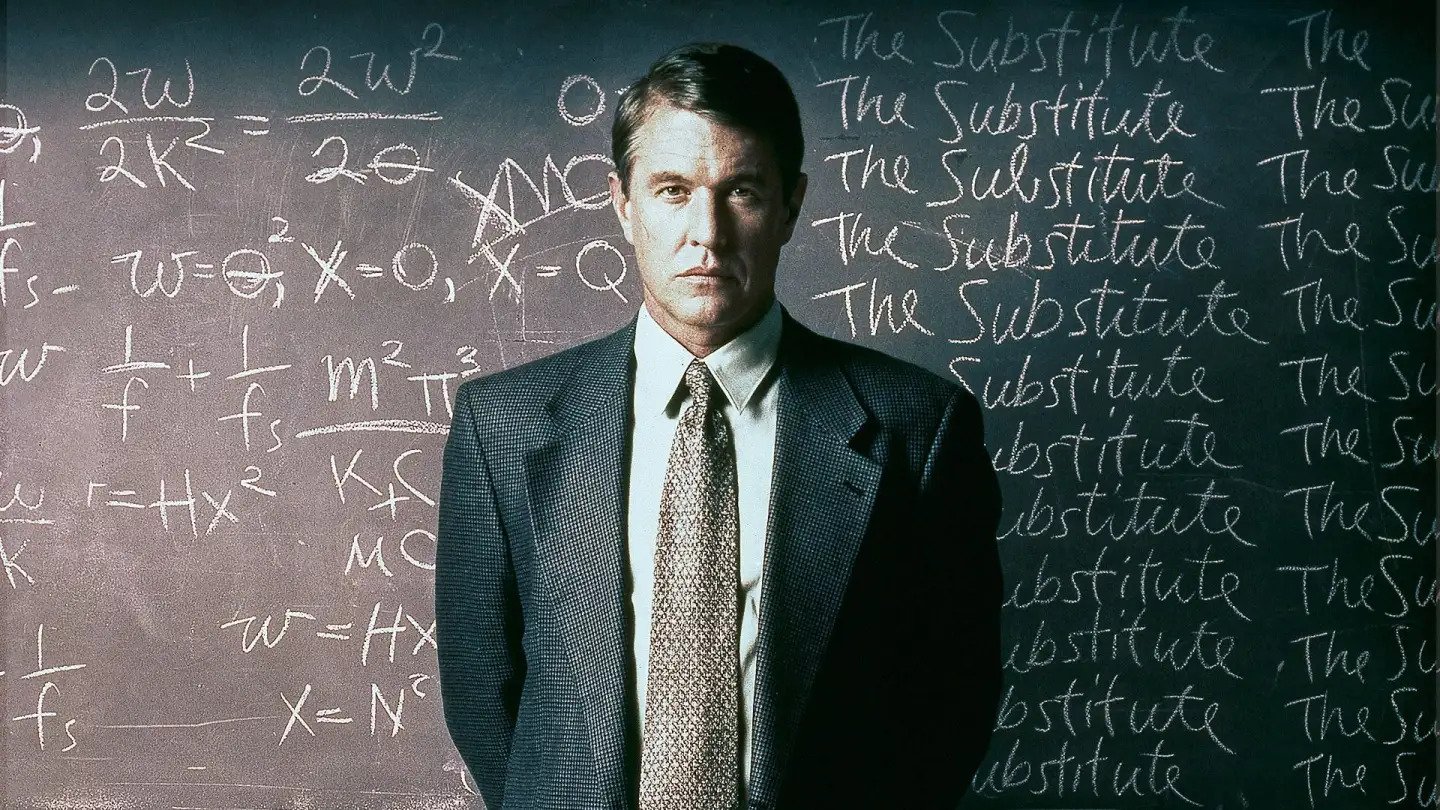
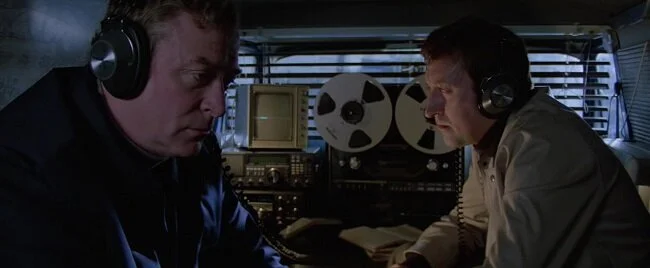
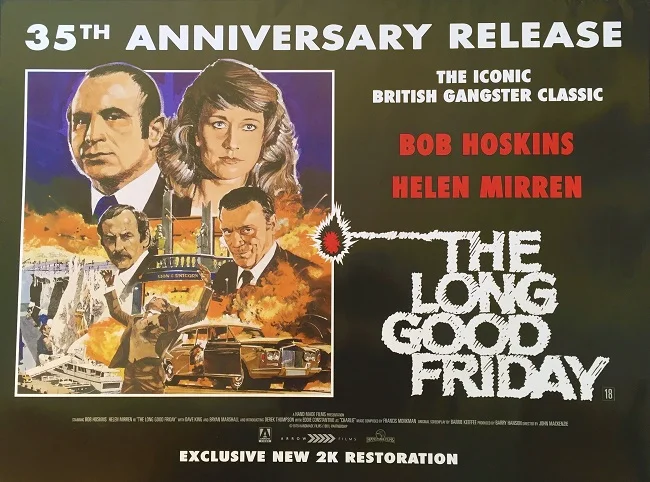
Sometimes a perfectly competent film simply misses the boat. The Fourth Protocol is a prime example of this. Based upon the novel by Frederick Forsythe this well made, somewhat clinical thriller arrived in cinemas at a time when the cold war was coming to an end due to “glasnost” and the “red menace” was becoming a somewhat tired plot device. It didn’t help that a similar story about a rogue Russian mission to detonate a nuclear device on a US base had already featured four years earlier in the Bond film, Octopussy. Michael Caine spent several years trying to get the project off the ground, after initially reading the author’s draft manuscript of the novel. Veteran screenwriter George Axelrod was hired and John Frankenheimer was sought to direct the film. However, difficulties in financing the project led to changes in the production and Forsythe ended writing the screenplay himself, while John Mackenzie (The Long Good Friday) took on the direction.
Sometimes a perfectly competent film simply misses the boat. The Fourth Protocol is a prime example of this. Based upon the novel by Frederick Forsythe this well made, somewhat clinical thriller arrived in cinemas at a time when the cold war was coming to an end due to “glasnost” and the “red menace” was becoming a somewhat tired plot device. It didn’t help that a similar story about a rogue Russian mission to detonate a nuclear device on a US base had already featured four years earlier in the Bond film, Octopussy. Michael Caine spent several years trying to get the project off the ground, after initially reading the author’s draft manuscript of the novel. Veteran screenwriter George Axelrod was hired and John Frankenheimer was sought to direct the film. However, difficulties in financing the project led to changes in the production and Forsythe ended writing the screenplay himself, while John Mackenzie (The Long Good Friday) took on the direction.
MI5 officer John Preston (Michael Caine) discovers that British government official George Berenson (Anton Rodgers) is leaking government documents. Although his investigation is well received by British Secret Service official Sir Nigel Irvine (Ian Richardson), Preston's methods embarrass the acting Director of MI5, Brian Harcourt-Smith (Julian Glover) and he is reassigned to "Airports and Ports". Meanwhile in Russia, KGB General Yevgeny Karpov (Ray MacAnally) suspects that his immediate superior, General Gavorshin (Alan North) is mounting an unauthorised operation. He discovers that Major Valeri Petrofsky (Pierce Brosnan) has recently assumed a long established fake identity and been dispatched to the UK. In the meantime, Preston investigates the death of a Russain merchant seaman who was run over while trying to leave port without authorisation. While searching through his personal affects he discovers a metal disk. This is subsequently identified as polonium, which could be used as part of a detonator for an atomic bomb.
The Fourth Protocol has a very similar feel to The Day of the Jackal, insofar that it is procedurally driven and plays at times more like a faux docudrama rather than thriller. The fact they’re both written by the same author is obviously relevant. In the case of The Fourth Protocol, this very procedural approach to Preston’s investigation, juxtaposed with Petrofsky’s methodical collection of the various bomb parts, does come somewhat at the expense of character development. This is a film mainly about archetypes and political themes common to the spy genre. However the film does offer some great detail such as when Berenson (Anton Rodgers) is followed by an MI5 surveillance team across London. Petrofsky’s elimination of casual witnesses is also quite grim. The practicalities of creating a nuclear bomb are also starkly presented, although certain aspects of the process are ignored for practical and narrative reasons.
Caine and Brosnan do much of the heavy lifting and keep the drama afloat. The latter does very well considering he does have a minimal amount of dialogue. Caine has some smart one liners that he delivers with relish and the scene where he forensically deals with two skinheads on the London Underground who are racially harassing a passenger is spot on. The film has some very good yet somewhat low key stunts. The scene where Caine and his MI5 sidekick drive directly onto a platform at King’s Cross station and Caine leaps onto the moving train is well handled. The fact that it's executed within a single tracking shot makes it all the more impressive. The film also benefits from a solid score by Lalo Schifrin which underpins the action and enhances the drama. All in all, this is a solid thriller which keeps the viewer engaged for nearly two hours. Unfortunately, timing is important and public tastes change. Hence The Fourth Protocol was just a few years too late and didn’t quite make its mark.




Is the Gaming Community to Blame?
The ongoing debacle about Blizzard Entertainment naturally raises the question as to what part the gaming community has contributed to this sorry state of affairs. There is a school of thought that gamers who blithely accept the status quo and never speak out about sexism, racism and casual misogyny within the games they play, the companies that create them and the wider community are part of the problem. They are effectively "facilitators" and are "complicit" with the perpetuation of these problems. Logically speaking, such observations are correct in a notional capacity. However, the reality of the situation is far more complex and nuanced. For example there are vast swathes of gamers who do not follow any associated news and therefore will be oblivious to the iniquities of Blizzard Entertainment. The same way as they are ignorant of the business practises of their car manufacturer or telecoms provider.
The ongoing debacle about Blizzard Entertainment naturally raises the question as to what part the gaming community has contributed to this sorry state of affairs. There is a school of thought that gamers who blithely accept the status quo and never speak out about sexism, racism and casual misogyny within the games they play, the companies that create them and the wider community are part of the problem. They are effectively "facilitators" and are "complicit" with the perpetuation of these problems. Logically speaking, such observations are correct in a notional capacity. However, the reality of the situation is far more complex and nuanced. For example there are vast swathes of gamers who do not follow any associated news and therefore will be oblivious to the iniquities of Blizzard Entertainment. The same way as they are ignorant of the business practises of their car manufacturer or telecoms provider.
Many gamers play the games they enjoy as a means to decompress from the pressure of modern life and to recharge their emotional batteries. A few hours spent playing an MMO or MOBA is a way to forget, for a while at least, about global warming, political shenanigans and the like. Therefore some players are not really disposed toward having to parse their gaming activities for its social and moral rectitude. It’s something we all do to a greater or lesser degree. Cognitive dissonance is virtually the average person's default position. We like cheap clothes but we don’t like to think we are actively participating in the exploitation of labour in developing countries. We voraciously consume factory farmed meat, yet we purposely distance ourselves from the realities of its production. Save the planet? Absolutely, I’m onboard for that. As long as I can still have my cheap flights. This is how people work and why some gamers want to stay below the parapet and off the radar.
There is an inherent duality in being part of the gaming community. There are times when we as gamers may feel proud to identify as such. And then there are other occasions when we look upon the actions and decorum of certain quarters with a sense of shame. In the past the common refrain you’d hear regarding racism, sexism and other forms of marginalisation would be “this is not representative of our community”. Sadly, post “Gamergate”, it is now very much representative of a sizable part of the community and cannot be easily dismissed as fringe malcontents and freelance trolls. I believe that the game community, just like social and political discourse, is pretty much split down the middle upon clear partisan lines. Exactly the same fault lines appear in most social groups and they are usually based around equality and access to power. The divide is between those who have the advantage and wish to maintain it for their benefit and those who wish to level the playing field.
Video games may well be far more inclusion nowadays but that is only a fairly recent development. Furthermore, such change has not been driven by a strong sense of morality but more by a financial imperative. But if you look at the way video games were created and marketed thirty plus years ago, it was very different. Hence a generation of boys grew up believing that games were very much their exclusive province. That combined with other cultural assumptions about gender roles, employment and social hierarchies certainly helps explain where we find ourselves today. Furthermore, because we live in a more socially conscious world it is now harder to try and remain neutral regarding who to address issues such as that currently blighting Blizzard Entertainment. Yet because of the clear divide in all opinions now there isn’t necessarily a consensus, although I do think there is often a clear “right” answer. And so the gaming community becomes a battlefield. Just another in the ongoing culture war.
So when the question is mooted as to whether the players are culpable to any degree for the ongoing Blizzard Entertainment debacle or indeed the wider failings of the gaming community, I no longer think we say it’s a gray area. As players, or more accurately consumers, we support in large numbers all of the practises and policies that we also continuously complain about. Microtransactions, live services, hype culture, pre-orders etc. We also enable those who we revere by treating them like rock gods. If you tell someone that they’re special and can do no wrong, don’t be surprised when they go along with it, at the expense of others. And then there’s the little, yet important things that we can sometimes let slide. Such as when someone spouts vile crap in world chat. Don’t just block them or quit that specific channel. Call them out or file a report on them. Remember “the only thing necessary for the triumph of evil is for good men to do nothing” as Edmund Burke succinctly stated.
Now you may argue that you personally don’t buy pre-orders, spend money on in-game purchases and that you eschew “bro” gaming culture. Good for you. But I think that we’ve reached the point where just not adding another stool to the ever growing lake of faecal matter isn’t the get out of jail card that it used to be. The status quo is demonstrably bad for many people and we cannot just leave it as it is. My biggest concern about the current situation with Blizzard is that the company will offer up some sacrificial lambs, mouth some vague commitments to change and simply try to ride out the storm, only to return to “business as usual” within the shortest time possible. So I believe it is time for everyone who finds the situation unacceptable to make their voice heard. You don’t have to man the barricades. Simply writing a blog post, saying something in your live stream or uninstalling battle.net sends a message. If we want our community back then we have to roll up our sleeves and pitch in.




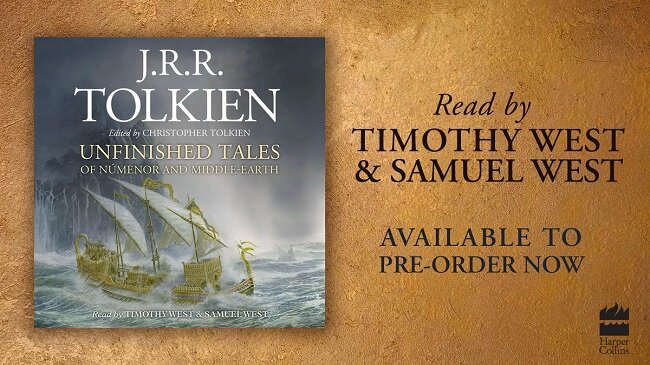
Unfinished Tales by J. R. R. Tolkien - Read by Timothy and Samuel West (2021)
First published in 1980, Unfinished Tales is a collection of stories by J. R. R. Tolkien, that spans from the Elder Days of Middle-earth to the end of the War of the Ring. For those who have read both The Silmarillion and The Lord of the Rings, this book provides additional insights and more detailed accounts of many key events of the First, Second and Third age. Such as Gandalf’s informative tale of how he came to send the Dwarves to Bag-End in search of a burglar, the appearance of the sea deity Ulmo before Tuor on the coast of Beleriand and an in depth description of the military organization of the Riders of Rohan. This collection of stories and essays by J. R. R. Tolkien were never fully completed during the author’s lifetime but were posthumously edited by his son Christopher Tolkien and present with notes, annotations and were required a detailed commentary.
First published in 1980, Unfinished Tales is a collection of stories by J. R. R. Tolkien, that spans from the Elder Days of Middle-earth to the end of the War of the Ring. For those who have read both The Silmarillion and The Lord of the Rings, this book provides additional insights and more detailed accounts of many key events of the First, Second and Third age. Such as Gandalf’s informative tale of how he came to send the Dwarves to Bag-End in search of a burglar, the appearance of the sea deity Ulmo before Tuor on the coast of Beleriand and an in depth description of the military organization of the Riders of Rohan. This collection of stories and essays by J. R. R. Tolkien were never fully completed during the author’s lifetime but were posthumously edited by his son Christopher Tolkien and present with notes, annotations and were required a detailed commentary.
Unfinished Tales also contains the only stories about the island of Numenor before its downfall, and all that is known about the Five Wizards that made up the Istari. Christopher Tolkien’s notes are invaluable, highlighting any deviations in lore with other books in the Tolkien Legendarium. They also help the reader to grasp the evolution of many of the tales and subject matter and provide a sense of context within the rest of his Father’s writings. The commercial success of Unfinished Tales demonstrated that there was still a strong demand for Tolkien's work after his death and that readers would avidly consume any material that provided further insight into the history of Middle-earth. Encouraged by the result, Christopher Tolkien embarked upon the more ambitious twelve-volume work entitled The History of Middle-earth which encompasses nearly the entire body of his Father's writings about Middle-earth.
This May HarperCollins released a new unabridged audio recording of this seminal text featuring the combined vocal talents of Father and Son, Timothy West CBE and Samuel West. The production is exemplary and the quality of reading outstanding. Both Messr West Senior and Junior, being established actors, navigate the choppy waters of pronouncing names correctly with ease. I would go so far as to say that their combined flawless diction adds immensely to the proceedings. The central narrative is told by Samuel West and his Father Timothy reads Christopher Tolkien’s annotations and notes. Furthermore, they read at a measured pace allowing the listener to digest the narrative which at times can be quite complex. It is a far cry from previous unofficial audio versions which have been read in the most perfunctory fashion and without any degree of enthusiasm. Hence I wholeheartedly recommend this version of Unfinished Tales due to its accessibility and quality.






Kiss Me Deadly (1955)
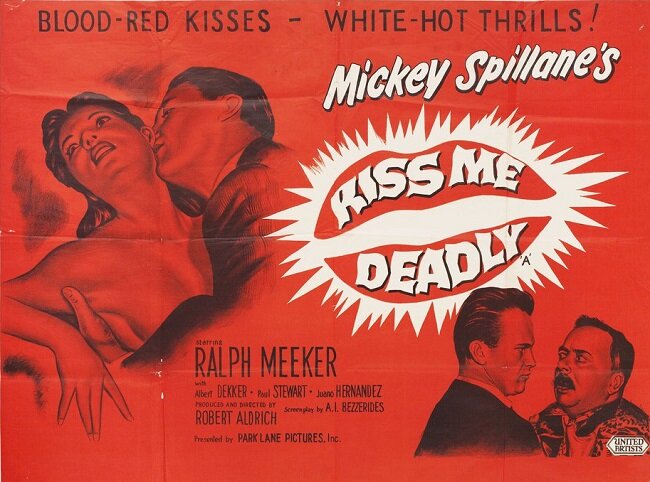
Film Noir often reflects the numerous things that influenced it. German expressionism, French poetic realism and American hardboiled fiction. Hence many films from this genre have a tendency to be stylised both visually and narratively speaking, with a fatalistic tone. Kiss Me Deadly, directed by Robert Aldrich in 1955, takes all these attributes as well as others and amplifies them in one of the bleakest and most uncompromising movies of the fifties. It features a brutal protagonist who isn’t even a decent detective and a plot that seems at first glance to come straight out of Greek mythology. Yet Kiss Me Deadly is compelling and lean without any superfluous scenes or narrative baggage. There’s also what appears to be the mother of all cinematic "MacGuffins" but once the film is over and the viewer reflects upon what they have seen, it can be argued that maybe the characters and the inevitability of their actions are actually the driving plot device instead.
Film Noir often reflects the numerous things that influenced it. German expressionism, French poetic realism and American hardboiled fiction. Hence many films from this genre have a tendency to be stylised both visually and narratively speaking, with a fatalistic tone. Kiss Me Deadly, directed by Robert Aldrich in 1955, takes all these attributes as well as others and amplifies them in one of the bleakest and most uncompromising movies of the fifties. It features a brutal protagonist who isn’t even a decent detective and a plot that seems at first glance to come straight out of Greek mythology. Yet Kiss Me Deadly is compelling and lean without any superfluous scenes or narrative baggage. There’s also what appears to be the mother of all cinematic "MacGuffins" but once the film is over and the viewer reflects upon what they have seen, it can be argued that maybe the characters and the inevitability of their actions are actually the driving plot device instead.
P. I. Mike Hammer (Ralph Meeker) is driving his sports car one evening when he is forced to stop due to a woman running barefoot along the road, wearing nothing but a trench coat. He offers her a lift and she identifies herself as Christina (Cloris Leachman). She then asks him to "remember me", regardless of what happens next, alluding to a poem by Christina Rossetti. The pair are subsequently run off the road by unseen assailants. Hammer is knocked out in the crash and briefly comes round to find himself in a house where Christina is tortured to death. Hammer is then put back in his car along with Christina's body and the vehicle is pushed off a cliff. He awakes in hospital, to find his secretary Velda (Maxine Cooper) waiting for him. He decides to investigate Christina's murder believing that it "must be connected with something big." He subsequently tracks down Lily Carver (Gaby Rodgers), Christina's roommate. Lily tells Hammer she is hiding from sinister forces who are trying to find a mysterious box that, she believes, has contents worth a fortune.
Author Mickey Spillane created the character of Mike Hammer in 1946 and he was never intended to be as cerebral or as reflective as other hard boiled literary P.I.s such as Philip Marlowe. Director Robert Aldrich refines the character even further. In an early scene Christina makes an intuitive assessment of Hammer stating that he is the sort of man that “never gives in a relationship, who only takes”. And take he does. Hammer is a cheap private detective who usually does nothing more than squalid divorce cases. He often involves Velda in his work who does his dirty work out of love and devotion.Things he uses to his benefit. He also takes a beating. Regularly. Due to a plot conceit involving a suspended gun permit, Hammer never pulls a weapon. He only makes progress with his case because the villains of the story briefly consider using him to their advantage. Hammer is lacking in sophistication or breadth of vision. He is indeed like his name, a very specific tool and sees everything “as nails”. In many ways like the US foreign policy during the era.
Robert Aldrich was a radical film maker who smuggled his anti-establishment ideas in what many would assume were mainstream films. Kiss Me Deadly is not really a hard-boiled crime drama but a parable about the risks of nuclear proliferation with the clear metaphor of opening Pandora’s box. He shows how violence, allegedly an anathema to the righteous and virtuous, often becomes a convenient tool as they pursue their cause. Hammer casually destroys an Opera lover's record collection in front of him, relishing his discomfort. He also slams a drawer on an old man’s hand for “reasons”. Aldrich is also far more enamoured with his female characters. Their clearly marginalised status in 1950s America affords them a far more introspective and philosophical nature. Velda quickly grasps the magnitude of the mysterious box that is being sought by multiple parties, referring to it at the great “whatsit”. Christina knows that her fate is sealed the moment she strays into the affairs of men.

The script for Kiss Me Deadly by AI Bezzerides, a left leaning blacklisted screenwriter at the time, is very precise and minimalist. Something that a lot of modern writers need to learn. The sumptuous black and white cinematography by Ernest Laszlo is inherently classic yet reflects the modernity that post World War II America exulted. Perhaps the most memorable aspect of Kiss Me Deadly is its ending. Aldrich saves his best metaphor for last. Is Lily, like the United States, so obsessed with the power inherent with destruction, compelled to open the lid to satisfy her insatiable curiosity? The denouement still leaves an impression today and it has clearly influenced many other filmmakers. Steven Spielberg references it during the ending of Raiders of the Lost Ark. And the concept of an all powerful force in the trunk of a car was similarly adopted by Alex Cox in his 1984 science fiction movie Repo Man.
Oh look, that’s similar…
The Blight of “Bro Culture” and “Boys Club” Mentality
During the summer of 2007 I was working as part of a team of IT contractors undertaking a major hardware rollout for a large smartphone software developer in London. I could spend a substantial amount of time setting up the backstory to this anecdote but upon mature reflection, I don’t think it is actually necessary. Let it suffice to say that the company was mainly staffed by men between the age of 25 and 50. The team of contractors that I was working with had a similar demographic. This is hardly surprising, as IT is still a male dominated field. Both the company that I was directly working for and the one we were providing support services to were very similar in their corporate culture. It was informal with a “work hard, play hard” ethic. Disputes and major decisions were often resolved by public arguments and there was a very clear hierarchy that sadly wasn’t based on intellect or decorum.
During the summer of 2007 I was working as part of a team of IT contractors undertaking a major hardware rollout for a large smartphone software developer in London. I could spend a substantial amount of time setting up the backstory to this anecdote but upon mature reflection, I don’t think it is actually necessary. Let it suffice to say that the company was mainly staffed by men between the age of 25 and 50. The team of contractors that I was working with had a similar demographic. This is hardly surprising, as IT is still a male dominated field. Both the company that I was directly working for and the one we were providing support services to were very similar in their corporate culture. It was informal with a “work hard, play hard” ethic. Disputes and major decisions were often resolved by public arguments and there was a very clear hierarchy that sadly wasn’t based on intellect or decorum.
Drinking culture is far more robust and commonplace in the UK compared to other countries. A swift pint at lunch time is not unusual and drinks after work throughout the week is part of the working landscape. However, on this occasion, it was far more in your face. Hence the standard of behaviour among employees often took a nose dive in the afternoon. The job often felt like a night out, rather than a short term contract. It also reminded me of the last few years I spent at school. Cliques and an “in crowd” were quickly established. Anyone who didn’t quite fit in became the butt of jokes which soon descended into bullying. The few women that worked in the building, mainly in admin, HR and support roles were badgered constantly. The cleaning staff were also subject to racist abuse and regularly taunted. Yet despite all this, because the work was getting done, no one felt the need to do or say anything. Plus in the view of the senior staff, it was all just “high” spirits and anyone complaining should “get over themselves”.
The sad thing about this story is that it is not in any way unusual. “It happens everyday” as Tom Jones wisely stated. Furthermore, if I or anyone else had attempted to do something about the situation it would have ended with our contracts being terminated. There may well have been lasting consequences with regard to being blacklisted by certain recruitment agencies for not being a team player. Because this “boys club” mentality is everywhere. It’s everywhere because it stems from the way society in Western Democracies are constructed and run. Power, opportunity and expectations are all centred around white men. Many people don’t like the phrase “white privilege” and it is misunderstood and frequently misused. So rather than invoke it, I’ll ask a very simple question for people to reflect upon and answer honestly. If you are a white man living in the US, UK or any of the major European countries would you ever want to be any other gender or ethnicity? (For further exploration of this, see Chris Rock).
All of which brings me on to the current debacle regarding Blizzard Entertainment. A sickening shit show which although appalling comes as absolutely no surprise. I have never been a fan of Blizzard. When I started playing MMOs roundabout 2008 I was aware of the behemoth that was (and to a degree still is) World of Warcraft but found the culture surrounding the game’s developers unpalatable. After watching footage from BlizzCon I wasn’t impressed by the strutting, preening narcissism I saw on display. The public Q&A sessions further solidified my opinion, as women were condescended to and those who didn’t fit into the “bro” hierarchy were mocked. Furthermore, the hardcore fans are equally part of the problem as they are the ones treating developers and popular industry figures as if they’re seventies rock stars. It’s hardly surprising when the usual suspects started acting as such.
In the months to come, Blizzard Entertainment will twist itself in knots trying to deny, deflect, and mitigate the charges that have been levelled at them by California Department of Fair Employment and Housing. They have lots of money and an army of lawyers so this isn’t going to be a simple lawsuit. I don’t see them “beating this rap” but I do question whether anything will truly change. Some minor sacrificial lambs will be offered up as a sign of supposed contrition and possibly a senior member of staff such as J. Allen Brack may have to fall on their sword. But they’ll leave with a full pay-out as part of a backroom deal and as history has shown us, it never harms their career in the long run (think Louis C. K.). We’ll also get the obligatory espousing of the “lessons must be learned” mantra but it will be as honest and credible as a politician’s promise. And as for those who work at the coalface in companies such as Blizzard Entertainment, there may well be a cessation of overt harassment but they’ll potentially suffer in other ways and find that there’s no future for them there.
Until we as a society decided to unequivocally address the blight of the “boys club” then it isn’t going to change. What is required are some fundamental sea change in the way we raise our children so that we instil a sense of equality right from the start. We need to also eliminate the gender specific roles and concepts we force both consciously and subconsciously upon the young as they grow up. And in the meantime while we have to endure a generation who have entrenched views that cannot be altered, we need to police and enforce the existing legislation that is in place that protects those who are harassed and marginalised. As for Blizzard Entertainment, they already have form for being the worst sort of corporate entity. They have no principles or sense of obligation to anyone or anything other than themselves. As a result they fully deserve the ire that is coming their way and I would actively encourage you to lend your voice and actions to it, if you can.
I have twin granddaughters. They’re six years old (how the hell did that happen?) and I already see the effects that consumerism and societal expectations have upon them. They are already concerned over how they look, what boys think about them and have clear ideas about gender specific roles. Hopefully as they grow older they will gain the insight and wisdom to shed this cultural baggage, rather than let it define them. As and when they reach an age where they start thinking about their careers and the job market, unless society radically changes in the next 12 years, I will offer them the following advice. Where possible work for yourself and not others. Eschew male dominated, corporate environments. Maintain a network of other skilled female freelancers. Police your workspace and document everything. All of which is advice that is indicative of a broken system but it is the only way to ensure that the wolves are held at bay. Until the “boys clubs” and “bro culture” are finally consigned to the annals of history.
Death Line (1972)
Late one night at the Russell Square station, university students Patricia (Sharon Gurney) and her American boyfriend Alex (David Ladd) find an unconscious man on the stairwell. Fearing that he may be ill, Patricia checks his wallet and finds a card that identifies him as James Manfred, OBE (James Cossins). They inform a police officer but when they return find that Manfred has vanished. Inspector Calhoun (Donald Pleasance) is assigned to look into the disappearance. He soon discovers that there are several similar “missing persons” cases. Calhoun's colleague tells him about the history of the London Underground, particularly how numerous Victorian construction workers were buried alive after a tunnel collapsed in 1892. Due to the construction company going bankrupt the rescue mission was abandoned. Is there a group of descendants who survived the cave-in, still alive and living below ground?
Late one night at the Russell Square station, university students Patricia (Sharon Gurney) and her American boyfriend Alex (David Ladd) find an unconscious man on the stairwell. Fearing that he may be ill, Patricia checks his wallet and finds a card that identifies him as James Manfred, OBE (James Cossins). They inform a police officer but when they return find that Manfred has vanished. Inspector Calhoun (Donald Pleasance) is assigned to look into the disappearance. He soon discovers that there are several similar “missing persons” cases. Calhoun's colleague tells him about the history of the London Underground, particularly how numerous Victorian construction workers were buried alive after a tunnel collapsed in 1892. Due to the construction company going bankrupt the rescue mission was abandoned. Is there a group of descendants who survived the cave-in, still alive and living below ground?
On paper the plot for Death Line (released in the US as Raw Meat) suggests a rather grubby and unpleasant exploitation horror film, common to that decade. However, although it is indeed stark, bleak and somewhat squalid, there is an unusual emotional depth to the story and an air of tragedy, mainly due to the unique performance of Hugh Armstrong as “The Man”. He is a murderer and a cannibal yet he is also a victim of circumstances. The scenes in which he desperately tries to tend to his dying, pregnant mate are both shocking yet inherently sad. And it is this melancholic aspect of the film that makes it so unique and certainly elevates it above standard genre material from this era. However, as well as intermittent pathos there is also some jolting violence. Director Gary Sherman has a knack for presenting injuries in a grimy, unflinching fashion. In one scene he slowly pans the camera around the lair of “The Man, gradually revealing several butchered corpses in various states of decay.
Death Line is not content to just explore the concept of cannibalism and strays into several other subjects and themes. Inspector Calhoun’s investigation is hampered by the involvement of Stratton-Villiers (Christopher Lee) of MI5. It would appear that the missing James Manfred, OBE, is of some importance to the security services. Manfred is seen at the start of the film frequenting the various strip clubs of Soho and later trying to pick up a sex worker. Donald Pleasance’s somewhat eccentric performance of a working class policeman who has fought tooth and nail to climb the promotion ladder is also an interesting facet of the story. There is a delightful scene in a pub where the Inspector and Detective Sergeant Rogers (Norman Rossington) outstay their welcome and are ushered out by the landlord. It is a fascinating snapshot of how utterly drab many pubs were at the time and an accurate assessment of UK drinking culture.
There are some weak aspects to Death Line, such as the rather unsympathetic lead protagonist, Alex, played by David Ladd. He’s cynical and lacking in empathy as so many heroes were in the seventies. He often comes across as being undeserving of his girlfriend Patricia. The film’s musical score by Wil Malone is deliberately discordant and somewhat experimental. The use of early synthesisers is interesting but may prove a little grating for some viewers. Yet the tragic premise of “The Man” does much to redress these flaws. The exploration of the London Underground network as it was at the time, is another compelling aspect of the film. The film ends on an ambiguous note with a remote voice, presumably “The Man”, shouting “mind the doors”. The only words he can say. Perhaps it’s a wider metaphor regarding how society has to continually reckon with the underclass it creates. It certainly sticks with you after the film has ended.









Lesnes Abbey Woods
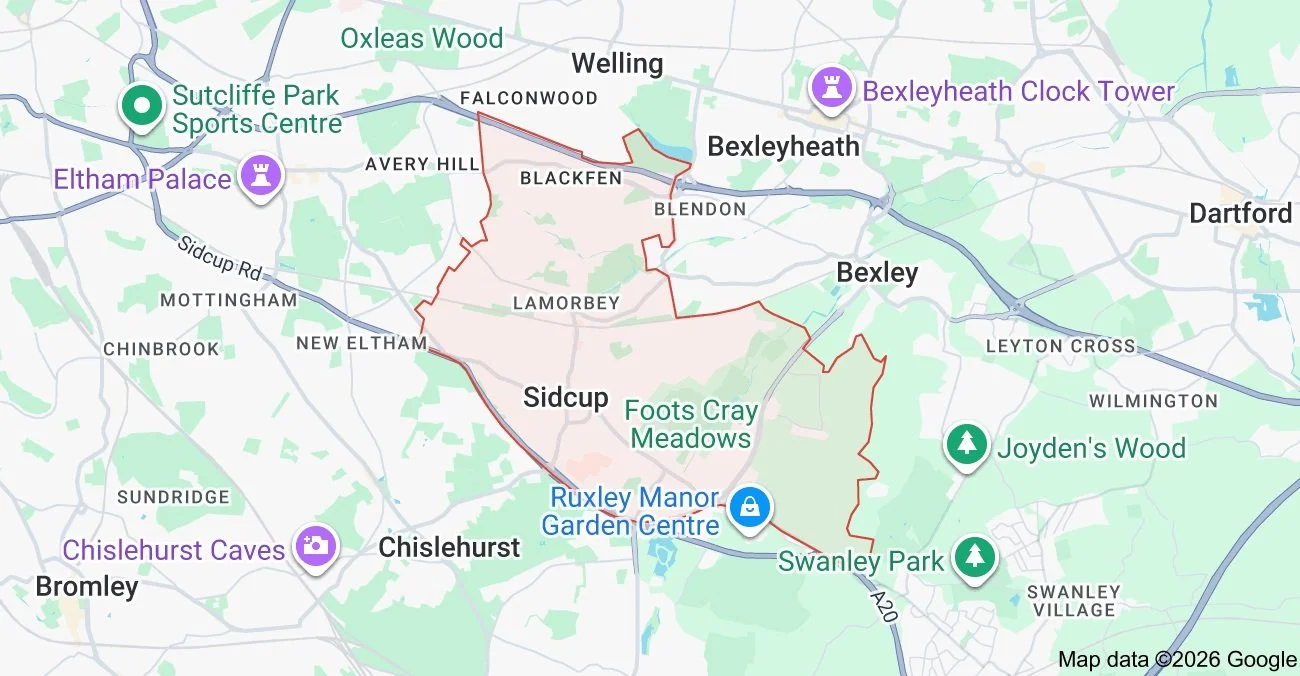
For the last week the UK has been enjoying some exceptionally warm weather with temperatures reaching 80 degrees Fahrenheit (27 degrees Celsius) and above, here in the South East. For our latest day trip Mrs P and I decided to go somewhere local to reduce driving time and allow us to make an early start. Both of us wanted to achieve our daily step count (10,000 steps which is approximately 5 miles) but be done by mid afternoon before the heat made such activities uncomfortable. So we decided to go to Lesnes Abbey Woods which has a well tended park, gardens and the remains of a 12th century Abbey. It also connects to the Green Chain Walk. We drove there as it is only about twenty minutes away by car. However, we subsequently discovered that a local bus stops right outside the main entrance, so will bear this in mind for future visits.
For the last week the UK has been enjoying some exceptionally warm weather with temperatures reaching 80 degrees Fahrenheit (27 degrees Celsius) and above, here in the South East. For our latest day trip Mrs P and I decided to go somewhere local to reduce driving time and allow us to make an early start. Both of us wanted to achieve our daily step count (10,000 steps which is approximately 5 miles) but be done by mid afternoon before the heat made such activities uncomfortable. So we decided to go to Lesnes Abbey Woods which has a well tended park, gardens and the remains of a 12th century Abbey. It also connects to the Green Chain Walk. We drove there as it is only about twenty minutes away by car. However, we subsequently discovered that a local bus stops right outside the main entrance, so will bear this in mind for future visits.
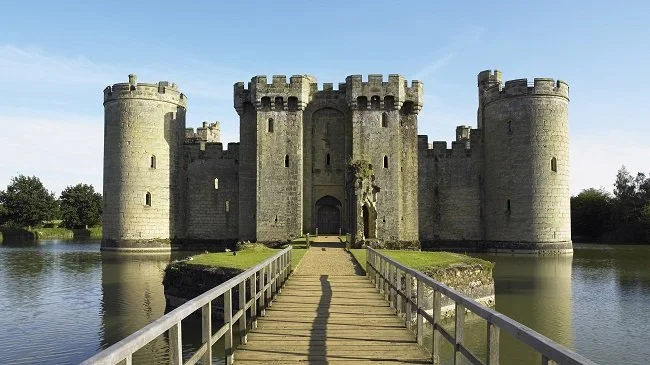
The Abbey of St Mary and St Thomas the Martyr at Lesnes, to use its original name, was founded in 1178 by Richard de Luci, Chief Justiciar of England. This may have been in penance for the murder of Thomas Becket, in which he was involved. It was one of the first monasteries to be closed after the Dissolution of the Monasteries in 1534 and the monastic buildings were all pulled down. Over time the site was a source of salvaged building materials for the local inhabitant. The estate became farmland before being purchased by London County Council in 1930. The land was then repurposed as a park and the stone outline of the Abbey and outlying buildings restored. In recent years the adjacent woodlands have been added to the park and maintained as part of the Green Chain Walk which runs throughout three London Boroughs.
There are multiple entrances to the park in Abbey Road (not that one) and the surrounding streets. To the West there is a substantial children’s playground and outdoor gym that are well maintained and safe. The Abbey ruins are in the centre of the park, along with a walled ornamental garden. There is also a visitors centre with amenities and a function hall that is available for hire. This venue often hosts events and activities for schools. The garden is another popular site for events such as book readings and performance art. The grounds are superbly maintained and the paths are wide, making them very family and wheelchair friendly. For those who enjoy walking there are multiple trails around the grounds and surrounding woods, of varying length and difficulty. There are wooden sculptures to be found along these paths as well as a prehistoric Tumulus.
I was most surprised to find a park and series of walks of this quality right on my own doorstep. Mrs P and I enjoyed Lesnes Abbey Woods immensely and tried several of the more complex trails that traverse the woods. The ruins are also very interesting and are a somewhat incongruous sight amid the surrounding suburban sprawl. The park and woods look out south over Thamesmead where Kubrick filmed A Clockwork Orange and there are now wind turbines along the Thames estuary. If it hadn’t been for the heat, we’d have stayed longer but the woods were quite humid due to the recent heavy rainfall, despite offering shade from the sun. We will certainly return in the not too distant future and investigate the trails we didn’t complete.

































Keeping a Popular Franchise Relevant
I’ve written in the past about “how long should a TV show run for” and it remains a very interesting talking point. An ageing cast and a played out formula are not uncommon problems that can lead to a popular show being cancelled. But some long standing TV dramas have different issues that can blight them. Such as overly complicated lore, a vocal fanbase and a need to stay relevant in a way that some other shows don’t have to worry about. Martin Belam has recently written a very good article about this subject. He cites Doctor Who as a show that is extremely fatigued at present and suggests that maybe taking it off air and having some time out may well be the solution to its “problems”. I agree with him. Not only with regard to Doctor Who but basically any TV or movie franchise that has become ubiquitous and therefore tired as a result.
I’ve written in the past about “how long should a TV show run for” and it remains a very interesting talking point. An ageing cast and a played out formula are not uncommon problems that can lead to a popular show being cancelled. But some long standing TV dramas have different issues that can blight them. Such as overly complicated lore, a vocal fanbase and a need to stay relevant in a way that some other shows don’t have to worry about. Martin Belam has recently written a very good article about this subject. He cites Doctor Who as a show that is extremely fatigued at present and suggests that maybe taking it off air and having some time out may well be the solution to its “problems”. I agree with him. Not only with regard to Doctor Who but basically any TV or movie franchise that has become ubiquitous and therefore tired as a result.
Here are a few select quotes that I think are pertinent. Again these are specifically about Doctor Who but are equally applicable to comparable shows.
“Sometimes it feels like the show is being buried under the weight of its own continuity”.
“The decision to cast a woman as the Doctor has also meant the franchise became a pawn in the culture wars, further souring relationships in the fandom, and making the social media posts of the show’s creators and stars toxic to wade through”.
“It feels as if it is telling an increasingly self-absorbed meta-story about its own run, accompanied by a very vocal online fandom that isn’t quite sure what it wants, but knows it doesn’t want this”.
Doctor Who has been absent from our televisions in the past. It lost its way back in the middle to late eighties and was taken off air when audiences started declining. The sixteen year hiatus certainly made a difference and when it returned in 2005 it had totally reinvented itself and found exactly the right tone for a modern audience. James Bond is another prime example. The franchise has taken time out twice to rethink its direction. GoldenEye (1995) put the franchise back on track after the excesses of the Roger Moore era (The two Dalton movies were a change of tone too quickly). And Casino Royale (2006), possibly the best realisation of the character from the original text, made Bond relevant again after the franchise started losing ground to its competitors. However, taking a break doesn’t always guarantee an improved return. Dare I mention a certain franchise set in a galaxy, far, far away.
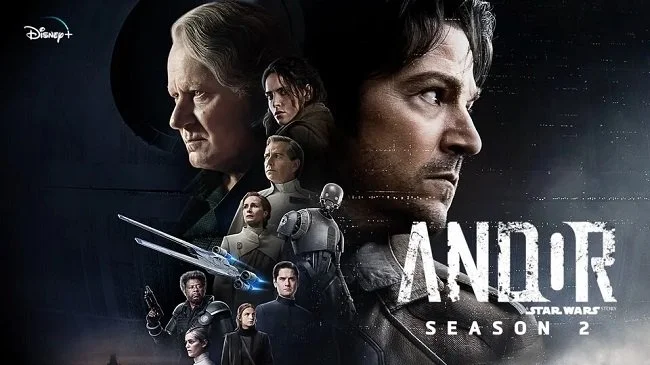
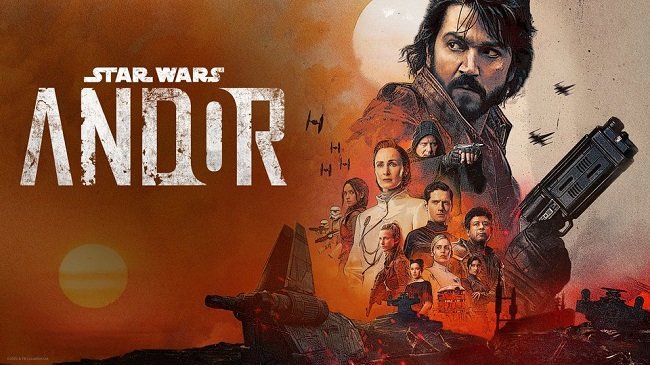
It is easy to see why owning a popular franchise is appealing to a TV network or film studio. Once established they become known quantities that need to be managed and curated. Spinoffs offer potential new content and do not pose the same risk as completely new products. You only have to look at Disney + to see a textbook example of such portfolio management. The BBC is not in such a position with Doctor Who. It doesn’t have the finances unless it goes into business partnership with a third party. Such a collaboration could potentially reinvigorate the franchise. But there is also equal scope for it to go the other way. A major US backer would naturally want a product tailored to its domestic market. All things considered, if Doctor Who doesn’t rethink its current direction it is destined to repeat the same mistakes of the late eighties, become a caricature of itself and get cancelled. Perhaps it is better to jump, than be pushed. A short hiatus may well be the solution.
















The Sea Wolves (1980)
I have always had a soft spot for the action movies that Euan Lloyd produced in the late seventies and early eighties. The Wild Geese (1978), The Sea Wolves (1980), Who Dares Wins (1982) and Wild Geese II (1985). They were quite gritty and all had a strong cast of British character actors. Sadly some of them strayed into political issues with their stories and often got out of their depths. The Wild Geese ham-fistedly explores the political landscape of post colonial Africa and Who Dares Wins clumsily deals with terrorism and the concept of unilateral nuclear disarmament. Yet despite the somewhat school boy approach to geopolitics, the action scenes are well crafted (often by legendary Bond stunt arranger Bob Simmons) and the cast more than make up for any narrative failings. All four films also have charismatic soundtracks by Roy Budd. However The Sea Wolves differs from the other three movies in so far that it is set during World War II and is loosely based on real events.
I have always had a soft spot for the action movies that Euan Lloyd produced in the late seventies and early eighties. The Wild Geese (1978), The Sea Wolves (1980), Who Dares Wins (1982) and Wild Geese II (1985). They were quite gritty and all had a strong cast of British character actors. Sadly some of them strayed into political issues with their stories and often got out of their depths. The Wild Geese ham-fistedly explores the political landscape of post colonial Africa and Who Dares Wins clumsily deals with terrorism and the concept of unilateral nuclear disarmament. Yet despite the somewhat school boy approach to geopolitics, the action scenes are well crafted (often by legendary Bond stunt arranger Bob Simmons) and the cast more than make up for any narrative failings. All four films also have charismatic soundtracks by Roy Budd. However The Sea Wolves differs from the other three movies in so far that it is set during World War II and is loosely based on real events.
During World War II, many British merchant ships are being sunk by German U-boats. British intelligence, based in India, believe that the information is being passed to the U-boats by a radio transmitter hidden on board one of three German merchant ships interned in the neutral Portuguese colony of Goa. Lieutenant-Colonel Pugh (Gregory Peck) of the Special Operations Executive (SOE) is tasked with finding the German spy passing the shipping information and destroying the radio transmitter onboard the interned ships. Accompanied by fellow operative Captain Gavin Stewart (Roger Moore), the pair travel to Goa to attempt to capture a high level German spy known as Trompeta (Wolf Kahler). After he dies during a struggle, Pugh decides to make a daring raid on the interned ships in Goa harbour. Due to Portugal's neutrality SOE cannot use British troops. So Pugh asks Colonel W.H. Grice (David Niven), the commanding officer of a Territorial unit of British expatriates called the Calcutta Light Horse, if they would carry out the mission covertly. They all volunteer as they are all ex-service men and keen to 'do their bit'.
The Sea Wolves is a very traditional high adventure movie directed by veteran filmmaker Andrew V. McLaglen. The film’s strength lies with its strong cast featuring the likes of Trevor Howard, Patrick Macnee and Patrick Allen. The script is functional and has occasional moments of droll dialogue, usually based around the age of the various old soldiers complaining about their aches and pains. The locations are interesting and the production design does a good job of recreating the period. Furthermore, the miniature effects by Kit West and Nick Allder are top drawer and the action scenes are credible, well edited and entertaining. The Sea Wolves eschews the cliched cinematic conceit of the German cast speaking English, instead opting for authentic dialogue and subtitles. Yet despite many positive elements, the film drags during the turgid romance between Captain Stewart and divorcee (and German spy) Agnes Cromwell (Barbara Kellerman).
Roger Moore was 52 when he was cast in The Sea Wolves and he was clearly losing his boyish good looks. Yet the film industry still insisted upon casting him as a romantic lead. He continued with Bond well after his best before date and frankly it showed. In this instance his torrid affair is very much written in the idiom of the times and it is as dull as ditch water. The plot grinds to a halt during these scenes. Furthermore critics at the time made a big deal out of Gregory Peck’s English accent but I’ve heard far worse over the years and don’t consider it to be a deal breaker. It should be remembered that to finance such a British production Euan Lloyd needed a known star that would clearly appeal to the US market. Peck was such an actor and works well in the role. He certainly shines in his scene with David Niven who he worked with previously on The Guns of Navarone.
Film’s about World War II proved a mainstay of the UK and US box office for over 30 years. However interest waned eventually as a new generation of cinema viewers, who were born in the post war years, became the principal audience. Films that have revisited this historical period since then have tended to take a more revisionist approach to the subject matter. The Sea Wolves is one of the last old school, “for King and country” style of action movie. Perhaps that is why it didn’t fare as well at the box office as other Euan Lloyd productions. He personally blamed this on the demise of co-financier Lorimar Pictures and their poor marketing. I think that audiences simply wanted something more contemporary, as proved by Who Dares Wins. Viewed with a modern perspective The Sea Wolves does seem somewhat dated in its tone. However, it can still prove entertaining and certainly offers an unusual story, set away from the European theatre of war.



Thoughts on Bereavement
Yesterday, Saturday 17th July, was my late Father’s birthday. He would have been 92. As my granddaughters were staying over the day was upbeat, boisterous and fun due to their exuberance. Today as the bungalow returns to its normal levels of noise and excitement, I have spent some time quietly reflecting upon the nature of bereavement. When my father died last September I was focused upon the practicalities of arranging a funeral during a pandemic, ensuring that his estate was processed and that all possible provisions were made for my disabled 90 year old Mother. These things have now been done and it is only recently that I have had the time to process my own grief. The first Father’s Day (20th June in the UK) without him was naturally a milestone and his birthday has proven similarly so. However, today’s introspection has been beneficial and hence I felt the desire to write about him and share some thoughts on the nature of bereavement.
Yesterday, Saturday 17th July, was my late Father’s birthday. He would have been 92. As my granddaughters were staying over the day was upbeat, boisterous and fun due to their exuberance. Today as the bungalow returns to its normal levels of noise and excitement, I have spent some time quietly reflecting upon the nature of bereavement. When my father died last September I was focused upon the practicalities of arranging a funeral during a pandemic, ensuring that his estate was processed and that all possible provisions were made for my disabled 90 year old Mother. These things have now been done and it is only recently that I have had the time to process my own grief. The first Father’s Day (20th June in the UK) without him was naturally a milestone and his birthday has proven similarly so. However, today’s introspection has been beneficial and hence I felt the desire to write about him and share some thoughts on the nature of bereavement.
Don’t worry, I’m not going to portray my father as a “plaster saint” or place him on a pedestal. He was a mortal man and as such had all the strength and weakness that we all share. He certainly made no claim upon perfection. No, this post is more an attempt at some self therapy and a means for me to try and articulate how I miss him. Specifically, how I miss his company and talking to him. Because my Father’s ability to explain, tutor and impart knowledge is possibly his defining characteristic. He was a teacher by nature but not in an excessively didactic fashion. He had a knack for making things interesting. If you ever got him on a subject upon which he was knowledgeable and passionate he could hold forth in a most engaging fashion. It was like he had a delightful homemade pack lunch and he would happily share it with you. In this case the lunch was knowledge. As he got older, whenever you saw my Father at a family gathering he was always surrounded by nieces, nephews and such like while he made origami and answered their questions on life, the universe and everything.
If you are fortunate, when you are young you see your Father as an indomitable force that cannot be bested. He knows all the answers to your homework, he can make things out of wood and can reverse a car like James Bond. When you become a teenager, that relationship changes and their old school values and the leather arm patches on their cardigans strike you as very old fashioned. When you finally get a job and take on some adult responsibility yourself, then you suddenly see them again in a totally new light. I certainly enjoyed my Father’s company the most in the last 15 years. The cliche about old wines can be true. We would talk and I found his insight to be at times quite profound. Unlike some from his generation he was not constrained by certain social attitudes and cultural baggage. Because he was an academic, logic, facts and reason ultimately won out. He adapted and even embraced modernity quite well and I admire him greatly for that.
In 2016 my Father suffered a series of strokes that robbed him of his independence and many of the things he loved best in life. He was by nature a bon viveur, enjoying good food and good company. He spent the last 5 years of his life fed by a PEG tube. He also could no longer read or use his computer to write acerbic letters to the tabloid newspapers. Yet he suffered these indignities with stoicism and remained as sharp as a tack, although he took longer to express himself. He became very philosophical during this time and our conversations were quite incredible on occasions. He managed to separate himself from his medical condition and analyse and reflect upon it calmly without rancour or recrimination. Sadly, the pandemic of 2020 used up the last of his stamina and he grew tired of his lot. I only saw him once in hospital before he died and although I fully appreciate why this was so, it still feels like an unsatisfactory resolution.
Bereavements are an inevitability for all of us. My Father had a good life by his own admission and many people do not make it to 91. He was more than ready to go and it would be crass and selfish for me to wish for him to have endured a little longer. However, his departure has left a gap in my life and it manifests itself in the absence of his good company and sage wisdom. I watched some classic Tom and Jerry cartoons recently from the golden era and I missed him chuckling along. But that seems to be in a nutshell the nature of the loss of a loved one. The wonderful memories that bring joy are immediately followed by a pang of grief and sadness. It’s a strange, symbiotic relationship between a shared past and the loss of the love that was its foundation. You can’t have one without the other.
I think of my Father every day. He frequently pops up in conversations. Anecdotes are shared with loved ones and friends, along with a smile. And although it is both bitter and sweet simultaneously, I take comfort in the fact that it’s a marvellous legacy to leave behind. To be remembered with fondness is a good thing. In some foolish way, I feel that living on in the hearts and minds of those whose lives you have touched is a form of immortality. So I shall continue to miss my dear old Dad, as I used to refer to him as. Because, it is a constant reminder of the love we shared and the fact that he was a man, like so many others, that just tried to muddle through and do his best for those he cared for. I consider this to be a fitting epitaph and something to aspire to myself.

















Incidental Emergent Gameplay
According to Wikipedia, emergent gameplay refers to “complex situations in video games, board games, or table top role-playing games that emerge from the interaction of relatively simple game mechanics”. Emergent gameplay often can stem from the relatively simple decisions a player makes, the sum of which lead to more complex outcomes. It also can be created by adding multiple players to the same game environment or situation and having their individual actions impact upon the overall evolving situation. Or to put it another way, it is the human factor that comes with undertaking a task. For example, a story driven video game may offer the player a quest to travel to the valley of Constant Drizzle, vanquish the foul Myrmidons and reclaim the Heretical Grimoire of Colin. It is a very specific task with a binary outcome. But in an open world game without a pre-written story, the player has to find the aforementioned valley and their actions while exploring determine the fate of both the grimoire and the Myrmidons.
According to Wikipedia, emergent gameplay refers to “complex situations in video games, board games, or table top role-playing games that emerge from the interaction of relatively simple game mechanics”. Emergent gameplay often can stem from the relatively simple decisions a player makes, the sum of which lead to more complex outcomes. It also can be created by adding multiple players to the same game environment or situation and having their individual actions impact upon the overall evolving situation. Or to put it another way, it is the human factor that comes with undertaking a task. For example, a story driven video game may offer the player a quest to travel to the valley of Constant Drizzle, vanquish the foul Myrmidons and reclaim the Heretical Grimoire of Colin. It is a very specific task with a binary outcome. But in an open world game without a pre-written story, the player has to find the aforementioned valley and their actions while exploring determine the fate of both the grimoire and the Myrmidons.
Emergent gameplay is a weighty subject and a source of heated debate about gamers. Some prefer to be able to traverse a virtual world and “make their own fun” as they go along. Certainly a game such as EVE Online is an exemplar for this. Other gamers prefer to have a clear story, quests hubs and an underlying game system that “guides” them from A to B. Personally I like aspects of both. However, I agree that emergent gameplay that organically arises from undertaking a simple task in video games, is a powerful experience. For some it is comparable or indeed preferable to traditional pre-written stories. If you’re an advocate for emergent gameplay, then even a journey to the shops in real life has the potential for adventure. If you have children then this is definitely a “thing”. Doing chores with my 6 year old granddaughters can easily turn into a “quest”. Dragons may well lurk behind a garden hedge and there may be orcs hiding in the wheelie bins.
Now the reason I’ve mentioned both emergent gameplay and the more scripted variety, is that I’ve found of late that neither kind is proving especially satisfactory. Sometimes the densely plotted quests of The Lord of the Rings Online are enthralling but on other occasions they’re dull and arbitrary. Especially the fetch quests and kill ten Gibbons variety. I have also found that going exploring in a game such a GreedFall has not been as satisfactory as it usually has. I suspect this may be down to some of the game content being a little mundane and also my general outlook on gaming at present. It is a major leisure activity for me and so one can suffer from gaming fatigue from time to time. However, sometimes it is the little things and the positively mundane that can delight you when gaming as I’ve recently discovered while playing Assassin’s Creed IV: Black Flag. And when they do they certainly reinvigorate your passion for gaming.
Big franchise RPGs such as Assassin’s Creed straddle both types of gameplay. The story is heavily scripted and very much on rails. But then there is a lot of open world busy work to be done, which you can do at your own leisure. It is the latter that has kept me engaged this week, due to what I describe as incidental emergent gameplay. IE my response to minor things going on around me in the game. The game is set in 1715 in the West Indies and has a nautical and pirate themed plot. There are side missions where you can hunt whales and sharks and I have found these particularly engaging. They have fairly simple mechanics and some ambient dialogue but the rest is pretty much up to the player. I’ve found that it is very easy to get lost in this activity. After successfully hunting a white whale, I found myself quoting both Herman Melville and Khan Noonien Singh.
It is this incidental emergent gameplay on top of the main story and overall game design that keeps gamers hooked. I think if done well it can tip the scales so that an average game becomes a superior one. I love walking around Havana in Black Flag and listening to the ambient dialogue and activities of the NPC. Sailing the seas is also a compelling act in itself. Occasionally I encounter a pod of dolphins or see a whale breach the waves and it is really quite compelling. I’ve not encountered an RPG with such an engaging virtual world since The Witcher III. I think I understand now why some gamers feel the need to write about their ingame characters and create a backstory for them or pen their own stories. Emergent gameplay both directly and indirectly fuels the imagination and one’s sense of narrative. I don’t think I’ll be so dismissive of the concept from now on.
Policing Our Online Communities
It would appear that Discord has a toxicity problem. No, I’m not at all surprised either. Online social platforms attract such issues by their very nature. Discord is far from unique in this respect and is simply the latest online service to join an ever growing list of social platforms to become a hotbed of iniquity. However, I do applaud them for their transparency. They regularly publish reports on the “state” of their service and they don’t try to hide the problem. In fact to combat the problem Discord have recently acquired Sentropy Technologies, who have developed an AI designed to combat toxic behaviour with its “data-driven moderation tools”. Naturally all parties have high hopes that they can tackle the issue. I, on the other hand, do not. Because technology alone is not the solution to the problem. It never is. Has facial recognition software, CCTV and biometric passports solved all the problems that they were supposed to? No they have not.
It would appear that Discord has a toxicity problem. No, I’m not at all surprised either. Online social platforms attract such issues by their very nature. Discord is far from unique in this respect and is simply the latest online service to join an ever growing list of social platforms to become a hotbed of iniquity. However, I do applaud them for their transparency. They regularly publish reports on the “state” of their service and they don’t try to hide the problem. In fact to combat the problem Discord have recently acquired Sentropy Technologies, who have developed an AI designed to combat toxic behaviour with its “data-driven moderation tools”. Naturally all parties have high hopes that they can tackle the issue. I, on the other hand, do not. Because technology alone is not the solution to the problem. It never is. Has facial recognition software, CCTV and biometric passports solved all the problems that they were supposed to? No they have not.
There are two major problems associated with any service that facilitates the social gathering of people online. The first is an old and very well known one. Anonymity. Discord, Twitter, Instagram and dozens of other platforms don’t really make any serious attempt to verify who you are. If you’re sufficiently tech savvy you can create an account for most services without providing any details that reveal your true identity. The moment you ensure anonymity you effectively forgo any semblance of accountant ability. The most that can happen is that your account gets closed. The second factor that has a bearing on the matter is size. When a community grows over a certain size, it becomes virtually impossible to police it with automated moderation tools and processes. Furthermore, people are very good at circumnavigating rules and regulations. All too often, unhackable get hacked and the impenetrable gets circumnavigated. It’s one of the reasons I’m not overly confident about Sentropy.
Although there are not any quick and easy solutions to these problems, I think there are steps we can take ourselves that can contribute to improving the quality of our online communities and keeping them equitable. Especially with regard to Discord servers which have become ubiquitous these days. These tend to start off as quite small and intimate environments that end up growing over time. However, if some basic procedures are put in place from the start you can keep them from spiralling out of control. The first is to have a clear set of rules and a code of behaviour. Set out what you will and won’t tolerate. That way offenders can never plead ignorance. Lead by example. Politely correct minor transgressions and don’t allow double standards. If a friend breaks the rules then treat them the same as those you don’t know as well. Consistency is key to establishing a fair system.
Secondly, have moderators and let your community know that you have moderators. Be proactive. If you see something that is anomalous and you’re not sure if it’s a joke or something more serious, then make enquiries. Be civil, seek clarification and if the problem was a false positive, then move on. However, if you have a bona fide offender that you caught “bang to rights”, then sanction them according to your rules. If they need to go, then show them the door. Tell them which rule they violated and the consequences of such an act. Then end the conversation and ditch them. You owe them nothing more. This is not a question of free speech. This is a private Discord server with a clear set of rules. And if you do have to dispense with someone, reference their departure to your community but don’t allow a debate about it.
Sometimes, Discord servers can grow in popularity and managing invitations becomes an issue. Smaller servers are usually populated by friends inviting friends. Pre-existing social bonds tend to keep things cordial. However, such screening protocols become less robust the moment you allow open invitations. A possible compromise would be to have a system where an existing and established member of the Discord server has to vouch for anyone they invite. If they make a mistake and bring someone to the server who then becomes a problem, their invitation privileges are temporarily revoked. Bringing this minor level of accountability can prevent a potential faux pas. This particular approach has worked well in several of the MMO guilds I’ve joined over the years.
I don’t believe there’s any substitute for real online community policing. AIs may well be able to parse text and look for keywords and phrases. But often bullying and hectoring is a question of semantics and the deliberate use of ambiguous language that can be interpreted in several ways. I do not doubt that automated moderation tools will intercept ill humoured abuse from a young gamer who is hot under the collar. But will it really pick up on the subtle needling the lifelong malcontent and bully uses? I’m not so sure. However, human intervention also comes with its own set of problems. It is inherently labour intensive and no one wants to do it, as it’s quite a responsibility. And then you have to make sure that the person who has taken the job is not a closet sociopath themselves. But if we want to reclaim our online spaces then we have to show willing and someone has to shoulder the burden. It’s how we police our communities in the real world.
Thoughts on Blogging Part 14
By the time that August rolls around this year, I will have been actively blogging and generally sharing my writing online for 14 years. Prior to that, back in the eighties, I was involved in the production of several fanzines. That was indeed a labour of love and although I was happy to write the content, the work involved in physically creating the actual pages was tough. The printing costs were also an early lesson in how writing is not an immediate path to fame and fortune. All things considered, writing has been a major aspect of my life for as long as I can remember. I used to enjoy writing stories as a child and then as I got older I discovered the pleasure of a well constructed essay. I was fortunate to have three very good English teachers during my time at school, who were passionate about their job and very encouraging.
By the time that August rolls around this year, I will have been actively blogging and generally sharing my writing online for 14 years. Prior to that, back in the eighties, I was involved in the production of several fanzines. That was indeed a labour of love and although I was happy to write the content, the work involved in physically creating the actual pages was tough. The printing costs were also an early lesson in how writing is not an immediate path to fame and fortune. All things considered, writing has been a major aspect of my life for as long as I can remember. I used to enjoy writing stories as a child and then as I got older I discovered the pleasure of a well constructed essay. I was fortunate to have three very good English teachers during my time at school, who were passionate about their job and very encouraging.
Since the New Year I have struggled not so much with writing but more with my motivation to write. I don’t have a shortage of ideas. As ever there’s plenty to talk about. However, there seems to be an ongoing decline in longform posts, providing criticism and analysis. You’ll still find them on commercial websites such as Kotaku but they’re not so prevalent among the blogging community. Some bloggers do still tackle the big subjects and the controversies that so often accompany them but in my experience, lengthy thoughtful posts seem to be falling out of favour. Furthermore, due to the cyclical nature of popular culture and the various leisure industries, all too often you find yourself repeating yourself as a writer or covering familiar ground. The things that I enjoy and love to write about have become as partisan as other parts of public discourse, which does rob them of their charm.
Hence, the current malaise I’ve experienced has had an impact upon my productivity. However my output has remained the same for the last six months. I usually write about 16 or so posts a month although I have recently started trying to maintain a daily schedule. However, since May I have noticed a noticeable drop in traffic to Contains Moderate Peril. Statistics are not my primary motivator when it comes to my writing but they do play a part. It is reassuring to know that posts are being read and that an audience does exist. However, after giving this matter some thought, I think the drop in traffic is due to people returning to their formal places of work and rather than losing pageviews, the numbers are simply returning to pre COVID-19 levels. So in the last week or so I’ve felt more positive about writing. I have especially enjoyed a couple of posts that I’ve written that just seem to pour out of me without any problems.
Today the Blaugust 2021 Festival of Blogging was formally announced. I shall compose a more comprehensive blog post “bigging up” this enjoyable community activity in the next few days. However, it has already had a positive effect as new members have signed up to the event and also joined the Discord server. Meeting new writers and sharing ideas is a major shot in the arm and provides a lot of encouragement and motivation for all concerned. It is important to encourage more people to write and express themselves as it is an invaluable life skill. Plus there is a natural attrition that happens within the blogging community. Writing is a commitment that takes time and effort and real life often competes with both of those things. Hopefully this year’s Festival of Blogging will be well attended and received, drawing attention to the merits of writing, ensuring that our community continues to survive.
Playing Older Games on Modern Monitors
When I initially think of the late 90s or early 2000s, I don’t immediately realise they’re that long ago. That’s probably due to my age and being born in 1967. However, when I do the mental arithmetic, the march of time becomes quite apparent. Technology can change quickly and often does. Prior to the mid-2000s, most video games utilised relatively low-resolutions and the default aspect ratio was usually 4:3 due to the CRT monitors that were in common use at the time. If you try to play such vintage games on a modern HD, UHD or Ultra Wide monitor you’re going to end up with an image that is either stretched or with black bars on the sides of the screen. There are also going to be issues resulting from low-resolution graphics and textures as well. However both of these problems can be addressed by freely available internet resources.
When I initially think of the late 90s or early 2000s, I don’t immediately realise they’re that long ago. That’s probably due to my age and being born in 1967. However, when I do the mental arithmetic, the march of time becomes quite apparent. Technology can change quickly and often does. Prior to the mid-2000s, most video games utilised relatively low-resolutions and the default aspect ratio was usually 4:3 due to the CRT monitors that were in common use at the time. If you try to play such vintage games on a modern HD, UHD or Ultra Wide monitor you’re going to end up with an image that is either stretched or with black bars on the sides of the screen. There are also going to be issues resulting from low-resolution graphics and textures as well. However both of these problems can be addressed by freely available internet resources.
Not every game gets a remaster or a full blown remake. Fortunately the PC gaming community, being a resourceful one, fills the gaps with numerous “unofficial” patches created by gifted amateurs. These allow for widescreen aspect ratios and higher resolutions that are not native to the original games to run successfully. After searching for a while online, a single site emerged that appears to have by far the most resources available in one place. The Widescreen Gaming Forum, as the name suggests, is an online community that compiles patches for various games into a browsable database. All patches have comprehensive download and installation instructions along with notes verifying what resolutions they support. The patches are often updated to reflect changes in game build or newer screen resolutions.
16:9
I was looking specifically for a solution for Assassin’s Creed IV: Black Flag which was released in late 2013. Although the game does support my primary monitor’s resolution of 1900 x 1200, which is an aspect ratio of 16:10, it still displays at 16:9 creating black bars on the top and bottom of the screen. Apparently Ubisoft is renowned for forcing this aspect ratio in earlier versions of its big releases. Thankfully a solution for this particular problem was quickly found on the forum and a suitable patch applied. The change was successful and now I can play the game at 1900 x 1200 without any masking. It is not what I would call a major change to the game but I found the black bars distracting. I much prefer the entire monitor screen to be filled. I have some older games that have a 4:3 ratio and I‘m very curious to see how well they fare when patched to support a wider format.
16:10
With regard to the other issues surrounding older video games, such as low resolutions graphics, the lack of antialiasing and blurry textures I would recommend using the Nexus Mods website. There are thousands of mods and addons for both contemporary and older video games. This includes a lot of resources that are specifically designed to help older titles run on modern hardware. The Game Pressure website also has some useful files for older titles. And the forums for the online retailer Good Old Games can often point you in the right direction for finding mods and patches to drag old classic titles, kicking and screaming into the twenty-first century. Not every game can be patched to run on Windows 10 but it is certainly worth investigating, if it affords you the opportunity to return to a my beloved classic. In the meantime at least I don’t have to endure the wrong aspect ratio on Assassin’s Creed IV: Black Flag.
NB. I previously touched on this subject in a post two years ago, when I installed the original version of Mafia. I wrote a post on the ensuing fine tuning required to run the game “correctly”.
Assassin’s Creed (2016)
On paper, a video games franchise such as Assassin’s Creed lends itself perfectly to a cinematic adaptation. The parkour action scenes, the historical settings and the contemporary conspiracy theory themes are all elements that should play well with a modern youth audience. Hence with the backing of a major studio such as Twentieth Century Fox and a budget of $125 million, the 2016 movie should have been a guaranteed box office hit. The casting of Michael Fassbender, an actor who is comfortable with serious roles and big Hollywood franchises, should have carried this film comfortably over the finishing line. Director Justin Kurzel, who had found critical success with his adaptation of MacBeth a year previously, must have looked like a safe pair of hands to handle such a project. Sadly, that was not the case. Assassin’s Creed is not the sum of its parts, in fact many elements appear to be pulling in opposite directions. The resulting feature film is staggeringly dull, soulless and a chore to watch. A testament to how modern big budget franchise movies have become a production line, with all the art stripped from them.
On paper, a video games franchise such as Assassin’s Creed lends itself perfectly to a cinematic adaptation. The parkour action scenes, the historical settings and the contemporary conspiracy theory themes are all elements that should play well with a modern youth audience. Hence with the backing of a major studio such as Twentieth Century Fox and a budget of $125 million, the 2016 movie should have been a guaranteed box office hit. The casting of Michael Fassbender, an actor who is comfortable with serious roles and big Hollywood franchises, should have carried this film comfortably over the finishing line. Director Justin Kurzel, who had found critical success with his adaptation of MacBeth a year previously, must have looked like a safe pair of hands to handle such a project. Sadly, that was not the case. Assassin’s Creed is not the sum of its parts, in fact many elements appear to be pulling in opposite directions. The resulting feature film is staggeringly dull, soulless and a chore to watch. A testament to how modern big budget franchise movies have become a production line, with all the art stripped from them.
Convicted murder, Callum Lynch (Michael Fassbender), is sentenced to death by lethal injection in a prison in Texas. He awakes from his execution to find himself very much alive and in a high tech research laboratory in Madrid, run by the Abstergo Foundation and its sinister CEO Alan Rikkin (Jeremy Irons). Dr. Sofia Rikkin (Marion Cotillard) explains to Cal that she wishes to access inherited memories hidden in his DNA, of his ancestor Aguilar de Nerha, who was a member of the Assassins Brotherhood in 15th Century Spain. Abstergo Industries is actually funded and controlled by the Templars, an ancient order that has been at war with the Assassins Brotherhood for centuries. They seek the Apple of Eden, an artefact that holds the code to humanity’s ability for free will, which they seek to control. Cal is placed in the Animus, a machine which allows him to relive (and the scientists to observe) Aguilar's genetic memories, so that Abstergo can learn what he did with the Apple. Aguilar was previously charged with protecting the artefact from Templar Grand Master Tomas de Torquemada.
Within minutes of the film’s opening sequence which is set in 1492 Andalusia, the muddy colour palette and swooping camera it becomes clear that Assassin’s Creed has been shot using all the visual styles and editing techniques that are currently in vogue. It is the sort of movie where all concerned are far more enamoured by the aesthetic they have created rather than presenting the audience with a coherent and engaging narrative. Naturally, the production design and visual effects are top draw as you would expect from a mainstream film with this sort of budget. Yet the entire movie is presented in a singularly unappealing fashion and unfolds in a ponderous manner. The colours are muted, the camera refuses to stay still, inducing a sense of motion sickness. The editing is so rapid it often renders the onscreen action incomprehensible and the imagery strikes hard upon the senses. It is also clear that the film has chosen this technique to mask and reduce the levels of violence, so it can maintain the desired PG-13 rating.
There are three writers credited with the screenplay for Assassin’s Creed. Michael Lesslie, Adam Cooper and Bill Collage. Yet despite their efforts the story is perfunctory and the central characters are utterly forgettable. Action movies never used to be like this. In 1981 Raiders of the Lost Ark featured a wealth of interesting, enjoyable characters and the screenplay was savvy, filled with knowing genre references and droll, hard boiled dialogue. There is none of that here and a cast of solid actors are saddled with the most arbitrary of expository dialogue. Brendon Gleason has a cameo as Michael Fassbender’s Father. The relatively short role is supposed to provide an emotional epiphany within the story and create a sense of pathos but it is devoid of any dramatic resonance. It simply serves as an expostionary scene to move the story on. As for the more philosophical aspects of the plot regarding free will and determinism, these are abandoned immediately after they are mentioned.
Assassin’s Creed offers several clear nods to its source material. The costume design, hidden blades, parkour and historical setting certainly tap into the vibe of the first two games. The realisation of the Animus is also creative. Yet irrespective of the money and talent that is involved in the production, the film is staggeringly unexciting. In many ways it is a textbook example of all the artistic failings of corporate film making these days. Too much of our popular entertainment, be it music, TV or film are generic and made to an established formula. 40 years ago summer blockbusters were not only commercially successful but artistically created with flair and panache. The homogenous nature of their modern counterparts robs them of any unique personality of their own. For example, Assassin’s Creed runs for nearly 2 hours and features a musical score by Jed Kurzel that is essentially forgettable. I still recall the impact that James Horner’s soundtrack for Krull (1983) had upon me when I first saw it and it remains a personal favourite all these years later
Assassin’s Creed made a total profit of $240,697,856 internationally. It nearly doubled its investment yet was deemed a box office failure by those that financed it. A similar mindset is prevalent in the video game industry. Expectations regarding profit are often ambitious to say the least. Considering how poor the final movie is, I suspect that the entire project was a litany of continuous interventions by focus groups and sub-committees. So in many ways the studios are the architects of their own problem. To those who have a serious interest in cinema and are curious to see an example of when a film inherently fails on all levels, I would recommend Assassin’s Creed as a point of study. Beyond this niche market analysis, I cannot think of any positive points for the benefit of the casual viewer. Avid fans of the games will more than likely be disappointed as there is no exploration of their themes beyond the very superficial. Perhaps the failure of Assassin’s Creed will at least encourage the industry to rethink its approach to such movies and the wider action genre.
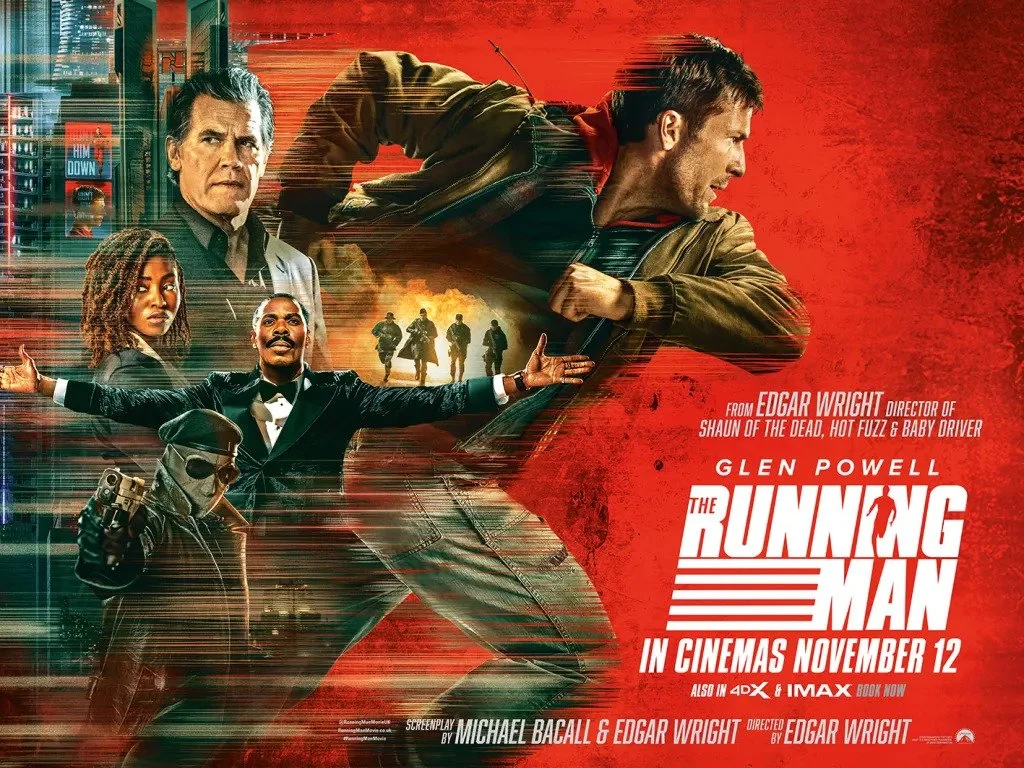
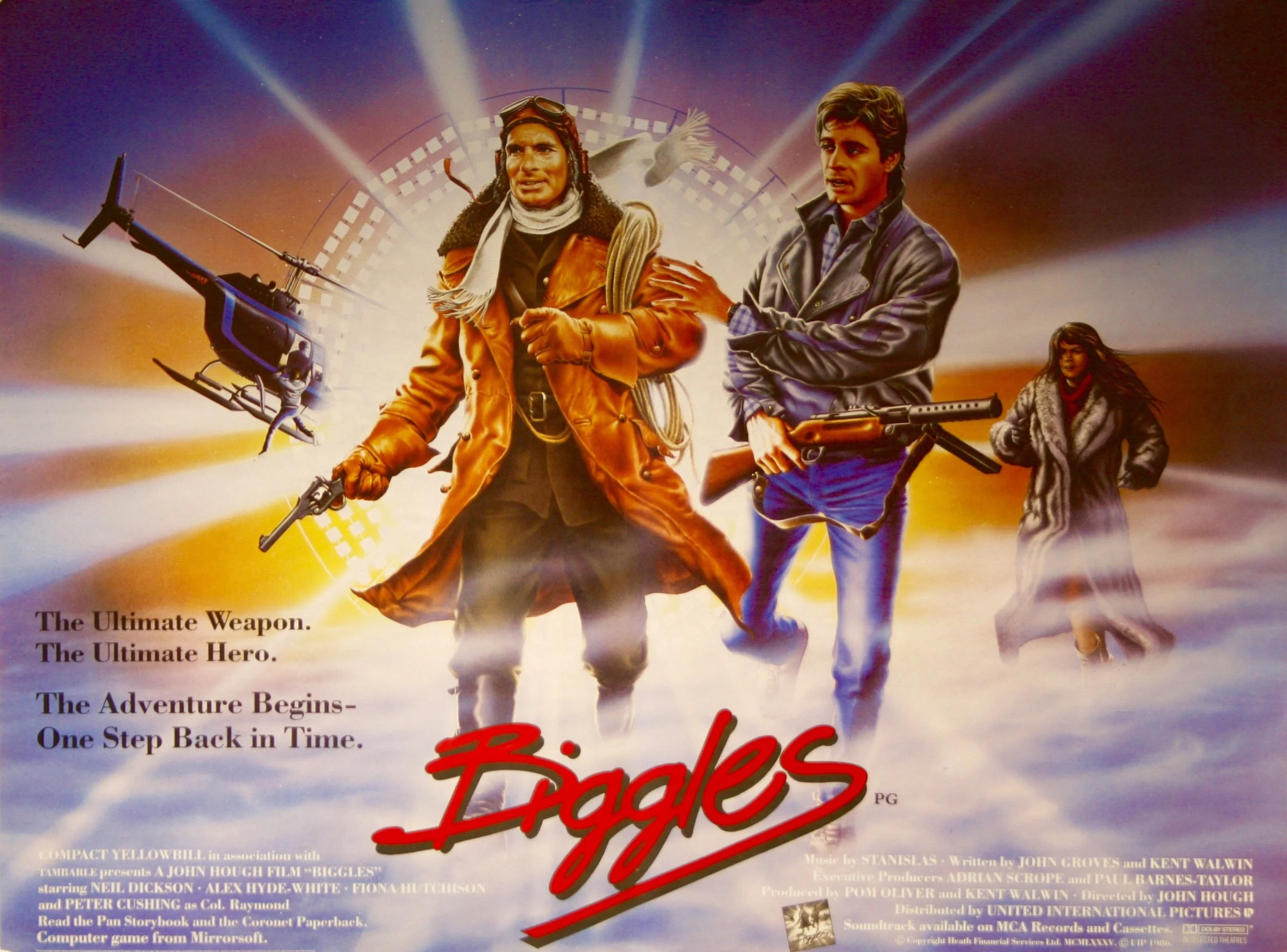
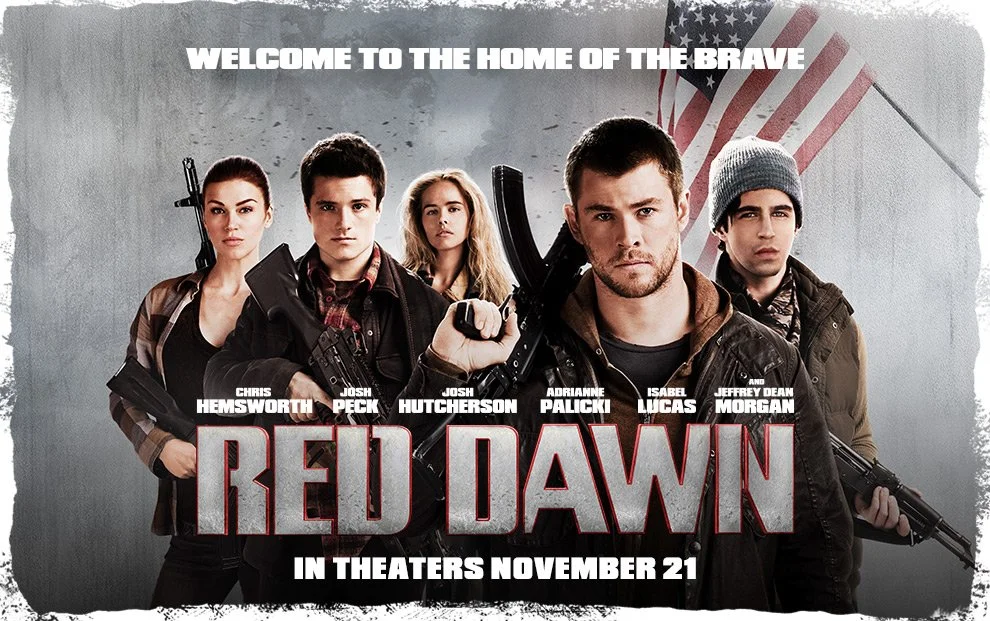

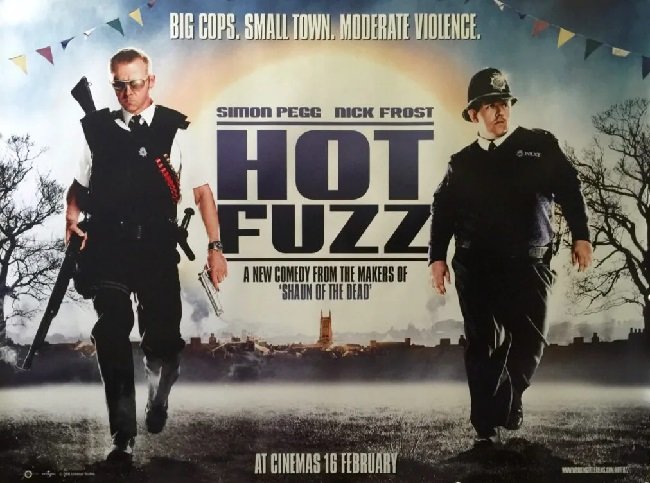
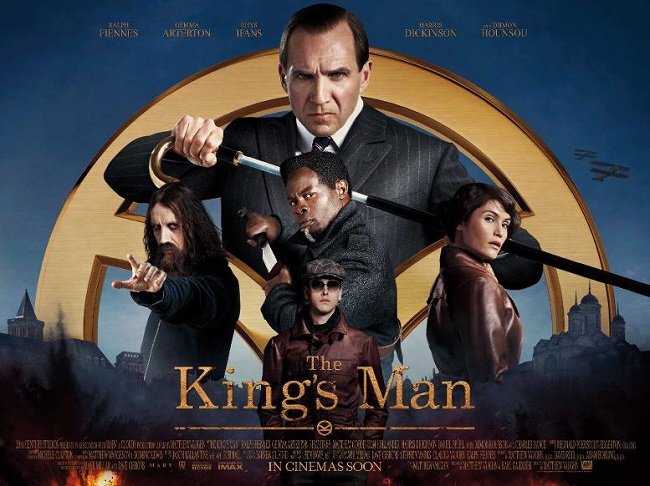
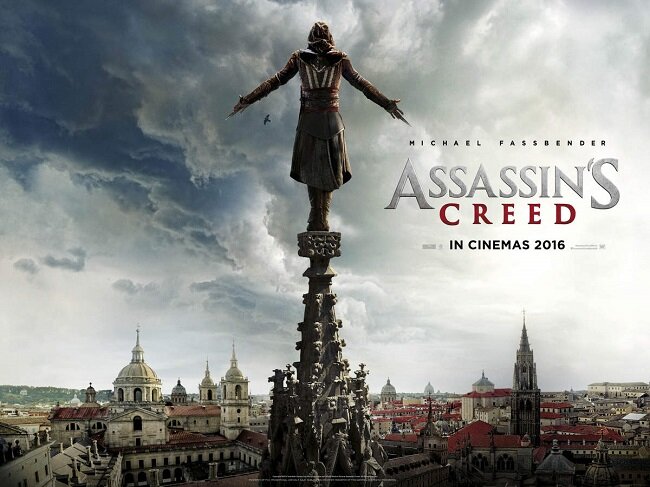

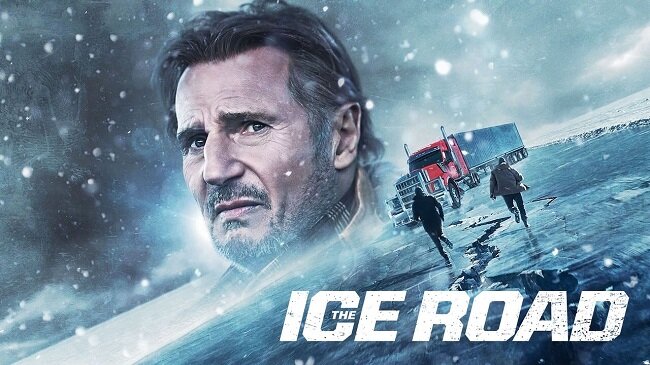
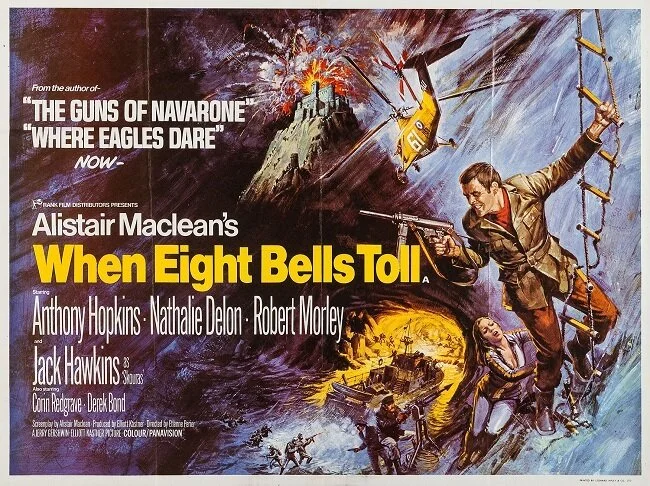





Diaries
There has been a great tradition of keeping diaries and journals for many centuries. Though they may seem at first glance, mundane, unimportant and even self indulgent they are extremely valuable historical documents. Compared to other source material, diaries are often unambiguous and can indirectly reference a wealth of important detail, providing a useful overview of the world at the time of writing. They reflect the perspective of ordinary people and everyday life, unencumbered by wider considerations faced by historians. For example, consider the diaries of Samuel Pepys or Anne Frank. There are also a lot of personal benefits to keeping a diary. They can help improve self-awareness, your memory and metacognition. They also provide stress management, reduce procrastination and have a positive effect upon one’s mental wellbeing.
There has been a great tradition of keeping diaries and journals for many centuries. Though they may seem at first glance, mundane, unimportant and even self indulgent they are extremely valuable historical documents. Compared to other source material, diaries are often unambiguous and can indirectly reference a wealth of important detail, providing a useful overview of the world at the time of writing. They reflect the perspective of ordinary people and everyday life, unencumbered by wider considerations faced by historians. For example, consider the diaries of Samuel Pepys or Anne Frank. There are also a lot of personal benefits to keeping a diary. They can help improve self-awareness, your memory and metacognition. They also provide stress management, reduce procrastination and have a positive effect upon one’s mental wellbeing.
The reason I mention all this is because I found a diary of mine recently, while going through my later Father’s paperwork. It was for the year 1977, when I was 9 years old. Needless to say, it was my Father’s idea for me to keep a diary. He felt it would improve my English skills and be “fun”. I personally didn’t have any inclination to do such a thing and I did so under duress. This becomes more apparent as the year progresses and the entries become shorter, less informative and increasingly indicative of a child who has no interest in what they’re doing. However, even as it is, I genuinely believe that there is some useful information to be found in my diary, although it is not there by intent. I frequently obliquely refer to things that were commonplace at the time, which are quite different now. The other thing that’s clear is that my family and I were very much a product of the times.
So exactly what revelations are hidden in my diary entries? Well being nine, naturally my school routine is referenced frequently. What stands out immediately is that corporal punishment was still common place in 1977. I refer to the Headmaster, Mr Green, caning several boys “who were naughty”. He would on occasion patrol the corridors of my junior school with a cane under his arm if he felt there was “mischief in the air”. Looking back now and assessing Mr Green with the eyes of an adult he was a Belfast Orangeman and militant protestant. He was often condescending to the female teachers and held exactly the sort of attitudes you’d expect from such a person from such a background at that point in time. Another interesting aspect of school which differs from now is the approach to exams and assessments. At the end of each term there were intelligence (IQ), mathematics and English tests. The results were read out in class in order of success, so everyone was acutely aware of the abilities of their peers.
In 1977 there were only three terrestrial TV channels available in the UK. Those channels did not run 24 hours a day and VCRs were not yet commonplace. Hence TV was considered a bonus leisure activity from a child’s perspective. I reference in my diary how I would rush home from school to watch Time Tunnel. I also mentioned watching The Six Million Dollar Man and Charlie’s Angels. However, reading was a major pastime and I would do so some nights instead of watching TV. Going to the library was a ritual and a source of great pleasure. One entry expresses my excitement of managing to secure three Asterix books. I also spent my pocket money on books. I would sometimes accompany my Father on a Saturday, while he did chores such as going to the butchers and paying the paper bill. Sometimes we’d visit a genre oriented book shop in Welling called The Edge of Forever. My Father would buy books by Isaac Asimov or Arthur C. Clarke, while I’d spend my money on Doctor Who novels (which were adaptations of episodes).
Going away on holiday during the summer was not a common occurrence for my family. My Father was refurbishing the house, a room at a time and hence this is where the household finances were focused. However, 1977 was an exceptional year and we spent 10 days on the Isle of Wight in a rental cottage. On mature reflection the self catering holiday was hardly a break for my Mother but the change of scene was welcome. It rained for 4 of the 10 days but we still managed to do quite a lot (although that is a relative term). I enjoyed the Blackgang Chine theme park and was traumatised by the spooky wax museum at Brading. The museum is now a pub and a restaurant but Blackgang Chine is still open. I saw a recent video of it on YouTube and it’s exactly the same. The diary notes that I lost a frisbee that was bought for me and was subsequently beaten. Raising a child in the seventies involved a surprising amount of casual violence.
My diary also reflects the social etiquette and culture of the UK at the time. For example my Father wouldn’t start mowing the lawn on a Sunday until after 11:00 AM. Sunday was a very dull day from a child’s perspective because nothing was open and it very much felt like the world had dropped down a gear. Reading through the year’s entries it becomes clear that myself and my sister were very self sufficient and made a lot of our own entertainment. We did go out as a family to parks, museums and such like during the school holidays but it was incumbent upon us not to bother the adults and expect to be entertained constantly. The phrase “I’m bored” was forbidden in our household as my Father would say “an intelligent mind is never bored”. The diary also mentions how in April we went to see the remake of King Kong. This is interesting insofar as it shows the time delays between international releases dates. The film was screened in the US in December 1976.
Children these days are superficially very worldly. The TV and internet brings them face to face with all the glories and iniquities of humanity as soon as they’re capable of looking at a screen. My diary entries reflect a less busy time and casts me in a very earnest light. I was a child and content to be one, judging by what I wrote. School was not a struggle for me and I did well academically at this point in my life. I had forgotten how much I enjoyed swimming but it appears to be an important part of my life, according to what I’ve written. I did guffaw hard at one particular entry in which I had a stomach ache after a meal and my Mother said with classic parental wisdom and authority that it was because I talked too much while eating. My diary also shows me how fortunate I have been and that by the standards of the time, I had a very happy childhood with two loving and supportive parents. Not everyone is fortunate.
Euro 2020 and Political Bandwagons
We live in unique and unparalleled times in which public figures can make a clear and unambiguous critical statement on Monday and then completely contradict themselves by the end of the week. Perhaps the saddest aspect of this recent shift in political discourse is the way we the UK public blithely accept it. It’s become so commonplace that we no longer treat it as a “WTF?” moment. The politically savvy shrug it off with a sigh as the latest tactic in the ongoing culture wars, while the credulous willingly go along with this premeditated reshaping of reality because their side is “owning the liberals”. It makes me cringe as I type these words but this is what political and social discourse has come to in the UK. It is no longer about competing political ideologies or strongly held principles but just trite, tribal loyalties. Many political commentators refer to this process as the “footballfication” of politics.
We live in unique and unparalleled times in which public figures can make a clear and unambiguous critical statement on Monday and then completely contradict themselves by the end of the week. Perhaps the saddest aspect of this recent shift in political discourse is the way we the UK public blithely accept it. It’s become so commonplace that we no longer treat it as a “WTF?” moment. The politically savvy shrug it off with a sigh as the latest tactic in the ongoing culture wars, while the credulous willingly go along with this premeditated reshaping of reality because their side is “owning the liberals”. It makes me cringe as I type these words but this is what political and social discourse has come to in the UK. It is no longer about competing political ideologies or strongly held principles but just trite, tribal loyalties. Many political commentators refer to this process as the “footballfication” of politics.
If you wish to see a textbook example of this process then look no further than the Euro 2020 tournament which reaches its final today. For those who live outside of the UK, I cannot stress enough how integral football is to the country's popular culture and national identity. It is a staple of public discourse serving multiple purposes. It is a convenient conduit for nationalism when needed and at other times a microcosm of the tabloid press’ negative obsession with class, racism and the objectification of women via WAG culture. Football is a multi billion pound industry that simultaneously infuriates and delights both its fans and the national commentariat. Hence the delayed UEFA European Football Championship has arrived at exactly the right time, offering an opportunity for national catharthcism after the ravages of COVID-19 and the perfect platform for the worst sort of tubthumping nationalism from the incumbent government.
However, before focusing upon today’s final between England and Italy, let’s take a moment to reflect upon the nation’s perspective of the “beautiful game” a month ago. There was a great deal of popular press and public pushback after the recent England vs Croatia match in June when the England squad “took a knee” before the game started. Some sections of the crowd booed their own team. Several government ministers such as the Home Secretary Priti Patel and numerous serving MPs took to social media to criticize the England team for daring to express any sort of political opinion (despite being registered voters). And the popular press (that is 80% right leaning in the UK) queued up to hector the players for “lecturing them”. Mind you that is a national pastime. Much of what passes for sports journalism in the UK is just a vehicle to attack white working class players and impugn those of ethnicity.
So that was the lie of the land just under a month ago. Today we find ourselves as a nation in the unusual position of England being in the final of a major international tournament, with a genuine chance of winning. A national team that in previous years has been disconnected, and poorly managed has now been transformed into a cohesive and viable squad. Both manager and the team have taken public criticism on the chin and faced the sling and arrows of outrageous fortune with fortitude and dignity. I am not in any way a sports fan and am not qualified to offer an in-depth analysis but something different has occurred this time round and it is noticeable. All involved have obviously felt they have something to prove and to quote the great Sam Gamgee “you have shown your quality, sir - the very highest”. However, this situation has now presented a bandwagon and we now have to endure the unseemly spectacle of the very worst of us trying to follow in the wake of the very best.
On Wednesday England beat Denmark and all the usual suspects went into full Shaggy mode (as in the song “It wasn’t me”) and instantly reversed their position from that of three weeks ago. Hence the Home Secretary trotted out her insincere support for the England team on social media, despite the fact she is currently spearheading legislation that would potentially have kept many of the squad’s parents from entering the UK. And several tabloid press rabble rousers suddenly became very enthusiastic and generous with their praise. But perhaps the most sickening in its inherent moral bankruptcy was the pitiful display by our current Prime Minister Boris Johnson. A man whose career has been defined by his complete lack of belief in any idea, concept or institution other than his own advancement, gurning as he desperately tried to associate himself with something positive. Populist politics has no truck with culture but will happily attach itself to it like a parasite, when it is expedient to do so.
What concerns me the most is whatever the outcome of today’s final, there is political gain to be had either way. Such is the beauty of a cleft stick. Either end can be used to beat you. In a perfect world an England win would be a shot in the arm to all genuine football fans and a moral boost to a nation that has been down by both COVID-19 and Brexit. But we live in a very imperfect world and an England win would also provide ammunition, bragging rights and propaganda for the current government and their side of the culture wars. It could be used to bolster the lies about “Global Britain” and add fuel to the fire of British exceptionalism (by which Johnson really means English exceptionalism). Conversely, a loss could aid the rights victim mentality and the specious notion that poor old Blighty is being persecuted by Johnny Foreigner, especially that mean EU. And irrespective of either outcome, political capital is a short lived gain. Within weeks the status quo would return and professional footballers would be relegated back to their status of pampered billionaires or the questionable sons of criminals by those exiting the bandwagon.
There have always been political bandwagons as they are useful vehicles to focus the ongoing national narrative on simple, binary issues. They are by nature lazy, knee jerk exercises in the worst sort of political and social bun fighting but they get traction. We currently have a government that was elected on a lie and that does not have any tangible vision for the country beyond their own nebulous soundbites. Therefore the bandwagon is an increasingly useful tool, especially Euro 2020, with its additional nationalist perspective. Astute political commentators have suggested that most of the UKs woes stem from the fact that it just hasn’t found a role for itself in the modern world and that it clings too much to its past. Some have gone as far to say that perhaps the nation only voted for Brexit as a means to feel good about itself and that this could be served just as well by winning a football tournament.
You cannot keep politics out of sport. Wherever there is money, athletes from all walks of life and a mass audience often drawn heavily from specific socioeconomic groups you will inevitably get expressions of political allegiance and ideology. Sometimes these views will be divergent and factional within sport itself. However, sometimes using such a platform as sport can be very powerful as Marcus Rashford discovered in 2020 with his campaign for free school meals during the lockdown. This is something that politicians both fear but also find alluring. They fear it because they are terrified of youth and its often honed sense of morality. These things are alien to them and they cannot control them. But they are attracted to the reach that sports men and women have and they covet it. So it is no surprise why so many of the political and chattering classes are currently circling Euro 2020 waiting to either feast on the remains of a defeat, or soar upon the thermals coming from a fevered victory. We’ll know which one by tomorrow.