Thoughts on Blogging Part 6
As January comes to an end, I am pleased that I have so far managed to maintain a daily writing schedule. I hope that I can continue in this vein throughout February. As ever the actual process of sitting and writing has proven a somewhat mixed bag so far this year. Some days the word simply spill out of me and a blog post potentially writes itself. On others, composing just three coherent paragraphs is like pulling teeth and much time is spent procrastinating and getting side tracked. But a mixture of self-discipline and a degree of pride have helped oil the creative wheels and kept the content flowing. Whether any of it is any good is for others to decided. However, it was nice to find one of my posts quoted in an article over at Massively Overpowered. It means that at least someone is reading my work and pondering upon the points therein. Writing is after all a means of communication and sharing ideas so it is rewarding to know that you’re not just yelling into the wind all the time.
As January comes to an end, I am pleased that I have so far managed to maintain a daily writing schedule. I hope that I can continue in this vein throughout February. As ever the actual process of sitting and writing has proven a somewhat mixed bag so far this year. Some days the word simply spill out of me and a blog post potentially writes itself. On others, composing just three coherent paragraphs is like pulling teeth and much time is spent procrastinating and getting side tracked. But a mixture of self-discipline and a degree of pride have helped oil the creative wheels and kept the content flowing. Whether any of it is any good is for others to decided. However, it was nice to find one of my posts quoted in an article over at Massively Overpowered. It means that at least someone is reading my work and pondering upon the points therein. Writing is after all a means of communication and sharing ideas so it is rewarding to know that you’re not just yelling into the wind all the time.
I like to write about a broad spectrum of subjects, but naturally I self-edit my posts and so some content remains unpublished. I try not to do too much politics or social issues although I’m not averse to expressing an opinion. But sometimes you have to refrain from “indulging” yourself and focus on the meat and potatoes of your writing. For me that is still movies and video games. I have no problem with constructive criticism and analysis of the things I enjoy, but I am cognisant of not perpetuating a continuously negative narrative. Hence, I endeavour to be as even handed as one can be, despite being human and therefore having personal bias. Frankly it’s just lazy writing to sit in the balcony and barrack the stage continuously. Yet as a culture, in recent years we’ve become far more focused on what we don’t like, what we’re against and what we think is beyond the pale. Actually expressing positive sentiments or extolling the virtues of something you enjoy is bizarrely frowned upon in some quarters or seen as sappy.
Moving forward into 2019, I have several ideas regarding developing further recurring themed posts. At present I use Thoughts on Blogging and Diary of a Podcaster as means to provide commentary on both mediums as well as update readers about my own endeavours in these areas. I also use the Classic Themes posts as a vehicle to explore my love of film, TV and video game music. After some thinking I’m considering writing regularly about various common tropes and archetypes that occur in movies. I also had an idea about a similar game related series of articles, where I could focus on mainstays of the industry and how certain mechanics become established. I’ve also reflected upon my need to write more about books, graphic novels, obscure TV shows from my childhood and a wealth of other topics. But all such ideas have to be realistically tempered by the time I have available and my desire to pursue other interests. All things considered, I should be able to sustain my writing schedule for the next month. But ideas for content is only half the equation. The other is motivation. That is a far more nebulous commodity. However, one positive thing to consider is that February is a shorter month than others.


























Star Trek Online: Ninth Anniversary and Stuff
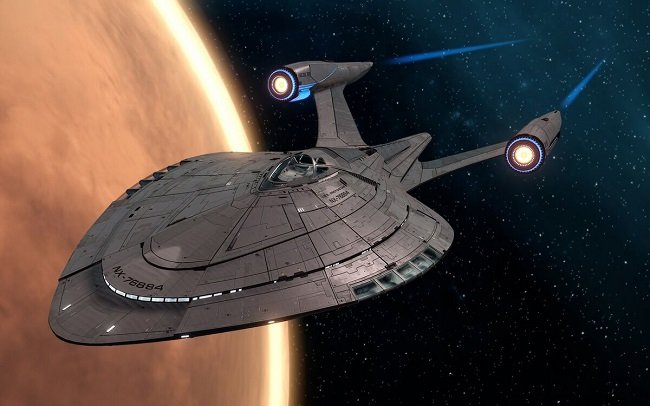
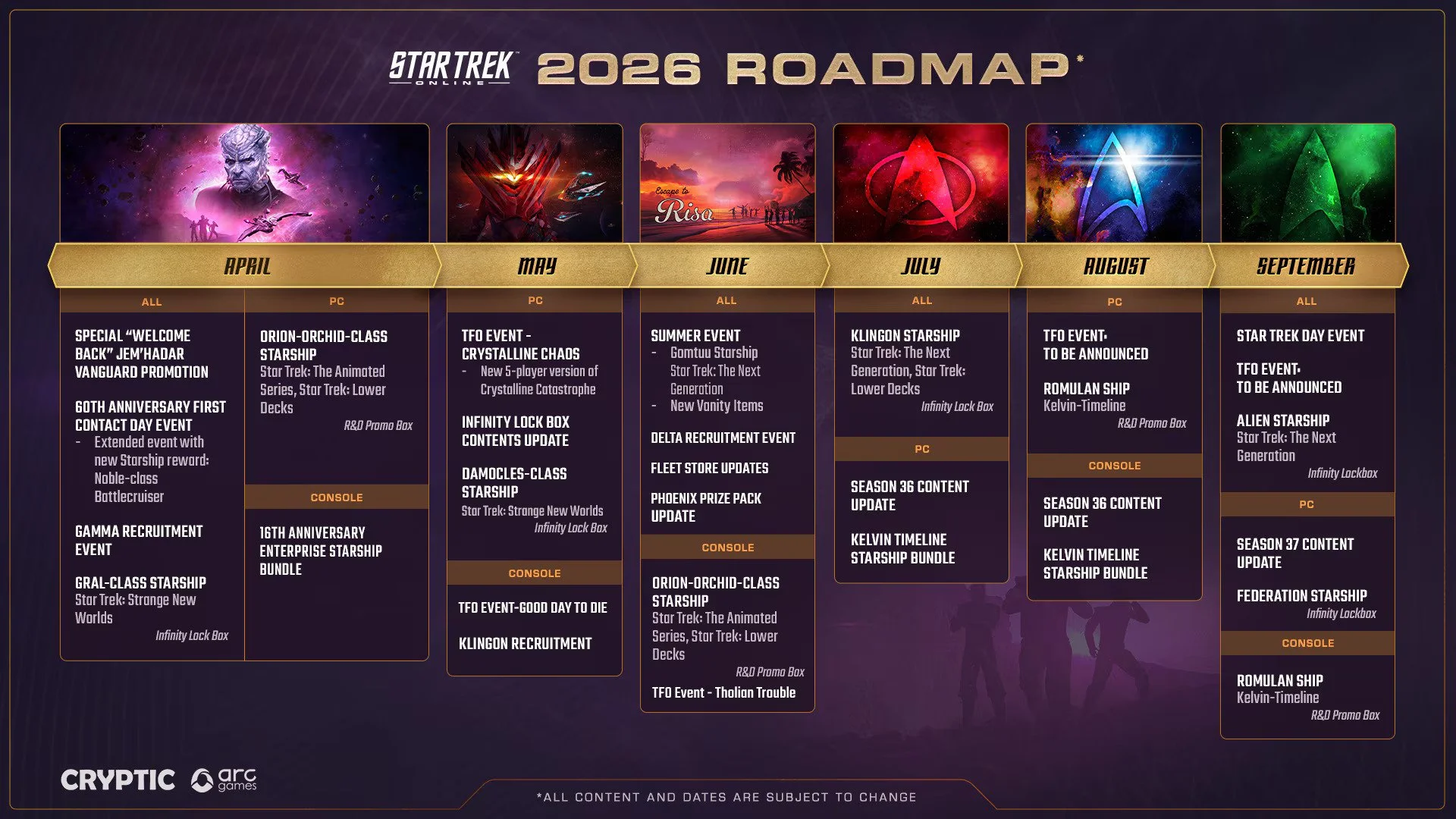
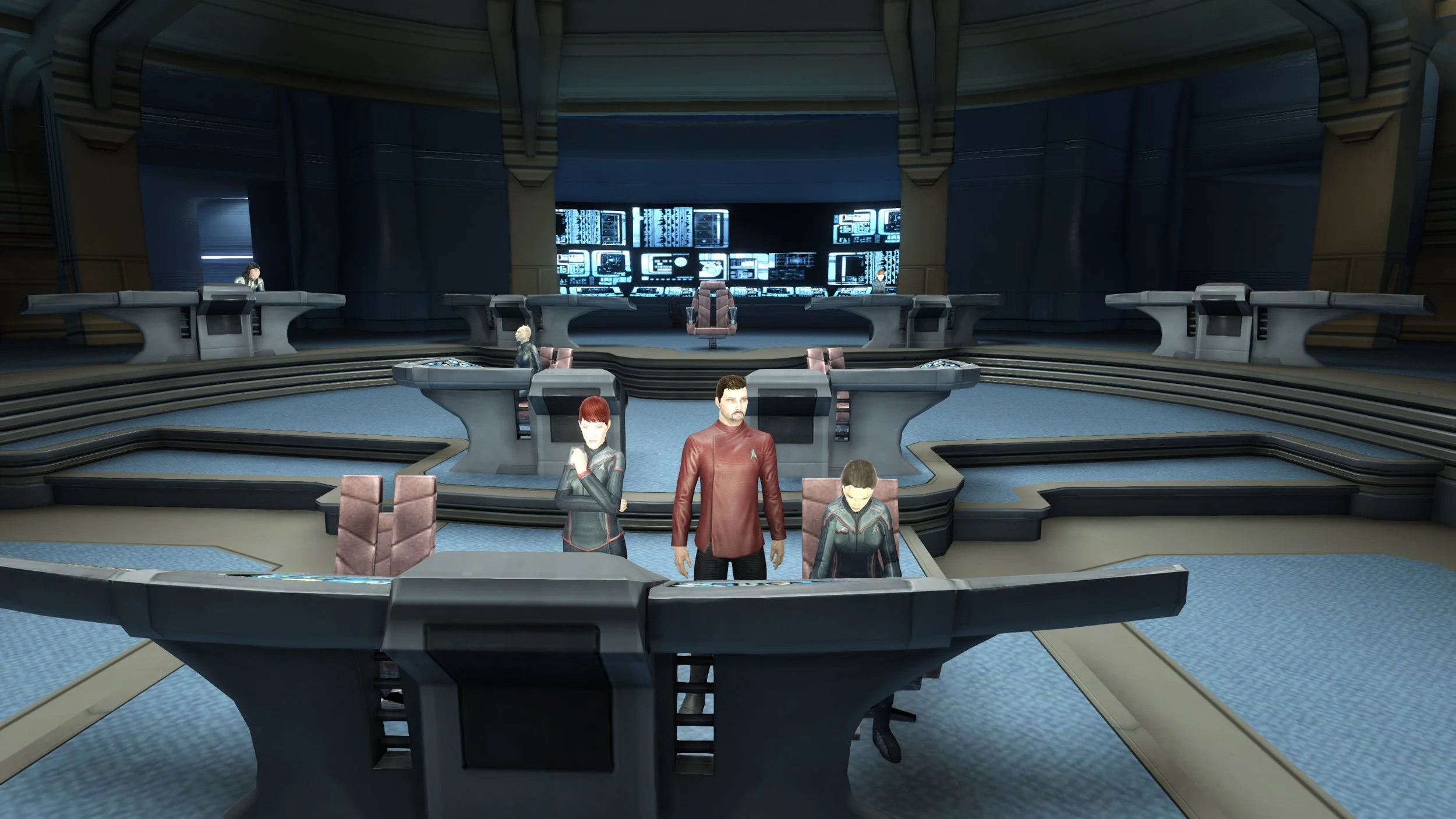
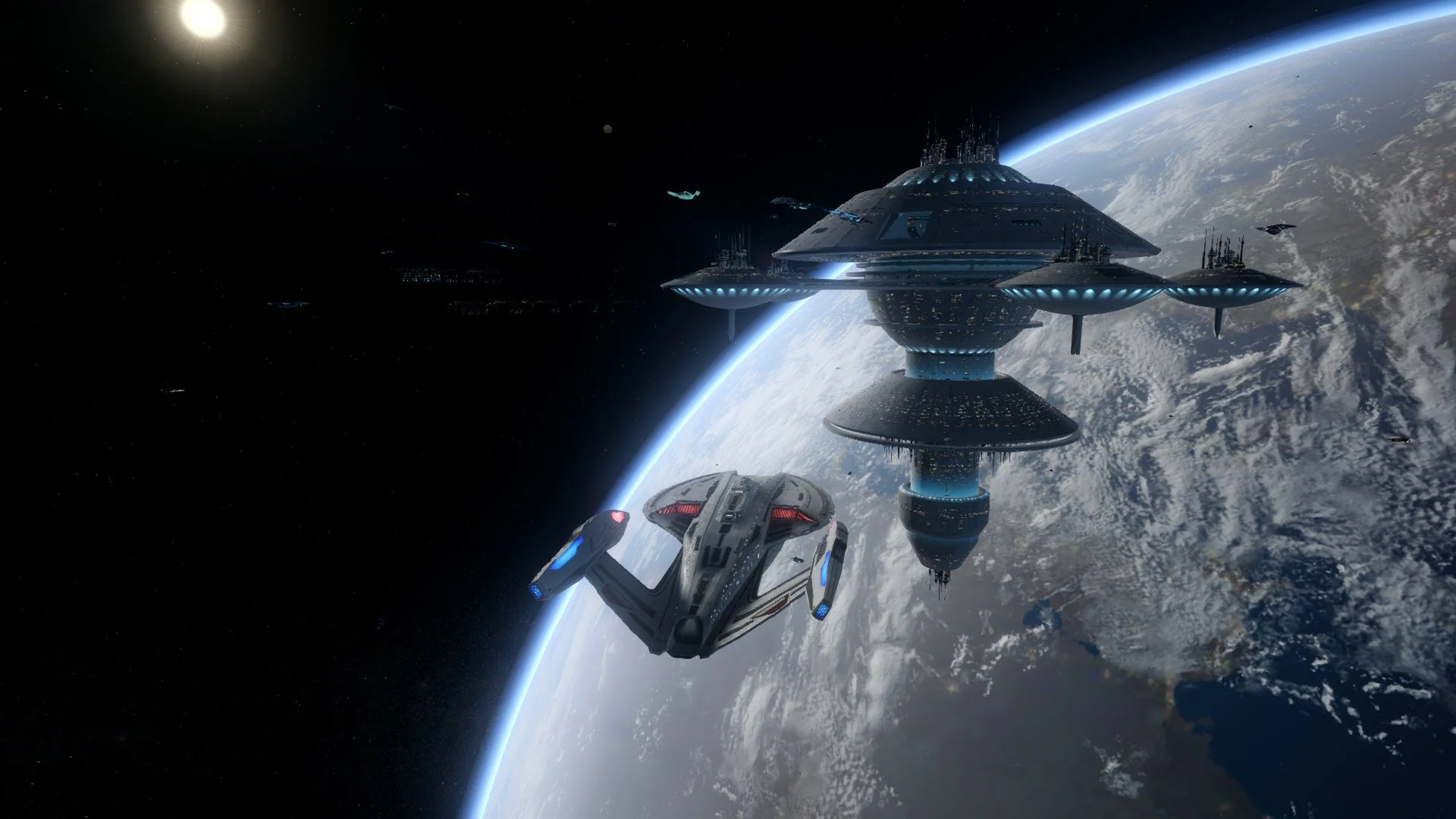
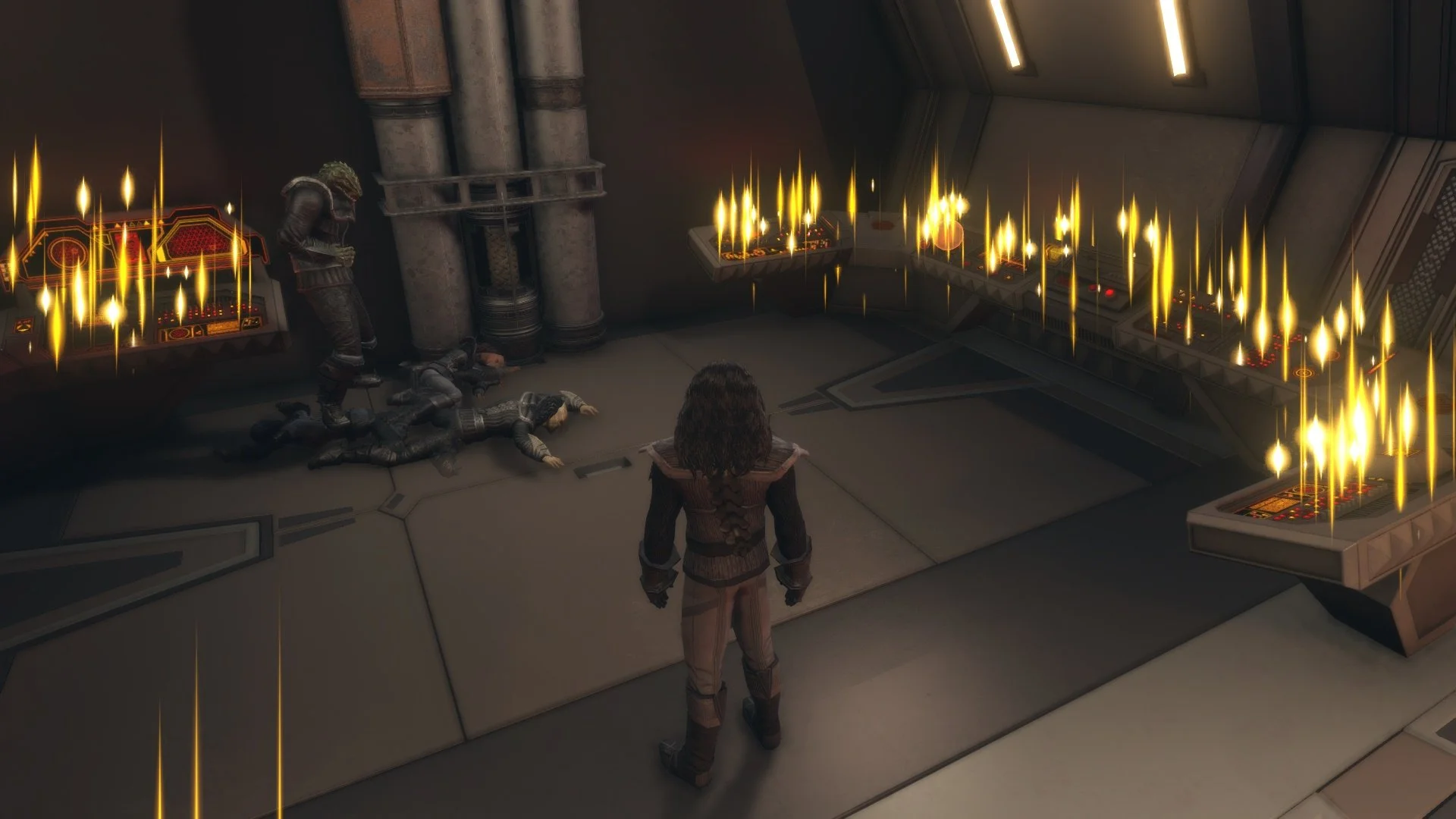
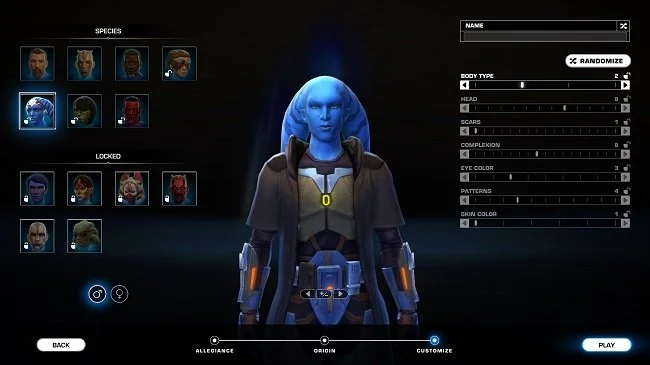
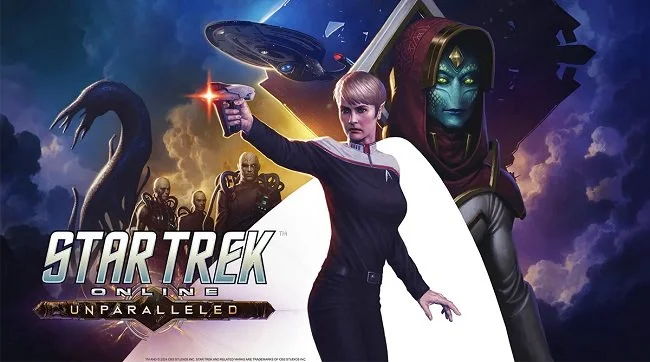
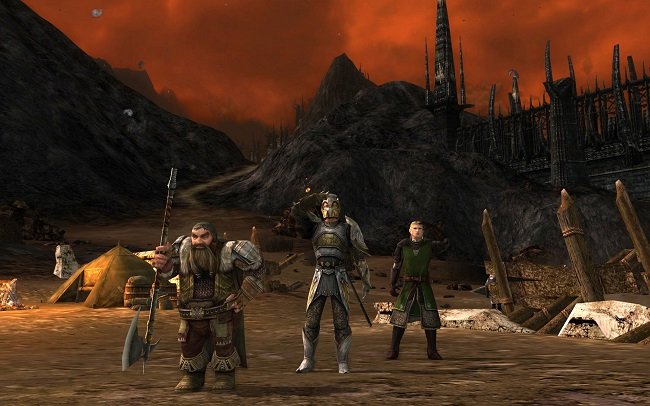
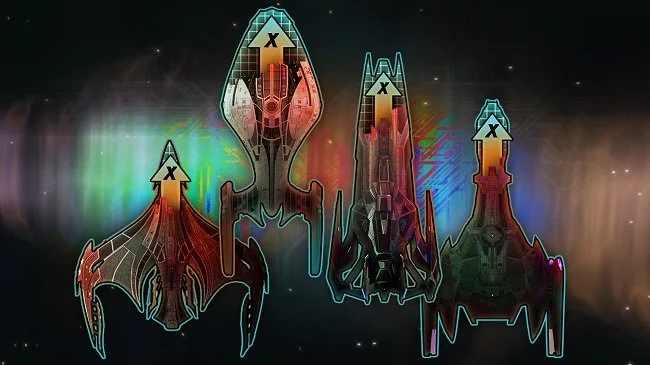
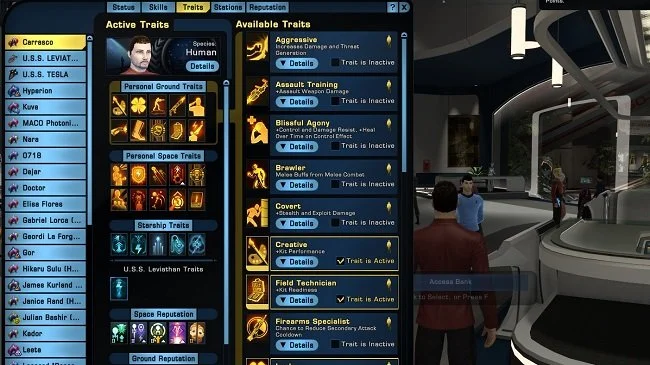
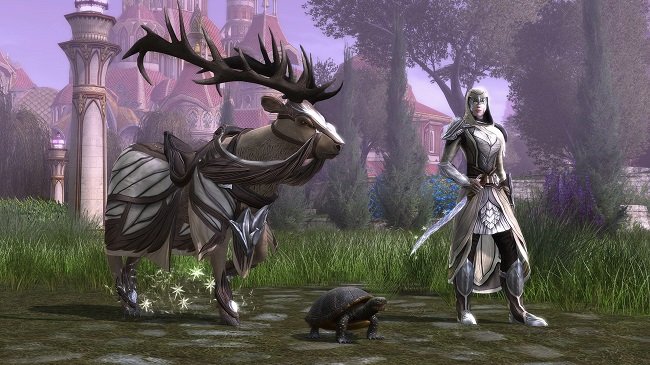
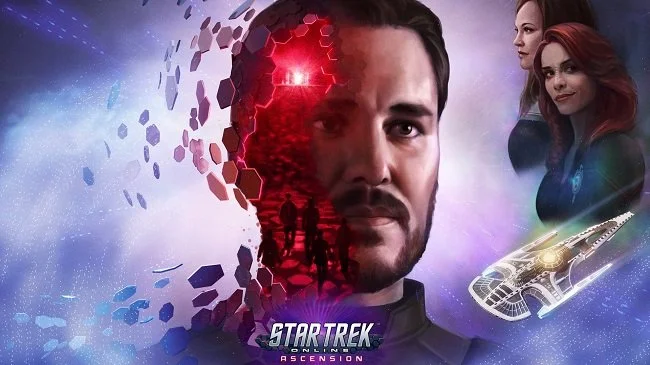
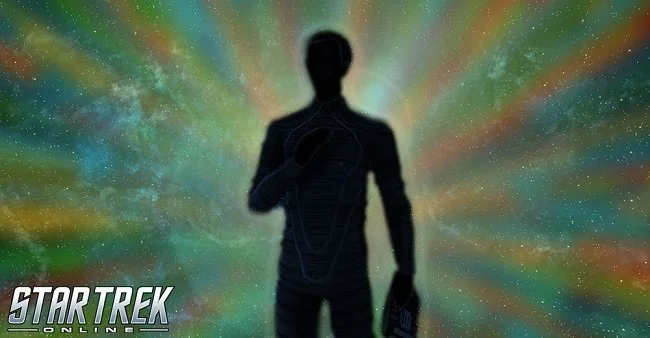
I have suffixed the title of this post “and stuff” so I can address several Star Trek Online related thoughts in a single blog post. Despite the fact that I frequently play STO it is does oddly get neglected in my writing. So, let us start with the issue of the ninth anniversary. As ever Q is back with the anniversary event and once again, we are stabilising Omega Molecules. This year’s reward is a Tier 6 Vulcan T’Pau Scout Ship. There are also emotes and sundry other items to earn during the duration of the festivities, but I more interested in the anniversary itself. Not many MMOs make it to nine years and if they do, they aren’t necessarily in as good shape as STO. The game has a stable and loyal playerbase and is currently tied-in to Star Trek: Discovery. Further established Trek actors are supplying voice acting and the game seems to be doing well across both PC and consoles. Like LOTRO, STO uses the IP well and seems to “fill in the gaps” in the existing lore as well as expand and extrapolate established canon. One of the best things about STO is that there’s always something to do in-game as well as new content in the pipeline. Perhaps this along with the handling of the IP is why the game endures.
I have suffixed the title of this post “and stuff” so I can address several Star Trek Online related thoughts in a single blog post. Despite the fact that I frequently play STO it is does oddly get neglected in my writing. So, let us start with the issue of the ninth anniversary. As ever Q is back with the anniversary event and once again, we are stabilising Omega Molecules. This year’s reward is a Tier 6 Vulcan T’Pau Scout Ship. There are also emotes and sundry other items to earn during the duration of the festivities, but I more interested in the anniversary itself. Not many MMOs make it to nine years and if they do, they aren’t necessarily in as good shape as STO. The game has a stable and loyal playerbase and is currently tied-in to Star Trek: Discovery. Further established Trek actors are supplying voice acting and the game seems to be doing well across both PC and consoles. Like LOTRO, STO uses the IP well and seems to “fill in the gaps” in the existing lore as well as expand and extrapolate established canon. One of the best things about STO is that there’s always something to do in-game as well as new content in the pipeline. Perhaps this along with the handling of the IP is why the game endures.
In October last year, Cryptic released a new Star Trek: Discovery themed “starting experience” that allows players to create characters from 2256. As ever there’s a fairly involved narrative which references Klingon lore from that era and the war with the Federation. There’s the added bonus of Jeffrey Combs playing Captain Thy'kir Shran, the great-grandson of Thy'lek Shran from Star Trek: Enterprise. However, due to the main story of STO being set in 2409, the writers have to once again fall back on that old tried and tested Trek “get out of jail card”, time travel. Hence, Agent Daniels makes a further appearance and uses more temporal shenanigans to bridge the timelines. It’s an acceptable plot device if you’re new to the game, but it’s already been previously used in 2016 in the Agents of Yesterday expansion. Plus, if you don’t create a new character and play through this specific tutorial, the follow up story set in the twenty fifth century that is available to established alts, is a little confusing to say the least.
Now I happen to enjoy Star Trek: Discovery and am therefore happy to have content from this era along with voice acting from Mary Wiseman added to the game. But there is a downside to this. In an attempt to streamline and coherently curate all the previous episodes of STO, Cryptic have had to alter their running order. Some stories have been taken out of the chronological sequence and categorised as Side Content: The Galaxy at Large. If you are a dedicated trek fan who starts playing the MMO from scratch, you may have to play a fair amount of content across multiple factions before everything falls into place. After nine years that game does seem to be sagging under its irregular narrative growth. But despite these occasional quirks the stories available do all have a strong Trek feel to them. Last summers Victory is Life expansion contained some of the best written material outside of the shows themselves. It certainly tapped into the best elements of Star Trek: Deep Space Nine. It’s a shame it is not officially canonical.
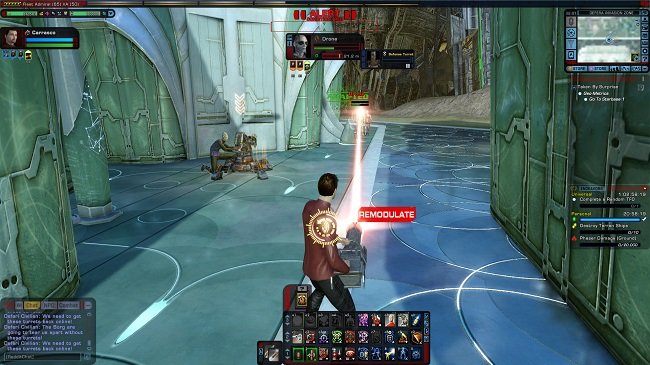
Another issue that Cryptic have been trying to address of late is encouraging players to participate more in the various group PVE missions or Task Force Operations as they have been renamed. This content provides among other rewards, rep tokens which are required for reputation faction advancement. In the past it would be difficult for players to find a group for some of the less popular TFOs, so the developers came up with the Universal Endeavor system. This offers daily TFO challenges along with bespoke rewards. They also added a facility to join a random TFO with enhanced loot. As of the 23rd January and the start of the 16th STO season, Personal Endeavors have been added to the game, offering three random tasks that can be completed by replaying missions, running TFO or visiting the various battlezones in the game. If you are presented with a task that is not to your liking, you can reroll another using tokens that are given as part of the Personal Endeavors rewards. The system also provides perk points that can be spent to unlock account-wide bonuses that apply to all characters equally. For the casual player this offers an enjoyable challenge, where the dedicated min-maxer will have yet a further set of options to tweak their build.
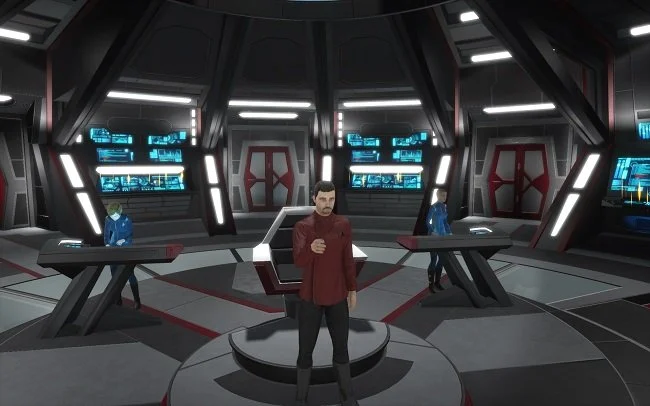
After a year of trying a variety of ships in STO I have returned to my Tucker Tactical Miracle Worker Cruiser. The prevailing game meta has changed once again and frankly I’m not quite au fait with the latest popular theories, so I have opted for a lore-based phaser beam weapons and selected gear for a standard Auxiliary to Battery build. Everything equipped is Mark XV and upgraded to Epic level. As I no longer have any DPs parsers installed and I’m not inclined to go down the rabbit hole, I have no idea what my “official numbers” are like, but stuff dies and dies quickly, and I no longer fly like a complete fool which helps a lot. Overall, I find myself well placed at present to enjoy STO. I bought the game on launch and it took both me and Cryptic a while to find our respective feet. I played the game on and off during it’s first four years and it wasn’t until the launch of the Delta Recruitment Event in May 2015 that it fully got a hold on me. By then a lot had been done to file down the rough edges. STO still has some that need attention but I’m glad that nine years on the game is still alive and kicking. I mean what other MMO has Horta combat pets or Gorn’s in Hawaiian shirts?



Too Many Online Game Stores?
I first created a Steam account and started purchasing games via digital download in January 2010. Back then, Steam pretty much had a monopoly on the market, and it was both novel and convenient to be able to purchase what seemed like “anything” just from one outlet and then download it and play, at any time of day. And then the rest of the video games industry woke up and decided they wanted a slice of the pie that was at the time exclusive to Valve. Hence, over the last eight years all the major “Triple A” publishers have developed their own game launcher software and online stores. This has led to titles being withdrawn from sale via Steam and a gradual fracturing of the market. That’s not to say that Steam is no longer a viable service. On the contrary. It still has a diverse range of products and there are always deals to be had. But it is no longer the first port of call when buying games online.
I first created a Steam account and started purchasing games via digital download in January 2010. Back then, Steam pretty much had a monopoly on the market, and it was both novel and convenient to be able to purchase what seemed like “anything” just from one outlet and then download it and play, at any time of day. And then the rest of the video games industry woke up and decided they wanted a slice of the pie that was at the time exclusive to Valve. Hence, over the last eight years all the major “Triple A” publishers have developed their own game launcher software and online stores. This has led to titles being withdrawn from sale via Steam and a gradual fracturing of the market. That’s not to say that Steam is no longer a viable service. On the contrary. It still has a diverse range of products and there are always deals to be had. But it is no longer the first port of call when buying games online.
The recent news that Epic Games is “aggressively” competing with Steam, with exclusive titles like Metro Exodus and major discounts on popular games, has put this issue of Online Game Stores back on my radar. I bought Assassin’s Creed: Odyssey last December so had to install Uplay to play it and keep it updated. There’s been a recent patch for Star Wars: Battlefront II, so I’ve also had to download Origins to check out the game. I need Battle.net to play Overwatch and Destiny 2 as well as Galaxy to efficiently manage the titles I’ve purchased from Good Old Games. And due to my curiosity over Epic Games market expansion, I ended up creating an account and using their software to peruse their wares. In total I have 6 bespoke client launchers and their associated online stores currently installed on my PC. All of which have logon and payment credentials that need to be securely managed. The dream of a one stop option via Steam has long gone.
If I step back and look at this situation from a business perspective, then I can see why the major publishers want their own specific presence in the online sales market. Furthermore a “theory” from fellow games blogger Wilhelm Arcturus may shed some light specifically on the Epic Games expansion. “The fun rumor I saw was that Tencent (which owns Epic and Riot) pushed Epic into creating this store, with all sorts of developer incentives, to hit back at Valve for bringing Steam to China with PWE rather than them. Big if true”. However, although I may be aware of businesses needs, they are not a major concern of mine. I identify more as a consumer than a “gamer” and I’m ultimately just looking to indulge my pastime as cheaply and efficiently as possible. Having multiple game launchers and stores to choose from has both benefits and inconveniences for me. I can potentially get good deals but also have to compartmentalise my gameplay to specific platforms. This means multiple friends lists, multiple social tools and multiple marketing emails. None of which are deal breakers, but low-level nuisances are still nuisances none the less.
My biggest concern about the current proliferation of online game stores is one of licensing and reciprocal arrangements with third parties. Video on demand services have gone the same way in recent years and I now find myself using several services with various add-ons. I often find that movies and TV shows that I’ve added to my “watchlist” vanish after a time as the licensing contract comes to an end. So far this has tended to be relatively low level content and I have not been inconvenienced over it. However, if Netflix stopped carrying Star Trek then the service would instantly become redundant as far as I’m concerned. Nothing like this has happened to me game wise yet. Although Steam stopped selling certain EA titles once they launched their own platform, I have not lost access to Mass Effect 1 and 2 that I bought from them. However, I am not fool enough to think that such a situation is beyond the realm of possibility. Business arrangements change, as does regional law. So I am cautious when it comes to what games I buy because I no longer believe I’ll have indefinite access to them As for online game stores, yes there are too many of them but I suspect they will ultimately just contribute to the further marginalisation of the market and may not yield the result their corporate owners hope for.

The Varying Quality of You Tube Content
"The ability to speak does not make you intelligent". Qui-Gon Jinn
I’m sure this has happened to many of you before. You’re playing a video game and you have a particular question regarding it. How do I reach a specific location on the map? Is there an optimal build for a certain class? Where can I get a certain item? A quick Google search returns multiple results but most of them are videos rather than text-based answers, so you opt to watch one to get the answer that you seek. However, you then notice that your simple enquiry somehow merits a video that lasts twelve minutes. You then spend your precious time enduring a rambling diatribe from someone who clearly hasn’t scripted a succinct explanation. If you’re lucky you may get the answer that you seek, or you may end up wasting your time entirely. Should you perhaps watch another video? Needless to say, you eventually go back and read one of the written answers.
"The ability to speak does not make you intelligent". Qui-Gon Jinn
I’m sure this has happened to many of you before. You’re playing a video game and you have a particular question regarding it. How do I reach a specific location on the map? Is there an optimal build for a certain class? Where can I get a certain item? A quick Google search returns multiple results but most of them are videos rather than text-based answers, so you opt to watch one to get the answer that you seek. However, you then notice that your simple enquiry somehow merits a video that lasts twelve minutes. You then spend your precious time enduring a rambling diatribe from someone who clearly hasn’t scripted a succinct explanation. If you’re lucky you may get the answer that you seek, or you may end up wasting your time entirely. Should you perhaps watch another video? Needless to say, you eventually go back and read one of the written answers.
The written word is a great medium for imparting information and answering questions. But video is often considered an easier and more convenient option. It’s quicker and potentially easier to create and you can embrace the old Hollywood adage, “Show, don’t tell”. When I was an active Guild Wars 2 player, You Tube videos were the most immediate way to find out how you reach a specific Vista, especially if it involved a complex jumping puzzle. However, there was an important caveat involved. Whether you got a quick and accurate answer came down to the quality of the video, how well it was edited, and whether the author was adept at expressing themselves clearly. And this pretty much rings true for any kind of instructional video, be it for wiring a plug or co-ordinating a twelve-man raid in an MMORPG. Sadly, one of the few things that You Tube, and the democratisation of video production hasn’t achieved is any form of automated quality control. Simply put not everyone is cut out to be a teacher and the ability to record a video doesn’t mean that it will be good by default.
Instructional videos are a “lottery”, to say the least.
For the sake of this discussion, let us focus exclusively on game related You Tube content and that which is specifically meant to explain a mechanic, system or such like. IE any material that is intended to be instructional. The key to producing a good video of this kind is twofold. The video content has to clearly show the thing that is being discussed and explained. Presentation is key. It needs to be unambiguous and focused. Next the accompanying narration has to be factually accurate, easy to understand and engaging. The former of these two skills can be easily learned. There is a wealth of advice and guidance available on the technicalities of producing professional videos. The latter requirement, which is a form of public speaking, is not so easy to pick up. In fact, for some it is nigh on impossible. Hence, there is a broad spectrum of quality when it comes to You Tube content of this kind. Speaking casually, as you would with friends, using banter, patois and colloquialism are fine on “let’s plays” or for live streaming. This very personal style of discourse can be a source of appeal. But I believe it has no place when it comes to providing instruction.
And therein lies the rub as the expression goes. Simply put there are far too many You Tube videos where the subject matter is poorly framed, and the creator has no discernible oratorial skills. Inarticulate ramblings and poorly expressed points are sadly common place. Plus, there is absolutely no excuse for being dull. Yet You Tube is awash with poorly made content that often proves to be an absolute chore to sit through. I appreciate that many content creators are driven by enthusiasm, but I also suspect that a percentage are motivated by dreams of internet fame or a chance to make a fast buck. Greed often seems to trump quality control and enthusiasm is no substitute for talent. Furthermore, irrespective of the sophisticated algorithms that You Tube has at its disposal, it doesn’t have yet have the tools to automatically determine the quality of content. Which means that unless you have a prior familiarity with a content creators work and trust it, watching any video for instructional reasons is a crapshoot.
Bluster, hyperbole and calumny do not equate to quality public speaking.
Now I want to make it quite clear that I'm not in any way advocating that people should be denied the chance to create You Tube content. I firmly believe in the individual’s right to express themselves within the confines of the law, regardless of whether their videos are shit or borderline David Attenborough. However, the moment you place something in the public domain then you are inviting criticism. We live in a media saturated age and the wider public are extremely tech savvy and expect content to be to a certain standard by default. Therefore, a lot of existing content creators really do need to raise their game and produce work to a higher standard. Basic literacy helps. So does not speaking like you’re recovering from a major head trauma. You Tube also needs to introduce a more sophisticated means of providing feedback, other than the arbitrary thumbs up or down, so that content creators have a fighting chance of knowing what needs to be improved. However, You Tube doesn’t like to spend money on human moderation, so this situation is sadly not likely to change any time soon.

























Classic Movie Themes: Star Trek II The Wrath of Khan
James Horner was a prolific, yet consistently good composer with a broad range of styles. Consider his score for 48 Hrs with its Jazz under currents and then compare it to his grand swashbuckling approach to Krull. They are radically different soundtracks, but both are extremely effective in embellishing their respective motion pictures. That was James Horner great talent. He knew when to be theatrical and bombastic but could also dial it back and be subtle, gentle and delicate. It made his body of work very diverse and memorable.
James Horner, although possessing a very broad and eclectic musical range, was in many respects a very traditional composer. He was certainly au fait with works of such giants as Miklós Rózsa, Korngold and Bernard Herrmann and it often manifested itself in his music through his use of the leitmotif. Perhaps the reason James Horner was so consistently good and crafted so many outstanding pieces of music, is because he never saw his profession as just a means to an end. As he said in an interview once, “I don’t look at this as just a job. I see music as art”.
James Horner was a prolific, yet consistently good composer with a broad range of styles. Consider his score for 48 Hrs with its Jazz under currents and then compare it to his grand swashbuckling approach to Krull. They are radically different soundtracks, but both are extremely effective in embellishing their respective motion pictures. That was James Horner great talent. He knew when to be theatrical and bombastic but could also dial it back and be subtle, gentle and delicate. It made his body of work very diverse and memorable.
James Horner, although possessing a very broad and eclectic musical range, was in many respects a very traditional composer. He was certainly au fait with works of such giants as Miklós Rózsa, Korngold and Bernard Herrmann and it often manifested itself in his music through his use of the leitmotif. Perhaps the reason James Horner was so consistently good and crafted so many outstanding pieces of music, is because he never saw his profession as just a means to an end. As he said in an interview once, “I don’t look at this as just a job. I see music as art”.
James Horner was very much part of my cinematic youth, having written the soundtracks for many of my favourite movies. I first encountered his work when I saw Battle Beyond the Stars and was immediately captivated by its bold and brass driven title theme. It was this particular soundtrack that brought him to the attention of Paramount Studios and led to him composing his seminal score for Star Trek II: The Wrath of Khan with its graceful nautical themes. The film's director Nicholas Meyer famously quipped that Horner had been hired because the studio couldn't afford to use the first film's composer Jerry Goldsmith again. By the time Meyer returned to the franchise with Star Trek VI: The Undiscovered Country, the director found that he couldn't afford Horner either.

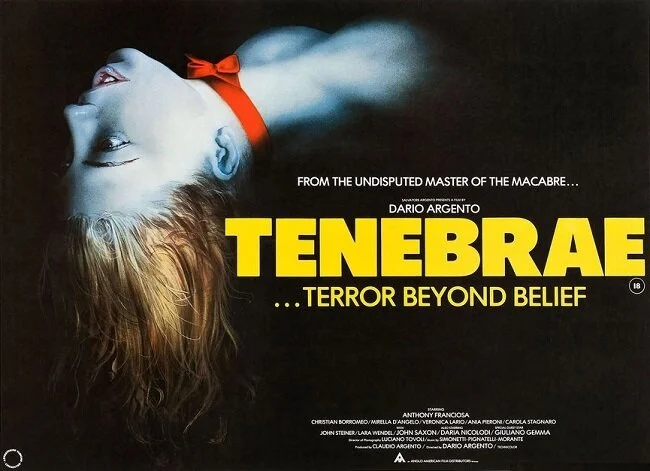
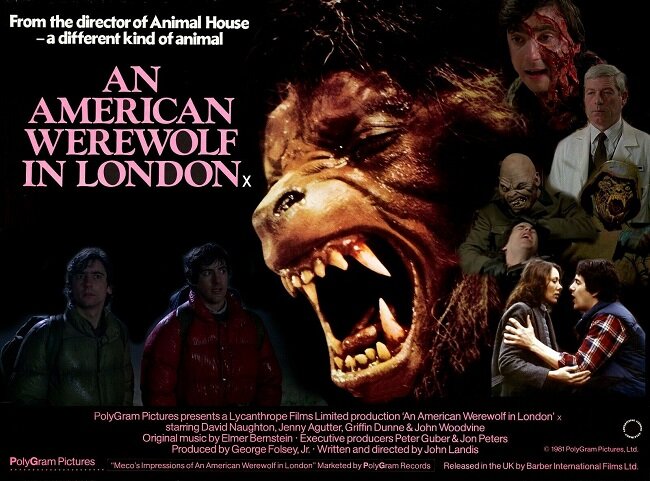


Shout at the Devil (1976)
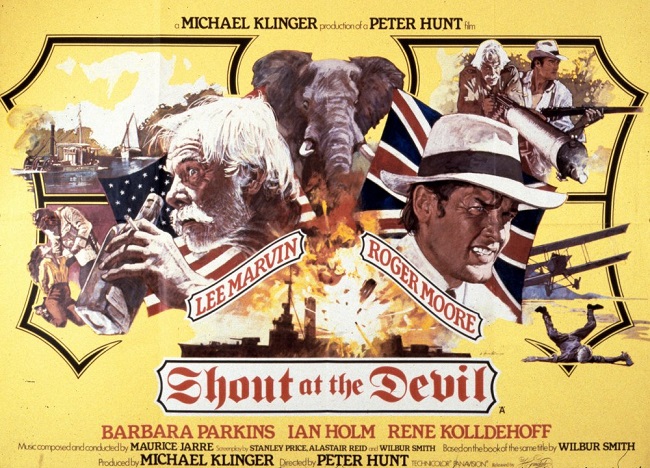
Adapted from the novel by Wilbur Smith, Shout at the Devil is the sort of big budget, sprawling, period set high adventure movie that has fallen out of vogue in recent decades. Its main attraction are its stars, location and robust action scenes. Crafted by former Bond director and long-time editor Peter Hunt, this is a full on, no nonsense character driven drama of the kind that were common place during the seventies. Sometimes the enormity of these sorts of productions meant that something suffered by omission. Be it a weak script, excessive set pieces or too many cameos by an all-star cast. Shout at the Devil broadly manages to avoid such pitfalls. There is however a notable tonal shift in the story about halfway through the film, which does take events in a different direction.
Adapted from the novel by Wilbur Smith, Shout at the Devil is the sort of big budget, sprawling, period set high adventure movie that has fallen out of vogue in recent decades. Its main attraction are its stars, location and robust action scenes. Crafted by former Bond director and long-time editor Peter Hunt, this is a full on, no nonsense character driven drama of the kind that were common place during the seventies. Sometimes the enormity of these sorts of productions meant that something suffered by omission. Be it a weak script, excessive set pieces or too many cameos by an all-star cast. Shout at the Devil broadly manages to avoid such pitfalls. There is however a notable tonal shift in the story about halfway through the film, which does take events in a different direction.
Set in East Africa in 1913 prior to WWI, Flynn O’Flynn (Lee Marvin) is a disreputable American of Irish descent exploiting the “riches” of the African continent. A poacher of ivory and a shameless con man, Flynn and his mute right-hand man Mohammed (Ian Holm) coerce an English Gentleman Sebastian Oldsmith (Roger Moore), into becoming a partner in their ivy poaching trade. This takes them into German colonial territory where they run afoul of Commander Fleischer (Rene Kolldehoff). Barely escaping they return to Flynn’s comfortable lodge located in the African bush. Sebastian meets and falls in love with Flynn’s daughter Rosa (Barbara Parkins) and the two marry and have a baby. The poaching continues but when war breaks out, Fleischer is granted unlimited local power and seeks revenge upon Flynn and Sebastian. He raids Flynn’s lodge but when he finds both Flynn and Sebastian absent, his troops massacre the staff and kill Rosa’s child. Devastated by events Flynn, Sebastian and Rosa undertake guerrilla missions on behalf of British navy. They discover that a German war ship is being hidden in the region and that it is being repaired before returning to sea. Furthermore, they learn that the work is being over seen by Fleischer, providing them with an opportunity for retribution.
The international version of Shout at the Devil has a running time of 150 minutes. This version restores a half hour of footage removed from the American theatrical release. The movie is well paced and has a clear narrative arc. Michael Reed's cinematography is sumptuous and makes the most of African locations. Maurice Jarre's score is suitably rousing and very much of its time. There is also some exceeding good miniature work by Derek Meddings who recreates a very convincing German Battleship. There is also genuine on-screen chemistry between Roger Moore and Lee Marvin. Moore plays straight man to Marvin's scenery-chewing character and the movie has a very jovial light-hearted tone initially. The first raid into German territory depicts the German Commander as a bumbling fool. Yet when Fleischer seeks revenge the plot takes a far more sinister and violent turn. The killing of a child is quite jarring, although far from graphic. The action scenes that follow also ramp up the casual violence. One notable scene has sheet steel being hauled across the savannah on wagons by dozens of native levy troops. In the ensuing gun battle, the wagons crush several people and sliding plate steel decapitates one unfortunate individual.
Shout at the Devil was shot in between The Man with the Golden Gun and The Spy Who Loved Me and boasts a great deal of talent from the Bond franchise. Peter Hunt had edited the early Bond films and directed On Her Majesty's Secret Service. Although Roger Moore and Peter Hunt had never worked on a 007 film together, Moore did star in Hunt's previous adventure film Gold. Other Bond veterans involved in the production were main titles designer Maurice Binder, cinematographer Michael Reed and camera operators Alec Mills and Alan Hume. The movie has a very authentic quality due to the bulk of the production being shot on location. Sadly, this authenticity also extends to the poaching scene. Although no animals were directly harmed during the production, the film does use footage of a genuine elephant hunt and it proves hard to watch for those with modern sensibilities. Also, Caucasian actors playing other ethnicities is anachronistic.
One of the marked differences between modern movies and those from the sixties and seventies, is that contemporary films are often made to a specific rating. Hence every aspect of the film be it themes, dialogue, sex and violence are contrived in advance to be in accord with this. A movie such as Shout at the Devil would be pitched at a broad audience upon its release and would often veer from one idiom to another to accommodate different tastes. Hence you get a comedy fist fight or a humorous scene in which the local natives plead poverty to avoid paying taxes. And if the screenplay required it then you would quickly find yourself dealing with much heavier and dramatic adult themes, which in this case means infanticide, trauma and revenge. I’m not saying it doesn’t work or that it’s a deal breaker, but it is quite a noticeable change to the contained and measured approach of modern PG-13 rated movies.
Shout at the Devil is both an entertaining movie and a snapshot of the British film industry of the times. Elements of the production have dated and have to be judge contextually, if you don’t wish to balk at them. Any film based in twentieth century colonial history is naturally going to be challenging with respect to subjects such a racism and exploitation. Yet on the plus side, the movie does feature two genuine film greats at the height of their careers and their performances do much to carry the story. The films “broad church” approach means that its not stayed or safe and it has capacity to surprise when it decides to become darker. So, if you want an old school adventure movie with an epic scope and explosive climax, along with all the baggage from the era when it was made, then Shout at the Devil has it in spades. Just ensure that you see the international cut of the film in high definition to fully do the production justice.



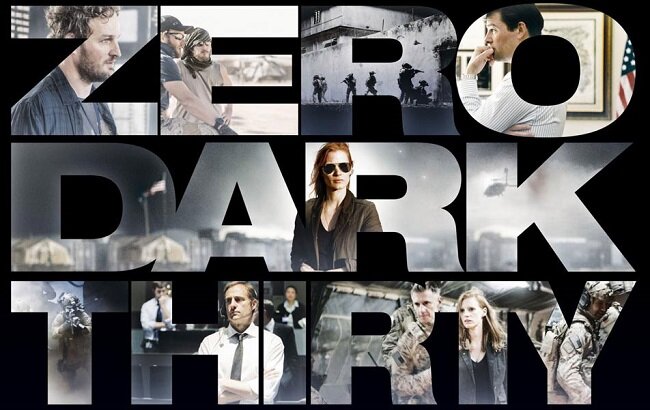
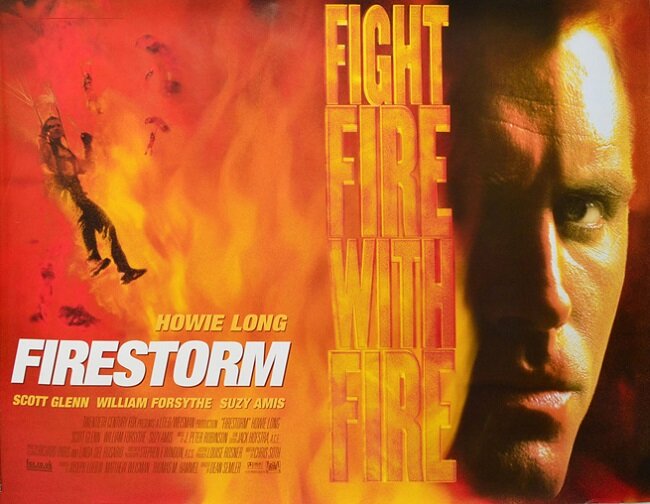

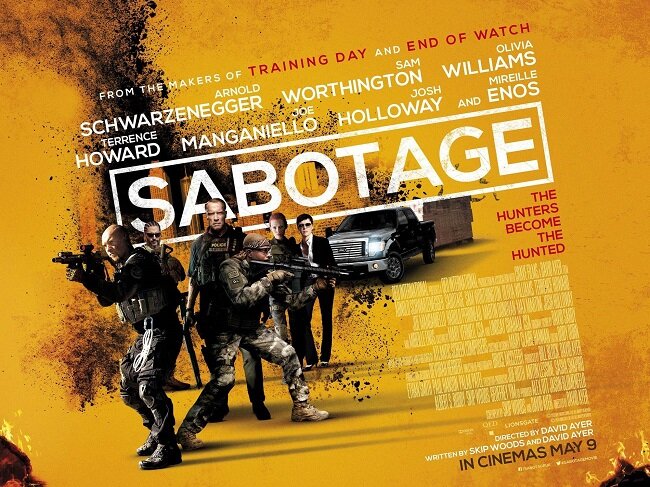
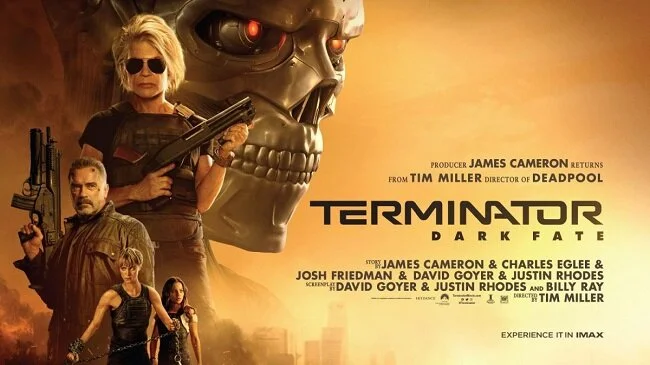



Screenshots
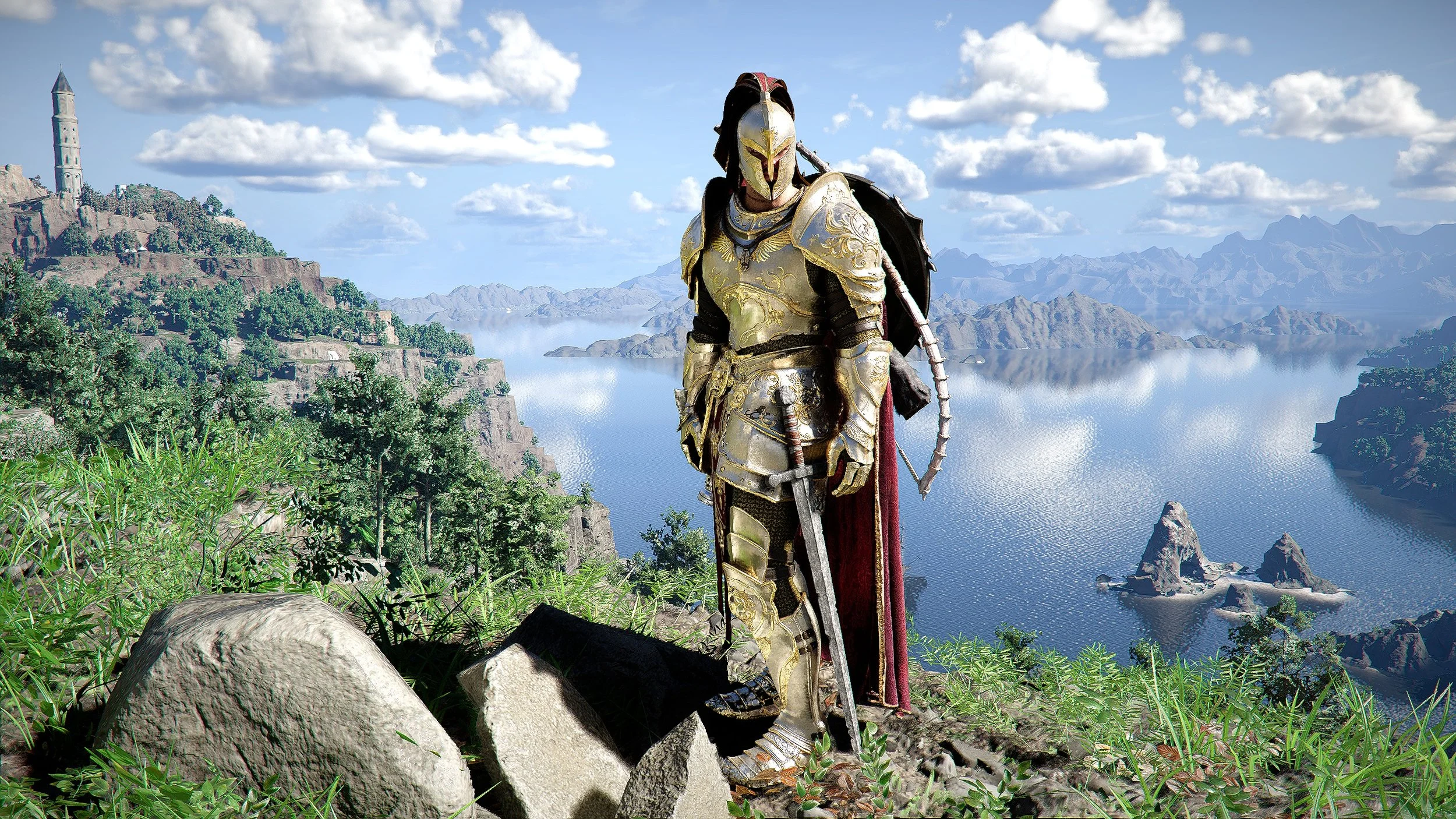
There is a strong social element to video games, regardless of the genre. Gamers like to share their thoughts and opinions with others via forums, blogs and videos because of their common interest. So, it is hardly surprising that video game enthusiasts like to take screenshots and preserve a record of their activities. Subsequently, the ability to capture an image from a game has now become an integral aspect of gaming culture and many titles now have a dedicated screenshot facility. This may range from a simple screenshot key to a comprehensive photo mode in which you can pause the game and pan the camera around the game environment. It’s a far cry from two decades ago when players would often have to rely on bespoke third-party programs such as FRAPS to take screenshots, or simply use the PrtScn button and then paste the image into a photo editor.
There is a strong social element to video games, regardless of the genre. Gamers like to share their thoughts and opinions with others via forums, blogs and videos because of their common interest. So, it is hardly surprising that video game enthusiasts like to take screenshots and preserve a record of their activities. Subsequently, the ability to capture an image from a game has now become an integral aspect of gaming culture and many titles now have a dedicated screenshot facility. This may range from a simple screenshot key to a comprehensive photo mode in which you can pause the game and pan the camera around the game environment. It’s a far cry from two decades ago when players would often have to rely on bespoke third-party programs such as FRAPS to take screenshots, or simply use the PrtScn button and then paste the image into a photo editor.
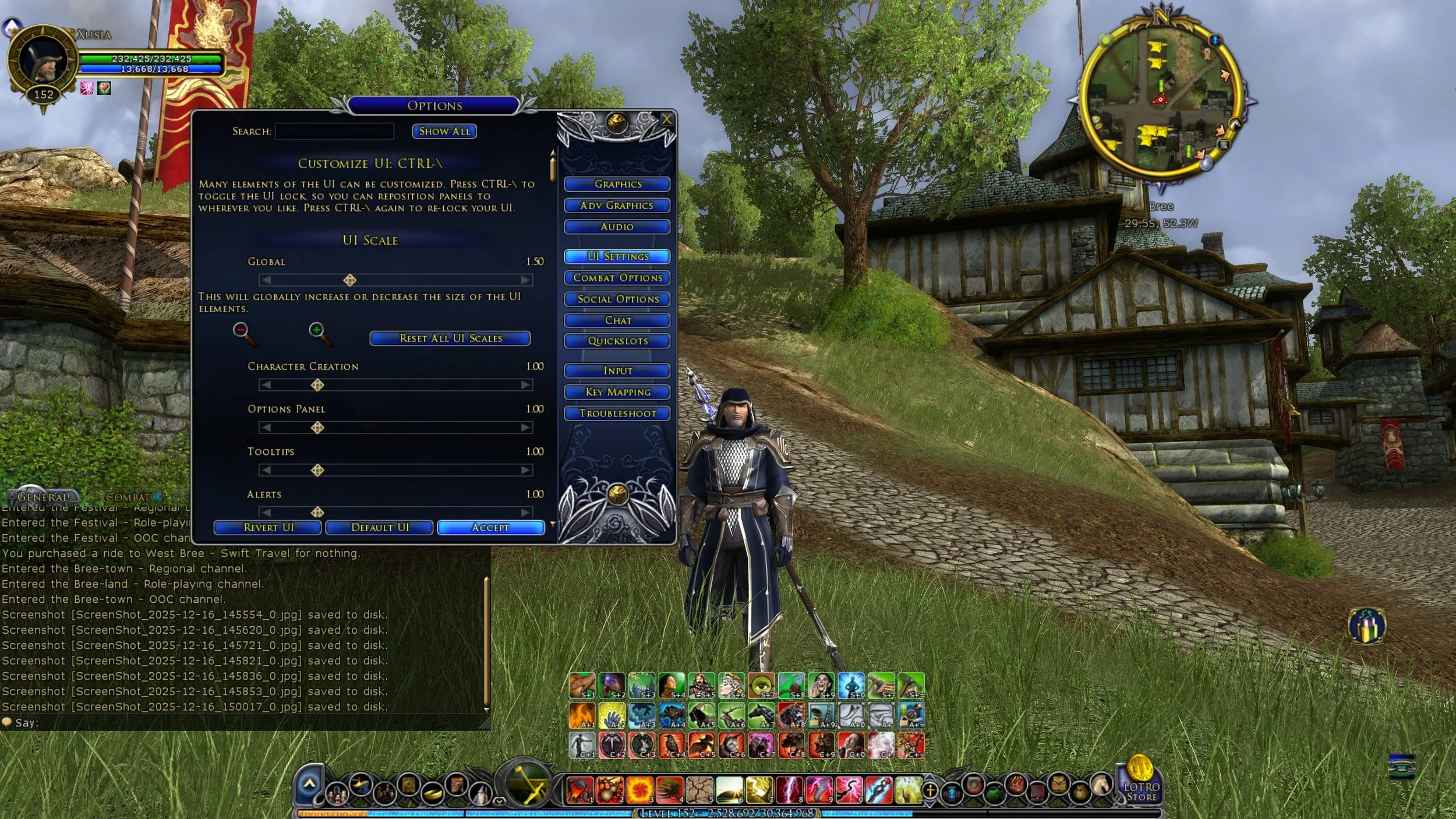
The MMO genre, with their rich persistent worlds, lends itself greatly to screenshots. Often the environments and the graphical design is reason enough to capture images. I have done this often in games such as LOTRO and STO and have folders filled with pictures of landscapes, vistas or battles. Screen captures also provide a convenient means to document achievements and social activities. Players will often take a group picture after a successful raid or at in-game events such as festivals. The convenience of this system also makes it ideal for collating data regarding builds and equipment. Taking a screenshot of your skills tree and how you’ve spent your points is so much easier than meticulously transcribing the details. And as game preservation and history becomes a more important subject, images taken over a period of years can be invaluable in documenting change. I have several hundred LOTRO screenshots taken over a period of nine years. Many show features and systems that have been altered or replaced.
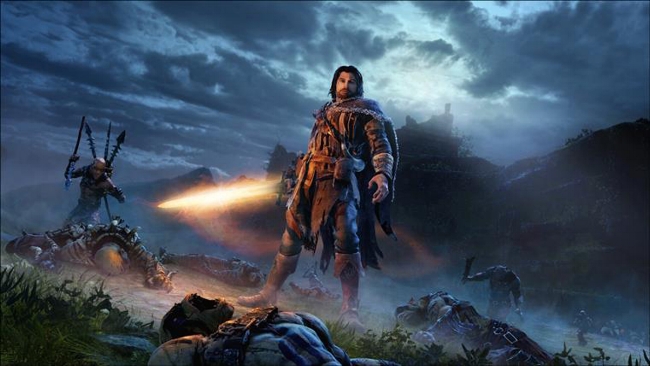
There are specific aspects that contribute to a good screenshot. Like photography, these are based in composition, lighting and creativity. Furthermore, such images can be enhanced using standard photo editing software. Tweaking the brightness or contrast can make a difference and improve the overall presentation. However, in recent years, some games have gone a stage further and introduced a far more comprehensive photo mode that does more than just capture what is initially apparent. I first encountered this facility in Middle-earth: Shadow of Mordor. The player can pause the game at any time during proceedings, and then move the “camera” around the environment to either see the subject form an alternative angle, or as a means to explore aspects of the world not immediately clear. Different elements can be made the focus, while others reduced in clarity. The game UI can be removed, and the finished image framed with specific borders if chosen. There is a similar functionality in Assassin’s Creed: Odyssey and it produces some compelling screenshots.
However, there can be some problems associated with taking screenshots. Some contemporary triple A games have started using anti-tamper software that blocks third party apps such as FRAPS. I have experienced this with such titles as Star Wars: Battlefront II and Ghost Recon: Wildlands. One solution is to take a screen capture using the in-game overlay that is built into the client launcher, such as Origins or Uplay. The down side to this is that you have to customise settings of each launcher if you want to use a standard screen capture key. Alternatively, if you have a Nvidia graphics card then GeForce Experience software offers a universal screenshot facility. This not only works for games but can capture images from your desktop as well as videos played via VLC Player or similar software. But regardless of the technicalities as to how you take your screenshots, ultimately, they are a distillation of all the reasons why we game. Like conventional photographs they are a means of capturing a moment for posterity, that can later be shared and reflected upon.
The Last Hunter (1980)
There are many films about war. There are many films about the Vietnam war. A few have transcended mere historical depiction and managed to capture the utter horror and political insanity of the situation, along with the tragic human cost. And then there are those which simply seek to use the setting as a vehicle for an exploitation movie, in the hope of making a fast buck. The Last Hunter (L'ultimo cacciatore) falls firmly into the second camp. This Italian "macaroni combat" movie (yes, I didn’t know that’s a thing either) offers a straight forward tale of an incursion behind enemy lines by an officer charged with destroying a radio transmitter, broadcasting anti-US propaganda. It is violent, action packed and surprisingly honest about what sort of film it is. You’ll find no pretentious philosophical musings here. Just explosions, rotting corpses and Viet Cong booby traps.
There are many films about war. There are many films about the Vietnam war. A few have transcended mere historical depiction and managed to capture the utter horror and political insanity of the situation, along with the tragic human cost. And then there are those which simply seek to use the setting as a vehicle for an exploitation movie, in the hope of making a fast buck. The Last Hunter (L'ultimo cacciatore) falls firmly into the second camp. This Italian "macaroni combat" movie (yes, I didn’t know that’s a thing either) offers a straight forward tale of an incursion behind enemy lines by an officer charged with destroying a radio transmitter, broadcasting anti-US propaganda. It is violent, action packed and surprisingly honest about what sort of film it is. You’ll find no pretentious philosophical musings here. Just explosions, rotting corpses and Viet Cong booby traps.
Directed by veteran Italian film maker Antonio Margheriti (and billed as Anthony Dawson on English language prints), The Last Hunter is a well-made (by Italian cash-in genre standards) exploitation war movie, with a solid international cast and good action set pieces. Margheriti had a background in miniature effects and the film features several scenes of this kind, such as the rail yard bombing at the start and the jungle cave demolition in the films second act. The dialogue is functional (and all dubbed in post-production like so many Italian movies of this kind) and the story efficiently moves the actors from set piece to set piece. There’s even the bonus of a minor twist in the movies climax. David Warbeck is suitably grizzled and burnt out as Captain Morris and Tisa Farrow fills the roll of the “plucky news reporter” embedded with the unit. There’s also wise cracking banter between Tony King and Bobby Rhodes as the units African-American representation. Connoisseurs of eighties Italian genre movies will delight at the cast and the additional inclusion of John Steiner as a suitably deranged Major.
Being an Italian movie of the times, there are copious acts of violence including a graphic gunshot to the eye, a partial decapitation and a leg amputation. There’s also a lot of crude barrack room humour and an attempted rape, but hey that’s how these movies roll. It almost as if there’s a check list being followed. The location cinematography in the Philippines gives the proceedings an authentic feel and like so many Italian movies from this decade, the soundtrack by Franco Micalizzi is contemporary, funky and far more interesting than some traditional orchestral scores. As this movie is not designed to be a cerebral undertaking it has to be judged on what it has to offer. And on that basis, then The Last Hunter is a better than average ninety plus minutes of Italian exploitation cinema. It is also a good steeping stone into the wider works of director Antonio Margheriti. If you enjoy this movie you may wish to try, Codename: Wild Geese (three guesses which movie this rips off), Command Leopard and Killer Fish. All have an interesting international cast, miniatures effects work along with either gore or action.
The Last Hunter Bonus Track: Music from the opening night club scene.
LOTRO: Taking Stock of Progress
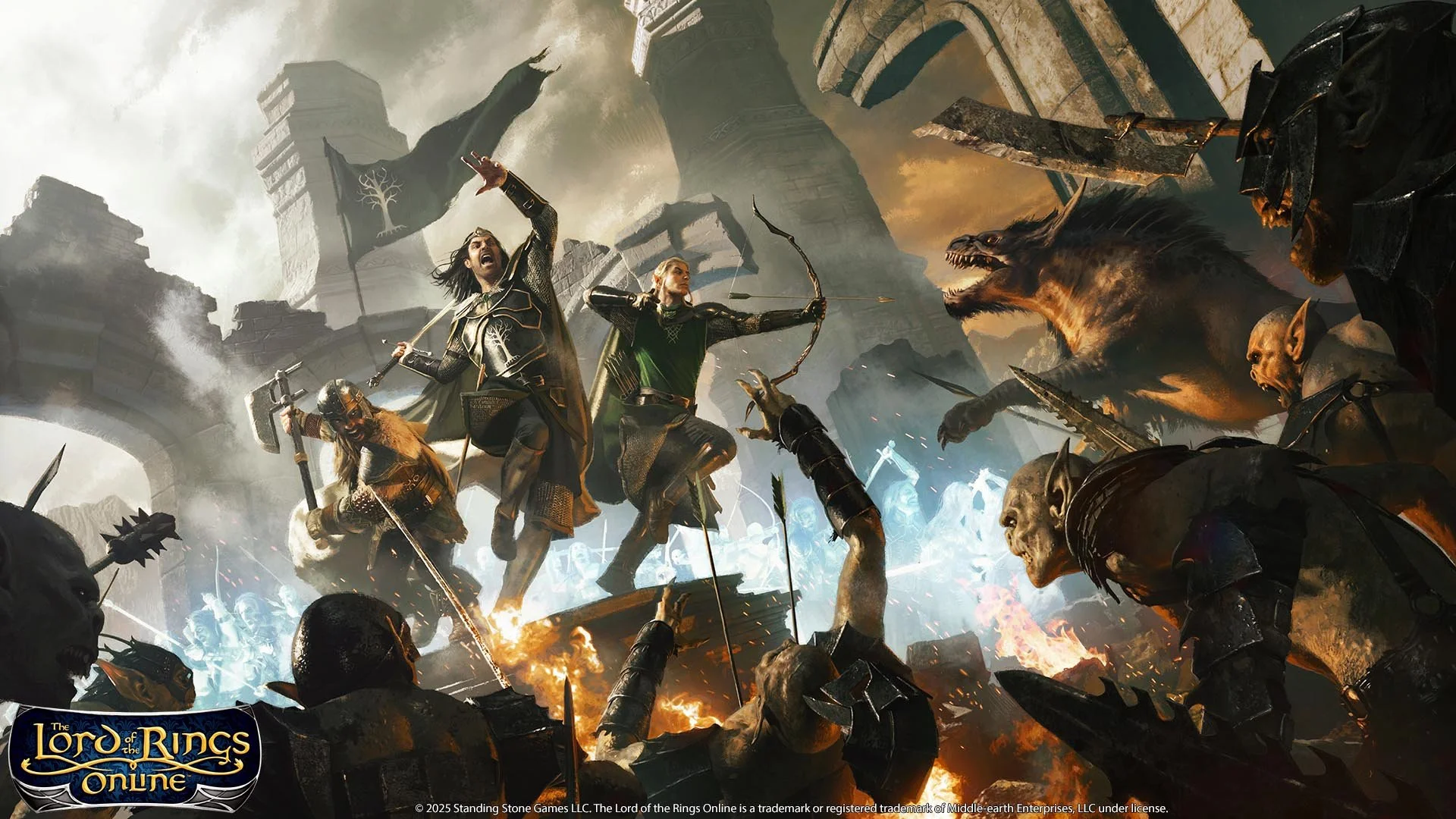
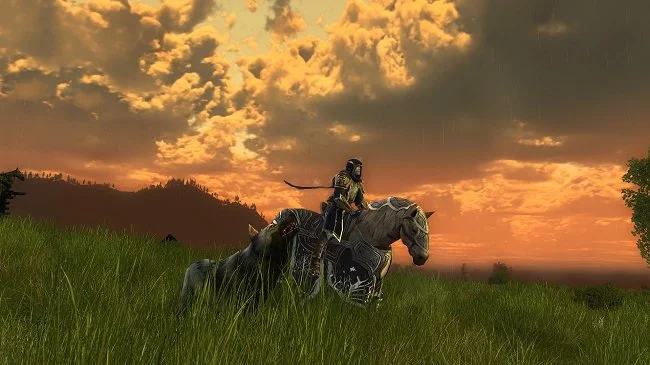
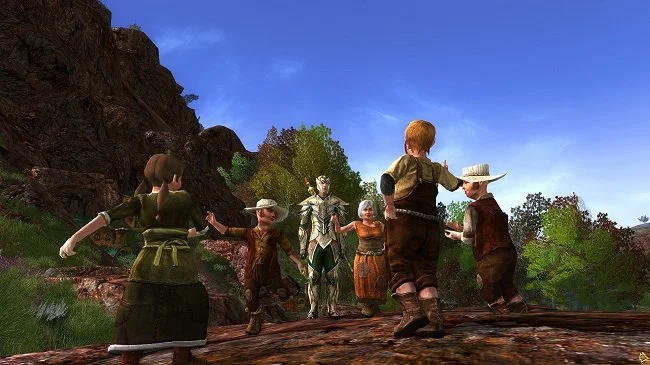
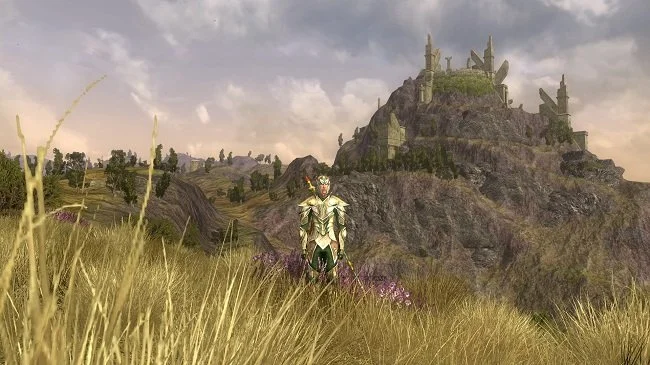
On Tuesday 27th November 2018, I created a new High Elf Guardian on Laurelin server. To date I have spent 122 hours 46 minutes 32 seconds on this character and have currently reached level 60, exactly halfway through current level cap of 120 in LOTRO. It has been a busy but very enjoyable two months. Overall the experience has revitalised my interest in LOTRO and the MMO genre. I have written several blog posts recently, highlighting the changes that have been made to the base game and first expansion over the years. Let it suffice to say that both Shadows of Angmar and Mines of Moria now offer a fast path through the games main content. My current levelling experience has been radically different to that I had when I started playing LOTRO back in 2008 and 2009. I believe it took me then nine months to reach the level cap of 60 on my primary alt. I achieved this just prior to the release of Siege of Mirkwood in September 2009.
On Tuesday 27th November 2018, I created a new High Elf Guardian on Laurelin server. To date I have spent 122 hours 46 minutes 32 seconds on this character and have currently reached level 60, exactly halfway through current level cap of 120 in LOTRO. It has been a busy but very enjoyable two months. Overall the experience has revitalised my interest in LOTRO and the MMO genre. I have written several blog posts recently, highlighting the changes that have been made to the base game and first expansion over the years. Let it suffice to say that both Shadows of Angmar and Mines of Moria now offer a fast path through the games main content. My current levelling experience has been radically different to that I had when I started playing LOTRO back in 2008 and 2009. I believe it took me then nine months to reach the level cap of 60 on my primary alt. I achieved this just prior to the release of Siege of Mirkwood in September 2009.
I am currently working through the Mines of Moria Epic Story but have already been given the prologue quests for the Siege of Mirkwood. At present I am taking stock of my progress through the game and planning ahead. I may take time to focus on deeds to increase my virtue traits and to ensure I’ve unlocked all my racial skills. I am also managing the Legendary Item system without actually using the weapons. As I progress through the game, I intend to level several LIs and then deconstruct them, thus ensuring that when I reach level 100, I can craft a First Age Guardians sword and belt and add the legacies that I want. Once this is done, I shall make use of the imbuing mechanic and then effectively forget about my Legendary Weapons apart from occasional upgrades. Having access to the account wide barter wallet has also allowed me to equip superior gear. I purchased The Shield Bearer’s Armour Set, early this week using Medallions of Moria I had earned nine years ago on my Lore-master. I intend to ensure my character is a robust as possible before travelling to Southern Mirkwood.
After doing some research it would appear that the Siege of Mirkwood has remained unaltered since its release. Therefore, there is going to be a noticeable change in level progression as I play through the PVE content. The mob density is high and the XP from quests is more than likely not going to be as generous as it has been up until now. I therefore wish to ensure that my character is as robust as they can be when entering this zone. If memory serves, I believe that Mirkwood was also the first expansion that made key quests and instances solo friendly. One of the most noticeable differences I’ve found with Shadows of Angmar and Mines of Moria since I first played through them, is how the need to group has been sidelined. It’s still there as an option but it’s no longer the only way to progress. I completed The Drowned Treasury instance this week and could happily solo my way through it, due to the “inspiration buff” and my over powered build. It was quite a contrast to my first play through in 2009, where I was assisted by my kinship. Back then, even with six experienced players, it proved quite a challenge.
The two aspects that made LOTRO special for me back when I first started playing, where the social dynamic and the underlying narrative. This was my first MMORPG and I was at a point in my life where I could accommodate the grouping requirement. Hence, I really enjoyed doing instances and activities with a close group of friends. Second time around and nearly a decade later this social imperative is no longer a necessity. I’d argue that actually finding another five people to join a fellowship to tackle an instance such as The Drowned Treasury would be a “big ask”. However, the story is still there, and it has been very rewarding to experience it a second time round and savour it’s details as well as the way so much of it dovetails into the existing canon. So, as I embark upon the next stage of my ongoing LOTRO journey, there is still much to look forward to. However, it is fair to say that although the experience will more than likely be fun, it will be subtly different this time round. Because time changes things. Both MMOs and people




When MMOs Die
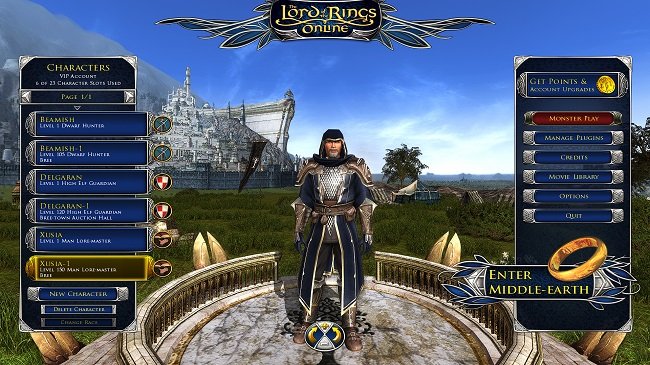
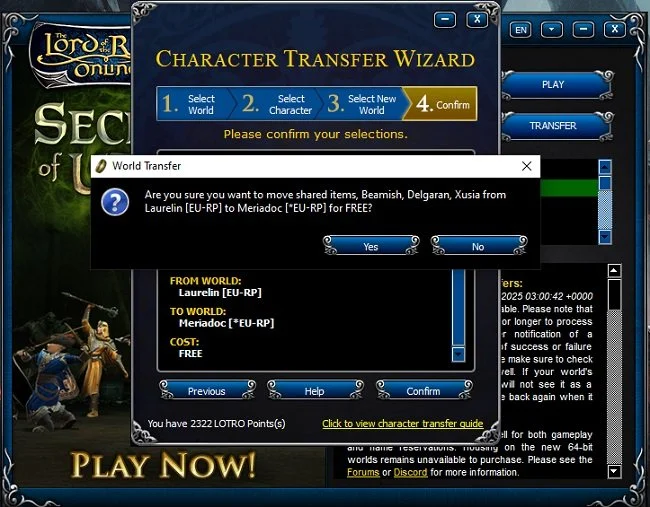
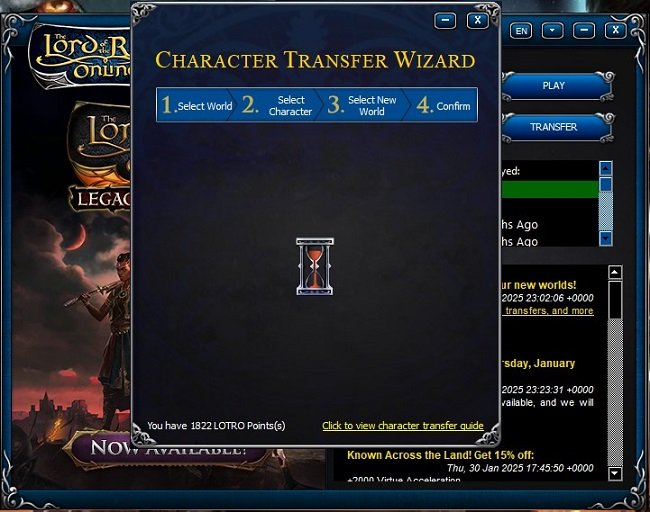
Have you ever wondered exactly what happens when an MMO shuts down? Let's not use the phrase "shuttered" as it’s a public relations term intended to mitigate and defuse the reality of the situation. It is intended to take the sting out of the notion of a game closing; evoking imagery of a well-respected family business, closing up shop for the last time and retiring to Cheshire to keep bees. No that will not do at all, so we won't use it here. "Shut down" is far more accurate. It cuts to the chase, accommodating the economic and legal reasons, which are often the primary reason that a game is closing. It also has a far more definitive ring to it, where “shuttered” leaves room for hope. After all the shutters can come back down from the closed family business, if beekeeping doesn’t work out.
Have you ever wondered exactly what happens when an MMO shuts down? Let's not use the phrase "shuttered" as it’s a public relations term intended to mitigate and defuse the reality of the situation. It is intended to take the sting out of the notion of a game closing; evoking imagery of a well-respected family business, closing up shop for the last time and retiring to Cheshire to keep bees. No that will not do at all, so we won't use it here. "Shut down" is far more accurate. It cuts to the chase, accommodating the economic and legal reasons, which are often the primary reason that a game is closing. It also has a far more definitive ring to it, where “shuttered” leaves room for hope. After all the shutters can come back down from the closed family business, if beekeeping doesn’t work out.
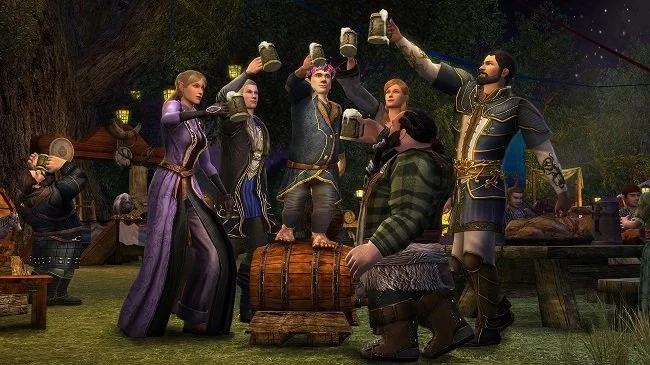
So back to the original question, what is it actually like when a substantial MMORPG finally shuts down? I'm sure we all understand the fundamental concepts involved. The logistics of it are no different from when you're playing an active game online and it's taken down for patching. You receive a succession of on-screen notifications and then you're disconnected. What I'm talking about here is the emotional impact it has upon players and social groups. What is it like to be logged in to your game of choice in those final moments? To be surrounded by your friends in a virtual world that you love and have invested so much time into, knowing that within minutes it will be gone forever? To be moments away from a form of virtual bereavement and subsequent online homelessness?
The answer is ultimately very subjective. Most mature adults have an idea of their own emotional literacy and can probably imagine how they would react in a given situation. I can fully understand how heart breaking it could be for some players to see an integral part of their social life ignominiously dispensed with at the flick of a metaphorical switch. As for myself, I would see it as an inevitability and would therefore deal with it with a degree of emotional detachment. I would also ensure that I was "there when the lights went out”, just so I could experience first-hand what the final moments were actually like. Plus, there may be some last-minute fun and games as the developers turn on various events and gated activities or release a horde of mobs into the world. At the very least, the situation would certainly merit a blog post.
WildStar closed last November and a year prior to that so did Marvel Heroes. Other games such as Vanguard and Wizardry Online have also been shut down in recent years, all of which were for financial, licensing or administrative restructuring issues. All of these games had an active player base, that enjoyed and supported the games right up until the last moment. Subsequently, a cursory search online will produce a wealth of videos, screenshots and eulogies made by those who have become displaced by MMO closures and are still mourning their passing. If you have never played an MMO to any extent, then it will all seem a little perfunctory and a bit of a storm in a teacup to you. For those that have spent hours of their life in a virtual world, with friends they’ve made along the way, it is a far more emotionally compelling matter.
I'm a firm believer in the old adage "forewarned is forearmed". It may not come as any surprise to those who know me that I've made all the necessary arrangements for my own funeral. That's how I run my life. So, for me watching videos of the last moments of any MMO is a pertinent reminder that a similar fate will eventually come to those that I currently play. However, not everyone is like me and some people don't like to continence such things. Each to their own. We all deal with things in our own fashion. However, I would advise active MMO players to watch the video below, regarding WildStar, and subsequently reflect upon it. Perhaps it may teach us to be a little more appreciative of the games we currently enjoy, because time and tide waits for no man or MMO.
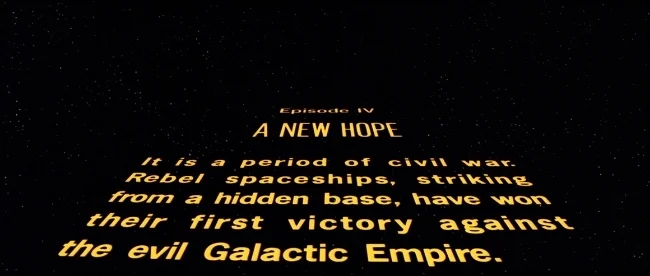
The Lucas Legacy
I was perusing the net recently and came across a story about how a Star Wars fan film that had built up a head of steam online, has been slapped with a copyright strike from Disney. Nothing unusual there as the company is virtually legendary with respect to its litigious proclivities. However, someone over a Lucasfilm interceded and got the strike lifted, because the fan film creator had allegedly sought prior permission and supposedly received it. George Lucas has always maintained an equitable attitude towards fan usage of the Star Wars IP, something he tried to impress upon Disney when he sold the rights to them back in 2012. But it is very difficult to have a balanced discussion about George Lucas as the man is such a paradox. On one hand he is possibly one of the greatest contributors to twentieth century pop culture and has influenced a generation of film makers, writers and fans. On the other he is the man who single headedly has managed to queer his own pitch, with the way he has continuously tinkered with his body of work and appended it with supplemental material that many deemed substandard or to the detriment of the original. He is also still vilified in some quarters for his business arrangement with Disney.
I was perusing the net recently and came across a story about how a Star Wars fan film that had built up a head of steam online, has been slapped with a copyright strike from Disney. Nothing unusual there as the company is virtually legendary with respect to its litigious proclivities. However, someone over a Lucasfilm interceded and got the strike lifted, because the fan film creator had allegedly sought prior permission and supposedly received it. George Lucas has always maintained an equitable attitude towards fan usage of the Star Wars IP, something he tried to impress upon Disney when he sold the rights to them back in 2012. But it is very difficult to have a balanced discussion about George Lucas as the man is such a paradox. On one hand he is possibly one of the greatest contributors to twentieth century pop culture and has influenced a generation of film makers, writers and fans. On the other he is the man who single headedly has managed to queer his own pitch, with the way he has continuously tinkered with his body of work and appended it with supplemental material that many deemed substandard or to the detriment of the original. He is also still vilified in some quarters for his business arrangement with Disney.
Lucas announced back in October 2012 an interview with the New York Times, that he was "retiring" from the sort of film making he had become closely associated with over the last three decades. He was however still going to pursue creating more "personal" films. He also made some fairly broad statements about getting mainstream Hollywood to buy into his last project Red Tails and the movie industries overall inadequacies in dealing with issues of race and African-American history in films per se. He took time to pointedly described how he had to finance Red Tails himself. Sadly, the movie was met with relative indifference at the box office and garnered the usual criticism associated with his work. IE too much emphasis on spectacle and not enough attention of characters and script. Since then Lucas has not produced any major cinematic works and has continued to pursue his philanthropic and charitable endeavours.
There are some who feel that Mr. Lucas is a misunderstood film maker who has suffered at the hands of a rabid and unreasonable fan base and a system that hates him for bypassing their rules. Then there are those who simply see him as a gifted technician, well versed in the mechanics of film making but lacking in the narrative skills shown by the true “greats”. As per usual, the truth more than likely lies somewhere in between these two positions and is far more nuanced. As for his last movie Red Tails (which he produced and then took over the reshoots from incumbent director Anthony Hemmingway), it’s a distinctly average film. It is visually impressive as you would expect, but the story is incredibly formulaic, and the characters are weak. The issue of racism is not given the depth or intelligence required to explore it effectively and the dialogue is unconvincing. Whether the films reception was a key factor in Lucas choosing to semi-retire from the wider industry, is up for debate. For decades he has been a prisoner of his own success and at times it does seems like he still struggles to come to terms with it all. “On the Internet, all those same guys that are complaining I made a change are completely changing the movie … I’m saying: ‘Fine. But my movie, with my name on it, that says I did it, needs to be the way I want it. Why would I make any more when everybody yells at you all the time and says what a terrible person you are?”
Although I fully understand and even agree in principle with his sentiments, such a position is purely an ideological one and is not very practical in reality. Star Wars has become an integral part of popular culture and although there is no legal precedence, the public feel that they have some collective emotional ownership of it and are therefore not going to take an even-handed view to alterations and new material (as the Disney movies have shown). Lucas should have learnt from others who have participated in films and TV that has grown bigger than themselves. You come to terms with it and try to work within the confines that it sets, or you simply withdraw. Lucas may think that the restraints of the Star Wars phenomenon has limited his options and thus he has not had the critical success he looked for. I think more blame can be attributed to his skills set. The original trilogy although overall his own work, had the creative input of additional screenwriters and directors to smooth the rough edges and curb his excesses. The prequels did not and therefore their ideas and visual style were marred by poor dialogue and turgid stories. In fact, I would draw a parallel between George Lucas's career and that of M. Night Shyamalan. Both are talents that possibly require the counterbalance of a third party to reach their full potential.
Of course, George Lucas has not fully retired and has provided himself with a get out of jail card, with the ongoing development of a fifth Indiana Jones film. However, it should be noted that he is only involved as an executive producer and is not contributing to the story. Yet regardless of any future film output, his long-term legacy is clearly established and of considerable magnitude. He created a mythology for a generation that had none and has been instrumental in pushing back the technical boundaries of the film industry. He has demonstrated that the mainstream studios do not need to have it their own way all the time and he has influenced an inordinate amount of people globally to pursue their creative dreams. However, it can be argued that he has also set a precedent of style over substance and spectacle over narrative. Yet, whatever your opinion on the man and his work, we have not heard the last of him. Lucas is by nature a “fixer” and I suspect he has something he still wants to put right or follow up upon before he’s “done”.









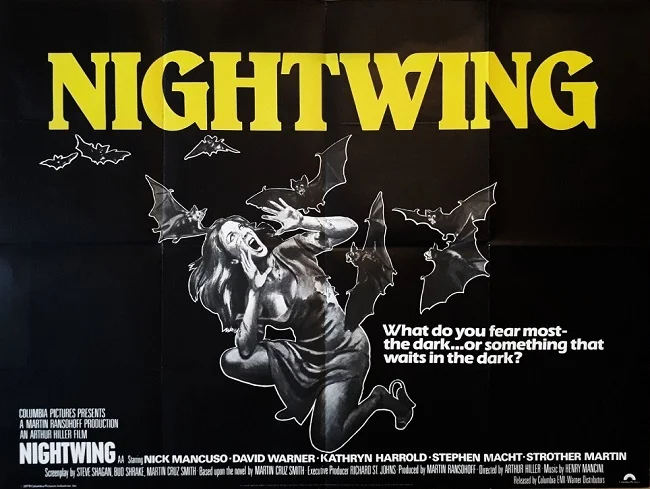
Nightwing (1979)
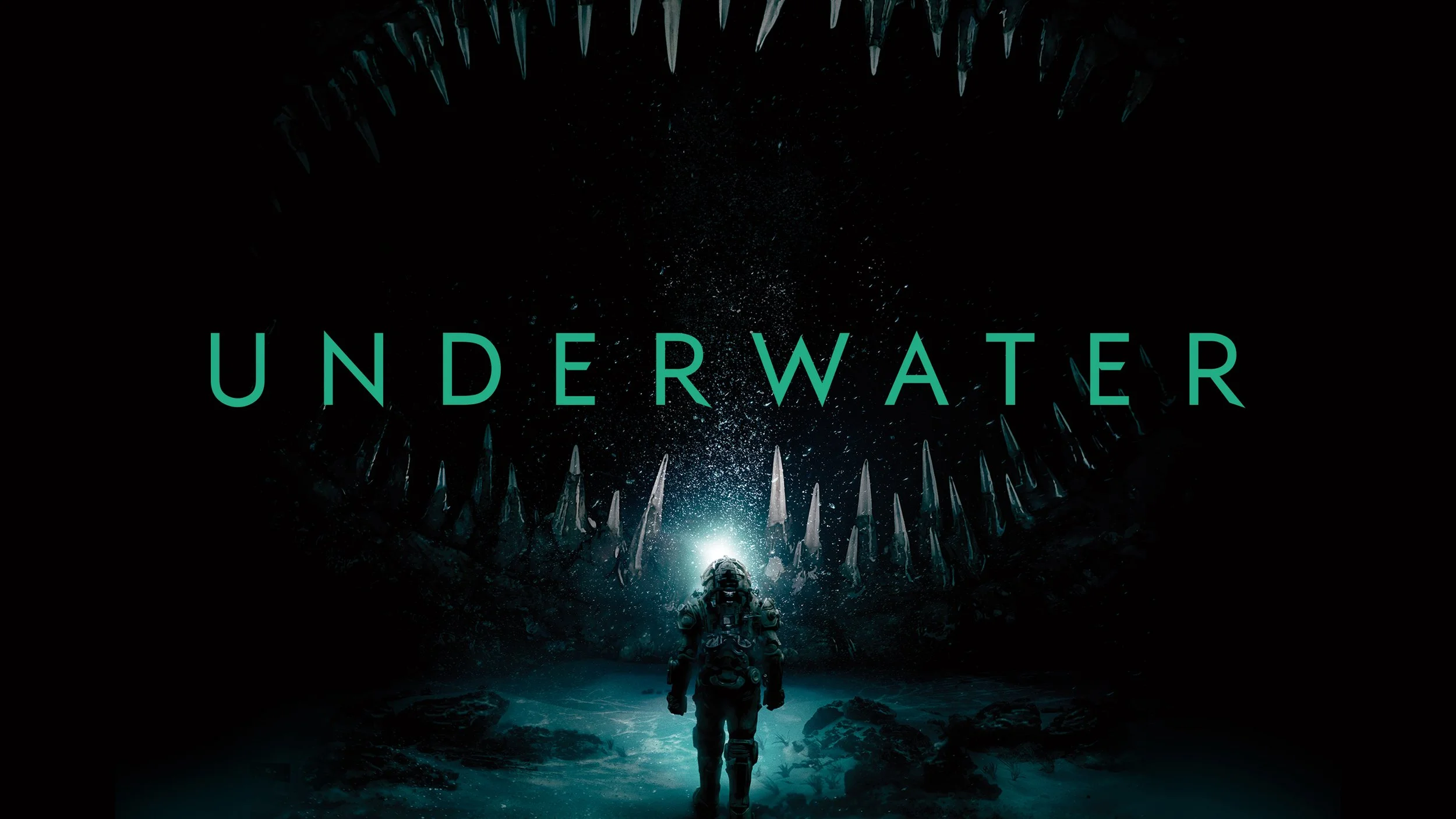
The seventies saw a minor boom in creature feature films after the box office success of Jaws. Hence, we had movies such as Orca (1977), Tentacles (1977), The Pack (1977) and Piranha (1978). If an animal could eat you or potentially pose any threat to people, someone somewhere would make a movie about it. Usually a bad one. A few of these even dared to stray into other hot topics of the time such as pollution and protecting the environment. Some would even invoke mysticism and folk lore to facilitate their protagonists. Nightwing is one such curious genre hybrid which combines vampire bats, shale oil mining and Native American culture in its clumsy and unsubtle plot. It’s a somewhat odd undertaking, directed by Arthur Hiller. His previous work included Love Story (1970) and Silver Streak (1976), so he was not the first person you’d expect to see associated with such material. The film doesn’t work well as either a horror movie or an exploration of social issues, but like so many movies from this era, it is of interest mainly due to its sheer incongruity.
The seventies saw a minor boom in creature feature films after the box office success of Jaws. Hence, we had movies such as Orca (1977), Tentacles (1977), The Pack (1977) and Piranha (1978). If an animal could eat you or potentially pose any threat to people, someone somewhere would make a movie about it. Usually a bad one. A few of these even dared to stray into other hot topics of the time such as pollution and protecting the environment. Some would even invoke mysticism and folk lore to facilitate their protagonists. Nightwing is one such curious genre hybrid which combines vampire bats, shale oil mining and Native American culture in its clumsy and unsubtle plot. It’s a somewhat odd undertaking, directed by Arthur Hiller. His previous work included Love Story (1970) and Silver Streak (1976), so he was not the first person you’d expect to see associated with such material. The film doesn’t work well as either a horror movie or an exploration of social issues, but like so many movies from this era, it is of interest mainly due to its sheer incongruity.
Youngman Duran (Nick Mancuso), a deputy on an Indian reservation in New Mexico, investigates the death of several horses on a local ranch. The bodies are covered in small bites, drained of blood and there is a strong smell of ammonia. Tribal Council chairman Walker Chee (Stephen Macht) is keen to keep the matter quiet, as he is trying to negotiate the mining rites to oil shale deposits that have recently been discovered in nearby canyons. Canyons that also happen to be sacred to the local population. Abner Tasupi (George Clutesi), an ageing medicine man and Duran’s uncle, tells him he’s unleashed forces that will remove the White Man from the land and restore things to how they use to be. Duran dismisses such ideas, but as further death occurs including his uncle, begins to think otherwise. However, the arrival of British scientist Philip Payne (David Warner) points to a more tangible answer. The caves in Maskai Canyon are home to a swarm of deadly vampire bats he’s been tracking.
Nightwing efficiently sets out its stall within the first fifteen minutes. The audience is presented with a beleaguered law enforcment official, a corrupt business man and an obsessed scientist. This is quickly followed by a heavy dose ersatz Indian mysticism and the ubiquitous love interest, via local nurse Anne Dillon (Kathryn Harrold), who runs the town clinic. It’s all formulaic content that’s common to genre movies. There is also an attempt to address some deeper issues regarding the treatment of indigenous peoples by the Federal Government, as well as some nods towards institutional racism. But it’s far from convincing and or subtle. Especially in light of the fact that so few of the main cast are of the correct ethnicity. The film then proceeds to offset the subsequent vampire bat attacks with wider supernatural explanations, but never fully commits to them. The use of datura root as a hallucinogenic offers a “get out of jail card” to the film’s mystic elements.
As for the vampire bat attacks, they’re initially kept off screen until the first major set piece of the movie. This involves a group of Christian missionaries who are visiting the reservation and considering making a substantial charitable investment. It is one of the better plot elements. The attack takes place at night around the camp fire and features animatronic bats created by Carlo Rambaldi (E.T and the 1976 version of King Kong). There is also an optical overlay of a swarm of bats that further adds to the scene. It doesn’t quite work and certainly the rather static close ups of Rambaldi’s bats are far from convincing. However, the effects work is of interest due to the technical limitations of the time. Certainly, the blood flows in this sequence with the victims panicking. One falls into the camp fire while another hides under the camper van, only for it to run over her. Later in the movie Duran, Payne and Dillon construct an anti-bat cage from steel scaffolding and wire mesh. The technical shortcomings of the animatronics are more apparent here.
There are some genre stalwarts in the cast. David warner is suitable driven and even has a Jaws-eque monologue about the inherent “evil” of vampire bats. Sadly, his character has little back story. Strother Martin also appears as the local store owner as does Charles Hallahan as one of the Christian missionaries. But overall the screenplay by Martin Cruz Smith, Steve Shagan and Bud Shrake does the bear minimum and lacks any depth, or standout features. Although the desert locations are strikingly shot at times by Charles Rosher Jr. there is no overt sense of danger from the environment. Nightwing may well have benefitted from a more experienced genre director at the helm, who could have focused more upon the horror elements, rather than trying to expand the scope of the story into wider socio-political themes. However, I still find movies of this kind that hail from the pre-digital age to be of interest. The seventies were a far more experimental time for cinema and studios were prepared to try different things and straddle multiple genres. Nightwing should therefore be filed under such.


LOTRO: The Downside to Fast Levelling
NB. This post is a direct continuation of previous one, posted on 2nd January. As I’ve stated many times before in prior posts, there is a tangible sense of reward to be found in levelling in an MMORPG. Gaining experience and progressing from one level to another, inching further to the in-game cap, is a clear and uncomplicated goal. It’s far from a complex process. You play through content, gain loot and XP and then after a while, “ding”, you hit the next level and revel in a sense of achievement. There are naturally other goals to pursue that are more difficult to achieve, such as gaining a specific set of raid armour or obtaining maximum rep with all factions. But for many players, simply progressing by level per day (or some permutation thereof) is sufficient to keep them happy and make them feel that they are making headway within a specific game. And at present, this is exactly the approach that I take with LOTRO when playing on my new Guardian. Last night I reached level 57, while questing in Nanduhirion.
NB. This post is a direct continuation of previous one, posted on 2nd January. As I’ve stated many times before in prior posts, there is a tangible sense of reward to be found in levelling in an MMORPG. Gaining experience and progressing from one level to another, inching further to the in-game cap, is a clear and uncomplicated goal. It’s far from a complex process. You play through content, gain loot and XP and then after a while, “ding”, you hit the next level and revel in a sense of achievement. There are naturally other goals to pursue that are more difficult to achieve, such as gaining a specific set of raid armour or obtaining maximum rep with all factions. But for many players, simply progressing by level per day (or some permutation thereof) is sufficient to keep them happy and make them feel that they are making headway within a specific game. And at present, this is exactly the approach that I take with LOTRO when playing on my new Guardian. Last night I reached level 57, while questing in Nanduhirion.
Due to the drastically nerfed levelling curve and major revamp of both Shadows of Angmar and Mines of Moria, LOTRO players can fast path through a lot of the classic content if they see fit. Hence, I have focused mainly on the Epic Story and have subsequently powered through Moria to Dimrill Dale. Along the way, the legendary Item system has become available to me and I recently began levelling my second LI one-handed sword (Level 57). Now to cut along story short, the LI system is excessively complex and time consuming as well as being further hindered by different tiers of weapons. This makes any LI under level 100 somewhat redundant as they have a finite lifespan. Furthermore, some of the regular weapons I’m receiving as quest rewards have superior specifications that those on the LI I’m currently levelling. Therefore, until my Guardian hits level 100, I am levelling LI weapons but not equipping them. I will continue to use the Guardian’s Belt LI as there is no alternative to this. However, my approach pretty much sidelines the LI system for the meantime, making it a minor source of adjustment rather than a major game focus.
I’ve also noted that for a while now, low tier essences have dropped from time to time when playing through PVE content. However, I have not seen any quest rewards that offer socketed armour, nor has any randomly dropped. According to the LOTRO-Wiki the essence system becomes available at level 50, yet I have not seen any obvious means of using it at present. For the meantime I am finding a lot of the gear offered by quests to be more than satisfactory and as I have access to shared resources via the barter wallet, I can purchase specific sets from class vendors if I wish. Prior to entering Moria I purchased the High-protector's Armour (Item Level 50) from the Guardian Trainer in Rivendell. I have swapped out a few pieces but have retained four to maintain the set bonus. Again, I find that an aspect of the game that use to require some care and attention before making a choice has now been trivialised due to the wealth of options and shear volume of good quality quest rewards.
It is also worth noting that my brief flirtation with crafting has now ground to a halt. Unlocking the various tiers of the Metalsmith profession is far from difficult but the problem lies with the items required for critical success when crafting. For example, you don’t often find multiple copies of the Supreme Metalsmith's Journal available on Auction House. You therefore have to either pursue the Scholar profession on another alt or look towards your kinship for assistance. However, as both these options appear to fly in the face of the breakneck speed of progression through the game, you can simply opt not to craft and suffer no major inconvenience. And that sentiment is one that seems to prevail in the current iteration of LOTRO. It may well change when players reach Southern Mirkwood, as that area has not been revamped to my knowledge. But certainly, up until level 60 the levelling curve continues to marginalise certain game systems. It’s a shame in a way because all of these aspects of the game will play a key role at higher levels and many players will find that they may have some catching up to do at some point. Myself included. However, as I treat the MMO genre as a “live in the moment” experience, I’ll worry about such problems as and when they become apparent.
Analysing Tolkien
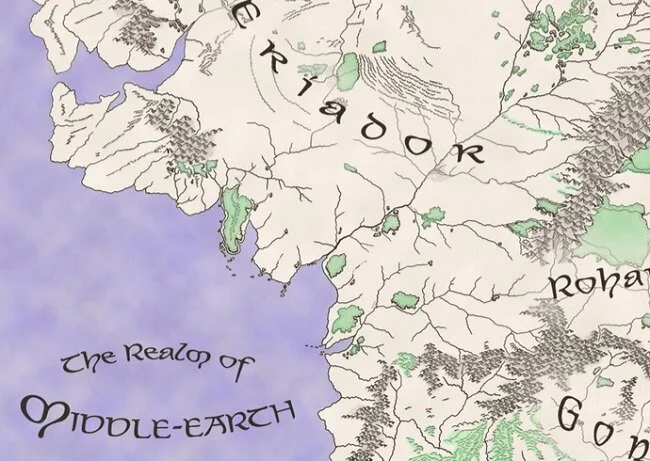
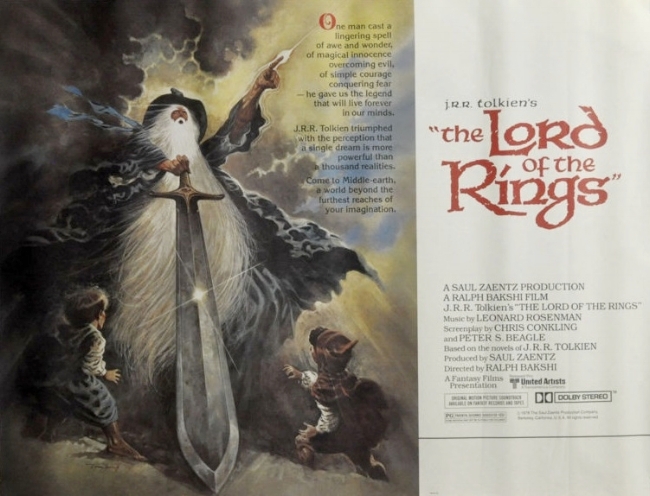
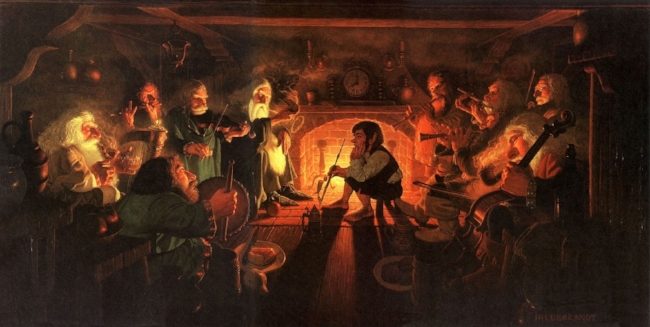
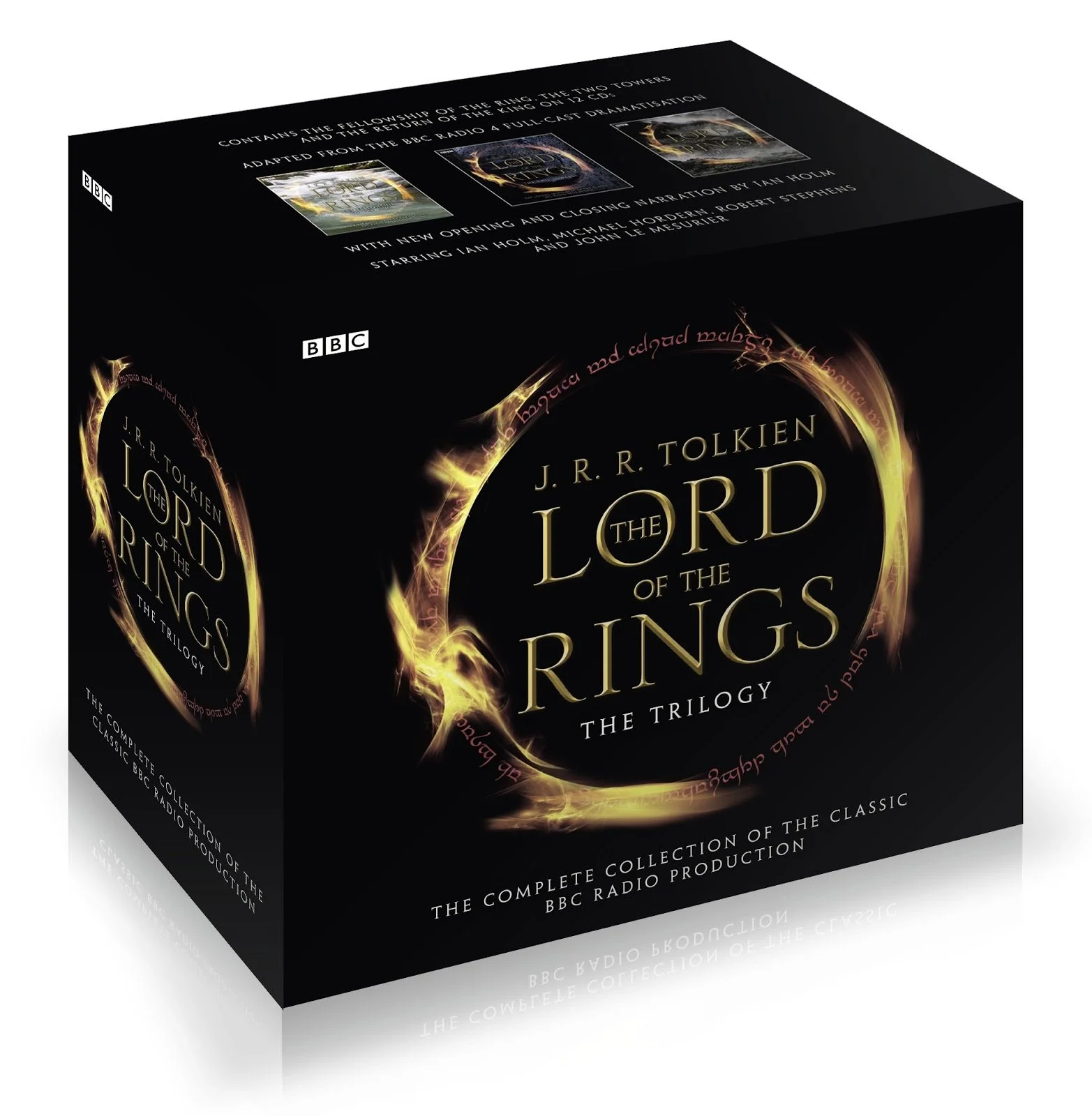
The scope and detail of JRR Tolkien’s body of work lends itself to a great deal of scrutiny and analysis. This ranges from the scholarly from such people as Professor Cory Olsen (AKA The Tolkien Professor) who established the Mythgard Institute in 2011, to enthusiasts on the internet exchanging ideas and sharing their thoughts. A simple Google search will offer a wealth of essays and dissertations that dissect and ponder all aspects of Tolkien’s writing. Often these focus upon religious analogies, parallels with existing mythologies and how Tolkien’s experiences in World War I shaped his world view. Then there is the exploration of the lore itself and how various characters and events within Middle-earth are interlinked and of a wider significance. The intricacy of both The Lord of the Rings and The Silmarillion provide fans with an immense amount of history and heritage to ponder. Questions such as “who is Tom Bombadil” and “why didn’t the fellowship just fly to Mordor” remain popular talking points.
The scope and detail of JRR Tolkien’s body of work lends itself to a great deal of scrutiny and analysis. This ranges from the scholarly from such people as Professor Cory Olsen (AKA The Tolkien Professor) who established the Mythgard Institute in 2011, to enthusiasts on the internet exchanging ideas and sharing their thoughts. A simple Google search will offer a wealth of essays and dissertations that dissect and ponder all aspects of Tolkien’s writing. Often these focus upon religious analogies, parallels with existing mythologies and how Tolkien’s experiences in World War I shaped his world view. Then there is the exploration of the lore itself and how various characters and events within Middle-earth are interlinked and of a wider significance. The intricacy of both The Lord of the Rings and The Silmarillion provide fans with an immense amount of history and heritage to ponder. Questions such as “who is Tom Bombadil” and “why didn’t the fellowship just fly to Mordor” remain popular talking points.
Last week, popular “edutainment” You Tube channel, Extra Credits, started their third season of Extra Sci-Fi, which explores key writers that have shaped the fantasy and science fiction genre. This time round they are focusing on both Frank Herbert and JRR Tolkien. For those who aren’t familiar with Extra Credits, the show initially started analysing and debating the artistic and technical merits of the video game industry, via short animated videos. They have now branched out to explore such subjects as mythology and history in a similar idiom. The videos are informative and designed to encourage discourse among viewers. The channel often determines what it will be discussing via subscriber votes and consultation. It would seem that there was a lot of support for the new season of Extra Sci-Fi when they announced they would be focusing on the works of both Tolkien and Herbert.
The first episode raises the question as to why the worlds created by Tolkien and Herbert are so demonstrably superior and credible than those of subsequent writers who have sought to copy their success. It is suggested that it is the detailed naming conventions and the history that they invoke that is key to maintaining a sense of credibility and verisimilitude in the respective narratives. However, all points are presented in a manner that fosters debate, rather than definitively stating that this is the sole interpretation. Why not watch the episode yourself and see what you think? I certainly think in the weeks to come there will be some interesting analysis and points of interest, as the Extra Credits writing team seem rigorous in their research and thoughtful in their deliberations. Certainly, their take on the works of JRR Tolkien will be a welcome addition to the ongoing discourse. For those new to such studies, this can also offer a good starting point.







The Satanic Rites of Dracula (1973)
The horror movie genre was changing rapidly in the late sixties and seventies, with films such as the Night of the Living Dead and Rosemary’s Baby moving away from traditional gothic settings and proving to be box office successes. After the success of Count Yorga, Vampire, a movie set in 1970s Los Angeles, Warner Bros commissioned Hammer Films to make two contemporary set Dracula films. The first of these was Dracula A.D. 1972. The film was loosely inspired by the Highgate Vampire case and proved to be moderately successful at the box office. The second being The Satanic Rites of Dracula; a curious hybrid vampire movie that mixes elements of the espionage genre along with traditional Hammer horror content. Sadly, this final outing for both Peter Cushing and Christopher Lee as Van Helsing and Dracula, was not well received by the public and has subsequently been written off in the annals of Hammer Films. Yet despite it’s flaws it does have a few points of interest to the more rigorous horror fan. The recent Blu-ray release via the Warner Archive Collection presented such an opportunity for reappraisal.
The horror movie genre was changing rapidly in the late sixties and seventies, with films such as the Night of the Living Dead and Rosemary’s Baby moving away from traditional gothic settings and proving to be box office successes. After the success of Count Yorga, Vampire, a movie set in 1970s Los Angeles, Warner Bros commissioned Hammer Films to make two contemporary set Dracula films. The first of these was Dracula A.D. 1972. The film was loosely inspired by the Highgate Vampire case and proved to be moderately successful at the box office. The second being The Satanic Rites of Dracula; a curious hybrid vampire movie that mixes elements of the espionage genre along with traditional Hammer horror content. Sadly, this final outing for both Peter Cushing and Christopher Lee as Van Helsing and Dracula, was not well received by the public and has subsequently been written off in the annals of Hammer Films. Yet despite it’s flaws it does have a few points of interest to the more rigorous horror fan. The recent Blu-ray release via the Warner Archive Collection presented such an opportunity for reappraisal.
The Satanic Rites of Dracula is a direct sequel to Dracula A.D. 1972. There is a degree of continuity with both characters and cast. Peter Cushing returns as Lorrimer Van Helsing, as does Michael Coles as Inspector Coles. Joanna Lumley replaces Stephanie Beecham as Jessica Van Helsing. Furthermore, the two movies are directed by Alan Gibson and written by Don Houghton. In an unusual twist the film starts very much as a spy drama, with a secret service agent escaping from the country mansion Pelham House, where cabinet ministers, industrialists and military chiefs indulge in satanic rites. Department head, Colonel Mathews (Richard Vernon) and Secret Service agent Torrence (William Franklyn) fear a major political scandal as well as foreign espionage. Due to the sensitivity of the situation they seek outside help from Special Branch Inspector Coles, who urges them to consult with occult expert Lorrimer Van Helsing. Investigations reveal that a leading scientist Julian Keeley (Freddie Jones) is also involved in the cult and that he is developing a deadly plague virus for the recluse business moghul, D. D. Denham.
The Satanic Rites of Dracula struggles to find its niche as the story veers between genres. Count Dracula doesn’t appear until thirty minutes into the movie and the screenplay is somewhat at a loss as to what to do with him, once he does. The story hinges upon the count having a curious existential crisis and tiring of his undead existence, hence the creation of a plague that will kill all life on earth, leaving him without any prey. It’s an interesting idea but one that is left underdeveloped. As for the horror elements of the film they’re somewhat modest. There are two staking scenes involving female vampires; one of which is now fully restored in the new Blu-ray copy. The remainder of the action is mainly shootouts with the curiously dressed security guards of Pelham house. They sport Afghan Waistcoats and Mauser pistols. Like most Hammer films from this period there’s a lot of cleavage and nudity to bolster the horror elements. Dracula’s demise at the end is suitably creative involving a Hawthorn bush and a picket fence. Les Bowie’s special effects are still enjoyable although far from sophisticated.
However, despite the vagueness of the script and the rather limited scope of action, there are still aspects to enjoy in The Satanic Rites of Dracula. The scenes between Peter Cushing and Freddie Jones are great, demonstrating that even with material as thin as this, both actors can hold the audience’s attention. The chemistry between Cushing and Lee is also present in the film denouement. The contemporary location scenes showing London in 1973 are also a source of interest. The car chase provides glimpses of The Strand and parts of Kensington, all of which have now been heavily redeveloped. But where this movie may appeal to the horror aficionado who has an abiding love with Hammer Films, you can objectively see why it failed at the box office. The studios attempt to move with the time are mainly superficial and beyond this, the film is just doing the same things as its predecessors. Furthermore, Christopher Lee had tired of the role of Dracula and so this was his final appearance as the iconic count for Hammer Films. Later in 1973, The Exorcist would change the horror genre completely, consigning the studio to further decline and inevitable closure. Hence, The Satanic Rites of Dracula was another nail in the coffin for Hammer’s Dracula franchise and a text book example of failing to move with the times.







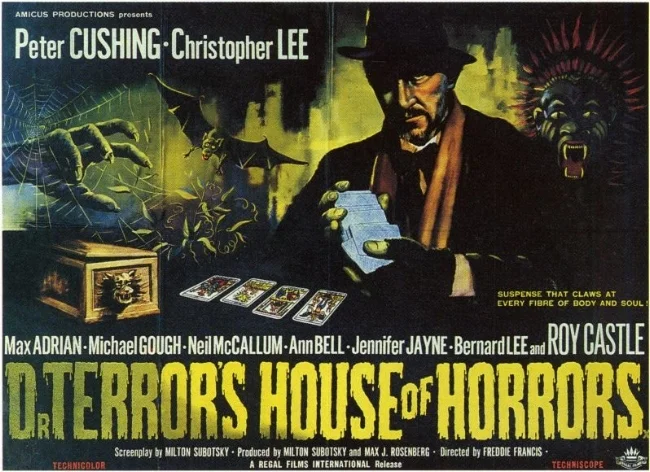

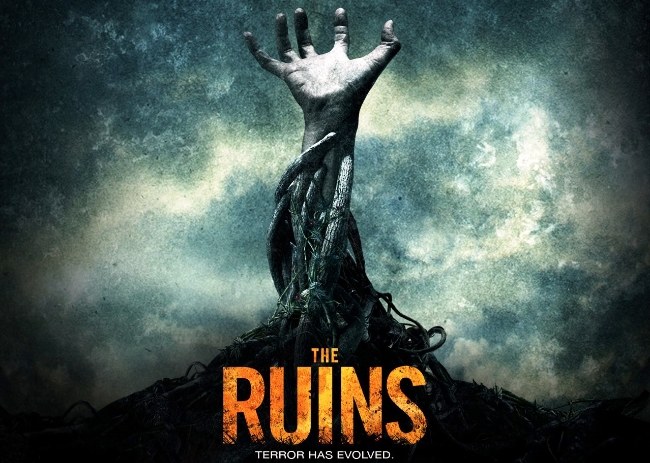
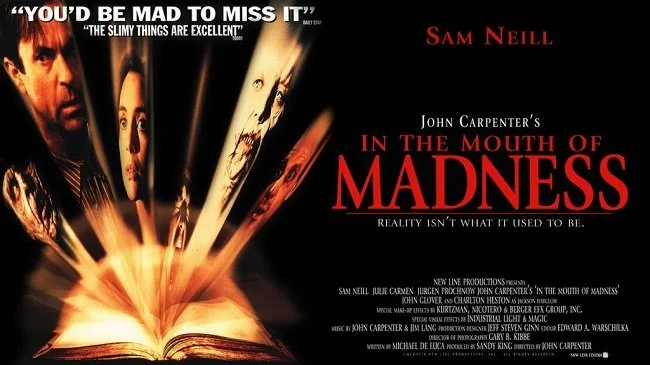
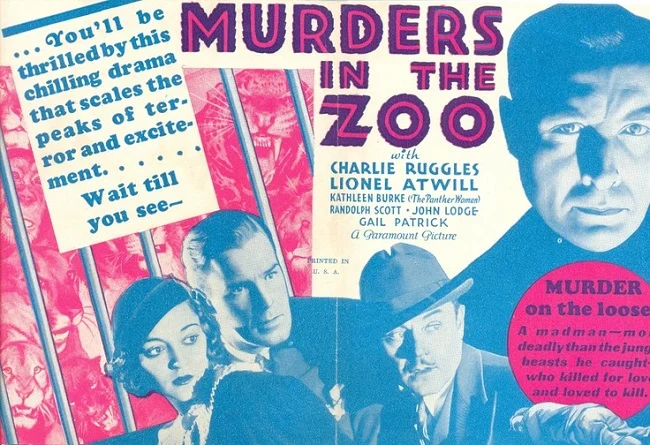
Too Much Information
While playing LOTRO recently, I helped random new player who was confused about virtue traits. I explained to them as well as I could, but the incident was a clear reminder of the complexity of the MMO genre and the perennial problem of how the can game developers effectively convey instructions to the player. If you are a long-term gamer and have tried numerous titles across multiple genres, you will often find common mechanics and systems. Hence when playing a new game, you can sometimes figure out the controls as you go. For example, WASD for movement, M for the map etc. But this is not always guaranteed. Because developers have to consider new players who may have no prior gaming experience, when designing their GUI and tutorials. So there’s scope for instructions that seem contradictory and unintuitive to veteran gamers. Porting titles to the PC that were primarily developed for consoles can also cause confusion. Simply put, teaching a player the basics of a game is a big challenge. Providing succinct information on more complex issues is even harder. Many gamer developers are still extremely bad at imparting knowledge and making viable tutorials. Here are some examples I’ve encountered.
While playing LOTRO recently, I helped random new player who was confused about virtue traits. I explained to them as well as I could, but the incident was a clear reminder of the complexity of the MMO genre and the perennial problem of how the can game developers effectively convey instructions to the player. If you are a long-term gamer and have tried numerous titles across multiple genres, you will often find common mechanics and systems. Hence when playing a new game, you can sometimes figure out the controls as you go. For example, WASD for movement, M for the map etc. But this is not always guaranteed. Because developers have to consider new players who may have no prior gaming experience, when designing their GUI and tutorials. So there’s scope for instructions that seem contradictory and unintuitive to veteran gamers. Porting titles to the PC that were primarily developed for consoles can also cause confusion. Simply put, teaching a player the basics of a game is a big challenge. Providing succinct information on more complex issues is even harder. Many gamer developers are still extremely bad at imparting knowledge and making viable tutorials. Here are some examples I’ve encountered.
Firstly, let us consider LOTRO, an established MMO that has some very good selling points along with some not so edifying ones. Legendary Items, weapons you acquire from level 50 onwards, were somewhat confusing when introduced into the game in 2008. Over the past decade the constant revisions, tinkering and attempted rationalisation of the system has left this entire aspect of the game bloated, time consuming and frankly bloody annoying. Last night I identified that I had sufficient relics and shards to manufacture a specific level appropriate gem for my Hunter. It was a moderate upgrade to the existing gem already in place. Let it suffice to say I spent the next half hour auto combining relics up to a certain point in the process and then constantly consulting the in-game menu to find the correct components required to complete crafting my desired item. It took concentration and patience. Furthermore, it seemed disproportionately complex for the reward that was offered. I know of many players who simply bypass this entire process and choose to use under specified weapons rather than indulging in this tedious enterprise.
Secondly, when playing The Elder Scrolls Online, I’ve encountered another variation of this problem. In this case it isn't a matter of being confused by learning new mechanics, but rather being overwhelmed by the wealth of choice. ESO purposefully doesn't funnel players from quest hub to quest hubs. Although it is not a true sandbox game, it is far more flexible in how the player proceeds through content. As you are travelling through a region dynamic content may appear or you may find yourself embroiled in other players activities. All of a sudden you can find yourself with multiple options. If you do not show some degree of self-discipline you will find yourself running around like a headless chicken. Also exploring such cities as Elden Root can be truly daunting, due to its vast size and rich detail. On occasions, I have been unable “to see the woods for the trees” and have had to ask a fellow player to literally guide me to a vendor, despite it being clearly marked on the map. Some folks are strong advocates of this style of "freedom" of content, but I now begin to understand why others may feel adrift without any imposed structure upon the gameplay.
Finally, while playing through the tutorial of Assassin’s Creed: Odyssey I had an identical experience to that when I started playing For Honor. Both games provide a lesson in basic combat moves. Initially, these are straightforward, and it is not hard to combine them effectively. However, the next stage combines attacks with parries and blocks. A successful parry then triggers a riposte which usually does significantly more damage. However, I feel that there’s insufficient time provided in both of these two tutorials to master the techniques being taught. Often there is dialogue playing over the audio and visual cues. Having to concentrate on multiple streams of data can be confusing, resulting in either failure and the player simply relying on basic moves already learnt to complete the task. Because these tutorials are linked to cinematics you cannot simply replay the specific aspects that you’ve missed. You can either quit and restart the entire process, or simply muddle through and come out the other end none the wiser. The other alternative is to tab out of the game itself and seek advice and guidance online. Yet I have always felt that if a game can’t be bothered to “school” you adequately and you have to defer to third parties, it is a failure of the developers. Shouldn’t their product be the first port of call for any information regarding its usage?
Some games thrive on complexity, while others are notoriously simple. Either way both game styles have a requirement to impart information to the player, be it via tutorials, on screen text boxes or voiceovers. This has to be done in an intuitive and user-friendly fashion or it will all end in tears. It is all too easy to sink under the volume of rules, skills and lore that you have to learn, especially with MMOs. There is simply too much information to assimilate at once and the flow and management of data needs to be skilfully handled. I appreciate that one’s tolerance to this situation is subjective and hinges on what sort of player you may be. I by my own admission am lazy and therefore do not warm to excessive learning curve, in what I see as a leisure activity. Other players find joy ploughing through spreadsheets and online wikis. Either way that information needs to be digestible and that is not always something that game developers succeed at. MMOs are an interesting microcosm of human interaction. Surely the clear and precise communication of instructions is equally as important to the genre as collaborative gameplay and engaging content? Can you have one without the other?
Time Out 100 Best Horror Films - How Many Have You Seen?
I recently revisited the Time Out 100 Best Horror Films. I have a love hate relationship with movie lists of this kind, because of their binary nature and the sort of debates they generate. However, as this list is revised regularly, I thought why not go and have a look and see what has changed. Furthermore, this list is more credible than others because the one hundred titles listed have been selected by a group of contributors associated with the genre. These include Roger Corman, Guillermo del Toro, Simon Pegg, Clive Barker, Alice Cooper and Kim Newman. There is an interesting mix of titles from the traditional to the obscure as well as some interesting new additions such as A Quiet Place and Lake Mungo. I personally have seen 93 of the movies listed. However, there are a few movies that I more than likely will never see, due to my personal taste. Salò and Audition for example.
I recently revisited the Time Out 100 Best Horror Films. I have a love hate relationship with movie lists of this kind, because of their binary nature and the sort of debates they generate. However, as this list is revised regularly, I thought why not go and have a look and see what has changed. Furthermore, this list is more credible than others because the one hundred titles listed have been selected by a group of contributors associated with the genre. These include Roger Corman, Guillermo del Toro, Simon Pegg, Clive Barker, Alice Cooper and Kim Newman. There is an interesting mix of titles from the traditional to the obscure as well as some interesting new additions such as A Quiet Place and Lake Mungo. I personally have seen 93 of the movies listed. However, there are a few movies that I more than likely will never see, due to my personal taste. Salò and Audition for example.
Of course, there were a few titles that I'd like to have seen included on the list. Michael Reeve's Witchfinder General for example is conspicuously absent. Not only is it a deeply disturbing film with a palpable air of menace but is possibly one of the finest pieces of British cinema ever. Yet it continuously seems to be overlooked in favour of The Wickerman. I also think that Hammer Studios deserved more representation than just The Horror of Dracula. Their contribution to advancing the horror genre should not be underestimated. But this is the nature and possibly the purpose of such lists to stimulate debate. Half the fun comes from arguing with your friends about why Fulci's The New York Ripper is of greater artistic merit than say The Mark of the Devil or CHUD II: Bud the CHUD. Also, I’m both annoyed and delighted by the inclusion of Jaws. It is a beautifully constructed piece of cinema with a superb cast, but can it really be labelled a horror movie.
I guess, as I’ve raised the subject of lists of this nature, it is only fair that I provide one myself. So here are a few horror films that I consider to be or significance or merit. They are a mixed bunch and should not be directly compared to each other, as they represent different aspects of the genre and are aimed at different markets. Some are pure exploitation. Others are more cerebral and enjoy a more credible reputation and broader appeal. Ask me again in a months’ time and I may suggest a completely different set of titles. Feel free to share your own personal favourites or to "criticise" my choice. Also let me know how many of the Time Out list you have seen. I'd be very interested to know. If you are a genre fan who wishes to understand and appreciate it as best you can, I think it is important to be familiar with as broad a spectrum of material as possible.
The Uninvited (1944)
The Orphanage AKA El Orfanato (2007)
Nightbreed (1990) NB Try to see either the Cabal Cut or the Director’s Cut.
The Keep (1983)
The Devil Rides Out (1968)
The Man Who Laughs (1928)
Wolfen (1981)
Whistle and I'll Come to You (1968)
Lifeforce (1986)
Prophecy (1979)
Gaming Nostalgia or Gaming Obsession?
If you frequent the Massively Overpowered website you frequently find comments and indeed posts by staff writers, lamenting the loss of those MMOs that have not survived the march of time. The site does on occasions write about Star Wars Galaxies and City of Heroes to name a few. They also advocate historical preservation of titles that are no longer commercially available. This sometimes segues into the thorny issue of emulators and “private servers” and often leads to debates about intellectual property versus player access and notions of the collective ownership of fandom. It’s all very interesting and the discussions are conducted in a measured and mature fashion. Today, there was a jovial post about “which dead MMO needs more coverage?”. Although it was a light-hearted question, I do have reservations regarding gaming nostalgia. Because the gaming community is not exactly known for its balanced, even-handed analysis and outlook on such subjects.
If you frequent the Massively Overpowered website you frequently find comments and indeed posts by staff writers, lamenting the loss of those MMOs that have not survived the march of time. The site does on occasions write about Star Wars Galaxies and City of Heroes to name a few. They also advocate historical preservation of titles that are no longer commercially available. This sometimes segues into the thorny issue of emulators and “private servers” and often leads to debates about intellectual property versus player access and notions of the collective ownership of fandom. It’s all very interesting and the discussions are conducted in a measured and mature fashion. Today, there was a jovial post about “which dead MMO needs more coverage?”. Although it was a light-hearted question, I do have reservations regarding gaming nostalgia. Because the gaming community is not exactly known for its balanced, even-handed analysis and outlook on such subjects.
Nostalgia is fine in moderation. Fondly reflecting upon past experiences in a game that is no longer with us can be a positive thing. Prior activities such as these impact upon our perception of the present. However, I do worry about some gamers who demonstrate an inability to move on or accept that a particular game is no more. There is a distinction between sentimental attachment and fixation. We sadly live in times where an increasing number of people seem to think that if you refute a fact, deny objective reality or generally not like a specific scenario, it can be overruled or somehow corrected by a mere belief, desire or a sense of need. This patently absurd mindset seems to have bled out into all areas of life and tends not to serve any good. It exists in the gaming community and can become a flag to rally around, irrespective of any likelihood to succeed. This can then subsequently lead to toxicity, because of the impossibility of the aspirations such ideas are founded upon.
Therefore, there is always an element of risk linked with gaming nostalgia. If you want further evidence, take a look at the ever-growing litany of failed game related crowdfunding projects. These also contribute to a growing atmosphere of false hope for some gamers and bolster the erroneous notion that commercial extinction can be easily overturned by collective finance. The net result is that a percentage of gamers simply cannot countenance not getting what they want, have no concept of being told “no” and become angry when an utterly spurious fictional promise is not delivered on. Now I’m sure that more responsible gamers will argue that the overall gaming zeitgeist is being driven from the bottom upwards and that the majority are again having to accommodate the least informed and flexible demographic. To which my answer is “yes”. But it’s like that in every other walk of life, so why should gaming be any different. It’s not as if we’re a community known for its measure attitudes and nuanced emotional literacy?
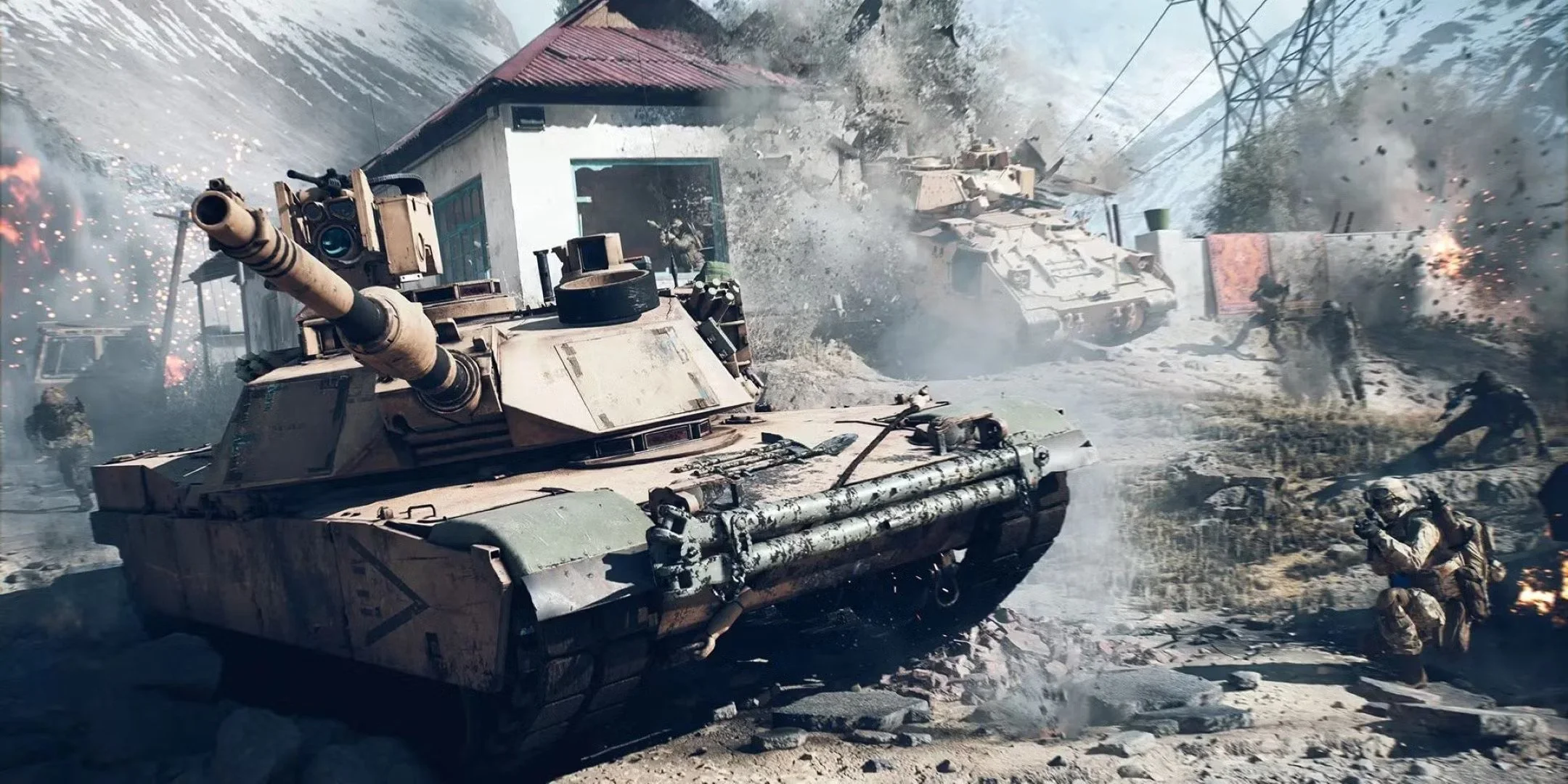
Are You a LOTRO Hoarder?
I was clearing out my vault the other day in LOTRO when I found Erebrandir's Horseshoe. This annoying item was the source of numerous theories back in September 2010 when it became available in Volume 3, Book 2 - Chapter 4: Riding South. Designed to be a “novelty” quest reward the horseshow was supposed to bring luck and many LOTRO players drove themselves crazy trying to ascertain its exact benefits. I just simply filed it in my vault at the time and haven’t given it a second thought until I came across it while doing some housekeeping. I found a lot of other crap that I’ve subsequently learned is of no value (the LOTRO Wiki is your friend) and this has got me thinking about the whole concept of hoarding loot. Because LOTRO is an old school MMORPG and very much a product of its time, the game offers a multitude of loot for players to stockpile and fret and fuss over at every opportunity. But is all of it necessary?
I was clearing out my vault the other day in LOTRO when I found Erebrandir's Horseshoe. This annoying item was the source of numerous theories back in September 2010 when it became available in Volume 3, Book 2 - Chapter 4: Riding South. Designed to be a “novelty” quest reward the horseshow was supposed to bring luck and many LOTRO players drove themselves crazy trying to ascertain its exact benefits. I just simply filed it in my vault at the time and haven’t given it a second thought until I came across it while doing some housekeeping. I found a lot of other crap that I’ve subsequently learned is of no value (the LOTRO Wiki is your friend) and this has got me thinking about the whole concept of hoarding loot. Because LOTRO is an old school MMORPG and very much a product of its time, the game offers a multitude of loot for players to stockpile and fret and fuss over at every opportunity. But is all of it necessary?
I think it’s fair to say that when you play an MMO, you bring a great deal of your own personality traits to the game. It certainly plays a part when choosing the class for your primary character. And then there’s naming your character. Depending on your mindset you may choose something based on lore or you may pick something humorous. The entire process of creating an alt and customising each aspect of it, is our way of expressing ourselves. So, bearing this faux psychology in mind, I think it’s logical to assume that your approach to storage and the management of loot is also determined by your personality. Now I take a very spartan approach to possessions and personal bric-a-brac in my personal life. I like order. I do not like clutter and excess baggage. Everything has a place. I subsequently bring that mindset to the LOTRO and other games that I play.
Therefore, if there is no immediate need or obvious use for something I have looted or been rewarded, then it gets sold ASAP. I am not the sort of player that keeps multiple armour and jewellery sets for specific instances. Therefore, as soon as I’ve acquired an item that is demonstrably better than what I currently have, the old one is replaced and either sold or deconstructed. Until recently I have not really crafted much in the game. Now I do stockpile hides, ore and wood but this is often spread around three alts or left in shared storage. However, this overall approach has been at times a double-edged sword. Frequently, I have seen players with items that have impressed me (I like to inspect those around me in MMOs). On enquiring where they obtained them, I have sometime discovered that they are standard drops from quests that I have already completed, and I therefore must have simply sold the items in my haste.
Of course, I know (as I'm sure we all do) many players who are the polar opposite to me. There are numerous LOTRO aficionados who have purchased every additional storage slot available and who own multiple houses simply for the chests. Then there's the use of the shared storage, the mail and even the auction house as a means of providing a convenient overflow system. I’m amazed at how often kin mates and friends complain about their bags being full. It usually turns out that they only had half of the space available to begin with, because the rest was being used as temporary storage for an alt. I even know a few dedicated players who have so many alts and so many saved resources, that they track it all by spreadsheet. Each to their own but this utterly horrifies me. It seems like far too much of a chore. I as you may guess, I like to travel light, with just a few potions and items of food in my bags. I do however have a “Visiting Banker” in my premium house, which provides convenient access to my Vault, Shared Vault and Wardrobe. This lootbox item has proven invaluable.
For the new player, LOTRO by default offers only limited storage and I have found many a thread on the official LOTRO forums about how frustrating some people find the initial storage limitations. Cautious players will also fall foul of “what if” syndrome and can end up holding onto many items based upon an assumed future need and a reticence to potentially hobble oneself. Certainly, for a while back in 2010, the Erebrandir's Horseshoe further increased this mindset, due to the items enigmatic purpose. However, time and a more streamlined development team has meant that such whimsy has not been perpetuated in the game. However, the potential to be a “pack rat” still exists in LOTRO due to the nature of the level and gear progression. It’s never likely to go away. However, part of the appeal of LOTRO is that you can play the game very much on your own terms and not suffer greatly as a consequence, despite what you may think. Hence you can hoard as much as you want or favour a leaner outlook. The only question you really need to ask is what play style suits you the best.
Conan the Barbarian (2011)
On a superficial level the 2011 Conan reboot provides two hours of blood and thunder. For those who are seeking a quick fix of such material and are not burdened by a strong affiliation to Robert E. Howard’s source material, this will prove adequate. I suspect that Marcus Nispel’s offering will find a home with a younger audience. For purists or those who have fond memories of John Milius’ 1982 version, then this is not the film you are looking for. Move along. But to be honest after watching the various trailers that preceded this release and considering the directors track record, does this really come as any surprise? For those with a longer memory, cast you mind back to Nispel’s Viking versus Indian outing from 2007. Pathfinder was a high concept movie that was chronically mishandled.
On a superficial level the 2011 Conan reboot provides two hours of blood and thunder. For those who are seeking a quick fix of such material and are not burdened by a strong affiliation to Robert E. Howard’s source material, this will prove adequate. I suspect that Marcus Nispel’s offering will find a home with a younger audience. For purists or those who have fond memories of John Milius’ 1982 version, then this is not the film you are looking for. Move along. But to be honest after watching the various trailers that preceded this release and considering the directors track record, does this really come as any surprise? For those with a longer memory, cast you mind back to Nispel’s Viking versus Indian outing from 2007. Pathfinder was a high concept movie that was chronically mishandled.
This re-imagining loosely draws upon Robert E. Howard’s source material, as well as Schwarzenegger’s Conan. It is the opening scenes focusing on Conan’s youth which are the most engaging, from a narrative and character development stance. The brief insight into Cimmerian warrior culture makes for a strong start. But immediately after the death of Conan’s Father (Ron Perlman) it all lapses into by the numbers story telling. Evil Khalar Zym (Stephen Lang) along with sorceress daughter Marique (Rose McGowan), seek an ancient relic to facilitate their fiendish (and formulaic) plans. Throw in a plucky warrior monk named Tamara (Rachel Nichols) and the generic story is complete. Conan’s motivation is purely one of revenge, but without the philosophical musings of Schwarzenegger’s. Jason Momoa has sufficient charm and presence to hold an audience, but the character has none of the depth you would hope.
The film clearly fails at script level. Jason Momoa’s mono-syllabic dialogue is purely reactive, serving as nothing more than an expositionary device. It is also delivered in a contemporary fashion. Nothing kills immersion for me more than period set dramas (be they based in fact or fantasy) utilising current American parlance. Potentially interesting characters are also neglected and given little to do. Rachel Nichols is introduced as a strong female lead but is sidelined as a damsel in distress rather quickly. Both Stephen Lang and Rose McGowan fail to deliver a good performance and maintain their evil nemesis roles purely by dint of the characters they have been assigned. Yet there is the scope for their curious and dysfunctional relationship to have been so much more.
What is so obviously lacking in this cinematic outing is depth. Can movies such as this have any, I hear you ask? Of course they can. Milius explored the nature of revenge and imbued his take on Conan with a Nietzschean subtext. Furthermore, Howard's original work has a multitude of themes and is not simply the pulp fiction it has been glibly labelled over the years. But director Marcus Nispel simply refuses to look beyond two-dimensional, cause and effect structure of the story. His Conan, although personable, has no dignity or nobility. Momoa is brooding but beyond his obvious vengeful motivation, he has few of the qualities of his literary namesake. It seems that the film makers only see the central character as an efficient killing machine and that's what they have brought to the screen.
Subsequently, Conan the Barbarian is totally the sum of its parts. As those respective parts are bland, hollow and uninspired, that is exactly the sort of movie that you get. For those seeking violence and bloodshed, then Conan the Barbarian can provide such commodities. However, it is subject to an excess of CGI and contemporary editing techniques that rob the action scenes of any sense of wonder. Compare them to the physical effects and sword play of the 1982 movie and the difference is obvious. The sequences with the sand spirits and under water creature, along with the films climax fail to offer any real tension. Again, they seem like a dislocated FX show reel that was added by the most economic bidder for the contract.
If Conan the Barbarian had simply been marketed under a different title and not linked to the franchise, perhaps critics would have been more forgiving. Had it just been “Wolgang Rippling Buttocks and the Sword of Kagnazax”, then it may well have been deemed acceptable. However, as it fails so notably to do any justice to Robert E. Howard’s work, it quite rightly merits harsher criticism. Furthermore, the point of failure is abundantly apparent. Director Nispel and the screen writers Thomas Dean Donnelly, Joshua Oppenheimer and Sean Hood are simply not up to the job. They fail to understand the philosophy of Conan and focus purely on spectacle and pandering to ill-conceived market research. The most depressing aspect of this is the fact that the box office failure of the film has pretty much ended any chance for a further reboot by more competent film makers.