
COVID-19 Pandemic 2020 Part 6
When I last wrote about the COVID-19 Pandemic in May, the UK was just beginning to see an easing of lockdown restrictions. As a lot of people surmised, the government was trying to do too much, too soon and without the appropriate logistical support. Hence the last five months have been a litany of political disasters, all of which have contributed to the UK having the highest COVID-19 related deaths in all of Europe. Furthermore, the government's failure to provide PPE, make available a universally accessible testing service and implement an effective national tracing service, has highlighted their lack of talent and overall incompetence. Every week another “dead cat” is thrown on to the altar of politics in an attempt to divert the attention of 24 hour rolling news away from their utter ineptitude. Hence on top of the COVID-19 Pandemic, we’ve seen the spectre of both BREXIT and the “migrant crisis” re-emerge.
When I last wrote about the COVID-19 Pandemic in May, the UK was just beginning to see an easing of lockdown restrictions. As a lot of people surmised, the government was trying to do too much, too soon and without the appropriate logistical support. Hence the last five months have been a litany of political disasters, all of which have contributed to the UK having the highest COVID-19 related deaths in all of Europe. Furthermore, the government's failure to provide PPE, make available a universally accessible testing service and implement an effective national tracing service, has highlighted their lack of talent and overall incompetence. Every week another “dead cat” is thrown on to the altar of politics in an attempt to divert the attention of 24 hour rolling news away from their utter ineptitude. Hence on top of the COVID-19 Pandemic, we’ve seen the spectre of both BREXIT and the “migrant crisis” re-emerge.
There is a general malaise of confusion abroad in the UK at present, as local lockdowns and seven months of constantly changing messages have left people perplexed or indifferent to the latest rules. Several high profile transgressions of the lockdown by senior politicians and their special advisors has further contributed to the crumbling of public support. It has become clear that we are not all in this together. The poor have to return to work regardless of the risks and the rich want them to do so because they require access to the service industries that employ the poor. And then there are the COVID deniers and those who object to the minor inconveniences that arise from being considerate. Who would have thought that wearing a mask as you enter a shop, would be held up as an unconscionable violation of human rights? And by a demographic group that up until now, haven’t been especially concerned about such things. What times we live in.
For my family, life goes on in much the same way as it did in March. My Mother is disabled and housebound, having daily carer visits. Those who care for her still wear PPE and maintain scrupulous hand hygiene. Although my Sister is currently off sick, the government department for whom she works, is still mainly working from home. It is unlikely that staff of her garde will return to the Central London offices anytime soon. I visit their home daily at present although I am looking to reduce this schedule. I go shopping twice a week and visit the pharmacy and doctor’s surgery once a month. Beyond these journey’s I remain in my own home which is one road away. I have coped with the lockdown quite well and maintain a strong social presence online. However, Mrs P who in normal circumstances has a packed social schedule, has found the travel restrictions quite frustrating. But we try to work within the regulations to come up with viable ways to do some activities.
I fully expect the next three to four months to be bad both economically and with regard to COVID-19 deaths. I think we can finally dismiss all thoughts that the pandemic will be a touchstone for social change and a fair and equitable restructuring of the UK’s job market. The country is divided and volatile. Traditional politics has been subsumed by a culture war and it is playing out exactly as expected. Everyone is retreating into their respective “safe space” and battening down the hatches. It’s just a case that some people’s “safe spaces” are better than others. Oh and the panic buying is happening again. As soon as it was announced last week that the Prime Minister was to address the nation, the middle class started block booking all the supermarket delivery time slots and toilet paper once again began flying off the shelves. So I shall do my best to enjoy whatever curious Christmas 2020 has to offer. Because I suspect that it might be the calm before the storm. COVID-19 may well turn out to be an unwelcome New Year guest.
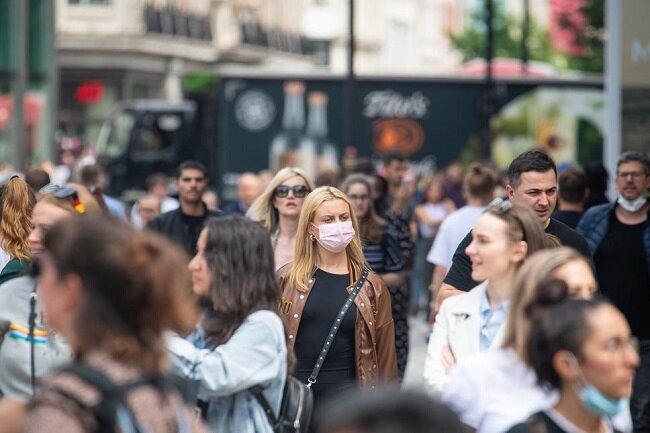
I last wrote about the pandemic in February. Six months on the lockdown and most major restrictions have now been rescinded and life is returning to normal. COVID-19 cases are still occurring with many still requiring hospitalisation. The question of whether they’ll be another wave in Winter still remains, although the government has announced a programme of booster vaccinations. At the time of writing the United Kingdom has currently administered 91.2 million doses of the various vaccines. 43 million people are now fully vaccinated which is 64.6% of the population. The current focus is upon the 16 to 24 age group and there are currently plans and ongoing consultation to extend the vaccinations to school age children. All of which is happening against a background where the pandemic is slowly being pushed out of the news agenda. The UK government is certainly keen to move on and a substantial percentage of the public no longer wish to be constrained by COVID-19 protocols.

Over the last year, the UK government has mishandled many aspects of the COVID-19 Pandemic. However, the ongoing national vaccination program is not one of them. Taking the initiative while the major pharmaceutical companies were still developing their vaccines, the UK government has ordered 407 million doses from multiple manufacturers. The aim is to vaccinate everyone aged 18 or over in the UK with one dose by the end of July. This does not include children until further research is carried out regarding safety. At present the Covid vaccine is not compulsory. Two vaccines, developed by Pfizer-BioNTech and Oxford-AstraZeneca, are currently being used in the UK. A third, from Moderna, has also been approved. All three have proven to be effective at preventing people from becoming seriously ill and dying from Covid-19. The Oxford vaccine offers protection against the “Kent” variant currently dominant in the UK. Early research suggests that the other brands do the same.

It is now ten months since The World Health organization declared a global pandemic. The UK is now enduring its third lockdown. The only difference this time is that we are now facing several new strains of COVID-19 and the public is divided over the restrictions. The Government has consistently failed over the last year to take any meaningful action and the country effectively finds itself back at square one. To date, the UK has no functional test and trace system in place, nor are the country’s borders fully controlled in an effective manner. Flights from certain countries are banned but connecting flights can circumnavigate this problem. Only now are passengers tested for COVID-19 on arrival. PPE and glass vials are in short supply. Post Brexit “administrative issues” now threaten to delay stocks of the Pfizer-BioNTech COVID-19 Vaccine. The National Health Service is struggling to cope. All these issues are further exacerbated by a partisan press and a population that appears to be at war with itself.
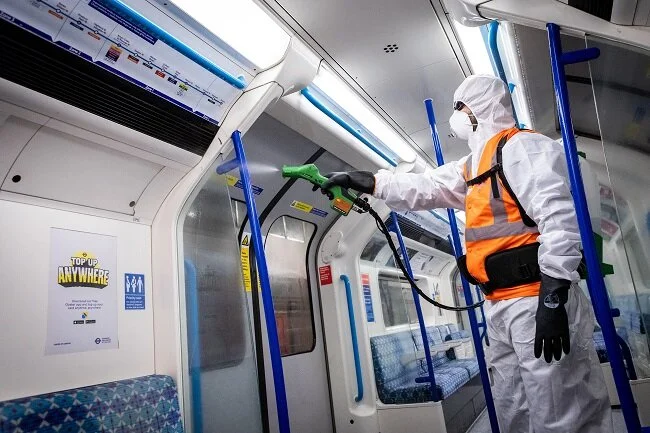
Although I don’t especially enjoy doing so, I thought it prudent to update this series of blog posts about the state of the COVID-19 pandemic here in the UK. A lot has happened in the last few weeks and there has been a degree of optimism in some quarters, because of the news regarding the vaccine and hopes that the lockdown rules would be “relaxed” over the festive season. However, those who look beyond tabloid and 10 Downing Street propaganda, have had growing concerns that the chickens are coming home to roost and it would appear that is now happening. A new strain of COVID-19 has been identified and is now spreading rapidly in London and the South East. It does not appear to be deadlier than the original strain but the increased speed at which it spreads is the major concern. The National Health Service is very worried about reaching capacity of ICU beds.
When I last wrote about the COVID-19 Pandemic in May, the UK was just beginning to see an easing of lockdown restrictions. As a lot of people surmised, the government was trying to do too much, too soon and without the appropriate logistical support. Hence the last five months have been a litany of political disasters, all of which have contributed to the UK having the highest COVID-19 related deaths in all of Europe. Furthermore, the government's failure to provide PPE, make available a universally accessible testing service and implement an effective national tracing service, has highlighted their lack of talent and overall incompetence. Every week another “dead cat” is thrown on to the altar of politics in an attempt to divert the attention of 24 hour rolling news away from their utter ineptitude. Hence on top of the COVID-19 Pandemic, we’ve seen the spectre of both BREXIT and the “migrant crisis” re-emerge.

It’s a simple question but I suspect that the answer may not be so straightforward. The autumn TV schedule is fast approaching and as of yet, many popular shows have not yet resumed production. There is talk on many of the “entertainment” websites that CBS will start location filming for its NCIS franchises in early September and if the studio side of the production follows suit, then there’s the possibility of completed episodes being available by November. But naturally all of this is dependent on a lot of variables that could change. Will COVID-19 cases diminish in the months to come or will there be a second “spike” and thus another lockdown. Will the ongoing loss of revenue caused by the pandemic further harm the production of new content. Will studios, networks and production companies have to make some hard choices and as a result, will we see some popular shows cancelled?
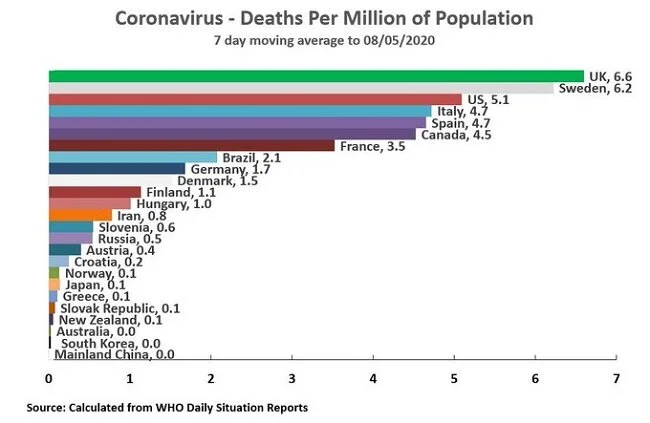
The UK Government’s honeymoon period with regard to the COVID-19 pandemic is well and truly over. Irrespective of one’s political outlook, it is sensible and dare I say it, reassuring to want to get behind the Prime Minister and his cabinet in their attempts to tackle this dreadful situation. Some may have thought it would be the making of the man and way to bridge the political divisions caused by Brexit. But that was six weeks ago and such optimism has conspicuously withered on the vine. Many of the promises made and have proven empty and a decade of politically motivated austerity has left many key public services struggling. The government was under prepared, lacking in talent and driven by the same hubris inherent in all their political decisions. Namely that notions of British exceptionalism would somehow see us through. They haven’t. Despite the recently recovered Prime Minister (who caught COVID-19 due to not following his own instructions) standing at a podium on 27th April and claiming some sort of success, the reality is the complete opposite.

I started displaying symptoms of COVID-19 on Sunday 5th April. I developed a headache, a raised temperature and muscle pains. And then the coughing started along with a sense of tightness in my chest. It was initially just uncomfortable and inconvenient. By Wednesday all symptoms had become much worse and I felt like I was in a constant bear hug. I was continuously trying to find a position where breathing wasn’t so painful and awkward. Due to the toll that fighting the virus was taking on my body, I was feeling very lethargic, despite sleeping at night for over 10 hours and napping during the day. I also noticed that I was continuously thirsty and was eating a great deal, to fuel my body’s immune system. Then on the evening of Friday 10th April I started to feel extremely cold. That evening was the worst I felt throughout the entire experience. Despite wrapping myself in a duvet and multiple blankets, I could not get warm. And then over the course of the weekend all symptoms started to decline. By Monday 13th April all that was left of COVID-19 was a sense of extreme fatigue. Something that will last for another week according to medical sources.

I wasn’t expecting to write the next instalment of this “pandemic diary” so soon. However, yesterday morning (Sunday 5th April) I developed a headache and shortly afterwards a temperature and muscle pains. By midday I started coughing persistently and noticed what I will describe as a sense of tightness in my chest (it feels like I’m wearing a shirt that is too small for me). These symptoms persisted and I went to bed at an uncustomary early hour. I slept in the spare bedroom, which is also my office and have isolated myself as well as I can (we live in a bungalow) from Mrs P. As of this morning the symptoms have persisted and it now feels very similar to a bout of flu. I am sluggish and groggy but certainly not at the point where I need medical treatment. Napping is proving useful and I’m hoping I can mainly sleep through this, as I am now stuck in the office for the next 7 days. I am allowed access to the bathroom, although separate towels and rigorous cleaning of all handles and surfaces is now the rule of thumb.

It’s been one and a half weeks since my last entry regarding the COVID-19 Pandemic 2020. As I’m sure you’re all aware, a lot has happened globally in that time and many nations are currently coming to terms with the ramifications of dealing with this virus in their own “bespoke” way. Personally I think a global approach to the problem would be beneficial but the rise of nationalism and a diminishing of worldwide institutions such as the United Nations has made such a strategy very difficult. I was going to summarise my thoughts on the UK’s response to this crisis but I have decided instead to defer such a post for another week and instead focus upon a more positive theme. Because something has happened recently in the UK. Something I was doubtful about because I’ve been so jaded by contemporary politics. And yet despite my cynicism, I have seen a demonstrable increase in community spirit, solidarity and compassion in the last few days. And it has been a thing of beauty to behold.

The COVD-19 Pandemic is an unprecedented global event and the way day to day life has changed so rapidly over the last few weeks is deeply unsettling. Hence I’m writing this recurring post as a coping mechanism; a means to process what is happening and observe how society is reacting to the ongoing crisis. And first off, let me state that I’ve already spoken to two people today, who do not see a Global Pandemic as being a crisis. Yes because we live in a post truth world where some people labour under the delusion that all opinions are of commensurate value, there are still people who “feel” that this is all an overwrought brouhaha. I suspect “crazy people watch” may become a major part of my writing. So where to begin exactly? Well I guess the best thing to do is to explain what my personal situation is.
Strictly Come Dancing 2019 Part 6
Saturday was week 7 of Strictly Come Dancing and it definitely showed. This is the stage in the series where the judges take the gloves off and start getting picky, even with those who are clearly at the top of the leaderboard. Hence, Kelvin Fletcher and Oti Mabuse's Viennese Waltz along with Michelle Visage and Giovanni Pernice who danced the Paso Doble, didn’t score as highly as you’d expect. The judges pointed out technical aspects that were wanting in both routines. But that’s what they’re supposed to do so I have no issues with these criticisms. We are also at the point where certain dances can throw a lifeline to some celebrity dancers. Hence Chris Ramsey and Karen Hauer’s Street/Commercial dance really played to their core fanbase and more importantly, Chris’s dancing strengths. I doubt he’ll better this routine and it should keep him in the show a little longer.
Saturday was week 7 of Strictly Come Dancing and it definitely showed. This is the stage in the series where the judges take the gloves off and start getting picky, even with those who are clearly at the top of the leaderboard. Hence, Kelvin Fletcher and Oti Mabuse's Viennese Waltz along with Michelle Visage and Giovanni Pernice who danced the Paso Doble, didn’t score as highly as you’d expect. The judges pointed out technical aspects that were wanting in both routines. But that’s what they’re supposed to do so I have no issues with these criticisms. We are also at the point where certain dances can throw a lifeline to some celebrity dancers. Hence Chris Ramsey and Karen Hauer’s Street/Commercial dance really played to their core fanbase and more importantly, Chris’s dancing strengths. I doubt he’ll better this routine and it should keep him in the show a little longer.
I would once again like to raise an issue that often comes up on Strictly and is associated with specific professional dancers. Sometimes, there is an “everything but the kitchen sink” approach to the choreography in attempt to “wow” the audience and impress the judges. However, what it can occasionally lead to is a routine that is overly complicated and leaves the celebrity floundering. Moves are not fully completed; lifts are hurriedly executed and detail is lost to quantity. And this is exactly what happened to Saffron and AJ during their Salsa. Mr Pritchard has made this mistake before and it is frustrating to see him ignore previous lessons. Saffron is a more than capable dancer with youth and enthusiasm on her side. There is no need for these self-indulgent exercises at this stage in the competition and the focus now needs to be on technique and performance.
As suspected last week, Will Bayley’s injury to his knee is worse than thought and as a result, he is unable to continue on the show. Although this is a shame, I think him leaving in this way is for the best. Did any couple want to be in a dance off with Will and be the ones who ousted him from the show? Did any of the judges really want to have to send Will home, which would have happened at some point. Will made excellent progress on the show but he had reached his peak but I certainly could not see him lifting the trophy. This way he gets to leave on a high and with a prodigious, positive achievement behind him. And in other “injury” related news, Neil Jones was unable to dance with Alex Scott again this weekend, so once again Kevin Clifton filled the gap. Alex did herself proud with a heartfelt American Smooth and judge Craig Revel Horwood made a curious remark about their “accidental partnership is working wonders”. Does he feel she does better without Neil?
This week’s dance off saw Mike Bushell and Katya Jones repeating their Charleston, against Viscountess Emma Weymouth and Aljaž Škorjanec dancing the Samba. Mike’s continued relegation to the dance off shows that his fanbase is waning. Mike is another celebrity dancer who I believe has plateaued and is now “treading water”. I greatly appreciate his positive attitude but I think the public are tiring off him. However, on a technical basis his dancing improved second time around (as it has before) where Emma’ Samba still had the same flaws and a lack of “bounce”. She’s an elegant lady but she couldn’t sell the dance and direct the judges away from her mistakes. Hence, she now departs the show, which I believe is an appropriate time. With only two weeks to Blackpool I suspect that Mike, Chris and the other Emma are now feeling the heat as there is now a demonstrable talent gap between contestants. But that’s the nature of the Strictly beast. People go as far as they can and sometimes the public keep someone on just to troll the judges.
Strictly Come Dancing remains the BBC’s flagship light entertainment show for Autumn. Despite controversy and scandal, the show bounced back last year and firmly re-established itself as the “feel good, family show” it has always claimed to be. Blind comedian Chris McCausland becoming the 2024 champion certainly validated the show’s commitment to diversity and inclusion and helped place Strictly (as it is known to its fans) back on its cultural pedestal. I’m sure those involved in the production of the show breathed a sigh of relief when the season ended on such a positive note, eclipsing the negative press that had been ever present last summer. Second chances and opportunities for a “course correction” are few and far between these days. Especially when you have elements of the UK press waiting with bated breath and hoping that you’ll fail.

At the beginning of April, Mrs P and I went to the Churchill Theatre in Bromley to see Speakeasy, a dance show starring Karen Hauer and Gorka Marquez (of Strictly Come Dancing Fame). It was 100 minutes of Mamba, Salsa, Charleston, Foxtrot and Samba dance numbers and it was very well received by the audience. I don’t usually go to such shows but I enjoyed it because it was focused, dynamic and “did exactly what it said on the tin”, to invoke a cliché. As a result, we promptly booked tickets for a similar show that was scheduled for July. This one, Dianne & Vito: Red Hot and Ready, features Vito Coppola and Dianne Buswell, another two of the professional dancers from Strictly (as the cool kids call it). Once again the show was at the Churchill Theatre, which is proving to be quite a good local venue.
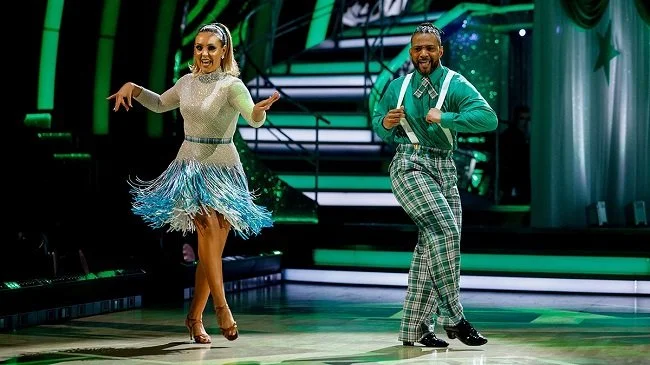
Tonight’s results for week 5 of Strictly Come Dancing (season 22) have once again demonstrated that this show is more than just a dancing competition to UK viewers. If it were just a case of determining who are the best dancers, then JB Gill would not have been in the dance off. The judges may well see things exclusively in such terms but the public clearly do not. I last wrote about this phenomenon in 2019 and I think it appropriate to raise the subject again as this season of Strictly seems to be bucking past trends and I suspect we may be in for further upsets in the run up to the season finale. Broadly speaking, the public usually tends to vote in a manner similar to the official leaderboard. Hence, those who score the lowest usually end up in the dance off. Occasionally an underdog will be championed and kept on the show but that trend seems to have lost its novelty in recent years. This season appears to be quite different.

I make no bones about the fact that I watch Strictly Come Dancing every year. For those who live outside of the UK, this is the original version of the dancing reality show that you probably know as Dancing With the Stars in your country. It is still a big deal in the UK as far as TV ratings go, getting audiences on average of 6.6 million viewers. There are many aspects of the show that are textbook examples of prime time, popular entertainment but I like it because the “celebrities” that take part are ultimately learning a skill that is genuinely difficult. The latest season of Strictly, as it is known to its fans, is especially interesting as the BBC had a major PR problem earlier in the year, where several previous participants made allegations of bullying and abuse about their pro-dancer partners. An investigation is still ongoing and in the meantime, the two professional dancers that were named have withdrawn from the show. Hence everyone involved with the latest season are all on message, stating that it’s “all about having fun”.
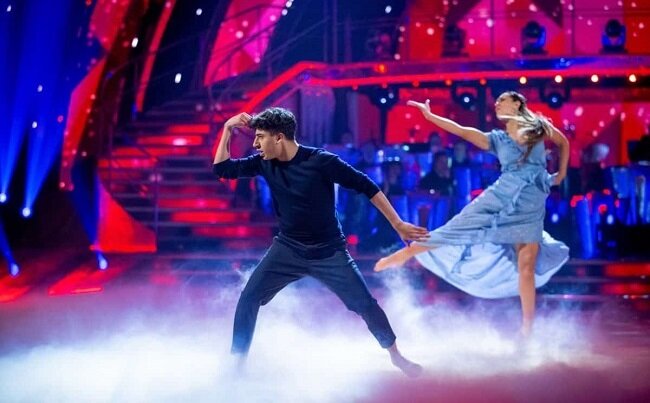
Rather than continue to analyse each week’s show, which after all is a somewhat over saturated field, I thought it would be more interesting to write about the different facets of Strictly Come Dancing. The one I particularly wish to focus upon this time is the voting system and how it often highlights a differing of opinion between the professional judges on the show and the British public. For the past two weeks now there have been several celebrity dancers in the dreaded dance off who are far from the weakest performers. This has led to competent individuals leaving the show unexpectedly early. In many ways the voting system and the fact that no one can be considered safe is one the key factors that keeps Strictly popular and in the media spotlight. However, it also provides some pause for thought. The judges broadly mark and assess the celebrity dancers based upon their talent and performance. If they do not like a routine but still appreciate its technical merits, then they reflect that in their scores. However, the public seem to approach things quite differently.
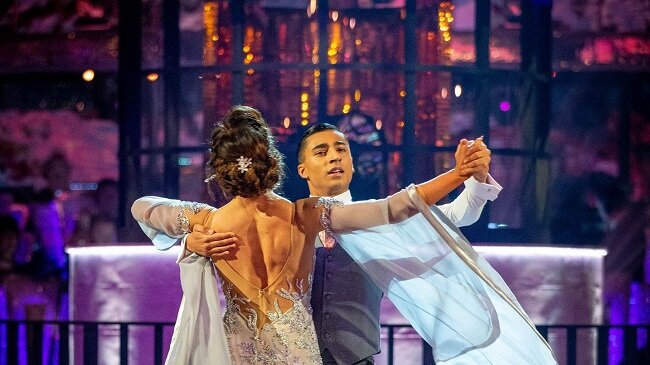
Strictly Come Dancing is now over halfway through the season and there’s no room for mistakes or relying on past successes. The judges will now penalise technical errors and the public votes have now become less predictable. With Blackpool on the horizon, there was a lot at stake last night. Karim Zeroual and Amy Dowden danced the Viennese Waltz to Give Me Love by Ed Sheeran. However, he did make several errors during the routine and was noticeably rattled by the end. Subsequently, he scored lower than last week. On a positive note, Saffron made a major comeback. Her Waltz with AJ was outstanding, lacking the excesses of her previous dance. This was a focused and traditional routine and it was very well received. Kelvin an Oti’s Samba was a success with the audiences but the judges still found some minor mistakes, so they dropped a few marks. Michelle Visage excelled with a slick American Smooth. Her professional partner Giovanni Pernice always fines the right balance between the theatrics and traditional dance content. At present, these four couples are the frontrunners in the show.
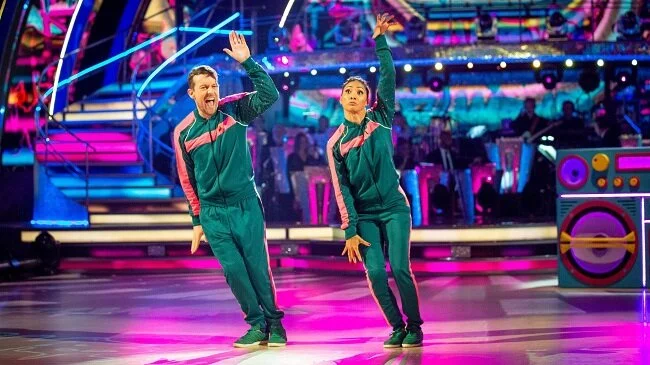
Saturday was week 7 of Strictly Come Dancing and it definitely showed. This is the stage in the series where the judges take the gloves off and start getting picky, even with those who are clearly at the top of the leaderboard. Hence, Kelvin Fletcher and Oti Mabuse's Viennese Waltz along with Michelle Visage and Giovanni Pernice who danced the Paso Doble, didn’t score as highly as you’d expect. The judges pointed out technical aspects that were wanting in both routines. But that’s what they’re supposed to do so I have no issues with these criticisms. We are also at the point where certain dances can throw a lifeline to some celebrity dancers. Hence Chris Ramsey and Karen Hauer’s Street/Commercial dance really played to their core fanbase and more importantly, Chris’s dancing strengths. I doubt he’ll better this routine and it should keep him in the show a little longer.

Although Saturday night provided yet another excellent show, Strictly Come Dancing was notable for the absence of audience favourite Will Bayley. The Paralympian injured himself during training after he jumped from a table whilst practising his jive routine. According to Will “I jumped off a table. And as I landed, I landed with straightened legs,” he explained. “I thought I broke my leg because I never felt anything like it before. To hear the words I absolutely can’t dance was just really gutting for me. But I need to recover now and come back even stronger next week”. Thankfully, the comprehensive rules that govern Strictly allows for a week’s absence due to injury. However, if Will cannot resume dancing for next Saturday’s show, then he may have to retire from the entire series. If this does unfortunately happen, then it will also require the show’s producers to revise the schedule with regard to future eliminations, so that Strictly continues to follow the pre-set timetable.
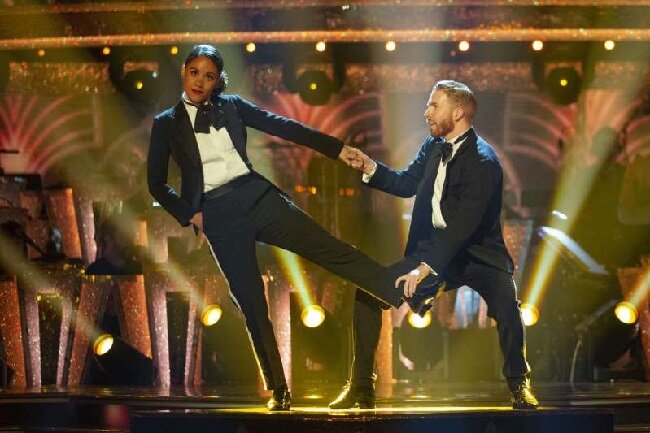
Week 5 of Strictly Come Dancing once again saw some significant improvement among the celebrity dancers. Most notable were Alex Scott and Neil Jones who delivered a very enthusiastic Charleston. For the first time it appeared that both the technical and performance aspects of dancing “clicked” for Alex. After being saved by the judges in last week’s dance-off, Emma Weymouth and Aljaž Škorjanec's put on a beautiful display with their Viennese Waltz. The judge’s marks reflected their progress respectively by all awarding 9 marks out of 10. Then there was Will Bayley and Janet Janette Manrara whose emotional contemporary dance left judges Motsi Mabuse and Alfonso Ribeiro in tears. Will said before this year’s series that he was taking part in Strictly to “inspire people with a disability”. He certainly seems to be doing so and his commitment to the show and his constant training have earned him a strong fan base among viewers.
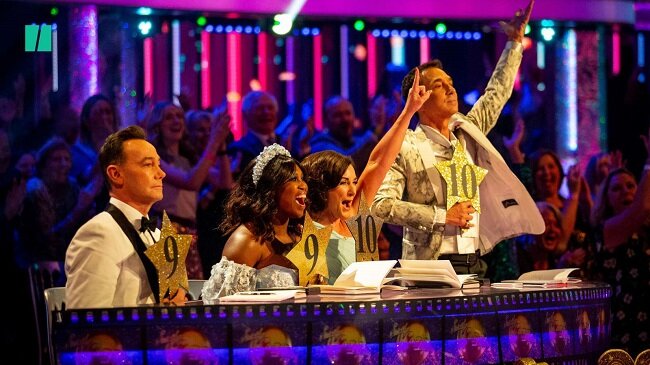
Well Saturday night’s show was an utter revelation. Many of the celebrity dancers who have been previously at the lower end of the leaderboard and therefore at risk of being in the dance off, decided to significantly up their game. Not only did this make for great entertainment, it also succinctly reiterated one of the fundamental aspects of what makes Strictly Come Dancing so popular; the “journey”. Yes, it is an incredibly cliched phrase but its something that seems to resonate with viewers. If the UK does have any national characteristics, then one of them is an appreciation of dogged determination. We tend to warm towards plucky underdogs who improve through hard work and dedication. And that is what we were treated to on last night’s show.

As I’ve mentioned before, the one piece of reality TV that I avidly watch is Strictly Come Dancing. I’ve been a regular viewer since 2005. Once you’ve got your head around the format and have fully understood what the show is and is not, it makes for entertaining viewing. Strictly is not a pure dance competition by any shakes. If it were, then the public wouldn’t have any say in who remained on the show and it would all be left to the professional judges. But such a show would have very limited appeal. Hence, we have audience participation and all the theatrics of reality television. Talent and ability can be trumped by popularity and frequently is. Over the last fifteen years, the shows formula has been finely tuned and we now find ourselves with a very controlled format. The broad spectrum of celebrities fulfil the role of various archetypes and the judges all have distinct roles to play. But at its heart the show is still about people learning to dance (or not) and that is a difficult skill to master. For me therein lies the entertainment.

There really is an excess of genuine talent in this year’s show. It’s week three and the standard has been raised yet again. Michelle Visage and Giovanni Pernice delivered a smouldering Quickstep to Cabaret, proving once again that it is unwise to write anyone off based purely on age. Furthermore actress Catherine Tyldesley dancing with Johannes Radebe stunned the audience and judges alike with a Rumba to the ballad Shallow from the film A Star is Born. The Rumba is a notoriously difficult dance to perform and to pull off such a feat so early on in the season was quite incredible. And we were also treated to our first Street Dance, with Dev Griffin and Diane Buswell performing an outstanding Aladdin themed routine. Considering that Diane had an accident during the week, it made such an assured performance even more remarkable. And let us not forget Kelvin Fletcher and Oti Mabuse’s robust Charleston.

There is obviously some sort of psychological comfort in being spoon fed the same content, again and again and again. Because that is what Strictly Come Dancing, the BBC’s flagship Autumn entertainment show, definitely does. And I don’t mean that in a derogatory way, because once again, I am one of the 8 million viewers avidly watching this seasonal ritual. But is must be said, that the show is incredibly formulaic and that the production team are expert at playing upon all the foibles of the format. Hence every September we get a wide spectrum of “celebrities” eager to learn how to dance. All of whom fall neatly into the various categories that have been established over the last 15 years. There are those who display an innate ability right from the start. Then there are the determined improvers. We also have wild cards whose content wildly changes in quality. Another favourite are the rhythmically challenged whose embarrassing failures are deemed “entertaining”. And let us not forget those who are just hopelessly out of their depth and you know are going to fall at the very first hurdle.

Series 16 of Strictly Come Dancing has been in many ways the most predictable season to date. It became clear within a matter of weeks as to which couples were the front runners, who had potential to grow and who would only go so far. Apart from the slight anomaly of Vick Hope going out early in week 5 due to a poorly conceived dance (blame Graziano for that), the show has followed a fairly unsurprising route. Therefore, it really comes as no shock to find Joes and Diane, Stacey and Kevin, Ashley and Pasha as well as Faye and Giovanni are going through to next week’s final. Nor should we be astonished by the subtle distinction between the judge’s favourites, and the couples that the public related to and take to their hearts.
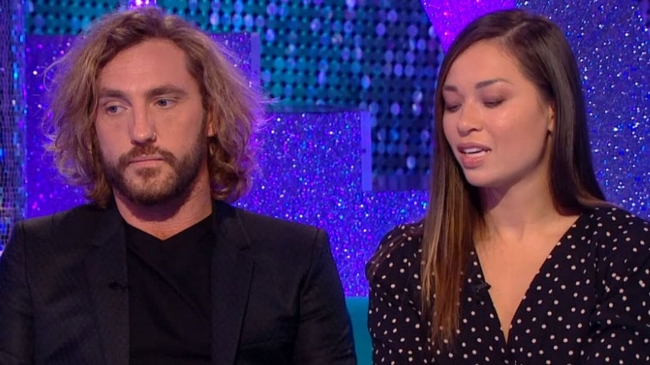
The upbeat social media buzz around popular reality TV show Strictly Come Dancing took a turn for the worse this week, after celebrity contestant Seann Walsh was photographed kissing his professional partner Katya Jones. To the casual observer, this is simply standard fare for the tabloid press; a storm in a tea cup and nothing of note. However, four days after publication the story has grown from celebrity tittle-tattle to a major topic of national debate. This is because of several reasons. Mr Walsh was at the time when the picture was taken, in a long-term relationship. Katya Jones is married to fellow Strictly Come Dancing professional dancer, Neil Jones. Subsequently, actress Rebecca Humphries split up with Seann Walsh and released a statement online citing deficiencies in the five-year relationship and alluding to “controlling” behaviour. It is this later aspect, rather than just faux prurient outrage by the tabloids about the celebrity indiscretion, which has made this “story” persist. It links into the ongoing debate over “toxic masculinity” and the #MeToo movement.

With each successive season of Strictly Come Dancing there appears to be more and more celebrity participants who seem to be “good”, right from the get-go. For many years now there have been ongoing debates about whether those from certain backgrounds, IE music, acting and possibly even sport, have an advantage over the usual chefs, astrologers and ageing minor celebrities. Although I can see the initial sense of such arguments, I don’t think they hold up to close scrutiny. Having performed a few arbitrary dance moves whilst touring or having done a stilted routine for a TV drama or play is not the same as the rigour and scrutiny that comes with Strictly Come Dancing. However, setting aside this perennial question, despite only being three weeks into series sixteen, we saw some extremely strong movie themed performances last night and the potential emergence of several dark horses. Subsequently tonight’s results were interesting.

In recent week’s Joe McFadden has been widely tipped to win Strictly Come Dancing 2017, having crept up the leader board with a series technically polished and spirited performances. Labelled by head judge Shirley Ballas as a “dark horse” he has quickly become a thoroughbred in the eyes of most bookies’ to become this evenings favourite to win. Joes has proven not only to be a consistently good performer but a popular one too, as he was the only one of tonight’s finalist never to have been in the bottom two. He has in many ways been a classic example of the celebrity that embarks upon the “Strictly journey” and this evening, all the hard work paid off as he lifted the glitterball trophy for this years show. Let us not forget that this is also Katya Jones night as well. She has choreographed some incredible artistic and intelligent routines this season and has clearly understood what works best for her partner.
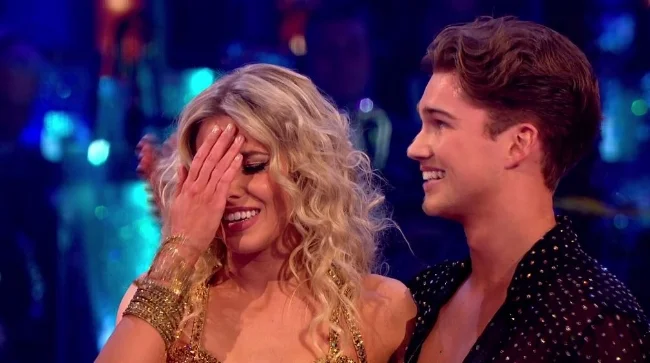
Singer Mollie King went into this week’s semi-final as the bookies' favourite to be voted off the show, and it has proven so. I appreciate that Mollie has been training hard and applied herself to the advice given to her by the judges. However, it would appear that she has plateaued with regard to her level of skill and performance several weeks agao. Sadly, nerves and the pressure of the night got the better of her on Saturday and her Samba was not well received. It was hesitant and lacked polish. She partially redeemed herself with an elegant waltz, although it is fair to say that she simply wasn’t in the same league as the other celebrity dancers. The judges seemed to be a little too generous with their marks for this dance, possibly to spare her any further distress because Mollie was visibly upset.
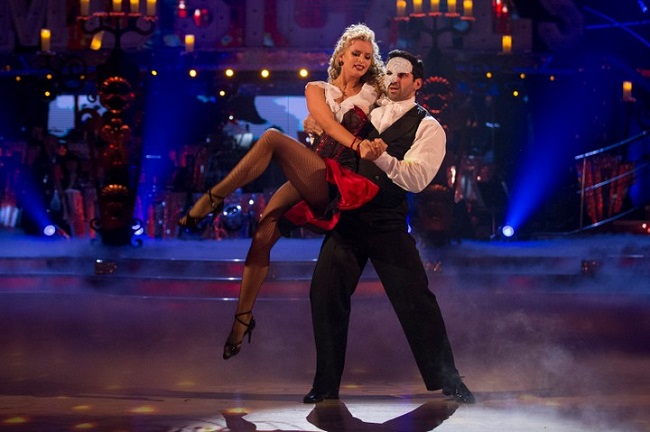
Strictly Come Dancing 2017 is proving to be quite the rollercoaster ride. Each week it seems that there is potential for an upset and Saturday night proved no different. The fact that Davood and Nadiya scored poorly with their Argentine Tango was quite a surprise. The relatively low spread of points put them squarely at the bottom of the leader board and made them prime candidates for the dance off. Personally, I thought this was a damn shame because Davood has significantly improved in recent weeks and has embraced the Strictly journey. However, it was a shock to see Alexandra and Gorka fighting to stay on the show once again. Sadly, the outcome of the dance off was a forgone conclusion. Alexandra was technically outstanding and gave a spirited performance. She had something to prove after last week's difficult Rhumba and I thought she came back with a vengeance. Sadly, the public thought otherwise. I’m sure being in the dance off yet again will be a disappointment for her. However, for the present she is safe.

No one is safe. I’m sure it’s a thought that all remaining contestants on Strictly Come Dancing are currently thinking. Week 10 has been and gone and found front runner Alexandra Burke in the dance off against the delightful Susan Calman. Obviously, the moment this was announced, the outcome was a forgone conclusion. But it proves as I said last week that the spread of public votes may not be that wide and if a celebrity finds themselves in the middle of the linerboard then they are at serious risk. There can be no “bad weeks for the remaining contestants, from now on. Every dance now has to be undertaken with as much confidence and technical accuracy as possible. I suspect that unless Gemma raises her game and Mollie continues to improve they too may be potential dance off candidates next week. As for Alexandra, I would hazard a guess that she will focus very much on ironing out any technical issues and will return with a show stopping performance, next Saturday. The lady is extremely motivated and competitive.
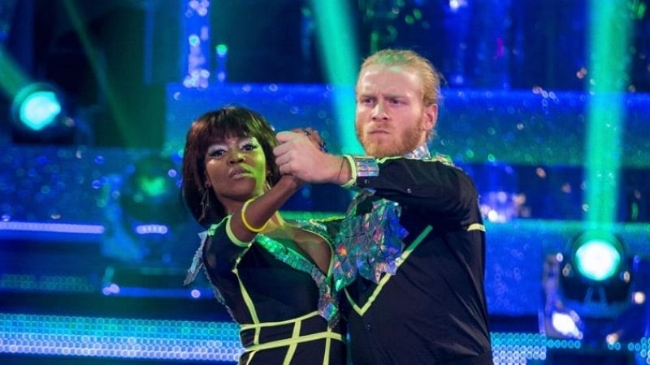
Blackpool always brings out the best in the celebrity dancers, due to its immense entertainment heritage and standing within the world of professional dancers. So, it wasn’t surprising to see some couples raise their game and make significant improvements with their routines. Gemma showed that she had listened to the judges’ comments and delivered a polished and elegant performance. She also appeared to have noticeably rediscovered her confidence. Mollie also delivered a far better routine which corrected many of the issues that have plagued her in previous weeks. I would argue that it was her best dance of the series. And once again, Susan poured her heart and soul into her time on the dance floor, delivering another spirited performance that found favour once again with the public, if not the judges.
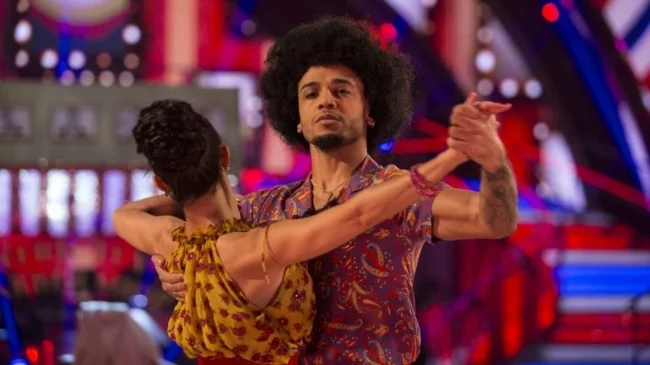
Well I said it last week that there was scope for a surprise elimination from Strictly Come Dancing and surely enough it has happened. Aston Merrygold, despite being tipped as a contender for the final, scored poorly with the judges last night and also failed to garner sufficient public support. He subsequently found himself in the dance off with Mollie King and despite correcting some of the technical issues that were present in his initial performance, he failed to sway the majority of the judges in his favour. Darcey and Bruno both voted to save him but Craig and Shirley (who as head judge has the casting vote) opted to save Mollie. Hence, bookies favourite Aston Merrygold has left the show, proving that no one can rest on the laurels. As you’d expect, there were vocal complaints from fans and supporters who felt that the judges had been unfair with their marks. However, I believe if anyone is to blame then it is Aston’s professional partner Janette Manrara.
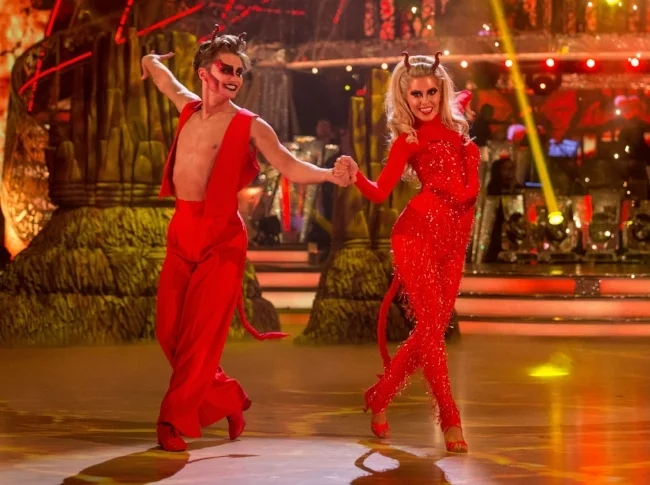
I could be very philosophical about Strictly Come Dancing and describe how the judges scrutinise and mark the contestants on technique, viewing their performances through the prism of their own professional experiences. Conversely, the public react and elect to support the celebrities far more emotively; championing potential underdogs and showing solidarity with those they feel have been poorly treated. However, such Janusian analogies are unnecessary and ultimately pointless, because the show is primarily for entertainment and not a dancing competition, although the professional dancers may not see it that way. Also, as we saw demonstrated once again tonight, Strictly Come Dancing is a popularity contest and the only thing that really matters is convincing the public to vote for you.
Yes, we’re three weeks into this year’s season of the BBC’s flagship entertainment show, Strictly Come Dancing (that’s the UK version of Dancing with the Stars for the benefit of US readers). The tabloid press has already started obsessing, dissecting and outright lying about the antics of a handful of minor celebrities as they struggle with the rigours of learning to dance. From now until Christmas, prime time Saturday night viewing on the Beeb will be suffused with the superficial glamour of showbiz, a barrage of camp innuendo and a mixture of well-honed muscles and wayward flesh as well as far too much make-up. You also get to choose whether to laugh along with heavily scripted and contrived comments from the professional judges. If we’re particularly fortunate we may even be blessed with a professional dancer meltdown as they balk at a “ill deserved” poor score (yes, we’re looking at you Brendan Cole).
Thoughts on Blogging Part 6
As January comes to an end, I am pleased that I have so far managed to maintain a daily writing schedule. I hope that I can continue in this vein throughout February. As ever the actual process of sitting and writing has proven a somewhat mixed bag so far this year. Some days the word simply spill out of me and a blog post potentially writes itself. On others, composing just three coherent paragraphs is like pulling teeth and much time is spent procrastinating and getting side tracked. But a mixture of self-discipline and a degree of pride have helped oil the creative wheels and kept the content flowing. Whether any of it is any good is for others to decided. However, it was nice to find one of my posts quoted in an article over at Massively Overpowered. It means that at least someone is reading my work and pondering upon the points therein. Writing is after all a means of communication and sharing ideas so it is rewarding to know that you’re not just yelling into the wind all the time.
As January comes to an end, I am pleased that I have so far managed to maintain a daily writing schedule. I hope that I can continue in this vein throughout February. As ever the actual process of sitting and writing has proven a somewhat mixed bag so far this year. Some days the word simply spill out of me and a blog post potentially writes itself. On others, composing just three coherent paragraphs is like pulling teeth and much time is spent procrastinating and getting side tracked. But a mixture of self-discipline and a degree of pride have helped oil the creative wheels and kept the content flowing. Whether any of it is any good is for others to decided. However, it was nice to find one of my posts quoted in an article over at Massively Overpowered. It means that at least someone is reading my work and pondering upon the points therein. Writing is after all a means of communication and sharing ideas so it is rewarding to know that you’re not just yelling into the wind all the time.
I like to write about a broad spectrum of subjects, but naturally I self-edit my posts and so some content remains unpublished. I try not to do too much politics or social issues although I’m not averse to expressing an opinion. But sometimes you have to refrain from “indulging” yourself and focus on the meat and potatoes of your writing. For me that is still movies and video games. I have no problem with constructive criticism and analysis of the things I enjoy, but I am cognisant of not perpetuating a continuously negative narrative. Hence, I endeavour to be as even handed as one can be, despite being human and therefore having personal bias. Frankly it’s just lazy writing to sit in the balcony and barrack the stage continuously. Yet as a culture, in recent years we’ve become far more focused on what we don’t like, what we’re against and what we think is beyond the pale. Actually expressing positive sentiments or extolling the virtues of something you enjoy is bizarrely frowned upon in some quarters or seen as sappy.
Moving forward into 2019, I have several ideas regarding developing further recurring themed posts. At present I use Thoughts on Blogging and Diary of a Podcaster as means to provide commentary on both mediums as well as update readers about my own endeavours in these areas. I also use the Classic Themes posts as a vehicle to explore my love of film, TV and video game music. After some thinking I’m considering writing regularly about various common tropes and archetypes that occur in movies. I also had an idea about a similar game related series of articles, where I could focus on mainstays of the industry and how certain mechanics become established. I’ve also reflected upon my need to write more about books, graphic novels, obscure TV shows from my childhood and a wealth of other topics. But all such ideas have to be realistically tempered by the time I have available and my desire to pursue other interests. All things considered, I should be able to sustain my writing schedule for the next month. But ideas for content is only half the equation. The other is motivation. That is a far more nebulous commodity. However, one positive thing to consider is that February is a shorter month than others.

It is obligatory to start these sorts of posts by reiterating the standard mantra that you should not be driven by your websites stats and that the data they contain can be unreliable. Although a sound philosophy in principle, it is actually more nuanced than that. Such data can be useful for growth if used wisely. I have never been coy about trying to increase my readership. For me it seems an integral aspect of blogging. Over the course of 2026, the traffic to Contains Moderate Peril has doubled. A lot of that is down to curious spikes in visits which seems to be AI scraping the entire site. Setting aside these anomalies, more people are reading posts and a lot are doing so via the site’s RSS feed. All of which is fine by me as growing the audience for this blog was a goal for this year, I am quite pleased by this development and the ongoing progress. I hope it continues.
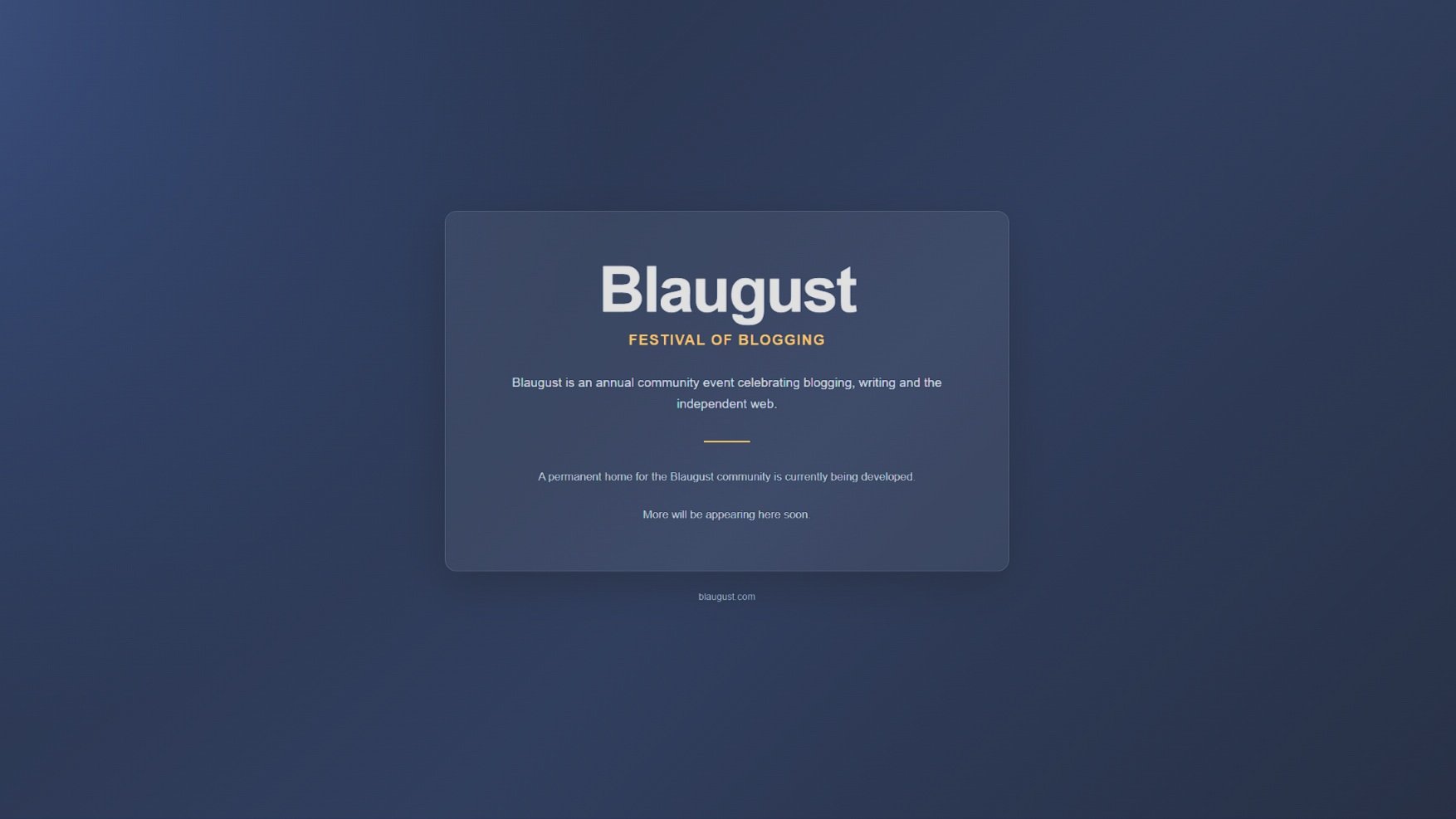
There is a subtle difference between being rash and being proactive. Being rash means acting too fast without thinking about the results, while being proactive is a question of acting early with careful planning. Why have I mentioned this? Well prima facie information indicates that recent Blaugust participants are interested in an “official” online presence for the annual festival of blogging, other than that existing Discord server. That seems perfectly reasonable to me. Not everyone likes using Discord and I do worry that they may reduce its free functionality at some point in the future. With regard to there being a Blaugust platform of some kind, there is a consensus that it doesn’t need to be some sort of sprawling commercially hosted website running on Wix or such like. Those sorts of site require funding, a degree of admin and possibly private data management. It also a bit too “corporate” if you like. Hence the logical compromise is to have a static site. Let it suffice to say, that has been done.
Judging by the posts I’ve read, it would appear that Blaugust 2026: Festival of Blogging has been well received by those who participated in it. That is most satisfying to know, especially in light of the fact that this is the first year the event has been run without our founder who sadly past away in July. It has also become clear that Blaugust is reaching a far wider and diverse audience and most definitely is no longer the exclusive province of bloggers from one particular community. There has been healthy discussions on our Discord server about whether this year event needs to adapt to accommodate the modern blogosphere. Questions such as whether or not there needs to be a dedicated Blaugust website have been raised and explored. Should every site participating have an RSS feed? How, if required, should comments be handled. Inevitably, the subject of the use of AI in blogging still remains a controversial issue.
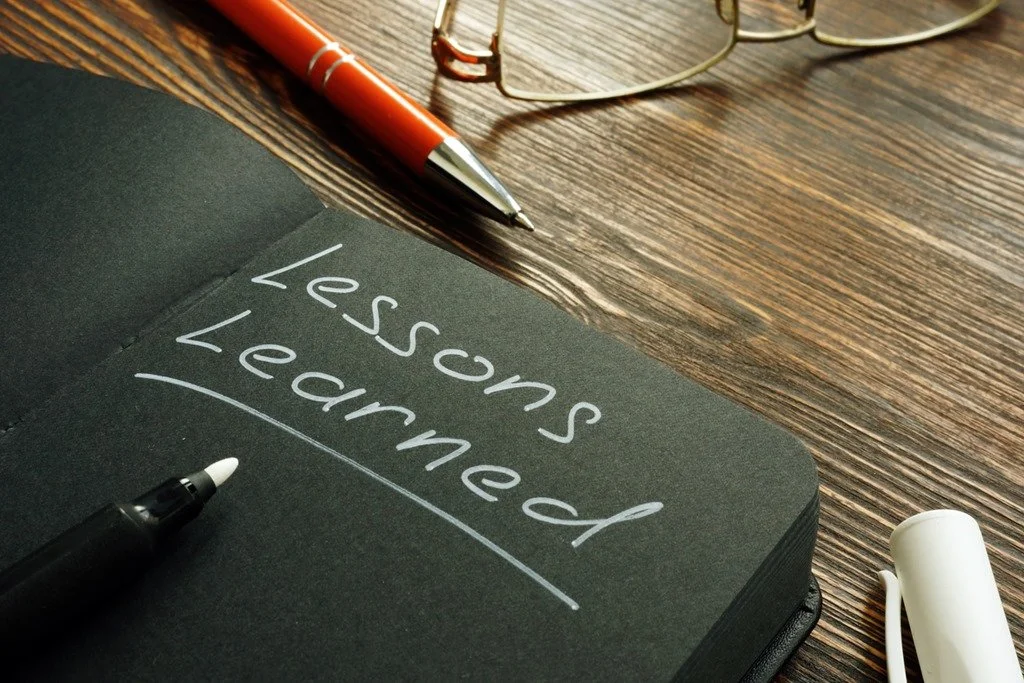
After a very productive month of writing, we come to the final Blaugust 2026 Group Project writing prompt. It is titled lessons learned and is usually a chance to reflect on the festival and whether or not it has been to one’s satisfaction. Have you achieved your goals? What have you gained from the experience? Those sorts of things. It also poses two further questions; “What is the best piece of advice you’ve ever been given?” and “what’s the best advice you’ve ever given to someone else?” for your consideration. I’ll address the questions shortly. Firstly let’s mull over this years event and assess how it’s gone.
It was my blogging anniversary on the 16th August. I’ve been writing and sharing my post online for 19 years, via various different websites and blogs. This current iteration of Contains Moderate Peril has been around since August 2015. To date it has 2,171 posts including this one. Quantity does not necessarily equate to quality but there are some articles I am proud of and feel that they make their point effectively.
This week’s Blaugust 2026 Group Project writing prompt is an important topic. Namely, staying motivated. I prepared a fairly lengthy post with some advice and ideas to keep people focused and writing. Then I checked it against the post I wrote last year and the year before that, going back to blogging events from 2012. All of these posts broadly said the same thing, so I decided to scrap what I had composed for today and to go with a simpler approach. I shall answer the questions Krikket posed for this writing prompt. Fellow blogger Bhagpuss has also done so and as ever, his thoughts are interesting and well expressed. Here are my answers.

Once again, I have stumbled across an interesting debate that has provided me with an opportunity to write a blog post. Over on the Blaugust Discord Server, I read a comment from AgingGamer regarding RSS feeds and their significance with regard to blogging. This in turn referred me to a post by fyr (don’t you love all these nom de plumes) who wrote at depth about the ongoing community debate about the use of RSS/Atom feeds. The article explored the importance of such feeds with regard to reaching readers and providing accessibility to the disabled. All of which provided me with a great deal of food for thought. Mainly because I use a mainstream website service provider for my online endeavours, so RSS is by default built. I’ve never really considered not having such a facility at my disposal. But the rise in the IndieWeb scene challenges this assumption.
I have written two blog posts today that I have subsequently abandoned. The first was gaming related but when I was about halfway through writing it, I felt like I was covering old ground and just repeating myself. It was also regarding an issue that can’t really be fixed. Namely, how do you ensure that matchmaking in PVP games is done equitably. As there is no solution to this issue at present, or at least not one that all parties can agree on, I decided to ditch it. Similarly a post I was working on about what becomes of my blog if anything happens to me was curtailed. In light of recent events in our community it seemed inappropriate. However, as a result of binning two blog posts, I new idea occurred to me. Do my fellow bloggers self-edit and curtail what they write about? Is your blog totally unfiltered or do you apply a set of rules that determine what content is deemed acceptable?
It is time for the next Blaugust 2026 Group Project writing prompt. This one comes with two lines of enquiry. The first is an opportunity to “introduce yourself”. Over the years, I have written several introductory posts for previous Blaugust events. Rather than repeat myself I’ll just link to the last one, which was posted in August 2023. I haven’t radically charged since then apart from my hair going whiter. The next part of the prompt poses a far more intriguing question. “If you could have one magical power or super power, what would you choose and what would you use it for?”, which offers much for consideration. Having given this proposition much thought here is my response.

A decade ago I wrote a post about blogrolls and the practical and social issues surrounding them. At the time, the version of Squarespace I was using didn’t easily support such things or at least wasn’t able to do so in a manner I liked, so I didn’t have one. Ten years later Squarespace as a hosting platform has far greater functionality, hence I recently decided to add a blogroll. That was in March this year. However it just wasn’t really fit for purpose. So I decided to revise it a few days ago and rather than just have a traditional list of blogs in a side column, I ended up producing a more comprehensive blog directory, which list two hundred plus sites alpha-numerically. I’ve been tinkering with it on and off and I am now finally happy with it. The latest update reflects the international nature of the Blaugust: Festival of Blogging and the fact that we have many blogs written in their native language. Translating text is now an integral function of web browsers, so I see no reason why these blogs should be excluded.

Today’s post is part of the Blaugust 2026 Group project, which features a series of writing prompts set for specific dates throughout the month. The idea being that everyone who wishes to participate can write about the same subject, riff off each other’s posts and enjoy a shared experience. In many respect having a common writing prompt levels the playing field and provides a sense of common purpose among those who take part. Today’s group project prompt asks the question “tell us all about your very first blog”. An unambiguous and interesting question that will hopefully prove enjoyable to write about and informative to others.
I have been writing online for nearly two decades. I don’t claim to be good or accomplished but what I can say with certainty is that the more often you write, the easier it becomes. For those who are new to writing a blog and the Blaugust Festival of Blogging, possibly the biggest hurdle that you now have to get over, is writing your first post of the month. You spent the lead up to this event sorting out your blog templates, fine tuning the backend and possibly banking some ideas. Or you may have decided to just wing it and make it all up as you go along. Both are perfectly valid approaches. However, there is one thing left to do that cannot be put off, avoided or danced around. Writing. At some point you’ve got to do it. Or bail on the event. The proverbial “shit or get off the pot”.
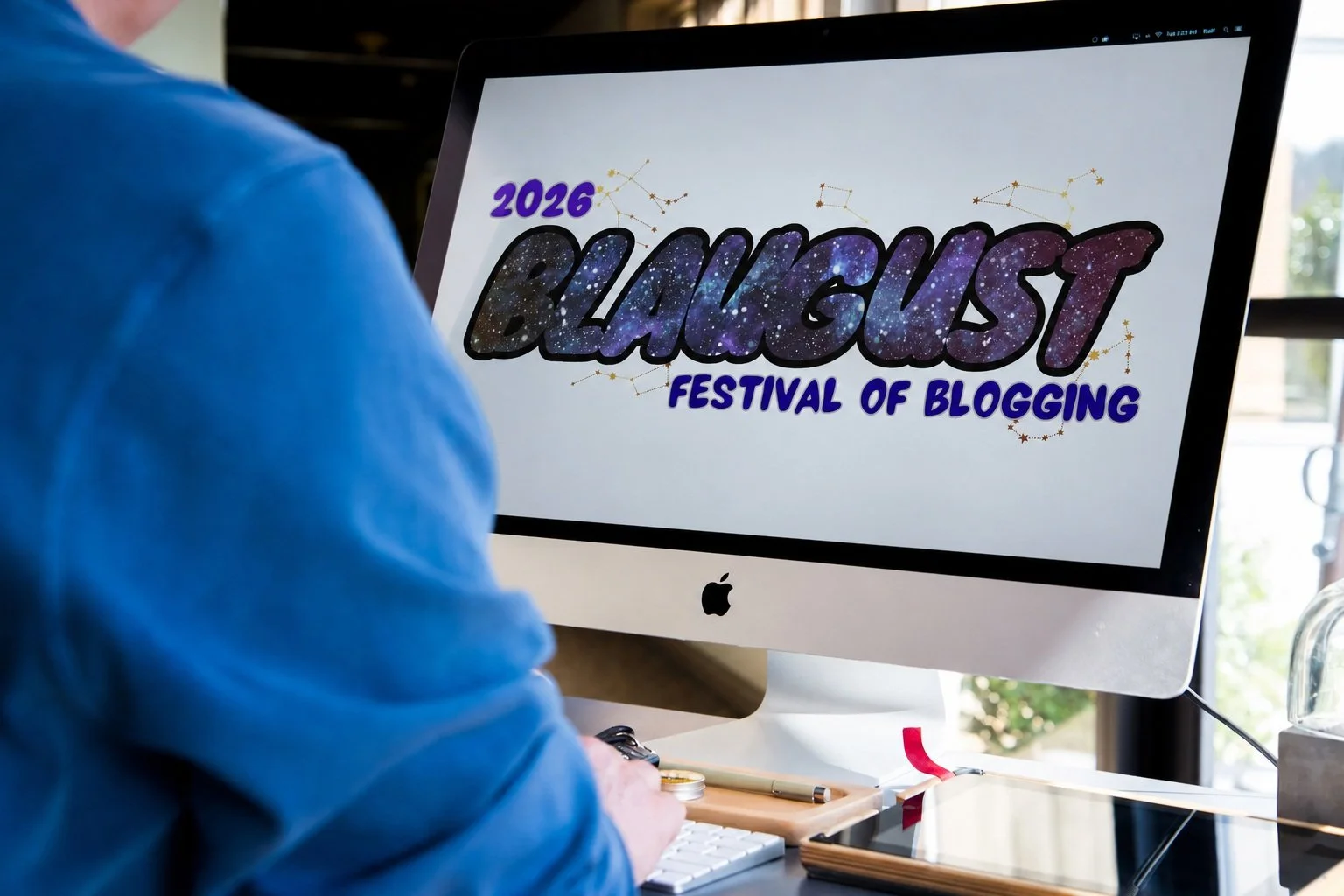
If you take a cursory look at a calendar you will see that the month of July is fast coming to an end. That means that Blaugust 2026 Festival of Blogging starts in a few days time! If you’re participating, or thinking of doing so, the next few days present a golden opportunity to do some practical organising and basic preparation. You don’t have to if you don’t want to. Feel free to just do things as they come, so to speak, if that’s your approach. However, for most of us, it helps if we have some kind of plan in place and make some arrangements in advance. I personally prefer this approach and like to have some ideas for blog posts in the bank. It is also useful to have “options” if something doesn’t go to plan. For those who are new to Blaugust, here are a few ideas regarding preparation that may be of use to you. As ever, your personal mileage may vary and ultimately you are best off adopting a strategy that suits your writing style and personal schedule.

Prior to last year’s Blaugust: Festival of Blogging, I upgraded Contains Moderate Peril to the latest version of Squarespace. There are still some aspects of the site that need fine tuning but overall, I am happy with the appearance of my blog and its respective functionality. With this year’s writing event fast approach, I decided to tackle over the last few days, some of those finer points that need tweaking. I have wanted a post counter on the site for a long time but unfortunately there is no native Squarespace widget for this basic function. I also felt the need to upgrade the blogroll, as the current one didn’t support RSS feeds from certain sites (e.g. Google Blogger) and was dependent upon a third party service, Elfsight, which wasn’t ideal. Both of these issues have now been addressed and I am pleased with the results. There is now a post counter on the Blog Archive page, which seems a logical place to have it and the Blogroll is now far more comprehensive.

Next month the annual Blaugust: Festival of Blogging begins. Roundabout this time each year, I try to write a promotional post to raise awareness of the event and encourage potential participants. However, as I’ve done this quite a few times before, each year it is becomes increasingly difficult to present the essential facts about Blaugust: Festival of Blogging in an interesting fashion. There’s nothing worse than writing a post and feeling that you’re just covering old ground. So, this year, I thought I’d try something different and present the most important information about this annual event, as if it were a conversation between myself and an interested passer by. Feel free to attribute novelty voices for each party in your own head, while you read this. If it helps, try imagining that this discussion is happening between two celebrities or such like. Both may be wearing exotic hats but I digress. On with the scenario.

I read a blog post by Void recently, about finding a new internet home. He wrote about how he and many others have had to pick up their “digital roots” and migrate multiple times over the years, from one platform to another. It is a position I can sympathise with as I have done likewise. Hence I like the idea of having a place online where I hangout by default. My own blog is an anchor for me but it is not quite the same thing as a platform or online portal where I can find all my friends and colleagues, share content and shoot the breeze. It’s a curious thing, because as I typed that last sentence it struck how such a sentiment may seem alien to others. There may well be people who like to have a finger in multiple pies and who are happy to frequent and flit between various social media apps, Discord servers and subreddits. I prefer to focus my efforts on a single instance. A place that suits my requirements, allows me to put down roots and become part of the furniture. Like a virtual Diogenes Club.

Everyday, once I’m up, I sit at my desk in my office, fire up my PC and log into Feedly. I have various RSS feeds grouped by category, which I slowly trawl through and read anything that catches my eye. I have one curated feed named “Blaugust” named after the yearly festival of blogging event. It has over 250 blogs listed, many of which are former participants. Most of these regularly post. Hence there’s a lot to get through and so I don’t read all of them. However there are a few that I always checkout. Mainly because they’re the personal musings of some of our writing community’s oldest and most prodigious members. The sorts of guys and gals who are part of the furniture. They’ve always been there and it feels like they always will. Posting their thoughts, sharing their enthusiasm and spreading the love, so to speak. One of these blogs, is Tales of the Aggronaut. written by Belghast.

On Friday 26th June, I had another random spike in internet traffic to Contains Moderate Peril. The statistical package that comes with my Squarespace account recorded over 13k visits in less than 24 hours, which is not typical (although I wish it was). However, all of these visits to my blog arrived via the default homepage and spent between 1 and 2 minutes there. Hence, it was obvious that this was not human traffic, as there was no evidence of any searches being made of content that is available on my site, nor of the “visitors” clicking on any of the links on the top menu and viewing other posts. This was undoubtedly AI traffic arriving at the designated homepage and simply parsing the site. I had a similar spate of this sort of web traffic last November. The only difference on that occasion is that the traffic all came from China. This time round it hailed from the US. I suspect that this is something that will happen more often as companies set their AI loose on the net for what is effectively training.
I recently watched a video on Patreon by someone who I actively support as a “content creator” and whose work I enjoy. I shall provide no more detail regarding their identity because they may not want their work referenced with regard to what I am going to say. During the course of their video they briefly referenced the work put into promoting a podcast they are currently producing and the relatively low audience that it has garnered so far. The comments were an aside and most certainly not said with any sense of self-pity. They were simply a statement of fact. Furthermore, I suspect they are far from unique and similar sentiments have been expressed in one way or another by anyone who has created something the published it online, only for it to be lost among the greater white noise” of the wider internet.
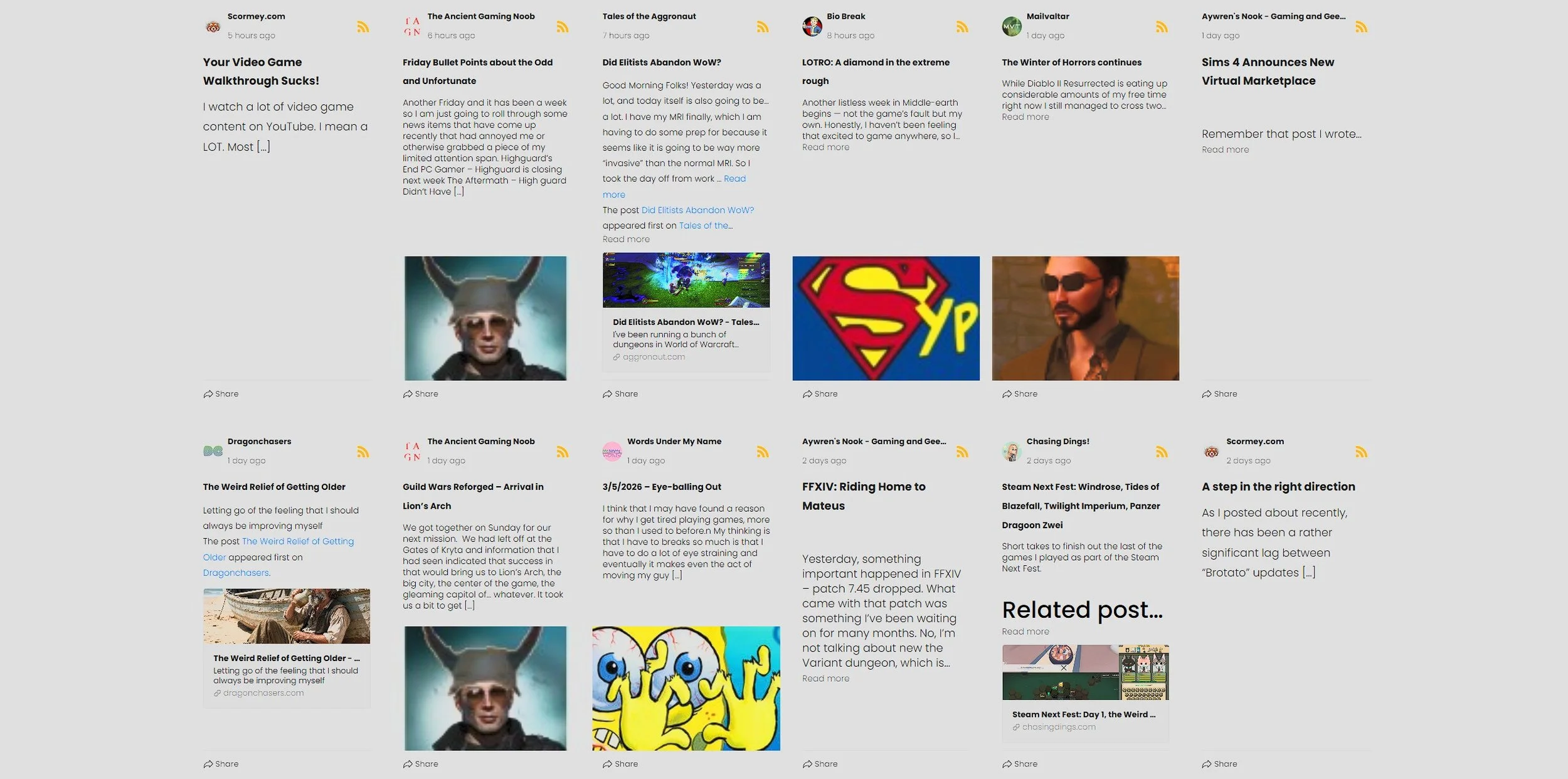
When I first started blogging way back in 2007, I maintained a blogroll of all my colleagues and peers’ websites. At the time this was a common practice and a way to support an expanding community. I considered this such an important aspect of the blogging scene at the time, I created a website to aggregate posts from video game blogs, called The Gaming Blog Nexus. It ran for two years and proved quite useful. However, it was tricky to administer and would frequently break as a lot of the back end widgets and plugins were created and maintained by “gifted amateurs”. I eventually shut it down due to the operating costs. When I moved my own website, Contains Moderate Peril, to Squarespace in 2015 I intended to start maintaining a blogroll once again. However, at that time there was no native support for such a thing on the platform. Hence for the last ten years, I have not had a blogroll on my website, which hasn’t sat well with me.

I was speaking to someone recently about hobbies (fortunately it wasn’t Simon Quinlank) and I mentioned that I have maintained a blog for over a 19 years. When I talked about the ongoing cost they were most surprised, as they had assumed that blogging was something that could be done for free. I guess we’ve become so accustomed to the provision of free online services such as email, that this a reasonable assumption. I pointed out that although it is indeed possible to blog for free using Blogger, it was not the optimal approach, especially if you want to maintain some degree of control over your writing. Naturally, the next question they asked was how much do I spend and I gave them a ballpark figure. All of which reminded me that I wrote a post on this very subject a few years ago. So I’ve decided to revisit the subject and see how much it currently costs to maintain Contains Moderate Peril.

Today I started the slow process of auditing every post that has been published on Contains Moderate Peril since 1st August 2016. The goal is to correct any obvious typos and replace all existing images with larger ones. The Squarespace software upgrade I applied to the website at the end of last year has finally allowed me to establish a standard format that I am happy with. Hence the ongoing audit is the perfect opportunity to apply these style rules to all posts. There are also some technical issues and matters regarding functionality that need to be addressed. I need to determine how to embed YouTube videos in such a way that they automatically scale to fit whatever device is viewing them. Another area which needs improving is the website search facility. This needs refinement so that enquiries can be more specific. Older posts also need to be more accessible, although I am still researching how best to achieve this.

It’s nearly two and half months since the Blaugust: Festival of Blogging event ended. During that time I’ve maintained a fairly regular writing schedule and I post every two days or so. Furthermore, I finally dragged my blog template, kicking and screaming, into the modern era. I tweaked a few pages and updated the content of the “about” page. The next task is to start going through all previous posts and replacing older, low resolution images with larger, more appropriate ones. This process also presents an opportunity to ensure that all posts follow a uniform style. IE Are appropriately categorised, have links to related posts at the bottom and are SEO optimised. This will be a lengthy task so I think the best approach will be to tackle two or three posts a day. Hopefully this will raise the profile of older content, which generates the lion’s hare of traffic to this site.
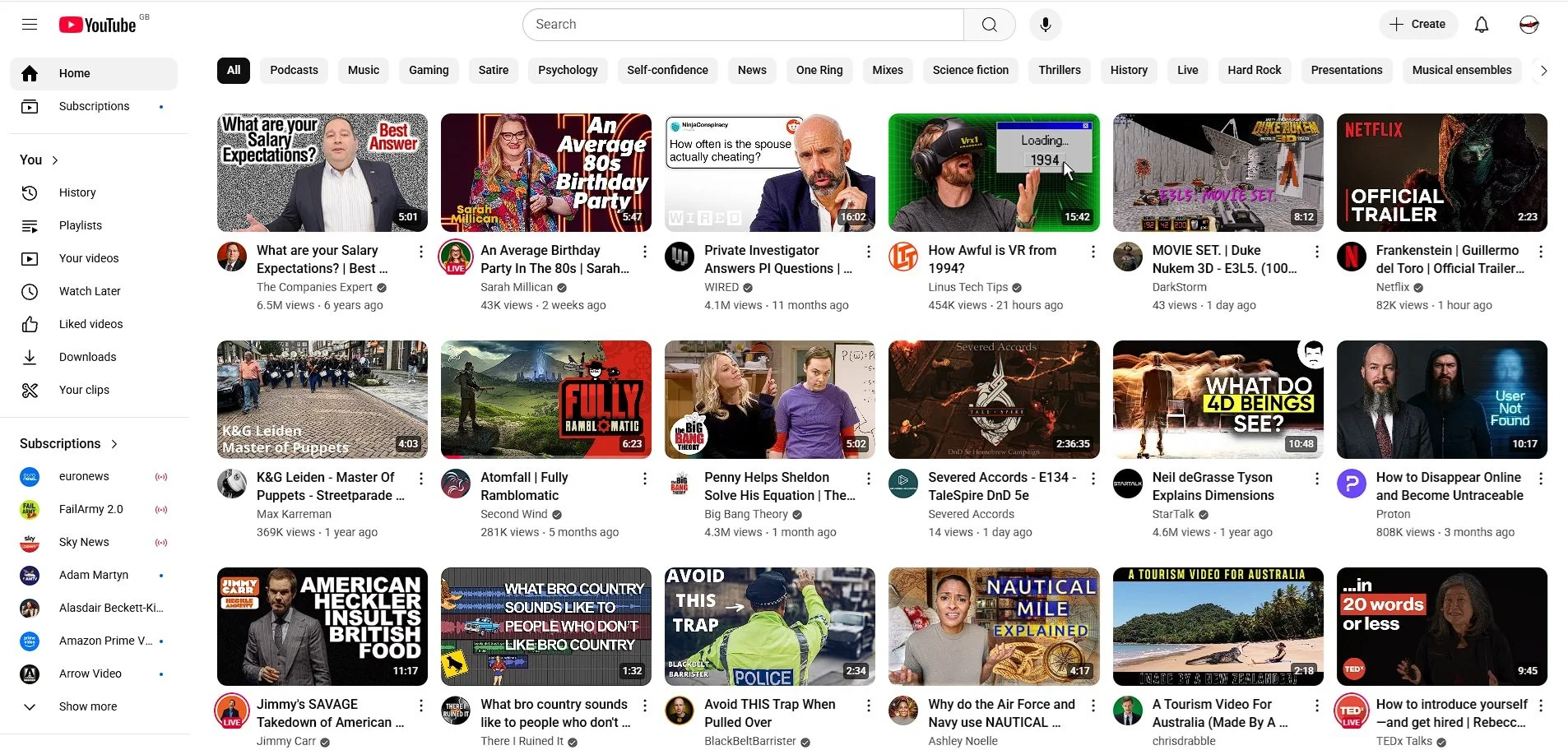
I use a browser extension called Control Panel for YouTube, which allows me to determine who many videos are displayed on my YouTube homepage and to filter the content that is shown. At present it is configured to display rows of six. Something that I have noticed of late, is the amount of videos with hyperbolic titles and thumbnail images created by AI. Both of which are design choices made to increase engagement. Clickbait titles are contrived to meet current SEO optimisation criteria and as such feature more and more in search results. The fact that they frequently have no relation to the subject I am researching, seems to be neither here nor there. The same issues arise with regard to AI generated images, which again frequently have no bearing on the matter. The fact that more and more content creators do this, infers that it works and is now an essential part of the process you must follow to be seen and featured in search results.
In the last post in this series, I specified the need for a plan with regard to upgrading my blog. Well a plan has emerged, been refined and has now been formally adopted. Rather than migrate Contains Moderate Peril to a new platform and effectively have to rebuild all the content, I am going to upgrade my existing presence on Squarespace. This decision was made for two reasons. Time and money. Migrating to a new platform will take a lot of time and incur additional costs. Upgrading the existing website will take less time and has no cost implications. That is not to say that it will be easy. It has become abundantly clear that the upgrade process will break stuff and that all published posts will have to be manually repaired. Hence my choice boils down to the lesser of two evils.
This year’s Blaugust: Festival of Blogging has reached an end and it would appear that this event has been well received by those who have participated in it. I believe that there were 168 bloggers taking part this year, many of whom have not participated before. Some were new to blogging, where others simply wished to see if they could increase their writing output. As ever there was a wide variety of blog styles and subject matters and it has been most interesting to read new posts every day. I have attempted to leave comments and positive feedback where I can and I hope that some of these new blogs that I’ve discovered continue to write. Well done to everyone who took part. I hope it has been an enjoyable and informative process and that you have learned from it. I know that at least one blogger has determined that writing online is not for them, which is a valuable lesson.
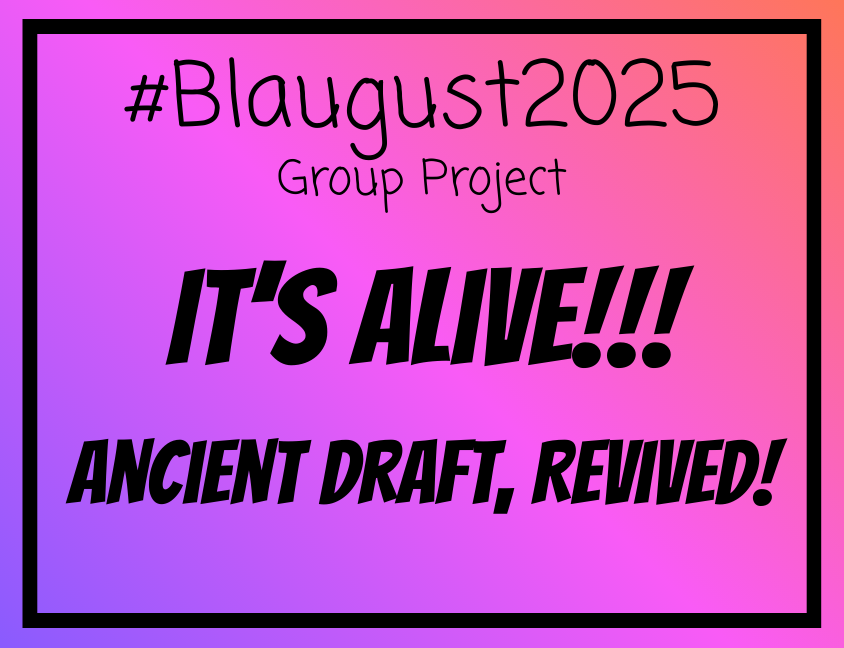
There is currently a group writing prompt available as part of this year’s Blaugust: Festival of Blogging which has piqued my interest. It asks the question “what is the oldest draft post you have” and suggests that it is revived in some manner. I have dozens of draft posts in a folder in my Google Drive. Many are film reviews or film related. The oldest of which dates back to summer 2010. Rather than write a straight forward review of Blake Edwards 1968 comedy The Party, I rather foolishly thought at the time that I’d tackle the issue of whether the film is sufficiently racist to make it beyond the pale. Let it suffice to say that I quickly found myself bogged down in the complexities of the subject and thus never completed the blog post.

I’ve participated in every previous Blaugust: Festival of Blogging event. Prior to that I was involved in the Newbie Blogger Initiative or NBI as it was affectionately known. I have therefore written quite a lot of blogging advice and suggestions over the years. If anyone feels disposed to do so, you can access them all by clicking on the “blogging” option on the top menu of this blog. However, it is important to remember that a lot of the ideas I have advocated and written about over the years are purely subjective. Not all advice or guidance works for everyone. People have different ideas about blogging, different approaches to it and different aspirations. This year has highlighted some quite distinct differences among bloggers which has been most illuminating.
Today is my blogging anniversary. I have been writing online consistently for 18 years. My earliest blogs no longer exist, although they can be found via the Internet Archive Wayback Machine. My first blog was a Lord of the Rings Online fansite called Misadventures in LOTRO. After a while this morphed into a wider gaming website; Misadventures in Gaming. However, I soon discovered that I wanted to write about more than just video games, so I decided to start from scratch and created Contains Moderate Peril in February 2010. This blog endured and has been my main online presence ever since. It has moved several times for various reasons. For a while I had a sponsor, as well as a reasonably sized audience and had dreams of making money from my writing and podcast. But it wasn’t to be and now I just write primarily for my own peace of mind and amusement.
Caring for the Elderly: Part 6
Once again, I find myself writing about this subject in the hope that it will encourage others to reflect upon the nature of old age, illness and the consequences that arise from them. There is still a prevailing culture of not discussing and sometimes not even thinking about such matters, but both are an absolute certainty in everyone’s life. All too often people find themselves in extremely difficult situations brought about by such events and the difficulty and emotional trauma is increased due to there being no plan in place or provision to address matters. Therefore, I strongly advocate the following. Some may seem like very obvious points, but recent conversations I’ve had with other carers and people in similar situations, has shown that many people have not made even the most basic of provisions in this regard.
Once again, I find myself writing about this subject in the hope that it will encourage others to reflect upon the nature of old age, illness and the consequences that arise from them. There is still a prevailing culture of not discussing and sometimes not even thinking about such matters, but both are an absolute certainty in everyone’s life. All too often people find themselves in extremely difficult situations brought about by such events and the difficulty and emotional trauma is increased due to there being no plan in place or provision to address matters. Therefore, I strongly advocate the following. Some may seem like very obvious points, but recent conversations I’ve had with other carers and people in similar situations, has shown that many people have not made even the most basic of provisions in this regard.
Life insurance: There are a broad range of policies available and it really comes down to what you can afford and what you wish to achieve. You may wish to consider cover that pays during prolonged periods of illness or simply a policy that cover the expense of a funeral. It doesn’t have to be a complex or daunting process. Having life insurance in place affords you piece of mind that your loved ones will not be financially troubled if illness or death occur.
Last Will and Testament: Ensuring that you have a will is also a source of peace of mind. It ensures that your assets and property are smoothly transferred to those you choose and that your funeral arrangements are clear in advance. For most people it does not have to be a complex process and often a simple standard document will suffice. The absence of such a provision can lead to additional administrative and legal issues at a time when they are least needed.
Living Wills and Care Plans: I wrote in my previous post about DNR notices and again would like to highlight the importance of discussing in advance the long term wishes of the person you care for. Clear and honest communication are paramount, and it is counterproductive to shy away from such issues because it makes you feel awkward or sad. Everyone has their own unique view on what is acceptable and what is not when it comes to the quality of their own life. Therefore, it is practical to consider and plan for certain eventualities, regardless of whether they are imminent or not.
Another matter it is wise to consider in advance is the general increase in household expenditure that can occur as a result of getting old and infirm. Carers, medical supplies, house alterations and minor changes to one’s lifestyle all contribute to increased monthly spending. In the UK, there are benefits and allowances available to help with such costs, but they are often means tested. Sometimes families prefer to take control of such services themselves and make their own financial arrangements. In my father’s case, not only does he choose to employ a very specific care company to assist him twice a day, he also spends additional funds on disposable items such as batteries, kitchen towel and incontinence pants. All of which have a cost that adds to the monthly budget. Furthermore, my parent’s household produces a lot more domestic waste than the average home. They quickly found that the standard refuse bin was not adequate for their needs, so we had to apply for an additional one from the local authority.
Modern day life is very much focused on living in the moment. As a result, long term decisions are often overlooked or simply ignored. When you’re twenty-five or thirty, seventy is an abstraction and not something that you necessarily concern yourself with. Furthermore, those who are not in the highest paid jobs do not always have the luxury of saving or spending on long term schemes such as insurance policies. There are more pressing needs to deal and the future may not be one of them. However, it is folly to ignore the inevitable and addressing just some of these issues now is better than ignoring them completely. The internet can often shed light on schemes and payment plans that you may not know about. In fact, it is an area of some considerable growth. There are also a wealth of charities and trusts that can help you if you find yourself in a difficult position. Therefore, once again I would urge readers to look to their future and not to be caught out at a time when you least need additional problems and concerns.
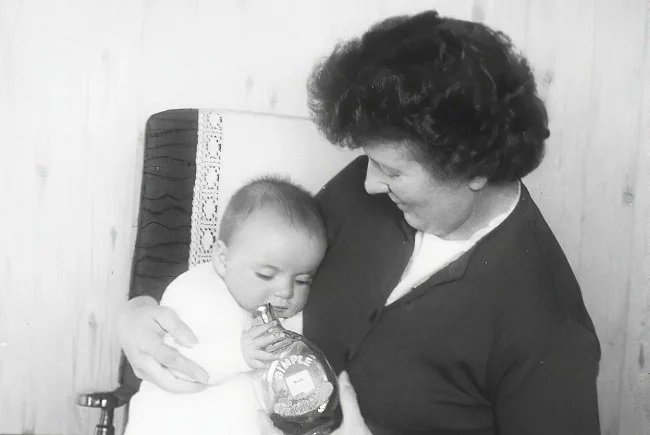
My Mother moved into a care home on April 7th this year. Her health was already very poor due to her age (91). She was bed bound, partially sighted, suffering from increasing hearing loss and unable to feed herself. Rapid onset dementia meant that her behaviour had become erratic and she was a danger to herself. Hence her caring needs could no longer be safely managed within a home environment. Fortunately the care home proved a good choice. For the past four months they have provided outstanding care and have treated my Mother with dignity, respect and genuine kindness. Sadly, during that time my Mother had several bouts of illness that saw her hospitalised four times. Eventually a PEACE plan (Proactive Elderly Advanced Care) was set up allowing treatment to be managed by the care home and local GP. Since July my Mother has enjoyed a stable environment and continuity of care.
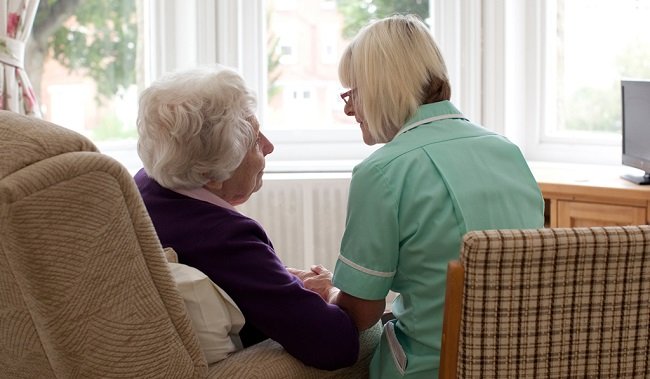
Last December, my 91 year old Mother suffered a rapid mental decline and was hospitalised. We have subsequently learned that this is potentially due to another stroke. Whatever the exact medical reasons, my Mother has been left bed bound, unable to feed herself and in a state of mental confusion and distress. When she was discharged home in mid January it quickly became clear that the four care visits that were scheduled each day were not sufficient for her needs, despite the staff doing their best and my Sister and I providing additional support. Matters were further compounded by personal ill health and other external factors. My Sister has worked from home for the last two years but has now started a staged return to the office. As we felt would no longer be able to cope we turned to both Social Services and the local Mental health Team for any assistance that they could provide.
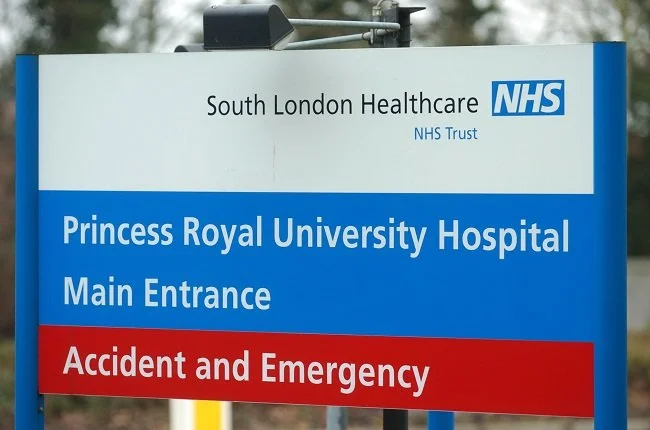
In this latest post I wish to discuss hospital admissions and how they can become a regular occurrence when caring for the elderly. Being immobile, losing agency with respect to one’s personal hygiene and being dependent on medical equipment can lead to health related problems, irrespective of good home care. For example, my late Father had limited mobility and spent most of his day sitting. Hence, he used a memory foam cushion to protest against pressure sores. He also slept in a hospital bed equipped with an air mattress for similar reasons. Despite having attentive carers twice a day, he was subject to regular skin complaints due to his diet (he was fed via a PEG tube) and lack of sunlight. Perhaps the biggest source of problems came from being catheterised. Despite scrupulous cleanliness he would still regularly contract urinary tract infections. As a result hospital admissions were frequent.
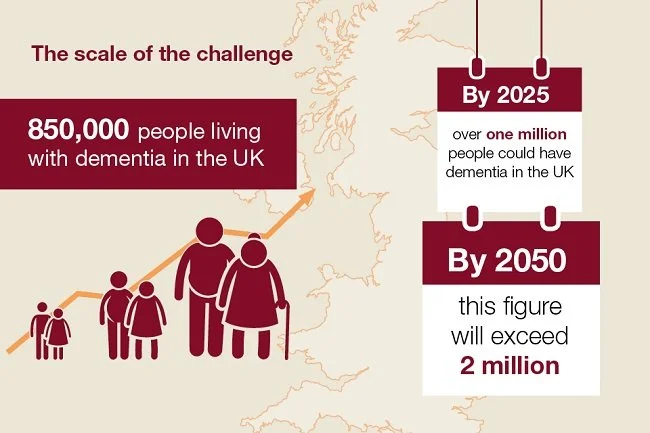
It has been over a year since I’ve written about this subject. The last post was about my late Father’s funeral. Since then life has gone on and my Mother’s ongoing care has become a fixed and somewhat uneventful regime. There are benefits to be gained from such a routine as it offers stability and certainty for both the carer and person being cared for. However, recently there has been a significant change in the status quo that warrants writing about. As always, my desire is to share some points and present my personal experiences in the hope that they may prove useful and informative to those in a similar situation or who may be just embarking upon their caring journey. The main subject of this post is a difficult one and something that is very hard to come to terms with. It is dementia. A medical condition that affects 1 in 6 people over the age of 80 in the UK.
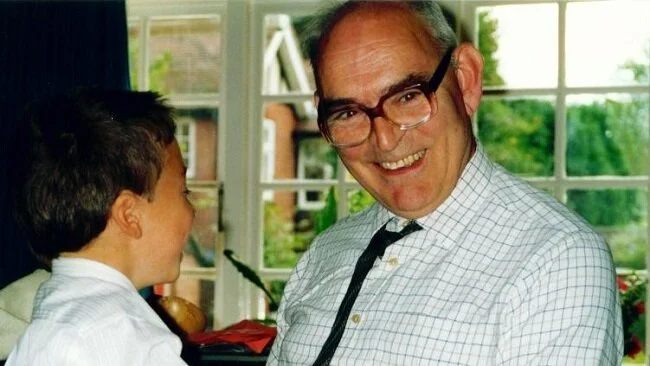
Yesterday, Saturday 17th July, was my late Father’s birthday. He would have been 92. As my granddaughters were staying over the day was upbeat, boisterous and fun due to their exuberance. Today as the bungalow returns to its normal levels of noise and excitement, I have spent some time quietly reflecting upon the nature of bereavement. When my father died last September I was focused upon the practicalities of arranging a funeral during a pandemic, ensuring that his estate was processed and that all possible provisions were made for my disabled 90 year old Mother. These things have now been done and it is only recently that I have had the time to process my own grief. The first Father’s Day (20th June in the UK) without him was naturally a milestone and his birthday has proven similarly so. However, today’s introspection has been beneficial and hence I felt the desire to write about him and share some thoughts on the nature of bereavement.

The funeral service for my late Father was held today. As ever I would like to collate my thoughts and present them here in the hope that I may be able to assist someone else who is currently dealing with a bereavement. Funerals can be challenging at any time but are further complicated at the moment due to the various restrictions imposed due to the global COVID-19 pandemic. However, there is still scope to give a loved one a fitting send off. You just have to be a little more creative about it and try to be understanding of the current regulations regarding social gatherings. Despite my concerns today’s service at our local Borough crematorium went well, if such a term is appropriate. I feel that my Father was honoured appropriately and that his family and friends were able to pay their respects and celebrate his life in a manner that he would approve of.
Long-term care can often end with a bereavement; which is a complex subject in itself. I will not be discussing grief in this post, as that is an immensely personal and subjective experience that we deal with in our own way. Instead, I would like to talk about the administrative and logistical problems that arise after someone has died and use my own recent experiences as an example. My Father died on Wednesday 16th September. He had a series of strokes in 2016 which left him disabled. Over the last four years his level of health has slowly deteriorated and his quality of life has subsequently diminished. This year saw a noticeable change not only in his well being but overall attitude. His stoical outlook finally faded and he lost all interest in life. He fell ill in mid August with Sepsis and then developed a lung infection. When I saw him last on Friday 4th September he told me he was tired and wanted “an end to it all”. Six days later he asked the Senior Doctor on the ward to stop treatment, which wasn’t working anyway. He died a week later on Wednesday 16th September. He was 91.
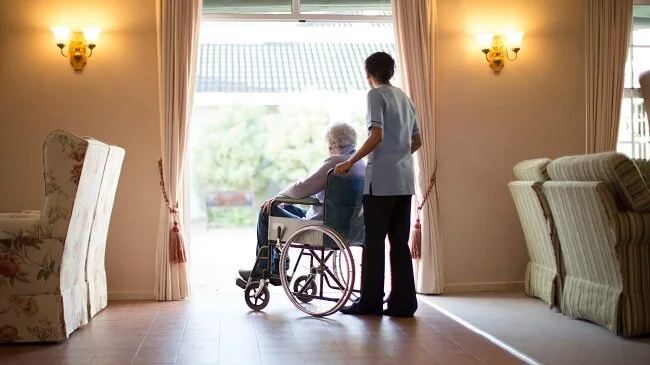
I last wrote a post about “caring for the elderly” in February. There have been significant changes in my family's fortunes since then and like anyone in a caring situation, the lockdown has had a major impact and sadly not for the good. As ever, I choose to recount my own experiences in the hope that they may be of some use to others who are in a similar situation. So to begin with, my Mother went into Respite Care just as the pandemic was hitting the UK and the lockdown was being implemented. Hence her stay in a nursing home was not the best experience. All the additional social activities usually on offer were suspended so all she effectively did was swap one sick room for another. She came back home just as my sister moved from working in London to working from home. Hence from March onwards both her and I have been caring for both my disabled parents on a daily basis. However, my sister has had to hold down a job at the same time.

My Mother, who has had limited mobility for a decade, fell and broke her arm just before Christmas. She subsequently spent nine weeks at a specialist rehabilitation unit at our local hospital. During that time she had surgery on her arm to repair the fracture and extensive physiotherapy to try and increase her mobility. She was discharged at the beginning of February with a support package in place to facilitate her return home. Sadly, despite physiotherapy, she is immobile as the day she was admitted. Until she sees the Consultant at the Fracture Clinic and is told if her arm can bear weight, she is not allowed to do anything for herself. Hence she is currently having four home visits a day from two carers and is confined to her bedroom. The carers help her get washed, dressed and use the commode in her room. Naturally, the current situation and the inability to do anything for herself, along with the uncertainty of her long term recovery and future, is causing a great deal of anxiety not only for my Mother but the rest of the family as well. At present we have a 3 week wait before she gets to see the consultant.

I always try to write the posts in this series in way that proves useful to others who are facing a similar experience. Caring, old age, illness and our own mortality are all matters that will cross our path sooner or later. This time I shall be addressing a subject that many of us tread carefully around. Some people will not countenance discussing it in any way, shape or form as it makes us uncomfortable or even scared. In Western culture death is often the elephant in the room; a topic that should not be avoided but frequently is, due to etiquette and other curious societal foibles. Hence, we use phrase like “passed” or “gone” instead of dead and we often invoke religious based platitudes, regardless of whether we have any particular faith or not. Simply put, our response to the inevitability of our own demise and that of those who we love is ambiguous to say the least. I hope in the years to come we grow up in this respect and find a comfortable means of making death socially acceptable to discuss and plan for.

I started writing this series of blog posts when I first became a carer back in 2016. The idea has always been to use my personal experiences as a point of reference for others. That is the main reason for this latest update. The things that are currently happening to me and my nearest and dearest may happen to you and yours. Over the last three years a lot has changed in my family’s collective life. Both my parents have gone from living relatively independently and managing their own affairs, to becoming disabled with long term degenerative medical conditions. Both are now housebound and require assistance with basic tasks such as washing and dressing, due to reduce mobility and frailty. My Father has been nil by mouth for three years and requires district nurse visits twice a day to deal with his medicine and catheter. My Sister has altered her working hours so she has more time available in the morning before she goes to work. I have given up work to become a fulltime carer. Between us the days is covered. The latest major change has been applying for power of attorney, which I wrote about in my previous post.

Since spring 2016, I have been running my parent’s domestic affairs. Due increasing ill health, neither can visit a bank, conduct business phone calls or deal with administrative paperwork such as utility bills, insurance policies and hospital appointments. However, there are limits on what I can and cannot do. Cheques and legal documents need signatures. UK data protection legislation often prohibits phone conversations with anyone other than the account holder. Hence despite being able to broadly deal with most things that come up, I sometimes have to involve my parents. This mean conversations on speaker phones which are difficult when both my parents have substantial hearing loss. So after some discussion with both of my parents, I have decided to pursue the power of attorney. At present this is specifically for my Father, as most bills and invoices are in his name.
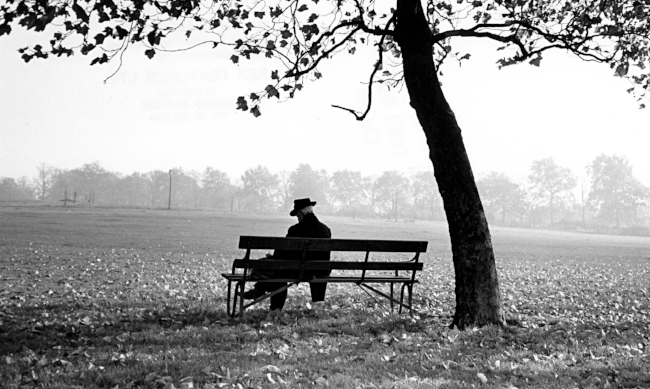
Once again, I find myself writing about this subject in the hope that it will encourage others to reflect upon the nature of old age, illness and the consequences that arise from them. There is still a prevailing culture of not discussing and sometimes not even thinking about such matters, but both are an absolute certainty in everyone’s life. All too often people find themselves in extremely difficult situations brought about by such events and the difficulty and emotional trauma is increased due to there being no plan in place or provision to address matters. Therefore, I strongly advocate the following. Some may seem like very obvious points, but recent conversations I’ve had with other carers and people in similar situations, has shown that many people have not made even the most basic of provisions in this regard.
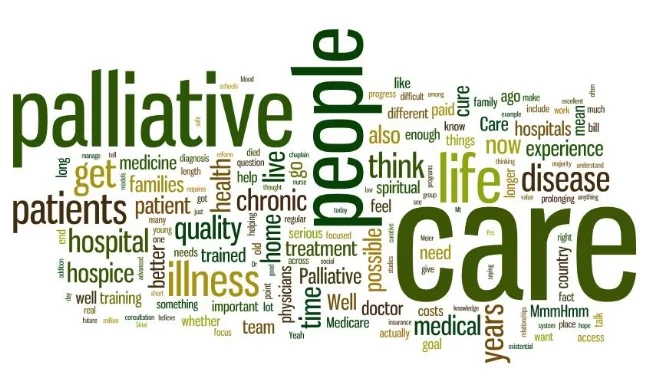
At the end of July, my Father went into Respite Care for two weeks. He was placed in a local private nursing home, via borough social services. The placement was intended to provide him a change of scenery and give the rest of the family with a short break from the ongoing caring requirements. Sadly, things did not work out well. After seven days away from home, my Father became ill and after three trips to A&E (over a period of four days), he was finally admitted to hospital with Aspiration Pneumonia. He was deemed to be at extreme risk by the medical staff and we were told at one point to “prepare for the worse”. However, despite being seriously ill, he recovered and much to everyone’s surprise was discharged and returned home after ten days. Sadly, his already impaired state of health has been further diminished. Three weeks on it is becoming clear that it is unlikely that he will return to the level of ability that he had at the start of July. His health and the quality of his life has been further reduced. Subsequently, the various healthcare professionals that deal with my Father have now started using the term palliative care.
There comes a stage in most people’s life when they start reflecting upon their own mortality. Both my parents have survived two strokes each and are now in the late eighties. At this point in their lives healthcare has moved on from correcting or remedying problems, to instead being more about holding the line and maintaining the status quo. A safe home along with an orderly daily routine provides a stable environment, which broadly allows them both to maintain an adequate degree of independent living. However, both are very aware that their faculties and overall health are gradually diminishing. Neither are naïve or foolish enough to deny this and in recent months have been quite candid about what the future will entail. Simply put both my parents are aware that they are currently “running the last lap”, to use one of their phrases.

I have written in the past about caring for the elderly. I have approached the subject from a personal perspective, as a carer with two disabled octogenarian parents, as well as considering the broader needs of a society with an ageing population. As it has been two years since I formally became a carer to both my parents, I thought I’d share my experiences on the many challenges that my family has faced over the last twenty-four months. I find doing so beneficial and maybe my anecdotes may be of value to others in a similar situation. As I’ve said in my original post, caring for a loved one is something we all potentially face at some point in our lives, and with an ageing population it becomes statistically more likely each year.
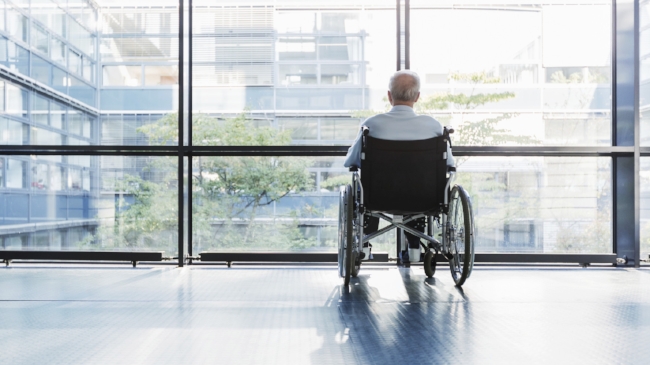
In a previous post, written last summer, I mentioned my caring commitments and reflected upon the realities of being a carer. Since then my family’s circumstances have changed considerably and subsequently so have my own. In the UK, social care has become a major political issue and was a key area of debate for all parties in the recent election campaign. Although the UK has an aging population, then NHS broadly manages to deal with its needs. It is the social care that so often follows time spent in hospital, that causes a bottleneck. Too often, the local authorities struggle to find carers and have them in place when requested. This means that many patients are unable to be discharged and have to remain in hospital. Caring is a profession that seems to be greatly lauded and esteemed by politicians in principle but the reality is far different. Overall it is often a poorly paid job, with little or no employments rights or benefits.

The UK population grew by half a million last year to 65.1 million, according to figures from the Office for National Statistics. Of that number 10% are over 75 years old. At present there are 6.5 million carers in the UK, many of whom are coping with an aging parent(s). As healthcare in the UK improves overall life expectancy, the population is rapidly aging which means that every year over 2.1 million adults become carers (although almost as many people find that their caring responsibilities come to an end). This turnover means that most families in the UK face this issue at some time and 3 in 5 people will become carers during their lives.
Strictly Come Dancing 2017: Part 6
Strictly Come Dancing 2017 is proving to be quite the rollercoaster ride. Each week it seems that there is potential for an upset and Saturday night proved no different. The fact that Davood and Nadiya scored poorly with their Argentine Tango was quite a surprise. The relatively low spread of points put them squarely at the bottom of the leader board and made them prime candidates for the dance off. Personally, I thought this was a damn shame because Davood has significantly improved in recent weeks and has embraced the Strictly journey. However, it was a shock to see Alexandra and Gorka fighting to stay on the show once again. Sadly, the outcome of the dance off was a forgone conclusion. Alexandra was technically outstanding and gave a spirited performance. She had something to prove after last week's difficult Rhumba and I thought she came back with a vengeance. Sadly, the public thought otherwise. I’m sure being in the dance off yet again will be a disappointment for her. However, for the present she is safe.
Strictly Come Dancing 2017 is proving to be quite the rollercoaster ride. Each week it seems that there is potential for an upset and Saturday night proved no different. The fact that Davood and Nadiya scored poorly with their Argentine Tango was quite a surprise. The relatively low spread of points put them squarely at the bottom of the leader board and made them prime candidates for the dance off. Personally, I thought this was a damn shame because Davood has significantly improved in recent weeks and has embraced the Strictly journey. However, it was a shock to see Alexandra and Gorka fighting to stay on the show once again. Sadly, the outcome of the dance off was a forgone conclusion. Alexandra was technically outstanding and gave a spirited performance. She had something to prove after last week's difficult Rhumba and I thought she came back with a vengeance. Sadly, the public thought otherwise. I’m sure being in the dance off yet again will be a disappointment for her. However, for the present she is safe.
I'm of the opinion that despite being favoured by the judges and quarters of the press, Alexandra doesn't enjoy as big a fan base as some would surmise. The fact that she has been consistently good since week one may actually be working against her. Viewers like the narrative of progression and growing artistically. They want to champion a celebrity who blossoms and tire quickly of those who are good from the get go. It's a pattern we have seen before. There is also a school of thought that those at the top of the leader board will automatically attract votes, although this theory is often wrong. So, after considering the foibles of viewer voting and the precedents set by previous shows I think it is unlikely that Miss Burke will win Strictly Come Dancing 2017. I fully expect her to be a finalist but not lift the trophy. But winning is not necessarily everything. I would not be surprised to see her starring in a hit West End show a year from now.
Certainly, the dynamics of the remaining two episodes has now changed considerably. Davood’s departure is potentially good news for Debbie and Giovanni as well as Joe and Katya. Both of these pairs are now strong contenders to win. Voting by the public tends to increase in the final stages of the competition as people realise the importance of their vote. As for Mollie and A J, as well as Gemma and Alijaz, there future is somewhat less predictable. Mollie is steadily improving but still seems to lack a degree of stamina and more importantly confidence. Gemma has veered between exceptionally good performances and those that have been problematic. It is this inconsistency that presents a weakness. Can she put her own doubts behind her and produce a more polished performance? This is why It Takes Two is such essential viewing, during the week, as I believe it provides a good indication of how well the celebrities are taking to their new dances. It’s also a litmus test as to their state of mind, which is integral to their success.
Strictly Come Dancing remains the BBC’s flagship light entertainment show for Autumn. Despite controversy and scandal, the show bounced back last year and firmly re-established itself as the “feel good, family show” it has always claimed to be. Blind comedian Chris McCausland becoming the 2024 champion certainly validated the show’s commitment to diversity and inclusion and helped place Strictly (as it is known to its fans) back on its cultural pedestal. I’m sure those involved in the production of the show breathed a sigh of relief when the season ended on such a positive note, eclipsing the negative press that had been ever present last summer. Second chances and opportunities for a “course correction” are few and far between these days. Especially when you have elements of the UK press waiting with bated breath and hoping that you’ll fail.
At the beginning of April, Mrs P and I went to the Churchill Theatre in Bromley to see Speakeasy, a dance show starring Karen Hauer and Gorka Marquez (of Strictly Come Dancing Fame). It was 100 minutes of Mamba, Salsa, Charleston, Foxtrot and Samba dance numbers and it was very well received by the audience. I don’t usually go to such shows but I enjoyed it because it was focused, dynamic and “did exactly what it said on the tin”, to invoke a cliché. As a result, we promptly booked tickets for a similar show that was scheduled for July. This one, Dianne & Vito: Red Hot and Ready, features Vito Coppola and Dianne Buswell, another two of the professional dancers from Strictly (as the cool kids call it). Once again the show was at the Churchill Theatre, which is proving to be quite a good local venue.
Tonight’s results for week 5 of Strictly Come Dancing (season 22) have once again demonstrated that this show is more than just a dancing competition to UK viewers. If it were just a case of determining who are the best dancers, then JB Gill would not have been in the dance off. The judges may well see things exclusively in such terms but the public clearly do not. I last wrote about this phenomenon in 2019 and I think it appropriate to raise the subject again as this season of Strictly seems to be bucking past trends and I suspect we may be in for further upsets in the run up to the season finale. Broadly speaking, the public usually tends to vote in a manner similar to the official leaderboard. Hence, those who score the lowest usually end up in the dance off. Occasionally an underdog will be championed and kept on the show but that trend seems to have lost its novelty in recent years. This season appears to be quite different.
I make no bones about the fact that I watch Strictly Come Dancing every year. For those who live outside of the UK, this is the original version of the dancing reality show that you probably know as Dancing With the Stars in your country. It is still a big deal in the UK as far as TV ratings go, getting audiences on average of 6.6 million viewers. There are many aspects of the show that are textbook examples of prime time, popular entertainment but I like it because the “celebrities” that take part are ultimately learning a skill that is genuinely difficult. The latest season of Strictly, as it is known to its fans, is especially interesting as the BBC had a major PR problem earlier in the year, where several previous participants made allegations of bullying and abuse about their pro-dancer partners. An investigation is still ongoing and in the meantime, the two professional dancers that were named have withdrawn from the show. Hence everyone involved with the latest season are all on message, stating that it’s “all about having fun”.
Rather than continue to analyse each week’s show, which after all is a somewhat over saturated field, I thought it would be more interesting to write about the different facets of Strictly Come Dancing. The one I particularly wish to focus upon this time is the voting system and how it often highlights a differing of opinion between the professional judges on the show and the British public. For the past two weeks now there have been several celebrity dancers in the dreaded dance off who are far from the weakest performers. This has led to competent individuals leaving the show unexpectedly early. In many ways the voting system and the fact that no one can be considered safe is one the key factors that keeps Strictly popular and in the media spotlight. However, it also provides some pause for thought. The judges broadly mark and assess the celebrity dancers based upon their talent and performance. If they do not like a routine but still appreciate its technical merits, then they reflect that in their scores. However, the public seem to approach things quite differently.
Strictly Come Dancing is now over halfway through the season and there’s no room for mistakes or relying on past successes. The judges will now penalise technical errors and the public votes have now become less predictable. With Blackpool on the horizon, there was a lot at stake last night. Karim Zeroual and Amy Dowden danced the Viennese Waltz to Give Me Love by Ed Sheeran. However, he did make several errors during the routine and was noticeably rattled by the end. Subsequently, he scored lower than last week. On a positive note, Saffron made a major comeback. Her Waltz with AJ was outstanding, lacking the excesses of her previous dance. This was a focused and traditional routine and it was very well received. Kelvin an Oti’s Samba was a success with the audiences but the judges still found some minor mistakes, so they dropped a few marks. Michelle Visage excelled with a slick American Smooth. Her professional partner Giovanni Pernice always fines the right balance between the theatrics and traditional dance content. At present, these four couples are the frontrunners in the show.
Saturday was week 7 of Strictly Come Dancing and it definitely showed. This is the stage in the series where the judges take the gloves off and start getting picky, even with those who are clearly at the top of the leaderboard. Hence, Kelvin Fletcher and Oti Mabuse's Viennese Waltz along with Michelle Visage and Giovanni Pernice who danced the Paso Doble, didn’t score as highly as you’d expect. The judges pointed out technical aspects that were wanting in both routines. But that’s what they’re supposed to do so I have no issues with these criticisms. We are also at the point where certain dances can throw a lifeline to some celebrity dancers. Hence Chris Ramsey and Karen Hauer’s Street/Commercial dance really played to their core fanbase and more importantly, Chris’s dancing strengths. I doubt he’ll better this routine and it should keep him in the show a little longer.
Although Saturday night provided yet another excellent show, Strictly Come Dancing was notable for the absence of audience favourite Will Bayley. The Paralympian injured himself during training after he jumped from a table whilst practising his jive routine. According to Will “I jumped off a table. And as I landed, I landed with straightened legs,” he explained. “I thought I broke my leg because I never felt anything like it before. To hear the words I absolutely can’t dance was just really gutting for me. But I need to recover now and come back even stronger next week”. Thankfully, the comprehensive rules that govern Strictly allows for a week’s absence due to injury. However, if Will cannot resume dancing for next Saturday’s show, then he may have to retire from the entire series. If this does unfortunately happen, then it will also require the show’s producers to revise the schedule with regard to future eliminations, so that Strictly continues to follow the pre-set timetable.
Week 5 of Strictly Come Dancing once again saw some significant improvement among the celebrity dancers. Most notable were Alex Scott and Neil Jones who delivered a very enthusiastic Charleston. For the first time it appeared that both the technical and performance aspects of dancing “clicked” for Alex. After being saved by the judges in last week’s dance-off, Emma Weymouth and Aljaž Škorjanec's put on a beautiful display with their Viennese Waltz. The judge’s marks reflected their progress respectively by all awarding 9 marks out of 10. Then there was Will Bayley and Janet Janette Manrara whose emotional contemporary dance left judges Motsi Mabuse and Alfonso Ribeiro in tears. Will said before this year’s series that he was taking part in Strictly to “inspire people with a disability”. He certainly seems to be doing so and his commitment to the show and his constant training have earned him a strong fan base among viewers.
Well Saturday night’s show was an utter revelation. Many of the celebrity dancers who have been previously at the lower end of the leaderboard and therefore at risk of being in the dance off, decided to significantly up their game. Not only did this make for great entertainment, it also succinctly reiterated one of the fundamental aspects of what makes Strictly Come Dancing so popular; the “journey”. Yes, it is an incredibly cliched phrase but its something that seems to resonate with viewers. If the UK does have any national characteristics, then one of them is an appreciation of dogged determination. We tend to warm towards plucky underdogs who improve through hard work and dedication. And that is what we were treated to on last night’s show.
As I’ve mentioned before, the one piece of reality TV that I avidly watch is Strictly Come Dancing. I’ve been a regular viewer since 2005. Once you’ve got your head around the format and have fully understood what the show is and is not, it makes for entertaining viewing. Strictly is not a pure dance competition by any shakes. If it were, then the public wouldn’t have any say in who remained on the show and it would all be left to the professional judges. But such a show would have very limited appeal. Hence, we have audience participation and all the theatrics of reality television. Talent and ability can be trumped by popularity and frequently is. Over the last fifteen years, the shows formula has been finely tuned and we now find ourselves with a very controlled format. The broad spectrum of celebrities fulfil the role of various archetypes and the judges all have distinct roles to play. But at its heart the show is still about people learning to dance (or not) and that is a difficult skill to master. For me therein lies the entertainment.
There really is an excess of genuine talent in this year’s show. It’s week three and the standard has been raised yet again. Michelle Visage and Giovanni Pernice delivered a smouldering Quickstep to Cabaret, proving once again that it is unwise to write anyone off based purely on age. Furthermore actress Catherine Tyldesley dancing with Johannes Radebe stunned the audience and judges alike with a Rumba to the ballad Shallow from the film A Star is Born. The Rumba is a notoriously difficult dance to perform and to pull off such a feat so early on in the season was quite incredible. And we were also treated to our first Street Dance, with Dev Griffin and Diane Buswell performing an outstanding Aladdin themed routine. Considering that Diane had an accident during the week, it made such an assured performance even more remarkable. And let us not forget Kelvin Fletcher and Oti Mabuse’s robust Charleston.
There is obviously some sort of psychological comfort in being spoon fed the same content, again and again and again. Because that is what Strictly Come Dancing, the BBC’s flagship Autumn entertainment show, definitely does. And I don’t mean that in a derogatory way, because once again, I am one of the 8 million viewers avidly watching this seasonal ritual. But is must be said, that the show is incredibly formulaic and that the production team are expert at playing upon all the foibles of the format. Hence every September we get a wide spectrum of “celebrities” eager to learn how to dance. All of whom fall neatly into the various categories that have been established over the last 15 years. There are those who display an innate ability right from the start. Then there are the determined improvers. We also have wild cards whose content wildly changes in quality. Another favourite are the rhythmically challenged whose embarrassing failures are deemed “entertaining”. And let us not forget those who are just hopelessly out of their depth and you know are going to fall at the very first hurdle.
Series 16 of Strictly Come Dancing has been in many ways the most predictable season to date. It became clear within a matter of weeks as to which couples were the front runners, who had potential to grow and who would only go so far. Apart from the slight anomaly of Vick Hope going out early in week 5 due to a poorly conceived dance (blame Graziano for that), the show has followed a fairly unsurprising route. Therefore, it really comes as no shock to find Joes and Diane, Stacey and Kevin, Ashley and Pasha as well as Faye and Giovanni are going through to next week’s final. Nor should we be astonished by the subtle distinction between the judge’s favourites, and the couples that the public related to and take to their hearts.
The upbeat social media buzz around popular reality TV show Strictly Come Dancing took a turn for the worse this week, after celebrity contestant Seann Walsh was photographed kissing his professional partner Katya Jones. To the casual observer, this is simply standard fare for the tabloid press; a storm in a tea cup and nothing of note. However, four days after publication the story has grown from celebrity tittle-tattle to a major topic of national debate. This is because of several reasons. Mr Walsh was at the time when the picture was taken, in a long-term relationship. Katya Jones is married to fellow Strictly Come Dancing professional dancer, Neil Jones. Subsequently, actress Rebecca Humphries split up with Seann Walsh and released a statement online citing deficiencies in the five-year relationship and alluding to “controlling” behaviour. It is this later aspect, rather than just faux prurient outrage by the tabloids about the celebrity indiscretion, which has made this “story” persist. It links into the ongoing debate over “toxic masculinity” and the #MeToo movement.
With each successive season of Strictly Come Dancing there appears to be more and more celebrity participants who seem to be “good”, right from the get-go. For many years now there have been ongoing debates about whether those from certain backgrounds, IE music, acting and possibly even sport, have an advantage over the usual chefs, astrologers and ageing minor celebrities. Although I can see the initial sense of such arguments, I don’t think they hold up to close scrutiny. Having performed a few arbitrary dance moves whilst touring or having done a stilted routine for a TV drama or play is not the same as the rigour and scrutiny that comes with Strictly Come Dancing. However, setting aside this perennial question, despite only being three weeks into series sixteen, we saw some extremely strong movie themed performances last night and the potential emergence of several dark horses. Subsequently tonight’s results were interesting.
In recent week’s Joe McFadden has been widely tipped to win Strictly Come Dancing 2017, having crept up the leader board with a series technically polished and spirited performances. Labelled by head judge Shirley Ballas as a “dark horse” he has quickly become a thoroughbred in the eyes of most bookies’ to become this evenings favourite to win. Joes has proven not only to be a consistently good performer but a popular one too, as he was the only one of tonight’s finalist never to have been in the bottom two. He has in many ways been a classic example of the celebrity that embarks upon the “Strictly journey” and this evening, all the hard work paid off as he lifted the glitterball trophy for this years show. Let us not forget that this is also Katya Jones night as well. She has choreographed some incredible artistic and intelligent routines this season and has clearly understood what works best for her partner.
Singer Mollie King went into this week’s semi-final as the bookies' favourite to be voted off the show, and it has proven so. I appreciate that Mollie has been training hard and applied herself to the advice given to her by the judges. However, it would appear that she has plateaued with regard to her level of skill and performance several weeks agao. Sadly, nerves and the pressure of the night got the better of her on Saturday and her Samba was not well received. It was hesitant and lacked polish. She partially redeemed herself with an elegant waltz, although it is fair to say that she simply wasn’t in the same league as the other celebrity dancers. The judges seemed to be a little too generous with their marks for this dance, possibly to spare her any further distress because Mollie was visibly upset.
Strictly Come Dancing 2017 is proving to be quite the rollercoaster ride. Each week it seems that there is potential for an upset and Saturday night proved no different. The fact that Davood and Nadiya scored poorly with their Argentine Tango was quite a surprise. The relatively low spread of points put them squarely at the bottom of the leader board and made them prime candidates for the dance off. Personally, I thought this was a damn shame because Davood has significantly improved in recent weeks and has embraced the Strictly journey. However, it was a shock to see Alexandra and Gorka fighting to stay on the show once again. Sadly, the outcome of the dance off was a forgone conclusion. Alexandra was technically outstanding and gave a spirited performance. She had something to prove after last week's difficult Rhumba and I thought she came back with a vengeance. Sadly, the public thought otherwise. I’m sure being in the dance off yet again will be a disappointment for her. However, for the present she is safe.
No one is safe. I’m sure it’s a thought that all remaining contestants on Strictly Come Dancing are currently thinking. Week 10 has been and gone and found front runner Alexandra Burke in the dance off against the delightful Susan Calman. Obviously, the moment this was announced, the outcome was a forgone conclusion. But it proves as I said last week that the spread of public votes may not be that wide and if a celebrity finds themselves in the middle of the linerboard then they are at serious risk. There can be no “bad weeks for the remaining contestants, from now on. Every dance now has to be undertaken with as much confidence and technical accuracy as possible. I suspect that unless Gemma raises her game and Mollie continues to improve they too may be potential dance off candidates next week. As for Alexandra, I would hazard a guess that she will focus very much on ironing out any technical issues and will return with a show stopping performance, next Saturday. The lady is extremely motivated and competitive.
Blackpool always brings out the best in the celebrity dancers, due to its immense entertainment heritage and standing within the world of professional dancers. So, it wasn’t surprising to see some couples raise their game and make significant improvements with their routines. Gemma showed that she had listened to the judges’ comments and delivered a polished and elegant performance. She also appeared to have noticeably rediscovered her confidence. Mollie also delivered a far better routine which corrected many of the issues that have plagued her in previous weeks. I would argue that it was her best dance of the series. And once again, Susan poured her heart and soul into her time on the dance floor, delivering another spirited performance that found favour once again with the public, if not the judges.
Well I said it last week that there was scope for a surprise elimination from Strictly Come Dancing and surely enough it has happened. Aston Merrygold, despite being tipped as a contender for the final, scored poorly with the judges last night and also failed to garner sufficient public support. He subsequently found himself in the dance off with Mollie King and despite correcting some of the technical issues that were present in his initial performance, he failed to sway the majority of the judges in his favour. Darcey and Bruno both voted to save him but Craig and Shirley (who as head judge has the casting vote) opted to save Mollie. Hence, bookies favourite Aston Merrygold has left the show, proving that no one can rest on the laurels. As you’d expect, there were vocal complaints from fans and supporters who felt that the judges had been unfair with their marks. However, I believe if anyone is to blame then it is Aston’s professional partner Janette Manrara.
I could be very philosophical about Strictly Come Dancing and describe how the judges scrutinise and mark the contestants on technique, viewing their performances through the prism of their own professional experiences. Conversely, the public react and elect to support the celebrities far more emotively; championing potential underdogs and showing solidarity with those they feel have been poorly treated. However, such Janusian analogies are unnecessary and ultimately pointless, because the show is primarily for entertainment and not a dancing competition, although the professional dancers may not see it that way. Also, as we saw demonstrated once again tonight, Strictly Come Dancing is a popularity contest and the only thing that really matters is convincing the public to vote for you.
Yes, we’re three weeks into this year’s season of the BBC’s flagship entertainment show, Strictly Come Dancing (that’s the UK version of Dancing with the Stars for the benefit of US readers). The tabloid press has already started obsessing, dissecting and outright lying about the antics of a handful of minor celebrities as they struggle with the rigours of learning to dance. From now until Christmas, prime time Saturday night viewing on the Beeb will be suffused with the superficial glamour of showbiz, a barrage of camp innuendo and a mixture of well-honed muscles and wayward flesh as well as far too much make-up. You also get to choose whether to laugh along with heavily scripted and contrived comments from the professional judges. If we’re particularly fortunate we may even be blessed with a professional dancer meltdown as they balk at a “ill deserved” poor score (yes, we’re looking at you Brendan Cole).
It’s been five years since the COVID-19 global pandemic. At the time it was an utterly alien and tumultuous experience. However, due to the way numerous institutions responded (but not the government), many people thought there would be a great deal of social and political change in the UK afterwards. The pandemic highlighted the impotence of the NHS, as well as those who work in jobs designated as essential. It also shone a spotlight on many of the country’s inequalities. Due to our national character, a real sense of community emerged. Something that had been absent for a very long time. Briefly, we got a glimpse of what the UK could be when we all broadly worked together. There was a sense that now was the time to change the status quo. Sadly, nothing changed. As soon as the vaccination program was launched, the UK quickly slipped back into the mire it’s been wallowing in since the end of WWII.