The Lord of the Rings: The Rings of Power
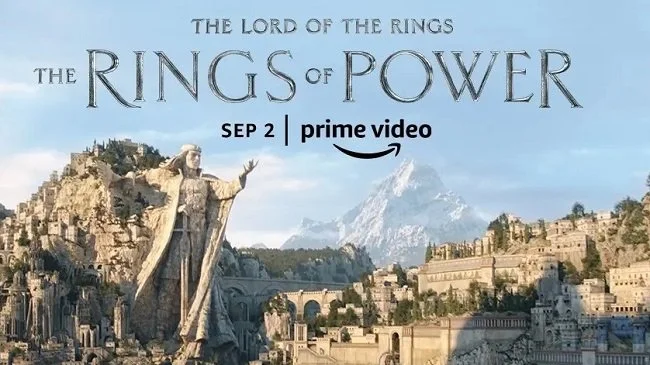
Having watched the first two episodes of The Lord of the Rings: The Rings of Power, I wish to express my thoughts on what I’ve seen and my overall impressions so far. I do not think it would be fair to frame this post as a review as the two episodes only constitute 25% of the show’s total content. A formal review of the first season seems more appropriate when I have seen it in its entirety. Before I begin commenting on specific points about the two premier episodes, I wish to point out that I have no problem with “representation” and have expressed my thoughts on this matter in a previous post. It also covers the matter of “adaptation” and how complex texts can at times require augmenting to be made accessible to wider audiences. Hence those viewers who want 100% canonical purity are unrealistic in their expectations. Objections based in racism and sexism can simply be ignored. NB I shall endeavour to keep my thoughts spoiler free.
Having watched the first two episodes of The Lord of the Rings: The Rings of Power, I wish to express my thoughts on what I’ve seen and my overall impressions so far. I do not think it would be fair to frame this post as a review as the two episodes only constitute 25% of the show’s total content. A formal review of the first season seems more appropriate when I have seen it in its entirety. Before I begin commenting on specific points about the two premier episodes, I wish to point out that I have no problem with “representation” and have expressed my thoughts on this matter in a previous post. It also covers the matter of “adaptation” and how complex texts can at times require augmenting to be made accessible to wider audiences. Hence those viewers who want 100% canonical purity are unrealistic in their expectations. Objections based in racism and sexism can simply be ignored. NB I shall endeavour to keep my thoughts spoiler free.
It seems an obvious thing to say but the production design, visual effects and overall aesthetic for The Lord of the Rings: The Rings of Power is beautiful. The visual style created in Peter Jackson’s trilogy is broadly adhered to here and these two separate productions do not clash in this sense. The cinematography by Oscar Faura is sumptuous in its style and epic in its scope. The landscapes exude character and feel alive. So far the visual style is very cinematic and doesn’t look purely functional as some TV productions do. The visual effects both CGI and practical, are of a very high standard, as you would expect from such studios as Weta Digital and ILM.
One of the first things that strikes you about The Lord of the Rings: The Rings of Power is the music by Bear McCreary. It is in the idiom of material written by Howard Shore for the film trilogy (Shore has written the theme for the show). But McCreary’s material is very much his own. There is a striking Dwarven theme that plays when Elrond enters Khazad-dûm and I hope that the show continues to have memorable cues which add to the overall ambience and personality of the story arc.
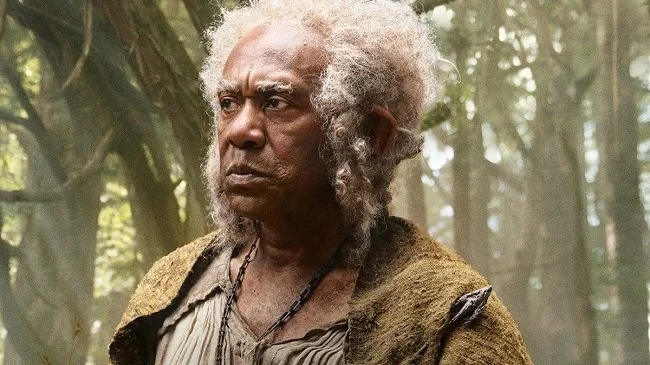
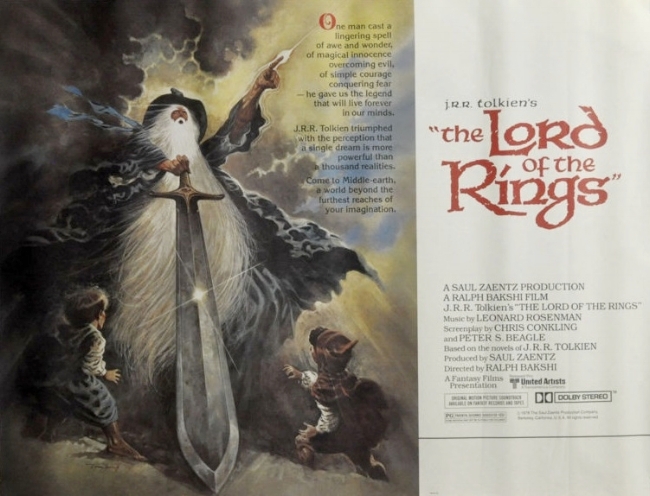
At present there are four storylines running broadly in parallel. Galadriel’s ongoing hunt for Sauron, Elrond’s diplomatic mission to Khazad-dûm, Bronwyn and Arondir’s adventure in The Southlands beyond the Sea of Rhûn and the arrival of “meteor man” among the Harfoots. So far, all are engaging with many direct and indirect lore references. Classic character’s such as Gil-Galad, Celebrimbor and Durin III have already made an appearance thus inferring that certain major historical events will be depicted in future episodes and seasons. Original characters are used to expand historical events and bridge any narrative gaps. Also, there is a certain amount of compressing the time frame to accommodate the story pacing. This is not new and PeterJackson did this in his cinematic trilogy. Performances are fine and the absence of A list celebrity actors is a wise decision as that would no doubt detract from the proceedings. Director J.A Bayona creates a sense of tension in these first two episodes, especially around the first appearance of an Orc. He is, after all, an exponent of the horror genre.
I viewed the first two episodes of the show in HDR 4K on a 43 inch TV. Mrs P also watched and felt that there was no requirement to be a major fan to enjoy what was happening. She does not consider herself a Tolkien aficionado but has seen Peter Jackson's films several times and has read the source text once. The plot and characters are accessible and the story so far, is not excessively convoluted or arcane. So far there has not been anything included in this “adaptation of Professor Tolkien’s work that I consider to be beyond the pale or a deal breaker. Overall this is a robust and sumptuous imagining of Middle-earth, so we will certainly continue to watch The Lord of the Rings: The Rings of Power, mainly because we want to know more.







A Month in Gaming
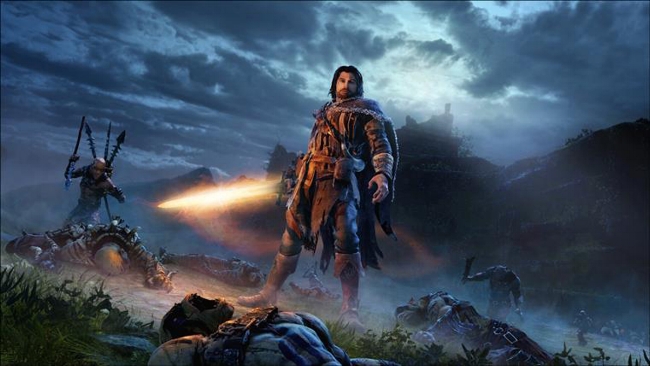
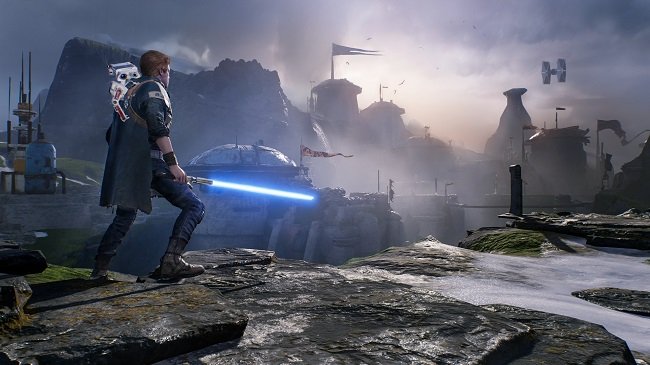
I last wrote a post in this series in June. Back then I wanted a break from MMOs as I had invested heavily in Star wars: the Old Republic and The Lord of the Rings Online. Because I was still enjoying the Star Wars vibe, I decided to try Jedi: Fallen Order. Sadly, despite the story showing a lot of promise, the PC version of the game handles poorly and the controls are sluggish. Often it felt like my character was wading through mud and there was a tangible amount of skills lag. So I uninstalled it and moved on to something else. One of the odd things about gaming is that despite amassing a library of free and discounted titles, we often end up buying something new, instead of playing that which we already own. And that is exactly what I did. I purchased Stray amid all the excitement surrounding the game, but to date I still haven’t played it. Make of that what you will.
I last wrote a post in this series in June. Back then I wanted a break from MMOs as I had invested heavily in Star wars: the Old Republic and The Lord of the Rings Online. Because I was still enjoying the Star Wars vibe, I decided to try Jedi: Fallen Order. Sadly, despite the story showing a lot of promise, the PC version of the game handles poorly and the controls are sluggish. Often it felt like my character was wading through mud and there was a tangible amount of skills lag. So I uninstalled it and moved on to something else. One of the odd things about gaming is that despite amassing a library of free and discounted titles, we often end up buying something new, instead of playing that which we already own. And that is exactly what I did. I purchased Stray amid all the excitement surrounding the game, but to date I still haven’t played it. Make of that what you will.
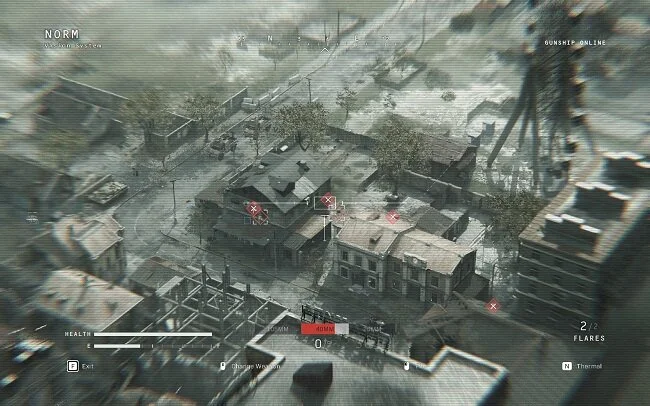
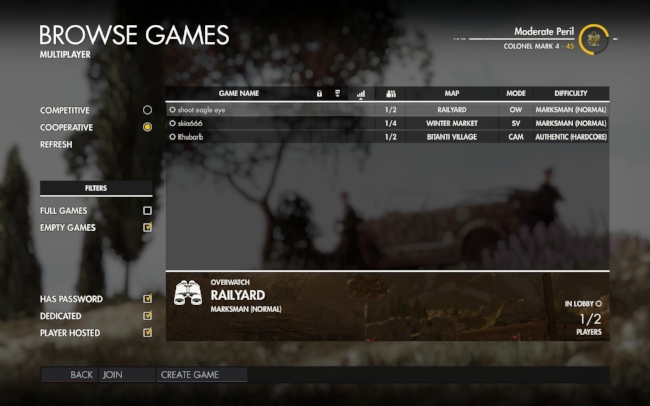
So what exactly have I been playing? Sniper Elite 5 for starters. I feel this is by far the best iteration of the franchise and as such it kept me busy in June and July. I like the weapon customisation, especially the addition of non-lethal ammunition. I finally feel that weapons choice makes a tangible difference to your play style. I also like the pace of this game or more specifically, the fact that you determine it. You can spend ages lining up a shot or you can go in all guns blazing. And the maps are by far the best that developer’s Rebellion has come up with so far. They lend themselves to continuous replay due to the variety of potential routes you can explore. Invasion mode, which I wrote about at length in a proper blog post, offers a new and interesting spin on PvP, with another player entering your campaign game and trying to hunt you down. Sniper Elite 5 has provided me with some of the best gaming I’ve had this year.
It was nice to see Fall Guys go free-to-play, in so far that it makes the game more accessible to players across multiple platforms. This is a fun game; something you can jump into and quickly start enjoying, with little or no impediment. However, the business model is based upon the selling of cosmetic skins and the pricing structure is far from generous. Running about with a default character will be a problem for some players, so they will naturally want to customise their look. Earning the in-game currency is a long grind (when is it not?), so the only alternative is the game store. FOMO is not an ethically ideal foundation for your game’s business model, but it doesn’t seem to bother publishers that much. If you are content to just play with the default skins, then Fall Guys is certainly still an enjoyable game. But sooner or later, you will want a chicken outfit or something and will have to reach for your wallet.
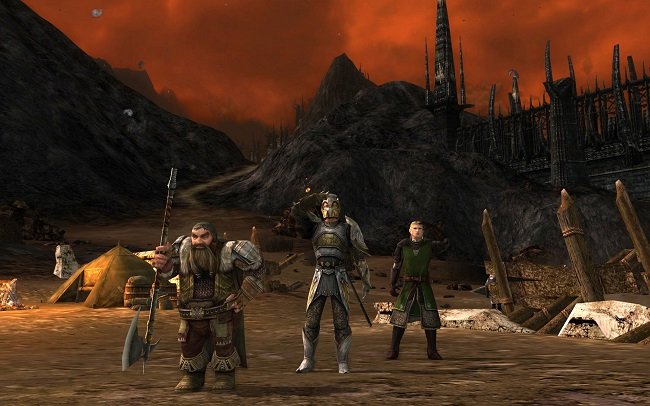
Despite my overall fatigue with LOTRO, I have been intrigued by the Echoes of Angmar private server and the debacle that has accompanied it. Despite a politely worded and somewhat wishy-washy cease and desist notice from Middle-earth Enterprises, the developers of this project have pushed ahead with several stress tests and delivered (so far) exactly what they intended. A version of LOTRO as it was back in November 2007, shortly after its launch. I found the few hours that I played to be entertaining, although that mainly came from the sense of nostalgia. I’m not so sure if I’d enjoy the game in this form quite so much, as I did back in the day. However, I am curious to see how this project evades the “legal issues” arising from its situation and what sort of long term audience it can sustain.
The other gaming development of note that I’ve enjoyed over recent weeks, has been my return to Guild Wars 2 after a seven year absence. There are still several elements of the game that infuriate me, but after a further two expansions there is sufficient content for me to do and enjoy. I have set about collecting mounts and earning mastery for their various skills. I continue to enjoy the various events that regularly occur and the fact that you can always find something to do if you’re pushed for time. Playing through the main story is another matter altogether. I await to see if my interest in the game lasts. As autumn approaches, the immersive nature of MMOs and their requirement for time investment becomes both appealing and sustainable. If Guild Wars 2 cannot fill that gap, there’s always The Elder Scrolls Online. The next post in this series will indicate which game prevails.



Navigating in MMORPGs
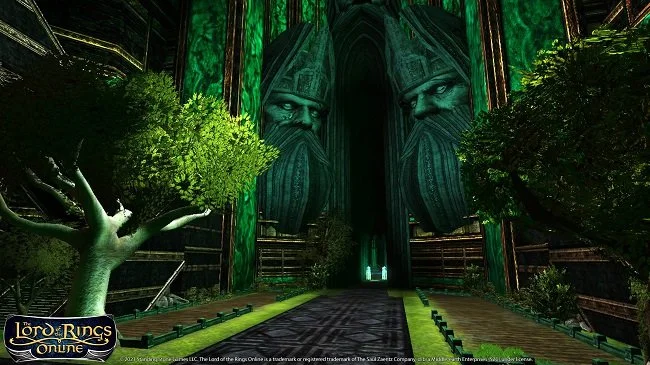
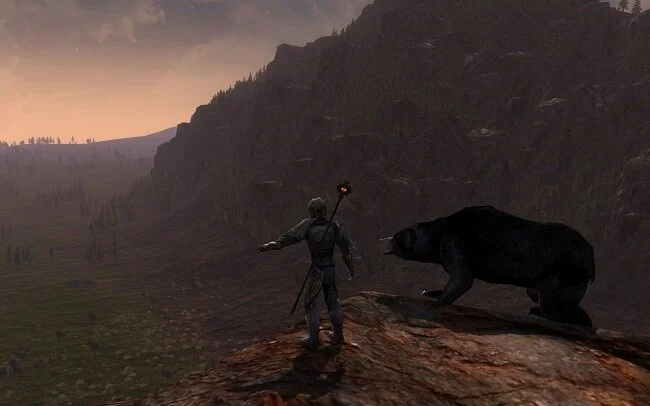
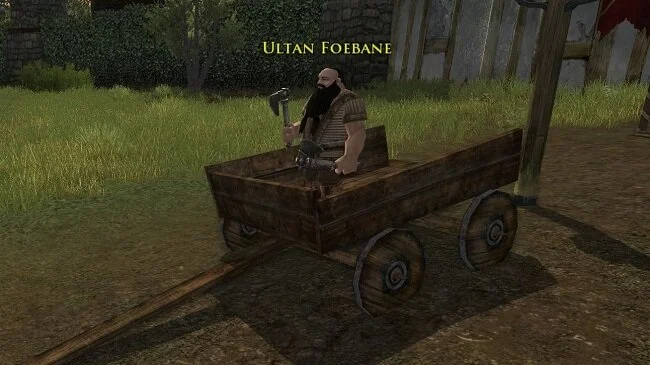
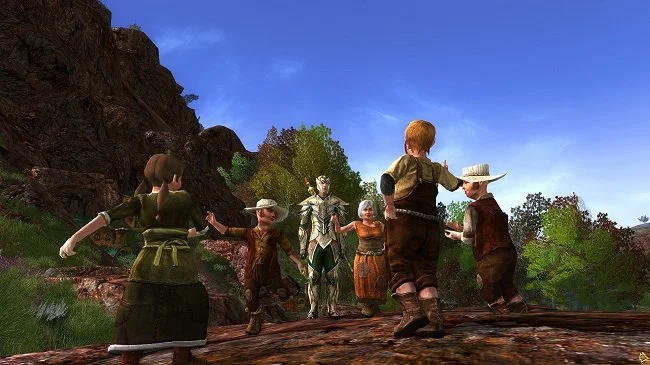
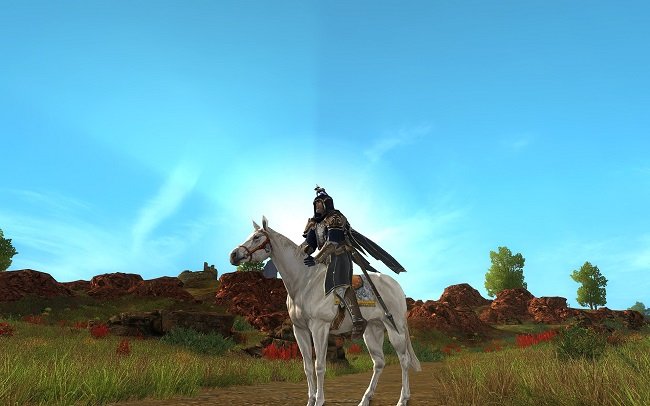
The Lord of the Rings Online was my first major MMORPG. I started playing in late 2008 and quickly discovered that there was a necessity to become familiar with the game world. Although the game provides quick travel options they were not ubiquitous at that point and often a player would simply travel on foot to travel costs down and to take the most direct route. Back in 2008 you could not own a mount until level 30. Hence I began “learning the maps” in the game and to this day still remember how to travel from one side of Moria, to another. The maps in the base game remain clear in my mind as they were so well trodden. Not so those in the regions. There are far more stables with fast mounts present in the game now and so convenience trumps any requirement to become so familiar with newly added zones. Nowadays Standing Stone Games designs new zones that tend to funnel players through them from quest hub to quest hub.
The Lord of the Rings Online was my first major MMORPG. I started playing in late 2008 and quickly discovered that there was a necessity to become familiar with the game world. Although the game provides quick travel options they were not ubiquitous at that point and often a player would simply travel on foot to travel costs down and to take the most direct route. Back in 2008 you could not own a mount until level 30. Hence I began “learning the maps” in the game and to this day still remember how to travel from one side of Moria, to another. The maps in the base game remain clear in my mind as they were so well trodden. Not so those in the regions. There are far more stables with fast mounts present in the game now and so convenience trumps any requirement to become so familiar with newly added zones. Nowadays Standing Stone Games designs new zones that tend to funnel players through them from quest hub to quest hub.
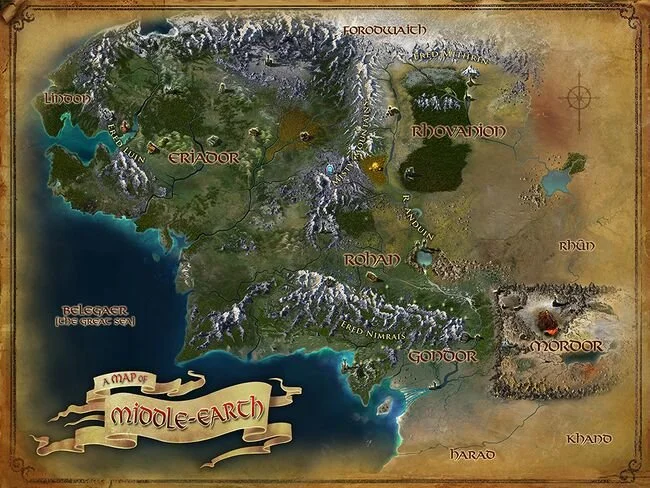
After considering the wider matter of maps in general in the MMO genre, it seems that most of them seem to be lacking in some fashion. The biggest problem is that traditional in-game maps are two dimensional views of three dimensional environments. LOTRO, Star Wars: The Old Republic and Guild Wars 2 are prime examples of this. Furthermore maps in this genre tend to be initially devoid of specific detail. This is to encourage exploration which then populates a map with NPC, fast travel points, crafting stations etc after they’re discovered. Another issue, especially in fantasy games, is that the maps themselves are designed in a stylised manner and are frequently not accurate in the sense that an Ordnance Survey map is in real life. The Elder Scrolls Online at least addresses the issue of multi-layers maps, allowing players to switch between levels. But it is far from perfect. The MMO does allow you to set a waypoint which can be a godsend.
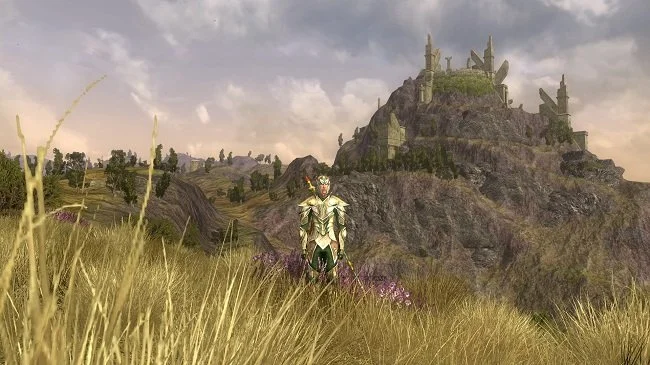
As maps can prove so “unhelpful”, I find the most practical thing a game can do to help me with navigation is to provide a highly visible landmark which can be used to orientate players. Weathertop is a prime example of this in the Loneland region of LOTRO. The crumbling fortress on the highest hill in the region dominates the map. Having line of sight helps you make quick decisions when travelling and find the direction you need. Guild Wars 2 has gone all in on the concept of verticality and three dimensional environments. Does it make for interesting and complex world design? Yes. But the main problem is you cannot easily set a destination and travel there. As you seldom have any line of sight, often the only way to a location is through trial and error. Usually through “bandit territory”. It is intensely frustrating especially as there is much XP gain to be had via discovery. It makes me miss Neverwinter and its sparkly trails that can optionally lead you to your destination.
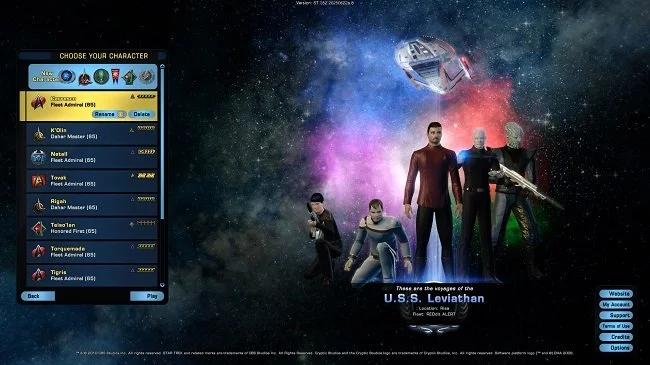
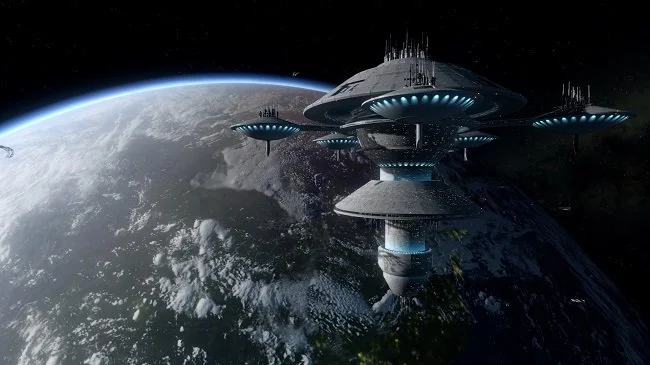
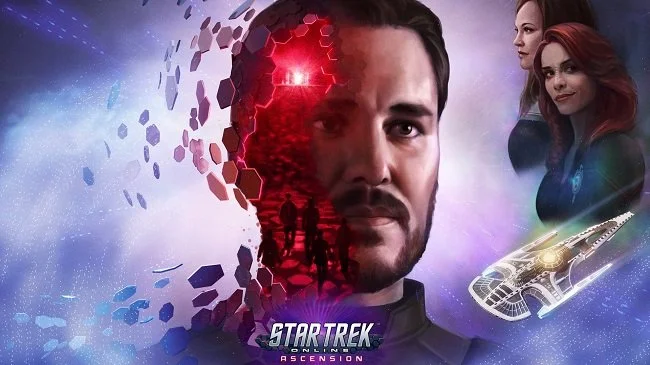
Navigating in Star Trek Online is the polar opposite of most other fantasy based MMOs and a very straightforward process. Especially after 2015 when developers Cryptic revised the galaxy map dividing it into four clearly defined quadrants, rather than sectors which were separate instances. The point and click navigation between planetary systems in sector space is simple and easy. If you wish to navigate by hand you can manually fly around at your own leisure. However, until you earn the transwarp travel skill it can take some time to get from one side of the map to another as a low level player. There is no cost associated with travel in STO. Unlike SWTOR which charges the player for the fuel used to travel across space. Both approaches are compliant with their respective lore of each franchise.
I find travelling and exploration a major source of enjoyment in MMOs. If I’m confronted with a blank map, then the first thing I want to do is open it up and see its details. I’ll often go exploring first off, rather than playing through mission or quest content. This isn’t always a shrewd decision as I can find myself in zones I am ill equipped to travel. Bu for me, looking around the game world is part of a game attraction, especially if it has a rich and diverse environment. Sometimes I will log into LOTRO and ride around Middle-earth just for the pleasure of it. Sadly, that is not the case for all MMOs. Take SWTOR, which has some industrial themed, city based maps that are a never ending maze of corridors and walkways. Overall I would like to see more games in the MMO genre having some sort of Grand Tour option or game mechanic. A means for peaceful exploration as an alternative to the usual narrative driven progression.




Star Trek Online: Five Tips
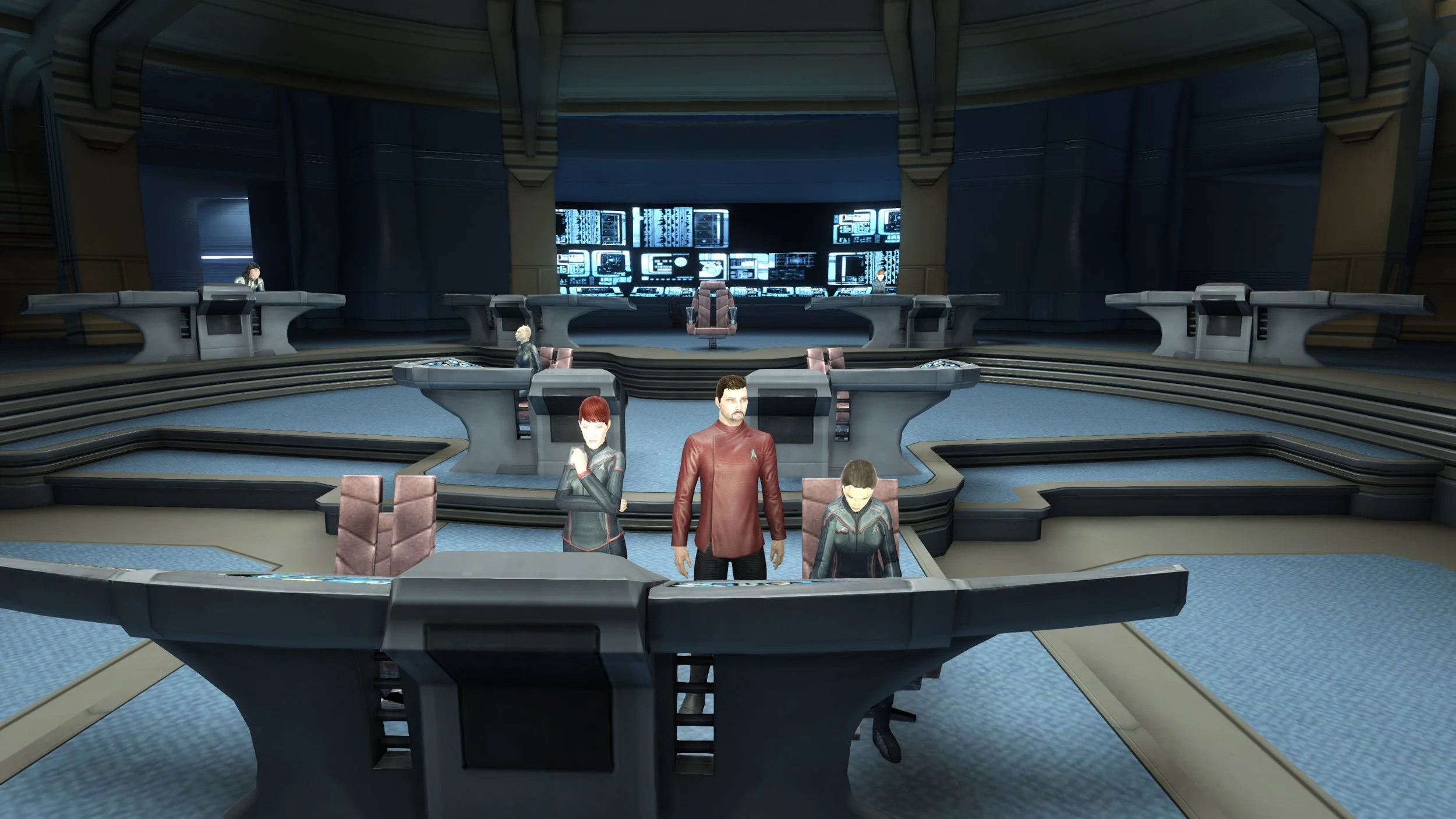
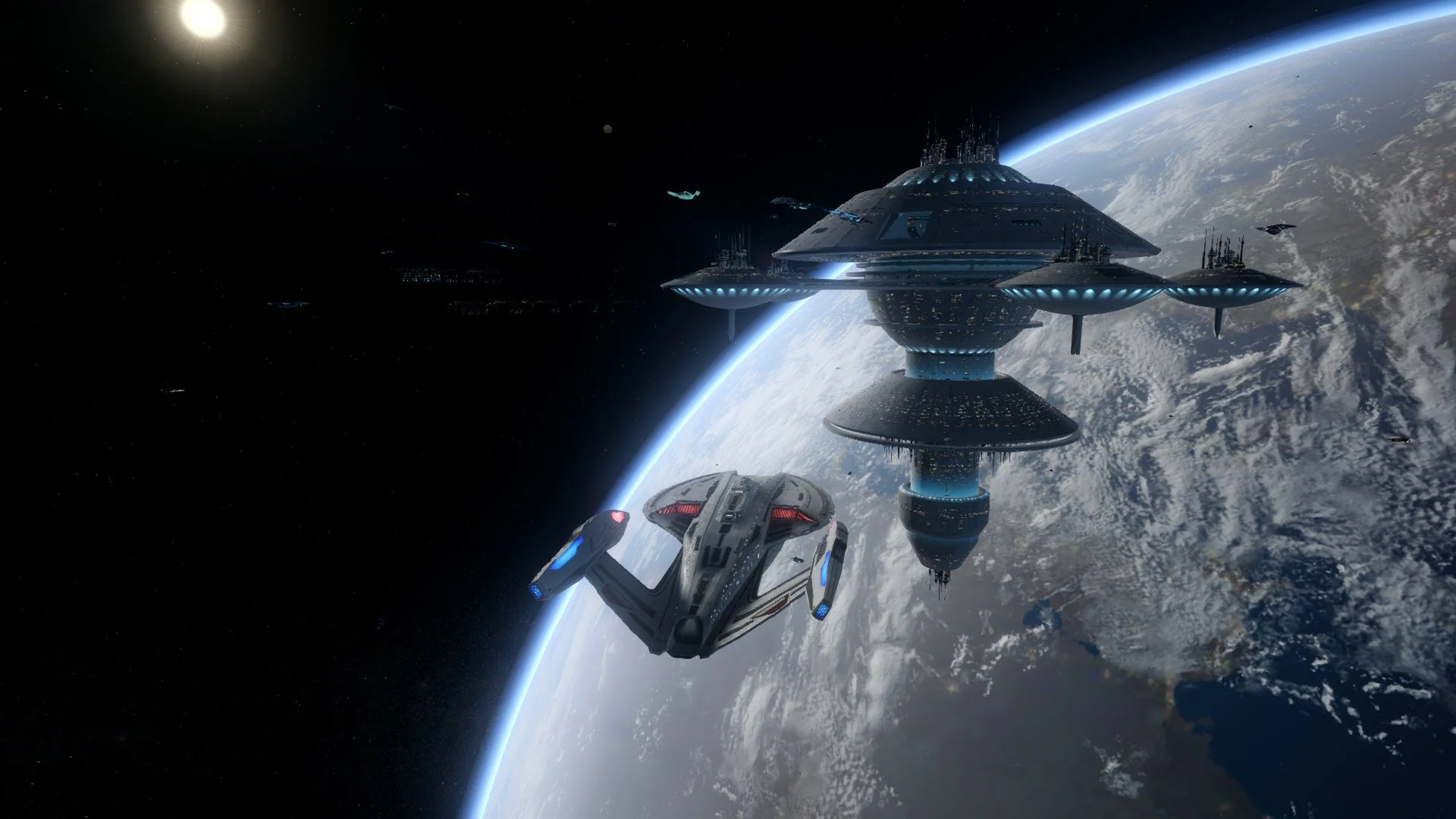
I’ve been playing Star Trek Online on and off for about 8 years. During that time I read a lot of Wikis and watched a lot of videos on YouTube that explore the game’s various systems and mechanics. I find a lot of the recommendations made by “expert” players to be impractical. The commonest being builds that include traits and consoles that you can only obtain from buying specific ships. Or using resources in quantities that take months of grinding to build up. This is hardly what I’d call handy advice for a new player. So I thought I’d give five tips of my own in no particular order, that I feel are useful. Some are glaringly obvious. Others not so. But hopefully they will prove useful to both new and returning players.
I’ve been playing Star Trek Online on and off for about 8 years. During that time I read a lot of Wikis and watched a lot of videos on YouTube that explore the game’s various systems and mechanics. I find a lot of the recommendations made by “expert” players to be impractical. The commonest being builds that include traits and consoles that you can only obtain from buying specific ships. Or using resources in quantities that take months of grinding to build up. This is hardly what I’d call handy advice for a new player. So I thought I’d give five tips of my own in no particular order, that I feel are useful. Some are glaringly obvious. Others not so. But hopefully they will prove useful to both new and returning players.
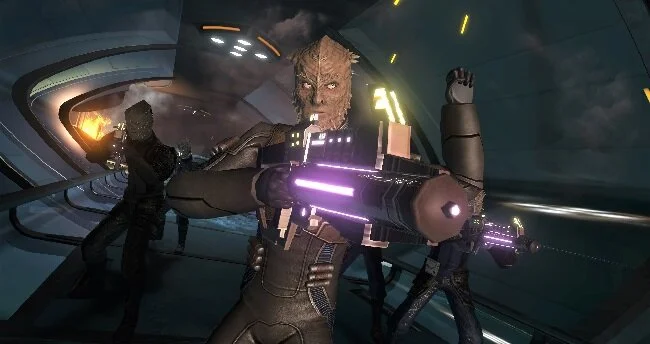
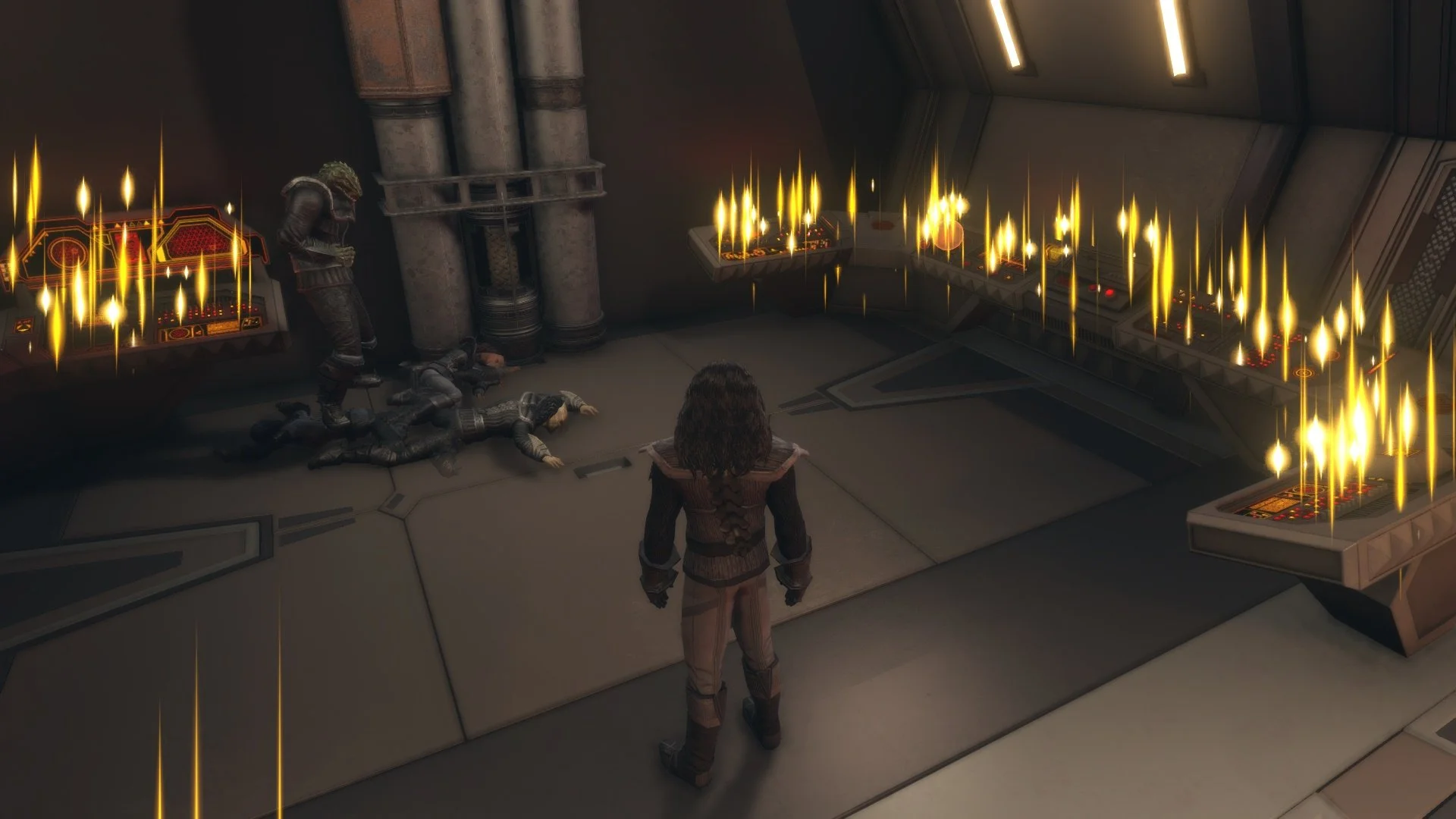
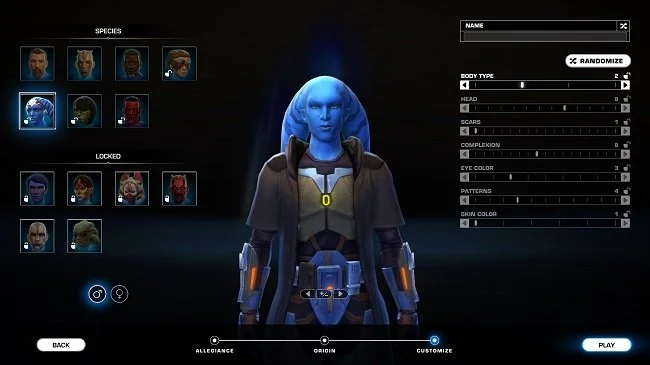
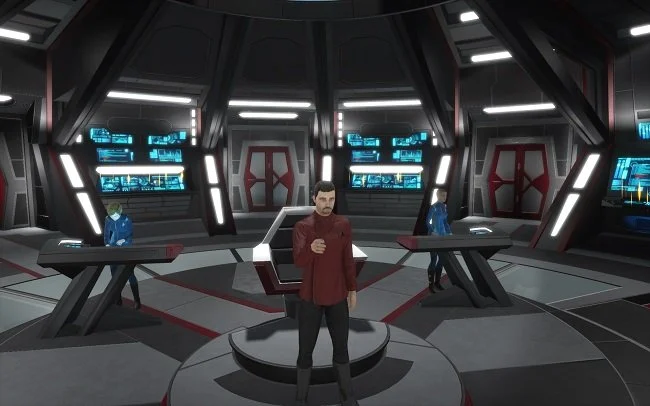
1.) Like many other MMORPGs, STO allows players to customise their character. However, if you pick a specific race such as Vulcan or Klingon, there are limits to what you can do. Fortunately, there is another option that offers players a lot more creative choice. If you create an “alien” species you have access to a lot more customisation options. Hence an alien can be made to look like a Vulcan, Andorian etc. Furthermore, with some creativity you can also make a character that looks like a Cardassian, which is a cheaper option than paying to unlock the official playable version of the Cardassian race. STO also supports the ability to save custom character builds as a .jpg file. These can be exported and shared for others to use. You can find examples here.
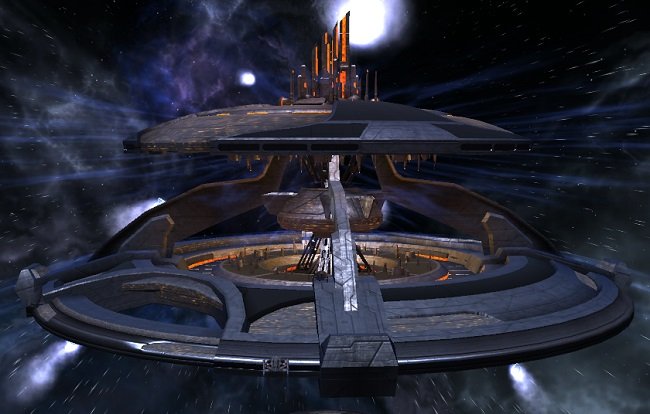
2.) A perennial problem in MMOs is running out of storage space and STO is no different. If you find this an issue then make use of the in-game mail system simply by mailing unbound items to yourself. You can leave unread mail indefinitely and also access it from other alts, making this a very useful secondary storage system. Mail terminals can be found in most social areas such as Starfleet Academy, Earth Spacedock and DS9 (and similar areas for other factions).
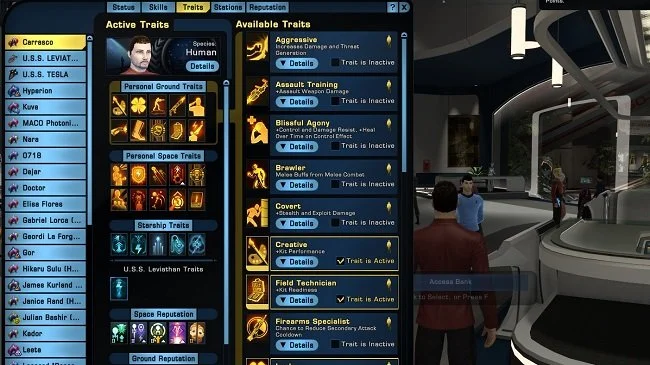
3.) Bridge Officer or Boffs as many players refer to them can be a thorny issue. Some are only available via fleet resources, some from lockboxes and others are quest rewards. You can also buy a lot of generic Boff from vendors. You’ll often find a lot of discussion around which ones are “the best”. Ultimately, it is not the respective colour quality (white/green/blue/purple) that counts the most but their unique racial traits. Cardassian Boffs provide an accuracy, defence and +2% damage boosts. Very useful if pursuing a DPS build. Romulan Tactical Boffs have the Superior Operative Trait and are available via the Fleet Embassy, providing critical chance and severity boost. The Hierarchy Science Boff has the Pirate trait providing a further damage and stealth boost. It can be obtained from the mission “Alliances”. These are not expensive options.
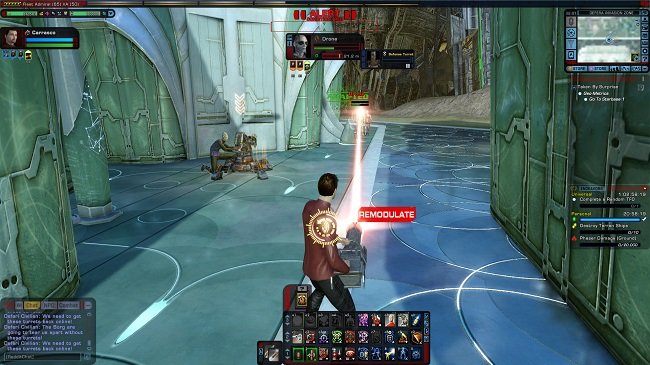
4.) In ground combat, players can adopt a mobile approach or alternatively crouch and aim. The advantage of the latter is that crouching presents a smaller target and aiming down the sights awards a damage buff. Some players do not like the hassle of having to press several additional keys while in combat to crouch and aim. However, when in combat on a ground map, you can use a macro by copying the following into the chat bar: /Bind x ” crouch 1 $$ aim 2 “ If you then press x you will simultaneously crouch and enter aim/sniper mode. Note this tactic is not a “get out of jail card” that makes you invincible. You still need to maintain situational awareness. But if used appropriately, then crouching and aiming makes mob clearance a lot quicker.
5.) The final tips I have for new STO players is to play the game at your own pace and in a way that suits you. There is no traditional endgame as such and therefore, fine tuning your build becomes the main pursuit for long term players. If you’ve played any of the Task Force Operations in STO at some point you’ll have auto-grouped with a high DPS player who effectively destroys everything before you’ve even blinked. This can inspire you (or play on your FOMO) to pursue a fancy build yourself. The only trouble with this is players who have high end builds usually have invested a lot of time and money into the game. It is not a casual or cheap undertaking. There are plenty of budget builds that work and the main story content is manageable with average gear. Worrying about stats can leach all the fun out of STO. So only get on the DPS treadmill if that is what motivates you as a player.

Game Developers and Gamers Need to Learn to Express Themselves Better
I shall begin with an anecdote. In my youth when I was at junior school (that’s 7 to 11 years of age in the UK) I was formally introduced to team sports. At that time, I had no prejudice against them and was happy to participate. However, the sports teacher (a curious breed of human per se) often assumed that we knew the rules of all the most popular sports by default. I can remember the guy getting frustrated regarding the “Leg before Wicket” rule in cricket and that some of us didn’t understand it. “What does it mean?” I asked. “It means leg before wicket” he answered in an exasperated tone. He simply didn’t grasp that I wanted a specific answer that explained why this rule was this way . Since then, I’ve encountered many other examples where people assume that you know what they know.
A pop culture reference about communication
I shall begin with an anecdote. In my youth when I was at junior school (that’s 7 to 11 years of age in the UK) I was formally introduced to team sports. At that time, I had no prejudice against them and was happy to participate. However, the sports teacher (a curious breed of human per se) often assumed that we knew the rules of all the most popular sports by default. I can remember the guy getting frustrated regarding the “Leg before Wicket” rule in cricket and that some of us didn’t understand it. “What does it mean?” I asked. “It means leg before wicket” he answered in an exasperated tone. He simply didn’t grasp that I wanted a specific answer that explained why this rule was this way . Since then, I’ve encountered many other examples where people assume that you know what they know.
Which segues nicely into video games and gaming culture. Games themselves are filled with common mechanics and systems, often running on shared principles and concepts. Like any other industry it has its own buzzwords and terminology, however this is often complicated by gamer’s own unique slang. Terms such as hit box, DPS, DoT, “aggro”, zerg and other such examples are bandied about like they are part of everyday parlance. I suppose you can argue that high end players who are well versed in game theory, use these terms frequently, as part of their standard lexicon. But once again I must remind everyone that high end players are often not the majority of any gaming community. The average player is not steeped in gaming culture to the same degree and often blithely bumbles about having fun, without knowing “shit about shit” to coin a phrase.
Today I was reading a Star Trek Online build website, trying to see if I could improve the DPS of my primary ship in that MMO. The article used a great deal of acronyms to refer to game skills and systems. Now I don’t know about you but I don’t know the names of every skill I use in STO or any other MMO that I play. I know some like Beam Overload or Fire and Will but many of the others I recognise and use by their icons. I know broadly what they do but I don’t know the specific names. The same can be said for game systems and different types of builds. I am familiar with a common set up like Auxiliary to Battery but not all other permutations in the game. Let it suffice to say that digesting the article’s contents took three times as long because I had to look up every other term being used.
A while ago I discovered a YouTube channel that decided to explore this very phenomenon. Razbuten has created several videos for “non-gamers”, with the assistance of his wife. She has until recently no prior gaming experience and therefore did not have a default grasp of many of the standard gaming mechanics we take for granted. It has proven to be a most illuminating series and often highlights how video games are terrible at explaining themselves. Moving a character in-game using the WASD keys is not as intuitive as you may think. The lack of consistency between games further compounds this problem, especially if the next game you play requires you to use the mouse to move your character and navigate the game world. Furthermore, the days of physical media and instruction manuals are long gone. There’s too much reliance on third party websites to explain stuff these days which raises another problem.
The ability to record game footage and yourself talking and to subsequently upload the results to YouTube does not necessarily mean that you are good at explaining things and communicating with others. It is a course of constant frustration having to search YouTube for a helpful nugget of information for a game such as Guild Wars 2 and having to endure the inarticulate, garrulous inanities of a semi-iterate moron, who sounds like they’re recovering from a major head injury. It’s one of the reasons I prefer written Wikis for gaming information, as I can read quickly and often determine what I need far more efficiently. Imparting correct information, promptly and clearly is a skill. It’s why newsreaders and TV presenters are chosen for their verbal, vocal and presentation skills. Being able to explain complex systems is not something we can all do well.
Another pop culture reference about slang
I was listening to the author Michael Rosen being interviewed recently and he spoke of how his parents would often use Yiddish phrases but never explain them. “You’re acting like a schlemiel. What’s a schlemiel? It’s how you’re acting!” being one such example. I still find that this happens when gamers communicate. Yet considering how gaming has become such a widespread pastime, you’d think that there’d be a similar degree of democratisation regarding the associated terminology. I suspect that certain gamers who consider themselves “gatekeepers” maintain this esoteric approach on purpose, as a way of maintaining some exclusivity and separating themselves from those they disdain. They may not wish to change their ways, but I see no reason why game developers shouldn’t use more accessible terminology. But as common sense hasn’t prevailed for the past three decades, I see no reason why it should now.

Star Trek Online: The Timeline Needs You (Again)
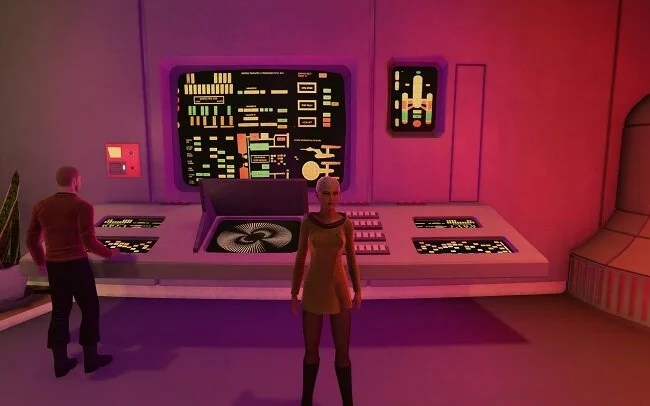
Cryptic are once again running the Temporal Agent Recruitment event in Star Trek Online from Tuesday 6th September 2022. Players who create a TOS (The original series) era character during this time are eligible for bonus dilithium, equipment and special traits as they play through the game. Progression also unlocks rewards for existing alts which can prove very useful. There are also unique tasks associated with Temporal Agents such as finding and unlocking Temporal Probes, which are hidden throughout the game’s story content. Once a player has created a 23rd century Starfleet character, completed the tutorial and received their special Temporal Agent transceiver device, they will gain the title Temporal Agent. The goals and bonus content associated with the event can be completed anytime, even after it ends on October 4th.
Cryptic are once again running the Temporal Agent Recruitment event in Star Trek Online from Tuesday 6th September 2022. Players who create a TOS (The original series) era character during this time are eligible for bonus dilithium, equipment and special traits as they play through the game. Progression also unlocks rewards for existing alts which can prove very useful. There are also unique tasks associated with Temporal Agents such as finding and unlocking Temporal Probes, which are hidden throughout the game’s story content. Once a player has created a 23rd century Starfleet character, completed the tutorial and received their special Temporal Agent transceiver device, they will gain the title Temporal Agent. The goals and bonus content associated with the event can be completed anytime, even after it ends on October 4th.
The Temporal Agent Event was originally linked to the launch of the third expansion for Star Trek Online, Agents of Yesterday which was released in July 2016. This content update added a new 23rd century faction with a bespoke starter zone set in that era. Several of the story arcs featured refer to specific TV episodes from the TOS era. Hence players will cross swords with the Gorn, neural parasites and the Romulans. The game aesthetic captures the look and feel of the original series perfectly and features a wealth of sound effects that are lore appropriate. There’s also voice acting from Walter Koenig and Chris Doohan (James Doohan’s son). The opening story that takes place on Taurus II does a good job of orienting new players. If there is any complaint to be had it’s that it’s all too short.
Once a player has completed the story arc of Agents of Yesterday, a lore based plot device is used to bring them to the current Star Trek Online era, so they can continue through the main episodic content. If you are a Trek fan then STO has a lot to offer. The game licence is fully supported by the CBS and Paramount which is why so many of the original cast from the various TV shows continue to voice their own characters. As an MMO STO lends itself well to both short and lengthy game play sessions. But if you are old enough to have grown up watching Star Trek TOS, then the forthcoming Temporal Agent Event affords a perfect opportunity to revel in nostalgia as well as a neat point of entry into STO. The game’s free-to-play business model affords new players plenty of time to determine whether they like this particular MMO and there’s certainly no reason to immediately spend money on ships or other items.
Time For a Change?
The Blaugust 2022 blogging event is entering its final week and the writing theme for this climatic period is “lessons learned”. According to the event schedule “this week is a reminder that the goal of Blaugust is to refresh the content creators out there for the coming year, and not to burn them out in the process. Some folks are going to cross the finish line and immediately go dormant and others will want to process their thoughts about the proceedings. This space is reserved as a bit of a cooldown lap so that you can share your own experiences”. For me Blaugust has not only reinvigorated my enthusiasm for blogging it has also improved my writing schedule. Furthermore it has given me an opportunity to consider some potential changes to Contains Moderate Peril. Changes that I now need to decide whether to implement or not.
Someone is not good at Scrabble
The Blaugust 2022 blogging event is entering its final week and the writing theme for this climatic period is “lessons learned”. According to the event schedule “this week is a reminder that the goal of Blaugust is to refresh the content creators out there for the coming year, and not to burn them out in the process. Some folks are going to cross the finish line and immediately go dormant and others will want to process their thoughts about the proceedings. This space is reserved as a bit of a cooldown lap so that you can share your own experiences”. For me Blaugust has not only reinvigorated my enthusiasm for blogging it has also improved my writing schedule. Furthermore it has given me an opportunity to consider some potential changes to Contains Moderate Peril. Changes that I now need to decide whether to implement or not.
Within a few years of starting blogging, I found writing about one subject extremely limiting. So I opted for a so-called “variety” blog to allow me to pursue a broader range of subjects. This has served me well for many years but I am now finding as I get older that I am not quite so enthusiastic about certain subjects. My interest in gaming is not as strong as it used to be and I find it difficult to wax lyrical about many aspects of the industry. I prefer writing social commentary, discussing the major social and political talking points of the day. I also still have a passion for films and can happily write film reviews or longform articles about aspects of filmmaking, till the cows come home. It is this change of focus that has got me thinking whether I should run two separate blogs? Or alternatively put all my energy into one online project and focus solely upon that.
Change can be very tempting at times. As can planning for change. As someone who considers themselves organised I love to draw up a plan and prepare everything required for it. Implementing it is another matter altogether (insert Airplane gag here). Preparation can be fun. Actually “doing” is not so enjoyable. So setting up another separate blog sounds initially like a good idea. I get to choose a new blog template and tinker with the look and feel of the site. I can also hire someone from Fiverr to design new logos and branding. But upon mature reflection, the realities of maintaining two different websites also means twice as much work and possibly producing half as much output. It also means incurring further expense which is something I am cautious about in the current economic climate.
As ever in life the most pragmatic solution is to compromise. Rather than relocate specific blog posts to an alternative site, perhaps simply segregating them on the existing blog is a better alternative. I shall investigate to see if it is possible to have a submenu under the blog button on the top toolbar of Contains Moderate Peril, so those who want to read only movie related content can do so. Vice versa with games and any other relevant category. I’m sure the template can be structured in such a fashion to make this possible. Maybe then, someone who is visiting the site to read a film review may investigate further if only shown material of a similar nature? And somewhere in the back of my mind there’s another voice reminding me of a very old adage “If it ain’t broke, don’t fix it”. These changes I’m pondering have not been requested by any readers. Perhaps I should just leave well alone and move on.
























Ten Philosophical Questions
I’m not sure where it came from but I have a page of allegedly philosophical questions bookmarked in Google Chrome. As it’s filed under “blogging” I suspect that these may have been saved as an emergency source of inspiration if I were in need of a writing prompt. Well I’m not exactly brimming with ideas today, so I’ve decided to avail myself of this list. I selected 10 questions randomly and shall now proceed to answer them. I am not claiming that my answers are as philosophical as the questions. I shall no doubt be flippant, sarcastic and possibly a little scathing, but I’ll endeavour to answer the questions properly (if they merit it). As I’ve said before about previous internet questionnaires that I’ve completed, sometimes what at first glance looks like lightweight material can inadvertently lead to some interesting discussions.
I’m not sure where it came from but I have a page of allegedly philosophical questions bookmarked in Google Chrome. As it’s filed under “blogging” I suspect that these may have been saved as an emergency source of inspiration if I were in need of a writing prompt. Well I’m not exactly brimming with ideas today, so I’ve decided to avail myself of this list. I selected 10 questions randomly and shall now proceed to answer them. I am not claiming that my answers are as philosophical as the questions. I shall no doubt be flippant, sarcastic and possibly a little scathing, but I’ll endeavour to answer the questions properly (if they merit it). As I’ve said before about previous internet questionnaires that I’ve completed, sometimes what at first glance looks like lightweight material can inadvertently lead to some interesting discussions.
Q: Did humans discover mathematics or did they create it?
A: The Greek philosopher Plato argued that maths is a discoverable system that underlines the structure of the universe. This Platonic theory asserts that mathematics exists independent of humans. The opposing argument, therefore, is that maths is a man-made construct and intellectual tool. An abstraction that simply corresponds with the universe. Kurt Gödel's first incompleteness theorem states that no consistent system of axioms whose theorems can be listed by an effective procedure (i.e., an algorithm) is capable of proving all truths about the arithmetic of natural numbers. For any such consistent formal system, there will always be statements about natural numbers that are true, but that are unprovable within the system. Heavy stuff, right? Both sides of the debate provide compelling arguments. However, I think we should let the great Scottish philosopher Billy Connelly have the last word. "Why should I learn Algebra? I've no intention of ever going there".
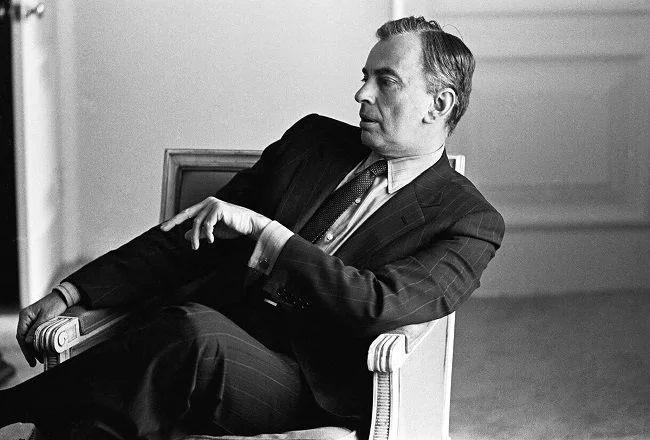
“Is it safe?”
Q: When is it okay to tell a secret?
A: When you’re being waterboarded by the security services.
Q: Do humans construct justice or is it an independent concept?
A: Justice is an artificial construct and does not exist outside of human society. It is notably absent in the animal kingdom and conspicuously not a part of cosmology. It can be argued that it’s not doing such a good job in human affairs.
Q: How do kids and children differ from each other?
A: A baby goat is a kid and a child is a potentially risky investment. On a less pedantic note, this question has the scope to turn into a discussion about how different socioeconomic groups use different words for the same things. Class is still a very big deal in the UK and is insidious in the way it gets into every aspect of life. But that is a post for another day.
Q: Do we have to be happy all the time?
A: No you do not. Furthermore, I would argue that it is foolish to attempt to be so. Most of the time, I find myself in a state of emotional equilibrium. I am not sad, angry or unsettled. I am emotionally neutral. During the course of a day, simple things bring me pleasure and tip my feelings from this position into varying degrees of happiness. For example a full English Breakfast, drawing pictures with my grandchildren or going out on a sunny day with Mrs P. If one was happy all the time it would diminish its merits, in the same way that you can become bored with your favourite food if you dine on it exclusively. Happiness brings contrast to our lives, highlighting the good things and setting them aside from the bad and the mundane. Its value lies in its lack of ubiquity.
Q: If you were to die tomorrow, what would you regret?
A: The fact that I’m dying tomorrow. I have a library book to take back.
Q: What impact does a person’s name have on who they become?
A: Nominative determinism is a thing and genuinely has an impact upon a person’s life, in so far as how they are perceived and treated. Again this is a subject that is linked to class and social status. For example David Cameron was a British Prime Minister. David is quite a formal name and Cameron was very much a man from a privileged background. Dave is a far less formal version of the name and polls have shown that people will immediately think of a plumber or something comparable. Then there’s more literal aspects to nominative determinism, such as your name impacting upon your career and path in life. Consider the athlete Usian Bolt and his name. Is it more than ironic?
Q: If there are no boundaries to the universe, what would exist beyond them?
A: I get confused by the semantics of this question. If something has no boundaries, then it is infinite. Therefore logically doesn’ that negate the existence of anything else? I like quantum physics but I do struggle with its abstractions most of the time.
Q: Are there such things as good deaths?
A: Yes there are, although I am not talking about the emotional ramifications of death, but specifically the manner in which you die. We can all imagine painful, shocking and unpleasant ways to die. Sadly some people endure these. However, these are not necessarily commonplace. My father died in September 2020. He was 91, extremely frail and suffering from pneumonia. He spent his last few weeks in a hospital and was seldom awake. He died in his sleep. My mother similarly died recently of age related issues, in a nursing home. She also died in her sleep. Both were aware that they were going to die but due to their age and long years of ill health and indignity, were reconciled to their demise. Were these good deaths? Possibly so. It is a relative concept.
Q: What is the purpose of life?
A: Judging by my fifty four years of experience, I’m tempted to say “to be exploited by the rich”. On a less cynical note, I get somewhat annoyed by this question as it supposes that there is a purpose by default. I suspect this question stems from a theological perspective. However, let me address the question. I believe humans have the ability to create their own sense of purpose and do not have to adhere to spurious dogmas created by third parties for their own questionable ends. As for the wider concept of life within the universe, does it really need to have a specific purpose? It just is. The only imperative that drives it is for it to continue. Alternatively the answer to everything is 42.













Echoes of Angmar and “Classic” LOTRO
Video games are evolutionary products that change over time, driven by technology, consumer preference and market trends. Furthermore, change is not always for the better. Video games are consumer products and all too often artistic and creative decisions are overruled by commercial considerations. Irrespective of the rectitude of such things, video games do not stay static. If you want a clear example of this, consider the MMORPG genre as it is today, as opposed to how it was in the late nineties. Compare the likes of Ultima Online with Guild Wars 2 of The Elder Scrolls Online and they are very different beasts. If you prefer a more specific example, then how about The Lord of the Rings Online as it is today with the game as it launched in 2007, fifteen years previous. Because the private LOTRO server Echoes of Angmar provides exactly that.
Video games are evolutionary products that change over time, driven by technology, consumer preference and market trends. Furthermore, change is not always for the better. Video games are consumer products and all too often artistic and creative decisions are overruled by commercial considerations. Irrespective of the rectitude of such things, video games do not stay static. If you want a clear example of this, consider the MMORPG genre as it is today, as opposed to how it was in the late nineties. Compare the likes of Ultima Online with Guild Wars 2 of The Elder Scrolls Online and they are very different beasts. If you prefer a more specific example, then how about The Lord of the Rings Online as it is today with the game as it launched in 2007, fifteen years previous. Because the private LOTRO server Echoes of Angmar provides exactly that.
Echoes of Angmar is currently undertaking stress tests. At present the server offers a version of LOTRO from November 2007. That is all content upto and including Book 11: Defenders of Eriador. For want of a catchy name and for convenience sake I shall refer to the game from this period as classic LOTRO. If you currently play this popular Middle-earth based MMO but have only done so in recent years, then the classic version differs greatly from the game as it stands today. Although running on an old game engine, LOTRO today still features a lot of contemporary, quality of life functionality that players expect from an MMO. Such things are conspicuously absent from classic LOTRO. Although released in 2007, LOTRO started development four years earlier and therefore was designed around the prevailing MMO trends of that time.
When playing on the Echoes of Angmar server, after creating a character you log into one of the game’s three starter zones, Ered Luin (Elves and Dwarves), Bree-land (Man), and The Shire (Hobbits). The tutorial is currently disabled. By default the regional maps are subject to the “fog of war” and devoid of detail. You have to explore to reveal detail. Players do not get a mount until level 35 and the current test is capped at level 15. It costs a lot of gold in classic LOTRO to purchase a mount and is also tied to the successful completion of a specific series of quests. With regard to quests, the quest tracker simply lists what tasks you are undertaking and does not provide a waypoint on the in-game map. Players are given a broad location such as “visit southern Chetwood” and have to search to find the specific object or NPC. It is quite noticeable compared to the current version of LOTRO, how emptier the classic game world is. There are fewer buildings in Bree and The Shire as well as less cosmetic NPCs, designed to to create a sense of activity. The game textures, especially flora and terrain, are lower in detail.
Another very noticeable difference between old and new LOTRO is the acquisition of class skills as your character levels. Rather than automatically being bestowed the player has to buy them individually from an appropriate class trainer. Furthermore there are only seven classes available. Burglar, Captain, Champion, Guardian, Hunter, Lore-master and Minstrel. Levelling is also far slower. Gear comes primarily from quests, crafting or players trading via the auction house. Vendor gear is also an important stopgap. The trait system is also different, allowing for choices from different lines. Hence certain skills are not dependent on you solely following a specific trait line. There is no barter wallet so storage is more of a pressing issue. The current cosmetic system didn’t exist back in 2007, so the level of sartorial elegance in classic LOTRO is lower. Players often wear identical gear earned from the same quests. It’s worth noting that there’s no “autoloot” either. You have to manually collect dropped items.
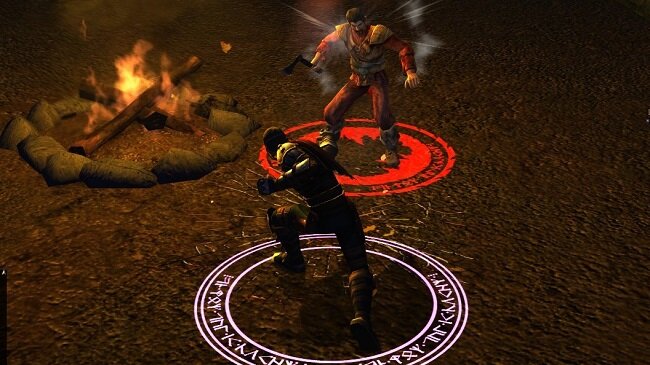
But classic LOTRO is not just about cataloguing the differences in game mechanics and systems. There is a major difference in the game’s pacing and play style. Although mobs are not quite so plentiful, they are far harder to deal with, even at lower levels. Hence even in the starter zones on Echoes of Angmar server, players will readily assist each other if they encounter a signature mob at level 5 because it is not a foregone conclusion that they’ll faceroll the fight. LOTRO in 2007 was heavily focused on group play and not all PVE content was designed to be soloable. There are also some other logistical benefits to be had from classic LOTRO. There is no skills lag or in fact any server lag. Having to travel the world on foot also means you tend to stay within the zones that you’re currently questing in. The slower pace of progression fosters greater focus on where you are and what you’re doing.
I have no idea whether Echoes of Angmar has a future or whether the legal reach of the Embracer Group will inevitably shut down the project. If the server does persist it will offer an interesting counter experience to the current iteration of LOTRO. Classic LOTRO is certainly not for everyone and will not necessarily excite the casual player who is looking for a quick and convenient gaming fix. In its original format, LOTRO was designed to be a game that you invest your time and effort into. A collaborative exploration of Middle-earth where you played through content at a measured pace, as it was presented to you. An MMO where you were dependent upon others but rather than that being a chore, it was part of the journey and a tangible selling point. There was no race to cap because it could take a year or so. Goals were long term and not immediately in reach. That is the difference between classic LOTRO and the game that exists today. Both represent the prevailing MMO ethos of their respective time.

Motivation and Being Realistic About What You Can Achieve
I’ve written posts in the past that take quite a “scorched earth” approach to the subject of motivation and maintaining a regular writing schedule. You can come at this subject from numerous angles, offering advice couched in psychology, gentle encouragement or cold hard logic. However, I find that blogging comes down to one thing and one thing only. If you want to do it, you’ll find a way. And believe me, I don’t say this out of some misguided sense of superiority or smugness. I have skipped numerous days of blogging because I chose not to. I wasn’t too busy or strapped for ideas. I just couldn’t be bothered or wanted to spend my time on something else. That’s not to say that the encouragement of others and events such a Blaugust don’t have any impact upon people’s writing output. I believe they do. But the biggest factor determining when you do and do not write is you.
Does this include arson, genocide and making another Air Bud movie?
I’ve written posts in the past that take quite a “scorched earth” approach to the subject of motivation and maintaining a regular writing schedule. You can come at this subject from numerous angles, offering advice couched in psychology, gentle encouragement or cold hard logic. However, I find that blogging comes down to one thing and one thing only. If you want to do it, you’ll find a way. And believe me, I don’t say this out of some misguided sense of superiority or smugness. I have skipped numerous days of blogging because I chose not to. I wasn’t too busy or strapped for ideas. I just couldn’t be bothered or wanted to spend my time on something else. That’s not to say that the encouragement of others and events such a Blaugust don’t have any impact upon people’s writing output. I believe they do. But the biggest factor determining when you do and do not write is you.
However, there are some things we can do to make writing on the days when we’re not that motivated a lot easier. I find that there are certain types of blog posts that are easier to write than others and that sitting down and producing one of these doesn’t present as much of a struggle as more complicated think pieces. Film reviews are one example. I have a longstanding and abiding passion for films and the wider industry and feel I have some knowledge of the subject. As writers we’re always told “write about what you know” and there is wisdom in these words. Hence, a film review is something I feel comfortable writing. It also helps that such posts usually have a standard structure to them, affording them a very procedural quality when it comes to sitting down and writing. If you’re at all interested, here’s a link to how I write reviews.
I said Magnum Opus not magnificent Octopus
Something that regularly comes up in blogging circles is that it is often the spur of the moment posts that can sometimes get the most traction. Conversely, the post that one labours over, conducting research and continuously revising, is usually the one that goes unnoticed. All of which reinforces the argument that it is best to write with no expectations about the wider outcome. Hence, if you’re running low on enthusiasm, don’t make matters worse by seeking to write your magnum opus, instead just focus on writing something that you find enjoyable. IE Whatever is your equivalent of writing a film review. This is why stream of consciousness and personal blogs have an advantage, insofar as even if you’ve had an uneventful day, it can at least be catalogued and explored as to why it was so.
An event such as Blaugust treats blogging as a hobby and not a job. It’s an important distinction. If you choose the option to make it a more formal undertaking, then adopting a more business-like mindset will inevitably make you more productive. However, the trade off is replacing casual spontaneity with structure and discipline and that can sometimes kill the joy. Ultimately with a hobby and pastime such as blogging, you find the level that suits you. If you are honest with yourself, you can usually determine that quite early on. You know exactly how much leisure time you have and what you can reasonably expect with regard to written output. Blaugust may well boost that to a degree but I think it does a better job of just focusing bloggers and keeping them engaged. Trying to sustain something that you know you cannot necessarily do is counterproductive. Which is why there’s sense in the phrase “you do you”.
Echoes of Angmar Stress Test Begins
On Saturday 20th August the stress test began for the private LOTRO server Echoes of Angmar. This project is offering a version of the MMORPG The Lord of the Rings Online as it were in late November 2007. I have spoken to several players who have participated in this and other tests and so far the results have been positive. The server crashed on several occasions and the longest uninterrupted period of stability was two hours. Character creation is proving to be a slow process and some players have found that they cannot see other players when logging in. However, the majority of players could create alts and progress through the game as normal. The data generated from these tests has proven useful and the team overseeing the project are currently working on a revised build to improve stability. Further server tests are scheduled for Friday 26th August.
On Saturday 20th August the stress test began for the private LOTRO server Echoes of Angmar. This project is offering a version of the MMORPG The Lord of the Rings Online as it were in late November 2007. I have spoken to several players who have participated in this and other tests and so far the results have been positive. The server crashed on several occasions and the longest uninterrupted period of stability was two hours. Character creation is proving to be a slow process and some players have found that they cannot see other players when logging in. However, the majority of players could create alts and progress through the game as normal. The data generated from these tests has proven useful and the team overseeing the project are currently working on a revised build to improve stability. Further server tests are scheduled for Friday 26th August.
All information regarding these tests and the private server Echoes of Angmar is in the public domain and can be found via a simple Google search. The recent cease and desist request from Middle-earth Enterprises seems to have had little or no impact upon the project which is continuing with its testing schedule. It will be interesting to see if the new owners of Middle-earth Enterprises, Embracer Group, escalate the matter or whether this grey project will continue unhindered, like many other private servers. There certainly appears to be a lot more interest in this “original” version of LOTRO than some may have initially thought, judging by the activity on the Echoes of Angmar Discord Server and subreddit. As and when the stability issues are resolved, I am curious to see what sort of population this private server sustains and whether people will be content with the original base version of the game
Making Your Own Fun in Guild Wars 2
It’s a curious thing but despite there being a wealth of story content available for me to do in Guild Wars 2, I don’t feel disposed towards doing any of it. I think this all stems from the fact that it’s an original intellectual property, rather than one based upon an established franchise. Looking back through my achievements and story journal on my primary character, I played through quite a lot of narrative content when I first started playing this MMO at launch. Sadly none of it has made a sufficient impression upon me to have stuck in my memory. This is not a reflection of the quality of the storyline of Guild Wars 2 but more a case of how I tend to prefer known quantities such as Tolkien and Star Trek. Curiously, I have not encountered this problem with The Elder Scrolls Online which is equally an original intellectual property. It all seems very much a case of horses for courses.
It’s a curious thing but despite there being a wealth of story content available for me to do in Guild Wars 2, I don’t feel disposed towards doing any of it. I think this all stems from the fact that it’s an original intellectual property, rather than one based upon an established franchise. Looking back through my achievements and story journal on my primary character, I played through quite a lot of narrative content when I first started playing this MMO at launch. Sadly none of it has made a sufficient impression upon me to have stuck in my memory. This is not a reflection of the quality of the storyline of Guild Wars 2 but more a case of how I tend to prefer known quantities such as Tolkien and Star Trek. Curiously, I have not encountered this problem with The Elder Scrolls Online which is equally an original intellectual property. It all seems very much a case of horses for courses.
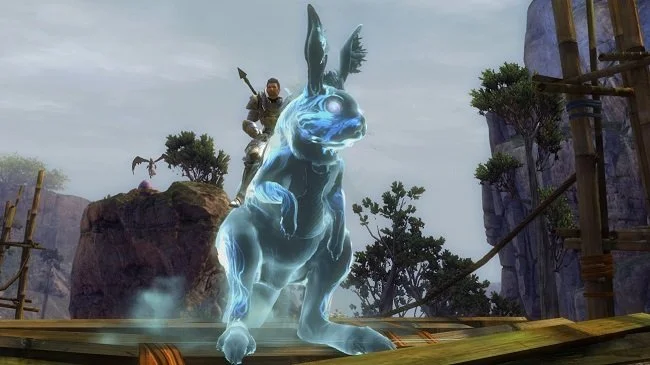
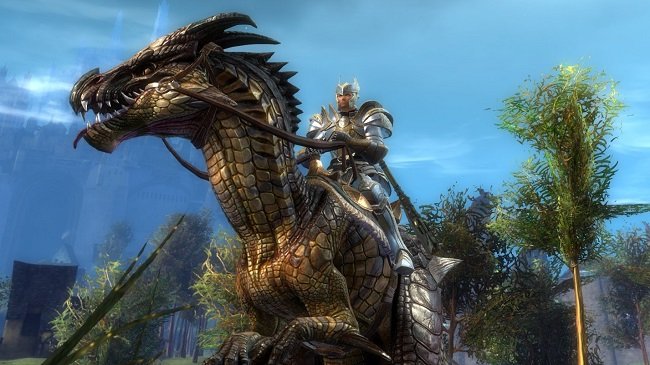
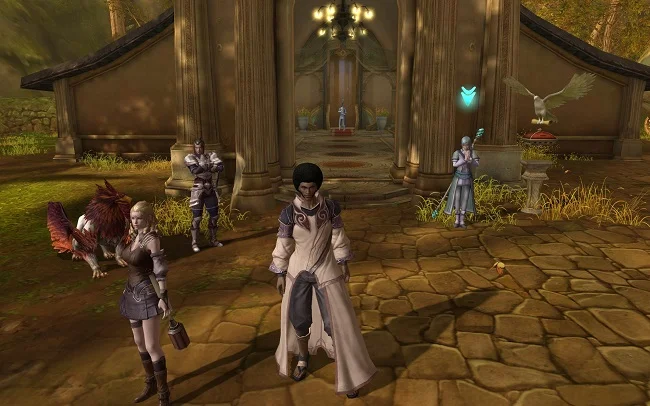
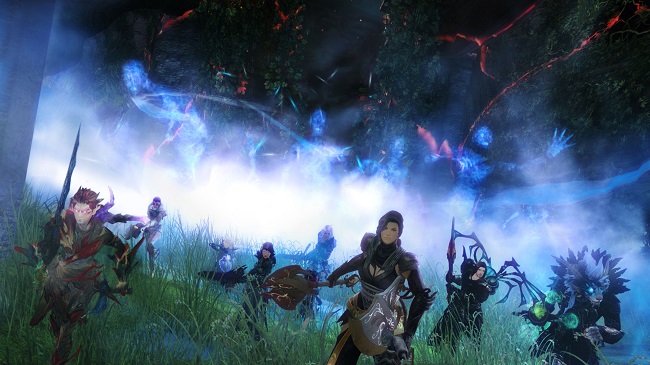
Having returned to Guild Wars 2 and rolled a new Necromancer with Reaper Elite Specialisation, I’ve been trying to keep myself occupied while minimising my interaction with the central stories associated with the base game and the subsequent expansions. However, you have to do some of this content to be granted access to the various zones. I decided to bypass the Heart of Thorns content which I didn’t especially enjoy when first released and instead began Path of Fire. I benefited from playing this MMO again, just as they’ve recently given all players a Raptor mount when they reach level 10. Hence, I thought it would be fun to set about collecting all the other kinds of mount. I’ve also set myself the goal of completing all points of interest, vistas and heart quests, as well as Mastery and Hero points. So far this has proven sufficiently engaging, along with exploring the new maps I’ve not seen before.
Another aspect about PVE story content in Guild Wars 2 is that it’s far from easy and not the faceroll that many players are used to in games such as The Lord of the Rings Online. You have to be well geared and well versed in playing your class to undertake it without “incident”. Many play through it with friends or guild mates, which makes it a lot easier. However, that comes with the organisational and social complexities associated with playing as a group. I recently reached a point in the story near the Makali Outpost where I had to clear the surrounding desert of three groups of mobs, each of which had a Champion boss among them. This fight is long, hard and not especially exciting. Finding the sweet spot for combat duration is a difficult task as different people have different levels of patience. Mercifully, I was assisted by a friend.
At present, I can effectively make my own fun in Guild Wars 2 and keep myself engaged with the game, rather than following the formal structure that is already there. For example, tonight I decided to just follow any zergs I encountered and this proved a fun and useful strategy. I was in the Maguuma Jungle at the time which proved beneficial by opening up some points of interest along the way. Hopefully, this approach to the game will keep me going for a while. Now that this MMO is available via Steam there seems to be an influx of new players and lots of zones in the base game are well populated at present. I’m sure my approach to Guild Wars 2 is not unique and that other players follow suit not only in this game but also in other MMOs. Naturally, there are “purists” that will consider my approach an anathema, but that is of no importance to me. Having fun on your own terms is my maxim.


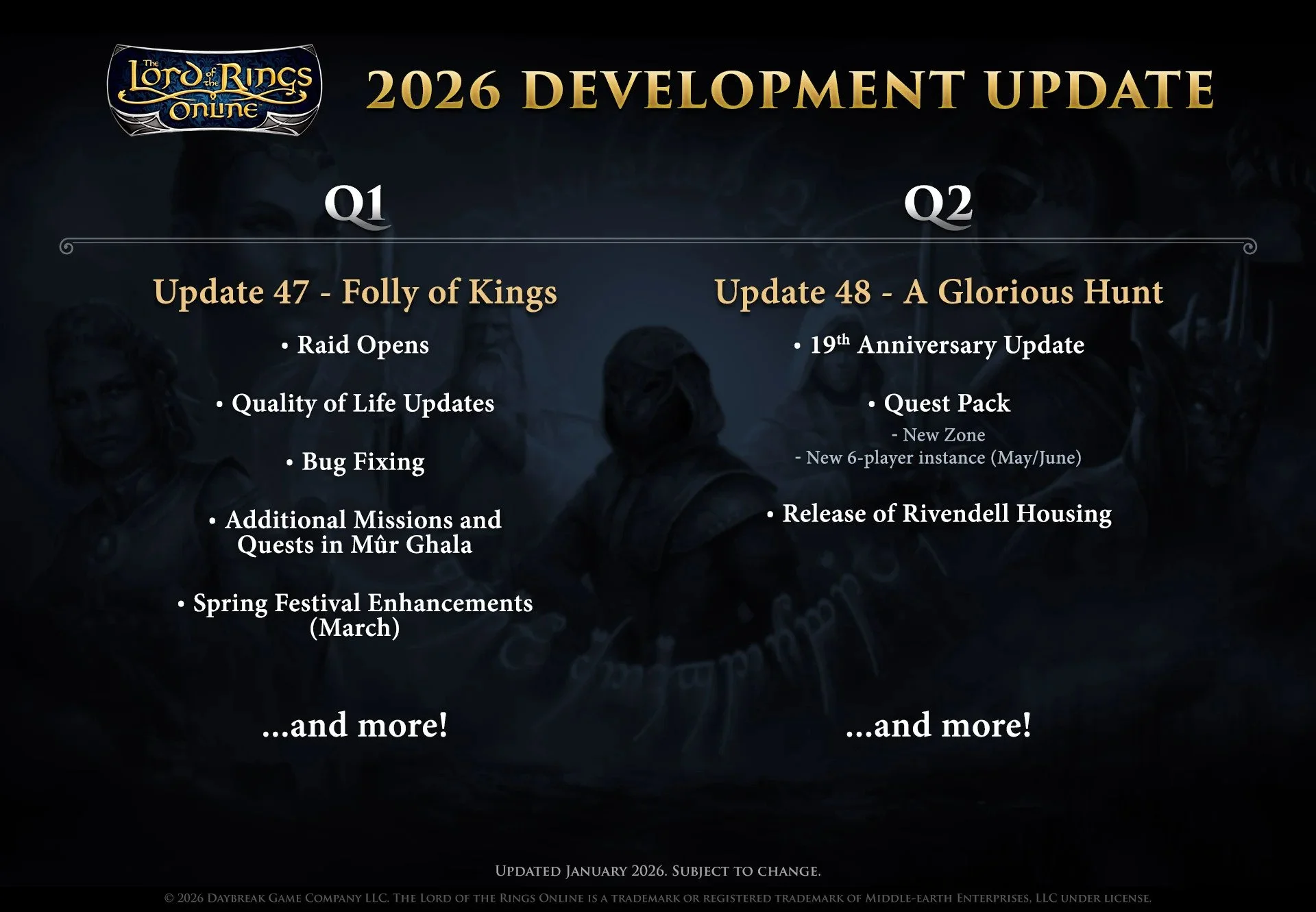
New Mini-expansion Coming to LOTRO in September
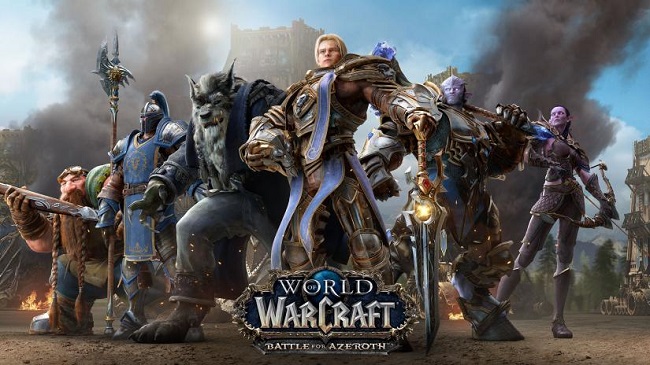
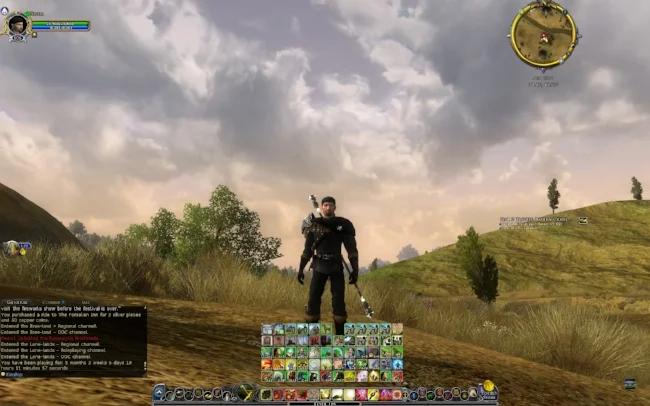
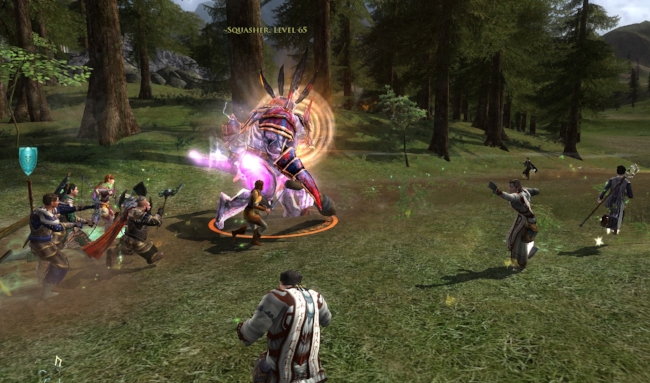
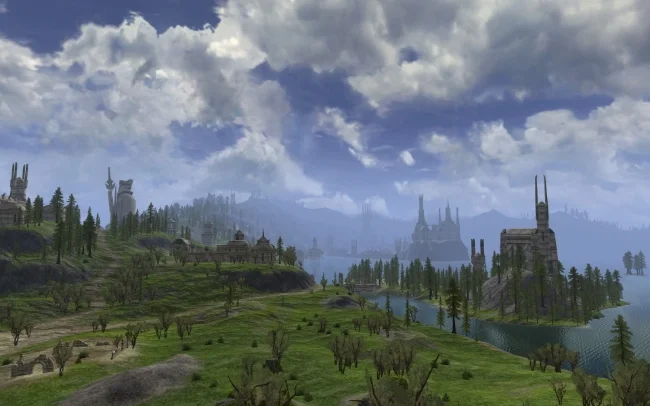
Today Standing Stone Games formally announced their next mini-expansion for the MMORPG The Lord of the Rings Online. Before the Shadow will be available in September and as recent leaks have shown, will include Cardolan and Swanfleet as new zones for the game. The new content will be between levels 1 and 32. SSG press release stated “Before the Shadow will send players into two new regions, Swanfleet and Cardolan, as Boromir makes his way north to Rivendell ahead of the meeting of what will eventually become the Fellowship of the Ring while the Nazgûl search for “Baggins” in the peaceful land of the Shire. Players will discover the threat rising from Mordor and Saruman's Uruks as they explore the far history of Middle-earth!”
Today Standing Stone Games formally announced their next mini-expansion for the MMORPG The Lord of the Rings Online. Before the Shadow will be available in September and as recent leaks have shown, will include Cardolan and Swanfleet as new zones for the game. The new content will be between levels 1 and 32. SSG press release stated “Before the Shadow will send players into two new regions, Swanfleet and Cardolan, as Boromir makes his way north to Rivendell ahead of the meeting of what will eventually become the Fellowship of the Ring while the Nazgûl search for “Baggins” in the peaceful land of the Shire. Players will discover the threat rising from Mordor and Saruman's Uruks as they explore the far history of Middle-earth!”
In addition to the new zones, Before the Shadow offers four new Epic Books for new characters. There is also a new six-person Instance for players with high end alts. Plus there is the addition of a new Skirmish to the game, something that hasn’t happened for a while. The press release also refers to a “Delving difficulty system that will offer new rewards and challenges”, although exactly what this is I am not sure. SSG have not at present clarified as to whether the mini-expansion will feature the River-hobbits race and that the new zone is a new starter area, although it is reasonable to assume so. Further information will become available as the pre-order date comes closer. At present, it may be relevant to consider the previous mini-expansion pre-order, War of Three Peaks, to determine what additional type of content and bonuses may be included.
Over the course of the last fifteen years, there have only ever been two content releases formally designated as mini-expansions for The Lord of the Rings Online. The first Siege of Mirkwood was released in December 2009 and the second War of Three Peaks launched in October 2020. Both were met with a degree of controversy, not so much over the quality of their content, but more so over their respective value for money. It will be interesting to see if the usual three tier price model is still used and whether prices will remain the same or increase. If this mini-expansion does offer a new starter zone, are developers SSG expecting an influx of new players due to interest stemming from The Lord of the Rings: The Rings of Power? Such a thing was mentioned by owners EG7 in their investor presentation nearly 2 years ago. I look forward to learning more about Before the Shadow in the immediate future.
Treasure of the Four Crowns (1983)
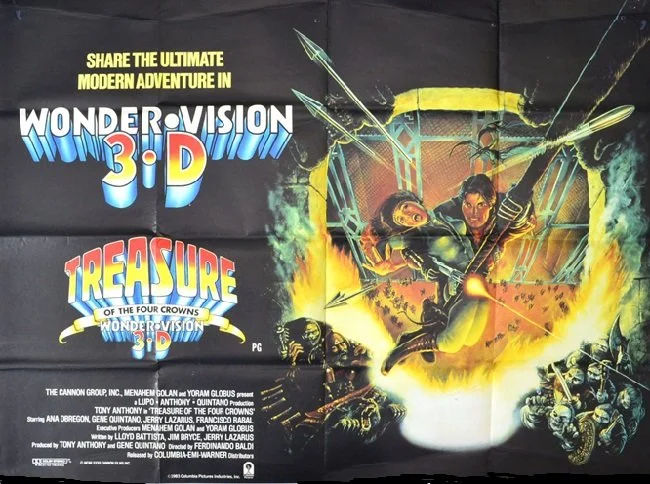
“In the universe there are things man cannot hope to understand. Powers he cannot hope to possess. Forces he cannot hope to control. The Four Crowns are such things. Yet the search has begun. A soldier of fortune takes the first step. He seeks a key that will unlock the power of the Four Crowns and unleash a world where good and evil collide”. So reads the Star Wars-esque opening crawl for the 1983 3D action movie, Treasure of the Four Crowns. It’s worth noting that when it appears on screen, this text is written in capitals and devoid of any punctuation. The movie is also a Cannon Films production. These facts may give viewers an inkling of what is to come over the next 100 minutes. It is certainly best to abandon expectations of linear, narrative filmmaking. Treasure of the Four Crowns is unique, batshit crazy and yet curiously entertaining.
“In the universe there are things man cannot hope to understand. Powers he cannot hope to possess. Forces he cannot hope to control. The Four Crowns are such things. Yet the search has begun. A soldier of fortune takes the first step. He seeks a key that will unlock the power of the Four Crowns and unleash a world where good and evil collide”. So reads the Star Wars-esque opening crawl for the 1983 3D action movie, Treasure of the Four Crowns. It’s worth noting that when it appears on screen, this text is written in capitals and devoid of any punctuation. The movie is also a Cannon Films production. These facts may give viewers an inkling of what is to come over the next 100 minutes. It is certainly best to abandon expectations of linear, narrative filmmaking. Treasure of the Four Crowns is unique, batshit crazy and yet curiously entertaining.
Soldier of Fortune, J.T. Striker (Tony Anthony), is hired by Professor Montgomery to assemble a group of professional thieves to retrieve gemstones which are hidden inside two ancient and Mystical Crowns. These crowns are a part of four. One is already in the Professor’s possession. The other was destroyed by the Moors when they attempted to access its “power”. Striker recruits professional thief Rick (Jerry Lazarus), as well as acrobats and circus performers Liz (Ana Obregon) and her Father Socartes (Francisco Rabal). They are joined by Striker’s friend and Professor Montgomeries agent Edmond (Gene Quintano). The team must infiltrate a heavily fortified compound in a small mountain village that is home to a religious cult. Its leader Brother Jonas (Emiliano Redondo) has the crowns protected by an advanced and deadly security system.
The aforementioned plot sounds fairly straightforward on paper, but what transpires is nothing of the sort. The film begins with Striker infiltrating an old Spanish castle to the strains of a wonderfully portentous soundtrack written by the great Ennio Morricone. There is no dialogue for the next twenty minutes as Striker is subject to a succession of attacks from vultures, wild dogs, rubber pterodactyls, floatings swords and crossbows, balls of fire, all while being mocked by ghostly jeers and cries emanating from the skeletal corpses of long dead knights. And when he finally escapes with a gold key, the entire castle explodes for some particular reason. It makes very little sense and nothing is explained as to why the castle is booby trapped, haunted or contains prehistoric flying reptiles. There are however more 3D effects in this opening sequence than there are in other entire 3D feature films.
The film then continues in the same vein. Scenes of exposition appear from time to time, linking a series of increasingly crazy 3D set pieces. The key appears to have supernatural powers causing at one point Rick’s cabin to erupt into mayhem. This includes teapots and dried food storage jars exploding in slow motion and showering the camera lens in beans and lentils. The dialogue desperately tries to be hard boiled but often comes off as rather sarcastic as if the very cast are passive aggressively trolling the very film they’re appearing in. When Brother Jonas finally appears he is presented as a Charles Mansonesque faith healer with a cult of armed followers, wearing a mixture of World War II partisan clothing and pig masks. In a scene where he allegedly heals a crippled follower to impress a group of new converts, the rather disturbing atmosphere is quickly mitigated when he clumsily winks at the afflicted to telegraph the fact that the entire ceremony is just an act.
The final act of Treasure of the Four Crowns sees the team assemble a series of cables, pulleys and ad hoc trapeze to bypass the security features in the hall where the crowns are kept. The ominous statue that houses them is inevitably booby trapped and triggers an alarm. Brother Jonas and his cohorts arrive, just as Striker grasps the magical jewels contained within the crowns. The film then strays into another genre as he is possessed, his head spins round and half of his face becomes monstrous. He then proceeds to unleash fire and pyrotechnics as Morricone score desperately tries to apply some musical dignity to the spiralling insanity. Viewers are then treated to several full burn stunts and the laser alarm system turns fatal and starts cutting Brother Jonas into pieces. It is a massive tonal shift that will either delight viewers or invoke their scorn at its preposterous nature.
Treasure of the Four Crowns is clearly designed to ride on the coattails of Raiders of the Lost Ark. 3D films were also a cinematic trend at the time and Cannon Films has already made the successful and equally silly film Comin’ at Ya! two years earlier. The production team behind Treasure of the Four Crowns were clearly only interested in a vehicle that could facilitate a plethora of action set pieces that showcase the 3D format. Like many Italian co-productions from this decade, the prevailing attitude is “never mind logic and continuity, throw everything in, bar the kitchen sink”. So the film goes large with the practical effects and culminates in a singularly bizarre cinematic postscript featuring a pulsing sac which spawns some sort of monster which leaps toward the camera. It is all quite mad and yet strangely compelling. Morricone’s score does much of the heavy lifting. Treasure of the Four Crowns is the very definition of a cult film. If you choose to watch it you’ll either love it or loathe it.


Zulu Dawn (1979)
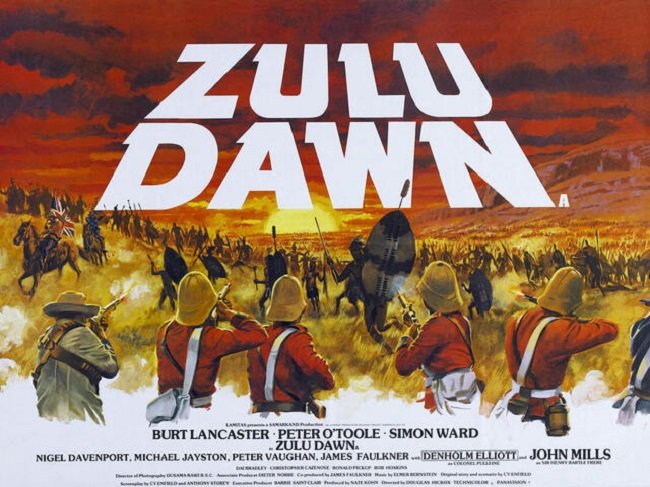
Zulu (1964) recounts the Battle of Rorke’s Drift between the British Army and the Zulus in January 1879. Directed, produced and co-written by Cy Endfield the film presents an action filled account of how 150 British soldiers, 30 of whom were sick and wounded, successfully held off a force of 4,000 Zulu warriors. Although well made and rousing, it is very much a film from the British perspective. Despite depicting the Zulu nation fairly, the film makes no attempt to put the clash between two empires in any sort of wider context. Zulu Dawn is a direct prequel which shows the events that directly lead up to the Battle of Rorke’s Drift. Much more time is dedicated to exploring the Zulu’s position as their leader King Cetshwayo attempts to avoid the political fait accompli he has been presented with. Furthermore, Zulu Dawn does not in any way try to avoid the failure of the British chain of command that resulted in the defeat of 1,300 British soldiers at the Battle of Isandlwana.
Zulu (1964) recounts the Battle of Rorke’s Drift between the British Army and the Zulus in January 1879. Directed, produced and co-written by Cy Endfield the film presents an action filled account of how 150 British soldiers, 30 of whom were sick and wounded, successfully held off a force of 4,000 Zulu warriors. Although well made and rousing, it is very much a film from the British perspective. Despite depicting the Zulu nation fairly, the film makes no attempt to put the clash between two empires in any sort of wider context. Zulu Dawn is a direct prequel which shows the events that directly lead up to the Battle of Rorke’s Drift. Much more time is dedicated to exploring the Zulu’s position as their leader King Cetshwayo attempts to avoid the political fait accompli he has been presented with. Furthermore, Zulu Dawn does not in any way try to avoid the failure of the British chain of command that resulted in the defeat of 1,300 British soldiers at the Battle of Isandlwana.
Fearing that the Zulus are becoming too powerful in the region, Lord Chelmsford (Peter O'Toole) plots with diplomat Sir Henry Bartle Frere (John Mills) to annex the neighbouring Zulu Empire, despite there being an existing treaty in place. Subsequent demands to demilitarise are rejected by King Cetshwayo (Simon Sabela) giving Lord Chelmsford casus belli to invade. Prior to embarking into Zulu territory the British forces are reinforced with native troops and the Natal Mounted Police. However, the Zulus refuse to directly engage the British forces and pursue guerilla attacks. The British expeditionary force subsequently makes camp at Mount Isandlwana but rejects the advice from the Boer contingents to fortify the camp around the ammunition wagons. Lord Chelmsford divides his forces and heads a column to pursue bogus sightings of Zulu forces. Meanwhile the Zulu army masses near Isandlwana, preparing to engage the British camp.
Zulu Dawn takes time in setting the scene and explaining the historical situation. The first act cuts between a garden party being held by Sir Henry Bartle Frere, High Commissioner for Southern Africa and celebrations at Zulu capital, Ulundi. Both events provide a backdrop to ongoing political machinations. The screenplay by Cy Endfield cleverly uses the casual conversations between the officers wives and regional Missionaries to summarise the hubris and condescension of the British in Natal at the time. The disposition of the troops is also explored through the relationships between Colour Sergeant Williams (Bob Hoskins) and raw recruit Private Williams (Dai Bradley). Quartermaster Sergeant Bloomfield (Peter Vaughan) is shown to be a “jobsworth” and instrumental in contributing to the deteriorating situation at the film’s climax. Col. Durnford (Burt Lancaster) is shown to be savvy and well versed in fighting the Zulus. Hence his advice is scorned by his British superiors due to his Irish heritage.
The second act of Zulu Dawn follows the British as they make a series of ill conceived decisions after crossing into Zulu territory. Cinematographer Ousama Rawi makes effective use of the rugged South African terrain. The climax of the film follows in detail the attack upon the British lines by the Zulu and how they overwhelmed them. The subsequent retreat became a rout and one of the most serious defeats for British forces in their military history. Although not excessively explicit in its depiction of violence, director Douglas Hickox does well in depicting the growing sense of fear and disbelief among the British troops as they realise that the tide of the battle is rapidly turning against them. The failure to get ammunition from the wagons to the troops is a major factor. I suspect that the film’s depiction of a major defeat, rather than the usual narrative of the plucky underdog who wins despite the odds may discourage some viewers. Zulu Dawn is more likely to engage those seeking historical authenticity rather than pure action.


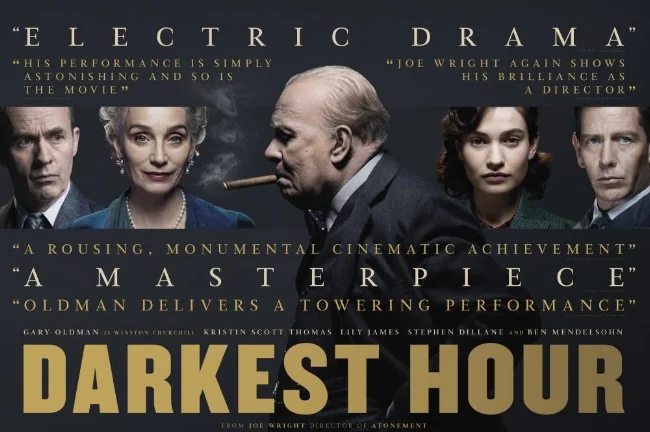
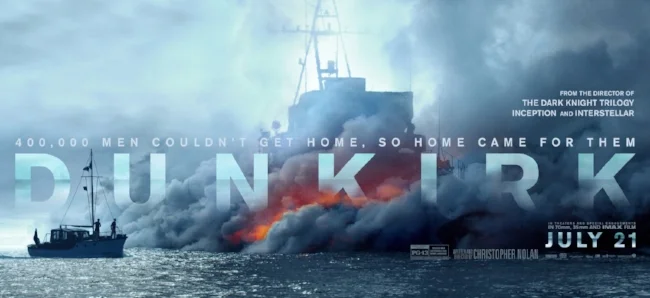
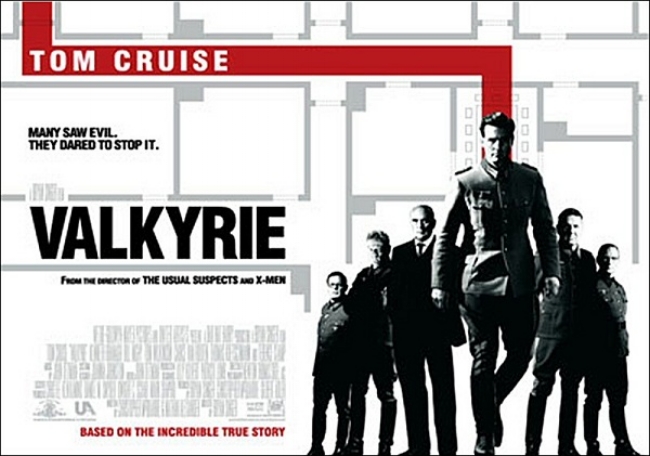
Tales of Terror (1962)
Directed by Roger Corman, Tales of Terror is an anthology horror film based upon three short stories by Edgar Allan Poe. “Morella”, “The Black Cat” and “The Facts in the Case of M. Valdemar”. Adapted by Richard Matheson, the screenplay offers a ghoulish tale of revenge, a humorous story of a drunk who murders his wife and her lover and a sinister story of a mesmerist who hypnotises a terminally ill man at the point of death. Deftly produced and looking far more sumptuous than you’d expect from such a modest budget film, Tales of Terror benefits from a strong cast of old school, Hollywood character actors. The anthology format affords each story a fairly prompt and ghoulish climax and as ever with the films of Roger Corman from this period, visual creativity and innovation elevate the proceedings above the standard exploitation fare of the time.
Directed by Roger Corman, Tales of Terror is an anthology horror film based upon three short stories by Edgar Allan Poe. “Morella”, “The Black Cat” and “The Facts in the Case of M. Valdemar”. Adapted by Richard Matheson, the screenplay offers a ghoulish tale of revenge, a humorous story of a drunk who murders his wife and her lover and a sinister story of a mesmerist who hypnotises a terminally ill man at the point of death. Deftly produced and looking far more sumptuous than you’d expect from such a modest budget film, Tales of Terror benefits from a strong cast of old school, Hollywood character actors. The anthology format affords each story a fairly prompt and ghoulish climax and as ever with the films of Roger Corman from this period, visual creativity and innovation elevate the proceedings above the standard exploitation fare of the time.
Tales of Terror is the fourth entry into the Roger Corman’s series of adaptations of the work of Edgar Allan Poe and the first to use the portmanteau format. Vincent Price makes a return after being absent in the previous entry Premature Burial which starred Ray Milland. Price demonstrates his acting prowess not only in three lead roles but by also providing the linking narration that frame all the stories. The short nature of each story doesn’t afford an opportunity for any in depth character development, hence the presence of a cast of robust and charismatic actors is invaluable in bolstering the narrative. The financial success of the previous instalments of the series meant that there was a greater budget available for the cast. Hence Price is joined by two stalwarts from the golden age of Hollywood; Peter Lorre and Basil Rathbone.
As ever with Corman productions, the production design by Daniel Haller is handsome and the sets are cleverly contrived to look more opulent than they actually are. Many have been recycled from previous production. Cinematographer Floyd Crosby, a long time collaborator of Roger Corman productions, lights the proceedings in an atmospheric way. This is especially noticeable in the last story, in which the mutlicoloured light used by mesmerist Mr. Carmichael (Basil Rathbone), bathes the actors in red, blue and yellow light in turn. There are also several sequences that use optical effects to distort the film image and give the stories a suitably supernatural ambiance. They also mask the basic nature of some of the make up effects. Legendary special effects artist Albert Whitlock created two notable matte paintings for the film. The Locke residence next to the sea and the Valdemar mansion nestled among the trees.
Tales of Terror presents an interesting change of approach from the earlier Roger Corman adaptations of the work of Edgar Allan Poe. The anthology format has both strengths and weaknesses. It provides a convenient means to swiftly build up to a climatic shock and offers three stories instead of one. Yet the strong cast have to rely on their established cinematic personalities to carry each story, as the script doesn’t offer much beyond what you see. Perhaps the most noticeable deviation from prior Poe adaptations is the humorous tone of the second story, The Black Cat. Peter Lorre is an amusing drunk and doesn’t really come across as a potential threat and murderer. However, despite this tonal shift, Tales of Terror remains a well crafted and enjoyable example of US Gothic horror form the sixties. Although similar in many ways to the UK’s Hammer productions, Corman’s work has a very different look and feel to it.
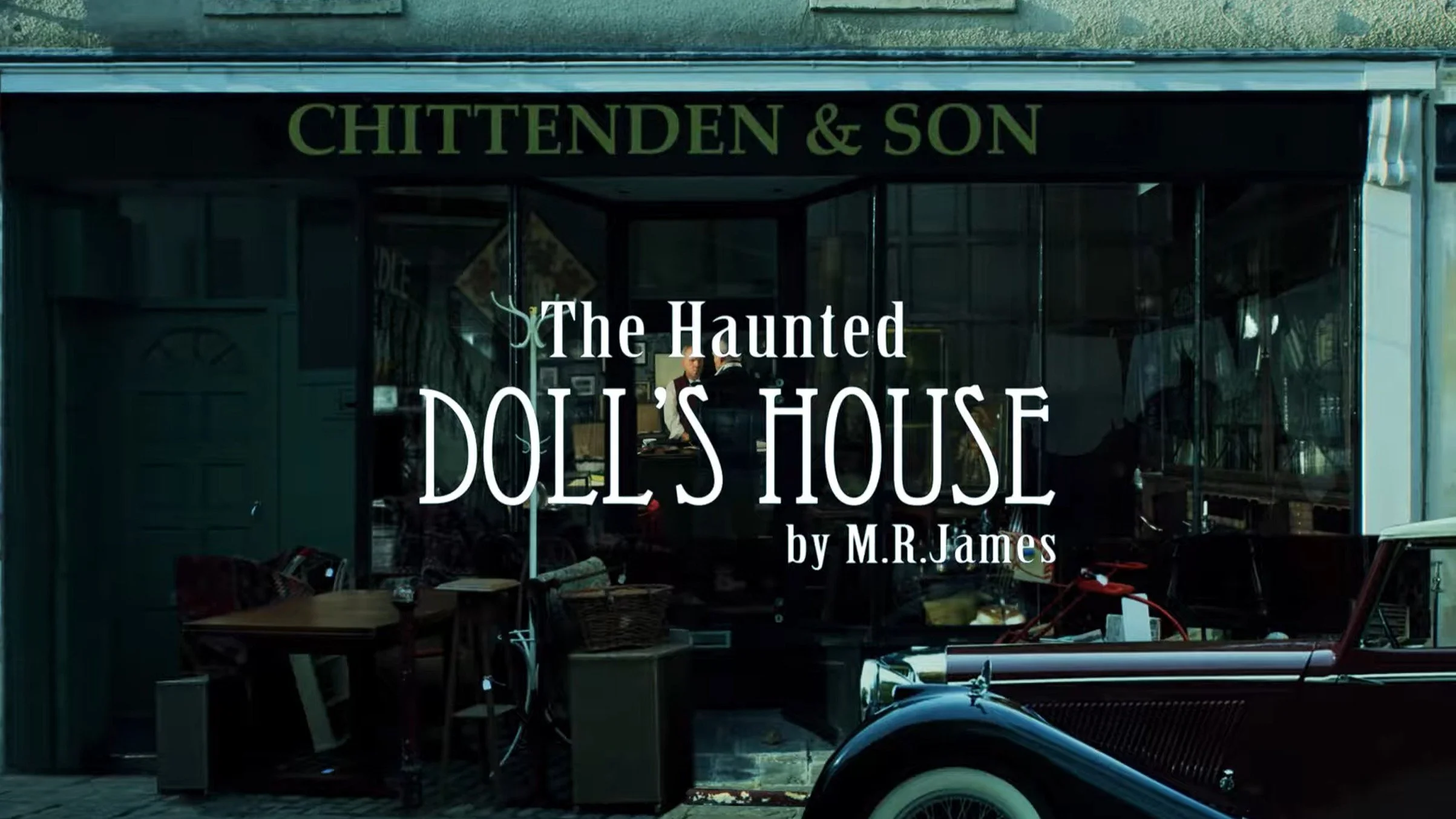

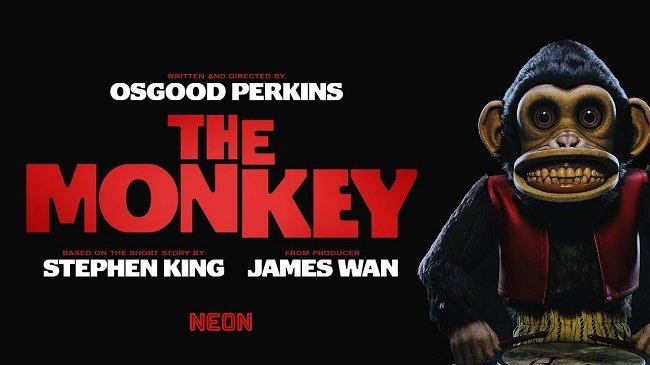


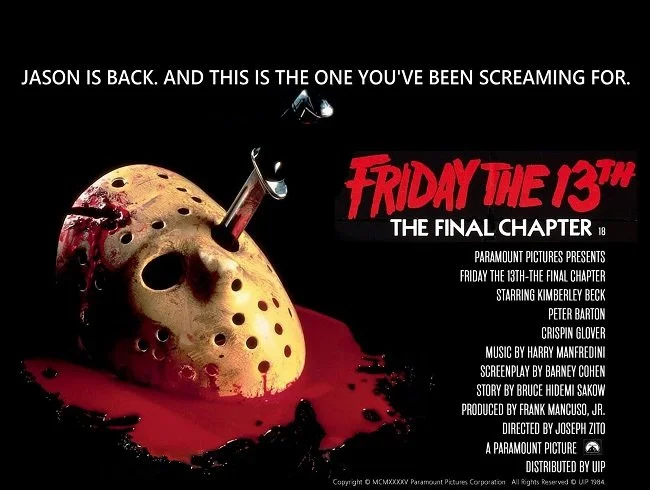

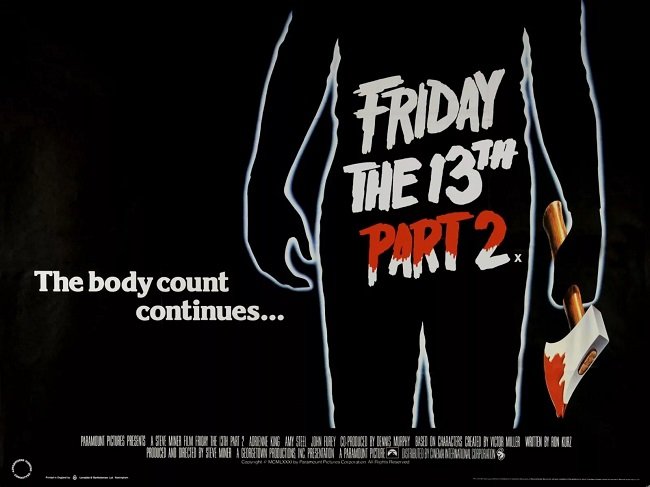




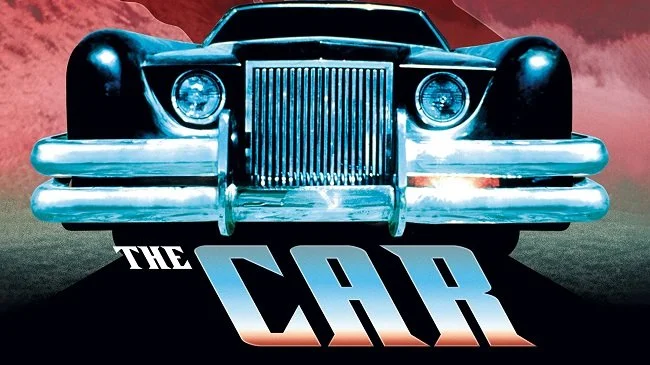
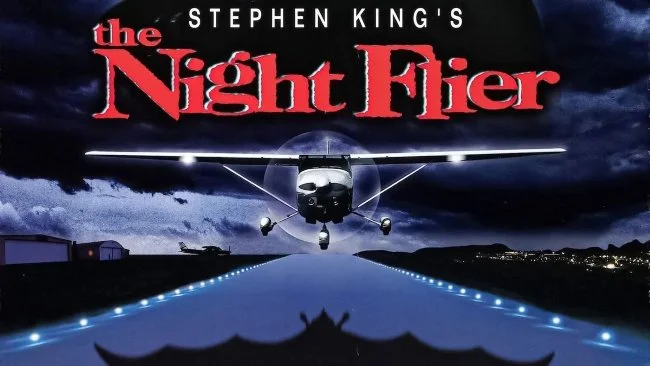
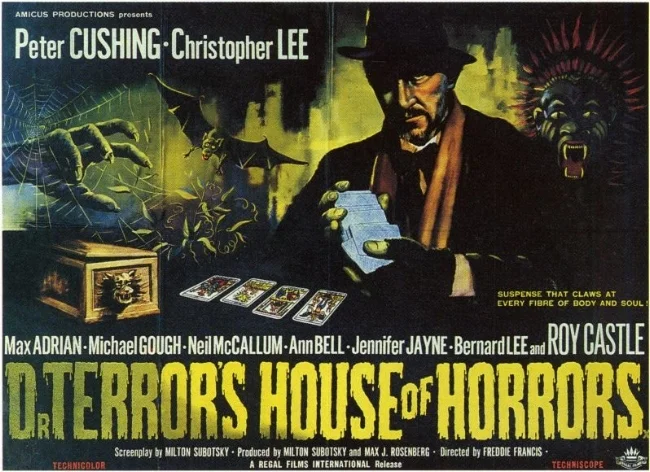

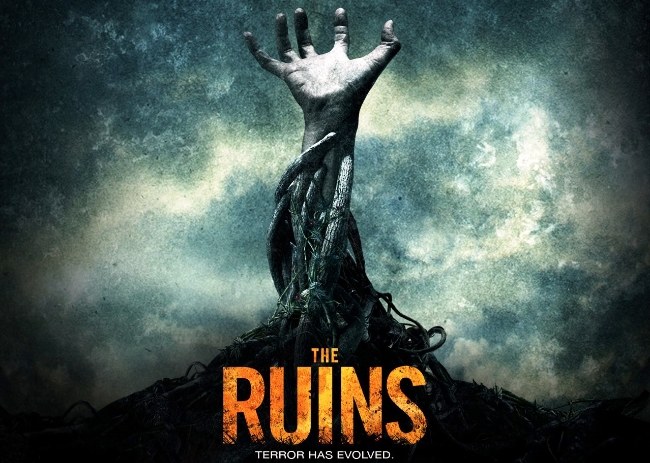
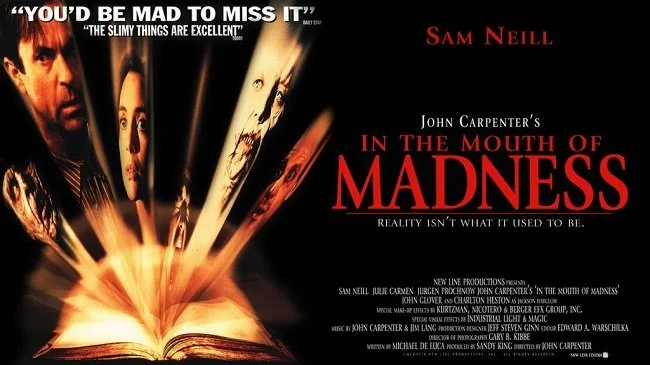
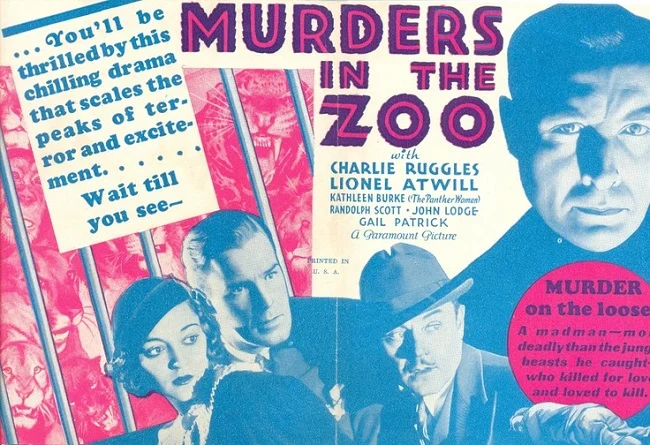
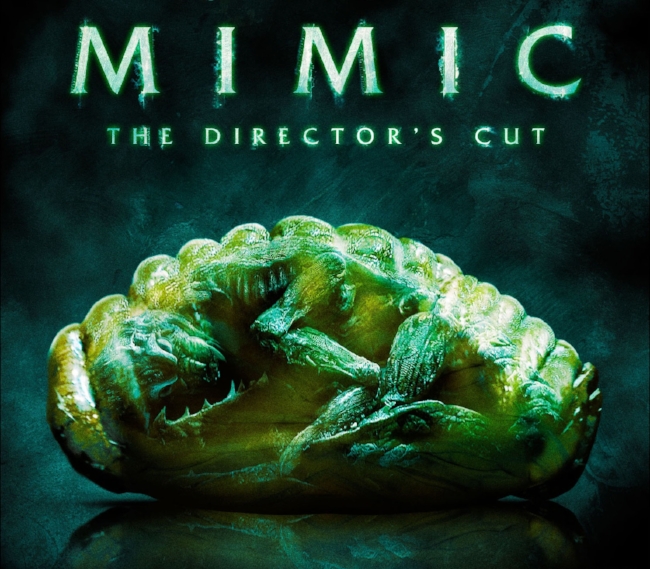
Embracer Group Buys Middle-earth Enterprises
In February this year, I wrote a blog post about how Middle-earth Enterprises were seeking to auction off the various rights they hold for the works of J.R.R. Tolkien. Today the Embracer Group announced that it was buying these rights as part of an ongoing acquisition strategy. The Swedish video game and media holding company has also purchased Limited Run Games, Tripwire Interactive as well as Middle-earth Enterprises portfolio. They recently acquired premium titles such as Tomb Raider, Deus Ex, and Thief. The Embracer Group currently owns more than 100 studios including Borderlands developer Gearbox, Saber Interactive, and THQ Nordic. Saudi Arabia recently bought a $1 billion stake in Embracer, which is around 8% of the company’s total shares. Embracer’s recent purchasing spree comes months after it acquired Square Enix’s three major Western game studios. In a press release the cost of buying the right to Tolkien’s work is £653,000,000 ($786,000,000).
In February this year, I wrote a blog post about how Middle-earth Enterprises were seeking to auction off the various rights they hold for the works of J.R.R. Tolkien. Today the Embracer Group announced that it was buying these rights as part of an ongoing acquisition strategy. The Swedish video game and media holding company has also purchased Limited Run Games, Tripwire Interactive as well as Middle-earth Enterprises portfolio. They recently acquired premium titles such as Tomb Raider, Deus Ex, and Thief. The Embracer Group currently owns more than 100 studios including Borderlands developer Gearbox, Saber Interactive, and THQ Nordic. Saudi Arabia recently bought a $1 billion stake in Embracer, which is around 8% of the company’s total shares. Embracer’s recent purchasing spree comes months after it acquired Square Enix’s three major Western game studios. In a press release the cost of buying the right to Tolkien’s work is £653,000,000 ($786,000,000).
Middle-earth Enterprises was originally a division of The Saul Zaentz Company, a Hollywood production studio. In 1976 they bought all the rights associated with Tolkien’s literary work apart from the publication of the books which remained with Harper Collins. The acquisition was required to make the 1978 animated feature film version of The Lord of the Rings, directed by animator Ralph Bakshi. The initial purchase of rights also included the screenplay for John Boorman’s proposed live action adaptation of Tolkien’s iconic trilogy. Since then, any commercial undertaking seeking to use any of Tolkien’s intellectual property has been dependent upon a licensing arrangement with Middle-earth Enterprises. To date this has included motion pictures, video games, board games, theme parks, stage and wider merchandising. However, they do not cover television which falls outside of the scope of the rights.
Whenever there is a change of ownership of rights, it always tends to send a ripple of concern among companies that currently hold licences. Do those who now control the intellectual property intend to make any radical changes to the status quo. It is worth noting that during his lifetime Saul Zaentz who owned Middle-earth Enterprises was somewhat of a Tolkien purist. Hence apart from two cinematic trilogies and a handful of video games, Middle-earth related products and marketing has not become as ubiquitous as Star Wars or Marvel. However, after the death of Saul Zaentz in 2014 and Christopher Tolkien’s resignation from the Tolkien Estate in 2017, there seems to be a sea change in the positions of the various rights holders. Hence Amazon Prime secured the rights for a television show based upon the Appendices of The Lord of the Rings.
The Embracer Groups press release indicates that some ongoing projects will remain unaffected by the change of ownership. However, they also suggest that they have broader plans for the intellectual property they’ve acquired. “Key upcoming works set in Middle-earth, in which Middle-earth Enterprises has financial interests, include the much-heralded Amazon series The Lord of the Rings: Rings of Power which will premiere on September 2, 2022, set thousands of years before The Hobbit and The Lord of the Rings; the animated movie The Lord of the Rings: The War of the Rohirrim (Warner Bros), set for release in 2024, and the mobile game The Lord of the Rings: Heroes of Middle-earth (Electronic Arts).Other opportunities include exploring additional movies based on iconic characters such as Gandalf, Aragorn, Gollum, Galadriel, Eowyn and other characters from the literary works of J.R.R. Tolkien, and continue to provide new opportunities for fans to explore this fictive world through merchandising and other experiences”.
Naturally, as a long time player of the MMORPG The Lord of the Rings Online, I’m curious to see if this change in rights ownership will have an impact upon the game. At present LOTRO is developed by Standing Stone Games which is owned by Daybreak Game Company, which is in turn owned by Enad Global 7 (and not The Dave Clark Five). Recently after some changes in share ownership there may have been a reverse takeover and the former may own the latter. Regardless of this corporate structure, LOTRO is dependent upon a licence, previously from Middle-earth Enterprises. This was renewed circa 2017 and has not been raised since then by any party as a matter of concern. At present there are no obvious licensing issues for LOTRO and there appears to be a further expansion for the game in development. As ever, the best policy seems to be to watch, wait and enjoy the game for the present.
Cardolan and Swanfleet Are Coming to LOTRO
While perusing the The Lord of the Rings Online subreddit today, I stumbled upon an alleged leak from the Palantir Test Server. Palantir hosts material that Standing Stones Games is currently in “Alpha Testing”. Those invited to preview such content are subject to an NDA. However, leaks happen because one of the defining characteristics of human beings is that they can’t keep their mouths shut. Setting aside the ethics of such matters, it would appear that regions coming to the game are Cardolan and Swanfleet. Maps have been posted on the LOTRO subreddit and one enterprising individual, CMuenzen, has gone so far as to use photoshop to see how well they integrate into the existing game world. As you can see from the picture, Cardolan and Swanfleet fill the gap between Sarn Ford to the West, The Angle of Mitheithel to the North and Enedwaith to the East.
While perusing the The Lord of the Rings Online subreddit today, I stumbled upon an alleged leak from the Palantir Test Server. Palantir hosts material that Standing Stones Games is currently in “Alpha Testing”. Those invited to preview such content are subject to an NDA. However, leaks happen because one of the defining characteristics of human beings is that they can’t keep their mouths shut. Setting aside the ethics of such matters, it would appear that regions coming to the game are Cardolan and Swanfleet. Maps have been posted on the LOTRO subreddit and one enterprising individual, CMuenzen, has gone so far as to use photoshop to see how well they integrate into the existing game world. As you can see from the picture, Cardolan and Swanfleet fill the gap between Sarn Ford to the West, The Angle of Mitheithel to the North and Enedwaith to the East.
Apparently the maps have been leaked for a while but pretty much contained within the subreddit and therefore not necessarily known to the wider LOTRO community. Naturally, when information is in the public domain without any specific explanation or context, speculation becomes rife. There is plenty of such to be found on the LOTRO subreddit and I must say, not all of it is fanciful or founded purely in a fan’s boundless optimism. Game Producer Rob Ciccolini (AKA Severlin) referenced a "new 1 -30 levelling experience" coming to the game in a recent live stream. Players are also aware that the race of River-hobbits is coming to the game. As Swanfleet features an area called Stoorvales, it is a reasonable assumption to make that this could be a new starter zone. It is also worth remembering that new races or classes have been included in recent LOTRO expansions.
There are some other theories being discussed regarding a new Ranger Class being added to the game. Cardolan is part of Arnor and territory of the Dúnedain. And as this region is the route that Boromir took to get to Rivendell, perhaps new players will meet him as part of the new levelling story arc. However, these speculative musings remain just that. It is best to remember that anything that hails from a test server is potentially subject to change and alteration. But there is some comfort to be found in the fact that there is major new LOTRO content in development. Will there be an expansion this year after all or are these new zones destined for a 2023 release? Does SSG have something up its sleeve to capitalise upon the release of The Lord of the Rings: The Rings of Power this September? Quarter 4 of the year has just got a lot more interesting.
NB. Other LOTRO players have written about these leaks. A similar post to this one has been published on the website Ferrets of Gondor. Great minds think alike or fools seldom differ. Take your pick.
Photos
Every few months Mrs P announces to the world in general in a rhetorical flourish “we need to go through all the photos and get some printed”. What photos are these you may well ask. The endless litany of pictures featuring our grandchildren, taken by our son and daughter-in-law. These arrive via WhatsApp on a daily basis. Being of the Instagram generation our son’s family copiously document their lives and share it on social media. Conversely, Mrs P is from the analogue generation where photos must be printed and placed in albums. All pictures remain conspicuously unannotated so in years to come you can argue over who is in them, what year it was and where they were taken. And returning to Mrs P’s statement about getting them printed, that falls to me because “it’s all done online nowadays” and that is apparently my department.
Every few months Mrs P announces to the world in general in a rhetorical flourish “we need to go through all the photos and get some printed”. What photos are these you may well ask. The endless litany of pictures featuring our grandchildren, taken by our son and daughter-in-law. These arrive via WhatsApp on a daily basis. Being of the Instagram generation our son’s family copiously document their lives and share it on social media. Conversely, Mrs P is from the analogue generation where photos must be printed and placed in albums. All pictures remain conspicuously unannotated so in years to come you can argue over who is in them, what year it was and where they were taken. And returning to Mrs P’s statement about getting them printed, that falls to me because “it’s all done online nowadays” and that is apparently my department.
Humans are unique in being the only species that seeks to document their lives. Photos provide a chronological history of our interactions with family and friends as well as our passage through life. Sharing memories is an important social ritual bringing both joy when times are good and comfort when life is bad. Plus photos make great evidence in trials and legal disputes but I digress. During the course of my life I have taken my share of photos, so I am not going to play some sort of “holier than thou” card and claim I am above this social convention. In the early nineties I bought a video camera and went through a phase of recording anything and everything that I did. Like most parents, we have albums full of pictures of our son and now his family as well. I still like to take pictures when I go out on day trips and because of my penchant for social media, especially Twitter, I will take a photo of anything that amuses me that I can share online.

However, there is one noticeable thing that has changed overtime regarding my relationship with photos. I no longer appear to be in many. In fact if you wander around our bungalow and look at all the pictures on bedside cabinets, walls or shelves you’ll probably only find me in one. Potentially this is because I was more than likely the person taking the photo in the first place but I suspect it’s more of a case that no one is really interested in me. If you show photos to friends and family it usually tends to be grandchildren and the things they get up to, or pictures of where you went for holiday. No one pro-actively requests to see photos of an overweight, middle aged white guy. Plus I’m not really keen on having my picture taken anyway. I don’t really buy into selfie culture. Why ruin a nice view by putting me in front of it? I’m far more interested in looking at interesting things and places.
I was recently going through my late Father’s possessions and found several scrapbooks filled with pictures of his Father’s family taken when they lived in India and Burma at the turn of the 20th century. There was an accompanying piece of paper that numbered and identified all the photos. Sadly, the glue my Father had used to stick the photos into the scrapbook had dried out over time and the pictures all had fallen out, rendering the key useless. The descriptions written have allowed me to identify some (such as Great Aunt Persephone and the Archbishop of Rangoon, I kid you not) but others will now forever remain unidentified. Something that may eventually be the fate of my photos unless Mrs P and I annotate them in some fashion. Which reminds me I better log onto Snapfish and order the latest batch of family photos. We don’t want anything to go unwitnessed do we?

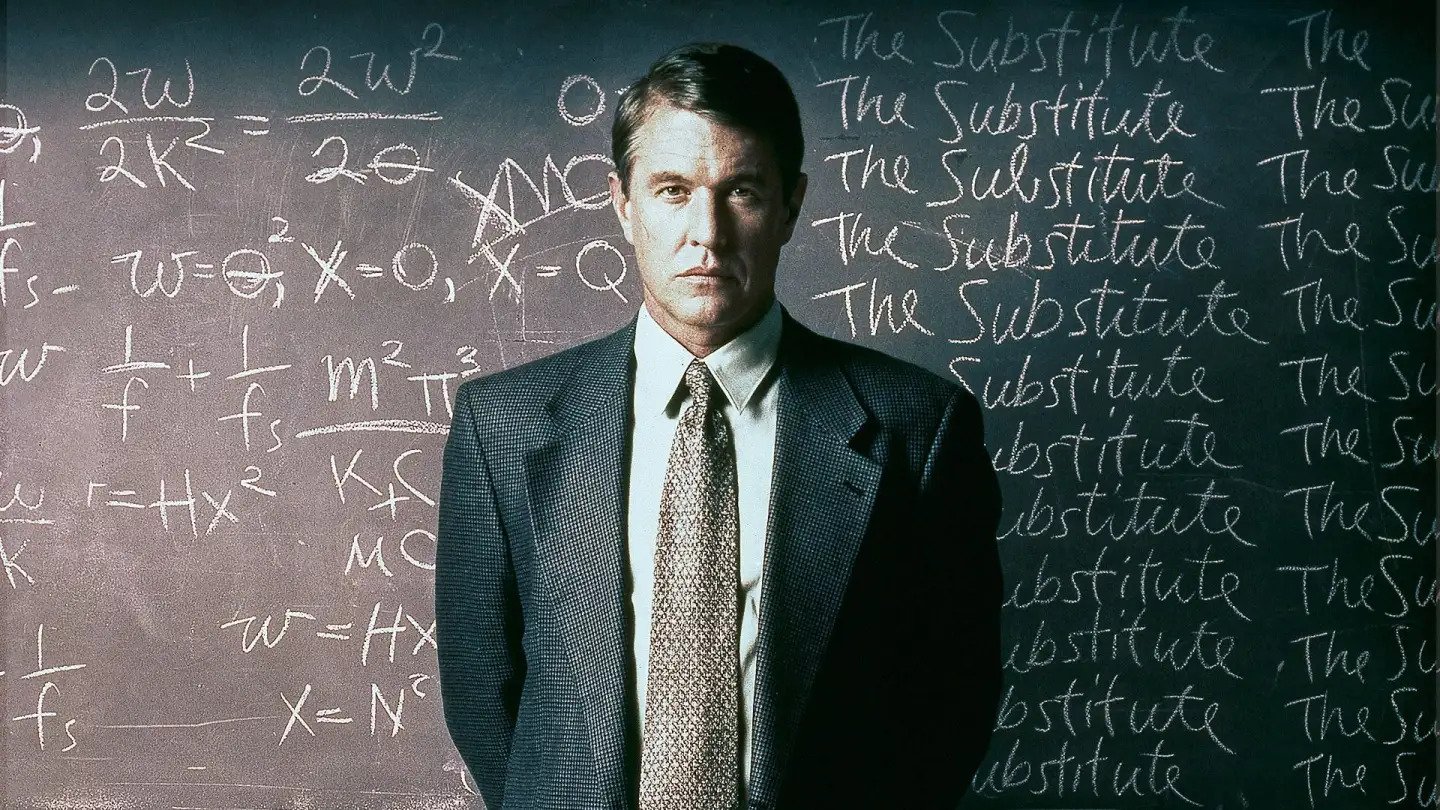
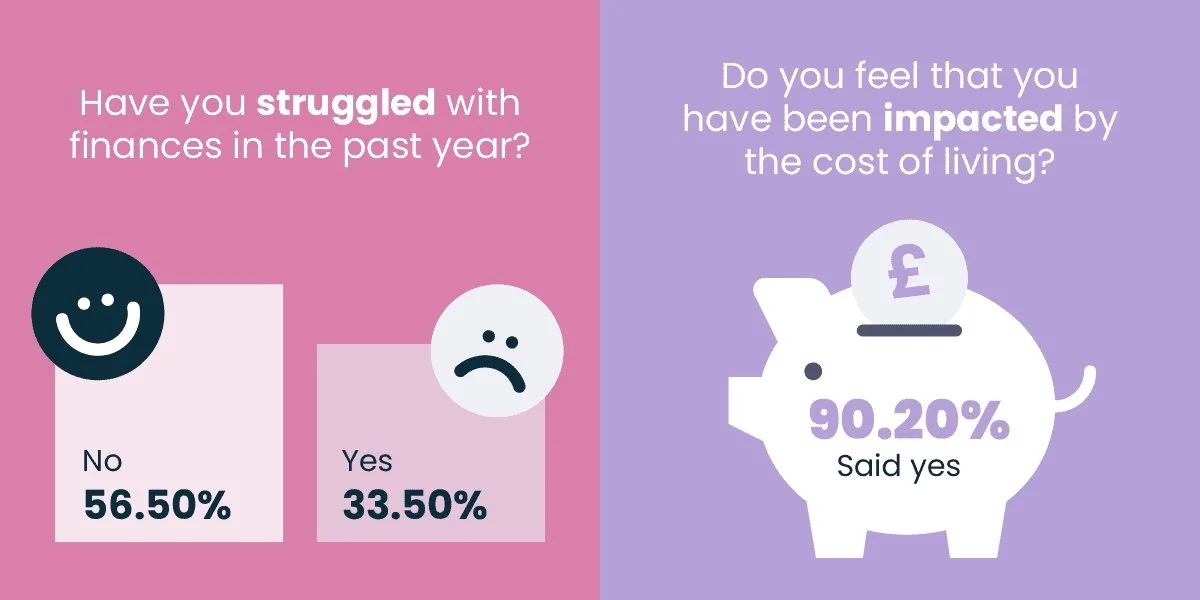






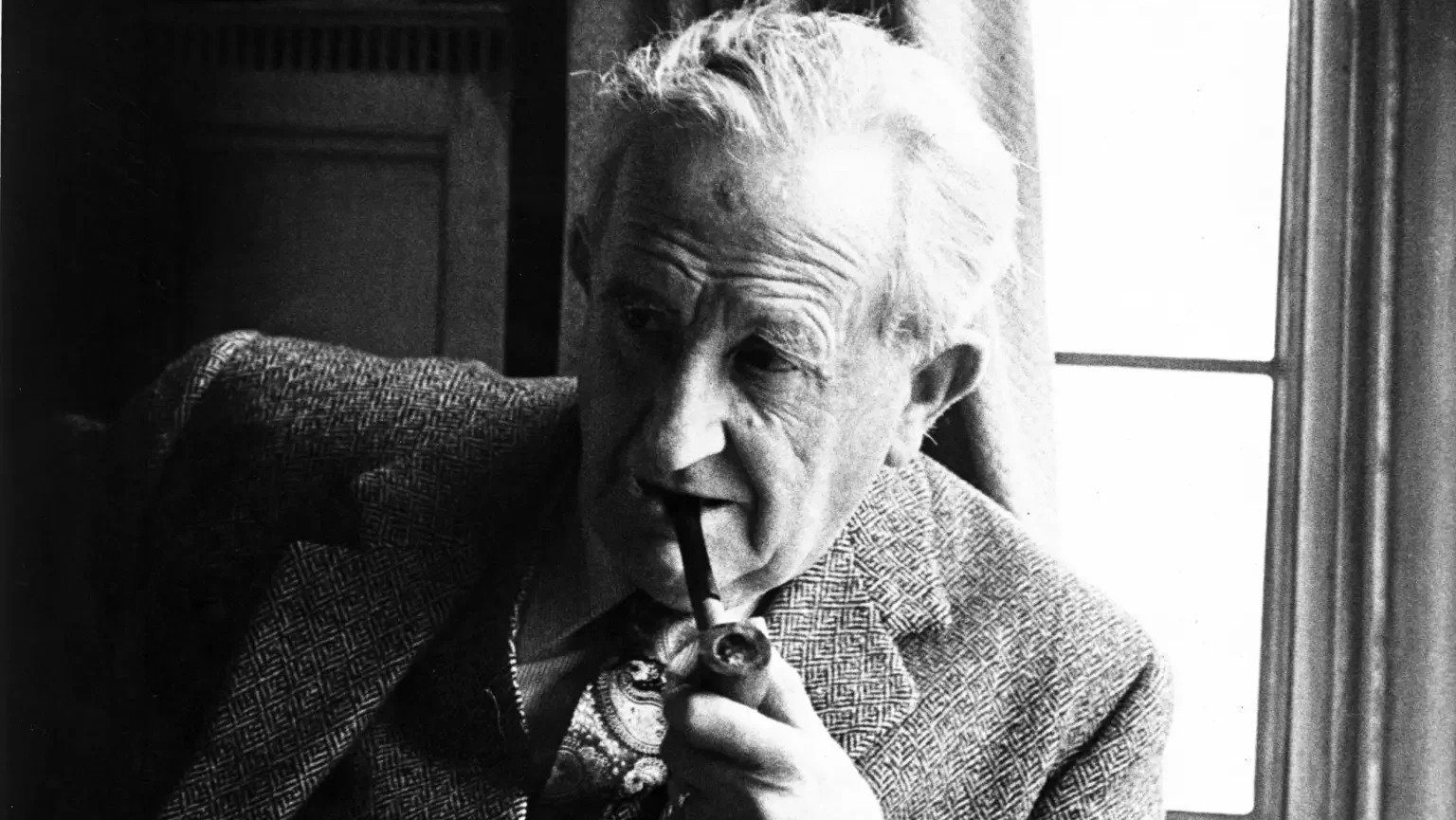


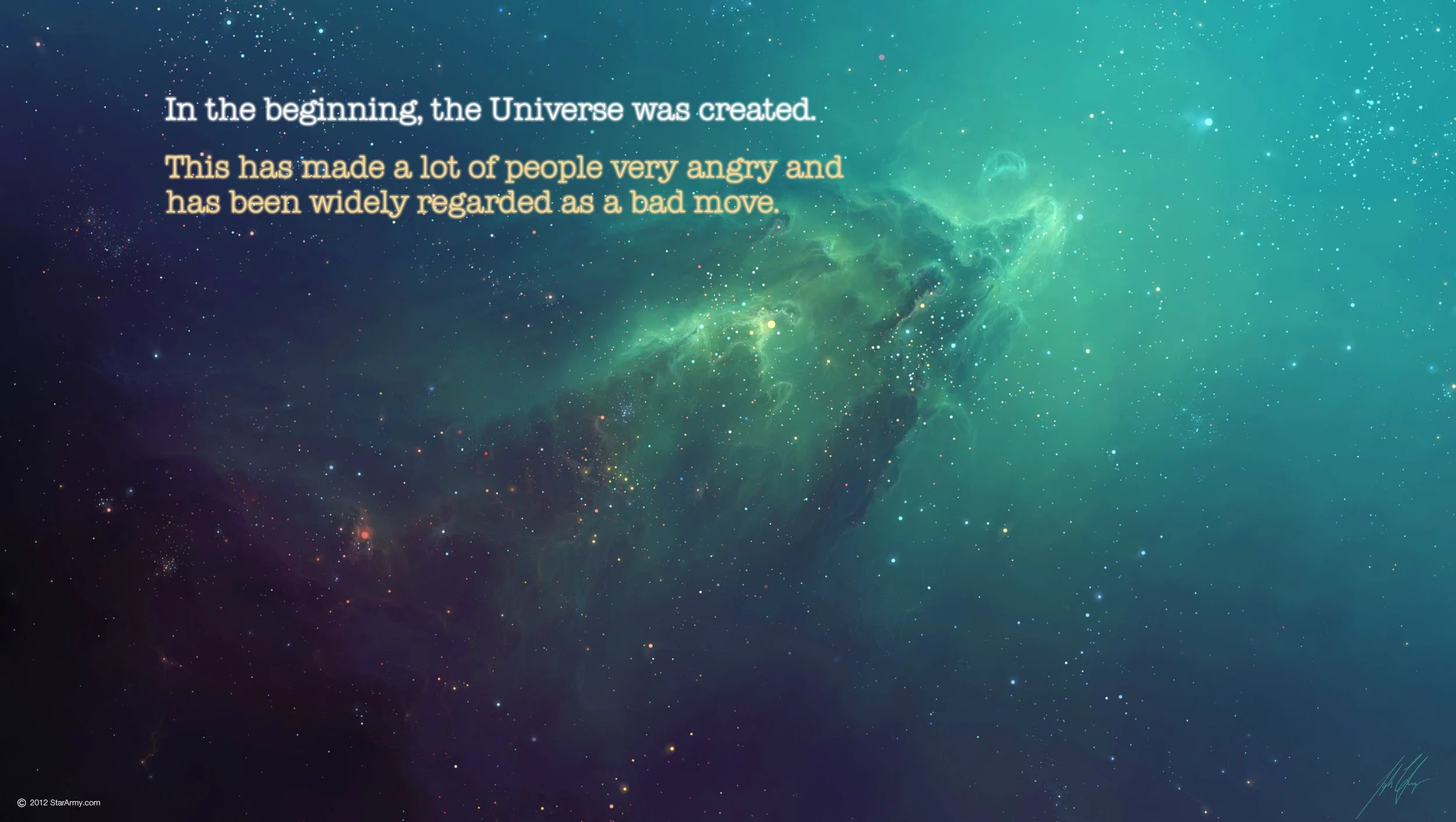





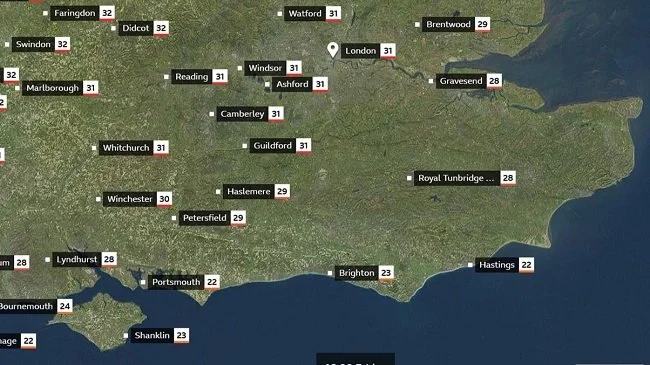




MMO Tropes: Exploration
“The MMO genre is rife with its own set of tropes; recurring themes and motifs that have become established and ubiquitous. All of which are ideal material for a hastily produced, lazily conceived, recurring blog post”. Many MMORPGs are set in open worlds that are designed to mimic a real and living reality. Beautiful fantasy or science fiction themed environments, rich with diverse fauna and flora. Settlements are filled with people that go about their daily routine. There is often a day and night cycle and changing weather. All of which is intended to make the game world feel alive. Furthermore, these open worlds become a source of content of their own. Not only do they provide the environment for the various quests and missions that players undertake but a source of exploration and discovery. Something that many players value more than other types of game content.
“The MMO genre is rife with its own set of tropes; recurring themes and motifs that have become established and ubiquitous. All of which are ideal material for a hastily produced, lazily conceived, recurring blog post”. Many MMORPGs are set in open worlds that are designed to mimic a real and living reality. Beautiful fantasy or science fiction themed environments, rich with diverse fauna and flora. Settlements are filled with people that go about their daily routine. There is often a day and night cycle and changing weather. All of which is intended to make the game world feel alive. Furthermore, these open worlds become a source of content of their own. Not only do they provide the environment for the various quests and missions that players undertake but a source of exploration and discovery. Something that many players value more than other types of game content.
Over the last 20 plus years, the MMO genre has refined this notion of exploration, capitalising upon the fact that humans are curious animals and that they’ll happily set aside a story to simply go and see what is out there in a virtual world. Hence many games of this kind now make exploration a source of rewards. Achievements and accolades encourage players to look in every nook and cranny and leave no stone unturned in the hope of finding everything there is to discover in the game. The Lord of the Rings Online does this very well, drawing heavily upon established lore from the Tolkien Legendarium. Hence a player travelling through a canonical region such as the Trollshaws, will seek to find the Three Stone Trolls that captured Bilbo and the Dwarves. Similarly, an enthusiastic fan can marvel at the way Deep Space Nine has been faithfully recreated in Star Trek Online.
Guild Wars 2 takes an interesting approach to the way in which it presents its zone maps to the player. By default they’re vague and indistinct, giving the player a notion of the type of environment present, but nothing more. They are devoid of specific detail until you start travelling through the region and speaking to NPCs. Then the details appear. LOTRO used to do this upon release, calling the intentional obscuring “the fog of war” but it was later removed as a feature. Now the maps show the terrain clearly. Star Wars: The Old Republic similarly withholds map data but I find that this particular MMO’s environments are not as uniformly engaging as other MMOs. Some are certainly better than others. But for every character rich environment such as Alderaan, there are generic featureless wastes such as Tatooine and Hoth. Guild Wars 2 excels at making verticality interesting, especially now that they’ve introduced specialist mounts allowing players to reach obscure topographical features.
Curiously Star Trek Online, a game based upon a franchise predicated upon space exploration, doesn’t offer players a great deal of planetary content to discover. Only a small percentage of planets can be visited and these are usually small and self contained instances. However, space travel is substantive with the galaxy being divided into four quadrants, as referenced in the various TV shows. Another game that has interesting regional zones but which are heavily compartmentalised is The Elder Scrolls Online. Although they are visually diverse, I’ve never felt that Tamriel comes across as a coherent wider world, in the same way as Middle-earth does in LOTRO. Instancing, invisible walls and carefully constructed mountain ranges that funnel players in specific directions are a necessary evil in the MMO genre. However, some games just do it better than others maintaining the illusion of an open world.
My recent return to Guild Wars 2 has been greatly aided by the games focus on exploration. Perhaps lessons were learned from the Heart of Thorns expansion which introduced verticality into the game but relied on jumping and gliding skills to explore. Mounts address this mechanic in a far more practical and entertaining way. Exploration also compensates those not especially engaged by the lore of the game. The ability to reach obscure parts of the world map is very addictive and challenging. I begin to see the appeal of going “off map” which some players delight in doing. Exploration is now an integral aspect of the MMO genre and as such, players expect their searching to be rewarded by Easter Eggs and pop culture homages. Like the “killer rabbit” in a cave reference in LOTRO which is a nod to Monty Python and the Holy Grail. It raises the question as to whether this aspect of gameplay could become the foundation of an entire MMO. Something that No Man’s Sky has come close to over time.