
VPNs, Web Browsers and Synchronising Bookmarks
I tend to compartmentalise my online activities. I use different browsers and apps for specific tasks. For example, I specifically use Opera to access websites that are geo-blocked in the UK. This is because it has an integral VPN that up until today, has been free. Sadly, it is now disabled by default and requires a subscription to activate. I’m not really surprised by this move. It was free while being developed and tested and naturally during this period of time, many users have become reliant on it. The cost of a subscription from Opera is no different to that of any other established VPN provider, although they offer a lot more functionality. So I decided to take advantage of the current Black Friday sales and bought an18 month subscription to Surfshark, which comes with a lot more bells and whistles. This includes extensions for all the main web browsers along with more complex VPN tools.
I tend to compartmentalise my online activities. I use different browsers and apps for specific tasks. For example, I specifically use Opera to access websites that are geo-blocked in the UK. This is because it has an integral VPN that up until today, has been free. Sadly, it is now disabled by default and requires a subscription to activate. I’m not really surprised by this move. It was free while being developed and tested and naturally during this period of time, many users have become reliant on it. The cost of a subscription from Opera is no different to that of any other established VPN provider, although they offer a lot more functionality. So I decided to take advantage of the current Black Friday sales and bought an18 month subscription to Surfshark, which comes with a lot more bells and whistles. This includes extensions for all the main web browsers along with more complex VPN tools.
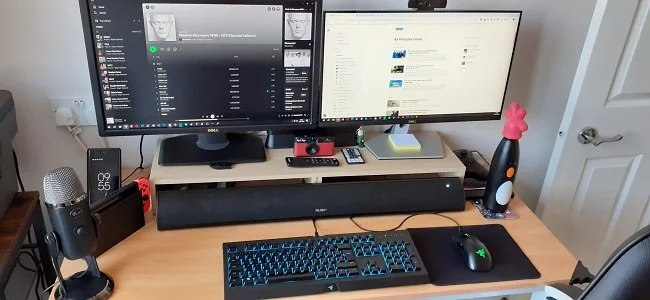
As a result of this change, I no longer have any need for Opera and so I have uninstalled it. I use Chrome and Firefox for everyday use. I run Chrome on my primary monitor for general browsing and Firefox on my second screen specifically for Twitter/X, Mastodon and Blue Sky. I like to keep an eye on my various social media timelines for breaking news and to see what my internet chums are up to. Both browsers have AdBlocker Ultimate and Adblock for YouTube extensions installed. I simply wouldn’t browse the internet without them. I have some additional quality of life extensions installed on Chrome, such as an audio recorder and a Flash emulator. I also have a very useful add-on called New Tab Draft which allows you to write in plain text on any new tab opened. These are kept permanently until deleted. It’s very useful for quickly copying and pasting information or writing some notes on the fly.
For convenience, it is useful to synchronise bookmarks between web browsers. Until recently, this was something I did manually but it was a pain in the butt. I would often forget to copy links over, so there were frequent discrepancies between browsers. However, like so many online “problems”, you can always find someone who has already encountered it and addressed it. xBrowserSync is a free service that allows for seamless synchronisation of bookmarks via a simple extension. It is quick, easy and password protected. Having such a facility also encourages me to undertake regular housekeeping with regard to bookmarks. I recently purged several dozen, many of which were for obsolete services or for websites that don’t even exist anymore. Bookmarks are a worrying catalogue of all my passing interests and I had many for video games and TV shows that have “been and gone”.
After 30 years plus of internet access, it is nice to finally have my browsing requirements so well catered for on PC. It is a shame that the same cannot be said for web browsing on a phone or tablet. I may be incorrect but there just doesn’t seem to be the same ecosystem of extensions and add-ons available. I tend to avoid web browsing on my phone as it quickly becomes a hellish nightmare of pop ups, autoplaying videos and pervasive advertising. Combined with the ongoing “enshittification” of apps, the whole matter gets worse over time. I will look for workarounds in the New Year and see if internet access via your phone can be made more manageable. I suspect it may well be a harder problem to solve than PC web browsing but again, I’m sure some smart people have already taken steps to address the matter.





















Revisiting Star Wars: The Old Republic Part 3
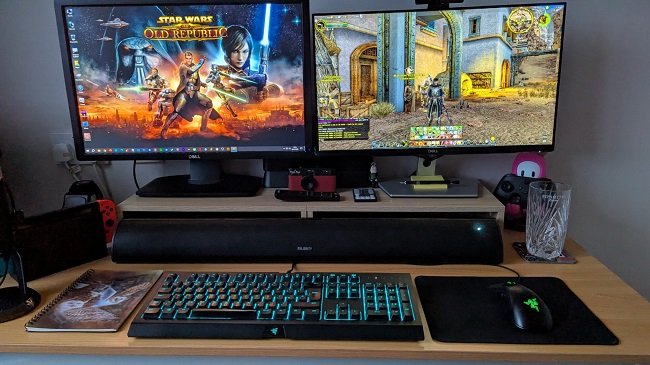
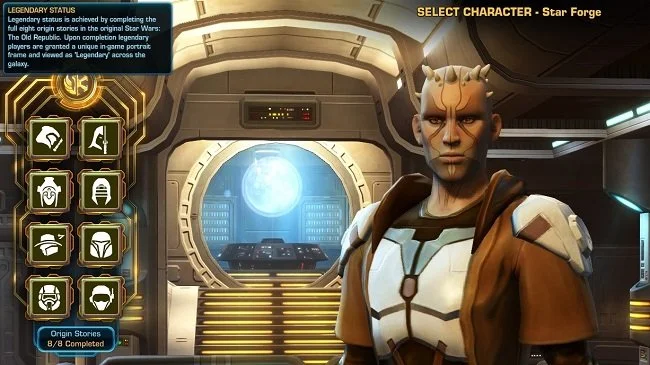
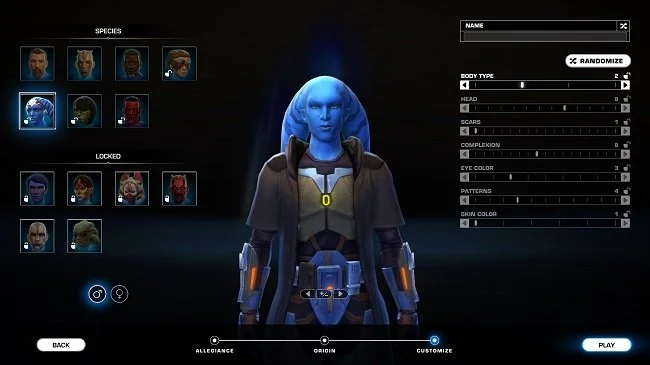
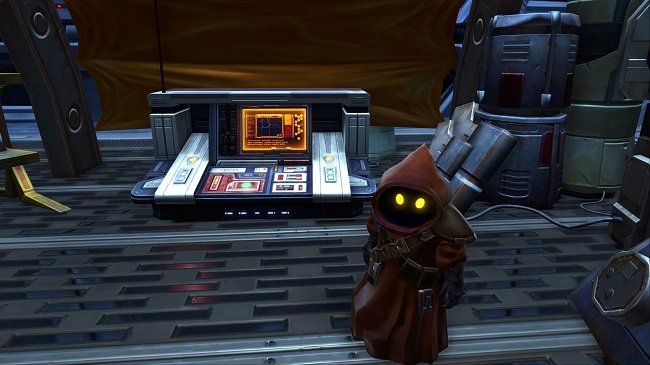
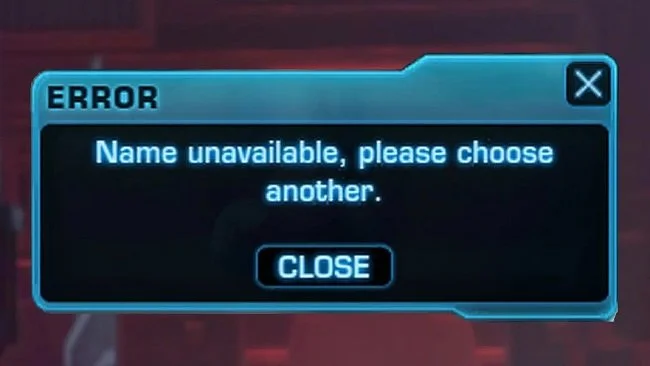
A recent email prompted me to return to the MMORPG, Star Wars: The Old Republic. Developers Broadsword are “encouraging” former players to log back into the game to prevent the potential “release” of character names from “inactive” accounts. This has happened in the past, so I decided it would be a good time to return to the game. I last played in early 2022 when I created Trooper, Sith Warrior and Imperial Agent alts. The great thing about SWTOR is that all classes have unique stories so alts are never dull. This time I intend to complete the Jedi Consular, Jedi Knight and Sith Inquisitor classes. So I reinstalled the game, subscribed to enjoy full access to all content and also purchased a few Cartel Coins in case anything in the game store took my fancy. Hence the latest instalment of this recurring post, after a sizable break.
A recent email prompted me to return to the MMORPG, Star Wars: The Old Republic. Developers Broadsword are “encouraging” former players to log back into the game to prevent the potential “release” of character names from “inactive” accounts. This has happened in the past, so I decided it would be a good time to return to the game. I last played in early 2022 when I created Trooper, Sith Warrior and Imperial Agent alts. The great thing about SWTOR is that all classes have unique stories so alts are never dull. This time I intend to complete the Jedi Consular, Jedi Knight and Sith Inquisitor classes. So I reinstalled the game, subscribed to enjoy full access to all content and also purchased a few Cartel Coins in case anything in the game store took my fancy. Hence the latest instalment of this recurring post, after a sizable break.
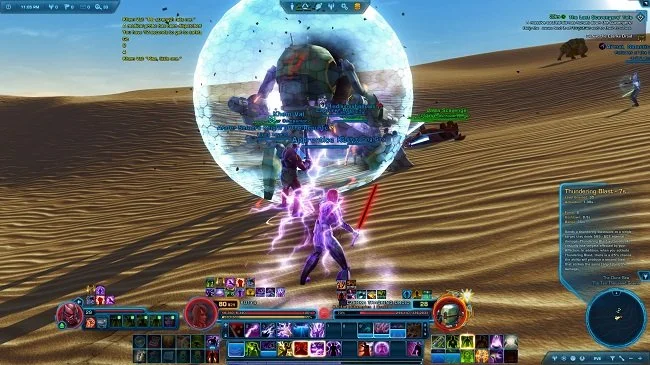
When I last played SWTOR, I “acquired” a substantial quantity of in-game currency which I shared among alts for miscellaneous spending. I placed the remainder in Legacy Storage, which is an account-wide vault. The Legacy system itself offers some useful account wide unlocks which are very beneficial for alts. Both the money and early access to a companion, has made levelling a new Jedi Consular character relatively hassle free. I am currently playing through the class story at a leisurely pace and have also decided on a whim, to try and unlock the HK-51 Assassin Droid companion. The game certainly doesn’t lack content for a new or returning player. As well as each class having a unique story, so does each planet. There have also been various expansions released over the years. Plus there’s all the group instances that you can quickly jump into and endless amounts of cosmetics to mess about with.
As I said in the previous instalments of this post, SWTOR exudes Star Wars ambience through its design and style. The game is 14 years old but the stylised, cartoonesque graphics still hold up well and were definitely the right choice. I feel that Bioware/Broadsword have done a much better job of creating original content than Disney. The stories and their approach to the source material is far more creative and adult than a lot of the TV shows and films. There is a genuine appreciation of the source material and an intelligent extrapolation and exploration of its core themes. SWTOR has an exceptional score, especially the material for the original base game. Many MMOs have strong musical accompaniment but SWTOR seems to go that extra mile and has numerous robust cues that all seem to be in exactly the right Star Wars idiom. It all makes for a very immersive experience.
Naturally, there are some aspects of SWTOR that do betray its age. These are often design choices that were commonplace among the previous generation of MMOs. The ever increasing time penalty between being defeated and revived is one example. It is archaic by modern standards and singularly annoying. Impeding a player from playing your own game is staggeringly crass. Combat is somewhat slow, especially when your level is lowered for the zone that you’re in. Your DPS is weak but you’re sufficiently robust to not be in any tangible danger. Hence it feels like you’re whittling away at a big stick with a very small penknife. The game also does a very poor job of explaining itself. I’m sure that I’m not getting as much as I can out of the Galactic Season and I seem to have accrued a lot of the game’s currencies, yet am at a loss as to whether I can spend them on something useful.
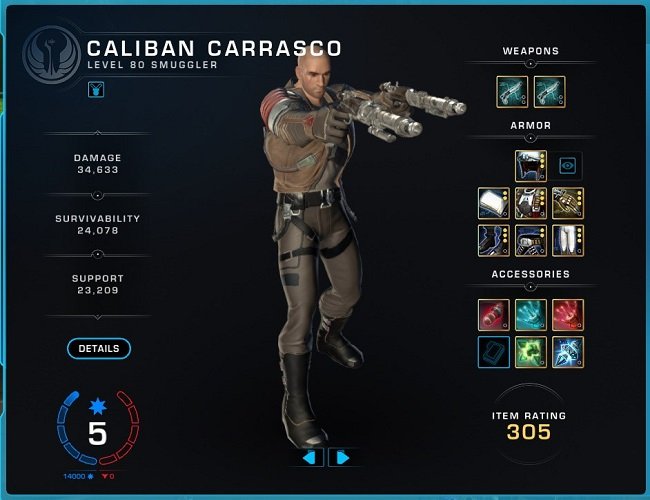
I don’t have any particular thoughts on the state of SWTOR’s endgame at present because I have no experience of it. I know new content has been delayed and that longterm players have concerns about the immediate future. However, for new or returning players SWTOR has a lot to offer, as long as you are cognisant of its terms. As for myself, I have goals to achieve and some minor problems to resolve. I need to recruit a few more players to my existing guild, mainly so they can then invite my new alts. I would also like to complete all story content on my oldest character, a Smuggler, that I’ve taken the furthest into the game. I also think it’s time I explored more group content. I suspect that’s where the good gear is all stashed. With the Christmas holiday season imminent, now is the perfect time to re-engage with this MMO.





Thinking Out Loud
I appreciate that talking about illness can often make people uncomfortable. It’s not exactly my favourite thing. However, I do not subscribe to the school of thought of avoiding such matters. We all get ill from time to time to varying degrees and we’re all going to die one day. You can’t just wish problems away. My significant other, Mrs P, has a history of heart disease and her overall health has declined this year. To cut a long story short, she is having surgery on 28th November to effectively repurpose a previously bypassed artery. Throughout this month we have been going to outpatient clinics as well as meetings with consultants. We have also been busy putting practical measures in place for her recovery. As you can imagine, it is a worrying time. Hence, I have not written much in recent weeks as her well being is my current focus.

Here we are again with another post consisting of some random thoughts and ideas that I’ve been recently contemplating. Some could be a bog post in themselves but that isn’t really the point of this recurring post. It’s more a case of just throwing some ideas out there. Please note that the first point of discussion is an explanation as to why things have been quiet of late, here at Contains Moderate Peril. As always, please feel free to leave a comment.
Illness
I appreciate that talking about illness can often make people uncomfortable. It’s not exactly my favourite thing. However, I do not subscribe to the school of thought of avoiding such matters. We all get ill from time to time to varying degrees and we’re all going to die one day. You can’t just wish problems away. My significant other, Mrs P, has a history of heart disease and her overall health has declined this year. To cut a long story short, she is having surgery on 28th November to effectively repurpose a previously bypassed artery. Throughout this month we have been going to outpatient clinics as well as meetings with consultants. We have also been busy putting practical measures in place for her recovery. As you can imagine, it is a worrying time. Hence, I have not written much in recent weeks as her well being is my current focus.
Blogging and more
With regard to my current blogging activities, I will post occasionally between now and the end of December but it will be very much on a “as and when” basis. At present, it is my intention to resume a more structured writing schedule in the New Year. I am also considering some additional projects. Let’s see how the year pans out and I’ll review the situation in January.
MMORPGs
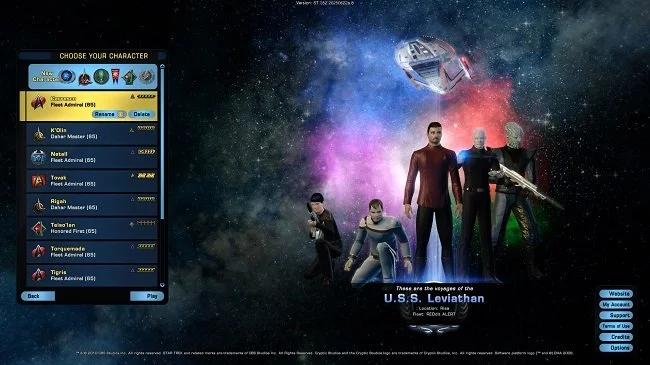
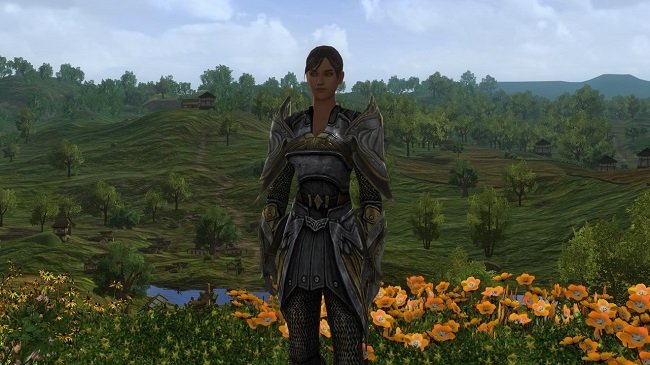
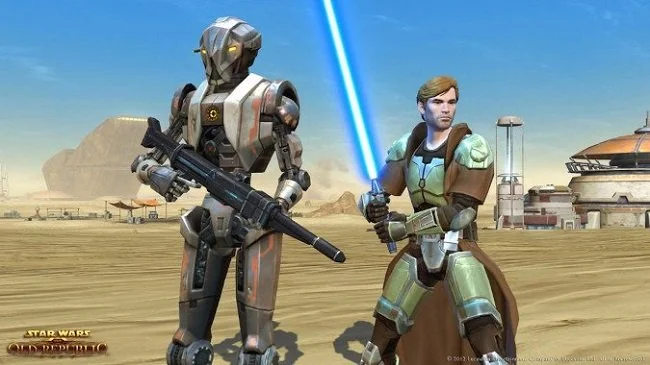
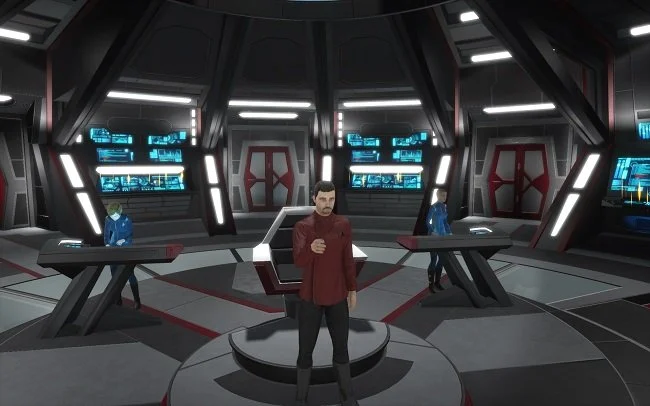
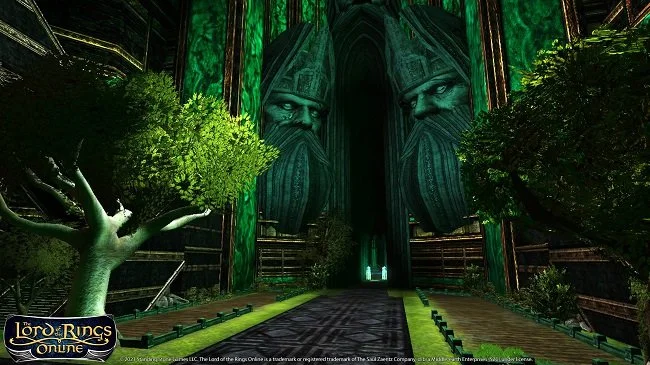
I have a cyclical relationship with the MMORPG genre of games. Certain MMOs such as The Lord of the Rings Online get and Star Trek Online get played at regular intervals. They are a gaming mainstay throughout the year. Others such as Guild Wars 2, The Elder Scrolls Online and Star Wars: The Old Republic get played every 18 months, or so. Often an event, expansion or even a YouTube video can prompt a return to a particular game. Recently I received an email from Broadsword, the developers of SWTOR, that they may reuse names from dormant accounts, so I reinstalled the game. As each class has a unique story associated with them, the game has a great deal of replayability. I have yet to play the Sith Inquisitor, Jedi Knight or Jedi Consular class, so I think I’ll resubscribe and play a new character over December.
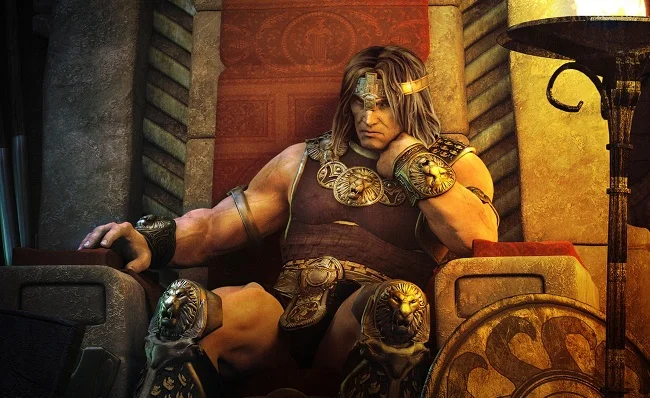
This nostalgic reverie for MMOs got me thinking about Age of Conan, which I have not played since 2011. Although effectively in maintenance mode by developers Funcom, I was able to log into my old account and reinstalled the game client. My original character was still where I left them but I had to rename them due to 13 years of account inactivity. I spent a few hours trying to figure the control out and actually managed to complete a few basic quests. Although the game has aged somewhat, it runs well and has a great deal of content to play through. I am tempted to create a new character and play through the game’s main storyline. However, it should be noted that this MMOs population is low. I only saw about five other players while on the Crom server, so if I do replay Age of Conan then I shall treat the game as an RPG.
Presents
Christmas is fast approaching, which raises the spectre of presents. Mrs P and I do not buy presents for each other, mainly because we don’t need anything. We don’t see the point in “novelty” gifts or anything that is just arbitrary. Plus I have a birthday that is a week before Christmas which further compounds the complexity of the issue. Hence presents are bought mainly for the grandchildren, our son and daughter-in-law. Let it suffice to say that through no fault of their own, the grandchildren are thoroughly spoilt with respect to presents. I actually witnessed them getting bored with opening Christmas presents, a few years ago. So we have tried to show some moderation this year but it remains to be seen whether any other family members will follow suit.
There is often a complex social dynamic to both giving and receiving gifts. People feel obliged by tradition to give presents and often are confused by comments like “ I don’t need anything, thanks”. Hence, I often find myself the recipient of novelty socks, aftershave and gin. I see these sorts of presents as the lesser of two evils. IE something you don’t need but don’t mind, as opposed to something that just isn’t needed and ends up going to a charity shop or being re-gifted. In a perfect world, it would be nice if someone actually considered what my hobbies and interests are and used those as a guide. A £20 Steam or Audible voucher would be most welcome but alas, is never considered. It was all much easier when I was a child in the seventies. My present aspirations seldom went beyond Lego and if I was lucky enough to get any, it was considered the proverbial “top brick of the chimney”.







Being Organised
I recently “tooted” on Mastodon “sometimes it’s a real drag to be the person who always has their shit together”. Although meant humorously, there was an element of truth to the remark. Allow me to explain. I always have a shopping bag in my coat pocket. Our household always has a supply of those things that you often run out of or need occasionally. Such as AA batteries, stamps and envelopes. If Mrs P and I are going out for the day, we’ll check the weather and traffic before we set off. There’s always a spare toner and drum unit for the printer, as well as paper. We’ll book a table at our favourite restaurant in advance of going to the West End show. Why do we do these things? Because we’re organised. I’m not trying to be smug about it, that’s just our default position and how we were raised. Perhaps it’s a generational thing?
I recently “tooted” on Mastodon “sometimes it’s a real drag to be the person who always has their shit together”. Although meant humorously, there was an element of truth to the remark. Allow me to explain. I always have a shopping bag in my coat pocket. Our household always has a supply of those things that you often run out of or need occasionally. Such as AA batteries, stamps and envelopes. If Mrs P and I are going out for the day, we’ll check the weather and traffic before we set off. There’s always a spare toner and drum unit for the printer, as well as paper. We’ll book a table at our favourite restaurant in advance of going to the West End show. Why do we do these things? Because we’re organised. I’m not trying to be smug about it, that’s just our default position and how we were raised. Perhaps it’s a generational thing?
Do organised people attract each other? I’m not sure if that is always the case. However, it is with Mrs P and myself. We are both organised when it comes to admin and finances. We tend not to “put off to tomorrow what can be done today” and we both have a capacity to think ahead and anticipate things that can come up and thus plan for them. It’s seldom rocket science or anything tricky. If we’re collecting the grandchildren from school and looking after them for a few hours, it’s pretty obvious to have food in the freezer and a cupboard full of snacks. Mrs P is always good at remembering birthdays and buying suitable gifts. It isn’t some sort of quasi super power. She just listens to people and makes a note in her diary. I have learned from this and tend to use the calendar and notes features on my phone. Being organised is a lot easier these days with the tools we have.
However, despite the obvious benefits of being prepared, it does come with its own set of problems. Once you are identified by others as “having your shit together” you find that an ad hoc network grows around you. It ranges from those who become at a low level, semi dependent upon your organisational skills, to members of your family that just end up in some pain in ass, symbiotic relationship. This manifests itself in a spectrum of enquiries and requests. At one end you have low level stuff like “can you scan this for me and turn it into a PDF”? At the other extreme there’s “I’ve been accused of a heinous crime. Will you bank roll my legal defence”? This can all become a little frustrating. Don’t get me wrong, I believe that it is important that we all help each other as we journey towards the grave but it can get a little one sided at times.
I used to work with someone who would always ask me the same question every three months or so. The answer could easily be found in the administrative code manual. After a while I said to the person in question “why do you keep asking me this. You should have learned this by now”. They replied “I don’t need to learn it, as I have you”. They meant it sincerely and as a compliment but it really left me aghast because to me it was an appalling personal philosophy. To a degree, I feel this way at times with those who keep asking me “can I borrow your lawn mower”. It would be nice if those who seem dependent, could occasionally manage their own needs. Mrs P thinks I’m being a little harsh and so I usually end up relenting. Hence “sometimes it’s a real drag to be the person who always has their shit together”.

























Thoughts on Blogging Part 20
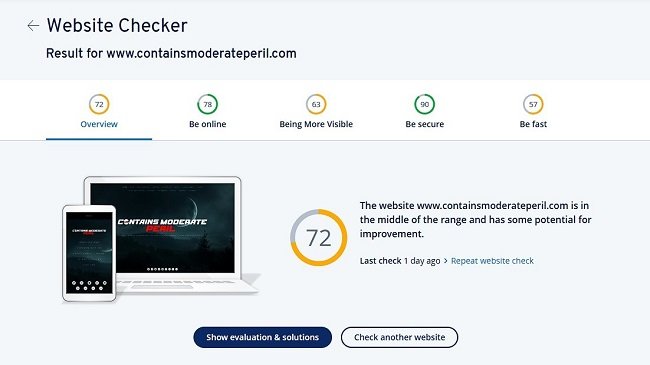
I spent some time in July, making some changes to Contains Moderate Peril. I replaced the branding and made some alterations to the “about” page to ensure that it was up to date and relevant. Not that anyone reads it as I still regularly receive enquiries about guest posts. Something I no longer do. Today, I made some further changes as it is my long term goal to grow the audience for this site. Hence I want to try and make it easier for visitors to find the content they seek and offer them related material. To facilitate this, I have added some additional menu options to the blog homepage. These act as filters, presenting specifically themed content for readers. Hence there is a “movie” button that lists all film reviews and similarly one for “video games”. There are also links for two specific video games, The Lord of the Rings Online and Star trek Online, as website statistics show that these are popular subjects.
I spent some time in July, making some changes to Contains Moderate Peril. I replaced the branding and made some alterations to the “about” page to ensure that it was up to date and relevant. Not that anyone reads it as I still regularly receive enquiries about guest posts. Something I no longer do. Today, I made some further changes as it is my long term goal to grow the audience for this site. Hence I want to try and make it easier for visitors to find the content they seek and offer them related material. To facilitate this, I have added some additional menu options to the blog homepage. These act as filters, presenting specifically themed content for readers. Hence there is a “movie” button that lists all film reviews and similarly one for “video games”. There are also links for two specific video games, The Lord of the Rings Online and Star trek Online, as website statistics show that these are popular subjects.
Walter Watches has also returned to Contains Moderate Peril. Last year I created a separate website for Walter’s “humorous” film watching shenanigans but upon reflection decided it would be wiser to keep it as part of this site. I closed the Blot account which was hosting Walter Watches but for some reason the site persists. I have contacted the developer of Blot and ask for them to erase the old data but have not yet received a response. So for practical reasons, I have temporarily linked to the old site, while I repost the original content here. I have also added a new page for giveaways. I used to do this a lot in the past but it’s something that has become a lot more complex to manage recently. Hence, most of the prizes on offer will be things like game codes and such like but I think these still have some inherent value.
Recently, I have been pondering the value of promoting blog posts via social media as an analysis of web traffic has shown it doesn’t garner a great deal of attention. Posts tend to do well when a third party website links to them, or when Google search results feature them. Hence I do not have a great deal of control on the matter. I consider SEO to have some benefits and feel that a lot of the claims about it are spurious. Promoting your blog is a perennial conundrum and I don’t believe there’s a definitive solution as of yet. Often it comes down to being in the right place at the right time. I’ve benefited from such circumstances in the past. Third party referrals can make a great deal of difference but they are hard to come by. I still feel that posting regular content is helpful and impacts positively upon your Google ranking. Going forward, that will be my go to policy.





















Bodiam Castle
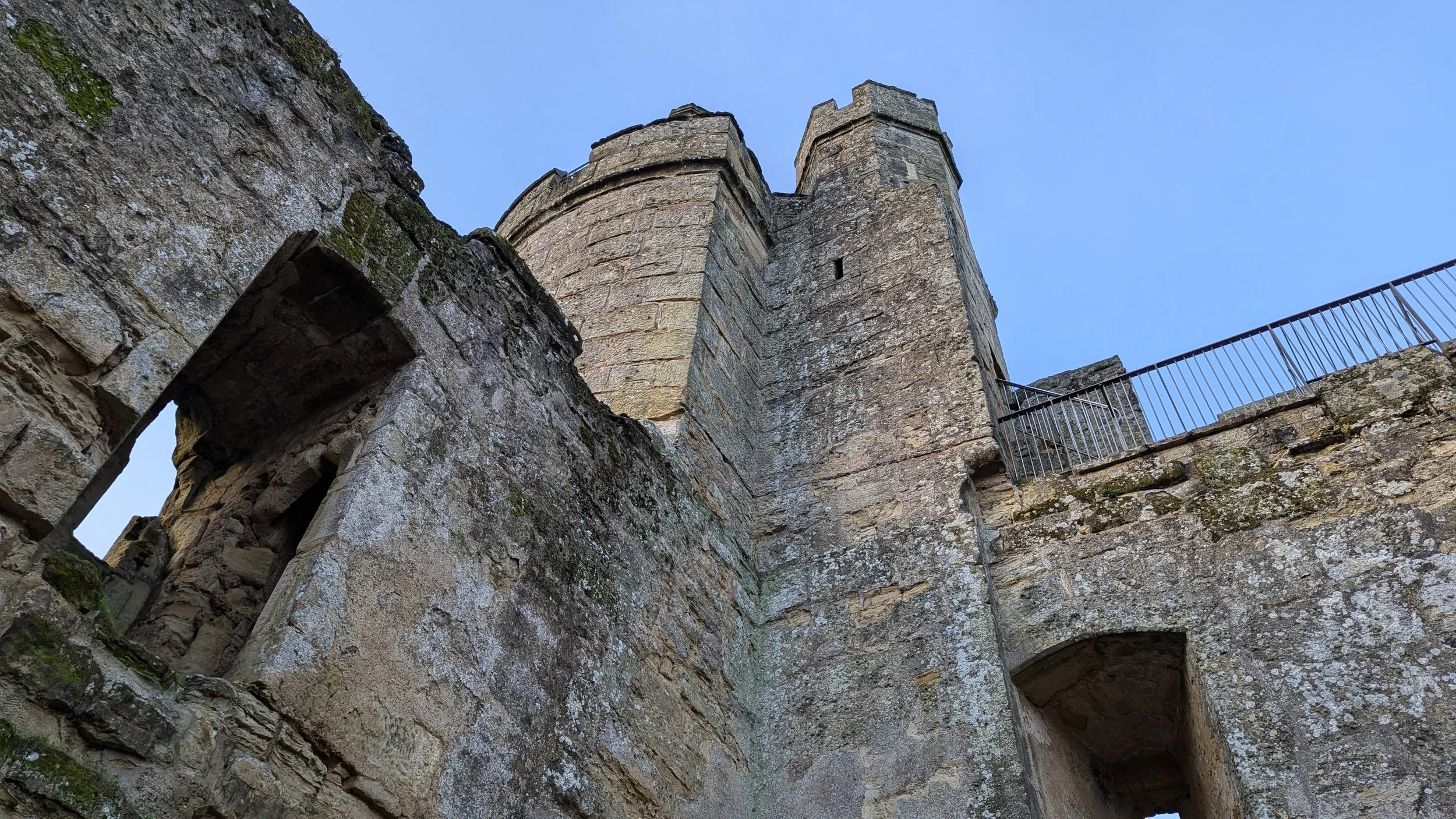
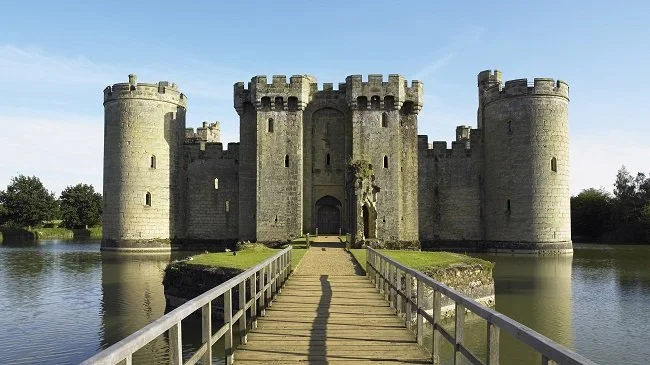
Bodiam Castle is a 14th-century moated castle located near Robertsbridge in East Sussex, England. It was built in 1385 by Sir Edward Dalyngrigge, a former knight of King Edward III. The castle’s primary purpose was to defend the local area against possible French invasion during the Hundred Years' War. Bodiam Castle has a quadrangular design and does not have a keep. All the various chambers and rooms were built adjacent to the outer defensive walls. The four corners and main entrance have towers, all of which feature crenellations. A substantial moat surrounds the castle, which served as a home for the Dalyngrigge family, as well as a seat of power to the manor of Bodiam. The castle remained within the Dalyngrigge family until the line became extinct. It remained a place of strategic importance during the War of the Roses and the English Civil War. It is currently owned and maintained by The National Trust.
Bodiam Castle is a 14th-century moated castle located near Robertsbridge in East Sussex, England. It was built in 1385 by Sir Edward Dalyngrigge, a former knight of King Edward III. The castle’s primary purpose was to defend the local area against possible French invasion during the Hundred Years' War. Bodiam Castle has a quadrangular design and does not have a keep. All the various chambers and rooms were built adjacent to the outer defensive walls. The four corners and main entrance have towers, all of which feature crenellations. A substantial moat surrounds the castle, which served as a home for the Dalyngrigge family, as well as a seat of power to the manor of Bodiam. The castle remained within the Dalyngrigge family until the line became extinct. It remained a place of strategic importance during the War of the Roses and the English Civil War. It is currently owned and maintained by The National Trust.
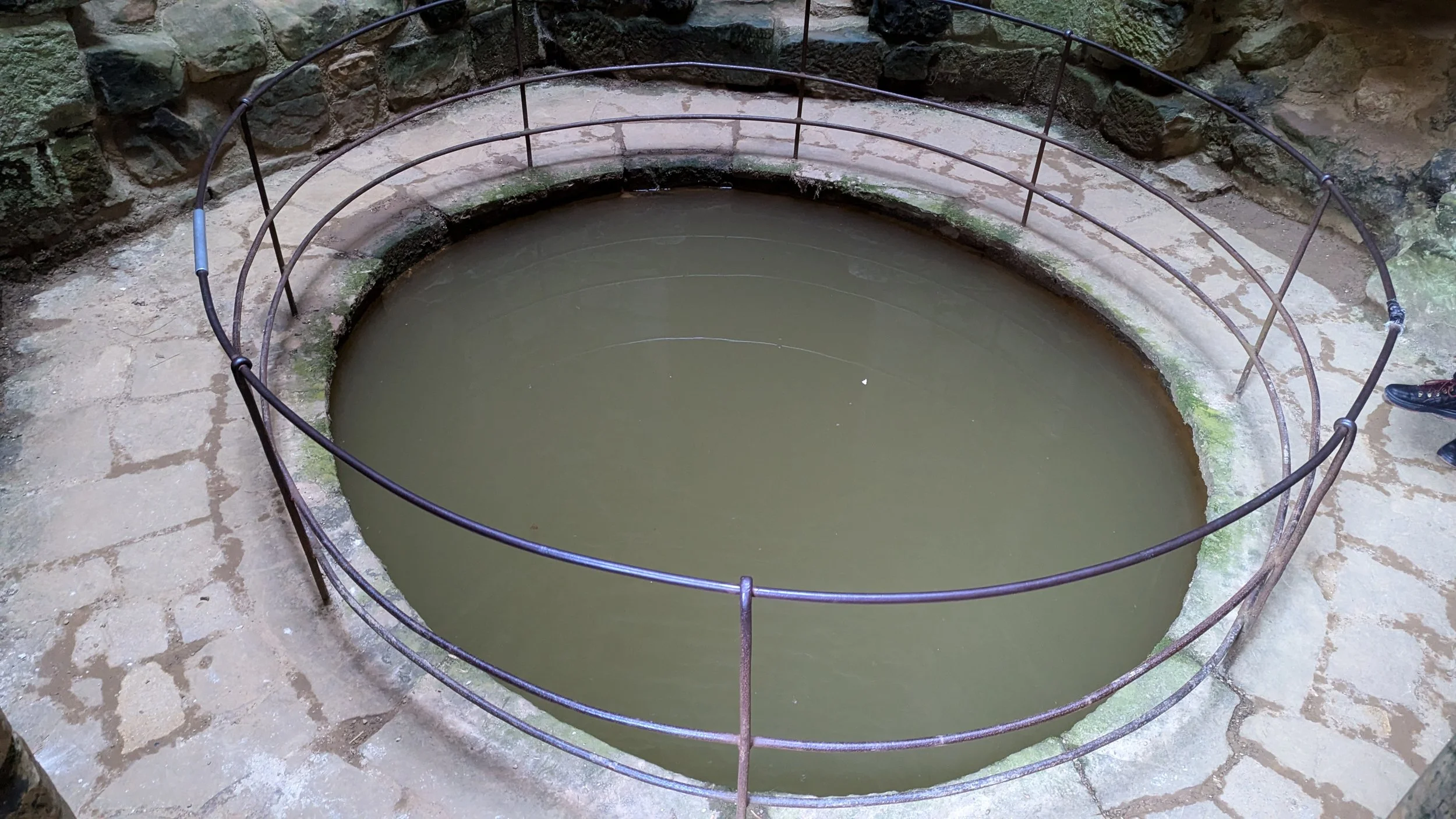
After the English Civil War, Bodiam Castle was partially dismantled, leaving the stone masonry but no internal structures. During the 19th century, the castle was partially restored and as of today remains in such condition. The barbican and gatehouse remain accessible and inside the castle visitors can look around the great hall, the kitchens and the Lord and Lady’s apartments. There is also a chapel with Flemish tiles and a carved screen. The postern tower is also available for viewing, after climbing a narrow stone spiral staircase. It does afford a good view over the castle grounds. Although the castle is incomplete, there is plenty of signage providing information about its strategic function, its residents and how it was built. There is some especially grim information about how the castle dealt with waste and that sewage was dumped into the moat.
The wider parkland and grounds that surround Bodiam Castle are made up of wetland, grassland, ancient trees and deadwood habitats. There are also archaeological features and walking routes throughout the grounds. This diverse combination of environments provides food, breeding sites and shelter for a broad variety of wildlife throughout the year. Bodiam Castle is also home to one of the most important roosts in the UK, for both Daubenton’s and Natterer’s bats. Depending on the time of year, some areas of the castle are temporarily closed when the bats are most active, such as when the bat pups are born and later, when learning to fly. The moat is also home to a variety of carp and other fish which will often congregate in the shade of the moat bridge.
Bodiam Castle is an interesting attraction offering historical insight and the opportunity for a walk in the East Sussex countryside. Anglers should note that it is close to the River Rother. For those with an interest in church architecture, St Giles’ Church is nearby in the village of Bodiam, which dates back to the 13th century. Furthermore, after several hours perusing Bodiam Castle, the village of Robertsbridge is nearby and is an ideal location for lunch. The only potential downside to a daytrip in this area is that it is really only accessible by car. There are direct trains from Victoria, Cannon Street and London Bridge to Robertsbridge and a bus service that links the surrounding villages but it is a rather “scenic route”. However, travel concerns aside, Bodiam castle is another fine example of a well presented historical site, managed by the National Trust and is well worth a visit, especially in good weather.






























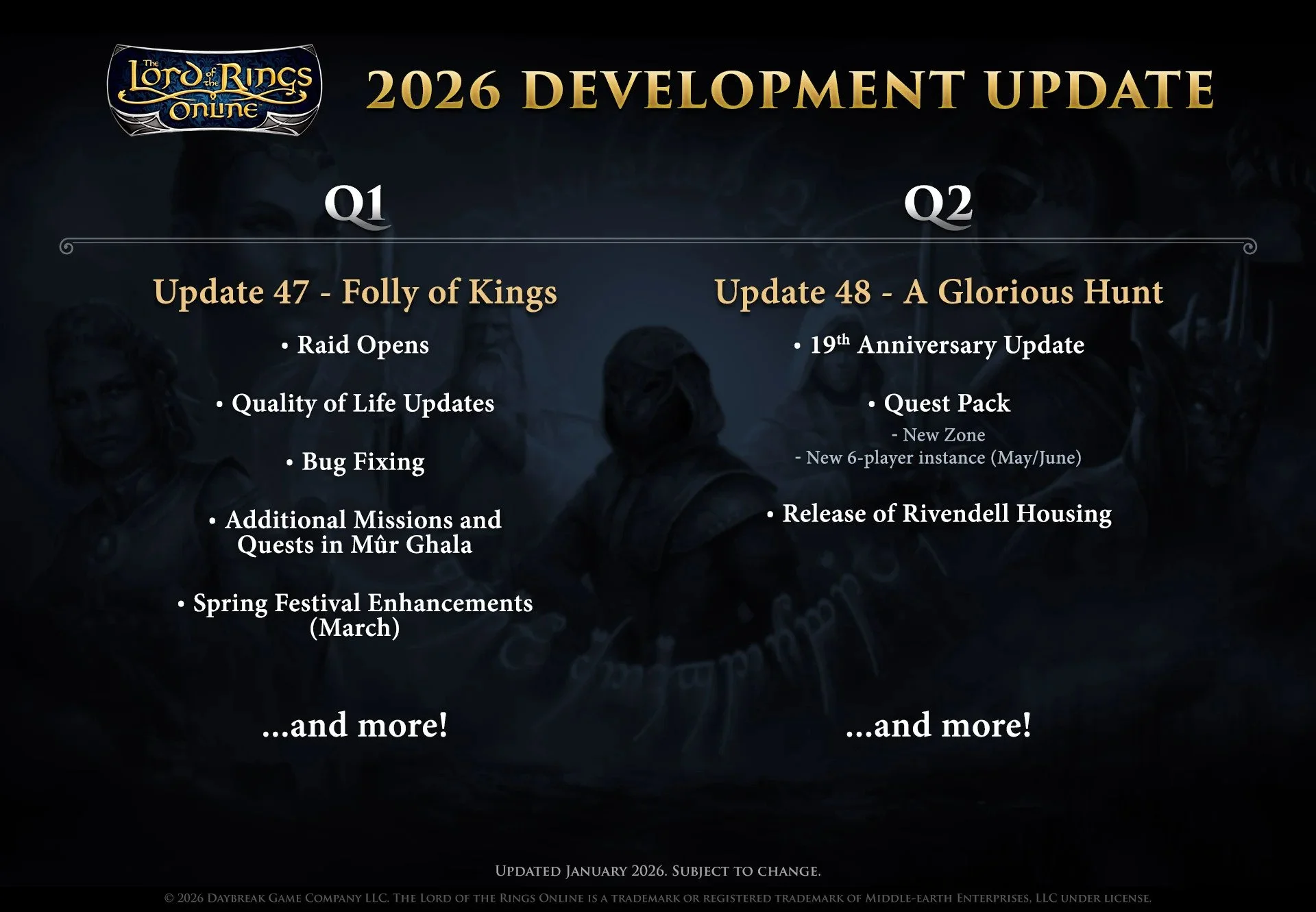
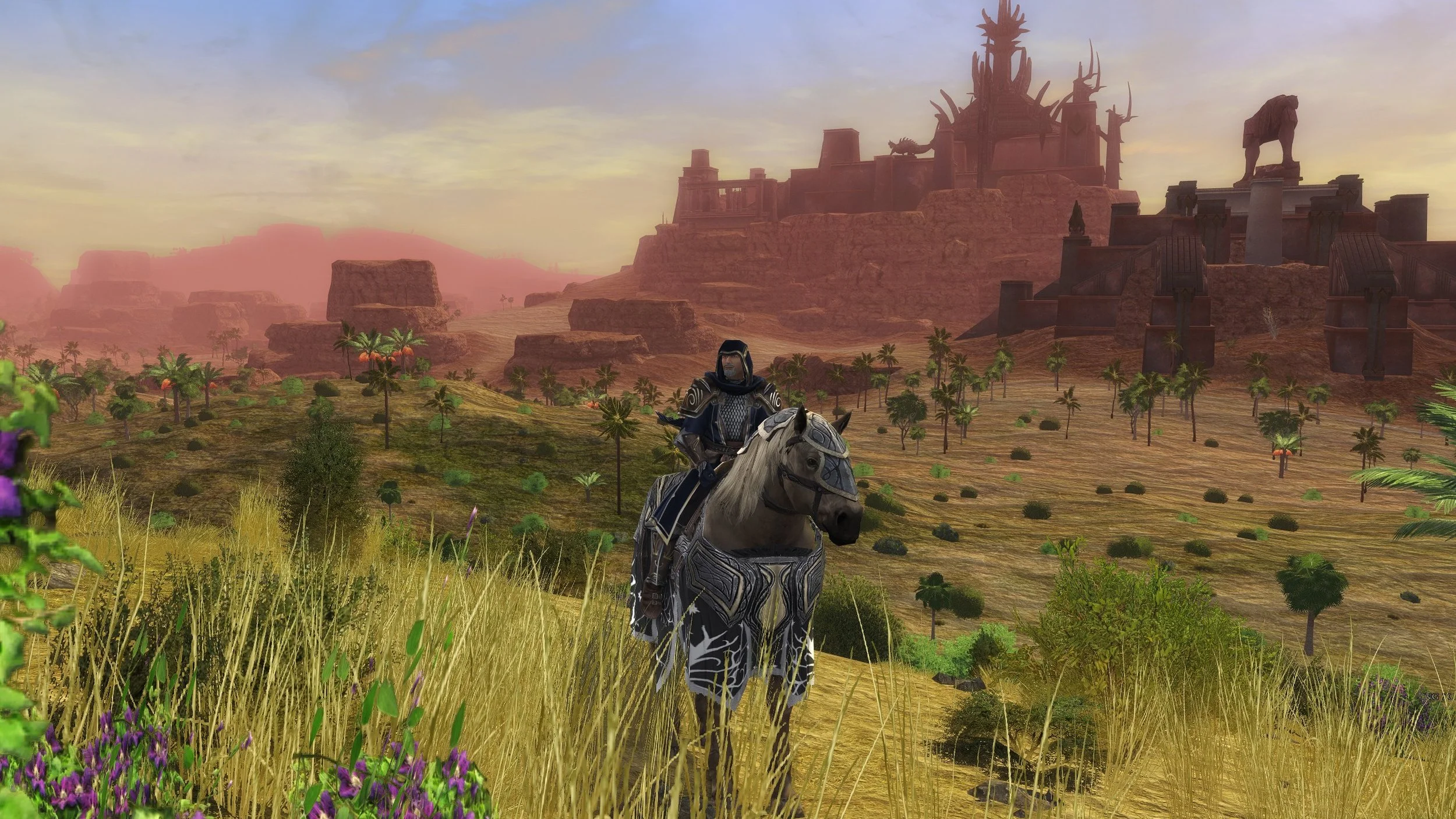
LOTRO: Voice Acting
One of the most noticeable things that ages the MMORPG, The Lord of the Rings Online, is the lack of comprehensive voice acting throughout the game. If a player interacts with an NPC, they will provide generic greetings or ambient dialogue. Phrases such as “hello there” of “our mission is dire” occur regularly. However, the majority of quest text is not spoken, unless it is part of the Epic Story line. If it is, the first sentence is usually voice acted but no more than that. Cutscenes within instances have dialogue, as are those that occur at key parts of the Epic Story. Overall, LOTRO does not have the extensive voice acting that a similar MMO such as Star Trek Online has. This is a shame, considering how much time and effort has been taken with other aspects of the game.
One of the most noticeable things that ages the MMORPG, The Lord of the Rings Online, is the lack of comprehensive voice acting throughout the game. If a player interacts with an NPC, they will provide generic greetings or ambient dialogue. Phrases such as “hello there” of “our mission is dire” occur regularly. However, the majority of quest text is not spoken, unless it is part of the Epic Story line. If it is, the first sentence is usually voice acted but no more than that. Cutscenes within instances have dialogue, as are those that occur at key parts of the Epic Story. Overall, LOTRO does not have the extensive voice acting that a similar MMO such as Star Trek Online has. This is a shame, considering how much time and effort has been taken with other aspects of the game.
LOTRO was conceived and developed over the course of 2005 and 2006 and although the technology available at the time could accommodate comprehensive voice acting, its inclusion would have certainly had logistical and financial consequences upon the game’s production. Additional audio would have increased the size of the game installation and constantly maintaining and adding dialogue would have increased production costs. Due to the nature of the game, a great deal of time and effort would also have been required ensuring that all dialogue was correctly pronounced and grammatically correct. Tolkien fans are very particular about this. So it can be argued that Turbine/Standing Stone Games have dodged a bullet by deciding to limit the amount of voice acting in the game to date.
Some players will argue that the lack of comprehensive voice acting is a benefit, allowing them to focus on the text, rather than the actor’s performance. Other LOTRO players already have little or no interest in the finer points of the narrative and are focused far more on “getting the job done”. Such players would therefore be indifferent to further voice acting. However, I am in the opposite camp and enjoy LOTRO mainly due to the stories underpinning both the major and minor quests. For me, good voice acting greatly enhances a story and I often struggle to read the wall of text presented by the NPC. This problem gets worse when playing the game on a 4K monitor due to the game’s non-scaling UI. Therefore, the addition of voice acting would greatly help in keeping me apprised of the plot.
After my recent experimentation with LUA Plugins, I wondered if anyone had ever tried to develop some sort of text-to speech facility that could be added to the game. It turns out that it has already been done to some degrees of success. I found the following post on the Official LOTRO Forums by The Almighty Tater, which references a Python programme they have developed called LOTRO to Speech. For those interested in trying this service you can access all the required files and details of how to install and configure them here. Example videos can be found over at the LOTRO subreddit. Another LOTRO player, Luthryth, has indicated that they are developing a text-to-speech app. They have posted videos of their progress on YouTube, an example of which is posted below . Again, this seems to work quite well.
Obviously, with both of these programs being third party services and a workaround rather than a solution, there are inevitably some issues to consider. Relying on optical character recognition to parse the quest text can be problematic and there is scope for dialogue to be misread. Using cloud based, AI voice services to provide in-game narration introduces the possibility of lag. Also not all voices will be character appropriate, especially if you use the free text-to-speech services. Then there is the issue of pronunciation which may well bother some Tolkien fans. However, all of these negatives are outweighed by the potential benefits that text-to speech can bring to the game. Such a service makes LOTRO far more accessible. Furthermore, as technology progresses, there is scope for programs such as LOTRO to Speech to improve.
Although I wholeheartedly approve of player created apps such as these, if given a choice I’d much prefer voice acting to be officially part of the game. Sadly, although I do not consider it impossible to retrospectively add this to LOTRO, it is highly unlikely that it ever will be due to the cost involved and the law of diminishing returns as the game enters the next phase of its lifecycle (I’ll leave it to you to figure out what that may be). In the meantime LOTRO to Speech is a suitable compromise that can fill the gap. As to the future, if there is ever to be a new Middle-earth themed MMORPG, or if Daybreak Games ever intend to bankroll the creation of a LOTRO 2.0, I would expect it to be fully voiced by default. I don’t think the design choice made back in 2005 would be acceptable to modern gamers.





Music by John Williams (2024)
Music by John Williams is a documentary celebration of the famous composer and his illustrious body of work. It provides some interesting biographical background information as to how the man was born into a family of talented musicians. It then traces his rise from pianist for hire to the most well known film composer today. Along the way, anyone who is anyone in film and music appears to heap justifiable praise upon him and his body of work. It also features a continuous medley of John Williams’ greatest hits, as it catalogues his work in broadly chronological order. Music by John Williams is an upbeat and positive love letter to the composer and exactly what you would expect, when you consider that the documentary was produced by his friends and peers.
Music by John Williams is a documentary celebration of the famous composer and his illustrious body of work. It provides some interesting biographical background information as to how the man was born into a family of talented musicians. It then traces his rise from pianist for hire to the most well known film composer today. Along the way, anyone who is anyone in film and music appears to heap justifiable praise upon him and his body of work. It also features a continuous medley of John Williams’ greatest hits, as it catalogues his work in broadly chronological order. Music by John Williams is an upbeat and positive love letter to the composer and exactly what you would expect, when you consider that the documentary was produced by his friends and peers.
“How does he do it”? This is a question that is continuously raised throughout the documentary’s 105 minute running time, by the various talking heads such as J.J. Abrams, Chris Columbus and Seth McFarlane. Naturally, this is a perfectly logical question considering the composer’s ability to continuously write outstanding music for film after film. However, it becomes clear after a while that this particular documentary doesn’t really intend to answer this question, preferring to simply reflect on the composer’s work and frame his skills in enigmatic terms. It is a perfectly valid approach and ensures that Music by John Williams remains very accessible to viewers who may well have no background in musical theory. But it is a little disappointing to those who have a genuine interest in Mr Williams technical skills.
We are briefly given a rare insight as to John Williams thought processes, when he discusses his famous five note motif for Close Encounters of the Third Kind. He draws a grammatical analogy stating that the five note motif is akin to a conjunctive sentence and that it ends in a questioning fashion. The motif raises an expectation with the fifth degree of the scale. Contextually, it is a “but”, rather than a definitive statement. Within the parameters of the film, that is an important point and taps into the themes of the story with its cosmic questions. I would have liked to have seen far more examples of Mr Williams’ reasoning because it shows that he doesn’t just write from the heart but there is a great deal of technical literacy at work as well. It adds an additional cerebral dimension to his music as well as its inherent emotional content.
There is still much to recommend Music by John Williams. Director Laurent Bouzereau asks pertinent questions in a casual and disarming way. Steven Spielberg’s home movies are an invaluable source of information and insight as he has recorded numerous studio sessions of Mr Williams’ conducting the score for his films. The documentary also does a good job of highlighting John Williams’ work for the Boston Pops and how he did much to bring orchestral music to a wider audience. There was a surprising amount of snobbery and pushback to this in the mid eighties. However, if you are seeking the rigour and scrutiny of Ennio, Giuseppe Tornatore’s sprawling documentary about Ennio Morricone, you won’t find it. Music by John Williams is not intended to be such an exploration, preferring to be an ode to the composer and a much deserved veneration.



















LOTRO: Beneath the Surface
Last week I finally completed the Epic Story content for Corsairs of Umbar, the 2023 expansion for the MMORPG The Lord of the Rings Online. Although I am still undecided about Umbar as a zone, I found the main story engaging and as ever, well conceived within Middle-earth lore. The writers at Standing Stone Games have been very creative with their Fourth Age content and never make the mistake of over blowing it or trying to up the stakes as high as the threat of Sauron. So far, it feels like the free people are credibly mopping up residual forces of evil, as one would after a major regime collapse. Therefore, I was broadly satisfied with the Corsairs of Umbar expansion and was ready to move onto the next major story content update which was released in May this year.
Last week I finally completed the Epic Story content for Corsairs of Umbar, the 2023 expansion for the MMORPG The Lord of the Rings Online. Although I am still undecided about Umbar as a zone, I found the main story engaging and as ever, well conceived within Middle-earth lore. The writers at Standing Stone Games have been very creative with their Fourth Age content and never make the mistake of over blowing it or trying to up the stakes as high as the threat of Sauron. So far, it feels like the free people are credibly mopping up residual forces of evil, as one would after a major regime collapse. Therefore, I was broadly satisfied with the Corsairs of Umbar expansion and was ready to move onto the next major story content update which was released in May this year.
Update 40: Beneath the Surface, continues the latest instalment of the Epic Story; The Song of waves and Wind. According to the official press release from SSG, “It is a new dawn for Umbar. At the request of Hármelak, the Golden Queen, the Kindred of the Coins has reopened the great meeting-hall of Dâr Laja so they can better hear the voices of their people. And yet, beneath the city in Umbar-môkh, there are some who feel threatened by this new order, working in the darkness until their plans bear fruit”. It all sounds very thrilling until I realised that the entire new zone, Umbar-môkh, in which the story takes place is a series of catacombs and labyrinths under Umbar Baharbêl. Out of all the environments present in LOTRO, I enjoy those set underground the least.
Most LOTRO players have distinct opinions regarding Moria, the first significant underground area they encounter when playing the game. Although I have no great love for subterranean zones, Moria is different. It is an integral and iconic part of Tolkien’s source text and therefore a necessary evil in gaming terms. Furthermore, the zone is divided into several lore relevant, themed zones. Hence you have locations such as the Chamber of Mazarbul, the Bridge of Khazad-dûm, the Twenty-first Hall and the body of the Balrog below Zirakzigil. All of which make Moria, more than just a frustrating maze. Sadly, that was not the case with the Gundabad expansion as it lacked the detail of established, in-depth, canonical lore. Effectively it was maze without the benefit of having a complex literary backstory to support it. I enjoyed Moria in spite of its frustrations. I struggled to tolerate Gundabad because of them.
Having now ventured into Umbar-môkh, I can say it does not quite have the same claustrophobic air that Moria and Gundabad have. The aesthetic is that of Umbar and the catacombs are well lit. Plus there are multiple entrances. However, it should be noted that some areas are intended for duos or small fellowships. If you don’t read the various quest texts, you could find yourself surrounded by signature mobs and out of your depth. So caution is advised. In the meantime, I shall follow the main story and see how I get on with the episodic storyline Tales of the Kindred. If things prove to be problematic or not to my liking, I can simply move on to the new content from the next expansion, Legacy of Morgoth, which is released on Wednesday 6th of November.
Password Managers
As we get older, we acquire more of the following three things. Keys, items that need charging and passwords. All of which are a pain in the butt. Your key collection grows mainly because you’re an adult and someone thinks you’re responsible. Hence you not only have your own keys but a set for work and possibly spares from members of your family. As for items that need charging, that seems to be pretty much all technology these days. It’s why power sockets now come with a USB option. But this is the world that we live in and until it changes, we just have to try and get by the best we can. Today I want to talk about passwords. The fact that we have so many of them and what is the best way to manage them. But before I move on to the subject of password management, let’s go over the basics of what is actually considered to be a “good” password and by good, I mean one that is hard-to-crack.
As we get older, we acquire more of the following three things. Keys, items that need charging and passwords. All of which are a pain in the butt. Your key collection grows mainly because you’re an adult and someone thinks you’re responsible. Hence you not only have your own keys but a set for work and possibly spares from members of your family. As for items that need charging, that seems to be pretty much all technology these days. It’s why power sockets now come with a USB option. But this is the world that we live in and until it changes, we just have to try and get by the best we can. Today I want to talk about passwords. The fact that we have so many of them and what is the best way to manage them. But before I move on to the subject of password management, let’s go over the basics of what is actually considered to be a “good” password and by good, I mean one that is hard-to-crack.
Let’s not bullshit each other, most of us do not follow a good password policy. Lots of us favour a combination of letters and numbers that we can remember easily and simply use various permutations of it across multiple sites and apps. These tend to be the names of children and pets, dates of birth or some sort of pop culture references. However, they are not that secure and therein lies the problem with them. Furthermore, people (and I include myself in this) are inherently lazy. We consider the risks to be minimal and assume that nothing bad will ever happen to us. As a result, we will use the same password or variations of them, again and again just to make our lives easier. The problem with such an approach is that if one of your passwords is compromised, it leaves you exposed across multiple applications and websites.
According to Microsoft “a strong password is at least 12 characters long but 14 or more is better. It should be a combination of uppercase letters, lowercase letters, numbers, and symbols. It should not be a word that can be found in a dictionary or the name of a person, character, product, or organisation”. Now that’s all tickety-boo in principle and the underlying logic is clear. Such a complex password is a lot harder to crack. However, what it means in reality is that you’ve got a password that looks something like this. o96sj=Y@)l;^1mb. It is highly unlikely that you’ll be able to remember a string of characters and symbols like that, let alone a dozen or so of them. Which means that you’ll need to write it down in a log book or something similar. I know several people that use a rolodex. Alternatively, if you don’t like such an old school solution, you can use a password manager
I have used LastPass as a means of storing and managing all my online passwords for over a decade. The account is protected by a master password and several other authentication requirements. A browser extension then allows me to access my password directory while online. It can autofill both username and password fields on a logon screen if directed. LastPass can also generate secure passwords for you if required and can also store other details that you may use online regularly, such as payment and address details. Hence it makes all aspects of password management a lot easier. There is a free version available for a single user or you can pay a subscription to have access across multiple devices. However, despite the benefits of this software there is still a requirement for the user to do some “housekeeping” from time to time. It is also worth noting that password managers are not bullet proof.
As you can imagine, after a decade plus of use, I have built up quite a lot of passwords in LastPass. So today I logged into my vault and manually trawled through all the passwords that were stored there. I deleted about 50 or so old and obsolete passwords. Many were for services that are no longer available, such as old forums and websites. I renamed some entries to make them more intuitive and then I took the precaution of exporting all password details as a CSV file. This is because I cannot upgrade my LastPass account any further due to legacy issues and I am considering moving to an alternative password manager such as Bitwarden and using it across all my devices. Out of all the companies providing such a service, Bitwarden seems to have the best track record and to date, hasn’t been hacked or compromised in any fashion.
Passwords management is a loaded subject. It is something we all tend to approach through a haze of cognitive dissonance. We know exactly what we should do but more often than not do the complete opposite. Then we whine when things go wrong. I’m sure I’m not alone in having a prodigious quantity of passwords. The current count is 282. Admittedly if some were lost it would not be a big deal. But there are some where it would be a real inconvenience to have to reset them. Which is why I force myself to be organised and stay on top of this issue. Mrs P handles things differently and uses a password log book which she scrupulously keeps up to date. Whether your solution is high or low tech, it is better to have some sort of system in place, rather than having to start one from scratch after some catastrophic disaster.
Star Trek Online: When New Ships Lose Their Lustre
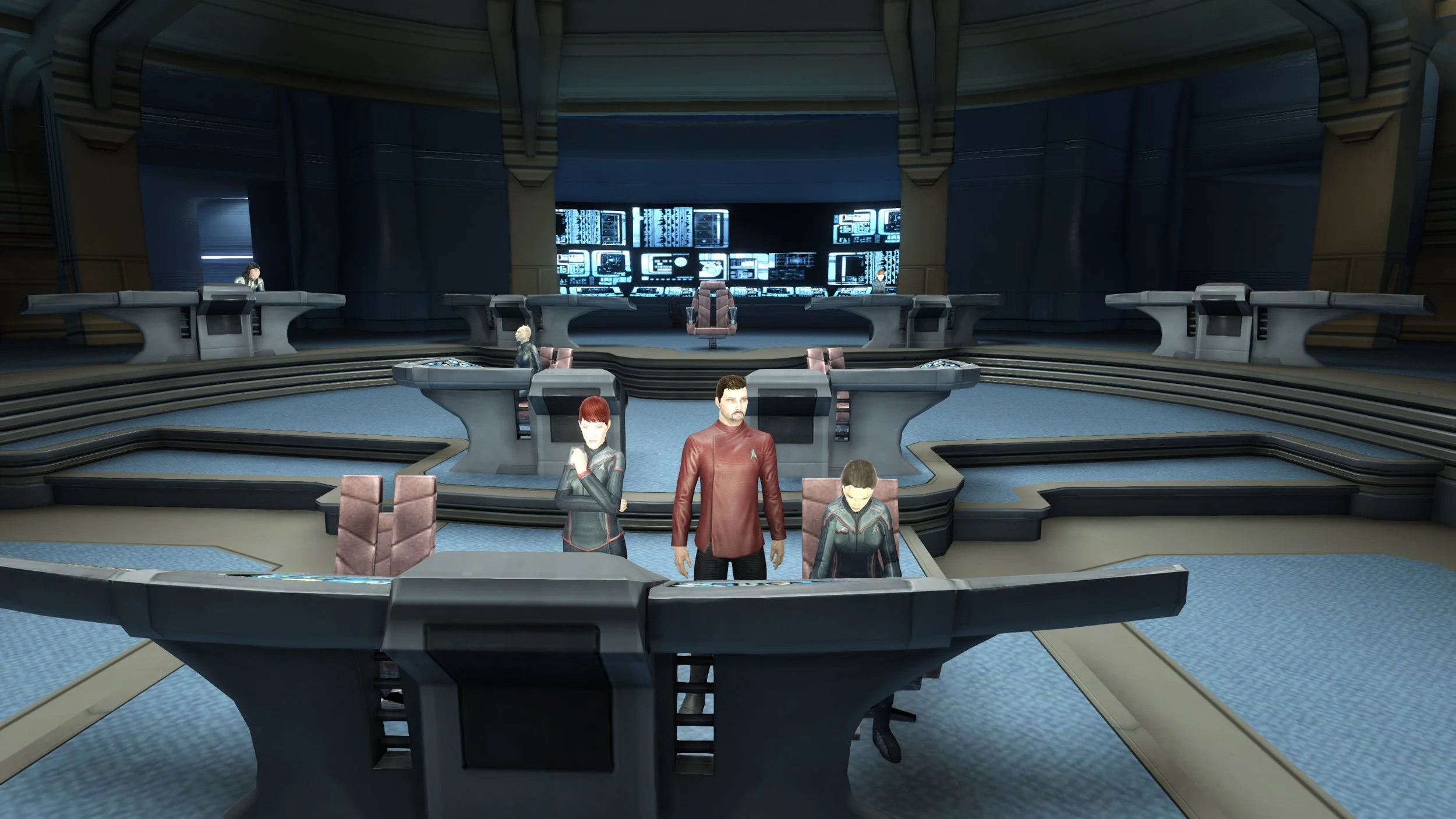
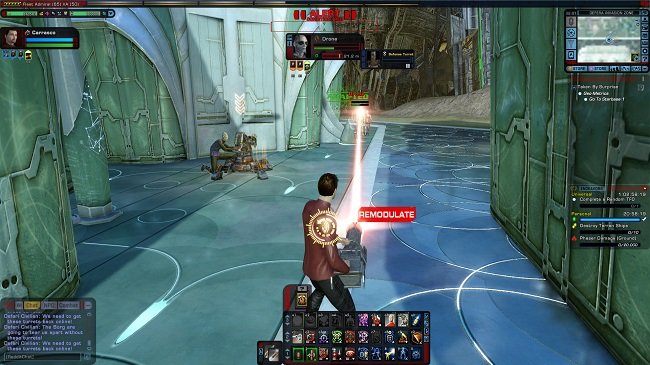
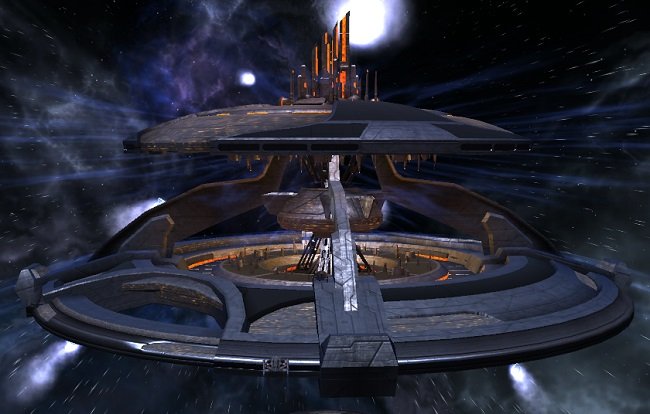
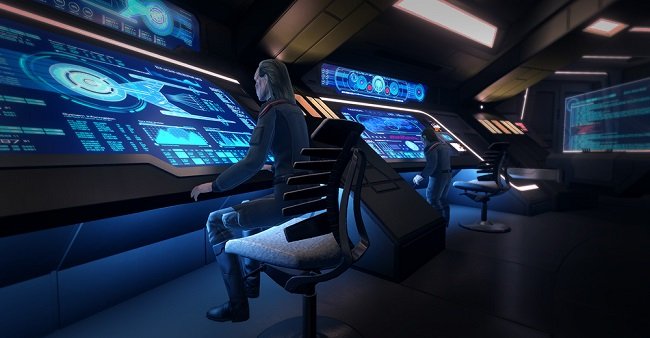
While recently playing the MMORPG, Star Trek Online, I decided to use the “free ship reward” from last year’s Event Campaign V. It gives you a choice between a Premium Tier-6 Starship from an infinity lockbox, 2 x Tier-6 Starship Discount Coupons that you can use in the Z-Store or a bundle of 1,500 Lobi Crystals which will buy you a ship or gear from the Lobi Trader. The fact that I haven’t used this reward for over a year indicates that I’m not exactly short of ships in my inventory. I’ve been flying the Inquiry Battlecruiser for the last two years which I obtained from the Event Campaign IV. But as there’s an appreciable lack of new story content at present in STO, I thought I’d acquire a new ship and spend some time experimenting with a new build. After all, it is the specifics of the build and not the ship that ultimately counts.
Section 31 Command Heavy Battlecruiser
While recently playing the MMORPG, Star Trek Online, I decided to use the “free ship reward” from last year’s Event Campaign V. It gives you a choice between a Premium Tier-6 Starship from an infinity lockbox, 2 x Tier-6 Starship Discount Coupons that you can use in the Z-Store or a bundle of 1,500 Lobi Crystals which will buy you a ship or gear from the Lobi Trader. The fact that I haven’t used this reward for over a year indicates that I’m not exactly short of ships in my inventory. I’ve been flying the Inquiry Battlecruiser for the last two years which I obtained from the Event Campaign IV. But as there’s an appreciable lack of new story content at present in STO, I thought I’d acquire a new ship and spend some time experimenting with a new build. After all, it is the specifics of the build and not the ship that ultimately counts.
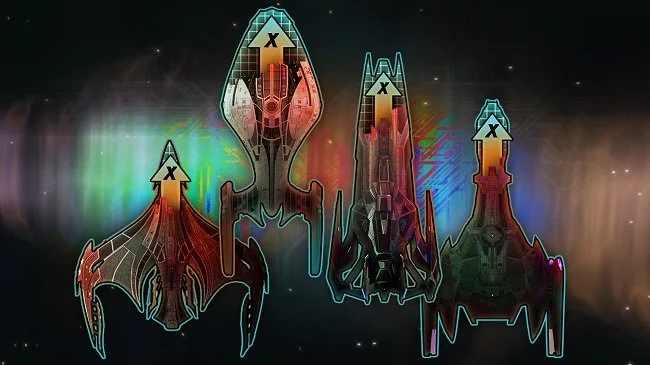
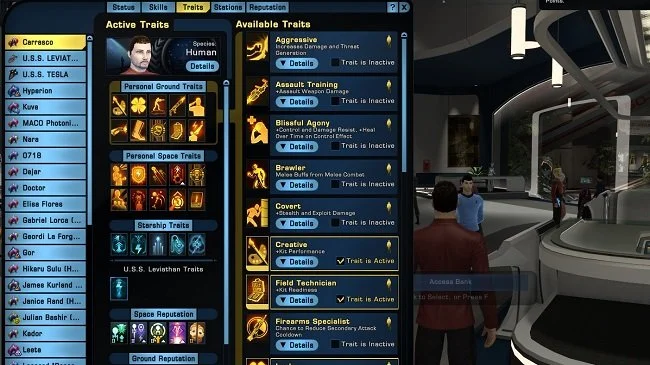
I decided to opt for a lockbox ship and chose the Section 31 Command Heavy Battlecruiser on the basis that it looked cool. Yes, I am not especially knowledgeable in the arcane min-maxing associated with STO and tend to make decisions based on superficial factors, rather than data and facts. I decided that I would just do what I did last time I obtained a premium ship. I’d find an appropriate build from the website STO Better and then see if I had all the equipment and traits required. Usually I only have about 60% of the build and then try to find suitable alternatives. Things were no different this time with the new vessel. I opted for a beam build which is viable with a battlecruiser, although a torpedo based build may be a better fit for the statistics of this ship. I managed to cobble together sufficient consoles and traits to focus on Beam Overload.

Inquiry Battlecruiser
I think it’s fair to say that I don’t find fine tuning your starship loadout the enthralling end game that so many other players do. I don’t know the relevant game theory and it is clear now that I’m not interested enough to familiarise myself with the nuances of the game’s mechanics. It’s not as if I’ve been left under powered. My new ship still seems to do sustained damage with Beam Overload, which cools down quite quickly. And the new vessel does look cool, which was my main goal. However, I now have a major gap in my end game enjoyment. I’ve dabbled in the past with DPS metres, as they do encourage you to tinker with builds but ultimately it just doesn’t sustain my interest. What I would really like is an expansion with a ton of story content to play through but that is not going to happen anytime soon. Especially with the game transitioning between developers.
I can see now why so many players go all in on multiple alts. Especially those you create during an event where additional benefits are conferred upon new characters. It certainly offers a completionist challenge. Plus more often than not, the stories in STO are well worth playing through multiple times. Therefore, I think this is where I’ll focus my attention in the weeks to come. As for new ships, they’ve lost their lustre as far as I’m concerned. I appreciate that is not the case for a lot of STO players and I am pleased they still have a substantial aspect of the game to provide them pleasure and engagement. But for me, I crave some new narrative content because that has always been the franchises greatest strength. Sadly, I suspect with DECA Games replacing Cryptic, the focus may well shift to new ships, rather than new episodes.







Newspapers
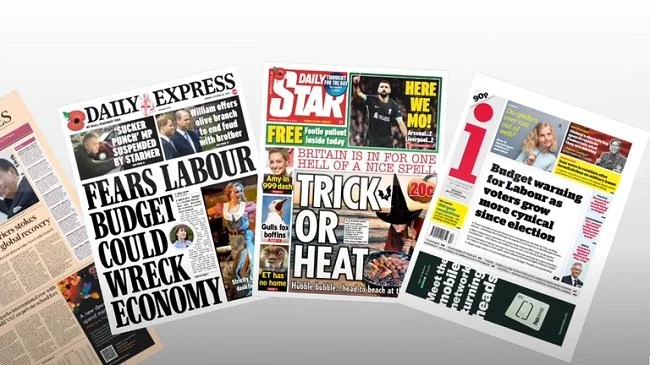
Newspapers were an integral part of UK culture in the seventies. During the week, they were delivered prior to going to work, so you would peruse them over breakfast. Alternatively you would buy one en route to your place of employment and read it on the bus or train. In a world before 24 hour, rolling news, they were the primary means of keeping the public abreast of events and as such, enjoyed a substantial audience. On occasions a newspaper story could make or break a political career or launch a crusading campaign to address a social ill. Newspapers were a force to be reckoned with and therefore a significant part of the socio-political landscape. However, due to a strong union presence within the workforce, the UKs newspapers often lagged behind other industries with regard to the technology.
A selection of UK newspapers
Newspapers were an integral part of UK culture in the seventies. During the week, they were delivered prior to going to work, so you would peruse them over breakfast. Alternatively you would buy one en route to your place of employment and read it on the bus or train. In a world before 24 hour, rolling news, they were the primary means of keeping the public abreast of events and as such, enjoyed a substantial audience. On occasions a newspaper story could make or break a political career or launch a crusading campaign to address a social ill. Newspapers were a force to be reckoned with and therefore a significant part of the socio-political landscape. However, due to a strong union presence within the workforce, the UKs newspapers often lagged behind other industries with regard to the technology.
Like so many other products, there has always been a hierarchy of newspapers in the UK. Different papers are targeted at specific demographics. The broadsheet newspapers tend to take a more intellectual approach with their journalism, whereas the tabloids are aimed at a more broader readership. I am reminded of a quote from the sitcom Yes, Minister which although 40 years old, still has a degree of truth about newspapers readership. “The Daily Mirror is read by people who think they run the country; The Guardian is read by people who think they ought to run the country; The Times is read by the people who actually do run the country; The Daily Mail is read by the wives of the people who run the country; The Financial Times is read by people who own the country; The Morning Star is read by people who think the country ought to be run by another country; and The Daily Telegraph is read by people who think it is”.
Daily Mail hyperbole
However, things change. Over the course of my life there has been a steady decline in newspaper sales. Dedicated television channels, providing 24 hour coverage is one reason. The internet is another. A story can be quickly disseminated online and be constantly updated as events unfold. Traditional print media lags behind and by the time it reaches the reader, is yesterday’s news. As a result modern newspapers tend to deal more in editorials and opinion pieces, rather than hard news. Sadly, the majority of the UK print media is owned by those with a right wing bias. Something that is at odds with the UK electorate which is broadly centrist. Hence the decline in sales. The only group that still cleaves to print media are over 65 and so the most popular newspapers, such as the Daily Mail and The Daily Express, exclusively cater to them. Neither of these two newspapers reflect a reality that I recognise.
Curiously, despite a decline in sales, there is still a perception that newspapers are at the cutting edge of journalism and have an influence on the wider news agenda. Television and radio news in the UK still often follows and expands upon headlines found in the popular press. Furthermore politicians still spend a considerable amount of time and effort trying to generate headlines in the newspapers. They go out of their way to cultivate relationships with political journalists and will often seek to disclose information to the press as part of the policy agenda. Similarly, newspapers will seek to influence politicians by directly and indirectly lobbying on specific subjects. The Brexit referendum of 2016, was heavily influenced by lengthy and substantive campaigning by the majority of the UK press. All of which were owned by individuals who had openly declared their support for leaving the EU.
Rupert Murdoch, owner of 33% of UK newspapers
Beyond the obvious political and philosophical bias, most tabloid newspapers nowadays are simply a vehicle for celebrity gossip, scandals and doom mongering. They also peddle conspiracy theories, bogus science and perhaps the biggest lie of all, that all of the problems in the UK are someone else’s fault. These publications are inherently parasitical and are not in any way a force for good. Yet in spite of these issues, there is still good journalism to be found within the UK, although much of it resides online. Some newspapers, such as the “i” are even bucking the trend and increasing their readership. Perhaps newspapers aren’t quite dead yet and despite their tawdry current state, people still believe in the noble qualities they remember from the past. Whether the tide will turn remains to be seen.















Supermarket Loyalty Cards
In the dim and distant past, UK supermarket loyalty cards used to be about earning points that could be traded for luxury items. This would be merchandise or services. Air Miles being a prime example. This changed over time and supermarkets moved to a system where you earned points via purchases that had a nominal financial value. The customer could then offset these accumulated points against their grocery bill. A couple of years ago, around the time the “cost of living crisis” began, some UK loyalty cards added an additional system and started offering discounted prices on specific products. For example a pack of 9 Andrex Complete Clean toilet rolls retails at the standard price of £5.95 but if you have a loyalty card, you can purchase it at the lower price of £4.65 instead.
In the dim and distant past, UK supermarket loyalty cards used to be about earning points that could be traded for luxury items. This would be merchandise or services. Air Miles being a prime example. This changed over time and supermarkets moved to a system where you earned points via purchases that had a nominal financial value. The customer could then offset these accumulated points against their grocery bill. A couple of years ago, around the time the “cost of living crisis” began, some UK loyalty cards added an additional system and started offering discounted prices on specific products. For example a pack of 9 Andrex Complete Clean toilet rolls retails at the standard price of £5.95 but if you have a loyalty card, you can purchase it at the lower price of £4.65 instead.
Although overall inflation is reducing in the UK, food inflation remains high, as do energy prices. These may well stay that way due to potential global factors that could come into play next year. Hence supermarket loyalty cards will continue to play a major role in keeping the price of a weekly or monthly grocery shop manageable. The discounts on offer are such that our household currently has four loyalty cards from the following stores. Tesco, Sainsbury’s Morrison’s and the Co-op. We shop at specific stores for particular products that are maintained at a discount price. We have found it possible to make savings of £40 or even £50 a month, if we keep an eye on prices across all four stores. Often this means having an app installed on my phone and being notified of offers.
Naturally, the increase in this loyalty card culture has generated a great deal of interest. How do the big supermarkets accommodate such competitive pricing? Is it simply a question of loss leading, or is it a case of inflating the original price and then offering the minimum retail price as the discount? Is this practice sustainable? There have also been claims that the system is unfair and biassed towards those who can afford to shop at the top tier supermarkets. The counter argument is that the budget stores are already offering discounted products by default, as it is essentially the foundation of their business model. Whatever the methodology and irrespective of the ethics of supermarket loyalty cards, it certainly isn’t impacting upon profits. Tesco, the UK’s number one supermarket chain, had a turnover of £48 billion in 2023.
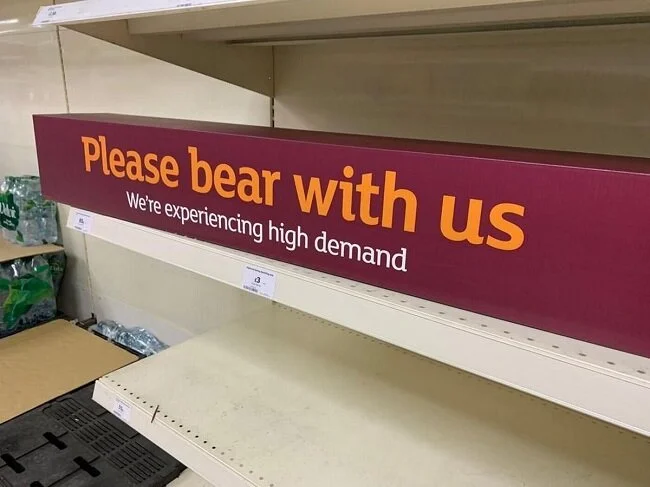
Unless you are so wealthy that the cost of living is not a consideration, most people have some requirement to “shop smart” these days. We make use of loyalty scheme discount prices and buy some products in bulk from outlets such as Amazon. Tea has fluctuated in price over the last eighteen months, mainly due to adverse weather conditions in the countries of origin. As Mrs P is highly unlikely to stop drinking the stuff anytime soon, we tend to buy a half dozen boxes at a time. The panic buying we all saw at the start of the pandemic is another reason why we like to maintain a small stock of some products such as toilet rolls, cleaning products and pasta. Until the economic situation improves, we will continue to make use of any scheme or process that allows us to keep our grocery bill as low as reasonably possible. Perhaps we can gamify the process to stop it from becoming a chore.




LOTRO: Lore-master Class Traits
If you play the MMORPG, The Lord of the Rings Online, then you’ll probably be aware of the significant changes that were made to the Lore-master class in Update 41. Two and half months later I think I have come to terms and successfully adjusted to the “realignment” of the trait tree and the core skills. Setting aside the argument over the rectitude of these changes, I would like to share my thoughts on the respective performance of the three trait configurations. This is not from the perspective of a min-max player or someone who focuses on the “numbers”. These are just casual observations from an equally casual player. Furthermore, my opinion is based upon PVE gameplay and not group content or full blown raids.
Lore-master Pre Update 41
If you play the MMORPG, The Lord of the Rings Online, then you’ll probably be aware of the significant changes that were made to the Lore-master class in Update 41. Two and half months later I think I have come to terms and successfully adjusted to the “realignment” of the trait tree and the core skills. Setting aside the argument over the rectitude of these changes, I would like to share my thoughts on the respective performance of the three trait configurations. This is not from the perspective of a min-max player or someone who focuses on the “numbers”. These are just casual observations from an equally casual player. Furthermore, my opinion is based upon PVE gameplay and not group content or full blown raids.
Master of Nature's Fury:
The “red line” trait configuration has a major impact upon the way combat pets are used. You no longer summon one and it continuously follows you. Nor does it independently aid you in combat. A pet, when summoned, will persist for 15 seconds approximately and attempt to flank your current target. During this short window, you can activate a minor or major pet skill. Both of which do varying degrees of Beleriand Damage. Each pet also does a unique type of damage during its 15 second duration. IE a Lynx does both melee damage and damage over time. At present, on default game difficulty, a skills rotation of Burning Embers, Wizards Fire and Lightning-Charged Staff Strike will quickly kill a single mob.
Keeper of Animals:
The “blue line” trait configuration has also been significantly altered. Pets can be permanently summoned but you must use your own skills in order to trigger a pet to use one of its combat skills. The three main skills are Minor Pet Command, Major Pet Command, and Sign of the Wild: Rage. All of these skills will tell your pet to execute an ability. Minor and Major pet commands transfer your threat status to your pet, so they can tank for you. Pets still intercede in combat due to mob proximity. Minor and Major pet commands used in combination with Wizards Fire, Wizards Spark, Burning Embers and Staff-Strikes are an efficient skill rotation on the default difficulty when using this trait configuration.
The Ancient Master:
The “yellow line” trait configuration is in many ways the nearest to how the Lore-master class was prior to the changes in Update 41. It allows the player to summon a pet permanently and plays very similarly in terms of crowd control, the skills that are accessible and overall pet damage. Minor and Major pet commands activate reciprocal skills. IE if you have summoned a Bog Lurker you can activate the ranged debuff Choking Vines or the stun inducing Bursting Root, which can trigger a Fellowship Manoeuvre. Once again on default difficulty, Minor and Major pet commands along with Burning Embers, Staff-Strikes and Wizards Fire or Wizards Spark deals sufficient damage to an average mob.

Lore-master Post Update 41
For a long time, I have played LOTRO with my Lore-master configured to the “red line” trait configuration. I enjoyed having my favourite pet, the Bog Lurker, available continuously. I liked the fact that you could name them. Suddenly finding from August onwards that they had been relegated to a short term skill was annoying as it fundamentally altered the nature of the class. Furthermore, many skills that were known and loved were now locked to specific trait configurations. You now have to spend across all three trees to get a full range of pets and you may have to make some hard choices about what skills you may have to give up. Sadly, what’s done is done and one has to move forward. I have adjusted to the new changes and still find “red line” trait configuration very effective. For those players who are still finding their feet with the Lore-master class, post Update 41, I hope you find the right build for you.
Projects
Roundabout this time last year, I started a couple of new website projects. The idea was to do something different to Contains Moderate Peril and write about other subjects. One was about UK politics and the other was about a Panda watching films and TV and making wry comments. I like to cast a wide net. I also wanted to take the opportunity to develop some new skills. It was certainly interesting creating two websites from scratch, using such diverse tools as Wix and Blot. The former provides the means to construct a very modern website with all the latest features. The latter is quite the opposite, providing a lean and minimalist service. Twelve months later, both projects have proven very useful and I have a better understanding of what is required to maintain an online presence in 2024. As they have now served their purpose, both sites are now offline.

Roundabout this time last year, I started a couple of new website projects. The idea was to do something different to Contains Moderate Peril and write about other subjects. One was about UK politics and the other was about a Panda watching films and TV and making wry comments. I like to cast a wide net. I also wanted to take the opportunity to develop some new skills. It was certainly interesting creating two websites from scratch, using such diverse tools as Wix and Blot. The former provides the means to construct a very modern website with all the latest features. The latter is quite the opposite, providing a lean and minimalist service. Twelve months later, both projects have proven very useful and I have a better understanding of what is required to maintain an online presence in 2024. As they have now served their purpose, both sites are now offline.
I like to learn new skills. In the last two decades, several that were previously considered niche markets and specialised, have become far more accessible and commonplace. Audio and video production is something that millions of people do on a daily basis on social media, be it on their phones or via a desktop PC. It’s a spectrum of complexity with simple montage videos on Instagram at one end and professional quality edited documentaries on YouTube at the other. These skills are no longer gated behind formal studies or “closed shop” institutions. Anyone can learn them. I have some experience in producing a podcast and have recently decided to explore video production. I have set myself the goal of learning to film, edit and produce a video of acceptable quality. If that can be achieved efficiently and without bloodshed, then I may consider its broader application.

Over the years, I have learned some simple and practical rules that I follow when embarking on a new project. Some of which I found out the hard way. They can be applied to relatively simple undertakings such as starting a blog, to more complex and expensive endeavours such as establishing a YouTube channel.
Set realistic expectations: It will take time to learn a new skill and be able to apply it. Don’t expect to be instantly good at it. It’s something you’d explain to a child but so many adults still make this mistake.
Do your research: The internet makes researching a subject a lot easier than it used to be. Guides and FAQs are abundant. However, don’t allow yourself to be sidetracked by excessive research and don’t allow yourself to be paralysed by choice.
Don’t spend any money until you need to: Don’t buy the tools for a job until you’re sure that you want to do it. If, for example, you want to try blogging, then use a free account and see if it is a viable hobby before buying a domain.
Stand on the shoulders of giants: There are numerous guides available online that can help you achieve your goal. You don’t always need a complex bespoke solution. Follow an established methodology if it produces the results you want.
Don’t let perfect be the enemy of good: It is okay to have a few rough edges. Sometimes the quirks and foibles add character. Slavishly seeking perfection means you’ll never complete your project.
Projects are a learning process. It is therefore important to remember that if it doesn’t yield the results that you are anticipating, then it is fine to end it. It is also realistic to acknowledge that some skills may elude you. You may not be able to learn them for a wealth of reasons and if that is the case, it is wise to strategically withdraw rather than torment yourself by beating your head on a brick wall. Another thing to consider when embarking upon a personal project is that you get to set the deadline and all relevant metrics. Rome wasn’t built in a day. Don’t set yourself up to fail by impractical criteria. I intend to enjoy my latest project and am therefore approaching it in a leisurely fashion. If I work within the parameters I’ve set and follow my five rules, I think I should quickly determine whether or not I will succeed or not. That being said, I am optimistic of a favourable outcome.



















Strictly Come Dancing: The Fickle Nature of the Public Vote
Tonight’s results for week 5 of Strictly Come Dancing (season 22) have once again demonstrated that this show is more than just a dancing competition to UK viewers. If it were just a case of determining who are the best dancers, then JB Gill would not have been in the dance off. The judges may well see things exclusively in such terms but the public clearly do not. I last wrote about this phenomenon in 2019 and I think it appropriate to raise the subject again as this season of Strictly seems to be bucking past trends and I suspect we may be in for further upsets in the run up to the season finale. Broadly speaking, the public usually tends to vote in a manner similar to the official leaderboard. Hence, those who score the lowest usually end up in the dance off. Occasionally an underdog will be championed and kept on the show but that trend seems to have lost its novelty in recent years. This season appears to be quite different.
Tonight’s results for week 5 of Strictly Come Dancing (season 22) have once again demonstrated that this show is more than just a dancing competition to UK viewers. If it were just a case of determining who are the best dancers, then JB Gill would not have been in the dance off. The judges may well see things exclusively in such terms but the public clearly do not. I last wrote about this phenomenon in 2019 and I think it appropriate to raise the subject again as this season of Strictly seems to be bucking past trends and I suspect we may be in for further upsets in the run up to the season finale. Broadly speaking, the public usually tends to vote in a manner similar to the official leaderboard. Hence, those who score the lowest usually end up in the dance off. Occasionally an underdog will be championed and kept on the show but that trend seems to have lost its novelty in recent years. This season appears to be quite different.
The departure of Tom Dean in week 2 (the first week the public could vote) was a shock as Tom was patently a better dancer than Toyah Willcox and much higher on the leaderboard. Last week (the 4th in the series) it came as a surprise to see Shayne Ward in the dance off as he was 9 points ahead of Nick Knowles. However, there has been a degree of viewer pushback against The X Factor winner from 2005. On the first episode of this season, Shayne stated he was “in to win it”. A remark that was interpreted by some viewers as being somewhat arrogant, although it may have been an honest statement of intent to work hard. Hence, he seems to have failed to gain much public support and suffered as a result. On this occasion he was saved by the judges and injured Nick Knowles was voted off. Again, in the past a celebrity who has missed a show due to injury, is usually given some latitude by the public. Nick was not, in spite of his wider popularity. He was simply deemed as “lacking” and shown the door.
Which brings me to this evening’s debacle in which JLS vocalist JB Gill found himself in the dance off with ex-professional footballer Paul Merson. JB has consistently scored well over the last 5 weeks and is considered by some pundits to be a “shoo-in” for the final. However, despite having a 11 point lead over Paul, still found himself having to dance again to remain on the show. There is a school of thought that suggests that celebrities who are consistently good can lose public votes because everyone assumes they’ll be alright and someone else will vote for them. Another theory is that the viewers get bored with those who are good, right from the start of the show, as they prefer those who get better over time and thus go on the Strictly “journey”. Let us also take a moment to ponder the fate of Paul Merson, who appeared up to tonight, to have sufficient support to stay out of the dance off. If such a fanbase exists, where was it this week?
I am beginning to wonder if all the talk about mobilising fan bases and tactical voting that we have taken as read over the last 22 seasons of Strictly is spurious. Are fans always wedded to particular celebrities or do they simply vote on a week by week basis? Are the current voting patterns associated with Strictly, in any way similar to those that have recently emerged in contemporary politics, post 2016, where people are no longer loyal to specific causes and are far more volatile in the way in which they vote? If only we could get voting expert, Professor John Curtice, on the show and have the benefit of his insight. In the meantime JB Gill was saved but I suspect that the message from tonight is abundantly clear to all remaining celebrities. No matter how good you are and wherever you may be on the leaderboard, no one is safe. I expect to see an increase in social media output next week, from the remaining contestants, as they actively try and woo the British public.
























Goodbye Call of Duty
I decided to play Call of Duty today as I wanted some undemanding entertainment. I was not surprised when the game client began an update, as I have not played for about three months. Hence, there was obviously new content to install. However, when I saw the size of the download, I knew this was more than just a season update. I therefore checked the Battle.net client and discovered that the game was installing Black Ops 6, the latest version of Call of Duty that is released on 25th October. A game I have decided not to buy for a multitude of reasons. Fortunately, you can modify your game installation on the fly, so I unchecked a few boxes and the download stopped. However, I was annoyed by the hubris of this “download by default” policy, so I decided to uninstall my existing installation of Modern Warfare 3 as it is no longer a mainstay of my gaming activities.
I decided to play Call of Duty today as I wanted some undemanding entertainment. I was not surprised when the game client began an update, as I have not played for about three months. Hence, there was obviously new content to install. However, when I saw the size of the download, I knew this was more than just a season update. I therefore checked the Battle.net client and discovered that the game was installing Black Ops 6, the latest version of Call of Duty that is released on 25th October. A game I have decided not to buy for a multitude of reasons. Fortunately, you can modify your game installation on the fly, so I unchecked a few boxes and the download stopped. However, I was annoyed by the hubris of this “download by default” policy, so I decided to uninstall my existing installation of Modern Warfare 3 as it is no longer a mainstay of my gaming activities.
I have a very specific mindset when it comes to technology and my relationship with it. A key aspect of which can be summed up by the old adage “the tail doesn’t wag the dog”. With regard to software, be it the operating system on my PC, apps, or games, I don’t like updates or fundamental changes being made without me being aware of them in advance. I want to know in advance what the patches are for and what they do as a consequence. Furthermore, I don’t like any changes that attempt to “do my thinking for me”. Everything that is installed on my PC is there for a reason and configured in such a fashion that suits my personal preferences. Hence, I do not like any software that decides to do its own thing and flies in the face of this policy. I’ll decide if a program starts when I turn on my PC and whether I want additional icons added to my desktop real estate. It is also down to me when something can or cannot monopolise my internet connection.
As for Call of Duty, the last year has been an interesting journey. Warzone teetered on the edge of returning to its glory days but the game was once again thrown off balance by specific weapons being overpowered, the tedium of an unavoidable loadout meta and a losing battle against those who cheat. I was one of the few players that enjoyed the open world approach to zombies mode and one of the reasons I’m not buying Black Ops 6 is due to the return of the round based matches. As I’ve said many times before, not only of Call of Duty but of many other competitive games, the experience the average player has is so far removed from that of a high end, content creator on YouTube. I have seldom found any of the group content to be anything other than a chaotic experience, defined by poor communication and unpleasant team mates. I’ve regularly read of players helping out others and representing the community well but have never met any.
Fortunately for me and not necessarily so for Activision Blizzard, there’s always something else to play. There are plenty of comparable games to Call of Duty and the sub genre of extraction shooters is certainly growing. Sometimes, when I uninstall a game I have a pang of sadness, especially if it has been a noteworthy experience such as Red Dead Redemption 2. However, more often than not, it feels the opposite. Call of Duty is somewhere in the middle of those two extremes. It was certainly fun for a while but ultimately the developers made choices that weren’t for me. Such is life. You can’t please everyone. However, the community is a different matter and despite several claims that cheating and trolling are being addressed, no discernible change is apparent so far. Hence its time to find something else to play, although there is always the risk of leaving one shitty community, only to join a new one. Such is the nature of contemporary gaming.



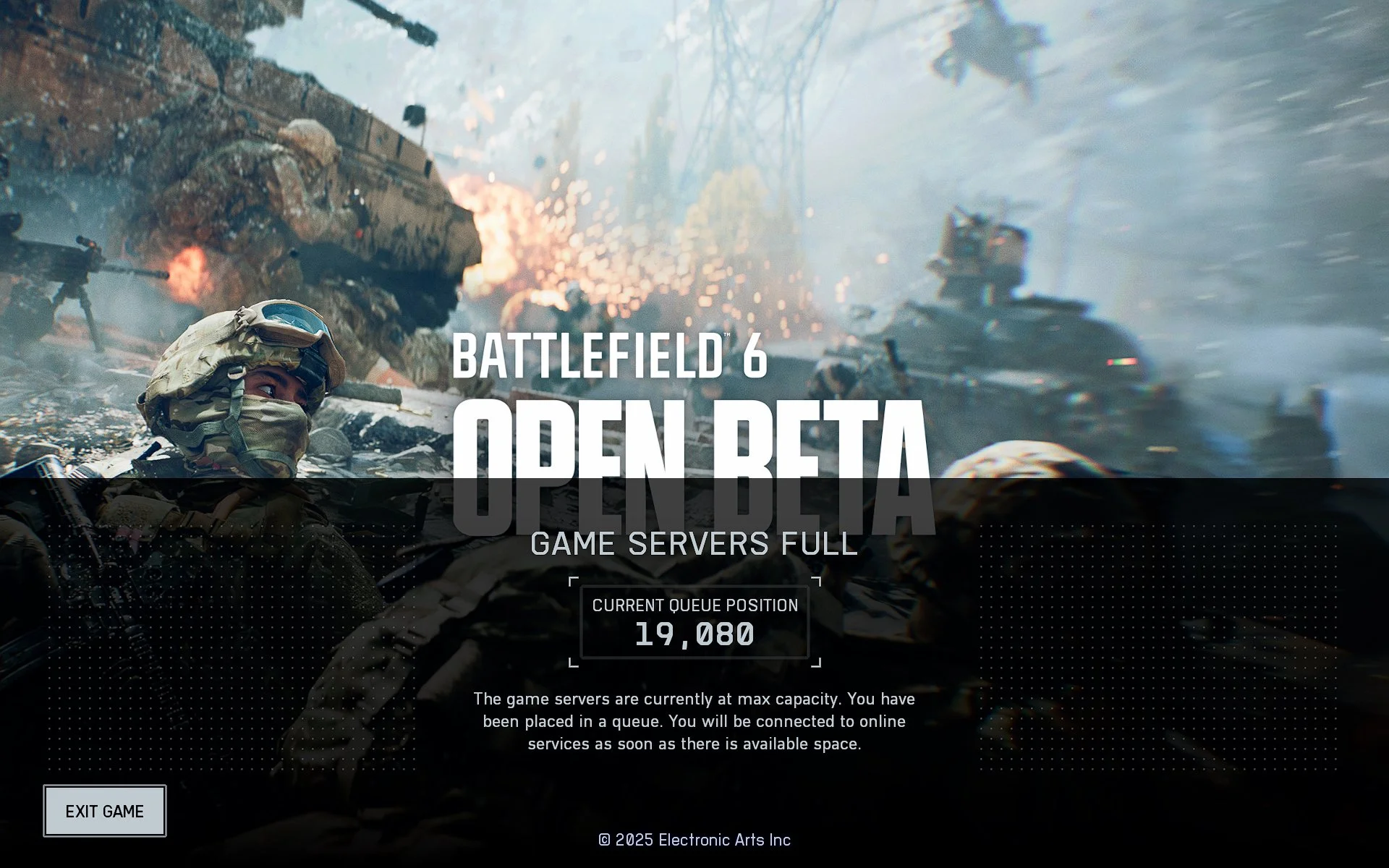








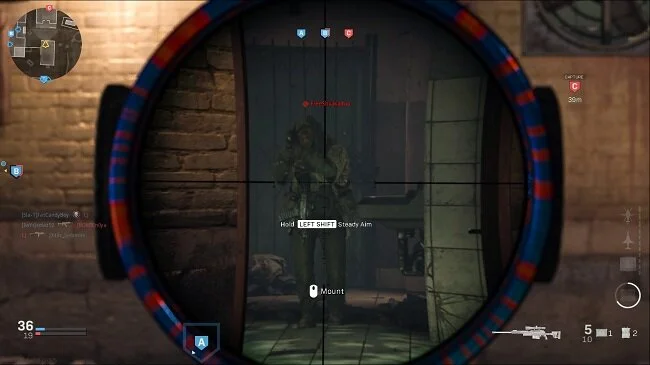


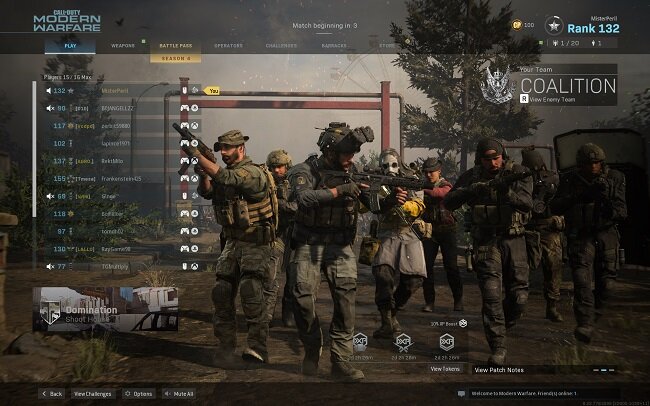
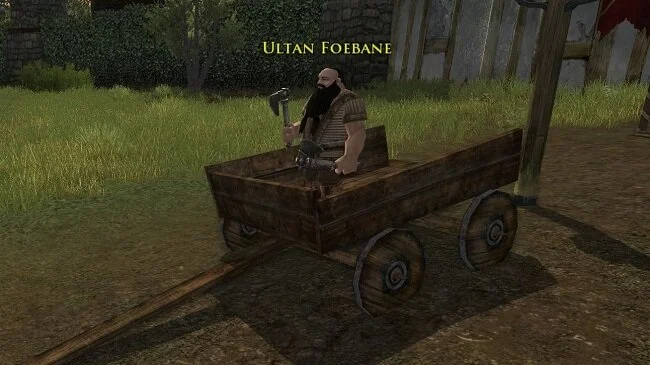
Alien: Romulus (2024)
Some films are made with the intention of starting a franchise, others evolve into one after a surprise box office success and lucrative sequels. Alien (1979) falls into the latter category. A mid-budget science fiction horror film that was well crafted and then benefited immensely by being released at just the right time. Sadly, many franchises become derailed and enter into a death spiral due to competing artistic visions, cynical studio politics and cinematic ignorance. This has certainly afflicted all subsequent Alien films after James Cameron’s magnificent Aliens (1986). Sometimes, a franchise can correct its course and do something fresh with the source material. Prey (2022) is a fine example of this with director Dan Trachtenberg bringing fresh vigour and intelligence back to the Predator movies. I believe that was the intention with Alien Romulus (2024). Sadly, the road to hell is paved with good intentions.
Some films are made with the intention of starting a franchise, others evolve into one after a surprise box office success and lucrative sequels. Alien (1979) falls into the latter category. A mid-budget science fiction horror film that was well crafted and then benefited immensely by being released at just the right time. Sadly, many franchises become derailed and enter into a death spiral due to competing artistic visions, cynical studio politics and cinematic ignorance. This has certainly afflicted all subsequent Alien films after James Cameron’s magnificent Aliens (1986). Sometimes, a franchise can correct its course and do something fresh with the source material. Prey (2022) is a fine example of this with director Dan Trachtenberg bringing fresh vigour and intelligence back to the Predator movies. I believe that was the intention with Alien Romulus (2024). Sadly, the road to hell is paved with good intentions.
Rain Carradine (Cailee Spaeny) works and lives with her adoptive brother Andy (David Jonsson), a malfunctioning, reprogrammed android at the Jackson's Star colony on LV-410. After her work contract is forcibly extended by the Weyland-Yutani company, Rain's ex-boyfriend Tyler (Archie Renaux) persuades her to join an expedition with his pregnant sister Kay (Isabela Merced), their cousin Bjorn (Spike Fearn) and adoptive sister Navarro (Aileen Wu). They intend to loot a derelict spacecraft and retrieve cryostasis chambers so they can escape to the planet Yvaga. Andy's ability to interface with the onboard computer system is crucial for the expedition. Using an ageing hauler, the Corbelan IV, they dock with the space derelict to find it is a Weyland-Yutani research station. However, restoring the station’s gravity and power have unforeseen consequences, as the company has been experimenting with xenomorph biology. When they repair a damaged android called Rook, they learn the true nature of the danger they face.
I shall keep both my praise and criticisms for Alien Romulus short. This is a handsome production with good visual effects. The budget has been spent well. The film quickly sets out its stall, introducing the characters and setting up the plot. For the first forty minutes or so, Alien Romulus keeps the viewer onboard and focused. And then it sidelines all the ideas it briefly alluded to in the first act and just lapses into a rather trite fan service. It constantly refers to or tries to recreate classic scenes, tropes and dialogue from all previous Alien movies. It also tries to tie in numerous plot ideas from previous films, regardless of whether they’re a good fit with what is actually going on. Alien Romulus should have been able to stand on its own two feet and the only reason it was not allowed to do so is because it was decided by the studio that it was less risky if they just gave the audience a film version of a “greatest hits” album.
I won’t waste my breath or time discussing the failings of the existing film studio system or the way they treat the intellectual properties they hold. No film director sets out to make a bad film, so I see no reason to lambast director Fede Álvarez. I’m sure he did not have a free hand and had many constraints placed upon him. Sadly, Alien Romulus is a classic example of the “cakeism” mindset that blights Hollywood at present. Where a director or writer is brought in to allegedly shake things up but at heart the studio is far too risk averse to really do anything radical. Hence, they constantly interfere and mitigate any originality that is proposed, resulting in stupefying mediocrity. Perhaps the most egregious aspect of this business philosophy is the utter contempt it has for the audience. If you’ve never seen an Alien film before, you may find Alien Romulus mildly diverting. Fans of quality cinema and integrity in film making, will roll their eyes and be unsurprisingly disappointed.



















Conversation
Daily life is often filled with small talk. Simple exchanges of pleasantries that make social interaction easier and modern life tolerable. Not every conversation needs to be a heavy weight and meaningful exchange. More often than not, all you have to do is politely listen, express an appropriate response and end the verbal exchange on a positive note. It’s not exactly rocket science but that’s not to say that it’s easy for everyone. Some people seem to have an innate talent for this sort of social discourse. Mrs P is very good at it. She remembers people’s names, what they may have said previously and most importantly she shows interest. I’m not so good at small talk. I can do it but I tend to find that a continuous diet of it is unrewarding. Being effectively “retired”, I mainly meet others who are no longer working but they tend to be at least ten years my senior. In the UK the biggest factor that currently determines differing opinions on all major issues is age.
Comedians Mel Smith and Griff Rhys Jones have one of their “head to head” conversations
Daily life is often filled with small talk. Simple exchanges of pleasantries that make social interaction easier and modern life tolerable. Not every conversation needs to be a heavy weight and meaningful exchange. More often than not, all you have to do is politely listen, express an appropriate response and end the verbal exchange on a positive note. It’s not exactly rocket science but that’s not to say that it’s easy for everyone. Some people seem to have an innate talent for this sort of social discourse. Mrs P is very good at it. She remembers people’s names, what they may have said previously and most importantly she shows interest. I’m not so good at small talk. I can do it but I tend to find that a continuous diet of it is unrewarding. Being effectively “retired”, I mainly meet others who are no longer working but they tend to be at least ten years my senior. In the UK the biggest factor that currently determines differing opinions on all major issues is age.
One of the few things that I miss about full time employment is talking to intelligent people. Although I’m not keen on small talk, I’ll happily listen at length to those who have interesting and informed insights based upon a wealth of experience. Such conversations do not have to be couched in academia. It is more of a case of talking to someone who just knows their job or subject well and they are at total ease when discussing it. They’re not merely sharing information. Rather they are relaying knowledge and imparting wisdom. Furthermore, such exchanges can come from all quarters. I remember two exceptional conversations I had in the early 2000s. One was with a senior operations officer of a steel plant and the other was with an air conditioning engineer who had previously been a military policeman. Both were knowledgeable, worldly, good communicators and I suppose you could possibly say charismatic.
Elvis famously advocated for a “little less conversation” but I consider such advice dubious
I also miss the conversations I had with my father. He similarly was an inexhaustible source of information, anecdotes and measured opinions. All of which had been born out of decades of reading, study and sober reflection. His most formative years had been during World War II as he was ten years old when it began and sixteen when it ended. He was at heart an academic and although he had feelings, in many matters he never let his heart rule his head. Hence he had a capacity to change his position on certain subjects over time, because new data or experiences logically required a re-evaluation. It’s a rare quality these days and I wish more people had such an adaptable outlook. Sadly he’s been gone four years now and it has left a significant conversational gap that has yet to be filled.
As a consequence of this conversational deficit, I find myself listening to a lot of podcasts, audiobooks and other content that is structured around a discussion. If I can’t find an engaging conversation of my own, I can at least listen to someone else's. Thanks to the internet, I can fill my day if need be with the musings of the finest minds, the wit of the funniest people and the badinage of the greatest raconteurs. However, despite the pleasure such material brings, there is a downside. One’s expectations of conversations in the real world have to be seriously adjusted. A chance encounter with someone at the bus stop will seldom result in an in depth analysis of Etruscan pottery or Cartesian dualism. Naturally it can be cogently argued that it is unreasonable to expect such things to begin with, however that doesn’t alter the fact that the heart wants what the heart wants.
“Man is humbled by the uncertainty of what he can know, but still has the itch to gain absolute knowledge, often with tragic consequences”. Jacob Bronowski
Something I’ve noticed about the nature of conversations, is how they evolve over the course of one’s life. I cast my mind back to my late teens and earlier twenties and recollect many a late night discussion, fueled by alcohol and couched in the certainty of youthful inexperience and ignorance. Nowadays when discussing weighty issues such as geopolitics or economics, the one thing that is conspicuously missing is any shred of certainty. The financial crisis of 2008, COVID and the ongoing war in the Middle East all go to show how the established status quo can alter quickly. At the age of 56, I now understand Socrates’ position of “I know that I know nothing” and I am extremely sceptical of anyone whose arguments and philosophical positions are presented as immutable truths.
However, in recent years a new source of engaging conversation and interesting inquiry has been my grandchildren. They are young, confident and curious about lots of things. Therefore they ask a lot of questions and assume I have all the answers. As well as being deadly earnest, they’re also very funny, though often unintentionally. Although there is a requirement to explain things in a manner that children can understand, you must never patronise or condescend to children. They’re far shrewder than you think. It is also a golden opportunity to impart to my grandchildren a love of engaging and enjoyable conversation. Because it is such an invaluable social tool. Conversation is good for building relationships, sharing ideas, resolving conflicts and creating trust. It is also beneficial for one’s mental health. And if you can’t find such conversations in real life, then seek them online.
The Future of Star Trek Online
Cryptic Studios appear to have started a new round of layoffs, following those made last November. Although the developers of Star Trek Online and Neverwinter have not formally commented on the situation, it is more than likely that this is a continuation of their owners, the Embracer Group, ongoing restructuring program. So far, the Swedish company has laid off over 1,500 employees since June 2023, in an attempt to address its ill considered over expansion in recent years. At present development of Star Trek Online and other titles are being transitioned from Cryptic to DECA. The German developers are mainly known for mobile games and have recently positioned themselves as “breathing life into old games”. Their intent is to keep developing content for STO and to maintain a working relationship with the owners of the intellectual property.
Cryptic Studios appear to have started a new round of layoffs, following those made last November. Although the developers of Star Trek Online and Neverwinter have not formally commented on the situation, it is more than likely that this is a continuation of their owners, the Embracer Group, ongoing restructuring program. So far, the Swedish company has laid off over 1,500 employees since June 2023, in an attempt to address its ill considered over expansion in recent years. At present development of Star Trek Online and other titles are being transitioned from Cryptic to DECA. The German developers are mainly known for mobile games and have recently positioned themselves as “breathing life into old games”. Their intent is to keep developing content for STO and to maintain a working relationship with the owners of the intellectual property.
Taken at face value, I’m sure there will be some players of STO who will argue that “the game is still being supported so everything is okay”. To which the counter argument would be “apart from the original developers being kicked out of their own party and laid off”. However, this is the video game industry, so it is unwise to take things at face value. One has to apply critical thinking and consider what has happened in similar scenarios. What are the most likely outcomes based upon previous corporate behaviour, rather than one’s own aspirations. Hence I suspect that STO and other titles have been identified as having stable player bases that return an equally stable amount of revenue each year. As a result, it will continue to be developed. However, the budget for the development will be less (hence the replacement of Cryptic by DECA) and there will likely be financial goals set. Thus there may well be a focus on “monetisation” over more traditional content.
A change in developers raises many questions and the transition from one to another does not end at training your replacement and handing over documentation. Often there is a wealth of unique knowledge that isn’t so readily quantifiable, that is hard to learn through any other method other than experience. Let us not forget that one of the reasons why Cryptic abandoned the Foundry system was due to insufficient knowledge to adequately maintain it, after key staff left the company. Are DECA going to face similar issues? Then there are the business relationships that Cryptic currently enjoys with Star Trek licence holders and the actors who have provided voiceovers for the game. These are not so easily “transferable” and may be hindered by such things as smaller operational budgets and the fact that DECA is based in the EU. If you’ve ever worked for a company and experienced a change in service provider then I’m sure you realise the scope of change that STO faces.
I preordered STO and began playing when it launched in 2010. Due to the problems that were inherent with the game, I drifted away and made several attempts to return over the next few years. It was not until 2015 that I started regularly playing this MMORPG, mainly because by then the game was finally reaching its potential. So I bought a lifetime subscription for $200, which has proven a sound investment. Despite being a F2P game since 2012, STO maintained the option for players to subscribe each month and received a stipend of the in-game currency Zen. Subscriptions ceased in May 2018 in favour of the game selling starter packs but players with existing subscriptions could continue if they wanted to. As of October 10th 2024, STO has ceased supporting these residual subscriptions. Players who have had an active subscription since 1st January this year are being moved over to a complimentary lifetime subscription.
It can be argued that players that have subscribed optionally for 6 years have more than paid for the complimentary lifetime subscription, as they have spent far more than $200 in that time. But I am curious about the optics of this decision. Does this indicate that the perceived worth of a lifetime subscription has diminished now that the game has been transferred to DECA? Is it an indication that future content is envisaged to be of little real monetary value, so they can afford to be generous? Does it imply that the majority of new game development will be focused upon increased monetisation? It is entirely possible that this is simply an act of good faith and there’s nothing beyond that. However, again this is the video games industry and there is little or no sentiment in business. Will DECA continue to offer the lifetime subscription?
As ever with video games, I return to the matter of fans who fail to think in terms of customers and vendors within the context of a transactional industry that exists primarily to make money. Too often player communities focus upon developer’s artistic aspirations, over the business realities of the publishers. I enjoy STO, quirks and all. However, having been laid off in my working life, I have a great deal of sympathy for the folks at Cryptic who have had their jobs taken from them ignominiously, through no fault of their own. I sincerely hope they can find alternative work promptly. As for the future of STO, I am not holding my breath. I suspect that there is content in the pipeline for the remainder of 2024 but who knows what 2025 will bring. They say when life gives you lemons, make lemonade. Therefore, when you’re taken over by a company that makes mobile games, expect your product to follow the business practices of that market.