LOTRO: Bullroarer Update 42 - Legacy of Morgoth Beta #1
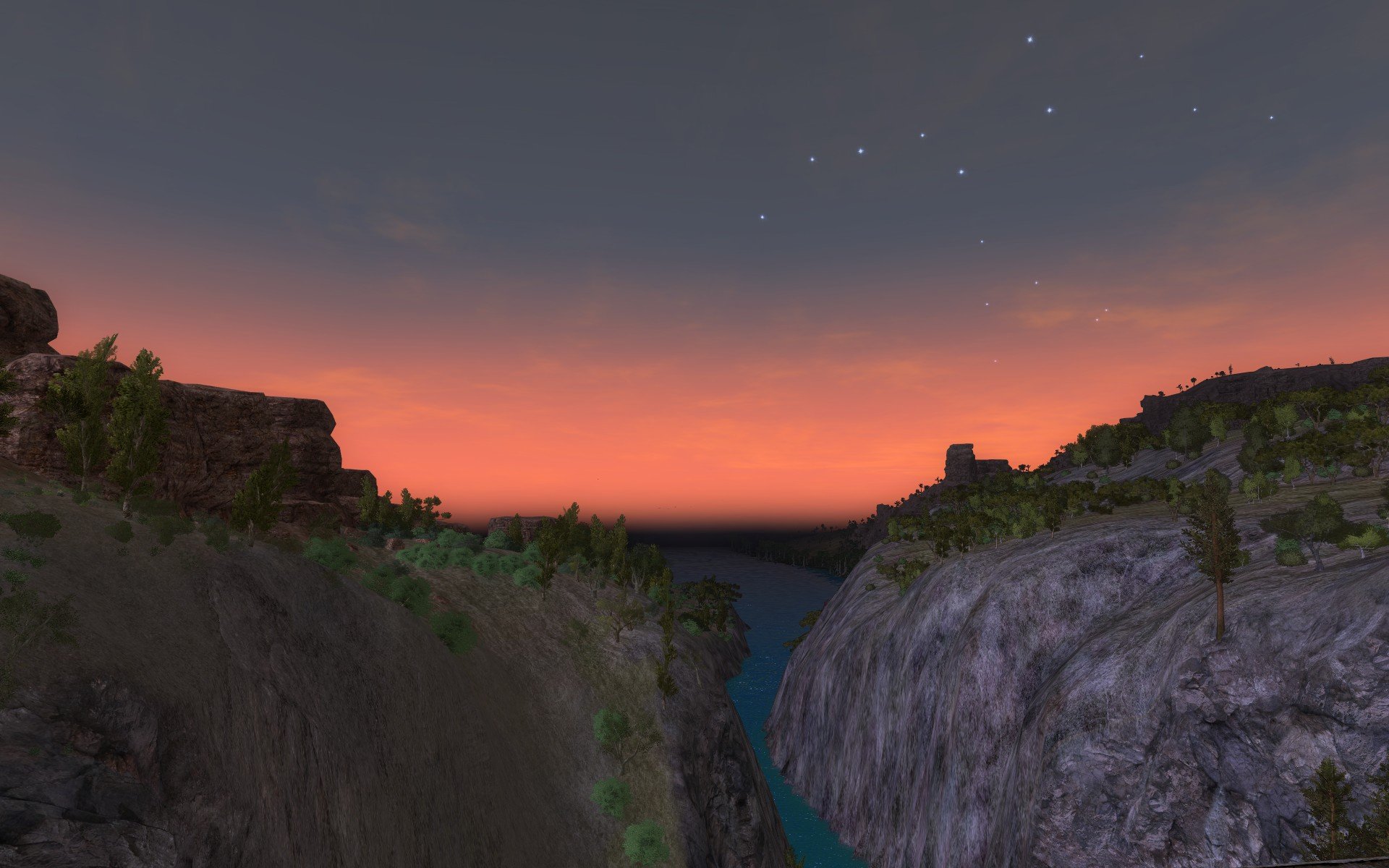
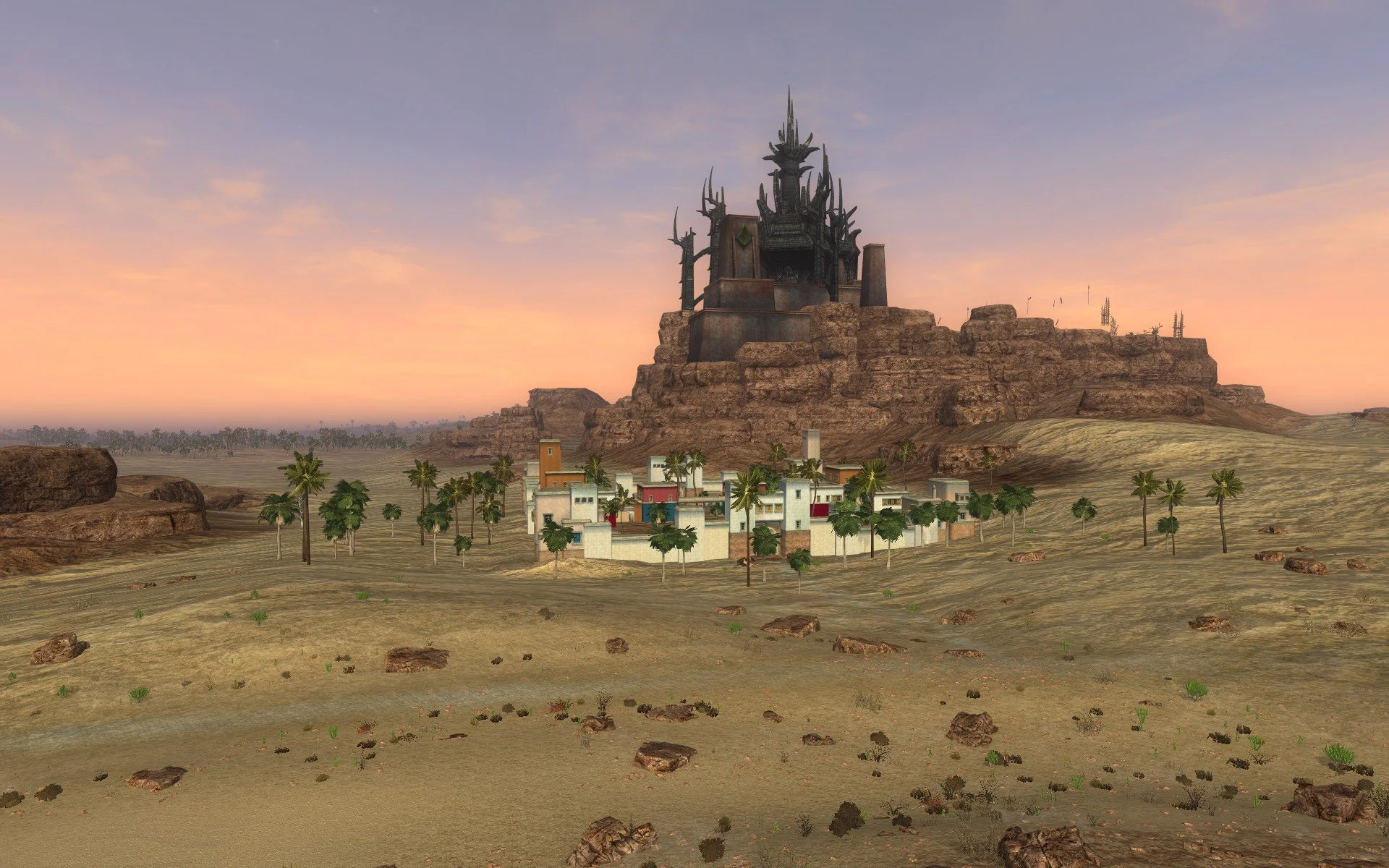
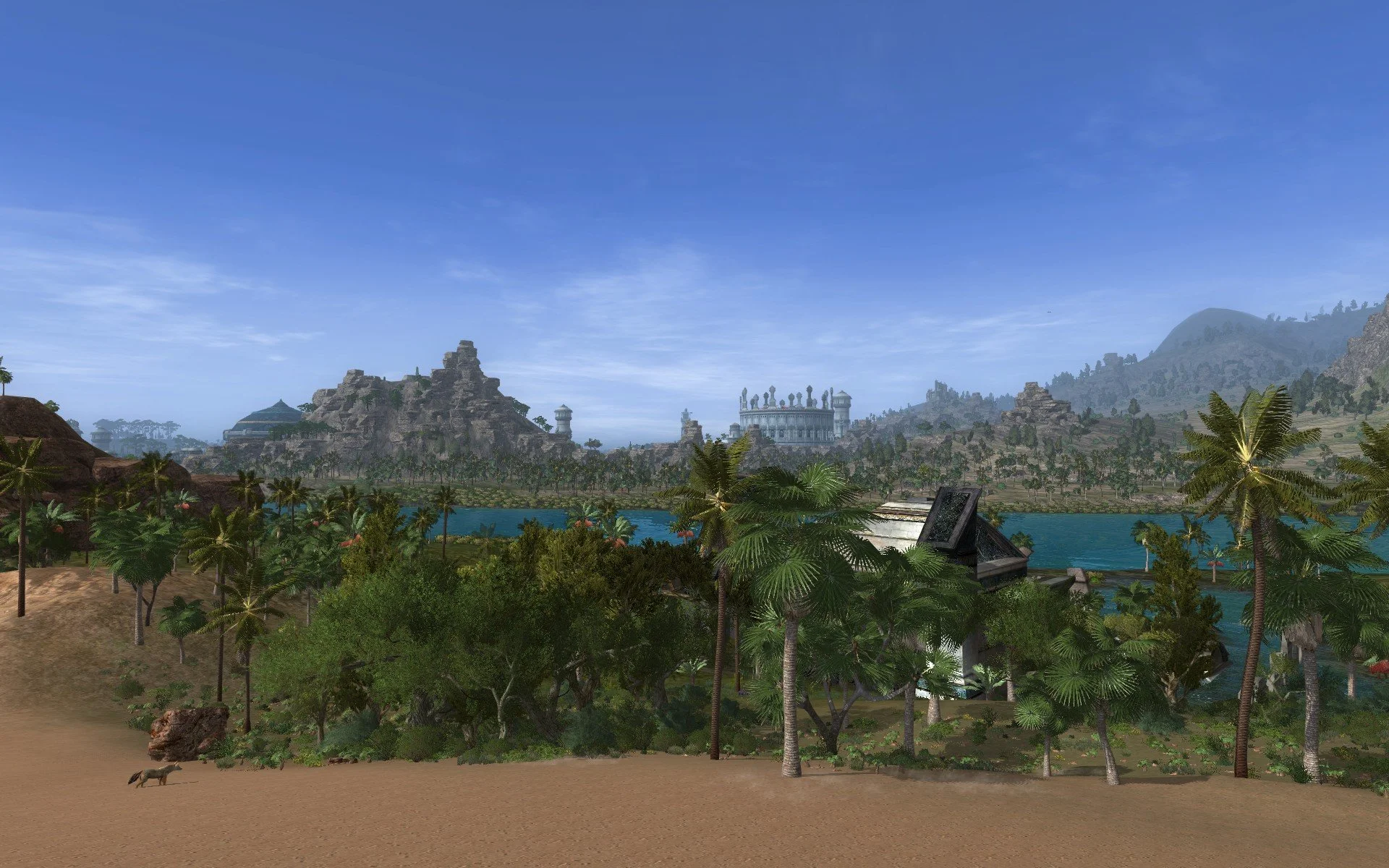
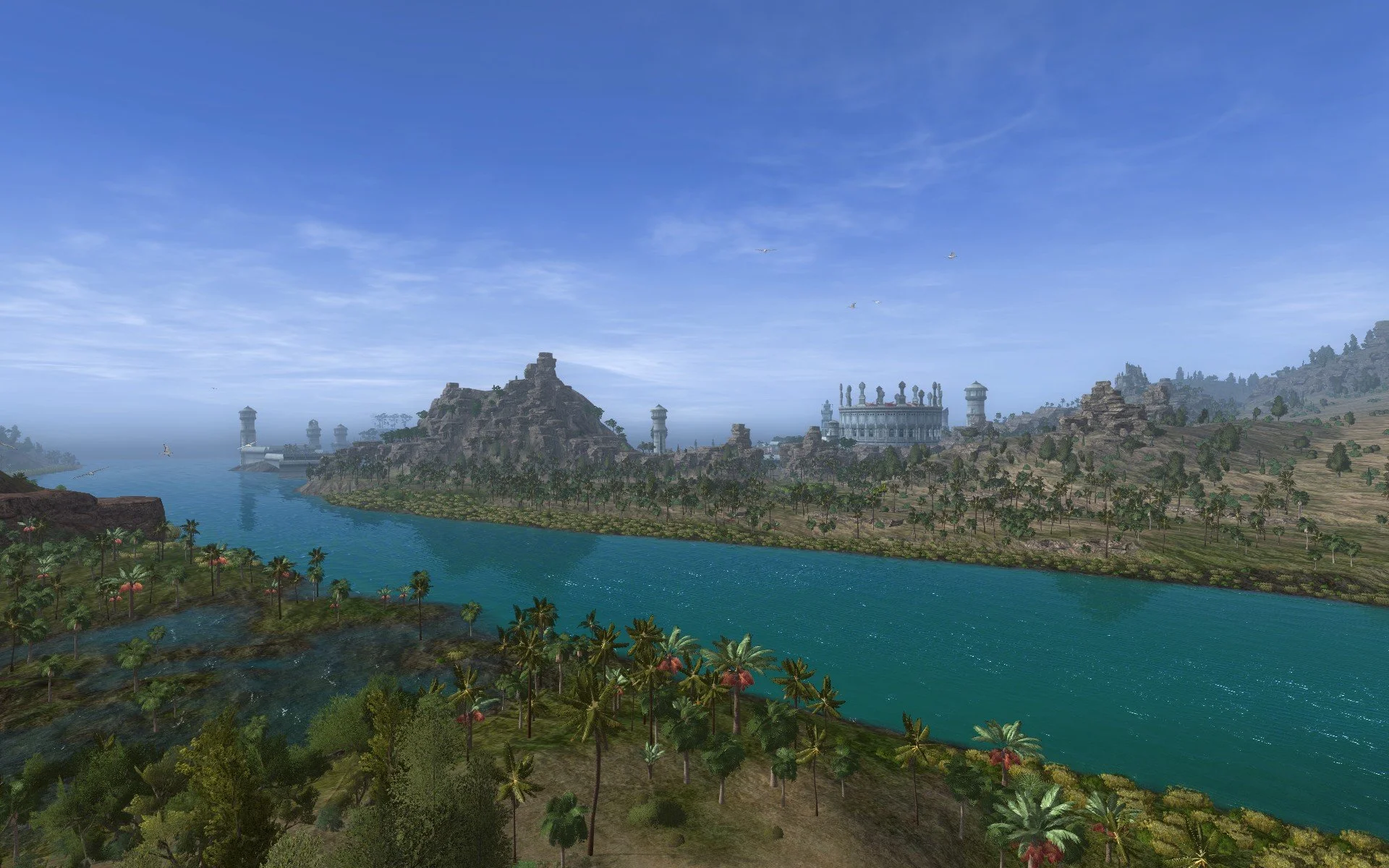
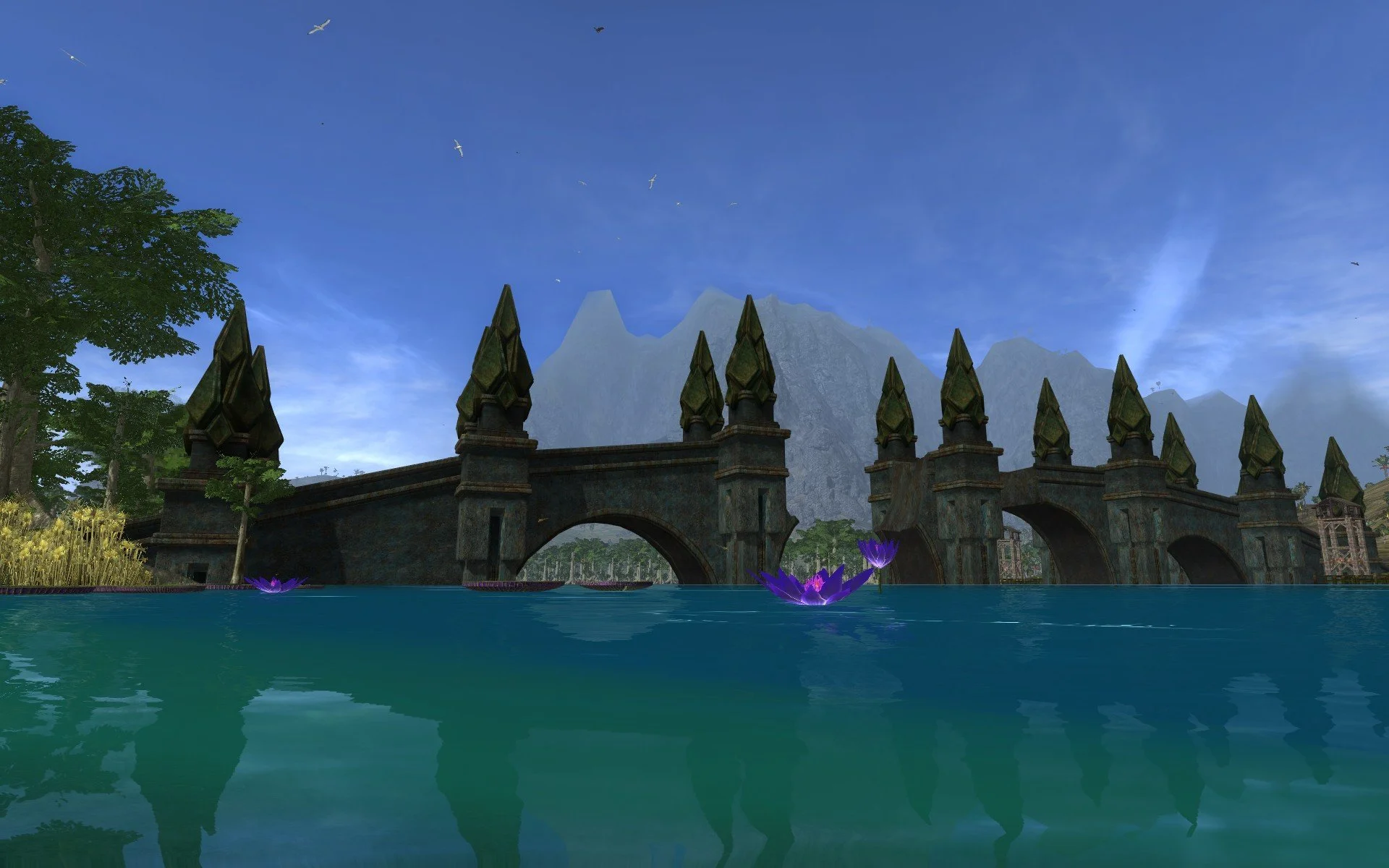
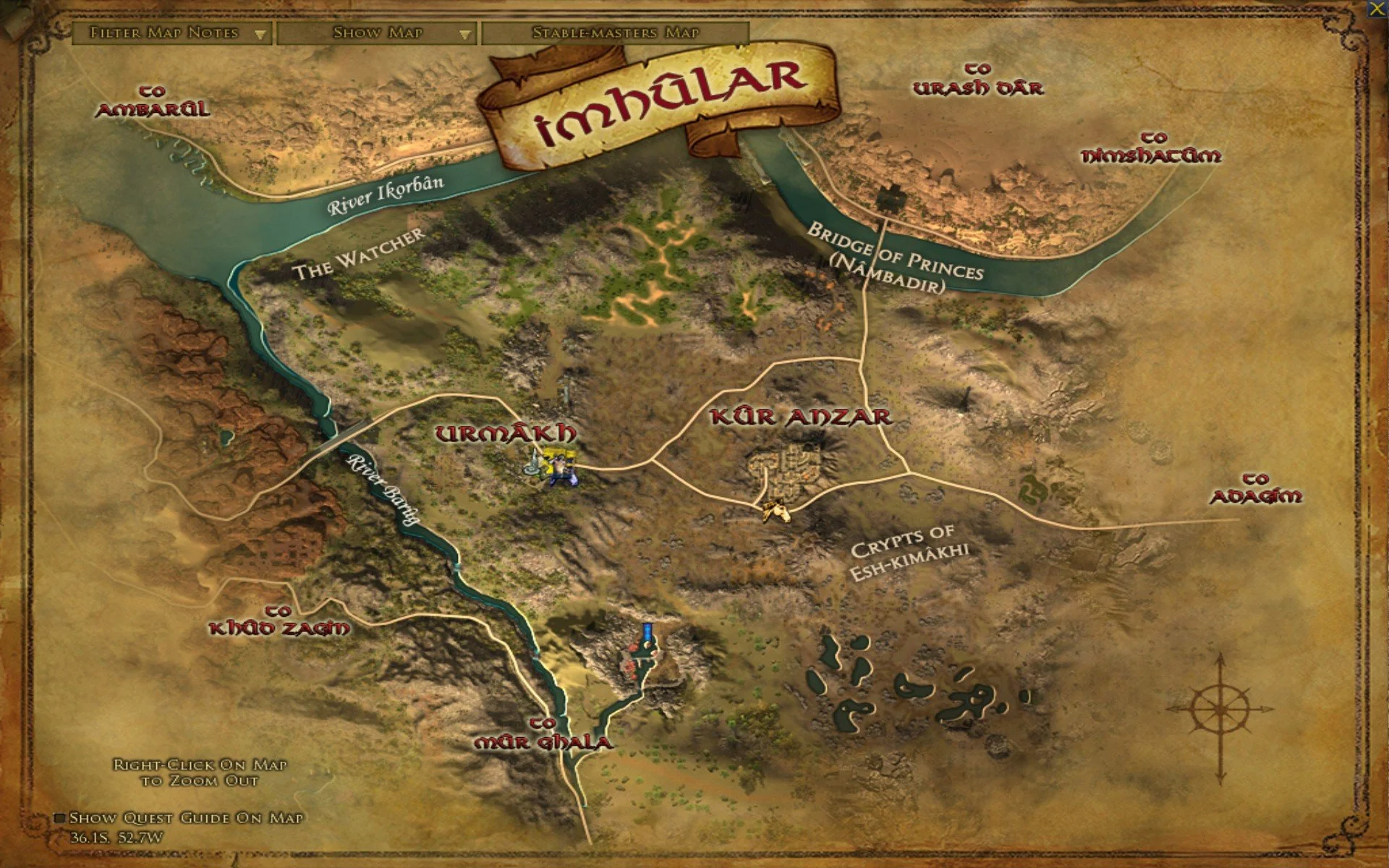
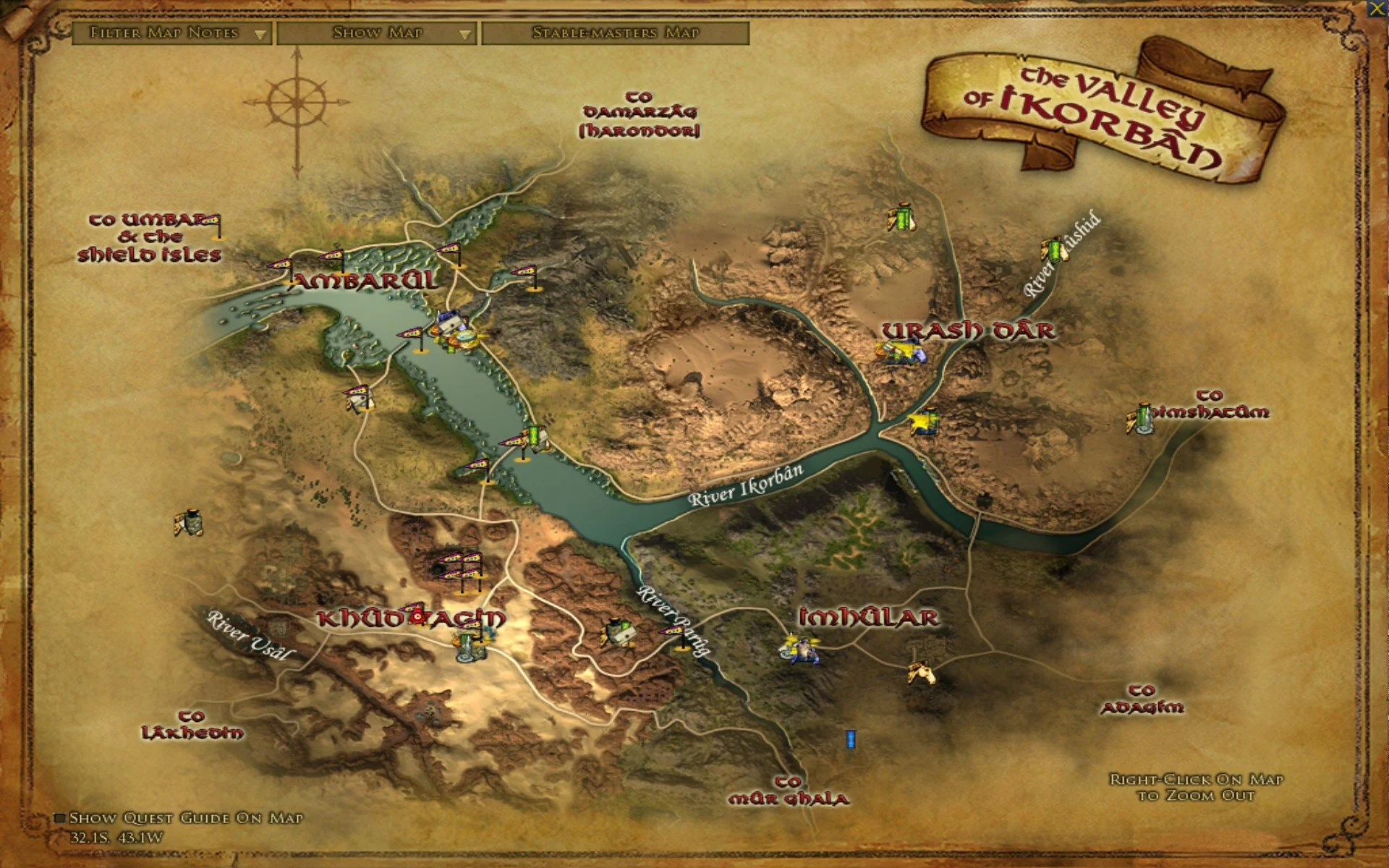
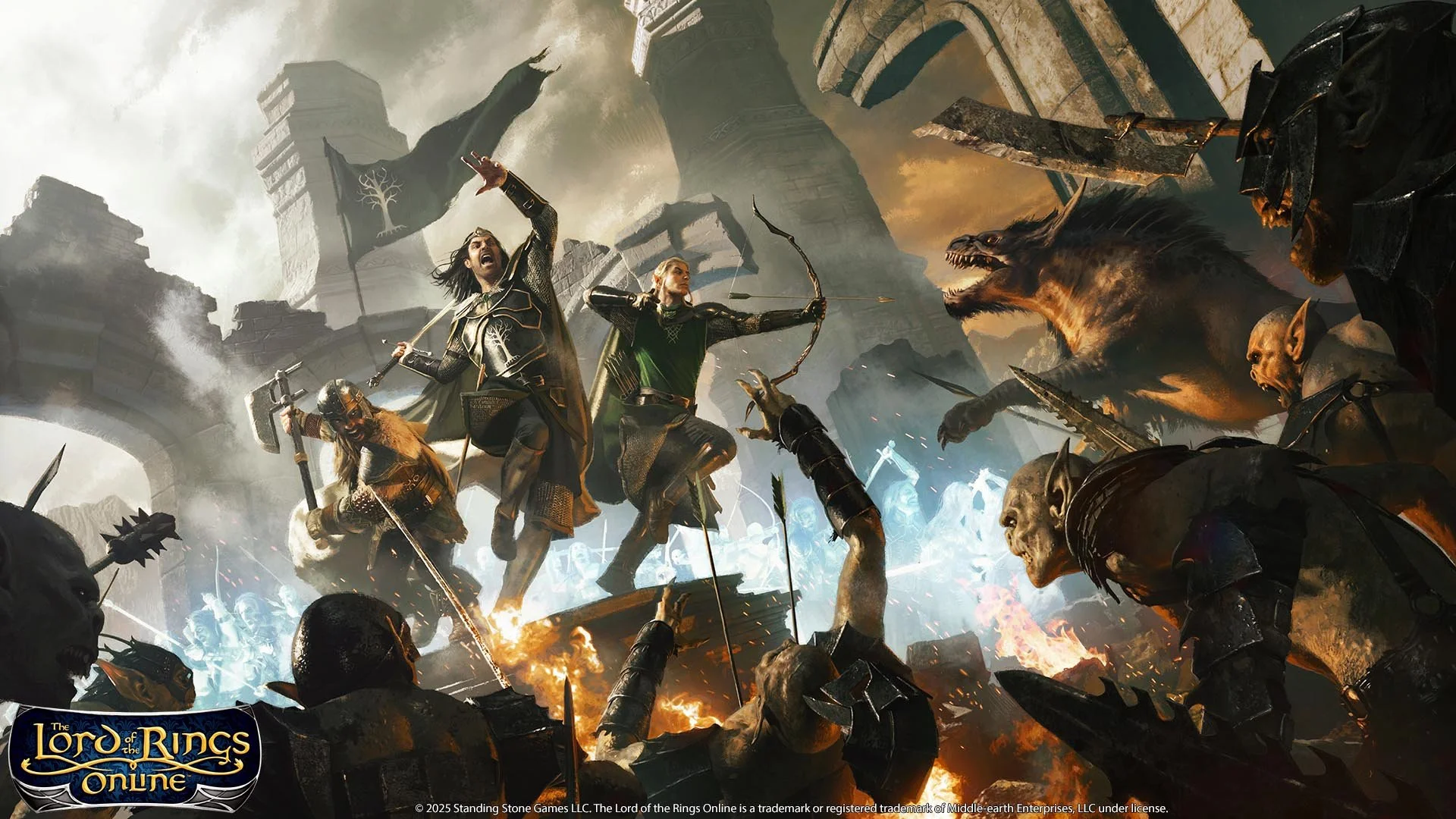
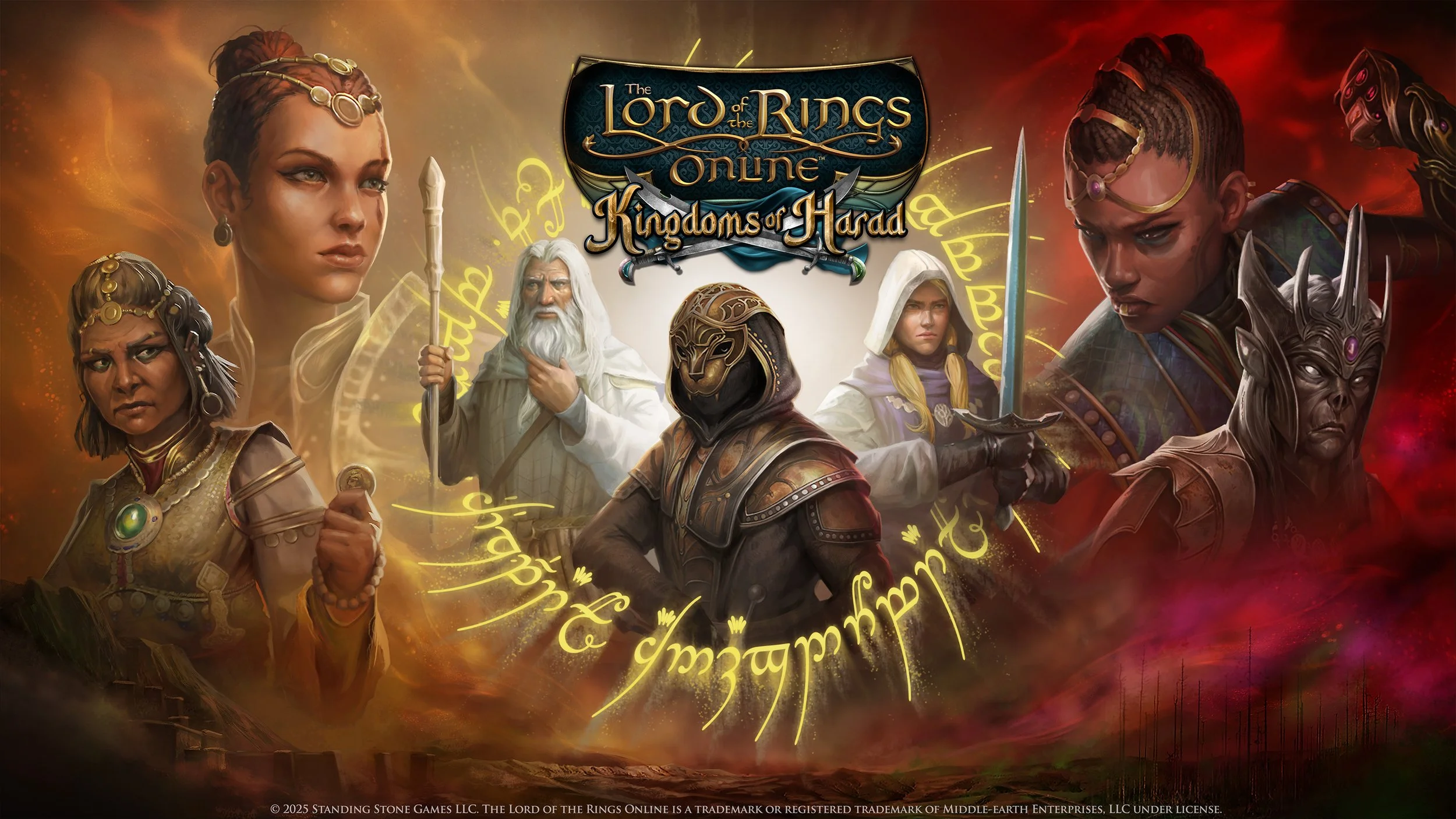
Over the last 24 hours, I’ve spent some time taking part in the first beta test for Legacy of Morgoth on this Bullroarer test server. This will be the 12th expansion for the MMORPG, The Lord of the Rings Online, when it is released on November 6th. According to the developers, Standing Stone Games, “Legacy of Morgoth is homed in the Valley of Ikorbân, located east of Umbar Baharbel. This is a challenge level 150 region, with 4 new zones packed with new quests, Deeds, Missions and Delvings for you to explore”. The Valley of Ikorbân is located to the east of Umbar Barharbel and is part of Near Harad. The aesthetics of the region are a continuation of those featured in the previous expansion, Corsairs of Umbar. Something, I personally still have mixed feelings about, as I find it somewhat incongruous to be questing in a tropical zone, after years of playing in a world that is predominantly based upon a European, temperate climate.
Over the last 24 hours, I’ve spent some time taking part in the first beta test for Legacy of Morgoth on this Bullroarer test server. This will be the 12th expansion for the MMORPG, The Lord of the Rings Online, when it is released on November 6th. According to the developers, Standing Stone Games, “Legacy of Morgoth is homed in the Valley of Ikorbân, located east of Umbar Baharbel. This is a challenge level 150 region, with 4 new zones packed with new quests, Deeds, Missions and Delvings for you to explore”. The Valley of Ikorbân is located to the east of Umbar Barharbel and is part of Near Harad. The aesthetics of the region are a continuation of those featured in the previous expansion, Corsairs of Umbar. Something, I personally still have mixed feelings about, as I find it somewhat incongruous to be questing in a tropical zone, after years of playing in a world that is predominantly based upon a European, temperate climate.
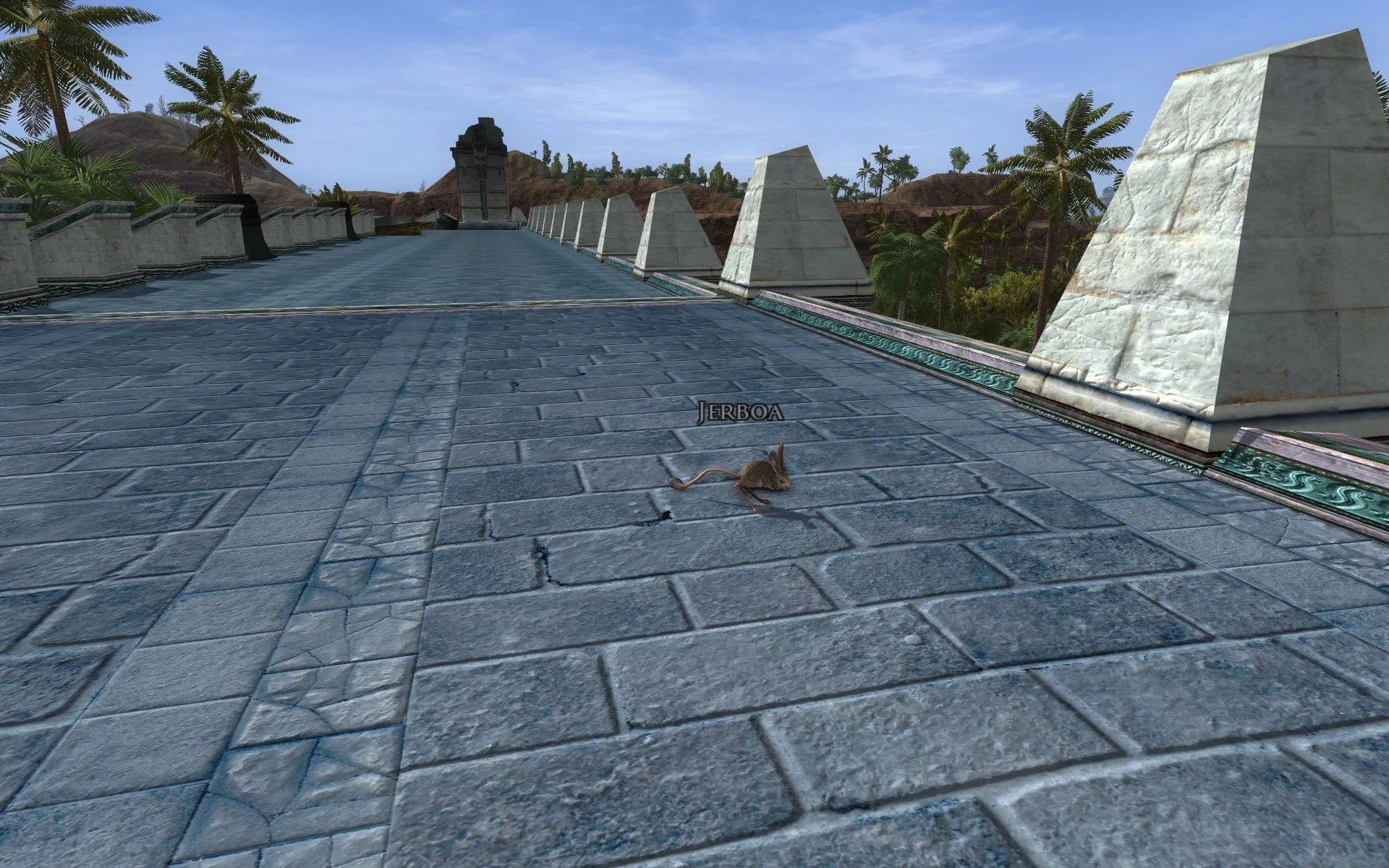
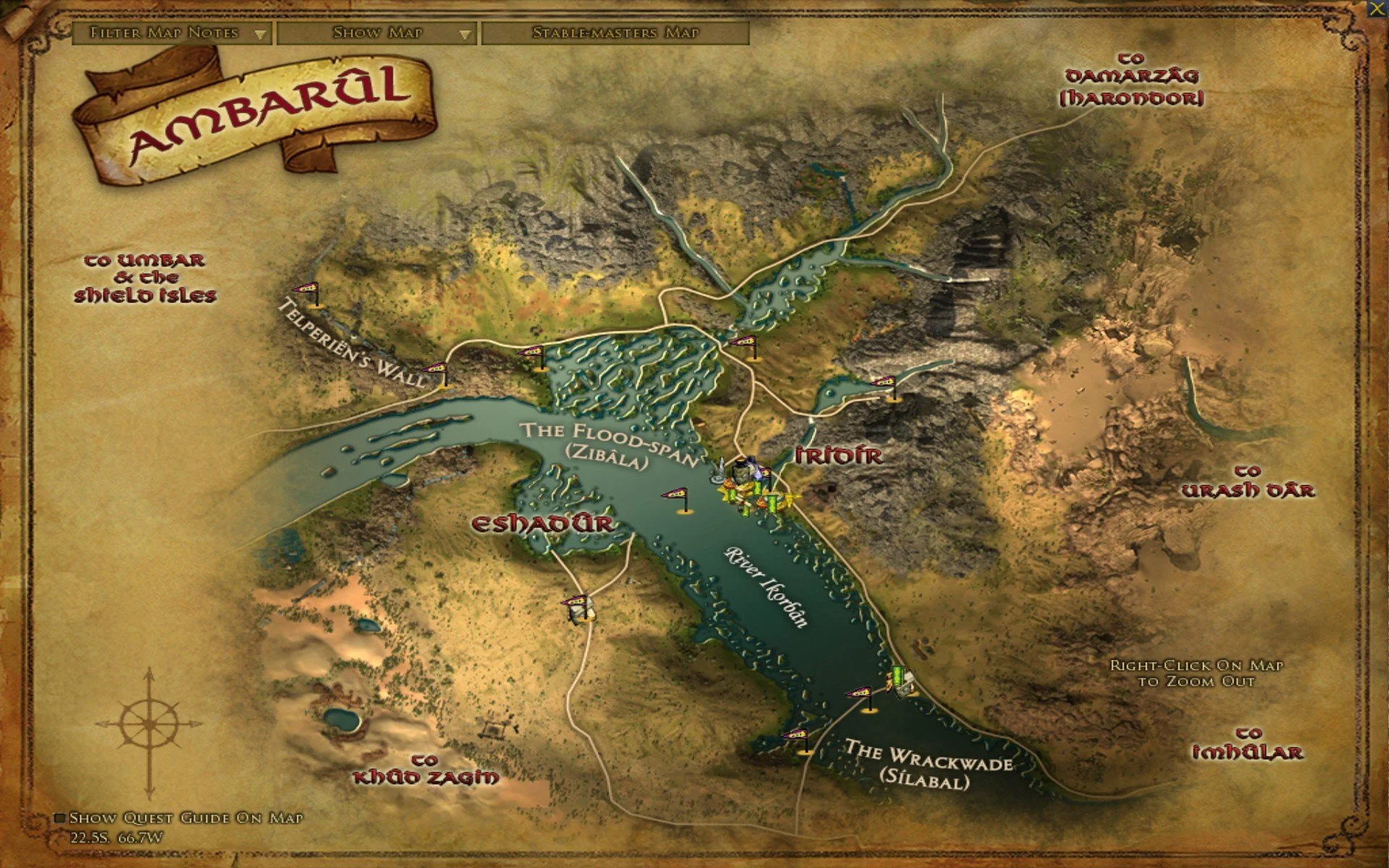
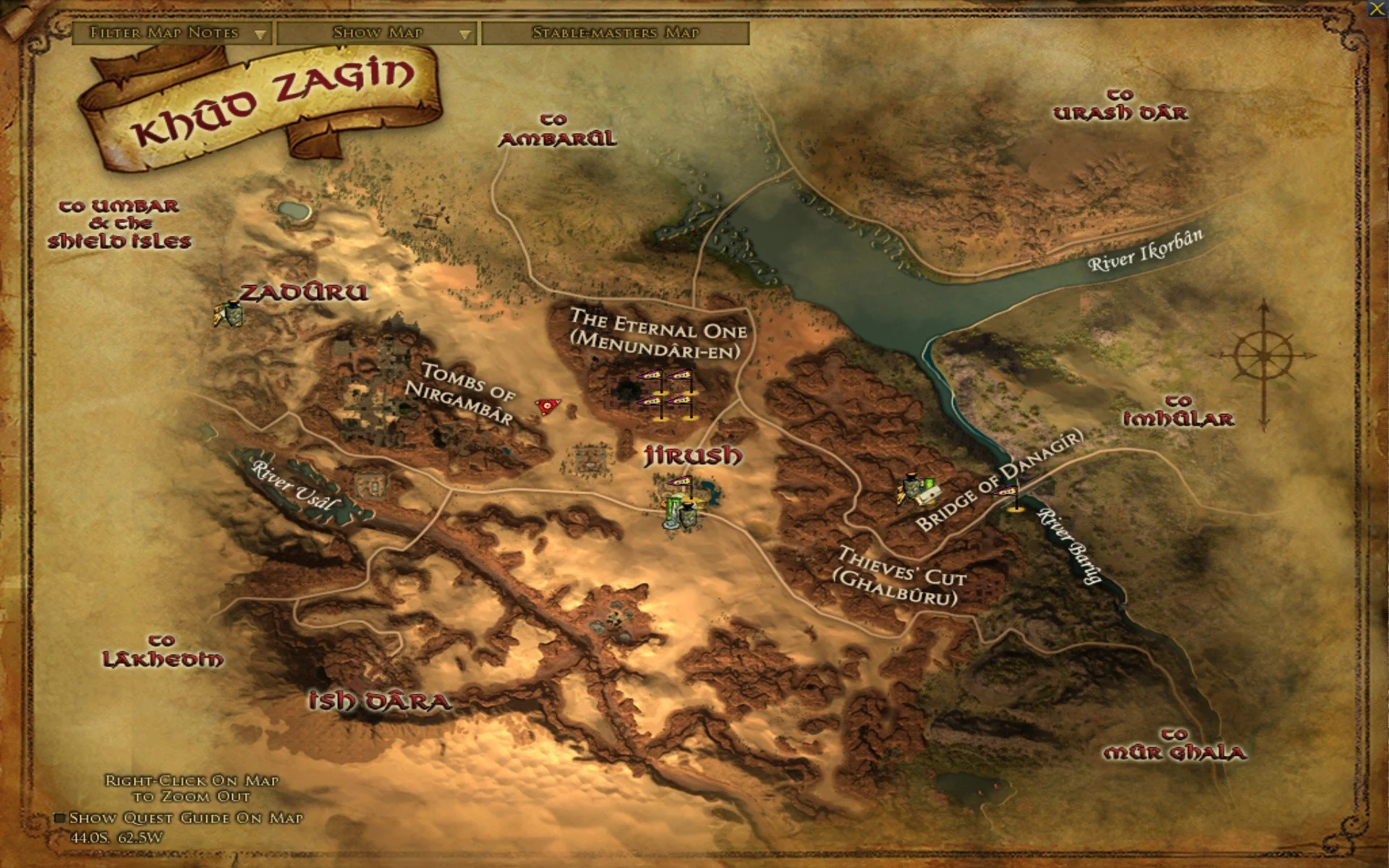
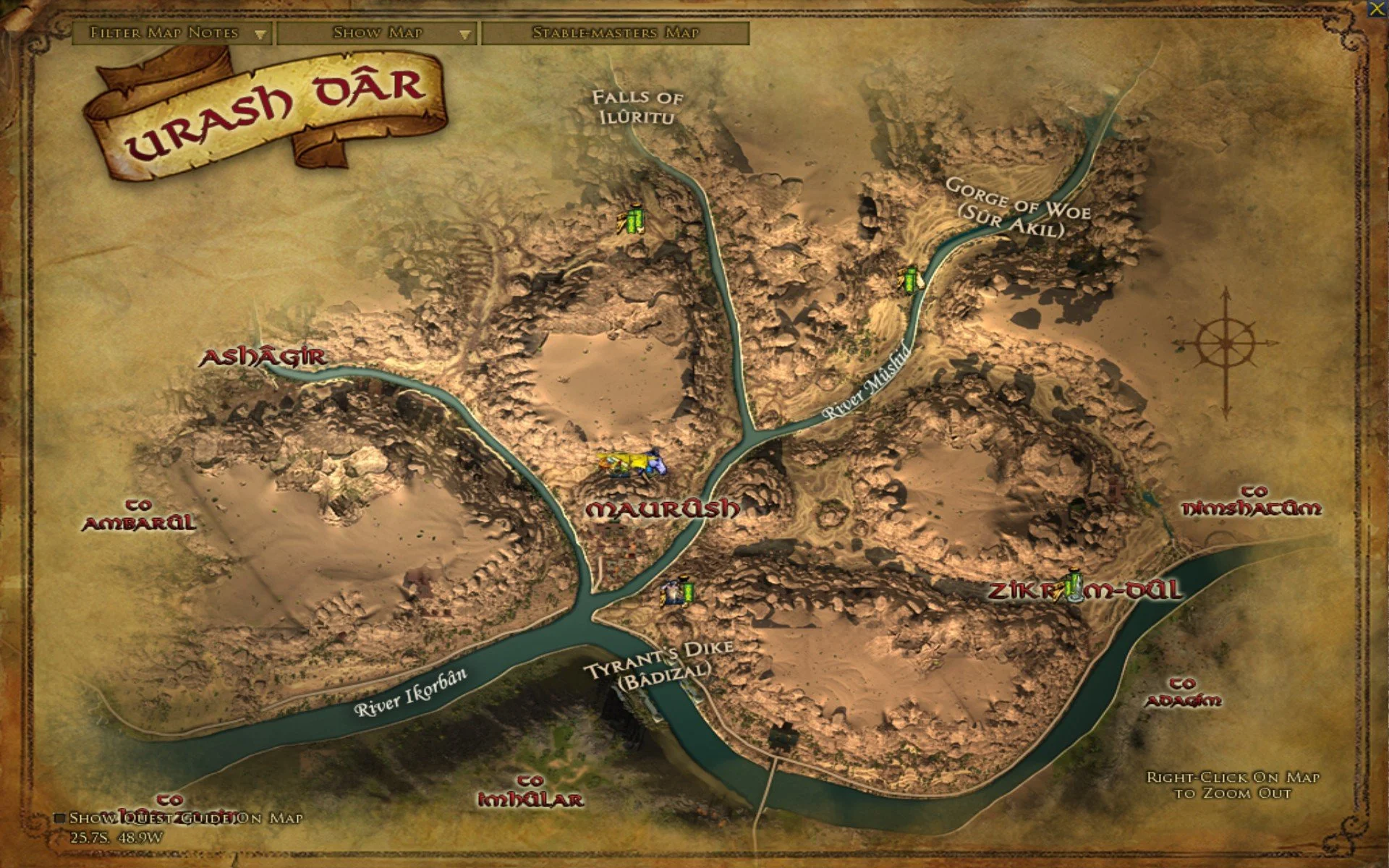
The Valley of Ikorbân is split into four maps, filled with new quests, Deeds, Missions and Delvings for players to explore. The expansion is a challenge level 150 region. The first beta test is unusual compared to those for previous expansions, as developers SSG have not made the entire expansion available as they usually do. Hence I have only been able to explore Ambarûl and Khûd Zagin so far. Both Imhûlar and Urash Dâr will be available for future tests. The downside to this approach is that players will encounter specific invisible walls, the most noticeable is across the Bridge of Danagir. Limiting access to the full expansion has also broken the travel mounts from the stables in the area. Regular travel mounts will ride through a zone until they encounter an invisible wall but swift travel mounts fail to follow the designated route and run into any obstruction.
SSG have not explained why they have made this decision and it has been assumed by many LOTRO players that the quests in the two withheld zones are incomplete. Setting this aside for a moment, an expansion comprising of just four maps, is cause for concern in its own right. LOTRO players have already pointed out that the 3 different versions of the Legacy of Morgoth that were initially announced (standard, collector’s and ultimate fan edition), were lacking in content and the SSG has already decided to add cosmetic items to address such concerns. However, I still do not feel that 4 new maps merits being called an expansion. It is not as if we’re getting a new class, like we did with Corsairs of Umbar. I am curious to see if this becomes a talking point on the official forums and whether SSG will make any further concessions.
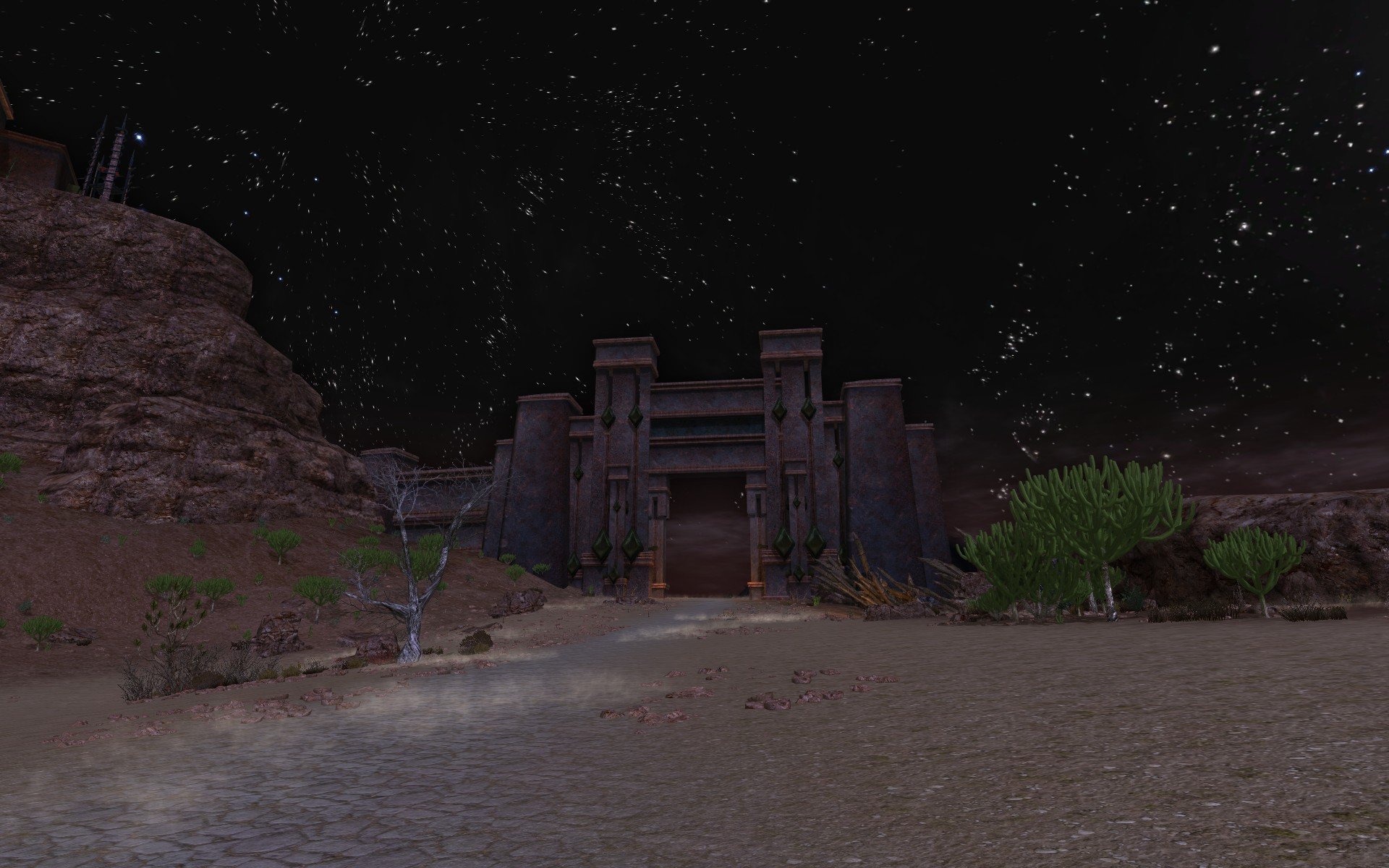
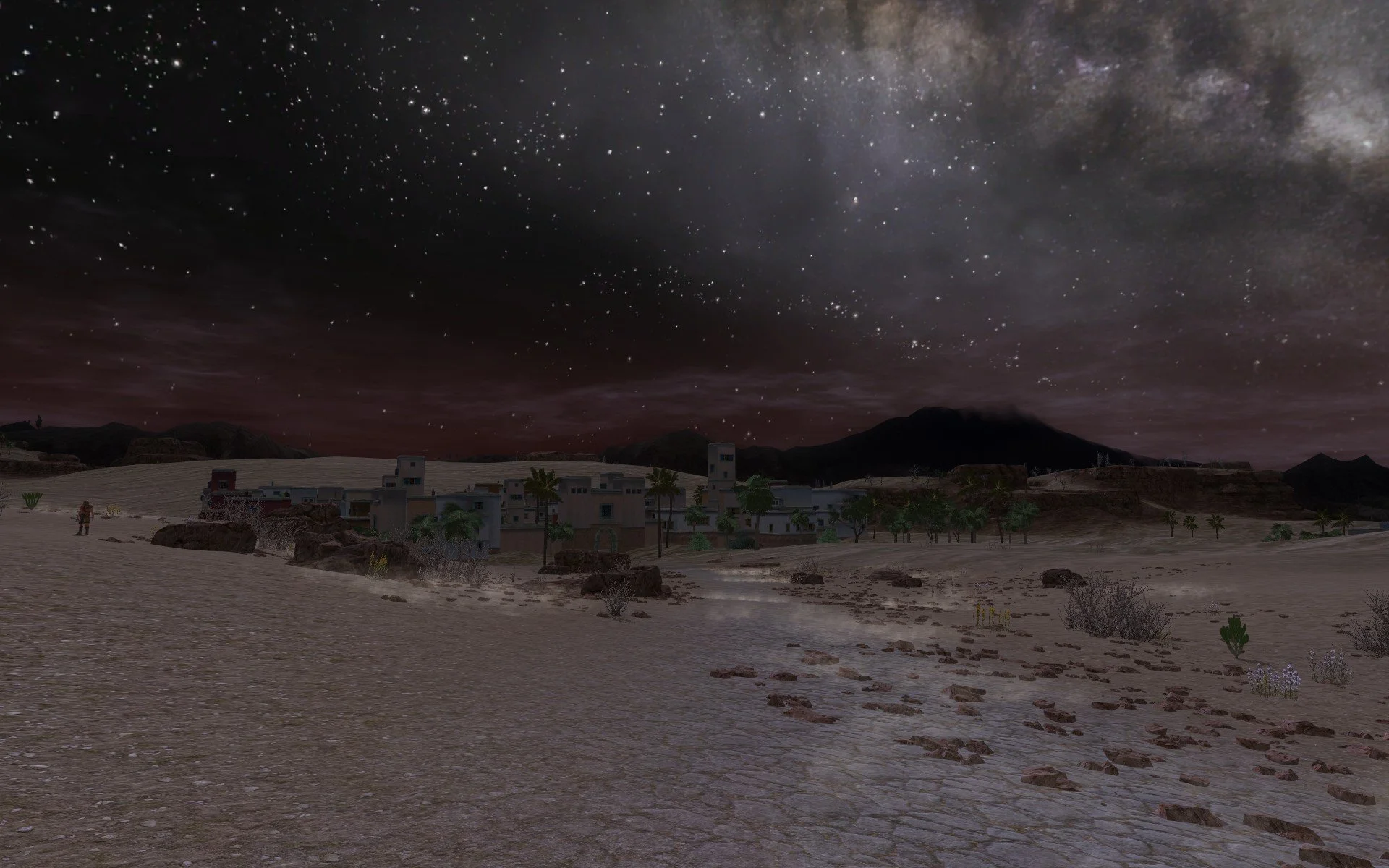
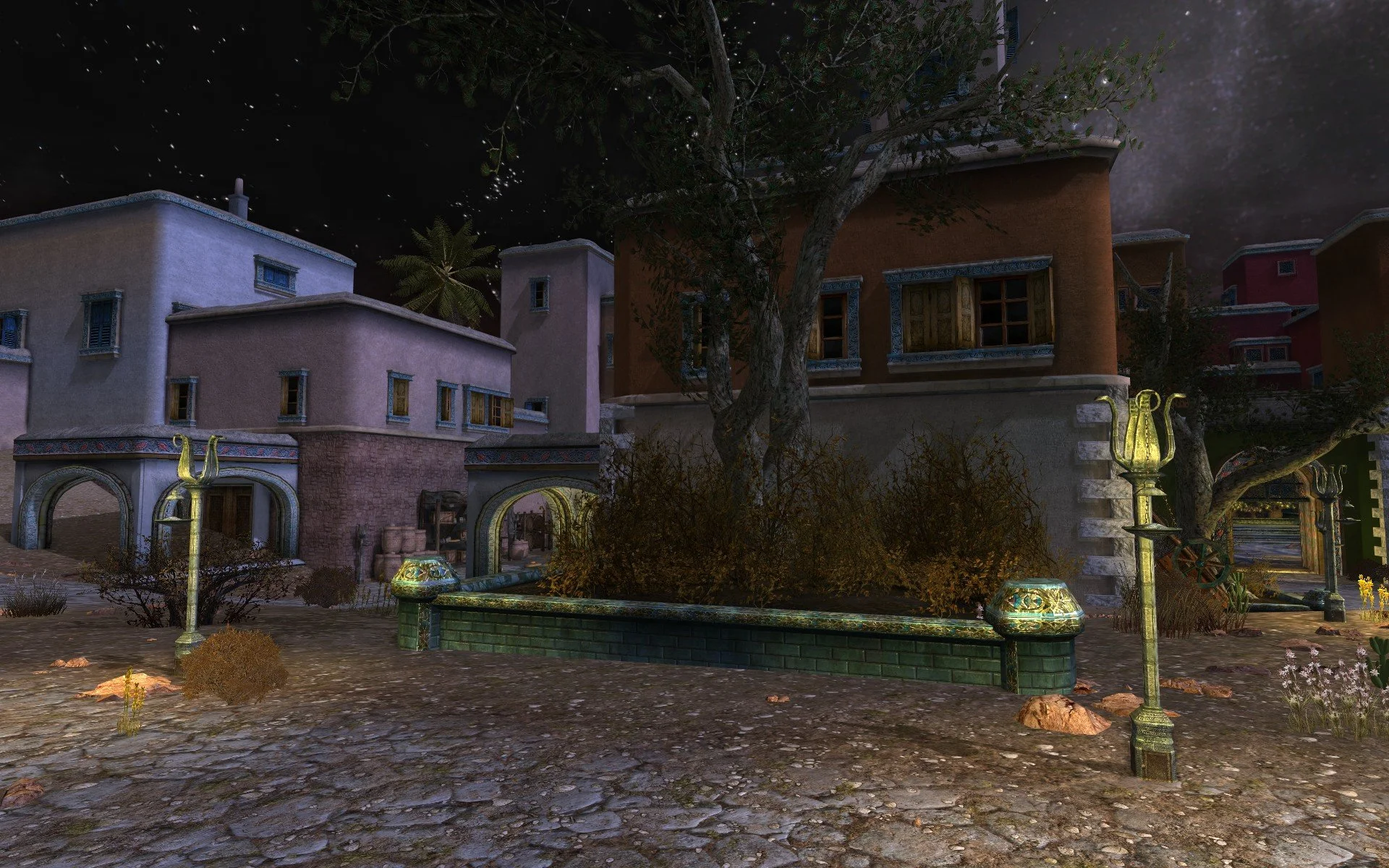
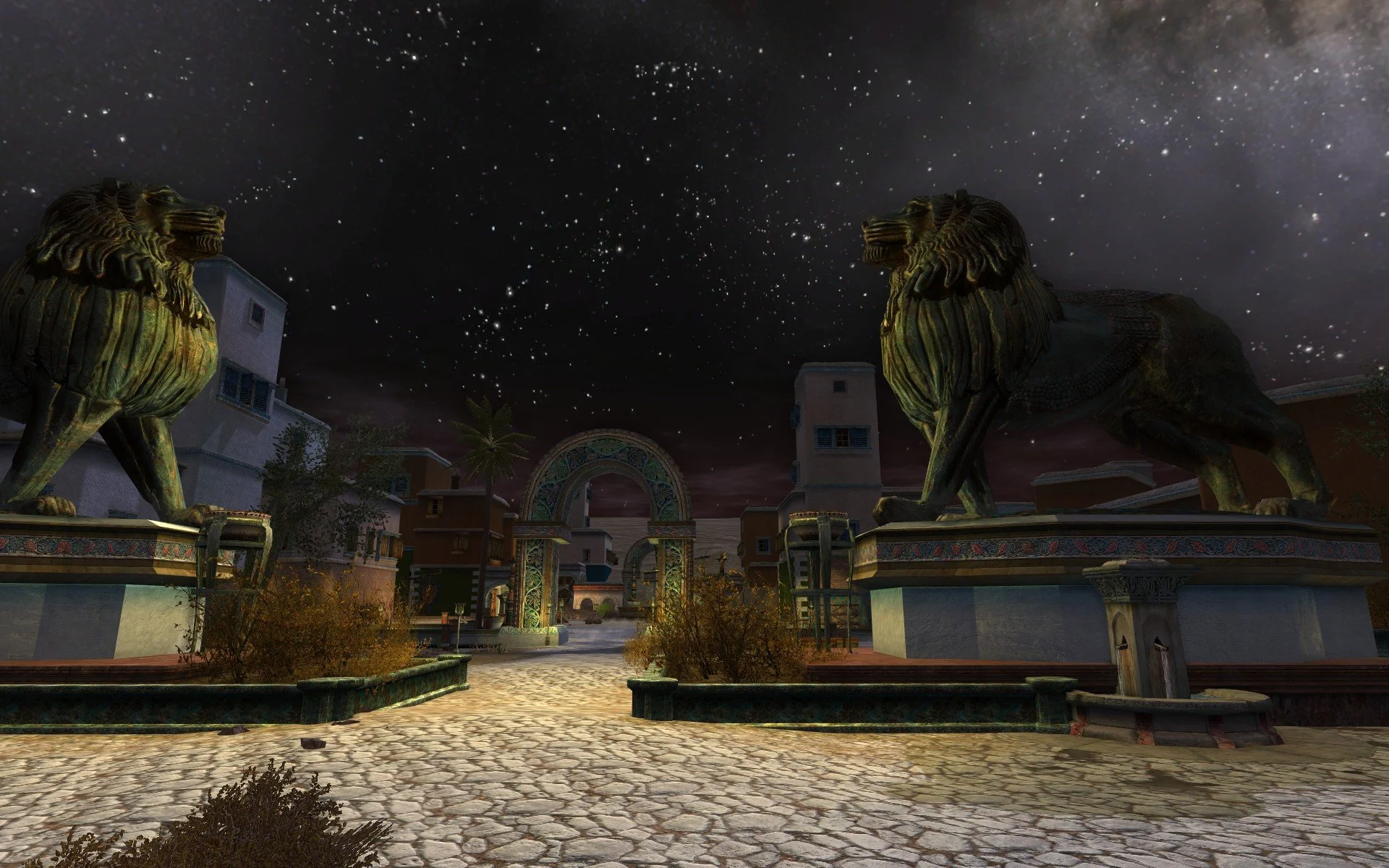
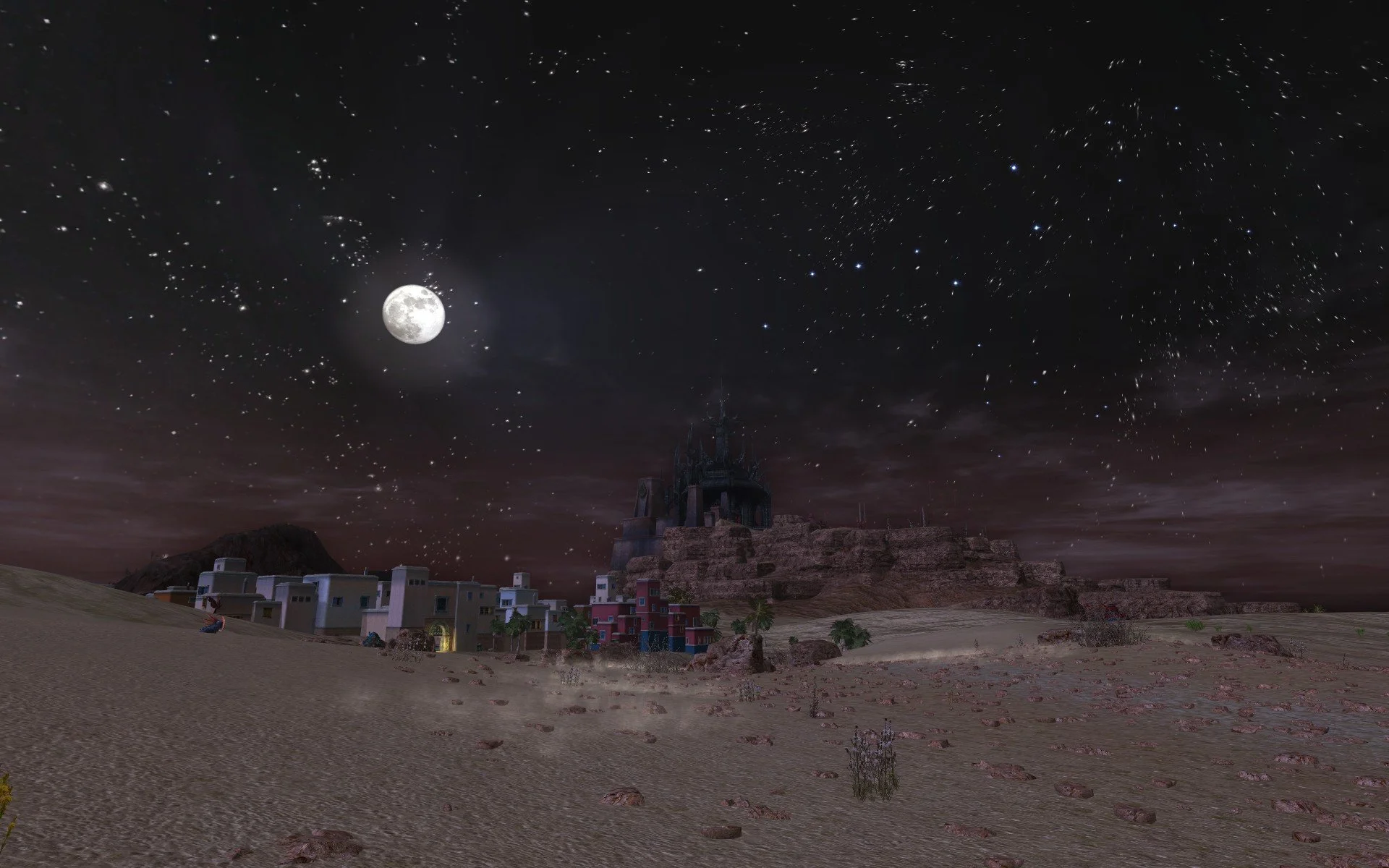
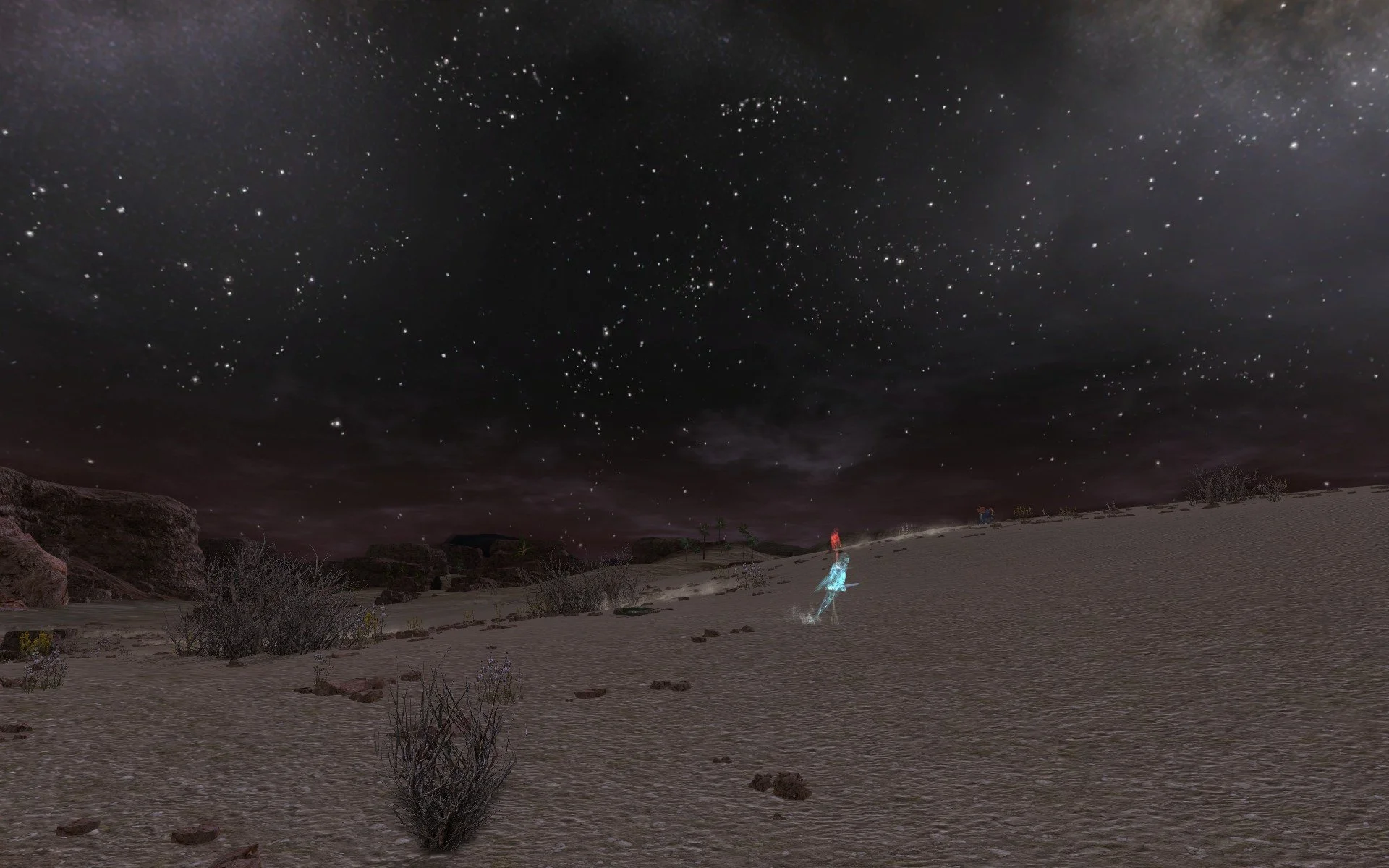
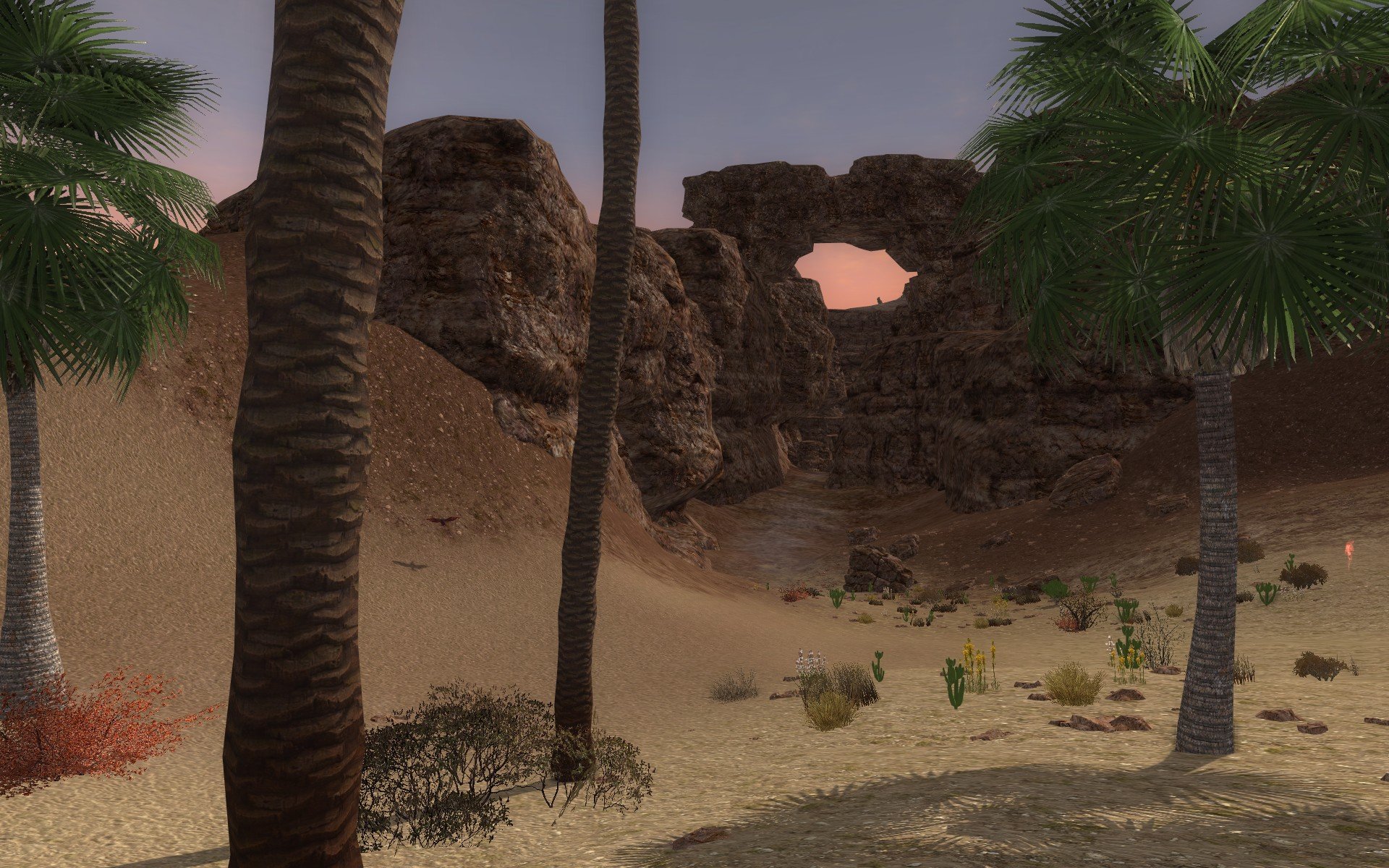
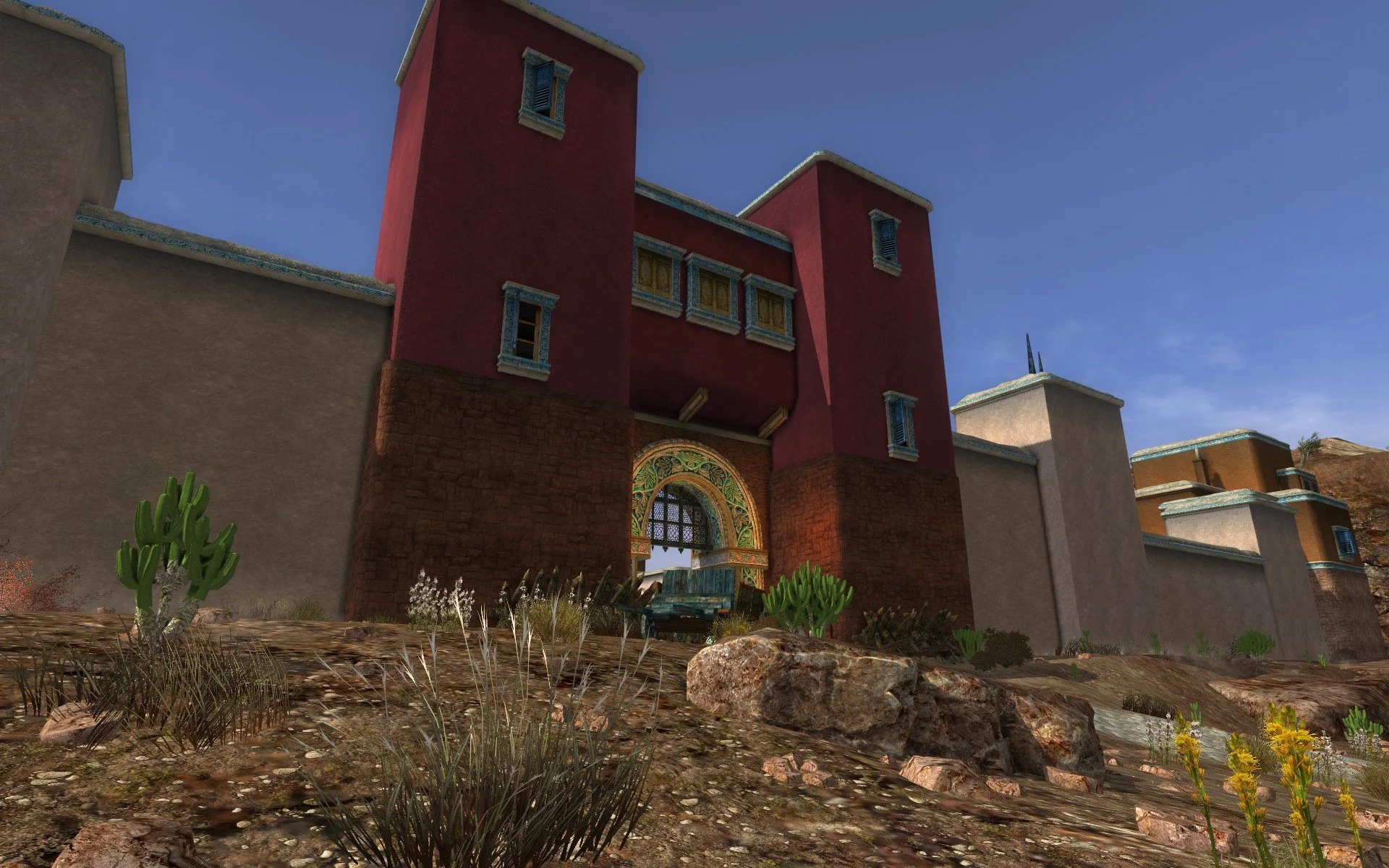
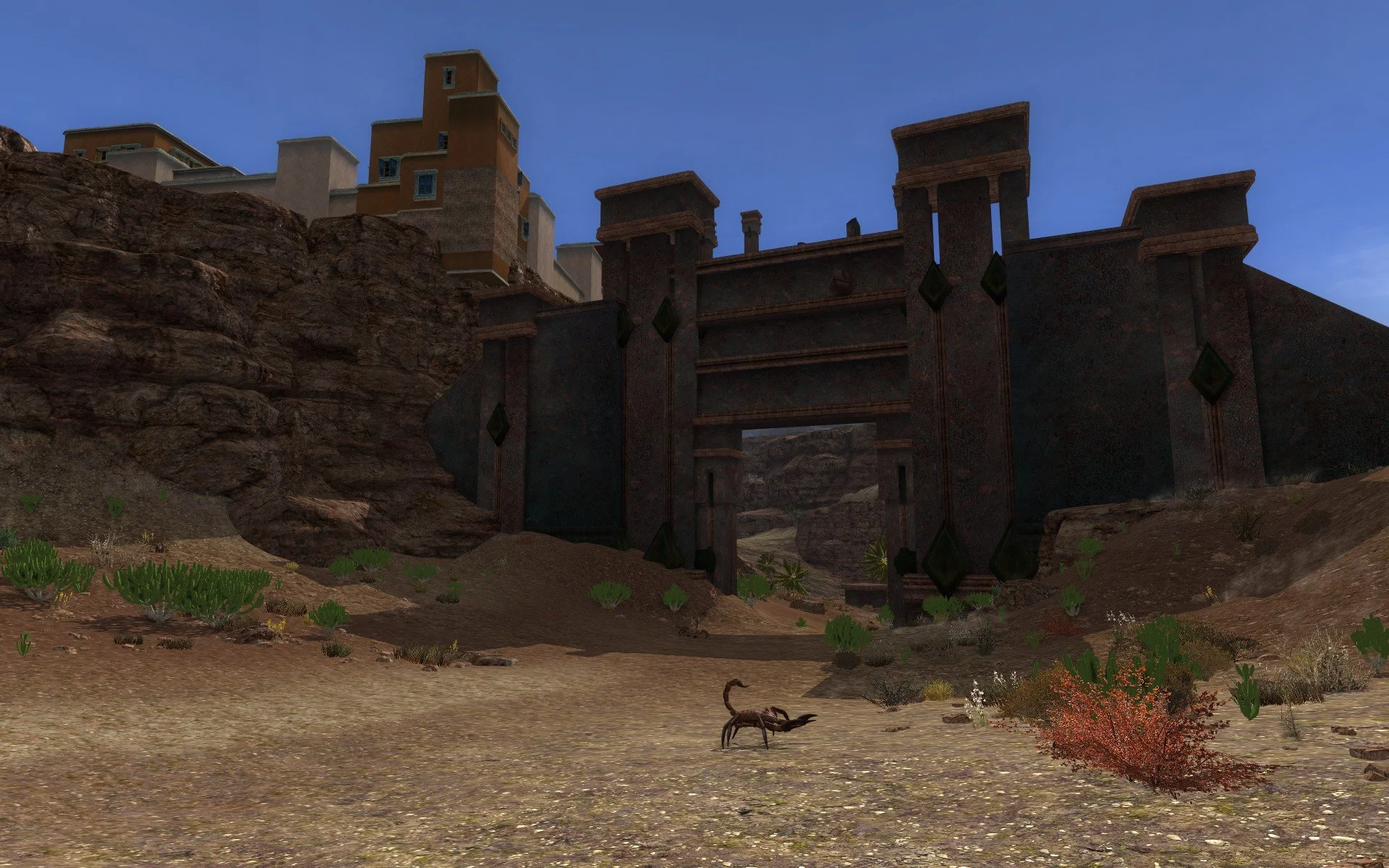
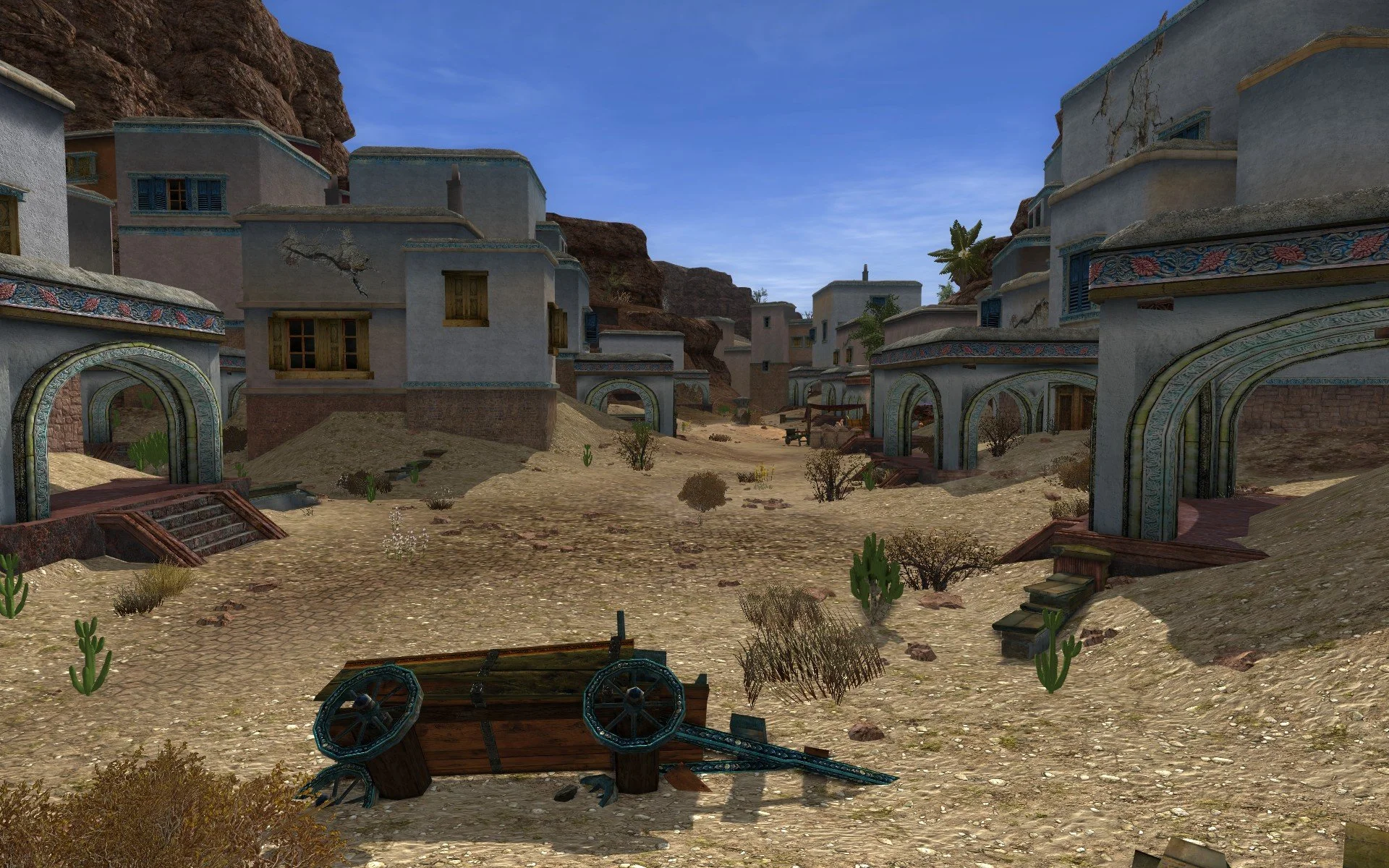
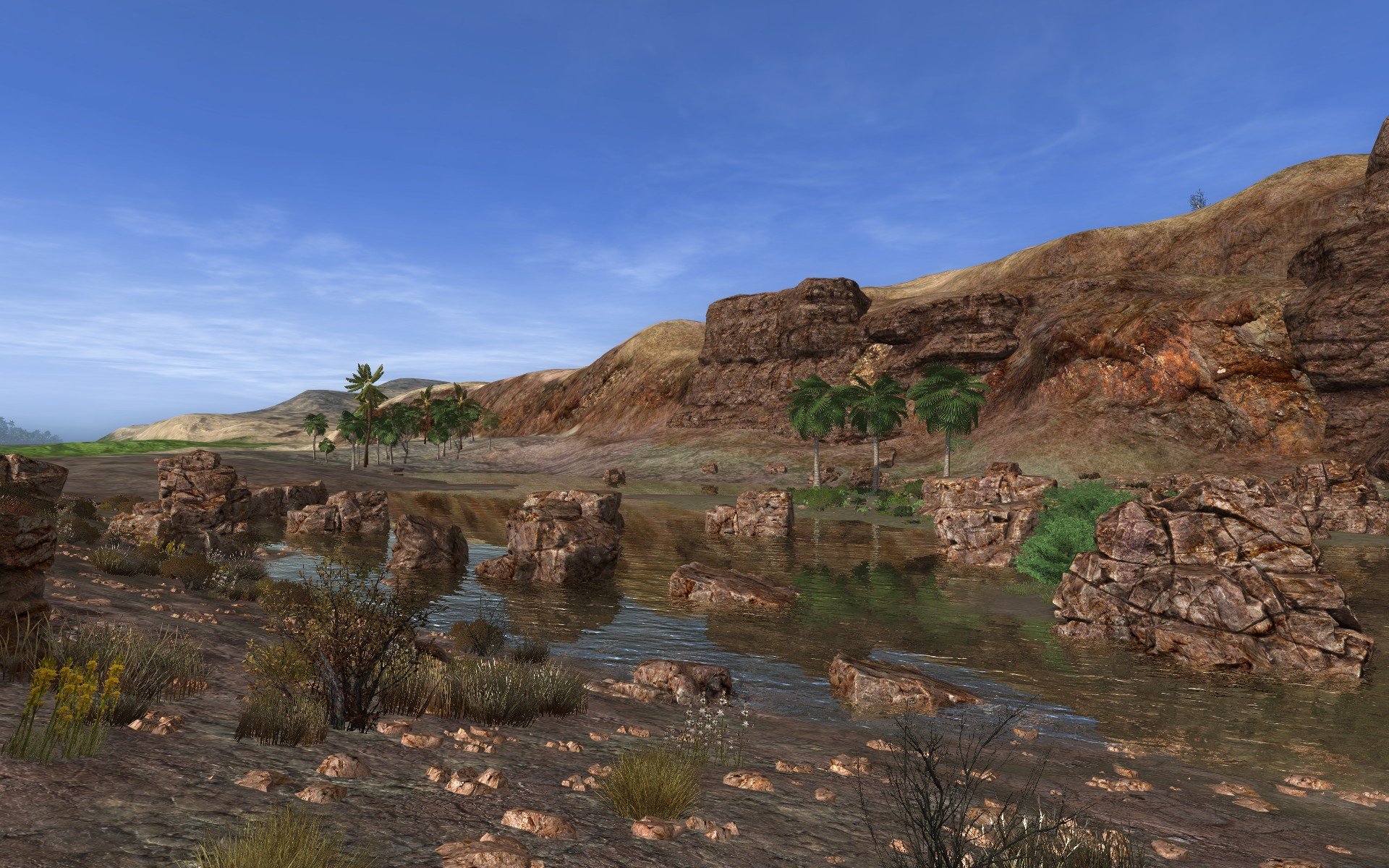
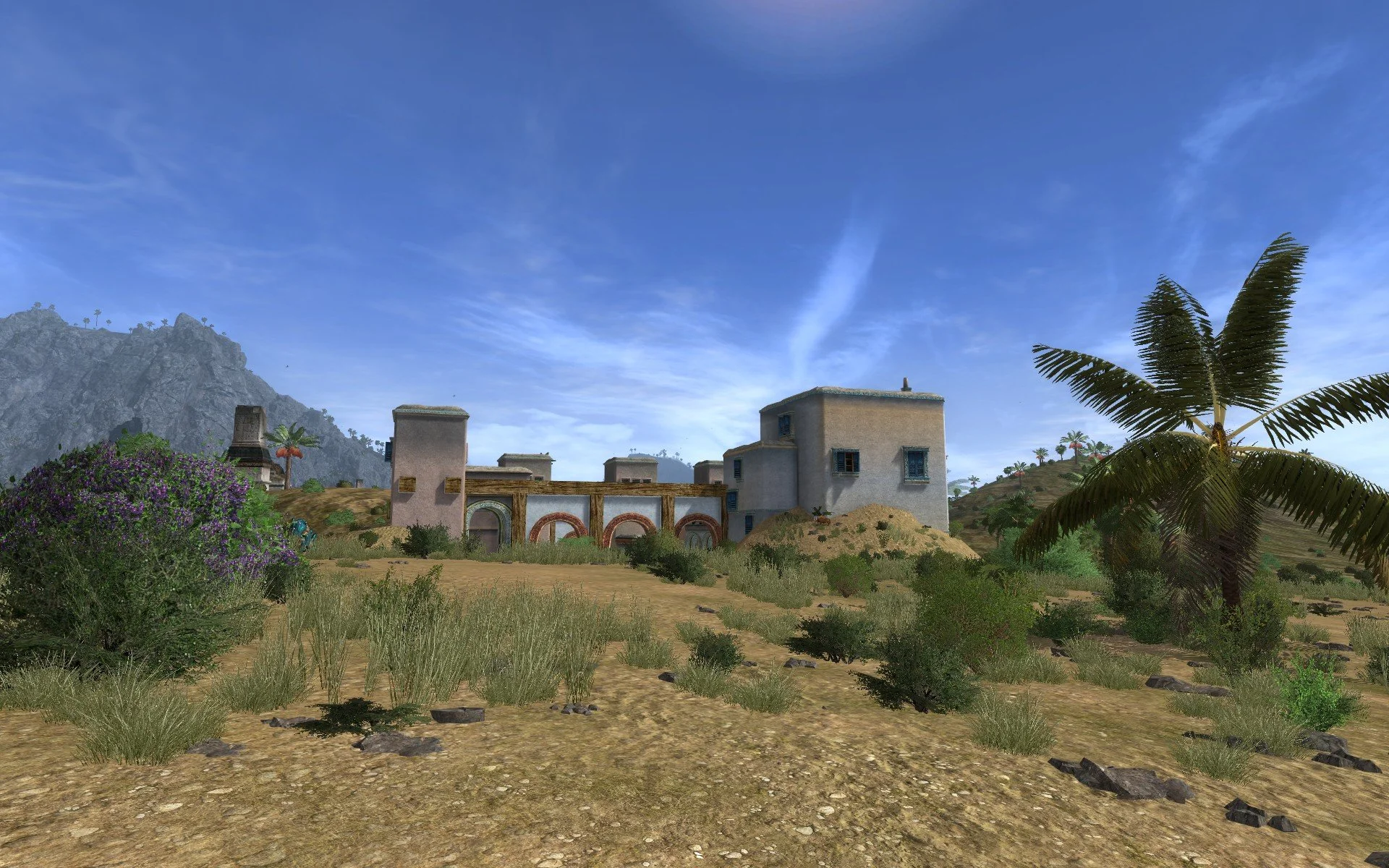
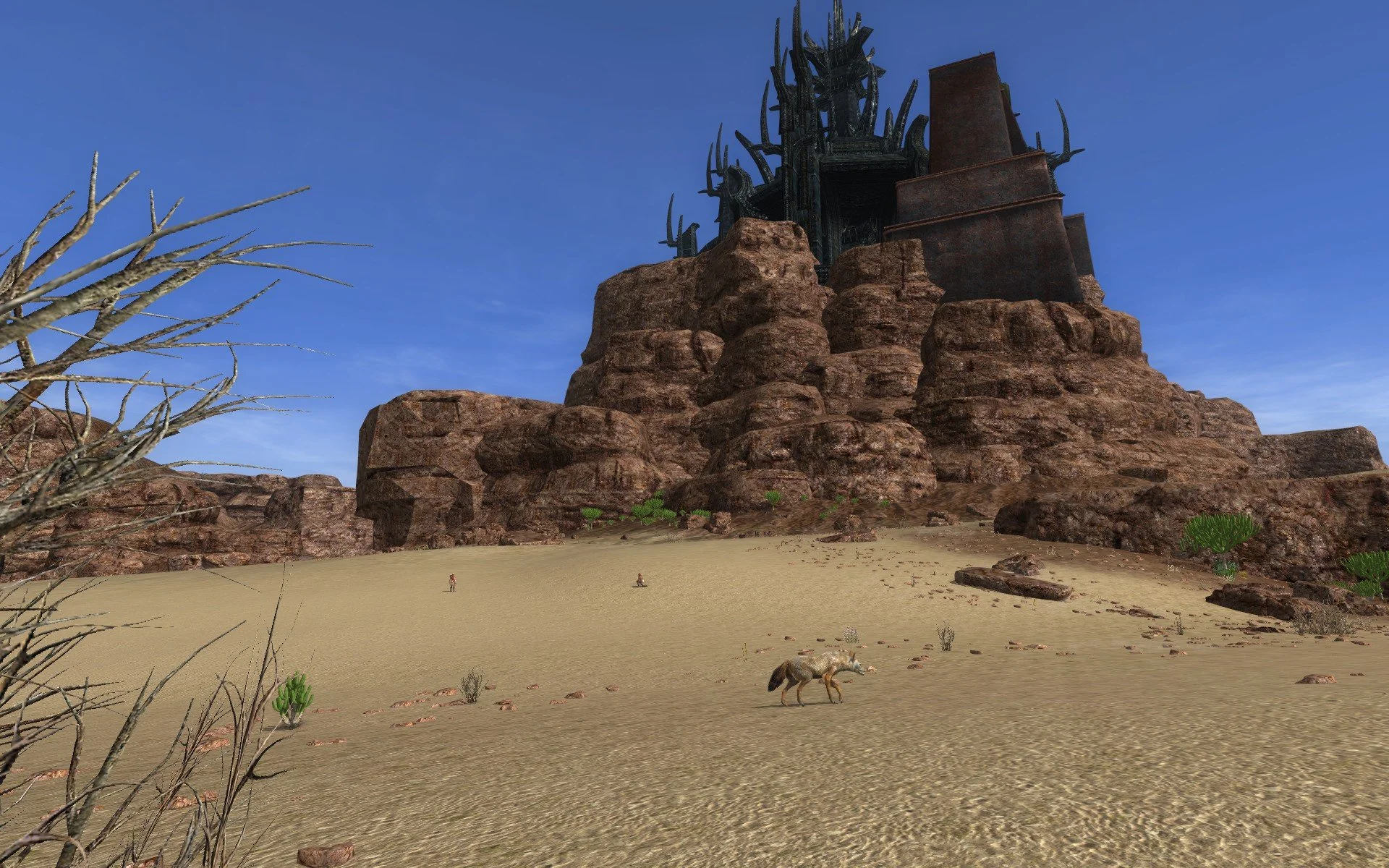
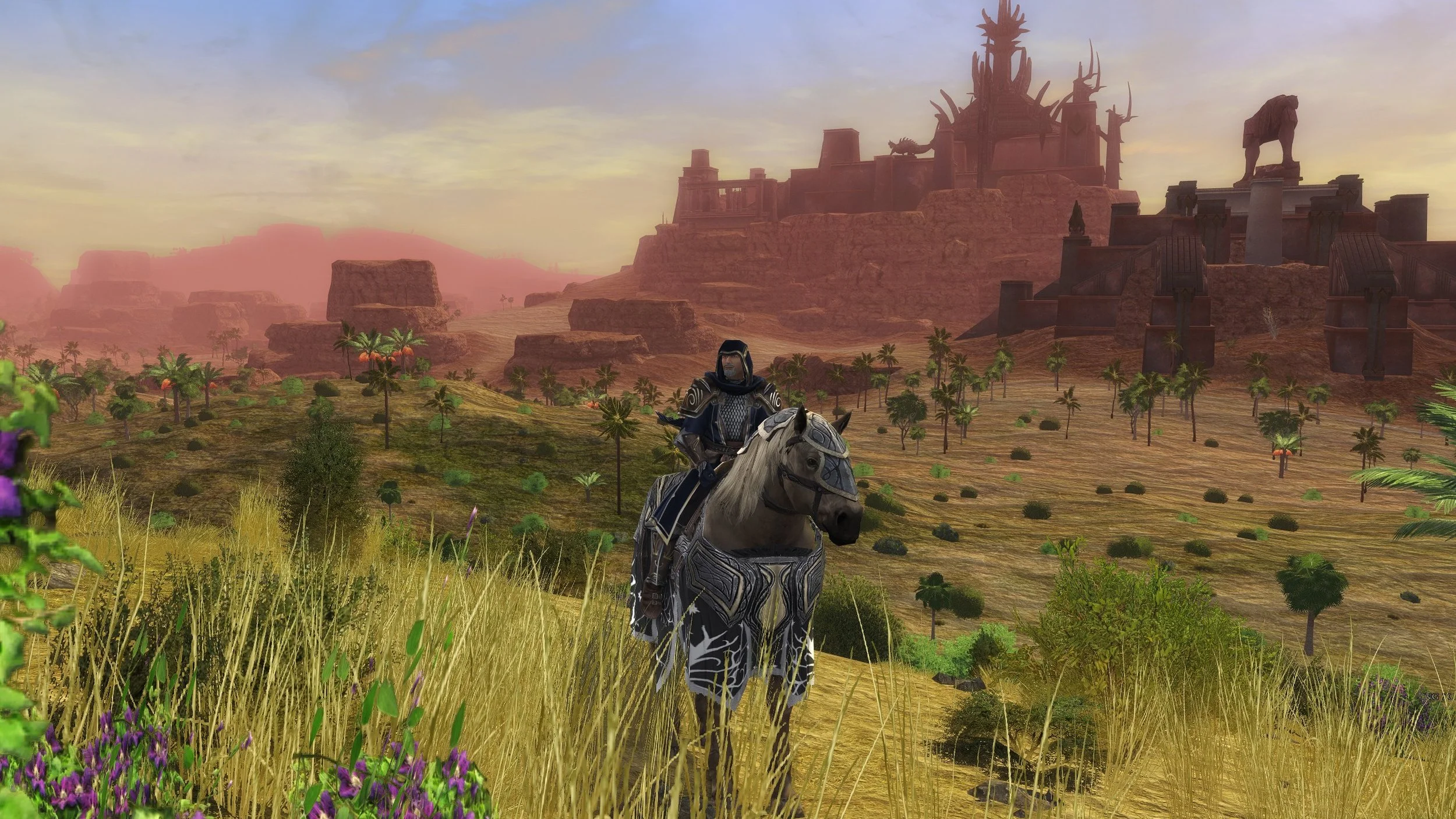
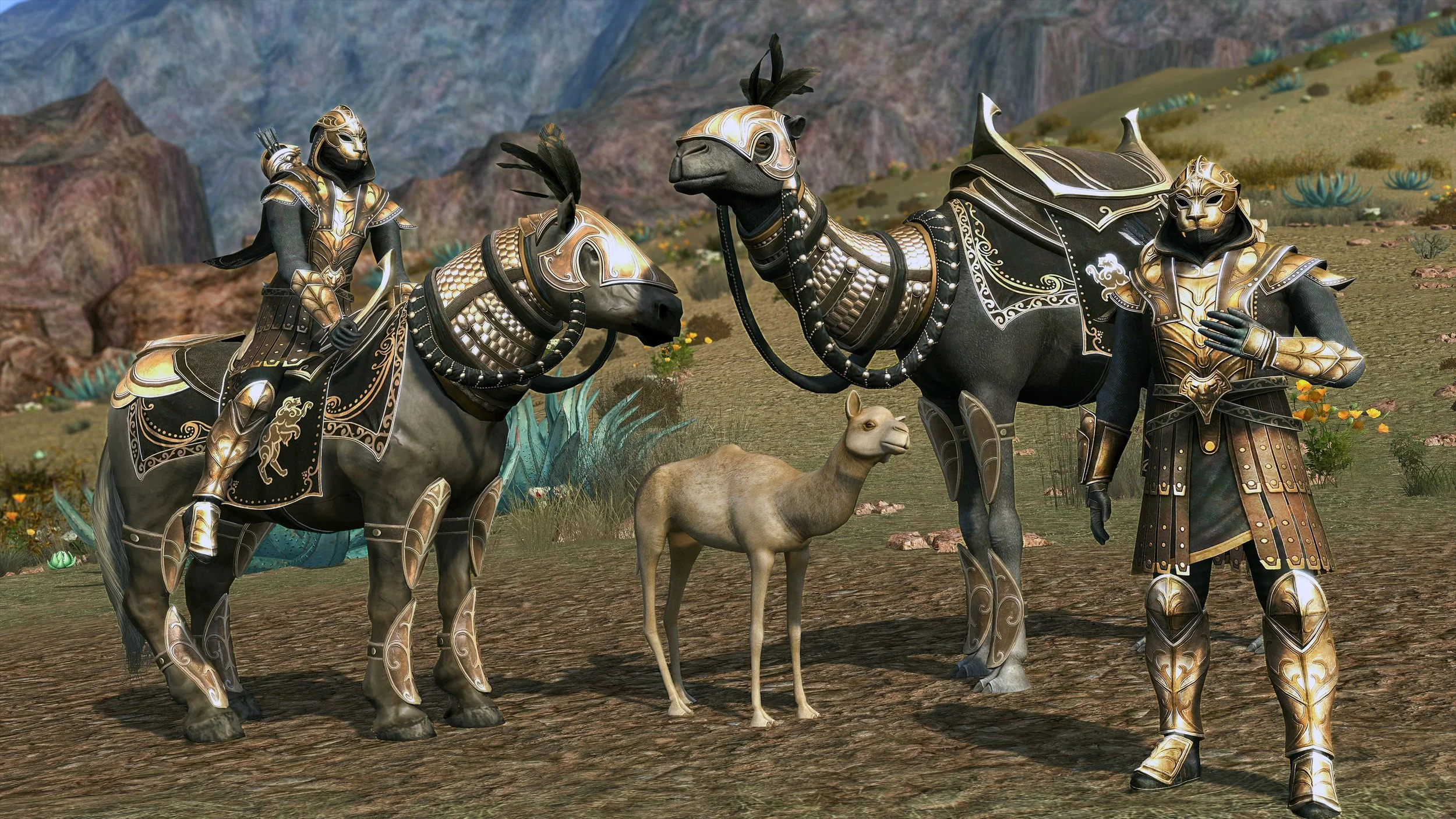
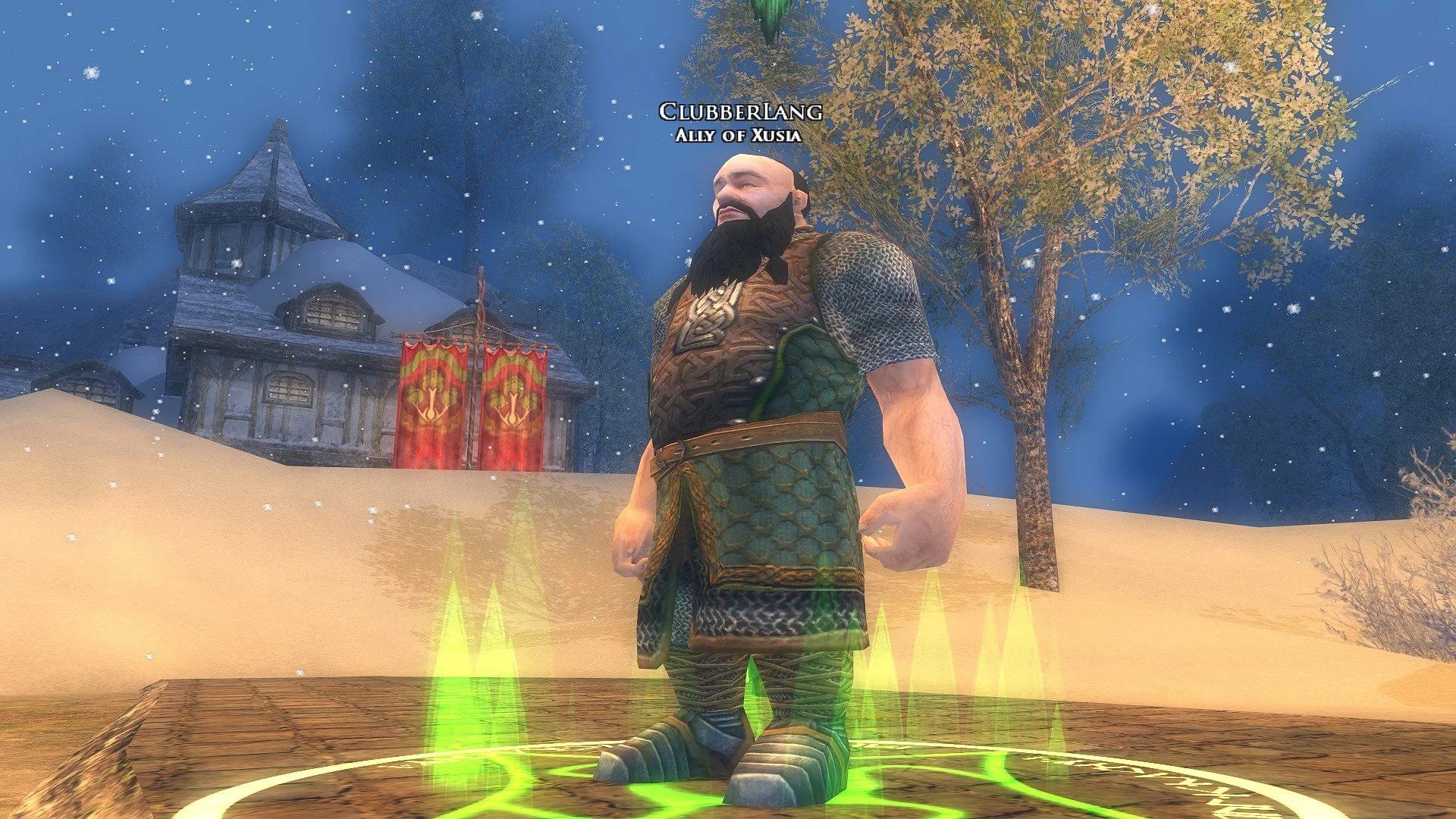
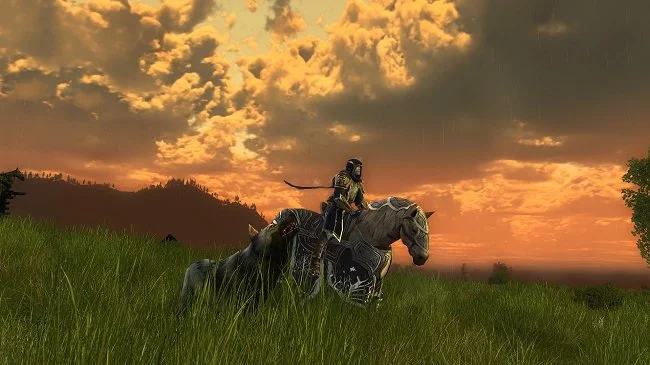
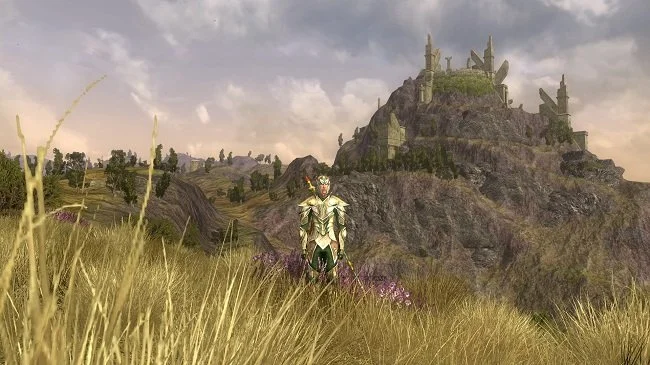
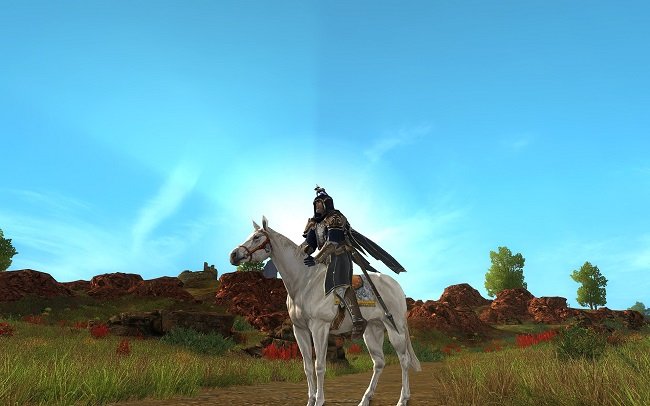
With regard to the two zones that I did have access to, neither reinvent the wheel. Ambarûl continues the tropical aesthetic of the previous expansion and adds some areas similar to a mangrove swamp. The zone is somewhat open and gently slopes up towards the mountains. There is a closed gate to the North East that leads to Harondor, the overland route to Southern Gondor. Khûd Zagin is a more interesting zone, due to its arid, rocky desert. Vegetation becomes more sparse and the landscape is filled with snakes, scorpions and caracal cats. There are dust devils and other embellishments that convey the character of the environment. Furthermore it looks quite sinister at night. As ever with LOTRO, the ambient music by Bill Champagne is outstanding and contributes so much to the game’s atmosphere.
Beta tests are subject to change and are not representative of the final product. Hence, there is scope for things to change in the weeks to come with the next test of Legacy of Morgoth. That being said, I still have my concerns regarding this expansion. In the past, beta tests have presented a virtually finished version of the expansion with all its respective content available for consideration. I find this limited access to only two maps perplexing. Is the new material still being actively created? Have there been issues making the new content? Is this expansion being quickly put together and pushed out the doors at the behest of the bean counters at Daybreak Game Company? It is the latter that worries me the most. It’s not so much a question of quality but one of quantity. Are we being given what is effectively just a content update but being charged for it? It wouldn’t be the first time such a thing has happened. Watch this space.




So Many MMORPGs, So Little Choice
I recently considered whether or not I should find a new MMORPG to play. A cursory Google search showed that there were plenty of titles that I have not tried. Unfortunately, they are predominantly fantasy based games drawing upon the established tropes and themes of the dungeons and dragons genre and the wider sword and sorcery literature. This begs the question “why aren’t there more science fiction or non-fantasy based MMOs?” apart from the handful that currently exist? After a little research and a degree of thinking it becomes very apparent that the answer to this question is mainly a business decision made by publishers. Furthermore, that business decision is based upon several specific factors. All of which cumulatively tip the scales towards fantasy, rather than science fiction or some other complex but non fantasy based franchise.
I recently considered whether or not I should find a new MMORPG to play. A cursory Google search showed that there were plenty of titles that I have not tried. Unfortunately, they are predominantly fantasy based games drawing upon the established tropes and themes of the dungeons and dragons genre and the wider sword and sorcery literature. This begs the question “why aren’t there more science fiction or non-fantasy based MMOs?” apart from the handful that currently exist? After a little research and a degree of thinking it becomes very apparent that the answer to this question is mainly a business decision made by publishers. Furthermore, that business decision is based upon several specific factors. All of which cumulatively tip the scales towards fantasy, rather than science fiction or some other complex but non fantasy based franchise.
First off, let’s address the biggest factor. Fantasy is a much bigger and more popular genre, compared to science fiction. This is mainly due to the barriers to entry being relatively low. Its tropes are straightforward and recognisable. Hence, it is theoretically easier to create a fantasy themed MMORPG than a science fiction one. By this I mean, the world, the game mechanics, the assets and the underpinning narrative. Fantasy does not have to try as hard as science fiction to justify itself. Exotic skills and powers can simply be labelled “magic” and players won’t necessarily kick up a stink about their provenance or credibility. An original fantasy themed intellectual property doesn’t have to work within so many rules as an existing science fiction property that has an excess of lore. Fantasy is a self plagiarising genre by default and players are relatively comfortable with this concept. It’s essentially priced in.
From a writing perspective, a science fiction MMORPG is a potentially more complex proposition. Storylines need to be driven by a suitably plausible McGuffin or underpinned by complex lore. This impacts on game design making the final product more complex. A science fiction based game may not be limited to a single environment or world. There may be the need for multiple types of travel mechanics and therefore multiple types of combat. This complexity both in design and narrative may create a higher barrier to player entry. All of which makes such a game a far more niche market proposition. Which is why you’re more likely to find a fantasy MMORPG with science fiction elements blended into it. Consider the Asura in Guild Wars 2. Also, is Star Wars a pure science fiction franchise? No. This is by far the most common compromise that will happen.
However, possibly the biggest issue that prevents the development of a major science fiction themed MMORPG is copyright. If you wish to draw upon or specifically base your game upon an existing intellectual property, then there will be licensing costs. Often these can be complex and expensive. Furthermore, rights can change hands overtime and a game that has existed for a while and made a profit can subsequently find itself cut off at the knees, purely due to the withdrawal of a licence. This raises the question of why bother taking a risk with such material when you can create your own franchise based on an original IP. However, fans can be funny about such workarounds and particularly unforgiving when a game proves to be a pallid imitation of something they hold dear.
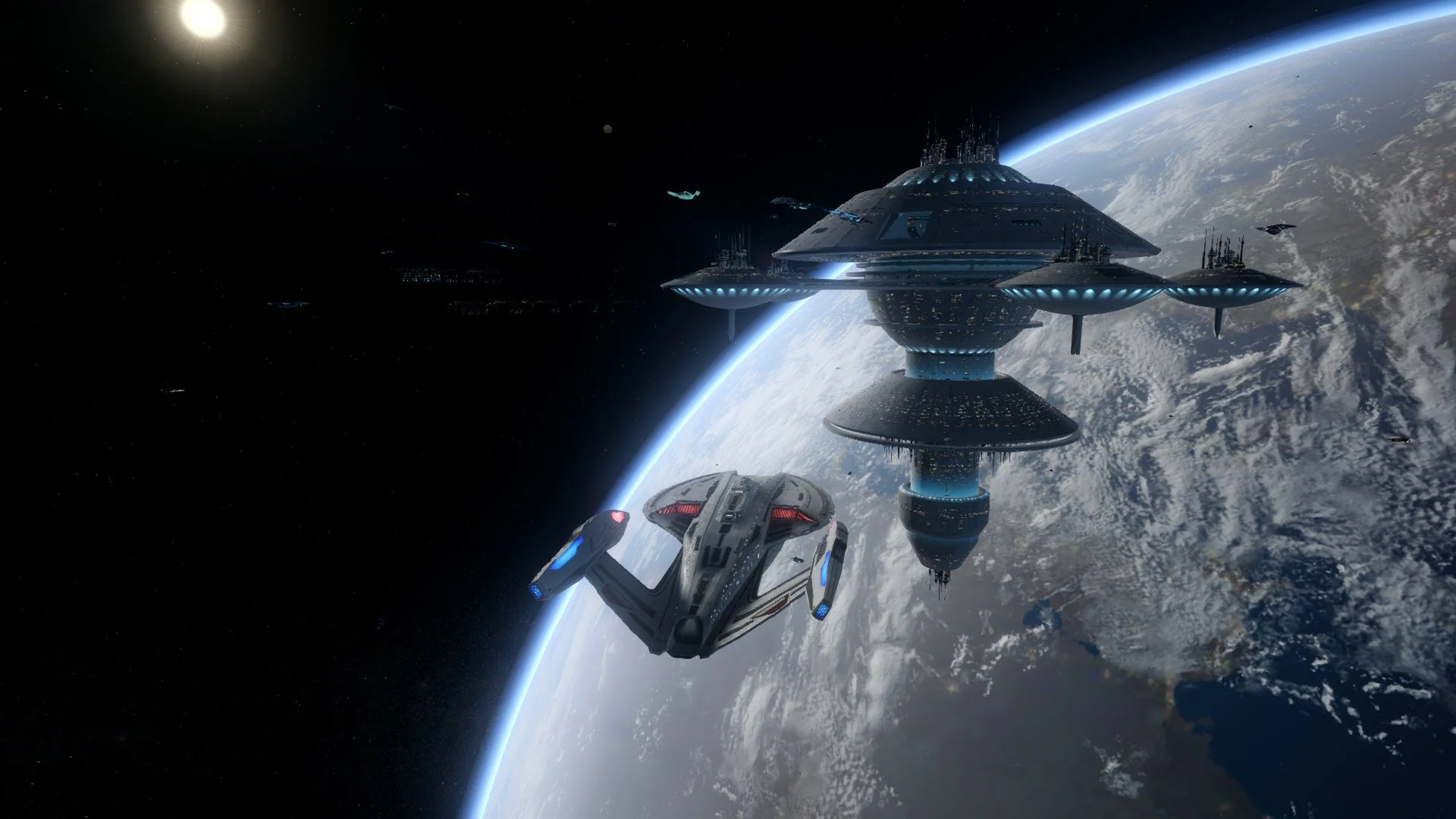
Despite these considerations, the video games industry is not totally averse to science fiction based MMORPGs. Star Trek Online has endured with a degree of success for 14 years, although its future is not looking especially good at present. I think the unique nature of the IP and the loyalty of its fanbase is the main reason that it was originally created and has survived so long. EVE Online is another perfect storm of a game. One whose success cannot easily be duplicated. As for Star Citizen, the jury is still out until we get something approaching a fully fleshed out game. Simply put, the video game industry is just like any other leisure business. Trends are followed, risk is eschewed and decisions are often dictated by the bottom line. Although I would love to see a radical, hard science fiction game based on the works of Arthur C Clarke or Isaac Asimov, it is highly unlikely that any major triple A studio would undertake such a project. They’d be too worried about sufficient return on investment. Cue “and this is why we can’t have nice things”.

Is It Time to Rebrand the MMORPG Genre?
According to Wikipedia, a massively multiplayer online role-playing game (MMORPG) is a video game that combines aspects of a role-playing video game and a massively multiplayer online game. 15 years ago, the MMORPG was an established and popular video game genre. It seemed that every developer wanted a title like World of Warcraft in their portfolio and were happy to sink millions of dollars into making one. WoW at the height of its popularity had over 10 million subscribers and annual turnover of over a billion dollars in the US alone. Sadly, no one ever came close to creating a WoW killer, a game that had found success through a perfect storm of events. Today the MMO genre has become synonymous with being a time sink and a grind. The universal adoption of the free-to-play business model further compounds the negative connotations associated with these types of games. Simply put MMOs are no longer seen as a licence to print money.
According to Wikipedia, a massively multiplayer online role-playing game (MMORPG) is a video game that combines aspects of a role-playing video game and a massively multiplayer online game. 15 years ago, the MMORPG was an established and popular video game genre. It seemed that every developer wanted a title like World of Warcraft in their portfolio and were happy to sink millions of dollars into making one. WoW at the height of its popularity had over 10 million subscribers and annual turnover of over a billion dollars in the US alone. Sadly, no one ever came close to creating a WoW killer, a game that had found success through a perfect storm of events. Today the MMO genre has become synonymous with being a time sink and a grind. The universal adoption of the free-to-play business model further compounds the negative connotations associated with these types of games. Simply put MMOs are no longer seen as a licence to print money.
Hence we now find ourselves in a world where games that are definitely MMORPGs are rebranding and attempting to present themselves as something else. Guild Wars 2 is currently marketed on Steam as a “online RPG”. New World is to be launched on consoles on 15th October under the revised name of New World: Aeturnum. The marketing for the game now refers to it as a “action RPG” and the online aspect is presented as “co-op play”. Similarly, ArcheAge2 which has been rebranded as ArcheAge Chronicles, goes out of its way to avoid using the term MMORPG in its promotional material. It will be interesting to see exactly what genre it ultimately claims to be when it is released in 2025. Even the doyen of the genre, Raph Koster, who worked on Ultima Online and Star Wars: Galaxies has dodged calling his latest game an MMO. Stars Reach is described as a “massively multiplayer sandbox RPG” on its official website. So near but not quite an MMO, then.
Some gamers may argue that this doesn’t matter. It’s just marketing speak and there is a degree of truth in such a position. It has also been pointed out by many gamers and journalists over the years, that the term massively multiplayer online role-playing game is both cumbersome and inaccurate. I have written blog posts in the past about how we need to update and revise the existing gaming lexicon, as game genres and mechanics are constantly changing. Language doesn’t stay still in other areas of life. Why should it do so in the gaming community? However, setting linguistics aside, I think there are two very clear reasons why the MMO genre is perceived as being after its “best before date”. One is a matter of context within internet history. The other is a matter of perception. The former is a question of fact. The latter is more complex as perceptions are not always correct. However, mud sticks.
In the late nineties, the internet was still novel. The idea that you could communicate in real time with people all over the world was genuinely exciting. Hence the idea of playing a game in a shared environment, where the other avatars were actually real people, was revolutionary. My first exposure to this unique gaming experience was playing Air Warrior. This positive perception of the internet persisted possibly for a decade. By 2010 the MMO market was becoming saturated and the internet had gone from being a quaint, niche market talking point, to an utterly ubiquitous medium that was slowly becoming dominated by corporate interests. As a genre, the MMO had changed from being a player dependent platform for emergent gameplay, to a interactive but firmly on rails, gaming experience. As more and more players eschewed playing collaboratively many games effectively evolved into online RPGs with optional co-op play.
As to why the player base shifted away from group content, there isn’t a single smoking gun that explains it all. However, raid culture often leads to elitism, which then fuels toxicity in gaming communities. Gaming has also become a far more widespread pastime over the decades, so MMO content had to become more accessible and less gated behind group play, for straightforward business reasons. As mentioned previously, we are now at a point where certain gaming terms, rightly or wrongly, come with a lot of baggage. If you speak to a gamer who primarily plays Call of Duty or a sporting franchise such as FIFA, they will often see the MMORPG genre as something “old fashioned”. Games that are graphically dated, filled with convoluted systems that require years to master. There is also a great deal of association with “pay to win” mechanics and egregious in-game stores which “nickel-and-dime” players. There is also a perception that the communities associated with MMOs are “weird”.
When you step back and consider these things, regardless of whether they’re true or not, you can see why both players, developers and publishers may not want to be associated with the acronym MMORPG. Therefore, we again return to the subject of rebranding the genre and coming to terms that some words, phrases and indeed concepts become obsolete overtime. Exactly what the new description for an MMO should be, I’m not entirely sure. A game such as The Lord of the Rings Online, can be defined as an online action role playing game with optional cooperative play. Dedicated raiders may argue otherwise but their gaming experience is not that same as other players and they are far from the majority. Ultimately, as long as the terminology used to describe a game is accurate then I’m not resistant to change. If we have to say goodbye to the acronym MMORPG, so be it. It’s not as if we’re saying goodbye to the games themselves.
LOTRO: The Benefits of Plugins
After my recent experiment involving tweaking the graphics settings in the MMORPG, The Lord of the Rings Online, I decided to see if I could improve my gaming experience with the use of mods. These are known within the LOTRO community as “Plugins”. They are created using the Lua programming language and are managed via an option on the character selection screen, after logging into the game. They are mainly used to augment the existing GUI, often presenting existing game data in a more convenient manner. Plugins can also be used to track information such as deed progress and to mark where specific items, resources and locations are on the in-game map. They cannot be used to issue commands or create macros. The most reliable source for Lua Plugins for LOTRO is via the website LOTRO Interface which maintains a comprehensive repository along with guides and FAQs.
After my recent experiment involving tweaking the graphics settings in the MMORPG, The Lord of the Rings Online, I decided to see if I could improve my gaming experience with the use of mods. These are known within the LOTRO community as “Plugins”. They are created using the Lua programming language and are managed via an option on the character selection screen, after logging into the game. They are mainly used to augment the existing GUI, often presenting existing game data in a more convenient manner. Plugins can also be used to track information such as deed progress and to mark where specific items, resources and locations are on the in-game map. They cannot be used to issue commands or create macros. The most reliable source for Lua Plugins for LOTRO is via the website LOTRO Interface which maintains a comprehensive repository along with guides and FAQs.
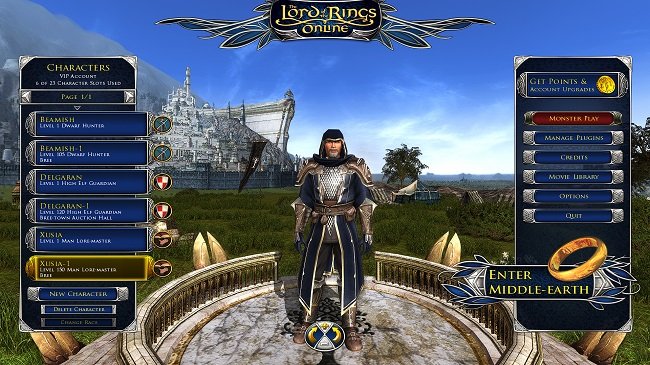
As with other MMOs, the main issue with using any sort of mod or addon is cleanly installing all the appropriate files to the correct locations. While players can do this manually if so desired, the easiest way is to use a third party installation tool. LOTRO Plugin Compendium (LPC) is a windows based plugin management tool. There is also a Java version for Mac and Linux users. It can be used to search for existing Lua Plugins for LOTRO, as well as install, update and uninstall them as needed. It is broadly similar to Minion, for those familiar with the World of Warcraft mod manager. Once installed you can immediately start perusing the wealth of plugins that are available for LOTRO. Upon selection LPC will install all the necessary data to the appropriate game directories. Upon logging into LOTRO, the player has to click on the “Manage Plugins” button on the right of the character select screen to load those they wish to use.
After I installed LPC, I spent a lot of time trawling through the plugin search facility to try and find ones I thought would be beneficial to my play style. I also watched a lot of YouTube videos and read through various subreddits and forums. What I found was that there are a lot of plugins designed around combat and analysing your performance. These are very useful for min-maxing and monitoring data such as DPS, aggro and buffs, when raiding. However, for a player such as I who mainly does PVE content on its default level of difficulty, few of these plugins are relevant. Fortunately, there are plenty of “quality of life” plugins to be found. Addons that present in-game information in a more accessible fashion, so you don’t have to go and search for it at an inopportune moment. Hence I installed the following:
Titan Bar: A transparent toolbar that is located at the top of your screen, which can have a wealth of customisable information displayed on it. I use it to track in-game currency expenditure, damage to gear and reputation progress. I also have an in-game clock that tells you what phase of the day the game is currently in and how long it is until the next one.
Travel Window II: Adds a new window to your screen which lists all your quick travel skills. These can be presented in various different ways and you can minimise the window when not using it. I freed up two complete in-game quickslot bars by switching to this plugin.
Alt Inventory: Does exactly what the name says. Adds a drop down window where you can search your various alt’s inventories. Both bags and vault respectively. This plugin is invaluable if you are an MMO “pack rat”.
So far, I am not aware of the plugins causing any performance issues in LOTRO. However, I am only using three at present. Those installed do not clutter my screen in any way. All can be minimised when not actively used. In fact the Titan Toolbar vanishes during combat which is very convenient. They all provide exactly the functionality I require. I suspect that the key to effectively and efficiently using Lua Plugins for LOTRO, is the same as it is for using addons in any other MMO. Only install and use what you need and don’t get carried away. It is also worth remembering two important things about plugins. They are fan developed and maintained and game updates often break them. Hence, support for them is not indefinite or immediate. It is therefore possible that one day, a plugin you rely on may stop working. With all this in mind, a sensible selection of Lua Plugins for LOTRO can potentially enhance the game and improve your player experience.
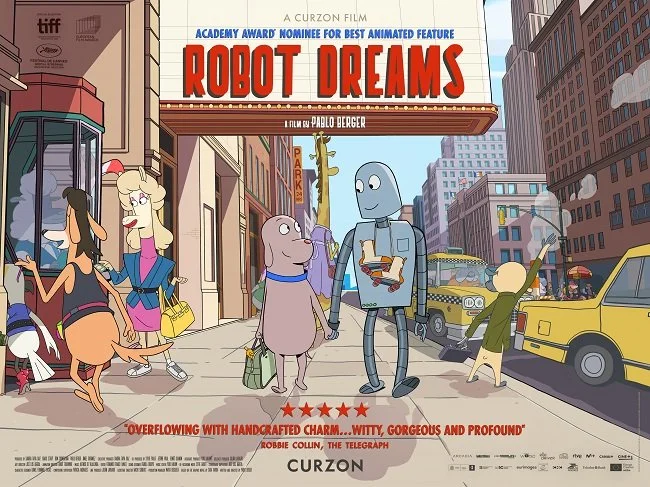
Robot Dreams (2023)
Whenever I feel that mainstream filmmaking is becoming increasingly bland and I grow despondent with it, along comes an animated film to prove that there is still greatness and art to be found through the medium of cinema. Robot Dreams begins as a tale of loneliness and then quickly becomes a eulogy to friendship and participating in life. The story then turns things on its head as it explores loss and finally concludes with a profoundly beautiful resolution, as it muses upon accepting change and new friends. Robot Dreams succeeds where so many other films fail by being honest, candid and sincere. Hence the emotions expressed by what is essentially a simple story are genuine and palpable. The film’s lack of dialogue is a blessing, with music doing a great deal of the narrative heavy lifting. This allows audiences to focus on the main characters without unnecessary distraction. The animation is uncomplicated but very specific in its style and setting. It utterly suits the tale being told.
Whenever I feel that mainstream filmmaking is becoming increasingly bland and I grow despondent with it, along comes an animated film to prove that there is still greatness and art to be found through the medium of cinema. Robot Dreams begins as a tale of loneliness and then quickly becomes a eulogy to friendship and participating in life. The story then turns things on its head as it explores loss and finally concludes with a profoundly beautiful resolution, as it muses upon accepting change and new friends. Robot Dreams succeeds where so many other films fail by being honest, candid and sincere. Hence the emotions expressed by what is essentially a simple story are genuine and palpable. The film’s lack of dialogue is a blessing, with music doing a great deal of the narrative heavy lifting. This allows audiences to focus on the main characters without unnecessary distraction. The animation is uncomplicated but very specific in its style and setting. It utterly suits the tale being told.
Set in an alternate incarnation of 1980s New York City populated with anthropomorphized animals, Dog lives alone in a Manhattan apartment. Tired of being lonely he orders a robot companion after seeing a TV advertisement. Upon arrival, Dog assembles his new friend, Robot and the pair embark on a series of adventures throughout the city. Robot’s innocent excitement and wonder at the world kindles a love of life in Dog and the two become inseparable. However, a trip to the beach at Coney Island goes awry and ends with Robot stranded on the sand. Dog unable to move him on his own, intends to return the next day but the beach is closed and fate then conspires to keep the two friends separated. Dog tries to go about his life, trying to fill the emotional void. Meanwhile, Robot dreams about being reunited with Dog and wonders about his own fate.
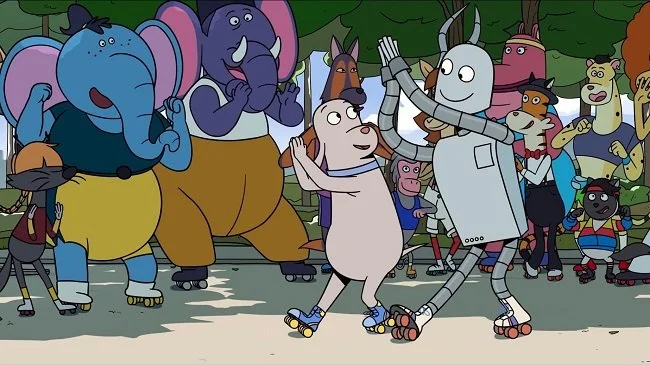
Based upon the 2007 comic of the same name by Sara Varon, director Pablo Berger executes his animated parable with aplomb and integrity. As well as being a superb piece of animation, Robot Dreams is also an extremely well observed love letter to the city of New York. Subtle details embellish every frame, from the period-specific graffiti to niche cultural references such as the inclusion of a VHS copy of The Wizard of Oz rented from Kim’s Video store. The choice of songs from Earth, Wind and Fire to Reagan Youth are very evocative of the era and there are clever homages to films of the time, as well as classics also set in New York. Watch carefully for references to A Nightmare on Elm Street and Manhattan. For a film that is in essence, very simple, there is a great deal of emotional and philosophical depth to Robot Dreams. It is never boring, consistently compelling and quite profound throughout its 98 minute running time. You may find yourself crying but in this case, that is a good thing.








LOTRO: Virtue Traits
I returned to the MMORPG, The Lord of the Rings Online, in April this year and caught up with 18 months worth of content. Upon reaching the latest level cap of 150, I built two entirely new Legendary Items and acquired new gear via the game’s lootbox system. As I am not the sort of player who is especially knowledgeable about the “stats” associated with my class and the overall theorycraft of the game, I did some research and found several guides to follow. As I play primarily solo PVE content, I favour a DPS build for my main character in LOTRO, which is a Lore-master. So I copied a specific build and considered my work done. However, along came Update 41 on the 1st of August, which made serious changes to this class. As a result I recently decided to look at every option for the Lore-master and see what I could do to find a new optimal build. The two areas that offer the most scope for improvement are Class Traits and Virtue Traits. This post deals with the latter.
I returned to the MMORPG, The Lord of the Rings Online, in April this year and caught up with 18 months worth of content. Upon reaching the latest level cap of 150, I built two entirely new Legendary Items and acquired new gear via the game’s lootbox system. As I am not the sort of player who is especially knowledgeable about the “stats” associated with my class and the overall theorycraft of the game, I did some research and found several guides to follow. As I play primarily solo PVE content, I favour a DPS build for my main character in LOTRO, which is a Lore-master. So I copied a specific build and considered my work done. However, along came Update 41 on the 1st of August, which made serious changes to this class. As a result I recently decided to look at every option for the Lore-master and see what I could do to find a new optimal build. The two areas that offer the most scope for improvement are Class Traits and Virtue Traits. This post deals with the latter.
Virtues are a type of trait that each character can obtain in LOTRO. Virtues grant bonuses to specific statistics. Each trait grants bonuses to 3 different stats. The first statistic listed grants the largest bonus, the next grants an intermediate bonus and the last stat listed grants the smallest bonus. In order to gain the benefits of a specific Virtue it must be slotted into the top bar in the Virtue page of the Trait Tree Panel. There are 21 Virtues in total, all of which grant a small passive stat bonus (either to Maximum Morale or Physical and Tactical Mastery) even if they are not slotted. A character can have 5 Virtue traits slotted at a time. Virtues are levelled as you progress through game content, with quests rewards often including Virtue XP. Completing deeds is another means of levelling Virtues. The current cap for Virtue Traits is 92.
The key to using Virtue Traits effectively is to slot those with statistics that are beneficial to your specific class. Naturally, you will find hardcore LOTRO players who favour bespoke selections for specific tasks. They may even swap between selections on the fly. For the average player, it is simply a question of finding those traits with stats which benefits your class and favoured play style. Post Update 41, I perused various discussions about the Lore-master class on Reddit and opted for the following Virtue Traits for my “red line” Lore-master. Honesty, Wisdom, Valour, Wit and Confidence. I then proceeded to return to older regions in the game and clear outstanding deeds to earn appropriate XP. Some of the traits I slotted I’d used before, so they were close to the level cap. Others that I had not used previously were only halfway. The benefit of having 5 maxed out Virtue Traits is that it boosts your overall stats and thus your in-game performance.
To cut a long story short, I went through Cardolan, Swanfleet, the Wastes and Elderslade completing various slayer deeds and earning virtue XP. It got somewhat tedious after a while and then I remembered that I have an abandoned Guardian alt, that I previously “boosted” to level to 120. As I hadn’t used all the resources that came with the “boost”, I transferred them to my Lore-master and subsequently maxed out their respective Virtue Traits. This combined with my rebuilt Legendary Items, along with “Teal” gear and jewellery, means that my character stats are now very robust. I always pursue a policy of being overpowered for PVE content, when playing MMORPGs. Hence this has made playing through the Corsairs of Umbar content, a lot easier and faster. I remain undecided about the merits of the last expansion but I am now happy that my primary alt is now what I consider to be optimal.
The Virtue Traits system often gets neglected in LOTRO, due to the more pressing needs such as upgrading your gear and weapon as you level, as well as selecting the right Class Traits to unlock the skills you desire. Hence, levelling your slotted traits is often something we relegate to the time between expansions or content updates, when we’ve done all the major quests and are simply looking for something to do while we kill time. However, it is something that can significantly improve your stats and is therefore well worth pursuing. If done in conjunction with completing deeds, not only will you benefit from the trait XP but you’ll also be rewarded with traceries for your LI and even the occasional additional skills point or mount. There is the possibility that the Virtue Trait cap may be increased in the future, so that is another reason to stay on top of them now.
Strictly Come Dancing: A Controversial Decision
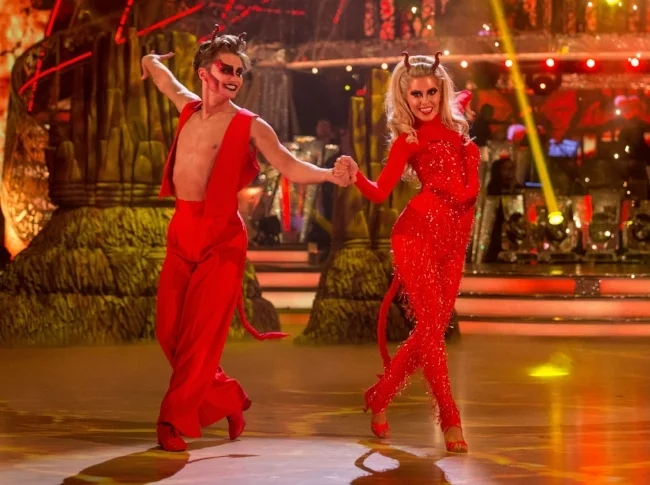
I make no bones about the fact that I watch Strictly Come Dancing every year. For those who live outside of the UK, this is the original version of the dancing reality show that you probably know as Dancing With the Stars in your country. It is still a big deal in the UK as far as TV ratings go, getting audiences on average of 6.6 million viewers. There are many aspects of the show that are textbook examples of prime time, popular entertainment but I like it because the “celebrities” that take part are ultimately learning a skill that is genuinely difficult. The latest season of Strictly, as it is known to its fans, is especially interesting as the BBC had a major PR problem earlier in the year, where several previous participants made allegations of bullying and abuse about their pro-dancer partners. An investigation is still ongoing and in the meantime, the two professional dancers that were named have withdrawn from the show. Hence everyone involved with the latest season are all on message, stating that it’s “all about having fun”.
I make no bones about the fact that I watch Strictly Come Dancing every year. For those who live outside of the UK, this is the original version of the dancing reality show that you probably know as Dancing With the Stars in your country. It is still a big deal in the UK as far as TV ratings go, getting audiences on average of 6.6 million viewers. There are many aspects of the show that are textbook examples of prime time, popular entertainment but I like it because the “celebrities” that take part are ultimately learning a skill that is genuinely difficult. The latest season of Strictly, as it is known to its fans, is especially interesting as the BBC had a major PR problem earlier in the year, where several previous participants made allegations of bullying and abuse about their pro-dancer partners. An investigation is still ongoing and in the meantime, the two professional dancers that were named have withdrawn from the show. Hence everyone involved with the latest season are all on message, stating that it’s “all about having fun”.
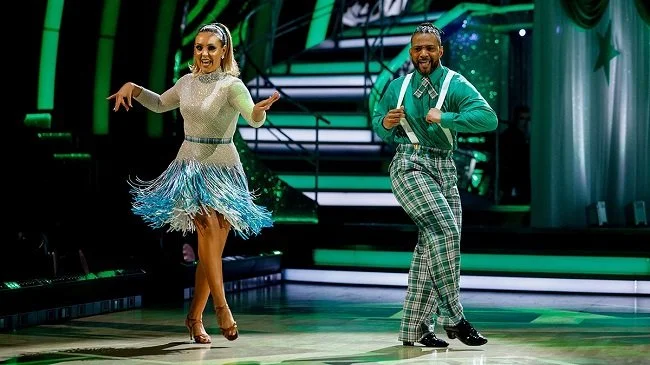
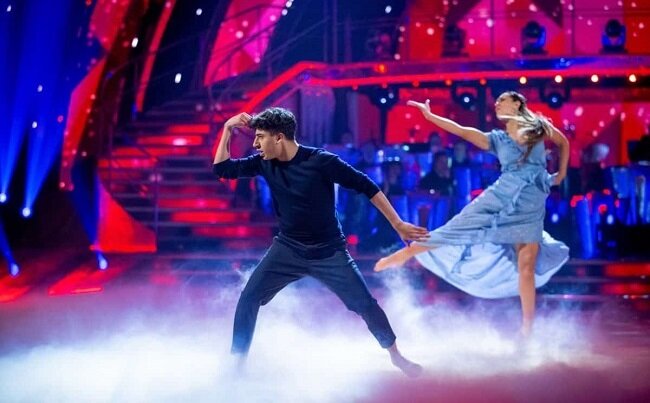
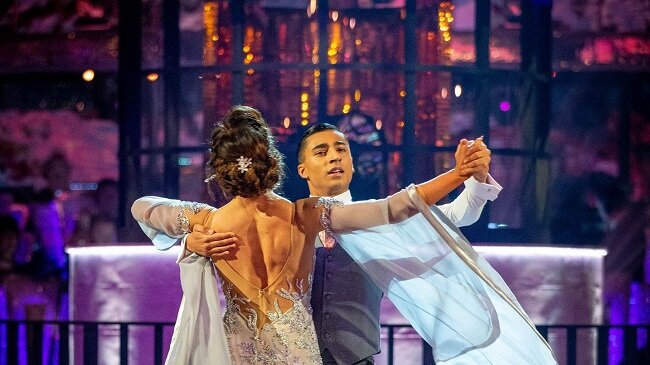
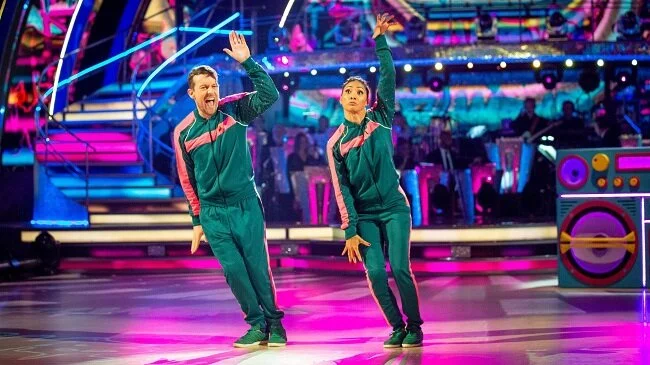
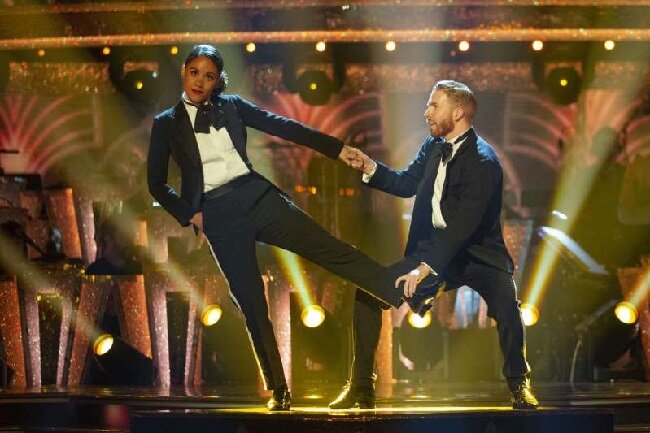
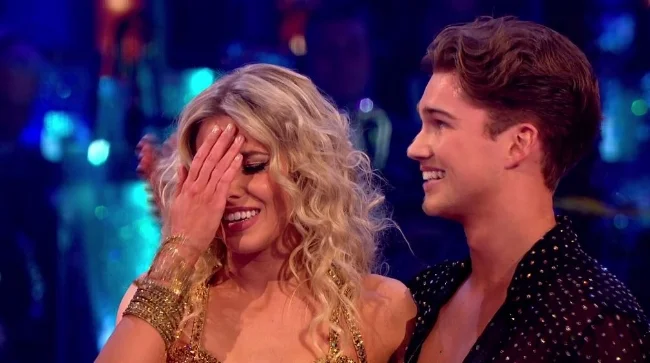
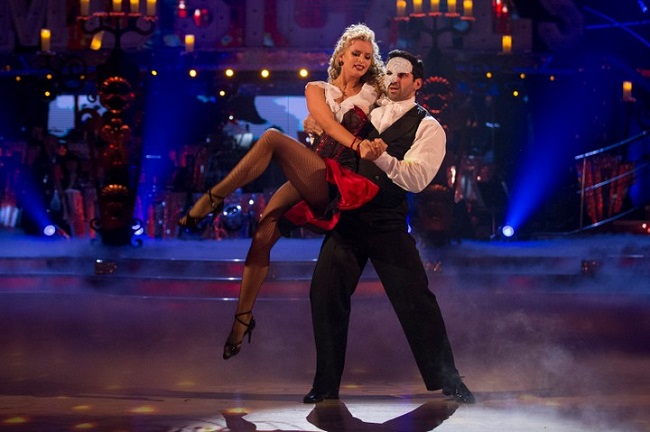
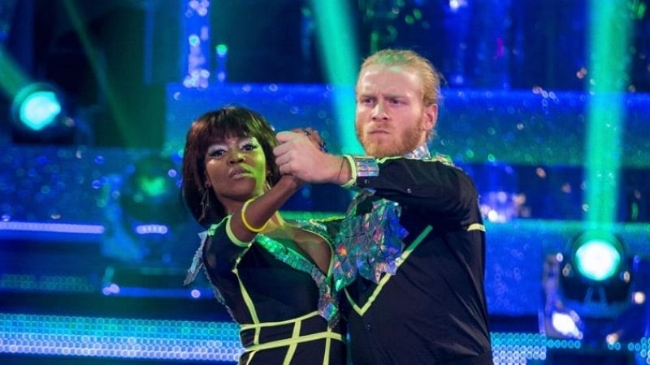
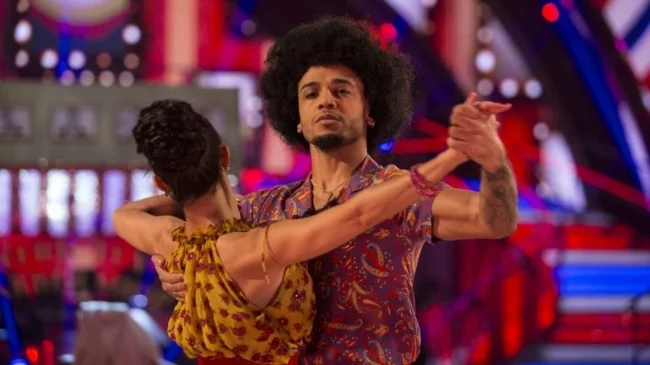
Season 22 of Strictly began in earnest last Saturday 21st September. The 15 celebrities and their professional dancer partners all performed live on TV and were marked accordingly by the judges. As always, there were some contestants who showed ability and talent, straight out of the gate, such as model and TV presenter Tasha Ghouri. Hardly surprising as she has had dance experience in the past. Then there were other competitors who showed potential and may well improve in the weeks to come, as they go on their Strictly journey. Viewers like these individuals as they are the epitome of what audiences want from the show. Strictly has in recent years become a torchbearer for inclusion, with many disabled contestants. This year’s celebrity line up includes blind standup comedian Chris McCausland. The show has also pioneered the partnering of same sex couples, despite complaints from the usual suspects.
Another essential part of the Strictly formula are celebrity contestants with little or no dancing ability. Sometimes, such individuals are championed by viewers, especially if the judges have been especially harsh with their comments. But this is not always the case. Sometimes the less talented participants are dismissed from the show by the public vote, quickly and ruthlessly. And talking of the judges, their opinions are often at odds with the public’s. Viewers tend to vote with their hearts and don’t maintain the same objectivity of the judges, who tend to score purely on technical ability. Furthermore, there is no consensus among the judges regarding this, as they all come from different dancing disciplines. Hence, scoring can be very inconsistent at times. And then, from time to time, the judges make a decision that appears patently absurd and results in controversy. It would appear that season 22 of Strictly has just had its first tonight, which is very early on in the season.
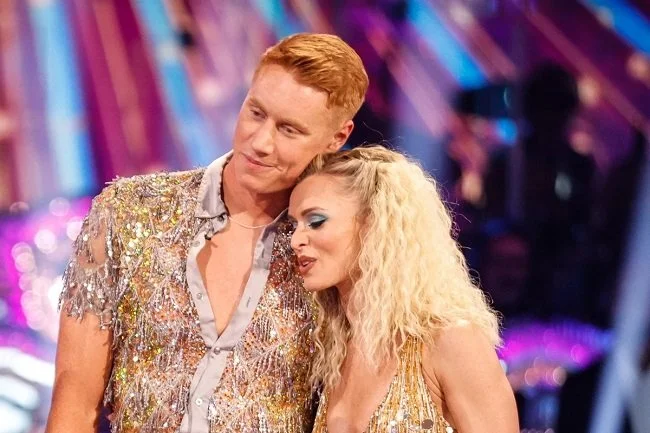
Yesterday, Saturday 28th September, the second show of the season was broadcast. Again the couples were marked by the judges and this week’s scores were combined with last week’s. The public were allowed to vote this time and through a complex mathematical formula, this was combined with the judges scores to produce a simple results table. The bottom two couples then have to performa “dance off” and the judges (not the public) decide who stays and who goes. It came as no surprise to anyone that singer and actor, Toyah Willcox partnered with pro-dancer Neil Jones, was bottom of the leaderboard. Toyah performed two exuberant but technically lacking dances. A Tango and a Jive respectively. I suspect that all future dances will always be through the prism of her unique personal style. However, what came as a surprise was the inclusion of Olympic swimmer and nice guy, Tom Dean. He was ten points ahead on the leaderboard and also had the advantage of being partnered with pro-dancer Nadiya Bychkova, who is well regarded by fans.
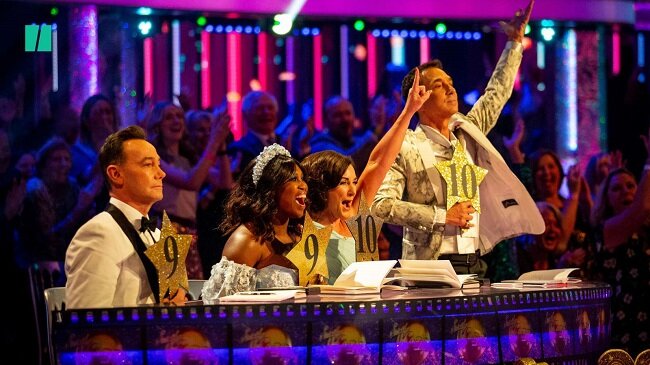
Hence many viewers thought that the dance off was all over, bar the shouting. Yet surprisingly, both celebrities didn’t improve their performances. Three of the Judges, including head judge Shirley Ballas, Motsi Mabuse and Craig Revel Horwood, were focused on Tom being out of time with the music, although it didn’t seem immediately obvious.Thus they voted to keep Toyah on the show. Only Anton Du Beke, former pro-dancer from the show turned judge, voted to keep Tom. However, the decision was made and Tom got his marching orders. To say that fans of Strictly were peeved, is a massive understatement. It has become very clear over the course of this evening that many regard this as an utterly wrong decision. Social media erupted into an angry and restless lynch mob and the tabloid newspaper websites have already joined the passing bandwagon.
Now it can be argued that this sort of brouhaha goes hand in glove with reality TV and is part of its fundamental appeal. However, I believe it is in fact symptomatic of several problems arising from the show. Each year, Strictly ups the ante and the overall standard of dancing produced by contestants goes up. Surely, this reduces the potential pool of contestants that the BBC can draw upon? Furthermore, a decade ago, viewers were not quite so demanding in their expectations and possibly more tolerant of those contestants with less ability. This accommodating mindset seems to have diminished. Then there is the wider societal decline of the public being equipped to deal with not getting their own way. A subjective choice that goes against your preference isn’t seen as “bad luck” or “just the way the cookie crumbles”. It is deemed an act of sabotage, a plot and a personal slight. Remember, the internet is where nuance goes to die.
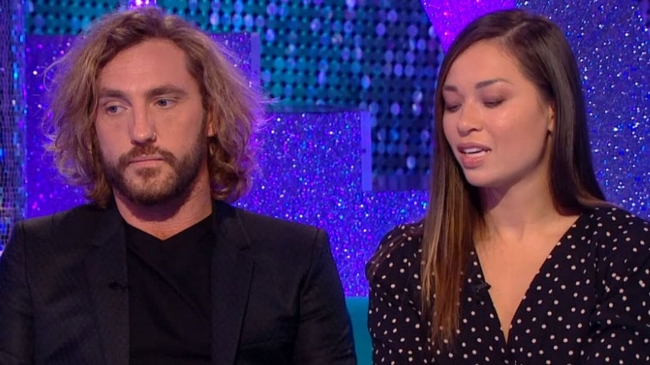
This controversial decision may blow over. The BBC may not even see it in such terms. But as the broadcaster is feeling very protective of the show at present and averse to pad press, it may well make some sort of statement about the situation. This will more than likely take place during tomorrow’s episode of Strictly Come Dancing: It Takes Two. The daily sister show of Strictly that follows all news, gossip and progress of the celebrities and their partners. The couple that were voted off the show over the weekend, always get interviewed on the following Monday and I’m curious to see if there will be any animosity from Tom Dean or Nadiya Bychkova. Time will tell. I’ve been watching Strictly since 2005 and this season seems different in some way that I can’t quite quantify. I think we may be in for an unusual season this year. It has been argued that the format needs revising to bring some fresh ideas to the proceedings. Perhaps this and other controversial decisions may be the catalyst to shake things up.





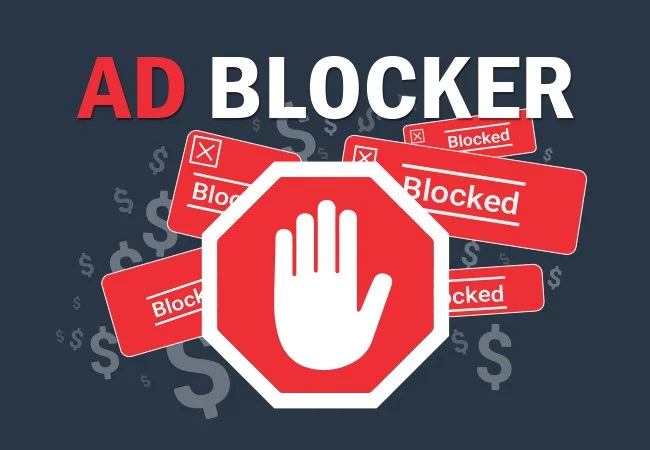
Ad Blockers
I am not going to discuss the history of internet advertising, or the moral or ethical concerns that go hand in hand with it. There is a basic argument that people who make content want to get paid and I suspect that most people appreciate this, at least in principle. However, there is a counter argument regarding the way advertising is managed. For example, how many adverts is acceptable during the course of say a live stream of a YouTube video. Also there is a discussion to be had about what kind of adverts are shown and whether they need to be integrated into the content in a more equitable manner. However, that is not what this post is about. I am going to start from the logical and honest position that many of us use ad blockers. We do so because we find advertising crass and invasive. I guess there is a degree of cognitive dissonance regarding their use, versus the ethics of the matter but humans are like that. We are contradictory by nature.
I am not going to discuss the history of internet advertising, or the moral or ethical concerns that go hand in hand with it. There is a basic argument that people who make content want to get paid and I suspect that most people appreciate this, at least in principle. However, there is a counter argument regarding the way advertising is managed. For example, how many adverts is acceptable during the course of say a live stream of a YouTube video. Also there is a discussion to be had about what kind of adverts are shown and whether they need to be integrated into the content in a more equitable manner. However, that is not what this post is about. I am going to start from the logical and honest position that many of us use ad blockers. We do so because we find advertising crass and invasive. I guess there is a degree of cognitive dissonance regarding their use, versus the ethics of the matter but humans are like that. We are contradictory by nature.
I have four different web browsers installed on my PC. I mainly use Chrome and Firefox for everyday use and they both have ad blockers installed. Specifically AdBlocker Ultimate. I use this particular extension because I found that others had an adverse effect upon Google Drives functionality, which I use a lot. I whitelist a few websites that I know need the revenue but overall, I am not concerned about the impact that ad blockers have on corporate giants. In fact I would say to anyone smitten with a fit of conscience regarding them, try using a popular website without some sort of means to stop the advertising, pop ups and auto playing videos and other intrusive content. You’ll soon change your mind. As far as I’m concerned the worst offender is YouTube. Not because of the variety of interruptions they throw at you but because of the sheer quantity of adverts they shoe horn into a video. It is frankly egregious and makes the viewing experience shit.
As of Friday 27th September YouTube obviously rolled out an upgrade to their infrastructure. One that negated a lot of existing ad blockers. I, like many others, immediately looked around for a temporary alternative until the developers of AdBlocker Ultimate can put out a patch to circumnavigate YouTube’s shenanigans. I have managed to find an extension called Adblock but it doesn’t appear to actually block advertising, so much as hide it. You still have to endure 10 to 15 seconds or so of a black screen before the video that you actually want to watch begins to play. Fortunately I have SmartTube installed on the media player in our lounge. This is an advanced player for Android TVs and TV boxes which is free and open source. You can play content from different public sources including YouTube, sans adverts, naturally. It would appear that the latest changes made by YouTube have not affected this app at present.
Ultimately, there are long term issues that need to be resolved with regard to the financing of platforms such as Twitch TV and YouTube, as well as more traditional websites. A lot of smaller content creators prefer donation and optional subscription services such as Patreon. However, the public cannot be expected to pay for everything. Hence the point of advertising in the first place. It is a question of implementing a policy that is measured as opposed to just greedy. Sadly, advertising is at most just tolerated. Many people, including myself, find advertising pervasive, trite and frankly insulting. Often the way it is clumsily integrated into content ruins it. Despite paying for both Netflix and Amazon Prime, both companies have seen fit to add advertising to their basic tariffs. Subsequently, I won’t watch content on these platforms any longer and will instead watch “copies” sourced elsewhere. In the meantime, this tit-for-tat battle between big business and ad blockers, drags on. A tiresome diversion from the real problem.













LOTRO: Fine Tuning Your Graphics
One of the things that I find fascinating about the MMORPG, The Lord of the Rings Online, are other peoples screenshots. Being a 17 year old game, the required hardware specifications are not especially high. Hence it will effectively run on a “potato”; IE an older PC. This is often reflected in the variety of screen captures you will find for the game. No two images ever look quite alike, due to the variety of PCs and laptops that people use to play the game. Hence you’ll sometimes come across screenshots with lower resolutions, or less graphical detail. I have screenshots from when I started playing LOTRO in 2008 and they look demonstrably different to those I’ve taken more recently. The game itself has changed a lot over the last 17 years and this has included graphical updates. Hence, unlike a lot of modern games, LOTRO screenshots do not have such a homogenous look.
One of the things that I find fascinating about the MMORPG, The Lord of the Rings Online, are other peoples screenshots. Being a 17 year old game, the required hardware specifications are not especially high. Hence it will effectively run on a “potato”; IE an older PC. This is often reflected in the variety of screen captures you will find for the game. No two images ever look quite alike, due to the variety of PCs and laptops that people use to play the game. Hence you’ll sometimes come across screenshots with lower resolutions, or less graphical detail. I have screenshots from when I started playing LOTRO in 2008 and they look demonstrably different to those I’ve taken more recently. The game itself has changed a lot over the last 17 years and this has included graphical updates. Hence, unlike a lot of modern games, LOTRO screenshots do not have such a homogenous look.
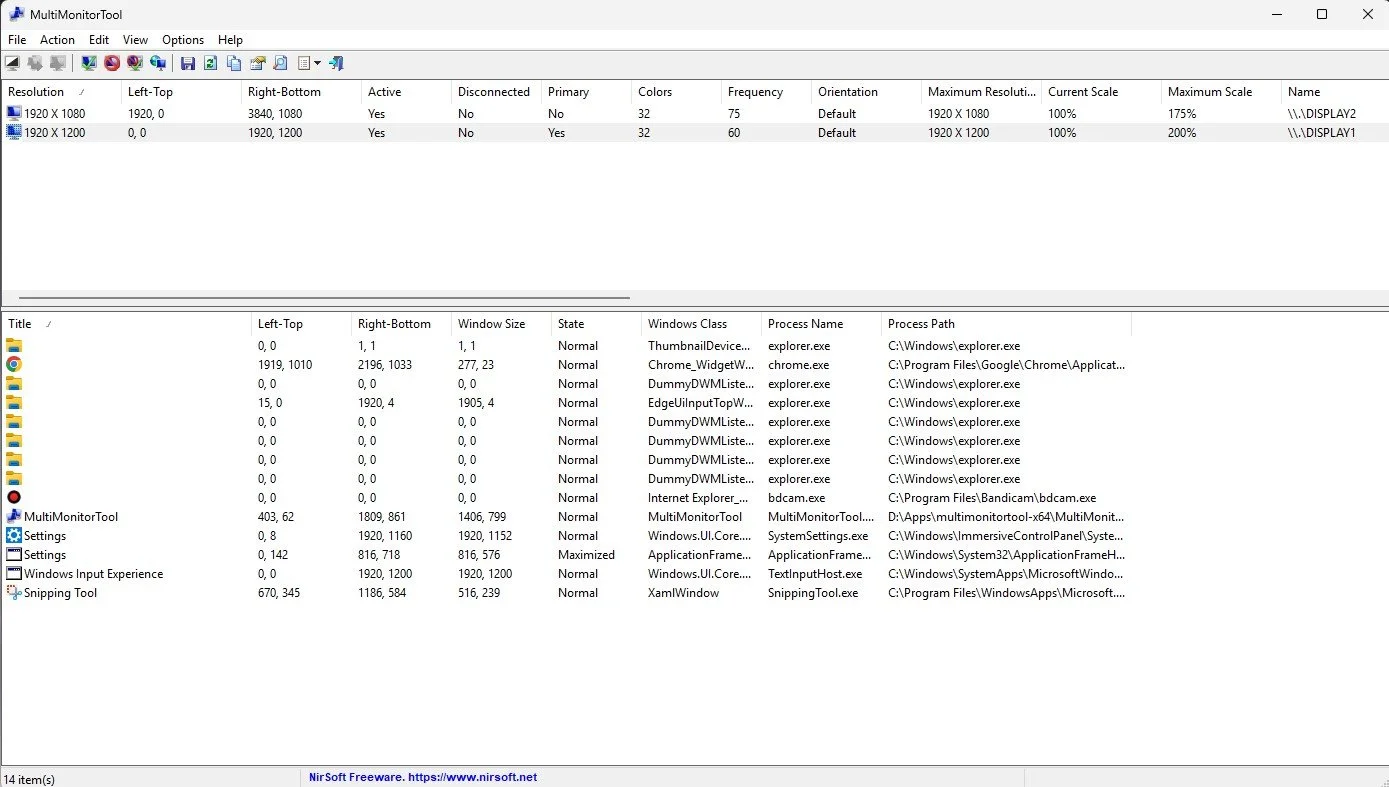
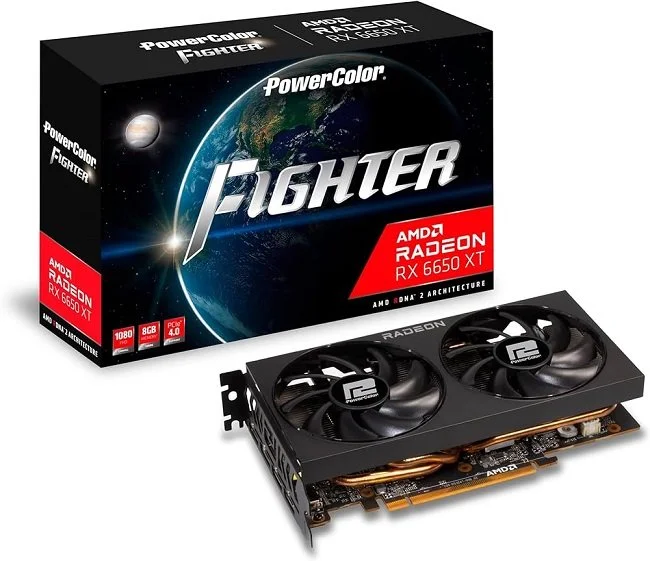
I bought a new graphics card in July. Specifically a Powercolor AMD Radeon RX 6650 XT Fighter 8GB GDDR6. It is neither the best or worse GPU on the market but essentially the best I could get on my budget. It is certainly adequate for the two monitors I use. An ageing Dell U2412M (1920x1200) and a more recent Dell S2421H (1920x1080). Having recently resubscribed to LOTRO, I decided to fine tune the in-game graphic settings and see if I could get the game to look as good as it could on my PC. I also wondered if it were possible to use some third party software to enhance the ageing games visuals. After some research, I spent a day tinkering with both LOTRO and my PC to try and implement the results. I’ve added a link to a gallery of screen captures at the end of this post, for your edification. The images are at the full resolution that they were taken.
Unlike modern games, LOTRO has no facility to choose which monitor you wish to use if you have more than one. It defaults to your primary monitor. As far as I am aware, there is no easy way around this beyond changing which monitor is designated as primary within Windows but that is far from a convenient solution. I have always played LOTRO via my main monitor which has a resolution of 1920x1200, therefore an aspect ratio of 16:10. It is worth noting that LOTRO does support 2K and 4K screen resolutions but the UI suffers as a result, becoming very small and for many unreadable. Standing Stone Games are allegedly looking into this issue but recent community updates have indicated that this project is “still on the whiteboard”. However, this can be addressed by third party software. More on this later.
Upon launching LOTRO, I maxed out all the settings in “Graphics” and “Advanced Graphics”. The only one I adjusted to a personal preference was “Texture Filtering” which I set to “Very Sharp”. This produces on my PC a clearer image than the “Anisotropic” option, which appears to make the visual detail softer. I set the display “Refresh Rate” to 60Hz, which is the same as the monitor’s. I also checked the box to sync these settings. Once you have maxed out the graphic settings there is nothing else you can do within LOTRO itself to improve the visuals. It is at this point that you have to look to third party software, if you want to make further changes. However, it should be noted that external software can only enhance the existing graphic settings by presenting that visual information in an alternative way. Poor textures, bad animations and elderly character models remain as they are.
The most well known third party software that can be used with LOTRO is ReShade. ReShade is a generic post-processing injector for games and video software developed by crosire. It provides an automated means to access both frame colour and depth information. Players can then add advanced depth-edge-detection-driven SMAA antialiasing, screen space ambient occlusion, depth of field effects, chromatic aberration and other advanced options. ReShade adds an extra folder to your existing LOTRO install. If you are technically proficient you can manually set up the visual changes you desire. Alternatively, ReShade has a library of saved settings made by other LOTRO players. You simply download a single file to the appropriate ReShade folder. You then launch LOTRO and press the “Home” key when at the character selection screen. There you choose the preset and apply it. You can swap between the new ReShade settings and the default LOTRO settings on the fly if you desire.
As stated previously, ReShade and other such software can only do so much. Yet you can still make some further graphical improvements to LOTRO via your graphics card software. For many players this will be either AMD Software: Adrenalin Edition or NVIDIA GeForce Experience. Both have option for upscaling, a technique used in gaming to render games at a lower resolution and then scale them up to a higher resolution without sacrificing performance. This can also be used to resize the GUI at higher resolutions, addressing the problem referred to earlier. GPU software can also improve image sharpness and antialiasing. Having an AMD graphics card I used the respective software for “Image Sharpening”, which I set to 80%, as recommended by the software guide. There are also optional video profiles such as “Cinema Classic”, “Enhanced” and “Vivid” but I’ve chosen not to use these.
Finally, many players have stated they have issues switching between alts in LOTRO as well as exiting the game. This usually manifests as a rather long wait, staring at a black screen. Although not a graphical alteration, I would like to reference the following “workaround” simply as a quality of life improvement. Find the following files in your LOTRO installation folder: lotroclient.exe, lotroclient_awesomium.exe, LotroLauncher.exe, lotroclient64.exe and right click on each one and select “Properties”. Select the tab marked “Compatibility” in the window that subsequently opens and check the box marked “Run this program in compatibility mode for Windows 8”. It does appear to reduce the waiting time when “alting” or exiting the game. Please note this “workaround” is for Windows 10. It would appear that LOTRO performs better when running on Windows 11.
Beyond what I have mentioned, I am not aware of any other straightforward ways to tweak and fine tune the graphics for LOTRO. Ultimately the game is a product of the era in which it was created. Furthermore being a multiplayer game it does not lend itself by design to the “modding” culture of single player games such as The Elder Scrolls V: Skyrim. I suspect that due to where LOTRO is in its life cycle and how its owners view its future earning potential, that there will not be any major investment in upgrading the game’s graphics in any meaningful way. It has already been stated that the money would be better spent on a new game altogether. Therefore, looking at the bigger picture, beyond the tinkering that I’ve referenced there’s not much more you can do to improve the graphics for LOTRO. You can’t make a silk purse out of a sow’s ear as the expression goes. That said, I am somewhat pleased with the results my changes have yielded.
Here is the link to a gallery of screenshots of LOTRO, taken with all the above graphical changes made. The images, via Google Photos, are available at the original screen resolution of 1920 x 1200.
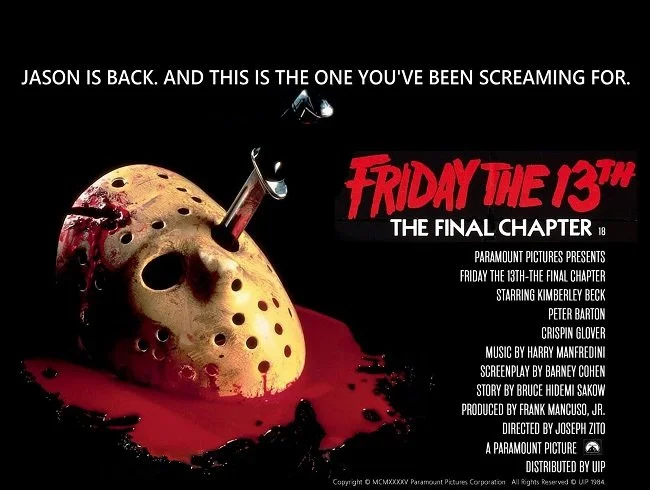
Friday the 13th: The Final Chapter (1984)
Friday the 13th: The Final Chapter is a popular entry among fans of the franchise. This is mainly due to the return of makeup artist, Tom Savini, who creates several notable death scenes and a bravura ending for Jason Voorhees. There is also an attempt by writer Barney Cohen to have a more involving story compared to previous entries in the series. Director Joseph Zito, who previously directed the above average slasher movie The Prowler AKA Rosemary’s Killer (1981), brings a harder edge to the proceedings, making Jason more menacing than in the previous instalment. As ever, the film was dismissed by the critics but performed well at the box office. Producer Frank Mancuso Jr fully intended for this film to be a definitive end to the series, as he was becoming increasingly concerned that his association with the franchise was having a negative impact upon his career.
Friday the 13th: The Final Chapter is a popular entry among fans of the franchise. This is mainly due to the return of makeup artist, Tom Savini, who creates several notable death scenes and a bravura ending for Jason Voorhees. There is also an attempt by writer Barney Cohen to have a more involving story compared to previous entries in the series. Director Joseph Zito, who previously directed the above average slasher movie The Prowler AKA Rosemary’s Killer (1981), brings a harder edge to the proceedings, making Jason more menacing than in the previous instalment. As ever, the film was dismissed by the critics but performed well at the box office. Producer Frank Mancuso Jr fully intended for this film to be a definitive end to the series, as he was becoming increasingly concerned that his association with the franchise was having a negative impact upon his career.
Opening immediately after the events of Part III, police arrive at the scene of Jason’s latest killing spree and are shocked to find him among the bodies. He is taken to the morgue but he soon revives, escaping from cold storage and killing two members of staff before returning to Crystal Lake. Meanwhile a group of teenagers arrive at a cabin they’ve rented for the weekend. This comprises two couples, Paul (Alan Hayes) and Sam (Judy Aronson), Sara (Barbara Howard) and Doug (Peter Barton), along with the awkward Jimmy (Crispin Glover) and joker Ted (Lawrence Monoson). The cabin is opposite the home of the Jarvis family, where the recently divorced Mrs Garvis (Joan Freeman) lives with her teenage daughter Trish (Kimberly Beck) and young son Tommy (Corey Feldman). It is not long before Jason makes his presence known and the bodycount begins.
Friday the 13th: The Final Chapter has a strong start with the police units descending on Jason’s previous crime scene at night. Illuminated by the searchlight of a helicopter, the paramedics take away the victims and the police remove the axe used on Jason Voorhees as evidence. There is a semi chaotic element to this scene which adds to its credibility as various law enforcement officials struggle to make sense of what has happened. Sadly, once Jaon’s body is taken to the morgue, we immediately encounter the first in a litany of obnoxious characters who will sorely try our patience for the next hour and a half. The first murder featuring a surgical saw is very inventive but once again, has been reduced to a bare minimum by the MPAA at the time. Once the story moves to the teenagers at the cabin, the film falls into its usual formula.
Two specific plot elements make things a little different this time round. The introduction of a camper, Rob Dier (E. Erich Anderson ), who is tracking Jason to seek revenge for his murdered sister. Then there is Tommy Jarvis, an intelligent yet somewhat isolated child who is destined to defeat Jason Voorhees. These storylines add a little more depth to the formulaic structure of the film. They also help alleviate from the grating improvised dialogue between Ted and Jimmy which is extremely wearing. Director Joseph Zito manages to make Jason a far more sinister threat than the previous film, where he simply was a lumbering death machine. Jason, played by veteran stuntman Ted White, appears to taunt his victims, often stopping and staring while stalking them. He also nails several corpses up to further terrorise the living.
Despite its title, the ending of Friday the 13th: The Final Chapter sends a clear signal that the story hasn’t quite ended. Subsequent box office returns of over $33 million meant that a sequel was inevitable. Although loved by fans, I find Friday the 13th: The Final Chapter to be a somewhat inconsistent film. It starts strong but quickly lapses into its own established cliches and excesses. Despite some interesting ideas, the film is hampered by possibly the most egregious group of teenagers thus far depicted in the franchise. It is also the most humourless entry. The original “shock” ending of the final girl Trish finding her dead mother in a bathtub was replaced for a more obvious scene implying all isn’t well with Tommy. Overall, despite many positive aspects Friday the 13th: The Final Chapter doesn’t quite meet its full potential. However, the franchise would face a major shake up with the next entry.









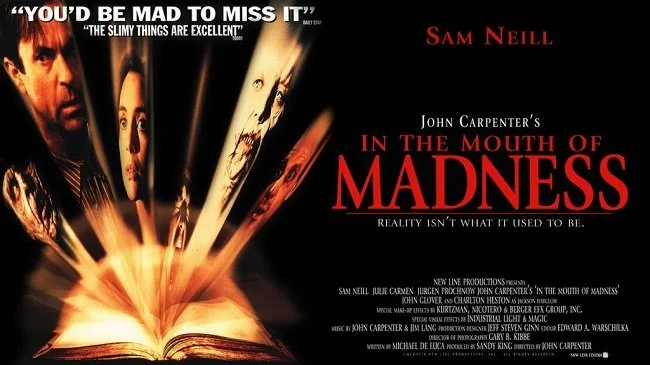
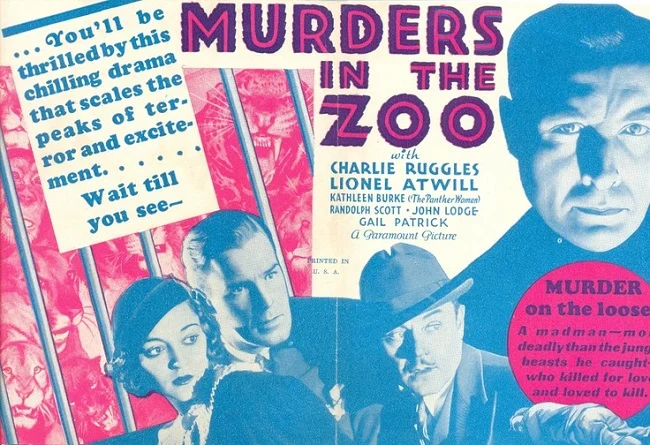
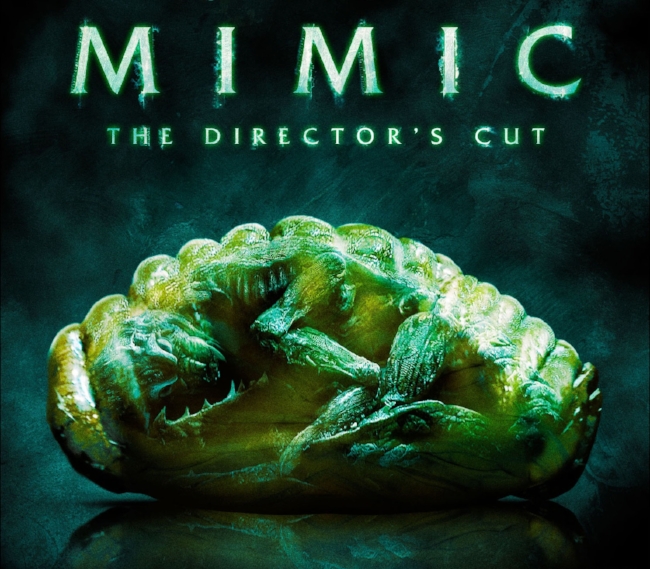

The First Past the Post Electoral System
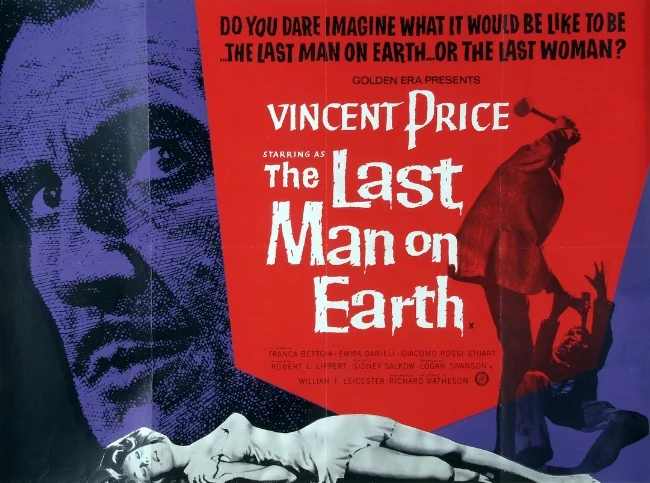
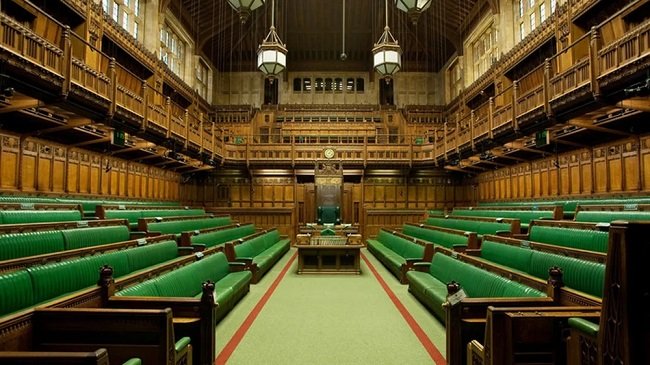
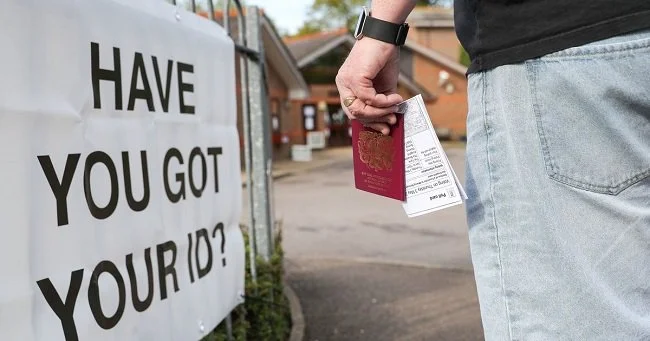
The First Past the Post (FPTP) electoral system used in the United Kingdom, as well as in several other countries such as the US and India, has both advantages and disadvantages. However, despite being a simple and straightforward system it has been abandoned by many democracies in favour of more proportional and equitable methods. The primary criticism against FPTP is that it allows a minority of the electorate to return a majority government. Since 1935, there have been majority governments 90% of the time, but not one of them had the support of a majority of voters. At present, the current UK government has a majority of seats with just 43.6% of the votes. In the 2019 election they gained an extra 48 seats despite an increase of only 1.2% of the vote share.
The First Past the Post (FPTP) electoral system used in the United Kingdom, as well as in several other countries such as the US and India, has both advantages and disadvantages. However, despite being a simple and straightforward system it has been abandoned by many democracies in favour of more proportional and equitable methods. The primary criticism against FPTP is that it allows a minority of the electorate to return a majority government. Since 1935, there have been majority governments 90% of the time, but not one of them had the support of a majority of voters. At present, the current UK government has a majority of seats with just 43.6% of the votes. In the 2019 election they gained an extra 48 seats despite an increase of only 1.2% of the vote share.
Under First Past the Post, the UK Parliament does not accurately reflect the way the electorate votes. Hence, millions of people do not get the representation they choose. In the 2024 general election, the combined vote share for Labour and the Conservatives reached a record low, with smaller parties doing well. Yet the election was highly disproportionate, as Labour won 63% of seats (411) with only 34% of the vote, while Reform won under 0.8% of seats (5) with 14.3% of the vote. The Liberal Democrats recorded their best ever seat result (72), despite receiving only around half the votes they did in 2010. A Parliament that fails to reflect how people vote can lack popular support and have its legitimacy questioned. However, such complaints have always been countered with arguments that FPTP delivers strong governments with the ability to implement their respective manifestos.
Here are some of the key pros and cons of the First Past the Post system :
Pros:
1. Simplicity: FPTP is a straightforward system where voters mark an "X" next to their preferred candidate, and the candidate with the most votes wins. The simplicity makes the electoral process easy to understand and administer.
2. Strong Government: FPTP often leads to a single-party majority in the House of Commons, which can result in a more stable and decisive government. This majority typically allows the winning party to implement its agenda without needing to form coalitions and compromise on key policies.
3. Local Representation: Each regional constituency is represented by a single elected member, which helps establish a direct link between constituents and their representative. This can enhance local representation and also provides the electorate with clear accountability.
4. Prevents Extreme Parties: FPTP tends to favour larger, more established parties, making it difficult for smaller or more extreme parties to gain representation. This can be seen as an advantage if stability and moderation are priorities.
Cons:
1. Disproportionate Representation: FPTP can lead to a significant mismatch between the proportion of votes a party receives nationally and the number of seats it wins. This can result in a parliament that does not accurately reflect the diverse political views of the population.
2. Wasted Votes: In FPTP, votes cast for losing candidates and those beyond the necessary majority for the winning candidate are considered “wasted”. This results in “safe seats” with an incumbent candidate who has an established majority. This can lead to a sense of disenfranchisement among voters whose preferred candidate or party does not win as their vote effectively doesn’t count.
3. Regional Biases: The system can reinforce regional biases, as parties may focus on winning in specific geographic areas rather than seeking support across the entire country. This can lead to neglect of certain regions and communities.
4. Limited Choice: FPTP tends to limit voters' choices to candidates from the major parties, as smaller parties may struggle to gain a foothold. This can result in a lack of diversity and stifled political competition. It also fosters a sense of dissatisfaction among the electorate if a substantial percentage vote for a particular party yet it gains no seats.
5. Tactical Voting: Voters may feel compelled to vote strategically rather than for their preferred candidate or party, especially if they believe that their preferred choice has little chance of winning. This can distort the true preferences of the electorate.
Ultimately, the choice of an electoral system involves a trade-off between various principles, such as simplicity, proportionality, and stability. Different systems prioritise different aspects, and no system is perfect. The debate over electoral systems often revolves around finding a balance that aligns with the values and goals of a particular society. At present, neither of the two main political parties have made any kind of electoral pledge to alter the UK voting system. Both benefit from FPTP as it currently stands, so it is only the smaller parties that advocate for change.








Friday the 13th Part III (1982)
Set directly after the events of the previous film, Friday the 13th Part III is again about a group of friends staying near Crystal Lake who encounter Jason Voorhees as he embarks upon another killing spree. Shot in 3D the film has a less sleazy tone than its predecessors although the formula remains the same. The set pieces and death scenes are more elaborate and less clinical, taking advantage of the 3D picture format. The film marks the first appearance of Jason's signature hockey mask, which subsequently became a trademark of both the character and the franchise. Originally conceived to be an end to the series of films, Friday the 13th Part III performed extremely well at the box office, earning $36.7 million on a budget of $2.2 million. As a result, the franchise was given a stay of execution and a further sequel was commissioned.
Set directly after the events of the previous film, Friday the 13th Part III is again about a group of friends staying near Crystal Lake who encounter Jason Voorhees as he embarks upon another killing spree. Shot in 3D the film has a less sleazy tone than its predecessors although the formula remains the same. The set pieces and death scenes are more elaborate and less clinical, taking advantage of the 3D picture format. The film marks the first appearance of Jason's signature hockey mask, which subsequently became a trademark of both the character and the franchise. Originally conceived to be an end to the series of films, Friday the 13th Part III performed extremely well at the box office, earning $36.7 million on a budget of $2.2 million. As a result, the franchise was given a stay of execution and a further sequel was commissioned.
First drafts of the screenplay for Friday the 13th Part III, focused upon the previous “final girl” Ginny Field (Amy Steel), who was trying to re-adjust to normal life after her traumatic experience at Crystal lake. However, Amy Steel declined the part and so writers Martin Kitrosser and Carol Watson opted to follow the established formula. Hence the story is about eight friends staying for a weekend at a holiday cabin near Crystal Lake. The property belongs to Chris Higgins (Dana Kimmel). Chris reveals to her boyfriend Rick (Paul Katka) that she was attacked by a deformed man two years earlier and has come home to face her fears. The other guests are Debbie (Tracie Savage), her boyfriend Andy (Jeffrey Rogers), prankster Shelly (Larry Zerner), his blind date Vera (Catherine Parks) and stoners Chuck (David Katims) and Chili (Rachel Howard).
As Friday the 13th Part III was filmed in 3D it had a higher budget than the two previous films. Director Steve Miner manages the pace well, providing two deaths early on to wet the audience’s appetite, then spending the next twenty five minutes on introducing the characters and building tension. The “teenagers” are not as grating as usual and there is minor comic relief from both Shelly and Chuck. The death scenes make good use of the 3D photography, with all manner of objects being hurled at the camera. The two kills that get the biggest audience reaction are Jason crushing a head with his bare hands, resulting in an eye popping out. Another character is bisected with a machete from his crotch to his navel, while walking on his hands. Harry Manfedini once again provides an appropriate score, with an especially funky theme during the opening credits.
Friday the 13th Part III is one of two instalments in the franchise that manages to rise above its exploitation roots. The other is the sixth, Jason Lives. The third instalment gained a veneer of quasi-respectability by being in 3D. It made the movie an “event” at the time of its release, as the revival of this format had not yet outstayed its welcome. From a continuity perspective the third film is all over the place. The events depicted are 24 hours after those of Part 2, technically making the film Saturday the 14th. Jason seems to have gained height and shaken off having a machete cleave his left shoulder. But none of it really matters. The film once again delivers what viewers want and this time in glorious 3D. It can even be argued that there is a degree of charm to it all or at least some sense of novelty. The film certainly suits the medium of 3D and it can be argued that it is the best in the series.
Friday the 13th Part 2 (1981)
Originally, Friday the 13th Part 2 was intended to be an anthology film based on the superstition associated with the date. However, after the popularity of the original film's surprise ending, the producers opted to continue the story and mythology surrounding Camp Crystal Lake. This eventually became the parameters which all future films would broadly work within. Friday the 13th Part 2 is a more polished production than the first movie, benefitting from twice the budget of the original. The quick turnaround meant that Paramount Pictures could continue to capitalise on the popularity of the slasher genre. However, there was growing social pushback against these types of films, from Christian lobby groups and other “concerned parties”. Hence, Friday the 13th Part 2 ran into problems with the MPAA ratings board and cuts were imposed. Something that would continuously plague the franchise over the years.
Originally, Friday the 13th Part 2 was intended to be an anthology film based on the superstition associated with the date. However, after the popularity of the original film's surprise ending, the producers opted to continue the story and mythology surrounding Camp Crystal Lake. This eventually became the parameters which all future films would broadly work within. Friday the 13th Part 2 is a more polished production than the first movie, benefitting from twice the budget of the original. The quick turnaround meant that Paramount Pictures could continue to capitalise on the popularity of the slasher genre. However, there was growing social pushback against these types of films, from Christian lobby groups and other “concerned parties”. Hence, Friday the 13th Part 2 ran into problems with the MPAA ratings board and cuts were imposed. Something that would continuously plague the franchise over the years.
Second time round the film boasts a nominally stronger script by Ron Kurz with better defined characters. Amy Steel stars as camp counsellor Ginny Field and continues the tradition of a robust and dynamic “final girl”. Betsy Palmer makes a cameo appearance as the late Pamela Voorhees and prophet of doom, Crazy Ralph (Walt Gorney), returns briefly before an unpleasant demise. The boldest step in the screenplay is a major retcon of Jason Voorhees, who has now survived the drowning incident of his youth, having lived as a hermit in the woods for twenty five years. Like so many genre films, it’s best not to dwell too much on the plot details as they’re seldom logical. The larger budget meant better production values. The cinematography by Peter Stein is more atmospheric this time round. But the main focus of attention are the set pieces and death scenes.
Tom Savini passed on the opportunity to return and undertake the film’s makeup effects. Stan Winston was briefly involved in the production but then left due to scheduling conflicts. Finally Carl Fullerton, apprentice to the legendary Dick Smith, took on the project. He has crafted some excellent death scenes, two of which bear an uncanny similarity to those seen in Mario Bava’s A Bay of Blood. However, rather than this being a homage it would appear that they occurred purely by luck. Sadly most of these effects sequences were shortened by the MPAA to the point where it’s difficult to discern what is happening on screen. Thankfully the excellent new HD transfers by Shout Factory help with these details. I noticed for the first time that the throat cutting and the machete to the face scenes both use the wrong side of the weapon for safety reasons.
The final 25 minutes of Friday the 13th Part 2 are well conceived and executed. The chase between Jason and Ginny is well paced and tense. At one point Ginny hides from Jason under a bed and a rat scurries past her. It is discreetly implied that Ginny wets herself out of sheer fear, which is a curious but credible minor detail. The denouement in a dilapidated shack where Jason has a shrine to his dead mother Pamela Voorhees is suitably creepy. Due to the clarity of the Blu-ray transfer, details such as Alice’s body, the “final girl” from the previous movie, are far more apparent. Harry Manfredini’s score continues to be very effective, especially in the chase sequence. Overall this is a solid sequel, offering more of the same but with a little more attention to detail. Friday the 13th Part 2 lays the foundations for future instalments of the franchise. The only thing missing is Jason’s iconic hockey mask which doesn’t appear until the next film.
Friday the 13th (1980)
Writing any kind of review for the original Friday the 13th movie seems somewhat redundant, as it has been analysed and written about numerous times before. If you’re interested in the film’s production as well as its subsequent impact on US cinema at the time, then there is an excellent summary on Wikipedia. Having recently rewatched the entire franchise, courtesy of the Shout Factory’s Friday the 13th Collection Deluxe Edition, I have a few thoughts I’d like to share. The picture quality of all the films is very good, offering a lot more visual information compared to previous releases. The amount of “extras” included in the box set is prodigious. I suspect that these are the best versions that we’re ever likely to see. Fans hoping that one day all the cut footage will be found and re-integrated into each film are likely to remain disappointed. Some material has surfaced but sadly a lot of deleted and extended scenes have been destroyed.
Writing any kind of review for the original Friday the 13th movie seems somewhat redundant, as it has been analysed and written about numerous times before. If you’re interested in the film’s production as well as its subsequent impact on US cinema at the time, then there is an excellent summary on Wikipedia. Having recently rewatched the entire franchise, courtesy of the Shout Factory’s Friday The 13th Collection Deluxe Edition, I have a few thoughts I’d like to share. The picture quality of all the films is very good, offering a lot more visual information compared to previous releases. The amount of “extras” included in the box set is prodigious. I suspect that these are the best versions that we’re ever likely to see. Fans hoping that one day all the cut footage will be found and re-integrated into each film are likely to remain disappointed. Some material has surfaced but sadly a lot of deleted and extended scenes have been destroyed.
Made to capitalise on the success of John Carpenter’s Halloween (1978), Friday the 13th is a far more contrived and cynical piece of filmmaking. Director Sean S. Cunningham aimed to provide audiences with a cinematic “rollercoaster ride”. A horror experience which included all the things the target audience wanted. Specifically sex and violence. The screenplay by Victor Miller offers nothing more than the functional. The scene is set, the characters introduced and then the killing begins. There are a few red herrings along the way but there is little in the way of character development or thematic exploration. Instead we get a litany of stereotypes, although they are used effectively. The cinematography by Barry Abrams is simple, bordering on stark. The production was shot on a real Boy Scout Camp and it is suitably dilapidated giving the proceedings an authentic feel.
The film’s main innovation was the quality of the makeup effects and set pieces. These are jarringly clinical at times, courtesy of Tom Savini. The final revelation that the killer is in fact the mother of a boy who died at the summer camp is also a highpoint. Betsy Palmer’s performance is suitably unhinged. Several other members of the cast are of interest. Kevin Bacon appears as one of the camp counsellors and has possibly the best death scene. Bing Crosby’s son, Harry Crosby, also makes an appearance. Within a few years, he quit acting altogether and became an investment banker. Underpinning all of this is an atmospheric score by Harry Manfredini. Manfredini’s major innovation is a vocal motif, “ki ki ki ma ma ma”, which is played whenever the killer’s POV was used. Along with its use of strident strings during chase sequences, the score for Friday the 13th has become iconic.
Although made independently, Friday the 13th was distributed by Paramount Pictures. The studio was interested in the “youth market” during the late seventies and saw the film as a low risk investment. Paramount were not pleased by the negative reviews the film garnered and some senior executives did not like the studio being associated with such exploitation material. However, Friday the 13th grossed over $59 million at the box office worldwide. A significant achievement for a film that was made for half a million. Not only did it prove a sound investment for Paramount, it effectively started an entire sub-genre within horror movies. Film critics can sometimes find themselves at odds with audiences and Friday the 13th is a prime example of this. They failed to see that the film was a straightforward quid pro quo. Despite its rough edges, it gave audiences exactly what they wanted and they were happy to pay. It didn’t need to be any more than the sum of its parts.
Theatrical Version or Director's Cut?
Not all film director’s have the luxury of “final cut”. The right to ensure that the completed version of a film corresponds with their creative vision. Films are commercial undertakings and sometimes the producers, film studio or other interested parties get to assert their wishes over that of the director. Often this can be due to practical considerations such as running time or budget. On occasions, this can be down to major creative and artistic differences. Hence the theatrical release of a film may be considered flawed, unfinished or just plain wrong by the director, if changes have been imposed, regardless of the reasons. Therefore, a director’s cut of a film can offer a significantly different cinematic vision over the original theatrical release. They can present an opportunity to fix perceived problems or just put more narrative meat on the bones. This may lead to a film being critically reappraised.
Not all film director’s have the luxury of “final cut”. The right to ensure that the completed version of a film corresponds with their creative vision. Films are commercial undertakings and sometimes the producers, film studio or other interested parties get to assert their wishes over that of the director. Often this can be due to practical considerations such as running time or budget. On occasions, this can be down to major creative and artistic differences. Hence the theatrical release of a film may be considered flawed, unfinished or just plain wrong by the director, if changes have been imposed, regardless of the reasons. Therefore, a director’s cut of a film can offer a significantly different cinematic vision over the original theatrical release. They can present an opportunity to fix perceived problems or just put more narrative meat on the bones. This may lead to a film being critically reappraised.
However, it is erroneous to assume that a director’s cut is a superior version of a film by default. Sometimes, a filmmakers desire to return to a previous project and make alterations yields no significant results. Some director’s even develop a reputation as “serial tinkerers” who never seem to be satisfied, whatever the results. Francis Ford Coppola’s Apocalypse Now exists formerly in three distinct versions. Oliver Stone has released four versions of his film Alexander (2004). As for George Lucas, he stated in an interview that “films are never completed, they’re only abandoned”. He has famously revisited his body of work several times and not necessarily to their overall benefit. With all this in mind, here are three films, where popular opinion and critical acclaim favours the original theatrical version over the later released director’s cut.
Alien (1979). Ridley Scott is another well known director who always seems to revisit his work and make alterations. His reasons for re-editing vary and sometimes they do yield better movies. However, the original theatrical release of Alien is described by Scott himself as “the best he could possibly have made at the time”. Yet in 2003, he released a “director’s cut” despite stating that this was not his definitive version. The new version restored roughly four minutes of deleted footage, while cutting about five minutes of other material, leaving it approximately a minute shorter than the theatrical cut. The standout changes were to Brett’s death scene which shows more of the xenomorph and the infamous scene where Ripley finds Dallas “cocooned” and puts him out of his misery. Being no more than a fan service, this version has no additional value. In fact it can be argued that it only serves to contradict the xenomorph’s established biology.
Donnie Darko (2001). Richard Kelly had to compromise when making his off kilter science fiction movie. The main one being keeping the running time below two hours. In 2004, director Kelly, re-cut the film, added twenty minutes of previously deleted footage as well as new music and sound effects. This director's cut provides a clearer insight into many of the film's more ambiguous plot elements and makes the previously vague temporal mechanics less esoteric. However, critics and fans alike have stated that the charm of the theatrical release lies in its mysterious and ill defined nature. It is a deliberately enigmatic cinematic journey. Kelly’s second edit may well add clarity but in doing so neuters what so many viewers found endearing. Sometimes, less is indeed more.
The Warriors (1979). Walter Hill’s underrated, stylised gang drama has its roots in the writings of ancient Greek professional soldier Xenophon. The theme of a group of warriors trapped in hostile territory and trying to get home is cleverly transposed to seventies New York City. Made on a tight schedule by a studio that wasn’t especially enamoured with the material, Hill didn’t get to draw the exact parallels he originally wanted. Hence in 2005, he added a new opening scene with a voiceover describing how Xenophon’s army attempted to fight its way out of Persia and return home. He also inserted comic-book splash panel shots as a means to bridge various key scenes in the film. Sadly, this was a little too on the nose and too expository. Recent releases of The Warriors on Blu-ray and UHD have included both versions and the consensus remains that the theatrical release is more efficient, requiring no further embellishment.

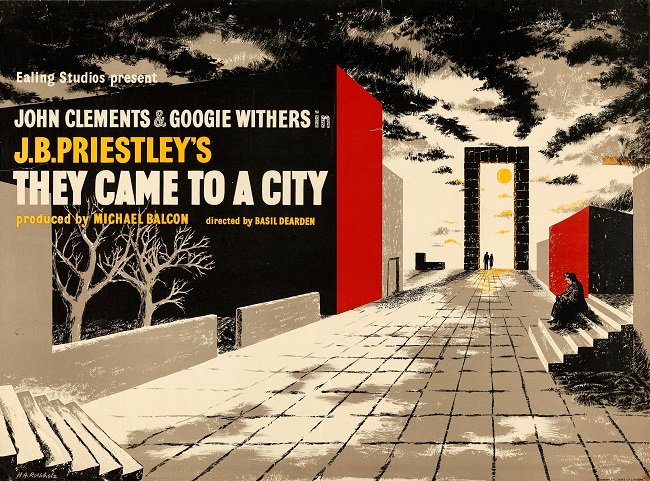
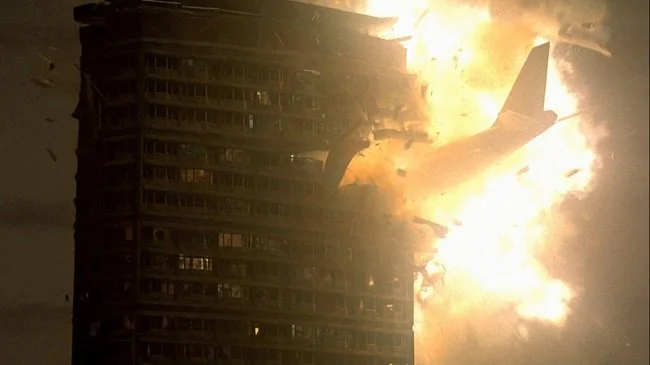
Has LOTRO Lost its Way?
After the initial shock of Update 41 and the radical revisions it made to the Lore-master class, I recently returned to The Lord of the Rings Online to experiment with new Master of Nature’s Fury (red line) and Keeper of Animals (blue line) builds. It is odd to find that skills I’ve been using for years are now gated behind specific trait lines. Furthermore, the consolidation of skills has left the entire class somewhat overpowered. Some players may argue that this is a good thing. However, for me it has rendered what was a subtle class requiring skill and intelligence to use effectively, into what is just a blunt instrument. Since playing tactically is now redundant, instances and skirmishes no longer poses any significant challenge. PVE content has been easy in LOTRO for a long time. Post update 41 it is now trivial and nothing more than a minor diversion.
After the initial shock of Update 41 and the radical revisions it made to the Lore-master class, I recently returned to The Lord of the Rings Online to experiment with new Master of Nature’s Fury (red line) and Keeper of Animals (blue line) builds. It is odd to find that skills I’ve been using for years are now gated behind specific trait lines. Furthermore, the consolidation of skills has left the entire class somewhat overpowered. Some players may argue that this is a good thing. However, for me it has rendered what was a subtle class requiring skill and intelligence to use effectively, into what is just a blunt instrument. Since playing tactically is now redundant, instances and skirmishes no longer poses any significant challenge. PVE content has been easy in LOTRO for a long time. Post update 41 it is now trivial and nothing more than a minor diversion.
For all the good aspects of LOTRO, of which there are many, developer’s Standing Stone Games have a habit of making wrong calls when it comes to adding new systems to the game. Consider mounted combat, fellowship manoeuvres, destiny points and pipe weed. Some of these are interesting ideas that were just poorly implemented. Others are things no one ever asked for. All of which took time and resources to develop. The latest addition to this list is the woefully implemented “Birding” hobby which arrived with Update 41. This bird spotting activity seems somewhat ill conceived and is certainly underwhelming. The fact you don’t actually see any birds during the process is odd, to say the least. Again I return to this notion that those making decisions at SSG seem very removed from what players want.
LOTRO is a 17 year old game. The MMORPG genre and gaming per se have changed a lot during that time. LOTRO looks “old”. Some may argue that is part of the game’s inherent charm and in some respects I would agree. However, the ageing technology that LOTRO runs on is a reality. Although the game has an impressive scope of vision when it comes to its world design, the implementation is looking dated. The low resolution textures, the incessant pop-in and the constant recycling of assets is very noticeable. If you take time to set up a screenshot in LOTRO, especially one that involves an interesting vista, you’ll often find that the game struggles to load appropriately scaled trees, shrubs and buildings. The game engine also cannot cope with the waves and breakers along the coast of Umbar. The game’s UI is also from a different era and struggles to be readable at modern resolutions. Yet plans to address these issues appear to have been abandoned.
LOTRO players will often focus on the game’s strongest asset; the lore and the way that SSG draws upon it so effectively. This is not something I would dispute. If you are a Tolkien fan, you’ll find SSG’s vision of Middle-earth to be very authentic. If you’re a new player starting LOTRO today, you’ll find a wealth of content to get lost in. However, at level cap it is a different issue. You can either embark upon group play and tackle all the respective raids that are available. Or you can simply play new story content and slowly upgrade your gear. I have stated in the past that LOTRO has reached a point in its lifespan where “what you see is what you get”. However, I now feel that the game has begun to run out of steam. Narratively, the game has entered Umbar, which is an interesting region from a lore perspective. But aesthetically it is a visually uninspired zone and it sits uncomfortably with the rest of SSG’s vision of Middle-earth.
Looking at the bigger picture, in recent years there have been a lot of changes with regard to who owns SSG. Initially EG7 appeared to be keen in investing and invigorating the game. However, changes to the internal company hierarchy appear to have reversed this policy. I get the impression that the bean counters are at present happy for LOTRO to continue in the same vein as it always has. It generates revenue consistently and has a robust core playerbase. But I think no one wants to invest any further resources into the game, beyond those allocated. This issue, when combined with SSG’s “mother knows best” outlook, says to me that the game is just marking time. Rather than operating within modest parameters it now feels like lacklustre meandering. Has LOTRO lost its way? Can it be saved and given a new lease of life. Or is it simply entering the final stage of its life cycles.
Watching TV Part 2
Watching TV was a far more communal activity in my youth. Families sat and watched specific shows or sports together. “Appointment TV” had its benefits not only for TV ratings but for advertising revenue. Although audiences may have grown over the years, they have also become more fragmented and compartmentalised. Smaller market shares have therefore made advertising far more pervasive. Even big streaming platforms are feeling the squeeze with declining subscribers and therefore introducing advertising on lower tier tariffs. Many catch up services also rely on advertising. However, viewers can always pay a fee if they wish to dispense with it. Another foible of modern digital television is poor picture quality Many smaller digital channels broadcast in standard definition. The source material has often been converted between different picture formats and has been cropped to suit a 16:9 screen. This results in low definition picture quality, with weak colours and a lot of digital artefacts.
A modern Smart TV menu
Watching TV was a far more communal activity in my youth. Families sat and watched specific shows or sports together. “Appointment TV” had its benefits not only for TV ratings but for advertising revenue. Although audiences may have grown over the years, they have also become more fragmented and compartmentalised. Smaller market shares have therefore made advertising far more pervasive. Even big streaming platforms are feeling the squeeze with declining subscribers and therefore introducing advertising on lower tier tariffs. Many catch up services also rely on advertising. However, viewers can always pay a fee if they wish to dispense with it. Another foible of modern digital television is poor picture quality Many smaller digital channels broadcast in standard definition. The source material has often been converted between different picture formats and has been cropped to suit a 16:9 screen. This results in low definition picture quality, with weak colours and a lot of digital artefacts.
Yet despite these commercial pressures, TV is still a major form of entertainment, although the manner in which we view it has changed substantially. We don’t necessarily watch the same shows together and at the same time. However, the social aspect that surrounds popular shows still exists. Rather than talking about last night’s episode at work in the break room, we now discuss it online. Or we recommend a particular show to a friend and wait for them to binge watch enough, before enjoying a lengthy analysis of what has happened so far. Dramas have become more complex and in many ways, more like cinema. It can be argued we live in a golden age of TV. However, some aspects have declined. I find that historical and science based documentaries lack the intellectual rigour of those produced in the seventies and nineties. News coverage has also become simpler, risk averse and reticent to show the realities of modern life.
Returning to the matter of the old CRT television I saw in the charity shop window (from the previous part of this post), seeing that old set did make me nostalgic for a time when I felt that TV was more special. I can remember when the BBC first broadcast Life on Earth. This major wildlife show had taken years to collate and felt like a significant milestone. This was the very definition of event television. A decade later, popular shows such as The X-Files became a highlight of the week. Something to look forward to. We now live in an age where high quality shows abound. Yet does their abundance diminish their value? I’m not sure. I still look forward to certain shows starting a new season. But not quite in the same way as I did 20 years ago. Perhaps that’s because there were real stakes back then. You could miss a show or your VCR could fail to record it. These are no longer factors. Shows may go from streaming platforms due to licensing changes but they never truly vanish. They can be “found”.
Is YouTube the same as regular TV?
Finally, how does YouTube fit into all of this? Many younger people do not watch traditional TV. Yet they spend comparable amounts of time watching various YouTube channels. Technically, you can argue that YouTube content isn’t the same as regular TV because it is not made to the same technical standard, does not have any kind of editorial oversight and is not subject to independent regulation standards. But not every YouTube channel is made on the fly. Many professional establishments have channels that they run along traditional lines. I think the distinction between YouTube and TV is not so clear. I also think that the ability to watch YouTube on your lounge TV makes a difference as well. It garners a sense of legitimacy. Furthermore, YouTube channels can gain substantial audiences and become very influential. These numbers make them relevant. So does their clout.
TV has proven a resilient medium over its seventy year lifespan. It adapts to the latest trends and embraces new technology. There was a time when the TV industry thought the advent of the VCR would kill commercial televsion. It didn’t. Similarly, the growth of Netflix a decade ago, caused panic among traditional television networks. Then multiple streaming platforms emerged and split the market. Due to a need to create more and more content, many of these companies have over extended themselves and are now finding that there are consequences to growing too fast. However, the traditional outlets, weather the storm and continue on, as they always have. So all things considered, let’s not write off television just yet. I have no idea what the next trend or innovation may be but I’m confident that most people still want to be able to enjoy quality entertainment from the comfort of their own home. Until that changes, TV is safe.
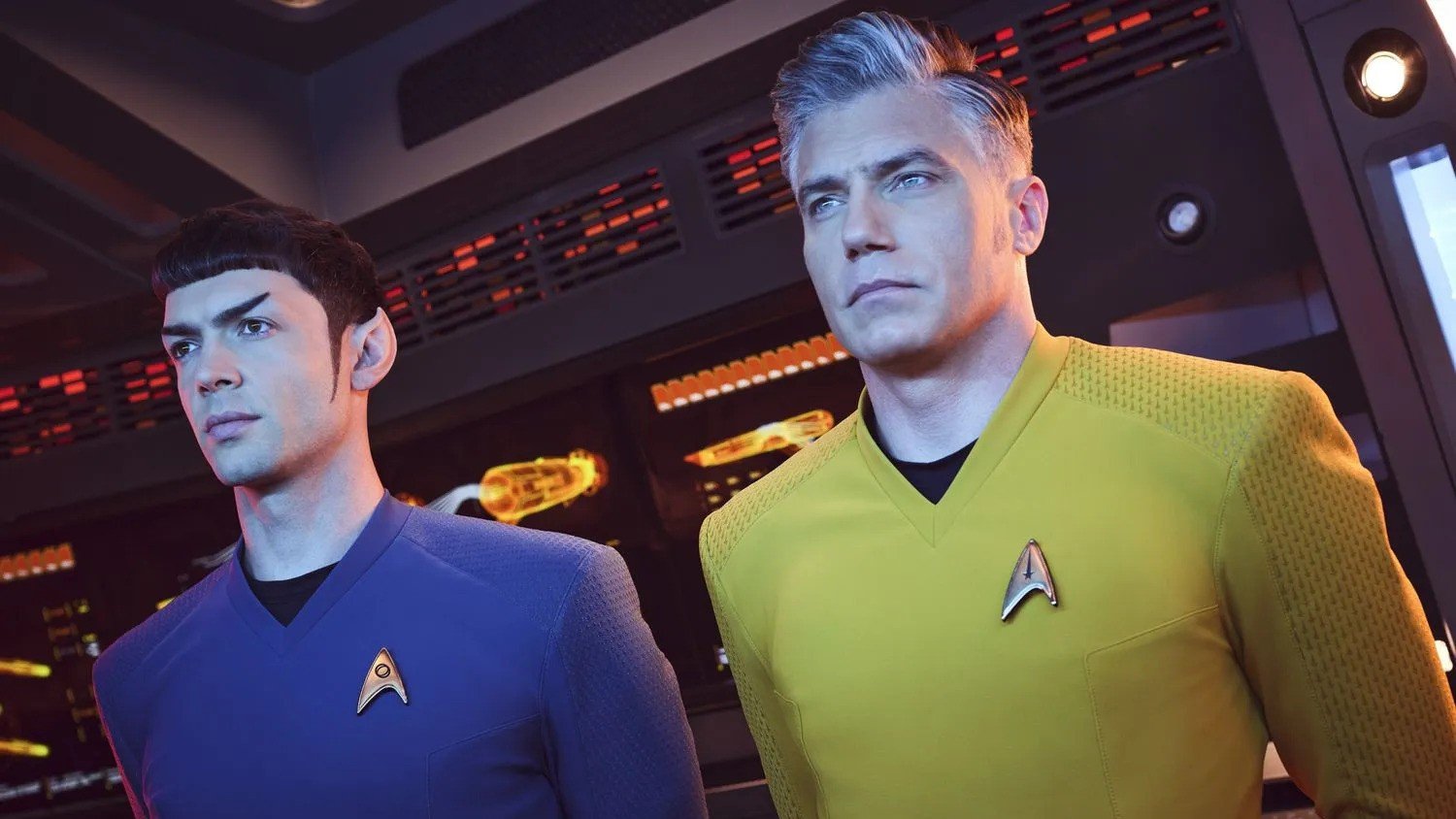




Watching TV Part 1
I recently visited my local branch of the British Heart Foundation. This is a chain of UK charity shops that sell previously owned furniture and electrical goods, all of which are certified to be in good working order. It’s one of the few places where you’ll still find old school CRT televisions. These mainly come from house clearances. On this occasion, a particularly bulky model from the early 2000s was on display and despite its age, it still had a good, clear picture. I spoke to a member of staff and apparently these TVs are still popular with gamers who buy them for use with retro video games consoles. I felt especially nostalgic for this particular ageing Sony TV, because Mrs P and I had once owned a similar model. We bought it from a local department store (which no longer exists) and I remember it took two robust gentlemen to deliver it and install it.
A Widescreen Panasonic CRT TV
I recently visited my local branch of the British Heart Foundation. This is a chain of UK charity shops that sell previously owned furniture and electrical goods, all of which are certified to be in good working order. It’s one of the few places where you’ll still find old school CRT televisions. These mainly come from house clearances. On this occasion, a particularly bulky model from the early 2000s was on display and despite its age, it still had a good, clear picture. I spoke to a member of staff and apparently these TVs are still popular with gamers who buy them for use with retro video games consoles. I felt especially nostalgic for this particular ageing Sony TV, because Mrs P and I had once owned a similar model. We bought it from a local department store (which no longer exists) and I remember it took two robust gentlemen to deliver it and install it.
For much of my life, televisions have been expensive, bulky devices that no matter where you put them, always became the focal point of the room. During the seventies TVs were the primary source of household entertainment and most families did not have any additional devices connected to them. It was not until the eighties that VCRs and games consoles grew in popularity and became more commonplace peripheral devices. Today in contrast, a TV is usually part of a wider home entertainment system, potentially consisting of some sort of DVR, a games console, a DVD/Blu-ray player and a surround sound system. The TV and some of these other devices will all be connected to the internet and provide access to streaming services. It is no longer even considered essential to have access to a cable, satellite or digital terrestrial source. Some households are happy to rely purely on the internet.
Anyone remember Tivo?
Returning to the title of this post, I think we are all fully aware that we watch TV in a much different manner to how we did thirty years ago. So this is not the central point of this article, although I may come back to it. On this occasion I am curious not so much about peoples specific viewing habits but rather the medium they use to watch. For example, I remember working with someone who due to their constant travelling, watched primarily via their tablet. My granddaughters used to do the same, until they got TVs in their bedrooms. For them, family viewing is a rarity. Furthermore, they tend to watch specific shows via streaming or YouTube Kids. If memory serves, I don’t think their home has a roof aerial, satellite dish or cable service. Conversely, my neighbours have gone all in on digital satellite services, mainly due to the sports coverage on offer. They also watch as a family on large TV in their lounge. You may do the same or something completely different. The fact is there is no standard way of watching TV anymore.
In our home, we have a wall mounted 4K TV in our lounge. Despite it being equipped with various apps for streaming as well as a terrestrial digital tuner, it ultimately serves as nothing more than a high end monitor. There are various other devices attached including a new DVR (a BT TV Box Pro) supplied by our ISP. This provides digital terrestrial channels as well as subscription based IPTV services. It can record three different channels while watching a fourth and can output streaming content in 4K HDR and Dolby Atmos. It currently has eight on demand and “catch up” services that we are actively logged into. Despite all its functionality, Mrs P uses it mainly for recording from a handful of mainstream UK TV channels. If there is ever a viewing conflict between Mrs P and I, then I will watch streaming services via my PC. It also has a TV tuner installed in case there’s an issue with internet services.
BT TV Box Pro
One of the benefits of TV today is that there’s no shortage of choice as to what to watch. Mrs P and I will frequently watch TV shows together as we broadly have similar tastes. If we want to watch a specific show, we determine what platform it is available on and whether we have existing access to it. We continuously make use of free trials to various streaming services. We seldom buy physical media anymore, although I will buy a Blu-ray copy of a film if it is difficult to source anywhere else. Overall we can usually access what we wish to watch. Some shows we’re happy to watch weekly but others we prefer to binge watch. By default we always have the subtitles on, which is no reflection upon our hearing but is mainly due to the way sound mixing is conducted these days. As I have stated before, I prefer to watch in either HD or UHD, without adverts as well as on screen graphics and logos.
Despite the technological changes that have happened over the years, not everything associated with watching televisions is an improvement. For example, I recently installed a new DVR. The process required me to choose the power management settings, connect the box to the internet, tune the various TV stations and hide any I didn’t want. I then had to set a PIN for content control, log into multiple streaming services using multiple log on credentials and set the remote control to operate our existing TV as well. Furthermore the new remote doesn’t have appropriate buttons to shut down the TV, only the DVR. Fortunately, the remote for the old DVR is still compatible, so we’re using that one instead. And speaking of remote controls, it would appear I now have six lying around the lounge to operate four devices? How is this easier?
Too Much Star Wars
We all knew it had to happen sooner or later. According to reports, Lucasfilm is planning to reduce its Star Wars related output on Disney+. Specifically, from 2025 there will be only one live-action television series per year. For comparison, Disney+ commissioned three shows in 2022 and two shows in both 2023 and 2024. It should be noted that this reduced output doesn’t include animated shows. It would appear that senior management at Disney have finally figured out something most of us have known for a while. That saturating the market with content based upon a specific intellectual property, is ultimately detrimental to its popularity and financial viability. To use an old adage “familiarity breeds contempt”. At present, hardcore fans are “unhappy” with the way the IP is being developed, while casual fans are somewhat burned out by the excess of content and its varying quality.
We all knew it had to happen sooner or later. According to reports, Lucasfilm is planning to reduce its Star Wars related output on Disney+. Specifically, from 2025 there will be only one live-action television series per year. For comparison, Disney+ commissioned three shows in 2022 and two shows in both 2023 and 2024. It should be noted that this reduced output doesn’t include animated shows. It would appear that senior management at Disney have finally figured out something most of us have known for a while. That saturating the market with content based upon a specific intellectual property, is ultimately detrimental to its popularity and financial viability. To use an old adage “familiarity breeds contempt”. At present, hardcore fans are “unhappy” with the way the IP is being developed, while casual fans are somewhat burned out by the excess of content and its varying quality.
In recent years, the Star Wars franchise has evolved an increasingly complex lore, as it attempts to codify into canon all things alluded to in the original films. This matter is further complicated as Disney picks and chooses what material from the expanded universe it wishes to use. Hence a reciprocal need has grown, requiring viewers to be au fait with this continuously growing mythology. Someone watching The Rise of Skywalker or season 2 of The Mandolorian with no prior knowledge of the franchise would struggle with much of the plot beyond the obvious. This growing interdependence may well be appealing to hardcore fans, but it can equally be off putting those just dipping their toes into the franchise. It’s a stark contrast to the first Star Wars movie which dealt in archetypes and addressed the themes of good and evil with broad brushstrokes.
From a business perspective, Disney’s decision is a sensible move. Star Wars remains the goose that lays the golden egg but it needs to be handled with care and consideration. Over the last 47 years, fans have gone from a lengthy period without new content, to an abundance of it in the last decade. I am reminded of the old aphorism regarding buses. You wait ages for one and then several turn up simultaneously. Furthermore, Star Wars is an intellectual property in transition at present. It was conceived during the seventies when the world was a very different place to how it is today. Its narrative simplicity was an antidote to the prevailing political and cultural cynicism of the time. However, Star Wars today has to appeal to a more diverse and sophisticated audience. Andor has shown that the source material can be updated to encompass more complex and adult themes. But this process is still a work in progress.
Which brings us to what is paradoxically the franchise’s greatest strength and sadly its most obvious Achilles’ heel; its fans. Star Wars fans are steadfast, engaged and passionate about that which they love. However, some are also possessive to the point of mania. They fail to see that fandom is not the same as ownership and that they are not the exclusive audience for this franchise. As to what happens next, now that Disney has made this decision, remains to be seen. Fans of all shades seem to agree that this is the right thing to do. Many think that Disney needs to reconsider what they do next with the franchise. I even saw one comment on a subreddit that simply said “make Star Wars great again”. The only flaw with this plea is that there is no clear consensus as to how you exactly achieve that. On mature reflection, perhaps owning the biggest pop culture franchise ever, isn’t as great as it sounds.







"Adequate" But "Disposable" Gaming
One of the defining qualities of a truly great game is how long it can hold your interest and keep you engaged. For example I bought the Game of the Year version of Skyrim about 14 months after its initial release. Hence I had access to all the games content that I dutifully played through. However, I also fully explored the world map, completed all side quests, crafted, furnished several houses and continued to travel the in-game world and killing foes long after I had completed all the traditional content. I did the same with Red Dead Redemption 2 as this also offered a compelling and immersive world. Games such as these have a quality beyond just the functional. I would happily traverse the mountains in Skyrim and watch the sunset, revelling in the ambient music. Similarly, I would often just ride the train in RDR2 and watch the world go by. When I finally stopped playing both games for newer titles, I felt a sense of sadness when I bid them goodbye.

One of the defining qualities of a truly great game is how long it can hold your interest and keep you engaged. For example I bought the Game of the Year version of Skyrim about 14 months after its initial release. Hence I had access to all the games content that I dutifully played through. However, I also fully explored the world map, completed all side quests, crafted, furnished several houses and continued to travel the in-game world and killing foes long after I had completed all the traditional content. I did the same with Red Dead Redemption 2 as this also offered a compelling and immersive world. Games such as these have a quality beyond just the functional. I would happily traverse the mountains in Skyrim and watch the sunset, revelling in the ambient music. Similarly, I would often just ride the train in RDR2 and watch the world go by. When I finally stopped playing both games for newer titles, I felt a sense of sadness when I bid them goodbye.
However, great games are few and far between. All video game releases exist on a spectrum of quality and artistic merit. Not all are bad, far from it. But many are purely functional. They entertain sufficiently to hold the players interests but once some semblance of completion is reached or the player simply feels that they are “done”, the game is effectively abandoned. Three such titles that I have played over the last 18 months fit this criteria. Hogwarts Legacy, Starfield and more recently Dragon’s Dogma 2. I enjoyed all of these games while I was playing them and completed each one’s respective stories. But rather than pursue all the minor achievements or simply stick around to enjoy the in-game worlds, I left once I felt I had finished. Furthermore, I ceased to be interested in those games the moment I stopped playing them.
I am sure this pattern of behaviour is not unique to me. It offers food for thought regarding how we perceive video games. To use a music analogy, few games achieve a status comparable to a classic LP. Something you wish to revisit on a regular basis. Instead, an average video game is a short term diversion. A bauble or trinket, designed to amuse and entertain. The virtue it provides primarily stems from the act of playing, rather than the compelling nature of the gameworld, its mechanics and narrative. Dragon’s Dogma 2 provided me with sufficient means to stay engaged. It did this long enough for me to complete the tasks it set before me. But it lacked a sense of “je ne sais quoi”. That quality or set of qualities that make a game more than the sum of its parts. As for Starfield, it has an expansion launching soon. Yet I have no desire to return to the game.
Looking through my game collection, there are a lot of titles that fall into an “adequate but can provide short term fun” category. There are also a lot that will never get installed as they don’t seem to have any immediate appeal. Just like books, TV, film and music, not every video game is a classic. Not everything needs to be a classic. Sometimes undemanding entertainment is perfectly acceptable. You agree to the terms on which it is offered. As video games have become more popular, a business need has grown to replicate that which has already proven commercially successful. Hence the market becomes saturated with similar products. Not all are bad but many are simply okay. In the face of increased mediocrity will titles seeking to be the next Skyrim or Red Dead Redemption 2 become rarer? Is there a paradox in adequate but disposable gaming? Is it doing more harm than good?