
A Month in Gaming
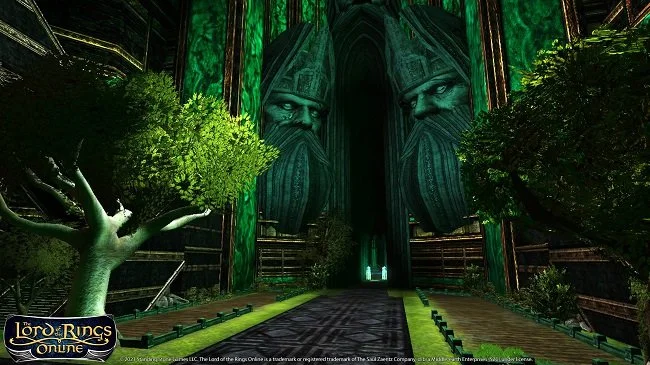
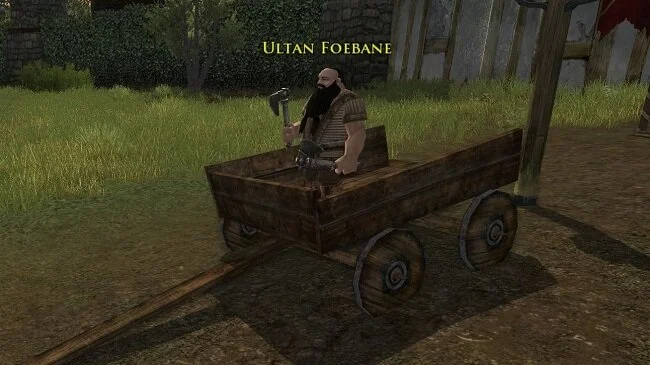
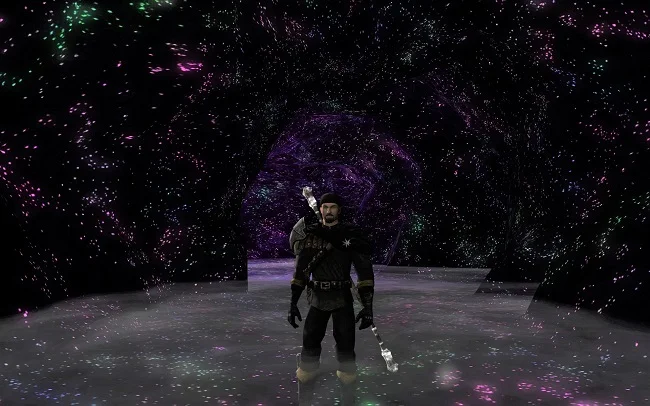
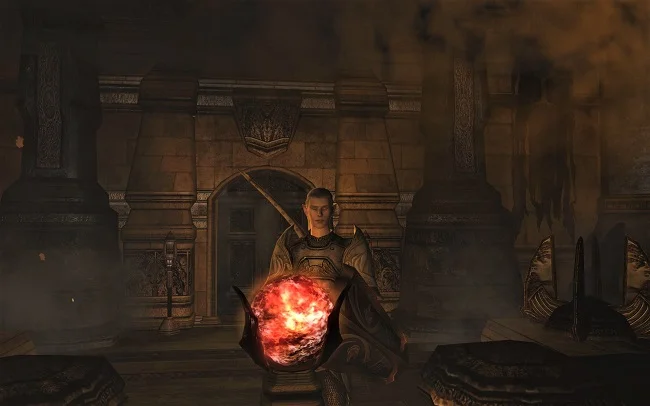
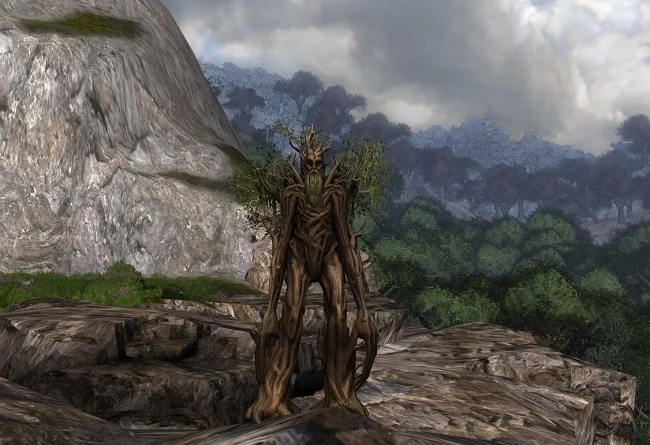
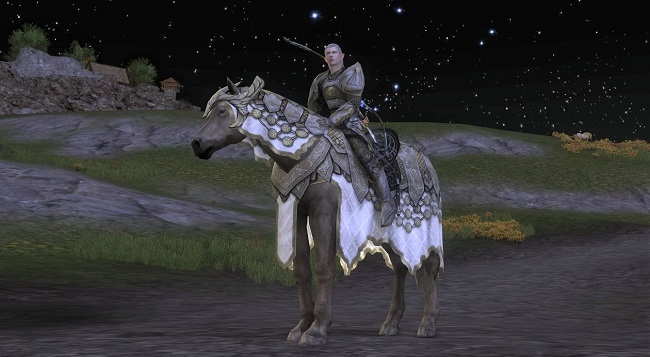
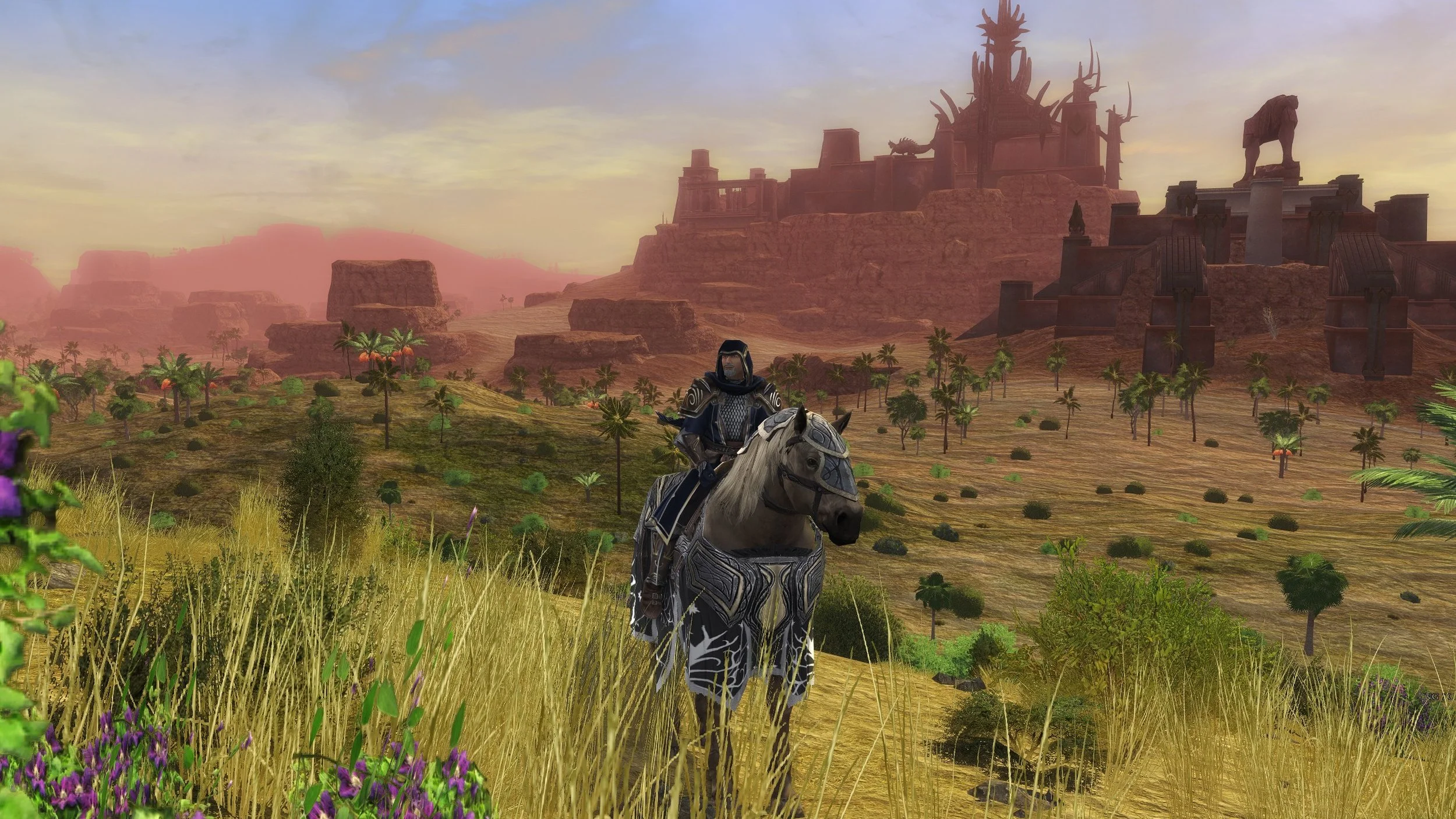
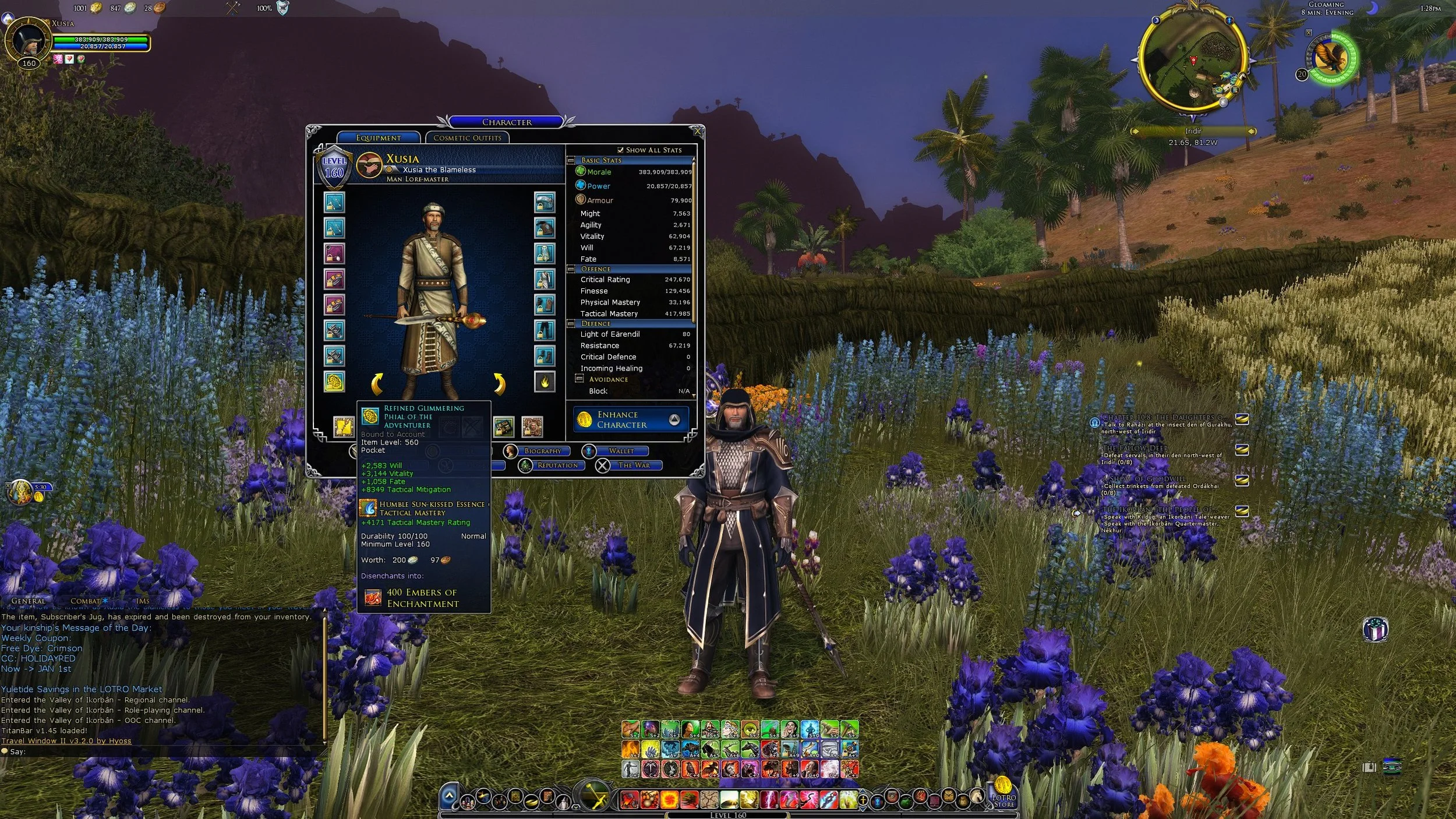
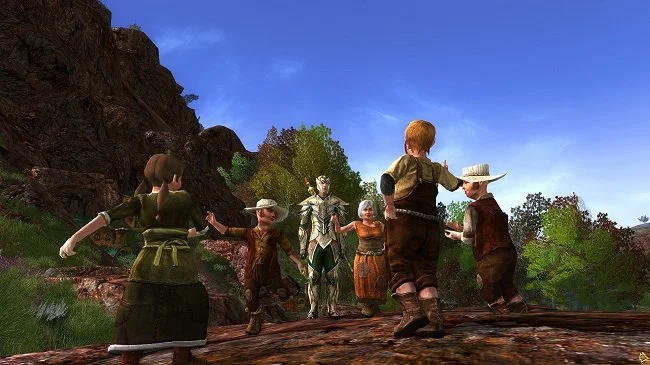
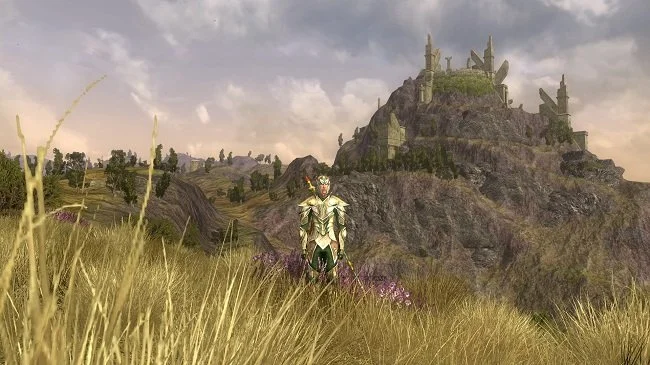
I’m still somewhat shocked that August has been and gone. Even by 2020 standards it’s been an odd month. Due to illness in the family, my schedule has been turned on its head and subsequently there has not been as much time for gaming as I’ve previously enjoyed. However, I tried to put what time I had to good use. I attempted to return to the MMORPG The Lord of the Rings Online once again, to see if I could continue through the epic story. Sadly, the game has run into further server related issues, just as it did last month. Standing Stone Games community manager Jerry Snook was a little “snippy” in responding to players' concerns and at present there are no details regarding what the problem is and when it will be resolved. If this issue persists I suspect that it is going to do some genuine harm to both the player base and community relations. I hope matters improve for SSG and LOTRO over September.
I’m still somewhat shocked that August has been and gone. Even by 2020 standards it’s been an odd month. Due to illness in the family, my schedule has been turned on its head and subsequently there has not been as much time for gaming as I’ve previously enjoyed. However, I tried to put what time I had to good use. I attempted to return to the MMORPG The Lord of the Rings Online once again, to see if I could continue through the epic story. Sadly, the game has run into further server related issues, just as it did last month. Standing Stone Games community manager Jerry Snook was a little “snippy” in responding to players' concerns and at present there are no details regarding what the problem is and when it will be resolved. If this issue persists I suspect that it is going to do some genuine harm to both the player base and community relations. I hope matters improve for SSG and LOTRO over September.
However, it hasn’t been all doom and gloom. I decided to buy Fall Guys: Ultimate Knockout, partially due to the wealth of positive reviews and feedback surrounding the game. It is great fun and often very amusing but I do seem to have developed a love hate relationship with the gameplay. I’ve failed to qualify for more than four games in a row and hence have not experienced much variety in races and challenges so far. I’m also not a fan of the team games, as I hate losing due to others, rather than my own actions. Hence progressing through the season pass is a grind. However, I occasionally have some good fortune and no matter how poorly you play, there’s always someone worse than yourself. The large number of “Tryhards” in the game are also a drag at times, as are players using the “grab” function in a negative fashion. But then it’s hard to stay pissed off with a game that lets you dress as a Triceratops.
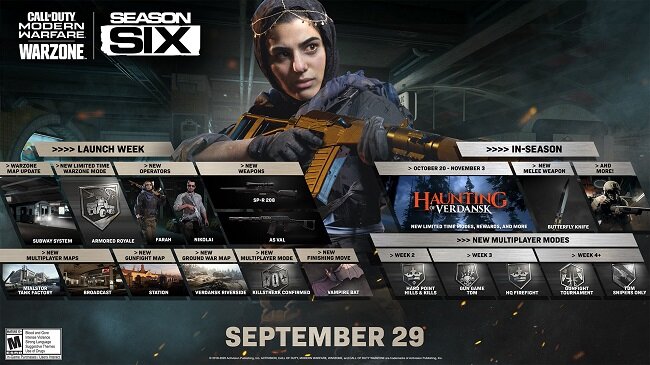
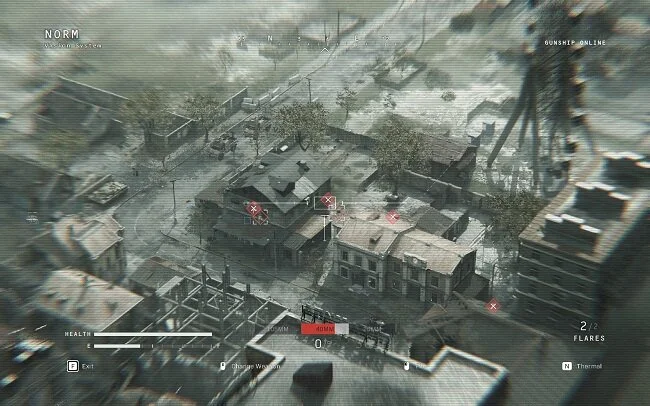
I have made good progress through the Season Five Battle Pass in Call of Duty Modern Warfare/Warzone. As I suspected, players were initially quite happy to swamp the train that’s been added to the game. But a month on, no one seems interested anymore and it is substantially less dangerous to investigate now. The new FiNN Light Machine Gun has proven useful to players like me. I use the XRK LongShot Adverse barrel which provides not only an increase in range but an insane rate of fire. If you’re not especially accurate with your aiming, then these factors are a real boon. There is a degree of recoil to deal with but this can be compensated by firing in rapid bursts, rather than just holding down the trigger and hosing the gun around. Plunder continues to provide the best of both worlds with regard to play styles, so once again CoDMW/WZ has managed to hold my interest for yet another calendar month.
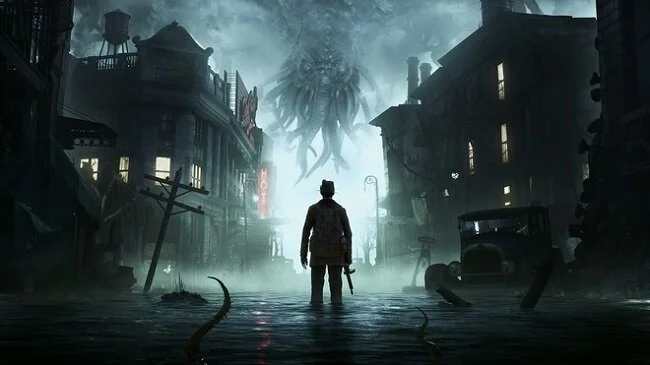
Over the next month, I shall be making a concerted effort to complete The Sinking City. I find that if I get sidetracked with too many other games, it is always the RPG that I’m playing that suffers. This is probably due to the fact that they need a more substantial time investment, so you can absorb the narrative. I have enjoyed this Lovecraft inspired game, despite its foibles and flaws. It certainly nailed the main themes of the Cthulhu Mythos. I think that I shall replace it with yet another RPG, as I like games with open worlds and dense lore that I can lose myself in. So I may purchase GreedFall next. It bears quite a few similarities to Amazon Game Studios forthcoming MMORPG, New World. However, after several beta tests, I have decided that the latter is not to my liking and think that the former will be a more suitable alternative. I hope that September doesn’t prove to be as tumultuous as August and that I can find the time to accommodate a new game.



Can Behavioural Science Create a Better Gaming Experience?
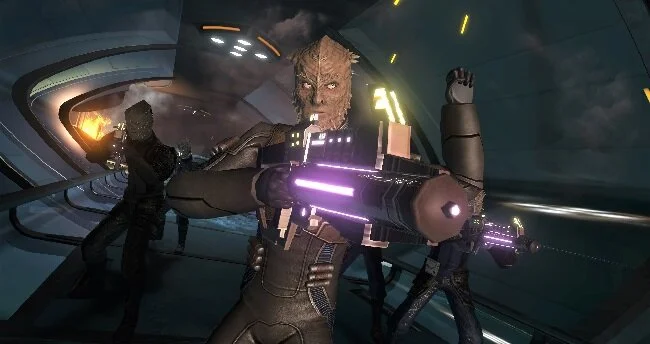
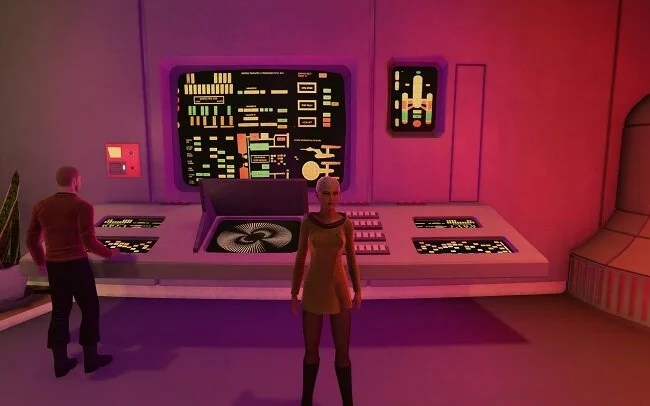
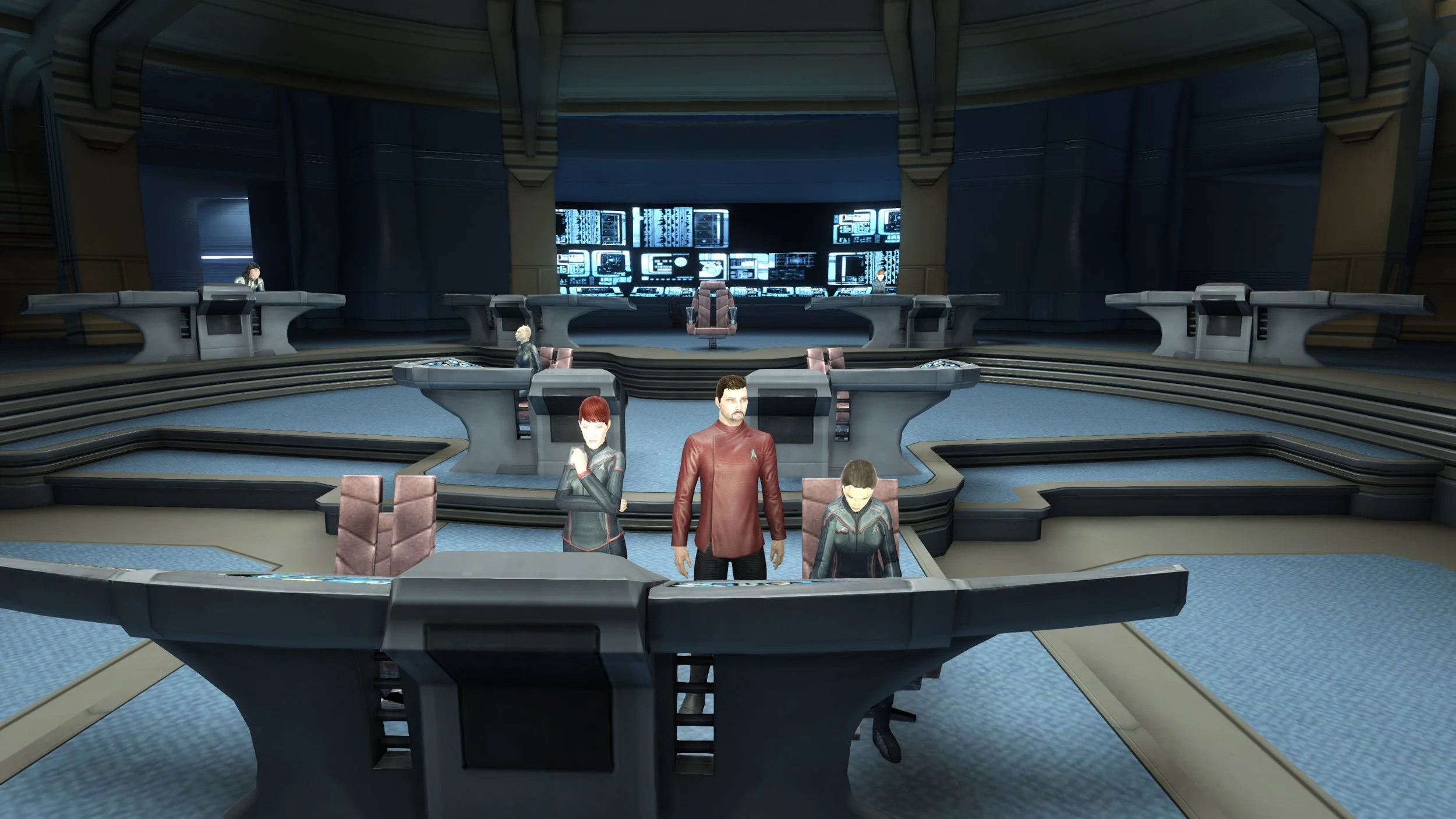
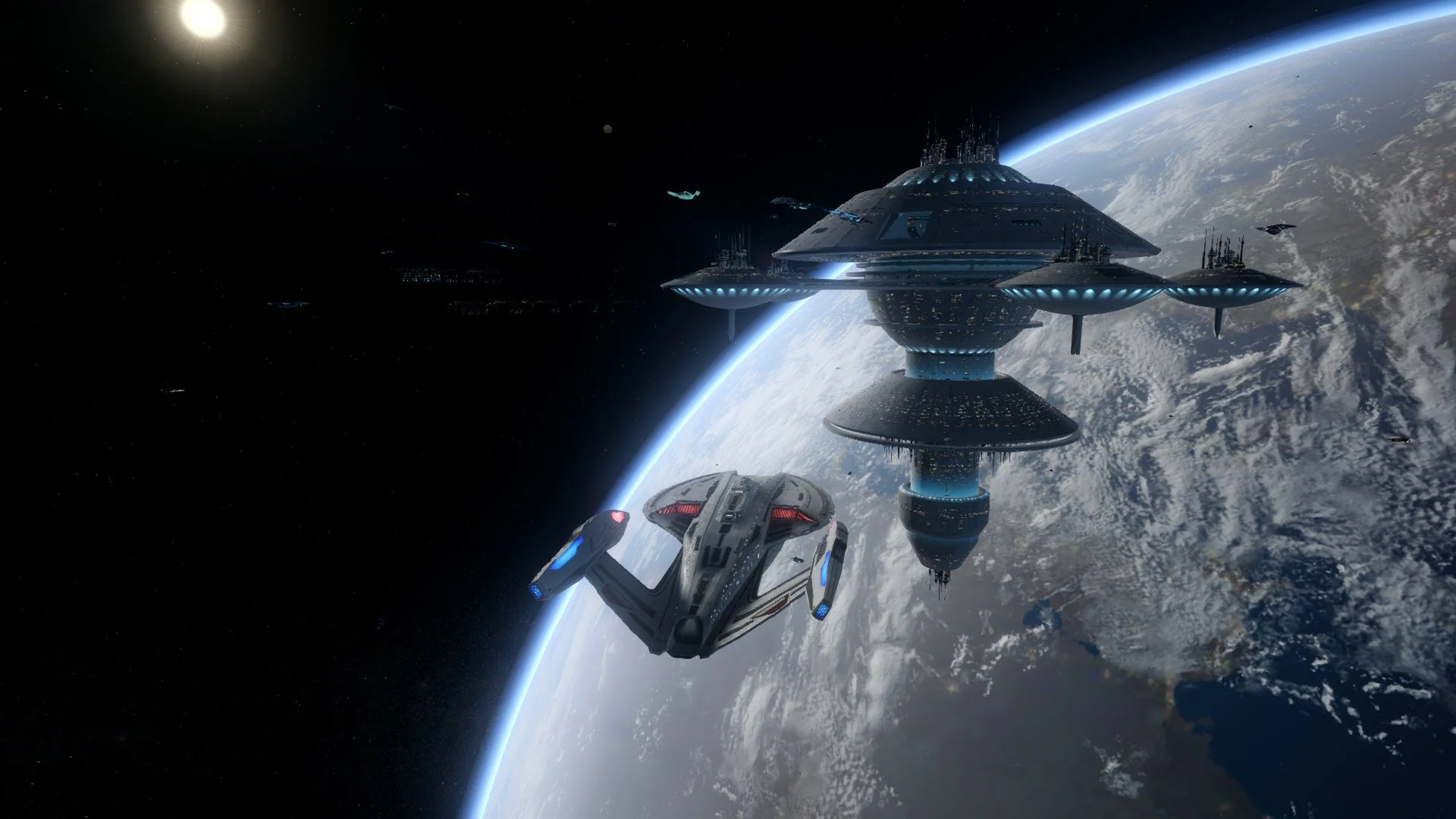
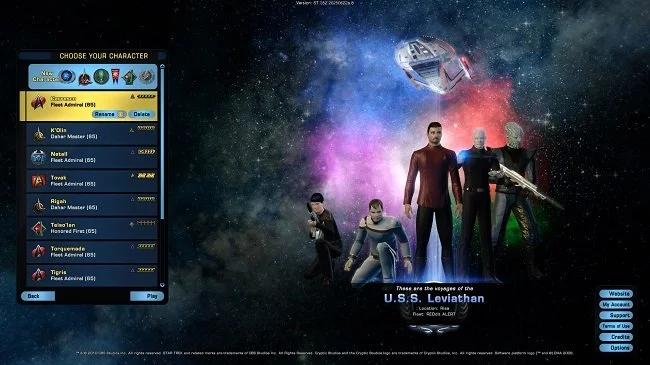
“Nudge theory” has received a lot of attention in recent months due to the global pandemic. The Behavioural Insights Team has played a key part in shaping the UK Government's policy to deal with COVID-19, although its overall success is questionable. Now I’m not going to debate in this post the ethical merits of “nudge theory” as a tool, especially within a political context. Let it suffice to say that such science can be used for both good or ill. However, due to some negative experiences I’ve had recently while gaming, I have been considering whether it is something that should be used more in video games. It’s obviously there already as I often see small, minor examples. In Star Trek Online, if you join a random Task Force Operation you receive greater rewards because you are helping players who under normal circumstances, cannot form a group. So the question is, should there be more “nudging” in video games?
“Nudge theory” has received a lot of attention in recent months due to the global pandemic. The Behavioural Insights Team has played a key part in shaping the UK Government's policy to deal with COVID-19, although its overall success is questionable. Now I’m not going to debate in this post the ethical merits of “nudge theory” as a tool, especially within a political context. Let it suffice to say that such science can be used for both good or ill. However, due to some negative experiences I’ve had recently while gaming, I have been considering whether it is something that should be used more in video games. It’s obviously there already as I often see small, minor examples. In Star Trek Online, if you join a random Task Force Operation you receive greater rewards because you are helping players who under normal circumstances, cannot form a group. So the question is, should there be more “nudging” in video games?
The most obvious and easiest means of “nudging” that can be implemented in video games is to incentivise an activity or process. If for example, you wish to encourage grouping in an MMO, then offer rewards that are superior to that which you would earn if you did the same content solo. Another option is to penalise players who leave a group before the activity is complete or those who go AFK and do not participate in the collective undertaking. Incentives could also be used to encourage top tier players at level cap to revisit lower level content and assist others. Why not offer rewards or accolades to those who “mentor” new players. If there are shortages of low level crafted items in a game, why not offer some sort of subsidy or bonus to encourage players to make more? Canny developers could use the power of nudge to foster a more communal attitude among players. As long as it is always just used to encourage and not coerce, then it should yield results.
Looking to other genres, nudge theory could be beneficial in turning the survival genre into more than just a race to the bottom. At present I find that such games often lapse into being murders simulators and it’s impossible to progress beyond a certain point. Collaboration is the key, as it is in real life. However, there are rules to prevent aberrant behaviour in society but video games seldom have any tangible consequences. In a survival, PVP or roleplay game, if a player becomes increasingly rogue there needs to be mechanics that reflect and offset that. Someone who murders and loots everyone they encounter should be free to do so but face such retribution as having a bounty being placed on them. Or if they need to trade for crafting materials, then the prices need to go up as the vendor becomes more fearful or distrustful of them. Red Dead Redemption 2 has elements of this in its gameplay. It would be interesting to see the benefits of rewarding those who work collaboratively to build a community in-game rather than just adopt the role of predatory lone wolf.
However, behavioural science may not always be applicable to a game. For example, “nudging” in the FPS and competitive genres is more difficult because it may impede valid ways of playing. Some folk don’t care for “camping” and it is still a hotly debated subject. But unless it specifically breaks a games TOS, then it’s a valid play style. Trying to move people away from such an approach is questionable. It comes down to arguments couched in subjective notions of sportsmanship, which are different to clearly more destructive behaviour such as “ganking” that we seem in unbalanced PVP. Another consideration is whether the presence of “nudging” in a game is seen as a coercive or a political tool? Will players balk at what some may describe as “social engineering”. The player base may not want to see policies of this nature implemented and this could potentially have an adverse effect on revenue.
Behavioural science is a means to an end and is in itself neither benign or malevolent. However, it has an “image” problem. People tend to not like “being tricked” or feel they’re being manipulated despite the fact it happens in advertising and marketing continuously (as well as politics). Nudge theory may not necessarily do these things but that’s how some perceive it. Especially once people know that it has been used on them in some way. But I think if we wish to arrest the process of gamer behaviour being driven by the lowest common denominator, then we may well have to make more use of behavioural science. For example, if the grab functionality in Fall Guys: Ultimate Knockout could also be used to offer other players a helping hand, this would offer an alternative mode of behaviour. One that is less predatory and more socially positive and inclusive. It would be interesting to see what player conduct prevailed.



Thoughts on the New World Preview
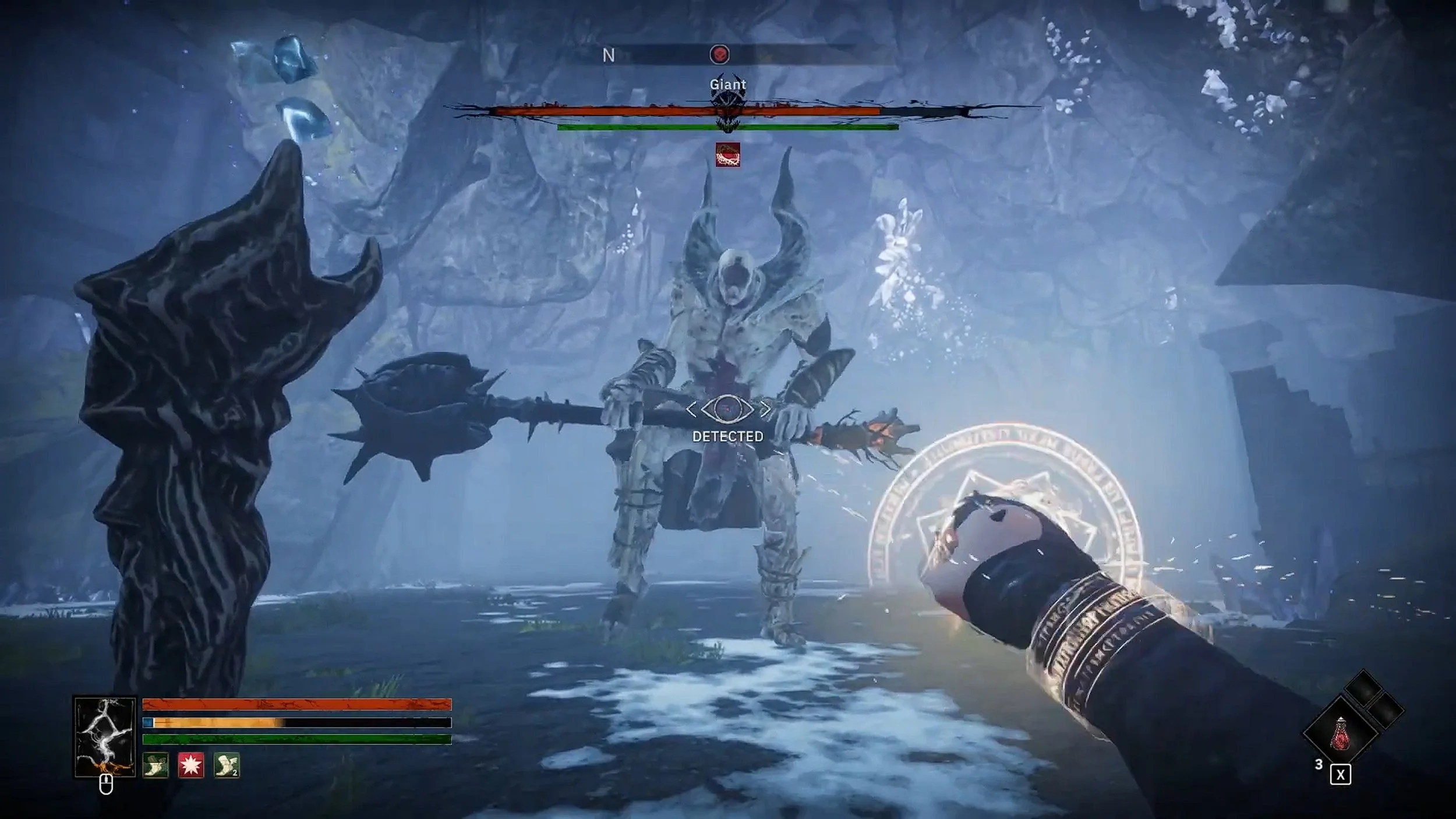
I, like many of my fellow bloggers, have been afforded an opportunity to try Amazon Game Studios forthcoming MMO New World, three times over the last 18 months. I did so twice, playing the two previous private tests. As a result of these experiences I have opted not to explore the latest public preview. I haven’t said anything prior to today regarding the game due to the NDA but as that has now been lifted I can express my opinions. Simply put, New World is not for me. It is certainly not a bad MMO and the developers have made some radical changes in the game’s design as they’ve responded to player feedback. The initial alpha test showcased an open world PVPcentric game. The second release tempered that with more PVE content. However for me, New World just doesn’t offer the things that I specifically enjoy about the MMORPG genre. I think with continued polish and fine tuning, it will be a solid game upon release and I’m sure it will find its particular niche.
I, like many of my fellow bloggers, have been afforded an opportunity to try Amazon Game Studios forthcoming MMO New World, three times over the last 18 months. I did so twice, playing the two previous private tests. As a result of these experiences I have opted not to explore the latest public preview. I haven’t said anything prior to today regarding the game due to the NDA but as that has now been lifted I can express my opinions. Simply put, New World is not for me. It is certainly not a bad MMO and the developers have made some radical changes in the game’s design as they’ve responded to player feedback. The initial alpha test showcased an open world PVPcentric game. The second release tempered that with more PVE content. However for me, New World just doesn’t offer the things that I specifically enjoy about the MMORPG genre. I think with continued polish and fine tuning, it will be a solid game upon release and I’m sure it will find its particular niche.
As I mentioned in a somewhat cryptic fashion in a prior post, New World sets out its stall quite clearly in the initial cutscenes, offering a standard story about the colonisation of a new island called Aternum. Set in the mid 17th century, the aesthetic of the game is of British America from that era, with a heavy dose of the supernatural and arcane thrown into the mix. During the test that I participated in my character woke up on the shore after a shipwreck; a very traditional MMO trope. The initial levels as I battled across the beach were designed to introduce the new player to the combat system, inventory and skills trees. All of which are very standard and intuitive. The action combat felt very fluid and it was not difficult to understand and implement blocking with a shield, flanking an enemy and then striking with a sword with light or strong attacks. There are then special skills with substantial cooldowns that can then be used tactically. I felt that this was one of the best aspects of the game and is one of the better implementations of action combat that I’ve experienced.
Sadly, I was less enamoured with the meat and potatoes of the rest of the game. The game engine, character realisations and environments are well designed. But there are no classes or specific roles as such. You choose armour and weapons types to suit your own preferences. This flexibility plays into the game’s original sandbox remit, which has now been augmented. The quests are somewhat arbitrary and clearly show how that they’ve been added at a later date to facilitate a change in the game’s direction. These mainly act as a means to send you to different parts of the island and gather resources. There is no complex, overarching narrative that I am aware of. The player gleans information about the island’s lore through exploration and what they find. The NPCs offer only text interactions and there is no voice acting. The game’s economy is driven by players via Trading Posts so you won’t be getting rich by selling trash loot to NPCs. You can salvage loot and repurpose the resources they yield for crafting.
Eventually after earning new gear and familiarising yourself with the games systems, a new player will eventually progress on to one of the major settlements in a region. These are held by varying factions and at this point you get to choose who you wish to ally with. Naturally it is here that the games PVP systems come into play. And it was at this point that I decided that I didn’t wish to play any further as the game had nothing further to offer me. I like complex narratives and storylines that twist and turn. I like voice acting and NPC with personalities, especially when they become recurring characters. I also enjoy the communities that spring up around MMOs. I suspect because New World still heavily leans towards PVP, rather than roleplay and story telling, its community will again not be for me. Beyond this, I can’t really say much more about this MMO. I haven’t played it to any great degree. Just enough to know that it’s not too my liking. But that does not make it a bad game and I look forward to observing how the game progresses and is received at launch.
Essential Technology
Today’s Blaugust Promptapalooza writing prompt is “what technology would you have the hardest time living without?”, which is a great question. Fellow blogger Telwyn has already tackled this conundrum over at Gaming Sans Frontières and I found myself agreeing wholeheartedly with the sentiment they expressed (more on that shortly). Over the course of my life, technology has become more and more ubiquitous and is now an integral part of our society. We take its presence for granted and only fully realise the benefits it provides when it ceases working or there’s some sort of outage. Technology has also dramatically fallen in price over the last five decades. What used to be marketed as expensive, labour saving luxuries or recreational indulgences, are now just disposable consumer items. The pace at which technology advances has also accelerated. It’s a struggle sometimes to keep abreast of what is new.
Today’s Blaugust Promptapalooza writing prompt is “what technology would you have the hardest time living without?”, which is a great question. Fellow blogger Telwyn has already tackled this conundrum over at Gaming Sans Frontières and I found myself agreeing wholeheartedly with the sentiment they expressed (more on that shortly). Over the course of my life, technology has become more and more ubiquitous and is now an integral part of our society. We take its presence for granted and only fully realise the benefits it provides when it ceases working or there’s some sort of outage. Technology has also dramatically fallen in price over the last five decades. What used to be marketed as expensive, labour saving luxuries or recreational indulgences, are now just disposable consumer items. The pace at which technology advances has also accelerated. It’s a struggle sometimes to keep abreast of what is new.
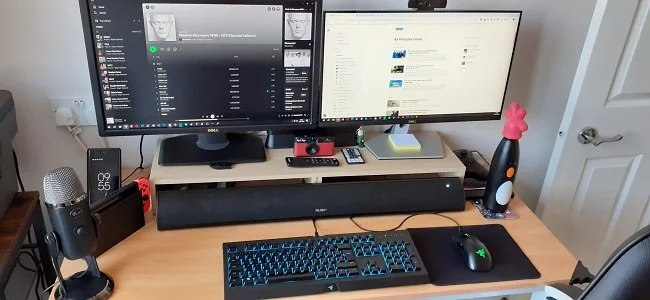
Telwyn wrote “the PC is one of my main sources of entertainment” and that is the same for me as well. When I wake up in the morning, I meander into “the office” and fire up my PC before ambling off to the bathroom to get washed and dressed. I then go to the kitchen and make breakfast for myself and Mrs P and return to my desk where I busy myself catching up with Twitter, Feedly and the Blaugust Discord server. I do all my research and writing at my PC. Administrative tasks such as banking and prescription renewals are all done online and via my PC. If Mrs P wants to watch something different to me, I use my PC as a second TV. And naturally I am a member of the PC “master race” when it comes to gaming. As I said in a previous post, I find sitting at my desk, in front of my PC to be one of the most comfortable and relaxed environments that I know. On the few occasions that my PC has been offline due to technical issues, I wander the bungalow like a lost soul.
Another piece of modern technology that has become essential in my life is the smartphone. I know that this is not a particularly imaginative or original example but the fact remains that this device has had a seismic impact upon our lives and culture in just 13 years. Mobile phones per se have existed for considerably longer but it was the smartphone, with its wider range of functionality, which brought the internet to our pockets. And I use my smartphone in a similar fashion to my desktop PC. I won’t bore you with the multitude of tasks I use it for but I love how I can be out and about somewhere new with Mrs P and within minutes determine where’s there’s parking, a nice restaurant and what the local property prices are like (co’s we’re seriously considering moving soon). The modern smartphone offers communication, information and a wealth of services at your fingertips. I’ve also never been an especially accomplished photographer. But now I can produce at least one decent photo per day trip, thanks to my phone. I just hate it when people call me on it.
Finally, I need to mention dishwashers. I’m not sure if they’re considered standard “white goods” in the UK yet. A quick Google search shows that as of 2018, only 48% of homes have them, so may be not. I’ve been using a dishwasher for about a decade now and I consider them invaluable. For me one of the seven circles of hell is a hot kitchen with a small sink, filled with tepid, greasy water, trying to scrub a roasting pan with a worn plastic brush with splayed bristles. I hate washing up. It ruins your hands and I detest having to do manual labour after a heavy meal, when I should be relaxing in a fireside chair enjoying a large glass of port. My parents have an “old person’s” house, by which I mean that everything in it actively conspires to hinder you. They do not have a dishwasher and it’s like going back to using dial-up internet, except that it involves the use of Brillo pads.
For reasons of brevity, I’ve kept this post to just three examples of what I consider to be indispensable technology. However, here are a few other “honourable mentions” that I think deserve to be referenced, due to the impact they’ve had upon the quality of life in general.
Sat Navs
Wireless Blood Sugar Monitors
Tamagotchi
View-Master
George Foreman Grill
The Lament Configuration
Video 2000
Teletext
PalmPilot
Computer Battleships






















Repairing an Xbox Controller
Avid readers of Contains Moderate Peril (as if there are such individuals) may already be aware that I get through a lot of computer peripherals. This week I thought that I’d damaged the left analogue stick on my Xbox controller. Upon closer inspection I found that it was just the plastic thumbstick cover that was worn out. I don’t use the controller for every game I play, as I prefer a keyboard and mouse. However, I’ve had the controller since July 2011 and mainly use it for driving in games, hence the excessive wear of the left analogue stick. I briefly toyed with buying a completely new controller but the exorbitant prices surprised me. Rather than buy a generic replacement that may be poorer quality than the official Microsoft version, I decided to see if it was easy to repair the existing controller. YouTube provided a quick and affirmative answer and Amazon Prime offered a way to procure replacement parts.
Avid readers of Contains Moderate Peril (as if there are such individuals) may already be aware that I get through a lot of computer peripherals. This week I thought that I’d damaged the left analogue stick on my Xbox controller. Upon closer inspection I found that it was just the plastic thumbstick cover that was worn out. I don’t use the controller for every game I play, as I prefer a keyboard and mouse. However, I’ve had the controller since July 2011 and mainly use it for driving in games, hence the excessive wear of the left analogue stick. I briefly toyed with buying a completely new controller but the exorbitant prices surprised me. Rather than buy a generic replacement that may be poorer quality than the official Microsoft version, I decided to see if it was easy to repair the existing controller. YouTube provided a quick and affirmative answer and Amazon Prime offered a way to procure replacement parts.
This afternoon a pair of black aluminium alloy thumbstick covers arrived so I set about replacing the two existing ones (as I didn’t want to just swap the worn one and have odd coloured sticks on my controller). The underside of the controller has seven philips screws. Six are in plain sight but the sevenths hides under a label. Pro tip, when taking the case of the Xbox controller apart, ensure that its facing buttonside down, so they don’t all fall out. The controller case splits in two relatively easily and it is not especially difficult to pull the thumbstick covers off the spindles. The replacements were easily enough fitted and the longest part of the process was putting the controller shell back together. Plastic can be very temperamental at times and you never know if it’s going to bend or break. I took the opportunity to clean the Xbox controller both inside and out with a microfibre cloth and some isopropyl alcohol.
I subsequently booted up my PC and tested the Xbox controller, via Device Manager in Windows Control Panel. The analogue sticks work but the new covers are not 100% identical to the originals. They seem a little larger and so occasionally stick. When this happens they do not immediately return to the centre position when released. The digital button functionality of the two analogue sticks is also a little hit and miss. However, despite these issues I can still play Fall Guys without any problems. Perhaps these matters may improve after further use. If not, I may consider replacing the alloy thumbstick covers with plastic ones. Another option is to see if I can acquire an old or broken Xbox controller and use it for parts. In the meantime, this was another interesting experiment in carrying out repairs. I don’t consider myself “cheap” but it is rewarding to occasionally fly in the face of a culture that by default expects you to buy a replacement.

















LOTRO: More Community Management Problems
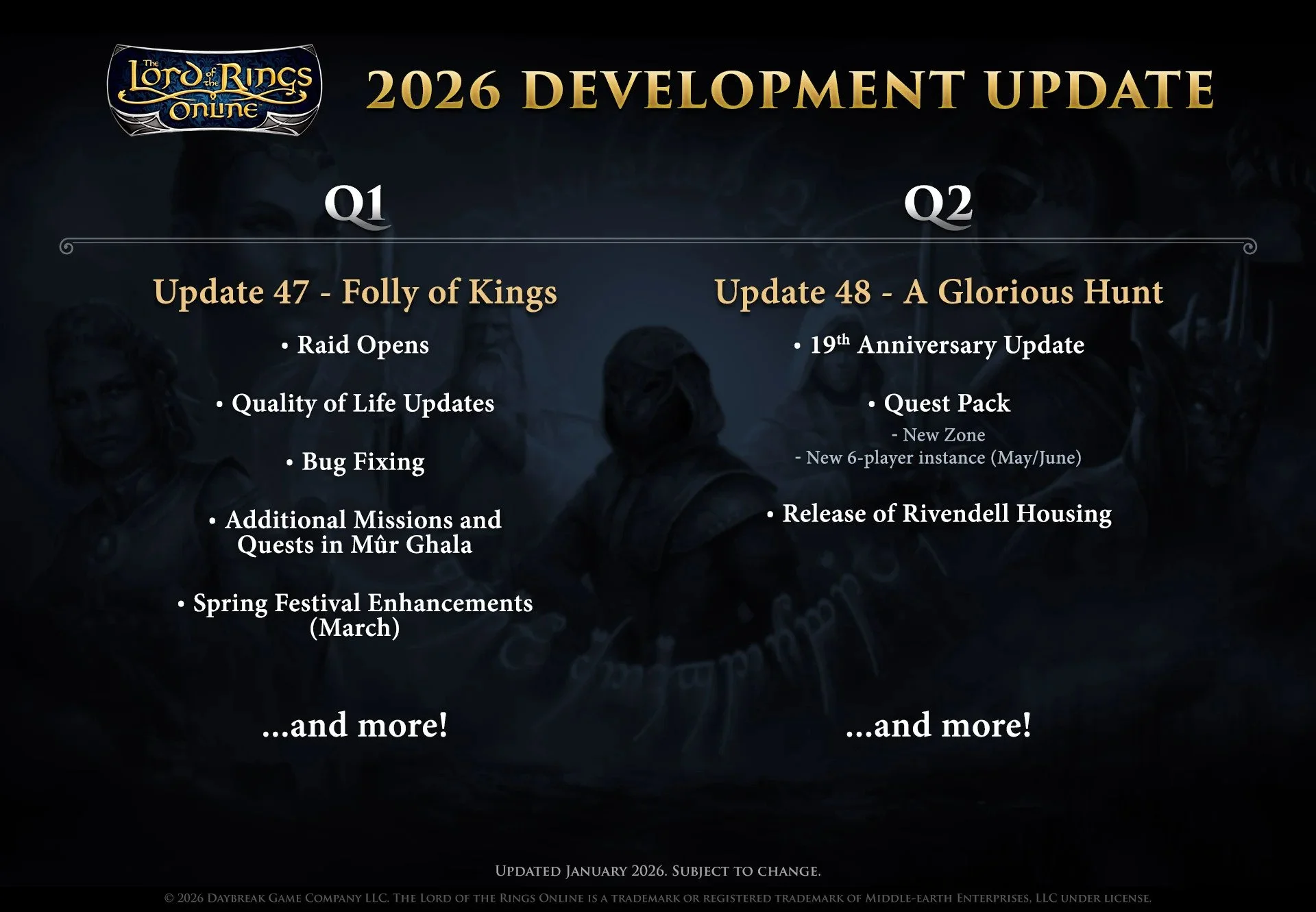
Not so long ago, MMORPG The Lord of the Rings Online was plagued by server instability and chronic lag. Many of the game worlds had to be closed and there was over a week of downtime. As ever, communication from developer’s Standing Stone Games regarding the nature of the problem and an ETA on a fix were minimal. The issue(s) were eventually mollified but not completely eradicated. However, a recent patch this week led to extended downtime, beyond that which was initially scheduled. Since then the servers have been “unstable”. So it would appear that “the problem” is back. The only difference this time round is that SSG have made a statement sooner, rather than later. Community Manager Cordovan (AKA Jerry Snook) posted the following on the game’s official forums. “The game worlds are experiencing periods of server instability due to external issues outside of our control. We are taking steps to mitigate these environmental and infrastructure challenges, and apologize for any issues you encounter”.
Not so long ago, MMORPG The Lord of the Rings Online was plagued by server instability and chronic lag. Many of the game worlds had to be closed and there was over a week of downtime. As ever, communication from developer’s Standing Stone Games regarding the nature of the problem and an ETA on a fix were minimal. The issue(s) were eventually mollified but not completely eradicated. However, a recent patch this week led to extended downtime, beyond that which was initially scheduled. Since then the servers have been “unstable”. So it would appear that “the problem” is back. The only difference this time round is that SSG have made a statement sooner, rather than later. Community Manager Cordovan (AKA Jerry Snook) posted the following on the game’s official forums. “The game worlds are experiencing periods of server instability due to external issues outside of our control. We are taking steps to mitigate these environmental and infrastructure challenges, and apologize for any issues you encounter”.
The vagueness inherent in this statement is stark and obviously very deliberate. When pressed for further details by LOTRO players on the forum, Cordovan’s reply was less vague and actually quite specific. It’s a clear example of corporate “wagon circling”. “I'm sorry, but even if it were theoretically possible to make that kind of statement, I would advise against it. If that gets me some heat here, so be it; you know where I stand. Besides opening yourself up to all sorts of issues as a business entity, you are then committing to that level of detail every time you have an extended outage. Let's say a technical answer along those lines would throw an employee specifically under the bus, or a valued contractor you intend to do business with long-term. Even if technically accurate, it would be bad precedent to set. Not to mention how it'd be picked apart over the long term. It would not work for us. When I begin to think about what the above would have meant for almost ten years of messaging with this company, my head explodes”.
This is a visual metaphor
I fully appreciate this stance. Naturally it’s not what I and other players want to hear. We’d much prefer something along the lines of “we’re going to recalibrate the flux capacitor and the game will be as good as new. Here’s some free shit”. But SSG is a business and one that is not totally independent. The nature of their relationship with Daybreak Game Company is still shrouded in mystery but most suspect they’re more than just “the publisher”. SSG relies on third party suppliers for many other services. Simply put they are not in a position to reveal anything, even if they wished to. But simply saying “we can’t talk about this for legal reasons, so you’ll have to suck it up and wait things out” doesn’t magically draw a line under the problem. Paying customers at the very least expect someone to do some “ass kissing” in these situations, regardless of whether it’s sincere or not. It’s in the unofficial but very real social contract that exists between the vendor and customer.
And it is in this area that SSG are sadly lacking. Their community relations skills are not exactly nuanced and their tone is seldom conciliatory. Many years ago, when I was running a small IT department, I learned quite quickly that bellowing at staff during a crisis, doesn’t help matters. So instead of me shouting “I can fix this problem a lot quicker if you assholes shut the fuck up”, I hired a member staff who had “good communication skills” and was adept at exuding confidence, placating stakeholders and making them feel that their concerns were important and being addressed. It would greatly improve matters if SSG took a similar approach and those currently involved in community relations were more soothing and understanding in their tone. I’d suggest the following. Make regular statements, even if they have little or no technical substance. Answer a few tweets or comments personally. Praise players patience. Do something like a giveaway or a trivia contest so that people are engaged but in a positive way.
Another visual metaphor
The upside of difficult situations, such as the one which SSG currently faces, is that they present an opportunity to learn. Sadly, SSG and Turbine before them seem to have a blindspot when it comes to reflecting upon their prior community relations disasters and adjusting their corporate behaviour accordingly. And then there’s Jerry Snook’s somewhat defensive statement. “This is not my first rodeo. If people don’t like me, fine”. That is a tacit admission of failure. Yes Jerry, we understand that you will always be damned regardless of what you do, by a percentage of the playerbase. Community relations can at times be like an endless Kobayashi Maru test. But PR is a war and not a battle. You keep trying until you change the needle on the dial. If one approach doesn’t work, you try another. And once again I have to reference the immense goodwill that LOTRO players harbour towards the game. They want a reason to be on SSG’s side. So why not give them one? You lose nothing by trying. But the consequences of not doing so are far more serious.



Dymchurch, Old Romney and Hamstreet
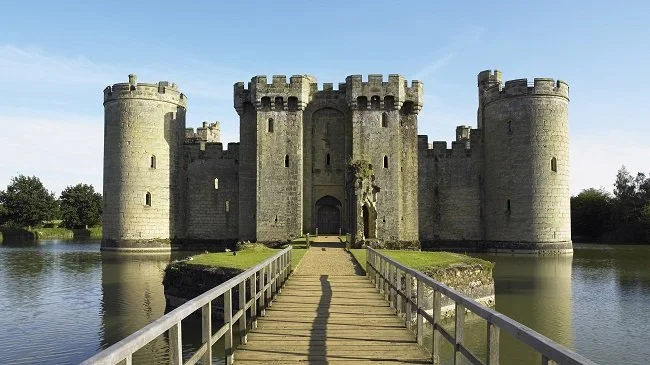
As previously mentioned, the global pandemic and subsequent lockdown has put pay to our usual day trips and excursions. Mrs P and I had to wait six month before we could resume our travels. The last such journey was on June 9th when we visited Otford and Eynsford. However, at that point virtually nothing was open so we couldn’t visit any National Trust or English Heritage sites and there was nowhere where we could “stop for a spot of lunch”. However, two months later and many of the existing social restrictions have changed or been removed. As the weather was favourable today, we decided to take a journey out into Kent and visit some towns along the coast and nearby. The planned itinerary was to go to Dymchurch and Romney but as ever with travel arrangements, things can change. We ended up travelling to Old Romney and Hamstreet after Dymchurch.

As previously mentioned, the global pandemic and subsequent lockdown has put pay to our usual day trips and excursions. Mrs P and I had to wait six month before we could resume our travels. The last such journey was on June 9th when we visited Otford and Eynsford. However, at that point virtually nothing was open so we couldn’t visit any National Trust or English Heritage sites and there was nowhere where we could “stop for a spot of lunch”. However, two months later and many of the existing social restrictions have changed or been removed. As the weather was favourable today, we decided to take a journey out into Kent and visit some towns along the coast and nearby. The planned itinerary was to go to Dymchurch and Romney but as ever with travel arrangements, things can change. We ended up travelling to Old Romney and Hamstreet after Dymchurch.
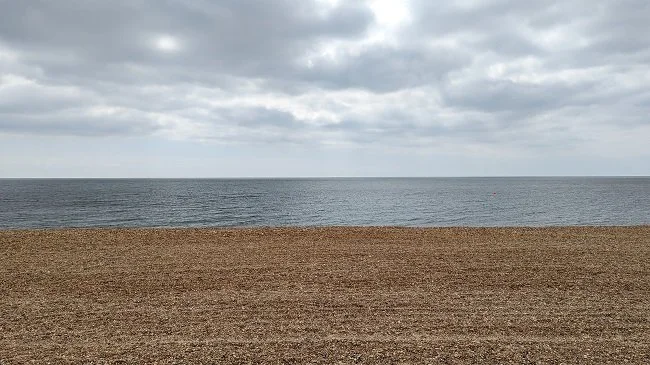
It took about an hour to drive from the leafy suburb of Bexley to Dymchurch, a coastal town steeped in a history of smuggling and intrigue (Dr Syn is set in this area), known for its salt marshes and robust sea wall. The Romney, Hythe & Dymchurch railway is another major tourist attraction. I have memories of visiting this “quaint” coastal town as a child in the seventies. How times have changed. Let it suffice to say that the town centre is now devoid of any character and only offers the most basic tourist facilities; arcades, fairground rides, fast food etc. In recent years the sea wall has been reinforced and the sea facing side has extensive concrete ramparts. There are two beaches but they are heavily used and so the sea wall takes most of the overflow of tourists and daytrippers. If you wish to maintain any semblance of social distancing then Dymchurch is not the ideal environment. Parking is also problematic. The main car park in the town centre is extremely busy and poorly run. Payment is via RingGo (app or telephone) which doesn’t recognise its own site code.
So after a brief reconnoitre, we moved on from Dymchurch and followed the main road (A259) through New Romney which is similarly, overly commercial and lacking in personality. However, the route took us through Old Romney which afforded us an opportunity to stop and visit St Clements Church. The original place of worship was built approximately in the 8th century. An artificial mound was constructed to protect the site from flooding, which is common in the marsh area. Circa the 12th century the Saxon structure was replaced by an early Norman church, which was without a main aisle and featured a square-ended chancel. It was further enlarged in the 13th century. The present building, which is mostly of 13th century construction, has a nave and chancel, as well as north and south chapels. There is a small tower, with south-east and south-west buttresses, in the south-west corner. The porch is in the northern part of the church. The graveyard is still actively used. The filmmaker Derek Jarman is buried there.
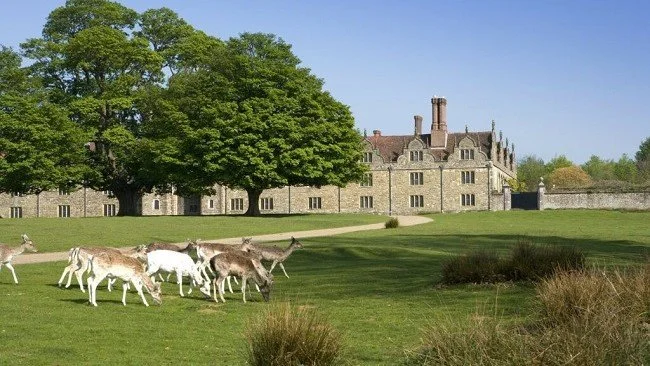
Our next stop was the village of Hamstreet. Parish records show that there was a small Saxon settlement in the area as far back as the 11th century. The hamlet known as Ham remained undeveloped until the coming of the railway in 1853. It subsequently expanded and saw a growth in houses and cottages in the traditional Kentish weatherboard style. Today many of the traditional buildings still remain although some have been repurposed. The old village school is now an Indian restaurant. Hamstreet as it is now known, has two public woodlands surrounding the area which are the last remaining remnants of the ancient forest that once entirely covered the Weald of Kent. It is picturesque and offers plenty of local history as well as being part of the The Saxon Shore Way walk. It is ideal for rural rambles and sedate historical tourism. Both Mrs P hope to return again soon as we have taken a liking to the place.











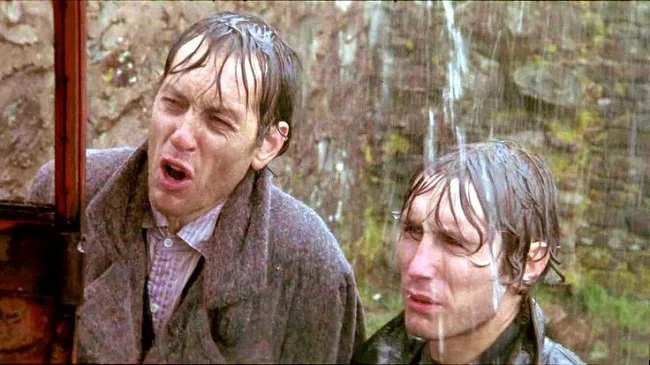






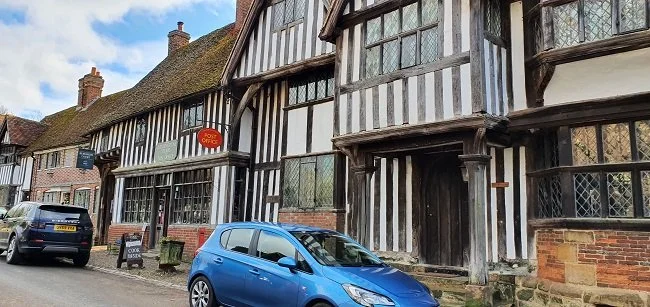








I Walked With a Zombie (1943)
Until today, I have never seen the iconic horror movie, I walked With a Zombie. Some classic titles just seem to fall through your “movie net”, as it were. However, BBC iPlayer has a selection of RKO films available to watch for free (sadly, only for UK viewers), so as I had a convenient gap in my schedule, I finally caught up with this seminal title today. As expected it was visually an utter delight. Other aspects of the movie are more subtle and require some reflection to determine their virtue. The lurid title, doesn’t in any way do the film justice and was forced upon the production by studio executives. Essentially this is a romantic drama fused with the supernatural and set in an exotic location. The Caribbean setting and culture along with the voodoo element add an undercurrent of sexual tension to the central love, cleverly augmenting what is essentially a gothic tale by placing it in an alien setting.
Until today, I have never seen the iconic horror movie, I walked With a Zombie. Some classic titles just seem to fall through your “movie net”, as it were. However, BBC iPlayer has a selection of RKO films available to watch for free (sadly, only for UK viewers), so as I had a convenient gap in my schedule, I finally caught up with this seminal title today. As expected it was visually an utter delight. Other aspects of the movie are more subtle and require some reflection to determine their virtue. The lurid title, doesn’t in any way do the film justice and was forced upon the production by studio executives. Essentially this is a romantic drama fused with the supernatural and set in an exotic location. The Caribbean setting and culture along with the voodoo element add an undercurrent of sexual tension to the central love, cleverly augmenting what is essentially a gothic tale by placing it in an alien setting.
Betsy Connell (Frances Dee), a young Canadian nurse travels to an island in the West Indies to care for Jessica Holland (Christine Gordon), the wife of plantation manager Paul Holland (Tom Conway). Jessica has been diagnosed by Dr Maxwell (James Bell) as suffering from a form of mental paralysis as a result of tropical fever. Betsy finds Paul Holland aloof and dour, yet strangely compelling. Wesley Rand (James Ellison), the plantation overseer and Paul’s half brother implies that Jessica’s condition is due to something Paul has done. Mrs Rand (Edith Barrett), mother to both sons, befriends Jessica. She runs the local pharmacy and has a deep understanding of local customs. Betsy suspects she may well know more than she says regarding the enmity between Wesley and Paul and the reason for Jessica’s condition. Eventually Betsy realises that modern medicine cannot provide a solution to Jessica’s malady and begins to suspect that the island’s voodoo heritage may provide an answer.
I walked With a Zombie was the second collaboration between producer Val Lewton and director Jaques Tourneur. The high concept of transposing the plot of Charlotte Brontë’s Jane Eyre to the West Indies and juxtaposing the traditional love triangle (or in this case more of a love square) with the more sensational and salacious aspects of voodoo works very well. The traditional gothic beats played out against prophetic calypso songs and pagan customs add to the atmosphere and create a subtly different supernatural experience compared to traditional Hollywood fare of the time. Director of cinematography J. Roy Hunt uses light and shade to great effect. Traditional european architecture and graveyards are replaced by heavily backlit sugar cane fields and colonial plantation houses steeped in shadows. It is a remarkably eerie environment. The highlight of the film being Betsy and Jessica’s night time journey through the canefields, as they pass voodoo talismans and animal offerings, eventually ending in their iconic meeting with the towering somnambulist Carre-Four.
Jacques Tourneur's direction creates a palpable sense of fear and the film uses its 69 minute running time most efficiently. The film does not feel the need to explain all aspects of the island’s culture and its voodoo rituals. It provides just enough details to allow a degree of ambiguity to remain. Nor does the script shy away from the iniquities of slavery and it’s lasting effect on the population. There is also an element of religious symbolism with a ship's figurehead that is fashioned to represent Saint Sabastian. Performances are acceptable, although the gender roles and period attitudes may seem “dated” to modern viewers. The film reaches a suitably melodramatic climax which concludes the story in the only credible fashion possible. However, the film uses narration from the perspective of Betsy Connell to frame the story and the closing codicil suddenly introduces a degree of previously absent moral judgment. I found this a little incongruous.
After watching I walked With a Zombie, it is clear where many of the tropes and mainstays of the horror genre come from. The movie doesn’t really offer a zombie in the modern sense, preferring to let the viewer decide if Jessica Holland is the victim of a bona fide medical condition, whether she’s been drugged and left virtually catatonic by esoteric native drugs, or if she has been truly cursed through the use of voodoo. The imperfections and character flaws of the two half brothers and their respective love for Jessica, is presented surprisingly even handedly. The moral sentiments that are espoused at the story’s climax strike me as an afterthought, forced upon the studio by the moral lobbyists of the time. Oddly, this is just another aspect of the film that makes it fascinating. If watched superficially, I walked With a Zombie offers a ghoulish love story with a supernatural subtext. But if one pays attention to detail there is a great deal of social commentary and existential angst to be found. Things seldom touched upon by contemporary horror movies.










"Tryhards"
I discovered the term “tryhard” recently after reading a game related blog post. Like many contemporary terms the definition seems somewhat fluid. So the one that I think fits best is “a person who is perceived as putting too much effort into something recreational, such as a game”. Although I think this succinctly distils the essence of the phrase, I do feel a little further qualification and contextualisation is required. I don’t think this term is applicable to legitimate competitive gaming, so it’s not a label I’d apply to someone playing any sort of esport. Nor do I think it is meant for those players that just seek to become well versed in an MMO or similar genre of game. I feel this epithet is the province of those who seek to excel in games where the focus is having fun and not just winning. The post in which I read this term was discussing Fall Guys: Ultimate Knockout and I think that is a perfect example. I have encountered other players that fit this category while playing this game and you’ll find plenty more on twitch.
I discovered the term “tryhard” recently after reading a game related blog post. Like many contemporary terms the definition seems somewhat fluid. So the one that I think fits best is “a person who is perceived as putting too much effort into something recreational, such as a game”. Although I think this succinctly distils the essence of the phrase, I do feel a little further qualification and contextualisation is required. I don’t think this term is applicable to legitimate competitive gaming, so it’s not a label I’d apply to someone playing any sort of esport. Nor do I think it is meant for those players that just seek to become well versed in an MMO or similar genre of game. I feel this epithet is the province of those who seek to excel in games where the focus is having fun and not just winning. The post in which I read this term was discussing Fall Guys: Ultimate Knockout and I think that is a perfect example. I have encountered other players that fit this category while playing this game and you’ll find plenty more on twitch.
So I guess the first question that arises from the label “tryhard”, is what is so bad in trying to be good at something? To which I’d answer, nothing in principle. The point I think people are trying to make when they label someone in such a fashion, is that these players whose sole focus is the pursuit of excellence end up leaching all the pleasure out of the game for others. Furthermore, if a significant percentage of the playerbase falls into the “tryhard” category, it creates a sort of philosophical fun divide and an environment where new and casual players are either squeezed out or at the very least deprived of the fun that the game is predicated upon. If you want an analogy, I’d say it’s like the over competitive parent who has been in training all year long for the Mum or Dad’s race at their child’s school sports day. Something that is supposed to be lighthearted and about the spirit of participation, is usurped by those who are determined to win and make some kind of statement.
However, I’m a contrary bastard at times. Although I’m not especially enamoured with the “tryhard” mindset and will loudly refute the bogus argument that “it’s never just a game”, I don’t like the idea of a self appointed “fun police”. This is why I think it’s important for game developers who make competitive titles, to ensure they have some viable matchmaking system in place, so that players are grouped according to their skill. Surely implementing such mechanics would please all parties? Unless being a “tryhard” isn’t just about the gratification of excelling but just another way of trolling others. The idea being that it’s another facet of the self aggrandising, braggart culture that pervades gaming. An excuse to sneer at those who don’t succeed and a means of controlling a game at the expense of others enjoyment. I wouldn’t say that all “tryhards” are elitists pricks but I’d certainly put money on elitist pricks being “tryhards”.
It seems that a week cannot go by without the video games industry or gaming culture highlighting or manifesting some unpleasant facet of human nature. Friends and colleagues assure me that there isn’t any major cultural shift occurring and that gaming (and life) has always had a degree of “douchebaggery” associated with it. But I’m not so sure. Anecdotally speaking, I’ve consistently found myself coming last in Fall Guys: Ultimate Knockout, while other players leave me in their wake. It does surprise me that some people have become quite so adept, so quickly. I’ve also seen a lot of players loitering at key locations in the game and deliberately impeding and hampering other players. Again, if it doesn’t breach the games TOS, then technically it’s okay to do so but isn’t this supposed to be lighthearted fun? There’s an ongoing debate at present as to whether games are becoming less fun, I’m not so sure. It’s difficult to tell. But we as a community don’t seem to be doing ourselves any favours.
Fandom Memories
Syp over at Bio Break leads the charge with today’s Blaugust Promptapalooza writing prompt, with this interesting question. “What is your earliest memory related to one of your core fandoms?” Please do read his thoughts on going to see Return of the Jedi upon its original release back in 1983. It is something I can certainly relate to. I’m a decade older than Syp and so I can recollect actually seeing Star Wars for the first time at my local cinema. However as that was a starting point for a specific fandom rather than an “ongoing” example, I won’t cite it here. I have even earlier recollections of going to Longleat Safari and Adventure Park and having the extra bonus of seeing the Doctor Who Exhibition which ran there from 1973 to 2003. This would have been in August 1974 and I was six at the time. I have dim recollections of all the exhibits being mainly from the Jon Pertwee era and the Daleks being the high point of my day.
Syp over at Bio Break leads the charge with today’s Blaugust Promptapalooza writing prompt, with this interesting question. “What is your earliest memory related to one of your core fandoms?” Please do read his thoughts on going to see Return of the Jedi upon its original release back in 1983. It is something I can certainly relate to. I’m a decade older than Syp and so I can recollect actually seeing Star Wars for the first time at my local cinema. However as that was a starting point for a specific fandom rather than an “ongoing” example, I won’t cite it here. I have even earlier recollections of going to Longleat Safari and Adventure Park and having the extra bonus of seeing the Doctor Who Exhibition which ran there from 1973 to 2003. This would have been in August 1974 and I was six at the time. I have dim recollections of all the exhibits being mainly from the Jon Pertwee era and the Daleks being the high point of my day.
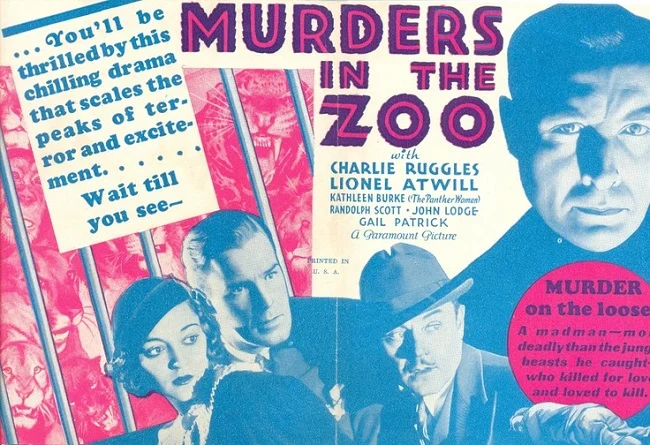
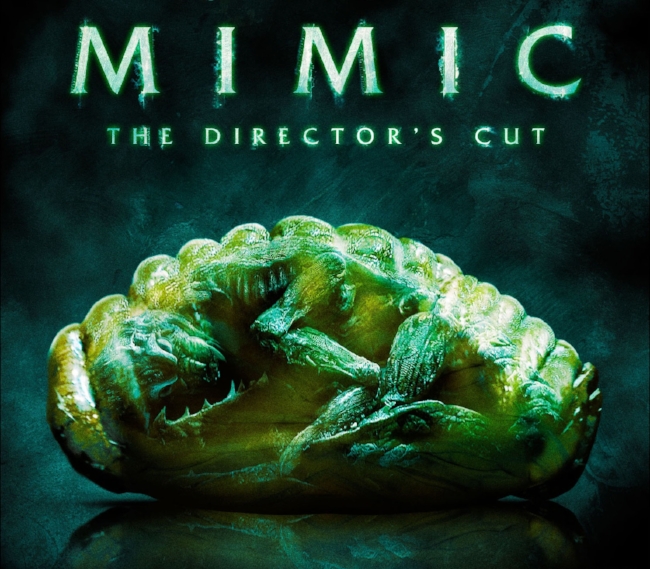
But as the question is about “core fandoms” I think I’ll reference a more contemporary example. One that I can recollect more clearly and so provide a more specific anecdote about. So I’d like to talk about my love of the horror genre and how as I got older, became a consummate fan. I’ve recently written about how during the 80s and 90s the UK home video market endured some rather restrictive regulations that lead to a lot of horror films being unavailable or heavily edited. Due to magazines such as Fangoria and Starburst, fans would be aware of both mainstream US and independent productions long before they were released in the UK. Hence we’d often become aware of those occasional titles that had already caused a stir “stateside” or in Europe and would therefore naturally run into distribution and censorship issues when it came to a British release. How could such films be shown in the UK? The answer was the “film festival”, which provided a limited or one off showcase, where the audience could be strictly regulated. Such events weren’t providing mainstream national distribution.
Now film festivals per se are always a great occasion for fans. I find that watching a cult classic with a like minded audience in a traditional movie theatre setting, rather than watching at home on your own, is a superior way to enjoy a film. I believe there is some truth to the “shared experience”. For example I feel the slapstick shenanigans of Charlie Chaplin work a lot better when viewed with a group. Bearing this in mind, on Saturday 24th February 1990, not only did I get the chance to indulge this theory by going to my first film festival but I was afforded the oppurtunity to see a controversial film that was heading into trouble. That film being Henry Portrait of a Serial Killer. The Splatterfest 90 film festival was held at the Scala Cinema, in Kings Cross, London. The venue was a known private cinema that excelled at hosting such events, as well as regularly showing bizarre and baroque movies.
I remember quite clearly, the atmosphere in the cinema. The Scala was a sumptuous but somewhat dilapidated 1920s building, which lent itself well to its niche market purpose. Between films it was quite noisy with fans talking and constantly going to and fro to the lobby. But when Henry Portrait of a Serial Killer started the audience settled and fell silent. The film was a gruelling 83 minutes experience which left the audience shocked, uncomfortable yet utterly engaged with the proceedings. I subsequently learned that several examiners from the BBFC had attended the screening as an opportunity to “research” a movie they knew would be “problematic” when it eventually sought a formal UK theatrical release. There was a very interesting Q&A with director John McNaughton which shed a lot of insight into the film and its production.
There were several other movies shown that night making Splatterfest 90 a very enjoyable film festival. Brian Yuzna’s Bride of Re-Animator which is a great sequel to the original Re-Animator, was very well received. As was the excellent documentary Document of the Dead, which was made during the filming of George A. Romero’s Dawn of the Dead. However, one film did not go down particularly well. The Comic, a “psychological drama” about a stand up comedian who murders his way to success in a dystopian future, was met with derision, objects hurled at the screen and cries of “for fuck’s sake, turn this shit off”. Director Richard Driscoll was due to be interviewed after the screening but bid a hasty retreat after his film’s suboptimal reception. Overall Splatterfest 90 was a very good introduction to film festivals and was certainly a “grassroots” experience of fandom. I’ve been to many similar events since then but none have had quite the same impact or left such memories as this one.
An Ode to the VCR
Sometimes it really helps to have “been there” to fully appreciate an event or cultural phenomenon. We now live in an age where there is easy access to a multitude of television channels and movies, 24 hours a day. TVs are no longer bulky, luxury items that sit in a corner of your lounge. They are now elegant flat screened devices that occupy nearly an entire wall, offering crystal clear, high definition picture quality. Movies are now available for home viewing a lot sooner after their theatrical release and the current pandemic has brought the era of simultaneous release on all platforms just a little bit closer. And even the most obscure and niche market films are accessible in a remastered, HD or UHD format. It’s all a far cry from my youth when cinema and television were far more compartmentalised and consumers had far less choice along with access. All of which you can explain to those born into this modern world of plenty but they’ll never fully comprehend the realities of living such a life and in such times.
The Sony C6 Betamax VCR. A “Titan” in the format wars
Sometimes it really helps to have “been there” to fully appreciate an event or cultural phenomenon. We now live in an age where there is easy access to a multitude of television channels and movies, 24 hours a day. TVs are no longer bulky, luxury items that sit in a corner of your lounge. They are now elegant flat screened devices that occupy nearly an entire wall, offering crystal clear, high definition picture quality. Movies are now available for home viewing a lot sooner after their theatrical release and the current pandemic has brought the era of simultaneous release on all platforms just a little bit closer. And even the most obscure and niche market films are accessible in a remastered, HD or UHD format. It’s all a far cry from my youth when cinema and television were far more compartmentalised and consumers had far less choice along with access. All of which you can explain to those born into this modern world of plenty but they’ll never fully comprehend the realities of living such a life and in such times.
I shall try to keep my reminiscing to a minimum for reasons of brevity. Anyone who is familiar with my writing will know that film played an integral part of my youth. My parents loved cinema as it was the primary form of entertainment when they grew up. Hence by the age of ten or so, I was well versed in classic Hollywood, mainly through watching films on TV with my family at weekends. However, we had little say over what they watched. Firstly it took several years for major films that had been successful at the box office to be broadcast on TV. Major titles tended to be shown at either the Christmas or Easter when audiences were potentially the biggest. Also, when a “big” movie finally got shown on TV there were often broadcast in a sanitised, re-edited version. Furthermore, if a film was originally shot in an aspect ratio such as 2:35:1 then it would be panned and scanned to accommodate the 4:3 academy ratio of TV screens. And let us not forget that commercial networks would have advertising breaks throughout. So the optimal way to view a film would be at the cinema. Watching at home on TV was an inferior experience but it was what we knew, so we accommodate it.
Bond movies came to UK TV approximately 4-5 years after their theatrical release during the 70s and 80s
Another aspect to consider was that TV companies would license the showing of movies and naturally wanted as much bang for their buck as possible. Certainly the BBC offered a broad choice. But you would often find that a lot of content just didn’t make it onto TV. Or if it did, it would be shown at obscure hours. If you failed to watch something then you missed your opportunity to do so. There was a culture of financially successful films getting re-released at the cinemas. Disney has always been an exponent of this, understanding quickly the benefits of controlling supply and demand. But broadly speaking, what you could watch was decided and controlled by private companies and driven by vested interests. So the advent of the home video cassette recorder (VCR) was a major cultural and consumer revolution. Video tape recorders (VTR) had existed since the 1950s but were mainly industry products. But the moment the technology was made available for domestic use in the 1970s via bespoke cassette formats, it quickly gained traction.
The ability to record TV programs from one station while watching another was exceedingly novel at the time. Often big TV networks prided themselves upon making viewers make a tough choice over what shows they watched at prime time. As a child I remember having to decide whether to watch either Doctor Who or Space 1999 (season 2). It’s one of the reasons why UK viewing figures for popular shows were so high at this time. This and the fact that until 1982, there were only 3 terrestrial analogue TV stations broadcasting. So naturally the VCR was met with a lot of pushback from network TV. There was a lot of talk over the legality of recording shows etc. but it was too late and the genie was out of the proverbial bottle. And then there was the second aspect that the VCR offered consumers; pre-recorded tapes containing movies or other content. Initially the big studios simply didn’t grasp that people would want to watch a movie of their own choice, at home, at a time that suited them. When they began to see how independent distributors were getting on the bandwagon they sought to “fight fire” with lawyers. The Motion Picture Association of America (MPAA) were especially aggrieved. But common sense and business acumen prevailed, leading to the growth of the video rental market, the rise of Blockbuster and the social etiquette of rewinding a tape and returning it on time.
BBFC rating title card
Now the next anecdote is specific to the UK. As soon as cinema became a popular form of entertainment in the early twentieth century, then a regulatory body was set up. A film had to be rated by the British Board of Film Censors before it could be shown in cinemas. Hence the establishment guarded public morals and suppressed sentiments and subjects it didn’t like. Mercifully this doesn’t happen now. The BBFC has changed radically in the last 20 years. It is now formally the British Board of Film Classification and it’s focus is rating. Censorship is now mainly self imposed by distributors who seek the most commercially lucrative rating. But that is a separate subject. Back in the late seventies, all cinema releases required a BBFC rating or else they didn’t get shown. VCRs, like most technological changes, caught the establishment off guard. All of a sudden there was a medium for distributing content outside of the auspices of the BBFC, free from any form of censorship. Overnight small independent video companies sprung up, disseminating any material they could get their hands on. A wealth of european exploitation cinema suddenly found its way into UK households. For someone like me it was hog heaven but it didn’t go down well with lobbyists concerned with declining morals.
In 1982 our household became a proud owner of a Sony C6 Betamax VCR. We already had an older C5 but that was a top loader. The C6 stylishly loaded tapes from the front. By now our family was fully immersed in video rental culture. There seemed to be a video rental store on every street corner. Even newsagent and corner shops would have a rack of tapes to rent for £1 or so. At this point VHS had not fully won the format wars in the UK and most stores had material equally available on both formats. I remember one that even rented V2000 tapes. At one point my Dad had rental cards for about six different establishments. We’d rent films to watch as a family and then my parents would indulge myself and my sister, so we’d often come back home with horror films. I remember one store in Burnt Ash Hill Road in Lee Green, which used to put the most lurid VHS cases in the shop window. I and my school friends would gawp at the likes of Driller Killer, Cannibal Holocaust and Zombie Flesh Eaters. But this brief halcyon period of unfettered access to uncut eurosleaze quickly came to an end.
UK poster for Lucio Fulci’s Zombi (1979)
The eighties were a decade with a strong streak of moral and social conservatism running through it. This was embodied by the National Viewers' and Listeners' Association (NVLA) led by christian lobbyist Mary Whitehouse (known to her enemies as Mary Shitehouse; a shitehouse being UK slang for a toilet). The organisation lead campaigns against the publication and broadcast of media content that it viewed as harmful and offensive, such as sex, violence, profanity and blasphemy. To cut a long story short the unregulated video market became an easy target and the NVLA and the “popular press” went for it like a dog with a bone. They coined the hyperbolic phrase, “video nasty” to describe exploitation films such as I Spit on Your Grave. As usual, the least informed and poorest thinkers among our parliamentary representatives saw an easy bandwagon to jump on. And then tragically in 1993 a two year old boy, Jamie Bulger, was murdered by two ten year old children, Robert Thompson and Jon Venables. It was an horrendous case made even worse by the tabloid feeding frenzy. It was alleged in some newspapers that the attack on Bulger was inspired by the film Child's Play 3. There was no evidence for this but the campaign against unregulated videos gained support and ultimately led to the Video Recording Act of 1984. This granted the BBFC powers to rate existing and all future video releases and ushered in a decade of censorship. Many titles simply became unavailable for nearly twenty years, such was the sense of social hysteria.
But time and tide wait for no man. The VRA had some very interesting side effects. A cottage industry of fanzines sprung up, reviewing and analysing many of the horror movies that were “temporarily available”. I met many people through this medium, participated in film festivals and partook of the black market trade in second generation VHS copies that sprung up. As the eighties gave way to the nineties and the BBFC still enforced arbitrary cuts to most mainstream films, I discovered the Laser Disc format and imported uncut movies from the US and Japan and so moved away from video tapes. Laser Disc and VHS were subsequently replaced by DVDs and by the time the year 2000 arrived, the BBFC in the UK had a major change in policy once the longstanding incumbent Director, James Ferman, retired. Censorship as I mentioned previously, is not really an issue anymore although a BBFC rating is still required to show a film theatrically or to distribute on home media. Most streaming TV platforms and VOD services rate their content in accordance with BBFC guidance. Despite my dislike of censorship, I believe in rating movies for consumer advice and believe the BBFC do a very good job of it nowadays. Leopards can sometimes change their spots.
The Pioneer DVL-909 combination Laser Disc and DVD player was a thing of beauty
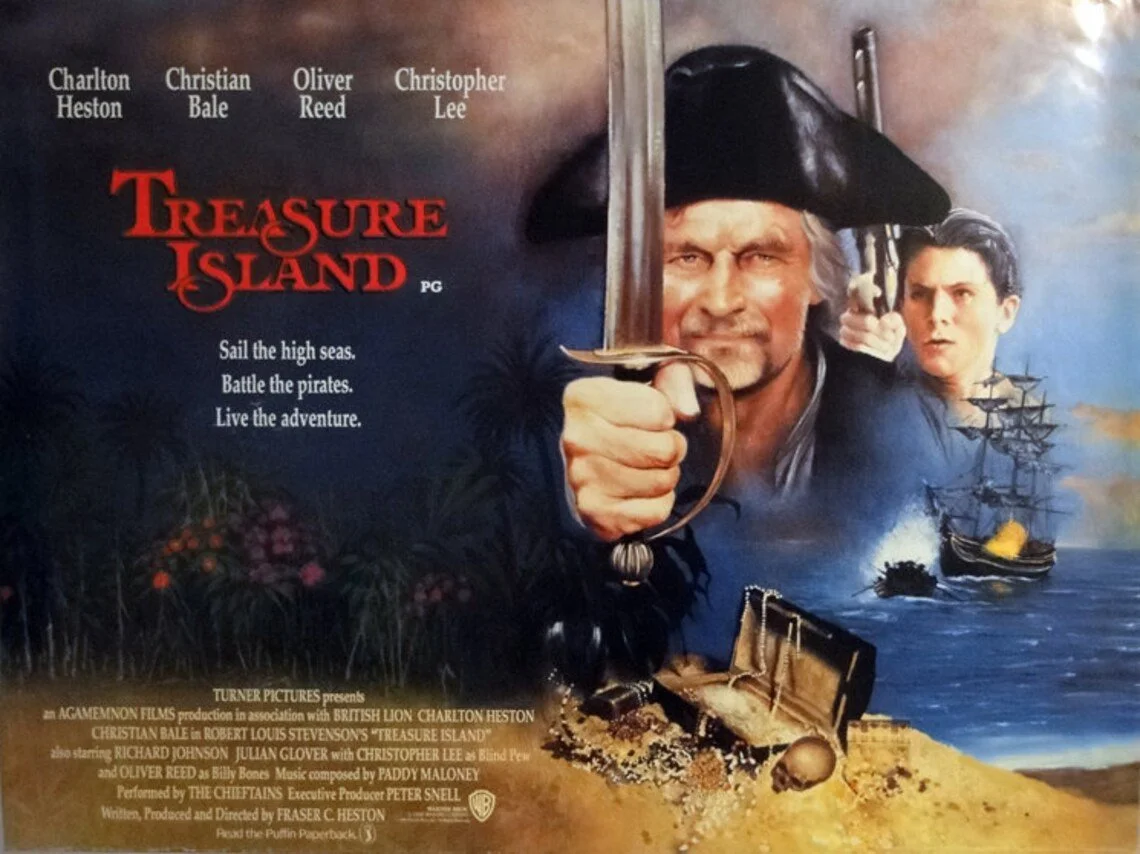
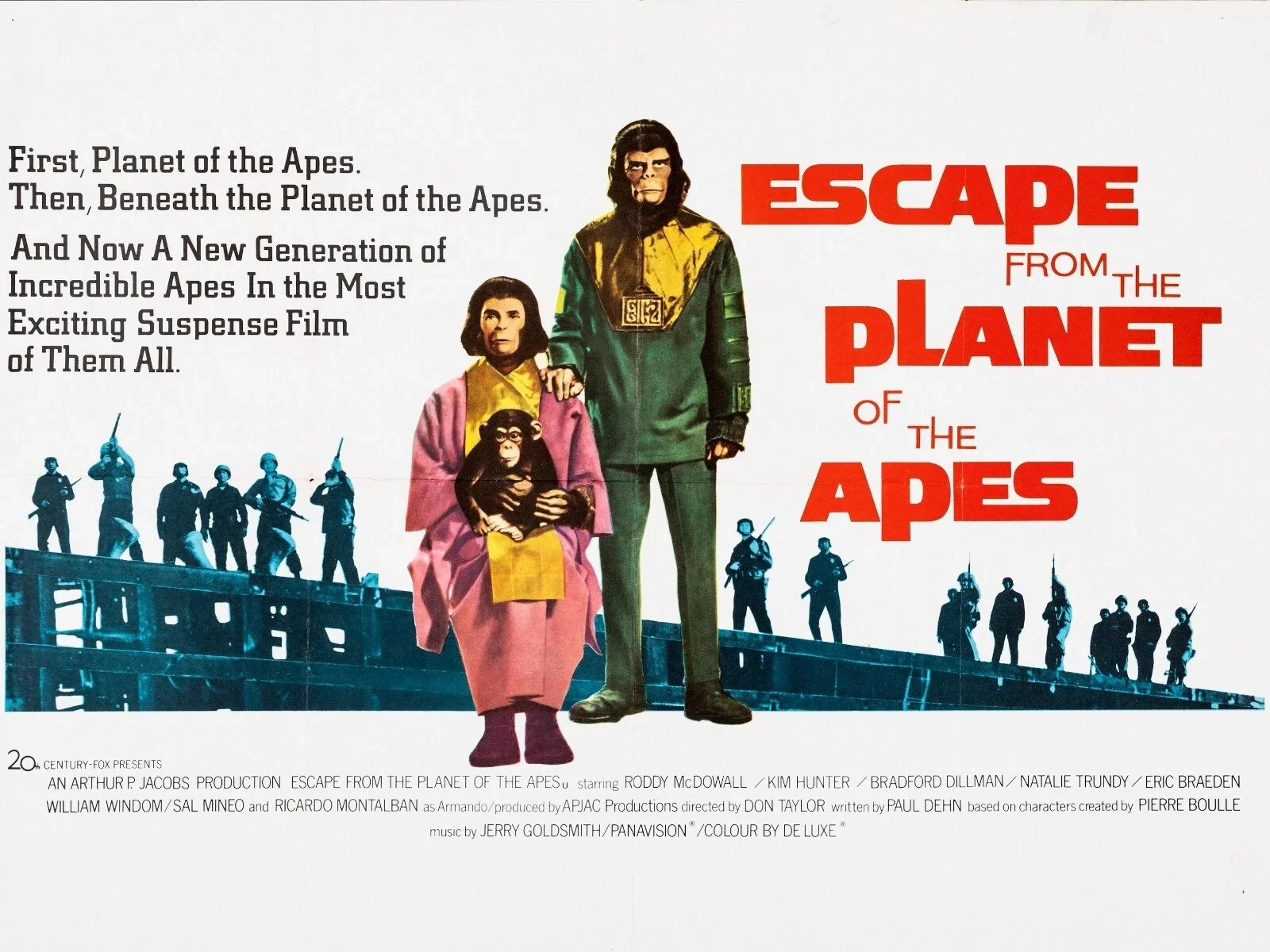
I like the advances that have been made in home cinema. I prefer to watch films in the correct aspect ratio and in the best picture quality available. Hence I do not miss the technical limitations of the VHS or Betamax tapes (especially the NTSC VHS EP tapes which had awful washed out colours). But having been in the past, a consummate film collector, I still fully understand the allure of physical media. Whenever I see an old VHS rental tape at a collectors fare, it briefly rekindles that sense of excitement I got as a child. Because our access to entertainment was not as ubiquitous as today and we were also not aware of every aspect of a film production due to the internet, a VHS tape of a movie you hadn’t seen before held so much promise. When you combine this allure with an impressionable child who considers watching exploitation cinema as a test of endurance, it becomes clear why such a strong association was created and remains. VCRs, video rental stores and “video nasties” were my generations Rock and Roll, which is why just a small part of me nostalgically misses those days.





Social Gaming Alone
This post started out as something completely different. I was simply going to write about a popular new game, how it came to my attention and my impressions and thoughts once I had purchased it. But while reflecting on one aspect of the game; the social element that stems from playing with friends, I realised I had more to say about this rather than just writing a review. But such is the nature of writing. In my experience my train of thought is seldom linear. So this post has now morphed into some musings about social gaming and how it is an integral aspect of modern game design. Because playing games with friends is often regarded as a superior experience to playing alone. At least by game developers. I think that the reality is more nuanced and dependent on the game in question. However, I do think that some games are better played with people you know and that playing on your own or in a PUG is less fun. Because that has been my experience of late.
This post started out as something completely different. I was simply going to write about a popular new game, how it came to my attention and my impressions and thoughts once I had purchased it. But while reflecting on one aspect of the game; the social element that stems from playing with friends, I realised I had more to say about this rather than just writing a review. But such is the nature of writing. In my experience my train of thought is seldom linear. So this post has now morphed into some musings about social gaming and how it is an integral aspect of modern game design. Because playing games with friends is often regarded as a superior experience to playing alone. At least by game developers. I think that the reality is more nuanced and dependent on the game in question. However, I do think that some games are better played with people you know and that playing on your own or in a PUG is less fun. Because that has been my experience of late.
Now the “buzz” surrounding Fall Guys: Ultimate Knockout reached my social media timeline a few days after the games release on August 4th. As I already play a Battle Royale game (Call of Duty Warzone) I didn’t feel the need to investigate the new game any further. However, after several YouTube channels that I subscribe to reviewed the game positively, I decided to delve a little deeper. So I watched some live streamers play the game and quickly decided to give Fall Guys: Ultimate Knockout a go. Mainly because everyone I saw playing it was having fun. The game has a cartoon-like aesthetic and the collision physics are endlessly amusing. But what stands out the most from all the video footage of gameplay I’ve seen, is that it engenders a sense of communal fun. That kind of “in the moment”, organic enjoyment that stems from friends being together and sharing an experience.
And that is exactly the opposite experience to what I’ve had. Although Fall Guys: Ultimate Knockout is most definitely fun, playing like a cross between “Takeshi’s Castle” and “It’s a Knockout/Jeux sans frontières”, it does feel like something is missing when you play solo. There’s no one to share the moment with when you fail spectacularly, or run “interference” against other players if you’re having difficulty. Choosing an exotic costume becomes somewhat arbitrary as a single player, compared to the mirth it creates when riffing off friends. Outside of Fall Guys: Ultimate Knockout, there are benefits to be had from playing socially in other games. I enjoy Call of Duty Warzone but when I watch live streams and YouTube videos, you cannot deny that the game can be played far more effectively in co-ordinated groups. You just don’t get that with PUGS, which usually range from adequate to “herding cats” to mental torture.
The summit of my social interaction in video games is when I play MMORPGs. I’ve been in the same kinship in The Lord of the Rings Online since 2009 and still regularly enjoy organised gameplay via Discord. Although this is fun, it is limited to just one game and the nature of MMOs doesn’t really lend itself to a great deal of diverse experiences. I haven’t played any games from other genres with friends and people I know since 2016. The last time was when there was an organised game night via The Newbie Blogger Initiative and a few people got together and played Overwatch. Since then I’ve just used the auto grouping option in the games that I play. It’s not so much an issue of a lack of friends but the fact that no one seems to be playing the same games as me (and vice versa). The fact that not all games support crossplay is another factor.
I also suspect that age may well have a bearing on this. Younger people tend to have larger, active social circles. These decline over time, something I have written about in the past. Now naturally my online friends play and enjoy video games. It’s usually one of the reasons why I follow someone on Twitter. But many of the people I know locally, despite being of a comparable age to me, don’t play video games. They tend to be interested in more traditional leisure activities like football, reading tabloids and casual bigotry. So upon mature reflection, despite there being a focus on social gaming as a source of fun by the industry itself, my reality is not the same. Returning to Fall Guys: Ultimate Knockout for example, my experience is not like those who play in a group. It’s like being at a party where you drink and move around the periphery of events, laughing at jokes you overhear but not actively participating in any meaningful interaction. It’s an odd sort of fun by osmosis, just by dint of being present. Social gaming alone, as it were. And I’m beginning to tire of it.
What Are We Going to Watch?
It’s a simple question but I suspect that the answer may not be so straightforward. The autumn TV schedule is fast approaching and as of yet, many popular shows have not yet resumed production. There is talk on many of the “entertainment” websites that CBS will start location filming for its NCIS franchises in early September and if the studio side of the production follows suit, then there’s the possibility of completed episodes being available by November. But naturally all of this is dependent on a lot of variables that could change. Will COVID-19 cases diminish in the months to come or will there be a second “spike” and thus another lockdown. Will the ongoing loss of revenue caused by the pandemic further harm the production of new content. Will studios, networks and production companies have to make some hard choices and as a result, will we see some popular shows cancelled?
It’s a simple question but I suspect that the answer may not be so straightforward. The autumn TV schedule is fast approaching and as of yet, many popular shows have not yet resumed production. There is talk on many of the “entertainment” websites that CBS will start location filming for its NCIS franchises in early September and if the studio side of the production follows suit, then there’s the possibility of completed episodes being available by November. But naturally all of this is dependent on a lot of variables that could change. Will COVID-19 cases diminish in the months to come or will there be a second “spike” and thus another lockdown. Will the ongoing loss of revenue caused by the pandemic further harm the production of new content. Will studios, networks and production companies have to make some hard choices and as a result, will we see some popular shows cancelled?
Another mainstay of TV, are all the major sporting fixtures. This year has already seen the cancellation of Wimbledon and the Tokyo Olympics. In recents weeks, some sports have resumed, although obviously sans spectators. This has been welcomed by households and has filled a gap in the market. However, the loss of ticket sales has already hit this global industry hard. The UK Premier League could potentially lose £1billion in revenue by the end of the year, especially if a second wave forces even the spectator less games to be cancelled. However, the simple fact is that those sporting bodies that are the wealthiest are better placed to weather the storm. Smaller league and county level sports such as cricket, basketball and rugby league face a bleaker future. Some are seeking government assistance or a rebate from the TV companies they have sold the viewing rights to. The support industries associated with major sporting events have also suffered.
However, where older viewers who still focus on traditional media, may well be facing a dearth of new content, the youth market has been turning in increasing numbers to YouTube and live streaming services such as Twitch. YouTube has seen a 29% increase in channel subscriptions, especially in the gaming, food and educational categories. Between March and April Twitch saw a 50% increase in the hours watched compared to the previous month. Average viewing figures over a 30 day period now stand at 1.645 billion hours. Many people have also tried their hand at live streaming during the lockdown resulting in a surge in new channels. However, many of these have already fallen into abeyance. Furthermore the increase in YouTube and Twitch usage has not necessarily seen a commensurate increase in advertising revenue. This is blamed on changes to advertising policies by both platforms and drop in money spent by advertisers per se, due to the pandemic.
Returning to the original question, I suspect that despite a lot of effort to try and return to normal program schedules, there are inevitably going to be delays and some major disappointments along the way. TV in all its manifestations is going to have a shortage of new content. Although I do maintain a healthy amount of active subscriptions on platforms such as YouTube and Twitch, I do not feel that these mediums will be able to fill the emerging “entertainment gap”. The biggest issue is quality control. For every Jim Sterling, Lindybeige or Noah Caldwell-Gervais there are fifty other “regular people” making bland and unremarkable content. I find everyday social interaction dull enough already and look to TV and newer mediums to offer something more than just entry levels “vox pops”.
Hence I think the real winners in the month to come will be those streaming services that offer an extensive back catalogue. There has been an abundance of good TV in recent years and I have certainly not seen all of it. There are several shows that have been recommended to me, that I have not pursued due to time limitations. These can now be addressed over both autumn and winter. I have just returned to watching Evil which is a prime example of catching up in this way. I will also renew my subscription to BritBox and tackle a few outstanding UK dramas and police procedurals. I still have several seasons of Star Trek: Voyager to finish. But due to the phenomenon of “TV poverty”, not everyone will be in such a position. There are still substantial numbers of homes in the UK that still just rely on digital terrestrial TV. As a result I suspect a lot of friends and families will be sharing account access to streaming services to bypass this consumer inequality.












Libraries
If you wanted to find me on a Saturday afternoon during the late seventies and early eighties, then the local library was a safe bet. At one point I belonged to three including one in a neighbouring borough but Blackfen Library was my favourite. It was the nearest to our home and I was fond of the oddly austere building. Both of my parents have always been prodigious readers so going to the library quickly became a regular part of my youth. Initially, I was content to confine myself to the children’s section reading Hergé's Adventures of Tintin and the escapades of Asterix the Gaul. However, I was never really content with fiction aimed at children and especially stories about children. Hence as I grew older I expanded my horizons and strayed into the adult section. My parents didn’t interfere in my choice of books and took the attitude that if I were reading, then I wasn’t getting into trouble. My Dad would make the occasional recommendation. Usually classic science fiction by authors such as Ray Bradbury, Isaac Asimov and Arthur C. Clarke.
Blackfen Library prior to it’s relocation in 2004
If you wanted to find me on a Saturday afternoon during the late seventies and early eighties, then the local library was a safe bet. At one point I belonged to three including one in a neighbouring borough but Blackfen Library was my favourite. It was the nearest to our home and I was fond of the oddly austere building. Both of my parents have always been prodigious readers so going to the library quickly became a regular part of my youth. Initially, I was content to confine myself to the children’s section reading Hergé's Adventures of Tintin and the escapades of Asterix the Gaul. However, I was never really content with fiction aimed at children and especially stories about children. Hence as I grew older I expanded my horizons and strayed into the adult section. My parents didn’t interfere in my choice of books and took the attitude that if I were reading, then I wasn’t getting into trouble. My Dad would make the occasional recommendation. Usually classic science fiction by authors such as Ray Bradbury, Isaac Asimov and Arthur C. Clarke.
Despite it’s somewhat foreboding appearance, Blackfen Library was always warm and tranquil inside. The library ticket system was uncomplicated. Your ticket was a small cardboard pocket. Each book had a physical ticket associated with it which was filed along with your ticket when you borrowed it. Inside the cover of each book was a “date due” sheet which was stamped by the librarian with the return date. I believe you could keep your books for up to three weeks and borrow a maximum of six. As this was the seventies, the books were filed and organized using the Dewey Decimal System. I quickly learned to use this so I didn’t have to rely on the librarians to assist me. Choosing my books was always an exciting process. Sometimes I’d know in advance what I wanted and I’d race in between the heavy wooden bookshelves to the required section to see if my prize awaited. Other times I’d peruse the shelves in a leisurely fashion, reading the plot synopsis on the dust covers. They say not to judge a book by its cover but when you’re 10 years old, a glossy illustration by Chris Foss or Frank Frazetta was a major selling point.
Classic science fiction with Chris Foss artwork
Due to my parents and my local library, I still have a deep and abiding love for books and reading. One of my favourite excursions (pre-lockdown) is to travel to Rochester in Kent and lose myself in Baggins Book Bazaar, the biggest second hand bookshop in the UK. It has many similarities with a library and is a haven of tranquility in an otherwise noisy and frenetic world. Sadly, the original Blackfen Library in Cedar Avenue has now closed and the building was demolished and the land sold to a property development company in 2004. There’s a block of flats on the site now. The library has relocated to new premises in Blackfen Road. It has diversified and modernised in an attempt to stay relevant. It now has internet access and PCs that you can use. The premises also offer several meeting rooms and run numerous clubs and activities. It’s now a bustling and dynamic place. It’s all a far cry from the black and white tiled floors and quiet atmosphere of the former site.
As you may discern, I believe passionately in libraries and making books, knowledge and learning accessible to all. The ability to read is not only a great leisure activity and escape from the rigours of life but it’s also an opportunity for self improvement and to expand one's horizons. Which is why I greatly resent and deplore the closure of over 800 public libraries that have happened since 2010 in the UK. A recent survey from the Chartered Institute of Public Finance and Accountancy (Cipfa) has found that there are 3,583 public libraries open at present. 35 fewer than last year and 773 fewer than in 2010. The closure of nearly a fifth of the UK’s libraries is a result of a decline in spending by 29.6% over the past decade. The reduced funding is due to the UK government cutting spending on all public services after the banking crash of 2008. The debate continues as to whether this was necessary or driven by political ideology. I believe author and comedian Alexei Syale may have some insight when he said “austerity is the idea that the 2008 financial crash was caused by Wolverhampton having too many libraries”.
Blackfen Library as of 2020
I am a child of the seventies and although I won’t universally extol the merits of that decade, it did have some good points from a child’s perspective. Blackfen Library introduced me to the joys of H. G. Wells, Arthur Conan Doyle, Agatha Christie, J. R. R. Tolkien and many other classic authors. It also taught me that silence is not to be feared but something to be savoured when appropriate. Like most adults, as I’ve got older I find that I don’t read as much as I used to, although I still manage a book each month or so. Reading for me now centres on blogs and other online news outlets. But I still enjoy finding a quiet corner and losing myself in a good book. And I still visit my local library (which have now reopened) although now it tends to be more when they hold events. But it is important that we as a society fight any further closures and continue to foster in our children the importance and pleasure of reading. Although I suspect this will be more of an uphill struggle in the current political climate.











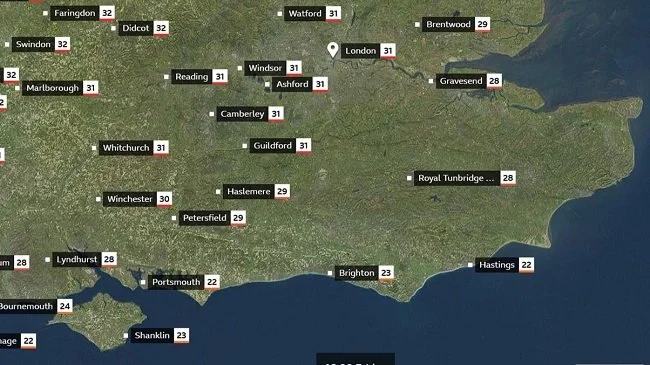

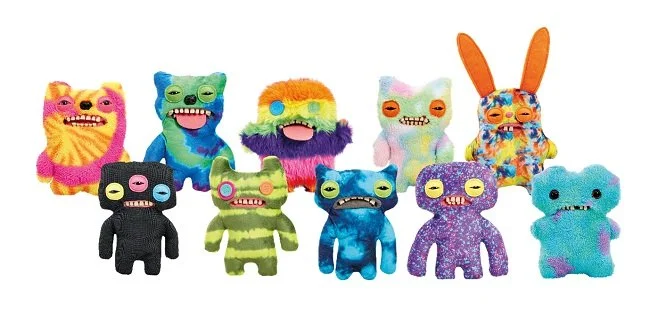



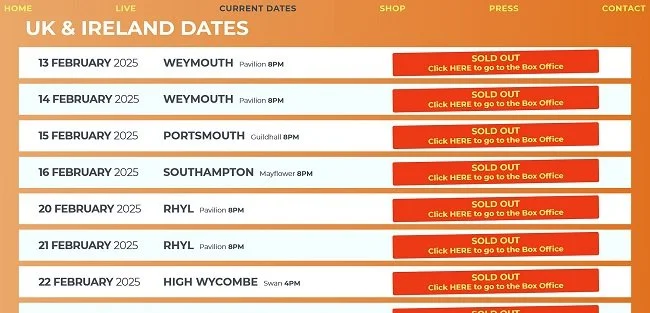
Your Writing Environment (Again)
I thought I’d tackle another Blaugust Promptapalooza writing cue. Today’s question is “Tell us about your physical creative space, and how it influences your content creation” and the official promoter of this prompt is Krikket over at Nerd Girl Thoughts. Do go check out their very candid thoughts and personal experience on this subject. Because where you sit and create your content is a big factor in the process. Sadly, for practical reasons it is often the one that is most overlooked or neglected due to the realities of life (as Krikket explains in their post). Very few of us have a purpose built studio or specifically designed workspace. Most of us just try to adapt an existing part of our home and make do with that. I have done this in the past, when I was living in a rented flat. The lounge dining table also doubled as a writing desk, as well as a computer workstation. It was a little too high for such purposes and it ruined my posture after a while. The ergonomics of where you sit is not something that should be ignored.
My desk as of August 2020
I thought I’d tackle another Blaugust Promptapalooza writing cue. Today’s question is “Tell us about your physical creative space, and how it influences your content creation” and the official promoter of this prompt is Krikket over at Nerd Girl Thoughts. Do go check out their very candid thoughts and personal experience on this subject. Because where you sit and create your content is a big factor in the process. Sadly, for practical reasons it is often the one that is most overlooked or neglected due to the realities of life (as Krikket explains in their post). Very few of us have a purpose built studio or specifically designed workspace. Most of us just try to adapt an existing part of our home and make do with that. I have done this in the past, when I was living in a rented flat. The lounge dining table also doubled as a writing desk, as well as a computer workstation. It was a little too high for such purposes and it ruined my posture after a while. The ergonomics of where you sit is not something that should be ignored.
In 2016, having moved, I started using the spare bedroom in the Peril household as an office. I live in a Bungalow and the bedrooms are at the front property. This is a common foible of buildings of this type from the 1930s. It’s a robust, red brick built home with a South facing garden. Consequently, the “office” faces North and is cool in hot weather. The window looks out into a busy tree lined avenue. I wrote in a previous blog post on this subject about how my original plans were “thwarted” by the arrival of my twin granddaughters. At the time I had to share my “creative workspace” with two travel cots. Hence I initially chose a very small desk. However, the twins are now 5 years old and so the travel cots have gone. There is now a single bed in the room, which has a second pull out mattress in the base. I have now expanded “my domain” and got a bigger desk. One that is the right height and has adequate room for me to type or write longhand.
Ignore the cable management and focus on Pliny and Magnus
I like a tidy and organised work space. My desk is laid out in accordance with my needs.I have a single document tray for my paperwork. There’s a headset available for impromptu online chats. It is an analogue model that plugs into a 3.5mm jack. I have an extension cable that ends in a female socket to hand under the monitor stand. There’s an Xbox controller for those games that require one. I have my internet router under my monitor so I can address any issues, should they arise. This model has greatly improved the wireless network in the home but my PC is attached via an ethernet cable. I have my Fire HD 10 to hand and my phone in a wireless charging cradle. Notebooks and pens are available should they be required. I also have an HP printer, copier, scanner next to my desk. I’ve had the same computer chair for 4 years and have already replaced the gas cylinder. It is getting a little worn but I’m reluctant to part with it as it is very comfortable.
When writing I tend to prefer a quiet environment. If I shut the office door and Mrs P does the same in the lounge then neither disturbs the other. Sometimes if I find my attention wandering and I’m spending too much time watching the shenanigans of “punch above his weight man” who lives across the road, or some other example of life’s rich pageant, then I’ll draw the curtains. I’ve recently started getting up earlier in the morning and now try to do the majority of my writing before 11:00AM. Because I am very much at ease with myself when I’m at my desk and I feel it’s a place where I 100% belong, I’ll often get lost in my writing. On the days when the ideas come and I’m invested in the subject I’m writing about, I can be quite productive. Some days when I’m outraged by something I’ve seen on the news or online, my office is a haven of reason to retreat to. Having been self-employed in the past and regularly worked from home, I can effectively compartmentalise my time. If I’m supposed to be writing then there’s no skiving allowed. Gaming (which I do on the same PC) is allotted to specific times of the day and can only be indulged in when all other obligations have been met.
The beer on the desk is a semi-permanent fixture
I consider myself very fortunate to live in a home that has a spare room that I can use in this way. Shit, I think I’m fortunate to even have a home but that’s a subject for a separate blog post that I may tackle at a future date. Simply put I have a decent sized room in my home that I can appropriate and use simply to write, record podcasts (which I haven’t done for a while), play video games and watch pointless but amusing YouTube videos. One a month or so, my granddaughters come to stay for a night or two and I can’t use “the office” from 8:00 PM for about twelve hours. It’s hardly an inconvenience. Many of my fellow bloggers and content creators do not enjoy this luxury. Families, especially young children take up space. Therefore there may not physically be a room or area to claim for indulging your artistic muse. Or there may be a corner or snug but it needs to be cleared out or maintained before it can be used. Try doing that after pulling a 12 hour shift. And if you rent, then you may find there are restrictions in your leasing arrangement.
Often, the space we'd like to have for our creative endeavours and the one we actually use are not the same thing. However, despite the reality of the situation many bloggers, podcasters, streamers, vloggers and online creators manage to regularly produce good quality material without the benefit of a designated office or bespoke studio. They get by the best way they can and it could be argued that having to create on the fly, guerilla style, is why they create such good material. But I won’t belabor that point because I’m sure many would most certainly like a suitable “den”. I also should add that I’m lucky that Mrs P hasn’t seen fit to use “the office “ as her “sewing room”, “Kabaddi Dojo” or some such similar creative undertaking. If that were the case, I’d be back to writing via the lounge table, on a laptop. How would I be able to see the birds on Mrs Coltart’s roof?
It’s Not Losing That’s the Problem But How You Lose
The title of this post doesn’t really cover what I’m trying to express but it’s the best I could come up with that wasn’t an essay in itself. Now I’m going to try to be as brief as possible, as I know sometimes I write too much and get bogged down in the minutiae. Hopeful you’ll follow my train of thought. So to begin, some video games have a very specific fail mechanic. If you play Mortal Kombat either against bots or with another player, there can be only one winner. If it’s not you then you have lost. It’s the same in Call of Duty Warzone if you play Battle Royal Mode. Looking to other genres such as MMOs, if you don’t defeat the boss at the end of the raid and your team wipes, then again you’ve lost. But this doesn’t have to be a problem. The player knows in advance exactly what the criteria for winning is. You lose due to the mechanics of the game, the skill of other players or the lack of your own.
The title of this post doesn’t really cover what I’m trying to express but it’s the best I could come up with that wasn’t an essay in itself. Now I’m going to try to be as brief as possible, as I know sometimes I write too much and get bogged down in the minutiae. Hopeful you’ll follow my train of thought. So to begin, some video games have a very specific fail mechanic. If you play Mortal Kombat either against bots or with another player, there can be only one winner. If it’s not you then you have lost. It’s the same in Call of Duty Warzone if you play Battle Royal Mode. Looking to other genres such as MMOs, if you don’t defeat the boss at the end of the raid and your team wipes, then again you’ve lost. But this doesn’t have to be a problem. The player knows in advance exactly what the criteria for winning is. You lose due to the mechanics of the game, the skill of other players or the lack of your own.
As a man of a certain age, I tend not to get too annoyed when I lose playing video games. More often than not what frustrates me is my own incompetence and poor reactions. I am more often than not, the architect of my own demise. And when I play any sort of game in a pick up group, I lower my expectations by default. Sometimes I’ll find myself in a group that plays as a team, follows a strategy and performs well. All of which is done with the minimum of conversation, be it text or voice. On occasions it goes the other way where the selfish behaviour and stupidity of some players actively impede your progress and this is something I find less palatable. A point I shall return to in a moment. Overall failure and losing are an inherent part of video games. Hopefully you learn from your mistakes and “git gud” or something like that. Also, although I’m not exactly enamoured by elitist gaming culture or like over competitive people (they’re so tediously wearing), winning too easily or too often does mitigate the point of certain types of games.
Still with me? Good. I’m nearly at my point. To summarise, losing is an integral part of gaming although you don’t have to like it. It is an important component that contributes to the overall environment from which the fun, enjoyment or whatever else you get from video games derives. It is not malevolent per se. However, there is another kind of losing or fail state that comes via a human agency. It is predatory in nature and happens when you lose because someone decided to mess with you. It’s the gaming equivalent of someone coughing or nudging you when you’re playing darts and about to throw. This manifests itself in PVP and survival games when players predate other new or less knowledgeable players. Or in racing games when one player knows they will not win so willfully causes carnage or tries to block others. I saw such behaviour today while watching someone streaming Fall Guys: Ultimate Knockout. At first glance this looks a very benign game but it would appear that players will wait at the finishing line to try and stop people from crossing. Even in a easygoing, fun environment such as this, there are still people who want to fuck with you.
And therein is the issue. Life is problematic enough because some people just aren’t happy unless they’re doing something to others. Do we really need this in our game space as well? I don’t mind losing, failing or getting beaten in a game by its mechanics or more skilled players. But I don’t want to be inconvenienced because someone just wants to fuck with me for the sake of just doing so. And this is where I trot out my standard argument about how being a paying customer changes the dynamics of gaming. Forget notional ideas about freedom of expression and emergent gameplay. The moment money is paid, I expect rules and parameters to constrain others bullshit shenanigans. The same way when I go swimming at the sports centre and racing competitively, no one is allowed to enter my lane and mess with me.
Irrespective of what genre(s) of game you play, I think we can all make the distinction between losing in an intended fashion IE falling foul of a game’s fail state mechanics and having something done to you by some asshole. It’s paradoxical that developers will always sing from the rooftops about the superiority of playing with and against real people and then subsequently being utterly flabbergasted by the fact that people treat each other abominably. But players will happily indulge in sociopathic behaviour if given an opportunity. Look at the recurring problem with aimbots that plague popular FPS games. As for losing “building character”, that’s a bogus term and a flawed philosophy. But losing in the manner discussed is an object lesson in why so many problems in life are just people problems. As a society, we still await a solution to this, although judicious use of a claw hammer as a correctional tool is a good place to start.
Choo Choo
Adding a train to a Battle Royale game is hardly a new concept. Both Apex Legends and PlayerUnknown’s Battleground have successfully done this. So it was only a matter of time before one was added to Call of Duty Warzone. We were tipped off by the addition of train tracks last season. The launch of Season 5 this week finally made the “choo choo” a reality. I must admit, I’m quite surprised at how adding something as straightforward as a freight train has reinvigorated the game. That and the fact that you can now access the stadium seems to have really enthused the playerbase. Since Tuesday, whenever you play Warzone or one of its variants, a large number of players head straight to the stadium or the station where the armoured freight train starts its journey around the map. As a result of this, new players or those who aren’t so skilled in combat can navigate the outlying areas of Verdansk with a greater degree of freedom and safety. Everyone else is at either of those locations.
Adding a train to a Battle Royale game is hardly a new concept. Both Apex Legends and PlayerUnknown’s Battleground have successfully done this. So it was only a matter of time before one was added to Call of Duty Warzone. We were tipped off by the addition of train tracks last season. The launch of Season 5 this week finally made the “choo choo” a reality. I must admit, I’m quite surprised at how adding something as straightforward as a freight train has reinvigorated the game. That and the fact that you can now access the stadium seems to have really enthused the playerbase. Since Tuesday, whenever you play Warzone or one of its variants, a large number of players head straight to the stadium or the station where the armoured freight train starts its journey around the map. As a result of this, new players or those who aren’t so skilled in combat can navigate the outlying areas of Verdansk with a greater degree of freedom and safety. Everyone else is at either of those locations.
I try and avoid the stadium as it has too many open corridors and because of the rewards that can be found there, too many skilled players. I see no reason to provide an easy target for such individuals. Let them prey on their own. The train however is a more interesting proposition. It again offers the orange supply crates which contain the best weapons and gear. But it also provides a means to navigate the map and potentially flank enemies. It can also offer a degree of cover and I’ve used it as a means of escaping difficult firefights several times. Contrary to popular belief, strategically withdrawing is a sound option in Warzone. Another great aspect of the train is that it provides endless opportunities to mess about with friends. I’ve already seen videos of players parking as many vehicles as possible to try and derail the train. They quickly discovered that it is unstoppable.
Plunder is my game of choice in Warzone and I’ve developed my own short term strategy for the train. I suspect that after a week or two it will no longer be viable as the overall meta strategy of most players will alter. As present, most players head for the train as soon as they parachute into Verdansk and congregate at the station. Hence for the first stretch of its journey, the train is smothered in players. However after about 4 minutes or so, as the train passes the eastern side of the Hospital, it enters a tunnel. This leads to the Great Bridge area where the track follows the perimeter of the International Airport and Maintenance Block. You can wait above the tunnel exit and subsequently ambush any players remaining on the train. Admittedly many have gone by this point but there’s usually two or three. You can then jump down onto the train. If you miss the chance to do so, there’s a quad bike nearby so you can catch up. You can’t outrun the train.
This is a good way to start a game. At the very least it's a way to get some easy kills and collect some gear. If the players you’ve disposed of have already looted the orange supply crates, then you will get some good gear. If they haven’t then you’ll at least get some money and one armour plate. After I’ve collected any loot, I move to the front of the train which has the best cover and then find an appropriate location to get off. There are houses around the perimeter of the airport and these offer a good place to snipe at those fighting around the hangers. I tend not to stay on the train any longer as there are further bridges ahead and sooner or later, someone else will decide to get on. Conversely, if you do not wish to loot the train, then the route I’ve mentioned offers ideal high ground and cover to attack those on it. Both options keep me amused, however I think that players will soon adjust their strategy to counter this. But that’s what I like about Warzone. Both the developers and the players continually find ways to change things and keep the game fluid.
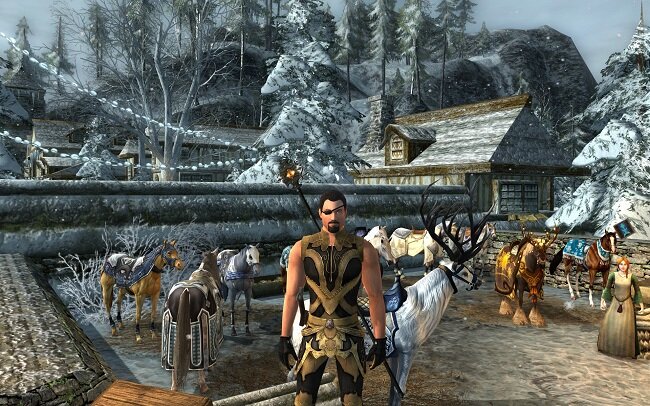
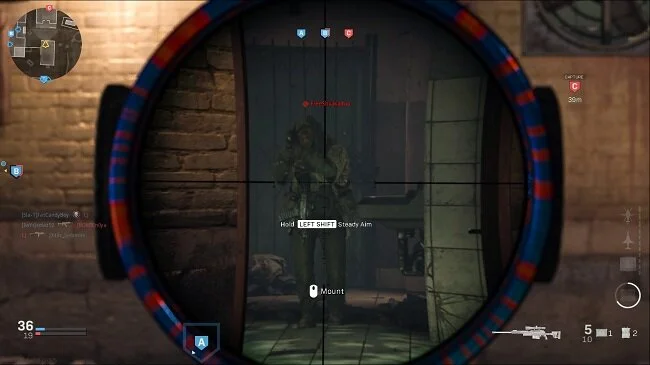

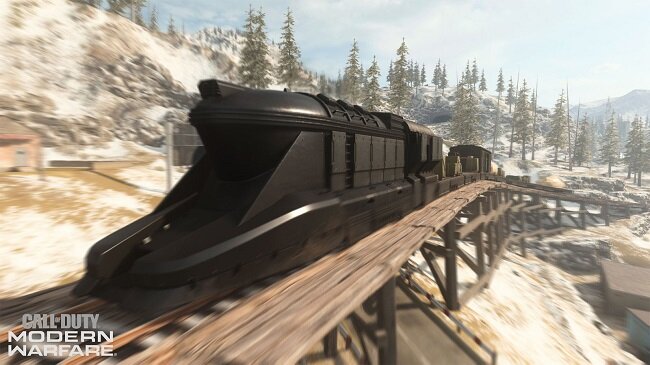
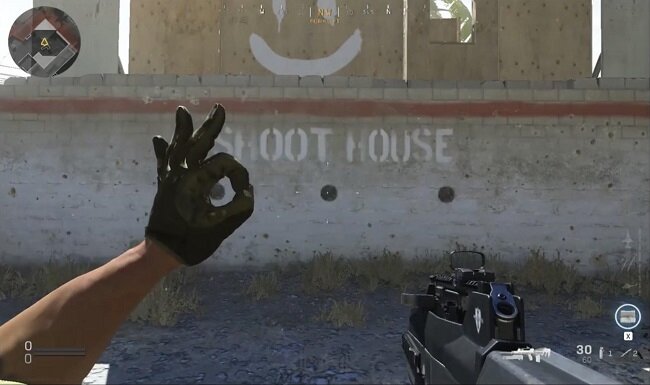
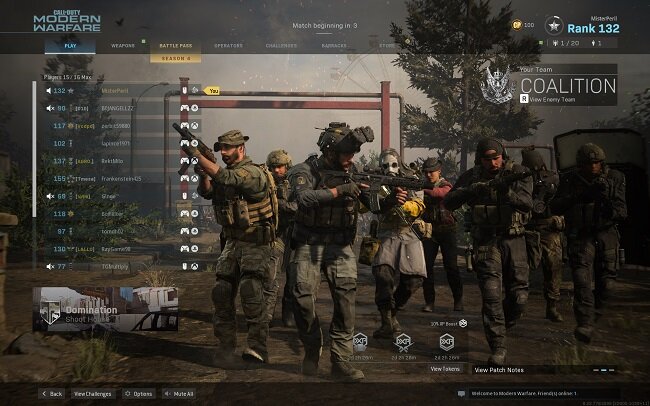
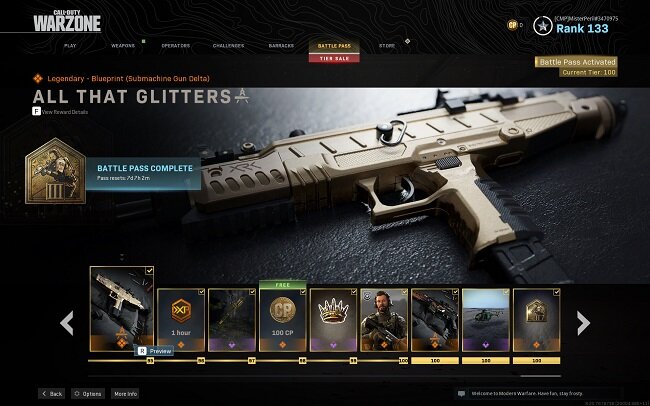
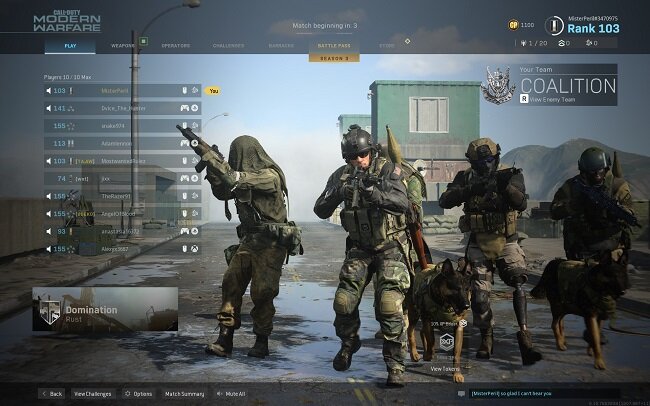
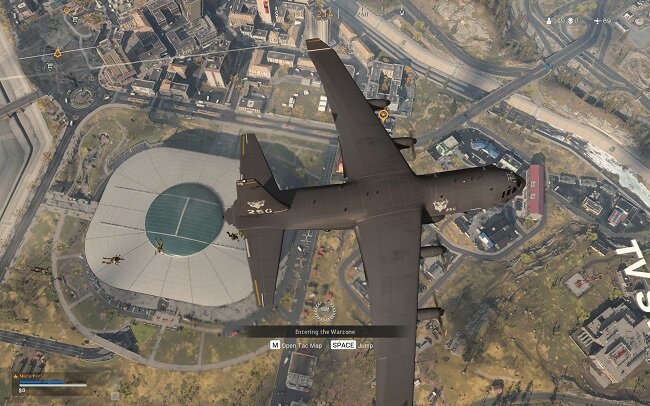

Walter
I shall be taking a degree of “artistic license” with today’s Blaugust Promptapalooza writing prompt. The original question (as given by Rambling Redshirt over at Beyond Tannhauser Gate) is “If you had a mascot to represent you, what would it be?” but I’ve decided to adjust this slightly. I already have an unofficial mascot for Contains Moderate Peril and they have featured in several blog posts. Furthermore, as an experiment in marketing, they have also appeared in several social media campaigns. The idea was to see whether they could gain more traction with existing “followers” and provide a more effective means of promoting this site. I was initially surprised by the results but upon reflection, given what usually proves popular on social media (IE things that are deemed “cute”), it should have been obvious from the start. So without further ado, if you are not familiar with him already, allow me to introduce Walter.
I shall be taking a degree of “artistic license” with today’s Blaugust Promptapalooza writing prompt. The original question (as given by Rambling Redshirt over at Beyond Tannhauser Gate) is “If you had a mascot to represent you, what would it be?” but I’ve decided to adjust this slightly. I already have an unofficial mascot for Contains Moderate Peril and they have featured in several blog posts. Furthermore, as an experiment in marketing, they have also appeared in several social media campaigns. The idea was to see whether they could gain more traction with existing “followers” and provide a more effective means of promoting this site. I was initially surprised by the results but upon reflection, given what usually proves popular on social media (IE things that are deemed “cute”), it should have been obvious from the start. So without further ado, if you are not familiar with him already, allow me to introduce Walter.
Walter is a cuddly Panda soft toy or plushy as they call such things “across the pond”. He’s about 3 feet and has his own chair, which is positioned in the lounge, next to the TV. His origins are somewhat mysterious. Walter first appeared in my home roundabout Easter 2014. Mrs P saw him in a charity shop window for the bargain price of £3 and in a fit of generosity, bought him for £5. I woke up to find him looking at me and thus began a strange and interesting symbiotic relationship. I have often wondered about Walter’s previous life before he became part of the Peril household but he has remained uncommunicative about the subject. He likes to give the impression that his past is enigmatic but I suspect he was given his marching orders by his previous “owners” for taking up too much room. Walter doesn’t help out with household chores, preferring to “hold court” from his chair. He watches a lot of TV and has strong opinions on popular culture.
Now if you have a 3 foot cuddly Panda, knocking about your abode, it’s only a matter of time before you decide to take a photo of them in a comical situation or with some kind of droll caption. Hence Walter made his first appearance in a post I wrote about the perils of playing Mortal Kombat. NB This featured on a previous iteration of the Contains Moderate Peril website but the post was updated and republished here. Naturally, readers were curious about my new companion and he made further appearances both on the blog and Twitter. His dry sense of humour gained him a degree of traction with readers and followers alike and I started getting requests for him to feature more often. Hence I decided to try a small experiment and planned a series of tweets featuring Walter watching classic movies and TV and making informed pronouncements upon the proceeding. There are some very good online tools available for analysing social media traffic, so I created #WalterWatches as a means of tracking the experiment.
If I may quote Spandau Ballet, to cut a long story short Walter’s viewing commentary generated about four to five times more online activity than my regular tweets. Season 1 (for want of a better phrase) of #WalterWatches ran from March to May in 2019 and proved that if used properly, then social media can really “boost your signal”. Season 2 ran from January to February 2020 and stopped mainly due to the lockdown. Naturally, I have genuinely considered creating a separate Instagram and Twitter account for Walter. Mrs P even suggested making outfits for him (she’s a dab hand at sewing and dressmaking). However, all these ideas have withered on the vine. Walter’s popularity is due to him. I’m not sure if trying to crowbar his persona into promoting my work would be so well received. Plus making outfits, videos and setting up photos is time consuming and I struggle enough to write consistently. Plus now that Walter’s cousin Finwë has come to live with us, the pair of them are too busy and not especially fussed about becoming “influencers”.
There may well be a lesson to be learned in this tale, although I’m not quite sure what it is exactly. Certainly mascots are a great marketing tool but I suspect you have to have a clear idea of how to use them effectively to get the most out of them. And before I end this post I will share two further Walter related anecdotes. Firstly, Walter got his name because if you look at him from the right angle (and with the help of alcohol), he looks like the actor John Noble who played Walter Bishop in the TV show Fringe. Secondly, in late summer 2014, I was ill with Swine Flu. At one point I was running a very high temperature and beginning to slip in and out of consciousness. I awoke from a lengthy sleep to find a wet towel tied not around my own forehead but Walter’s. I’ve never quite got to the bottom of what happened and he’s never felt disposed to say anything. It’s just another of the many unanswered questions surrounding him. I’m still trying to figure out how come he’s got his own special chair and I haven’t?
Host (2020)
In his review in the New York Times Kyle Turner states that the new horror movie Host “seems to speak to a collective id” and serves as “an analogy for mourning the recent past”. I’ve read several other critiques of this nature that both praise the film and make similar philosophical musings upon its nature. As a long standing horror aficionado I am always a little sceptical when a new movie quickly gains a lot of traction and a critical consensus swiftly forms. Especially when a genre product suddenly gains the attention of the mainstream media who subsequently stray into hyperbole and hype. This happened last year with Midsommar which was hailed as a groundbreaking horror movie and indicative of a renaissance in the genre. Although an intelligent and disturbing film, Midsommar is not without flaws and is far from universally accessible. It is also frustrating the way the mainstream media is oblivious to the ongoing financial and critical success of the horror genre that has existed since the inception of cinema.
In his review in the New York Times Kyle Turner states that the new horror movie Host “seems to speak to a collective id” and serves as “an analogy for mourning the recent past”. I’ve read several other critiques of this nature that both praise the film and make similar philosophical musings upon its nature. As a long standing horror aficionado I am always a little sceptical when a new movie quickly gains a lot of traction and a critical consensus swiftly forms. Especially when a genre product suddenly gains the attention of the mainstream media who subsequently stray into hyperbole and hype. This happened last year with Midsommar which was hailed as a groundbreaking horror movie and indicative of a renaissance in the genre. Although an intelligent and disturbing film, Midsommar is not without flaws and is far from universally accessible. It is also frustrating the way the mainstream media is oblivious to the ongoing financial and critical success of the horror genre that has existed since the inception of cinema.
However, my ambivalence notwithstanding, in the past few days positive comments about Host have constantly appeared in my social media timelines, many of which come from grass roots sources that I trust (such as the Evolution of Horror podcast). Hence I signed up to a seven day free trial of the streaming service Shudder and watched Host under optimal conditions. IE knowing as little about the plot as possible and in a darkened room, late at night. Having had time to reflect upon my viewing and go through my notes, I believe that the popular consensus surrounding Host is certainly justified. The film is a finely honed 59 minutes, that is an intelligent reinvention of many classic horror tropes. Cleverly crafted, dovetailing modern fears and social angst with the traditional, it provides an array of scares while maintaining a tense atmosphere in that allegedly benign environment; the modern home. Is it a genre defining milestone? Not necessarily so but what it does do is tap into a lot of the psychological concerns prevalent in the current climate and integrate those into the established fear of the supernatural. Host is certainly very pertinent and “of the moment”.
Six friends, Haley, Jemma, Emma, Radina, Caroline and Teddy meet online via a Zoom video conference call. All are at home or living with partners during the ongoing lockdown. Rather than playing games or having a quiz Haley has hired a spiritual medium to hold a seance. Emma, Radina and Caroline are a little scared by the prospect of such a thing but Eddy and Jemma are both sceptical and prone to mocking it. Medium Seylan reminds the group to be respectful of the spirits and briefs them on managing their thoughts and most importantly how to correctly leave the “circle” if they become uncomfortable with the situation. As the seance progresses, Jemma screams when something touches her neck and she finds herself thinking of a friend from school called Jack who hung himself. Seylan is then disconnected from the call and one by one, each of the friends experience supernatural occurrences in their homes. Rather than contacting a benevolent spirit it becomes clear that they’ve enabled a far more malign force. Can they close the seance circle and dismiss the spectral guest?
One of the film’s greatest assets is the medium in which it is filmed. Buy using Zoom and phones on selfie sticks, there is a great sense of immediacy and the common place tech makes events more accessible. The narrative touches upon the frustrations and alien nature of the current lock down, something that is perhaps more keenly felt among the young. The characters are broadly likeable as well as plausible and the cast perform well. They’re behaviour is also in line with how people react in unknown situations. Some cope well, others go to pieces. As this is a UK production and there is a healthy dose of British colloquialisms and profanities. Where Host excels is in the effective use of its running time. The plot set up, introduction of the characters and dissent from normality into panic is perfectly paced. The idea of having the film last the length of a free Zoom call is sublime.
When supernatural events start to occur, they are initially small in scale and well implemented. Chairs move, a glass shatters and noises are heard off camera. There’s also an innovative use of the filters that come with contemporary phones and video conferencing software. In one scene the filter is triggered by the presence of the spirit and it is a genuinely scary and original sequence. Host handles the building tension well and has plenty of robust and jolting scares. If you are a long standing horror fan who has watched a prodigious amount of genre material, then you well may be able to predict some but not all. The creepy music box is an obviously telegraphed example but others will wrong foot you. The denouement is in some respects inevitable but that does not diminish its power. By the time it comes round you are so invested and engrossed in the proceedings that you still hope that things may work out.
Host is well made, inventive and exceedingly timely. It meets viewers expectations and delivers a white knuckle experience in spades. It’s also a textbook example of how the genre re-invents itself by taking its essential tropes and themes and interpreting in a way that is relevant for a modern audience. Host will especially resonate with the youth market but is still totally accessible to older horror fans who will recognise much that is traditional and de rigueur. I’m not sure if there is a universally accepted term for such movies as Host yet. Wikipedia classifies such productions as “computer screen films” and a subset of the “found footage” genre. However, I’m sure those associated with the production of Host such as director Rob Savage and writers Gemma Hurley and Jed Shepherd will find themselves much sought after. They’ll no doubt be a flood of inferior films in the months to come. But they won’t stand out like Host which has found an audience through talent, enterprise and a genuine appreciation of the genre.
Finding Wisdom in Quotes
Today’s scheduled Blaugust Promptaplaooza writing prompt is “what is/are your favourite quote(s)”. Now I have always had a liking for quotes and feel that a well selected one can often contribute to a good conversation. Something like “The only thing necessary for the triumph of evil is for good men to do nothing” which is attributed to Edmund Burke. Furthermore, a cunning quotation can also be used to bluff your way through a discussion, especially if it’s a subject that you have no knowledge of. The more esoteric the quote the better, I find. Something like Immanuel Kant’s “Metaphysics is a dark ocean without shores or lighthouse, strewn with many a philosophic wreck”. And I also have a tendency to append day to day statements with obscure pop culture references, mainly for my own amusement. I often shout “Bullshit, Mr Han Man!” at the TV, when politicians are interviewed on the news.
Marcus Aurelius is a source of numerous good quotes
Today’s scheduled Blaugust Promptaplaooza writing prompt is “what is/are your favourite quote(s)”. Now I have always had a liking for quotes and feel that a well selected one can often contribute to a good conversation. Something like “The only thing necessary for the triumph of evil is for good men to do nothing” which is attributed to Edmund Burke. Furthermore, a cunning quotation can also be used to bluff your way through a discussion, especially if it’s a subject that you have no knowledge of. The more esoteric the quote the better, I find. Something like Immanuel Kant’s “Metaphysics is a dark ocean without shores or lighthouse, strewn with many a philosophic wreck”. And I also have a tendency to append day to day statements with obscure pop culture references, mainly for my own amusement. I often shout “Bullshit, Mr Han Man!” at the TV, when politicians are interviewed on the news.
So with this in mind I have selected one serious quote that I feel is especially relevant at present, especially in light of “post truth culture” and the current state of tribalistic and acrimonious public discourse. The rest are film quotes. Some of these illustrate a wider philosophical point. Others just amuse and entertain me.
The pastor, theologian and anti-Nazi dissident Dietrich Bonhoeffer
“Stupidity is a more dangerous enemy of the good than malice. One may protest against evil; it can be exposed and, if need be, prevented by use of force. Evil always carries within itself the germ of its own subversion in that it leaves behind in human beings at least a sense of unease. Against stupidity we are defenseless. Neither protests nor the use of force accomplish anything here; reasons fall on deaf ears; facts that contradict one’s prejudgment simply need not be believed – in such moments the stupid person even becomes critical – and when facts are irrefutable they are just pushed aside as inconsequential, as incidental. In all this the stupid person, in contrast to the malicious one, is utterly self satisfied and, being easily irritated, becomes dangerous by going on the attack. For that reason, greater caution is called for when dealing with a stupid person than with a malicious one. Never again will we try to persuade the stupid person with reasons, for it is senseless and dangerous”. Dietrich Bonhoeffer, Letters and Papers from Prison
Excalibur (1981)
Escape From New York (1981)
Galaxy Quest (1999)
The Warriors (1979)
How to Get Ahead in Advertising (1989)
Wild Geese (1978)
Enter the Dragon (1973)
Fellow blogger Wilhelm Arcturus has also tackled this writing prompt today. You can find his thoughts on the matter over at his blog The Ancient Gaming Noob.