
Guilds Are Not Group Therapy
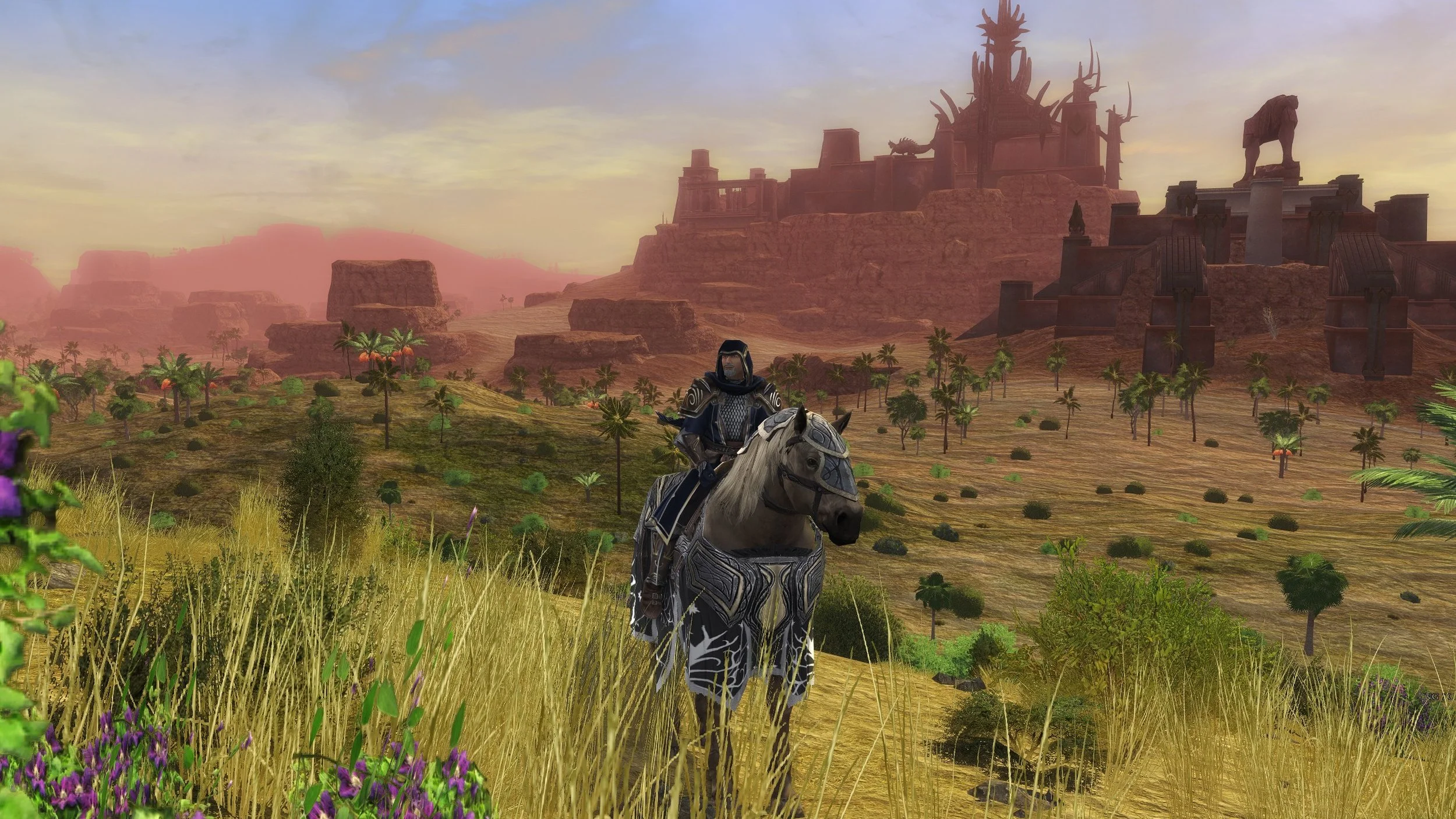
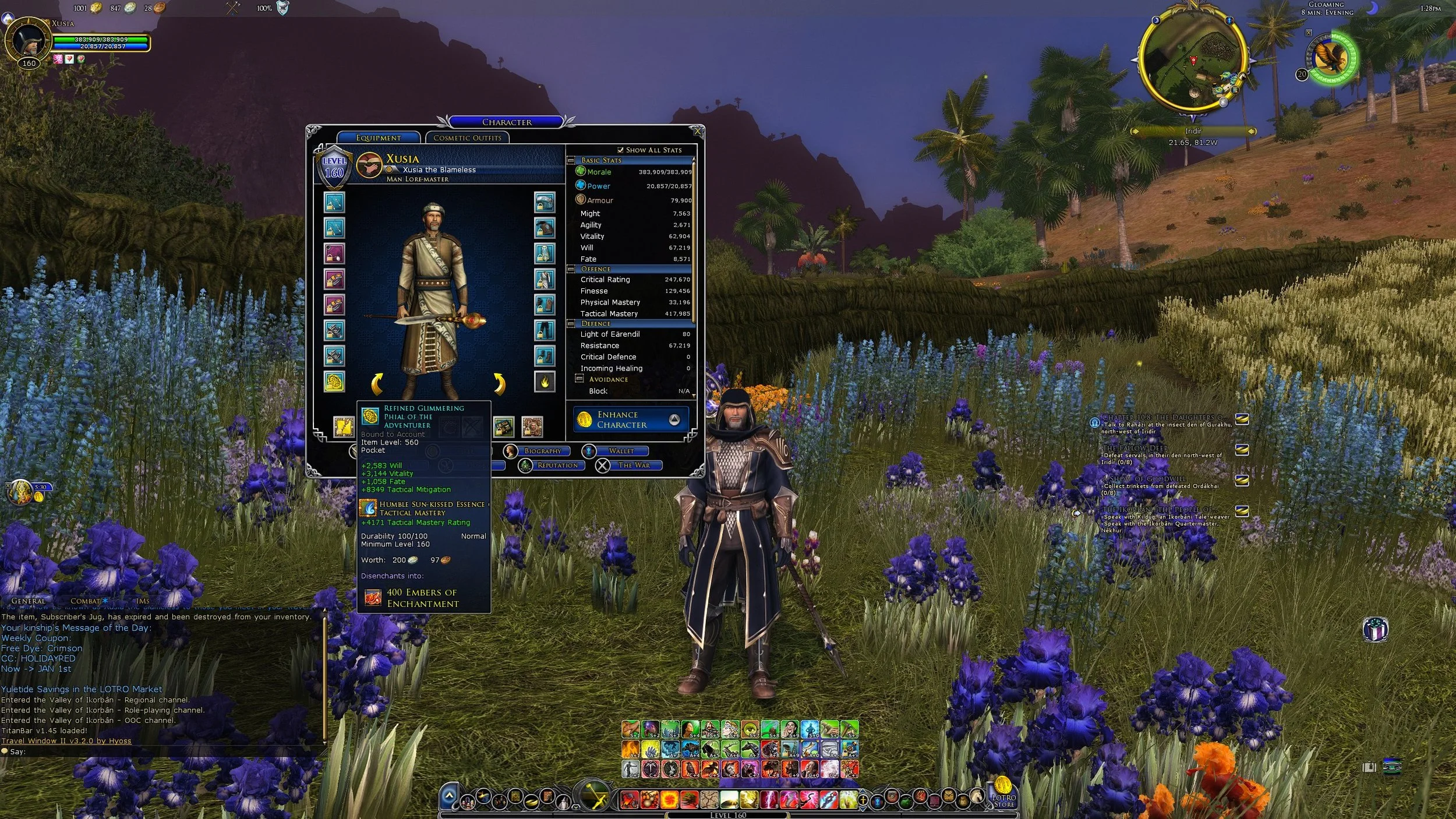
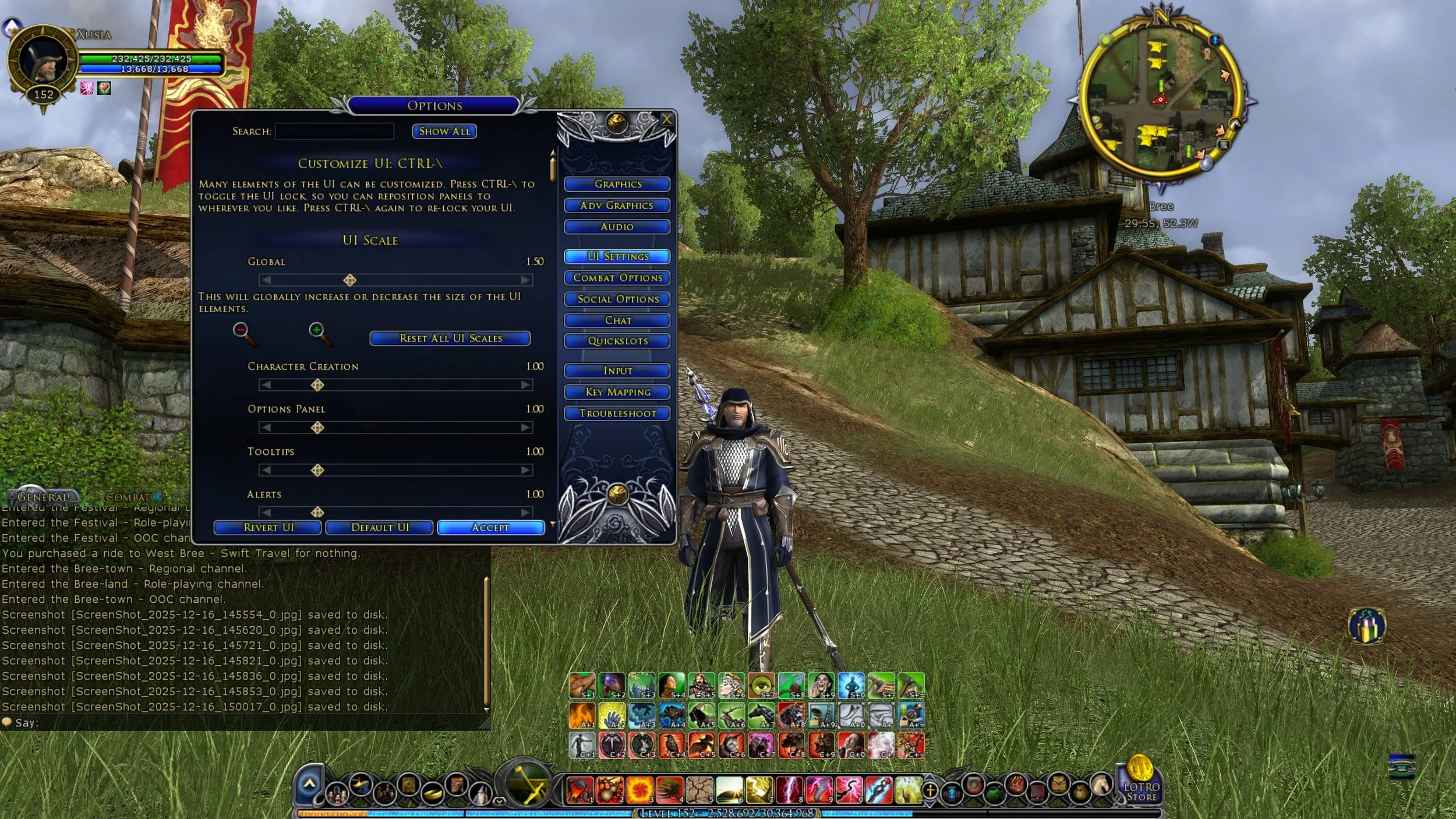
I was recently trawling through some screen captures from 2009, taken when I was a very active player in the MMORPG The Lord of the Rings Online. Several included the chat window as I hadn’t turned off the GUI when I pressed “print screen”. Hence I read a few fragments of chat which subsequently reminded me of a problematic situation our guild experienced for a couple of months. That being when someone joins your guild and at first seems like a good fit but later starts becoming difficult and unreasonable with regard to their expectations and online behaviour. The person in question in this instance eventually stated that they had mental health issues but by the time this was raised a lot of harm had been done to all parties concerned. They ended up leaving after an argument centred around perceived personal slights and a lack of support for their needs. It was an upsetting experience that was poorly handled, although it wasn’t any particular person’s fault.
I was recently trawling through some screen captures from 2009, taken when I was a very active player in the MMORPG The Lord of the Rings Online. Several included the chat window as I hadn’t turned off the GUI when I pressed “print screen”. Hence I read a few fragments of chat which subsequently reminded me of a problematic situation our guild experienced for a couple of months. That being when someone joins your guild and at first seems like a good fit but later starts becoming difficult and unreasonable with regard to their expectations and online behaviour. The person in question in this instance eventually stated that they had mental health issues but by the time this was raised a lot of harm had been done to all parties concerned. They ended up leaving after an argument centred around perceived personal slights and a lack of support for their needs. It was an upsetting experience that was poorly handled, although it wasn’t any particular person’s fault.
To summarise, a new player joined our LOTRO guild (kinship in the games own parlance) after grouping with some of our officers. They had been up to that point polite although a little shy and keen to learn and undertake group content. They did not use voice chat but would listen in and communicate via the chat window, which was not unusual as we had several other players that did this for a variety of reasons. After a while, especially when running instances and raids, they began to get frustrated with failure and when the group wiped. Although we never ever as a group blamed anyone, this person began to suggest we were inferring it. They also made a lot of suggestions regarding gameplay and strategy that were not relevant or useful. They had previously been an active player of another MMO and didn’t seem to understand that the mechanics and dynamics were not transferable.
It all culminated in a major argument one Friday night during a planned raid. Again a group wipe caused frustration for them. Supportive comments in chat about getting “back on the horse” were misinterpreted. Sub argument broke out via direct messages and then it started getting acrimonious. Eventually the guild leader interceded and politely suggested that the player take some time out to calm down and that they would happily listen to any legitimate concerns. It was at this point that the upset player declared to have mental health issues and that they were looking to the guild to work these through. It seemed that every positive thing said to placate and defuse the situation was taken the wrong way and they then quit the guild and vanished into the ether. A long and detailed in-game mail was sent the next day claiming bullying and callousness, none of which from my perspective was true. The player then either deleted or renamed their character and was subsequently untraceable.
Over the years, I have noticed that the MMO genre attracts a lot of people who have personal problems and who are facing mental health issues. MMOs offer a means of social interaction that is far more controlled and potentially manageable compared to those in real life. You can reinvent your persona and the way you are perceived. Chatting in text puts you far more in control of the situation. Hence you can see why MMOs are appealing to the introverted and those who wish a degree of privacy, while still having company and fun. However, the pendulum can swing equally the other way. Text driven chat can be a blunt tool. If you can’t see or hear someone, you can miss a lot of social cues. Irony and sarcasm are an obvious example. Plus, even online and within the superficially cosy atmosphere of an MMO, a lot of the problems from regular social interaction still persist. There are dominant personalities, cliques, power struggles and egos to deal with.
Hence, although I can see the allure of seeing an MMO as a safe or at least controlled environment to meet people and work through or address one’s personal problems, it strikes me as a far from appropriate environment to treat as a form of therapy. I’m sure some gamers may well contradict me and possibly cite positive examples of how they used their guilds as a medium for self healing. If that is the case then well done but I’m not sure if that is the prevailing experience. With regard to the anecdote I shared earlier, I was unaware of the person in question’s issues and even if they had talked about them earlier, would not have felt adequately equipped to help them beyond basic common decency. It also strikes me as a little unrealistic to expect too much from guild mates, when your main social bond is just playing and enjoying the game together.
Some guilds are set up to specifically cater to particular people or groups. To provide a safe space, a friendly environment and a support network. That is a different kettle of fish and a far cry from joining a casual guild of random players. It is difficult to gauge exactly what you should and should not expect from other players when joining a guild. I am happy to be welcoming and supportive to new players. But where does that social obligation end exactly? I find myself with more questions than answers. However, I feel that guilds are not an ideal medium for group therapy or as a means to self treat. I still look back on this incident from 2009 with a degree of upset. Did we do something wrong? Or were we wrong footed through no fault of our own? I wonder about the wellbeing of the individual concerned but as I previously stated, they vanished. Something that the internet accommodates quite well.


"Tryhards"
I discovered the term “tryhard” recently after reading a game related blog post. Like many contemporary terms the definition seems somewhat fluid. So the one that I think fits best is “a person who is perceived as putting too much effort into something recreational, such as a game”. Although I think this succinctly distils the essence of the phrase, I do feel a little further qualification and contextualisation is required. I don’t think this term is applicable to legitimate competitive gaming, so it’s not a label I’d apply to someone playing any sort of esport. Nor do I think it is meant for those players that just seek to become well versed in an MMO or similar genre of game. I feel this epithet is the province of those who seek to excel in games where the focus is having fun and not just winning. The post in which I read this term was discussing Fall Guys: Ultimate Knockout and I think that is a perfect example. I have encountered other players that fit this category while playing this game and you’ll find plenty more on twitch.
I discovered the term “tryhard” recently after reading a game related blog post. Like many contemporary terms the definition seems somewhat fluid. So the one that I think fits best is “a person who is perceived as putting too much effort into something recreational, such as a game”. Although I think this succinctly distils the essence of the phrase, I do feel a little further qualification and contextualisation is required. I don’t think this term is applicable to legitimate competitive gaming, so it’s not a label I’d apply to someone playing any sort of esport. Nor do I think it is meant for those players that just seek to become well versed in an MMO or similar genre of game. I feel this epithet is the province of those who seek to excel in games where the focus is having fun and not just winning. The post in which I read this term was discussing Fall Guys: Ultimate Knockout and I think that is a perfect example. I have encountered other players that fit this category while playing this game and you’ll find plenty more on twitch.
So I guess the first question that arises from the label “tryhard”, is what is so bad in trying to be good at something? To which I’d answer, nothing in principle. The point I think people are trying to make when they label someone in such a fashion, is that these players whose sole focus is the pursuit of excellence end up leaching all the pleasure out of the game for others. Furthermore, if a significant percentage of the playerbase falls into the “tryhard” category, it creates a sort of philosophical fun divide and an environment where new and casual players are either squeezed out or at the very least deprived of the fun that the game is predicated upon. If you want an analogy, I’d say it’s like the over competitive parent who has been in training all year long for the Mum or Dad’s race at their child’s school sports day. Something that is supposed to be lighthearted and about the spirit of participation, is usurped by those who are determined to win and make some kind of statement.
However, I’m a contrary bastard at times. Although I’m not especially enamoured with the “tryhard” mindset and will loudly refute the bogus argument that “it’s never just a game”, I don’t like the idea of a self appointed “fun police”. This is why I think it’s important for game developers who make competitive titles, to ensure they have some viable matchmaking system in place, so that players are grouped according to their skill. Surely implementing such mechanics would please all parties? Unless being a “tryhard” isn’t just about the gratification of excelling but just another way of trolling others. The idea being that it’s another facet of the self aggrandising, braggart culture that pervades gaming. An excuse to sneer at those who don’t succeed and a means of controlling a game at the expense of others enjoyment. I wouldn’t say that all “tryhards” are elitists pricks but I’d certainly put money on elitist pricks being “tryhards”.
It seems that a week cannot go by without the video games industry or gaming culture highlighting or manifesting some unpleasant facet of human nature. Friends and colleagues assure me that there isn’t any major cultural shift occurring and that gaming (and life) has always had a degree of “douchebaggery” associated with it. But I’m not so sure. Anecdotally speaking, I’ve consistently found myself coming last in Fall Guys: Ultimate Knockout, while other players leave me in their wake. It does surprise me that some people have become quite so adept, so quickly. I’ve also seen a lot of players loitering at key locations in the game and deliberately impeding and hampering other players. Again, if it doesn’t breach the games TOS, then technically it’s okay to do so but isn’t this supposed to be lighthearted fun? There’s an ongoing debate at present as to whether games are becoming less fun, I’m not so sure. It’s difficult to tell. But we as a community don’t seem to be doing ourselves any favours.
Social Gaming Alone
This post started out as something completely different. I was simply going to write about a popular new game, how it came to my attention and my impressions and thoughts once I had purchased it. But while reflecting on one aspect of the game; the social element that stems from playing with friends, I realised I had more to say about this rather than just writing a review. But such is the nature of writing. In my experience my train of thought is seldom linear. So this post has now morphed into some musings about social gaming and how it is an integral aspect of modern game design. Because playing games with friends is often regarded as a superior experience to playing alone. At least by game developers. I think that the reality is more nuanced and dependent on the game in question. However, I do think that some games are better played with people you know and that playing on your own or in a PUG is less fun. Because that has been my experience of late.
This post started out as something completely different. I was simply going to write about a popular new game, how it came to my attention and my impressions and thoughts once I had purchased it. But while reflecting on one aspect of the game; the social element that stems from playing with friends, I realised I had more to say about this rather than just writing a review. But such is the nature of writing. In my experience my train of thought is seldom linear. So this post has now morphed into some musings about social gaming and how it is an integral aspect of modern game design. Because playing games with friends is often regarded as a superior experience to playing alone. At least by game developers. I think that the reality is more nuanced and dependent on the game in question. However, I do think that some games are better played with people you know and that playing on your own or in a PUG is less fun. Because that has been my experience of late.
Now the “buzz” surrounding Fall Guys: Ultimate Knockout reached my social media timeline a few days after the games release on August 4th. As I already play a Battle Royale game (Call of Duty Warzone) I didn’t feel the need to investigate the new game any further. However, after several YouTube channels that I subscribe to reviewed the game positively, I decided to delve a little deeper. So I watched some live streamers play the game and quickly decided to give Fall Guys: Ultimate Knockout a go. Mainly because everyone I saw playing it was having fun. The game has a cartoon-like aesthetic and the collision physics are endlessly amusing. But what stands out the most from all the video footage of gameplay I’ve seen, is that it engenders a sense of communal fun. That kind of “in the moment”, organic enjoyment that stems from friends being together and sharing an experience.
And that is exactly the opposite experience to what I’ve had. Although Fall Guys: Ultimate Knockout is most definitely fun, playing like a cross between “Takeshi’s Castle” and “It’s a Knockout/Jeux sans frontières”, it does feel like something is missing when you play solo. There’s no one to share the moment with when you fail spectacularly, or run “interference” against other players if you’re having difficulty. Choosing an exotic costume becomes somewhat arbitrary as a single player, compared to the mirth it creates when riffing off friends. Outside of Fall Guys: Ultimate Knockout, there are benefits to be had from playing socially in other games. I enjoy Call of Duty Warzone but when I watch live streams and YouTube videos, you cannot deny that the game can be played far more effectively in co-ordinated groups. You just don’t get that with PUGS, which usually range from adequate to “herding cats” to mental torture.
The summit of my social interaction in video games is when I play MMORPGs. I’ve been in the same kinship in The Lord of the Rings Online since 2009 and still regularly enjoy organised gameplay via Discord. Although this is fun, it is limited to just one game and the nature of MMOs doesn’t really lend itself to a great deal of diverse experiences. I haven’t played any games from other genres with friends and people I know since 2016. The last time was when there was an organised game night via The Newbie Blogger Initiative and a few people got together and played Overwatch. Since then I’ve just used the auto grouping option in the games that I play. It’s not so much an issue of a lack of friends but the fact that no one seems to be playing the same games as me (and vice versa). The fact that not all games support crossplay is another factor.
I also suspect that age may well have a bearing on this. Younger people tend to have larger, active social circles. These decline over time, something I have written about in the past. Now naturally my online friends play and enjoy video games. It’s usually one of the reasons why I follow someone on Twitter. But many of the people I know locally, despite being of a comparable age to me, don’t play video games. They tend to be interested in more traditional leisure activities like football, reading tabloids and casual bigotry. So upon mature reflection, despite there being a focus on social gaming as a source of fun by the industry itself, my reality is not the same. Returning to Fall Guys: Ultimate Knockout for example, my experience is not like those who play in a group. It’s like being at a party where you drink and move around the periphery of events, laughing at jokes you overhear but not actively participating in any meaningful interaction. It’s an odd sort of fun by osmosis, just by dint of being present. Social gaming alone, as it were. And I’m beginning to tire of it.
Social Gaming Without the Gaming
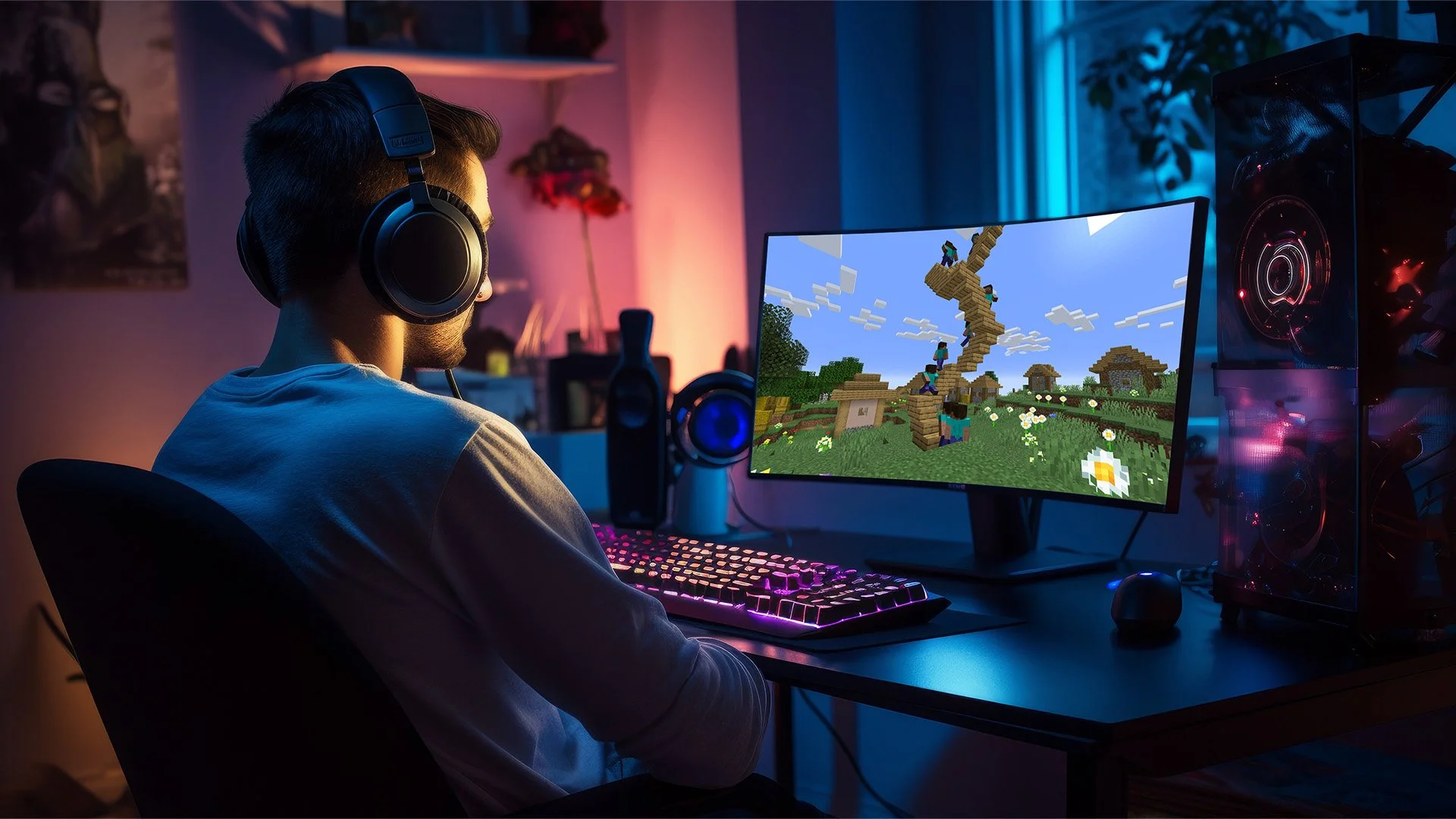
Earlier this evening, I logged into my Discord server as I do each week, to catch up with some internet friends while playing The Elder Scrolls Online. For some technical reason, the game was unavailable, so we chatted among ourselves while pursuing other activities. I don’t think any of us actually played another game while we talked. However, despite the absence of any MMO related entertainment, we managed to keep ourselves amused for three hours. For me this anecdote highlights a point I’ve made many times in the past, that games do not create social interaction but merely facilitate it. Furthermore, the social element of the MMO genre is often misunderstood, misrepresented and over sold. Much of the enjoyment that we get from the social aspect gaming is from our interactions with friends. However, this is not solely dependent on the game which is ultimately nothing more than a conduit.
Earlier this evening, I logged into my Discord server as I do each week, to catch up with some internet friends while playing The Elder Scrolls Online. For some technical reason, the game was unavailable, so we chatted among ourselves while pursuing other activities. I don’t think any of us actually played another game while we talked. However, despite the absence of any MMO related entertainment, we managed to keep ourselves amused for three hours. For me this anecdote highlights a point I’ve made many times in the past, that games do not create social interaction but merely facilitate it. Furthermore, the social element of the MMO genre is often misunderstood, misrepresented and over sold. Much of the enjoyment that we get from the social aspect gaming is from our interactions with friends. However, this is not solely dependent on the game which is ultimately nothing more than a conduit.
How often have you done any of the following? Logged into a game not because you have a pressing need to run a dungeon but because you simply wanted to hang out with like minded people and have a chat. Used your guild mates as a form of group therapy because you just got dumped, didn’t get that promotion or have just had a bad day. Decided to just ride around the virtual world for a while and talk shit with friends, rather than go do the dishes or some other chore you don’t feel disposed towards doing. I suspect a lot of people will have done one or more of these? I know I have. Sometimes the most appealing aspect of social gaming is access to people. The world has changed a lot in my lifetime and the close knit social communities I knew in the seventies are not necessarily there for a lot of folks these days. You don’t always know your neighbours or remain friends for life with the people you went to school with these days. MMOs offer an alternative to this in so far as an opportunity to strike up friendships if you so desire.
Gaming can be greatly enhanced by social interaction, especially when it is with friends. I often think that developers lose sight of this subtle distinction. Too often they confuse random grouping in co-op gaming with the social dynamic you find in close-knit guilds and erroneously think it will yield the same results. It does not. I have had some good experiences with random grouping, but they have been few and far between. Too often they are a necessary evil that you have to endure to achieve your goal. On the other hand, gaming with my peers, who I know and respect, has provided some of the most enjoyable experiences I’ve had in recent years. I still regularly talk to people I’ve known via guilds and kinships irrespective of whether we actually play MMOs together. Some of these friendships are over a decade old and have out lived some of the MMOs that spawned them.