
Childhood's End (2015)
For anyone with a passing interest in literary science fiction, Arthur C. Clarke’s Childhood’s End is a seminal novel and considered an essential read. The story of humanity being shepherded into a utopian golden age by allegedly benevolent alien Overlords and the consequences it has upon society, was a radical departure from prevailing science fiction norms of the time. Over the years several film makers have expressed interest in adapting the story, but it has proven difficult to come to grips with. Stanley Kubrick initially wished to develop the novel but his subsequent collaboration with the author eventually lead to the making of 2001: A Space Odyssey. Since then there have been radio adaptations and audiobook versions, all of which seem to be a better medium for this episodic and contemplative tale. In late 2015 US cable and satellite channel Syfy broadcast a three-part miniseries based upon the 1953 story; something that past me by at the time. I recently caught up with this adaptation which seems to have provoked very mixed reactions among viewers. As ever, the controversy seems to stem from purists who favour a more slavish interpretation of the book.
For anyone with a passing interest in literary science fiction, Arthur C. Clarke’s Childhood’s End is a seminal novel and considered an essential read. The story of humanity being shepherded into a utopian golden age by allegedly benevolent alien Overlords and the consequences it has upon society, was a radical departure from prevailing science fiction norms of the time. Over the years several film makers have expressed interest in adapting the story, but it has proven difficult to come to grips with. Stanley Kubrick initially wished to develop the novel but his subsequent collaboration with the author eventually lead to the making of 2001: A Space Odyssey. Since then there have been radio adaptations and audiobook versions, all of which seem to be a better medium for this episodic and contemplative tale. In late 2015 US cable and satellite channel Syfy broadcast a three-part miniseries based upon the 1953 story; something that past me by at the time. I recently caught up with this adaptation which seems to have provoked very mixed reactions among viewers. As ever, the controversy seems to stem from purists who favour a more slavish interpretation of the book.
Childhood’s End has been updated and embellished to suit the requirements of contemporary television. The cold war setting has been replaced with our modern era, along with all its associated political and corporate problems. The opening scenes of the Overlords spaceships arriving at all the world’s major cities is very reminiscent of Independence Day, which itself was derived from Clarke’s original novel. It’s a classic situation of art imitating art. But far from being a hostile invasion, the visitors signify their intent by lowering all air traffic from the skies. They subsequently contact key personnel via manifestations of their deceased loved one and explain how they are here to eliminate disease, war, hunger, and pollution, setting the stage for the "Golden Age of Humanity". Midwestern farmer, Ricky Stormgren (Mike Vogel) is chosen by the supervising alien, Karellen (Charles Dance), and becomes his spokesman and go-between and facilitate the forthcoming changes.
However, not everyone views the alien intervention in earthly affairs as a good thing. Vested interests resent their loss of power and influence. Media mogul Hugo Wainwright (Colm Meaney) secretly organizes a counter-group dubbed the Freedom League which uses social media to spread distrust about the Overlords. However the broader public, especially the poor and disenfranchised welcome the seismic societal changes. When Milo Rodericks, a disabled youth from a poor neighbourhood, is shot and killed by a drug dealer, the Overlords intervene killing the attacker. Not only do they resurrect Milo but they cure him of his ailments and restore his ability to walk. And while the rest of the world begins to question longstanding religious beliefs, Peretta Jones still maintains her views on a Higher Power and becomes committed to finding answers about the Overlords. Exactly why have they chosen to share so much with humanity and why do they choose not to reveal themselves directly to the world, acting instead through intermediaries.
Clarke’s book has three distinct phases to its narrative structure. The Earth and the Overlords, The Golden Age and The Last Generation. These are broadly used to as the basis of each of the three instalments of this miniseries. The first and possibly best episode deals with the arrival of the Overlords and the way humanity reacts to the situation. The second part focuses on how the Earth has become a utopia with an end to war, poverty and social injustice. Yet it is a society that some feel is culturally stagnating. Adversity is often the driving force of progress. And it is at this point that the story begins to reveal the Overlords agenda, although it would be more accurate to describe it as an agenda they are tasked with implementing. The sting in the tail is far more subtle than The Twilight Zone episode, To Serve Man. It is an act of cosmic social engineering in which a new generation of humans with clairvoyance and telekinetic powers are born, with the ultimate goal of joining the Overmind, a collective intelligence made up of numerous intergalactic species. The final part sees the literal ascendency of these new humans and the collapse of the earth society as the Overlords prepare to leave. The ending is stark and whether it is a triumph or a tragedy depends on your perspective.
Writer Matthew Graham tries hard to try and put some meat on the bones of the human characters, as Clarke’s book is very much one of ideas and concepts, rather than immaculately penned individuals. Dragging the black and white, Cold War setting of the source text, into the modern world is a difficult task. Despite the inclusion of modern social issues and politics, the human element in this adaptation is still a little stilted. Osy Ikhile plays the disabled boy Milo who grows to be the scientist that bears witness to the great transition. His role is a little more interesting than others who are essentially archetypes of different aspects of human society. There’s no denying that Charles Dance steals the show as the alien, yet ultimately paternal Karellen. He masters all of the subtle aspects of the iconic character that are found in the book. Despite the multitude of practical and CGI effects, his performance shines through. The handsome production design also offers some much-needed visual imagery to try and make the weighty plot more accessible to causal viewers.
Childhood's End, like the book is a somewhat dour undertaking. Despite its modern sense of style and slick presentation is still dealing in deep existential, philosophical themes. It’s refutation of religion and beliefs, along with its penchant for societal Darwinism on a global scale may not sit well with those viewers who are governed more by their feelings. Yet it does successfully capture the core themes and ideas of Clarke’s novel and tries to present them in a positive fashion. Although the miniseries never maintains the strengths of the first episode and subsequently tries to counter the science and philosophy with emotional character journeys, the overall strength of the Clarke’s vision is maintained. Despite the pyrrhic ending in which mankind as we know it is lost, the thematic requiem is tempered with the knowledge that some of our species have transcended the material and joined the Overmind. Such ideas were quite radical back in 1953 and remain so today, especially in light of the growth of the consumerism and individualism. Childhood's End is a flawed but worthy adaptation of a novel that is objectively hard to dramatise and humanise.








The Andromeda Strain (2008)
I always cringe when I hear the phrase re-imagining. It's yet another contrived expression created by marketing bodies to justify the somewhat arbitrary process of remaking an established title. Often the re-imagined product has little to do with the source material and was chosen simply because of brand awareness. If you want a textbook example of a recent example of this somewhat cynical process then look no further than last year’s Death Wish reboot. It had nothing new to say on the subject and simply trotted out a generic and bland revenge thriller. So, when I discovered that Robert Wise's classic science fiction film, The Andromeda Strain had been remade as a TV miniseries (that had completely passed me by), I had great reservations as to whether this would be worth watching. However, the involvement of Tony and Ridley Scott piqued my interest, so I decided to take a calculated risk and give this 2008 A&E Network production a go.
I always cringe when I hear the phrase re-imagining. It's yet another contrived expression created by marketing bodies to justify the somewhat arbitrary process of remaking an established title. Often the re-imagined product has little to do with the source material and was chosen simply because of brand awareness. If you want a textbook example of a recent example of this somewhat cynical process then look no further than last year’s Death Wish reboot. It had nothing new to say on the subject and simply trotted out a generic and bland revenge thriller. So, when I discovered that Robert Wise's classic science fiction film, The Andromeda Strain had been remade as a TV miniseries (that had completely passed me by), I had great reservations as to whether this would be worth watching. However, the involvement of Tony and Ridley Scott piqued my interest, so I decided to take a calculated risk and give this 2008 A&E Network production a go.
This new version stays fairly true to basic premise of Michael Crichton’s novel, with a satellite returning to earth bringing with it a mystery virus of possible extraterrestrial origin. The small town of Piedmont soon falls victim to the contagion, leaving only two survivors, an alcoholic and a baby. The "wildfire" team of scientists are brought in by the government to tackle the outbreak and find a potential cure. There work is hampered by the virus’s ability to mutate to find new ways of spreading. The writer, Robert Schenkkan, has also added new elements that reflect contemporary culture and politics. The question of the virus' origin is intriguing and of course there are factions within the government who are not to be trusted. There is also a journalist seeking to expose the ongoing conspiracies. It is all somewhat generic but it is not a lazy as it sounds. Due to the credentials of those involved in the production, it offers a little more tension and drama than one expects from such miniseries.
The cast is robust, featuring Benjamin Bratt (Law & Order, Love in a time of Cholera), Rick Schroder (24, NYPD Blue), Eric McCormack (Will &Grace), Daniel Dae Kim (Lost) and Andre Braugher (City of Angels). Performances are okay given the inevitable formula of the vehicle. There are a lot more characters in this adaptation, given the need to expand the story over two episodes. Hence there are times when cast members come and go simply to facilitate moving the story forward. Production values are adequate with the confines of the budget, with creative set designs and interesting use of locations. The action is quite hard for a television miniseries, though some of these scenes do seem a little tonally out of place. Perhaps the director Mikael Salomon (who has been involved with several miniseries such as Rome, Salem’s Lot and Band of Brothers) feared making an excessively narrative driven drama, like the original feature film, so felt obliged to overstate certain plot elements to keep the interest of easily bored viewers. Admittedly by the end, there is a decline into cliché and several events that were obviously telegraphed earlier in the proceedings inevitably occur.
Those who have seen the 1970 feature film may well see this new version as somewhat intellectually diluted. Personally, I think one has to bear in mind historical context. The seventies were a time when the cinematic audience was more sophisticated and willing to invest in stories that made them think for themselves. The new version simply reflects what “sells” with today’s viewers and although there is more focus upon action, this adaptation still tries to keep the underlying science of story front and centre. All things considered The Andromeda Strain is better than expected. Given the nature of the system that made it, this actually exceeded my expectations, which I must admit were initially very low. It offers a different perspective on the source material and doesn’t outstay its welcome. Its two-part format is an appropriate length and is able to sustain the story. As ever with such productions some of the CGI is a little cheap and I’m not a fan of blood spatter added in post-production. Overall this is adequate entertainment. If you want something weightier then by all means watch the original, but this version fills a niche.
E3 2019
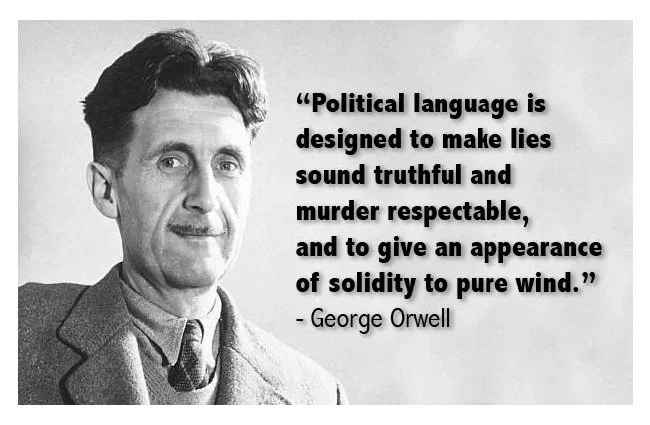
I’ve watched a few presentations from this year’s Electronic Entertainment Expo over the last few nights, mainly out of idle curiosity. Overall, it’s all broadly been what I expected. This is not your run of the mill promotion and advertising. No sir. This is targeted marketing, delivered with all the vigour and verve of “old time religion”, preached by a “fire and brimstone” minister to the faithful. It’s a curious symbiotic relationship between awkward, forty something tech guys as they stand on stage and strive to remember their media training and an audience of fundamentalist gamers who are there to whoop and clap on cue. Information about forthcoming games is not merely imparted but presented as gospel or the party manifesto. I’ll stop there with the religious and political analogies but they come very easily because that’s what E3 reminds me of; a church congregation or a political rally. And when you consider that we now live in an age of “feelings” rather than “thought”, it’s easy to see why enthusiasm for new products has been replaced by an eagerness to climb aboard the hype train and ride all the way to the “promised land”.
I’ve watched a few presentations from this year’s Electronic Entertainment Expo over the last few nights, mainly out of idle curiosity. Overall, it’s all broadly been what I expected. This is not your run of the mill promotion and advertising. No sir. This is targeted marketing, delivered with all the vigour and verve of “old time religion”, preached by a “fire and brimstone” minister to the faithful. It’s a curious symbiotic relationship between awkward, forty something tech guys as they stand on stage and strive to remember their media training and an audience of fundamentalist gamers who are there to whoop and clap on cue. Information about forthcoming games is not merely imparted but presented as gospel or the party manifesto. I’ll stop there with the religious and political analogies but they come very easily because that’s what E3 reminds me of; a church congregation or a political rally. And when you consider that we now live in an age of “feelings” rather than “thought”, it’s easy to see why enthusiasm for new products has been replaced by an eagerness to climb aboard the hype train and ride all the way to the “promised land”.
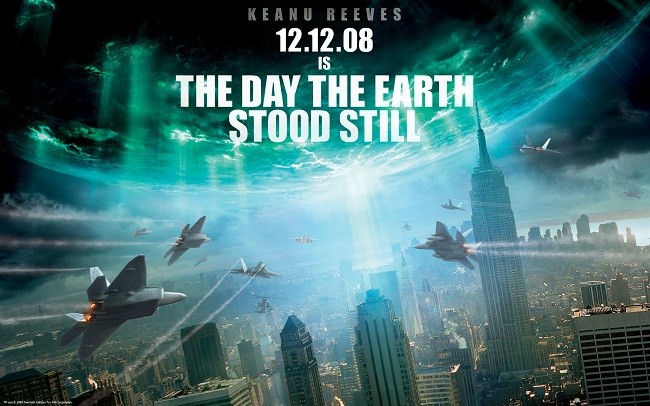
The Gospel according to Keanu Reeves
E3 follows a clearly established pattern and certainly this year’s show has ticked all the usual boxes. I will now put aside hyperbole and try and articulate what concerns me about this situation. The triple A video game industry has had a very tumultuous relationship with both the gaming press and its core customers in recent years. Early access, broken games, egregious monetisation and a general lack of ethics are just some of the iniquities that are prevalent. Then there’s the broken relationship with the media, “influencers” and a need to “control the message”. And let us not forget that some companies have a track record of institutionalised bullying, sexism, crunch culture and general “douchebaggery”. So I find it somewhat contradictory that such companies have the unmitigated gall to stand on a stage and make out that they’re gamer’s best friend. The very companies that have patented algorithms for trying to squeeze every possible penny from their core customers. It’s also weird that the people who have been burned by such business practises, develop temporary amnesia for the entire duration of E3 and happily participate in this charade.
“Would I lie to you?”
There is a lot of truth in the old adage that politicians are only as good or bad as we allow them to be. We are now seeing a similar race to the bottom spill out of government and become de rigueur in business culture. So unless we call out the video game industry loudly and clearly whenever it lies, acts unethically, abuses customers good will and doggedly perpetuates “bro culture”, we as gamers are just facilitating the ongoing decline of very thing we allegedly love. As for this year’s E3 presentations, sure there do appear to be some good titles coming our way, but if you have a functioning intellect, you’d be well advised to take it all with a pinch of salt. Bear in mind previous games that were much lauded when announced, that subsequently failed to live up to expectations upon release. Do you really want to pay up front purely on the strength of a promise, from “an old liar with honey on his forked tongue”? If gamers truly want the industry to change then they need to stop enabling its failings and encouraging its excesses. Otherwise we are doomed to endure more hysterical, hyperbolic presentations such as those we’ve seen this week.






The Perils of Installing Old PC Games
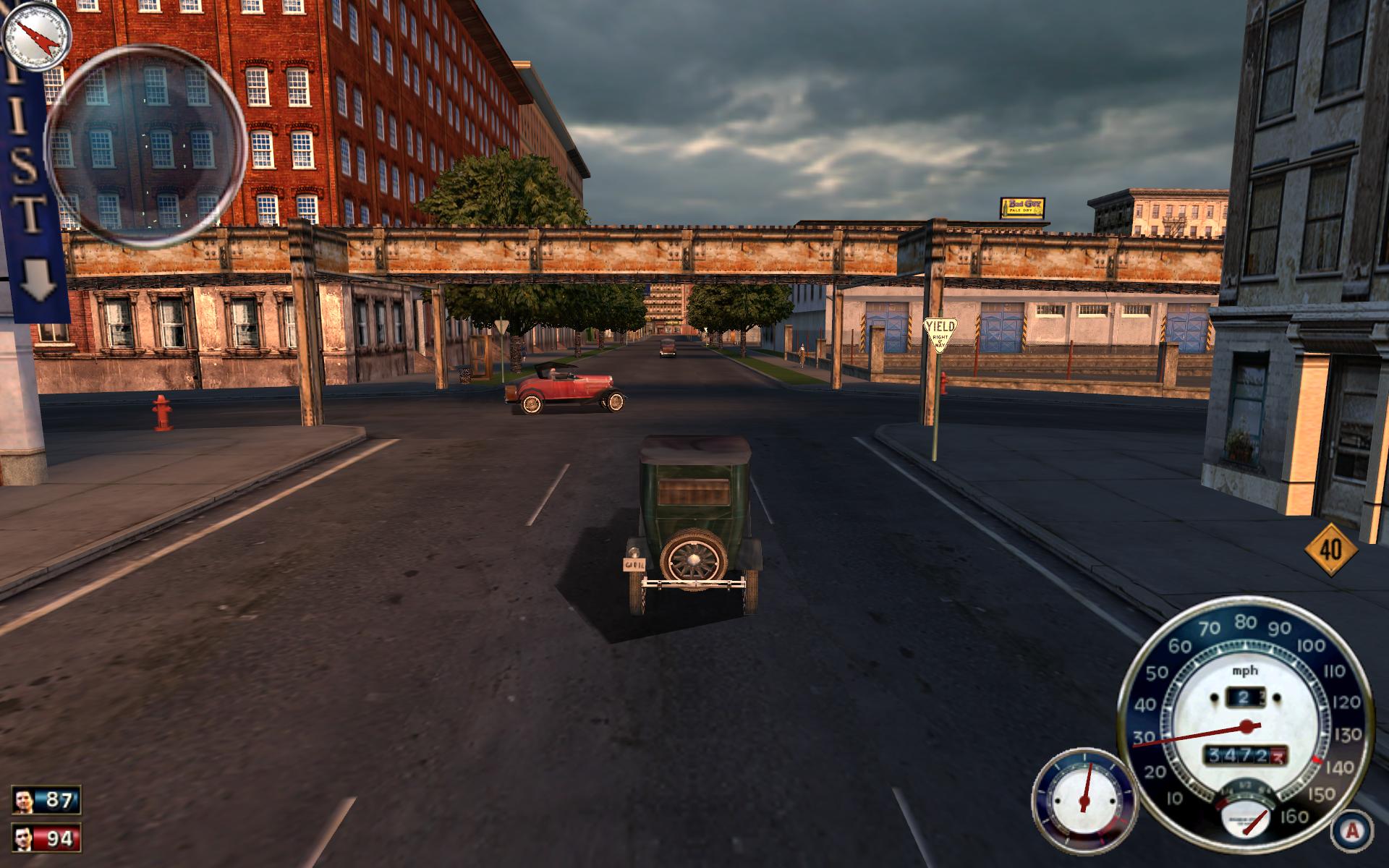
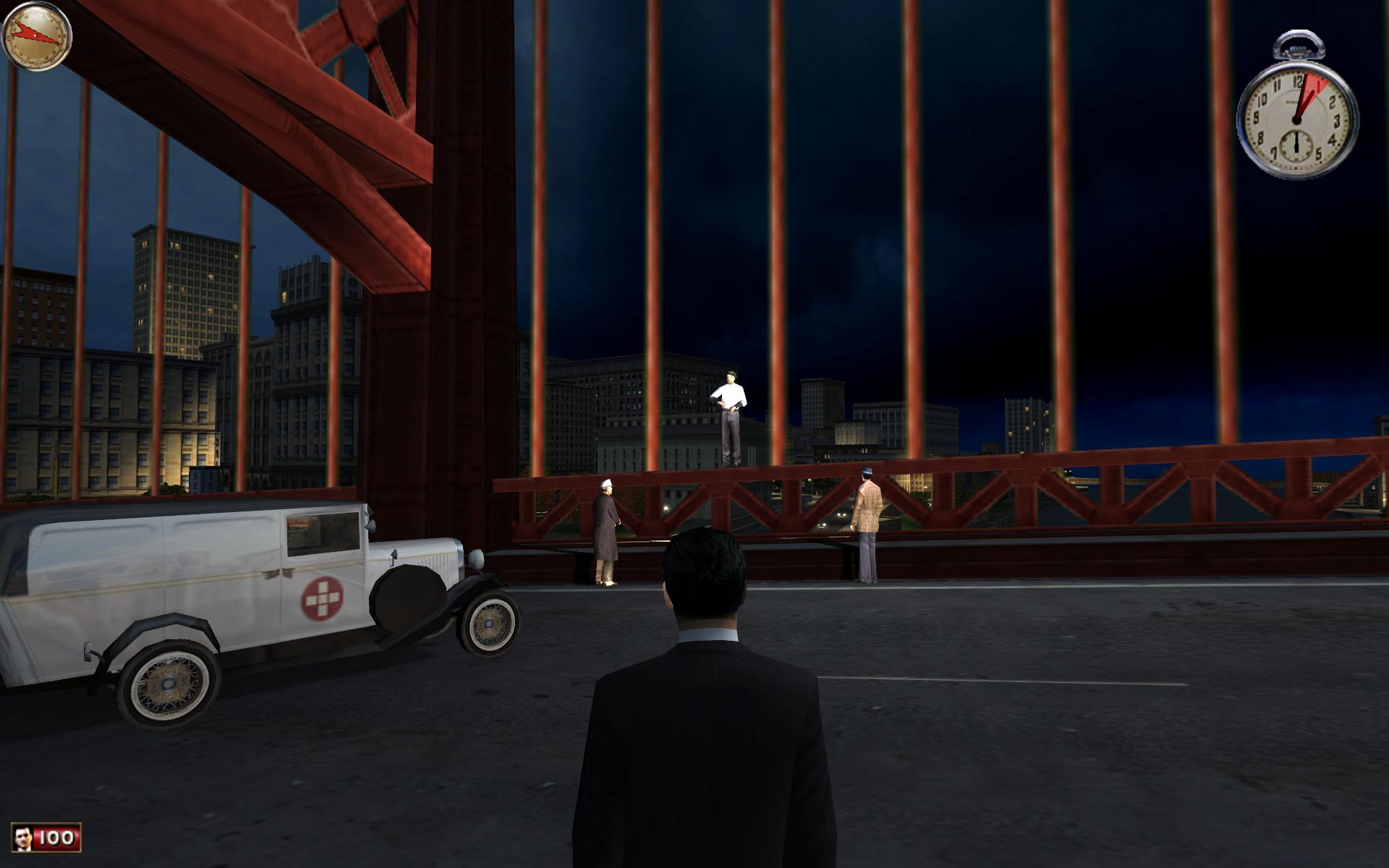
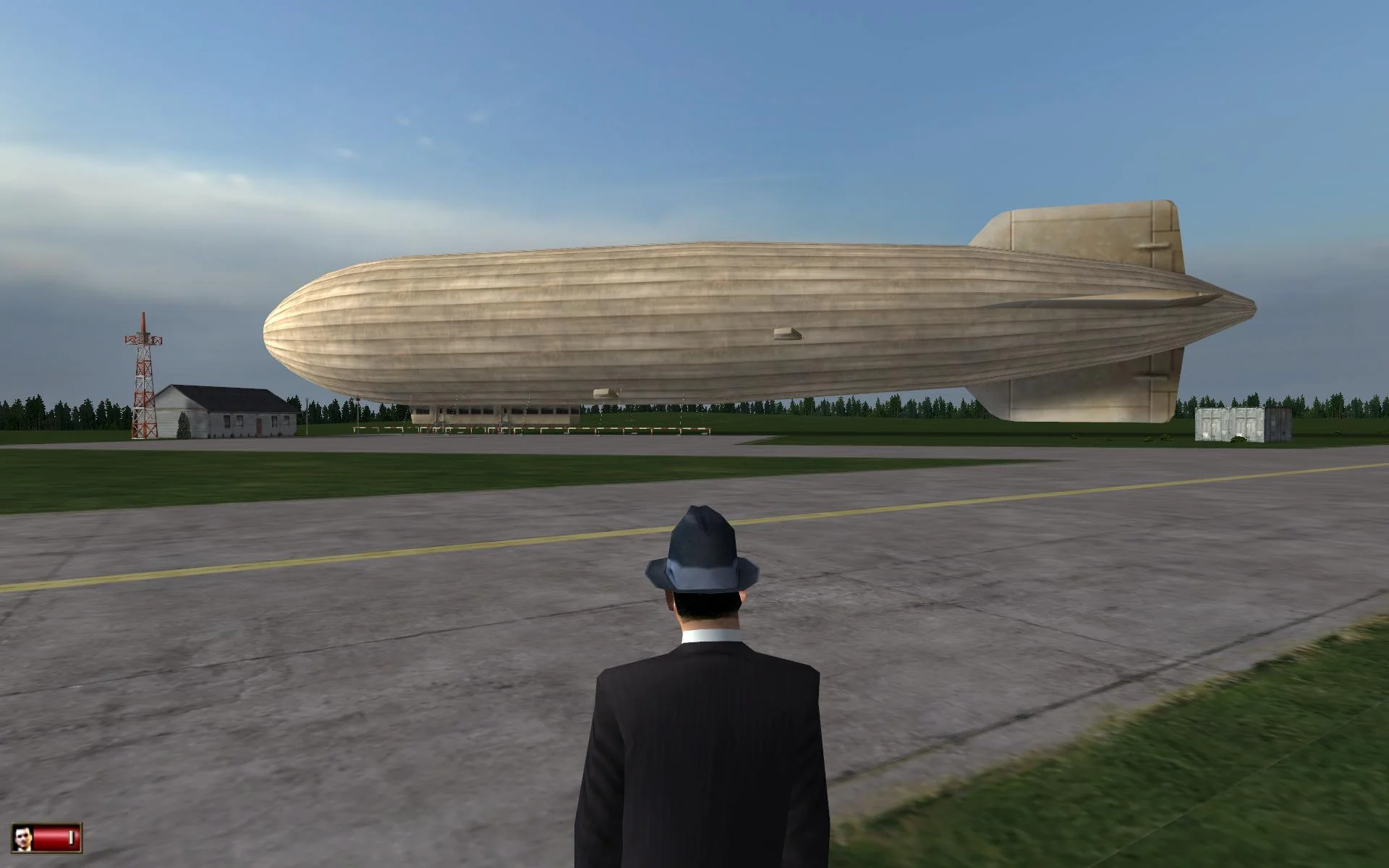
This is a big subject with thousands of PC games from over a decade ago that could be referenced. However, for the sake of brevity, I am just going to mention three in this post. So to begin with let’s just bypass the entire “nostalgia versus current” debate. Simply put, I feel there is value and enjoyment to be found in older PC games. Graphics and game mechanics naturally date, but often the technical limitations that existed at the time made the game developers both innovative and creative. Therefore you will often find that there are older titles that still have merit and something to offer. I recently bought Mafia which is the first instalment of a franchise currently owned by 2K Games. I have only played the latter two iterations of the game, namely Mafia II released 2010 and Mafia III released 2016. I was aware that the original released back in 2002, had a good reputation for its story driven gameplay and that it is still considered both challenging and creative.
This is a big subject with thousands of PC games from over a decade ago that could be referenced. However, for the sake of brevity, I am just going to mention three in this post. So to begin with let’s just bypass the entire “nostalgia versus current” debate. Simply put, I feel there is value and enjoyment to be found in older PC games. Graphics and game mechanics naturally date, but often the technical limitations that existed at the time made the game developers both innovative and creative. Therefore you will often find that there are older titles that still have merit and something to offer. I recently bought Mafia which is the first instalment of a franchise currently owned by 2K Games. I have only played the latter two iterations of the game, namely Mafia II released 2010 and Mafia III released 2016. I was aware that the original released back in 2002, had a good reputation for its story driven gameplay and that it is still considered both challenging and creative.
So I purchased the game from Good Old Games and installed it via their Galaxy gaming client and installer. One of the major selling points of GOG as a game provider is the way they retrofit old titles to run on current operating systems. I could easily have picked up a copy of Mafia on physical media but installing and running the game from such a source is often problematic. Setting aside driver issues, compatibility mode and the like, many installation disks from this era use obsolete copy protection software. SafeDisc being one example. Thus playing Mafia from a CD installation is dependent upon removing a very specific Windows Update that disabled SafeDisc support. If you have a more recent build of Windows 10, you may find that it is integral to your operating system and cannot be uninstalled. I encountered this same issue with Hidden and Dangerous 2 recently which I installed from the original media. Without the necessary copy protection support the game’s main executable would not work.
However, despite GOG doing their best to resolve such technical issues with the older titles that sell, other problems can arise. For example Mafia has a soundtrack consisting of period Jazz music from such artists as The Mills Brothers, Louis Armstrong and Django Reinhardt. However, due to licensing complications the music is absent in the GOG release. Now some players may not think this relevant to their enjoyment of the game, but I feel that it is integral to the overall game experience. Hence, I spent an hour reading the GOG forums as to how to restore the game score. There is a way to do so and someone has posted a link to the “removed” files which they’ve sourced from the original installation CDs. Needless to say I have followed this process and all has gone well, but it does require you to put your trust in your fellow gamers and that is not something one does lightly.
Another problem arising from installing Mafia is that this is a game that hales from a time when screen resolutions were a lot lower and aspect ratios other than 4:3 were not commonplace. Thus, elements of the onscreen UI are distorted or broken when running the game at 1920 x 1200, which is my default screen setting. Again a search online will yield a list of workarounds and I found a suitable “mod” over at Nexus Mods, along with another to update the draw distance for modern PCs. Nexus Mods is a long-established site whose community ensures that bogus mods are eliminated, making their content more reliable than other third-party sites. Hence, I was finally able to play Mafia with the original score and at a contemporary screen resolution without and distortion. My initial impressions of the game are good. The story is indeed well written and the missions are quite taxing, although the vehicle handling is appalling.
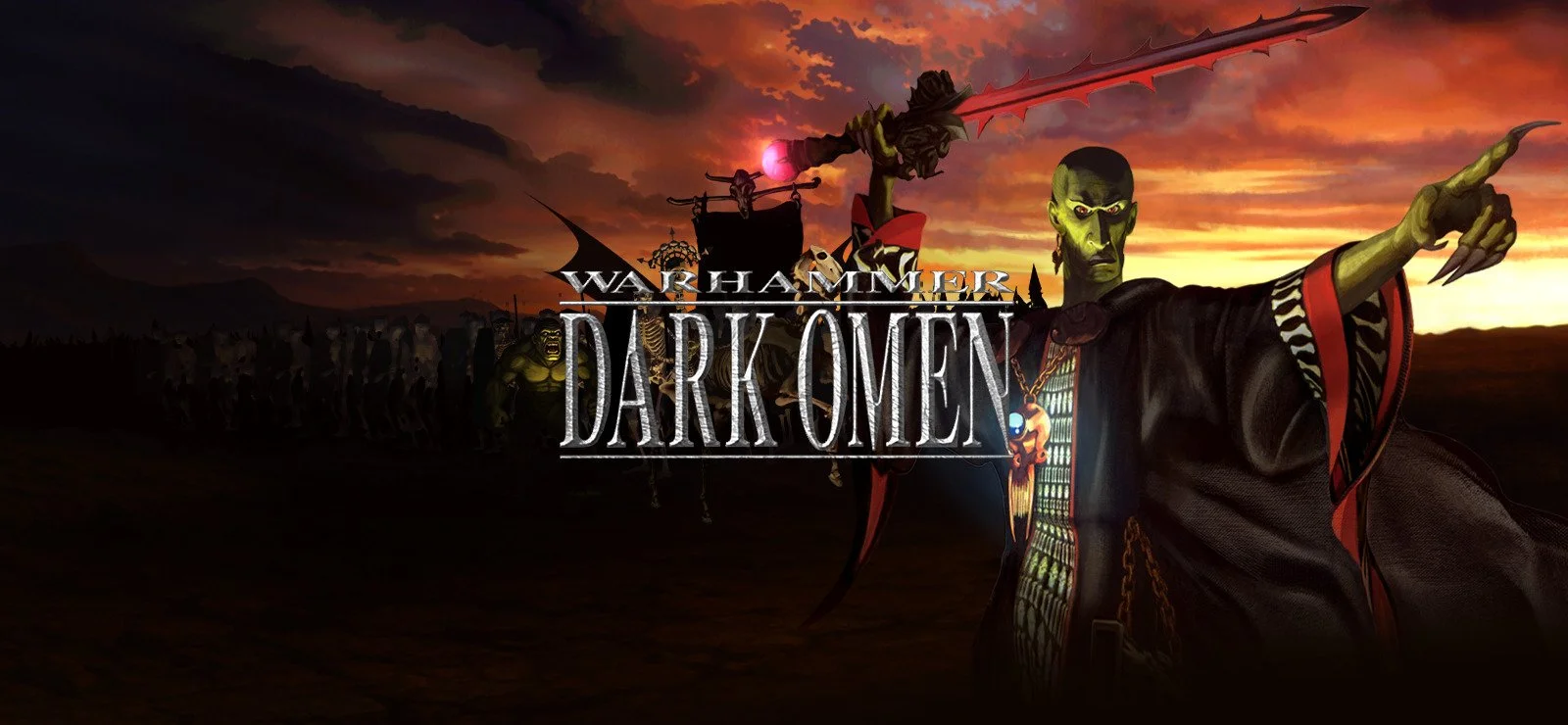
Another favourite game of mine from the late nineties is the real-time tactical fantasy wargame, Warhammer: Dark Omen. This game was released in 1998 and used 3D generated terrains in which 2D sprites subsequently battled. The game was one of the first to include support for the first-generation Voodoo 3dfx 3D accelerator cards. Getting such a game, which was also designed to run on Windows 98 to function on a modern PC is a challenge. Unlike Mafia, if you want to play Warhammer: Dark Omen, then you have to do more than apply a few mods. There is an entire forum dedicated to this game with a very complex set of instructions to get the game working. Going to such lengths to play a game one feels nostalgic about may not viable option for everyone. Therefore, the casual gamer would be wise to bear in mind that purchasing a much beloved title from GOG does not guarantee an exact duplicate experience to what you may have had previously. Nor does trying to install and play a game using the original media. Unless you have access to older hardware with the appropriate operating system of the time, you’ll probably have to do some tweaking to get things running either way. Therefore, caveat emptor.
Identification and Bureaucracy
I spent several hours this week visiting banks, endeavouring to have my personal details added to my Father’s bank accounts. I was recently awarded power of attorney (LPA) and have now got a long list of companies, government departments and organisations that I need to notify so that I can administer his affairs. However, this process has proven a little more difficult than I expected. The problem doesn’t lie with the LPA, which is valid and in order. The main stumbling block lies with me, as I do not have either of the two commonest forms of identification used in the UK; a current passport or a driver’s license.
Luckily, the banks have a list of alternative ID that can be used and I have managed to find two others that I do have. So far, I have used my recent award notice for Carers Allowance from the Department of Work and Pensions (DWP) along with a current bank statement from Santander to verify my identity. However, there were many other alternative forms of ID that I do not have. For example, as I moved in with my partner, utility bills are all in her name. Many of the services that I do pay for myself, such as my mobile phone contract, are administered online and therefore do not provide any paperwork. Needless to say, this situation has given me food for thought about the entire issue of proving my identity.
I spent several hours this week visiting banks, endeavouring to have my personal details added to my Father’s bank accounts. I was recently awarded power of attorney (LPA) and have now got a long list of companies, government departments and organisations that I need to notify so that I can administer his affairs. However, this process has proven a little more difficult than I expected. The problem doesn’t lie with the LPA, which is valid and in order. The main stumbling block lies with me, as I do not have either of the two commonest forms of identification used in the UK; a current passport or a driver’s license.
Luckily, the banks have a list of alternative ID that can be used and I have managed to find two others that I do have. So far, I have used my recent award notice for Carers Allowance from the Department of Work and Pensions (DWP) along with a current bank statement from Santander to verify my identity. However, there were many other alternative forms of ID that I do not have. For example, as I moved in with my partner, utility bills are all in her name. Many of the services that I do pay for myself, such as my mobile phone contract, are administered online and therefore do not provide any paperwork. Needless to say, this situation has given me food for thought about the entire issue of proving my identity.
A cursory search online shows that this is not an uncommon phenomenon and that I’m far from unique. According to the RAC, as of March 2019, the total number of driving licences registered with DVLA in the UK was 48,992,312. The UK population is currently 66.04 million, which means 17.19 million people do not have a driving licence that they can used as ID. It’s a similar story with passports. As of the end of 2018, there were 50,437,362 valid UK passports held by UK citizens. Again that means that 15.66 million people do not currently hold one, again missing out on the commonest form of personal identification.
There are many reasons why a person may not have a driving licence or passport and they tend to be based around age, as well as socioeconomic reasons. The politics of such matters is an entirely different blog post altogether, so I won’t attempt to address that here. In my case, I have written in the past about not being a “driver” which is mainly down to my social circumstances when I was a teenager. I had friends whose employers paid for them to learn how to drive, so they quickly became the designated driver of our group. With regard to work, I’ve always been employed in central London, where public transport is more than adequate. Hence, I’ve never needed to drive and as time has gone by, neither desired to do so. As for a passport I have had one in the past and it expired in 2010. As I have not required to travel outside the UK since then I haven’t renewed it.
We live in a world that is radically different from the one that I grew up in during the seventies. Identity theft has become “a thing” and as we move more towards conducting business online, there is a clear need to be able to easily prove one’s identity easily. Yet the moment western governments raise the subject of identity cards, the public tends to robustly reject such concepts. This is especially the case in the UK. There was legislation brought forward for such a system in 2006 but it was drastically “dialled back” from the original concept. The voluntary system was subsequently repealed in 2010 mainly due to public ill-will. Naturally, there are many cogent arguments regarding personal freedom. Yet on the other hand the UK public is regularly tracked via the use of credit cards, pre-paid travel cards for public transport, not to mention smartphones and the likes of Amazon certainly know what you’re up to. So I find this resolute objection to an identity card system somewhat contradictory.
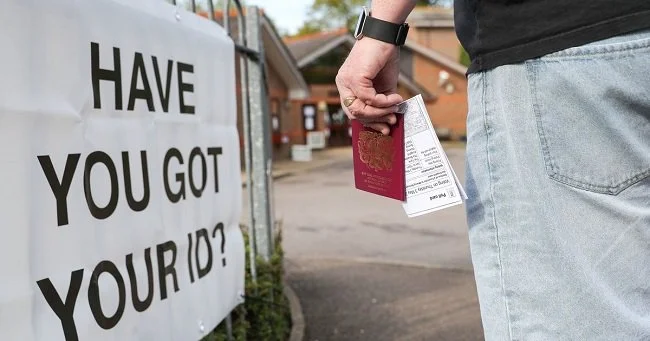
Returning to the matter of my own personal situation, I have decided to renew my passport and keep this primarily as a form of ID. As it has been under ten years, this renewal can be easily facilitated by the Passport Office and the application carried out online. It comes with a cost of £75.50 which is quite a lot if you are on a low income, but the passport is valid for 10 years so it does present itself as a worthwhile investment. I feel that it is important to ensure that I have all the necessary tools to be able to conduct my day to day business online, as I believe that romantic notions of living “off the grid” will become increasingly unlikely in the years ahead. I’ve read several reports recently regarding increasing levels of “digital exclusion” in the UK which is now seen as a major indicator of social inequality. In the recent EU elections there were several areas in the UK that were testing new voter identification systems. I suspect that in the years ahead photo ID will become mandatory for such activities as voting. The worst scenario could be that if you cannot verify who you are, then you will find yourself marginalised from society.


















A Month in Gaming
As I suspected in my last post, my gaming activities were somewhat curtailed throughout May due to both my parents being ill. However, the time I did manage to spend in-game was both therapeutic and relaxing. For me, I’ve never really seen gaming as escapism, although I appreciate it certainly is for others. One of the aspects it offers, along with a degree of challenge and entertainment, is a release from stress and the pressures of one’s daily life. Perhaps that is why I enjoyed Sniper Elite V2 Remastered so much, because not only is it a thoroughly absorbing game, it also provides a sense of catharsis. I’ve already written about the game in some detail, along with my thoughts about the ongoing “remaster versus remake” debate. However, I would add that I enjoyed it so much I re-installed the sequel, Sniper Elite III, which I haven’t played since it’s release in 2014. This also proved to be an enjoyable undertaking, again for the self-same reasons.
As I suspected in my last post, my gaming activities were somewhat curtailed throughout May due to both my parents being ill. However, the time I did manage to spend in-game was both therapeutic and relaxing. For me, I’ve never really seen gaming as escapism, although I appreciate it certainly is for others. One of the aspects it offers, along with a degree of challenge and entertainment, is a release from stress and the pressures of one’s daily life. Perhaps that is why I enjoyed Sniper Elite V2 Remastered so much, because not only is it a thoroughly absorbing game, it also provides a sense of catharsis. I’ve already written about the game in some detail, along with my thoughts about the ongoing “remaster versus remake” debate. However, I would add that I enjoyed it so much I re-installed the sequel, Sniper Elite III, which I haven’t played since it’s release in 2014. This also proved to be an enjoyable undertaking, again for the self-same reasons.
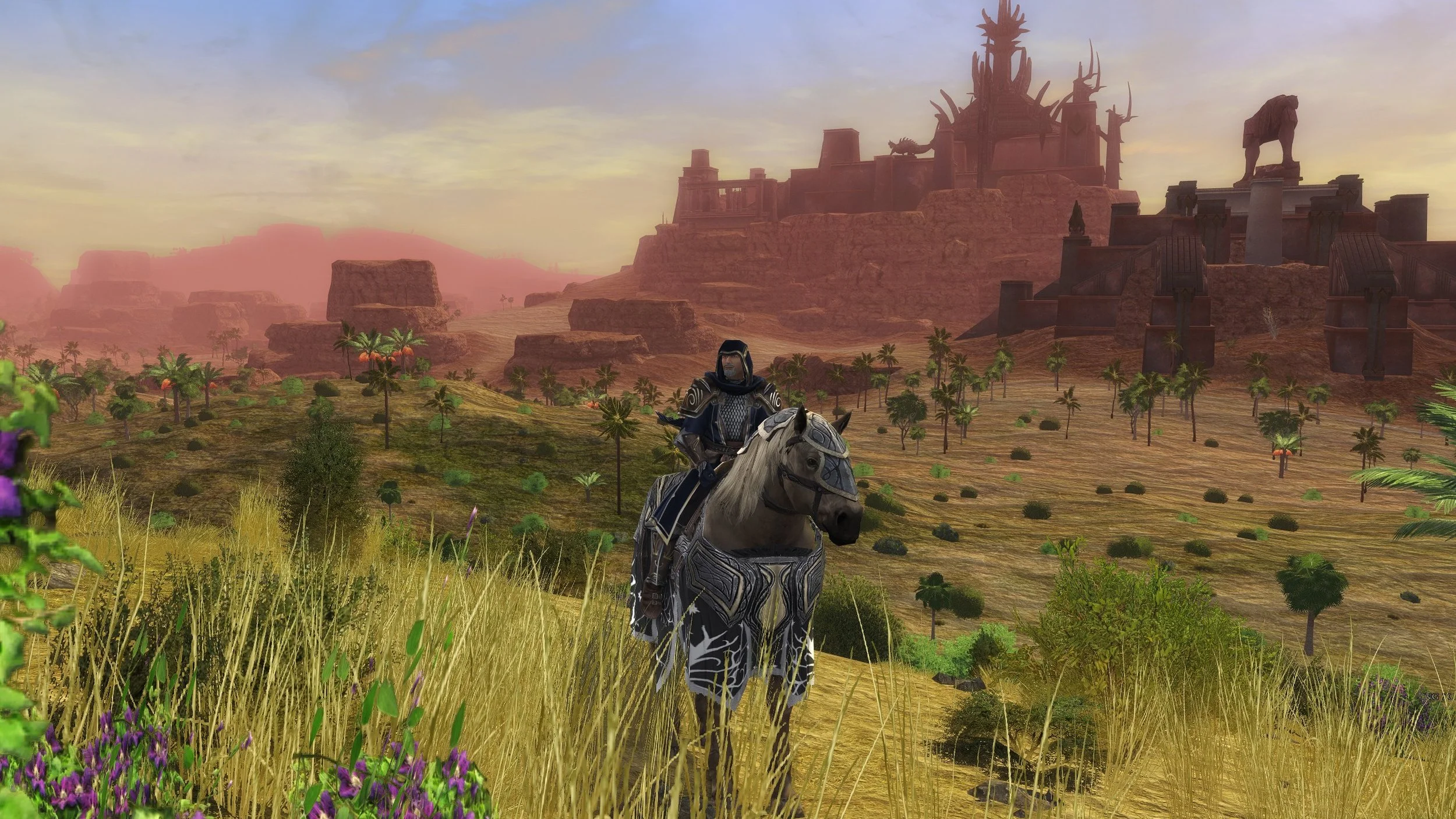
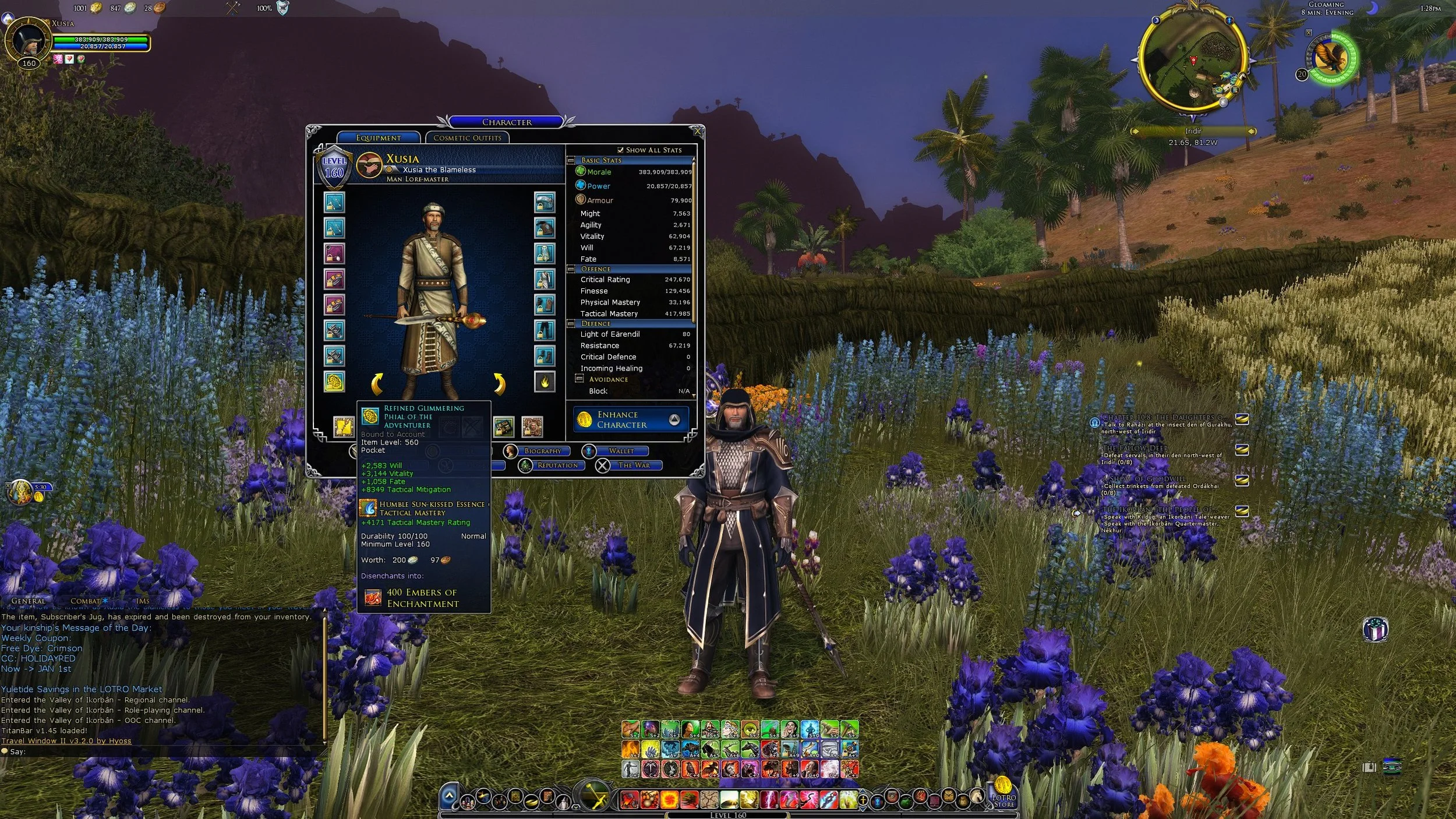
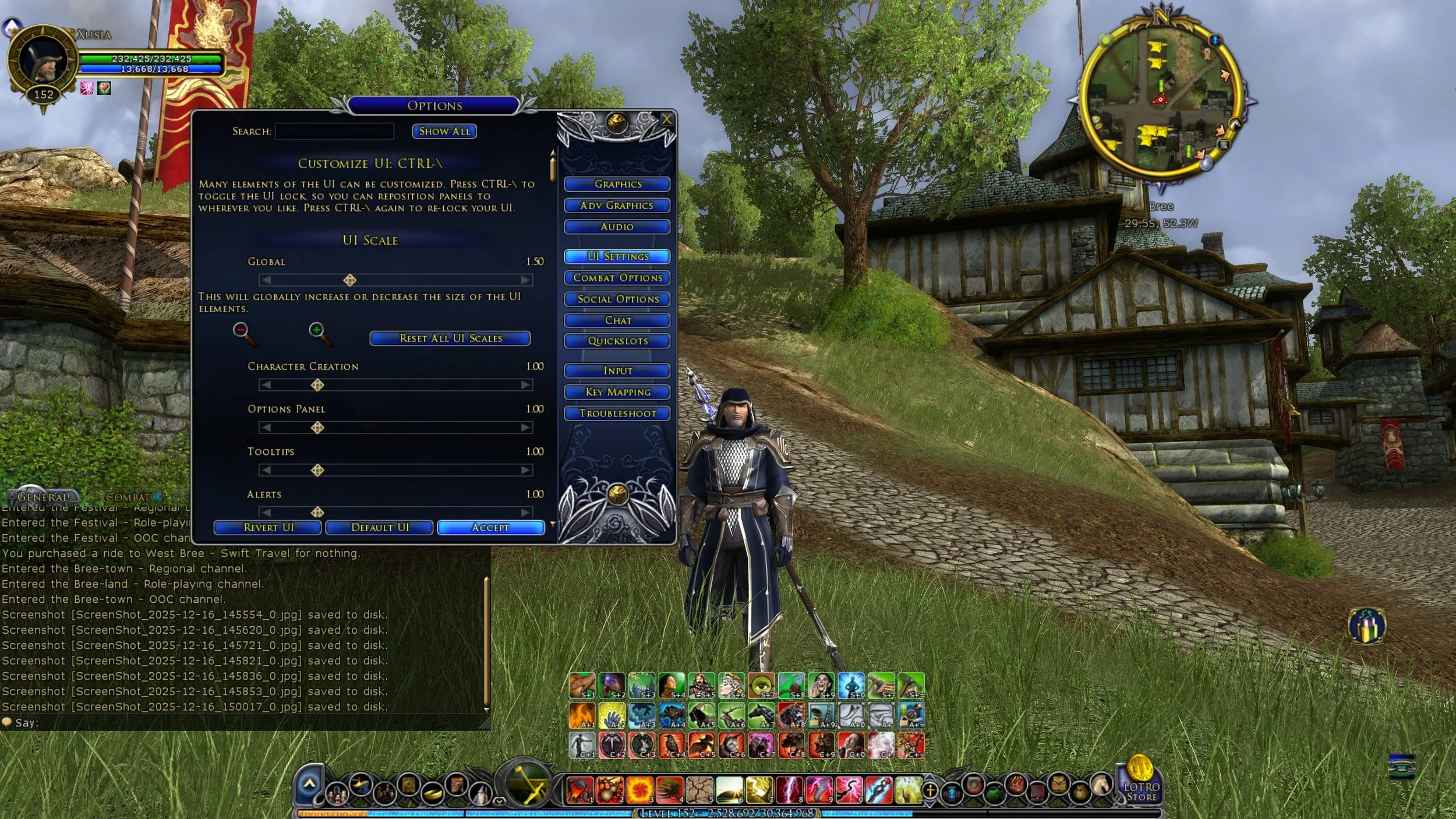
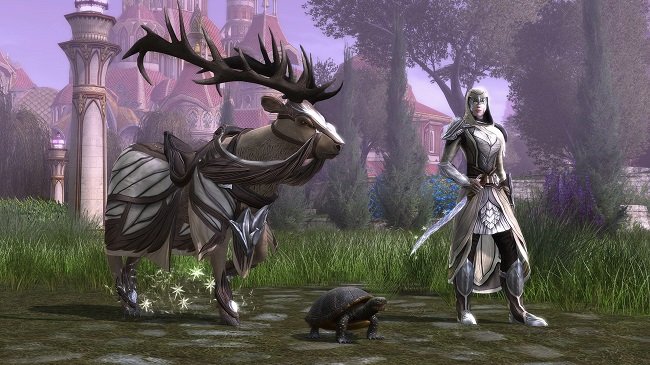
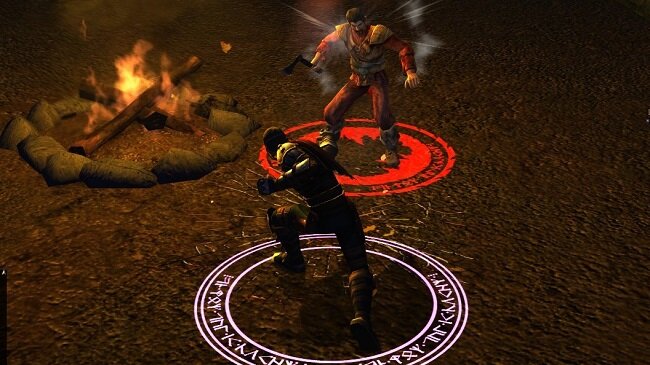
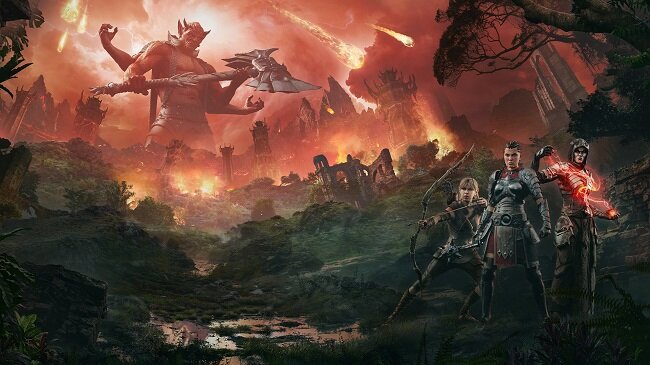
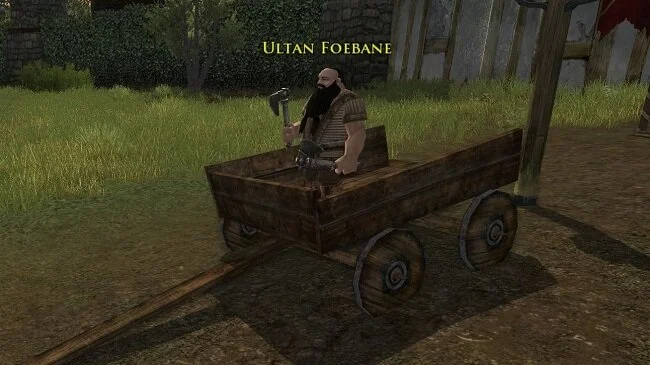
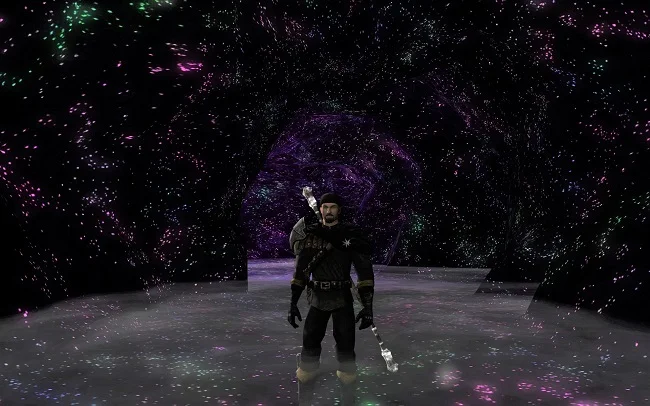
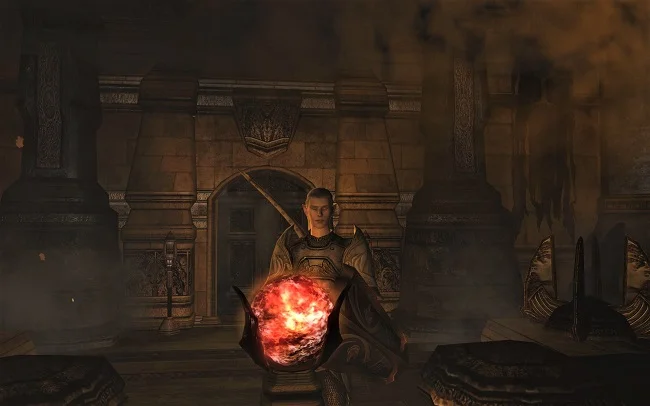
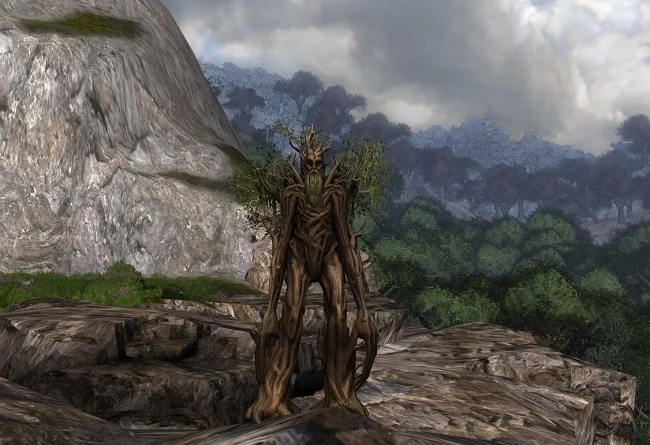
MMO wise, I continued to focus on The Lord of the Rings Online and Star Trek Online throughout May. I gritted my teeth and progressed through Western Rohan and Wildermore, endeavouring to keep the mounted combat to a minimum. The Epic Story was engaging and most of the time, I preferred to tackle mounted foes on foot, using my Archer skirmish soldier in support. However, I reached at point at level 87 when my Guardian couldn’t progress any further with the Epic Story as the content was more than five levels above. The only way to move forward would have been to grind out the regional quests and gain a few levels. This meant having to endure quite a lot of quests that were specifically designed to be completed via your Warsteed. This was not a prospect I relished. Also the continuous levelling and deconstruction of Legendary Items every five levels was becoming a nuisance. It would be so much better if developers SSG eliminated the scale of LIs from 50 to 100 and just presented you with one at the start of Moria and allowed to simply imbue and retain that for the remainder of the game.
But I digress, faced with a levelling impasse, I decided to buy the Aria of the Valar Upgrade and auto levelled to 105. The intention wasn’t to bypass content, but to allow me to continue to pursue the epic story on my own terms. The gear that the aria provides is of the non-slotted variety and is certainly adequate for all pre-Mordor content. I therefore intend to progress through the Epic Story and over time earn sufficient LOTRO points to be able to purchase nine Anfalas Star-lit Crystals. Then at an appropriate juncture I can acquire a first age Guardian’s belt, sword and two-handed sword, max out and imbue them, then lay the whole sorry LI “problem” to rest. Recent levelling has also raised the spectre of Epic Battles which have to be endured as they’re incorporated into the Epic Story. However, I have learned which ones have fail mechanics and which ones do not, so have so far managed to clear all that I’ve encountered with minimal inconvenience. At present I have got so far as Pelargir and am looking forward to exploring Minas Tirith throughout June.
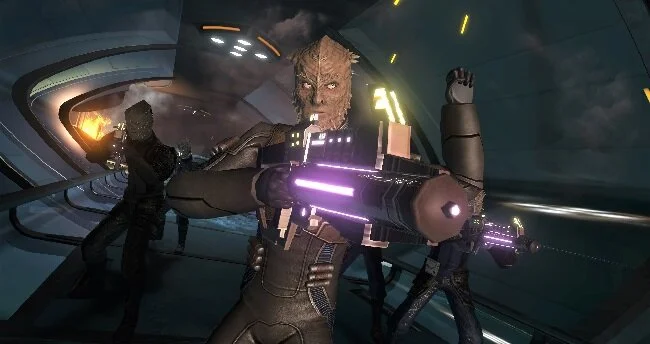
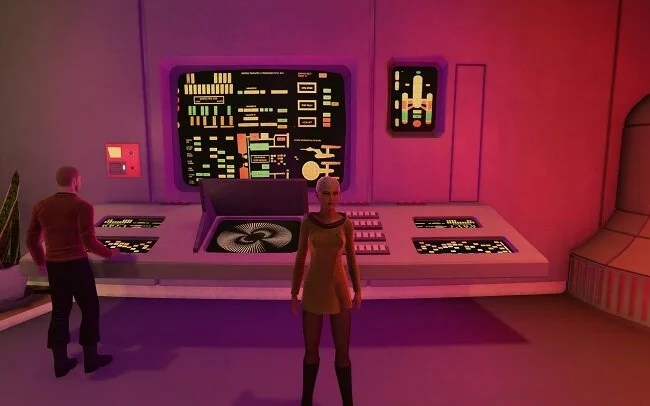
Again, STO continues to provide a quick fix of gaming with its personal endeavour system. Having reached rank 49 out of 71, the benefits of specific account wide perks being unlocked is now producing tangible results. The latest rep faction (Discovery Legends) provides several new gear sets to experiment with and this years Summer Festival is not far off now and will once again offer the opportunity to earn a Tier 6 ship. I am hoping that Cryptic will announce the restoration of several classic episodes that have been “temporarily” removed from the game to be overhauled, in the months ahead. One of the reasons I’ve stopped levelling several alts at present is due to the overarching narrative currently being out of sync and somewhat confused. I’m also toying with experimenting with my Romulan alt to see if I can contrive a build that utilises their alleged DPS advantage. One of the benefits of STO is the way you can experiment with builds without being 100% dependently on the most optimal gear. The various game systems offer enough scope for small tweaks that can yield improved performance without having to have the resources of an über player.
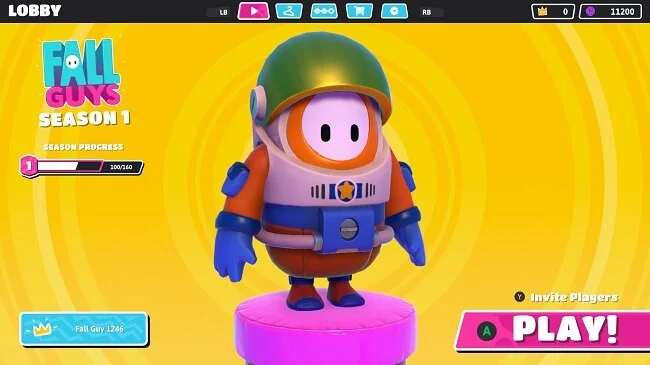
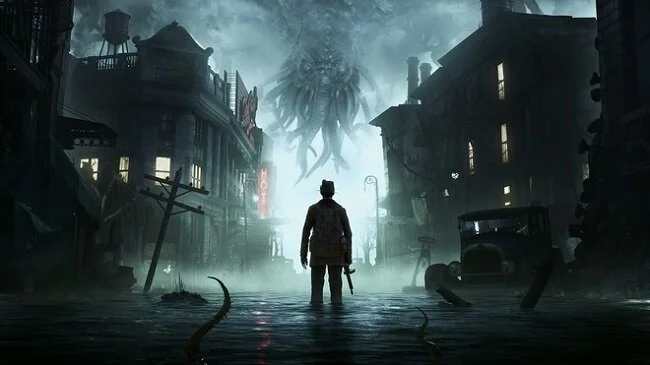
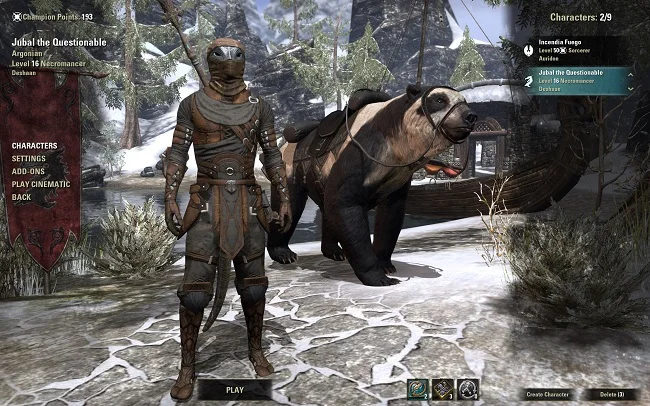
Again, my long-term gaming aspirations for June will have to be tempered against my current domestic commitments. I’ll probably just focus as ever on my two current MMOs, although I am tempted to buy a new single player game. I’ve been keeping an eye on A Plague Tale: Innocence which seems to have reviewed well and offers both an authentic interactive story set during the Black Death along with a stealth orientated game mechanic. Combat is usually to be avoided and the player is primarily focused on using items and the environment as a means of diversion. The swarms of rats certainly look formidable and I think this sort of measured approach to navigating your way through the game will appeal to me. The other title that is currently on my radar is The Sinking City which gets released, exclusively through the Epic Store at the end of June. Developed by Frogwares, this has the detection mechanics of their previous Sherlock Holmes games combined with a sandbox open world for the wider Lovecraft inspired RPG narrative. It all looks rather atmospheric and intriguing. Again, the seems like the sort of game that you can undertake at your own pace and focus on the detail. That’s the plan for June. Let’s see if that’s how it pans out.


Nothing Has Changed
On the 23rd of June 2016, the UK held a referendum on whether to remain or leave the European Union. The results were 51.89% to leave and 48.11% to remain. Due to the significance of the subject matter and the way the European question has been discussed in the media over the past decade, there was a high voter turnout of 72.21%. 33,577,342 people cast their vote out of a total electorate of 46,500,001. The levels of public engagement were far higher than those seen with local or general elections. However, despite a binary question yielding a binary result, the issue of Brexit has not been laid to rest. It can be cogently argued that the entire referendum was rushed, poorly thought through, with neither side running campaigns that provided all the relevant facts of the impact of leaving the EU. As ever the entire matter has been driven first and foremost by party politics and remains so today. Perhaps the biggest issue that stems from the 2016 vote is the size of the leave victory. A “win” of 1.89% is far from decisive and makes a nonsense of political rhetoric such as “the will of the people”. At the time, Nigel Farage, then leader of the UK Independence Party, stated that “a 52-48 referendum this would be unfinished business by a long way. If the Remain campaign win two-thirds to one-third that ends it”. Unfortunately, nearly three years on Brexit shows no sign of ending.
On the 23rd of June 2016, the UK held a referendum on whether to remain or leave the European Union. The results were 51.89% to leave and 48.11% to remain. Due to the significance of the subject matter and the way the European question has been discussed in the media over the past decade, there was a high voter turnout of 72.21%. 33,577,342 people cast their vote out of a total electorate of 46,500,001. The levels of public engagement were far higher than those seen with local or general elections. However, despite a binary question yielding a binary result, the issue of Brexit has not been laid to rest. It can be cogently argued that the entire referendum was rushed, poorly thought through, with neither side running campaigns that provided all the relevant facts of the impact of leaving the EU. As ever the entire matter has been driven first and foremost by party politics and remains so today. Perhaps the biggest issue that stems from the 2016 vote is the size of the leave victory. A “win” of 1.89% is far from decisive and makes a nonsense of political rhetoric such as “the will of the people”. At the time, Nigel Farage, then leader of the UK Independence Party, stated that “a 52-48 referendum this would be unfinished business by a long way. If the Remain campaign win two-thirds to one-third that ends it”. Unfortunately, nearly three years on Brexit shows no sign of ending.
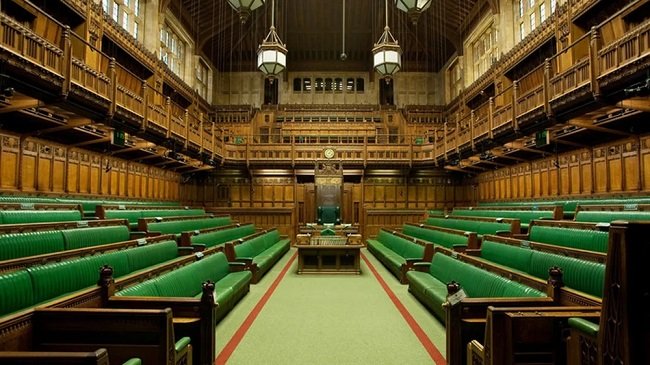
Traditionally, UK politics is mainly driven by two major parties, which hail from different ends of the political spectrum. Major socioeconomic issues are usually championed or opposed by each of these groups. The UK electorate are broadly tribal and due to the first past the post voting, deciding outcomes on the big issues such as taxation, the economy and social matters is fairly straightforward. However, Brexit has thrown a major spanner in the works, as it has fallen outside of this existing methodology. The choice of whether to remain or leave has divided both the Conservative and Labour parties, therefore neither are fully invested in one particular position. Parliament is therefore split on Brexit which is why it has been unable to deliver a definitive outcome. The referendum asked a very simple question and the results were then handed to parliament to implement. But parliament has not managed to do this and it would appear that this inertia will prevail for the immediate future. There is no majority view on either side of the debate and more importantly, parliamentary numbers to back a specific position and force it through.
The entire Brexit debate has also seen a shift in UK politics away from evidenced based, factual driven policy and measured reasoned debate. In many ways Brexit has been co-opted into a broader political cause that encompasses many long-standing grievances. Regional inequality, a decade of austerity and fears over globalisation and social change have resulted in a major sense of pushback against a political system and traditional parties that do not appear to serve any interest other than their own. Societal changes have seen broadly held political ideologies erode and the rise of consumerism and individualism means that many now view politics as a mechanic for facilitating one’s own needs, rather than the collective “good” of the nation. Hence Brexit is a very dogmatic and tribal driven debate. Contemporary politics has always been up until now about compromise and what can be achieved over what is hoped for. Yet attempts to compromise over Brexit have failed in parliament and certainly the public appears to have no stomach for it. It’s very much a case of all or nothing.
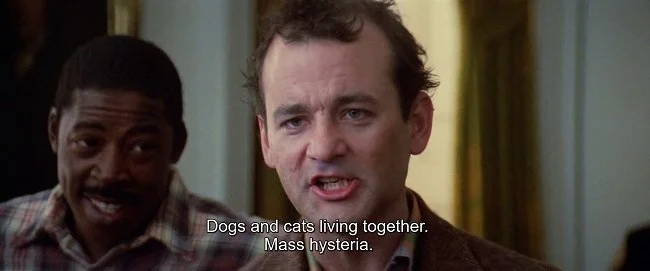
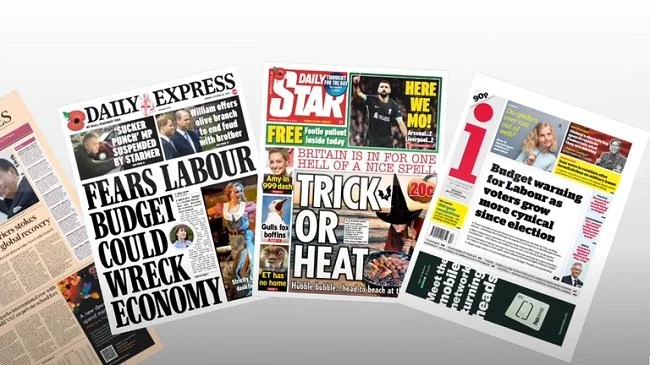
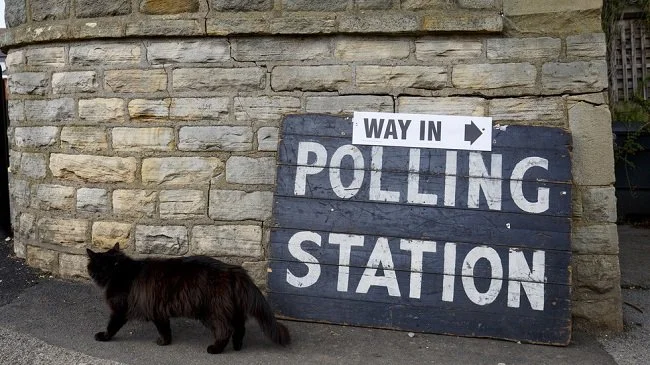
Last week, the UK voted in the European Parliamentary Elections. Due to the ongoing Brexit impasse, the country was legally bound to participate. As many of the electorate were deeply unhappy with the status quo there was a strong show of support for the newly formed Brexit Party, which has campaigned on a single issue and has at present no other distinct policies. Hence the traditional parties of Labour and the Conservatives suffered an unparalleled loss of public support. Again this stems from neither having a clear policy on the matter. At first glance, it would appear that the Brexit Party was the major success story of these elections. As ever politicians interviewed across multiple news outlets fought to put their own unique spin on the results, to either validate their own positions or to mollify the political fallout. But if one looks beyond the rhetoric and consider the results in a measured analytical fashion, they offer a rather stark conclusion. It is broadly agreed that these elections where fought predominantly on one issue alone; the question of Brexit. Therefore if the results are viewed from such a perspective you find that leave voters predominantly supported the Brexit Party which polled 31.6% of the vote. Remain voters backed the Liberal Democrats and the Green Party who collectively made up 32.4% of the vote share. If you then consider the Scottish and Welsh Nationalist votes, as both parties have a clear remain agenda, then that adds a further 4.6% to that position.
The question of where the two big parties stand is more ambiguous so it is hard to assign their numbers to either of the two sides of the Brexit debate. Ultimately these numbers show that there is still no majority view in the UK of the subject of leaving the EU. Furthermore, the electorate appear to be becoming more entrenched in their position and have simply transferred their votes to those parties that have a clear policy on the subject. Therefore the conclusion is that after nearly three years, despite numerous debates in parliament, new facts and details about the reality of Brexit becoming apparent and continual public discourse on the matter, nothing has changed. This conclusion is certainly food for thought.
For those who wish to see a speedy resolution to Brexit, these results are a clear sign that such a thing is not going to happen any time soon. The question of Europe and our relationship with the continent has claimed yet another Conservative leader and we now face the prospect of an acrimonious battle for the position. Currently the next leader will become Prime Minister by default, yet regardless of whether that individual adopts a tougher stance on Brexit, favouring a no deal resolution, it doesn’t alter the current parliamentary reality. There is still no prevailing consensus among MPs and no one political party has sufficient numbers to force through any kind of definitive decision. Furthermore, the divide within the Conservative party is such that some MPs are preparing to vote against their own government and party to initiate no confidence proceedings if a no deal scenario becomes likely. Simply put, last night’s election results have made the Brexit conundrum even harder to resolve.
So what happens next? If both Labour and the Conservative parties wish to survive as functioning political entities, then they need to rethink their positions and effectively pick a side very quickly. It will more than likely be a case that the Conservatives will now pursue a no-deal stance and go all in on concluding our exit from the EU by the current October 31st deadline. Labour will now have to clearly adopt a confirmatory vote policy that includes a remain option, on any proposal that parliament agrees upon. Again, the notion of compromise is jettisoned. There will naturally be consequences for picking a side, as much as there will be for not doing so.
Brexit remains the most impossible political circle to square in current peace time politics. And due to the lack of a clear consensus among the electorate, no single outcome will “heal the nation”. The UK is not only going to remain an angry divided nation, it is more than likely going to get a lot worse. For those outside of the UK with an interest in global politics, I’m sure the Brexit issue may well provide fascinating viewing and much to consider. Yet for those living and enduring the ongoing Brexit debacle it is becoming a major source of worry and concern. There is scope for a no deal Brexit to have calamitous results upon the UK economy, potentially of the kind you cannot just ignore. Similarly, overturning Brexit and revoking Article 50 could also lead to the implosion of nation politics and the collapse of the “perception” of democracy. A political “Kobayashi Maru test” if you will. What happens next is anyone’s guess.








Caring for the Elderly: Part 8
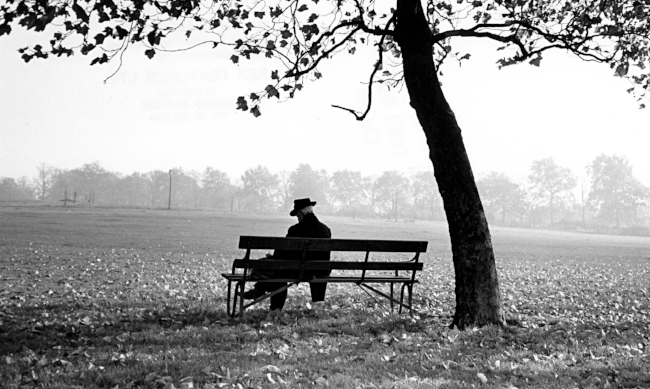
I started writing this series of blog posts when I first became a carer back in 2016. The idea has always been to use my personal experiences as a point of reference for others. That is the main reason for this latest update. The things that are currently happening to me and my nearest and dearest may happen to you and yours. Over the last three years a lot has changed in my family’s collective life. Both my parents have gone from living relatively independently and managing their own affairs, to becoming disabled with long term degenerative medical conditions. Both are now housebound and require assistance with basic tasks such as washing and dressing, due to reduce mobility and frailty. My Father has been nil by mouth for three years and requires district nurse visits twice a day to deal with his medicine and catheter. My Sister has altered her working hours so she has more time available in the morning before she goes to work. I have given up work to become a fulltime carer. Between us the days is covered. The latest major change has been applying for power of attorney, which I wrote about in my previous post.
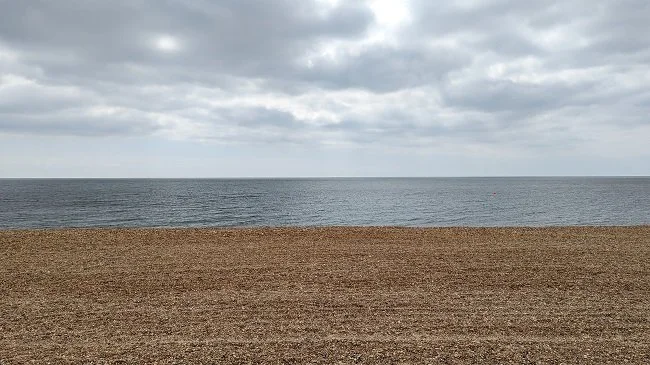
Queen Elizabeth Hospital. Woolwich
I started writing this series of blog posts when I first became a carer back in 2016. The idea has always been to use my personal experiences as a point of reference for others. That is the main reason for this latest update. The things that are currently happening to me and my nearest and dearest may happen to you and yours. Over the last three years a lot has changed in my family’s collective life. Both my parents have gone from living relatively independently and managing their own affairs, to becoming disabled with long term degenerative medical conditions. Both are now housebound and require assistance with basic tasks such as washing and dressing, due to reduce mobility and frailty. My Father has been nil by mouth for three years and requires district nurse visits twice a day to deal with his medicine and catheter. My Sister has altered her working hours so she has more time available in the morning before she goes to work. I have given up work to become a fulltime carer. Between us the days is covered. The latest major change has been applying for power of attorney, which I wrote about in my previous post.
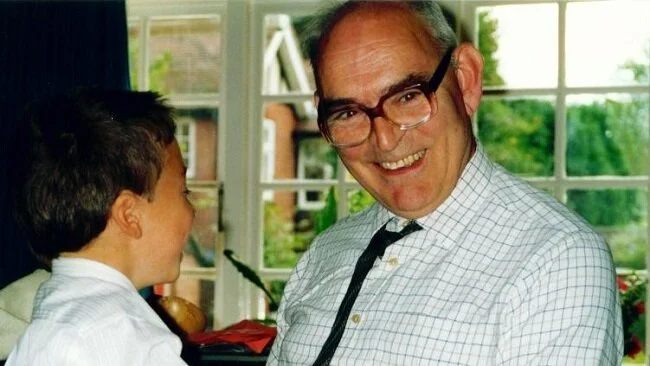
My Mother will be 89 in October and my Father 90 in July. Medically speaking, neither of them has anything exceptional wrong with them. Both are afflicted with common ailments associated with old age. Heart issues, loss of hearing and eyesight as well as ever decreasing mobility. Both have had at least two strokes. Take anyone of their health problems out of context and they may well sound unremarkable, even trivial. But collectively they are difficult to manage. And physical issues are only half the picture. Old age, illness and a loss of control bring a wealth of mental and emotional pressures. My Mother is exceedingly skittish and finds the continual coming and going of carers, nurses and social services very upsetting. My Father, who has always been a very academic man is no longer able to pursue his passions. He can no longer read, write or use a computer. His mind is sound but his ability to do anything is greatly diminished. My Sister and I manage many things but if there is an area that gets somewhat sidelined it’s social interaction. We’re always doing things and my parents do not see enough new faces.
Caring of this kind is a difficult task because the most you can ever hope for as a carer is to maintain the status quo for as long as you can. Friends and colleagues are very kind and supportive, but comments such as “I hope (insert parent’s name) get’s better” are ultimately pointless because neither of them ever will. Their respective health will continue to decline over time and with each additional infection or bout in hospital. As a result of this things have reached a point now where it is proving extremely difficult to manage both my parents care simultaneously. A back injury has made my Mother even less mobile than normal. For the last five weeks she has been unable to get out of her bed and chair unassisted. Her regular trips to the toilet have meant that someone (mainly me) has to be present in the house at all times. My Father contracted yet another urinary tract infection (the third this year) at the same time and became prone to falling. This and the accompanying bowel incontinence proved very problematic. The infection ended with a hospital admission, two weeks ago.
Wilmington Manor Nursing Home. Dartford
Due to the pressures on the NHS, the hospital was keen to discharge him as soon as possible. However, my Sister and I simply could not deal with his return as although he was clear of the UTI, he was unable to get up and walk and was still suffering from diarrhoea. Having two immoveable adults in the house, who are both probe to falling when assisted was deemed too much of a risk. So to cut a long story short I contacted social services and “negotiated” some emergency respite care. Respite care is designed to relieve the pressure on carers temporarily relocating the person requiring care to a residential home or facility of that kind. However, although it is an invaluable service, it is not a simple as it immediately seems. Usually, a person does not go from hospital directly into respite care. However, my Father was awarded two weeks last July. However, he got sick 12 days into his previous stay and was hospitalised. Hence, we still had a balance of 6 days outstanding. Thus with a little “persuasion” the new stay was arranged. However, respite care only provides access to a home and nursing staff. Neither social services nor the nursing home take total ownership of the matter. Therefore, I had to pack a week’s supply of clothes, ensuring that they were all labelled. I also had to provide a week’s supply of meds, my Father’s liquid feed, the pump and the “giving sets” as well as a few personal items such as glasses and wash kit. This then had to be shipped to the home which in this instance wasn’t as local as I had hoped. I do not drive. Furthermore, it will fall to me to come to the home on his last day and pack all these items up and return them to his home, ensuring nothing has been lost.
So far, my Father has been away from home for two weeks. He is scheduled to return on May 29th. We as a family are hoping that during that time, he has regained a degree of his previous mobility because if not, then we are facing the same problem we had earlier. IE having to manage two immobile ageing adults. I suspect that if not now, by the end of the year we’ll have to consider the fact that we cannot meet his care needs at home any longer. For his own personal safety he will require the 24-hour attention provided by a nursing home. Naturally, this is a not a decision that is made lightly and comes with a wealth of other issues to consider. Although I want my Father’s care needs to be met, I also have to consider those of my Mother and wellbeing of myself and my sister. It is difficult to make such life changing choices without feeling guilty, that we’re letting him down or that we’re being judged by the various groups and organisations we deal with. Each family that faces such dilemmas must do so in their own unique way. Once the emotional and social concerns have been addressed then it’s time to consider the practicalities of such a choice, such as the financial implications. Nursing homes are expensive.
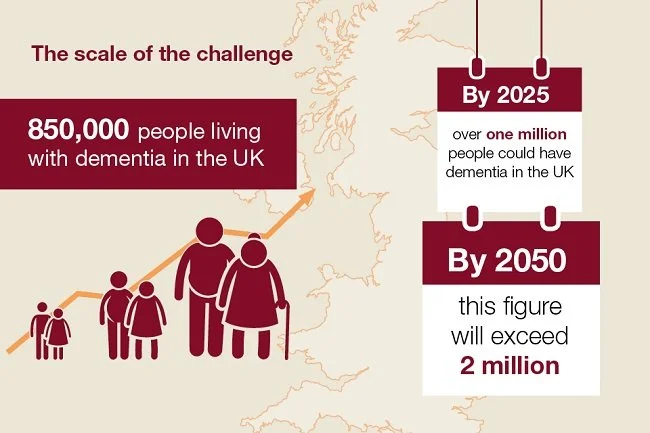
The UK has an ageing population and we are now entering an era where modern healthcare means that life expectancy may reach 100 years plus. However, the politics and social attitudes surrounding many of the associated issues of increasing old age have not significantly altered. Both my parents are old, frail and demonstrably unhappy. They endure because society feels obliged to help them but has no clear plan as to what to do next. It’s sad to think that the one factor that may eventually force a societal debate on this matter is more than likely to be the economics of the situation. When the cost becomes untenable on the public purse, then perhaps broader options, strategies and ideas will be considered. In the meantime, my family will endeavour to carry on within the confines of their own home. Yet health factors may well change this. Then there are other longer-term factors to consider. I am 51 and may well have to return to some state of employment in the near future or potentially suffer financially in my own old age. Again it doesn’t feel right to put money over other factors but I cannot risk putting my trust in the welfare state. The way UK politics are progressing there may not be one in a decade or so and there may also be considerable economic turmoil in a post Brexit world. For now my family will strive to hold the line.













Caring for the Elderly: Part 7
Since spring 2016, I have been running my parent’s domestic affairs. Due increasing ill health, neither can visit a bank, conduct business phone calls or deal with administrative paperwork such as utility bills, insurance policies and hospital appointments. However, there are limits on what I can and cannot do. Cheques and legal documents need signatures. UK data protection legislation often prohibits phone conversations with anyone other than the account holder. Hence despite being able to broadly deal with most things that come up, I sometimes have to involve my parents. This mean conversations on speaker phones which are difficult when both my parents have substantial hearing loss. So after some discussion with both of my parents, I have decided to pursue the power of attorney. At present this is specifically for my Father, as most bills and invoices are in his name.
Since spring 2016, I have been running my parent’s domestic affairs. Due increasing ill health, neither can visit a bank, conduct business phone calls or deal with administrative paperwork such as utility bills, insurance policies and hospital appointments. However, there are limits on what I can and cannot do. Cheques and legal documents need signatures. UK data protection legislation often prohibits phone conversations with anyone other than the account holder. Hence despite being able to broadly deal with most things that come up, I sometimes have to involve my parents. This mean conversations on speaker phones which are difficult when both my parents have substantial hearing loss. So after some discussion with both of my parents, I have decided to pursue the power of attorney. At present this is specifically for my Father, as most bills and invoices are in his name.
The power of attorney is a legal document that allows you to make decisions for, or act on behalf of an individual who is no longer able to or wishes to manage their own affairs. Currently in the UK there are two different types of power of attorney.
Ordinary power of attorney: This covers decisions about financial affairs and is valid for those who have mental capacity. It is suitable for a temporary period such as a hospital stay, extended holiday or for those who may be convalescing at home and want someone to act on their behalf.
Lasting power of attorney (LPA): An LPA covers decisions about financial affairs, health and care. It is intended for those without mental capacity to run their own affairs, or individuals who no longer wish to make decisions for themselves due to ill health and or, lack of mobility. An LPA is appropriate for those looking after people with long term care needs.
In my family’s case, we decided upon an LPA in both my and my sister’s name. There were some straightforward forms to complete which needed to be witnessed by a family friend or someone who has known my Father for a while. There was a fee of £82 to pay the Office of the Public Guardian, which is a government department. The process take about 8 to 10 weeks to be administered and has several checks and balances to ensure there is no coercion or malfeasance. At the end the designated attorneys receive the appropriate paperwork that allows them to notify all concerned parties and start acting on behalf of those they represent.
This was a big step for out family. Caring is more than the sum of its parts and there is a need for diplomacy, especially when it comes to taking over responsibilities that previous belonged to others. My parents like most of their generation are fiercely independent and struggle with accepting a more passive role in their own lives. But we have reached a point now where I need to have as many tools available to me as possible to allow for me to adequately look after both my parents. There are monthly direct debits for unspecified services that need to be investigated. There are defunct insurance policies and warranties that need to be revised or dispensed with. There are bills that need to be paid monthly instead of quarterly or semi-annually. I also need to ensure that the various utility services are best deals and most preferential tariffs available. My parents are not hard up by current UK standards but they have a finite amount of money coming in each month and it needs to be administered prudently. Care costs for my Father increased by 25% this April and due to the ongoing decline in health with both of my parents, expenditure of this kind will inevitably increase.
Caring for the elderly often results in situations you never expected to find yourself in. Again I would advocate a proactive approach to all who find themselves in such a position. The power of attorney if implemented at a suitable juncture, allows you as a carer to address potential issues before they become a problem. It also affords comfort to those you are caring for as they know that everything is being addressed, bills are being paid and their family name remains in good standing with the businesses they deal with. It may sound old fashioned but paying the weekly paper bill really worries my parents. They hate to think that they owe someone money of have caused “inconvenience”. Therefore an LPA or your regional equivalent is something to be aware of and ready to utilise should the situation require it. Like so many things associated with care, it’s best to sort it in advance, rather than struggling to resolve a complex problem later on.
Remastered Games
I played through Sniper Elite V2 Remastered this week and the graphical overhaul is impressive and the addition of photo mode provides an amusing diversion. It is a superior iteration of the game than the original 2012 release. However, I have read reviews that have found this new version unsatisfactory. There have been complaints that the game lack the scope and sophistication of Sniper Elite III and 4. If you explore such comments further you soon find that those who have made them seem to fundamentally confuse a remaster of a game with a remake. Sniper Elite V2 Remastered has been lovingly dragged up to visual standards of the latter versions of the games by Rebellion Developments, but it’s original 2012 structure, mechanics and limitations are still present. If you require a succinct metaphor it is the difference between redecorating and refurbishing a house.
I played through Sniper Elite V2 Remastered this week and the graphical overhaul is impressive and the addition of photo mode provides an amusing diversion. It is a superior iteration of the game than the original 2012 release. However, I have read reviews that have found this new version unsatisfactory. There have been complaints that the game lack the scope and sophistication of Sniper Elite III and 4. If you explore such comments further you soon find that those who have made them seem to fundamentally confuse a remaster of a game with a remake. Sniper Elite V2 Remastered has been lovingly dragged up to visual standards of the latter versions of the games by Rebellion Developments, but it’s original 2012 structure, mechanics and limitations are still present. If you require a succinct metaphor it is the difference between redecorating and refurbishing a house.
The recently released Resident Evil 2 is a remake of the original 1998 PlayStation game. Unlike the original, which uses “tank controls” and fixed camera angles, the new version features over-the-shoulder third-person shooter gameplay similar to Resident Evil 4. The game has found favour with both critics and players and although it remains true to the themes and idiom of the original, it is more than just a graphical overhaul. The developers, Capcom R&D Division 1, refined the existing mechanics and systems, improved the environment, rather than just recreating it with improved assets and textures, resulting in a new product that is compatible with the prevailing tastes of contemporary gamers. It is not an exact duplicate of the PlayStation version, neither has it wondered entirely “off script”. It therefore clearly fits the criteria of what constitutes a remake, instead of a remaster. Clearly this process has not been applied to Sniper Elite V2 Remastered by Rebellion Developments.
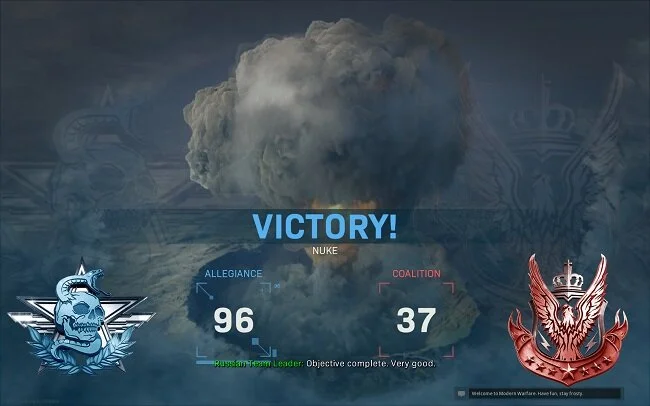
Another debate surrounding remastered games is over their relative value and whether development resources would be better focused on creating entirely new titles. I’d argue that Sniper Elite V2 Remastered is a positive example of a game that been remastered. The fact that I didn’t have to pay the full retail price (which wasn’t excessive to begin with) because I owned the previous version, helped with my positive opinion. Furthermore when it was announced, Rebellion Developments also pointed out that a new instalment in the franchise was currently being worked on, so the remaster was not at the expense of anything else. However, on the other side of the coin, let us remember how Activision handled the remaster of Call of Duty 4: Modern Warfare. The game benefited from improved graphics and assets but suffered from a somewhat egregious business model. Activision decided to initially release it as part of a premium bundle when players bought Infinite Warfare. Then there was also the inclusion of microtransactions that were not present in the original. Finally, the DLC multiplayer maps that were free with the 2007 version of the game were gated behind a paywall in this 2016 remaster.
It is naïve to expect ethical business management by default from the video games industry, so gamers are left having to keep their wits about them when it comes to determining whether a remastered game is or is not good value. Rebellion Developments have at least been fair with their remasters so far, with respect of content and pricing. Other publishers have taken a different route. The Skyrim Special Edition may well have an improved aesthetic but still contains bugs that have existed in every other iteration and port of the game. It is therefore up to us as consumers to make clear what “is” a good value remaster and what isn’t. We should also be vocal if we discover that a remaster comes at the expense of something new. Polite, measured and intelligent lobbying can and does work. As does screaming and throwing your toys out of the pram, but the latter comes at the cost of dignity, moral rectitude and credibility. In the meantime, I suspect we shall continue to see remasters of all types, as nostalgia is a proven seller. May be on occasions, a successful remaster acts as a litmus test, proving sufficient interest to justify a new entry in an existing franchise.
Ghost Recon Breakpoint - No More Squad Support For Solo Players
Ghost Recon Wildlands was my introduction to this long-standing Ubisoft franchise. I bought the game a year after launch so got a good deal on a comprehensive package of all the content. Broadly I like the game and really enjoyed the massive open world environment. Although there was a four-player co-op option, I tackled the game using A.I. teammates and didn’t find them as problematic as some player did. Perhaps their tactical deficiencies were more prevalent at higher difficulty levels. As for the characters’ cheesy dialogue, it really wasn’t a problem. Most banter between friends in real life is far from erudite. So it is unrealistic to expect witty ripostes and “puckish” epigrams from a squad of special forces soldiers. Overall, I found playing through the game this way, rather than with other players a far more enjoyable experience. I could take my time, plan my strategy and my AI team mainly did what I expected them to do. For a player of my skill level, this was a win, win situation.
Ghost Recon Wildlands was my introduction to this long-standing Ubisoft franchise. I bought the game a year after launch so got a good deal on a comprehensive package of all the content. Broadly I like the game and really enjoyed the massive open world environment. Although there was a four-player co-op option, I tackled the game using A.I. teammates and didn’t find them as problematic as some player did. Perhaps their tactical deficiencies were more prevalent at higher difficulty levels. As for the characters’ cheesy dialogue, it really wasn’t a problem. Most banter between friends in real life is far from erudite. So it is unrealistic to expect witty ripostes and “puckish” epigrams from a squad of special forces soldiers. Overall, I found playing through the game this way, rather than with other players a far more enjoyable experience. I could take my time, plan my strategy and my AI team mainly did what I expected them to do. For a player of my skill level, this was a win, win situation.
Hence, I was pleased to learn of a direct sequel to the 2017 game and watched the announcement trailer for Ghost Recon Breakpoint with interest. Frankly, these sorts of videos don’t really give you much information about the nuts and bolts of the game, so I then decided to see what a few websites had to say about what was on offer. It didn’t take long for me to read a short paragraph that effectively killed my interest in Ghost Recon Breakpoint dead. It would appear that Ubisoft have elected not to address the shortcomings of the squad A.I. in this iteration of the game. Rather than increase their functionality and give the player greater control over their actions, they’ve simply removed them from solo play. If you want the support of a full squad you will have to play with other players and endure the problems that are inherent with such a system. According to Emil Daubon, the lead writer on the game “the mission statement that we received was we want to create a fantasy that replicates being alone trapped behind enemy lines. Ultimately, if you choose to play a solo, you have the option to immerse yourself deeply in that aspect of the fantasy. The A.I. teammates would have taken away from that”. Yeah and if my Granny had wheels, she’d be a wagon.
I really dislike this ongoing mindset of primarily placing a player’s enjoyment and progress in a game, in the hands of other players. I don’t enjoy being reliant on random strangers, all of whom have different play styles, varying ability and personal notions of what is or isn’t “fun”. Perhaps the biggest problems for me is that such auto-grouping systems have zero impact over issues such as social skills and one’s ability to interact with others in a commensurate fashion. The alternative to this is to play with friends but most of the people I have on my various friends lists tend to play different genres of games. I doubt if I know anyone who will play Ghost Recon Breakpoint. If I do, then there’s the logistics of arranging a suitable play session that suits respective time zones. Another issue that stems from removing the A.I. squad is that solo players are now at a disadvantage when it comes to effectively using vehicles. There are apparently over 30 available to use in the game, but solo players will no longer have teammates that can utilise turrets and provide tactical support. And then there’s the issue of the famous sync shot mechanics. In previous games, you’d potion your squad and simultaneously take down multiple enemies. It would seem that Ubisoft have got around this by allowing the solo player to now use drones, but it lacks the panache of the original method.
So there you have it. Once again, a game studio has made a change to a long-standing game mechanic associated with a franchise and as a result lost a percentage of potential customers. I have no idea if that is a large or relatively small number of players, but I’m sure I’m not the only person who feels this way about the ubiquity of co-operative play. It one of the reasons I decided not to buy the new World War Z game. Again, there is no single player mode with an A.I. Squad. As for the reasons used to justify such decisions such as “immersion” and such like, I simply don’t believe them. Removing A.I. teammates means eliminating a problem. It is one less coding headache to address and it makes it easier for companies such as Ubisoft to assemble their cookie cutter games. That’s not to say that their games are bad, because they are not. But they all seem to share common components, systems and mechanics. Without straying into hyperbole, it is this approach to gaming and the continued stripping away of anything that doesn’t easily integrate into the “live serves” business model, that is driving the triple A video games industry towards an inevitable crash or major recalibration.
The Idiot Box
Thoughts on TV shows and my current viewing habits.
Our Planet is the first major wildlife documentary to be made by Netflix. Presented and narrated by David Attenborough the series is produced by Silverback Films, who also created BBC documentary series Planet Earth, Frozen Planet and The Blue Planet. As you would expect with such outstanding credentials, Our Planet is a visually impressive, thought provoking exploration of our world’s respective ecosystems and a damning indictment of how we as a species are causing immense damage. If you watch this show and are still in denial afterwards about climate change, then “you need your bumps felt”. The show doesn’t shy away from showing the reality of nature. Something that some viewers struggle to come to terms, due to the ongoing infantilization of our relationship with pets and wild life. Netflix went so far as to produce a list of scenes to skip for the feint hearted. However, the sight of the Walruses plummeting to their death from a cliff was genuinely shocking. However given the nature of the show and its underlying message, this was totally justified.
Thoughts on TV shows and my current viewing habits.
Our Planet is the first major wildlife documentary to be made by Netflix. Presented and narrated by David Attenborough the series is produced by Silverback Films, who also created BBC documentary series Planet Earth, Frozen Planet and The Blue Planet. As you would expect with such outstanding credentials, Our Planet is a visually impressive, thought provoking exploration of our world’s respective ecosystems and a damning indictment of how we as a species are causing immense damage. If you watch this show and are still in denial afterwards about climate change, then “you need your bumps felt”. The show doesn’t shy away from showing the reality of nature. Something that some viewers struggle to come to terms, due to the ongoing infantilization of our relationship with pets and wild life. Netflix went so far as to produce a list of scenes to skip for the feint hearted. However, the sight of the Walruses plummeting to their death from a cliff was genuinely shocking. However given the nature of the show and its underlying message, this was totally justified.
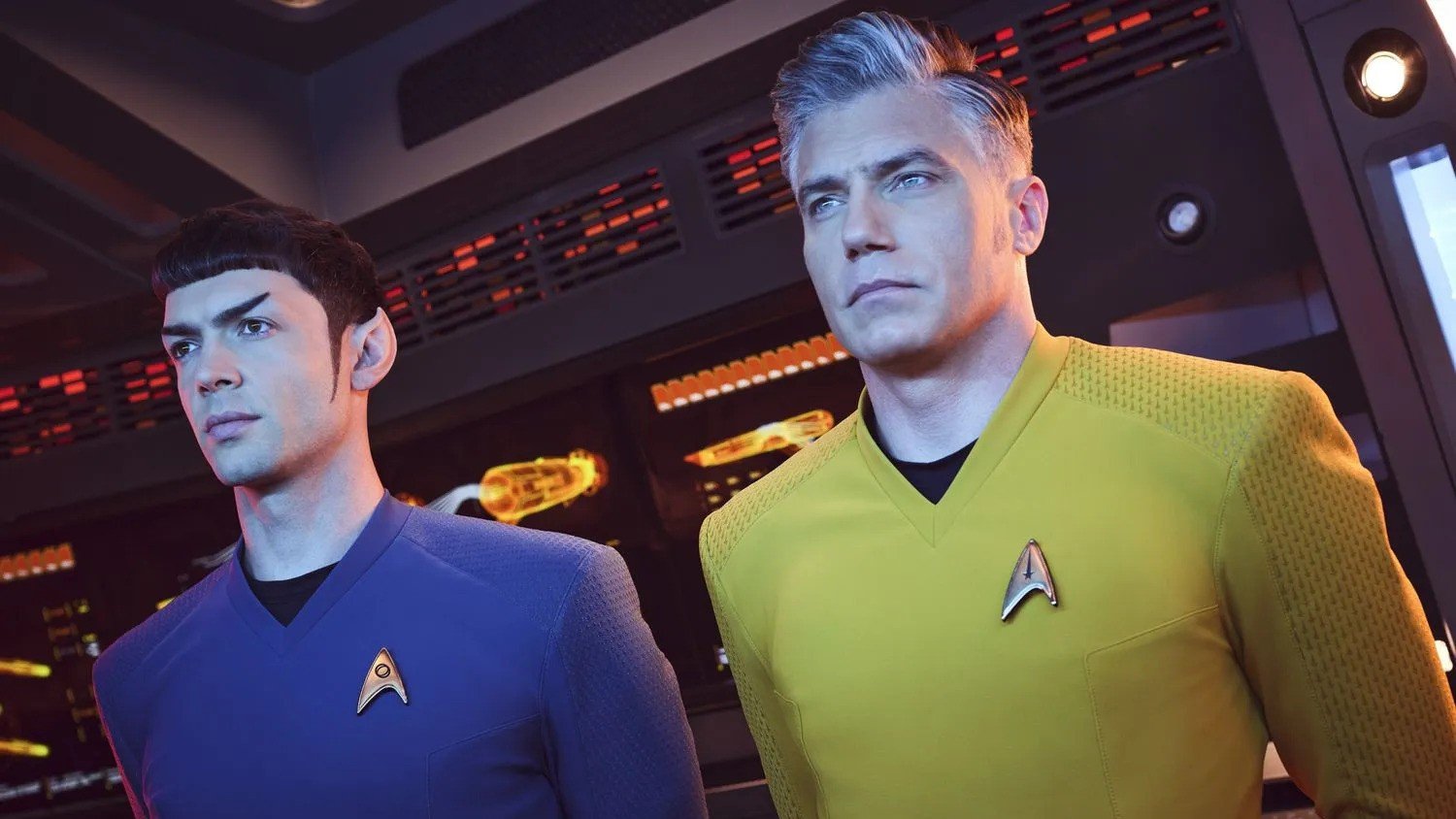
I recently managed to catch up with Elementary Season 6 as I somehow fell behind in my viewing of this show. Elementary continues to maintain its high standard with regard to odd and off kilter cases. Many of Holmes and Watson’s investigations have parallels with contemporary news stories. The robotic sex doll with it’s always listening AI, was a wry exploration of current technology versus privacy fears. The show also continues to sensitively explore the nature of addiction and has story threads regarding adoption and Alzheimer’s. But the foundation of this show is the relationship between Holmes (Johnny Lee Miller) and Watson (Lucy Lui) and their platonic love for each other. The denouement of the season saw the pair relocating to London, although I suspect that the show will contrive a reason to return to New York. With Season 7 due to on 23rd May, it will be interesting to see if this is the final season. There is already the possibility of Detective Bell (Jon Michael Hill) taking a job with the US Marshalls service. Will Holmes also repair his relationship with Captain Gregson (Aidan Quinn). I look forward to watching more of this quirky variation on the police procedural.
Here’s a summary of what else I’ve been watching:
I finally got around to watching the 2004 version of Salem’s Lot. Made by TNT this two-part miniseries broadly mirrors the 1979 adaptation but updates the proceeding to current times and adds several contemporary themes and interpretations of events. I was led to believe that this version of Stephen King’s weighty novel was a disaster, but it certainly wasn’t as bad as that. Rob Lowe is relatively sympathetic as traumatised novelist Ben Mears. There are some good soliloquys about the iniquities of small towns and their hidden depth. Sadly, Rutger Hauer is not given a lot to do as the Master Vampire Kurt Barlow and is subsequently not really a threat. It’s also a somewhat restrained affair, with the production going for jump scares, rather than graphic violence. Overall, I found this a mildly engaging curiosity. However Tobe Hooper’s adaptation remains the one to beat.
As for my planned viewing during the month of March, the docudrama Chernobyl appears to be very interesting. This authentic account of the 1986 disaster addresses not only the technical causes of the reactor fire, but the long-term health and environmental ramifications for the region. It also delves into the political machinations of the Soviet Union as they first struggle to accept the magnitude of the crisis and then falter over managing the political consequences of the situation. Bolstered by a cast of quality character actors I suspect this will be most illuminating and enthralling.
Finally, I want to briefly mention the Japanese game show Takeshi’s Castle. I won’t get bogged down in a lengthy account of the show’s history, as I’m considering writing a much longer post on the matter. To summarise the show was first broadcast in Japan between 1986-90. In the early 2000’s other countries re-edited the content and condensed the hour-long show into a shorter thirty-minute format. Often humorous commentary was added. In the UK the show was shown on the Challenge TV channel and narration was supplied by actor and comedian, Craig Charles. Being regionalised to UK tastes, there was a lot of innuendo and double-entendres. Much of the banter and quips may not survive a PC sniff test these days. I used to watch this show with my son and enjoy it for what is was. I recently managed to “find” copies of all 120 episodes and now watch these late at night when I want some easy viewing to relax and unwind.












A Month in Gaming
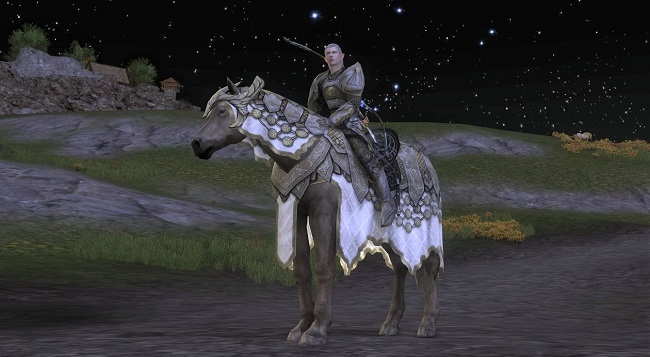
So what have I been up to in April gaming wise? Oh, yes there was this. Mounted combat for the Guardian class is awful. There. I said it. As I’m not a LOTRO “altoholic” my only previous experience with mounted combat was with my Lore-master. Most of their skills are ranged which makes the fights less tedious and time consuming. And you get a combat pet which helps the proceeding slightly, but overall, it’s not that much fun. However fighting via your war steed with a Guardian is a ponderous grind. You have to be in close proximity to your foe to hit them and half the time they are running around you, conspicuously out of range. Sure there’s a skill that brings them next to you for a short period of time but as a level 85 Guardian’s DPS output is distinctly average at this point in the levelling curve, it’s a long, arduous slog to kill anything. My solution has been to summon my skirmish soldier who is an Archer and to use them in conjunction with my own bow to shoot down mounted foes while on foot. This still takes time but is quicker than doing it from horse back.
So what have I been up to in April gaming wise? Oh, yes there was this. Mounted combat for the Guardian class is awful. There. I said it. As I’m not a LOTRO “altoholic” my only previous experience with mounted combat was with my Lore-master. Most of their skills are ranged which makes the fights less tedious and time consuming. And you get a combat pet which helps the proceeding slightly, but overall, it’s not that much fun. However fighting via your war steed with a Guardian is a ponderous grind. You have to be in close proximity to your foe to hit them and half the time they are running around you, conspicuously out of range. Sure there’s a skill that brings them next to you for a short period of time but as a level 85 Guardian’s DPS output is distinctly average at this point in the levelling curve, it’s a long, arduous slog to kill anything. My solution has been to summon my skirmish soldier who is an Archer and to use them in conjunction with my own bow to shoot down mounted foes while on foot. This still takes time but is quicker than doing it from horse back.
I’m still not sure how Turbine (now Standing Stone Games), got it into their heads that mounted combat was the holy grail of the game. It is present as a game mechanic in Rohan mainly due to the lore and the prevailing Equine culture. It persists in parts of Gondor, but by the time you reach the Black Gates it’s a dim and distant memory. I think of all the game systems present in LOTRO this has been the most ill-conceived. Mounted combat is plagued with flaws. Steering your War Steed is a chore, even if you choose the lightest class. Speeding up, slowing down and tightly turning are virtually impossible and the poor handling is compounded by the lag and stuttering inherent in Rohan. Skills are proximity based, even the ranged ones and you can never get off a decent series of attacks. And then there’s the Legendary Bridle which just adds another LI to your existing collection to micromanage. Thankfully, for the present I’m just pursuing the Epic Story through the Western Rohan and have managed to proceed through the Eastern March and Wildermore with minimal mounted combat. Oh Hang on. I’ve got Epic Battles coming up? Deep joy.
Meanwhile, back in Star Trek Online, I’ve been keeping busy with lots of content that you can play in relatively short bursts. Ideal gaming for when you want to unwind in the midevening but don’t have the time, energy or commitment to pursue something too complex. I’ve completed yet another featured Task Force Operation event. Operation Riposte is somewhere in between a cake walk and a no brainer and once you know the format of this short five-man mission, it’s something you can do, while you listen to a podcast or watch TV. This TFO and others also earn you credit for the 100% Discount Coupon. Effectively just play the specified content and over time you’ll fill out yet another blue progress bar. Once complete you can claim any Tier 6 ship of your choice from the C-Store. And then there’s the Personal Endeavors which are just a variation of daily quests. All these things can keep you busy but not in an overtly annoying way. “It’s a grind Jim, but not as we know it”. Also there’s a new feature episode coming up soon featuring Captain Gabriel Lorca (Jason Isaacs), so STO remains on the current game list as it keeps me busy.
I briefly toyed with the idea of buying World War Z. Watching the various streams and You Tube reviews reminded me of how much I enjoyed Left 4 Dead 2. This game is cooperative third-person shooter in which four players fight against massive hordes of zombies in Moscow, New York, Jerusalem, and Tokyo. It looks slick and when the zombies attack en masse, it certainly seems like fun. However, it doesn’t have a single player campaign which means that the game is purely an online multiplayer experience. That makes your enjoyment of the game dependent on those you PUG with. The last time I played such a game was Friday the 13th: The Game back in December 2017. It was great when you got a good team and everyone was broadly on the same page, but all too often it just seemed like I was attending a group meeting for recovering assholes. I suspect there is a risk of this with World War Z. Shame the game doesn’t allow you to play with the rest of your team made up of bots. Hence, I declined to make this title my first proper purchase from the Epic Store.
I suspect my real-world commitments will continue to monopolise my time throughout May, so I suspect that I shall continue to just play both LOTRO and STO. However, Sniper Elite V2 Remastered is released on the 14th and so I’ll shall try to make time for this classic title. As an owner of the existing PC version, Rebellion offered me an upgrade for just £6.99 which is a very good deal. This remastered version includes not only all the DLC of the original game but some new features such as 4K support and photo mode. The latter may provide some grim amusement with copious screenshots via the X-ray kill cam. Also, irrespective of the new bells and whistles, Sniper Elite is a good franchise offering a slow and measured gaming experience. A pleasant change of pace in today’s frenetic world of gaming.
Peter Mayhew (1944 - 2019)
Peter Mayhew was working as an Orderly in the radiology department of King's College Hospital, London in 1976 when he was “discovered” by George Lucas. Lucas was looking to find someone suitably tall to play the Wookie Chewbacca in Star Wars. Legend has it that Mayhew simply stood up from his seat to great Lucas and immediately clinched the part. The rest they say is history. Peter Mayhew went on to play the role in another five movies, and despite not gaining the immediate fame of regular actors, became a firm favourite among fans at conventions. He was also held in very high regard by his professional acting peers. As for the role of Chewbacca, he made it his own and approached the character seriously and with genuine love. Despite a lack of conventional dialogue, Mayhew imbued Chewbacca with a personality and a distinctive sense of style. No mean achievement for a man who never intended for any of this to happen.
Stuart Freeborn and Peter Mayhew
Peter Mayhew was working as an Orderly in the radiology department of King's College Hospital, London in 1976 when he was “discovered” by George Lucas. Lucas was looking to find someone suitably tall to play the Wookie Chewbacca in Star Wars. Legend has it that Mayhew simply stood up from his seat to great Lucas and immediately clinched the part. The rest they say is history. Peter Mayhew went on to play the role in another five movies, and despite not gaining the immediate fame of regular actors, became a firm favourite among fans at conventions. He was also held in very high regard by his professional acting peers. As for the role of Chewbacca, he made it his own and approached the character seriously and with genuine love. Despite a lack of conventional dialogue, Mayhew imbued Chewbacca with a personality and a distinctive sense of style. No mean achievement for a man who never intended for any of this to happen.
There’s something inherently appealing about the character of Chewbacca; the loyal and imposing companion of Han Solo. There are elements of older classical archetypes in the role which is why the Wookie has proven so appealing to fans. Who hasn’t at some point in their life wished for an imposing, resolute companion, who sticks with you through the good times and the bad? Someone who tolerates your shortcomings and will give you a kick up the backside when you stray, yet still remains ever true. Chewbacca was all those things and judging from the tributes that have appeared in the last 24 hours, so was Peter Mayhew himself. He was always well received on the convention circuit and spoke passionately about his role and relevance of his character. He was also in recent years, very supportive of passing the baton onto the younger generation. Actor Joonas Suotamo has stated that Mayhew acted like a “one-of-a-kind gentleman” and whose “tutelage and kindness” made taking over the iconic role much easier.
Not many professional actors would be keen to take a major role in a film that not only hid their face but subsequently replaced their dialogue with growls and roars. However, that was not a problem for Peter Mayhew. He would happily deliver his lines in his own dulcet tones for others to respond to, irrespective that he knew they’d later be removed. Such behind the scenes footage is both incongruous and humorous to watch. Yet it also shows Peter’s dedication to the role and ethos that if a jobs worth doing, it’s worth doing properly. The picture above is far from canonical and is simply a photoshopped creation intended to raise a wry smile. Yet it also represents the timeless appeal of characters such as Chewbacca and again reinforces the trope of the faithful companion, friend and confidant. As for Peter Mayhew, it is pleasant to know that despite being subsumed into one of the biggest franchises ever, far from letting the experience spoil his life, he managed to achieve the complete opposite. He saw fame and his characters’ cult status as a positive thing and an opportunity to do good.



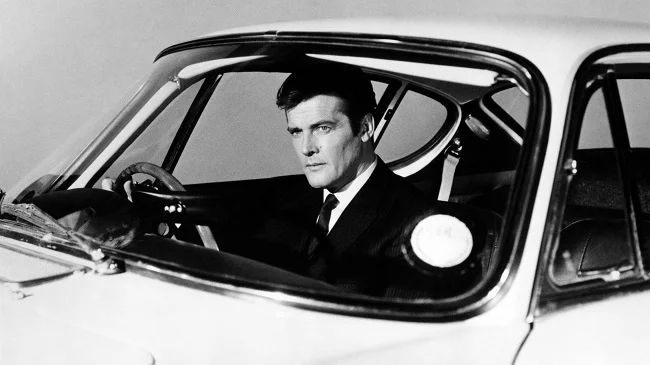


LOTRO: Vales of Anduin Preview
Update 24: Vales of Anduin is currently available for preview along with an initial build of the new 64-Bit game client for LOTRO, on the Bullroarer test server. The new virtue configuration system is among the many revisions that are included in this forthcoming update. The following change also raised a wry smile. Renaming the "Laketown Outhouse" to the more era appropriate "Laketown Boghouse". As ever there are extensive patch notes available on the official forums and players are once again reminded that this is not the final version of the update and therefore everything can potentially change.
Update 24: Vales of Anduin is currently available for preview along with an initial build of the new 64-Bit game client for LOTRO, on the Bullroarer test server. The new virtue configuration system is among the many revisions that are included in this forthcoming update. The following change also raised a wry smile. Renaming the "Laketown Outhouse" to the more era appropriate "Laketown Boghouse". As ever there are extensive patch notes available on the official forums and players are once again reminded that this is not the final version of the update and therefore everything can potentially change.
To enable the new 64-Bit game client, LOTRO players need to toggle the appropriate setting in the launcher “options”. The 64-Bit game client has a separate .ini file that maintains the graphics, sound settings, UI and input settings independently from the 32-Bit version. Note this does not include keymap preferences. I tested the new client by riding around Minas Tirith, an area of the game notorious for random crashes, hitching and animation stuttering. The results so far seem positive and the game appears to run smoother and with less juddering. However, to fully appraise the system a far more rigorous test is required. I also quickly checked out the new virtue UI and noticed that the cap had been raised to 60. However, this new way of presenting the data seems far more intuitive.
As for the new zone, the Vales of Anduin can be accessed via three existing zones. From the North High Pass in the Misty Mountains, near Goblin Town. Via the Forest Gate in Eryn Lasgalen and from North Eastern Lothlórien, along the shores of the Anduin. The region includes the Beorning Lands (and incorporates Grimbeorn’s house from the Beorning starter zone) the Gladden Fields and Rhosgobel, former residence of Radagast. Other iconic locations are The Carrock, which features an Eagle instead of a stable, which then takes you to Gwaihir’s eyrie on the Western shore. There are further Beorning settlements at Hultvis and Duskenvales. Overall the zone is green and verdant and matches the description of Tolkien’s original text. The Beorning settlements are suitable rustic and mossy, although some of the assets are obviously repurposed elements from Rohan.
As with previous zones that have lore references from The Hobbit, visiting certain locations will trigger an onscreen passage of text from that book. There are also some interesting embellishments in the Gladden Fields. There seems to be traces of abandoned dredging and mining equipment. There are also some Half Orc Dredgers in the vicinity. I wonder if this is a reference to Saruman’s search for The Ring in the area where Isildur died. It should also be noted that Rhosgobel is overgrown and abandoned, again as referenced in the source text. As ever with new zones, there are several routes that are currently blocked, indicating what may be coming in future content. There’s a road to the East that leads to Middle Mirkwood and a Northerly path that potentially goes to the Upper Anduin and possibly Mount Gundabad.
So far, the new zone looks aesthetically pleasing and is relatively light and colourful. There is at present a lot of fog as you travel from the Misty Mountains down into the river valley. As with parts of Western Gondor, much of the zone is contained by high cliffs and other natural obstacles, so despite the initial impression of size, it does feel once again that the player is being funnelled from quest hub to quest hub. However, as long as the Epic Story continues to maintain it’s ongoing high standard, none of these minor criticisms are a deal breaker. The success of the 64-Bit client is perhaps a bigger issue for the LOTRO community. Will it remedy the performance issues that impair the game? Or will it solve one problem but create another. Judging by the current timetable we’ll more than likely no sooner rather than later, as I wouldn’t be surprised if Update 24 is formerly launched by the end of May.
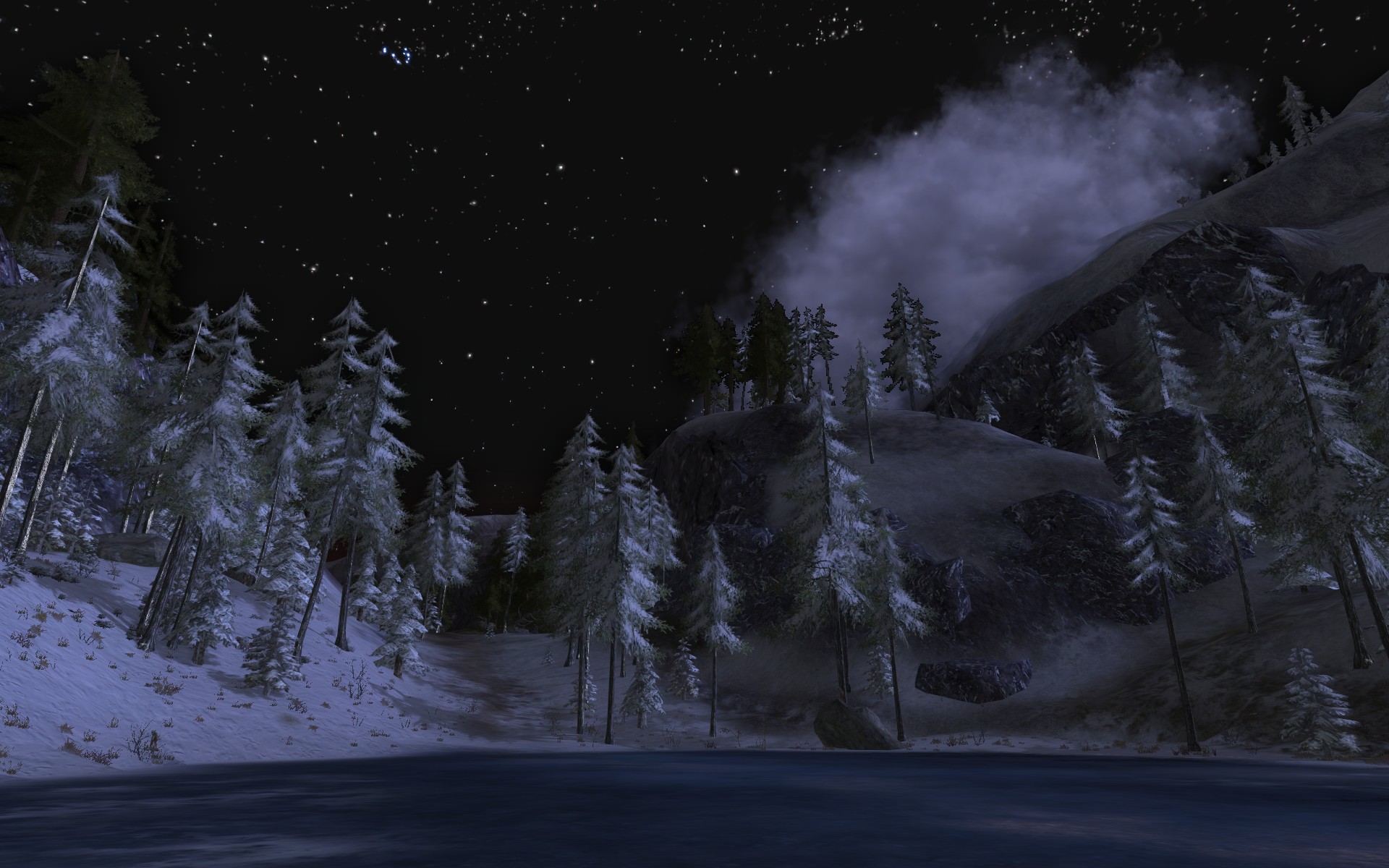
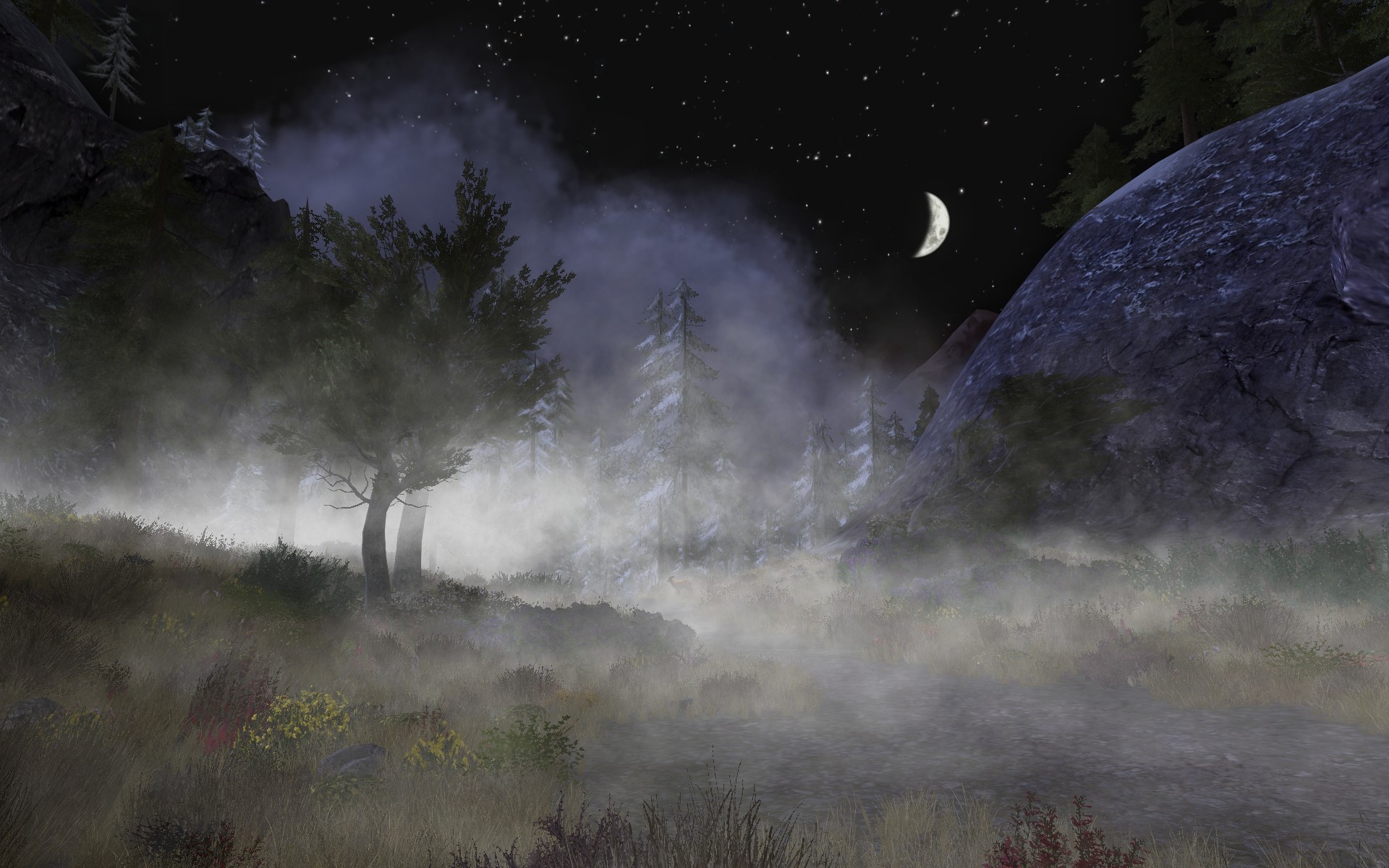
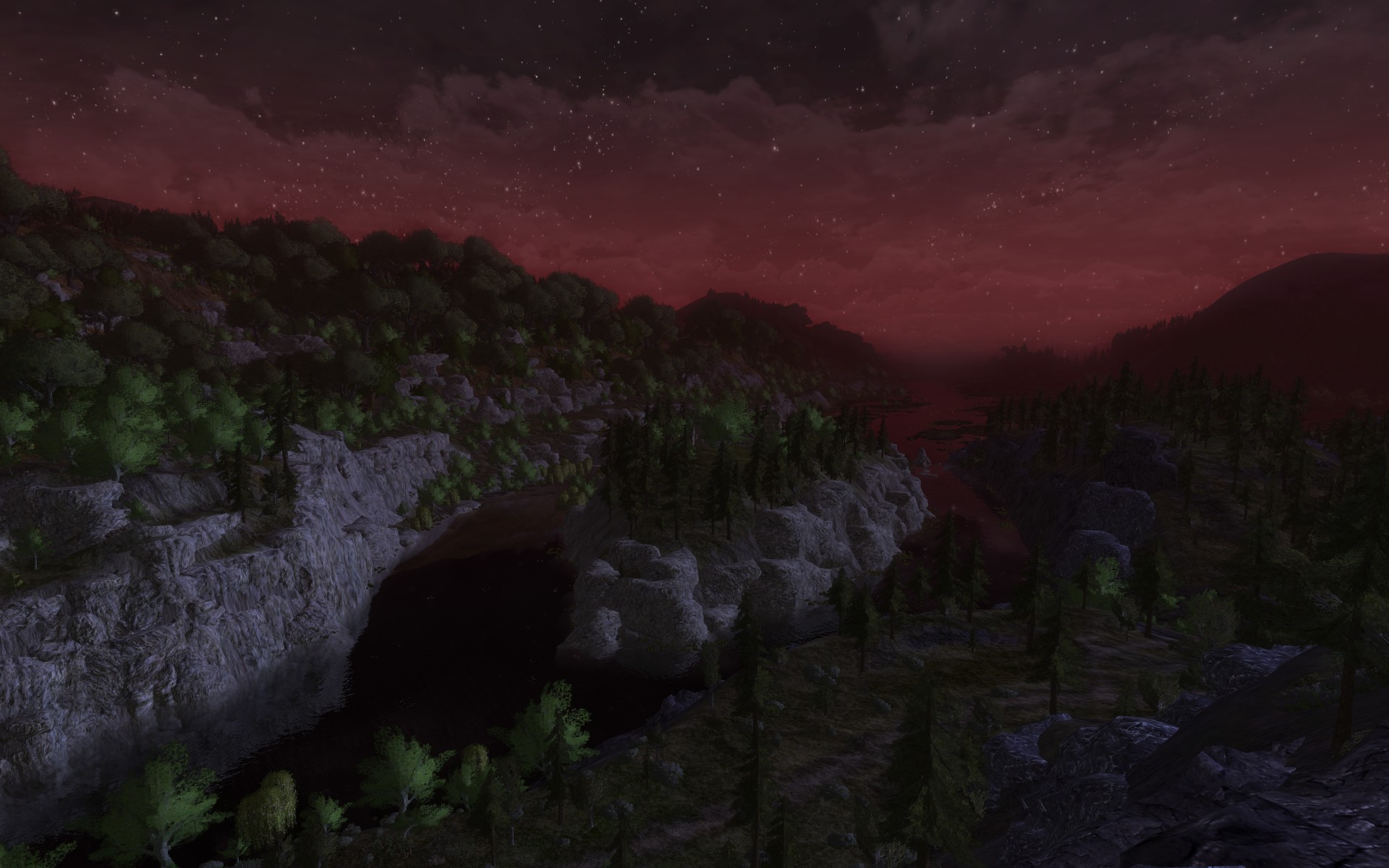
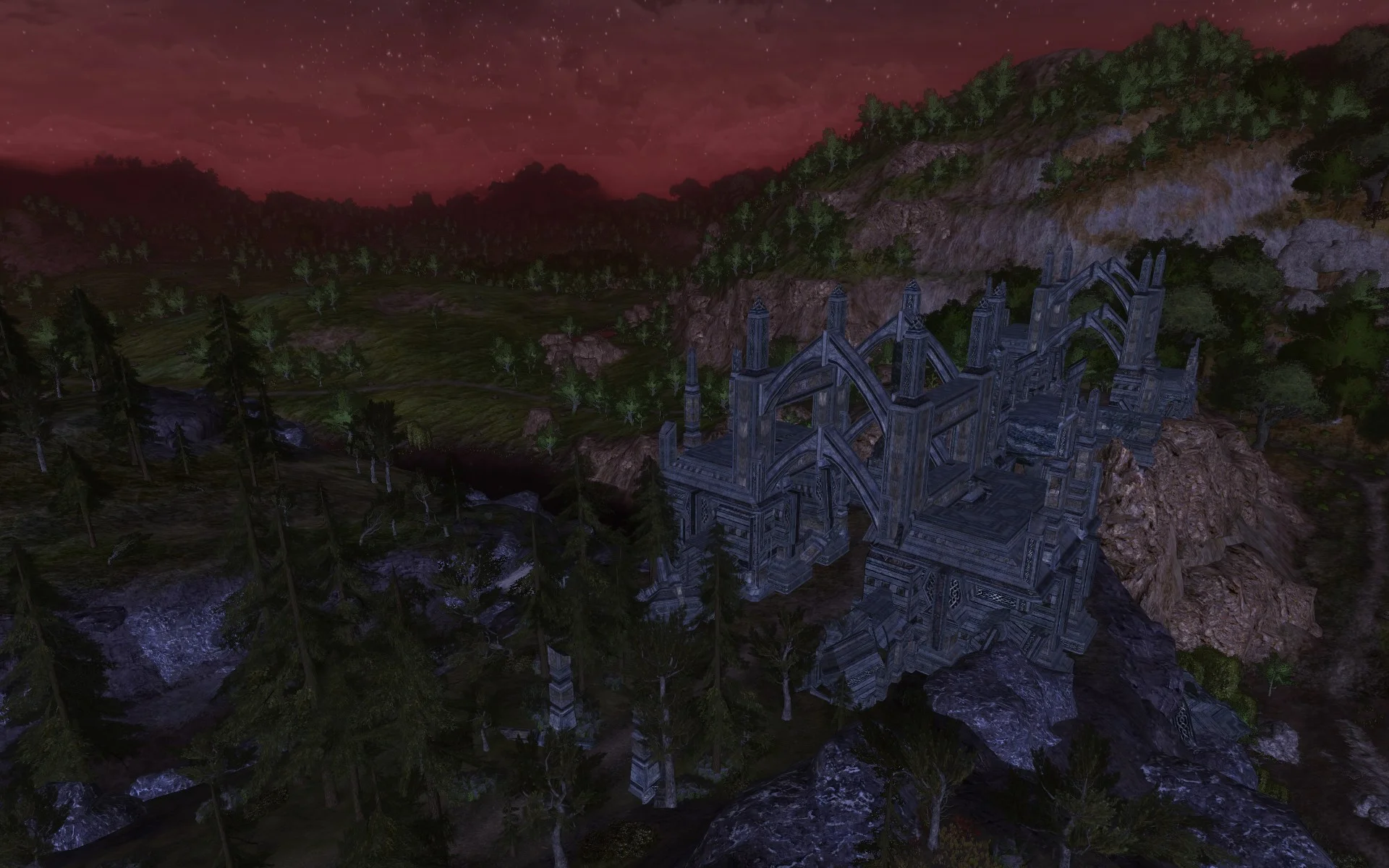
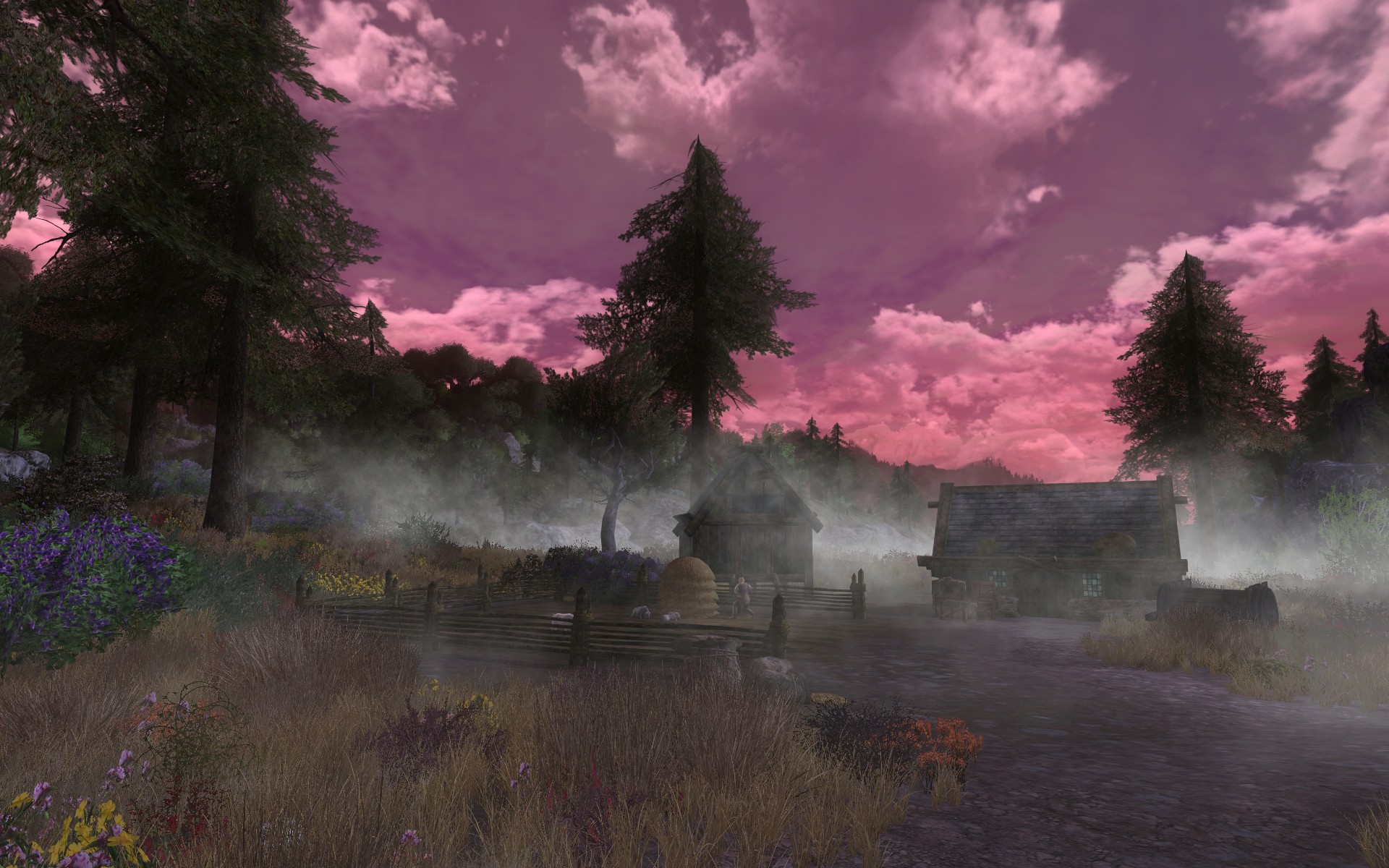
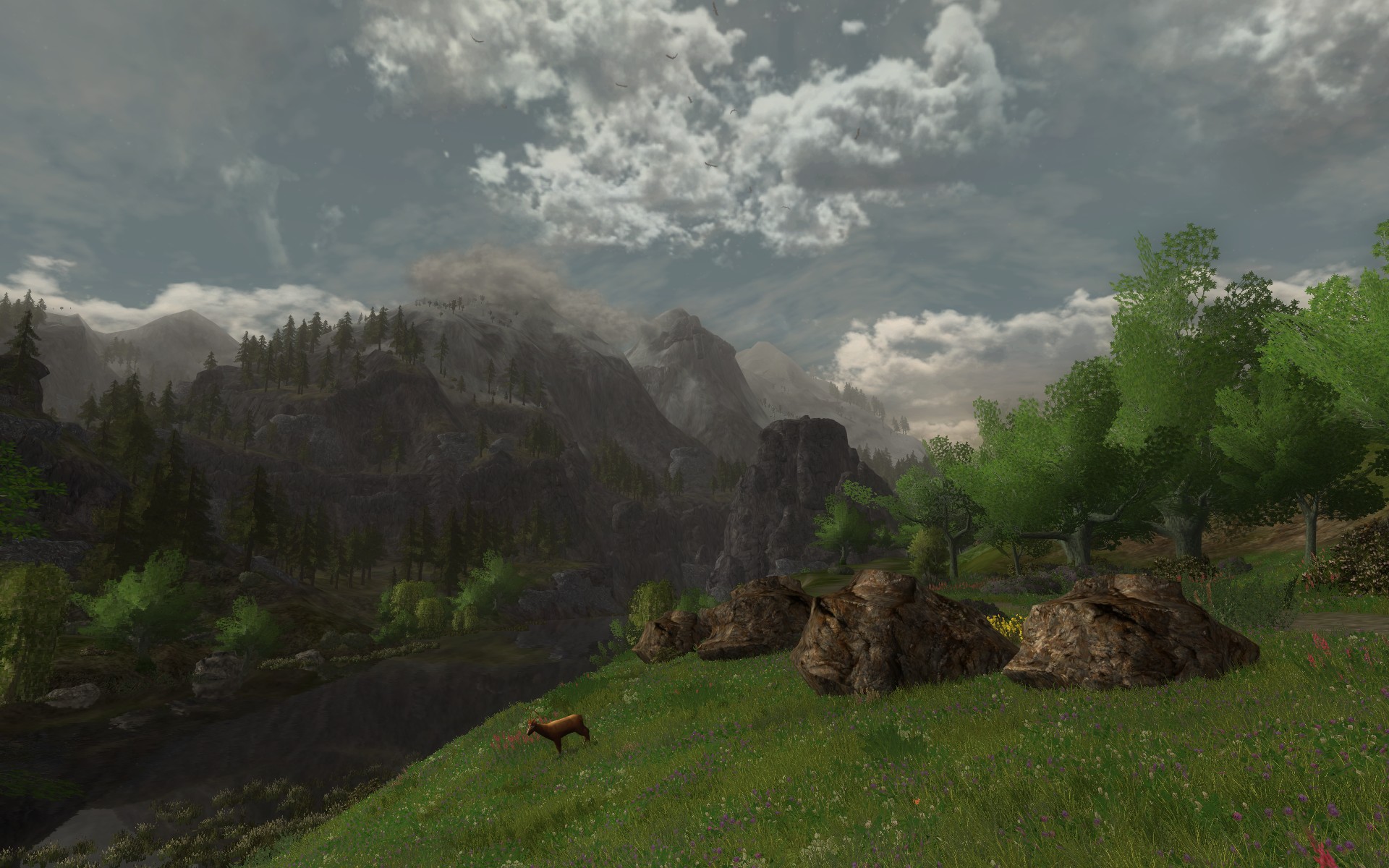
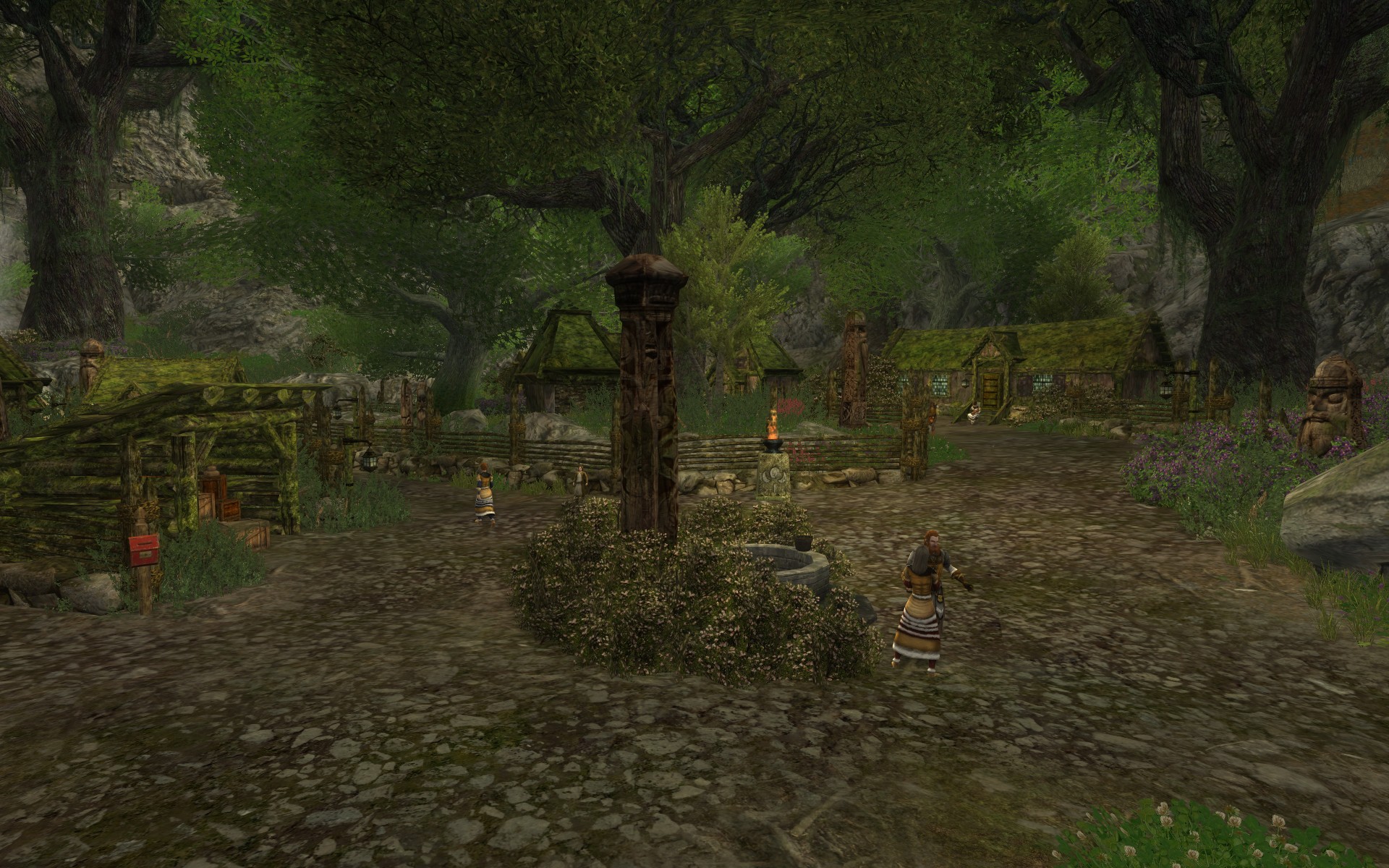
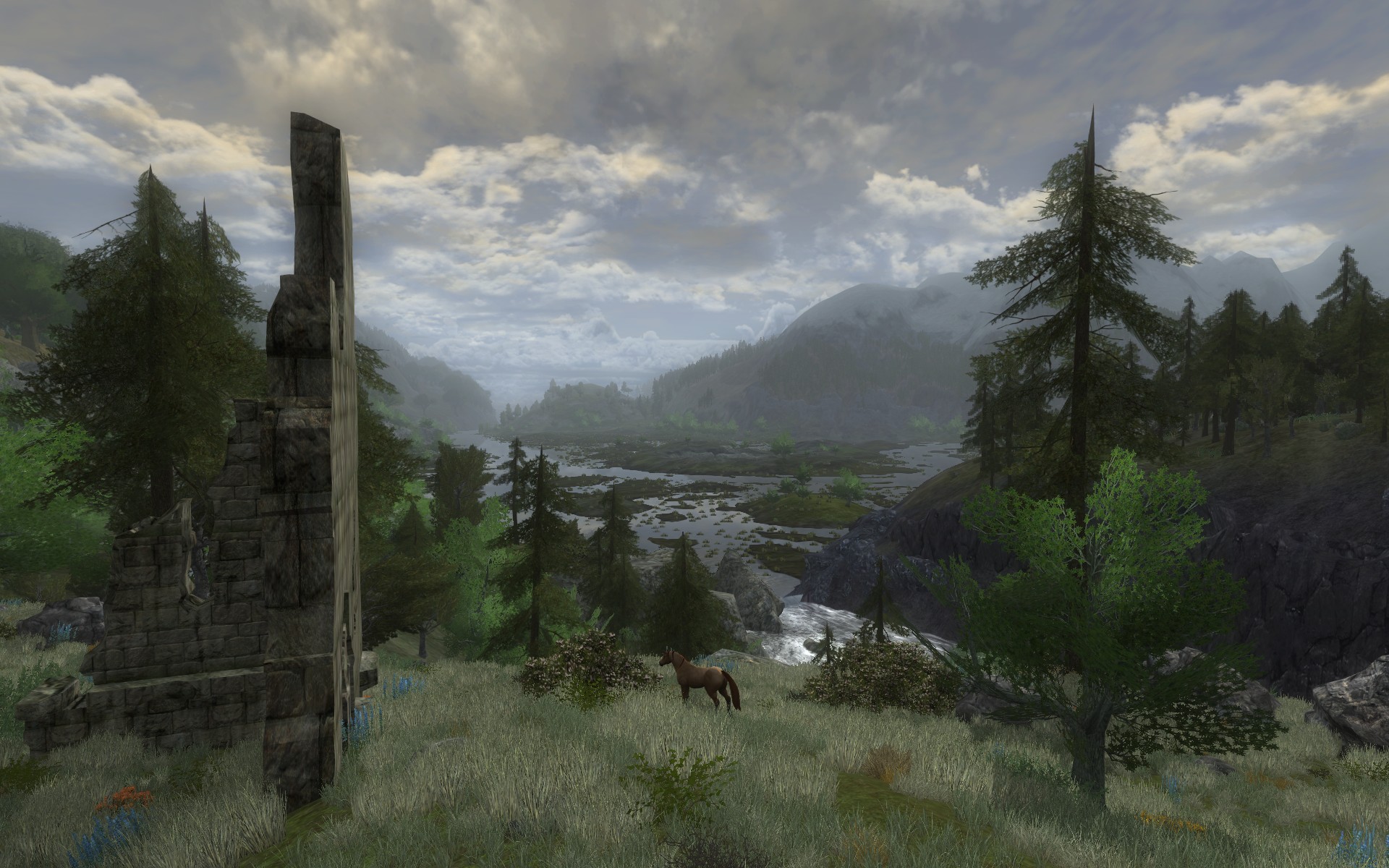
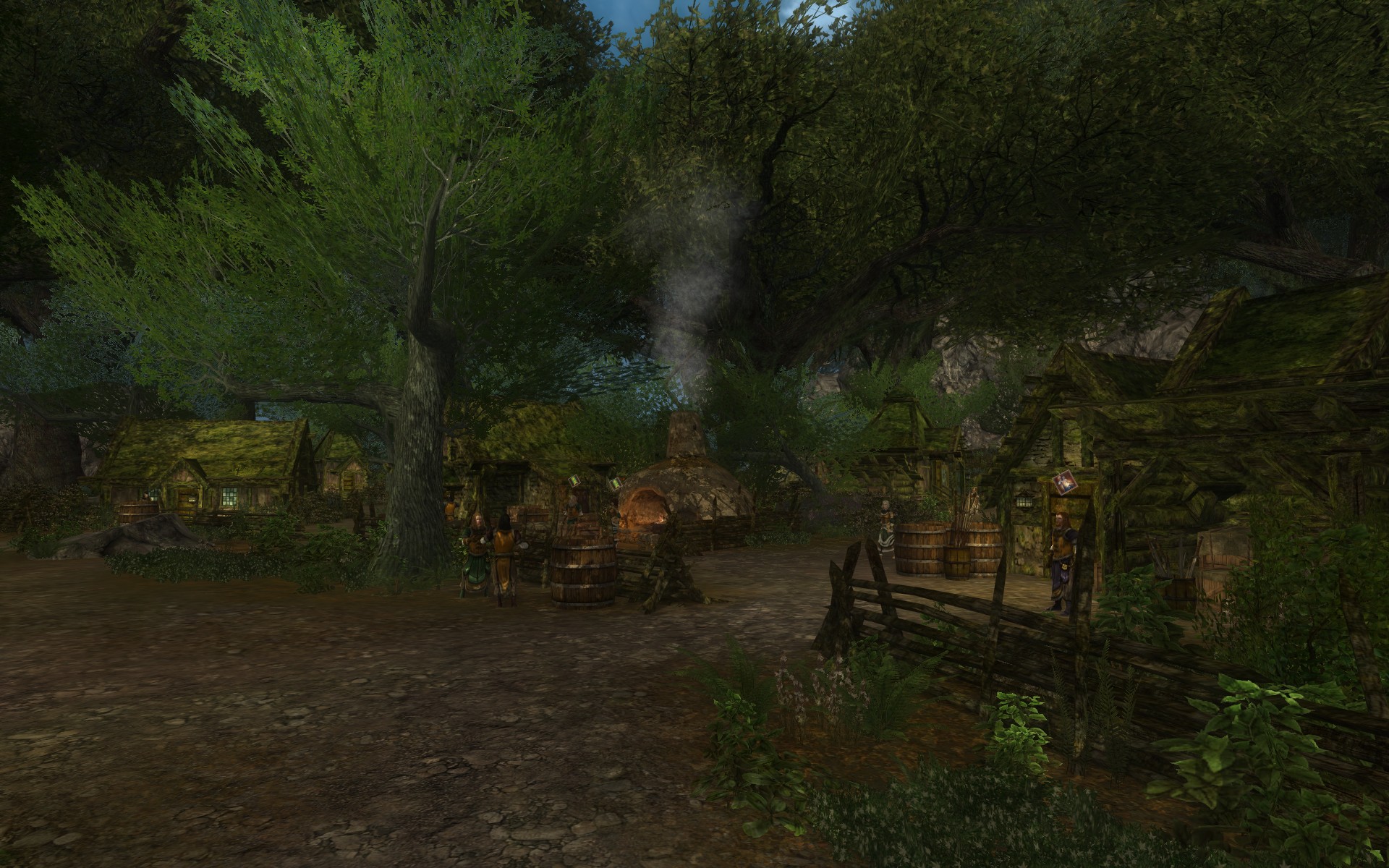
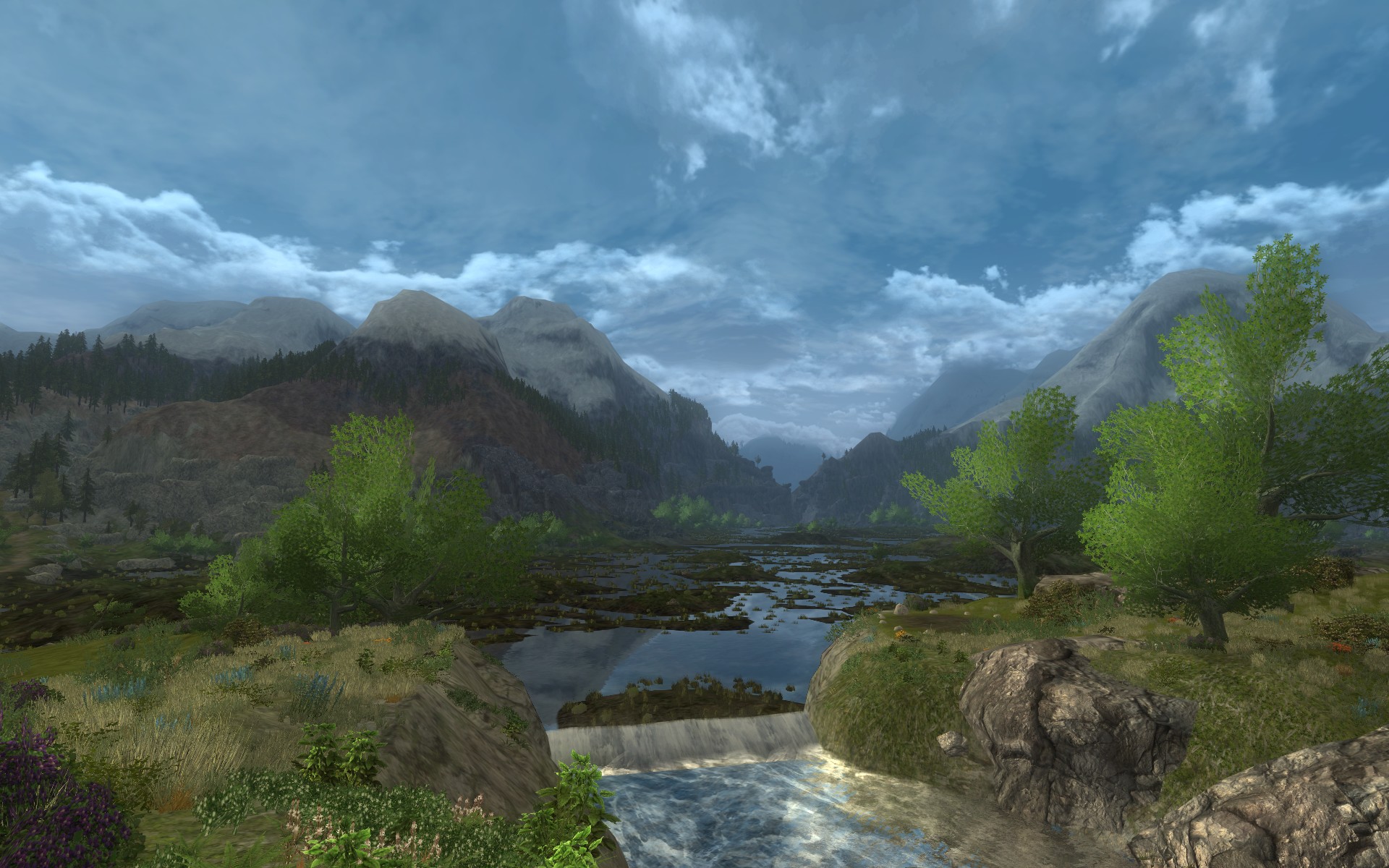
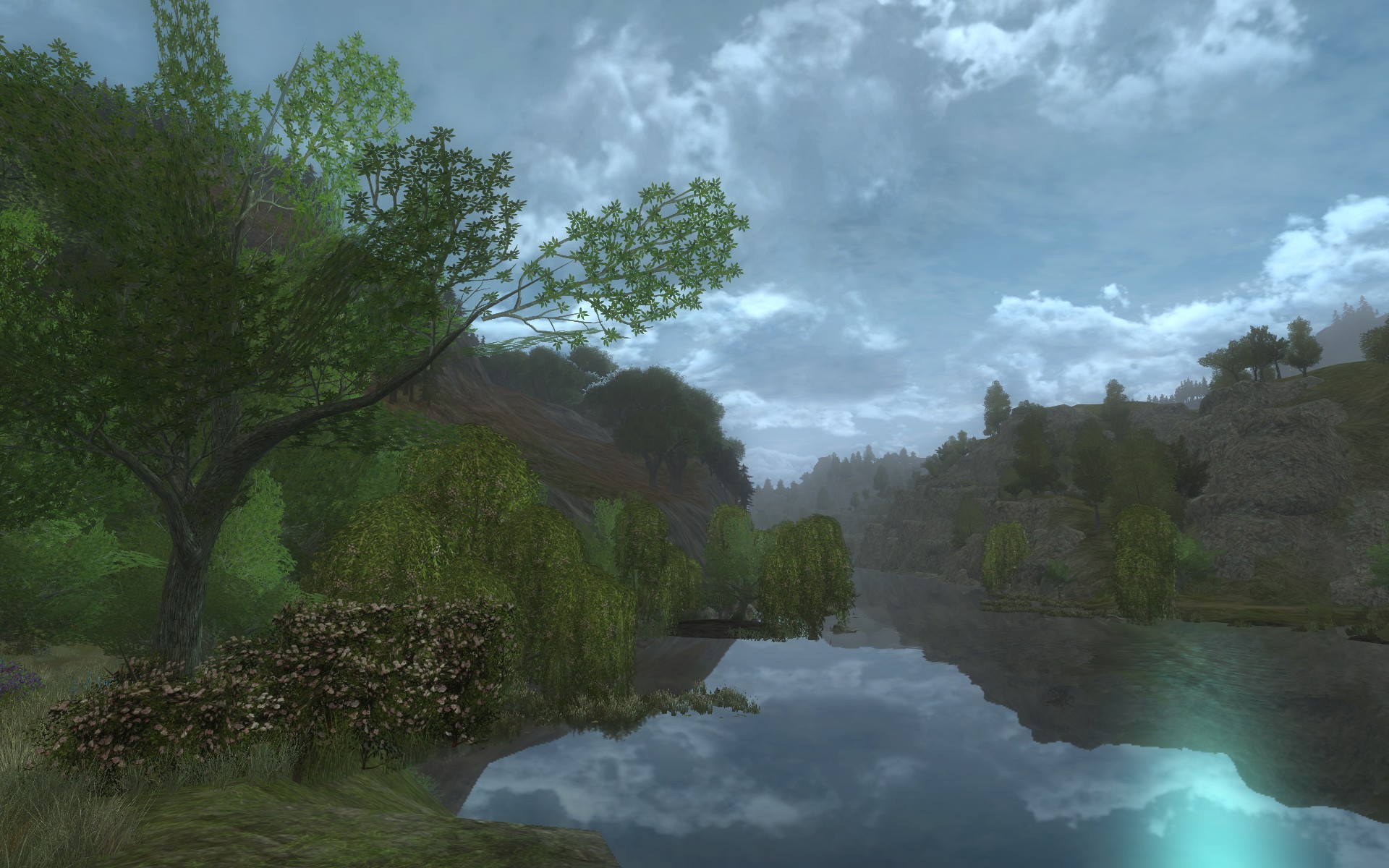
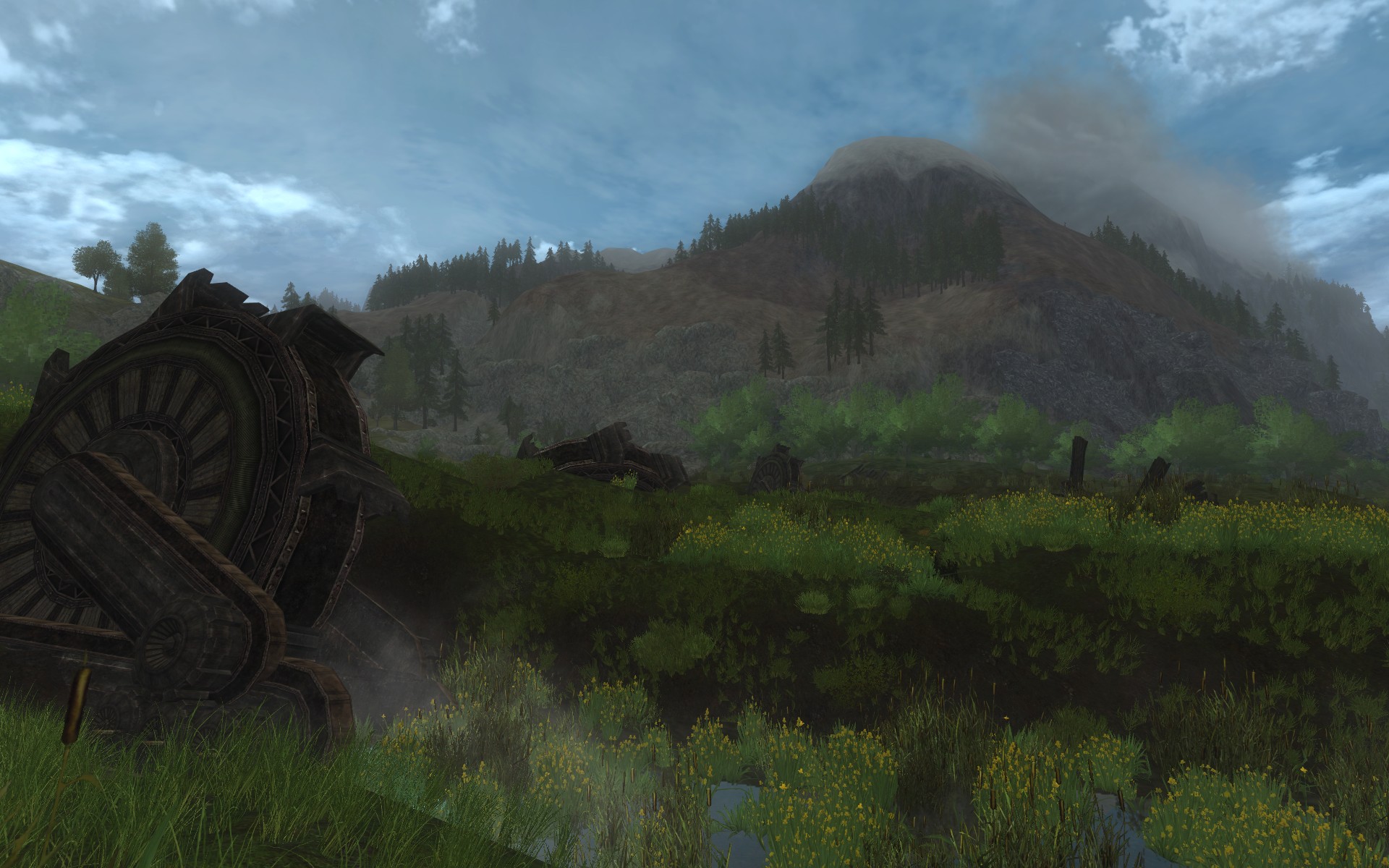
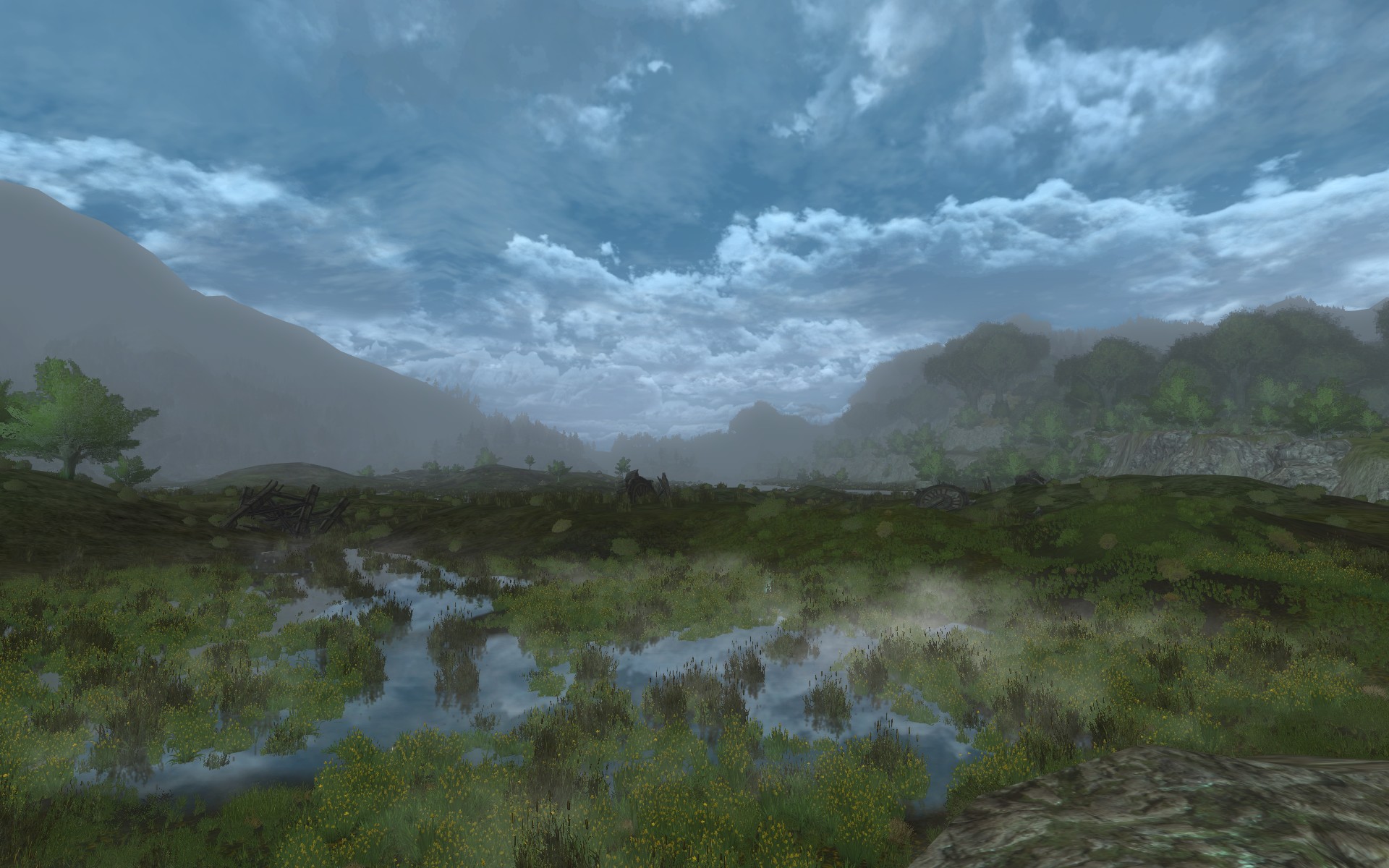
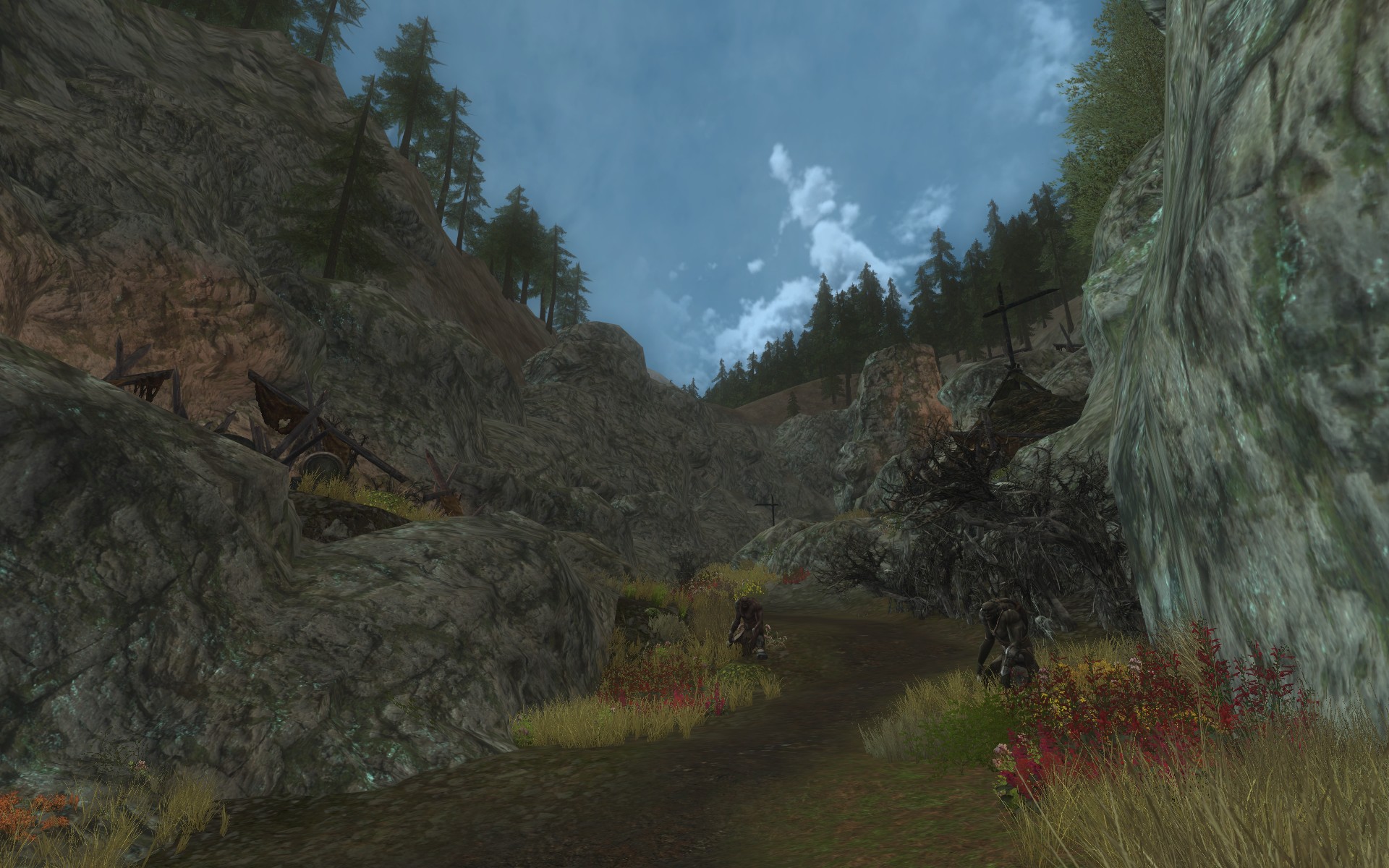
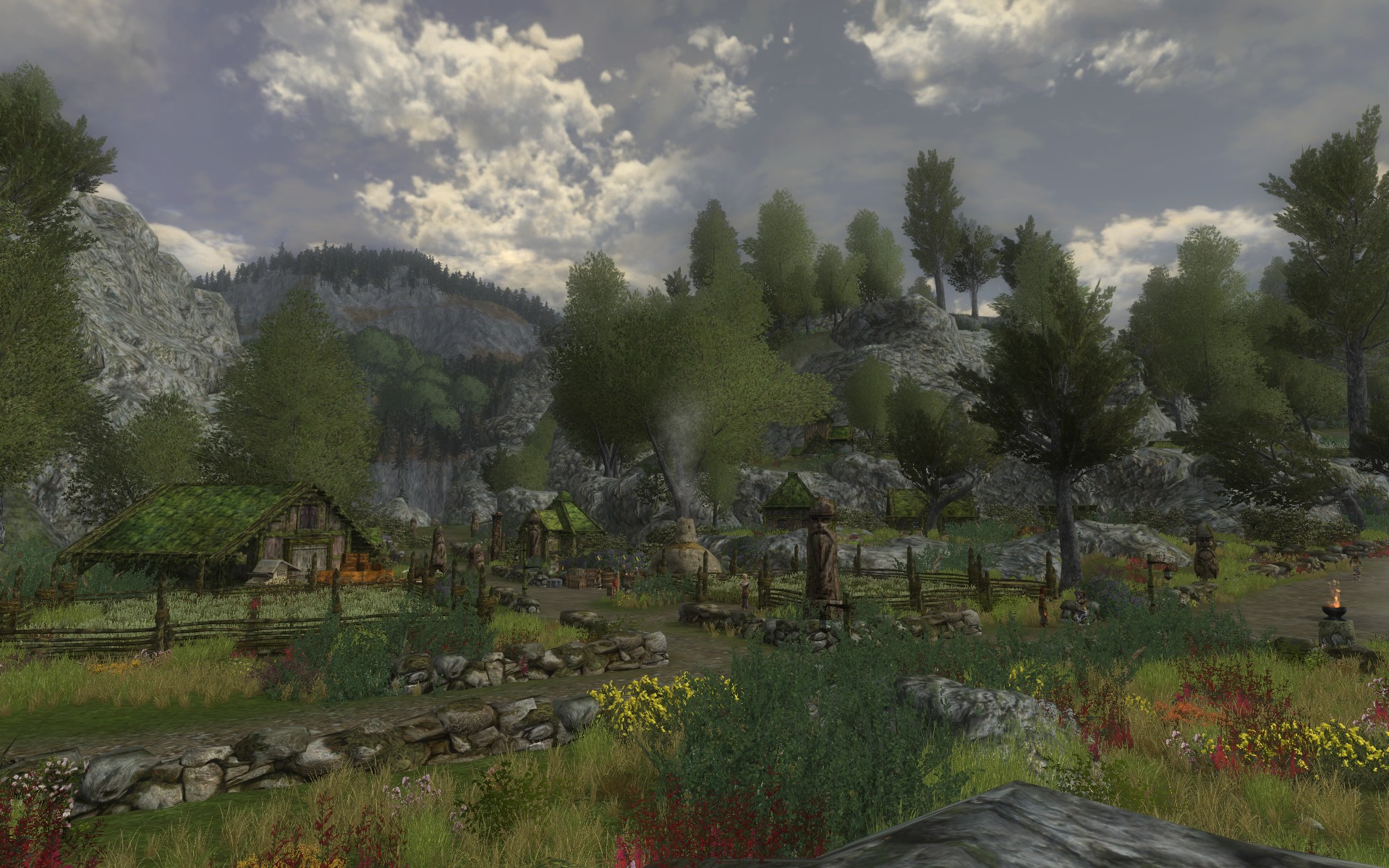
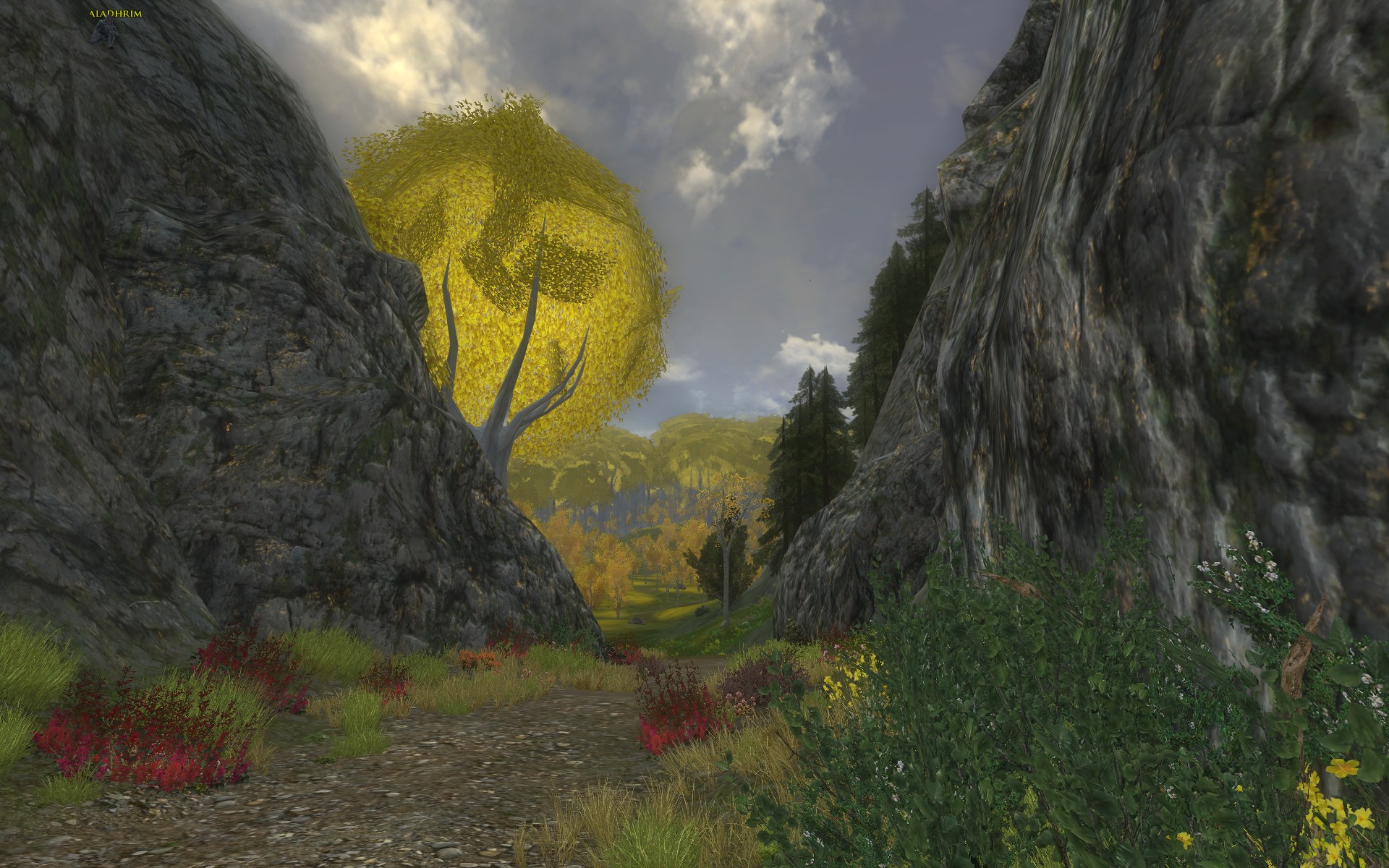

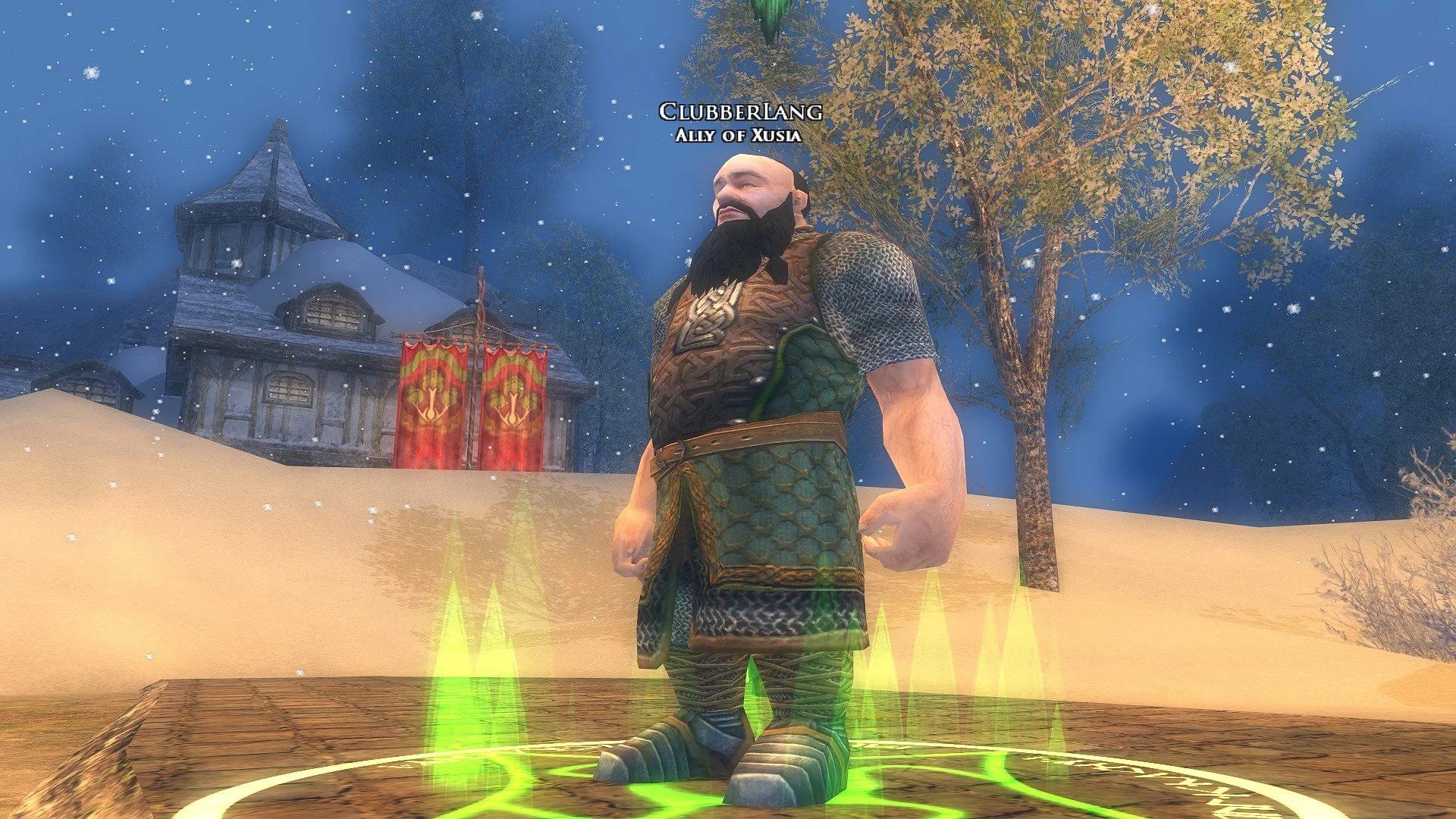
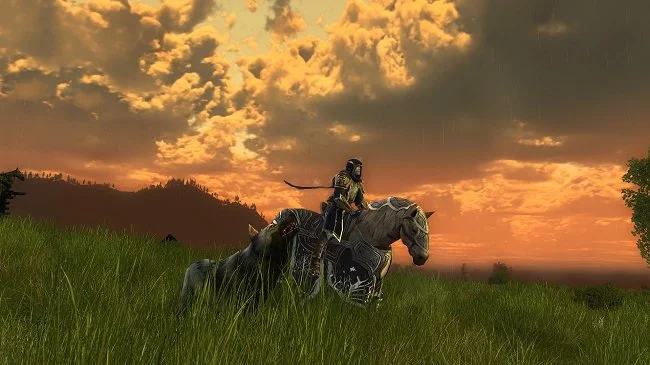
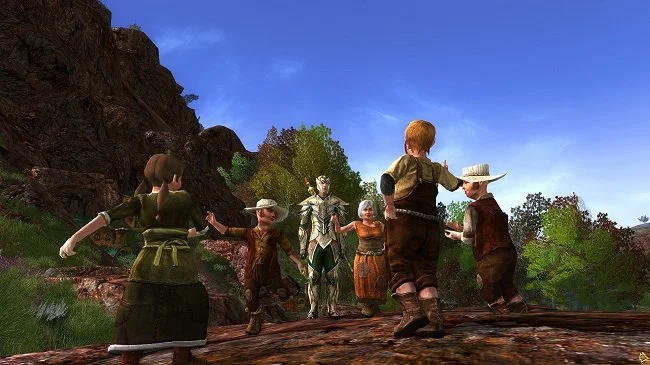
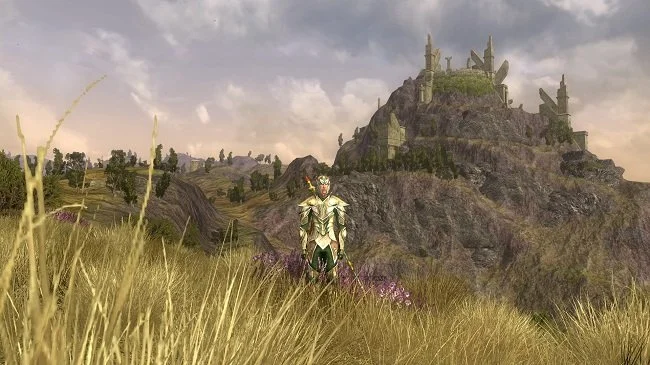

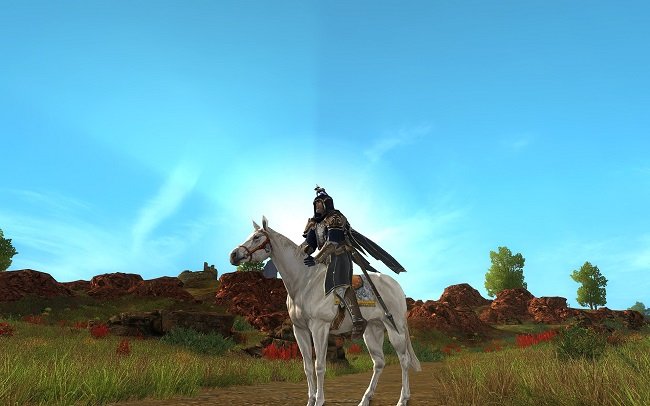

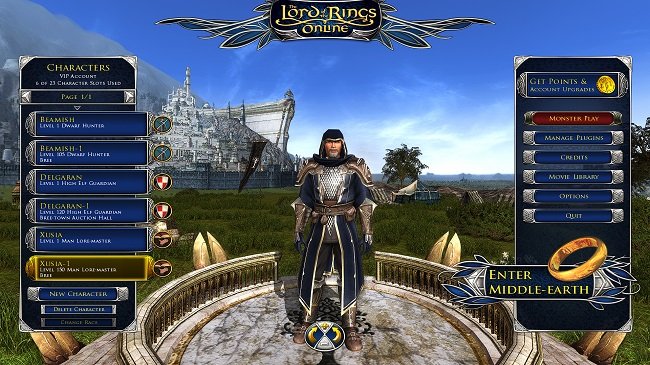
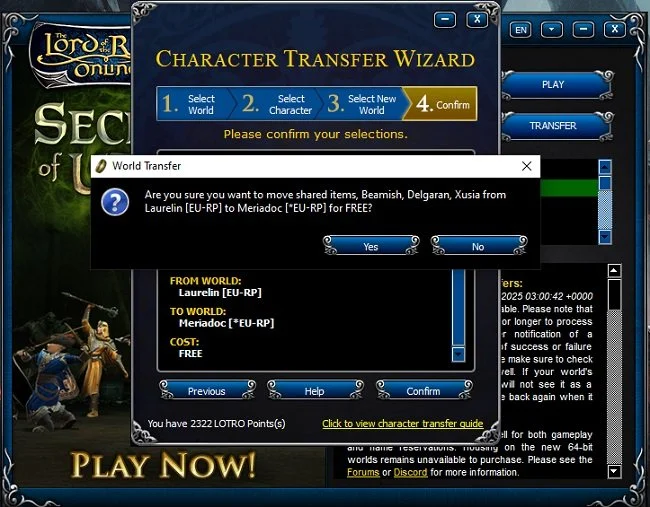
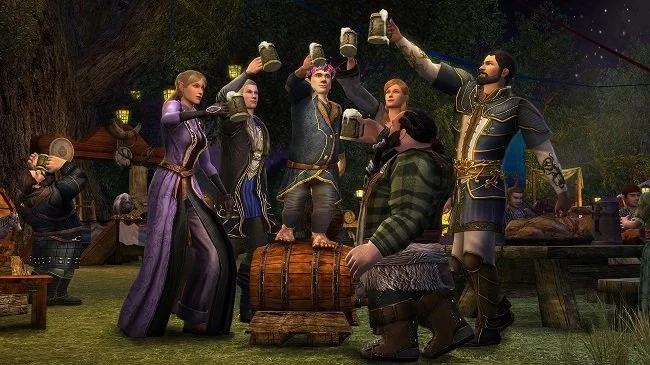

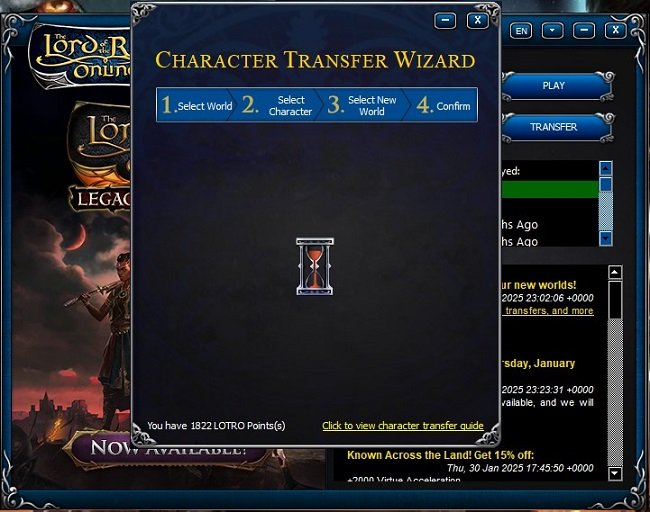
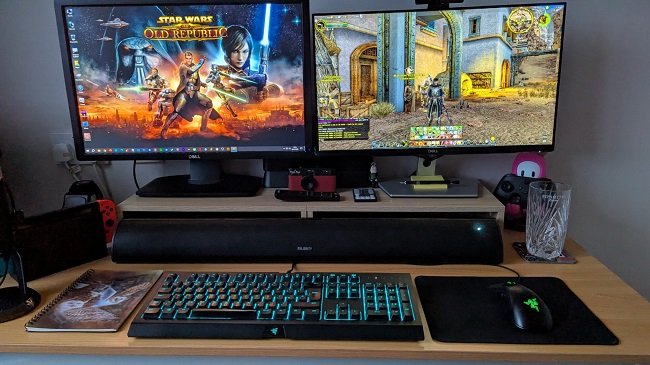

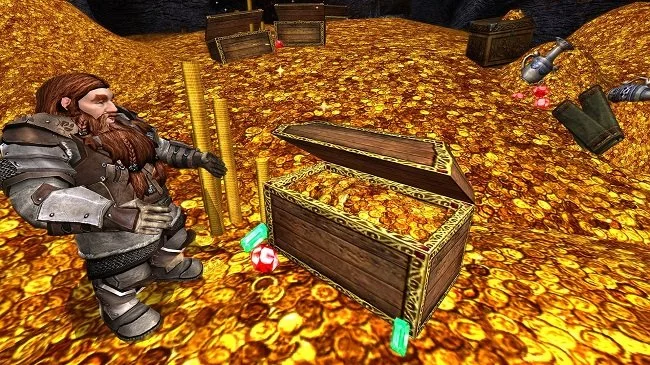
Bits and Pieces
I have multiple blog articles outstanding in my “draft posts” folder. But time has not been on my side of late, so very little of these are going to be completed and see the light of day, any time soon. However, there are always alternative strategies. If you’re in doubt about what to write, or more likely just pushed for time, simply create an eclectic post that allows you to reference multiple subjects and news stories without having to write a thousand words on each and then make it a regular feature. If you also want to raise a wry smile with an older demographic, make the title of this new recurring piece a particularly bad pun about a popular sixties’ song by a well-known “beat combo”. With this now explained, let’s get on with things.
I have multiple blog articles outstanding in my “draft posts” folder. But time has not been on my side of late, so very little of these are going to be completed and see the light of day, any time soon. However, there are always alternative strategies. If you’re in doubt about what to write, or more likely just pushed for time, simply create an eclectic post that allows you to reference multiple subjects and news stories without having to write a thousand words on each and then make it a regular feature. If you also want to raise a wry smile with an older demographic, make the title of this new recurring piece a particularly bad pun about a popular sixties’ song by a well-known “beat combo”. With this now explained, let’s get on with things.
There was an interesting episode of The Jimquisition that was posted on Monday 15th April. It was about PC Gamer journalist James Davenport who wrote a detailed article about how used a mod to complete the game Sekiro and its extremely tough final boss fight. The point of his post was to discuss the subject of difficulty and its wider culture. However, fundamentalist gamers didn't see things his way and were vocal in their criticism. A somewhat theatrical comment was tweeted by Fetusberry 'Ass Bastard' Crunch, which then became a meme. Ironically, this negative comment was subsequently usurped by Jim Sterling and his comic character, Duke Amiel du H'ardcore, to mock its supporters. For those who are not aware of the original tweet, here it is in all its hyperbolic glory. “You cheated not only the game, but yourself. You didn't grow. You didn't improve. You took a shortcut and gained nothing. You experienced a hollow victory. Nothing was risked and nothing was gained. It's sad that you don't know the difference”.
Like Jim Sterling, I find this perennial argument extremely tedious. I wrote a post about two years ago which covers pretty much the same ground. Back then it was the claim that people were playing MMOs “wrong”. The assumption being that there is only one orthodox way to play this genre of games and if you fail to do so, not only are you a fool to yourself, you’re somehow causing harm to others and the gaming industry. Hence self-appointed gatekeepers feel obliged to “hold the line” or something to that effect. This argument, like the latest example above, is founded upon several completely false axioms. With regard to Fetusberry’s assertions, it is not a mandatory for a player to grow, improve, or risk anything. Games are no entirely founded upon notions of self-improvement and are not primarily conduits for personal realisation. In short, some games can provide these and some gamers will seek such things but other don’t and are not mandated to do so. Games are multi-faceted mediums than can provide numerous things and serve multiple purposes to those who play them. Sadly, many still fail to comprehend this and therefore I think this “debate” is going to regularly return like a bout of malaria.
Another gaming debacle that has held my interest has been the ongoing tale of the unofficial resurrection of City of Heroes via a public server. It has been a rollercoaster of a story with copies of the defunct game’s core code publicly disseminated, alleged legal threats from the copyright holders and fans arguing among themselves. For me the matter that stands out the most is not the bellicose, emotionally dysfunctional nature of some aspects of the gaming community as that’s been a known quantity for quite a while. It’s the fact that people are still very excited, passionate and invested in an MMORPG that has been unavailable for seven years. It’s an interesting contrast to the general levels of indifference and ambivalence shown towards games in development and pending release.
In other news, Gimli has proven to be politically incorrect (insert smiley face). Hyperbole aside, the actor John Rhys-Davies recently appeared on the popular political BBC panel show Question Time. This long-standing program is based around a selection of guests, mostly politicians, journalist, and broadcasters (and in recent years the pop stars, comedians and actors) being quizzed on “hot topics” by members of the public. The panel are not aware of the questions in advance and therefore have to rely on their knowledge, ideologies and public speaking skills to address each topic. Sadly, in recent years as the quality of UK politics and public discourse has declined, so has the show. Rather than an orderly, rational and intelligent debate, it has simply become a bear pit for the worst sort of Punch and Judy politics. The audience shows evidence of being contrived and too many representatives from the fringes of politics are given the oxygen of publicity. It can be cogently argued that the show has contributed to the normalisation of extreme concepts and its associated unsavoury discourse, that would have been laughed off any respectable platform a decade ago.
Returning to the matter of Mr Rhys-Davies, he clashed with Green Party MP Caroline Lucas over President Trumps visit to the UK this summer. “He’s elected head of state of a great democracy, the last best hope for mankind of course”, he said. “He represents the American people”. Mrs Lucas pointed out that Trump lost the popular vote by 3 million, which prompted a rather unseemly outburst from Mr Rhys-Davies. The controversy is mainly due to the manner in which he expressed himself and no so much about what views were espoused. The phrases, “patronising, condescending and bombastic” spring to mind. But should we really be surprised that a man of his age group, social demographic and known political views and affiliations chooses to conduct himself in such a fashion? What has subsequently proven interesting is that the manner in which this story has been reported both online and in traditional media. Ones position on the political spectrum naturally plays a role in how you interpret this.
Star Trek Online continues to focus upon the popularity and success of Star Trek: Discovery with the release of the forthcoming update Rise of Discovery on May 14th. Actors Rehka Sharma, and Jason Issacs will be joining the already prestigious voice cast, by reprising their respective roles as Commander Ellen Landry and Captain Gabriel Lorca. Developer’s Cryptic have also announced that Tier 6 ships will become useable at any level and will scale accordingly. This is an interesting development that addresses the perennial MMO paradox of the trivialisation of gear while progressing towards level cap. It will be interesting to see how this system works in reality and whether it will be applicable to all vessels in the game or simply those bought in the in-game store for Zen. Oh and “hello to Jason Isaacs”.
Thoughts on Blogging Part 8
I wasn’t expecting to write another entry in the Thoughts on Blogging series so soon, but something came up that grabbed my attention and got me thinking. A simple question that’s often asked about blogging and one that has many layers to it, as well as numerous answers. A new blogger who recently joined the Blaugust discord server asked for help “getting traffic to their blog”. An enquiry that gave me (and possibly others) pause for thought. Because we all to a degree want to attract traffic to our blogs. But I also think bloggers are too coy about this this subject. We’ll say things like “I write for myself” or “it’s not about the numbers” and although I agree with these points, building an audience is important. Let’s be honest, it can be somewhat disheartening after writing a lengthy post about a subject close to you heart, for it to fall flat and not attract any traffic. As discussed before, often it is the casual blog posts written in a hurry, that can be the most popular and the articles you’re most proud of can go unnoticed. So let us be honest. I think most bloggers want to grow an audience and enjoy the sense of accomplishment that it provides.
I wasn’t expecting to write another entry in the Thoughts on Blogging series so soon, but something came up that grabbed my attention and got me thinking. A simple question that’s often asked about blogging and one that has many layers to it, as well as numerous answers. A new blogger who recently joined the Blaugust discord server asked for help “getting traffic to their blog”. An enquiry that gave me (and possibly others) pause for thought. Because we all to a degree want to attract traffic to our blogs. But I also think bloggers are too coy about this this subject. We’ll say things like “I write for myself” or “it’s not about the numbers” and although I agree with these points, building an audience is important. Let’s be honest, it can be somewhat disheartening after writing a lengthy post about a subject close to you heart, for it to fall flat and not attract any traffic. As discussed before, often it is the casual blog posts written in a hurry, that can be the most popular and the articles you’re most proud of can go unnoticed. So let us be honest. I think most bloggers want to grow an audience and enjoy the sense of accomplishment that it provides.
So let us consider for a moment, the question of attracting traffic to your blog. First of all, what is your motivation. It’s an important question because it determines how and what you write, the kind of audience you pursue and the niche you are going to try and fill. If you are writing for pleasure, because of a sense of fandom and to contribute to a community then you’re mainly looking to connect with a specific group and be of service to them. This makes finding your audience very specific. You produce content that is relevant to the community you are part of and promote it via the platforms that community uses. If you are writing for financial gain or to achieve some sort of “internet fame”, then your content is governed far more by pursuing what is popular, affiliating yourself to the latest trends and getting “noticed”. You therefore may seek to court controversy and become involved in high profile disputes. What you wish to achieve very much determines your path. It is not unlike the differing roles of the tabloid press and broadsheet newspapers.
If therefore, you are pursuing the former of these two options and say for example wish to establish yourself of part of The Elder Scrolls Online community, then the best approach would be to produce content regularly. Ensure that your material is engaging, interesting and relevant. Maintain a schedule and stick to it. Google likes sites that do this and you will fair better in search rankings as a result. Your readers like consistency as well. Promote your work via social media, forums and other platforms. Interact with your audience, answer comments and provide your own views on the work of your peers. Riffing off other bloggers posts is always a good way of raising your profile. Discuss, debate and participate. Know when to argue a point and when not to waste your time. Do your research if your posts require factual accuracy and always link to your sources. Then do all the above continuously for several years (possibly nearer a decade) and you may gain some traction and build an audience.
And now let us consider the alternative. Regularly create content but couch it in hyperbole and click bait style of headlines. Be controversial, outspoken and outrageous. Attack those with opposing views and always make clear what you don’t like and won’t tolerate. After all, it’s a lot easier to be critical than constructive. Utilise all the rhetorical tricks of the trade; ad hominem and strawman arguments, gaslighting and “whataboutery”. Jump on any passing bandwagon regardless of whether you believe in it or not. Similarly have an opinion on anything and everything. Shit post, hangout in all the wrong places (specific subreddits, 4chan and 8chan) and always ensure that if there’s a divisive situation, you’re associated with it. Don’t deal in facts but in feelings. Ignore such concepts as the burden of proof, feel free to contradict yourself, switch sides and generally not be burdened by constricting concepts such as integrity. Make people angry then point them in the direction of the alleged “cause”. If you follow this plan, you’ll get noticed and you may gain an audience. But there’s a price to pay. You’ll have painted yourself into a corner and will forever be associated with your “persona”. Plus a lot of people will think you’re an asshole.
Obviously, I have presented two ways of building an audience and would like to make it clear that there are naturally alternatives and variations on both discussed routes. I must admit I do find it surprising that people still think that there’s a quick and easy way to “success”, be it with blogging or any of the other ways of sharing content. Live streaming, producing You Tube videos, creating podcasts and blogging have all gone through a lot of transitions over the years and I suspect the days of any of them being a quick way to get rich and famous have possibly gone. The only constant I can really think of about “audiences” is that they can be both loyal and fickle. Core readers will stick around because ultimately, they have a sense of rapport with the author. Yet if you write less often then people will naturally go elsewhere. There’s been a notable dip in this site’s traffic in the last fortnight because I haven’t been writing. As to the newbie blogger who posted the original question, I hope you find the path that right for you. I’d be interested to learn what their thoughts are on traffic if they’re still blogging in a year’s time.













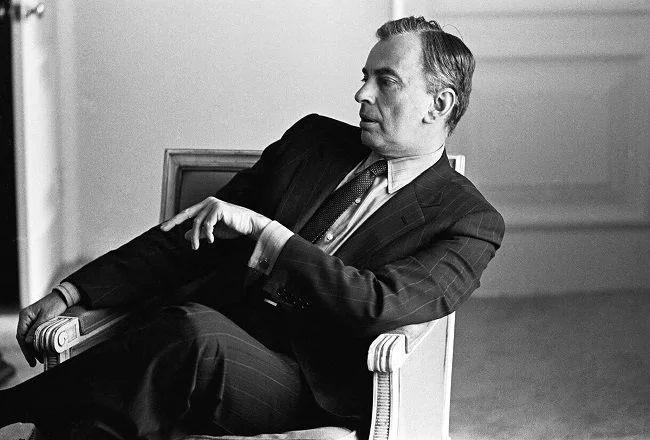



Hellboy (2019)
Hellboy begins with a pre-credits prologue, set in the Dark Ages and establishing the basic premise of the movie. Milla Jovovich plays the Blood Queen Vivian Nimue who unleashes a plague upon England (for some particular reason). She is defeated by King Arthur, dismembered and her body parts scattered to the four corners of the isle. It’s a graphic opening that clearly states the movies intent to be different to its predecessor. This reboot of the franchise aims to be gritty with liberal helpings of ironic banter and dry humour to offset the grim world the characters traverse. For those familiar with Mike Mignola’s work, this vision of Hellboy tries to embrace many aspects of established canon. The story broadly follows the comic books Darkness Calls, The Wild Hunt, The Storm and the Fury. There’s also an attempt to reflect the aesthetic of Mignola’s style. Yet all of this, along with the patent desire to be a R rated movie and to set itself apart from Guillermo del Toro’s versions, makes for a sprawling film that sadly over reaches itself.
Hellboy begins with a pre-credits prologue, set in the Dark Ages and establishing the basic premise of the movie. Milla Jovovich plays the Blood Queen Vivian Nimue who unleashes a plague upon England (for some particular reason). She is defeated by King Arthur, dismembered and her body parts scattered to the four corners of the isle. It’s a graphic opening that clearly states the movies intent to be different to its predecessor. This reboot of the franchise aims to be gritty with liberal helpings of ironic banter and dry humour to offset the grim world the characters traverse. For those familiar with Mike Mignola’s work, this vision of Hellboy tries to embrace many aspects of established canon. The story broadly follows the comic books Darkness Calls, The Wild Hunt, The Storm and the Fury. There’s also an attempt to reflect the aesthetic of Mignola’s style. Yet all of this, along with the patent desire to be a R rated movie and to set itself apart from Guillermo del Toro’s versions, makes for a sprawling film that sadly over reaches itself.
Although Hellboy has clear faults, the casting of David Harbour is not one of them. Contrary to what a lot of people expected; he does handle the role well. He clearly grasps the stoical, everyman quality of the character and the way these personality foibles contradict the arcane fantasy world in which he exists. But where Harbour excels, the rest of the cast tend to tread water. Ian McShane steps into John Hurt’s shoes as Trevor Bruttenholm, Hellboy’s adopted father, but the role is hardly taxing for him and the screenplay offers his little to do beyond the arbitrary and expositionary. Milla Jovovich similarly is a very generic villain as Blood Queen Nimue. Her character wants revenge for her summary execution and the disruption of her plans but beyond this, there is no depth to her motivations. Ed Skrein was originally cast as Ben Daimio, but then stood down as he was cognisant of the controversy surrounding changing of the character's ethnicity. He was replaced by Daniel Dae Kim but after all the fuss, the role is still somewhat bland and is nothing more than functional.
The screenplay by comic book creator, film producer, and screenwriter Andrew Cosby, encompasses multiple elements from the comic books. This does lend itself to some enjoyable set pieces but it also results in a story that rapidly moves between multiple locations and characters, resulting in many plot strands simply vanishing from the story. The desire to do so much means that the core relationships which are the foundation of this franchise and whichwere so robust in del Toro’s films, are underdeveloped. And then there are the film’s visual effects which favour the digital over the physical. As ever with modern productions, numerous studios have been contracted to provide work, including Mr. X, Rhythm & Hues, Rise FX and Worldwide FX. Luminaries such as Steve Begg feature in the credits. However the results are varied and somewhat impersonal. Violence without context or emotional content, is often just a spectacle devoid of any cinematic impact.
I have enjoyed director Neil Marshall’s previous work. Dog Soldiers and The Descent were above average genre outings that showed a greater intelligence than their rivals. His absence from cinema in recent years has been due to him working in television and such shows as Game of Thrones, Black Sails and Westworld. Hence a lot of genre fans were quite excited when they learned that he’d be helming the Hellboy reboot. Yet, it would appear that Marshall was not given final edit over his movie and the film has the air of a production that has been continuously “tweaked” throughout its development. The involvement of five production companies may well be the reason for this. It’s a real shame because during the course of its 120-minute running time, there are hints that Hellboy could have been much better. Fantasy as a genre and super hero franchises often explore issues of “difference” and use their tropes as metaphors to scrutinise discrimination, or the difficulty of straddling two cultures. Such ideas are referenced in Hellboy but sadly sidelined in favour of action scenes. I have no problem with the idea of making Hellboy darker and more palatable for adult audiences but not at the expense of the characters soul. But that is sadly what has happened.










Thoughts on Blogging Part 7
I decided to take a short break from blogging last week. I have a lot on at present and the only time I’ve had available to write has been in the late evening. I prefer to write in the morning as I’m more focused and motivated. Plus I haven’t really had a lot of positive things to say of late about the two primary subjects of this website. Broadly speaking there’s not a lot of going on in the video games industry that enthuses me. Similarly, the current crop of film releases have hardly distinguished themselves. At present when I do get writing ideas, they tend to be obscure niche market subjects or commentary on social issues. For example, I’m thinking of writing a post about my continuing enjoyment of the Japanese TV show Takeshi’s Castle. I’m also forming my thoughts for an article about how society’s relationship with wildlife may be “broken”. Stuff that is interesting to me but may not be ideal material for readers of Contains Moderate Peril.
I decided to take a short break from blogging last week. I have a lot on at present and the only time I’ve had available to write has been in the late evening. I prefer to write in the morning as I’m more focused and motivated. Plus I haven’t really had a lot of positive things to say of late about the two primary subjects of this website. Broadly speaking there’s not a lot of going on in the video games industry that enthuses me. Similarly, the current crop of film releases have hardly distinguished themselves. At present when I do get writing ideas, they tend to be obscure niche market subjects or commentary on social issues. For example, I’m thinking of writing a post about my continuing enjoyment of the Japanese TV show Takeshi’s Castle. I’m also forming my thoughts for an article about how society’s relationship with wildlife may be “broken”. Stuff that is interesting to me but may not be ideal material for readers of Contains Moderate Peril.
I recently wrote about how the blogging community intermittently loses long time contributors when they decide to “retire”. I have been reflecting upon this of late and wondering whether I should be doing the same. This has mainly been due to a lack of motivation on my behalf. However, as I know exactly what the causes of this problem are (they’re mainly logistical issues), I eventually settled for a short break instead. I know that as soon as I “pack in” writing, I’ll get the bug again shortly afterwards. There is only so much a person can do to organise their life, especially when there are random external factors that can throw a proverbial spanner in the works at any time of day. So I have two choices. Accept the fluidity of things and write as and when I can. Or try to stick to my current schedule, fall behind, get frustrated and eventually throw in the towel. The logical things is to adapt and embrace the former option. So that is what I shall do at for the present. The daily writing schedule has got to give.
If all goes to plan, I’m hoping to resume writing again this week. I have several film reviews outstanding that I can finish off and post. I find these a lot more straightforward and relatively easy to collate, compared to more complex “think pieces” about gaming and its associated industry. Film reviews have also proven to be a good source of traffic for Contains Moderate Peril over the years, as unlike gaming related articles, they’re not time specific. I’m also going to pursue the more niche market articles I mentioned earlier, because the alternative is simply not to write anything. I’m sure I’ll produce more material about gaming when a subject, or angle presents itself that I find interesting. However, beyond this immediate plan, it’s best not to speculate. My caring commitments are currently in a state of flux due to illness and associated medical problems. So there’s still plenty of scope for arrangements and schedules to change.
Maintaining a Standard
I do not advocate that mindset that some gamers pursue, where they don’t see game publishers as a company selling them a product, but instead see their vendor/consumer relationship in a more personal light. I think it is both wise and healthy to see things as they are; namely that buying a game is a transactional relationship governed by consumer law. That is not to say that we should by default, think ill of all video games publishers, but it is pertinent to reflect upon what we know about the business practises of such companies as Riot Games, Blizzard- Activision and more recently BioWare. To be concise, some video games companies are shitty to both their customers and their staff. Others are not. Let the buyer beware and all that.
I do not advocate that mindset that some gamers pursue, where they don’t see game publishers as a company selling them a product, but instead see their vendor/consumer relationship in a more personal light. I think it is both wise and healthy to see things as they are; namely that buying a game is a transactional relationship governed by consumer law. That is not to say that we should by default, think ill of all video games publishers, but it is pertinent to reflect upon what we know about the business practises of such companies as Riot Games, Blizzard- Activision and more recently BioWare. To be concise, some video games companies are shitty to both their customers and their staff. Others are not. Let the buyer beware and all that.
Is this ramble going anywhere, I hear you ask? Yes, it is. I want to reference the British video games developers and publishers Rebellion Developments Limited. They are practical and realistic regarding their franchises and the scope of their projects. The games they produce are polished, well made and cater to their customers needs. And as far as I’m aware, the company doesn’t treat their staff like a Dickensian Mill owner. Furthermore, Rebellion doesn’t take liberties with the monetisation of their games. Their base game and season pass policy is not excessively priced. Furthermore, in the case of Sniper Elite V2 Remastered which is due to be released on 14th May, the price reflects that this is an overhaul of an existing game. It cost £29.99 but if you pre-order, there’s a 10% reduction to £26.99, applicable regardless of platform. If you happen to own the original game, then £6.99 will secure you an upgrade to the remastered version.
Rebellion have some great franchises in their back catalogue. As well as the Sniper Elite series, which improves and becomes more streamlined with each iteration, the company also holds the rights to publish 2000 AD. It has released in the past both a Rogue Trooper game which has since been remastered, along with a Judge Dredd title. Hopefully this too will be retooled or perhaps a new project will manifest itself. Strange Brigade is also one of its newer titles which was well received upon release last year. The company seems to consider very carefully what it does and doesn’t over extend itself or take unnecessary risks. It appears to know its market well and understand its customers needs. From the live streams I seen along with the interviews I’ve read, the developers along with founders Jason (CEO) and Chris (CTO) Kingsley strike me as being grounded and unburdened with the hubris shown by other larger companies.
At a time when it is common place to read about the iniquities of games publishers, it is easy to become very cynical of the entire industry and paint a negative picture with broad strokes. However, there are some good companies out there which seem to conduct themselves with decorum, as well as producing good games. I wrote recently about a lack of excitement that seems to blight some quarters of the gaming community at present. However, when pre-ordering Sniper Elite V2 Remastered, I was reminded that it can be found and not always where you expect it. So I guess the moral of this rambling narrative is that some companies still do maintain a standard and that gaming per se hasn’t quite totally gone to the dogs. I just hope that in the next few days there isn’t an expose that revels that Rebellion are a bunch of bastards.