
Air Fryers and Modern Cooking
In October 2023, we bought an air fryer. Specifically the Ninja Foodi Max which was on special offer on QVC UK. We were intrigued by the possibilities and the convenience the device was alleged to offer. Fortunately, most of the hype proved correct and air fryers are quick and convenient. It takes awhile to determine cooking times but eventually you become as familiar and comfortable cooking with an air fryer, as you would using a conventional oven. They are also easy to clean. The baskets can be wiped down with hot, soapy water and the drip trays can be put in the dishwasher. Over a year later, we have grown attached to our air fryer due to its versatility and quick cooking times. Having one has substantially changed our cooking habits and the traditional oven is used far less.
In October 2023, we bought an air fryer. Specifically the Ninja Foodi Max which was on special offer on QVC UK. We were intrigued by the possibilities and the convenience the device was alleged to offer. Fortunately, most of the hype proved correct and air fryers are quick and convenient. It takes awhile to determine cooking times but eventually you become as familiar and comfortable cooking with an air fryer, as you would using a conventional oven. They are also easy to clean. The baskets can be wiped down with hot, soapy water and the drip trays can be put in the dishwasher. Over a year later, we have grown attached to our air fryer due to its versatility and quick cooking times. Having one has substantially changed our cooking habits and the traditional oven is used far less.
Just before Christmas 2024, we decided to buy a Ninja Combi Multi-Cooker. This purchase was again prompted by a promotion on QVC UK. This device can cook in 14 different ways, such as roasting, baking and steaming. At the flick of a switch it can also provide additional air frying services. Again its major selling points are speed and efficiency. A small chicken, cooked using the Combi Crisp setting, which steams and roasts simultaneously, takes about 30 minutes. The meat is thoroughly cooked but remains moist. If used in conjunction with our air fryer, a full roast dinner with three additional vegetables can be cooked in less than an hour (including the preparation time). Again, the mess is minimal and clearing up afterwards is straightforward. All of which makes cooking per se a lot easier.
During the course of my lifetime there have been several cultural shifts around home cooking. Our national diet in the UK has changed substantially with some traditional meals falling out of favour. Overall a broader continental approach to cooking has become prevalent. The other change being a move away from the exclusive use of ovens and hobs to cook. Microwaves ovens have become ubiquitous and can do a lot more than people think. Slow cookers are also a practical means to time-manage cooking. Air fryers and combi-ovens further contribute to this social change. Naturally there are a percentage of people who are happy to cook in a traditional fashion but I think this is becoming a smaller demographic group.
Despite the rise of modern cooking devices and techniques, convenience foods, ready meals and ultra processed products have sadly quelled a lot of peoples home cooking aspirations. Time is such an important factor in people’s decision making these days. With the modern work-life balance the way it is, a lot of people just don’t have the stamina to come home from work and cook, even if there are easier options than the traditional approach. It’s difficult to compete with a meal that is superficially tasty and ready in a matter of minutes. Cooking used to be a skill that was often passed down from parent to child. However, that is not necessarily the case nowadays, although the internet can provide an alternative source of information. Modern food products have made cooking skills non-essential.
That being said, there is a growing culture of trying to live a healthier lifestyle these days. For those who want to cook more themselves the air fryer does offer a practical stepping stone. Even if you’re not interested in cooking meals entirely from scratch, they can cook convenience food as quickly and easily as whole foods. In fact air fryers cooking times are now becoming quite common on food packaging along with standard instructions. Simply put, cooking today does not have to be the same as it was 30 years ago. The entire process can be approached in a far more casual manner and it is a lot easier to experiment. For those that are already enthused by “modern cooking” there are gadgets for everything. If you are looking to make a change and have simpler aspirations then I would recommend an air fryer as your first step.






















They Came to a City (1944)
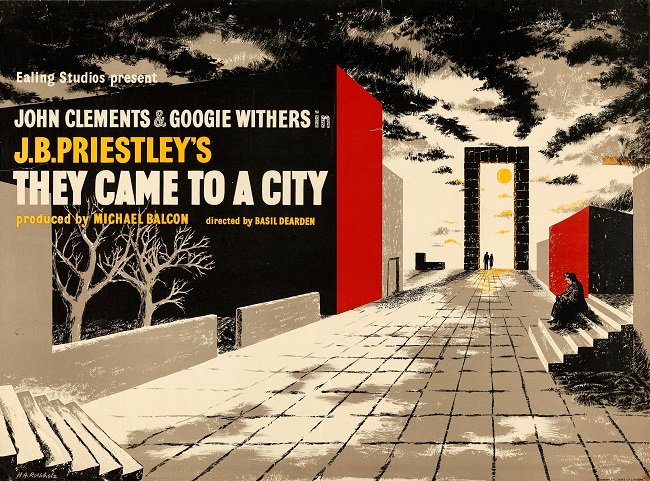
Humanity struggling to survive a dystopian future has been a mainstay of pop culture for several hundred years. They Came to a City, made in 1944 as World War II was drawing to a close, takes the opposite approach in which nine individuals are shown a utopian future and given a choice whether to join it or return to their existing lives. This experimental film based on a play by J. B. Priestly, is dialogue driven and struggles with its transition to cinema. Yet the striking minimalist set design and art direction by Michael Relph, along with the crisp and beautifully framed black and white cinematography by Stanley Pavey make it visually compelling. Functionally directed by Ealing Studios stalwart, Basil Dearden, They Came to a City is not a lost classic but it certainly is an unusually cerebral and socially outspoken piece of wartime cinema.
Humanity struggling to survive a dystopian future has been a mainstay of pop culture for several hundred years. They Came to a City, made in 1944 as World War II was drawing to a close, takes the opposite approach in which nine individuals are shown a utopian future and given a choice whether to join it or return to their existing lives. This experimental film based on a play by J. B. Priestly, is dialogue driven and struggles with its transition to cinema. Yet the striking minimalist set design and art direction by Michael Relph, along with the crisp and beautifully framed black and white cinematography by Stanley Pavey make it visually compelling. Functionally directed by Ealing Studios stalwart, Basil Dearden, They Came to a City is not a lost classic but it certainly is an unusually cerebral and socially outspoken piece of wartime cinema.
Nine people from the different UK social classes, find themselves mysteriously transported to a modernist walled city. They include Sir George Gedney (A. E. Matthews), a misanthropic aristocrat; Malcolm Stritton (Raymond Huntley), a politically dissatisfied bank clerk and his neurotic and domineering wife Dorothy (Renee Gadd); Alice Foster (Googie Withers), an unhappy and exploited waitress; Mr. Cudworth (Norman Shelley), a money-obsessed banker; Lady Loxfield (Mabel Terry Lewis) a needy and class conscious widow and her put upon daughter Philippa (Frances Rowe); Joe Dinmore (John Clements) a world weary, free-thinking seaman; and Mrs. Batley (Ada Reeve), a practical and philosophical charwoman. An opulent door opens allowing them to visit the unseen city, which is hinted to be a social paradise. However, they subsequently have to choose whether to stay forever in the city or to leave and never return.
At first glance this is an excessively verbose story, told through the medium of British acting of the time, which can be quite jarring to the modern audience. However, the dialogue is clever, telling and socially honest with the wisest person being the ageing charwoman. Performances are strong and honest. The political and social philosophising may seem somewhat naive to casual viewers but this was very much the mood of the nation in 1944. The horrors of World War II drove a robust public debate for social change, which was succinctly demonstrated by Winston Churchill's defeat in the 1946 General Election. Playwright, novelist and social commentator J. B. Priestley was a wartime correspondent and felt that the status quo needed to be addressed in a postwar settlement. However, he was wise enough to realise that there would be strong resistance to such ideas and They Came to a City includes characters who dislike the notion of any sort of change.
Critics at the time, as well as contemporary analysis, often cite the notion of any utopia as flawed, as it runs counter to human nature. As seaman Joe Dinmore states “They’ll tell us we can’t change human nature. That’s the oldest excuse in the world for doing nothing”. There are further prescient observations about bankers and finance. When Mr. Cudworth recounts how he told a citizen of the city that he worked in banking, they replied “we call that crime”. Again naysayers point out the “school boy socialism” of Priestley’s dialogue but here we are 80 years later and the same sentiments about the exploitative nature of untrammelled capitalism are still being made. Overall They Came to a City is a cinematic curate's egg but an engaging one. It should be viewed with the national mood of the time in mind, as context is key to enjoying this social fantasy.











An Uncertain World
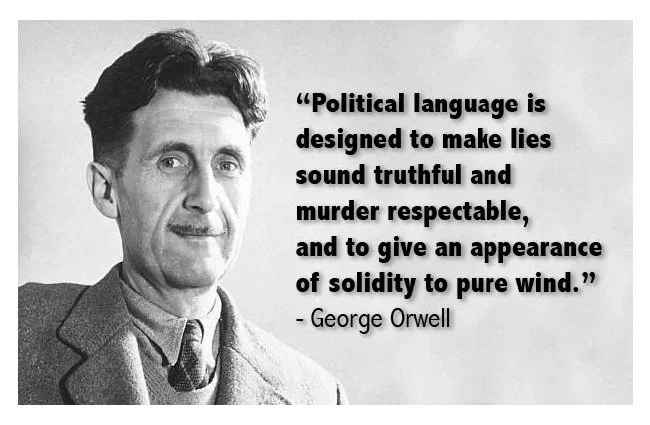
I consider myself to be a grounded, rational individual. I am not excessively emotional. I like facts, data and reason as opposed to hyperbole, rhetoric and bluster. That being said, I am aware that the world is an imperfect place. Opinions are often not based upon empirical fact but personal perspective. Hence many people experience reality differently to me. They are driven by their feelings and other factors. However, despite these differences in philosophy, for most of my life the world has remained functional and over time slowly improved in subtle ways. Deference to expertise, a sense of community and basic pragmatism meant that people broadly pulled in the same direction. Of course there has always been dissent but it has been within a stable system. However, of late I feel that this era is now finally over. Things are no longer stable. We live in an uncertain world.
I consider myself to be a grounded, rational individual. I am not excessively emotional. I like facts, data and reason as opposed to hyperbole, rhetoric and bluster. That being said, I am aware that the world is an imperfect place. Opinions are often not based upon empirical fact but personal perspective. Hence many people experience reality differently to me. They are driven by their feelings and other factors. However, despite these differences in philosophy, for most of my life the world has remained functional and over time slowly improved in subtle ways. Deference to expertise, a sense of community and basic pragmatism meant that people broadly pulled in the same direction. Of course there has always been dissent but it has been within a stable system. However, of late I feel that this era is now finally over. Things are no longer stable. We live in an uncertain world.
Looking back at my youth, the seventies were economically and socially challenging. Not only here in the UK but across the western world. The energy crisis, war in the Middle East and the threat of nuclear attack were pressing concerns on top of the demands of day-to-day life. However, there was always the hope that cool heads would prevail. Changes in government meant that people with plans would strive to tackle and solve pressing issues. People broadly believed that public institutions were ultimately run by those who were suitably skilled. There was faith that the state worked and a degree of consensus regarding national aspiration. It wasn’t perfect by any means but the nation functioned and gave citizens a sense of stability. Democracy worked because people believed in it and understood their role. They also remembered the carnage of World War II and when democracy failed.
Today, I look around the UK and see a nation that is far from united. Politics, social debate and general interaction has become petty, nasty and ignorant. The cult of the individual rules and life is refracted through the prism of “what’s in it for me”. Everyone wants the benefits of first class public services but no one wants to pay for it. People no longer have any real grasp of how things work, be it the state or more tangible things like the internet. Critical thinking is in decline, as are attention spans. The world is becoming infantilised. People want change but lack the skills and patience to seek and implement any. Then there is the matter of wealth and power becoming further entrenched with an ever diminishing group of individuals. Inequality is rife, yet we still allow the wealthy to convince us that it is the most vulnerable in the world that are our enemy.
Such a state of affairs is worrying. I am no longer confident that the best of us will intercede and address the world’s problems. I believe that we’ll keep putting those who just make cheap promises in charge and they’ll just make things worse. This will then feed further decline. If certain politicians fail in the next 5 to 10 years, I can see the public giving up on democracy. Furthermore, I believe that a substantial percentage of the population are simply intellectually and emotionally unequipped to deal with any serious disruption to their normal life that may potentially occur. Trade wars, collapse of the global supply chain and terrorisms are all potential threats. Civil unrest is another possibility. Shortages, travel restrictions and disruptions to power and internet services would not be well received. As for the idea of ordnance being dropped on civilian targets, it would be beyond the comprehension of many.
I am not a blind optimist but I usually see the value in maintaining some sense of positive and practical hope that things will get better. Sadly, when 2025 arrived a few weeks ago I looked around and simply couldn’t see any sources of inspiration. In political terms the right is in ascendance across the western hemisphere and the centre ground and left are in retreat. I see no possibility of any sort of social or political reconciliation. We live in an age where everyone hates someone. History and reality demonstrate that populists seldom get anything done that is universally beneficial and they tend to break social and political institutions, making it very difficult for their successors to repair things. It pains me to say it but things are going to get a lot worse before they get any better, assuming that that is even a possibility at a later date.
Depressing isn’t it. As for the question “what are you going to do about it”, the answer is precious little. There is always activism, protest and lobbying but I suspect that such things are going to get a lot harder to do in the immediate future. For a lot of people, the current geopolitical situation is a mandatory train ride to the terminus, whether you like it or not. In the meantime you determine who you can trust, then keep your head down and try to get by. All of the various post war generations have been cosseted to a greater or lesser degree and it would be wise for them to adjust their expectations accordingly. As for hope, you must look for it in unexpected places and maintain your own personal morale the best you can. Take comfort in the fact that tyrants, fools and bullies are all mortal and eventually die. The darkness is not forever but it may be your children that see the dawn, not you.













Analysing Your Website
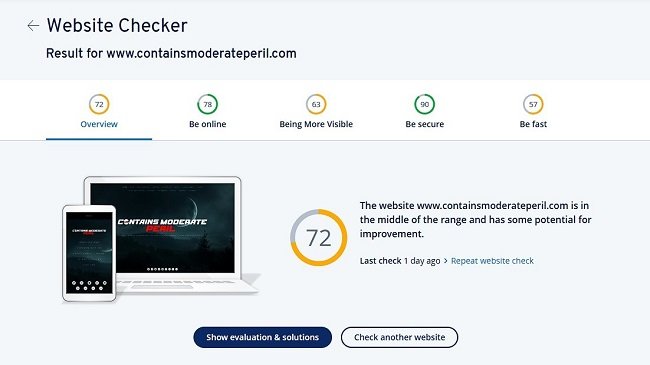
I found out today that Contains Moderate Peril is missing a “touch icon”. This was most interesting as I had no idea what such a thing was, at the time. It would appear that it is a bespoke icon for a website or app saved to the home screen of an iOS device. As 27% of traffic to this site comes via iOS devices, this is something that needs consideration and I will take steps to provide one. You may ask “how did you discover this school boy error”? Well I used one of the many website checkers that are available online. Sites that parse your blog or website and analyse it, providing a summary of its alleged strengths and weaknesses. Depending on which website checker you use, some will often find problems that they can conveniently solve for a small fee but setting scepticism aside, some of the basic data can be quite useful.
I found out today that Contains Moderate Peril is missing a “touch icon”. This was most interesting as I had no idea what such a thing was, at the time. It would appear that it is a bespoke icon for a website or app saved to the home screen of an iOS device. As 27% of traffic to this site comes via iOS devices, this is something that needs consideration and I will take steps to provide one. You may ask “how did you discover this school boy error”? Well I used one of the many website checkers that are available online. Sites that parse your blog or website and analyse it, providing a summary of its alleged strengths and weaknesses. Depending on which website checker you use, some will often find problems that they can conveniently solve for a small fee but setting scepticism aside, some of the basic data can be quite useful.
Overall, Contains Moderate Peril seems to be in pretty good shape. A lot of the performance related statistics are good, mainly because the site is hosted by Squarespace and benefits from its robust international infrastructure. Hence, security protocols are up to date and the site loads quickly. According to the report by Ionos (which was free and required no registration or email address submission) the site scores well regarding visibility and accessibility. However, there are still a few things that need tweaking. Apparently the “homepage title and description is too short”. According to Ionos, “a homepage title and description that is too short is not effectively ranked in search results”. Fortunately this is an easy issue to resolve. Another point that was raised by the report is the absence of a Content Delivery Network. For the present I do not think existing traffic warrants such a facility.
Although I find the concept of website analysis interesting, I think you have to temper your opinion on any report, with regard to what you’re trying to achieve. For the average blogger a lot of the fine tuning that may be suggested is not really relevant. That being said, if a simple modification can contribute to improved performance and the possibility of more traffic, then it would seem reasonable to make such changes. For example, I think responsive website design is important so that your blog is accessible via mobile devices. However, most contemporary blogging and website platforms conform to current industry standards by default. Hence, don’t spend any money modifying your site unless you feel that it is justified. Continuously tweaking your blog can become a minor addiction. Therefore, ensure that tools such as website analysis serve you and not the other way round.























Do You Know What You're Doing?
Do you know what you're doing? For clarification, this question is regarding video games and not how you run your life. The latter would make for an interesting discussion but that is not what I am asking. On this occasion the question is to establish whether you are the sort of player who strives to understand the mechanics of a video game? Do you make it your business to become au fait with all the statistics and the formulas behind them? Do you keep a spreadsheet filled with data pertaining to your gear or build? Do you fully comprehend the consequences of swapping out an item and seeing a particular statistic increase or decrease. Does all of this inherently appeal to you and contribute to overall the enjoyment you get from a game? If the answer is yes, then bravo. I kind of admire your dedication to this aspect of gaming. Because I tend to switch off when it comes to min-maxing.
Do you know what you're doing? For clarification, this question is regarding video games and not how you run your life. The latter would make for an interesting discussion but that is not what I am asking. On this occasion the question is to establish whether you are the sort of player who strives to understand the mechanics of a video game? Do you make it your business to become au fait with all the statistics and the formulas behind them? Do you keep a spreadsheet filled with data pertaining to your gear or build? Do you fully comprehend the consequences of swapping out an item and seeing a particular statistic increase or decrease. Does all of this inherently appeal to you and contribute to overall the enjoyment you get from a game? If the answer is yes, then bravo. I kind of admire your dedication to this aspect of gaming. Because I tend to switch off when it comes to min-maxing.
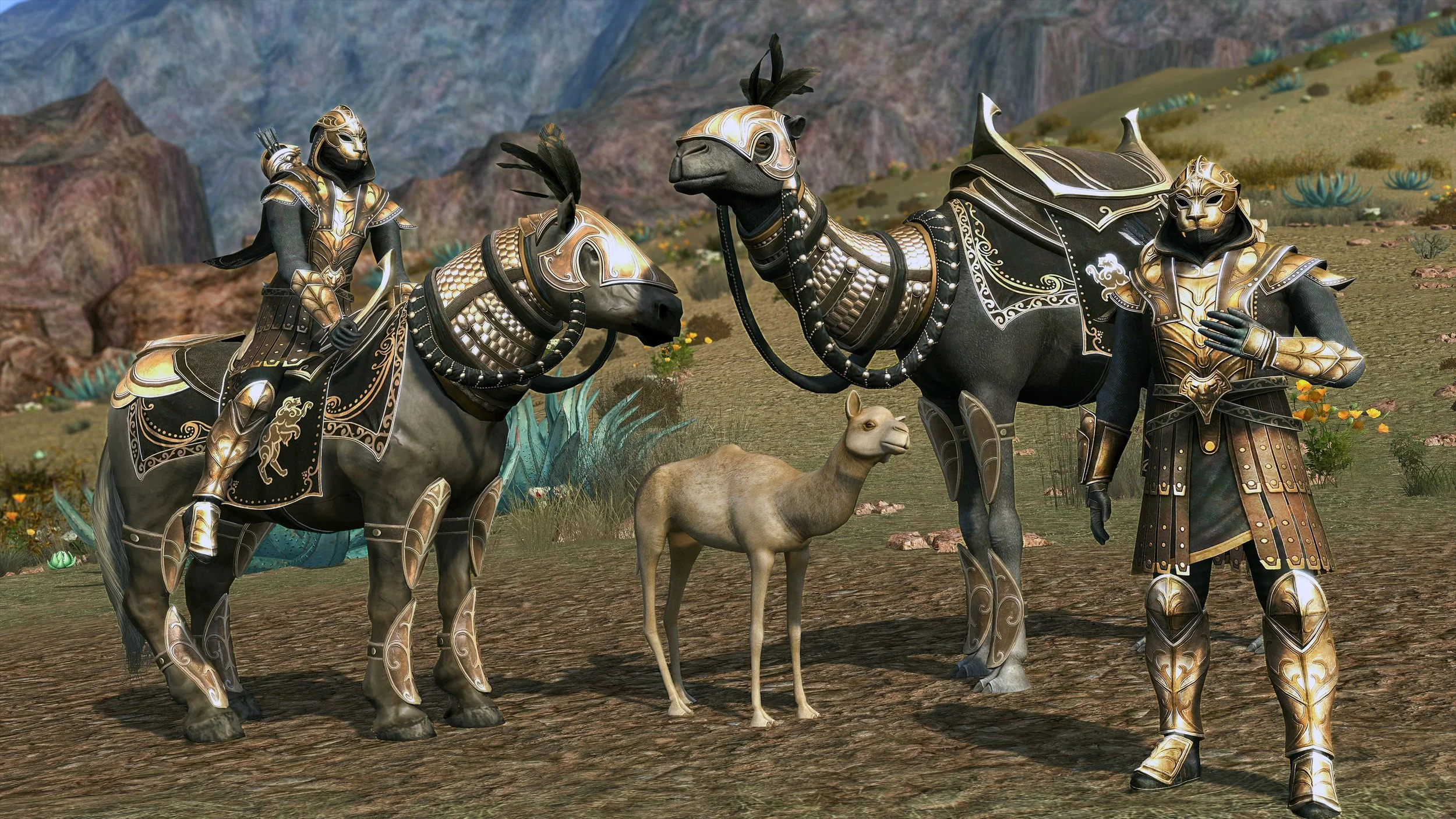
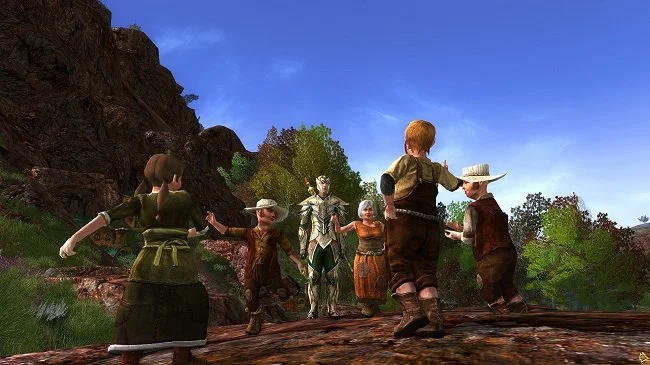
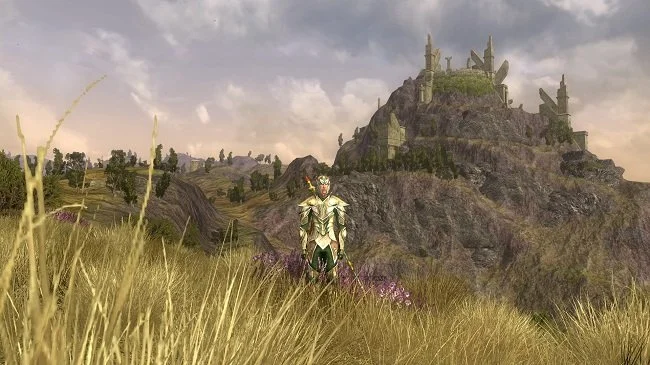
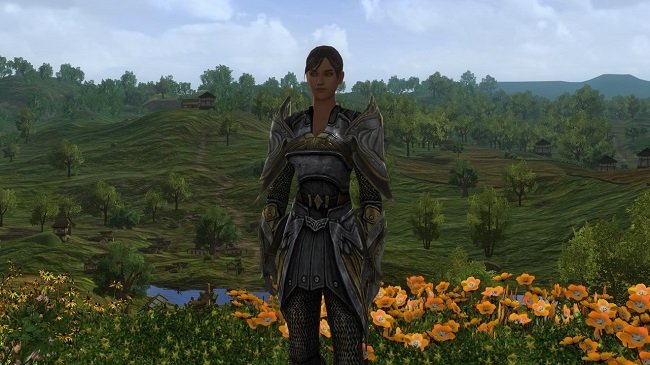
I suspect that I’m not the only person like this. That’s not to say I have no understanding of what all the numbers mean in any given video game. I usually have a broad overview but nothing more. Take the MMORPG The Lord of the Rings Online for instance. I know what statistics are important for my primary character, the Lore-master. Hence, whenever I replace gear, I naturally choose items that will increase key numbers. However, that is as far as my knowledge goes. In a game such as LOTRO that can be sufficient to get by. Fortunately the game doesn’t punish players for their lack of understanding. High end gear is available from several sources and you simply pursue that which is achievable. Sadly not all games take such an equitable approach, with many delighting in their own arcane nature. I find both Star Wars:The Old Republic and Star Trek Online to have very complex gear mechanics. Furthermore, both games do a poor job of explaining themselves.
The most practical solution to these complexities is to simply follow a build that other players have posted online. I did this recently while playing Dragon’s Dogma 2. I found a gear and skills loadout for a ranged class which suited my play style and replicated it on my character. I subsequently stuck with it throughout my play through. I guess this is a textbook example of “standing on the shoulders of giants” but I suspect that a substantial percentage of gamers do this. For many, the complexity of in-game systems is actually an impediment to gameplay. We all approach games differently and therefore do not necessarily find enjoyment in the same things. Some players like the challenge of learning and understanding underlying mechanics. The idea of researching, tracking data and ultimately finding a formula for an optimal build is integral to their overall gaming experience. Others, myself included, expect a learning curve but balk at excessive “homework”.
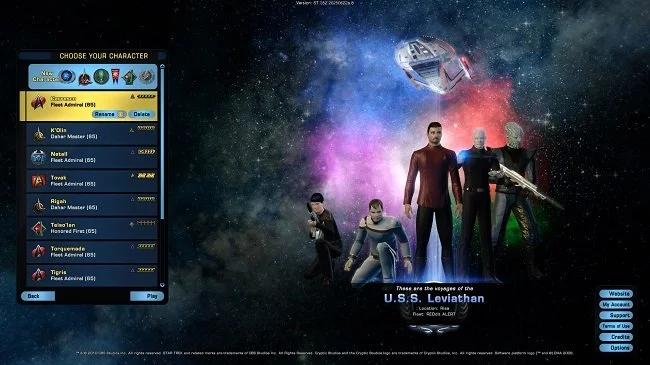
There is another aspect to this element of gaming. Some game developers see the complexities of gear, builds and systems as a means to monetise their games. Star Trek Online excels at this. Getting the right mix of gear and traits on an appropriate ship massively increases your survivability and DPS output. Again, this is a game where the builds can be very complex and the mathematics behind them intricate. Hence most players try and get by following the prevailing game meta. However, the most effective builds will often include items that are only obtainable by spending money, such as a trait or console that can only be found on a premium ship. I recently tried to replicate a build based around Beam Overload but could only easily source 60% of what was required. To get the remaining 40% of items would have cost £30. So I improvised. The result has been functional but not optimal.
I wrote a long time ago about “the average LOTRO player”. I used that MMO as a personal frame of reference but I thought at the time that the points made in the post were applicable to other games. Having recently re-read the post I still stand by assertions. Many gamers are not “ high end players”. They often buy a game primarily because they want to have fun and play with their friends. Although most gamers acknowledge that a new title has a learning curve, that doesn’t mean that they will by default spend hours reading and watching videos prior to playing. Jumping into the proverbial deep end is by far the most common approach. I suspect that very few players truly play a game in the manner that the developers expect. So in answer to the question “Do you know what you're doing?”, I suspect the most common answer is “not especially so” and that is the way the majority of gamers like it.




LOTRO: Server Migration Concerns
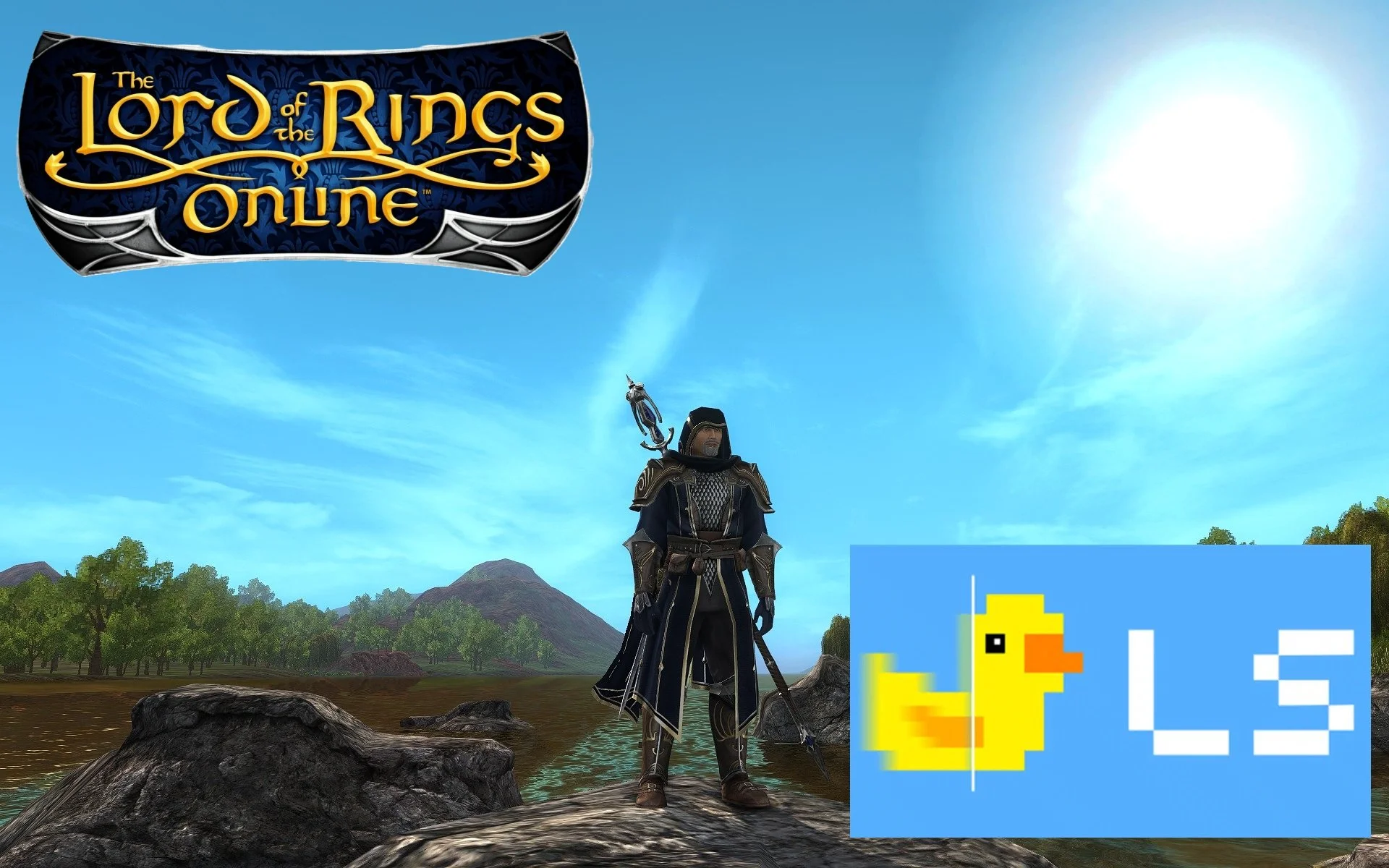
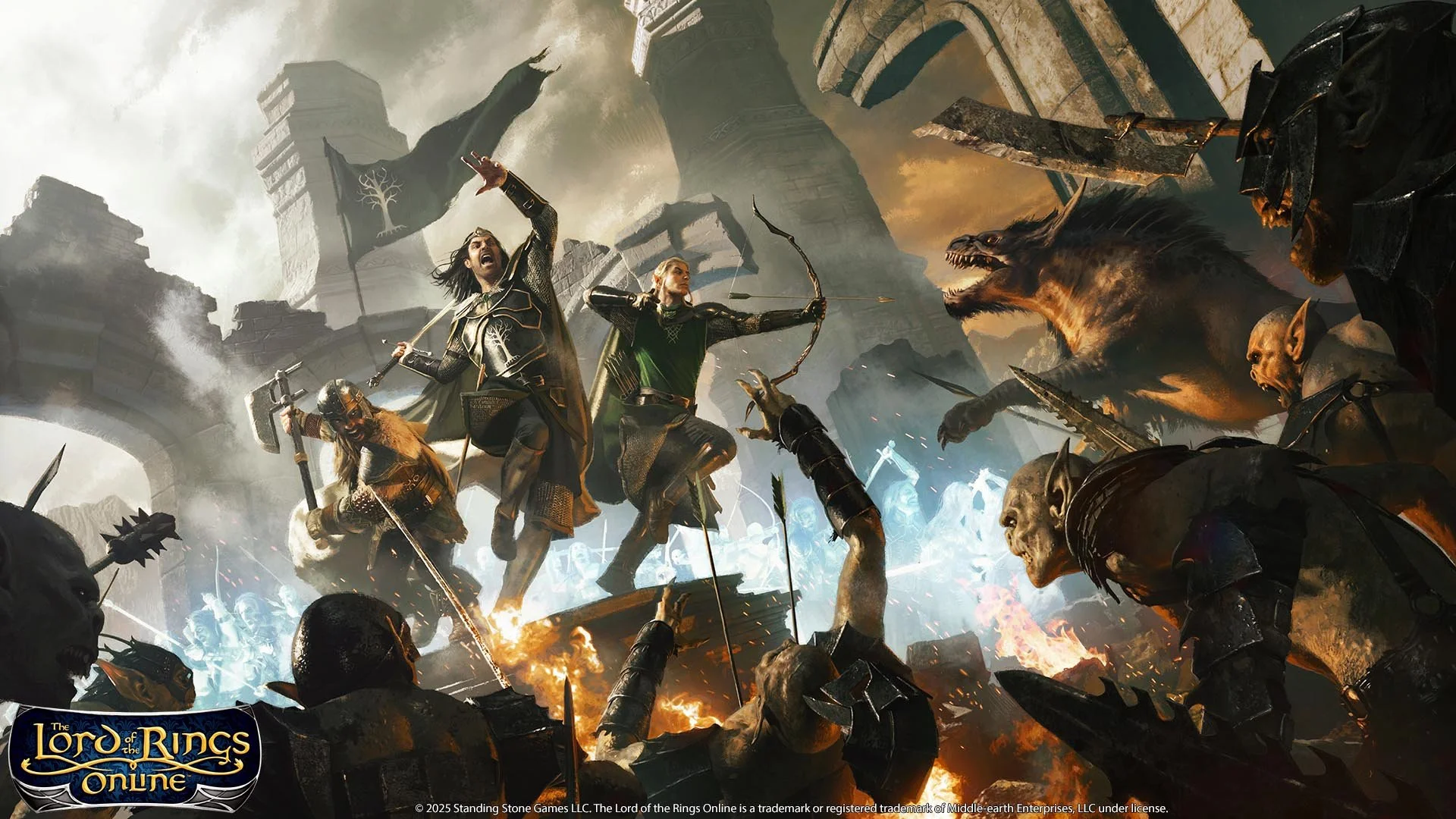
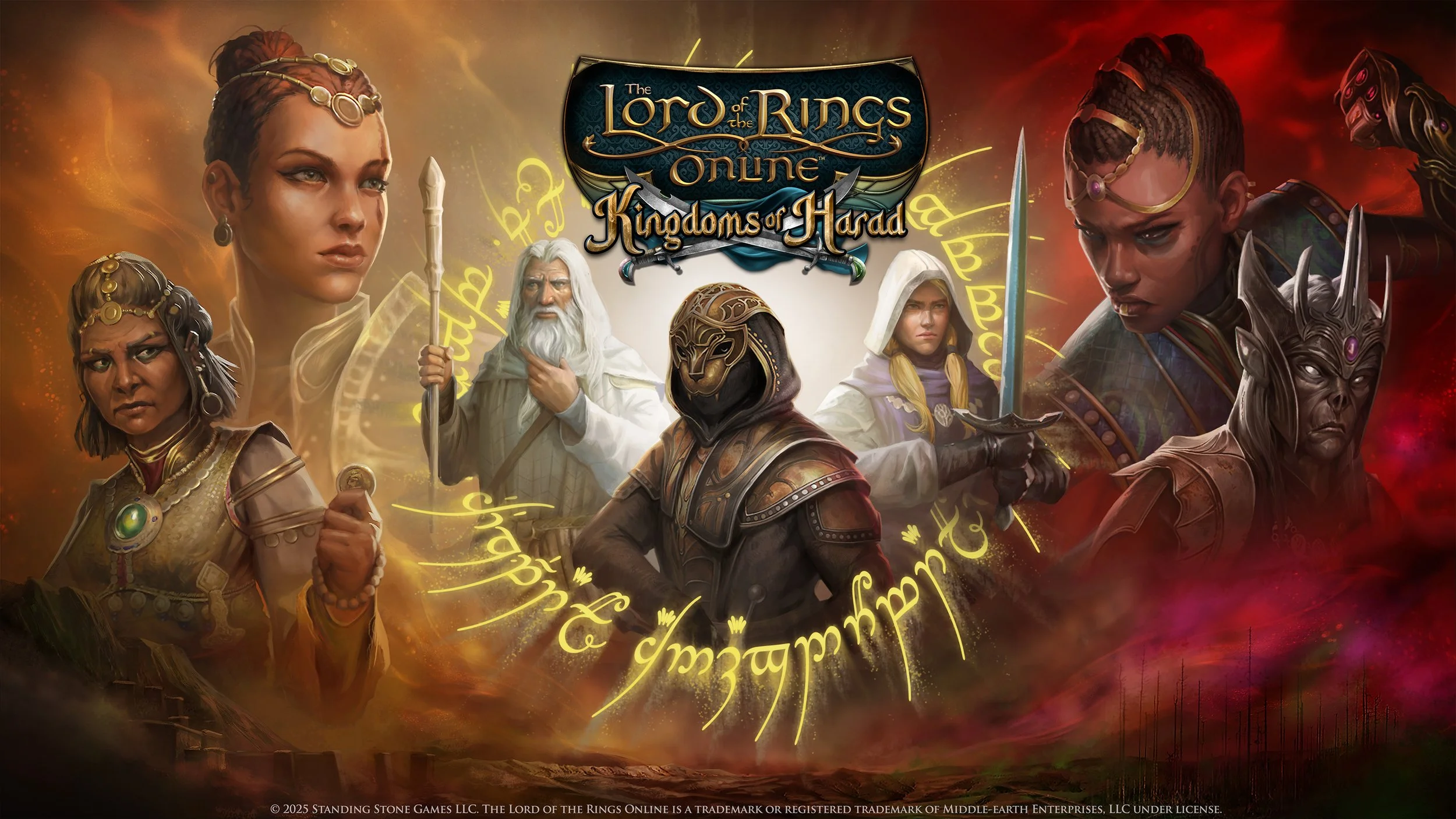
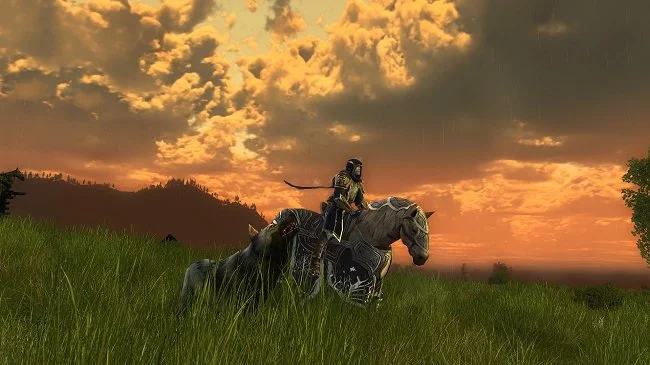
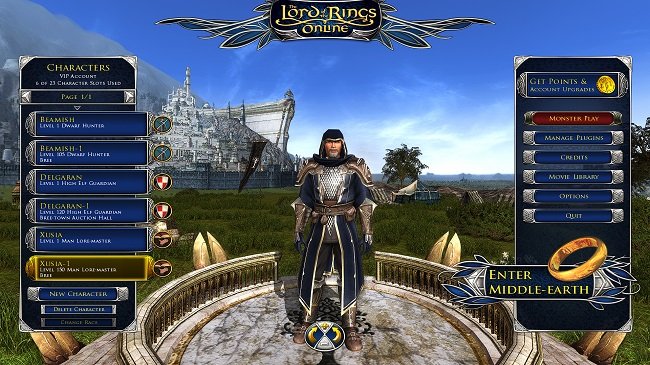
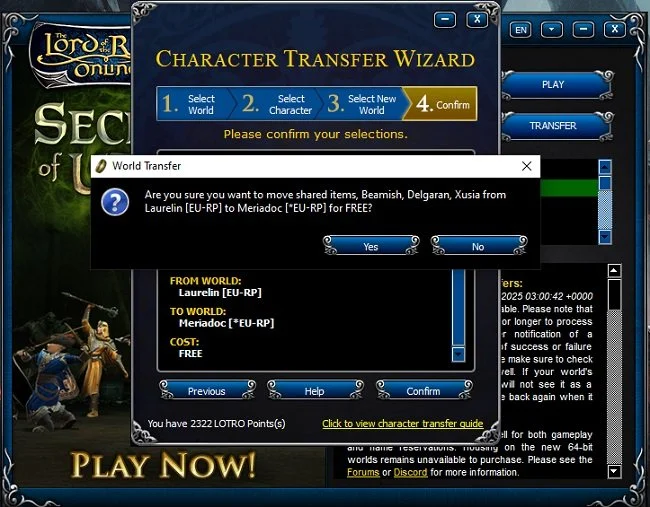
I always remember the sage wisdom of the great children’s TV character Huxley Pig. “If in panic, if in doubt. Run in circles, scream and shout”. Such was the initial reaction of players of the MMORPG The Lord of the Rings Online, when it was announced recently that there is to be a new 64-bit server rollout in Q1 of 2025. At first glance, new servers are surely a good thing? The 64-bit legendary servers, which were tested in 2024, have proven to be a success and do much to address the lag issues that plague the existing 32-bit servers. Surely this is what players want? Well, yes it is, in principle but new infrastructure ultimately raises the issue of server migrations. Developer’s Standing Stone Games intend to consolidate the player population in the long term with the addition of 4 new 64-bit servers. The 2 legendary servers will remain but the 32-bit legacy servers will eventually close.

I always remember the sage wisdom of the great children’s TV character Huxley Pig. ”If in panic, if in doubt. Run in circles, scream and shout”. Such was the initial reaction of players of the MMORPG The Lord of the Rings Online, when it was announced recently that there is to be a new 64-bit server rollout in Q1 of 2025. At first glance, new servers are surely a good thing? The 64-bit legendary servers, which were tested in 2024, have proven to be a success and do much to address the lag issues that plague the existing 32-bit servers. Surely this is what players want? Well, yes it is, in principle but new infrastructure ultimately raises the issue of server migrations. Developer’s Standing Stone Games intend to consolidate the player population in the long term with the addition of 4 new 64-bit servers. The 2 legendary servers will remain but the 32-bit legacy servers will eventually close.
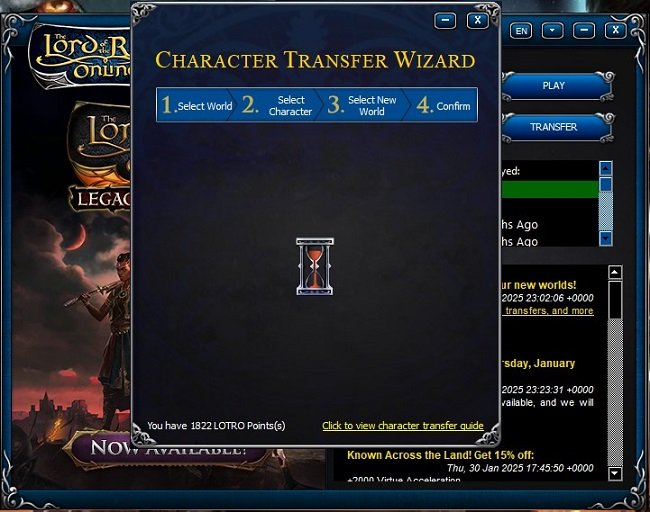
LOTRO players were somewhat concerned about the vague nature of the original server announcement, in the “2025 Roadmap” that came out prior to Christmas. Hence Executive Producer Rob Ciccolini saw fit to appear on a live stream in the New Year to clarify the situation. Sadly SSG have a track record of poor communication with their playerbase and being true to form, Mr Ciccolini’s “clarification” simply raised more questions. Newer LOTRO players with only a handful of alts may well find the prospect of transferring to another server to be no big deal. However, the majority of the existing LOTRO community is made up of long term players who are greatly attached to their kinships, their housing and most importantly their alts. Server migrations can break such things, leaving players nameless and without their virtual possessions and community.
If in panic, if in doubt. Run in circles, scream and shout”
Furthermore, SSG has handled server migrations in the past and it wasn’t perfect. In 2011 SSG (formerly Turbine) took back control of the European game servers which had previously been administered by Codemasters. Yes, the process ultimately worked but there was a lot of player collateral damage along the way. Many of the players affected back then are still playing today and they’re far from optimistic, judging by the ongoing discussion of the official forums. It would appear there is a lot more to consider beyond the obvious. Apart from the logistics and management issues arising from this server migration, many players are not happy with the prospect of moving per se. The previously mentioned migration of 2011 was not well received by all. Some feel that communities were broken and the new servers were far from friendly.
I have no doubt that by the end of 2025 there will be a clear resolution to this situation. SSG has done this before and can do it again. Hopefully, if they’ve learned from their past mistakes they’ll be more communicative and cautious this time round. There are some potential positives arising from a migration and server merge. The player population will increase across the final 6 servers and there should be the technical benefits of the new 64-bit builds. SSG have also stated they will strive to allow players to retrieve characters from servers closed in 2011, so there may be the chance of resurrecting long lost alts. However, it would be naive to think that this enterprise is going to be plain sailing. Perhaps the most prudent thing for LOTRO players to do in the meantime is to start organising their inventories and divesting themselves of any virtual assets they don’t require. Forewarned is forearmed.





Revisiting Star Wars: The Old Republic Part 4
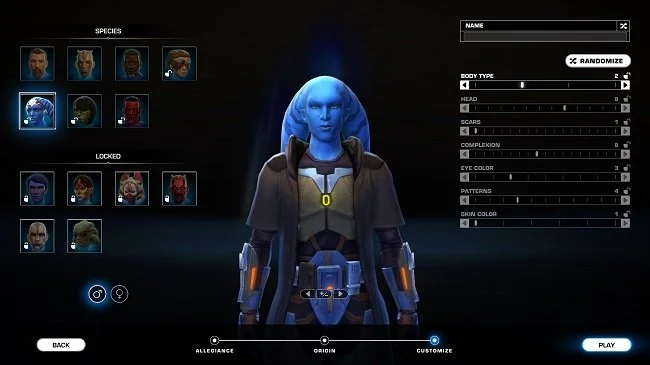
I resumed playing Star Wars: The Old Republic at the start of December 2024, after a two and a half year break. This is an MMORPG that I have never consistently played, compared to The Lord of the Rings Online or Star Trek: Online. I bought the game at launch and spent about a year or so slogging through content. Gameplay was a lot slower back then and I got stuck at a certain point in the Smuggler Class story, so I moved on to something else. I returned to the game when it went free to play but didn’t stay for long. However, when I came back to SWTOR in 2022, the game had significantly altered and I found that levelling new alts was a lot less grindy. I discovered that the best way to play the game as a solo player, was to treat it as an RPG and work my way through the class stories as each one is unique. My recent return has focused on completing the last three class stories I had outstanding.
I resumed playing Star Wars: The Old Republic at the start of December 2024, after a two and a half year break. This is an MMORPG that I have never consistently played, compared to The Lord of the Rings Online or Star Trek: Online. I bought the game at launch and spent about a year or so slogging through content. Gameplay was a lot slower back then and I got stuck at a certain point in the Smuggler Class story, so I moved on to something else. I returned to the game when it went free to play but didn’t stay for long. However, when I came back to SWTOR in 2022, the game had significantly altered and I found that levelling new alts was a lot less grindy. I discovered that the best way to play the game as a solo player, was to treat it as an RPG and work my way through the class stories as each one is unique. My recent return has focused on completing the last three class stories I had outstanding.
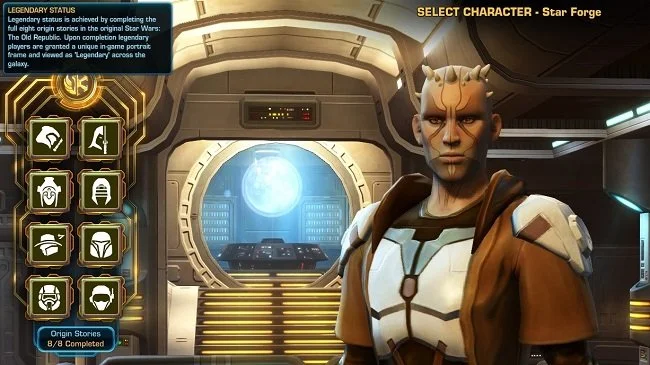
As of today, I have finally achieved what the game calls “Legendary Status”. All eight of the origin stories of each class have been completed. This achievement was created as part of the base game upon launch, when the level cap was 50, so there is still plenty further content to play through. However, this does feel like a milestone as the self-contained stories of each class are quite expansive, taking the player through all of the worlds that existed when the game originally launched. From time to time I have encountered other players and the recent addition of dynamic encounters has increased my exposure to other SWTOR players. However, much of the class stories are gated behind unique instances that are bespoke to the individual player. Hence you only really encounter other players while travelling to specific locations or at the major social hubs such as faction fleets.
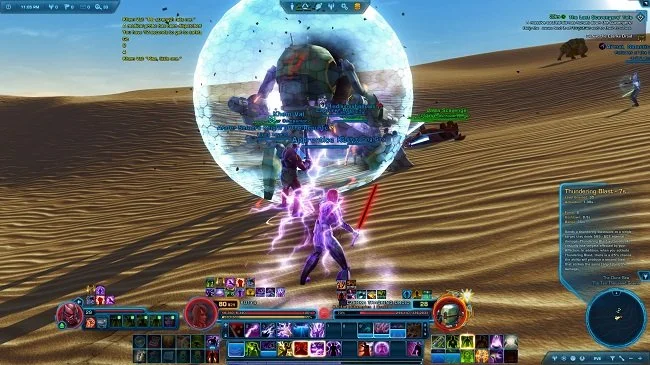
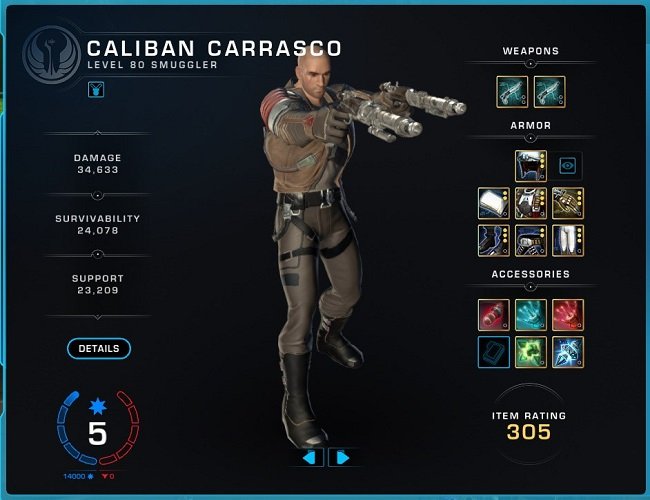
The completion of this achievement, although very satisfying, has raised a new question. What shall I do next? I would like to take one of my alts through the remaining story content in the game and acquire optimal gear. However, I’m not sure which class to make my primary character and I have always found that the gear grind in this game is somewhat esoteric. As a predominantly solo player I don’t want to be dependent upon a guild to run instances for gear. I just don’t have the time to play regularly with others. I am also still trying to determine which class best suits my kind of gameplay. I have grown fond of my Jedi Knight with Shadow Combat Style and Serenity Discipline but it never feels especially “powerful” in combat. Plus I suspect that the pace of combat is dictated by the fact that this is an MMO from 2011.
Unlike other MMOs, it would appear that you cannot re-gear at level cap via the Galactic Trade Network. I have acquired a few new items via Flashpoints and Heroics that have been flagged as better gear than I currently have. They are of a different colour quality but when you compare the stats they are not greatly superior. Some numbers go up but others go down. As I don’t fully understand the stats system in the game, I am loath to change from my current build until I am certain that it’s a beneficial change. Hence I need to set myself some practical goals so that I can move forward in SWTOR. Obviously a little research is in order so I can determine a strategy but not too much. Nothing kills my interest in an MMO than an excess of “homework”. I am still enjoying SWTOR at present and would like to keep it that way.



Star Trek Online: Earth Spacedock Update
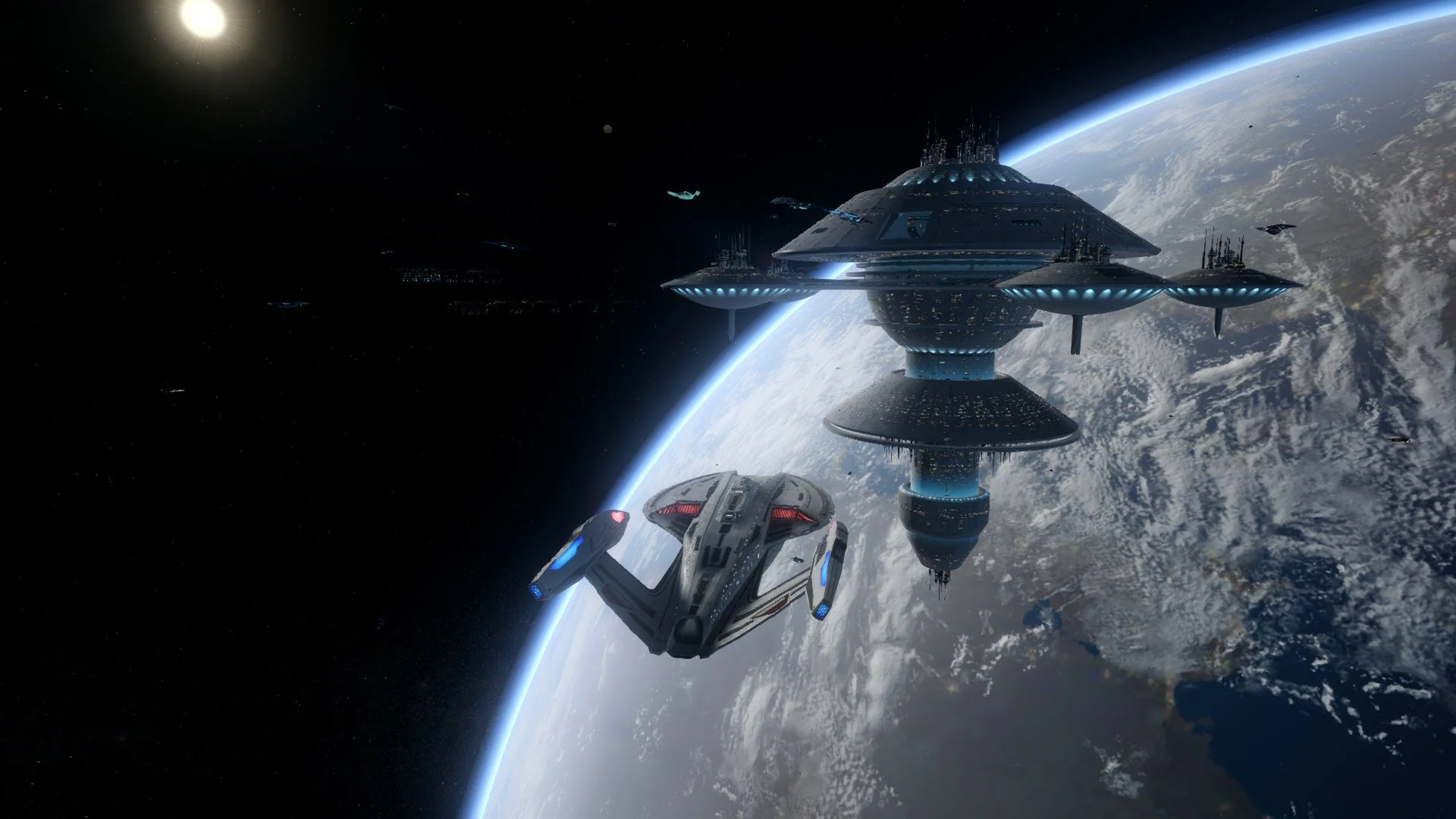
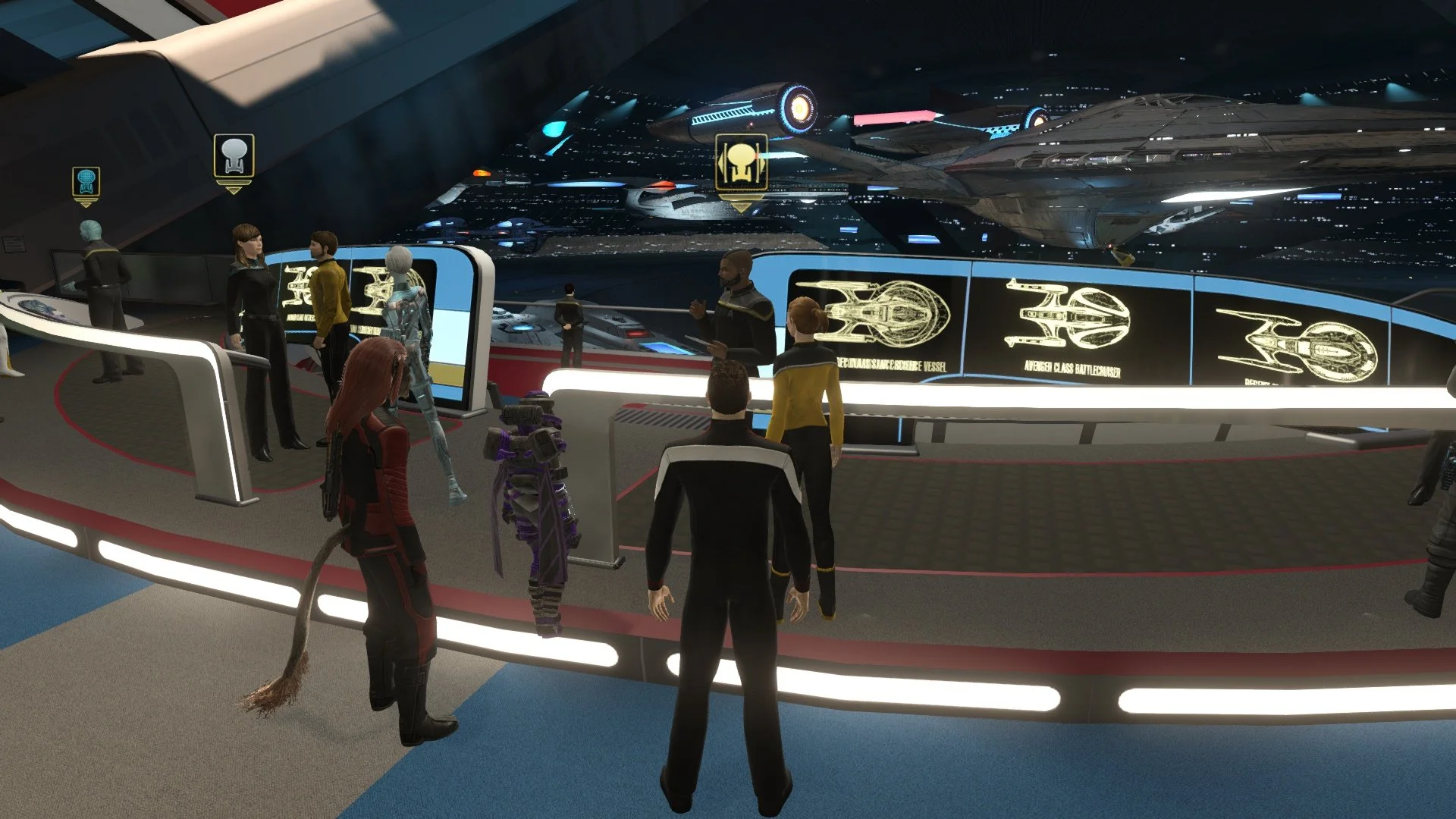
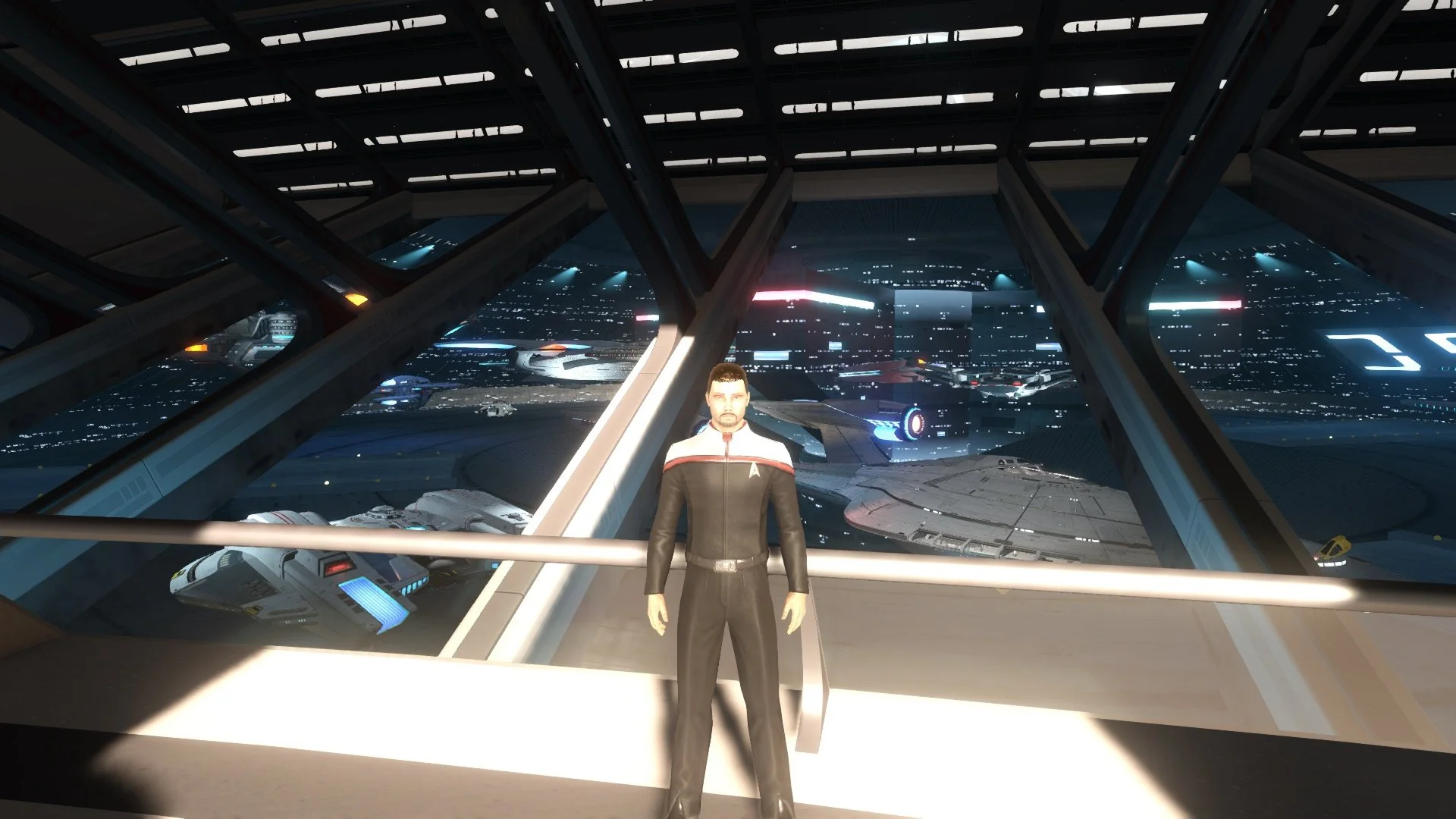
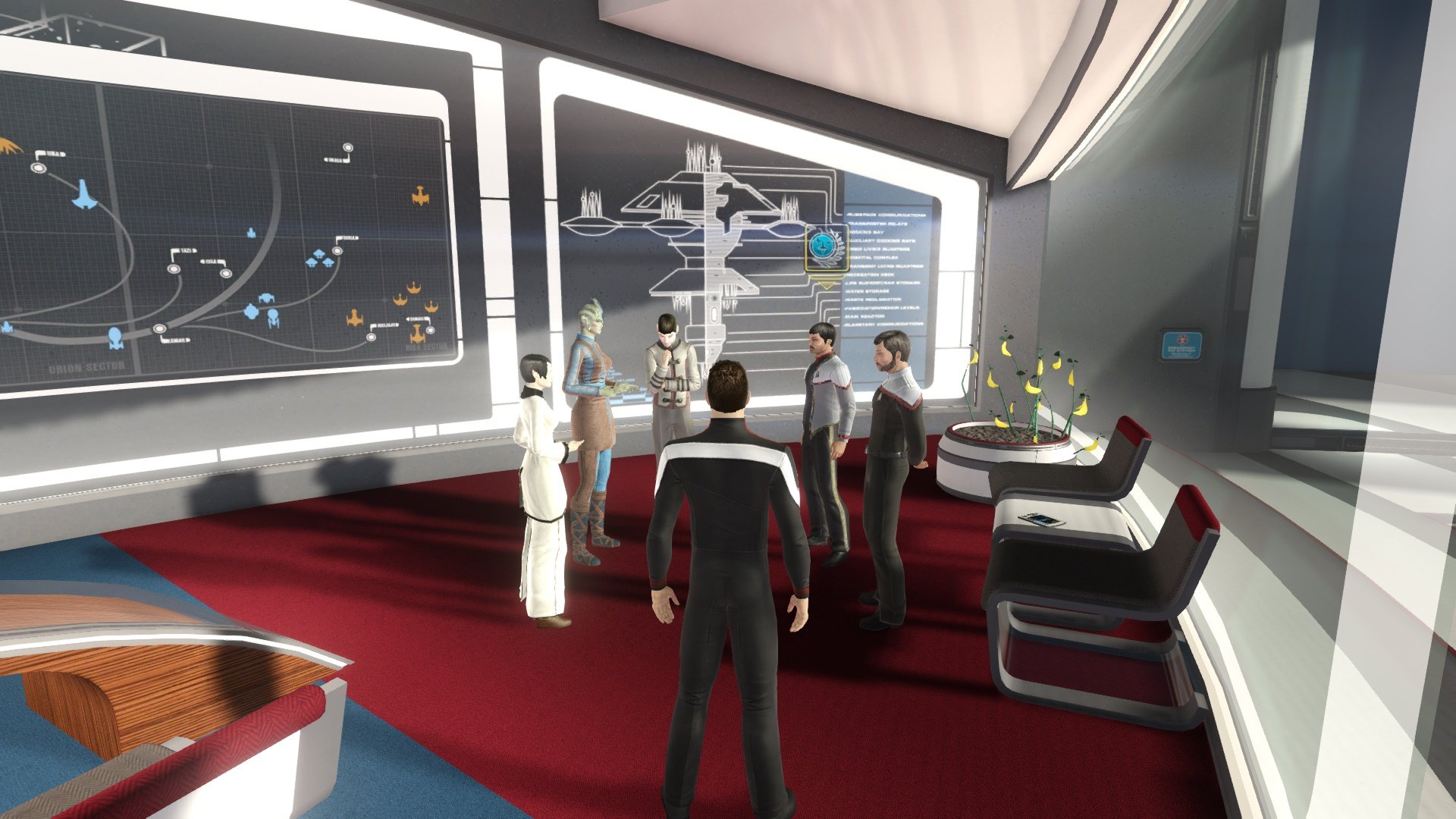
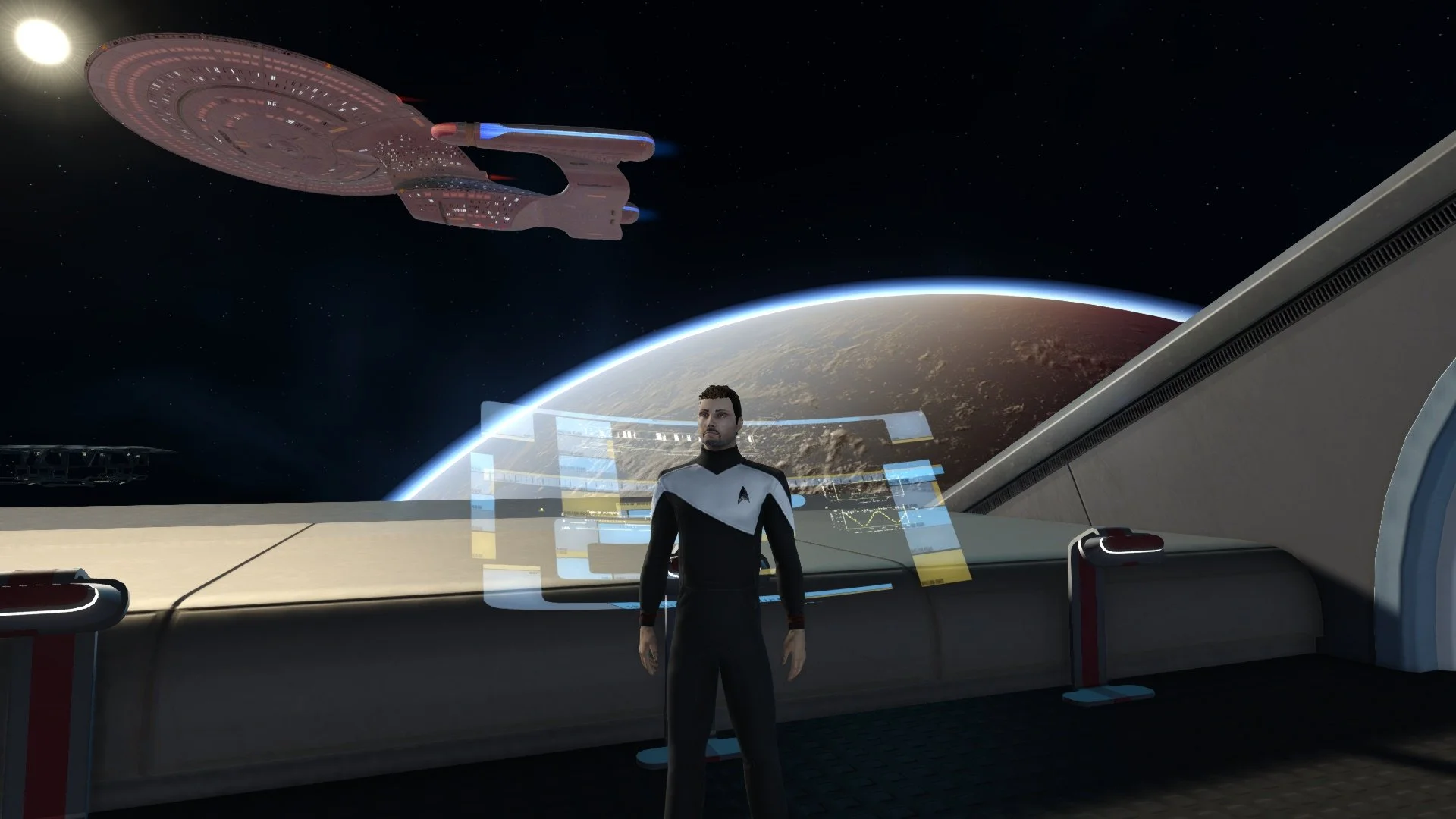
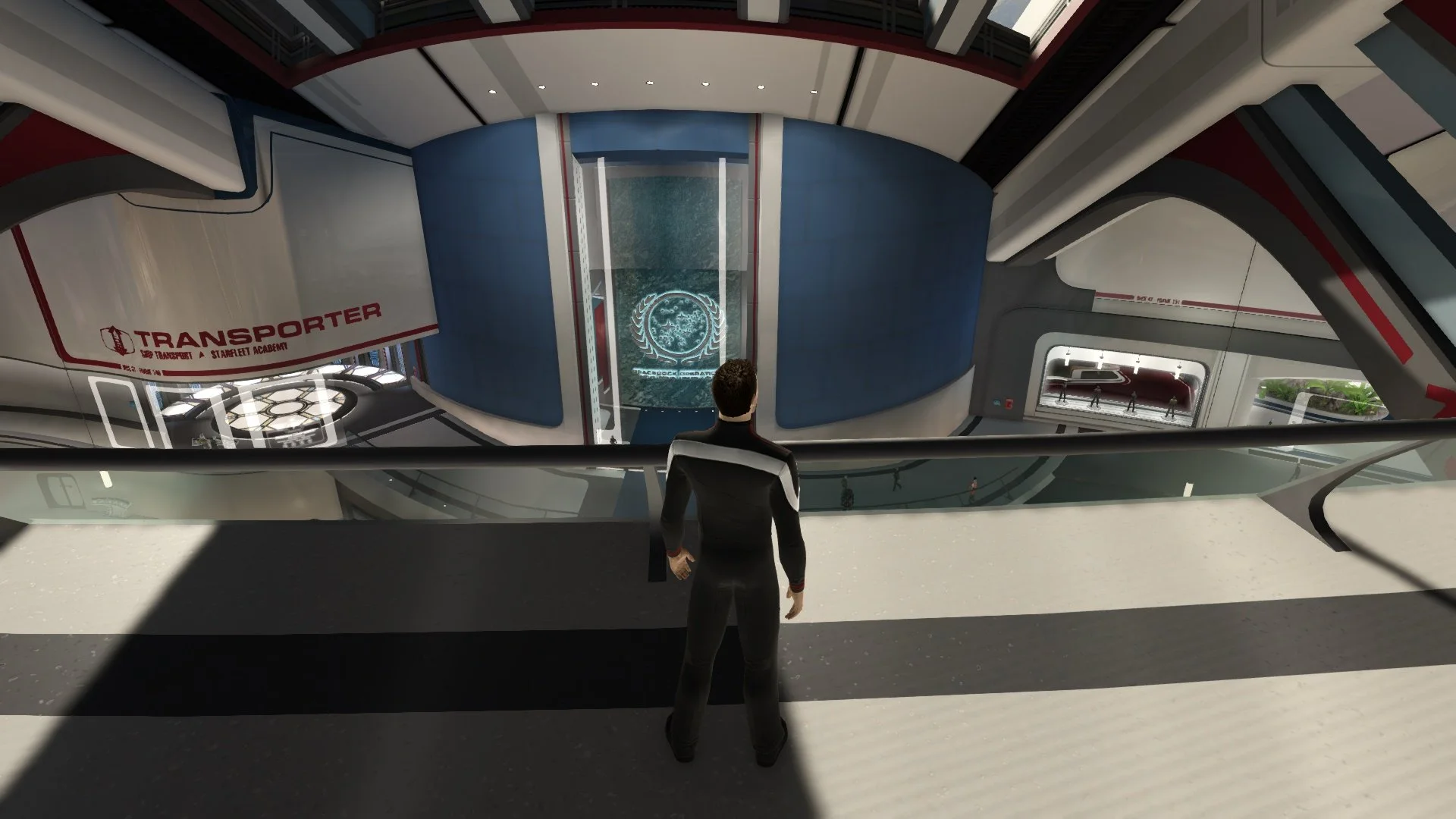
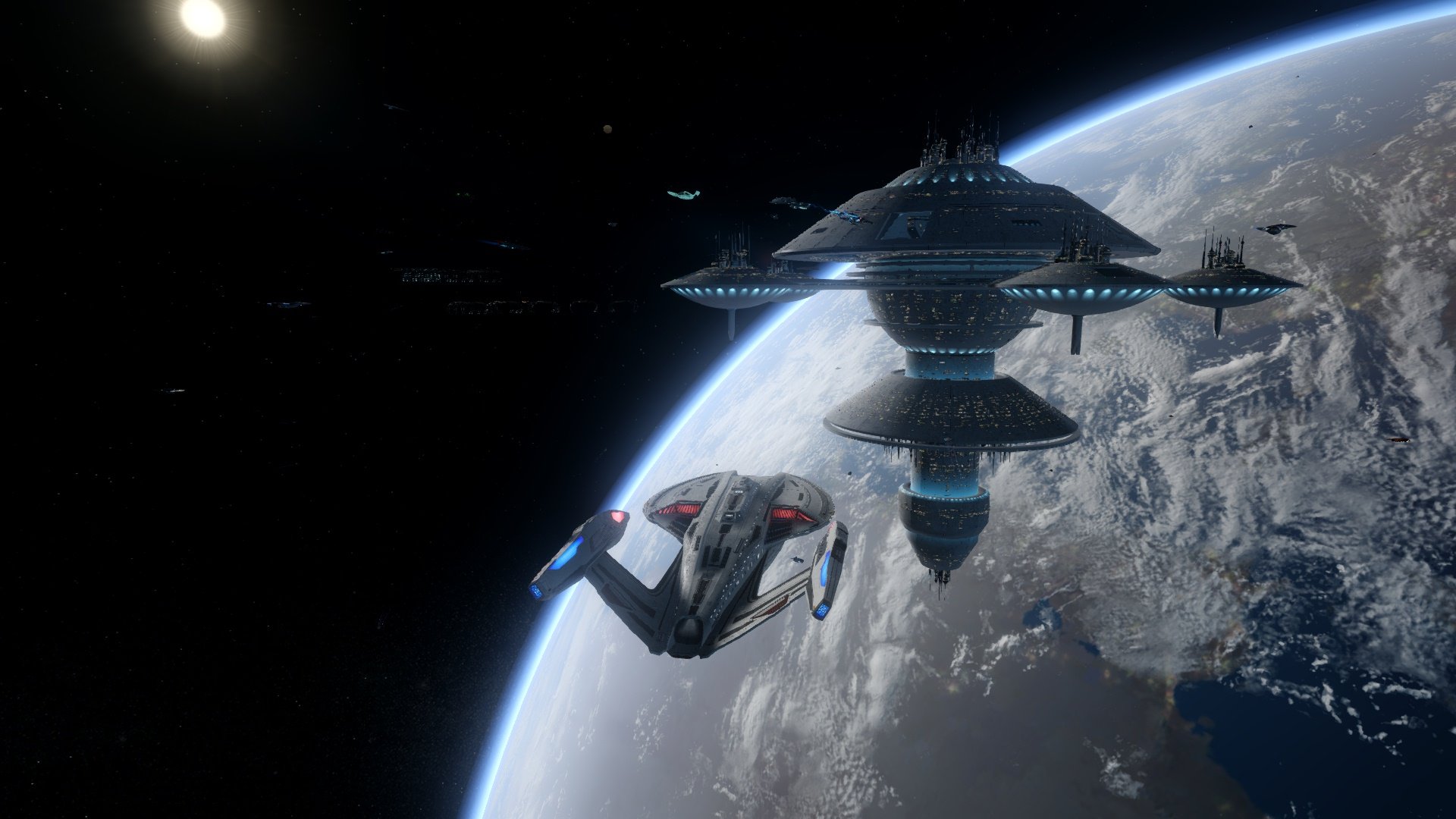
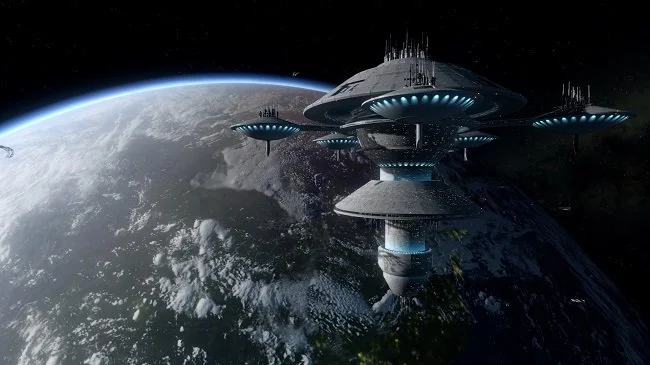
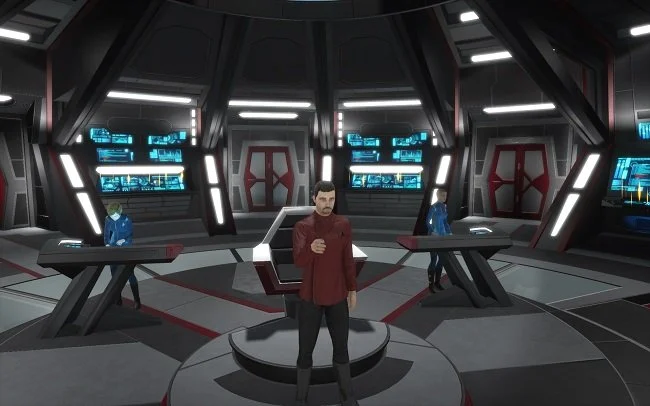
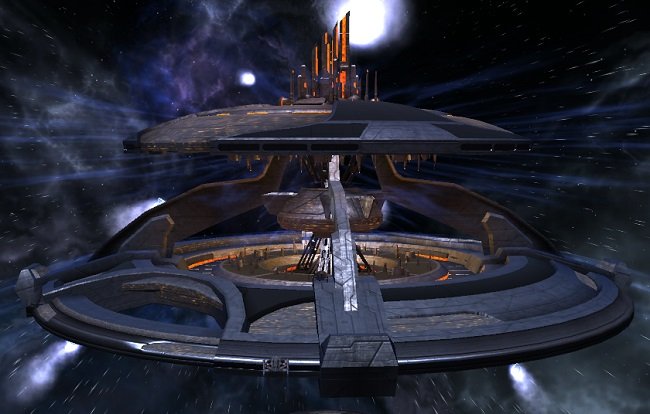
Yesterday the MMORPG Star Trek Online updated Earth Spacedock for the PC version of the game. The console version will be released a little later on. This replacement impacts upon Sol system space, the entire exterior model of ESD and elements of the interior. The outgoing model was somewhat old with several anomalies that linked to aspects of the game that have changed over the years. Perhaps the biggest reason for the change is a canon update to ESD as seen in the third season of Star Trek: Picard. The TV show features a new Earth Spacedock, also known as Probert Station, which boasts a larger superstructure designed to meet the demand of Starfleet in 2401. It would appear that this update is the first substantial release from the developers at DECA Games and may potentially indicate the quality of future content.
Yesterday the MMORPG Star Trek Online updated Earth Spacedock for the PC version of the game. The console version will be released a little later on. This replacement impacts upon Sol system space, the entire exterior model of ESD and elements of the interior. The outgoing model was somewhat old with several anomalies that linked to aspects of the game that have changed over the years. Perhaps the biggest reason for the change is a canon update to ESD as seen in the third season of Star Trek: Picard. The TV show features a new Earth Spacedock, also known as Probert Station, which boasts a larger superstructure designed to meet the demand of Starfleet in 2401. It would appear that this update is the first substantial release from the developers at DECA Games and may potentially indicate the quality of future content.
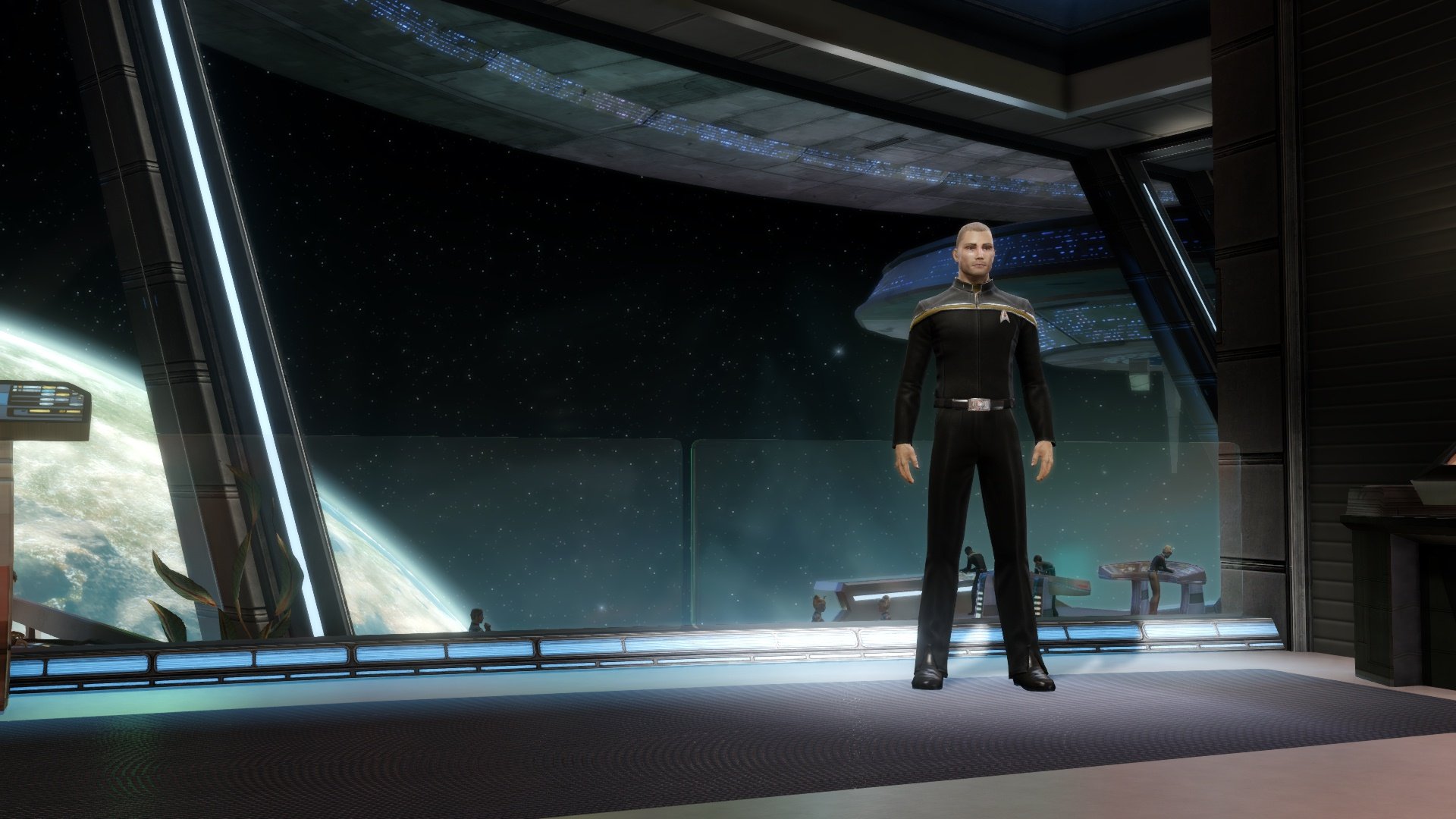
Star Trek Online launched in 2010 with a bespoke model of ESD which to all intents and purposes was a placeholder design. Within a year ESD was replaced with a canonical model based on the design that first featured in the film Star Trek III: The Search for Spock, and later used in TNG television show. The latest model for ESD had to be built entirely from screenshots from the TV show as there was no official design to work from. The result is a far more contemporary model which still offers the functionality of the old. Furthermore the model for planet earth has also been revised using 8K textures and a complex cloud map. Within Sol systems the fleet shipyards have been removed and McKinley station is now placed in the far corner of the map. Drydocks have been added on the periphery of the map so players can take screenshots of their ships.
The original Earth Spacedock from 2010
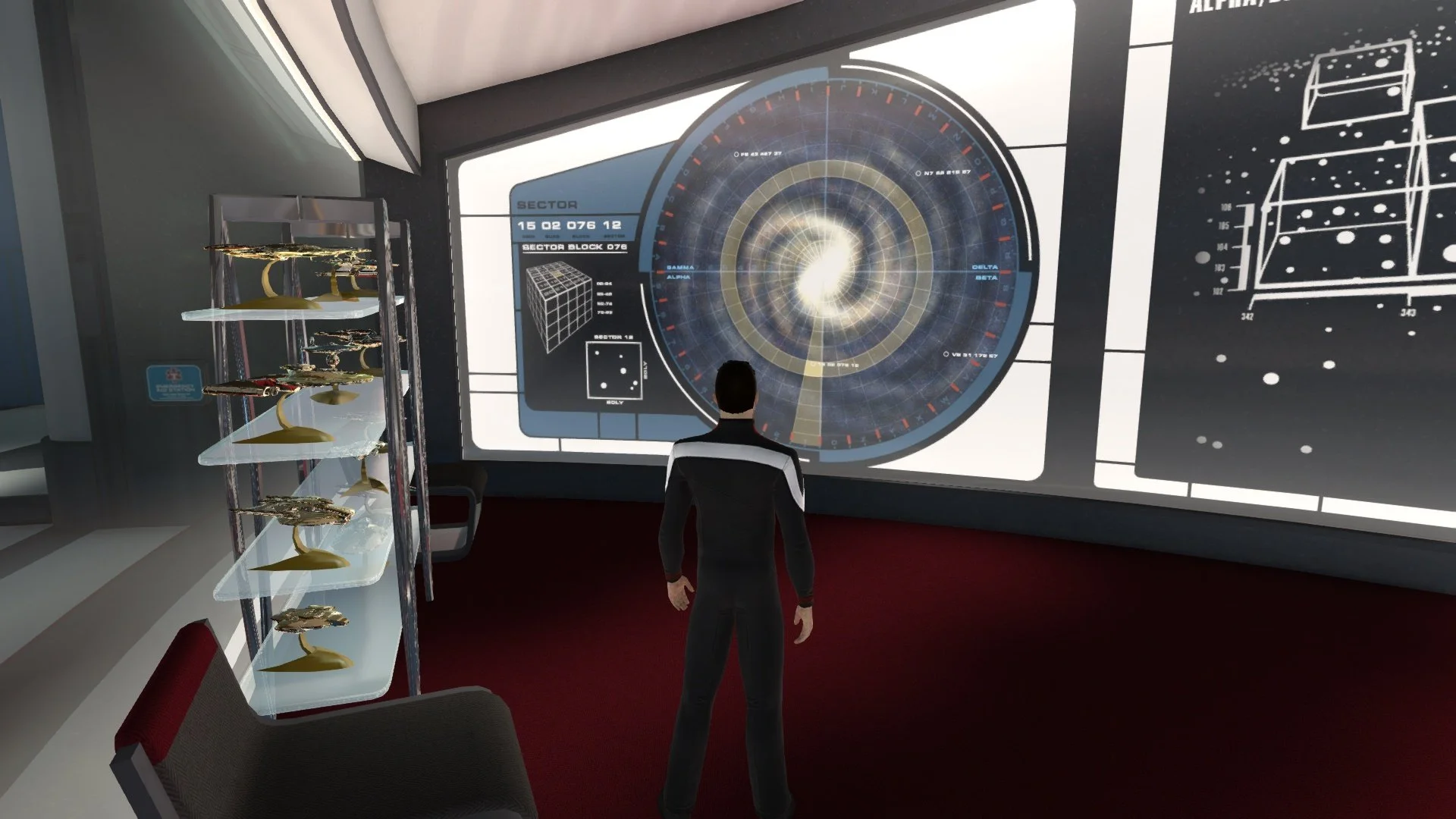
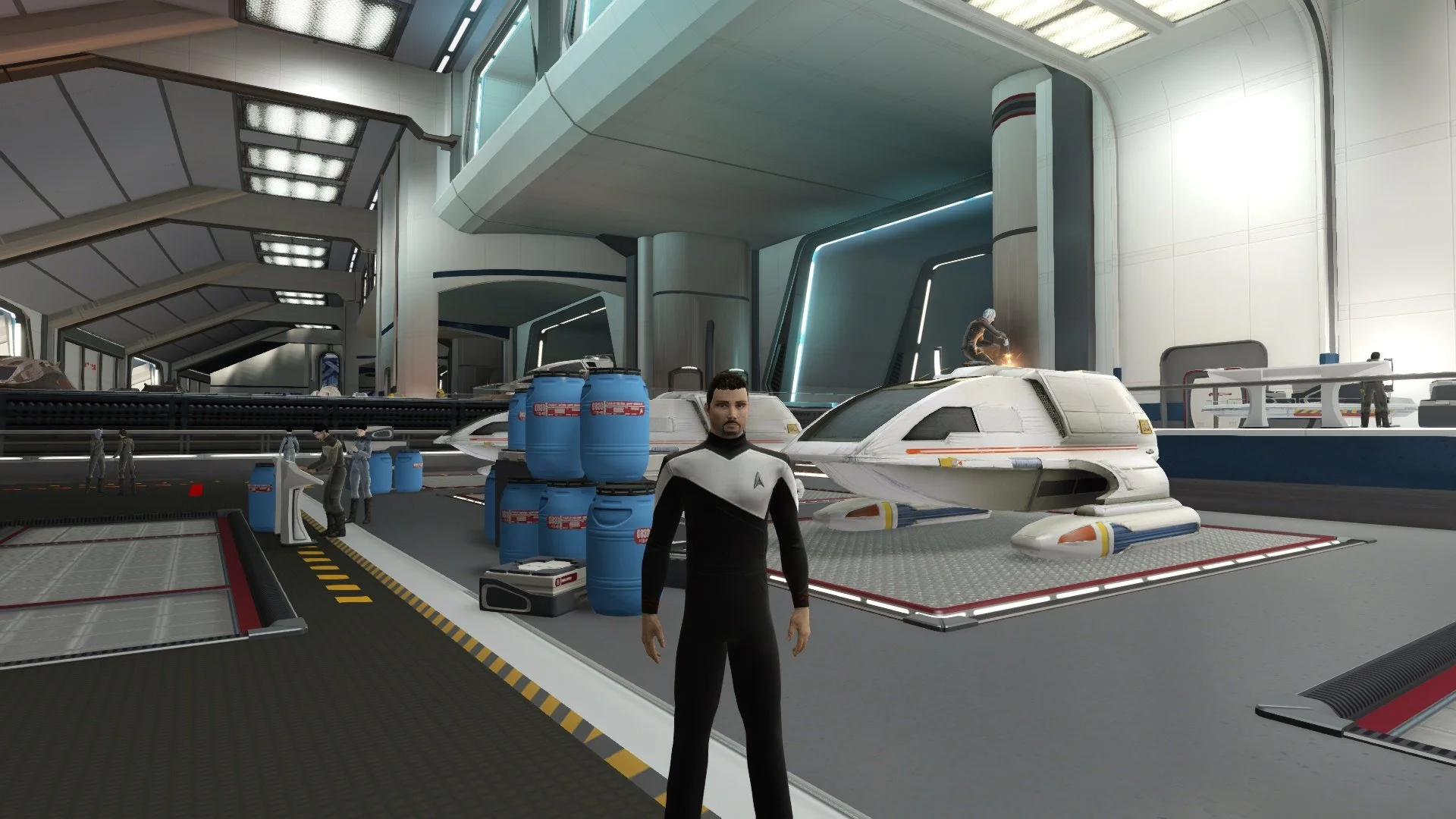
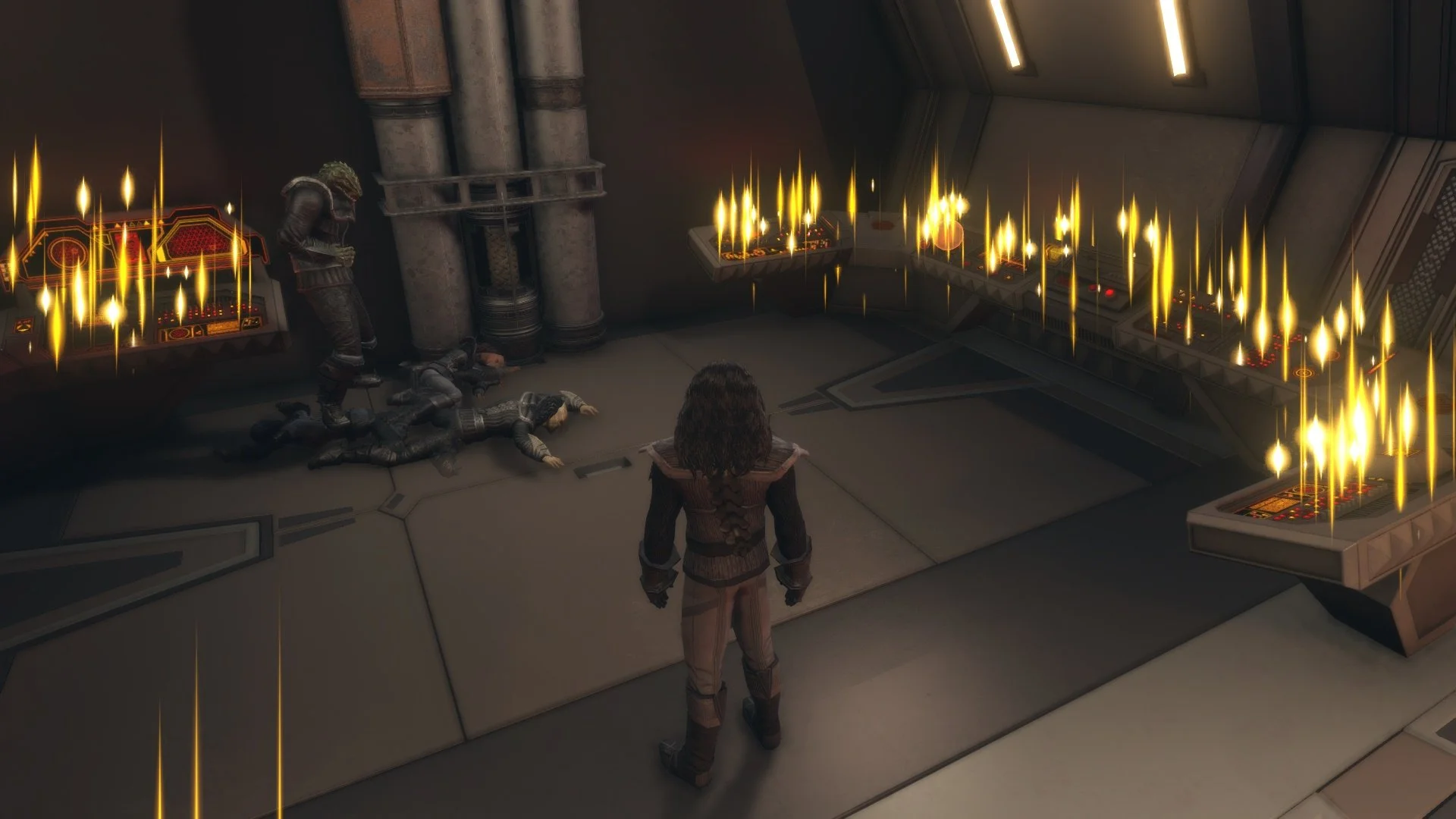
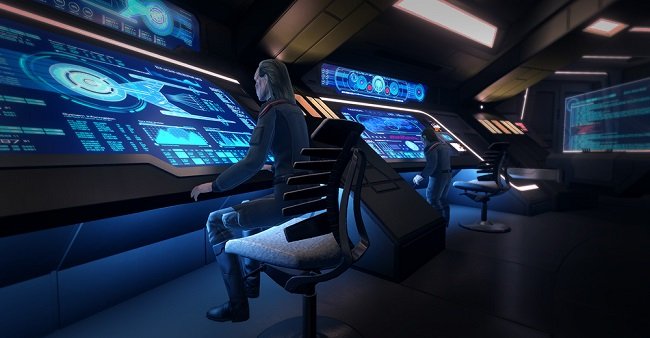
The ESD ground map now features a larger central docking bay and the models of the vessel inside have all been updated. These provide a much greater sense of scale. The developers intend to change the ship model regularly and no doubt they will showcase whatever ones are new to the game. There are cosmetic changes to Admiral Quinn’s office to reflect the revised galaxy map from several years ago. Several Type 14 shuttles have been added to the shuttle bay, as well as to the vessels that fly in and out. It would also appear that the San Francisco skyline on the Starfleet Academy map has been updated. Overall this is a good selection of revisions which are cosmetically justified without impacting negatively upon the essential functionality that ESD offers as a major game hub. Furthermore, ESD is visually a lot brighter and now seems to have the appropriate gravitas you’d expect from such a Starfleet institution.
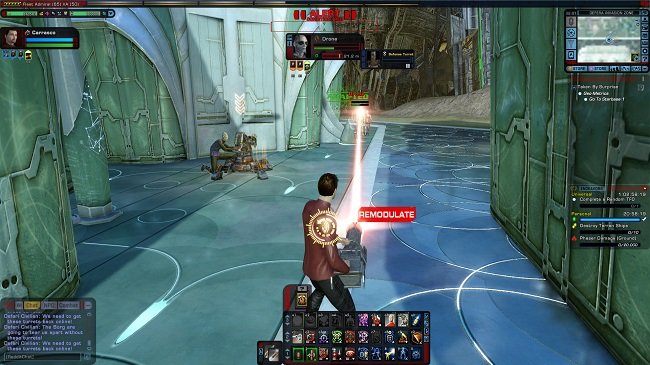
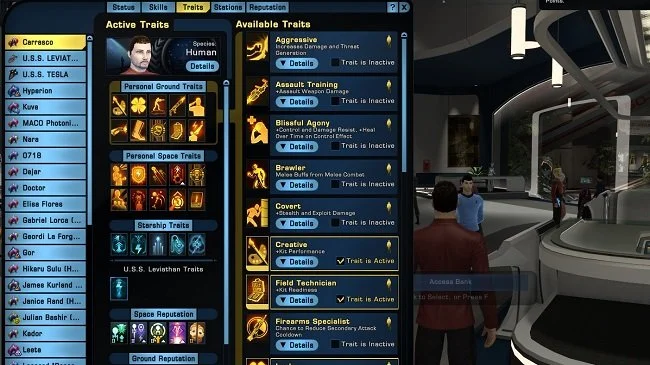
However, this being STO, updates never come without some bugs or technical fallout. There was substantial lag and rubberbanding on several phases of ESD earlier today and I had to move to smaller populated instances before these abated. More annoyingly, the update has resulted in all traits being unslotted from alts when you log in for the first time. There was also a similar issue with some loadouts. All of which is currently being looked into but it would have been better if this had all been addressed on the test server before going live. I will have to trawl through some recent screenshots so I can correctly recreate my trait build which is a nuisance. However, I will not do this until the bug is patched, which will hopefully be in the next 48 hours. Although I am pleased to see the revised model of ESD, the subsequent bugs do lower my expectations of DECA Games. I hope I am proven wrong.




Blog Questions Challenge
If you’re familiar with this blog then you know that I like an internet questionnaire. A little bit of introspection can be quite a useful thing. This particular questionnaire, the “Blog Questions Challenge”, was originally created for users of Bear Blog. However, the questions have subsequently been adapted to make them applicable to other blogging platforms and therefore accessible to a wider audience. I recently discovered this particular questionnaire over at Alvan’s Digital Garden and thought the selection of questions to be interesting. Hence I have decided to tackle them. If you’re a blogger yourself, feel free to follow suit and use this set of questions, as I think that it’s always interesting to know what inspires people to write and what path brought them online.
If you’re familiar with this blog then you know that I like an internet questionnaire. A little bit of introspection can be quite a useful thing. This particular questionnaire, the “Blog Questions Challenge”, was originally created for users of Bear Blog. However, the questions have subsequently been adapted to make them applicable to other blogging platforms and therefore accessible to a wider audience. I recently discovered this particular questionnaire over at Alvan’s Digital Garden and thought the selection of questions to be interesting. Hence I have decided to tackle them. If you’re a blogger yourself, feel free to follow suit and use this set of questions, as I think that it’s always interesting to know what inspires people to write and what path brought them online.
Why did you start blogging in the first place?
I have always enjoyed writing creatively. My English teachers at both junior and senior school always encouraged us to write stories and express ourselves through the written word. Not only is it an essential skill for work and day-to-day life, I feel that writing one’s thoughts and feelings is a great way to process the world in general. Especially with subjects and situations that are complicated. Blogging also provides an opportunity to share one’s interest and to potentially build communities.
What platform are you using to manage your blog and why did you choose it?
Since August 2015 I have used Squarespace for my blog. Instead of trying to migrate the previous iteration of Contains Moderate Peril, I decided to reboot the entire blog and start from scratch. Many of the existing posts such as film reviews were easily republished which made the process a lot easier. I chose Squarespace due to its ease to use and the fact that it doesn’t place any restrictions on user traffic. In the past I have had my website taken offline because the volume of traffic exceeded the bandwidth allowance included in the hosting package. Nearly ten years later, I am still satisfied with the quality of service Squarespace offers. I have seldom had any downtime and additional features and functionality are continuously added to the platform.
Have you blogged on other platforms before?
My first blog in 2007 was via the now defunct blog.co.uk service. A year later I moved to Google Blogger for convenience as this was a common platform at the time. Circa 2011 I migrated my blog to a hosted WordPress service which I used for the next four years. I liked WordPress initially as it is a very flexible way to produce a blog. However, I got tired with how much maintenance it required, as updates would often break third party plugins and there was always a constant battle against cyber attacks, spam and malicious code intrusions. I have also used Wix and Blot for separate website projects and found both to be very user friendly. The former provided a quick and flexible means to create a new contemporary website with all the features you’d expect. The latter was an excellent platform for a minimalist blog based around using Google Docs.
How do you write your posts? For example, in a local editing tool, or in a panel/dashboard that's part of your blog?
I use Google Docs to write my blog posts, despite having a subscription to Microsoft Office. The primary reason being I can access my documents from anywhere with an internet connection, which was very useful during my working career. Whenever I had any free time I could access my draft post folder on Google Drive and continue writing. It’s a habit that has stuck, plus I find Google Docs has great functionality. I can cut and paste a finished document directly into my blog editor without any formatting issues. I have set my web browser to open Google Docs in a tab upon launch and can therefore easily start writing whenever an idea occurs to me.
When do you feel most inspired to write?
I tend to write first thing in the morning as I feel mentally alert and suitably motivated. However, sometimes due to circumstances I will write late at night. My PC is in the spare bedroom which I use as an office. I like to be able to write in a controlled environment without interruption or noise. Occasionally, if I am looking after my grandchildren at their house, I will use my laptop to write once they have gone to bed. If I have an interesting idea for a blog post when out, I will make some notes via my phone.
Do you publish immediately after writing, or do you let it simmer a bit as a draft?
I tend to publish upon completing a blog post and seldom have the requirement to “sleep on it”. I don’t write anything that I deem to be controversial and I have sufficient confidence in my views and opinions to express them in a manner that is appropriate. That being said, I don’t mind if people do not like what I have written. That is their prerogative. Equally, it is mine to not be concerned with their opinion.
What's your favourite post on your blog?
Having written over 1890 posts, there are a few that I am quite fond of. There are two posts on “British Slang Words and Phrases” that are lighthearted but informative that I enjoyed writing. The subject matter certainly has scope for further instalments. On a more serious note, I wrote a series of 17 posts over seven years about “Caring for the Elderly”, which were about my family’s experiences caring for my parents who had both had life altering strokes. The comments left were often from people in similar caring roles and I felt that these posts were actually of use to people.
Any future plans for your blog? Maybe a redesign, a move to another platform, or adding a new feature?
I made some minor changes to my blog at the end of last summer and revised the branding. The template that I’m currently using is a decade old. The changes have proven sufficient for the present. A major overhaul of the blog would require every post being manually updated which is not a task I would welcome. Plus the overall operating costs of running a blog are increasing at present. Any future changes will have to be carried out within a budget.













The Lord of the Rings: The War of the Rohirrim (2024)
I have always found it curious that there haven't been more feature films set in Middle-earth, after the success of Peter Jackson’s The Lord of the Rings trilogy. However, a little research shows a very complex set of rights regarding Tolkien’s work, with different material being controlled and administered by different bodies. Hence, the market has not been saturated with officially licensed material. Thus, when The Lord of the Rings: The War of the Rohirrim was announced to be in production, it aroused a great deal of curiosity both among fans and those with an interest in the wider film industry. To base an entire feature film on something that is effectively just a few paragraphs in the appendices of The Lord of the Rings is quite intriguing. The producers claimed it afforded them greater artistic freedom not to be constrained by an excess of lore. Industry pundits theorised that the film was being produced solely to ensure that wider rights were retained.
I have always found it curious that there haven't been more feature films set in Middle-earth, after the success of Peter Jackson’s The Lord of the Rings trilogy. However, a little research shows a very complex set of rights regarding Tolkien’s work, with different material being controlled and administered by different bodies. Hence, the market has not been saturated with officially licensed material. Thus, when The Lord of the Rings: The War of the Rohirrim was announced to be in production, it aroused a great deal of curiosity both among fans and those with an interest in the wider film industry. To base an entire feature film on something that is effectively just a few paragraphs in the appendices of The Lord of the Rings is quite intriguing. The producers claimed it afforded them greater artistic freedom not to be constrained by an excess of lore. Industry pundits theorised that the film was being produced solely to ensure that wider rights were retained.
Setting aside the provenance of the production, The Lord of the Rings: The War of the Rohirrim is a competent anime fantasy film directed by Kenji Kamiyama. Set 183 years prior to the events of The Lord of the Rings, the film depicts the reign of Helm the Hammerhand, King of Rohan. During a council meeting with the Lords of Rohan, Freca Lord of Adorn requests that Helm’s daughter, Héra, marry his son Wulf to unite the Rohan. Freca being of part Dunlending blood and considered by many in Rohan as an outlander. However, Helm rejects the offer and rebuffs Freca. A fight ensues between the two leaders and Helm kills Freca with a single punch. Wulf leaves, vowing revenge and subsequently raises an army among the Dunlendings. A surprise attack on Edoras forces the Rohirrim to retreat to the Hornburg. With the death of her two brothers and her father stricken with grief, it falls to Héra to rally her people and turn the tide of the war.
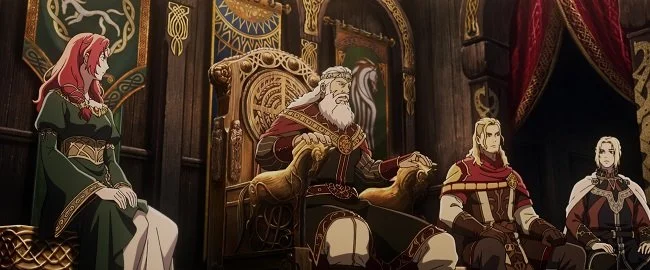
From a production perspective, there is much to praise about The Lord of the Rings: The War of the Rohirrim. The background art is sumptuous and vivid and there is a strong score by composer Stephen Gallagher. He cunningly uses classic themes by Howard Shore and further embellishes the soundtrack with solid material of his own. The animation is dynamic and doesn’t pull its punches. Limbs are severed and blood is spilt. The anime style works surprisingly well with the source material and certainly doesn’t look out of place. I am not a great fan of this medium but did not find it a deal breaker in any way. The voice acting is strong with the central characters having clear and distinct voices. The screenplay does not excessively diverge from established lore although it does make some changes for the sake of the narrative arc. Héra being an original character.
However, despite solid production values The Lord of the Rings: The War of the Rohirrim has two fundamental problems. The first is the story simply cannot sustain its two hour running time and the film could easily have been 30 minutes shorter. What is an interesting footnote in the source text, remains such as a feature film and nothing more. The second is the compulsion that new entries in a franchise often have, to try and directly link to events that occurred in a previous movie. For example there is a totally unnecessary action scene that is resolved by the appearance of a beast identical to the “watcher in the water” outside the West-gate of Moria. It doesn’t really hold up logically and seems very arbitrary. There are also several other clumsy references to both Orcs and Gandalf as the screenplay hamfistedly attempts to link to the forthcoming events of The Lord of the Rings.
Hardcore Tolkien fans may get more enjoyment from The Lord of the Rings: The War of the Rohirrim, than broader audiences. I found the film to be sufficiently entertaining but upon reflection it really doesn’t add much to the existing Tolkien cinematic universe. Also, as a Tolkien aficionado I can think of plenty of other stories referenced in the appendices of The Lord of the Rings, that would make a better feature film. I think The Lord of the Rings: The War of the Rohirrim would have fared better if it was part of a smaller scale television show called “Tales of Middle-earth” or something similar and the story was told over a more concise running time. As it stands, this 134 minute animated film falls between two stools. It is not bad but it is not anything more than adequate. When you consider the pedigree of the production and who is involved, you expect a lot more.






Five Films I Like
I was asked recently, what are my top five films of all time? This is one of those loaded questions that I don’t really like to answer. I enjoy lots of films across multiple genres. This includes acknowledged “classics” as well as low rent, exploitative trash. So why limit myself to just five films? Also, my answers would change regularly depending upon my mood and current cinematic interests. However, that doesn’t make for a pithy and interesting response to the original question. So I shall compromise. Here is a list of five films that I have an abiding love for and watch frequently. They always entertain me and there is a sense of comfort whenever revisiting them. That's not to say they are all good films. Possibly only one that is listed is considered a piece of noteworthy art. The rest are just entertaining to various degrees. Yet I have a strong emotional attachment to them all. Sometimes that’s all that matters.
I was asked recently, what are my top five films of all time? This is one of those loaded questions that I don’t really like to answer. I enjoy lots of films across multiple genres. This includes acknowledged “classics” as well as low rent, exploitative trash. So why limit myself to just five films? Also, my answers would change regularly depending upon my mood and current cinematic interests. However, that doesn’t make for a pithy and interesting response to the original question. So I shall compromise. Here is a list of five films that I have an abiding love for and watch frequently. They always entertain me and there is a sense of comfort whenever revisiting them. That's not to say they are all good films. Possibly only one that is listed is considered a piece of noteworthy art. The rest are just entertaining to various degrees. Yet I have a strong emotional attachment to them all. Sometimes that’s all that matters.
The Medusa Touch (1978)
An interesting adaptation of a popular seventies novel by Peter Van Greenaway. Novelist John Morlar is found in his flat, savagely beaten yet clinging to life. The subsequent Police investigation uncovers that Morlar has continuously encountered tragedy throughout his life and how many of those associated with him have died unexpectedly. After reading Morlar’s journals, Inspector Brunel (Lino ventura) begins to suspect that the injured novelist may be able to cause disasters. Although Richard Burton was not in the best of health when he made this film, he still delivers a powerful and charismatic performance as a misanthropic author. There is some eminently quotable dialogue and the tension steadily builds to a dramatic climax. The cathedral collapse at the end of the film is very well realised with practical effects and miniatures. The Medusa Touch is also a who's who of British character actors of the time.
Journey to the Far side of the Sun AKA Doppelgänger (1969)
This British science fiction film was produced by Gerry and Sylvia Anderson at the height of their success. However, one of Universal Studios financing requirements was that the film had to be directed by an established American director. Hence Robert Parrish got the job and clashed with Gerry Anderson. As a result many subplots within the script were cut from the final film. As a result the story, although intriguing and very akin to an episode of the Twilight Zone, struggles to sustain the film’s 100 minute running time. However the production design is stylish and in a very late sixties idiom. There's a sumptuous score by Barry Gray and the miniature effects by Derek Meddings are sublime. Especially the rocket launch. As ever with Gerry Anderson there is a casual and tonally unexpected use of violence and the film has a wonderfully bleak ending that no studio would countenance these days.
Krull (1983)
This hybrid fantasy movie started as sword and sorcery film but subsequently morphed into a Star Wars clone during its pre-production in a curious attempt to hedge its bet. At the time this was a very expensive movie using multiple sound stages at Pinewood Studios and location filming in both Spain and Italy. Krull is narratively and thematically somewhat of a mess due to the obvious changes made to the screenplay. However, it looks fantastic and features a wonderful cast of such character actors as Freddie Jones, Alun Armstrong and the great Bernard Bresslaw. There are also early appearances by Liam Neeson and Robbie Coltrane. Krull has developed quite a cult following over time. The Slayers and the Beast designs are quite scary and there is a superb score by James Horner that is very reminiscent of the halcyon Hollywood days of Erich Wolfgang Korngold and Miklós Rózsa.
Raise the Titanic (1980)
British media proprietor and impresario Lew Grade fared very well in television throughout the sixties and seventies. However, he was not so successful when he moved into film production. Raise the Titanic, based upon the novel by Clive Cussler, went through dozens of re-writes before it went into production, which accounts for why the final screenplay is so indifferent. The cast is curious and you get the impression that everyone they originally wanted was not available. Yet those actors who were eventually cast, Richard Jordan, Jason Robards and Alec Guiness are perfectly competent. However, the film was critically panned and bombed at the box office, effectively ruining ITC Productions. Irrespective of this, the miniature effects are outstanding and John Barry's portentous score does much of the heavy lifting, creating atmosphere, mystery and intrigue. It’s not a hidden gem but Raise the Titanic is far from the dog’s dinner some claim.
Night of the Demon AKA Curse of the Demon (1957)
Based on M R James' short story Casting the Runes, this is a horror masterpiece from director Jacque Tourneur. Beautifully shot in black and white by Ted Scaife, the film boasts an excellent production design by Ken Adam who subsequently went on to create all the huge sets for the sixties and seventies Bond films. The implied horror and tension is superbly handled and when the demon turns up it is suitably grim, despite its technical limitations. It was originally intended that the demon would be created by stop motion legend Ray Harryhausen but he was sadly unavailable. The optical smoke effects by FX wizard Wally Veevers are a marvel and were subsequently repeated in his last film The Keep in 1983. Night of the Demon is a bonafide horror classic due to its attention to detail and palpable atmosphere. Again a strong cast, including Dana Andrews, Peggy Cummings and Niall MacGinnis contributes substantially to the proceedings.
Thinking Out Loud
At present the UK is enduring some relatively harsh winter conditions. Usually November to February is continuously filled with rain and drizzle. When it is not enduring either of those things it tends to be overcast and gloomy. However, for a change the nation is currently experiencing snow, ice and heavy frosts. Even as far as the South East of England (IE where I live) the weather is cold, reaching temperatures as low as -3° celsius. Oh and before we get into the usual “You call that cold? It’s -X degrees here” argument, more fool you for living somewhere freezing. You can move, you know. Getting back on point I hate this time of year because it is so dreary. There’s nothing immediately on the horizon to look forward to and the cold weather just makes the matter worse. The UK is never equipped for snow to begin with. The idea of a fortnight somewhere warmer suddenly becomes a lot more appealing.
Here we are again with another selection of thoughts and ideas that have crossed my mind recently. As always, some could be developed into blog posts of their own but that really isn’t the point of this recurring post. This is more of a curated “brain fart”, where I just put a virtual pen to paper and get some of my thoughts written down for your consideration. As always, please feel free to leave a comment.
Winter
At present the UK is enduring some relatively harsh winter conditions. Usually November to February is continuously filled with rain and drizzle. When it is not enduring either of those things it tends to be overcast and gloomy. However, for a change the nation is currently experiencing snow, ice and heavy frosts. Even as far as the South East of England (IE where I live) the weather is cold, reaching temperatures as low as -3° celsius. Oh and before we get into the usual “You call that cold? It’s -X degrees here” argument, more fool you for living somewhere freezing. You can move, you know. Getting back on point I hate this time of year because it is so dreary. There’s nothing immediately on the horizon to look forward to and the cold weather just makes the matter worse. The UK is never equipped for snow to begin with. The idea of a fortnight somewhere warmer suddenly becomes a lot more appealing.
New Year Honours
Each year on January 1st, the New Year Honours are announced as part of the wider British Honours System. This often attracts a great deal of negative and partisan debate because a percentage of those nominated are serving or former politicians and titles and awards are seen as a “reward” or “payoff”. This is especially so when someone is made a Lord and gets a permanent seat in the second chamber of the UK parliament, The House of Lords. The UK tabloid press also dislikes it when celebrities or those connected to the arts receive honours due to diverging political opinions and affiliations.
But the vast majority of New Year Honours are given to members of the public for their service to others. Furthermore they are nominated by their peers and friends. Hence, decent people such as those providing school crossing patrols or running charities such as food banks will receive “gongs” and initials after their names. I do not consider this a bad thing and find it frustrating that a worthy form of public recognition is hijacked by the media who focus on a few political nominations. It’s a shame that people who have dedicated their lives to others don’t receive comparable press exposure.
New Year Resolutions
New Year resolutions are bullshit. You know this. I know this. A sham, a waste of time and a pointless self indulgence. If you want to make a change to your life then research it, plan it and implement it. As Yoda wisely said, “Do or do not. There is no try”. Or as German comedian Henning Wehn said “ Westphalia is not an option”.
You Cannot Always Achieve a Positive Outcome
If you keep abreast of the latest data collated by those with appropriate qualifications, you will notice that Western culture is becoming very risk averse. A lot of positive developments such as a greater focus on mental well being and being open about one’s feelings have also fostered a mindset where people don’t want to make mistakes or be seen to do so. This leads to a culture of either misplaced assuredness and possibly to the Dunning-Kruger effect, or alternatively to a complete inability to make decisions and a withdrawal from anything where definitive action is required.
When I was a young teenager I can remember several teachers at my school from different disciplines impressing upon us that it is not always possible to achieve a positive outcome. They illustrated this with points from history. This axiom also occurs in the literature and wider pop culture of the time and still persists today. Captain Picard stated that “It is possible to commit no mistakes and still lose. That is not a weakness. That is life”. It is a shame that more people don’t understand this concept and reconcile themselves to it. Because I suspect that global events over the next 4 to 5 years will hammer the point home. Don’t allow yourself to be broken by a misplaced philosophy.









Banks
I was having a discussion with extended family over Christmas and someone asked the interesting question “what is the most pointless shop in the high street”. Me being me, I asked for some clarification as to the parameters of this axiom, which I eventually got. The refined version of the question was to name a business that no longer enjoyed the custom that it did fifty years ago. This could be due to societal or technological change. There were some initial suggestions such as the newsagents but this was quickly dismissed. Newsagents don’t just sell newspapers anymore and are effectively small franchise, general purpose stores these days. Butchers were also put forward but subsequently rejected. They still exist and tend to be confined to more affluent areas. But I digress. The answer that was finally agreed upon were banks.
I was having a discussion with extended family over Christmas and someone asked the interesting question “what is the most pointless shop in the high street”. Me being me, I asked for some clarification as to the parameters of this axiom, which I eventually got. The refined version of the question was to name a business that no longer enjoyed the custom that it did fifty years ago. This could be due to societal or technological change. There were some initial suggestions such as the newsagents but this was quickly dismissed. Newsagents don’t just sell newspapers anymore and are effectively small franchise, general purpose stores these days. Butchers were also put forward but subsequently rejected. They still exist and tend to be confined to more affluent areas. But I digress. The answer that was finally agreed upon were banks.
I opened my first bank account in 1984, before I left school, in preparation for entering the job market. I visited my local branch of Lloyds Bank, where I provided my National Insurance Number as ID and deposited £10. Within a week I was sent a chequebook. At the time I worked casually and was paid cash, so I had to go to the bank every few weeks to pay money in. A few years later when I had left school and secured a full time job with the UK civil service, my wages were paid monthly, directly into my bank account. Hence my visits become less frequent. By this time ATMs were becoming commonplace, especially in major cities, so I started using these for my cash requirements. Throughout the nineties, I would visit a bank to deposit cash into a savings account and there would also be occasional visits to arrange a loan, mortgage or to purchase foreign currency for a holiday.
Since then I have embraced every new technological innovation that banks have offered and as result have used my local branch less and less. I no longer have a chequebook and very rarely pay one into my account. If I do it can be done via my phone. Today I have two bank accounts and two savings accounts. My primary interaction with any of them is always via a phone app or my desktop PC. Out of those four banks, two of them do not have any physical premises, existing as purely online entities. The other two “legacy” banks still have local branches throughout the UK but these are rapidly vanishing due to a lack of demand. Small businesses that handle cash and older customers still use the counter services provided at branch level but it’s not sustainable in the long term. Some bank chains would happily close all local branches immediately but decline to do so, as it has become a political hot potato.
Toscana Italian Restaurant, formerly a branch of Lloyds Bank
Domestic banking has traditionally been free in the UK. A basic bank account does not charge a customer for cash withdrawal or levy transaction fees. However, in recent years some banks have broadened their business model and there are now fees on high interest accounts or a requirement to maintain a minimum balance. There has also been an increase in foreign banks offering domestic banking services and these often do charge fees, especially for customers with low credit ratings. The financial landscape has also radically changed in my lifetime. The majority of the UK workforce now have their salary paid into their bank account on a monthly basis. Payment in cash is far less common and the use of cash in day-to-day transactions is also declining. Credit is far more readily available compared to the seventies. Saving has become less popular with many people having little or no reserves of money.
Hence, it would appear that for many people, especially the under 30s, banks are “the most pointless shop in the high street”. I last visited mine in March last year because I was dealing with the dispersal of funds from my late parents estate. I have not been again since then. Looking at my local highstreet, many of the “legacy” bank branches have closed. Due to their prime locations, many become bars. The branch of Lloyds where I opened my first account in 1984 is now a very good Italian restaurant. However, a few branches still persist, proving old habits die hard. Although I use a debit card, I still ensure I have cash on me, favouring a belt and braces approach. However, I suspect there will come a time in the not too distant future, when domestic banks will finally vanish from the high street and the UK finally becomes a cashless society as well.
Blog Post Counter
I used WordPress as a website platform for 5 years. One of the things I used to like about it was the ability to track data and generate stats. However, I moved Contains Moderate Peril to Squarespace in 2015 for technical and financial reasons. I’ve been broadly happy with the results but there are a few niggles. Squarespace has a solid analytical package available which provides an adequate summary of website traffic. I can also determine what keywords have been used for searching the site and what posts are popular. However, basic information such as how many blog posts I’ve made over the last 9 years is conspicuously absent. I also have no obvious way of finding out what the average length of a blog post is or what the estimated reading time is.
I used WordPress as a website platform for 5 years. One of the things I used to like about it was the ability to track data and generate stats. However, I moved Contains Moderate Peril to Squarespace in 2015 for technical and financial reasons. I’ve been broadly happy with the results but there are a few niggles. Squarespace has a solid analytical package available which provides an adequate summary of website traffic. I can also determine what keywords have been used for searching the site and what posts are popular. However, basic information such as how many blog posts I’ve made over the last 9 years is conspicuously absent. I also have no obvious way of finding out what the average length of a blog post is or what the estimated reading time is.
As Squarespace lacks such functionality by default, it would appear that I have to look to third party plugins to provide such services. So far several Google searches have proven unproductive. The results tend to lean more towards post views and associated data. All I want is a simple counter that keeps a tally of how many blog posts have been published to the site. It doesn’t strike me as an unreasonable statistic to track. Another thing I have noticed about Squarespace plugins is that many of them are chargeable. I am not against this in principle but $70 is not pocket change. Running a blog already comes with a cost and in recent years that has increased due to inflation. I don’t want to pay $70 for a simple backend blog post counter unless there really is no other option, so I’ll keep looking for cheaper options.
I want a blog post counter primarily for my own benefit. A simple means to keep an eye on how much material is hosted on Contains Moderate Peril. Upon reflection, having such a counter on the public side of the blog could be of use. It may convey to new readers a sense of consistency. That content is posted regularly, which is often a factor when it comes to growing an audience. However, until I find a suitable post counter, I have simply counted all my published content manually. To date, there are 1,890 posts on this blog, which isn’t too shabby. Some are related to ephemeral news stories but the film, TV and book reviews have much greater longevity. These make up the bulk of traffic to the blog. Maybe if I can find an appropriate counter it should be included along with the site search facility. I have a feeling this could become a New Year project.
Are MMORPGs Expensive to Play?
Bree Royce, editor-in chief at Massively Overpowered, recently asked the question “what is the most expensive MMORPG right now”. My first thought was to search through my old draft blog posts and track down an MMO cost analysis I wrote circa 2019. It includes data such as subscription rates and the price of current expansions. There was also information on what were the most popular cash shop items at the time. However, I then read some of the comments that had been left on Bree’s post and I quickly realised that this wasn’t just a matter of financial expenditure. Whether or not an MMO is expensive is also determined by one’s disposable income, respective wealth and personal relationship with money. The latter is perhaps the most important, irrespective whether you consider yourself rich or poor.
Bree Royce, editor-in chief at Massively Overpowered, recently asked the question “what is the most expensive MMORPG right now”. My first thought was to search through my old draft blog posts and track down an MMO cost analysis I wrote circa 2019. It includes data such as subscription rates and the price of current expansions. There was also information on what were the most popular cash shop items at the time. However, I then read some of the comments that had been left on Bree’s post and I quickly realised that this wasn’t just a matter of financial expenditure. Whether or not an MMO is expensive is also determined by one’s disposable income, respective wealth and personal relationship with money. The latter is perhaps the most important, irrespective whether you consider yourself rich or poor.
I play several MMORPGs over the course of a year. I tend to return to a game when there’s sufficient outstanding content to keep me busy for a few months, such as a new expansion. Hence I will binge play games such as The Lord of the Rings Online, Star Wars: The Old Republic and The Elder Scrolls Online. While I am playing any one of these titles, I will subscribe to ensure that I am not impeded by any “free-to-play” restrictions. I will also buy some in-game currency so I can obtain any cash shop items I desire. Hence, if I play SWTOR for three months or so, I can end up spending between £60 to £75. It is therefore entirely possible that I can spend £300 a year across multiple MMOs. Broadly, this breaks down to about £6 a week. I personally do not feel that this is a lot of money.
Every hobby has some sort of cost associated with it. From golf, fishing, gardening, painting lead figures to trainspotting. Compared to others, I consider video games good value, especially the MMO genre. However, this is very subjective. Some people may consider my spending to be profligate. Others may think that I’m penny pinching. It all comes down to our own relationship with money. Something that varies between generations and other social divides. I know very wealthy people who will balk at costs that are just pocket change to them. I know others on what would be considered a relatively low income, to happily embrace in-game expenditure because it is the primary source of leisure and entertainment. Furthermore, “whales” do exist and are a big enough factor to influence a video game’s business model.
However, setting aside one’s own finances, there is another factor that counts here. One that is a matter of perspective. Most gamers understand that games cost money to develop and that there is a requirement to generate revenue to finance new content. Hence we broadly accept that there will be charges such as a subscription or the sale of cosmetic items. What matters here is setting a cost that feels appropriate. If this is done right then the player does not feel abused or exploited. A $5 or $10 cosmetic mount is therefore acceptable. Not so, $50 or more. Sadly, publishers often push egregious charges upon developers and mandate that they are included in the game. All too often a deliberate bottleneck or grind is artificially created in an MMO which can only be bypassed with a paid solution. This is the main bone of contention with many gamers.
As I’ve stated in other posts recently, what we expect from a video game is very much determined with what we have grown accustomed to and that varies depending on age. Paying once and getting everything was the norm during the eighties and nineties. But those days are gone and are not coming back. Therefore one has to adjust one’s expectations. It is also true that video game studios only pitch a business model that they can get away with. Sometimes, a live service game fails because it delivers too little and charges too much. The business models for games like LOTRO and SWTOR persist because the players ultimately tolerate it. They may complain but they continue paying. Unless you are prepared to stop paying you cannot exercise any leverage. Ultimately, the only intellectually honest answer to the question “what is the most expensive MMO right now” is the one you’ve chosen not to play.
Booking Tickets
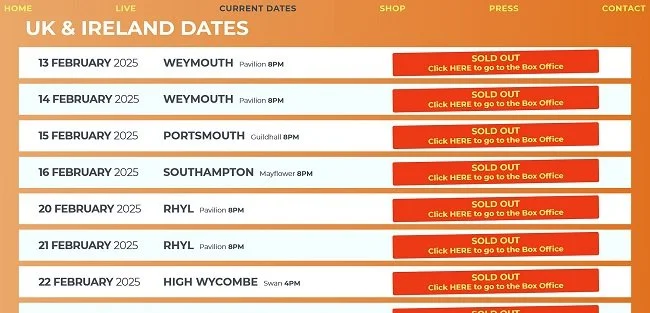
Last night Mrs P said apropos of nothing, “shall we go and see John Bishop”? For those who don’t know, John Bishop is an established UK comedian who is currently touring the country. So I went online and checked the details of his tour. We were quite happy to travel to see his show as it would provide an opportunity for a weekend away. Sadly, to cut a long story short we were unable to secure any tickets that suited our needs. From January to April, the tour is mainly using smaller venues such as local theatres and art centres. Later in the year during October and November, the tour moves to arenas, conference centres and stadiums. I find these very impersonal and don’t see any merit in sitting far away from the stage, watching an artist on a giant video screen. We had hoped we could get tickets at one of the smaller theatres but sadly we couldn’t find two seats together.
Last night Mrs P said apropos of nothing, “shall we go and see John Bishop”? For those who don’t know, John Bishop is an established UK comedian who is currently touring the country. So I went online and checked the details of his tour. We were quite happy to travel to see his show as it would provide an opportunity for a weekend away. Sadly, to cut a long story short we were unable to secure any tickets that suited our needs. From January to April, the tour is mainly using smaller venues such as local theatres and art centres. Later in the year during October and November, the tour moves to arenas, conference centres and stadiums. I find these very impersonal and don’t see any merit in sitting far away from the stage, watching an artist on a giant video screen. We had hoped we could get tickets at one of the smaller theatres but sadly we couldn’t find two seats together.
This anecdote illustrates two issues. The first being what do you need to do to keep up to date with tour information for bands, other musical artists and comedians? The second being the actual acquisition of tickets, which is frequently a far from equitable process. Because in the past and by that I mean the eighties and nineties, buying tickets went something like this. After spotting an advert for a forthcoming tour in the music press, I would either phone or visit the venue where the show was to be held and buy tickets from their box office. Alternatively, I would go to a third party ticket agent in Leicester Square and buy tickets there. Sometimes there would be a queue but if you were shrewd about the timing, there would be no major issues. However, this process was subsequently ruined by the internet and online booking services.
The most egregious problem associated with buying tickets nowadays is the rise of automated bots that buy en masse for touts. Another problem associated with the lottery that is the first come, first served approach, are the virtual queues that occur when tickets go on sale at designated times. I spent exactly 14 minutes in an online queue last year, in a vain attempt to buy two tickets for a popular podcast’s live recording. By the time I finally got to the front of the queue, I was greeted with a message that all tickets were sold out. How is this fair and equitable? Furthermore it is far from good PR for the artists in question. Last year’s sale of Oasis reunion tickets really caught the public's attention due to the poor way the process was handled. The question of regulating ticket sales has now even been raised in parliament.
Another issue that occurs, sometimes with smaller venues, is when there are limited tickets left. Some websites refuse to sell pairs of tickets if that sale leaves a single seat on its own. I noticed this when trying to buy two circle tickets from a local theatre recently. I received a pop up message that would not allow the purchase as it left an isolated seat that the venue would naturally find harder to sell. What I want to know is since when did the venue's business problems become mine? To add insult to injury, the ticket software subsequently encouraged me to purchase a third ticket and “bring a friend”. I was utterly flabbergasted by the hubris of this approach and was tempted to call the theatre in question personally. Upon reflection I decided why harass some minimum wage, box office clerk. It’s not as if they set the sales policy.
With regard to being notified in advance about upcoming tours, the obvious solution is to simply register for email notification from the artists respective website. It is also prudent to do the same with both small and large venues. However, I was told by a friend who works in the marketing industry that this approach isn’t quite as simple and foolproof as it would appear. Although bands and artists will notify fans in advance of tours, there exists within this process a two tier system. Those who have previously bought merchandise above a certain value are given priority and first access to ticket sales. A similar system exists with large venues such as the O2 Arena. “Valued” customers are notified in advance and again given access to priority ticket sales.
There are other issues arising that are worth considering. Third party brokers and their additional charges. Then there are the vagaries of the phrase “restricted view”. Some websites include a photo of the view from your seat. Others seem to go out of their way to be as vague as possible. Overall, it seems that ticket sales is a rather ethically questionable business. It may well serve the needs of the vendors but it doesn’t benefit consumers. Many artists try to distance themselves from this process, blaming the fact that it is run by third parties and thus not their fault. However, it would appear that this issue is getting greater scrutiny by the media and consumer groups. The industry may well be facing greater regulation this year. It certainly needs it. In the meantime I have learned from my experience and am better prepared for next time I wish to book tickets for an event.
PC Game Pass
As a retired person, my monthly income is dependent on interest rates and the state of the wider economy. The UK economic prospects for 2025 are not looking especially good at present. As such, I shall be adopting a more cautious financial policy in the New Year, especially with regard to my spending on leisure activities. New release video games have crept up in price in recent years, with new titles costing between £75 and £100 if you want the full game, season pass and bonus content. There is always a cheaper option to buy just the base game but that tends to be a false economy, especially if you enjoy the title you’ve bought. Hence buying several new video games over the course of a year can be quite an expensive proposition. The obvious way to save money is to wait several months until prices drop as a game’s ages within the context of its lifecycle.
As a retired person, my monthly income is dependent on interest rates and the state of the wider economy. The UK economic prospects for 2025 are not looking especially good at present. As such, I shall be adopting a more cautious financial policy in the New Year, especially with regard to my spending on leisure activities. New release video games have crept up in price in recent years, with new titles costing between £75 and £100 if you want the full game, season pass and bonus content. There is always a cheaper option to buy just the base game but that tends to be a false economy, especially if you enjoy the title you’ve bought. Hence buying several new video games over the course of a year can be quite an expensive proposition. The obvious way to save money is to wait several months until prices drop as a game’s ages within the context of its lifecycle.
Sometimes, waiting until a game becomes financially viable is an acceptable option. On other occasions, playing a game as soon as it launches is an integral part of the overall experience associated with it. Sometimes, it simply comes down to the fact that you like a franchise so much that you just want to play the latest instalment as soon as possible. The latter returns us to the matter of day one costs once again. However, there is a potential way around this. That being the PC Game Pass from Microsoft. If the games that you desire are available on this platform, then you can access them from “day one” for the price of a £10 a month subscription. Often, you can pay just £1 for the first month as part of an ongoing promotion. A year’s subscription is therefore £111, which is an exceedingly good deal if you want access to an extensive catalogue of new releases and older titles.
At present I would like to play the recently released Indiana Jones and the Great Circle along with the forthcoming Sniper Elite Resistance which is released at the end of January 2025. The premium versions of these games retail at £85.99 and £69.99 respectively. A total of £155.98 if bought via a platform such as Steam. Compare that cost with paying £1 for the first month of a subscription to PC Game Pass. Theoretically, you could play through both games in a month. Even if it took a little longer, say three months, the overall cost via this platform would only be £21 which is incredibly reasonable. If it is simply a matter of having access to new titles, then PC Game Pass is an extremely good financial proposition. However, the elephant in the room that still persists for many people, is the matter of ownership. The moment you stop paying for PC Game Pass, you lose access.
In the past I have advocated strongly for the virtues and benefits of ownership. I still believe such arguments are valid. Yet I am aware that the wider cultural tide is changing whether I like it or not. Essentially the things that you take as read and consider “normal” are often purely dependent on the era in which you grew up. The business model for selling video games that existed in the nineties, where you just paid once and got everything, is alien to younger generations of gamers. They have grown up with chargeable DLC, game passes, in-game stores and purchasable cosmetic items. Ownership is simply not their default position. Things change. Hence I have decided to subscribe to PC Game Pass in the New Year so I can play these games. If I enjoy them and wish to return to them at a future date I can always buy them when they are discounted. This approach seems to be the best of both worlds.
Goodbye 2024
In my teenage years, there was a social obligation to go out on New Year’s Eve. This often meant congregating in some dismal pub, queuing at the bar for 30 minutes to get a drink, then trying to find a corner where you could stand and struggle to have a conversation with your friends, above the noise of the crowd. The evening was dull, noisy and often ended in a fight. Then, around 1:00 AM we were summarily turfed out into the street and had to make our way home. Buses always run at this time of year to serve a public need but the “drunk express” was never a pleasant means of transportation. Quite frankly the whole experience was shit but the hubris of youth meant we deluded ourselves that we were having a good time. If someone suggested something similar today, I would laugh in their face. I am happy to spend New Year’s Eve indoors and away from it all.
In my teenage years, there was a social obligation to go out on New Year’s Eve. This often meant congregating in some dismal pub, queuing at the bar for 30 minutes to get a drink, then trying to find a corner where you could stand and struggle to have a conversation with your friends, above the noise of the crowd. The evening was dull, noisy and often ended in a fight. Then, around 1:00 AM we were summarily turfed out into the street and had to make our way home. Buses always run at this time of year to serve a public need but the “drunk express” was never a pleasant means of transportation. Quite frankly the whole experience was shit but the hubris of youth meant we deluded ourselves that we were having a good time. If someone suggested something similar today, I would laugh in their face. I am happy to spend New Year’s Eve indoors and away from it all.
As for 2024 it hasn’t been an especially good year. Mrs P and I have had a lot of health issues which hopefully have now been addressed. We want to get back into the habit of having an extended weekend away each quarter in 2025. It’s nice to have social activities and events of your choice on the calendar and have something to look forward to. On a personal note my return to writing has been beneficial for my mental well being. I like setting an alarm and getting up early to write while my brain is still fresh. Once the seasonal celebrations are finally over, I am aiming to write every day in 2025 if possible. I also have some other projects to pursue which require learning new skills. It is important to keep the mind active and not to lapse into a purely sedentary and unchallenging lifestyle.
Outside of my immediate life 2025 is not looking like a good year with regard to geopolitics. However, I am not going to allow myself to be excessively anxious about it. Mrs P and I have discussed practical things that we may have to address, such as shortages or increasing inflation. Beyond that it’s really just a question of battening down the hatches and weathering the storm. By storm I mean the tsunami of bullshit that is going to hit the news cycle and the consequences of it. However, there are also some simple steps you can take to improve your state of mind and stay positive. Limiting your time on social media. Reading only the news headlines, rather than wallowing in the endless speculation and negative conjecture. I find keeping busy also helps. Sometimes, it’s best not to look too far into the future. Instead just focus on the present and take things one day at a time.
Happy New Year.







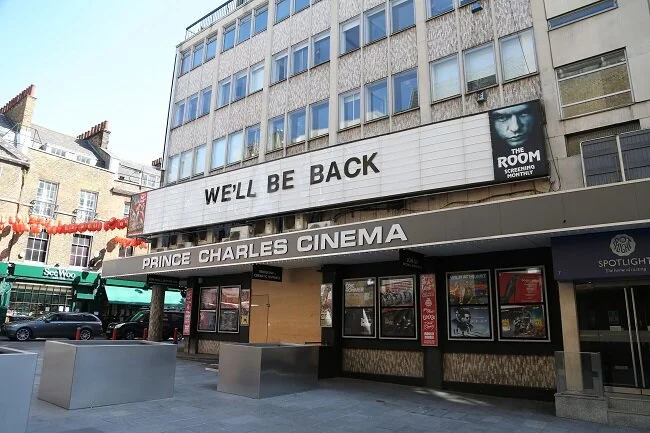
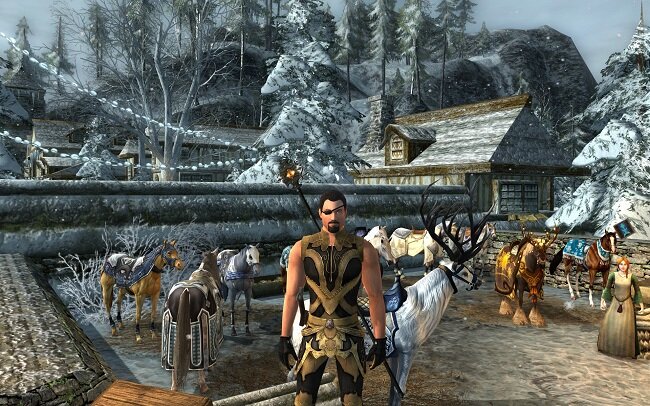

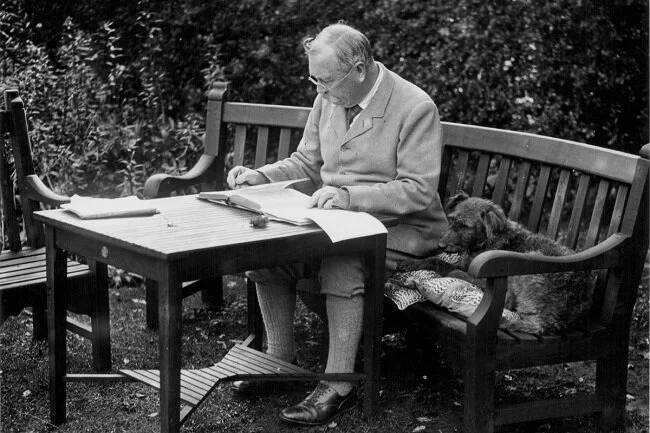

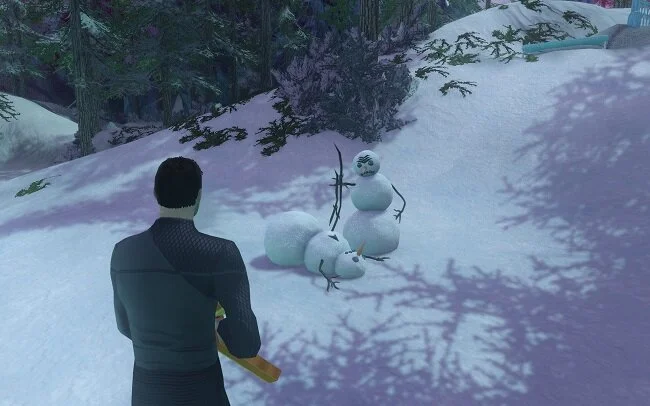






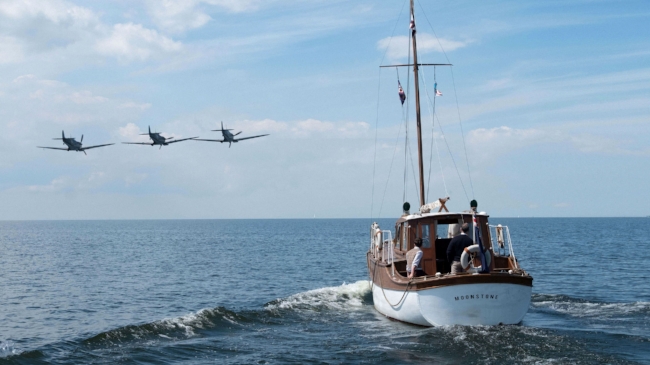

A Year in Gaming
It is customary for me to write an end of year summary of my gaming activities but I suspect that on this occasion it will be somewhat short. For me, 2024 has really hammered home the notion of the ephemeral nature of video games as well as their commercial ubiquity. The moment a game fails to satisfy for whatever reason, rather than complain or worry about it, I just move on to something else. It’s not as if there’s a shortage of games out there. I have a substantial back catalogue of games that Epic and Amazon prime regularly giveaway. I have bought numerous discounted bundles in the past, in the pious hope that I’ll play one of the games included, at some point in the future. Games may well be enjoyable and engaging but many are also disposable. That’s not to say they’re bad. While playing them you are indeed “entertained”. However, when you’re “done”, it’s amazing how you quickly find another and forget what you were previously playing.
It is customary for me to write an end of year summary of my gaming activities but I suspect that on this occasion it will be somewhat short. For me, 2024 has really hammered home the notion of the ephemeral nature of video games as well as their commercial ubiquity. The moment a game fails to satisfy for whatever reason, rather than complain or worry about it, I just move on to something else. It’s not as if there’s a shortage of games out there. I have a substantial back catalogue of games that Epic and Amazon prime regularly giveaway. I have bought numerous discounted bundles in the past, in the pious hope that I’ll play one of the games included, at some point in the future. Games may well be enjoyable and engaging but many are also disposable. That’s not to say they’re bad. While playing them you are indeed “entertained”. However, when you’re “done”, it’s amazing how you quickly find another and forget what you were previously playing.
I started the year playing Call of Duty Modern Warfare III, the 2023 entry in the never ending franchise. These games have a 12 month lifecycle and frequently “evolve” during their quarterly updates. Hence many of the aspects of MW III that I liked when I started playing, were altered, nerfed or simply removed, six months later. The community is also vile and seems to be a magnet for the emotionally dysfunctional. This doesn’t help, especially when trying to find information on builds and tactics via the games subreddit. I found myself in a minority as I actually liked the open world approach to the Zombie play mode. The latest iteration of the game released in October has returned to the traditional round based approach, which I don’t like. So roundabout summer, I stopped playing as the game no longer yielded sufficient fun. I uninstalled it a few months later.
I fancied playing a traditional high fantasy RPG this year and found exactly that in Dragon’s Dogma 2. I quite liked the fact that the game deliberately eschews fast travel and is designed so that the player has to travel slowly around the world map, fighting as they go. I also liked the pawn system in which you could hire up to 3 NPC companions from multiple classes. These can be either prebuilt pawns provided by the game itself, or ones that other players had created. I got quite attached to some of them with their quirky names and dialogue, until I outlevelled them. The combat was more challenging than I had expected but I liked the fact that you could climb onto some of the exotic beasts you fought and attack vital areas. Some players were disappointed by the story, claiming it was somewhat generic. I felt it was adequate and often wonder if games such as these, made by international developers, lose something in translation.
I returned to several MMOs this year. Star Trek Online continues to be a mainstay, due to its continuous calendar of short term events. Such an approach is not a real substitute for longer, story based missions which are becoming more infrequent these days. But STO does afford the casual gamer a quick fix and a means to jump straight into some action if you have limited leisure time. I also resumed playing The Lord of the Rings Online having one update and an expansion to catch up with. I reached the new level cap with my primary character and weathered the ill conceived changes that were made to the Lore-master class. When will developers learn that if it ain’t broken, don’t fix it? LOTRO still benefits from well written and innovative stories to underpin all their quests. It also has a knack of creating interesting zones. Overall the game does sufficient to keep me engaged.
For reasons I can’t quite articulate, I decide to revisit Age of Conan. I found my original character from 2011 along with an MMO that is in maintenance mode. It still has players although they tend to congregate in the cities and most of the time, you’ll find yourself alone when out questing. As such, it can be played as an RPG but I decided not to pursue playing any further than satiating my thirst for nostalgia. Instead I opted to dive back into Star Wars: The Old Republic as there were three classes that I hadn’t played. To date, I have now completed the Sith Inquisitor and Jedi Consular classes and am now focusing on the Judi Knight. The great thing about SWTOR is that each class has a unique story, as does each planet in the game. Hence there is always something new to return to.
2024 was certainly not a standout year for gaming, at least from my perspective. Video games still provided an entertaining pastime but nothing really loomed large and made an impact upon me such as Red Dead Redemption 2 or Skyrim. Such games are becoming increasingly rare. MMOs once again proved to be a comfortable form of gaming and I am still enjoying my return to SWTOR. I also have the latest LOTRO expansion to play through, which I am keeping in reserve for the moment. I have my eye on the new Indiana Jones game in the New Year along with the latest instalment of Sniper Elite. However, the cost of buying new titles is becoming quite expensive. Especially if you want the most comprehensive version of a video game. However, I have a potential solution for that problem but that is a blog post for the New Year.
A Year in Movies
The last time I wrote A Year in Movies post was back in 2020. That was naturally an unusual year and it certainly had a radical impact upon the film industry and the way new movies are distributed. In many ways the pandemic accelerated the inevitable move towards cross platform, same day releases. 4 years on and it is quite usual for films to have a short cinema release before becoming available on streaming media. They often appear on physical media at the same time. Effectively you can go to the cinema, or simply watch at home on the platform of your choice if you prefer. Rent, buy or subscribe, the film studios still get their pound of flesh and everyone is happy. Sometimes if a film has failed to gain sufficient traction at the cinema, its release will be cut short and it will go to streaming even quicker. Direct to video from the eighties and nineties has been superseded with direct to streaming.
The last time I wrote A Year in Movies post was back in 2020. That was naturally an unusual year and it certainly had a radical impact upon the film industry and the way new movies are distributed. In many ways the pandemic accelerated the inevitable move towards cross platform, same day releases. 4 years on and it is quite usual for films to have a short cinema release before becoming available on streaming media. They often appear on physical media at the same time. Effectively you can go to the cinema, or simply watch at home on the platform of your choice if you prefer. Rent, buy or subscribe, the film studios still get their pound of flesh and everyone is happy. Sometimes if a film has failed to gain sufficient traction at the cinema, its release will be cut short and it will go to streaming even quicker. Direct to video from the eighties and nineties has been superseded with direct to streaming.
My personal cinema experience has greatly improved of late due to the opening of a new local independent cinema in Summer 2023. The Sidcup Storyteller has three screens which are best described as “petit” and “bijou”. However, this is advantageous as it tends not to attract a youthful audience seeking the latest multiplex fodder. Instead customers tend to be of an older age group who still cleave to old school cinema etiquette. The seats are roomy and the sound system is not turned up to 11 but instead is actually configured so dialogue is audible. Films are shown throughout the day which is convenient if you want to grab something to eat afterwards and still be home at a reasonable hour. Ticket prices are acceptable and on average are about £10, although there are often discounts and promotions that can reduce the price as low as £6.30 which is very reasonable.
I went to the cinema 3 times in 2024, which is possibly an all time low. A decade earlier I would go at least once a month and could always find something that I wanted to watch. Sadly this decline all comes down to the content that monopolises cinema chains these days. I’m tired of being charitable and advocating a live and let live policy. Franchise moves are a blight on quality film making. They indirectly condition their audience towards spectacle, rather than dialogue and story. Furthermore, they foster short attention spans. Through no fault of their own modern audiences are often incapable of watching anything outside of a narrow spectrum of material and are effectively cinematically illiterate. It is a sorry state of affairs and ultimately it’s the audience that loses out.
As for the three films that I saw at the cinema this year, they were as follows. One Life about the British humanitarian Nicholas Winton (Anthony Hopkins) and his involvement in the Kindertransport during World War II. It is a very low key film with the focus on performance. It doesn’t overreach itself by being too epic in scope and makes its point perfectly. Back to Black is a biography of singer Amy Winehouse. The plot is somewhat factually spurious but the central performance by Marisa Abela is sound, especially her singing. Finally, the last film of the year was Paddington in Peru. Not quite as good as the first two movies but it is still entertaining, mainly due to the strong supporting cast. Antonio Banderas being especially droll. I considered going to the cinema to see Blitz, Alien Romulus and Gladiator II but ultimately chose to watch them all at home.
Despite a decline in mainstream cinema, there are still plenty of good quality films available. You just have to look a little harder to find them. They are often buried in the streaming menus and need to be sought out. I find that word of mouth from friends and critics that I know and respect is often a reliable heads up. I found Robot Dreams that way, along with Longlegs. Both are entertaining genre offerings but very different films. Another solid film recommended by a reliable source is Juror #2, directed by Clint Eastwood. This was released without much fanfare but it is a no nonsense courtroom drama, filmed in Eastwood usual matter of fact style. It achieves exactly what it sets out to do, delivering a strong indictment of the US legal system. The fact that films such as these three are still made does give me hope that quality mainstream filmmaking is not quite dead and that good stories still appeal to audiences.