
Red Dead Redemption 2: A Genre Milestone
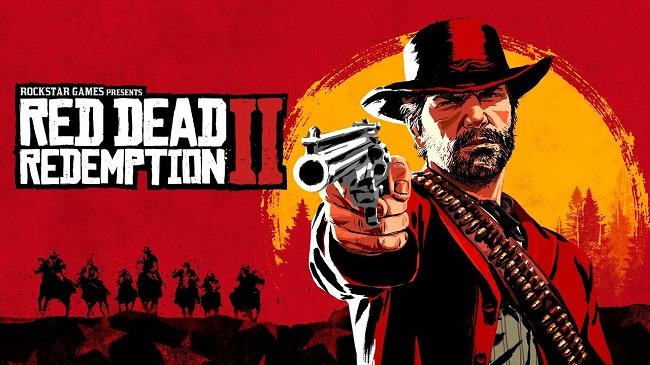
I started playing Red Dead Redemption 2 on the PC upon its release in late 2019. Although I enjoyed it, I was distracted by other matters at the time and so I drifted away in early 2020. To cut a long story short, I recently picked up exactly where I left off, because I felt the need for a big, narrative driven, RPG gaming experience. Red Dead Redemption 2 certainly meets those requirements. A few days ago I finished the main story and having played through sufficient side quests and challenges, decided to call it quits. Since then I have been musing on both the game itself and the experience I had while playing through it. Simply put, I consider Red Dead Redemption 2 to be a genre milestone and one of the most significant and impressive examples of video games that I have experienced over the course of my life, along with the likes of The Elder Scrolls V: Skyrim and The Witcher III: Wild Hunt.
I started playing Red Dead Redemption 2 on the PC upon its release in late 2019. Although I enjoyed it, I was distracted by other matters at the time and so I drifted away in early 2020. To cut a long story short, I recently picked up exactly where I left off, because I felt the need for a big, narrative driven, RPG gaming experience. Red Dead Redemption 2 certainly meets those requirements. A few days ago I finished the main story and having played through sufficient side quests and challenges, decided to call it quits. Since then I have been musing on both the game itself and the experience I had while playing through it. Simply put, I consider Red Dead Redemption 2 to be a genre milestone and one of the most significant and impressive examples of video games that I have experienced over the course of my life, along with the likes of The Elder Scrolls V: Skyrim and The Witcher III: Wild Hunt.
In film, TV or literature, the quality of writing as well as the depth and accessibility of the characters are key elements in determining a consensus upon quality. For example Conan Doyle’s Sherlock Holmes is such an enduring and much loved fictional character due to his rich and relatable personality. He is both aloof, yet compassionate, complex and intriguing. Readers of Sherlock Holmes quickly become invested in his character and care about his actions and deeds. A well written character transcends the text and feels like someone real. And that is exactly how I feel about Arthur Morgan in Red Dead Redemption 2. After over 75 hours of gameplay, I feel that I have travelled on Arthur’s emotional journey as he transcends his life of petty crime and cruelty and learns the value of empathy as he seeks to make his life count for something.
Sumptuous graphics
The Western genre is a superb medium for exploring and analysing the human condition and Rockstar Games have done exactly that in Red Dead Redemption 2. The technical aspects of the game are certainly a major contributory factor to the games critical and commercial success (which I’ll leave to others to analyse). But the other half of the equation is the story, its characters and the themes that are explored and presented to the player to consider. Red Dead Redemption 2 is a tale of a changing world and a group of people whose lifestyle is fast becoming an anachronism. It examines what happens when the right of the individual to live their life in their own way comes into conflict with society and all its cultural and political baggage. And most of all, it is about reassessing your world view and personal values and learning that there are things of value and worth outside of one’s own life and experience. It is also about redemption.
Writers Dan Houser, Michael Unsworth and Rupert Humphries utilise many of the classic tropes, associated with the genre throughout Red Dead Redemption 2. Especially those found in classic Western cinema. The Van der Linde gang in the game are in many ways similar to Pike Bishops crew in Sam Pekinpah’s The Wild Bunch (1969). Both are trying to live an “independent” lifestyle in a rapidly modernising world, driven by a libertarian philosophy and notions of honour among thieves. The clash of cultures in Red Dead Redemption 2 leads to betrayal and inevitably to death at the hands of former allies, again reminiscent of Peckinpah's Pat Garrett and Billy the Kid (1973). Against this background there are several intense character studies. Charismatic gang leader Dutch Van der Linde is one, as he slowly slides from ideological certainty into psychosis, like Colonel Kurtz in Apocalypse Now (1979). Yet the other gang members are no less interesting.
John Marston
Hosea Matthews, a senior gang member and ageing conman and Rains Fall, the head of a defeated Native American tribe, represent those who are fully aware of the change that is fast approaching. Both see resistance to modernity as a pointless endeavour that will only lead to death. Furthermore, they are troubled by the unwillingness of those they love to accept reality. Gang member John Marston is caught between the lifestyle he’s only ever known and the need to leave it for the sake of his wife and son. Then there is Sadie Adler, a widow who in her own words becomes a monster for the sake of revenge. Her story arc is made more poignant by the fact that she knows what is happening to her yet seems powerless to stop it. Black Indian Charles Smith is in many ways the gang’s conscience. His racial heritage makes him the most marginalised of all characters and yet he is the most humane, being profoundly wise and pragmatic.
But it is Arthur Morgan’s story arc which is the fulcrum of the narrative in Red Dead Redemption 2. Within the first few missions he is seen to be a paradoxical character. He is fiercely loyal and supportive of his fellow gang members but dispassionate and brutal to those outside. Yet his world view and behaviour begins to change when he becomes aware of the consequences of his actions. His encounter with an ill debtor who he beats, has grave consequences for both parties and it starts a chain of events which causes him to question the point of his life. Arthur finds that acts of compassion have merit. He encounters organised religion and sees people of faith and although they don’t quite convince him of their ideology, they stir in him a need to atone. As his gang faces extinction at the hands of the Pinkerton Agency he feels that some have to at least survive, despite knowing that he is personally doomed.
Arthur Morgan
Red Dead Redemption 2 allows the player to experience Arthur’s journey in a very practical way. The facial animations and the voice acting greatly enhance the dialogue. Arthur’s actions are relatable, especially when his conscience gets the better of him and he sighs and returns to a situation he would rather walk away from, such as helping someone who has been robbed and abandoned. His kindness toward Jake, John Marston’s son, is also touching. His relationship with his horse is genuine and loving. When it is shot at the end of the story, it is especially moving when Arthur embraces the dying animal and just says “thank you”. Arthur’s fate is partly determined by the player’s choices throughout the game. If his honour rating is high at the end, then his demise is fitting. You kind of expect “Knockin’ on Heaven’s Door” by Bob Dylan to play.
The killcam in Red Dead Redemption 2 is somewhat Walter Hill-esque
Some films, TV shows and video games will cynically try to manipulate the players feelings in an attempt to establish a well rounded character. Standard tropes and themes will be applied in a “push button” fashion. A bad guy does something unspeakable just to establish his credentials. A hero will do something selfless because that is what they do. Quality writing stands out when it goes the extra mile and tries to explore a character’s motive. Red Dead Redemption 2 achieves this through an intelligent and accessible narrative that doesn’t deal in absolutes or present life as a binary choice. Its characters exhibit personality traits that we may have seen or experienced ourselves. It has light, shade and at times ambiguity. It is a genuinely moving story that lingers after the player has completed the game. It is this ability to elicit a truly emotional response and a degree of contemplation that is a hallmark of genuine art.







Hogwarts Legacy: Initial Thoughts
Before we begin let me address the issue of the “baggage” that accompanies anything associated with the author J.K. Rowling. I don’t like it when complex social or political issues are framed as a simple binary choice, usually with one side claiming righteousness and the other being presented as an anathema. I believe in equality and personal freedoms but such matters are often complex and rife with nuance and subtleties. Anyone who suggests otherwise is either misinformed or deliberately misleading you. Hence I won’t be drawn into the arbitrary nature of the protests that surround the “Wizarding World” as they strike me as a Hobson’s Choice which do little to address the real points of debate. I am a great fan of H.P. Lovecraft’s Cthulhu Mythos, but I reject his position on eugenics. Thus, I believe it is possible to be able to separate an artist or their personal worldview, from their work. But this is a personal decision and people can choose to do the opposite.
Before we begin let me address the issue of the “baggage” that accompanies anything associated with the author J.K. Rowling. I don’t like it when complex social or political issues are framed as a simple binary choice, usually with one side claiming righteousness and the other being presented as an anathema. I believe in equality and personal freedoms but such matters are often complex and rife with nuance and subtleties. Anyone who suggests otherwise is either misinformed or deliberately misleading you. Hence I won’t be drawn into the arbitrary nature of the protests that surround the “Wizarding World” as they strike me as a Hobson’s Choice which do little to address the real points of debate. I am a great fan of H.P. Lovecraft’s Cthulhu Mythos, but I reject his position on eugenics. Thus, I believe it is possible to be able to separate an artist or their personal worldview, from their work. But this is a personal decision and people can choose to do the opposite.
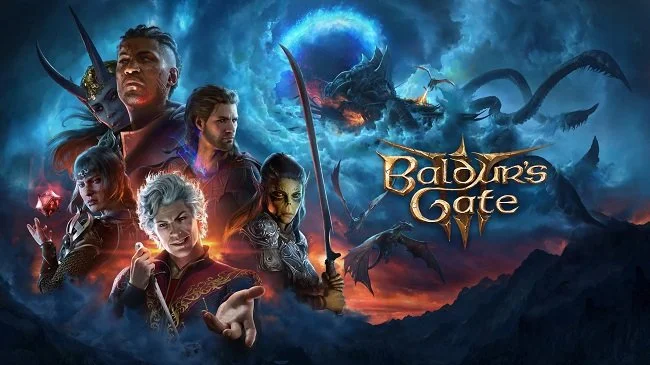
Moving on to the matter in hand, it is interesting that it has taken so long to produce a game with the scope of Hogwarts Legacy. I suspect that during the height of Harry Potter mania in the mid 2000s, the technology didn’t exist to support such a project. I always thought that the MMO genre would be the best fit to provide a virtual Hogwarts where players could choose a house, learn magic and fight dark wizards. Yet the heyday of the MMO has now been and gone. However, open world gaming has evolved significantly in recent years, providing the tools necessary to create a suitable home for the franchise. Hence, Hogwarts Legacy offers much that fans wish from the iconic school of wizardry. An interactive Hogwarts simulator that allows the player to experience the intricacies of the school, complete with moving staircases, sentient painting and all its hidden secrets.
Hogwarts itself is a stone labyrinth that accurately reflects the depictions we’ve all seen in the eight feature films. The Great Hall is beautifully realised and the enchanted ceiling is stunning. You can also spend several hours customising the Room of Requirement. Then, when outside, you can mount a broom and explore all the turrets and battlements of Hogwarts, along with the grounds, local forests and lake. All of which are not immediately accessible but are made available at a measured pace so the player is not overwhelmed. Considering these aspects of the game, Hogwarts Legacy is a fascinating example of virtually satisfying the wish fulfilment that arises from popular culture nostalgia. Game developers Avalanche Software have demonstrated a keen eye for discerning what players want from such a game and have succinctly tapped into the essence of the franchise.
If a player is not content with roaming around Hogwarts in the small hours of the night seeking out its secrets via the use of stealth and lockpicking spells, they can visit the nearby town of Hogsmeade. This also provides substantial fan service as it hits all the associated beats from the books and films. Vendors, quests and points of interest abound and the untamed countryside is filled with threats, ruins and magical artefacts. The threat to one’s safety is quite real and so players must not allow their joy of the environment to cloud their judgement. Trolls, goblins and other creatures pose a real challenge even on the default game setting. Fortunately, the combat system feels very appropriate. Offensive and defensive spells work well when chained in the right combination, as long as the player moves and maintains situational awareness.
Overall combat in Hogwarts Legacy is reminiscent of both Warner Bros. Middle-earth and Batman games. There is a fluidity and rhythm to fighting an enemy where using minor skills will continuously build power to unleash a more potent one. Standing your ground and mashing keys is not really a wise policy. To get the most out of the game it is best to learn the advanced version of certain spells to make unlocking doors, stealth and other tactical skills more viable. Prioritise what best suits your style of gameplay when unlocking the skills tree. If you wish to gain XP so you can level your character quicker, using the Battle Arenas is the most effective method. Here you fight waves of enemies which provide the best XP outside of quests. For players who have bought the Digital Deluxe version of the game, there is access to the exclusive Dark Arts Battle Arena.
The main story of Hogwarts Legacy is functional, atmospheric but not really remarkable. It explores a Goblin insurrection which although well acted, doesn’t really impart a greater insight into the complexities of the established, canonical world. The central character that the player directs through the game is merely a conduit and nothing more. You can customise their appearance but beyond that, they are not a landmark gaming character such as Geralt of Rivia or Arthur Morgan. Many of the NPCs are purely functional as well. They serve their purpose but do little else. Also, at times, the inherent Britishness of Hogwarts is replaced with an international game developer’s perception of Britishness which is not the same thing. Some players will find that the game doesn’t offer enough interaction with other students and staff. It is not a school simulator per se with a requirement to attend regular lessons. Again I must reiterate that Hogwarts Legacy aim is to create a Hogwarts experience in totality .
Having played for a day, I think that the game finds the right balance to a very difficult gaming equation. Compromises have had to be made to produce a manageable virtual Hogwarts. Setting the game in a different period of history also avoids getting caught up in canonical baggage from the source text. I also feel that the omission of Quidditch was a sad but wise decision. To do justice to the sport would essentially require a game of its own. Rendering it to a basic mini-game in Hogwarts Legacy would be very disappointing. However, it would appear that Hogwarts Legacy has been very well received so far and I suspect that sales figures are going to be substantial. There is scope therefore that developers Avalanche Software may create further DLC for the game and may revisit some of the aspects that may be perceived as lacking.
I in the meantime will continue to play through the game and soak up the ambience. So far my character, Telemachus Musgrave, has joined Slytherin House and I suspect he may pursue a path, indirectly or directly toward the Dark Arts. Overall, Hogwarts Legacy gets more right than it does wrong. It’s an open-world adventure that distils the charm and character of the Wizarding World and offers challenging combat. The story, although straight forward, feels right and fits the source material well. Frequently when you feel the game has no further surprises to offer it springs another dose of nostalgic charm that makes you smile. It gets the tone just right and manages to tap into what it is that fans enjoy. I had forgotten quite how much I have enjoyed this franchise over the years and it would appear that I am not alone in this. Its appeal seems to be surprisingly enduring, irrespective of the wider controversies that dog it.

What Do You Know About Your Political Representative?
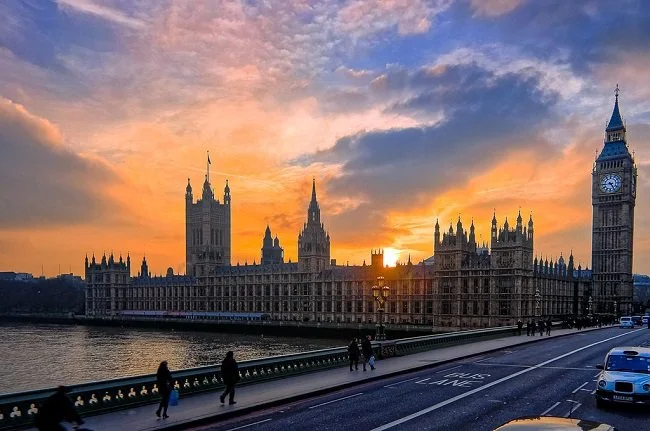
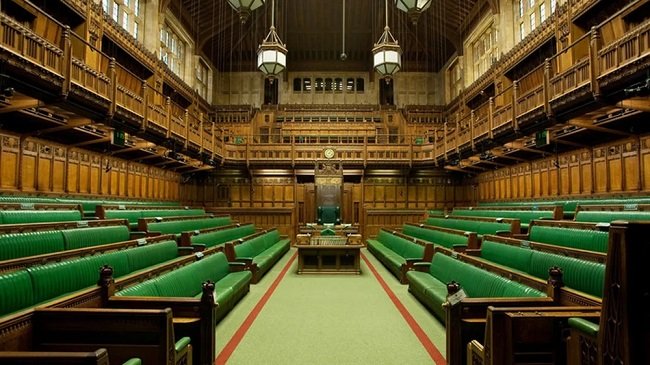
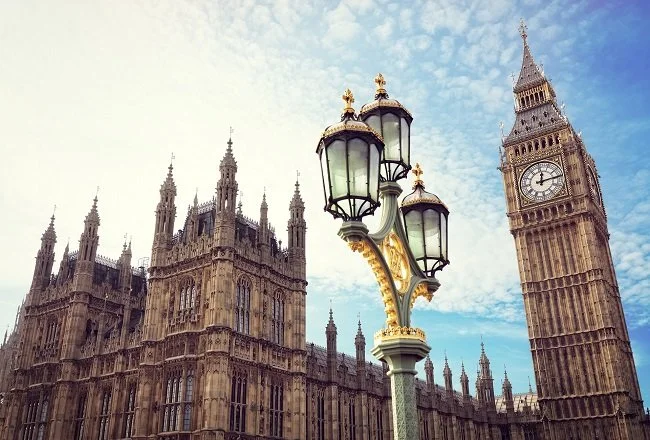
I am writing this post from the perspective of a UK citizen, but the sentiments expressed are applicable to anyone who lives in a country where you have democratically elected local political representation. IE someone who is supposed to advocate on behalf of your community or for you personally as the duly elected political representative. Here in the UK, the country is divided into 650 constituencies, each returning one Member of Parliament. Irrespective of whether you voted for your MP or whether you support the political party that they belong to, they are obliged to represent you and advocate on your behalf, if you request it. Such is the relationship in principle between constituents and MPs in the UK. It is important to be aware that your local MP is not a delegate whose sole purpose is to represent majority constituency views. Under the UK political system, an MP makes decisions on behalf of constituents and can take a position counter to local opinion, if they feel that is in the best interest of the constituency.
I am writing this post from the perspective of a UK citizen, but the sentiments expressed are applicable to anyone who lives in a country where you have democratically elected local political representation. IE someone who is supposed to advocate on behalf of your community or for you personally as the duly elected political representative. Here in the UK, the country is divided into 650 constituencies, each returning one Member of Parliament. Irrespective of whether you voted for your MP or whether you support the political party that they belong to, they are obliged to represent you and advocate on your behalf, if you request it. Such is the relationship in principle between constituents and MPs in the UK. It is important to be aware that your local MP is not a delegate whose sole purpose is to represent majority constituency views. Under the UK political system, an MP makes decisions on behalf of constituents and can take a position counter to local opinion, if they feel that is in the best interest of the constituency.
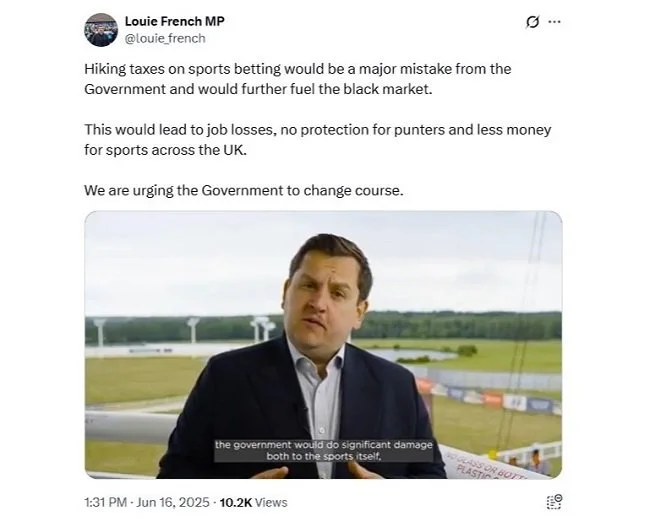
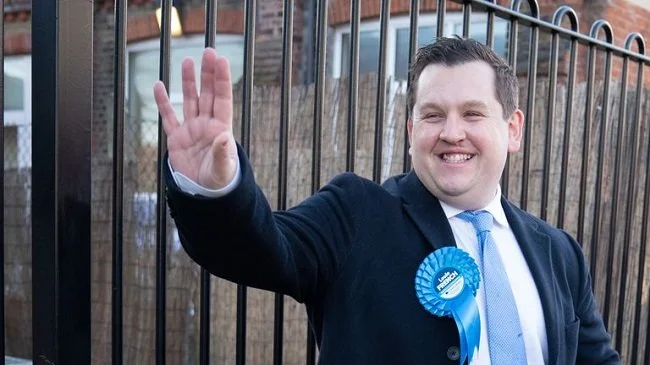
Towards the end of 2021 our local MP and former cabinet minister James Brokenshire sadly died. Subsequently there was a by-election and Louie French was duly elected. Old Bexley and Sidcup constituency is considered a “safe seat” for the Conservative Party, although it should be noted that their majority dropped by 20%. This however is more to do with the electorate's dissatisfaction with the government and the state of UK politics, rather than a reflection upon Mr French. As an ex-councillor Mr French has already experience of local borough politics and it would appear, judging from his website, that he is primarily focused on addressing the needs of his constituents. He is currently campaigning for increased local funding and is against cuts to local services such as transport, healthcare and local policing. This is further reflected in his contributions to parliamentary debates which also shows an interest in animal welfare.
At present Mr French is a backbench MP and does not hold a ministerial position. Hence it is perfectly reasonable to see him advocate in such a practical fashion for the constituency that he represents. However, Mr French is a Conservative MP and as such is expected by default to vote with the government on any legislation they plan to pass. As a constituent of Old Bexley and Sidcup, I am curious to know what views Mr French holds on the major issues facing the UK at present. Although there is “government policy” and the official “party line”, there is not a consensus on taxation, public spending, Brexit and the cost of living crisis among MPs. The Conservative Party is currently rife with factions across a spectrum of right wing views. It should also be noted that in the General Election of 2019 the party effectively expelled all moderates and centrists. Hence I am keen to know where Mr French fits into this political landscape at present.
For the sake of transparency, I am not a supporter or member of any UK political party and vote tactically. I don’t subscribe to trite, blanket narratives such as “all politicians are liars” or “they’re just as bad as each other”. Such comments are designed to avoid any difficult thinking, to opt out of any responsibility as a voter and simply maintain the status quo. I am sceptical but not cynical and like logical, reasoned debate, driven by critical thinking. I despise the “footballification” of politics and blinkered tribalism. There are politicians that I admire and respect on both sides of the house, which reflects my own broad and diverse political outlook. Thus I want to know where Mr French stands on the UK Online Safety Bill, the Policing Bill, Brexit, trade deals, taxation, the current wave of strikes, the future of the NHS and much more. Because I’ve looked online and I can find little or no information regarding these points.
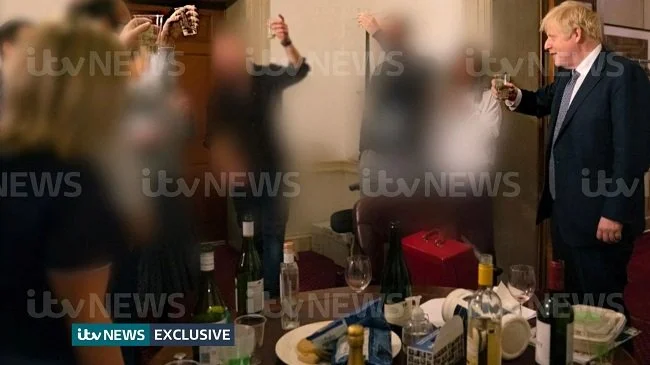
Louie French had only been a MP for 6 months last year, when Boris Johnson was ousted from office as Prime Minister. During the tumultuous events of last summer, I did not hear Mr French express any opinion on the matter. Was he unhappy with the PM’s conduct or did he see no problem at all? It is important to know because for myself and many other constituents, the PM’s behaviour was beyond the pale. Hence we expected some sort of indication of Mr French’s opinion. He has already said he has no intention of being a “career politician”, thus I see no reason why he needs to be deliberately ambiguous in what he says. One of the things that I dislike most about contemporary politics is the manner in which many MPs refuse to commit to any position or opinion, for fear that it may “come back to haunt them”. “Cakeism” is self-serving and a sad indictment of character.
And so we arrive at the point of this post. What do you know about your political representative? Because I believe if you are the right person to represent the needs of your local community at any level, then I think you need to be transparent in your views. I accept that someone can change their views and am politically and emotionally mature enough to see that as a positive thing. When facts change it is logical to change your mind. I will also concede that on some of the more “complex” political and social issues, it is a valid stance to still be “collating” your opinion. But I won’t accept that it is reasonable to willfully avoid expressing a view or an opinion, purely as a political tool and a matter of convenience. If an MP is effectively “too afraid” to say what they think, then perhaps they should reconsider their career. I for one would not want to be represented by such an individual.
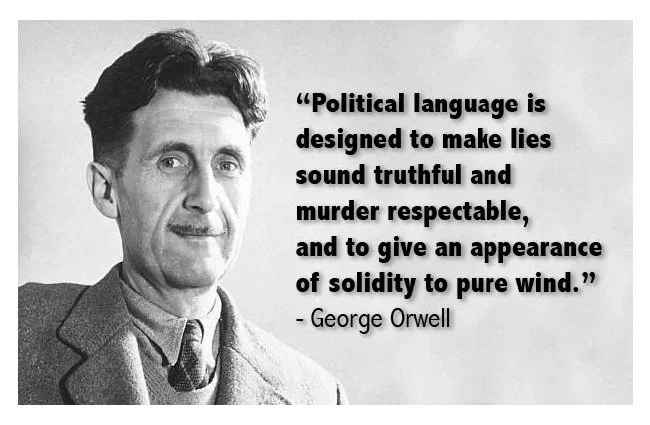
Therefore I think it is fair to ask your political representative what they personally believe in, so you can assess them politically and get a measure of their character. I would also argue that you also need to know about their business interests and affiliations. Naturally, my outlook will put me at odds with current political practices. UK politics at times strives to exist separate from reality and observable facts. It tries to be everything to everyone, while simultaneously committing to nothing, yet claiming the exact opposite. Hence maintaining a coherent position is an anathema and political kryptonite. Yet that is what I and much of the electorate want. Because if you don’t say what you mean, how can you mean what you say? I shall monitor Mr French over the course of 2023 to see if he does express a view on anything other than his established brief. I may even ask him, as one of his constituents. Sadly, I don’t feel optimistic about the outcome.





Guillermo del Toro's Pinocchio (2022)
Guillermo del Toro's Pinocchio is a bold and inventive take on Carlo Collodi's classic story of the puppet that aspires to be a “real boy”. As you would expect from the director, it is a far cry from Disney’s 1940 version, taking a more bleak and sinister tone. Despite songs and exuberant set pieces, Guillermo del Toro's Pinocchio is an exploration of grief, death and even fascism. The screenplay by Guillermo del Toro and Patrick McHale also tackles the complexities of the relationship between parent and child. It is a remarkable example of stop motion animation and is visually very striking. However, it is a somewhat niche market adaptation and is not exactly easily accessible to children or the furiously hard of thinking. It comes as no surprise that this cinematic venture was green lit by Netflix, which appears to be the new home of the experimental, rather than a mainstream studio.
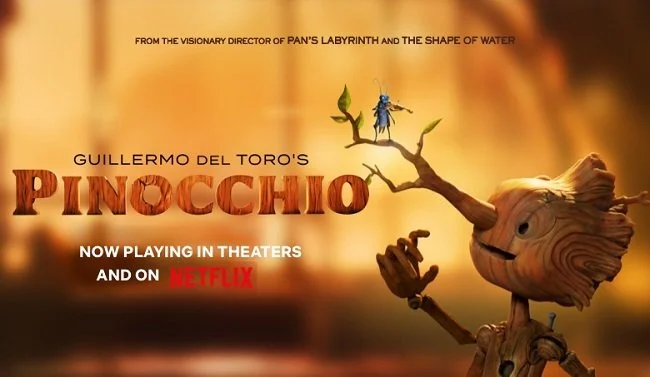
Guillermo del Toro's Pinocchio is a bold and inventive take on Carlo Collodi's classic story of the puppet that aspires to be a “real boy”. As you would expect from the director, it is a far cry from Disney’s 1940 version, taking a more bleak and sinister tone. Despite songs and exuberant set pieces, Guillermo del Toro's Pinocchio is an exploration of grief, death and even fascism. The screenplay by Guillermo del Toro and Patrick McHale also tackles the complexities of the relationship between parent and child. It is a remarkable example of stop motion animation and is visually very striking. However, it is a somewhat niche market adaptation and is not exactly easily accessible to children or the furiously hard of thinking. It comes as no surprise that this cinematic venture was green lit by Netflix, which appears to be the new home of the experimental, rather than a mainstream studio.
In Italy during World War I, a carpenter Geppetto (David Bradley) in a small village loses his son, Carlo (Gregory Mann), during an aerial bombardment by Austro-Hungarian forces. Geppetto plants a pine cone near his grave and spends the next twenty years grieving. A cricket named Sebastian J. Cricket (Ewan McGregor) takes up residence in the pine tree that subsequently grows. One day, angered by his prayers to restore his son being ignored, Geppetto cuts the tree down in a fit of drunken rage and makes a new son out of the wood. He leaves the puppet unfinished when he passes out, but the blue Wood Sprite takes pity upon him and brings the puppet to life, christening him Pinocchio (Gregory Mann again). The Sprite encounters Sebastian who lives in Pinocchio’s chest and promises to grant him a wish if he acts as Pinocchio's guide and conscience.
Although the essential “beats” of both the original story and Disney’s adaptation are present in Del Toro’s film, there are elements of Frankenstein as well as nods to Spielberg’s AI: Artificial Intelligence (2001) and Clive Barker’s Nightbreed (1990). Pinnochio is the archetypal “monster” who ironically is more human than his antagonists. Del Toro eschews the rather clumsy metaphor of a physical transformation into a real boy and instead explores the theme as a spiritual and philosophical journey. He even manages to touch upon the allure of fascism to the young, when Italian authorities take an interest in Pinocchio due to his undying nature. As ever magic is a force of nature, neither entirely benign or evil and this is reflected in the two Sprites that feature in the story. Both boast a Chimera like appearance which Del Toro has explored in previous films and have flawed motives.
The production design and creative supervision are outstanding with the film drawing heavily upon such diverse visual influences as Norman Rockwell and Hieronymus Bosch. Composer Alexandre Desplat provides a melancholic and tragic soundtrack and Del Toro co-wrote the lyrics to the songs that punctuate the two hour running time. Again these are not the celebratory or validatory numbers one associates with mainstream animated films. These are far more forlorn and heartbreaking. Yet they work within the context of the film. Guillermo del Toro's unique approach to filmmaking manages to pull all these eclectic elements together. His recurring themes of life, death and difference underpin this imaginative and bold retelling of Pinnochio. Fans of his work will embrace it, as will lovers of quality cinema and animation. Casual viewers may well struggle with such a radical variation on a theme.








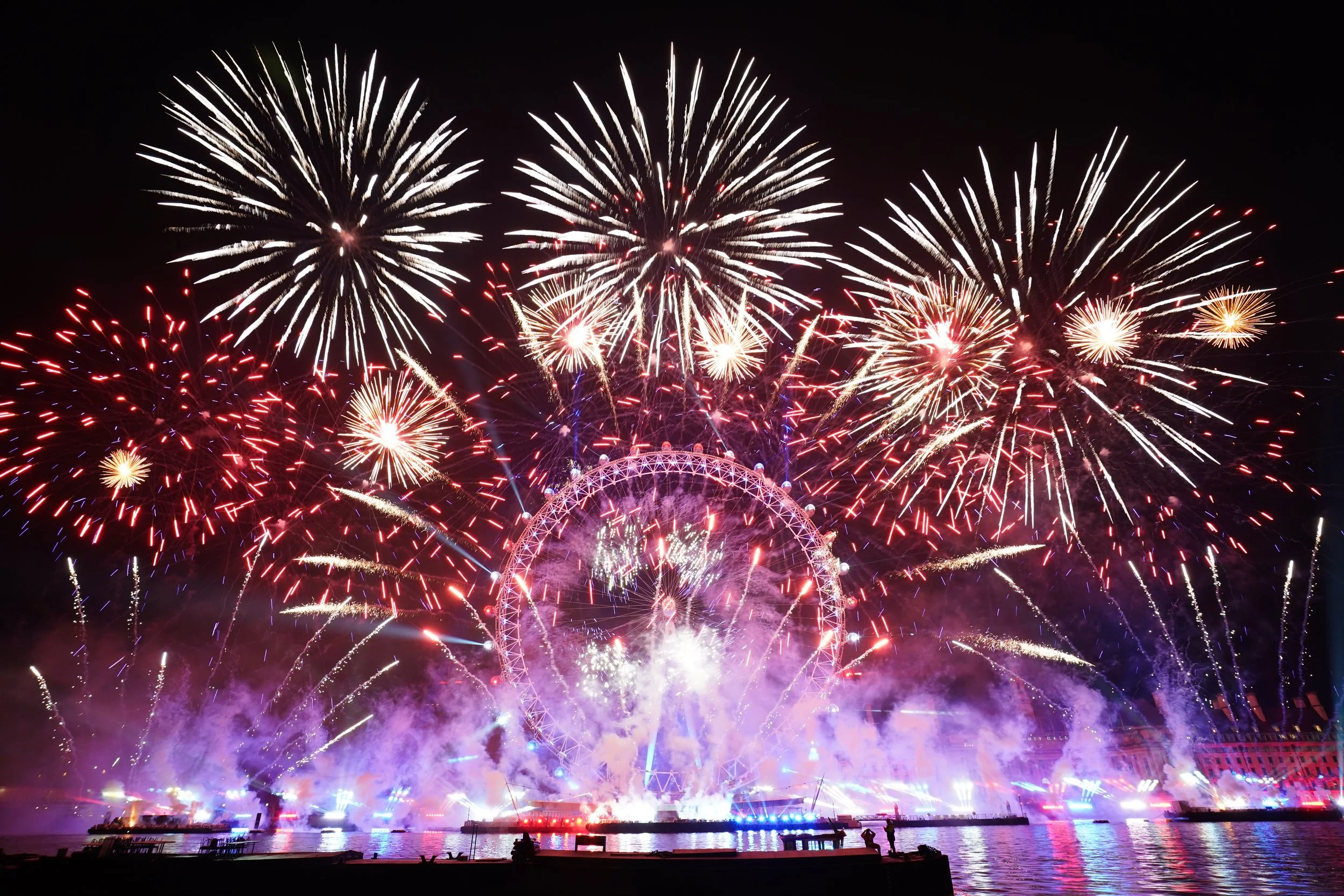
Goodbye 2022
This is my third attempt at writing this post. The first was a little too philosophical, tackling the nature of adult life and how it is a far cry from the childish notions I had about being a “grown up” when I was seven. The second was just a list of the various shit that has gone down in my life over the last twelve months and it felt far too much like whinging. Hopefully this one is more succinct and even handed. 2022 was not a good year, personally speaking. My family and I experienced a lot of health issues and my mother died after a rapid decline. Hence there has been a lot of stress and anxiety which has left me feeling tired and somewhat jaded. Due to the subsequent changes in my personal circumstances, I now find myself at somewhat of a “loose end”. I feel the need to channel my energies into something but I’m not sure exactly what at present.
This is my third attempt at writing this post. The first was a little too philosophical, tackling the nature of adult life and how it is a far cry from the childish notions I had about being a “grown up” when I was seven. The second was just a list of the various shit that has gone down in my life over the last twelve months and it felt far too much like whinging. Hopefully this one is more succinct and even handed. 2022 was not a good year, personally speaking. My family and I experienced a lot of health issues and my mother died after a rapid decline. Hence there has been a lot of stress and anxiety which has left me feeling tired and somewhat jaded. Due to the subsequent changes in my personal circumstances, I now find myself at somewhat of a “loose end”. I feel the need to channel my energies into something but I’m not sure exactly what at present.
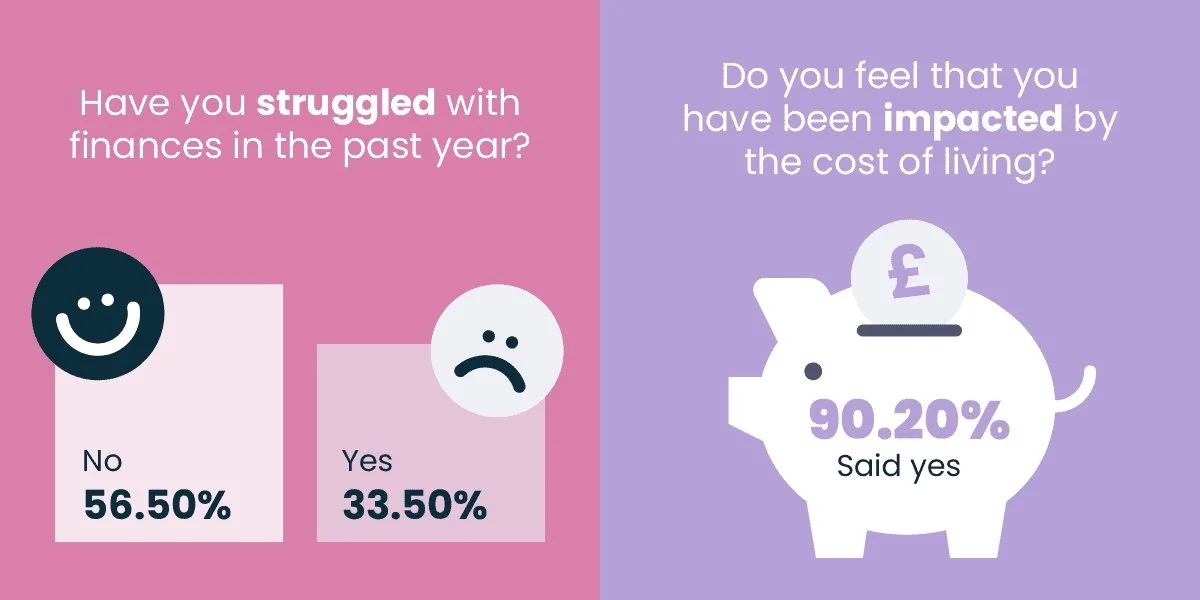
Do I have any plans for 2023? Not at the moment. I have some administrative chores to deal with regarding my late mother’s estate, but beyond that I don’t have any specific ideas as to how to spend my time over the next twelve months. For the present I am content to just “be” and in the current economic and political climate, long term plans may not be viable. I suspect that nationally and internationally speaking, 2023 is going to be a very challenging year. I am concerned about the cost of living crisis in the UK and the state of domestic politics. It comes as no surprise that the Collins English Dictionary chose “permacrisis” as the word of the year. I suspect that the proverbial chickens (economically and politically speaking) will be coming home to roost this year and if that is the case, the most one can do is to try and weather the storm.









A Year in Blogging
So far I have written 135 blog posts in 2022. Not much compared to previous years, but frankly I’ve become a little despondent with writing in recent months (I shall expand more upon that in a moment). Hence, since October I have been enjoying a break from regular blogging. I have written sparingly and pursued other leisure activities. Given that my post output has gone down, it would be logical to assume that there has been a commensurate drop in web traffic to Contains Moderate Peril, but this is not the case. Overall, my monthly statistics have remained the same, proving once again that most of my readership find my written content via Google searches, rather than reading new material on a daily basis. This has given me much food for thought and added to my ongoing reflection upon my writing activities.
So far I have written 135 blog posts in 2022. Not much compared to previous years, but frankly I’ve become a little despondent with writing in recent months (I shall expand more upon that in a moment). Hence, since October I have been enjoying a break from regular blogging. I have written sparingly and pursued other leisure activities. Given that my post output has gone down, it would be logical to assume that there has been a commensurate drop in web traffic to Contains Moderate Peril, but this is not the case. Overall, my monthly statistics have remained the same, proving once again that most of my readership find my written content via Google searches, rather than reading new material on a daily basis. This has given me much food for thought and added to my ongoing reflection upon my writing activities.
Bloggers write for different reasons and their motivations are equally diverse. I write primarily for myself but I see no shame in wanting others to read it too. Afterall, the medium is a form of communication and that process is a much more enjoyable experience if it is multilateral. It’s the same with podcasting. It all seems a waste of time if you script, record and edit a show and no one listens to it. So it may be unfashionable to say so but one of the reasons I have become fed up with blogging after 15 years is because I do feel at times that I’m just spitting in the wind. Am I talking about internet fame and fortune? No. As a wise man once said “Fame, it’s an empty purse. Count it, go broke. Eat it, go hungry. Seek it, go mad”. What I am referring to is building a healthy audience and contributing to a community. I used to feel that was the case about a decade ago. It just doesn’t quite feel that way anymore.
However, it is not all doom and gloom. I happily wrote continuously for a month during this year’s Blaugust event. Which sheds some insight into my personal psychology. I will happily fail to meet my own targets and goals, but when I make a commitment to a third party I cannot break it. It’s funny how I’m socially conditioned this way but that is another blog post entirely. Back to the matter in hand, I am currently considering a staged return to writing. This time of year makes it a lot easier because I can write a lot of pieces that are all variations of “a year in (insert subject matter here)”. I am also ruminating upon a new project. Something I can channel my energies into. Perhaps it is time to step outside of my normal comfort zone of writing and podcasting and do something different. We shall see. The New Year is fast approaching.
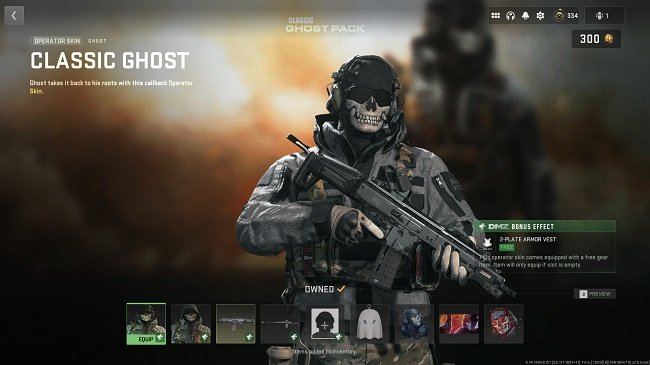
Warzone 2.0 DMZ
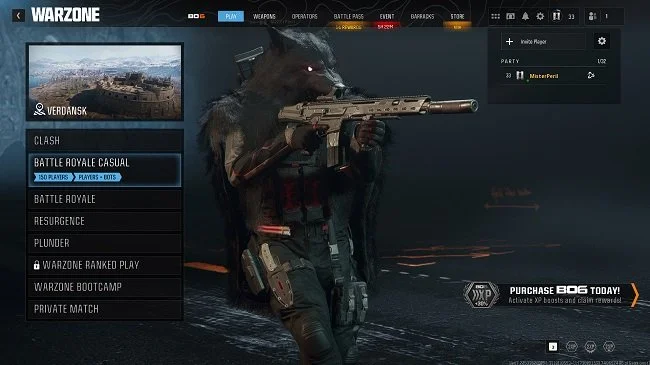
I like an analogy as a literary device, so here’s one for you. Video games are like parties. How so? In the following ways. They quite never live up to your expectations. The best ones are the ones you never go to, according to the “anecdotes” you’re told afterwards. And there’s always someone crying and throwing up at 2:00 AM. Okay, the last one isn’t quite relevant but the overall sentiment of the first two is sound. The reason I have used this visual metaphor is because both parties and multiplayer video games sell themselves on the alleged quality of their respective social dynamic. They supposedly offer you fun with your friends and a unique, memorable experience. However, the reality is a lot more lacklustre. Warzone 2.0 DMZ is a prime example. What enjoyment there is to be had in playing this game is offset by the iniquities of many of its players as they race to the proverbial bottom.
I like an analogy as a literary device, so here’s one for you. Video games are like parties. How so? In the following ways. They quite never live up to your expectations. The best ones are the ones you never go to, according to the “anecdotes” you’re told afterwards. And there’s always someone crying and throwing up at 2:00 AM. Okay, the last one isn’t quite relevant but the overall sentiment of the first two is sound. The reason I have used this visual metaphor is because both parties and multiplayer video games sell themselves on the alleged quality of their respective social dynamic. They supposedly offer you fun with your friends and a unique, memorable experience. However, the reality is a lot more lacklustre. Warzone 2.0 DMZ is a prime example. What enjoyment there is to be had in playing this game is offset by the iniquities of many of its players as they race to the proverbial bottom.
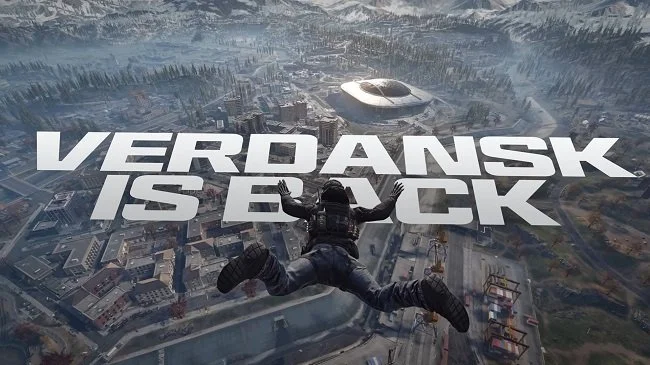
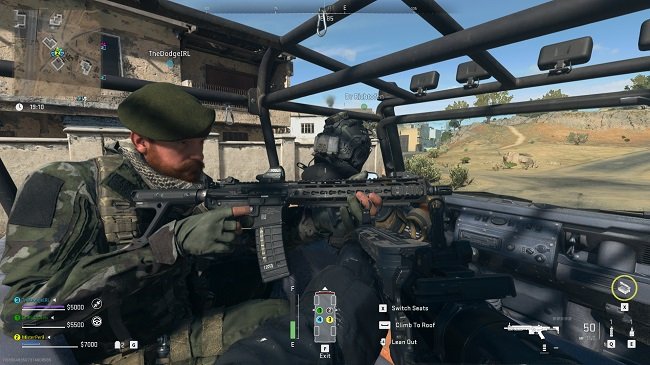
For those who are unfamiliar with this latest permutation of Call of Duty: Warzone, DMZ is a squad or solo based incursion into a large open world map. You enter with basic gear and weapons and loot on the fly as you travel the zone. There are contracts that award both cash and weapons. These may be securing and uploading intel, rescuing a hostage or eliminating other squads. The map is populated by AI bots that are no joke and there are also vehicles that can be used to traverse the region. Each round lasts 25 minutes and once a player has gained sufficient loot or completed what they wish to achieve, there are “exfil” locations on the map where the player can summon air transport and leave. These are often contested by AI bots and other players looking for easy pickings. It’s a well conceived gaming scenario with a lot of scope for fun. Theoretically.
If you peruse YouTube, you’ll find plenty of videos showing top tier gamers playing Warzone 2.0 DMZ very effectively in squads. They complete lots of contracts, run rings round the AI bots and eliminate any other operators (other players) they encounter. It can be very entertaining to watch the game played well. However (and there is always a however) I, and many other players, will never get to experience the game in such a fashion. I don’t know anyone who plays Warzone 2.0 DMZ and hence I have to join squads with random players or go solo. The latter is fun but does put you at a disadvantage. There is safety in numbers and squadmates can revive you if you are “downed”. But random squads are exactly that, random, and therefore an utter lottery. If you use voice chat (not everyone does), then there's no guarantee that everyone speaks the same language. Even if you do, there’s a good chance that not everyone wants to do the same thing, hence making the group invalid. Hence random squads are often a massive gamble.
I’ve played a lot of Warzone 2.0 DMZ recently and have kept a simple log of how well each game has gone. After a hundred plus games, about 1 in 10 has proven to be a positive experience. By this I mean that players have been communicative (IE we agreed where to go and what to do), helpful and very mindful that not everyone has the same level of skill. Gear and weapons were shared and we successfully extracted from the DMZ. So far I had about ten games in which I felt I experienced Warzone 2.0 DMZ as the developers intended. For the other ninety or so times, it has been chaotic and ended in someone picking a unnecessary fight with the AI bots or another squad of operators. Yes XP has been earned, but it is frustrating to lose a decent loadout due to poor planning or someone just biting off more than they can chew. IE charging into an area before spotting the AI bots or driving a vehicle when you’re not especially good at it. Some games have lasted no more than five minutes.
I’ve written in the past about whether it is realistic to have expectations of other players when “pugging”. I believe I used Task Force Operations in Star Trek Online as an example and I concluded that it’s best to expect the worst. The difference in this case is that grouping is an optional extra in STO, where in Warzone 2.0 DMZ it is pretty much the raison d'etre of the entire game. Playing collaboratively with others yields superior results than going it alone. Yet “pugging” in Warzone 2.0 DMZ is often an awful experience, especially if you have voice and proximity chat enabled. So many of the players are puerile, bellicose, unco-operative and socially dysfunctional that it leeches a great deal of joy out of the gameplay. Text chat is equally as bad filled with abuse, prejudice and the arrogant hubris and ill manners that so often goes hand in hand with youth. The community has very little class and even its ubiquitous victory cry of “let’s go” is as vacuous as it is trite.
Warzone 2.0 DMZ can still be a source of enjoyment and entertainment. Even if you “pug” and expect the worst, you can still sometimes be pleasantly surprised when another player does bother to revive you or drives back to pick you up when you’re separate from the group in a firefight. Running 20 or 30 indifferent or bad games still presents an opportunity to learn the map and to become familiar with key locations such as ammunition depots etc. You quickly learn not to be hamstrung by your own high standards. That’s not to say you should be an asshole like most other players, but if your squadmates are making poor decisions or being a liability it is perfectly okay to go do your own thing. Overall, if you’re not in a position to play with friends, then temper your expectations about Warzone 2.0 DMZ and autogroup. Turn off voice chat and expect the worst. Anything more is an added bonus. Warzone 2.0 DMZ can be a good game, in spite of its players.



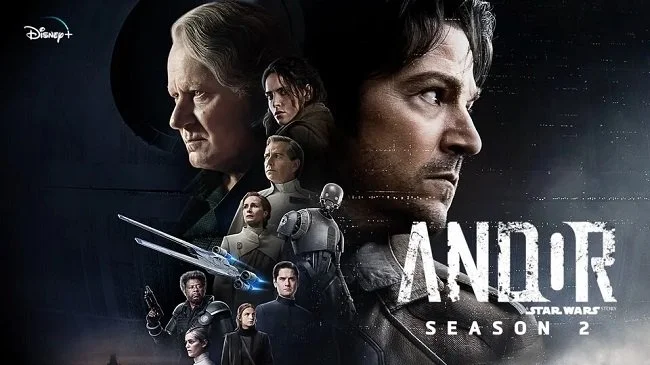
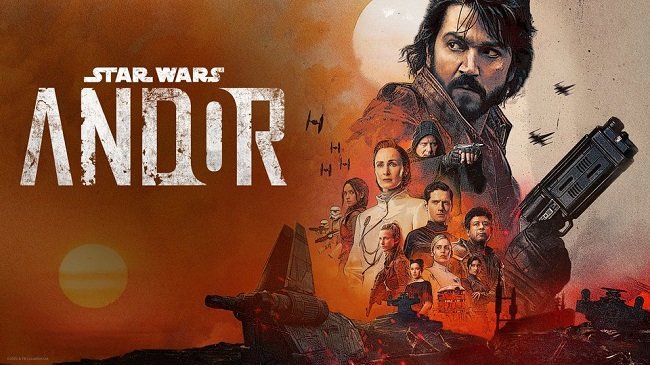
Andor (2022)
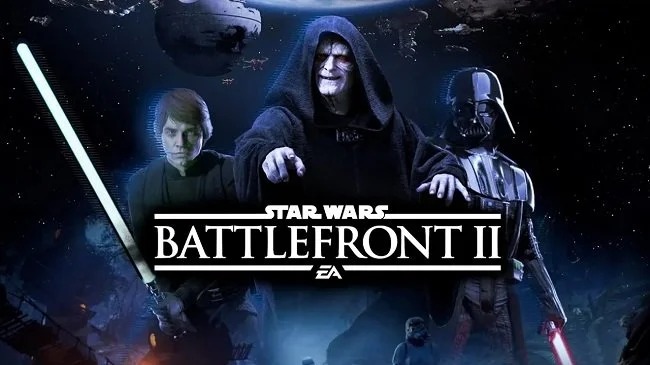
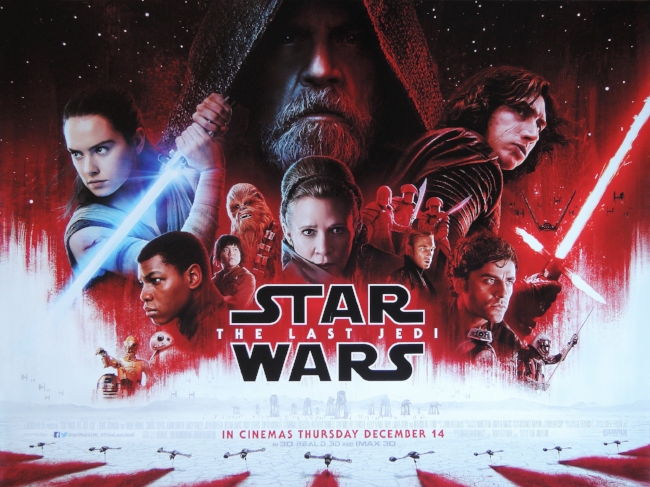
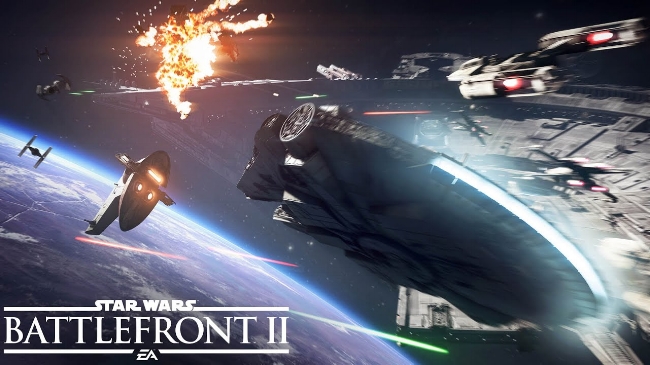
Andor is not like other entries in the Star Wars canon. It explores the human, social and political consequences of rebelling against an oppressive, totalitarian regime. The writing is intelligent and well observed, choosing to focus on the average citizens of the Empire and the nature of their daily lives. Andor also explores the ineffectual politicians and the way the senate are self serving and ultimately impotent. The Emperor is remote and instead we see how Imperial colonialism works at a grassroots level. It is an all too familiar depiction, born out of historical fact, such as Vichy France during World War II. Petty thugs and aspiring psychopaths happily align themselves with their Imperial overlords and actively oppress their own people. As for the Empire, and in particular the ISB (Imperial Security Bureau) it is rife with infighting, personal fiefdoms and all the flaws of similar institutions from the real world.
Andor is not like other entries in the Star Wars canon. It explores the human, social and political consequences of rebelling against an oppressive, totalitarian regime. The writing is intelligent and well observed, choosing to focus on the average citizens of the Empire and the nature of their daily lives. Andor also explores the ineffectual politicians and the way the senate are self serving and ultimately impotent. The Emperor is remote and instead we see how Imperial colonialism works at a grassroots level. It is an all too familiar depiction, born out of historical fact, such as Vichy France during World War II. Petty thugs and aspiring psychopaths happily align themselves with their Imperial overlords and actively oppress their own people. As for the Empire, and in particular the ISB (Imperial Security Bureau) it is rife with infighting, personal fiefdoms and all the flaws of similar institutions from the real world.
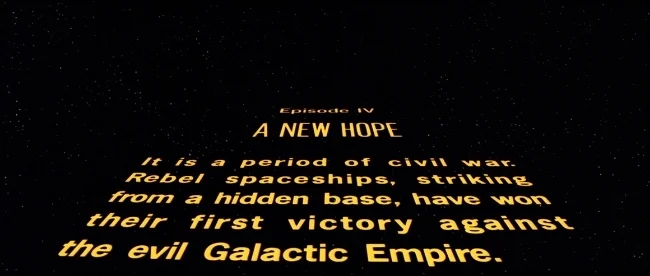
Andor is by far the most nuanced and thoughtful entry so far in Disney’s Star Wars universe. However, although I and others are happy to heap praise upon the production it does have one particular Achilles Heel. Andor conspicuously highlights how puerile and unsophisticated all previous entries in the established canon are. When George Lucas wrote Star Wars it was designed to be a traditional high adventure. A mythology that dealt in archetypes, intended to convey a simple moral message. The baddies were bad and the goodies were good. Evil was defeated and the galaxy restored to order under the benevolent guidance of the New Republic. Lucas painted with broad brushstrokes and hence the realities of a revolution were not explored beyond a superficial manner. This approach worked fine for a self-contained trilogy of films pitched at a broad and youthful audience 45 years ago.
That audience has now grown up and some have become writers, producers and directors in the film and TV industry. Finally with Andor, the Star Wars franchise is being treated as more than just a big budget, science fantasy genre vehicle. Andor is essentially a political drama. If you took away the veneer of technology and the wider science fiction trappings this could easily be a drama about the Roman or British Empire and a critically acclaimed costume drama. I am reminded of how in 2006, the James Bond franchise was reinvented in a similar more adult fashion, with the release of Casino Royale. The caricature excesses of the Roger Moore era and the glossy, generic formula of the Brosnan period were laid to rest with a far more gritty, personal and character driven depiction of Bond. Very few franchises attempt such a revision and even fewer succeed if they try. Yet Andor has.
I am curious to see where Star Wars goes after this. Can this franchise sustain weighty dramas such as Andor as well as episodic, action fodder in the cliffhanger serial idiom, such as The Book of Boba Fett? Or are they destined to become ill suited bedfellows? Furthermore, does this more cerebral revisionist approach to the rebellion render the original trilogy obsolete due to their lightweight portrayal of political turmoil? Depending on how any future spinoff shows are presented and received, I suppose the fans will determine the answer. Personally, I would like more of this adult idiom, rather than a return to the established space opera genre. Star Wars has now undeniably changed, due to Andor. Although it has effectively solved the problem of the franchises’ simplicity, it may also have paved the way for further issues that will have to be addressed at a later date.









The End of Twitter?
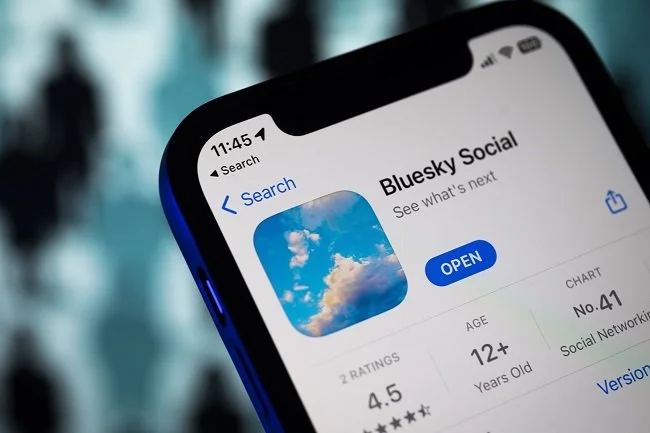
I have been using Twitter since 2010 and to cut a long story short, although it can be a virtual septic tank of human bile, ignorance and stupidity it can also be very informative and uplifting. I rely on Twitter for the latest news and find it far more immediate and succinct than traditional TV bulletins. When the shit hits the fan, as far as I’m concerned Twitter is the way to stay abreast of a developing story. Furthermore, I very much enjoy the social element of Twitter and the online banter with those I follow and who follow me. Twitter doesn’t do anything particularly unique but it did it first and hence everyone is in one place. That makes it invaluable. Sadly, if Elon Musk continues to mess with things to the point of breaking the Twitter community, then I will be forced to go elsewhere. Some folk are jumping ship already. Because of Musk’s erratic nature there’s a prevailing atmosphere that something is going to happen and it’s not going to be good.
I have been using Twitter since 2010 and to cut a long story short, although it can be a virtual septic tank of human bile, ignorance and stupidity it can also be very informative and uplifting. I rely on Twitter for the latest news and find it far more immediate and succinct than traditional TV bulletins. When the shit hits the fan, as far as I’m concerned Twitter is the way to stay abreast of a developing story. Furthermore, I very much enjoy the social element of Twitter and the online banter with those I follow and who follow me. Twitter doesn’t do anything particularly unique but it did it first and hence everyone is in one place. That makes it invaluable. Sadly, if Elon Musk continues to mess with things to the point of breaking the Twitter community, then I will be forced to go elsewhere. Some folk are jumping ship already. Because of Musk’s erratic nature there’s a prevailing atmosphere that something is going to happen and it’s not going to be good.
My biggest concern is that the existing Twitter community is going to fragment, with online friends migrating to multiple alternative platforms. It may also cause some existing Twitter users who are already disillusioned with the existing status quo, to simply quit social media. With respect to those Twitter accounts that I follow for news and information, rather than social engagement, I wonder what will be the new platform of choice to reach an audience. I don’t want to have to maintain multiple social media accounts across multiple services. And I am not going to pay for the service that I already have enjoyed free of charge for the last 12 years. The only people who potentially benefit from a fragmented community are the traditional media outlets. Print media in the UK hates the fact that Twitter provides a platform that can challenge their news agenda and give the public the right of recourse.
I’ve always take a “belt and braces” approach to life and so, although it hasn’t happened as of yet, I am already working on my Twitter exit strategy. Anecdotally, it would seem that Mastodon is the next best place to go, so I have set up an account there. Unfortunately, this endeavour seems to have fallen at the first hurdle as I’ve still not received my verification email to make my new account active. This doesn’t bode well for a platform that some claim is the anointed successor to Twitter. Assuming that I can set up and start using Mastodon, there then remains the issue of which client to use. I currently use Tweeten for Twitter and am looking for identical functionality in a third party Mastodon client. However, nothing I’ve seen so far seems to offer that. It is so important to get the data that you want, presented in an accessible manner or else you run the risk of drowning in white noise and bullshit when it comes to social media.
I’ve written posts in the past about becoming reliant on free services, only to then have them withdrawn or monetised. We’ve all been down this road before so if the worst case scenario happens and Twitter goes to the wall, at least we won’t be caught off guard. However, the thing about Twitter is that there are so many potential ways you could monetise it without having to restrict usage or radically alter the way it functions. Sadly, that doesn’t seem to be Elon Musk’s intent. I am naturally sceptical of billionaires per se and especially so in his case because he is “anomalous” (the politest thing I could say about him). However, Twitter is now his “bat and ball” and so if he wants to neuter it for political or business reasons, then that is his prerogative and there’s nothing much the average user can do about it. If it all ends up going south, it was fun while it lasted.
Update: I managed to get myself on Mastodon and it is not an exact Twitter clone. It appears to require a lot more curation and interaction for it to yield the results that I want. Those seeking for a “like for like” replacement may wish to look elsewhere.




Another New Prime Minister
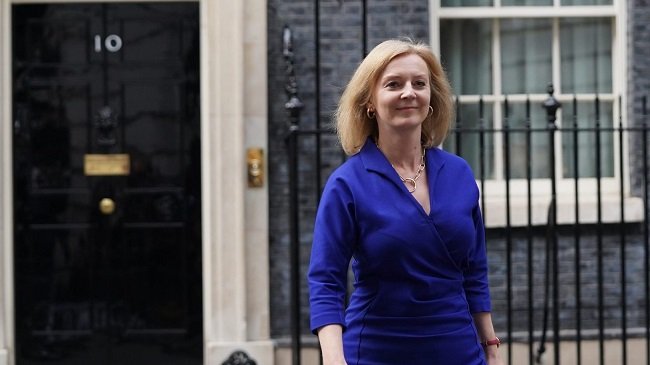
It is difficult to write about the state of UK politics with any degree of intellectual rigour when the entire situation has become so utterly farcical. My initial reaction to the recent departure of Liz Truss after just 45 days in office, was to laugh with abject scorn and derision. She was destined to fail due to utter lack of ability. However, there is still the outstanding matter of the country lacking a credible and functional government to address inflation, the cost of living crisis and resolve all the issues stemming from Brexit. There are problematic national and international events taking place that need addressing. A united, pragmatic and empathetic government is required to solve both these short term and long term needs. Sadly, the governing party is riven with opposing factions and there is no commonly held policy or underlying ideology. The PM may well have changed but the underlying flaws remain.
It is difficult to write about the state of UK politics with any degree of intellectual rigour when the entire situation has become so utterly farcical. My initial reaction to the recent departure of Liz Truss after just 45 days in office, was to laugh with abject scorn and derision. She was destined to fail due to utter lack of ability. However, there is still the outstanding matter of the country lacking a credible and functional government to address inflation, the cost of living crisis and resolve all the issues stemming from Brexit. There are problematic national and international events taking place that need addressing. A united, pragmatic and empathetic government is required to solve both these short term and long term needs. Sadly, the governing party is riven with opposing factions and there is no commonly held policy or underlying ideology. The PM may well have changed but the underlying flaws remain.
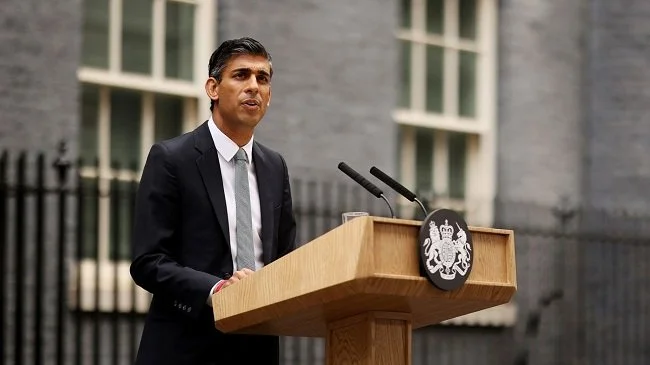
The new incumbent of No 10 Downing Street, Rishi Sunak, has achieved one major milestone. He is the first British Asian Prime Minister and that is certainly noteworthy. However, beyond this I see no other reason to celebrate his appointment. He may have calmed the markets by representing the traditional face of Conservative fiscal prudence but he has no new policy announcements. Effectively, he intends to carry on with the conspicuously nebulous manifesto promises of 2019 and will no doubt usher in “Austerity 2.0” after his predecessor left a gaping hole in the nation’s finances and undermined our capacity to borrow cheaply. He has said nothing to allay the immediate fears of those on middle or low incomes. Furthermore, after promising to bring “integrity and accountability” back to UK politics he re-appointed Suella Braverman as Home Secretary, after she resigned for breaching the ministerial code 6 days earlier.
We are still two years away from a General Election and even if there was one announced tomorrow, I would still struggle to find a political party that came anywhere near representing what I consider to be the nation’s political and economic needs. I would vote Labour only to remove the current administration and not because I am overly enthused by the party. Ultimately I and many other voters are politically homeless and the current “First Past the Post” voting system does not favour new parties. Furthermore, over the course of my lifetime the UK electorate has become increasingly politically illiterate and increasingly impatient, resulting in certain socio-economic groups voting against their own interests. It raises the question as to how much responsibility do the electorate bear for the iniquities they inflict on themselves and others by their political choices? Overall I am not optimistic about the immediate future and I am reminded of that line from Gremlins 2 about “put everything you've got into canned food and shotguns”.
LOTRO: Cardolan and Swanfleet Preview
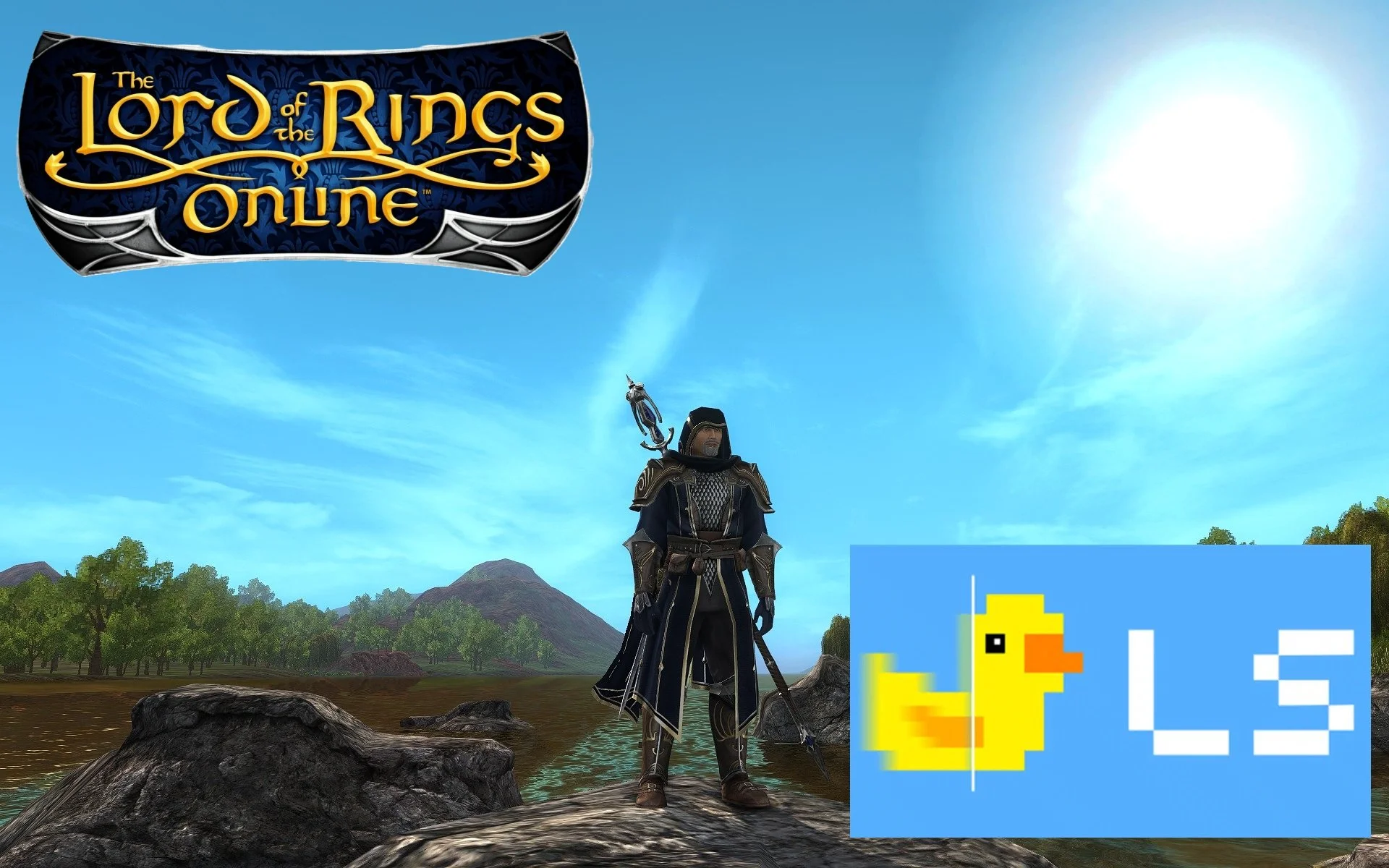
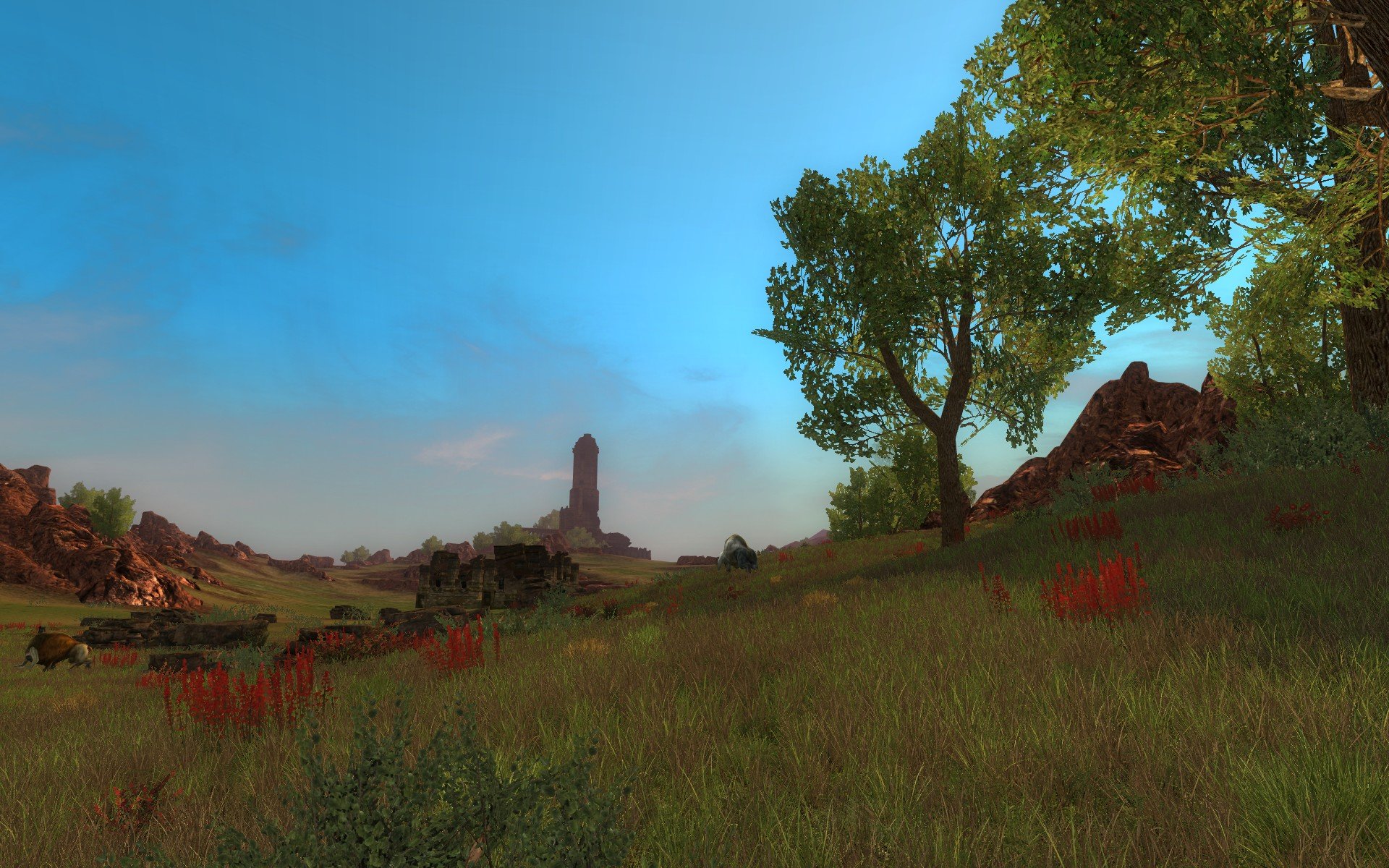
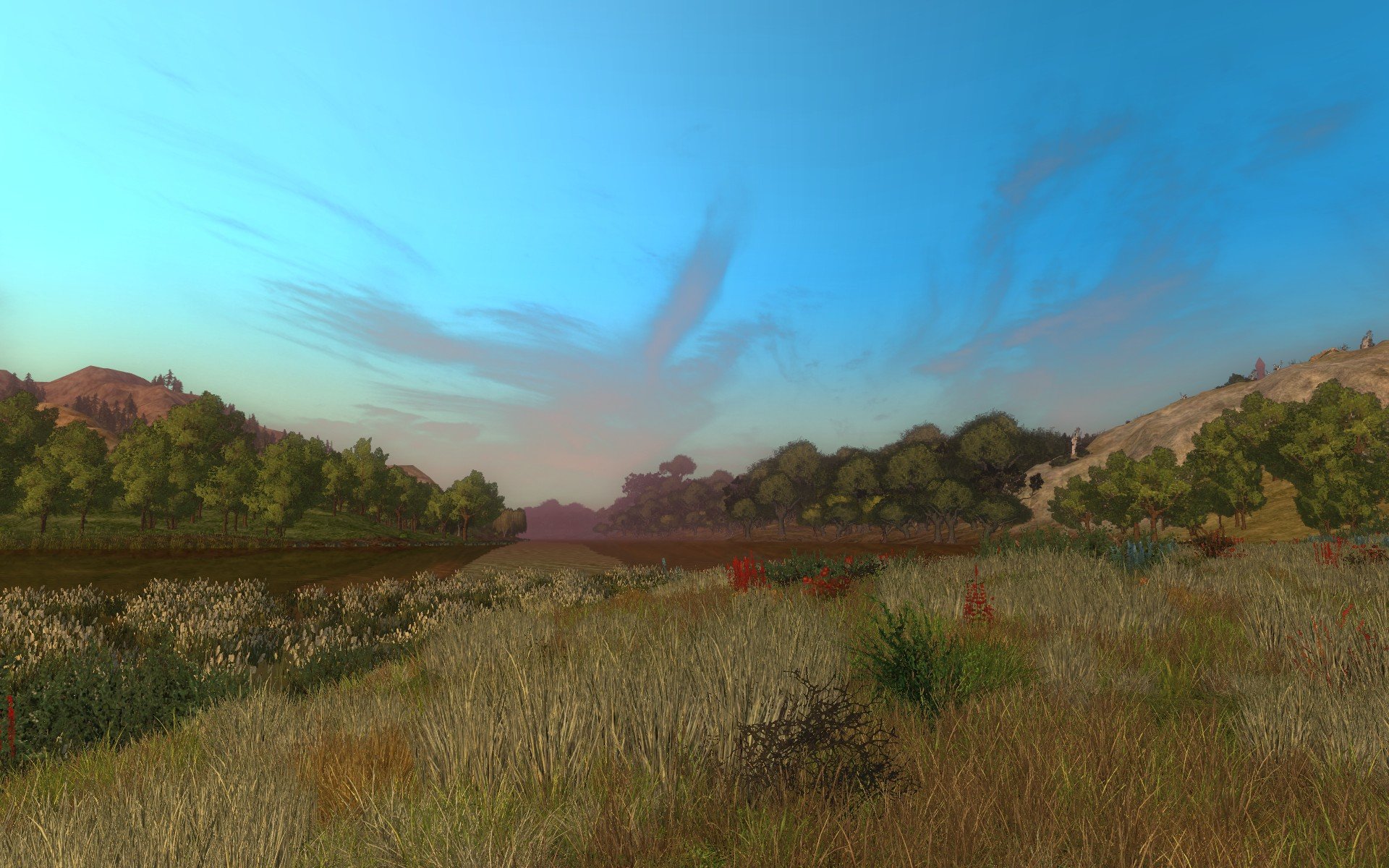
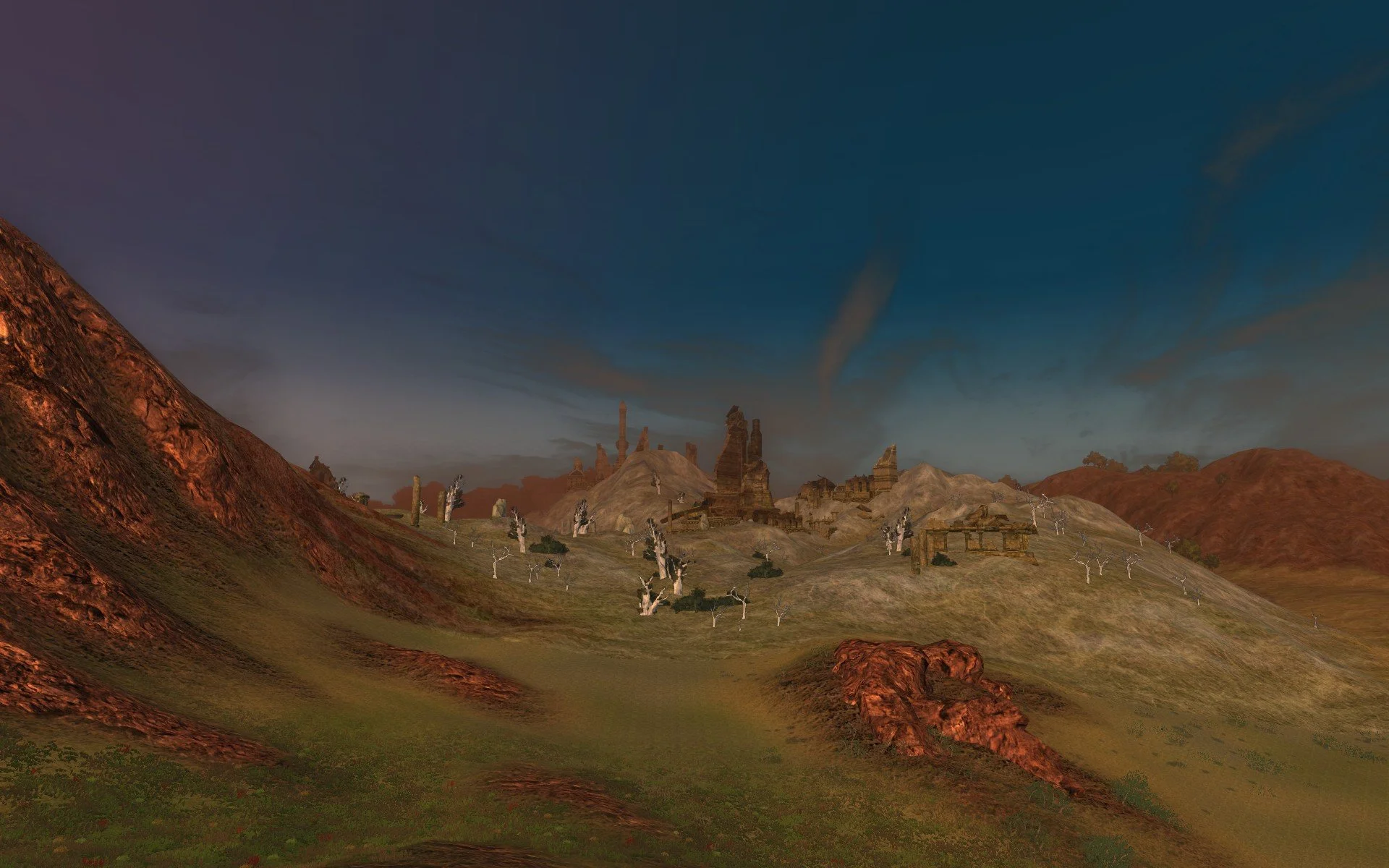
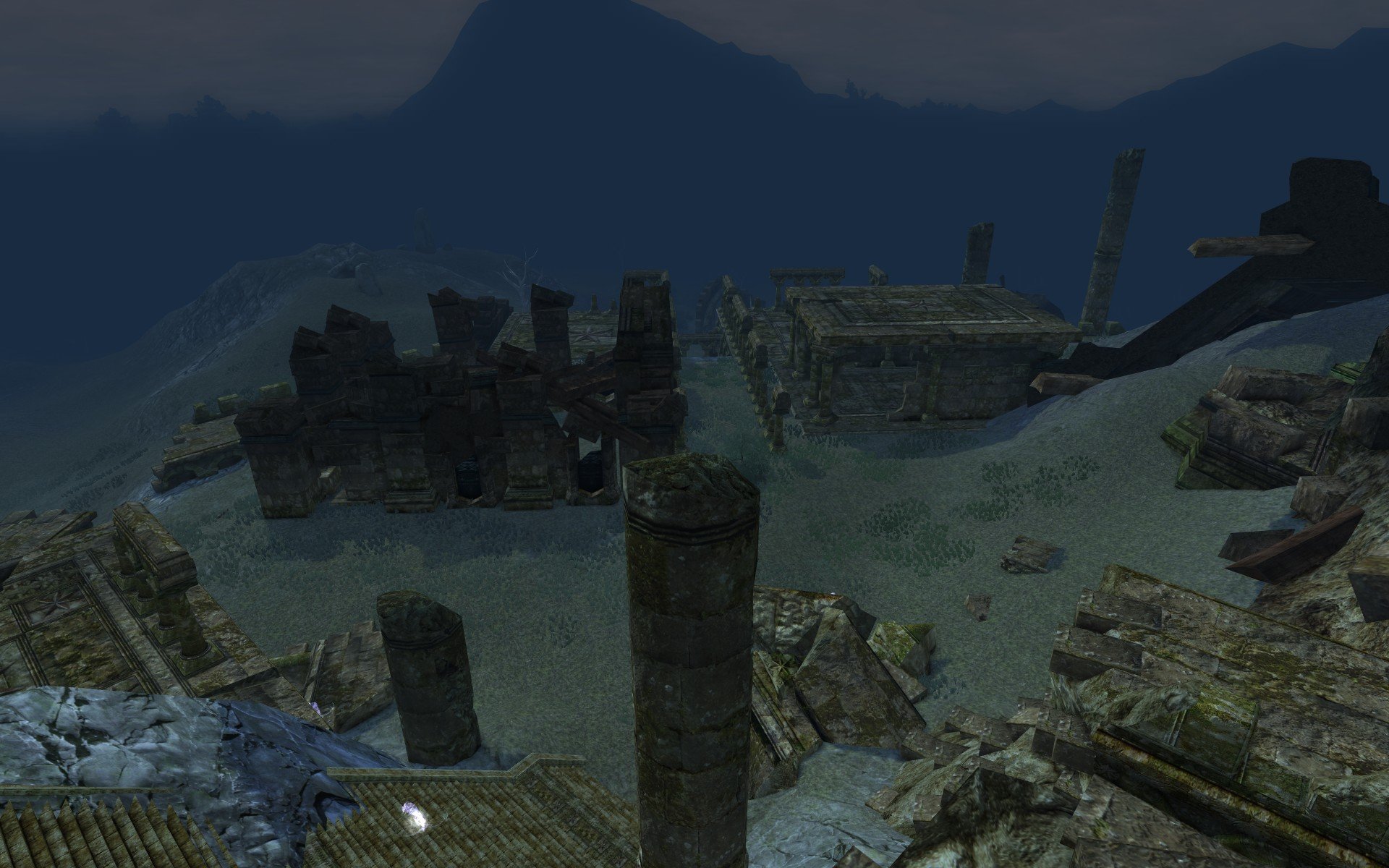
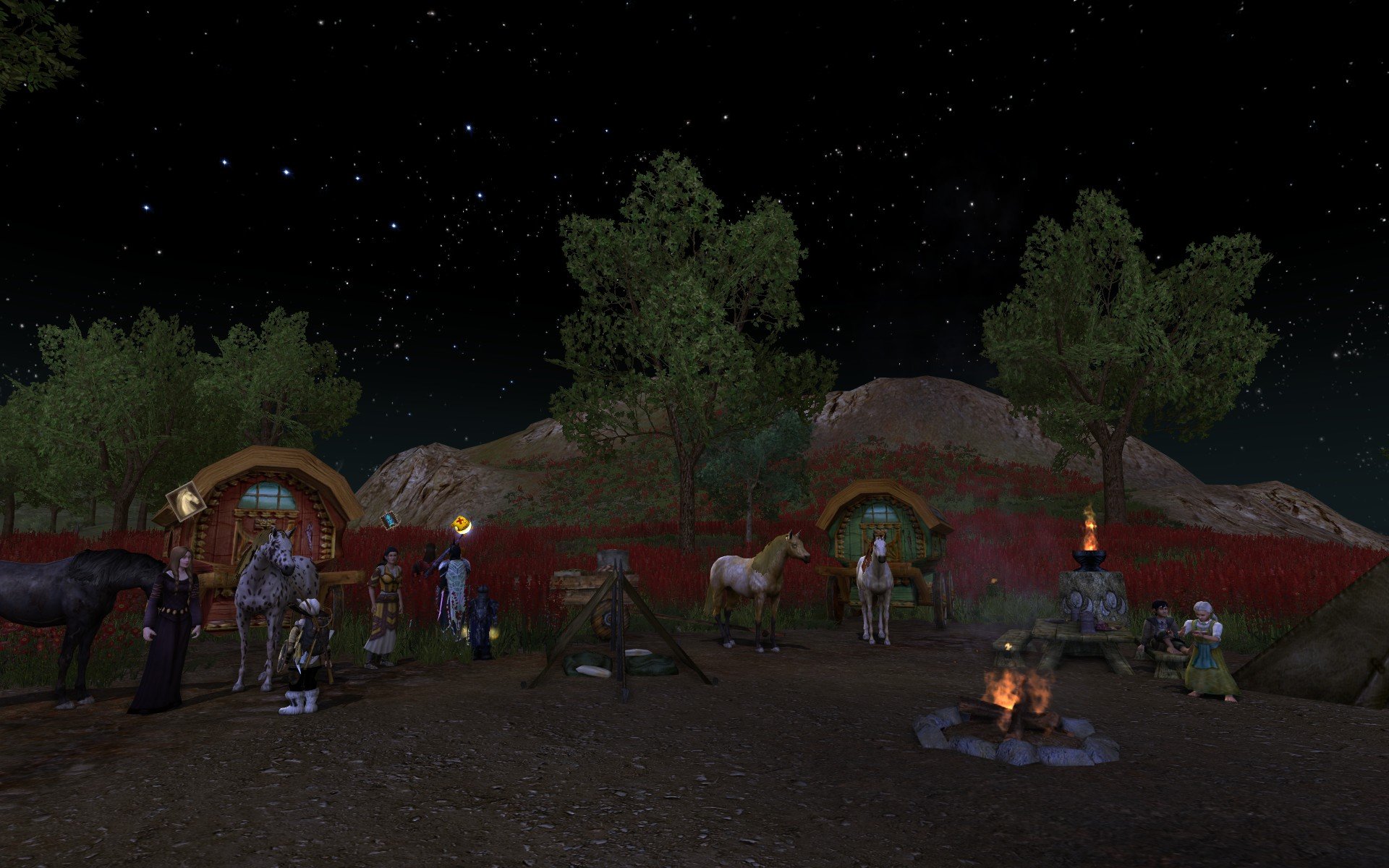
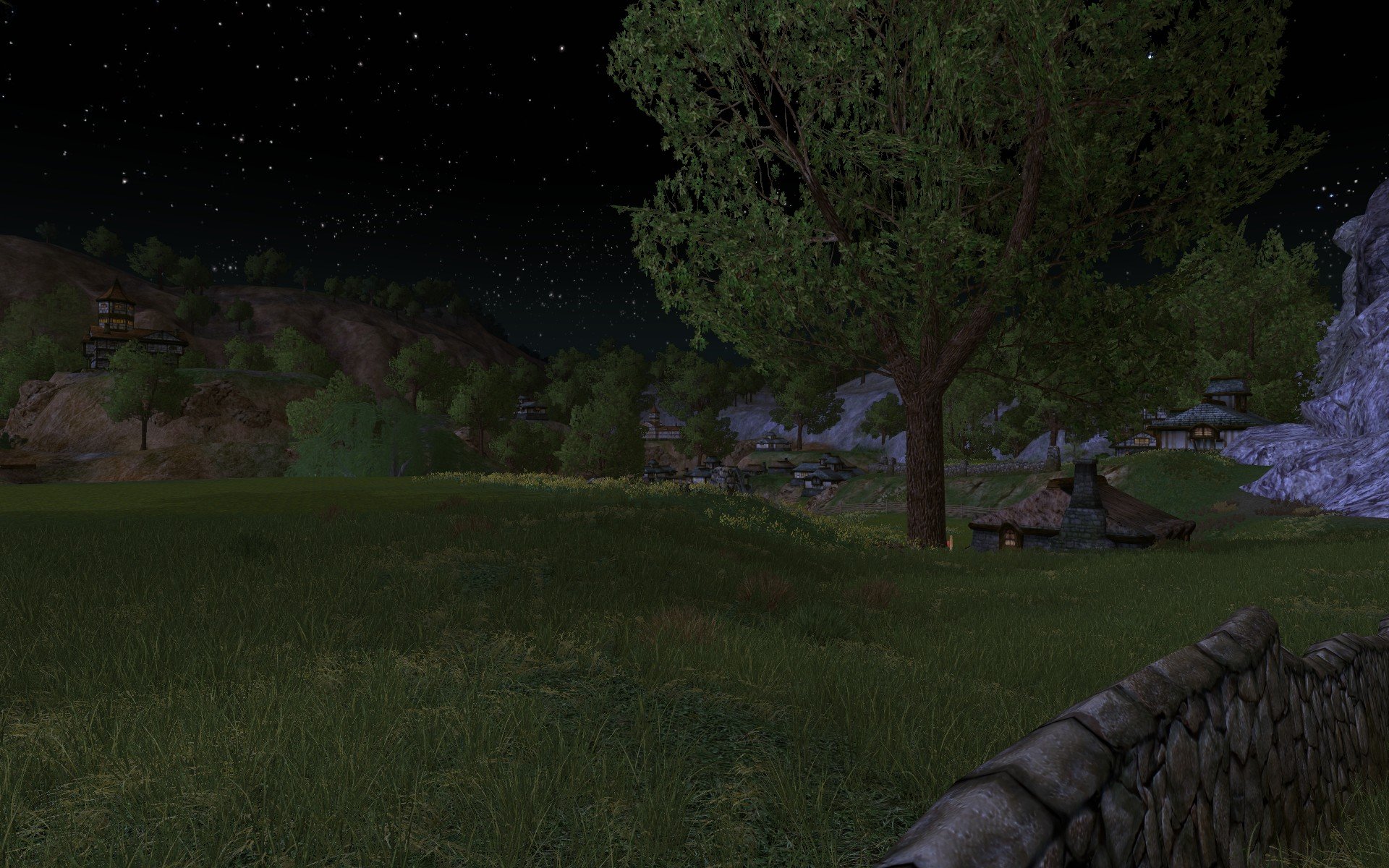
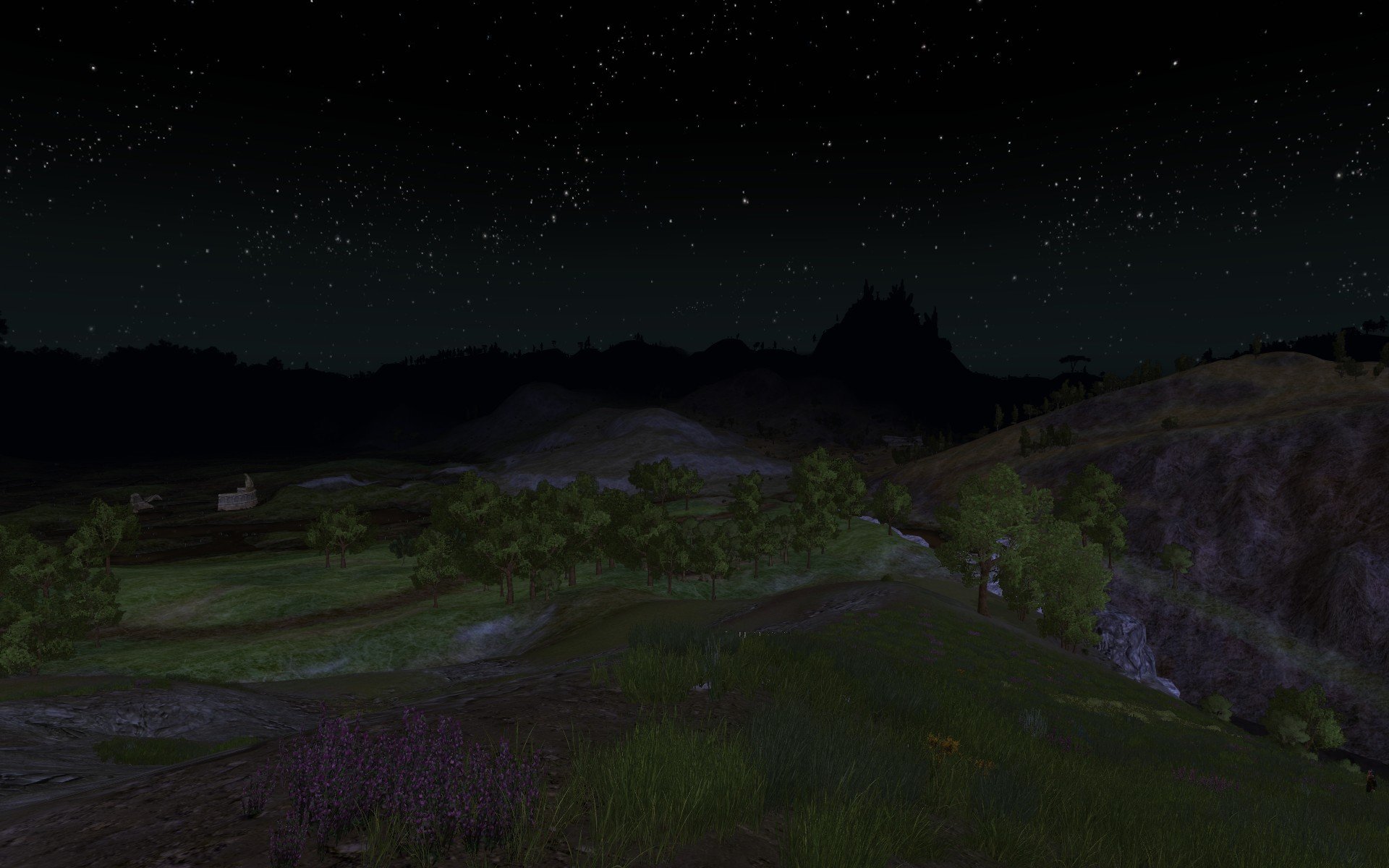
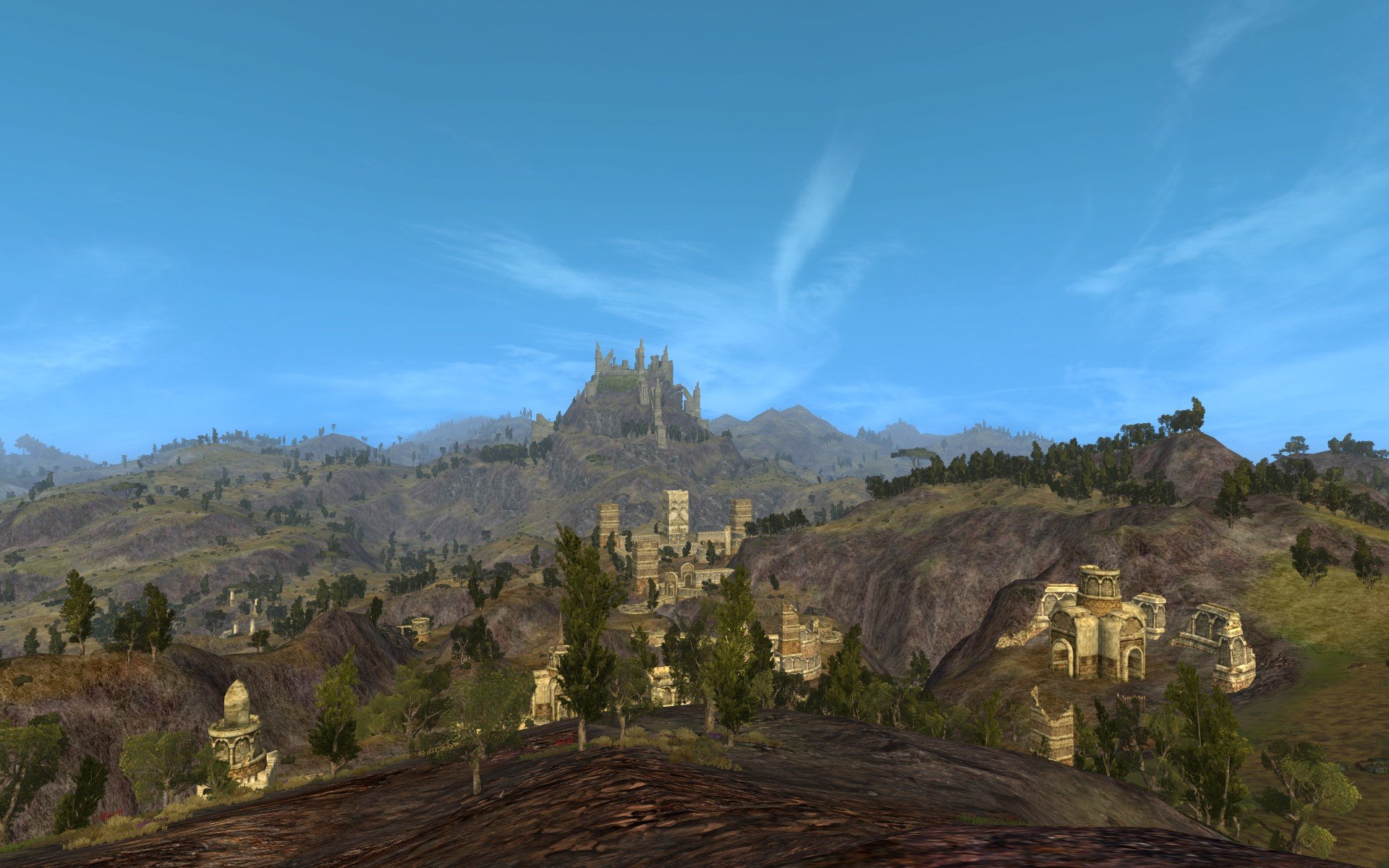
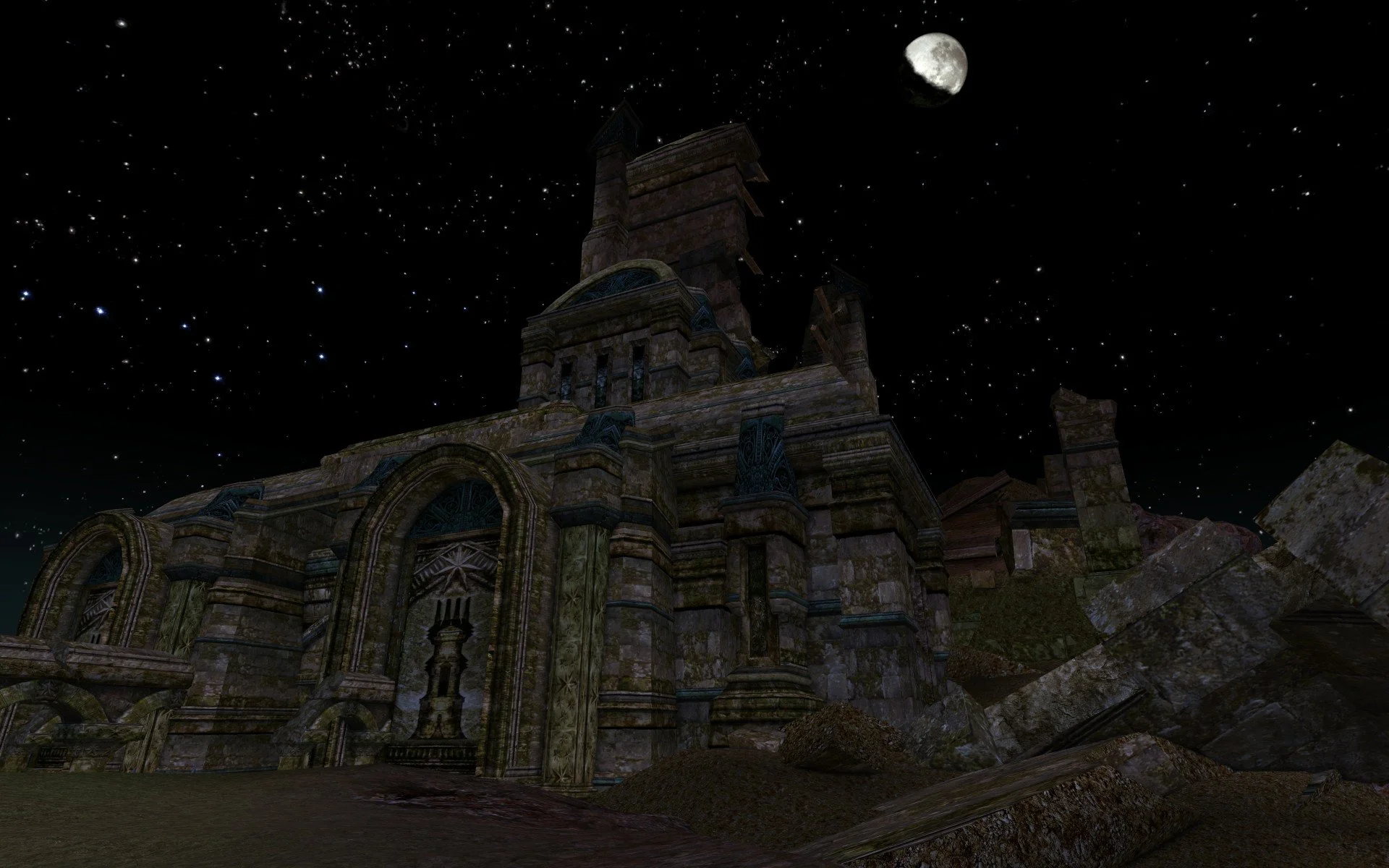
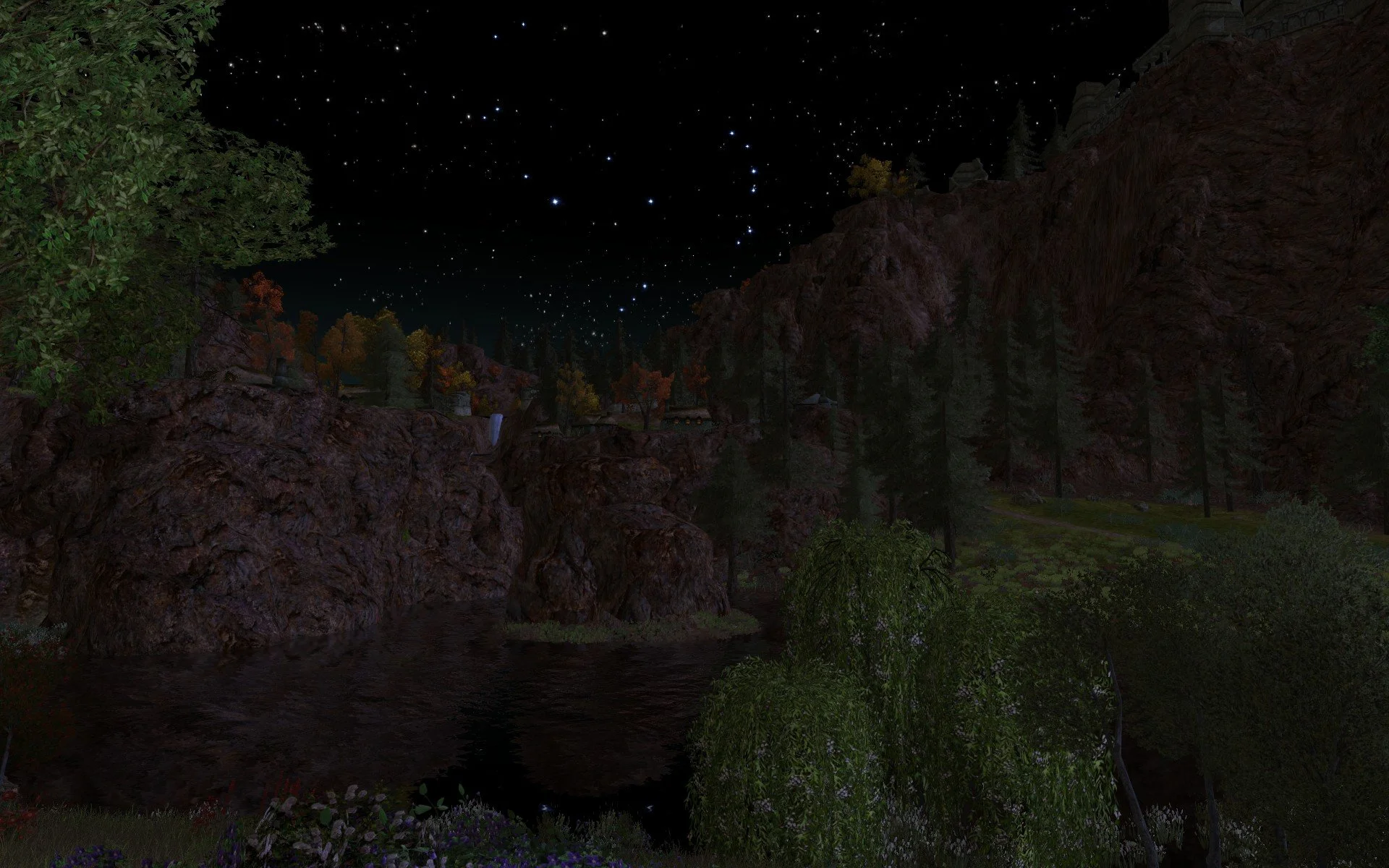
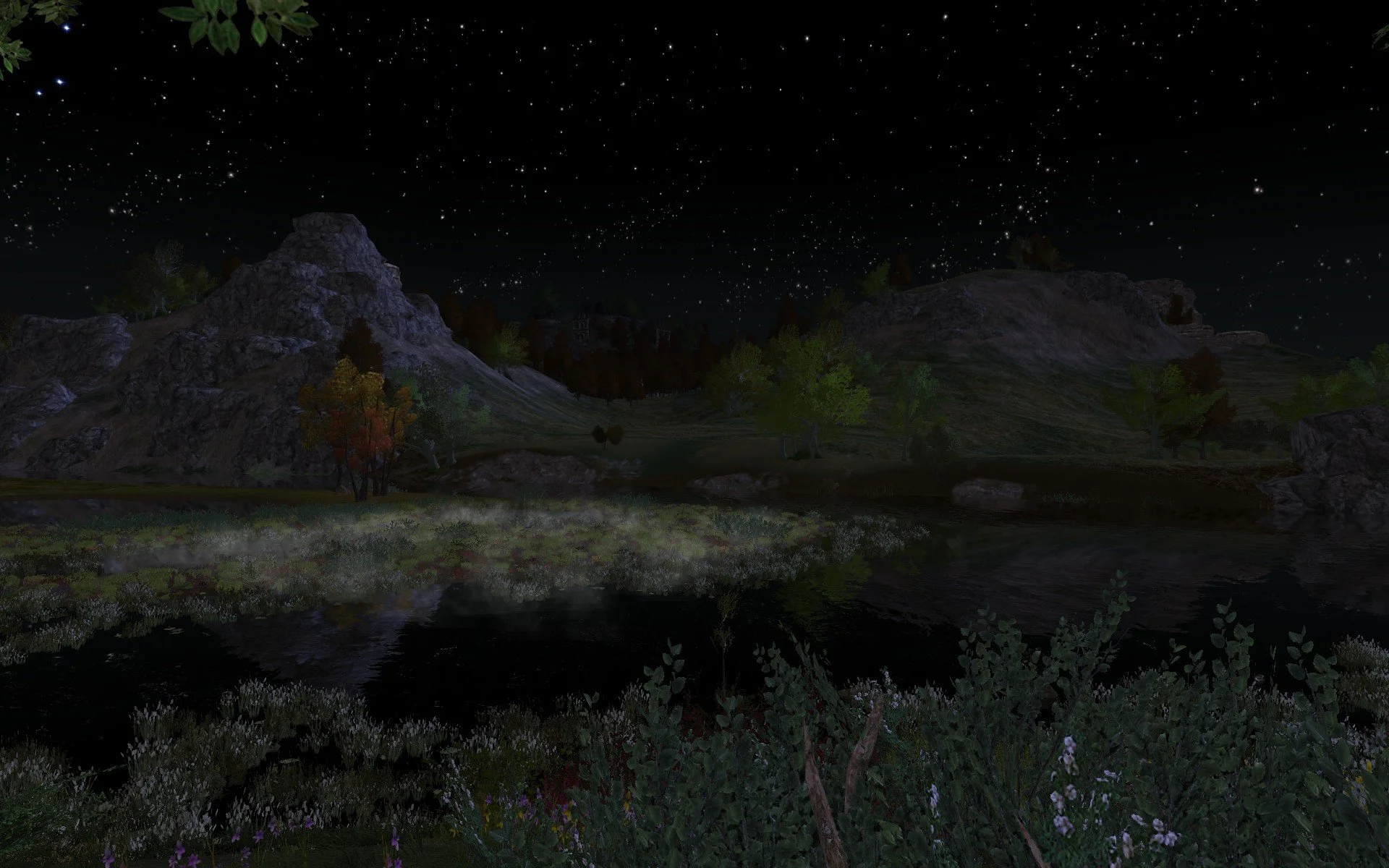
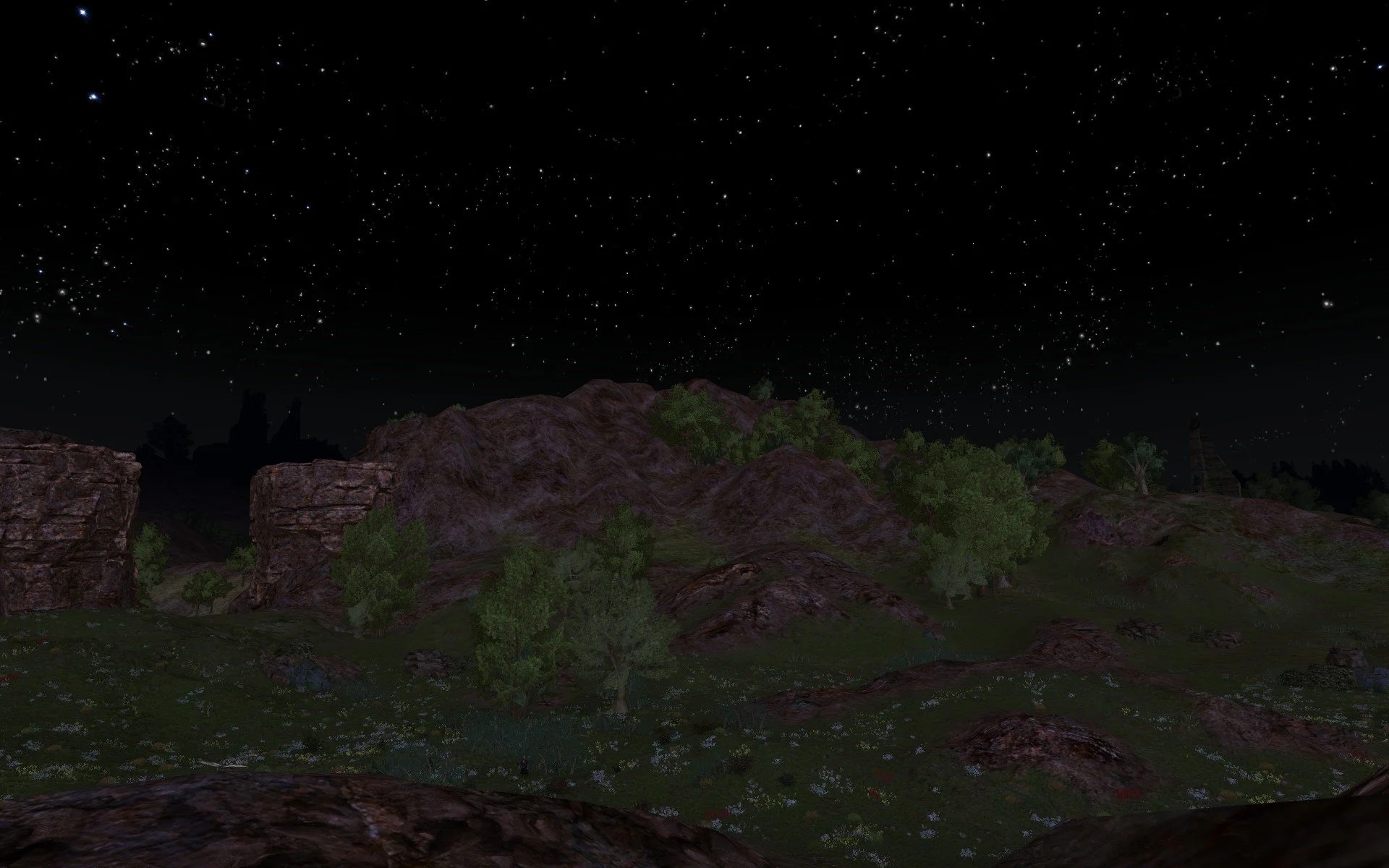
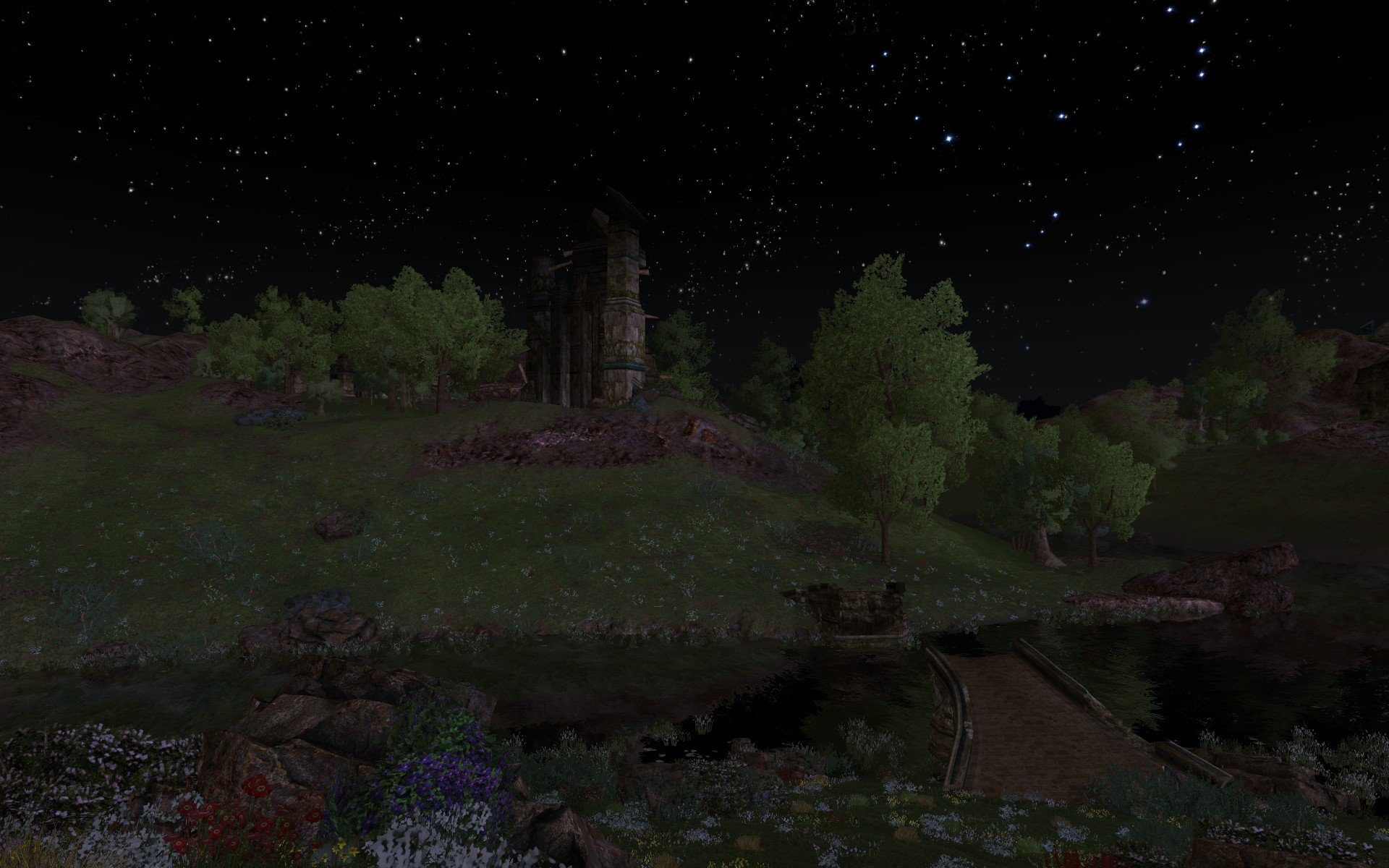
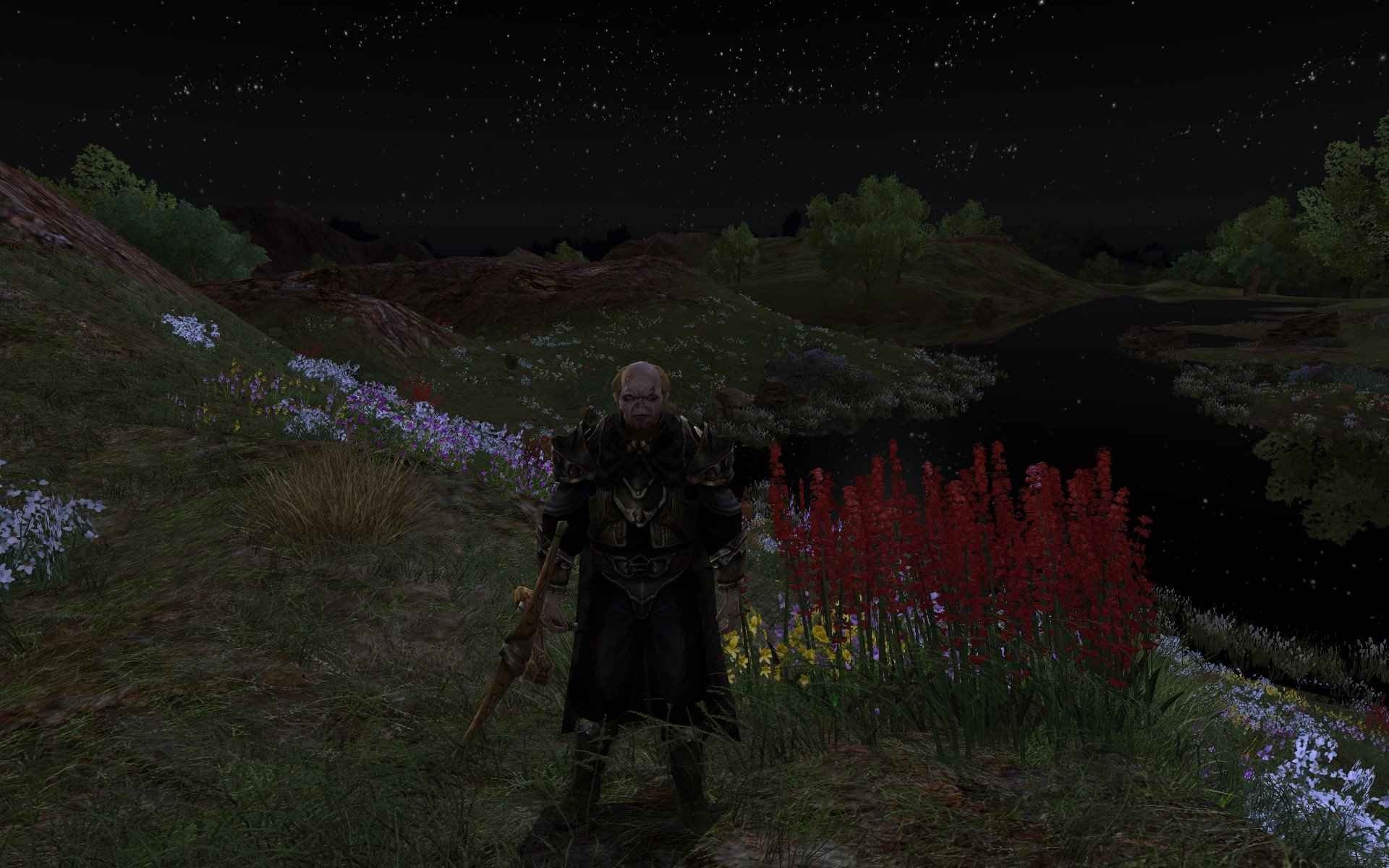
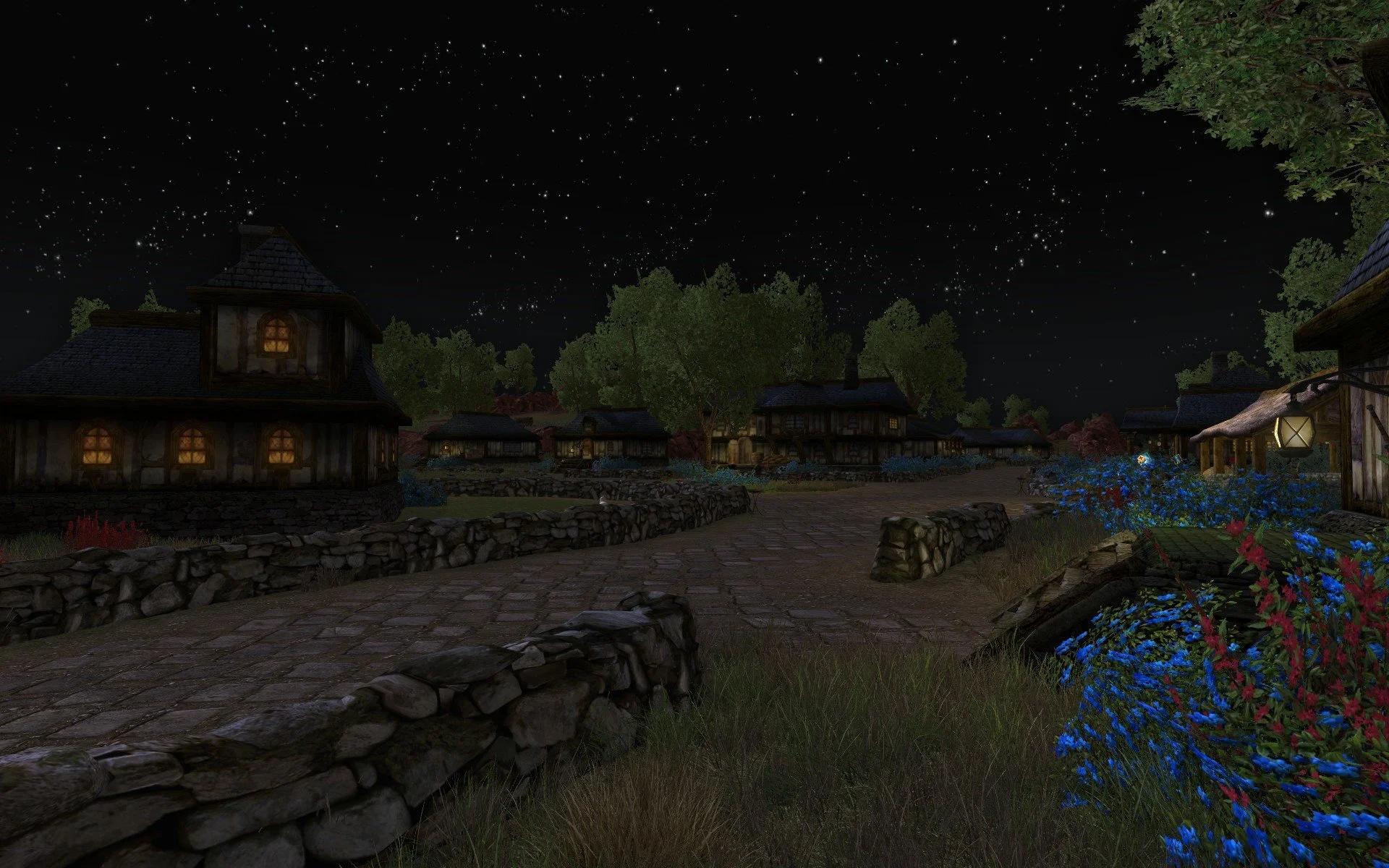
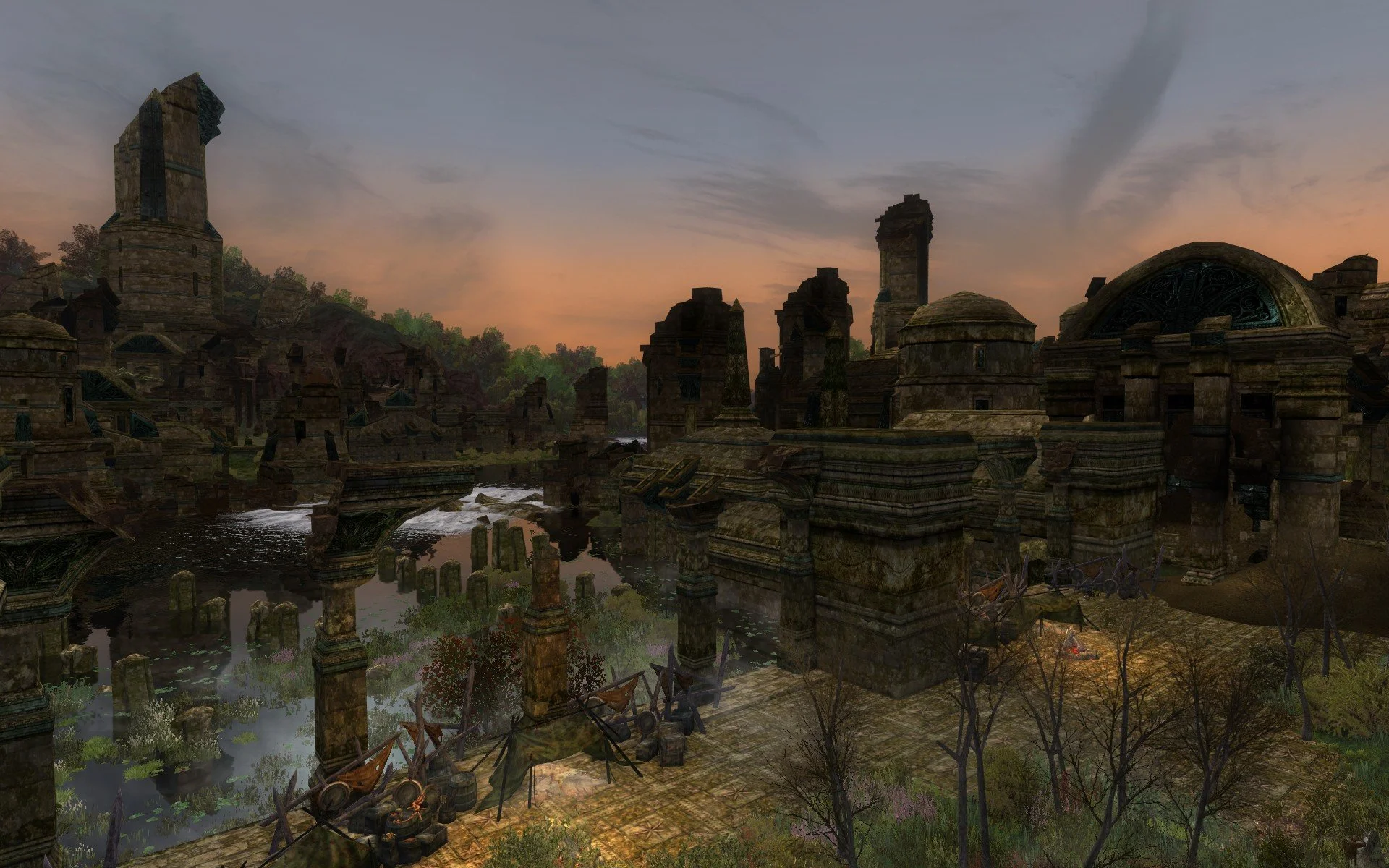
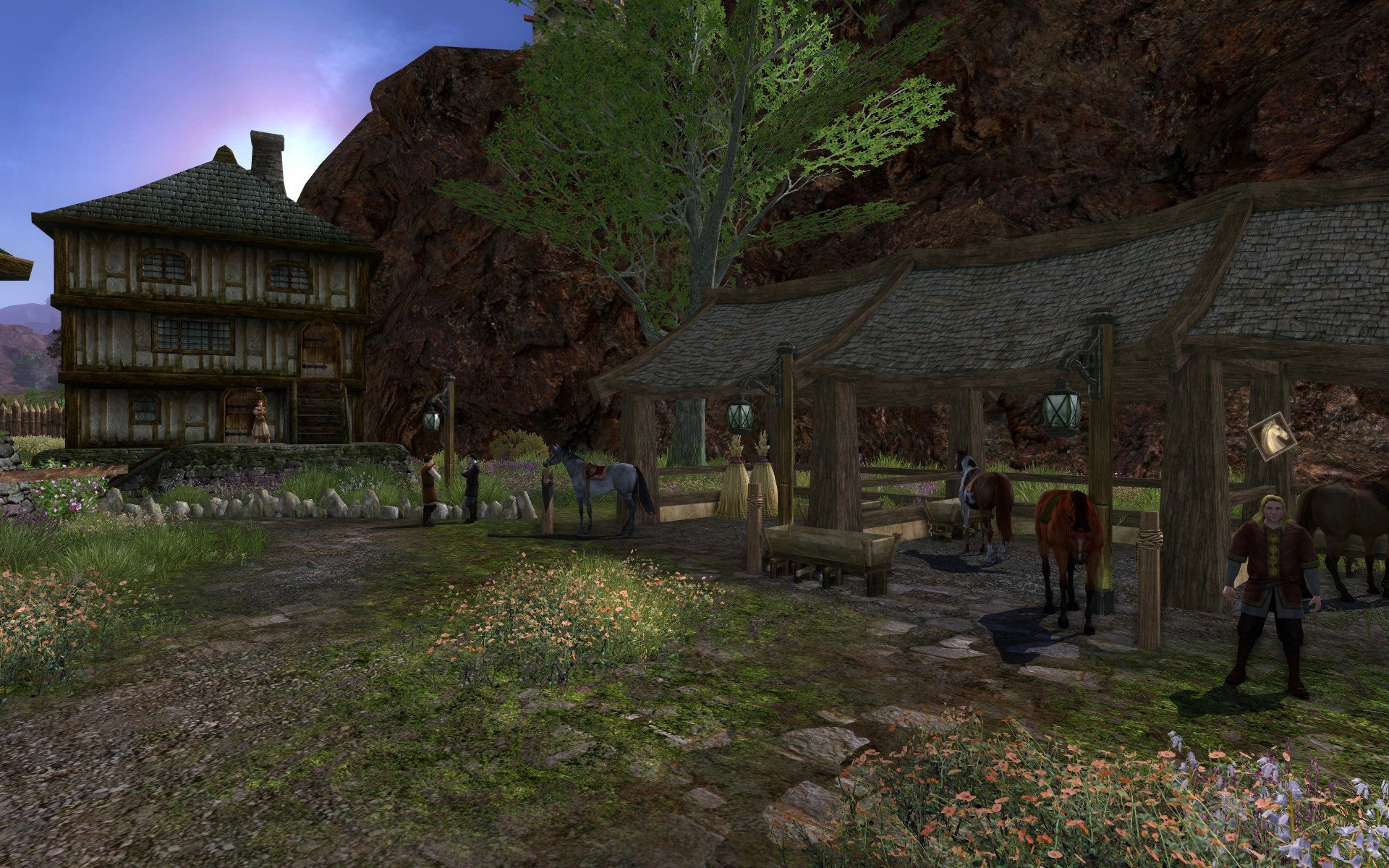
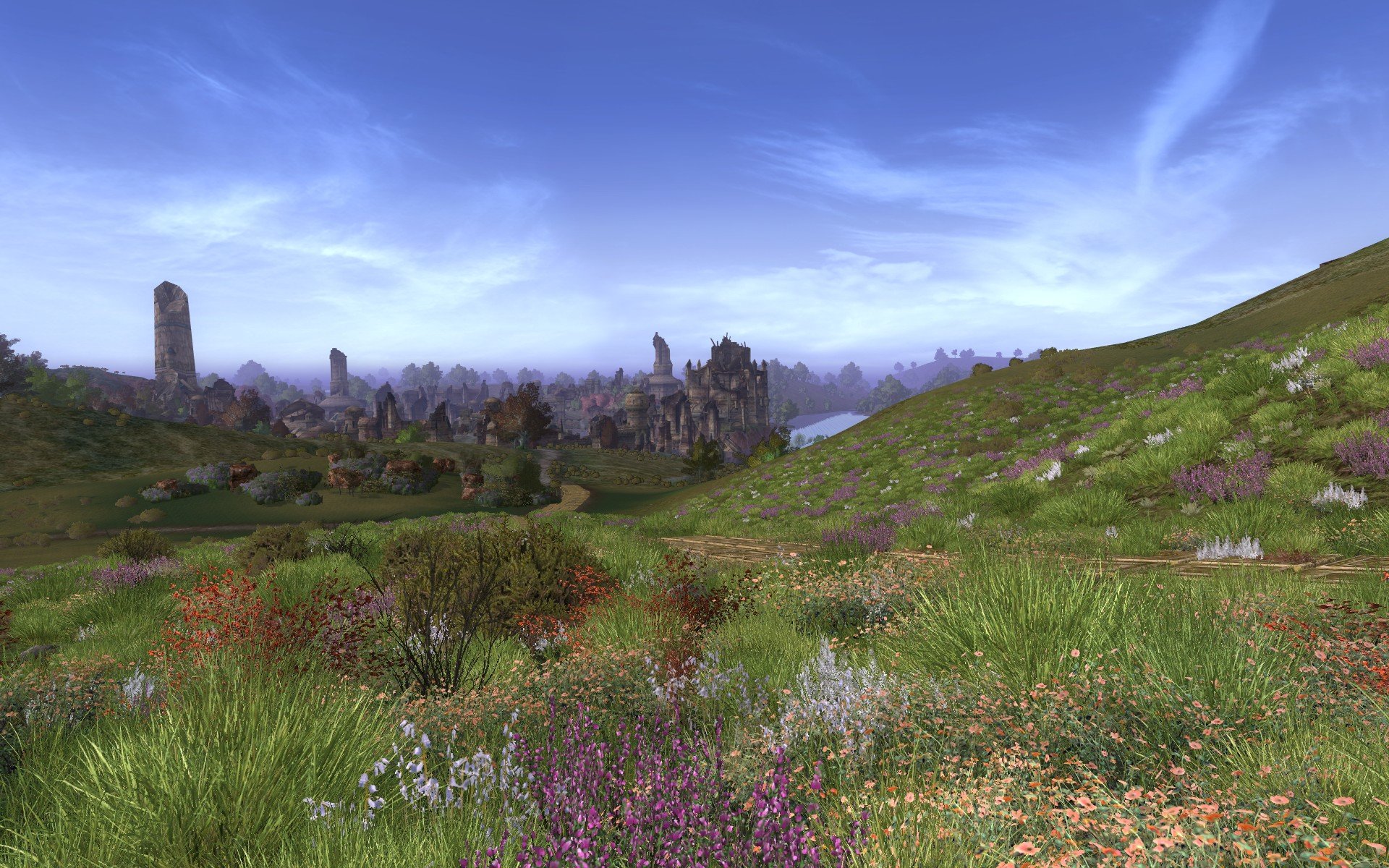
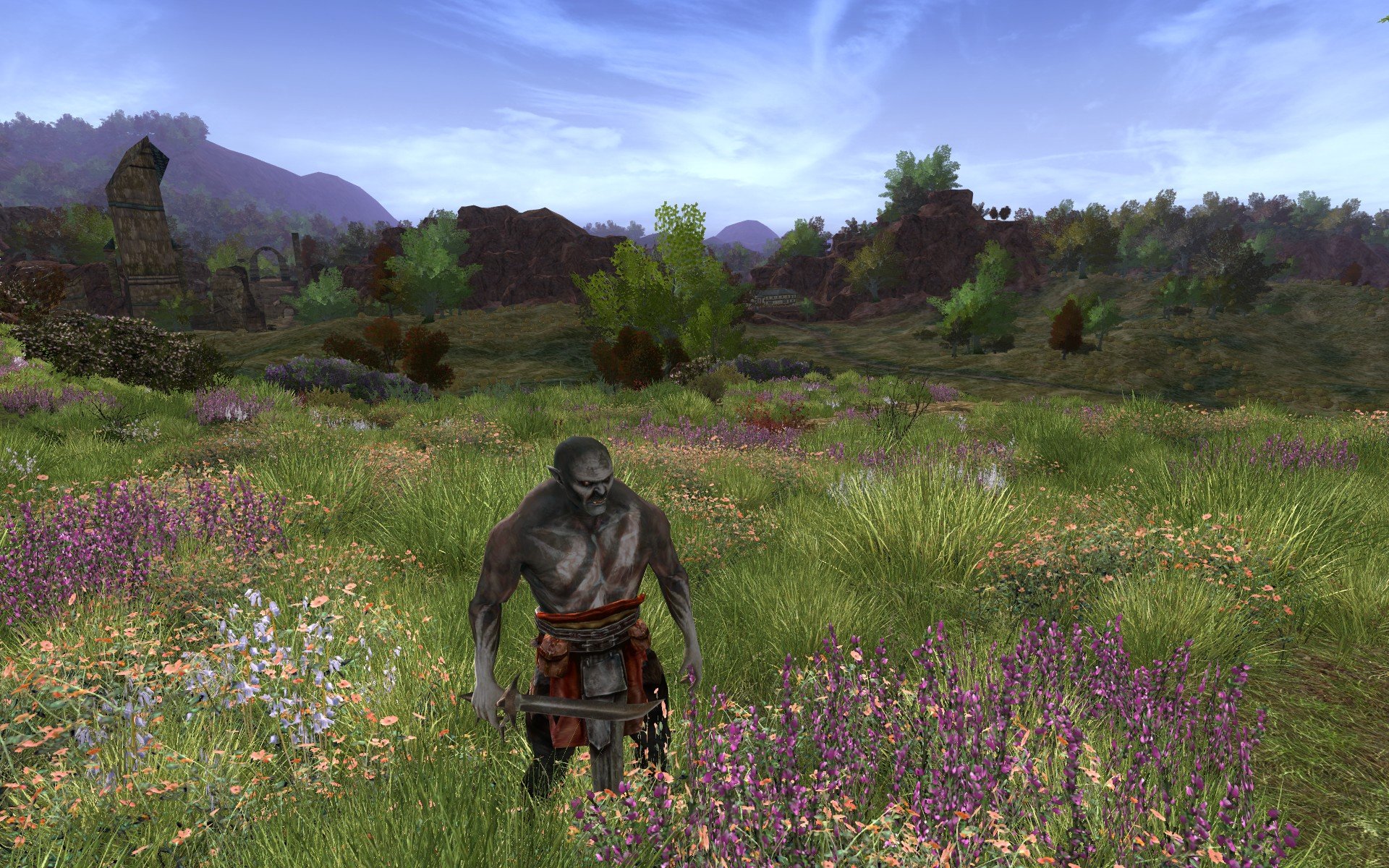
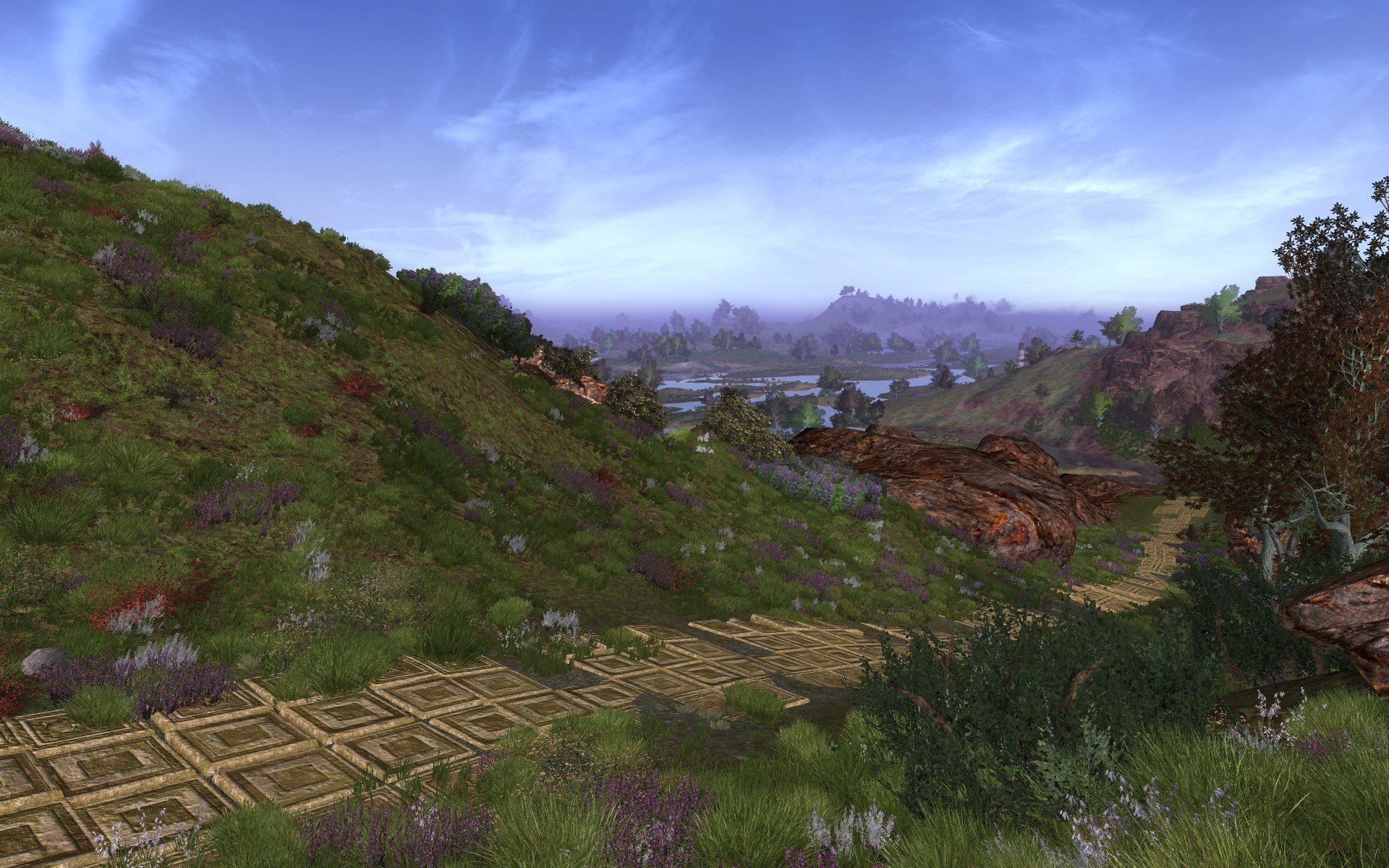
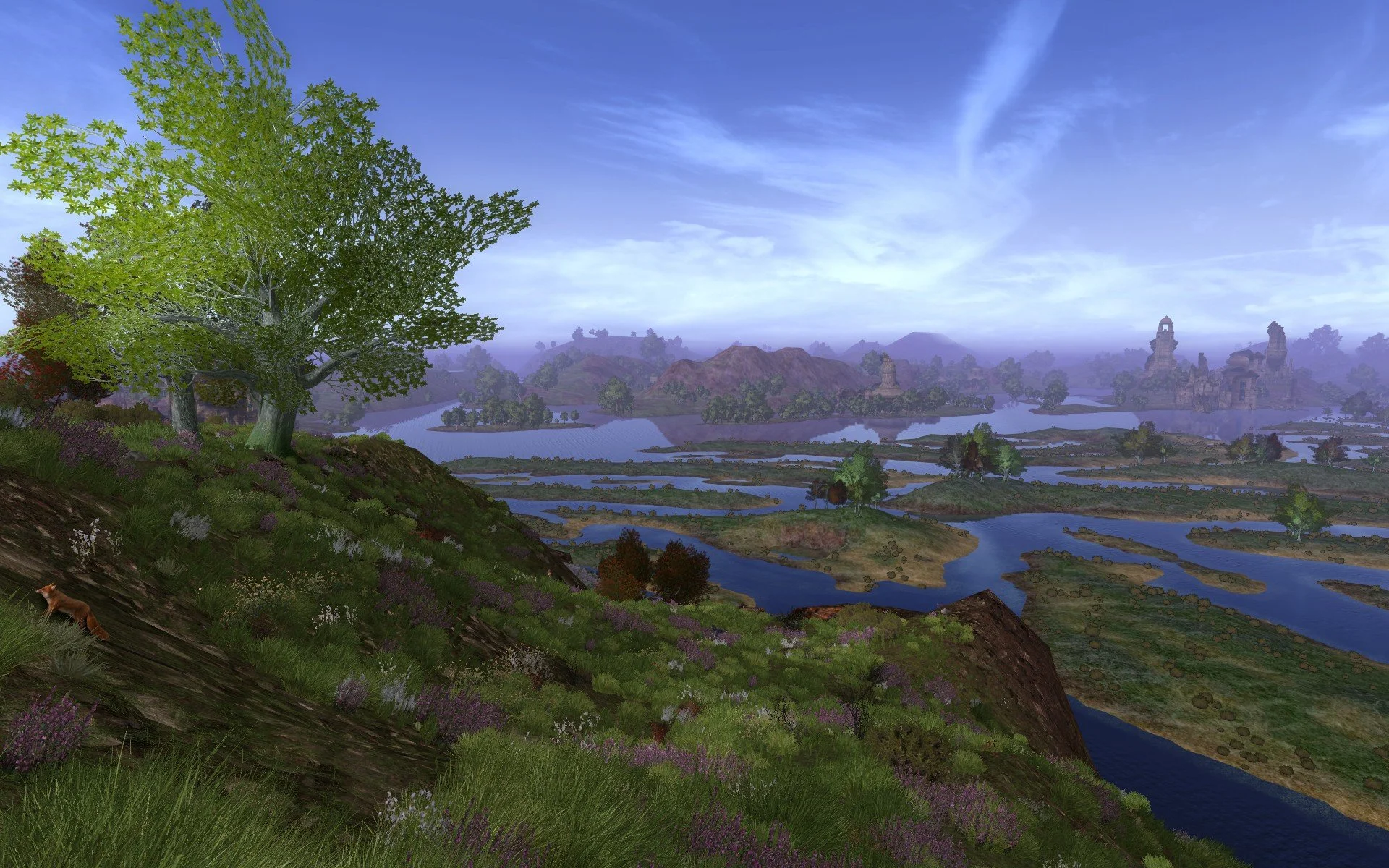
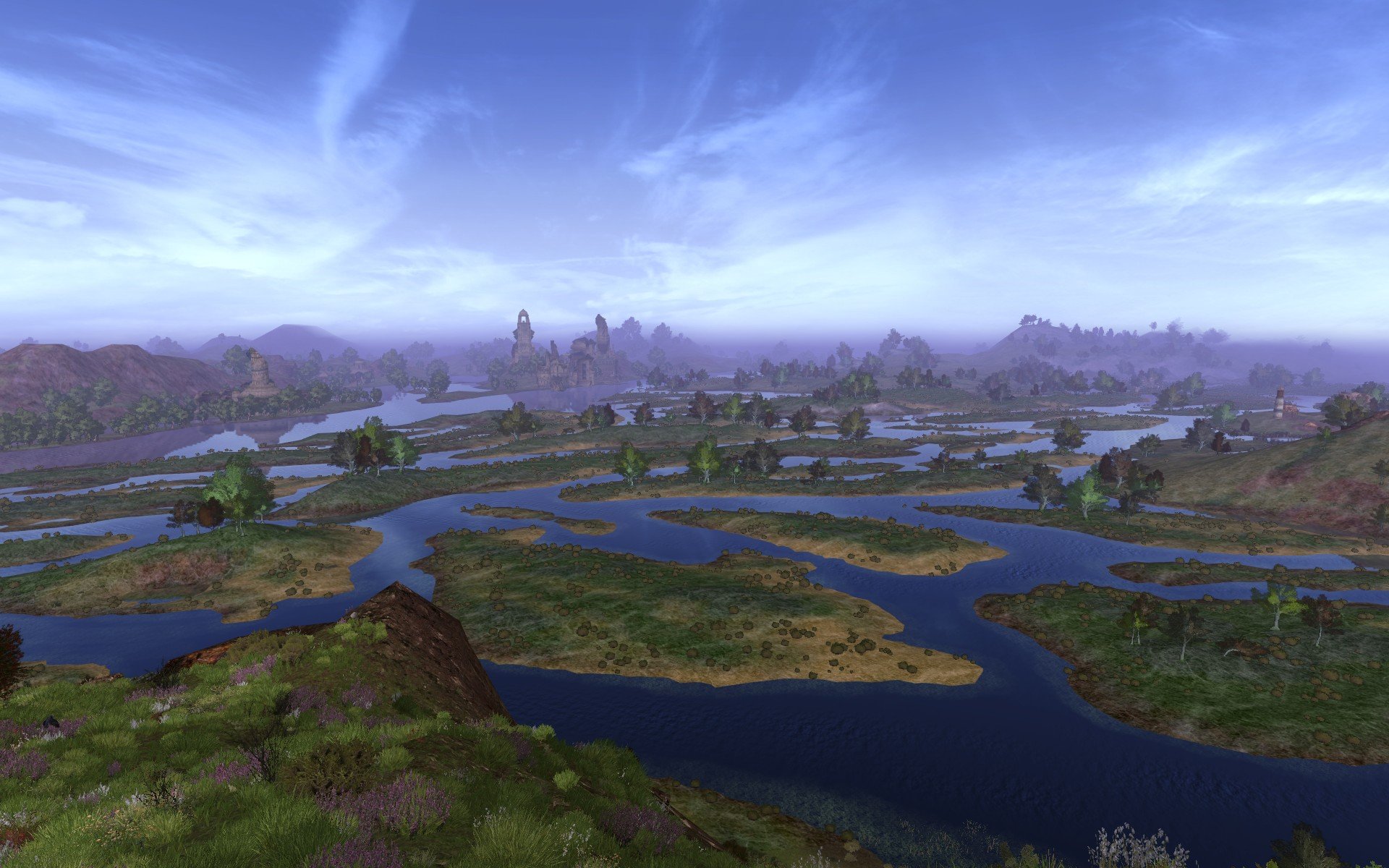
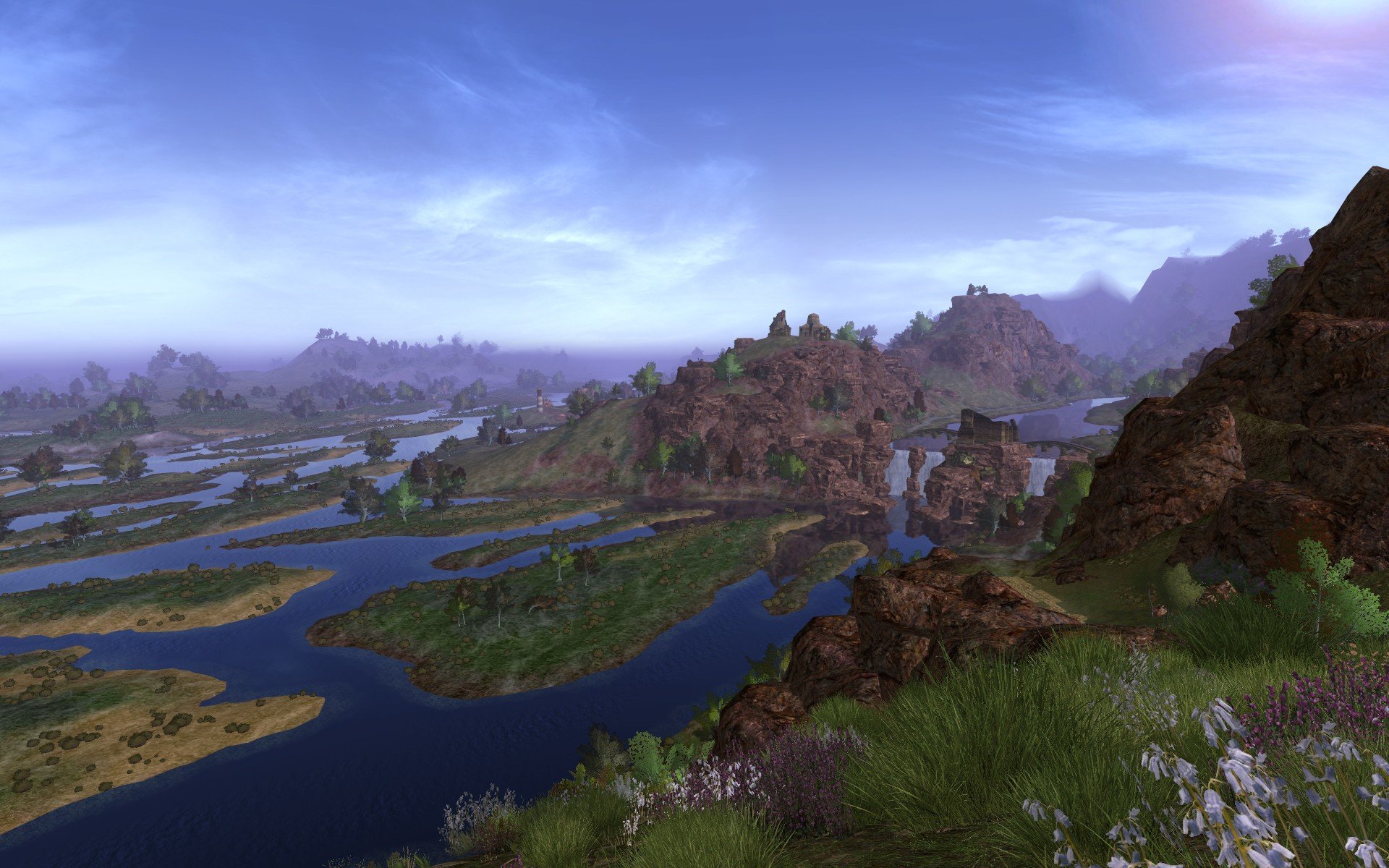
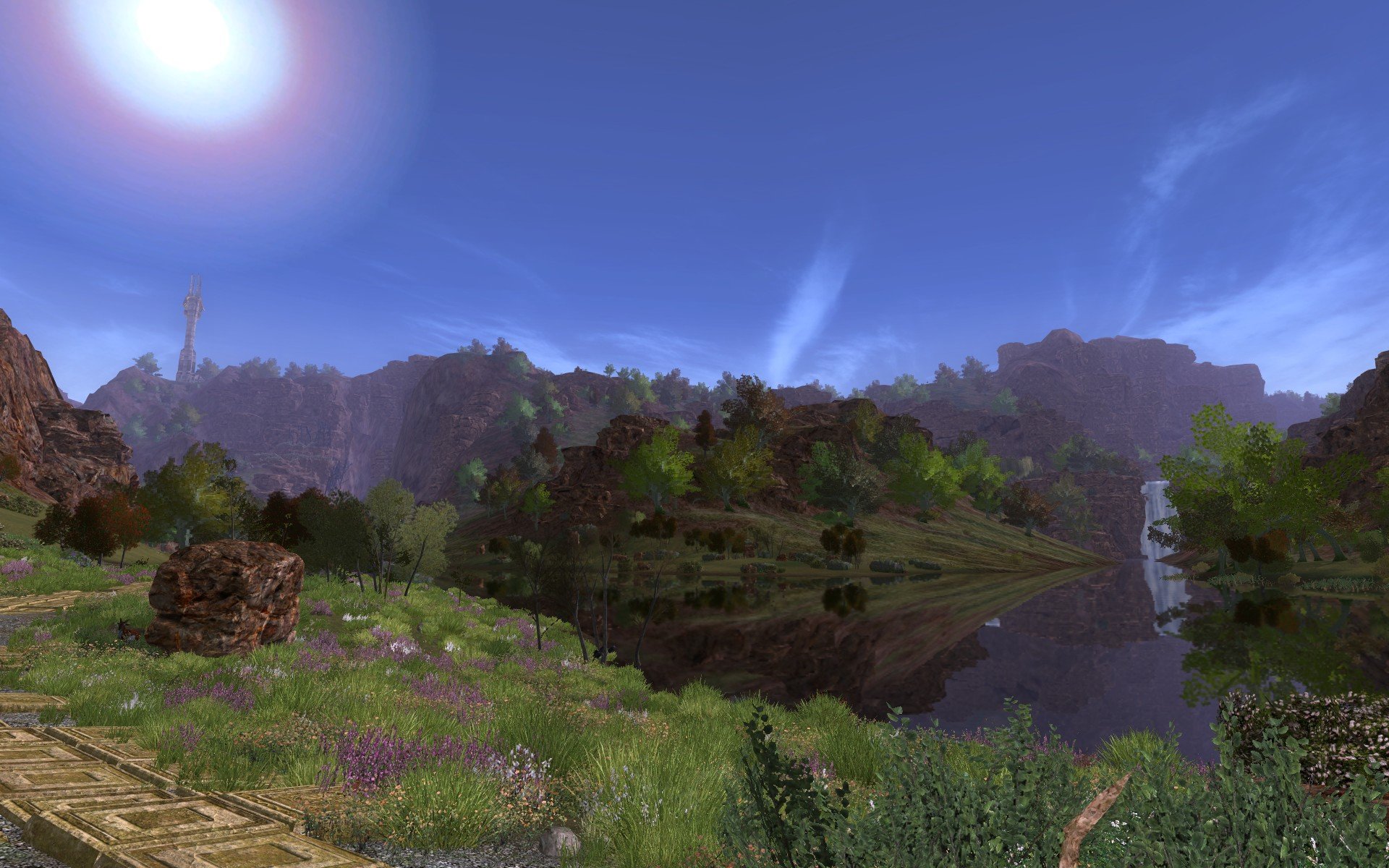
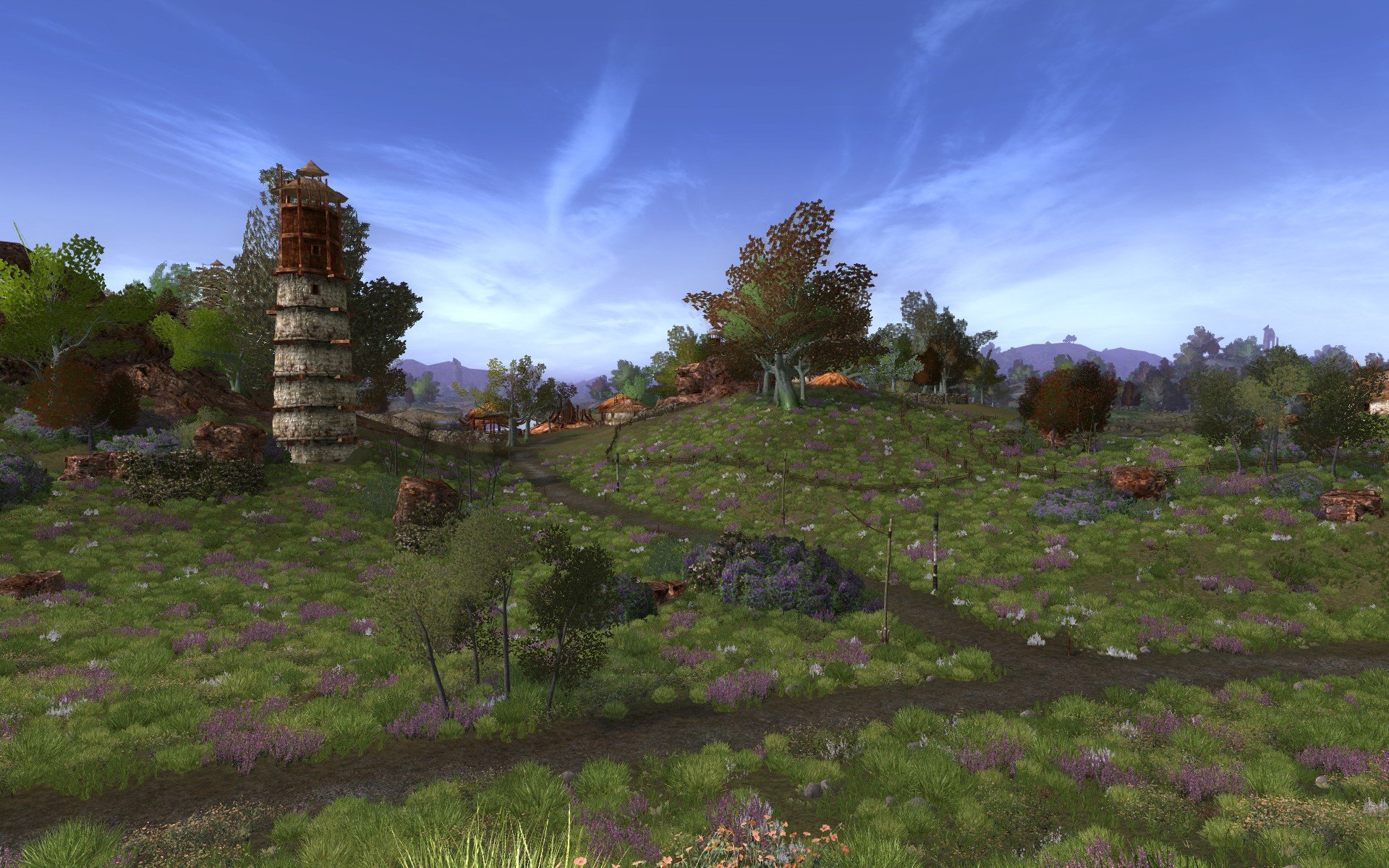
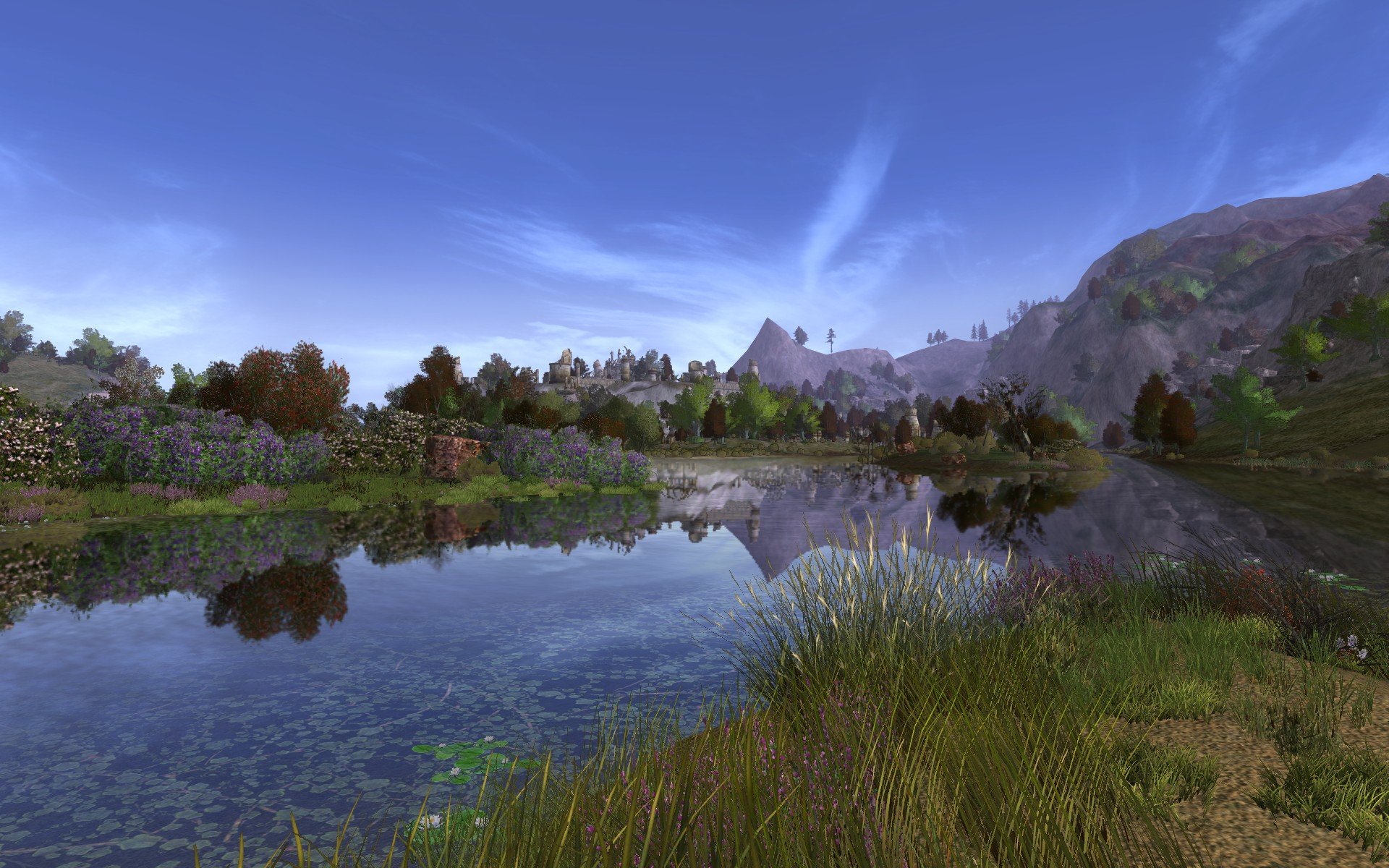
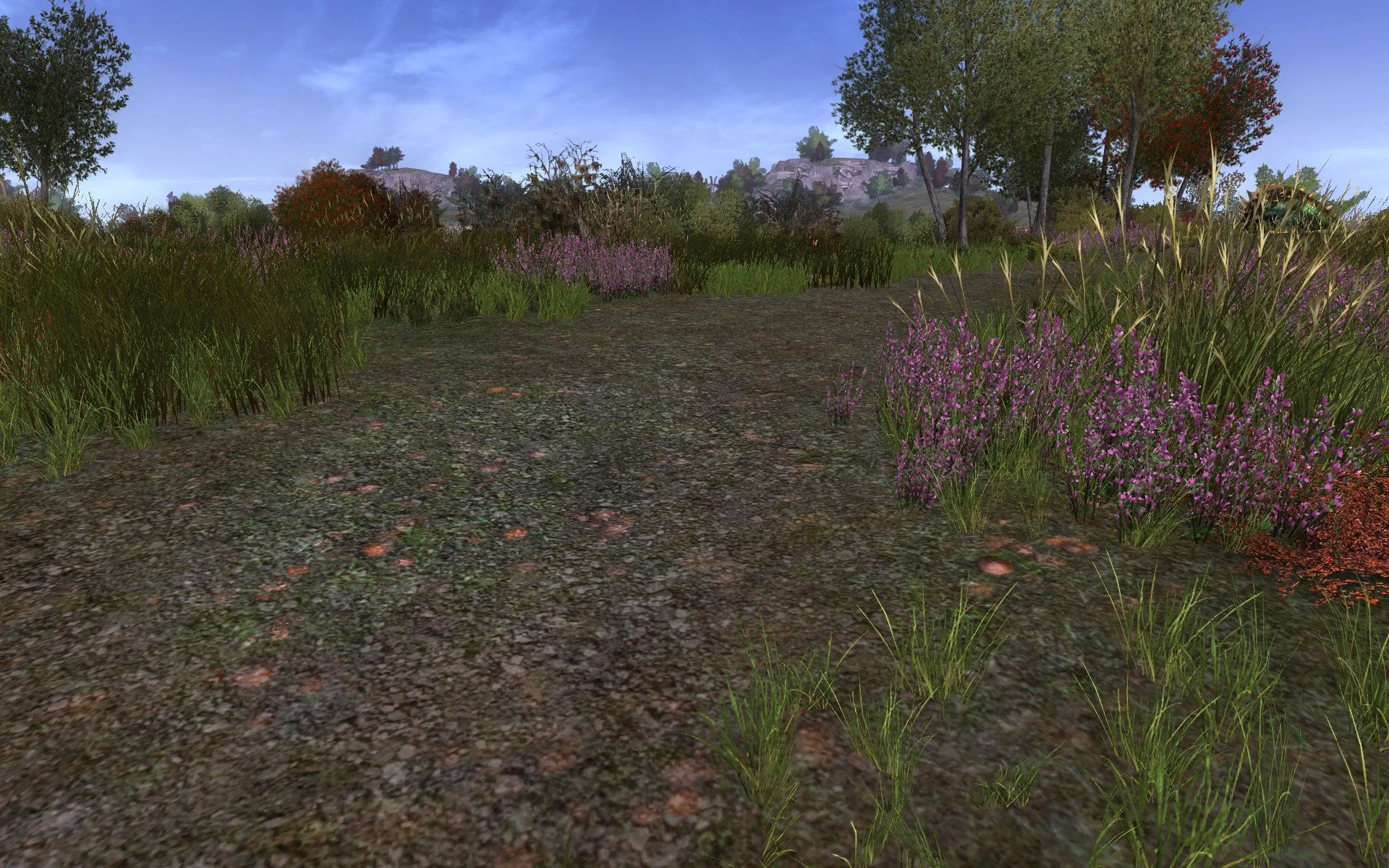
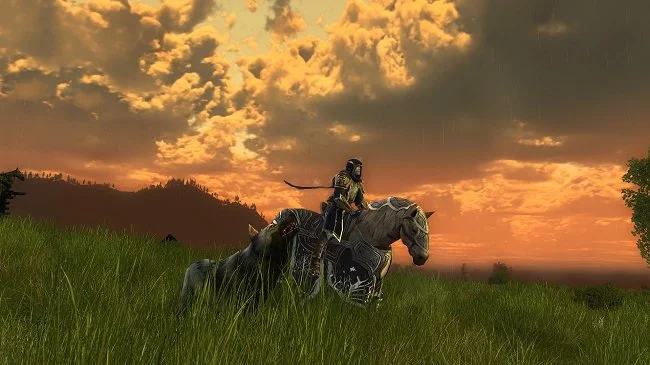
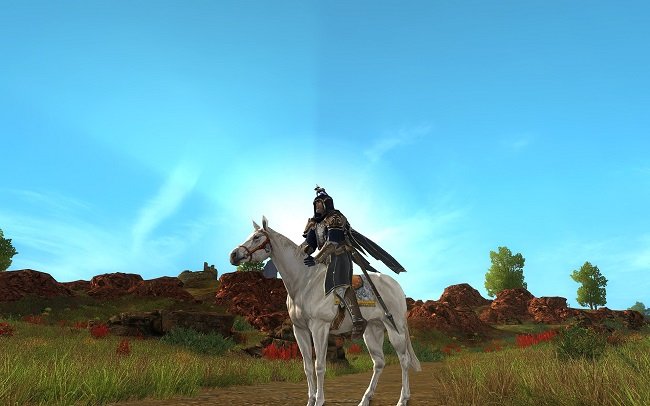
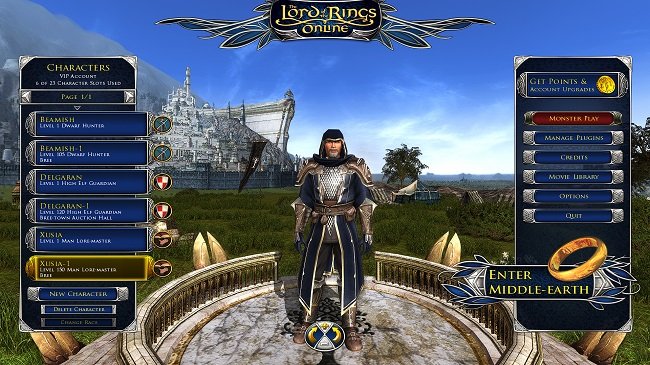
The Bullroarer test server for the MMORPG The Lord of the Rings Online, recently had a three day preview for Update 34: Before the Shadow. Beta #1 provided an opportunity to explore the new regions of Cardolan and Swanfleet, as well as the new tutorial which starts in the village of Mossward. I shall write a separate article about the latter as it merits more than just a cursory paragraph. This post however, is specifically about the new zones themselves. The test held between Wednesday 19th and Friday 21st October, presented a fairly complete version of Cardolan and Swanfleet, which provide level 1- 32 content. The “mob” density was somewhat low in open areas. However, as this was a beta test there is scope that this will change in the final live release on Wednesday 9th November.
The Bullroarer test server for the MMORPG The Lord of the Rings Online, recently had a three day preview for Update 34: Before the Shadow. Beta #1 provided an opportunity to explore the new regions of Cardolan and Swanfleet, as well as the new tutorial which starts in the village of Mossward. I shall write a separate article about the latter as it merits more than just a cursory paragraph. This post however, is specifically about the new zones themselves. The test held between Wednesday 19th and Friday 21st October, presented a fairly complete version of Cardolan and Swanfleet, which provide level 1- 32 content. The “mob” density was somewhat low in open areas. However, as this was a beta test there is scope that this will change in the final live release on Wednesday 9th November.
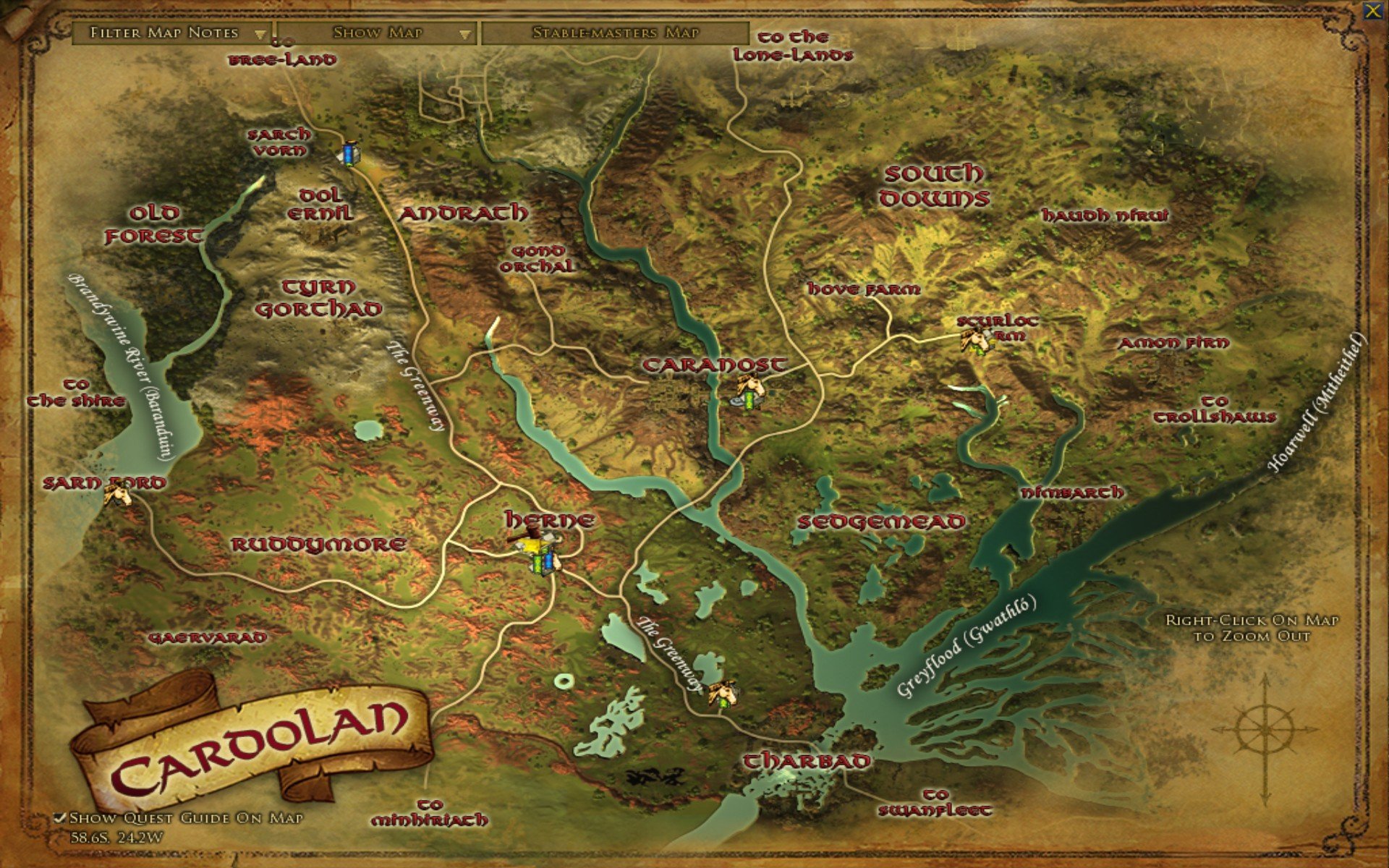
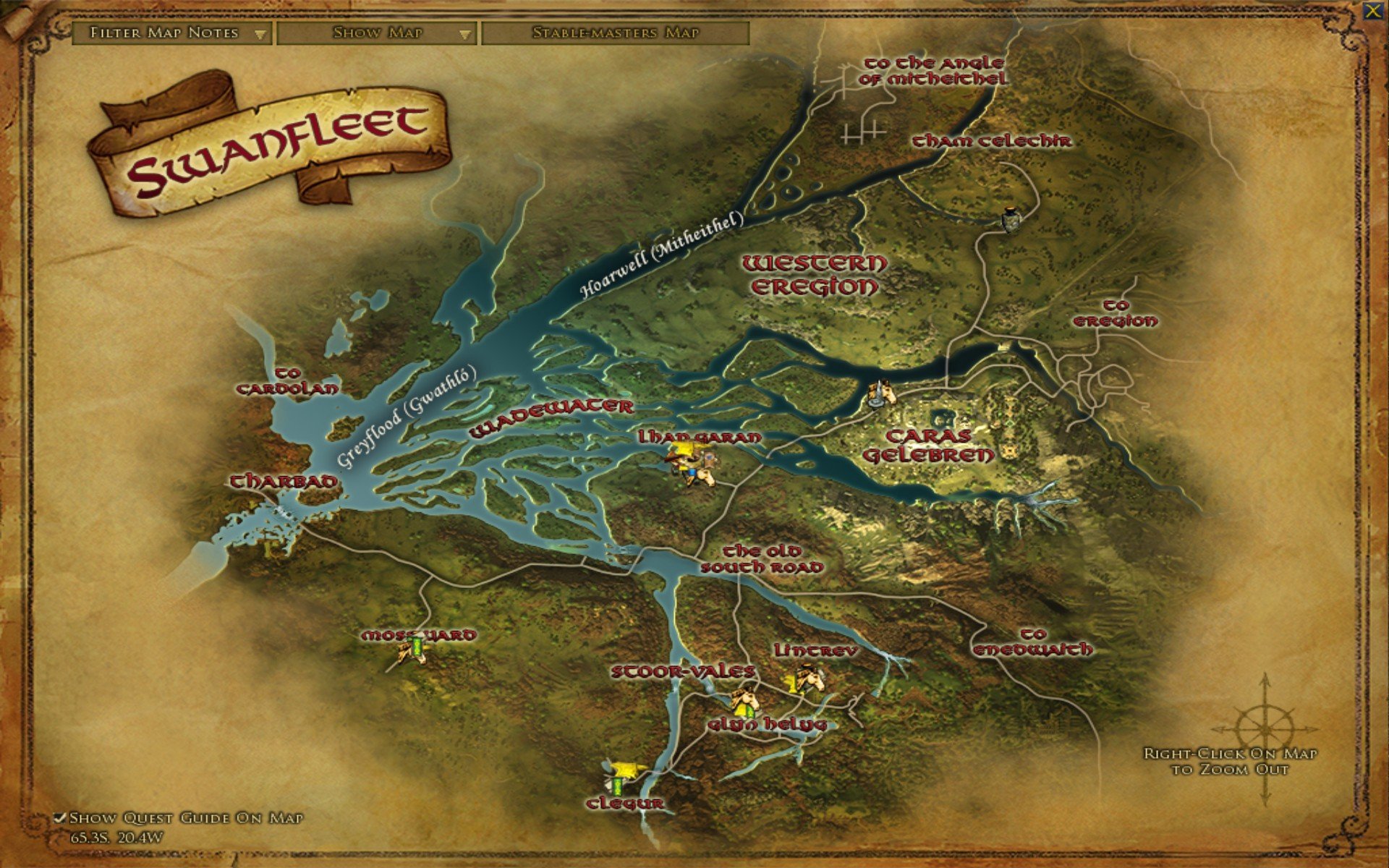
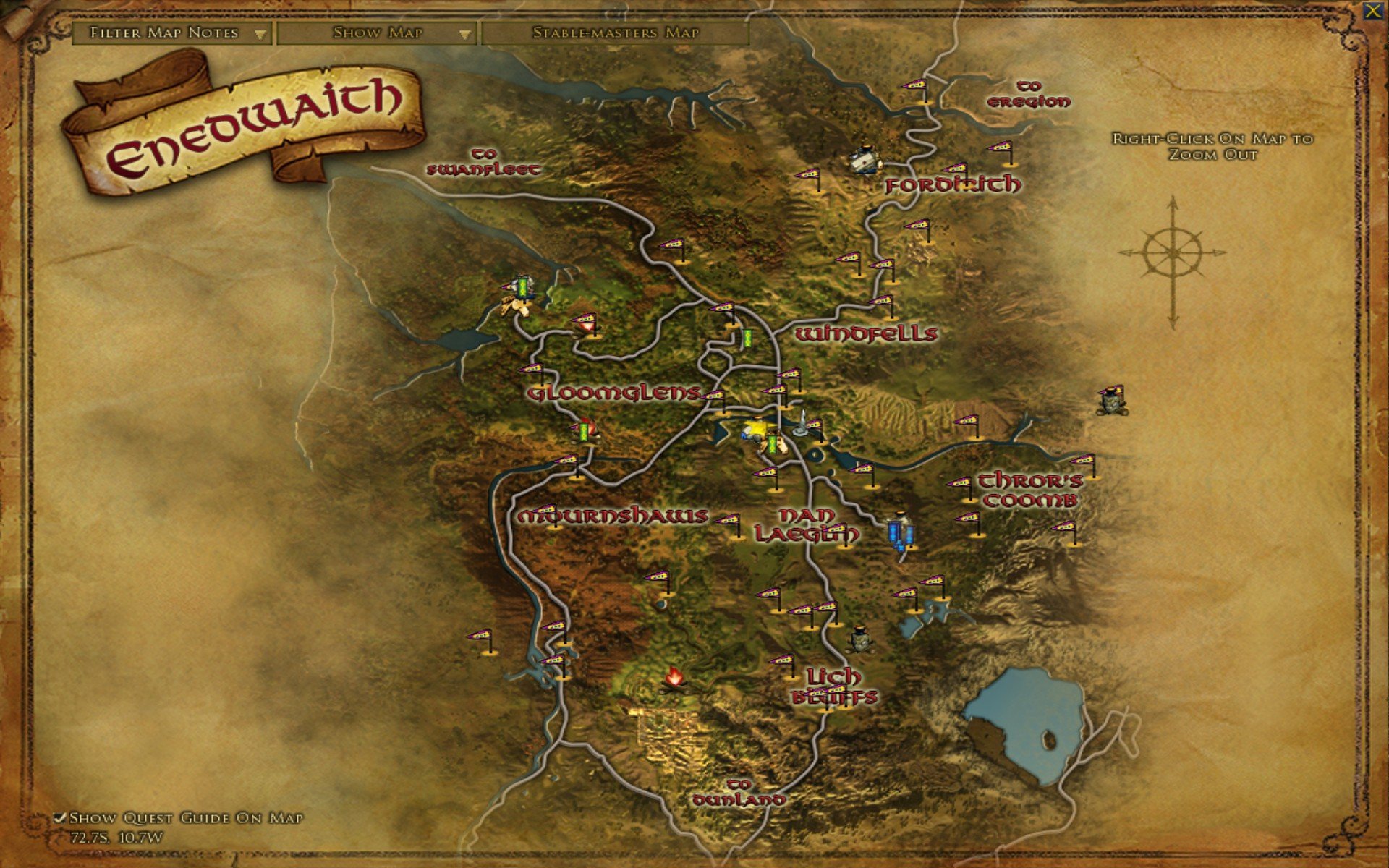
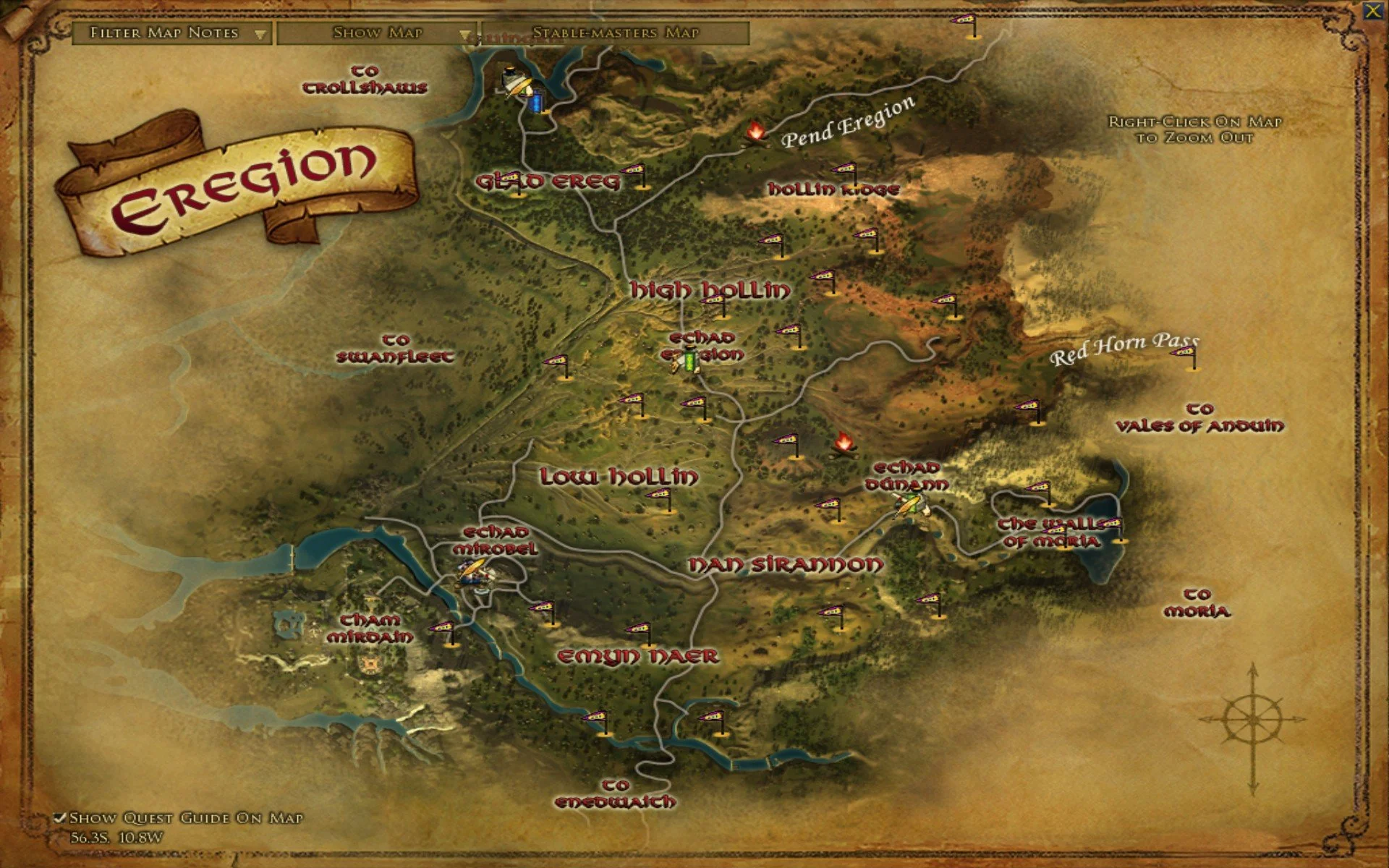
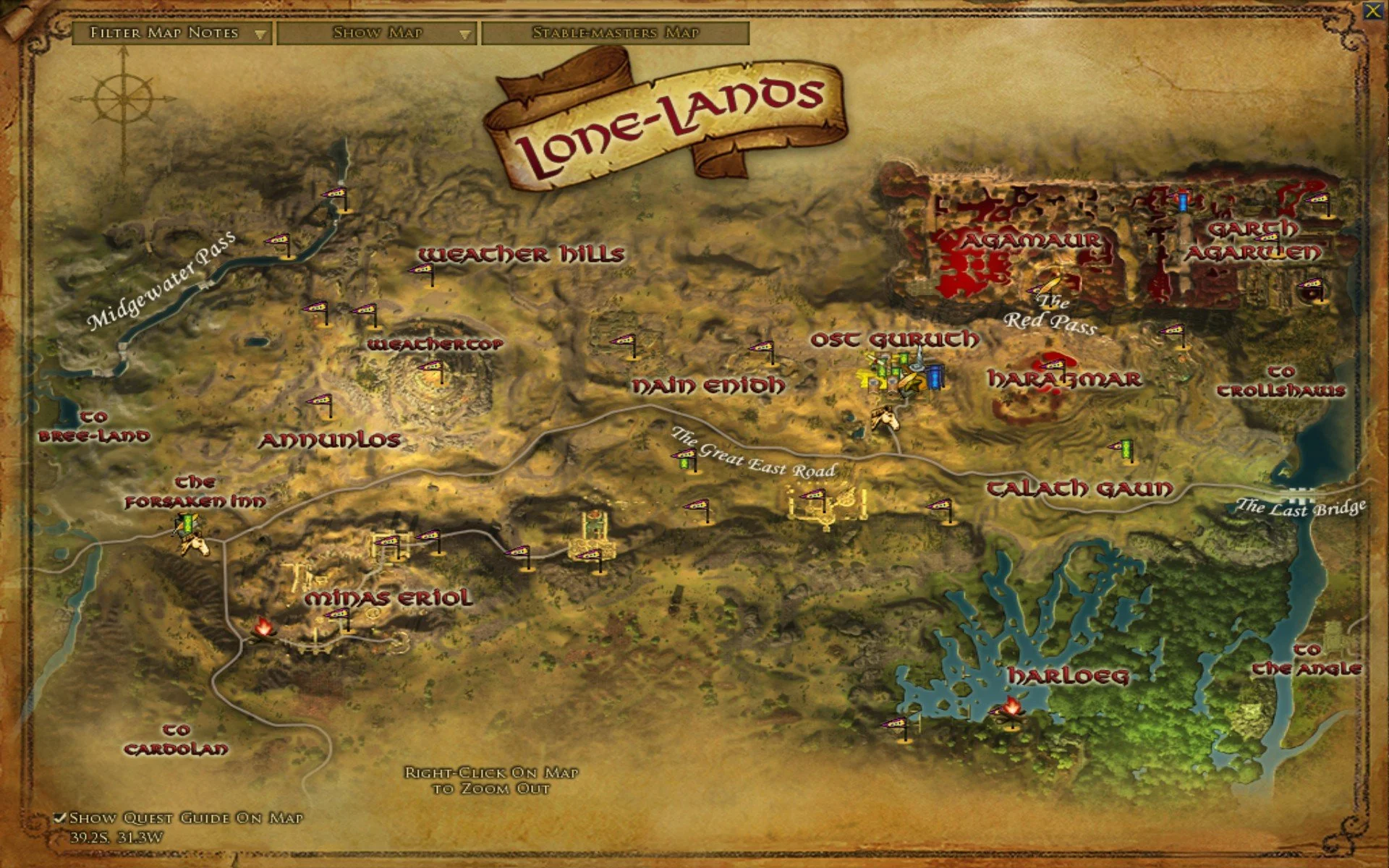
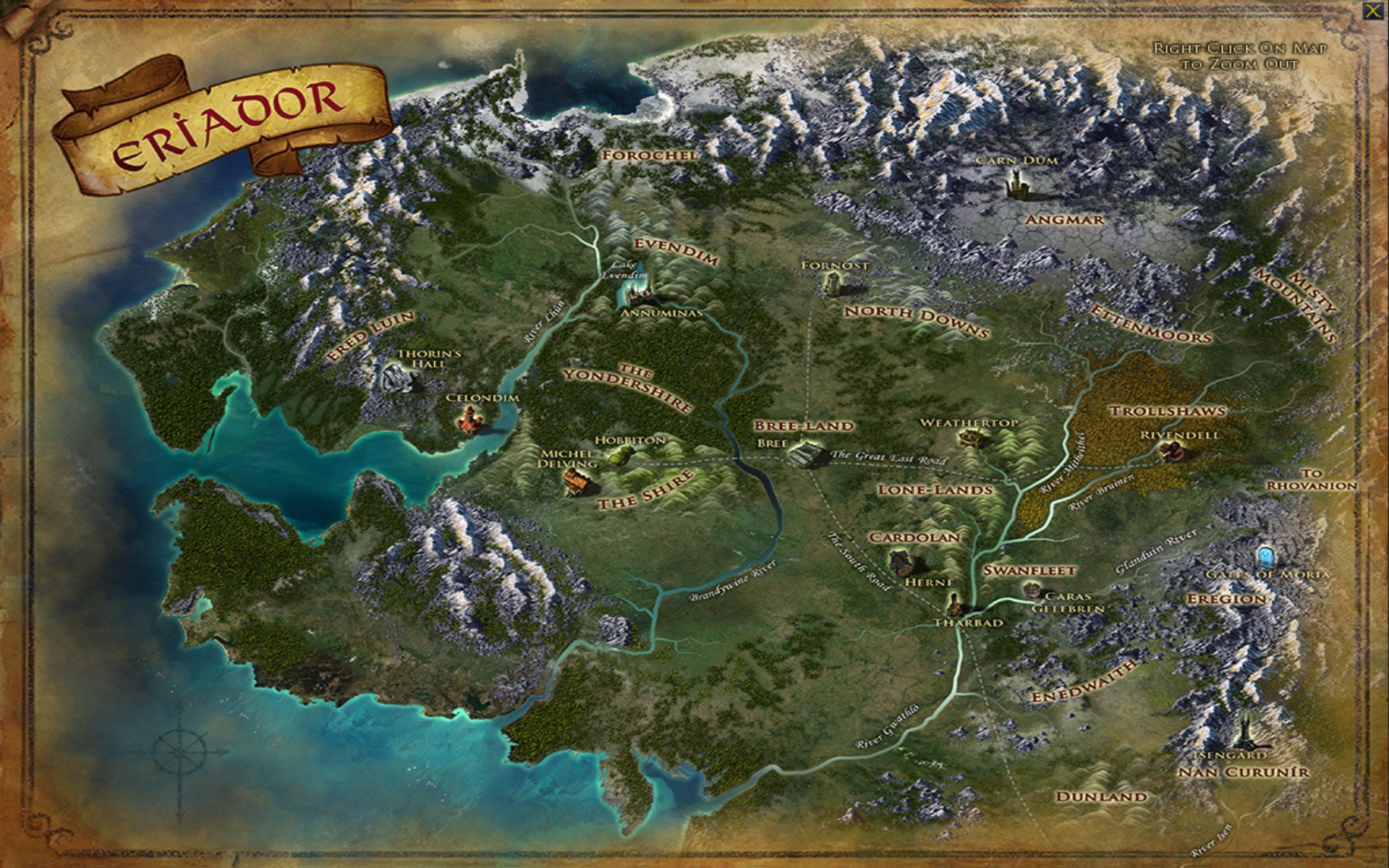
Perhaps the most significant aspect of the addition of Cardolan and Swanfleet is the way these new zones fit so well into the existing LOTRO world map. The new zones fill in a major geographical gap in Middle-earth and link The Shire, Bree, The Lone-lands, The Angle of Mitheithel, Eregion and Enedwaith seamlessly. As a result, the Lonelands, Eregion and Enedwaith maps have now been updated and reflect the new visual style that has been established in recent years. Overall, there is little left of Eridor now that isn’t included in the MMO. The two regions of Lindon and the Grey Havens being the most prominent locations that remain outstanding. It will be interesting to see if these areas feature in any future updates.
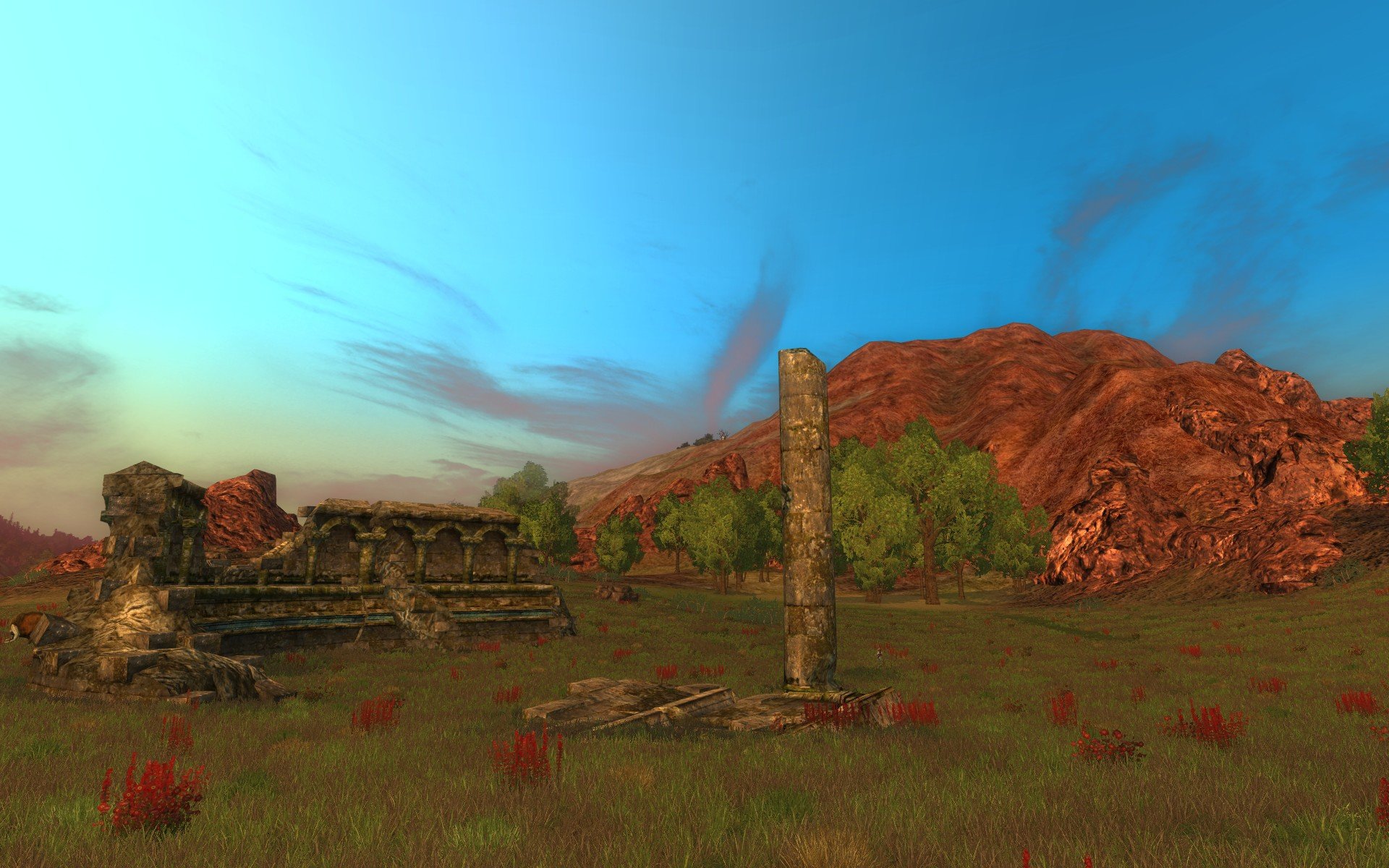
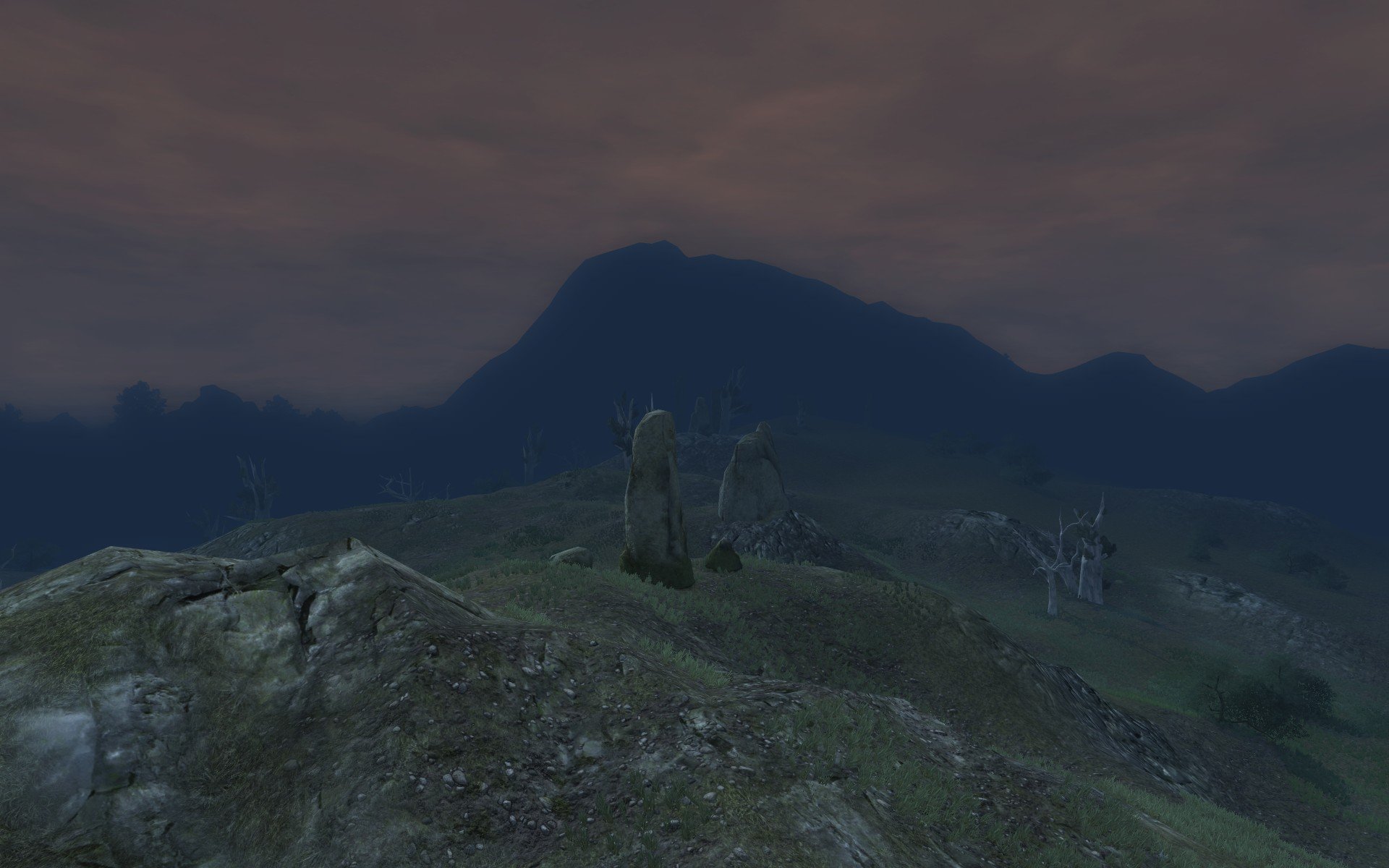
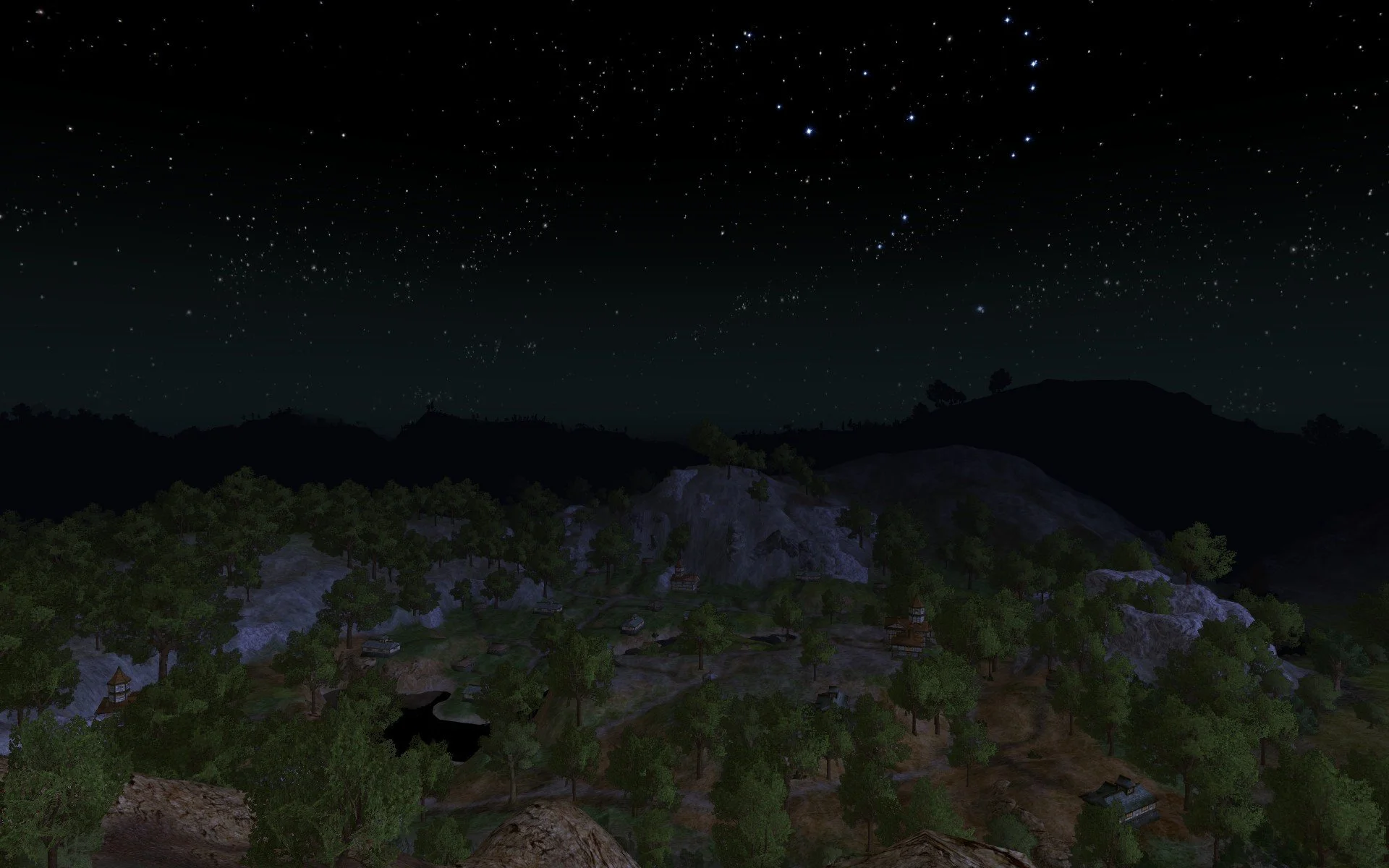
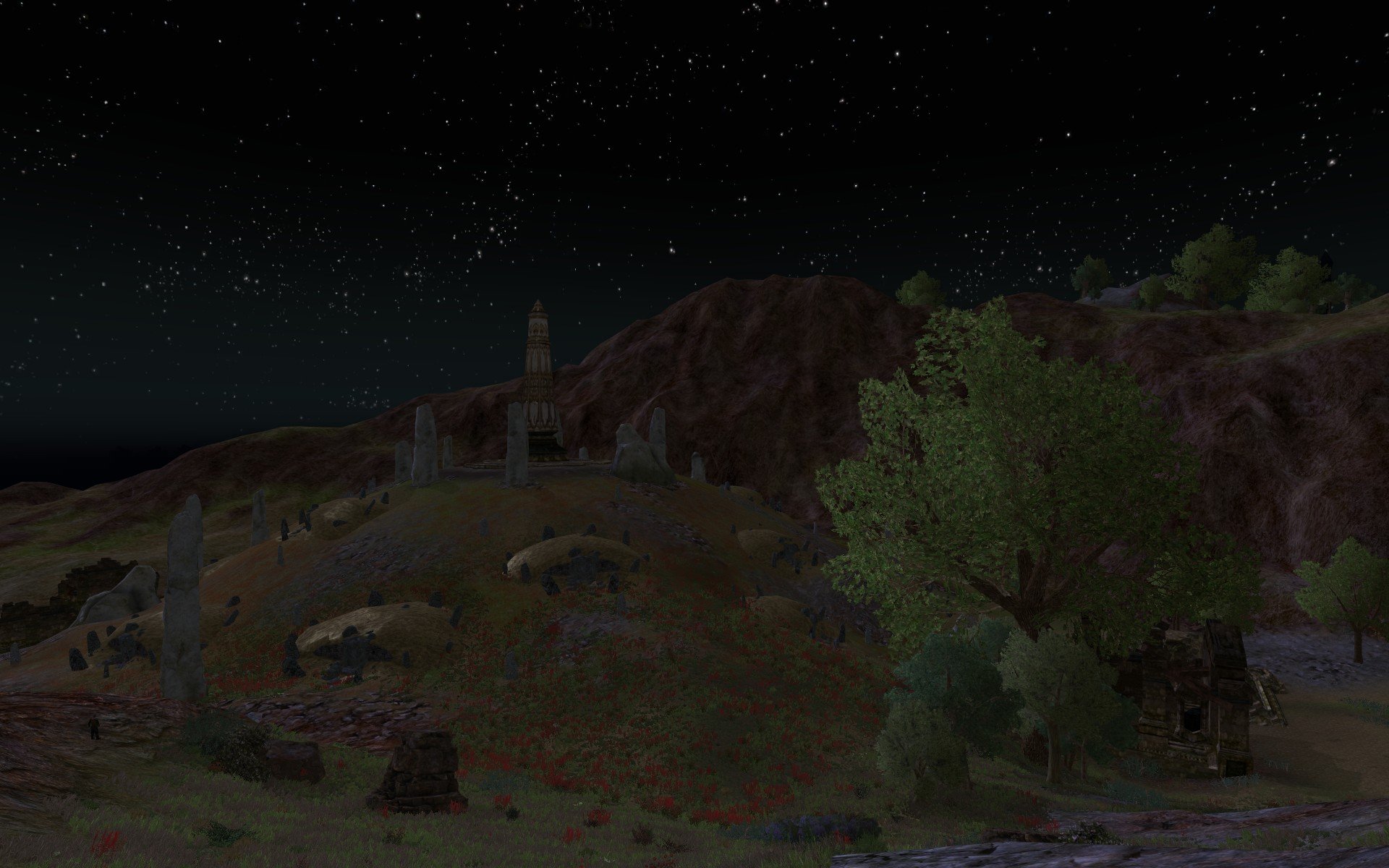
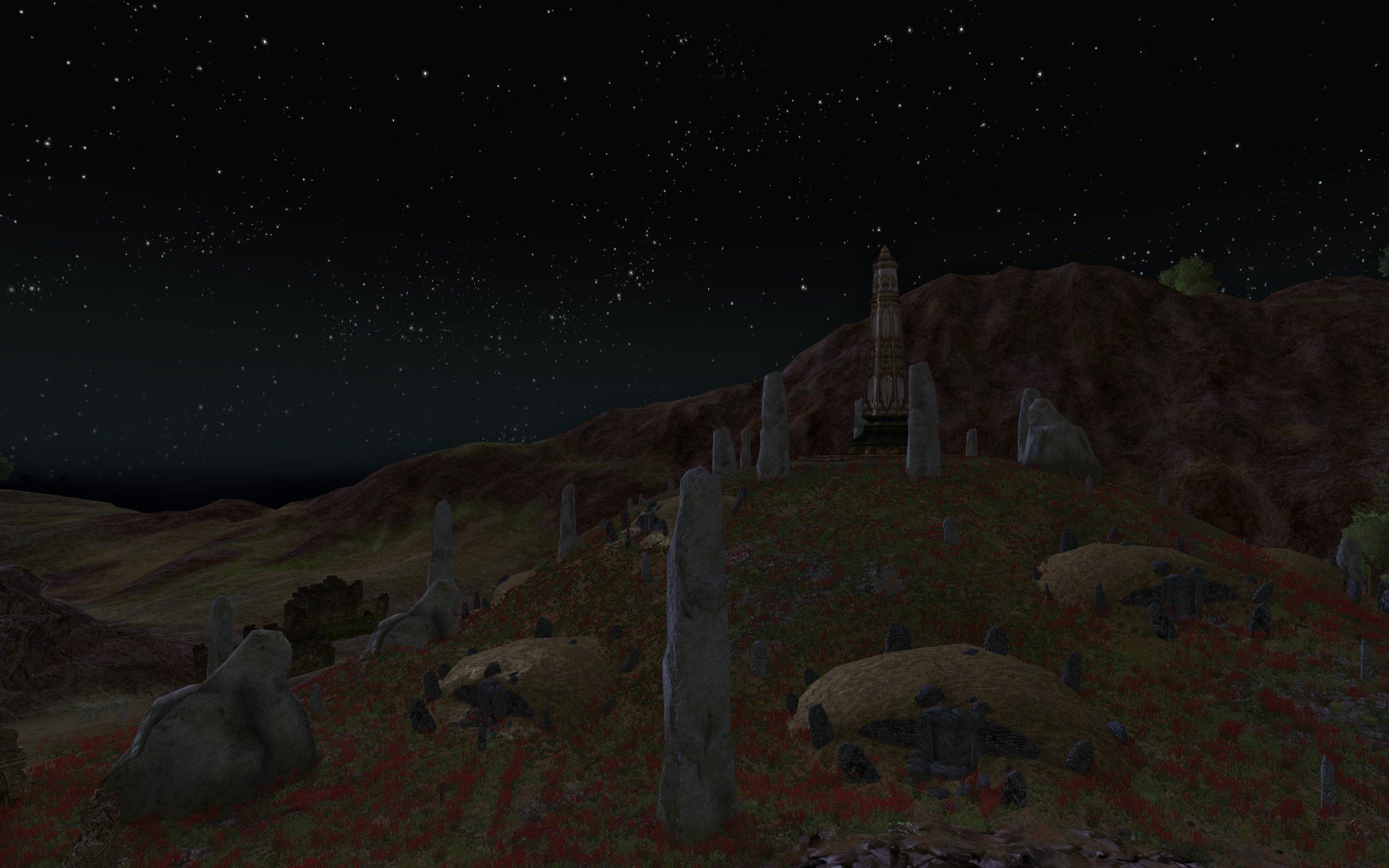
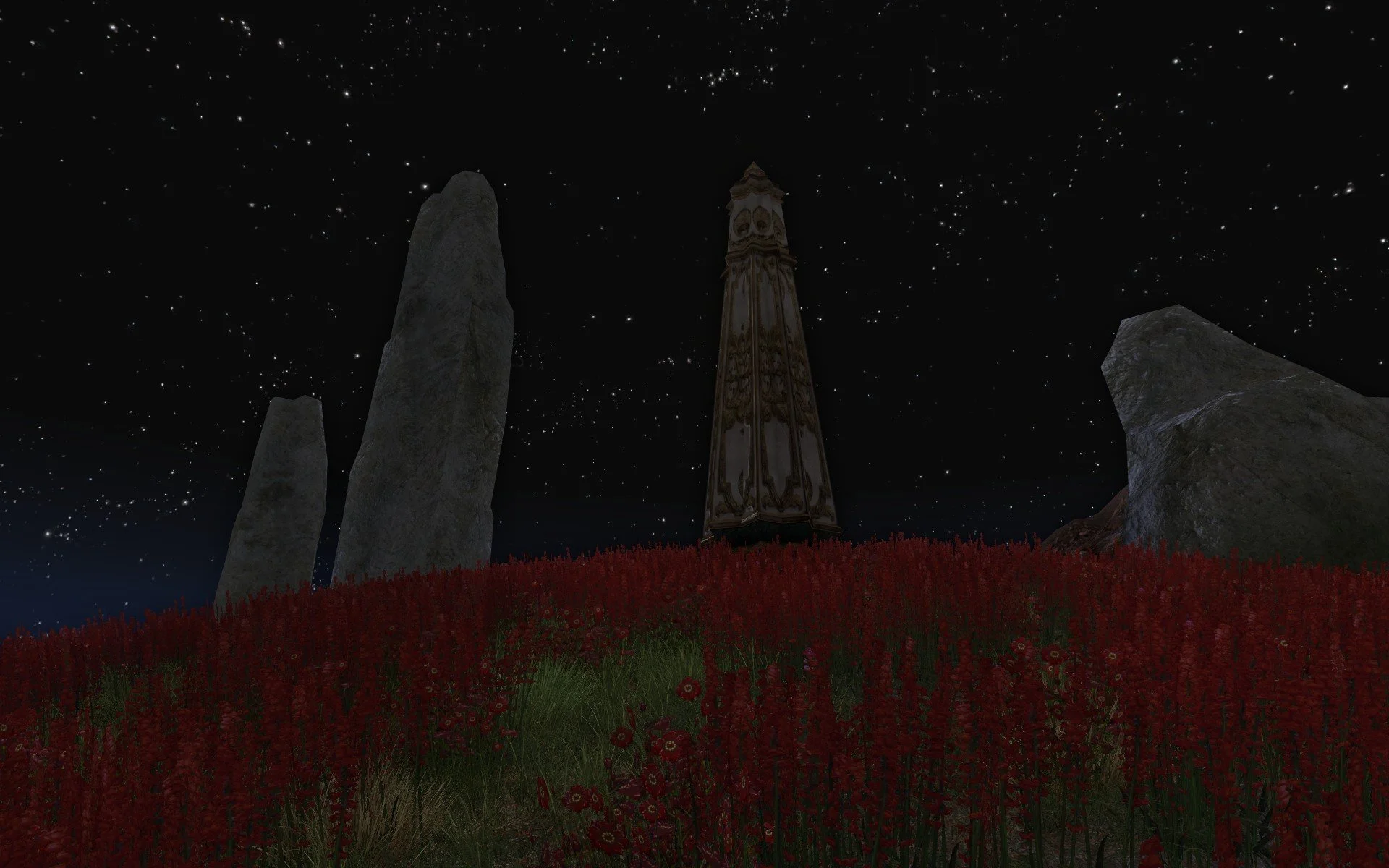
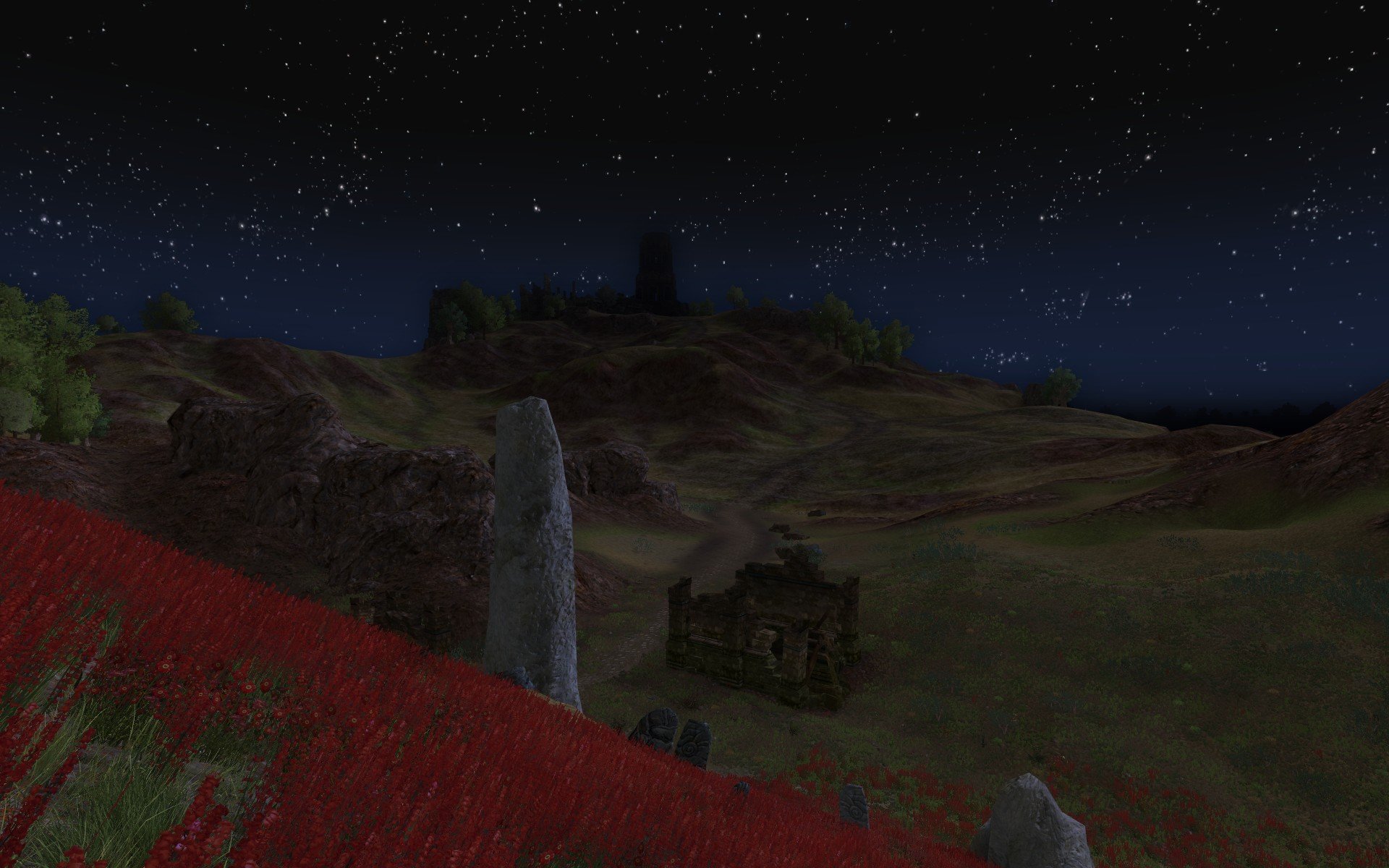
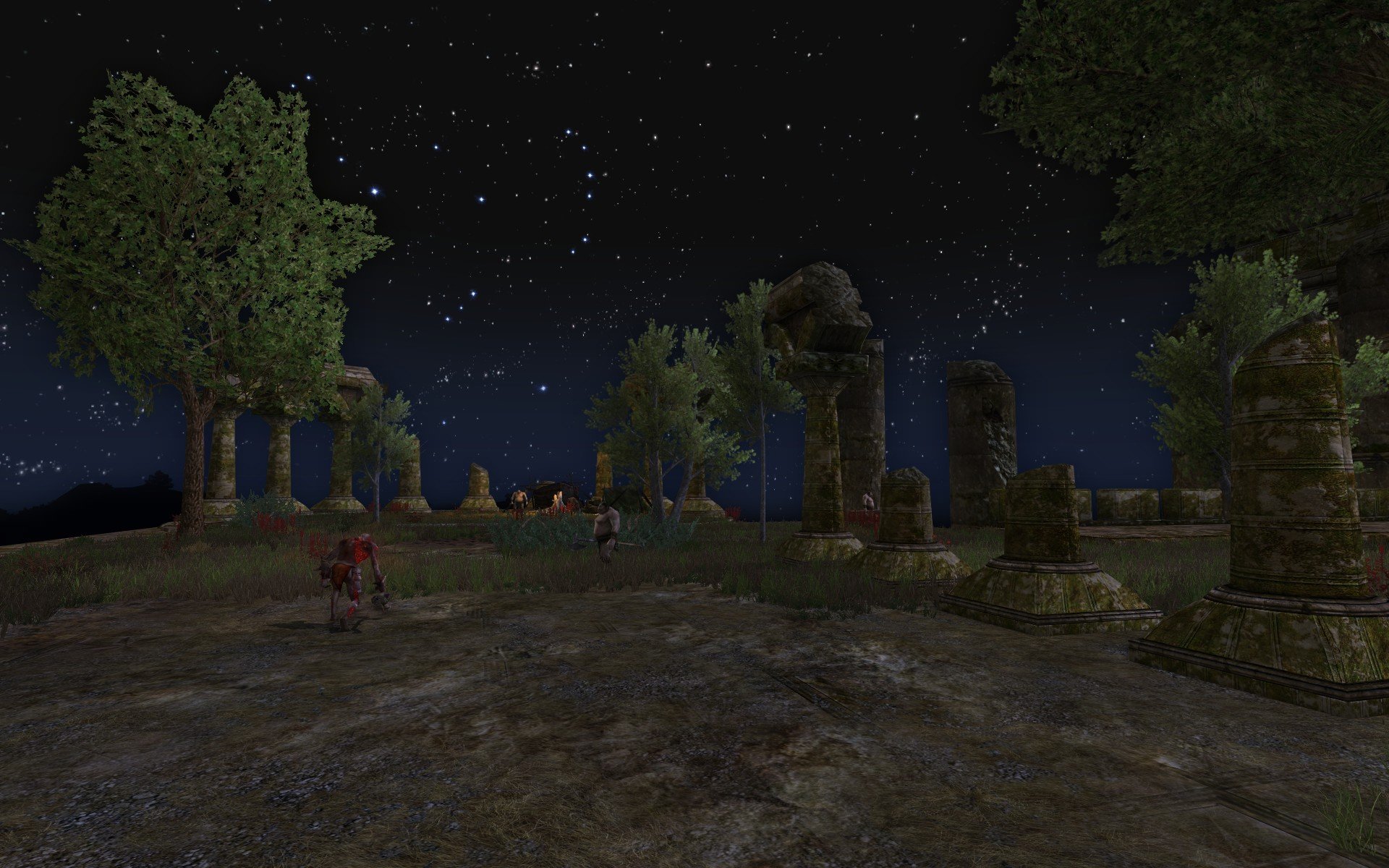
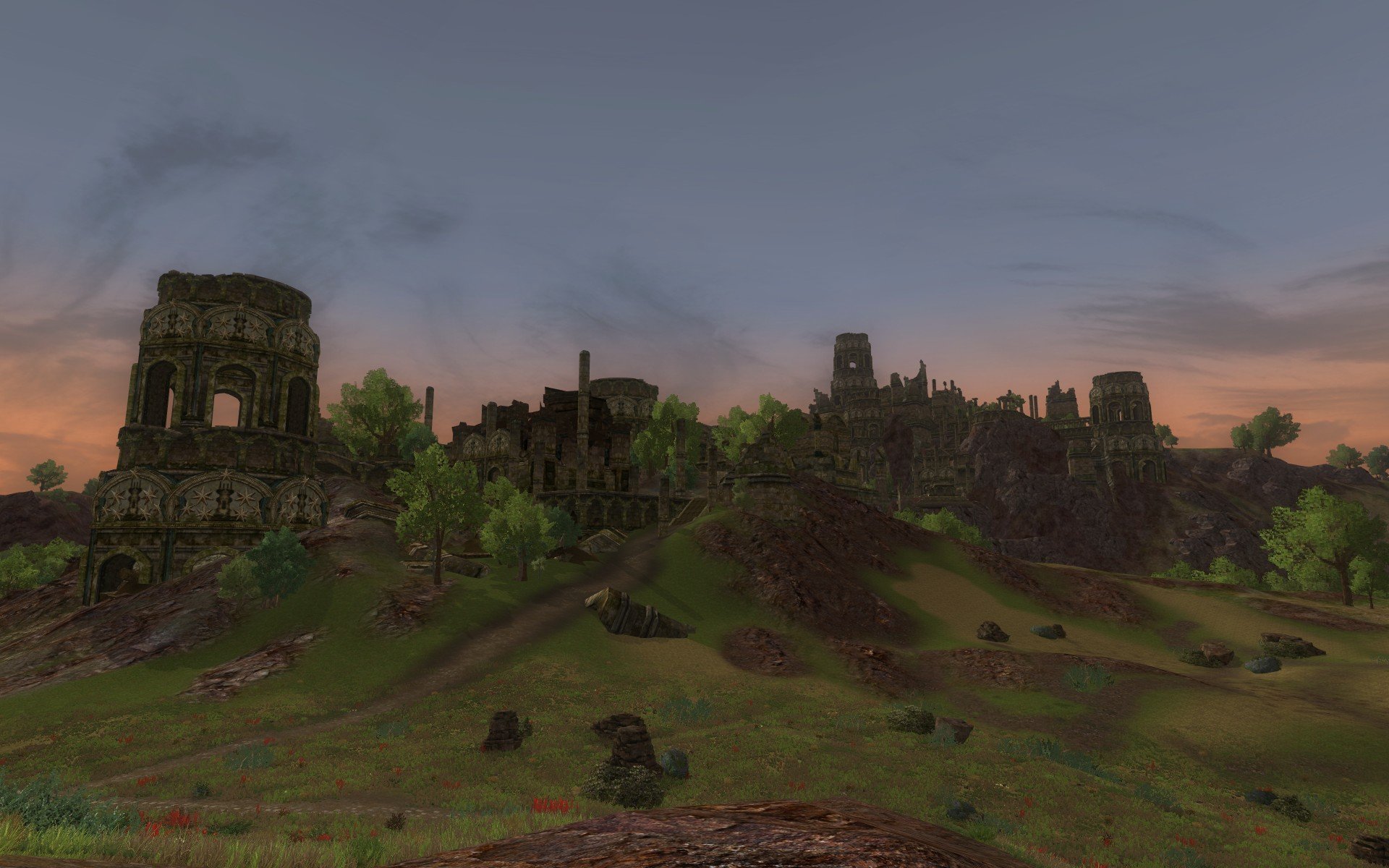
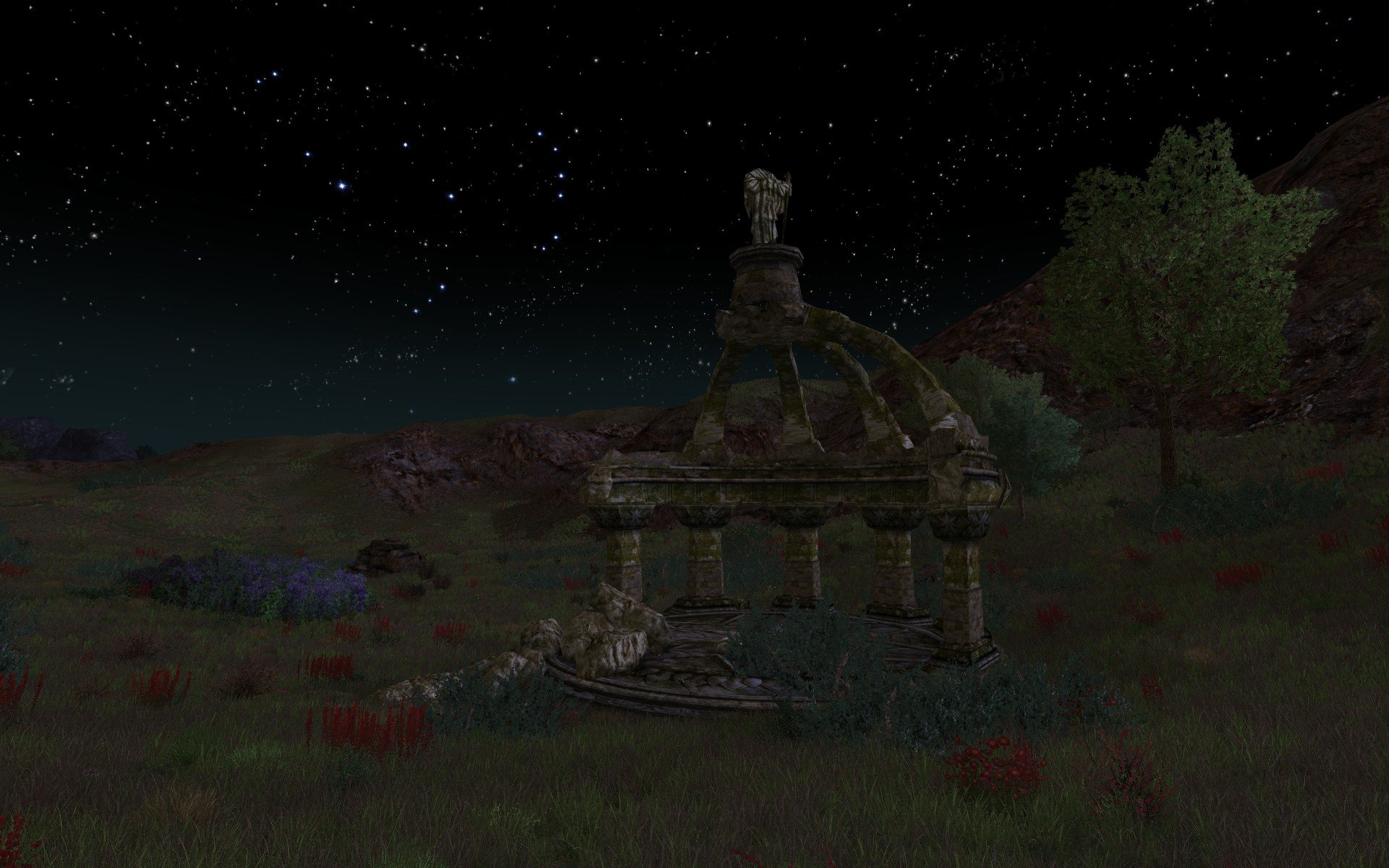
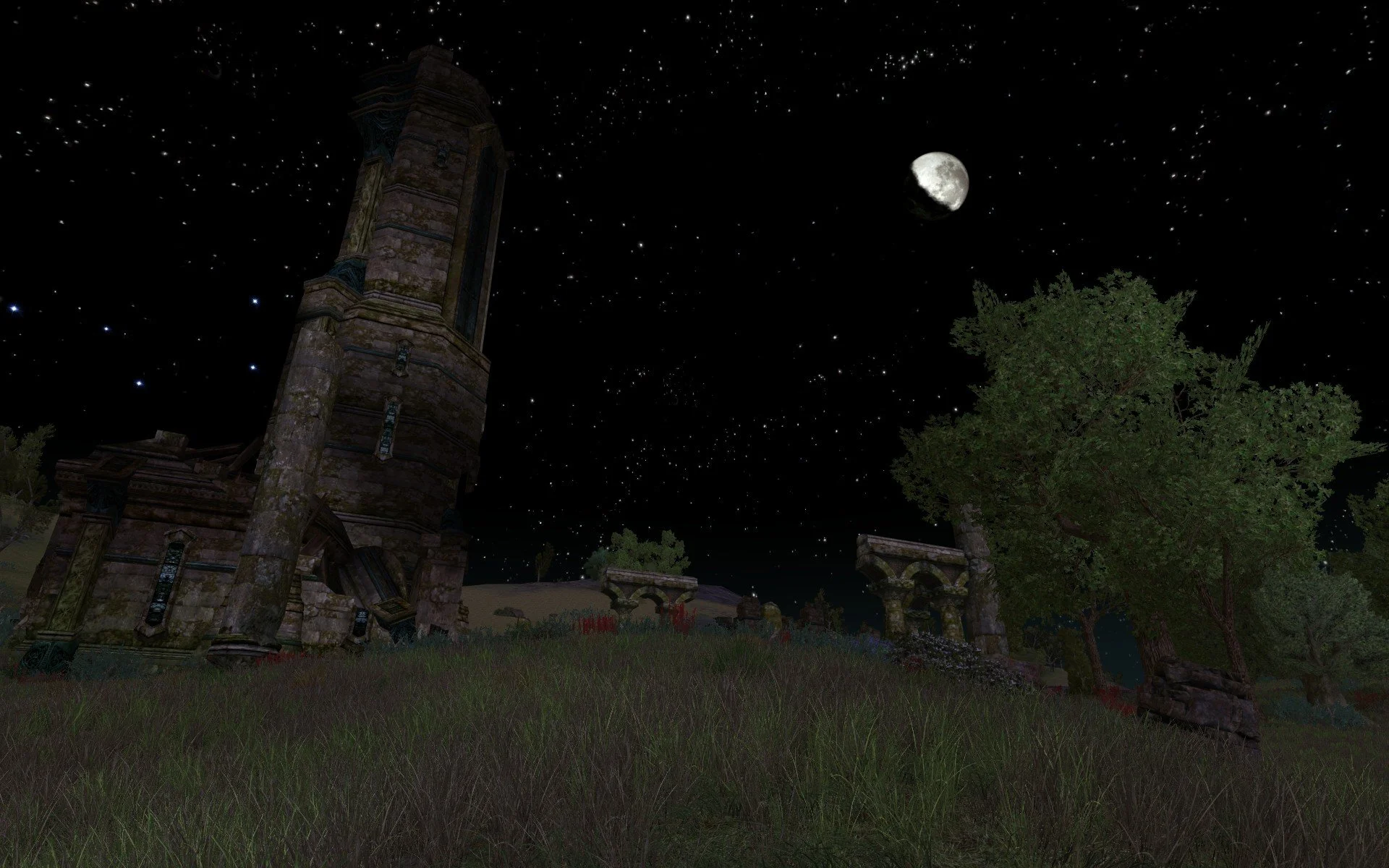
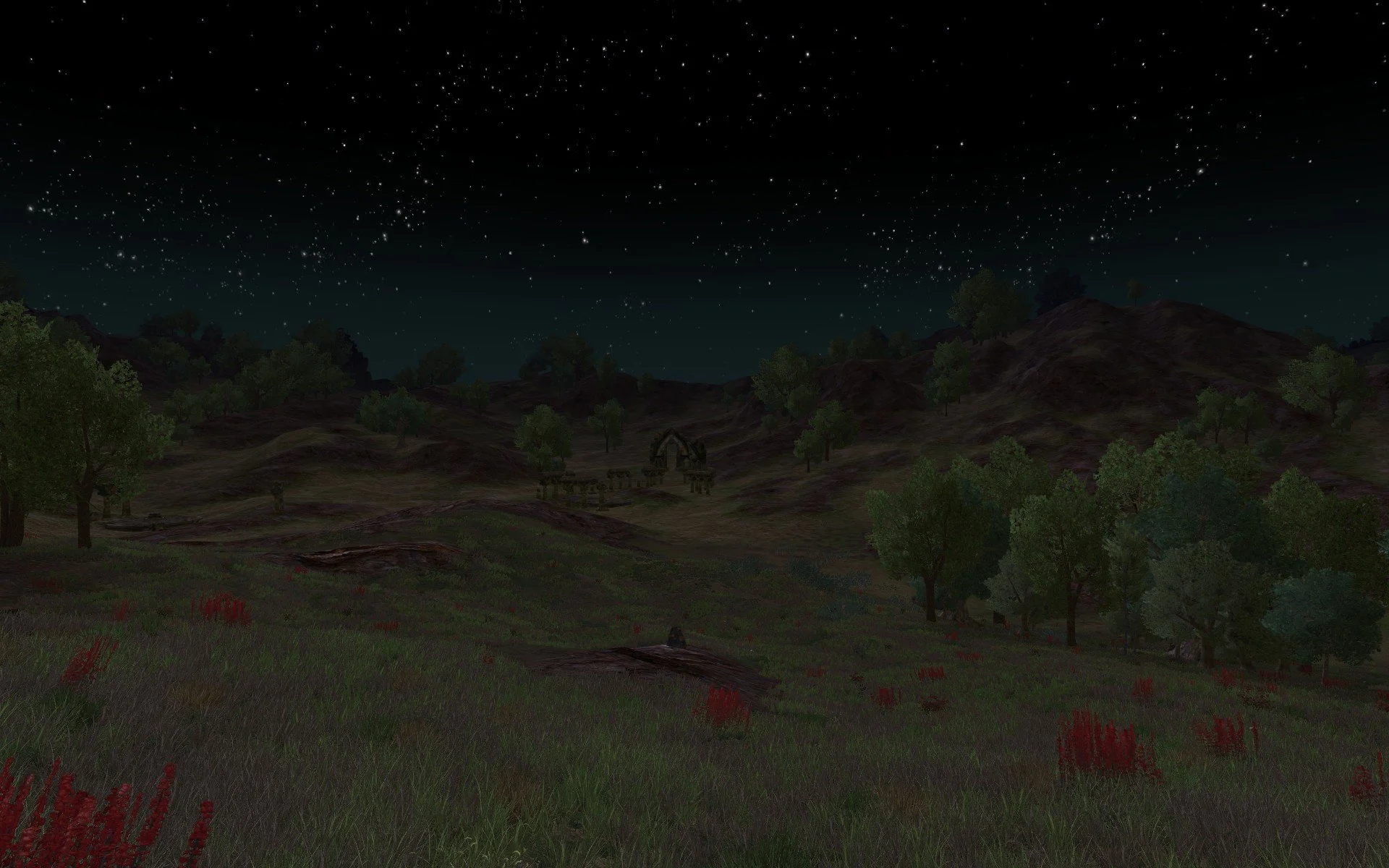
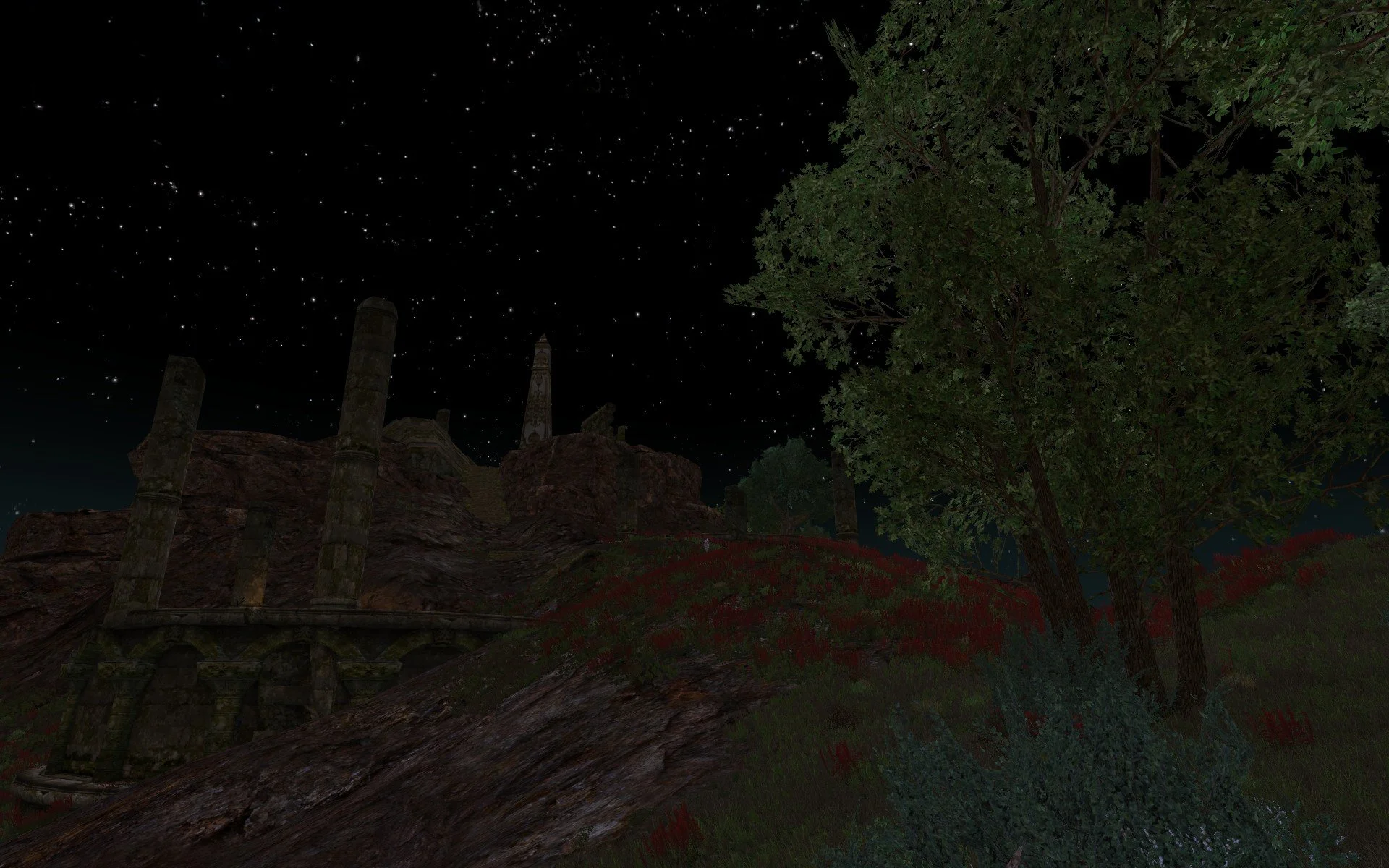
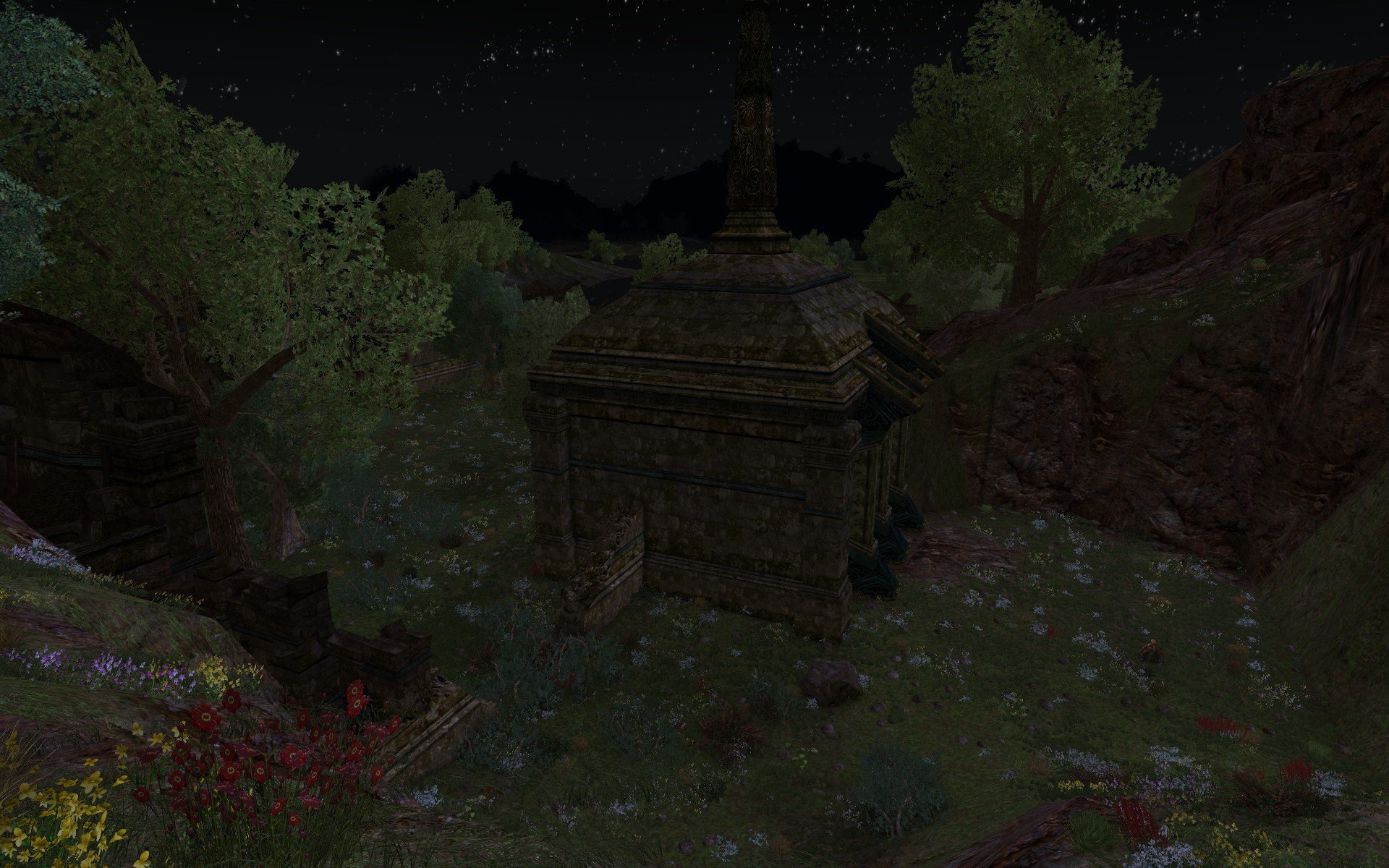
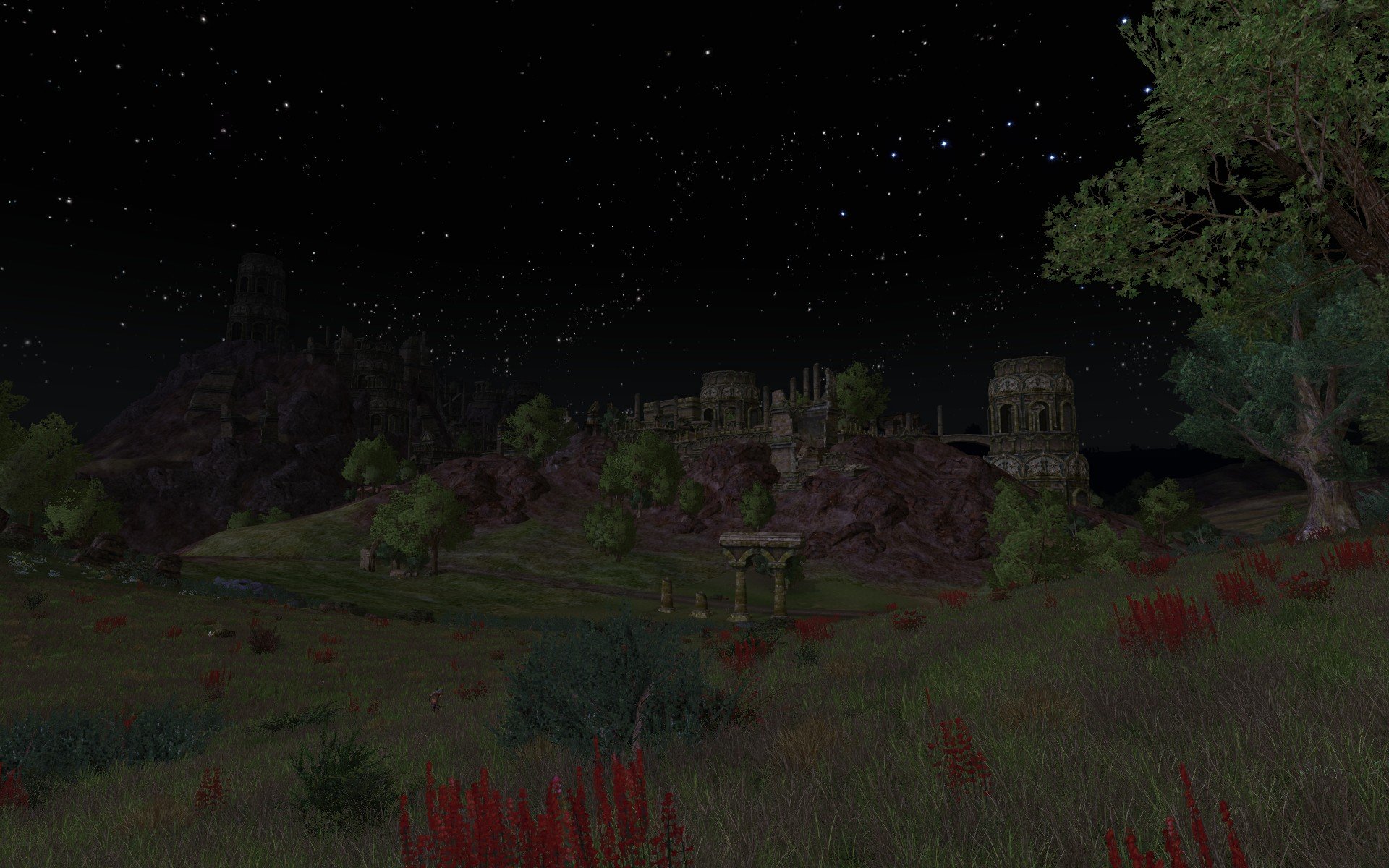
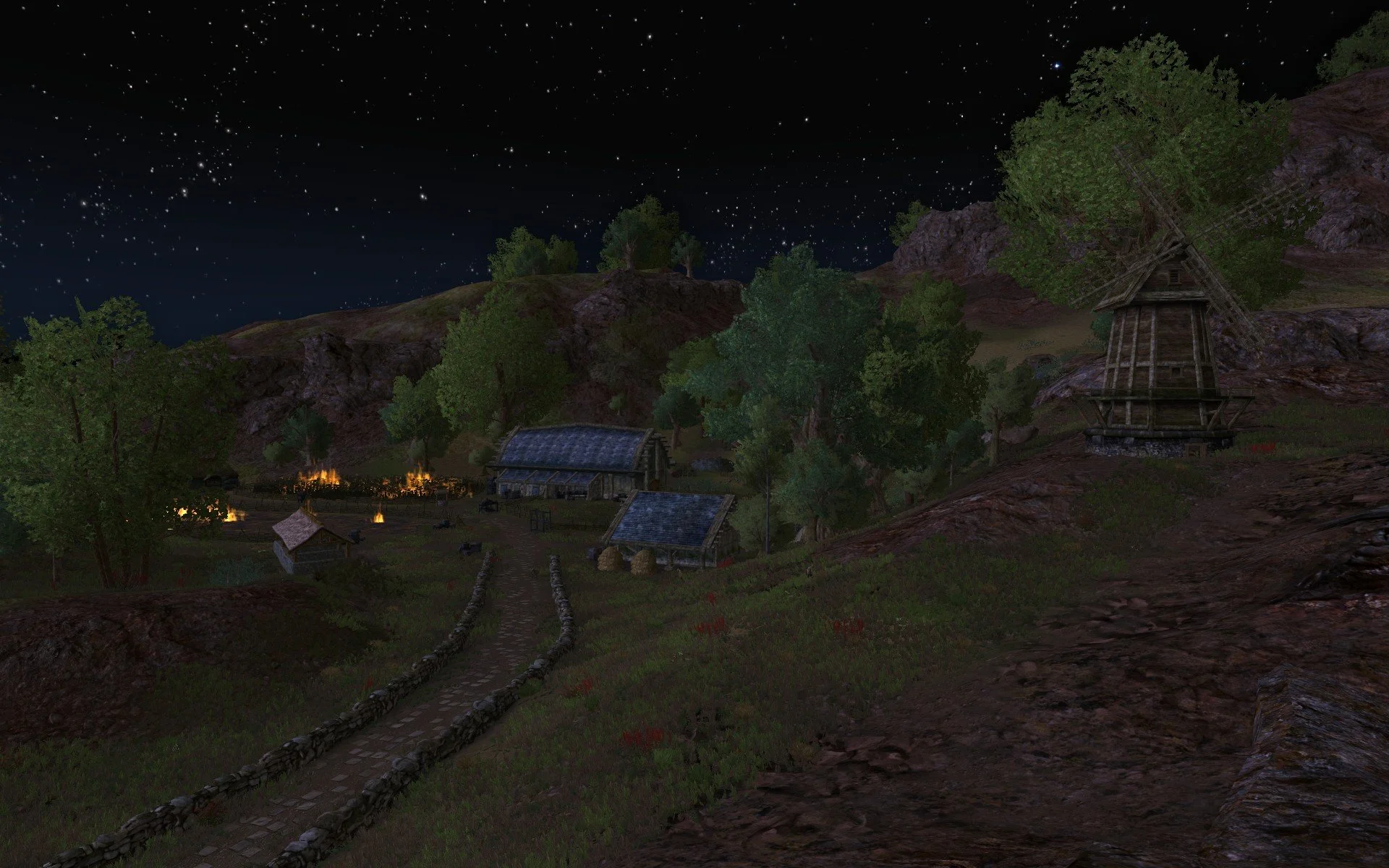
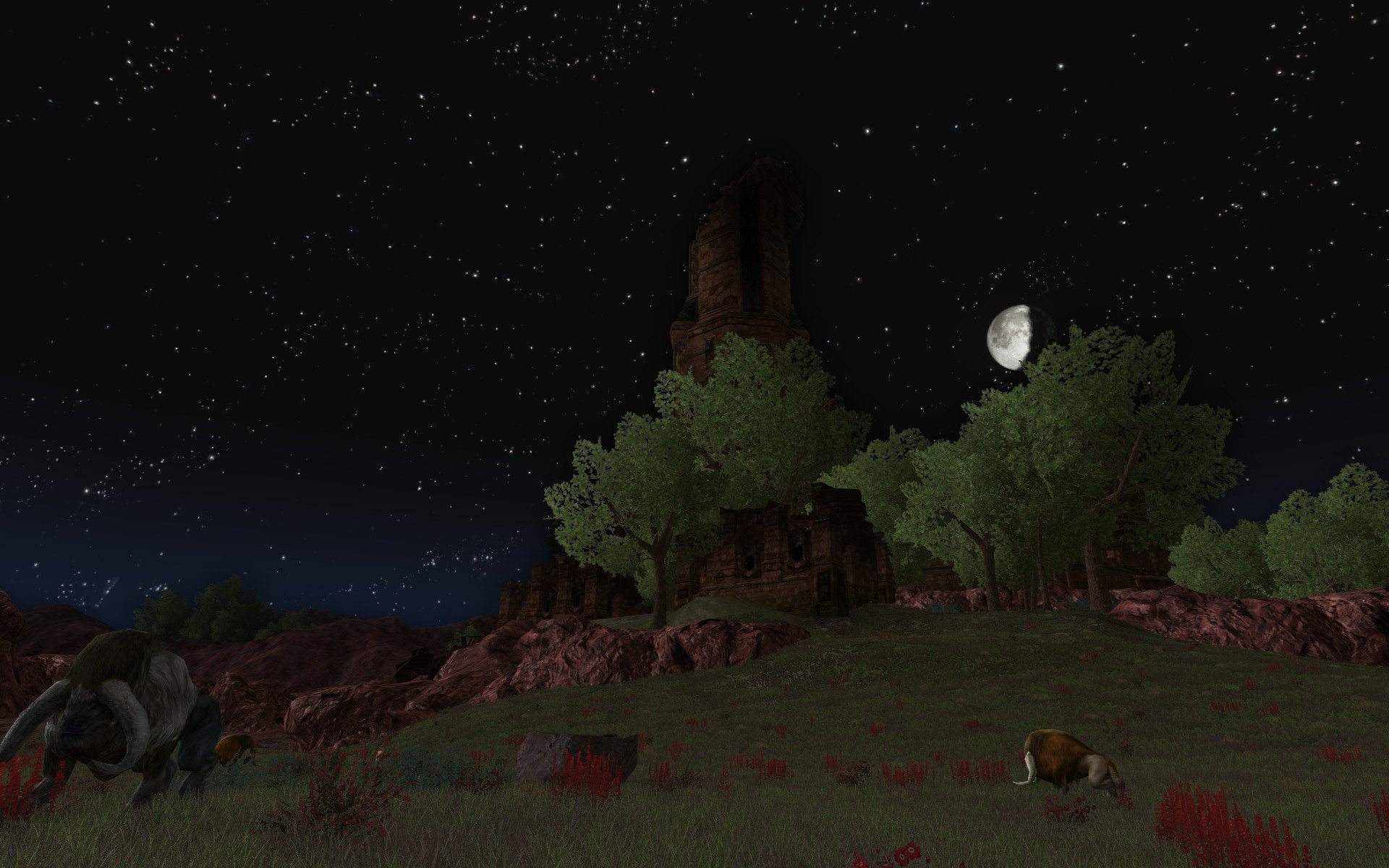
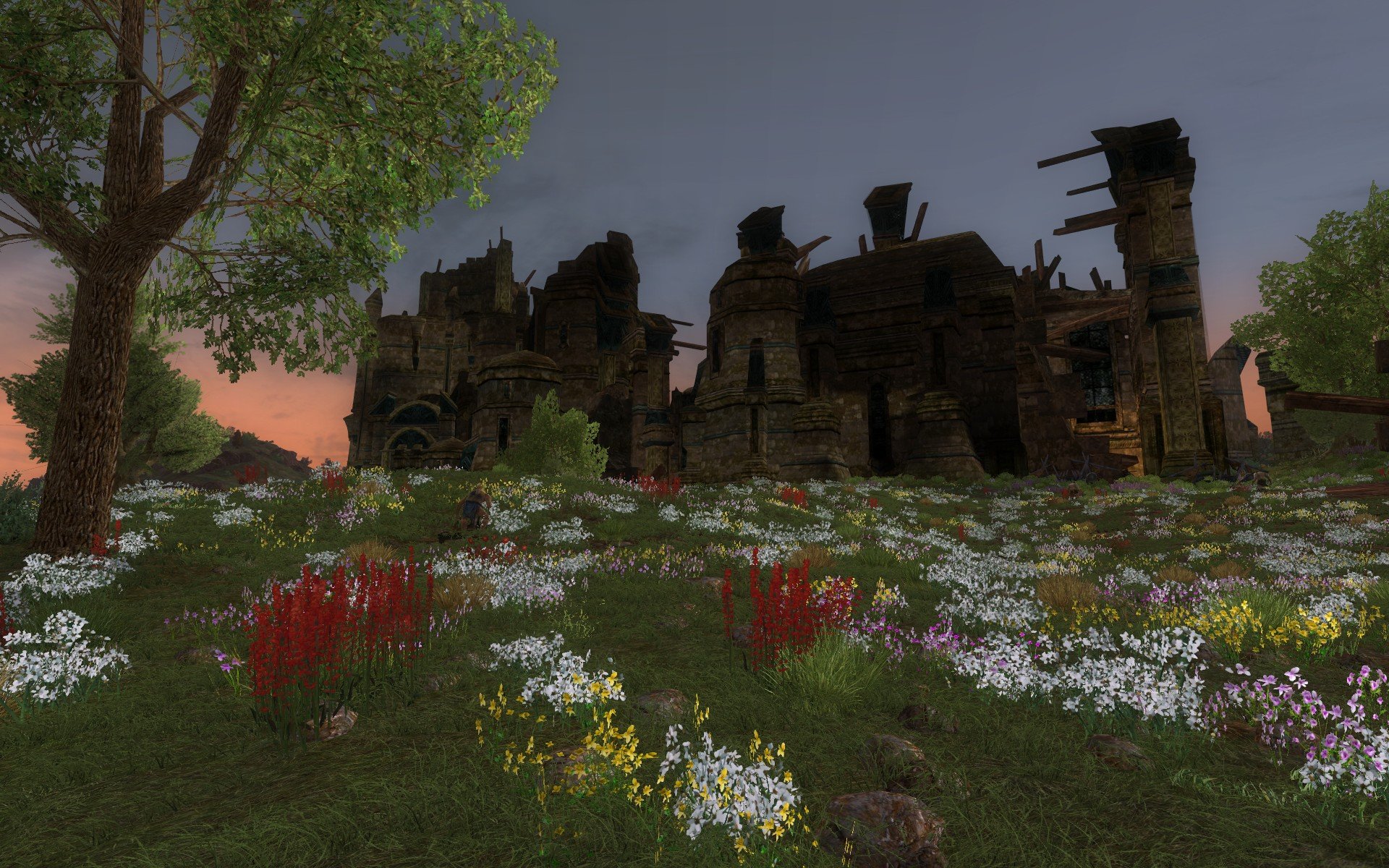
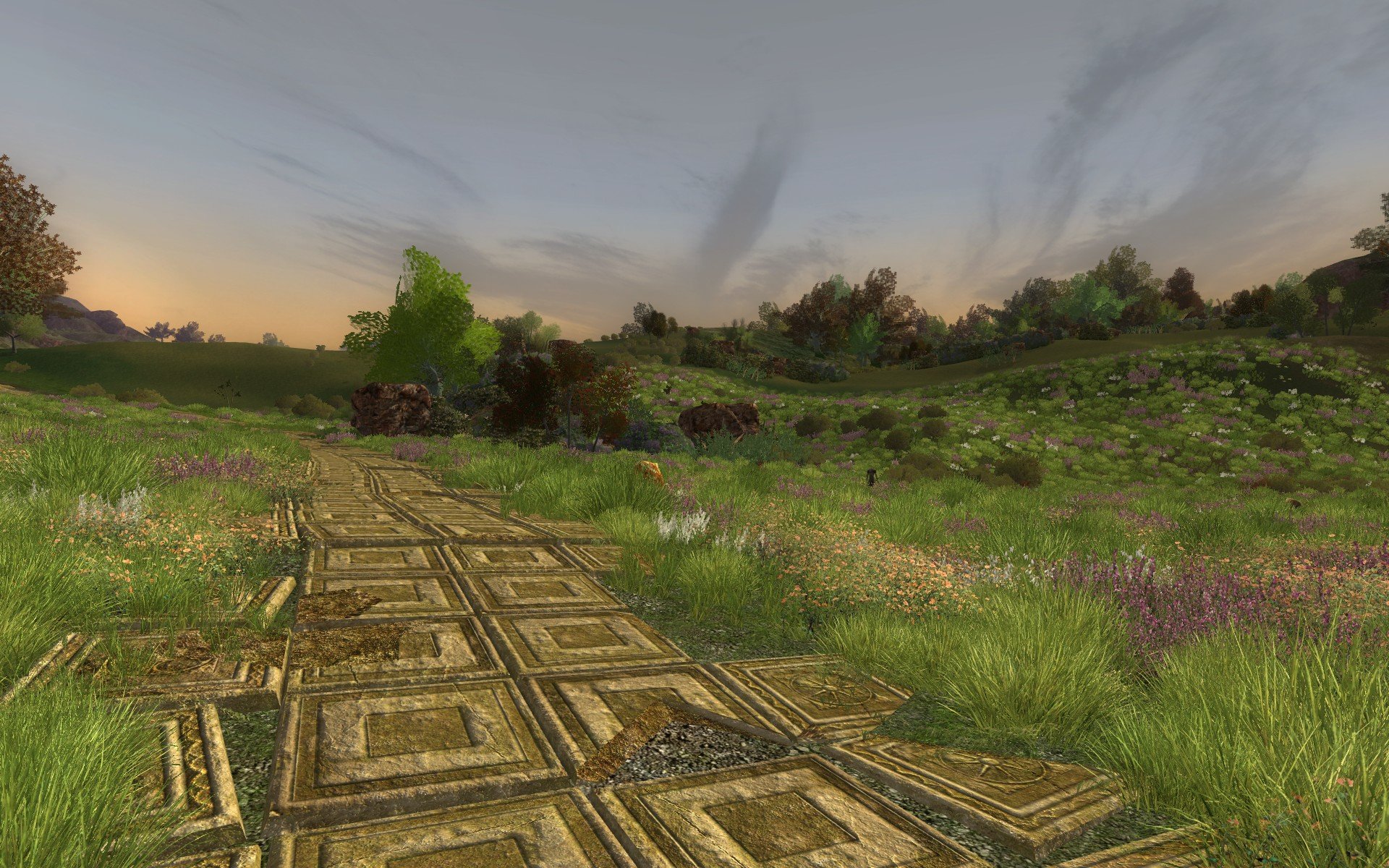
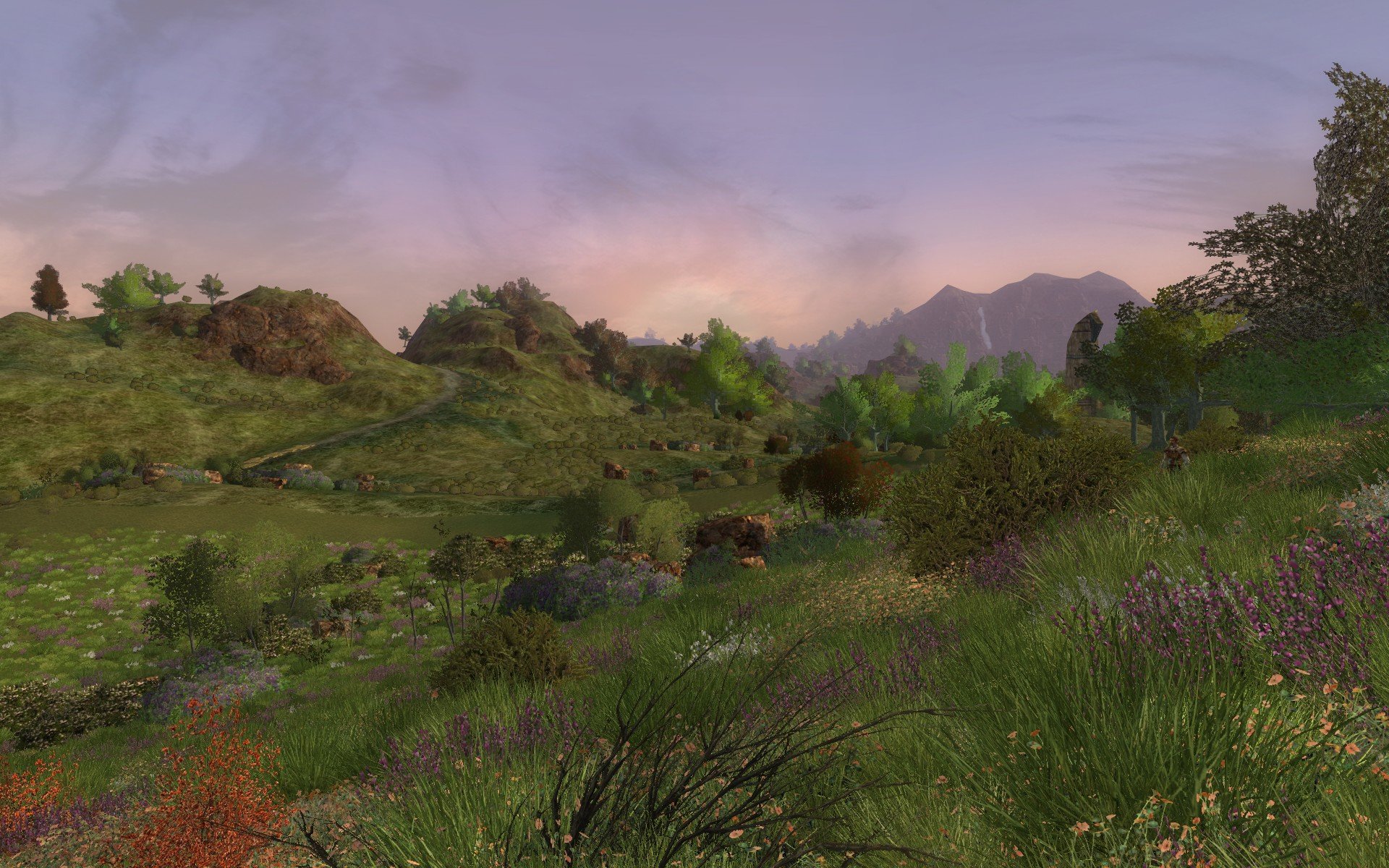
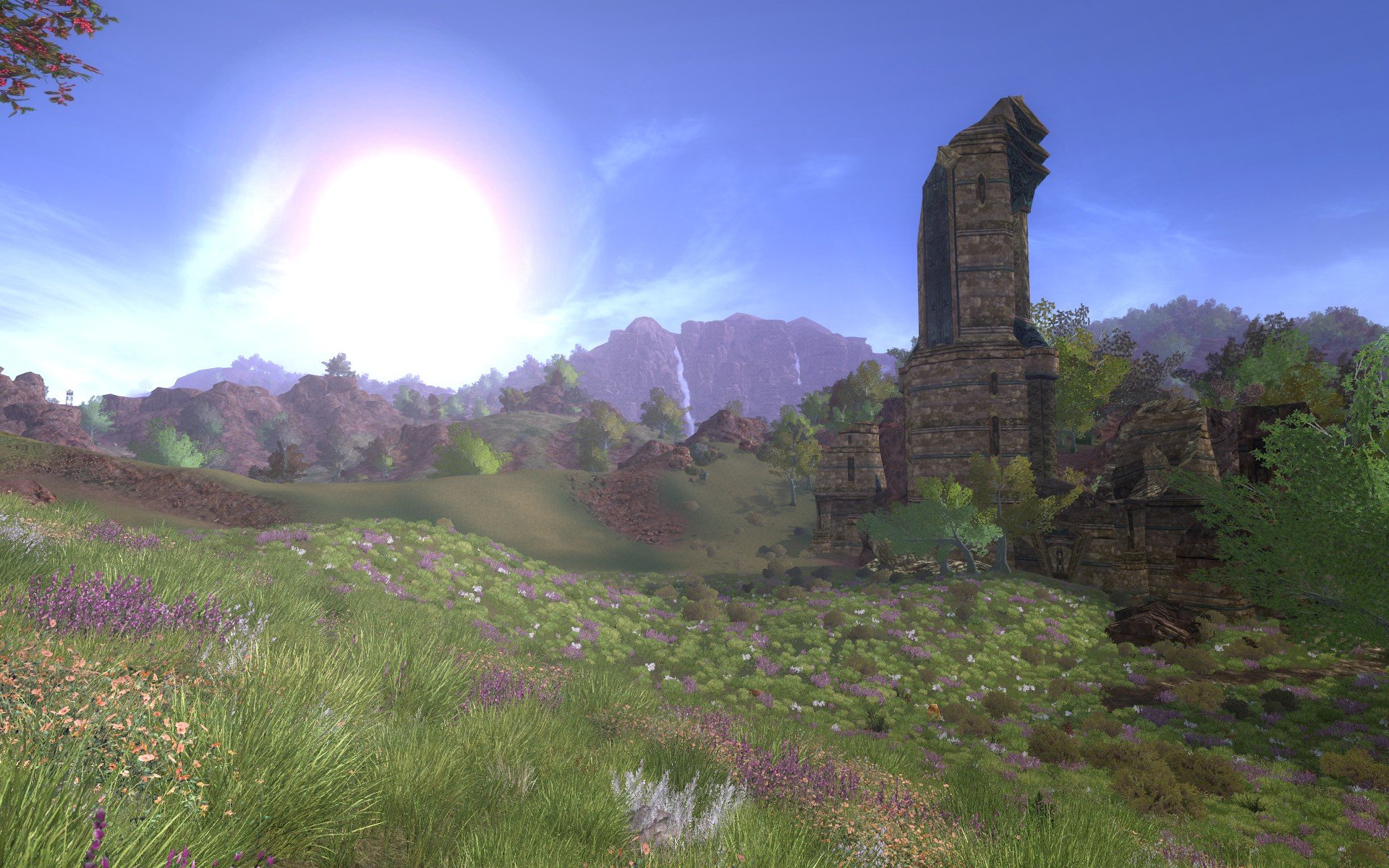
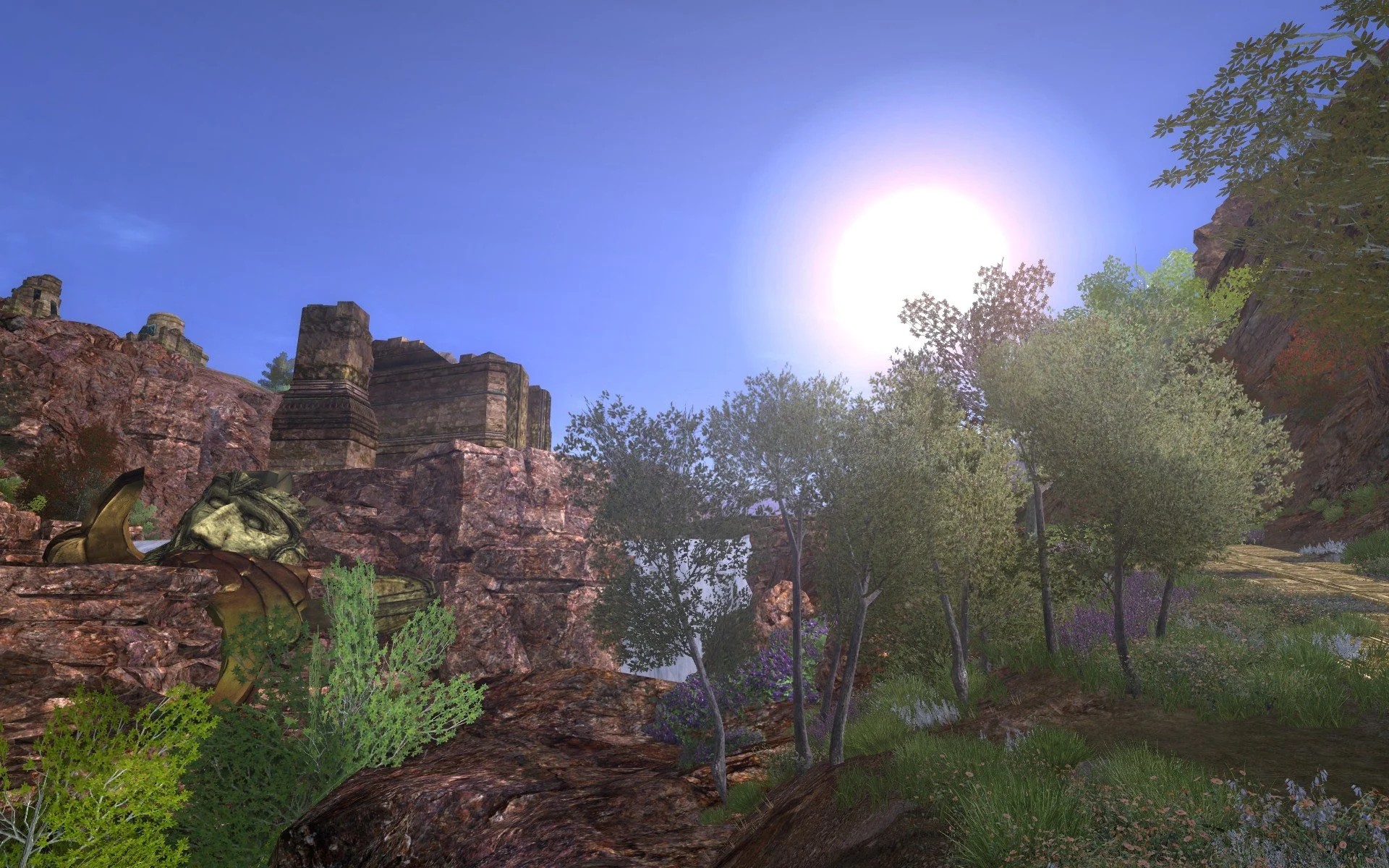
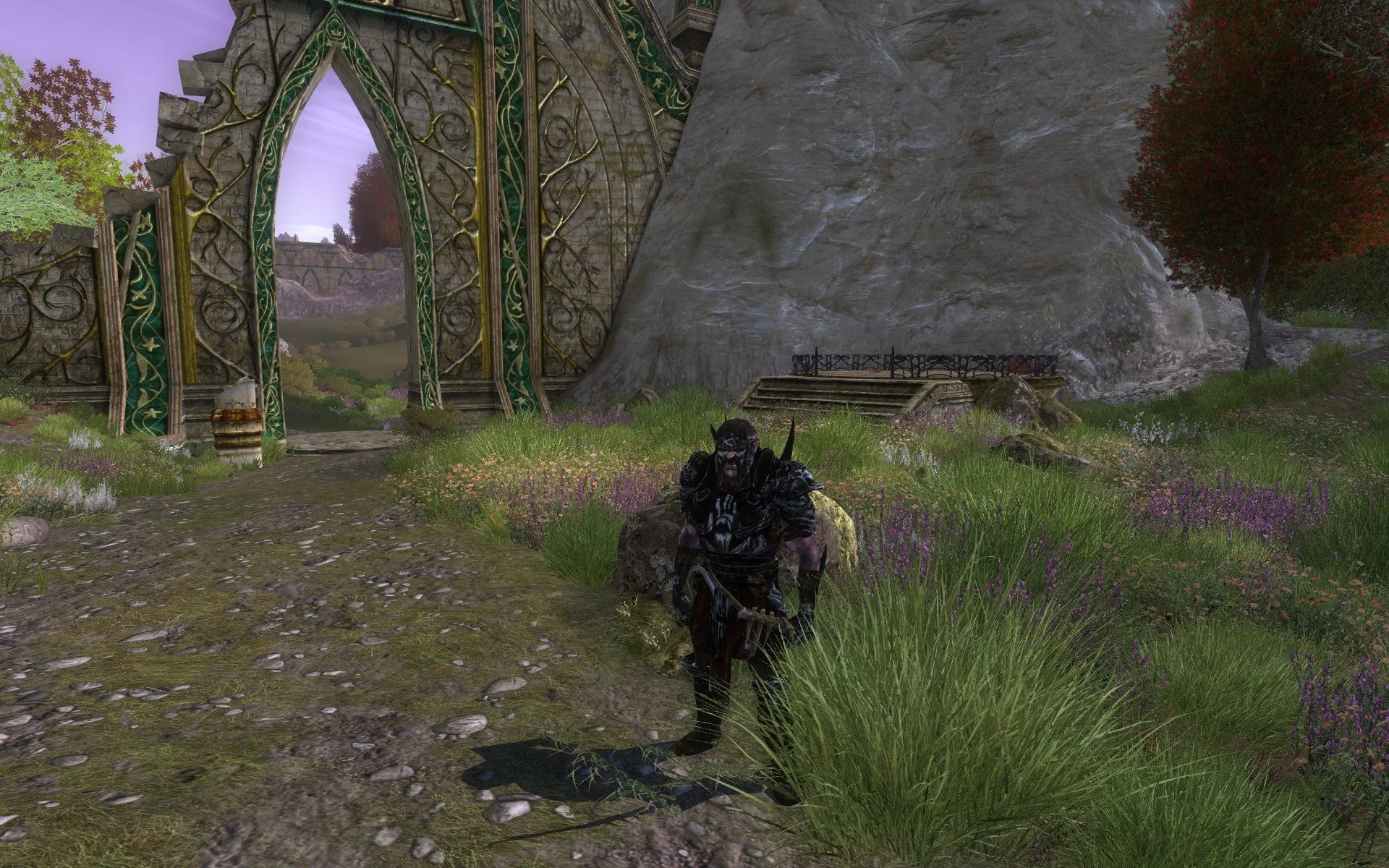
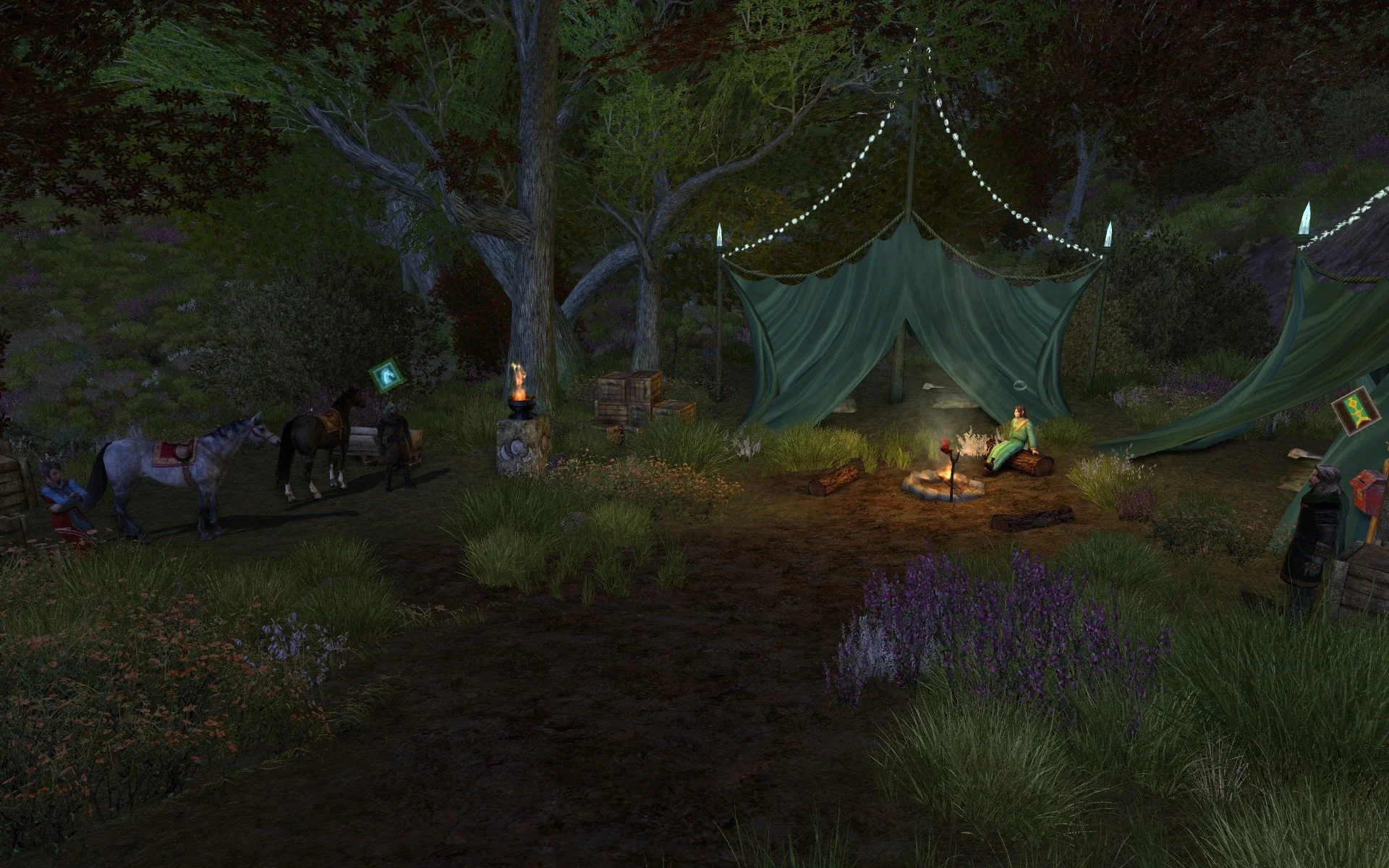
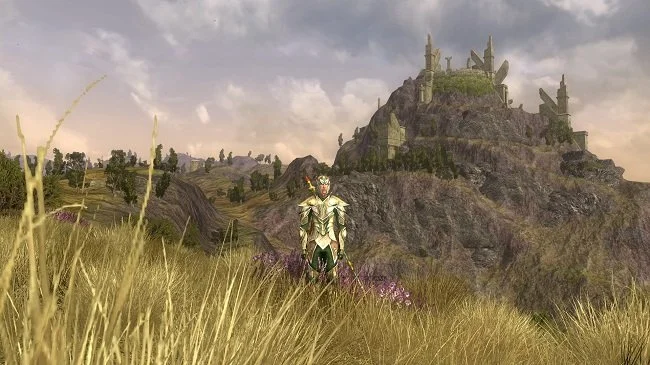
Players can enter Cardolan, the first of the two new zones, via the South Farthing in The Shire. This leads to Sarn Ford. Alternatively, access can be gained via the Andrath Gate in Southern Bree. This will take the player to Southern Andrath. There is also a road South from Lone-lands which passes Minas Eriol. There is also access from The Angle of Mitheithel and the Southern Trollshaws. Cardolan has five areas. The first is Ruddymore which extends from Sarn Ford on the borders of The Shire, Eastward to the town of Herne. This area is filled with Ruffians and the environment is similar to that of The Iron Hill, with a lock of dark brown rock formation. To the North of Ruddymore lies the area of Tyrn Gorthad. This is filled with Cardolan ruins, the most substantive of which is Dol Ernil on the borders of the Old Forest. The area is home to Wights and Gaunt men and is in a similar idiom to the North Downs.
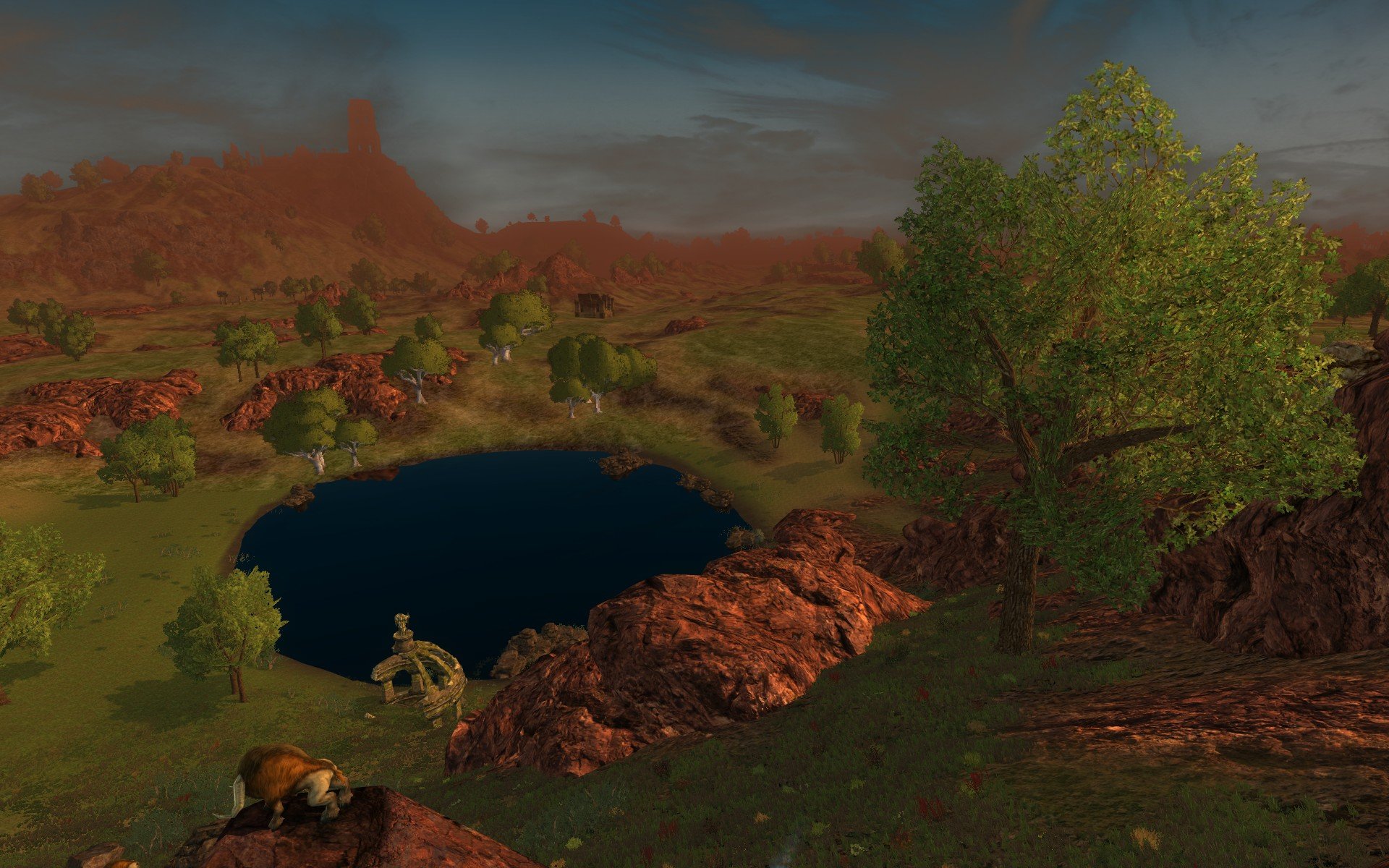
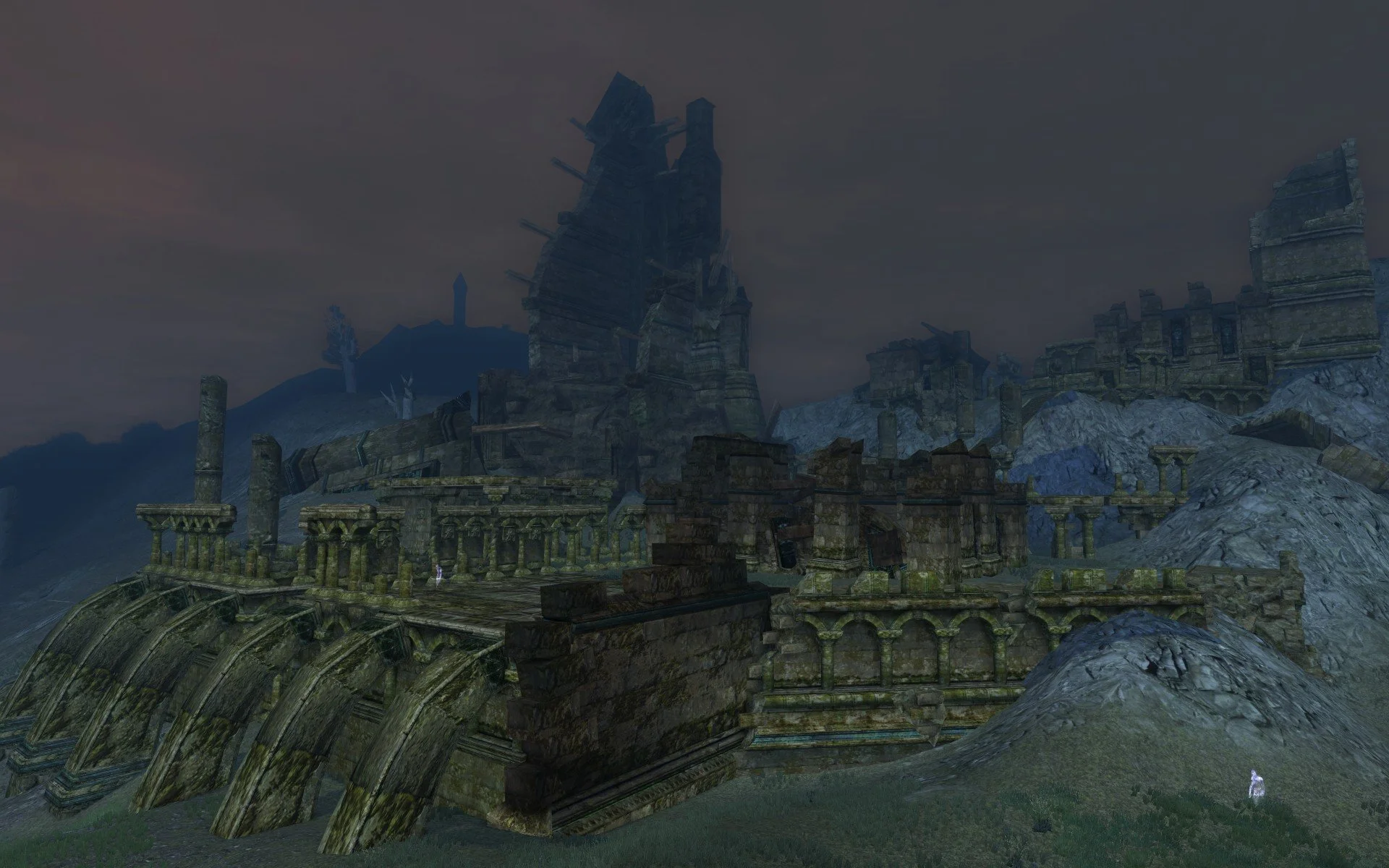
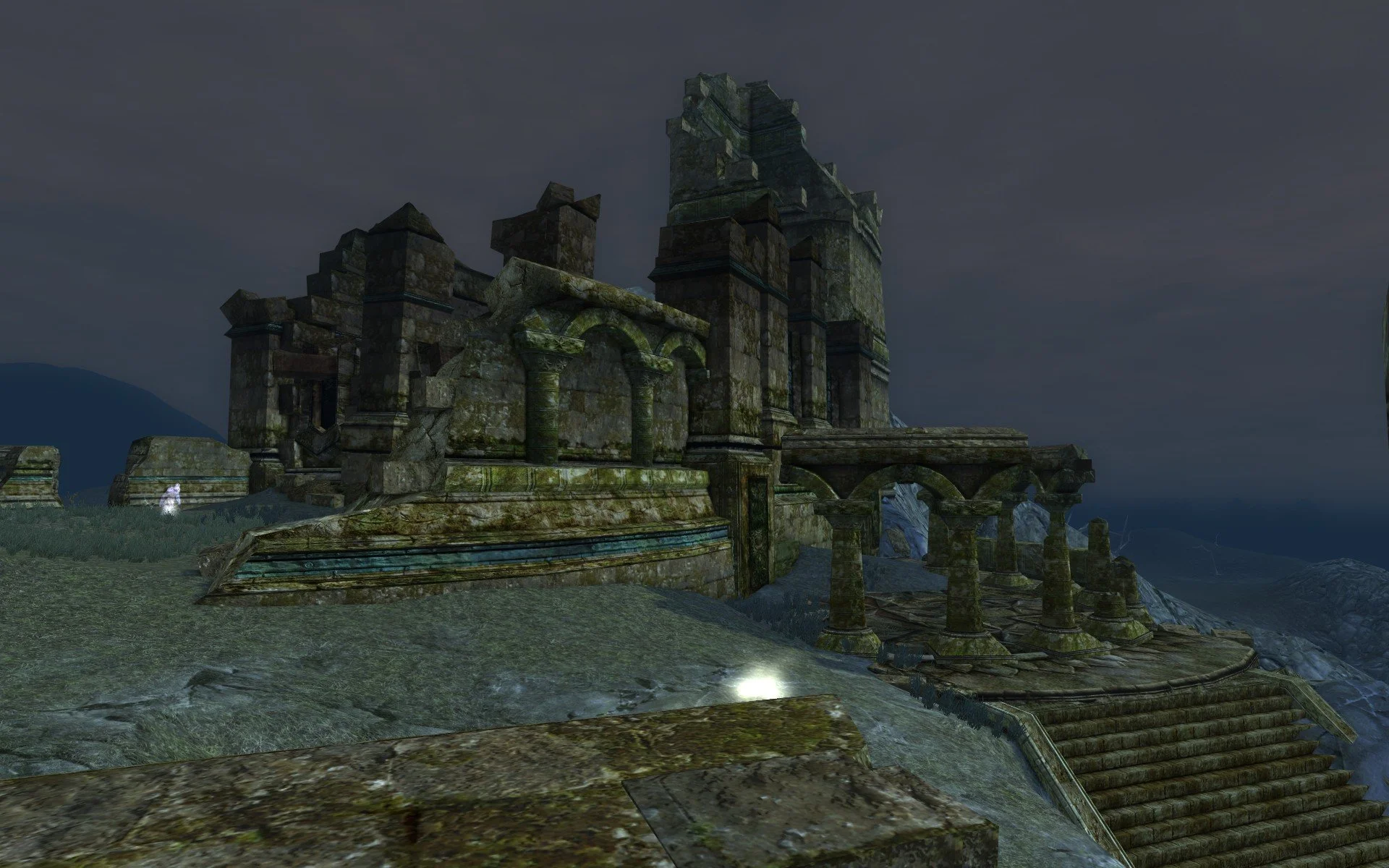
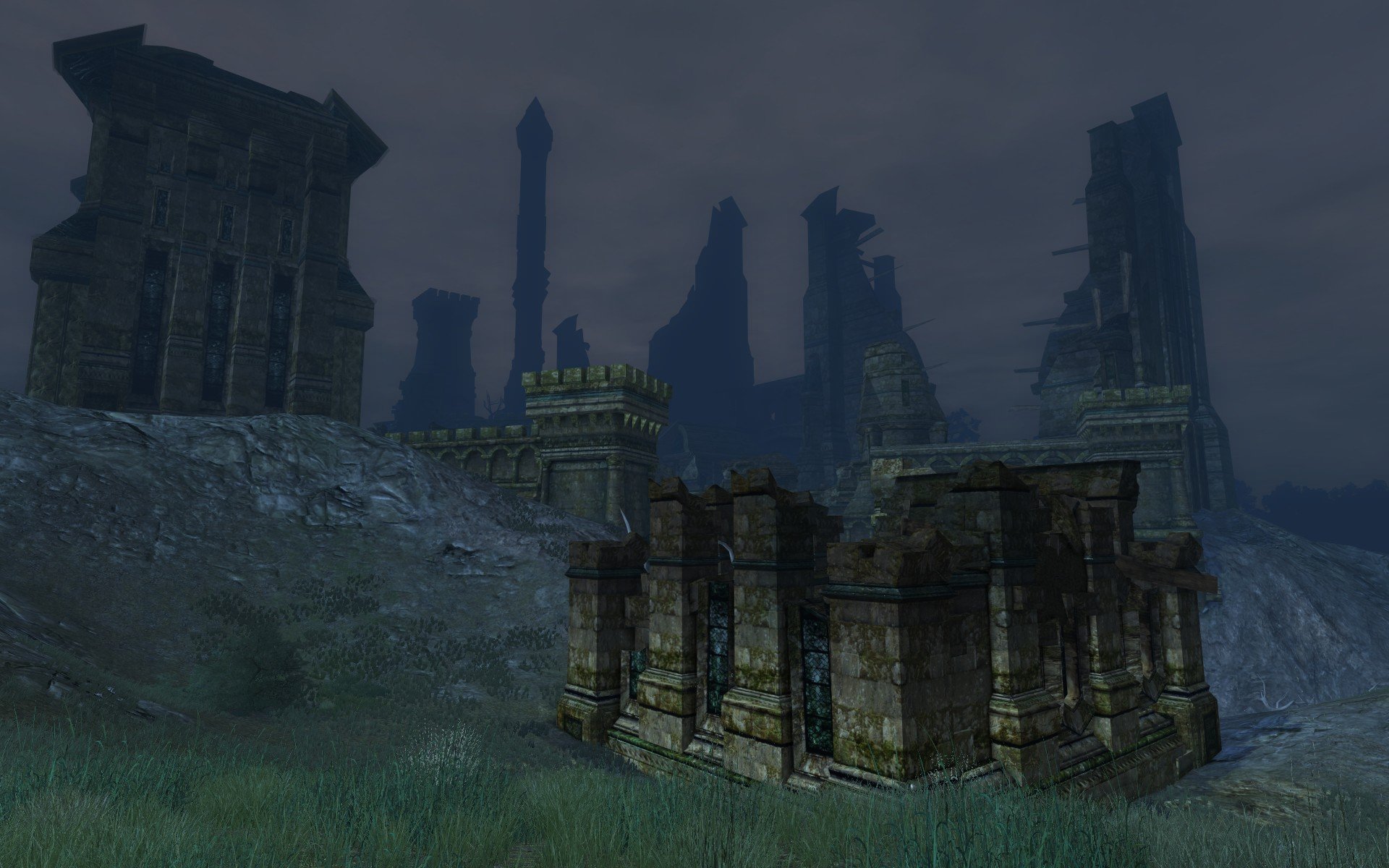
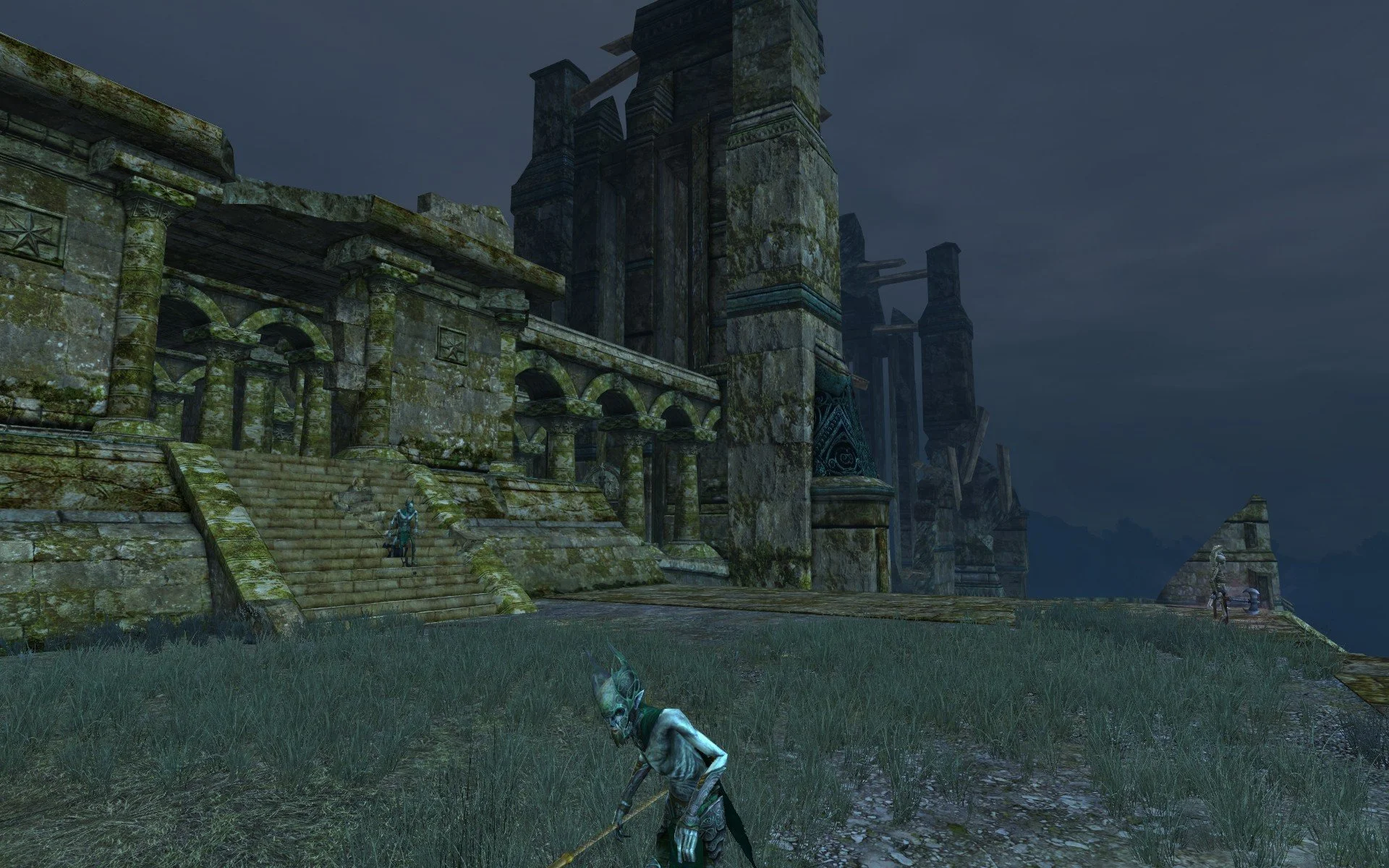
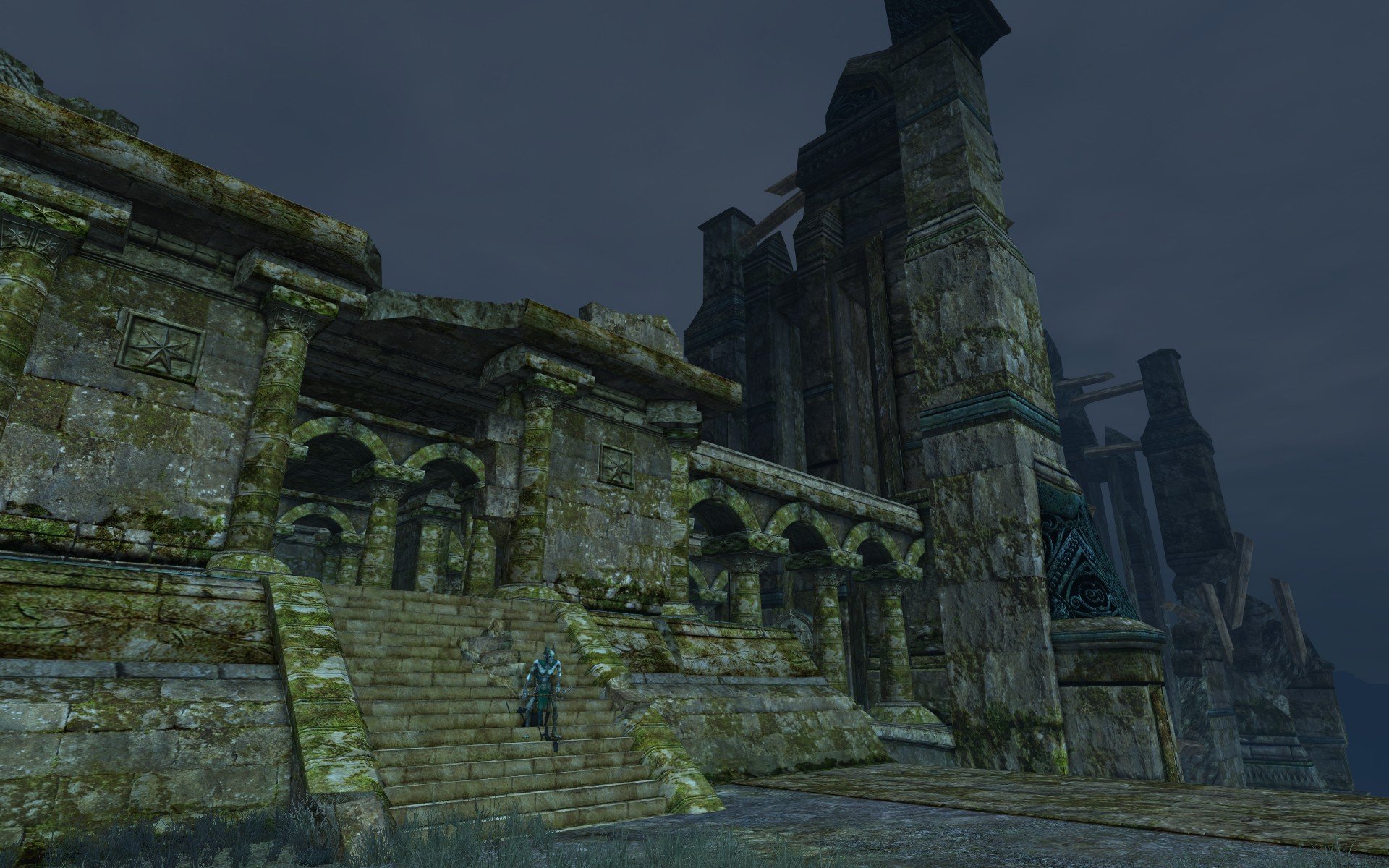
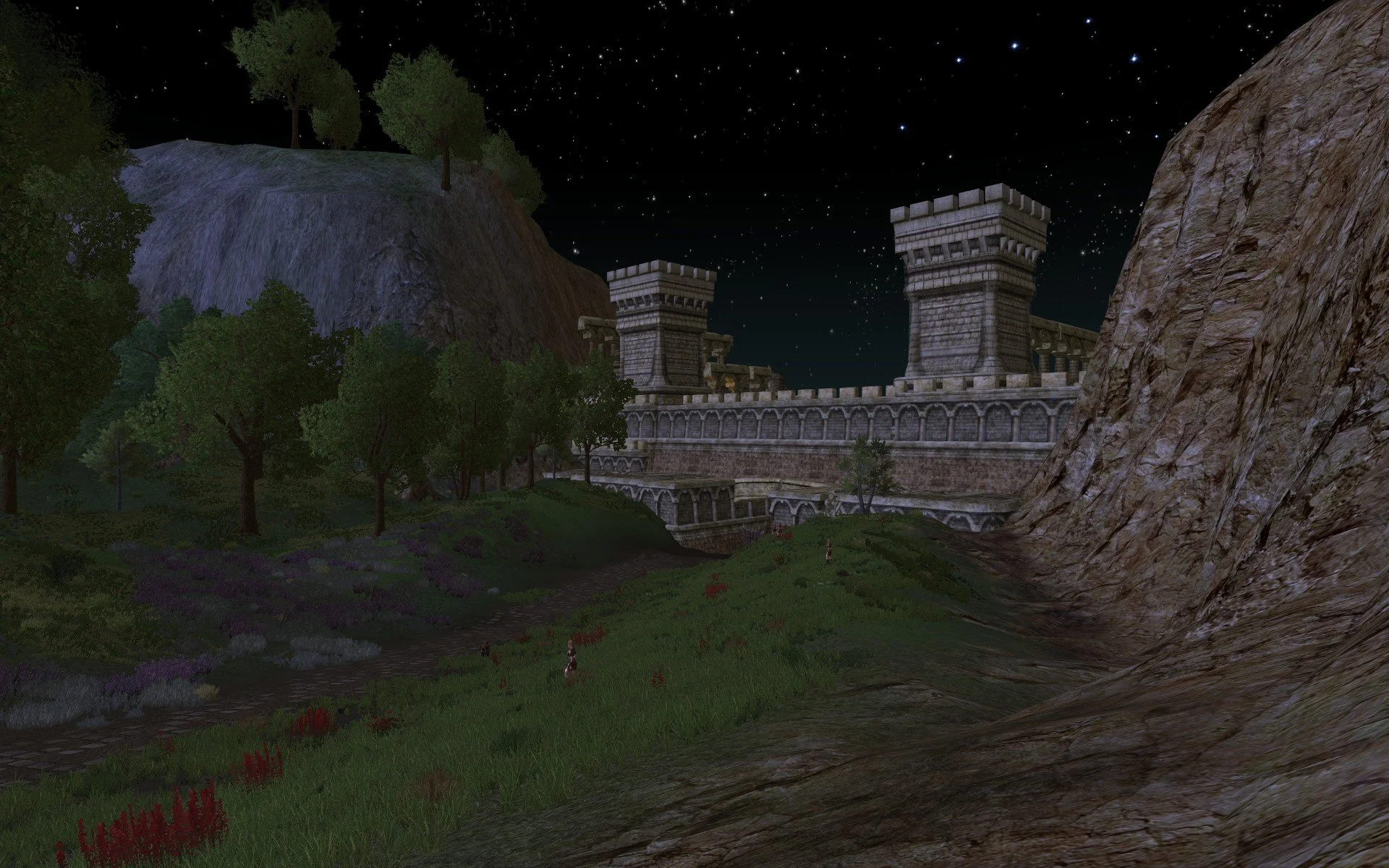
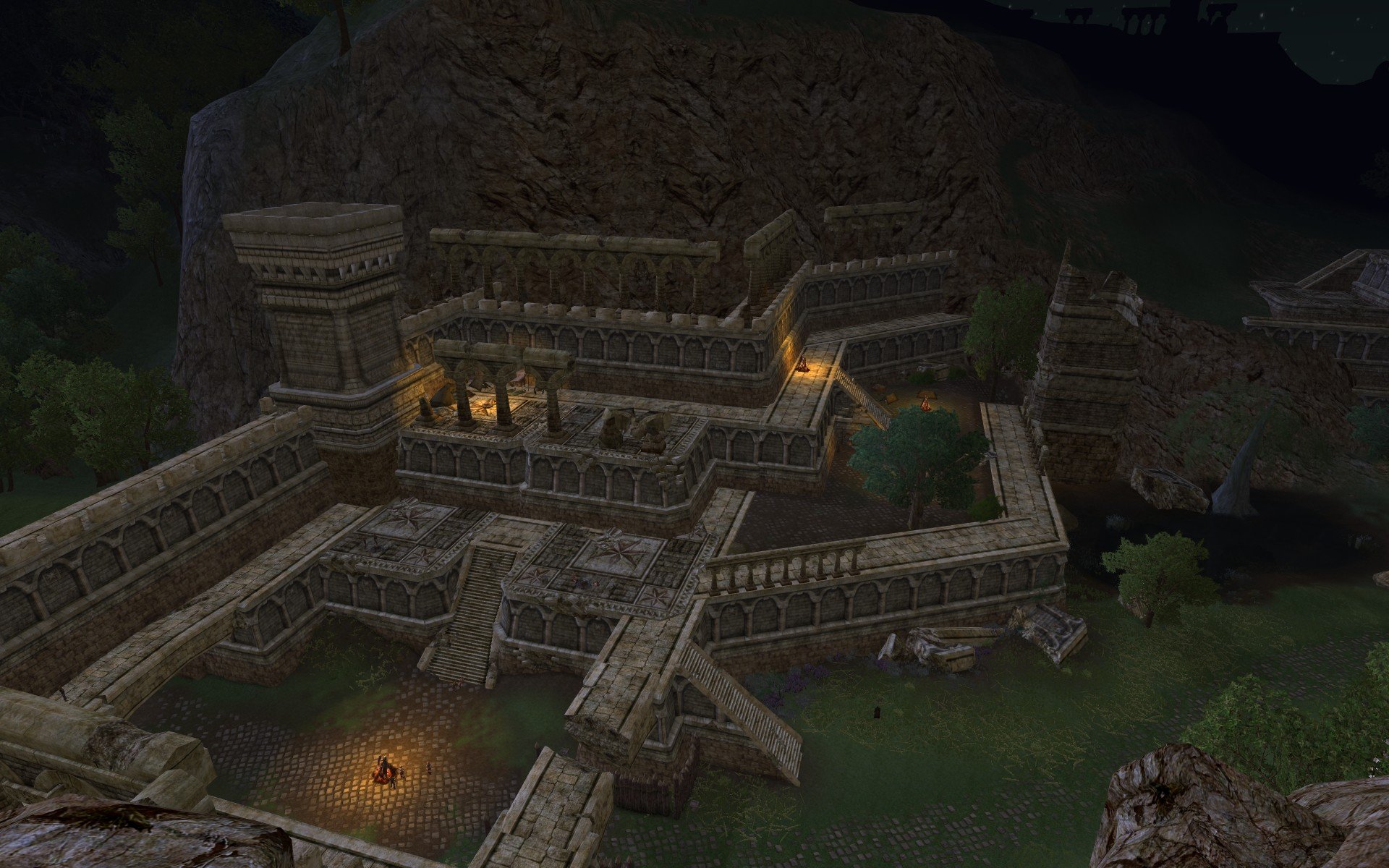
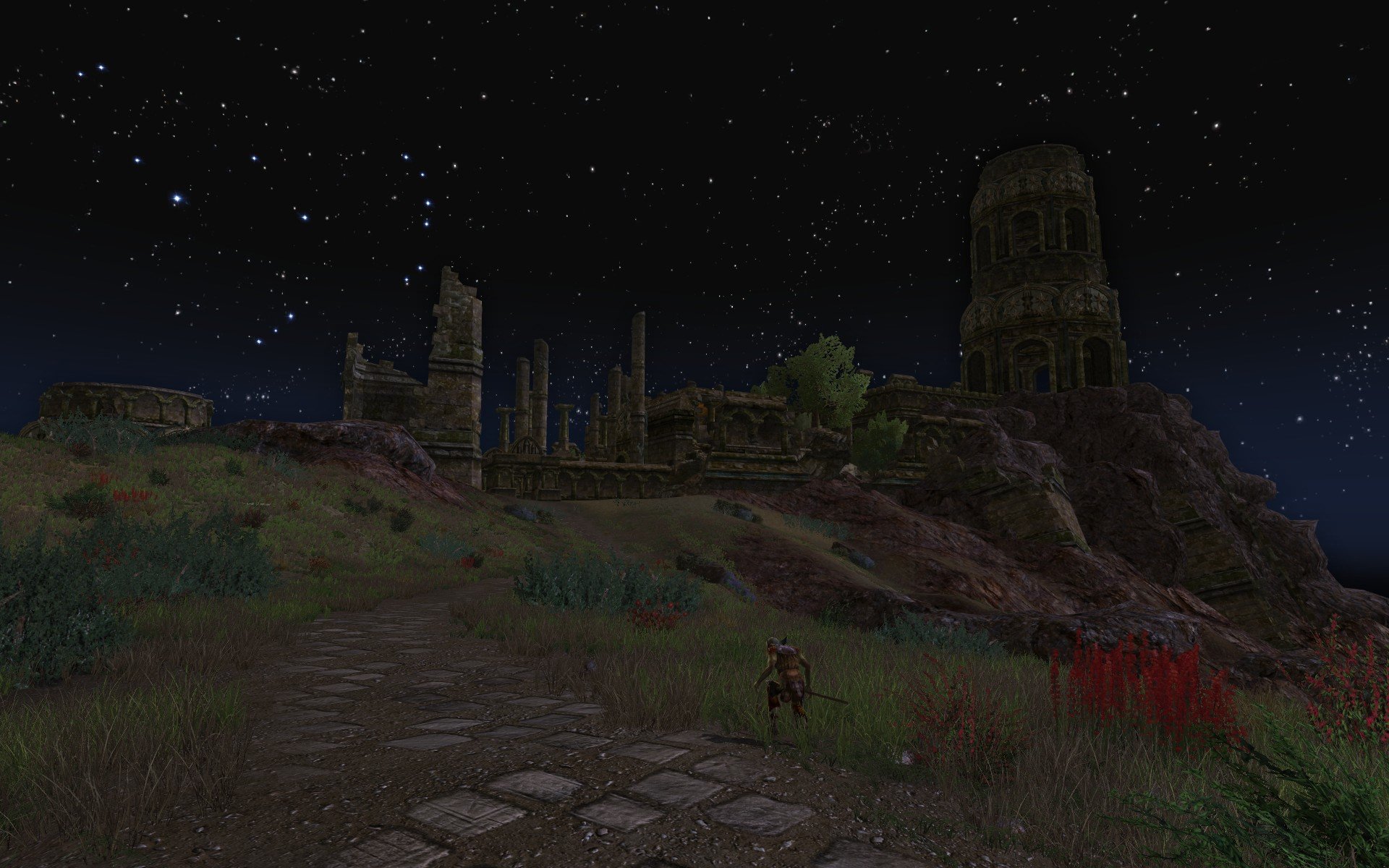
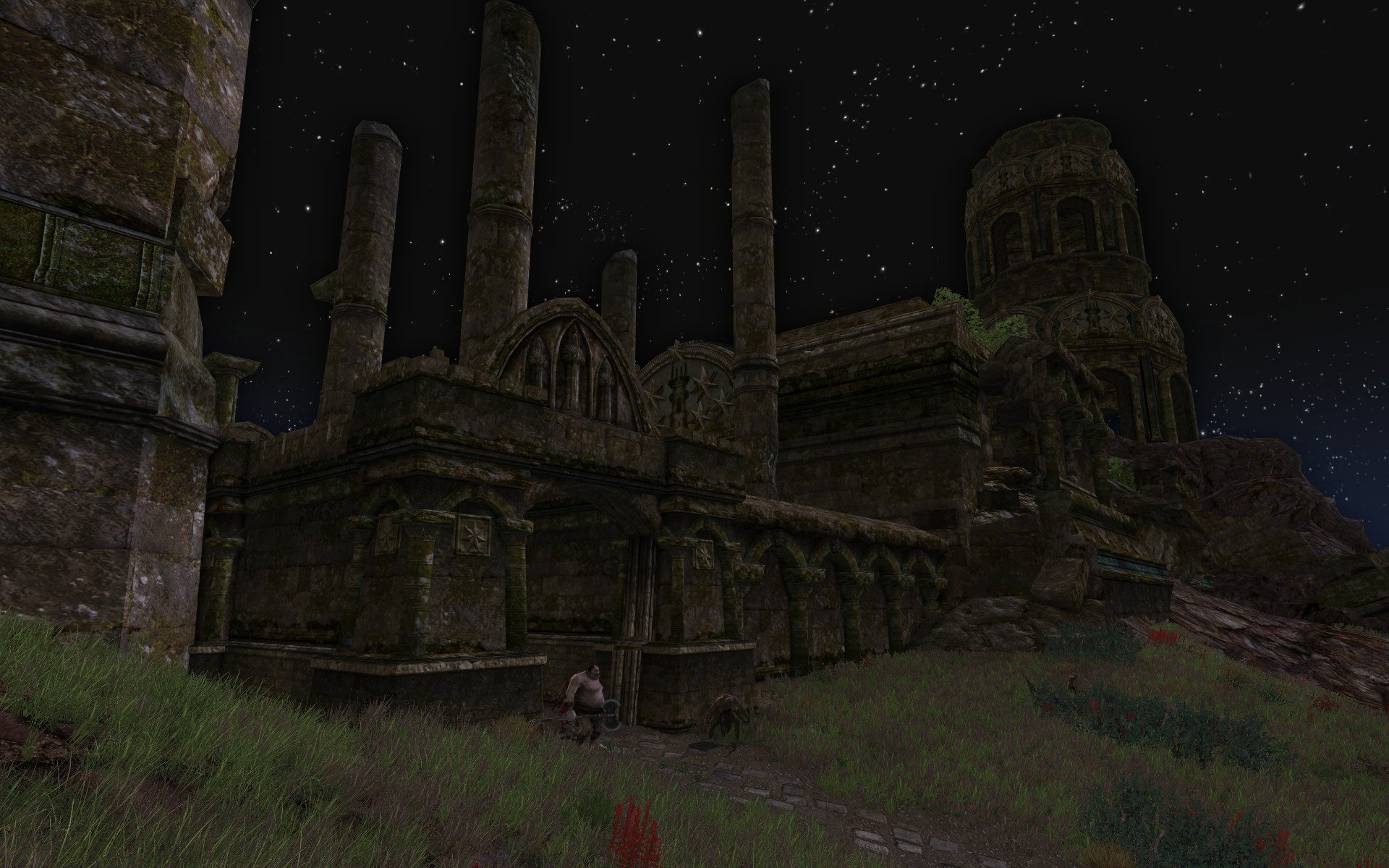
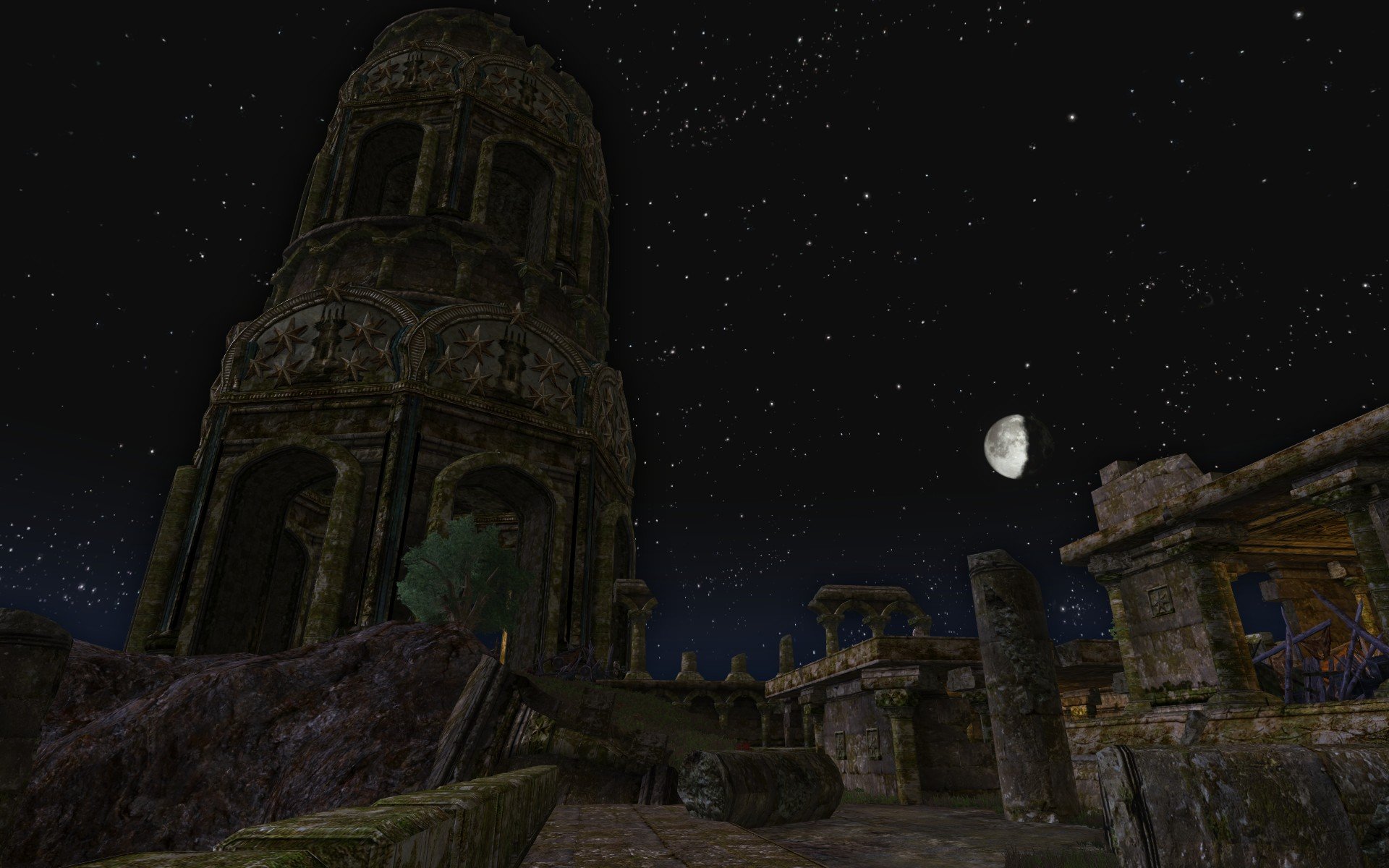
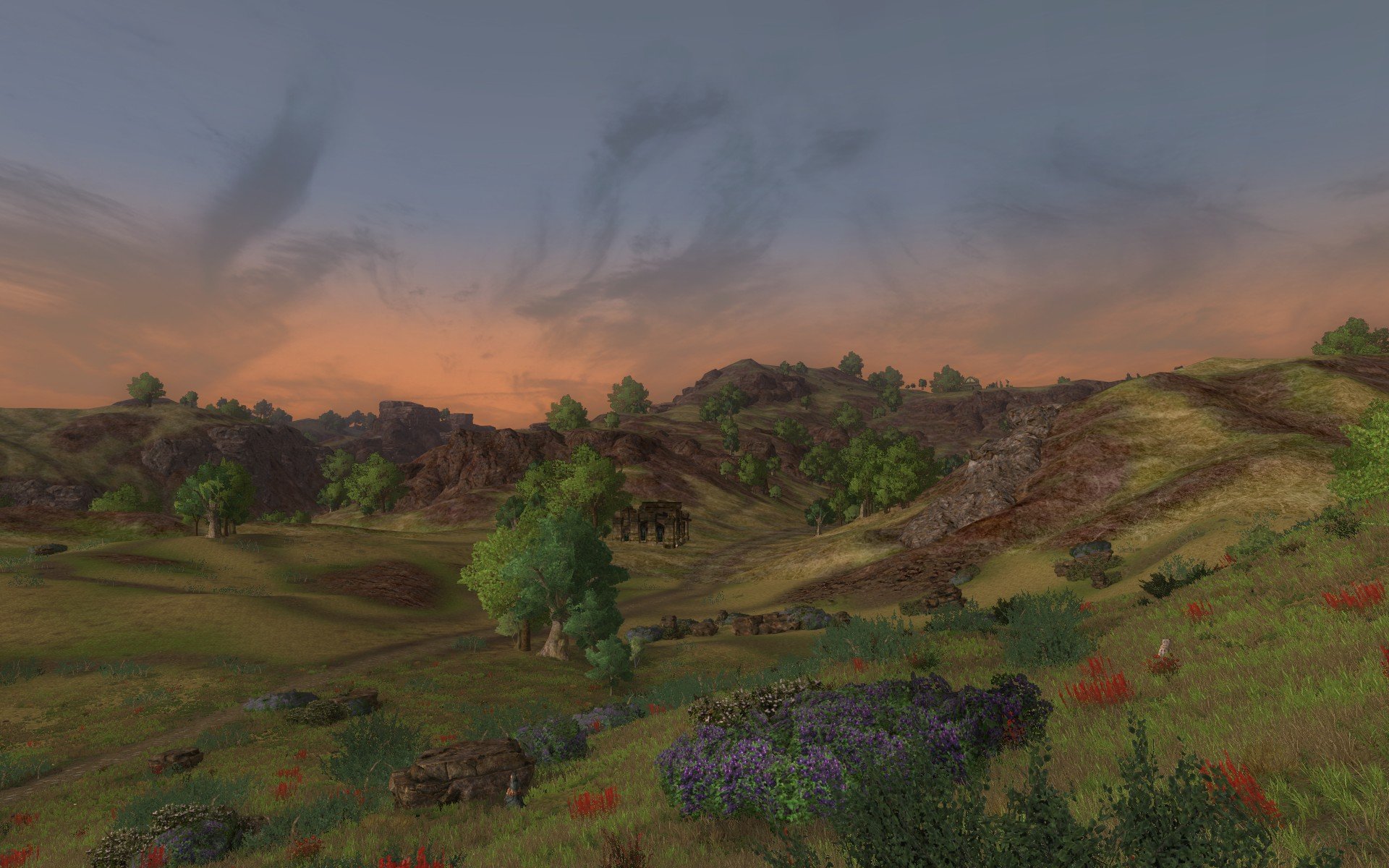
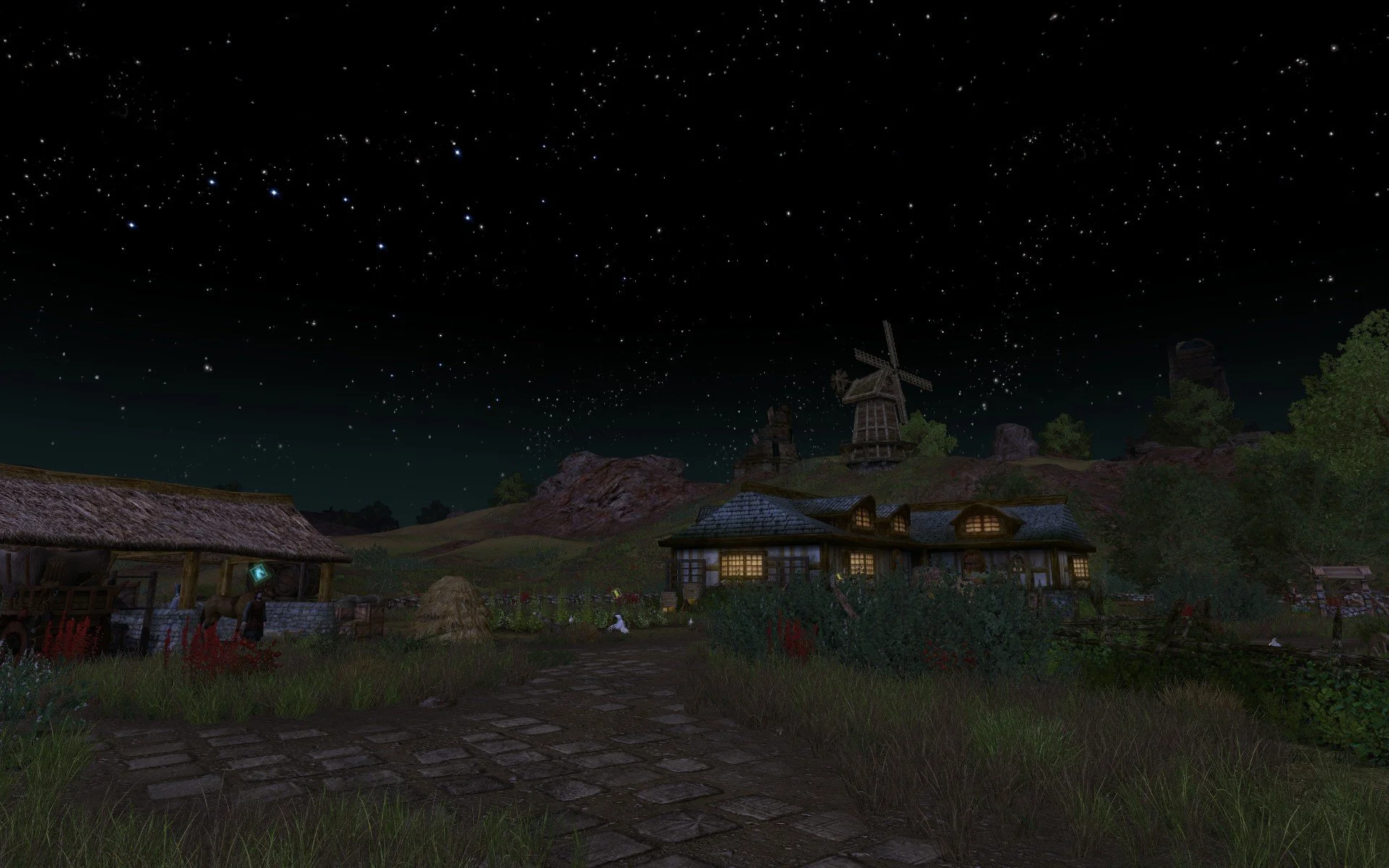
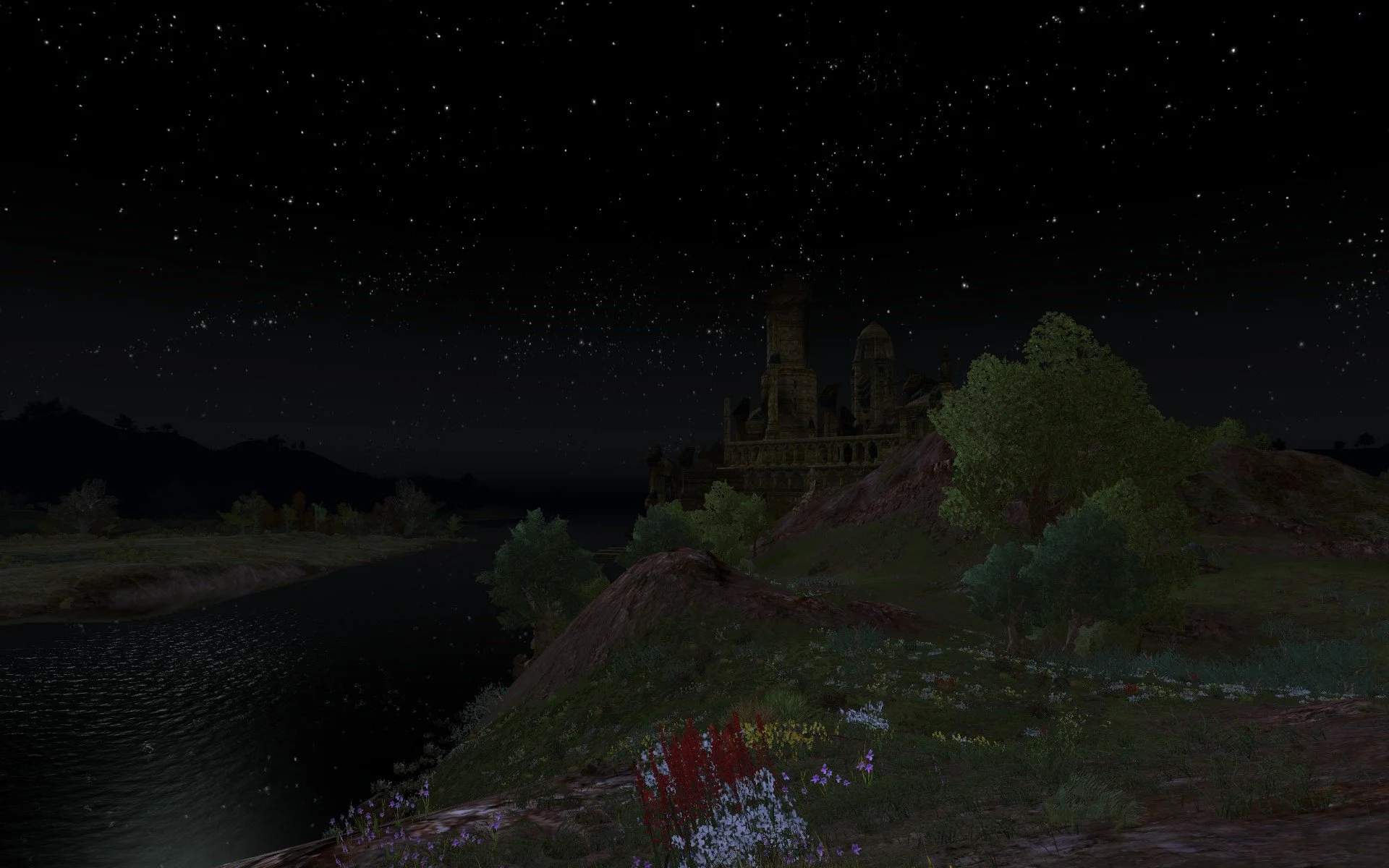
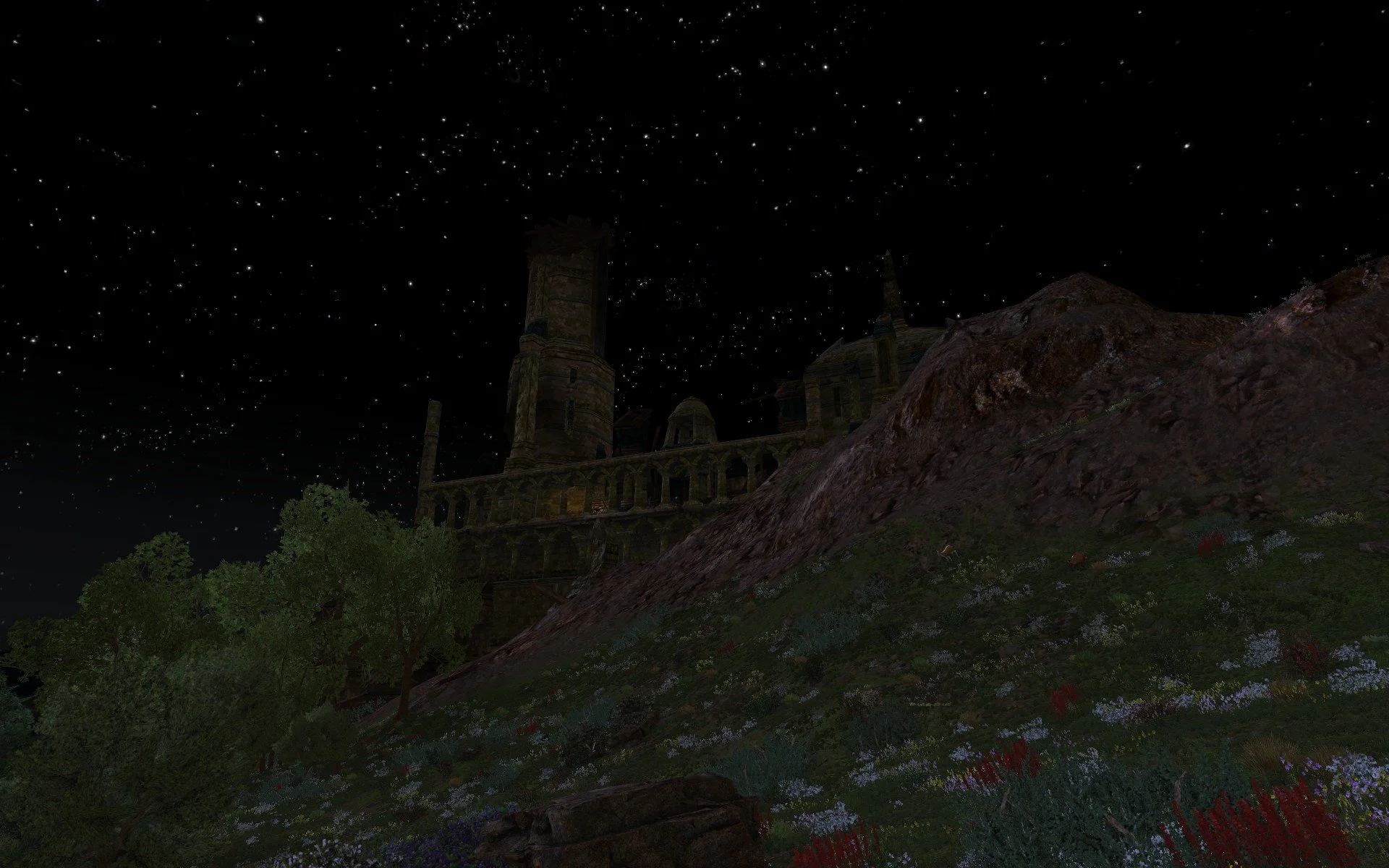
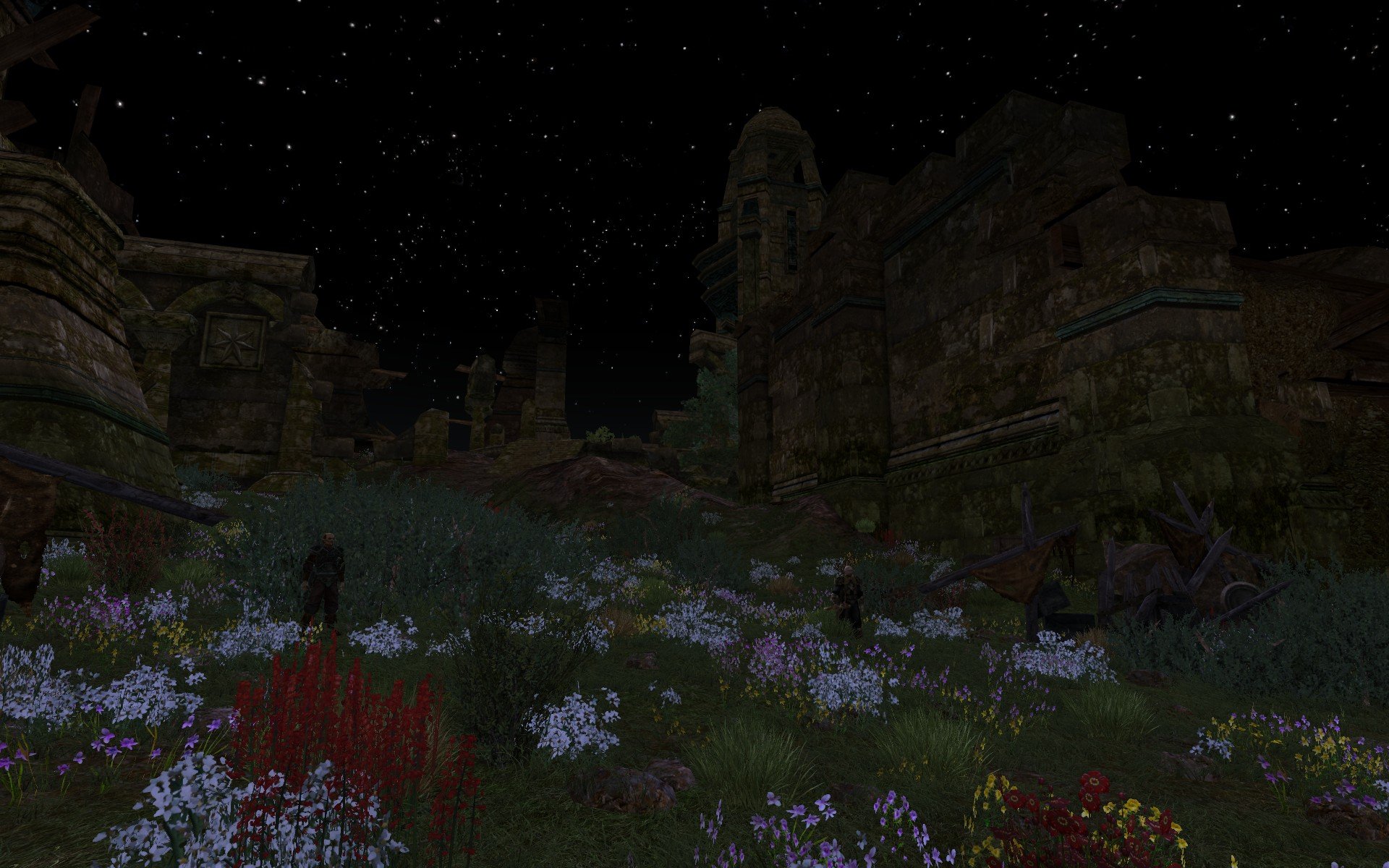
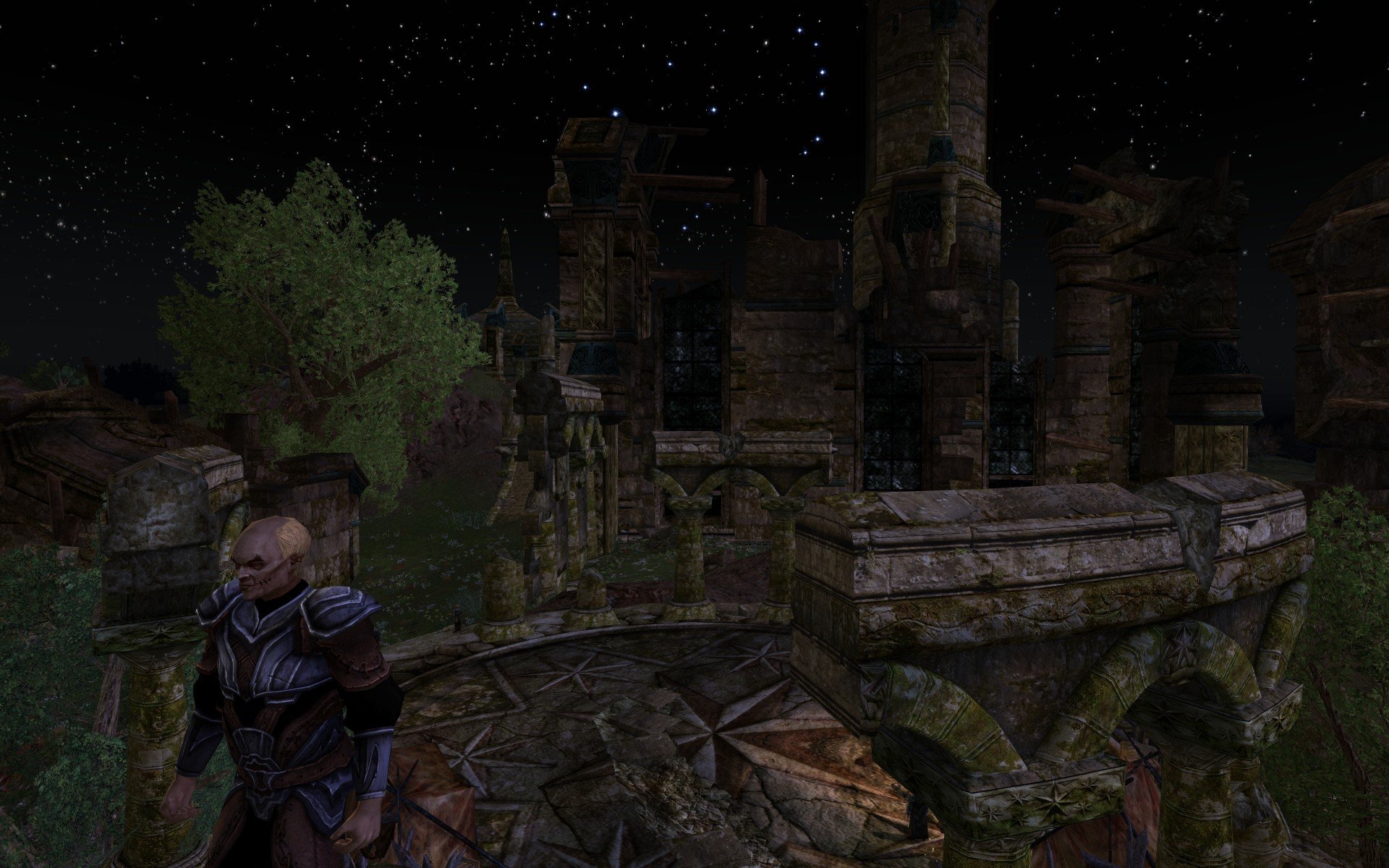
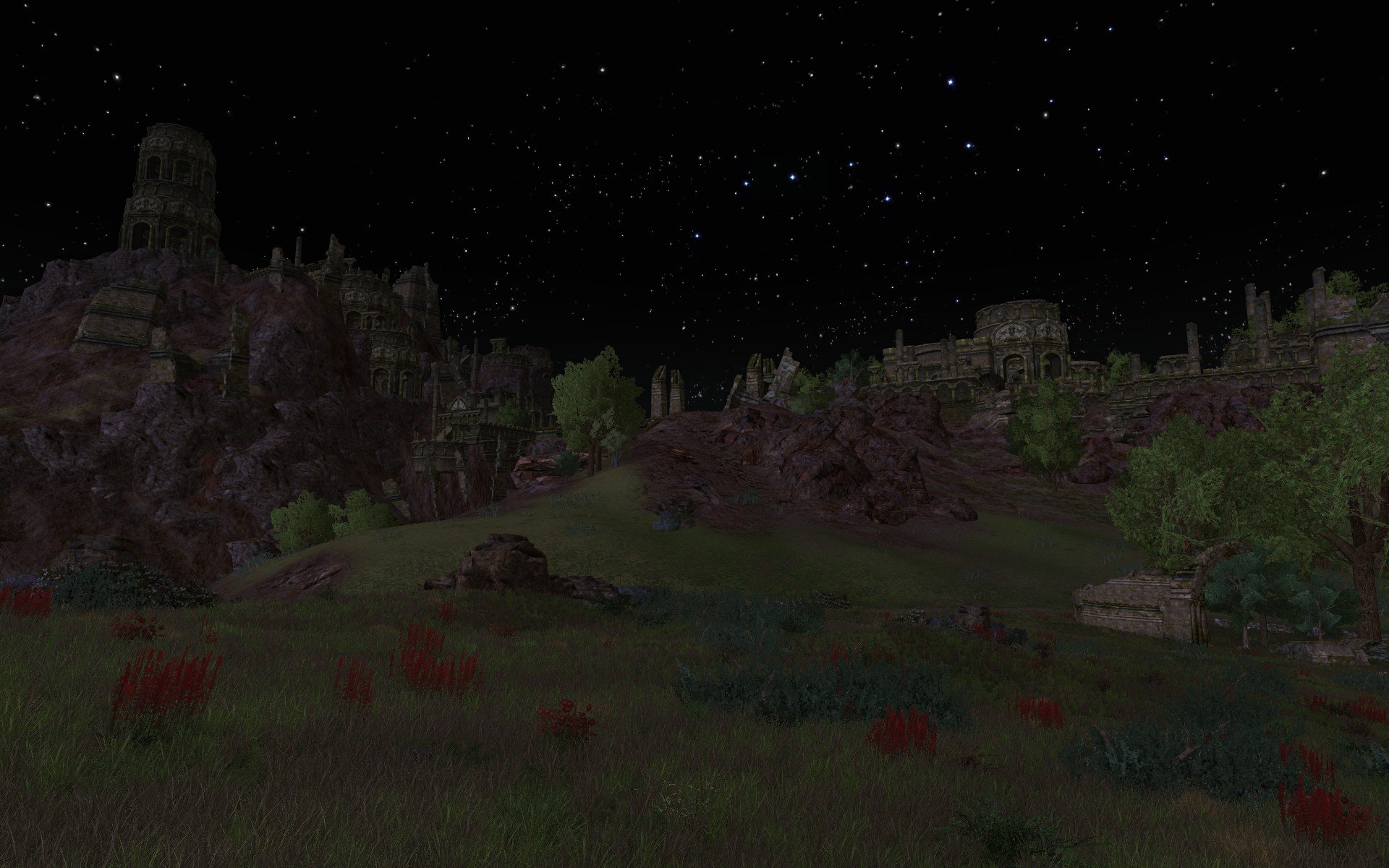
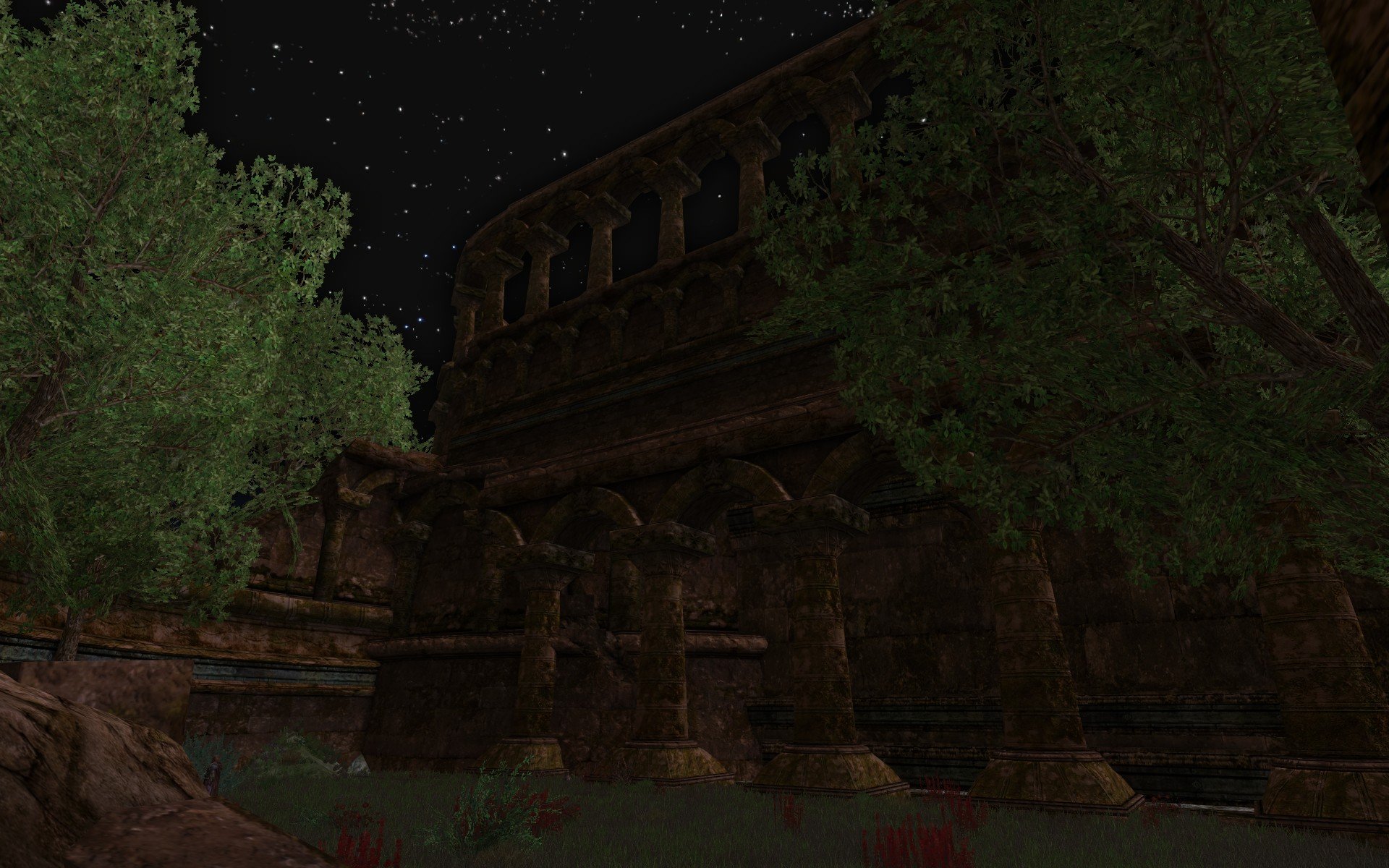
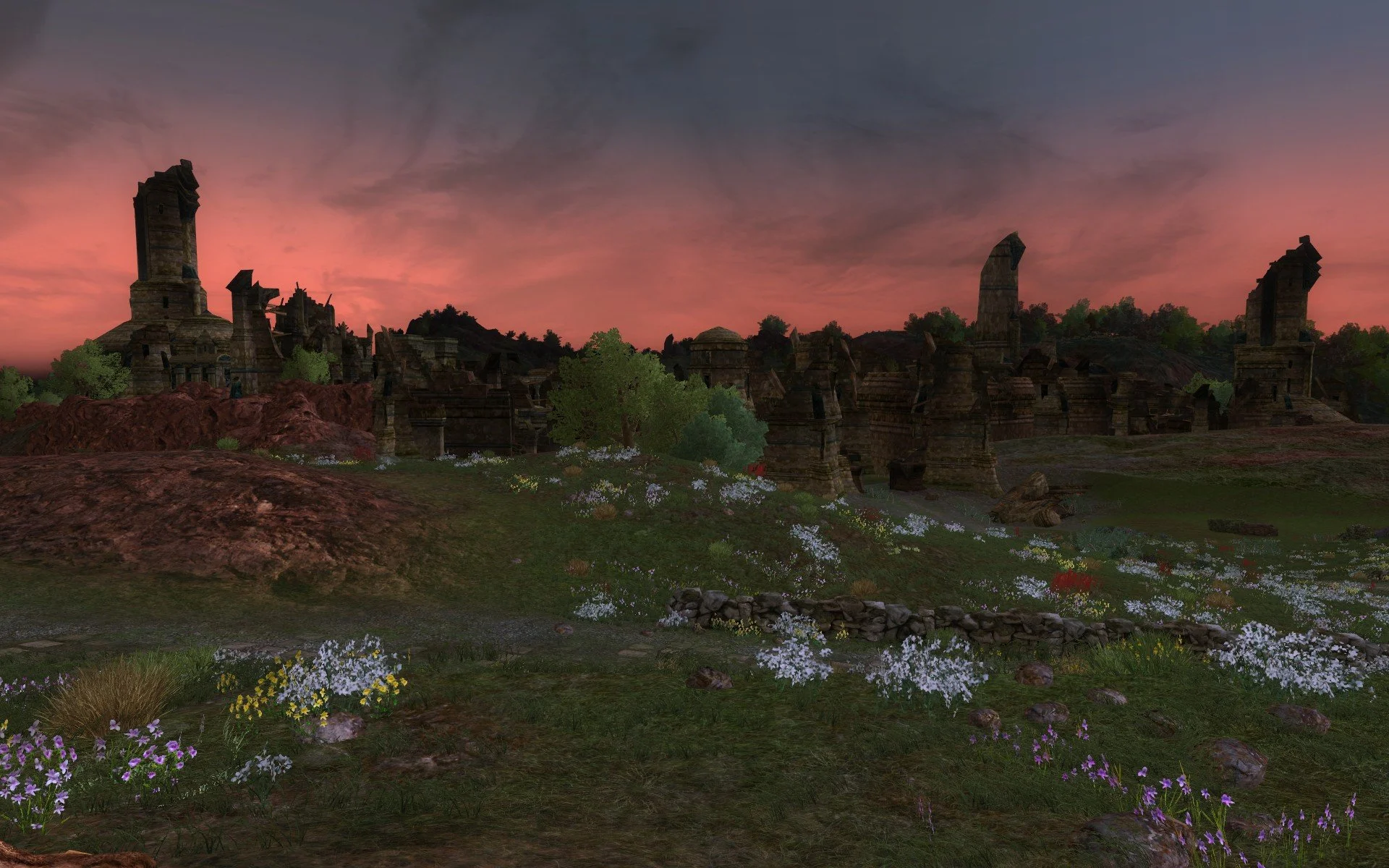
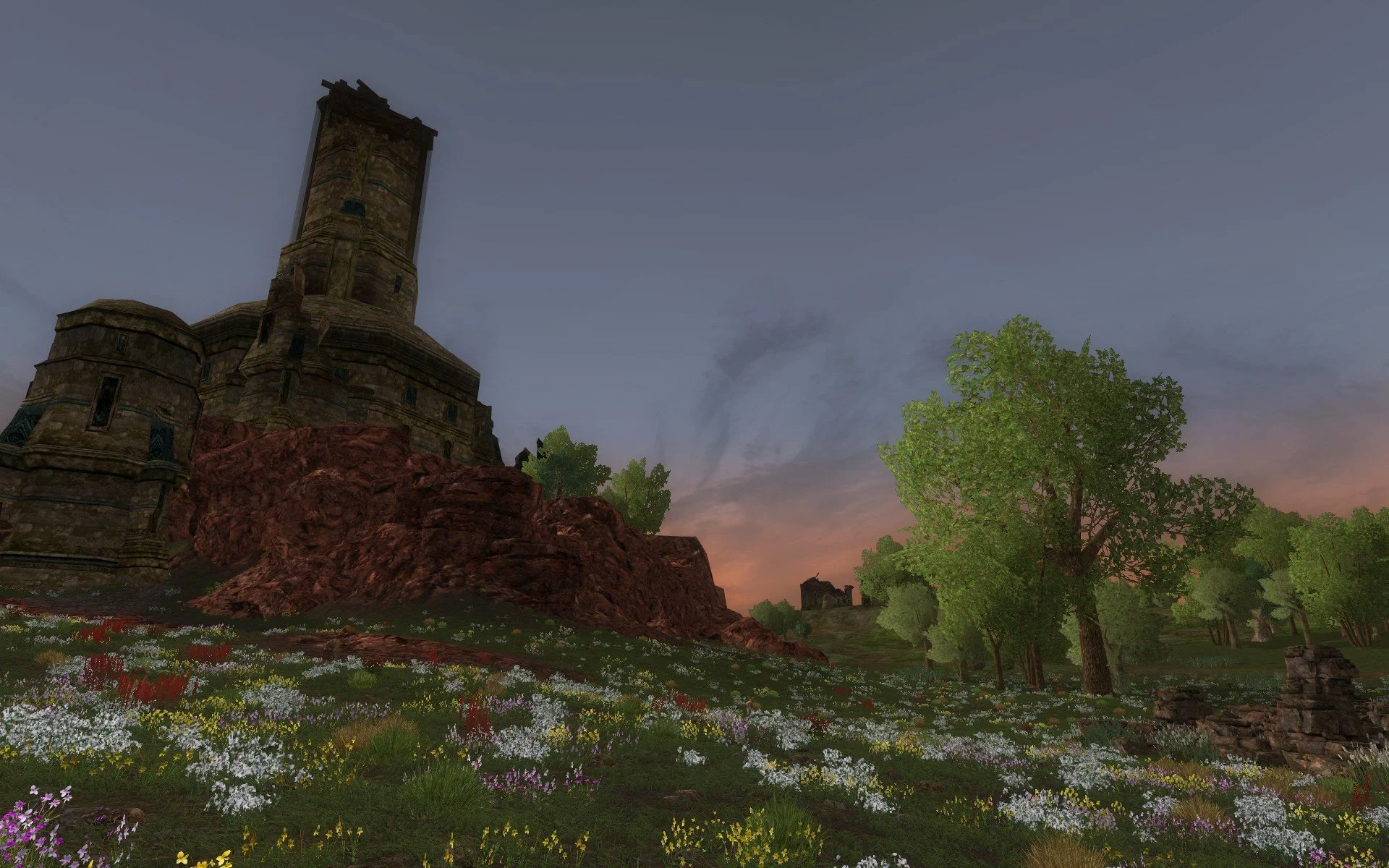
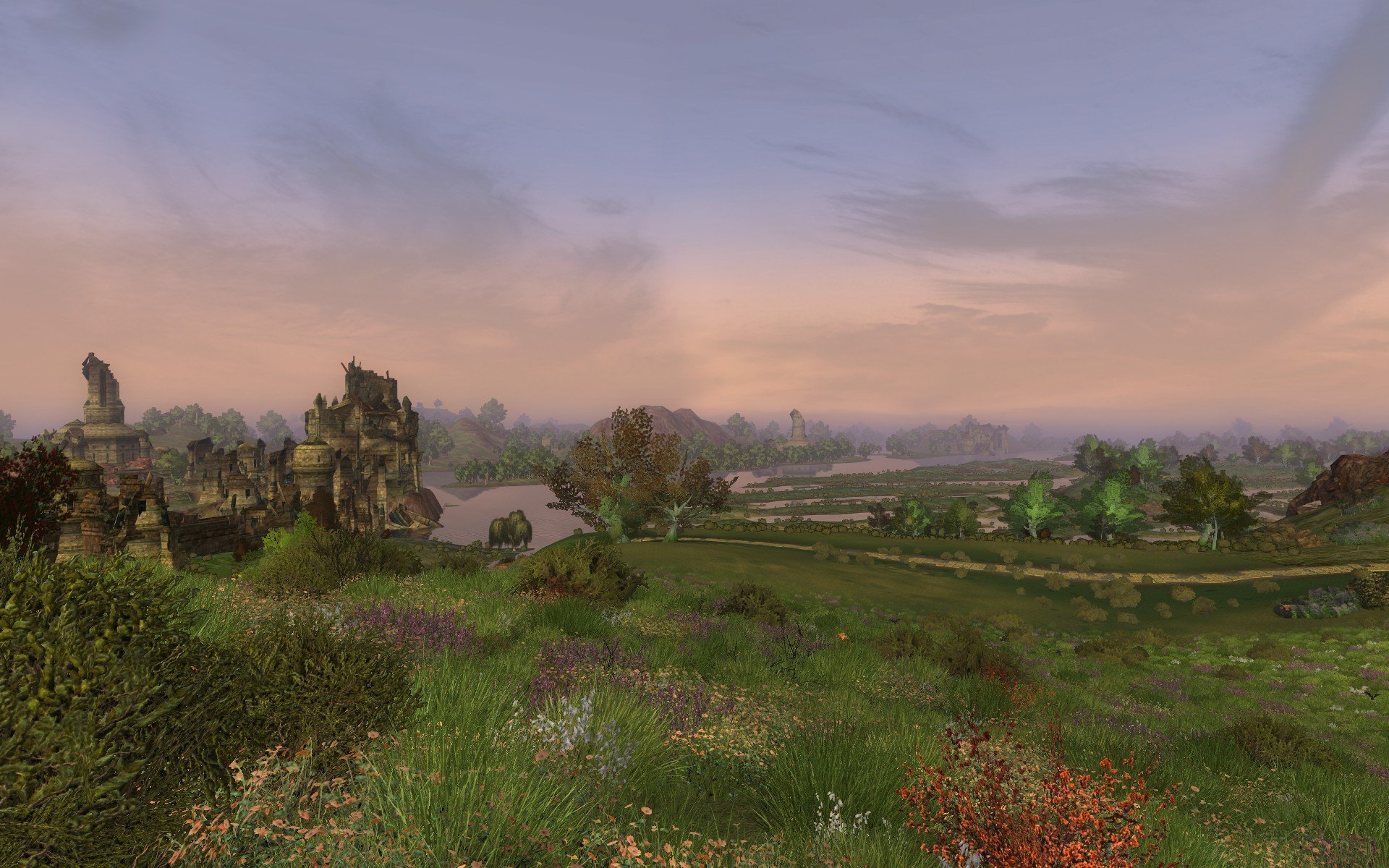
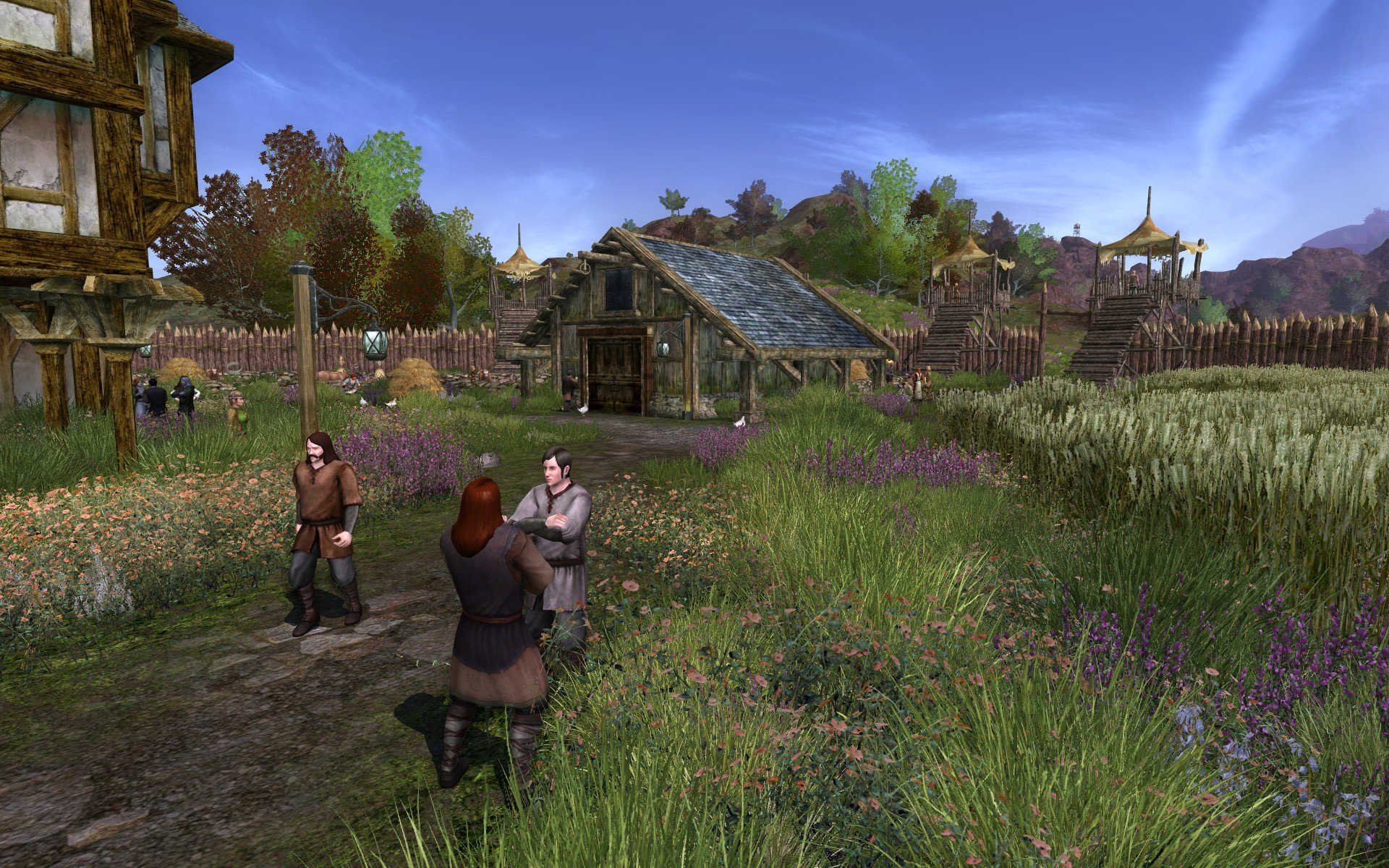
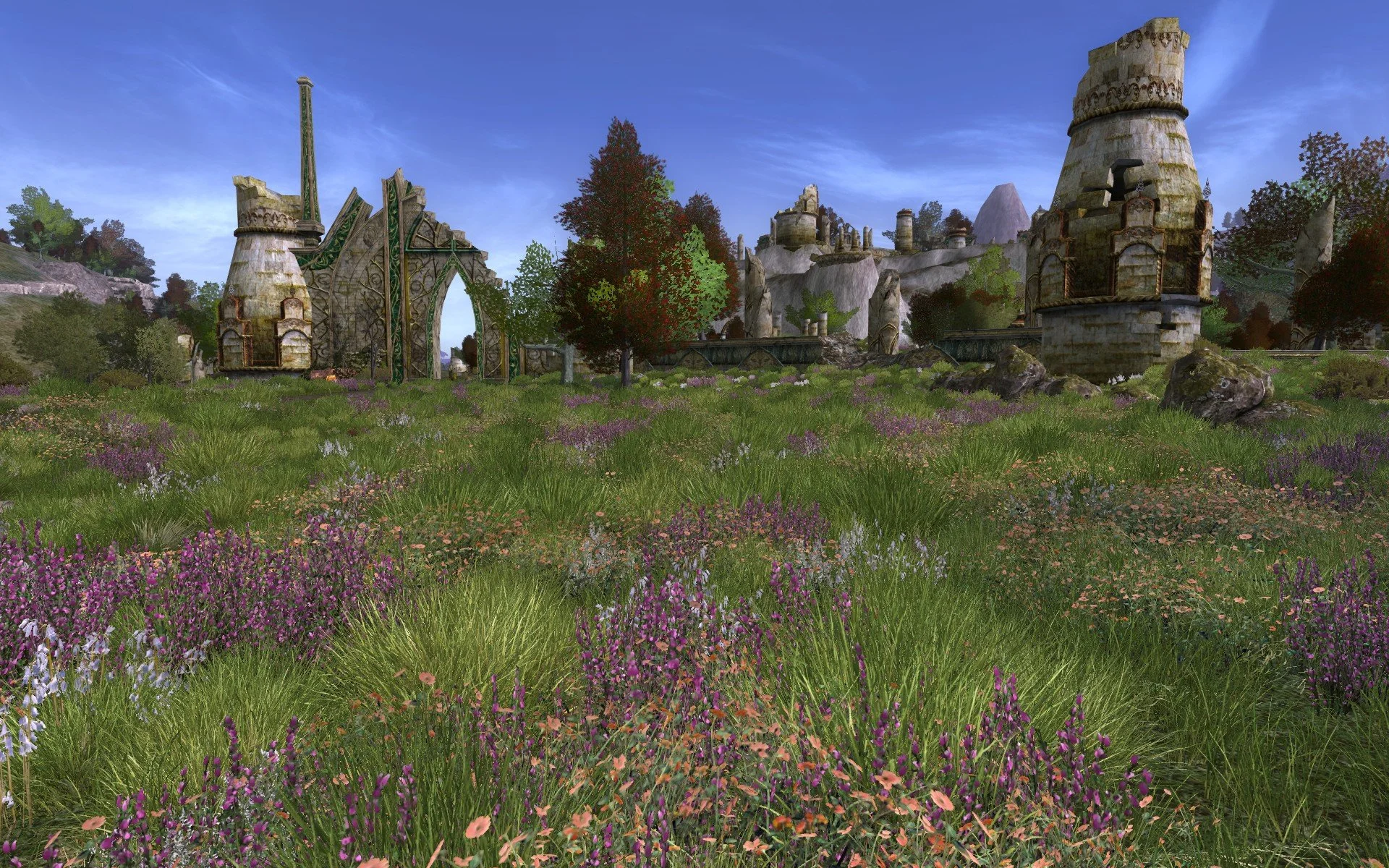
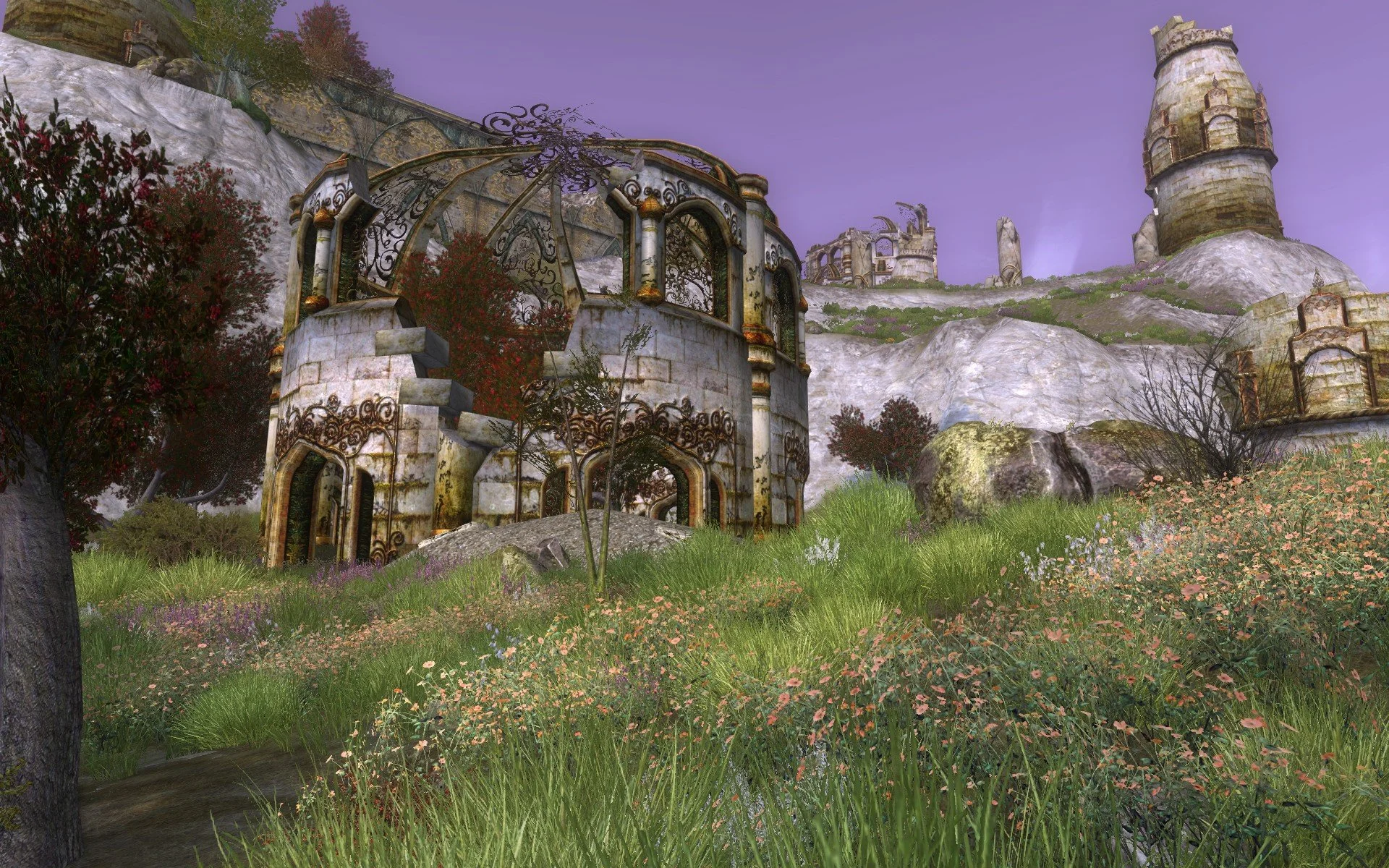
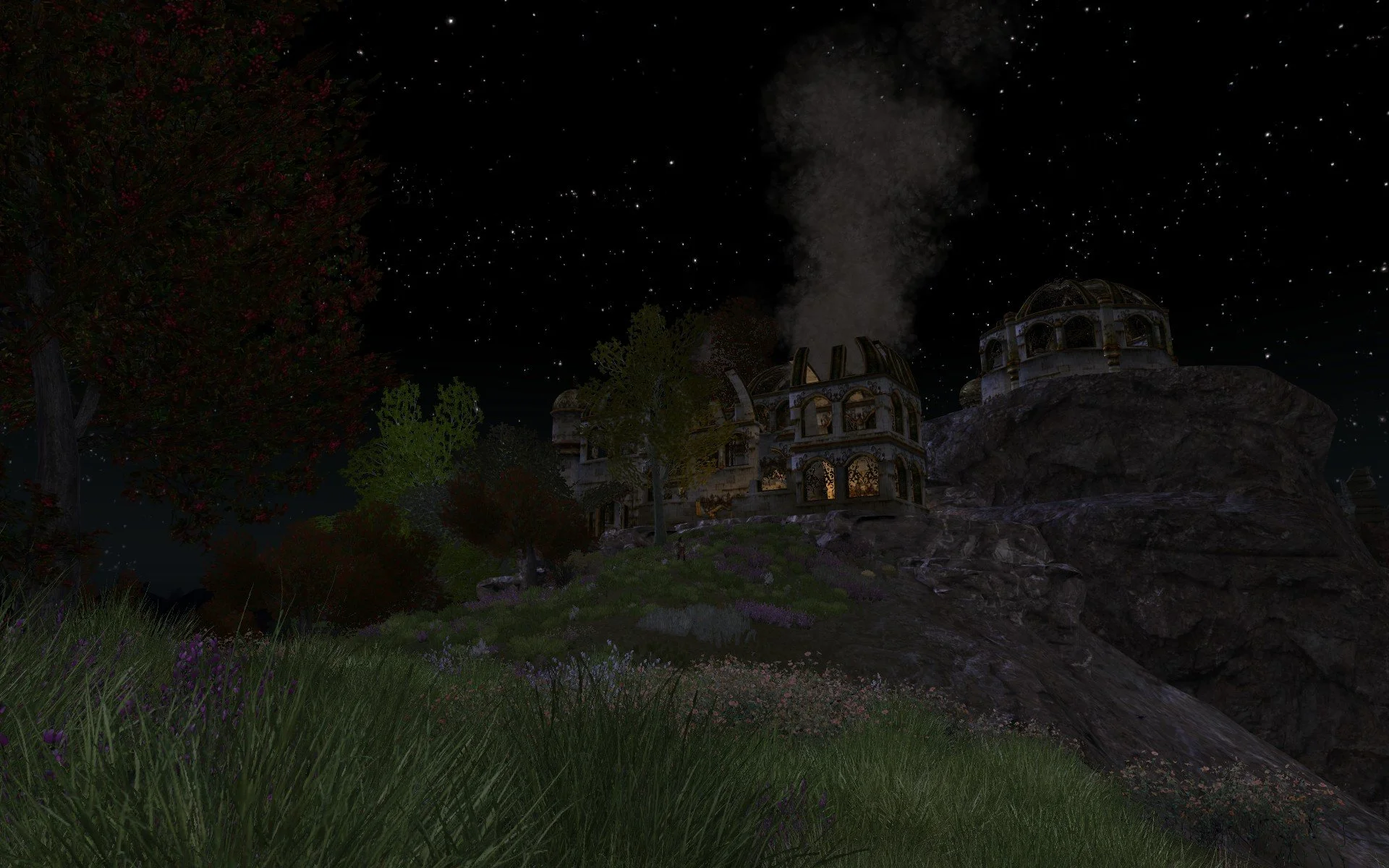
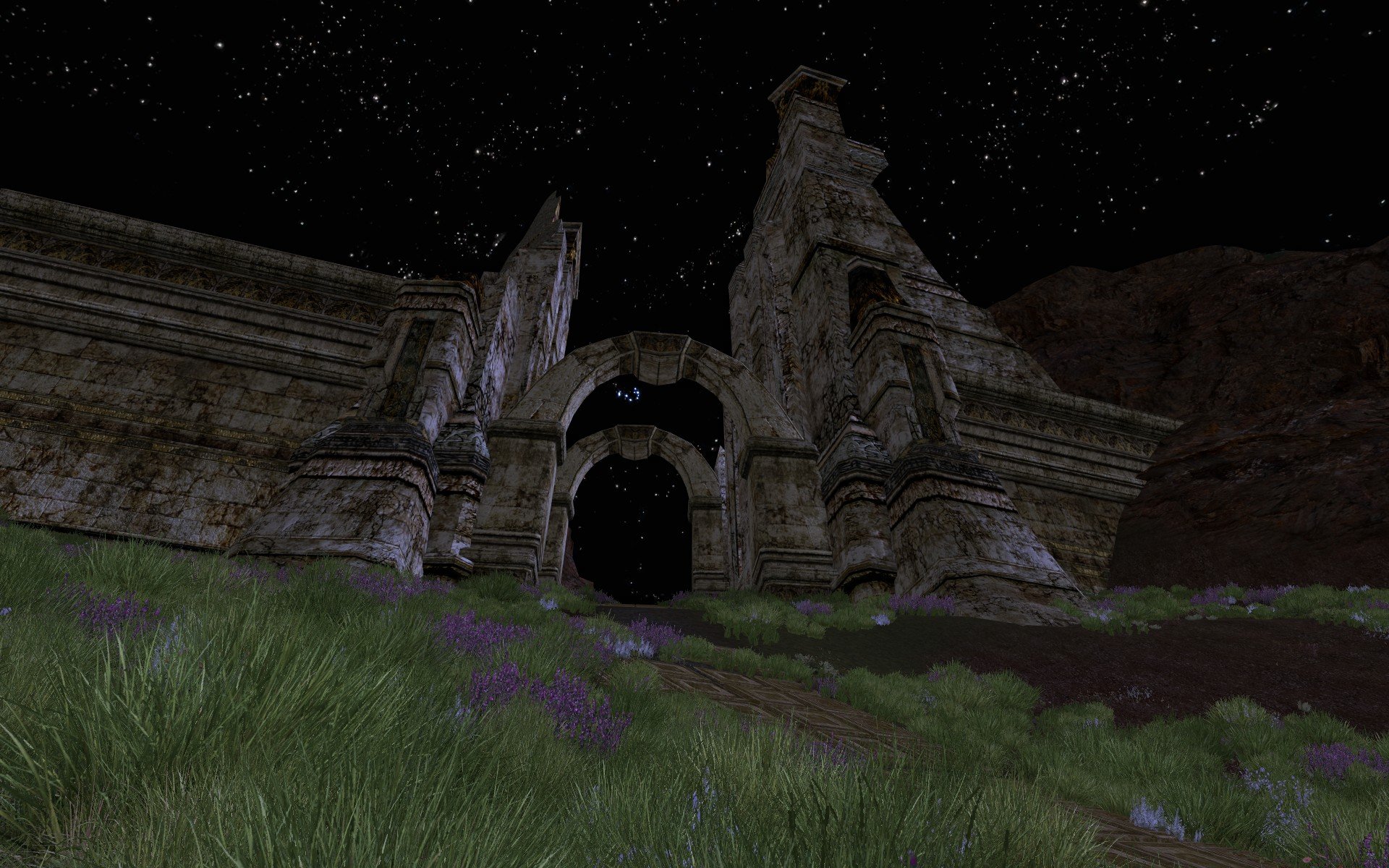
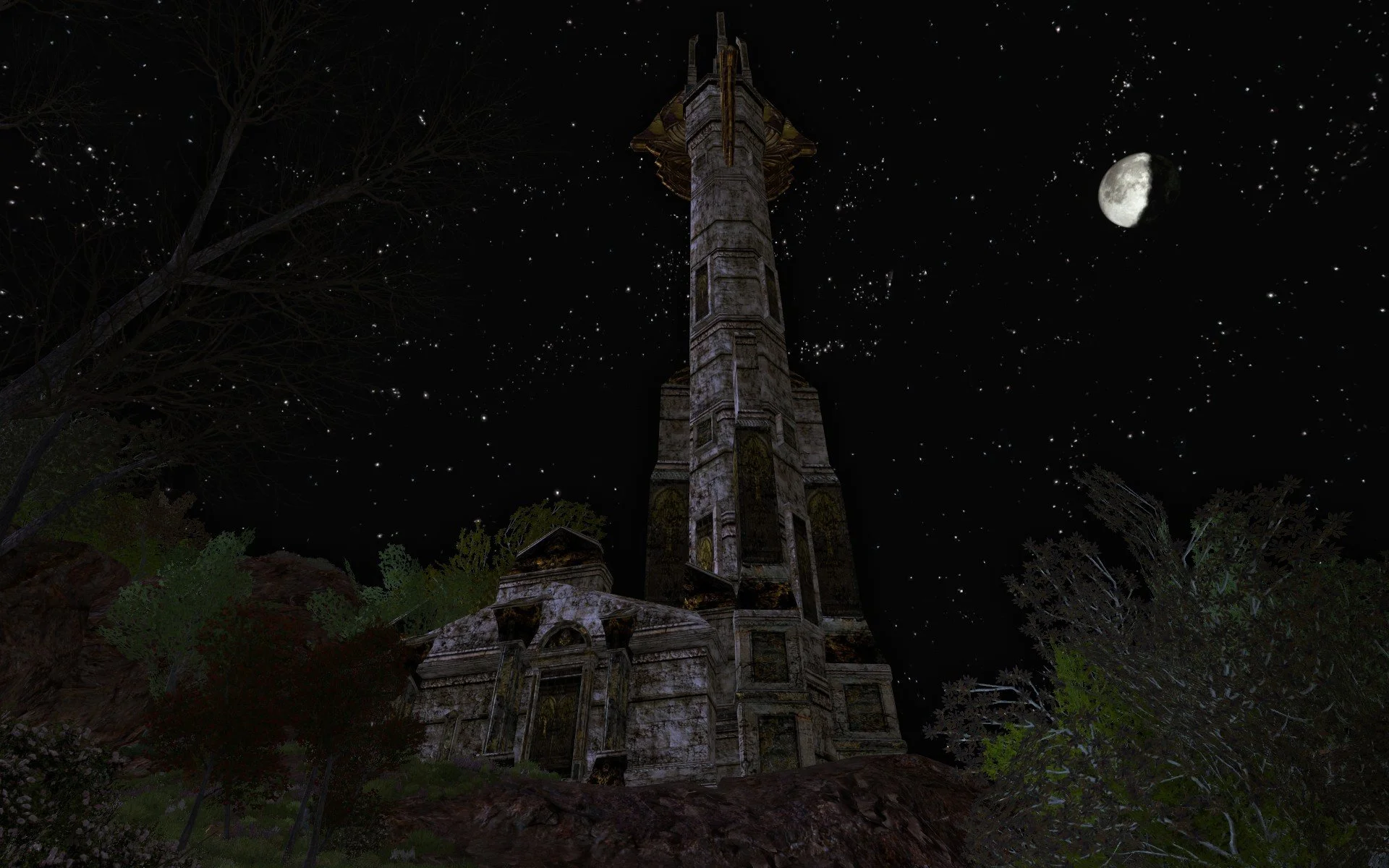
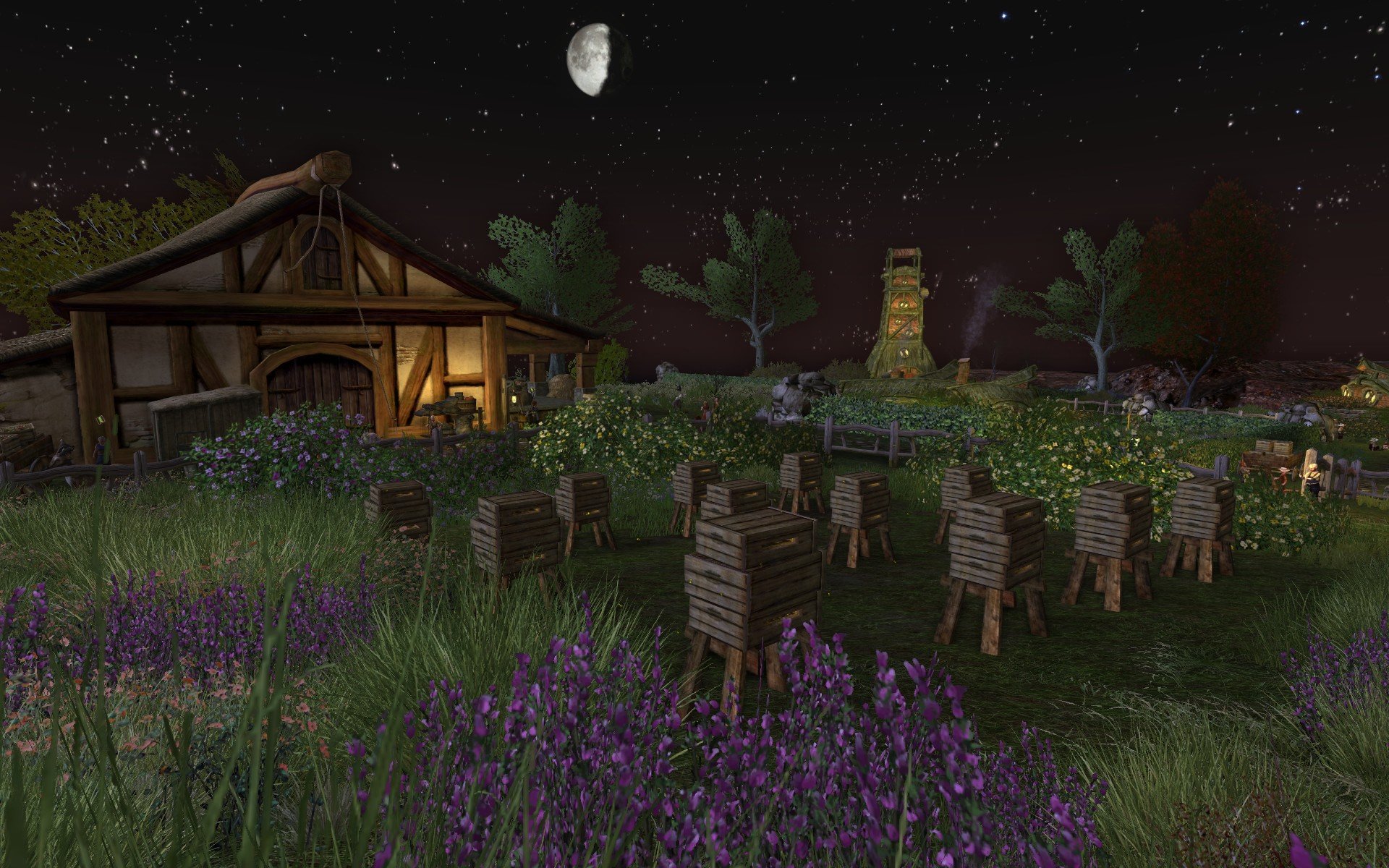
The next area is Andrath. The Northern hills in this location afford views of Bree-land Homesteads, Midgewater Marshes and Weathertop (depending on your draw distance setting). Moving to the East, Cardolan is separated from the Lone-land by the South Downs. There are two remote farming communities, Scurloc and Hove, which are similar to those we see around Bree. The Barrow of Gond Orchal and the Cardolan ruins of Haudh Nirui are home to Wights and Orcs respectively. Travelling further East to the borders of The Angle of Mitheithel, there is Amon Firn. This area is filled with both Wights and Spirits and overlooks the river Hoarwell. At the heart of the Cardolan map is the decaying fortress of Caranost. Orc infest the Western side. Rangers and Elves have an enclave on the East side. I suspect that due to the size of Caranost it may be the epicentre of several major quests or instances. The area of Sedgemead lies to the South East of Cardolan, along the banks of the river Greyflood. It is wild and overgrown with flowering plants and bushes (Like Ithilien).The ruins of Nimbarth and the Nagenstones are found here. The latter being a former Elven settlement
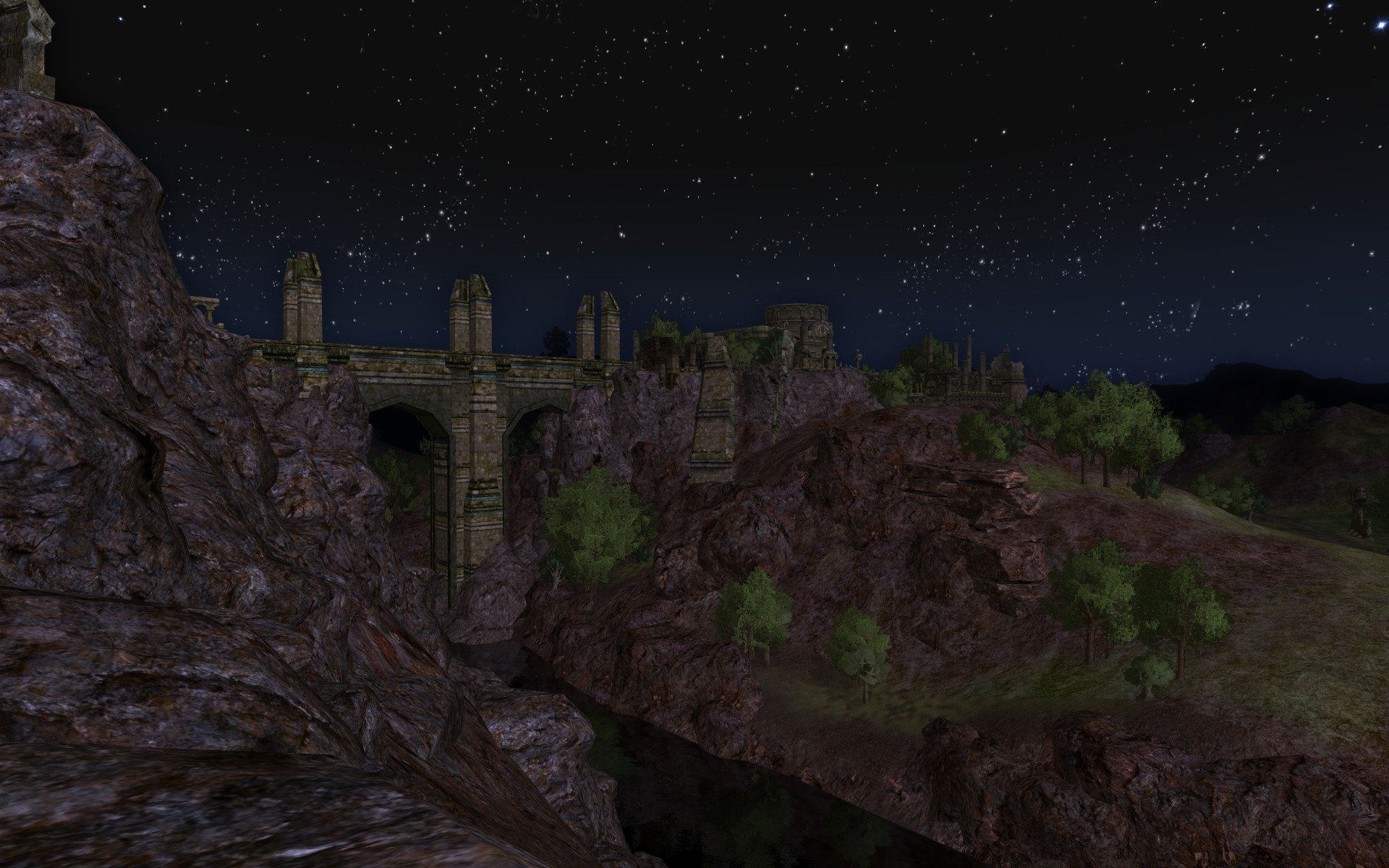
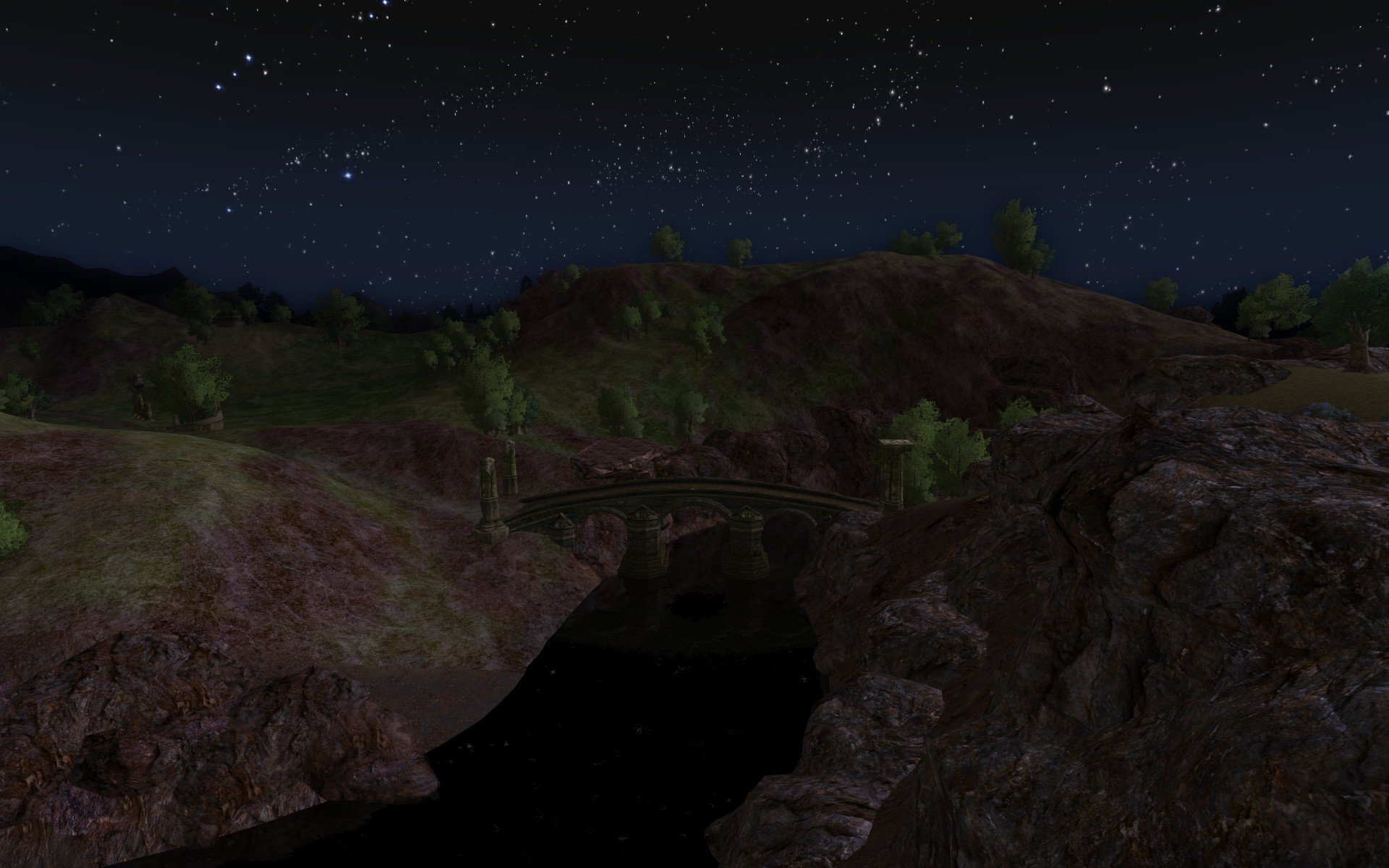
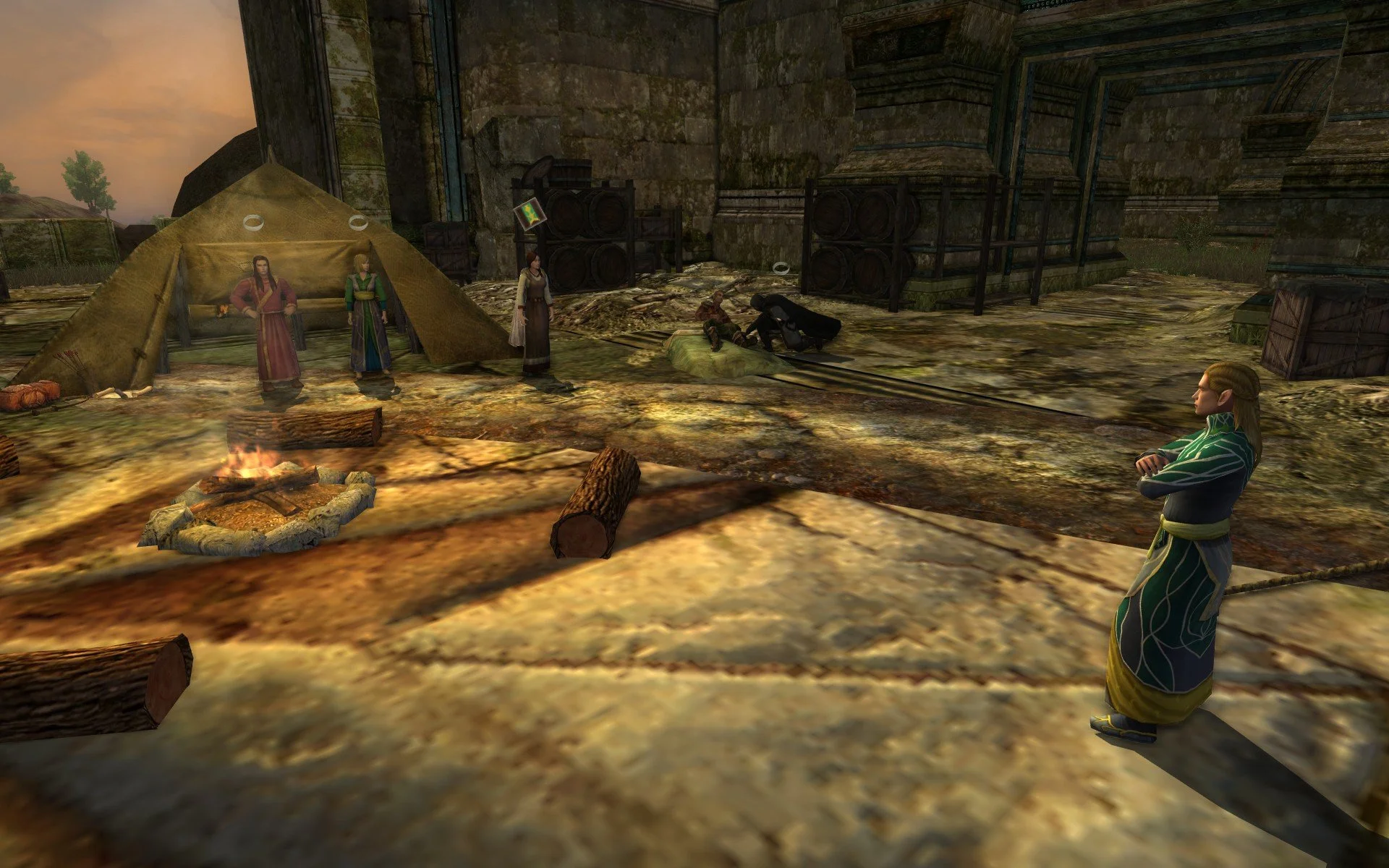
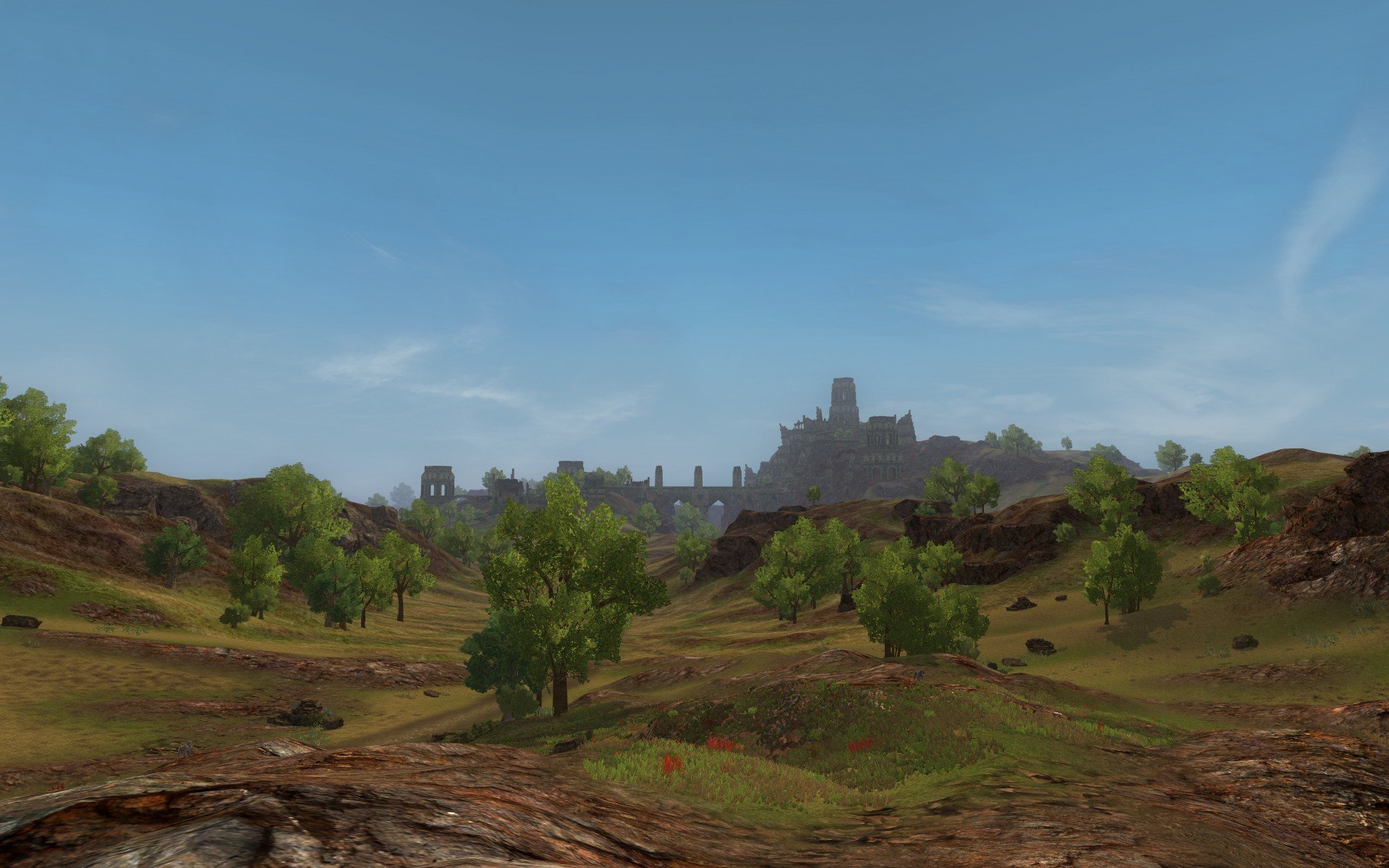
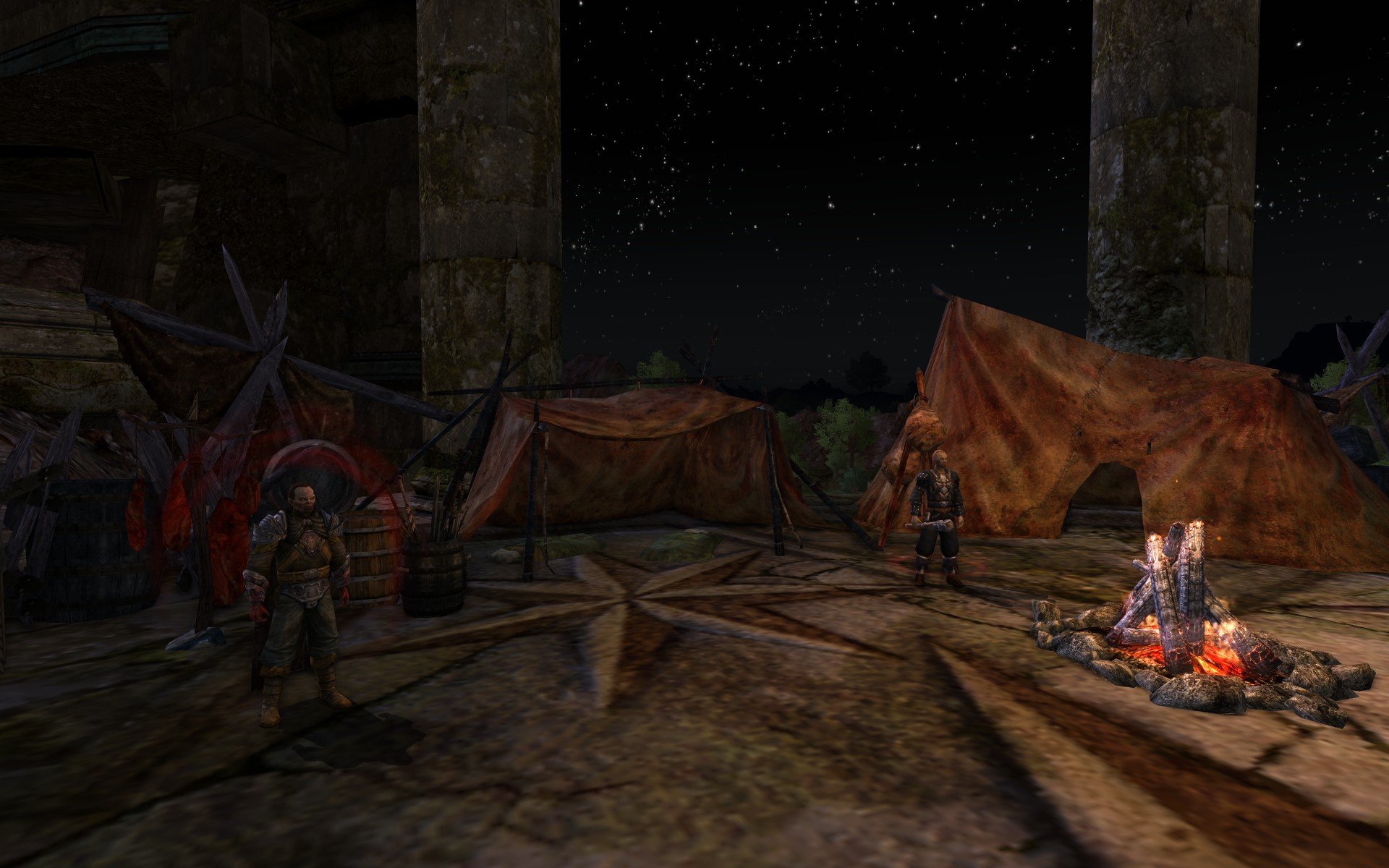
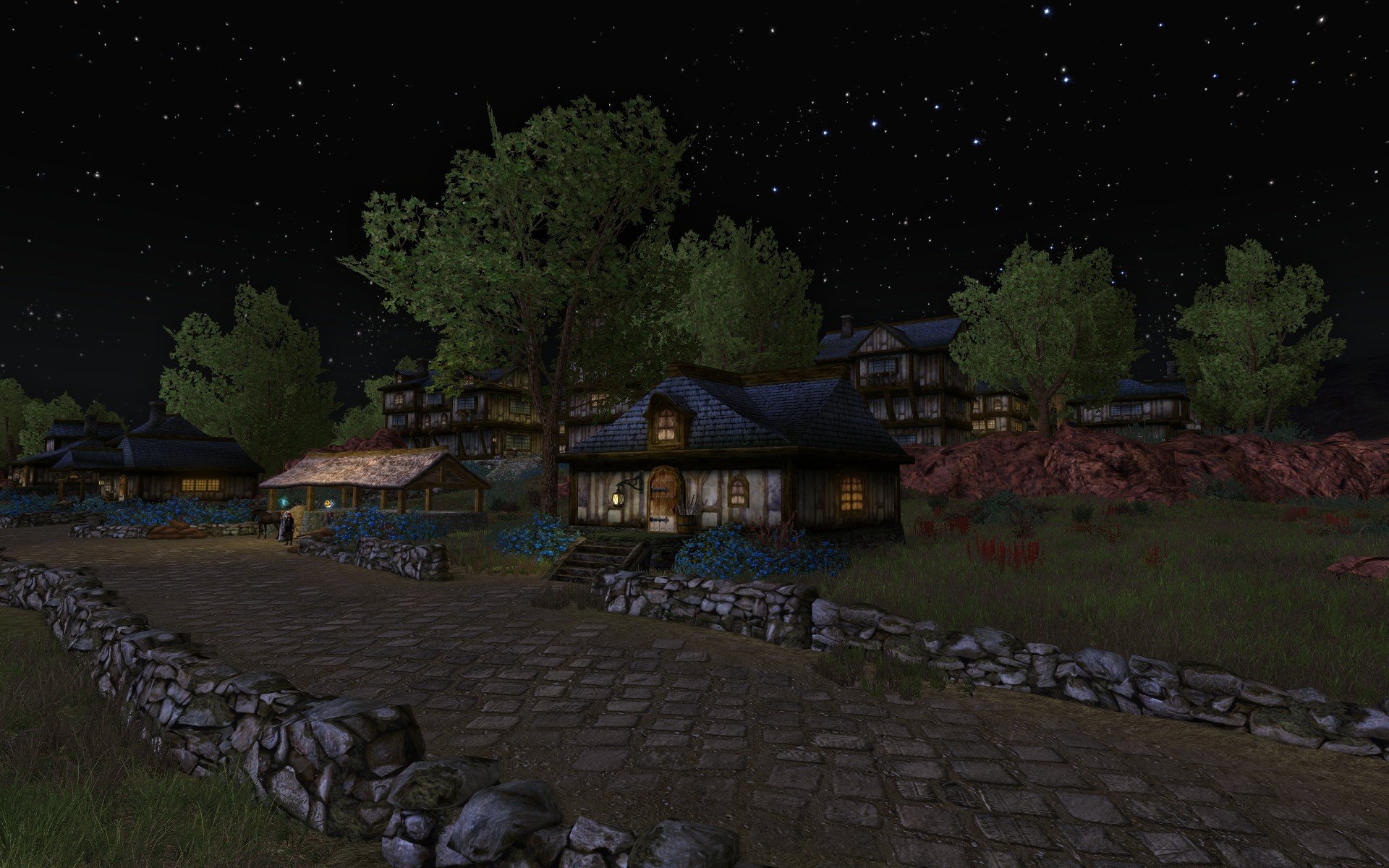
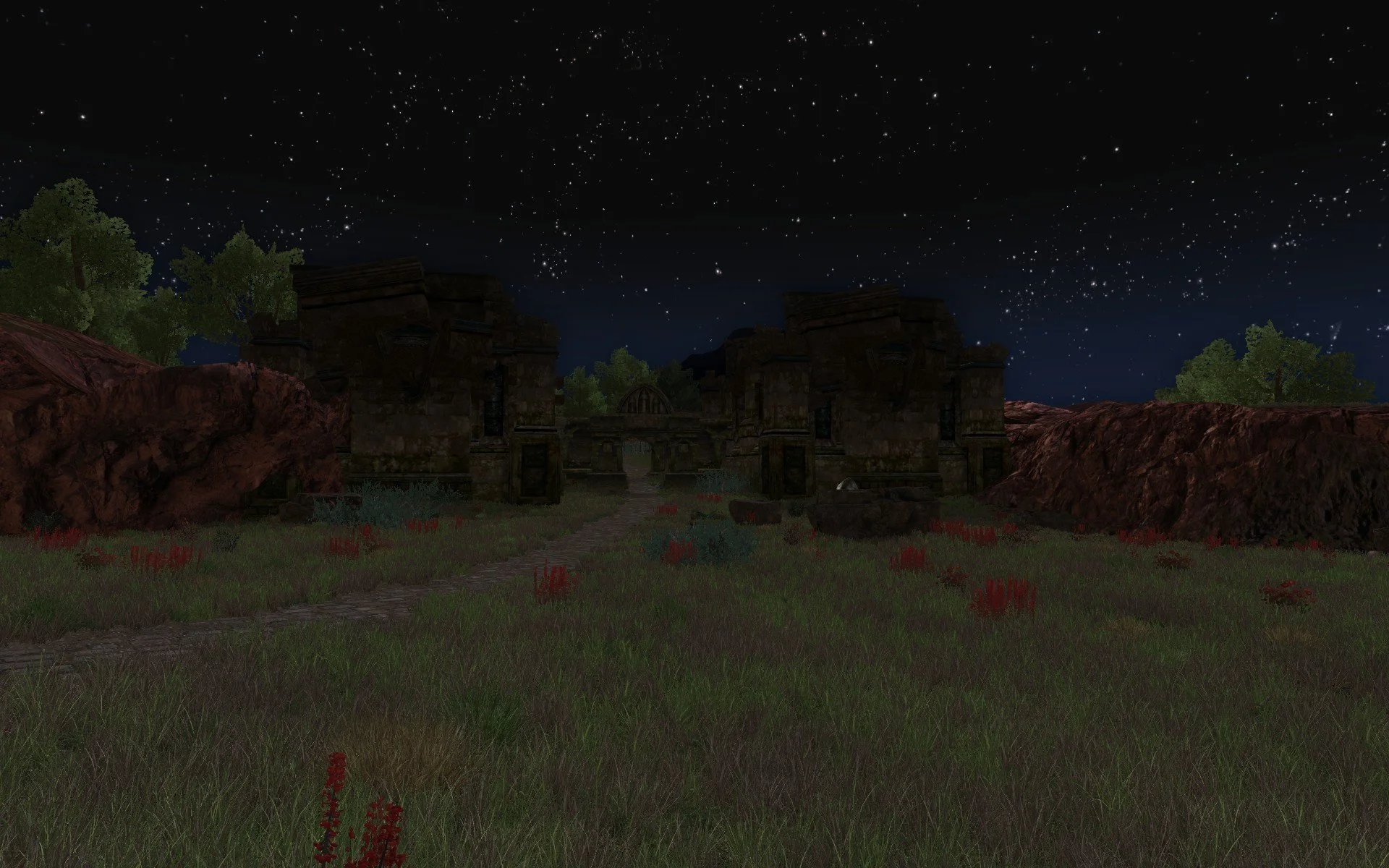
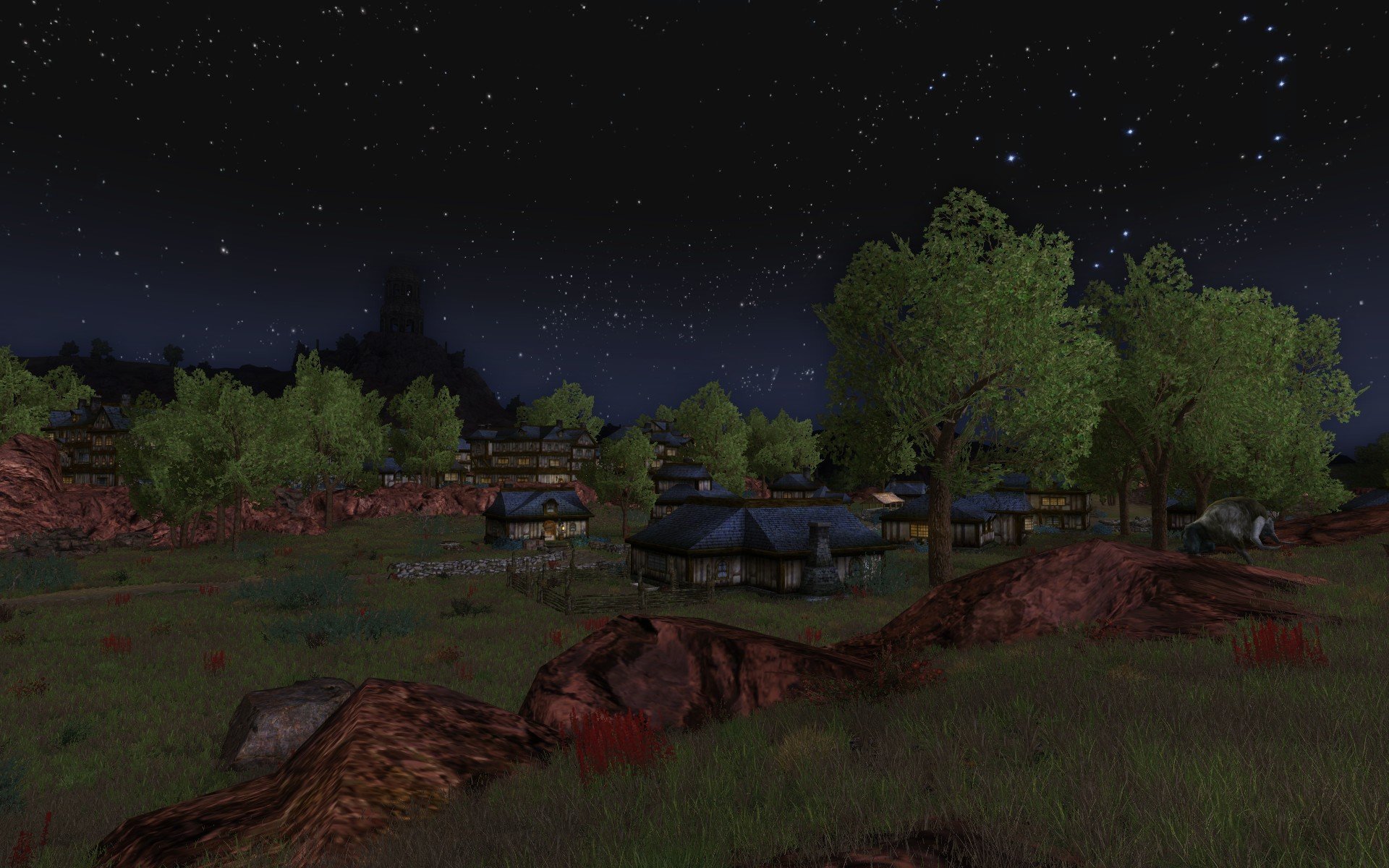
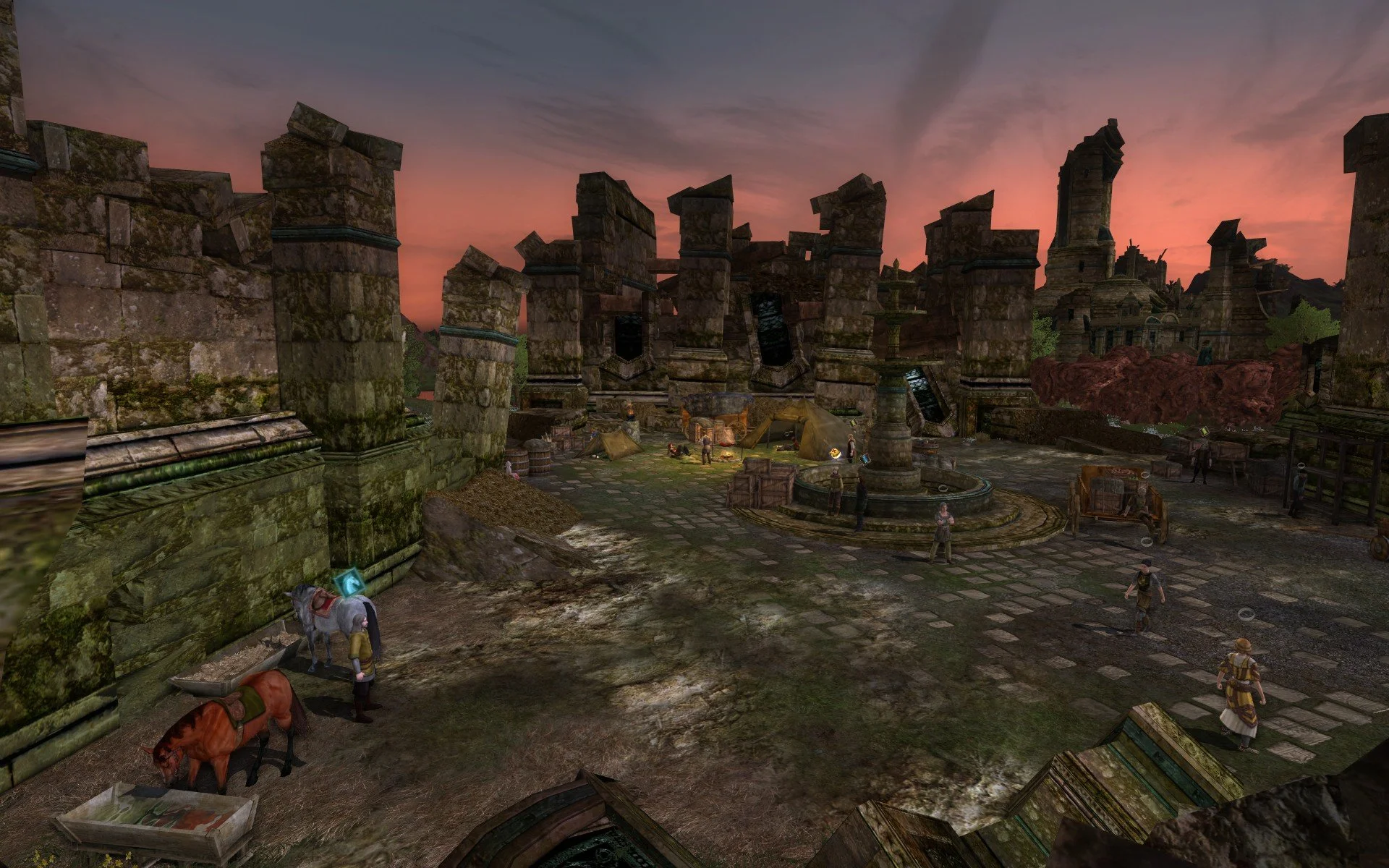
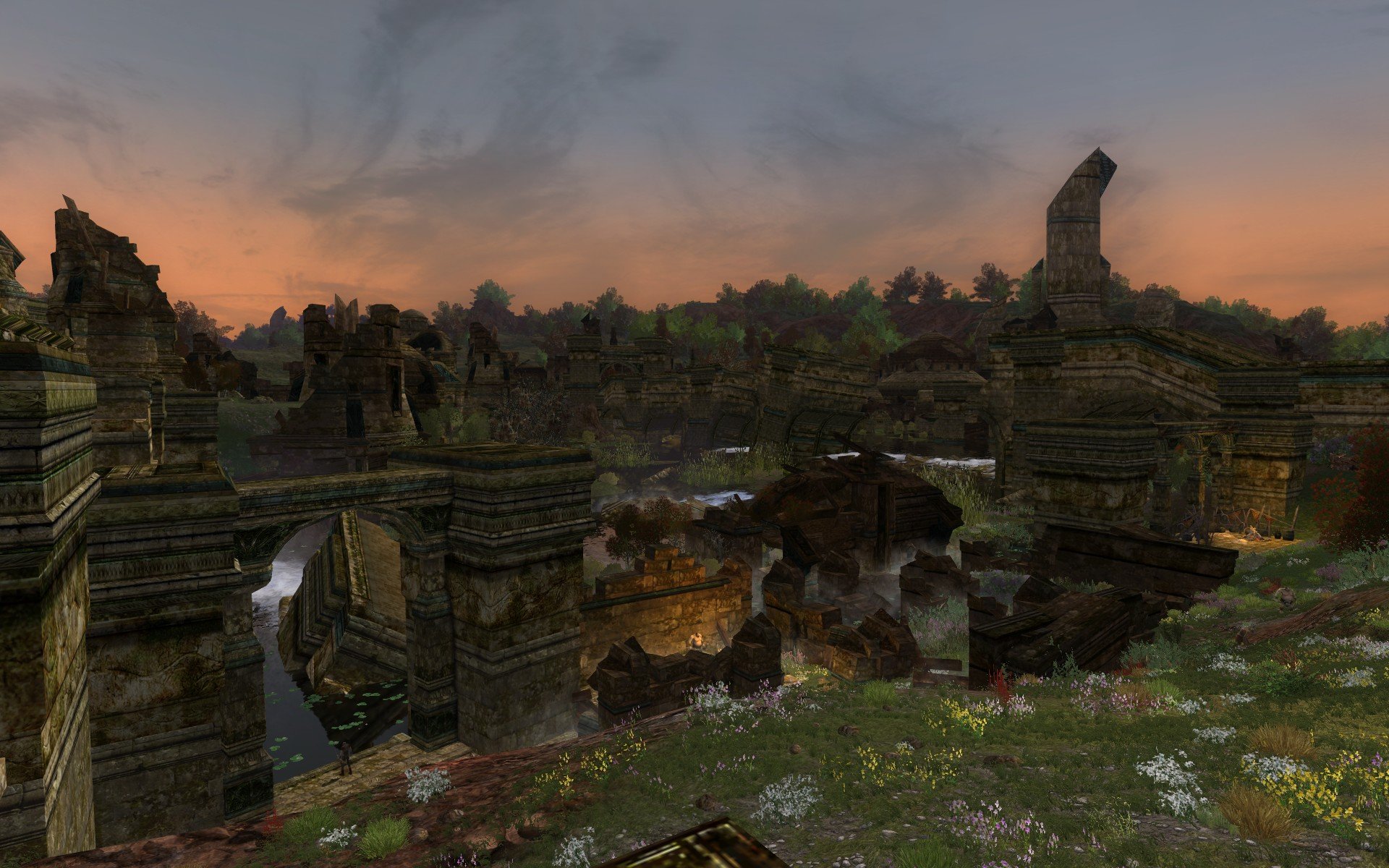
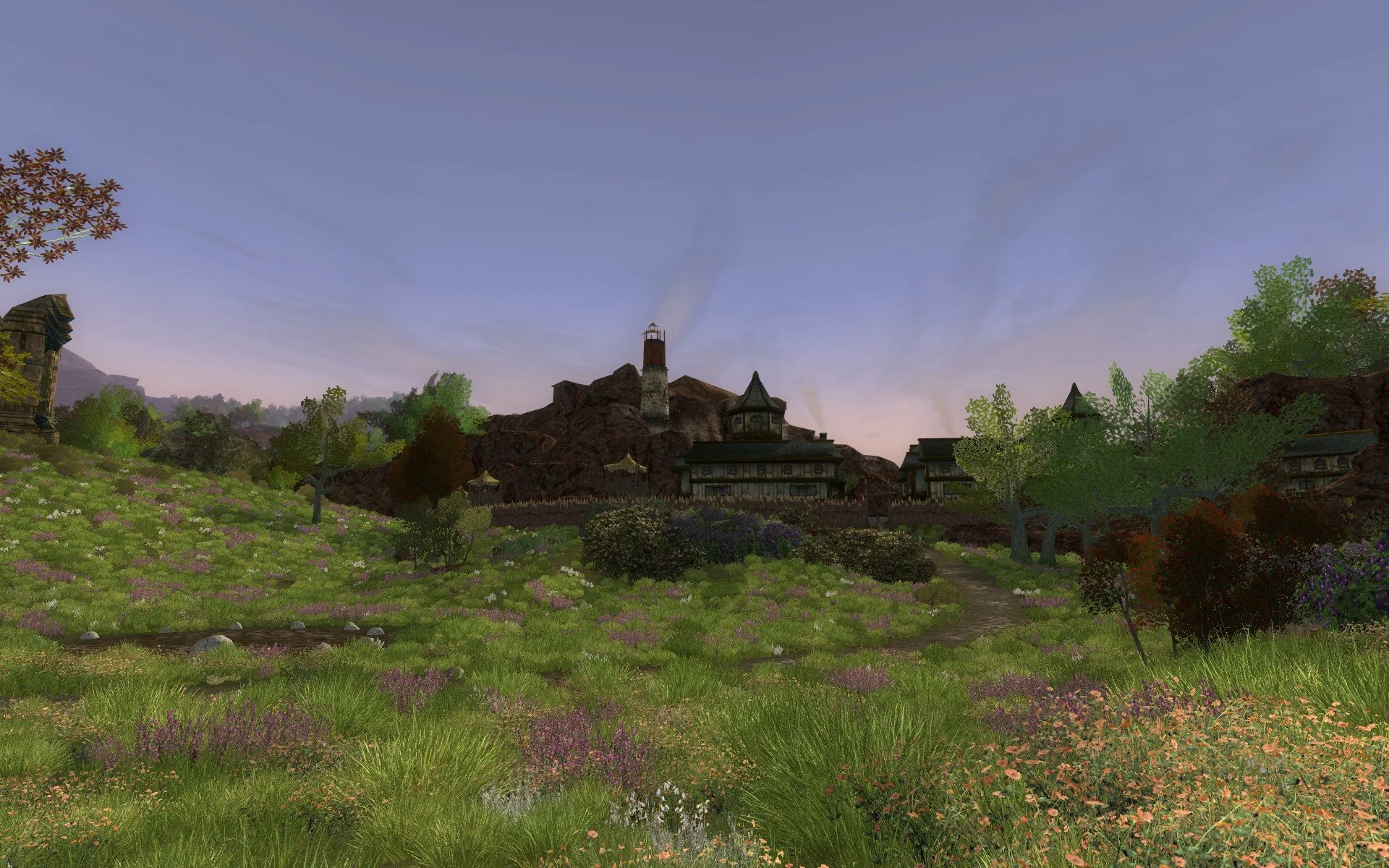
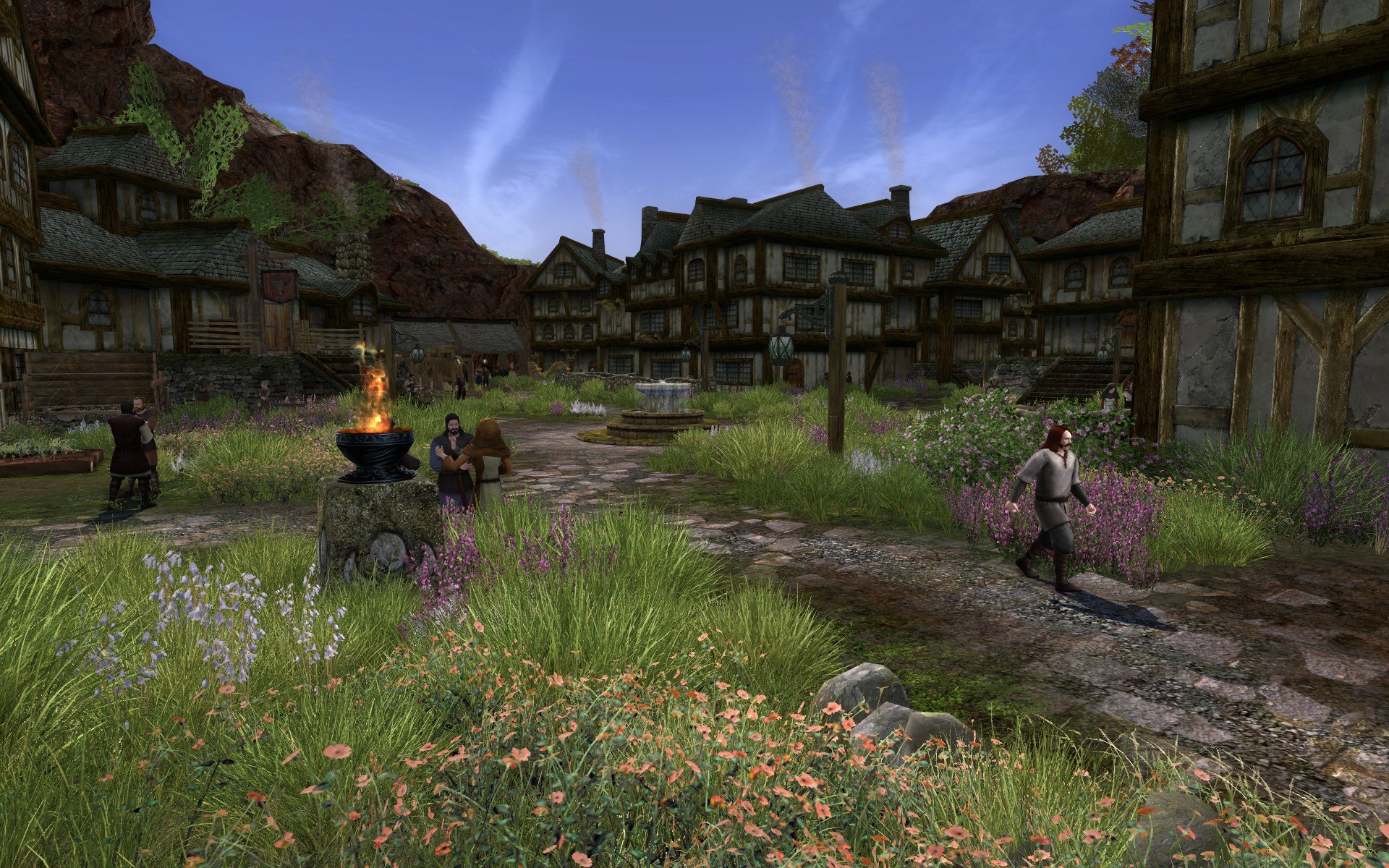
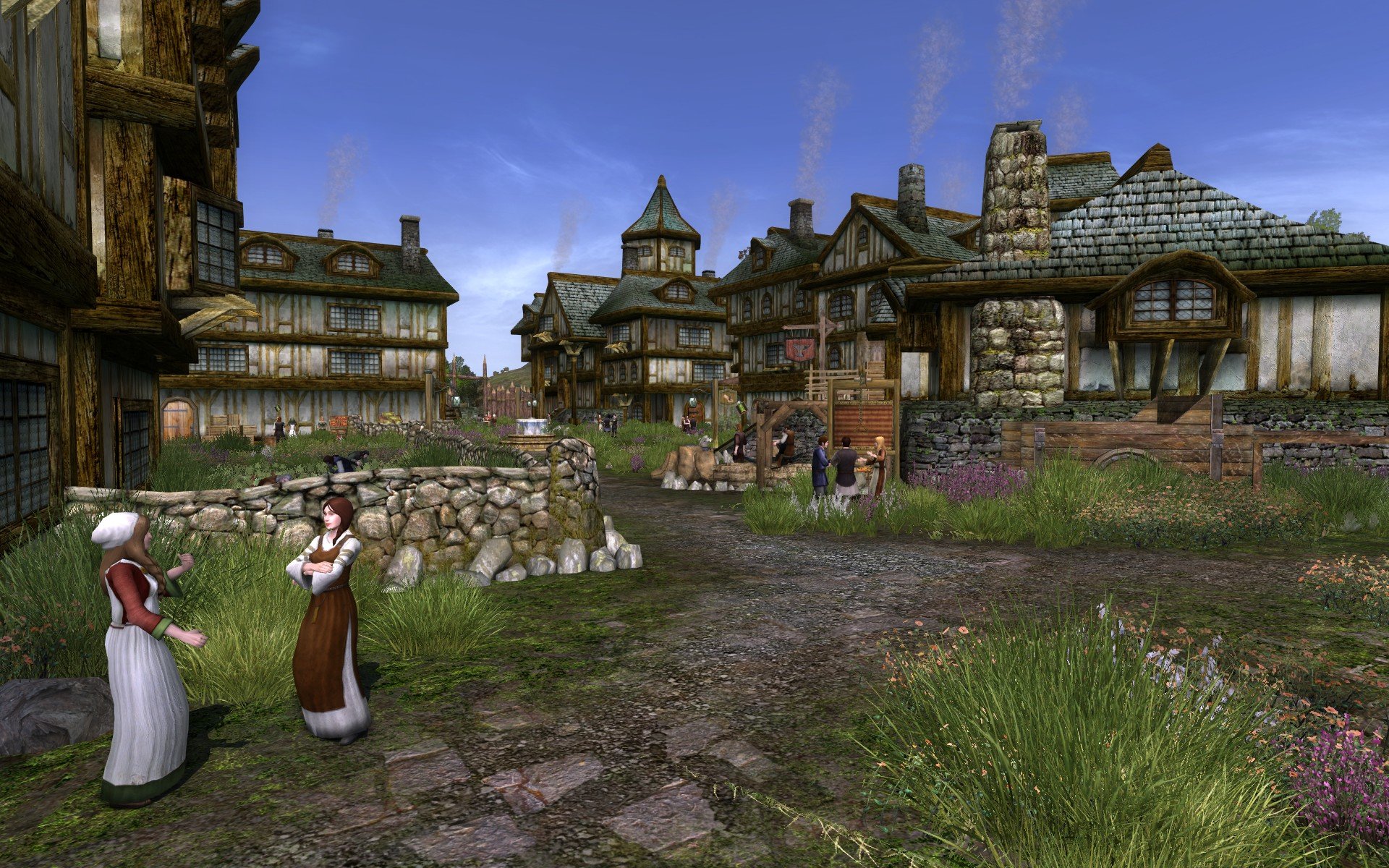
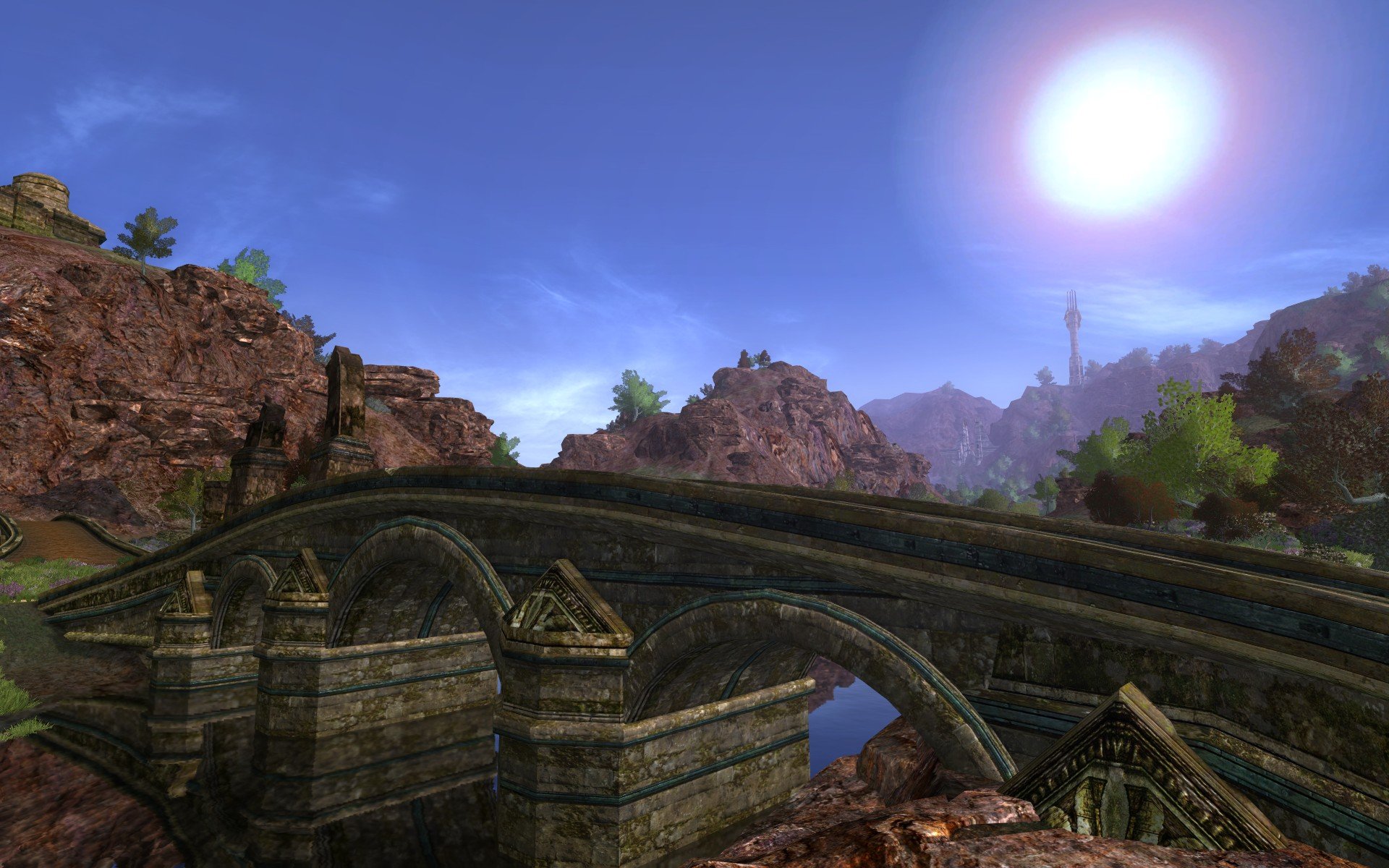
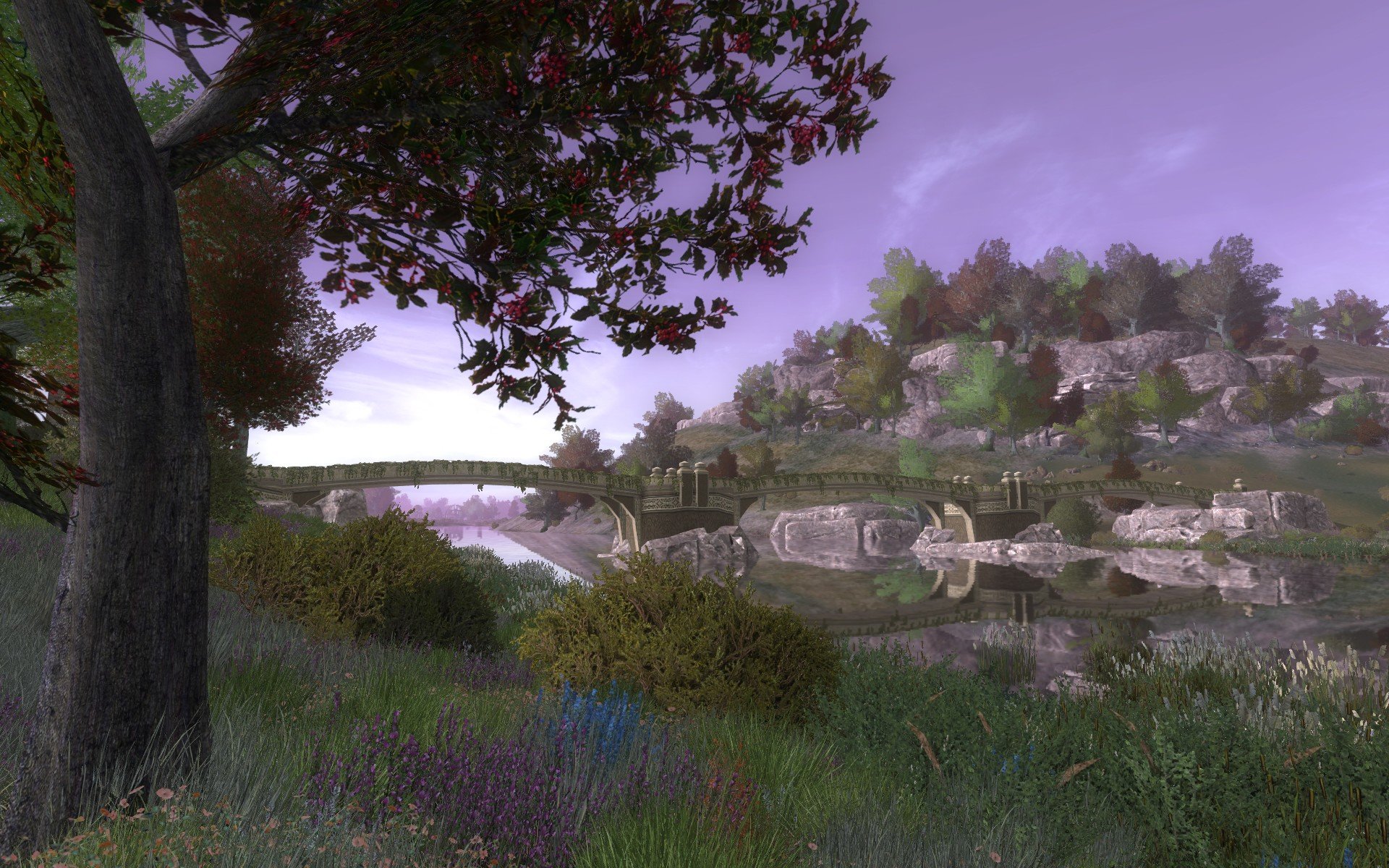
Herne is a major settlement of Men and main quest hub that lies on The Greenway road that runs diagonally through Cardolan. It seems to be the equivalent of Combe. The Crossway House Inn is a prominent feature and the architecture in Herne is once again similar to Bree. The road South out of the town leads to an area marked on the map as Minhiriath but you cannot access it due to an invisible barrier in ruins. To the East of Minhiriath there is the Cardolan ruins of Gaervarad and a stronghold of ruffians. The Greenway runs down to the Greyflood and the expansive ruins of Tharbad. There is an encampment here of Rangers and Elves but Tharbad itself is a major enemy stronghold. The bridges across the river are broken but there is a ford across the Greyflood into the neighbouring zone of Swanfleet.
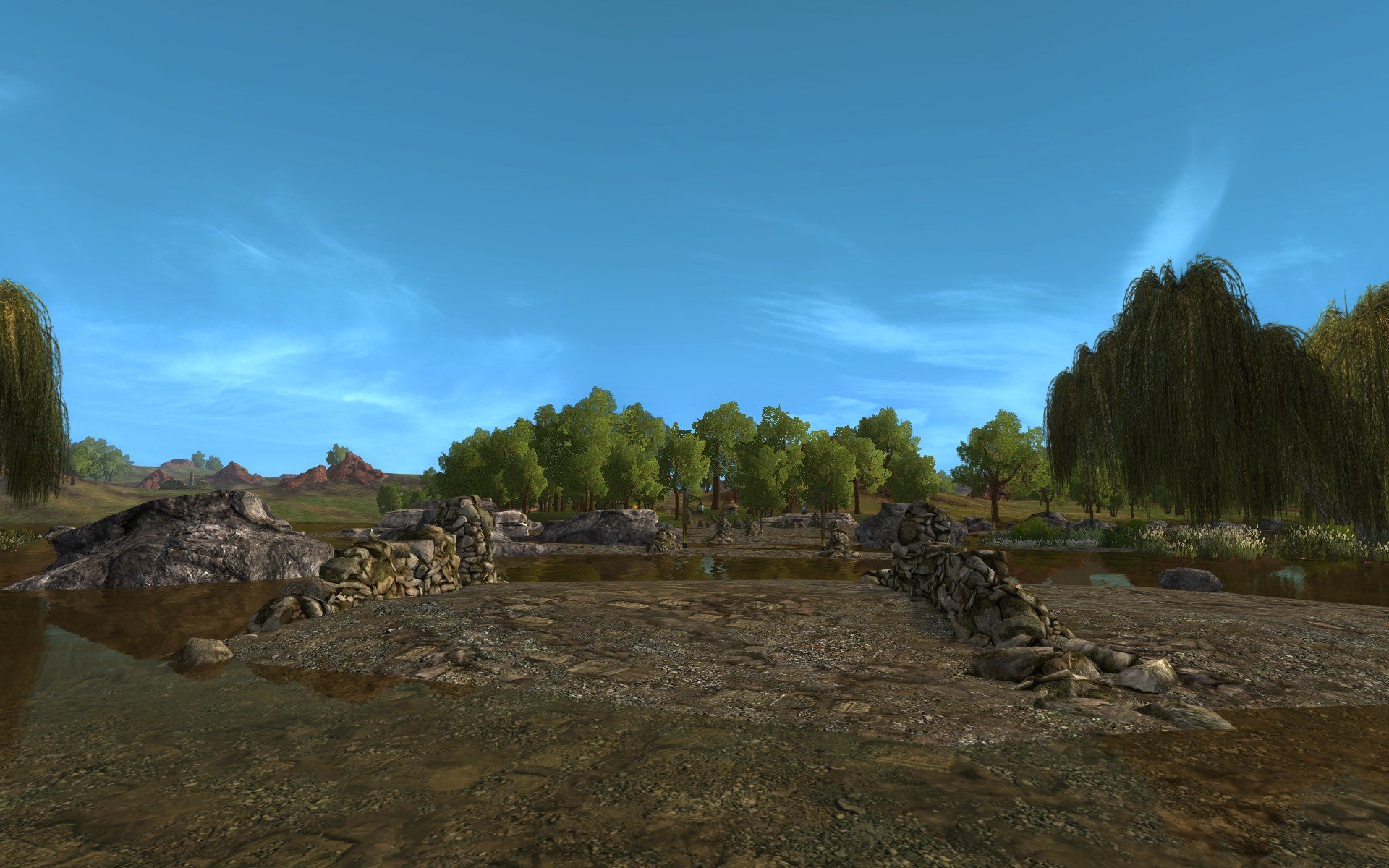
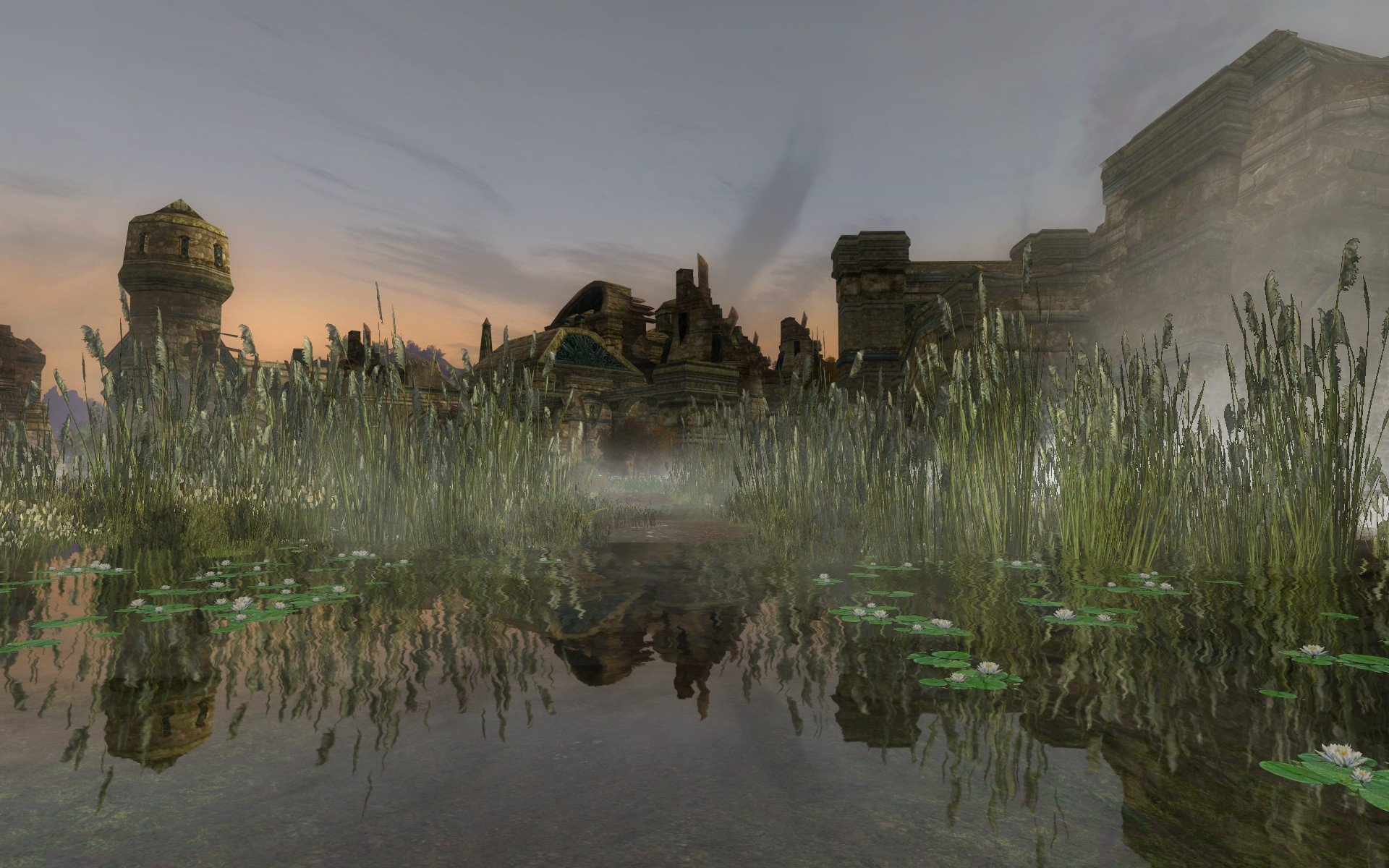
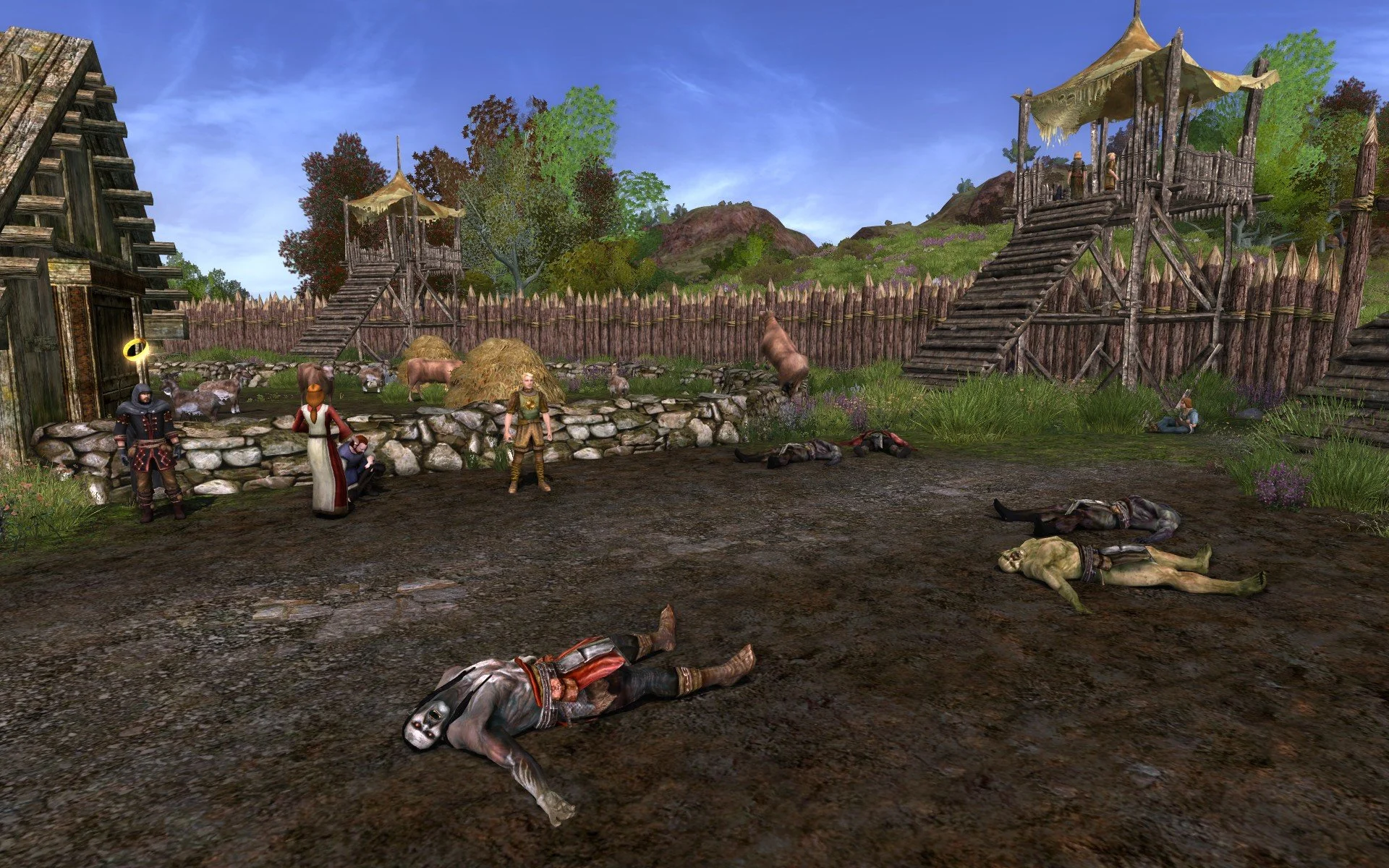
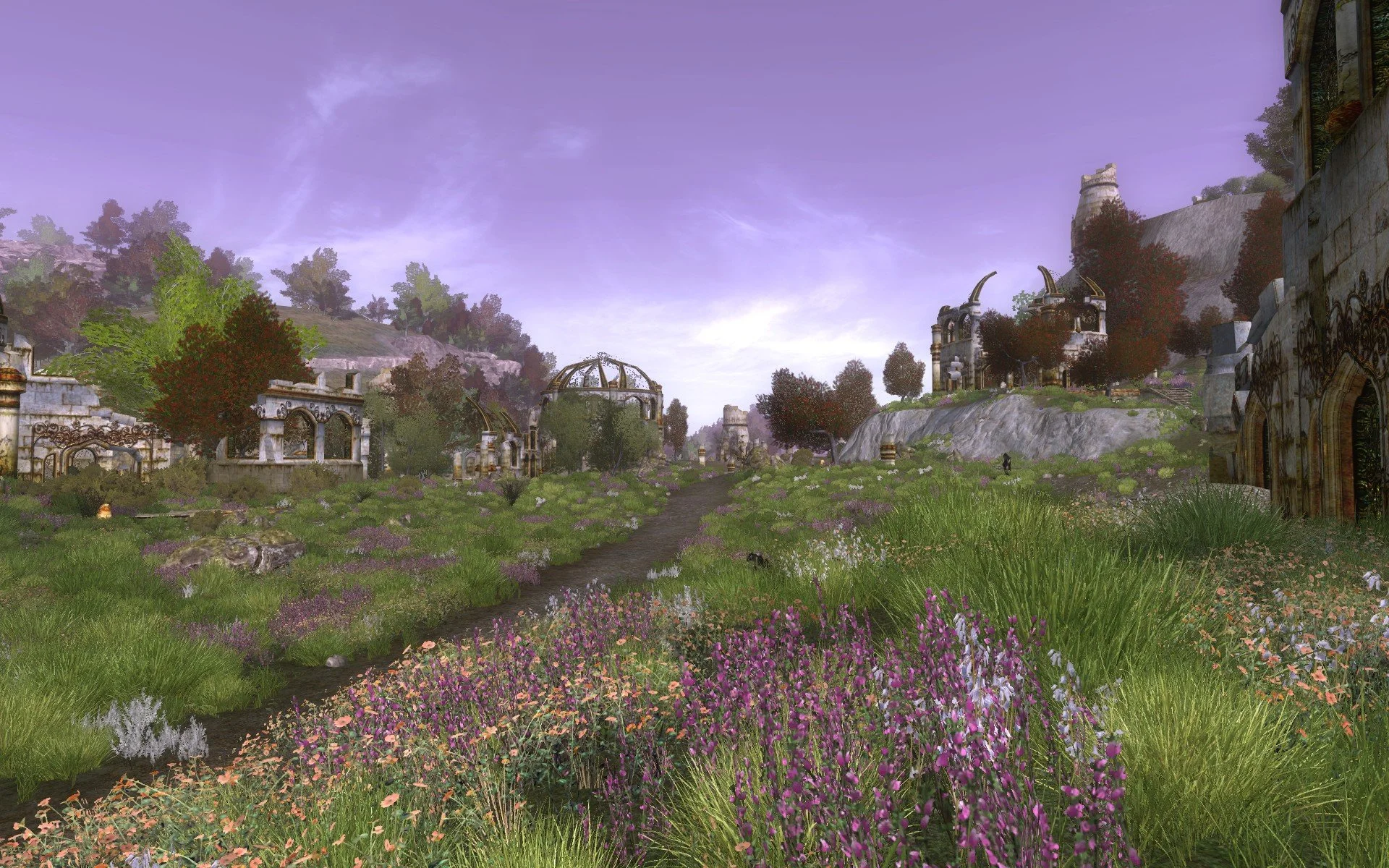
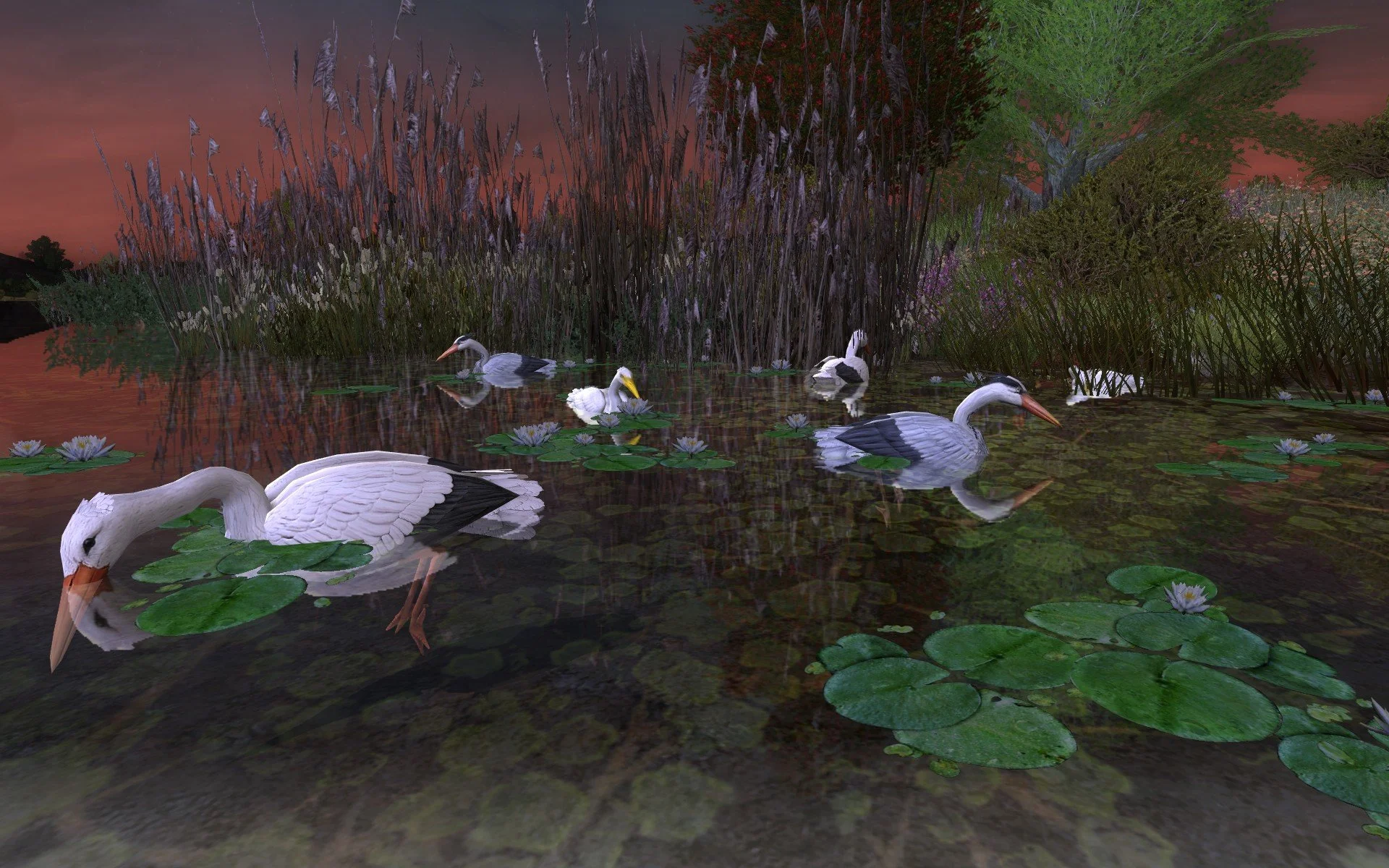
Upon crossing the Greyflood you find The Old South Road, which spans the zone from the West to the East of Swanfleet. Mossward is the first settlement you encounter and it is a small town like Archet. This is the new starter area featured in the new tutorial included in Update 34: Before the Shadow. To the North of the town are the fens and wetlands of Wadewater. So named as the water levels are navigable by foot or on horse. This is filled with water fowl, insects and Bog Lurkers. The area is reminiscent of Enedwaith and features the village of Lhan Garan which is similar to Galtrev. Nearby are the Elven ruins of Caras Gelebren. The road East leads to Echad Mirobel in Eregion. Western Eregion lies North of Caras Gelebren and is adjacent to The Angle of Mitheithel, so shares a similar environment. Tham Lasgol and Thamn Celechir are additional Elven ruins populated by Wood Trolls and Huorns.
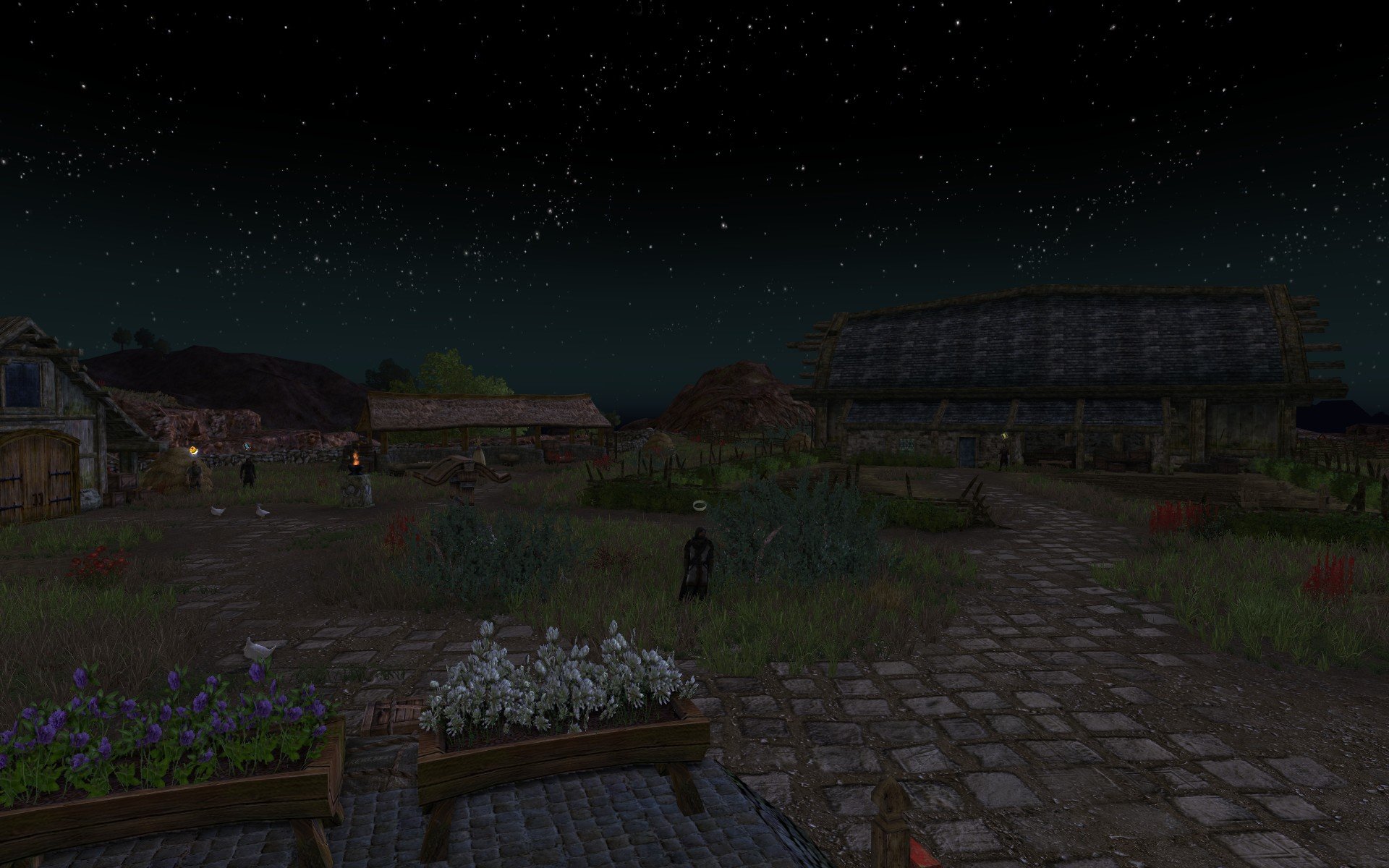
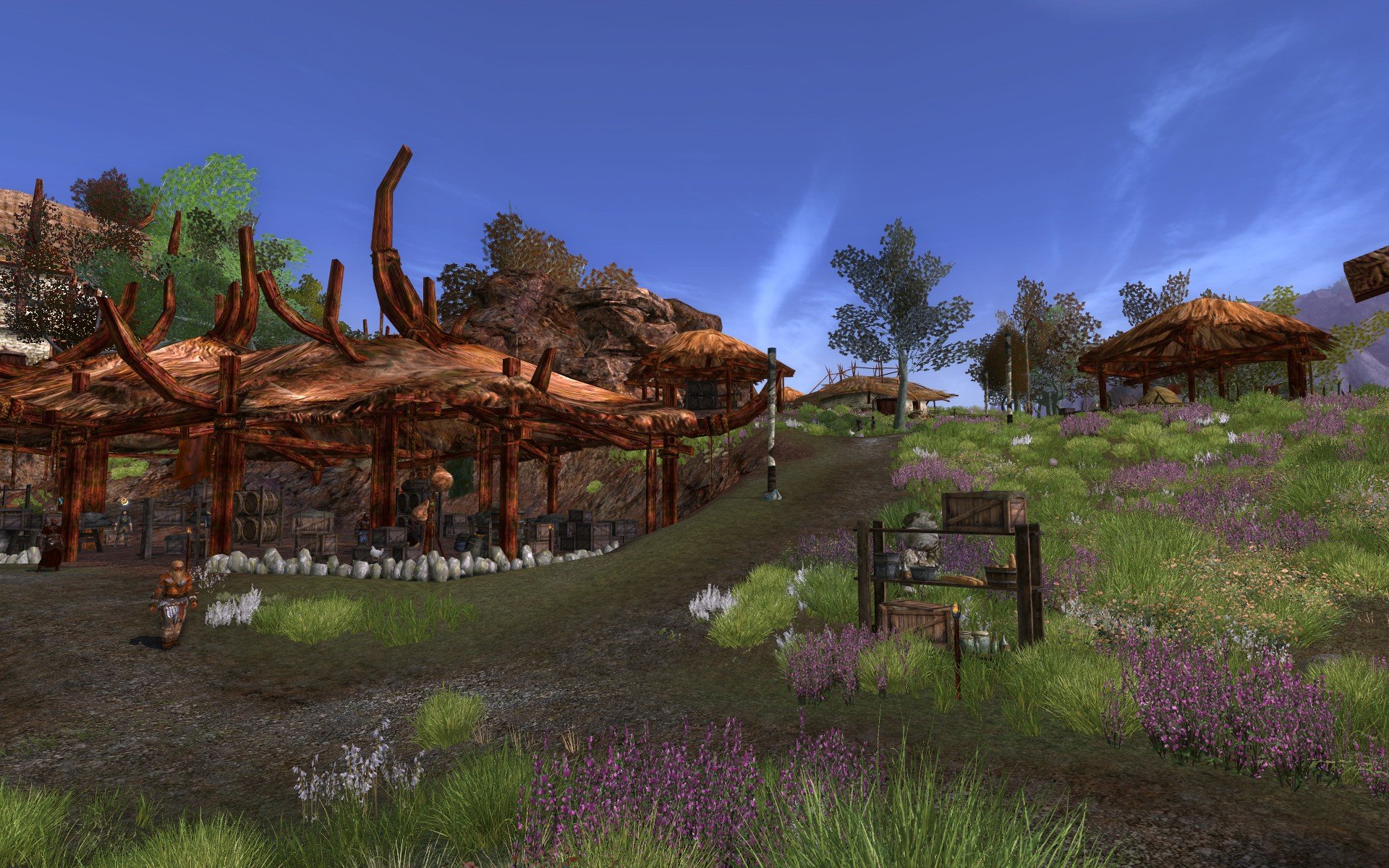
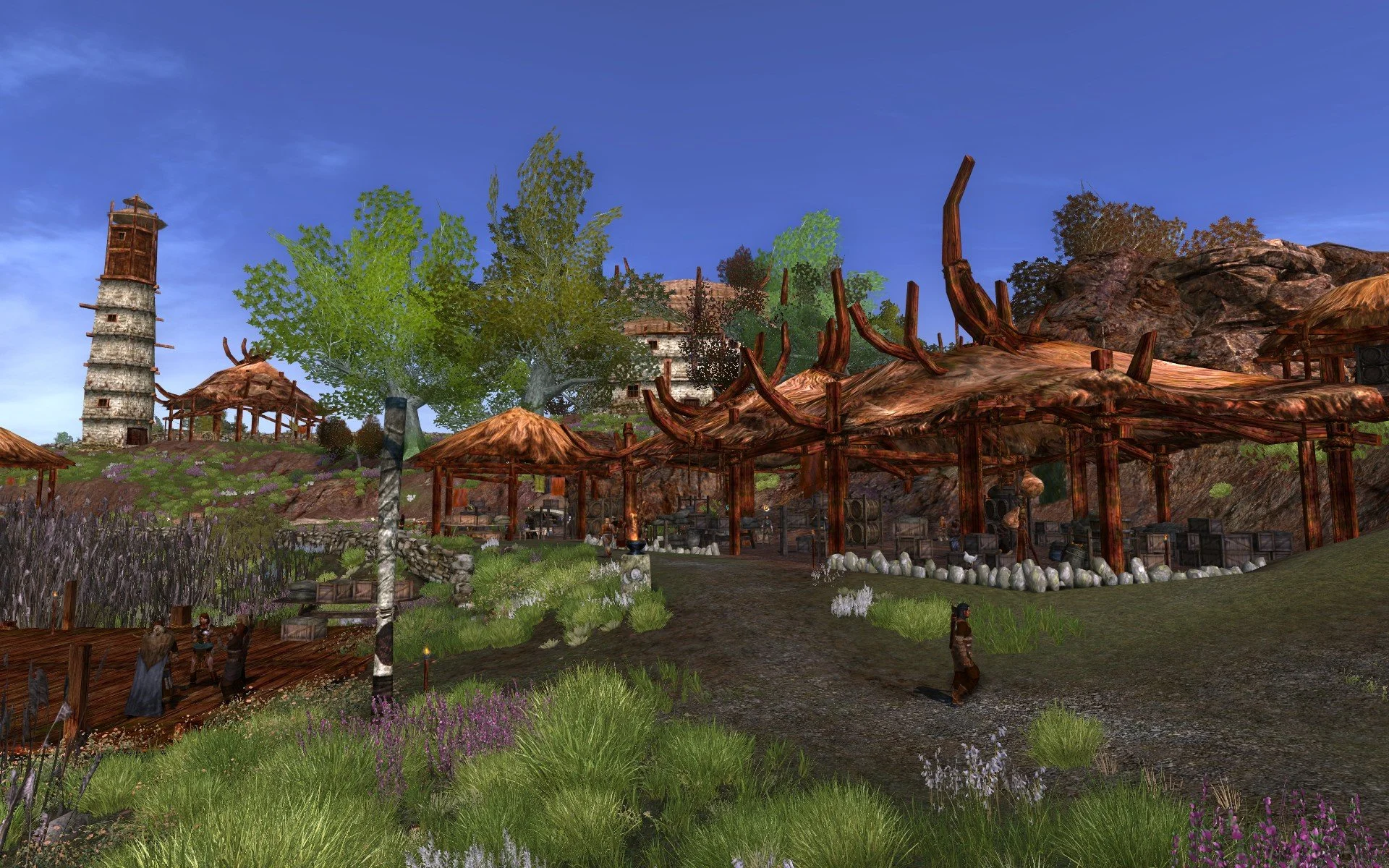
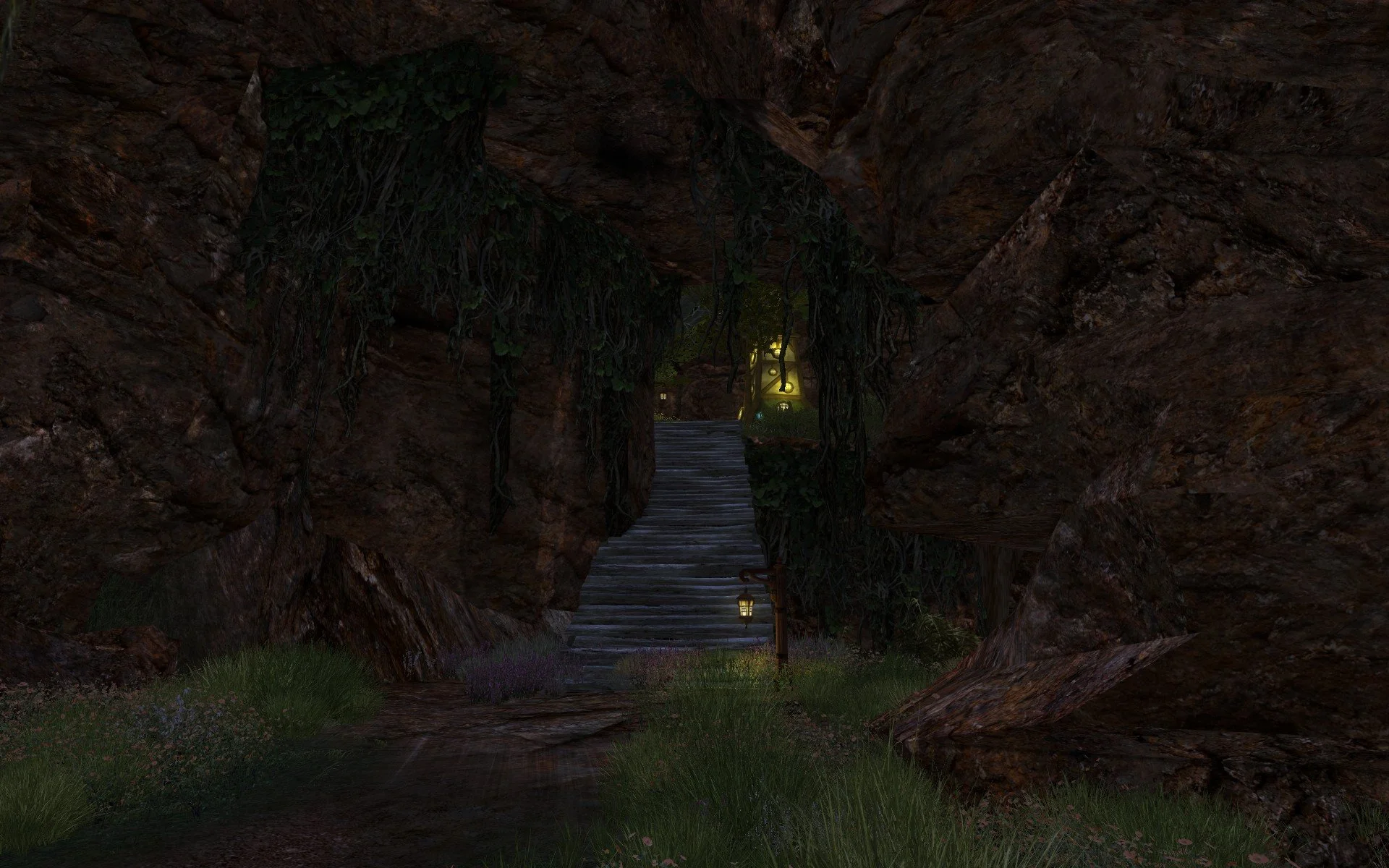
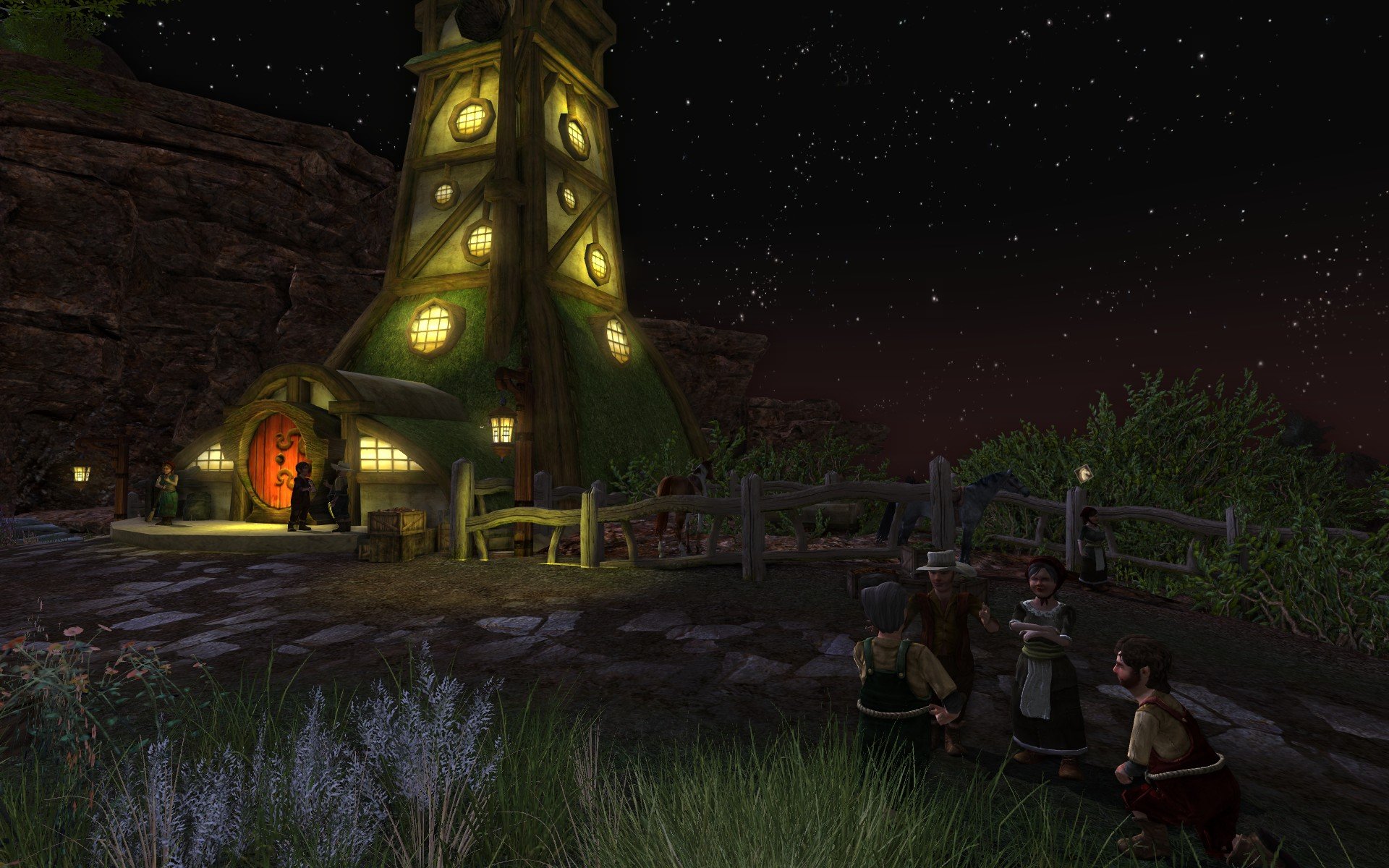
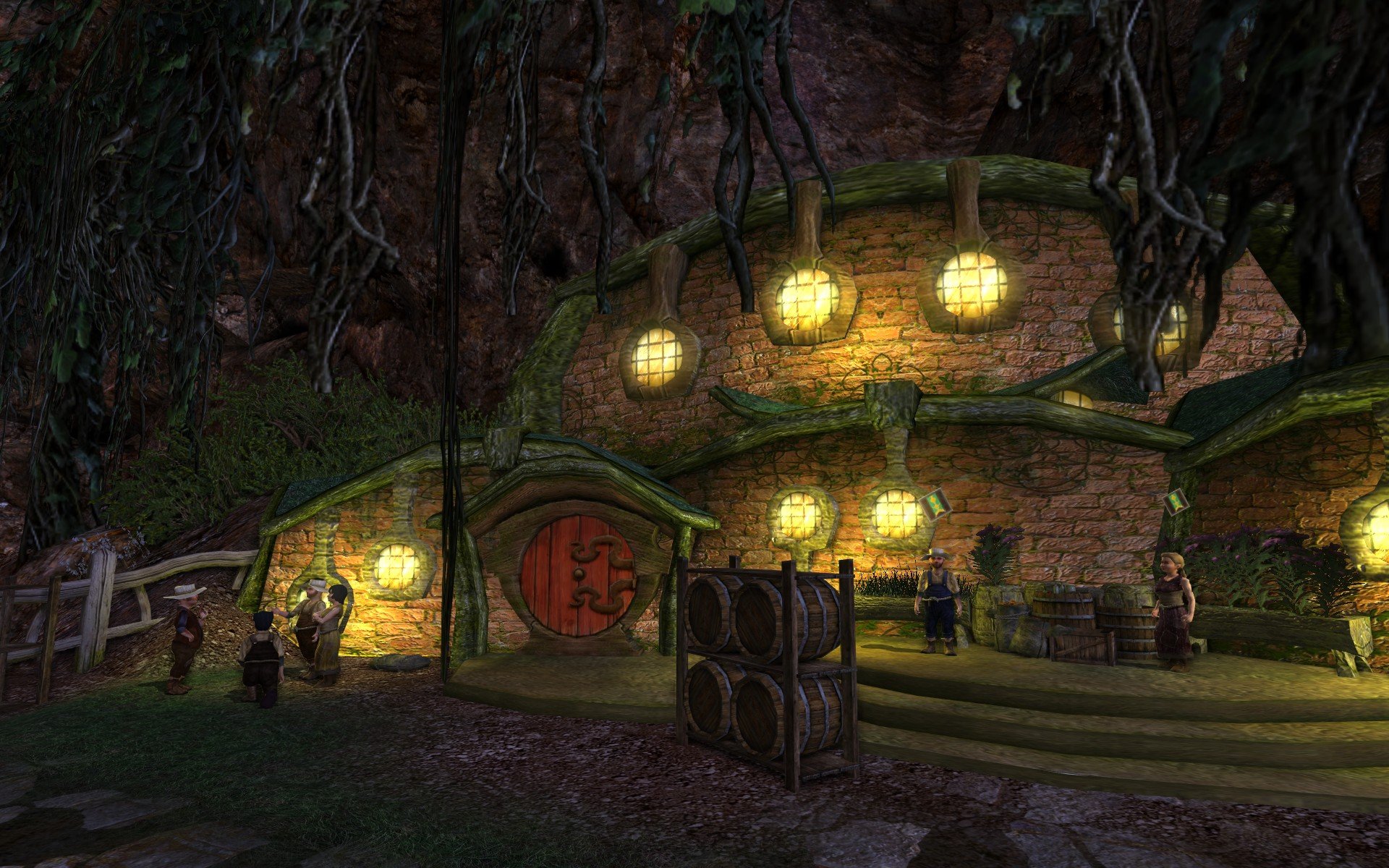
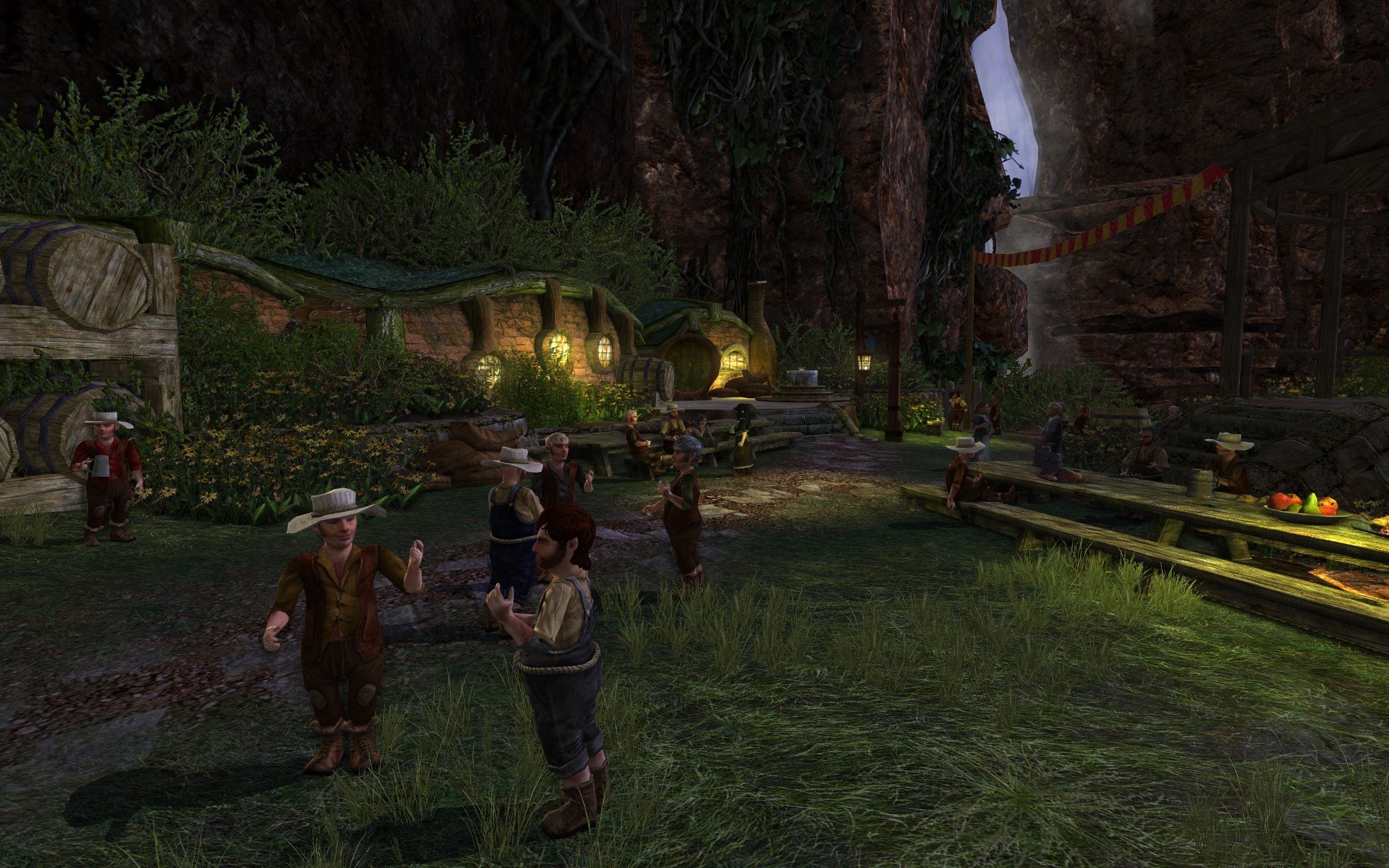
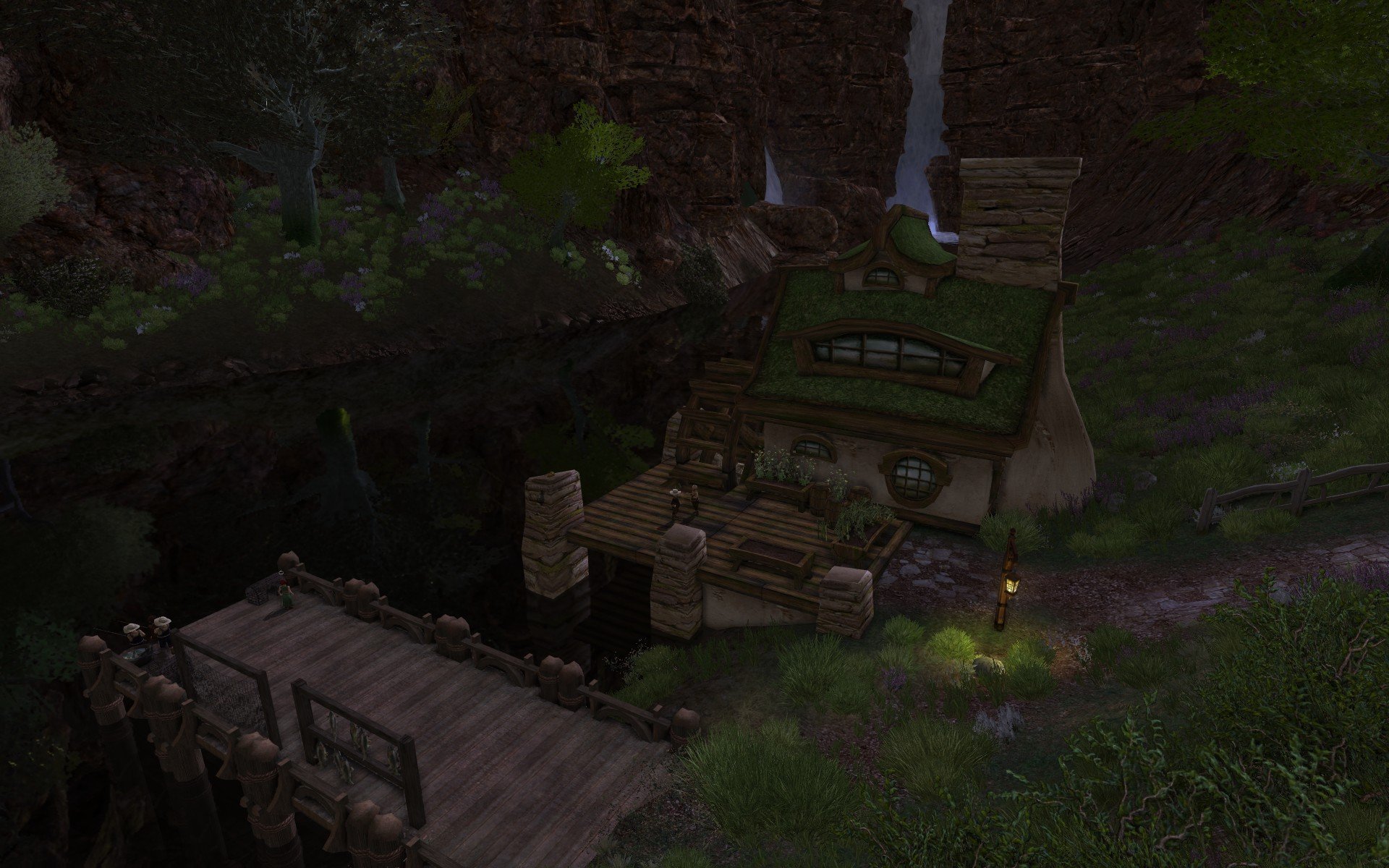
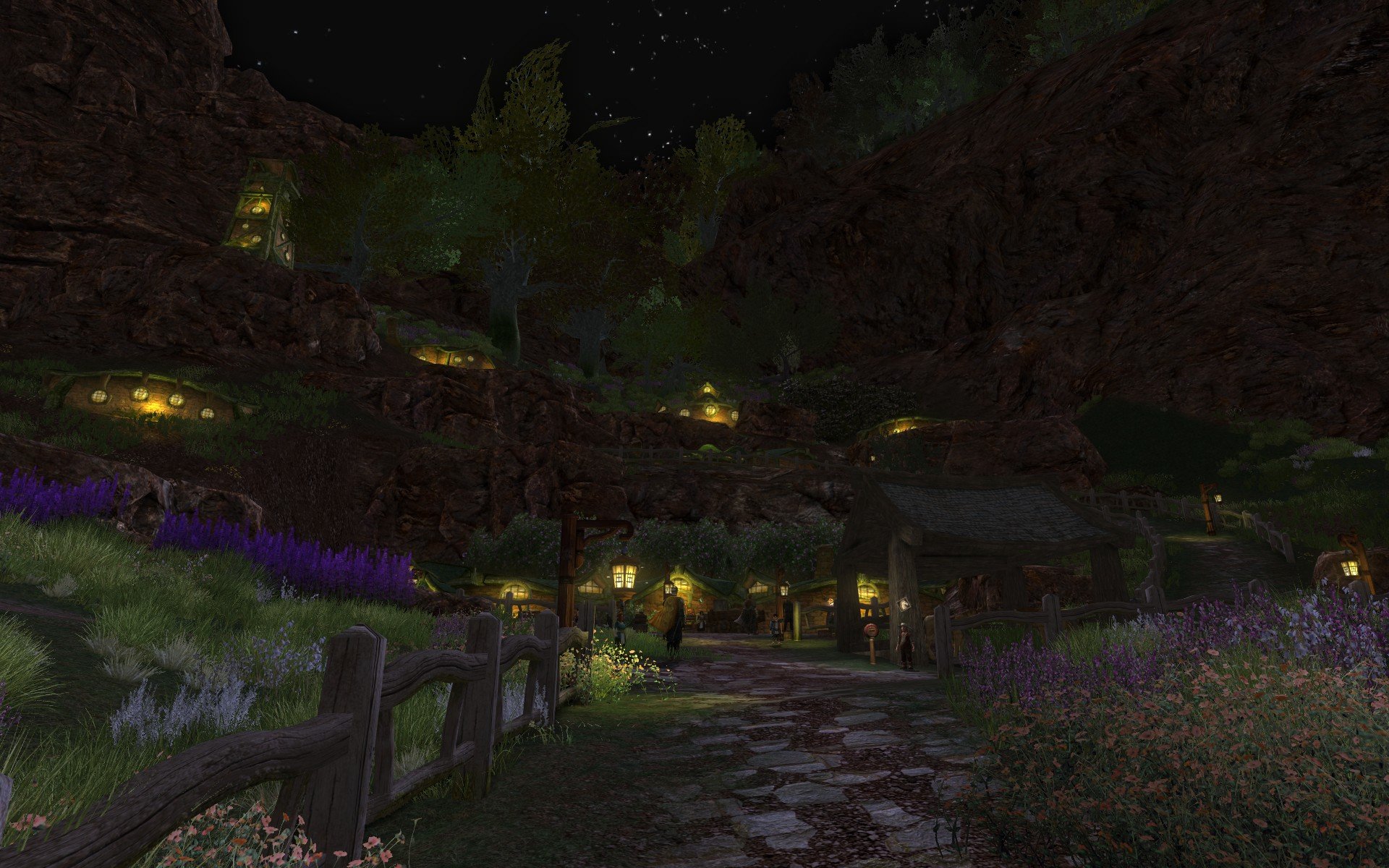
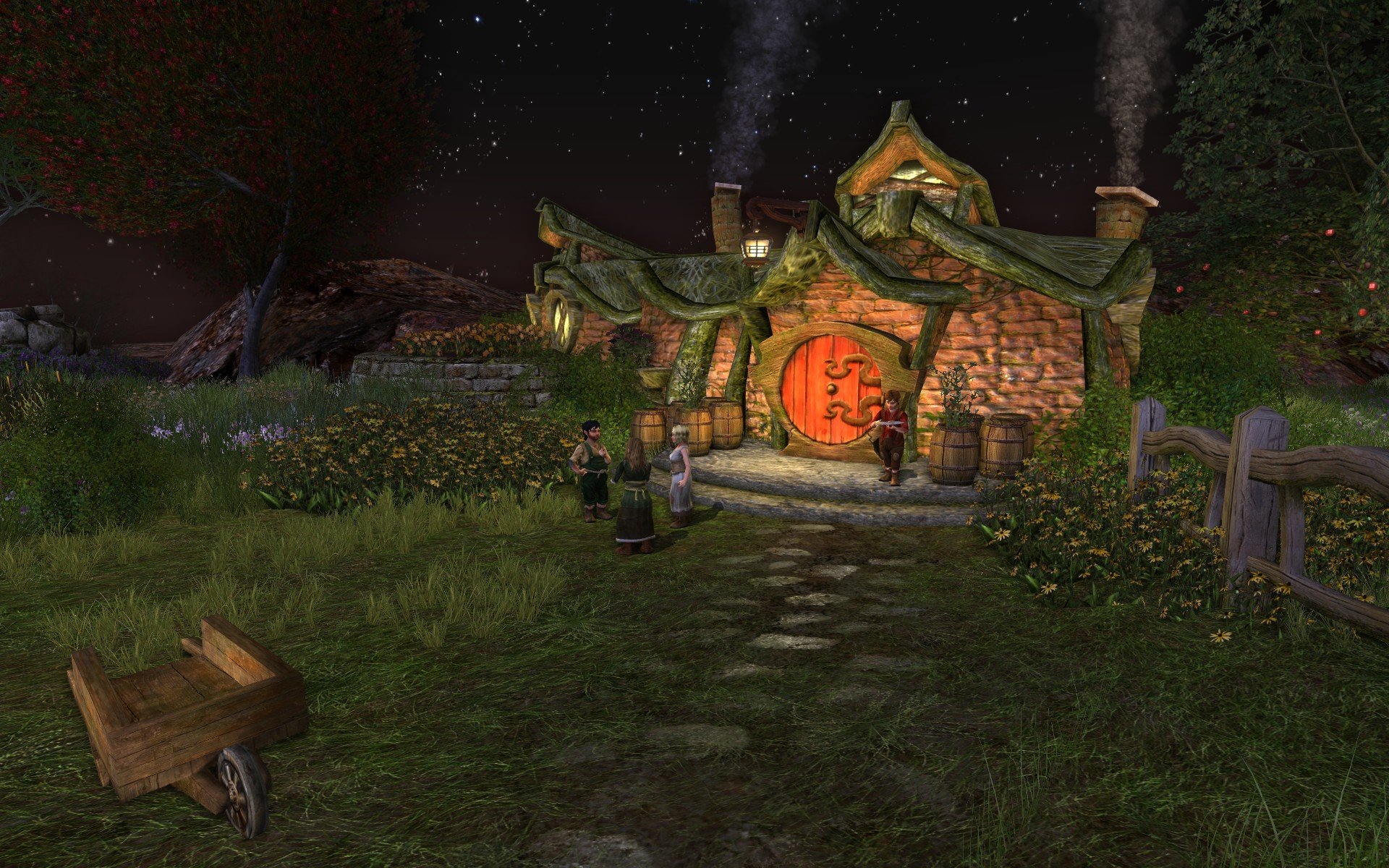
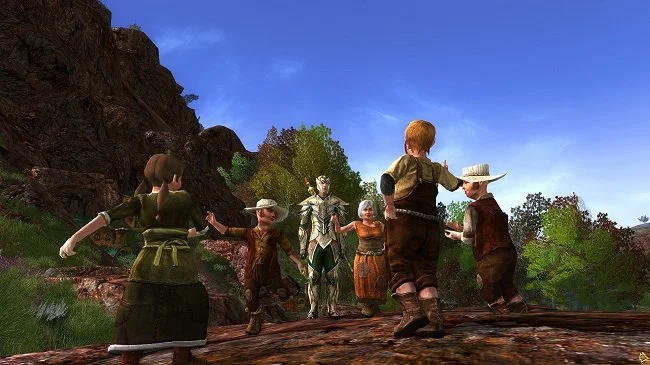
Perhaps the most entertaining area in Swanfleet is the Stoor-vales. This area includes three settlements quite close to each other. Glen Helyg, Clegur and Lintrev are Stoor villages set among the hills away from The Old South Road and hidden from prying eyes. Aesthetically, they are similar to Maur Talhau in Enedwaith, which they link to. Hobbit settlements have a tendency to be whimsical areas and these are no different. They also provide the practical benefits of being a major crafting hub. With regard to The Old South Road, this leads to Gloomglens and Windfells in Enedwaith. It should be noted that despite its substantive in-game map appearance, Swanfleet is another region where a lot of the terrain is inaccessible and the player is funnelled to specific areas. In reality it is not a big and open zone as Cardolan. However, it does have an immersive environment.
To conclude, Cardolan and Swanfleet provide a great sense of in-game continuity. There are lots of repeated assets from other locations, but that makes perfect sense when you consider that the new zones have borders with six other existing regions. I would like to draw special attention to the ambient music for Cardolan and Swanfleet, composed by Bill Champagne. It is very appropriate and memorable. Whatever criticisms you may raise against LOTRO, its musical score is not one of them. It remains the one to beat within the MMO genre. Overall, Cardolan and Swanfleet offer an interesting addition to LOTRO, filling in a long time gap in SSG’s virtual Middle-earth. Having a new tutorial set in these zones makes creating new alts a far more appealing prospect.
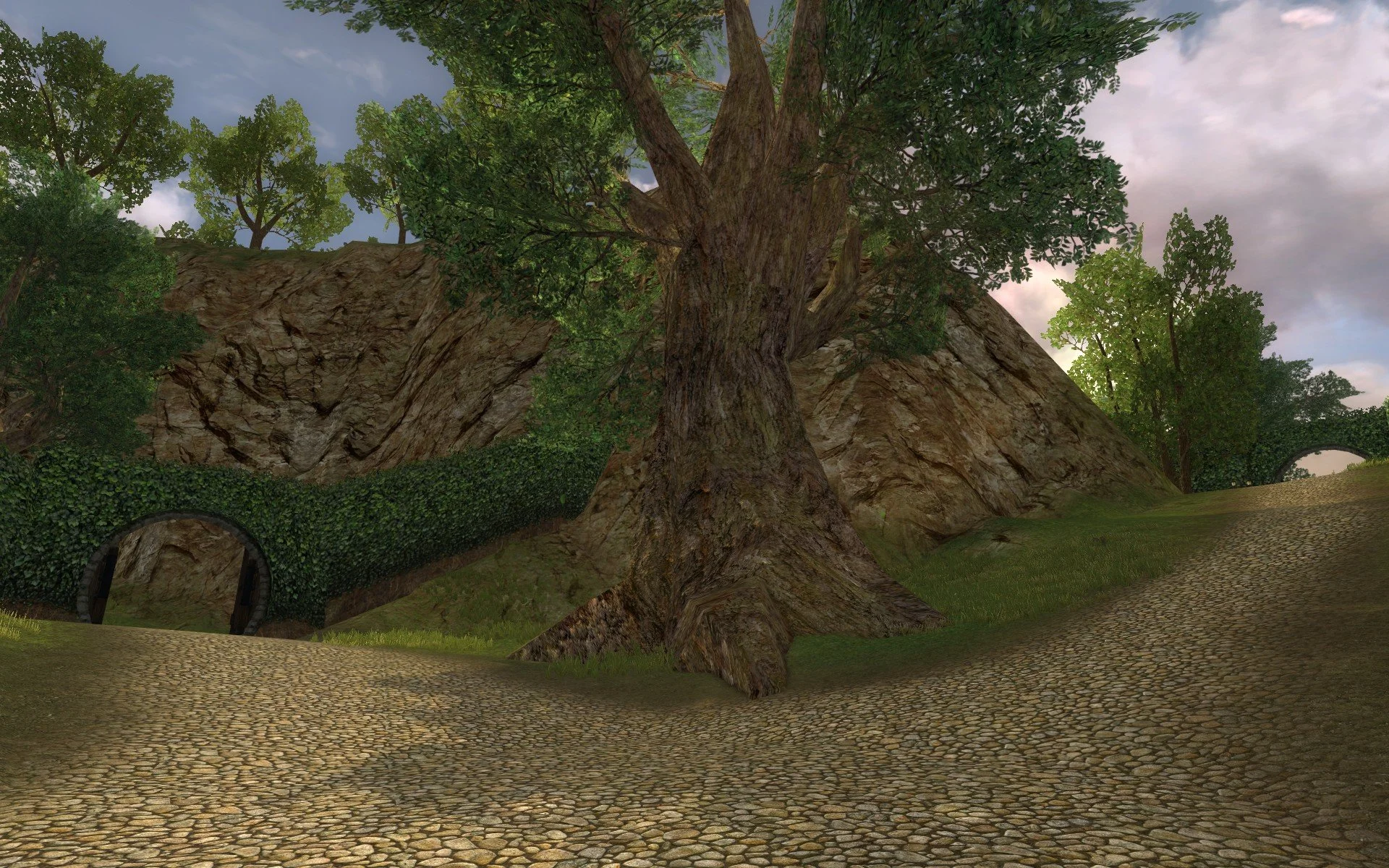
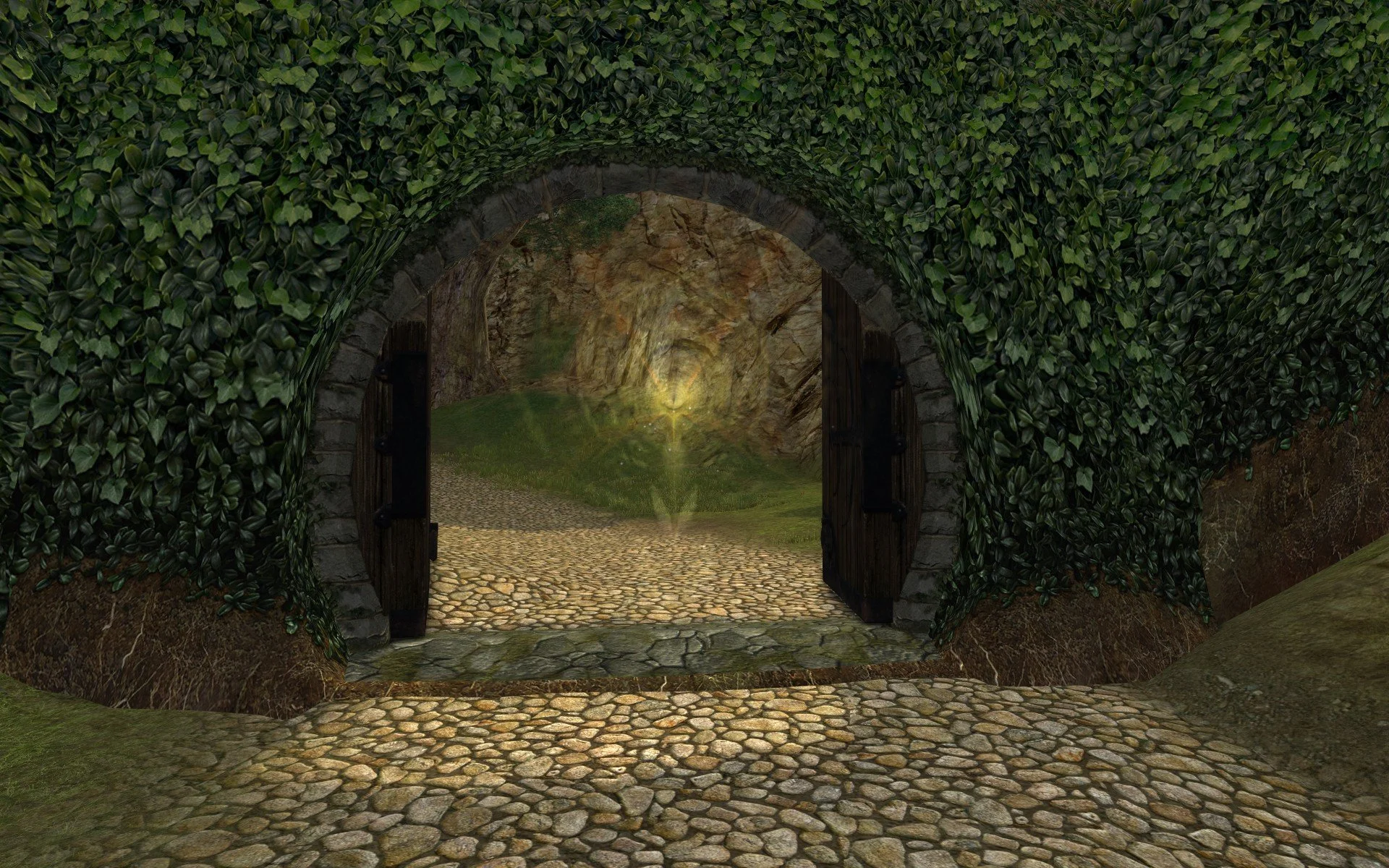
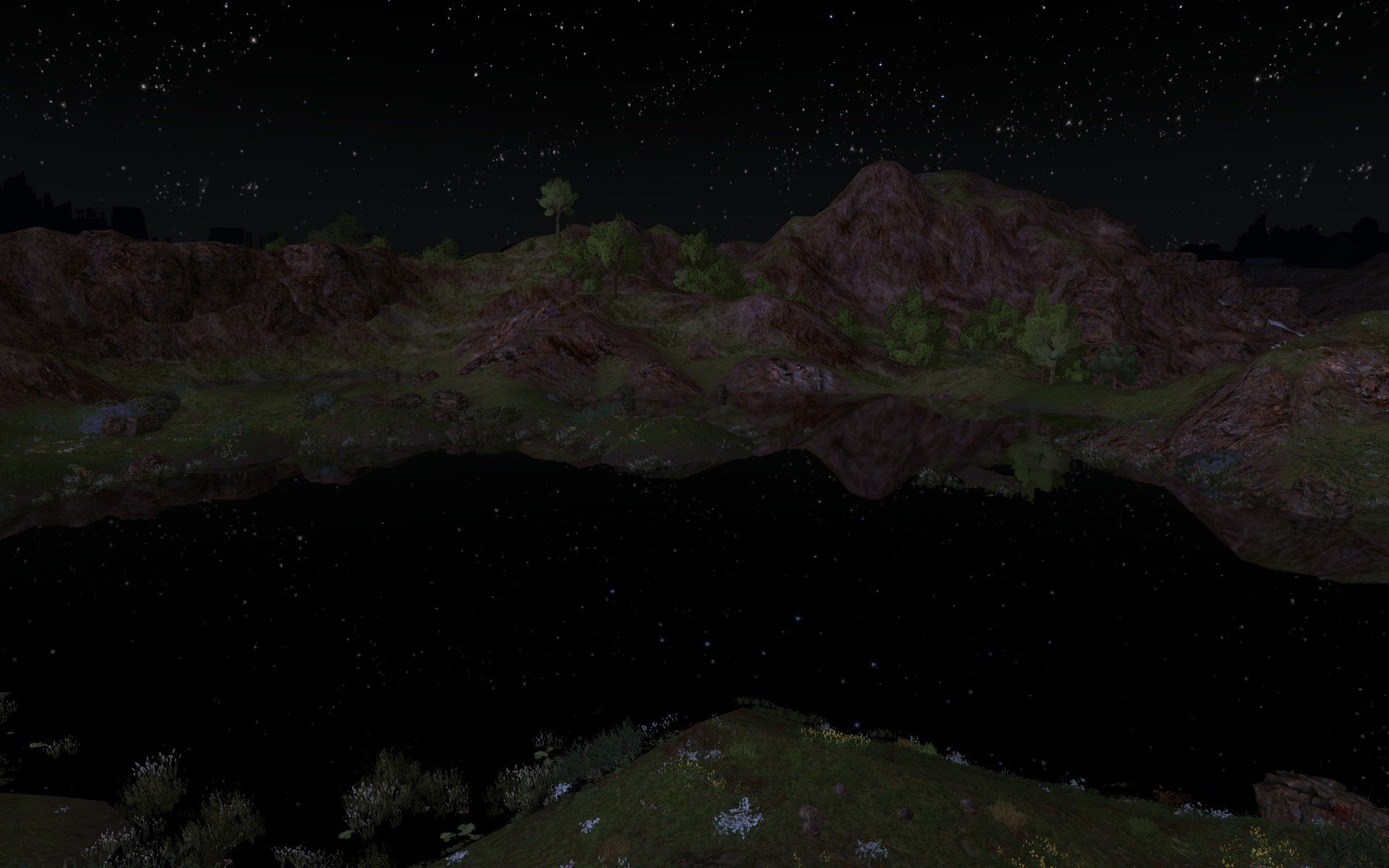
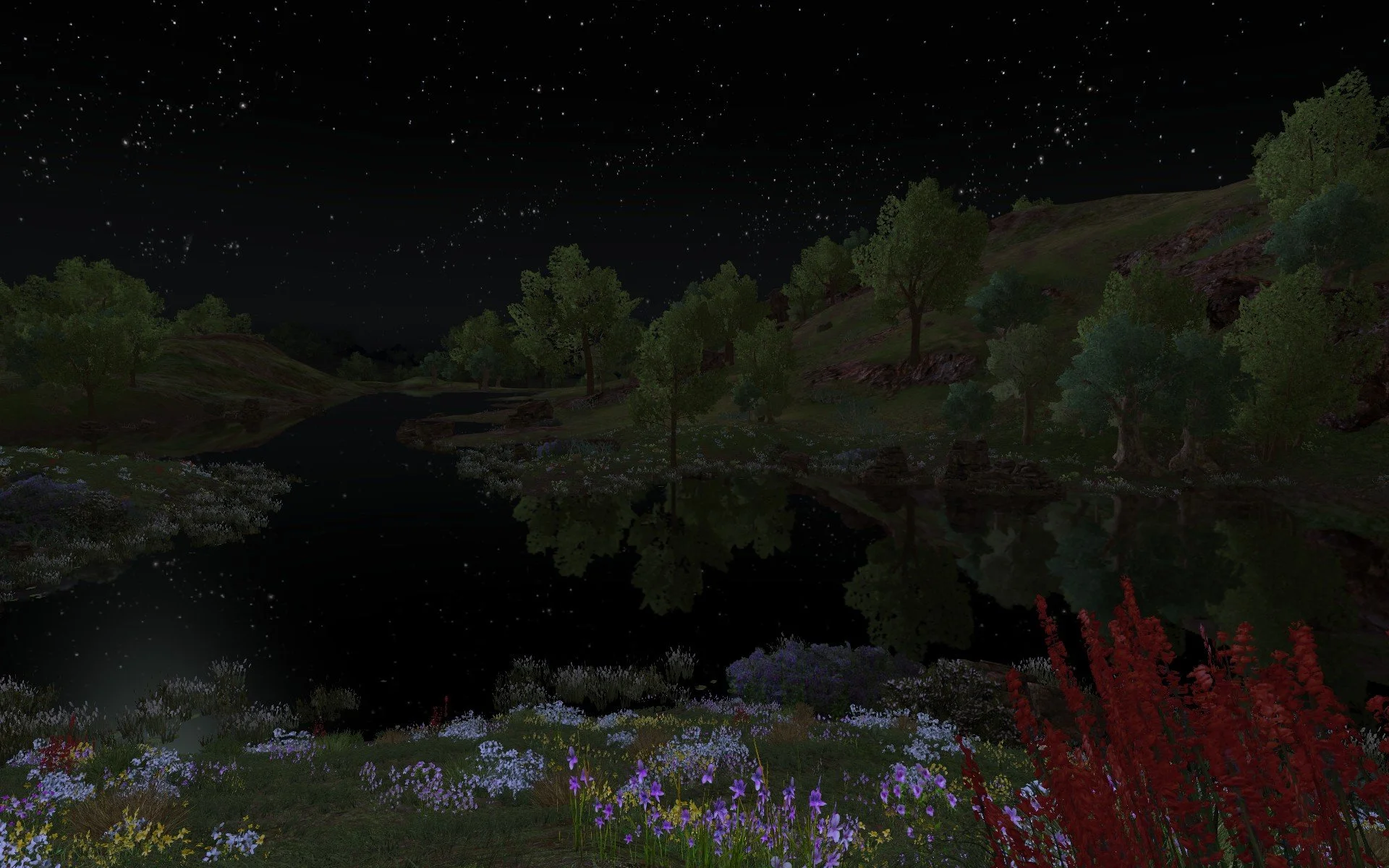
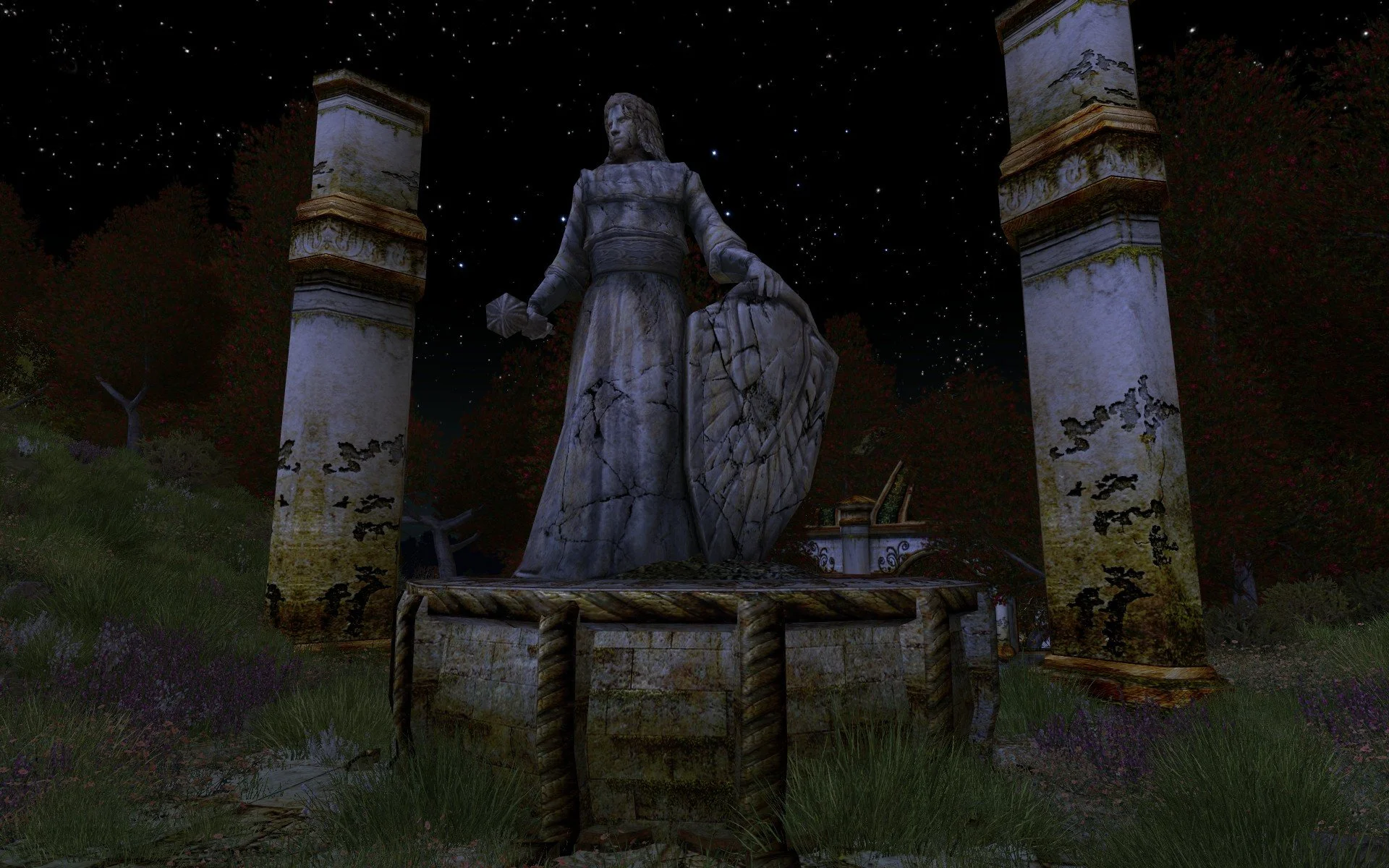
In addition to the pictures in this post, here is a link to a gallery of screenshots via Google Photos. All are available at the original screen resolution of 1920 x 1200.





"I Feel I Need a Holiday"
According to Spock “change is the essential process of all existence”. I have certainly faced my share this year. The death of my mother in August after decades of declining health didn’t come as a shock, but was no less upsetting. In the immediate aftermath, I had to deal with the practicalities of arranging a funeral, engaging a solicitor to settle my mother’s estate and then determine whether I should return to full time employment or retire. After much deliberation, I chose the latter. Now that the most pressing needs have been addressed, I find myself coming to terms with my own grief, while considering my future. I am very tired, both physically and mentally. I am still waiting for the cardiologist that I saw recently to make their pronouncement on my health. However, I do feel somewhat refreshed after my recent 3 day break on the Isle of Wight. I am also thinking about moving, as well as returning to education and pursuing a qualification. I will be 55 in December and feel that I am at a major crossroads in my life.
According to Spock “change is the essential process of all existence”. I have certainly faced my share this year. The death of my mother in August after decades of declining health didn’t come as a shock, but was no less upsetting. In the immediate aftermath, I had to deal with the practicalities of arranging a funeral, engaging a solicitor to settle my mother’s estate and then determine whether I should return to full time employment or retire. After much deliberation, I chose the latter. Now that the most pressing needs have been addressed, I find myself coming to terms with my own grief, while considering my future. I am very tired, both physically and mentally. I am still waiting for the cardiologist that I saw recently to make their pronouncement on my health. However, I do feel somewhat refreshed after my recent 3 day break on the Isle of Wight. I am also thinking about moving, as well as returning to education and pursuing a qualification. I will be 55 in December and feel that I am at a major crossroads in my life.
However, I am not especially enthusiastic about writing at present. At least not about the normal things I blog about. I still take pleasure in video games and films, but I now view them from a different perspective and their importance has changed. Furthermore, after 15 years of blogging and a dozen spent podcasting, I feel somewhat spent creatively. It takes quite a lot of focus, energy and brio to consistently produce content on any platform and then there’s the actual work that has to be done. At present I don’t have the stamina required nor the time. The latter is a finite commodity in everyone’s life and I am currently using my allowance to do other things. And so to quote Bilbo Baggins, “I feel I need a holiday” and am taking one. This is the first post I’ve written for a fortnight and it is mainly due to the fact that I feel obliged to let the few hundred daily readers that I haven’t totally abandoned Contains Moderate Peril.
Abandon Blog?
I’ve learned from past mistakes and changes in my relationship with writing, so I am not going to close the website or do anything rash. I did that once before in 2015 when I was suffering from burnout and I ended up bitterly regretting the decision when I had a change of heart. Having to start from scratch again, a few months later, was hard work. So in the meantime, I will continue to pay the operating costs and effectively just leave Contains Moderate Peril to lie fallow, so to speak. I may well publish the occasional post, when the fancy takes me but I certainly won’t be maintaining any sort of regular schedule. As and when I do write something, they may well be very niche market posts, mainly about the things that are bugging me at present. Beyond that, all bets are off. It very much is a question of wait and see. Perhaps this is just a hiatus. Perhaps it’s time to call it a day.
















Speak No Evil (2022)
The plot of Speak No Evil is an exploration of what can happen when someone driven by a cultural urge to be polite and avoid any form of confrontation, encounters a psychopath who exploits their very nature. Speak No Evil is a very European psychological horror and I stress that point because this film will not necessarily play well to audiences who are not so familiar with such institutionalised deference or passivity. Danish writer and director Christian Tafdrup skilfully and slowly builds the tension, but the plot contrivances of the final act do somewhat mitigate its credibility. Hence realism gives way purely to threat and suspense. If you’re the sort of viewer who can countenance that different cultures, age groups and political leanings can dramatically impact upon one’s behaviour, then you may well get through Speak No Evil. If you struggle to come to terms with the poor decisions made in an episode of Scooby Doo then Speak No Evil will leave you screaming at your TV.
The plot of Speak No Evil is an exploration of what can happen when someone driven by a cultural urge to be polite and avoid any form of confrontation, encounters a psychopath who exploits their very nature. Speak No Evil is a very European psychological horror and I stress that point because this film will not necessarily play well to audiences who are not so familiar with such institutionalised deference or passivity. Danish writer and director Christian Tafdrup skilfully and slowly builds the tension, but the plot contrivances of the final act do somewhat mitigate its credibility. Hence realism gives way purely to threat and suspense. If you’re the sort of viewer who can countenance that different cultures, age groups and political leanings can dramatically impact upon one’s behaviour, then you may well get through Speak No Evil. If you struggle to come to terms with the poor decisions made in an episode of Scooby Doo then Speak No Evil will leave you screaming at your TV.
Speak No Evil superficially is the story of a Danish family who befriends a Dutch family while on holiday. Formal and polite, Bjørn (Morten Burian) and Louise (Sidsel Siem Koch) are enamoured and impressed by the brash Patrick (Fedja van Huêt) and the warmth of Karin (Karina Smulders). Their much beloved daughter Agnes (Liva Forsberg) finds a companion in Patrick and Karin's shy and retiring son Abel (Marius Damslev). After the holiday, when a postcard arrives inviting them to spend a weekend with their new friends in their remote, rural cabin in the Dutch countryside, it seems like a perfect opportunity to further enjoy the new family friendship. “What's the worst that could happen?” Bjørn jokes, ironically telegraphing that the worst is not only coming but that it is going to be a very grim journey.
The cast of Speak No Evil is very good as they experience social faux pas then physical coercion. Morten Burian (Bjørn) is infuriatingly passive, self loathing and conflicted but his performance is worryingly credible. Sidsel Siem Koch (Louise) seems genuinely intimidated by Fedja van Huêt (Patrick) who exudes volatility, where Karina Smulders (Karin) is deliberately ill defined. Is she also being coerced or a more subtle manipulator? However, despite solid performances, Speak No Evil struggles to maintain all the themes and motifs it touches upon during its first act. The big reveal it’s been heading towards is a little too contrived and once it has been established, the protagonist's behaviour becomes hard to identify with. When the violence comes it is quite stark and jarring. The ending doesn’t answer the question of motive, relying on the old trop of “evil people are evil”.
Speak No Evil has some good ideas at its core. One could argue that it explores many talking points about contemporary culture and gender roles. Are modern European men too worried about risk and conflict? Has the modern habit of self examination gone too far and left those who do so powerless to make decisions? Is the need to please a social blessing or a curse? However, a better film would bring us to the conclusion via a less obvious route. It becomes very clear that Speak No Evil is going from A to B to C come hell or highwater and it shows in the final act. Furthermore, I have no problems with horror films with a message. Dawn of the Dead, for example, is as pertinent today as it was back in 1978. But I’m seldom impressed when a message driven story co-opts the horror genre out of convenience. It strikes me as very insincere and confected. And that is how I felt after watching Speak No Evil. That and the fact that the film seems too pleased with itself, when it really has no right to be.








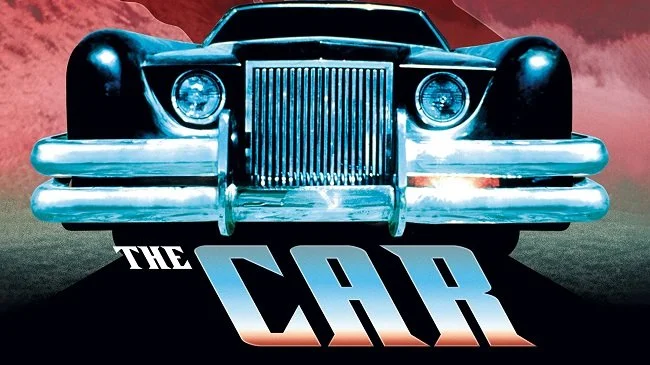
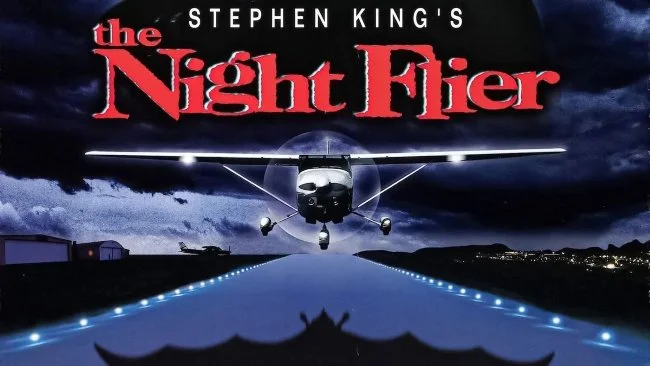
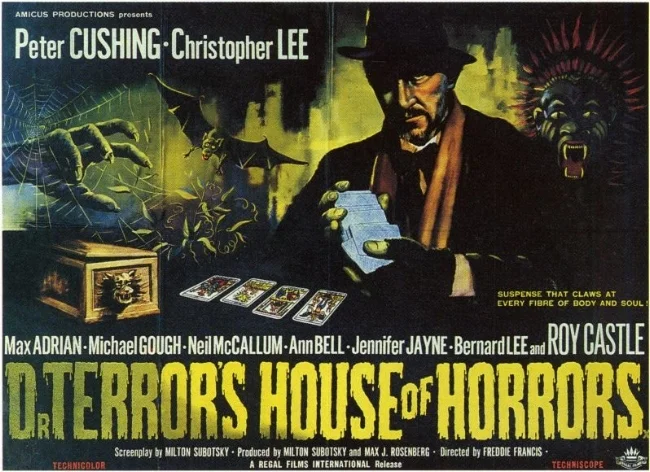

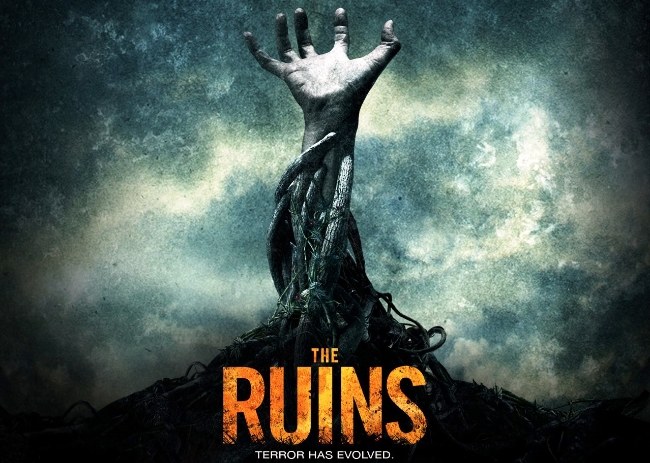
A Sense of Community
I couldn’t settle last night, as I have the flu (care of my grandson), so I sat in the lounge and watched the live stream of Her Majesty The Queen: Lying-in-State. I was aware of the news reports of thousands of people queuing to pay their respects, but often with major events such as this there can be a mental disconnect between being told something and actually seeing it. Upon watching the live stream I was surprised and profoundly moved. It was 11:45 PM and there were still hundreds of people slowly filing through Westminster Hall, despite the lateness of the hour. Although an inherently sombre spectacle, there was also something very uplifting about the proceedings. It took me a while to process my emotions. Then I realised that what I was feeling was a sense of community. Something that is very rare these days.
I couldn’t settle last night, as I have the flu (care of my grandson), so I sat in the lounge and watched the live stream of Her Majesty The Queen: Lying-in-State. I was aware of the news reports of thousands of people queuing to pay their respects, but often with major events such as this there can be a mental disconnect between being told something and actually seeing it. Upon watching the live stream I was surprised and profoundly moved. It was 11:45 PM and there were still hundreds of people slowly filing through Westminster Hall, despite the lateness of the hour. Although an inherently sombre spectacle, there was also something very uplifting about the proceedings. It took me a while to process my emotions. Then I realised that what I was feeling was a sense of community. Something that is very rare these days.
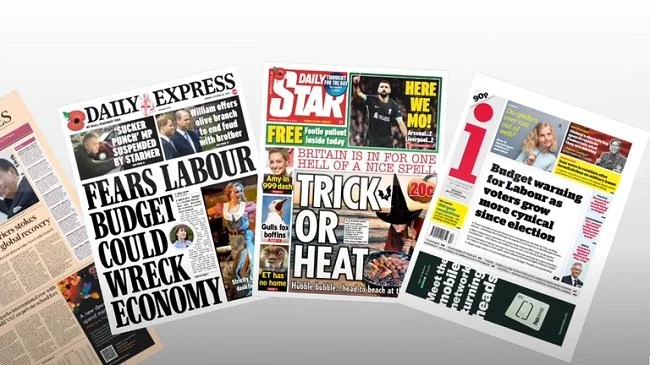
The UK has become a very divided country in recent years, especially since 2016. Politically, economically and socially the nation is pulling in different directions and the fault lines are no longer along obvious party political lines. Public discourse has become very partisan and scorched earth. We tend not to agree to disagree, amicably. Rather we are encouraged to consider anyone with an opposing view to be our enemy. The North dislikes the South and vice versa. The class divide is still with us and the UK’s recent flirtation with populism has seen a resurgence in racism and other forms of discrimination and “othering”. At the heart of this negative storm are the tabloid press and their insidious poison that they drip daily into the public psyche. Hence the country has been ill at ease with itself for a while and there seems no immediate change on the horizon.
Yet “The Queue” flies in the face of all this. This steady flow of British citizens from all walks of life, united in grief and respect for the late monarch, speaks of a sense of belonging. Having watched several hours of the live stream from Westminster Hall there is something very positive about seeing a populace at ease with itself. People helping the elderly and the infim as they descend the steps to the North of the hall. Or offering a tissue and a kind word to those who are visibly upset. Showing patience and good humour when faced with the logistical problems of managing such an event. All of which speaks of a cohesive and strong sense of community. For once, one’s neighbours seem accessible and not remote. Is this feeling of national identity that my parent’s generation felt during their youth?
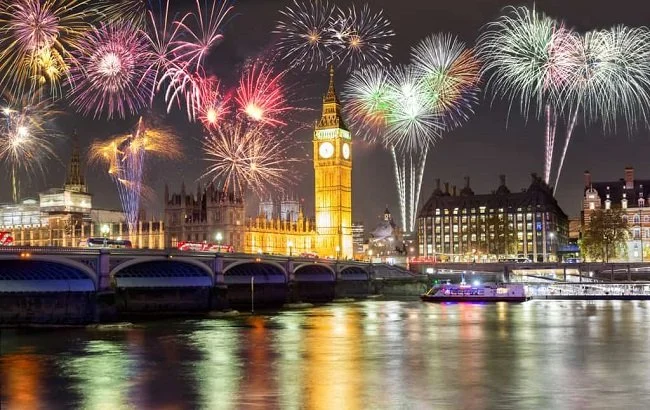
Another fascinating aspect about this event is “The Queue” itself. At the time of writing it is currently 2.5 miles long. The route begins on Albert Embankment, next to Lambeth Bridge, before winding its way along the Thames to Southwark Park. The route passes the London Eye, National Theatre, Tate Modern and HMS Belfast. There are extra toilets and water facilities on the way. The Southbank Centre, National Theatre and BFI Southbank are extending opening hours to provide refreshments and other amenities. More than 1,000 volunteers, stewards and police officers are on hand. Visitors go through security and those waiting will be issued with numbered wristbands, allowing them to leave temporarily to use nearby facilities. Government social media accounts provide regular updates on queue length and estimated waiting time. Overall “The Queue” is a logistical marvel and a microcosm of “Britishness”.
There has been a degree of controversy in so far as serving MPs and other “dignitaries' ' being able to bypass “The Queue”. Security issues are cited as the reason for this privilege. Make of that what you will. For me this event is a distillation of all the things I consider good about being British. I don’t say that with a sense of superiority. That’s not what it is about. What I see are people expressing respect for a remarkable women. Royalist and Republicans alike. I see a mature, diverse country. And for a brief moment, the partisan agenda that we have thrust upon us on a daily basis, has been sidelined. People are being supportive of each other, even talking to each other. It highlights how so much of the divisiveness we endure comes from the outside and has a clear purpose. I hope the sentiments and spirit of “The Queue” endures beyond September 19th. But I’m not optimistic.








Star Trek Online: Ascension
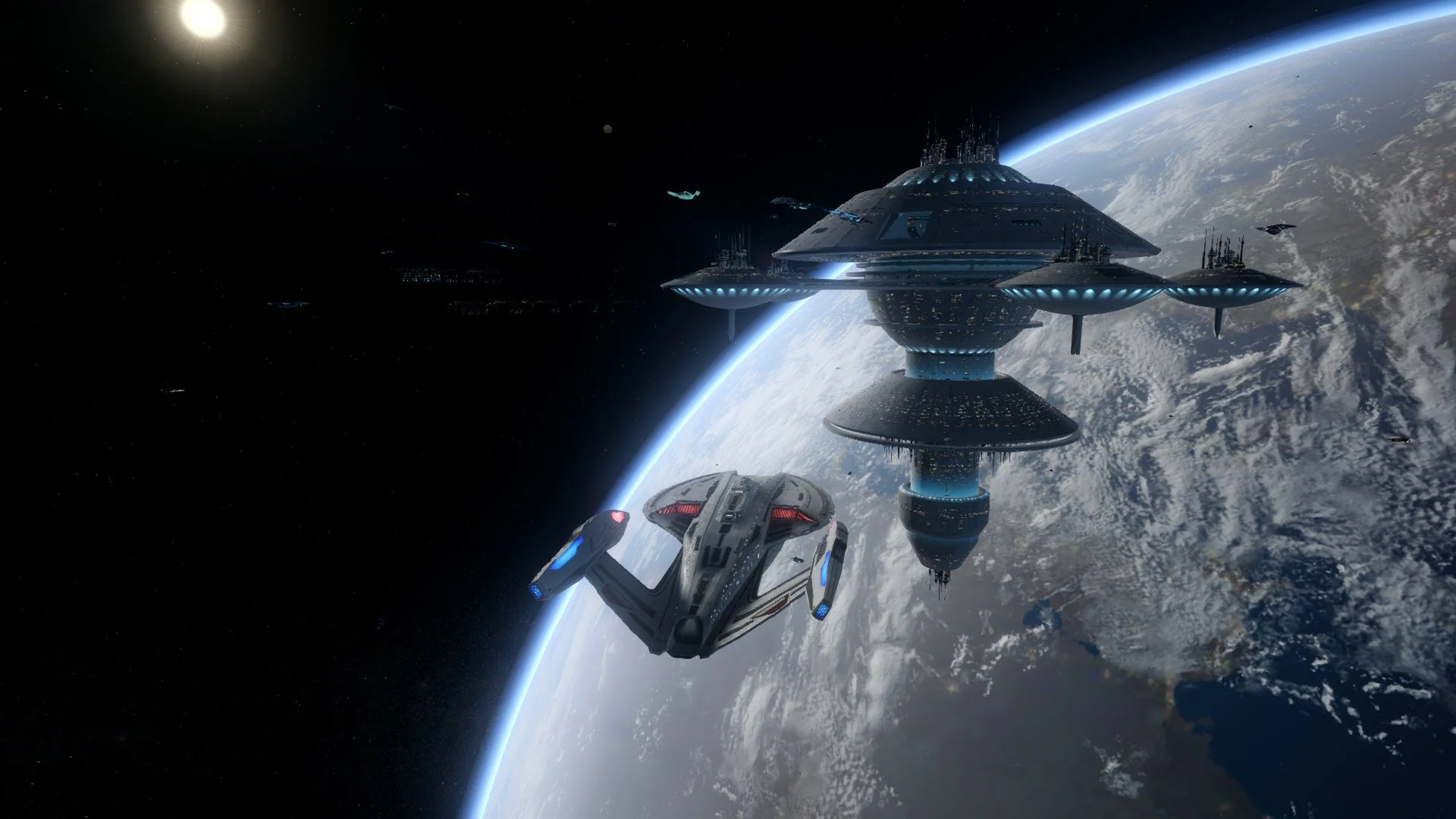
This afternoon Cryptic launched the latest season update, Ascension, for the MMORPG Star Trek Online. Furthermore, I’m sure it will not come as a shock to long term players that it was broken and an emergency patch had to be applied. Oh how we all laughed. Even after being “fixed” players are still experiencing bugs with the new content, especially the ground mission part of the update, but this sadly is just par for the course. Personally speaking, it is not the bugs that I have a problem with as they are just part of the overall gaming experience when playing STO. What I am saddened about is the actual gameplay found in Ascension. The space combat section of the game is simply “more of the same”. Destroy some specific vessels and once the goal has been met, watch the cutscene. But the ground combat is especially uninspired and repetitive, despite its interesting setting.
This afternoon Cryptic launched the latest season update, Ascension, for the MMORPG Star Trek Online. Furthermore, I’m sure it will not come as a shock to long term players that it was broken and an emergency patch had to be applied. Oh how we all laughed. Even after being “fixed” players are still experiencing bugs with the new content, especially the ground mission part of the update, but this sadly is just par for the course. Personally speaking, it is not the bugs that I have a problem with as they are just part of the overall gaming experience when playing STO. What I am saddened about is the actual gameplay found in Ascension. The space combat section of the game is simply “more of the same”. Destroy some specific vessels and once the goal has been met, watch the cutscene. But the ground combat is especially uninspired and repetitive, despite its interesting setting.
Warning: Plot Spoilers (although Cryptic have given away all these details themselves, already). The Terran Emperor of the Mirror Universe, Wesley Crusher and yes you did read that correctly, is planning to join with the Mirror version of V’Ger, known as The Other. Obviously such a “melding” will not lead to such benevolent results as it did in Star Trek: The Motion Picture. During the course of Ascension, is a ground mission set within the core of The Other, where you play a Mirror version of your own alt. This character called The Inquisitor assists the Emperor’s away team. However, as this is some form of session play, you only have access to a bespoke and somewhat basic set of skills on your quickbar. So say goodbye to your own personal build and kit skills. And if that wasn’t a sufficient pain in the ass, you can’t even toggle your weapon to autofire.
Thus, while in this “gimped” state you then have to contend with a set of lacklustre tasks, such as turning off six power nodes before worker drones can bring them back online. It is a race that can be successfully done if you can figure out the shortest and most efficient route. If you don’t, then multiple drones will spawn and interrupt you, while you desperately try to catch up. The key to success is not to stand next to the power nodes but to get as close to them until the power off button appears on your screen. Hence there is a shorter optimal route that will allow you to complete the task before too many drones spawn. However, all of this still has to be undertaken with STO’s janky aim controls, while getting caught up in the environment for no discernible reason (a common bug in the game). It is far from fun and if you don’t know the workaround, very, very repetitive.
There’s nothing wrong with the story and as always, the voice acting by original cast members (in this case Wil Wheaton) is top notch. It’s just that the nuts and bolts of the game is incredibly uninventive. The V’ger, sorry The Other, environments are very well realised but just shooting wave after wave of generic drones is as dull as ditch water. It is a fact of life about the MMO genre that there is a limited amount of interactions you can make within gameplay. The key is in the creative way you “dress up” these interactions, so although they may be simple, they don’t come across that way within the context of the wider story. It is this specific element that is missing in Ascension. I do hope that Cryptic tries better than this next time. There is so much content in STO, such as the entire Agents of Yesterday expansion, that is exemplary. This is the standard that should be aimed for.

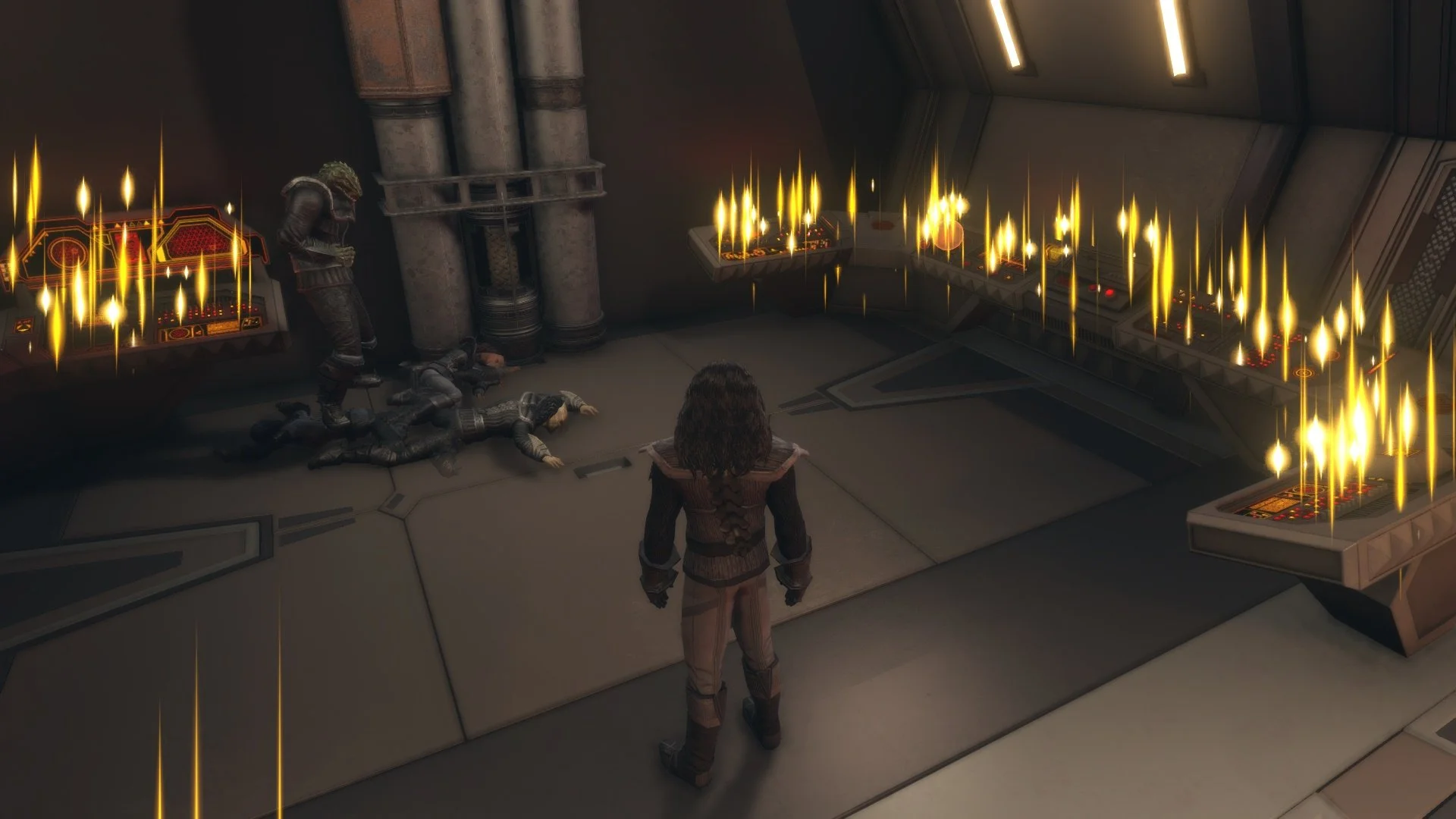
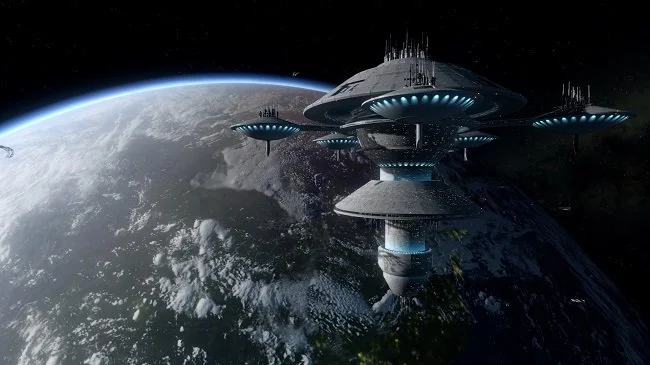

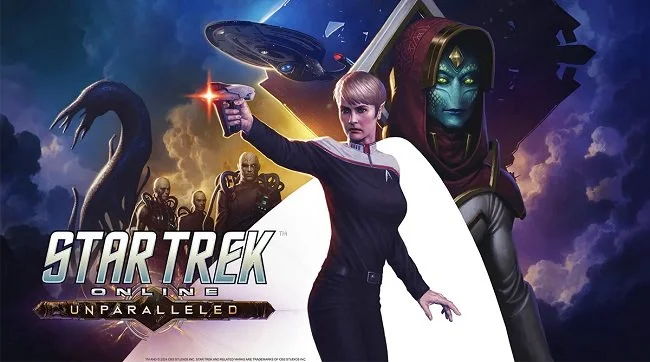
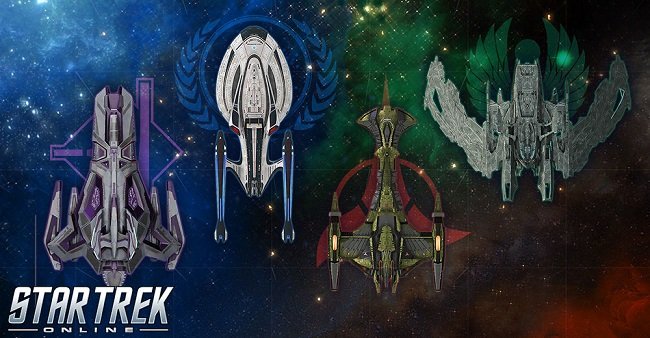
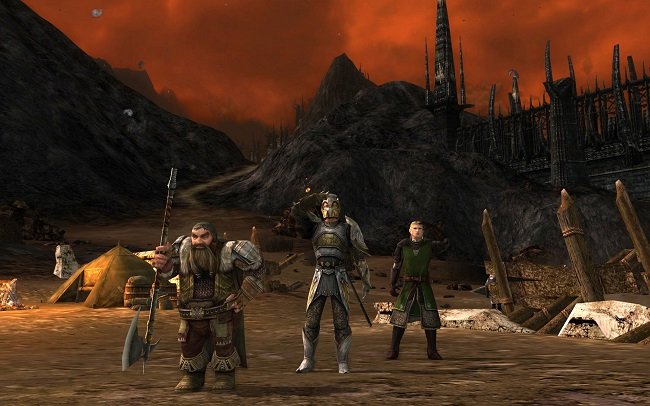
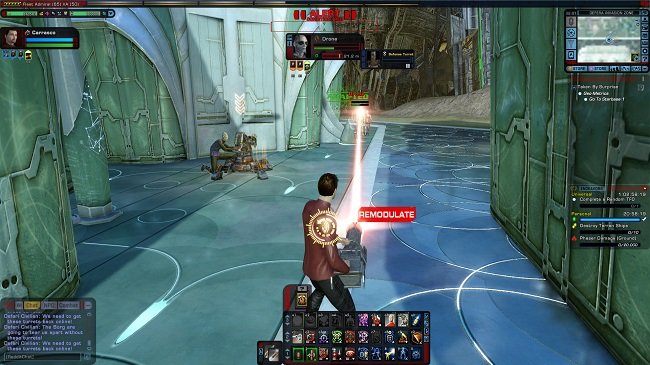
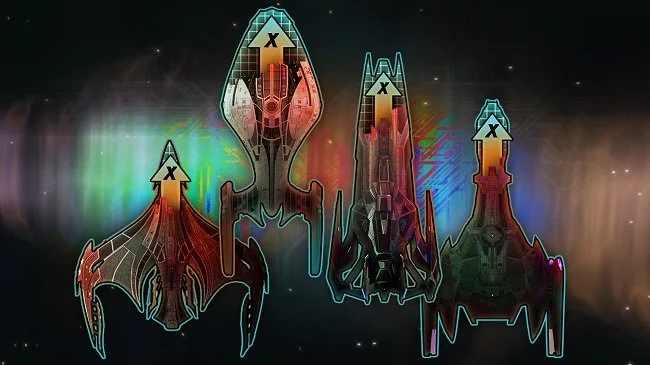
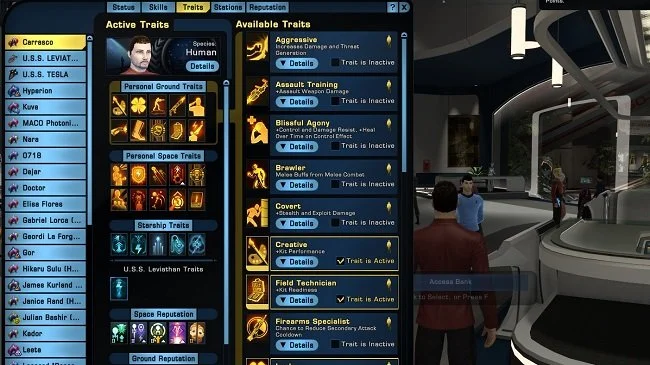
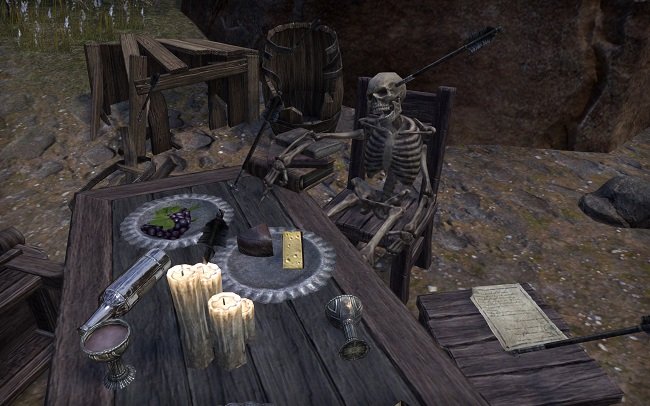
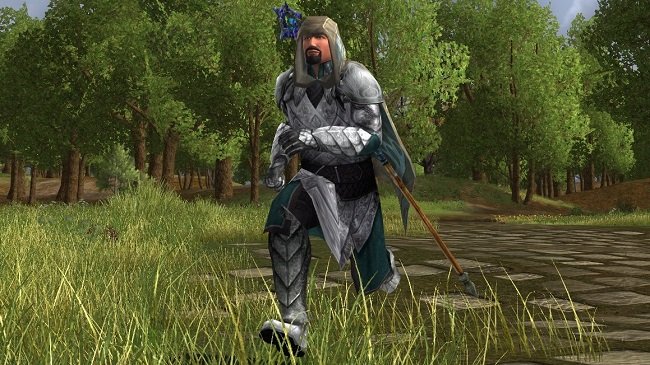
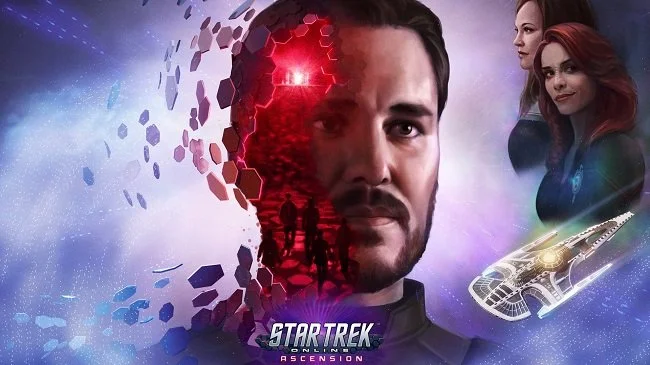
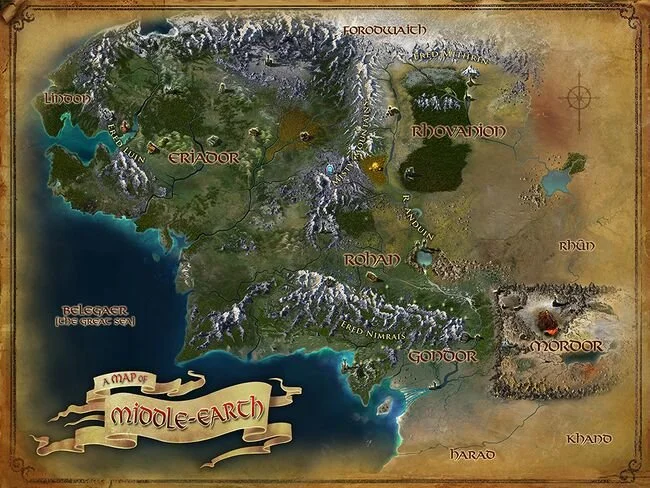
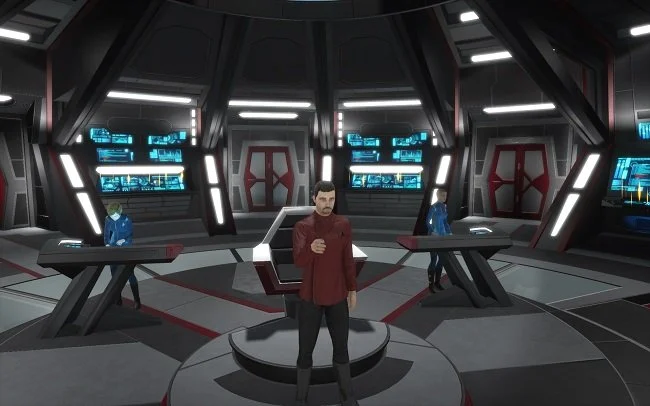
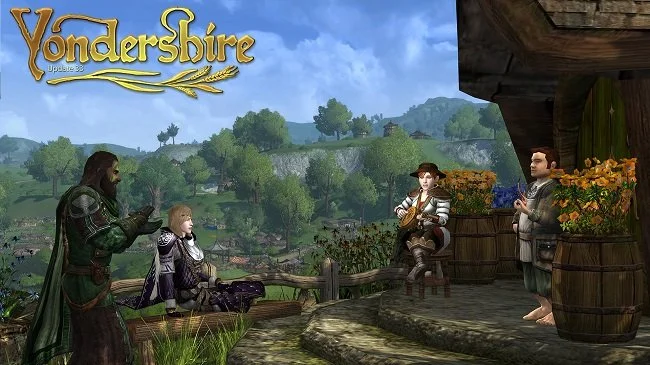
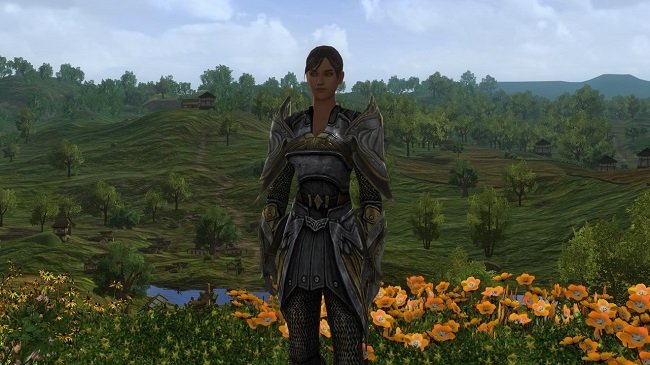
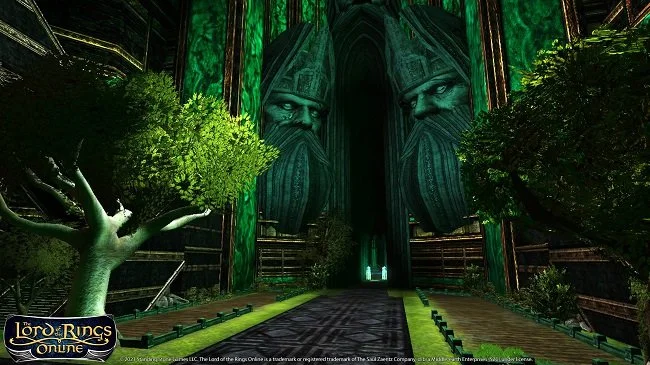
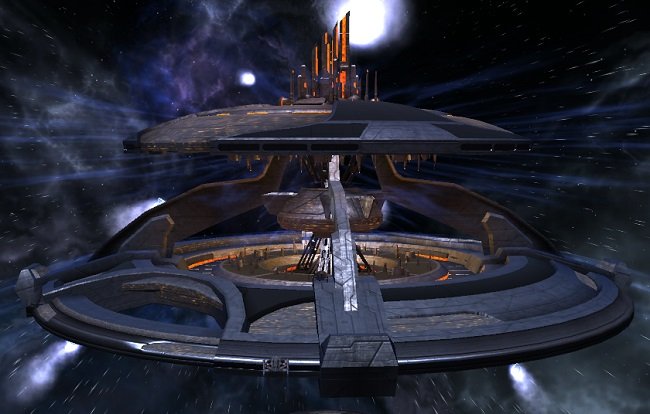
The Death of a Monarch and Change
The death of Queen Elizabeth II on Thursday was both an inevitability and a shock. Something I similarly felt regarding the death of my own Mother recently. We all know that people can not go on forever and that age, infirmity and ill health catch up with us all. But no matter how well prepared you think you are for a bereavement, when it happens it is still a shock. The Queen was a constant in our lives. Separate from politics, she was a dignified, benign and very accessible head of state. She dedicated her life to public service and was a force for good in the world. Although a deeply private person her public persona became clearly defined over time and the public loved her. Even those who do not consider themselves “royalists” recognised her unique role in society and position on the world stage. She was, as so many have pointed out, a constant in an ever changing world.
The death of Queen Elizabeth II on Thursday was both an inevitability and a shock. Something I similarly felt regarding the death of my own Mother recently. We all know that people can not go on forever and that age, infirmity and ill health catch up with us all. But no matter how well prepared you think you are for a bereavement, when it happens it is still a shock. The Queen was a constant in our lives. Separate from politics, she was a dignified, benign and very accessible head of state. She dedicated her life to public service and was a force for good in the world. Although a deeply private person her public persona became clearly defined over time and the public loved her. Even those who do not consider themselves “royalists” recognised her unique role in society and position on the world stage. She was, as so many have pointed out, a constant in an ever changing world.
The arcane processes that govern the institution of the monarchy have now come into play and a new King has ascended to the throne. There will now be a formal period of mourning throughout the UK and a full state funeral on Monday 19th September. This entire matter currently dominates the national news cycle and has an impact upon public events and sporting fixtures throughout the country, as a “mark of respect”. As well affording the people an opportunity to come to terms with the death of the Queen and say goodbye, the situation will inevitably raise wider questions about the future of the monarchy. King Charles allegedly has plans for a far more streamlined institution with many minor royals stepping down from public life and public funding. The debate about having an elected head of state has also begun again, although I think that the general public is not ready or disposed for such a change.
Although I broadly feel that the current situation is unfolding in an acceptable fashion, I do have wider concerns. The transition to a new monarch has happened quickly and a sense of continuity is being maintained. The Queen has earned a state funeral and it is important both nationally and internationally that her passing is marked in such a way. But I worry that this hiatus in public affairs, such as politics and legislation, is detrimental to the nation. The UK’s new Prime Minister is not at present engaged with the pressing issues of the day. The news cycle is focused elsewhere so there is the potential for important stories, events and happenings to be “overlooked”. I am also concerned that the nation may make the mistake of retreating further into our country's past and notions of British exceptionalism, rather than tackling the issue that has remained outstanding since the end of World War II; what is the UK’s role in the world?
On Tuesday 20th September, the UK will return to a state of relative normality. The formal period of national mourning for Queen Elizabeth II will end and the news cycle, public affairs and national politics will return to “business as usual”. The national sense of grief may well be assuaged but the recent fix of patriotism will not magic away the problems the nation faces economically. If spring 2023 turns out as bleak as is predicted, what will the British public think about the potential cost of a coronation? I suspect that King Charles is already aware of this and making plans accordingly. However, that is all months away. In the meantime, I have taken time out to personally reflect on the death of Queen Elizabeth II. I shall not be making a pilgrimage to London but shall watch the formal funeral on the allotted day. I hope the event serves its purpose. As for the lady herself, I simply say “Westu hál. Ferðu”.
LOTRO: Coming Changes to Race and Class Choice
Standing Stone Games are currently testing the second beta build of Update 33.2 on their The Bullroarer Test Server. The latest patch notes indicate that there are some major changes coming to the MMORPG, The Lord of the Rings Online. The proposed Minstrel class changes are proving controversial and I suspect that there will be a strong degree of pushback from players. As I have not played this particular class, I am not in a position to express an informed opinion but reading comments both on the official forums and on Reddit, I think players have legitimate concerns. Changing and rebalancing class skills and in any way altering the status quo, never goes down well as you can never please everyone. It will be interesting to see if SSG take on board player comments or push ahead with their proposed changes regardless.
Standing Stone Games are currently testing the second beta build of Update 33.2 on their The Bullroarer Test Server. The latest patch notes indicate that there are some major changes coming to the MMORPG, The Lord of the Rings Online. The proposed Minstrel class changes are proving controversial and I suspect that there will be a strong degree of pushback from players. As I have not played this particular class, I am not in a position to express an informed opinion but reading comments both on the official forums and on Reddit, I think players have legitimate concerns. Changing and rebalancing class skills and in any way altering the status quo, never goes down well as you can never please everyone. It will be interesting to see if SSG take on board player comments or push ahead with their proposed changes regardless.
However, there are some positive changes included in Update 33.2 such as the removal of racial restrictions to the class system. To date the various classes in LOTRO have been subject to a specific set of race restrictions (please see the image below), which have been justified over the years on lore grounds by SSG. This has always been debated by some of the player community, who feel if the game can be “flexible” with the lore in some areas, why not in others? It would appear that SSG have listened and the update now allows for the following race and class permutations. Dwarf/Stout-axe Captain and Warden. Elf/High Elf Burglar. Hobbit Lore-master and Champion. Human Rune-keeper. The Beorning race remains unique These changes bring the remaining classes inline with the Brawler which is available to all permutations of Elf, Dwarf, Hobbit and Man.
Naturally, there are some players who object to these changes, considering them non-canonical, but I feel that LOTRO departed from lore purity a long time ago. I am just happy that players are getting more choice. Hence, in the spirit of such change, I created a Hobbit Lore-master on Bullroarer last night and played through the first few levels of the game. It was interesting to see all the bespoke Lore-master skills induction animations as a Hobbit and I really didn’t think it an odd addition to the game. The first Lore-master pet is the bear and it is rather comical the way it towers over its Hobbit companion. So far I haven’t encountered any issues, although other players have found some minor anomalies when playing the new Dwarf/Stout-axe class variants. But that is the entire point of beta testing.
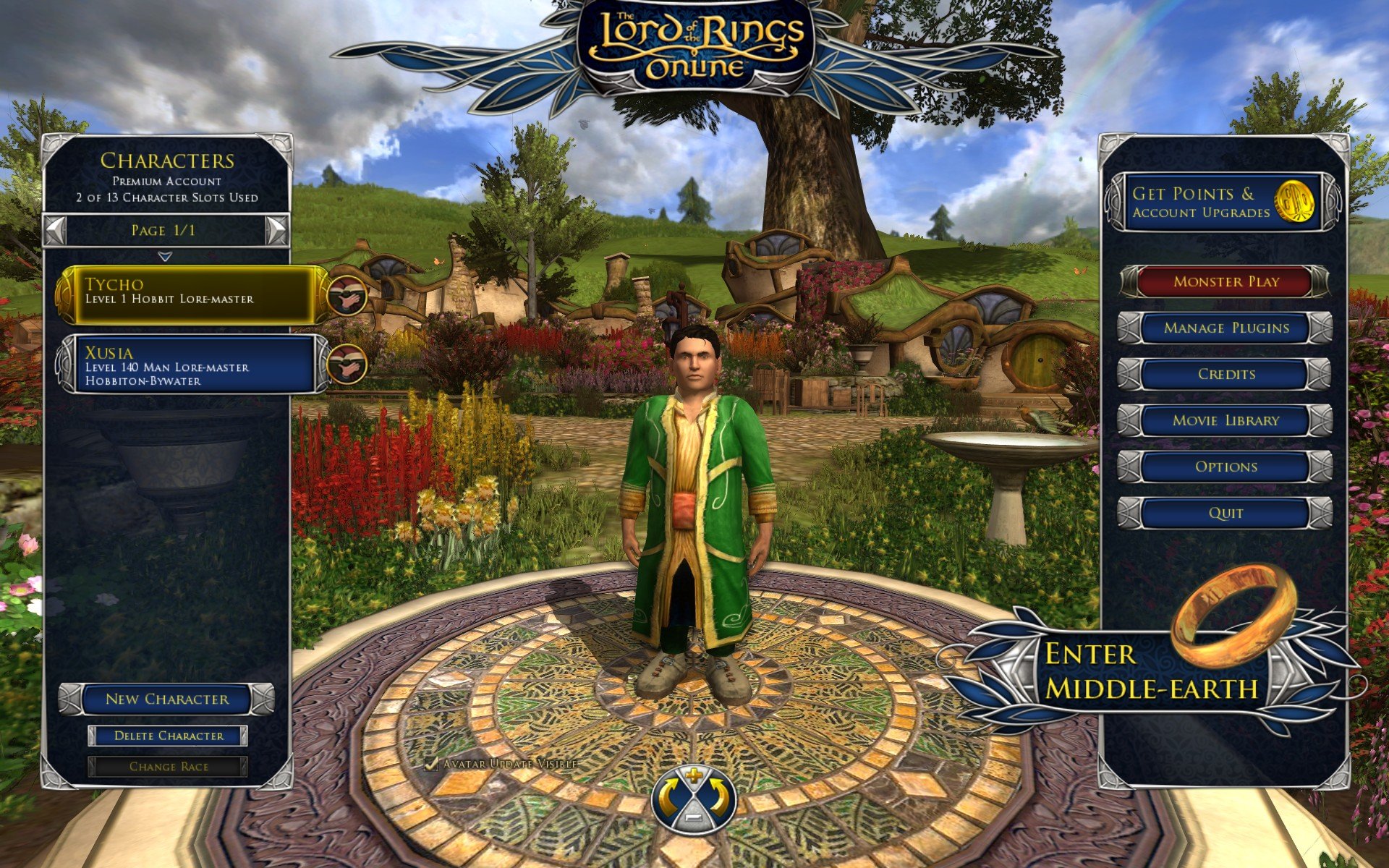
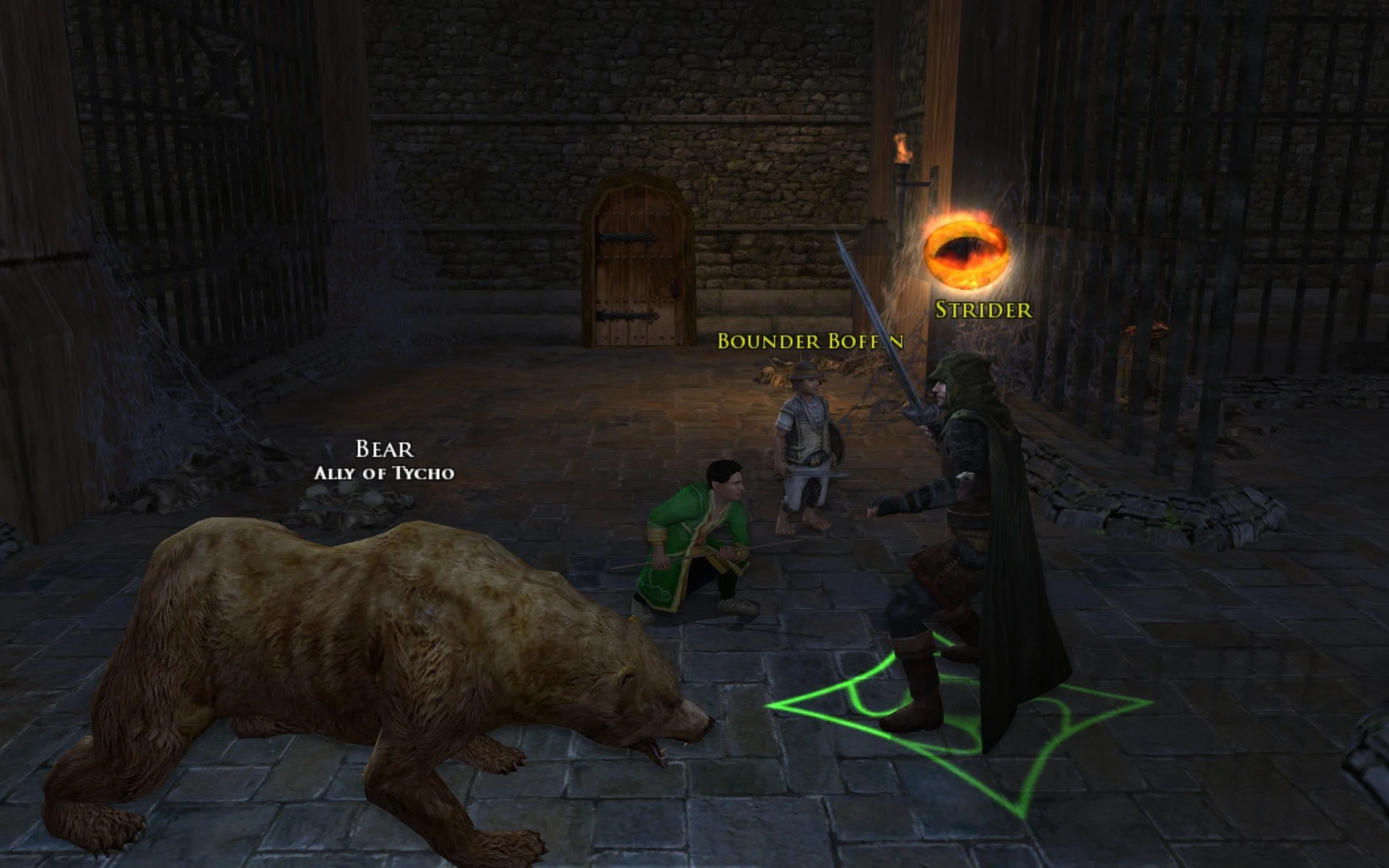
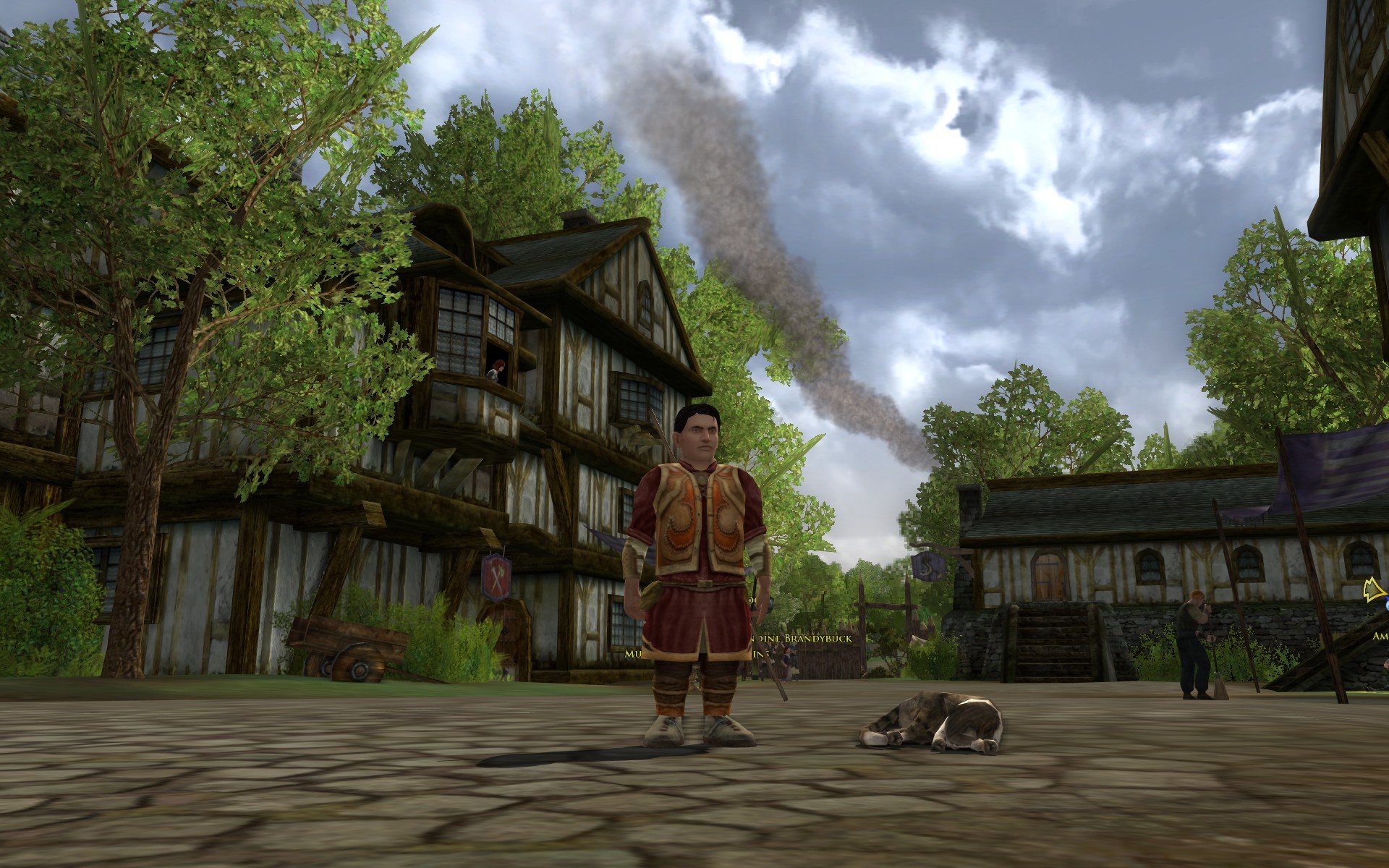
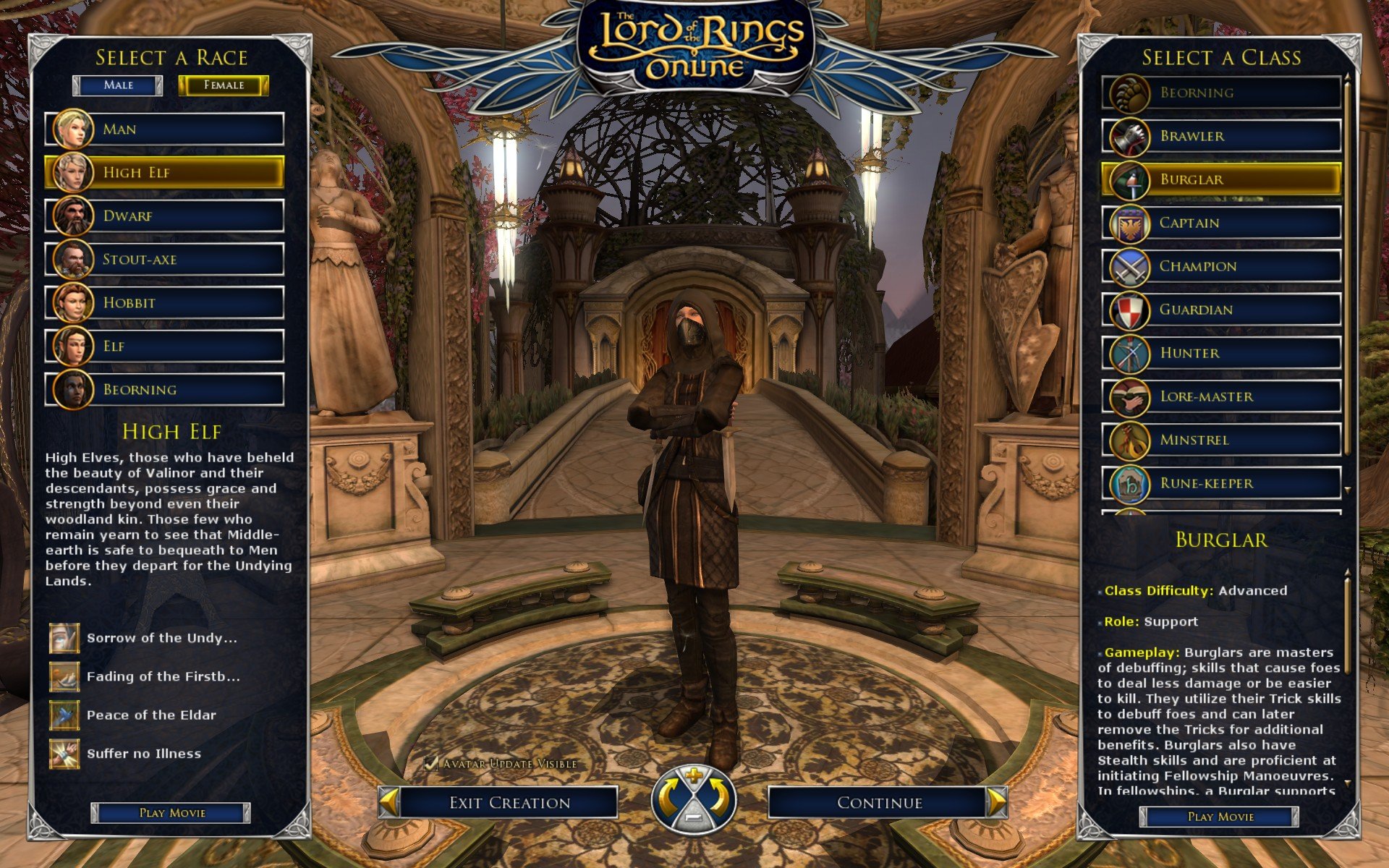
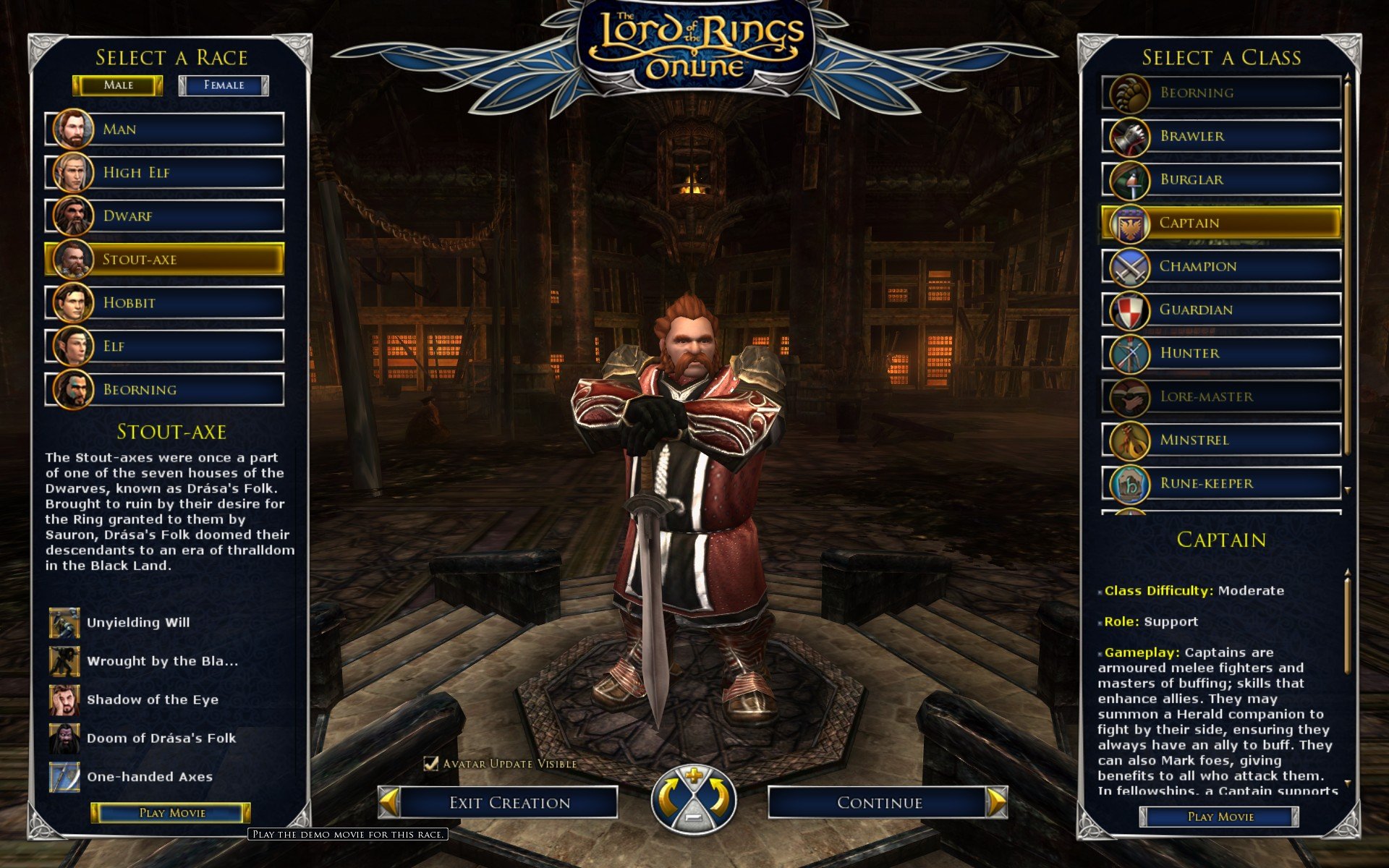
Time to Move
For many of us, we live where we can afford, rather than where we would like. I have been fortunate in so far as I have lived in South East London most of my life. By London I mean Greater London, a collective administrative district, which comprises 32 boroughs and The City of London. Bexley borough is a typical “leafy suburb” in the commuter belt. If that conjures up all sorts of stereotypes then you’re broadly correct. This is a borough where the middle classes move to raise a family and seek their “forever home”. It is an affluent area with good schools, quality shops, parks, amenities and a sense of community. The average price for a 3 bedroom house in Bexley is £500,000 compared to a national average of £307,000 (according to MoveHub). However, despite the fact I like it here I feel the need for a change of scenery and think it may be time to move.
A new build bungalow of the sort we’re considering
For many of us, we live where we can afford, rather than where we would like. I have been fortunate in so far as I have lived in South East London most of my life. By London I mean Greater London, a collective administrative district, which comprises 32 boroughs and The City of London. Bexley borough is a typical “leafy suburb” in the commuter belt. If that conjures up all sorts of stereotypes then you’re broadly correct. This is a borough where the middle classes move to raise a family and seek their “forever home”. It is an affluent area with good schools, quality shops, parks, amenities and a sense of community. The average price for a 3 bedroom house in Bexley is £500,000 compared to a national average of £307,000 (according to MoveHub). However, despite the fact I like it here I feel the need for a change of scenery and think it may be time to move.
According to Reuters “London is the quintessential megacity: densely populated; intensely connected at regional, national and international levels; and exceptionally productive compared with other cities and regions in the United Kingdom. London has more in common economically with other megacities - such as New York, San Francisco and the Bay Area, Tokyo, Sydney, Auckland, Paris, Beijing and Shanghai - than with most other parts of Britain. Like other megacities, London’s population has boomed over the last three decades, hitting a record of 9 million in 2019, up from just 6.4 million in 1991, according to the UK Office for National Statistics. However, before that, the city’s population had slumped for five decades from a previous peak of 8.6 million in 1941, as inhabitants fled the city for more space and other improvements outside the metropolitan area”. I think this succinctly sums up why I wish to move.
London’s financial district
It is getting noticeably busier in Bexley. Half of the local park which is located behind the street where I live, was sold and has become a housing development. As a result the roads in the immediate area are congested at peak hours and there is much more noise throughout the day. There used to be a time when you went to bed and it was quiet. Now traffic and police sirens persist throughout the night. Changes in social attitudes mean that building work, gardening and other sources of disturbance start far earlier in the day. Due to the high turnover of houses in the street that I live in, there’s always one or two houses in a state of redevelopment. This means the road is always blocked by vans and equipment. The air quality is also deteriorating despite the Ultra Low Emission Zone being expanded. But for me the main issue is noise. It’s something I’ve become keenly aware of as I’ve gotten older and I dislike it intently.
So put it simply “I want to get the hell out of Dodge”. Hence, the plan is to now start provisionally looking to see what sort of home we can buy on our budget and where. The dream is to find a detached bungalow with two or three bedrooms and a little garden on the periphery of a village. Preferably with a view. However, we are not looking for complete seclusion and so for practical reasons we want to have access to essential amenities. Such as a pharmacist, doctor’s surgery, local shops and a few restaurants etc. I think the notion of moving to the other end of the country has finally been dismissed (sorry Blairgowrie) and I think we’ll more than likely stay within the Southern Counties. Internet access is also a factor. I have been fortunate to live in a part of the UK with good technological infrastructure. I currently enjoy FTTP and would like to maintain that.
Which county should we move to?
Sadly this process is not all “fun and larks”. Any sort of move means dealing with estate agents as we call them in the UK and they are not my favourite societal group. Already after doing some cursory searches online, I have found the process frustrating. Information is often withheld, such as floor plan measurements or specific details regarding heating etc. All of this is to ensure you register with the respective website and provide an email address. Plus an estate agent’s lexicon is often questionable, stretching the meaning of accepted terminology and phrases. However, setting aside these minor niggles, Mrs P and I now have to give this entire matter some serious consideration, this side of Christmas. If we do decide to move in 2023, I want it to be an organised affair and not some spur of the moment, descent into chaos.
The Importance of Humour
This post is about humour. A subject that is very dependent on one’s personal tastes. I consider humour to be an extremely important facet of the human condition. I personally use humour as both a sword and a shield in my day to day life. I find such an approach invaluable to maintaining my sanity and a positive disposition. It is also a means of circumnavigating obvious disparities in power, be it social, economic or political. I also consider humour to be an important measure of a person. All the people that I’ve encountered in my life who have been bullies, intransigent, obtuse, cruel, bigoted and superior have lacked a sense of humour. If they ever claimed to have one, it has always been very much a one way street. Hence, humour is an important social tool. Something that I keep an eye out for during the course of my social interactions.
Blackadder (1983 - 1989)
This post is about humour. A subject that is very dependent on one’s personal tastes. I consider humour to be an extremely important facet of the human condition. I personally use humour as both a sword and a shield in my day to day life. I find such an approach invaluable to maintaining my sanity and a positive disposition. It is also a means of circumnavigating obvious disparities in power, be it social, economic or political. I also consider humour to be an important measure of a person. All the people that I’ve encountered in my life who have been bullies, intransigent, obtuse, cruel, bigoted and superior have lacked a sense of humour. If they ever claimed to have one, it has always been very much a one way street. Hence, humour is an important social tool. Something that I keep an eye out for during the course of my social interactions.
Life is filled with social situations of varying degrees of significance. I have a hospital appointment coming up soon in which I’ll have to meet different people in an environment I’m unfamiliar with. I will also undergo some tests which may be a little uncomfortable. Humour is a means to navigate such a socially complex situation. Self deprecating humour or a simple joke about the circumstances can put all parties at ease and make the matter more palatable. Humour is great for breaking the ice at parties, extending an olive branch and making up after arguments. As I said earlier, it is a social tool. One that you can learn quite early in life. Every class at school often has a clown. Sometimes these can be people who quickly become adept at using humour to socialise and establish their identity.
Something, something, pubs, beer and mates
Later in life, you soon realise that if you’re not what society deems to be “good looking”, then be funny instead. Teenage years are often quite traumatic and being the funny one in your peer group has advantages. Ricky Gervais states that there’s nothing funnier than your own group of friends and the humour that arises when you get together is contextually funnier than any material that he can write. However, being funny is not always easy. Sometimes you can try too hard or fail to read the room, so to speak. Where we all know someone who is genuinely witty, we similarly often know someone who never shuts up, can’t take anything seriously and ultimately is very wearing. Social media often flirts with a philosophy that evangelises presenting your “best self”. You can see this on YouTube videos and Twitch Streams. People striving to be a raconteur, or a quick fire comedian. Sadly too many fail, because humour is more than just telling a joke. It requires mastering techniques, reading situations and people.
Perhaps the most powerful aspect of humour, comedy and jokes is as a means of speaking truth to power. As a weapon against pomposity, mendacity and hatred. The venal are often thin skinned and hate being ridiculed or mocked. Humour in that sense is the great leveller. Even the Kings or the middle ages had a fool who was given free reign to mock all regardless of status. But humour comes with responsibility. Words have power and can hurt despite what the old adage says. Hence there is the ongoing debate about whether comedians should “ punch up or down”. Is humour disposed towards specific world views, political positions and ethics by default? Does humour always need a victim or something or someone to be the butt of the joke? Is there always some form of collateral damage in the wake of a joke. Humour is not a black and white issue these days and is subject to a lot of scrutiny from various quarters. The veracity of their scrutiny is questionable at times but it exists no less.
Taskmaster like many other UK comedy shows, has been “re-imagined” for US TV
Humour varies around the world with different cultures focusing on different aspects of the human condition. I see clear differences in humour between the UK and US. These differences often stem from how a nation perceives itself. American humour can be loud, brash and at times very pleased with itself. British humour is often self deprecating, passive aggressive and sarcastic. There are also boundaries that some styles of comedy will not go beyond. This raises questions such as “is there humour in anything”? I believe there is and that it comes down to context . You can use an appalling situation to be a vehicle for humour, without mocking the said situation. And then there is the perceived get out of jail card that if an alleged humorous remark is not well received, you simply say “it’s just a joke” and you are absolved of any fallout. This is a myth and a spurious licence for bullies.
Humour brings happiness. It is an incredibly restorative social construct. Laughter may not be the best medicine as the old saying states, but it does bring other rewards. Mark Twain said that “humour is the great thing, the saving thing after all. The minute it crops up, all our hardnesses yield, all our irritations, and resentments flit away, and a sunny spirit takes their place”. I certainly wouldn’t contradict him. Humour may very well be the great thing. It can be found in nearly every facet of life. 90% of men and 81% of women claim that a sense of humour is the most important quality to have in a partner. It is a skill used by all of society. From great leaders to those just trying to get by. Mel Brooks claimed that “humour is just another defence against the universe”. But for me personally, Simon Wiesenthal summed up humour’s finest quality. “It is the weapon of unarmed people: it helps people who are oppressed to smile at the situation that pains them”.
The New Prime Minister of the United Kingdom (Again)
Conservative Party has been in government in the UK since 2010. During that time there have been three Prime Ministers. Today we moved onto the fourth. After Boris Johnson resigned on 7th July, the nation has had to endure a tedious two month process in which the Conservative Party elects a new leader. That person then becomes the PM by default. Many readers unfamiliar with the UK political system may be surprised that a change of leader has not led to a General Election. That is because the Conservative Party still holds a parliamentary majority of 71 elected Members of Parliament. Hence it is still constitutionally quite able to govern, despite Boris Johnson being forced from office. Therefore party members vote for a new party leader who gets the top job by default. Remember that in the UK, the Prime Minister is not the head of state and does not have the executive powers of a President.
Conservative Party has been in government in the UK since 2010. During that time there have been three Prime Ministers. Today we moved onto the fourth. After Boris Johnson resigned on 7th July, the nation has had to endure a tedious two month process in which the Conservative Party elects a new leader. That person then becomes the PM by default. Many readers unfamiliar with the UK political system may be surprised that a change of leader has not led to a General Election. That is because the Conservative Party still holds a parliamentary majority of 71 elected Members of Parliament. Hence it is still constitutionally quite able to govern, despite Boris Johnson being forced from office. Therefore party members vote for a new party leader who gets the top job by default. Remember that in the UK, the Prime Minister is not the head of state and does not have the executive powers of a President.
This afternoon the results were formally announced, although polling and market research has strongly indicated that the former Foreign Secretary Liz Truss was more than likely to win. That has now been confirmed. Liz Truss received 81,326 votes (57%) and Rishi Sunak received 60,399 (43%) on a turnout of 141,725 (82.6%). 172,437 Conservative Party members were eligible to vote. If you want to drill down deeper into the numbers Truss received 47% of eligible Tory members. Although she has won the election, it is not a decisive victory. Previous Tory leaders won by greater margins (Boris Johnson 66% and Theresa May 60%). Nor does she enjoy unanimous support from her own MPs, as only 113 saw fit to vote for her as leader (Rishi Sunak earned 137 votes), prior to the ballot being put to the party membership. According to YouGov, only 12% of Britons expect Truss to be a good or great leader, while 52% expect her to be poor or terrible.
To say that Liz Truss has some major political and social problems to tackle in the first month of her leadership is an understatement. Those of a political bent will be aware of her rise through the political ranks of the Conservative Party. The wider public are not so familiar with her apart from what they’ve seen in recent weeks. What they have seen is someone campaigning, not to the nation, but to the party faithful. Hence a lot of what Liz Truss has said has been showboating to the home crowd and politically tone deaf to the wider public. If you use Google to research the new Prime Minister the first thing you’ll find are all the gaffs she’s made in previous years that have now all become memes. If you set aside politics and judge her on her oratorical skills, charisma and overall appeal, she comes up wanting. Those who cry “give her a chance” are spuriously appealing to the alleged sense of fair play of the UK electorate. A quality the government of the last 12 years sorely lacks. It is current Tory policy to change any rule that stands in its way.
Tomorrow the new Prime Minister will announce her new cabinet and it will no doubt be a dismal collection of the intellectually bankrupt and the hopelessly out of their depth. I very much doubt if any of the major political challenges will be addressed in the coming parliamentary session. Real help will not come regarding spiralling energy prices, the Northern Ireland protocol will continue to be insoluble for a pro Brexit government and the ongoing skills and labour shortage, combined with ongoing lack of funding will lead to more public institutions collapsing. Inflation, low wages and rising crime could all contribute to a volatile political climate in 2023. So far, rather than seeking new ideas, Liz Truss has indicated an ideological retreat into Thatcherism, advocating policies and dogma that are no longer relevant in the current political climate.
If you take the time to find and read the serious political pundits, not the client journalists found in the popular UK press, you’ll find a lot of speculation about how the Conservative and Unionist Party is heading for an electoral disaster in 2024 and potentially its own extinction. I sadly feel obliged to remind people that it is “the doom of men that they forget”. Logic and clear evidence no longer shift the political scales like they used to. At best I think a voting pact between all parties that aren’t the Conservatives, may prevail. Perhaps the next government will then be a coalition against them. However, the election is a long way off. Myself and many other politically homeless voters’ biggest concern is the human collateral damage that will be incurred while we wait. Sadly, there is no immediate light at the end of the tunnel and that it also appears to be inordinately long.