
Thoughts on Blogging Part 10
The end of Blaugust Festival of Blogging 2019 presents the perfect opportunity to write another entry in my “Thoughts on Blogging” series. According to the Blaugust schedule this is the “lessoned learned week”, although I’m not too keen on that specific phrase. It sounds too much like the sort of bogus, sombre platitudes that politicians trot out in the wake of some national tragedy. But such is the nature of semantics and such is the curious fashion in which my mind works. So rather than worry of the wording, I’ll just simply reflect upon the past month and consider what it means for my writing, both present and future. Because I do believe that over the last month, I have had a minor epiphany with regard to my relationship with blogging.
“Dear Sir, please send fish. Best wishes, Binky”
The end of Blaugust Festival of Blogging 2019 presents the perfect opportunity to write another entry in my “Thoughts on Blogging” series. According to the Blaugust schedule this is the “lessoned learned week”, although I’m not too keen on that specific phrase. It sounds too much like the sort of bogus, sombre platitudes that politicians trot out in the wake of some national tragedy. But such is the nature of semantics and such is the curious fashion in which my mind works. So rather than worry of the wording, I’ll just simply reflect upon the past month and consider what it means for my writing, both present and future. Because I do believe that over the last month, I have had a minor epiphany with regard to my relationship with blogging.
A month and half ago, I was feeling unmotivated and not particularly disposed towards writing on a regular basis. Yes, I have had demands on my time and a degree of stress brought about by real world issues. But that’s life. There’s always something going down. And such negative mindsets often end up becoming self-fulfilling prophecy. However, along comes Blaugust offering a shot in the arm (or a kick in the butt), as it always does. I find that groups are better at fostering a sense of enthusiasm and momentum for these sorts of activities. So I got busy writing. I composed a few posts that offered advice in the hope that my experience may be of use to others. I also began writing about the things I enjoy again. Only this time it was mainly due to passion, rather than a sense of obligation. I stayed the course and felt good doing it.
“Good for you”…
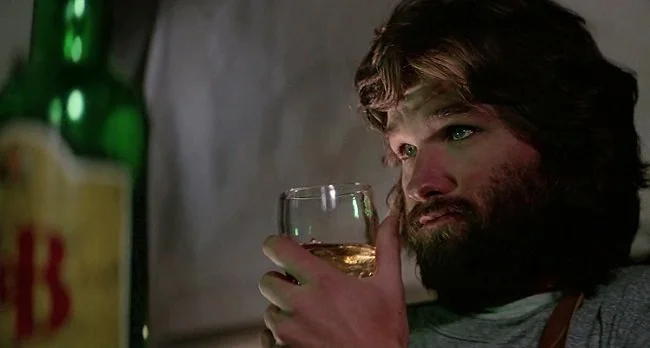
Blaugust has confirmed a few suspicions I’ve harboured about my own style of writing. I don’t do brevity. If a point is complex then take as much time necessary to explain it properly. Write what you believe to be right, not what you think people want to hear. If you find yourself on the wrong side of a prevailing consensus, then so be it. In fact enjoy the perspective. Also, stop wasting your time waiting for that article you’ve always wanted to read, that says that thing that you passionately believe. Just go write it yourself and be done. Blaugust has also once again proven that I work better to a plan and I need to be organised. Time can be found to do things, if you deem them important enough. I believe Scotty said something like this and who am I to contradict the greatest engineer in fiction?
“Bullshit, Mr Han Man”
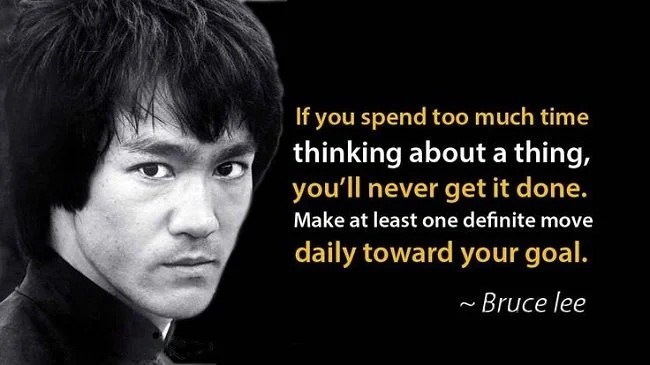
So what next? Well I intend to keep writing. Regularly. I see no reason why I can’t continue as I have throughout August. There’s always a film to review or an article over on Massively Overpowered that is wrong and needs to be rebutted (I jest of course. Or do I?). I’m also going to dust off my notes and get back on track with writing my book. The one that is planned, researched and just needs writing. And I believe that a podcast is due. So I’m going to send out emails invites to pressgang some guests and set a recording date. Life is too short and I’m getting old and need to stop being excessively diplomatic and accommodating to other people. To paraphrase a quote from Enter the Dragon “we forge ourselves in the fire of our will”. So unless I hear cries of “Bullshit, Mr Han Man”, I’m just going to crack on and do my thing. Which is write (with emotional content).














More Cult Movie Soundtracks
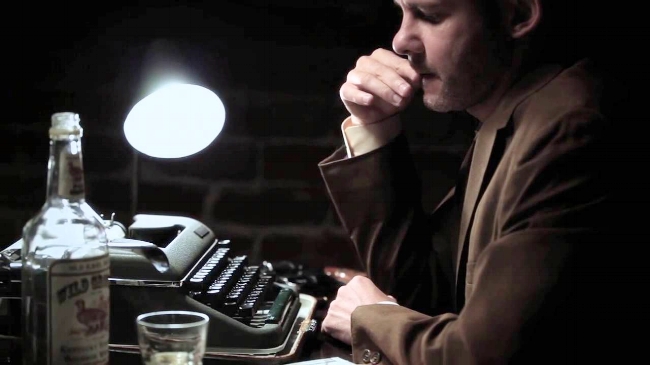
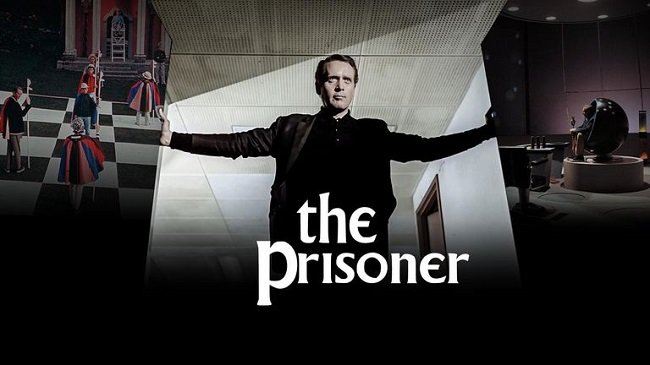
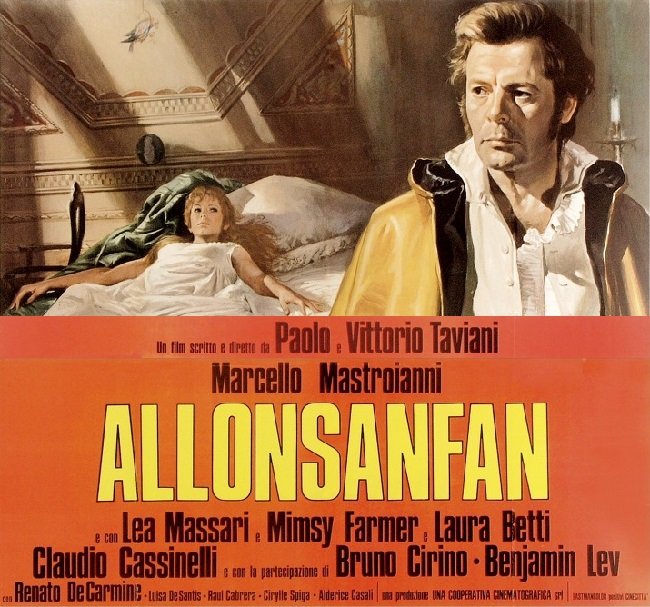
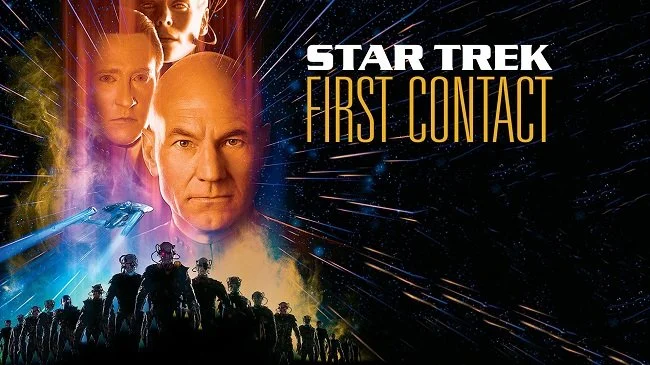
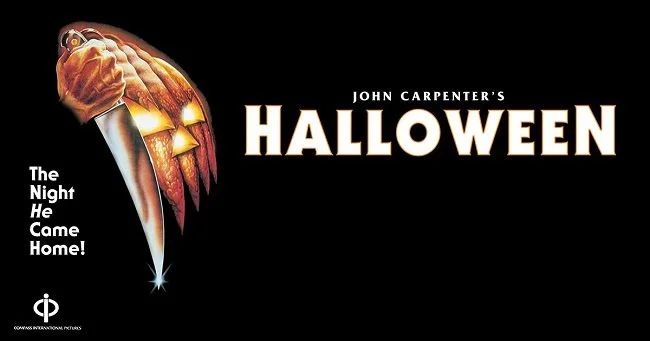
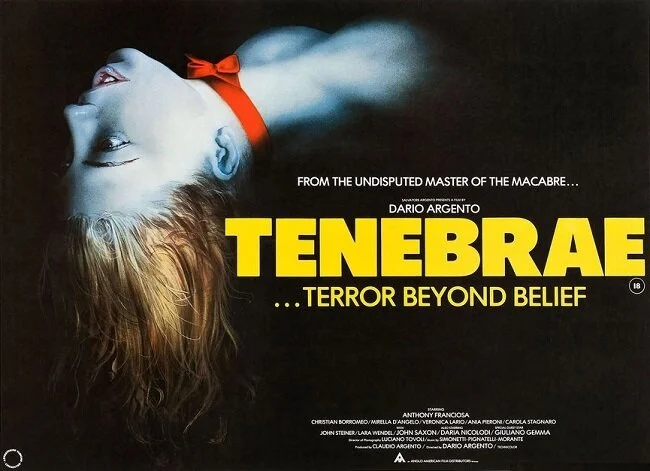
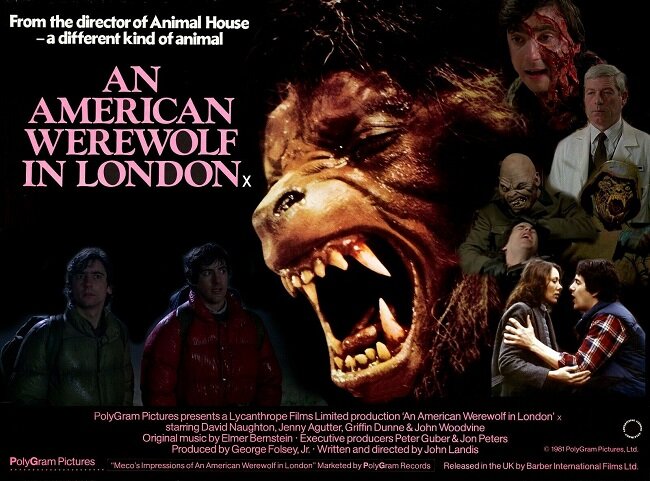
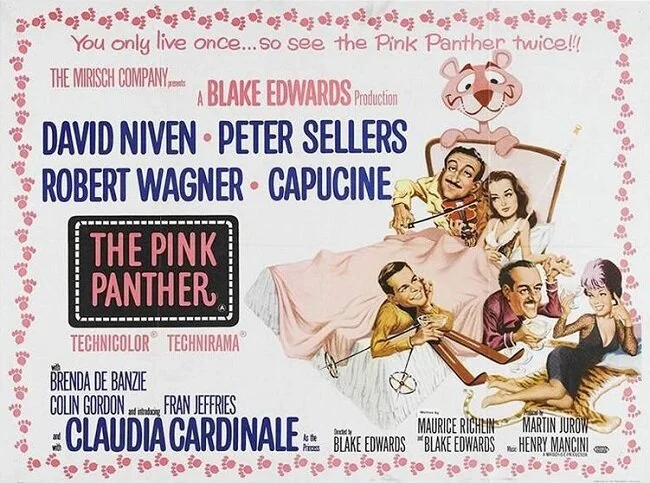
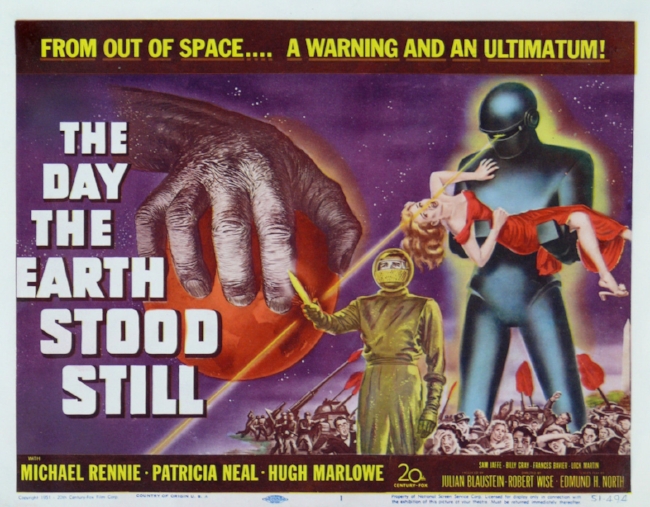
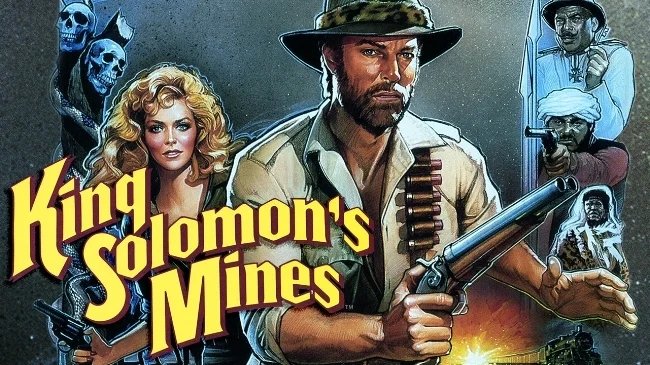
A few years ago, I wrote a post about cult movie soundtracks and how many of these movies are often blessed with a high quality score from an established composer. The subject came up again recently when I was visiting the British Film Institute with friends, and several other examples were discussed. Hence, I thought it would be prudent to write a follow up post with another selection of material, as it continues to amaze me how often the most appalling films can still have outstanding soundtracks. With this idea in mind I've collated five films that are for various reasons are labelled “cult” and have suffered the “slings and arrows of outrageous fortune” over the years. All have scores of interests and note, though for different reasons. I have chosen a track from each soundtrack which I think highlights the musical excellence and integrity of the composers involved. The genres are varied as are the musical styles and nuances of each piece. All clearly demonstrate how a well-conceived score can embellish and enhance a movie, effectively becoming a character in its own right.
A few years ago, I wrote a post about cult movie soundtracks and how many of these movies are often blessed with a high quality score from an established composer. The subject came up again recently when I was visiting the British Film Institute with friends, and several other examples were discussed. Hence, I thought it would be prudent to write a follow up post with another selection of material, as it continues to amaze me how often the most appalling films can still have outstanding soundtracks. With this idea in mind I've collated five films that are for various reasons are labelled “cult” and have suffered the “slings and arrows of outrageous fortune” over the years. All have scores of interests and note, though for different reasons. I have chosen a track from each soundtrack which I think highlights the musical excellence and integrity of the composers involved. The genres are varied as are the musical styles and nuances of each piece. All clearly demonstrate how a well-conceived score can embellish and enhance a movie, effectively becoming a character in its own right.
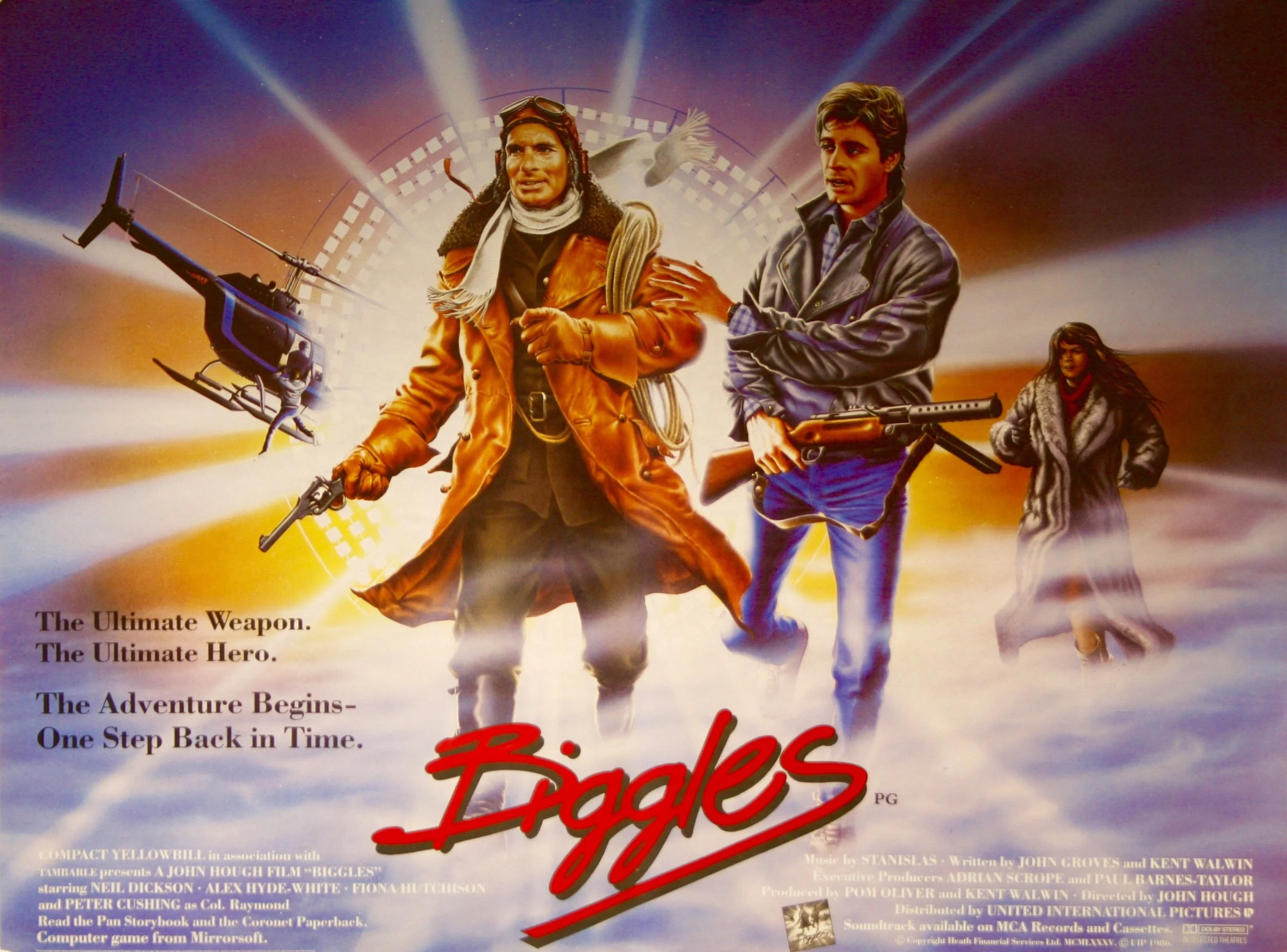
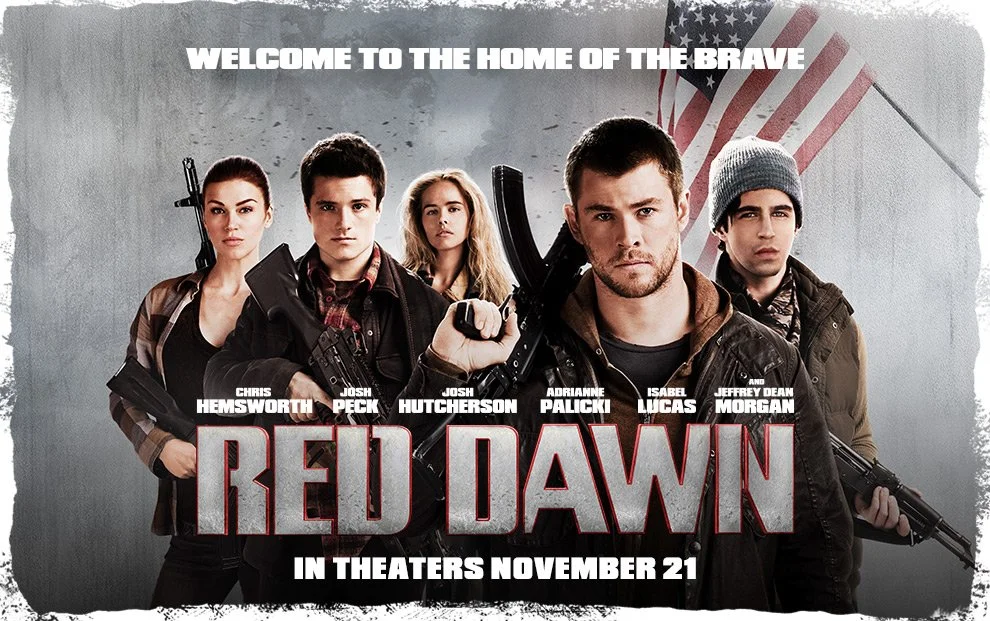
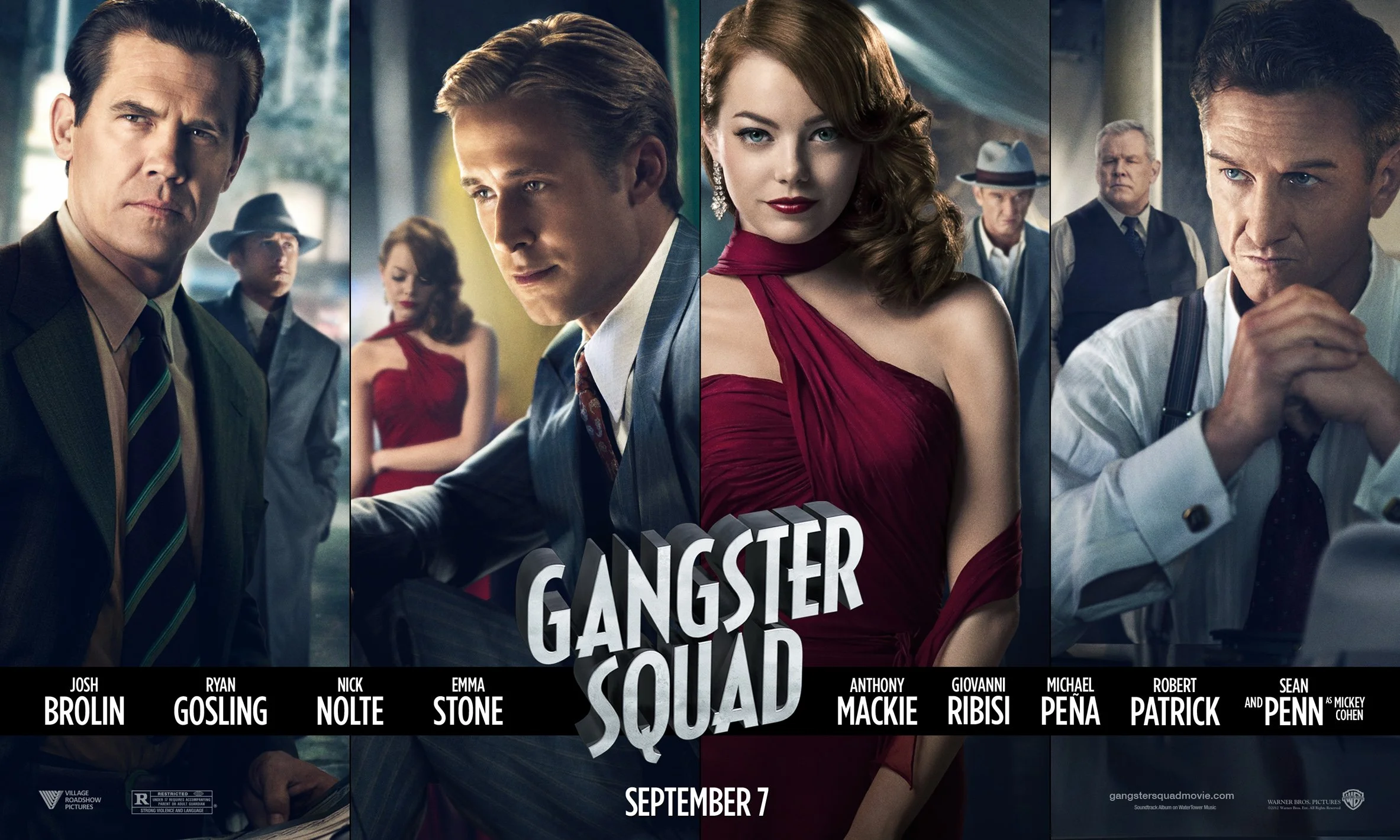
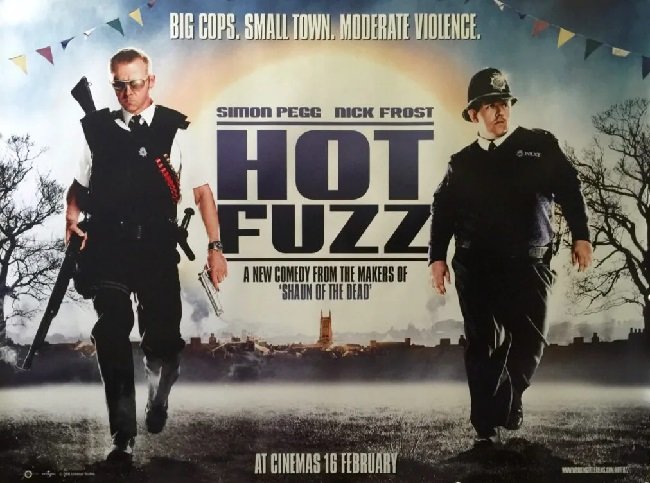
I've always found it paradoxical that a movie such as Ruggero Deodato's notorious Cannibal Holocaust (1980), features such a haunting score by Riz Ortolani. I won't debate the merits of Cannibal Holocaust here but it’s a very morally ambiguous and controversial piece of cinema. It’s certainly not for those who are easily shocked. Yet its soundtrack underpins the narrative superbly. The opening theme, set against aerial shots of the Amazon rain forest, features a very gentle and haunting refrain. You would think such a piece would be more at home in a romantic drama or even a late seventies commercial. However, it is further repeated at various times during the film, often juxtaposed against scenes of abject barbarity.
Solomon Kane (2009), based on Robert E. Howard’s fictional "dour English Puritan and redresser of wrongs", is an underrated action horror movie. It manages to bely its modest production values to blend atmospheric European locations with a strong cast. The action is robust and James Purefoy carries the story forward and compensates for some of the film’s logistical failings. The tone and spirit of the proceedings is very much in the idiom of Hammer movies such as Captain Kronos. The score by German composer Klaus Badelt is grandiose and focuses on the central character of Kane. The main theme is used with suitable variations to reflect both the bombastic fights sequences and the moments of quiet religious reflection.
How can I possibly write about cult, obscure and trash movie soundtracks without at least one piece by the legendary Ennio Morricone. The maestro seems to have a knack of writing quality material for some awful films. Hundra (1984) is an Italian-Spanish fantasy film co-written and directed by Matt Cimber and starring Laurene Landon. It’s a kind of female Conaneque, sword and sorcery movie with a bogus feminist agenda. Beneath a wafer-thin veneer of gender politics is a generic exploitation movie. The actions scenes are weak, the story is formulaic and the performances are negligible due to the ADR inherent in such international co-productions. Yet the Morricone score stands out. Hundra’s main theme is simple and effective and there’s a chase scene with a whimsical accompaniment.
Lucio Fulci’s first instalment of his “Gates of Hell” trilogy is an atmospheric, off kilter horror outing. City of the Living Dead (1980) features his hallmark excessive gore but unlike his previous movie Zombie 2, the linear narrative is replace with a more dream like story line. Many scenes are visually striking but the plot doesn’t really make logical sense. However there are sufficient maggots raining from the ceiling and actors vomiting up their intestines to keep the audience focused elsewhere. The soundtrack by Italian composer Fabio Frizzi is creepy and uniquely European. The scene in the crypt at the climax of the movie has a great cue that plays as zombies stagger around burning.
If you are not familiar with Michael Mann’s The Keep (1983), then it’s difficult to know where to start. The film is based upon a gothic horror novel by F. Paul Wilson about a group on German soldiers based in a Romanian fortress during World War II, who are picked off one by one by a vampire like creature. Mann’s second feature film took this tale and adapted it into a curious science fiction horror movie. The production was “difficult”, ran over budget and studio executives panicked at the kind of experimental film making that ensued. The movie was taken away from the director, re-edited and released in a very truncated form. It failed at the box office and Mann has subsequently disowned it. It boasts a sophisticated soundtrack by German electronic music band Tangerine Dream. Like the film itself, the score just has to be experienced and digested to be fully appreciated. Similarly, the score has had a troubled life and there has never been an official release that contains all music used. But what remains is intriguing even when listened to outside of the context of the film itself.







Video Game Avatars and Our Relationship with Them
Blaugust founder Belghast tweeted the following question last night along. “There is a discussion happening elsewhere so I'm curious. For me all of my game characters are just cosmetic shells for the digital "me". Getting the impression I am deeply in the minority here”. Obviously, he’d had encountered at interesting debate about our relationship with the characters we create and utilise to play video games and wanted to explore it further. So I and several others tweeted back our thoughts on the matter, which made for interesting reading. However, even as I was doing so, it became apparent that such a subject needed a blog post for an adequate response. It’s a big subject. Fellow bloggers Rakuno and Shadowz have already posted their take on this weighty topic. I suspect that this will be a very popular subject to explore because it is very personal and subjective.
Blaugust founder Belghast tweeted the following question last night along. “There is a discussion happening elsewhere so I'm curious. For me all of my game characters are just cosmetic shells for the digital "me". Getting the impression I am deeply in the minority here”. Obviously, he’d had encountered at interesting debate about our relationship with the characters we create and utilise to play video games and wanted to explore it further. So I and several others tweeted back our thoughts on the matter, which made for interesting reading. However, even as I was doing so, it became apparent that such a subject needed a blog post for an adequate response. It’s a big subject. Fellow bloggers Rakuno and Shadowz have already posted their take on this weighty topic. I suspect that this will be a very popular subject to explore because it is very personal and subjective.
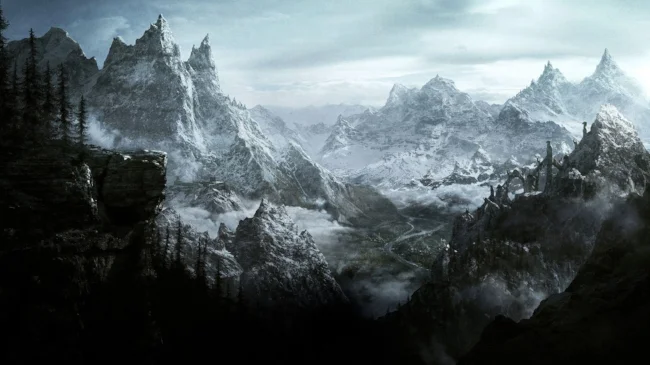
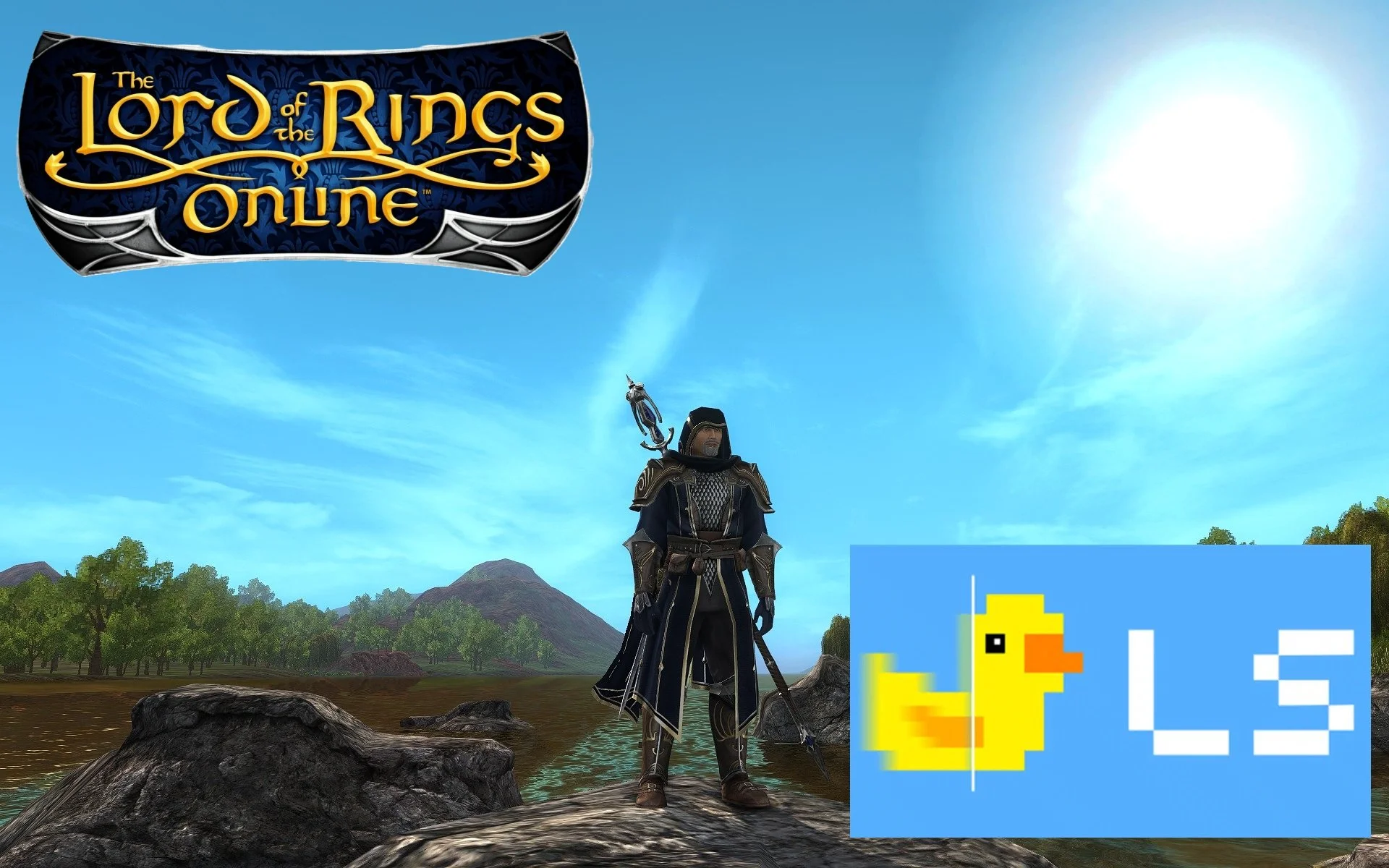
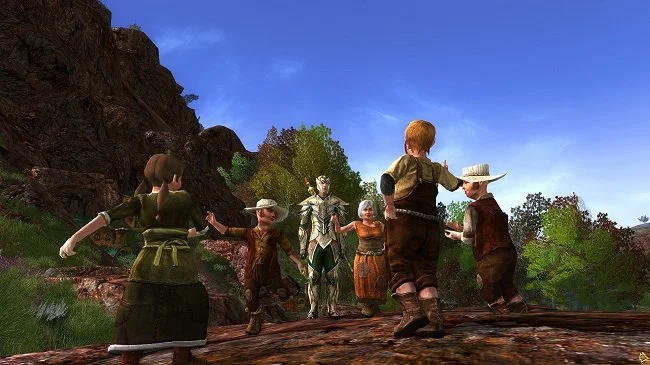
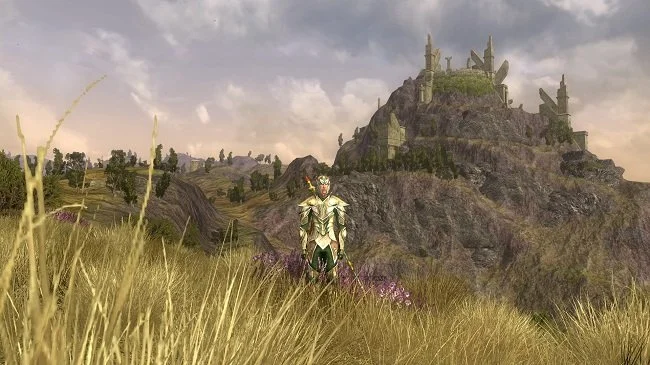
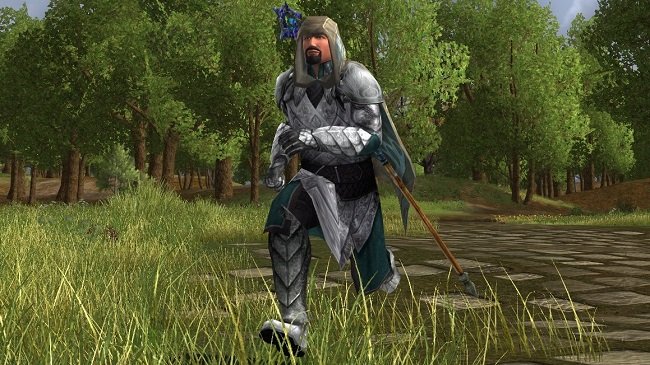
I mainly play games from the RPG and MMORPG genre for their narratives. I like lore rich stories, especially those that are linked to licensed intellectual properties. What games such as The Witcher 3: Wild Hunt, The Lord of the Rings Online and The Elder Scrolls online offer me is the opportunity to experience a story and have a degree of influence over the outcome. The games are an enhanced form of reading. Instead of visualising realms and characters in my mind, I get to see them first-hand and move freely among them. They speak to me and react to my choices (within the confines of the game). My avatar is the means through which I navigate this environment. Although I may spend time creating a character, giving thought to their appearance and their name, ultimately, they are merely a conduit. A means to experience the story. I do not see them as an extension of myself or imbued with elements of my personality. They have no true agency. Games are not sufficiently sophisticated enough at present, that we can supply our own responses to questions and the NPCs act on them.
Now I’m sure for gamers who embrace roleplay, their relationship with their MMO character is much more complex. Your avatar becomes more than just a three-dimensional, mobile interface with the story. It becomes a part that needs to be acted. A separate dramatic entity. It may be similar to yourself with regard to ethics and morality. But roleplay also offers the scope to explore personalities that are contrary to your own. Then there are those players who like to create a backstory for their character. They may reflect traits that the player does not have themselves. Their avatar may also be radically different from the player. There is the option to play as a different ethnicity or gender. Thus the character can provide both a sense of change as well as empowerment. I can certainly see the appeal of this and how it enhances the escapism that games can offer. However, I am not a trained psychologist so I won’t speculate too much in matters that I’m not qualified to do so. I will leave it to others to discuss projection and such concepts as the “imago”.
Although character creation in an MMO is restricted by the parameters of the game, it is still an act of creation, subject to our personal preferences. We further stamp our likes and dislikes upon it by giving it a name. Names are an intrinsic aspect of identity. Yet the real deciding factor is how we relate to our avatars. Is it merely a functional tool to experience the game or is it a facet of our self? When you play an RPG or MMO are you merely passively observing the narrative or do you see yourself as a protagonist in a play? A method actor who reacts to NPC interactions as if they were as tangible as a real-world experience? I think this is the core of the distinction. Naturally, those who approach gaming with the latter in mind are going to have a far more complex relationship with their avatar. Where gamers who favour the former approach will see things in more practical terms. Like a “bicycle that you are fond of” as Rakuno stated. The emotional connection comes from the fact it facilitated such enjoyable experiences.
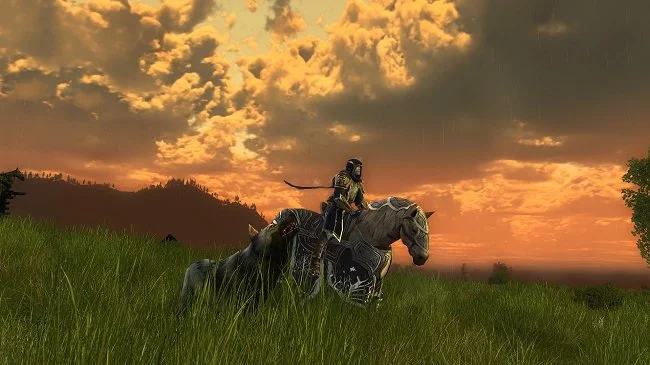
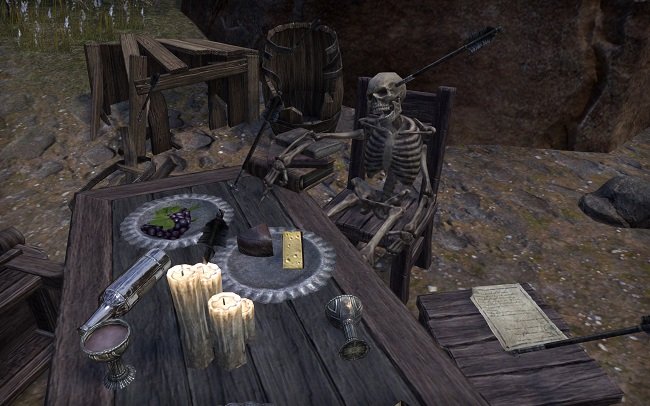
I suspect as video games advance and MMOs incorporate ever better AI technology, we may well find ourselves playing games with more complex forms of communication and interaction. At that point your character may well cease to be just a factotum and become something more nuanced. Imagine an MMO where if you behaved poorly, wantonly destroying things and attacking NPCs, the game adapted to your virtual personality. What if it wasn’t just your actions in game that determined this but the way you spoke and the manner in which your character conducted themselves. I suspect such player/character relationships would be far more complex and an absolute field day for “Shrinks”. But for the present, my Argonian Necromancer, Jubal the Questionable, in The Elder Scrolls Online is simply an avatar in the traditional gaming sense. There’s not that much of me there, apart from my love of words and writing which accounts for the dramatic name. Plus I don’t have a tail or a penchant for staying moist.




Staying Motivated
According to the Blaugust Festival of Blogging timetable, the designated writing prompt for week number five is titled “Staying Motivated”. Because at some point, all content creators will find themselves either too tired, unwilling or simply unable to produce any new material. You may well have the time and resources to do so but lack inspiration to actually apply yourself. It’s a perennial question for anyone who writes, live streams or produces videos and podcasts. Like most problems of this nature which are dependent upon personal and subjective factors, it does not have a standard or easy answer. Staying motivated is a personal battle that you have fight by yourself, in your own way. If you find a solution that works for you there’s no guarantee that it will be applicable to others. However, there are some practical steps that can be universally taken that can contribute to staying motivated.
Motivation is a psychological concept and not an actual location
According to the Blaugust Festival of Blogging timetable, the designated writing prompt for week number five is titled “Staying Motivated”. Because at some point, all content creators will find themselves either too tired, unwilling or simply unable to produce any new material. You may well have the time and resources to do so but lack inspiration to actually apply yourself. It’s a perennial question for anyone who writes, live streams or produces videos and podcasts. Like most problems of this nature which are dependent upon personal and subjective factors, it does not have a standard or easy answer. Staying motivated is a personal battle that you have fight by yourself, in your own way. If you find a solution that works for you there’s no guarantee that it will be applicable to others. However, there are some practical steps that can be universally taken that can contribute to staying motivated.
If you truly are just writing for yourself, then there is no requirement for any sort of schedule. It also means the question of motivation is greatly mitigated. But if you do write to interact with your audience, then a schedule is a useful thing for both parties. Therefore set a schedule that you know you can sustain. Be honest and realistic with yourself. If it’s just one post a week, so be it. At least everyone then knows where they stand. Once you’ve got a clear idea of how often you want to write (or whatever it is that you do), find the time and use it. If it helps, prepare some sort of reward such as a tasty snack, gin or ketamine that you don’t get until you’ve achieved your goal.
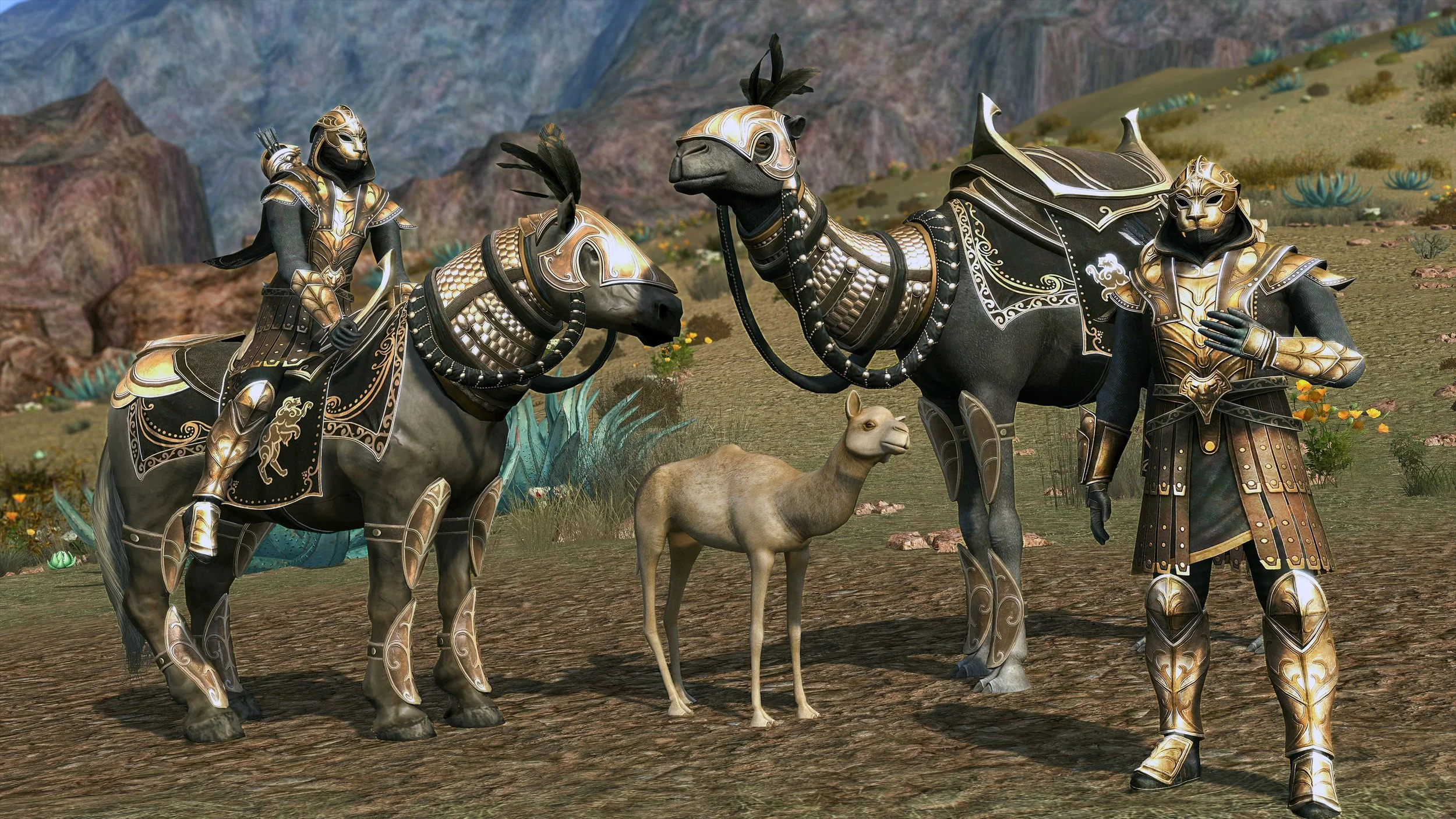
I find that on occasions, there are days when the writing just flows. On such days I publish a blog post and “bank” anything else I produce for another day. Film reviews tend not to be time sensitive, can be written on the fly and left to build up in my “drafts” folder. These can then be rolled out on days when my writing mojo is waning. Then there are feature columns and recurring blog posts. Articles in which you summarise what you’ve been up to. And again let us not underestimate the popularity of sharing screen captures from games and such like. If you managed to obtain that obscure armour set after grinding out a specific instance, then let people know.
“No lollygagging”
Although I do advocate schedules, I also advise taking breaks from your content creation, when you feel the need. However, if you do regularly produce content then you may want to notify your readership of your pending absence. If people know in advance that you’re taking a break, they’re more likely to return later. If you simply vanish without explanation, then your audience will evaporate over time along with any goodwill. I would also add that if like me, you tend to produce content regularly, don’t take too long a break. In my experience the longer your away, the harder it is to return.
One way to keep busy and stave off any loss in motivation is to collaborate with your fellow blogger, streamers and podcasters etc. Group writing projects can yield interesting results, especially when debating subjects that are contentious or have multiple perspectives. Podcasters and streamers can have guests on their shows or facilitate round table debates. Not only do such projects boost your motivation and strengthen community bonds, they also offer a degree of promotion for your online presence.
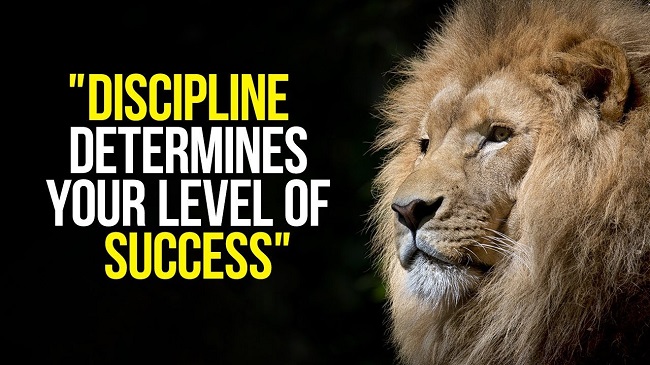
To date, no Lion has ever written a blog post of note
For many of the people participating in Blaugust, blogging or whatever other form of content creation you’re pursuing, is a hobby. If treat it as such, in a manner that you can sustain, it will remain so. Pushing yourself beyond what you can reasonably cope with, is the quickest way to fall out of love with the thing that you’re doing. That’s not to say you should shy away from applying yourself and sometimes maintaining a degree of discipline. But you have to find a mode of operation that is right for you. A degree of introspection and honesty is also required so you don’t bite off more than you can chew, or conversely, sell yourself short.
Finally, stay in touch with the community after Blaugust and keep a presence on the Discord server. Being around like-minded people is invaluable for staying engaged and focused. After a busy and engaging event such as Blaugust, it can feel like things grind to halt in the days and weeks afterwards. It is not unusual for many content creators to actually stop if they feel that the support network has gone. But it is still there, so it is important to keep the lines of communication open.


















Separating Art from the Artist
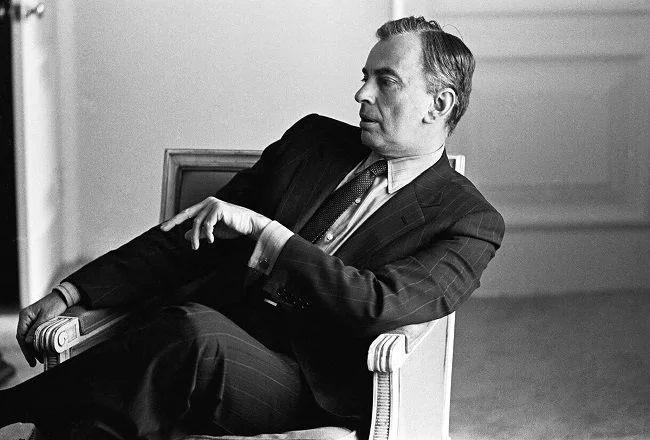
In recent years, the #MeToo movement has made it abundantly clear that the film, TV and video games industries are far from idyllic work environments that pop culture implies that they are. Allegations of rape, sexual assault, bullying and general bullshit abound. There have been convictions and such matters are slowly being given the scrutiny they deserve. But it’s an uphill struggle for the victims because vested interests will always resist potential changes to the status quo. There are wider discussions to be had about many artistic and creative industries being glorified “boys clubs” and then there is the culture of “blaming the victim” but those are for another day. I don’t think they’re going to resolve themselves over night, sadly. On this occasion, I would like to reference the composer Jeremy Soule, because he is the latest artist to have serious allegations made against him. Naturally, this has caused a great deal of discussion among his fans. Soule’s work on The Elder Scrolls and Guild Wars franchises is very well regarded. Hence a common refrain that stems from these sorts of situations is “I now feel conflicted about this individual work”. It raises the old chestnut about separating art from the artist.
In recent years, the #MeToo movement has made it abundantly clear that the film, TV and video games industries are far from idyllic work environments that pop culture implies that they are. Allegations of rape, sexual assault, bullying and general bullshit abound. There have been convictions and such matters are slowly being given the scrutiny they deserve. But it’s an uphill struggle for the victims because vested interests will always resist potential changes to the status quo. There are wider discussions to be had about many artistic and creative industries being glorified “boys clubs” and then there is the culture of “blaming the victim” but those are for another day. I don’t think they’re going to resolve themselves over night, sadly. On this occasion, I would like to reference the composer Jeremy Soule, because he is the latest artist to have serious allegations made against him. Naturally, this has caused a great deal of discussion among his fans. Soule’s work on The Elder Scrolls and Guild Wars franchises is very well regarded. Hence a common refrain that stems from these sorts of situations is “I now feel conflicted about this individual work”. It raises the old chestnut about separating art from the artist.
We can all write a long list of disgraced artists if we think about it. People who at one time produced outstanding music, made great films, staged plays or were great philanthropists and benevolent charitable benefactors. Consider Michael Jackson, Woody Allen, Kevin Spacey and Louie C.K. The list sadly keeps growing. It’s a very rude awakening when you discover that people you admire and revere are in fact monsters. Furthermore, this is not a modern problem. Charles Dickens, William S. Burroughs and Charlie Chaplin all had very chequered pasts. So what are we supposed to do when we discover that something that we enjoy is created by a such a person? Well a common answer is that you must take the art and effectively remove it from the context of the artist that created it. But like many notional concepts, trying to put in to practice is harder to do. It is something that requires a willing sense of cognitive dissonance, as well as being able to govern your passion. That is not going to be easy for many people. And then there’s the issue of fandom, which muddies the waters even further. Fans are not always the most self-aware or emotional literate societal group.
I first encountered the concept of separating art from the artist when at school, studying English literature. T.S Eliot stated, “I have assumed as axiomatic that a creation, a work of art, is autonomous,” in 1923. There subsequently followed a new way of appraising literary work, which attempted to make analysis more like a science. The focus was on the words, their meaning and context and the authors relationship with their work was sidelined. This method and variations of it have prevailed for a long time and where still used when I was being educated in the eighties. French literary theorist and philosopher Roland Barthes declared in 1967 that authors doesn’t create a text. The reader does, by reading it. Each new reading effectively reinvents it. Therefore texts have no fixed or definitive interpretation. Oh and it gets even deeper. I have read arguments that film and music are not owned commodities but cultural gifts bestowed upon society. The viewer or listeners opinion has to trump that of the artists, because they have been solicited to give a personal subjective opinion. This theoretically will negate the auteurs ability to control the interpretation of their work and will therefore tempers their institutional power.
But these ideas tend to mainly exist within the confines of the classroom and academia. They are both abstract and cerebral which therefore limits their practical application. Plus there is another issue that stems from our revulsion against fallen artists. There is an inherent cultural assumption that we expect our artists to be virtuous by default. That is not to say that we should be advocating for them to be the opposite but it reveals a societal propensity to put artist on a pedestal by dint of being an artist. Musicians, actors, writer and film makers begin their careers as everyday people, like you and me. Therefore they will have the flaws and failings that we all share. In fact some would argue that their creative abilities draw upon their flaws, vices and failings. Yet the moment success, fame and personal validation are achieved we seem to give artists a cultural free pass. We cosset them and make excuses. Are we actually contributing to the creation of monsters?
Upon reflection it would appear for many people there is no easy way of separating art from the artist. Because our relationship with art is deeply personal, it seems perfectly reasonable to take it personally when someone you admire transgresses. So if you no longer wish to support an artist, then don’t buy any more of their work. If you cannot bring yourself to listen to their music then purge your CD collections. We are not purely rational beings. Art is emotive, so are artists and so are we. But I believe that we have to confine out emotional responses to the likes of Jeremy Soule and Michael Jackson, to just ourselves. I do not advocate that as a society we try to erase the art of those who are in disgrace, due to some perceived collective moral outrage. Hiding from awful events and the things that they touch does not address them. Also it is usually the art we encounter first and not the artists. Hence, we do not know in advance their human failings. And irrespective of what we may know after the fact, if a piece of art touches you can that truly be retrospectively refuted?
So where do I stand on all this? Well I do strive to separate art form the artist. However, that does not mean that I’m an apologist for their crimes. If you want me to write 2,000 words on the films of Roman Polanski, I will do so and focus purely on that. If you also ask me to write a comparable amount of text on his failings as a person, then I can accommodate that as well. When I’m listening to Billie Jean, watching Manhattan or Jeepers Creepers, I do not by default immediately focus upon the creative artist and their iniquities. Nor do I totally banish them from my thoughts. I find my own personal point of emotional and ethical equilibrium. Because although a singer, actor or director may be tainted, that doesn’t have to transfer to my relationship with their work, which was pure initially. If you allow the artist to spoil the art, it negates the contributions of all of those who were also involved in the creative process, which is inherently unfair. The truth is the myth of an auteur is exactly that. But this is my philosophy and my means of coping. We all have to find our own. Ultimately if this dilemma makes you angry, then that is something else that you can lay at the door of the artist that has gone rogue.






















Further Changes Coming to Star Trek Online
A decade ago the MMO genre tended to favour quite complex game systems. It is what the playerbase expected and allegedly preferred. But tastes and prevailing trends change over time. Plus game developers often see a change in staff and alterations in their creative visions. Hence over time, game systems can become unwieldy, esoteric and frankly annoying. So when a decision is made to refine, rationalise and improve these systems, it can be a complex task to undertake. Furthermore not only are there the practical and logistical realities of having to tackle ageing code, there is also the choppy waters of community relations to navigate. Because regardless whatever you seek to change, there will always be those who will oppose it and consider it an outrage perpetrated upon them, comparable to the Peterloo Massacre.
A decade ago the MMO genre tended to favour quite complex game systems. It is what the playerbase expected and allegedly preferred. But tastes and prevailing trends change over time. Plus game developers often see a change in staff and alterations in their creative visions. Hence over time, game systems can become unwieldy, esoteric and frankly annoying. So when a decision is made to refine, rationalise and improve these systems, it can be a complex task to undertake. Furthermore not only are there the practical and logistical realities of having to tackle ageing code, there is also the choppy waters of community relations to navigate. Because regardless whatever you seek to change, there will always be those who will oppose it and consider it an outrage perpetrated upon them, comparable to the Peterloo Massacre.
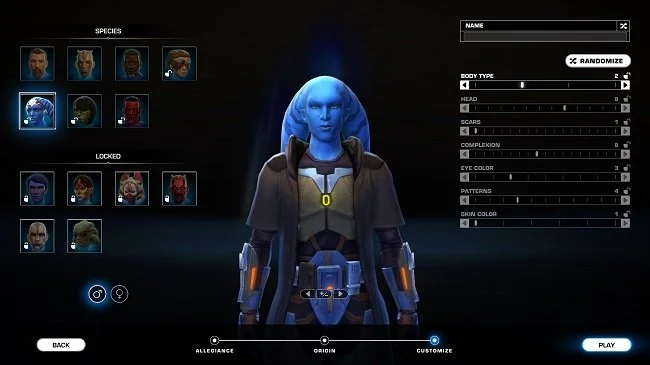
For years a common facet of the MMO genre has been factions. A new player made a choice when creating their character to affiliate to a specific faction which would permanently separate them from those who were aligned differently. It makes narrative sense in some respects and certainly suited the prevailing genre attitudes of twenty years ago. But thing change and although some people really dislike that fact, nowadays such dogmatic attitudes towards factions have softened. The One Tamriel update did away with the faction driven regional boundaries in The Elder Scrolls Online in October 2016 and the game is arguably better for it. However, one of the biggest obstacles facing the removal of factions in other games is often lore. And that lore becomes even more immutable when it derives from a third party, licensed intellectual property. Which brings us to the case in question, namely Star Trek Online.
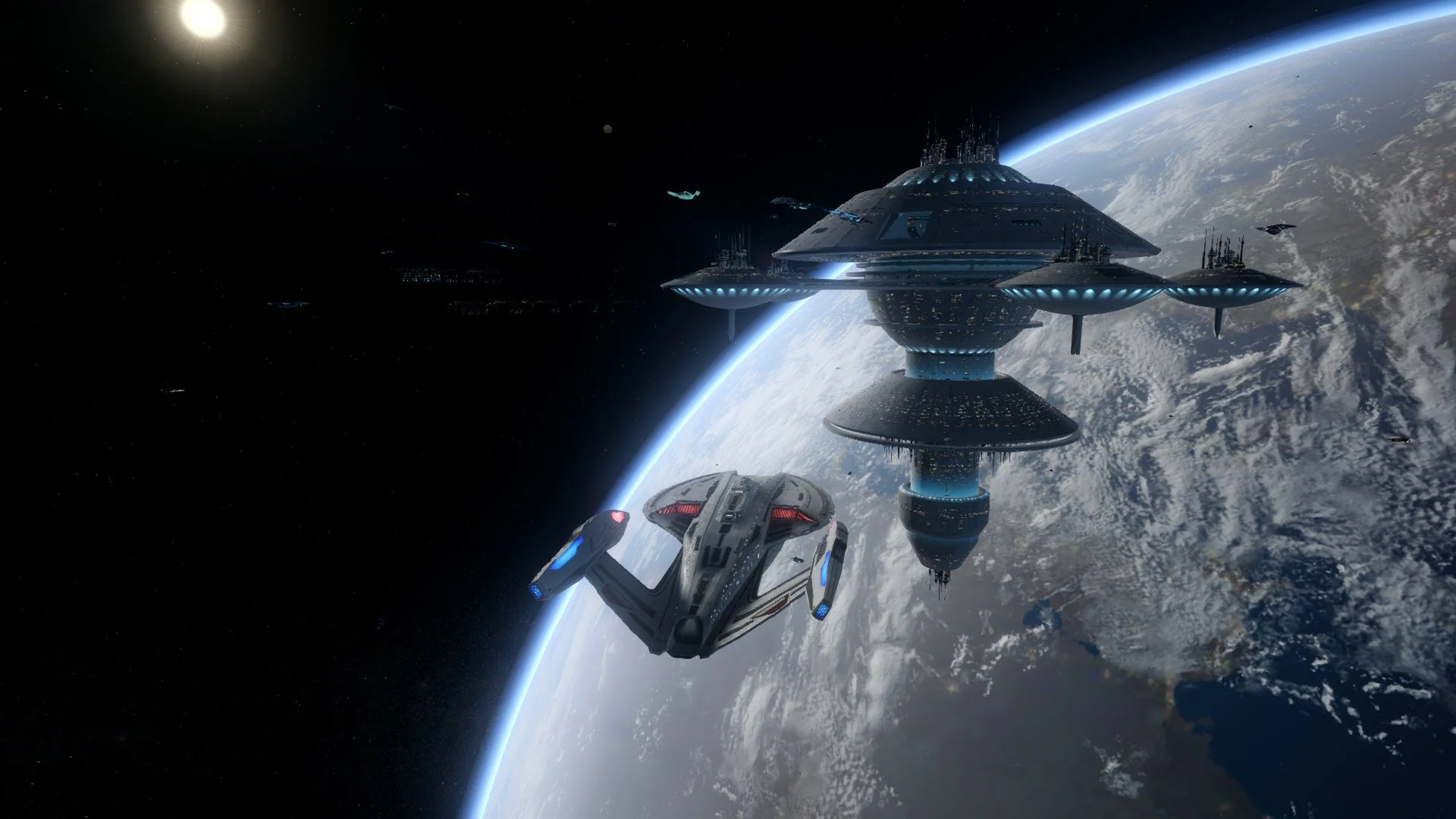
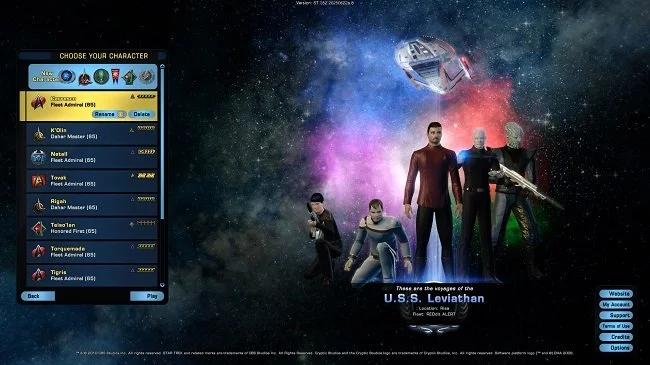
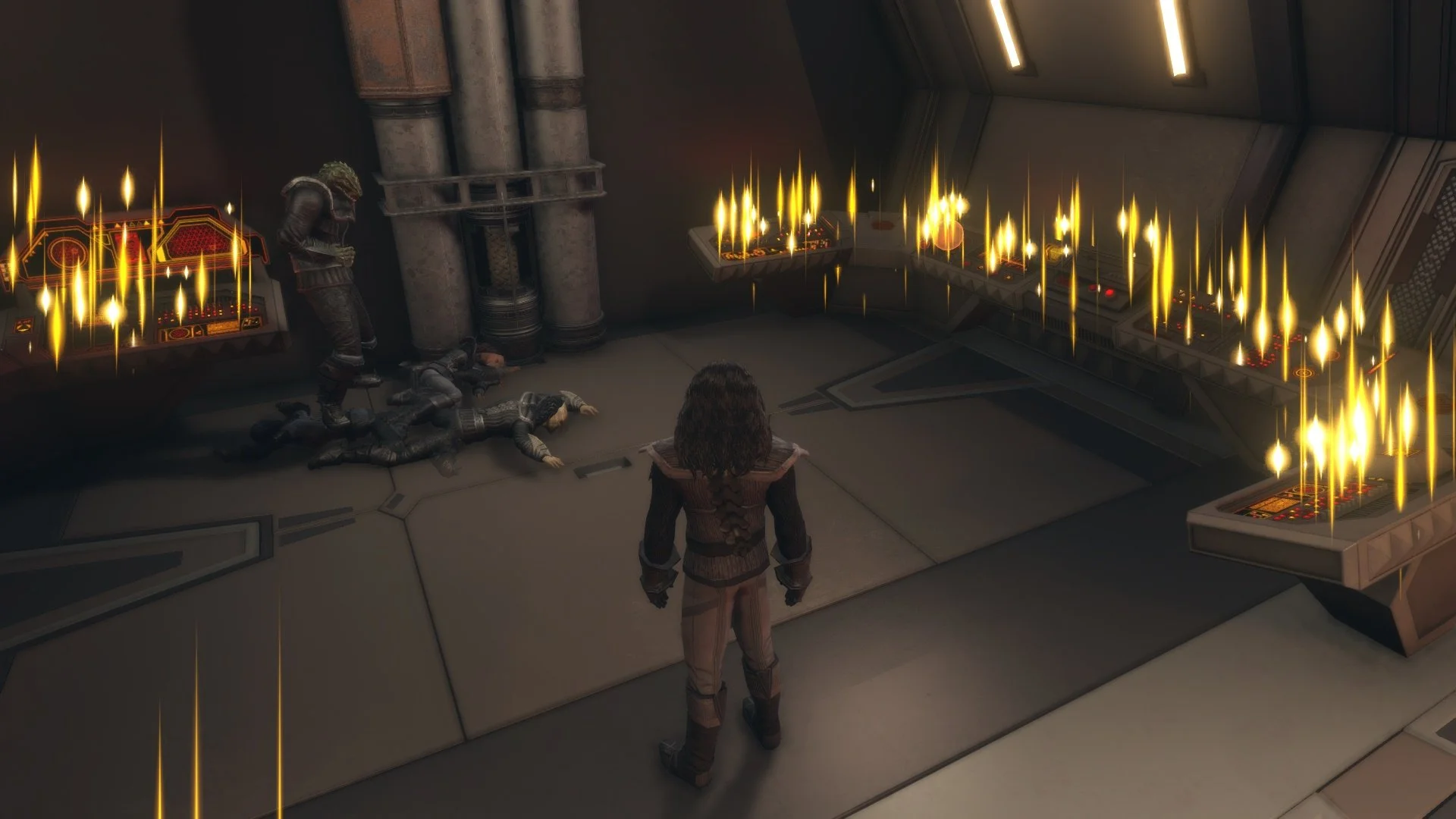
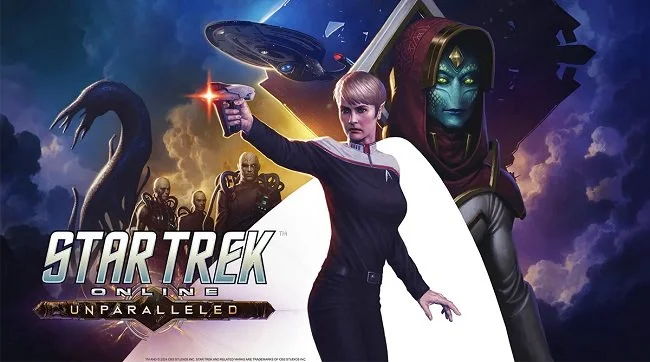
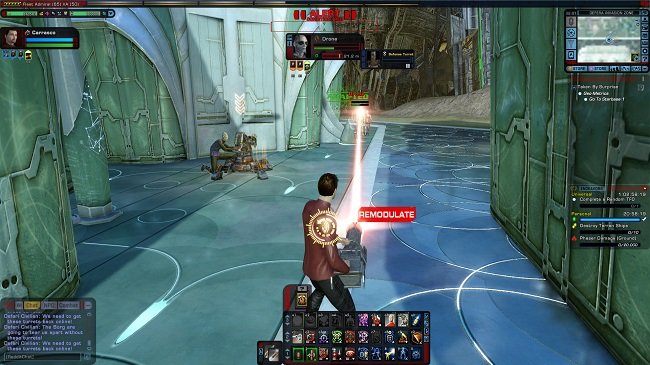
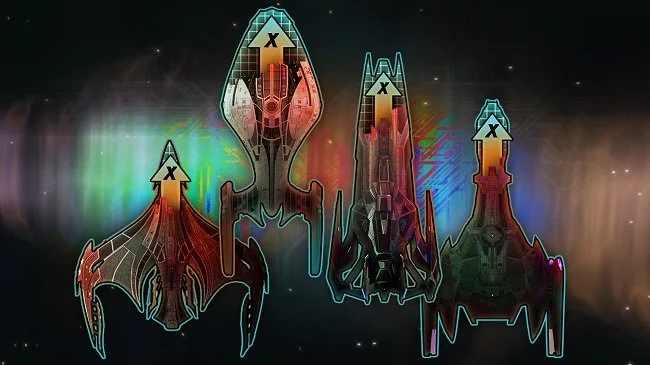
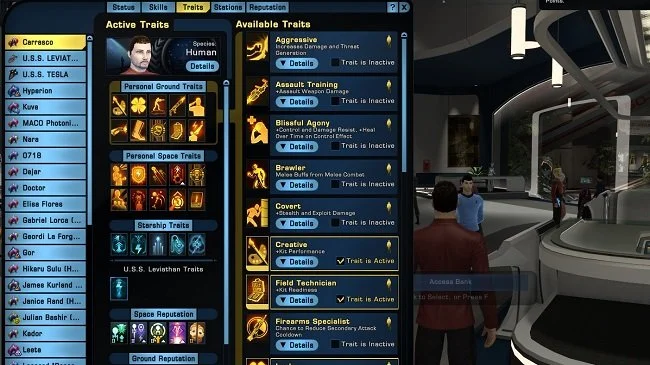
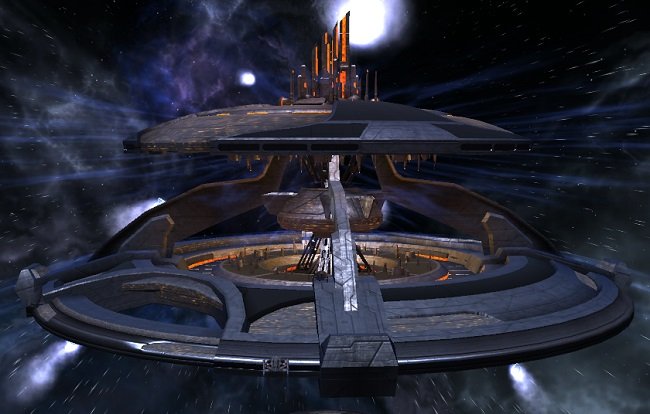
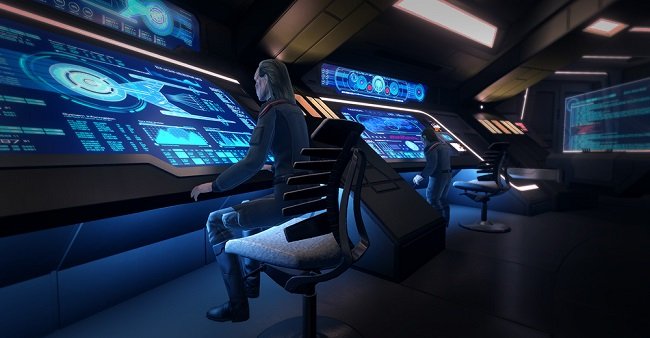
When Star Trek Online launched in 2010, you could play as Federation officers and once you hit level 20, it unlocked the option to play as a Klingon. However, that Klingon alt was by default at level 20. It took a while before this changed so that players could level a Klingon allied character and play though a unique backstory. Over the years other factions have been added to the game including the Romulan Republic. Although there has been a degree of sharing assets and resources, lines of demarcation have remained. Romulan ships can only be used by Romulan characters. The same policy has been maintained for the Klingon Empire. However, Cryptic have decided to remove this restriction from the Romulan faction, as part of their ongoing updating and modernising the game. Cryptic are also overhauling the events service within the game, which up until now has been part of the wider reputation system. The UI is to be amended and event progress is to be tracked as a subset of the mission journal. Instead of working like reputation projects which require daily input, the new interface will display an experience bar. Progress will also be account wide for those players with multiple alts.
Both of these changes seem very reasonable at first glance. The first question most people have asked is whether this restriction will also happen with Klingon ships? Sadly, it would appear that rights holders CBS, have some very particular caveats in their license arrangement, so the answer is “no” for the present. However, being able to fly a Romulan ship on my Federation character, is an interesting proposition, as they have some stout vessels with good stats. From a financial point of view (some would argue Cryptic’s default position) it opens up a whole new range of ships to buy. This change is also a shot in the arm to the Admiralty system, as I can now add more Romulan vessels to my deck. But some players would argue this change comes at the expense of class identity and the relevance of factions per se. STO was initially created around the traditional trinity of DPS, Tank and Healer with its Tactical, Engineering and Science classes. But this has long been abandoned in any meaningful sense. The additions of factions in recent years has also been half hearted. None are truly independent and at some point in levelling, have to ally with either Starfleet or The Empire.
You can argue that there’s a lot to put right in STO. The game still has a lot of bugs, many of which have persisted for years. Cryptic seem to be tackling matters in a somewhat erratic fashion. The current streamlining of the game has seen the loss of The Foundry, older missions “temporarily” removed from the game for updating and Tier 6 ships level scaling so they can be used immediately. Some of these things work, other do not or are a loss to the game. I have never felt that there has been adequate promotion of the Romulan, Klingon or other faction storylines in STO. The game is very much focused on the Starfleet perspective. Cryptic has stated that the numbers show that most players are overwhelmingly Federation orientated but if more effort had been made to promote and maintain the other faction’s storylines and resources, would things have been better? I’d argue that the Romulan Republic story arc is the best in the game from a narrative and lore perspective.
I cannot help but feel that Cryptic have pursued whatever can be added to the game, at the expense of what is already present. The Kelvin Timeline is not exactly popular with core Trek fans yet it was dovetailed into the game. And no sooner had they released the superb Deep Space Nine themed expansion, Victory is Life, it was dismissed and they went hell for leather with the integration of Star Tre: Discovery related content into the narrative. I suspect that they may have a rabbit to pull out of the hat regarding Star Trek: Picard. But that doesn’t bode well for the return of classic missions like City on the Edge of Never and others, which are awaiting a makeover. I applaud Cryptic for trying to bring STO up to the standards of modern MMOs but I’m not sure about the route they’re taking and whether they be able to achieve their goals with their “tinkering”. I also would like to see more narrative content delivered more regularly. As ever, time will tell. Unhappy players vote with their feet sooner or later.


Battle, Sedlescombe and Hawkhurst
Today Mrs P and I resumed our monthly excursions into rural Britain. Our last outing was at the end of March when we spent the day at Eastbourne. Since then our travelling schedule has been somewhat interrupted over the last three months due to various real-world issues. However, today was a very pleasant 31° Celsius (87.8° Fahrenheit) so as we had no outstanding commitments, we planned our route and left promptly at 9:30 AM. As I mentioned previously, the trips our primarily for sightseeing and enjoyment but we’re also keeping an eye on property prices and potential locations to move to. Being based in South East London (we have a Kent postcode) we are ideally placed to travel to multiple counties within a ninety-minute or two-hour drive.
Today Mrs P and I resumed our monthly excursions into rural Britain. Our last outing was at the end of March when we spent the day at Eastbourne. Since then our travelling schedule has been somewhat interrupted over the last three months due to various real-world issues. However, today was a very pleasant 31° Celsius (87.8° Fahrenheit) so as we had no outstanding commitments, we planned our route and left promptly at 9:30 AM. As I mentioned previously, the trips our primarily for sightseeing and enjoyment but we’re also keeping an eye on property prices and potential locations to move to. Being based in South East London (we have a Kent postcode) we are ideally placed to travel to multiple counties within a ninety-minute or two-hour drive.
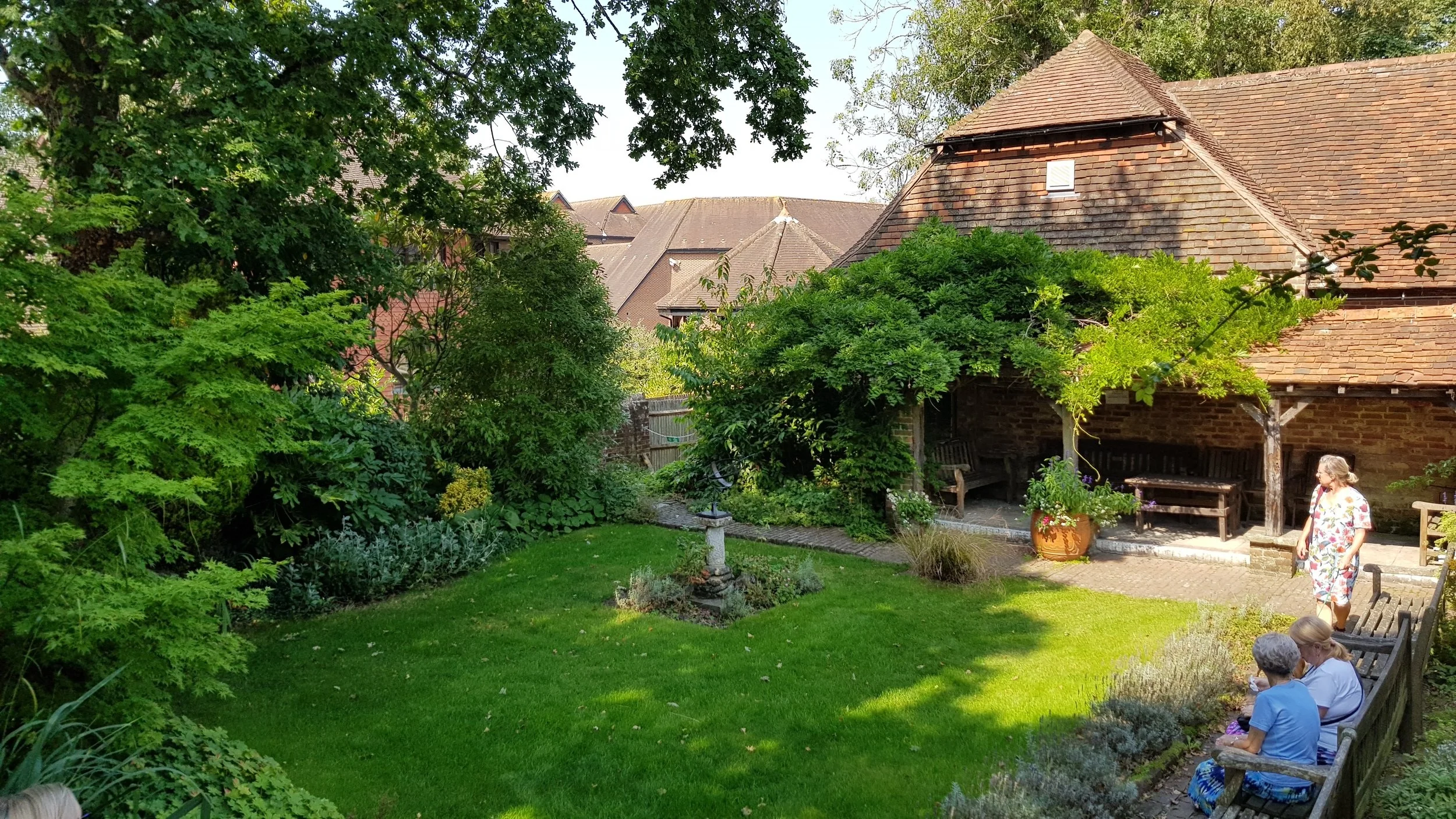
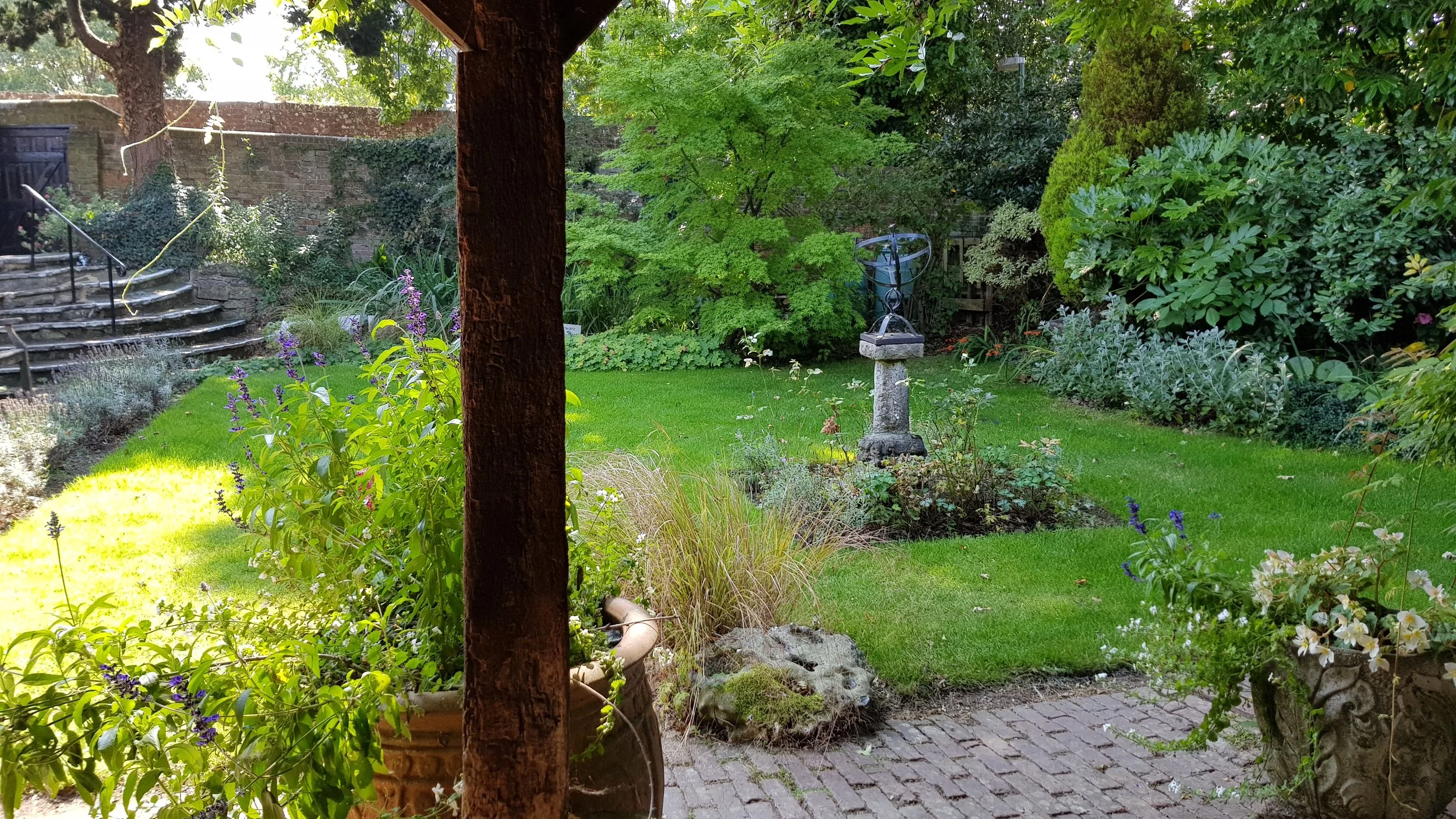
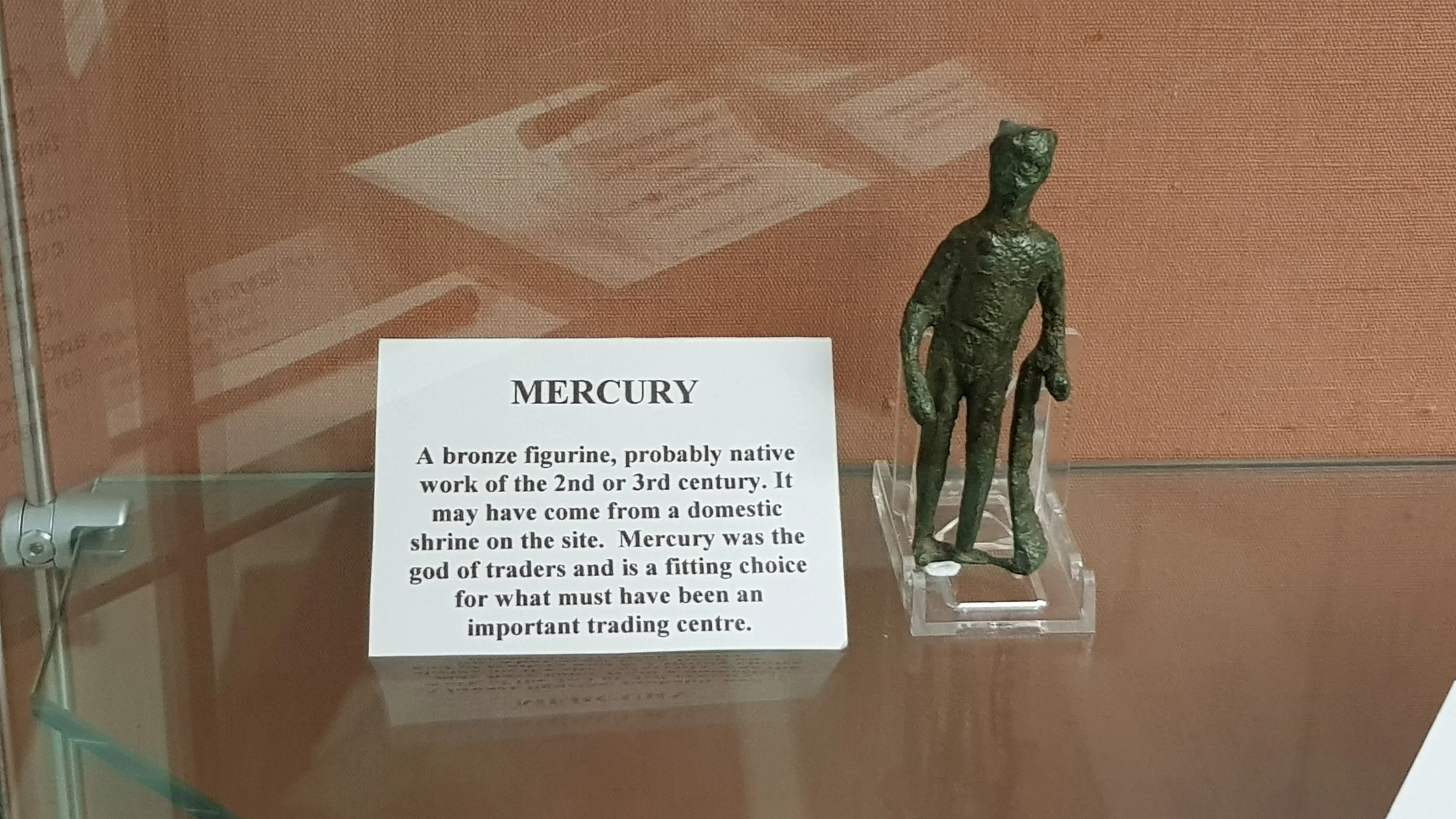
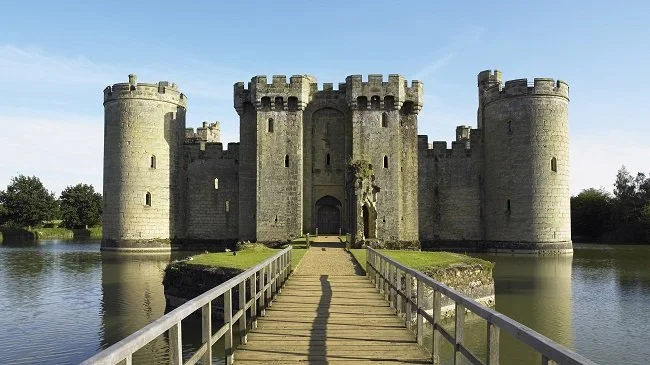
First stop today was the town of Battle in East Sussex. Battle is the site of the Battle of Hastings, where William, Duke of Normandy, defeated King Harold II to become William I in 1066. Due to its historical significance Battle has numerous buildings and sites of historical significance. There’s the Abbey and its opulent gate at the South End of the main street. Then there’s the High Altar which is allegedly built on the spot where Harold fell and the Walled Gardens. We visited these along with the Battle Museum of local history. Despite its modest size it has exhibits of Roman remains, the Battle of 1066 and details regarding the towns production of Gunpowder in the eighteenth century. Next door are the Almonry gardens which are immaculately kept. The walls and terrace provide a tranquil and secluded respite from the noise of the buy main road. Battle is very tourist friendly with numerous restaurants and tea rooms. Many of the buildings are “listed” and therefore have been preserved in their original style.
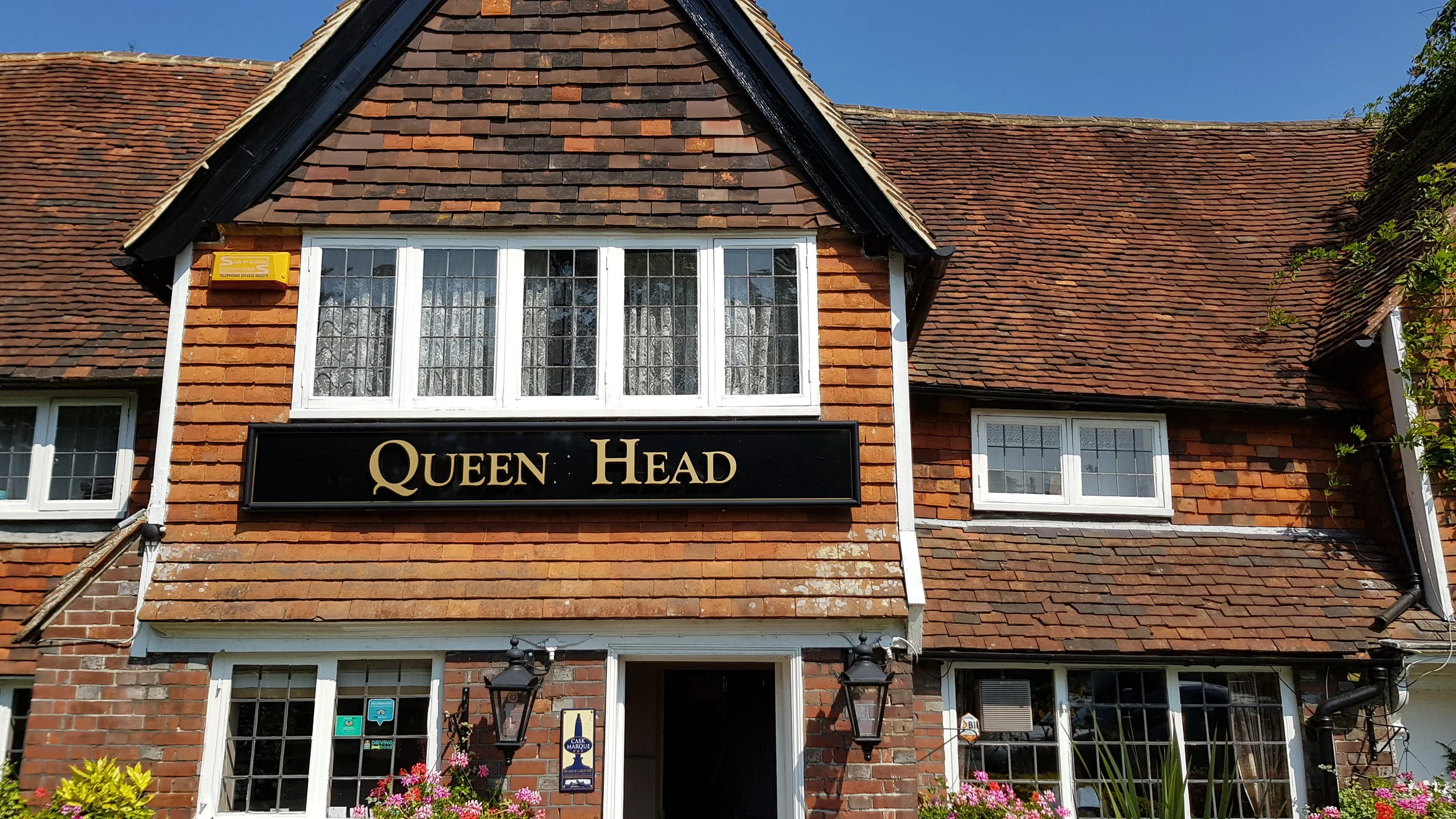
We then followed the road East to the village of Sedlescombe. This picturesque settlement mixes both the old and the new sporting modern bungalows along with traditional terrace cottages. Surrounding the central village green are a restaurant, a hotel and the Queen’s Head pub. As well as all the quaint houses there is a small Victorian pump house that is now preserved. Sedlescombe is both sedate and affluent. It is the epitome of rural seclusion for those seeking an escape from city life. However unlike Battle this is not a major tourist location. Beyond the local church at the North of the village there is not much else of historical note. The village is residential with a traditional veneer. The local geese appear to have free rein throughout the village with many residents leaving food and water out for them. We had lunch in the pub and the meal was outstanding. We only intended to stop for a quick drink but when we saw the quality of the food being served to other patrons, we decided to stay.
In the afternoon, we crossed over the county line into Kent and the village of Hawkhurst. This is yet another clearly wealthy area (there’s a Waitrose) which seems to again have a mixture of the old and new. The Moor, to the south, consists mainly of cottages clustered around a large triangular green, while Highgate, to the north, features a colonnade of independent shops, two country pubs, and hotels. Tourism is most definitely a factor here with Hawkhurst ideally positioned as the place to stay, for those who wish to travel the South East coast. The village itself falls within High Weald Area of Outstanding Natural Beauty. There are numerous copses and meadows with traditional cottages nestled between them. There are also several nineteenth century Almshouses that are currently being converted into luxury apartment. The village has charm and character. However a major A road runs though the middle and it is very busy and noisy. But the side roads offer a quiet retreat.
During our visit, we looked in numerous estate agent’s windows and made note of the property prices. Although they are not as high as those in Greater London, they still reflect the affluence of the local area. Also many of the properties are listed and therefore subject to a great deal of building control. It is wise to consider this before committing to purchasing. Overall this was a very pleasant day away from the hubbub and bustle of the London suburbs. The weather was wonderful and it was an ideal for some rural exploring. Out of all three locations Battle had the most immediate attractions and things to do, although I found the peace and quiet of Sedlescombe to be very rewarding. Hawkhurst in many ways encapsulates all the common preconceptions of a traditional English village. Something I think it is happy to play upon. It will be interesting to compare it to villages in Wales and Scotland when we visit next year.






































Apocalypse Now Final Cut (1979)
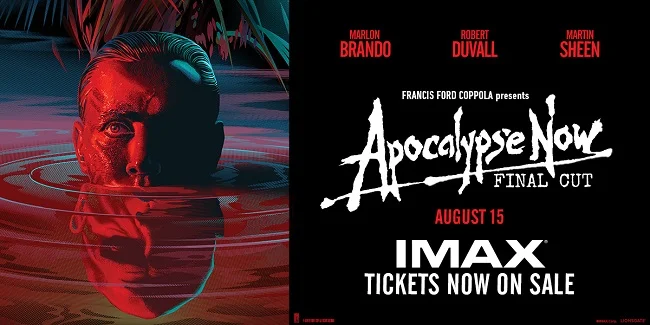
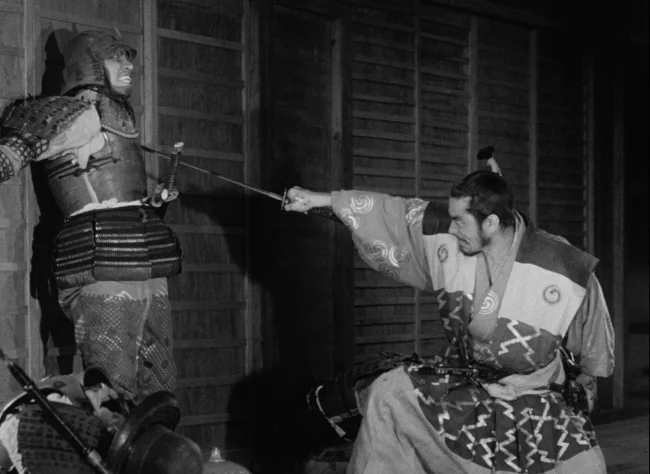
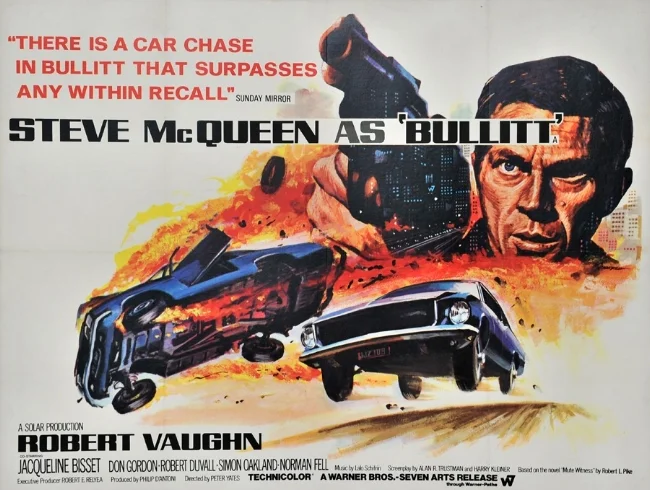
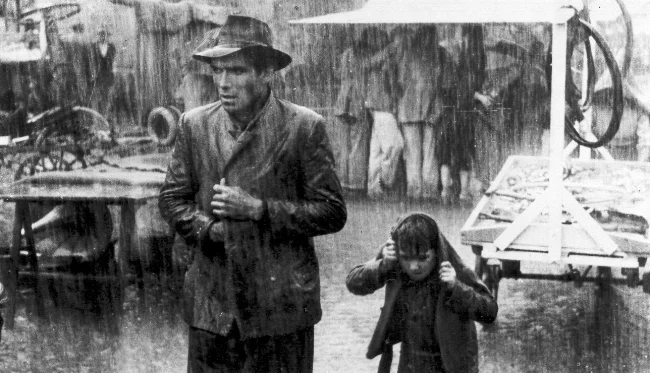
Writing a review of Apocalypse Now is a somewhat redundant exercise, unless you have never seen the any of the previous versions of the movie, or your analysis is offering a unique and wholly original perspective. It is one of the most scrutinised, dissected and studied films in the history of cinema. Furthermore, the stories associated with the films tumultuous production have become as equally legendary as the movie itself. There is as much apocrypha associated with Apocalypse Now as there are legitimate anecdotes. In many respects the documentary Hearts of Darkness: A Filmmaker's Apocalypse, which was shot during the films production, is equally as fascinating as the iconic movie. So with all this in mind, I will simply try to succinctly summarise my thoughts on this third version of Francis Ford Coppola’s magnum opus, which has been officially labelled “Final Cut” by the director.
Writing a review of Apocalypse Now is a somewhat redundant exercise, unless you have never seen the any of the previous versions of the movie, or your analysis is offering a unique and wholly original perspective. It is one of the most scrutinised, dissected and studied films in the history of cinema. Furthermore, the stories associated with the films tumultuous production have become as equally legendary as the movie itself. There is as much apocrypha associated with Apocalypse Now as there are legitimate anecdotes. In many respects the documentary Hearts of Darkness: A Filmmaker's Apocalypse, which was shot during the films production, is equally as fascinating as the iconic movie. So with all this in mind, I will simply try to succinctly summarise my thoughts on this third version of Francis Ford Coppola’s magnum opus, which has been officially labelled “Final Cut” by the director.
Apocalypse Now Final Cut has been restored from the original camera negative via a 4K scan. Previous transfers used for the Redux version, were made from an interpositive. The new version has a runtime of 183 minutes, with Coppola having cut 20 minutes of the added material from Redux print. The original theatrical release in 1979 ran for 147 minutes. As for changes in scenes, the extended plot detour that takes place on the de Marais family's rubber plantation remains. Some critics consider this to be an unnecessary digression that slows the narrative. I see it more as an interesting statement on imperialism and its failures, which are subsequently being repeated by the United States and their interventionist foreign policies. The extended episode with Lieutenant Colonel Kilgore (Robert Duvall) culminating in the theft of his surfboard also remains. However, the scene in which Willard (Martin Sheen) and his men find the Playboy Bunnies, marooned after their helicopter transport has run out of fuel, has been removed. So has one of few daylight scenes showing Kurtz (Marlon Brando) reading aloud from Time Magazine to a group of Cambodian children. No further new footage has been restored to the film either.
Upon mature reflection, I would say that Apocalypse Now Final Cut is the most polished and substantial version of the film out of all three edits. It makes its points about the nature of war, its inherent absurdity, as well as contradictions and does so at the right pace. This time round Willard’s journeys upriver to both a metaphorical and literal place of insanity, is done at exactly the right pace. There no longer feels like they’re narrative gaps or changes of pace. For those familiar with the bootleg VHS assembly print that was in circulation in the early eighties, there are still several legendary scenes missing. But I would argue that they wouldn’t really add anything to the overall film. If any still exist then they would better serve as “extras” on the Blu-ray release. The beautifully restored print is also a timely reminder of how complex action scenes use to constructed in the pre-digital age. The helicopter attack on the coastal village is still a staggering feat of logistical organisation and co-ordination.
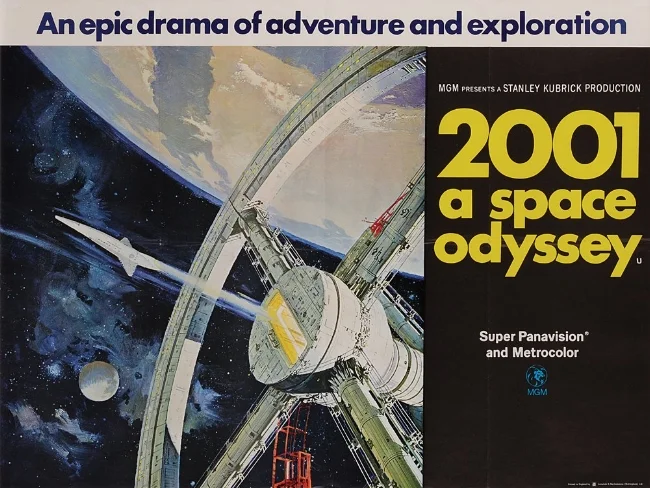
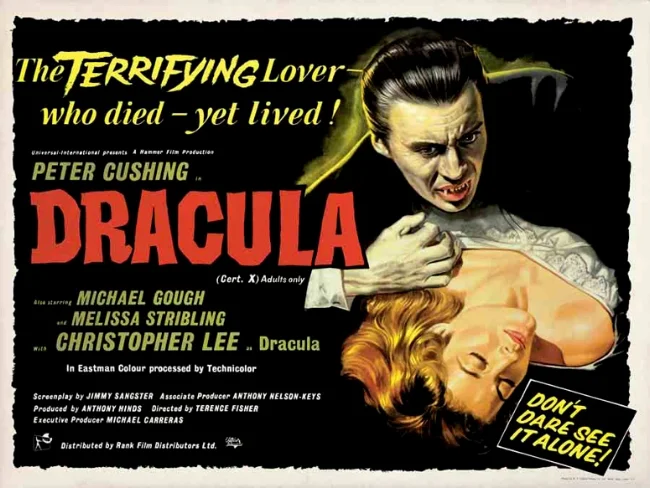
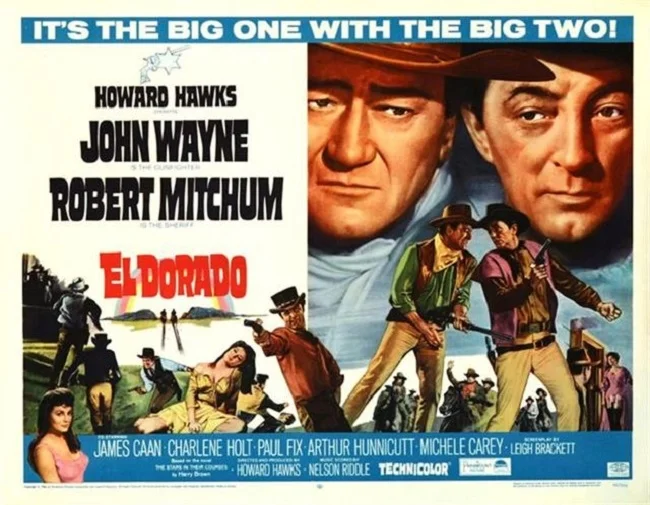
More Podcast and You Tube Recommendations
As part of the Blaugust Festival of Blogging, I thought I’d take the time to promote some of the content creators whose work I enjoy. Despite all the white noise, click bait and snake oil salesmen, there is still a wealth of good material to be found online, be it blogs, podcasts, You Tube channels or streamers. Most of what I currently enjoy, I discovered through word of mouth. I feel more disposed towards trusting the views and opinions of friends than I do of “recommendations” made by Google and You Tube, driven by their “questionable” algorithms. These are often determined by key words and have no ability to ascertain quality. So here are a mixture of You Tube channels, podcasts and blogs that I wholeheartedly recommend. Between them they cover such subjects as movies, gaming, comedy and history. Feel free to leave comments about my choices and share your own recommendations.
As part of the Blaugust Festival of Blogging, I thought I’d take the time to promote some of the content creators whose work I enjoy. Despite all the white noise, click bait and snake oil salesmen, there is still a wealth of good material to be found online, be it blogs, podcasts, You Tube channels or streamers. Most of what I currently enjoy, I discovered through word of mouth. I feel more disposed towards trusting the views and opinions of friends than I do of “recommendations” made by Google and You Tube, driven by their “questionable” algorithms. These are often determined by key words and have no ability to ascertain quality. So here are a mixture of You Tube channels, podcasts and blogs that I wholeheartedly recommend. Between them they cover such subjects as movies, gaming, comedy and history. Feel free to leave comments about my choices and share your own recommendations.
Dark Corners Reviews. If you have a liking for cult, obscure and trash cinema, then Dark Corners Reviews can provide in-depth commentary upon such content. Presented by writer Robin Bailes, films such as The Clones of Bruce Lee, Trog and Warriors of the Apocalypse are dissected in a droll and knowledgeable fashion. Robin also provides some very detailed retrospectives on classic horror movie franchises such as Universal Horror movies of the thirties and Hammer Studios Frankenstein series. These are extremely well researched and offer intelligent genre analysis along with clear love and affection. Dark Corners Reviews has been running for over five years so there is a wealth of content available on the channel. It is also interesting to see Robin refine his style and technique over time.
Extra Credits. Created by Daniel Floyd and James Portnow in 2008, Extra Credits was initially a You Tube channel about video games studies. However over the years it has broadened its scope and now offers regular content analysing Science Fiction, History and Mythology. Each subject is presented as an animated video with casual but extremely informative narration. It’s a great way to come to grips with weighty subjects such as the history of the Irish Potato Famine or Greek Myths. The games study videos are all written by those with first-hand experience and explore such subjects as common mechanics, development schedules and sales and monetisation. Furthermore, the videos are always presented in an upbeat fashion, even when tackling tough issues. The team also put out updates to previous videos and will correct or append content where appropriate. It’s all extremely professional, intelligent and yet presented in an entertaining and easily digestible format. All involved seem to be genuine and likeable. Something that’s quite rare online these days.
Rule of Three. This is a somewhat niche market podcast but is really excels at what it does. British comedy writers Joel Morris and Jason Hazeley invite other comedians, actors and writers to discuss what they find funny and provide one example for discussion. Hence you will get the likes of comedian Phil Jupitus waxing lyrical about animator Chuck Jones, comic actor Kevin Eldon heaping praise upon The Rutles and writer Charlie Brooker dissecting the comedy genius of the movie Airplane. The show is informative, extremely funny and at times an utter geekfest. These guys know about their craft (as do their guests) and among all the humour and banter, the budding writer can glean a lot of useful information via their show.
Scormus Fails. As long as I can remember, Scormus (formerly known as the MMO Troll) has been writing, podcasting, producing You Tube videos and live streaming. He is a familiar face in the MMO fan community; part of the furniture if you will. Like many of us, he has seen an ebb and flow in his content and audience. Yet he doggedly produces content, tries different mediums and talks about the things he loves. He knows he’s not to everyone liking but he is resolutely his own man. You have to admire someone who just does their own thing and keeps going. Over the years his sense of humour has grown on me and I enjoy dipping into his various content. I think he sends a very positive message to those who are just starting out on their blogging, podcasting or streaming career.
Murf Versus. I wrote a blog post a while ago about how overfamiliarity can be fandom’s Achilles Heel. In my case it’s movies. I’ve seen a lot and therefore, it takes more to impress, surprise or inspire me. However, a great tangential way to enjoy material you’re already familiar with, is through the experiences of others. And that is why I enjoy Murf’s blog. He and his partner Diane regularly sit and view classic films and do their upmost to put aside their own cultural baggage and give a fair and logical appraisal. Sometimes they find a point of entry and some common ground. Other times not so. Murf writes eloquently and thoughtfully. His musings are often astute and mature. He is also happy to eschew critical consensus. If he doesn’t like a cinematic sacred cow, he’ll happily say so and provide cogent reasons for doing so. So if you are more than just a casual movie viewer then do take a look at his blog. You may or may not agree with him on certain films but you cannot fault his honesty.



















Transporter 3 (2008)
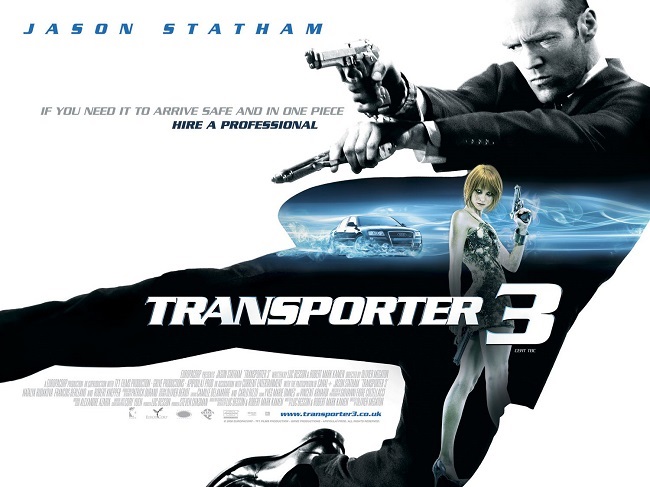
Do I really need to present you with some sort of plot synopsis for Transporter 3? No, I didn’t think so. More of the same as Frank Martin (Jason Statham) and his police chum, Inspector Tarconi (Francois Berleand) become embroiled in yet another high-octane escapade. There's fights, car stunts, exotic international locations and a strong sense of humour. This time, the disposable love interest is a Ukrainian girl named Valentina (Natalya Rudakova) who fulfils her role succinctly. The film benefits by being set back in Europe, after the mistake of basing Transporter 2 in the US. This time, the story takes us to such locations as Budapest and Odessa. The international film crew once again bring a veneer of panache to the production that is conspicuously absent in US action movies. For a modest budget fil, Transporter 3 it looks very good. Again the proceedings are given a boost by a pertinent soundtrack by Alexandre Azaria and a selection of European “tunes”.
Do I really need to present you with some sort of plot synopsis for Transporter 3? No, I didn’t think so. More of the same as Frank Martin (Jason Statham) and his police chum, Inspector Tarconi (Francois Berleand) become embroiled in yet another high-octane escapade. There's fights, car stunts, exotic international locations and a strong sense of humour. This time, the disposable love interest is a Ukrainian girl named Valentina (Natalya Rudakova) who fulfils her role succinctly. The film benefits by being set back in Europe, after the mistake of basing Transporter 2 in the US. This time, the story takes us to such locations as Budapest and Odessa. The international film crew once again bring a veneer of panache to the production that is conspicuously absent in US action movies. For a modest budget fil, Transporter 3 it looks very good. Again the proceedings are given a boost by a pertinent soundtrack by Alexandre Azaria and a selection of European “tunes”.
The fight scenes and car chases are well crafted and pitched at the right level for a PG-13 rated action-fest. The devil is in the editing, which is done in a very modern idiom, as you would expect. It is this fast pace style that allows the film to be get away with some of the content. The violence is strong but not dwelt upon. There are also some subtle references within the fight sequences to other classic films. Particularly Fist of Fury and Game of Death. Film buffs will know them when they see them. The dry banter between Statham and the sundry heavies he dispatches works well and embellishes the action. The franchise by this instalment has developed a sense of self-parody and there’s an amusing scene in which Frank give chase, not via some high-performance car but by bicycle instead. The joke works well, which is a surprising for a film that is derivative of a genre, that in itself, is self-plagiarising.
Transporter 3 has no pretensions to be anything else, other than what it is. It is very dumb, stylised and no cliché is left unturned. Its tone is pitched just right for this sort of movie. There is a running joke about Frank not liking to get his suit dirty when fighting and his disrobing becomes a potential weapon. The underlying homoeroticism of previous movies is openly explored this time (“You’re the gay?”) and is rather amusing. All in all, this film delivers perfectly what you expect in such a genre offering. Director Olivier Megaton (Taken 2 and Taken 3) thrives on this sort of material and seems to know inherently how to handle it. For once the movies rating and content do not work against it. The Transporter franchise may well be commercial and disposable, but it is also very entertaining. This in some respects, is the best sequel. The TV series that followed was lacklustre and the 2015 reboot failed to ignite audiences’ interest, despite Ed Skrein doing his best. The shadow of Jason Statham looms large in this franchise.








Cheap Beer
I often trot out the old adage “you get what you pay for”. However, upon reflection I think it’s a saying that should be used carefully. If employed when referring to buying a shirt, then it carries weight. I recently bought a double cuff shirt from Hawes & Curtis and the high price reflected the quality of the stitching and material. I could have bought another shirt for a tenth of the cost from Primark but it simply wouldn’t have been comparable. So on this occasion, the phrase was relevant. But if employed with regard to products like biscuits or laundry detergent then it doesn’t always hold up. Because the adage implies that a cheaper product is inferior by default, yet that is patently not the case with the examples I’ve given. Many supermarkets range of store brands can provide good alternatives to well-known premium products. It can be a process of trial and error to discover them but they do exist. Also even though attitudes are changing, there is still a lot of snobbery and brand loyalty associated with grocery shopping. In the UK the is a clear hierarchy of supermarkets.
Cheap and cheerful or a surprisingly good bargain?
I often trot out the old adage “you get what you pay for”. However, upon reflection I think it’s a saying that should be used carefully. If employed when referring to buying a shirt, then it carries weight. I recently bought a double cuff shirt from Hawes & Curtis and the high price reflected the quality of the stitching and material. I could have bought another shirt for a tenth of the cost from Primark but it simply wouldn’t have been comparable. So on this occasion, the phrase was relevant. But if employed with regard to products like biscuits or laundry detergent then it doesn’t always hold up. Because the adage implies that a cheaper product is inferior by default, yet that is patently not the case with the examples I’ve given. Many supermarkets range of store brands can provide good alternatives to well-known premium products. It can be a process of trial and error to discover them but they do exist. Also even though attitudes are changing, there is still a lot of snobbery and brand loyalty associated with grocery shopping. In the UK the is a clear hierarchy of supermarkets.
So where is this all going, I hear you ask? Well, I want to discuss cheap bear. Actually, I specifically want to discuss one particular brand but we’ll come to that in a moment. First, a few words about my drinking habits. I enjoy a wide variety of alcohol and drink several times a week. I’m a bit of a seasonal drinker favouring heavier red wines and stout in autumn and winter, then moving to lager and white wine during the warmer months. I also like gin, vodka and brandy. I have a personal drinking hierarchy. For example I will sometime buy an artisan beer and drink it to savour its flavour. Alternatively, if I’m drinking socially at a barbecue or some similar event, the alcohol consumed tends to be more generic. I’ll happily add lime to a standard mid-tier lager. But I wouldn’t bastardise a fine malt whiskey. And then there’s very cheap alcohol. Strong beer or cider that is specifically manufactured for the purpose of rapid intoxication. I tend not to buy these products.
Michael Caine only drinks beer “in a thin glass”…
Now I was in Aldi today. If you are not familiar with the supermarket, it’s a German chain. They are rapidly increasing their share of the UK market. They sell predominantly their own range of products or have exclusive contracts with European suppliers that are not so well known in the UK. Hence you avoid the mark up associated with premium brands but that doesn’t mean that the quality is inferior. Over time Aldi has managed to swim against the tide of cultural snobbery and now enjoys a very eclectic cliental that straddles several socio-economic groups. As the weather is pleasant at present and looks to stay that way for the bank holiday weekend, I thought I’d buy some beer. So I ended up buying 12 cans of Rheinbacher Premium Pilsner. Each pack of four 500ml cans cost £3, so I spent £9 in total. 500ml fills my favourite pint glass with just a centimetre or so gap at the top. The beer itself is a pale lager in the North American style. It pours with a pale gold body with a light white head. It has a fruity aroma and a mild, sweet malt taste. It’s doesn’t reinvent the wheel but it’s surprisingly pleasant and makes for solid evenings drinking if you stick with it.
Is this man a beer snob? Who knows?
Out of idle curiosity, I did a little digging online and discovered that there are numerous beer aficionados running review websites. Rheinbacher Premium Pilsner scores surprisingly well, although you quickly ascertain that a percentage of beer drinking community are utter snobs. And like most snobs, their prejudice is founded in irrationality. Because the main criticism of this particular beer is its price and where it is sold. Factors that have zero relevance regarding its taste. However, despite the garrulous inanities of the idiot brigade, there were plenty of positive reviews. Which brings me full circle back to my opening gambit and getting what you pay for. Sometimes, something can be inexpensive without compromising on quality. Today’s purchase was a nice reminder to look beyond traditional brand loyalty and try something new. Cheap does not necessarily mean poor quality. I suspect that there are “hidden gems” in all supermarkets. I shall certainly be doing some further experimenting next time I go to Aldi.
Player Representation and Video Games
There was a time when you bought a game, played it, possibly completed it and then that was the end of the matter. Along the way you determined whether you were enjoying it. Often that conclusion dictated how much time you spent playing. Gaming at this point in time, was a relatively straightforward business transaction. If your experience was broadly positive, you’d remember the publisher and look favourably upon their future products. As for the actual business dynamics, it was simple. You paid for the game up front and then later decided the respective value of that financial transaction. How things have changed and not necessarily for the better. We now live in the age of “live services”, microtransactions and games where your expected to forever put your hand in your pocket if you want to keep playing. Games are no longer one-off purchases. Games are an ongoing symbiotic relationship. Or if you want a bleaker analogy, games are a form interactive, quasi-legal, addiction.
There was a time when you bought a game, played it, possibly completed it and then that was the end of the matter. Along the way you determined whether you were enjoying it. Often that conclusion dictated how much time you spent playing. Gaming at this point in time, was a relatively straightforward business transaction. If your experience was broadly positive, you’d remember the publisher and look favourably upon their future products. As for the actual business dynamics, it was simple. You paid for the game up front and then later decided the respective value of that financial transaction. How things have changed and not necessarily for the better. We now live in the age of “live services”, microtransactions and games where your expected to forever put your hand in your pocket if you want to keep playing. Games are no longer one-off purchases. Games are an ongoing symbiotic relationship between player and vendor. Or if you want a bleaker analogy, games are a form of interactive, quasi-legal, managed addiction.
As a publisher, if you are selling a continuous smörgåsbord of content to a player base that you want to keep paying, there comes a point where you have to interact with that community and maintain the pretence that your interested in them beyond their ability to keep paying. Hence in some game communities, particularly in the MMO genre, you sometimes get some form of player representation. The most immediate one that comes to mind is The Council of Stellar Management in EVE Online. It’s a player advocacy group consisting of 10 members democratically elected by the players to advise and assist developer’s CCP in the evolution of the game. Back in 2013 Turbine created a player council for The Lord of the Rings Online. An exercise that lasted until 2016. More recently I discovered that there was even a player senate for Star Wars Galaxies Legends. Yes, a game that is officially defunct but has a grey emulation server, has player representation. And many other games, although lacking such councils, have community managers, preferred influencers and high-profile players who are happy to act as a go between.
But does any of this representation work? Is it a genuine conduit between developer, publisher and consumer? Or is it just an PR exercise, that attracts the wrong sort of people, ending in acrimony, rancour and dissent, rather than inclusion, cordial relationships and glasnost. We’ll here’s a quote from Massively Overpowered editor, Bree Royce about the recent SWGL player senate elections. "It did occur to me along the way that in thumbing through the candidates’ platforms, I’ve already spent more time considering the election in an emu for a dead video game than most people spend on actual elections that affect their real lives. That’s… depressing". Yes, it is indeed. Plus I’m sure that electioneering within any game’s community is going to be rife with the same duplicitous, mealy mouthed, spurious bullshit that is endemic with real world canvassing. Politics uses the illusion of inclusion to advance the interest of specific groups, often at the expense of others. Why should that be any different in a game community than in the real world?
From my own perspective, I’m not aware of the LOTRO player council ever having achieved anything of any note. If they did it certainly wasn’t overtly publicised. Having checked though archived blog posts I wrote at the time; it seems that the whole enterprise was nothing but a source of problems. All of which can be distilled into one simple point. Gamers are not a uniform group. They are motivated for a multitude of different reasons and unlike Belinda Carlisle, don’t dream the same dream, nor want the same thing. Hence player councils of these type are seldom truly representative. And just like forums and subreddits, it’s the most vocal that seek to be elected so they can lobby for what they want. Furthermore, for such an enterprise to work, it also requires goodwill and genuine intent from the developer or publisher side. Considering the growing iniquities of the so-called “Triple A” video game industry, the likelihood or there being any to begin with is risible.
I am reminded how during the #gamergate debacle, by the time the main stream press had actually got wind of the matter, there was a debate as to whether there needed to be a “face of gaming” to go on TV chat shows and put the gamers side of things. This was another truly ludicrous idea, based upon the erroneous assumption that gamers are a cohesive social group with a common agenda and set of values. Mercifully it quickly withered on the vine. Overall, there is no quick, easy and accurate way to compartmentalise gamers and represent them. Frankly, old school market research and surveys, with all its flaws and baggage, is potentially a more suitable tool. Overall, I still think it’s a mistake for players to perceive video games as anything else other than a commercial product and themselves as consumers. Yet this myth that the MMORPG genre is some how more than the sum of its part and due to its social component, some sort of autonomous collective, still persists. Considering how often things have ended in tears, you’d think some gamers would have learned by now. But there are none so blind as those who will not see.
The Pirates! In an Adventure with Scientists! (2012)
The Pirates! In an Adventure with Scientists! is Aardman Animations fifth feature film and is based on the first two books in the Pirates! series by Gideon Defoe. For reasons known only to the marketing department, this movie has been retitled The Pirates! Band of Misfits! for its US release. When, I first saw the trailer for this movie way back in 2012, I thought that it had the potential to be a witty, inventive, quirky, and entertaining piece of film making, because that's what Aardman Animations does. The day they produce an inferior product is the day to quit watching movies, right? But let us not forget that even the most exemplary studio record can be blemished by the occasional wrong step (Yes, I'm looking at you Pixar after Cars 2). Happily that is not the case here. Having seen The Pirates! In an Adventure with Scientists! twice now, it is an extremely droll and clever animated movie. The film was nominated for the 2013 Academy Award for Best Animated Feature but lost to Pixar's Brave.
The Pirates! In an Adventure with Scientists! is Aardman Animations fifth feature film and is based on the first two books in the Pirates! series by Gideon Defoe. For reasons known only to the marketing department, this movie has been retitled The Pirates! Band of Misfits! for its US release. When, I first saw the trailer for this movie way back in 2012, I thought that it had the potential to be a witty, inventive, quirky, and entertaining piece of film making, because that's what Aardman Animations does. The day they produce an inferior product is the day to quit watching movies, right? But let us not forget that even the most exemplary studio record can be blemished by the occasional wrong step (Yes, I'm looking at you Pixar after Cars 2). Happily that is not the case here. Having seen The Pirates! In an Adventure with Scientists! twice now, it is an extremely droll and clever animated movie. The film was nominated for the 2013 Academy Award for Best Animated Feature but lost to Pixar's Brave.
The Pirates! In an Adventure with Scientists! is a finely tooled, richly embellished, genuinely funny piece of film making. It works on so many levels and once again succinctly demonstrates that Aardman Animations totally "get" the art of film making in every possible way. Furthermore you have a movie that can genuinely appeal to all age groups. There's none of your contrived focus group driven, age or gender specific targeting here. Just an engaging film that is accessible to all and entertaining on multiple levels. Hollywood take note. You don't need a bunch of bean counters pawing over market research and surveys to make a successful and quality film. You simply need to have an abiding love and respect for the medium, as well as a good screenplay. It also helps if you credit your audience with some degree of intelligence. Plus make sure you have Jokes. Lots of jokes. Sight gags, slapstick and verbal humour.
Okay, for those who insist on a plot synopsis, the narrative focuses on the Pirate Captain (Hugh Grant) who is desperately trying to win the much-coveted Pirate of the Year Award. But he's not exactly at the top of his game and is often ridiculed by fellow Pirates Peg Leg Hastings, Cutlass Liz and Black Bellamy. Furthermore the Pirate Captain's crew are somewhat lacklustre, being named after their personal attributes and foibles. These include such individuals as the Pirate with Gout (voiced by Brendan Gleeson and looking suspiciously like the actor to), the Pirate with a Scarf, the Albino Pirate and the Surprisingly Curvaceous Pirate (who is in fact a woman). After boarding the Beagle and capturing naturalist Charles Darwin (voiced by David Tennant) in a desperate attempt to improve his reputation, the Pirate captain discovers that his new parrot Polly is actually the last Dodo. Darwin convinces him that such a discovery could be invaluable to all concerned. I shall say no more than that. The plot even manages to have a few twists that may surprise the audience.
It is a cliché to say "hilarity ensures" after providing a plot summary. In fact it is often a prefix which carries a degree of derision or irony, as so many comedy films confuse hilarity with being crass. However in the case of The Pirates! In an Adventure with Scientists! The phrase can be genuinely used. The humour is subtlety different from Aardman Animations usual Wallace and Gromit fare, but is no less charming or emotive for it. There is a strong streak of traditional English humour throughout the movie that reflects a strong understanding and love of the UK's comedic heritage. From Monty Python and Douglas Adams to the Goons. It manifests itself in both overt and subtle ways. From Darwin’s chimpanzee butler Mr Bobo (who sports a monocle and communicates with cure cards) to the underlying fixation with ham. Every scene is packed with visual embellishments and throwaway gags. Certainly, this is a film that can happily sustain multiple viewings and still offer up new surprises.
The craft involved in this cinematic undertaking is staggering. There is CGI in places, usually to deal with wider environmental aspects such as the ocean and the weather. But pretty much everything else that you see is traditional hand-crafted stop motion animation and it works beautifully. The range of expressions along with the pathos and drama that is created via the medium puts a lot of contemporary Hollywood fodder to shame. If you watch any of the “making of” extras found on the DVD and Blu-ray release of the film, you'll see and appreciate the minute attention to detail that the animators have lavished on every aspect of the production. Often it only registers fleetingly on the screen, but it’s all done due to a consummate love of their craft and its presence enhances every single frame.
As film making is a financial endeavour as well as an artistic one, Sony Pictures decided to temper some of the British excesses of this production and create a separate version for the US market. As previously mentioned, the title of the film was changed and some minor jokes that referenced foibles of UK culture were removed. Furthermore, there have been some alterations to the voice acting. The Albino Pirate, voiced in the UK version by Russell Tovey, was replaced by Anton Yelchin. Similarly, Ben Whitehead's performance as The Pirate who likes Sunsets and Kittens, has been replaced by Al Roker. Overall these changes do not undermine the film in any major way. However, if you’re a cinematic “purist” then I would recommend the UK print over the US version. Either way, if you enjoy animated movies then The Pirates! In an Adventure with Scientists! is well worth viewing. Aardman Animations are an exemplar of all that is best in film production and standout like an oasis of talent in the current desert of Hollywood mediocrity. Plus any movie that features Swords of a Thousand Men by Tenpole Tudor on the soundtrack can’t be bad.








Do MMOs Have a Specific Window of Opportunity?
World of Warcraft was the MMO that broke the mould. The reasons for its success are too numerous and complex for this blog post, so let it suffice to say that it rode a perfect storm of factors and has maintained a strong presence for fifteen years. And as a result, subsequent developers have often sought to duplicate its success. Yet frequently the opposite has happened. In fact several MMOs have launched and experienced a brief time “in the sun” only for things to come crashing down thereafter. Perhaps the most well-known example of this was SWTOR which experienced a triumphant launch in December 2011, yet within three months the majority of players had left for pastures new. It took the game going F2P and a lot of hard work by BioWare to claw back the playerbase. It has also been argued that many MMOs have grown too big for their own good? It is true that a new player starting a game such as LOTRO today has a long slog ahead of them and some may simply find that too daunting.
World of Warcraft was the MMO that broke the mould. The reasons for its success are too numerous and complex for this blog post, so let it suffice to say that it rode a perfect storm of factors and has maintained a strong presence for fifteen years. And as a result, subsequent developers have often sought to duplicate its success. Yet frequently the opposite has happened. In fact several MMOs have launched and experienced a brief time “in the sun” only for things to come crashing down thereafter. Perhaps the most well-known example of this was SWTOR which experienced a triumphant launch in December 2011, yet within three months the majority of players had left for pastures new. It took the game going F2P and a lot of hard work by BioWare to claw back the playerbase. It has also been argued that many MMOs have grown too big for their own good? It is true that a new player starting a game such as LOTRO today has a long slog ahead of them and some may simply find that too daunting.
The reason I mention these two points is because I think they are linked and reflect a shift in mindset towards MMOs. Many of the older MMOs were originally based around group content and the formation of guilds. As a result many titles have a sizeable community of players that have reached level cap with multiple alts. Players such as this have played through pretty much all the content that the game has to offer. They play within guilds that have lasted years and have strong social bounds. Now consider a new player that has just started playing LOTRO for example. They have a prodigious amount of content to play through before they reach level cap. Furthermore because many players now prefer to play solo, they have an even more arduous task ahead of them.
Now I know some will argue that it's not about racing to level cap but the journey itself. This is a fair point if you are a player who is content to work through content in this fashion. However many games developers are still focused on the so-called endgame and creating new content for those at level cap. If you start playing LOTRO today, the only way you can reach Western Gondor or The Grey Mountains is if another player summons you there. It's a shame that so many of the older titles are hindered by such a linear approach to landmass and content but that's the way these titles were created. I personally would like to see more of an open world approach like The Elder Scrolls Online where content scaled according to your level and you are broadly free to go where you want.
So considering these points, I am beginning to think that for many MMOs there is an initial window of opportunity as to when it is most favourable to start playing the game. I started playing LOTRO in late 2008, just after The Mines of Moria expansion launched. As I was playing through The Shire, Bree and The Lonelands, senior members of my guild were levelling from fifty to sixty in Moria. However because I was very invested in the game at the time (it was my first MMO) I managed to catch up within nine months. I am now part of the group of players permanently at level cap and I can therefore immediately enjoy whatever new content Standing Stone Games develops for the game.
The Elder Scrolls Online and Guild Wars 2 are both relatively new titles, so I think one could start playing these games and still be participating during the optimum window of opportunity. Plus they do not have such a difficult levelling curve or level cap that is extremely high. Is this the same case with EVE Online, Final Fantasy XIV or Black Dessert Online? I'm not so sure. These are games where the key to success is the investment of time. Some MMOs have mechanics or store items that will allow you to level quickly but does that really solve the issue? There is an inherent contradiction in selling an item to boost your level, hence paying money to bypass playable content. But levelling through intermediate level content can be a lonely process sometimes. Zones can be devoid of other players. At least in Guild Wars 2 the game downscales players to the zones specific level thus providing an incentive for the veteran player to return. Sadly many other titles do nothing to encourage players at cap to revisit lower level areas.
I also think this window of opportunity may be tied to wider factors, other than the games progression system. Many MMOs experience a period when the fan base thrives and produces a wealth of content. This can be blogs, guides, podcasts, You Tube videos or livestreams. However this tends to be cyclical. Due to the rise of the casual player and their migratory nature, this if often more pronounced. I remember sites like the LOTRO Combo Blog that used to aggregate fan related blogs. It has long since gone. Another example you can see is the way your Twitter timeline may be awash with content regarding a new title and then over time it simply fades away. Twitch TV is also another interesting litmus test. A look at the homepage will quickly tell you what is popular and what is not. Is the window of opportunity for MMOs therefore not only verifiable but also clearly getting shorter?
There are other genres and franchises that experience similar optimum windows of opportunity. Harry Potter and Friday the 13th are two examples from the movie industry. There was a clear period in time when both were immensely successful franchises. However, their transition from silver screen to multiplayer game took a lot longer and perhaps the proverbial boat was missed. The Wizarding World eventually found a home in the mobile gaming market and not as an MMO. Friday the 13th fared slightly better as a multiplayer game and captured a nostalgia wave. Yet it was ultimately hamstrung by legal issues surrounding the rights to the franchise. MMOs take a lot of time to develop and the market trends can change during that time. Amazon Game Studio appears to have halted the development of New World. Is this game now going to be repurposed to tie in with their Middle-earth themed TV show. If that is the case the game may launch during the optimum window of interest.
Finally there is an odd codicil to this question. We have seen recently a trend towards “Classic” servers which strive to serve up a broadly comparable experience to that of launch and the first year of an MMO. Is nostalgia the key to successfully creating a second window of opportunity for a game. Is it sustainable? Or is it going to have an even shorter arc? So far, the LOTRO Legendary Servers seem to be ticking over and I have not at present seen any data pointing to a decline in population. Perhaps the launch of World of Warcraft Classic on the 27th August will provide a greater insight into the longevity of nostalgia. In the meantime there is much to reflect upon, as the points raised here have barely scratched the surface of the matter. Because when we talk of a window of opportunity for an MMO, there is the player perspective and then there’s the business perspective. For all the market research and data analysis, I suspect that there are also some other factors that are much harder to quantify.
The Bourne Legacy (2012)
Jason Bourne originally graced our screens for the first time seventeen years ago. The Bourne Identity was a gritty, minimalist take on the espionage genre and a welcome change from the excesses of the Pierce Brosnan Bond era. The story arc was sustained over three movies and ended efficiently and succinctly. After which Matt Damon moved on, as did the director of two of the movies, Paul Greengrass. Which leaves us with The Bourne Legacy; the tangential sequel that arrived in 2012. A film that exists because the money men and bean counters hate to pass up on a franchise until it has been squeezed utterly dry. Hence, they commissioned the writer of the series, Tony Gilroy, to come up with a screenplay and direct a spinoff movie. Jeremy Renner was cast in the lead role. Yet despite narrative and production continuity, The Bourne Legacy was not a Jason Bourne movie with the star appeal of Matt Damon. Although the film turned a profit, it had the lowest box office returns out of the entire franchise.
Jason Bourne originally graced our screens for the first time seventeen years ago. The Bourne Identity was a gritty, minimalist take on the espionage genre and a welcome change from the excesses of the Pierce Brosnan Bond era. The story arc was sustained over three movies and ended efficiently and succinctly. After which Matt Damon moved on, as did the director of two of the movies, Paul Greengrass. Which leaves us with The Bourne Legacy; the tangential sequel that arrived in 2012. A film that exists because the money men and bean counters hate to pass up on a franchise until it has been squeezed utterly dry. Hence, they commissioned the writer of the series, Tony Gilroy, to come up with a screenplay and direct a spinoff movie. Jeremy Renner was cast in the lead role. Yet despite narrative and production continuity, The Bourne Legacy was not a Jason Bourne movie with the star appeal of Matt Damon. Although the film turned a profit, it had the lowest box office returns out of the entire franchise.
The plot is constructed in such a way to dovetail nicely into the existing storyline. Whether its clever or contrived, I'll leave you to judge. Aaron Cross (Jeremy Renner) is an enhanced soldier from the Outcome program. This is the military's equivalent to CIA’s Treadstone project. After the events of The Bourne Ultimatum, Colonel Byer (Edward Norton) decides to eliminate all traces of Outcome. Not just the agents, but all medical researchers and admin staff. I wouldn't be surprised if that included the cleaners and stationery suppliers as well. So it's not long before Cross goes on the run the run with Dr Marta (Rachel Weisz), the one scientist who designed the physically and mentally enhancing "chems" that cross must take daily. Cue two hours plus of chase scenes, followed by plot exposition by character actors such as Stacy Keach and Scott Glen, followed by more chase scenes. Rinse and repeat.
It’s all very professionally made and somewhat soulless. One of the main selling points of the original Bourne trilogy was the lead character’s amnesia, struggle for identity and possible redemption. This plot device is absent from this movie and thus we’re much less emotionally connected with our hero. The concept of chemically altering a person into a Nietzchean superman is initially intriguing, portraying Cross as an addict. However it is conveniently dispensed with when we discovers that going cold turkey reveals that the drug’s effects are permanent. The ending leaves matters conveniently open for yet further exploration. Overall, The Bourne Legacy is somewhat perfunctory with its matter of fact, A to B style of film making. The movie lacks any dramatic focus.
The Bourne Legacy will provide you with adequate entertainment if you want nothing more than a technically competent chase movie for two hours or so. If you like your fight scenes edited so quickly you haven't a clue who just wupped who, then you're in for a treat. Yet considering the strength of the cast, this is a somewhat grey action movie. Apart from The Hurt Locker and The Town, I have yet to see Jeremy Renner in a role that he excels in. Certainly not any of his performances as Hawkeye, the dullest member of The Avengers. Overall, fans of the entire franchise can easily skip this instalment. It is worth noting that Matt Damon returned for a fourth movie in 2016 which provided a codicil to the Jason Bourne story arc. However, even this may not be the definitive end to the franchise. A further spinoff television show called Treadstone is due to be broadcast in October this year.
Tinker Tailor Soldier Spy (2011)
John le Carré's Cold War thriller Tinker Tailor Soldier Spy, is not only a good example of the spy novel genre, but a fine piece of seventies British literature per se. Therefore I was most surprised when I learned back in 2011 that it was to be made as a film. Could the complexities and subtleties of this cerebral and deliberately slowly paced book be adequately brought to the big screen, by today’s studio system? Could it compete with the previous BBC television adaptation starring Alec Guiness that was made in 1979? Thankfully, director Thomas Alfredson and Working Title films have successfully managed to distil the complex plot into the film’s 127-minute running time. Furthermore, the ensemble cast have a quality script to work with and the entire production benefits from the flair of a quality European director who brings an interesting outsiders dynamic to this very British tale.
John le Carré's Cold War thriller Tinker Tailor Soldier Spy, is not only a good example of the spy novel genre, but a fine piece of seventies British literature per se. Therefore I was most surprised when I learned back in 2011 that it was to be made as a film. Could the complexities and subtleties of this cerebral and deliberately slowly paced book be adequately brought to the big screen, by today’s studio system? Could it compete with the previous BBC television adaptation starring Alec Guiness that was made in 1979? Thankfully, director Thomas Alfredson and Working Title films have successfully managed to distil the complex plot into the film’s 127-minute running time. Furthermore, the ensemble cast have a quality script to work with and the entire production benefits from the flair of a quality European director who brings an interesting outsiders dynamic to this very British tale.
In October 1973, the head of British Intelligence, Control (Sir John Hurt), resigns after an operation in Budapest, Hungary goes seriously wrong. It transpires that Control believed one of four senior figures in the service was in fact a Russian Agent. The Hungary operation was an attempt to identify which of them was the mole. George Smiley (Gary Oldman), who had been forced into retirement by the departure of Control and changes within the corridors of power, is returned to office and tasked with the investigation into the alleged spy and preventing a major scandal. Rogue Agent Ricky Tarr (Tom Hardy) has evidence to suggest that the claims are true. Smiley also considers that the failure of the Hungary operation and the continuing success of Operation Witchcraft, which appears to be yielding significant Soviet Intelligence, may be linked. As smiley digs deeper into the affair he finds that much within British Intelligence is not what it seems.
Modern mainstream cinema is fast, frenetic and often fun. Yet it can also be bombastic, self-indulgent and lacking in depth. Although the technical aspects of film making is continuously advancing, I often feel that art of writing a tight, engaging and credible screenplay is in decline. Plot detail, character development and credible dialogue is frequently sidelined so that a narrative can be expedited. Fortunately, that is not the case with Tinker Tailor Soldier Spy. The skilful screenplay by Bridget O'Connor and Peter Straughan credits the audience with the necessary intelligence to keep up with the plot. The viewer has to be attentive to the dialogue, connect the dots myself and do a degree of thinking. Tinker Tailor Soldier Spy also requires an overview of the political status quo of the Cold War. However, those who engage with the ongoing story are rewarded with a high-quality, narrative driven film. It’s been a while since my brain was given such quality fodder as this.
Purists will be happy to know that Tinker Tailor Soldier Spy has not made any major plot alterations to their beloved source text. There have been some reordering of events for cinematic effect but by and large the story remains intact and true to the source text. Performances are outstanding and Gary Oldman makes the iconic role of George Smiley his own within minutes of being on screen. The look and feel of the time is suitably captured, especially the grimy down at heel world of the intelligence community. This is not the faux, stylised depiction of the era you’ve seen on television shows which still strive to make this decade chic in some fashion. It is ironic that such a quintessentially British product has been successfully brought to the screen, by Swedish director Alfredson. His Scandinavian sense of style and clinical attention to detail, previously shown in Let the Right One In, is ideal in realising this sort of period production.
I could extol the merits of many aspects of this film, such as the cinematography, soundtrack, production design and editing. But frankly it is much better for potential viewers to discover these things for themselves without any advance notification. Tinker Tailor Soldier Spy was rather arbitrarily and obviously labelled "old school" by some film critics upon its theatrical release. It is not. It is simply a succinct reminder of how quality cinema should be made. If you start with a good story, that is written well then you have a solid foundation for a good movie. That is as pertinent now as it was when film making was in its infancy. If you like strong stories and quality performances that play out over a measured running time, then Tinker Tailor Soldier Spy will be of interest to you. If you do not like having to think of yourself, listening or paying attention and prefer style over substance, then you may want to look for entertainment elsewhere.
The Stepfather (1987)
The evil stepparent is a common trope in cinema. One can argue that is does perpetuate a negative stereotype but then Hollywood has never been quick to reflect social change or been overly concerned about its depiction of certain aspects of society. However, as a plot device this is money for old rope. So dovetailing a murderous stepfather into a slasher movie was a logical step in 1987 when the genre was booming. In many respects The Stepfather is an arbitrary, low budget movie, with all the associated hallmarks. Its cinematography is functional but no more so and it is shot on low grade film stock. Hence the colour palette is somewhat lurid. It is mainly a housebound production with standard suburban exterior shots. The score is a typical eighties synthesiser offering, that both under performs and dates the proceedings. Yet one thing stands out and makes The Stepfather better than what it deserves. The central performance by Terry O'Quinn is compelling and drives the movie forward.
The evil stepparent is a common trope in cinema. One can argue that is does perpetuate a negative stereotype but then Hollywood has never been quick to reflect social change or been overly concerned about its depiction of certain aspects of society. However, as a plot device this is money for old rope. So dovetailing a murderous stepfather into a slasher movie was a logical step in 1987 when the genre was booming. In many respects The Stepfather is an arbitrary, low budget movie, with all the associated hallmarks. Its cinematography is functional but no more so and it is shot on low grade film stock. Hence the colour palette is somewhat lurid. It is mainly a housebound production with standard suburban exterior shots. The score is a typical eighties synthesiser offering, that both under performs and dates the proceedings. Yet one thing stands out and makes The Stepfather better than what it deserves. The central performance by Terry O'Quinn is compelling and drives the movie forward.
Jerry Blake (Terry O'Quinn) has recently married widow Susan Maine (Shelly Hack) after moving to a small town. He sells real estate and extols the virtues of the American Dream; of family, home and hard work. Yet his stepdaughter Stephanie (Jill Schoelen) is suspicious of him and still grieves for her natural father. She shares her fears with her therapist Dr. Bondurant (Charles Lanyer). Meanwhile, in the next town Jim Ogilvie (Stephen Shellen) searches for evidence regarding the murder of his sister and her family by the mysterious man she married. The police have no clues and the local press are disinclined to pursue the story any further. Jim suspects that there may be a serial killer travelling the state preying on widows and searching for the perfect family. Is Jerry Blake that man? Are Stephanie’s fears about him founded or is she just struggling to come to terms with the changes in her family.
The Stepfather has a good cold opening which clearly establishes where the plot is going. Although the rather formulaic screenplay by Donald E. Westlake unfolds in a somewhat expected fashion, it does have a few points of interest along the way. This is the era prior to DNA evidence and the proliferation of CCTV. Local police departments simply don’t have the manpower to undertake extensive door to door searches. If clues are not immediately forthcoming then a murder investigation quickly goes cold. Such a time obviously made moving around the country and changing one’s identity a lot easier. The film also touches upon the American love affair with small towns and how they represent all that is considered good and wholesome and about the American way of life. There are hints that the story by Brian Garfield (of Death Wish fame) is a metaphor for how this was considered under attack at the time, from social change.
The cast do the best they can and the screenplay endeavours to give some depth to the Mother and Daughter relationship and how it is unbalanced by the arrival of Jerry in their lives. But overall the proceeding are dominated by Terry O’Quinn. The way he veers from the quietly spoken Father figure to an angry sociopath is quite startling. There is not an excess of violence in The Stepfather but when it comes, it is powerfully handled. When Jerry finally snaps and has his iconic “who am I here” moment, where he momentarily forgets what identity he has currently assumed it remains a standout scene. Director Joseph Rueben gets as much mileage from his cast and the film’s 90-minute running time as possible. He refined this process even further to better result in 1991, when he made the similarly themed movie Sleeping with the Enemy with Julia Roberts.



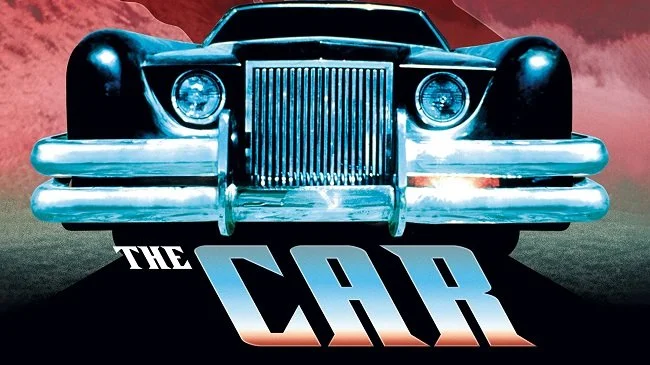
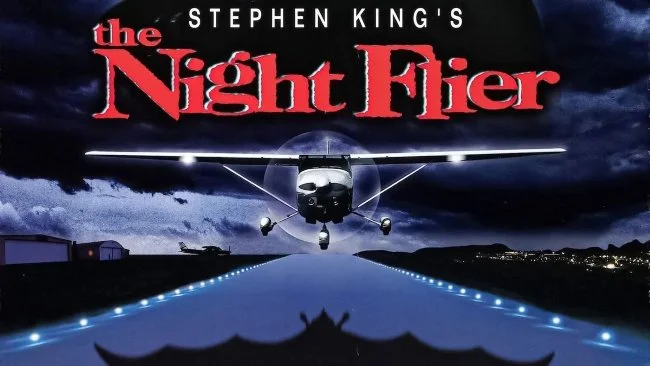
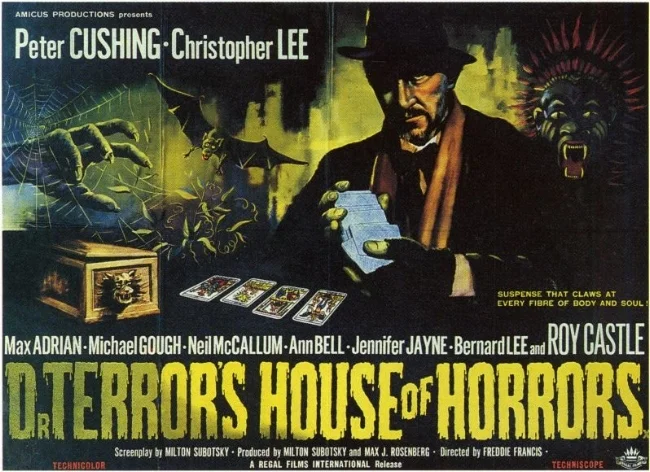

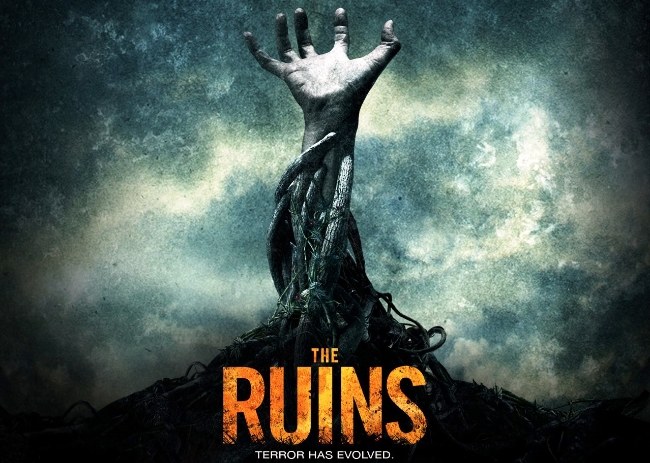
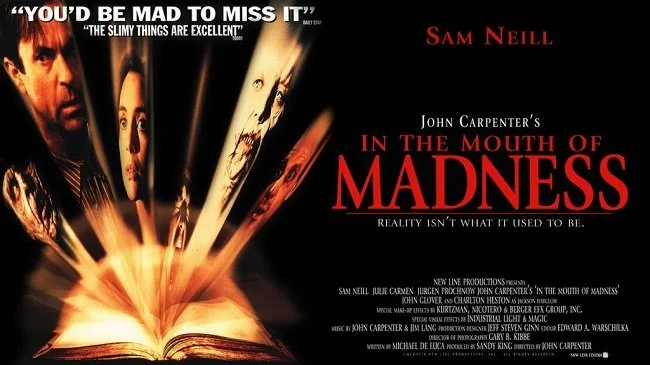
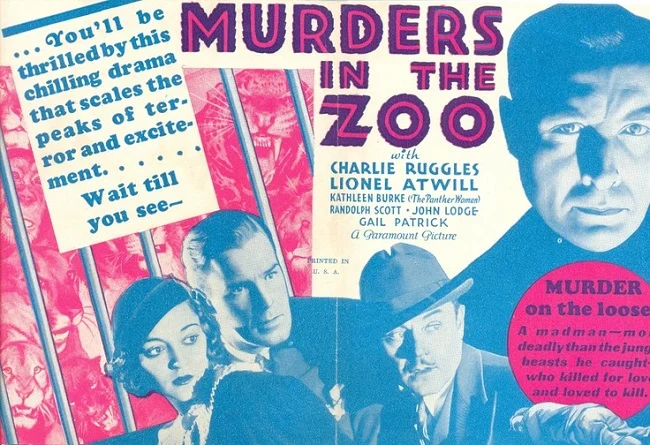
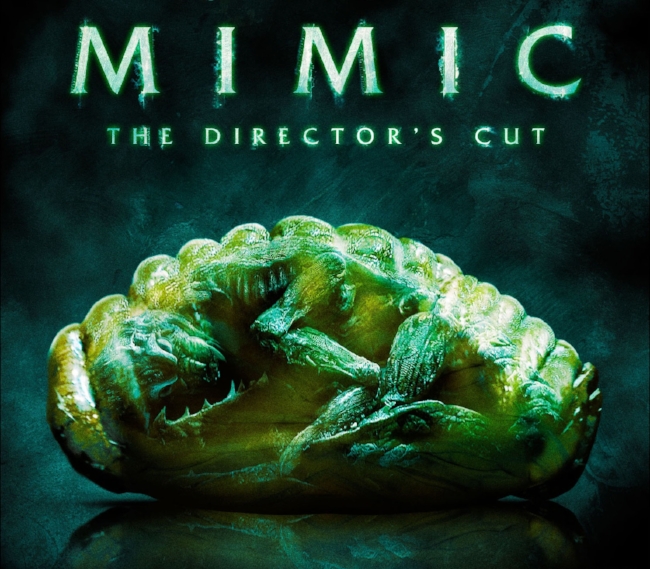

Gas and Meat
Over the last few weeks, Bree has mentioned on the Massively OP Podcast how she’s been farming both gas and meat in Star Wars Galaxies (played via an emulator. No pedantry please). Co-host Justin has naturally ribbed her and raised the question as to whether this is a valid and more importantly, fun use of her time while gaming. This is some of the light-hearted banter that makes this particular show so enjoyable. But there’s an old adage that states “many a true word spoken in jest”. Most people who have played any MMO, even in the most casual fashion, have at some point found themselves farming specific commodities for crafting or sale. Or they may spend time repeating a task as a means of gaining experience points. Perhaps they’ve gone so far as to undertake some extensive project for something as arbitrary as a title or a reward that simply amuses them. The bottom line is at some point we have all done the “gas and meat” thing.
Over the last few weeks, Bree has mentioned on the Massively OP Podcast how she’s been farming both gas and meat in Star Wars Galaxies (played via an emulator. No pedantry please). Co-host Justin has naturally ribbed her and raised the question as to whether this is a valid and more importantly, fun use of her time while gaming. This is some of the light-hearted banter that makes this particular show so enjoyable. But there’s an old adage that states “many a true word spoken in jest”. Most people who have played any MMO, even in the most casual fashion, have at some point found themselves farming specific commodities for crafting or sale. Or they may spend time repeating a task as a means of gaining experience points. Perhaps they’ve gone so far as to undertake some extensive project for something as arbitrary as a title or a reward that simply amuses them. The bottom line is at some point we have all done the “gas and meat” thing.
There was a time in The Lord of the Rings Online, when there was a healthy trade in ore on the auction house. People wanted to craft but didn’t necessarily have the time or inclination to do it themselves. Hence, I would spend hours collecting Dwarf-iron and Platinum ore in Western Evendim, circulating through the zone in an orderly fashion to ensure the various nodes had time to respawn. Often, I’d have music playing or I’d listen to a podcast while carrying out this somewhat ponderous task. Yet the results were tangible. The ore would sell and the gold would come rolling in, allowing me to then buy gear to improve my build. I would even go so far as to suggest that this task (and those similar in other MMOs), if approached in the right fashion, can be quite relaxing. In the same manner as a clicker game.

I suspect that “gas and meat” syndrome (as I shall now dub it) probably serves several other purposes and may indeed say something about the gamer who pursues it. It becomes very clear after reading gaming blogs, written by grassroots level players, that MMOs often serve as more than just a game. They can act as a means of therapy and de-stressing. Repetitive acts that yield results provide a clear sense of purpose. They are also something that you can control and manage. They may even serve in a symbolic fashion, as a way of imposing order upon a chaotic world. Games offer us a degree of control and stability that is not always found in our real lives. So we grind out Task Force Operation in Star Trek Online. Or we farm Dolmen in The Elder Scrolls Online. All of which can provide a sense of accomplishment and offer a brief Dopamine hit.
Finally, I recently discovered the UK TV comedy, Dead Pixels. It follows the lives and experiences of a group of friends that play an MMO called “Kingdom Scrolls”. It’s surprisingly well observed and is clearly written by people who have played MMOs, rather than being a non-gamers perception of MMO players. Here’s a clip in which Nicky (Will Merrick) is depressed after his favourite Kingdom Scrolls streamer has died and decides to “pick up every leaf in the game” as way to keep himself busy. There is a ring of familiarity to this “act” and what happens next is also very relatable. Bear all of this and the above in mind, next time you decide its time to go farm some “gas and meat” or whatever your equivalent is, in your favourite MMO. And if you see someone in-game doing something like this, give them a /cheer to show your solidarity.
Thoughts on Work Part 2
In a previous post I wrote about my own personal employment history and the various ups and downs of my working life (so far). In this post I want to reflect upon the broader concept of work, because it has radically changed since I entered the job market in the late eighties. Contracts, job descriptions, the working environment and even the way in which we find work have evolved rapidly due to the internet and the advent of social media. Some of these changes have been good, but others I feel have been detrimental for job seekers. The job market is always subject to a lot of ebb and flow and depending on the state of the economy, it can either favour of the employer or employee. At present in the UK, it strikes me as being very much the former.
The joys of commuting to work
In a previous post I wrote about my own personal employment history and the various ups and downs of my working life (so far). In this post I want to reflect upon the broader concept of work, because it has radically changed since I entered the job market in the late eighties. Contracts, job descriptions, the working environment and even the way in which we find work have evolved rapidly due to the internet and the advent of social media. Some of these changes have been good, but others I feel have been detrimental for job seekers. The job market is always subject to a lot of ebb and flow and depending on the state of the economy, it can either favour of the employer or employee. At present in the UK, it strikes me as being very much the former.
When I left full time education at the age of eighteen (I didn’t want to go to university as I had no clear career plan), the commonest means to find work were the classified ads of certain regional newspapers. Applications where usually made in writing or you’d request an application form by return of post. You could also visit your local Job Centre (which are part of the Department of Work and Pensions), which not only handled social security benefits but also listed local jobs. However, most of the work advertised at the time, tended to be unskilled labour and traditional “blue collar” positions. However, regardless of how you looked for work, the process was slow and ponderous. Positions were advertised for a fixed period of time and selections for interview often ran to a strict timetable. As I had no specific idea of what I wanted to do, I ended up in a government position, working in the UK Civil Service.
Also known as the “dole office”, “the zoo” and “the social”
During the last major financial crash back in 2008-2009, I found finding contract work a little harder due to the market slowing, so I visited the Job Centre a few times. Twenty years on, the sort of positions available there had changed considerably so it was quite useful to peruse their listings. I spoke to several people during that time who had lost their jobs and it was quite a culture shock to be back in the jobs market. Many had not adjusted to the necessity with registering with online recruitment agencies and learning when the key times were to search and apply for work. Many were still carrying paper copies of their Curriculum vitae (résumé) and trying to find jobs via the press. It was a steep learning curve for them. Many job markets now have preferred ways of presenting your skills and work history. Plus the modern job markets requires applicant to be able to effectively sell themselves. Employers don’t just want the right skills but the right type of person. Some people just can’t handle the “you are your own brand” concept.
Moving on from how one finds work, I would like to reflect upon the actual work environment itself, because when you step back and look at it objectively, it really is an incongruous concept. At its heart it is founded upon the hope and belief that a complete group of strangers are expected to get on. Furthermore, this goes beyond being able to work co-cooperatively. There is usually an expectation of some sort of wider cordial relationship. Hence, we find that birthdays, marriages and other social activities are dragged into the workplace. There are cards to sign, collections to contribute to and drinks after work to go to. The other thing that has struck me, is how despite robust recruitment processes, how so many obviously socially and emotionally dysfunctional people fly under the radar and find gainful employment. Bullies, racists, misogynists, tedious bores and people who are just lazy or shit at their job abound. Over the course of my 30-year working life, I’ve seen so many square pegs in round holes. Considering the friction and drama that arises so often within the work environment, I am genuinely surprised that there isn’t a higher murder rate stemming from work.
“No, I won’t be signing Kendra’s leaving card and if you ask me again, I’ll cut you…”
Another thing that has changed about work culture, is that it is no longer just about being skilled at what you do. Now everyone is trying to be the best they can be, working towards a personal development plan, striving for targets and reaching for goals. This sort of corporate bullshit may be applicable to highfliers and certain types of jobs. But is it relevant to cleaners? Should someone on minimum wage, working a zero hours contract worry about whether they’re bringing value to their work, or upholding the company mission statement while mopping up faecal matter? But where corporate attitudes towards work have changed, so has that of employees and wider society. People of my parent’s generation where sold the myth that if you work hard, you’d be rewarded. Although this can still happen, for many it is no longer true. Too many people have got wise to the fact that they’re doing a pointless or arbitrary job, with no major hopes of advancement. They are neither respected nor valued by their employer, who mainly sees them as an asset. A tool to be used and then put down immediately when it’s no longer required. Social media has shown how the other half lives and popped a lot of bubbles. People now know that their life is pretty much pre-ordained by factors such as where you are born, the quality of your education and the social economic group you belong to. Therefore the modern workplace can be fractious and jobs are sometimes not done well, because why bother?
Co’s this is what cleaning is really like
Despite growing up in the seventies, I do not believe that I am defined by my job (which I perceive to be a very American outlook). I have learnt the true value of leisure time and over the years have worked mainly for my own intellectual stimulation and just for the money. But many people don’t have that luxury. They do the jobs that are available, rather than what they desire and have little say over the salaries they earn. Furthermore, I suspect that this situation will only get worse. AI and globalism will further continue to reshape the employment market. There will be less jobs and those available will require more skills. Governments will need to have plans to address such a state of affairs or there will be consequences. As for me. I sometimes miss the social aspects of work but only because I was very fortunate with most of my colleagues. But commuting and listening to friend’s stories about what goes down where they work, soon makes me appreciate that I’m well out of all this. When my granddaughters get older, I shall try and impress upon them that need to gain skills. As I believe this is the key to successfully navigating the jobs market and ensuring that your working life is something you control, rather than something that happens to you.




The Banana Splits Movie (2019)
I was very surprised when I first saw a trailer for The Banana Splits Movie. It is unusual for a big studio such as Warner Bros. to allow one of its intellectual properties to be “repurposed” in this way. However, a little research online has yielded a few interviews in trade magazines where the inference is that this movie is a test. Naturally the studio wouldn’t take such a risk with a more popular franchise like The Flintstones or Scooby Doo, so The Banana Splits were chosen instead to see if they could successfully crossover into another genre. And the horror genre lends itself to low budget productions that can quickly be made, marketed and yield a satisfactory return on investment. It will be interesting to see if this gamble pays off and whether we’ll see a sequel or another beloved children’s show turned into a blood-soaked comedy horror.
I was very surprised when I first saw a trailer for The Banana Splits Movie. It is unusual for a big studio such as Warner Bros. to allow one of its intellectual properties to be “repurposed” in this way. However, a little research online has yielded a few interviews in trade magazines where the inference is that this movie is a test. Naturally the studio wouldn’t take such a risk with a more popular franchise like The Flintstones or Scooby Doo, so The Banana Splits were chosen instead to see if they could successfully crossover into another genre. And the horror genre lends itself to low budget productions that can quickly be made, marketed and yield a satisfactory return on investment. It will be interesting to see if this gamble pays off and whether we’ll see a sequel or another beloved children’s show turned into a blood-soaked comedy horror.
The Banana Splits Movie starts in a fairly innocuous fashion with an episode of The Banana Splits Show (which has been running in this movie universe since 1968) being recorded at the Taft Studios. But due to a change in programming policy the production is to be closed. Furthermore, the Banana Splits (who are robots for “some particular reason”) seem to be having problems with their latest software upgrade. Meanwhile young Harley Williams (Finlay Wojtak-Hissong) is visiting the studio with his Mother Beth (Dani Kind), older Brother Austin (Romeo Carare) and Stepfather Mitch (Steve Lund) to watch a live recording. It’s Harley’s birthday and he is a big fan of the show, although his parents worry that he’s a little old for such things. Since Harley’s Father died, he’s become very insular and Beth struggles to find one of his school friends to join his birthday celebrations. Zoe (Maria Nash) reluctantly comes along, although she finds the show somewhat “lame”. However, the Banana Splits have no intention of being cancelled and start reaping bloody revenge against both studio staff and the audience. After all, the show must go on. Will the Williams family survive?
The horror genre often lends itself to high-concept film making and The Banana Splits Movie falls clearly into this category. It has all the key ingredients required for such a movie, with its low budget, tongue in cheek approach and liberal quantities of gore. But this film has some of the flaws that are also inherent with these sorts of productions. The initial thirty minutes leading up to the first murder drag a little. The cast try hard and there is a little more backstory to the characters than you expect with such films, but performances are variable. Plus the screenplay by Jed Elinoff and Scott Thomas, dithers a little over what exactly to do with Fleagle, Bingo, Drooper and Snorky. There is no attempt to explain why they’ve gone “bad”, not that it is essential to the narrative. Horror movies have their own fluid, internal logic and audiences tend to indulge such things. There are also some editorial issues which leave some minor gaps in the narrative. A character loses some fingers off camera. During the end credits we see them lying on the floor. Has a greater significance been edited out?
If you adjust your expectations accordingly and keep in mind the realities of low budget horror movies, The Banana Splits Movie can be an amusing 90 minutes. The cast are sincere and there is an inherently creepy quality to the idea of something as benign as The Banana Splits behaving psychotically. Gore fans will not be disappointed as there are several quite detailed and grisly kills. If only the screenplay had focused more upon the interaction between Fleagle, Bingo, Drooper and Snorky. Naturally there are some obvious homages to The Terminator franchise and gamers will see clear parallels with Five Nights at Freddy’s. As for cries of “you’ve ruined my childhood” from the usual suspects, these can be dismissed as hyperbole from people who patently aren’t familiar with the writings of Marcus Aurelius. The Banana Splits Movie ends with plenty of scope for a follow up. It just remains to be seen whether this movie finds an audience who take it in the spirit it is intended.
NB Snorky is my favourite.