Thoughts on Blogging Part 22
Back in March 2019 I wrote a blog post about the operating costs of running this website. I went into detail with regard to hosting and domain costs, as well as the other software and hardware used to write posts and at that point produce a podcast. Let it suffice to say that five years on, those costs have all increased. If we’re just looking at maintaining a blog simply in terms of hosting and the domain registration, it costs about £20 a month to run Contains Moderate Peril. Theoretically, if I want to reduce those costs I could dispense with a specific domain name and use a free blogging service. However, I feel that such a compromise comes with its own set of problems, such as advertising and a lack of control (to a degree) over your content. I therefore choose to pay to mitigate these concerns. If I then wish to do more, such as produce a podcast, create videos for YouTube or live stream, then those costs increase.
Back in March 2019 I wrote a blog post about the operating costs of running this website. I went into detail with regard to hosting and domain costs, as well as the other software and hardware used to write posts and at that point produce a podcast. Let it suffice to say that five years on, those costs have all increased. If we’re just looking at maintaining a blog simply in terms of hosting and the domain registration, it costs about £20 a month to run Contains Moderate Peril. Theoretically, if I want to reduce those costs I could dispense with a specific domain name and use a free blogging service. However, I feel that such a compromise comes with its own set of problems, such as advertising and a lack of control (to a degree) over your content. I therefore choose to pay to mitigate these concerns. If I then wish to do more, such as produce a podcast, create videos for YouTube or live stream, then those costs increase.
Now there’s nothing unusual about a hobby having a cost. If you fish, play golf or even spot trains, then you’ll end up spending money in the pursuit of your interest. However, blogging and content creation online is often about being part of or indeed creating a community. There is often a strong social dynamic running through what you do and motivating you. One of the major aspects of online culture during the early days of the internet was a sense of community and creating resources that were accessible to others. Sadly, that ethos seems to be in retreat and the internet is far more transactional these days, with content being commodified. Although the democratisation of media still exists, increasing online operating costs will slowly begin to exclude people. Such a thing may seem at first glance, inconsequential, but if you consider the matter it is not such a good prospect.
However, equality of access is ultimately a different blog post to the one I am writing. Of late my thoughts about blogging and wider content creation have mainly been about scheduling versus available time. I began the year with aspirations to write more often and also produce some video content. I was even considering a weekly 30 minute podcast, hosted just by me. None of that has come to pass because other issues have come up and there just aren’t enough hours in the day. It irks me to a degree but not as much as it did a decade ago. You ultimately do what you can do and be content with it. Another matter that concerns me is the template that Contains Moderate Peril currently uses. It is ten years old and beginning to look its age. However, replacing it would mean having to manually adjust 1,930 plus posts. Sooner or later that is a nettle that needs to be grasped.
Finally, although I am not going to stop blogging, I am continuously reminded that I can get more eyes on my posts via other platforms. I’ve mentioned before about how posts on Reddit provide detailed metrics and that a well received article can get thousands of views in an hour. Recently, I wrote a review via Google for a local restaurant and posted a few accompanying photos. I subsequently received notification via my phone that over 25,000 people had read that review. I appreciate that to a degree this is a bit like comparing apples with oranges but I would love to write a blog post on my own site that generated those sorts of numbers. But that’s not how blogs work. They have to be discovered and give the reader a reason to stick around. Reddit already has an audience, gathered in one place. Ready and waiting to consume material.














Yet More Games We Cannot Play
Despite being over 5 years old, there still seems to be an active community playing Battlefield V. Having recently watched some multiplayer videos on YouTube, I decided to buy the game and have a go. Mainly because I had a hankering to fly a BF-109. Mercifully, this enterprise only cost me £5 because as you’ve probably guessed by the title of this post, things didn't go well. Although not as complex as a flight simulator, the controls for flying a plane in Battlefield V are involved. The main obstacle for me is turning the plane, which requires using both thumbsticks on the Xbox controller that I use. I tend to oversteer and lose control of the plane. I’m sure the problem can be overcome with practice but therein lies the rub. It would take a great deal of time and patience. Weeks, maybe months. I’m not going to invest in such an undertaking for something that is just a transient amusement.
Despite being over 5 years old, there still seems to be an active community playing Battlefield V. Having recently watched some multiplayer videos on YouTube, I decided to buy the game and have a go. Mainly because I had a hankering to fly a BF-109. Mercifully, this enterprise only cost me £5 because as you’ve probably guessed by the title of this post, things didn't go well. Although not as complex as a flight simulator, the controls for flying a plane in Battlefield V are involved. The main obstacle for me is turning the plane, which requires using both thumbsticks on the Xbox controller that I use. I tend to oversteer and lose control of the plane. I’m sure the problem can be overcome with practice but therein lies the rub. It would take a great deal of time and patience. Weeks, maybe months. I’m not going to invest in such an undertaking for something that is just a transient amusement.
This is a shame because flying around, blowing shit up in a BF-109 looks a lot of fun and really cool but the reality of gaming is that we can’t be good at everything and some titles are simply beyond our reach to master or more often than not, simply require effort beyond that we’re prepared to make. Sometimes a game can elude us because of one or two simple mechanics. Things that can fundamentally alter the overall game experience for some players, tipping the balance from challenging but rewarding to a massive pain in the ass. One of the reasons I didn’t buy the latest iteration of Call of Duty was because of the omni-movement system. For me it added an excessive layer of complexity and was something else that benefitted gamers with more nimble fingers and faster reactions. The Skill Based Match Making was also a pain, with inconsistent grouping and player manipulation.
However, a problematic mechanic doesn’t necessarily exclude you from a game forever. For example I really enjoyed the second and third instalments of The Witcher franchise but simply couldn’t cope with the combat system in the first game. It seemed to me to be staggeringly unintuitive and quickly became a source of annoyance. I ended up watching someone else play through the game on YouTube, so I could see the story completed, rather than do it myself. However, the game is currently getting remade and it would appear that the combat systems in the remake will be brought in line with that of the later iterations of The Witcher. If this is the case, then the game will finally be accessible to me, which would be nice. Yet I am old enough and wise enough to realise that the list of games I cannot play will continue to grow over time. Mainly due to me.

LOTRO: Moving on From the Server Migration
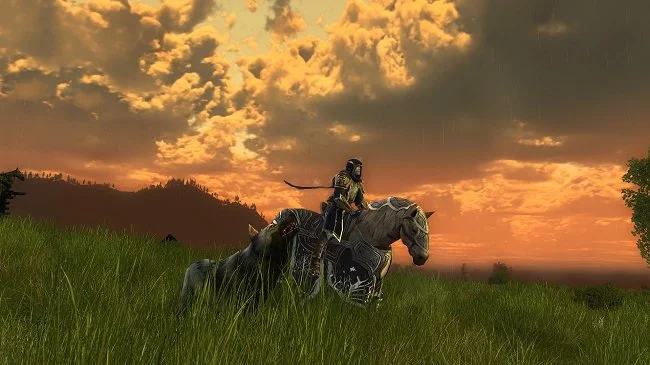
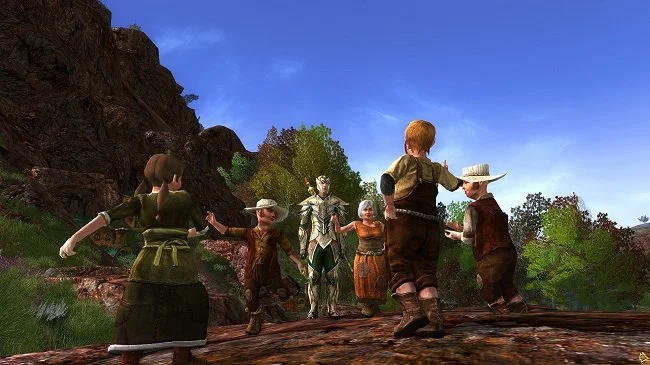
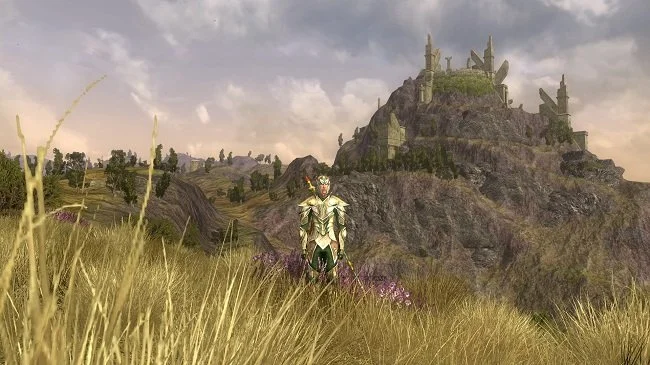
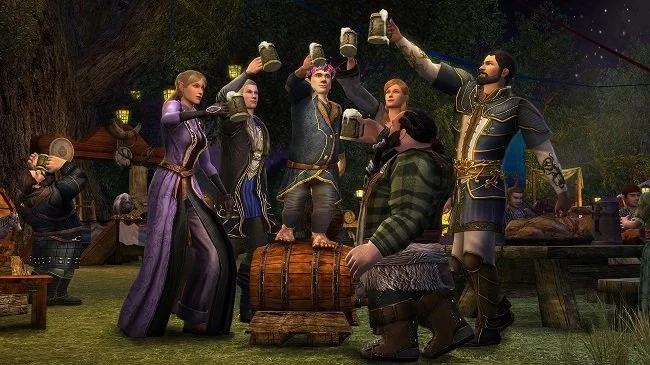
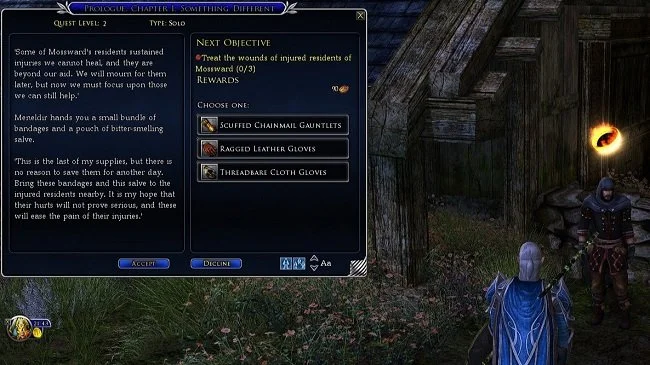
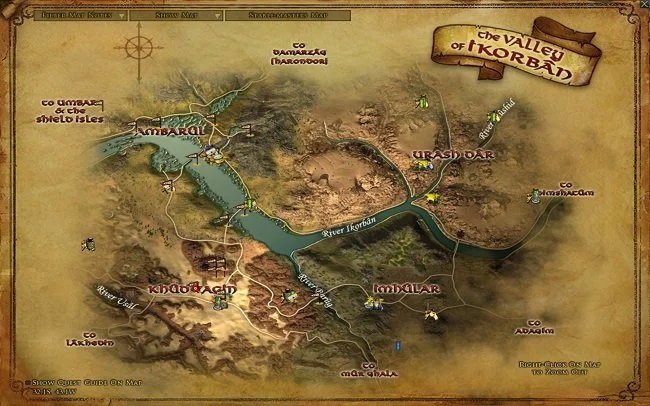
The dust appears to have settled for the MMORPG The Lord of the Rings Online, after last month’s server transfer debacle. Despite the technical issues arising and subsequent delays to the migration timetable as well as the procurement of in-game housing, LOTRO seems to be enjoying a minor resurgence. Many former players are returning to the game and moving retired alts to new servers, due to the superior performance. The migration issues have also brought a lot of attention to this 18 year old game and it would appear there are many new players trying this Tolkien themed MMO. I was pleasantly surprised to see that a further two 64-bit servers, Grond (EU) and Sting (US), are to be added to the game to meet demand. As I predicted in my previous posts, LOTRO has a habit of bouncing back due to its unique niche in the gaming ecosystem.

The dust appears to have settled for the MMORPG The Lord of the Rings Online, after last month’s server transfer debacle. Despite the technical issues arising and subsequent delays to the migration timetable as well as the procurement of in-game housing, LOTRO seems to be enjoying a minor resurgence. Many former players are returning to the game and moving retired alts to new servers, due to the superior performance. The migration issues have also brought a lot of attention to this 18 year old game and it would appear there are many new players trying this Tolkien themed MMO. I was pleasantly surprised to see that a further two 64-bit servers, Grond (EU) and Sting (US), are to be added to the game to meet demand. As I predicted in my previous posts, LOTRO has a habit of bouncing back due to its unique niche in the gaming ecosystem.
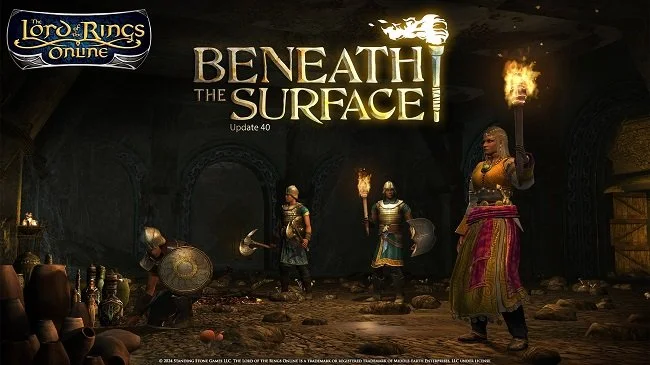
There was also a recent update to the 2025 LOTRO roadmap. Lead systems designer Alan “Orion” Maki provided a breakdown of the game’s current priorities. The 18th anniversary festival is to be revised to include mission scaling and new rewards. Update 44: Crown of Hamat is due this month and will include new story quests, missions and a 6-player instance. The raid, Temple of Utug-bûr, has been delayed. The reputation perk system for VIP players is also included in the update. In Q3, the Hunter and Burglar classes will be updated, along with the Birding and Fishing hobbies. In Q4, there will be a new expansion for the game. This will include four new zones, a new raid and yet another increase to level cap from 150 to 160. There is also a wealth of updates to the kinship system as well as the temporarily removed deed log revision. Just remember that all of these can be subject to change for “reasons”.
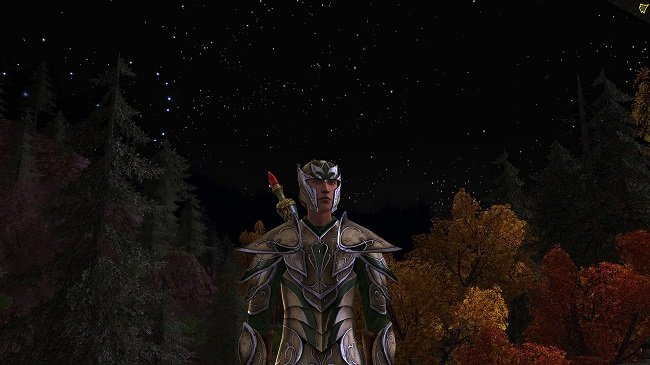
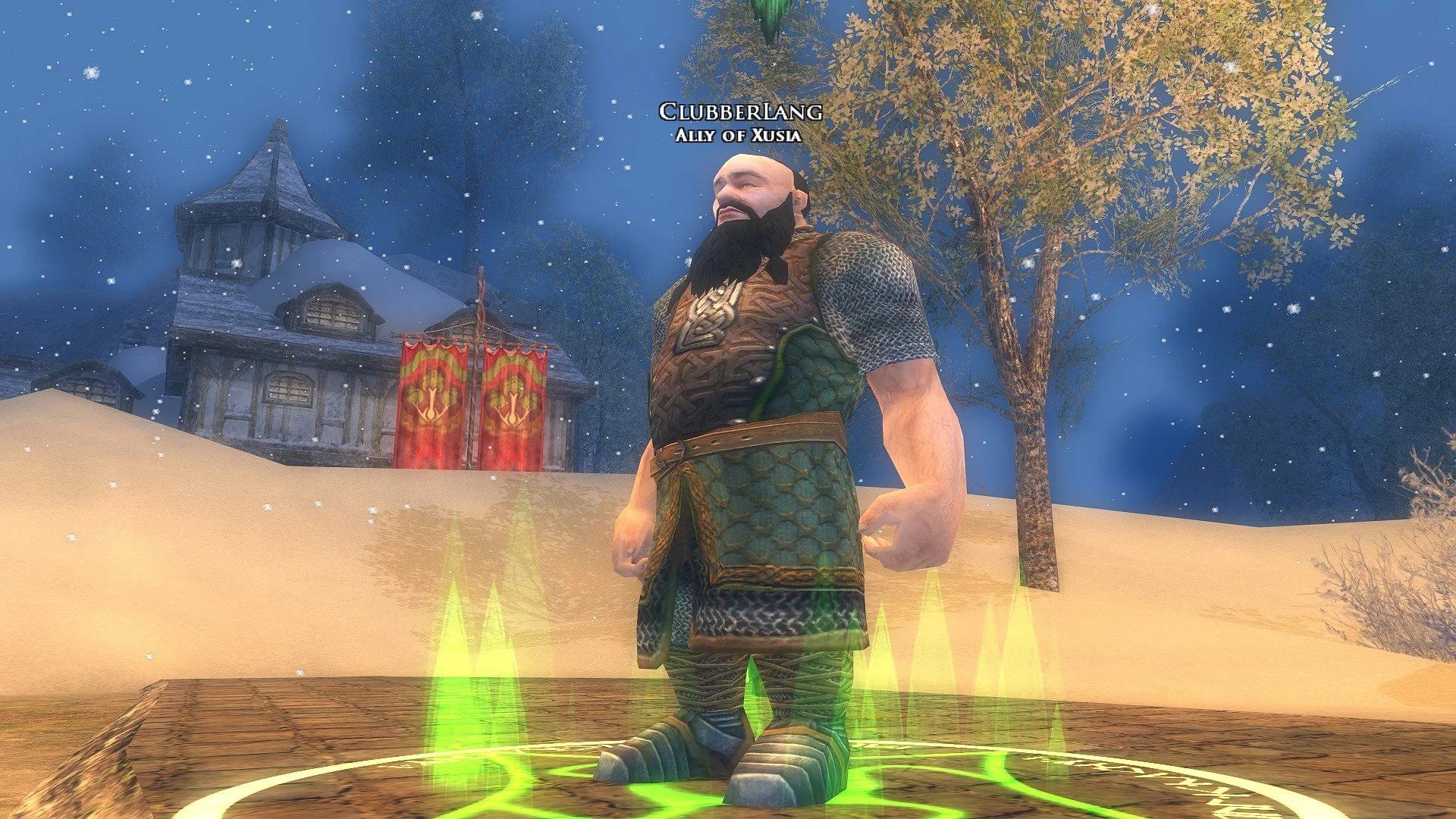
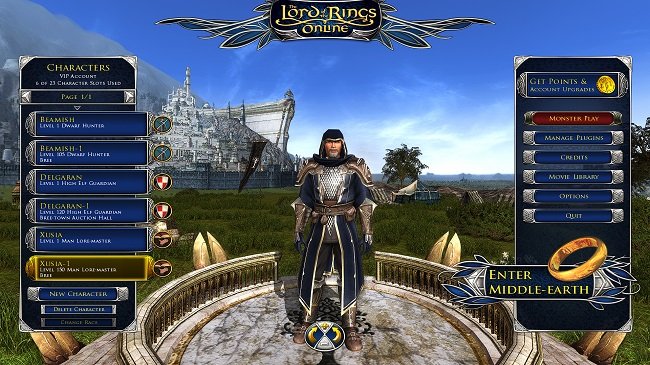
With regard to my own ongoing LOTRO experience, I am finding Meriadoc server to be a very agreeable place. Having successfully moved my primary character there, the performance improvement is clearly notable. I have experienced no tangible lag while traversing the virtual world. Locations such as Minas Tirith which used to be notorious for rubberbanding are now stable and manageable. It is also interesting to see a lot more players out and about in all zones. It is a timely reminder that this is a multiplayer game. On my previous server Laurelin, I could go for days in some zones without seeing another player. Another plus point on Meriadoc is that it didn’t take long for the in-game economy to take off. I also created a new alt on Peregrin server, so I have a character to take to the various events that will no doubt find a home there.
All things considered, LOTRO does appear to be back to business as usual. If SSG can resolve the housing issue and ensure that players who have recently migrated can re-acquire their house of choice, then I’m sure that the status quo that has prevailed for so long will return. The revised roadmap has plenty of new content scheduled which is reassuring to the playerbase. The game is far from stagnant. SSG also has a habit of quietly tinkering with legacy issues in the background, while developing the bread and butter content of the game. They tend to take as much time as they need to get the job done and sensibly play their cards close to their chest. Hence there is still hope that issues such as UI scaling will be addressed in the long term and that the group finder will be overhauled. Let’s see how the rest of 2025 pans out.









Atomfall: Getting the Ending You Want
Spoiler Alert: The following post discusses the various endings available in Atomfall. About 15 or so hours into Atomfall, the various plot elements started to become a lot clearer to me and I realised that several key characters were all offering differing escape options. Naturally, each outcome came with a quid pro quo requirement. Hence, there was a choice to make as to which ending I wanted to pursue, assuming that some outcomes were narratively or ethically better than others. At this point I had avoided many plot spoilers, so had no clear idea as to what specific endings were available. So I made a decision based purely upon the information that each of these characters gave me and chose to implement Dr. Holder’s solution to the Oberon problem. It seemed the most honest and pragmatic outcome, plus it caused the least amount of collateral damage.
Spoiler Alert: The following post discusses the various endings available in Atomfall.
About 15 or so hours into Atomfall, the various plot elements started to become a lot clearer to me and I realised that several key characters were all offering differing escape options. Naturally, each outcome came with a quid pro quo requirement. Hence, there was a choice to make as to which ending I wanted to pursue, assuming that some outcomes were narratively or ethically better than others. At this point I had avoided many plot spoilers, so had no clear idea as to what specific endings were available. So I made a decision based purely upon the information that each of these characters gave me and chose to implement Dr. Holder’s solution to the Oberon problem. It seemed the most honest and pragmatic outcome, plus it caused the least amount of collateral damage.
Having carried out his plan, I began to make my way back from the Oberon Dig Site. Just prior to entering the Central Processor, I ran through a control room with a red phone. This started ringing which caused me a minor dilemma. I wasn’t sure whether to answer it or ignore it and return to Dr. Holder. However as I had already answered several of these mystery phone calls, my curiosity got the better of me so I answered the phone. The Voice on the Phone subsequently congratulated me on successfully dealing with Oberon and told me to return to the bunker where I started my journey. I immediately thought that by answering this phone, I had effectively blown any chance of completing the Dr. Holder ending. There were no longer any open leads relating to him in my journal. So I dutifully returned to the bunker and got the appropriate Voice on the Phone ending.
Although I was broadly okay with this ending, I was curious as to how answering the phone had altered events sufficiently to deny me the Dr. Holder ending. So I loaded a save game that I had made just before returning to the original bunker and noticed that the Joyce Tanner ending was still showing in my journal. So I went back to the Interchange and found a voice log from Tanner left in Data Store Charlie. This gave me coordinates to meet her in Casterfell Woods. So I travelled to the assigned location and found her waiting with a helicopter. She was not pleased that I had chosen to poison Oberon without getting a sample. However, she thought that the formula for the poison would be a comparable bargaining chip Hence she told me to go back to the Interchange and get the formula. She also told me to kill Holder so there was no longer any potential competition.
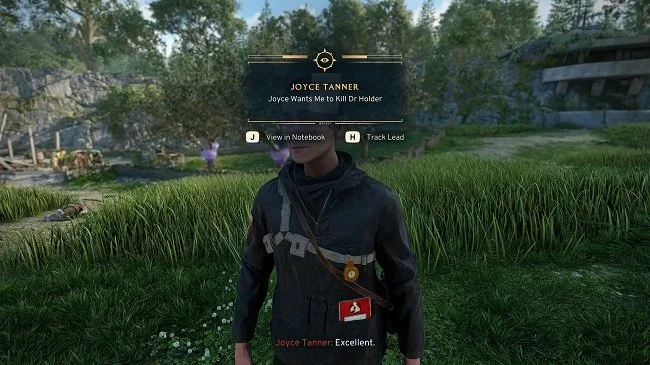
Upon returning to the Interchange, I struggled to find a way to reach Dr. Holder, as the destruction of Oberon had collapsed a lot of the tunnels and blocked multiple doorways. However, I found that if I entered via the Slatten Dale entrance, there were ladders going down to several unfinished tunnels that lead to both the Medical and Robotics departments. I subsequently found Dr. Holder in the Medical Tunnels and was able to complete the original ending that I was pursuing. Having successfully resolved this matter, I loaded the previously mentioned save game again and travelled to Wyndham Village to find Captain Sims, so I could pursue his potential ending. However, when I arrived there was an incursion by the Druid cult and a battle was in progress. Sims was gone. I was unable to complete the other two possible endings as I had shot Mother Jago while exiting the Oberon Dig Site and because Dr. Holder had already shot Dr. Garrow.
I am very impressed with Atomfall and the fact that despite things appearing to go awry, I was still provided with options very late in the game and able to complete the ending I wanted. I suspect that the developers Rebellion have given a lot of thought to the fact that players do not always follow the most linear paths and have therefore built a lot of flexibility into their branching narrative tree. As a result of this experience, I am tempted to play through Atomfall once again to test exactly how accommodating the game can be. There is still a significant amount of the quarantine zone that I haven’t thoroughly explored. I shall also keep an eye on the game’s subreddit, to see if any other players have had a comparable experience to mine and taken a very scenic route to the ending that they desired.

















Atomfall
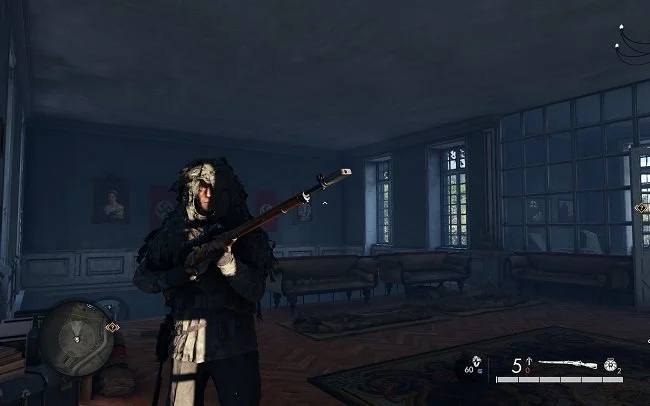
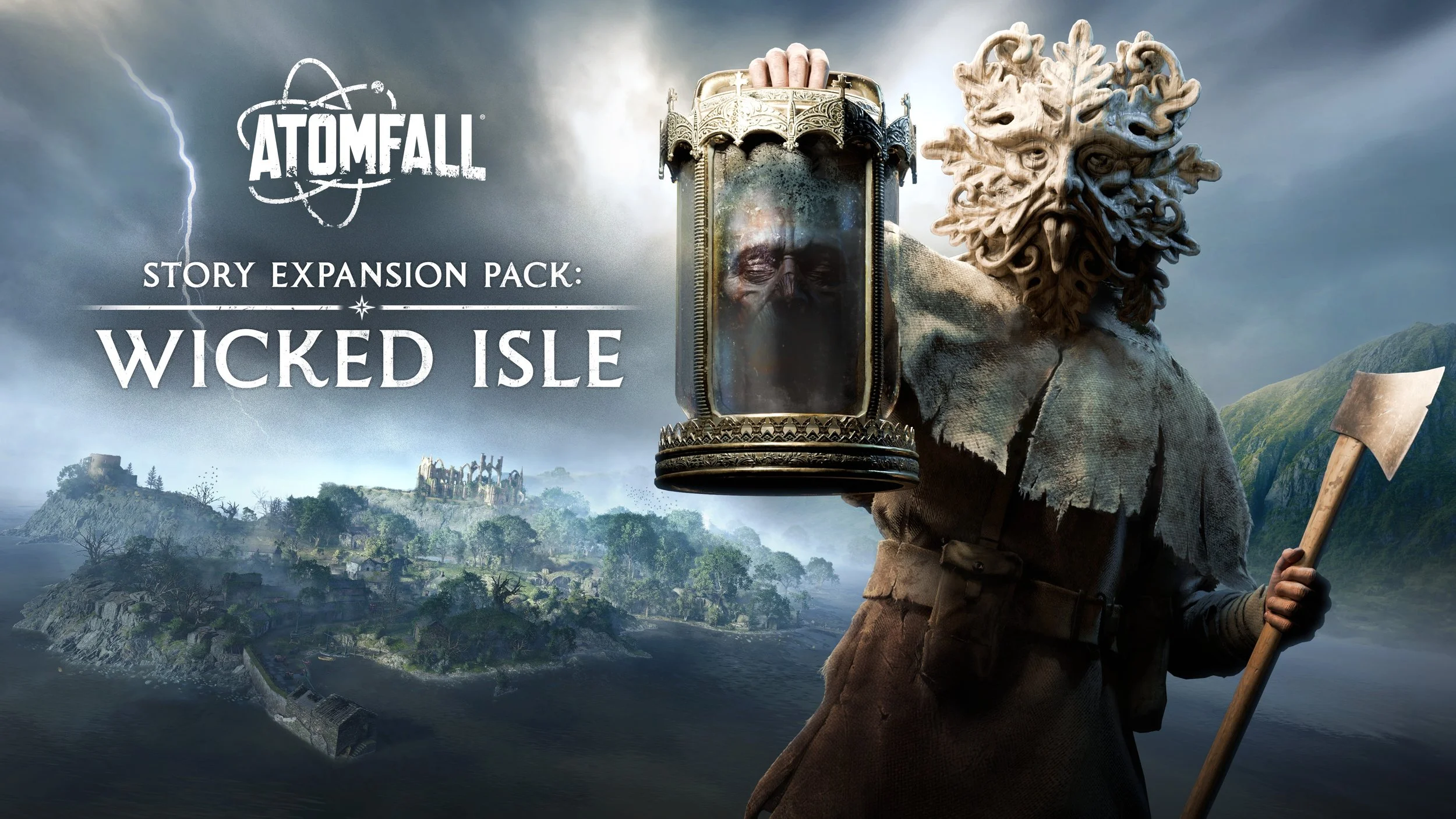
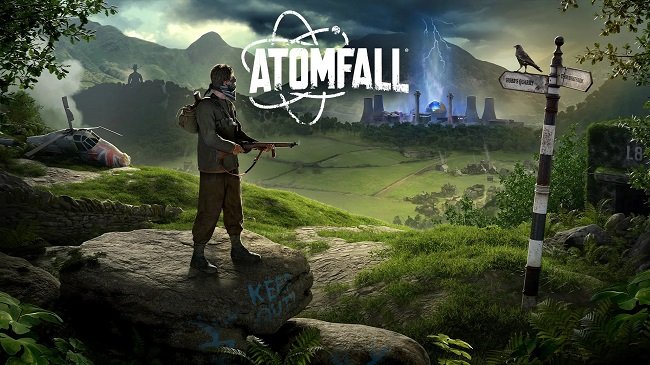
By default, I’m not always drawn to first person games. I see their merits in genres such as shooters but in an RPG, I prefer a third person perspective. So I was somewhat ambivalent towards Atomfall when I first saw promotional videos for the game. However, its uniquely British setting and period ambience piqued my interest. I also enjoy the Sniper Elite series which developers Rebellion also produce. So I recently bought the deluxe version of the game and began my play through. I made sure that I didn’t do too much research beforehand, because it was clear that the complexities of the plot are a major selling point of the game. Twenty two gaming hours later, I had completed two of six possible endings. Despite discovering a wealth of “leads” and diligently scouring the four main zones of Atomfall, I still feel there is much left to find and explore. Hence I have begun a second playthrough.
By default, I’m not always drawn to first person games. I see their merits in genres such as shooters but in an RPG, I prefer a third person perspective. So I was somewhat ambivalent towards Atomfall when I first saw promotional videos for the game. However, its uniquely British setting and period ambience piqued my interest. I also enjoy the Sniper Elite series which developers Rebellion also produce. So I recently bought the deluxe version of the game and began my play through. I made sure that I didn’t do too much research beforehand, because it was clear that the complexities of the plot are a major selling point of the game. Twenty two gaming hours later, I had completed two of six possible endings. Despite discovering a wealth of “leads” and diligently scouring the four main zones of Atomfall, I still feel there is much left to find and explore. Hence I have begun a second playthrough.
Set in 1962, five years after the fire at the Windscale nuclear plant, Atomfall takes place in a quarantine zone in Cumbria. Although under martial law by a military unit known as “the protocol”, the quarantine zone has fallen into a state of anarchy. Some citizens have become outlaws, while a sinister druidic cult has also emerged. Resources are scarce and strange flora and fauna have started to appear. You play as an unidentified amnesiac, who awakes in a bunker and is promptly charged with escaping the quarantine zone. Rather than being given traditional “quests/missions” with clear markers on the map, the player is provided with leads picked up from notes, letters, audio logs or dialogue with NPCs. It is then up to them to pursue these by exploring the world and slowly populating the in-game map. Atomfall also has elements from the survival game genre, as the player has to manage their health and heart rate.
Atomfall is a narrative driven experience which requires the player to look, listen and think. Combat is predominantly melee, as ammunition and firearms are scarce. Stealth and avoiding a fight is often the best approach. Combat is a slow and deliberately cumbersome process. A one on one fracas is manageable but if you aggro multiple NPCs then the situation can quickly escape your control. Hence if you don’t like reading and prefer fast paced action, then Atomfall may not be for you. If you like dialogue and making choices, then the game is a far more attractive proposition. The early hours of your playthrough will provide you with a multitude of disconnected facts and it takes a while before you start piecing the story together. Then there is the issue of who you should trust. There always seems to be consequences for siding with a faction. However, you’re not always boxed in by your choices and if you see fit, you can avoid making any for most of the game.
The main strength of Atomfall lies in its setting and atmosphere. Rebellion’s recreation of the Lake District, a designated UNESCO World Heritage Site, is visually striking. The game is also steeped in UK science fiction and popular culture references of the time. If you’ve ever read any books by John Wyndham, then Atomfall feels very akin to his style. In fact the main village in the game is called Wyndham village as a homage. The game also riffs on the writings of Nigel Kneale and has a strong Quatermass vibe. If you grew up watching Doctor Who from the Pertwee and Baker eras, you’ll find a great deal of the thematic and visual ambience of that show in the game. There are also a wealth of easter eggs, ranging from the obvious to the subtle. All of which greatly adds to the game’s character. The voice acting is solid and does not shy away from period and regional slang.
Atomfall works best when you approach it with a flexible strategy. Talk to NPCs, consider their requirements against your own, then make decisions when you feel you have enough information. Don’t immediately spend your skill points, as some are far more useful than others, depending on how you’re playing. Although you are free to kill everyone and everything, stealth and conflict avoidance pay dividends. Be very careful when entering bunkers as thralls and infected are formidable foes. If you find the leads bewildering, re-read them in your journal as the game then puts them in some semblance of order. Stay on the right side of traders. Go with your gut if you think a NPC is being unsound. But most of all, just revel in the environment. It is incredibly well realised and it is worth stopping every now and then and just taking it in.
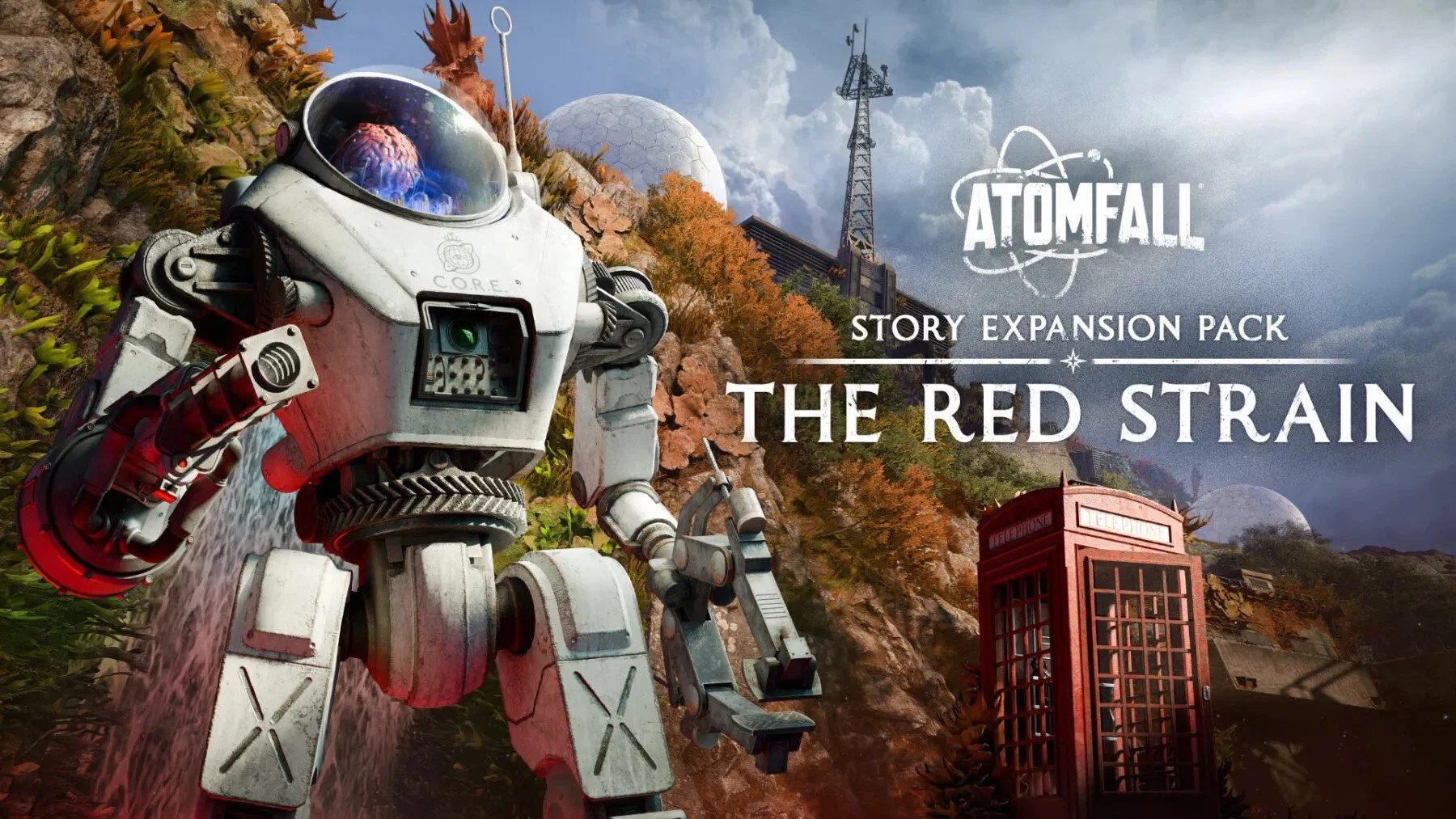
As and when you reach your particular ending for Atomfall, you may not find everything narratively cut and dried. The plot as it presently stands, is explained but there remain a great deal of unanswered questions and things to ponder. Hence, some players may find this disappointing. However, if you are thorough in your exploration of the in-game world and attentive to NPC dialogue, you’ll find quite a lot of clues for the forthcoming DLC for the game. I certainly think that Atomfall has sufficient novelty and style to keep me engaged a while longer and bring me back for a follow up story. The game’s success seems to have surprised quite a lot of people, including the developers. It’s nice to see that pursuing a niche style and culturally specific idiom is not an impediment to sales or critical praise.
Flow (2024)
With the proliferation of lore driven, franchise movies in recent years, a culture of analysis has developed online. Hence you will find a lot of YouTube videos that claim to “explain” the ending of specific films or provide clarification of their respective themes and subtexts. While critical debate and discussion about cinema is welcome, I think it is a mistake to always look for a specific meaning in cinema. Even clearly narrative films can be ambiguous. Art is ultimately a very subjective field of expression open to personal interpretation. Which brings me neatly to Flow, an animated feature film which tells a compelling story but raises more questions than it answers. It leaves the viewer to fill in a lot of the blanks themselves and the film is all the better for this approach. Flow is an extraordinary example of animation and a fascinating example of innovative, thought provoking filmmaking. Quite the rarity these days.
With the proliferation of lore driven, franchise movies in recent years, a culture of analysis has developed online. Hence you will find a lot of YouTube videos that claim to “explain” the ending of specific films or provide clarification of their respective themes and subtexts. While critical debate and discussion about cinema is welcome, I think it is a mistake to always look for a specific meaning in cinema. Even clearly narrative films can be ambiguous. Art is ultimately a very subjective field of expression open to personal interpretation. Which brings me neatly to Flow, an animated feature film which tells a compelling story but raises more questions than it answers. It leaves the viewer to fill in a lot of the blanks themselves and the film is all the better for this approach. Flow is an extraordinary example of animation and a fascinating example of innovative, thought provoking filmmaking. Quite the rarity these days.
In a forest, a black cat looks at their reflection in a puddle. A rabbit runs past being chased by a mixed pack of domestic dogs. The cat returns to an abandoned house, through a garden filled with wooden cat sculptures. A massive wooden cat statue overlooks the house from a hill. The house appears to be the former home of an artist. The next day the cat returns to the forest and is caught in a stampede of deer. A flash flood ensues and the cat manages to climb a tree branch and reach dry land. Returning to the house the cat is followed by a friendly labrador, who is part of the pack the cat saw previously. Both animals become aware that the water is rising and seek shelter. The labrador joins its pack in a oarless row boat, while the cat climbs to the top of the giant cat statue. Overwhelmed by the water the cat finds safety in a drifting sailboat, which contains a capybara.
Flow begins with a simple premise. A cat is adrift in a sailboat with a capybara during what appears to be an ecological apocalypse. Over the course of the film other animals seek safety onboard. The friendly labrador returns, there is also a kleptomaniac lemur and an enigmatic secretary bird. The animals squabble at times but cooperate, initially out of necessity and ultimately due to companionship. There is no dialogue and the story is not excessively didactic, although a lot of the imagery presented may appear symbolic and open to interpretation. The visual style is intriguing with the animators opting to use open-source software Blender and utilising a cel shaded aesthetic. Underpinning the onscreen journey is an enigmatic synths score that at times is reminiscent of the work of Vangelis and John Carpenter. The film is a succinct 84 minutes. No screen time is wasted but neither are events rushed.
If you have been raised exclusively on Disney animation, you will find Flow to be the antithesis of your expectations. Instead of being a product of a vast, monolithic commercial entertainment corporation, filtered through focus groups and market research, Flow is a labour of love and primarily an artistic endeavour. Written, directed and produced by Gints Zilbalodis, who also co-wrote the score and was the film’s cinematographer, Flow took over five years to make, gaining financial support and international distribution along the way. As a film it works on many levels. At its simplest, it is a timeless adventure in which a group of animals survive adversity through mutual help. As a work of art, Flow is open to a variety of interpretations. None of which are right or wrong. Some will see the film as a clear ecological warning, where others may see it as a faith based parable. It certainly raises many philosophical questions.
Sometimes, it is perfectly fine for a film to just “be”. After watching Flow and considering it, I’m not even sure what genre it is. However, although I spent some time reflecting upon some possible explanations to events and imagery in the film, I decided to abandon them. I prefer let the way the film made me feel, be its defining point. Flow is a unique production, unclouded and unspoilt by obvious contemporary commercial consideration. It is a beautiful, thought provoking piece of animation, proving yet again that the medium is not just a vehicle for children’s entertainment. It is profound and quite moving. Scarce qualities in filmmaking these days. If you look at viewer reviews on iMDb you will see a clear divide in opinion. Literalists may struggle with Flow. Such is their want. Those open to an experience driven more by feelings may fare better.









"Awful April" and the UK Cost of Living
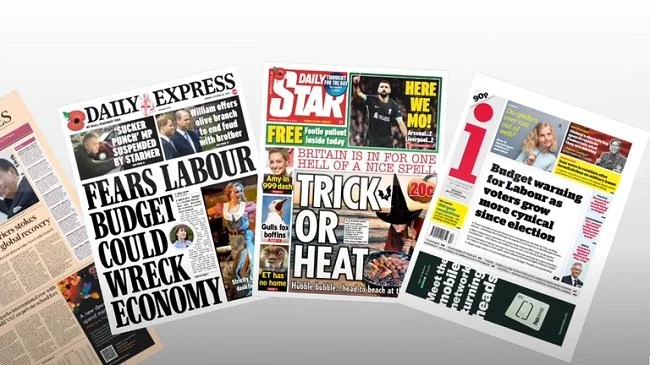
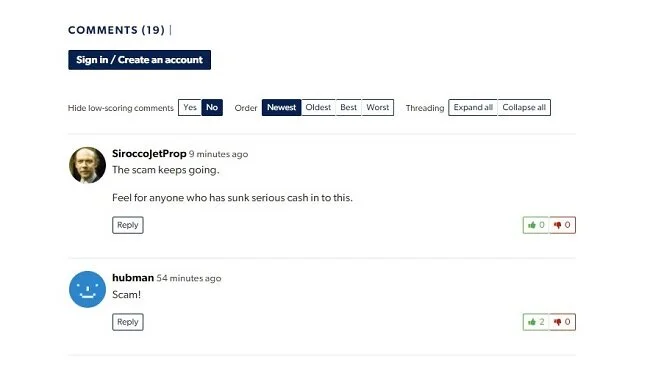
Sunday 6th April is the start of a new financial year, here in the UK. According to data from numerous financial and economic institutions, an estimated million plus households will be facing annual increases of £400 to £500 as the proverbial “cost of living” goes up. Everything from Council Tax to Mobile and Broadband costs are being increased. Future cost hikes are expected in our energy and water utilities. As bills start going up across the country today, average wages remain stagnant. Middle-income and poorer households have been worst hit by this wage related issue. Hence the tabloid press have labelled the start of the new financial year as “Awful April”. Hyperbole aside, this is a very real issue which due to its complex, global causes, doesn’t have a quick fix solution.
Sunday 6th April is the start of a new financial year, here in the UK. According to data from numerous financial and economic institutions, an estimated million plus households will be facing annual increases of £400 to £500 as the proverbial “cost of living” goes up. Everything from Council Tax to Mobile and Broadband costs are being increased. Future cost hikes are expected in our energy and water utilities. As bills start going up across the country today, average wages remain stagnant. Middle-income and poorer households have been worst hit by this wage related issue. Hence the tabloid press have labelled the start of the new financial year as “Awful April”. Hyperbole aside, this is a very real issue which due to its complex, global causes, doesn’t have a quick fix solution.
Here a some of the increases the UK public face:
The majority (88%) of households in England will face a maximum increase in council tax of 4.99% which adds an average of £109 to a typical band D bill. Due to some councils facing severe financial hardship Bradford, Newham, Birmingham, Somerset, plus Windsor and Maidenhead have been granted permission to raise council tax above the current 4.99% cap.
Average energy bills are expected to rise to £1849 annually. Energy regulator Ofgem has increased the price cap for the third time, resulting in an extra £9.25 per month. Fixed-rate deals will see no change in cost until their term expires.
Water bills are expected to rise by 26%, which is £123 annually. Last March, private water firms in England reported a £1.7 billion pre-tax profit. Yet the public still endure an expensive service, regular leaks and sewage discharges into the UK waterways and coastal areas.
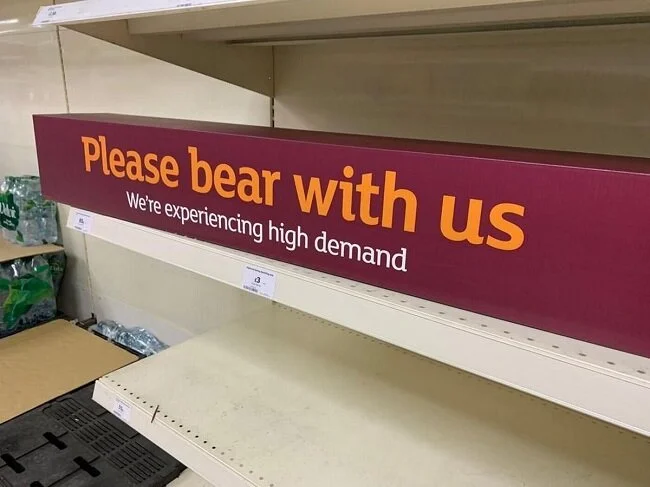
As of April 1st, 2025, food inflation in the UK continues to rise, with food prices overall 2.4% higher than last March. This itself was up from 2.1% in February, according to the British Retail Consortium-NIQ shop price index.
There are also scheduled increases in the cost of UK vehicle tax, TV license, mobile and broadband services and many other consumer industries.
These factors combined with the prospects of a global trade war and other geopolitical problems, mean that the economic prospects for the next financial year are far from good. The dour economic outlook makes it increasingly difficult for the UK government to rebuild the country’s crumbling public services and hamper wider plans to grow the economy. As for the public, wage stagnation coupled with the freezing of income tax thresholds until April 2028, will mean that many households will struggle financially. Shortfalls in disposable income frequently leads to daily expenditure being paid for by credit card. As of April 2024, UK households held an average of £2,487 in credit card debt, with total outstanding credit card debt reaching £70.1 billion. This is a 7.02% increase year-over-year.
Wealth and poverty can be relative things. For example, does choosing not to get into debt to finance a family holiday make you poor or just financially prudent? Can you be poor with an annual salary over £100,000 a year? As ever in life, simple or binary answers tend to be spurious and inaccurate. Nuance, complexity and context are required to reach a greater understanding. However, there comes a point when the realities of increasing monthly costs upon a household budget is no longer debateable. I do not consider my own financial situation to be dire, however the recent increases in the cost of living, especially with regard to food inflation have been clearly noticed and felt. As it is unlikely that any major changes or assistance are going to be forthcoming from the state, I suspect many of us will be looking at our own personal budgets and determining what costs can be reduced in the months to come. “Awful April” may well become a much longer affliction.


















A Working Man (2025)
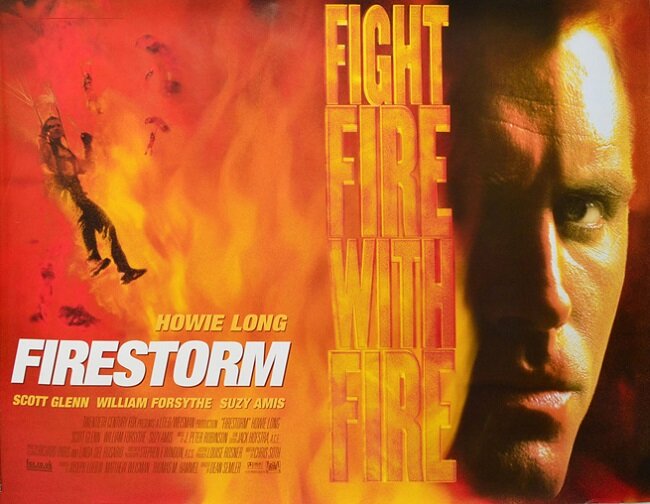
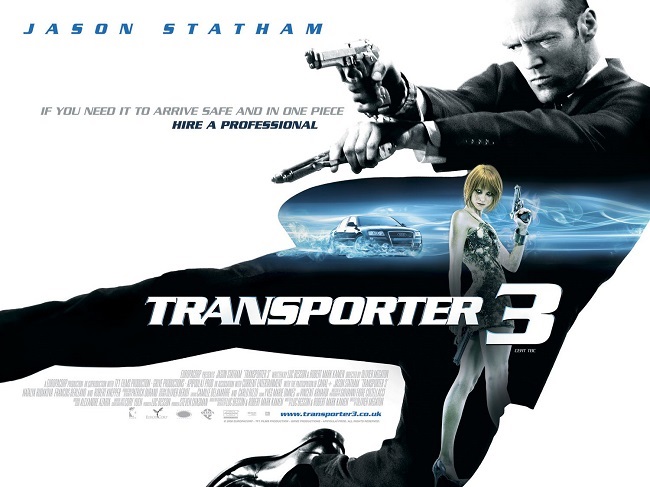
Levon Cade (Jason Staham) is a former Royal Marine Commando who has retired from military service and now works as the leader of a construction team in Chicago. He has a close relationship with Joe and Carla Garcia (Michael Peña and Noemi Gonzalez ) who run the company and considers them as family. Outside of work, Levon is involved in a bitter custody battle for his daughter, against her maternal grandfather, who blames Levon for his daughter’s suicide. When Garcia's teenage daughter Jenny (Arianna Rivas) goes missing, Levon reluctantly agrees to help her parents and get her back. Beginning his search at the nightclub where Jenny was last seen, he soon discovers that she was abducted by Russian traffickers. Furthermore, the culprit is Dimi Kolisnyk (Maximilian Osinski), the wayward son of a senior ranking gangster.
Levon Cade (Jason Staham) is a former Royal Marine Commando who has retired from military service and now works as the leader of a construction team in Chicago. He has a close relationship with Joe and Carla Garcia (Michael Peña and Noemi Gonzalez ) who run the company and considers them as family. Outside of work, Levon is involved in a bitter custody battle for his daughter, against her maternal grandfather, who blames Levon for his daughter’s suicide. When Garcia's teenage daughter Jenny (Arianna Rivas) goes missing, Levon reluctantly agrees to help her parents and get her back. Beginning his search at the nightclub where Jenny was last seen, he soon discovers that she was abducted by Russian traffickers. Furthermore, the culprit is Dimi Kolisnyk (Maximilian Osinski), the wayward son of a senior ranking gangster.
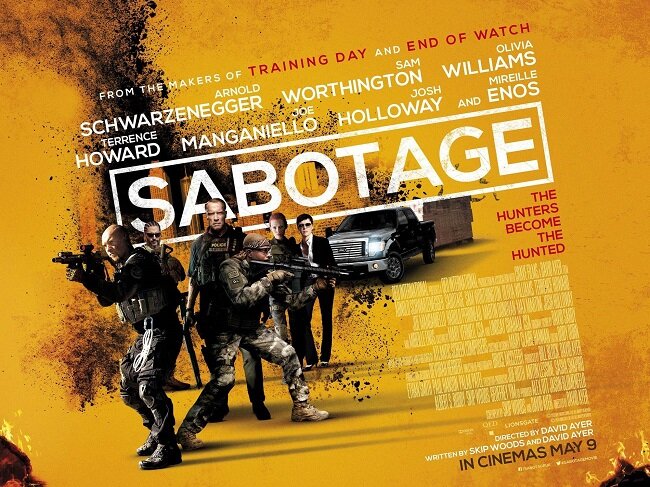
A Working Man is based upon the novel Levon's Trade by Chuck Dixon. The screenplay is by Sylvester Stallone and David Ayer who also directed the film. Stallone had originally intended the basic scenario of the book to be the basis of a television series but it was repurposed as a feature film. It was deemed a more marketable property due to the number of sequels written by the original author. Whether these ever see the light of day remains to be seen and is dependent upon the box office performance of A Working Man. The film has the solid production values associated with a medium budget feature film and a cast of dependable character actors in supporting roles. The action scenes are well conceived, realised but somewhat stylised. Firearms knock people off their feets and villains take multiple blows to the head before going down. Everything that you expect from the genre and the star is front and centre. Yet there is something missing.
A Working Man has a few interesting ideas, such as the lead character performing his own, amateur investigation. Ayer adds a few flamboyant touches, such as the leader of a drug dealing motorcycle gang who sits on a chrome throne made of exhaust pipes and fairings. There are also quite a lot of subplots for a film of this nature, with various elements of the Russian mafia working at odds with each other. Sadly, the main plot line about Jenny Garcia’s kidnapping founders as she decides to fight back and not to be a victim. By the climax of the film it has almost become an afterthought. Overall, A Working Man drags under the weight of a plot which pitches several ideas and then abandons them. Statham, as ever, does much of the heavy lifting through his screen presence and personality. However, compared to Ayer’s previous film The Beekeeper, this one fails to assert its difference, despite trying hard to do so. The word “adequate” springs to mind.




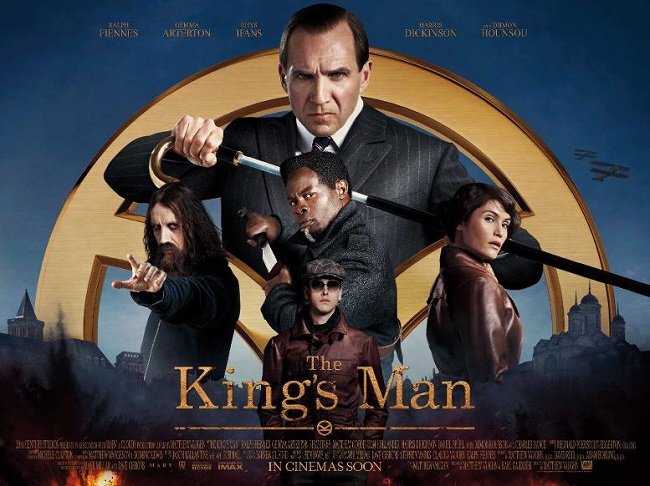
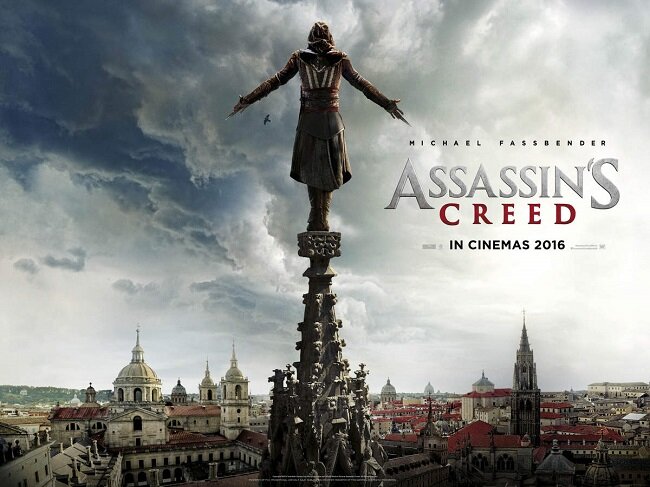


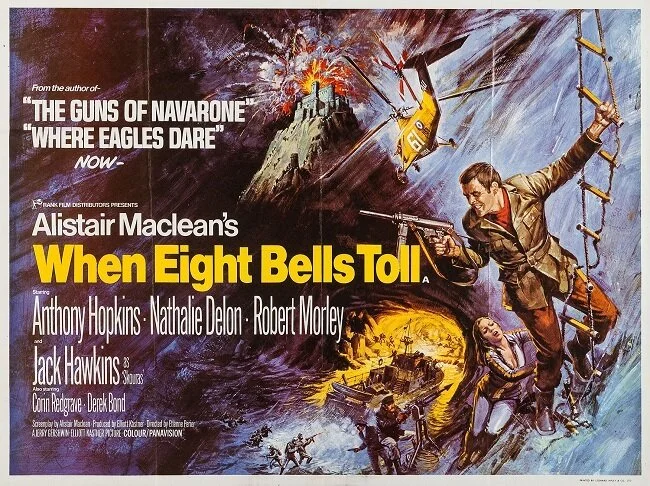


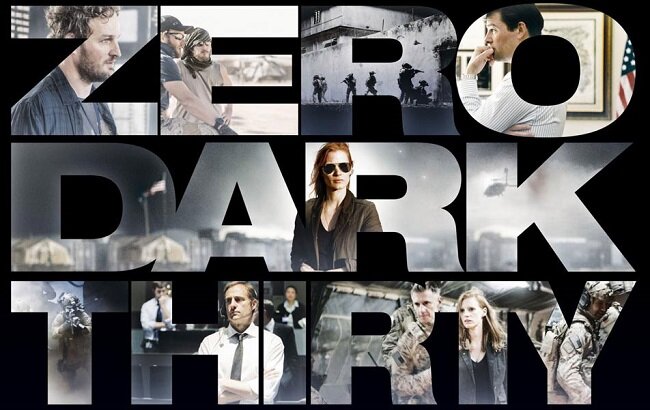






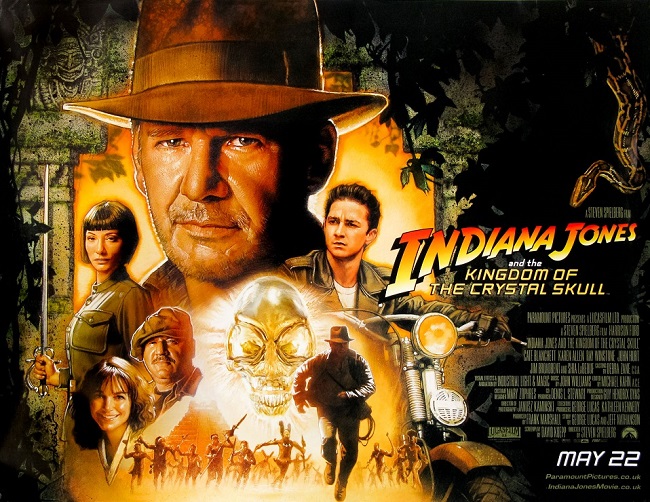
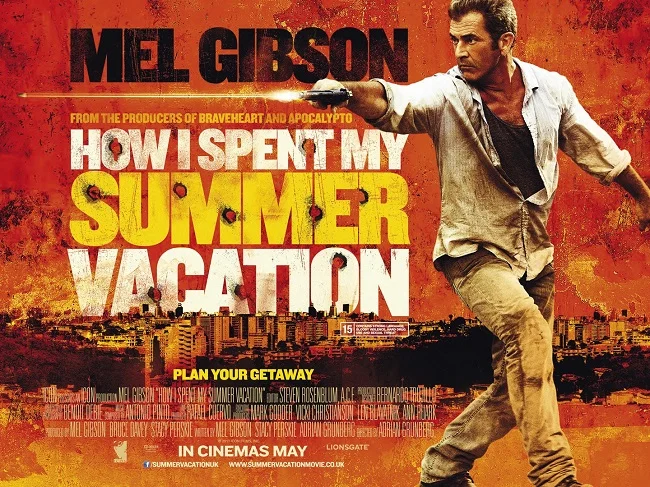

The Monkey (2025)
Osgood Perkins has a distinct visual style and tone to his films. It is why his previous film, Longlegs, was such a welcome change from standard genre outings. It was atmospheric both visually and tonally, demonstrating a keen understanding of horror cinema. Hence he is the perfect director to helm this adaptation of a Stephen King short story. The plot is greatly expanded and the screenplay takes a lot of liberties with the source material but the main themes of your past being inescapable and the power of guilt remain front and centre. Due to the extreme and bizarre nature of much of the onscreen deaths, the film wisely has a strong streak of gallows humour running through it which is extremely well handled. Comedy can often be used to defuse or mitigate violence which can be narratively dishonest (think Fred Krueger). Here it adds to the cruel and capricious nature of the random deaths.
Osgood Perkins has a distinct visual style and tone to his films. It is why his previous film, Longlegs, was such a welcome change from standard genre outings. It was atmospheric both visually and tonally, demonstrating a keen understanding of horror cinema. Hence he is the perfect director to helm this adaptation of a Stephen King short story. The plot is greatly expanded and the screenplay takes a lot of liberties with the source material but the main themes of your past being inescapable and the power of guilt remain front and centre. Due to the extreme and bizarre nature of much of the onscreen deaths, the film wisely has a strong streak of gallows humour running through it which is extremely well handled. Comedy can often be used to defuse or mitigate violence which can be narratively dishonest (think Fred Krueger). Here it adds to the cruel and capricious nature of the random deaths.
In 1999, airline pilot Petey Shelburn (Adam Scott) attempts to dispose of a drum-playing toy monkey at an antiques shop. He warns the proprietor that the automaton is evil and a death always occurs after it plays its drums. The monkey subsequently spontaneously plays its drum resulting in a bizarre accident where the shop owner is disemboweled by a harpoon gun. Shortly after this incident, Petey goes missing, leaving his wife, Lois, to raise their identical twin sons, Hal and Bill. The twins later find the monkey in a closet filled with their father’s mementos. They turn the key and again the monkey plays its drum. Later that evening the twin’s babysitter is killed in a freak accident at a hibachi restaurant. Further tragedies blight the twins lives, leaving them marginalised and estranged. 25 years later, despite being thrown down a well, the Monkey returns to dog the twins’ adult lives.
If you look beyond the over the top set pieces and wry humour, The Monkey attempts to explore various schools of thought surrounding the subject of death. It reflects upon the deterministic nature of our mortality and questions the relevance of human agency. The titular simian automaton is both scary and possibly symbolic. Is it an avatar of death itself? A biblically themed cameo at the film’s climax seems to imply such. Theo James gives two solid performances as the adult twin brothers and the film has several intriguingly quirky characters to enjoy. The gore is turned up to eleven and is both gross and amusing. Overall Osgood Perkins’ dark and droll approach to The Monkey is possibly for the best. If the story had been presented and explored in a more serious manner, it may well have been too po-faced or dour. Instead the film reacts to the absurdity of its antagonists’ random homicides in the only way it can. Namely, with ironic laughter.











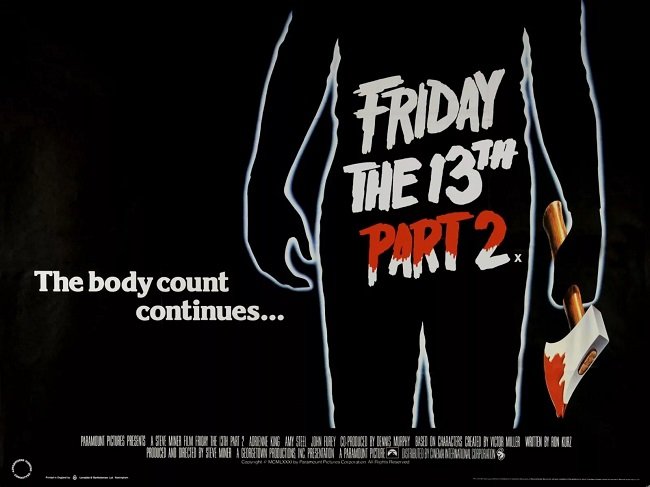






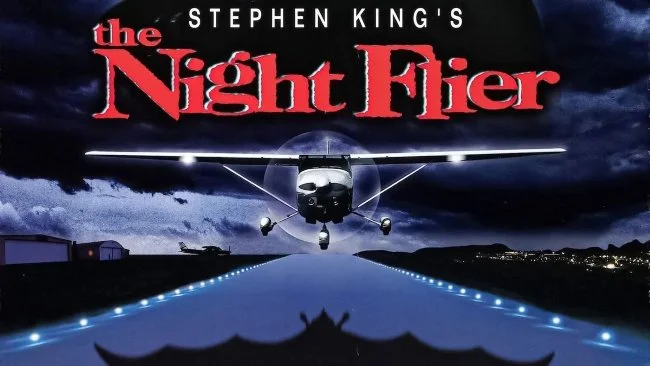




TV in the UK Part 2
If you don’t want to pay for streaming services, or premium digital satellite and cable content, then your choice in the UK is somewhat limited. You can receive all “free to air channels”, IE the ones that have advertising, via the digital terrestrial platform Freeview. Most UK televisions have Freeview access built in. Alternatively, the same selection of channels are available via the digital satellite platform Freesat. You can also buy either Freeview or Freesat digital video recorders and require only a rooftop aerial or satellite dish respectively to access these platforms. Most DVRs come with additional IPTV functionality built in along with the most popular streaming apps, so additional subscription services can be added if the viewer so desires. Freeview and Freesat carry a mixture of high definition and standard definition channels. Internet based services offer 4K content.
Freeview and Freesat provide digital terrestrial TV access in the UK
If you don’t want to pay for streaming services, or premium digital satellite and cable content, then your choice in the UK is somewhat limited. You can receive all “free to air channels”, IE the ones that have advertising, via the digital terrestrial platform Freeview. Most UK televisions have Freeview access built in. Alternatively, the same selection of channels are available via the digital satellite platform Freesat. You can also buy either Freeview or Freesat digital video recorders and require only a rooftop aerial or satellite dish respectively to access these platforms. Most DVRs come with additional IPTV functionality built in along with the most popular streaming apps, so additional subscription services can be added if the viewer so desires. Freeview and Freesat carry a mixture of high definition and standard definition channels. Internet based services offer 4K content.
Until recently, our household has used Freeview, along with some additional IPTV channels and streaming apps for our television requirements. However, it has not been especially good value for money. The DVR that is supplied by our broadband provider, performs poorly and the extra channels we pay for are only in standard definition. So we have chosen not to renew our contract. We have moved over to Freesat, which broadly offers the same channels as Freeview, although more are in HD. Beyond the initial hardware costs, Freesat incurs no further charges. I recently changed my cell phone contract and received a year’s subscription to Netflix. As a regular Amazon Prime customer, we also have access to Prime Video. For the present these services are to be our main source of television content. We regularly avail ourselves on free trials, discount codes and other promotional opportunities so we can access other platforms. Thus we do not face “TV poverty”.
Freesat 4K Recordable TV Box
I spent some time researching what TV services are available in the UK, prior to changing from Freeview to Freesat. What I learned was quite discouraging. Television has changed its business model, just like the music industry and those changes are not beneficial to the customer. The dominance of streaming services has led to a decline in DVR production. Streaming services run on a subscription model, whereas digital terrestrial and satellite services rely on a hybrid of advertising and paid for content. TV is now a compartmentalised industry and although there is still a substantial audience in the UK, it is spread over a wider variety of platforms. Hence advertising reaches a smaller audience. DVRs further compound the problems, allowing viewers to bypass adverts. Thus there are less new DVRs coming to market, because user control of content is not good for business.
There is also a broader decline in physical media sales, again because streaming services appear to negate the need for it. Sadly, the reality is about removing customer choice and placing control in the hands of the vendor. Disney is reducing the availability of a lot of its classic content on physical media to drive customers to its streaming service. However, a lot of material from Disney’s back catalogue remains absent from its streaming service and a lot of content is being altered to make it compliant with what Disney consider to be “modern sensibilities”. Looking at streaming services from a wider perspective, a lot of content is licensed from third parties, to supplement original material. This means that content can come and go quickly once licensing arrangements expire. At one point, Netflix in the UK had access to all respective Star Trek shows. An arrangement that ended once Paramount Plus launched.
Apps available on Freesat
We are now living in an age where the entertainment industry (along with others) have decided that ownership or at least paying once to access material is not an adequate business model. Streaming, be it audio or video content, addresses this offering a service where the customer pays continuously for continuing access but has no direct control beyond that. Choice is very much dependent upon what the streaming platforms currently have licensed and there is always scope for material to be removed from access when licensing arrangements change or end. Due to a finite customer base being divided among an ever increasing group of vendors, subscription services are proving an “inadequate” revenue stream. Hence we are now seeing advertising being introduced on lower tiers of subscription. If the customer objects they can pay to remove it.
Due to the cost of producing content for streaming services, many platforms are now opting to release material in a weekly schedule to maximise audience retention and return on investment. Hence, we are currently experiencing a return to “appointment television”, although for a much more compartmentalised audience. Shows such as Reacher and Severance are released weekly and immediately become the focus of intense online debate on subreddits and the like. For those who think this is in some way a return to the viewing habits of the seventies, it comes with a substantial loss of agency. Adverts are forced upon viewers, where they could in the past be bypassed via a VCR. Furthermore, if you wish to avoid spoilers then you have to eschew all social media until you have watched the program in question. Once again it would seem that “choice” and “progress” are not as beneficial as they first appear.











TV in the UK Part 1
When I started writing this post it was intended to be about changing from one UK TV provider to another. However, I became concerned that there was a need to provide some sort of historical context, because I wasn’t sure whether all readers would be familiar with how television is provided here. The next thing I know, I’ve written a potted history of public and commercial broadcasting in the UK and the resulting post has become somewhat lengthy. So I have decided to split the text into two halves. The first being a summary of how the provision of television has changed in the UK over the course of the last fifty plus years. The second focuses more upon changes to the TV industry’s business model, consumer habits and the present status quo.
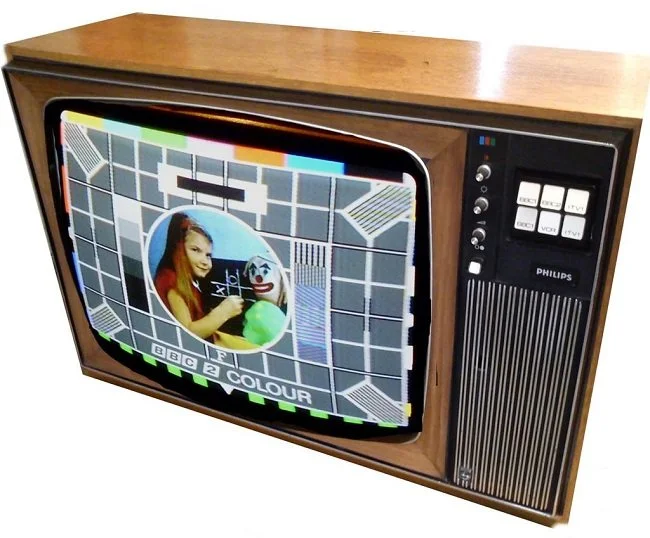
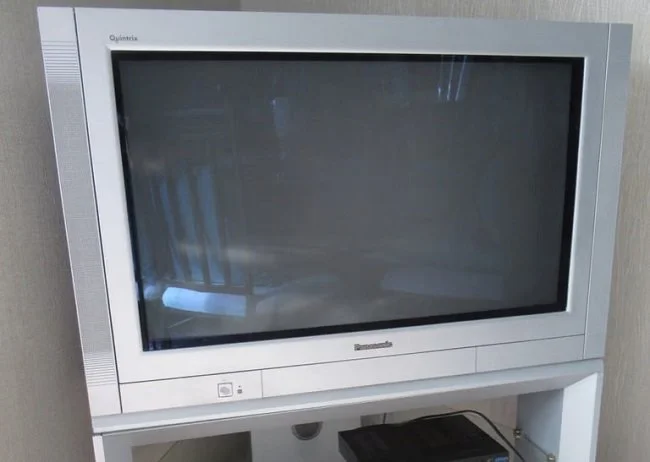
Philips CRT TV circa 1980
When I started writing this post it was intended to be about changing from one UK TV provider to another. However, I became concerned that there was a need to provide some sort of historical context, because I wasn’t sure whether all readers would be familiar with how television is provided here. The next thing I know, I’ve written a potted history of public and commercial broadcasting in the UK and the resulting post has become somewhat lengthy. So I have decided to split the text into two halves. The first being a summary of how the provision of television has changed in the UK over the course of the last fifty plus years. The second focuses more upon changes to the TV industry’s business model, consumer habits and the present status quo.
In the seventies and eighties, television in the UK was a singularly uncomplicated affair. You would buy a TV, connect it to a rooftop or indoor aerial/antenna and set the channel buttons to the four analogue stations that were broadcasting at the time. You then watched your favourite programmes at the time that they were broadcast and discussed them the following day at either school or work. Hence the viewing figures for popular shows were large with popular soap operas such as East Enders and sitcoms like Only Fools and Horses regularly achieving audiences of over 20,000,000. Over a third of the population at the time. Although video cassette recorders became ubiquitous during the eighties, the culture of “appointment TV” (IE watching stuff when it was shown), persisted. Analogue terrestrial television, introduced in the UK in 1936, remained the predominant source of TV in homes until 2012.
UK analogue aerial and satellite dish circa the mid-eighties
During the eighties, changes in TV regulation saw the emergence of analogue satellite and cable services. However, cable was not readily available in rural and most suburban areas due to the logistics of installing the infrastructure. Similarly, satellite TV required a dish which added to the set up costs for new customers. Plus due to the prevailing UK class culture of the time, there was a great deal of snobbery regarding “unsightly dishes” and commercial television programming that was perceived as “low rent”. However, in the early 2000s (noughties), the UK was getting ready to decommission analogue terrestrial TV broadcasting and replace it with a digital terrestrial service. Hence a lot of new commercial television services began to appear as the public became more comfortable with the business model of paying a subscription for quality programmes, rather than free TV paid by advertising.
The noughties were a time of major change for UK television. Many new commercial services, such as OnDigital (digital terrestrial) and NTL (digital cable) came to market and ultimately failed. However, other industry changes proved successful, such as the transition from 4:3 to 16:9 aspect ratio and from standard definition to high definition. Tests are currently underway for ultra high definition digital terrestrial broadcasts and 4K streaming content is becoming more widespread. There was a period of a few decades, when Sky was king and digital satellite TV was the dominant premium service in the UK with a fifth of the population as customers. The provision of major sporting events and franchises, especially premier league football, was a major factor in Sky’s success. However, over time other services have begun to compete and steadily eroded
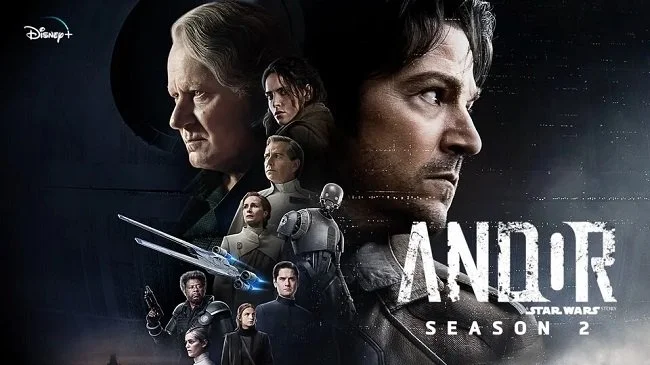
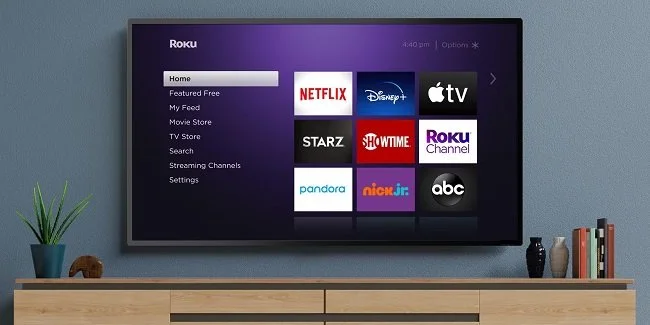
A selection of UK streaming services
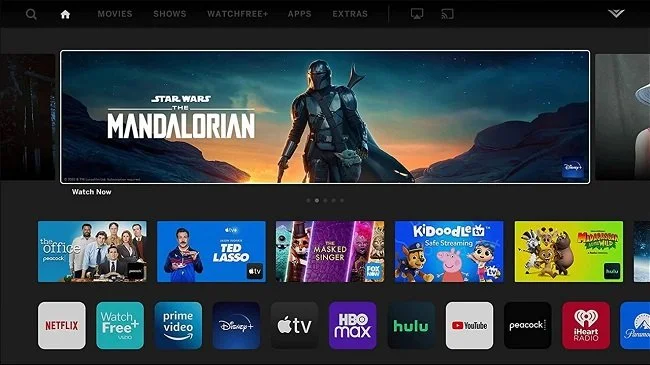
In 2025, we find ourselves in a TV market dominated by streaming services. Major streaming providers have the budgets to produce high quality shows and the remaining UK broadcasters dependent on advertising revenue, struggle to compete. The main problem with streaming services, is that if you want to keep abreast of all the most popular shows then you have to subscribe to 4 or 5 services. Sport in the UK is still mainly carried on digital satellite (and now streaming) via Sky, so if you want access to that as well you’re going to have to subscribe to their services as well. The monthly cost of all of these is somewhere north of £75, which is no small beer and a reason why so many people share logon credentials for streaming services. Subsequently, there is now a societal divide regarding TV access. “TV poverty” has emerged as a term describing those excluded from premium content due to its cost.
Thinking Out Loud
Art is a big subject, so I shall keep this brief. Art has a massive impact on shaping our personalities, whether we think it does or not. Consider for a moment, any online service that requires you to write a profile about yourself. Something that is designed to provide a summary of your personality, abilities and your likes and dislikes. IE Facebook, a dating app or even your online resume. Frequently, these profiles will require us to define ourselves by what we read, watch and listen to. Yes, other information is included in such profiles but directly or indirectly, we are asked about our artistic preferences. Possibly we do not consider such a line of questioning to be about art but essentially it is. So we dutifully state which art we cleave to and then look for reciprocal taste in others. Does this not prove that art is important?
Thinking Out Loud is a recurring post in which I present a selection of thoughts and ideas that have crossed my mind recently. As always, some of these could be developed into blog posts of their own but that really isn’t the point. Thinking Out Loud is a vehicle for brief, rhetorical musing rather than log form analysis. I just put a virtual pen to paper and get some of my thoughts written down for your consideration. As always, please feel free to leave a comment.
The Importance of Art
Art is a big subject, so I shall keep this brief. Art has a massive impact on shaping our personalities, whether we think it does or not. Consider for a moment, any online service that requires you to write a profile about yourself. Something that is designed to provide a summary of your personality, abilities and your likes and dislikes. IE Facebook, a dating app or even your online resume. Frequently, these profiles will require us to define ourselves by what we read, watch and listen to. Yes, other information is included in such profiles but directly or indirectly, we are asked about our artistic preferences. Possibly we do not consider such a line of questioning to be about art but essentially it is. So we dutifully state which art we cleave to and then look for reciprocal taste in others. Does this not prove that art is important?
Are You Wealthy?
HSBC bank recently conducted a survey in the UK about people’s perception of wealth. It is a very interesting analysis with some stand out facts. The biggest being a major regional disparity between the South and the North of the UK, regarding how much you need to earn a year to be considered wealthy. Londoners cited £290,000 as an annual salary, where in the North East it was £80,000. House prices have a lot to do with this. There were also some interesting social markers that some deemed to imply wealth. Having investments, being able to regularly travel and retirement were mentioned by about half of people surveyed. There were some curious additional examples, such as having an island in your kitchen or having a cleaner, gardener or any help with domestic chores. There was also a strong trend to equate wealth with mental well being. Money worries are seen as a key source of stress.
Doing Things Spontaneously
Spontaneity covers a lot of things, so allow me to be specific with regard to the point I’m making. Consider the following thought experiment. You decide on a whim to visit a place of interest. You also consider going to a restaurant afterwards and enjoying a leisurely meal and a few drinks. However, when you arrive at the place of interest you find that it is totally rammed. You can’t find anywhere to park, or the venue limits the number of people entering. You’re advised that you should have checked the website in advance and booked tickets for a designated time slot. You then go to your restaurant of choice, only to find that it is similarly full. Disappointed, you head home only to run into major traffic delays that you were totally unaware of.
This is something that has happened to me and Mrs P on several occasions. She favours doing things spontaneously. Sadly, the world is becoming increasingly averse to such a philosophy. Museums, galleries and places of historical interest are more often than not, subject to a booking regime. Reservations for dining out are also commonplace nowadays. It simply comes down to the number of people pursuing leisure activities, especially with a growing retired population in the UK. You’ll encounter the same problem when entertaining children during half-term. Personally, I like the piece of mind that planning a day out brings but Mrs P hates the fact you can’t always do things on a whim.
Password Managers
I wrote four months ago about replacing my existing password manager, after years of using LastPass. At the time I was going to move to Bitwarden. However, I ended up creating a free account with Proton Pass, developed by the Swiss software company Proton AG. Proton Pass can store login credentials, email aliases, credit card data, passkeys, 2FA secret keys, and notes in virtual vaults that are encrypted using 256-bit AES-GCM. The company seems to have a strong customer service ethic and the free version of the software is not lacking in functionality.
Car CD Players
Mrs P is the designated driver in our household as I don’t drive. Mrs P bought a new car in 2020. A Skoda Scala. It did not come with a CD player as the car industry now expects drivers to connect a streaming device via Bluetooth, to the vehicle’s “infotainment system”. Mrs P doesn’t especially care for technology. Nor does she have a phone contract with an adequate data allowance or indeed a spotify account. She does like CDs. So I bought a portable CD player with Bluetooth. Sadly it refused to connect to her Skoda, which upon further research, is a common issue. So it was returned to Amazon and the quest for a tech friendly solution goes on. In the meantime she has found a country radio station which has proven adequate.









New Phone? No Thanks
I last bought a new phone in March 2022. At the time I decided to move away from Samsung after a decade of brand loyalty and try the Google Pixel 6. Let it suffice to say that I have found this handset to be most satisfactory. I like the size. It fits into the front pocket of my jeans. Its overall performance is very good and it has no issue running any of the apps that I regularly use. Subsequent software updates have improved some aspects of the camera, which initially had a poor zoom. Overall the good points of the Google Pixel 6 outweigh its flaws. Hence despite being 3 years old I am happy to keep using it. I have looked at what the subsequent iterations of the Google Pixel have to offer and I really don’t see any significant improvements or benefits. So despite being offered a handset upgrade by Vodafone, I have decided against one.
I last bought a new phone in March 2022. At the time I decided to move away from Samsung after a decade of brand loyalty and try the Google Pixel 6. Let it suffice to say that I have found this handset to be most satisfactory. I like the size. It fits into the front pocket of my jeans. Its overall performance is very good and it has no issue running any of the apps that I regularly use. Subsequent software updates have improved some aspects of the camera, which initially had a poor zoom. Overall the good points of the Google Pixel 6 outweigh its flaws. Hence despite being 3 years old I am happy to keep using it. I have looked at what the subsequent iterations of the Google Pixel have to offer and I really don’t see any significant improvements or benefits. So despite being offered a handset upgrade by Vodafone, I have decided against one.
I cannot see any sense in just getting a new phone for the sake of it. Why saddle myself with a £500 debt, spread out over 3 years for something that isn’t required? Phones no longer hold any appeal for me beyond their inherent functional purpose. The handset I currently have does the job and therefore it will suffice for another year or so. Hence, I called Vodafone and negotiated a new tariff. I’ve increased my data allowance to 5 GB, while retaining the unlimited calls and texts. I still have access to 5G and the benefits of Vodafone Secure Net. After obtaining a 30% discount the monthly cost is £12.60, just 0.30 pence more than what I was previously paying. The only extra cost I foresee in the immediate future is an ad hoc data package when I travel to Croatia, in June for my holiday.
I grew up in the seventies and eighties, in a world where you replaced electrical devices when they stopped working. You seldom replaced something just because a better version became available. Perhaps if your family grew in size, you may consider buying a larger freezer but the benefits of such a decision were easy to evaluate. Such a mindset is now obsolete. Phones and other devices are no longer marketed based upon their purpose. They’re aspirational, lifestyle accessories that apparently say something about you. Exactly what that is, other than you have a line of credit, I have yet to determine. It all seems to feed into that great myth of capitalism that conspicuous consumption will somehow make you happy. It doesn’t. However, we all have to determine this for ourselves. Fortunately I have, which is why I got a new tariff and not a new phone.
















LOTRO: 64-Bit Server Migration Part 4
It has not been a good week for the MMORPG, The Lord of the Rings Online and its developer Standing Stone Games. The migration from legacy 32-bit servers to 64-bit servers has not gone smoothly. The transfer queue was overwhelmed by the sheer number of accounts and it has taken far longer than expected to process the backlog of requests. Today has been the fifth day of waiting to see if my 3 main characters from Laurelin server have successfully migrated to their new home on Meriadoc. When I checked this morning, the transfer wizard indicated that my characters were back where they originally came from. I therefore considered repeating the entire process. However, around midday, Community Manager Cordovan indicated that SSG had caught up with transfer requests made around 8:00 AM EST on Sunday 9th March. So I decided to be patient and wait a little longer.
It has not been a good week for the MMORPG, The Lord of the Rings Online and its developer Standing Stone Games. The migration from legacy 32-bit servers to 64-bit servers has not gone smoothly. The transfer queue was overwhelmed by the sheer number of accounts and it has taken far longer than expected to process the backlog of requests. Today has been the fifth day of waiting to see if my 3 main characters from Laurelin server have successfully migrated to their new home on Meriadoc. When I checked this morning, the transfer wizard indicated that my characters were back where they originally came from. I therefore considered repeating the entire process. However, around midday, Community Manager Cordovan indicated that SSG had caught up with transfer requests made around 8:00 AM EST on Sunday 9th March. So I decided to be patient and wait a little longer.
I logged into Meriadoc server again this evening, at approximately 21:00 and found that my three characters had successfully arrived. All three now have their existing names appended with a “-1” so it just remains for me to delete the placeholder alts that I created and to use the “/changename” command to rename my migrated characters and reclaim their correct identities. I have a final alt that is transferring from Landroval to Peregrin server but that has yet to arrive. I did initiate that transfer 24 hours after the first, so it is logical that it has yet to be processed. I have decided not to replace my premium house which I sold prior to migrating. I intend to start playing through the latest expansion and enjoying the benefits of the new 64-bit server. I am for the present without a kinship and it remains to be seen whether my old one will move or not. It may even be time to find a new home.
It will be interesting to see how long it takes for SSG to catch up with all the outstanding transfer requests and whether the same problem occurs again when more players decide to move. The new 64-bit servers were a perfect opportunity for LOTRO to relaunch itself and try to attract new players. Sadly, this issue has received quite a lot of coverage in video games media and it hasn’t been positive. Furthermore, it is not the first time that the game’s developers have shot themselves in the foot. However, the LOTRO player base is very loyal and as there isn’t another Middle-earth themed multiplayer game in town, there’s a good chance that the community will forgive SSG at some point. Maybe we’ll all be laughing about this in the summer. In the meantime, good luck to those still waiting for their alts to turn up on their new servers. As for those who have chosen not to migrate, sit tight.
Experimenting With YouTube Part 2
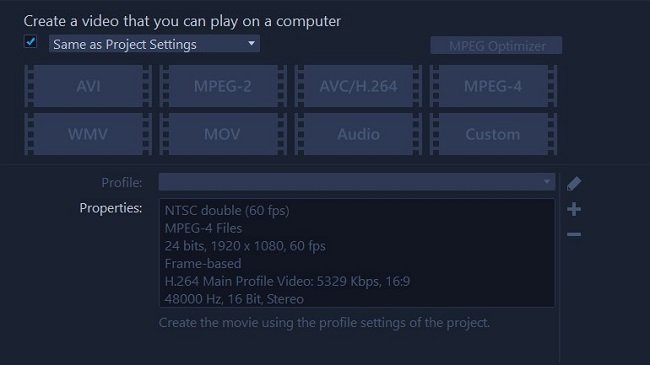
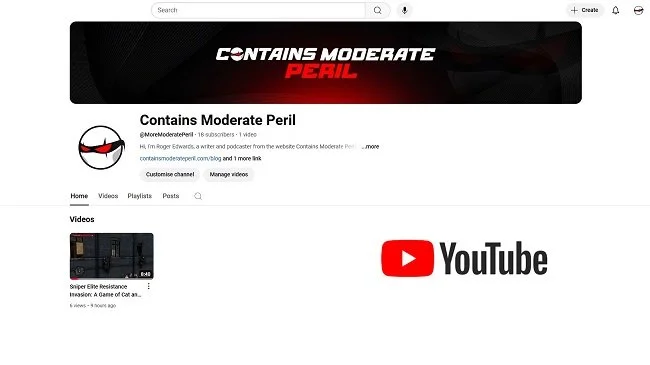
I spent most of this morning and afternoon editing video content I captured while playing Sniper Elite Resistance. I assembled 26 minutes of highlights and then recorded a narration. After adding appropriate branding for Contains Moderate Peril, I then uploaded the finished video to YouTube. Sadly, the picture quality was problematic, often becoming pixelated and blocky when there was rapid movement. The volume of my narration was also too low, so I decided to delete the video from my channel. I was somewhat disappointed by this outcome and initially thought that the day had been a waste of time. However, as I write this post, it becomes very clear that this is just part of the learning curve. I have given some thought to the problem and I believe I have determined why this video was not up to the standard of the previous one. Ultimately, this is an invaluable lesson.
I spent most of this morning and afternoon editing video content I captured while playing Sniper Elite Resistance. I assembled 26 minutes of highlights and then recorded a narration. After adding appropriate branding for Contains Moderate Peril, I then uploaded the finished video to YouTube. Sadly, the picture quality was problematic, often becoming pixelated and blocky when there was rapid movement. The volume of my narration was also too low, so I decided to delete the video from my channel. I was somewhat disappointed by this outcome and initially thought that the day had been a waste of time. However, as I write this post, it becomes very clear that this is just part of the learning curve. I have given some thought to the problem and I believe I have determined why this video was not up to the standard of the previous one. Ultimately, this is an invaluable lesson.
In my last post on this subject, I mentioned how I was having problems with audio desync when editing video captured by OBS Studio. This was due to the video material having a variable frame rate. Hence I moved over to XSplit Broadcaster because users on Reddit stated it produced video with a continuous bit rate. Sadly, this change appears to have cured one problem and caused another. The raw video footage captured by XSplit Broadcaster plays fine when editing and there are no audio issues. However, when I encoded the final edit, the results were poor quality. I used exactly the same encoding settings as I did last time, which produced a viable video that I successfully uploaded to YouTube. That was not the case this time. The only element of my production process that changed was the video capture software. I shall therefore switch back to OBS Studio.
There is no guarantee that this is the correct solution to the problem. There are many variables involved in this process and the problem may lie elsewhere. However, swapping back to OBS Studio is a logical step. The software has been updated since I last used it and if the issue with variable frame rates returns, I can always use third party software to resolve the issue and re-encode any video to a constant frame rate of 60 FPS. In the meantime, this project remains a work in progress, so I have come to terms with the possibility that further technical issues may occur along the way. I shall do some further research online, to see if anyone has had a similar problem. Then I’ll record some more game highlights, repeat my production process and see if the video quality improves. I’ll share my results in the next post in this series, as that’s what it now appears to be.


LOTRO: 64-Bit Server Migration Part 3
I’ve been busy this weekend, so it wasn’t until late afternoon today that I found time to sit down and attempt to migrate my characters from the old 32-bit server Laurelin, to the new 64-bit server Meriadoc. The “Great Server Migration” has not gone smoothly and the week has been a litany of changing deadlines and unfulfilled expectations. However, developer’s Standing Stone Games, have been “firefighting” issues on a daily basis and communicating regularly with the player base of the MMORPG, The Lord of the Rings Online. Sadly, a lot of players have not responded well to the ongoing technical difficulties and there is subsequently a lot of ill feeling on the official forums. I have chosen to adopt a more pragmatic outlook and to let events run their course.
I’ve been busy this weekend, so it wasn’t until late afternoon today that I found time to sit down and attempt to migrate my characters from the old 32-bit server Laurelin, to the new 64-bit server Meriadoc. The “Great Server Migration” has not gone smoothly and the week has been a litany of changing deadlines and unfulfilled expectations. However, developer’s Standing Stone Games, have been “firefighting” issues on a daily basis and communicating regularly with the player base of the MMORPG, The Lord of the Rings Online. Sadly, a lot of players have not responded well to the ongoing technical difficulties and there is subsequently a lot of ill feeling on the official forums. I have chosen to adopt a more pragmatic outlook and to let events run their course.
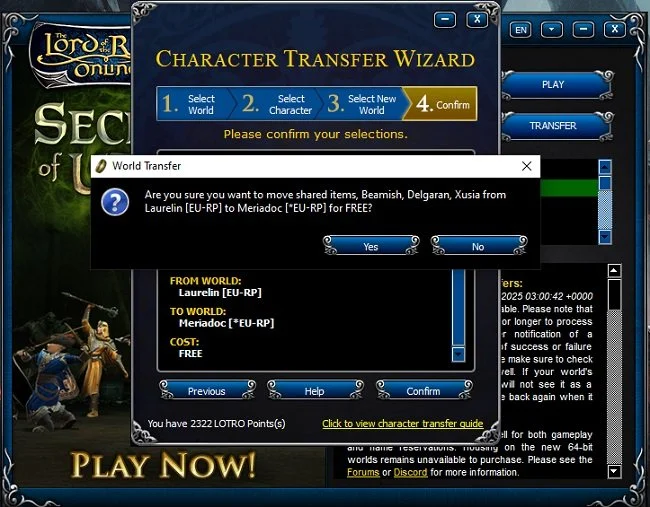
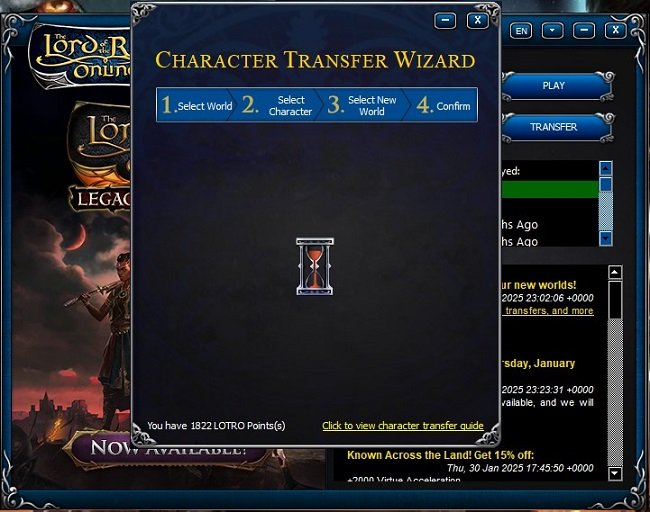
At 16:50 GMT today I started the LOTRO client launcher and saw that the transfer service button was available. I chose to migrate all three of my characters from Laurelin to Meriadoc and followed the process as stated in SSG’s migration notes. At first all appeared to be working as intended. However, I received an error message at the very end of the process indicating that it had failed. I then took a break and returned to my PC at 17:20 GMT and repeated the process. It took a few minutes and it was clear that this procedure was running somewhat slow but it was quicker than my previous unsuccessful attempt. This time round there were no errors and I received a confirmation message on screen. I have no idea how long it takes to migrate data from one server to another. I am writing this post at 23:00 GMT and my characters have neither left its old home nor arrived at its new destination.
I have one alt left, that I haven’t yet moved. They are based on the US server Landoval and I intend to move them to Peregrin. I shall attempt this tomorrow morning after I’ve checked to see if my initial transfer has been completed. Furthermore, I shall record the process and share it on YouTube. It may be of use to those who are concerned about this entire migration or unfamiliar with the transfer process. In the meantime, my advice to LOTRO players is to wait a little longer before attempting to migrate your characters to a new server. Let SSG process the backlog of data that is still outstanding. I chose to move servers now, mainly so I could write about the process. I suspect it will be a lot smoother in a week's time. Until then, stay put on your current server and do some in-game housekeeping to make your move easier when you decide to leave. I’ll post an update when my alts arrive on Meriadoc.
LOTRO: 64-Bit Server Migration Part 2
Standing Stone Games were scheduled to open their new 64-bit servers for the MMORPG, The Lord of the Rings Online, today. However, when the free transfer service went live yesterday, it was quickly overwhelmed by the sheer number of players trying to migrate their alts from the older 32-bit servers to the new ones. Eventually SSG had to disable the transfer facility so that they could process the backlog. Hence today’s launch of the new servers has been postponed till tomorrow. In the meantime, the official LOTRO forum’s have gone into meltdown with irate players berating the developers for handling the migration poorly. True to form, SSG have been somewhat defensive and prickly in response to what they see as unjust criticism. Let it suffice to say that neither party has covered themselves in glory and there is a good chance that the technical problems will persist a while longer.
Standing Stone Games were scheduled to open their new 64-bit servers for the MMORPG, The Lord of the Rings Online, today. However, when the free transfer service went live yesterday, it was quickly overwhelmed by the sheer number of players trying to migrate their alts from the older 32-bit servers to the new ones. Eventually SSG had to disable the transfer facility so that they could process the backlog. Hence today’s launch of the new servers has been postponed till tomorrow. In the meantime, the official LOTRO forum’s have gone into meltdown with irate players berating the developers for handling the migration poorly. True to form, SSG have been somewhat defensive and prickly in response to what they see as unjust criticism. Let it suffice to say that neither party has covered themselves in glory and there is a good chance that the technical problems will persist a while longer.
So far, as stated in my previous post, all I have done is create placeholder alts on the new server that I intend to move to. I didn’t attempt to migrate any of my characters yesterday because I suspected that the service would grind to a halt under the volume of users. Those who did manage to initiate a transfer request currently find their alts in “gaming limbo”. They cannot access their characters on their old server and the new servers aren’t open yet. Not exactly an ideal situation. Hence the pushback from players on the official forums. According to feedback from SSG, the slow performance of the transfer service is specifically due to housing claims and moving kinships. If the backlog isn’t addressed in the next 24 hours they have hinted that they may defer opening the new servers further.
After working IT for several decades and having been involved in several major server migrations, I am painfully aware that there is always scope for something unforeseen to crop up and derail the most well planned project. However, SSG seem bamboozled by the fact that a substantial percentage of their player base have done exactly what they were encouraged to do. Namely, transfer their alts to the new 64-bit servers, on the day stipulated in SSG. It seems somewhat odd to publish a timetable and then be surprised when people follow it to the letter. Sadly, this isn’t the first time that SSG have been wrongfooted by their own plans and it probably won’t be the last. Which is why a lot of LOTRO players have chosen to adopt a “wait and see” policy, like that of UK Prime Minister Herbert Asquith. Let us see what tomorrow brings.
Update: While writing this post, SSG have announced that the new 64-bit servers are now going to open on Friday 7th March. Furthermore, the transfer service will return on Thursday 6th March, possibly as early as 8:00 AM EST. However, all dates are potentially subject to change.
LOTRO: 64-Bit Server Migration Part 1
What Massively Overpowered calls LOTRO’s “Great Server Migration” began today. The MMORPG The Lord of the Rings Online has opened 4 new 64-bit servers in conjunction with the 2 existing 64-bit legendary servers and the long term plan is to migrate all current players over to them. Eventually, the 32-bit legacy servers will be shut down, however that is a long way off at present. As of today, VIP players can select a new server, log into it and create new characters with their desired names. These placeholder characters cannot be played at present but can be used to reserve names. Tomorrow, if all goes well, the new servers formally open and free transfers begin. Players can then delete placeholder characters and rename alts that they have migrated, thus restoring desired names. It should be noted that none of this is mandatory and players can remain on the old servers for the present.
What Massively Overpowered calls LOTRO’s “Great Server Migration” began today. The MMORPG The Lord of the Rings Online has opened 4 new 64-bit servers in conjunction with the 2 existing 64-bit legendary servers and the long term plan is to migrate all current players over to them. Eventually, the 32-bit legacy servers will be shut down, however that is a long way off at present. As of today, VIP players can select a new server, log into it and create new characters with their desired names. These placeholder characters cannot be played at present but can be used to reserve names. Tomorrow, if all goes well, the new servers formally open and free transfers begin. Players can then delete placeholder characters and rename alts that they have migrated, thus restoring desired names. It should be noted that none of this is mandatory and players can remain on the old servers for the present.
LOTRO developers Standing Stone Games offer comprehensive guidance with regard to migrating characters, moving player houses and transferring kinships to the new servers. So I decided to create a placeholder character and reserve the name of my primary alt. At present all my characters reside on Laurelin which is an EU RP server, therefore I have decided to move to Meriadoc which is the new 64-bit equivalent server. Hence, at 5:00 PM GMT I attempted to log into LOTRO and begin the process. Let it suffice to say that the number of players attempting to do the same had an impact upon response times but after a while I could log in to the game and select Meriadoc from the server list. I successfully created a placeholder alt for my primary character. Having secured the name of my beloved Lore-master that I have exclusively played since late 2008, I logged out of the game.
I have chosen not to secure the names of my remaining two alts, mainly because I seldom play them and have precious little attachment to them. I have also decided to sell my existing Premium House on my current server and not to repurchase it when I transfer to the new one. The house as it stands is just a virtual warehouse, mainly for unused housing items. As I don’t craft and seldom visit it, I just don’t see the point of having it anymore. Plus the prospect of having to redecorate a new home is singularly unappealing. Hence, for the meantime, I will just concentrate on moving my Lore-master. Upon arrival I suspect I shall be throwing away a lot of unwanted items and generally decluttering. At present, my kinship doesn’t have a plan to move, so I’m monitoring the situation. It may be time to move on and find a new one. Let us see what tomorrow brings.
Damerham
Damerham is a quaint rural village and civil parish located in the New Forest district of Hampshire, England. It is close to the market town of Fordingbridge. Damerham is distinguished by significant Neolithic and Bronze Age burial mounds. Historically, it was home to an Anglo-Saxon religious community and was referenced in the will of Alfred the Great, as it was at that time part of the royal estate. At the time of the Domesday Book in 1086, Damerham was recognized as a prominent settlement under the ownership of Glastonbury Abbey. It was mainly farms and agrarian small holdings. Today, the village still features a riverside mill and the church of Saint George date’s back to the Norman period. There is a church hall that hosts numerous local, seasonal events.
Damerham is a quaint rural village and civil parish located in the New Forest district of Hampshire, England. It is close to the market town of Fordingbridge. Damerham is distinguished by significant Neolithic and Bronze Age burial mounds. Historically, it was home to an Anglo-Saxon religious community and was referenced in the will of Alfred the Great, as it was at that time part of the royal estate. At the time of the Domesday Book in 1086, Damerham was recognized as a prominent settlement under the ownership of Glastonbury Abbey. It was mainly farms and agrarian small holdings. Today, the village still features a riverside mill and the church of Saint George date’s back to the Norman period. There is a church hall that hosts numerous local, seasonal events.
I had the pleasure of visiting Damerham today, as I was attending a family wedding and the reception was held at the village hall. The hall was built in 1996 and is situated next to the Allen River. This proved to be the perfect venue for a late winter afternoon wedding reception, as the weather was unseasonably pleasant, bright and warm. The riverside setting was ideal for wedding photos and the village hall amenities were more than adequate for a gathering of 70 plus guests. I took the time to take a stroll around Damerham prior to the reception getting into full swing and it is an extremely picturesque settlement. There is clear pride evident in the village, with so many committees and local bodies overseeing the upkeep and maintenance of facilities.
The church of St. George looks very imposing. It has served the community of Damerham for at least 900 years. It is likely that a Saxon church preceded it. The church is situated in a picturesque setting, positioned on a gentle rise that provides a view over a water meadow. It is an enchanting and harmonious structure that incorporates features from various architectural styles of churches dating back to the 12th century, while maintaining a balanced aesthetic that is not dominated by any single aesthetic. There are also numerous walking trails and footpaths throughout the local area, which highlight the natural beauty of the county of Hampshire. The village also has a wide variety of social clubs, with horticultural and gardening societies featuring prominently.
In many ways Damerham is the epitome of romantic preconceptions of a “rural Southern English village”. However, what struck me and left a very strong impression was a tapestry in the village hall celebrating the millennium of Damerham. There have been people living in this area for over a thousand years. This certainly provides a sense of continuity and I can see why the villagers are so proud of their home. Much of modern day life is ephemeral and yet in Damerham, there is a rich vein of history that runs all the way back to the stone age. A thousand-year-old village is a living testament to time, carrying the weight of history in its stones, streets, and traditions. Its existence raises deep questions about continuity, change, and the nature of human legacy. I look forward to returning at a later date and spending more time in this charming village.






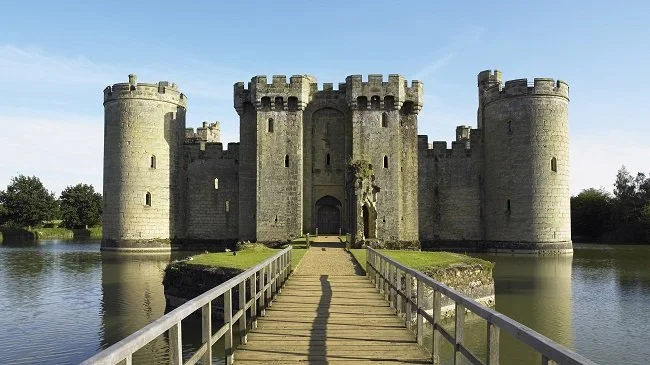


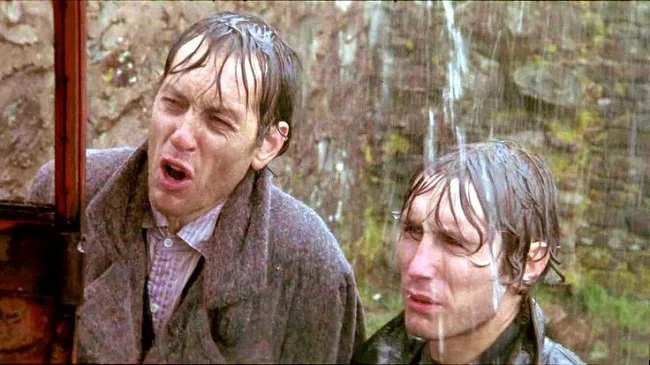

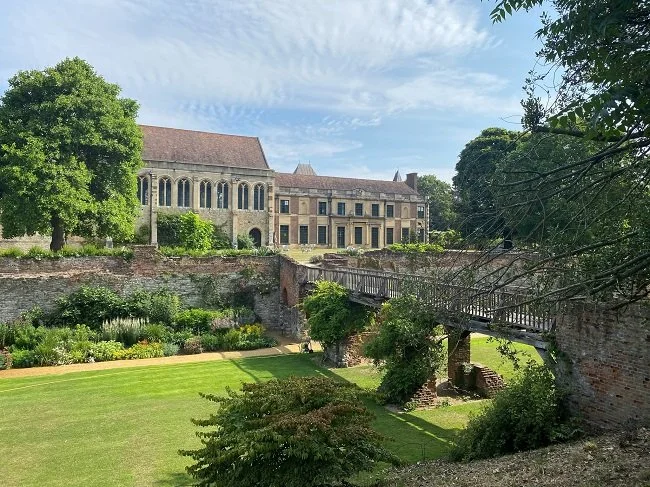


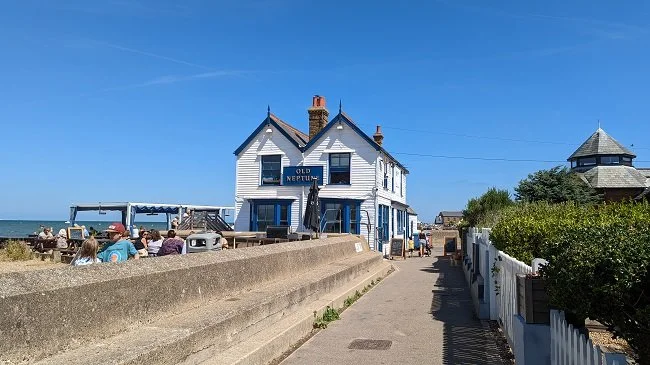











Nothing is Ever Easy
Have you ever embarked upon a tech related task that you consider to be a relatively simple undertaking, only to find it slowly becoming more complex and more involved as you progress. For instance, configuring software, upgrading your PC or changing internet service providers. I’m sure the answer is yes, because this seems to be life’s default position these days. Every endeavour starts with a simple premise, only to become bogged down in additional requirements and unforeseen issues that weren’t apparent at the beginning. The icing on the cake is often a cost that hadn’t been anticipated. To get the job done you have to put your hand in your pocket and pay someone or buy something. It is a pain in the butt, annoying and sadly, all too common these days.
Have you ever embarked upon a tech related task that you consider to be a relatively simple undertaking, only to find it slowly becoming more complex and more involved as you progress. For instance, configuring software, upgrading your PC or changing internet service providers. I’m sure the answer is yes, because this seems to be life’s default position these days. Every endeavour starts with a simple premise, only to become bogged down in additional requirements and unforeseen issues that weren’t apparent at the beginning. The icing on the cake is often a cost that hadn’t been anticipated. To get the job done you have to put your hand in your pocket and pay someone or buy something. It is a pain in the butt, annoying and sadly, all too common these days.
With this in mind, let me return to my recent aspiration to divest myself of Microsoft software. Specifically Microsoft Office. My plan hinged upon finding a replacement for Microsoft Outlook and I had decided on Mozilla Thunderbird. Everything seemed quite straight forward until it came to exporting my existing mailboxes from Outlook to Thunderbird. Outlook uses a proprietary file format, the Personal Storage Table (.pst) which is incompatible with Thunderbird. It needs to be converted to the .MBOX format before it can be successfully imported. However, conversion tools and apps tend to be mainly designed for corporate mail migration projects. Hence they have limited free access and often rename header details as part of the “free trial” restrictions. Full licences tend to cost several hundred dollars. Let it suffice to say that this development stopped my plans dead in their tracks.
Ringo Starr has wise words about things not being easy
So rather than waste time trying to work around the above solution, the path of least resistance has led me to another approach. I shall see if I can find a lifetime license key for Microsoft Outlook and negate the need for a subscription. Then I’ll uninstall the remainder of Microsoft Office. I may have to roll back to an older version if necessary. It’s not an ideal solution as such keys can be “questionable” in provenance and you can on occasions find them being blacklisted. Alternatively, I could just use Gmail to handle all my mail related requirements but that is basically just swapping one corporate behemoth for another, which doesn’t ultimately resolve the issue. The Mozilla Thunderbird option would be fine if I was starting from scratch but I have quite a substantial archive of mail that I don’t want to have to abandon.
Tech problems are often rabbit holes, as I found out recently with video editing and the problem of “variable frame rates”. I can think of no other industry where known bugs, incompatibility issues and paid service gating are just an accepted part of the associated landscape. Mind you, it’s not exactly plain sailing everywhere else. Our family car recently had some tire related issues. As a result we discovered how wheel nuts are not a common standard and there is often an adaptor required by independent garages before they can remove a wheel. The UK is also still debating whether to introduce legislation for standard USB-C chargers across a range of electrical devices. So it would appear that from a business perspective, it is financially lucrative not to make things easy for customers. However, this is a status quo that the public is far from happy with.