
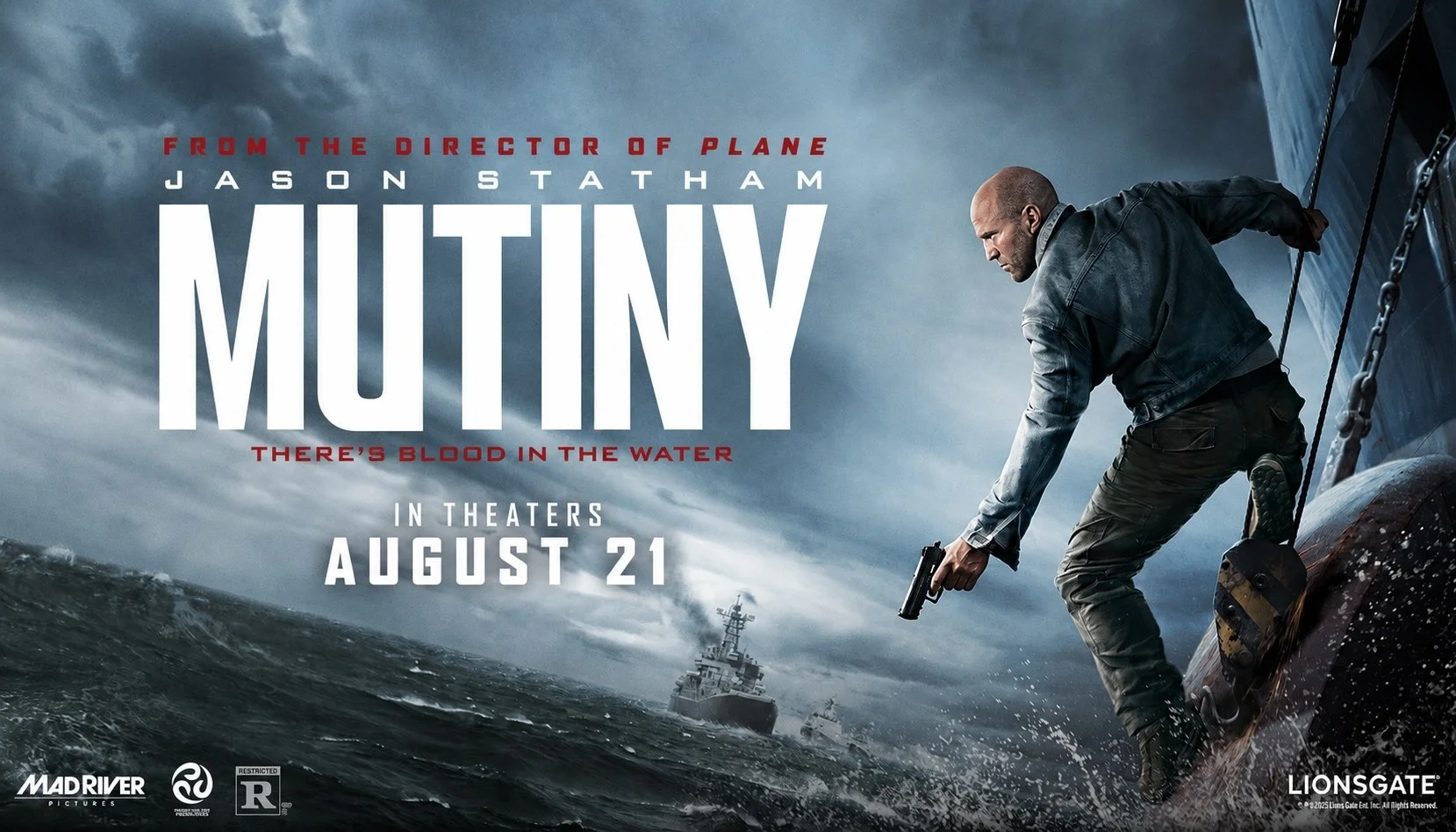
Mutiny (2026)
Jason Statham is an exemplar of the US mantra of “staying in your lane”. He makes action movies and occasionally strays into action comedies. His formula broadly works and is sufficiently lucrative to keep Mr. Statham employed. Therefore, if you watch a film in which he stars, you have a fairly good idea of what you’ll be getting. Of late, the criteria for his action vehicles have become more succinct. Jason Statham will play an innocuous character, such as a construction foreman or a bee keeper. Something terrible will subsequently befall another character who Mr. Statham has an emotional connection with in some capacity. He will subsequently hunt down those responsible and meet out death and violence. At some point the villain of the story will enquire as to how this innocuous person is so lethal. Research will then show that our Jason is in fact an ex-police officer/special forces operative/international assassin. There’s then a showdown and the villain dies. Job done.
Jason Statham is an exemplar of the US mantra of “staying in your lane”. He makes action movies and occasionally strays into action comedies. His formula broadly works and is sufficiently lucrative to keep Mr. Statham employed. Therefore, if you watch a film in which he stars, you have a fairly good idea of what you’ll be getting. Of late, the criteria for his action vehicles have become more succinct. Jason Statham will play an innocuous character, such as a construction foreman or a bee keeper. Something terrible will subsequently befall another character who Mr. Statham has an emotional connection with in some capacity. He will subsequently hunt down those responsible and meet out death and violence. At some point the villain of the story will enquire as to how this innocuous person is so lethal. Research will then show that our Jason is in fact an ex-police officer/special forces operative/international assassin. There’s then a showdown and the villain dies. Job done.
What gives each new Jason Statham action movie its respective flavour and differentiates it from the last one is the setting and possibly a celebrity villain. That’s it. These film’s tend to be very much a question of same meat, different gravy. Sometimes the scale of the plot can be quite substantive and grandiose. As with The Beekeeper (2024). Or it can be a smaller and more focused undertaking, such as in Shelter (2025). Although these films are very formulaic and derivative, every now and then one will go the extra mile and be quirky or have a sense of tongue in-cheek. Overall, if you just want to see an action film from a known quantity, a Jason Statham film will usually provide you with appropriate entertainment. Which brings us to the matter of Mutiny (2026), his latest release. At first glance this film has sufficient difference to raise one hopes. Set in Thailand the action quickly moves to a container ship in the Indian Ocean. The plot involves human trafficking. Sadly it all falls somewhat flat and proves quite disappointing.
Cole Reed (Jason Statham) is the private bodyguard of billionaire industrialist Tibu Campallo (Ramon Tikaram). On the eve of selling his shipping company, Campallo and Reed are ambushed at a bogus police roadblock and Campallo is fatally shot. Reed is subsequently framed for the murder, which is portrayed in the press as a kidnapping gone wrong. Reed finds documents on one of the dead gunmen which trace back to a container ship that is due to depart for international waters imminently. He infiltrates the vessel and discovers that a group of refugees are being trafficked across the Indian Ocean. The ships captain, Marko Madsen (Roland Møller), and his crew of mercenaries play a game of cat and mouse with Reed as he seeks to uncover the plot as to why his boss was murdered and rescue the migrants that are being help prisoner. He is aided by the ships third officer, Angie Ellis (Annabelle Wallis) who was asked to replace a sick crew member at the last minute and is not part of the criminal gang.
Mutiny has several flaws. First the title itself. There is no mutiny in this film, so the title is redundant at best. The second and more importantly is the uninspired direction byJean-François Richet. There is absolutely no sense of urgency to the story, no stylistic flair and not even a hint of humour, which most films of this genre fall back on when things are struggling. The plot is executed in a very uninspired and pedestrian manner. The cast broadly seem indifferent to the proceedings and make little effort with the insubstantial characters they portray. Furthermore, this all sits rather incongruously with other aspects of the production. The second unit direction is handled well by Steve Griffin who was worked on such action films as Inception, Mad Max: Fury Road and The Batman. The fights scenes are quite brutal with stabbings, gun play and hand-to-hand combat. Someone gets their cheek torn open with the hasp of a padlock. Another disposable bad gut gets a fire axe in his head.
As a result of the paucity of its own narrative, Mutiny simply cannot get by on the merits of its action scenes. Films of this genre need charismatic bad guys. Not just someone who is tall, covered in tattoos and Scandinavian. They also need stereotypical archetypes in supporting roles who bolster the proceedings by turning their performances up. The boss who says things like “if I can’t stop you, I might as well support you” or a spunky sidekick with an endless supply of cliched quips. These are all missing from Mutiny. Other aspects such as the Thai setting are squandered, as is the subject of human trafficking. What remains is singularly unremarkable pastiche of Die Hard, Under Siege and numerous other classic action films. It may be a case that this film is just an anomaly compared to previous Jason Statham vehicles. Or it could be that the successful formula is simply coming to the end of its lifecycle.
Jason Statham is an exemplar of the US mantra of “staying in your lane”. He makes action movies and occasionally strays into action comedies. His formula broadly works and is sufficiently lucrative to keep Mr. Statham employed. Therefore, if you watch a film in which he stars, you have a fairly good idea of what you’ll be getting. Of late, the criteria for his action vehicles have become more succinct. Jason Statham will play an innocuous character, such as a construction foreman or a bee keeper. Something terrible will subsequently befall another character who Mr. Statham has an emotional connection with in some capacity. He will subsequently hunt down those responsible and meet out death and violence. At some point the villain of the story will enquire as to how this innocuous person is so lethal. Research will then show that our Jason is in fact an ex-police officer/special forces operative/international assassin. There’s then a showdown and the villain dies. Job done.
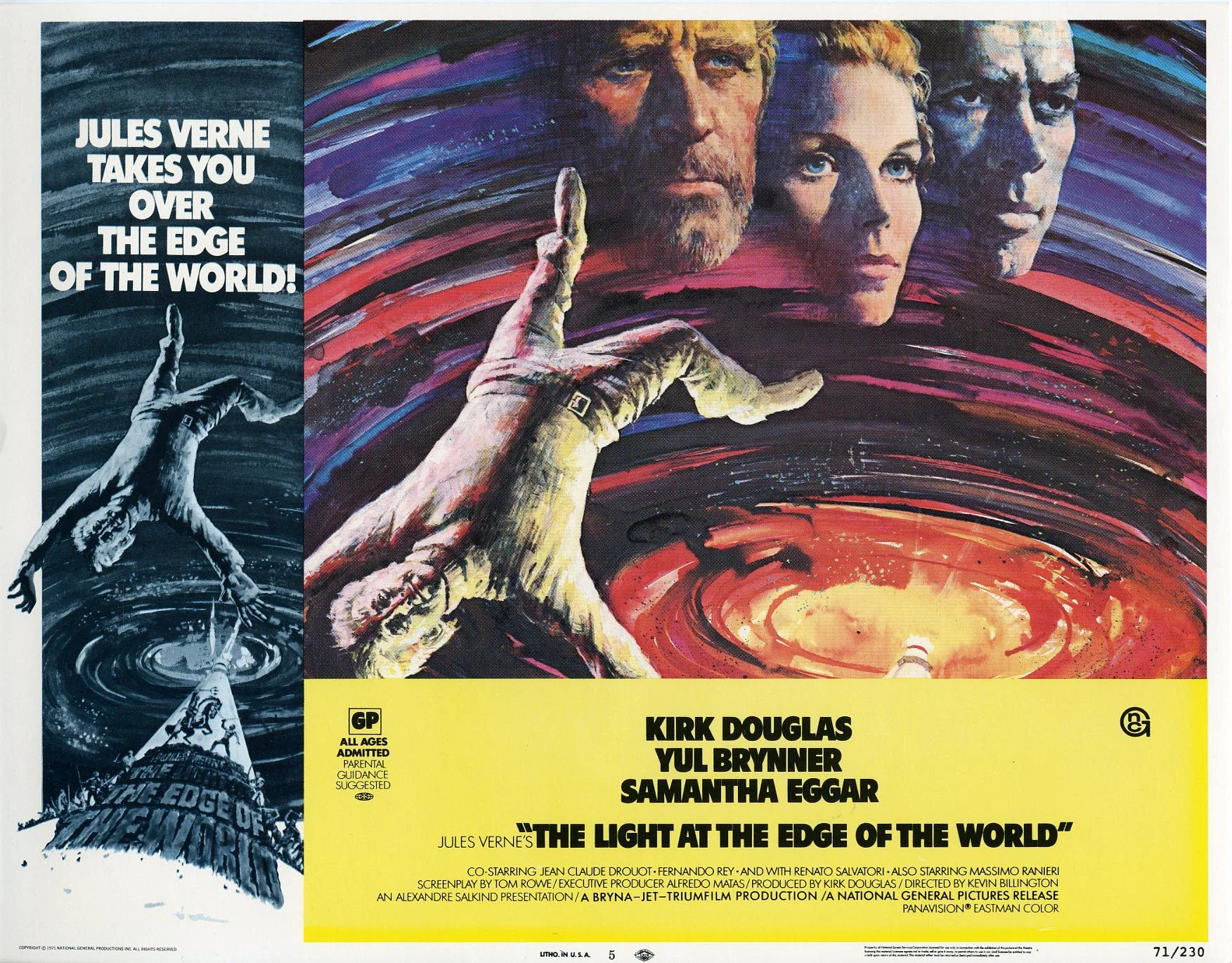
The Light at the Edge of the World presented itself as an action movie upon its release in 1971. Based upon a story by Jules Verne, the Spanish American co-production was driven by its star Kirk Douglas, who curiously hired British director Kevin Billington to helm the project. This tale of a lighthouse keeper fighting a war of attrition against a group of pirates that have captured his island, was market as an adventure film ostensibly in the idiom of the authors previous works and as a pirate movie. MGM bought the rights to distribute the film in the UK on the misunderstanding that it was a family friendly production. It was not and remains so. They subsequently had to cut 15 minutes of violence and torture as well as an undercurrent of sexual assault to secure a suitable rating. Conversely, the US distributors received an arbitrary PG rating, despite the fact this is one of a handful of films that honestly depicts pirates as murderers, rapists and worse.
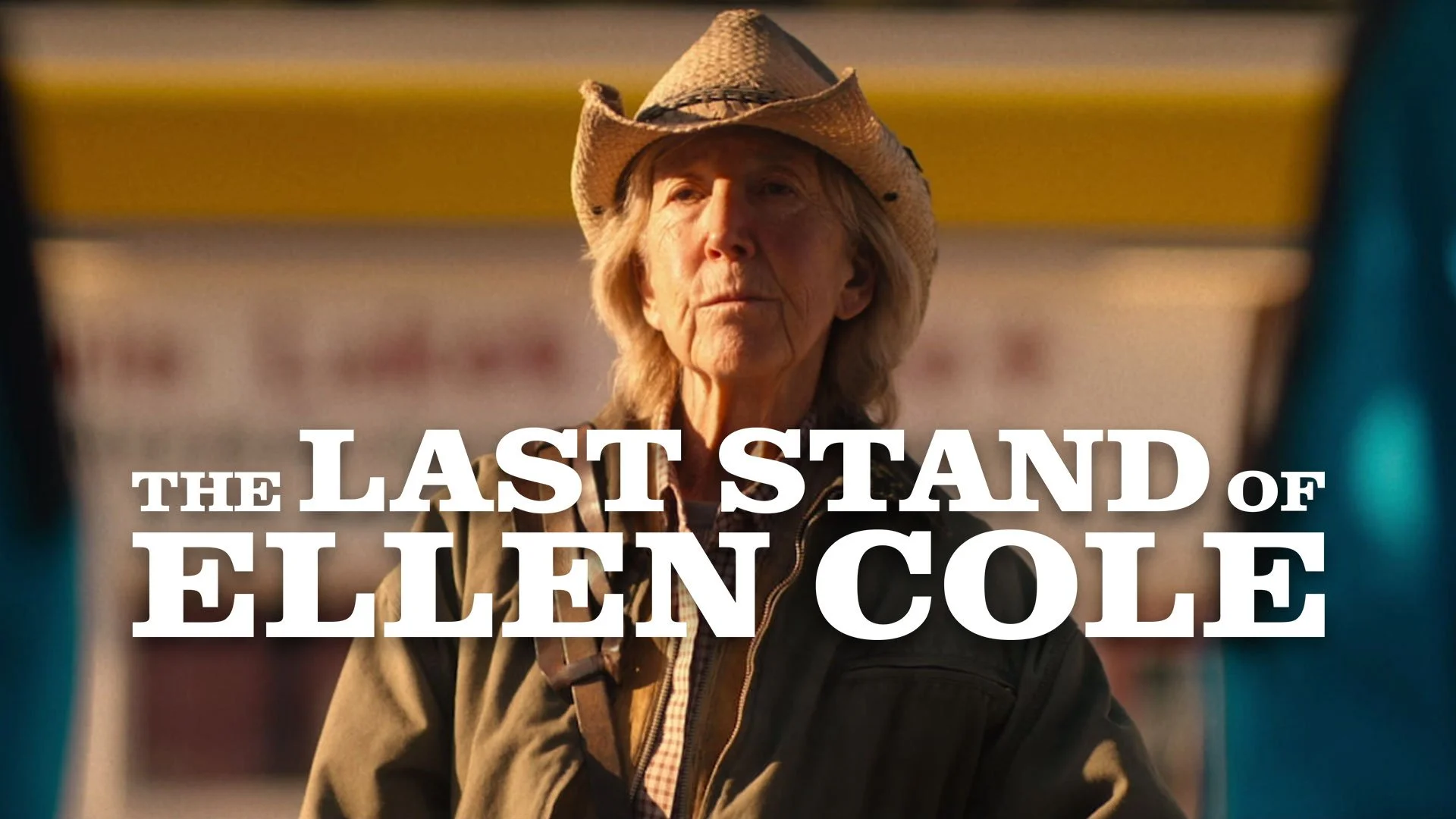
It’s an established action film trope. The fire team comprised of ex-military personnel, move in on their target. Only to have the tables turned by someone they don’t deem a threat. What makes it different in The Last Stand of Ellen Cole is a throwaway line of dialogue. The bested operative lies bleeding on the floor and the protagonists stands over them ready to finish them off. “Don’t, I have a cat” they feebly plead. For me that was the icing on the cake. The movie had already established it was taking the “same old, same old” and doing something different. Something fun, if taken in the right spirit. This scene tipped the balance and I embraced this film because it was being honest about what it is. This is a modern B movie that decides to give a very specific sub-genre a makeover. Furthermore, its clearly done with an affectionate wink, which is very different to sly wink. This isn’t deliberate self-knowing irony. Its just a film doing something different and possibly silly but it genuinely wants to have fun with it.
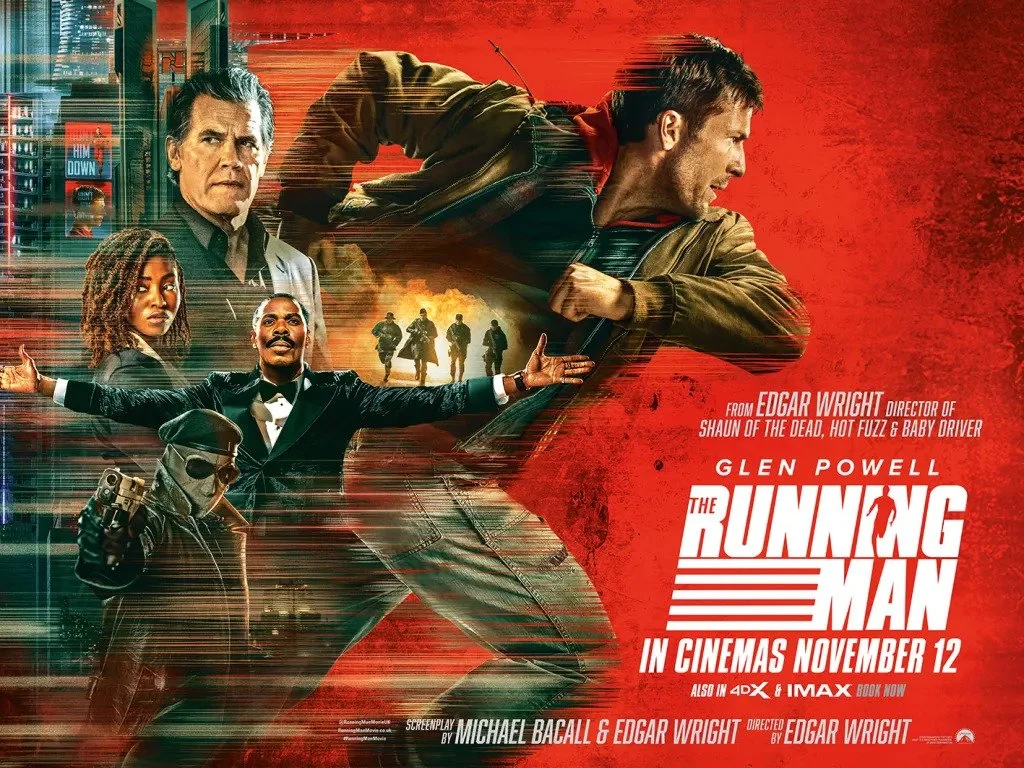
Stephen King’s dystopian story, The Running Man, was previously adapted very loosely in 1987, as a vehicle for Arnold Schwarzenegger. That version focused mainly on the “Battle Royale” element of the story and leaned heavily into Arnie’s personality, rather than the politics of the book. It also wasn’t well received by the author. Edgar Wright’s remake follows the source text a lot more closely and is far more interested in its political themes and wider social commentary. Furthermore, this version re-establishes the everyman quality of the hero of Ben Richards, rather than him being the muscle bound, ex-military hero as per Mr. Schwarzenegger’s prior interpretation. This time round, The Running Man uses a lot of the visual and narrative tropes of contemporary reality TV, making this forty three year old story very relevant to today’s viewers and couching the film in a style that is recognisable and accessible.
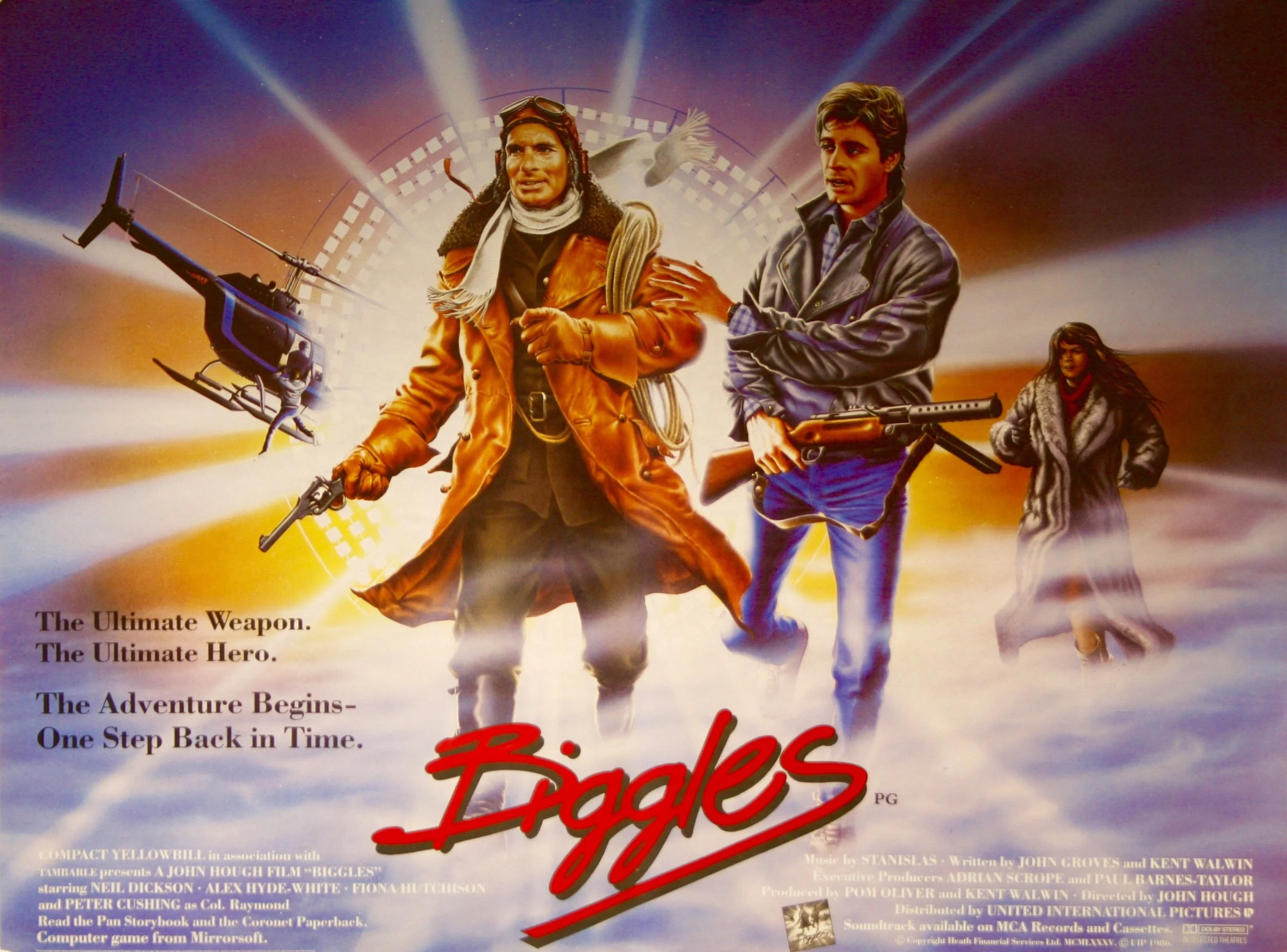
After the success of Raiders of the Lost Ark in 1981, filmmakers scrambled to find existing intellectual properties that they could use for similar films. Hence archaic heroes such as Alan Quatermain were hastily given a modern makeover and thrust into generic movies, in a vague attempt to replicate Steven Spielberg’s successful formula. Which brings us neatly on to James Charles Bigglesworth AKA “Biggles”, a fictional pilot and adventurer from a series of books written by W. E. Johns between 1932 and 1968. Several attempts had been made in the past to bring this character to the silver screen, including one by Disney but they all failed. However, the commercial and critical success of Indiana Jones provided sufficient impetus to greenlight a new film. However, due to some curious production choices, when Biggles was finally released it was far from just a period set, action movie.
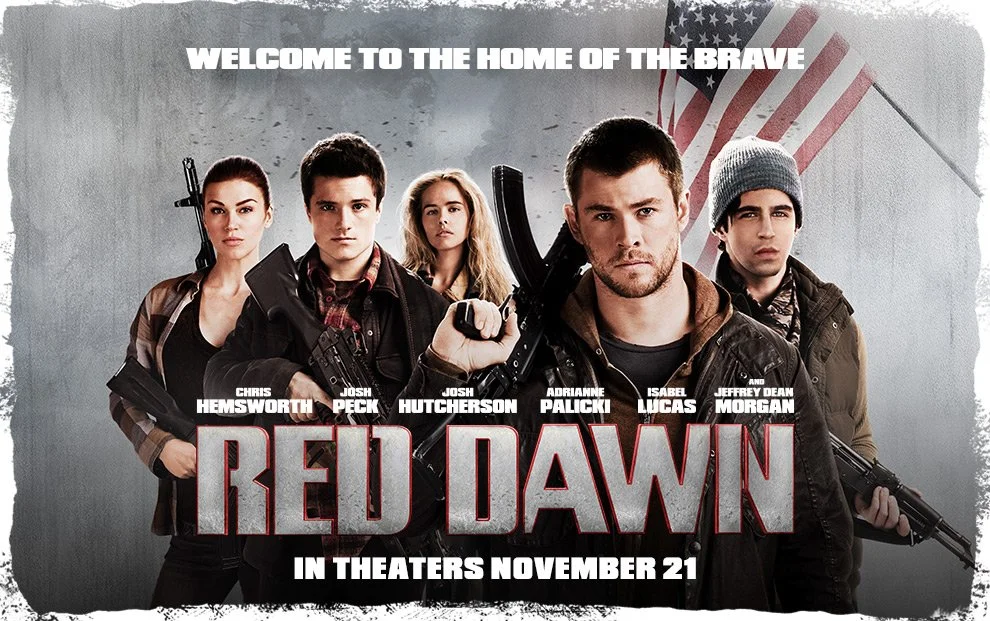
Setting aside the hubris of remaking a film such as Red Dawn, the 2012 reboot had a troubled production. Shot over the course of late 2009, on location in Michigan, MGM intended to release the film in September 2010. However, the studio’s financial problems became unsustainable over the course of that year and the film was shelved, while a financial solution was sought. Furthermore, while Red Dawn was in post production, there was a major economic shift within Hollywood due to the increasing importance of the Chinese market. This was a significant problem for MGM because the new version of Red Dawn had the Chinese invading the USA instead of Russia. Hence there were reshoots and the need for additional visual effects, so that the Chinese could be replaced with North Koreans. MGM eventually went bankrupt and the distribution rights to Red Dawn were sold off. The film was eventually released in 2012.
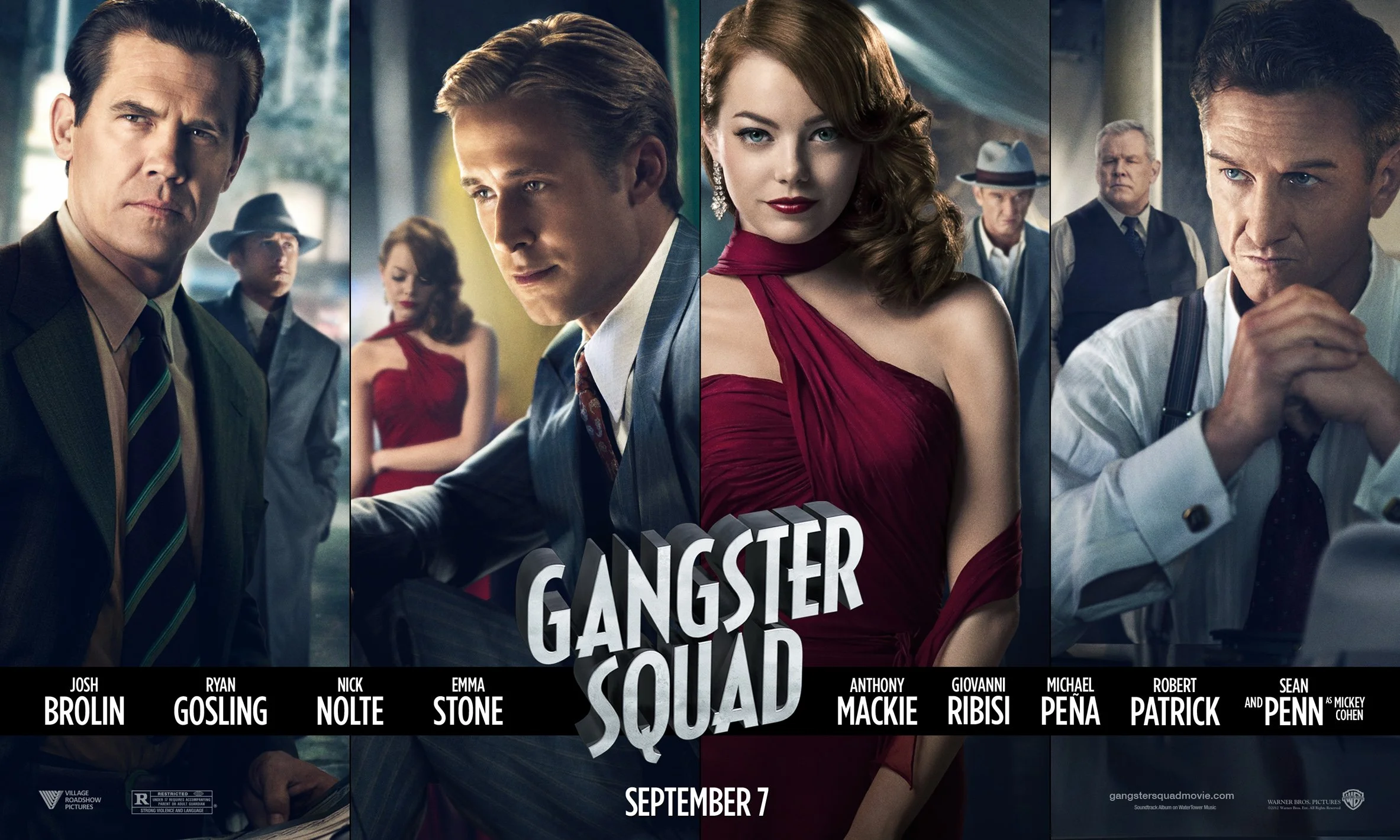
When I first saw the promotional trailer for Gangster Squad back in 2012, prior to its release, I wasn't especially impressed. I simply thought the film was another attempt to re-invent the gangster genre for a generation who were not especially familiar with it. I wasn't exactly overwhelmed with director Ruben Fleischer's resume either. I didn't particularly like Zombieland and haven't seen 30 Minutes Or Less. Then came the tragic mass shootings in Aurora, Colorado which led to the movie being delayed so that the original ending, which featured a shoot-out in a movie theatre, could be replaced. Hence when I finally watched this film recently, I wasn't expecting a movie up to the standards of say Once Upon A Time In America or Miller’s Crossing and it would seem that I was right do so. Gangster Squad is not especially noteworthy in any respect.

Levon Cade (Jason Staham) is a former Royal Marine Commando who has retired from military service and now works as the leader of a construction team in Chicago. He has a close relationship with Joe and Carla Garcia (Michael Peña and Noemi Gonzalez ) who run the company and considers them as family. Outside of work, Levon is involved in a bitter custody battle for his daughter, against her maternal grandfather, who blames Levon for his daughter’s suicide. When Garcia's teenage daughter Jenny (Arianna Rivas) goes missing, Levon reluctantly agrees to help her parents and get her back. Beginning his search at the nightclub where Jenny was last seen, he soon discovers that she was abducted by Russian traffickers. Furthermore, the culprit is Dimi Kolisnyk (Maximilian Osinski), the wayward son of a senior ranking gangster.
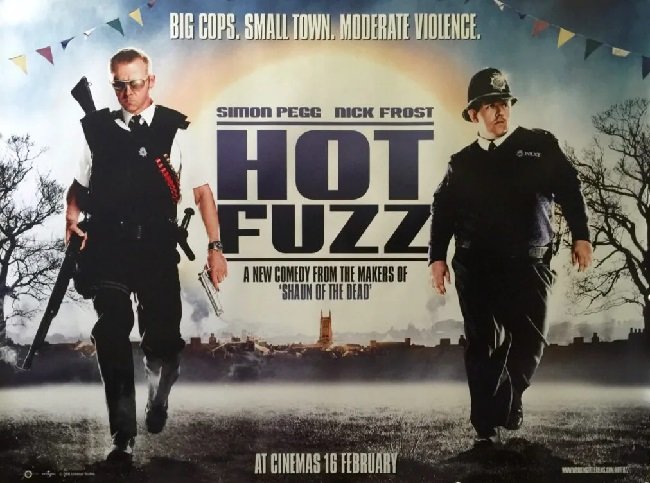
PC Nicholas Angel (Simon Pegg) is an exemplary Police Officer, with a strict adherence to the letter of the law. As a result of making the rest of the London Metropolitan Police look bad, he is transferred to the rural town of Sandford, Gloucestershire. On arrival, Angel finds that the local Inspector, Frank Butterman (Jim Broadbent), takes a far more laissez-faire approach to policing. His colleagues are incompetent and he is further hampered by the Neighbourhood Watch Alliance (NWA), who prioritise low crime statistics over law enforcement due to their desire to win the title of “Village of the Year”. Furthermore, Angel is partnered with the Inspector’s son, Constable Danny Butterman (Nick Frost), who is infatuated with “buddy cop” movies and is in awe of Angel’s London experience. “Have you ever fired two guns while jumping through the air?” However, a sudden spate of grisly accidents lead Angel to believe that there's more to the seemingly tranquil and picture-perfect community than meets the eye.
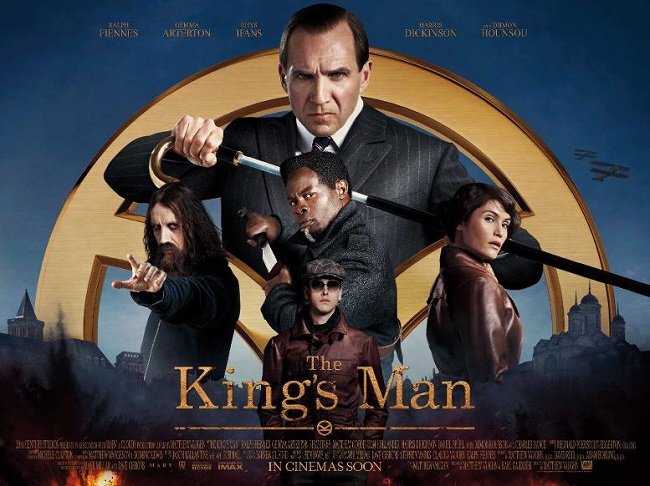
As a collection of history's worst tyrants and criminal masterminds gather to plot a war to wipe out millions, one man must race against time to stop them. Discover the origins of the very first independent intelligence agency in The King's Man. Based on the Comic Book “The Secret Service” by Mark Millar and Dave Gibbons. 20th Century Studios
Matthew Vaughn’s The King’s Man is an inconsistent film, both narratively and tonally. It veers between serious themes and stylised, hyperbolic action. At times it does quite a good job of exploring such complex subjects as global politics, mechanised warfare and colonialism. Sadly it then wrenches the viewer out of these cerebral reveries as it lapses into the sort of over the top action sequences that were notable in the two earlier films. It’s a shame because The King’s Man gets so many other aspects of the production right. The casting is very interesting, especially Ralph Fiennes as the “pacifist” Duke of Oxford. He is actually a very good fit for the action genre. Djimon Hounsou and Gemma Arterton are given little backstory beyond being respectively the faithful manservant and the family nanny but both are notable due to their own inherent acting chops and personal charisma. Rhys Ifans obviously has a great time as Grigori Rasputin, ensuring all the man’s vices are robustly depicted.
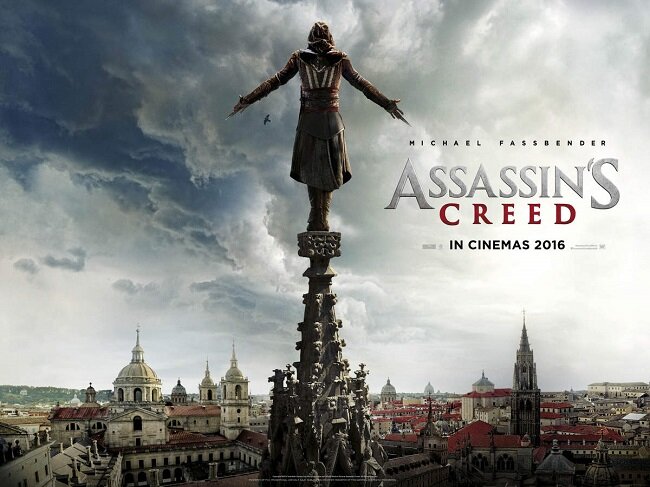
On paper, a video games franchise such as Assassin’s Creed lends itself perfectly to a cinematic adaptation. The parkour action scenes, the historical settings and the contemporary conspiracy theory themes are all elements that should play well with a modern youth audience. Hence with the backing of a major studio such as Twentieth Century Fox and a budget of $125 million, the 2016 movie should have been a guaranteed box office hit. The casting of Michael Fassbender, an actor who is comfortable with serious roles and big Hollywood franchises, should have carried this film comfortably over the finishing line. Director Justin Kurzel, who had found critical success with his adaptation of MacBeth a year previously, must have looked like a safe pair of hands to handle such a project. Sadly, that was not the case. Assassin’s Creed is not the sum of its parts, in fact many elements appear to be pulling in opposite directions. The resulting feature film is staggeringly dull, soulless and a chore to watch. A testament to how modern big budget franchise movies have become a production line, with all the art stripped from them.

300: Rise of an Empire is a curious beast, being neither a sequel nor a prequel. It is infact a tale that takes place simultaneously with those of the original movie. While Gerard Butler is busy making a last stand at the Battle of Thermopylae, fellow warrior and politician Themistokles, played by the singularly uncharismatic Sullivan Stapleton, leads a similar army of buffed Greeks against the Persian fleet. Once again we have a movie that is the epitome of style over substance, complete with a sound design that challenges what can physically be endured by human hearing. They say the first casualty of war is innocence but in this type of movie it's closely followed by historical accuracy and authentic depictions of ethnicity. 300: Rise of an Empire is a cinematic assault upon the senses but not in a good way like Mad Max: Fury Road.
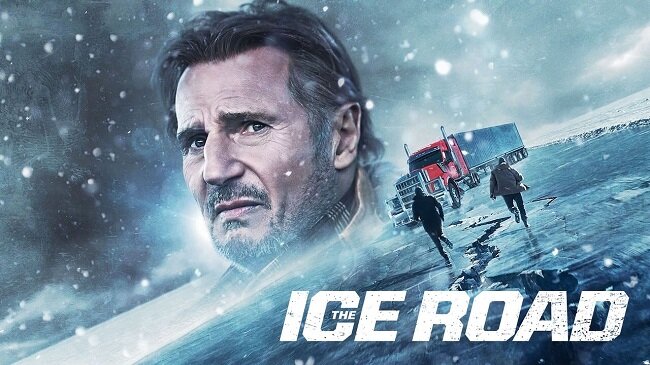
Back in September 2017, Liam Neeson stated in an interview with Sky News that he was retiring from the action genre, due to his age. He felt that audiences would question his credibility in such roles. After the release of The Commuter (2018) and Cold Pursuit (2019) Mr Neeson appeared to return to human dramas and films that focus on performance rather than punching man and beast. Ordinary Love and Made in Italy, both released in 2019, demonstrate the actor’s versatility and skill. People seem to forget that he is a thespian who was initially known for his character driven roles in films such as The Mission (1986), Rob Roy (1995 and Michael Collins (1996). It was only in 2008 that he reinvented himself as an action hero. It’s all a far cry from Schindler’s List and his performance that earned him an academy award nomination. The reason I mention all of this is because The Ice Road is the third action movie I’ve seen in 2021 that stars Liam Neeson.
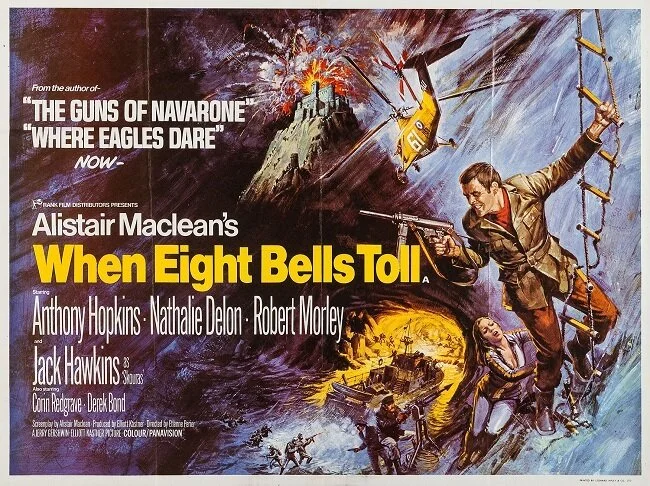
One of the stand out tropes of the modern action film is that the stakes are always cranked right up to 11. Terrorists, biological weapons and nuclear bombs are common threats in such movies with a hero or heroes trying to save the world from death and destruction or worse. However, back in the sixties and seventies, things were a little more straight forward and in some respects more credible. Take When Eight Bells Toll, released in 1971, for example. British Treasury secret agent Phillip Calvert investigates the theft of £8,000,000 in gold bullion by a gang of international smugglers. In the context of the times this was no small beer however it’s somewhat mundane compared to fighting super villains and their space lasers. Frankly I prefer these low key plot devices as they can make a film a little more plausible within the confines of the genre. A concept that is often forgotten today.
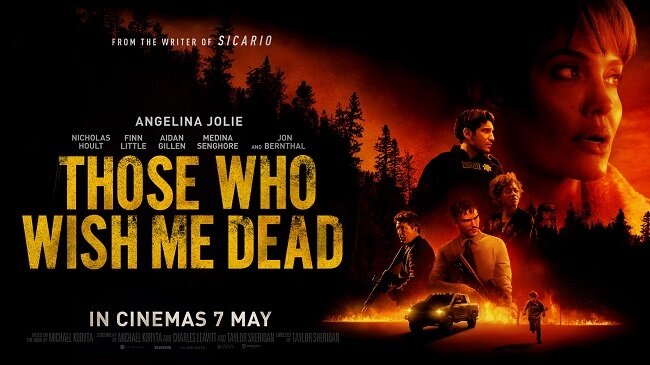
Forensic accountant Owen Casserly (Jake Weber) flees his home with his teenage son Connor (Finn Little) when he discovers he has been targeted by a pair of assassins (Nicholas Hoult and Aidan Gillen) who have been hired to stop him giving evidence in a major corruption case. Connor witnesses the murder of his father after their car is run off the road. Entrusted with important written evidence, he escapes into the dense forests of the Montana wilderness pursued by the killers. Seeking help he runs into smokejumper Hannah Faber (Angelina Jolie) who is stationed at a remote fire lookout tower. Hannah suffers from PTSD from a previous forest fire in which she was unable to save three young boys. Hannah attempts to lead Connor through the forest to safety. Meanwhile the assassins set fire to the forest to divert the attention of the authorities and cover their tracks.

I must admit that I did not have particularly high hopes for Paul W S Anderson's remake of the 1975 Roger Corman produced cult classic. Anderson’s work varies greatly. Event Horizon and Soldier are solid genre films but I still have not fully come to terms with Alien vs. Predator. Jason Statham is also a name that divides the public, with solid material such as The Transporter and unfathomable tosh like Revolver. But despite these considerations, Death Race is in fact quite a surprise and does not follow the path that so many remakes do. It takes the basic themes and concept associated with the original and tries to do something different with them. It doesn’t reinvent the wheel nor is it a genre milestone. But it does offer a different spin on things, have some engaging action scenes and provide some dumb but enjoyable entertainment. When combined with snacks and some beer this is a passable way to kill 111 minutes.
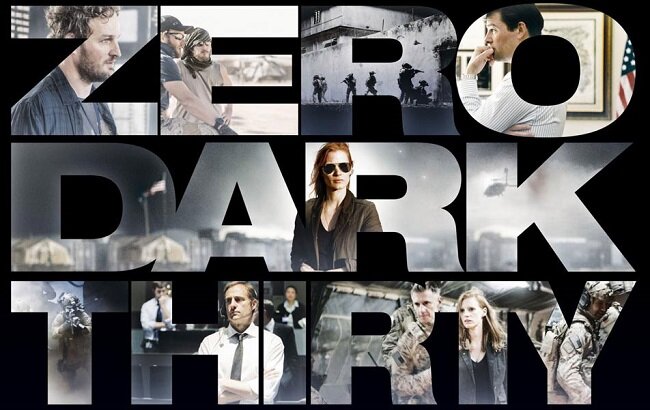
I did not watch Zero Dark Thirty upon its initial release, due to the politics surrounding it. I wanted to be able to view it free from bipartisan debate. Eight years on I believe this now achievable and although debate still exists it is now more measured and less strident. Zero Dark Thirty is certainly a compelling movie. It plays as a docudrama, providing an in-depth study of the US intelligence services hunt for Osama Bin Laden. It cannot be faulted on a technical level and the performances are very strong. It does not adopt a celebratory or triumphalist tone in its approach to the story. Director Kathryn Bigelow endeavours to keep the proceedings focused upon the intricacies of an intelligence driven manhunt. There is little or no tubthumping, jingoism. The decision to find Bin Laden is shown as a political and military exercise of foreign policy. The film solely focuses on the story from a US perspective but that is perfectly acceptable as it is not intended to be an exploration of geo-politics.
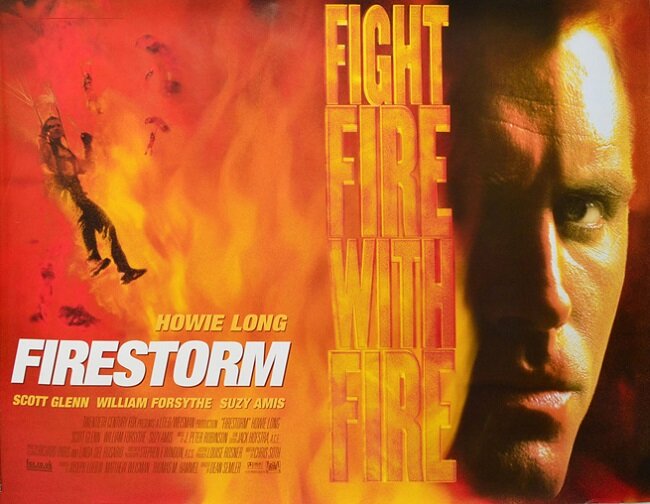
Firestorm was originally written as a vehicle for Sylvester Stallone, however when the production company Savoy Pictures went bankrupt the screenplay was bought by Twentieth Fox and the scope of the movie reduced to suit a lower budget. It’s broadly similar to Cliffhanger in so far as the lead character is a specialist in a certain field who runs afoul of criminals in a perilous environment. Whereas Cliffhanger is set in the Rocky Mountains, Firestorm takes place in the forests of Northern Wyoming. After the script was revised four times, the finished screenplay was given a final “polish” by Graham Yost who has considerable experience with the action movie genre. As stallone was no longer associated with the project and the production had been repurposed to be less extravagant, the movie was assigned to former NFL star Howie Long. Long had already appeared in the John Woo movie Broken Arrow (1996) and the Firestorm was seen as a means to give him a star vehicle.

The original French movies District 13 and its sequel District 13: Ultimatum, conceived and produced by Luc Besson, were enjoyable variations of the Escape from New York theme. Their charm lay in their European pedigree and the skilful use of parkour. The two leads, David Belle and Cyril Raffaelli, were eminently suited to the minimalist roles and the screenplays were fun. Half of these movies appeal was the fact that they were not mainstream US products. Brick Mansions is the Hollywood remake of District 13, as well as being Paul Walkers’ final movie. Sadly, this film is far from a fitting epitaph, being devoid of any charisma or innovations. It is blandly shot , poorly edited and has been stripped of everything that made the original entertaining.
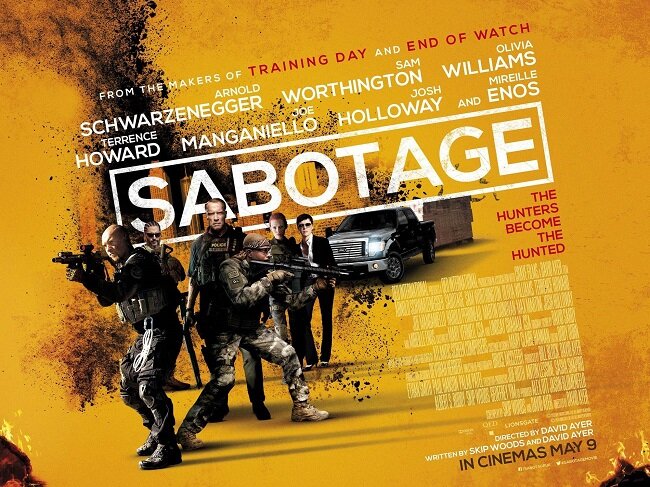
Arnold Schwarzenegger's return to the big screen after his political career has been uneven to say the least. His cameos in The Expendables and The Expendables 2 were well received, with their self referential charm and age related irony. Yet his first major movie The Last Stand, although competent, failed to find an audience. Escape Plan fared better at the box office but did not put Arnie back on the A list. Effectively there's a large percentage of the contemporary cinematic audience who were born after his heyday and are simply not overt fans of his work. His core audience is more than likely of the age group that consume most of their film entertainment at home. Which may explain why Sabotage tanked in the US upon release on March 28th 2014. It was the worst opening box office of Arnie's career. He used to break first day opening records.
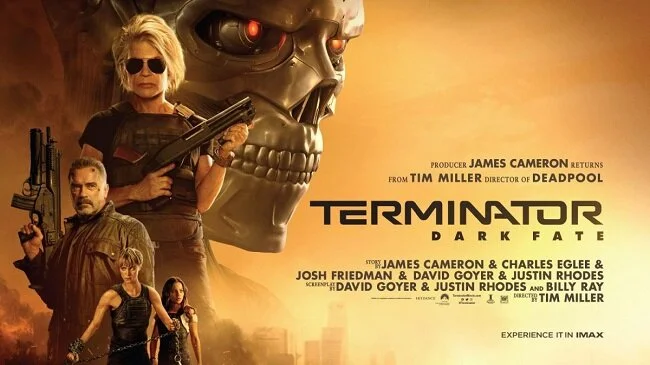
Sequels and reboots are hardly a new concept and have been a part of Hollywood culture since the 1930s. The success of the Universal Horror movies from that era being a prime example of direct follow ups and retconned movies. However, there is one fundamental rule that distinguishes a good sequel from a bad one. You should never mitigate, undermine or make irrelevant the events of the previous movie, just to provide your new film with a raison d'être. For example, the events of Aliens do not contradict or trivialise those that happened in Alien. In fact with that franchise there is a very clear logical progression between the two movies. The same is true for Mad Max and Mad Max 2 or Star Wars and The Empire Strikes Back. The key is to progress a story, enhance it or explore things from an alternative angle and bring something new to the cinematic table. Sadly this philosophy is all too often lost on corporate film making. Which means that many sequels are just tedious replays of prior films. Terminator: Dark Fate falls squarely into this category.

The enduring appeal of the character John Rambo in First Blood comes from the fact that he is a traumatised ex- service man who keeps himself to himself as he drifts from job to job, trying to come to terms with his wartime experiences. His poor treatment at the hands of a small-town Sheriff is a succinct metaphor for the social and political indifference that Vietnam veterans were shown upon their return to the US. He’s a man with a code in a world that no longer has any use for him. His simple and honest patriotism is not returned and he is in fact viewed with shame by many from the nation he loves. Furthermore, the first movie does not paint him as a cold-blooded killer. Despite provocation he is not the first person to shoot to kill. Rambo is in many ways a victim. A broken man, who society has asked to do unspeakable things. Now society wants nothing to do with him and fears the “monster” they created. Although clearly an action movie, First Blood had narrative depth and a flawed but sympathetic protagonist. 37 years and four movies later, such dramatic themes have long left the franchise. The central character is indeed a caricature of its former self.

It was hardly surprising that the movie adaptation of Chris Kyle's autobiography American Sniper, would cause controversy. The Iraq war, US Foreign Policy and national pride are seldom subjects that are discussed in a calm and measured fashion. And then there are the personal politics of director Clint Eastwood to consider. Hence there were claims from some quarters upon the movie’s release, that it was Islamophobic and counter claims that criticisms of the late Chris Kyle were unpatriotic. There still remain issues regarding the authenticity of events depicted in the source text and subsequently the movies screenplay by Jason Hall. Yet none of these factors have in anyway impacted upon the film's box office returns which currently stands at $247,900,417 worldwide.
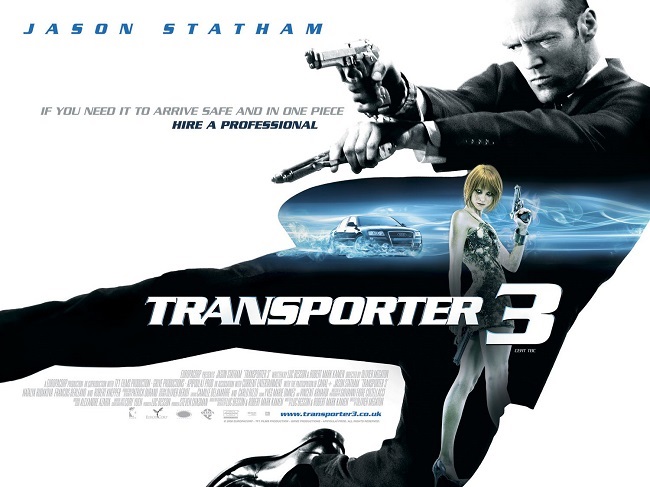
Do I really need to present you with some sort of plot synopsis for Transporter 3? No, I didn’t think so. More of the same as Frank Martin (Jason Statham) and his police chum, Inspector Tarconi (Francois Berleand) become embroiled in yet another high-octane escapade. There's fights, car stunts, exotic international locations and a strong sense of humour. This time, the disposable love interest is a Ukrainian girl named Valentina (Natalya Rudakova) who fulfils her role succinctly. The film benefits by being set back in Europe, after the mistake of basing Transporter 2 in the US. This time, the story takes us to such locations as Budapest and Odessa. The international film crew once again bring a veneer of panache to the production that is conspicuously absent in US action movies. For a modest budget fil, Transporter 3 it looks very good. Again the proceedings are given a boost by a pertinent soundtrack by Alexandre Azaria and a selection of European “tunes”.

Jason Bourne originally graced our screens for the first time seventeen years ago. The Bourne Identity was a gritty, minimalist take on the espionage genre and a welcome change from the excesses of the Pierce Brosnan Bond era. The story arc was sustained over three movies and ended efficiently and succinctly. After which Matt Damon moved on, as did the director of two of the movies, Paul Greengrass. Which leaves us with The Bourne Legacy; the tangential sequel that arrived in 2012. A film that exists because the money men and bean counters hate to pass up on a franchise until it has been squeezed utterly dry. Hence, they commissioned the writer of the series, Tony Gilroy, to come up with a screenplay and direct a spinoff movie. Jeremy Renner was cast in the lead role. Yet despite narrative and production continuity, The Bourne Legacy was not a Jason Bourne movie with the star appeal of Matt Damon. Although the film turned a profit, it had the lowest box office returns out of the entire franchise.
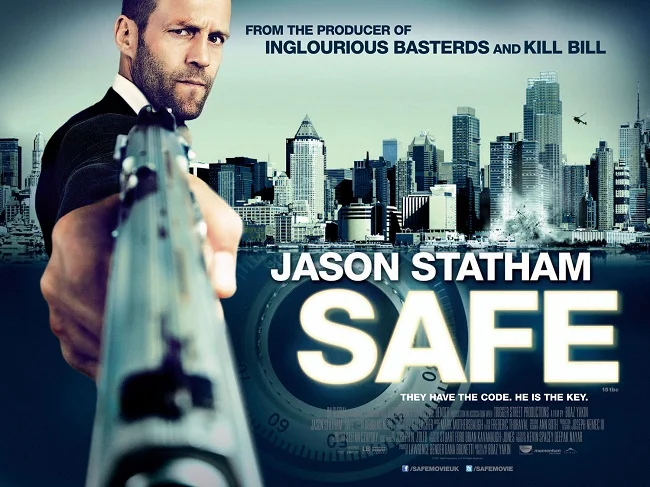
During the eighties there was a clear league table of action movie stars. By the mid-nineties this system fell into decline and the Hollywood lacked any clearly defined exponents of the genre. A decade later, due to the success of Luc Besson’s Transporter films, Jason Statham became a bankable box office star in this field. When you look at Statham's early work in Lock, Stock and Two Smoking Barrels it is hard to envisage the "mockney geezer" as an international action star. Yet he has successfully stepped into the role and enjoys a large following. I enjoy his work as he has a likeable on-screen persona. My 88-year-old Mum likes him to because "he wears nice suits". The action genre seldom reaches such a diverse demographic.
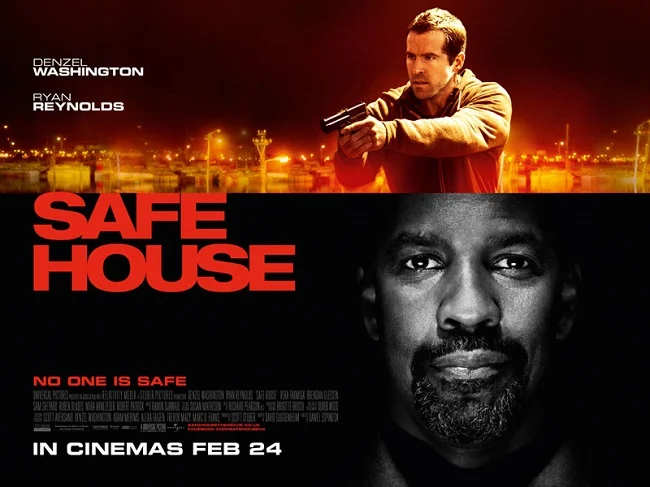
Before we start, I recollect that one well known UK critic described Safe House as sub-Tony Scott, upon its release. Now I’ve always been conflicted over Scott’s back catalogue, as I’ve always found his movies to be hampered by their own unique style. The subtleties of his characters and depth of his themes are all too often drowned out by his frenetic style and fast paced editing. Therefore a comment such as this really sets off alarm bells for me. Having recently watched The Equalizer 2, I wanted a further fix of Denzel Washington in a similar action vehicle. As Safe House was available on Netflix UK, I decided to kill a couple of hours and see what actually constitutes as “sub-Tony Scott”.
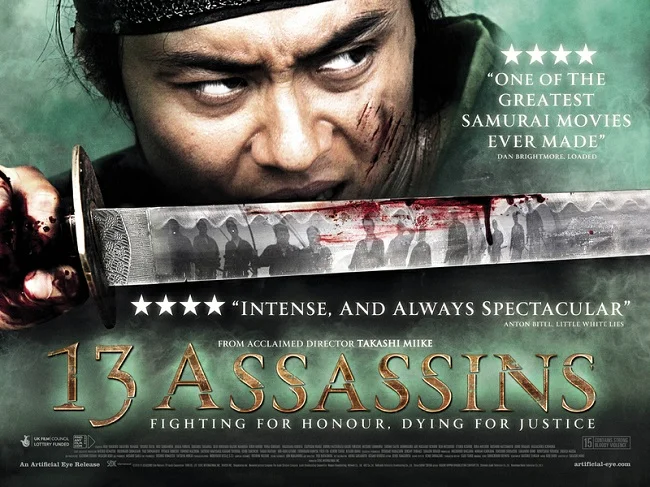
13 Assassins is one of Takashi Miike's most restrained and mature movies. Set in Feudal Japan and based on true events, a venerable clan suffers under the reign of the cruel young Lord Naritsugu (Goro Inagaki), who commits atrocities at will. Unable to break their oaths, the samurai are torn between duty and shame. Some of the masters in the clan even go so far as to commit Seppuku in protest. Unable to endure the status quo, a plan is formed to gather a small team of the deadliest samurai and assassinate Lord Naritsugu while he is travelling between clan territories. The responsibility falls upon Shinzaemon Shimada (Koji Yakusho) to take on this potentially fatal task. The matter is further complicated by Lord Naritsugu’s personal bodyguard (and Shimada’s former rival) master samurai Hanbei (Masachika Ichimura), who is a force to be reckoned with.
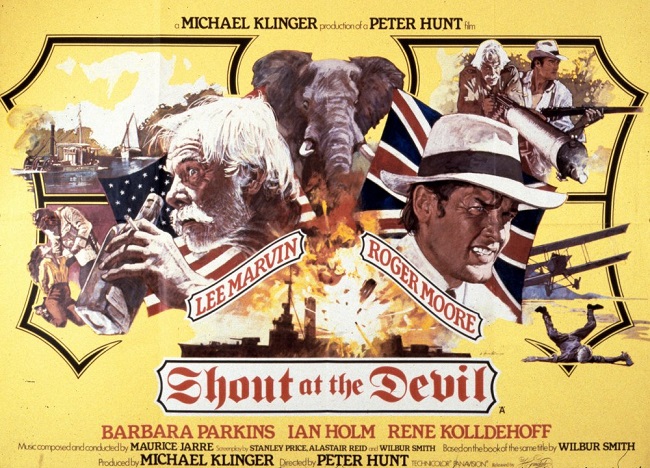
Adapted from the novel by Wilbur Smith, Shout at the Devil is the sort of big budget, sprawling, period set high adventure movie that has fallen out of vogue in recent decades. Its main attraction are its stars, location and robust action scenes. Crafted by former Bond director and long-time editor Peter Hunt, this is a full on, no nonsense character driven drama of the kind that were common place during the seventies. Sometimes the enormity of these sorts of productions meant that something suffered by omission. Be it a weak script, excessive set pieces or too many cameos by an all-star cast. Shout at the Devil broadly manages to avoid such pitfalls. There is however a notable tonal shift in the story about halfway through the film, which does take events in a different direction.
A Working Man (2025)
Levon Cade (Jason Staham) is a former Royal Marine Commando who has retired from military service and now works as the leader of a construction team in Chicago. He has a close relationship with Joe and Carla Garcia (Michael Peña and Noemi Gonzalez ) who run the company and considers them as family. Outside of work, Levon is involved in a bitter custody battle for his daughter, against her maternal grandfather, who blames Levon for his daughter’s suicide. When Garcia's teenage daughter Jenny (Arianna Rivas) goes missing, Levon reluctantly agrees to help her parents and get her back. Beginning his search at the nightclub where Jenny was last seen, he soon discovers that she was abducted by Russian traffickers. Furthermore, the culprit is Dimi Kolisnyk (Maximilian Osinski), the wayward son of a senior ranking gangster.
Levon Cade (Jason Staham) is a former Royal Marine Commando who has retired from military service and now works as the leader of a construction team in Chicago. He has a close relationship with Joe and Carla Garcia (Michael Peña and Noemi Gonzalez ) who run the company and considers them as family. Outside of work, Levon is involved in a bitter custody battle for his daughter, against her maternal grandfather, who blames Levon for his daughter’s suicide. When Garcia's teenage daughter Jenny (Arianna Rivas) goes missing, Levon reluctantly agrees to help her parents and get her back. Beginning his search at the nightclub where Jenny was last seen, he soon discovers that she was abducted by Russian traffickers. Furthermore, the culprit is Dimi Kolisnyk (Maximilian Osinski), the wayward son of a senior ranking gangster.
A Working Man is based upon the novel Levon's Trade by Chuck Dixon. The screenplay is by Sylvester Stallone and David Ayer who also directed the film. Stallone had originally intended the basic scenario of the book to be the basis of a television series but it was repurposed as a feature film. It was deemed a more marketable property due to the number of sequels written by the original author. Whether these ever see the light of day remains to be seen and is dependent upon the box office performance of A Working Man. The film has the solid production values associated with a medium budget feature film and a cast of dependable character actors in supporting roles. The action scenes are well conceived, realised but somewhat stylised. Firearms knock people off their feets and villains take multiple blows to the head before going down. Everything that you expect from the genre and the star is front and centre. Yet there is something missing.
A Working Man has a few interesting ideas, such as the lead character performing his own, amateur investigation. Ayer adds a few flamboyant touches, such as the leader of a drug dealing motorcycle gang who sits on a chrome throne made of exhaust pipes and fairings. There are also quite a lot of subplots for a film of this nature, with various elements of the Russian mafia working at odds with each other. Sadly, the main plot line about Jenny Garcia’s kidnapping founders as she decides to fight back and not to be a victim. By the climax of the film it has almost become an afterthought. Overall, A Working Man drags under the weight of a plot which pitches several ideas and then abandons them. Statham, as ever, does much of the heavy lifting through his screen presence and personality. However, compared to Ayer’s previous film The Beekeeper, this one fails to assert its difference, despite trying hard to do so. The word “adequate” springs to mind.
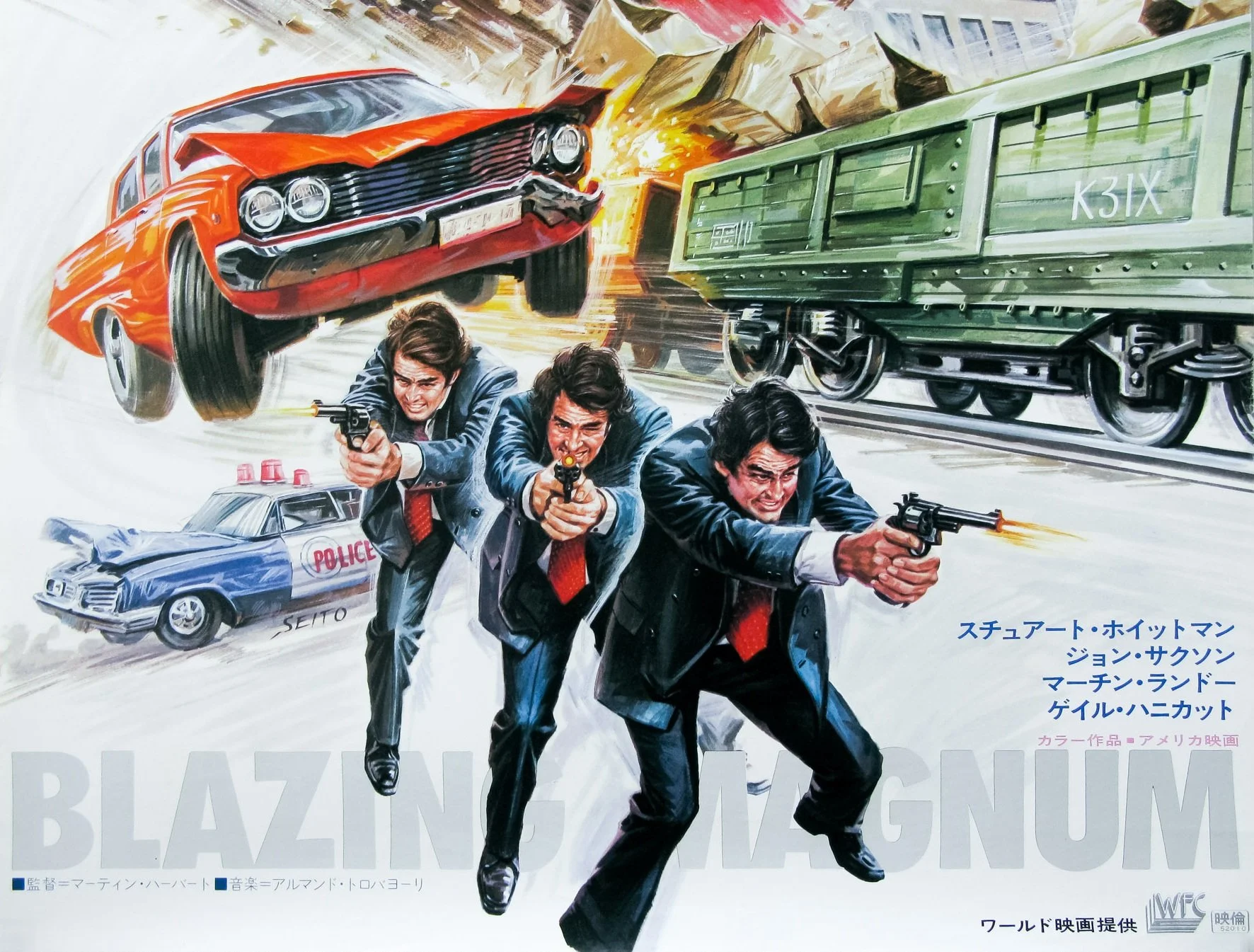
Mainstream films are easy to recommend to people. They’re usually formulaic, work within clear parameters and they’re not controversial. Most people, when viewing such film on someone else’s suggestion, are left with a fairly simply choice. Did they like it or not? Whatever the outcome, no feathers are ruffled. No one looks at you askance afterwards and says “why the hell did you think I’d like that piece of shit”? If something like this happens, then you have clearly not recommended a mainstream film. Perhaps you’ve suggested something that’s a little more of an acquired taste. Something niche, from a very specific sub-genre. Which brings me neatly to Blazing Magnum AKA Strange Shadows in an Empty Room (1976). The US title gives the impression that this film is a hard boiled cop thriller, like so many others that followed in the wake of Dirty Harry. But there’s a clue in the European title. Yes, this movie has more than just a whiff of a giallo about it.
Jason Statham is an exemplar of the US mantra of “staying in your lane”. He makes action movies and occasionally strays into action comedies. His formula broadly works and is sufficiently lucrative to keep Mr. Statham employed. Therefore, if you watch a film in which he stars, you have a fairly good idea of what you’ll be getting. Of late, the criteria for his action vehicles have become more succinct. Jason Statham will play an innocuous character, such as a construction foreman or a bee keeper. Something terrible will subsequently befall another character who Mr. Statham has an emotional connection with in some capacity. He will subsequently hunt down those responsible and meet out death and violence. At some point the villain of the story will enquire as to how this innocuous person is so lethal. Research will then show that our Jason is in fact an ex-police officer/special forces operative/international assassin. There’s then a showdown and the villain dies. Job done.
The Light at the Edge of the World presented itself as an action movie upon its release in 1971. Based upon a story by Jules Verne, the Spanish American co-production was driven by its star Kirk Douglas, who curiously hired British director Kevin Billington to helm the project. This tale of a lighthouse keeper fighting a war of attrition against a group of pirates that have captured his island, was market as an adventure film ostensibly in the idiom of the authors previous works and as a pirate movie. MGM bought the rights to distribute the film in the UK on the misunderstanding that it was a family friendly production. It was not and remains so. They subsequently had to cut 15 minutes of violence and torture as well as an undercurrent of sexual assault to secure a suitable rating. Conversely, the US distributors received an arbitrary PG rating, despite the fact this is one of a handful of films that honestly depicts pirates as murderers, rapists and worse.
It’s an established action film trope. The fire team comprised of ex-military personnel, move in on their target. Only to have the tables turned by someone they don’t deem a threat. What makes it different in The Last Stand of Ellen Cole is a throwaway line of dialogue. The bested operative lies bleeding on the floor and the protagonists stands over them ready to finish them off. “Don’t, I have a cat” they feebly plead. For me that was the icing on the cake. The movie had already established it was taking the “same old, same old” and doing something different. Something fun, if taken in the right spirit. This scene tipped the balance and I embraced this film because it was being honest about what it is. This is a modern B movie that decides to give a very specific sub-genre a makeover. Furthermore, its clearly done with an affectionate wink, which is very different to sly wink. This isn’t deliberate self-knowing irony. Its just a film doing something different and possibly silly but it genuinely wants to have fun with it.
Stephen King’s dystopian story, The Running Man, was previously adapted very loosely in 1987, as a vehicle for Arnold Schwarzenegger. That version focused mainly on the “Battle Royale” element of the story and leaned heavily into Arnie’s personality, rather than the politics of the book. It also wasn’t well received by the author. Edgar Wright’s remake follows the source text a lot more closely and is far more interested in its political themes and wider social commentary. Furthermore, this version re-establishes the everyman quality of the hero of Ben Richards, rather than him being the muscle bound, ex-military hero as per Mr. Schwarzenegger’s prior interpretation. This time round, The Running Man uses a lot of the visual and narrative tropes of contemporary reality TV, making this forty three year old story very relevant to today’s viewers and couching the film in a style that is recognisable and accessible.
After the success of Raiders of the Lost Ark in 1981, filmmakers scrambled to find existing intellectual properties that they could use for similar films. Hence archaic heroes such as Alan Quatermain were hastily given a modern makeover and thrust into generic movies, in a vague attempt to replicate Steven Spielberg’s successful formula. Which brings us neatly on to James Charles Bigglesworth AKA “Biggles”, a fictional pilot and adventurer from a series of books written by W. E. Johns between 1932 and 1968. Several attempts had been made in the past to bring this character to the silver screen, including one by Disney but they all failed. However, the commercial and critical success of Indiana Jones provided sufficient impetus to greenlight a new film. However, due to some curious production choices, when Biggles was finally released it was far from just a period set, action movie.
Setting aside the hubris of remaking a film such as Red Dawn, the 2012 reboot had a troubled production. Shot over the course of late 2009, on location in Michigan, MGM intended to release the film in September 2010. However, the studio’s financial problems became unsustainable over the course of that year and the film was shelved, while a financial solution was sought. Furthermore, while Red Dawn was in post production, there was a major economic shift within Hollywood due to the increasing importance of the Chinese market. This was a significant problem for MGM because the new version of Red Dawn had the Chinese invading the USA instead of Russia. Hence there were reshoots and the need for additional visual effects, so that the Chinese could be replaced with North Koreans. MGM eventually went bankrupt and the distribution rights to Red Dawn were sold off. The film was eventually released in 2012.
When I first saw the promotional trailer for Gangster Squad back in 2012, prior to its release, I wasn't especially impressed. I simply thought the film was another attempt to re-invent the gangster genre for a generation who were not especially familiar with it. I wasn't exactly overwhelmed with director Ruben Fleischer's resume either. I didn't particularly like Zombieland and haven't seen 30 Minutes Or Less. Then came the tragic mass shootings in Aurora, Colorado which led to the movie being delayed so that the original ending, which featured a shoot-out in a movie theatre, could be replaced. Hence when I finally watched this film recently, I wasn't expecting a movie up to the standards of say Once Upon A Time In America or Miller’s Crossing and it would seem that I was right do so. Gangster Squad is not especially noteworthy in any respect.
Levon Cade (Jason Staham) is a former Royal Marine Commando who has retired from military service and now works as the leader of a construction team in Chicago. He has a close relationship with Joe and Carla Garcia (Michael Peña and Noemi Gonzalez ) who run the company and considers them as family. Outside of work, Levon is involved in a bitter custody battle for his daughter, against her maternal grandfather, who blames Levon for his daughter’s suicide. When Garcia's teenage daughter Jenny (Arianna Rivas) goes missing, Levon reluctantly agrees to help her parents and get her back. Beginning his search at the nightclub where Jenny was last seen, he soon discovers that she was abducted by Russian traffickers. Furthermore, the culprit is Dimi Kolisnyk (Maximilian Osinski), the wayward son of a senior ranking gangster.
PC Nicholas Angel (Simon Pegg) is an exemplary Police Officer, with a strict adherence to the letter of the law. As a result of making the rest of the London Metropolitan Police look bad, he is transferred to the rural town of Sandford, Gloucestershire. On arrival, Angel finds that the local Inspector, Frank Butterman (Jim Broadbent), takes a far more laissez-faire approach to policing. His colleagues are incompetent and he is further hampered by the Neighbourhood Watch Alliance (NWA), who prioritise low crime statistics over law enforcement due to their desire to win the title of “Village of the Year”. Furthermore, Angel is partnered with the Inspector’s son, Constable Danny Butterman (Nick Frost), who is infatuated with “buddy cop” movies and is in awe of Angel’s London experience. “Have you ever fired two guns while jumping through the air?” However, a sudden spate of grisly accidents lead Angel to believe that there's more to the seemingly tranquil and picture-perfect community than meets the eye.
As a collection of history's worst tyrants and criminal masterminds gather to plot a war to wipe out millions, one man must race against time to stop them. Discover the origins of the very first independent intelligence agency in The King's Man. Based on the Comic Book “The Secret Service” by Mark Millar and Dave Gibbons. 20th Century Studios
Matthew Vaughn’s The King’s Man is an inconsistent film, both narratively and tonally. It veers between serious themes and stylised, hyperbolic action. At times it does quite a good job of exploring such complex subjects as global politics, mechanised warfare and colonialism. Sadly it then wrenches the viewer out of these cerebral reveries as it lapses into the sort of over the top action sequences that were notable in the two earlier films. It’s a shame because The King’s Man gets so many other aspects of the production right. The casting is very interesting, especially Ralph Fiennes as the “pacifist” Duke of Oxford. He is actually a very good fit for the action genre. Djimon Hounsou and Gemma Arterton are given little backstory beyond being respectively the faithful manservant and the family nanny but both are notable due to their own inherent acting chops and personal charisma. Rhys Ifans obviously has a great time as Grigori Rasputin, ensuring all the man’s vices are robustly depicted.
On paper, a video games franchise such as Assassin’s Creed lends itself perfectly to a cinematic adaptation. The parkour action scenes, the historical settings and the contemporary conspiracy theory themes are all elements that should play well with a modern youth audience. Hence with the backing of a major studio such as Twentieth Century Fox and a budget of $125 million, the 2016 movie should have been a guaranteed box office hit. The casting of Michael Fassbender, an actor who is comfortable with serious roles and big Hollywood franchises, should have carried this film comfortably over the finishing line. Director Justin Kurzel, who had found critical success with his adaptation of MacBeth a year previously, must have looked like a safe pair of hands to handle such a project. Sadly, that was not the case. Assassin’s Creed is not the sum of its parts, in fact many elements appear to be pulling in opposite directions. The resulting feature film is staggeringly dull, soulless and a chore to watch. A testament to how modern big budget franchise movies have become a production line, with all the art stripped from them.
300: Rise of an Empire is a curious beast, being neither a sequel nor a prequel. It is infact a tale that takes place simultaneously with those of the original movie. While Gerard Butler is busy making a last stand at the Battle of Thermopylae, fellow warrior and politician Themistokles, played by the singularly uncharismatic Sullivan Stapleton, leads a similar army of buffed Greeks against the Persian fleet. Once again we have a movie that is the epitome of style over substance, complete with a sound design that challenges what can physically be endured by human hearing. They say the first casualty of war is innocence but in this type of movie it's closely followed by historical accuracy and authentic depictions of ethnicity. 300: Rise of an Empire is a cinematic assault upon the senses but not in a good way like Mad Max: Fury Road.
Back in September 2017, Liam Neeson stated in an interview with Sky News that he was retiring from the action genre, due to his age. He felt that audiences would question his credibility in such roles. After the release of The Commuter (2018) and Cold Pursuit (2019) Mr Neeson appeared to return to human dramas and films that focus on performance rather than punching man and beast. Ordinary Love and Made in Italy, both released in 2019, demonstrate the actor’s versatility and skill. People seem to forget that he is a thespian who was initially known for his character driven roles in films such as The Mission (1986), Rob Roy (1995 and Michael Collins (1996). It was only in 2008 that he reinvented himself as an action hero. It’s all a far cry from Schindler’s List and his performance that earned him an academy award nomination. The reason I mention all of this is because The Ice Road is the third action movie I’ve seen in 2021 that stars Liam Neeson.
One of the stand out tropes of the modern action film is that the stakes are always cranked right up to 11. Terrorists, biological weapons and nuclear bombs are common threats in such movies with a hero or heroes trying to save the world from death and destruction or worse. However, back in the sixties and seventies, things were a little more straight forward and in some respects more credible. Take When Eight Bells Toll, released in 1971, for example. British Treasury secret agent Phillip Calvert investigates the theft of £8,000,000 in gold bullion by a gang of international smugglers. In the context of the times this was no small beer however it’s somewhat mundane compared to fighting super villains and their space lasers. Frankly I prefer these low key plot devices as they can make a film a little more plausible within the confines of the genre. A concept that is often forgotten today.
Forensic accountant Owen Casserly (Jake Weber) flees his home with his teenage son Connor (Finn Little) when he discovers he has been targeted by a pair of assassins (Nicholas Hoult and Aidan Gillen) who have been hired to stop him giving evidence in a major corruption case. Connor witnesses the murder of his father after their car is run off the road. Entrusted with important written evidence, he escapes into the dense forests of the Montana wilderness pursued by the killers. Seeking help he runs into smokejumper Hannah Faber (Angelina Jolie) who is stationed at a remote fire lookout tower. Hannah suffers from PTSD from a previous forest fire in which she was unable to save three young boys. Hannah attempts to lead Connor through the forest to safety. Meanwhile the assassins set fire to the forest to divert the attention of the authorities and cover their tracks.
I must admit that I did not have particularly high hopes for Paul W S Anderson's remake of the 1975 Roger Corman produced cult classic. Anderson’s work varies greatly. Event Horizon and Soldier are solid genre films but I still have not fully come to terms with Alien vs. Predator. Jason Statham is also a name that divides the public, with solid material such as The Transporter and unfathomable tosh like Revolver. But despite these considerations, Death Race is in fact quite a surprise and does not follow the path that so many remakes do. It takes the basic themes and concept associated with the original and tries to do something different with them. It doesn’t reinvent the wheel nor is it a genre milestone. But it does offer a different spin on things, have some engaging action scenes and provide some dumb but enjoyable entertainment. When combined with snacks and some beer this is a passable way to kill 111 minutes.
I did not watch Zero Dark Thirty upon its initial release, due to the politics surrounding it. I wanted to be able to view it free from bipartisan debate. Eight years on I believe this now achievable and although debate still exists it is now more measured and less strident. Zero Dark Thirty is certainly a compelling movie. It plays as a docudrama, providing an in-depth study of the US intelligence services hunt for Osama Bin Laden. It cannot be faulted on a technical level and the performances are very strong. It does not adopt a celebratory or triumphalist tone in its approach to the story. Director Kathryn Bigelow endeavours to keep the proceedings focused upon the intricacies of an intelligence driven manhunt. There is little or no tubthumping, jingoism. The decision to find Bin Laden is shown as a political and military exercise of foreign policy. The film solely focuses on the story from a US perspective but that is perfectly acceptable as it is not intended to be an exploration of geo-politics.
Firestorm was originally written as a vehicle for Sylvester Stallone, however when the production company Savoy Pictures went bankrupt the screenplay was bought by Twentieth Fox and the scope of the movie reduced to suit a lower budget. It’s broadly similar to Cliffhanger in so far as the lead character is a specialist in a certain field who runs afoul of criminals in a perilous environment. Whereas Cliffhanger is set in the Rocky Mountains, Firestorm takes place in the forests of Northern Wyoming. After the script was revised four times, the finished screenplay was given a final “polish” by Graham Yost who has considerable experience with the action movie genre. As stallone was no longer associated with the project and the production had been repurposed to be less extravagant, the movie was assigned to former NFL star Howie Long. Long had already appeared in the John Woo movie Broken Arrow (1996) and the Firestorm was seen as a means to give him a star vehicle.
The original French movies District 13 and its sequel District 13: Ultimatum, conceived and produced by Luc Besson, were enjoyable variations of the Escape from New York theme. Their charm lay in their European pedigree and the skilful use of parkour. The two leads, David Belle and Cyril Raffaelli, were eminently suited to the minimalist roles and the screenplays were fun. Half of these movies appeal was the fact that they were not mainstream US products. Brick Mansions is the Hollywood remake of District 13, as well as being Paul Walkers’ final movie. Sadly, this film is far from a fitting epitaph, being devoid of any charisma or innovations. It is blandly shot , poorly edited and has been stripped of everything that made the original entertaining.
Arnold Schwarzenegger's return to the big screen after his political career has been uneven to say the least. His cameos in The Expendables and The Expendables 2 were well received, with their self referential charm and age related irony. Yet his first major movie The Last Stand, although competent, failed to find an audience. Escape Plan fared better at the box office but did not put Arnie back on the A list. Effectively there's a large percentage of the contemporary cinematic audience who were born after his heyday and are simply not overt fans of his work. His core audience is more than likely of the age group that consume most of their film entertainment at home. Which may explain why Sabotage tanked in the US upon release on March 28th 2014. It was the worst opening box office of Arnie's career. He used to break first day opening records.
Sequels and reboots are hardly a new concept and have been a part of Hollywood culture since the 1930s. The success of the Universal Horror movies from that era being a prime example of direct follow ups and retconned movies. However, there is one fundamental rule that distinguishes a good sequel from a bad one. You should never mitigate, undermine or make irrelevant the events of the previous movie, just to provide your new film with a raison d'être. For example, the events of Aliens do not contradict or trivialise those that happened in Alien. In fact with that franchise there is a very clear logical progression between the two movies. The same is true for Mad Max and Mad Max 2 or Star Wars and The Empire Strikes Back. The key is to progress a story, enhance it or explore things from an alternative angle and bring something new to the cinematic table. Sadly this philosophy is all too often lost on corporate film making. Which means that many sequels are just tedious replays of prior films. Terminator: Dark Fate falls squarely into this category.
The enduring appeal of the character John Rambo in First Blood comes from the fact that he is a traumatised ex- service man who keeps himself to himself as he drifts from job to job, trying to come to terms with his wartime experiences. His poor treatment at the hands of a small-town Sheriff is a succinct metaphor for the social and political indifference that Vietnam veterans were shown upon their return to the US. He’s a man with a code in a world that no longer has any use for him. His simple and honest patriotism is not returned and he is in fact viewed with shame by many from the nation he loves. Furthermore, the first movie does not paint him as a cold-blooded killer. Despite provocation he is not the first person to shoot to kill. Rambo is in many ways a victim. A broken man, who society has asked to do unspeakable things. Now society wants nothing to do with him and fears the “monster” they created. Although clearly an action movie, First Blood had narrative depth and a flawed but sympathetic protagonist. 37 years and four movies later, such dramatic themes have long left the franchise. The central character is indeed a caricature of its former self.
It was hardly surprising that the movie adaptation of Chris Kyle's autobiography American Sniper, would cause controversy. The Iraq war, US Foreign Policy and national pride are seldom subjects that are discussed in a calm and measured fashion. And then there are the personal politics of director Clint Eastwood to consider. Hence there were claims from some quarters upon the movie’s release, that it was Islamophobic and counter claims that criticisms of the late Chris Kyle were unpatriotic. There still remain issues regarding the authenticity of events depicted in the source text and subsequently the movies screenplay by Jason Hall. Yet none of these factors have in anyway impacted upon the film's box office returns which currently stands at $247,900,417 worldwide.
Do I really need to present you with some sort of plot synopsis for Transporter 3? No, I didn’t think so. More of the same as Frank Martin (Jason Statham) and his police chum, Inspector Tarconi (Francois Berleand) become embroiled in yet another high-octane escapade. There's fights, car stunts, exotic international locations and a strong sense of humour. This time, the disposable love interest is a Ukrainian girl named Valentina (Natalya Rudakova) who fulfils her role succinctly. The film benefits by being set back in Europe, after the mistake of basing Transporter 2 in the US. This time, the story takes us to such locations as Budapest and Odessa. The international film crew once again bring a veneer of panache to the production that is conspicuously absent in US action movies. For a modest budget fil, Transporter 3 it looks very good. Again the proceedings are given a boost by a pertinent soundtrack by Alexandre Azaria and a selection of European “tunes”.
Jason Bourne originally graced our screens for the first time seventeen years ago. The Bourne Identity was a gritty, minimalist take on the espionage genre and a welcome change from the excesses of the Pierce Brosnan Bond era. The story arc was sustained over three movies and ended efficiently and succinctly. After which Matt Damon moved on, as did the director of two of the movies, Paul Greengrass. Which leaves us with The Bourne Legacy; the tangential sequel that arrived in 2012. A film that exists because the money men and bean counters hate to pass up on a franchise until it has been squeezed utterly dry. Hence, they commissioned the writer of the series, Tony Gilroy, to come up with a screenplay and direct a spinoff movie. Jeremy Renner was cast in the lead role. Yet despite narrative and production continuity, The Bourne Legacy was not a Jason Bourne movie with the star appeal of Matt Damon. Although the film turned a profit, it had the lowest box office returns out of the entire franchise.
During the eighties there was a clear league table of action movie stars. By the mid-nineties this system fell into decline and the Hollywood lacked any clearly defined exponents of the genre. A decade later, due to the success of Luc Besson’s Transporter films, Jason Statham became a bankable box office star in this field. When you look at Statham's early work in Lock, Stock and Two Smoking Barrels it is hard to envisage the "mockney geezer" as an international action star. Yet he has successfully stepped into the role and enjoys a large following. I enjoy his work as he has a likeable on-screen persona. My 88-year-old Mum likes him to because "he wears nice suits". The action genre seldom reaches such a diverse demographic.
Before we start, I recollect that one well known UK critic described Safe House as sub-Tony Scott, upon its release. Now I’ve always been conflicted over Scott’s back catalogue, as I’ve always found his movies to be hampered by their own unique style. The subtleties of his characters and depth of his themes are all too often drowned out by his frenetic style and fast paced editing. Therefore a comment such as this really sets off alarm bells for me. Having recently watched The Equalizer 2, I wanted a further fix of Denzel Washington in a similar action vehicle. As Safe House was available on Netflix UK, I decided to kill a couple of hours and see what actually constitutes as “sub-Tony Scott”.
13 Assassins is one of Takashi Miike's most restrained and mature movies. Set in Feudal Japan and based on true events, a venerable clan suffers under the reign of the cruel young Lord Naritsugu (Goro Inagaki), who commits atrocities at will. Unable to break their oaths, the samurai are torn between duty and shame. Some of the masters in the clan even go so far as to commit Seppuku in protest. Unable to endure the status quo, a plan is formed to gather a small team of the deadliest samurai and assassinate Lord Naritsugu while he is travelling between clan territories. The responsibility falls upon Shinzaemon Shimada (Koji Yakusho) to take on this potentially fatal task. The matter is further complicated by Lord Naritsugu’s personal bodyguard (and Shimada’s former rival) master samurai Hanbei (Masachika Ichimura), who is a force to be reckoned with.
Adapted from the novel by Wilbur Smith, Shout at the Devil is the sort of big budget, sprawling, period set high adventure movie that has fallen out of vogue in recent decades. Its main attraction are its stars, location and robust action scenes. Crafted by former Bond director and long-time editor Peter Hunt, this is a full on, no nonsense character driven drama of the kind that were common place during the seventies. Sometimes the enormity of these sorts of productions meant that something suffered by omission. Be it a weak script, excessive set pieces or too many cameos by an all-star cast. Shout at the Devil broadly manages to avoid such pitfalls. There is however a notable tonal shift in the story about halfway through the film, which does take events in a different direction.
Meg 2: The Trench (2023)
Back in 2018 I wrote the following about The Meg in my review. “My interest doesn’t go so far as a sequel. This sort of movie is the equivalent of a greasy burger you buy at the funfair. It’s fine once in a while as an indulgence, despite the fact that you know it’s bad, but you would soon tire of them being a regular part of my diet”. Five years later, I foolishly thought it may be “fun” to give the sequel, Meg 2: The Trench (2023), a go. Especially in light of the fact that it’s directed by Ben Wheatley. Surely such a filmmaker would bring some creativity and a fresh perspective to this franchise? Nope. Turns out he didn’t. Meg 2: The Trench lacks everything that made its predecessor tolerable. This superfluous sequel is an uninspired, poorly written mess which confuses turning everything up to eleven with entertainment. It gets nowhere near “it’s so bad, it’s good” territory. Instead it makes the biggest mistake a film of this nature can do. It’s dull.
Back in 2018 I wrote the following about The Meg in my review. “My interest doesn’t go so far as a sequel. This sort of movie is the equivalent of a greasy burger you buy at the funfair. It’s fine once in a while as an indulgence, despite the fact that you know it’s bad, but you would soon tire of them being a regular part of my diet”. Five years later, I foolishly thought it may be “fun” to give the sequel, Meg 2: The Trench (2023), a go. Especially in light of the fact that it’s directed by Ben Wheatley. Surely such a filmmaker would bring some creativity and a fresh perspective to this franchise? Nope. Turns out he didn’t. Meg 2: The Trench lacks everything that made its predecessor tolerable. This superfluous sequel is an uninspired, poorly written mess which confuses turning everything up to eleven with entertainment. It gets nowhere near “it’s so bad, it’s good” territory. Instead it makes the biggest mistake a film of this nature can do. It’s dull.
Five years on from the first film, Jonas Taylor (Jason Statham) now works for Mana One Marine Research centre, which is currently exploring the depth of the Mariana Trench where the Megalodons and other unknown ichthyofauna live. Along with company director Jiuming Zhang (Wu Jing), Taylor takes two submersibles to an uncharted part of the trench and finds to his surprise an illegal mining operation on the ocean floor. They are ambushed by a mercenary named Montes (Sergio Peris-Mencheta) and forced to abandon their vessels and walk along the ocean floor to reach the unknown mining base. After contacting Mana One, they learn that the rescue submarine has been sabotaged. Furthermore, an explosion caused by the mining operation has breached the thermocline barrier and provided a means for three megalodons and other creatures to reach the surface.
Like its predecessor Meg 2: The Trench has solid production values. A lot of money has been spent on the production design and sets. Meg 2: The Trench is far from cheap and cheerful. The film also handles dialogue in two languages well, as several characters frequently switch between conversing in English and Mandarin. Sadly the screenplay is perfunctory and the dialogue predictable. Most of the characters are two dimensional and hence disposable. When the big reveal happens involving a team member who has betrayed their colleagues, it has no impact. There is also a conveyor belt of “red shirt” mercenaries who are regularly introduced, just to provide the various beasties something to chow down on. There is also a somewhat anachronistic comedic African American character, played by Page Kennedy, that feels it’s been cribbed from an eighties action movie.
The action scenes are competently constructed but like most “creature features”with a PG-13 rating, they are mostly bloodless and free from any real threat or dramatic weight. There is an attempt to try and make some of the deaths a little more creative to try and compensate for this. One character’s exosuit implodes and the visual effects handle this quite well. But the same problem from the first movie persists into the second. The Megalodons are so large they swallow people and things whole, which effectively mitigates any shock factor. The giant Octopus is handled more discreetly and as a result is a more interesting antagonist. However, this is the sort of movie where you know well in advance who will live and who will die. Not even Jason Statham’s pugnacious character can up the ante. Overall Meg 2: The Trench is a classic example of “the same but more” and a squandered opportunity. I was left sadly feeling “so what?” at the end.
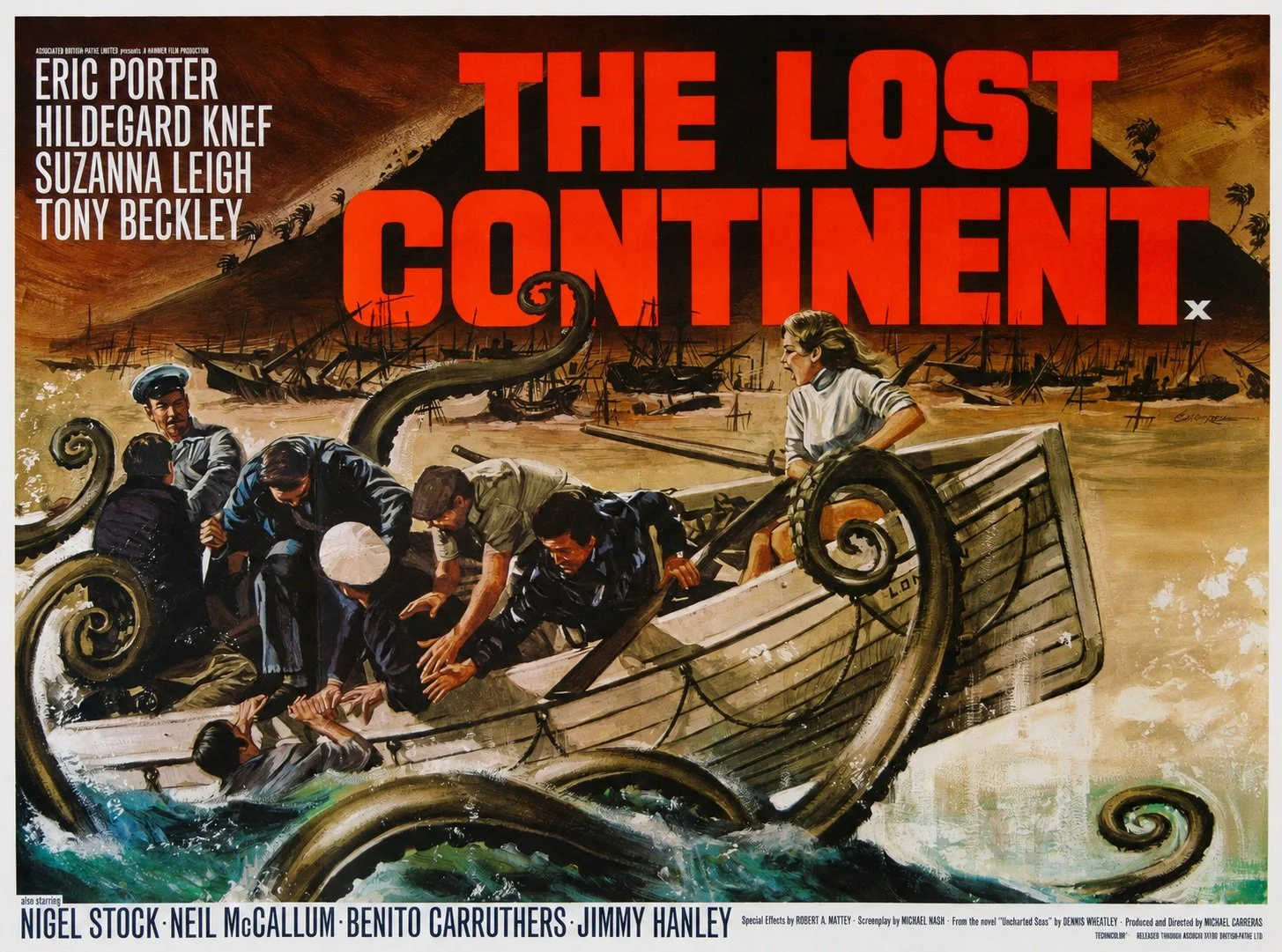
In 1968 the dilapidated freighter Corita hastily leaves Freetown to avoid a customs inspection. Captain Lansen (Eric Porter) has a cargo of dangerous explosives which he is smuggling so he can finally retire. His ship’s passengers also have reasons for leaving in a hurry. Dr. Webster (Nigel Stock), together with his daughter Unity (Suzanna leigh), is relocating due to his indiscretions with patients and illegal operations. Alcoholic pianist Harry Tyler (Tony Beckley) is aimlessly drifting from port to port. Eva Peters (Hildegard Knef) is fleeing from her husband with stolen bearer bonds which she intend to use to buy back her son from his evil clutches Caracas. Ricaldi (Ben Carruthers), a questionable lawyer, is pursuing Eva to retrieve the stolen bonds. First officer Hemmings (Neil McCallum) suggests that the ship should return to Freetown after an imminent Hurricane warning. The Captain asks the passengers and they are unanimous that they do not wish to return. However a mutinous crew, the bad weather and the instability of the explosives force everyone to abandon ship. The survivors find themselves adrift in a lifeboat surrounded by a strange carnivorous seaweed.
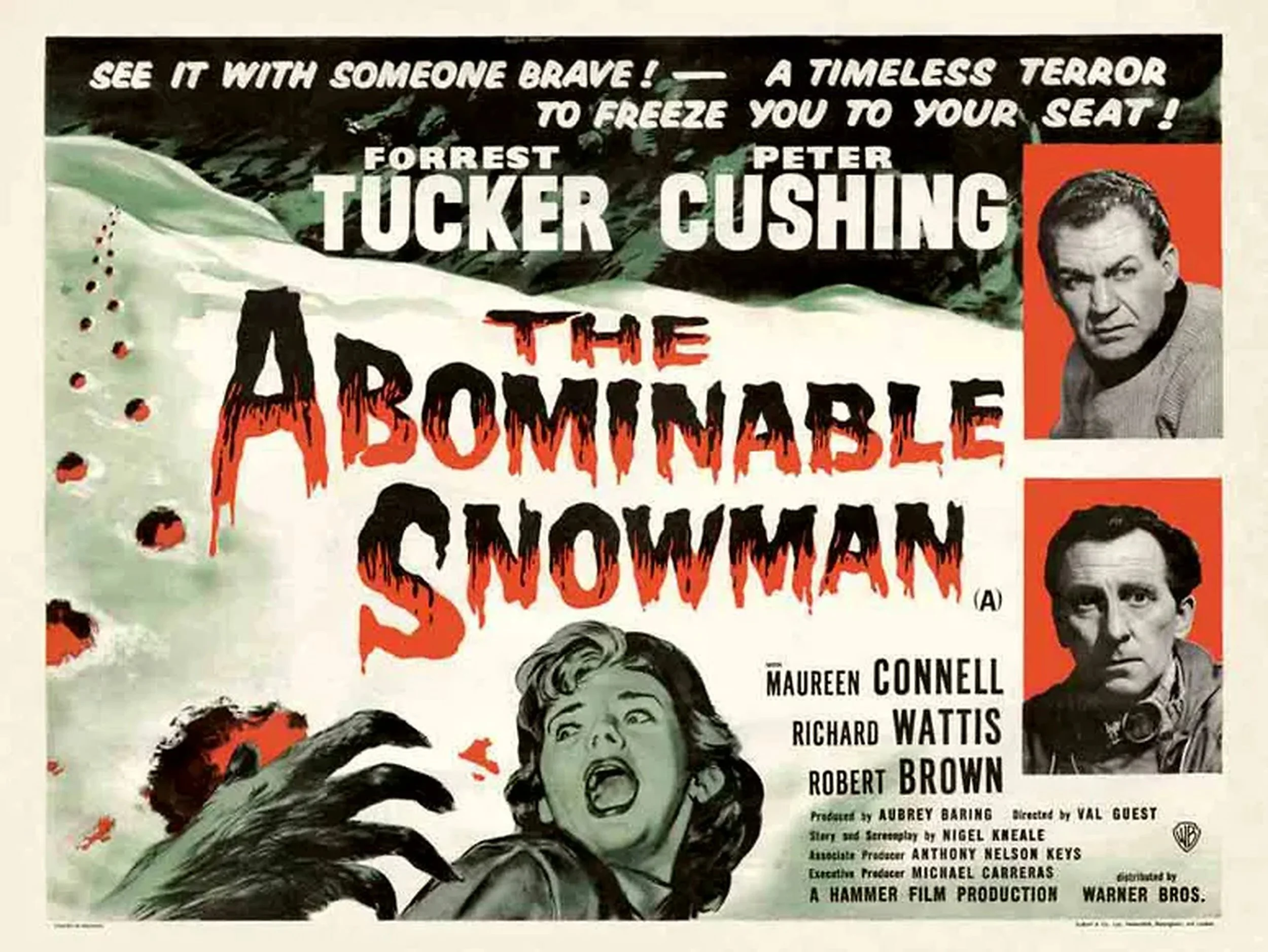
Despite being considered by many as an original story, The Abominable Snowman (1957) is in fact a remake of a made for television play, The Creature, that was originally broadcast in the UK in 1955. Hammer Films would often purchase the rights of popular TV programs and subsequently re-work them for mainstream, international cinema. Larger production budgets and fewer censorship restrictions allowed them to make their cinematic interpretations more lurid, thus commercially viable. Hence The Quatermass Xperiment, Quatermass II and Quatermass and the Pit were all given a big screen makeover and were commercially successful. The Abominable Snowman was written by acclaimed writer Nigel Kneale, who also wrote the original television drama and the aforementioned Quatermass trilogy. Although ostensibly marketed as a horror film this production is actually an interesting blend of psychological thriller and science fiction.
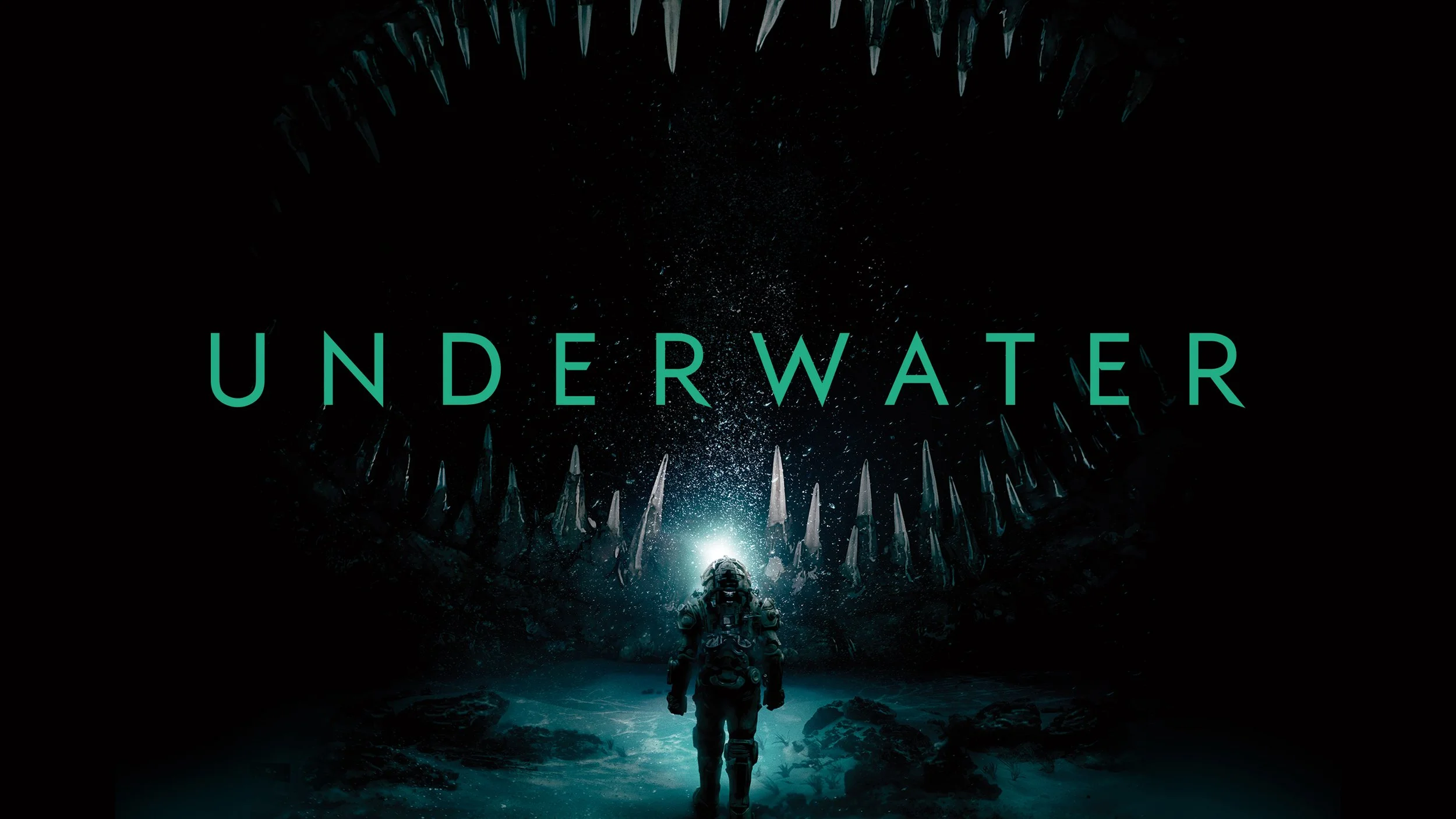
In the near future, Kepler 822, a research and drilling facility located at the bottom of the Mariana Trench, suffers a sudden and catastrophic structural failure. There are only six survivors. Mechanical engineer Norah Price (Kristen Stewart), Captain Lucien (Vincent Cassel), biologist Emily Haversham (Jessica Henwick), engineer Liam Smith (John Gallagher Jr.) and crew members Rodrigo (Mamoudou Athie) and Paul (T.J. Miller). As all the functional escape pods have been used and they are unable to contact the surface, the Captain suggests using pressurized suits to walk one mile across the ocean floor to the Roebuck 641 drill installation. There they will find more escape pods. However, it soon becomes apparent that the disaster was not caused by an undersea earthquake and that they are not alone as they make their journey.
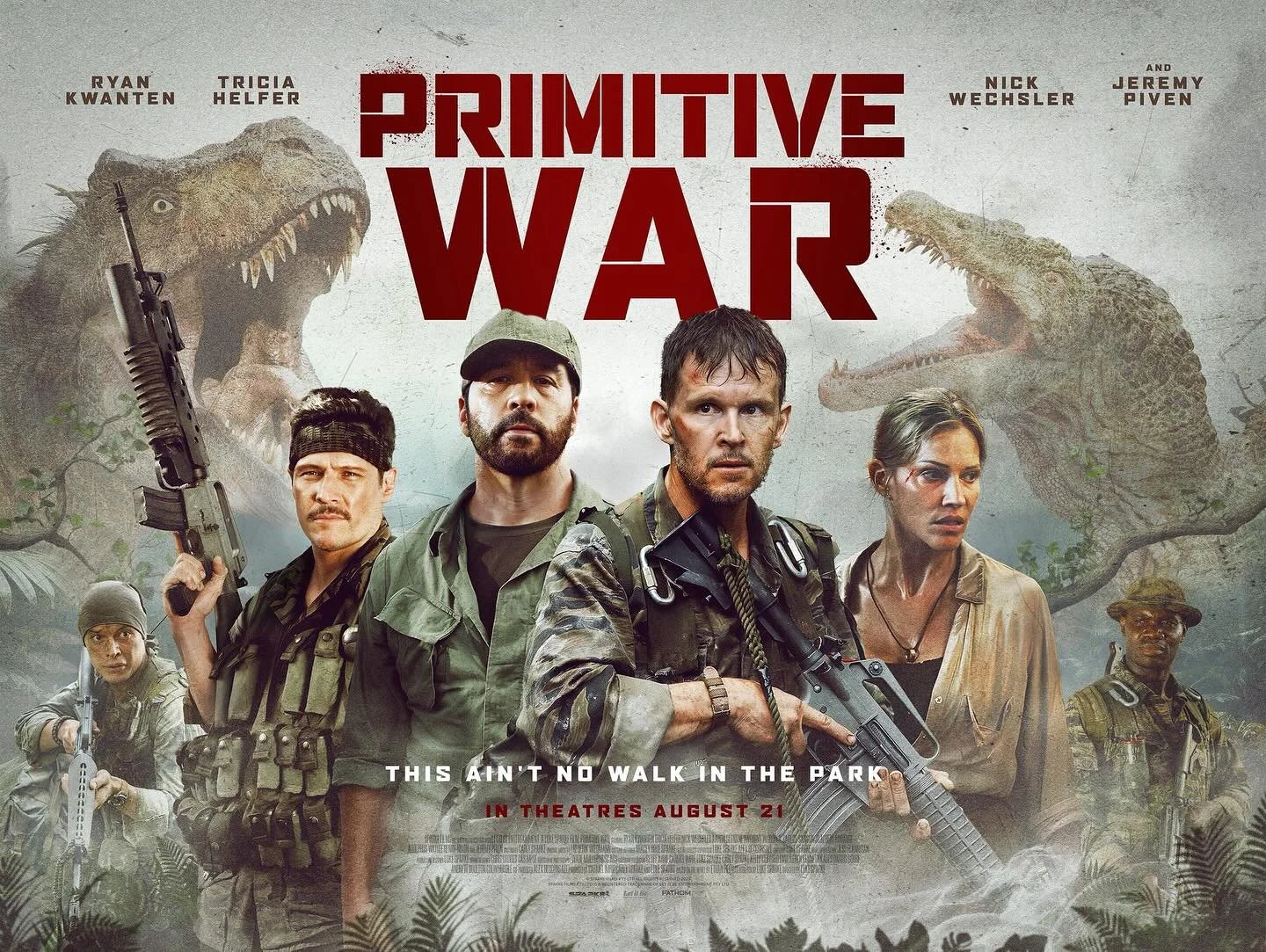
One of the most common objections raised regarding the Jurassic Park/Jurassic World franchise is that the films are specifically made to obtain a PG-13 rating from the Motion Picture Association, for purely commercial reasons. Hence, in all films, there is little on screen violence and the dinosaurs are mainly portrayed as a threat and a means of providing jump scares. When a character is killed by a dinosaur it usually happens off screen, is obscured by something else in frame, or is shown in long shot with very little detail. The realities of being eaten alive by a predator are conspicuously absent. Hence, audiences looking for films featuring more graphic dinosaur attacks, have not been well catered for apart from some minor direct-to-video titles. Primitive War finally fills this gap in the market with a frenetic genre mashup that strives to punch above is budgetary weight.
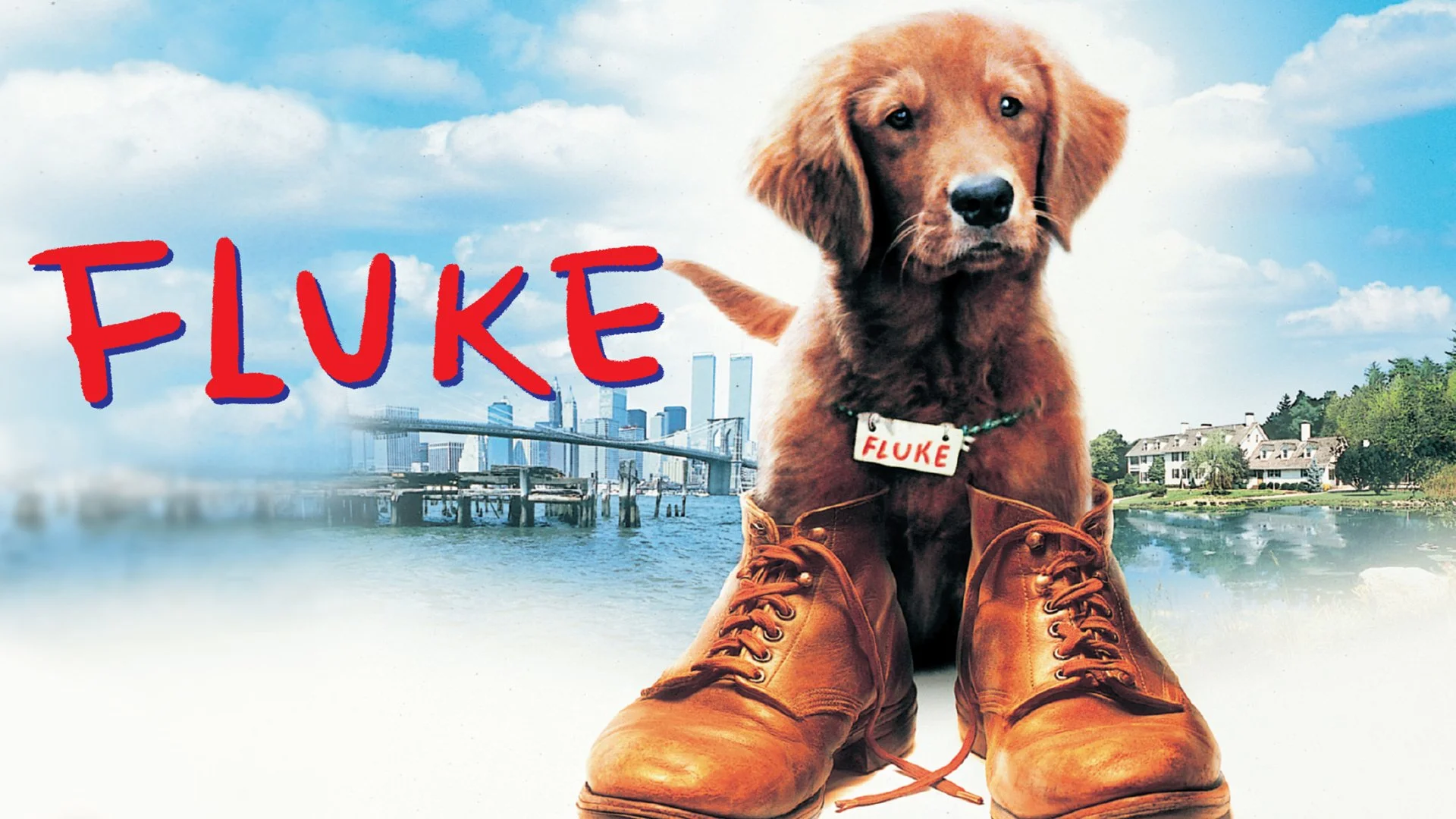
Fluke is a curious film about a man who is reincarnated as a dog and his subsequent realisation that he may have been murdered. It takes an adult novel by British author James Herbert, which is filled with philosophical musing and strives to adapt it in a far more family friendly fashion. The result is a somewhat bipolar production which thematically alternates between existential introspection and Buddhism. It then strives to deliver its message in a Disneyesque idiom. Children will potentially be confused and upset by what they see and adults will be wrongfooted by the continual shift in tone. Fluke was not a critical or commercial success upon release and the flaws that were identified by critics at the time still ring true today. That being said, Fluke is still an interesting and entertaining film, despite its faults.

When reviewing Sting, one critic stated that the small scale setting and thus, low stakes (IE only a few peoples lives are at risk), made the film not especially memorable. I consider this to be a somewhat spurious criticism. It is the very fact that Sting takes place in such a commonplace environment, with the main characters being everyday people that makes it different. There is a clear focus on well defined characters and their backstory. Unlike so many contemporary films, I actually gave a damn about the protagonists in Sting. An integral aspect of the horror genre is the ability to take a well known and familiar trope and provide a different and absorbing spin on it .It would appear that some audiences have been belaboured over the head by so many overblown and bombastic blockbusters, that the very notion of depicting small, localised and intimate events in a film, seems to bamboozle them.
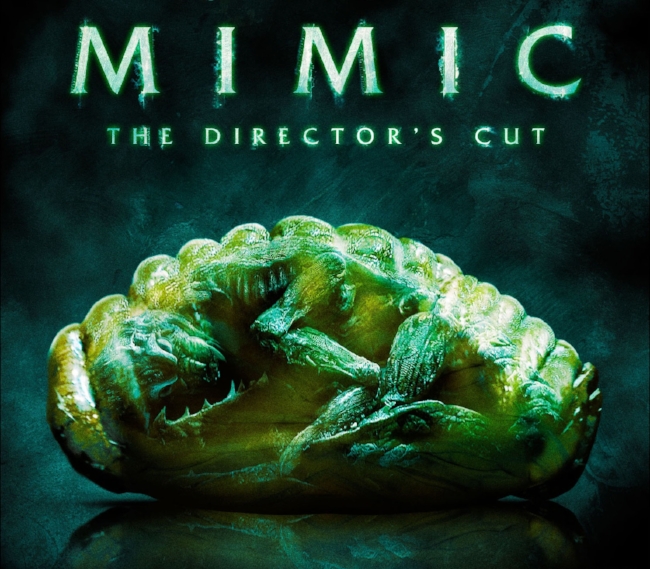
When I first saw Mimic in 1997, I was impressed by the fact that it offered a different perspective on the monster movie genre and that it seemed to have moments of greater depth than you'd expect from such material. Later on when I became more aware of the works of writer, director Guillermo del Toro, I learned that this movie had had a troubled production and that Miramx had imposed specific requirements upon the final cut of the film. This explained some of the movies inconsistencies and hinted at a far more ambitious artistic endeavour by del Toro. Initially Mimic was conceived as a thirty minute short and part of a three part anthology movie. However it along with the sci-fi film Imposter were both deemed to be of sufficient merit to be developed into feature length productions.
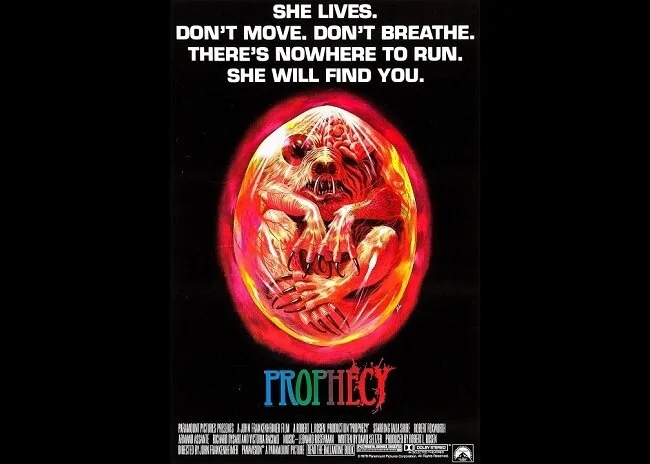
During the seventies, Hollywood started looking to ongoing societal and political concerns as a source of material for movies. Hence, the energy crisis, terrorism and global pollution quickly found themselves being subsumed into hastily written screenplays, in attempt to be topical, commercially successful and relevant. Prophecy based upon a novel by David Seltzer tackled not only the issue of pollution but also the ongoing disenfranchisement of Native Americans. Paramount studios went so far as hiring an established director of note, John Frankenheimer. In many respects this movie should have been a bigger success with a reasonable budget, robust cast and studio support. Sadly it did not fare well, either critically or at the box office due to obvious flaws in the production. Despite his outstanding body work, (Birdman of Alcatraz, The Manchurian Candidate) Frankenheimer was not the best choice of director for a genre movie such as this and he was also going through a period of alcoholism.
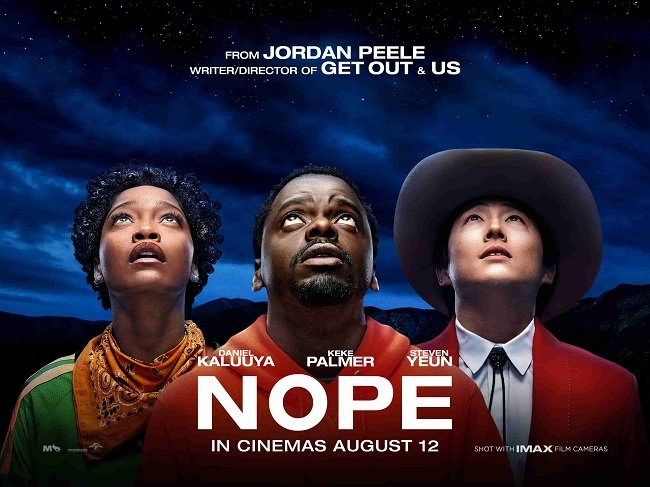
In Agua Dulce, California, the Haywood family trains horses for film and TV productions. One day at the Haywood ranch, small metal objects unaccountably fall from the sky. One of which, a nickel, kills Otis Haywood Sr (Keith David). His children, Emerald “Em” Haywood (Keke Palmer) and Otis “OJ” Haywood Jr. (Daniel Kaluuya), continue to run the business. However, due to the loss of a contract, they have to sell some of the horses to Ricky “Jupe” Park (Steven Yeun), who operates a Western theme park called Jupiter's Claim. One night, the Haywood’s notice the electricity supply fluctuating and their horses violently reacting to an unknown presence. They discover that something has been taking their horses and regurgitating inorganic matter, which OJ believes caused their father's death. The Haywood’s decide to obtain proof and subsequently ask electronics store employee and UFO enthusiast, Angel Torres (Brandon Perea) to set up surveillance cameras.
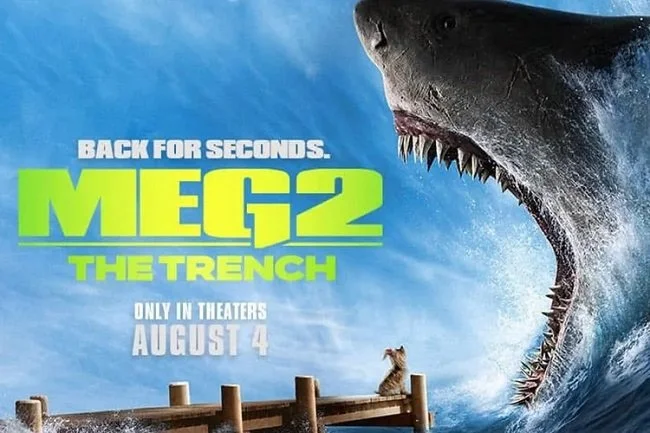
Back in 2018 I wrote the following about The Meg in my review. “My interest doesn’t go so far as a sequel. This sort of movie is the equivalent of a greasy burger you buy at the funfair. It’s fine once in a while as an indulgence, despite the fact that you know it’s bad, but you would soon tire of them being a regular part of my diet”. Five years later, I foolishly thought it may be “fun” to give the sequel, Meg 2: The Trench (2023), a go. Especially in light of the fact that it’s directed by Ben Wheatley. Surely such a filmmaker would bring some creativity and a fresh perspective to this franchise? Nope. Turns out he didn’t. Meg 2: The Trench lacks everything that made its predecessor tolerable. This superfluous sequel is an uninspired, poorly written mess which confuses turning everything up to eleven with entertainment. It gets nowhere near “it’s so bad, it’s good” territory. Instead it makes the biggest mistake a film of this nature can do. It’s dull.
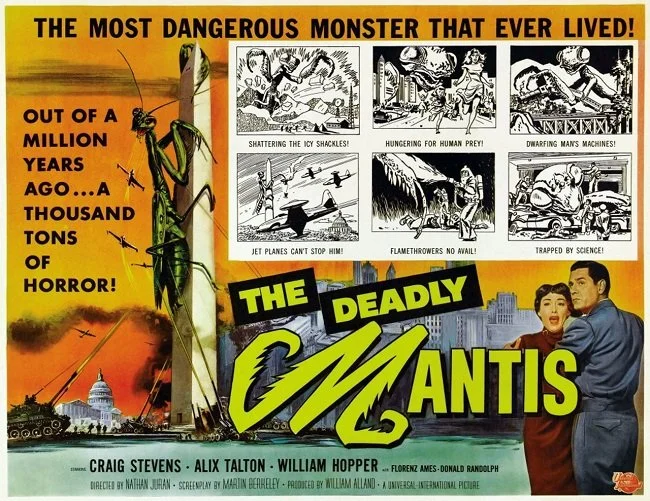
Not to be confused with the Shaw Brothers martial arts film of the same name from 1978, The Deadly Mantis (1957) is a creature feature in the idiom of Them! (1954). Unlike that film’s mutant ants, the monster on this occasion is not the product of the atomic age but a giant prehistoric praying mantis that has been released from the polar ice caps. Exactly how a creature associated with more tropical regions came to be at the North Pole is never explained. In fact precious little is in The Deadly Mantis. The film’s overall scope is somewhat limited with a basic story, limited action scenes and a rather dull cast of generic characters. There is an over reliance upon stock footage from period military documentaries and previous Universal Studio feature films. The film’s biggest failing is the giant praying mantis which does most of its rampaging conveniently off camera. It’s all rather disappointing.
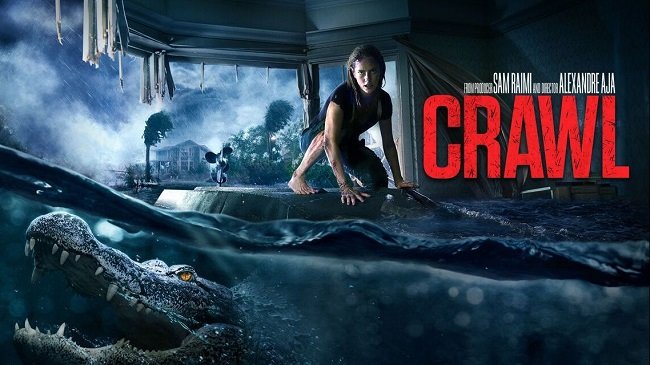
It is no secret that the film industry relies on a handful of common tropes as the mainstay of their cinematic output. It uses timeless themes, storylines and archetypes that have featured in folk tales, plays and literature throughout history. Hence their familiarity with audiences around the world. Where the skill in filmmaking lies is to take a common, well known idea and interpret it in a new and innovative fashion. Akira Kurosawa took Shakespeare’s MacBeth and retold the tale through the prism of Japanese feudalistic culture. The result, Throne of Blood, is considered a masterpiece. Similarly, The Lion King retells the same story through the medium of animation and anthropomorphic wildlife. All of which proves that the key to successfully retelling a familiar tale is to be creative with regard to setting, presentation and perspective.
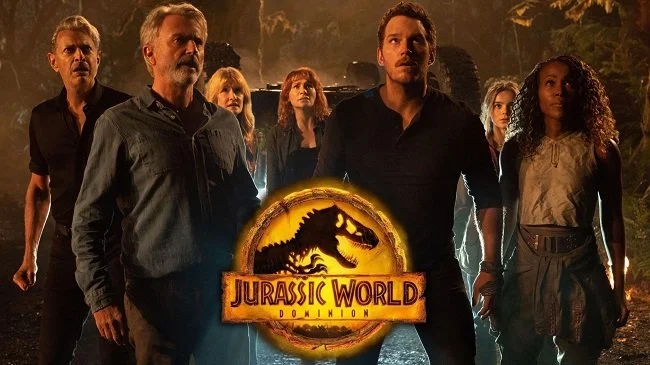
Jurassic World Dominion is a textbook example of a franchise that has run out of steam. Despite the enormous budget, the top notch production values and the presence of three members of the original cast, this is a long, tedious and curiously uneventful film. It has nothing new to say about environmental matters or unfettered science; themes that were front and centre in previous instalments. Nor does it do anything interesting with the main plot device of dinosaurs trying to integrate into our current ecosystems. But perhaps its biggest failing is the conspicuous lack of tension. The denizens of Jurassic World are simply not a threat and fail to have any emotional impact. The film doesn’t even placate viewers with superfluous cast members being eaten. The onscreen deaths by dinosaurs are rather tame.
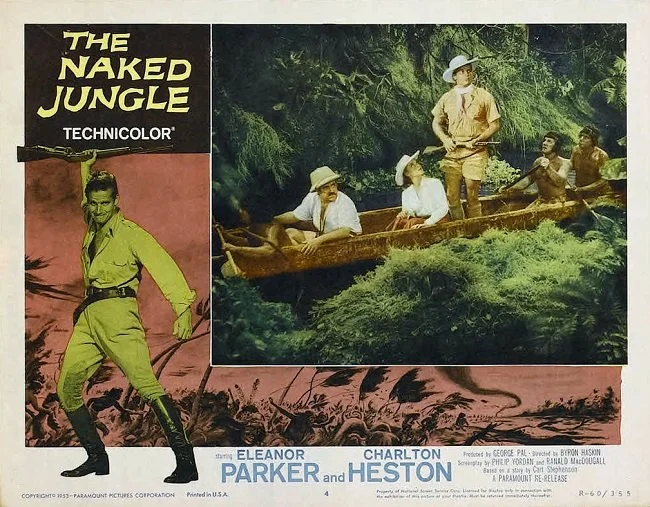
Set in Brazil in 1901, plantation owner Christopher Leiningen (Charlton Heston) makes arrangements to get married. He has spent his entire life building his estate and reclaiming land from the jungle. He is fiercely independent but he is also alone and isolated. Joanna Selby (Eleanor Parker) from New Orleans agrees to marry him but their first meeting does not go well. Leiningen is unhappy to discover that Joanna is a widow and hence has a past, so he tells her to return to America on the next available boat. However, local commissioner (William Conrad) informs Leiningen that swarming soldier ants, or Marabunta, are moving towards his plantation destroying everything in their path. Leiningen refuses to abandon his life’s work and is surprised when Joanna decides to stay with him. Can they convince their native workers to stay too and can they defend the estate from the Marabunta, described as “forty square miles of agonising death”.
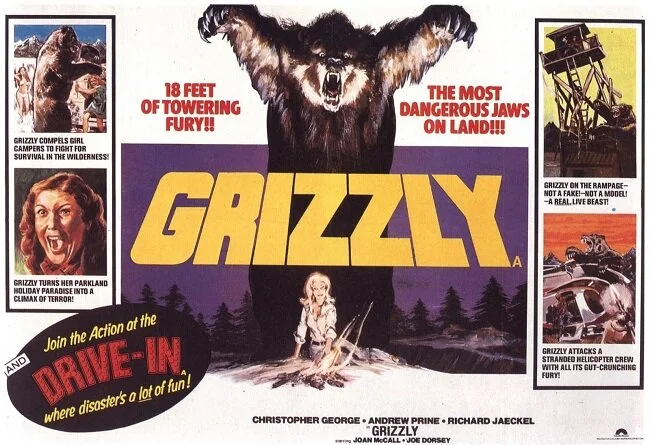
After the critical and commercial success of Jaws in 1975, a veritable tsunami of “creature feature” movies followed in its wake. A few titles, such as Alligator (1980) and Piranha (1978) managed to do something different with the rogue animal trope, both providing a quirky and satirical look at the genre along with plenty of exploitation mayhem. However, most of the rest were low budget productions of negligible quality. However, such qualities are not always an impediment at the box office. Grizzly (1976) was hastily made on a budget of $750,000 yet earned an impressive $39,000,000 at the box office. The critics hated it but the public loved it and it went on to be the second most financially successful independent feature film in the US that year (the first being Monty Python and the Holy Grail). Grizzly is in many ways a microcosm of the exploitation genre from the seventies and needs to be viewed through that prism if it is to be enjoyed.
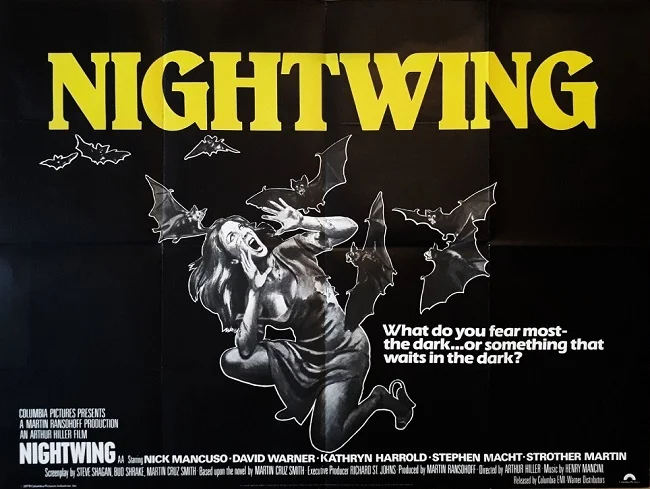
The seventies saw a minor boom in creature feature films after the box office success of Jaws. Hence, we had movies such as Orca (1977), Tentacles (1977), The Pack (1977) and Piranha (1978). If an animal could eat you or potentially pose any threat to people, someone somewhere would make a movie about it. Usually a bad one. A few of these even dared to stray into other hot topics of the time such as pollution and protecting the environment. Some would even invoke mysticism and folk lore to facilitate their protagonists. Nightwing is one such curious genre hybrid which combines vampire bats, shale oil mining and Native American culture in its clumsy and unsubtle plot. It’s a somewhat odd undertaking, directed by Arthur Hiller. His previous work included Love Story (1970) and Silver Streak (1976), so he was not the first person you’d expect to see associated with such material. The film doesn’t work well as either a horror movie or an exploration of social issues, but like so many movies from this era, it is of interest mainly due to its sheer incongruity.
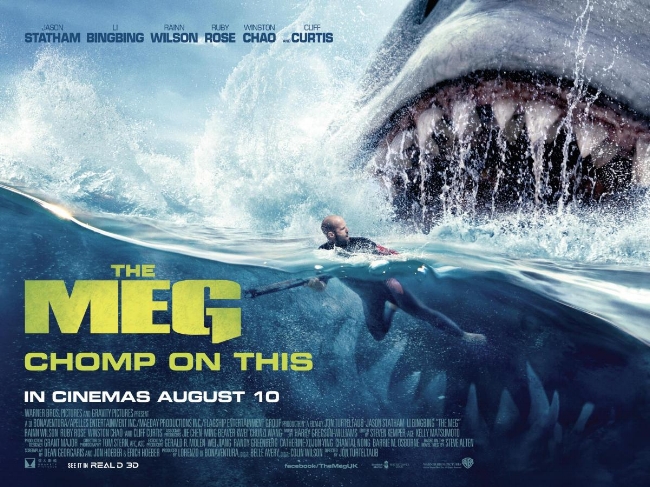
If you have seen any of the marketing material or trailers for The Meg, then you know exactly what you’re getting right from the get-go. All movies inherently require the viewer to suspend their sense of disbelief to various degrees. Naturally, the “creature feature” genre asks audience to go the extra mile with this concept. The Meg takes a major gamble by insisting that everyone goes further still, not by believing in a giant prehistoric shark (Megalodon) but that Jason Statham is a ex-navy, deep sea rescue diver. However, it pays off and the resulting movie is staggeringly stupid, but mercifully entertaining in an undemanding way. Recent movies such as Into the Storm and Geostorm are crass and made worse by their implicit assumption that their viewers are stupid. The Meg is far from cerebral but has an upbeat tone and a sense of playfulness that knowingly invites the audience to come aboard with the silliness. It’s a big distinction and the reason why I smiled a lot and frequently rolled my eyes while watching The Meg, but never with derision.

Critical opinion was very much split this summer when Jurassic World: Fallen Kingdom was released. However, the viewers were somewhat indifferent to the opinions of the professional critics and the movie made a healthy $1,303,476,615 globally, proving once again that the public’s’ continuing love affair with “all things dinosaur” shows no sign of abating. When you factor in the home media market into overall profits, the entire Jurassic Park franchise will have made $5 billion worldwide. So, bearing in mind the old adage that “money talks and bullshit walks”, I think it’s safe to say there’ll be more instalments in the years to come. When faced with such overwhelming box office popularity it seems somewhat pointless to dissect the latest movie, because the film seems to be bullet proof regardless of narrative flaws or ill-conceived plot devices. However, film criticism isn’t about box office popularity but about analysing the relative quality of a movie’s construction and its subsequent standing.
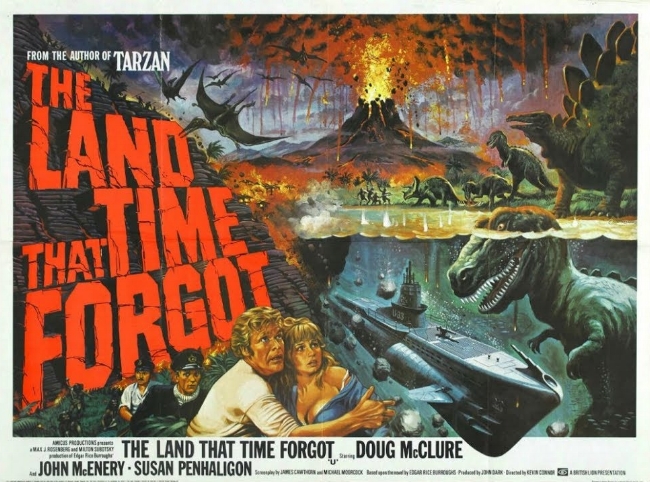
I first saw The Land That Time Forgot way back in 1975 at the Odeon Isle of Wight, when it was first released. We were on holiday at the time, which was cause for celebration in itself, as these were few and far between during my youth, due to the state of the UK economy at the time. But to then go to the cinema and see a fantasy film, filled with action, adventure and monsters, was the icing on the cake for an over excited eight-year-old. Adapted by Michael Moorcock and James Cawthorn from the 1924 the novel by Edgar Rice Burroughs, The Land That Time Forgot is a classic example of high adventure on a low budget. Its technical shortcomings were even apparent to me as a child, yet there was a charm and honesty to this curious British production, that had the audacity to try and compete with the likes of more expensive US productions such as The Golden Voyage of Sinbad and Island at the Top of the World.
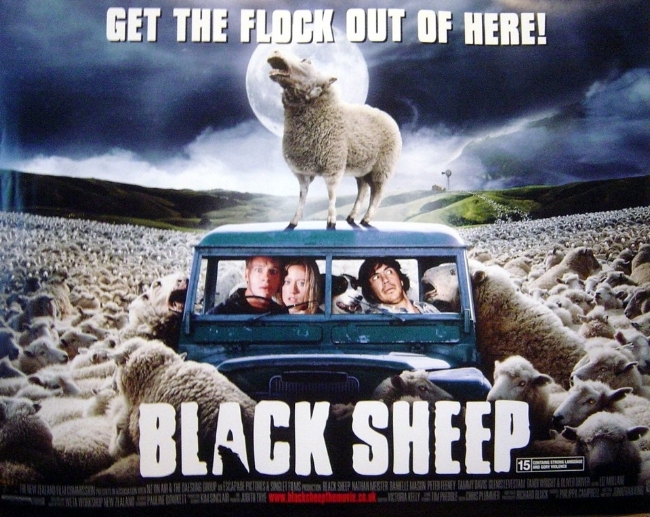
Black Sheep is a high concept horror comedy from New Zealand. Featuring creative physical effects by Weta Workshop, this tale of genetically modified killer sheep, animal husbandry and environmentalism requires a very broad sense of humour and an abiding love for the “creature feature” sub-genre. It should be noted that the copy I watched was the unrated R1 DVD. This version is stronger in content than the R rated US theatrical release and yet was released at the UK cinemas with only a 15 rating from the BBFC. I suspect that the similarities in humour between the UK and New Zealand contributed to this somewhat low rating. That and the fact that horror comedy often gets a free pass because the humour always tends to mitigate the violence.
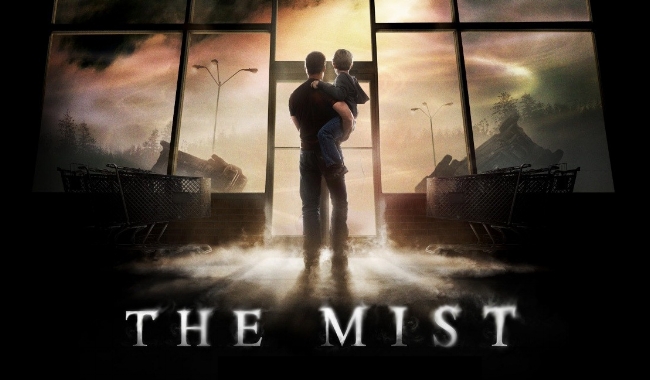
Frank Darabont achieved both critical acclaim and mass appeal with his adaptations of The Shawshank Redemption and The Green Mile. In 2007 he returned once again to the work of Stephen King with his film version of The Mist. It’s a sideways step away from human drama into a more genre piece, yet it still retains a very traditional story at its heart. Once you look beyond the superficial elements of "creature feature" plot, you get yet another well written character study by an ensemble cast, again focusing on how the human condition deals with extreme situations. The particular route it takes and some of the themes it explores may not be to everyone's taste. However, it still focuses on characters and performances. It is also a movie that ends with a somewhat unexpected plot development, that some viewers may find a little extreme. It is one of those film related twists that if known in advance, greatly diminishes once enjoyment of the film.
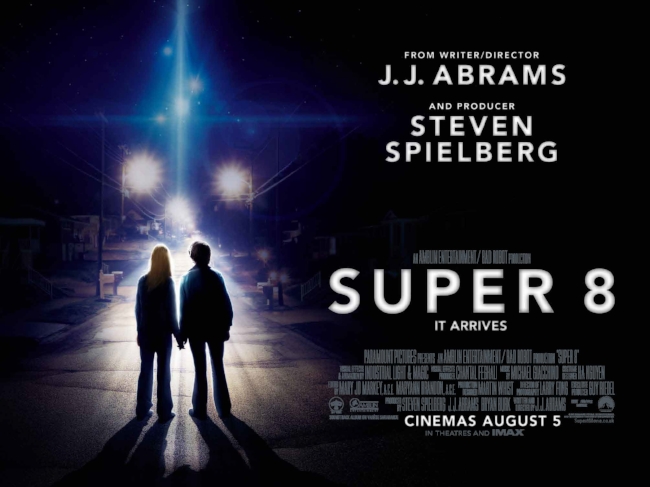
When you see the names of such cinematic luminaries as Steven Spielberg and J.J. Abrams together on the same movie poster, naturally your expectations are going to be high. Yet when watching the various trailers for Super 8, just prior to its release in 2011, I was somewhat cautious. I have discussed in the past at some length the ambiguous nature of trailers and that they can misrepresent a film. Yet even bearing this in mind at the time, I couldn’t help but feel that Super 8 seemed like a somewhat self-indulgent homage to Spielberg's earlier work. I subsequently saw the movie at the cinema in August that year and my suspicions were validated. However, over time I have spoken to several friends who are advocates of the movie, so I thought I’d watch it a second time. Sadly, I still find myself unable to label Super 8 as anything else other than adequate. Now I would hasten to add, that I use adequate within the context of both director’s body of work. An adequate film from either Mr Spielberg or Abrams is still superior to many of their competitors. But that's not the point. I simply expected better from such a project.
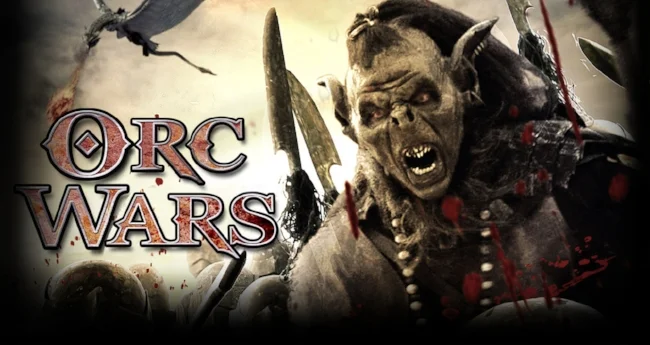
Having recently sat through Orcs! I decided to take a further chance and watch Orc Wars. It too is a very low budget film, although this time the finances were raised through crowdfunding. Sadly, it is not the fun, tongue in cheek, independent adventure movie the trailer and associated marketing implies. There is very little merit in this production. It's cheap, cheerful and although harmless, it clearly demonstrates that not all fan funded projects are good cinema. Some are just indulgences. The problem is in the title itself, which tries to sell an idea that the movie production is incapable of delivering. Instead of the spectacle of an army of a thousand Orcs pitted against the technological might of the US war machine, we get a few extras in ill-fitting costumes, running skirmishes against no-name actors on quad bikes and a few old Army Surplus vehicles. It's all rather lacklustre and underwhelming.
As a fan of the horror genre I’ve sat through numerous low budget films in my time. This has usually been at festivals or conventions. Sometimes watching something as part of a group, with likeminded individuals, makes a difference. You find yourself groaning in unison and the shared experience helps compensate for potential deficiencies. Watching questionable material in the comfort of your own home, purely on your own can be a lot tougher. However, due to my abiding love of the genre, I am prepared to cut a lot of cheap ass indie flicks considerably more slack than I would others. So, I'll endeavour to review Orcs! with as much impartiality as possible. Oh, and before we start, let us clarify the term Orcs. Although Middle-earth is not referenced in any way, this film is definitely about Tolkien's creations. Or at least their depiction in another well-known series of films.
10 Cloverfield Lane blends several cinematic genres producing an interesting premise. Once it has established its narrative arc, it then dives head long into an exciting and tense one hundred and four minutes. The movie is not a direct sequel to Cloverfield (2008) but does touch upon some of the same themes and ideas. Made on a modest budget of $15 million, the claustrophobic setting of a nuclear bunker accommodates strong performances from the lead actors. It is not until the third act when the story movies back to the outside world, do we see any major visual effects. Overall, this is a very compelling film due to the strong screenplay and well defined central characters.
I did my best to avoid the hype surrounding the initial release of Cloverfield. Such media saturation and public interest can often cloud the issue of whether the actual film is any good. Five years later and having watched the movie twice, once in the theatre and once at home, I am still somewhat conflicted about this movie. The use of hand held video cameras is both a boon and a bane. The constant movement of the image has proven to cause motion sickness for some viewers, although this is not so overwhelming when viewed on a smaller screen at home. Yet the medium of news footage mixed with handheld cameras does create a palpable sense of immediacy. This helps immensely when trying to sell a fantastic concept, such as the one that Cloverfield features.

The enigma of the Xenomorph in the Alien franchise is diminished once you start to rationalise its heritage. Sadly, that’s exactly what Alien: Covenant has chosen to do. It jettisons the mystery of the original 1979 movie and pulls back the curtain, so wisely put in place thirty-eight years ago, to reveal a rather lacklustre explanation to the Xenomorph’s origin. Having spent nearly $100 million and employed a production team of some of the finest talent that money can buy, the resulting movie is not bad per se, just crushingly superfluous. After watching Alien: Covenant this week, my overall reaction can be distilled down to a deep sigh of indifference and a shrug of the shoulders.
I have written many times in recent years about how big titles get announced by the gaming industry, of the ensuing hype up that leads up to launch day and then the subsequent disappointment on purchase. It is a malady that has afflicted the movie industry for decades and has become increasingly more common in the last decade. Hype has a curious link with reputation. There are a handful of directors in contemporary Hollywood who when they add their name to a production, people take notice. Ridley Scott is one of these. His body of work pretty much guarantees he can make whatever he wants, be it a commercial undertaking or a ludicrous vanity project. However, the downside to being a film maker of this stature is that you are not so easily exposed to proper scrutiny by your peers. No one stops you from making a mistake because you are supposed to know what you are doing. They let you do what you want. Which is bad.
Death Race (2008)
I must admit that I did not have particularly high hopes for Paul W S Anderson's remake of the 1975 Roger Corman produced cult classic. Anderson’s work varies greatly. Event Horizon and Soldier are solid genre films but I still have not fully come to terms with Alien vs. Predator. Jason Statham is also a name that divides the public, with solid material such as The Transporter and unfathomable tosh like Revolver. But despite these considerations, Death Race is in fact quite a surprise and does not follow the path that so many remakes do. It takes the basic themes and concept associated with the original and tries to do something different with them. It doesn’t reinvent the wheel nor is it a genre milestone. But it does offer a different spin on things, have some engaging action scenes and provide some dumb but enjoyable entertainment. When combined with snacks and some beer this is a passable way to kill 111 minutes.
I must admit that I did not have particularly high hopes for Paul W S Anderson's remake of the 1975 Roger Corman produced cult classic. Anderson’s work varies greatly. Event Horizon and Soldier are solid genre films but I still have not fully come to terms with Alien vs. Predator. Jason Statham is also a name that divides the public, with solid material such as The Transporter and unfathomable tosh like Revolver. But despite these considerations, Death Race is in fact quite a surprise and does not follow the path that so many remakes do. It takes the basic themes and concept associated with the original and tries to do something different with them. It doesn’t reinvent the wheel nor is it a genre milestone. But it does offer a different spin on things, have some engaging action scenes and provide some dumb but enjoyable entertainment. When combined with snacks and some beer this is a passable way to kill 111 minutes.
Death Race is not an exact retread of the original movie. It bears more similarities to Arnold Schwarzenegger's The Running Man but avoids any attempt at social commentary. The plot is very matter of fact and established very quickly. In the near future, the US has suffered a complete economic collapse. Unemployment and poverty stalk the land, like two giant stalking things (to quote Blackadder). Ex-professional driver Jensen Ames (Jason Statham) is framed for his wife’s murder and ends up in the proverbial big house. Evil Warden Hennessey (Joan Allen) who makes a profit from the prison system by staging a brutal set of fatal demolition derby’s, blackmails Jensen into driving under the guise of punters favourite, “Frankenstein”. The deal is that he’ll earn his freedom if he co-operates. He is aided in his endeavours by institutionalized mechanic “Coach” (Ian McShane) and his navigator Case (Natalie Martinez).
Death Race is actually an honest action movie, avoiding the usual pitfalls of being too OTT or having delusions of grandeur. The script is tight and serviceable, not straying from the accepted formula. There are no major surprises but it is not predictable to the point of tedium. The visual feel and production design are solid and the stunt driving and FXs work are good. There are several affectionate homage to well known road and action movies. The violence is strong but not gloating or gratuitous. For a genre piece, the actors and performances are above average. It’s nice to see Joan Allen indulge in action movie smacktalk. “Okay cocksucker. Fuck with me and we’ll see who shit’s on the sidewalk!” The soundtrack is also very appropriate for the subject matter, with a good selection of songs and metal riffs.
Director Anderson meets audience expectations with Death Race. Don’t get me wrong, this film is still a somewhat niche market product. Fans of costume dramas and character studies will still struggle to define the film's philosophical subtext. But for those wanting a fix of old school action with a squared jawed hero, you can’t go far wrong with Death Race. The film was sufficiently successful to spawn three direct-to-video sequels. Death Race 2 (2010), Death Race 3: Inferno (2013) and Death Race: Beyond Anarchy (2018). However, Jason Statham didn’t see fit to return so is conspicuously absent from them. He is replaced by Luke Goss in the first two follow ups and then Zach McGowan in the last. The budgets and quality decline exponentially as the franchise progresses, as is often the case with these sorts sequels. So I can’t recommend them to anyone but the most ardent genre aficionado.
Mainstream films are easy to recommend to people. They’re usually formulaic, work within clear parameters and they’re not controversial. Most people, when viewing such film on someone else’s suggestion, are left with a fairly simply choice. Did they like it or not? Whatever the outcome, no feathers are ruffled. No one looks at you askance afterwards and says “why the hell did you think I’d like that piece of shit”? If something like this happens, then you have clearly not recommended a mainstream film. Perhaps you’ve suggested something that’s a little more of an acquired taste. Something niche, from a very specific sub-genre. Which brings me neatly to Blazing Magnum AKA Strange Shadows in an Empty Room (1976). The US title gives the impression that this film is a hard boiled cop thriller, like so many others that followed in the wake of Dirty Harry. But there’s a clue in the European title. Yes, this movie has more than just a whiff of a giallo about it.
Jason Statham is an exemplar of the US mantra of “staying in your lane”. He makes action movies and occasionally strays into action comedies. His formula broadly works and is sufficiently lucrative to keep Mr. Statham employed. Therefore, if you watch a film in which he stars, you have a fairly good idea of what you’ll be getting. Of late, the criteria for his action vehicles have become more succinct. Jason Statham will play an innocuous character, such as a construction foreman or a bee keeper. Something terrible will subsequently befall another character who Mr. Statham has an emotional connection with in some capacity. He will subsequently hunt down those responsible and meet out death and violence. At some point the villain of the story will enquire as to how this innocuous person is so lethal. Research will then show that our Jason is in fact an ex-police officer/special forces operative/international assassin. There’s then a showdown and the villain dies. Job done.
The Light at the Edge of the World presented itself as an action movie upon its release in 1971. Based upon a story by Jules Verne, the Spanish American co-production was driven by its star Kirk Douglas, who curiously hired British director Kevin Billington to helm the project. This tale of a lighthouse keeper fighting a war of attrition against a group of pirates that have captured his island, was market as an adventure film ostensibly in the idiom of the authors previous works and as a pirate movie. MGM bought the rights to distribute the film in the UK on the misunderstanding that it was a family friendly production. It was not and remains so. They subsequently had to cut 15 minutes of violence and torture as well as an undercurrent of sexual assault to secure a suitable rating. Conversely, the US distributors received an arbitrary PG rating, despite the fact this is one of a handful of films that honestly depicts pirates as murderers, rapists and worse.
It’s an established action film trope. The fire team comprised of ex-military personnel, move in on their target. Only to have the tables turned by someone they don’t deem a threat. What makes it different in The Last Stand of Ellen Cole is a throwaway line of dialogue. The bested operative lies bleeding on the floor and the protagonists stands over them ready to finish them off. “Don’t, I have a cat” they feebly plead. For me that was the icing on the cake. The movie had already established it was taking the “same old, same old” and doing something different. Something fun, if taken in the right spirit. This scene tipped the balance and I embraced this film because it was being honest about what it is. This is a modern B movie that decides to give a very specific sub-genre a makeover. Furthermore, its clearly done with an affectionate wink, which is very different to sly wink. This isn’t deliberate self-knowing irony. Its just a film doing something different and possibly silly but it genuinely wants to have fun with it.
Stephen King’s dystopian story, The Running Man, was previously adapted very loosely in 1987, as a vehicle for Arnold Schwarzenegger. That version focused mainly on the “Battle Royale” element of the story and leaned heavily into Arnie’s personality, rather than the politics of the book. It also wasn’t well received by the author. Edgar Wright’s remake follows the source text a lot more closely and is far more interested in its political themes and wider social commentary. Furthermore, this version re-establishes the everyman quality of the hero of Ben Richards, rather than him being the muscle bound, ex-military hero as per Mr. Schwarzenegger’s prior interpretation. This time round, The Running Man uses a lot of the visual and narrative tropes of contemporary reality TV, making this forty three year old story very relevant to today’s viewers and couching the film in a style that is recognisable and accessible.
After the success of Raiders of the Lost Ark in 1981, filmmakers scrambled to find existing intellectual properties that they could use for similar films. Hence archaic heroes such as Alan Quatermain were hastily given a modern makeover and thrust into generic movies, in a vague attempt to replicate Steven Spielberg’s successful formula. Which brings us neatly on to James Charles Bigglesworth AKA “Biggles”, a fictional pilot and adventurer from a series of books written by W. E. Johns between 1932 and 1968. Several attempts had been made in the past to bring this character to the silver screen, including one by Disney but they all failed. However, the commercial and critical success of Indiana Jones provided sufficient impetus to greenlight a new film. However, due to some curious production choices, when Biggles was finally released it was far from just a period set, action movie.
Setting aside the hubris of remaking a film such as Red Dawn, the 2012 reboot had a troubled production. Shot over the course of late 2009, on location in Michigan, MGM intended to release the film in September 2010. However, the studio’s financial problems became unsustainable over the course of that year and the film was shelved, while a financial solution was sought. Furthermore, while Red Dawn was in post production, there was a major economic shift within Hollywood due to the increasing importance of the Chinese market. This was a significant problem for MGM because the new version of Red Dawn had the Chinese invading the USA instead of Russia. Hence there were reshoots and the need for additional visual effects, so that the Chinese could be replaced with North Koreans. MGM eventually went bankrupt and the distribution rights to Red Dawn were sold off. The film was eventually released in 2012.
When I first saw the promotional trailer for Gangster Squad back in 2012, prior to its release, I wasn't especially impressed. I simply thought the film was another attempt to re-invent the gangster genre for a generation who were not especially familiar with it. I wasn't exactly overwhelmed with director Ruben Fleischer's resume either. I didn't particularly like Zombieland and haven't seen 30 Minutes Or Less. Then came the tragic mass shootings in Aurora, Colorado which led to the movie being delayed so that the original ending, which featured a shoot-out in a movie theatre, could be replaced. Hence when I finally watched this film recently, I wasn't expecting a movie up to the standards of say Once Upon A Time In America or Miller’s Crossing and it would seem that I was right do so. Gangster Squad is not especially noteworthy in any respect.
Levon Cade (Jason Staham) is a former Royal Marine Commando who has retired from military service and now works as the leader of a construction team in Chicago. He has a close relationship with Joe and Carla Garcia (Michael Peña and Noemi Gonzalez ) who run the company and considers them as family. Outside of work, Levon is involved in a bitter custody battle for his daughter, against her maternal grandfather, who blames Levon for his daughter’s suicide. When Garcia's teenage daughter Jenny (Arianna Rivas) goes missing, Levon reluctantly agrees to help her parents and get her back. Beginning his search at the nightclub where Jenny was last seen, he soon discovers that she was abducted by Russian traffickers. Furthermore, the culprit is Dimi Kolisnyk (Maximilian Osinski), the wayward son of a senior ranking gangster.
PC Nicholas Angel (Simon Pegg) is an exemplary Police Officer, with a strict adherence to the letter of the law. As a result of making the rest of the London Metropolitan Police look bad, he is transferred to the rural town of Sandford, Gloucestershire. On arrival, Angel finds that the local Inspector, Frank Butterman (Jim Broadbent), takes a far more laissez-faire approach to policing. His colleagues are incompetent and he is further hampered by the Neighbourhood Watch Alliance (NWA), who prioritise low crime statistics over law enforcement due to their desire to win the title of “Village of the Year”. Furthermore, Angel is partnered with the Inspector’s son, Constable Danny Butterman (Nick Frost), who is infatuated with “buddy cop” movies and is in awe of Angel’s London experience. “Have you ever fired two guns while jumping through the air?” However, a sudden spate of grisly accidents lead Angel to believe that there's more to the seemingly tranquil and picture-perfect community than meets the eye.
As a collection of history's worst tyrants and criminal masterminds gather to plot a war to wipe out millions, one man must race against time to stop them. Discover the origins of the very first independent intelligence agency in The King's Man. Based on the Comic Book “The Secret Service” by Mark Millar and Dave Gibbons. 20th Century Studios
Matthew Vaughn’s The King’s Man is an inconsistent film, both narratively and tonally. It veers between serious themes and stylised, hyperbolic action. At times it does quite a good job of exploring such complex subjects as global politics, mechanised warfare and colonialism. Sadly it then wrenches the viewer out of these cerebral reveries as it lapses into the sort of over the top action sequences that were notable in the two earlier films. It’s a shame because The King’s Man gets so many other aspects of the production right. The casting is very interesting, especially Ralph Fiennes as the “pacifist” Duke of Oxford. He is actually a very good fit for the action genre. Djimon Hounsou and Gemma Arterton are given little backstory beyond being respectively the faithful manservant and the family nanny but both are notable due to their own inherent acting chops and personal charisma. Rhys Ifans obviously has a great time as Grigori Rasputin, ensuring all the man’s vices are robustly depicted.
On paper, a video games franchise such as Assassin’s Creed lends itself perfectly to a cinematic adaptation. The parkour action scenes, the historical settings and the contemporary conspiracy theory themes are all elements that should play well with a modern youth audience. Hence with the backing of a major studio such as Twentieth Century Fox and a budget of $125 million, the 2016 movie should have been a guaranteed box office hit. The casting of Michael Fassbender, an actor who is comfortable with serious roles and big Hollywood franchises, should have carried this film comfortably over the finishing line. Director Justin Kurzel, who had found critical success with his adaptation of MacBeth a year previously, must have looked like a safe pair of hands to handle such a project. Sadly, that was not the case. Assassin’s Creed is not the sum of its parts, in fact many elements appear to be pulling in opposite directions. The resulting feature film is staggeringly dull, soulless and a chore to watch. A testament to how modern big budget franchise movies have become a production line, with all the art stripped from them.
300: Rise of an Empire is a curious beast, being neither a sequel nor a prequel. It is infact a tale that takes place simultaneously with those of the original movie. While Gerard Butler is busy making a last stand at the Battle of Thermopylae, fellow warrior and politician Themistokles, played by the singularly uncharismatic Sullivan Stapleton, leads a similar army of buffed Greeks against the Persian fleet. Once again we have a movie that is the epitome of style over substance, complete with a sound design that challenges what can physically be endured by human hearing. They say the first casualty of war is innocence but in this type of movie it's closely followed by historical accuracy and authentic depictions of ethnicity. 300: Rise of an Empire is a cinematic assault upon the senses but not in a good way like Mad Max: Fury Road.
Back in September 2017, Liam Neeson stated in an interview with Sky News that he was retiring from the action genre, due to his age. He felt that audiences would question his credibility in such roles. After the release of The Commuter (2018) and Cold Pursuit (2019) Mr Neeson appeared to return to human dramas and films that focus on performance rather than punching man and beast. Ordinary Love and Made in Italy, both released in 2019, demonstrate the actor’s versatility and skill. People seem to forget that he is a thespian who was initially known for his character driven roles in films such as The Mission (1986), Rob Roy (1995 and Michael Collins (1996). It was only in 2008 that he reinvented himself as an action hero. It’s all a far cry from Schindler’s List and his performance that earned him an academy award nomination. The reason I mention all of this is because The Ice Road is the third action movie I’ve seen in 2021 that stars Liam Neeson.
One of the stand out tropes of the modern action film is that the stakes are always cranked right up to 11. Terrorists, biological weapons and nuclear bombs are common threats in such movies with a hero or heroes trying to save the world from death and destruction or worse. However, back in the sixties and seventies, things were a little more straight forward and in some respects more credible. Take When Eight Bells Toll, released in 1971, for example. British Treasury secret agent Phillip Calvert investigates the theft of £8,000,000 in gold bullion by a gang of international smugglers. In the context of the times this was no small beer however it’s somewhat mundane compared to fighting super villains and their space lasers. Frankly I prefer these low key plot devices as they can make a film a little more plausible within the confines of the genre. A concept that is often forgotten today.
Forensic accountant Owen Casserly (Jake Weber) flees his home with his teenage son Connor (Finn Little) when he discovers he has been targeted by a pair of assassins (Nicholas Hoult and Aidan Gillen) who have been hired to stop him giving evidence in a major corruption case. Connor witnesses the murder of his father after their car is run off the road. Entrusted with important written evidence, he escapes into the dense forests of the Montana wilderness pursued by the killers. Seeking help he runs into smokejumper Hannah Faber (Angelina Jolie) who is stationed at a remote fire lookout tower. Hannah suffers from PTSD from a previous forest fire in which she was unable to save three young boys. Hannah attempts to lead Connor through the forest to safety. Meanwhile the assassins set fire to the forest to divert the attention of the authorities and cover their tracks.
I must admit that I did not have particularly high hopes for Paul W S Anderson's remake of the 1975 Roger Corman produced cult classic. Anderson’s work varies greatly. Event Horizon and Soldier are solid genre films but I still have not fully come to terms with Alien vs. Predator. Jason Statham is also a name that divides the public, with solid material such as The Transporter and unfathomable tosh like Revolver. But despite these considerations, Death Race is in fact quite a surprise and does not follow the path that so many remakes do. It takes the basic themes and concept associated with the original and tries to do something different with them. It doesn’t reinvent the wheel nor is it a genre milestone. But it does offer a different spin on things, have some engaging action scenes and provide some dumb but enjoyable entertainment. When combined with snacks and some beer this is a passable way to kill 111 minutes.
I did not watch Zero Dark Thirty upon its initial release, due to the politics surrounding it. I wanted to be able to view it free from bipartisan debate. Eight years on I believe this now achievable and although debate still exists it is now more measured and less strident. Zero Dark Thirty is certainly a compelling movie. It plays as a docudrama, providing an in-depth study of the US intelligence services hunt for Osama Bin Laden. It cannot be faulted on a technical level and the performances are very strong. It does not adopt a celebratory or triumphalist tone in its approach to the story. Director Kathryn Bigelow endeavours to keep the proceedings focused upon the intricacies of an intelligence driven manhunt. There is little or no tubthumping, jingoism. The decision to find Bin Laden is shown as a political and military exercise of foreign policy. The film solely focuses on the story from a US perspective but that is perfectly acceptable as it is not intended to be an exploration of geo-politics.
Firestorm was originally written as a vehicle for Sylvester Stallone, however when the production company Savoy Pictures went bankrupt the screenplay was bought by Twentieth Fox and the scope of the movie reduced to suit a lower budget. It’s broadly similar to Cliffhanger in so far as the lead character is a specialist in a certain field who runs afoul of criminals in a perilous environment. Whereas Cliffhanger is set in the Rocky Mountains, Firestorm takes place in the forests of Northern Wyoming. After the script was revised four times, the finished screenplay was given a final “polish” by Graham Yost who has considerable experience with the action movie genre. As stallone was no longer associated with the project and the production had been repurposed to be less extravagant, the movie was assigned to former NFL star Howie Long. Long had already appeared in the John Woo movie Broken Arrow (1996) and the Firestorm was seen as a means to give him a star vehicle.
The original French movies District 13 and its sequel District 13: Ultimatum, conceived and produced by Luc Besson, were enjoyable variations of the Escape from New York theme. Their charm lay in their European pedigree and the skilful use of parkour. The two leads, David Belle and Cyril Raffaelli, were eminently suited to the minimalist roles and the screenplays were fun. Half of these movies appeal was the fact that they were not mainstream US products. Brick Mansions is the Hollywood remake of District 13, as well as being Paul Walkers’ final movie. Sadly, this film is far from a fitting epitaph, being devoid of any charisma or innovations. It is blandly shot , poorly edited and has been stripped of everything that made the original entertaining.
Arnold Schwarzenegger's return to the big screen after his political career has been uneven to say the least. His cameos in The Expendables and The Expendables 2 were well received, with their self referential charm and age related irony. Yet his first major movie The Last Stand, although competent, failed to find an audience. Escape Plan fared better at the box office but did not put Arnie back on the A list. Effectively there's a large percentage of the contemporary cinematic audience who were born after his heyday and are simply not overt fans of his work. His core audience is more than likely of the age group that consume most of their film entertainment at home. Which may explain why Sabotage tanked in the US upon release on March 28th 2014. It was the worst opening box office of Arnie's career. He used to break first day opening records.
Sequels and reboots are hardly a new concept and have been a part of Hollywood culture since the 1930s. The success of the Universal Horror movies from that era being a prime example of direct follow ups and retconned movies. However, there is one fundamental rule that distinguishes a good sequel from a bad one. You should never mitigate, undermine or make irrelevant the events of the previous movie, just to provide your new film with a raison d'être. For example, the events of Aliens do not contradict or trivialise those that happened in Alien. In fact with that franchise there is a very clear logical progression between the two movies. The same is true for Mad Max and Mad Max 2 or Star Wars and The Empire Strikes Back. The key is to progress a story, enhance it or explore things from an alternative angle and bring something new to the cinematic table. Sadly this philosophy is all too often lost on corporate film making. Which means that many sequels are just tedious replays of prior films. Terminator: Dark Fate falls squarely into this category.
The enduring appeal of the character John Rambo in First Blood comes from the fact that he is a traumatised ex- service man who keeps himself to himself as he drifts from job to job, trying to come to terms with his wartime experiences. His poor treatment at the hands of a small-town Sheriff is a succinct metaphor for the social and political indifference that Vietnam veterans were shown upon their return to the US. He’s a man with a code in a world that no longer has any use for him. His simple and honest patriotism is not returned and he is in fact viewed with shame by many from the nation he loves. Furthermore, the first movie does not paint him as a cold-blooded killer. Despite provocation he is not the first person to shoot to kill. Rambo is in many ways a victim. A broken man, who society has asked to do unspeakable things. Now society wants nothing to do with him and fears the “monster” they created. Although clearly an action movie, First Blood had narrative depth and a flawed but sympathetic protagonist. 37 years and four movies later, such dramatic themes have long left the franchise. The central character is indeed a caricature of its former self.
It was hardly surprising that the movie adaptation of Chris Kyle's autobiography American Sniper, would cause controversy. The Iraq war, US Foreign Policy and national pride are seldom subjects that are discussed in a calm and measured fashion. And then there are the personal politics of director Clint Eastwood to consider. Hence there were claims from some quarters upon the movie’s release, that it was Islamophobic and counter claims that criticisms of the late Chris Kyle were unpatriotic. There still remain issues regarding the authenticity of events depicted in the source text and subsequently the movies screenplay by Jason Hall. Yet none of these factors have in anyway impacted upon the film's box office returns which currently stands at $247,900,417 worldwide.
Do I really need to present you with some sort of plot synopsis for Transporter 3? No, I didn’t think so. More of the same as Frank Martin (Jason Statham) and his police chum, Inspector Tarconi (Francois Berleand) become embroiled in yet another high-octane escapade. There's fights, car stunts, exotic international locations and a strong sense of humour. This time, the disposable love interest is a Ukrainian girl named Valentina (Natalya Rudakova) who fulfils her role succinctly. The film benefits by being set back in Europe, after the mistake of basing Transporter 2 in the US. This time, the story takes us to such locations as Budapest and Odessa. The international film crew once again bring a veneer of panache to the production that is conspicuously absent in US action movies. For a modest budget fil, Transporter 3 it looks very good. Again the proceedings are given a boost by a pertinent soundtrack by Alexandre Azaria and a selection of European “tunes”.
Jason Bourne originally graced our screens for the first time seventeen years ago. The Bourne Identity was a gritty, minimalist take on the espionage genre and a welcome change from the excesses of the Pierce Brosnan Bond era. The story arc was sustained over three movies and ended efficiently and succinctly. After which Matt Damon moved on, as did the director of two of the movies, Paul Greengrass. Which leaves us with The Bourne Legacy; the tangential sequel that arrived in 2012. A film that exists because the money men and bean counters hate to pass up on a franchise until it has been squeezed utterly dry. Hence, they commissioned the writer of the series, Tony Gilroy, to come up with a screenplay and direct a spinoff movie. Jeremy Renner was cast in the lead role. Yet despite narrative and production continuity, The Bourne Legacy was not a Jason Bourne movie with the star appeal of Matt Damon. Although the film turned a profit, it had the lowest box office returns out of the entire franchise.
During the eighties there was a clear league table of action movie stars. By the mid-nineties this system fell into decline and the Hollywood lacked any clearly defined exponents of the genre. A decade later, due to the success of Luc Besson’s Transporter films, Jason Statham became a bankable box office star in this field. When you look at Statham's early work in Lock, Stock and Two Smoking Barrels it is hard to envisage the "mockney geezer" as an international action star. Yet he has successfully stepped into the role and enjoys a large following. I enjoy his work as he has a likeable on-screen persona. My 88-year-old Mum likes him to because "he wears nice suits". The action genre seldom reaches such a diverse demographic.
Before we start, I recollect that one well known UK critic described Safe House as sub-Tony Scott, upon its release. Now I’ve always been conflicted over Scott’s back catalogue, as I’ve always found his movies to be hampered by their own unique style. The subtleties of his characters and depth of his themes are all too often drowned out by his frenetic style and fast paced editing. Therefore a comment such as this really sets off alarm bells for me. Having recently watched The Equalizer 2, I wanted a further fix of Denzel Washington in a similar action vehicle. As Safe House was available on Netflix UK, I decided to kill a couple of hours and see what actually constitutes as “sub-Tony Scott”.
Safe (2012)
During the eighties there was a clear league table of action movie stars. By the mid-nineties this system fell into decline and the Hollywood lacked any clearly defined exponents of the genre. A decade later, due to the success of Luc Besson’s Transporter films, Jason Statham became a bankable box office star in this field. When you look at Statham's early work in Lock, Stock and Two Smoking Barrels it is hard to envisage the "mockney geezer" as an international action star. Yet he has successfully stepped into the role and enjoys a large following. I enjoy his work as he has a likeable on-screen persona. My 88-year-old Mum likes him to because "he wears nice suits". The action genre seldom reaches such a diverse demographic.
During the eighties there was a clear league table of action movie stars. By the mid-nineties this system fell into decline and the Hollywood lacked any clearly defined exponents of the genre. A decade later, due to the success of Luc Besson’s Transporter films, Jason Statham became a bankable box office star in this field. When you look at Statham's early work in Lock, Stock and Two Smoking Barrels it is hard to envisage the "mockney geezer" as an international action star. Yet he has successfully stepped into the role and enjoys a large following. I enjoy his work as he has a likeable on-screen persona. My 88-year-old Mum likes him to because "he wears nice suits". The action genre seldom reaches such a diverse demographic.
Safe is a throwback movie. It's central plot theme is very seventies. It seems to be an integral part of the action movie stars rite of passage, that at some point they have to make a movie involving a child (special needs is optional), a pet or sundry exotic animal. Therefore, when I saw the trailer for Safe, the first thing I thought of was Bruce Willis in Mercury Rising. The similarities are quite apparent. In Safe, Statham plays Luke Wright, a New York law enforcer turned cage fighter whose wife has been killed by the Russian mob. He encounters on Mei (Catherine Chan) on the subway and intervenes when she is attacked by assassins. The eleven-year-old maths prodigy is the key to crime boss Han Jiao (James Hong) accounts system and therefore a huge liability in the wrong hands. Wright swears to protect her and so the bodies start piling up.
Director Boaz Yakin’s script is again very old school. It depicts a very modern Manhattan as a hotbed of corruption as you would see in many seventies’ movies such as Serpico. The entire bureaucracy is on the take from the mayor (Chris Sarandon) down to the street cops. It should also be noted that even with the required suspension of disbelief needed to watch such movies, Safe taxes credibility to the extreme with the level of mayhem that ensues. The dialogue is ripe and the acting consists of the cast shouting at each other in-between chewing the scenery. With regard to the action scenes, there are an adequate amount of set pieces, with hand to hand combat and sundry shootings. Nothing is exceptional but nor is anything substandard. Movies such as Safe require a liberal helping of action and sufficient is supplied. But there is nothing of note. Do not go expecting a bravura ending like in Wanted: Dead or Alive.
Yet despite these numerous faults, Safe bowls along under the power of its own insane internal logic. It also does exactly what it says on the side of the tin and somehow manages to entertain on a basic level. A lot of this comes down to Jason Statham. He has the ability to carry a film such as this. It is far from his finest work but overall, it’s acceptable. And so Safe simply joins the ever-growing list of tolerable action movies that are ideal for late night consumption, sans any major critical analysis. Don’t get me wrong, I don’t see that as a bad thing. As I’ve said on numerous occasions, not every film can be a critical success or a genre milestone. Material such as this fills a very particular niche in the market, serves a specific function and has its fans.
Mainstream films are easy to recommend to people. They’re usually formulaic, work within clear parameters and they’re not controversial. Most people, when viewing such film on someone else’s suggestion, are left with a fairly simply choice. Did they like it or not? Whatever the outcome, no feathers are ruffled. No one looks at you askance afterwards and says “why the hell did you think I’d like that piece of shit”? If something like this happens, then you have clearly not recommended a mainstream film. Perhaps you’ve suggested something that’s a little more of an acquired taste. Something niche, from a very specific sub-genre. Which brings me neatly to Blazing Magnum AKA Strange Shadows in an Empty Room (1976). The US title gives the impression that this film is a hard boiled cop thriller, like so many others that followed in the wake of Dirty Harry. But there’s a clue in the European title. Yes, this movie has more than just a whiff of a giallo about it.
Jason Statham is an exemplar of the US mantra of “staying in your lane”. He makes action movies and occasionally strays into action comedies. His formula broadly works and is sufficiently lucrative to keep Mr. Statham employed. Therefore, if you watch a film in which he stars, you have a fairly good idea of what you’ll be getting. Of late, the criteria for his action vehicles have become more succinct. Jason Statham will play an innocuous character, such as a construction foreman or a bee keeper. Something terrible will subsequently befall another character who Mr. Statham has an emotional connection with in some capacity. He will subsequently hunt down those responsible and meet out death and violence. At some point the villain of the story will enquire as to how this innocuous person is so lethal. Research will then show that our Jason is in fact an ex-police officer/special forces operative/international assassin. There’s then a showdown and the villain dies. Job done.
The Light at the Edge of the World presented itself as an action movie upon its release in 1971. Based upon a story by Jules Verne, the Spanish American co-production was driven by its star Kirk Douglas, who curiously hired British director Kevin Billington to helm the project. This tale of a lighthouse keeper fighting a war of attrition against a group of pirates that have captured his island, was market as an adventure film ostensibly in the idiom of the authors previous works and as a pirate movie. MGM bought the rights to distribute the film in the UK on the misunderstanding that it was a family friendly production. It was not and remains so. They subsequently had to cut 15 minutes of violence and torture as well as an undercurrent of sexual assault to secure a suitable rating. Conversely, the US distributors received an arbitrary PG rating, despite the fact this is one of a handful of films that honestly depicts pirates as murderers, rapists and worse.
It’s an established action film trope. The fire team comprised of ex-military personnel, move in on their target. Only to have the tables turned by someone they don’t deem a threat. What makes it different in The Last Stand of Ellen Cole is a throwaway line of dialogue. The bested operative lies bleeding on the floor and the protagonists stands over them ready to finish them off. “Don’t, I have a cat” they feebly plead. For me that was the icing on the cake. The movie had already established it was taking the “same old, same old” and doing something different. Something fun, if taken in the right spirit. This scene tipped the balance and I embraced this film because it was being honest about what it is. This is a modern B movie that decides to give a very specific sub-genre a makeover. Furthermore, its clearly done with an affectionate wink, which is very different to sly wink. This isn’t deliberate self-knowing irony. Its just a film doing something different and possibly silly but it genuinely wants to have fun with it.
Stephen King’s dystopian story, The Running Man, was previously adapted very loosely in 1987, as a vehicle for Arnold Schwarzenegger. That version focused mainly on the “Battle Royale” element of the story and leaned heavily into Arnie’s personality, rather than the politics of the book. It also wasn’t well received by the author. Edgar Wright’s remake follows the source text a lot more closely and is far more interested in its political themes and wider social commentary. Furthermore, this version re-establishes the everyman quality of the hero of Ben Richards, rather than him being the muscle bound, ex-military hero as per Mr. Schwarzenegger’s prior interpretation. This time round, The Running Man uses a lot of the visual and narrative tropes of contemporary reality TV, making this forty three year old story very relevant to today’s viewers and couching the film in a style that is recognisable and accessible.
After the success of Raiders of the Lost Ark in 1981, filmmakers scrambled to find existing intellectual properties that they could use for similar films. Hence archaic heroes such as Alan Quatermain were hastily given a modern makeover and thrust into generic movies, in a vague attempt to replicate Steven Spielberg’s successful formula. Which brings us neatly on to James Charles Bigglesworth AKA “Biggles”, a fictional pilot and adventurer from a series of books written by W. E. Johns between 1932 and 1968. Several attempts had been made in the past to bring this character to the silver screen, including one by Disney but they all failed. However, the commercial and critical success of Indiana Jones provided sufficient impetus to greenlight a new film. However, due to some curious production choices, when Biggles was finally released it was far from just a period set, action movie.
Setting aside the hubris of remaking a film such as Red Dawn, the 2012 reboot had a troubled production. Shot over the course of late 2009, on location in Michigan, MGM intended to release the film in September 2010. However, the studio’s financial problems became unsustainable over the course of that year and the film was shelved, while a financial solution was sought. Furthermore, while Red Dawn was in post production, there was a major economic shift within Hollywood due to the increasing importance of the Chinese market. This was a significant problem for MGM because the new version of Red Dawn had the Chinese invading the USA instead of Russia. Hence there were reshoots and the need for additional visual effects, so that the Chinese could be replaced with North Koreans. MGM eventually went bankrupt and the distribution rights to Red Dawn were sold off. The film was eventually released in 2012.
When I first saw the promotional trailer for Gangster Squad back in 2012, prior to its release, I wasn't especially impressed. I simply thought the film was another attempt to re-invent the gangster genre for a generation who were not especially familiar with it. I wasn't exactly overwhelmed with director Ruben Fleischer's resume either. I didn't particularly like Zombieland and haven't seen 30 Minutes Or Less. Then came the tragic mass shootings in Aurora, Colorado which led to the movie being delayed so that the original ending, which featured a shoot-out in a movie theatre, could be replaced. Hence when I finally watched this film recently, I wasn't expecting a movie up to the standards of say Once Upon A Time In America or Miller’s Crossing and it would seem that I was right do so. Gangster Squad is not especially noteworthy in any respect.
Levon Cade (Jason Staham) is a former Royal Marine Commando who has retired from military service and now works as the leader of a construction team in Chicago. He has a close relationship with Joe and Carla Garcia (Michael Peña and Noemi Gonzalez ) who run the company and considers them as family. Outside of work, Levon is involved in a bitter custody battle for his daughter, against her maternal grandfather, who blames Levon for his daughter’s suicide. When Garcia's teenage daughter Jenny (Arianna Rivas) goes missing, Levon reluctantly agrees to help her parents and get her back. Beginning his search at the nightclub where Jenny was last seen, he soon discovers that she was abducted by Russian traffickers. Furthermore, the culprit is Dimi Kolisnyk (Maximilian Osinski), the wayward son of a senior ranking gangster.
PC Nicholas Angel (Simon Pegg) is an exemplary Police Officer, with a strict adherence to the letter of the law. As a result of making the rest of the London Metropolitan Police look bad, he is transferred to the rural town of Sandford, Gloucestershire. On arrival, Angel finds that the local Inspector, Frank Butterman (Jim Broadbent), takes a far more laissez-faire approach to policing. His colleagues are incompetent and he is further hampered by the Neighbourhood Watch Alliance (NWA), who prioritise low crime statistics over law enforcement due to their desire to win the title of “Village of the Year”. Furthermore, Angel is partnered with the Inspector’s son, Constable Danny Butterman (Nick Frost), who is infatuated with “buddy cop” movies and is in awe of Angel’s London experience. “Have you ever fired two guns while jumping through the air?” However, a sudden spate of grisly accidents lead Angel to believe that there's more to the seemingly tranquil and picture-perfect community than meets the eye.
As a collection of history's worst tyrants and criminal masterminds gather to plot a war to wipe out millions, one man must race against time to stop them. Discover the origins of the very first independent intelligence agency in The King's Man. Based on the Comic Book “The Secret Service” by Mark Millar and Dave Gibbons. 20th Century Studios
Matthew Vaughn’s The King’s Man is an inconsistent film, both narratively and tonally. It veers between serious themes and stylised, hyperbolic action. At times it does quite a good job of exploring such complex subjects as global politics, mechanised warfare and colonialism. Sadly it then wrenches the viewer out of these cerebral reveries as it lapses into the sort of over the top action sequences that were notable in the two earlier films. It’s a shame because The King’s Man gets so many other aspects of the production right. The casting is very interesting, especially Ralph Fiennes as the “pacifist” Duke of Oxford. He is actually a very good fit for the action genre. Djimon Hounsou and Gemma Arterton are given little backstory beyond being respectively the faithful manservant and the family nanny but both are notable due to their own inherent acting chops and personal charisma. Rhys Ifans obviously has a great time as Grigori Rasputin, ensuring all the man’s vices are robustly depicted.
On paper, a video games franchise such as Assassin’s Creed lends itself perfectly to a cinematic adaptation. The parkour action scenes, the historical settings and the contemporary conspiracy theory themes are all elements that should play well with a modern youth audience. Hence with the backing of a major studio such as Twentieth Century Fox and a budget of $125 million, the 2016 movie should have been a guaranteed box office hit. The casting of Michael Fassbender, an actor who is comfortable with serious roles and big Hollywood franchises, should have carried this film comfortably over the finishing line. Director Justin Kurzel, who had found critical success with his adaptation of MacBeth a year previously, must have looked like a safe pair of hands to handle such a project. Sadly, that was not the case. Assassin’s Creed is not the sum of its parts, in fact many elements appear to be pulling in opposite directions. The resulting feature film is staggeringly dull, soulless and a chore to watch. A testament to how modern big budget franchise movies have become a production line, with all the art stripped from them.
300: Rise of an Empire is a curious beast, being neither a sequel nor a prequel. It is infact a tale that takes place simultaneously with those of the original movie. While Gerard Butler is busy making a last stand at the Battle of Thermopylae, fellow warrior and politician Themistokles, played by the singularly uncharismatic Sullivan Stapleton, leads a similar army of buffed Greeks against the Persian fleet. Once again we have a movie that is the epitome of style over substance, complete with a sound design that challenges what can physically be endured by human hearing. They say the first casualty of war is innocence but in this type of movie it's closely followed by historical accuracy and authentic depictions of ethnicity. 300: Rise of an Empire is a cinematic assault upon the senses but not in a good way like Mad Max: Fury Road.
Back in September 2017, Liam Neeson stated in an interview with Sky News that he was retiring from the action genre, due to his age. He felt that audiences would question his credibility in such roles. After the release of The Commuter (2018) and Cold Pursuit (2019) Mr Neeson appeared to return to human dramas and films that focus on performance rather than punching man and beast. Ordinary Love and Made in Italy, both released in 2019, demonstrate the actor’s versatility and skill. People seem to forget that he is a thespian who was initially known for his character driven roles in films such as The Mission (1986), Rob Roy (1995 and Michael Collins (1996). It was only in 2008 that he reinvented himself as an action hero. It’s all a far cry from Schindler’s List and his performance that earned him an academy award nomination. The reason I mention all of this is because The Ice Road is the third action movie I’ve seen in 2021 that stars Liam Neeson.
One of the stand out tropes of the modern action film is that the stakes are always cranked right up to 11. Terrorists, biological weapons and nuclear bombs are common threats in such movies with a hero or heroes trying to save the world from death and destruction or worse. However, back in the sixties and seventies, things were a little more straight forward and in some respects more credible. Take When Eight Bells Toll, released in 1971, for example. British Treasury secret agent Phillip Calvert investigates the theft of £8,000,000 in gold bullion by a gang of international smugglers. In the context of the times this was no small beer however it’s somewhat mundane compared to fighting super villains and their space lasers. Frankly I prefer these low key plot devices as they can make a film a little more plausible within the confines of the genre. A concept that is often forgotten today.
Forensic accountant Owen Casserly (Jake Weber) flees his home with his teenage son Connor (Finn Little) when he discovers he has been targeted by a pair of assassins (Nicholas Hoult and Aidan Gillen) who have been hired to stop him giving evidence in a major corruption case. Connor witnesses the murder of his father after their car is run off the road. Entrusted with important written evidence, he escapes into the dense forests of the Montana wilderness pursued by the killers. Seeking help he runs into smokejumper Hannah Faber (Angelina Jolie) who is stationed at a remote fire lookout tower. Hannah suffers from PTSD from a previous forest fire in which she was unable to save three young boys. Hannah attempts to lead Connor through the forest to safety. Meanwhile the assassins set fire to the forest to divert the attention of the authorities and cover their tracks.
I must admit that I did not have particularly high hopes for Paul W S Anderson's remake of the 1975 Roger Corman produced cult classic. Anderson’s work varies greatly. Event Horizon and Soldier are solid genre films but I still have not fully come to terms with Alien vs. Predator. Jason Statham is also a name that divides the public, with solid material such as The Transporter and unfathomable tosh like Revolver. But despite these considerations, Death Race is in fact quite a surprise and does not follow the path that so many remakes do. It takes the basic themes and concept associated with the original and tries to do something different with them. It doesn’t reinvent the wheel nor is it a genre milestone. But it does offer a different spin on things, have some engaging action scenes and provide some dumb but enjoyable entertainment. When combined with snacks and some beer this is a passable way to kill 111 minutes.
I did not watch Zero Dark Thirty upon its initial release, due to the politics surrounding it. I wanted to be able to view it free from bipartisan debate. Eight years on I believe this now achievable and although debate still exists it is now more measured and less strident. Zero Dark Thirty is certainly a compelling movie. It plays as a docudrama, providing an in-depth study of the US intelligence services hunt for Osama Bin Laden. It cannot be faulted on a technical level and the performances are very strong. It does not adopt a celebratory or triumphalist tone in its approach to the story. Director Kathryn Bigelow endeavours to keep the proceedings focused upon the intricacies of an intelligence driven manhunt. There is little or no tubthumping, jingoism. The decision to find Bin Laden is shown as a political and military exercise of foreign policy. The film solely focuses on the story from a US perspective but that is perfectly acceptable as it is not intended to be an exploration of geo-politics.
Firestorm was originally written as a vehicle for Sylvester Stallone, however when the production company Savoy Pictures went bankrupt the screenplay was bought by Twentieth Fox and the scope of the movie reduced to suit a lower budget. It’s broadly similar to Cliffhanger in so far as the lead character is a specialist in a certain field who runs afoul of criminals in a perilous environment. Whereas Cliffhanger is set in the Rocky Mountains, Firestorm takes place in the forests of Northern Wyoming. After the script was revised four times, the finished screenplay was given a final “polish” by Graham Yost who has considerable experience with the action movie genre. As stallone was no longer associated with the project and the production had been repurposed to be less extravagant, the movie was assigned to former NFL star Howie Long. Long had already appeared in the John Woo movie Broken Arrow (1996) and the Firestorm was seen as a means to give him a star vehicle.
The original French movies District 13 and its sequel District 13: Ultimatum, conceived and produced by Luc Besson, were enjoyable variations of the Escape from New York theme. Their charm lay in their European pedigree and the skilful use of parkour. The two leads, David Belle and Cyril Raffaelli, were eminently suited to the minimalist roles and the screenplays were fun. Half of these movies appeal was the fact that they were not mainstream US products. Brick Mansions is the Hollywood remake of District 13, as well as being Paul Walkers’ final movie. Sadly, this film is far from a fitting epitaph, being devoid of any charisma or innovations. It is blandly shot , poorly edited and has been stripped of everything that made the original entertaining.
Arnold Schwarzenegger's return to the big screen after his political career has been uneven to say the least. His cameos in The Expendables and The Expendables 2 were well received, with their self referential charm and age related irony. Yet his first major movie The Last Stand, although competent, failed to find an audience. Escape Plan fared better at the box office but did not put Arnie back on the A list. Effectively there's a large percentage of the contemporary cinematic audience who were born after his heyday and are simply not overt fans of his work. His core audience is more than likely of the age group that consume most of their film entertainment at home. Which may explain why Sabotage tanked in the US upon release on March 28th 2014. It was the worst opening box office of Arnie's career. He used to break first day opening records.
Sequels and reboots are hardly a new concept and have been a part of Hollywood culture since the 1930s. The success of the Universal Horror movies from that era being a prime example of direct follow ups and retconned movies. However, there is one fundamental rule that distinguishes a good sequel from a bad one. You should never mitigate, undermine or make irrelevant the events of the previous movie, just to provide your new film with a raison d'être. For example, the events of Aliens do not contradict or trivialise those that happened in Alien. In fact with that franchise there is a very clear logical progression between the two movies. The same is true for Mad Max and Mad Max 2 or Star Wars and The Empire Strikes Back. The key is to progress a story, enhance it or explore things from an alternative angle and bring something new to the cinematic table. Sadly this philosophy is all too often lost on corporate film making. Which means that many sequels are just tedious replays of prior films. Terminator: Dark Fate falls squarely into this category.
The enduring appeal of the character John Rambo in First Blood comes from the fact that he is a traumatised ex- service man who keeps himself to himself as he drifts from job to job, trying to come to terms with his wartime experiences. His poor treatment at the hands of a small-town Sheriff is a succinct metaphor for the social and political indifference that Vietnam veterans were shown upon their return to the US. He’s a man with a code in a world that no longer has any use for him. His simple and honest patriotism is not returned and he is in fact viewed with shame by many from the nation he loves. Furthermore, the first movie does not paint him as a cold-blooded killer. Despite provocation he is not the first person to shoot to kill. Rambo is in many ways a victim. A broken man, who society has asked to do unspeakable things. Now society wants nothing to do with him and fears the “monster” they created. Although clearly an action movie, First Blood had narrative depth and a flawed but sympathetic protagonist. 37 years and four movies later, such dramatic themes have long left the franchise. The central character is indeed a caricature of its former self.
It was hardly surprising that the movie adaptation of Chris Kyle's autobiography American Sniper, would cause controversy. The Iraq war, US Foreign Policy and national pride are seldom subjects that are discussed in a calm and measured fashion. And then there are the personal politics of director Clint Eastwood to consider. Hence there were claims from some quarters upon the movie’s release, that it was Islamophobic and counter claims that criticisms of the late Chris Kyle were unpatriotic. There still remain issues regarding the authenticity of events depicted in the source text and subsequently the movies screenplay by Jason Hall. Yet none of these factors have in anyway impacted upon the film's box office returns which currently stands at $247,900,417 worldwide.
Do I really need to present you with some sort of plot synopsis for Transporter 3? No, I didn’t think so. More of the same as Frank Martin (Jason Statham) and his police chum, Inspector Tarconi (Francois Berleand) become embroiled in yet another high-octane escapade. There's fights, car stunts, exotic international locations and a strong sense of humour. This time, the disposable love interest is a Ukrainian girl named Valentina (Natalya Rudakova) who fulfils her role succinctly. The film benefits by being set back in Europe, after the mistake of basing Transporter 2 in the US. This time, the story takes us to such locations as Budapest and Odessa. The international film crew once again bring a veneer of panache to the production that is conspicuously absent in US action movies. For a modest budget fil, Transporter 3 it looks very good. Again the proceedings are given a boost by a pertinent soundtrack by Alexandre Azaria and a selection of European “tunes”.
Jason Bourne originally graced our screens for the first time seventeen years ago. The Bourne Identity was a gritty, minimalist take on the espionage genre and a welcome change from the excesses of the Pierce Brosnan Bond era. The story arc was sustained over three movies and ended efficiently and succinctly. After which Matt Damon moved on, as did the director of two of the movies, Paul Greengrass. Which leaves us with The Bourne Legacy; the tangential sequel that arrived in 2012. A film that exists because the money men and bean counters hate to pass up on a franchise until it has been squeezed utterly dry. Hence, they commissioned the writer of the series, Tony Gilroy, to come up with a screenplay and direct a spinoff movie. Jeremy Renner was cast in the lead role. Yet despite narrative and production continuity, The Bourne Legacy was not a Jason Bourne movie with the star appeal of Matt Damon. Although the film turned a profit, it had the lowest box office returns out of the entire franchise.
During the eighties there was a clear league table of action movie stars. By the mid-nineties this system fell into decline and the Hollywood lacked any clearly defined exponents of the genre. A decade later, due to the success of Luc Besson’s Transporter films, Jason Statham became a bankable box office star in this field. When you look at Statham's early work in Lock, Stock and Two Smoking Barrels it is hard to envisage the "mockney geezer" as an international action star. Yet he has successfully stepped into the role and enjoys a large following. I enjoy his work as he has a likeable on-screen persona. My 88-year-old Mum likes him to because "he wears nice suits". The action genre seldom reaches such a diverse demographic.
Before we start, I recollect that one well known UK critic described Safe House as sub-Tony Scott, upon its release. Now I’ve always been conflicted over Scott’s back catalogue, as I’ve always found his movies to be hampered by their own unique style. The subtleties of his characters and depth of his themes are all too often drowned out by his frenetic style and fast paced editing. Therefore a comment such as this really sets off alarm bells for me. Having recently watched The Equalizer 2, I wanted a further fix of Denzel Washington in a similar action vehicle. As Safe House was available on Netflix UK, I decided to kill a couple of hours and see what actually constitutes as “sub-Tony Scott”.
The Meg (2018)
If you have seen any of the marketing material or trailers for The Meg, then you know exactly what you’re getting right from the get-go. All movies inherently require the viewer to suspend their sense of disbelief to various degrees. Naturally, the “creature feature” genre asks audience to go the extra mile with this concept. The Meg takes a major gamble by insisting that everyone goes further still, not by believing in a giant prehistoric shark (Megalodon) but that Jason Statham is a ex-navy, deep sea rescue diver. However, it pays off and the resulting movie is staggeringly stupid, but mercifully entertaining in an undemanding way. Recent movies such as Into the Storm and Geostorm are crass and made worse by their implicit assumption that their viewers are stupid. The Meg is far from cerebral but has an upbeat tone and a sense of playfulness that knowingly invites the audience to come aboard with the silliness. It’s a big distinction and the reason why I smiled a lot and frequently rolled my eyes while watching The Meg, but never with derision.
If you have seen any of the marketing material or trailers for The Meg, then you know exactly what you’re getting right from the get-go. All movies inherently require the viewer to suspend their sense of disbelief to various degrees. Naturally, the “creature feature” genre asks audience to go the extra mile with this concept. The Meg takes a major gamble by insisting that everyone goes further still, not by believing in a giant prehistoric shark (Megalodon) but that Jason Statham is a ex-navy, deep sea rescue diver. However, it pays off and the resulting movie is staggeringly stupid, but mercifully entertaining in an undemanding way. Recent movies such as Into the Storm and Geostorm are crass and made worse by their implicit assumption that their viewers are stupid. The Meg is far from cerebral but has an upbeat tone and a sense of playfulness that knowingly invites the audience to come aboard with the silliness. It’s a big distinction and the reason why I smiled a lot and frequently rolled my eyes while watching The Meg, but never with derision.
Plot wise, no cliché, genre trope or established cinematic convention is left unturned. Jonas Taylor (Jason Statham) retires with a cloud over his head after leaving several fellow divers behind during a deep-sea rescue. His claim there was an imminent danger from some unknown sea creature, is not believed by fellow team mate Dr Heller (Robert Taylor), who suspects he may have suffered pressure-induced psychosis. Five years later an incident involving a submersible, trapped in the Marianas Trench, forces Jonas out of retirement and into a confrontation with his aquatic nemesis, a prehistoric Megalodon. The creature subsequently escapes the depth of the ocean trench and threatens the safety of an underwater research station, Mana One, owned by billionaire Jack Morris (Rainn Wilson) and run by oceanographer Dr. Minway Zhang (Winston Chao) and his daughter and fellow scientist Suyin Zhang (Li Bingbing). After a failed attempt to destroy the shark, the creature heads off towards the major tourist resort of Sanya Bay in Hainan Province, China. Digital effects abound, scenery is chewed by the cast, Statham is gruff and does everything one expects of him.
The Meg is effectively a big budget copy of the sort of movies The Asylum make, which is ironic on multiple levels when you think about it. It is one of the few recent US-Chinese co-productions that actually manages to maintain a sense of identity. Often when trying to please multiple markets, cultural and social differences are stripped back from the narrative resulting in a very bland and homogeneous product. The Meg manages to maintain a foot in both nations’ respective zeitgeist and the brief scenes showing the Chinese middle-classes indulging in identical leisure activities to their western counterparts is an interesting reflection of the nature of globalism. However, this brief moment of depth is more than likely purely accidental. As for the shark itself, it suffers from being purely a CGI creation and oddly enough, it’s size actually makes it less threatening. This isn’t Jaws where victims are slowly dismembered as the shark feeds. This is a Megalodon that can swallow multiple people in one mouthful. As a result, the climatic action scene at Sanya Bay is fun but oddly not that shocking. The Meg certainly doesn’t push the boundaries of its rating.
Some viewers will still find The Meg too “stupid” for their tastes. It is the sort of movie that is best viewed in the company of likeminded friends, late on a Friday night, after an evening in the pub. It is fair to say that if it wasn’t for the presence of Jason Statham, Cliff Curtis and Shuya Sophia Cai then this would have simply been a DTV release with an unusually big budget. It’s difficult to put an exact finger upon it, but Jason Statham has created his own unique niche within the action movie genre and he carries this movie by his own curious form of star appeal. Plus, the “creature feature” genre still seems to have an inherent attraction with audiences, as the box office returns of the Jurassic Park franchise prove. I’ll be honest and state that my interest in The Meg doesn’t go so far as a sequel. This sort of movie is the equivalent of a greasy burger you buy at the funfair. It’s fine once in a while as an indulgence, despite the fact that you know it’s bad, but you would soon tire of them being a regular part of my diet.
In 1968 the dilapidated freighter Corita hastily leaves Freetown to avoid a customs inspection. Captain Lansen (Eric Porter) has a cargo of dangerous explosives which he is smuggling so he can finally retire. His ship’s passengers also have reasons for leaving in a hurry. Dr. Webster (Nigel Stock), together with his daughter Unity (Suzanna leigh), is relocating due to his indiscretions with patients and illegal operations. Alcoholic pianist Harry Tyler (Tony Beckley) is aimlessly drifting from port to port. Eva Peters (Hildegard Knef) is fleeing from her husband with stolen bearer bonds which she intend to use to buy back her son from his evil clutches Caracas. Ricaldi (Ben Carruthers), a questionable lawyer, is pursuing Eva to retrieve the stolen bonds. First officer Hemmings (Neil McCallum) suggests that the ship should return to Freetown after an imminent Hurricane warning. The Captain asks the passengers and they are unanimous that they do not wish to return. However a mutinous crew, the bad weather and the instability of the explosives force everyone to abandon ship. The survivors find themselves adrift in a lifeboat surrounded by a strange carnivorous seaweed.
Despite being considered by many as an original story, The Abominable Snowman (1957) is in fact a remake of a made for television play, The Creature, that was originally broadcast in the UK in 1955. Hammer Films would often purchase the rights of popular TV programs and subsequently re-work them for mainstream, international cinema. Larger production budgets and fewer censorship restrictions allowed them to make their cinematic interpretations more lurid, thus commercially viable. Hence The Quatermass Xperiment, Quatermass II and Quatermass and the Pit were all given a big screen makeover and were commercially successful. The Abominable Snowman was written by acclaimed writer Nigel Kneale, who also wrote the original television drama and the aforementioned Quatermass trilogy. Although ostensibly marketed as a horror film this production is actually an interesting blend of psychological thriller and science fiction.
In the near future, Kepler 822, a research and drilling facility located at the bottom of the Mariana Trench, suffers a sudden and catastrophic structural failure. There are only six survivors. Mechanical engineer Norah Price (Kristen Stewart), Captain Lucien (Vincent Cassel), biologist Emily Haversham (Jessica Henwick), engineer Liam Smith (John Gallagher Jr.) and crew members Rodrigo (Mamoudou Athie) and Paul (T.J. Miller). As all the functional escape pods have been used and they are unable to contact the surface, the Captain suggests using pressurized suits to walk one mile across the ocean floor to the Roebuck 641 drill installation. There they will find more escape pods. However, it soon becomes apparent that the disaster was not caused by an undersea earthquake and that they are not alone as they make their journey.
One of the most common objections raised regarding the Jurassic Park/Jurassic World franchise is that the films are specifically made to obtain a PG-13 rating from the Motion Picture Association, for purely commercial reasons. Hence, in all films, there is little on screen violence and the dinosaurs are mainly portrayed as a threat and a means of providing jump scares. When a character is killed by a dinosaur it usually happens off screen, is obscured by something else in frame, or is shown in long shot with very little detail. The realities of being eaten alive by a predator are conspicuously absent. Hence, audiences looking for films featuring more graphic dinosaur attacks, have not been well catered for apart from some minor direct-to-video titles. Primitive War finally fills this gap in the market with a frenetic genre mashup that strives to punch above is budgetary weight.
Fluke is a curious film about a man who is reincarnated as a dog and his subsequent realisation that he may have been murdered. It takes an adult novel by British author James Herbert, which is filled with philosophical musing and strives to adapt it in a far more family friendly fashion. The result is a somewhat bipolar production which thematically alternates between existential introspection and Buddhism. It then strives to deliver its message in a Disneyesque idiom. Children will potentially be confused and upset by what they see and adults will be wrongfooted by the continual shift in tone. Fluke was not a critical or commercial success upon release and the flaws that were identified by critics at the time still ring true today. That being said, Fluke is still an interesting and entertaining film, despite its faults.
When reviewing Sting, one critic stated that the small scale setting and thus, low stakes (IE only a few peoples lives are at risk), made the film not especially memorable. I consider this to be a somewhat spurious criticism. It is the very fact that Sting takes place in such a commonplace environment, with the main characters being everyday people that makes it different. There is a clear focus on well defined characters and their backstory. Unlike so many contemporary films, I actually gave a damn about the protagonists in Sting. An integral aspect of the horror genre is the ability to take a well known and familiar trope and provide a different and absorbing spin on it .It would appear that some audiences have been belaboured over the head by so many overblown and bombastic blockbusters, that the very notion of depicting small, localised and intimate events in a film, seems to bamboozle them.
When I first saw Mimic in 1997, I was impressed by the fact that it offered a different perspective on the monster movie genre and that it seemed to have moments of greater depth than you'd expect from such material. Later on when I became more aware of the works of writer, director Guillermo del Toro, I learned that this movie had had a troubled production and that Miramx had imposed specific requirements upon the final cut of the film. This explained some of the movies inconsistencies and hinted at a far more ambitious artistic endeavour by del Toro. Initially Mimic was conceived as a thirty minute short and part of a three part anthology movie. However it along with the sci-fi film Imposter were both deemed to be of sufficient merit to be developed into feature length productions.
During the seventies, Hollywood started looking to ongoing societal and political concerns as a source of material for movies. Hence, the energy crisis, terrorism and global pollution quickly found themselves being subsumed into hastily written screenplays, in attempt to be topical, commercially successful and relevant. Prophecy based upon a novel by David Seltzer tackled not only the issue of pollution but also the ongoing disenfranchisement of Native Americans. Paramount studios went so far as hiring an established director of note, John Frankenheimer. In many respects this movie should have been a bigger success with a reasonable budget, robust cast and studio support. Sadly it did not fare well, either critically or at the box office due to obvious flaws in the production. Despite his outstanding body work, (Birdman of Alcatraz, The Manchurian Candidate) Frankenheimer was not the best choice of director for a genre movie such as this and he was also going through a period of alcoholism.
In Agua Dulce, California, the Haywood family trains horses for film and TV productions. One day at the Haywood ranch, small metal objects unaccountably fall from the sky. One of which, a nickel, kills Otis Haywood Sr (Keith David). His children, Emerald “Em” Haywood (Keke Palmer) and Otis “OJ” Haywood Jr. (Daniel Kaluuya), continue to run the business. However, due to the loss of a contract, they have to sell some of the horses to Ricky “Jupe” Park (Steven Yeun), who operates a Western theme park called Jupiter's Claim. One night, the Haywood’s notice the electricity supply fluctuating and their horses violently reacting to an unknown presence. They discover that something has been taking their horses and regurgitating inorganic matter, which OJ believes caused their father's death. The Haywood’s decide to obtain proof and subsequently ask electronics store employee and UFO enthusiast, Angel Torres (Brandon Perea) to set up surveillance cameras.
Back in 2018 I wrote the following about The Meg in my review. “My interest doesn’t go so far as a sequel. This sort of movie is the equivalent of a greasy burger you buy at the funfair. It’s fine once in a while as an indulgence, despite the fact that you know it’s bad, but you would soon tire of them being a regular part of my diet”. Five years later, I foolishly thought it may be “fun” to give the sequel, Meg 2: The Trench (2023), a go. Especially in light of the fact that it’s directed by Ben Wheatley. Surely such a filmmaker would bring some creativity and a fresh perspective to this franchise? Nope. Turns out he didn’t. Meg 2: The Trench lacks everything that made its predecessor tolerable. This superfluous sequel is an uninspired, poorly written mess which confuses turning everything up to eleven with entertainment. It gets nowhere near “it’s so bad, it’s good” territory. Instead it makes the biggest mistake a film of this nature can do. It’s dull.
Not to be confused with the Shaw Brothers martial arts film of the same name from 1978, The Deadly Mantis (1957) is a creature feature in the idiom of Them! (1954). Unlike that film’s mutant ants, the monster on this occasion is not the product of the atomic age but a giant prehistoric praying mantis that has been released from the polar ice caps. Exactly how a creature associated with more tropical regions came to be at the North Pole is never explained. In fact precious little is in The Deadly Mantis. The film’s overall scope is somewhat limited with a basic story, limited action scenes and a rather dull cast of generic characters. There is an over reliance upon stock footage from period military documentaries and previous Universal Studio feature films. The film’s biggest failing is the giant praying mantis which does most of its rampaging conveniently off camera. It’s all rather disappointing.
It is no secret that the film industry relies on a handful of common tropes as the mainstay of their cinematic output. It uses timeless themes, storylines and archetypes that have featured in folk tales, plays and literature throughout history. Hence their familiarity with audiences around the world. Where the skill in filmmaking lies is to take a common, well known idea and interpret it in a new and innovative fashion. Akira Kurosawa took Shakespeare’s MacBeth and retold the tale through the prism of Japanese feudalistic culture. The result, Throne of Blood, is considered a masterpiece. Similarly, The Lion King retells the same story through the medium of animation and anthropomorphic wildlife. All of which proves that the key to successfully retelling a familiar tale is to be creative with regard to setting, presentation and perspective.
Jurassic World Dominion is a textbook example of a franchise that has run out of steam. Despite the enormous budget, the top notch production values and the presence of three members of the original cast, this is a long, tedious and curiously uneventful film. It has nothing new to say about environmental matters or unfettered science; themes that were front and centre in previous instalments. Nor does it do anything interesting with the main plot device of dinosaurs trying to integrate into our current ecosystems. But perhaps its biggest failing is the conspicuous lack of tension. The denizens of Jurassic World are simply not a threat and fail to have any emotional impact. The film doesn’t even placate viewers with superfluous cast members being eaten. The onscreen deaths by dinosaurs are rather tame.
Set in Brazil in 1901, plantation owner Christopher Leiningen (Charlton Heston) makes arrangements to get married. He has spent his entire life building his estate and reclaiming land from the jungle. He is fiercely independent but he is also alone and isolated. Joanna Selby (Eleanor Parker) from New Orleans agrees to marry him but their first meeting does not go well. Leiningen is unhappy to discover that Joanna is a widow and hence has a past, so he tells her to return to America on the next available boat. However, local commissioner (William Conrad) informs Leiningen that swarming soldier ants, or Marabunta, are moving towards his plantation destroying everything in their path. Leiningen refuses to abandon his life’s work and is surprised when Joanna decides to stay with him. Can they convince their native workers to stay too and can they defend the estate from the Marabunta, described as “forty square miles of agonising death”.
After the critical and commercial success of Jaws in 1975, a veritable tsunami of “creature feature” movies followed in its wake. A few titles, such as Alligator (1980) and Piranha (1978) managed to do something different with the rogue animal trope, both providing a quirky and satirical look at the genre along with plenty of exploitation mayhem. However, most of the rest were low budget productions of negligible quality. However, such qualities are not always an impediment at the box office. Grizzly (1976) was hastily made on a budget of $750,000 yet earned an impressive $39,000,000 at the box office. The critics hated it but the public loved it and it went on to be the second most financially successful independent feature film in the US that year (the first being Monty Python and the Holy Grail). Grizzly is in many ways a microcosm of the exploitation genre from the seventies and needs to be viewed through that prism if it is to be enjoyed.
The seventies saw a minor boom in creature feature films after the box office success of Jaws. Hence, we had movies such as Orca (1977), Tentacles (1977), The Pack (1977) and Piranha (1978). If an animal could eat you or potentially pose any threat to people, someone somewhere would make a movie about it. Usually a bad one. A few of these even dared to stray into other hot topics of the time such as pollution and protecting the environment. Some would even invoke mysticism and folk lore to facilitate their protagonists. Nightwing is one such curious genre hybrid which combines vampire bats, shale oil mining and Native American culture in its clumsy and unsubtle plot. It’s a somewhat odd undertaking, directed by Arthur Hiller. His previous work included Love Story (1970) and Silver Streak (1976), so he was not the first person you’d expect to see associated with such material. The film doesn’t work well as either a horror movie or an exploration of social issues, but like so many movies from this era, it is of interest mainly due to its sheer incongruity.
If you have seen any of the marketing material or trailers for The Meg, then you know exactly what you’re getting right from the get-go. All movies inherently require the viewer to suspend their sense of disbelief to various degrees. Naturally, the “creature feature” genre asks audience to go the extra mile with this concept. The Meg takes a major gamble by insisting that everyone goes further still, not by believing in a giant prehistoric shark (Megalodon) but that Jason Statham is a ex-navy, deep sea rescue diver. However, it pays off and the resulting movie is staggeringly stupid, but mercifully entertaining in an undemanding way. Recent movies such as Into the Storm and Geostorm are crass and made worse by their implicit assumption that their viewers are stupid. The Meg is far from cerebral but has an upbeat tone and a sense of playfulness that knowingly invites the audience to come aboard with the silliness. It’s a big distinction and the reason why I smiled a lot and frequently rolled my eyes while watching The Meg, but never with derision.
Critical opinion was very much split this summer when Jurassic World: Fallen Kingdom was released. However, the viewers were somewhat indifferent to the opinions of the professional critics and the movie made a healthy $1,303,476,615 globally, proving once again that the public’s’ continuing love affair with “all things dinosaur” shows no sign of abating. When you factor in the home media market into overall profits, the entire Jurassic Park franchise will have made $5 billion worldwide. So, bearing in mind the old adage that “money talks and bullshit walks”, I think it’s safe to say there’ll be more instalments in the years to come. When faced with such overwhelming box office popularity it seems somewhat pointless to dissect the latest movie, because the film seems to be bullet proof regardless of narrative flaws or ill-conceived plot devices. However, film criticism isn’t about box office popularity but about analysing the relative quality of a movie’s construction and its subsequent standing.
I first saw The Land That Time Forgot way back in 1975 at the Odeon Isle of Wight, when it was first released. We were on holiday at the time, which was cause for celebration in itself, as these were few and far between during my youth, due to the state of the UK economy at the time. But to then go to the cinema and see a fantasy film, filled with action, adventure and monsters, was the icing on the cake for an over excited eight-year-old. Adapted by Michael Moorcock and James Cawthorn from the 1924 the novel by Edgar Rice Burroughs, The Land That Time Forgot is a classic example of high adventure on a low budget. Its technical shortcomings were even apparent to me as a child, yet there was a charm and honesty to this curious British production, that had the audacity to try and compete with the likes of more expensive US productions such as The Golden Voyage of Sinbad and Island at the Top of the World.
Black Sheep is a high concept horror comedy from New Zealand. Featuring creative physical effects by Weta Workshop, this tale of genetically modified killer sheep, animal husbandry and environmentalism requires a very broad sense of humour and an abiding love for the “creature feature” sub-genre. It should be noted that the copy I watched was the unrated R1 DVD. This version is stronger in content than the R rated US theatrical release and yet was released at the UK cinemas with only a 15 rating from the BBFC. I suspect that the similarities in humour between the UK and New Zealand contributed to this somewhat low rating. That and the fact that horror comedy often gets a free pass because the humour always tends to mitigate the violence.
Frank Darabont achieved both critical acclaim and mass appeal with his adaptations of The Shawshank Redemption and The Green Mile. In 2007 he returned once again to the work of Stephen King with his film version of The Mist. It’s a sideways step away from human drama into a more genre piece, yet it still retains a very traditional story at its heart. Once you look beyond the superficial elements of "creature feature" plot, you get yet another well written character study by an ensemble cast, again focusing on how the human condition deals with extreme situations. The particular route it takes and some of the themes it explores may not be to everyone's taste. However, it still focuses on characters and performances. It is also a movie that ends with a somewhat unexpected plot development, that some viewers may find a little extreme. It is one of those film related twists that if known in advance, greatly diminishes once enjoyment of the film.
When you see the names of such cinematic luminaries as Steven Spielberg and J.J. Abrams together on the same movie poster, naturally your expectations are going to be high. Yet when watching the various trailers for Super 8, just prior to its release in 2011, I was somewhat cautious. I have discussed in the past at some length the ambiguous nature of trailers and that they can misrepresent a film. Yet even bearing this in mind at the time, I couldn’t help but feel that Super 8 seemed like a somewhat self-indulgent homage to Spielberg's earlier work. I subsequently saw the movie at the cinema in August that year and my suspicions were validated. However, over time I have spoken to several friends who are advocates of the movie, so I thought I’d watch it a second time. Sadly, I still find myself unable to label Super 8 as anything else other than adequate. Now I would hasten to add, that I use adequate within the context of both director’s body of work. An adequate film from either Mr Spielberg or Abrams is still superior to many of their competitors. But that's not the point. I simply expected better from such a project.
Having recently sat through Orcs! I decided to take a further chance and watch Orc Wars. It too is a very low budget film, although this time the finances were raised through crowdfunding. Sadly, it is not the fun, tongue in cheek, independent adventure movie the trailer and associated marketing implies. There is very little merit in this production. It's cheap, cheerful and although harmless, it clearly demonstrates that not all fan funded projects are good cinema. Some are just indulgences. The problem is in the title itself, which tries to sell an idea that the movie production is incapable of delivering. Instead of the spectacle of an army of a thousand Orcs pitted against the technological might of the US war machine, we get a few extras in ill-fitting costumes, running skirmishes against no-name actors on quad bikes and a few old Army Surplus vehicles. It's all rather lacklustre and underwhelming.
As a fan of the horror genre I’ve sat through numerous low budget films in my time. This has usually been at festivals or conventions. Sometimes watching something as part of a group, with likeminded individuals, makes a difference. You find yourself groaning in unison and the shared experience helps compensate for potential deficiencies. Watching questionable material in the comfort of your own home, purely on your own can be a lot tougher. However, due to my abiding love of the genre, I am prepared to cut a lot of cheap ass indie flicks considerably more slack than I would others. So, I'll endeavour to review Orcs! with as much impartiality as possible. Oh, and before we start, let us clarify the term Orcs. Although Middle-earth is not referenced in any way, this film is definitely about Tolkien's creations. Or at least their depiction in another well-known series of films.
10 Cloverfield Lane blends several cinematic genres producing an interesting premise. Once it has established its narrative arc, it then dives head long into an exciting and tense one hundred and four minutes. The movie is not a direct sequel to Cloverfield (2008) but does touch upon some of the same themes and ideas. Made on a modest budget of $15 million, the claustrophobic setting of a nuclear bunker accommodates strong performances from the lead actors. It is not until the third act when the story movies back to the outside world, do we see any major visual effects. Overall, this is a very compelling film due to the strong screenplay and well defined central characters.
I did my best to avoid the hype surrounding the initial release of Cloverfield. Such media saturation and public interest can often cloud the issue of whether the actual film is any good. Five years later and having watched the movie twice, once in the theatre and once at home, I am still somewhat conflicted about this movie. The use of hand held video cameras is both a boon and a bane. The constant movement of the image has proven to cause motion sickness for some viewers, although this is not so overwhelming when viewed on a smaller screen at home. Yet the medium of news footage mixed with handheld cameras does create a palpable sense of immediacy. This helps immensely when trying to sell a fantastic concept, such as the one that Cloverfield features.
The enigma of the Xenomorph in the Alien franchise is diminished once you start to rationalise its heritage. Sadly, that’s exactly what Alien: Covenant has chosen to do. It jettisons the mystery of the original 1979 movie and pulls back the curtain, so wisely put in place thirty-eight years ago, to reveal a rather lacklustre explanation to the Xenomorph’s origin. Having spent nearly $100 million and employed a production team of some of the finest talent that money can buy, the resulting movie is not bad per se, just crushingly superfluous. After watching Alien: Covenant this week, my overall reaction can be distilled down to a deep sigh of indifference and a shrug of the shoulders.
I have written many times in recent years about how big titles get announced by the gaming industry, of the ensuing hype up that leads up to launch day and then the subsequent disappointment on purchase. It is a malady that has afflicted the movie industry for decades and has become increasingly more common in the last decade. Hype has a curious link with reputation. There are a handful of directors in contemporary Hollywood who when they add their name to a production, people take notice. Ridley Scott is one of these. His body of work pretty much guarantees he can make whatever he wants, be it a commercial undertaking or a ludicrous vanity project. However, the downside to being a film maker of this stature is that you are not so easily exposed to proper scrutiny by your peers. No one stops you from making a mistake because you are supposed to know what you are doing. They let you do what you want. Which is bad.
Mainstream films are easy to recommend to people. They’re usually formulaic, work within clear parameters and they’re not controversial. Most people, when viewing such film on someone else’s suggestion, are left with a fairly simply choice. Did they like it or not? Whatever the outcome, no feathers are ruffled. No one looks at you askance afterwards and says “why the hell did you think I’d like that piece of shit”? If something like this happens, then you have clearly not recommended a mainstream film. Perhaps you’ve suggested something that’s a little more of an acquired taste. Something niche, from a very specific sub-genre. Which brings me neatly to Blazing Magnum AKA Strange Shadows in an Empty Room (1976). The US title gives the impression that this film is a hard boiled cop thriller, like so many others that followed in the wake of Dirty Harry. But there’s a clue in the European title. Yes, this movie has more than just a whiff of a giallo about it.